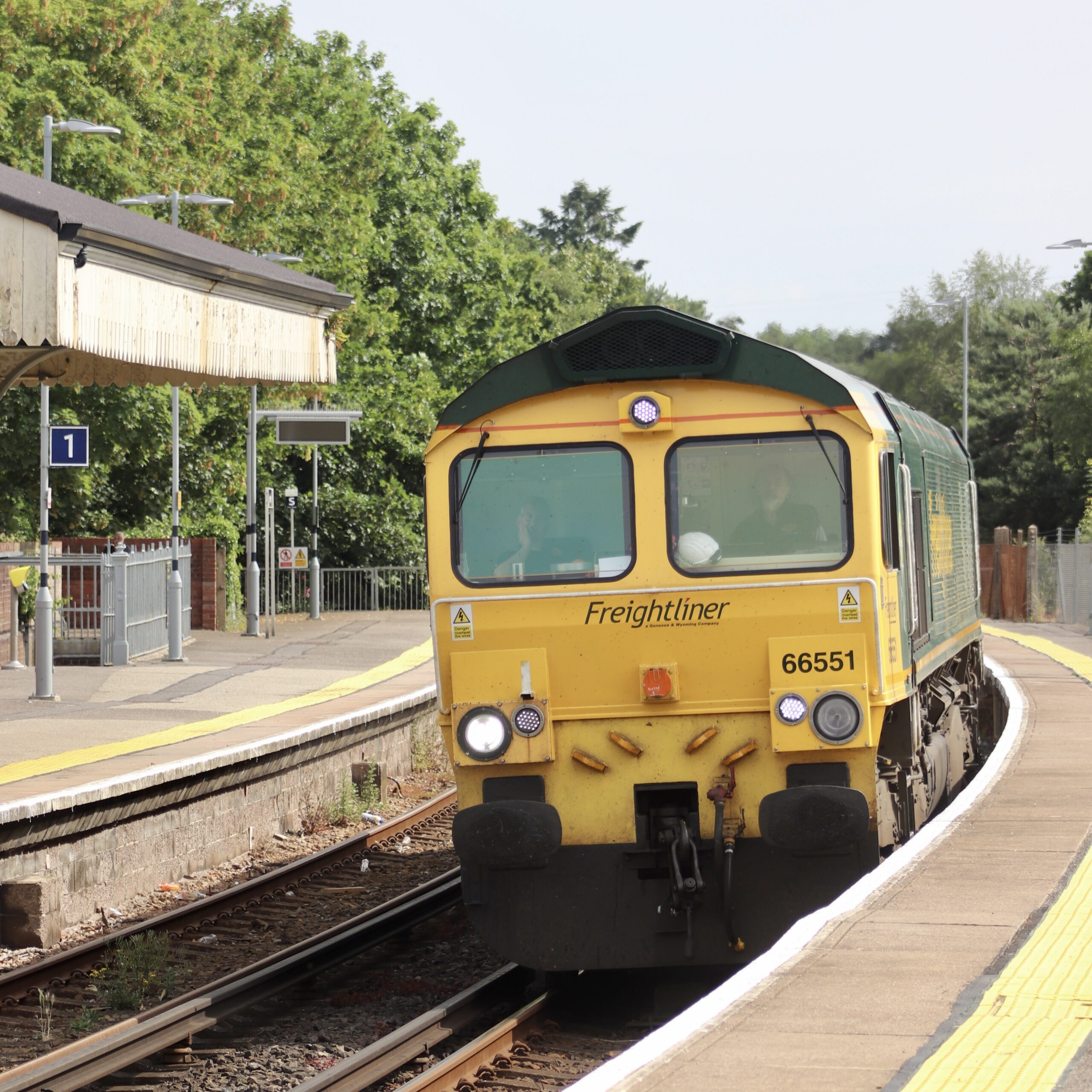
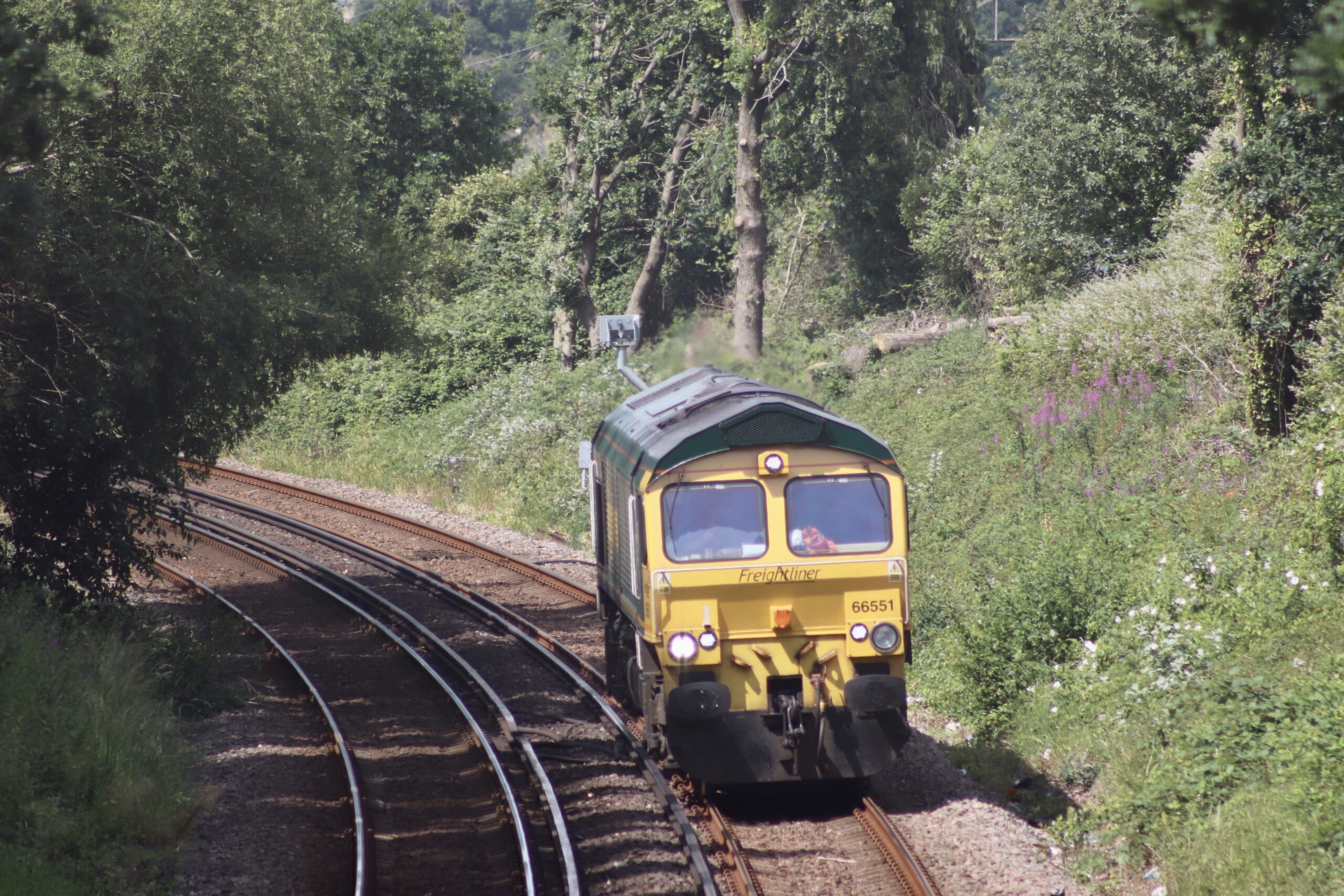
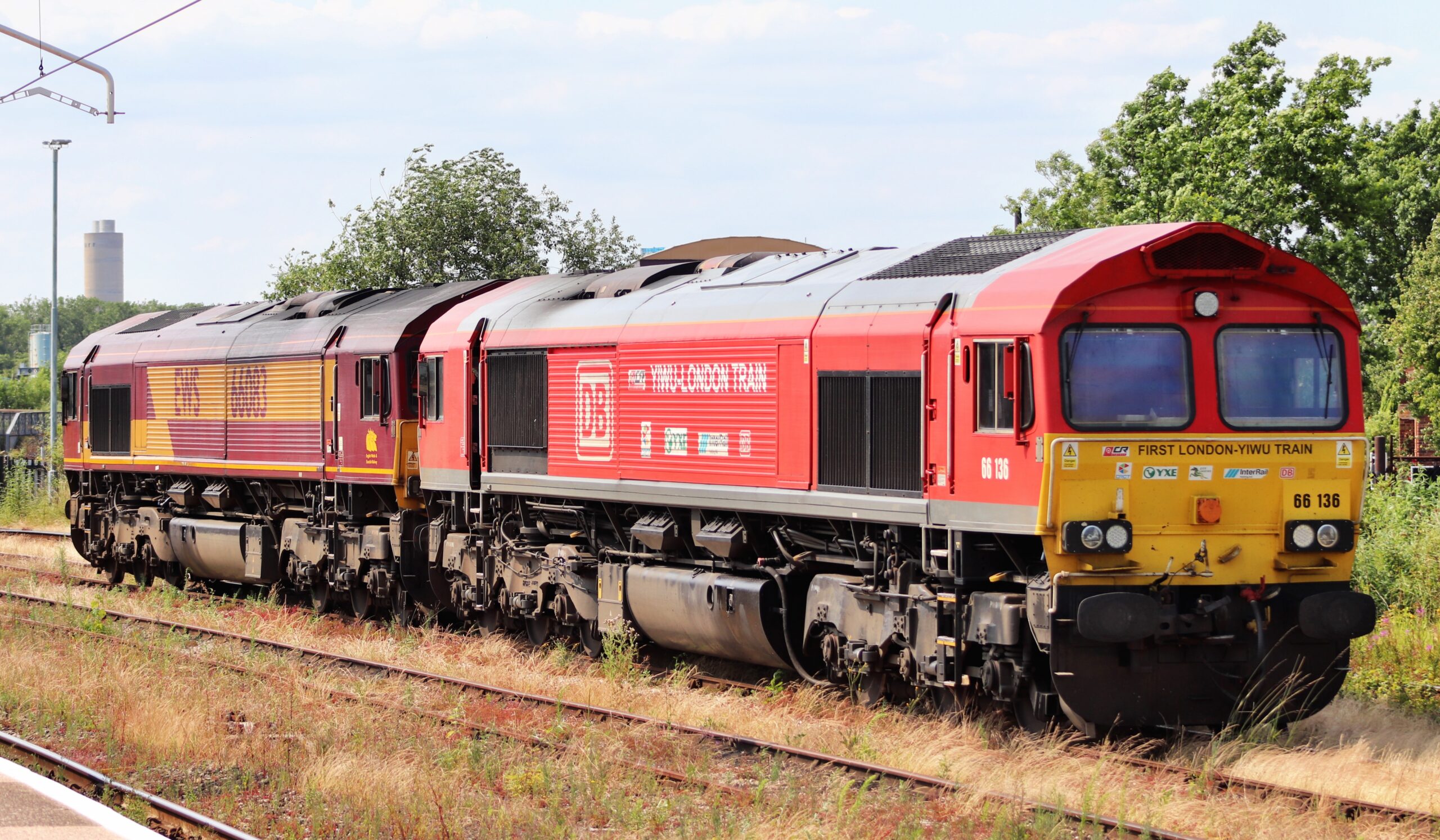
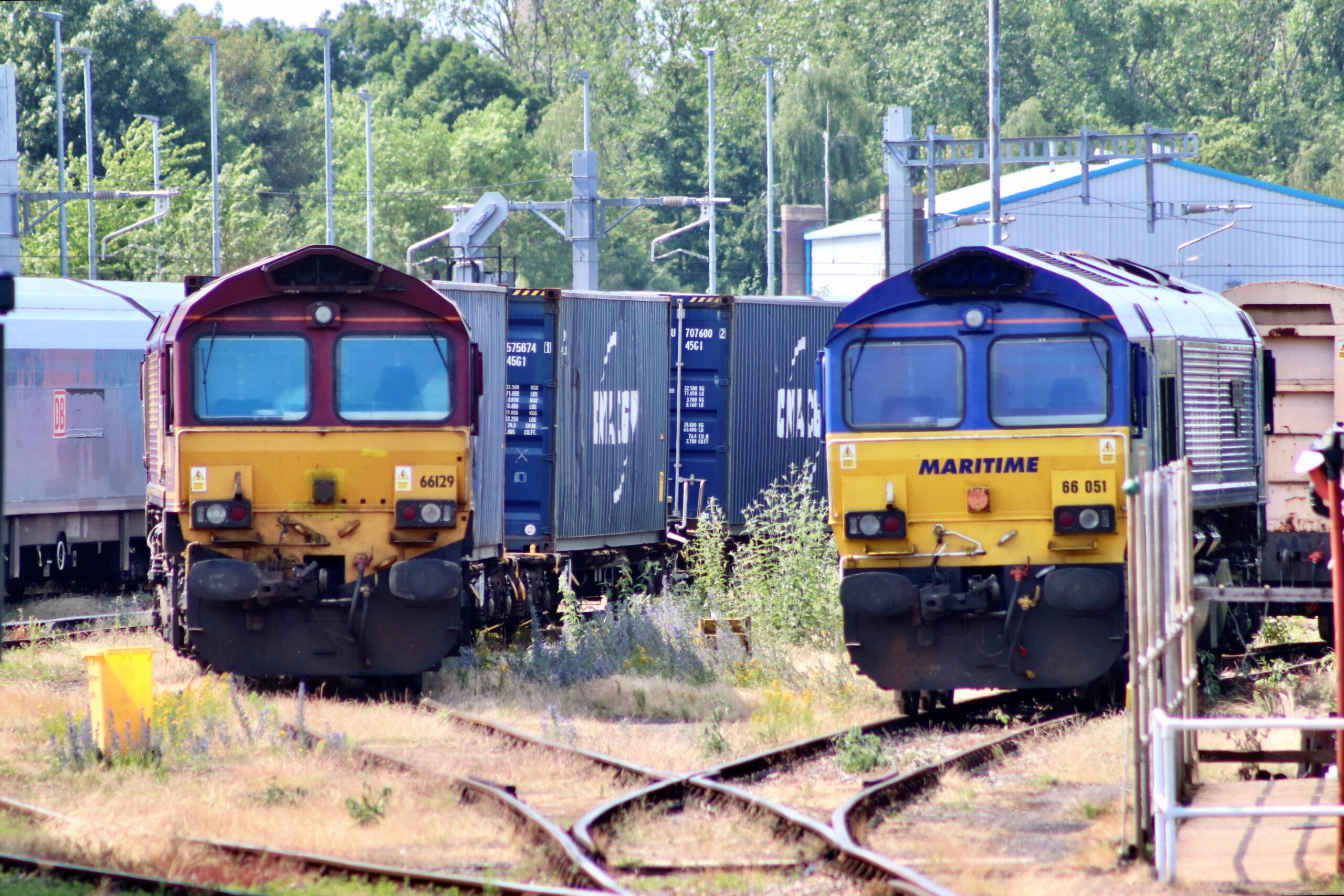
We eased into a busy few days by popping over to Hamworthy on Friday 23rd June 2023 to see a Freightliner Class 66 locomotive on a route learner from Southampton Maritime to Weymouth and back. No idea if this means there may be some engineering trains heading our way in the future or just a refresher for the crew. Either way, it was good to see.
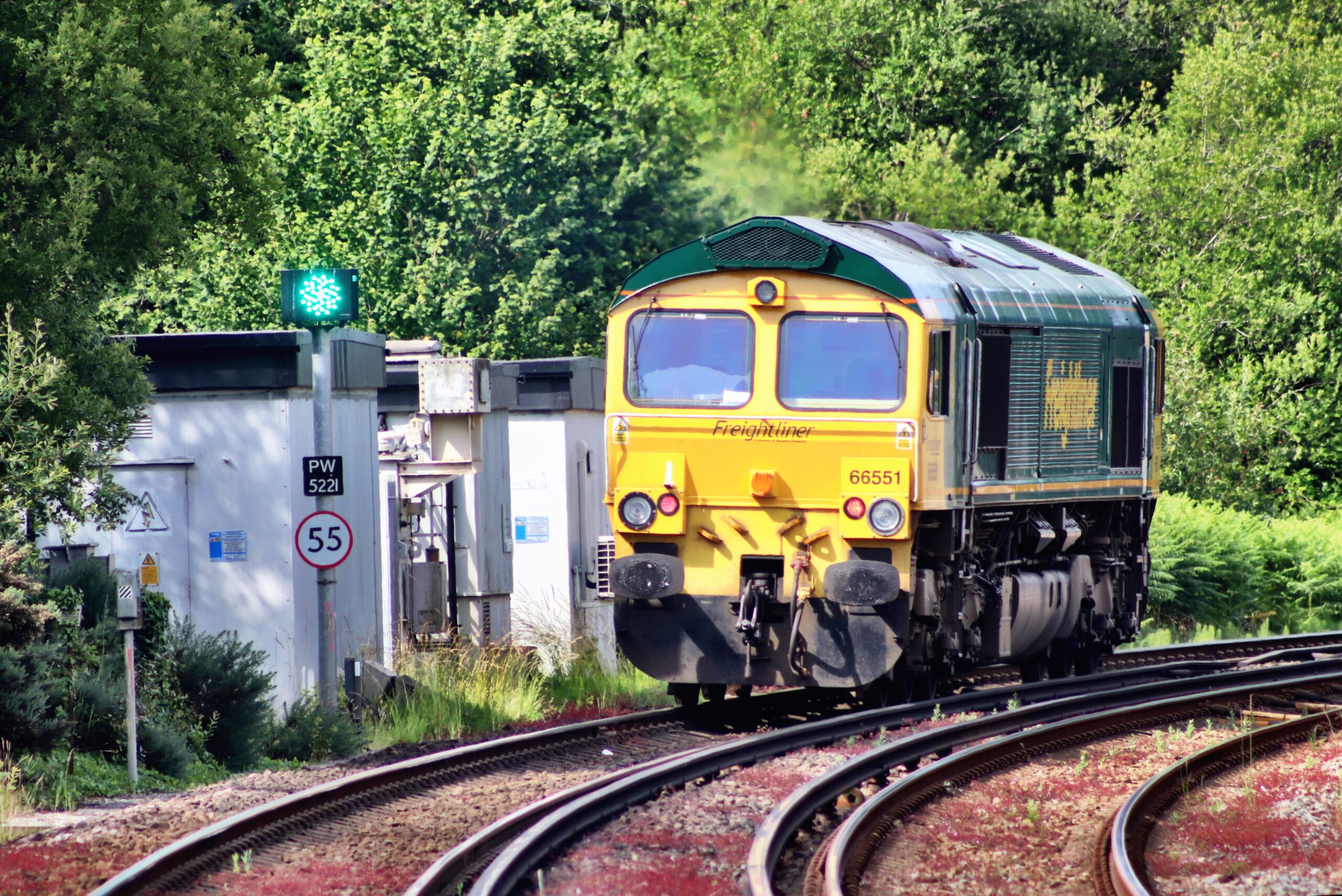
On the return trip back to Southampton Maritime, I sought a location I have not used previously. A footbridge across the railway afforded a nice view of the mainline on the approaches west of Hamworthy. I had not, however, taken into the account that the bridge was surrounded by mesh which made photography very difficult. It was also very bouncy when being walked across, so I was very relieved nobody passed at the same time as the light Class 66 trundled by underneath!
On Saturday, Yoshi’s mama had planned an all female picnic meet-up with friends, which left the boy and I free to go and see some trains during the day! I’d noted on the rail tour calendar that double-headed Class 69’s were scheduled to run down to Cornwall, so this became my objective of the day. In fact there were four tours scheduled to pass through Taunton that same day, with one changing diesel traction for steam in the station, so this was probably a good choice of location.
Cornish Mazey Day Statesman – 1Z64 0522 Solihull to Penzance
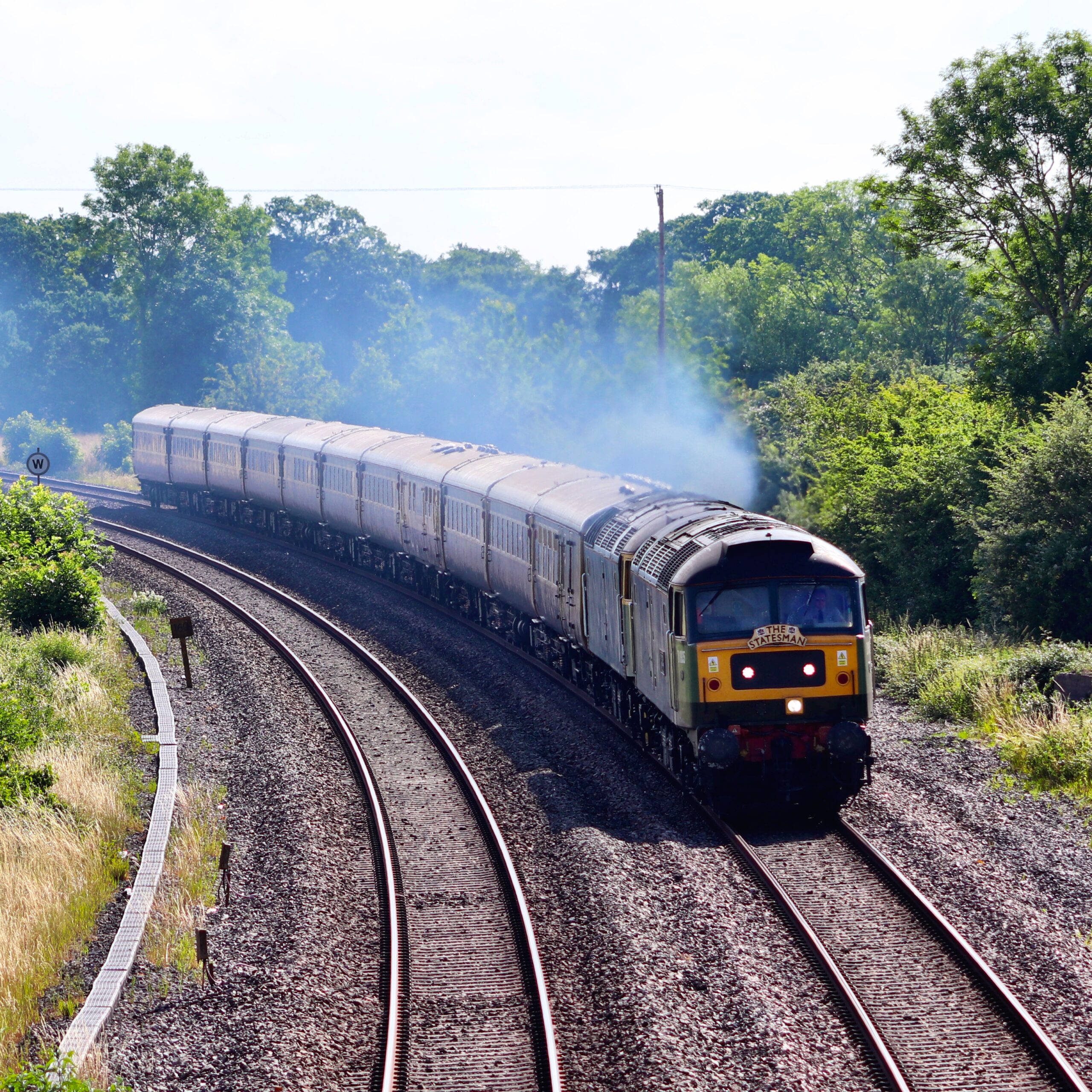
Operated by: Statesman Rail
Motive power: 2 x LSL Class 47 No.’s 47805 and 47614
The Pathfinder Mazey Day Special – 1Z69 0544 Tame Bridge Parkway to Penzance
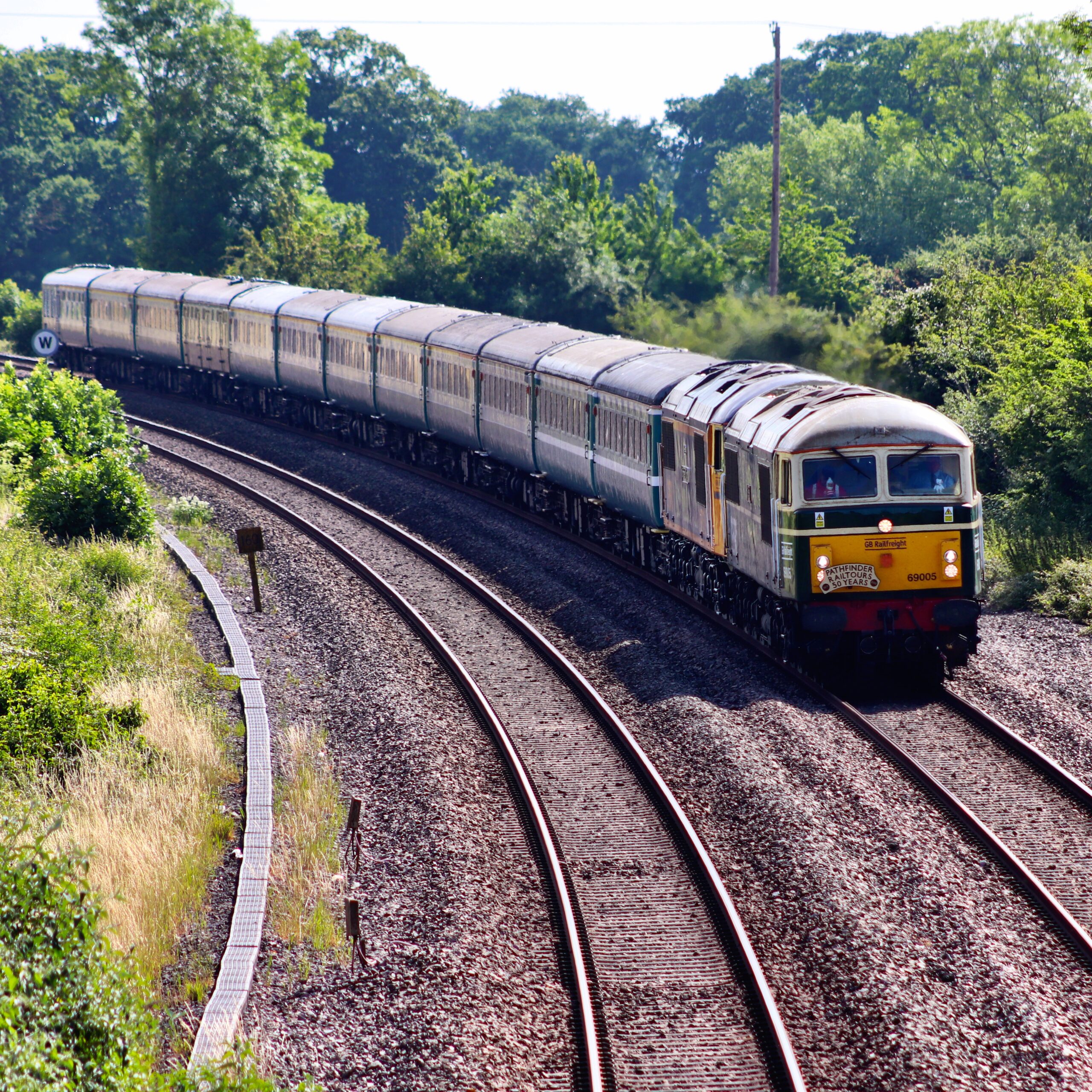
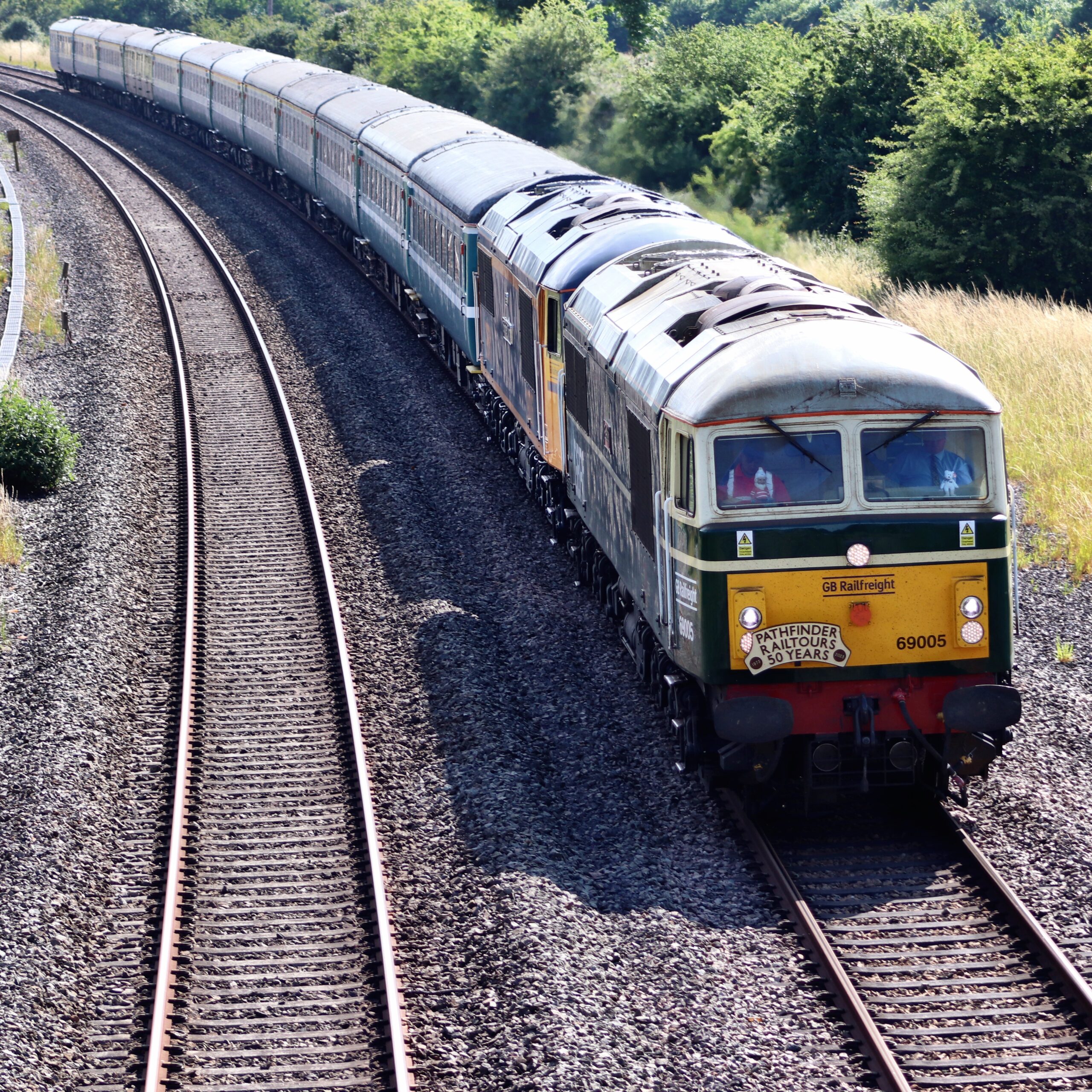
Operated by: Pathfinder Tours
Motive power: 2 x GBRf Class 69 No.’s 69005 and 69006
At a ceremony in Gloucester on Friday 23rd June 2023, No. 69006 was named ‘Pathfinder Railtours – Peter Watts 50 Years Service 1973-2023’. After the naming No.’s 69006 and 69005 ran light engines to Burton to collect the tour stock for the following day.
English Riviera Express – 1Z27 0550 Shrewbury to Kingswear (For Dartmouth)

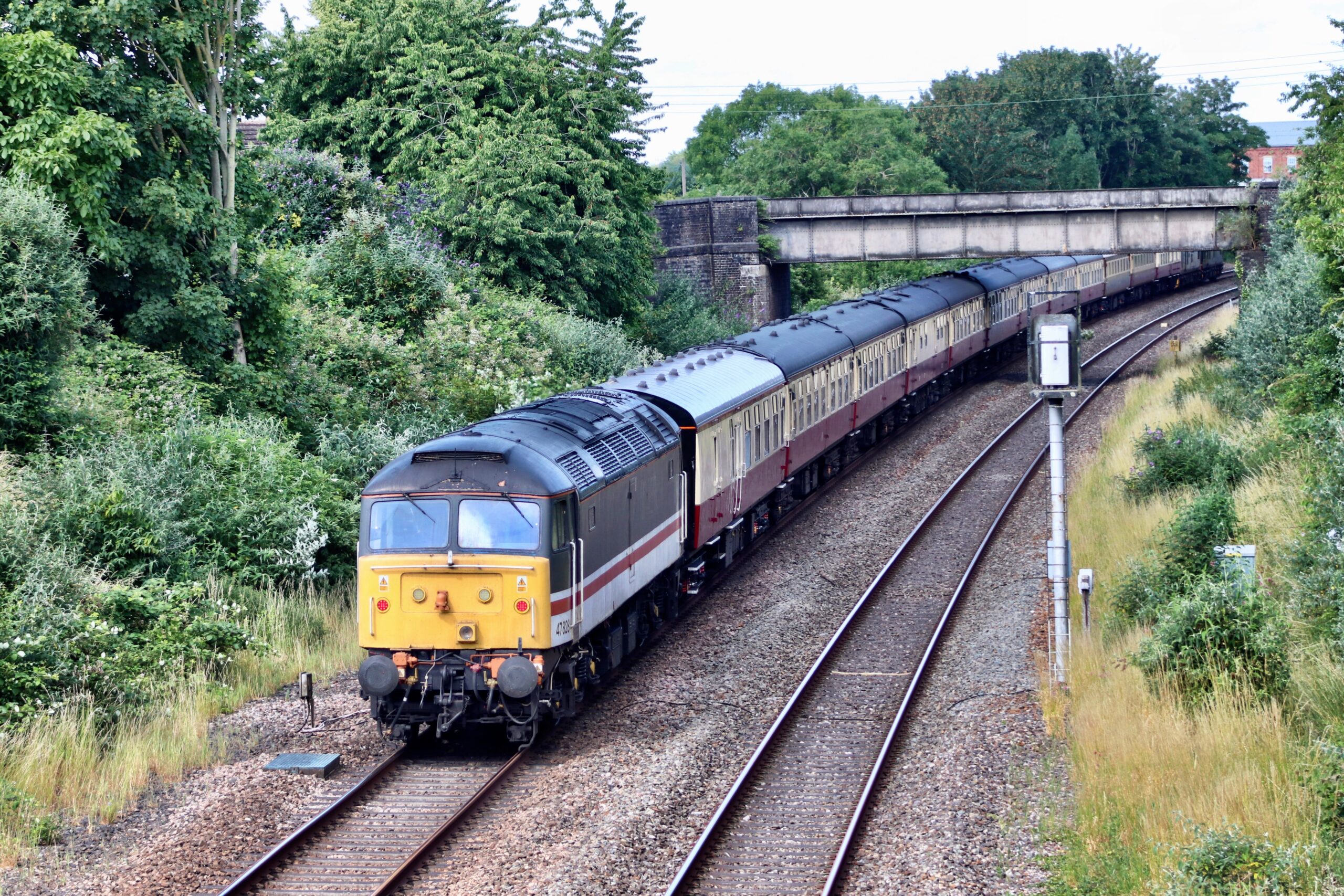
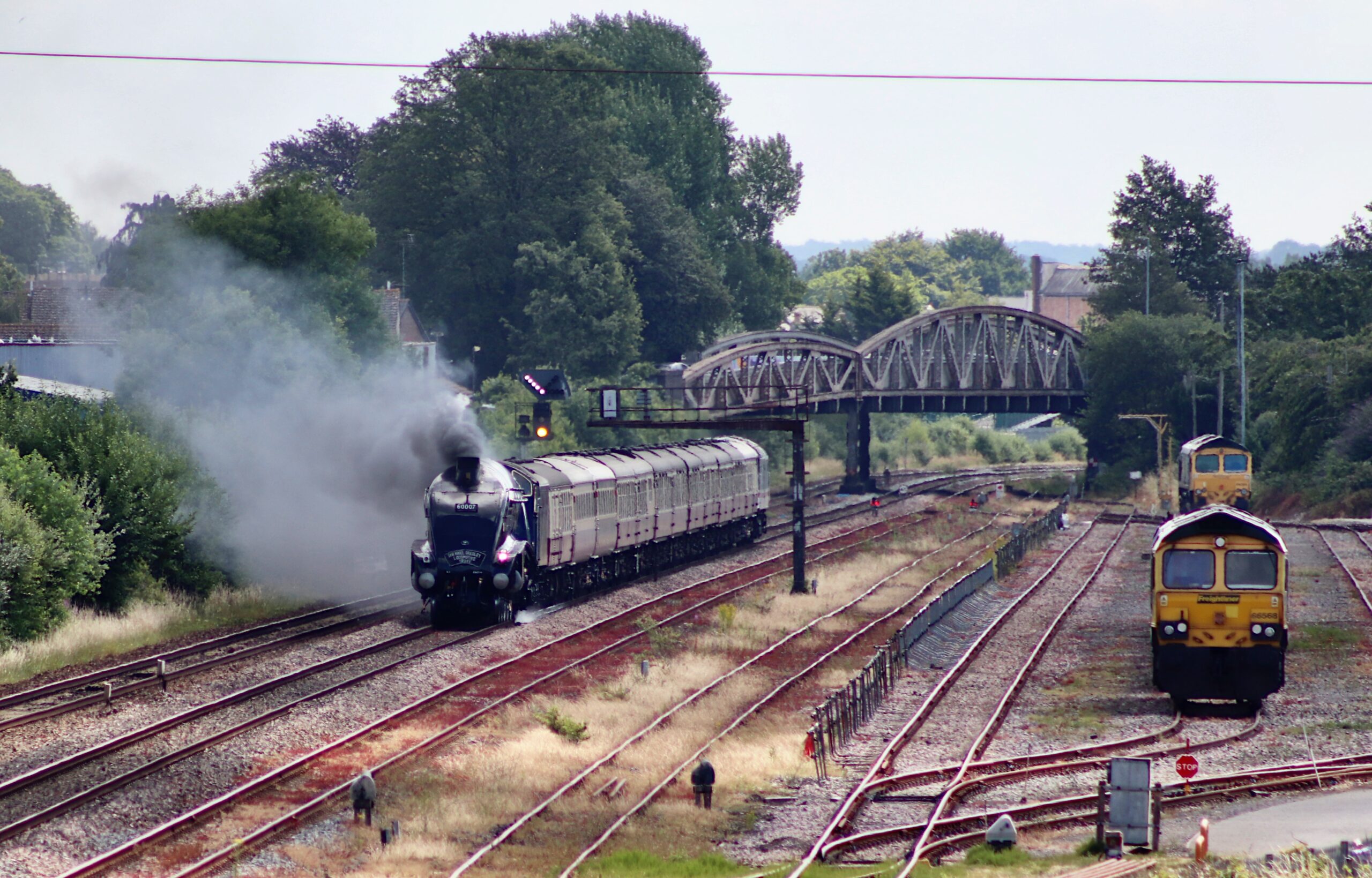
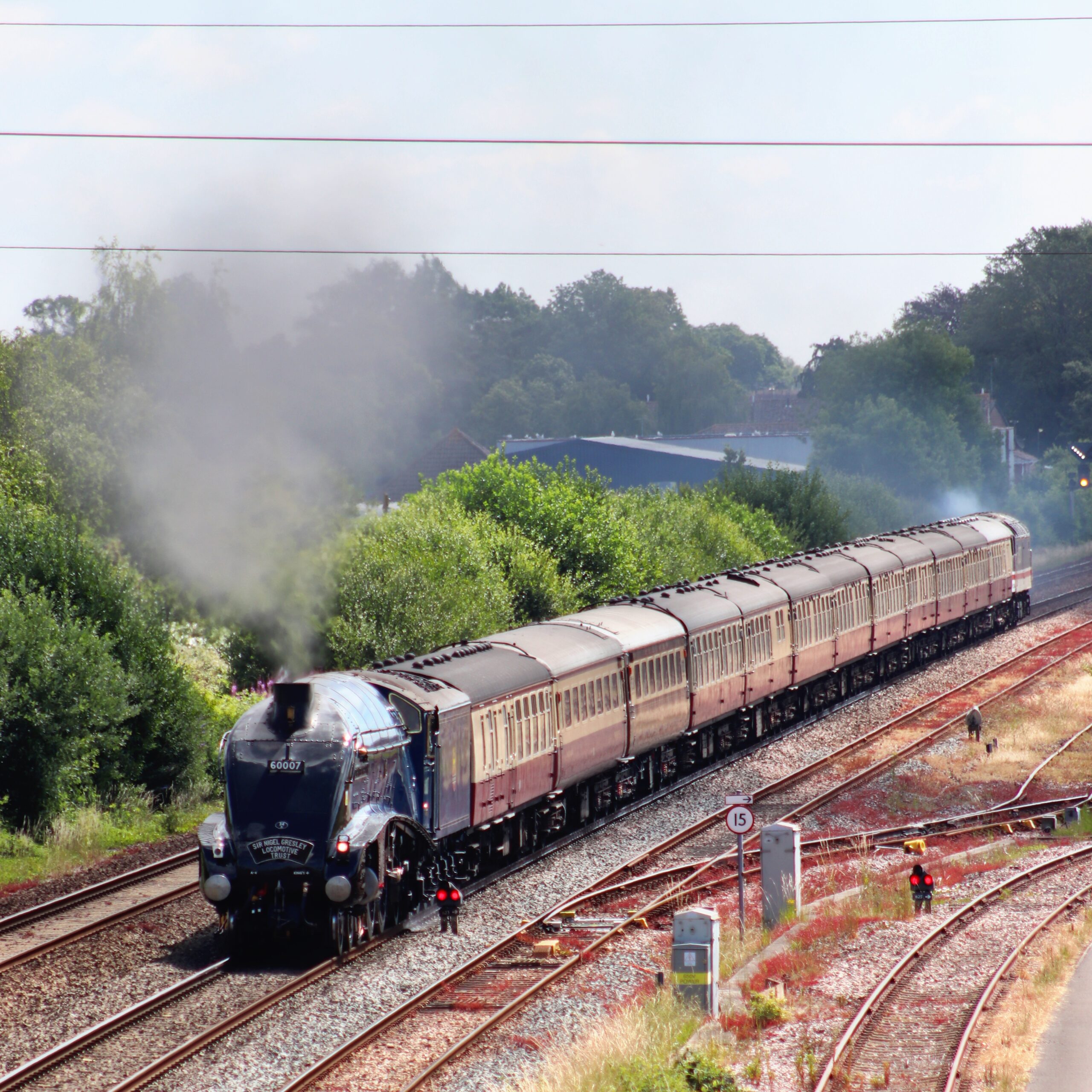
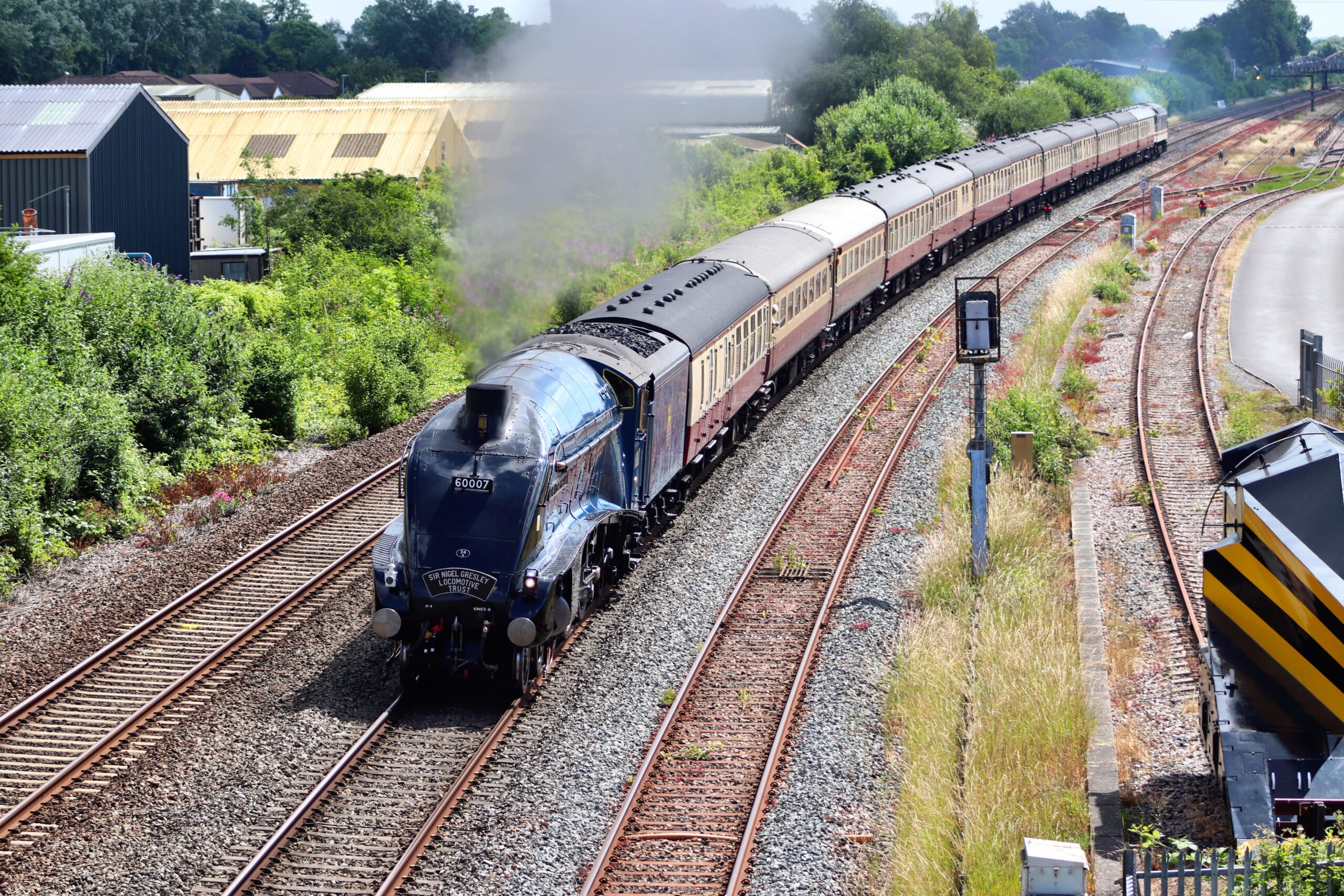
Operated by: Saphos Trains
Motive power: 2 x LSL Class 37 No.’s 37521 and 37688 with Class 47 No. 47828 at the rear. At Taunton the Class 37’s were taken off the train and substituted by LNER A4 4-6-2 No. 60007 ‘Sir Nigel Gresley’. The Class 47 remained to provide assistance at the rear.
The Whistling Ghost – 1Z10 0608 Birmingham Snow Hill to Bishops Lydeard
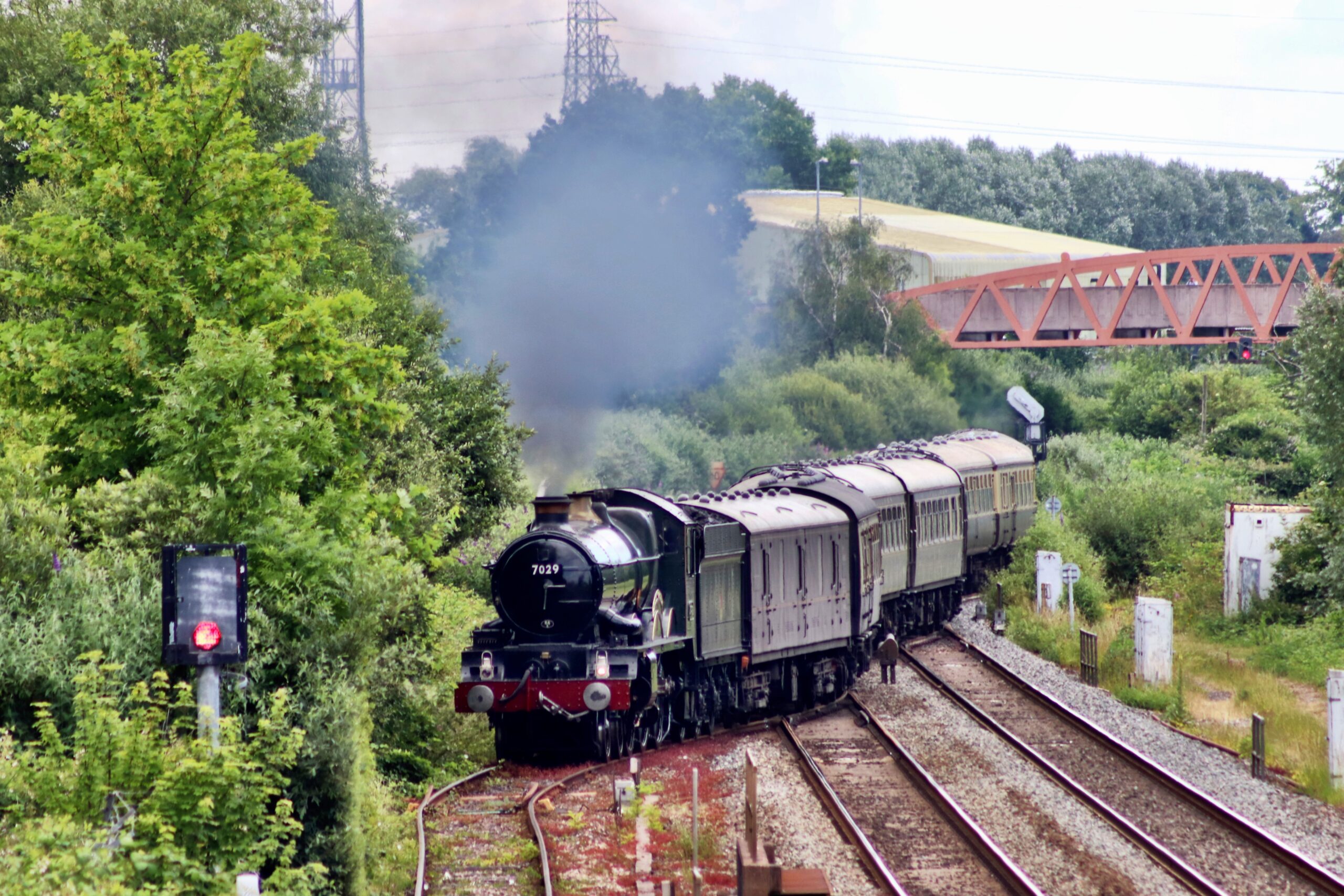
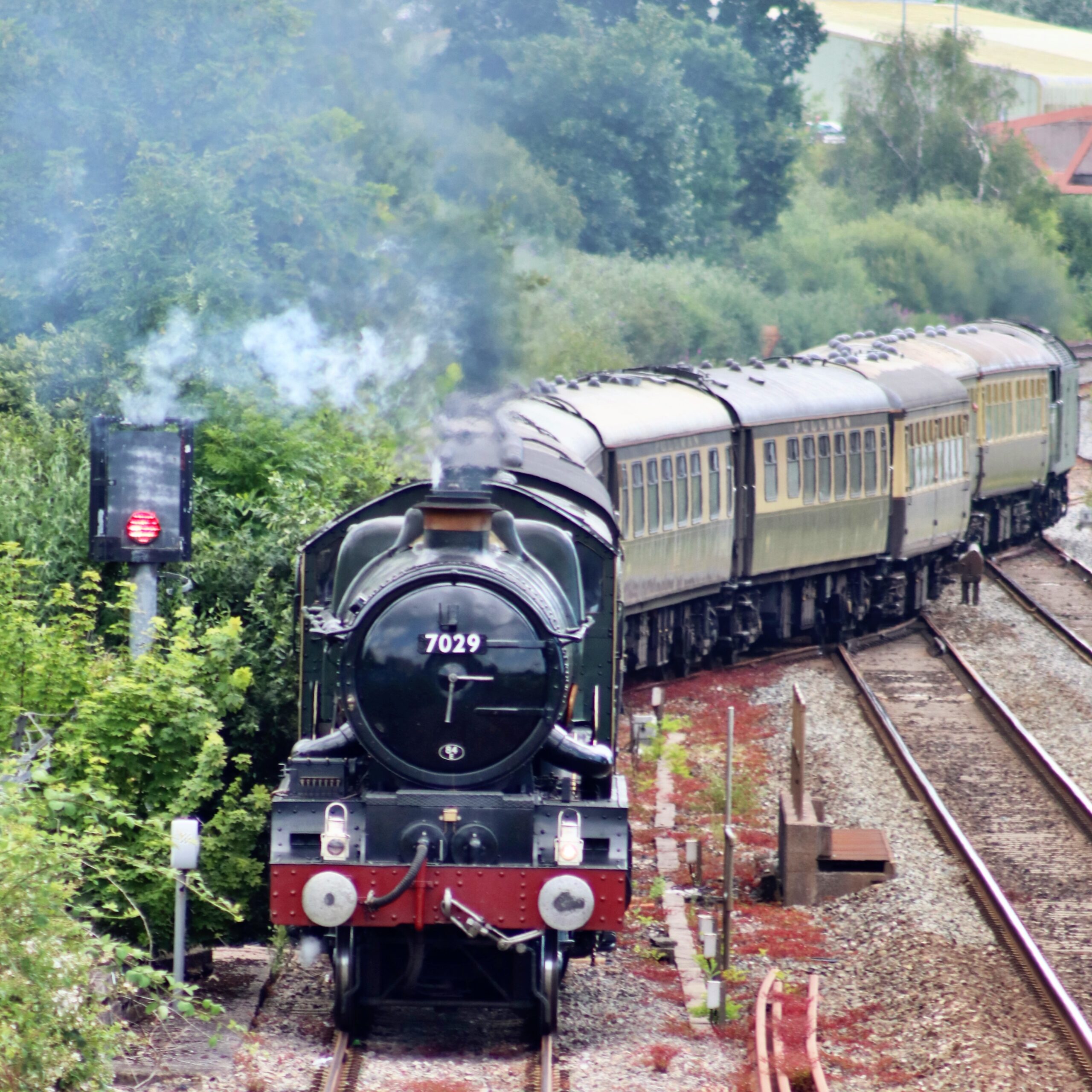
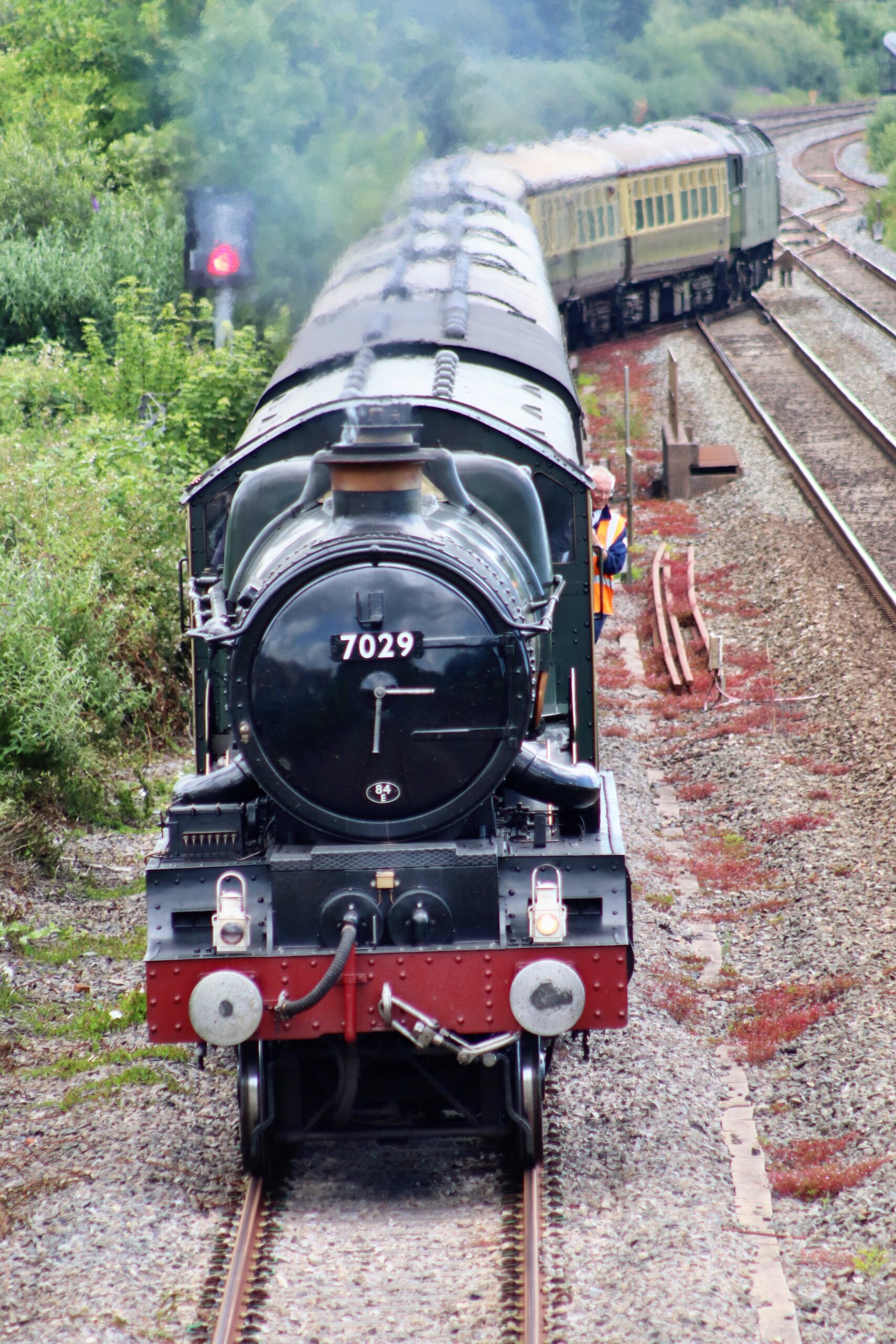
Operated by: Vintage Trains
Motive power: GWR Castle 4-6-0 No. 7029 ‘Clun Castle’ with support from Class 47 No. 47773. Originally planned to run on 20th May 2023, the tour was rescheduled to June. On the WSR the train was taken from Bishops Lydeard to Minehead by 2 x GWR Manor Class 4-6-0 locomotives No.’s 7828 and 7812. Good friend of therailwaydog.co.uk, @smithy.377 kindly allowed us to share the following photos and video from the West Somerset leg of the tour.


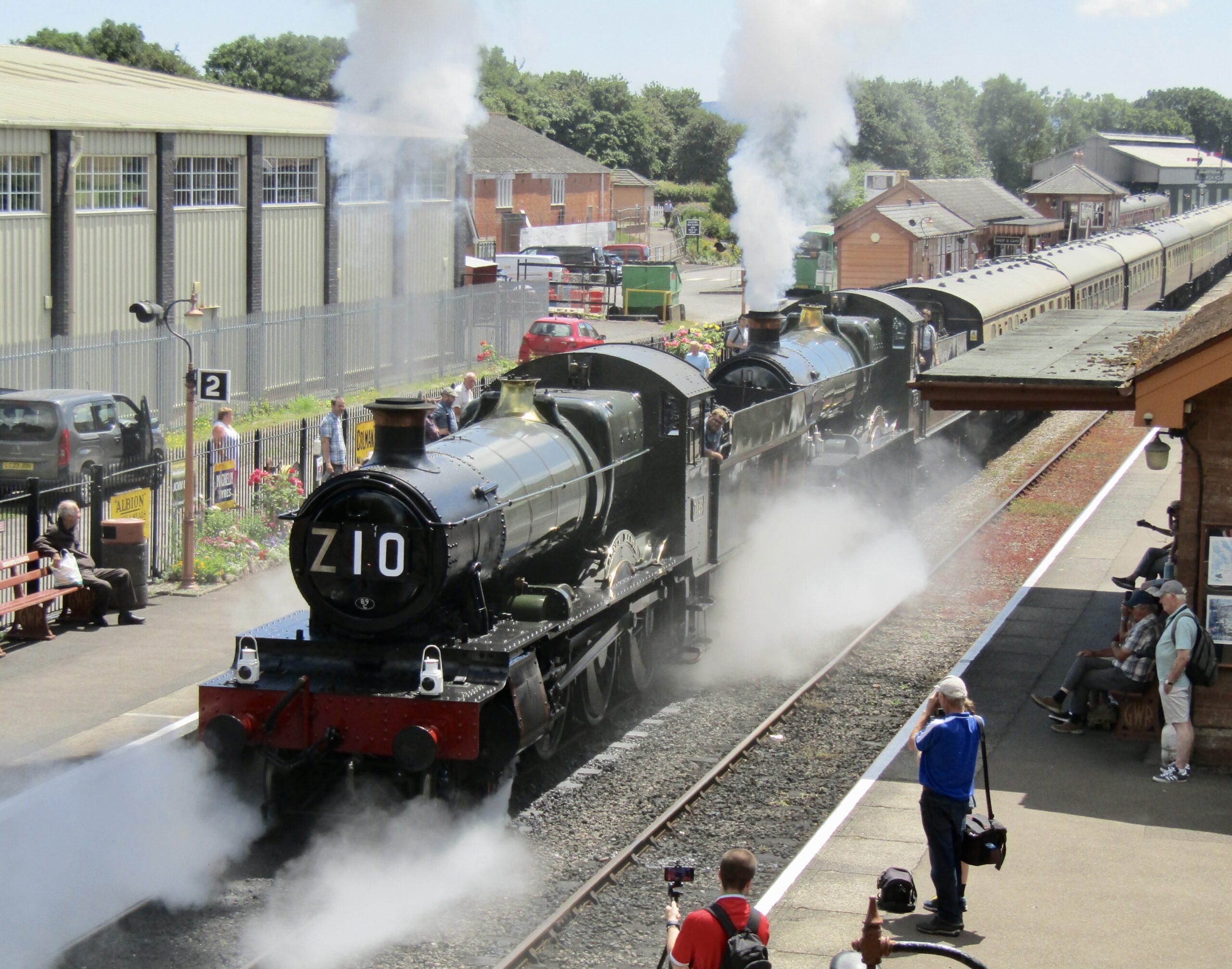
For more excellent railway images check out their Instagram page: https://www.instagram.com/smithy.377/
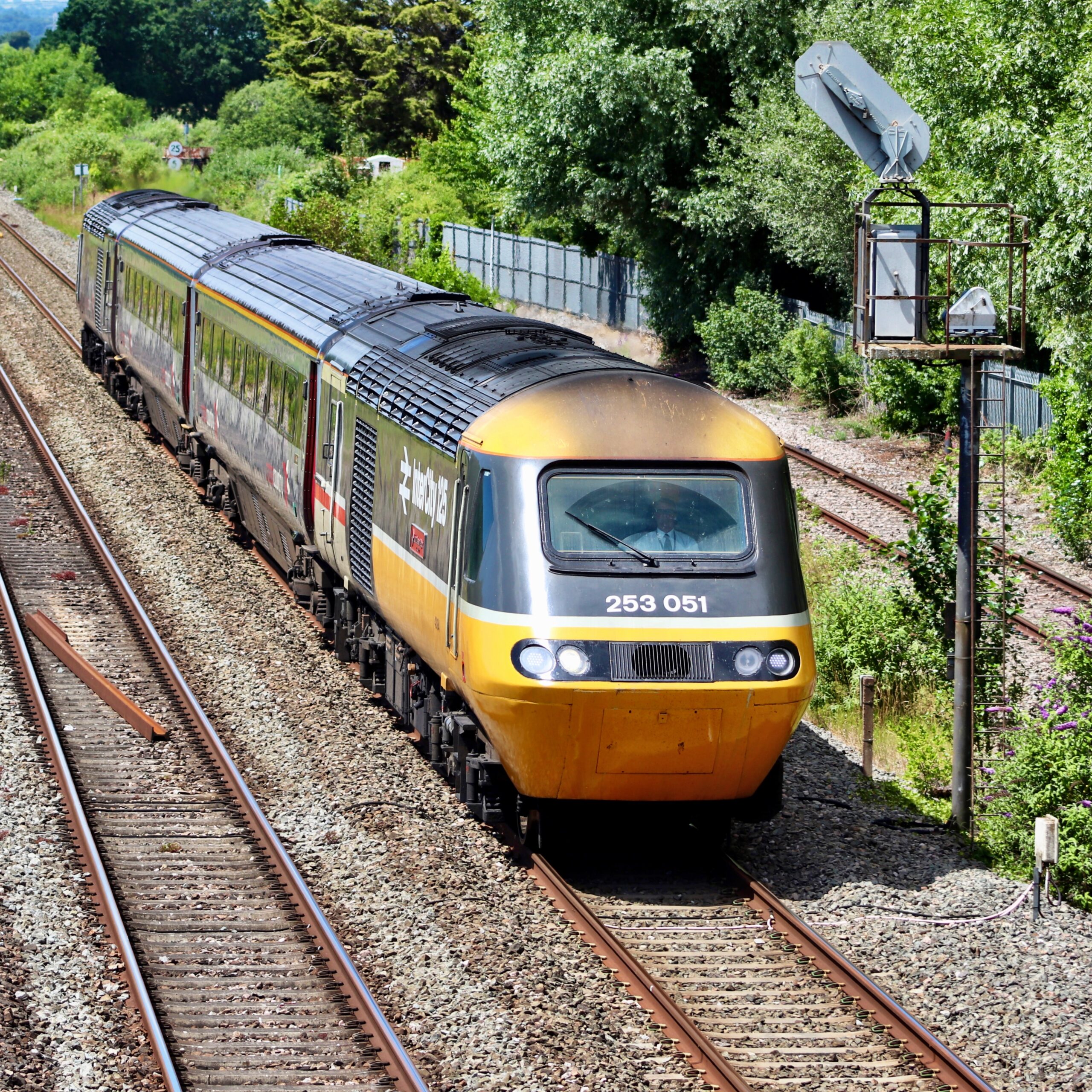
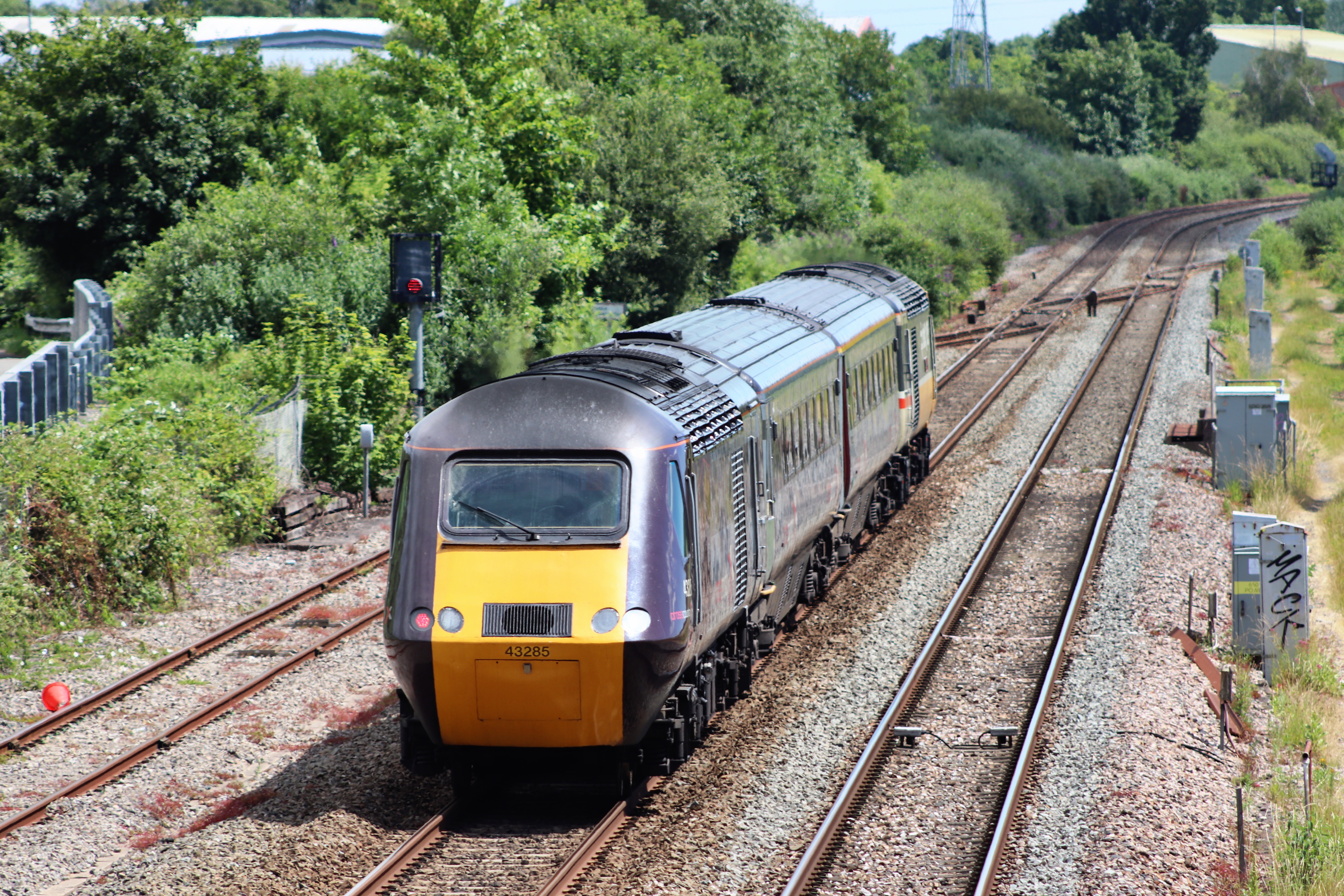
It was another hot day and for the most part Yoshi was able to find shade or at least a cooling breeze. We had toyed with the idea of heading to Bristol as two Class 20 locomotives were reported to be stabled at Bristol Kingsland Road (more on these later). But ultimately, it was far too hot for the boy to be out in the sun for any prolonged period so we waited a little while to see an interesting Class 43 HST power car move from Plymouth to Doncaster and then headed home in good time to pick up Caroline after the picnic.
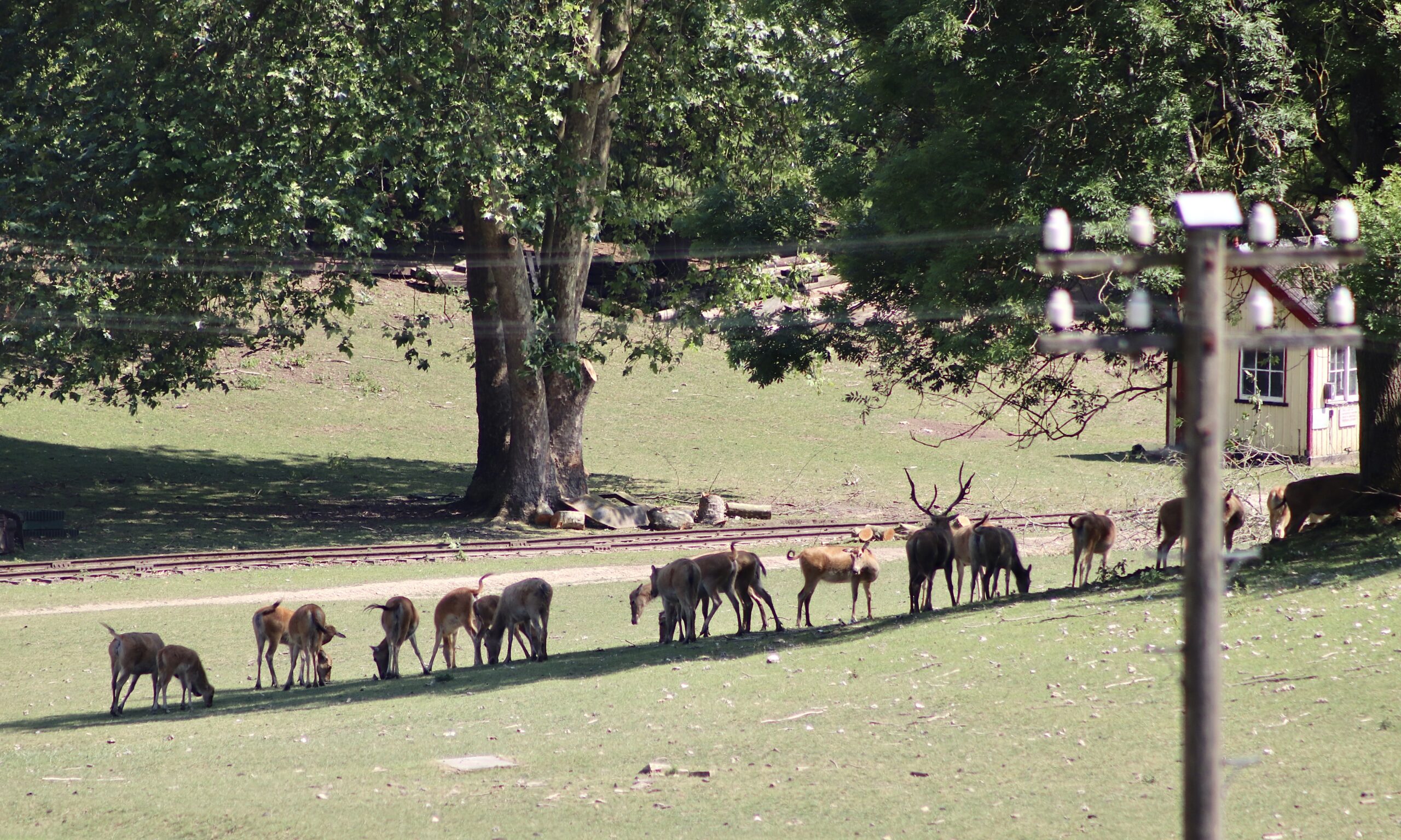
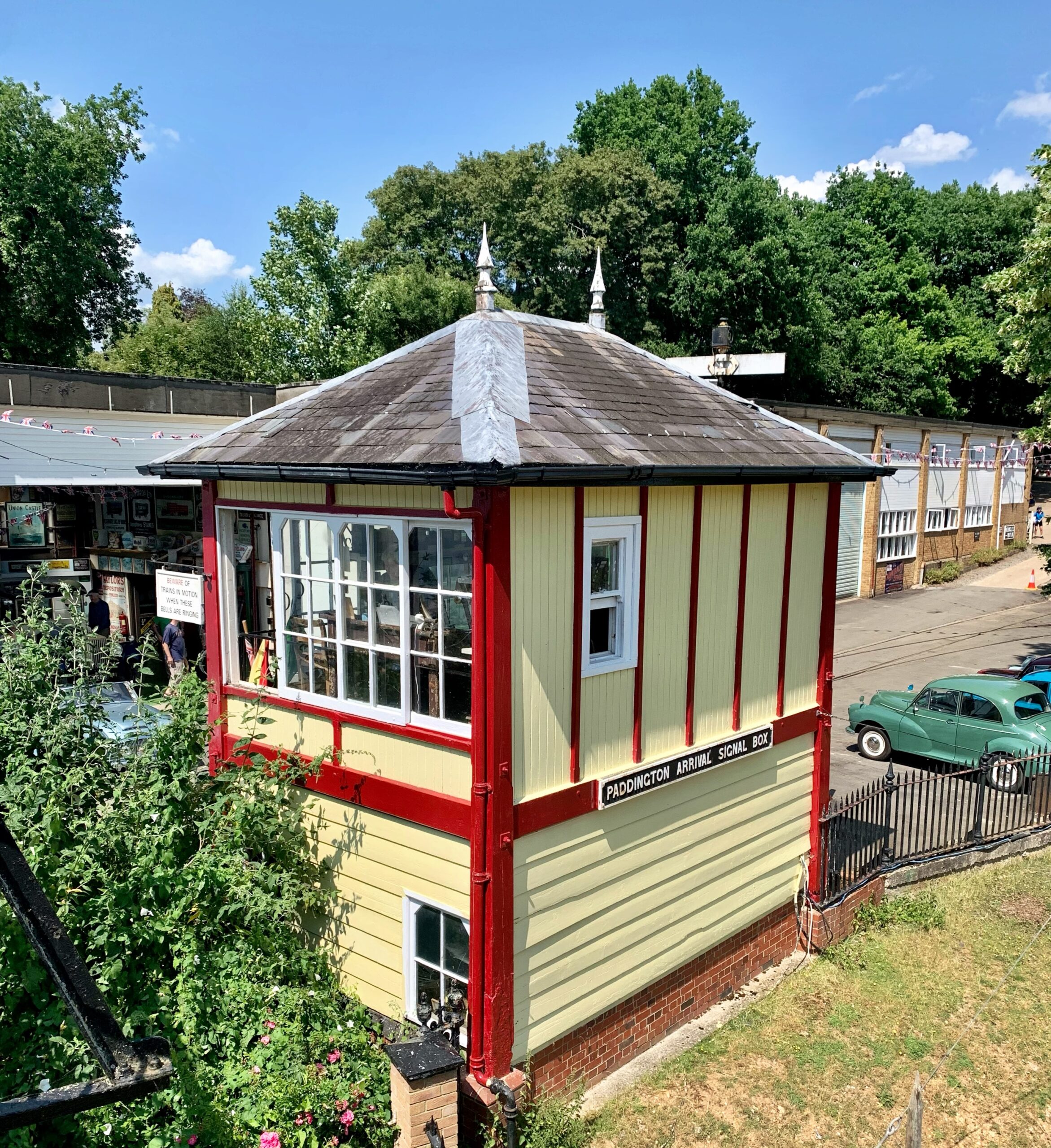
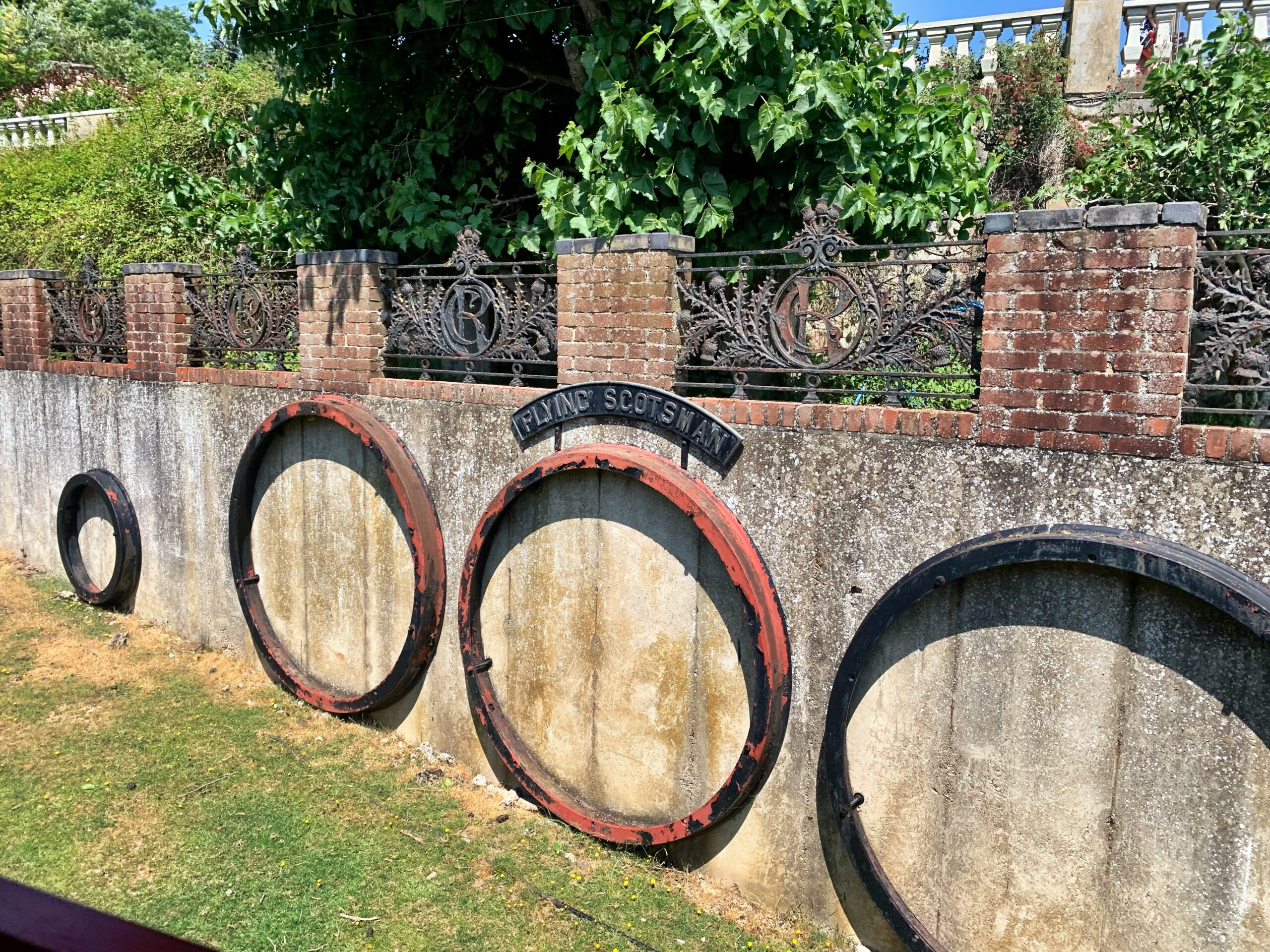
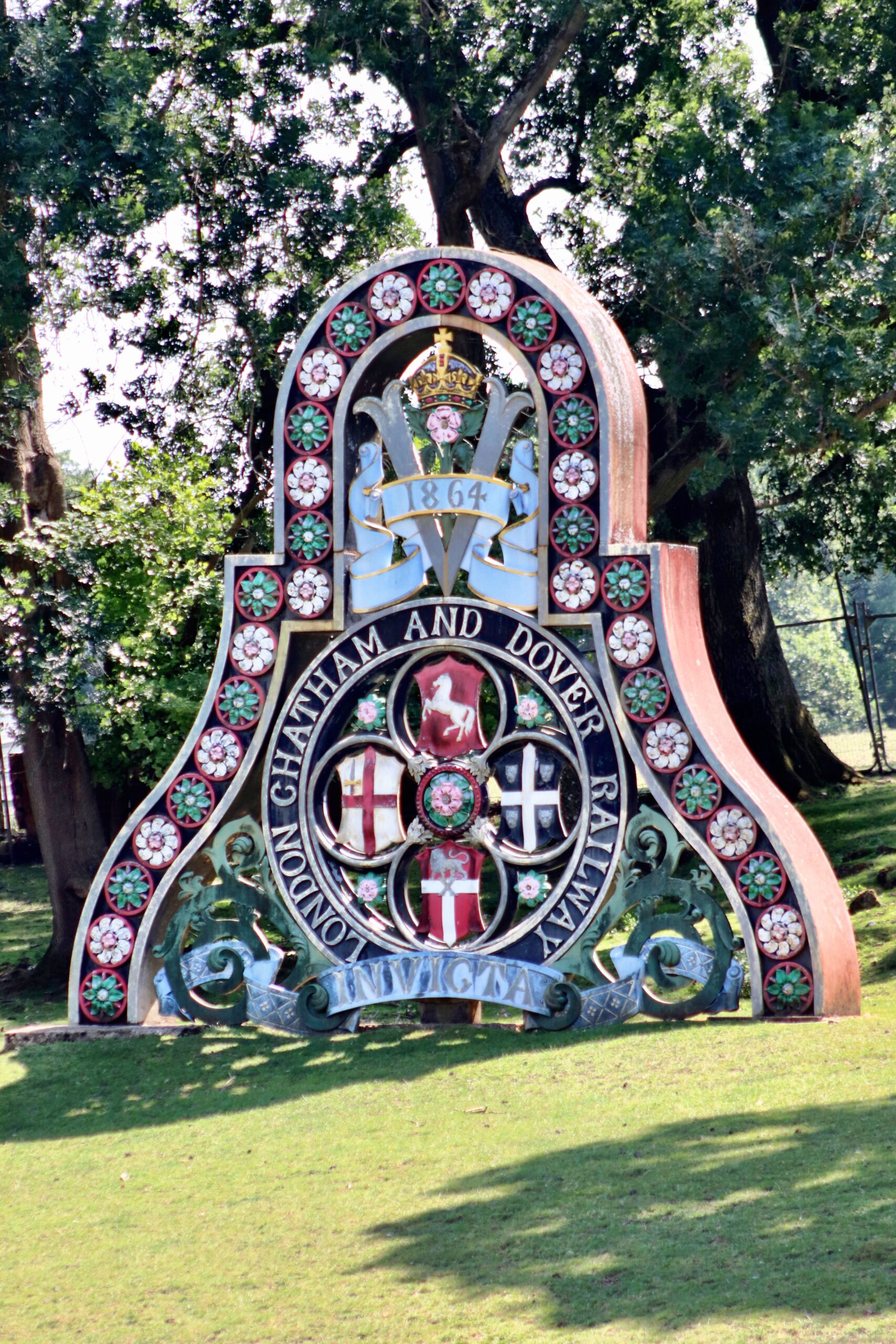
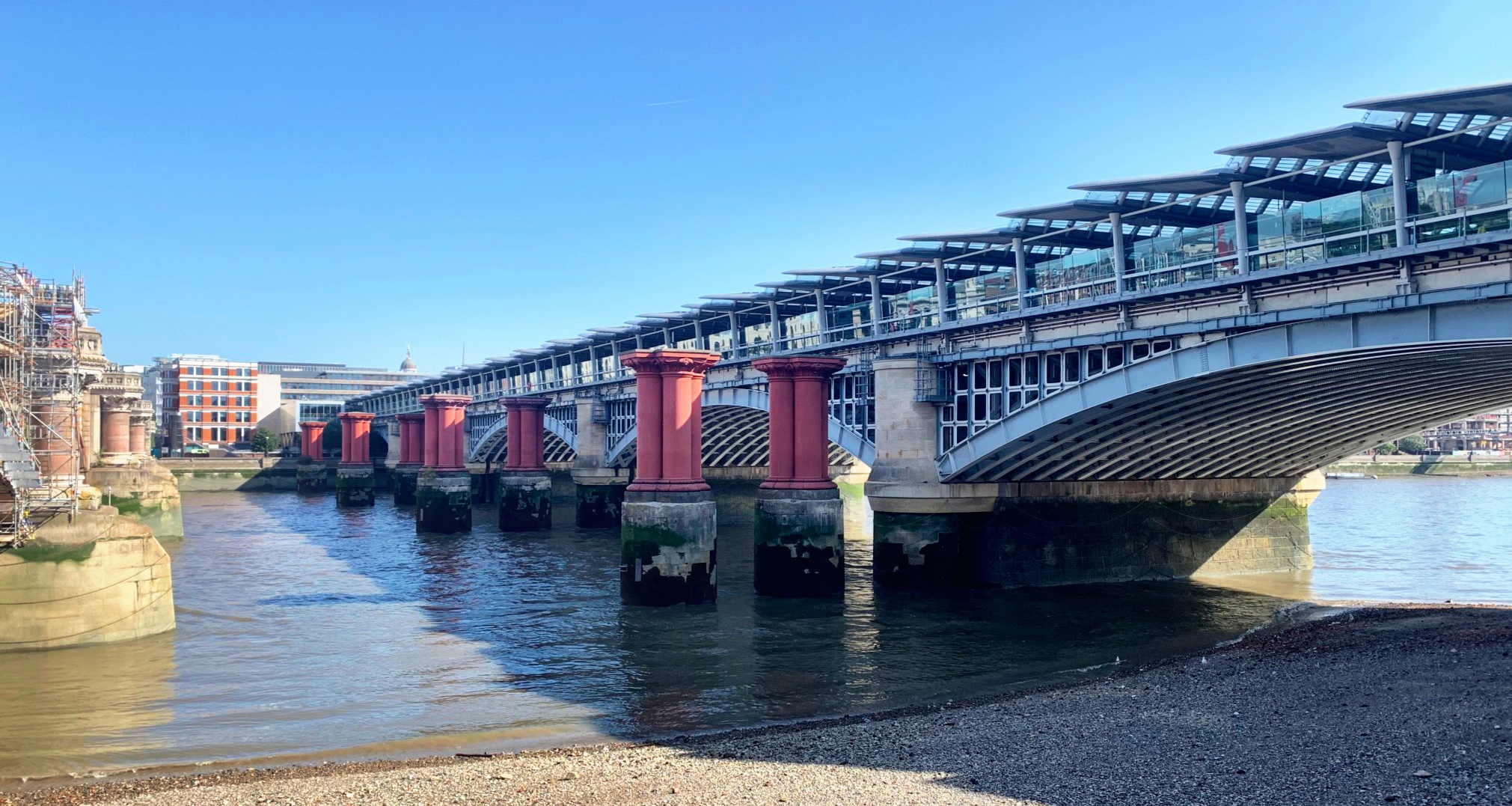
On Sunday 25th June, Yoshi, Caroline and I had been invited to Fawley Hill Museum and Railway Running Day. It sounds very grand to be invited. In reality, because the museum and railway are open on a limited number of days per year, admission is by prior application and invitation only as space is limited. Fawley Hill is a private museum established in the 1960’s by the late Sir William McAlpine at his estate near Henley on Thames. It hosts a fine collection of memorabilia and models relating to railways together with a working standard gauge railway operating on the steepest gradient in the country. Since its inception the site has grown steadily with a wide range of interesting artefacts and buildings arriving from all over the country. Many items of architecture have been rescued and reassembled at Fawley Hill to save them from demolition, creating a unique urban landscape in a country estate. The park also contains a variety of animals including many species of deer.
There is a strict “No Photography” rule on visitors inside the Museum, although in reality we found limited photography was acceptable as long as no images are posted on the internet in any way. Which unfortunately includes blogs about railways. So, you’re going to have to take my word for it – the museum is fascinating and holds over 6,000 objects. My favourite sections were a display on the artist Terrence Cuneo, and an area dedicated to LNER A3 No. 60103 ‘Flying Scotsman’ which was saved for the nation by Sir William McAlpine, the Museum’s founder. There are some amazing models including a very clever diorama of Swindon Works employing use of reflections to force a longer perspective.
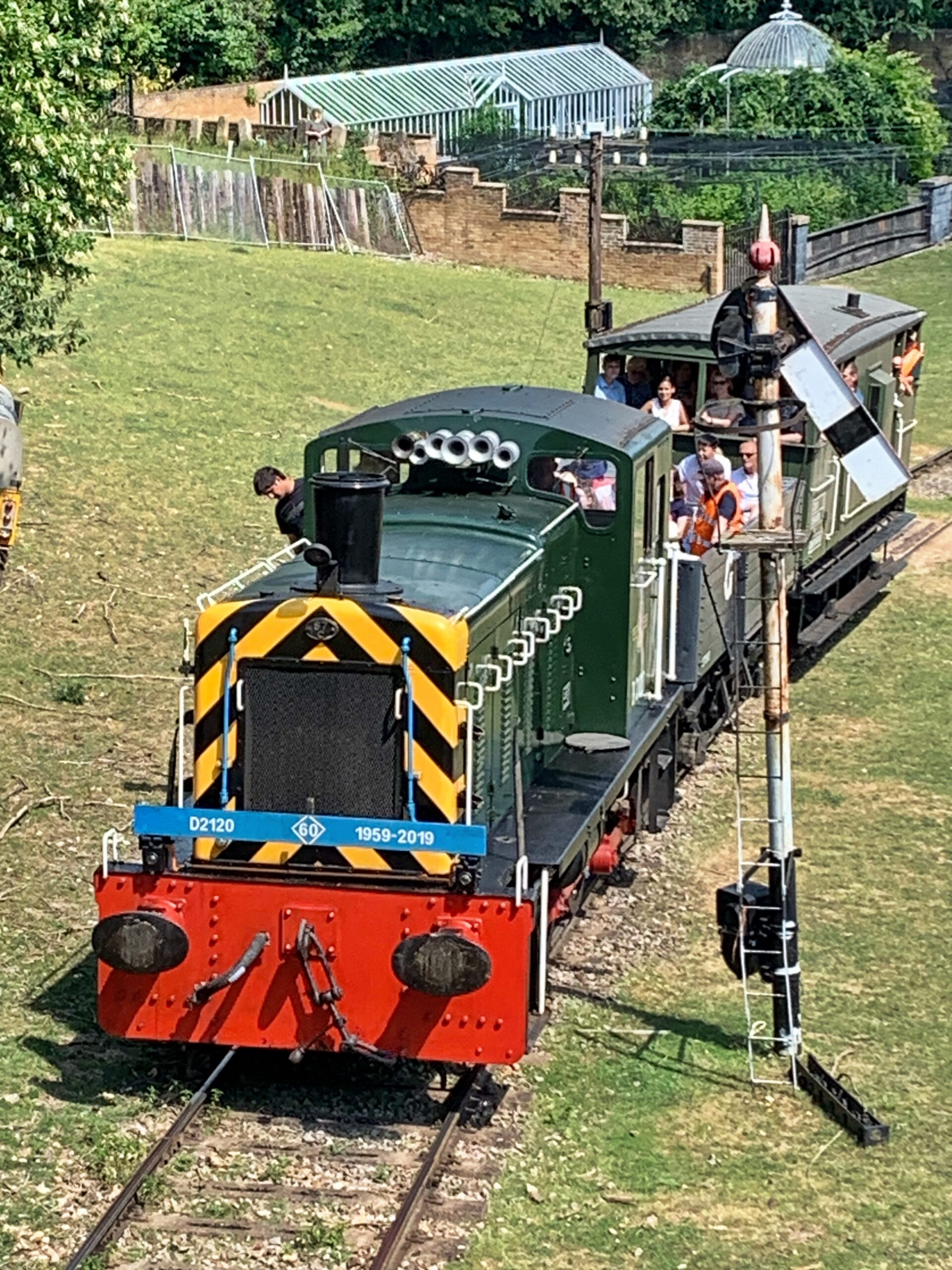
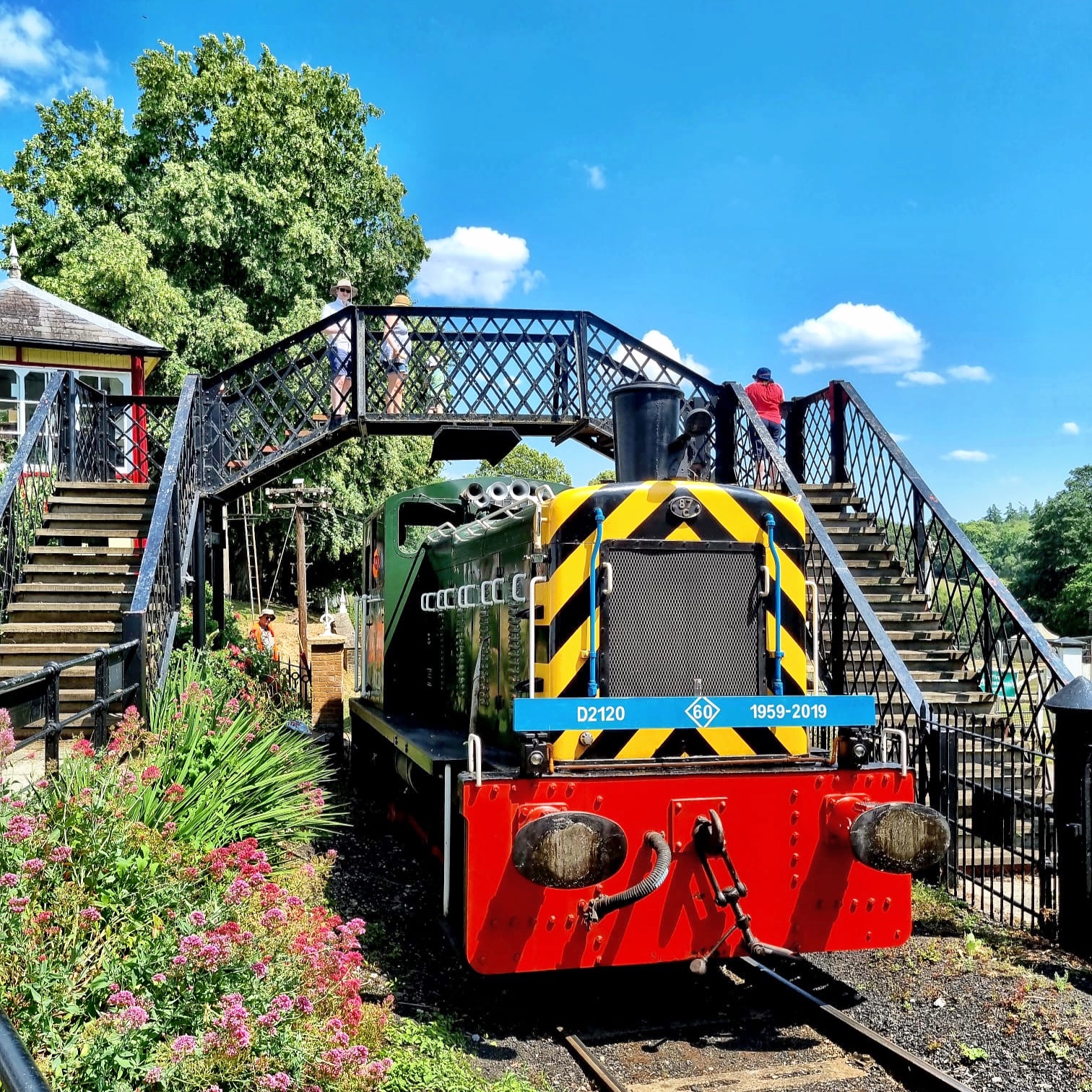
On the day of our visit, Class 03 No.D2120 was running trains, and we took a ride in Lancashire & Yorkshire Railway half-coach ‘Judy’. Yoshi was allowed to sit with us on the wooden seating and he watched out of the window as we meandered around the estate’s railway system.

230 Class 03 diesel shunter locomotives were constructed by BR at Swindon and Doncaster Works between 1957 and 1962. No. D2120 was built at Swindon and entered service in October 1959. She was first allocated to Dangraig Depot and spent her entire career in the Swansea area of South Wales.
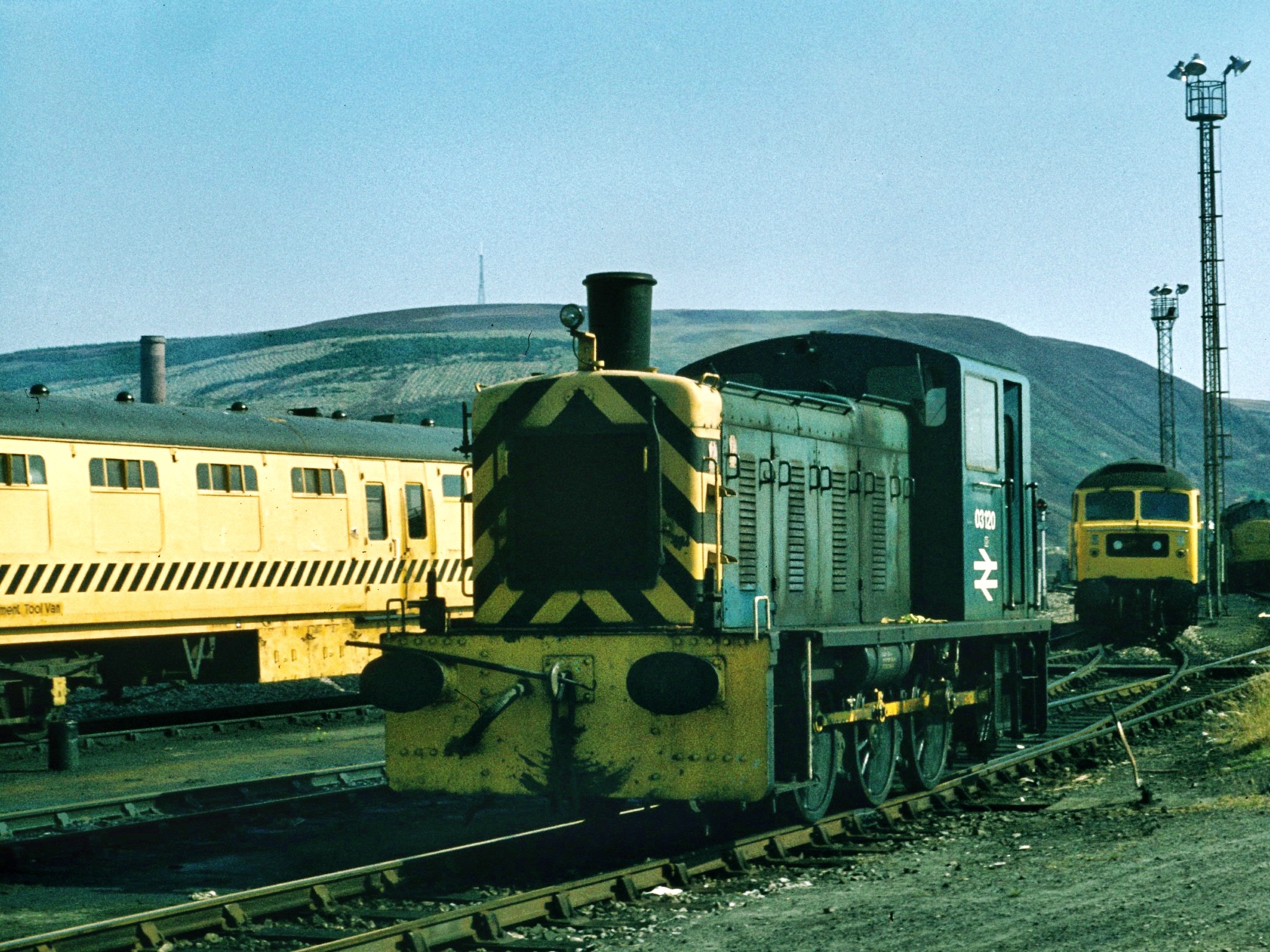
In March 1972 whilst undergoing an overhaul, No. D2120 was converted to Burry Port & Gwendraeth Valley Railway (BPGVR) loading gauge. Eventually a total of 11 Class 03’s were converted in this way. The BPGVR had a severe height restriction and this conversion involved reducing the cab height by 4½ inches, and the fitting of a headlight in front of the exhaust stack, and another at the rear of the cab, for use when locomotives crossed unprotected level crossings. The converted locomotives were also fitted for multiple working with a second locomotive of the same class. During the mid 1970’s British Rail adopted a locomotive five figure computer numbering methodology under the Total Operations Processing System (TOPS) used for managing railway locomotives and rolling stock and No. D2120 was renumbered No. 03120 in March 1974.
In 1978, No. 03120 spent three months (August – October) in store at Swindon, being re-introduced into service in November. She was given a final general overhaul at Swindon in May 1983 and retained as a standby loco, allocated to Landore Depot, Swansea. She was
finally withdrawn by BR in February 1986 and released for sale.
Purchased by Sir William McAlpine, No. 03120 arrived at Fawley in December 1986, wearing the standard fleet livery of BR rail blue with ‘wasp’ yellow and black painted warning ends. Since arriving at Fawley, she has been repainted into early BR Green as No. D2120, the wasp stripes at each end of the locomotive were restored in 2019. D2120 wears loco shed allocation plate 87C (Danygraig).

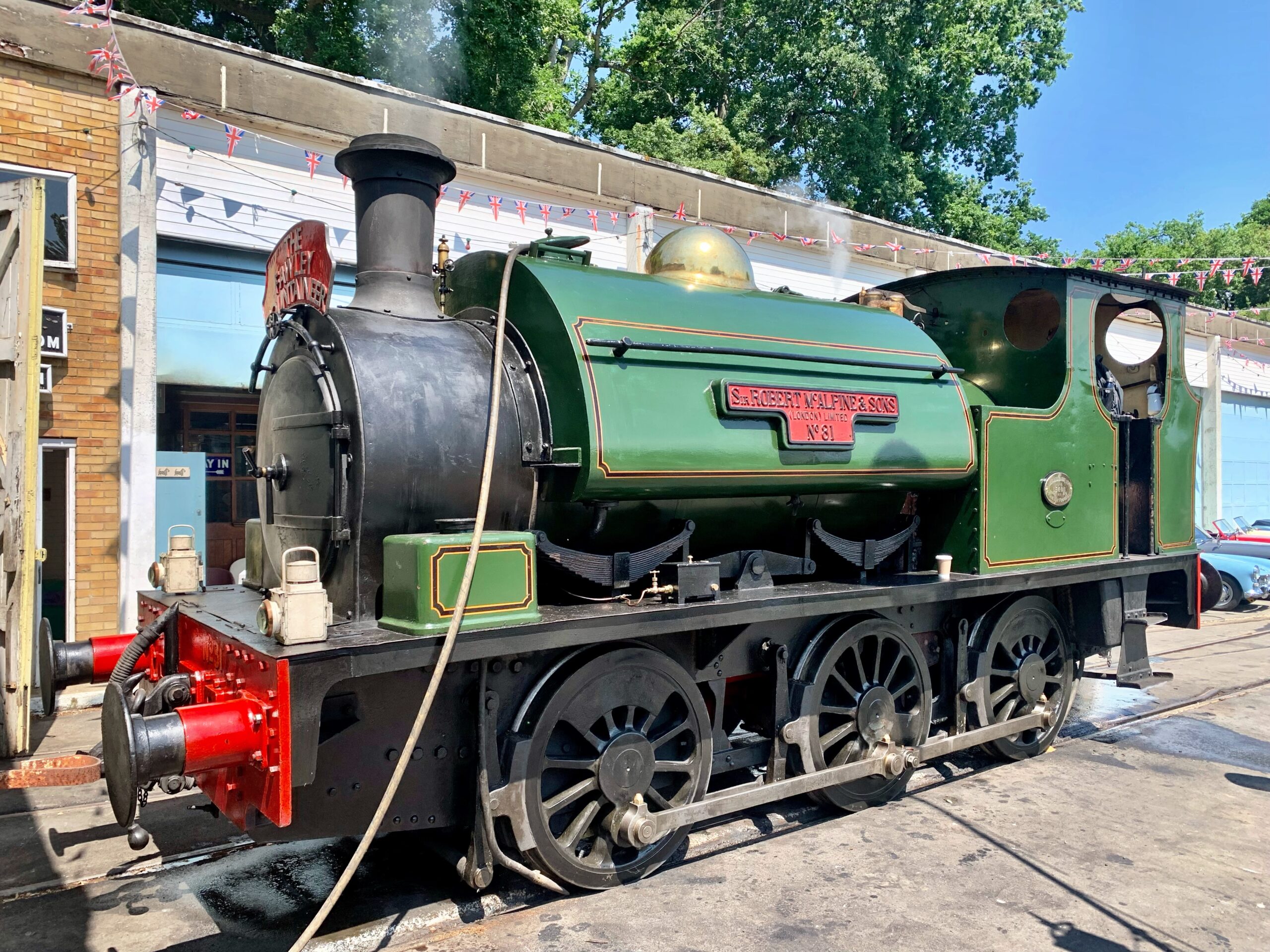
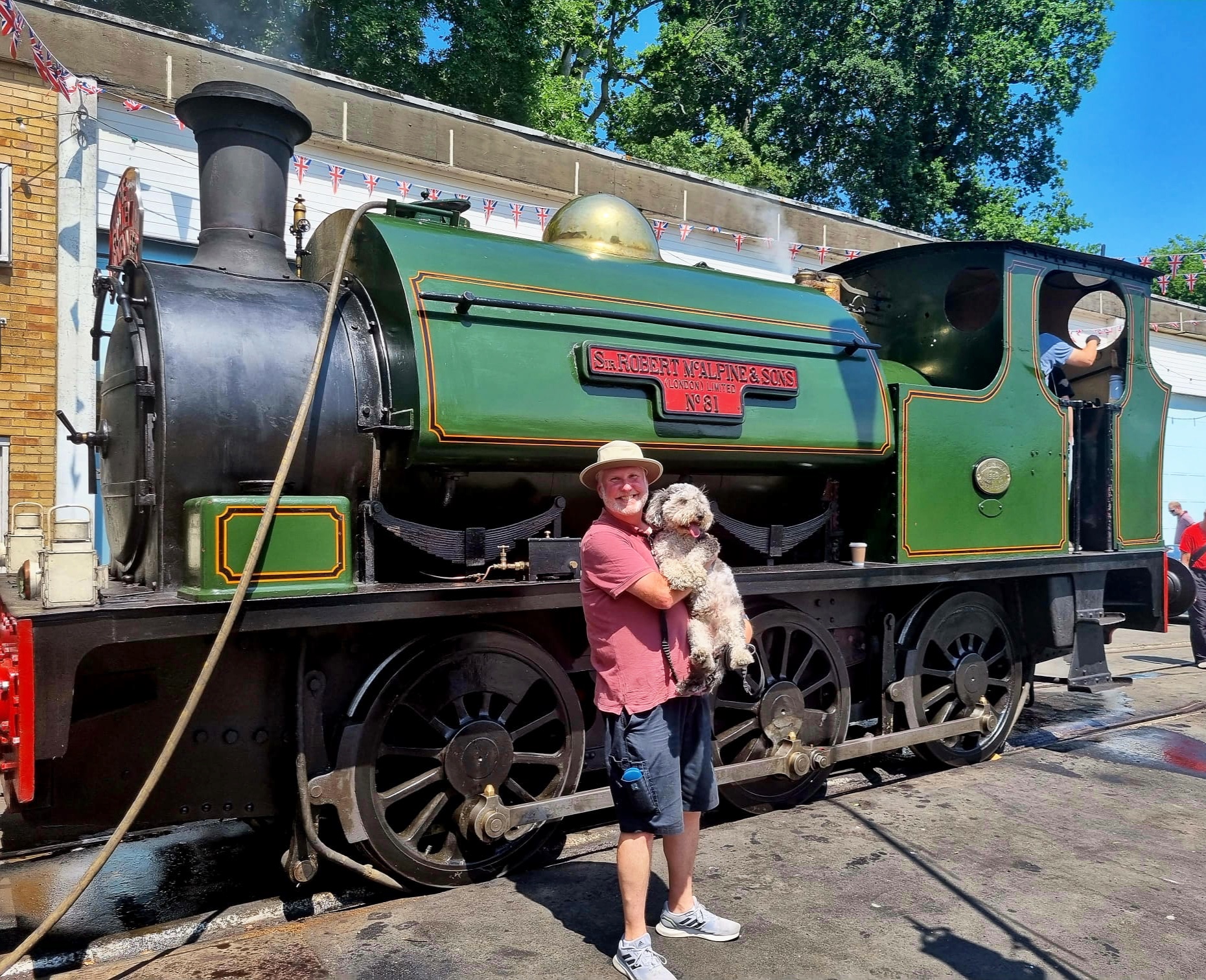
No 31 is the only surviving locomotive to have been owned by Sir Robert McAlpine & Sons for the whole of its working life. She worked on a number of building contracts including Wembley Stadium (1923-1924), RAF Boscombe Down (1944) and Llanwern Steelworks (1960-1961). The locomotive was rebuilt by Hudswell Clarke & Co in 1938. No 31 went into storage at McAlpine’s yard at Hayes in 1961 and remained there until she was identified for scrapping in 1965. At this point, Sir William decided to give No 31 a new life in retirement and purchased the locomotive.
No 31 arrived at Fawley in September 1965 and was subsequently repainted in GWR Brunswick green livery. Above the smokebox door is carried loco shed plate 81M – a code unique to Fawley – 25/06/2023
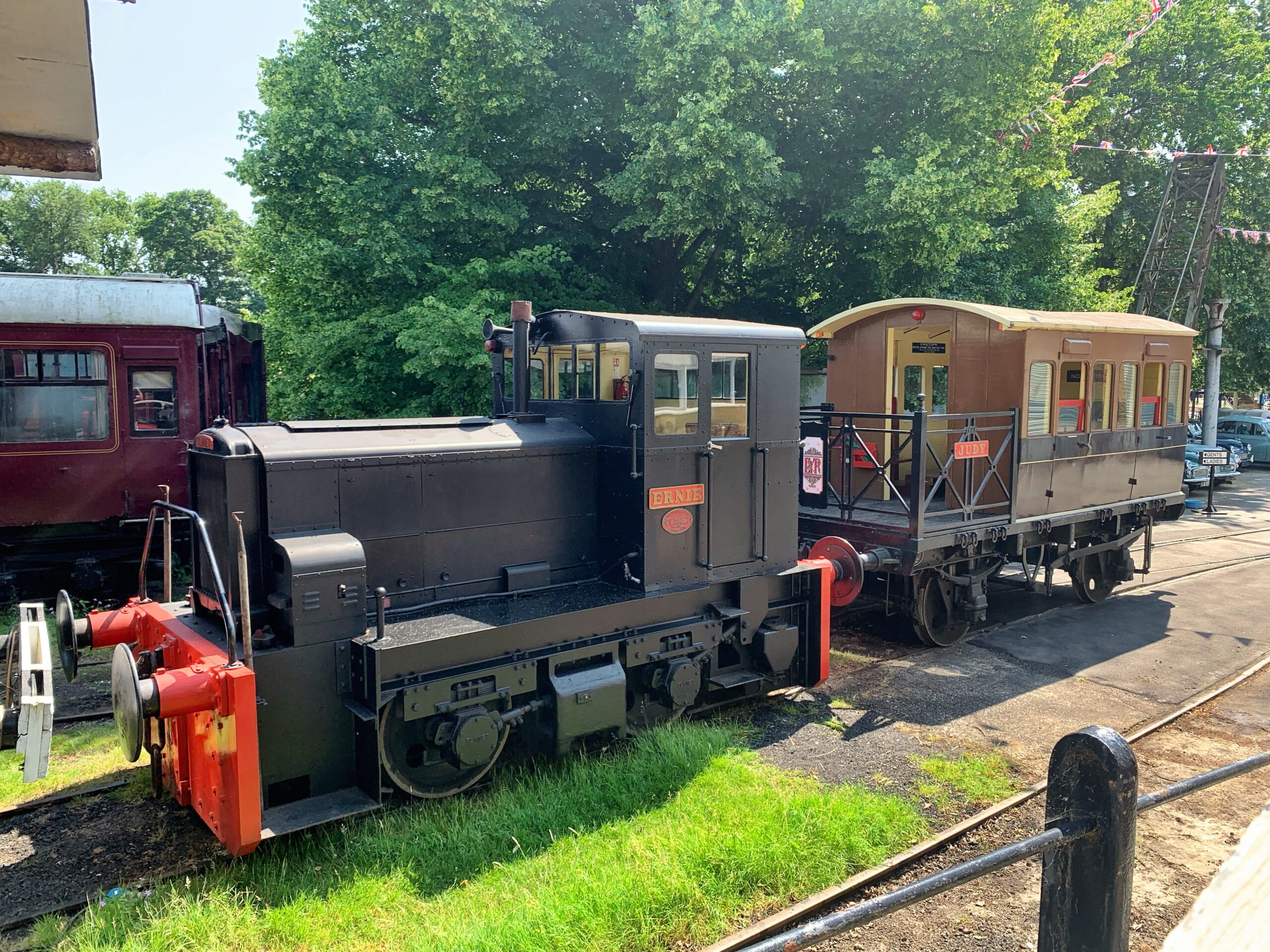
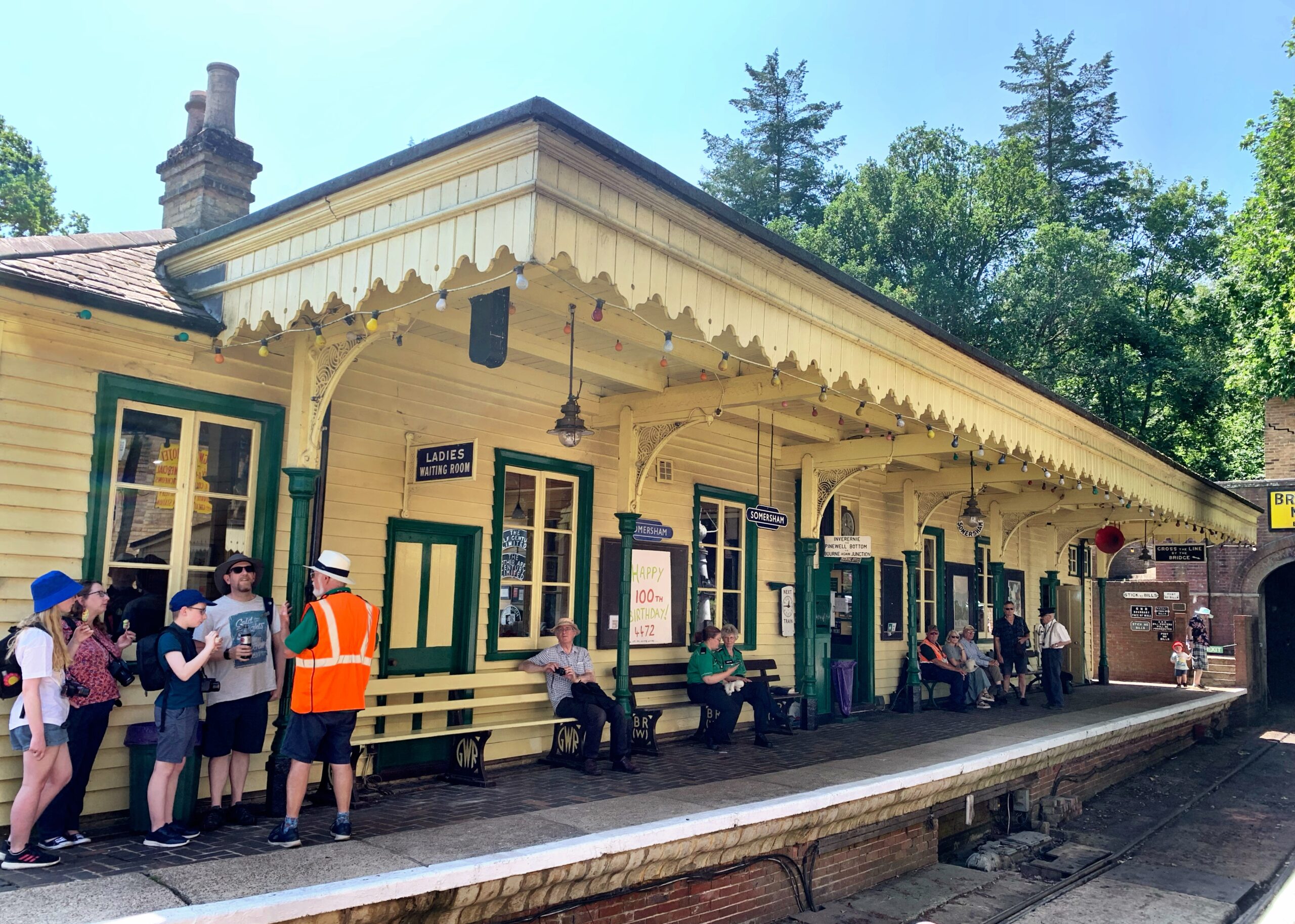
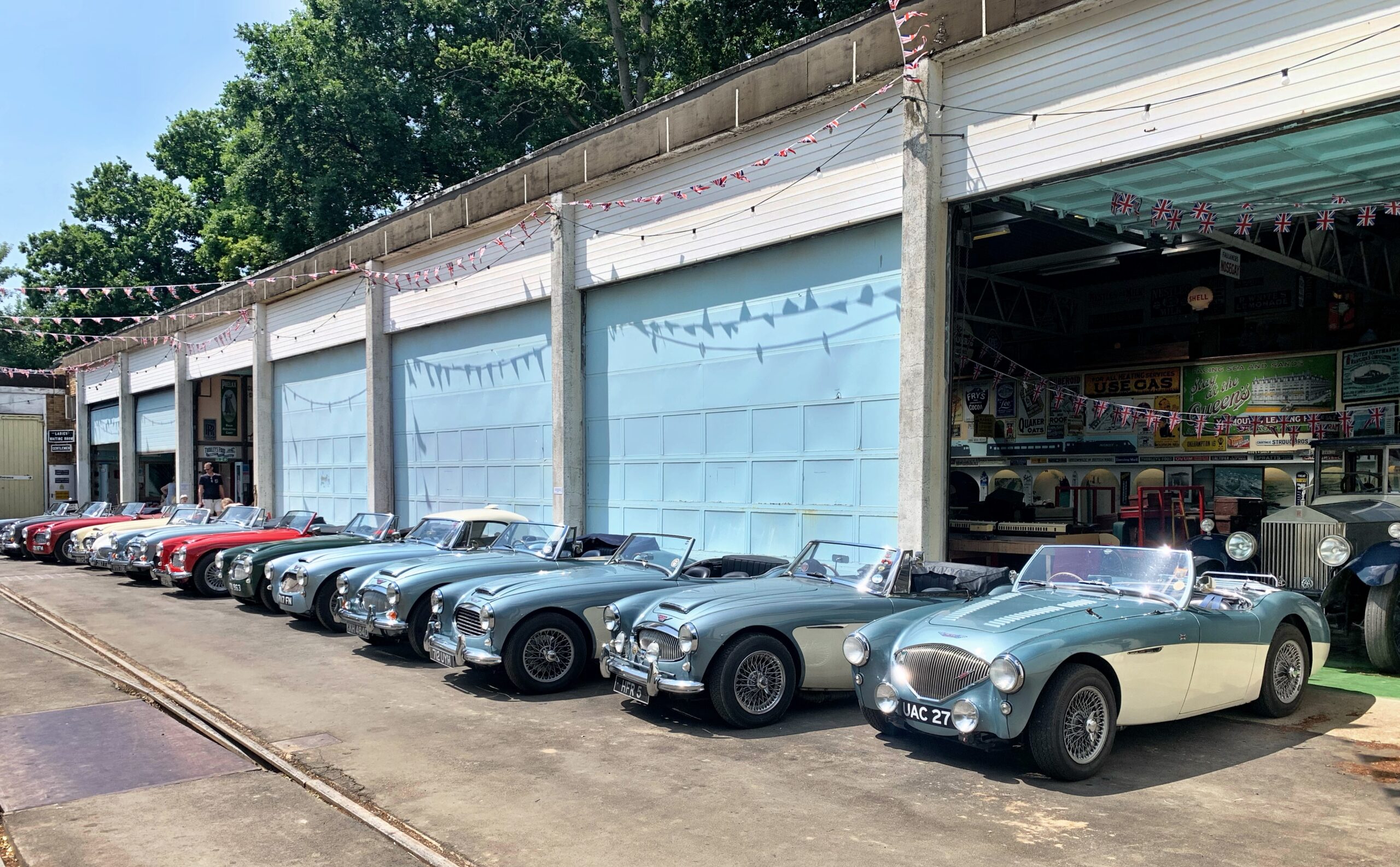
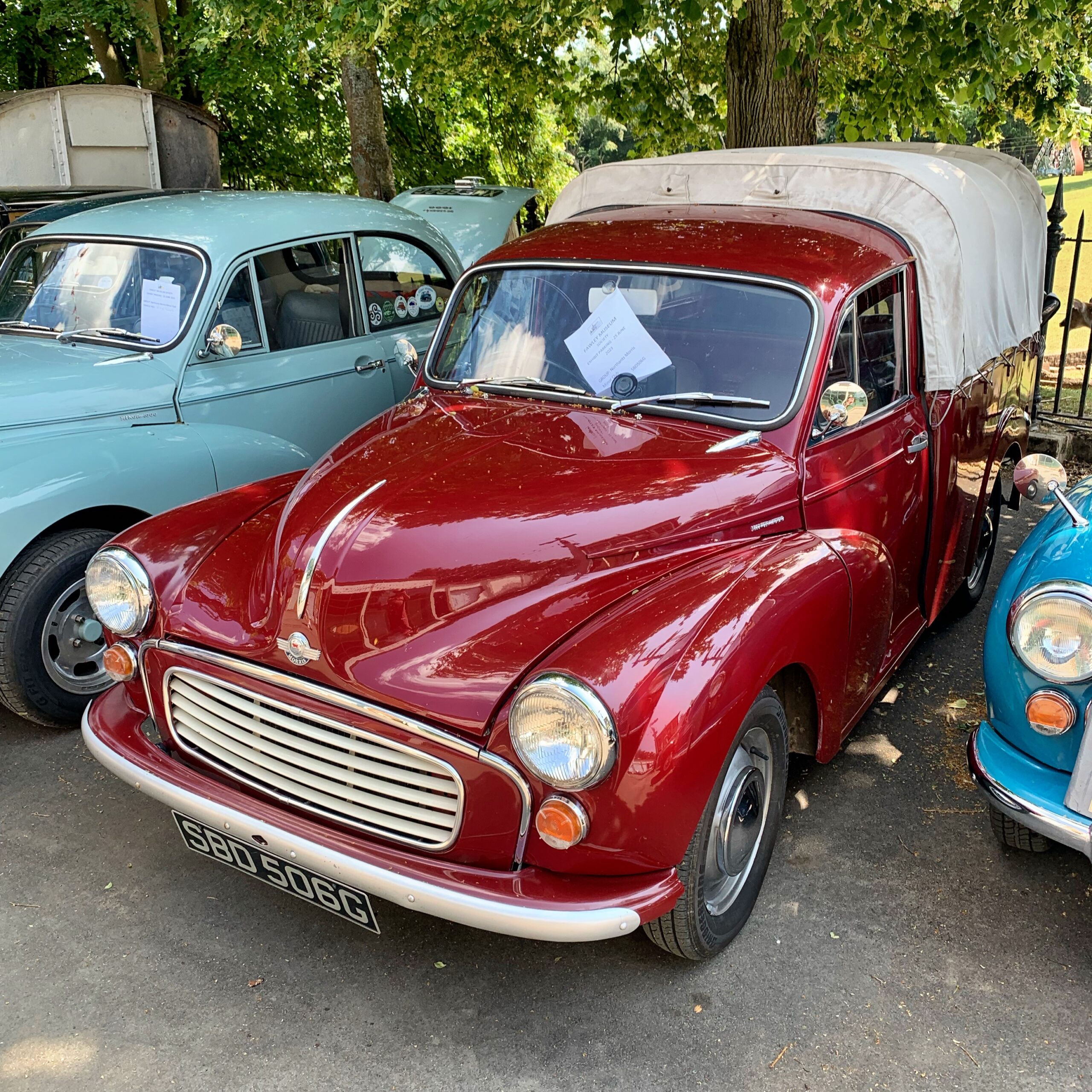
If you would like the opportunity to visit Fawley Hill, you can find out how here: https://www.fawleymuseum.org/events
Doggos are not permitted inside the museum buildings at Fawley Hill, so Caroline and I took it in turns to enjoy the delights on display while the other sat with Yoshi in a cool spot which obviously happened to be situated just by the toilets. It was during my time at this spot that I checked email on my phone and although the 4G coverage was barely existant, I discovered the Class 20’s I mentioned earlier and at that time believed to be in Bristol were in actual fact stabled at Didcot just 18 miles up the road from our current location and more or less in the correct direction for our drive back to Dorset. So after a cup of tea and an excellent piece of raspberry and coconut slice, we took a few final photographs and set off towards home.
On arrival in Didcot, we parked up and I took a stroll over to the railway station. The Class 20’s were conveniently parked adjacent to the platforms and were getting a fair bit of attention from other rail enthusiasts, much to the puzzlement of waiting passengers. The locomotives, currently part of the Harry Needle Rail Company (HNRC) fleet but still carrying the remnant livery of their previous owners; GBRf, are on hire to Rail Operations Group (ROG).
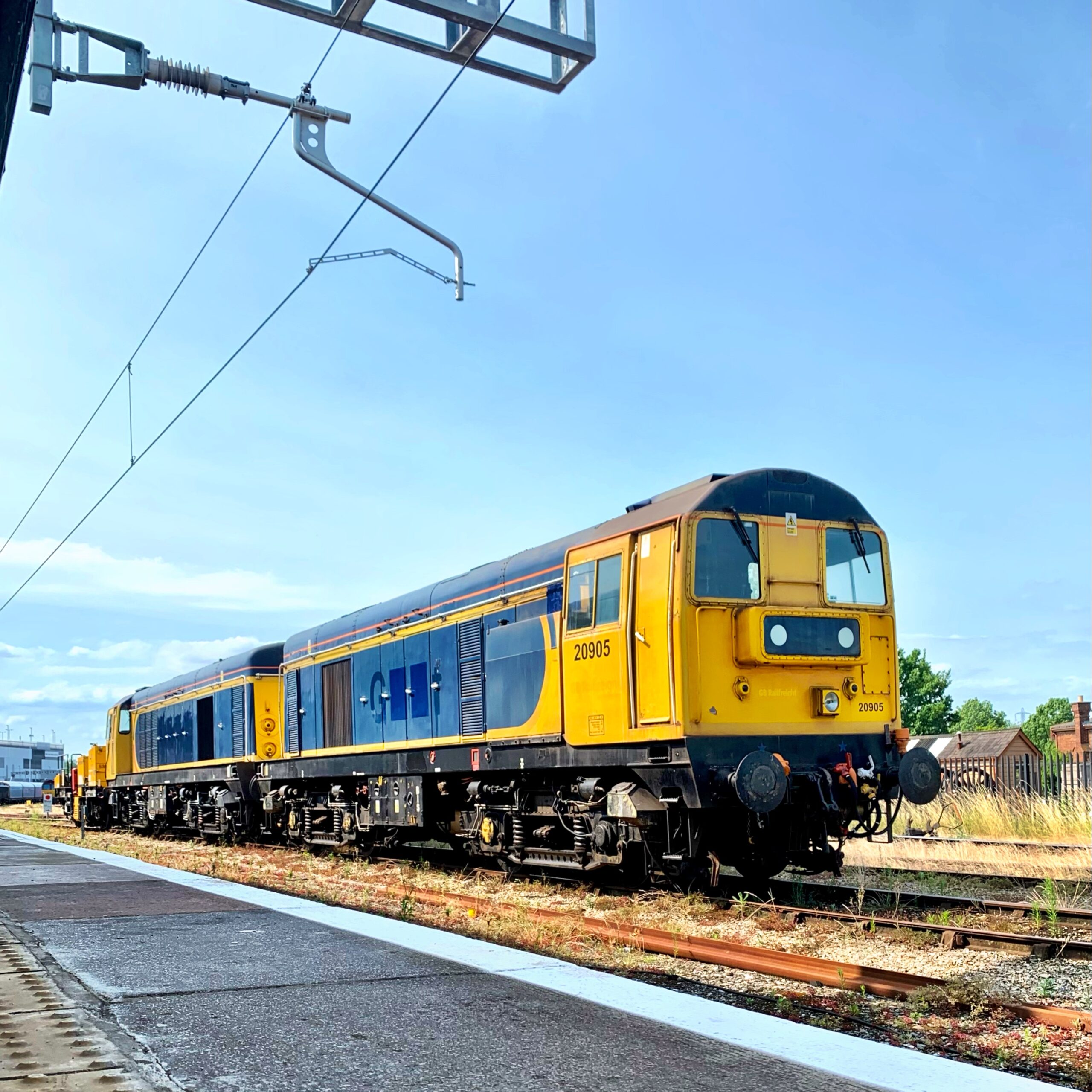
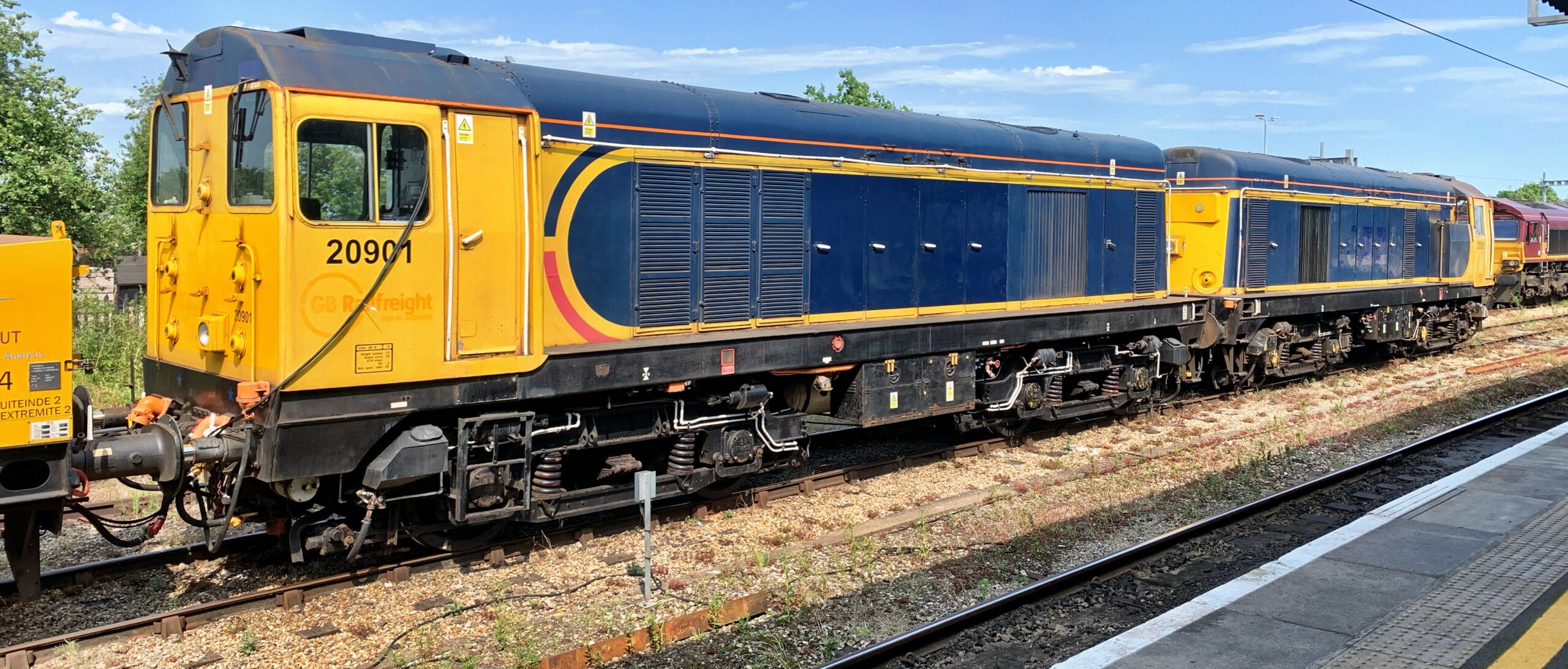
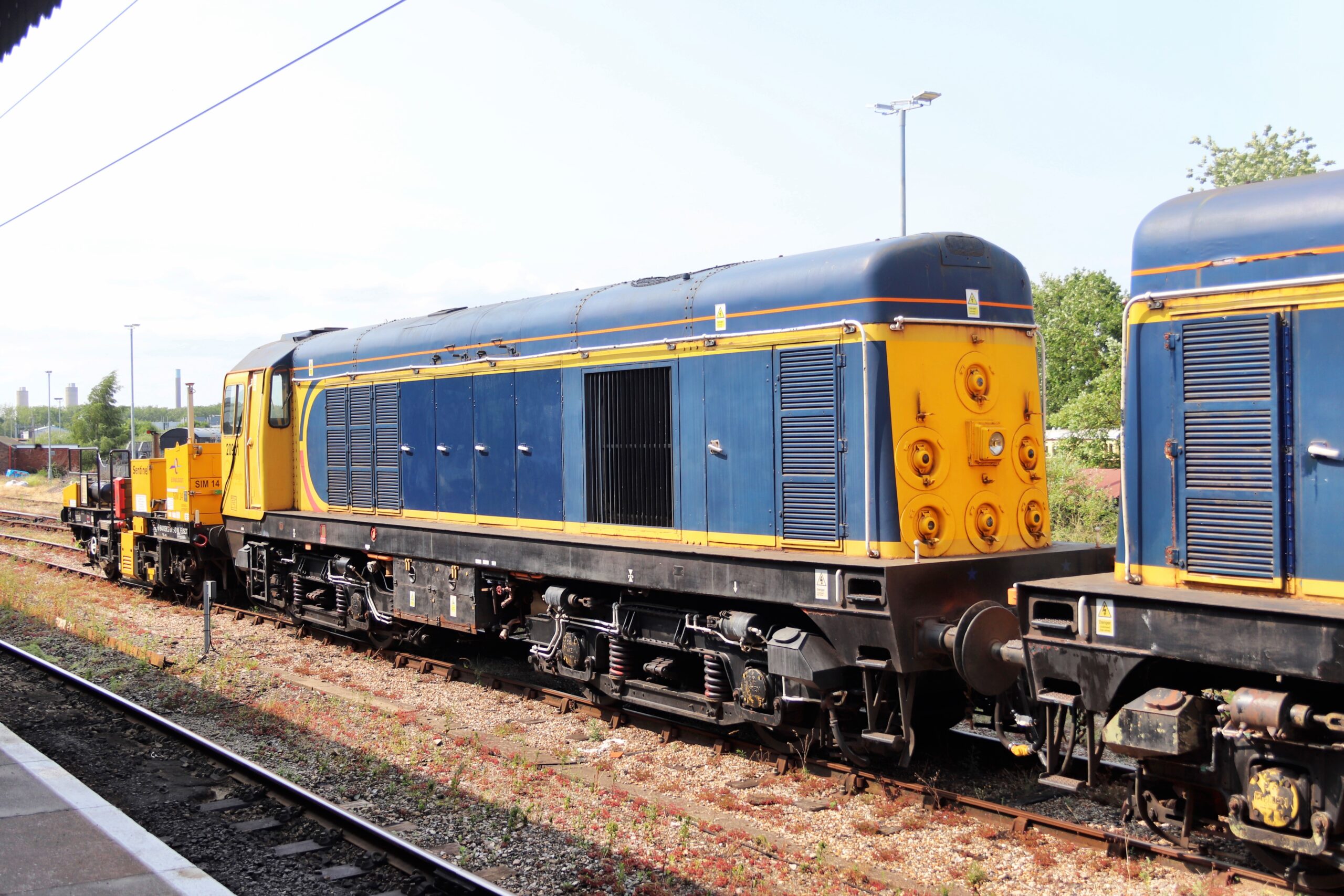
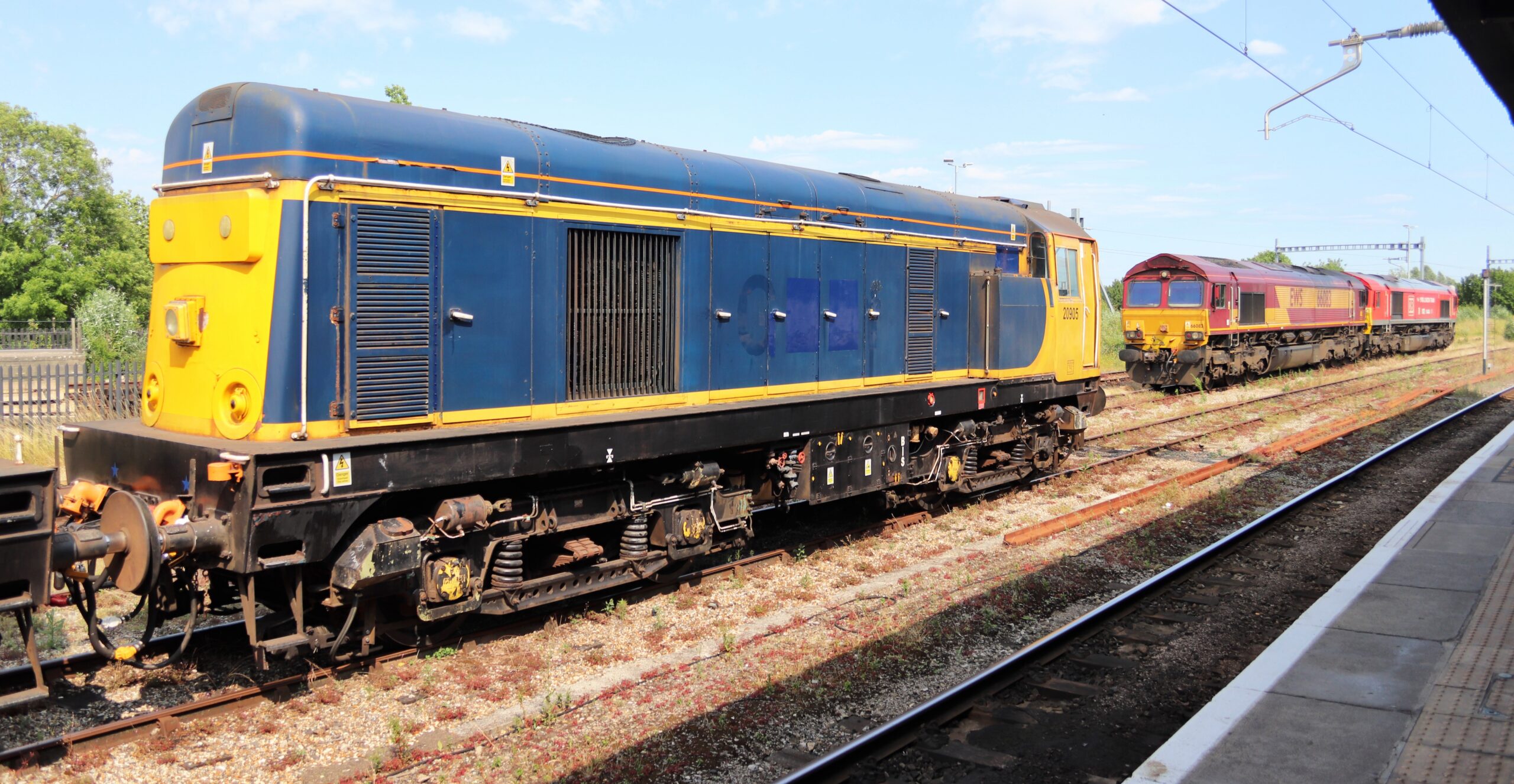
The locos, rare visitors to west, are currently working in tandem with one of seven Eurailscout Switch Inspection Machines (SIM). I’m more used to switches being called points, but accept this “Americanism” as it quite an explanatory term. The points are the movable rails which guide the wheels towards either the straight or the diverging track allowing a train to switch tracks if required. They’re quite complex really and require a fair amount of maintenance to ensure they are in a safe and usable condition. SIM14 ‘Sentinel’ (No. 99 84 0362 006-0) arrived at Didcot by road from Holland at the start of June 2023 and was subsequently moved to Bristol Kingsland Road by a single Class 20 locomotive. It spent several nights working in the Bristol area doing exactly what the name suggests – inspecting various switches and junctions in the vicinity of Temple Meads, East Junction and West Junction. After spending the weekend at Didcot again, it was moved to Southall yard on the 12th June for further overnight inspections in the Paddington area. More recently the single Class 20 was joined by its classmate and on the 20th June returned to the Bristol area, moving back to Didcot on the morning of the 23rd despite the TOPS reporting they were still 77 miles further west.
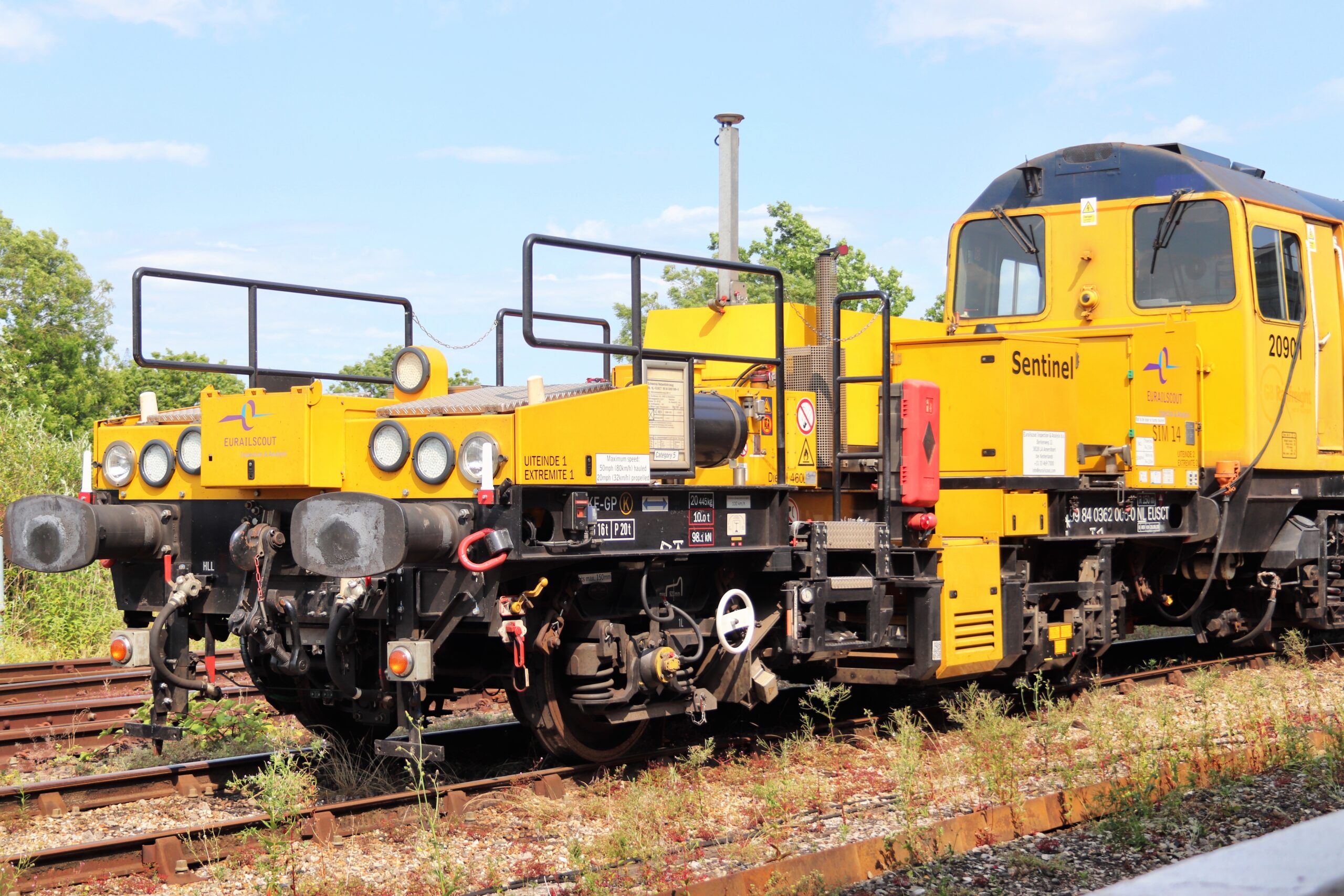
Eurailscout says the following about the Swith Inspection Machines: “About 50% of all track disruptions are caused by faulty switches, with timely maintenance being needed in order to prevent these disruptions. We use a SIM wagon to measure and inspect the geometry and rail profiles of your switches under day-to-day operating conditions. A single locomotive can push or pull the SIM wagon, which means it can be shunted around quickly between the normal rail traffic. Since we also record high-quality video images during this work, you can make a visual inspection of the switch without having to put it out of service for the inspection and without your staff having to walk on the track themselves.”
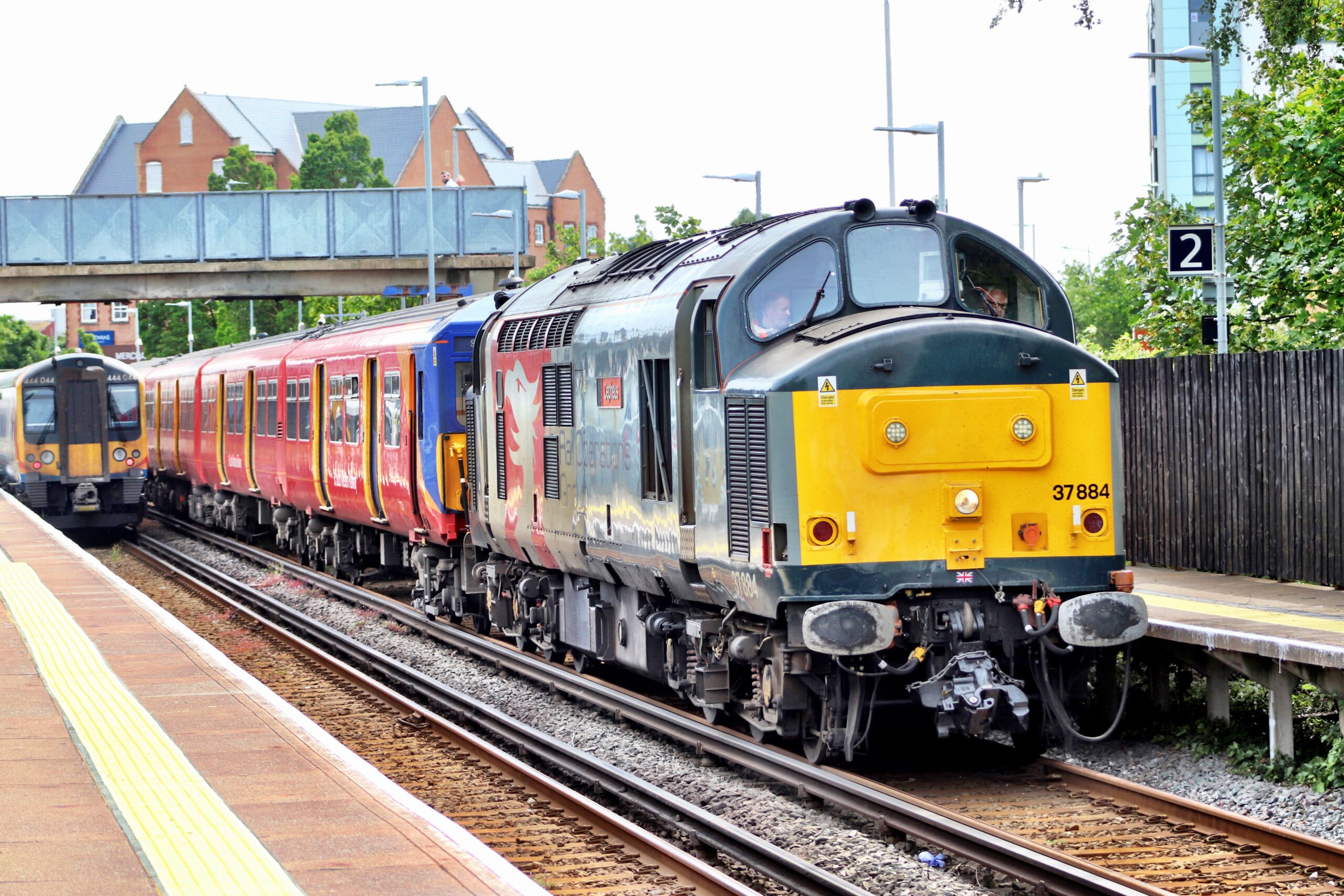
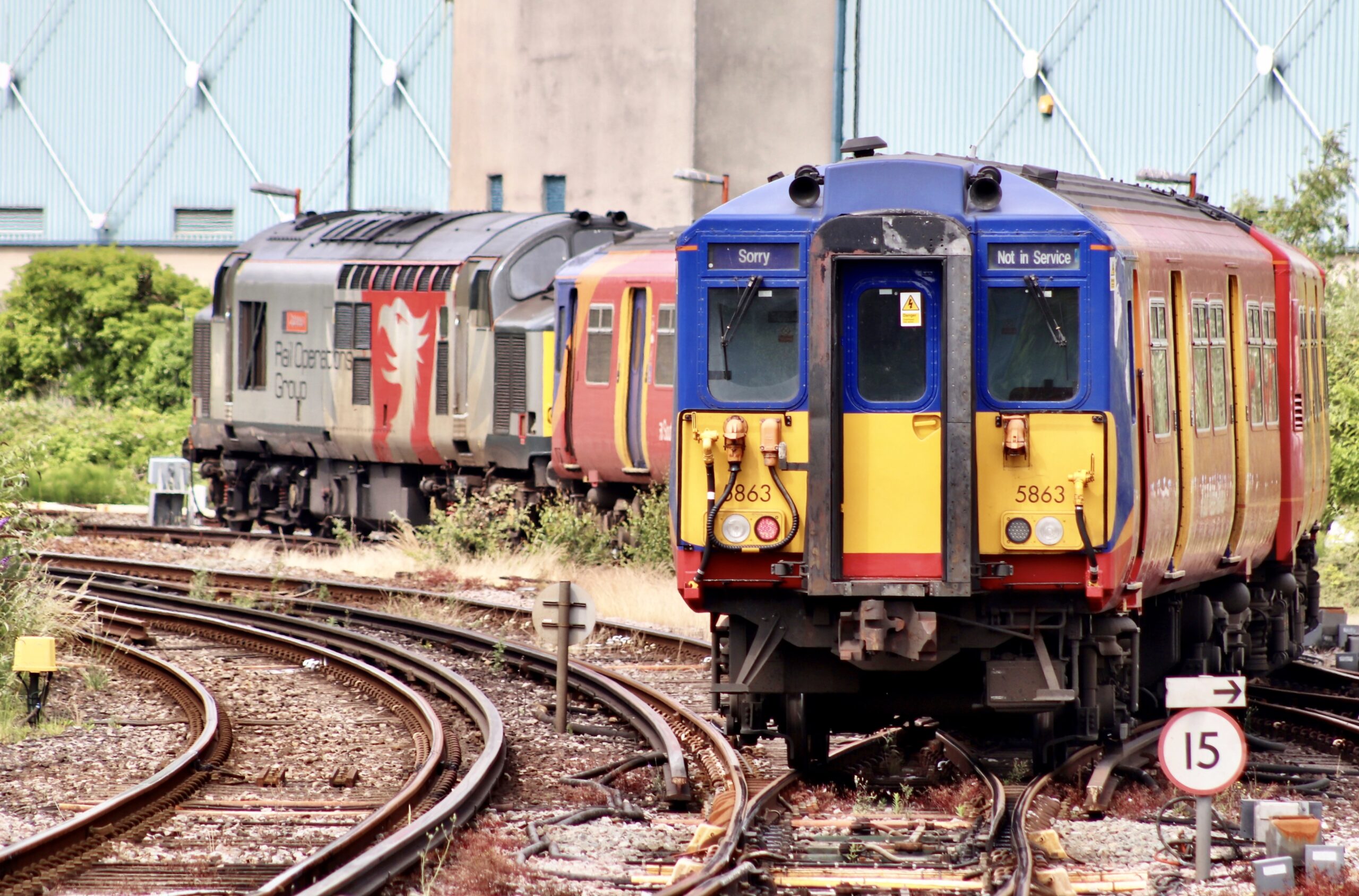
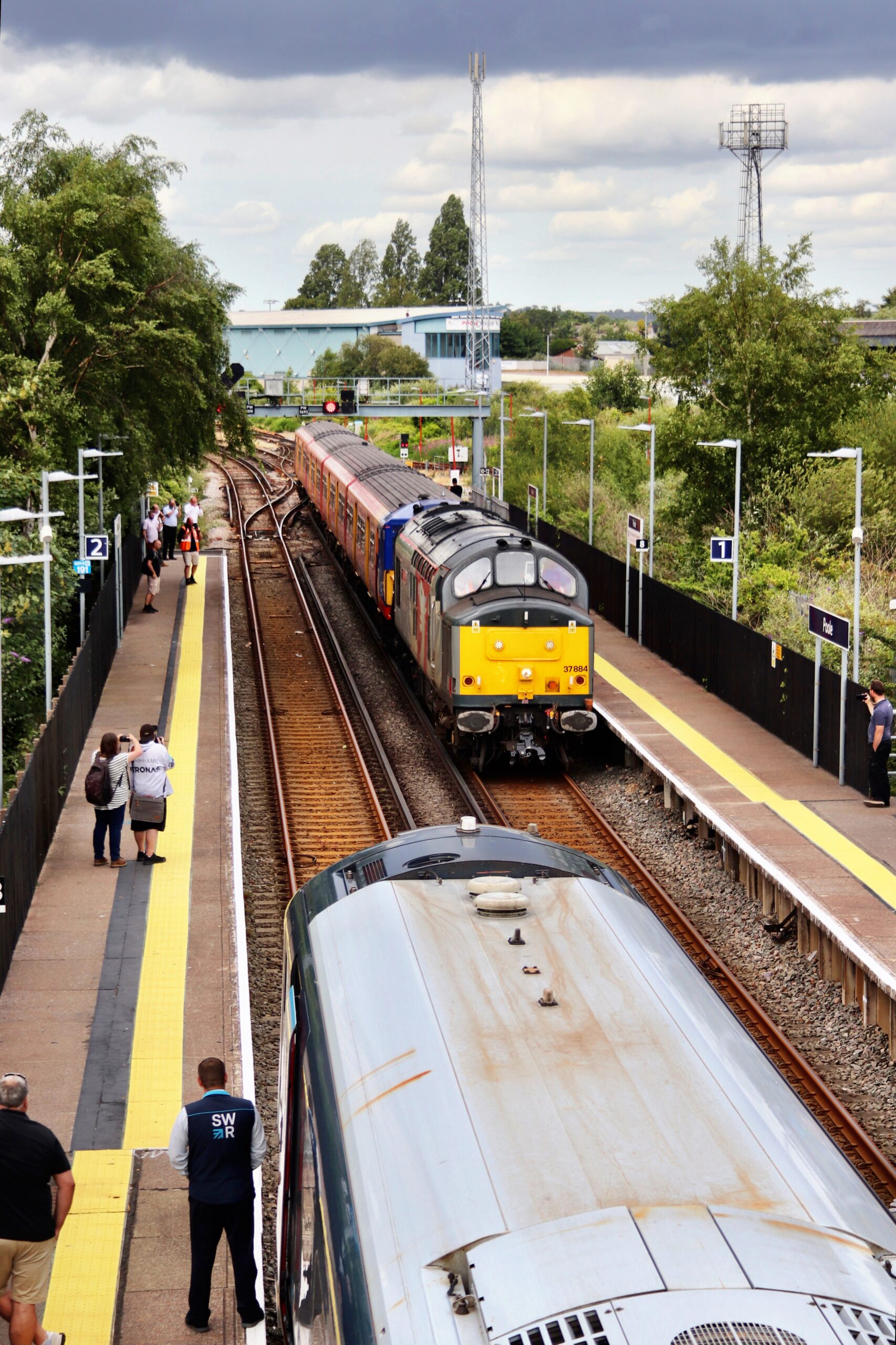
Monday and Tuesday saw some stock movements run around at Poole Storage Sidings as they either went to or from Bournemouth T&RSMD. First up on June 26th was ROG Class 37 No. 37884 ‘Cepheus’ hauling a Class 455 electric multiple unit No. 455863 from Wimbledon to Bournemouth for repair of a failed motor alternator. We saw the Cass 37 and empty coaching stock unit pass through Poole station on the way to the sidings. The locomotive detached from the front of the unit and ran back into Poole station and reversed back out again to attach itself to the other end of the empty stock before passing back through the station on the way to Bournemouth depot.

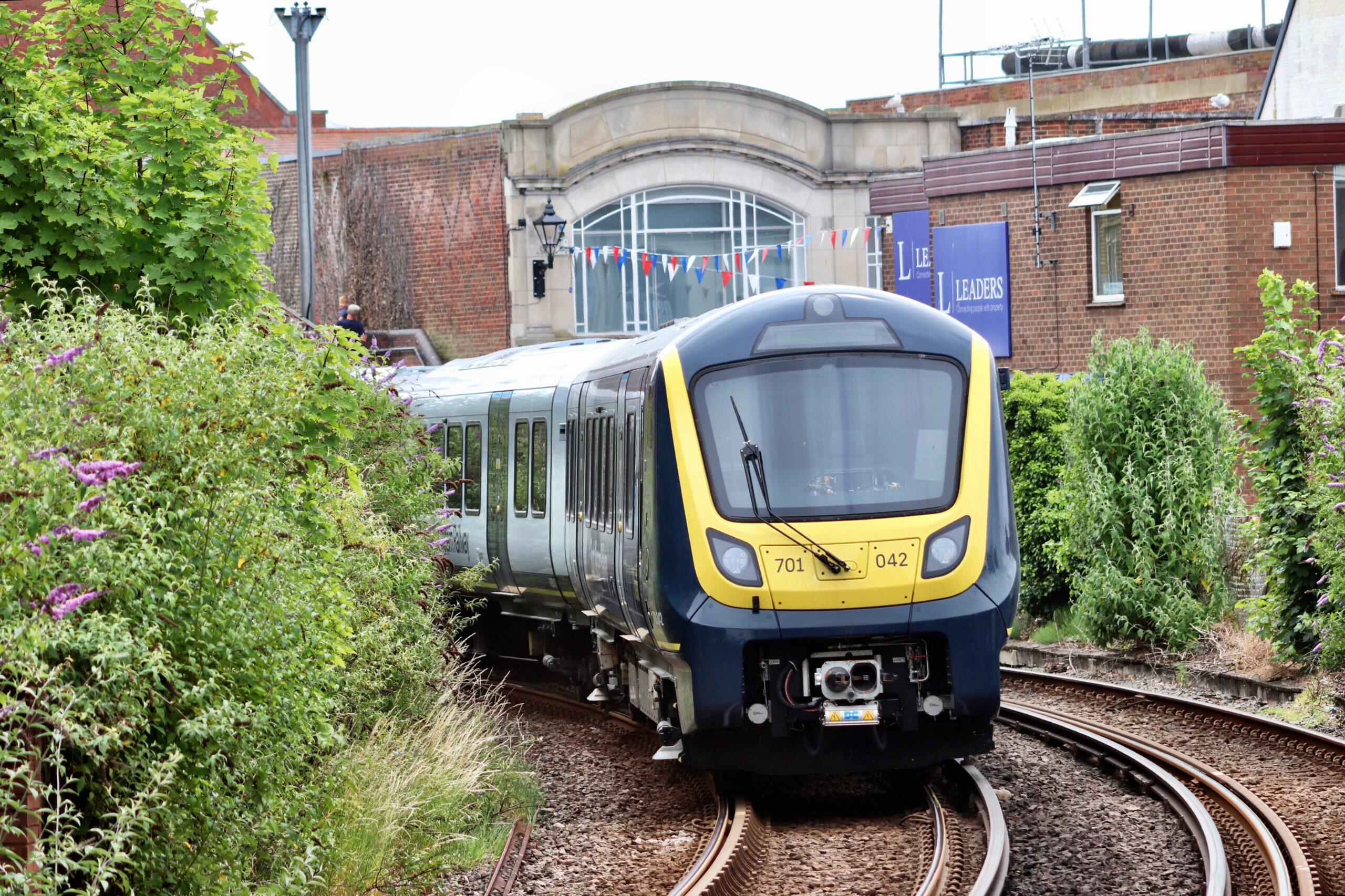
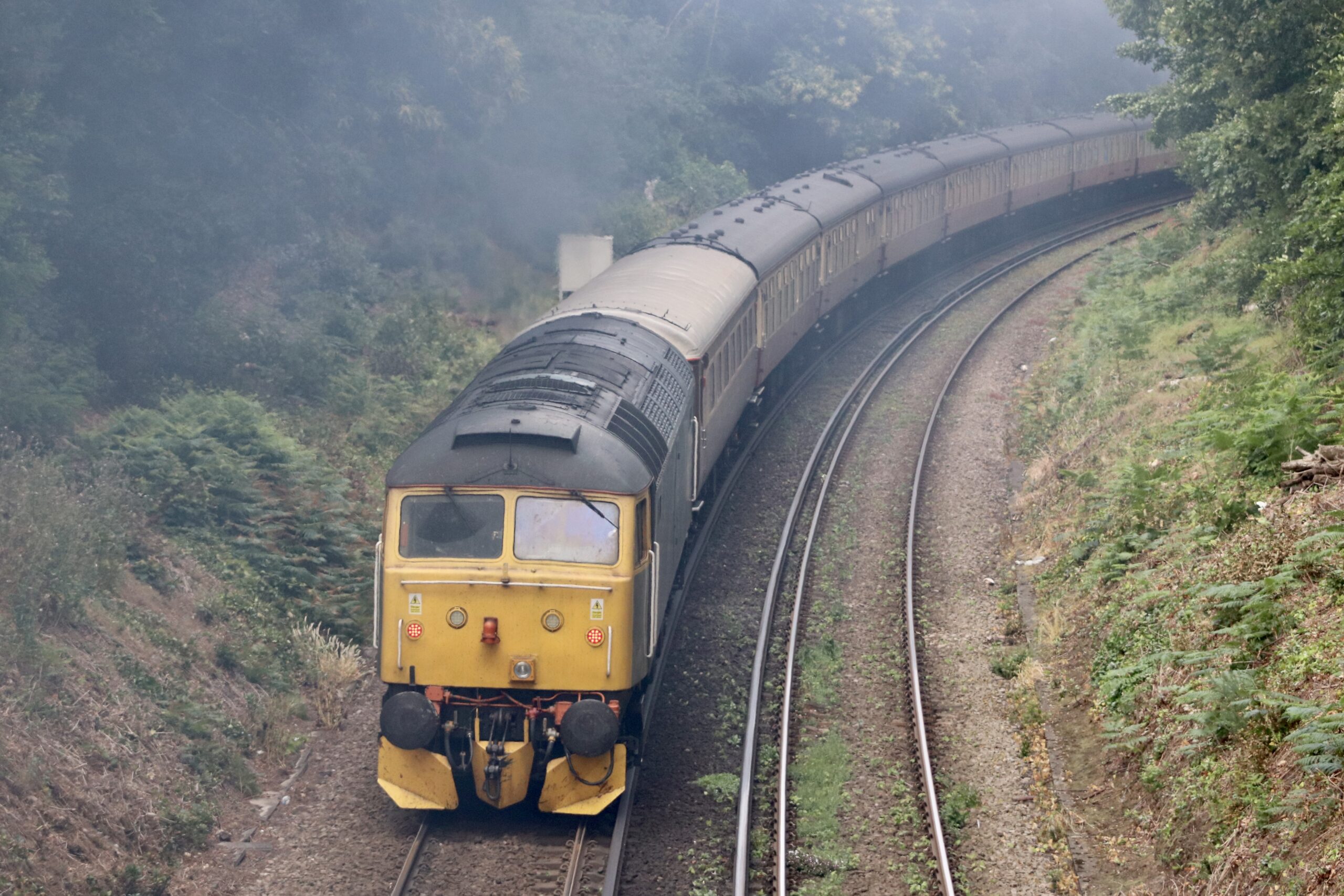
The following day it was the turn of Class 47 No. 47727 ‘Edinburgh Castle’ to arrive at Bournemouth T&RSMD to collect a stored ten-car Class 701 unit and take it off to Wimbledon for a further priod of storage. Regular readers may recall that the Class 701’s are yet to enter revenue earning service with South Western Railway and are currently undergoing testing and running in mileage accumulation runs. In fact, if you have a length of track able to accommodate one of these units, I’m sure Network Rail would love to hear from you as sidings all over the country are being filled up with these trains. Scheduled to depart Bournemouth at 1235, I was very much caught out when I discovered that the train had left 66 minutes early. I was very kindly picked up by our friend Jamie who deposited me at Poole station. Unfortunately, there were no free parking spaces available and as Jamie drove off in search of one, the Class 47 and unit hove into view.

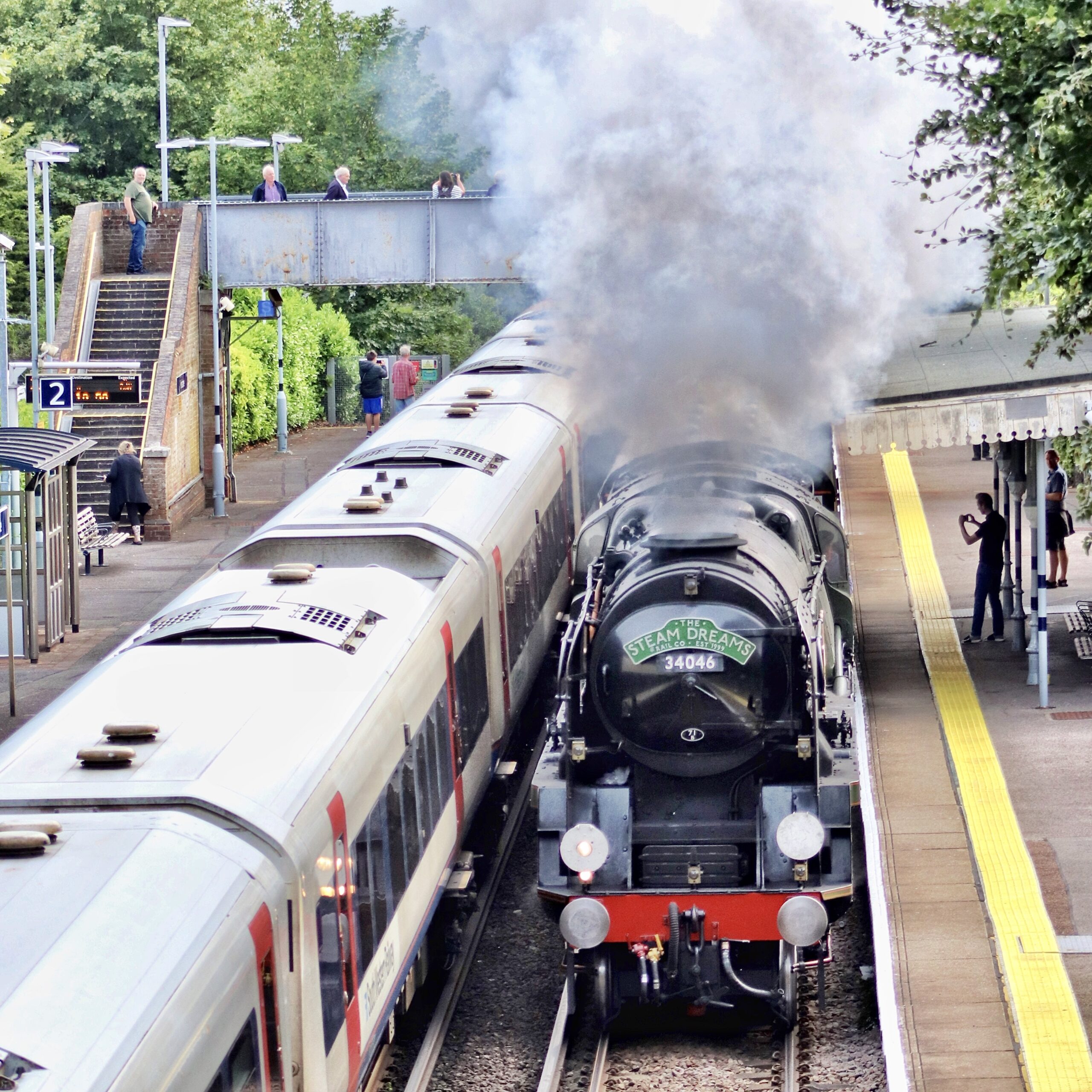
Later the same day, Southern Railway West Country Class 4-6-2 No. 34046 ‘Braunton’ visited Weymouth with a Steam Dreams excursion originating from London Victoria. The tour ran to Yeovil Junction where the steam locomotive came off the train for servicing and turning at the Yeovil Railway Centre whilst Class 47 No. 47614 took the train onto Weymouth.
A lineside fire at Upwey got most of us thinking that the cause was ‘Braunton’, but in fact the steam locomotive hadn’t even passed through the area when the line to Weymouth was closed. Thankfully it wasn’t long until everything was sorted and the track between Upwey and Weymouth reopened at around 1800. This enabled the light steam locomotive to complete its run down to rejoin the stock with no delay to the departure of the tour which was scheduled to return to London via the Bournemouth route.
Jamie was again kind enough to allow me to join him at Parkstone to see the train pass through. Unfortunately, ‘Braunton’ was running an impressive 8 minutes early as she stormed the bank at Parkstone, just as a London Waterloo to Poole service in the form of SWR Class 444 No. 444004 pulled in on platform 2, obscuring the view for many of those waiting to photograph or video the steam passing through on the Up line. So, my sincere apologies to Jamie who had his view blocked by the service train. I don’t think he’ll be asking me to accompany him on any future outings at this rate!
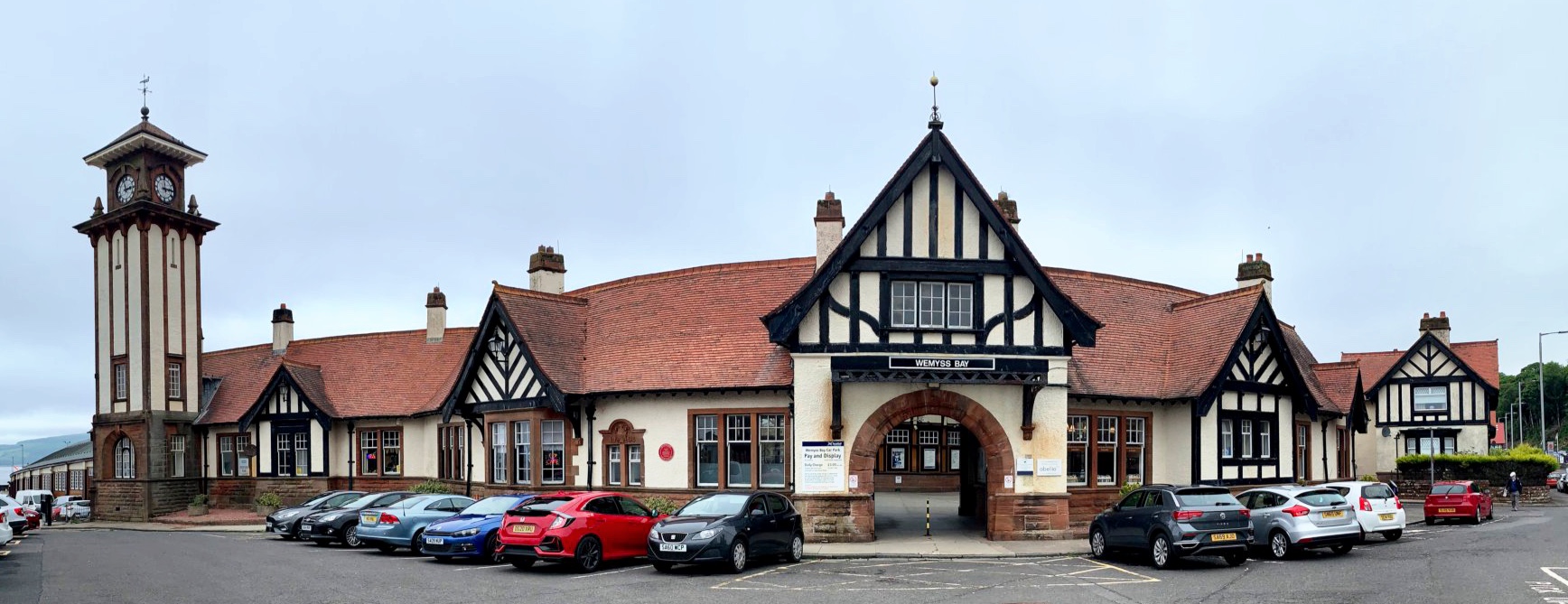
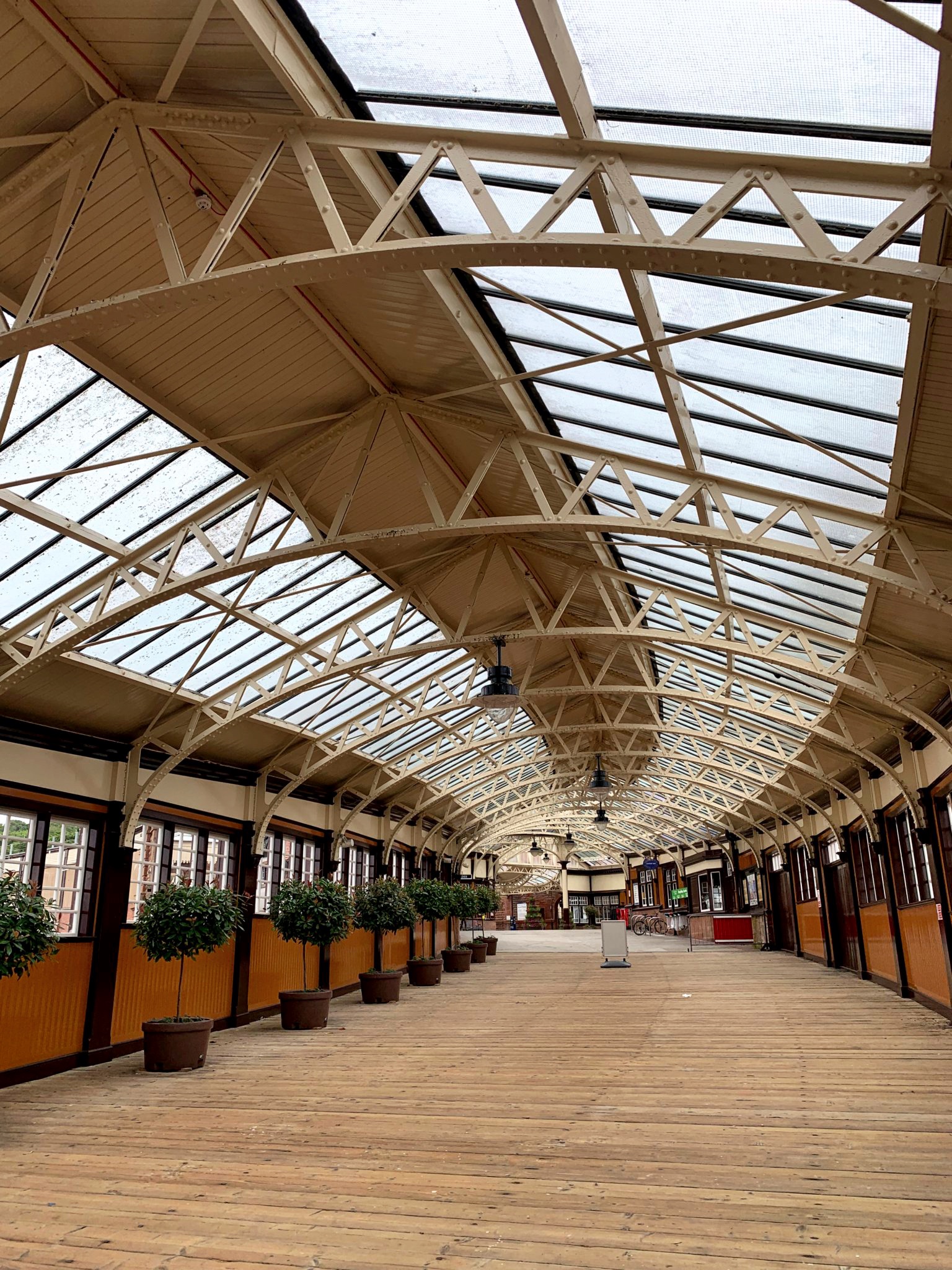
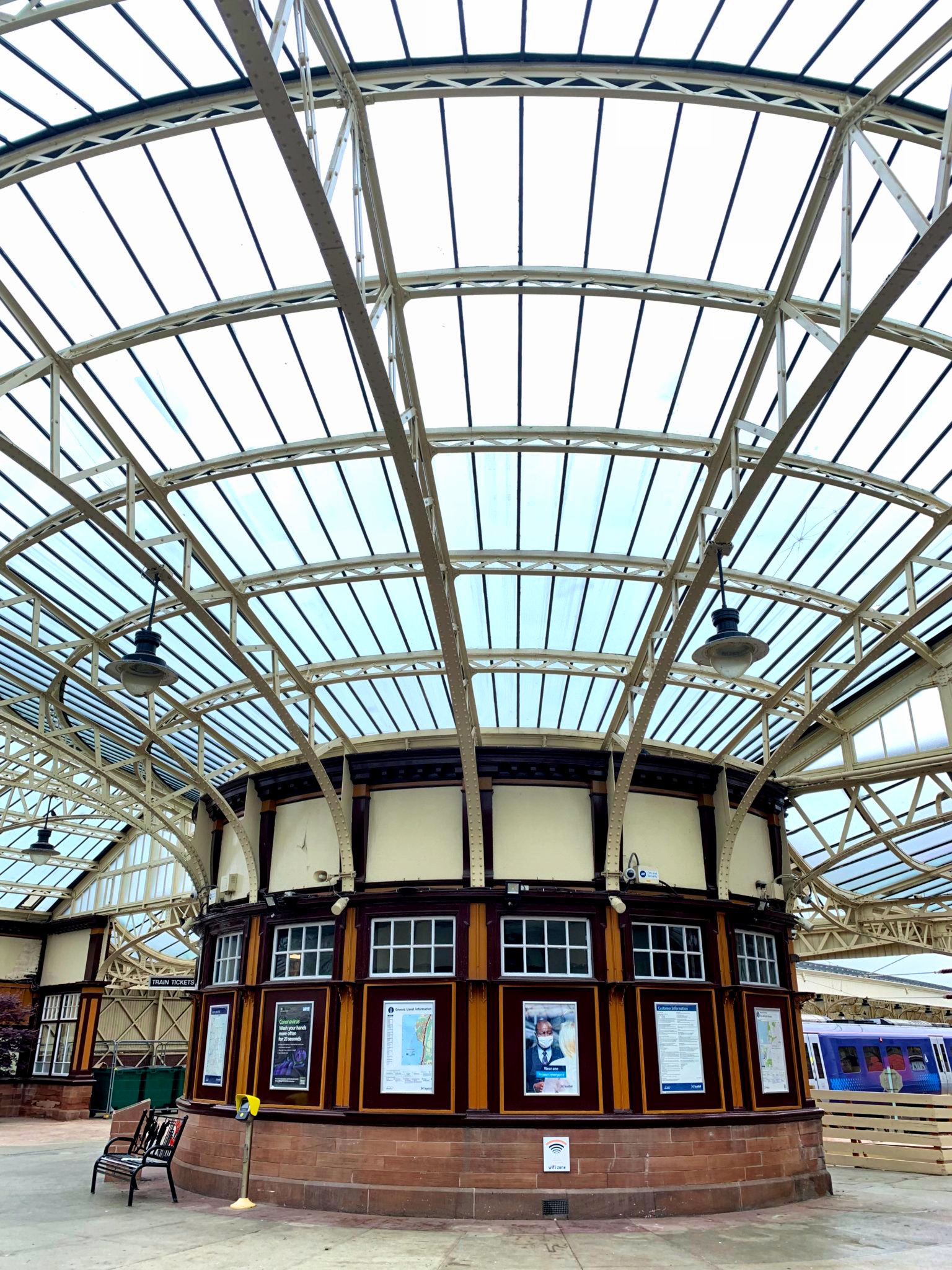
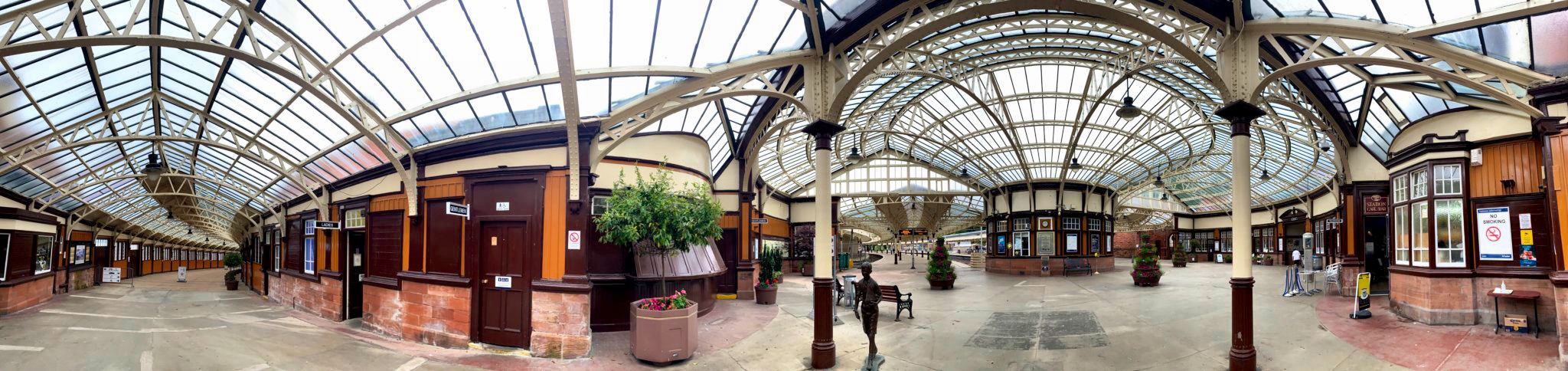
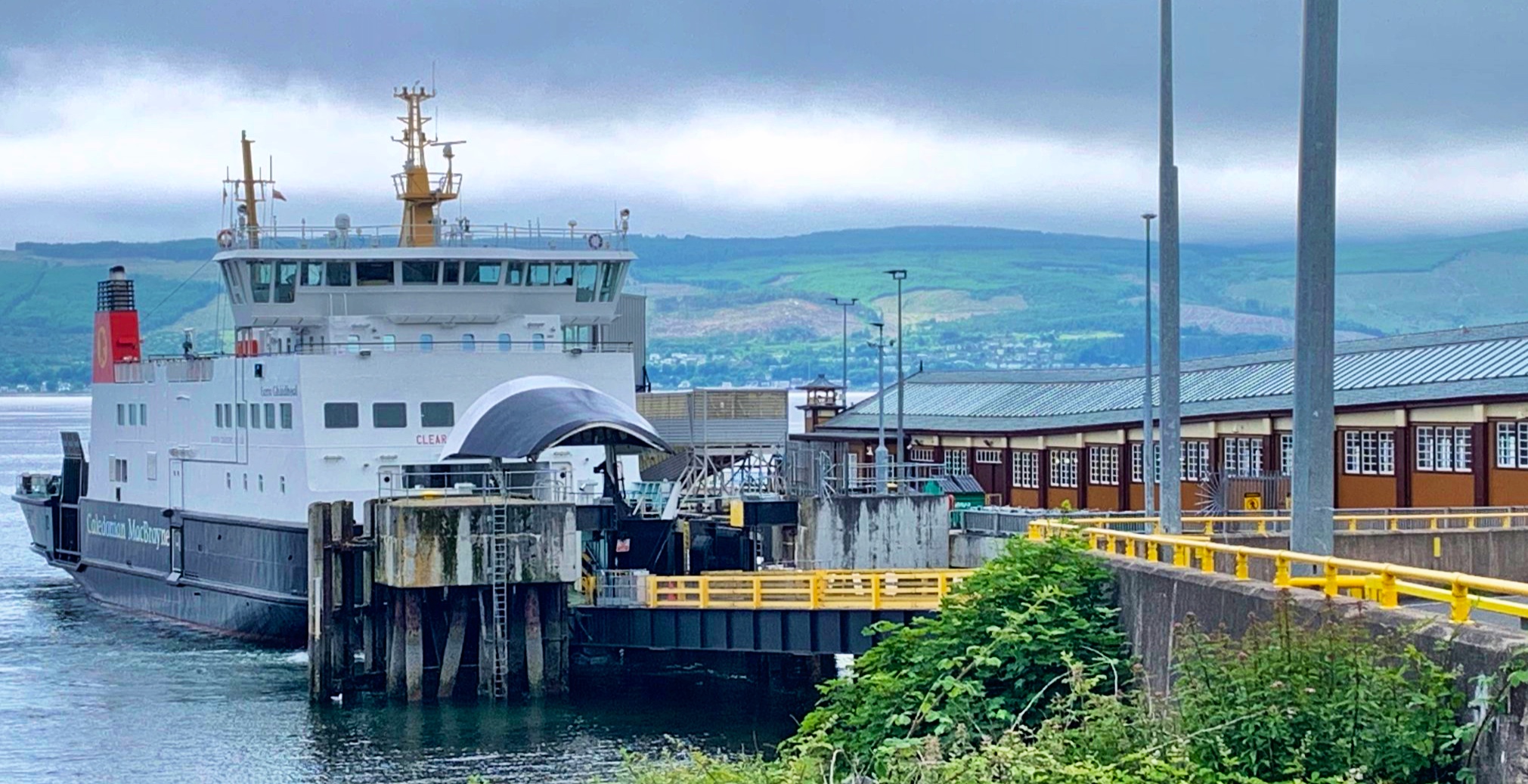
I was pleased to learn one of my favourite railway stations, Wemyss Bay in Scotland, has won this year’s World Cup of Stations competition following a five day contest across 11 geographical regions in England, Scotland and Wales. Supported by the Rail Delivery Group and the Community Rail Network over 70,000 votes were cast. 48 stations were chosen by TV presenter Tim Dunn and pitched against each other in 16 rounds to whittle down the final few. Wemyss Bay came in at first place with 8,403 votes in the last round, beating second place Denmark Hill on 7,441 votes and third place runner up Leamington Spa with 3,271 votes.
And there we have it! We’ve reached the end of another blog entry. Thank you for your time in visiting us and for your comments, encouragement, corrections and contributions! We’ll be seeing you.
Postscript
Leave a Reply