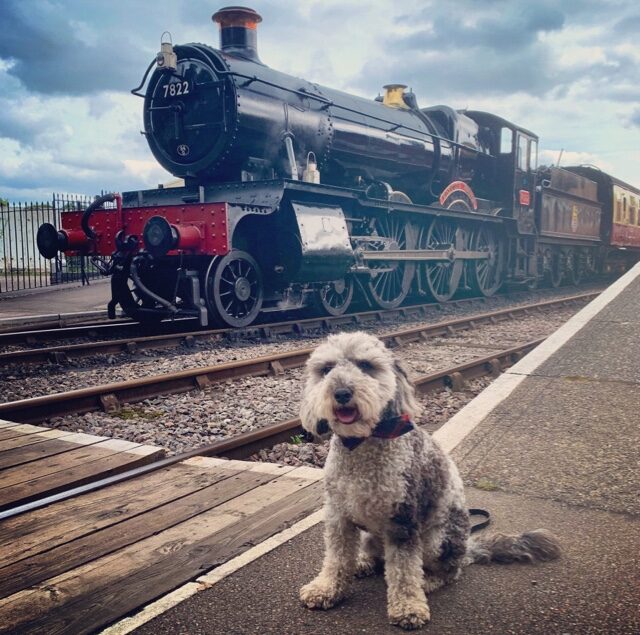
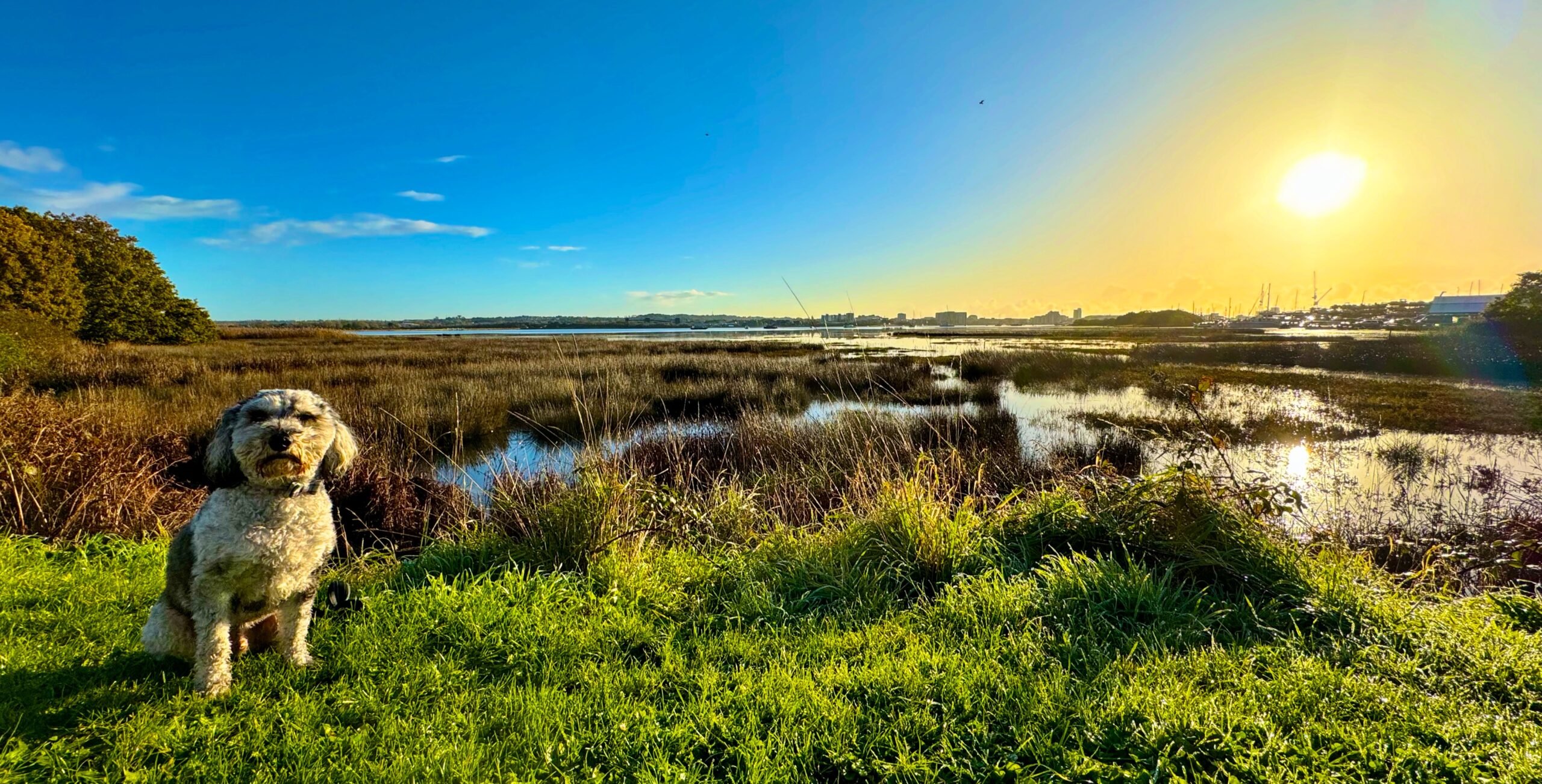
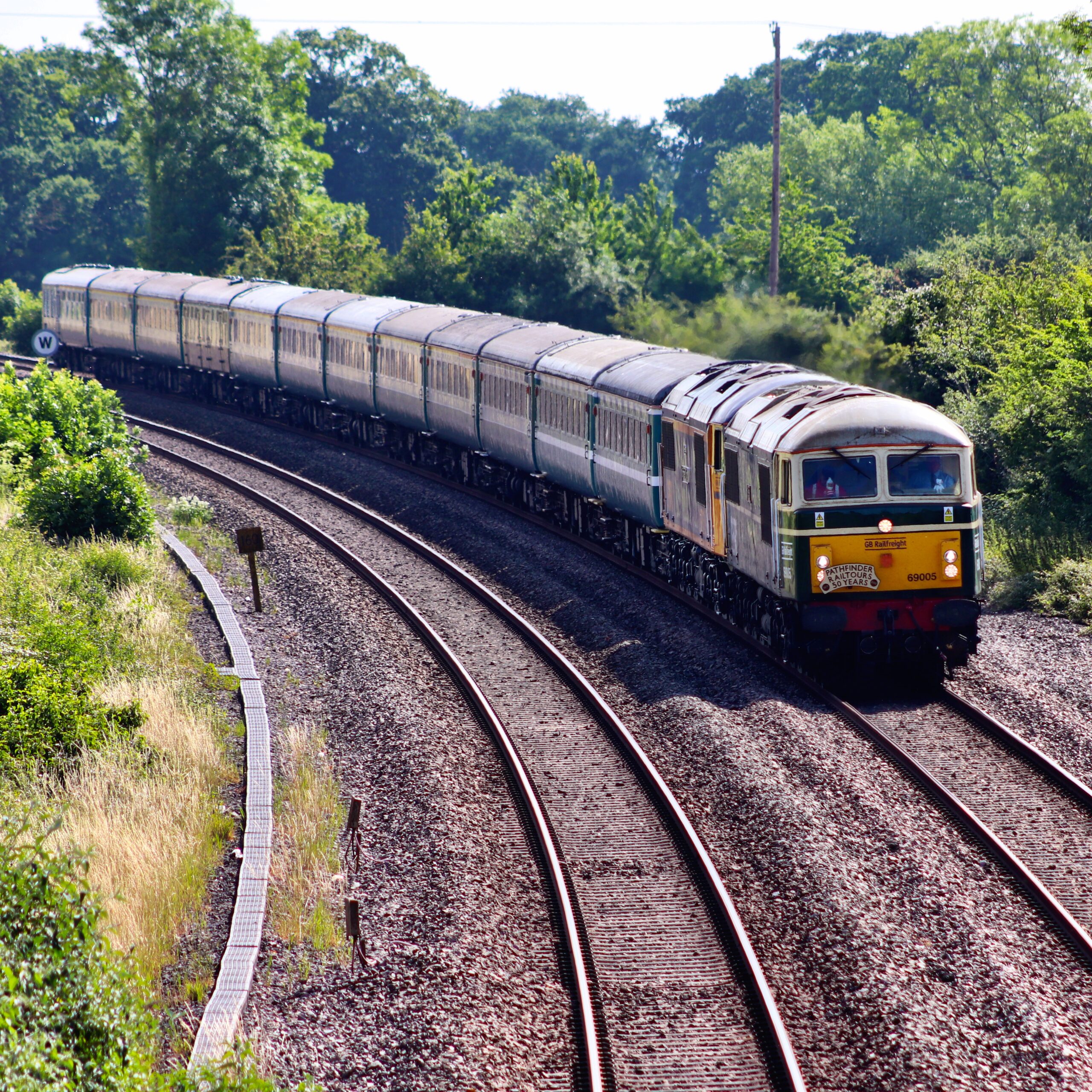
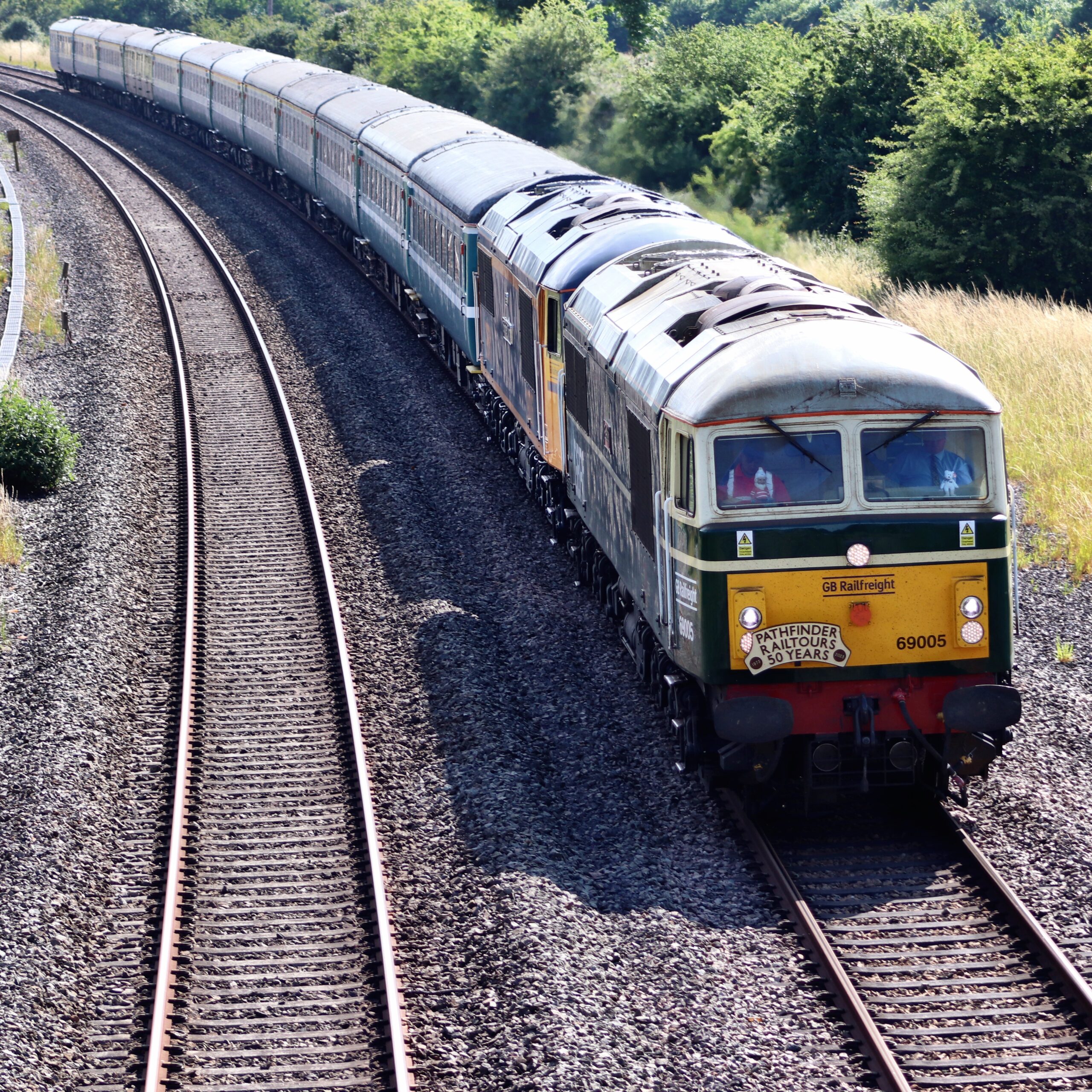
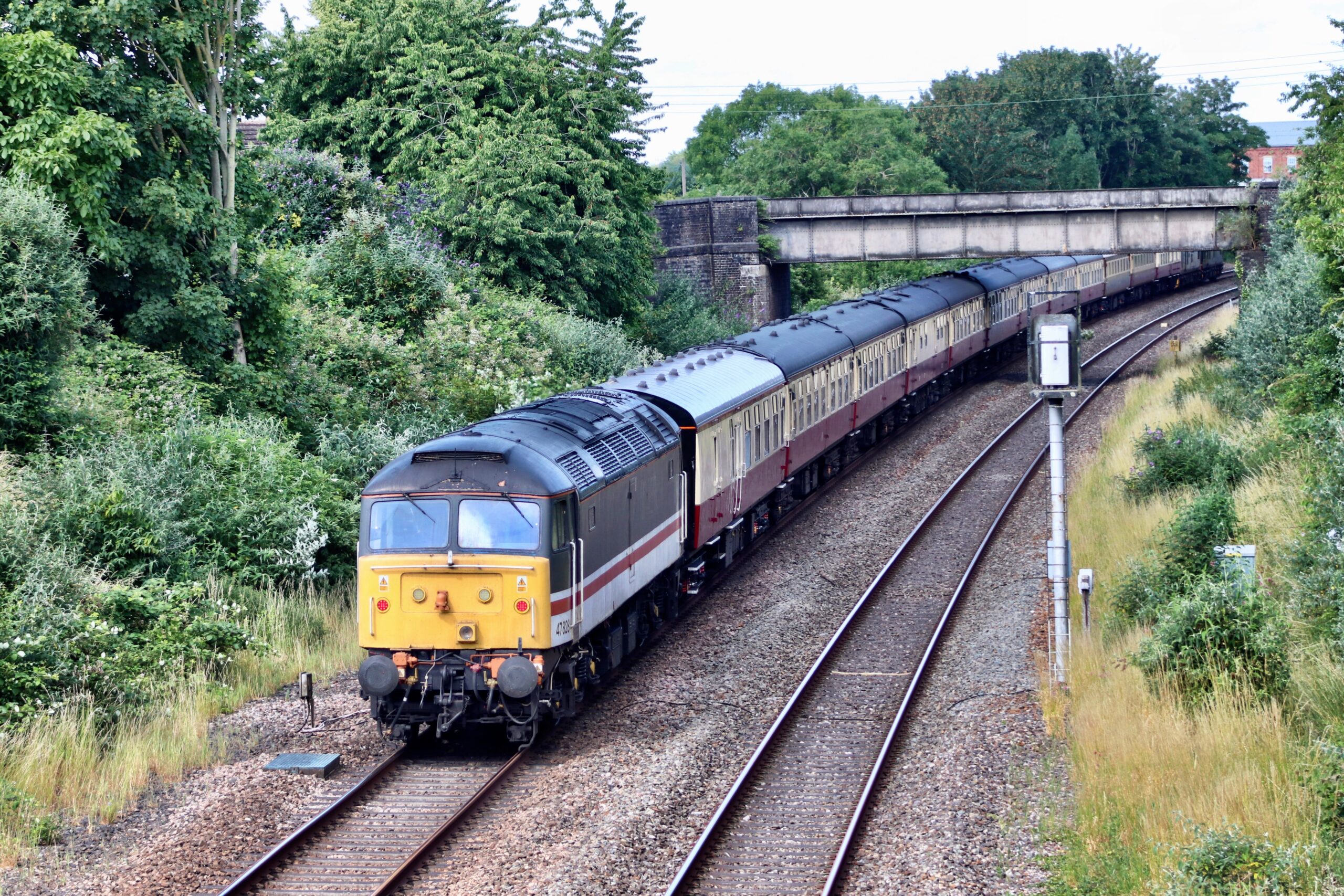
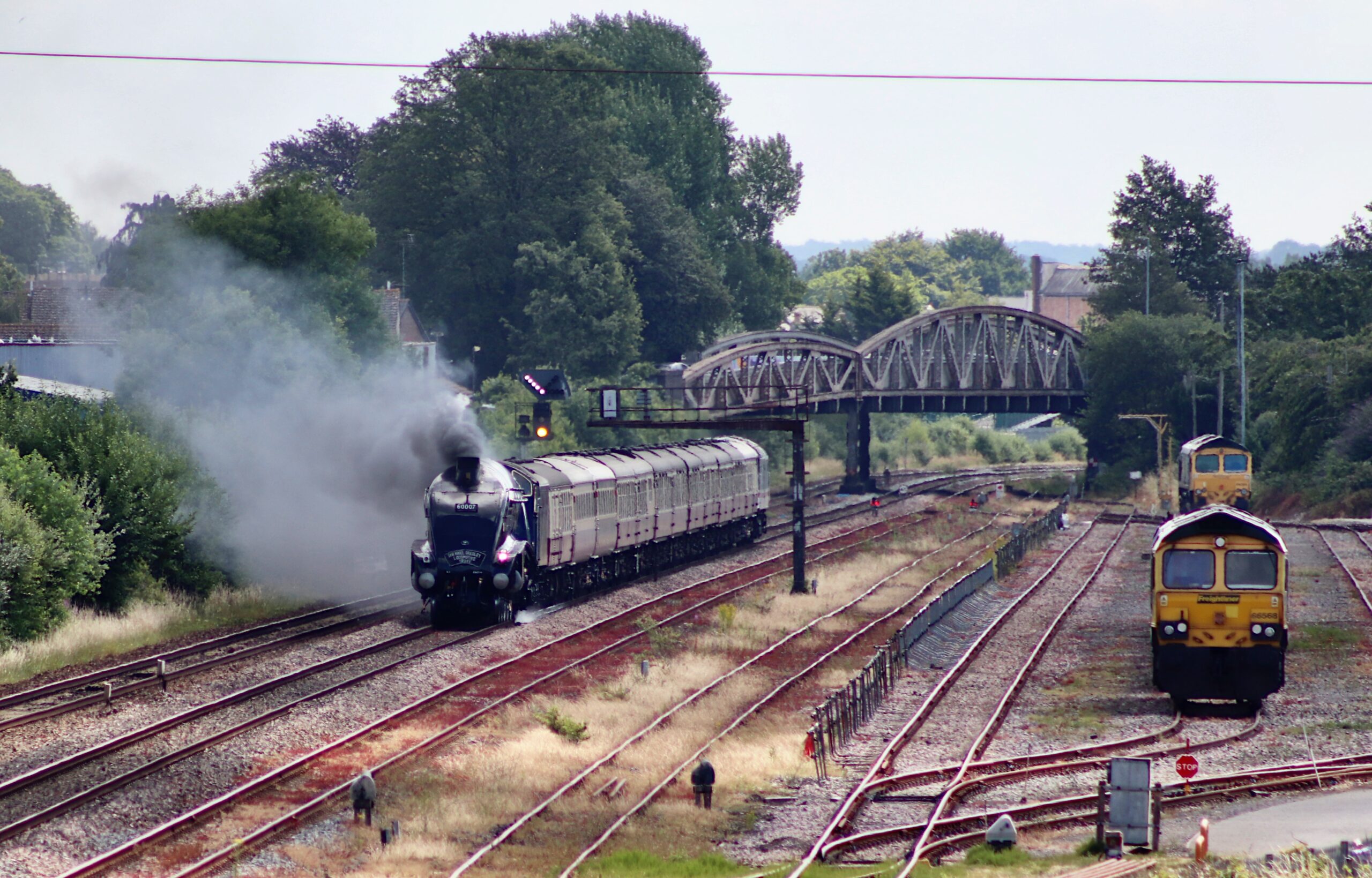
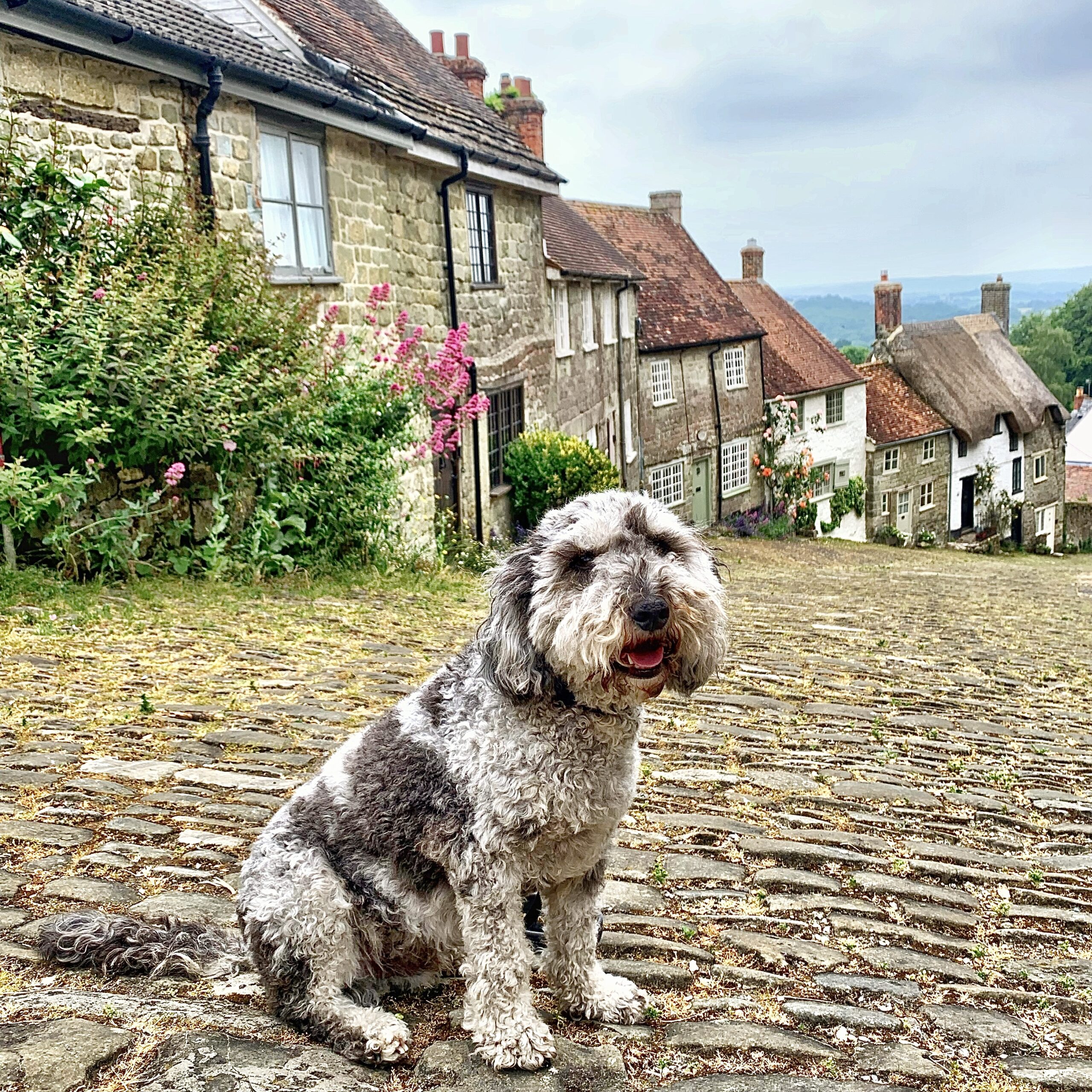
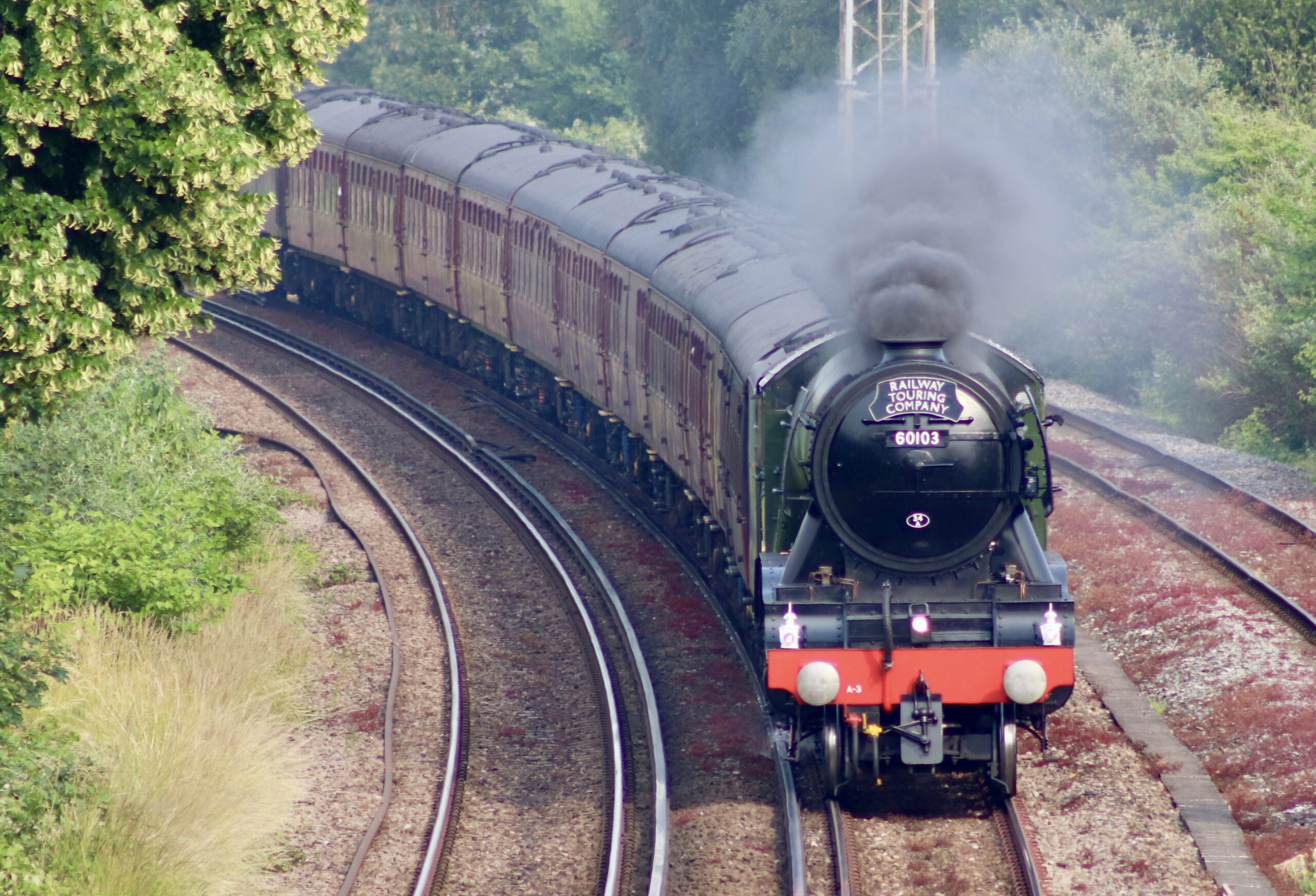
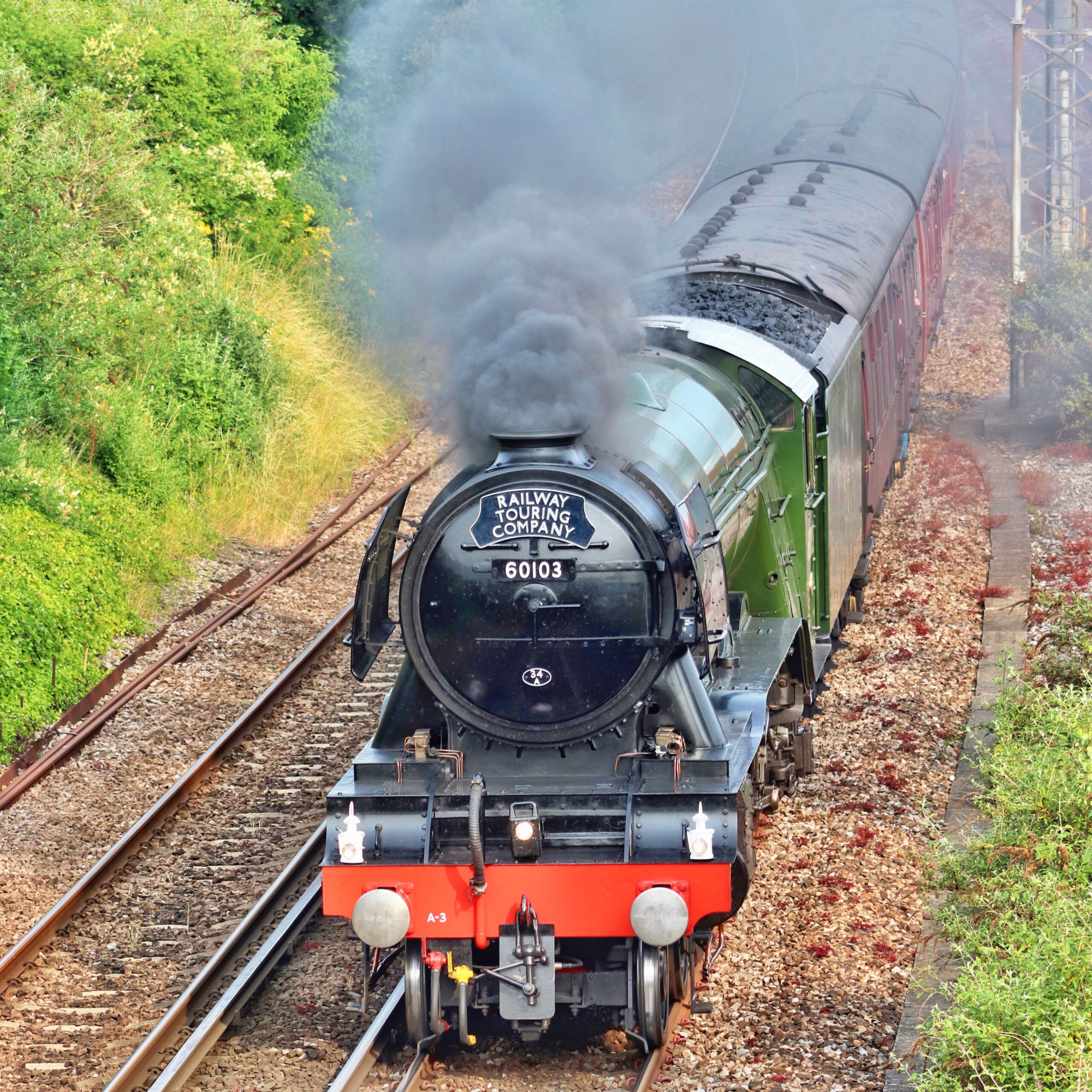
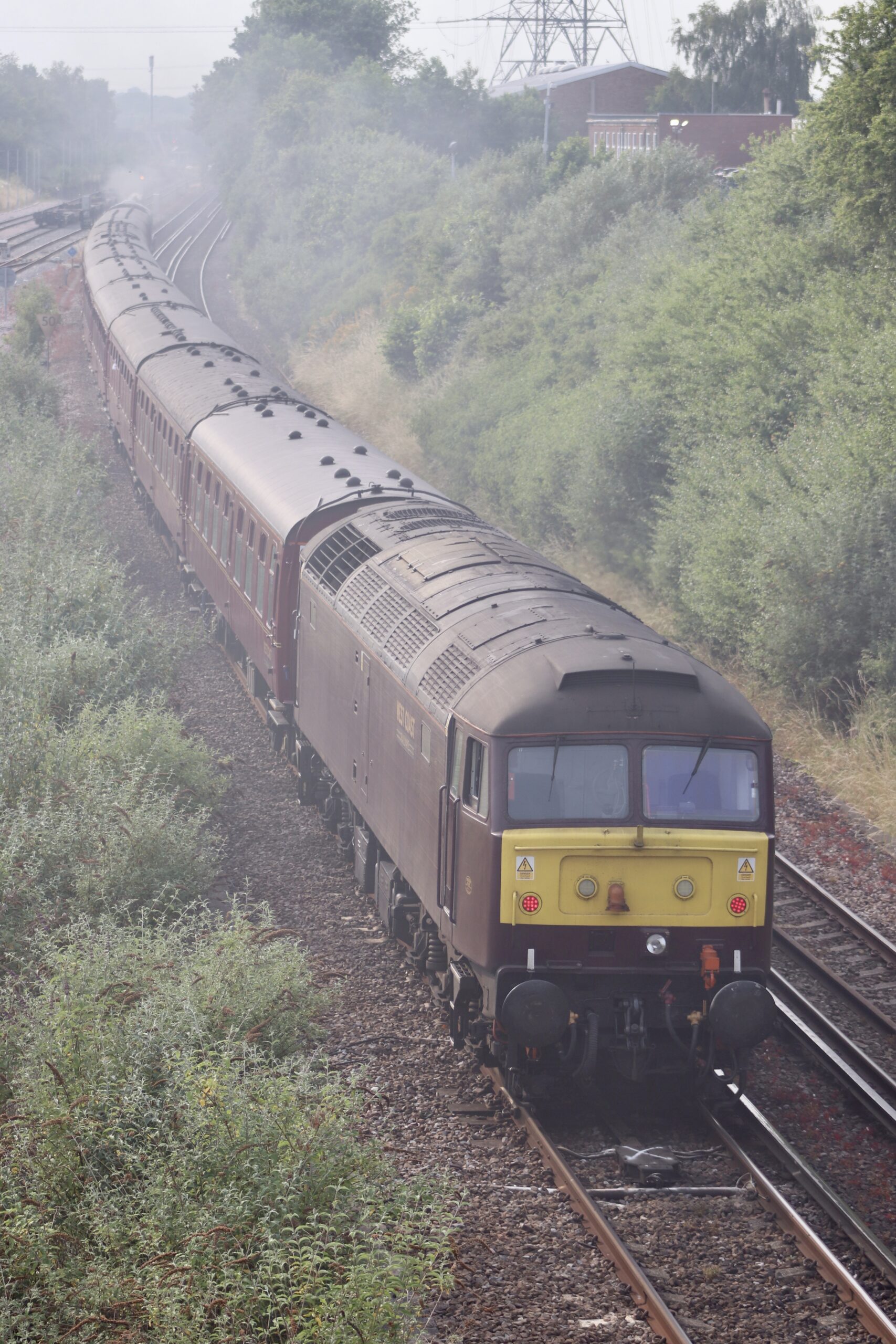
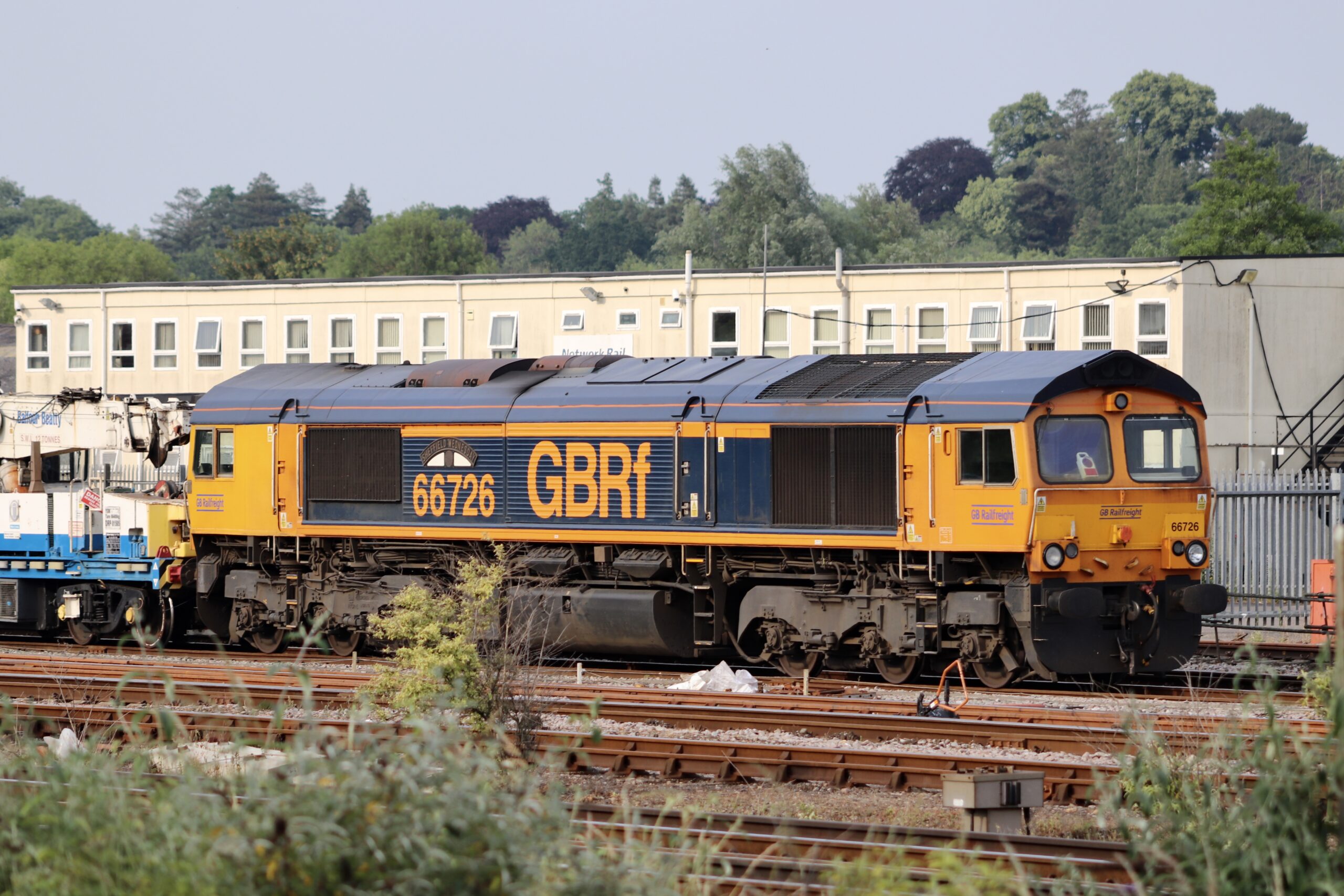
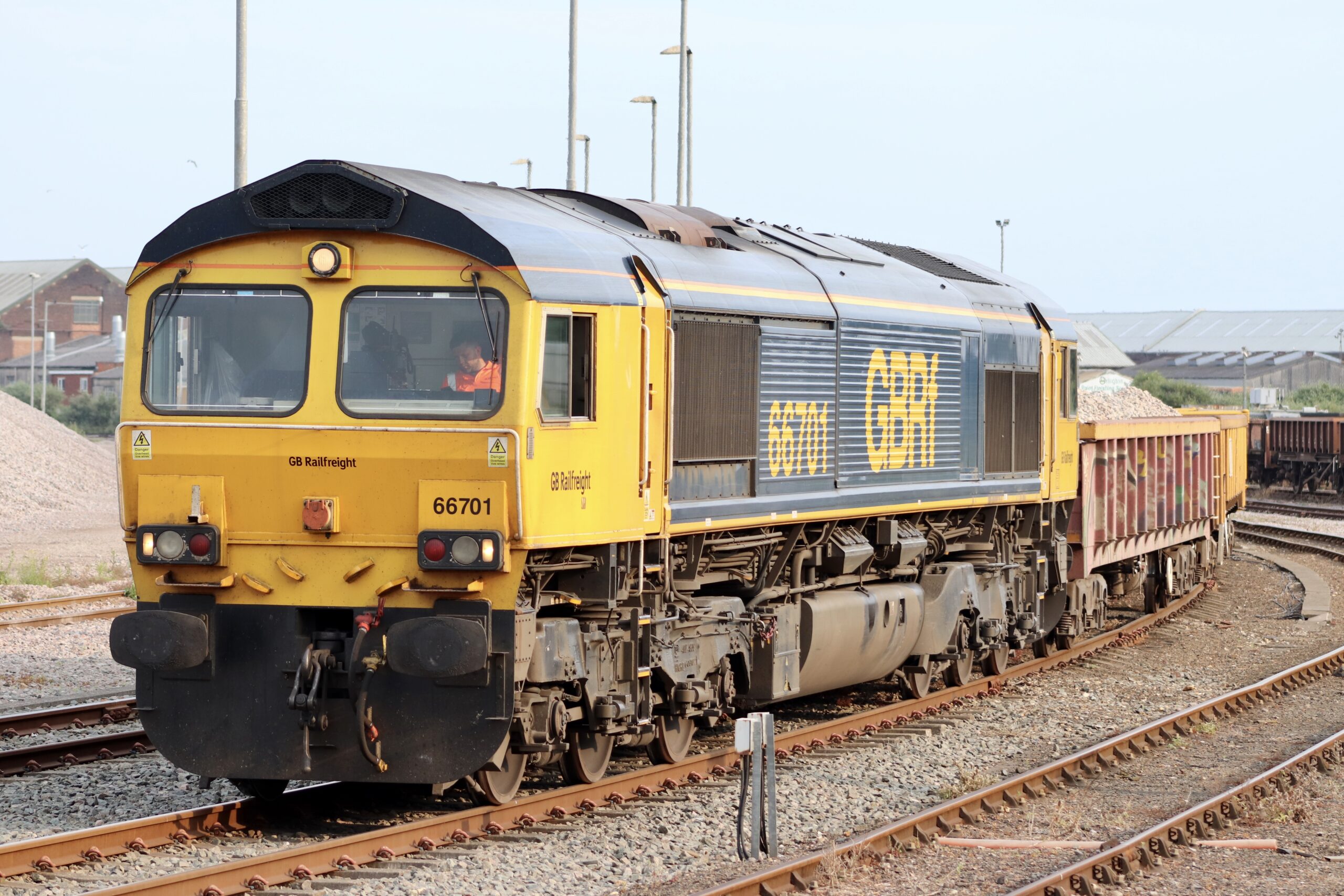
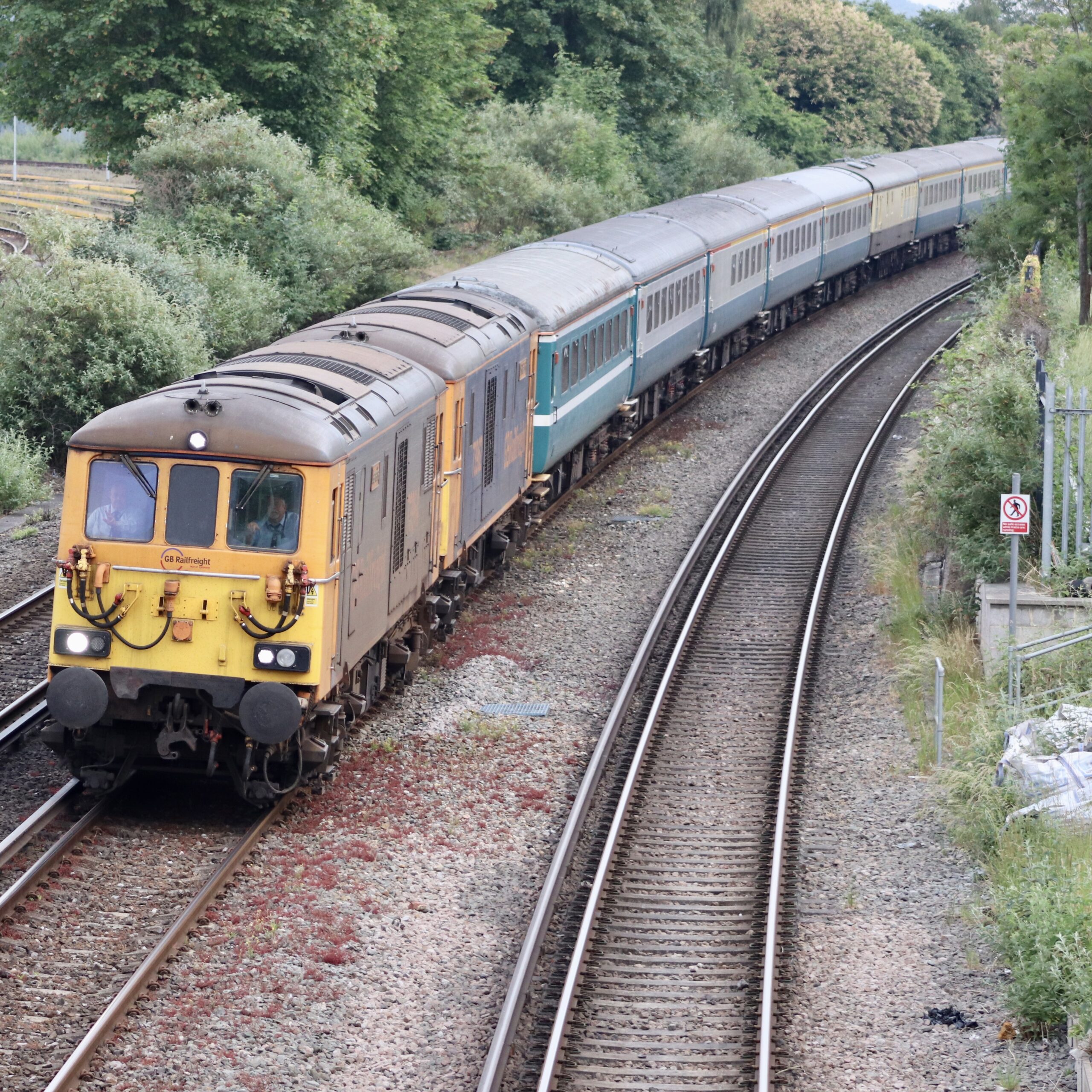
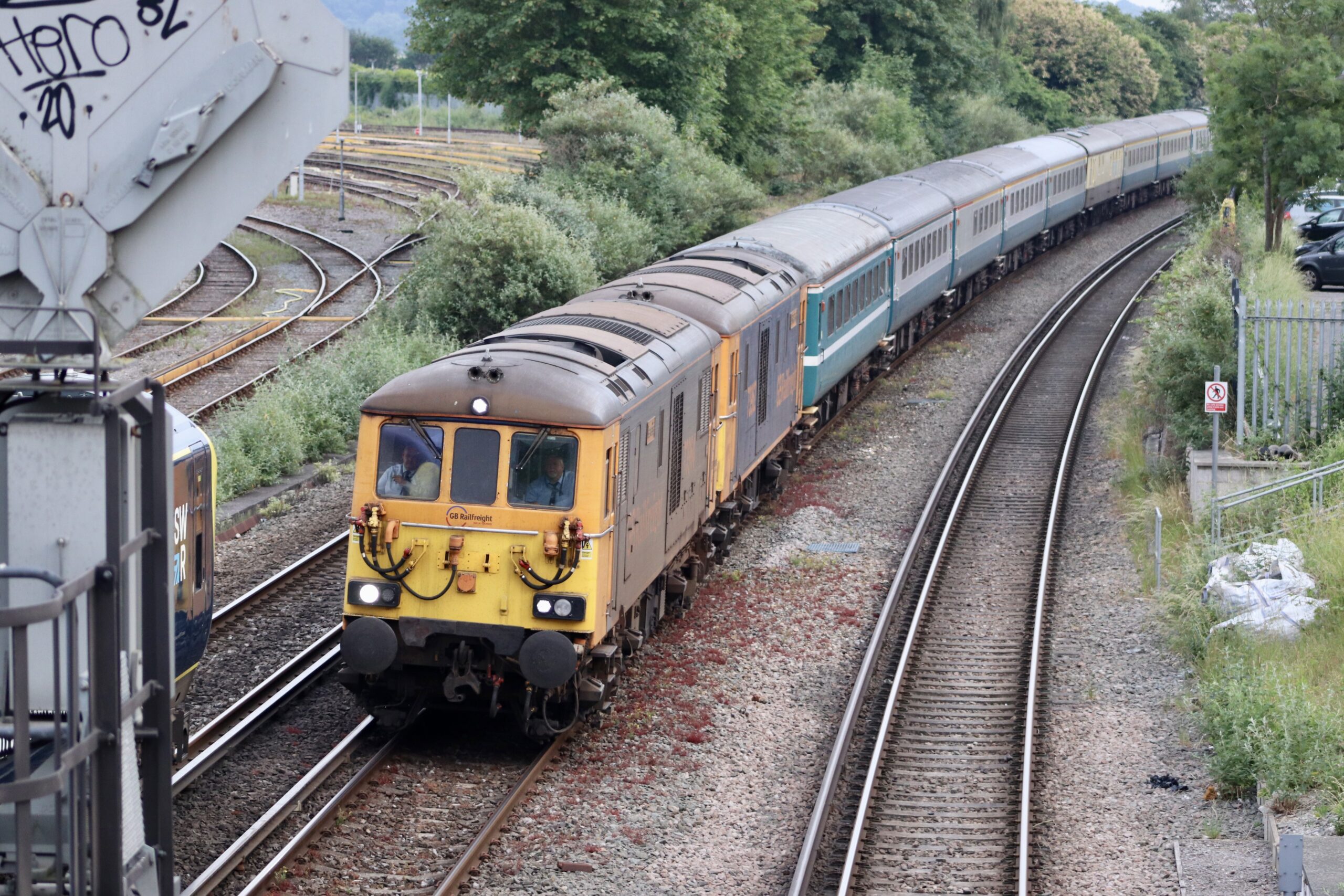
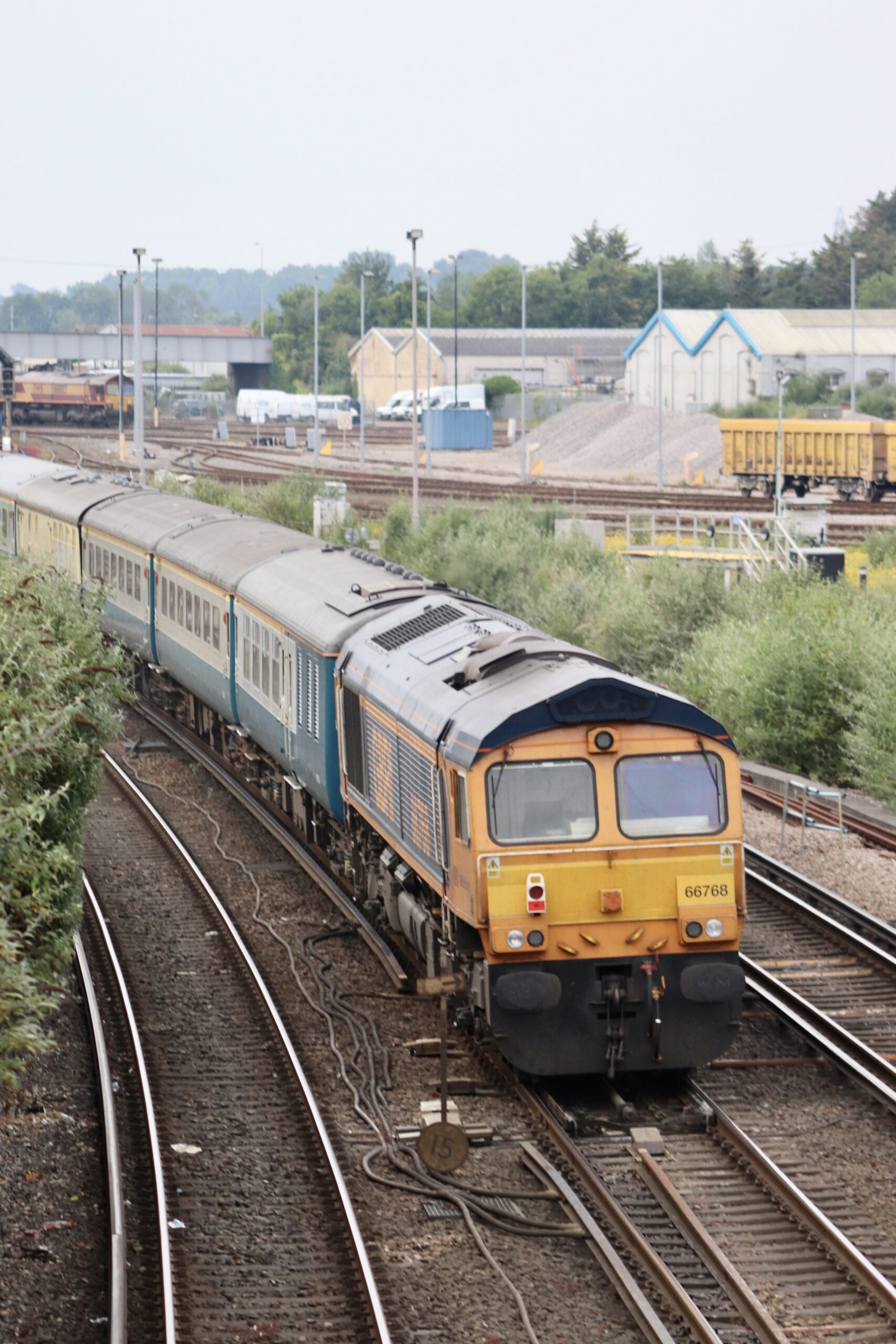
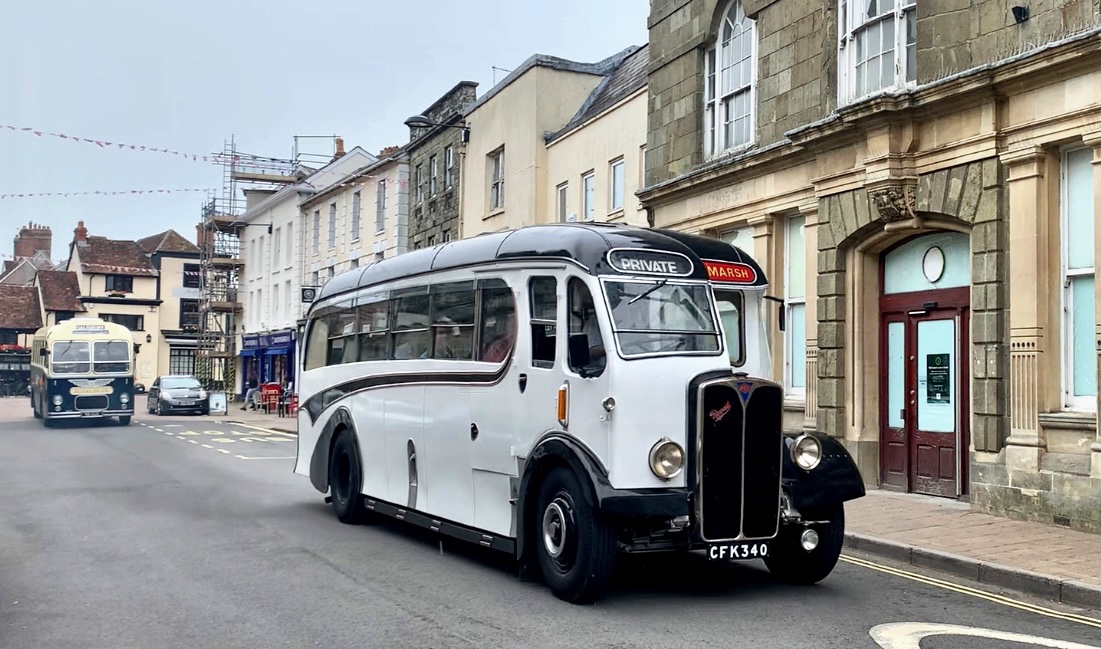
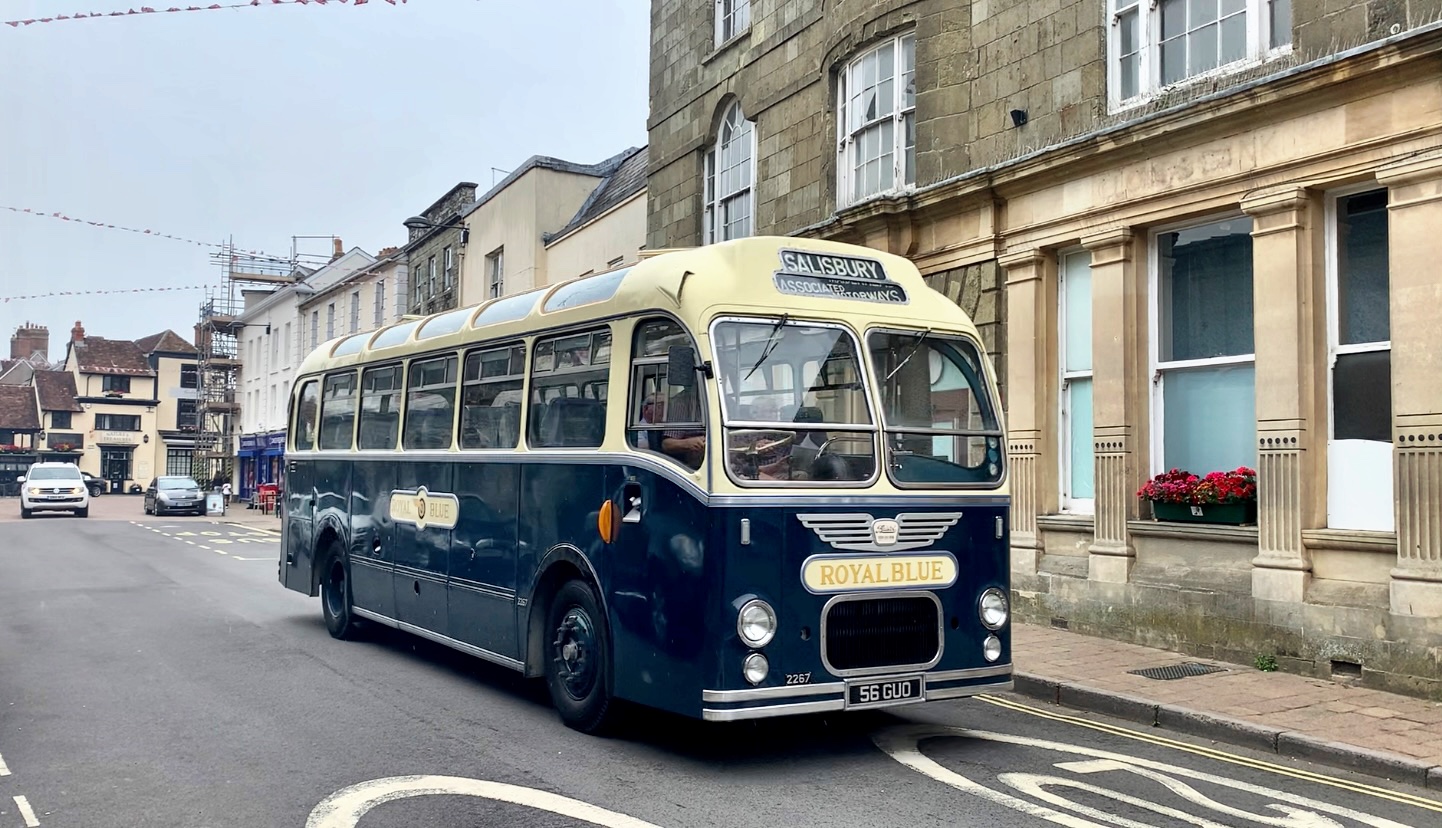
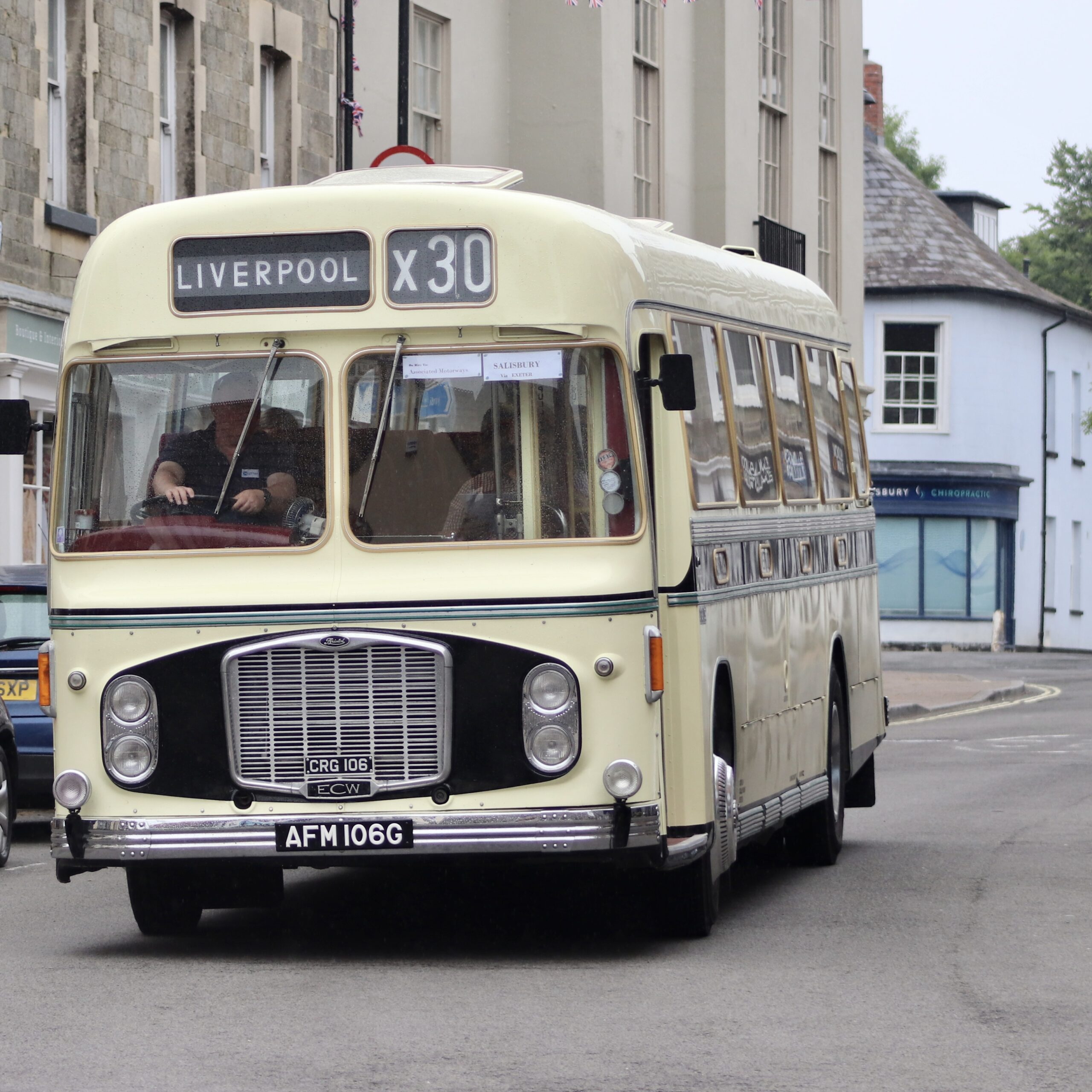
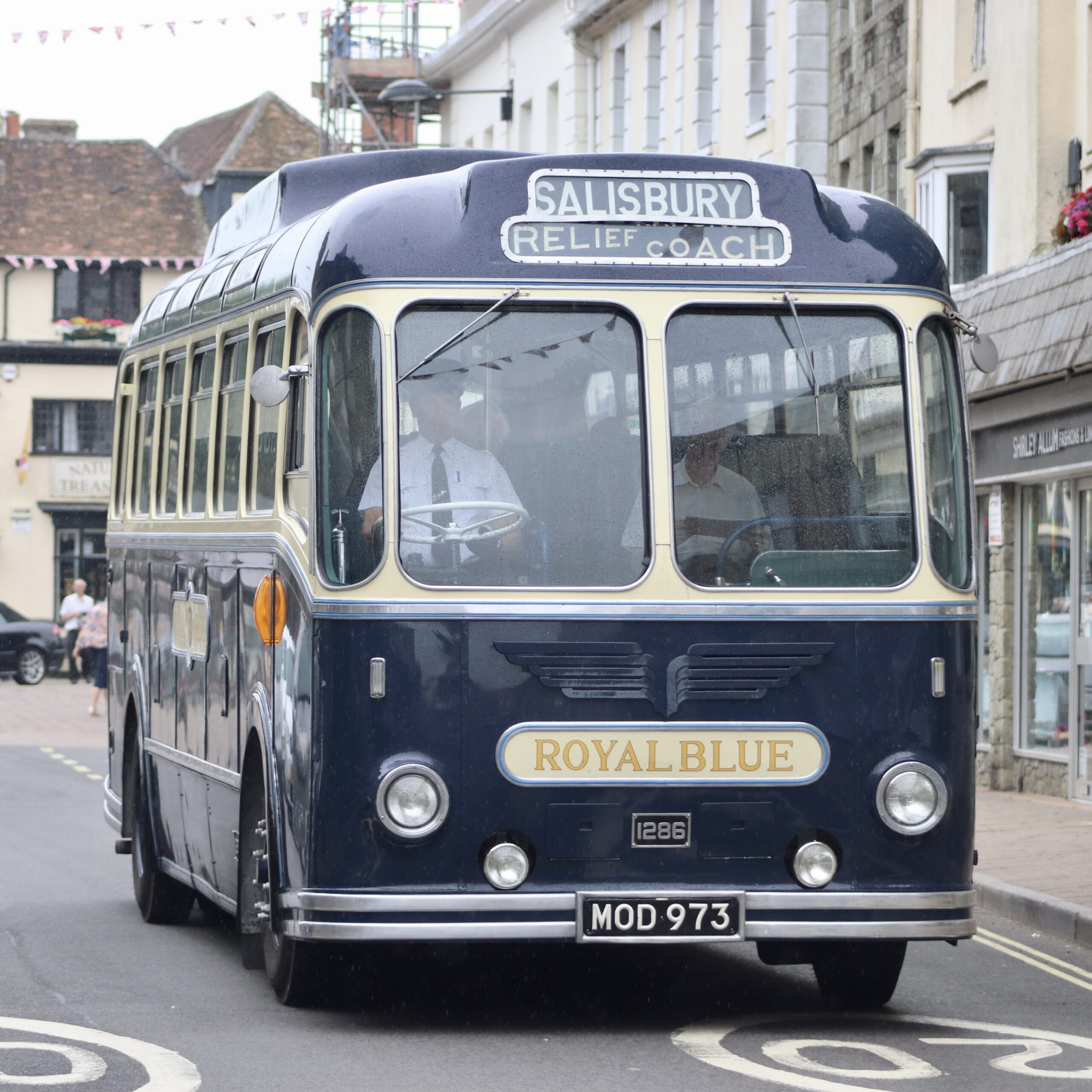
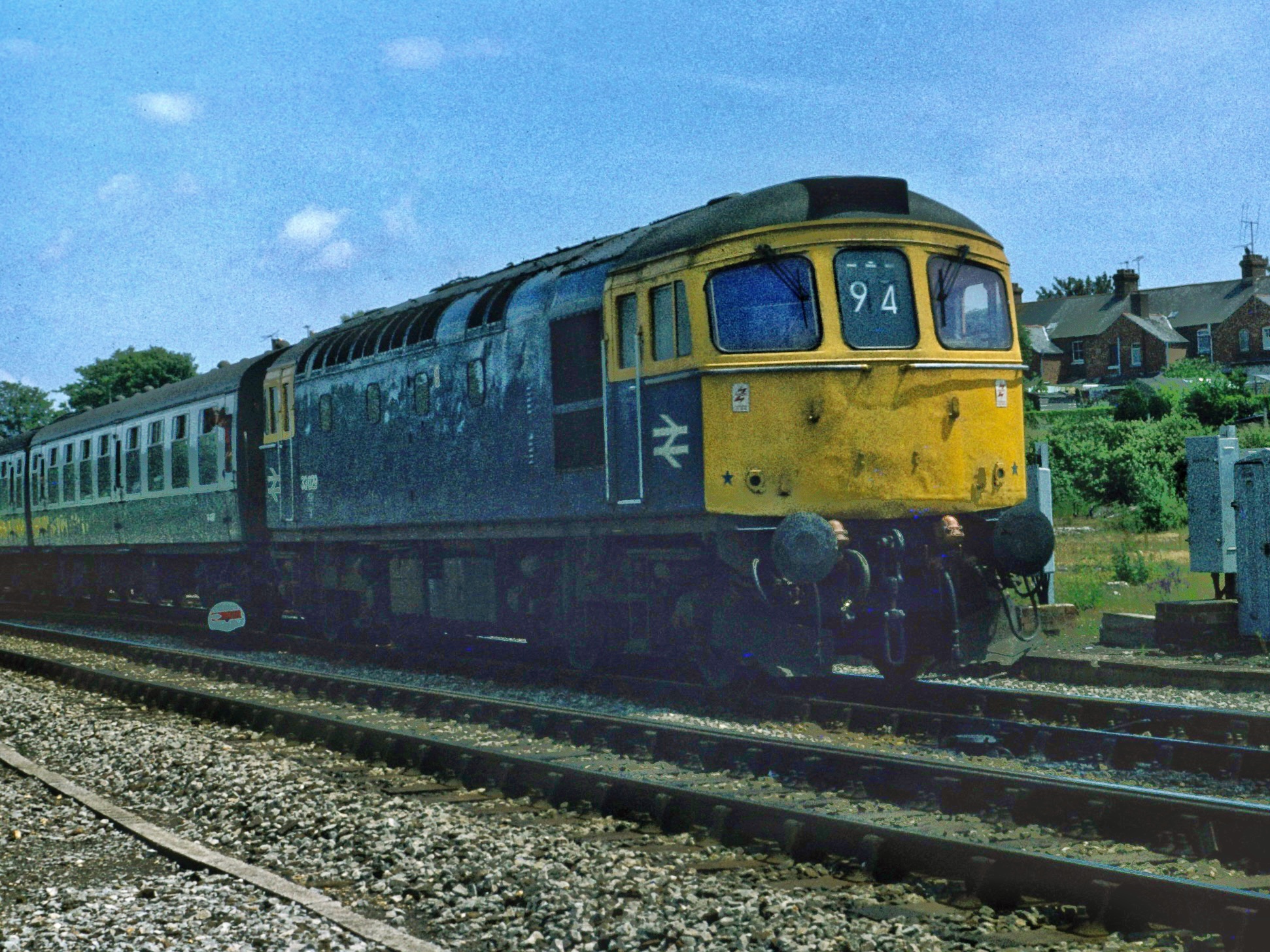
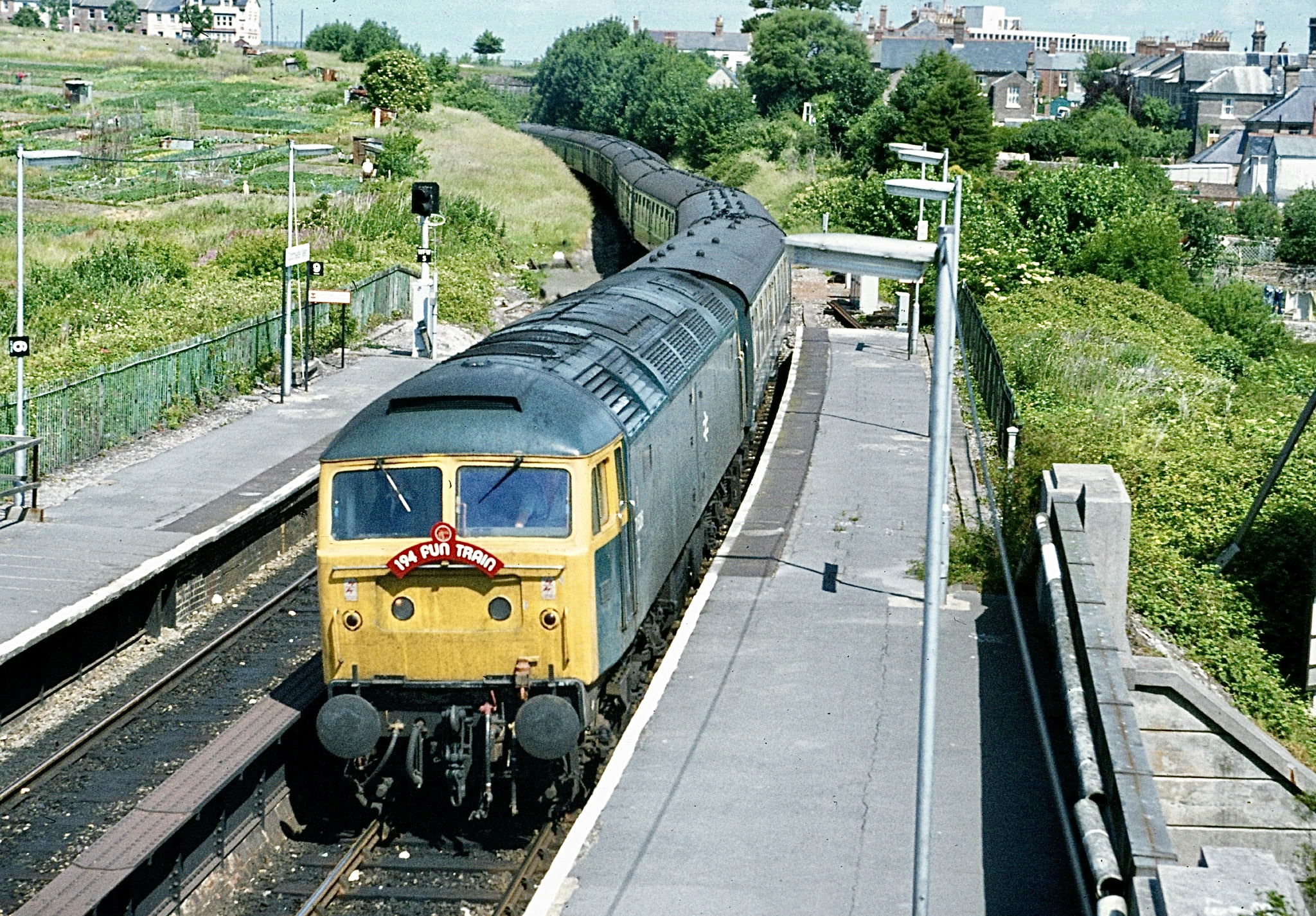
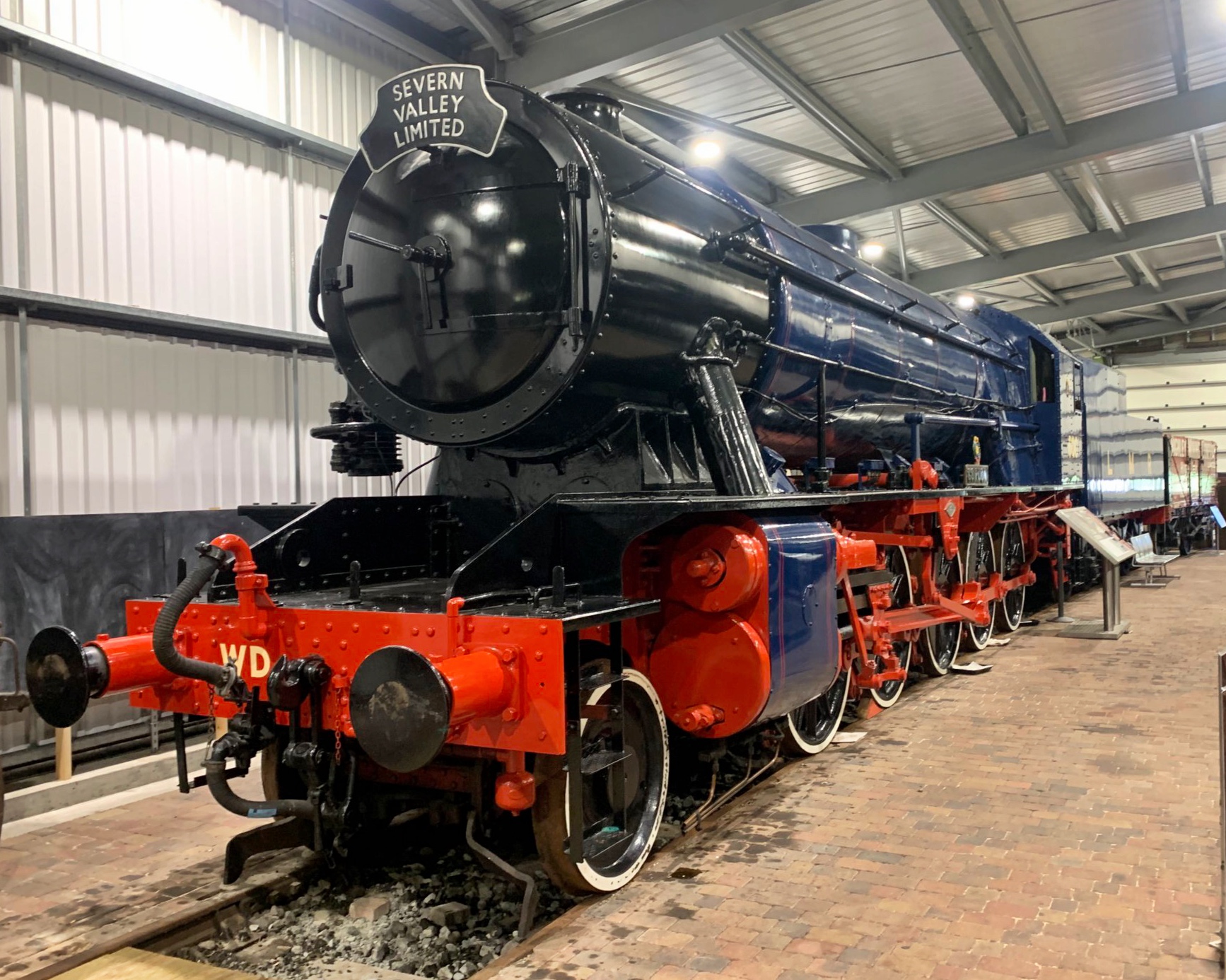
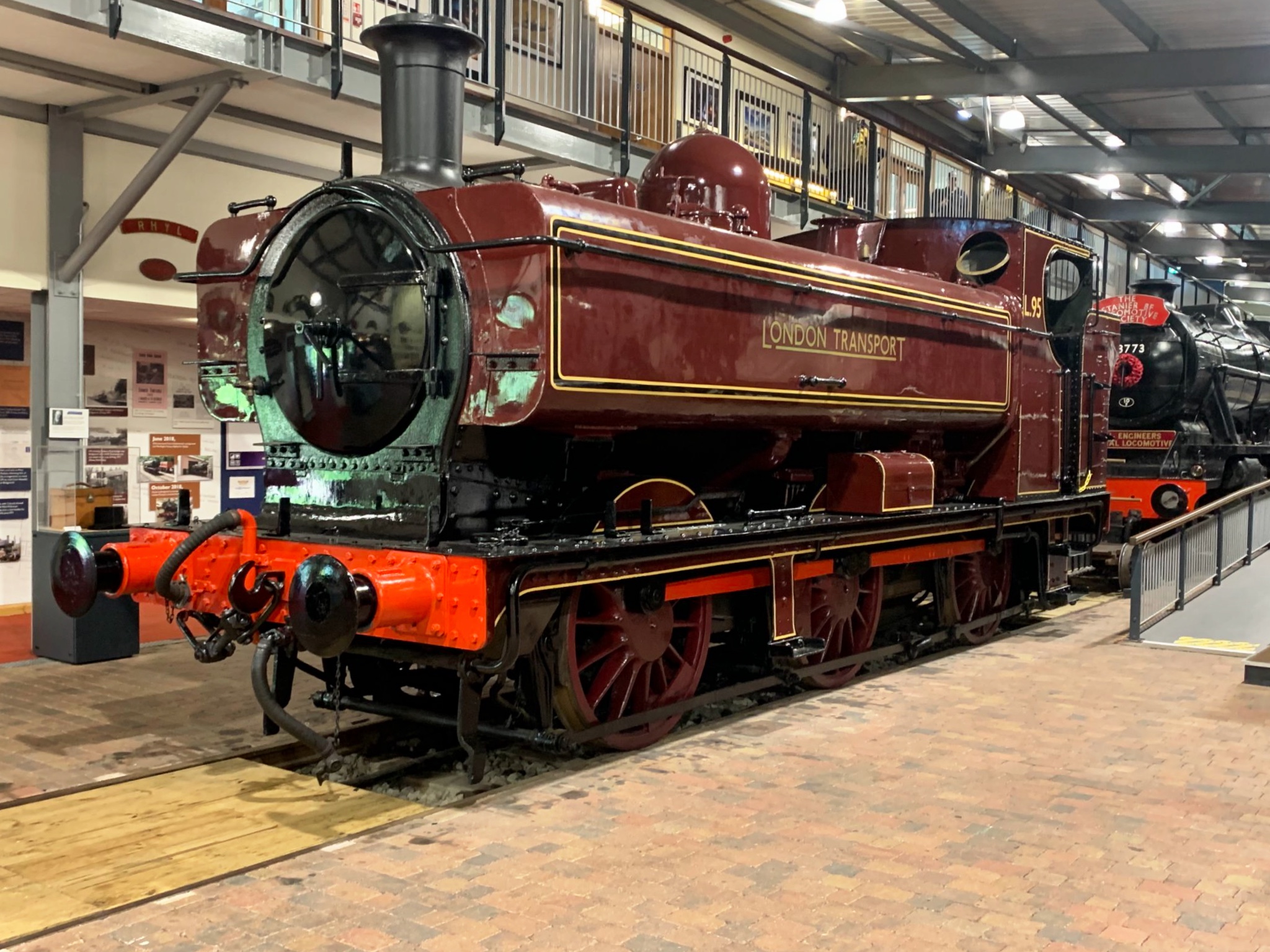
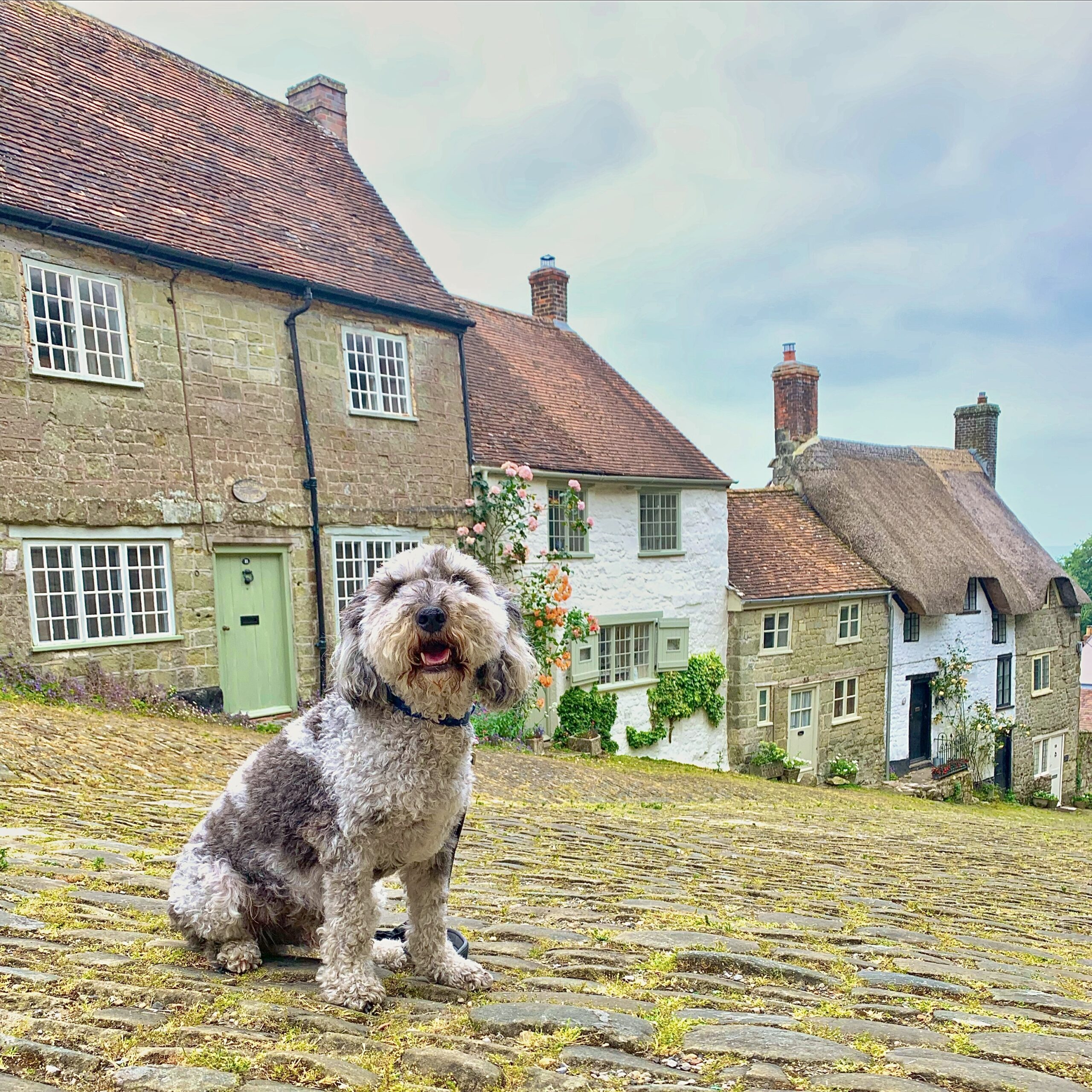
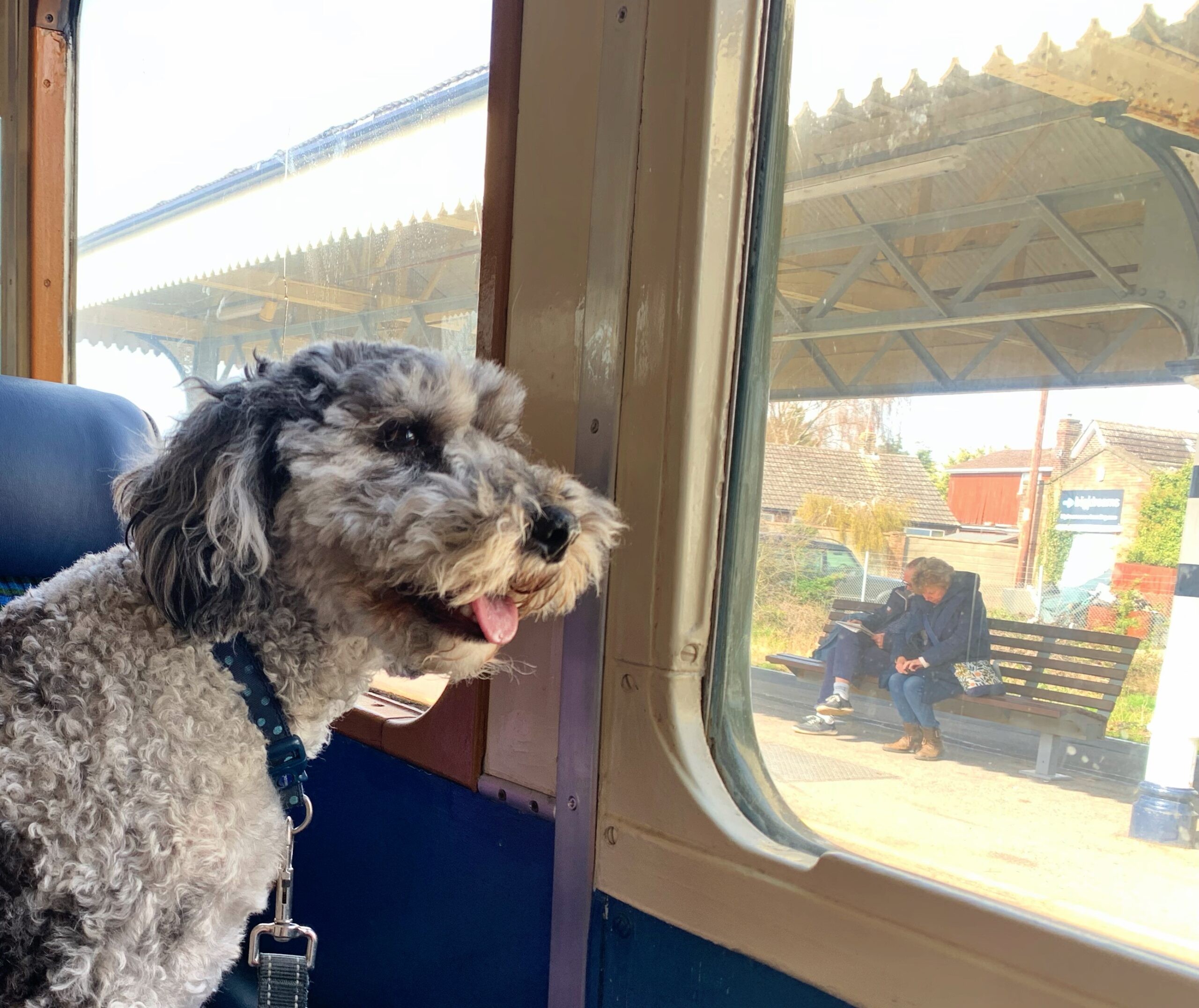
Yoshi shows off his new grooming cut while visiting the Old Ship in Dorchester – 18/11/2024
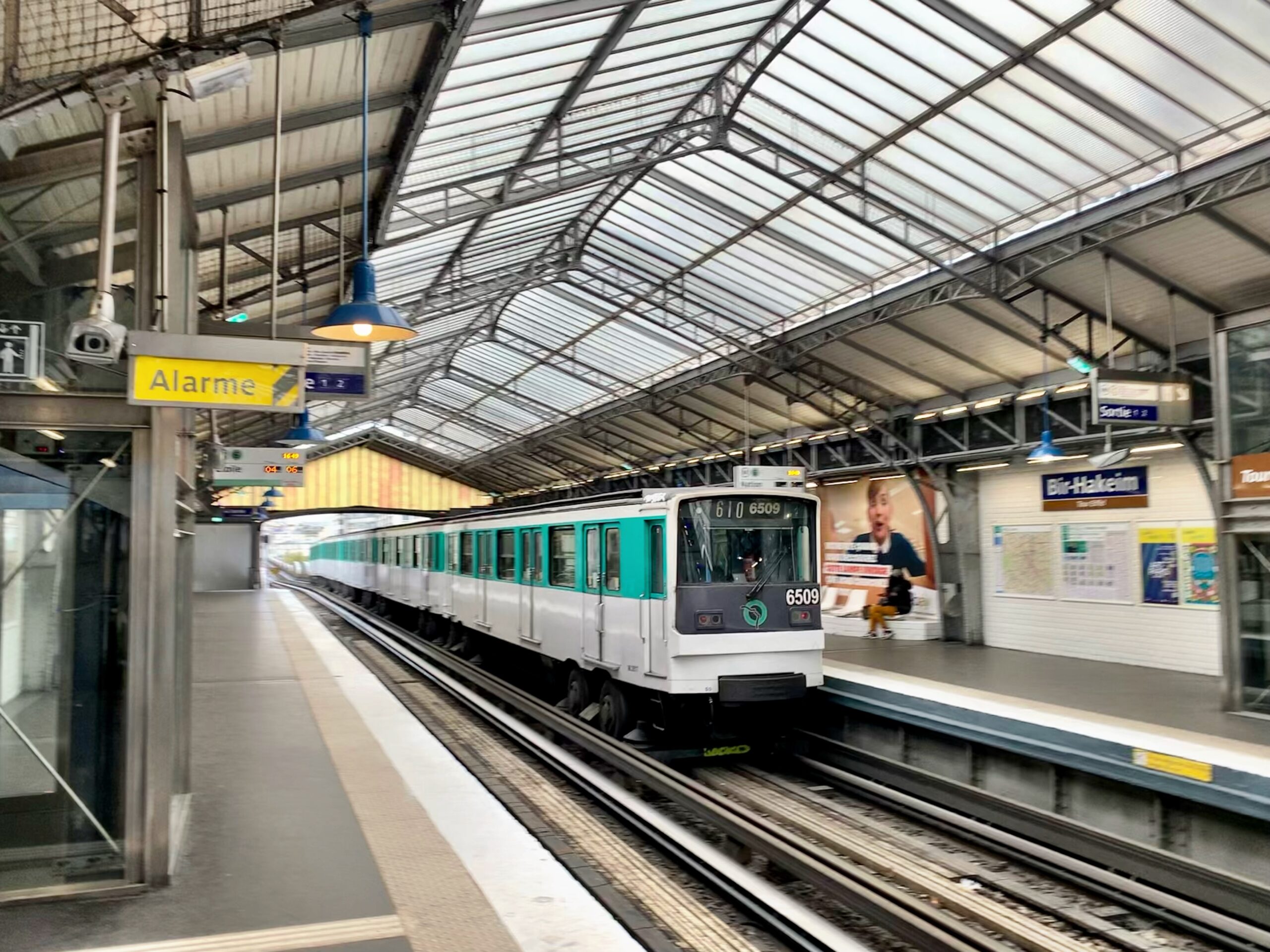
On Friday November 1st, Caroline and I went to a performance of “The Truth About Harry Beck” at the Cubic Theatre located in the London Transport Museum, Covent Garden. The play is a two hander and outlines the creation of the iconic London Tube map we know so well today – well recommended and is on multiple dates and times until Sunday 5th January 2025.
The Truth About Harry Beck – 01/11/2023
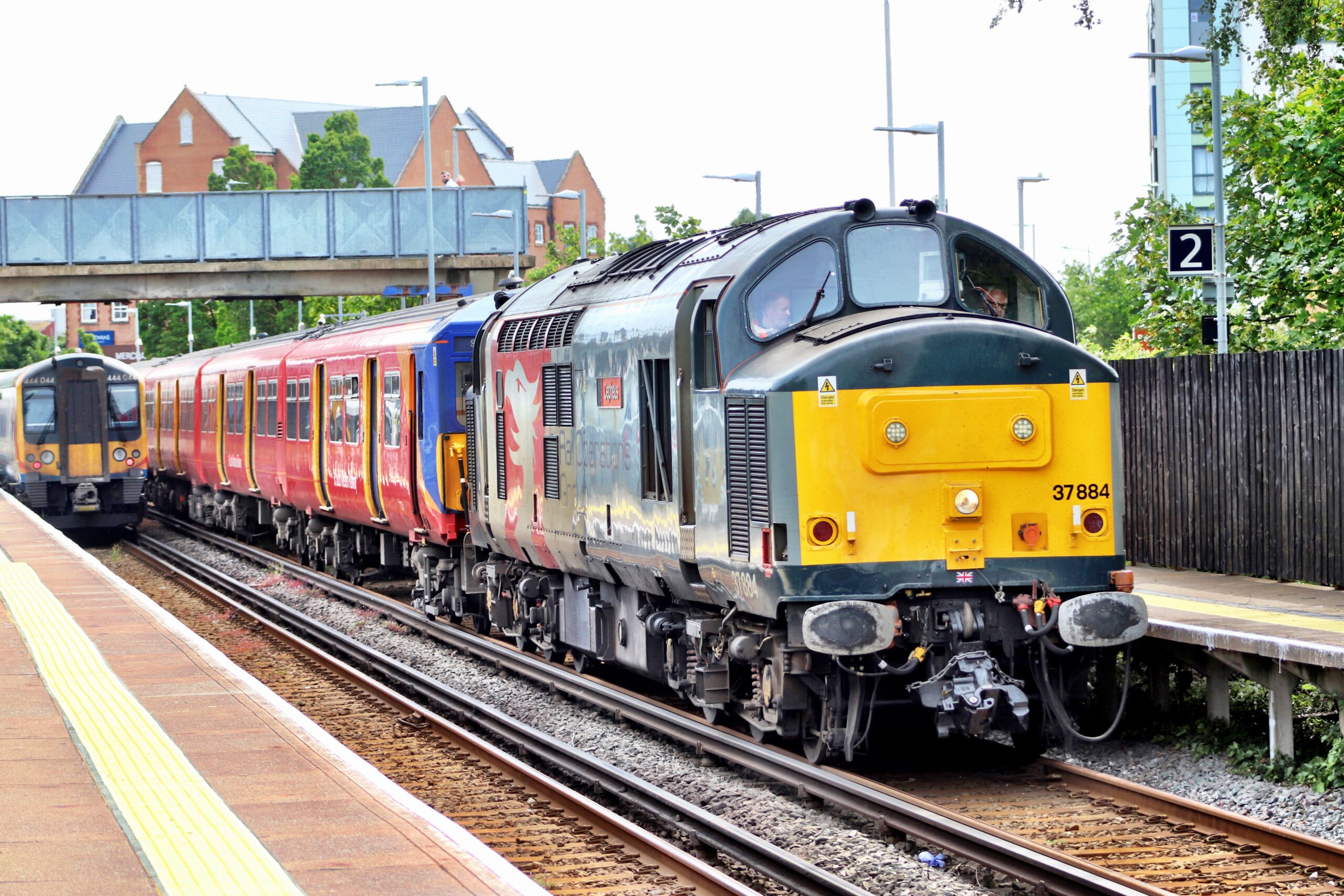
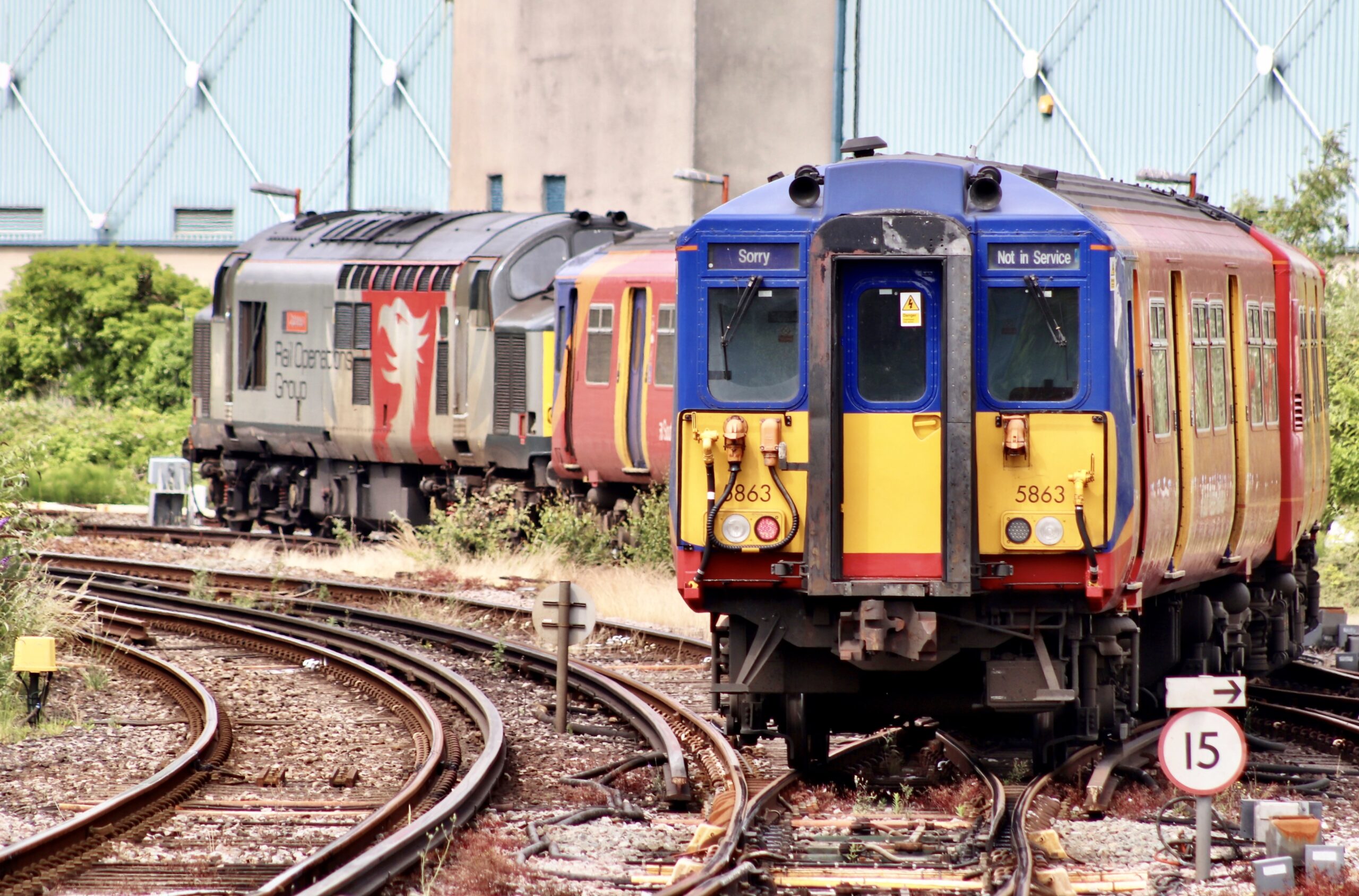
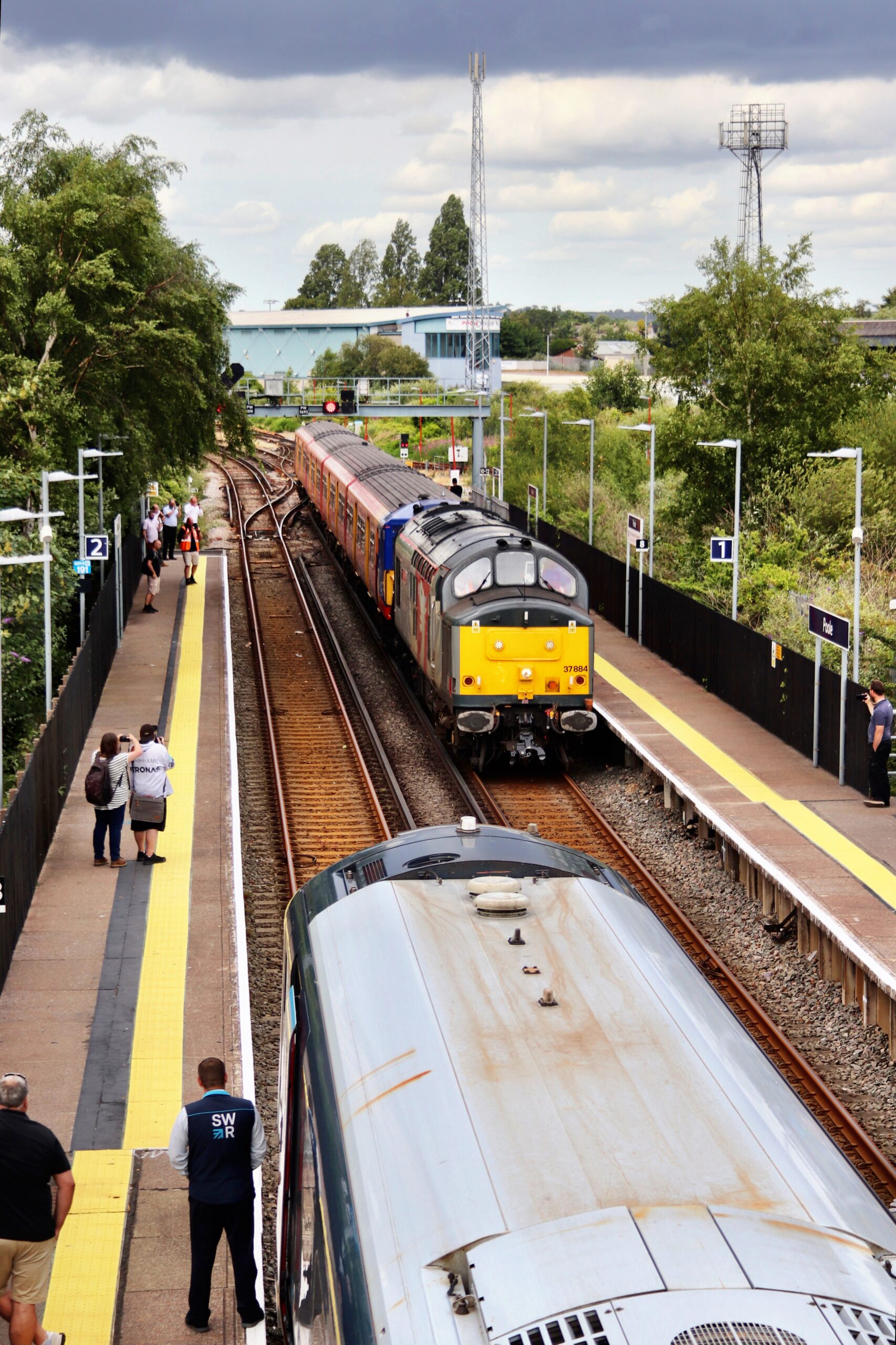
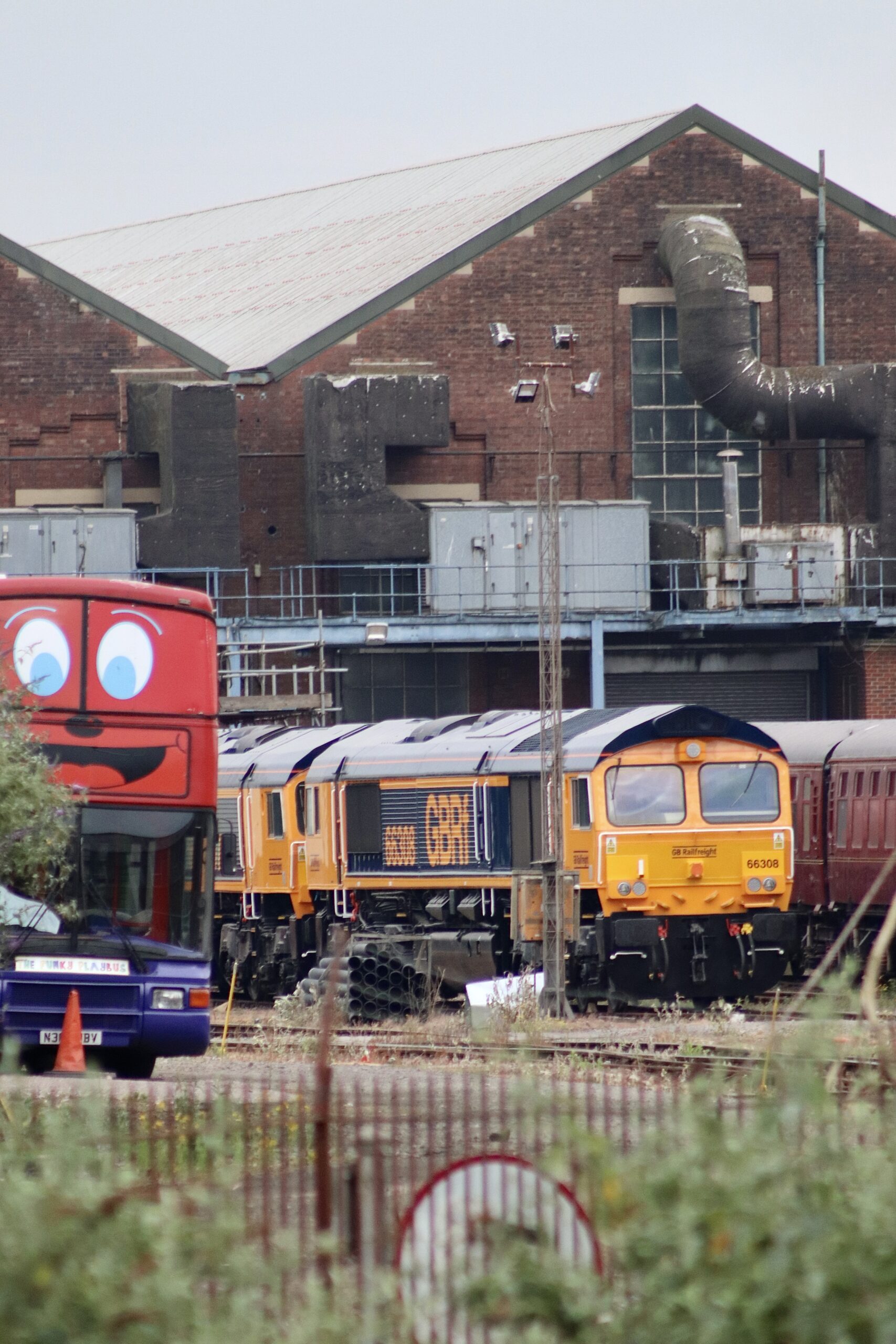
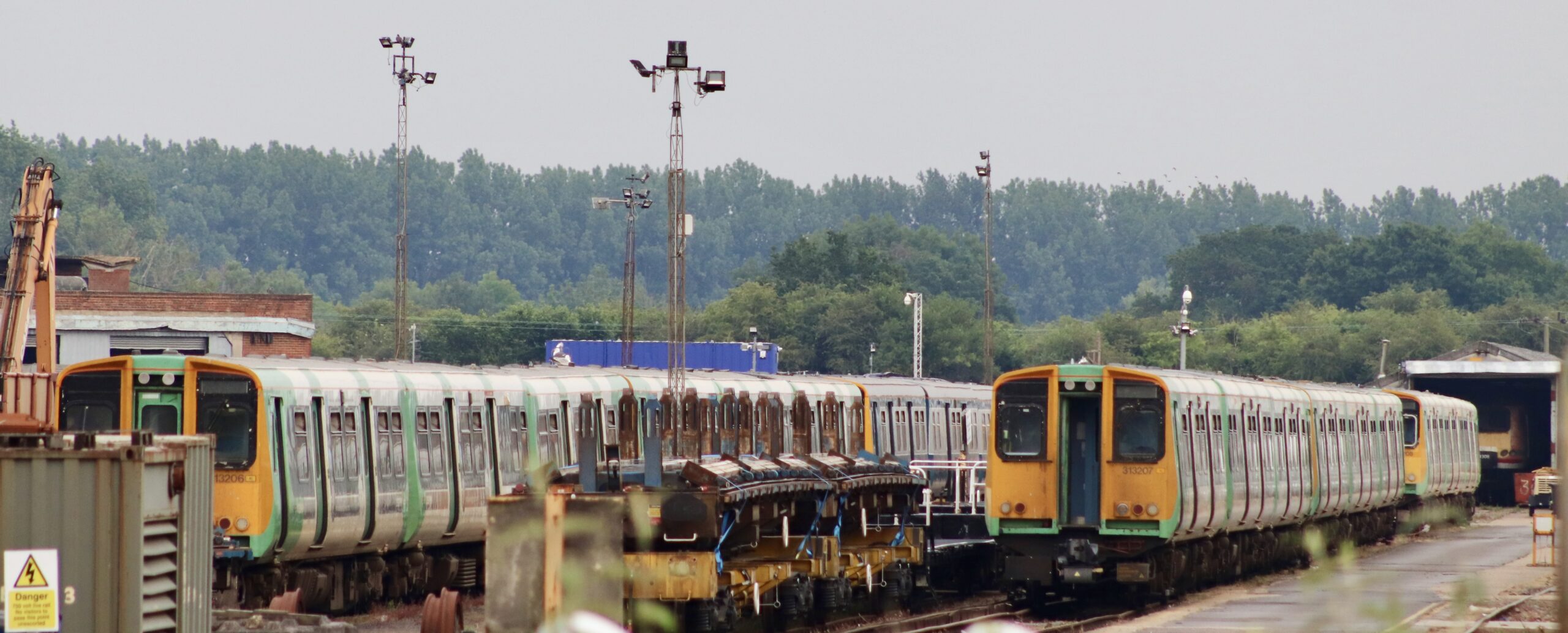
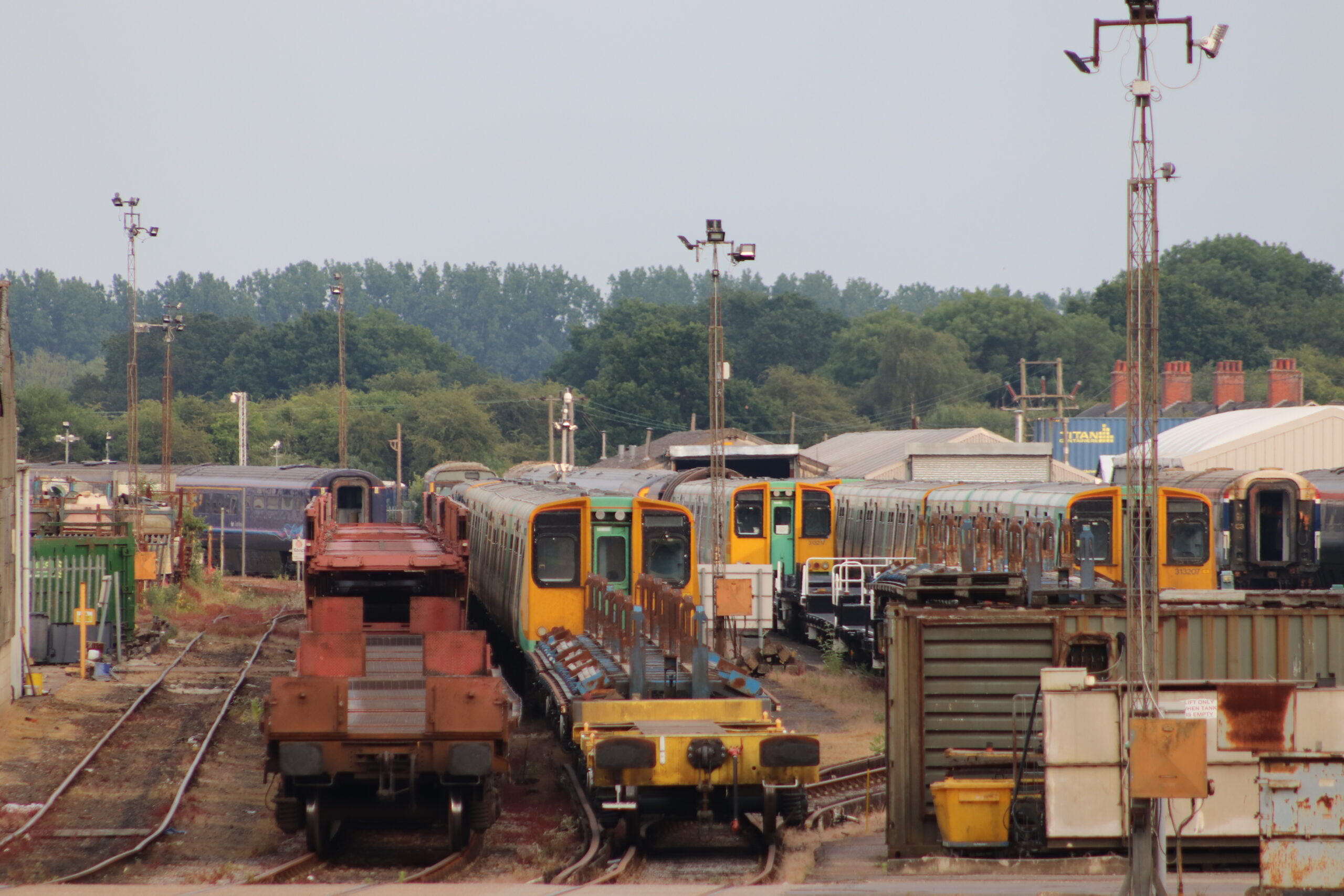
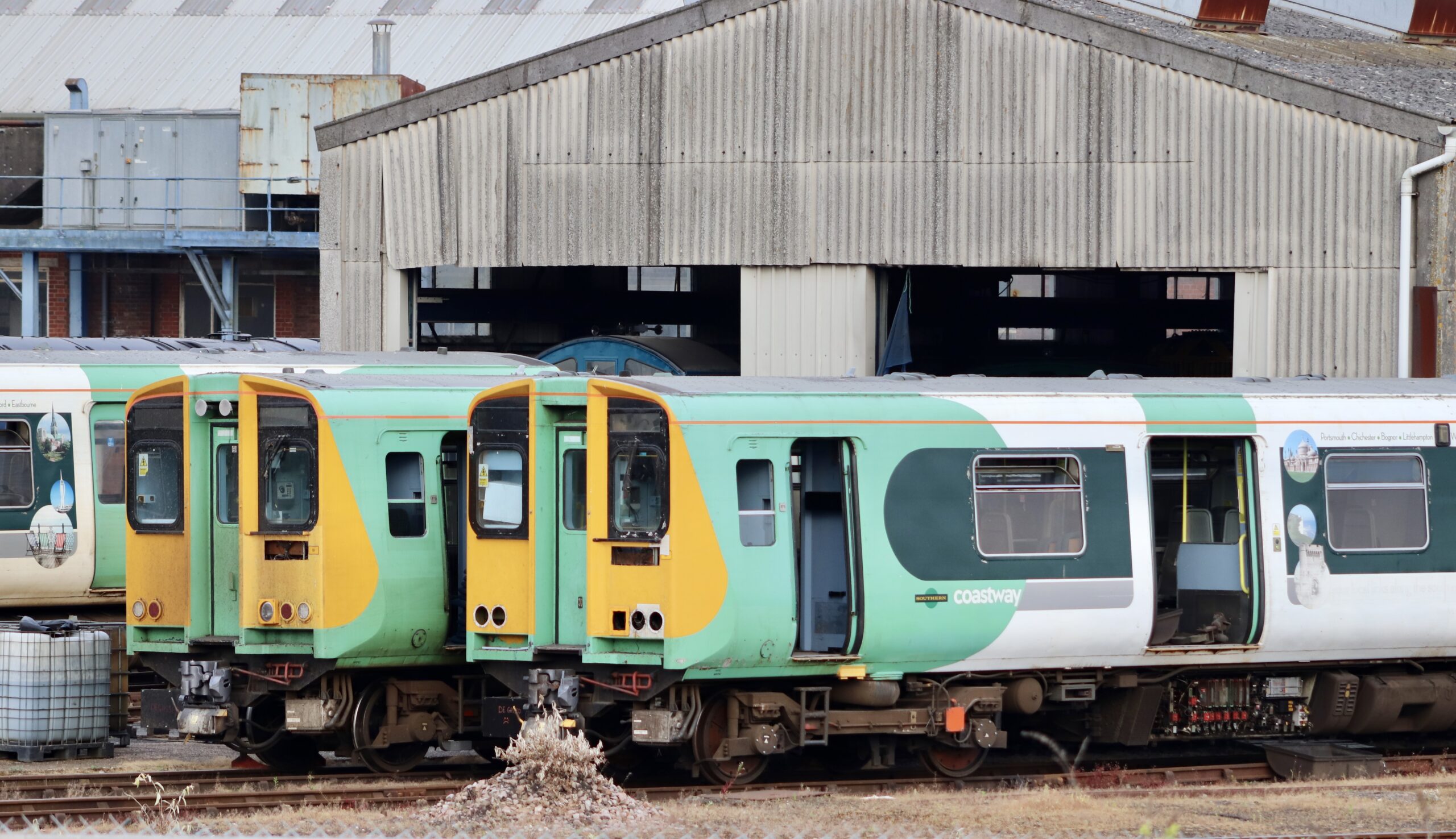
Over the first weekend of November 2024, the railway line between Wareham and Weymouth was closed to SWR passenger trains (GWR services terminated and originated at Dorchester West) as engineering work was carried out at a number of locations. Eight trains arrived with materials and equipment and eight trains left, involving ten locomotives (count them!):
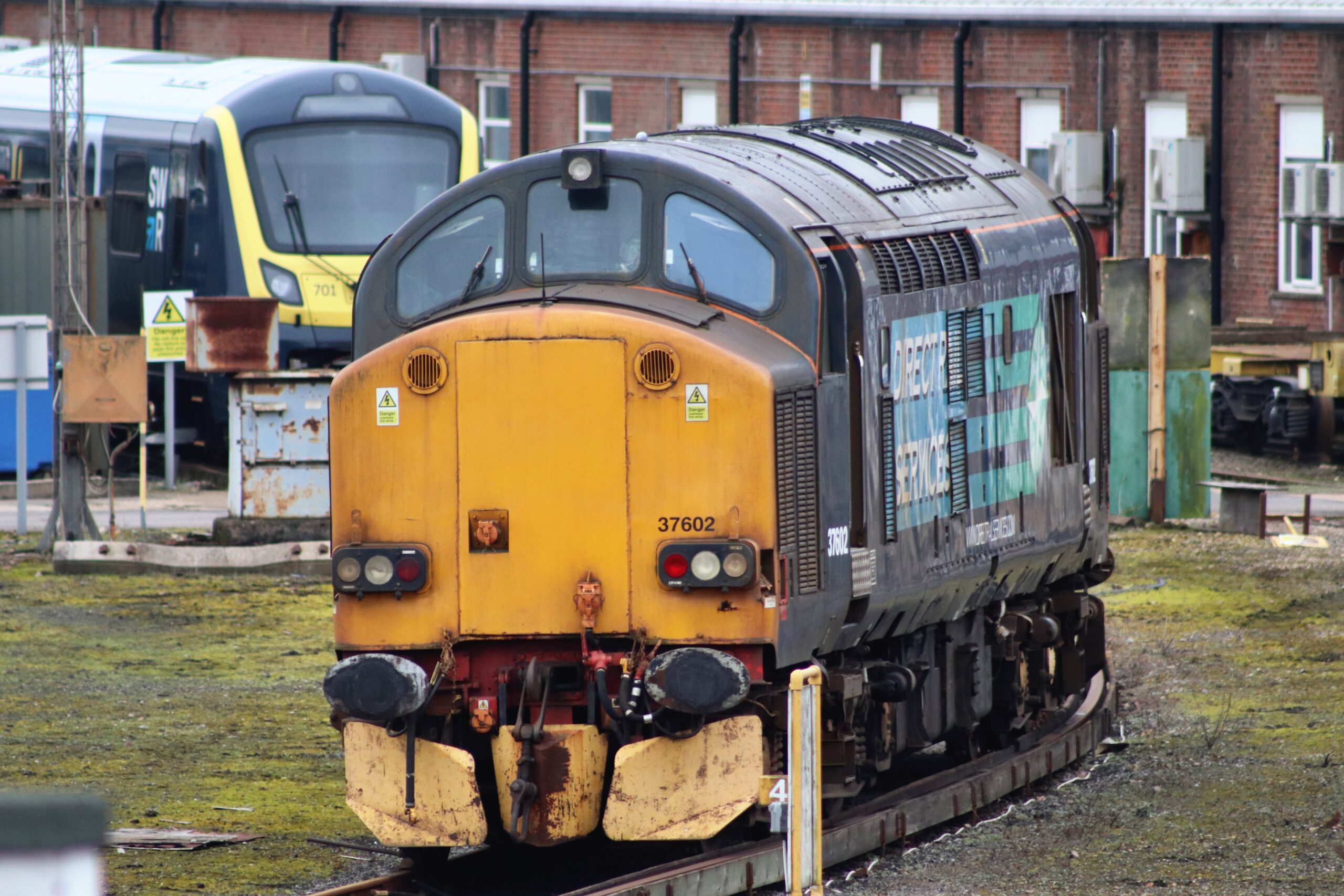
70815 tnt 70811: 6C01 2212 Eastleigh East Yard to Upwey / 56049 ‘Robin of Templecombe’,: 6C02 2252 Eastleigh East Yard to Dorchester South – 56049 ‘Robin of Templecombe’ at Hamworthy56051 ‘Survival’ : 6C03 2348 Eastleigh East Yard to Moreton / 66757 ‘West Somerset Railway’ : 6G11 0051 Eastleigh East Yard to Wareham / 66722 ‘Sir Edward Watkin’ : 6G12 0132 Eastleigh East Yard to Wareham – 66722 ‘Sir Edward Watkin’ at Poole66711 ‘Sence’ : 6G13 0241 Eastleigh East Yard to Wareham / 66557: 6Y84 0330 Eastleigh East Yard to Wareham / 66511 tnt 66413 : 6Y85 0400 Eastleigh East Yard to Wareham at Poole
Saturday 02/11/2024:
Freightliner Class 66 No. 66413 running early through Hamworthy heading up 6Y85 1800 Wareham to Eastleigh Yard – 02/11/2024
The list of workings for the Friday & Saturday were: 6C01 2212 Eastleigh East Yard to Upwey – 70815 tnt 70811, 6C02 2252 Eastleigh East Yard to Dorchester South – 56049 ‘Robin of Templecombe’, 6C03 2348 Eastleigh East Yard to Moreton – 56051 ‘Survival’, 6G11 0051 Eastleigh East Yard to Wareham – 66757 ‘West Somerset Railway’, 6G12 0132 Eastleigh East Yard to Wareham – 66722 ‘Sir Edward Watkin’, 6G13 0241 Eastleigh East Yard to Wareham – 66711 ‘Sence’, 6Y84 0330 Eastleigh East Yard to Wareham – 66557, 6Y85 0400 Eastleigh East Yard to Wareham – 66511 tnt 66413, 6Y85 1800 Wareham to Eastleigh Yard – 66413, 6Y84 2045 Wareham to Eastleigh East Yard – 66511
Sunday 03/11/2024:
Colas Railfreight Class 70 No. 70813 at Weymouth – 03/11/2024Colas Railfreight Class 70 No.’s 70811 and 70813 at Weymouth – 03/11/2024Colas Railfreight Class 56 No. 56049 ‘Robin of Templecombe’ at rest in Dorchester – 03/11/2024Colas Railfreight Class 56 No. 56051 ‘Survival’, Dorchester – 03/11/2024Freightliner Class 66 No. 66557 working 6G13 1555 Wareham to Eastleigh East Yard passing Wareham – 03/11/2024GBRf Class 66 No. 66722 powers through Holton Heath working 6G11 1755 Wareham to Eastleigh East Yard – 03/11/2024
The list of workings for the Sunday were: 6G13 1555 Wareham to Eastleigh East Yard – 66557, 6G12 1655 Wareham to Eastleigh East Yard – 66711, 6G11 1755 Wareham to Eastleigh East Yard – 66722, 6C03 1930 Wareham to Eastleigh East Yard – 66757, 6C02 2035 Wareham to Eastleigh East Yard – 56051 tnt 56049
The remaining departure was scheduled for the Monday morning and ran as 6C01 0400 Wareham to Eastleigh East Yard – 70815 tnt 70811
Friday evening, November 8th 2024, I was visiting a good friend near Eastleigh and on the way home, I took the opportunity to see DB Cargo Class 66 No. 66177 passing through the station working 6N05 2249 Eastleigh East Yard to Poole. The train was scheduled for a ten minute layover at Redbridge which would give me plenty of time to get closer to home in order to see No. 66177 once again. In the event, 6N05 went straight through Redbridge, but this meant Yoshi and I didn’t have long to wait at Branksome before getting another shot of the train. Finally we saw the consist parked up at Sterte, Poole in readiness for the locomotive to get in position for the weekend engineering work.
Screenshot DB Cargo Class 66 No. 66177 crawls through Eastleigh at the head of 6N05 2249 Eastleigh East Yard to Poole – 08/11/2024
The video below also includes views of Balfour Beatty Rail Services Matisa B41UE Tamper No. DR75411 working 6J61 2213 Eastleigh East Yard to Poole Storage Sidings at Southampton Airport Parkway and Branksome. The engineering work itself centred around Creekmoor Viaduct on the Holes Bay causeway.
DB Cargo Class 66 No. 66177 on the Holes Bay causeway – 10/11/2024
13th November 2024 – Working 5B09 0757 Eastleigh East Yard to Bournemouth T&R.S.M.D, GBRf Class 57 No. 57310 arrived at Poole hauling ex-Class 508 driver trailer barrier vehicles on the way to Bournemouth depot to collect the final South Western Railway Class 458/5 EMU to be delivered to Widnes Transport Tech later in the day. This was originally diagrammed to run as 5Z66 1441 Bournemouth T&R.S.M.D to Eastleigh East Yard but was later updated to 5Z66 1241 Bournemouth T&R.S.M.D to Eastleigh East Yard, which caught a lot of folk by surprise, including me and despite an attempt to see the train passing Christchurch, I just failed to capture a video of it passing!
GBRf Class 57 No. 57310 5B09 0757 Eastleigh East Yard to Bournemouth T&R.S.M.D
The New Measurement Train ran through North Dorset on Thursday 14th November 2024 with Class 43 HST power cars No.’s 43251 and 43303 reporting as 1Q23 0552 Reading to Salisbury via Exeter New Yard.
For the first time since 2019, the South Devon Railway hosted a diesel gala. This one day event utilised the SDR’s home fleet of diesel locomotives throughout the day alongside guest Class 60 No. 60029 ‘Ben Nevis’ provided by DCRail. We popped to Buckfastleigh for an afternoon of diesel action – 09/11/2024
Class 60 No. 60029 ‘Ben Nevis’ provided by DCRail at Buckfastleigh during the South Devon Railway’s diesel gala – 09/11/2024
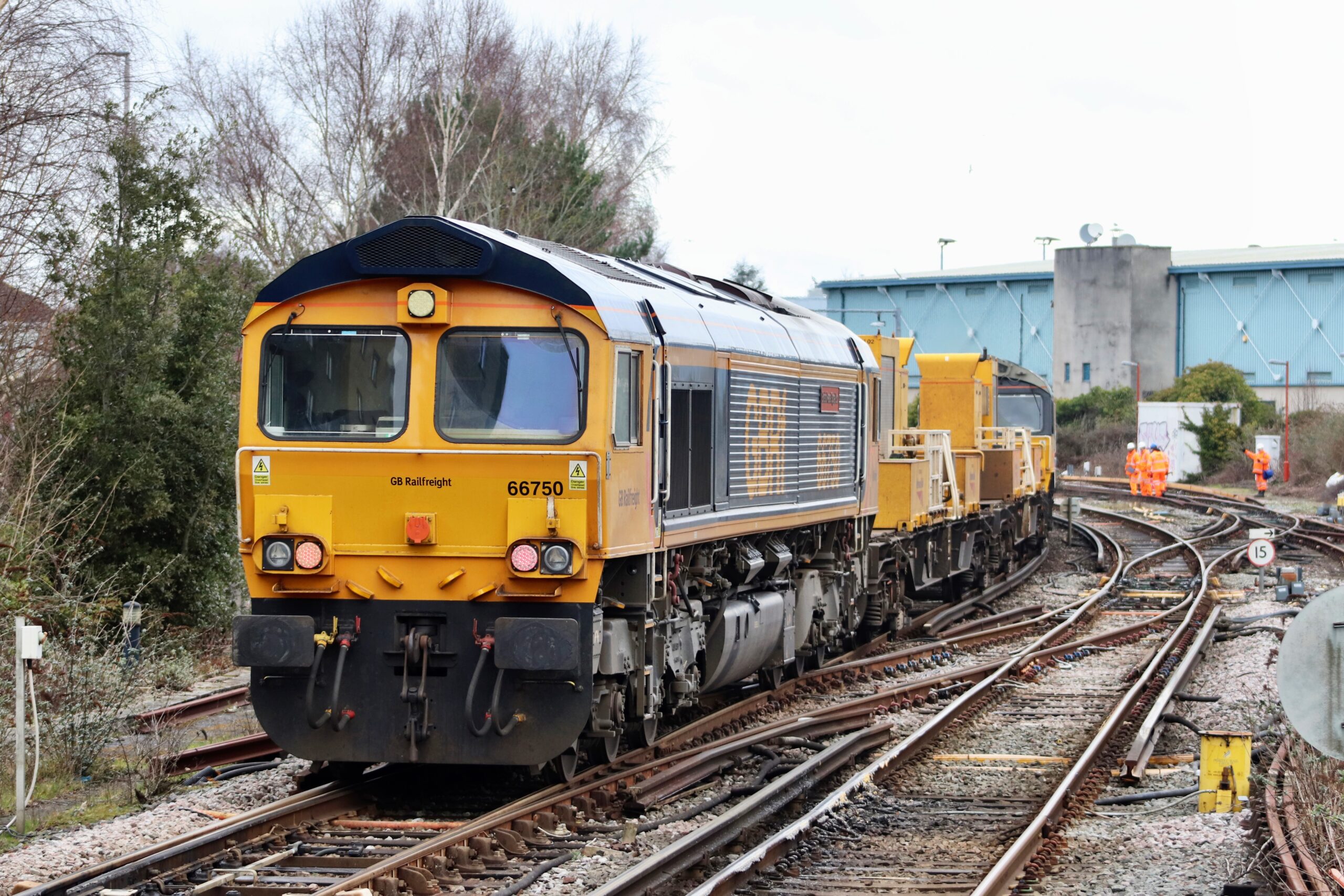
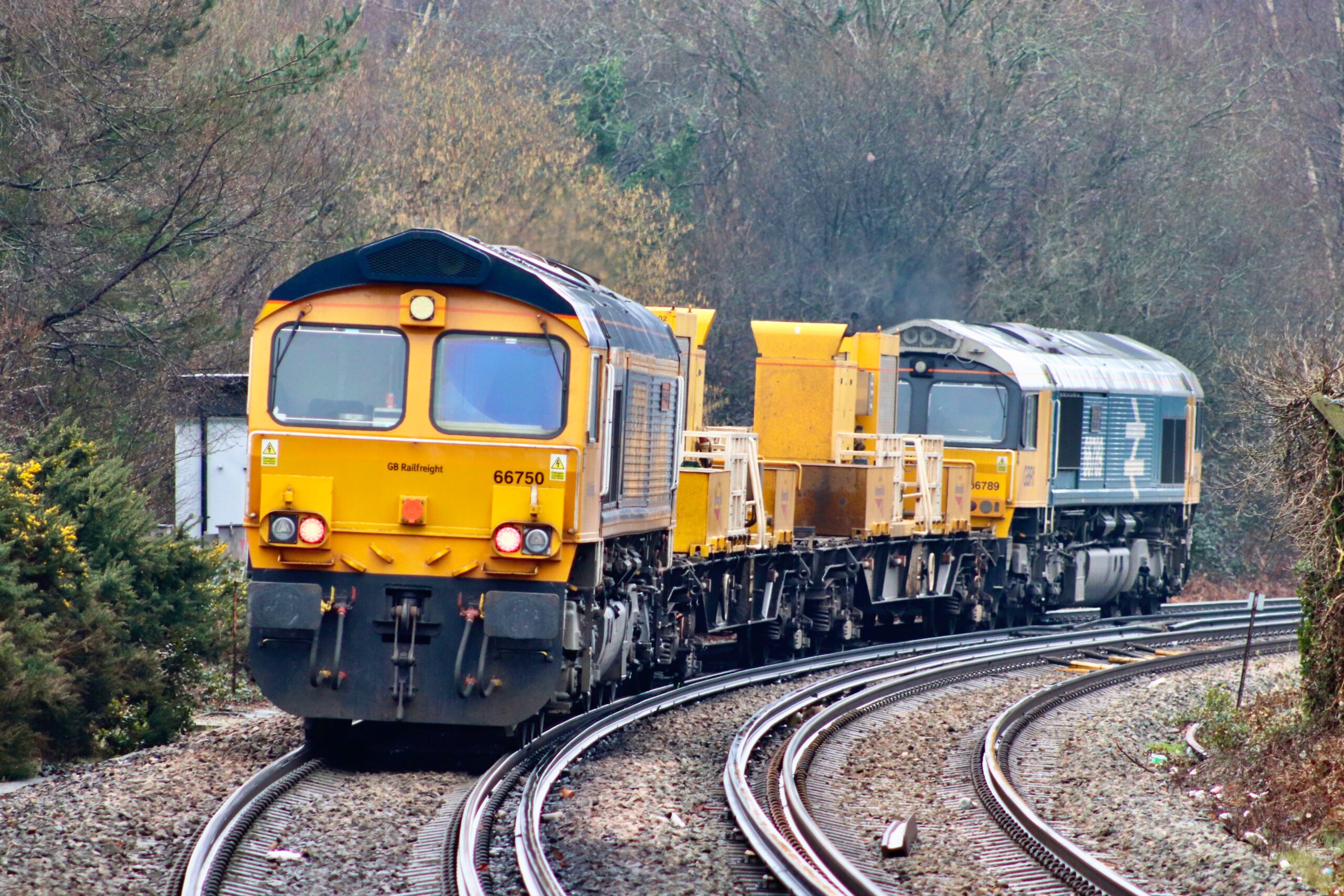
In amongst the usual Avanti West Coast Pendolino’s and West Midlands Trains Class 350 EMU’s, I spent an interesting few hours at London Euston on 17th November 2024 as Great Western Railway diverts took place due to engineering work for the construction of HS2’s new station at Old Oak Common requiring the closure of the Great Western Mainline into London Paddington. The Caledonian Sleeper and the GWR Night Riviera stood side by side in the former LMS terminal. Class 92 No. 92033 ‘Railway Heritage Trust’ arrived with the empty coaching stock for the Caledonian Sleeper and departed light loco as 5S96 2117 Wembley Inter City Depot to London Euston / 0A96 2337 London Euston to Wembley Inter City Depot. While Class 92 No. 92018 headed up 1S26 2330 London Euston to Glasgow Central and Edinburgh having arrived light engine as 0S26 2104 London Euston to London Euston. The GWR sleeper stock was top and tailed by Class 57 No.’s 57602 ‘Restormal Castle’ and 57605 ‘Totnes Castle’ which arrived reporting as 5Z51 2115 Reading Traincare Depot to London Euston and departed forming 1Z51 2333 London Euston to Penzance. Locomotive Services Limited Class 90 No. 90001 ‘Royal Scot’ worked in light engine as 0Z51 Crewe Holding Sidings to London Euston and departed as 0Z52 2356 London Euston to Wembley H.S. , the locomotive hired in to provide power to the GWR Night Riviera stock while at Euston to alleviate diesel fumes from the Class 57 locomotives while waiting at platform. We were also treated to a Rail Head Treatment Train top and tailed by GBRf Class 66 No.’s 66750 and 66752 working as 3J01 1414 Kings Norton Ot Plant Dept to London Euston / 3S01 0007 London Euston to London Euston.
Great Western Railway IET No.’s 800019/800016 forming 1Z29 2132 London Euston to Reading meets Avanti West Coast Pendolino Class 390 No. 390155 which had arrived as 1A68 1855 Manchester Piccadilly to London Euston – 17/11/2024Caledonian Sleeper ECS with Class 92 No. 92033 ‘Railway Heritage Trust’ at Platform 1 London Euston with Locomotive Services Class 90 No. No. 90001 ‘Royal Scot’ providing power to the GWR Night Riviera stock at Platform 2 – 17/11/2024 Screenshot of Class 92 No. 92033 ‘Railway Heritage Trust’ running light engine as 0A96 2337 London Euston to Wembley ICD pass GWR Class 57 No. 57602 ‘Restormal Castle’ which is about to depart with the Cornish Riviera Sleeper 1Z51 2333 London Euston to Penzance sleeper service – 17/11/2024Locomotive Services Class 90 No. No. 90001 ‘Royal Scot’ ready to depart London Euston – 17/11/2024
Video of GWR diverts at London Euston – 17/11/2024
The monthly PLP test train utilising GBRf Class 73 locomotives did not make it to Dorset in November, the train being cancelled at Bedford due to a problem with the traction equipment. No.’s 73965 and 73963 had been allocated to 1Q51 1115 Derby RTC to Eastleigh Yard via Weymouth.
Another Class 458 Unit drag to Bournemouth was scheduled to take place on 19th November 2024 with GBRf Class 57 No. 57305 bringing No. 458403 down from Widnes following conversion. However the Class 57 failed at Wembley and was replaced by Class 47 No. 47739 which eventually arrived at Bournemouth depot the following day as 5Q64 1700 Southampton Central to Bournemouth T&RSMD. The first leg of the return path to Leicester LIP with loco and barrier coaches reported as 5Z66 2008 Bournemouth TRSMD to Eastleigh East Yard.
On a visit to Oxford, we enjoyed a walk along the Oxford Canal from the City Centre to the Trout Inn at Wolvercote. On the way we saw a couple of passing freight trains as well as Harry Needle Railroad Company Class 37 No. 37405 working 0Z38 1100 Oxford Down Engineers Siding to Oxford Down Engineers Siding – 26/11/2024
Screenshot Harry Needle Railroad Company Class 37 No. 37405 working 0Z38 1100 Oxford Down Engineers Siding to Oxford Down Engineers Siding passing Wolvercote – 26/11/2024
Video from Oxford – 26/11/2024
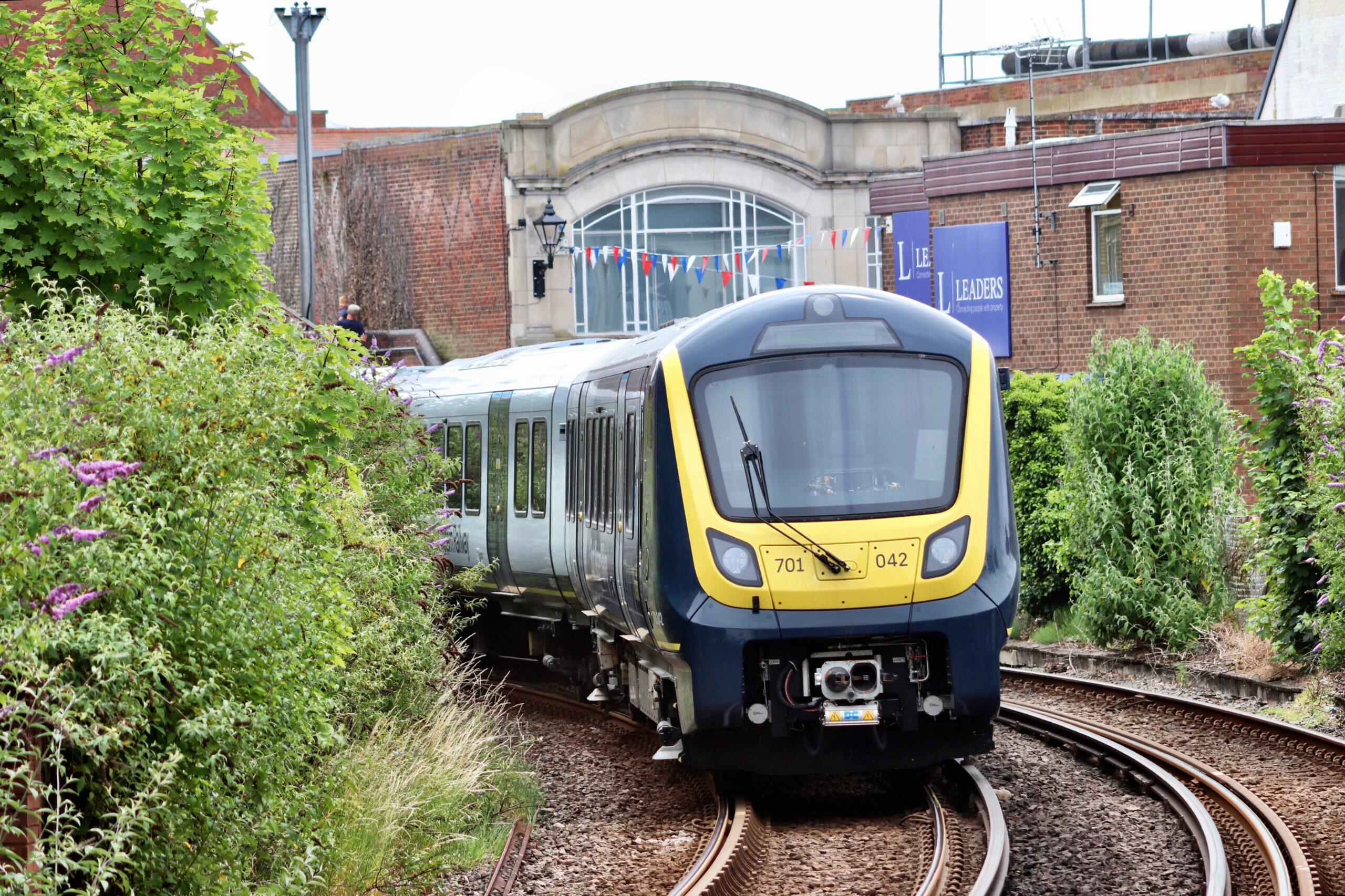
A launch event to mark the rollout of long-delayed new trains for South Western Railway (SWR) was held at London Waterloo on Thursday 28th November 2024 where Class 701 No. 701031 was named ‘Nighthawk’ by cricket legend Stuart Broad. The former One Day and Twenty20 captain unveiled the name a short trip up the line from Vauxhall, home to the Oval cricket ground where he took the final wicket in his last Test match. ‘Nighthawk’ is a nickname given to Broad by his teammates and reflects his role as a nightwatchman in the game of cricket. Thank goodness for press releases!
Highlighting its suburban network as a hub for sporting excellence, SWR also named trains the ‘Jockey’ for horseracing destinations such as Ascot, Sandown and Kempton Park; the ‘Red Rose’ for English rugby at Twickenham; the ‘Ace’ for the Wimbledon Championships; and the ‘Thames Racer’ in honour of the Boat Race.
The Derby-built Class 701 Arterio trains are five years behind schedule. Ninety trains, costing £1bn, were ordered in 2017 and were due in service from November 2019. The trains have been held up by extensive faults, mostly to do with their software. Many have spent years stored in sidings around the country.
The RMT union held 78 days of strikes about the role of guards on these trains before reaching an agreement with the train operator. The first Arterio train carried passengers between London Waterloo and Windsor in January 2024. The “development” service was mostly restricted to one return trip a day outside peak hours. Since then, five Arterios have appeared in service, serving the routes to Windsor & Eton Riverside and Shepperton, calling at some of SWR’s busiest stations including Earlsfield, Kingston, Richmond, Twickenham and Wimbledon.
Building on those destinations, it was confirmed that the new fleet will serve stations including Dorking, Epsom, Guildford, Hampton Court and Reading over the next six months, moving SWR closer to its ultimate goal of transforming every journey on its suburban network.
Each ten-car Arterio carries over 50% more customers than the eight-car Class 455 trains they replace, significantly increasing capacity for customers. The fleet will also improve customer comfort, providing modern features including Wi-Fi, charging points at every seat, real time information, accessible toilets and air conditioning.
To mark the Arterios being named and to celebrate the next ten being rolled out, an orchestra played a medley of well-known sporting tunes, including the themes from TV’s Grandstand and Match of the Day and the film Chariots of Fire.
SWR is training 750 drivers to operate the Class 701 trains.
SWR Class 701 No. 701031 stands at London Waterloo in readiness for the Arterio launch event – 28/11/2024SWR Class 701 No. 701031 ‘Nighthawk’ – 28/11/2024SWR Class 45 No. 455717 along with 455865 prepares to depart with the late running 2M25 1117 London Waterloo to Raynes Park – 28/11/2024A view of London Waterloo with Class 455’s in evidence – 28/11/2024
Video from London Waterloo – 28/11/2024
Thanks for reading – don’t forget the best way to keep up to date with our latest videos is via the Railway Dog YouTube Channel – why not subscribe today! Or you can catch random witterings and photos via the Railway Dog Facebook group. We’ll be back with the December 2024 round-up soon. Be seeing you!
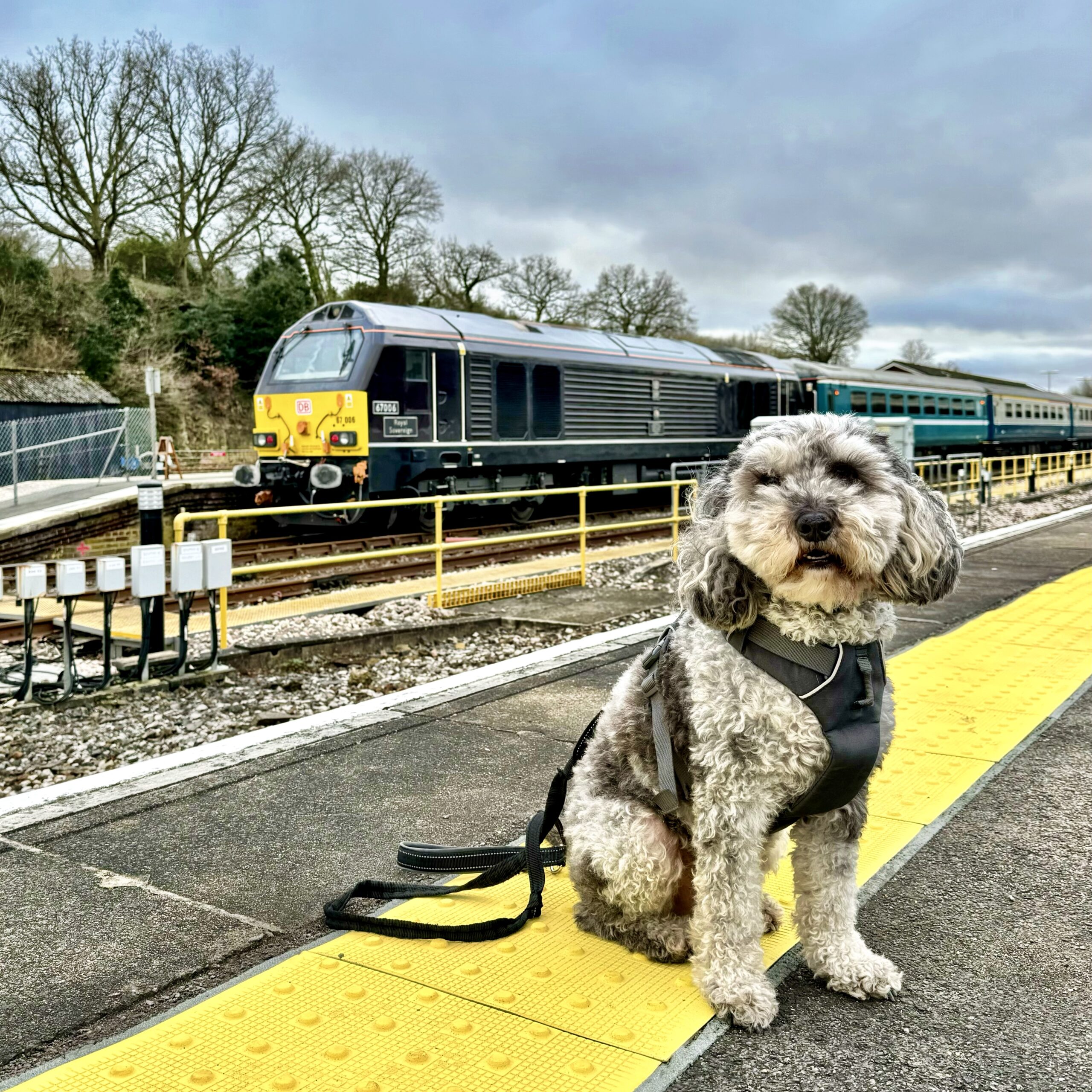
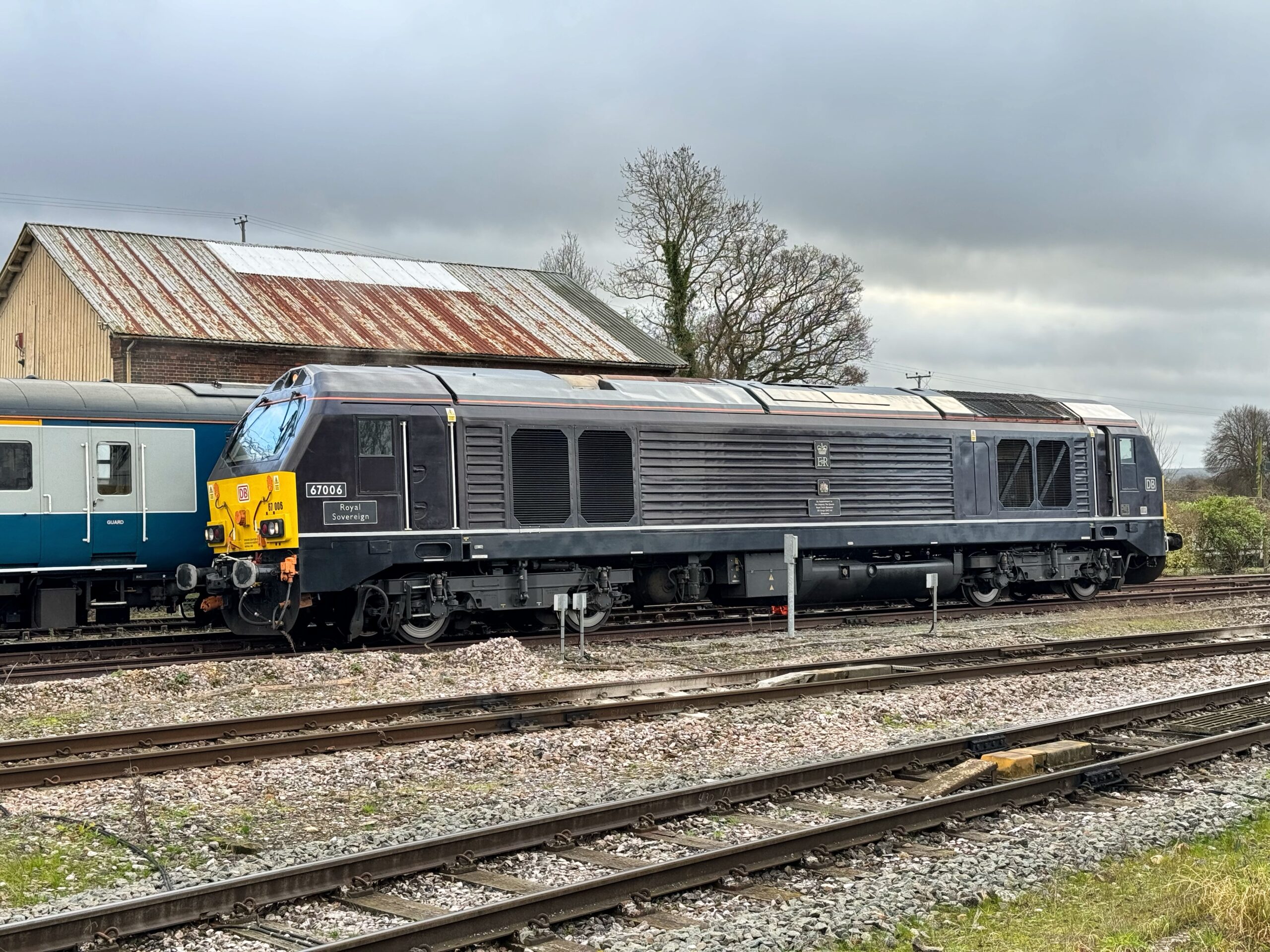
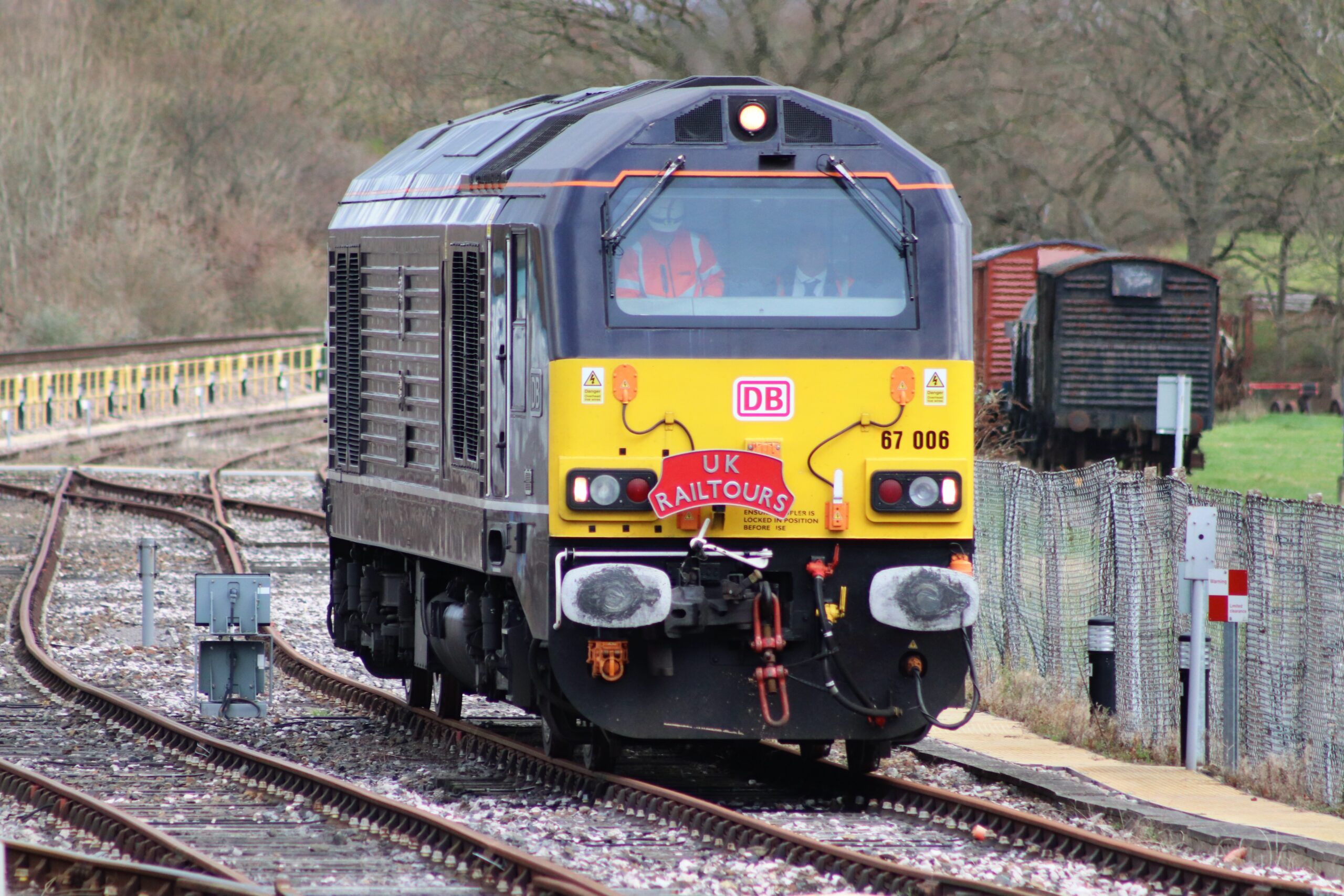
Yoshi at Yeovil Junction with Class 67 No. 67006 ‘Royal Sovereign’ was in charge of UK Railtours “Carols At Sherborne Abbey” 1Z15 0715 Peterborough to Yeovil Jn Heritage Platform. The Class 67 locomotives are a class of Bo-Bo diesel electric mainline locomotives which were built for the English, Welsh and Scottish Railway between 1999 to 2000 by Alstom at Meinfesa in Valencia, Spain with drive components (engine and transmission) from General Motors Diesel. Yoshi is a cockapoo dog, a miniature poodle and cocker spaniel mix produced in Wiltshire – 23/12/2023
December 11th 2023 to December 31st 2023
The second part of our December blog is finally here! After our trip to the North, we didn’t have to wait long for some local railway themed action as another Class 458 EMU drag from Widnes Transport Tech to Bournemouth depot took place on Wednesday 13th running as 5X73 0722 Wembley Receptions 1-7 to Bournemouth TRSMD. I kept one eye on its movement via the live maps available on the Open Time Trains website, and at one point almost left home early as the train was running well ahead of time.
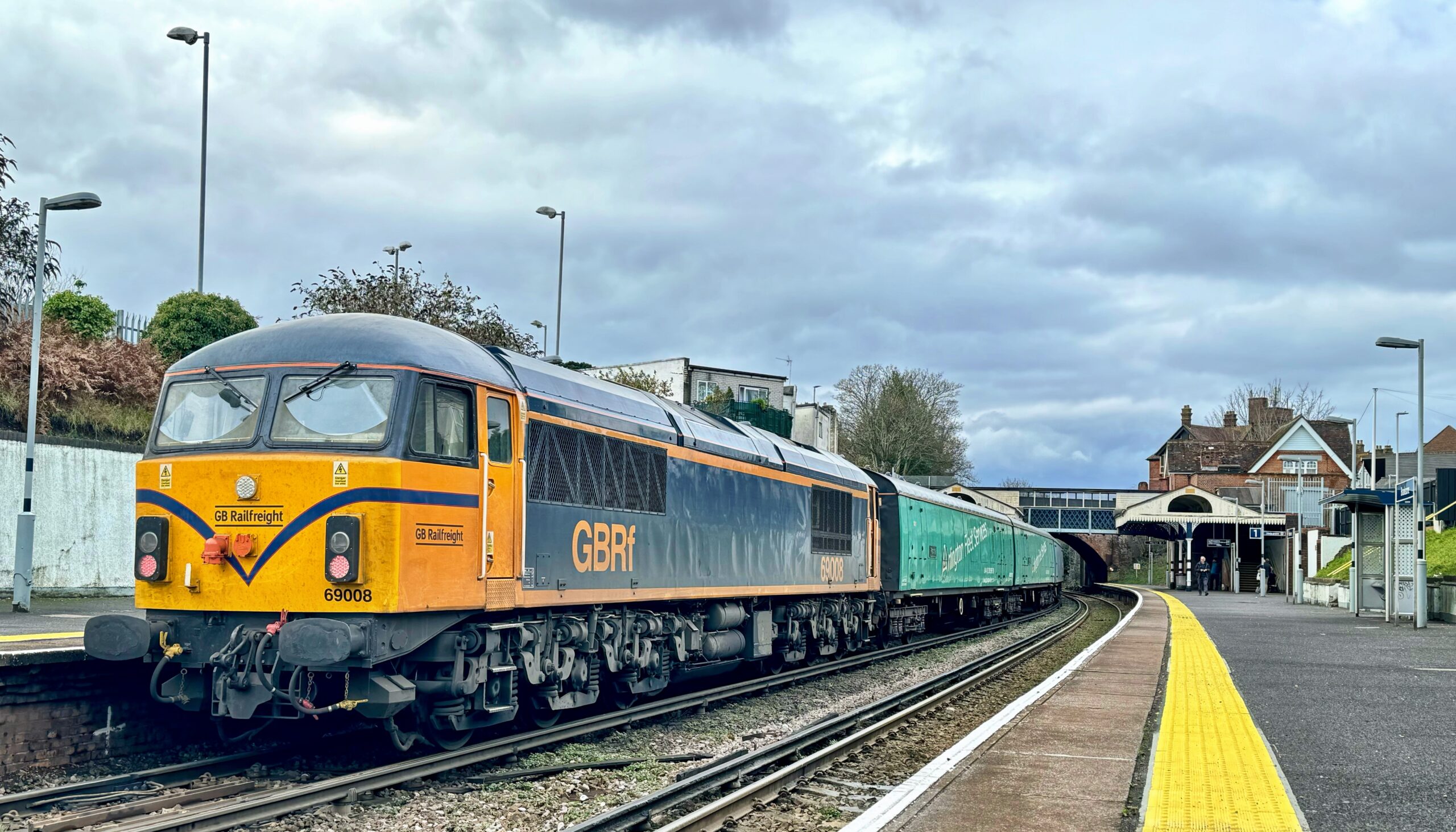
GBRf Class 69 No.69008 at Branksome preparing to reverse into the depot with 5X73 0722 Wembley Receptions 1-7 to Bournemouth TRSMD – 13/12/2023
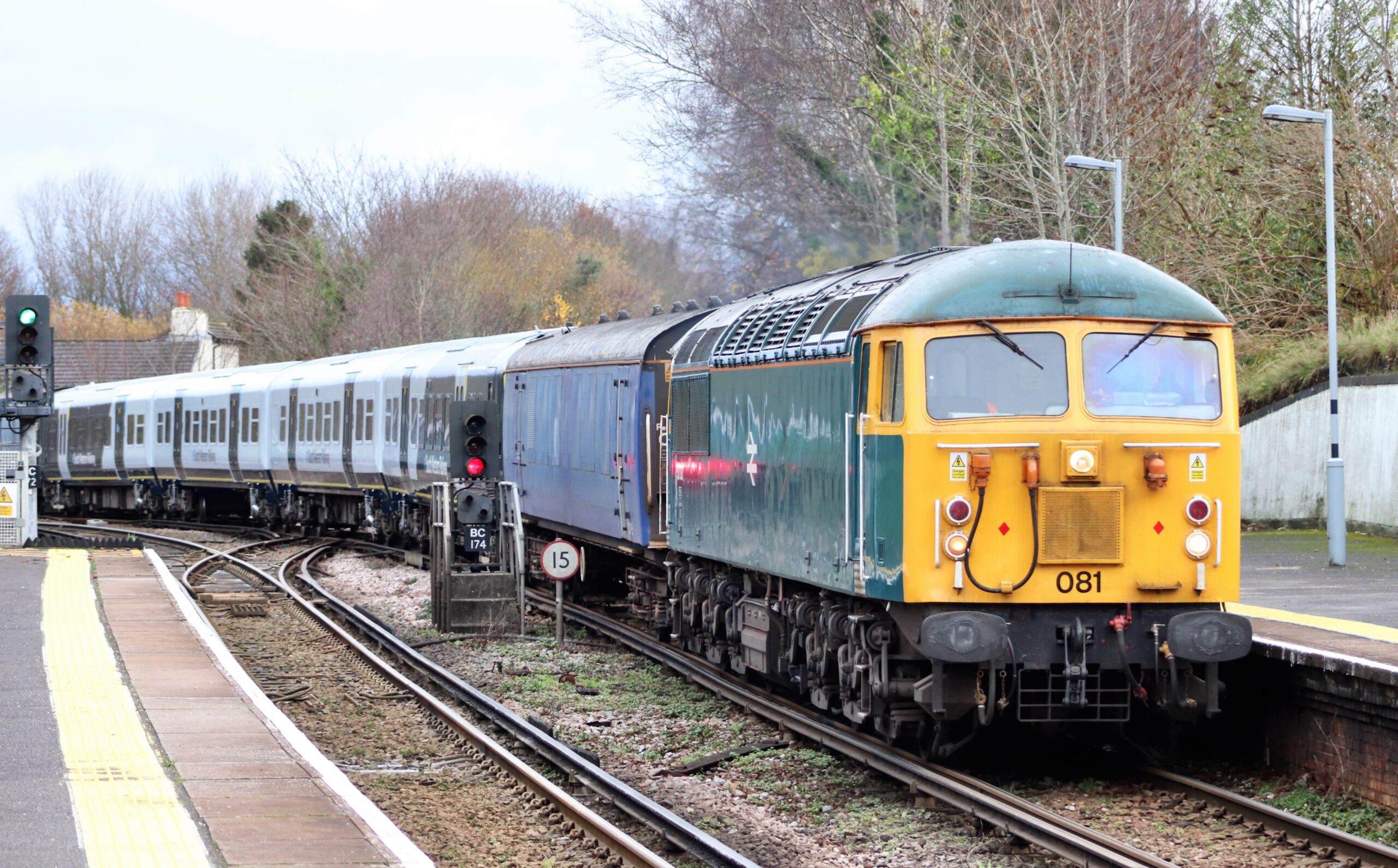
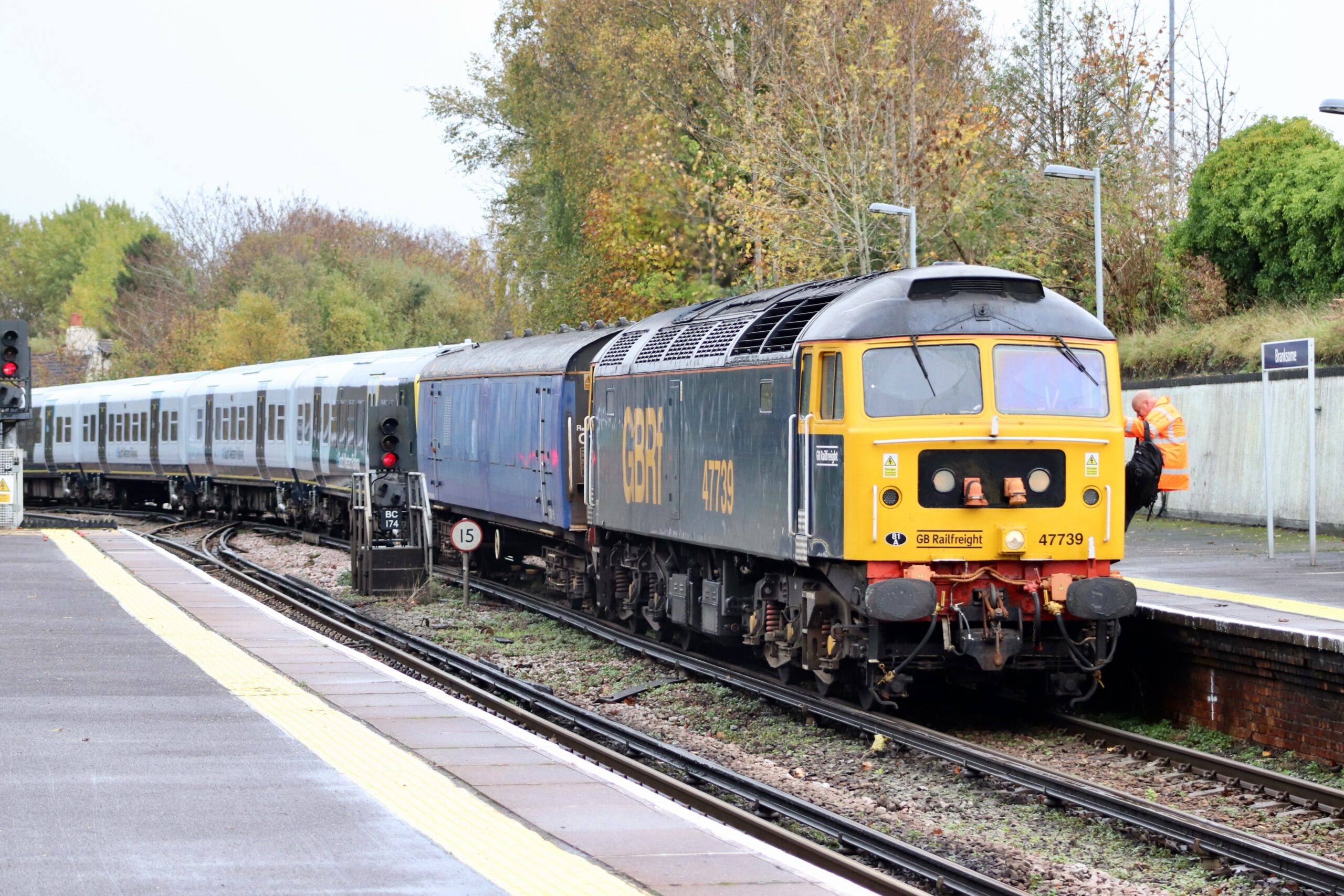
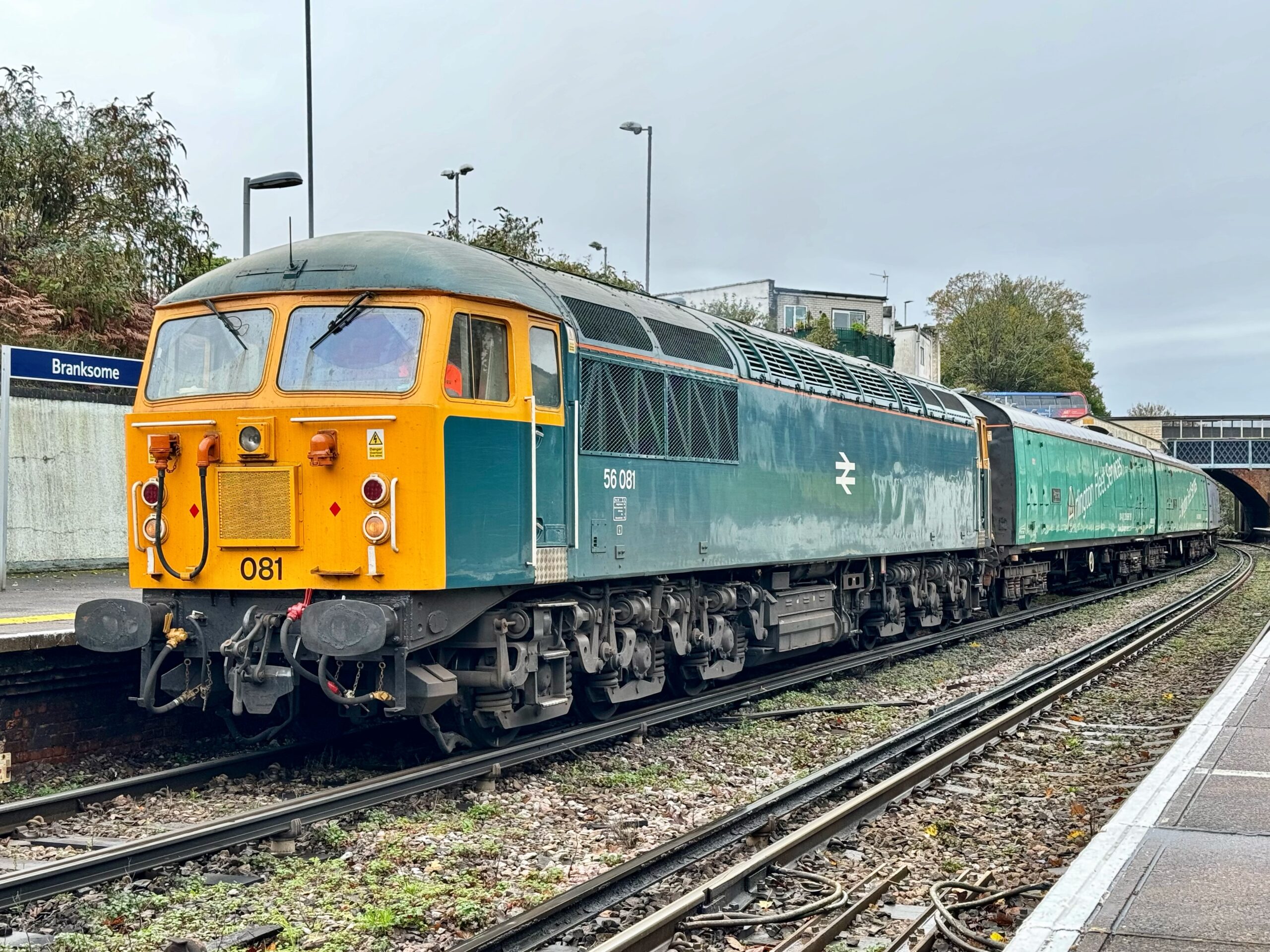
However, the train was held outside of Eastleigh for a while so I was able to get to Branksome on the train as planned just prior to the arrival of GBRf Class 56 No. 56081 and Class 69 No. 69008 with South Western Railway (SWR) Class 458 No. 458424 sandwiched in-between barrier coaches. The return run taking another Class 458 for refurbishment in Widnes was set for departure the afternoon of the same day, but was afforded three different paths out of the depot. Avoiding the possibility of picking the wrong working and either missing the departure or having a lengthy wait I decided just to remain at home instead!
GBRf Class 56 No. 56081 with SWR Class 458 No. 458424 in tow arrives at Branksome heading 5X73 0722 Wembley Receptions 1-7 to Bournemouth TRSMD – 13/12/2023
No. 56081 is to to be retired to Longport in the New Year. While the option for additional Class 69 conversions doesn’t appear to have been taken yet, the planned despatch of the Class 56 to Longport certainly places it in position for potential conversion to No. 69017.
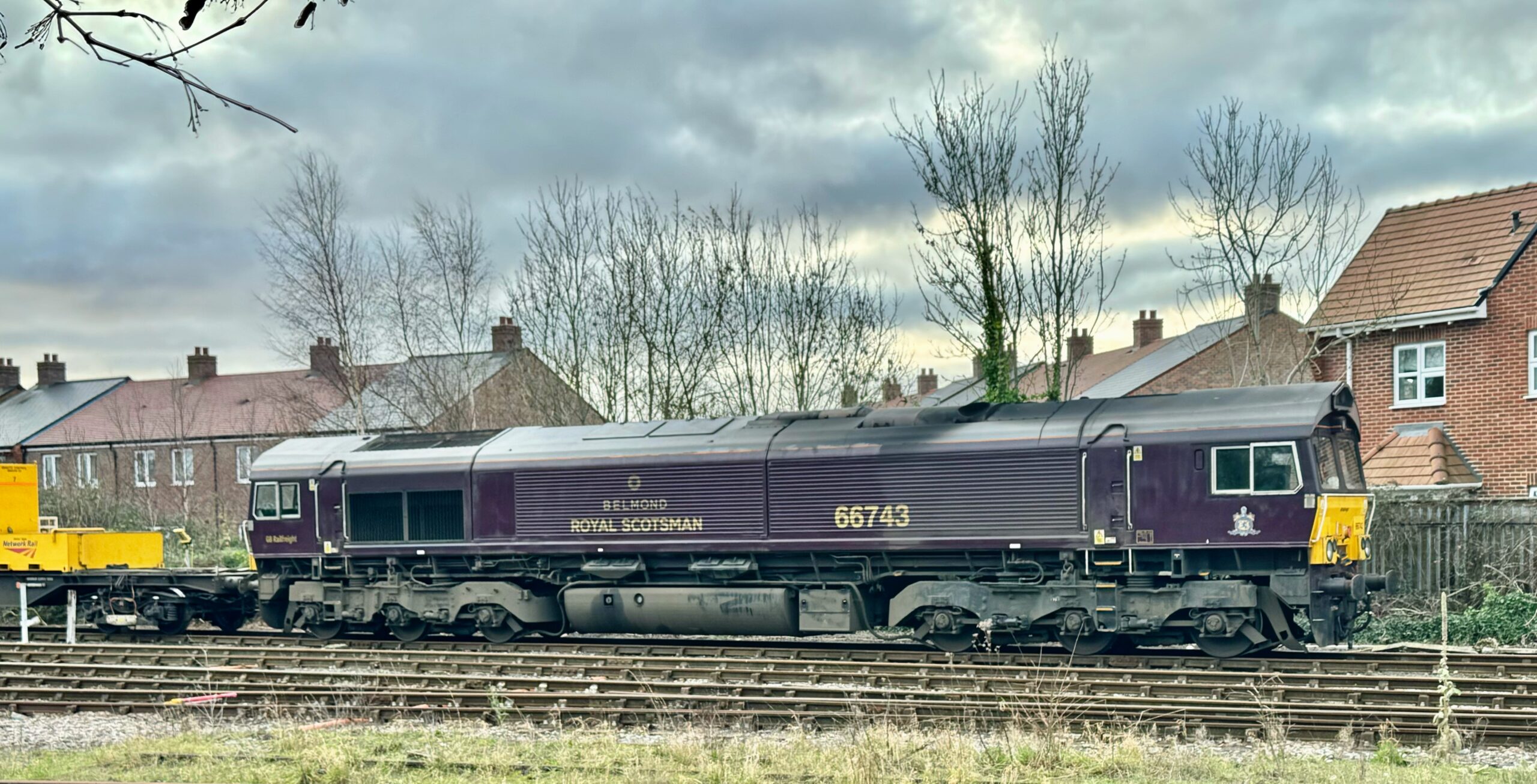
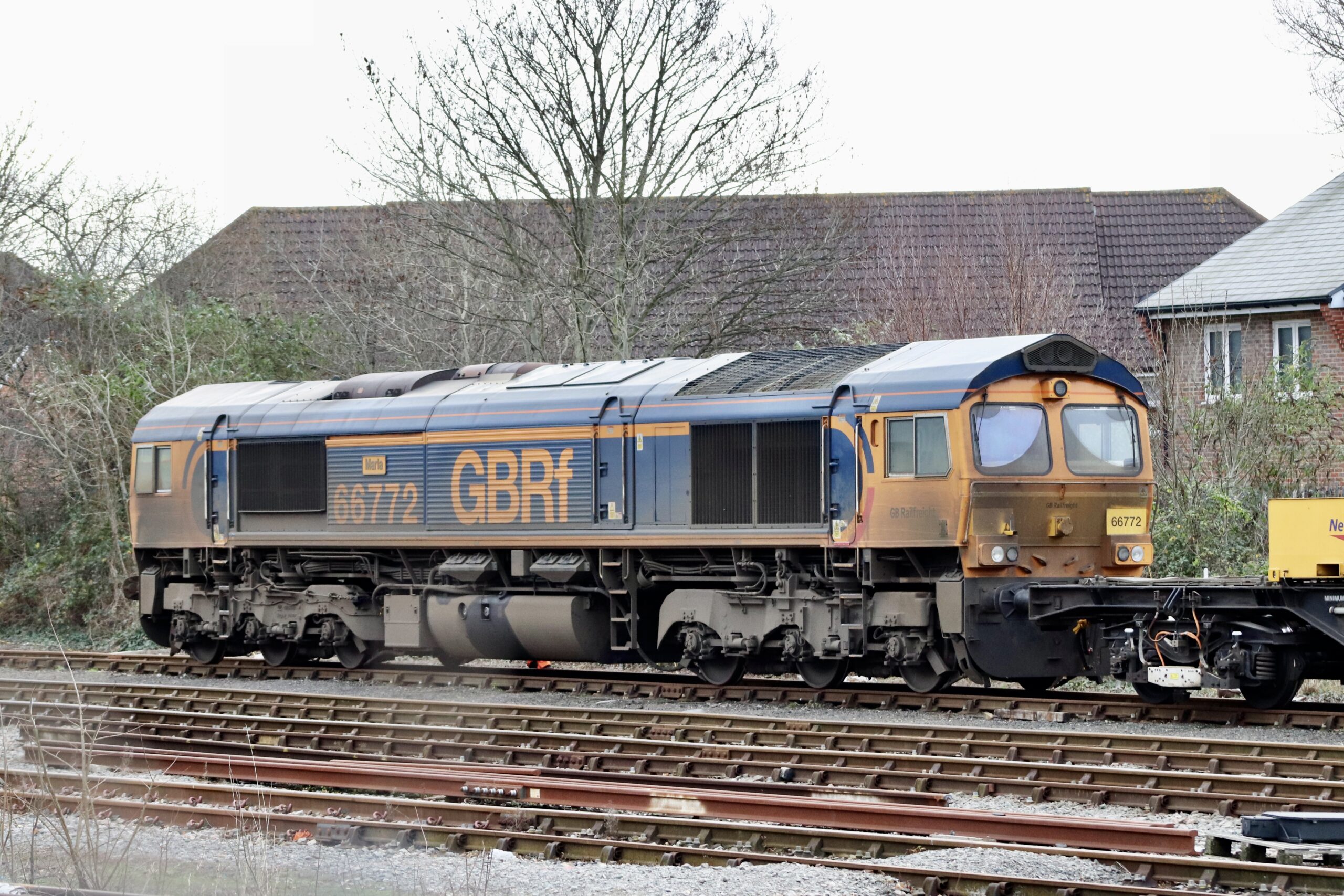
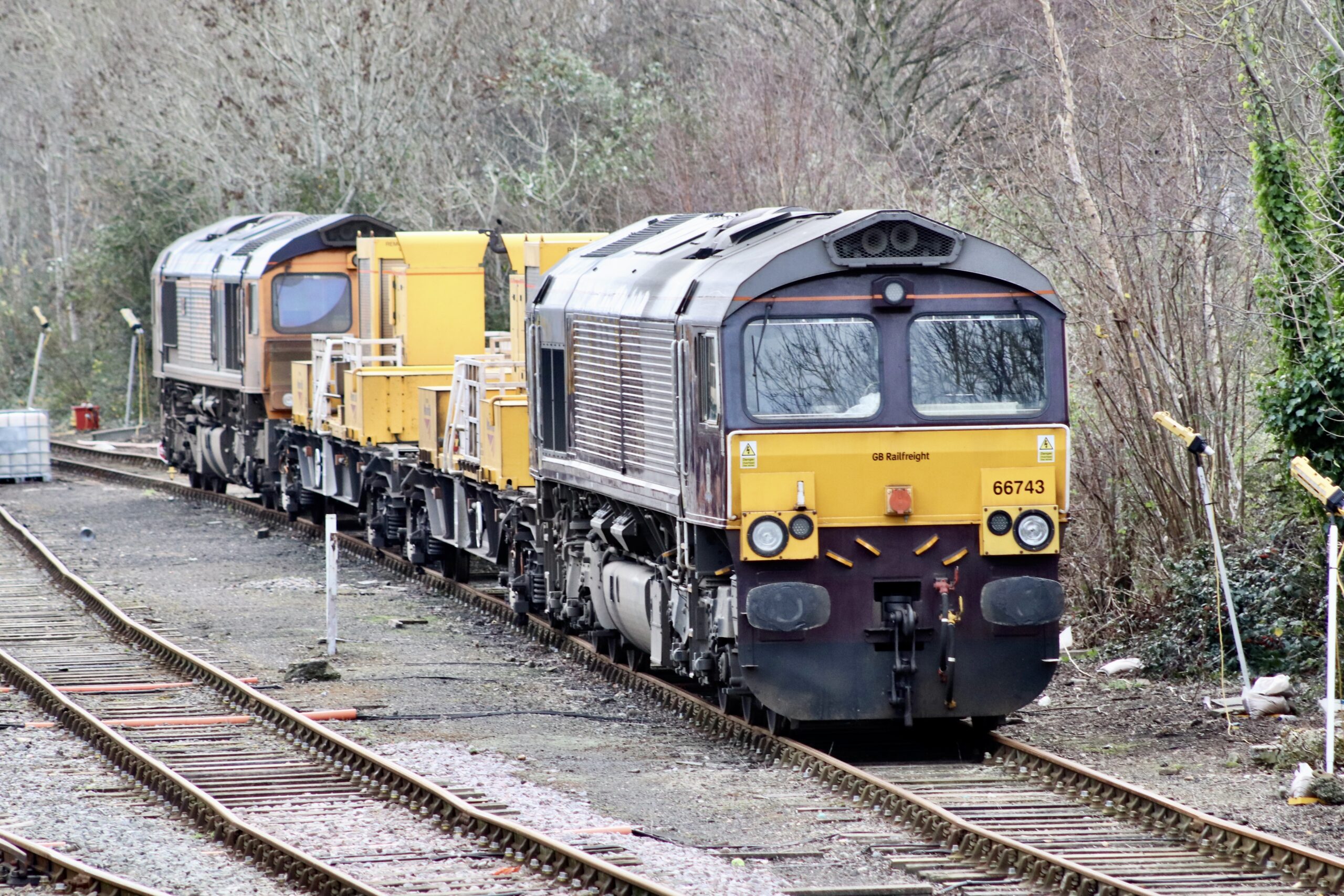
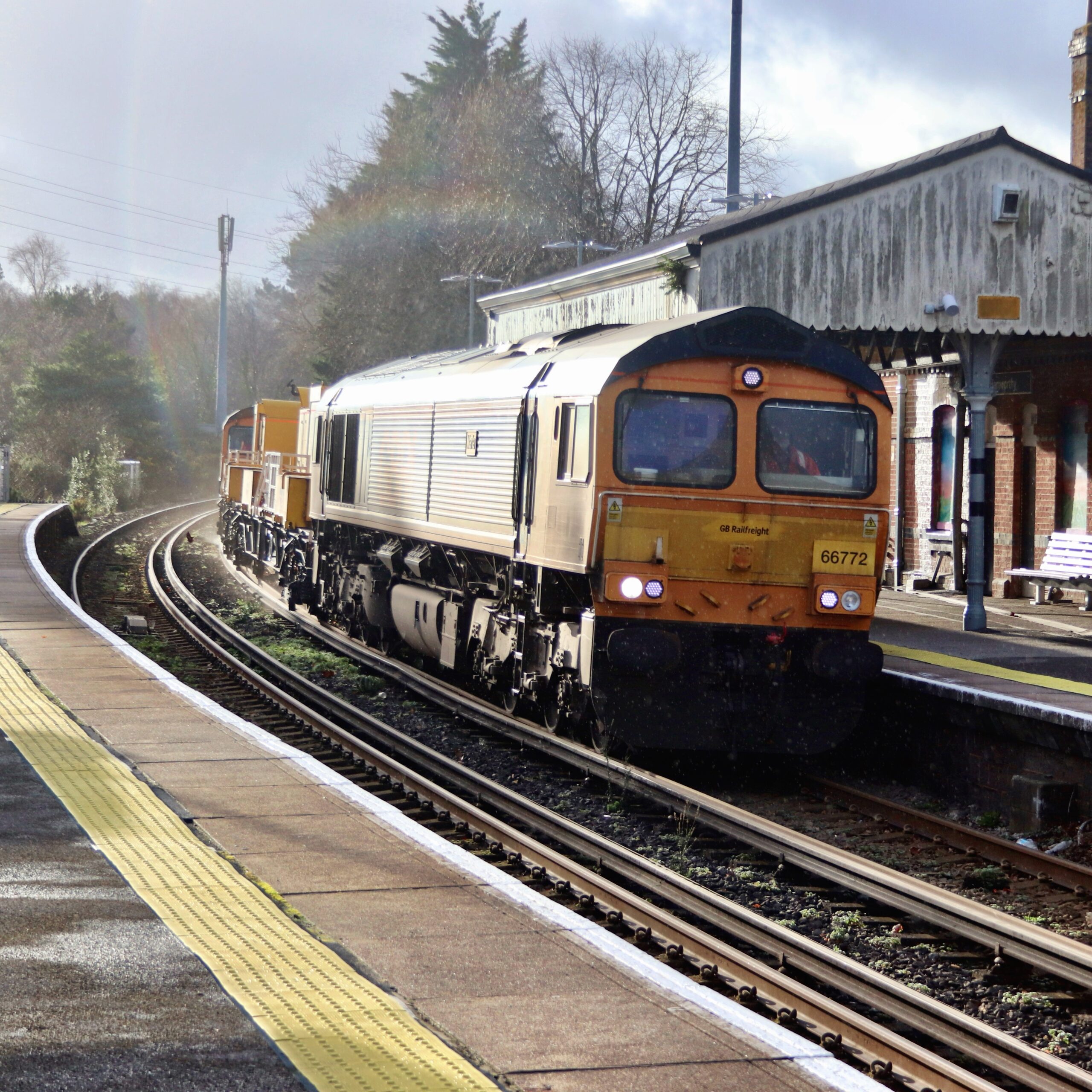
Later on the same day, the Snow & Ice Treatment Train (SITT) ran from Totton to Dorchester South and back as 3Y89 2211 Totton Yard to Totton Yard with Class 66 No.’s 66743 and 66772 ‘Maria’. I toyed briefly with the notion of driving to Dorchester to get a photo of No. 66743 in its Belmond Royal Scotsman livery, but decided against it on this occasion.
GBRf Class 66 No.’s 66743 and 66772 ‘Maria’ passing Hamworthy with 3Y89 2211 Totton Yard to Totton Yard – 13/12/2023
Saturday 16th December was a bit of a road trip so I could see what could well be the final DB Cargo (DBC) Class 60 hauled railtour as the class are to be ‘retired’ in April 2024 by the Deutsche Bahn owned freight operator following an announcement it is to eliminate the use of its Class 60 locomotives by re-gearing ten of its Class 66 loco’s to provide an enhanced tractive effort. As most of its services are operated by Class 66 locomotives, with the Class 60’s only seeing limited use, DB Cargo concluded that if services operated by its Class 60 locomotives could be transferred to Class 66’s with a higher tractive effort, it would benefit its customers and the company.
DB Cargo has also said that in the future they are going to focus on contractual railtour operations, with the likes of the Belmond British Pullman trains, and less on the ‘ad hoc’ operations for other tour promoters, such as Pathfinder Railtours who were running “The Festive Midland-Ian” which was promoted as an attempt to try and cover as many freight lines, loops and locations as possible in the West Midlands, featuring some “rare track”. The requested motive power had been Top & Tail DBC Class 60’s but, due to the low numbers of the class remaining in service, on the day DBC were forced to substitute a Class 66 for one of them.
Pathfinder named the railtour “The Festive Midland-Ian” after Ian Loveday who devises and helps with many enthusiast rail based excursions. Ian often advises and assists with access to heavily sought after lines including this 16th December charter.
The route for the tour was confirmed as: GLOUCESTER, CHELTENHAM SPA, WORCESTER SHRUB HILL, Kidderminster DGL, STOURBRIDGE JUNCTION, Stourbridge DGL, Rowley Regis UGL, BIRMINGHAM SNOW HILL, Up & Down Small Health Goods, Caledonia Yard, Up & Down Small Heath Goods, Tyseley Up Through Siding, Dorridge UPL, Leamington Spa UCV, Fenny Compton UGL, Banbury DGL, Banbury Reservoir Sdgs – BANBURY (Break), Fenny Compton DGL, Kineton Branch NR Limit, Leamington Spa DCV, Hatton DGL, Dorridge UDGL, Birmingham New Street (non-stop), Wolverhampton Logistics Centre, Bescot Stadium, Bushbury DGL, Stafford RMT, Oxley Chord, Wolverhampton, Bescot Stadium, Bescot DGL, Aston, BIRMINGHAM NEW STREET, Rowley Regis DGL, STOURBRIDGE JUNCTION, WORCESTER SHRUB HILL, CHELTENHAM SPA, GLOUCESTER
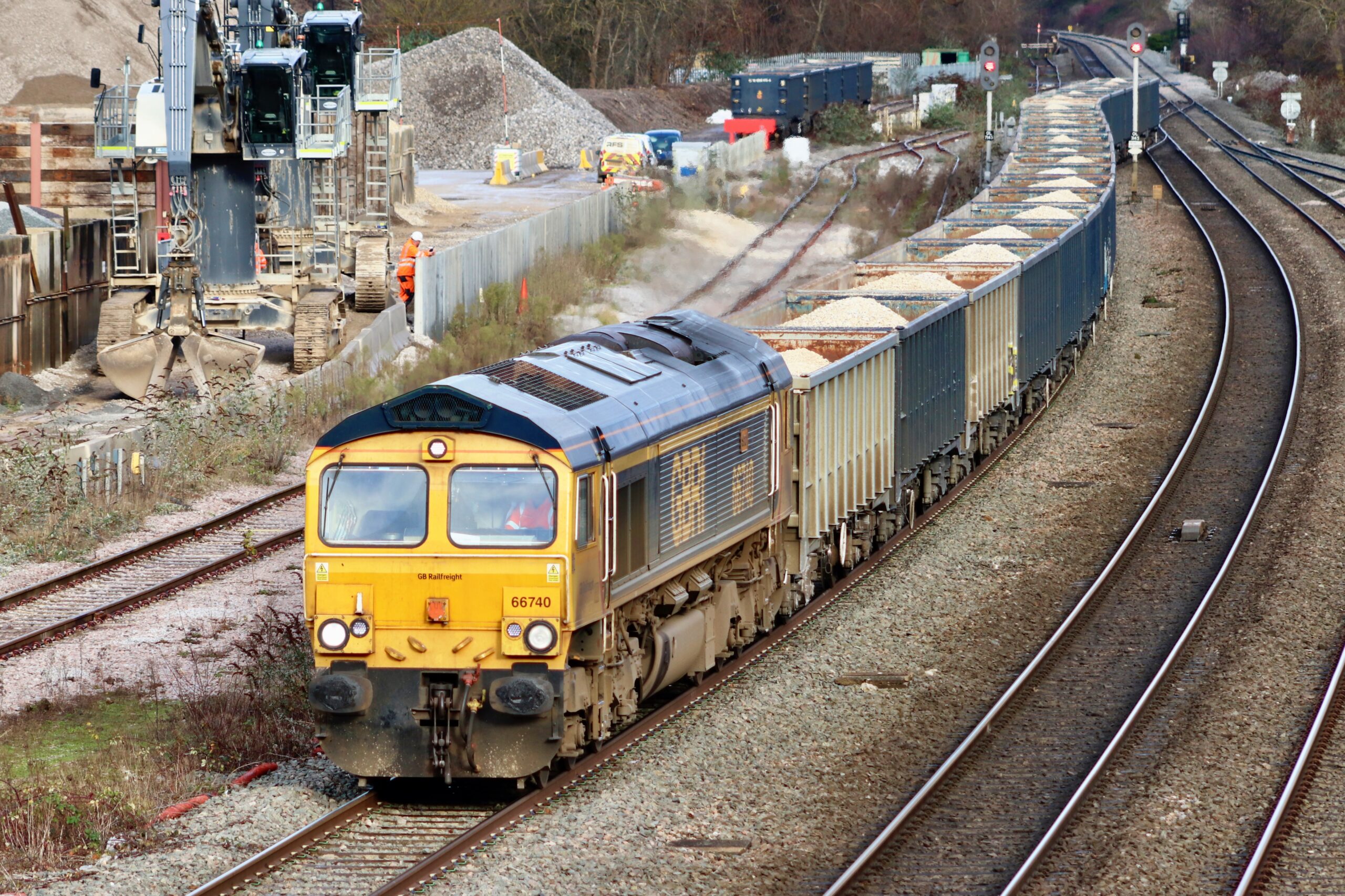
I decided to head to Banbury as I remembered an accesible road bridge close to the Tarmac works which in turn is adjacent to Banbury Resevoir sidings. “The Festive Midland-Ian” is believed to be the first passenger train to visit to the Reservoir stone terminal sidings at Banbury. On the way, I took a slight detour so I could pick up @smithy.377 and looking at the timings available to us on real Time Trains, we realised we’d have a few passes of the train as it worked its way along Banbury Goods Loop and back before tackling the stone terminal sidings. We also enjoyed a few other passing passenger trains and a couple of freights.
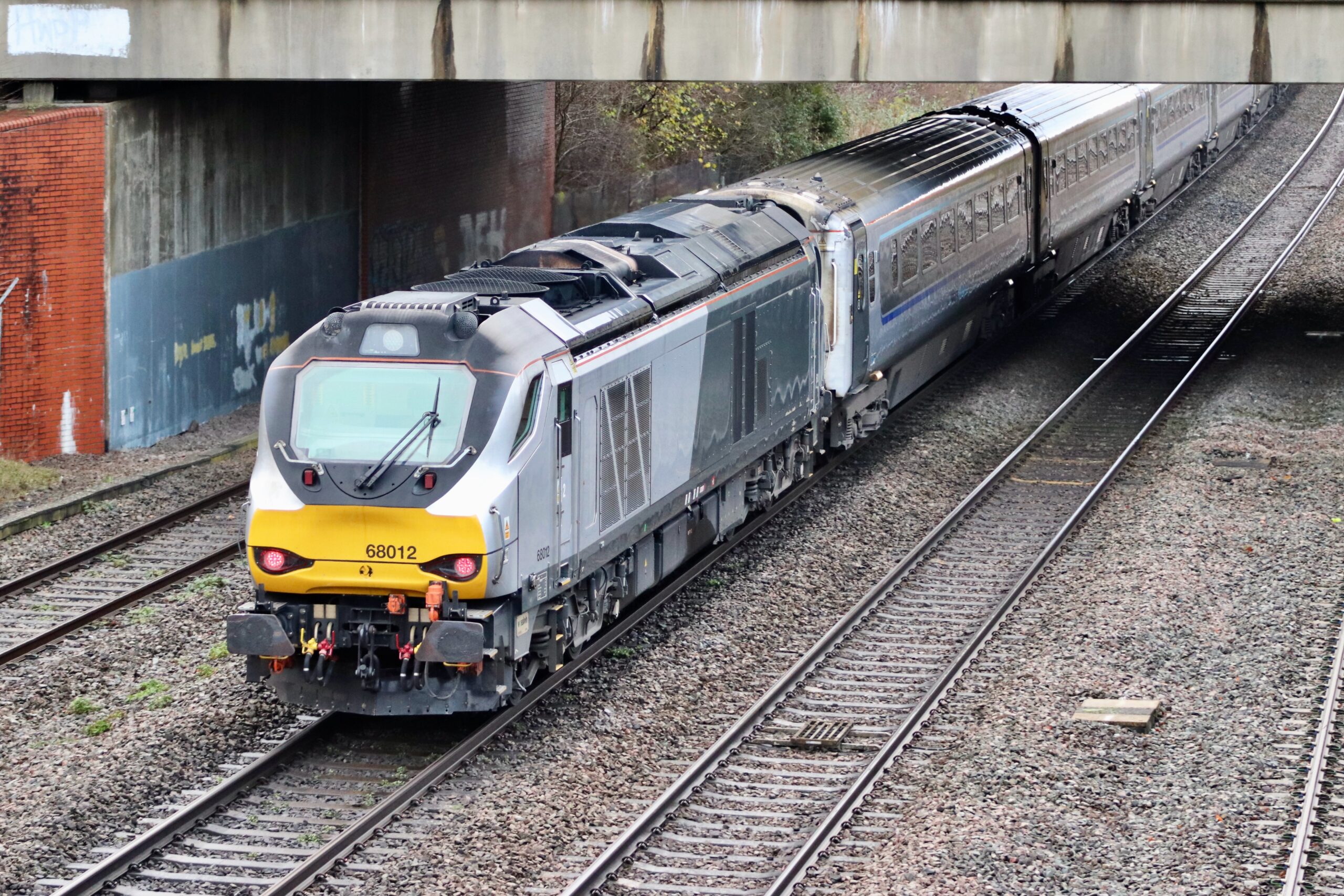
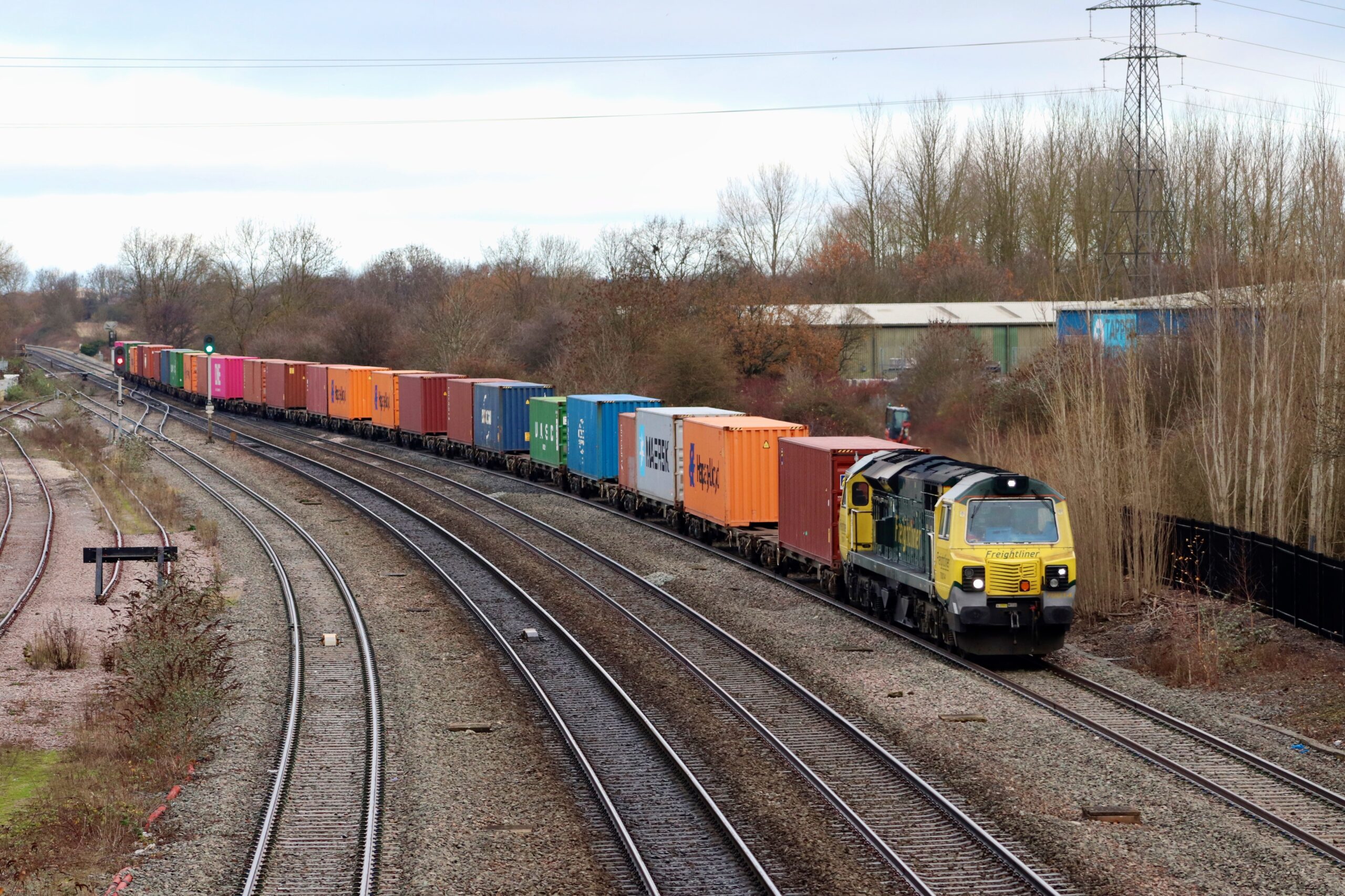
Chiltern Class 58 No. 68012 (set AL04/ DVT 82309) propels 1H27 08:19 Stourbridge Junction to Marylebone towards Banbury railway station – 16/12/2023Freightliner Class 70 No. 70014 working 4O27 06:49 Crewe Basford Hall SSM to Southampton Marine Container Terminal nears Banbury – 16/12/2023
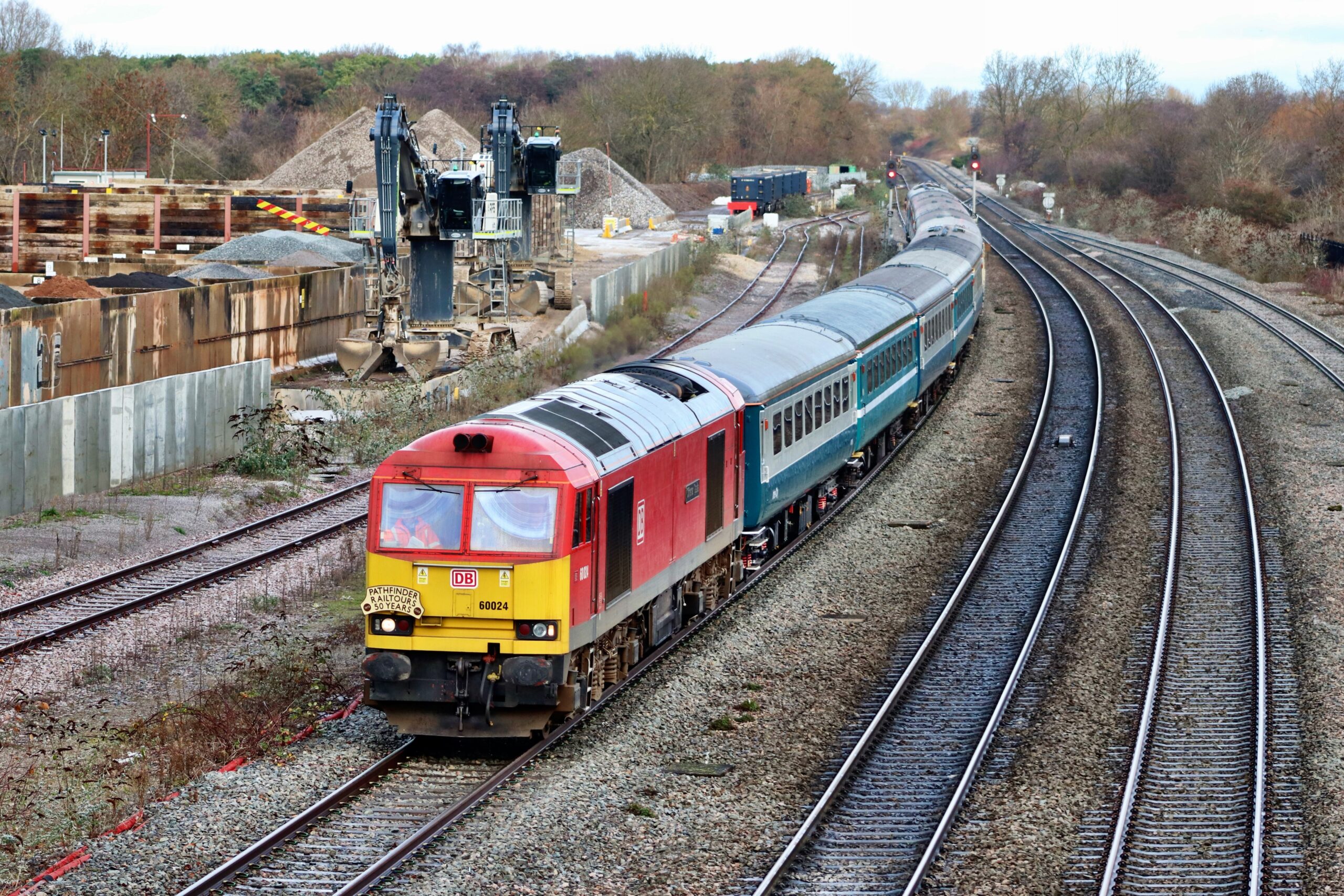
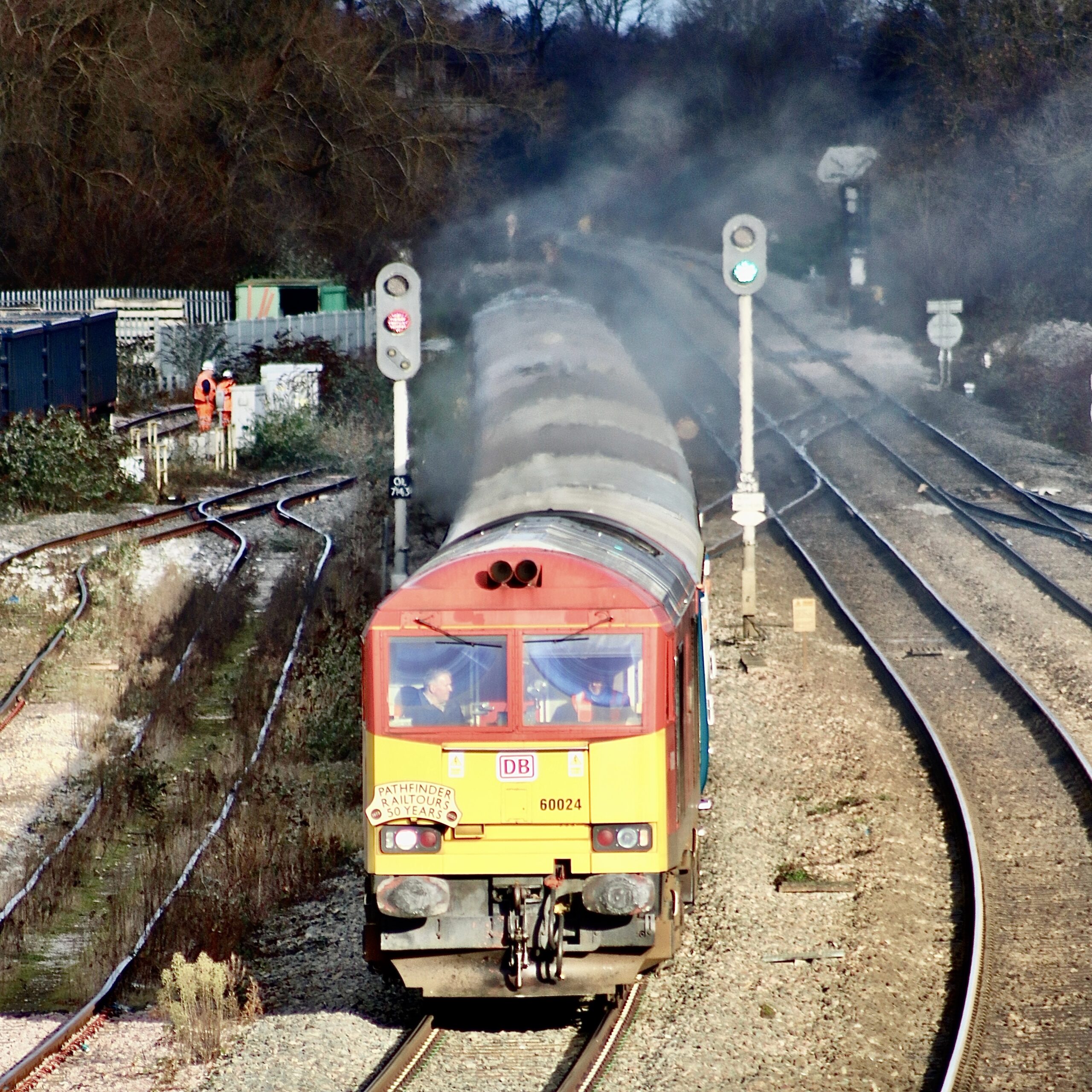
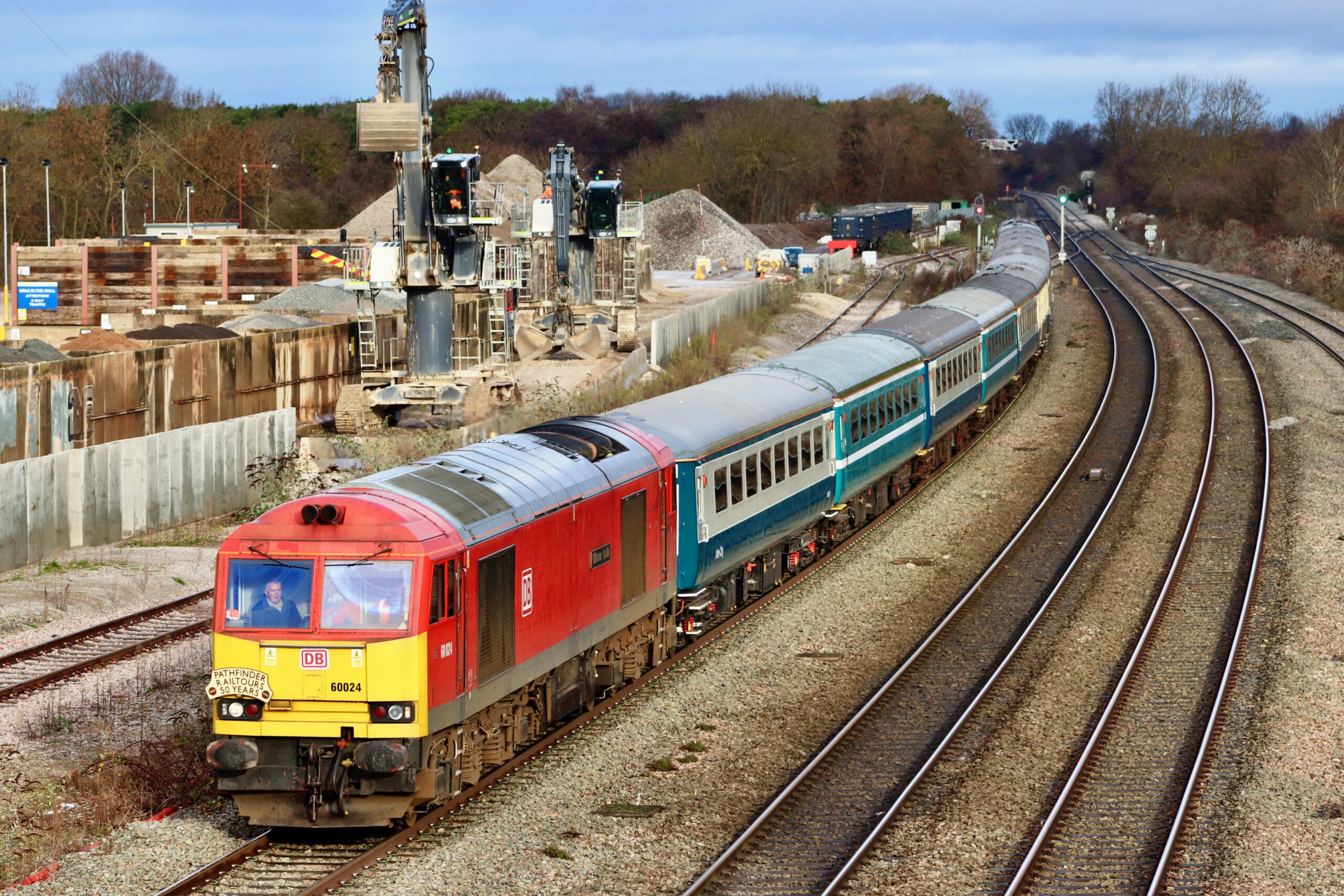
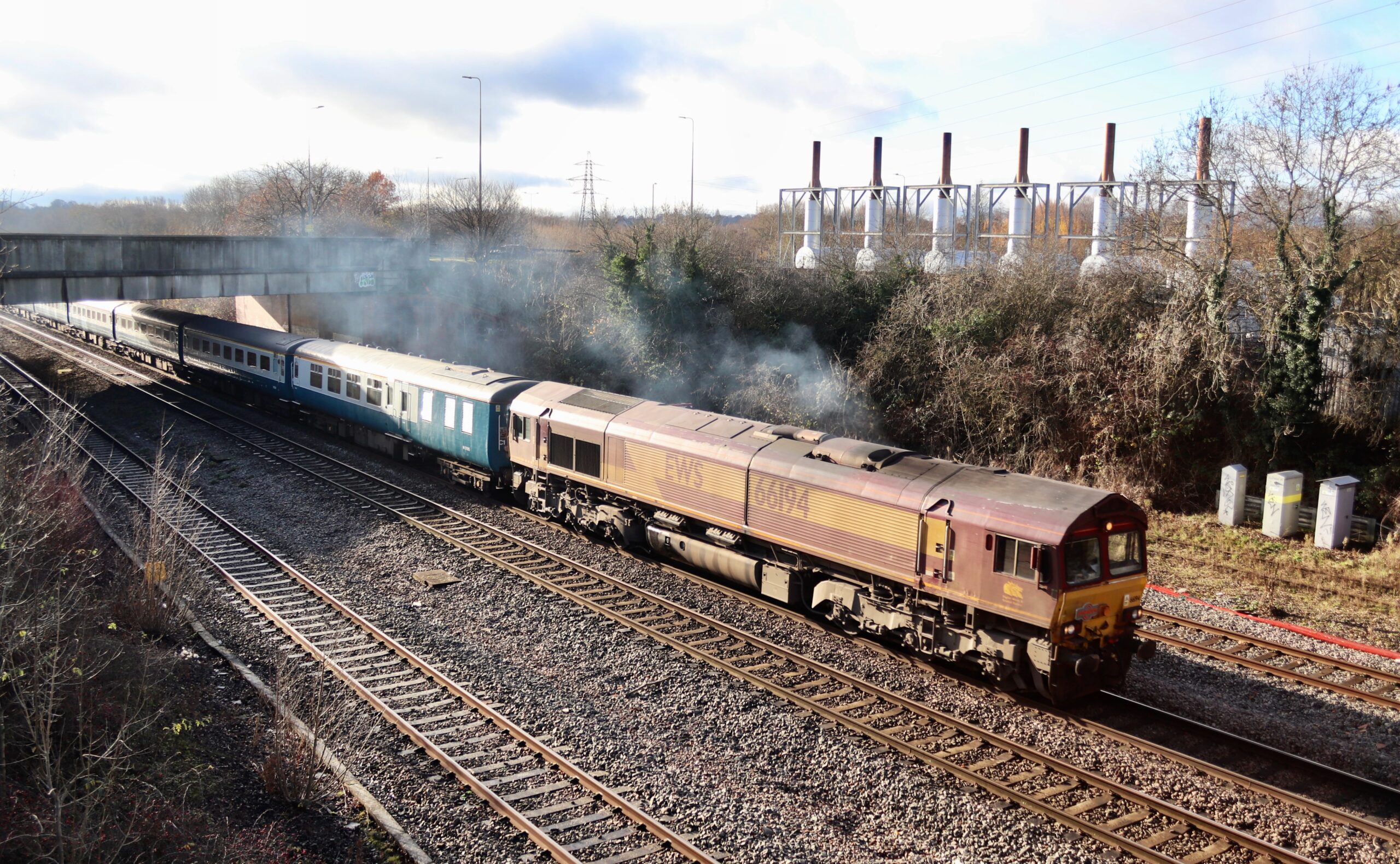
The railtour had to arrive at Resevoir Sidings prior to the arrival of a scheduled GBRf stone train which was confirmed as running on the 16th. The Pathfinder tour was then diagrammed to head into Banbury for a brief layover before heading back up the mainline towards Wolverhampton. I had read the previous day that the Class 66 would be leading towards Banbury, but I was very pleased to see the Class 60 at the front as it rounded the distant curve heading for down goods loop. This meant that we managed to get numerous shots of the leading locomotive and led me to abandon any thoughts of chasing the train up to Fenny Compton and possibly beyond.
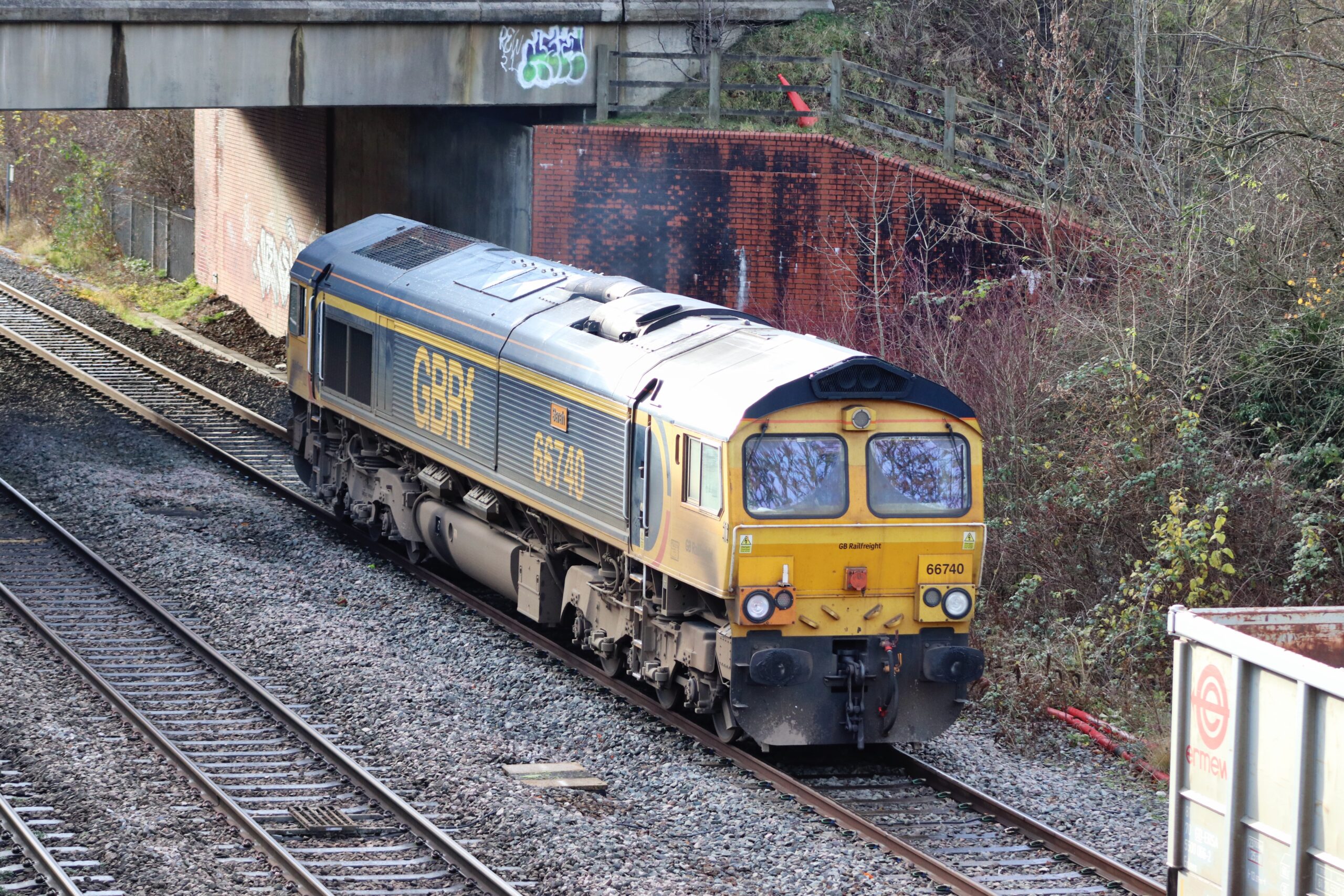
DB Cargo Class 60 No. 60024 hauling “The Festive Midland-Ian” 1Z60 0545 Gloucester to Banbury towards Banbury on the Down Goods Loop – 16/12/2023DB Cargo Class 60 No. 60024 hauling “The Festive Midland-Ian” 1Z60 0545 Gloucester to Banbury – 16/12/2023DB Cargo Class 60 No. 60024 hauling “The Festive Midland-Ian” 1Z60 0545 Gloucester to Banbury towards Banbury on the Down Goods Loop – 16/12/2023GBRf Class 66 No. 66740 ‘Sarah’ arrives with 6G34 02:59 HINDLOW GBRF to Banbury Reservoir Redland Aggregates – 16/12/2023GBRf Class 66 No. 66740 ‘Sarah’ prepares to run around her train; 6G34 02:59 HINDLOW GBRF to Banbury Reservoir Redland Aggregates – 16/12/2023Class 66 No. 66194 takes charge of the second leg of “The Festive Midland-Ian” 1Z61 1211 Banbury to Wolverhampton Walsall Street Steel Terminal – 16/12/2023
After seeing the Class 66 No. 66194 taking “The Festive Midland-Ian” back towards Wolverhampton, I opted to return home via Didcot in the hope that I could get a photo of special King Prince Charles Coronation liveried Class 66 No. 66023 which had been showing as being on Didcot Fuelling Point. On arrival at Didcot railway station, we were allowed up onto the platforms by Great Western Railway gateline staff, but unfortunately, the No. 66023 was nowhere to be seen. @smithy.377 later discovered the locomotive was inside a shed and therefore out of sight of our cameras. We were able to photograph a few other DBC Class 66 locomotives however.
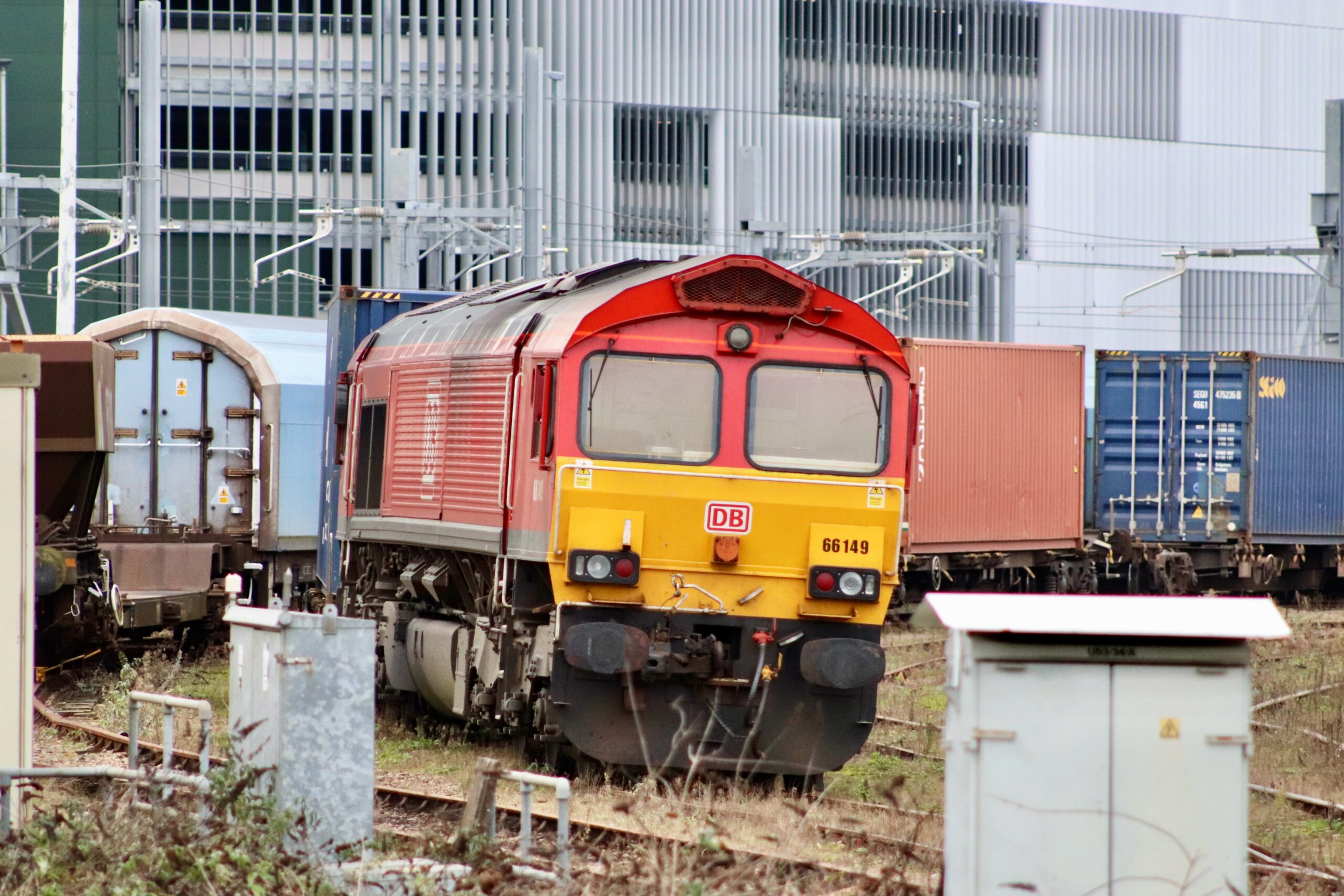
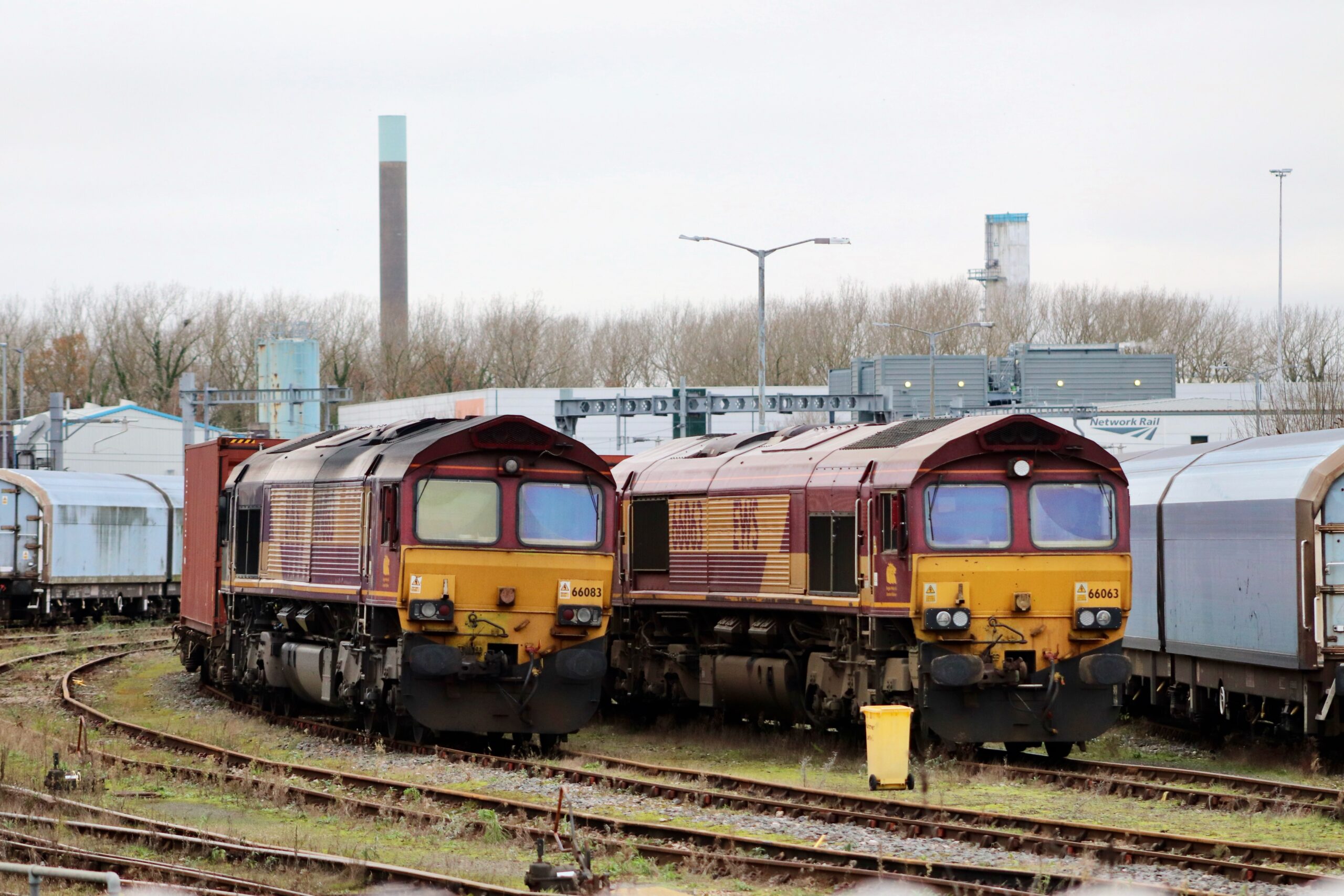
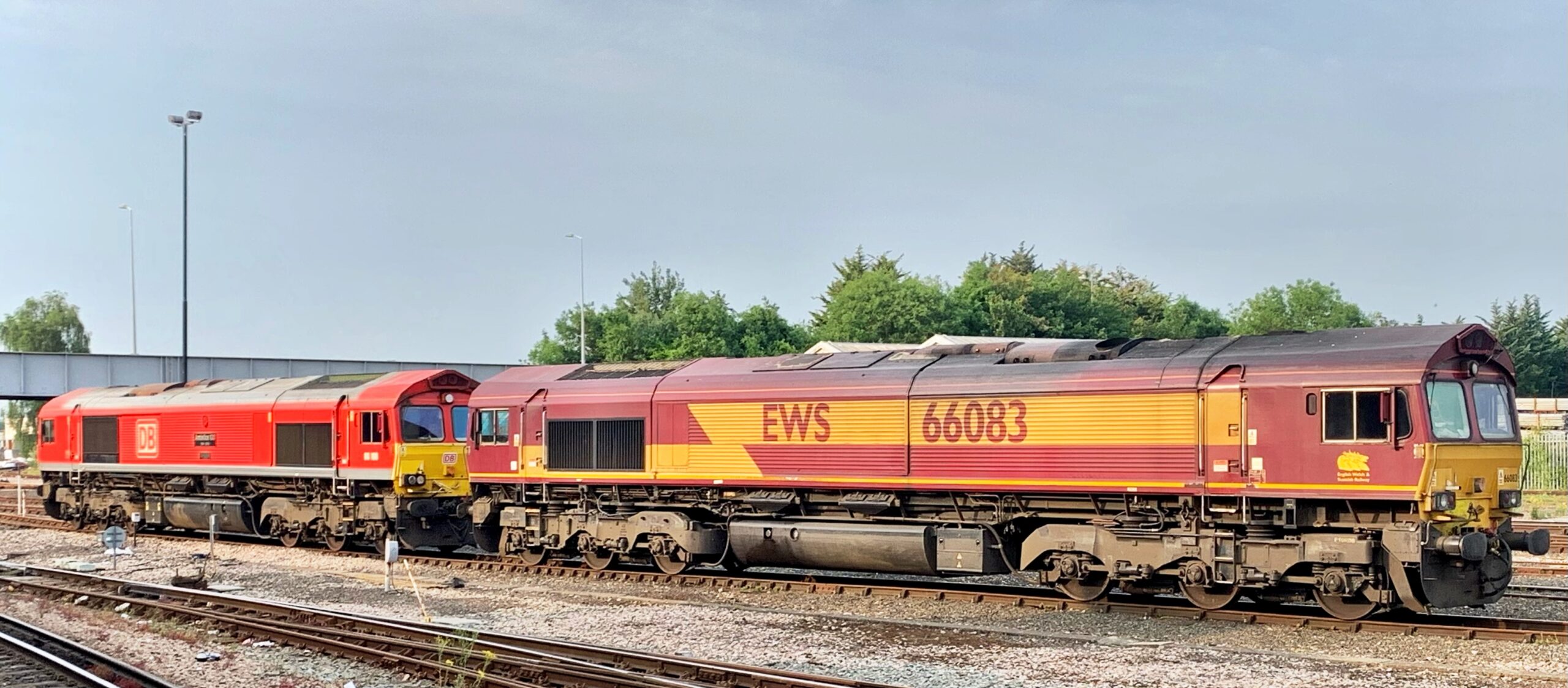
In red DB Cargo livery Class 66 NO. 66149 in Didcot Yard – 16/12/2023Still carrying EWS livery, DB Cargo Class 66 locomotives No.’s 66083 and 66063 at Didcot – 16/12/2023
Video from Banbury on 16th December 2023 featuring DB Cargo Class 60 No. 60024 and Class 66 No. 66194 top and tail working “The Festive Midland-Ian” from Pathfinder Railtours; 1Z60 0545 Gloucester to Banbury & 1Z61 1211 Banbury to Wolverhampton Walsall Street Steel Terminal. Other trains featured include: 68012 (set AL04/ DVT 82309) – 1H27 08:19 Stourbridge Junction to Marylebone 221139 – 1M30 07:45 Bournemouth to Manchester Piccadilly 221137 – 1O08 07:25 Manchester Piccadilly to Bournemouth 70014 – 4O27 06:49 Crewe Basford Hall SSM to Southampton Marine Container Terminal 168108/168106 – 1R17 09:02 Marylebone to Birmingham Moor Street 168218/168328 – 1H28 09:13 Birmingham Moor Street to Marylebone 220031 – 1V83 06:23 Newcastle to Reading 168004 / 168xxx – 1H30 09:43 Birmingham Moor Street to Marylebone 168xxx/ 168107 – 1R19 09:32 Marylebone to Birmingham Moor Street 168xxx/ 168217 – 1R21 10:02 Marylebone to Birmingham Moor Street 66740 ‘Sarah’ – 6G34 02:59 HINDLOW GBRF to Banbury Reservoir Redland Aggregates 168001 ‘Adrian Shooter’/168xxx – 1H33 10:43 Birmingham Moor Street to Marylebone 220027 – 1O12 09:25 Manchester Piccadilly to Bournemouth 220033 – 1M38 09:45 Bournemouth to Manchester Piccadilly 168322/168215 – 1R25 11:02 Marylebone to Birmingham Moor Street
Engineering works at Middle Stream Bridge near Wool on Sunday 17th December meant there were no trains running in the area. Yoshi and I had a little “family” trip out to Weymouth and I grabbed a couple of photographs of track machines resting between duties on our way home.
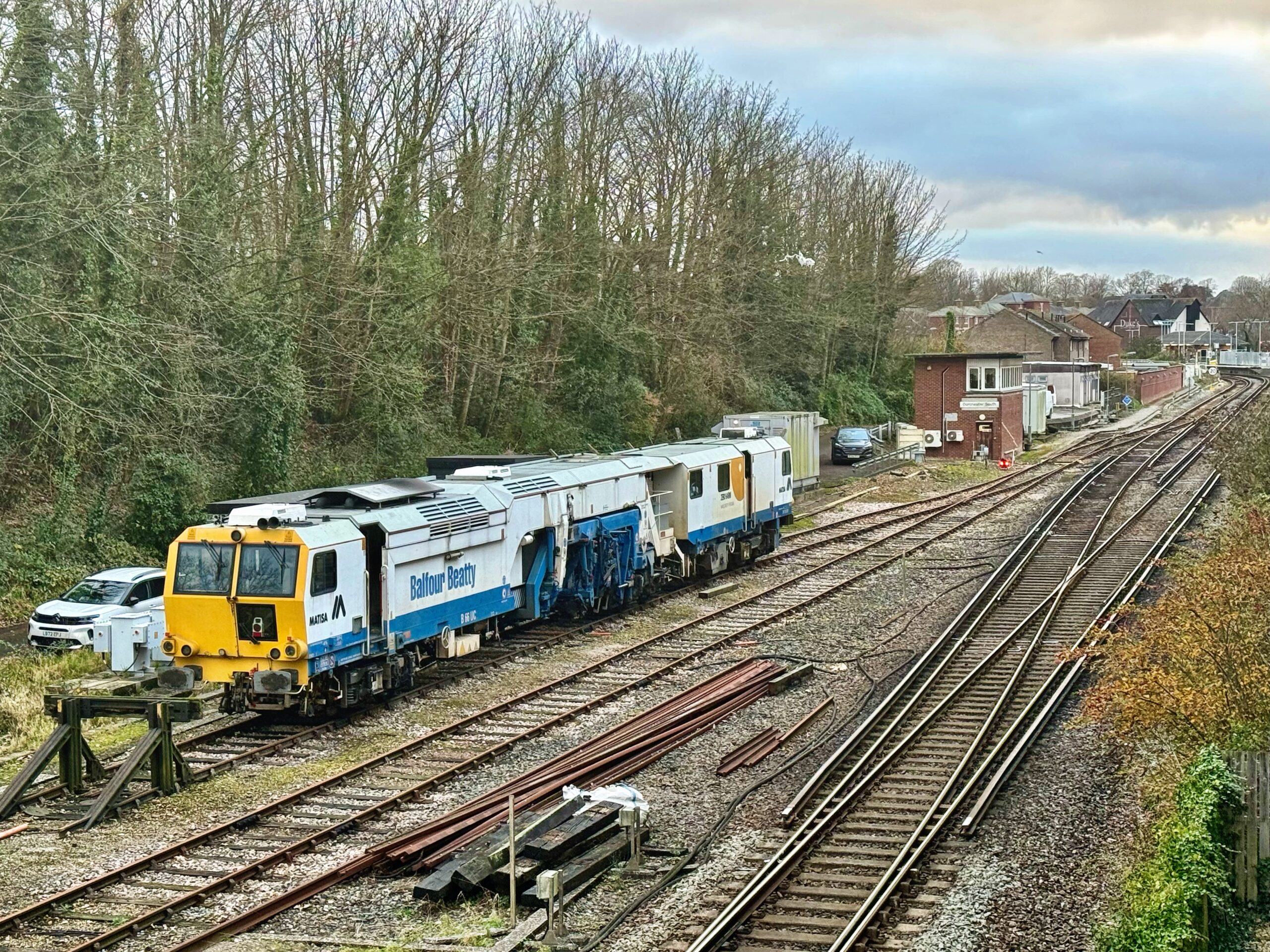
Balfour Beatty Matisa B66UC Tamper No. DR75501 in the sidings at Dorchester South prior to working the following days 6Q66 05:00 Dorchester Junction to Eastleigh East Yard – 17/12/2023
A tamping machine or ballast tamper, informally simply a tamper, is a self-propelled, rail-mounted machine used to pack (or tamp) the track ballast under railway tracks to make the tracks and roadbed more durable and level. Prior to the introduction of mechanical tampers, this task was done by manual labour with the help of beaters. As well as being faster, more accurate, more efficient and less labour-intensive, tamping machines are essential for the use of concrete sleepers since they are too heavy to be lifted by hand.
At its most basic, a tamping machine only packs the ballast. Some modern machines, sometimes known as tamper-liners or tamping and lining machines, also correct the alignment of the rails to make them parallel and level, in order to achieve a more comfortable ride for passengers and freight and to reduce the mechanical strain applied to the rails by passing trains. This is done by finding places where the sleepers have sunk from the weight of the passing trains or frost action, causing the track to sag.
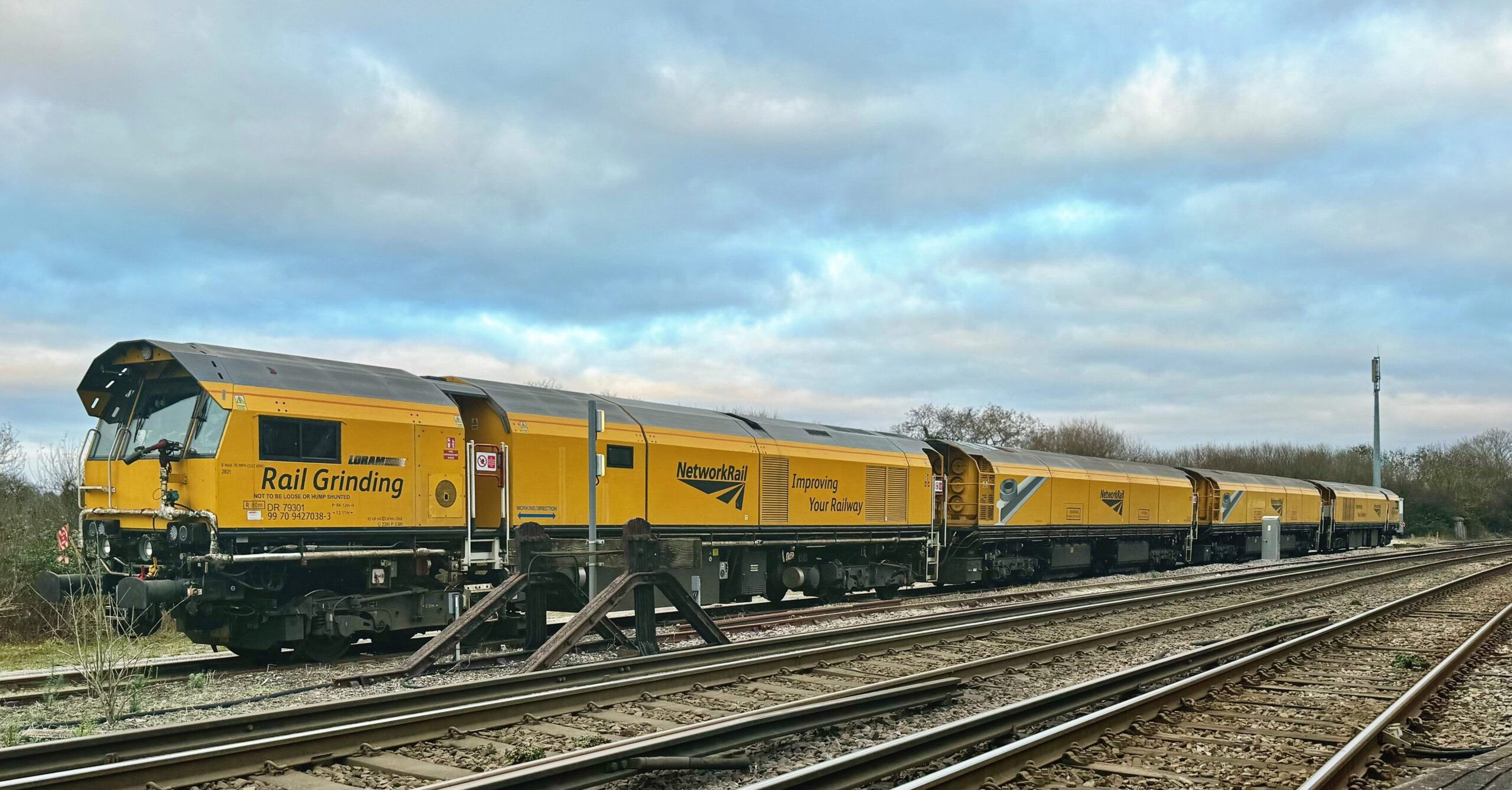
The B 66 UC is a high-performance universal continuous action tamping machine designed for normal and high-speed lines. In addition to the plain line, it can handle the heaviest switches and crossings, especially those with concrete sleepers. This machine has a tamping shuttle fitted with four tamping units and a lifting and slewing clamp. In addition to these tools, telescopic diverging track lifting devices can be used when handling heavy switches and crossings. The very responsive shuttle allows a substantial output on plain line despite the fact that this is a single-head machine. The longitudinal stroke of the tamping units is long enough to position the units in a way to easily and quickly tamp Y shaped sleepers. Located in the centre of the machine, the tamping cabin provides an excellent visibility on the tools and the track. Thanks to the machine’s user-friendliness and its ergonomic controls, only two operators are needed to operate the B 66 UC to its full potential. Loram C44 Rail Grinding Machine No. DR79301 in Wool Sidings. It will depart for Poole on 19/12/2023 as 4Q01 23:44 Wool MOD Siding Freightliner Heavy Haul to Poole – 17/12/2023
A railgrinder is a permanent way maintenance train used to restore the profile and remove irregularities from worn tracks to extend tracklife and to improve the ride of trains using it.
The C44 Series Rail Grinder is designed with advanced technology features that also meets stringent international standards, weights and clearances. The C44 Series complies with the W6A clearance diagram and the axle weights of international commuter lines and freight rail applications.
Loram’s C44 rail grinder delivers high-efficiency re-profiling of the railhead, removing or reducing rail corrugations, corrosion, joint mismatches and other railhead surface irregularities with industry-leading productivity.
Monday 18th December and with all lines re-opened, it was the turn of the monthly Colas test train from Derby RTC to Eastleigh East Yard via Weymouth running as 1Q51 1115 Derby R.T.C.(Network Rail) to Eastleigh East Yard employing the usual traction of GBRf Class 73 locomotives. This time it was the turn of No.’s 73964 ‘Jeanette’ and 73962 ‘Dick Mabbutt’.
GBRf Class 73’s No.’s 73964 ‘Jeanette’ and 73962 ‘Dick Mabbutt’ passing through Hamworthy working 1Q51 11:15 Derby RTC Serco to Eastleigh East Yard – 18/12/2023
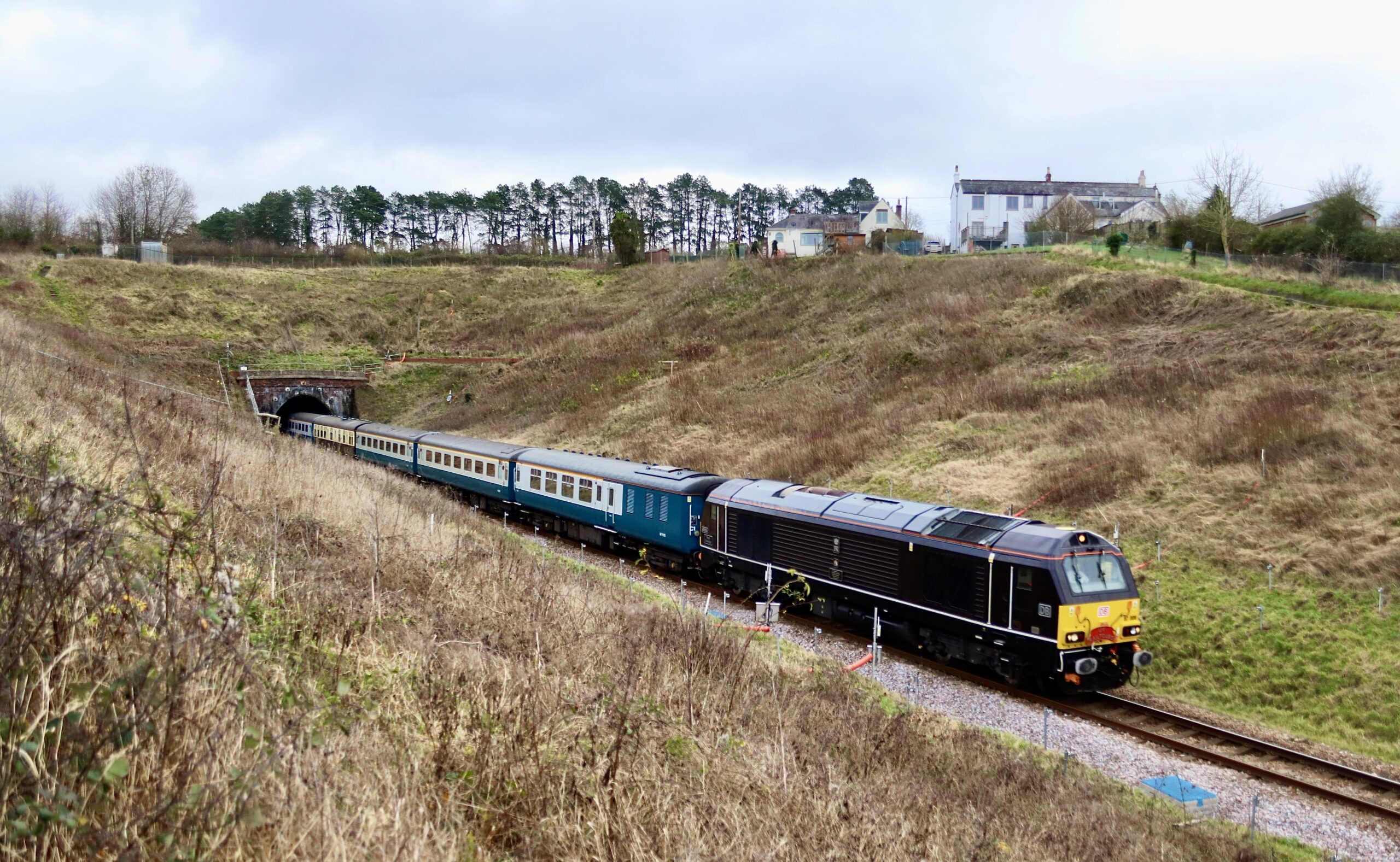
Another day out to see a railtour took place on Saturday 23rd December, this time closer to home as DB Cargo Class 67 No. 67006 ‘Royal Sovereign’ was in charge of UK Railtours “Carols At Sherborne Abbey” 1Z15 0715 Peterborough to Yeovil Jn Heritage Platform. No. 67006 is one of two class members painted in a special Royal Claret livery and as such would be primarily tasked with working the Royal Train. However, the locomotive is often used for special charter trains and other occasional passenger services when not fulfilling her Royal duties. We took a roundabout route to see the railtour, taking in Totton Yard so I could finally get a clear photograph of GBRf Class 66 No. 66743 in Belmond Royal Scotsman livery as it is was still being employed on the SITT along with No. 66772 ‘Maria’. I also popped in on Freightliner Southampton Maritime and Eastleigh (which admittedly was rather quiet!)
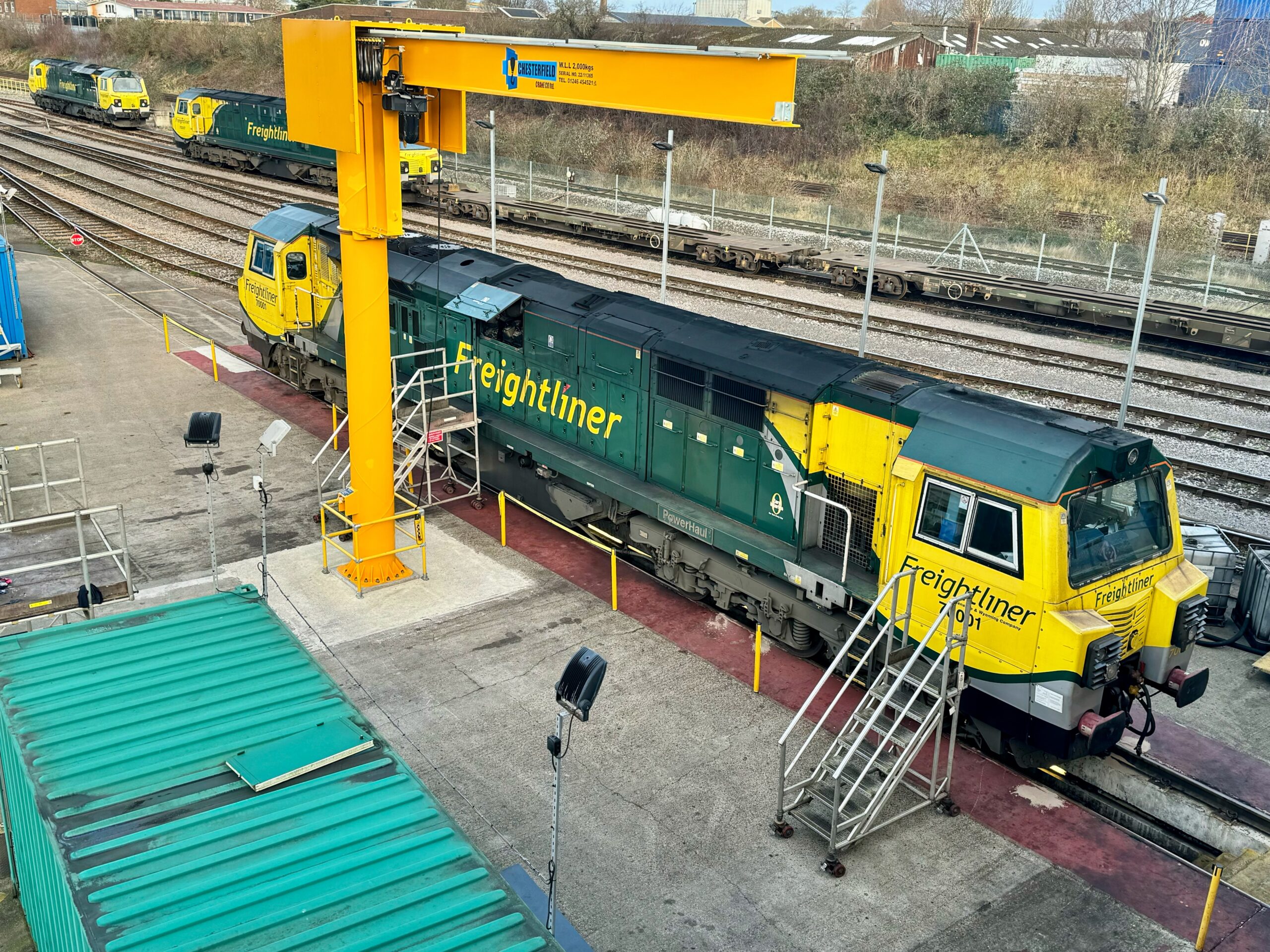
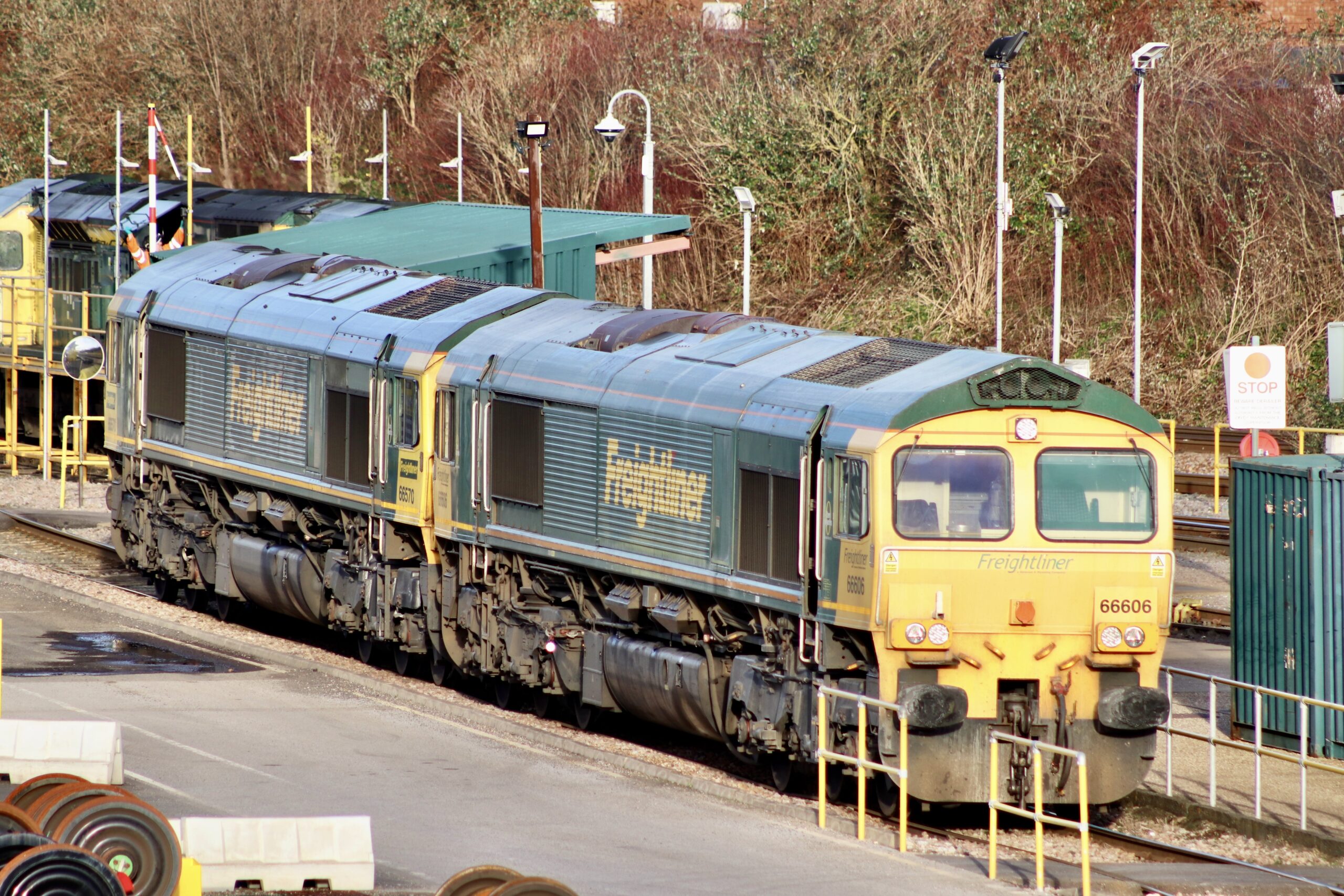
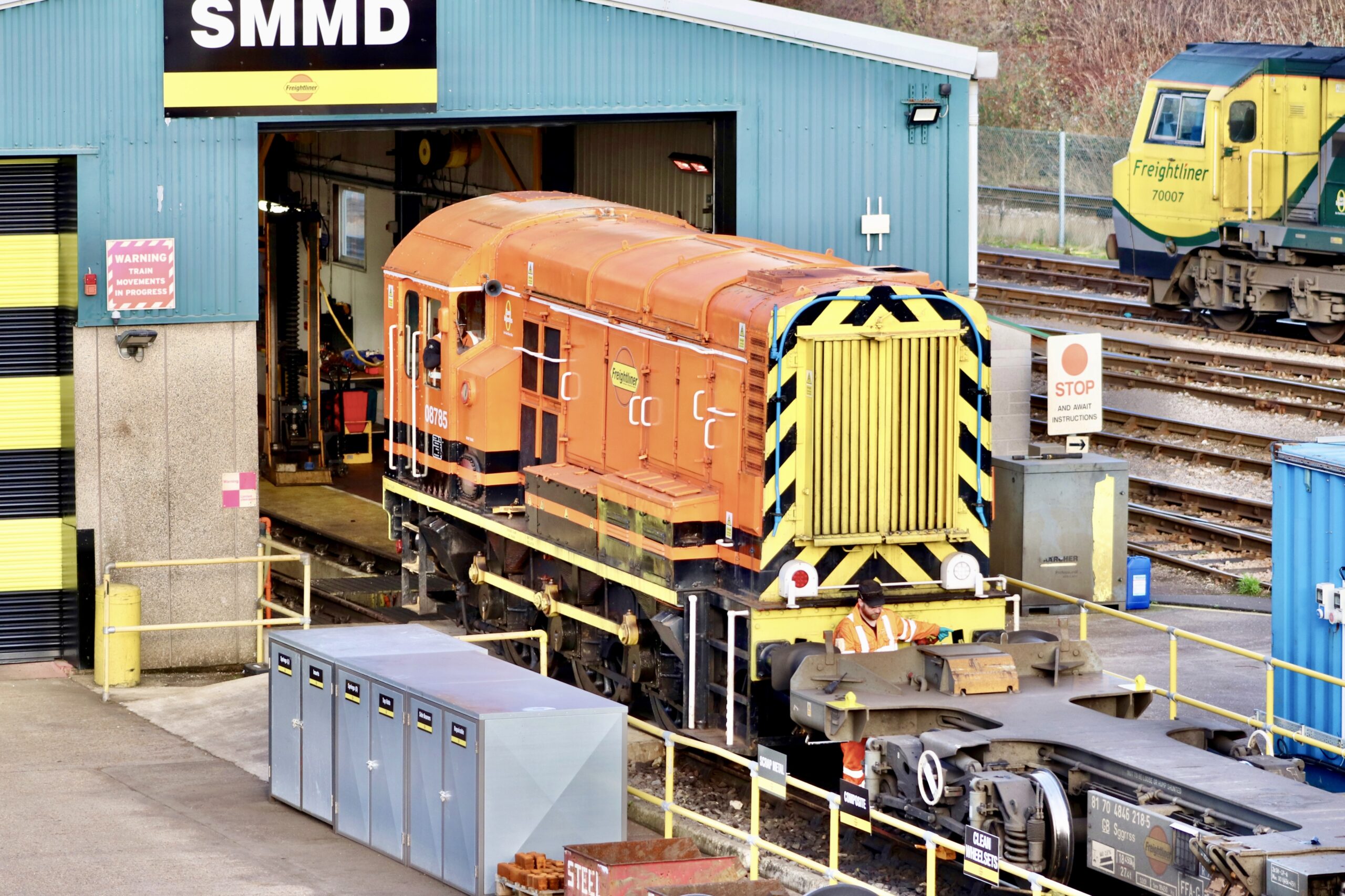
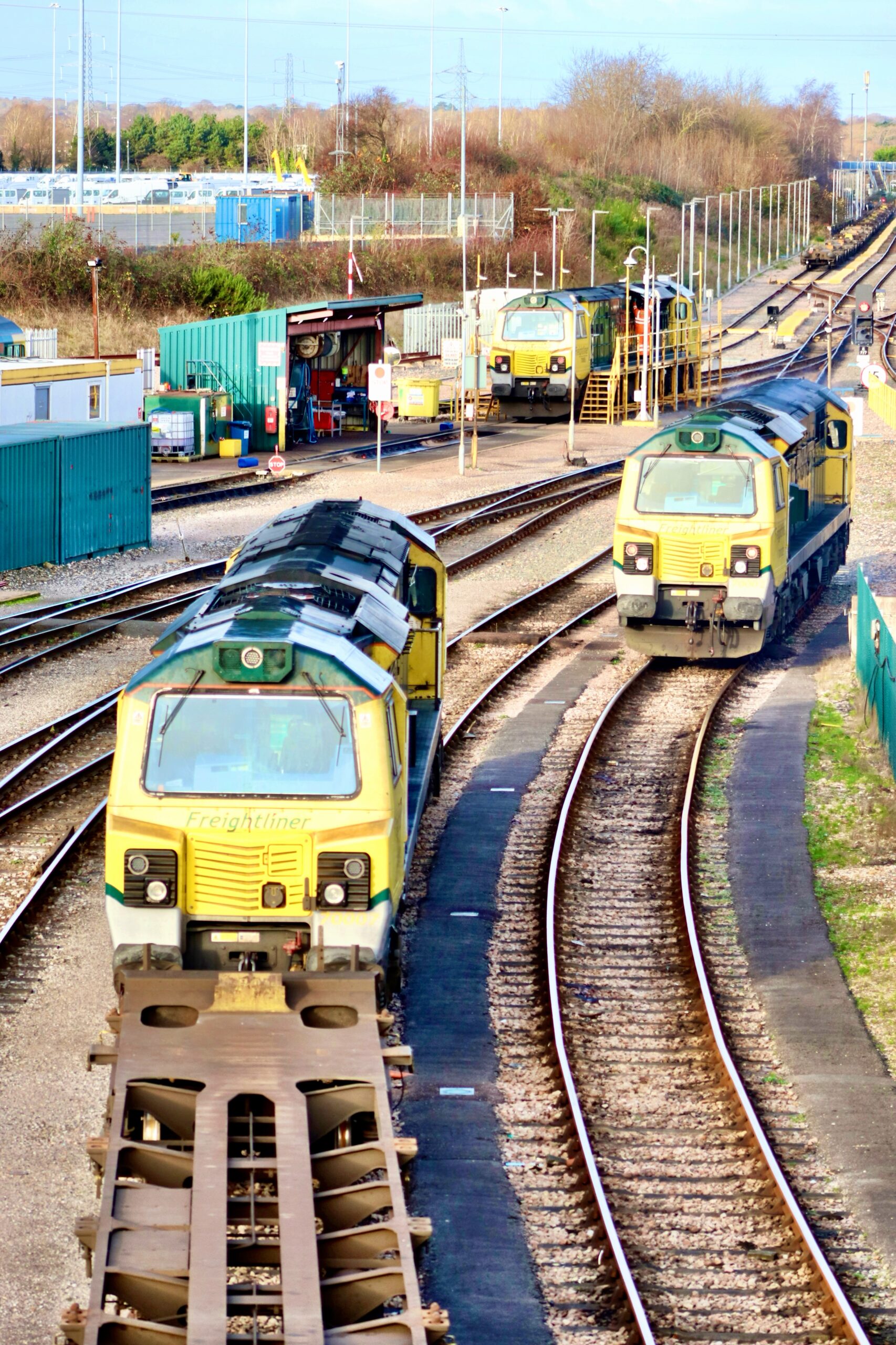
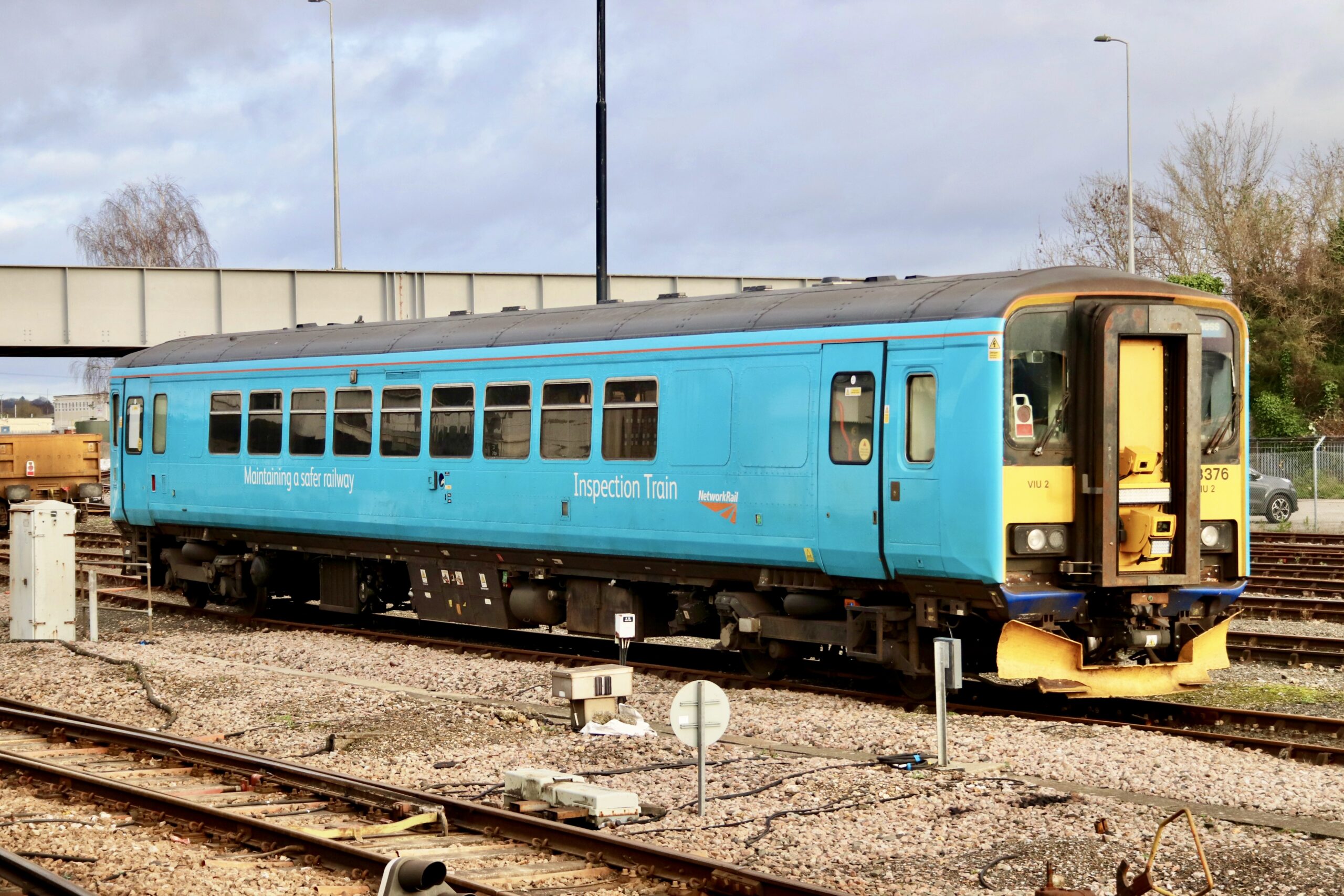
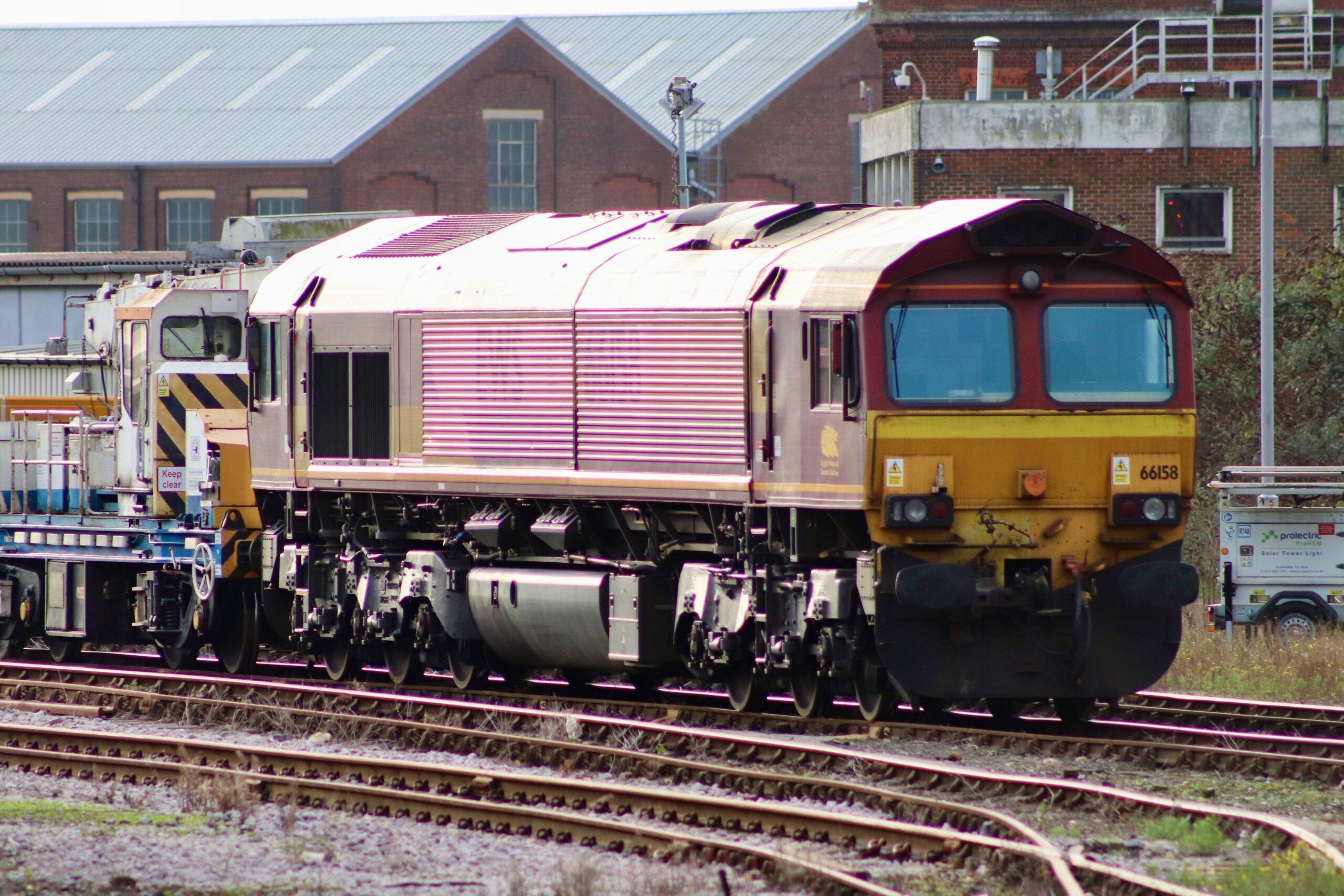
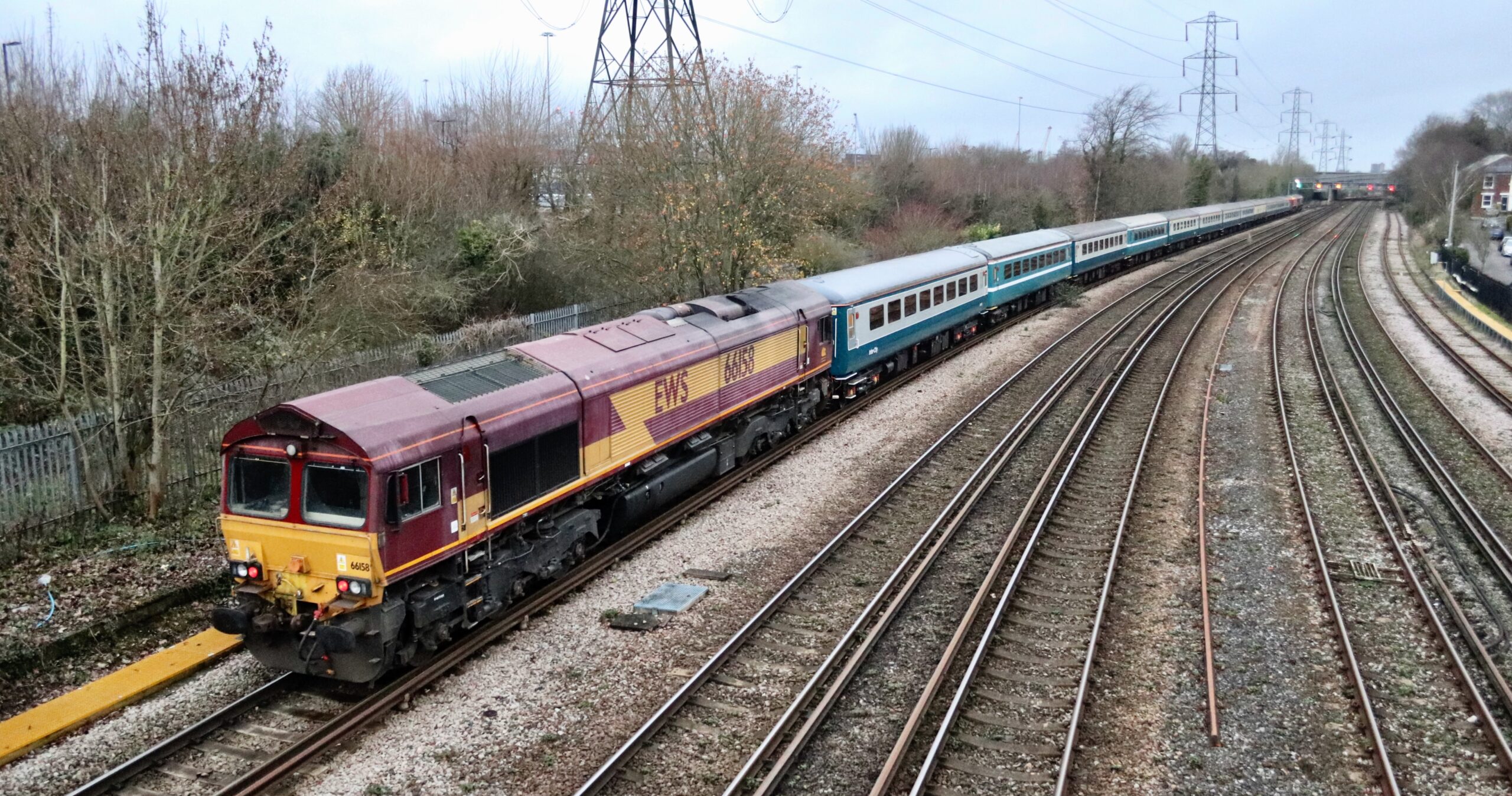
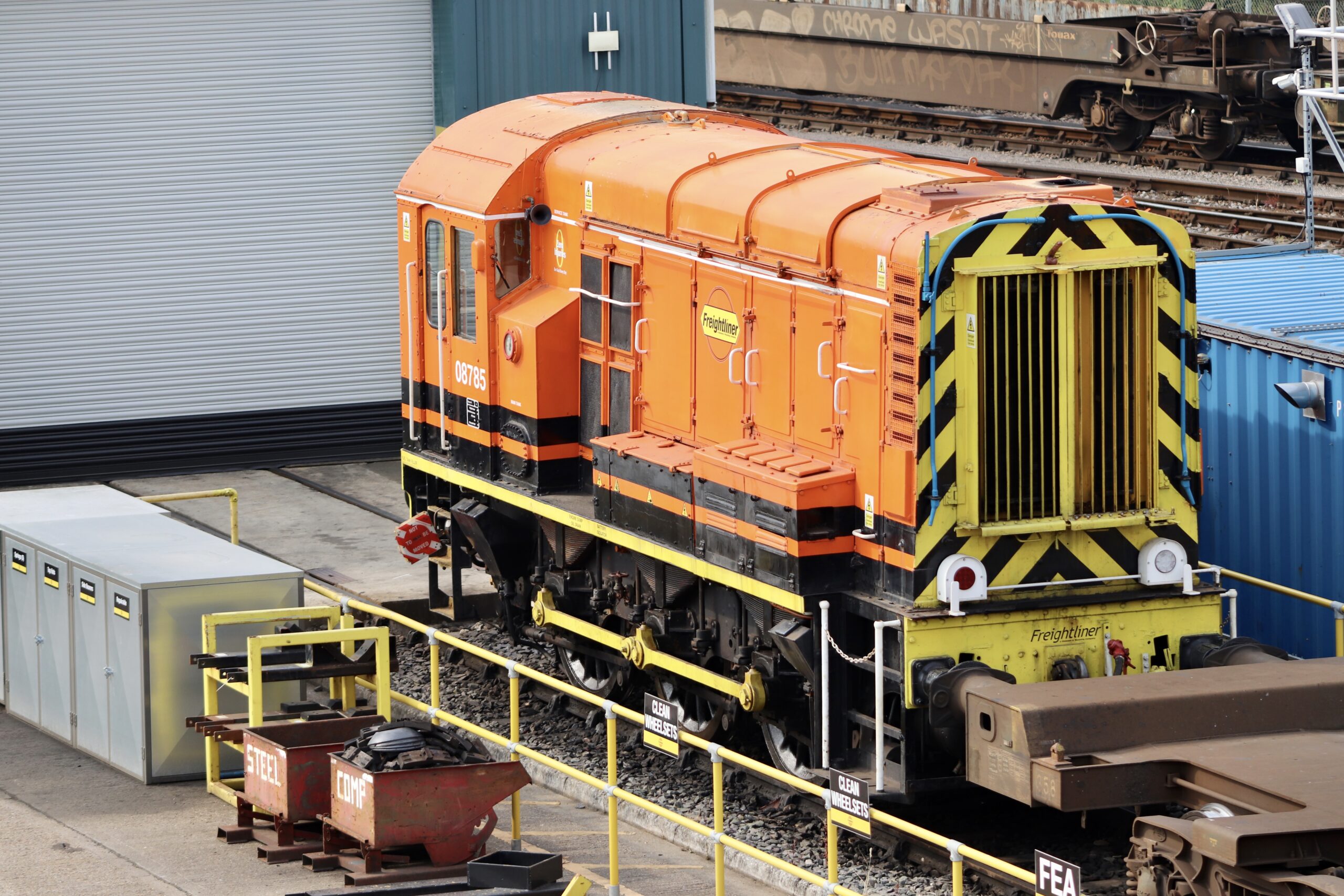
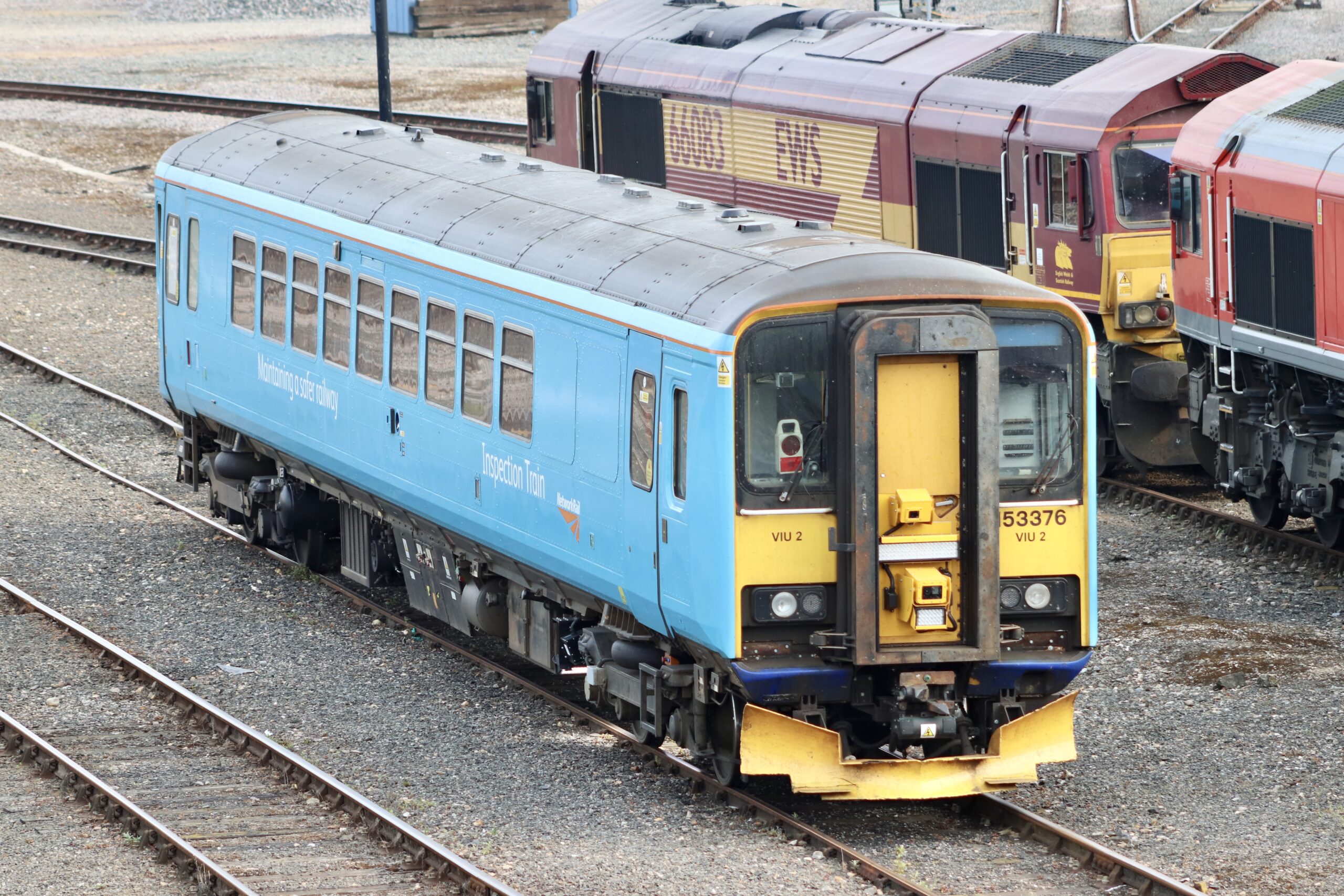
GBRf Class 66 No. 66743 at Totton Yard – 23/12/2023GBRf Class 66 No.66772 ‘Maria’ on the rear of the SITT at Totton Yard – 23/12/2023GBRf Class 66 No. 66743 and No.66772 ‘Maria’ in Totton Yard on the SITT. The train was scheduled to head to Eastleigh East Yard later that evening where it would remain over the Christmas period – 23/12/2023Freightliner Class 70 No. 70001 at Southampton Maritime – 23/12/2023FL Class 66 No.’s 66606 and 66570 at Southampton Maritime – 23/12/2023Class 08 diesel shunter No. 08785 at Southampton Maritime – 23/12/2023A trio of FL Class 70’s at Southampton Maritime; 70007, 70002 and 70005 – 23/12/2023Class 153 Video Inspection Unit (VIU2) No. 153376 at Eastleigh – 23/12/2023DB Cargo Class 66 No. 66158 on a DB Infrastructure Train destined for Abbey Street Junction for work over the Christmas period at Eastleigh – 23/12/2023
Always looking for a new photographic location, I had time to scout out the western portal of Gillingham tunnel. After parking up at the side of the road above the tunnel, Yoshi and I made our way along a public footpath through fields which are adjacent to the railway track. A trio of sheep were not too sure about our arrival and took off to the opposite corner to watch us from afar. Yoshi, thankfully, showed little interest in the ovine beasts and settled down at my feet as we waited for the Class 67 to turn up hauling its train.
Class 67 No. 67006 ‘Royal Sovereign’ emerges from Gillingham Tunnel hauling 1Z15 0715 Peterborough to Yeovil Jn Heritage Platform – 23/12/2023
After seeing the train at Gillingham tunnel, I popped into Yeovil Junction in time to see the locomotive running around her train which was being serviced after dropping off the passengers in Sherborne for the festive carol service at the Abbey the tour was named after.
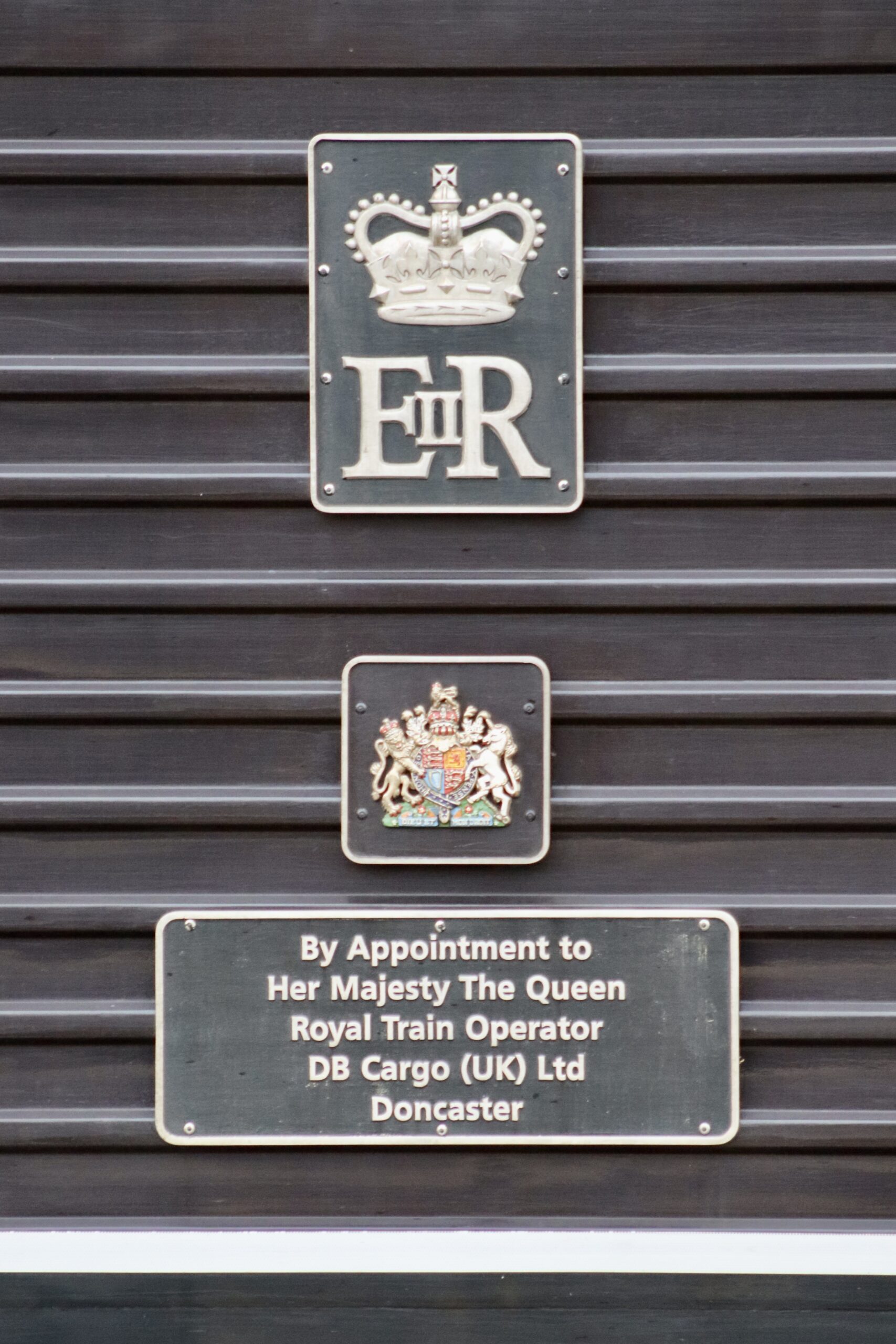
Class 67 No. 67006 ‘Royal Sovereign’ runs around its train at Yeovil Junction – 23/12/2023Crests applied to Class 67 No. 67006 ‘Royal Sovereign’ – 23/12/2023Class 67 No. 67006 ‘Royal Sovereign’ reversing back onto the coaching stock to form the return leg of the “Carols At Sherborne Abbey” railtour – 23/12/2023Class 67 No. 67006 ‘Royal Sovereign’ at Yeovil Junction whilst the coaching stock employed on the “Carols At Sherborne Abbey” railtour is serviced – 23/12/2023
Video of 67006 ‘Royal Sovereign’ working “Carols At Sherborne Abbey” 1Z15 0715 Peterborough to Yeovil Jn Heritage Platform Also includes the following passing trains: Gillingham Tunnel: 159020/159013 – 1L25 1021 London Waterloo to Exeter St Davids 159012/159105 – 1L44 1125 Exeter St Davids to London Waterloo Yeovil Junction: 159003/159015 1L29 1120 London Waterloo to Exeter St Davids
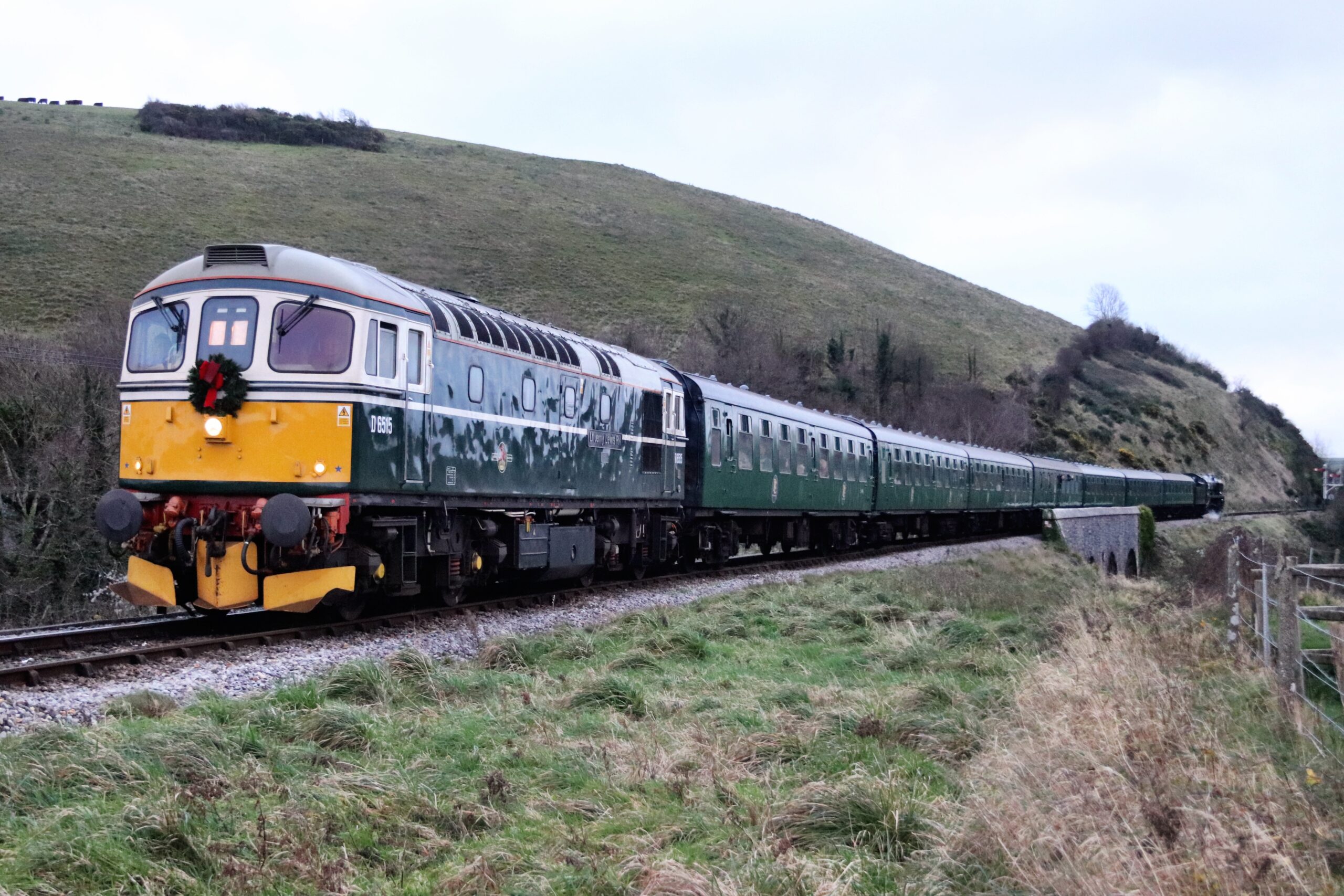
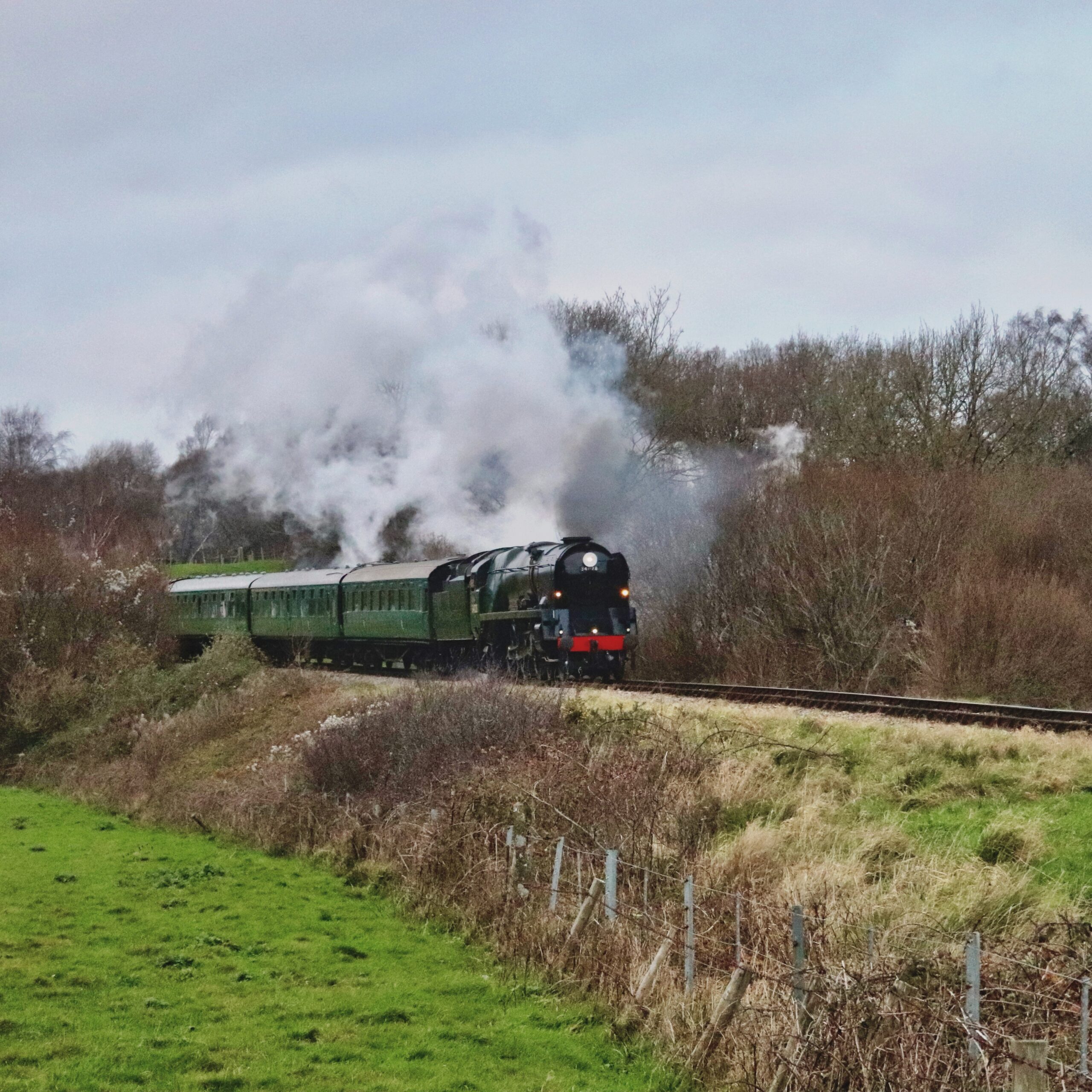
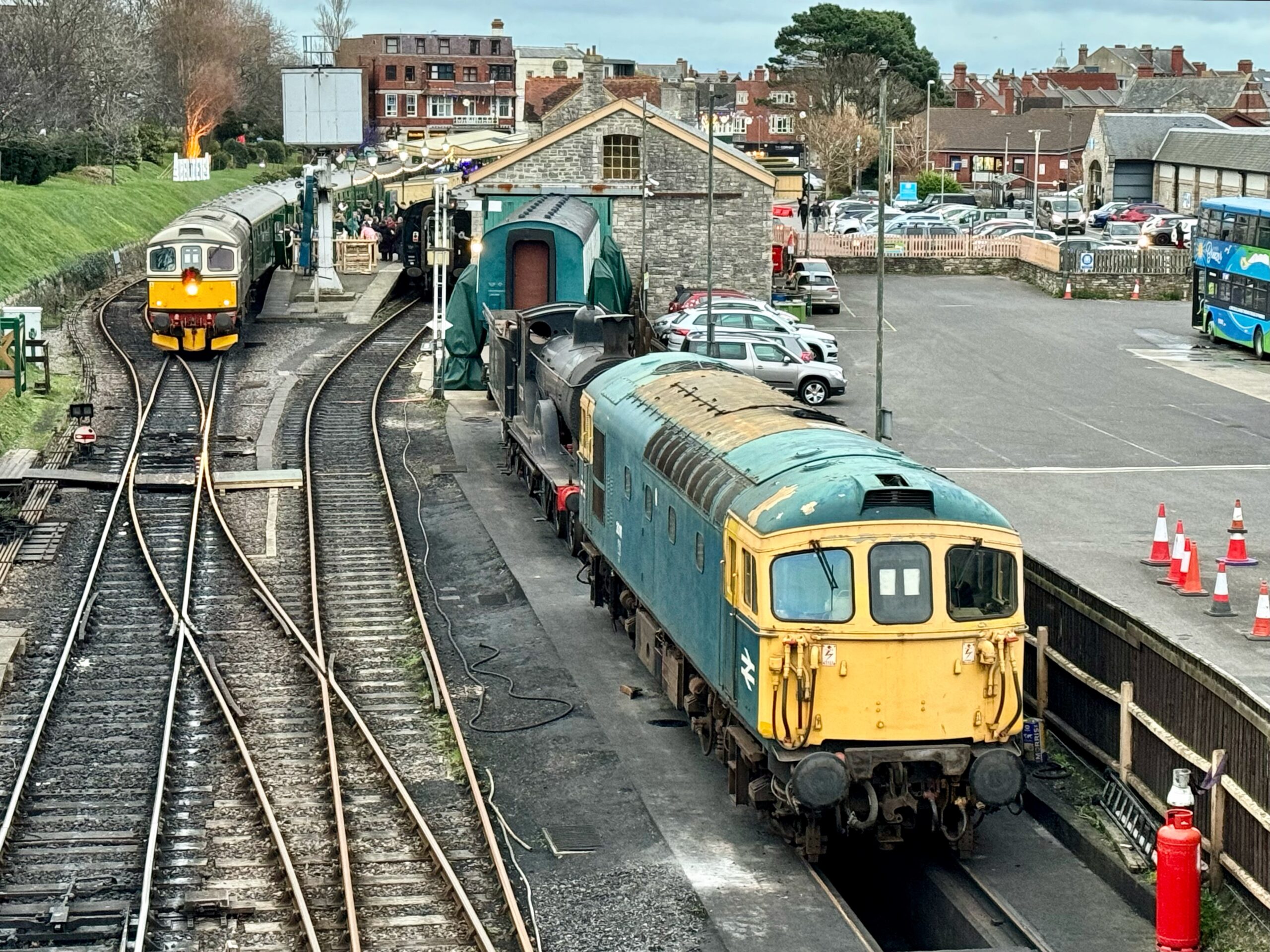
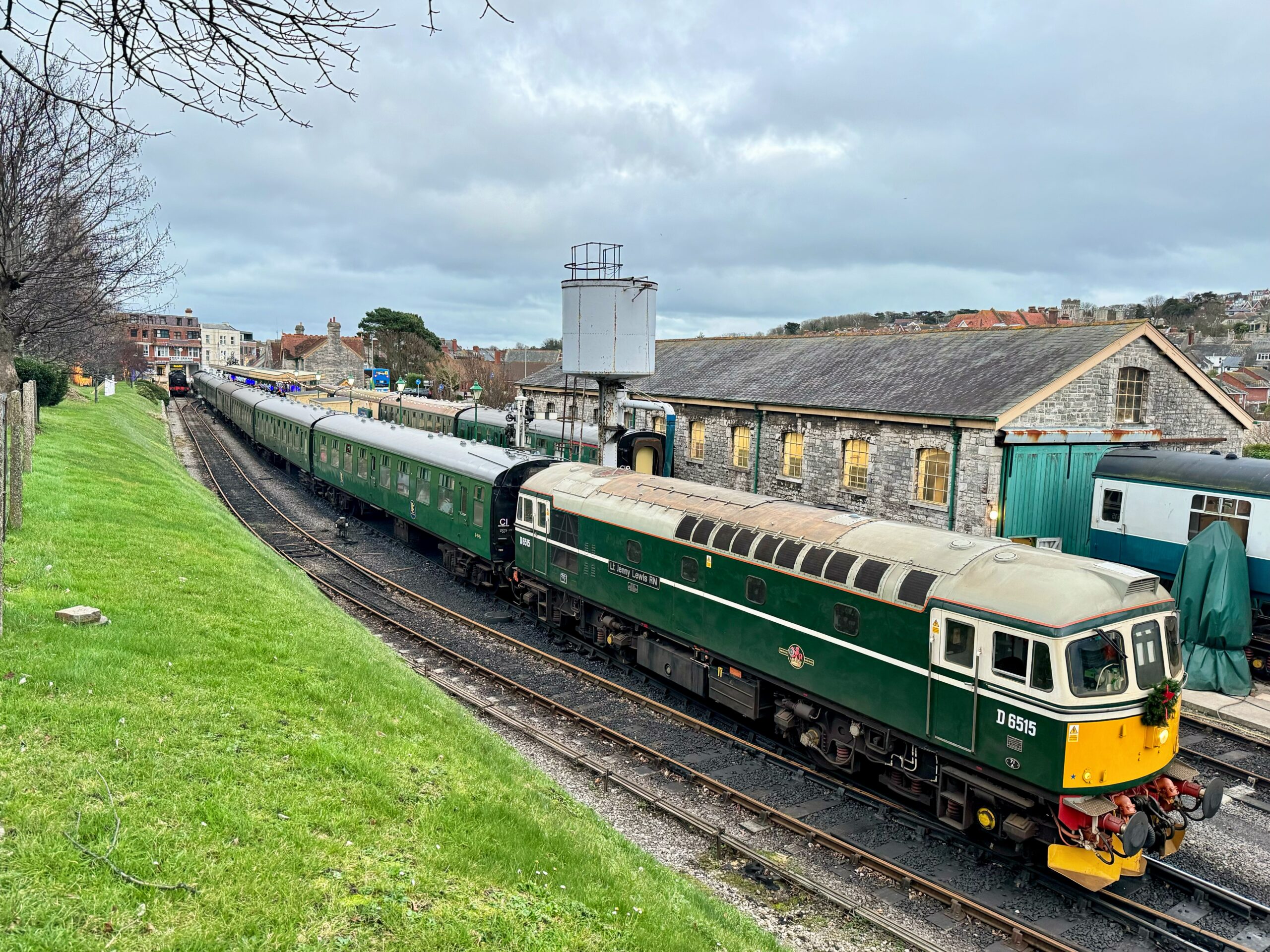
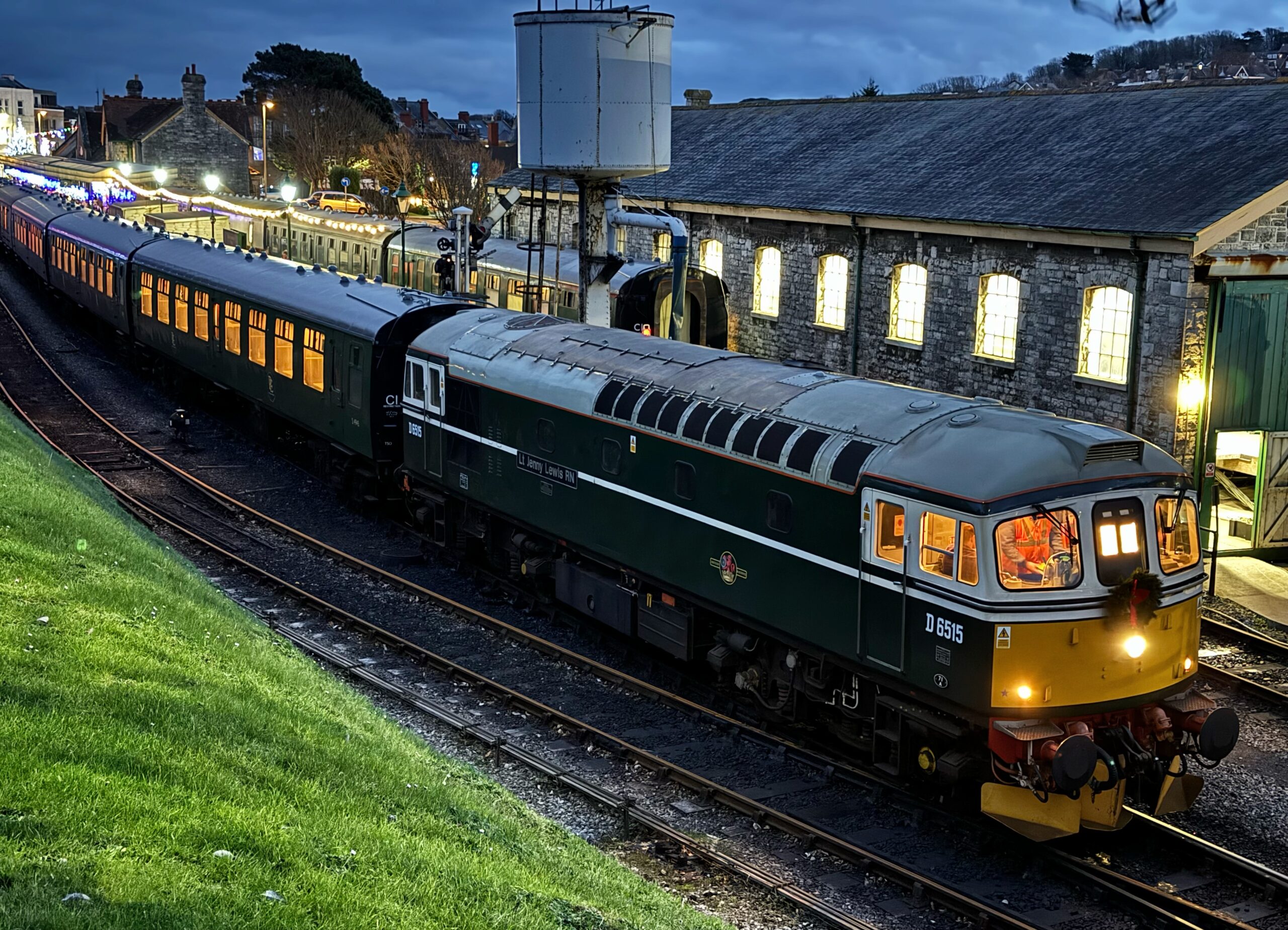
On my way home from Yeovil, I made another slight detour to take a look at the Swanage Railway’s “Polar Express” operation, this years seasonal offering from the Purbeck Heritage line, which I had so far not managed to see in 2023. “Polar Express” trains started running on 17th December and continued through to 30th December. With failing light which rendered photography of moving trains difficult, I waited for the late running 1445 trip from Swanage to show at Corfe Castle with resident Class 33 No. 33012 (D6515) ‘Lt Jenny Lewis RN’ hauling the outward run and Southern Railway 4-6-2 West Country Class No. 34028 ‘Eddystone’ with “Polar Express” emblazoned on her tender, working the return. I followed the train down to Swanage and as darkness fell this only enhanced the colourful lights within the carriages.
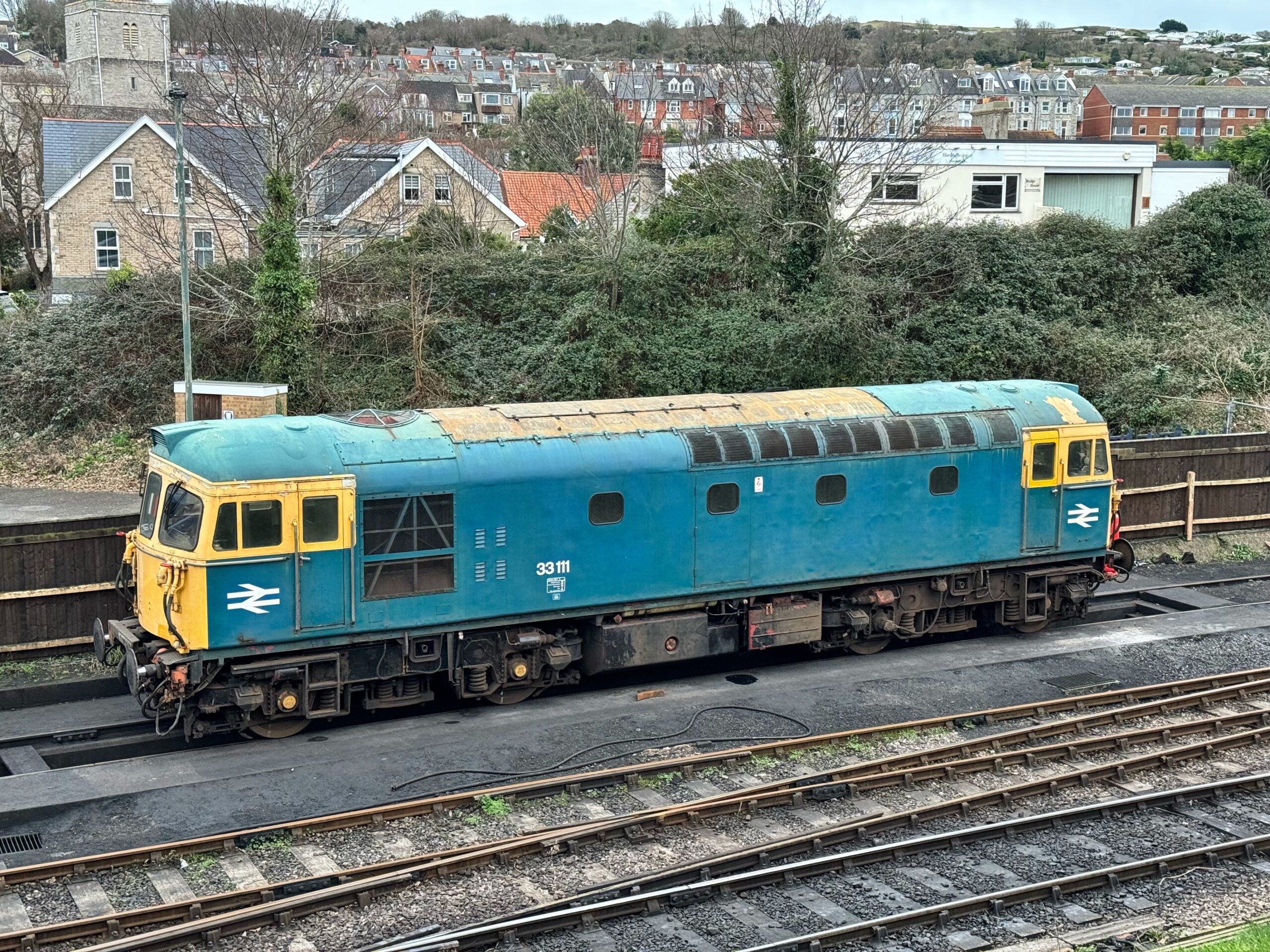
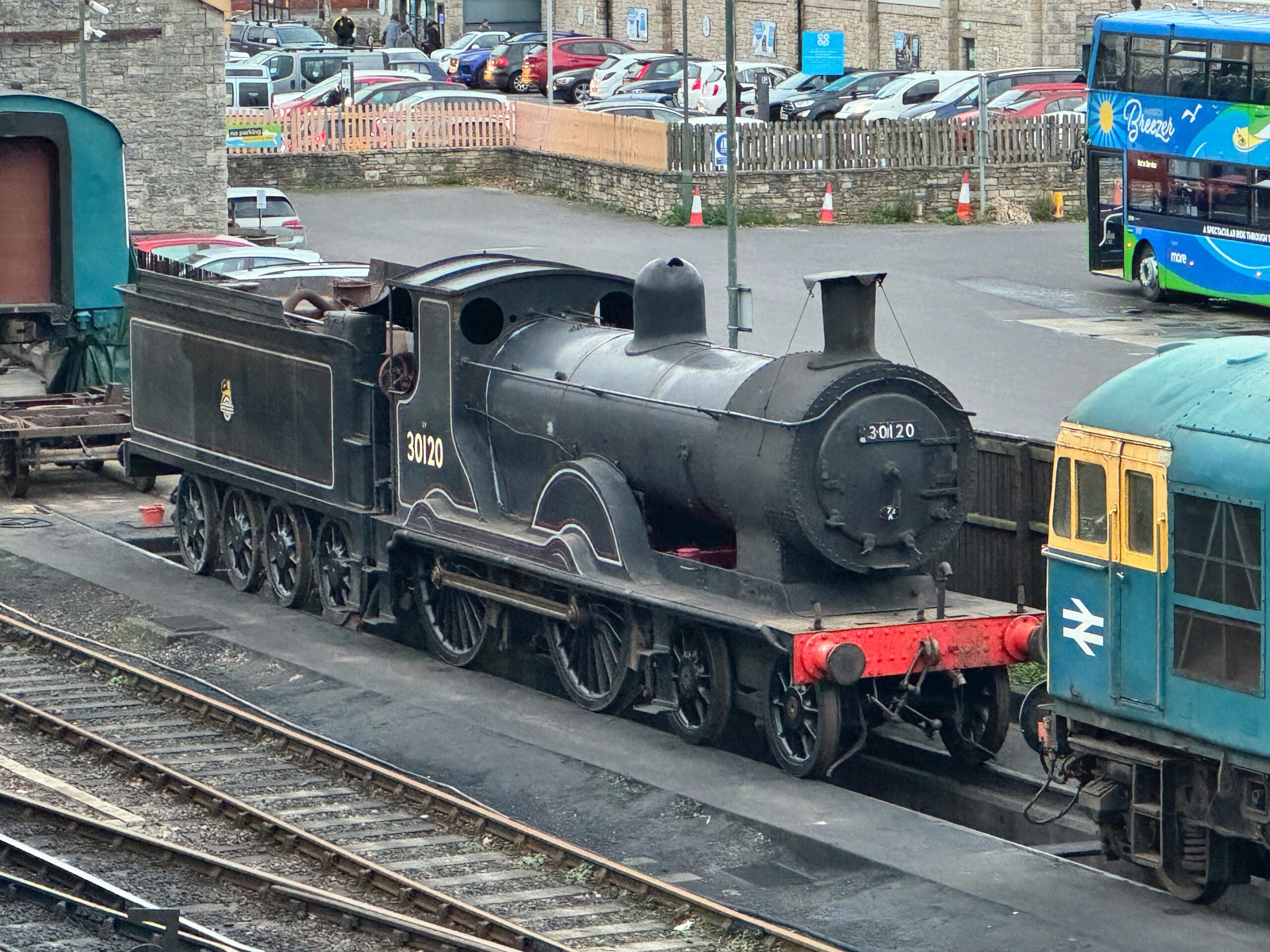
Class 33 No. 33012 (D6515) ‘Lt Jenny Lewis RN’ heads up the 1445 “Polar Express” service from Swanage – 23/12/2023SR 4-6-2 West Country Class No. 34028 ‘Eddystone’ heads towards Swanage after stopping at The North Pole (Norden) with a “Polar Express” train – 23/12/2023Class 33 No. 33111 and LSWR 4-4-0 T9 Class No. 30120 in the sidings at Swanage while Class 33 No. 33012 (D6515) ‘Lt Jenny Lewis RN’ waits with a “Polar Express” service in the station – 23/12/2023Class 33 No. 33111 at Swanage – 23/12/2023LSWR 4-4-0 T9 Class No. 30120 at Swanage – 23/12/2023Class 33 No. 33012 (D6515) ‘Lt Jenny Lewis RN’ awaits departure of the 1645 “Polar Express” service from Swanage – 23/12/2023Darkness falls on Class 33 No. 33012 (D6515) ‘Lt Jenny Lewis RN’ as she awaits departure of the 1645 “Polar Express” service from Swanage – 23/12/2023
Swanage Railway’s “Polar Express” – 23/12/2023
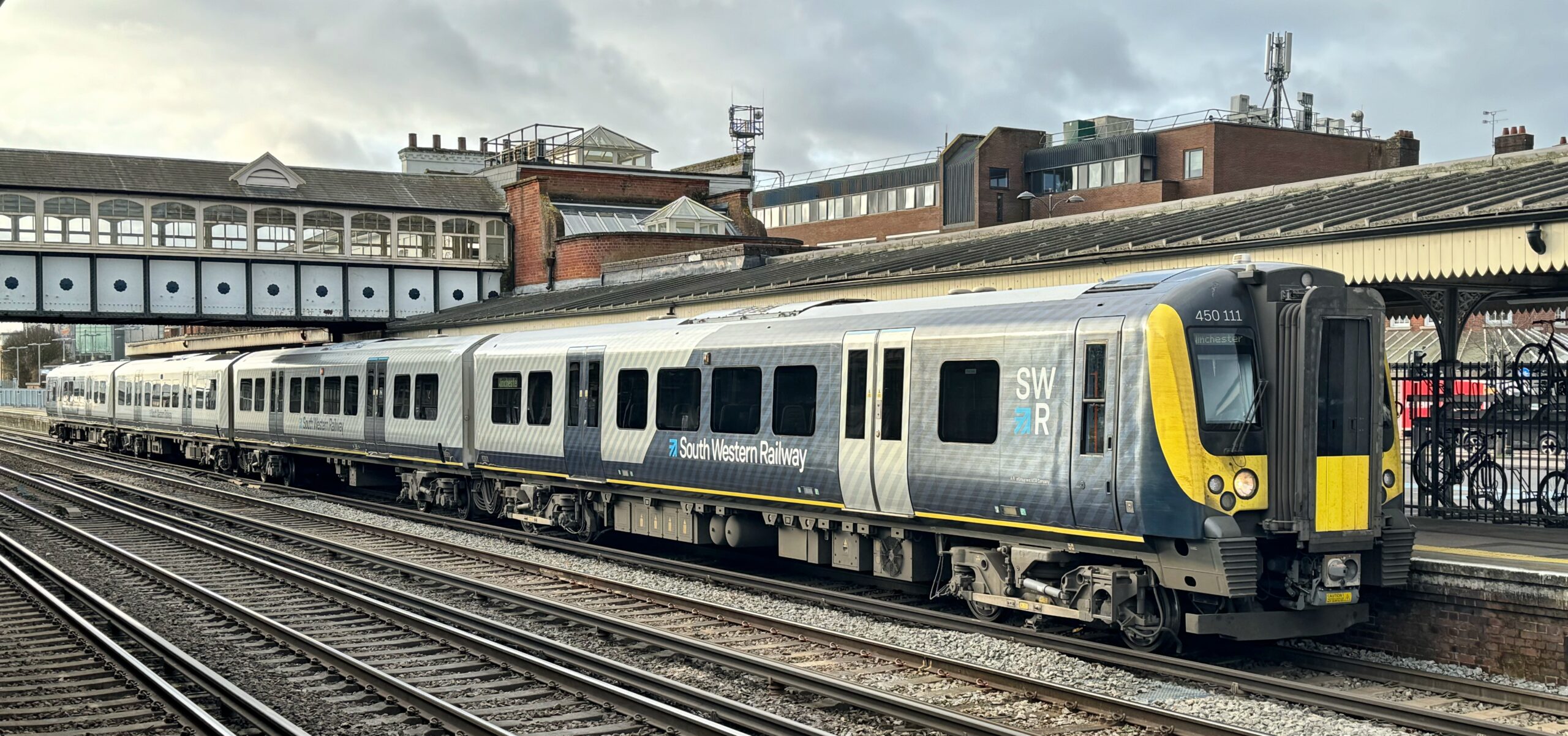
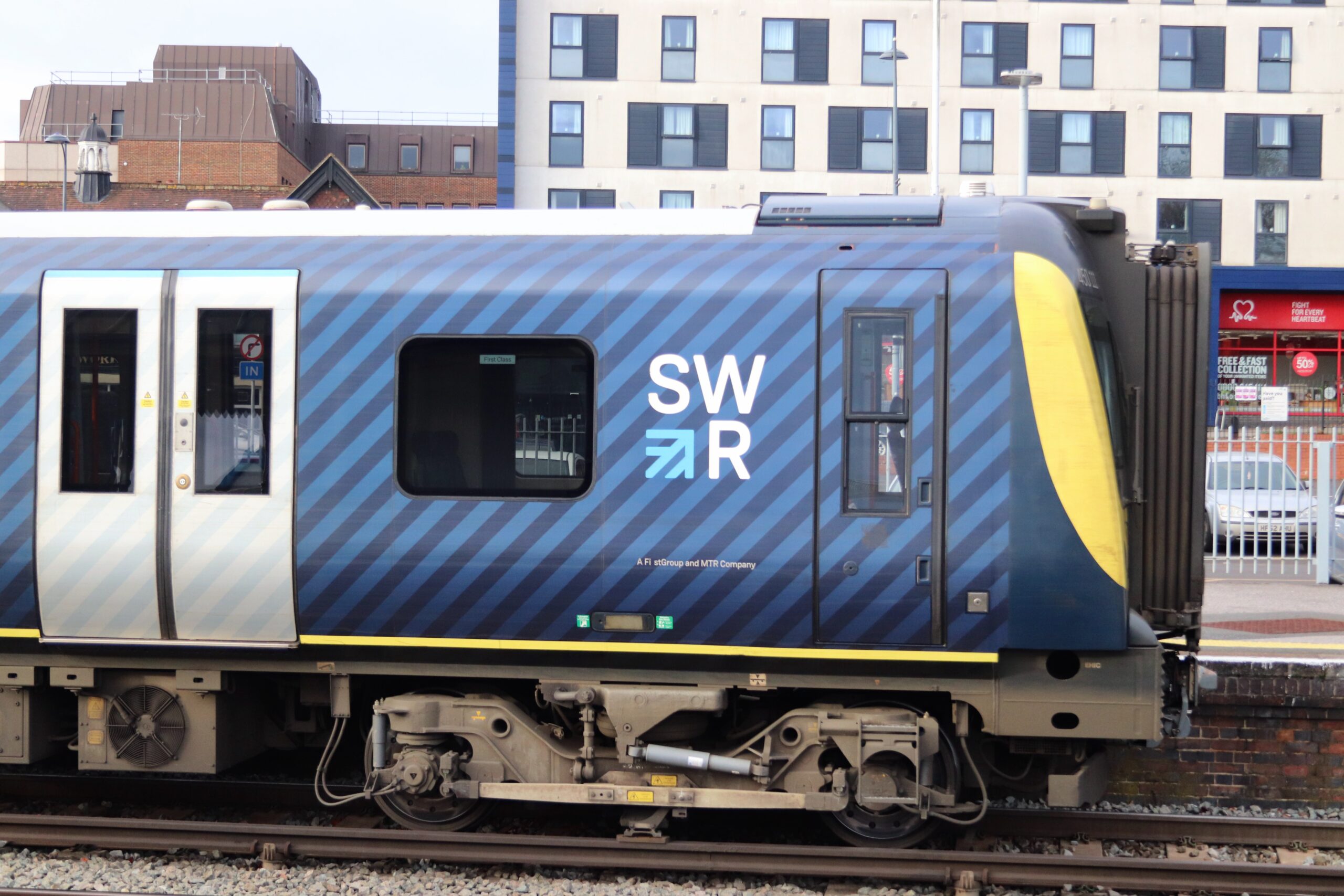
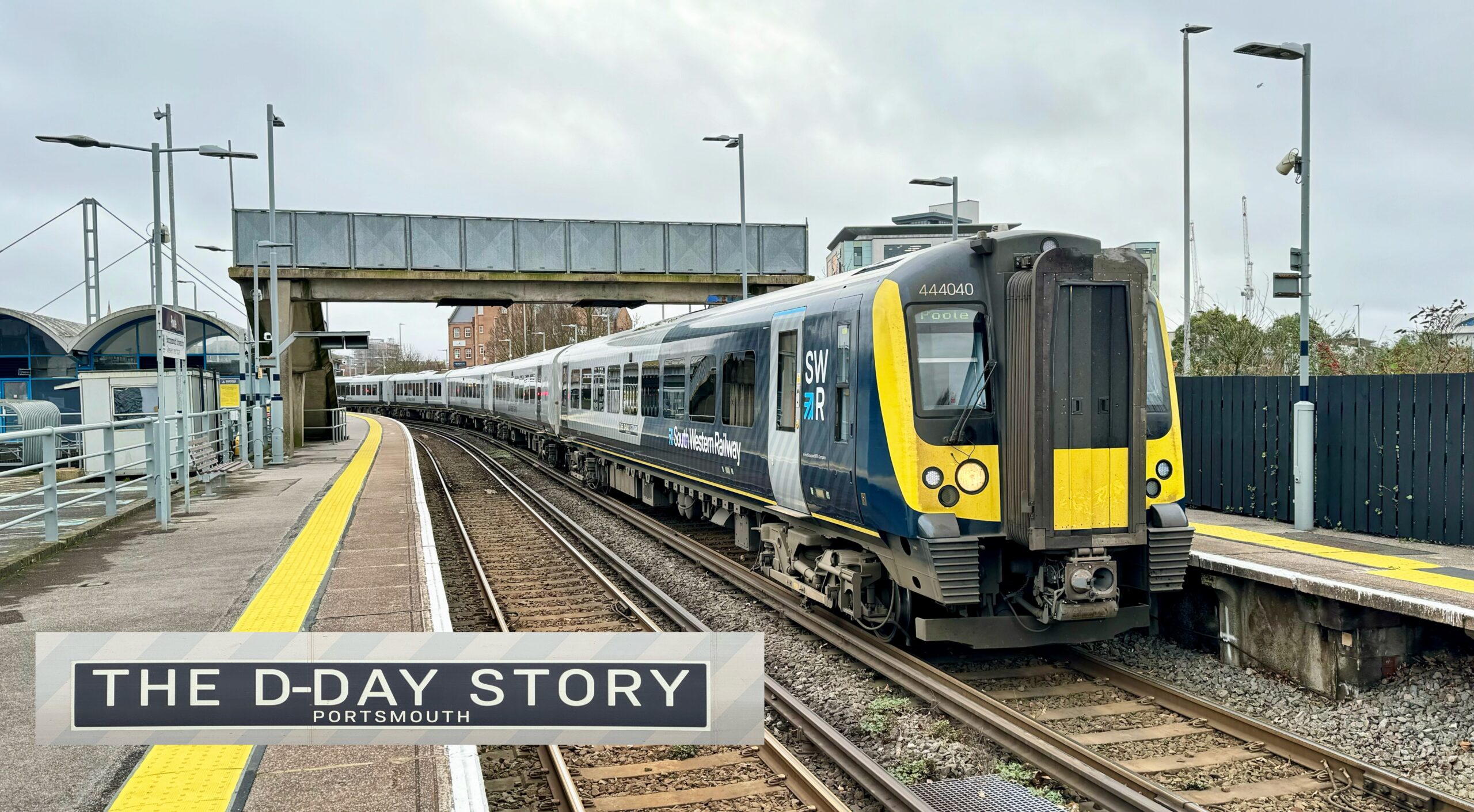
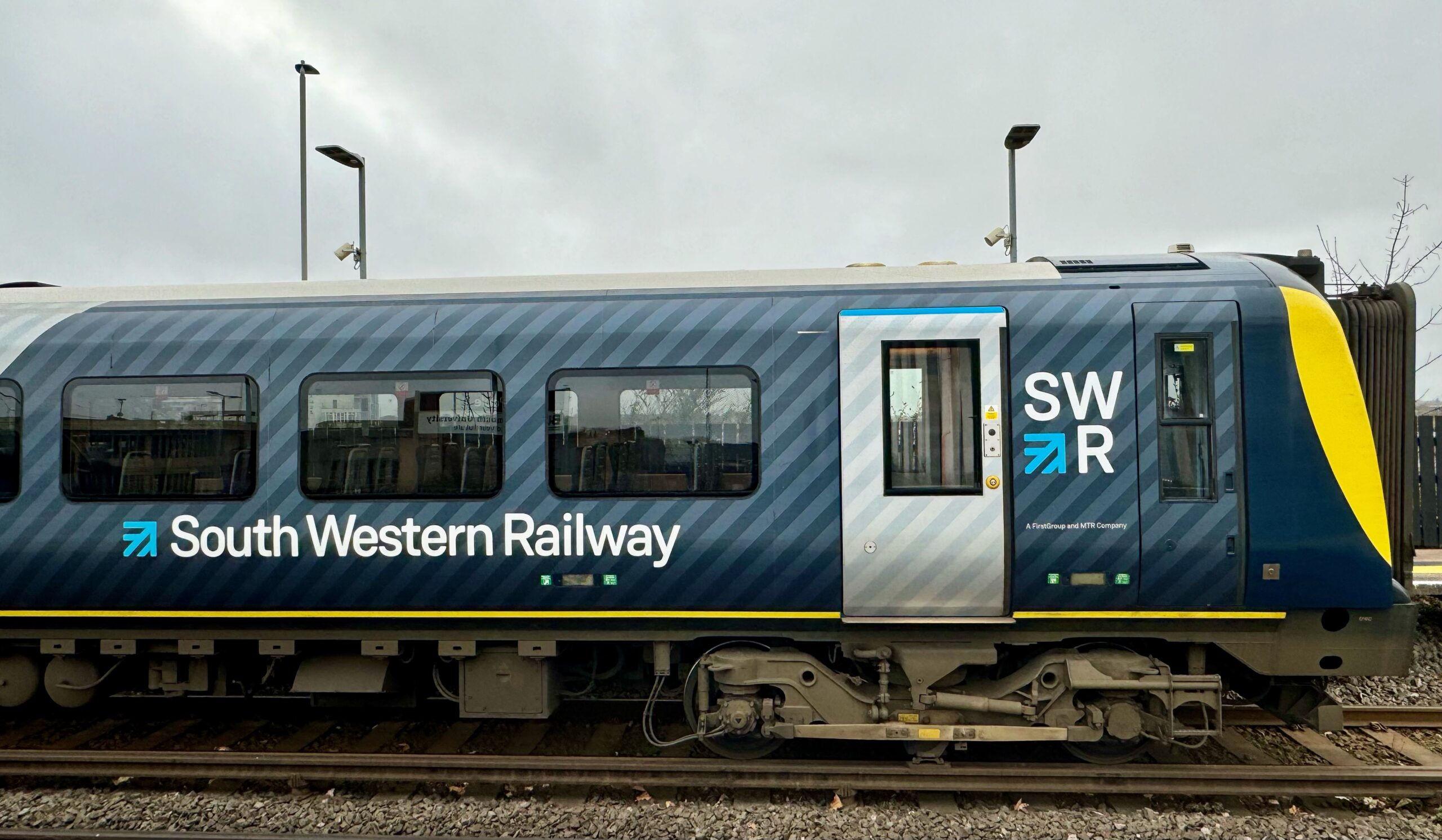
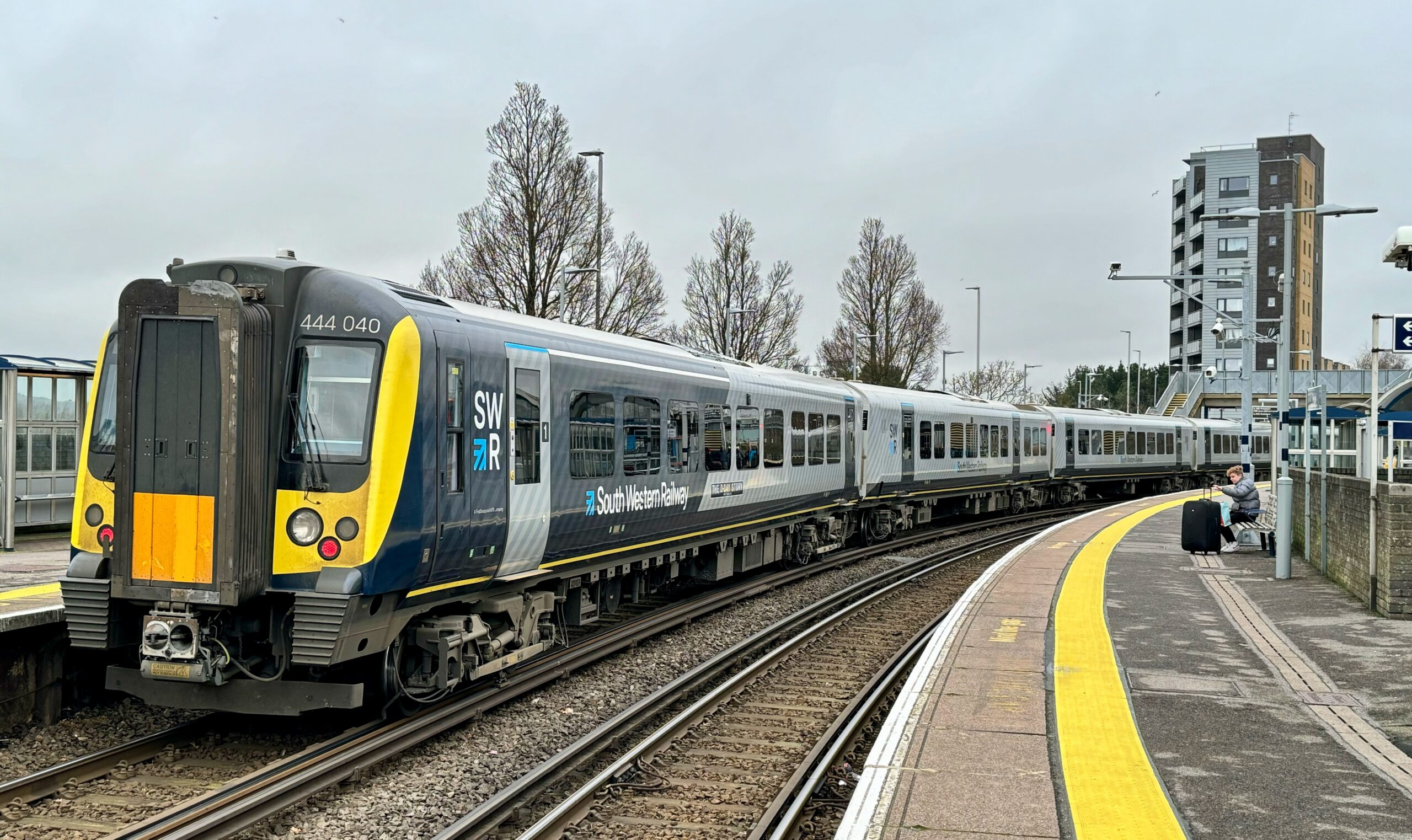
With SWR Desiro Electric Multiple Unit’s (EMU’s) remaining in the old South West Trains (SWT) livery now in single figures, it has been reported that Class 450 No. 450111 and Class 444 No. 444040 ‘The D-Day Experience Portsmouth’, both wrapped in a striped form of the South Western Railway grey livery, will be the last two units to be painted into standard SWR colours.
Class 450 No. 450111 at Eastleigh working 2B32 0902 Bournemouth to Winchester – 23/12/2023Side view showing the “stripey” South Western Railway livery carried by Class 450 No. 450111 at EastleighClass 444 No. 444040 ‘The D-Day Experience Portsmouth’ at Poole having arrived with 1B31 1357 Brockenhurst to Poole – 24/12/2023Side view of Class 444 No. 444040 ‘The D-Day Experience Portsmouth’ – 24/12/2023Bodyside detail of Class 444 No. 444040 ‘The D-Day Experience Portsmouth’ – 24/12/2023Class 444 No. 444040 ‘The D-Day Experience Portsmouth’ at Poole forming the 5B31 1437 Poole to Poole Storage Sidings ECS – 24/12/2023
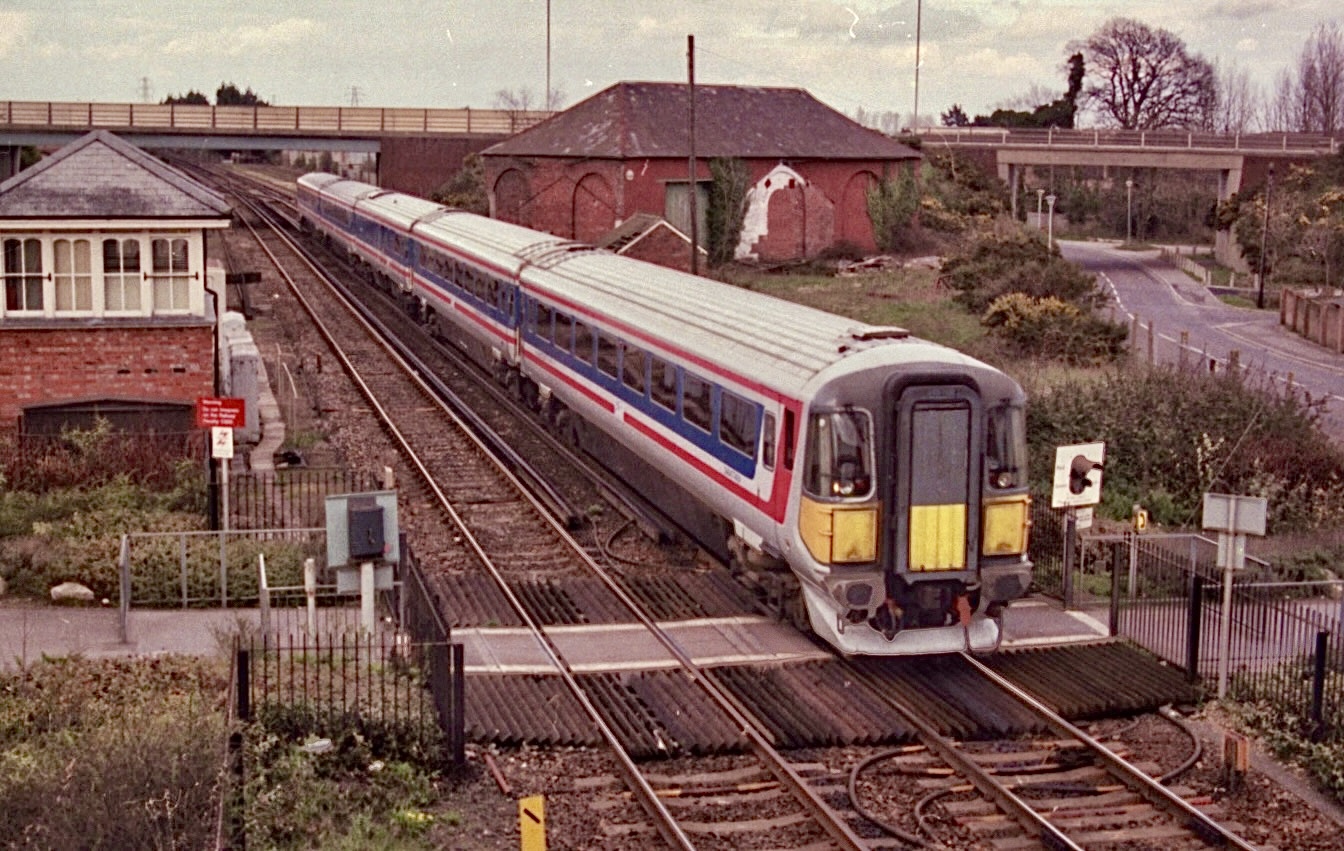
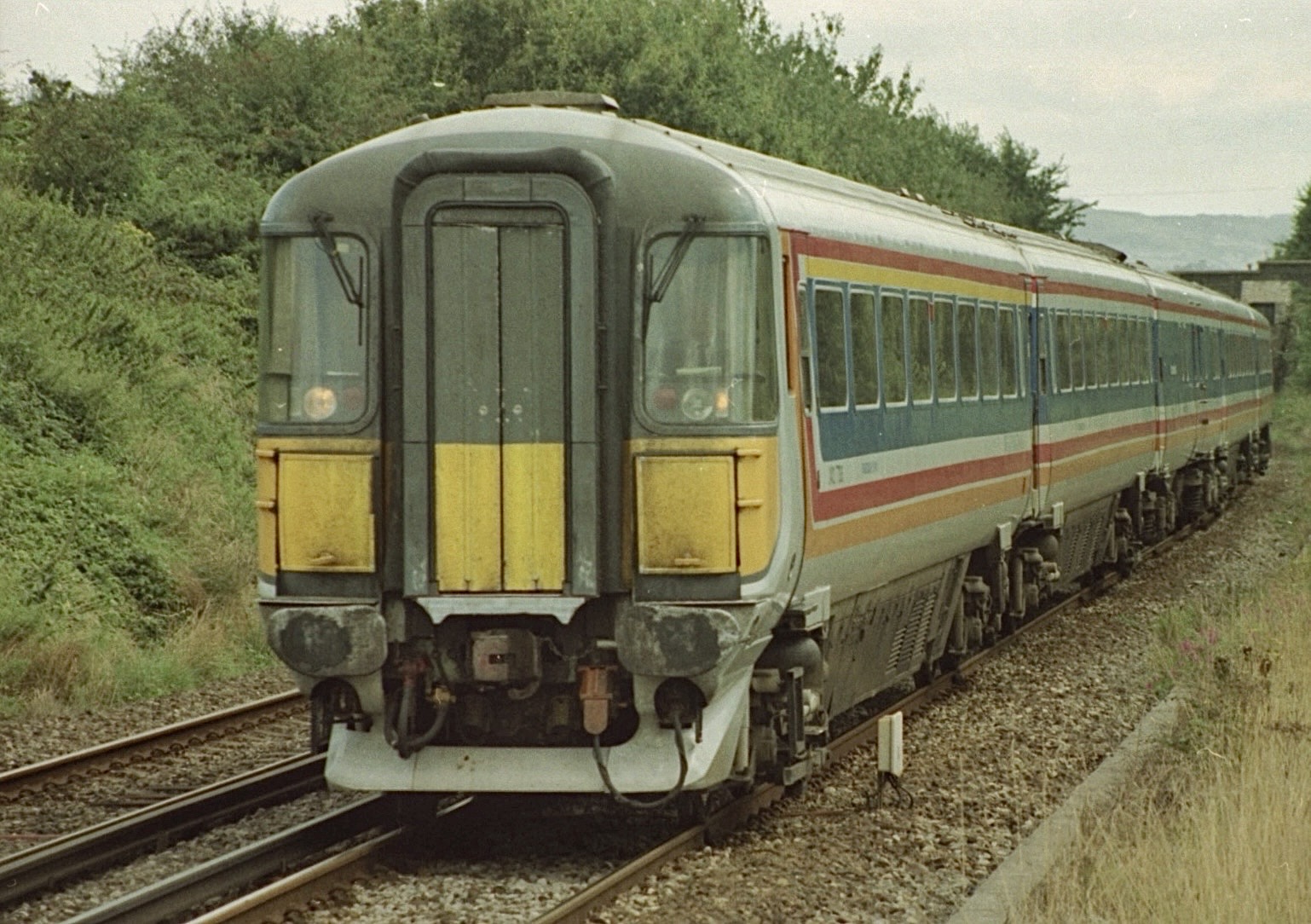
The original South West Trains train livery used the Stagecoach Group colours – red, blue and orange – in a similar style to the Network South East (NSE) livery. Some detail variations were introduced before a major updating of the group’s design identity in 2000. New logos and typefaces were developed, as well as new bus and train liveries.
An unidentified Class 442 “Wessex Electric” EMU on the approach to Wareham in Network South East Livery at some point in the late 1990’sAnother unidentified Class 442 “Wessex Electric” EMU, carrying the original South West Trains livery based on the NSE style previously carried by the trains, nearing Upwey station – 05/09/1998Class 442’s at Dorchester South in the revised SWT livery in the early 2000’s
The second-generation South West Trains liveries, designed by industry specialist Best Impressions, have swooshes of the Stagecoach colours, which sweep back from the nose of the train to give an impression of movement. There were three versions of the livery employed – white on the Class 444 and 159 trains used on many longer-distance services, red on Class 455 and 456, and blue used on Class 458 and 450 trains.
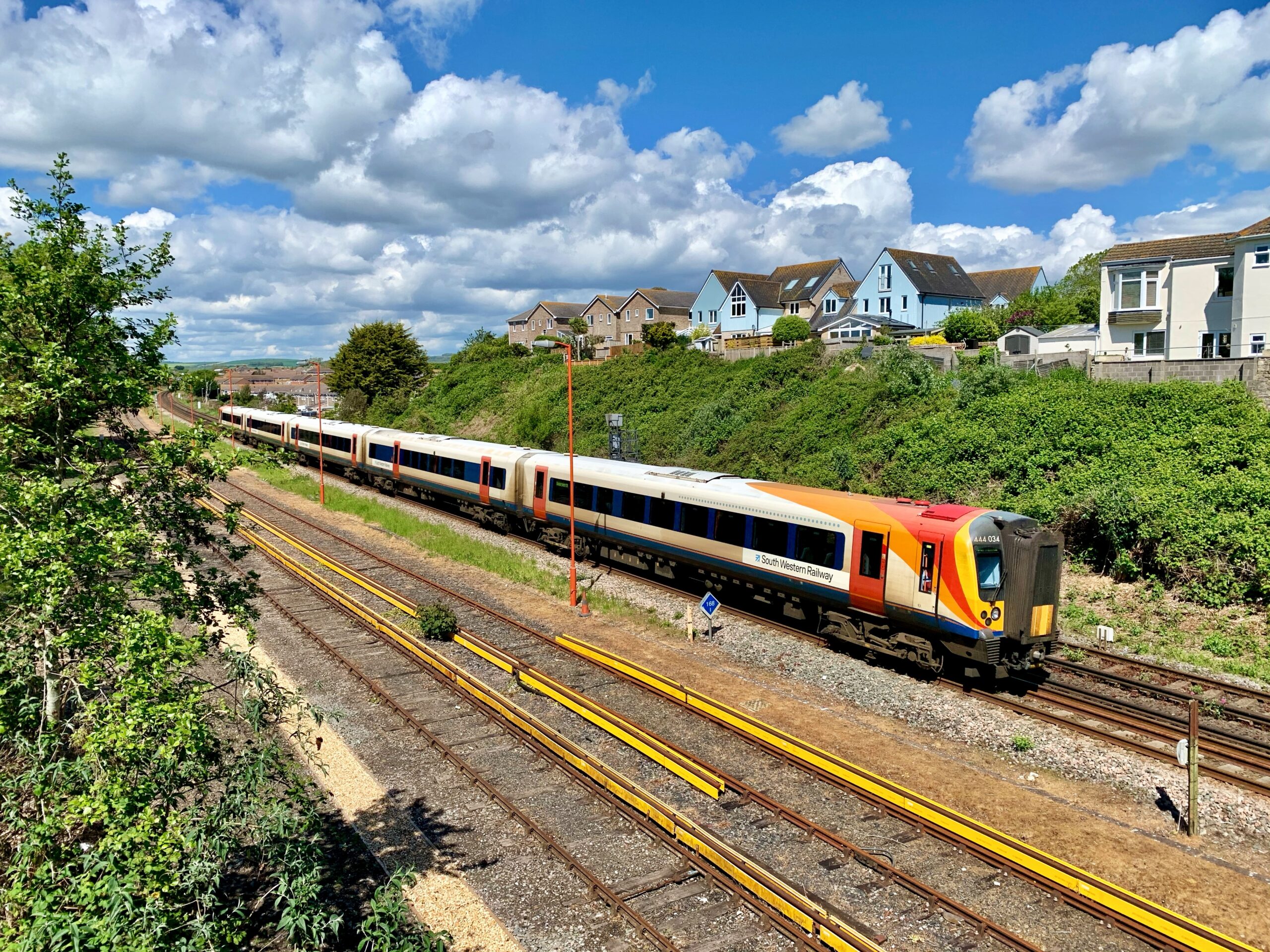
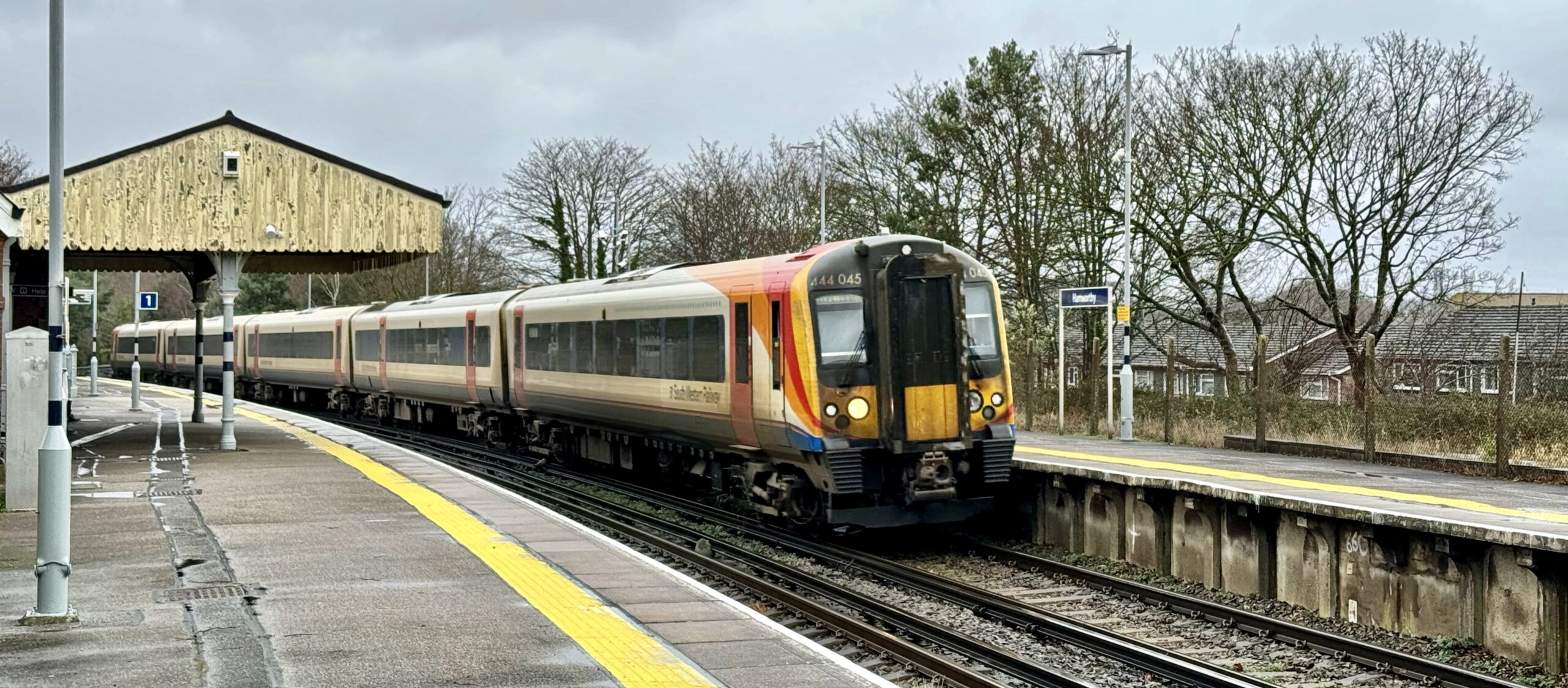
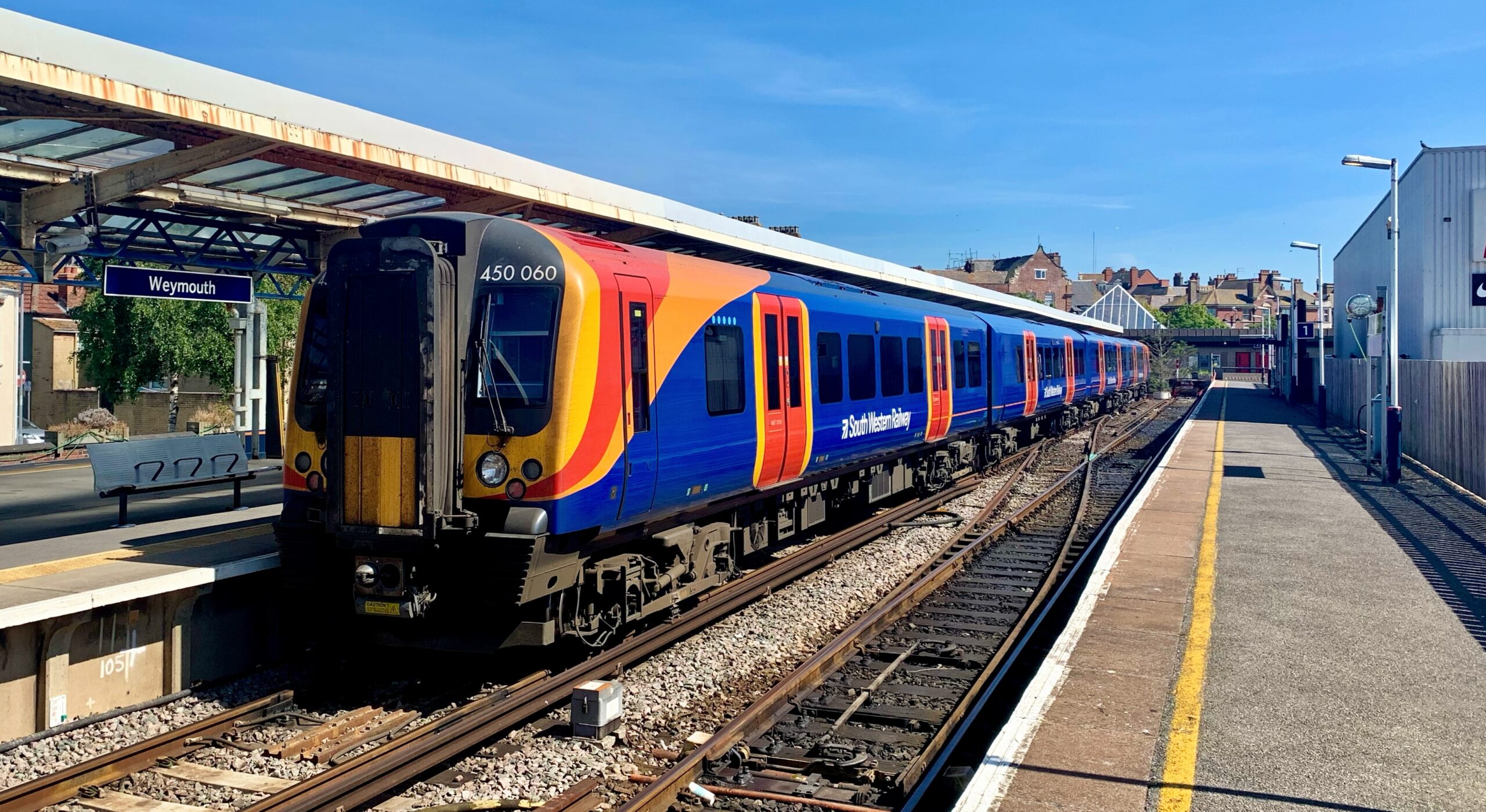
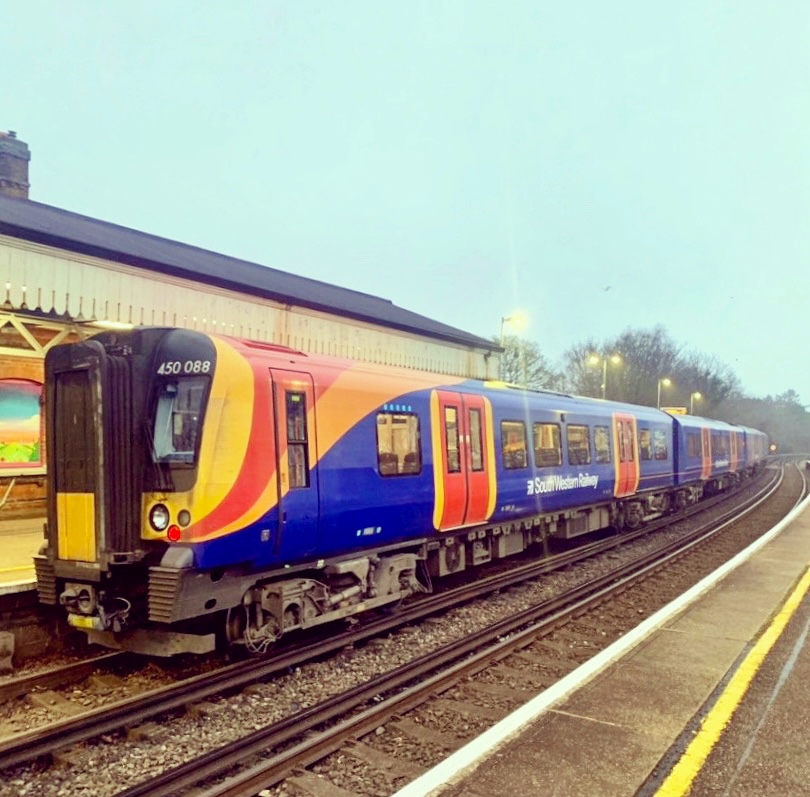
SWR Class 444 No. 444034 on the approach to Weymouth showing the colours of its former operator SWT – 01/05/2020The final South Western Railway Class 444 in South Western Trains livery No. 444045 arrives at Hamworthy working 1W55 0735 London Waterloo to Weymouth – 30/12/2023SWR Class 450 No. 450060 in blue SWT colours at Weymouth – 20/05/2020Class 450 No. 450088 departing Hamworthy with an early morning Weymouth to Brockenhurst stopping service – 23/12/2021
The final Desiro’s to be re-liveried from former SWT colours into SWR grey are No.’s 450031, 450099, 450116 and 444045.
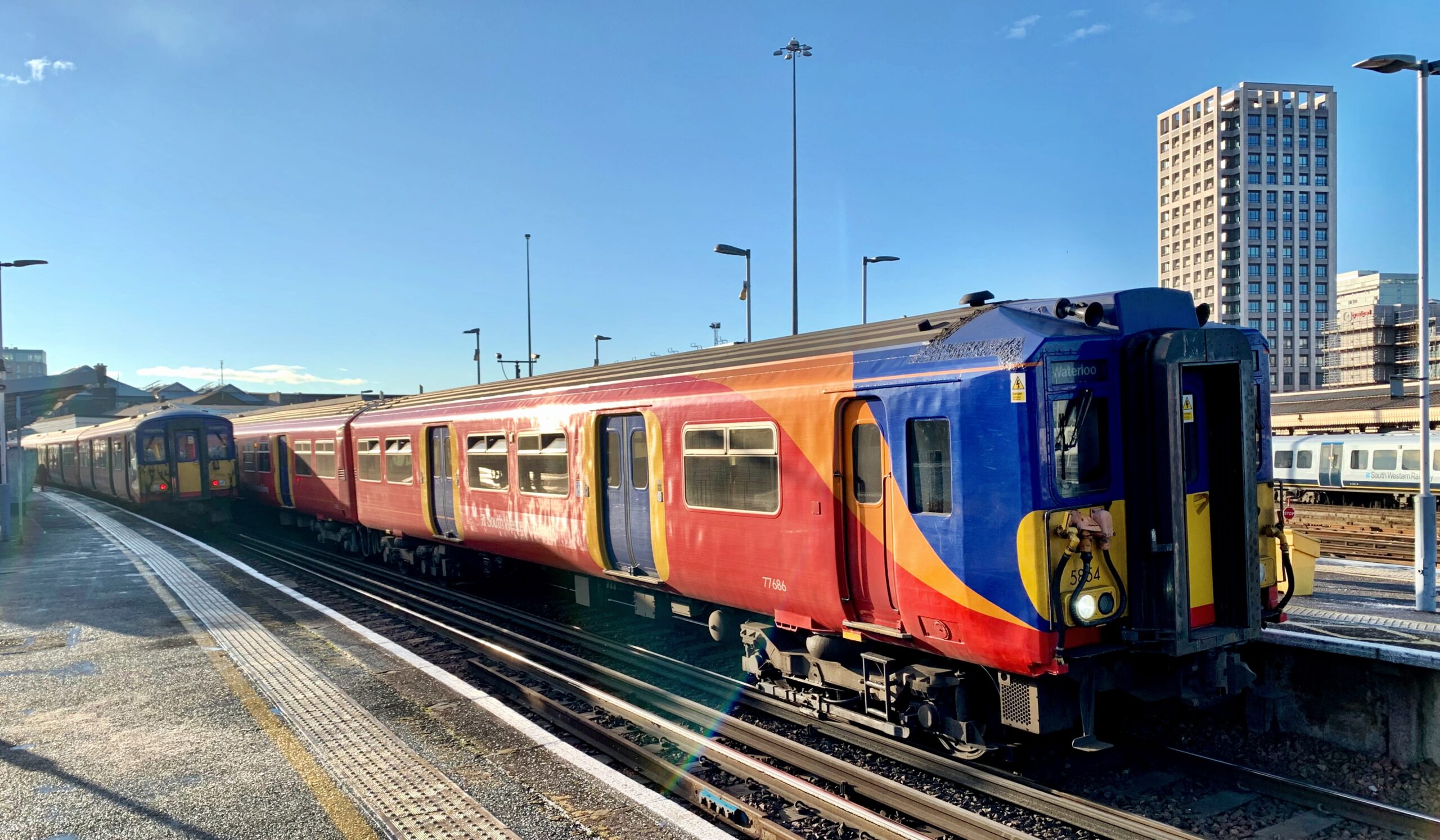
For completion: a Class 455 No. 455854 in the SWT red livery with a London Waterloo bound service at Clapham Junction – 10/12/2022
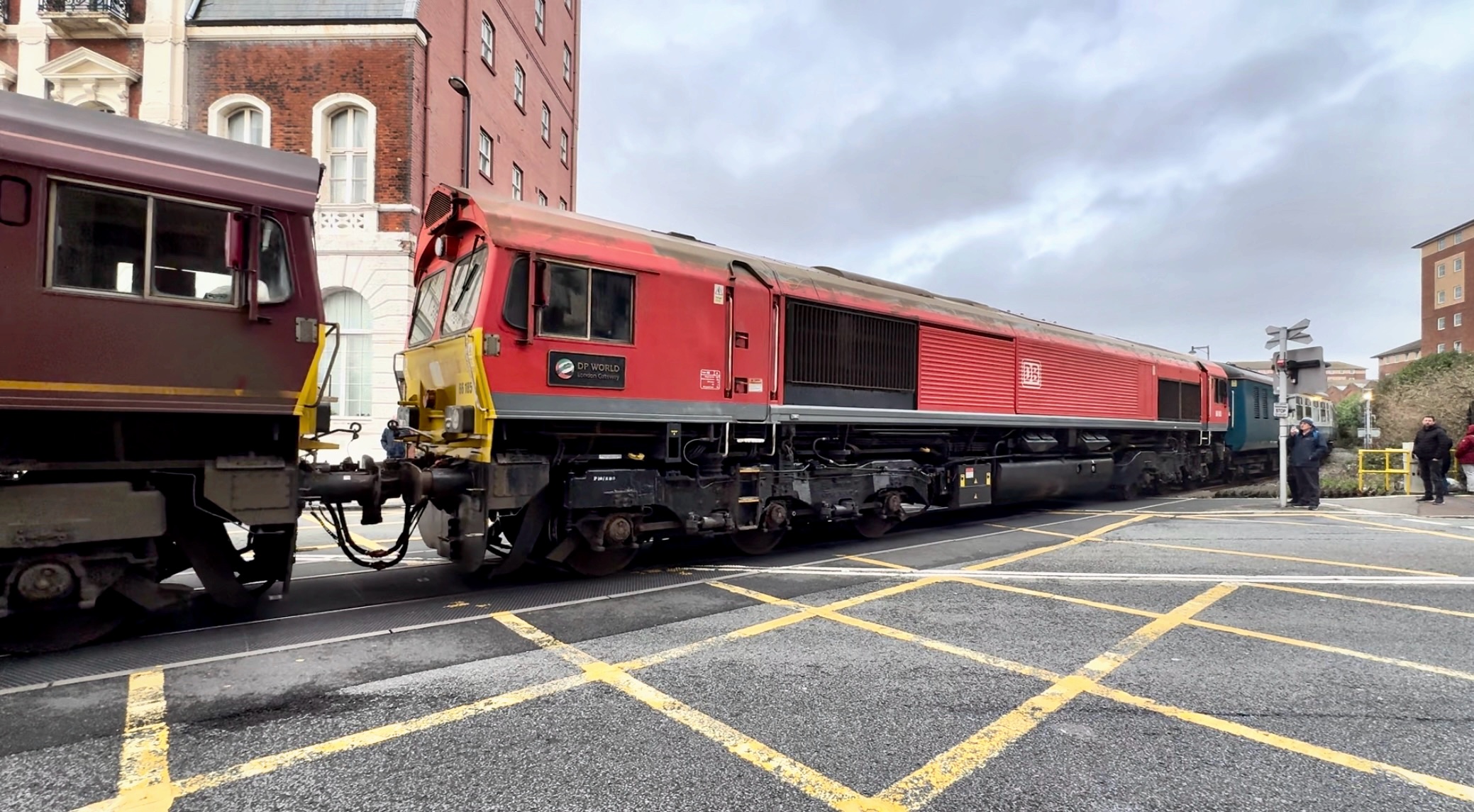
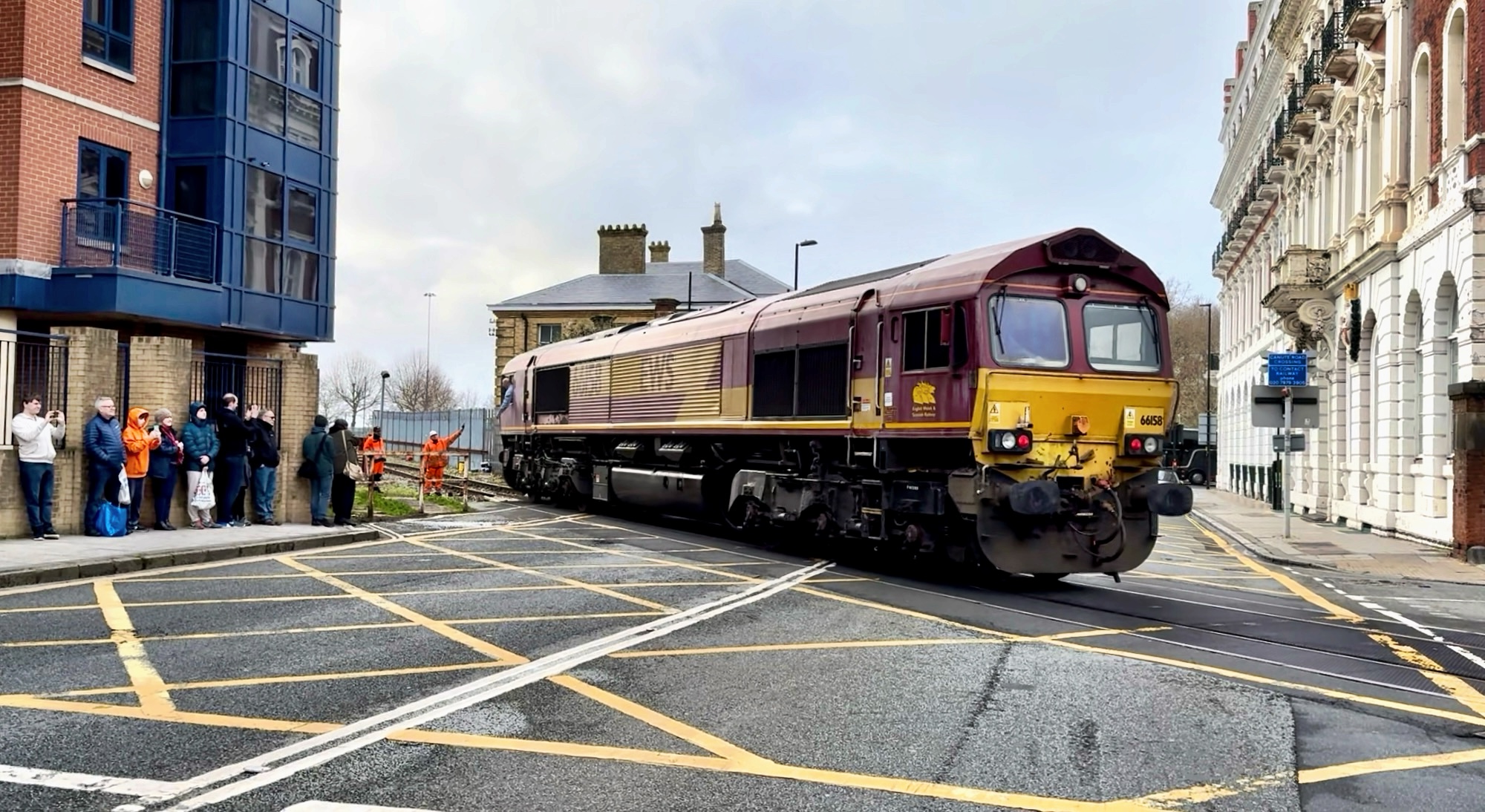
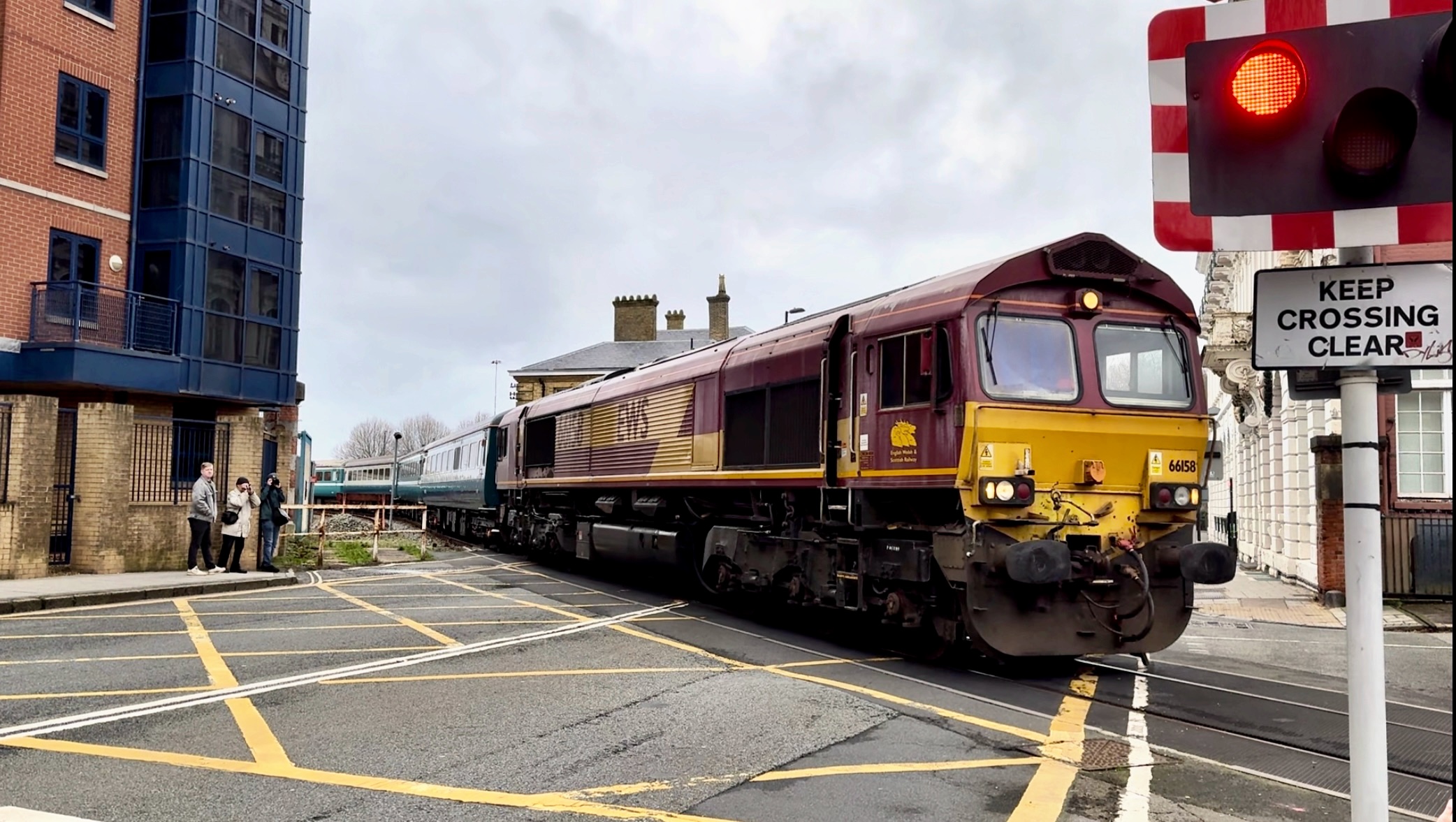
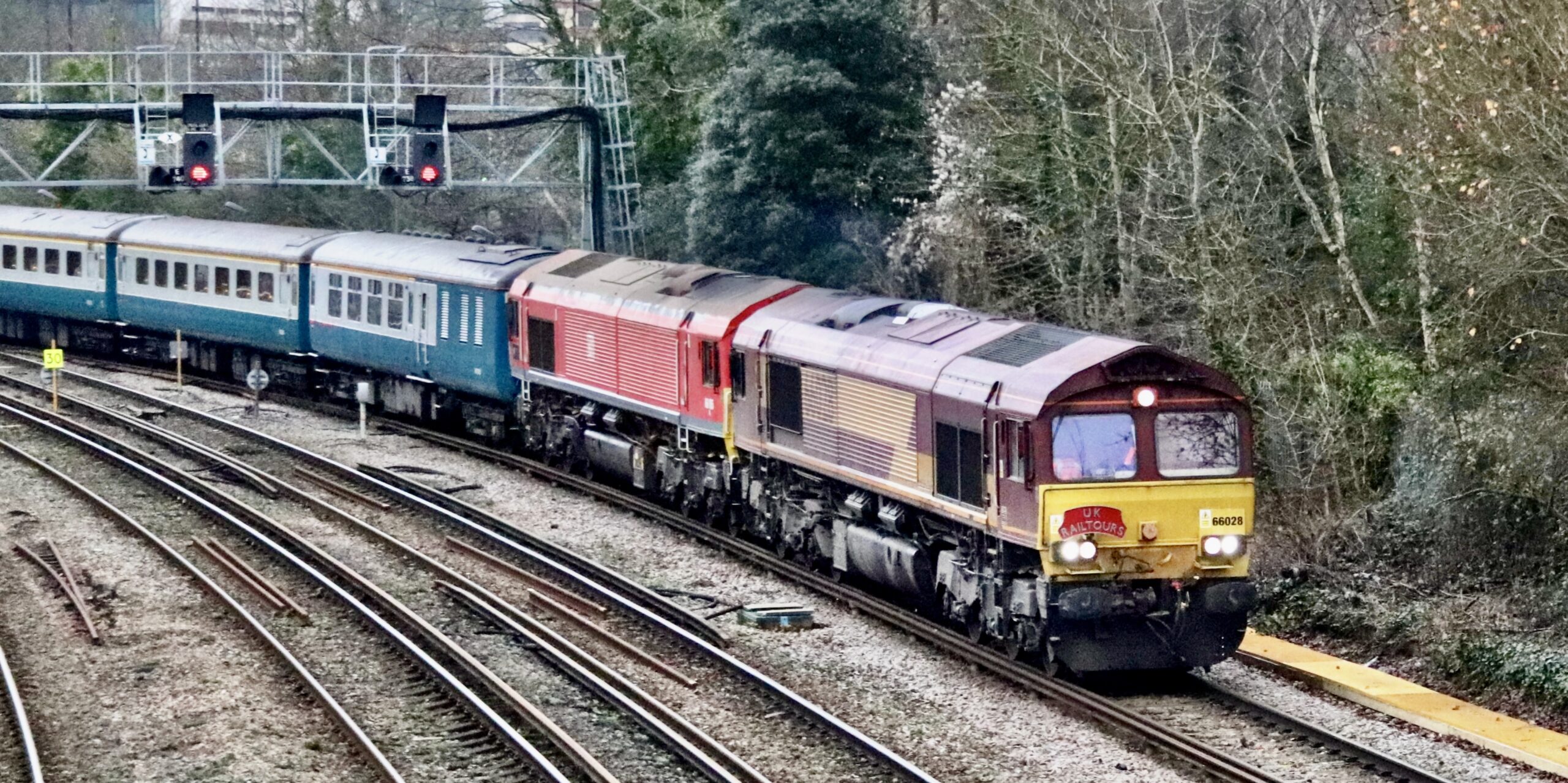
The final railtour of 2023 bordering on the Dorset area was run by UK Railtours employing DB Cargo Class 66 locomotives booked for use in a top and tail formation. “Another Awkward Week Adventure”, named because of those so called awkward days between Christmas and New Year originated in Peterborough. Problems with one of the locomotives; No. 66185 meant the railtour left 60 minutes late from its originating station after No. 66028, which had been the rear locomotive, was removed from the back of the train and re-attached to the front with No. 66185 remaining inside. This was how Yoshi and I saw the train after it had passed through Winchester on its way to Eastleigh. Here passengers had the option to detrain and take a bus to the National Motor Museum at Beaulieu or remain onboard for some rare track miles into Southampton Eastern and Western Docks.
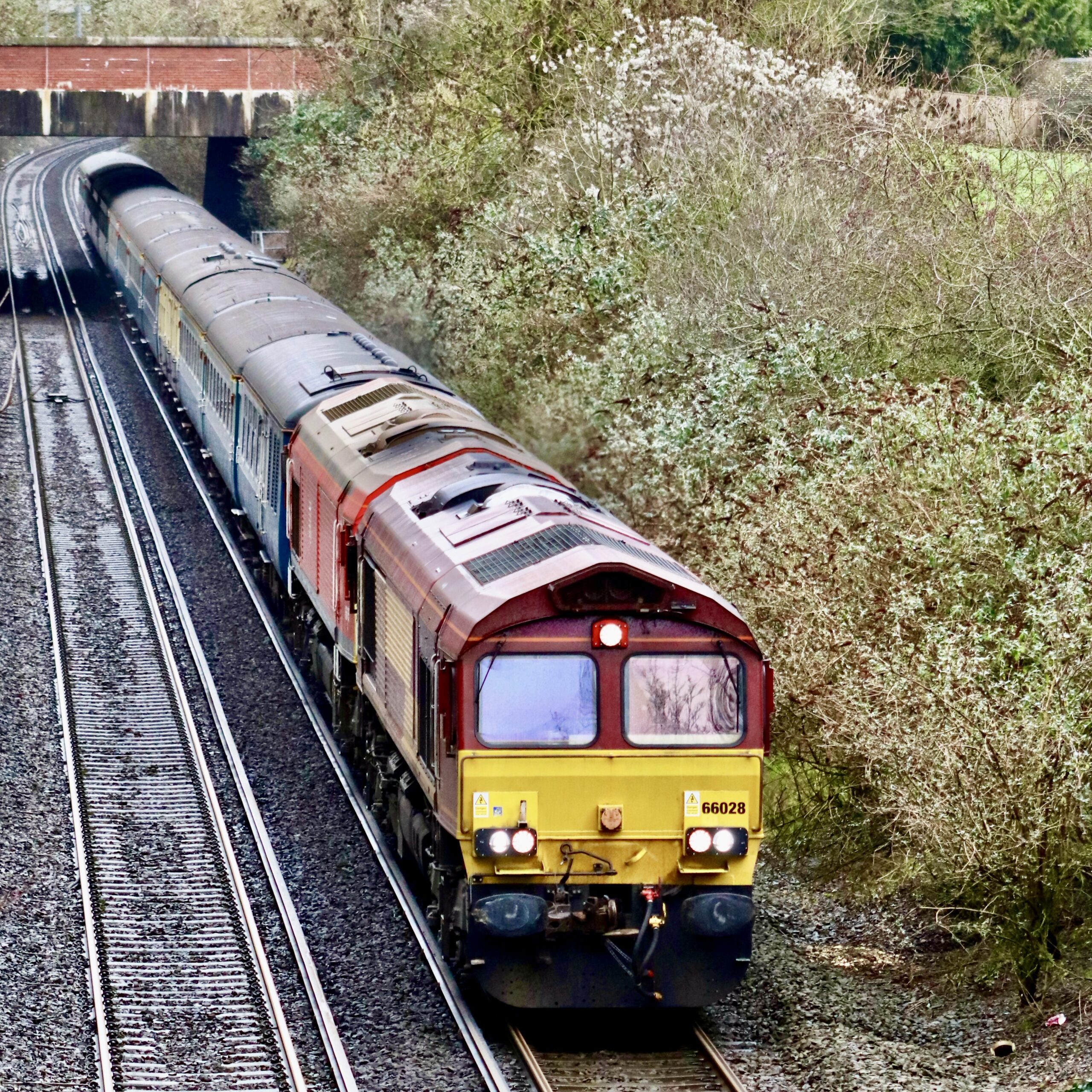
DB Cargo Class 66 No.’s 66028 and 66185 ‘DP WORLD London Gateway’ double heading 1Z66 0730 Peterborough to Southampton Eastern Docks “Another Awkward Week Adventure” railtour west of Winchester – 30/12/2023
I next moved onto Southampton where I fancied filming the excursion crossing Canute Road which is adjacent to the former Southampton Terminus railway station which served the Port of Southampton and Southampton City Centre from 1839 until 1966. The former Terminus station building is now a casino and The South Western Hotel opened by the LSWR in 1872 has been converted into private apartments. Of the station platforms, all that remains is the glass canopy and a single line that runs from Northam junction to the Queen Elizabeth II Cruise Terminal. The private road into where the platforms once stood is now a car park.
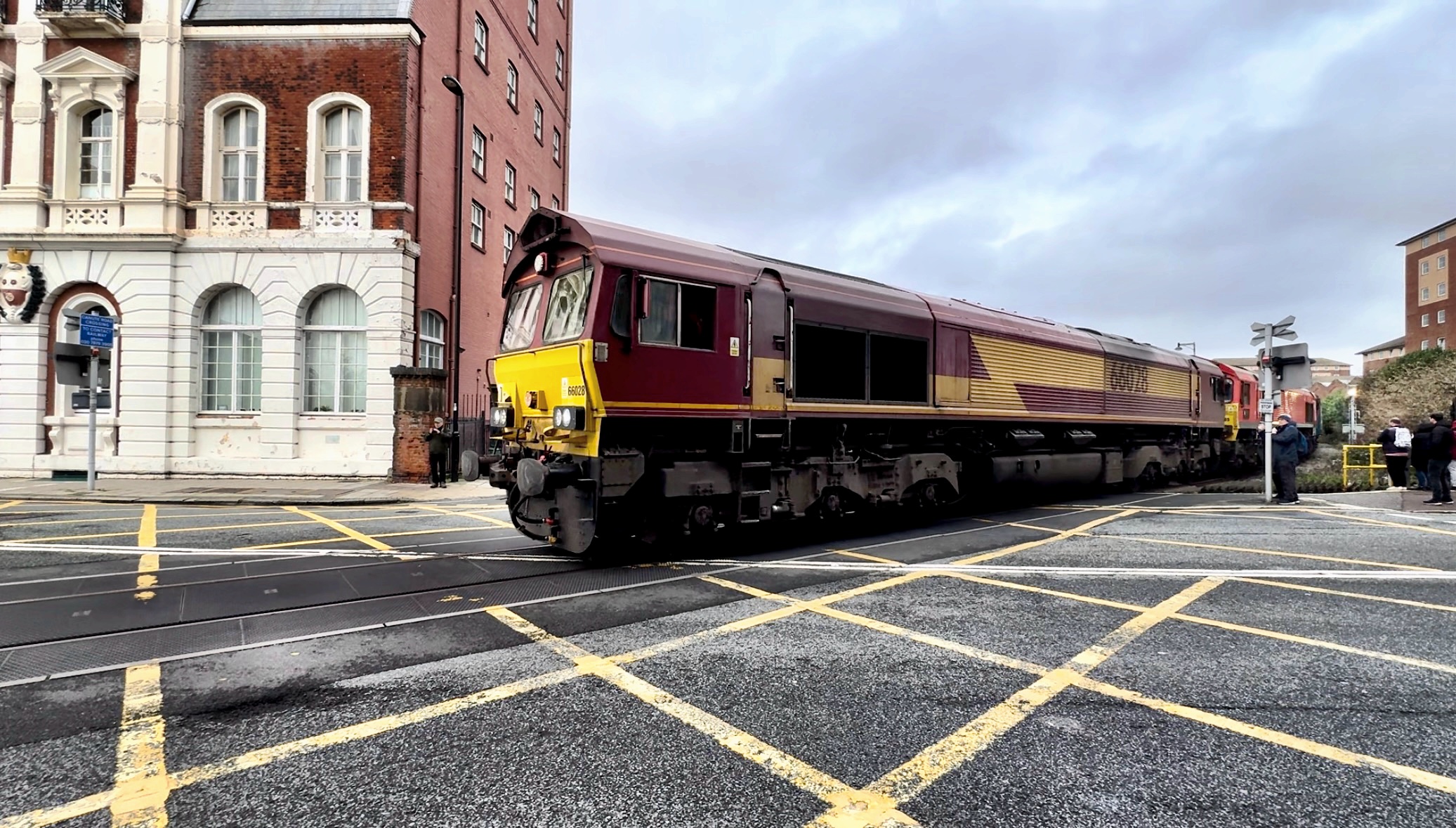
DB Cargo Class 66 No. 66028 crossing Canute Road, Southampton with 1Z66 0730 Peterborough to Southampton Eastern Docks – 30/12/2023Disgraced DB Cargo Class 66 No. 66185 ‘DP WORLD London Gateway’ dead in the consist of 1Z66 0730 Peterborough to Southampton Eastern Docks – 30/12/2023DB Cargo Class 66 No. 66158 runs light engine across Canute Road, Southampton as 0Z66 1340 Eastleigh Down Carriage Shed to Southampton Eastern Docks – 30/12/2023After running light into the docks, DB Cargo Class 66 No. 66158 leads out working 1Z67 1402 Southampton Eastern Docks to Southampton Western Docks – 30/12/2023
Our final location was the footbridge over the railway line between Southampton Central and Millbrook ready to catch the train head towards Western Docks and out again Yoshi waited in the car as the weather, already very windy, turned increasingly wet! I photographed the railtour on its outward leg into Western Docks, but by the time it returned (running late) the light had gone and I didn’t want another DSLR to fall foul of water damage in 2023! Instead I managed some dodgy video which can be seen lower down the page.
Back leading the tour again; DB Cargo Class 66 No.’s 66028 and 66185 ‘DP WORLD London Gateway’ on the approach to Millbrook heading up 1Z67 1402 Southampton Eastern Docks to Southampton Western Docks – 30/12/2023DB Cargo Class 66 No. 66158 at the rear of 1Z67 1402 Southampton Eastern Docks to Southampton Western Docks on the approach to Millbrook – 30/12/2023
“Another Awkward Week Adventure” DB Cargo Class 66 No.’s 66028 and 66185 ‘DP WORLD London Gateway’ and 66158: 1Z66 0730 Peterborough to Southampton Eastern Docks / 0Z66 1340 Eastleigh Down Carriage Shed to Southampton Eastern Docks / 1Z67 1402 Southampton Eastern Docks to Southampton Western Docks / 1Z68 1531 Southampton Western Docks to Eastleigh – 30/12/2023
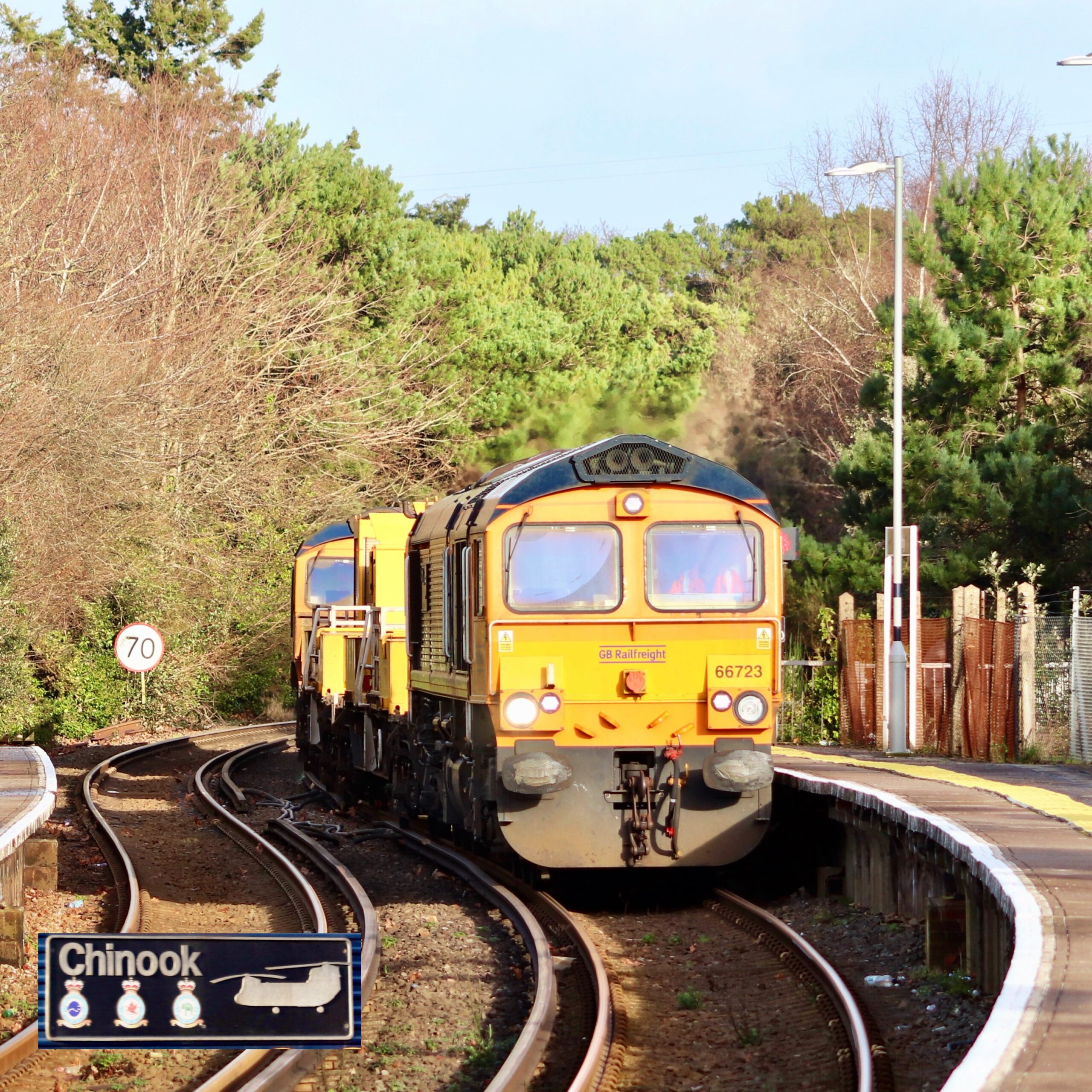
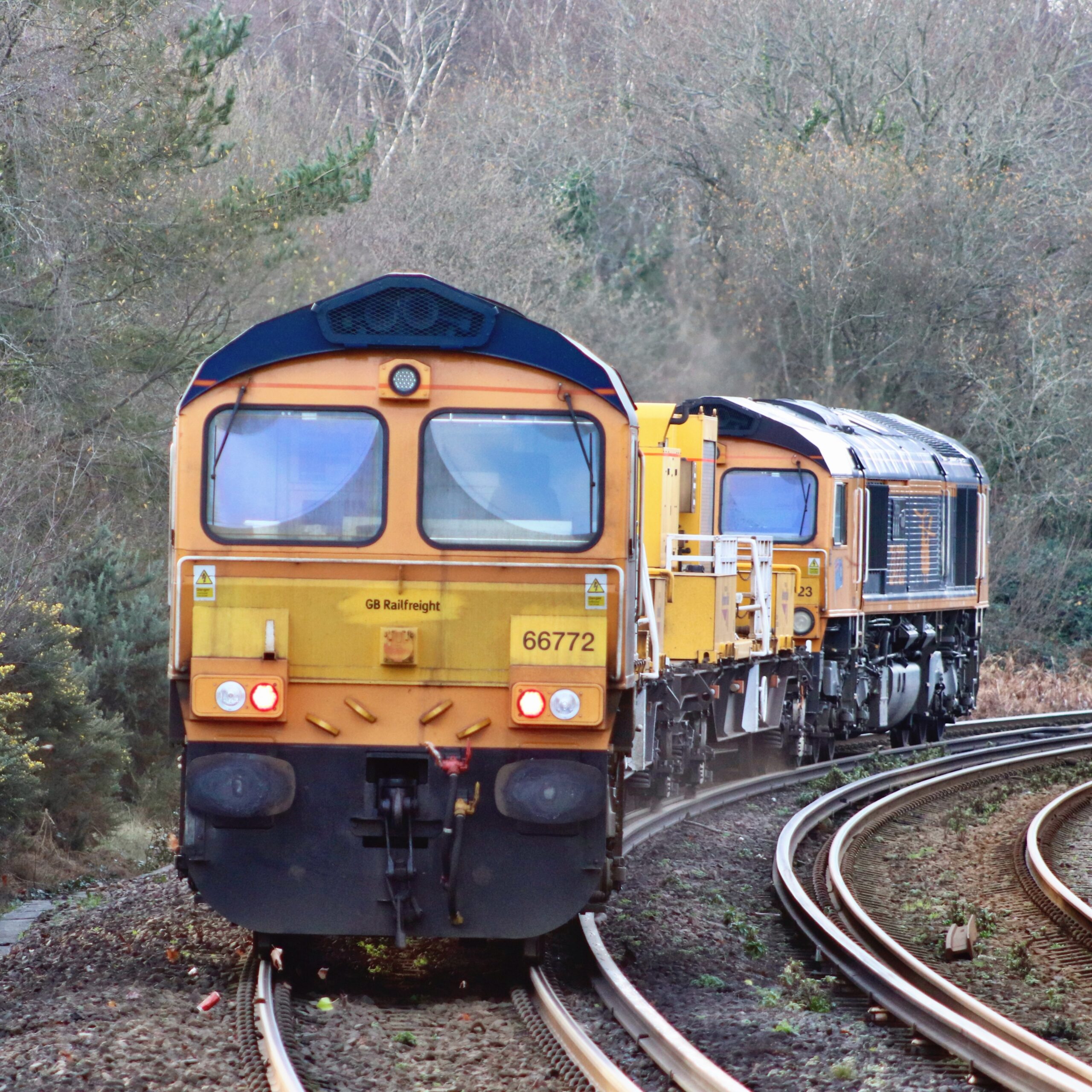
One final festive gift courtesy of GB Railfreight saw the SITT run to Weymouth on New Years Eve as 3Y88 1200 Totton Yard to Totton Yard, top and tailed by Class 66 locomotives No.’s 66723 ‘Chinook’ and 66772 ‘Maria’. The SITT with the same two Class 66’s in charge was also the first locomotive hauled train into Dorset early on New Years Day 2024 when it returned as far as Bournemouth in the early hours working as 3Y89 0100 Totton Yard to Totton Yard.
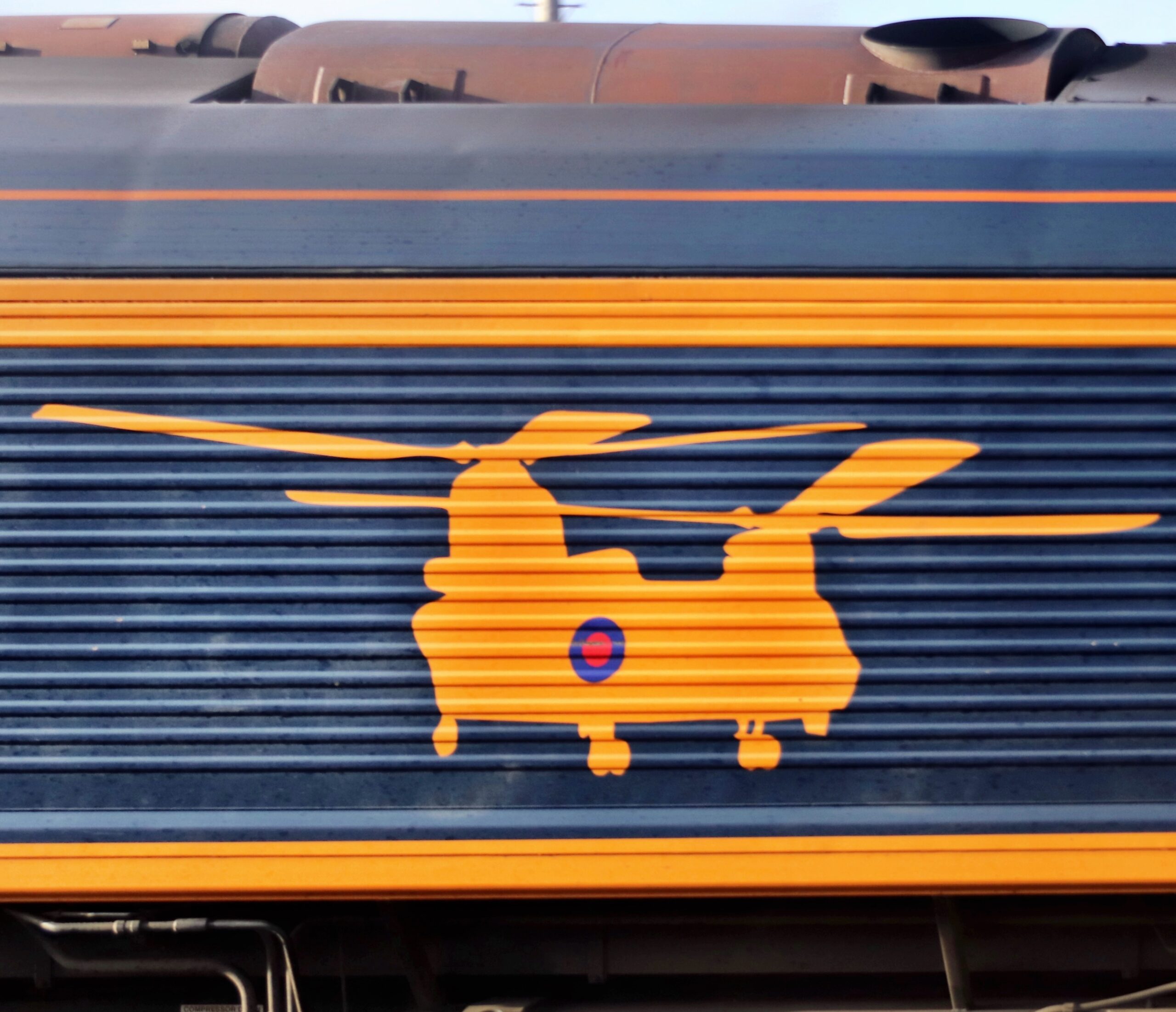
GBRf Class 66 No.’s 66723 ‘Chinook’ and 66772 ‘Maria’ at Hamworthy on SITT 3Y88 1200 Totton Yard to Totton Yard – 31/12/2023Close up of the helicopter decal on the side of GBRf Class 66 No. 66723 ‘Chinook’ – 31/12/2023GBRf Class 66 No. 66772 ‘Maria’ at the rear of the SITT 3Y88 1200 Totton Yard to Totton Yard. Classmate No. 66723 ‘Chinook’ leads – 31/12/2023GBRf Class 66 No.’s 66772 ‘Maria’ 66723 ‘Chinook’ passing Hamworthy working the return SITT 3Y88 1200 Totton Yard to Totton Yard – 31/12/2023
GBRf Class 66 No.’s 66772 ‘Maria’ 66723 ‘Chinook’ working the return SITT 3Y88 1200 Totton Yard to Totton Yard (Dorchester South video courtesy of G E Barrett) – 31/12/2023
For The Record
Following 16 days closure for engineering work on the West of England Line, the line between Salisbury and Yeovil Junction re-opened on Monday 11th December while landslip repairs were affected by flooding at Crewkerne tunnel which extended the duration required for work to be completed with SWR advising customers not to attempt to travel between Yeovil Junction and Exeter St David’s until Wednesday 13th December.
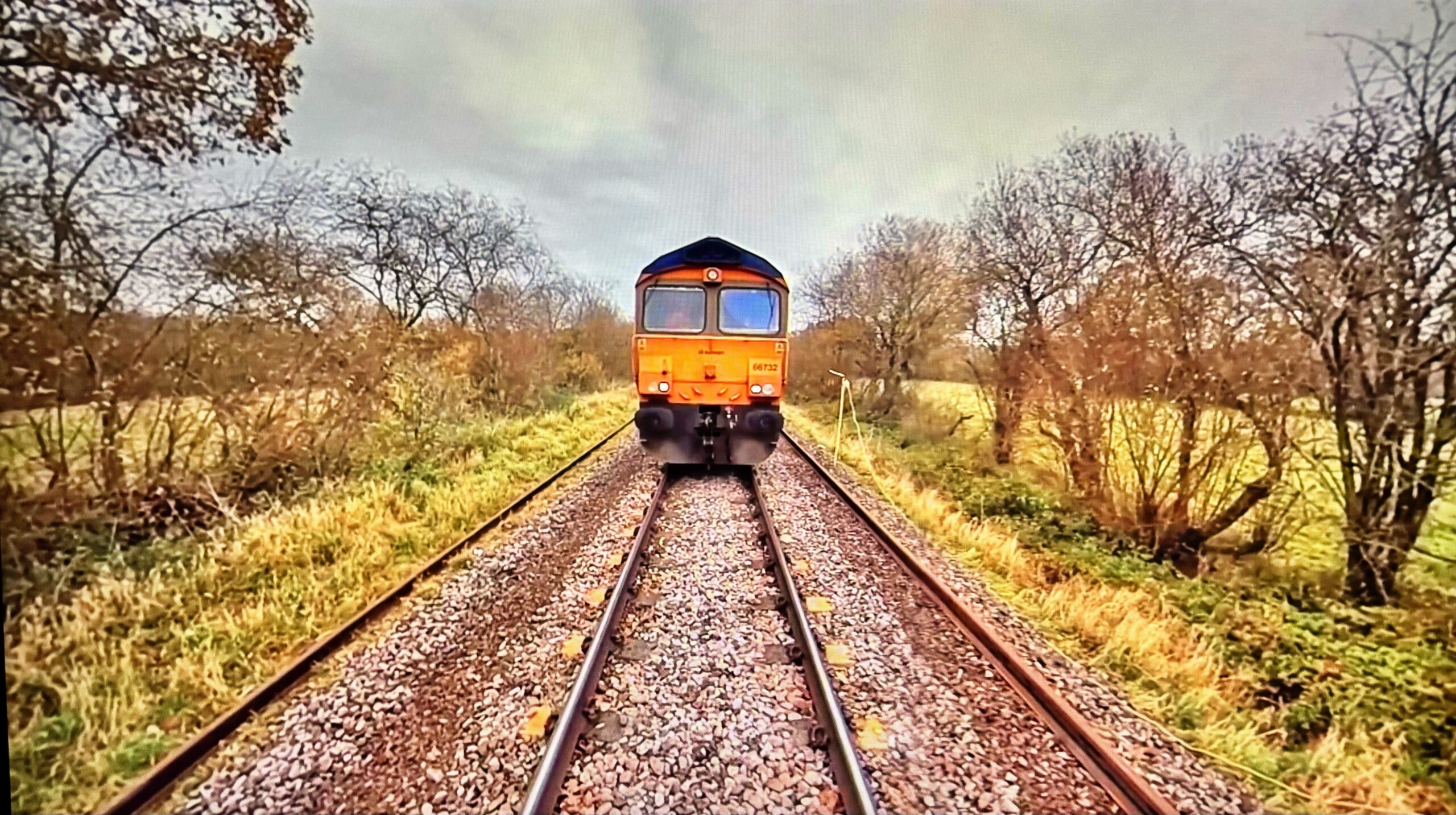
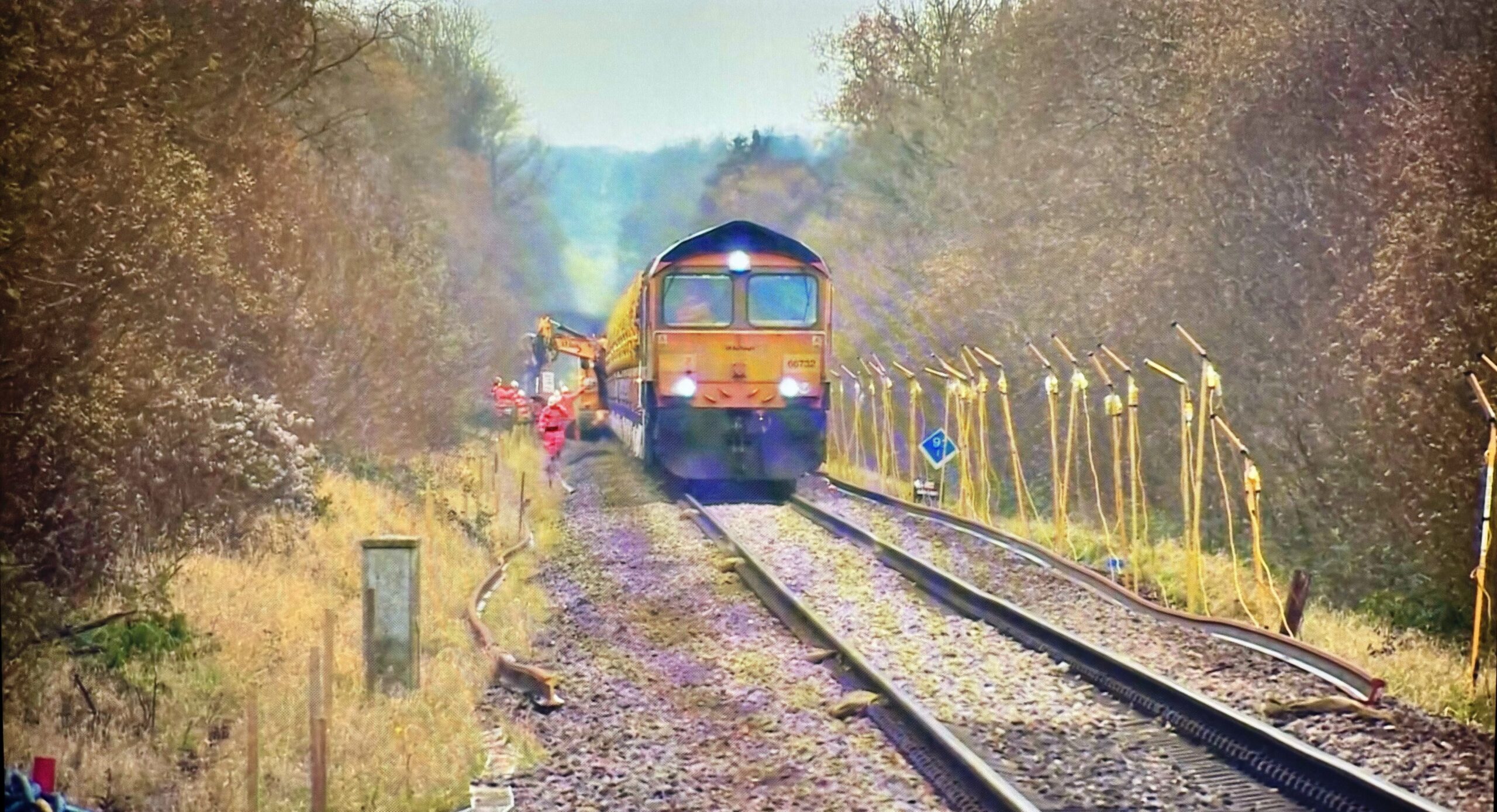
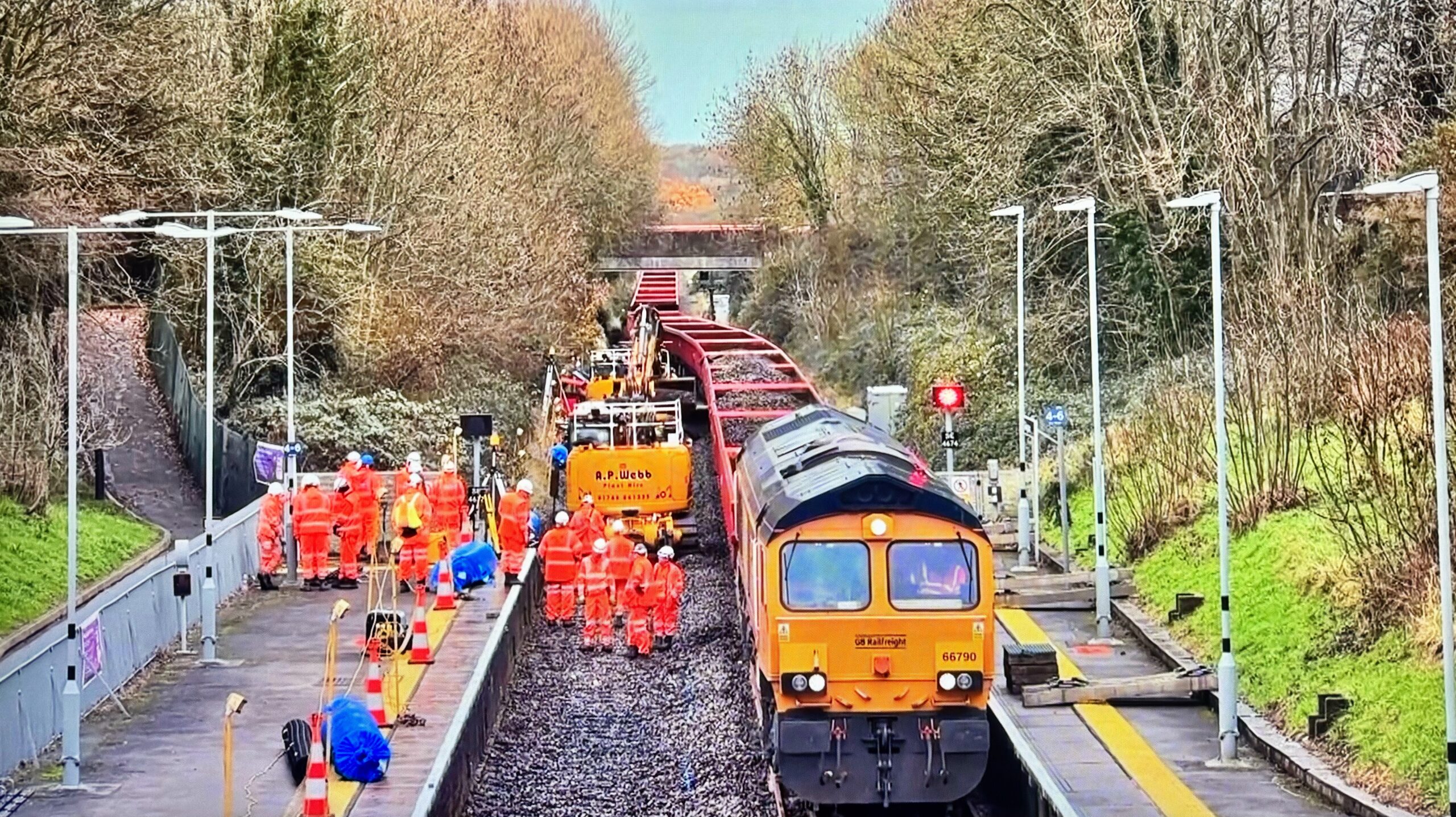
Class 66 No. 66732 ‘GBRf The First Decade 1999-2009 John Smith – MD’ at Dinton near Salisbury during the 16 day engineering possession. TV screen grab from BBC South Today – 01/12/2023Class 66 No. 66732 ‘GBRf The First Decade 1999-2009 John Smith – MD’ at Dinton near Salisbury. TV screen grab from BBC South Today – 01/12/2023Class 66 No. 66790 ‘Louise’ at Gillingham. TV screen grab from BBC South Today – 01/12/2023
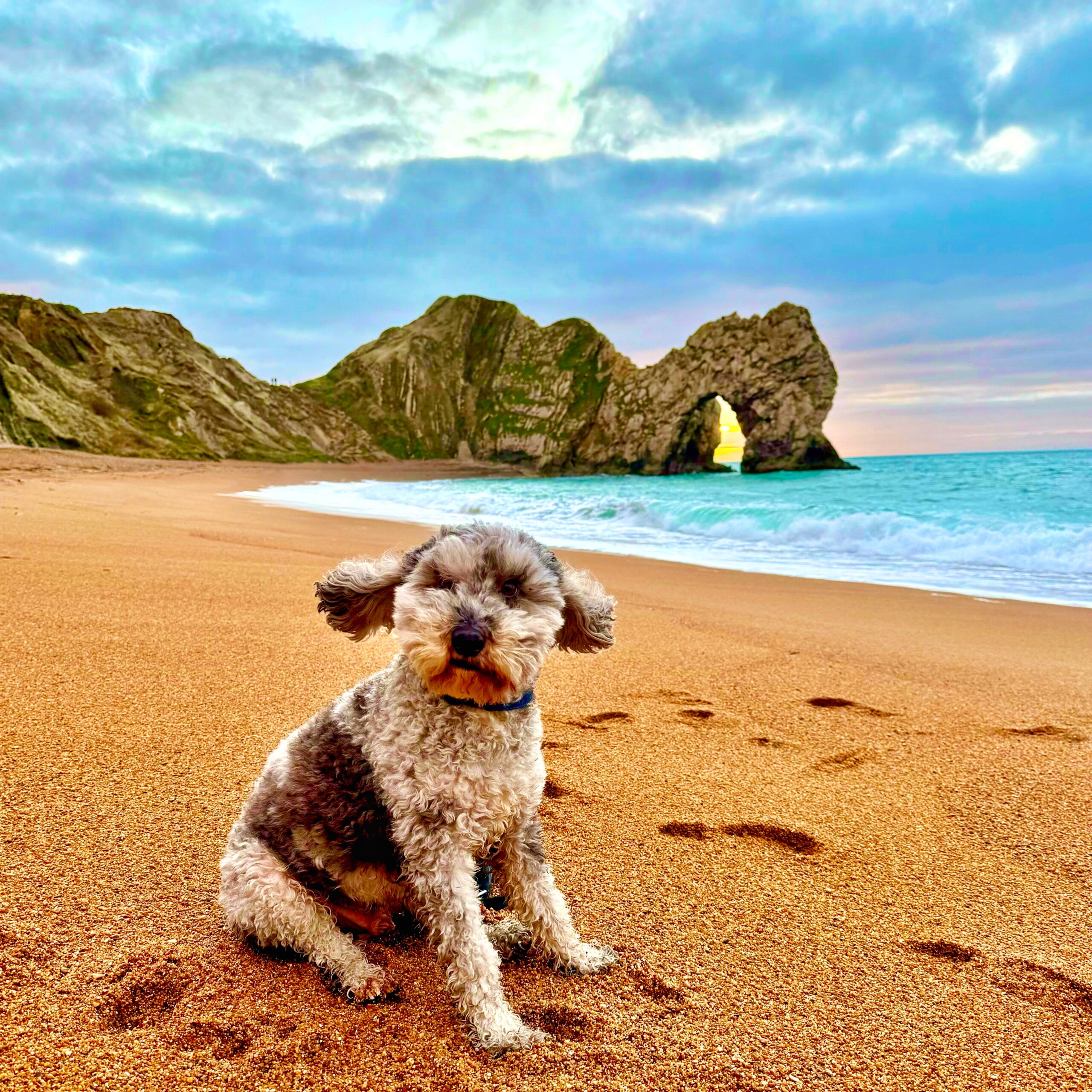
Thanks for reading, that’s it for 2023! Wishing everyone a very Happy New Year. We’ll leave you with a pic of Yoshi at Durdle Door. Be seeing you!
Yoshi took an early morning trip to Durdle Door to see the sunrise – 22/12/2023
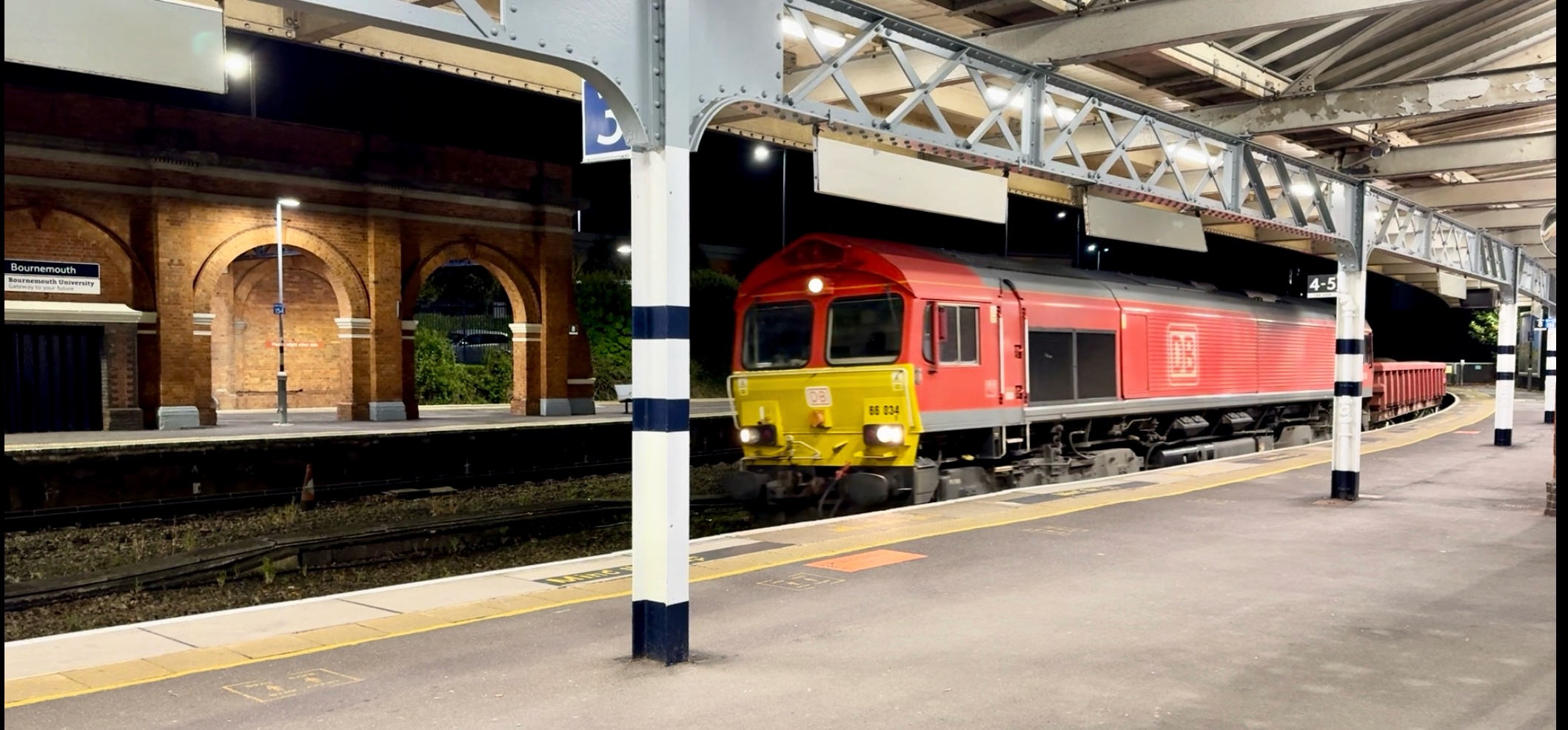
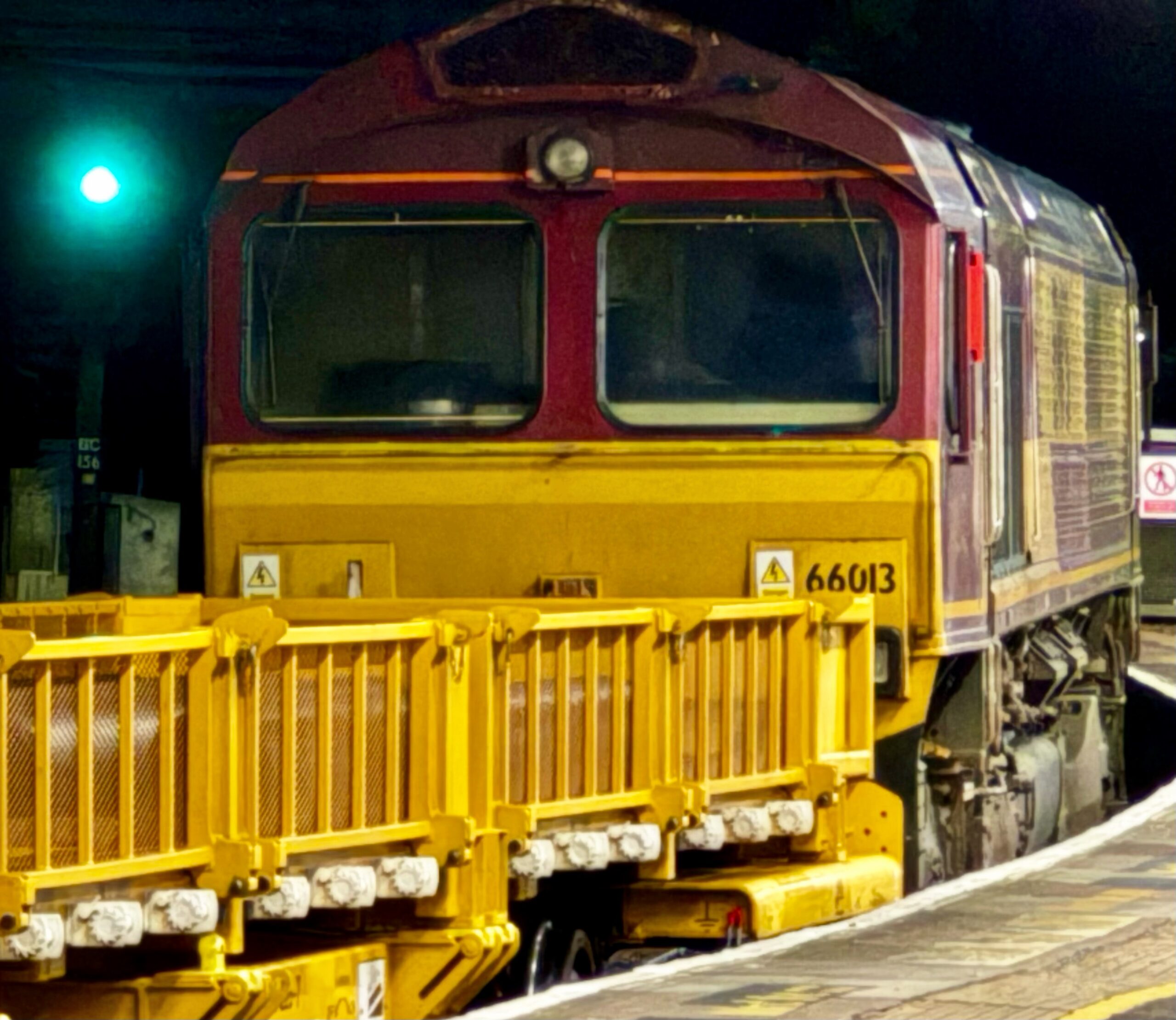
DB Class 66 No. 66013 awaits departure from Bournemouth in the early hours of Saturday working 6N04 0029 Eastleigh East Yard to Sway – 04/11/2023
November 3rd 2023 to November 10th 2023
Engineering work over the weekend in Hampshire meant that a replacement bus service operated between Southampton and Bournemouth with a shuttle train service between Bournemouth and Weymouth. The early hours of Saturday morning saw an engineers train originating from Eastleigh East Yard scheduled to reverse at Bournemouth before working back in the direction it had come towards Sway as 6N04 0029 Eastleigh East Yard to Sway. Despite the last passenger service arriving from London Waterloo yet to arrive, Bournemouth railway station was locked up on my arrival. I had hoped to practice some night photography with the DSLR mounted on a tripod, but had to resort to using the phone camera instead! Thankfully Bournemouth has several gates and fences from which it is possible to see trains arriving and departing and I didn’t have to wait long before Class 66 No. 66034 appeared into view.
Video screen grab of DB Class 66 No. 66134 arriving at Bournemouth with 6N04 0029 Eastleigh East Yard to Sway engineers train – 04/11/2023DB Class 66 No. 66013 at the London end of 6N04 0029 Eastleigh East Yard to Sway – 04/11/2023DB Class 66 No. 66013 which worked into Bournemouth at the rear of 6N04 0029 Eastleigh East Yard to Sway – 04/11/2023
Video of 6N04 0029 Eastleigh East Yard to Sway at Bournemouth – 04/11/2023
I thought it was about time that I caught up with one of the South Western Railway (SWR) Class 458’s which have been on test runs from Bournemouth Traction and Rolling Stock Maintenance Depot (T&RSMD) to Basingstoke, Southampton and Havant over the last few weeks. So, on Friday afternoon I found myself back on Branksome railway station awaiting the arrival of No.’s 458405 and 458407 working 5Q91 1320 Basingstoke to Bournemouth T&R.S.M.D, that days return trip for the units.
SWR Class 458 No. 458405 leads into Branksome with 5Q91 1320 Basingstoke to Bournemouth TRSMD – 03/11/2023SWR Class 458 No. 458407 having arrived at Branksome as the rear unit working 5Q91 1320 Basingstoke to Bournemouth TRSMD about to reverse back into the depot – 03/11/2023
The Class 458 (5-JUP) third-rail electric multiple unit (EMU) belong to the Alstom Coradia Juniper family, built at Washwood Heath, Birmingham between 1998 and 2002 for South West Trains (SWT). The order for the original fleet of 30 four car trains was placed in 1997, and delivery of the first unit followed in October 1998. On introduction the new trains were troubled by several issues, including leaking roofs with water entering the driver’s cabs and passenger areas. Onboard electronics repeatedly failed, affecting the air-conditioning and traction systems, and the Train Management System (TMS) software also proved to be unreliable. Unique amongst the Juniper family of trains, the Class 458’s were provided with end gangways on the driving cars allowing passengers and crew to move between coupled units, however, further frustrations were encountered when it came to coupling the units together which could take up to 30 minutes – a great deal longer than the usual few minutes expected across the network. SWT therefore had no choice but to treat the 458’s as being semi-permanently coupled in pairs. The first Class 458 ran in revenue earning service in February 2000, but even then only two units (No.’s 458004 and 458005) were available for use. The protracted and problematical introduction of these units influenced SWT’s decision in April 2001 to replace the rest of its slam door EMU’s with an order of 785 Siemens Desiro Class 444 and 450 vehicles.
Reliability remained poor and in January 2004 SWT announced that they would withdraw the entire Class 458 fleet at the December 2005 timetable change in readiness to return them to leasing company, Porterbrook, in February 2006. It was later agreed that the Junipers could stay in service on a pay-per-use basis beyond the original end of the lease. In September 2006 the Department for Transport (DafT) awarded SWT a new ten-year contract to operate the South Western franchise, commencing in February 2007. SWT therefore implemented a new rolling stock plan that called for the withdrawal of its 24 Class 442 “Wessex Electric” units with Class 444 and 450 Desiro’s taking over their diagrams, with any short falls in service levels being covered by re-activating the Class 458 fleet. Between 2008 and 2010 the fleet was ‘refreshed’ at Bournemouth Traincare Depot, during which process the units were fitted with CCTV, new seats and tables in first class, and modified Rail Vehicle Accessibility Regulations (RVAR) 1998 compliant lavatories and doorway lights. The interiors were also cleaned and repainted.
How the exterior of the Class 458’s originally looked – No. 458006 stands at Weymouth during a test run – 18/08/2008 (John Chappell)
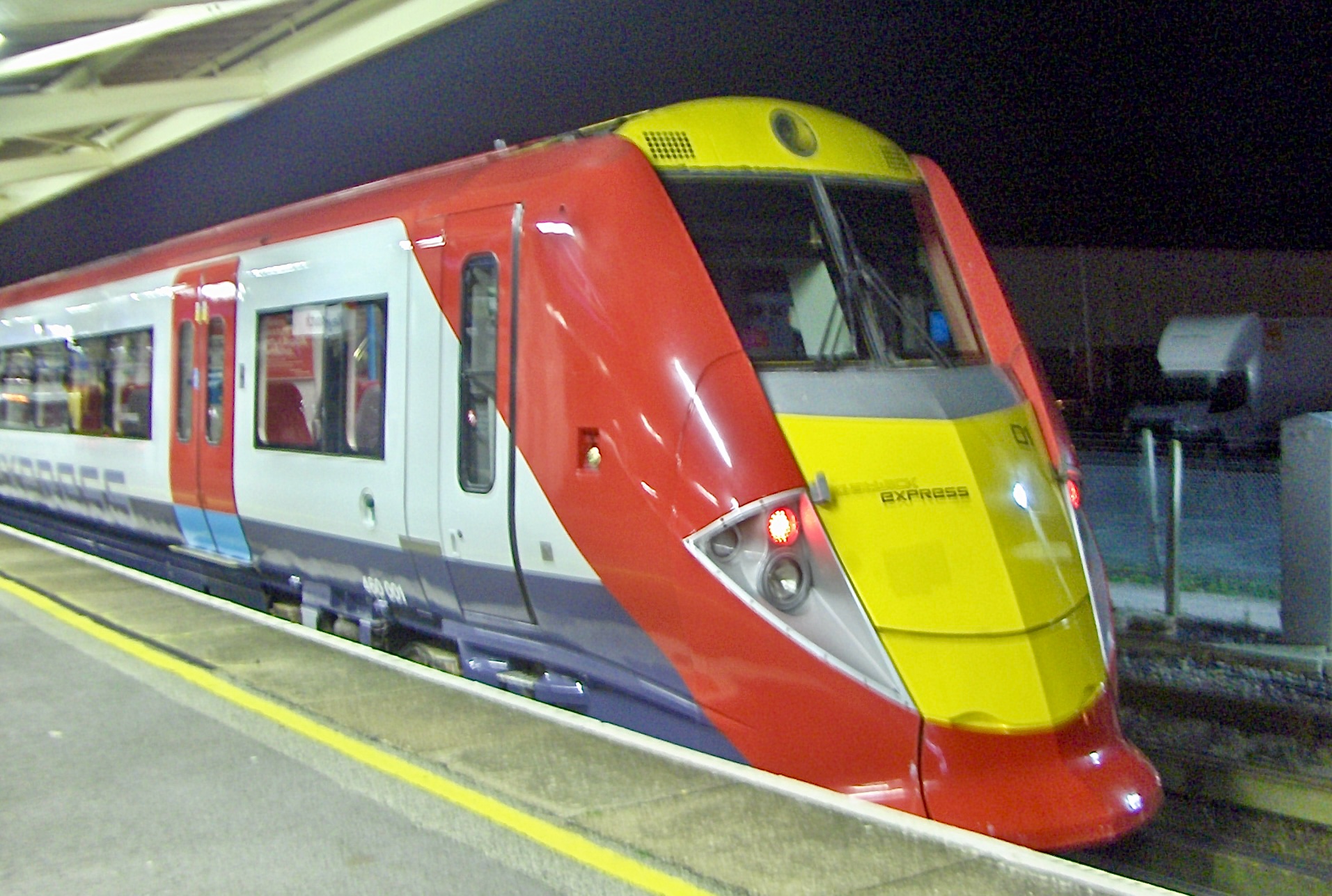
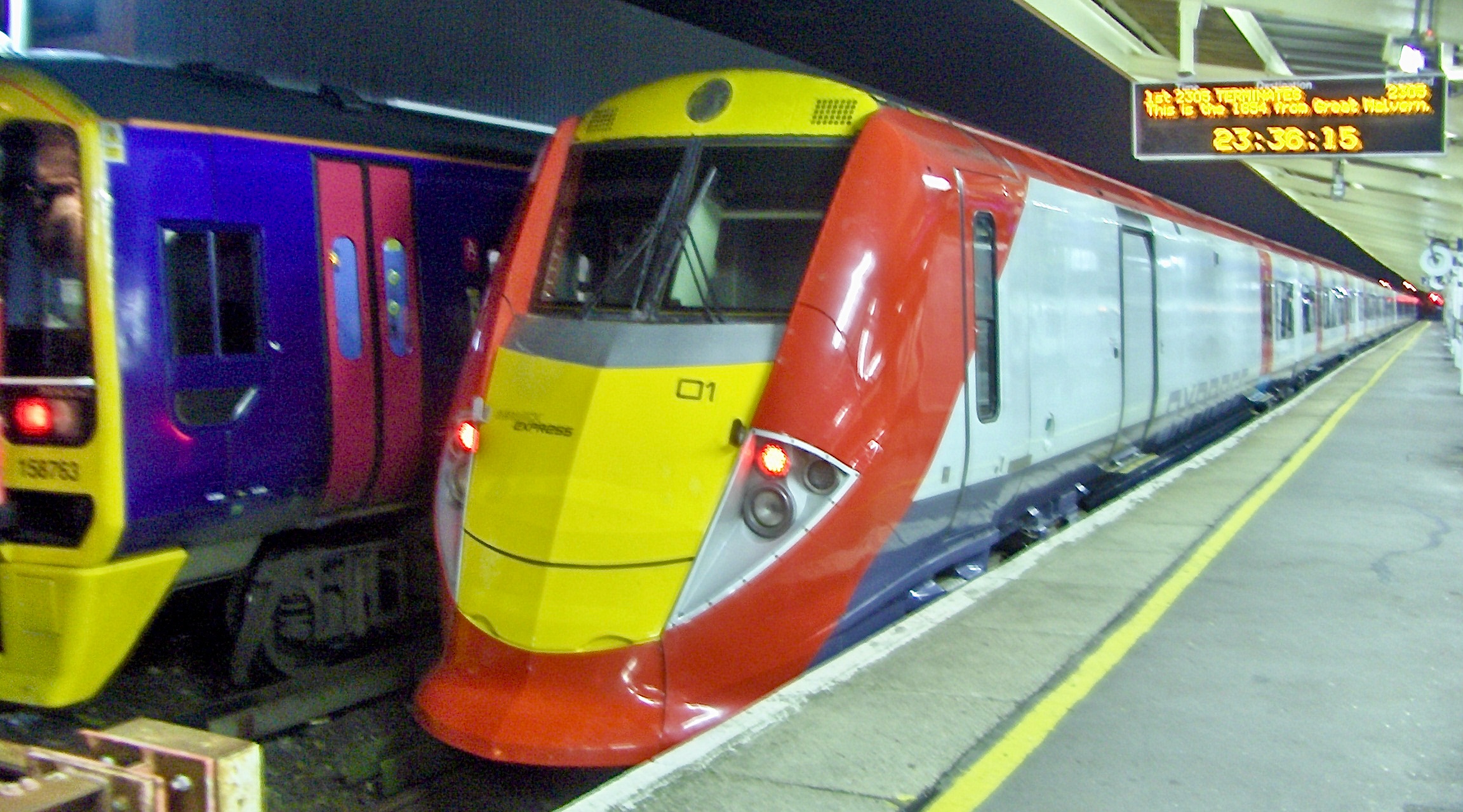
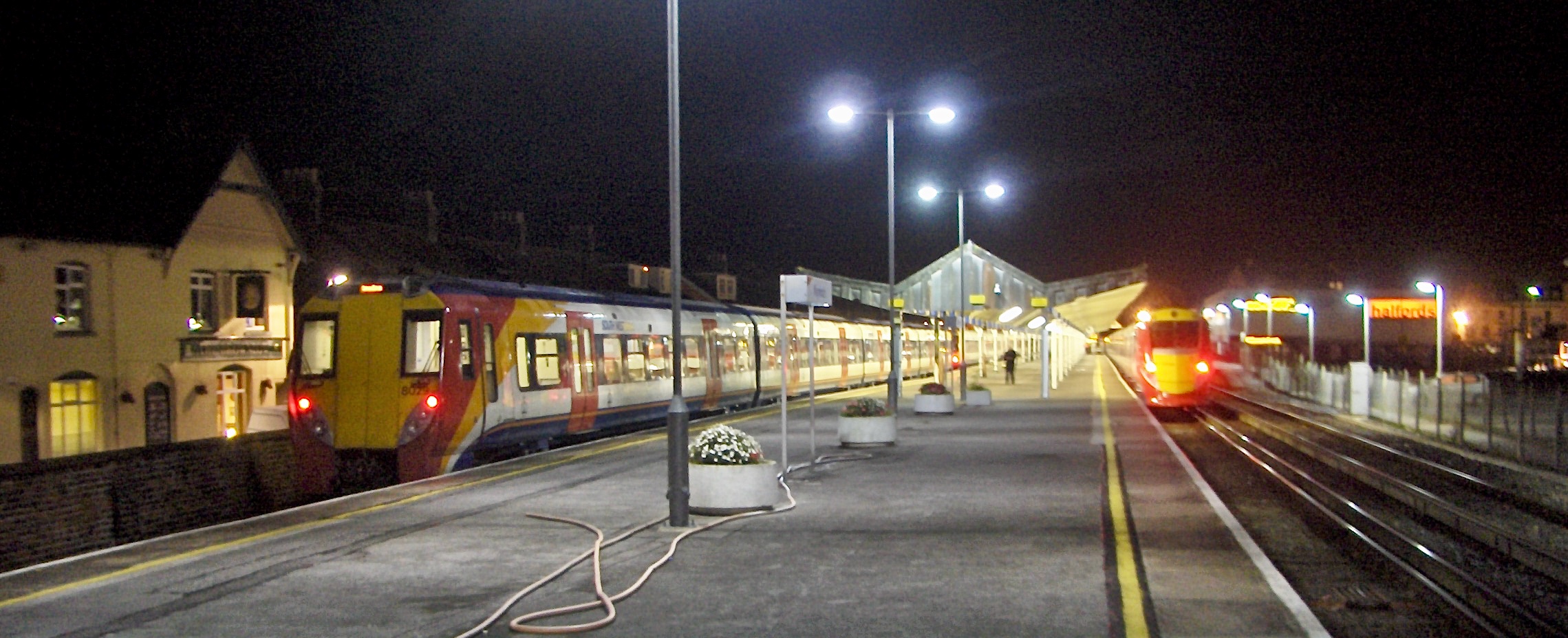
The first unit to be refreshed No. 458006 was involved in test runs to Weymouth in August 2008. Later the same year trials of regenerative braking were undertaken between Weymouth and Dorchester South and Wareham using No.’s 458027 / 458002 or 458029 as the calibration unit with Gatwick Express Class 460 No. 460001 on passing tests along with slam-door units 3-CIG No. 1497 and 4-VEP No. 3417 as static units. Energy produced by a standard train braking is lost, but a regenerative braking system returns electricity to the third rail system, allowing trains in close proximity to draw on the electrical supply. These and subsequent trials were successful with regenerative braking enabled across all 30 Class 458 units by mid-2011.
Class 460 Gatwick Express EMU No. 460001 at Weymouth during regenerative braking test runs. It’s no surprise these units earned the nickname of “Vaders” – 24/10/2008 (John Chappell)Class 460 No. 460001 at the buffer stops in Weymouth during regenerative braking test runs – 24/10/2008 (John Chappell)Class 458 No. 8029 and Class 460 No. 460001 at Weymouth taking part in regenerative braking tests – 25/10/2008 (John Chappell)
By the end of 2012 the fleet was achieving an average distance of 106,049 miles between significant failures making them the most reliable fleet in the UK with the first to achieve six figure mileages. It was around this time that SWT looked to supplement their fleet with additional Desiro units, but a request for funding was turned down by DafT. Instead a £42 million proposal was accepted from Porterbrook whereby the Class 458 fleet would reconfigured into five car trains for use on suburban services by supplementing the original four carriage units with vehicles extracted from the Class 460 fleet, which Porterbrook also owned and was at that time being released from service with Gatwick Express. The Class 460 cars would be comprehensively rebuilt to match the Class 458 units providing a total fleet of 36 5-car units that would be designated Class 458/5 providing increased capacity on services into London Waterloo. The contract for the conversion work was awarded to Alstom who in turn contracted Westinghouse Air Brake Technologies Corporation (Wabtec) based in Doncaster. The traction motors were re-geared to reduce the train’s maximum speed from 100 mph to 75 mph reducing the likelihood of overheating when making frequent stops and starts, and because the higher speed was deemed unnecessary on suburban services. The first two converted Class 460 units entered into passenger service in March 2014 which enabled SWT to release original Class 458/0 units for rebuilding, the project being completed in March 2016.
Class 458 No. 458503 stands in the shed at Bournemouth TRSMD – 28/01/2023
In August 2017, the South Western franchise became a FirstGroup/MTR joint venture named South Western Railway (SWR) who ordered a new fleet of 750 vehicles to be designated Class 701 from Bombardier Transportation intended as replacements for Class 455, 456, 458, and 707 on South Western suburban services from late 2019 onwards. As regular readers will know, continuing delays to the Class 701 program, with these trains yet to enter passenger carrying service, have kept all four older fleets in use into the 2020’s.
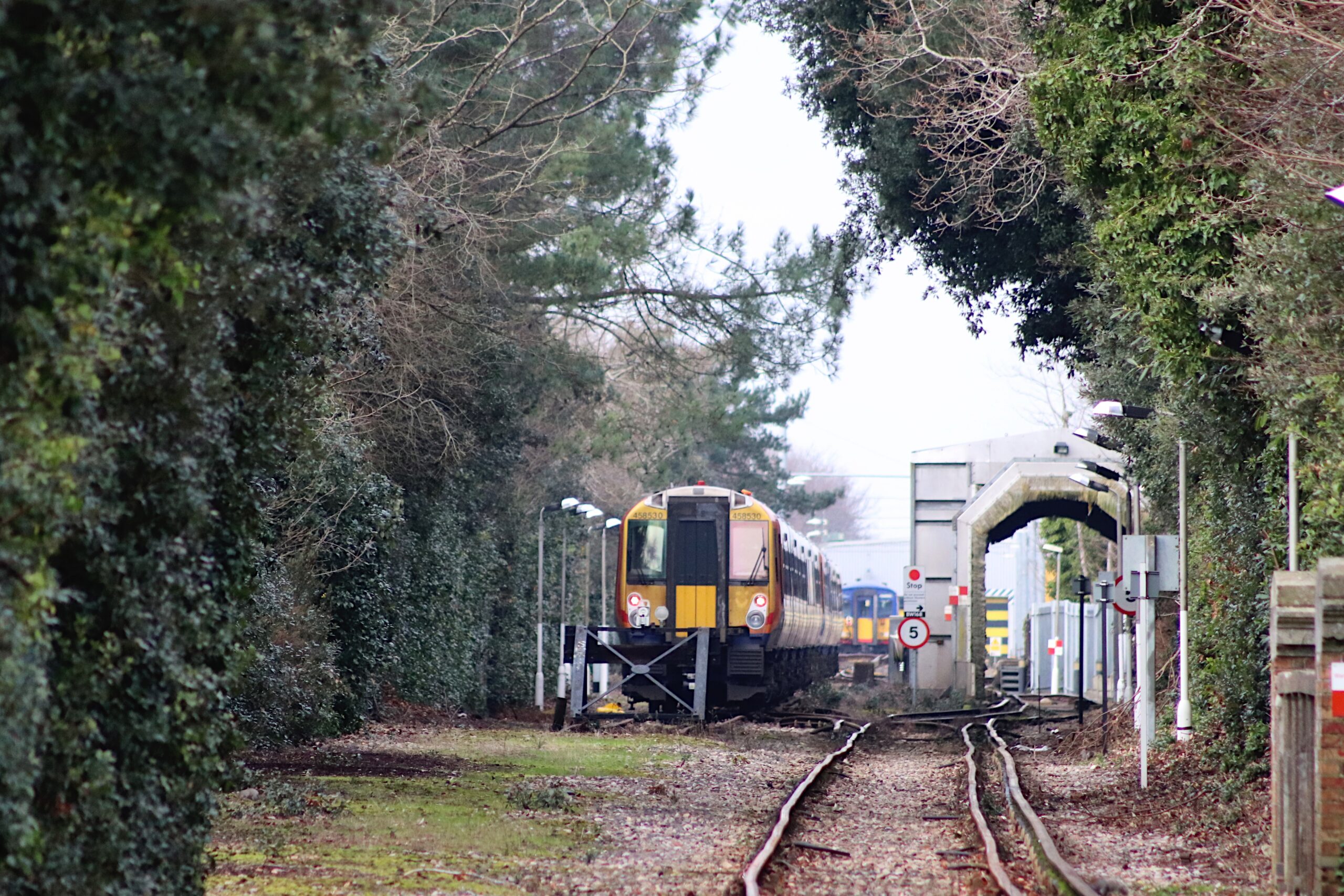
Class 458 No. 458530 adjacent to the train-wash at Bournemouth Depot, once the line to Somerset & Dorset Railway terminus at Bournemouth West – 28/01/2023
In March 2021 SWR announced that 28 Class 458/5 units would be refurbished and redeployed on long-distance services along the Portsmouth Direct line. This was as a result of the company deciding to abandon their original plan to use upgraded Class 442 units for this purpose citing continuing technical difficulties and future problems complying with accessibility regulations. As part of the refurbishment the Class 460 vehicle previously added is being removed and the passenger saloons modified by Alstom at Widnes Transport Tech in Cheshire at a cost of £25 million. The original maximum speed of 100 mph will be restored and the reconfigured units, leased from Porterbrook until 2027 at least, will be based at Bournemouth Traction and Rolling Stock Maintenance Depot. The first two units sent for refurbishment were No.’s 458507 and 458517 which arrived in Widnes during August 2022.
Video of Class 458 No. 458405 and 458407 on test at Branksome – 03/11/2023
5X73 0812 Wembley Receptions 1-7 to Bournemouth T&R.S.M.D ran on Wednesday 8th November consisting of Class 47 No. 47739, Class 56 No. 56081 and refurbished Class 458 No. 458428. I saw the train arriving at Branksome.
GBRf Class 47 No. 47739 slows on arrival at Branksome to allow a driver to climb down from the locomotive ready to take control of Class 56 No. 56081 and lead in to Bournemouth Depot with Class 458 No. 458428 – 08/11/2023Class 56 No. 56081 at Branksome working 5X73 0812 Wembley Receptions 1-7 to Bournemouth T&R.S.M.D into the depot – 08/11/2023
The planned return working as 5Q73 1612½ Bournemouth T&R.S.M.D to Widnes Transport Tech this time with the locomotives transporting un-refurbished Class 458/5 No. 458524 was cancelled as route clearance was withheld because of paperwork issues, the consist actually getting away the following evening as 5Q73 1810 Bournemouth TRSMD to Widnes Transport Tech. With only 20 minutes notice from the train movement being added to Real Time Trains, I was unable to get over to Branksome to see it depart. However, things didn’t go quite to plan as the train came to a stand at Christchurch because the brakes on the Class 458 were found to be on! If the brakes developed a fault in transit, or someone forgot to release them prior to departure is a moment of speculation at present. Eventually, after causing much disruption to passenger services as the up line was effectively blocked, the train reversed wrong line to Bournemouth. It then returned to the depot where the unit was removed from the consist and moved to the maintenance side of the yard. Many thanks to Bob for alerting me to the fact the train had been stopped at Christchurch as well as keeping me updated. Thanks also to Jamie and Nick for updates. I was otherwise occupied watching Heaven 17 at the O2 Academy in Boscombe!
Heaven 17 on stage at the O2 Academy in Bournemouth – 09/11/2023
Opened in 1895 as the Grand Pavilion Theatre it became The Boscombe Grand Theatre in 1899 and renamed Hippodrome in c.1910. First used as a circus, the venue was built as part of a development including the spacious Boscombe Arcade and Salisbury Hotel. Throughout its life the building has experienced several changes including being converted into a dance hall, a Royal Ballroom and was a renowned venue for the disco era of the 70’s, club acts of the 80’s and the dance explosion of the 90’s. It consists basically of three, very tall, mullioned and transomed windows each surmounted by a Flemish gable. The auditorium is beautiful and looks very much like an early music hall. Above the flat main floor is a shallow balcony carried on iron columns with a semi-circular end and straight side arms and an openwork iron balustrade incorporating acanthus leaf decoration. Tall, slender iron columns rise from the front edge of the balcony to support a curved ceiling and lateral arcade, with florid openwork spandrel decoration. A wide promenade runs around the rear of the balcony, above which, carried on a further ring of columns, is a second, shallower balcony set back behind the arcade. The galleries originally ran straight up to the proscenium wall, but in 1910 a range of paired boxes were placed either side, flanked by giant composite columns and decorated with Baroque plasterwork. At the same time the proscenium was reconstructed – a tall plaster frame, straight-headed with rounded corners. In December 1982 it reopened as The Academy night club with a flat floor but with the stage remaining in place. The main auditorium is still the heart of the Grade II listed hall which became a music venue in 2009 following a major refurbishment in 2006.
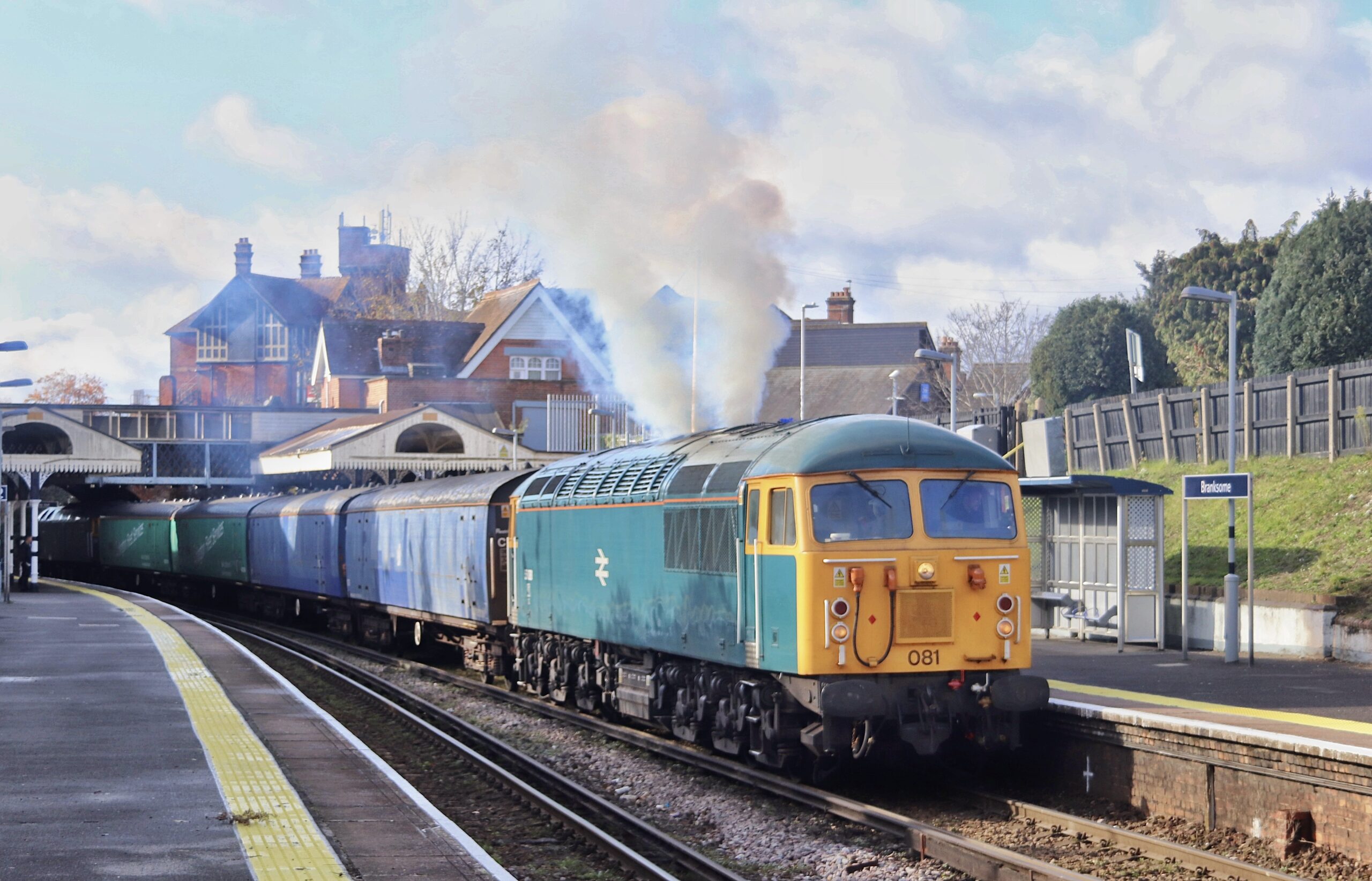
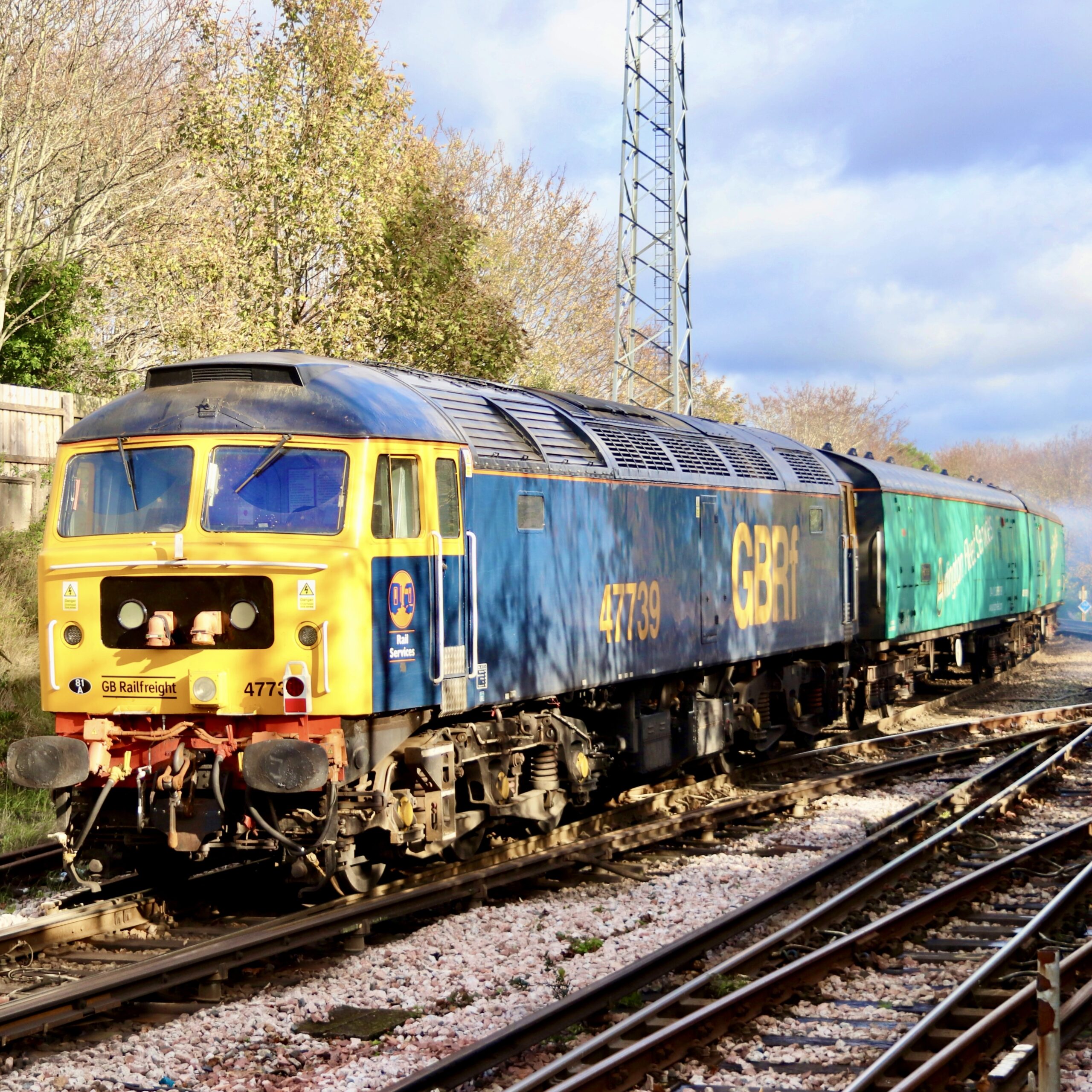
The Class 56 and the Class 47 finally left Dorset on Friday 10th November taking the barrier coaches with them, but no Class 458/5 for refurbishment. This time I had almost 30 minutes to drive over to Branksome railway station and just made it as No. 47739 crawled out of Bournemouth TRSMD.
Class 56 No. 56081 makes a stirring departure from Branksome working 5M55 1232 Bournemouth T&RSMD to Leicester L.I.P. – 10/11/2023Class 47 No. 47739 at the rear of 5M55 1232 Bournemouth T&RSMD to Leicester L.I.P. departing Branksome – 10/11/2023SWR Class 159 No. 159105 arrives at Branksome forming 5Y14 1141 Salisbury TRSMD to Bournemouth TRSMD – 08/11/2023
Workings at Branksome on 8th and 10th November 2023
For The Record:
In other news, Bournemouth, Christchurch and Poole are to get new dedicated Transport Safety Officers (TSO’s) on public transport to help stamp out anti-social behaviour on buses, trains and trams as part of a £2.5m Department of Transport funded pilot scheme. The TSO’s will patrol targeted routes and locations, working in co-ordination with local police forces and the British Transport Police (BTP). The officers will work to improve safety with an emphasis on engagement and education, however, they will also hold the power to issue fixed penalty notices in response to certain antisocial behaviour. Along with the BCP area, Lancashire, Stoke-on-Trent and Thurrock will also be part of the trial scheme and local authorities will be able to develop and implement approaches that deal with the specific needs of their local area.
Despite a good summer season and a 19% increase in footfall generally, the Swanage Railway is still experiencing lower visitor numbers than before the pandemic while costs have continued to rise, especially in coal and energy costs due to the war in Ukraine, plus unexpected expenditure such as the repairs to Bridge 11. In an attempt to ease the situation, a “Save Your Railway” appeal has been launched with the aim of raising £450,000 to support the heritage line through to the beginning of the 2024 running season. In the meantime a programme of changes are being implemented designed to make the heritage line more efficient and effective, attracting increasing numbers of passengers. To donate, please click through here.
The National Union of Rail, Maritime and Transport Workers union (RMT) and Rail Delivery Group (RDG) have both agreed on a Memorandum of Understanding (MoU) in the ongoing rail dispute over pay and conditions. The MoU sets out how the dispute can be developed with a mutually agreed way forward. Some of the agreements include a backdated payrise for 2022 as well as staff and job security guarantees. This will now be put forward to RMT members employed by each of the Train Operating Companies (TOC’s), including SWR and Great Western Railway (GWR) in a referendum vote. If accepted, the MoU will terminate the national dispute mandate and create a pause in industrial action over the Christmas period and into Spring.
The monthly 1Z22 Derby RTC to Bristol Kingsland Road test train via Weymouth was turned around at Yeovil Pen Mill (again) without reaching the Dorset seaside town on 8th November 2023. This time Class 43 HST power cars No.’s 43257 and 43274 were deprived of sea, sand and ice-cream.
That brings us to the end of another blog entry. Thanks for reading! Be seeing you!
Yoshi enjoyed our morning walk around Holes Bay on 07/11/2023
Definitely not coming to a cinema near you anytime soon! A movie poster created using Microsoft Bing Creator Artificial Intelligence.
October 26th 2023 to November 2nd 2023
It was very quiet around these parts this last week. Nothing much of note to report on the rails of Dorset as far as I’m aware. Storm Ciarán hit the South West in the early hours of Thursday 2nd November with the BBC reporting train lines ground to a halt, with some rail operators telling commuters to work from home – and drivers in the south and west of UK were told to avoid coastal roads. South Western Railway (SWR) ran a revised service during the day and warned of the weather conditions ability to cause flooding, landslips, low adhesion from increased leaf fall and debris on the tracks. Across the South West of England, there were no Great Western Railway (GWR) services in Cornwall because of flooding and fallen trees. The line was also closed between Exeter and Taunton, Salisbury and Southampton, Reading to Gatwick and a reduced service to Heathrow. Locally, SWR Weymouth services terminated at Bournemouth with an hourly shuttle service between Bournemouth to Weymouth providing half the normal frequency. The line between Bournemouth and Hinton Admiral was blocked for a time due to heavy flooding. A pair of two-car SWR Class 158 Diesel Multiple Units No.’s 158884/886 then formed a shuttle service between Bournemouth and Brockenhurst. CrossCountry (XR) services to Bournemouth were also disrupted with several services stopping short at Brockenhurst. Brittany Ferries cancelled most of their services on Wednesday and Thursday, while Condor Ferries suspended all sailings on these two days.
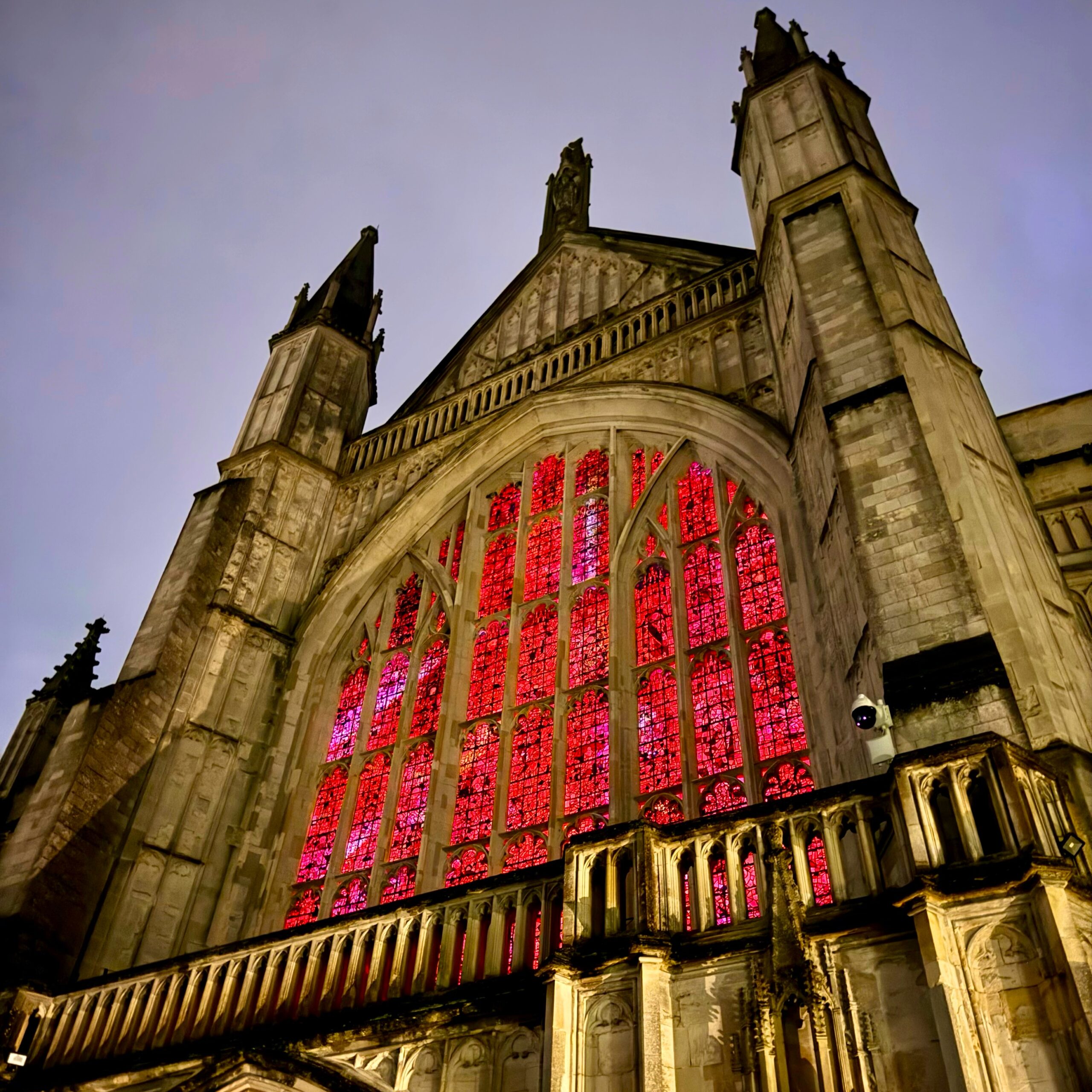
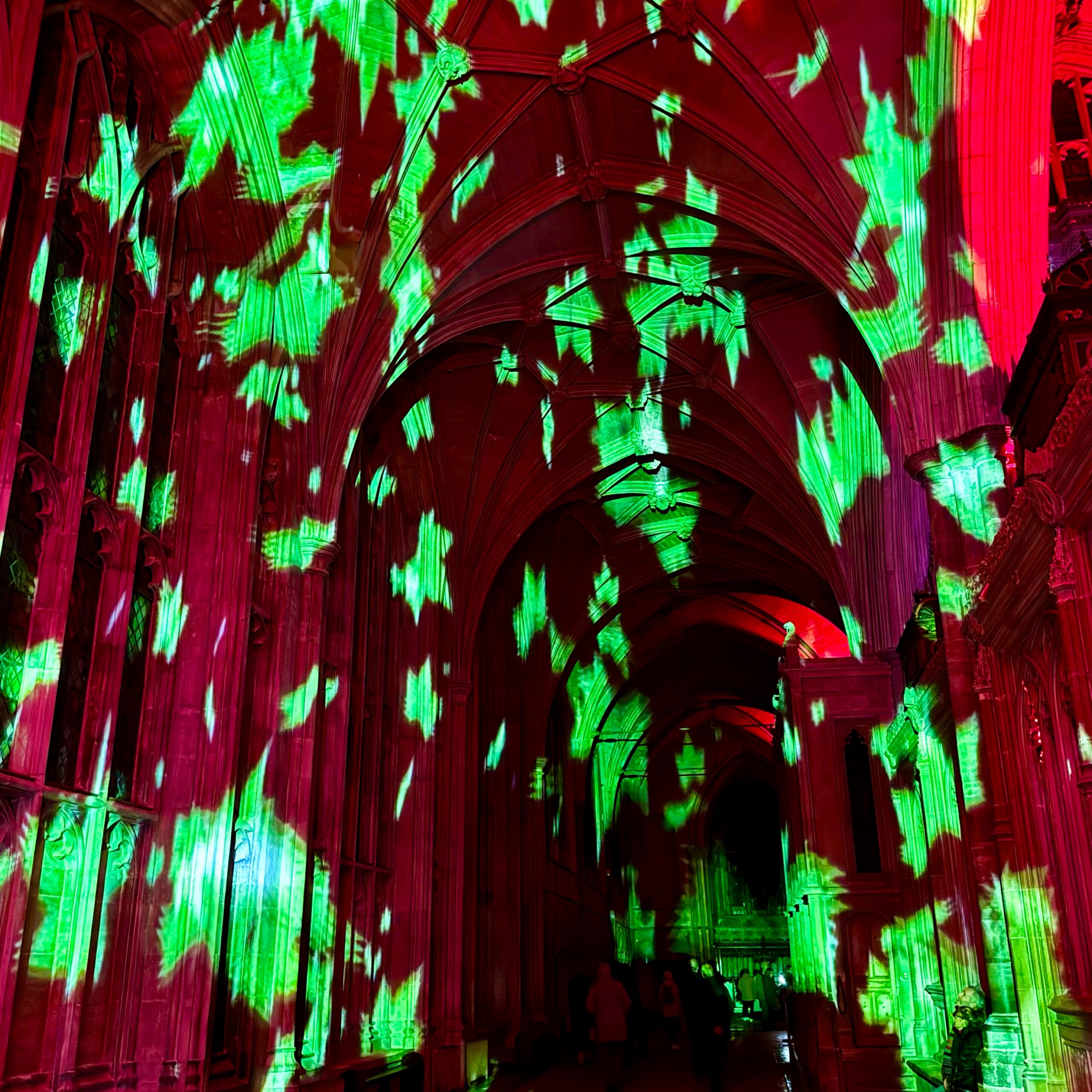
Tuesday evening I was in Winchester visiting the Cathedral to see “Poppy Fields” an immersive light and sound show by Luxmuralis. Billed as a “spectacular light and sound show which takes you on a mesmerising journey of reflection and hope”, the art installation did not disappoint. Developed from the concept of “son et Lumiere” Luxmuralis is a collaborative team combining artists from different backgrounds and artistic disciplines who create works across multimedia and presentation formats whilst exploring the development of fine art tradition through new media ultimately taking the medium onto the streets and providing access to visual artwork in public as well as unexpected places.
Winchester Cathedral – 31/10/2023
“Poppy Fields” was sponsored by South Western Railway and was presented at Winchester Cathedral from 31stOctober to 4th November 2023. Appropriately enough, we took the train for our visit, arriving in the City in good time for our ticketed time of 2000. By good judgement of the stewards in attendance we were allowed early access to the cathedral due to the wet weather and joined a queue of other eager first night attendees.
“Poppy Fields” at Winchester Cathedral created by Luxmuralis – 31/10/2023“Poppy Fields” at Winchester Cathedral created by Luxmuralis – 31/10/2023“Poppy Fields” at Winchester Cathedral created by Luxmuralis – 31/10/2023“Poppy Fields” at Winchester Cathedral created by Luxmuralis – 31/10/2023
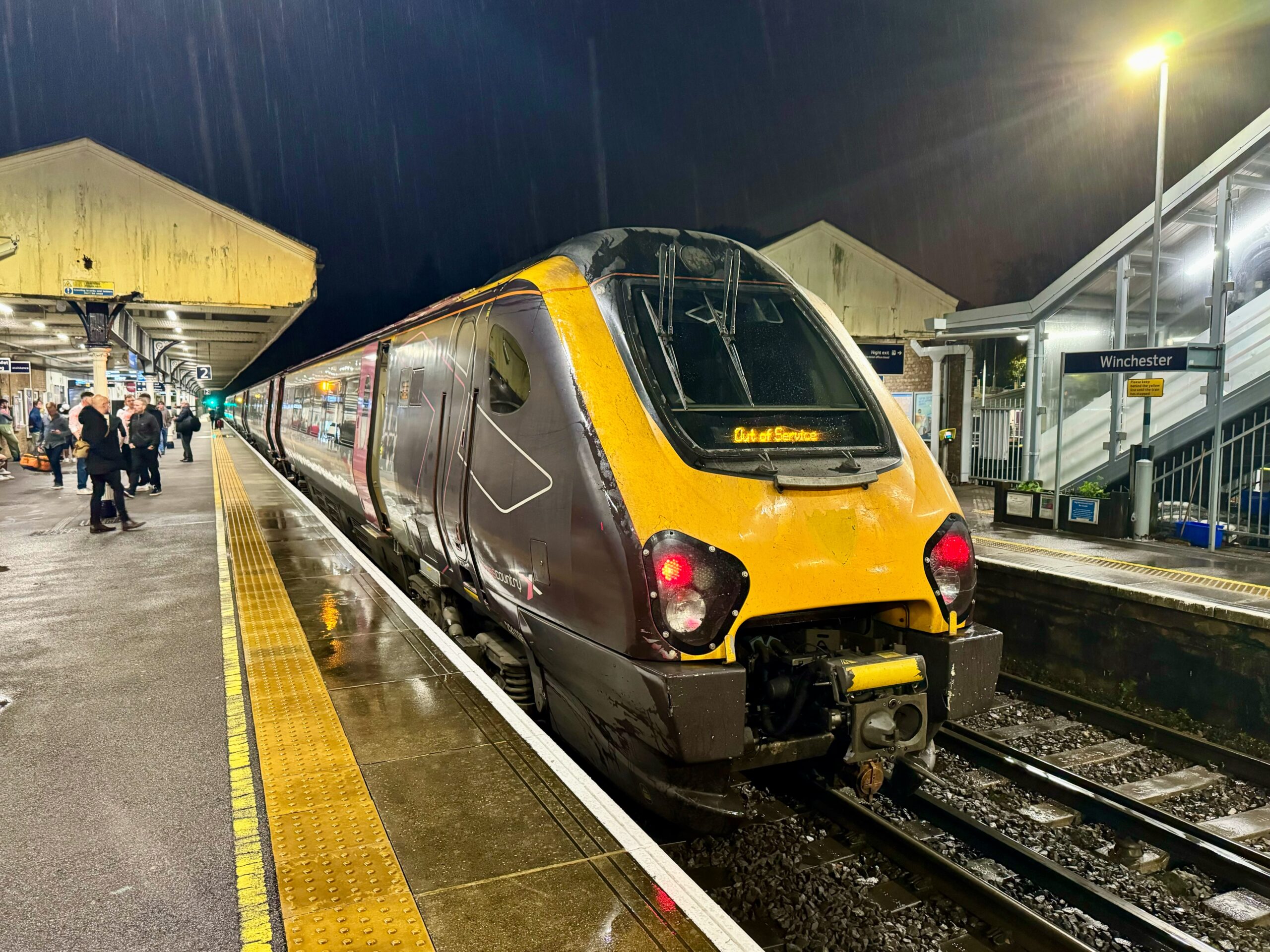
Unfortunately our usual good time keeping was lacking for our return journey and this, compounded by our SWR service departing Winchester early meant that we were left on the station platform with the last train west of Poole disappearing into the night. Taking a screen grab from Real Time Trains of evidence, one of our party had the foresight to contact the SWR helpline to advise of the situation with the result that within the hour we were heading home in a taxi (which had come all the way from Southampton to collect us!) provided by the railway company. While our transport was on its way, I obviously took the opportunity to see a couple of freight trains passing through Winchester amongst an assortment of SWR Class 450’s, 444’s and a XR Class 221 Voyager.
CrossCountry Voyager Class 221 No. 221135 working 1O30 1825 Manchester Piccadilly to Winchester. This service would normally run to Bournemouth but on this occasion terminated short at Winchester, the unit moving forward as 5Z30 2228 Winchester to Eastleigh TRSMD empty coaching stock – 31/10/2023
Winchester railway station was opened on 10th June 1839 by the London and Southampton Railway as a temporary terminus for the Winchester to Southampton section. Another station was opened at Basingstoke on the same day, which acted as the temporary terminus of the London to Basingstoke section. The line connecting Winchester and Basingstoke completed in March 1840.
Another line was constructed to run via Guildford, Farnham and Alton, which joined the main line north of Winchester. The present day line runs via Aldershot instead of Guildford, and the line finishes at Alton. British Rail closed the line from Alton to Winchester in 1973 but a section from Alton to Alresford is preserved as the Watercress Line.
The Great Western Railway had their own line having absorbed the Didcot, Newbury and Southampton Railway which opened in stages between 1882 and 1885. This used a separate station on the eastern side of Winchester, when opened called Winchester Cheesehill, which I think is an excellent name but this was later changed to Winchester (Chesil). It was renamed again in 1949 when the brackets were dropped and the station became known as Winchester Chesil, whilst Winchester’s main station was renamed Winchester City. When Chesil closed in 1966, British Rail (BR) changed the station name from Winchester City during the following year to Winchester as it is known today.
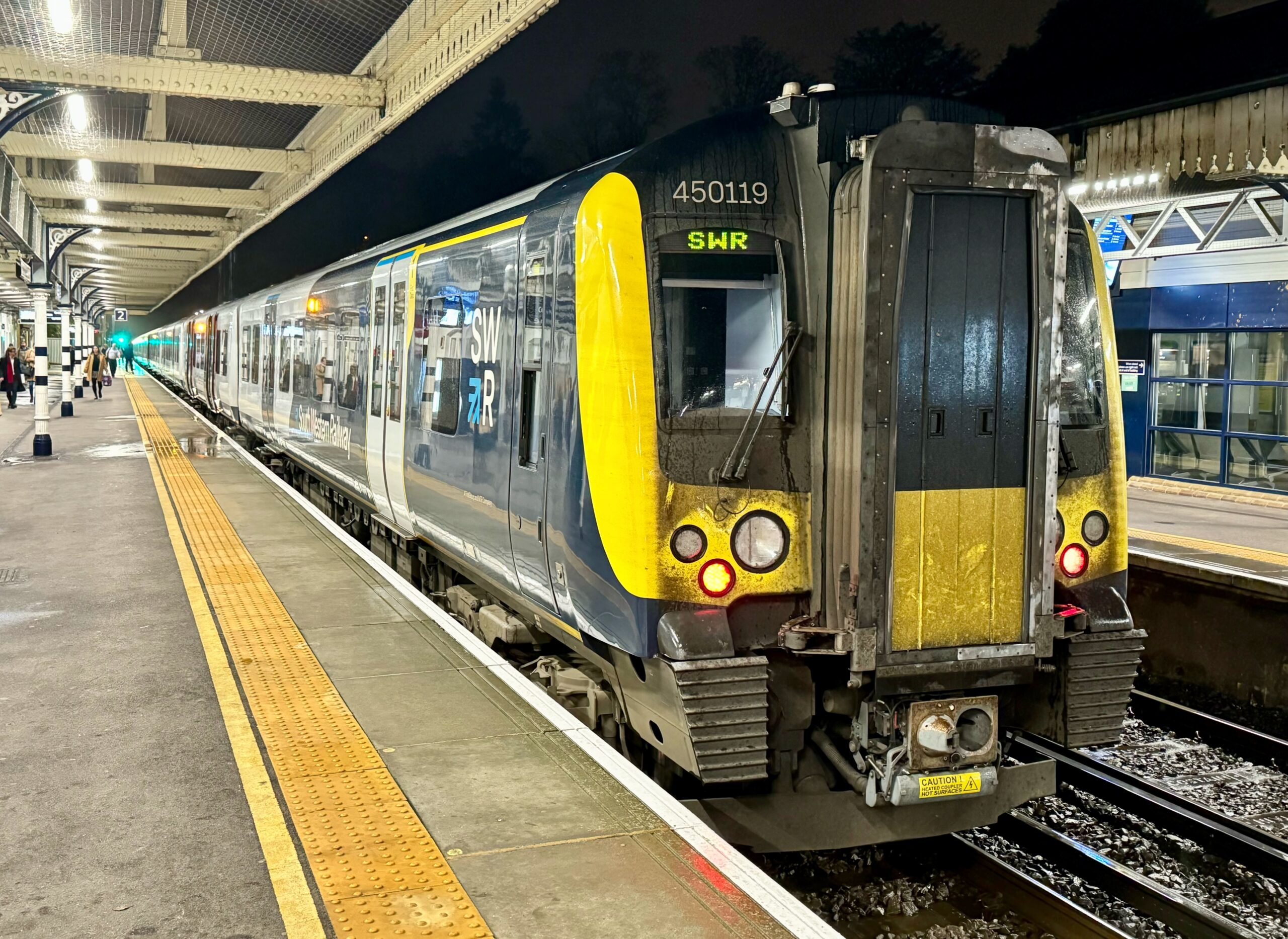
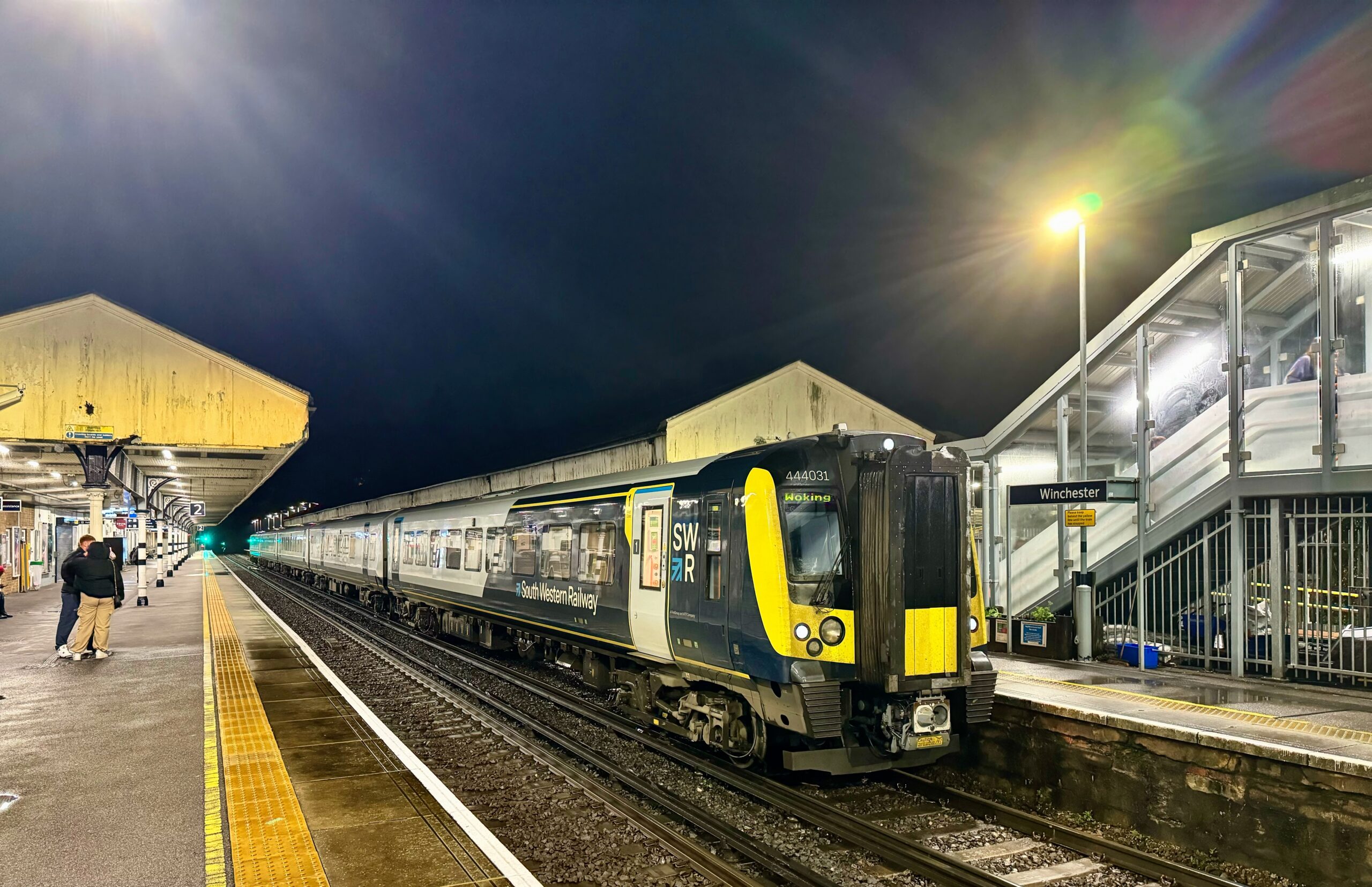
SWR Class 450 No. 450119 at Winchester working 1B73 2205 London Waterloo to Bournemouth in tandem with Class 444 No. 444012 – 31/10/2023Class 444 No. 444031 stops at Winchester working 1W82 2100 Weymouth to Woking – 31/10/2023
Video from an hours sojourn at Winchester railway station – 31/10/2023
In other news, the government has cancelled rail industry plans for the mass closure of ticket offices in England, saying they failed to reach the “high threshold of serving passengers”. You may recall The Rail Delivery Group (RDG) had announced over the summer that it intended to shut almost all of the nation’s 1,007 train station ticketing outlets in an effort to reduce costs after a ‘post-COVID fall in passenger numbers’. Following a public outcry over the three week public consultation period running from 5th to 26th July as originally proposed, this was hastily extended to 1st September. Although the cost-cutting proposals were made by the train operators managing the station offices, they were widely understood to have been pushed by a government eager to trim the subsidy for rail. According to the passenger watchdogs managing the survey after receiving over 750,000 responses to the consultation, with what is believed to have been a figure of around 99% of which were objections, the Transport Secretary Mark Harper confirmed he had asked train operators to “withdraw their proposals”.
The government announcement on Tuesday 31st October came after watchdogs Transport Focus and London TravelWatch said they opposed every single planned closure due to concerns over the impact on passenger accessibility. During the previous week a cross-party transport committee of MP’s also warned the plans went “too far, too fast” and described the consultation as lacking in transparency. Prime Minister and private jet enthusiast Rishi Sunak said in September that closing ticket offices was “the right thing for the British public and British taxpayers” because “only one in 10 tickets are sold currently in ticket offices”. However, Mr Harper said in his statement on Tuesday that the government had made clear to the industry throughout the consultation that its proposals “must meet a high threshold of serving passengers”. He added; “We have engaged with accessibility groups throughout this process and listened carefully to passengers as well as my colleagues in parliament. The proposals that have resulted from this process do not meet the high thresholds set by ministers, and so the government has asked train operators to withdraw their proposals. We will continue our work to reform our railways with the expansion of contactless Pay As You Go ticketing, making stations more accessible through our Access for All programme and £350m funding through our Network North plan to improve accessibility at up to 100 stations.”
Another AI generated image from Bing!
A lot of words this week, and not many visuals! Thank you for visiting and for your comments. We’ll be back soon, in the meantime take care and….. be seeing you!
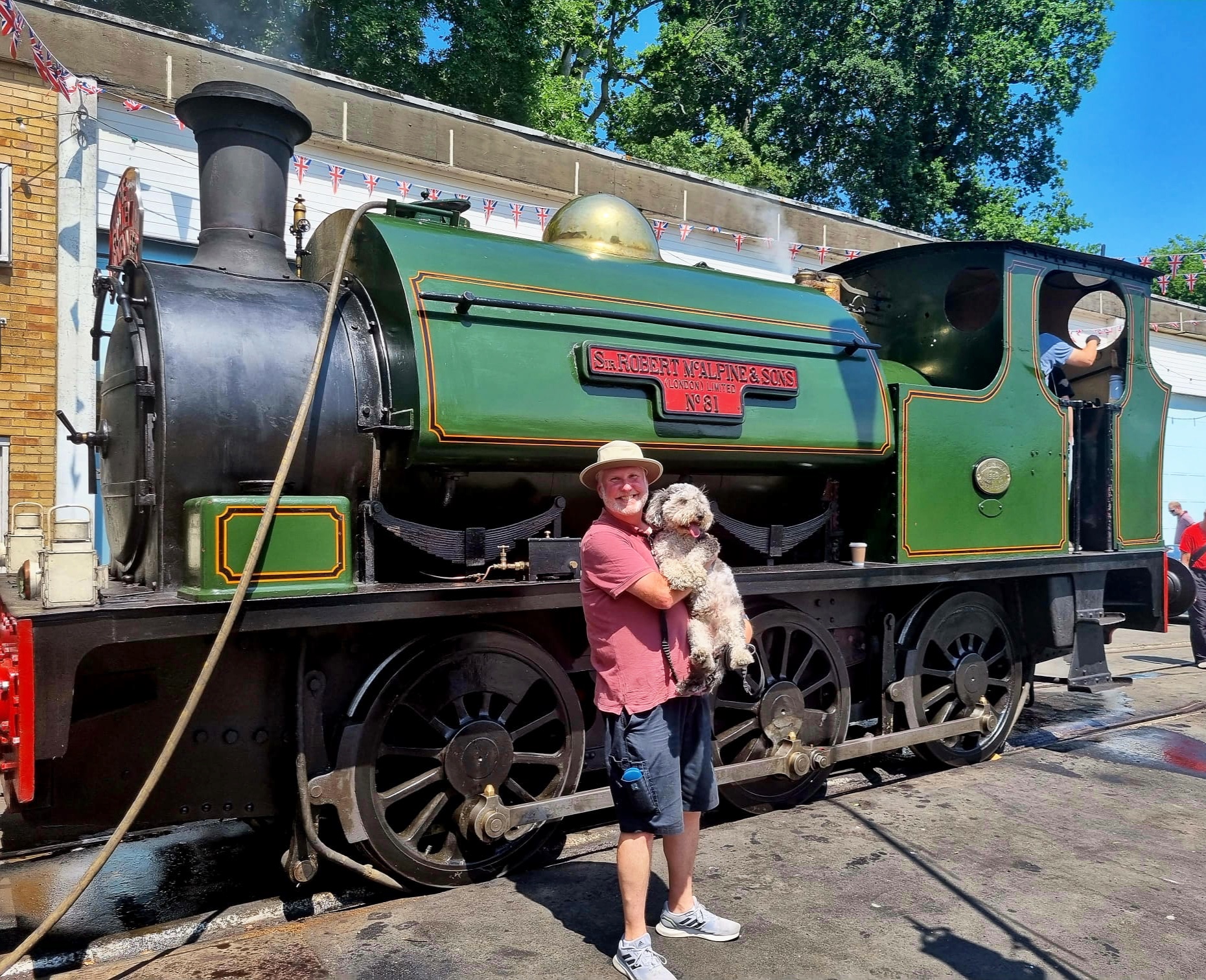
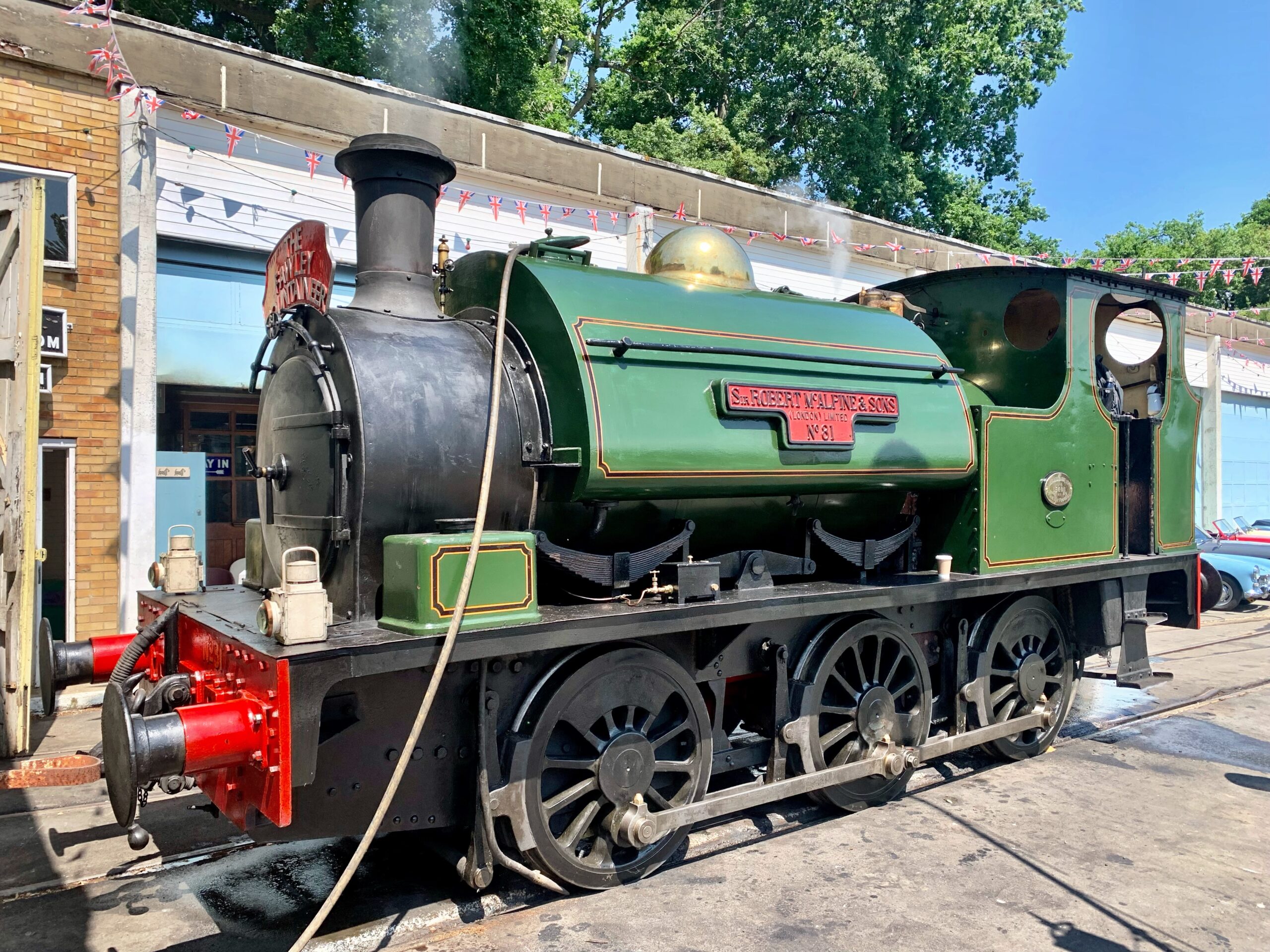
Yoshi and I in front of Hudswell Clarke & Co Ltd 0-6-0 ST No. 31 at Fawley Hill Museum – 25/06/2023
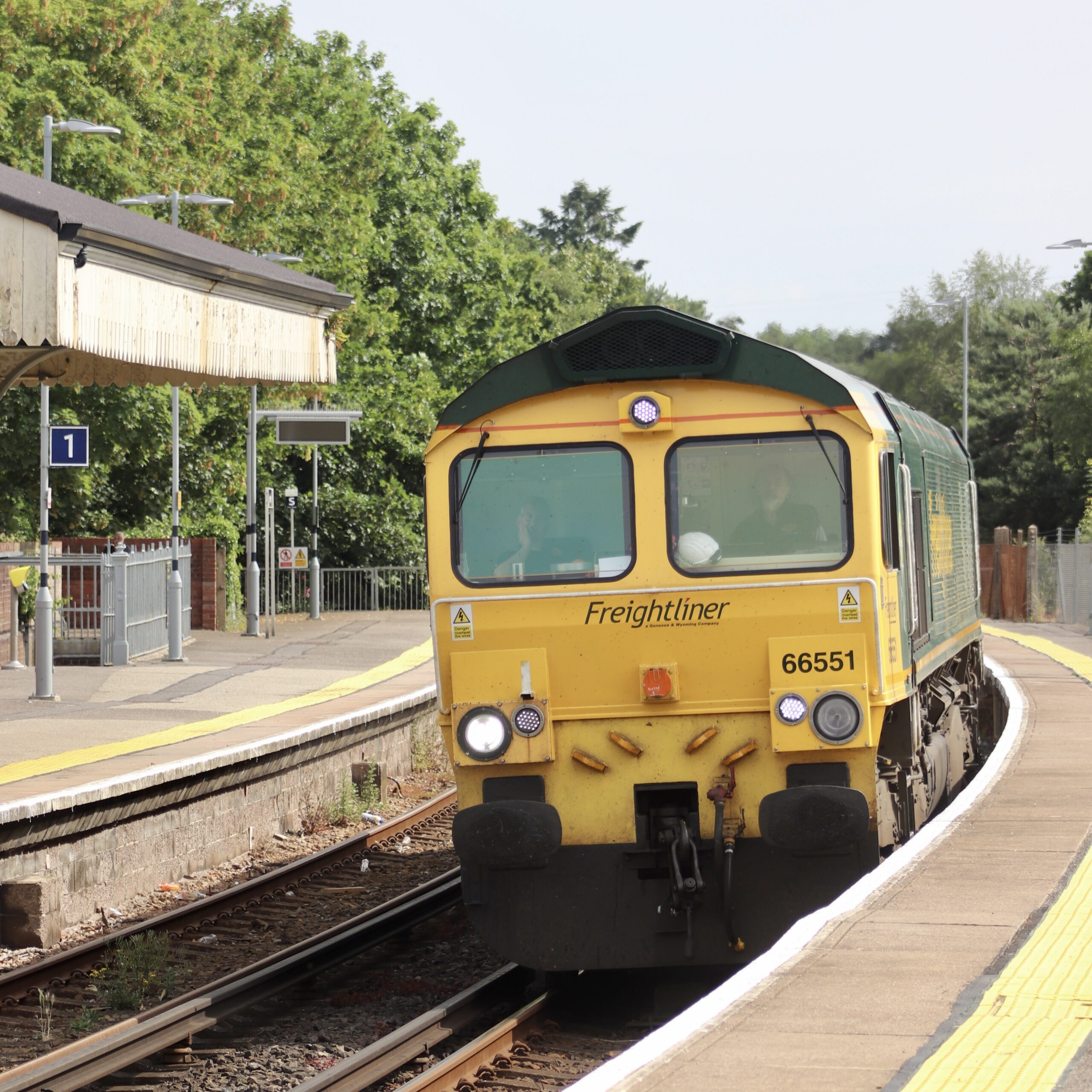
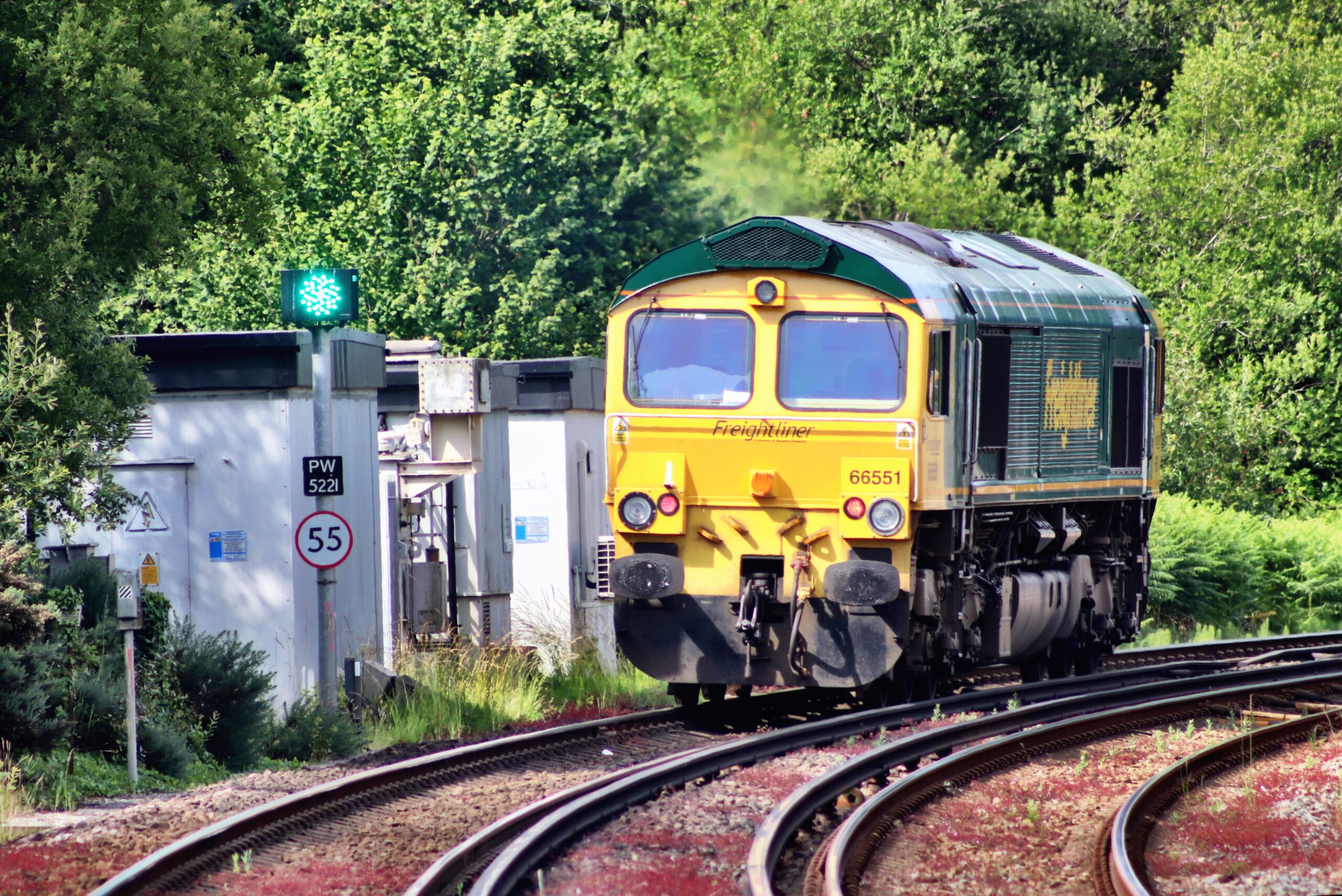
We eased into a busy few days by popping over to Hamworthy on Friday 23rd June 2023 to see a Freightliner Class 66 locomotive on a route learner from Southampton Maritime to Weymouth and back. No idea if this means there may be some engineering trains heading our way in the future or just a refresher for the crew. Either way, it was good to see.
Freightliner Class 66 No. 66551 passes Hamworthy on a route learner running as 0W45 0902 Southampton MCT to Weymouth – 23/06/2023Freightliner Class 66 No. 66551 having passed through Hamworthy station working 0W45 0902 Southampton MCT to Weymouth – 23/06/2023
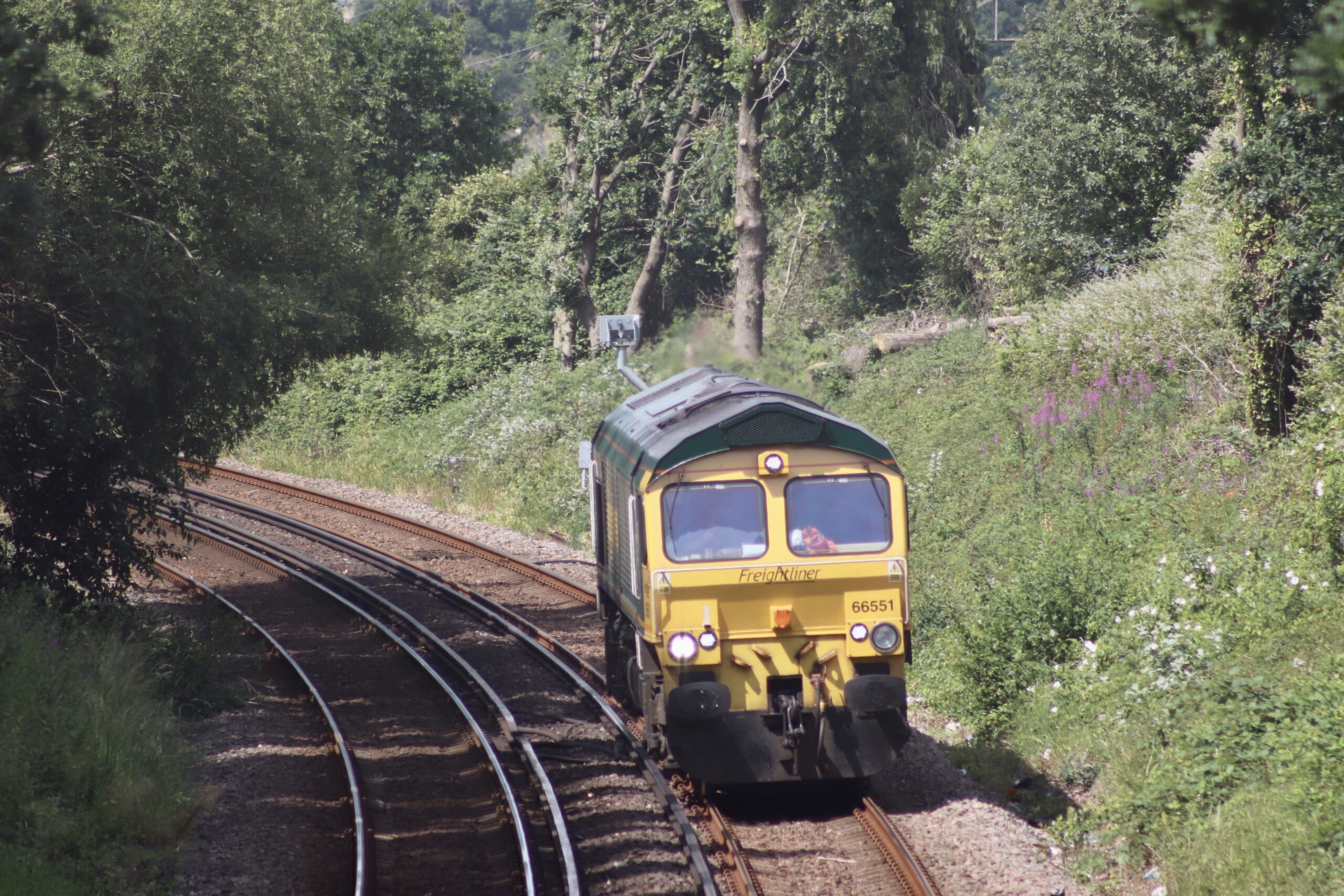
On the return trip back to Southampton Maritime, I sought a location I have not used previously. A footbridge across the railway afforded a nice view of the mainline on the approaches west of Hamworthy. I had not, however, taken into the account that the bridge was surrounded by mesh which made photography very difficult. It was also very bouncy when being walked across, so I was very relieved nobody passed at the same time as the light Class 66 trundled by underneath!
Freightliner Class 66 No. 66551 passes Hamworthy on the return route learner running as 0W46 1041 Weymouth to Southampton MCT – 23/06/2023
Class 66 No. 66551 on route learning duties – 23/06/2023
On Saturday, Yoshi’s mama had planned an all female picnic meet-up with friends, which left the boy and I free to go and see some trains during the day! I’d noted on the rail tour calendar that double-headed Class 69’s were scheduled to run down to Cornwall, so this became my objective of the day. In fact there were four tours scheduled to pass through Taunton that same day, with one changing diesel traction for steam in the station, so this was probably a good choice of location.
Cornish Mazey Day Statesman – 1Z64 0522 Solihull to Penzance
LSL Class 47 No.’s 47805 and 47614 flying through Creech St. Michael with the “Cornish Mazey Day Statesman” 1Z64 0522 Solihull to Penzance – 24/06/2023
Operated by: Statesman Rail
Motive power: 2 x LSL Class 47 No.’s 47805 and 47614
The Pathfinder Mazey Day Special – 1Z69 0544 Tame Bridge Parkway to Penzance
GBRf Class 69 No.’s 69005 and 69006 on the approach to Creech St. Michael working “The Pathfinder Mazey Day Special” 1Z69 0544 Tame Bridge Parkway to Penzance – 24/06/2023GBRf Class 69 No.’s 69005 and 69006 on the approach to Creech St. Michael working “The Pathfinder Mazey Day Special” 1Z69 0544 Tame Bridge Parkway to Penzance – 24/06/2023
Operated by: Pathfinder Tours
Motive power: 2 x GBRf Class 69 No.’s 69005 and 69006
At a ceremony in Gloucester on Friday 23rd June 2023, No. 69006 was named ‘Pathfinder Railtours – Peter Watts 50 Years Service 1973-2023’. After the naming No.’s 69006 and 69005 ran light engines to Burton to collect the tour stock for the following day.
English Riviera Express – 1Z27 0550 Shrewbury to Kingswear (For Dartmouth)
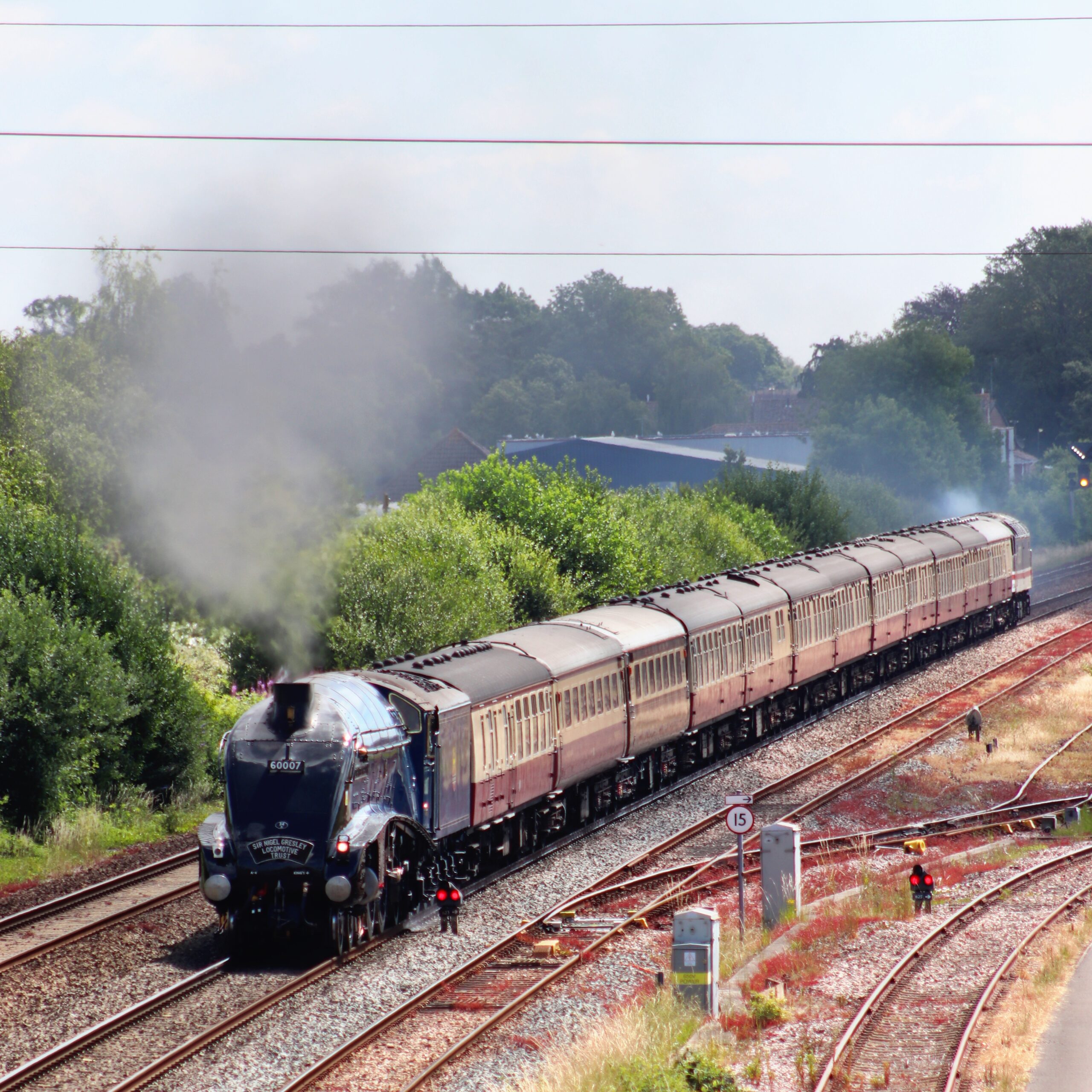
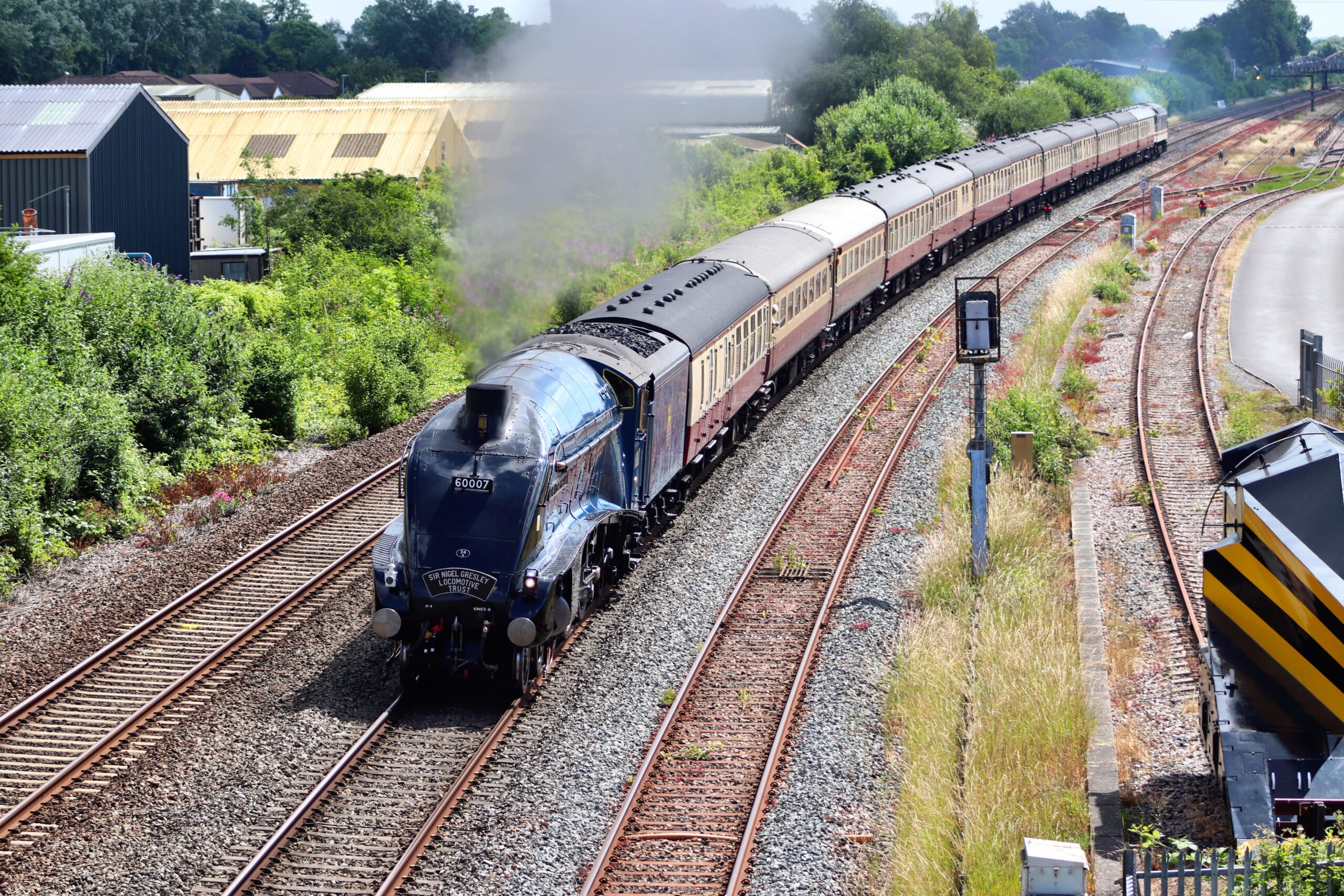
LSL Class 37 No.’s 37521 and 37688 with Class 47 No. 47828 at the rear hauling the diesel leg of the “English Riviera Express” 1Z27 0550 Shrewbury to Kingswear (For Dartmouth) at Creech St. Michael – 24/06/2023LSL Class 47 No. 47828 at the rear of the “English Riviera Express” 1Z27 0550 Shrewbury to Kingswear (For Dartmouth) at Creech St. Michael – 24/06/2023Having changed locomotives in Taunton railway station and now with LNER A4 4-6-2 No. 60007 ‘Sir Nigel Gresley’ in charge “English Riviera Express” 1Z27 0550 Shrewbury to Kingswear (For Dartmouth) passes Fairwater Yard, Taunton – 24/06/2023LNER A4 4-6-2 No. 60007 ‘Sir Nigel Gresley’ heads up the “English Riviera Express” 1Z27 0550 Shrewbury to Kingswear (For Dartmouth) with Class 47 No. 47828 at the rear passing Fairwater Yard, Taunton – 24/06/2023LNER A4 4-6-2 No. 60007 ‘Sir Nigel Gresley’ heads up the “English Riviera Express” 1Z27 0550 Shrewbury to Kingswear (For Dartmouth) at Silk Mills, Taunton – 24/06/2023
Operated by: Saphos Trains
Motive power: 2 x LSL Class 37 No.’s 37521 and 37688 with Class 47 No. 47828 at the rear. At Taunton the Class 37’s were taken off the train and substituted by LNER A4 4-6-2 No. 60007 ‘Sir Nigel Gresley’. The Class 47 remained to provide assistance at the rear.
The Whistling Ghost – 1Z10 0608 Birmingham Snow Hill to Bishops Lydeard
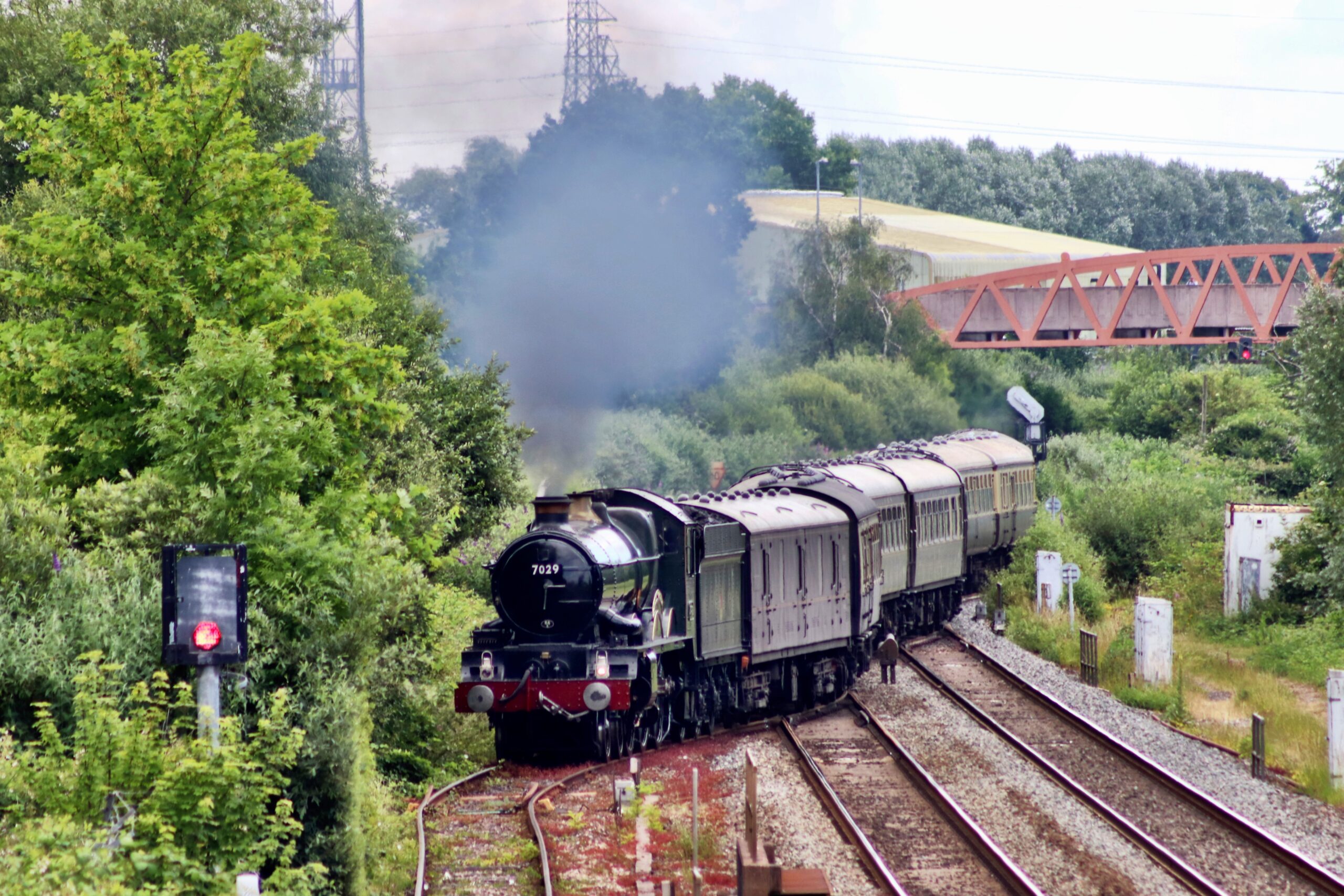
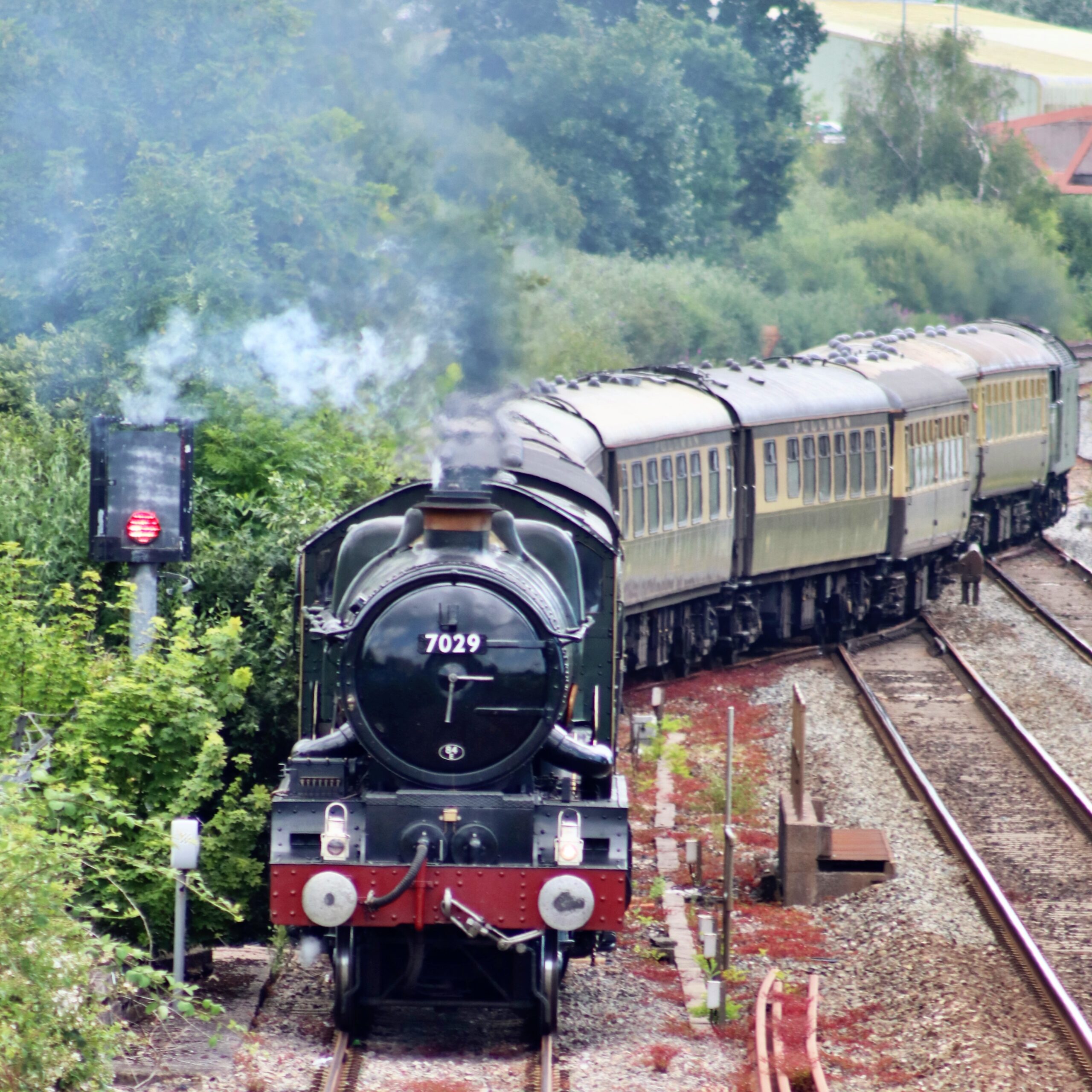
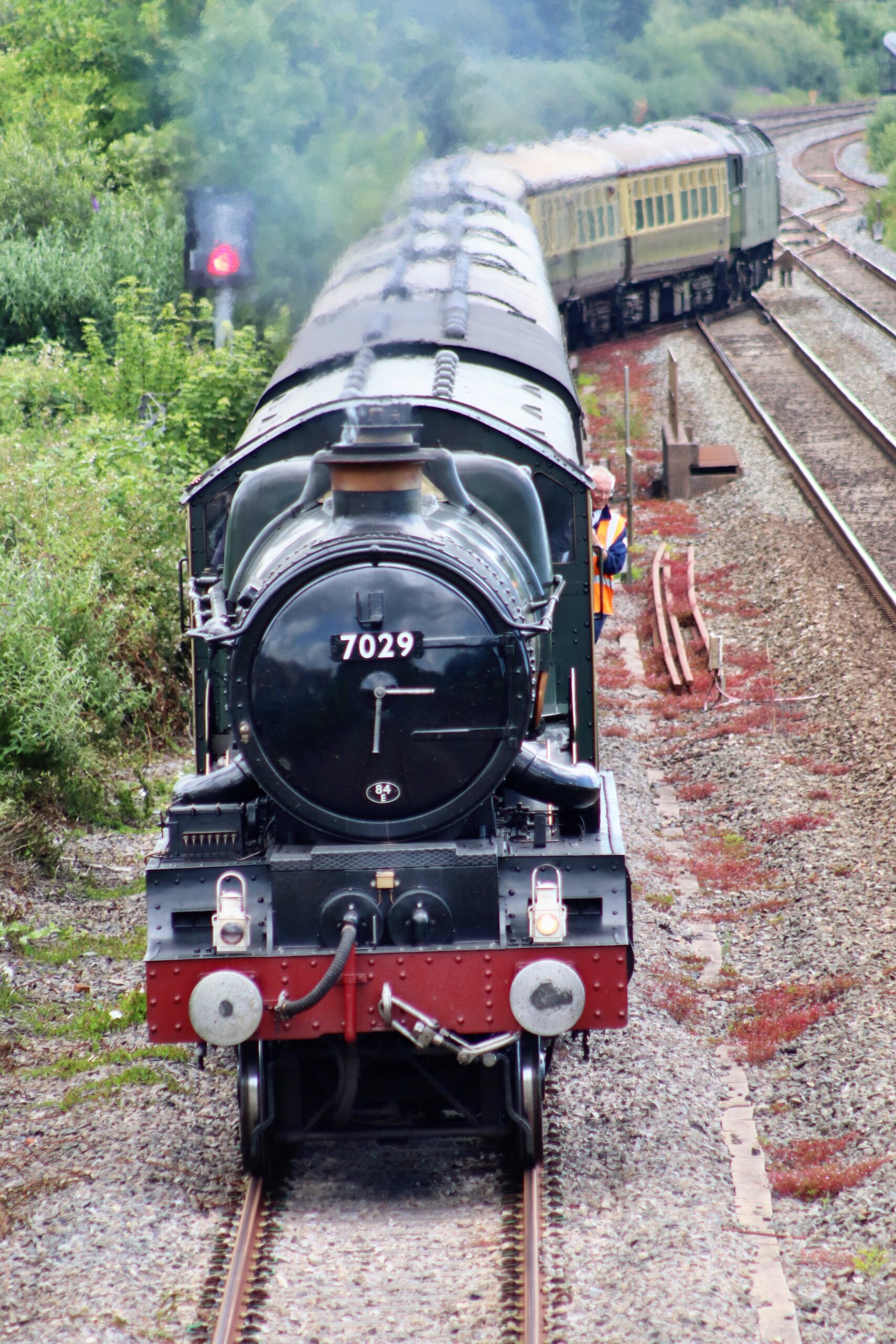
With Silk Mills bridge in the background, GWR Castle 4-6-0 No. 7029 ‘Clun Castle’ hauling “The Whistling Ghost” 1Z10 0608 Birmingham Snow Hill to Bishops Lydeard wending its way across the GW mainline onto the branch which leads to the West Somerset Railway – 24/06/2023GWR Castle 4-6-0 No. 7029 ‘Clun Castle’ hauling “The Whistling Ghost” 1Z10 0608 Birmingham Snow Hill to Bishops Lydeard pulls onto the branch which leads to the West Somerset Railway – 24/06/2023GWR Castle 4-6-0 No. 7029 ‘Clun Castle’ at the head of “The Whistling Ghost” 1Z10 0608 Birmingham Snow Hill to Bishops Lydeard at Norton Fitzwarren. The Tysley collection’s Class 47 No. 47773 at the rear – 24/06/2023
Operated by: Vintage Trains
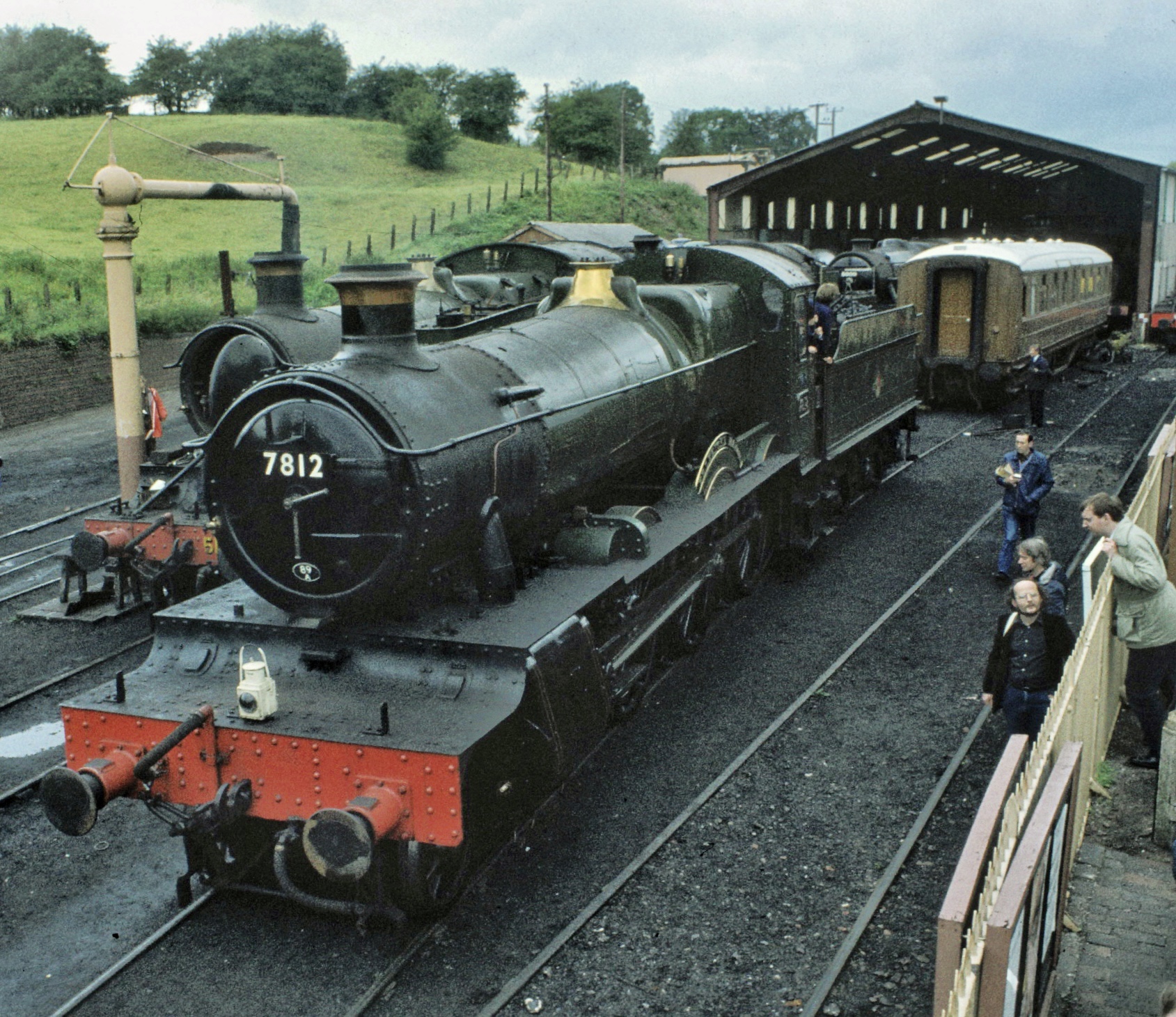
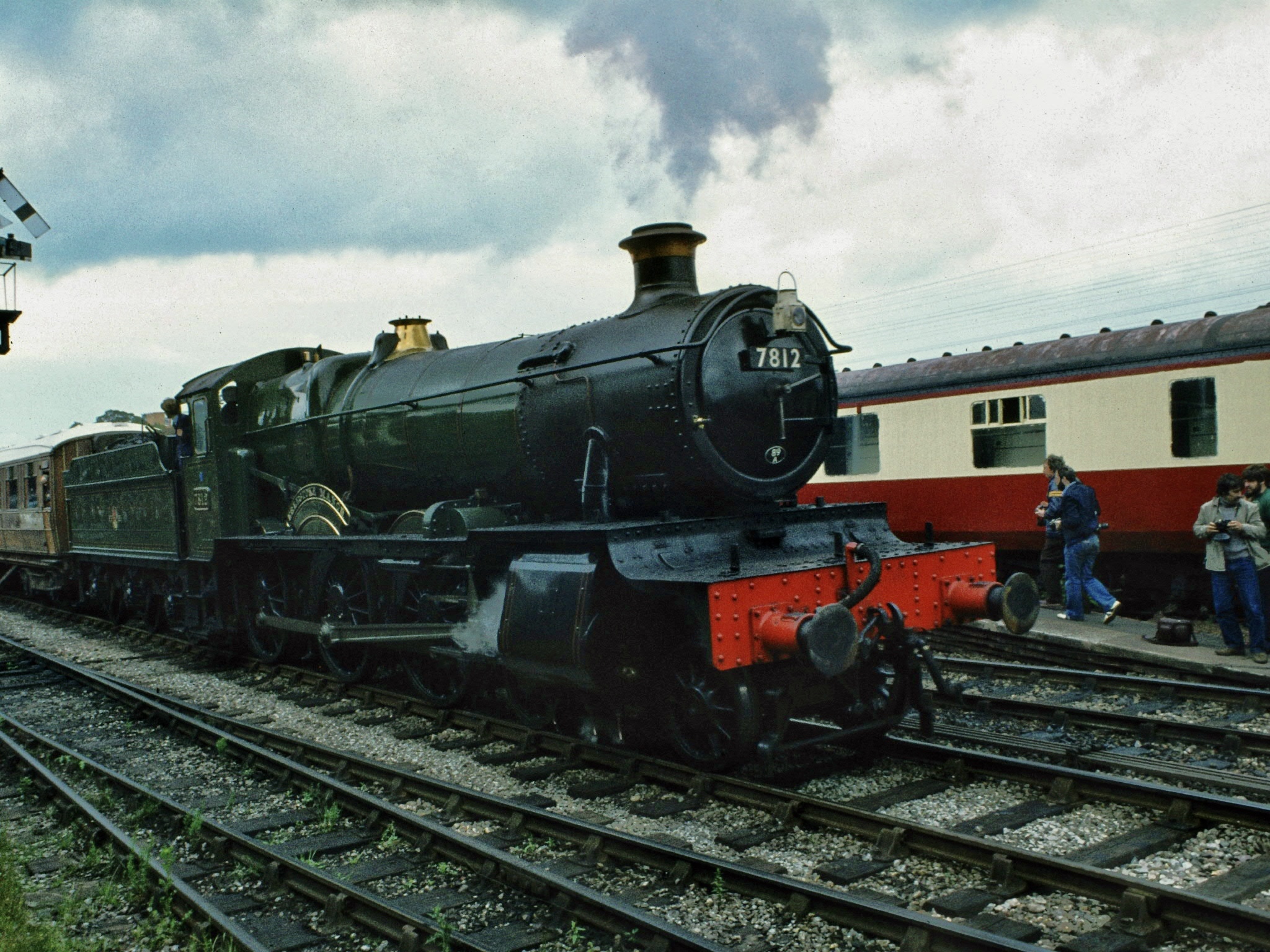
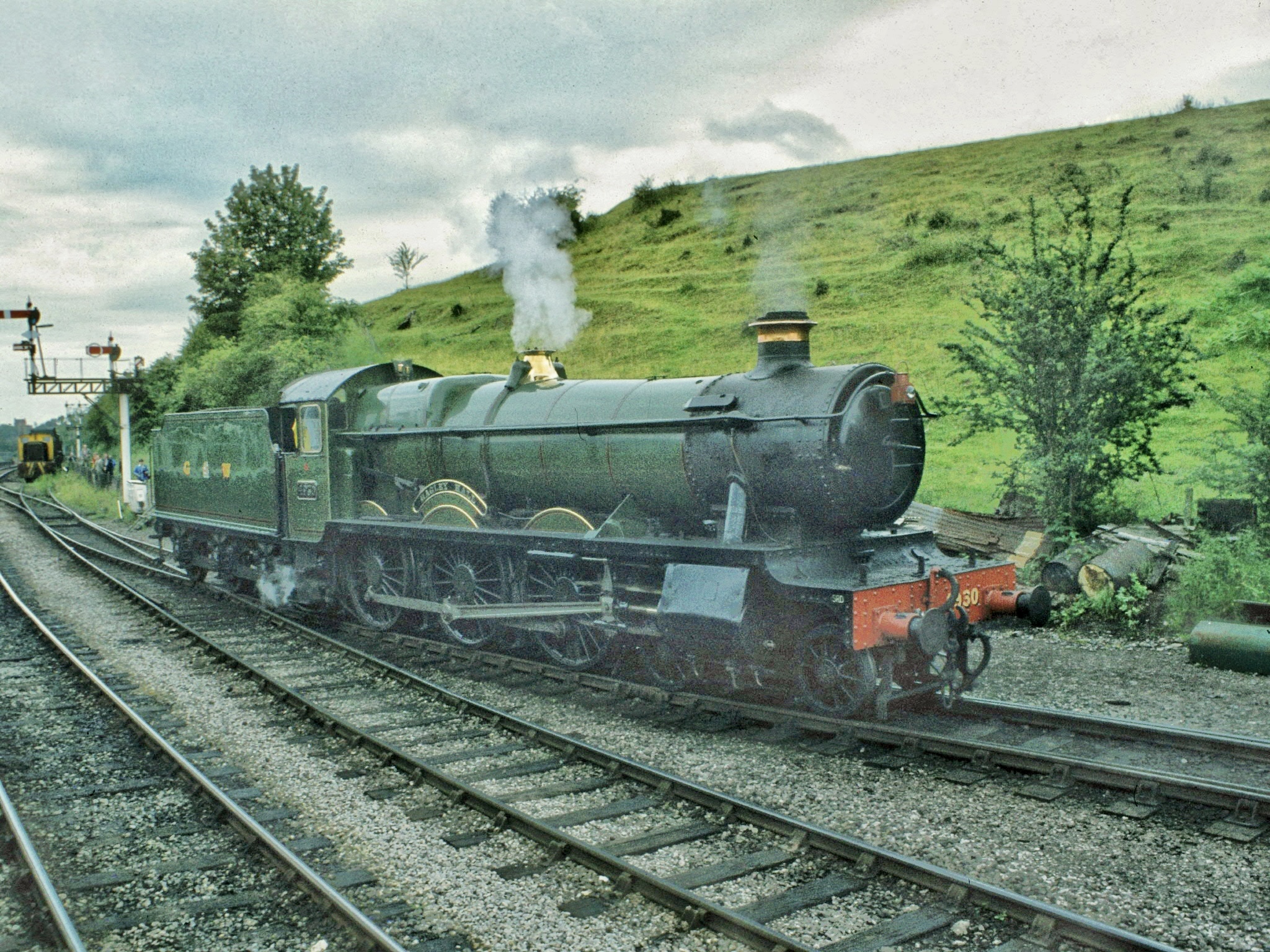
Motive power: GWR Castle 4-6-0 No. 7029 ‘Clun Castle’ with support from Class 47 No. 47773. Originally planned to run on 20th May 2023, the tour was rescheduled to June. On the WSR the train was taken from Bishops Lydeard to Minehead by 2 x GWR Manor Class 4-6-0 locomotives No.’s 7828 and 7812. Good friend of therailwaydog.co.uk, @smithy.377 kindly allowed us to share the following photos and video from the West Somerset leg of the tour.
GWR Manor Class 4-6-0 locomotives No.’s 7828 ‘Odney Manor’ and 7812 ‘Erlestoke Manor’ await the arrival of “The Whistling Ghost” tour at Bishops Lydeard (image by kind permission of @smithy.377) – 24/06/2023
Video from @smithy.377 as No.’s 7828 ‘Odney Manor’ and 7812 ‘Erlestoke Manor’ pass No. 7029 ‘Clun Castle’ at Bishops Lydeard – 24/06/2023 Having substituted for No. 7029 ‘Clun Castle’, No.’s 7828 ‘Odney Manor’ and 7812 ‘Erlestoke Manor’ await departure from Bishops Lydeard with “The Whistling Ghost” tour (image by kind permission of @smithy.377) – 24/06/2023GWR Manor Class 4-6-0 locomotives No.’s 7828 ‘Odney Manor’ and 7812 ‘Erlestoke Manor’ depart Bishops Lydeard with “The Whistling Ghost” bound for Minehead (image by kind permission of @smithy.377) – 24/06/2023
It was another hot day and for the most part Yoshi was able to find shade or at least a cooling breeze. We had toyed with the idea of heading to Bristol as two Class 20 locomotives were reported to be stabled at Bristol Kingsland Road (more on these later). But ultimately, it was far too hot for the boy to be out in the sun for any prolonged period so we waited a little while to see an interesting Class 43 HST power car move from Plymouth to Doncaster and then headed home in good time to pick up Caroline after the picnic.
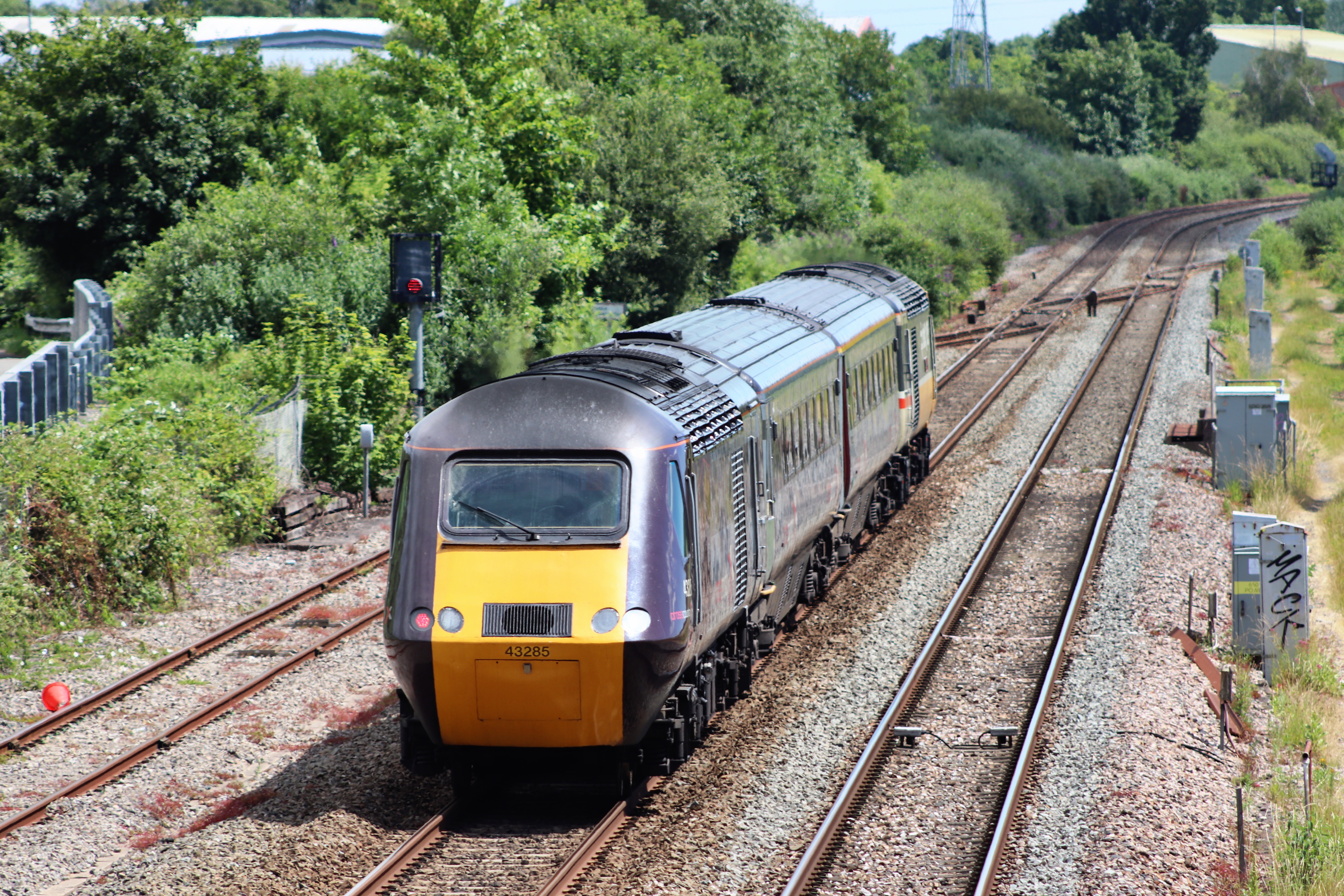
Inter-City liveried Class 43 No. 43184 with No. 43285 at the rear working 5E23 1036 Laira T&RSMD to Doncaster Works Wagon Shops seen passing Norton Fitzwarren – 24/06/2023HST Class 43 power car No. 43285 tailing No. 43184 and two MK3 coaches as 5E23 1036 Laira T&RSMD to Doncaster Works Wagon Shops at Norton Fitzwarren – 24/06/2023
Trains around Taunton the morning of 24th June 2023
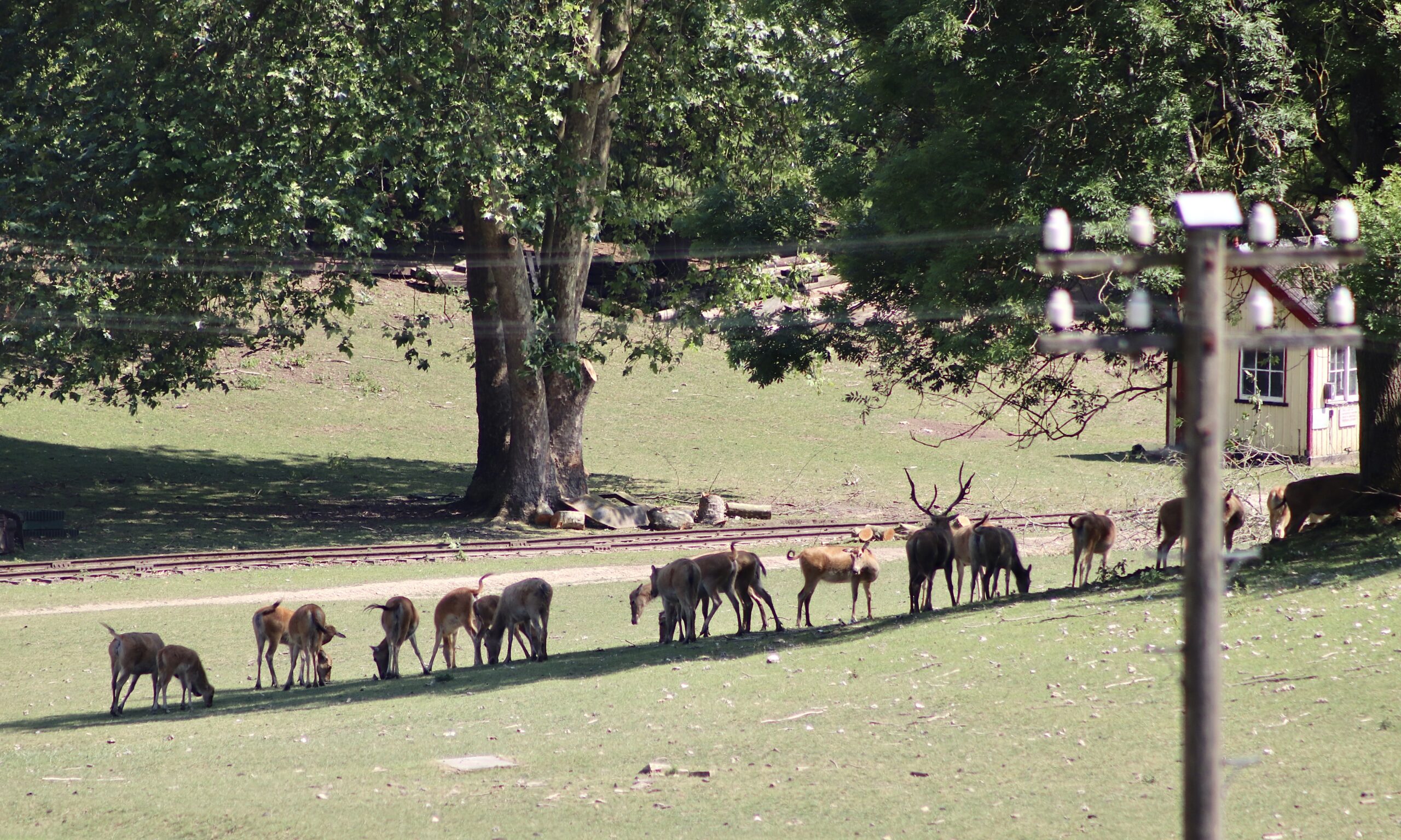
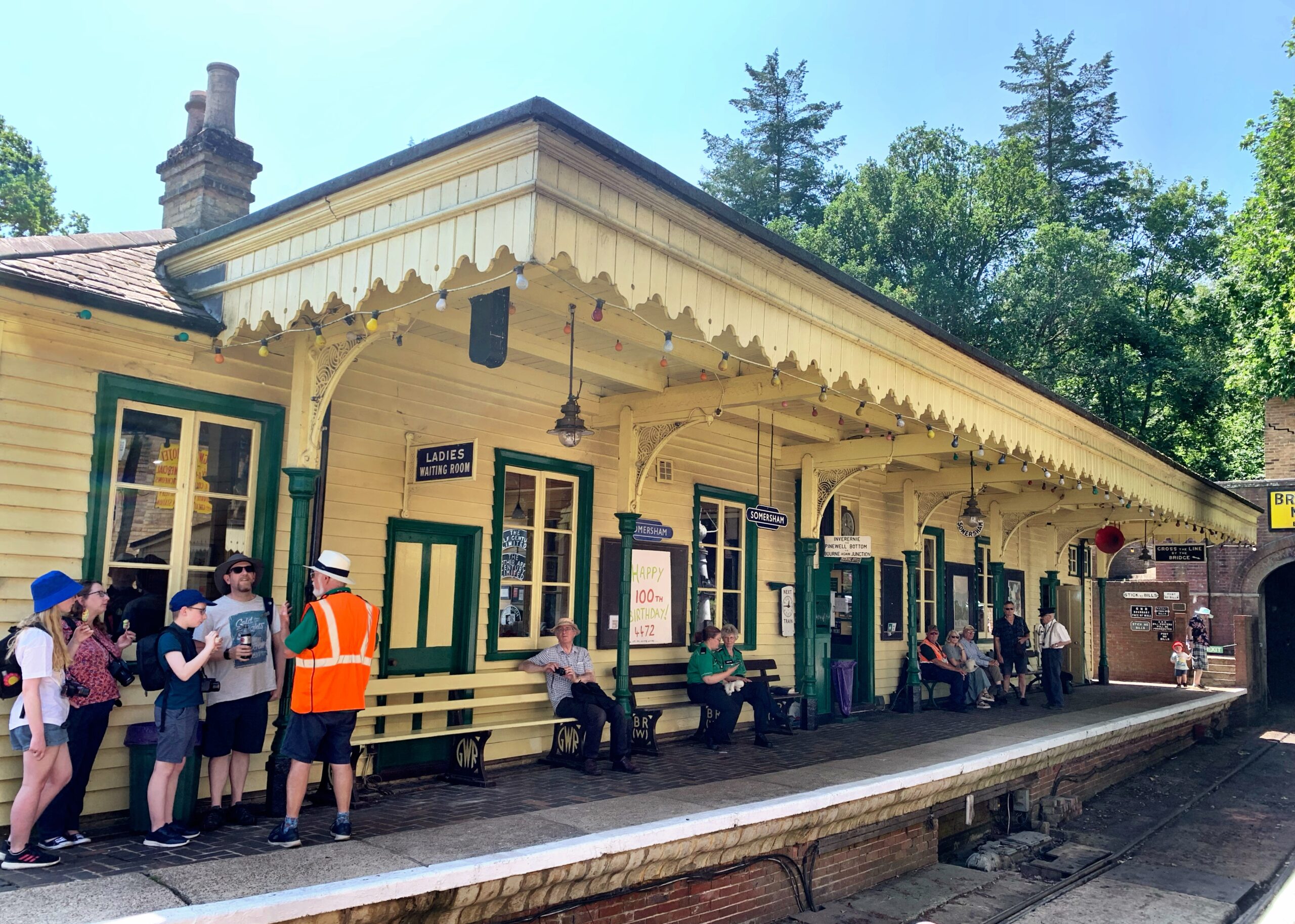
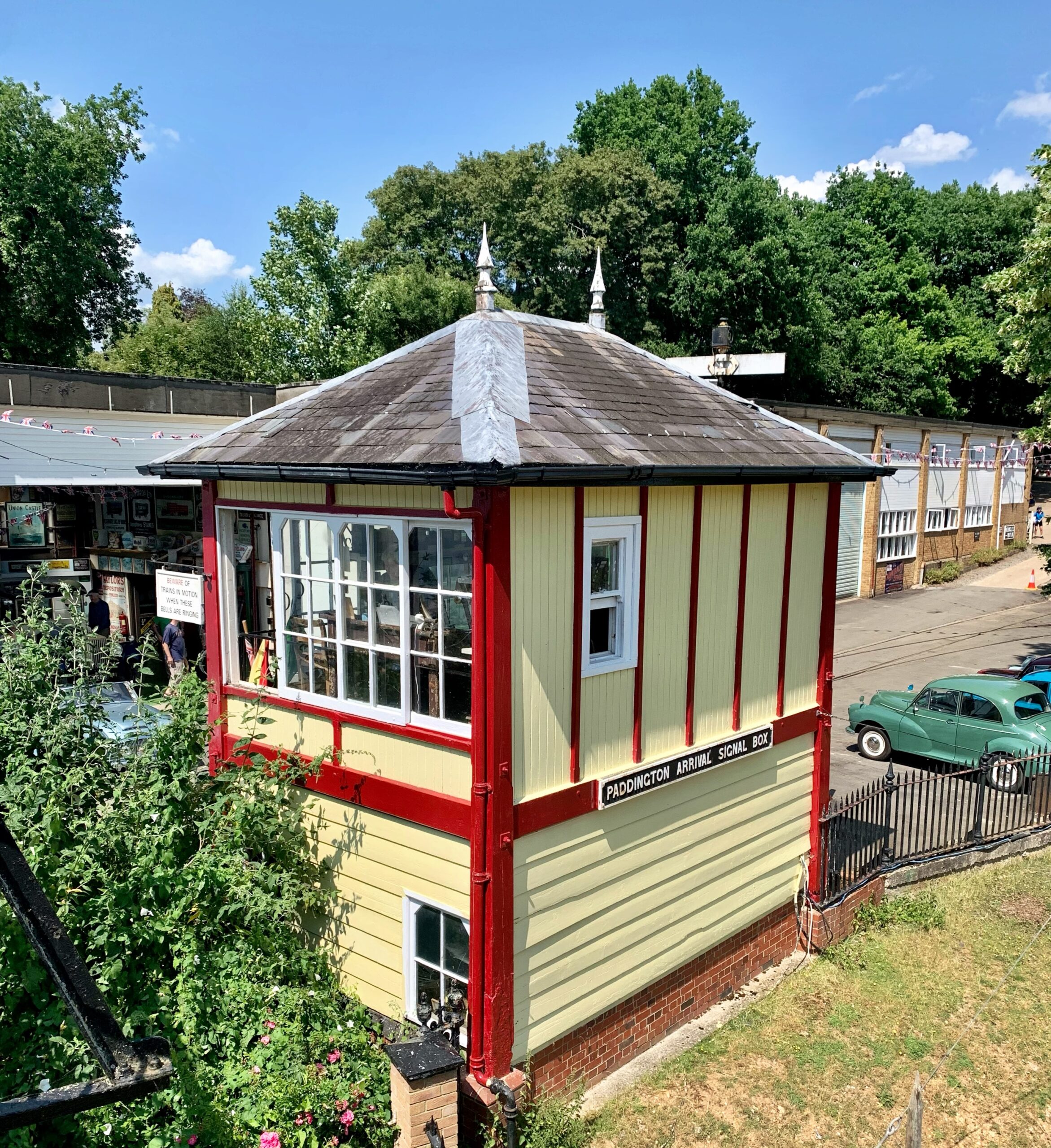
On Sunday 25th June, Yoshi, Caroline and I had been invited to Fawley Hill Museum and Railway Running Day. It sounds very grand to be invited. In reality, because the museum and railway are open on a limited number of days per year, admission is by prior application and invitation only as space is limited. Fawley Hill is a private museum established in the 1960’s by the late Sir William McAlpine at his estate near Henley on Thames. It hosts a fine collection of memorabilia and models relating to railways together with a working standard gauge railway operating on the steepest gradient in the country. Since its inception the site has grown steadily with a wide range of interesting artefacts and buildings arriving from all over the country. Many items of architecture have been rescued and reassembled at Fawley Hill to save them from demolition, creating a unique urban landscape in a country estate. The park also contains a variety of animals including many species of deer.
Deer at Fawley Hill – 25/06/2023
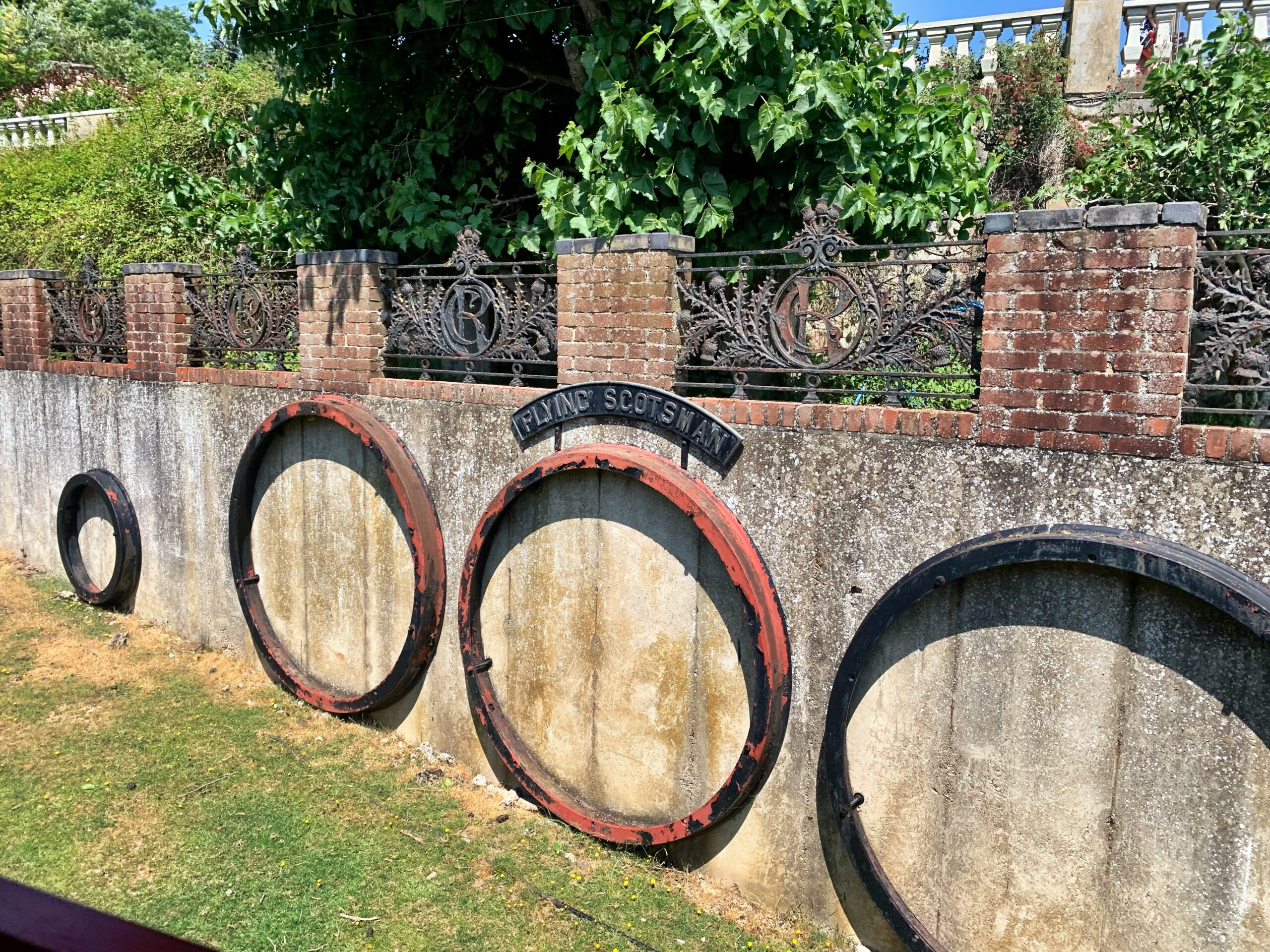
There is a strict “No Photography” rule on visitors inside the Museum, although in reality we found limited photography was acceptable as long as no images are posted on the internet in any way. Which unfortunately includes blogs about railways. So, you’re going to have to take my word for it – the museum is fascinating and holds over 6,000 objects. My favourite sections were a display on the artist Terrence Cuneo, and an area dedicated to LNER A3 No. 60103 ‘Flying Scotsman’ which was saved for the nation by Sir William McAlpine, the Museum’s founder. There are some amazing models including a very clever diorama of Swindon Works employing use of reflections to force a longer perspective.
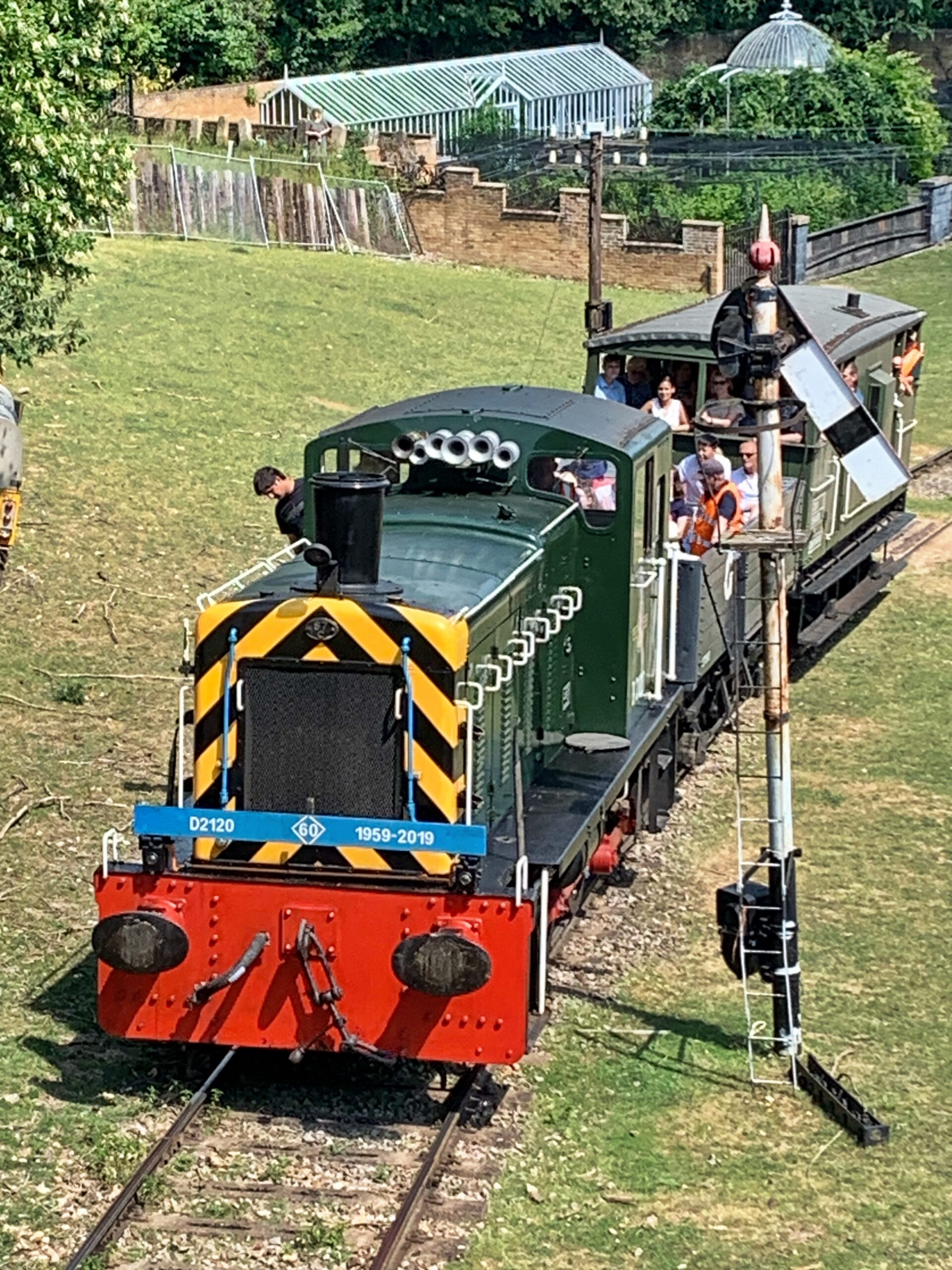
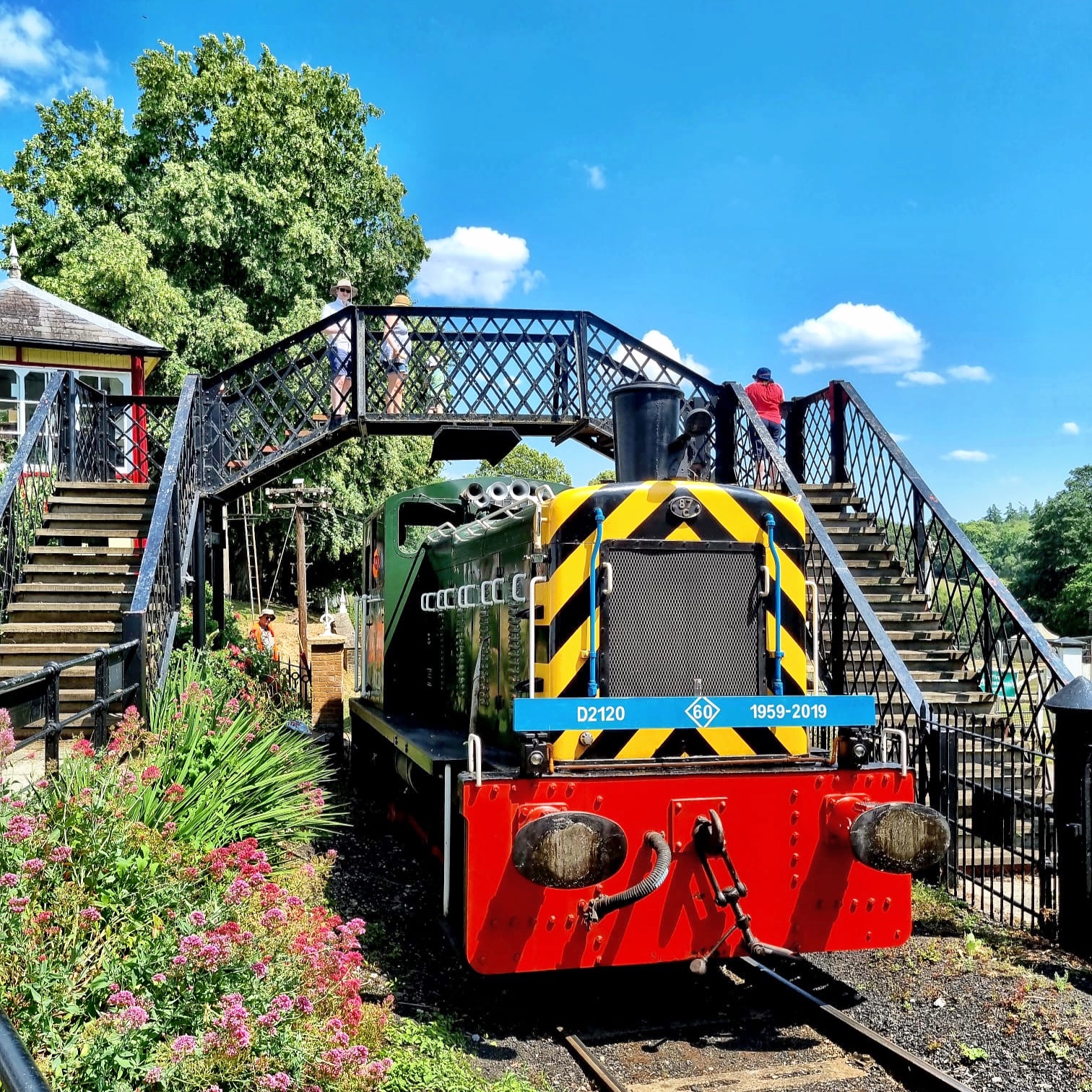
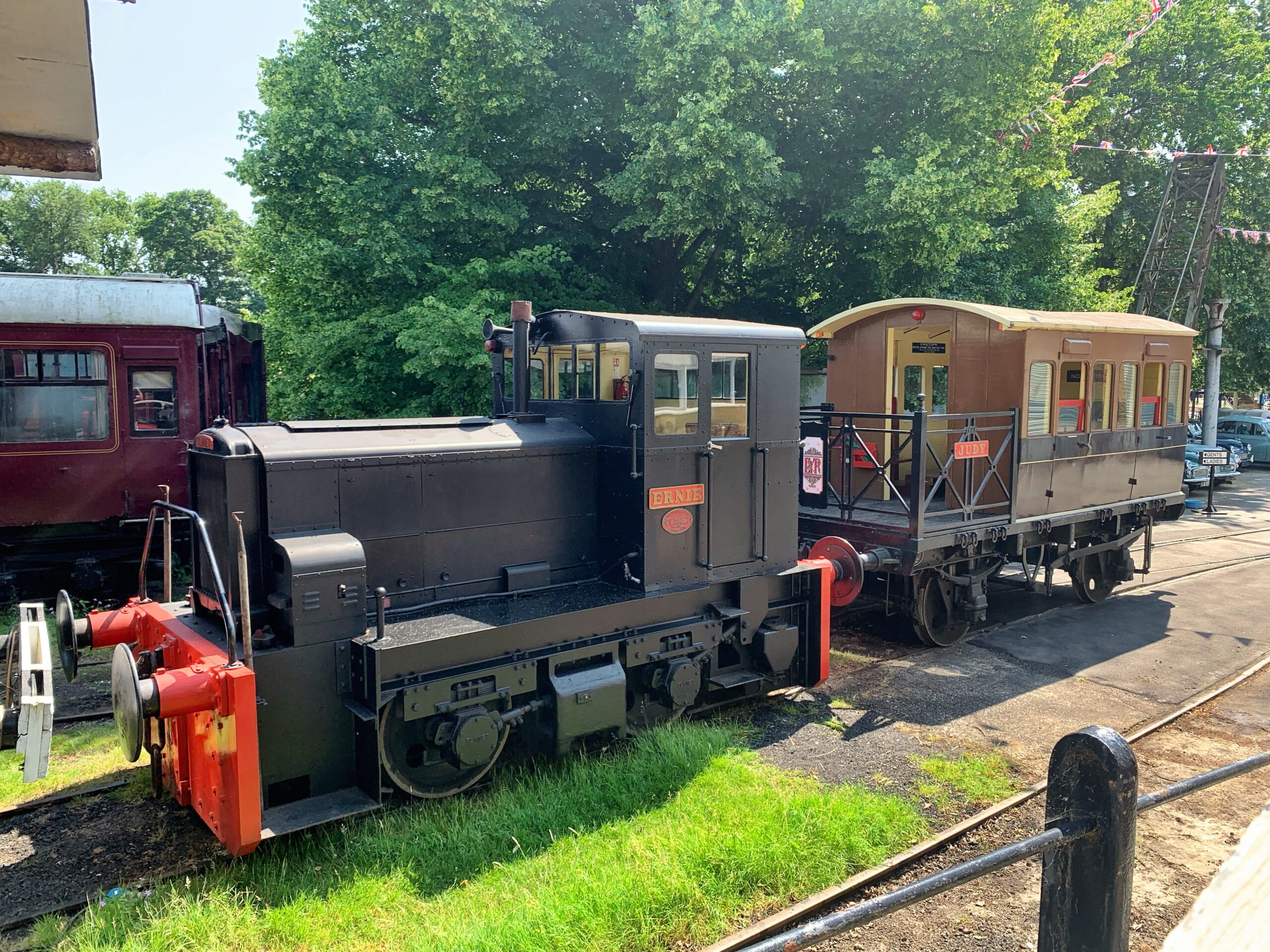
On the day of our visit, Class 03 No.D2120 was running trains, and we took a ride in Lancashire & Yorkshire Railway half-coach ‘Judy’. Yoshi was allowed to sit with us on the wooden seating and he watched out of the window as we meandered around the estate’s railway system.
Class 03 0-6-0 Diesel Mechanical Shunter No. D2120 climbs the slope to Somersham Station at Fawley Hill pulling Lancashire & Yorkshire Railway half-coach ‘Judy’ – 25/06/2023
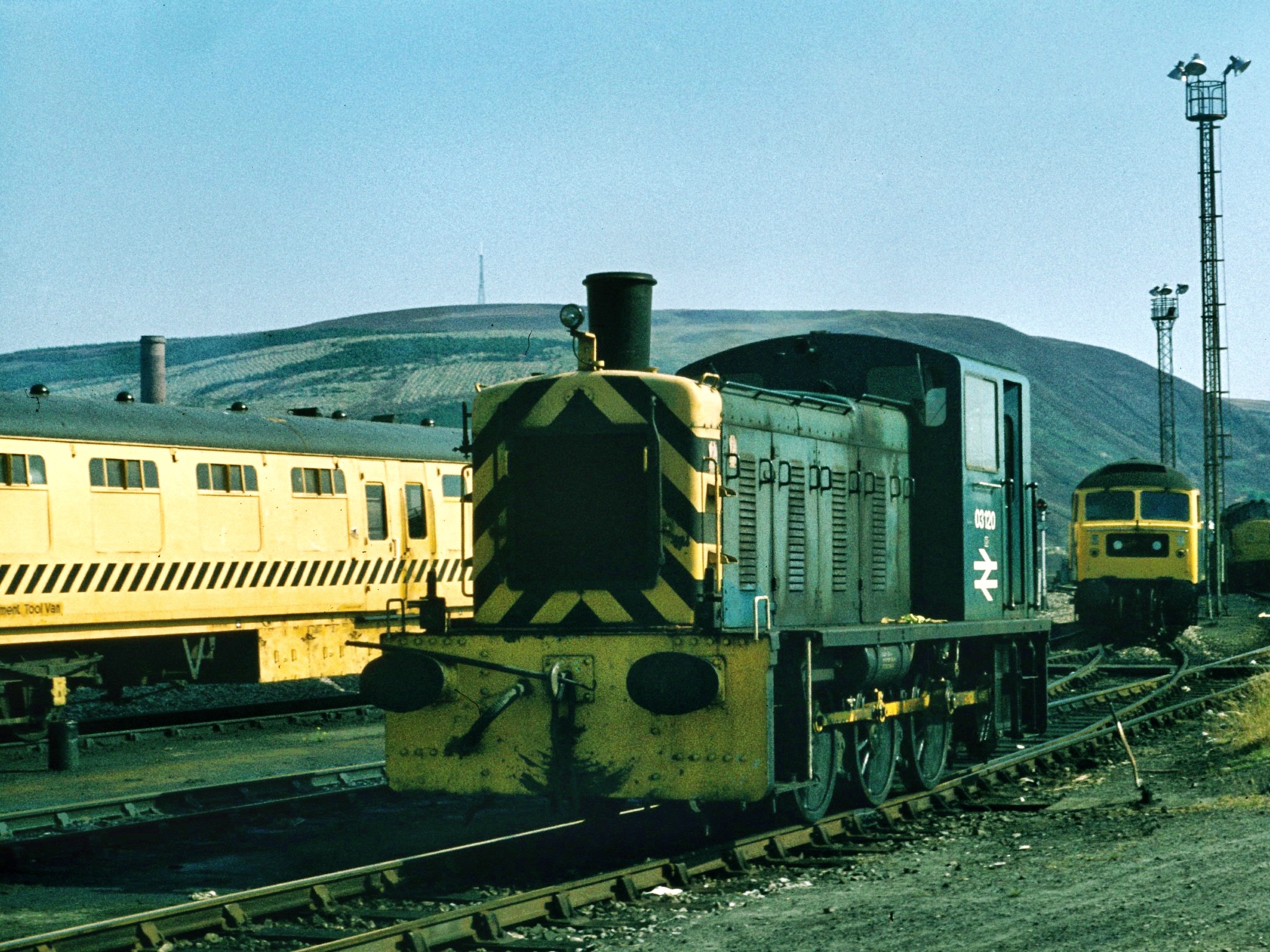
230 Class 03 diesel shunter locomotives were constructed by BR at Swindon and Doncaster Works between 1957 and 1962. No. D2120 was built at Swindon and entered service in October 1959. She was first allocated to Dangraig Depot and spent her entire career in the Swansea area of South Wales.
In March 1972 whilst undergoing an overhaul, No. D2120 was converted to Burry Port & Gwendraeth Valley Railway (BPGVR) loading gauge. Eventually a total of 11 Class 03’s were converted in this way. The BPGVR had a severe height restriction and this conversion involved reducing the cab height by 4½ inches, and the fitting of a headlight in front of the exhaust stack, and another at the rear of the cab, for use when locomotives crossed unprotected level crossings. The converted locomotives were also fitted for multiple working with a second locomotive of the same class. During the mid 1970’s British Rail adopted a locomotive five figure computer numbering methodology under the Total Operations Processing System (TOPS) used for managing railway locomotives and rolling stock and No. D2120 was renumbered No. 03120 in March 1974.
In 1978, No. 03120 spent three months (August – October) in store at Swindon, being re-introduced into service in November. She was given a final general overhaul at Swindon in May 1983 and retained as a standby loco, allocated to Landore Depot, Swansea. She was finally withdrawn by BR in February 1986 and released for sale. Purchased by Sir William McAlpine, No. 03120 arrived at Fawley in December 1986, wearing the standard fleet livery of BR rail blue with ‘wasp’ yellow and black painted warning ends. Since arriving at Fawley, she has been repainted into early BR Green as No. D2120, the wasp stripes at each end of the locomotive were restored in 2019. D2120 wears loco shed allocation plate 87C (Danygraig).
Class 03 0-6-0 Diesel Mechanical Shunter No. D2120 backs onto a GWR plank open wagon and a guards van to increase passenger capacity on the train rides at Fawley Hill – 25/06/2023Class 03 0-6-0 Diesel Mechanical Shunter No. D2120 working visitor train rides at Fawley Hill – 25/06/2023Class 03 0-6-0 Diesel Mechanical Shunter No. D2120 passes under the footbridge which was originally located at Brading Station on the Isle of Wight where it spanned the Ryde to Shanklin line before moving to Fawley Hill in March 2000 (CLS) – 25/06/2023
Hudswell Clarke & Co Ltd 0-6-0 ST No. 31 at Fawley Hill Museum. This locomotive was ordered from Hudswell Clarke & Co Ltd in November 1912 by the Ministry of Fuel and Power, and built at their Hunslet, Leeds works. She was allocated builder’s number 1026, and completed in April 1913, at a total cost of £1485. Delivered new to Robert McAlpine & Sons, Cuffley on 14 April 1913, No 31 was allocated Plant Number 2581 in 1931. She was outshopped in Caledonian Blue, a colour she kept throughout her time at the McAlpine company even though the corporate colour was green. No 31 is the only surviving locomotive to have been owned by Sir Robert McAlpine & Sons for the whole of its working life. She worked on a number of building contracts including Wembley Stadium (1923-1924), RAF Boscombe Down (1944) and Llanwern Steelworks (1960-1961). The locomotive was rebuilt by Hudswell Clarke & Co in 1938. No 31 went into storage at McAlpine’s yard at Hayes in 1961 and remained there until she was identified for scrapping in 1965. At this point, Sir William decided to give No 31 a new life in retirement and purchased the locomotive. No 31 arrived at Fawley in September 1965 and was subsequently repainted in GWR Brunswick green livery. Above the smokebox door is carried loco shed plate 81M – a code unique to Fawley – 25/06/2023One of two Planet 0-4-0 Diesel Mechanical locomotives at Fawley, No. 3894 ‘Ernie’ in Fawley station yard with Lancashire & Yorkshire Railway half-coach ‘Judy’ – 25/06/2023Somersham Station, previously to be found on the St. Ives to March line. The station was opened by the Eastern Counties Railway (ECR) in 1848. The line was closed to all rail traffic in 1967. The waiting room survived until 1977 when it was moved to Fawley – 25/06/2023Shobnall Maltings Signal Box is a Midland Railway (Type 3a) signal box dating from 1905. It was the first building to arrive for use on the Fawley railway in 1969 and was originally built at Swadlincote East near Burton-on-Trent. It was moved to operate at the Bass, Ratcliff & Gretton Ltd brewery and renamed Shobnall Maltings – 25/06/2023 These tyres from ‘Flying Scotsman’ were removed from the driving wheels of the famous LNER Class A3 4-6-2 prior to her journey to Australia in September 1988 – 25/06/2023Blackfriars Bridge Capital taken from the old Blackfriars Bridge across the River Thames in London. The bridge opened in June 1864 and demolished in the 1960’s. The bridge abutments remained until the mid-1980’s when the one on the north side of the river was removed along with its decorative cast iron capital or pediment. This example arrived at Fawley in 1984 whilst the remaining two are still in situ in London – 25/06/2023The columns of the old Blackfriars railway bridge standing next to the current bridge – 26/08/2022The southern abutment and LC&DR insignia have been restored – 26/08/2022Our visit coincided with the arrival of some Austin-Healey sports cars… – 25/06/2023…and some Morris Minor cars and vans! – 25/06/2023
Doggos are not permitted inside the museum buildings at Fawley Hill, so Caroline and I took it in turns to enjoy the delights on display while the other sat with Yoshi in a cool spot which obviously happened to be situated just by the toilets. It was during my time at this spot that I checked email on my phone and although the 4G coverage was barely existant, I discovered the Class 20’s I mentioned earlier and at that time believed to be in Bristol were in actual fact stabled at Didcot just 18 miles up the road from our current location and more or less in the correct direction for our drive back to Dorset. So after a cup of tea and an excellent piece of raspberry and coconut slice, we took a few final photographs and set off towards home.
On arrival in Didcot, we parked up and I took a stroll over to the railway station. The Class 20’s were conveniently parked adjacent to the platforms and were getting a fair bit of attention from other rail enthusiasts, much to the puzzlement of waiting passengers. The locomotives, currently part of the Harry Needle Rail Company (HNRC) fleet but still carrying the remnant livery of their previous owners; GBRf, are on hire to Rail Operations Group (ROG).
Class 20 No.’s 20905 and 20901 with SIM14 ‘Sentinel’ (No. 99 84 0362 006-0) at Didcot – 25/06/2023Class 20 No.’s 20901 and 20905 at Didcot – 25/06/2023Class 20 No. 20901 at Didcot. Contrast the differences in nose end detail with the following image of classmate No. 20905 – 25/06/2023No. 20905 at Didcot. Contrast and compare with the image above of classmate No. 20901 – 25/06/2023
The locos, rare visitors to west, are currently working in tandem with one of seven Eurailscout Switch Inspection Machines (SIM). I’m more used to switches being called points, but accept this “Americanism” as it quite an explanatory term. The points are the movable rails which guide the wheels towards either the straight or the diverging track allowing a train to switch tracks if required. They’re quite complex really and require a fair amount of maintenance to ensure they are in a safe and usable condition. SIM14 ‘Sentinel’ (No. 99 84 0362 006-0) arrived at Didcot by road from Holland at the start of June 2023 and was subsequently moved to Bristol Kingsland Road by a single Class 20 locomotive. It spent several nights working in the Bristol area doing exactly what the name suggests – inspecting various switches and junctions in the vicinity of Temple Meads, East Junction and West Junction. After spending the weekend at Didcot again, it was moved to Southall yard on the 12th June for further overnight inspections in the Paddington area. More recently the single Class 20 was joined by its classmate and on the 20th June returned to the Bristol area, moving back to Didcot on the morning of the 23rd despite the TOPS reporting they were still 77 miles further west.
Close up of Eurailscout SIM14 ‘Sentinel’ (No. 99 84 0362 006-0) at Didcot – 25/06/2023
Eurailscout says the following about the Swith Inspection Machines: “About 50% of all track disruptions are caused by faulty switches, with timely maintenance being needed in order to prevent these disruptions. We use a SIM wagon to measure and inspect the geometry and rail profiles of your switches under day-to-day operating conditions. A single locomotive can push or pull the SIM wagon, which means it can be shunted around quickly between the normal rail traffic. Since we also record high-quality video images during this work, you can make a visual inspection of the switch without having to put it out of service for the inspection and without your staff having to walk on the track themselves.”
Also stabled at Didcot were Class 66 No.’s 66136 and 66083 – 25/06/2023Class 66 No.’s 66051 ‘Maritime Intermodal Four’ and 66129, Didcot Yard – 25/06/2023
Monday and Tuesday saw some stock movements run around at Poole Storage Sidings as they either went to or from Bournemouth T&RSMD. First up on June 26th was ROG Class 37 No. 37884 ‘Cepheus’ hauling a Class 455 electric multiple unit No. 455863 from Wimbledon to Bournemouth for repair of a failed motor alternator. We saw the Cass 37 and empty coaching stock unit pass through Poole station on the way to the sidings. The locomotive detached from the front of the unit and ran back into Poole station and reversed back out again to attach itself to the other end of the empty stock before passing back through the station on the way to Bournemouth depot.
ROG Class 37 No. 37884 ‘Cepheus’ hauling broken Class 455 electric multiple unit No. 455863 through Poole as 5Q86 1246 Wimbledon Park CSD to Bournemouth T&RSMD – 26/06/2023Class 455 No. 455863 being towed into Poole Storage Sidings as 5Q86 1246 Wimbledon Park CSD to Bournemouth T&RSMD. Class 37 No. 37884 ‘Cepheus’ will run around the EMU to haul it back to Bournemouth depot – 26/06/2023Class 37 No. 37884 ‘Cepheus’ at Poole running around 5Q86 1246 Wimbledon Park CSD to Bournemouth T&RSMD – 26/06/2023Class 37 No. 37884 ‘Cepheus’ and No. 455863 work 5Q86 1246 Wimbledon Park CSD to Bournemouth T&RSMD – 26/06/2023
5Q86 1246 Wimbledon Park CSD to Bournemouth T&RSMD at Poole – 26/06/2023
The following day it was the turn of Class 47 No. 47727 ‘Edinburgh Castle’ to arrive at Bournemouth T&RSMD to collect a stored ten-car Class 701 unit and take it off to Wimbledon for a further priod of storage. Regular readers may recall that the Class 701’s are yet to enter revenue earning service with South Western Railway and are currently undergoing testing and running in mileage accumulation runs. In fact, if you have a length of track able to accommodate one of these units, I’m sure Network Rail would love to hear from you as sidings all over the country are being filled up with these trains. Scheduled to depart Bournemouth at 1235, I was very much caught out when I discovered that the train had left 66 minutes early. I was very kindly picked up by our friend Jamie who deposited me at Poole station. Unfortunately, there were no free parking spaces available and as Jamie drove off in search of one, the Class 47 and unit hove into view.
Class 47 No. 47727 ‘Edinburgh Castle’ powers up at Poole hauling Class 701 EMU No. 701042 working 5Q86 1235 Bournemouth T&RSMD to Wimbledon Park Depot Sidings – 27/06/2023Class 701 No. 701042 being hauled to Wimbledon having passed through Poole behind Class 47 No. 47727 ‘Edinburgh Castle’ – 27/06/2023
5Q86 1235 Bournemouth T&RSMD to Wimbledon Park Depot Sidings departing Poole – 27/06/2023
Later the same day, Southern Railway West Country Class 4-6-2 No. 34046 ‘Braunton’ visited Weymouth with a Steam Dreams excursion originating from London Victoria. The tour ran to Yeovil Junction where the steam locomotive came off the train for servicing and turning at the Yeovil Railway Centre whilst Class 47 No. 47614 took the train onto Weymouth.
A lineside fire at Upwey got most of us thinking that the cause was ‘Braunton’, but in fact the steam locomotive hadn’t even passed through the area when the line to Weymouth was closed. Thankfully it wasn’t long until everything was sorted and the track between Upwey and Weymouth reopened at around 1800. This enabled the light steam locomotive to complete its run down to rejoin the stock with no delay to the departure of the tour which was scheduled to return to London via the Bournemouth route.
Jamie was again kind enough to allow me to join him at Parkstone to see the train pass through. Unfortunately, ‘Braunton’ was running an impressive 8 minutes early as she stormed the bank at Parkstone, just as a London Waterloo to Poole service in the form of SWR Class 444 No. 444004 pulled in on platform 2, obscuring the view for many of those waiting to photograph or video the steam passing through on the Up line. So, my sincere apologies to Jamie who had his view blocked by the service train. I don’t think he’ll be asking me to accompany him on any future outings at this rate!
Southern Railway West Country Class 4-6-2 No. 34046 ‘Braunton’ storms the bank at Parkstone working 1Z72 1836 Weymouth to London Victoria – 27/06/2023Class 47 No. 47614 shrouded in steam at the rear of 1Z72 1836 Weymouth to London Victoria having passed through Parkstone – 27/06/2023
Steam Dreams “Weymouth” rail tour (Dorchester video by kind permission of GE Barrett)- 27/06/2023
I was pleased to learn one of my favourite railway stations, Wemyss Bay in Scotland, has won this year’s World Cup of Stations competition following a five day contest across 11 geographical regions in England, Scotland and Wales. Supported by the Rail Delivery Group and the Community Rail Network over 70,000 votes were cast. 48 stations were chosen by TV presenter Tim Dunn and pitched against each other in 16 rounds to whittle down the final few. Wemyss Bay came in at first place with 8,403 votes in the last round, beating second place Denmark Hill on 7,441 votes and third place runner up Leamington Spa with 3,271 votes.
Wemyss Bay Railway station exterior. The station was designed by James Miller (1860-1947) in 1903 for the Caledonian Railway and is a Category A listed building – 23/06/2021 The station is a terminus on the Inverclyde Line, located 26 miles west of Glasgow Central. The station incorporates the Caledonian MacBrayne ferry terminal connecting mainland Scotland to Rothesay on the Isle of Bute and was designed to move passengers from train to ferry in five minutes via a curved covered way while luggage was moved on trolleys by a separate route – 23/06/2021The centrepiece of Wemyss Bay Station is a semi-circular ticket office, your eyes drawn upwards… – 23/06/2021…. towards curving roofs with a remarkable use of glass and steel curves. Platforms bend in one direction and the ramp down to the pier in another – 23/06/2023 ‘MV Argyle’ or ‘Earra-Ghaidheal’ in Gaelic pictured here, alongside her sister ship, ‘MV Bute’, operate sailings between Wemyss Bay and Rothesay on the Isle of Bute – 23/06/2021
And there we have it! We’ve reached the end of another blog entry. Thank you for your time in visiting us and for your comments, encouragement, corrections and contributions! We’ll be seeing you.
Postscript
Fawley Hill’s Cut-down cab Class 03 No. D2120 in BR blue days as No. 03120 at Landore depot, Swansea – 27/08/1981
We went to Shaftesbury on Sunday to see old buses. Caroline and I visited a pub or three and Yoshi took a liking to Gold Hill. Famous as the location for the 1973 Hovis bread TV advert directed by Ridley Scott. Still the same today as its always been – 18/06/2023
Wednesday 14th June 2023 saw Colas test train 1Q18 Derby RTC to Bristol Kingsland Road visit Dorset in the capable charge of top and tailed Class 37 locomotives No.’s 37612 and 37254. I was in the east of the county hoping to capture a Class 701 drag from Bournemouth to Eastleigh which didn’t materialise. It’s been quite a month for unusual movements being cancelled here; a Class 69 hauled Weedkiller to Weymouth, a Class 37 test train via the West and a Class 455 drag with a Rail Operations Group (ROG) Class 37 to Bournemouth T&RSMD to mention a few.
Class 37 No. 37612 leads 1Q18 Derby RTC to Bristol Kingsland Road via Weymouth into Dorchester West (video screen grab courtesy of G E Barrett) – 14/06/2023Class 37 No. 37254 leads out of Weymouth where 1Q18 Derby RTC to Bristol Kingsland Road has reversed for the run to Bristol (video screen grab courtesy of @da_buckley967) – 14/06/2023
Video of Class 37 No.s 37612 and 37254 working 1Q18 Derby RTC to Bristol Kingsland Road courtesy of @da_buckley967 and G E Barrett – 14/06/2023
On Saturday, I popped over to the Southampton area for a brief evening visit to see LNER A3 4-6-2 Pacific No. 60103 ‘Flying Scotsman’. I don’t understand the scorn poured on this locomotive by a certain section of the railway enthusiast fraternity. I think it’s great Scotsman captures the imagination of the general public and it was delightful to hear a lot of chatter on our local radio station before and after the locomotive visited Portsmouth. I was interested to see if No. 60103 retained her white roof which she had gained the previous week in advance of hauling the Royal Train carrying King Prince Charles over the North Yorkshire Moors Railway on Monday 12th June, and I was very pleased to see she had! I was able to observe the “Portsmouth Flyer” rail tour on its way back to London Victoria from the overbridge leading to Dock Gate 20 at Millbrook. It’s also an excellent vantage point to see the locomotives being stabled at Freightliner Maritime depot. I thought the location would be quite popular with onlookers, but in the event it was just myself and another photographer there to see the “People’s Locomotive” steam by. It was quite pleasant passing the time having a friendly chat about railways of today and years gone.
Freightliner Class 08 shunter No. 08785 at Southampton Maritime – 17/06/2023Class 66 No. 66594 at Southampton Maritime – 17/06/2023A line up of Class 70’s at Southampton Maritime, including No.’s 70003,70007 and 70014 with Class 66 No.’s 66565, 66594 and 66504 also visible- 17/06/2023Class 66 No. 66529 receives attention at Southampton Maritime – 17/06/2023CrossCountry Voyager No. 220011 nears Redbridge working 1020 1325 Manchester Piccadilly to Bournemouth – 17/06/2023LNER A3 Pacific No. 60103 ‘Flying Scotsman’ at Millbrook working the return “The Portsmouth Flyer” 1Z73 1606 Portsmouth Harbour to London Victoria – 17/06/2023The white cab roof applied to LNER A3 Pacific No. 60103 ‘Flying Scotsman’ can be seen clearly in this view of the locomotive as she works the return “The Portsmouth Flyer” 1Z73 1606 Portsmouth Harbour to London Victoria on the approach to Redbridge – 17/06/2023West Coast Railway Company Class 47 No. 47802 at the rear of “The Portsmouth Flyer” 1Z73 1606 Portsmouth Harbour to London Victoria approaching Redbridge – 17/06/2023
After seeing ‘Flying Scotsman’ I had just enough time to pop over to Eastleigh to get a photo of the Network Rail Class 153 Inspection Train. I was also able to see UK Railtours “The Magic Carpet” on its way from Exeter to London Victoria. This was hauled by two GBRf Class 73 Electro-diesels of the type we normally get here on a test train the first Monday of every month.
GBRf Class 66 No. 66726 ‘Sheffield Wednesday’ in Eastleigh East Yard in preparation for working 7C03 2302 to Clapham Junction Windsor Lines civil engineering train later in the day along with No. 66846 – 17/06/2023A view over Eastleigh East Yard with GBRf Class 66 No. 66726 ‘Sheffield Wednesday’ and Colas Rail Class 66 No. 66846 in the foreground – 17/06/2023DB Cargo Class 66 No. 66100 ‘Armistice 100 1918 – 2018’ in the sidings adjacent Eastleigh railway station – 17/06/2023Nameplate detail of Class 66 No. 66100 ‘Armistice 100 1918 – 2018’ – 17/06/2023Still carrying EWS Livery, DB Cargo Class 66 No. 66083 partners No. 66100 ‘Armistice 100 1918 – 2018’ at Eastleigh – 17/06/2023Network Rail Video Inspection Unit No. 2 (VIU2) No. 153376 rests at Eastleigh. Network Rail employs three Class 153 DMU’s for video assessment of track and points – 17/06/2023GBRf Class 66 No. 66701 having just reversed onto wagons ready to form 6G13 1952 Eastleigh East Yard to Cheam engineers train – 17/06/2023Maritime Blue liveried Class 66 No. 66051 ‘Maritime Intermodal Four’ passing through Eastleigh heading up 4V44 1824 Southampton Eastern Docks to Morris Cowley MAT – 17/06/2023GBRf Class 73/9 No.’s 73964 ‘Jeanette’ and 73962 ‘Dick Mabbutt’ hauling UK Railtours “The Magic Carpet” one the approach to Eastleigh – 17/06/2023GBRf Class 73/9 No.’s 73964 ‘Jeanette’ and 73962 ‘Dick Mabbutt’ hauling UK Railtours “The Magic Carpet” 1Z62 1533 Exeter St Davids to London Victoria on the approach to Eastleigh – 17/06/2023On the rear of “The Magic Carpet” 1Z62 1533 Exeter St Davids to London Victoria GBRf Class 66 No. 66768 – 17/06/2023In 2011, leasing company Akiem acquired seven unused JT42CWRM locomotives, which would originally enter service for Veolia Cargo SAS (77501-77503) as order 20078941 and Crossrail Benelux (77504-77507) as 20078920. On 20 June 2011, all seven locos were delivered with train protection systems for Germany, Belgium and France. After being delivered to Akiem, they were immediately leased to VFLI. Purchased and imported by GBRf Class 66 No.’s 66308 (ex-77503) and 66307 (ex-77502) are seen at Eastleigh Arlington Works having been repainted into standard GBRf livery following sizing modifications for the UK rail loading gauge carried out at Doncaster – 17/06/2023Class 313’s continue to arrive at Eastleigh Arlington for component recovery and scrapping. No.’s 313206, 313201, 313207 and 313208 can be identified in this view. An appeal to fund maintenance and storage costs of blue liveried No. 313201 has been launched – 17/06/2023No.’s 313206, 313201, 313217, 313207 and 313208 await their fate at Eastleigh Arlington – 17/06/2023These Class 313 EMU’s at Eastleigh Arlington have had their numbers cut out. We can identify No. 313202, closest to the camera, from the coach number 62530 – 17/06/2023
“The Magic Carpet” passed through Dorset and our North Dorset correspondent was on hand to capture the train at Gillingham:
GBRf Class 73/9 No.’s 73964 ‘Jeanette’ and 73962 ‘Dick Mabbutt’ head up UK Railtours “The Magic Carpet” at Gillingham on the return leg (photo courtesy of Scott Lewis) – 17/06/2023
This past weekend the 2023 “Royal Blue Run” saw the return of preserved and restored coaches to roads across the West Country, showcasing these fine specimens in authentic settings across the country recreating lost scenes. This year the Royal Blue & Associated Motorways run saw the privately owned vehicles recreate an age of bygone travel on the open roads through Wiltshire, Somerset, Devon and Cornwall reaching Penzance in the far south west. The specific routes chosen were drawn from Royal Blue timetables from different eras. Sometimes segments of express services are followed, or in other cases seasonal variants are used (e.g. summer Saturdays only or winter season routing). Every stretch has to be pre-driven to ensure the original roads remain suitable for coaches to pass even with modern parking practices or traffic management schemes. The coaches set out from Salisbury bus station on Friday 16th June and we chose to see them passing through Shaftesbury on their return final stage run up the A30, as used by the ‘stopping’ Penzance to London services, to Salisbury.
Burlingham C33F AEC Regal Reg No. CFK 340 in the livery of operator Burnham built 1948 at Shaftesbury – 18/06/2023Royal Blue ECW Bristol MW6G Fleet No. 2267 Reg No. 56 GUO built 1961 at Shaftesbury – 18/06/202Wilts & Dorset Beadle C32R Bristol L6B Fleet No. 279 Reg. EMW284, built 1947 at Shaftesbury – 18/06/202
The Thames Valley & Great Western Omnibus Trust (TV&GWOT) website provides more information on the Royal Blue Runs which “were established in 2002 so that owners and their passengers can relive the pleasures of long distance luxury coach travel for which their carefully preserved vehicles were originally intended. The aim is to follow original Royal Blue routes as closely as possible and to travel at a leisurely pace redolent of the times. The runs also create a wonderful spectacle for innocent bystanders and dedicated photographers alike, thanks to the hard work and resources the owners have devoted to restoring and maintaining their fine coaches.
A lot of work goes into planning the runs from selecting routes from the extensive Royal Blue network and researching the original drivers’ instructions and passenger timetables, preparing maps and outline routing, driving the routes to develop detailed instructions allowing for modern day features and constraints, organising refreshment stops, obtaining parking permissions, to identifying potential accommodation for a dozen or more coaches and their passengers. Despite all the preparations, final timings are hard to judge whether due to roadworks or things that might pique the interest of crews along the way. The coaches do not travel in close convoy so as not to inconvenience other road users. Some drivers have also been known on occasion to deviate from the intended route (unintentionally!).
Overall the focus is on education and enjoyment and we hope that however you take part you share in the pleasure.”
Western National Fleet No. 3307 Reg AFJ 727T Plaxton Supreme DP41F Bristol LH6L built in 1979 at Shaftesbury – 18/06/202A long way from home, Crossville Fleet No. CRG106 Reg AFM 106G ECW C49F Bristol RELH built in 1969 at Shaftesbury – 18/06/202Royal Blue Fleet No. 1286 Reg MOD 973 ECW Bristol LS6G C39F built in 1952 at Shaftesbury – 18/06/202Royal Blue (Western National) Fleet No. 1250 Reg. LTA 729 Duple Bristol LL6B C37F built in 1951 at Shaftesbury – 18/06/202
A very short video of Royal Blue Run buses passing through Shaftesbury – 18/06/2023
I certainly derived much pleasure from seeing the coaches which were running around thirty minutes behind schedule when they passed us. Not bad timing in my humble opinion! I previously saw the 2016 Royal Blue Run which having started at London Victoria Coach Station ran to Bristol on Day One. The following day was designed to commemorate 50 years since the final train on the Somerset & Dorset Railway, a much loved and mourned route that ran through Royal Blue heartland from Bath to Bournemouth. The route intertwined with several famous S&D locations, recreating in part the former rail replacement service that was created when the line closed in 1966. Day Three was an excursion from Bournemouth to Lulworth Cove, followed by a trip across the New Forest to Lyndhurst. It was Lulworth Cove where I decided to see the buses as they grouped together in the car park before once again taking to the open road where I took the opportunity to see them passing through Lulworth village and Wareham.
Royal Blue Bristol MW6G Fleet No. 2246 Reg. 625 DDV built 1960 enters the car park at Lulworth Cove – 19/06/2016Western National Bristol MW6G ECW C39F Fleet No. 1423 Reg. EDV 505D built in 1966 and entered service in Plymouth seen at Lulworth Cove – 19/06/2016A Royal Blue line up at Lulworth Cove – 19/06/2016Royal Blue ECW Bristol MW6G Fleet No. 2267 Reg No. 56 GUO built 1961 passing through Lulworth – 19/06/2016Wilts & Dorset Beadle bodied Bristol L6B Fleet No. 279 Reg. EMW284, built 1947 at Lulworth – 19/06/2016Royal Blue Fleet No. 1299 Reg. OTT 98 1953 Bristol LS6G with ECW C39F coachwork at Lulworth village – 19/06/2016Royal Blue express services Fleet No. 2351 Reg. 837 SUO Bristol RELH6G ECW passing through Wareham – 19/06/2016
From The Archives:
Mention of Penzance as part of the Royal Blue Run this year reminded me that I was going to look for a photograph of the Pullman Camping Coaches which used to stand at Marazion and I mentioned as much in our blog entry “Yoshi Goes To Cornwall”. As luck would have it, I was looking for some paperwork the other day and came across the following images:
For many years Marazion was home to six old Pullman coaches that were employed as camping coaches; holiday accommodation offered by the railway containing sleeping and living space designed to encourage people to travel by train to the stations where they were situated – March 1993British Rail Parcels Sector liveried Class 47 No. 47462 ‘Cambridge Traction & Rolling Stock Depot’ at Penzance – March 1993 Class 47 No. 47463 (with her pre-TOPS number D1586 marked between her head code lights) in BR Standard Monastral Blue livery, which she retained to the end, stands at Penzance. The locomotive entered service in May 1964 and was cut up in November 1996 by MRJ Phillips at Crewe Works – March 1993Class 47 No. 47462 ‘Cambridge Traction & Rolling Stock Depot’ at Penzance. The locomotive was built at Crewe and entered traffic on May 16th 1964 as D1582. Named at Cambridge Open Day held on 29th September 1990 by Jack Firman a retired workshop supervisor, the nameplates were removed in December 1993 and later transferred to No. 47736 – March 1993Class 47 No. 47462 at Penzance. The locomotive was cut up at Toton by Harry Needle Rail Co in March 2003 – March 1993
Alongside the Cornwall photographs above, the same box of documents contained, amongst other things, a Blake’s 7 ‘Liberator’ model and an old diary. I’ve not been one for keeping a diary, but for six months in 1982, I seemed to have managed it. Tucked inside the diary was a piece of paper from a rail tour I took from London Paddington to the Severn Valley Railway on Saturday 19th June 1982.
Great Western Society Limited “The Salopian II” information sheet – 19/06/1982Great Western Society Limited “The Salopian II” information sheet – 19/06/1982
This must have been my first visit to the SVR, and I don’t really remember much about the day if I’m honest. So from the pages of a diary not opened in years, here, extracted from amongst references to exams, my sister’s wedding, the Falklands War and working part-time at Bere Regis Motors in Dorchester, is my record of the Great Western Society Limited’s “The Salopian II”:
Thursday June 10th 1982
Rail tour tickets for the 19th arrived today. Going with Tony S. Adam Ant is number one with ‘Goody Two Shoes’
Friday June 18th 1982
At 2245 Tony and I boarded the mail train at Dorchester South. Jon H was there as well, but he’s going off somewhere else when we get to London.
There was talk about the mail train being taken off soon. If so, we will have problems if we want an overnight jaunt to connect with rail tours departing London in the future.
Saturday June 19th 1982
The locomotive which hauled the mail train from Dorchester, 33118, came off at Eastleigh where it was replaced by 73122. We arrived at London Waterloo right-time and then, together, Jon, Tony and I took a black cab across to Euston. At 0600 we went our separate ways with Jon heading to Kings Cross while Tony and I undertook the two and a half mile stroll to Paddington railway station. The weather was dismal , but at least it didn’t pour down with rain.
At Paddington, we were due to depart at 0740 but at the appointed time we were surprised to see our train loco; 47532, being taken off the stock at 0725 and taken away.
Class 47 No. 47532 at the head of “The Salopian II” rail tour at London Paddington prior to being removed from the train. HST Class 43 Power Car No. 43145 is on the adjacent track – 19/06/1982
We eventually left at 0757 with the class 47 having been replaced by 50012.
Class 50 No. 50012 ‘Benbow’ approaches London Paddington to take over “The Salopian II” rail tour. The locomotive would be withdrawn from service in January 1989 and cut up by Vic Berry in Leicester by July of that year – 19/06/1982
By the time we arrived at Didcot we were 27 minutes down on schedule. But a quick locomotive changeover meant this was reduced to 16 minutes when we left behind 7029 ‘Clun Castle’.
GWR 4073 Class 4-6-0 No. 7029 ‘Clun Castle’ backs onto “The Salopian II” at Didcot – 19/06/1982GWR 4073 Class 4-6-0 No. 7029 ‘Clun Castle’ at Didcot – 19/06/1982GWR 4073 Class 4-6-0 No. 7029 ‘Clun Castle’ at Didcot – 19/06/1982GWR 4073 Class 4-6-0 No. 7029 ‘Clun Castle’ stopped at Banbury for a water stop – 19/06/1982Class 33 No. 33025 ‘Sultan’ in the bay platform at Banbury as No. 7029 ‘Clun Castle’, having drawn forward from the previous image, takes on water – 19/06/1982
By the time of our next locomotive changeover the ‘Castle’ had managed to make up the deficit and we arrived bang on time allowing 20165 and 20167 to take us forward to Bewdley on the Severn Valley Railway where we still managed to arrive 20 minutes late!
GWR 4073 Class 4-6-0 No. 7029 ‘Clun Castle’ alongside Class 20 No.’s 20165 and 20167 which took over “The Salopian II” at Dorridge – 19/06/1982Class 20 No.’s 20165 and 20167 backing onto “The Salopian II” at Dorridge – 19/06/1982
On the SVR we were hauled by 43106 from Bewdley to Dorridge and return. We had a couple of hours to look around the shed at Bridgnorth and get refreshments.
While on Severn Valley Railway metals our train was hauled by LMS Ivan Class 4 No. 43106, the only surviving member of the class. Seen here at Bridgnorth – 19/06/1982GWR 7800 Class 4-6-0 No. 7812 ‘Erlestoke Manor’ at Bridgnorth – 19/06/1982LMS Stanier Class 5 4-6-0 No. 5000 at Bridgnorth. No. 5000 is part of the National Collection and is currently on static display at the Shildon Locomotion Museum in County Durham – 19/06/1982Longmoor Military Railway No. 600 ‘Gordon’ (named after General Gordon of Khartoum) was. built in 1943 for the War Department and is seen here at Bridgnorth. In 1957, during the Suez Crisis, ‘Gordon’ worked highly secretive trains between Longmoor Military Base and Southampton. The locomotive is currently on static display on the SVR at The Engine House, Highley – 19/06/1982GWR 7800 Class 4-6-0 No. 7812 ‘Erlestoke Manor’ at Bridgnorth – 19/06/1982GWR 7800 Class 4-6-0 No. 7812 ‘Erlestoke Manor’ at Bridgnorth – 19/06/1982
I managed to get a piece of smut in my in my eye from 4930 ’Hagley Hall’ which I just couldn’t get out. [2023 note: I’m thinking No. 4930 may have hauled us one way on the SVR, but my diary says No. 43106 worked the train in both directions]
GWR Collett 4-6-0 Hall Class No. 4930 ‘Hagley Hall’ at Bridgnorth. She was built in 1929 at Swindon Works and originally allocated to Wolverhampton Stafford Road – 19/06/1982GWR Collett 5700 Class 0-60PT “Pannier Tank” No. 5764 entered service at London’s Old Oak Common in 1929 and was later one of a number of the class sold to London Transport following withdrawal from British Rail in 1960. She is currently on static display in London Transport guise, numbered L95, at The Engine House, Highley. She is seen here in GWR livery at Bridgnorth – 19/06/1982
Returning to Bewdley, the 20’s took control of our train once again and regained all lost time and even gained 15 minutes. But despite these efforts, the quarter hour and more was lost due to a number of signal stops. In my opinion the star of the day; 92220 ‘Evening Star’, to be precise, replaced the diesel power at Saltley and despite working hard we arrived back at Didcot some 16 minutes down.
BR Standard Class 9F No. 92220 ‘Evening Star’ during a water stop at Banbury. No. 92220 was the last steam locomotive to be built at for British Railways and was earmarked for preservation before she entered service in March 1960. She hauled the last Pines Express on the Somerset & Dorset line on 8th September 1962. ‘Evening Star’ had a working life of five years before being withdrawn from service in March 1965 after sustaining damage in a shunting incident at Cardiff Docks. She was overhauled and restored at Crewe Works following withdrawal working in preservation until the late 1980’s. She is now on static display at the Railway Museum in York and one of nine existing locomotives of a class which numbered 251- 19/06/1982
50040 took us forward to Reading where Tony and I de-trained for our connection down to Basingstoke and home.
Sunday June 20th 1982
The down Mail arrived into Basingstoke at Midnight. We were extremely lucky to have made it as our connecting service train from Reading should have left at 2300 and “The Salopian II” arrived at 2302. We met Paul E and Mark B, two rail enthusiasts from Charminster who had been part of the group who went to Plymouth Laira with us in April. This time they had been to Calais with Mark’s parents. A class 73 took us from Basingstoke to Eastleigh where 33010 came on to bring us into Dorchester South just after 0300 where we all said our good-byes and headed home to our beds.
I was up again at 0900 in order to see some excursion trains.
Class 33 No. 33029 approaching Dorchester South – 20/06/1982Class 47 No. 47526 at Dorchester West – 20/06/1982
The piece of smut in my eye from ‘Hagley Hall’ was still there, so I called on [my brother], who was out. Anyway, he appeared at half four and spent an hour moving the smut from the blue bit of my eye to the edge and finally relief!
GBRf Class 73 No.’s 73964 ‘Jeanette’ and 73961 ‘Alison’ were out on a GB Railfreight staff special the “Tonbridge Trailblazer” in June 2016 running from Ashford International to Weston-super-Mare. The ED’s are seen here at Bath Spa on the return leg working 1Z63 1725 Weston-super-Mare to Ashford International – 18/06/2016
Postscript:
Longmoor Military Railway No. 600 ‘Gordon’ as seen in 2023 at The Engine House, Highley – 20/05/2023London Transport No. L95 (the former GWR Collett 5700 Class 0-60PT “Pannier Tank” No. 5764) as seen in 2023 at The Engine House, Highley – 20/05/2023It’s goodbye from me, and a goodbye from Yoshi! Thanks for reading. We appreciate your comments, contributions, updates and corrections. See you soon!
Class 373 No. 3222 and Class 374 No. 4033 Eurostar trains at London St. Pancras – 27/03/2023
At the end of March we had a few days in Paris having travelled by Eurostar from London St. Pancras to Pais Gare du Nord. We did a lot of walking as we took in the sights and sounds of the City during our mini break.
Paris Gare du Nord is the southern terminus of Eurostar services. Class 374 set No. 4025 rests at the buffer stops having worked 9O18 1026 London St. Pancras International to Paris Nord. Class member No. 4011 sits alongside – 27/03/2023
On a quiet Tuesday morning, we avoided a demonstration against the raising of the pension age planned for later in the day and took the opportunity to track down the Promenade Plantée. We headed to Gare de Lyon via Metro Line 14 which was operating throughout the strike day as it is fully automated and features driverless Siemens trains.
Double-deck TGV No. 249 at Gare de Lyon – 28/03/2023TGV No.’s 617, 272 & 791 Gare de Lyon – 28/03/2023
On arriving at Gare de Lyon, we enjoyed a cup of tea and a very expensive macaroon before finding our bearings. We didn’t see any of the piles of uncollected bin bags which the mainstream media would have us believe were on every street corner and soon found a signpost directing us towards our destination; the world’s first elevated park walkway and a well loved part of the French capital City.
Pointing the way to Promenade Plantée – 28/03/2023
Promenade Plantée is built on the former Vincennes railway line which once linked Bastille station to Verneuil-l’Étang after passing through Vincennes. It’s now a peaceful, green stroll 10 metres above street level, which begins just east of the Opera Bastille at the crossroads at rue de Lyon and avenue Daumesnil and winds through the 12th arrondissement for three miles, coming out before the Bois de Vincennes.
The original railway ceased its operation on December 14th, 1969. A section of the line beyond Vincennes was integrated into Line A of the RER, while the Paris-Vincennes section was completely abandoned. In the 1980’s, the area was renovated with the former Bastille station being demolished in 1984 to make way for the Opéra Bastille. The Reuilly section was designed in 1986 incorporating the old commercial rail depot of Reuilly into a group of park areas. The Promenade Plantée was put into place at the same time in order to reuse the rest of the abandoned line and was designed by architects Jacques Vergely and Philippe Mathieux. It was inaugurated in 1993.
At its west end near the Bastille the walkway utilises a viaduct, renovated in 1989 by architect Patrick Berger, where its 45 archways have been adapted to house artisan shops displaying the works of florists, violin makers, glass blowers and furniture restorers all creating the Viaduc des Arts.
Viaduc des Arts, Promenade Plantée – 28/03/2023Viaduc des Arts, Promenade Plantée – 28/03/2023Viaduc des Arts, Promenade Plantée – 28/03/2023
Further along a modern building splits in two with the walkway running inbetween, while a long, wobbly cable footbridge stretches across the Jardin de Reuilly. Then the elevated section heads to street level – becoming accessible to bikers, rollerbladers and skateboarders, too; a tree-lined corridor passes through old railway tunnels before ending at another park, the Jardin Charles Peguy. This is right by the disused train tracks of what was known as La Petite Ceinture and plans are afoot to extend the Promenade Plantée along the old railway line in the future. There are other examples of disused high level railway lines having been converted into parks, notably the High Line in New York. There are plans for a similar venture in Camden, London.
Later in the day we attempted the most touristy Paris activity; a vast to the Eiffel Tower. Every time I’ve tried to ascend the structure on previous visits to the City, the tower has been closed due to strike action and this time was no exception. We decided instead to visit La Basilique du Sacré Cœur de Montmartre and take a short trip on the funicular located there.
A line 6 Paris Metro train crosses the Seine with the Eiffel Tower in the background – 28/03/2023
The closest metro station to the Eiffel Tower is Bir-Hakeim, an elevated station serving line 6 in the Boulevard de Grenelle in the 15th arrondissement. It is situated on the left bank of the Bir-Hakeim bridge over the Seine. The station opened as part of the former Line 2 South on 24 April 1906. The station was called Quai de Grenelle until 1949, when it was renamed. The name of both the bridge over the Seine and the station commemorates the World War II battle of Bir- Hakeim. A commemorative panel is situated at the entrance of the platform for trains traveling towards Nation.
A line 6 Metro train on an elevated section of railway leading to Bir-Hakeim station – 28/03/2023Bir-Hakeim station – 28/03/2023Bir-Hakeim station – 28/03/2023Bir-Hakeim station – 28/03/2023
We took the train to Montmartre and enjoyed a evening meal before asking for directions to the funicular railway which turned out to be a brief walk away. On arrival we found the funicular closed because of that days strike action. So we climbed the steps and watched the sun set over Paris.
The furnicular is closed – 28/03/2023The funicular cars at rest – 28/03/2023A view of the top station – 28/03/2023La Basilique du Sacré Cœur de Montmartre – 28/03/2023
We returned back home on the Friday, and I was able to get a couple of photographs of locomotives at Gare du Nord as we awaited boarding for our Eurostar service to London St. Pancras.
The SNCF class BB 15000 is a class of 25 kV 50 Hz electric locomotives built by Alstom and MTE between 1971 and 1978. This is No. 215059 at Gare du Nord – 30/03/2023The SNCF BB 22200 is a class of electric locomotives built by Alstom between 1976 and 1986. They are a dual voltage version of the BB 7200 and BB 15000 classes. No. 22243 stands at at Gare du Nord – 30/03/2023SNCF BB 22200 No. 22243 alongside TGV Thalys PBA No. 4533 at Gare du Nord – 30/03/2023Gare du Nord – 30/03/2023Overlooking the Eurostar platforms at Gare du Nord – 30/03/2023Arrival on 1703 Paris Gare du Nord to London St. Pancras formed of Class 374 No. 4005 – 30/03/2023
We’ll hopefully be back with our regular update next week – thanks for reading. Take care and see you next time!
Southern Railway poster; “I’m Taking and Early Holiday cos I know Summer Comes Soonest in the South”
South Western Railway (SWR) Class 444 No. 444007 arrives into Bournemouth with 5W28 1748 Bournemouth Middle Sidings to Bournemouth empty coaching stock movement – 15/04/2023
Thursday 13th April was greeted by South Western Railway (SWR) announcing a major fault at @0300 in the cabling that powers the signalling systems at London Waterloo. This knocked out 14 of the platforms. Consequently passengers were advised not to travel on routes into the busiest railway station in Britain with 41.4 million customers travelling through every year. Engineers fixed the problem by 1130, however because of the length of time the lines were blocked SWR was expecting disruption until the end of the day. For some reason, a number of trains between Weymouth and Poole / Bournemouth were cancelled. We asked SWR why and were told it was “due to staff and stock displacement”. There were three Class 444 Electric Multiple Units in Weymouth station so I can only assume SWR have not heard of taxis to get staff to Weymouth. Yet again the Bournemouth to Weymouth line is mostly disregarded when it comes to providing a train service.
South Western Railway (SWR) Class 444 No. 444007 forms the front section of 1W28 1703 Weymouth to London Waterloo. Class member No. 444017 joined No. 444007 with the section from Weymouth. Class 450 No. 450041 sits in the bay platform with the 2B68 1802 Bournemouth to Winchester service – 15/04/2023
However, Bournemouth station has been chosen to showcase a new, green addition on the platforms. SWR has introduced new, more energy-efficient vending machines as part of a world-leading, innovative new trial having partnered with Christchurch-based Decorum Vending, who have worked with Regency Design and phs Greenleaf to design the world’s first “living walls” that can be attached to the sides of vending machines.
Yoshi takes a look at the Living Wall vending machine on platform 3 at Bournemouth railway station. He wanted a Milky Way, but we declined his requests – 15/04/2023
The living walls – which are small, self-sufficient, vertical gardens – have been developed to thrive in all locations, whether sunlight, shady or covered, and if the trial at Bournemouth is successful, they will be making an appearance on machines at other locations on the SWR network. The living walls are attached to an advanced vending machine which uses 54% less electricity than previous versions and has a smaller environmental impact through the use of upgraded refrigerants. Annually, each wall consumes nearly 5kg of carbon and produces 2.4kg of oxygen while combatting air pollution and increasing biodiversity. The walls’ structures are made from recycled coffee grounds and all removed plants are recycled back into biomass. Living walls have been proven to effectively reduce harmful nitrogen oxides while providing a boost to biodiversity, by providing accessible habitats for insects and other wildlife.
Class 444 No. 444017 departs Bournemouth at the rear of the 1W28 1703 Weymouth to London Waterloo service. A Living Wall vending machine can be seen on platform 2 in the middle of the image – 15/04/2023
The new vending machines join other innovations in Bournemouth including station benches made from recycled plastic bottles and a plastic-free dispenser for both still and sparkling water.
Class 66 No. 66587 ‘As One, We Can’ with Class 47 No. 47830 ‘Beeching’s Legacy’ tucked inside at Crewe Basford Hall. The Class 47 will be a guest at the Swanage Diesel Gala in May – 01/04/2023
We posted photos of our recent visit to the Crewe Heritage Centre last week. We were in Crewe to take part in an Inter City Railway Society organised visit to Crewe Basford Hall Yard, a railway marshalling yard which since the 1970’s has been the stabling and swapping of intermodal trains operated by the Freightliner Group. The yard is situated just under a mile south of Crew railway station and was originally opened in 1901 by the London & North Western Railway (LNWR). During the 1930’s, Basford Hall was the busiest marshalling yard in Europe, handing between 28,000 and 47,000 wagons every week.
We arrived in good time at the 1145 meeting point situated at the entrance to Basford Hall. Parking was limited, and we were very grateful that another car shunted forward to allow enough space to squeeze in a Nissan Note. After signing in and handing over our fee, we joined an expectant number of other enthusiasts to await the safety briefing prior to admission into the yard. It was stressed that visitors should be in good health as on a previous visit a member of an enthusiast group had been taking ill through the exertion of walking over uneven surfaces and railway track.
Freightliner Class 66 No. 66561 runs light engine through Crewe Basford Hall – 01/04/2023DB Cargo Class 66 No. 66078 at Crewe Basford Hall – 01/04/2023
The yard, still one of the busiest in the UK for freight traffic, is a nationally important node on the West Coast Main Line (WCML), with most freight trains routed through the yard in order to avoid congesting the nearby Crewe railway station, which is also an important junction on the WCML for passengers.
Prior to the privatisation of British Rail (BR), Freightliner trains would run from various locations in the north which were then re-organised at Basford Hall to make whole trains for other locations. In 1992, the destination roster was changed so that all services stopped at Crewe to allow swapping of containers. This meant that any destination or point of origin was possible with only one change. Whilst this process has lessened in the 21st century, Basford Hall is still an important location for the stabling and rearranging of trains for Freightliner’s intermodal network.
Freightliner also stable non-intermodal freight trains at Basford Hall, and they have a maintenance location on site for wagons and locomotives, with heavier repairs and maintenance is still undertaken at Leeds Midland Road. A fuelling point was opened at Basford Hall in 1998, when the yard experienced an upsurge in traffic, with further remodelling of the down yard taking place in 2000. The traction maintenance depot (TMD) was opened on site in 2016, with the TOPS code of BA.
From left to right: Class 66 No. 66413 ‘Lest We Forget’, Class 90 No. 90004 and Class 90 No. 90046 inside Crewe Vehicle Maintenance Facility (taken from a window looking into the facility) – 01/04/2023
Crewe Vehicle Maintenance Facility is comprised of a two-road diesel Loco fuel point and a five-road maintenance shed. The facility operates 24/7 providing maintenance services for both electric and diesel locomotives across six types, Classes 08, 47, 66, 70 86 and 90. Home to Freightliner’s electric fleet, the Crewe VMF team carry out all planned maintenance activities on these locos including wheelset changes, bogie overhauls and transformer changes. In addition the team carry out servicing, maintenance and repair activities on the diesel fleet from the fuel point and also up to C exams on the Class 66’s in the maintenance shed. The team is currently expanding into class 66 engine work as part of their 2020 maintenance development plan.
Class 66 No. 66419 ‘Lionesses’ Roar’ stands in number 1 road at Basford Hall Crewe Vehicle Maintenance Facility – 01/04/2023Class 66 No’s. 66951 and 66419 ‘Lionesses’ Roar’ outside Crewe Vehicle Maintenance Facility – 01/04/2023
A team of mobile Field Service Engineers, managed from Crewe but strategically located throughout the country undertake planned maintenance and repairs in the field minimising locomotive downtime.
Class 90’s stabled at Crewe Basford Hall including No’s. 90048 / 90003 / 90007/ 90011 / 90010 / 90006 / 90043 – 01/04/2023Another view of Class 90’s at Crewe Basford Hall – 01/04/2023Class 90 No. 90006 ‘Modern railways Magazine / Roger Ford’ with Class 90 No. 90043 at Crewe Basford Hall – 01/04/2023Class 90 No. 90045 at Crewe Basford Hall – 01/04/2023A long line of stored and disused Class 86 locomotives awaiting their fate at Crewe Basford Hall. Rumour is they are being sold to Bulgaria – 01/04/2023Class 90 No. 90050 in very poor condition at Crewe Basford Hall Sorting Sidings – 01/04/2023
Our visit took just over an hour and I found it very enjoyable, although I understand that some in the group were very frustrated as they were unable to wander down every line of wagons in order to collect the numbers.
Afterwards, we made the short walk over the road to peer through the fence at Direct Rail Services Crewe facility and were able to obtain the following views:
A modern line up at DRS Crewe Gresty Bridge with Class 68 locomotives No’s. 68027 ‘Splendid’ 68002 ‘Intrepid’ and 68022 ‘Resolution’ – 01/04/2023Class 88 No. 88001 ‘Revolution’ and 57305 at DRS Gresty Bridge – 01/04/2023
At this point we collected the car and drove round to the Crewe Heritage Centre which we chatted about last time.
Our next port of call was Casey Lane which is situated just south of Crewe Basford Hall yard for an entertaining hour of watching trains go by, the highlight for me being a Class 60 on a sand train.
Freightliner Class 66 No’s. 66561 and 66590 depart Basford Hall with light engine movement 0Y61 1557 Crewe Basford Hall to Bescot Up Engineers Sidings – 01/04/2023Cappagh liveried DCR Class 60 No. 60028 heads north past Casey Lane with 6M89 0901 Middleton Towers to Ravenhead Sidings – 01/04/2023DB Cargo Class 66 No. 66074 departs Crewe Basford Hall working 4M25 0628 Mossend Down Yard to Daventry International Rail Freight Terminal Reception RFD as a passing Avanti Class 390 Pendolino heads north- 01/04/2023
Our intention was then to pop into Longport to have a look through the fences at Electromotive (EMD) before heading onto Derby for an overnight stay. And although we did drive down to Longport and captured the following images, we were soon on our way back to Crewe!
Class 56 No. 56097 at Longport has been nominated for the Class 69 conversion programme and will become either No. 69015 or 69016 – 01/04/2023Class 56 No. 56009, destined to be converted into Class 69 No. 69015 or 69016 in the yard at Longport with Class 69 No. 69001 ‘Mayflower’ behind. No. 69001 was awaiting release back into traffic following the completion of the first of three packages of planned modifications being rolled out for the Class 69’s including a new drivers seat and cab modifications. Part two is connected with air conditioning while part three is for engine tuning to reduce vibrations – 01/04/202369008 (ex-56038) in grey primer at Longport. This conversion is the first to include the additional front connection for stock movements – 01/04/2023
As we returned to the car at Longport, we heard a rumbling noise coming trough the station which sounded very much like a Class 37, because it was indeed one of the veteran locomotives which soon passed us top and tailing two FNA flask wagons with a Class 57. A quick look at Real Time Trains revealed the working was heading to Crewe Coal Sidings which would require a reversal in Crewe Station. The timings were in our favour so we headed back up the A500 and the barrier staff at the station very kindly allowed us access to the platforms allowing us to see Class 37 No. 37401 ‘Mary Queen Of Scots’ arrive with Class 57 No. 57309 ‘Pride Of Crewe’ bringing up the rear.
Class 37 No. 37401 ‘Mary Queen Of Scots’ arrives at Crewe with Class 57 No. 57309 ‘Pride Of Crewe’ at the rear of two FNA flask wagons working 6Z52 1325 Leeds Balm Road Loco Freightliner Heavy Haul to Crewe Coal Sidings DRS – 01/04/2023Class 57 No. 57309 ‘Pride Of Crewe’ waits to depart Crewe as the driver changes locomotives, the train having been brought into the station by Class 37 No. 37401 ‘Mary Queen Of Scots’ working 6Z52 1325 Leeds Balm Road Loco Freightliner Heavy Haul to Crewe Coal Sidings DRS – 01/04/2023
Our afternoon at Casey Lane and Crewe railway station has been distilled into the following video:
DRS Class 57 No. 57304 ‘Pride Of Cheshire’ stabled at Crewe Station for Thunderbird (rescue) duties – 01/04/2023
Arrival at Derby was slightly later than planned, but feeling chuffed to have captured the flask working at Crewe. To stretch our legs we had a walk over to the East Midlands Railway depot, which might have been a highlight had it not been so dark! On the way we passed a former roundhouse engine shed building now in use by the university. The evening was rounded off with a visit to The Alexandra Hotel to check out the railway memorabilia agai and a bag of surprisingly good chips!
This is the world’s first railway roundhouse, built by Robert Stephenson in 1839 for the North Midland Railway. It was decribed on construction as “A polygon of sixteen sides, and 58m (190 ft) diameter, lighted from a dome-shaped roof, of the height of 15 m (50 ft). It contains sixteen lines of rails, radiating from a single turn-table in the centre: the engines, on their arrival, are taken in there, placed upon the turn-table, and wheeled into any stall that may be vacant. Each of the sixteen stalls will hold two, or perhaps more, engines.” Early steam locomotives normally travelled forwards only; although reverse operations capabilities were soon built into locomotive mechanisms, the controls were normally optimized for forward travel, and the locomotives often could not operate as well in reverse. Some passenger cars, such as observation cars, were also designed as late as the 1960s for operations in a particular direction. A turntable therefore allowed a locomotive or other rolling stock to be turned around for the return journey. Located next to Derby Railway Station, the buildings were previously part of the East Midlands’ thriving railway business. Attached to and integral with the Roundhouse are two buildings distinct within their own right. Firstly, The Carriage Shop, which as the name suggests, was primarily used for the manufacture and repair of railway carriages. Secondly, there is an office complex which consists of three storeys of accommodation wrapped around the North West quadrant of the Roundhouse. In addition to this complex of three adjoined buildings, there is a fourth building which stands alone to the North. This is known as The Midland Counties Building or Engine Shop. Having narrowly escaped demolition after the closure of Derby Railway Works, this Grade II* Listed Building has been sympathetically restored as the main campus of Derby College, catering for more than half of the college’s 25,000 students. Source: https://www.nationaltransporttrust.org.uk/heritage-sites/heritage-detail/derby-roundhouseThe North Midland Railway and later Midland Railway workshop, Derby – 01/04/2023Former railway cottages, Derby – 01/04/2023Former railway cottages, Derby – 01/04/2023The Alexandra Hotel, Derby. A Class 37 cab can be seen in the car park to the left of the image. You can see more images of the railway memorabilia located at the pub in a previous blog entry here – 01/04/2023
That’s it for another week – time has defeated us once again! Thank you, as always, for visiting, your comments and encouragement. However, we can’t close without mention of the story first broken by “The Independent” newspaper regarding a leaked Network Rail presentation claiming the condition of railway infrastructure including track, bridges and earthworks is expected to worsen as funding will not cover the rising costs of maintaining a largely Victorian network. We only have to look at the Nuneham Viaduct in Oxfordshire which was closed on 3rd April for safety reasons after cracks appeared in supporting structures. This section of railway, a key artery on the route between the Midlands, London and the South Coast which includes CrossCountry services from / to Bournemouth, will be closed until at least 10th June 2023.
The leaked presentation states that the funding constrictions will mean:
Network Rail will do fewer repairs over the next five years, clearing less of the debris that can cause delays and accidents.
Lack of funding will lead to higher costs overall as Network Rail will be expected to repeatedly repair outdated infrastructure instead of replacing it.
Network Rail £3bn risk fund, which covers unpredictable events like a pandemic or extreme weather, has been cut because there is “not sufficient headroom”.
A “market-led” approach to maintenance will be adopted, with the highest earning services taking priority.
All this was revealed as the RMT union highlighted Transport Secretary Mark Harper has allowed two rail companies to be paid £82 million in dividends in 2022. FirstRail Holdings Ltd, the holding company for five FirstGroup franchises, and Govia Thameslink Railways, which runs the biggest franchise in Britain, have recently reported dividend payments of £65 million and £16.9 million respectively in their annual accounts for 2022.
This is the despite the fact both companies are part of a major industrial dispute where hundreds of millions of pounds has been used to indemnify them against lost revenue from strike action. Two of First Rail Holdings Ltd’s franchises, Avanti West Coast and Transpennine Express, have been the subject of public and political controversy after cancelling hundreds of services. In spite of this, the government has renewed or extended contracts for Avanti West Coast and may shortly do the same for Transpennine Express.
Govia won a contract to carry on running the Thameslink, Southern and Great Northern franchise from the government in October 2022 despite its sister company LSER being stripped of the Southeastern franchise for concealing public money. The Department for Transport allowed Go-Ahead Group to conduct its own internal inquiry into the failings at LSER and renewed Govia’s contract for the Thameslink franchise in spite of the fact that the two companies shared many of the same management personnel.
All these franchises have benefited from indemnification worth hundreds of millions of pounds in taxpayers’ money by the DfT to cover the costs of lost passenger revenue during the ongoing dispute. The RMT believes this is unnecessarily prolonging the dispute, as the employers do not feel the full impact of stoppages.
The Inter City APT-P (Advanced Passenger Train Prototype) was donated to the Crewe Heritage Centre by British Rail in 1988, this would become the only APT-P to be preserved and is the first thing visitors see on arrival – 01/04/2023
On Saturday April 1st, Yoshi’s mama had a weekend away planned with friends in Oxford. Organised before the announcement of rail strikes, I had a cunning plan for an adventure of my own when Mick Lynch of the RMT declared “everyone out!” By the time the April strike day was suspended, I’d already committed myself to an overnight stay in Derby. So after a stop at the Oxford Park & Ride, my chum @da_buckley967 and myself headed North to Crewe as we had booked a visit to the Freightliner depot at Crewe Basford Hall. Yoshi was still on his hols with his cousins as obviously he wasn’t going to be allowed to wander around a working railway yard. Our visit was scheduled to last for approximately one hour and kicked off at midday. Looking for some other things to do in the area, a visit to The Crewe Heritage Centre was an obvious choice. I was under the misunderstanding that dogs were not allowed on site, but I am happy to report that dogs are very much welcomed, and indeed, they enjoy free admission and doggy watering stations are spotted about the museum to help keep them hydrated. Owners are catered for in the cafe where tea, coffee, cold drinks and snacks are available.
The former Crewe North Junction Signal Box now contains a cafe, viewing point, model railway and signalling equipment. Constructed in 1938 by the London Midland & Scottish (LMS) Railway Company and built to an ‘ARP’ (Air Raid Precautions) design, with 38cm thick reinforced concrete walls and a 45cm thick concrete roof. The new ‘electric’ Signal Box was constructed directly in front of the previous 1906 building; this was partially demolished in 1940 with only the ground floor being retained and converted into a Linesmans’ hut. In 1985 as part of the Crewe Station remodelling project this Signal Box was closed with control being handed over to the new Signalling Centre on the opposite side of the Crewe to Chester Line.
The Crewe Heritage Centre is nestled between the Crewe to Chester line and West Coast Mainline on part of the site of the original Crewe Locomotive Works. The Heritage Centre was officially opened by Her Majesty Queen Elizabeth II and His Royal Highness the Duke of Edinburgh, on 24th July 1987 to mark the 150th anniversary of the first train to arrive at Crewe Railway Station in 1837. Originally forming part of the Crewe Heritage Festival which was an eight week long event with activities and celebrations taking place all over the town of Crewe, members of the public were also invited to visit the historic Locomotive Works and see first hand how railway locomotives were constructed and maintained by British Rail.
Following a really successful festival, Crewe and Nantwich Borough Council decided to open the Heritage Centre again in 1988, and in 1989 the council handed the running of the museum over to the newly formed Crewe Heritage Trust who continue to operate the museum to this day. We really enjoyed our visit and I hope to return with Yoshi in tow one day soon!
Crewe Station ‘A’ Signal Box with Exeter West Signal Box behind – 01/04/2023In 1991, the dismantled sections of Exeter West Signal Box are transported to the Heritage Centre from storage and the complex task of reconstructing the Signal Box begins in May, construction continued into 1992 with the Signal Box opening as part of the museum on May Day 1993 – 01/04/2023An example of a Crewe Eagle, four of which were mounted on a bridge crossing the Crewe to Chester railway line – 01/04/2023The No. 2 end cab of Class 86 No. 86247 was restored at the Heritage Centre and currently displays the Anglia Railways livery, which whilst in service, the locomotive never actually carried. The locomotive was scrapped in 2015 with both cabs being saved. The No. 1 end cab can be seen at The Cab Yard Project in Bridgend – 01/04/2023 One of two Class 86/6 locomotives to be given the Freightliner Powerhaul green and yellow livery No. 86622 is on long term loan at the Heritage Centre – 01/04/2023Through an agreement between the Crewe Heritage Trust and Europhoenix British Rail Class 91 No. 91120 arrived at the Heritage Centre in 2022 – 01/04/2023Released from English Electric Vulcan Foundry in January 1963 – Works Number EE/VF3237/D762 1962 – and originally numbered No. D6808, Class 37 No. 37108 was moved to the Heritage Centre from Carnforth by road in 2010 – 01/04/2023Class 37 No. 37108 alongside Class 03 No. 03073 – 01/04/2023With the kind support of British Rail, the Heritage Centre was able to acquire Doncaster built Class 03 Diesel Shunter No. 03073 in 1990, this would be the first shunting locomotive to be preserved by the Heritage Centre – 01/04/2023Thanks to a generous donation by Porterbrook the Heritage Centre secured the High Speed Train (HST) Power Car No. 43081, the 8,000th locomotive to be constructed in Crewe Work – 01/04/2023Crewe built HST Power Car No. 43018 on static exhibition was acquired by the Heritage Centre in 2020 – 01/04/2023Visitors to the Heritage Centre can visit the cab of one of the driving trailers from set 370003 – 01/04/2023The very 1970’s high tech cab arrangement of APT-P – 01/04/2023Standard Class (probably still called second class in the 1980’s) seating in APT-P – 01/04/2023The “fully stocked bar” in the buffet car of APT-P – 01/04/2023First class seating on board APT-P – 01/04/2023The view from the cab window of the APT-P driving car – 01/04/2023
In the November 1980 edition of Railnews, the industry newspaper, there was pullout special souvenir all about the Advanced Passenger Train:
Proof I saw APT-P on the mainline! An unidentified APT at Crewe – 13/08/1978Driving trailer of APT-P set No. 370007 at Old Oak Common. The APT was apparently a late addition to the Open Day at Old Oak Common after lots of discussions over route clearance – 20/09/1981
We’ll tell you more about our weekend next time. I would have included more this week, but I have episodes of “Married At First Sight Australia” to catch up on.
Closer to home, Yoshi, his mama and I made the trip on Swanage Railway’s trial diesel multiple unit (DMU) service which we discussed in our previous blog entry. The trains were well used on Saturday 8th April, the day of our trip, which was good to see. This was despite widespread criticism of the ticket prices.
Swanage Railway’s three car Class 117 DMU stands at Wareham Platform 2 with the 1109 arrival from Swanage – 08/04/2023
Yoshi had a good view out of the window along the route to Corfe Castle aboard the heritage Class 117 DMU – 08/04/2023Having arrived back in Wareham, Yoshi took a closer look at the Class 117 DMU – 08/04/2023
On Tuesday 11th April, the Swanage Railway said good-bye to British Railways Standard Class 7 No. 70000 ‘Britannia’ as she returned to her base at Locomotive Services Limited in Crewe. We caught her crossing the Holes Bay causeway in Poole. During her stay in The Purbeck’s the Brit was star guest at the Swanage Steam Gala and was utilised on sell out driver training events.
British Railways Standard Class 7 No. 70000 ‘Britannia’ crosses Holes Bay working 5Z72 0720 Swanage to Crewe H.S. – 11/04/2023
Video of ‘Britannia’ at Holes Bay – 11/04/2023
Easter Monday saw the monthly GBRf Class 73 hauled test train originating from Derby Railway Technical Centre visit Weymouth. Because of engineering work in the Basingstoke / Winchester area, this working was diverted via Guildford. Which was a shame as I was visiting friends in Basingstoke. However, I was back in Dorset just in time to see the early running ensemble pass through Poole on the return run from Weymouth heading to Eastleigh East Yard.
GBRf Class 73 No.’s 73965 ‘Des O’Brien’ and 73963 ‘Janice’ working 1Q51 1115 Derby RTC to Eastleigh East Yard pass Poole – 10/04/2023CrossCountry Voyager Class 220 No. 220007 at Bournemouth – 28/07/2021
CrossCountry train services from Bournemouth to the North as well as freight from Southampton have been affected by the closure of the Nuneham Viaduct near Abingdon in Oxfordshire. Network Rail have been carrying out stabilisation works on the viaduct in recent weeks and monitoring equipment detected significant movement over the weekend of 1st/2nd April with the result that the bridge was temporarily closed on 4th April along with the railway between Didcot Parkway and Oxford to ensure the safety of passengers.
Network Rail advised CrossCountry passengers; “Trains will be revised to run in two portions; between Bournemouth and Didcot Parkway and between Oxford and Manchester Piccadilly. Limited replacement road transport is in operation between Didcot Parkway and Oxford. Customers travelling between Bournemouth/Reading and Banbury/Birmingham/Manchester are advised to travel via London stations or Bristol stations. This is due to limited availability of road transport at Didcot Parkway.”
Network Rail are working around the clock to install a temporary structure to stabilise Nuneham Viaduct, so trains can safely run again by Saturday 10 June. Place your bets….
That’s all we have time for this week. Thanks agin for joining us. We’ve been busy catching up with friends and eating chocolate over the Easter weekend just gone. Mmmhhh, chocolate.
Wednesday 8th March 2023 to Tuesday 14th March 2023
GBRf Class 66 No.’s 66789 ‘British Rail 1948-1997’ and 66750 ‘Bristol Panel Signal Box’ working 3Y88 0905 Totton Yard to Totton Yard passes South Western Railway Class 444 No. 444018 at Poole – 10/03/2022
The Network Rail Snow & Ice Treatment Train (SITT) graced us with its presence twice this week – firstly on Wednesday and then again on Friday. Both visits were top and tailed by the same pair of GBRf Class 66 locomotives which have also made it to Weymouth in the previous week or so on other SITT runs. Large logo retro British Rail liveried Class 66 No.’s 66789 ‘British Rail 1948-1997’ is a favourite amongst enthusiasts because of its special livery. Here’s a video showing the SITT workings at Hamworthy and Poole:
GBRf Class 66 No.’s 66750 ‘Bristol Panel Signal Box’ and 66789 ‘British Rail 1948-1997’ having passed through Poole working 3Y88 0900 Totton Yard to Totton Yard – 10/03/2023GBRf Class 66 No.’s 66789 ‘British Rail 1948-1997’ and 66750 ‘Bristol Panel Signal Box’ at Hamworthy working 3Y88 0900 Totton Yard to Totton Yard – 08/03/2022GBRf Class 66 No.’s 66750 ‘Bristol Panel Signal Box’ at the rear of 3Y88 0905 Totton Yard to Totton Yard with 66789 ‘British Rail 1948-1997’ leading exit Hamworthy – 08/03/2022
Monday evening the monthly 1Q51 test train made it to Dorset, this time back in the hands of GBRf Class 73 Electro-Diesel locomotives No.’s 73964 ‘Jeanette’ and 73963 ‘Janice’. We popped up to Hamworthy to see this heading towards Weymouth. Although I was planning to head out and see the return pass up to Eastleigh East Yard, the train ran 25 minutes ahead of its timings and I was otherwise avidly engaged in watching “Married At first Sight Australia”.
Yoshi takes a breather on our visit to National Trust Mottisfont – 12/03/2023
On Sunday, we went spent an afternoon at National Trust Mottisfont, an 18th-century house with a medieval priory at its heart, which was transformed into a Neo-classical home in the 1930’s. Understandably Yoshi was not allowed in the house or the on the formal lawns in front and behind of the house, but there was still plenty to see and we had an enjoyable riverside walk. On our way to the National Trust property we drove past Mottisfont & Dunbridge railway station which is the nearest station to Mottisfont. This station opened in March 1847 as Dunbridge but was renamed in 2006 to reflect its close proximity to Mottisfiont and is apparently the second least frequently used station in Hampshire, with Beaulieu Road taking the wooden spoon by having fewer passengers. We could hear the sounds of Class 158 diesel multiple units (DMU’s) passing by on the Wessex main line as we wandered around the grounds at Mottisfont. The station is served by stopping trains run by South Western Railway (SWR) which run from Romsey to Salisbury via Southampton Central. Great Western Railway (GWR) run services which pass through the station but no longer stop. As we left Mottisfont we drove through the village and found ourselves driving down Station Road. This gave away the fact Mottisfont once had a station of its own. Investigations revealed this station had been situated on the now closed ‘Sprat and Winkle Line’ which ran between Andover and Redbridge.
Yoshi takes shelter in a shepherds caravan at Mottisfont and wonders what it would like to be a sheepdog – 12/03/2023
It’s not clear how the line earned the ‘Sprat and Winkle’ name. Various suggestions have been put forward; principally that the southernmost part of the line brushes the mudflats of the River Test where winkles might sometimes be found, although there are doubts that the sprat would also be found there.
The January 1910 edition of “The Railway Magazine” included an article on the origins of the line written by John Moreton. The railway is unique in that it is built over the course of an earlier canal; The Andover and Redbridge which originates from 1792. The London & South Western Railway (LSWR) had been the first to promote a route along the canal in 1847 in an attempt to steal an advance over the Great Western Railway (GWR) and had already agreed to give those behind a Manchester and Southampton railway running powers over the line. Parliamentary assent was given to the Andover and Redbridge, but the LSWR failed to act on this and their proposal came to nothing. Ten years later, in 1858, the GWR were asked to construct a broad gauge line between Andover and Redbridge, again by means of converting the canal. With the addition of a 14 mile stretch of track between Pewsey and Andover, a broad gauge route between Southampton and Bristol / South Wales was proposed. A new terminus at Southampton along the western shore mudflats was going to be built with the broad gauge line crossing over the LSWR line to Dorchester at Redbridge. There followed a “Battle of the Gauges” with the LSWR opposed to the project attempting to secure a clause in the new Parliamentary bill that the line be built to 4ft 8.5 inch gauge. When this failed they moved to ensure the railway would be built to mixed gauge.
The first sod on the new railway was cut by Lord Palmerston at Ashfield Bridge, very close to his Broadlands residence near Romsey, on 28th September 1859 accompanied with the sound of a 14 gun salute. Over the next few years, there followed many changes and alterations to the scheme and in a June 1863 Act of Parliament the Andover and Redbridge Railway was amalgamated with the LSWR which meant the line would in fact be built to what we now call standard gauge, finally opening on 6th March 1865. As originally built following the route of the canal and to avoid the cost of building bridges over the rivers Test and Avon, the railway had many tight curves. In his 1910 RM article, John Moreton recalled, “many journeys on the line where sticking to one’s seat was a matter of considerable difficulty, and the luggage placed on the racks frequently provided a minute bombardment to those seated beneath before the end of the journey was reached.” The curves would eventually be straightened out by the LSWR, the exercise being completed by November 1885 and with the opening of the Midland & South Western Junction Railway linking Liverpool, Manchester and Birmingham with Southampton via Cheltenham and Swindon, crossing the Cotswolds and the Wiltshire Downs, the original idea of a railway providing direct passage between the North and the Solent was practically realised. The railway was an important link during the 1st and 2nd World Wars, carrying troops from Salisbury Plain for embarkation to France via Southampton.
The final British Rail timetable issued for the period 15th June to 6th September 1964 shows a more or less hourly weekday service along the line between 0640 and 2200 with Sunday working also maintaining a similar level of service between the hours of 0855 and 2101. Trains would have been worked by Eastleigh built Diesel-Electric Multiple Units (DEMU) ‘Hampshire Units’ first introduced in 1957. Despite this level of service, the Beeching report of 1963 declared that fewer than 5000 passengers used the trains each week and services were therefore withdrawn on 7th September 1964.
Map of the ‘Sprat and Winkle’ Line from ‘The Railway Magazine’ January 1910
The closed Mottisfont station is now a private house called, appropriately enough, “The Old Station House”. The old platforms have been incorporated into a garden feature. We didn’t stop to peer over the garden gate, as that would have been rude. Further up the line, and one for our bucket list, is Horsebridge station which boasts the best preserved remaining station building on the former line. It has, at least pre-Covid, been used as a tea rooms and wedding venue. There is a Southern Railway carriage acquired from Bournemouth which can be rented for holiday accommodation.
The next station heading North is Stockbridge, which has some resonance to me as two of my uncles worked on the railway here. George Downton was a signalman and Gus Robertson a platelayer. Sadly Gus died from injuries he sustained during the Great War and my mum, at the age of 8 or 9, was asked to spend her summer holiday in Stockbridge with his widow, my Aunty Gertrude, in the early 1940’s to keep her company. This was extended after the holidays and mum eventually ended up attending Stockbridge school. My mother recalls George’s wife, Aunty Bess, preparing a cooked meal for George on Fridays and asking mum to take it up to him in the signal box, a place she was not really allowed to visit. Mum doesn’t recall why this happened most Friday’s but she does remember Chipperfield’s Circus temporarily keeping their animals in the station sidings when their headquarters were at nearby Down Farm and helping to feed the tigers. I’m pleased we no longer allow wild animals to be exploited for a travelling circus.
These days, the trackbed between Westdown, near Fullerton, Stockbridge and Mottisfont forms part of the Test Way, a 44 mile footpath along the River Test.
As we drove home from Mottisfont, I inadvertently turned left at Romsey and somehow found myself in Eastleigh. I took this, most unexpected, opportunity to photograph the first of the Southern Coastway Class 313 electric multiple units (EMU’s), No.’s 313203 313214 & 313217, which have been withdrawn from service and moved to Eastleigh Arlington to be scrapped. The units had arrived on Friday 10th March and indeed, I had been very tempted to pop over the county border to see them being delivered by Rail Operations Group (ROG) Class 37 No. 37800 on a working from Brighton Lovers Walk.
Class 313 No. 313217 at the rear of fellow classmates 313203 and 313214 awaiting their fate at Eastleigh Arlington – 12/03/2023Class 313 No. 313217 at Eastleigh Arlington – 12/03/2023Direct Rail Services Class 37 No. 37602 in the yard at Eastleigh Arlington works – 12/03/2023Direct Rail Services Class 37 No. 37602 in the yard at Eastleigh Arlington works – 12/03/2023
Also viewable on the works from the adjacent public road was London Underground’s (LU) 4-TC (Trailer Control) set which had arrived at Eastleigh Arlington in February following its visit to St Leonards for the fitting of retention toilet tanks. The 4-TC’s were unpowered fixed formations of 4 carriages with a driving position at each end of the set, converted by BR’s Colgate Road Carriage Works from locomotive hauled Mark 1 carriages in 1966-1967 and 1974 and were once the mainstay of the Weymouth to Bournemouth line coupled with Class 33/1 push-pull locomotives. At Bournemouth the 4-TC unit would be joined up with one or two 4-REP EMU’s for the onward journey to London Waterloo. Down trains to Weymouth would carry out the same operation in reverse.
London Underground’s 4-TC set at Eastleigh – 12/03/2023Close up of London Underground’s 4-TC set at Eastleigh – 12/03/2023
Two complete 4-TC units as well as other odd carriages have been preserved. The London Underground unit is notionally numbered 428 but contains coaches from other units making up its four car formation. Another set previously owned by LU and again made up of coaches from several units is being restored at The Swanage Railway and will be numbered 413. I am looking forward to seeing this project come to fruition and paired with a Class 33/1 will bring back memories of old.
The Swanage Railway 4-TC which is undergoing restoration is seen at Swanage in February 2022 – 12/02/20224-TC No. 405 heading a Weymouth to London Waterloo service stops at Dorchester South – 26/01/1982BR&CW Class 33/1 No. 33104 propels the 1533 Weymouth to London Waterloo service which consists of two 4-TC units having passed Syward Crossing, Dorchester – 15/04/1983In fading light Class 33/1 No. 33107 at Bournemouth has attached to the 4-TC Weymouth section of a service from London Waterloo – 27/02/1982
For The Record
Swanage Railway’s Class 117 DMU at Creech Bottom with a River Frome to Norden service during the February “Behind the Scenes” event – 12/02/2023
The Swanage Railway have announced they are to operate a trial heritage diesel train service on Tuesdays, Wednesdays, Thursdays and Saturdays from the main line at Wareham between 4th April and 10th September 2023. The first train departs Wareham at 1119 and the last train of the day will depart Swanage at 1620. The trains will be operated and staffed on behalf of Swanage Railway by West Coast Railways utilising restored and upgraded 1950’s Class 117 Diesel Multiple Units (DMU) with the option of adding a single car Class 121 DMU at busy times and is the result of working in partnership with the UK Government’s Coastal Communities Fund, the Department of Transport, the former Purbeck District Council, Dorset Council, British Petroleum, Perenco, Network Rail and South Western Railway (SWR). Tickets for the service will also be available from SWR so passengers can add tickets for Corfe Castle and Swanage to their main line tickets. This will be the first time in 51 years – since the last day of British Rail passenger trains between Wareham, Corfe Castle and Swanage on Saturday 1st January, 1972, before the branch line was controversially closed – that such a main line ticket facility for travel to Swanage has been possible. During the summer of 2017, the Swanage Railway operated a 60 selected day trial train service from Wareham using hired-in diesel locomotives and carriages again operated and staffed by West Coast Railways. Plans to operate a second year 90 selected day trial train service from Wareham during 2018 were delayed and then the Covid pandemic hit which caused further delays because of its practical and economic effects.
If interested, you still have time to take part in Dorset Council’s survey on proposals to make the main route between the two Dorchester railway stations along Fairfield Road in Dorchester, which has no dedicated footway, safer for pedestrians, cyclists and wheelchair users. The survey is open until 17th March 2023. Funding for any work will come from the Government’s Active Travel Fund which aims to improve walking, wheeling and cycling for all.
Thanks for joining us, as always your visit is much appreciated! This weeks blog was put together listening to: ‘From Nothing To A Little Bit More’ by The Lathums, ‘Space Oddity’ by David Bowie and ‘The Wall’ by Pink Floyd… “Mother should I trust the government?”