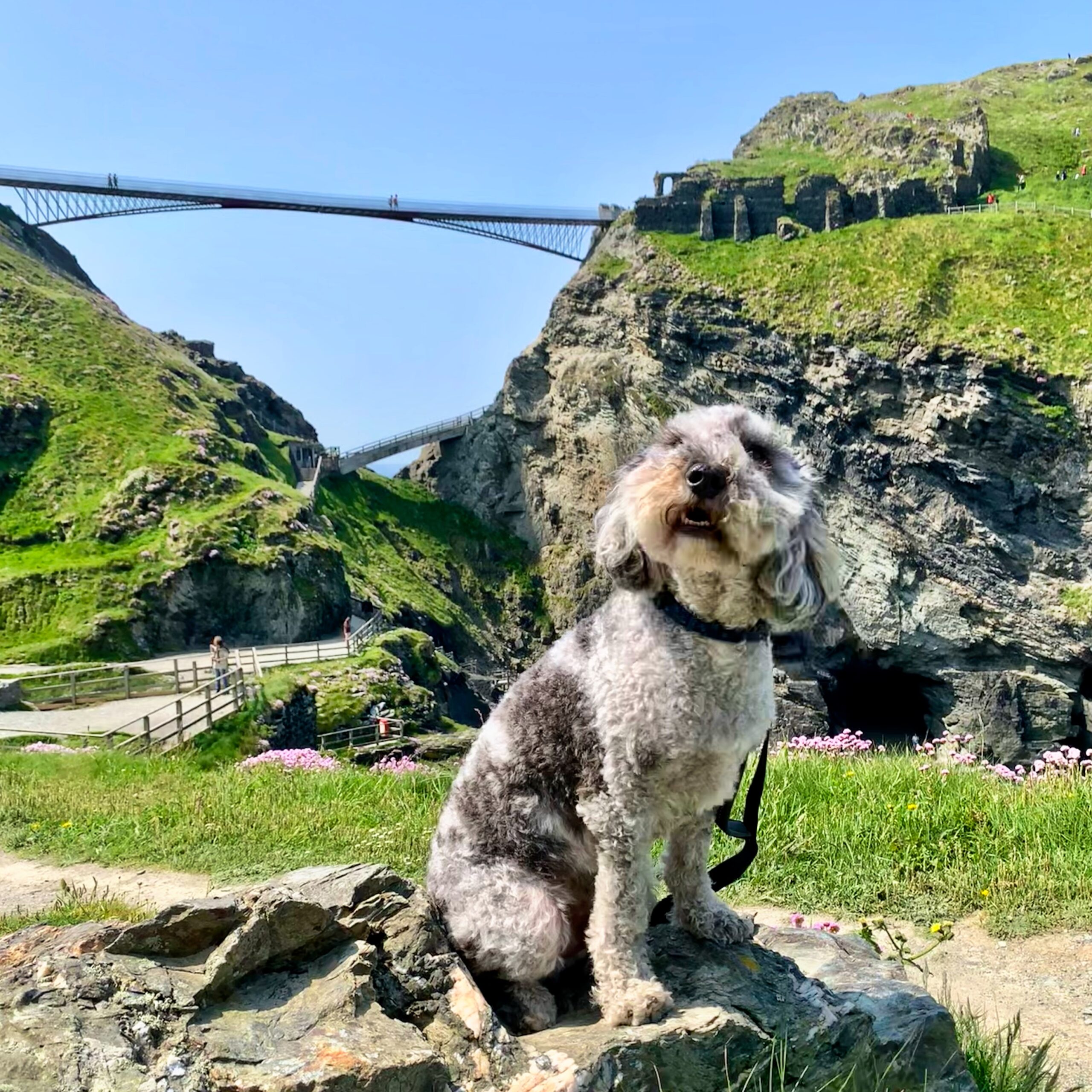
Did Yoshi discover King Arthur at Tintagel during our trip to Cornwall? “Gallos”(meaning ‘power’ in Cornish) created by sculptor Rubin Eynon is an 8ft bronze sculpture standing above cliffs on the Atlantic coast-side of the castle – 22/03/2023Yoshi with the new Tintagel Bridge in the background which reinstates the original route to the castle. In the Middle Ages, Tintagel’s residents walked from one side of the site to the other using a narrow land bridge as high as the clifftops. But the crossing disappeared between the 14th and 17th centuries, leaving the castle divided by a natural chasm. English Heritage launched a competition in 2015 to find a design for a new bridge. The winning concept was created by Ney & Partners Civil Engineers and William Matthews Associates. The project was completed in August 2019. The design sees two cantilevers reach out and meet, not quite touching, with a 40mm gap in the middle. The gap represents the transition from the mainland to the island, present to past. The bridge is paved with Cornish Delabole slate, with stainless steel balustrades fitted along its length. The balustrades have been designed to be so fine that, when viewed from a distance, they disappear against the sky – 22/03/2023
As mentioned in our last blog, we recently spent a few days in Cornwall. This gave me the opportunity to see some of the remaining semaphore signals on the Great Western mainline and also GWR sleeper trains arriving and departing from Penzance. We stayed in Camelford for three nights before moving onto Penzance for a couple of days.
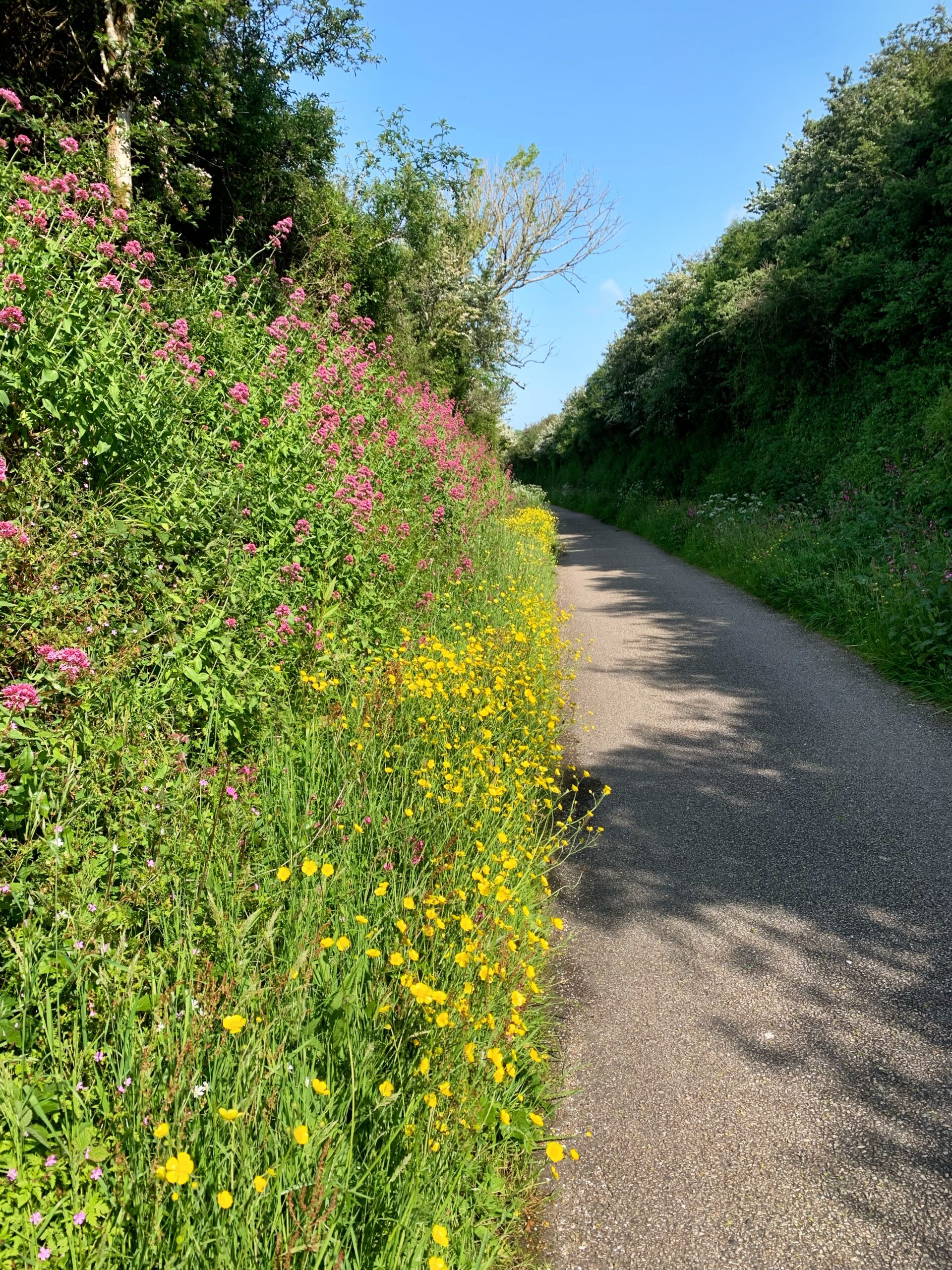
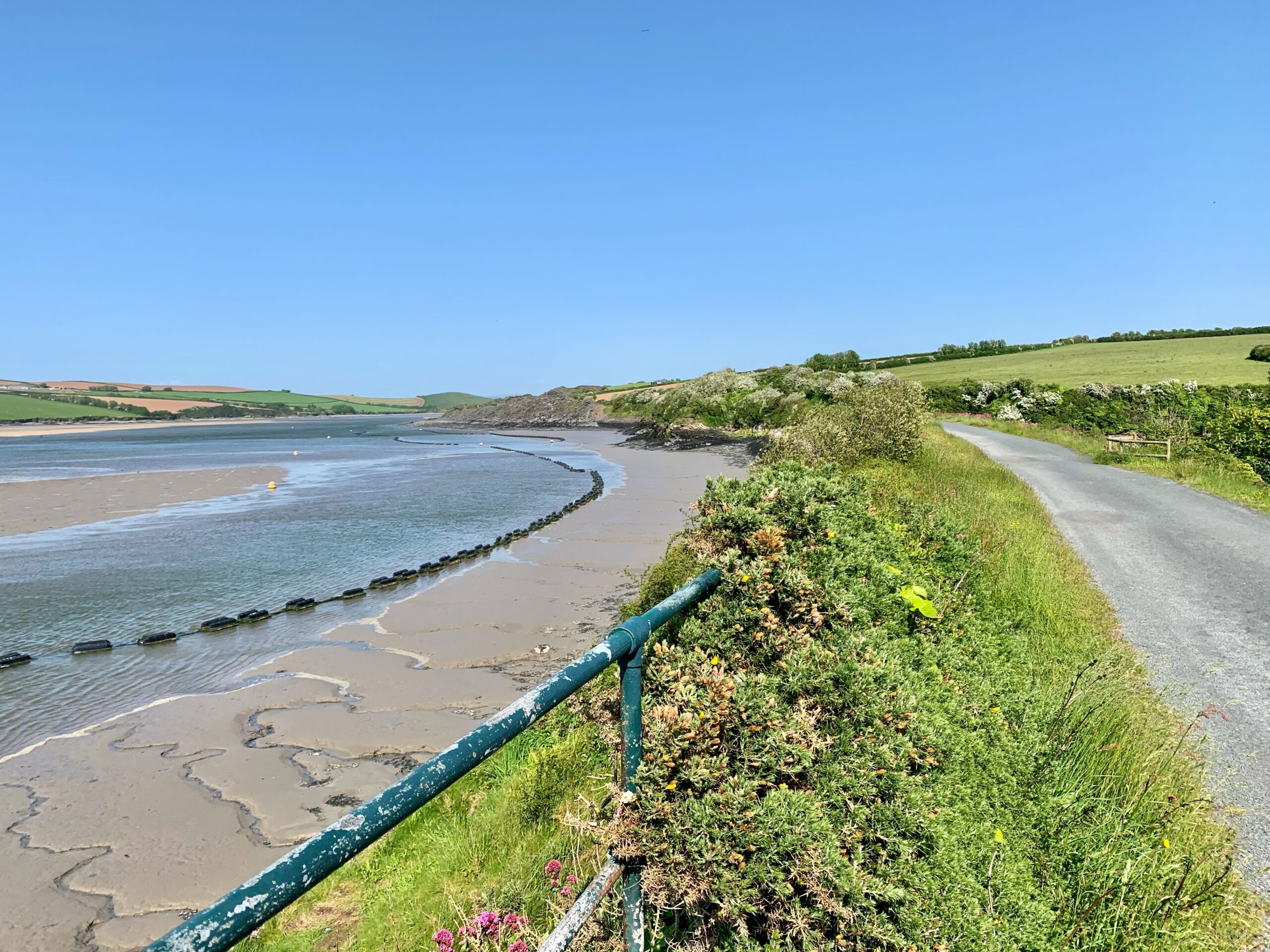
While we were in the Camelford area we visited Padstow and Bodmin and we were able to walk along some disused railway trackbed which now forms the Camel Trail; an 18 mile largely traffic free, surfaced and virtually level multi use trail. It provides access to the beautiful Cornish countryside between Wenfordbridge, Bodmin, Wadebridge and Padstow and is suitable for walkers, cyclists, horse-riders and wheel-chair users.
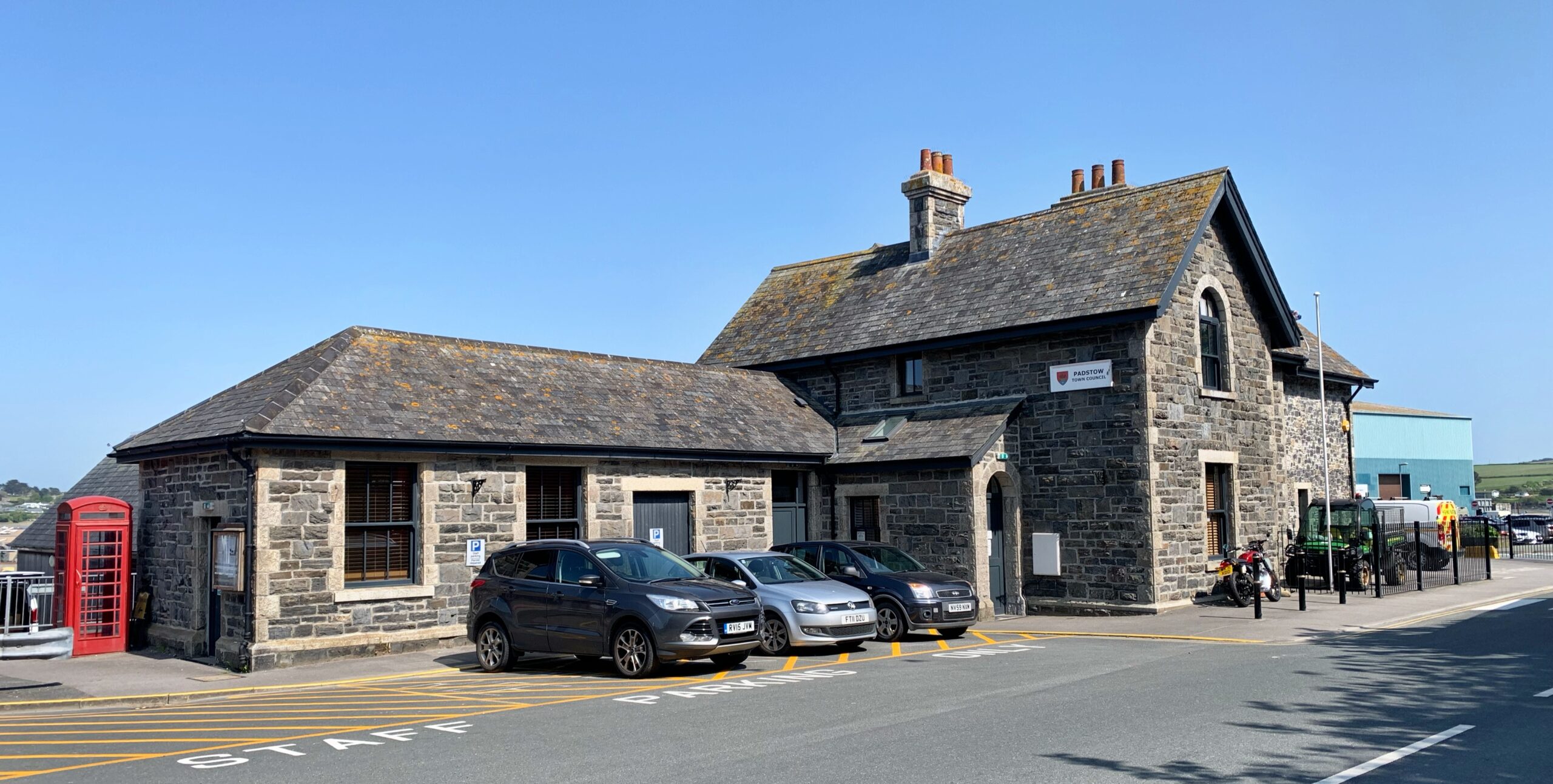
The former Padstow railway station, the western terminus of the North Cornwall Railway. It was opened in 1899 by the London and South Western Railway and closed in 1967 following the Beeching report. The building currently houses the offices of Padstow Town Council – 22/05/2023
We walked from Padstow towards Wadebridge and from Bodmin, we also walked in the direction of Wadebridge as the trail follows the paths of two former railway lines; a section of the North Cornwall Railway between Padstow and Wadebridge and most of the Bodmin and Wadebridge Railway from Wadebridge to Wenford Bridge, along with a short branch from that line to Bodmin.
The Bodmin and Wadebridge Railway was originally built at a cost of £35,000 following a study commissioned in 1831 by local landowner Sir William Molesworth of Pencarrow. The line was intended to carry sand from the Camel estuary to inland farms for use as fertiliser. In the 1840’s, England’s railway network expanded towards Bodmin. The London and South Western Railway (LSWR) purchased the Bodmin and Wadebridge Railway in 1846 and intended to connect it to the rest of the system by a new line through North Cornwall. The line from Halwill reached Wadebridge in June 1895 and then Padstow in March 1899. Later the railway was used to ship slate and china clay from inland quarries to ships in Padstow and also transport fish landed in Padstow inland to London and other cities. When both quarrying and fishing died off, the railway lost most of its traffic. The last passenger train ran in 1967 and freight ceased in 1983, when a need to invest in new track forced the line to close.
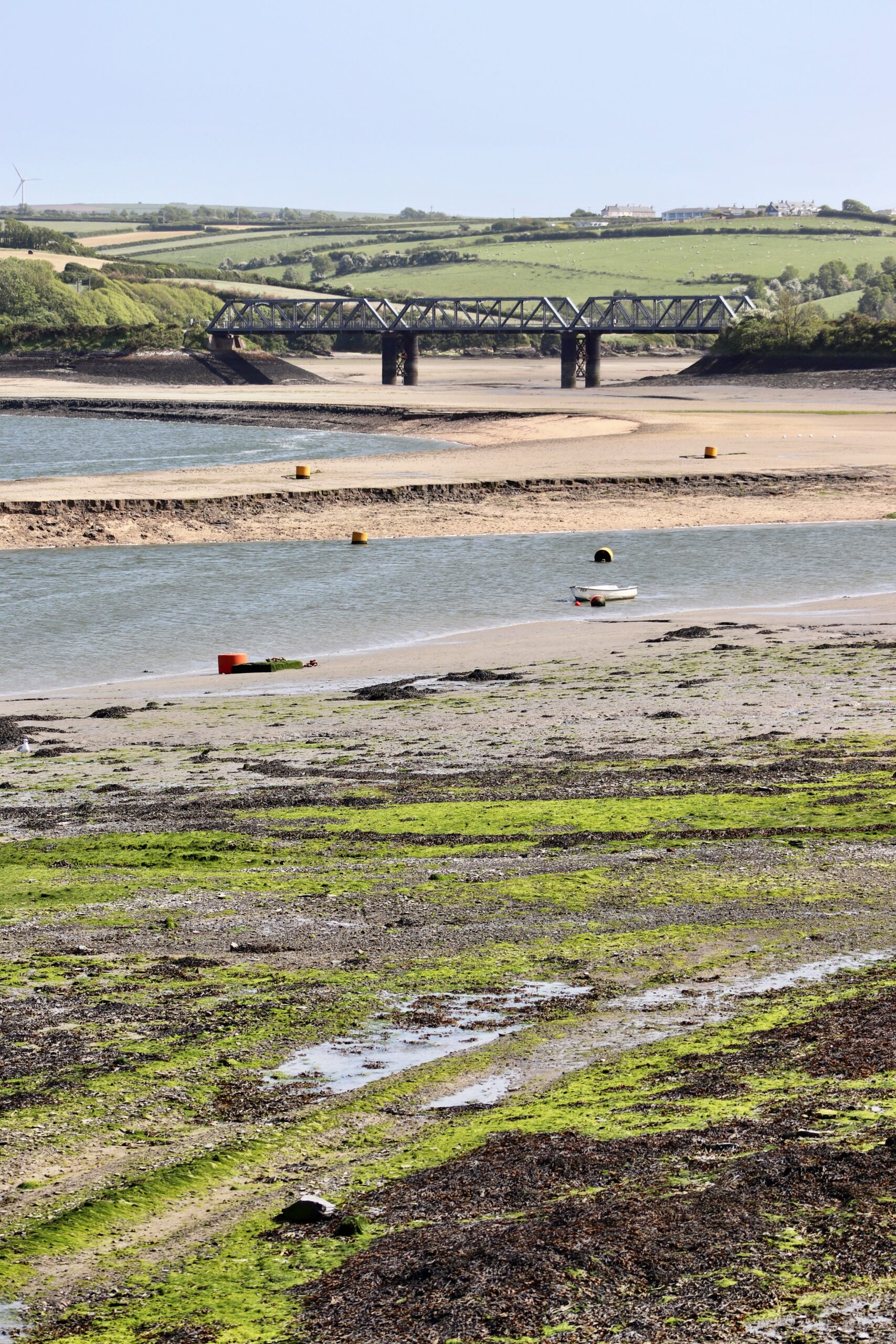
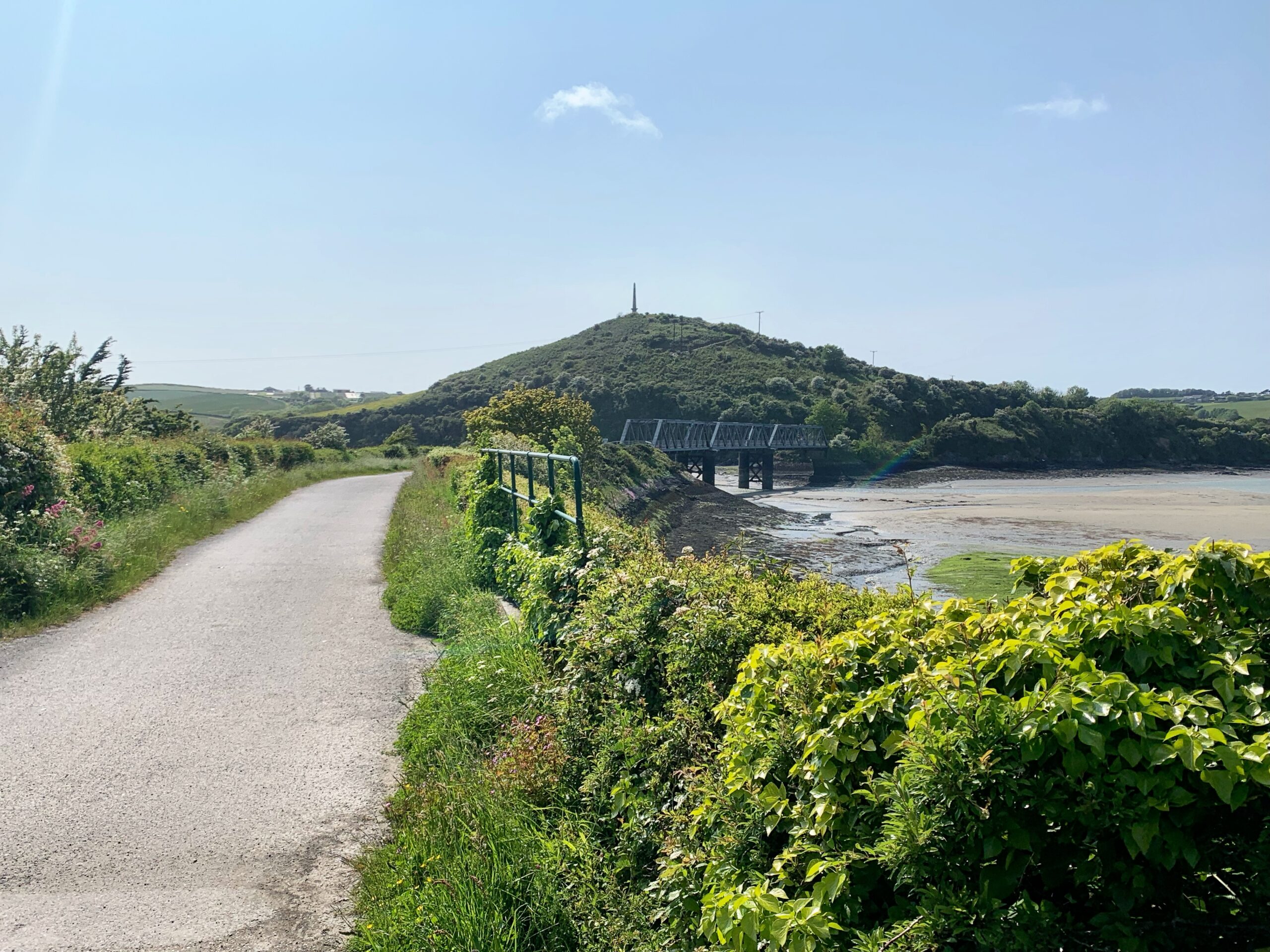
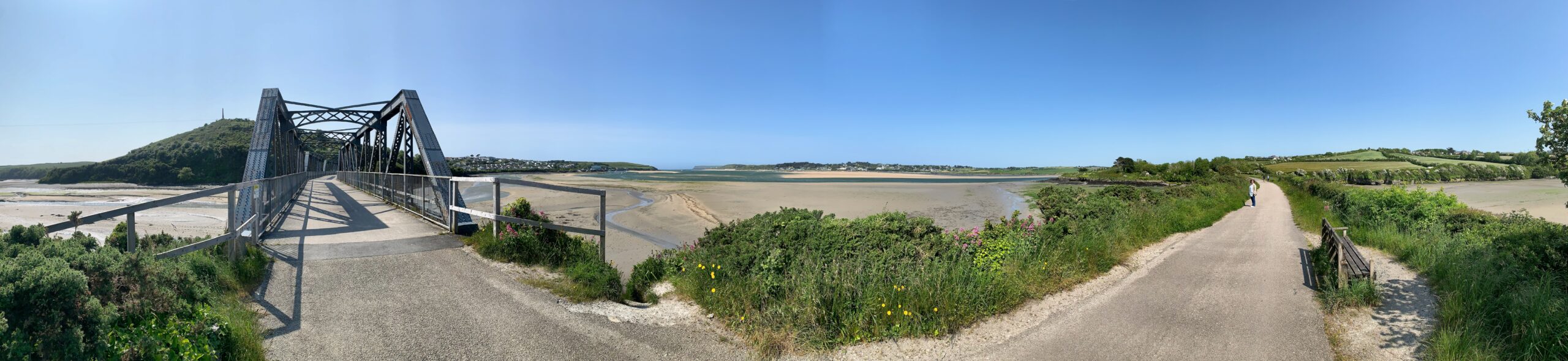
On leaving Padstow, the Camel Trail crosses Petherick Creek on this bridge which formerly carried the North Cornwall Railway – 22/05/2023Petherick Creek bridge. Construction began in December 1896 with the erection of temporary staging over Little Petherick Creek, a mile south-east of Padstow. This facilitated construction of a bridge comprising three spans of 133 feet each, curving to the north on a radius of about 20 chains. It was built by contractors from Derby, Messrs Eastwood Swingler & Co. The spans are formed of two Pratt trusses, together with nine cross girders and three wind braces, giving a deck width of 16 feet 3 inches. Two rail bearers are also provided. The ironwork was brought by rail to Wadebridge before being carried on barges to site down the River Camel. Each truss weighs 350 tons. Heading towards Padstow, the structure is approached on a 230-yard embankment, protected by revetments. This incorporates a brick and slate arched bridge at its east end.The main bridge’s abutments are formed in brick and concrete. Supporting the spans are two piers incorporating pairs of cast iron cylinders, 8 feet in diameter and at 18 feet 3 inch centres. These are braced at the top. Rail level is approximately 85 feet above bedrock, 30 feet above the river bed and 16 feet above high water level. At the top of the cylinders are granite bedstones and cast iron bearings.The contractor experienced considerable difficulty assembling the piers. Each 200-ton cylinder was loaded with a 50 ton weight, causing it to sink through the river silt. With bedrock found, the mud was then excavated using grabs, sometimes taking 48 hours to progress just one yard down. When the water had been pumped out and the interior cleaned, they were then filled with concrete – 22/05/2023
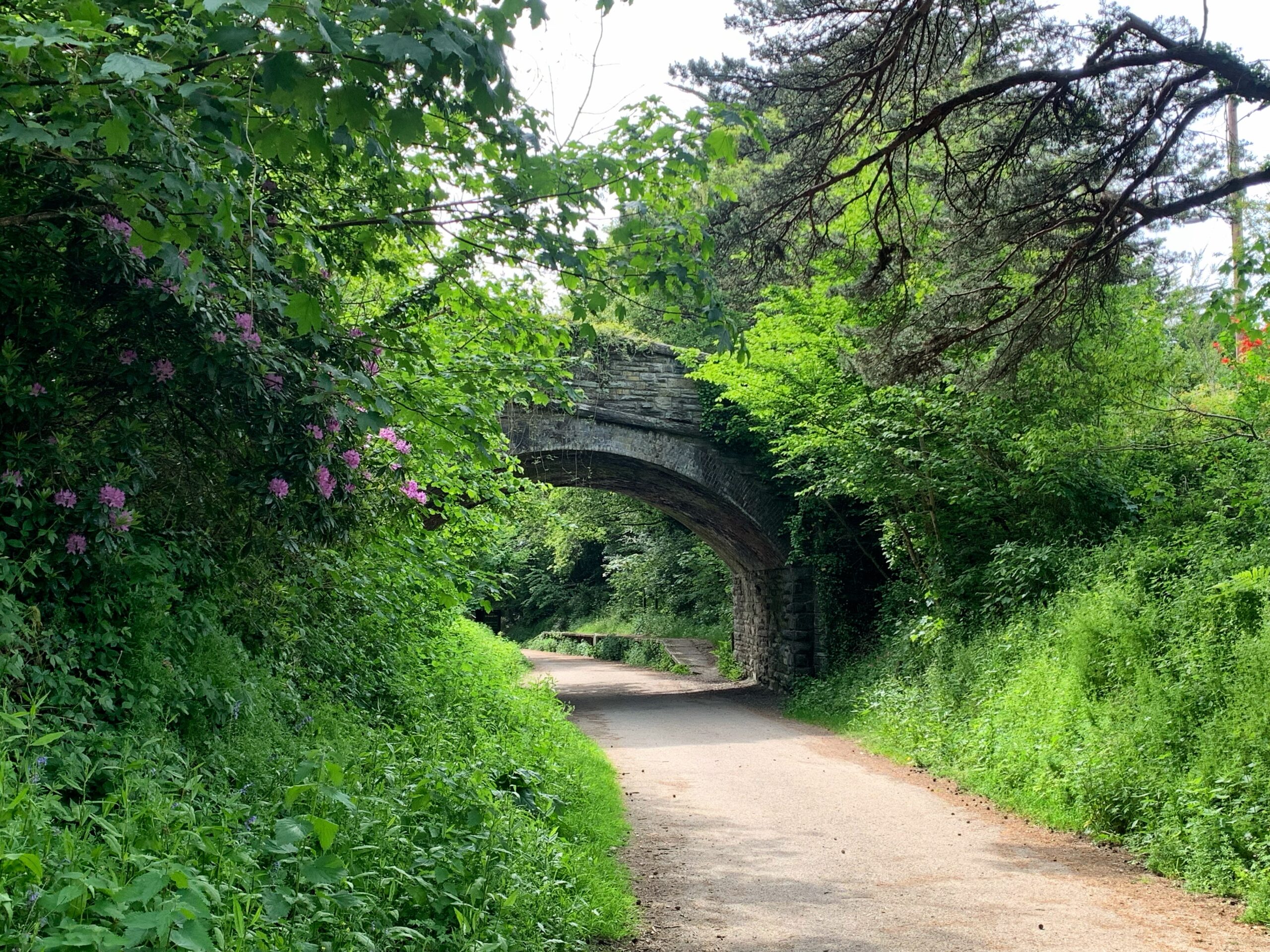
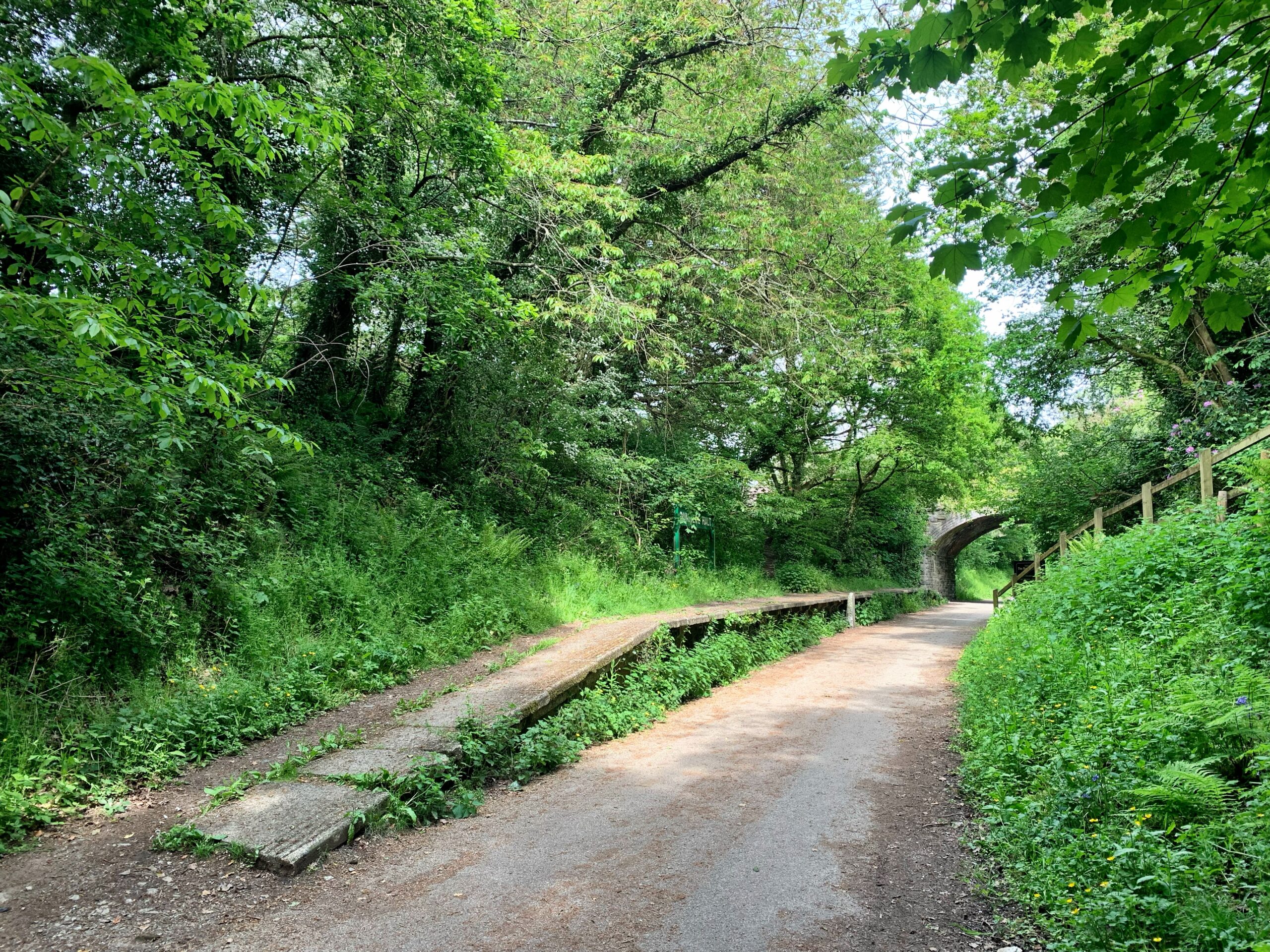
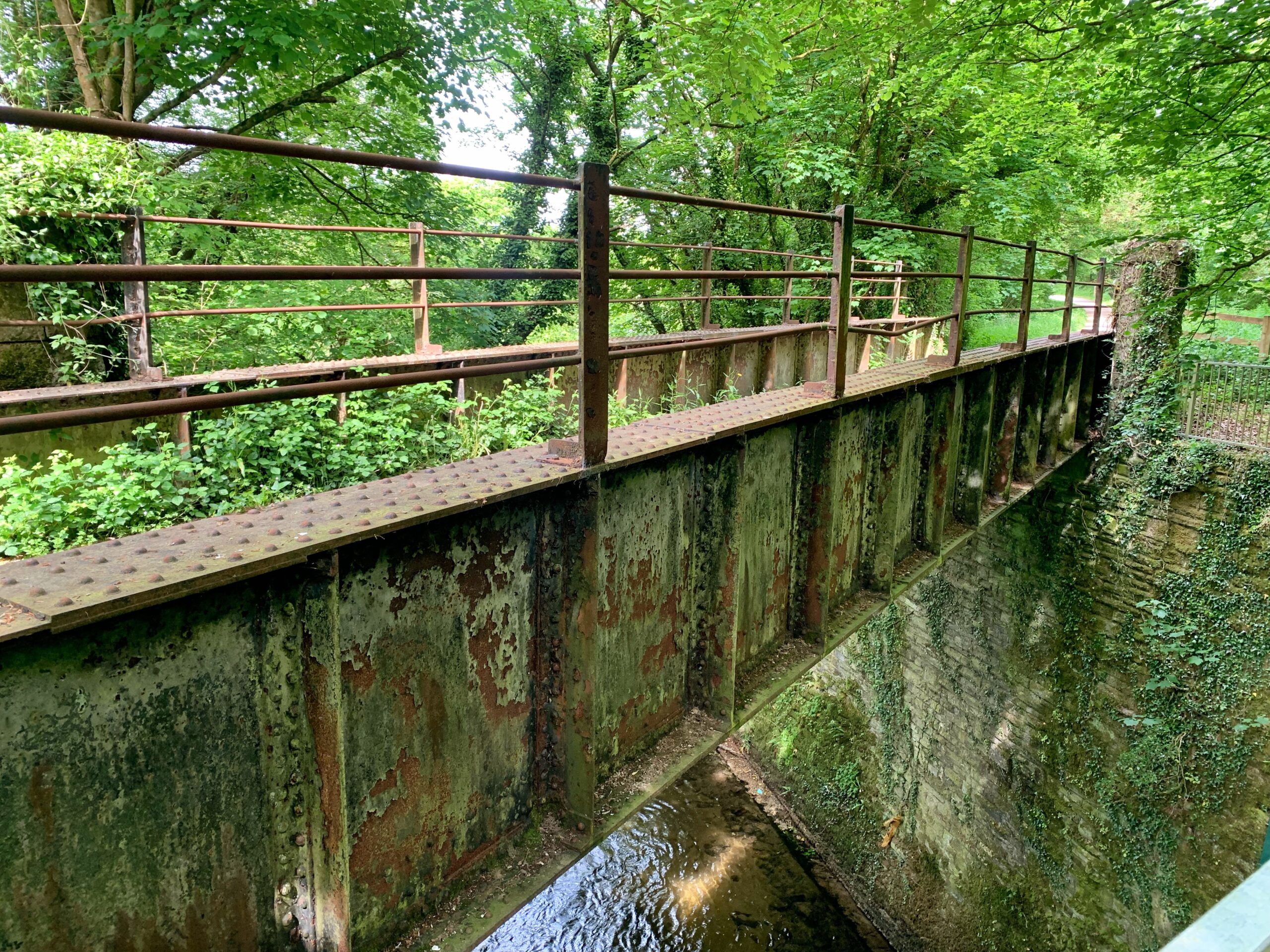
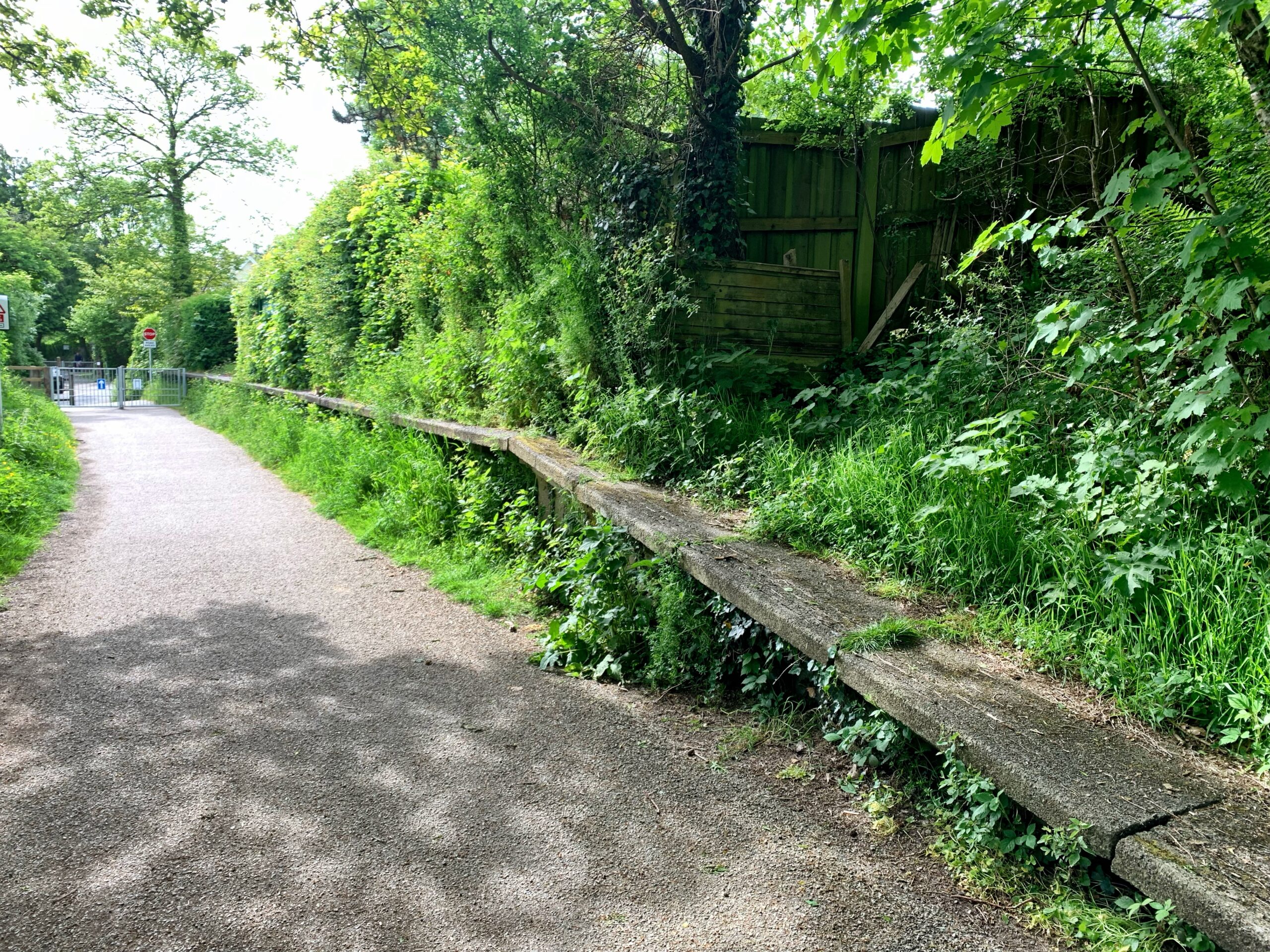
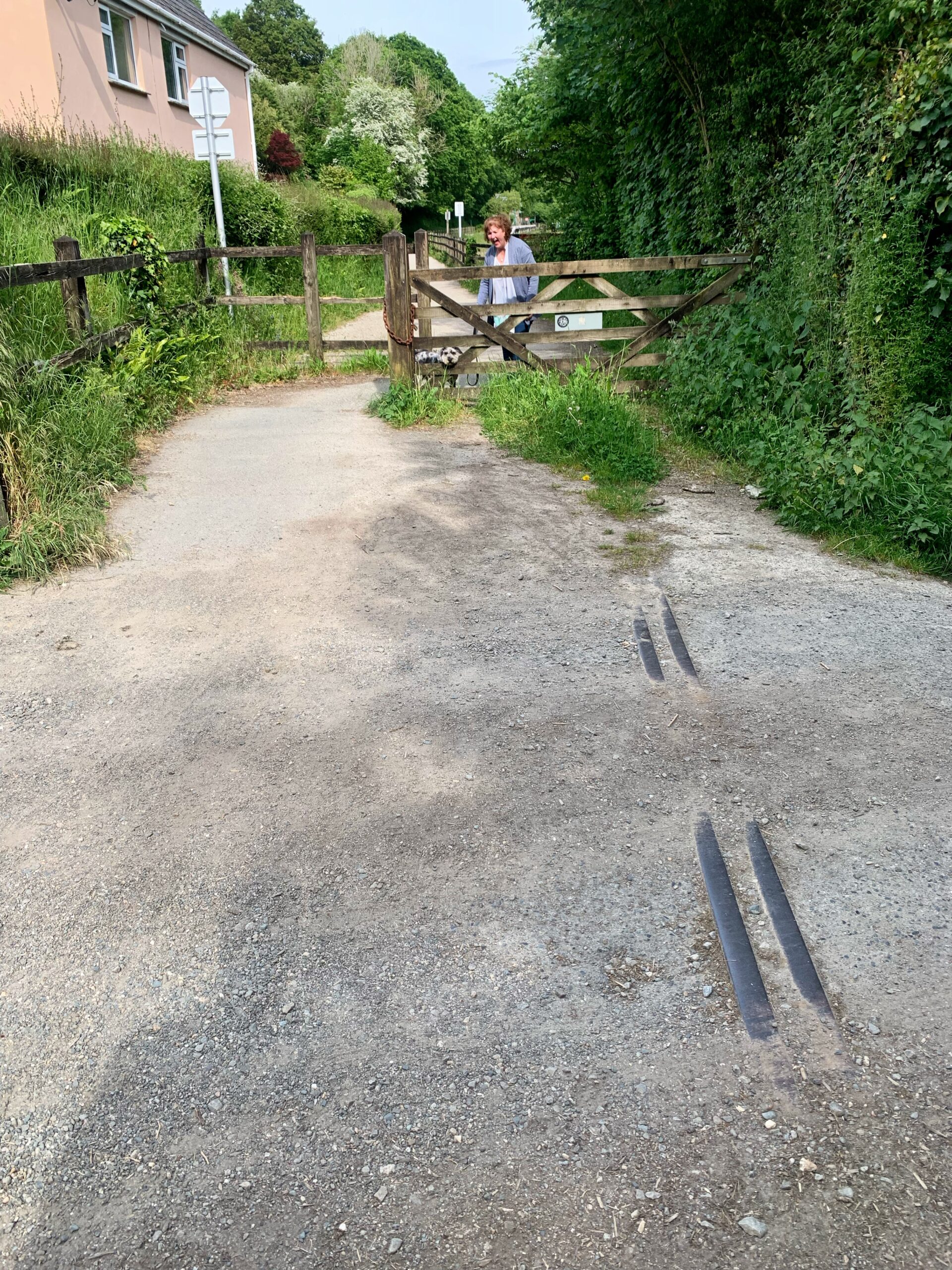
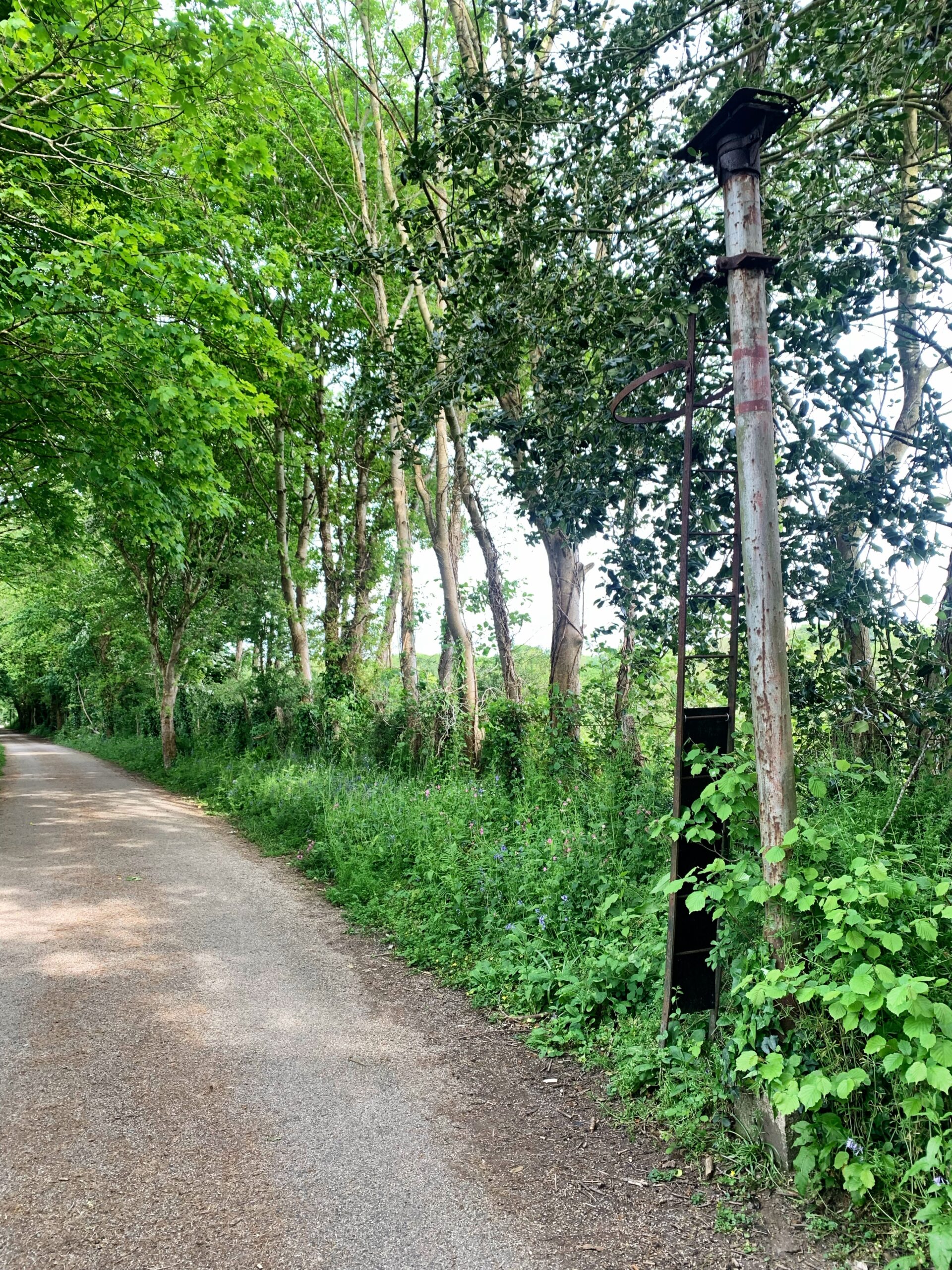
Listen to the wind as Yoshi crosses Petherick Creek bridge in a rare portrait ratio video – 22/05/2023Looking back at Petherick Creek – 22/05/2023The Camel Trail near Padstow -22/05/2023St Issey on the Camel Trail – 22/05/2023Lobster pots on the River Camel alongside the disused railway line – 22/05/2023Road bridge over the Camel Trail at Bodmin – 23/05/2023Dunmere on the Camel Trail – 23/05/2023Dunmere Halt on the Camel Trail – 23/05/2023Dunmere Halt on the Camel Trail – 23/05/2023Dunmere on the Camel Trail – 23/05/2023Nanstallon Halt on the Camel Trail – 23/05/2023Remains of railway track at Nanstallon on the Camel Trail – 23/05/2023Remains of signalling at Nanstallon on the Camel Trail – 23/05/2023The branch to Camelford on the Camel Trail – 23/05/2023
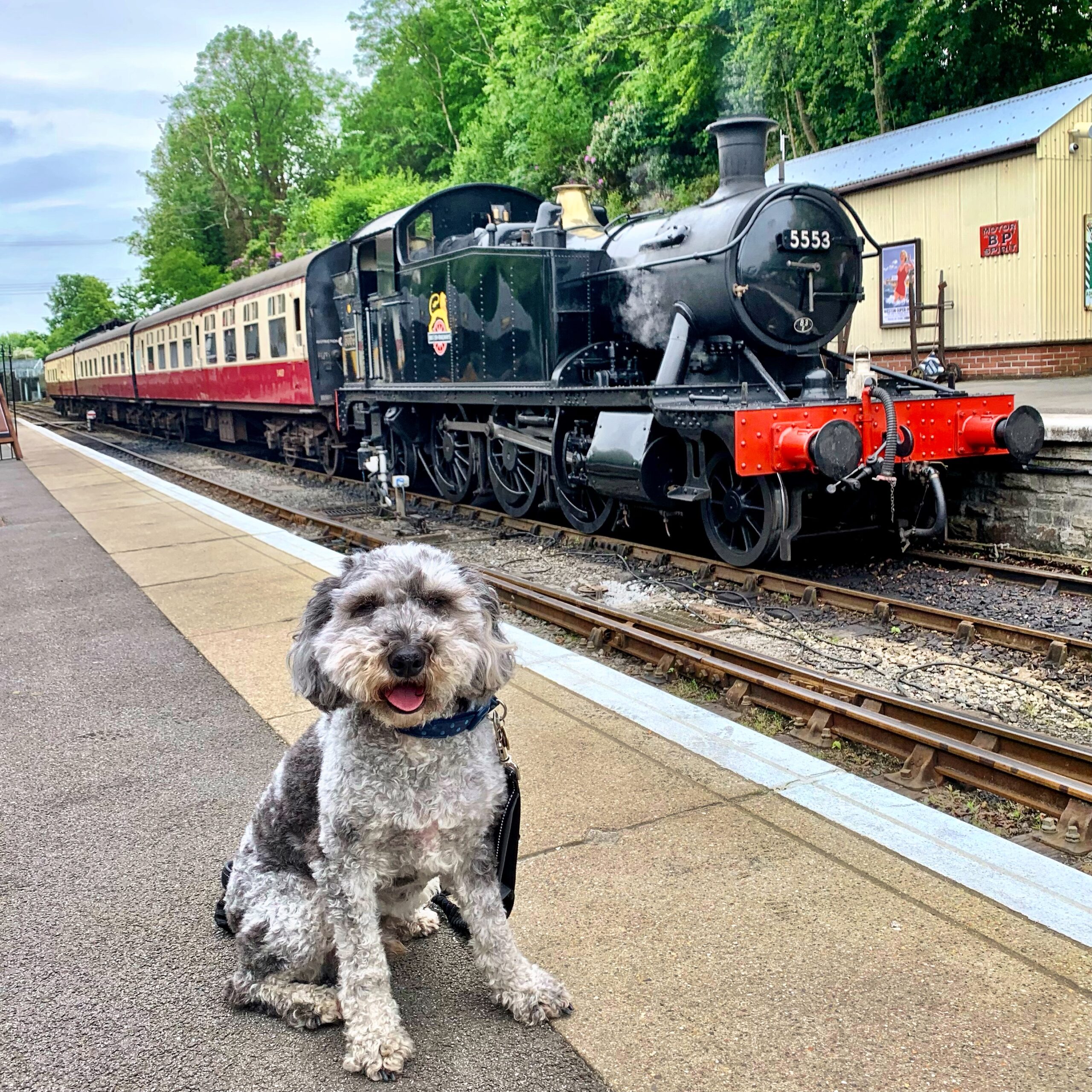
While Yoshi’s mama was visiting Bodmin Jail (now a tourist attraction, Caroline wasn’t spending time at the invitation of the local constabulary), the boy and I also popped in briefly on the Bodmin & Wenford Railway. On the day of our visit visiting steam loco GWR Small Prairie Class 4500 Churchwood 2-6-2T tank engine No. 5553 was in operation, but we also saw several heritage diesel locomotives on site. The Bodmin Railway Preservation Society (BRPS) was formed in 1984, and they in turn formed the Bodmin Railway plc in order to raise funds to purchase the line from Bodmin Parkway to Boscarne Junction, via Bodmin General. They were successful, and North Cornwall District Council (now part of Cornwall Council) secured the land from British Rail.
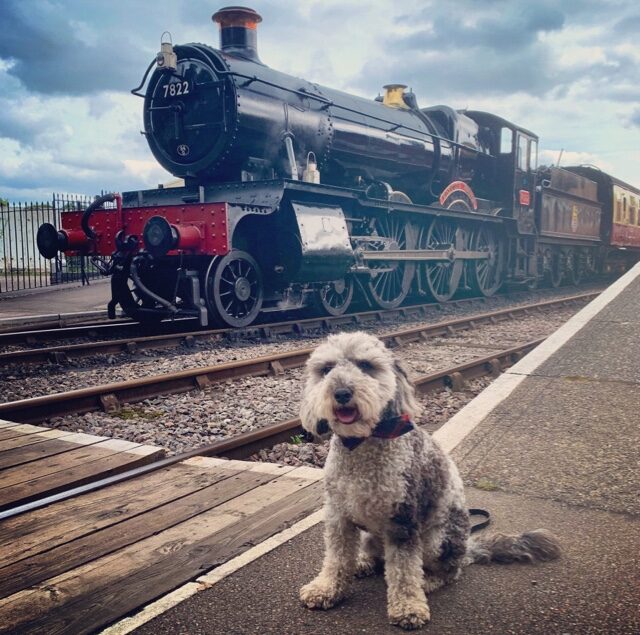
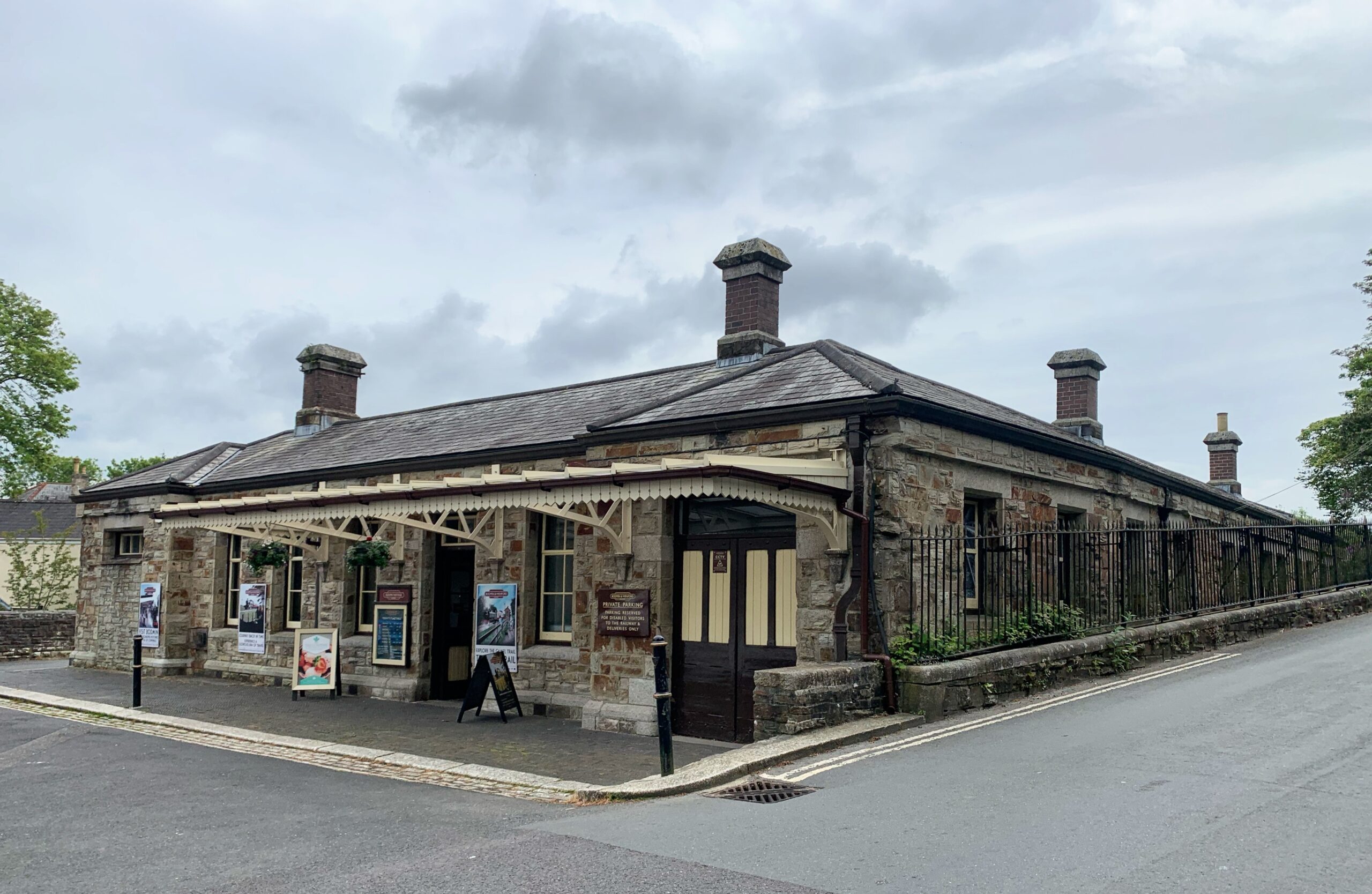
Bodmin General railway station was constructed by the Great Western Railway and opened in 1887, when the 3½-mile branch line from Bodmin Road to Bodmin was opened. The station is beautifully restored to reflect the 1950’s and is resplendent in the British Railways (Western Region) colour scheme of the period. It currently houses the headquarters of the Bodmin and Wenford Railway – 23/05/2023Yoshi at Bodmin General with GWR Small Prairie No. 5553. The locomotive was built at Swindon in 1928 and withdrawn in November 1961 when she was sold for scrap to Woodham Brothers in Barry. Having spent nearly 28 years in the scrapyard, she was the last locomotive to leave Barry in January 1990 where she was transported to the Dean Forest Railway – 23/05/2023
No. 5553 arrives at Bodmin General. Feel free to bark along – 25/03/2023
Services between Bodmin Parkway and Bodmin General were restored in 1990, and the line was extended back to Boscarne Junction six years later, in 1996.
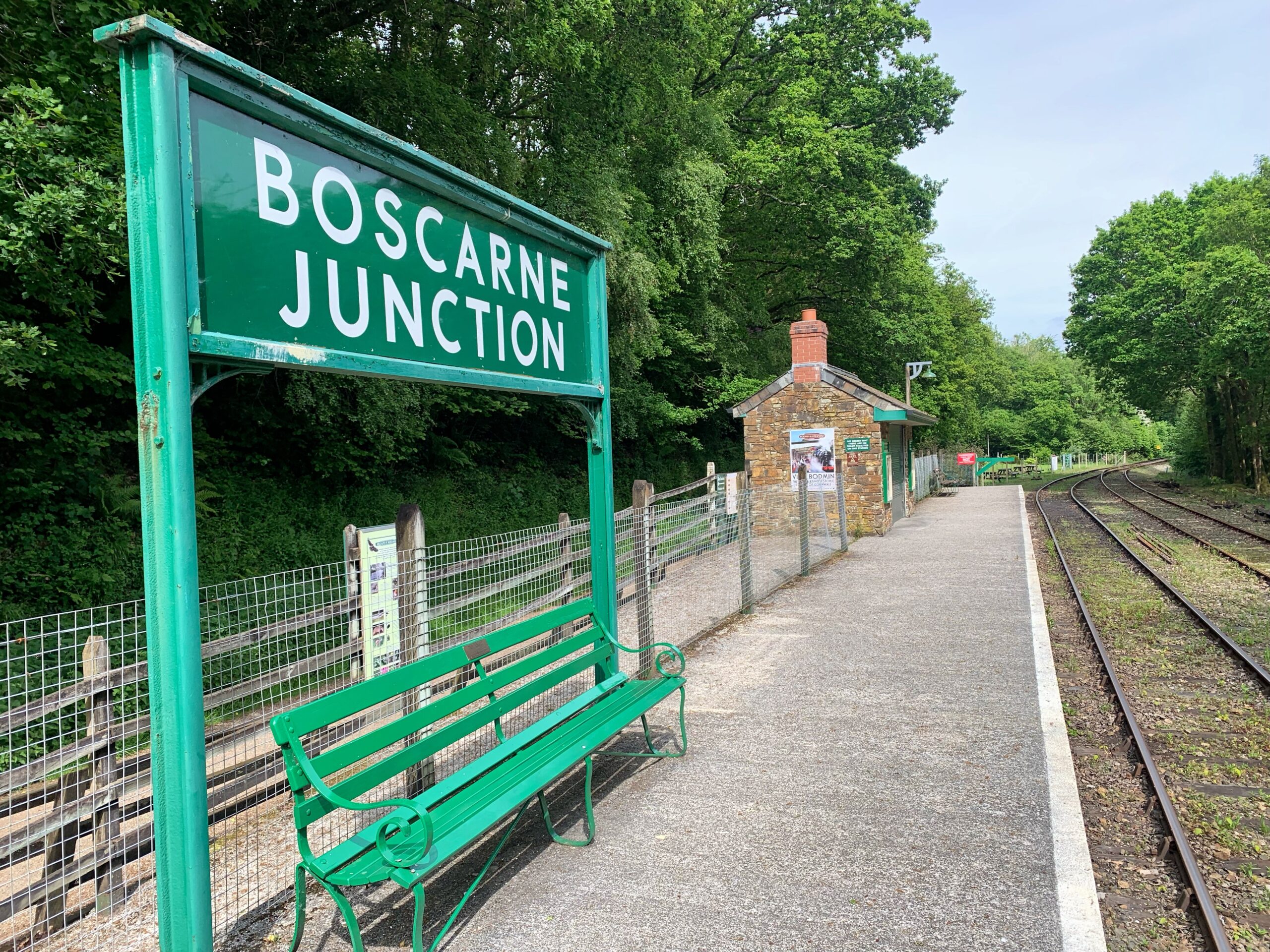
Boscarne Junction station on the Bodmin and Wenford railway. The Camel Trail passes this location – 23/05/2023
Since then the Bodmin & Wenford Railway has operated trains – principally steam, but with some heritage diesel services – over the 6½ miles between Bodmin Parkway and Boscarne Junction via Bodmin General.
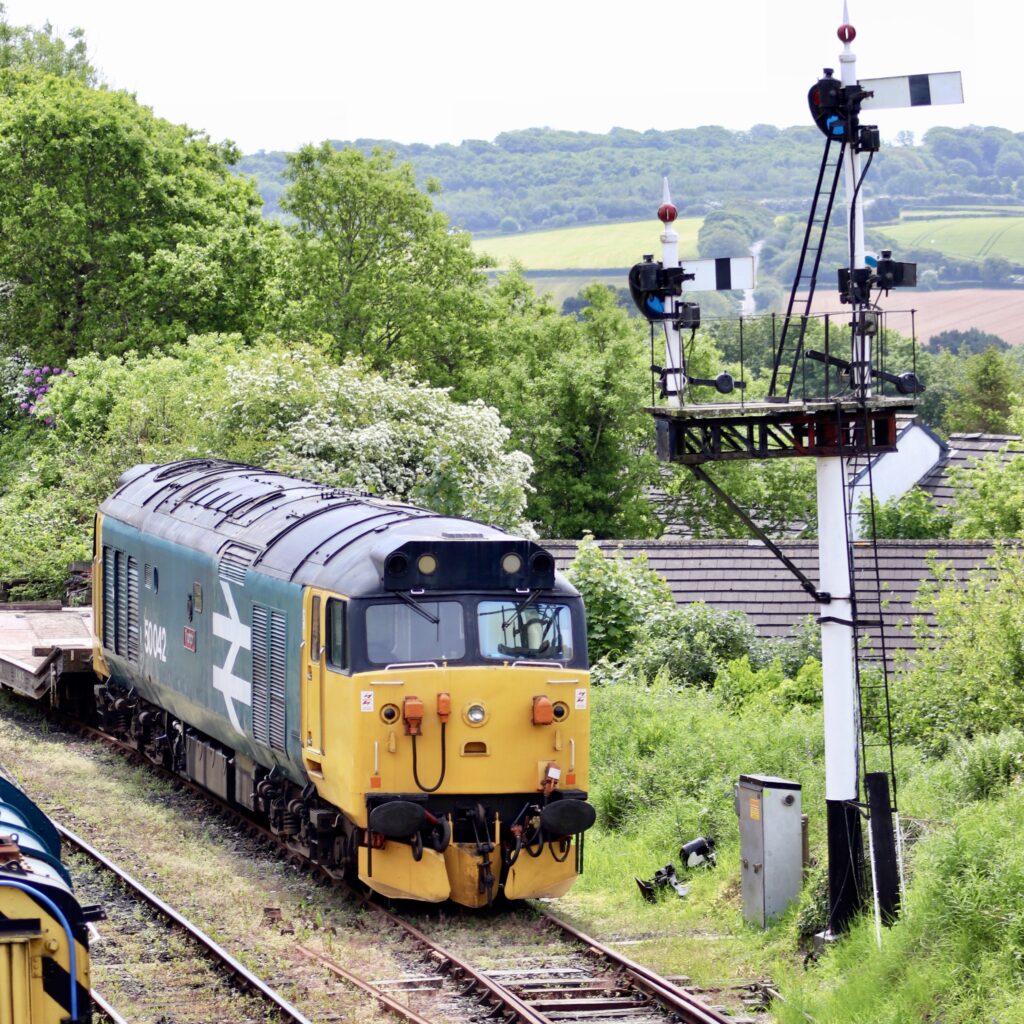
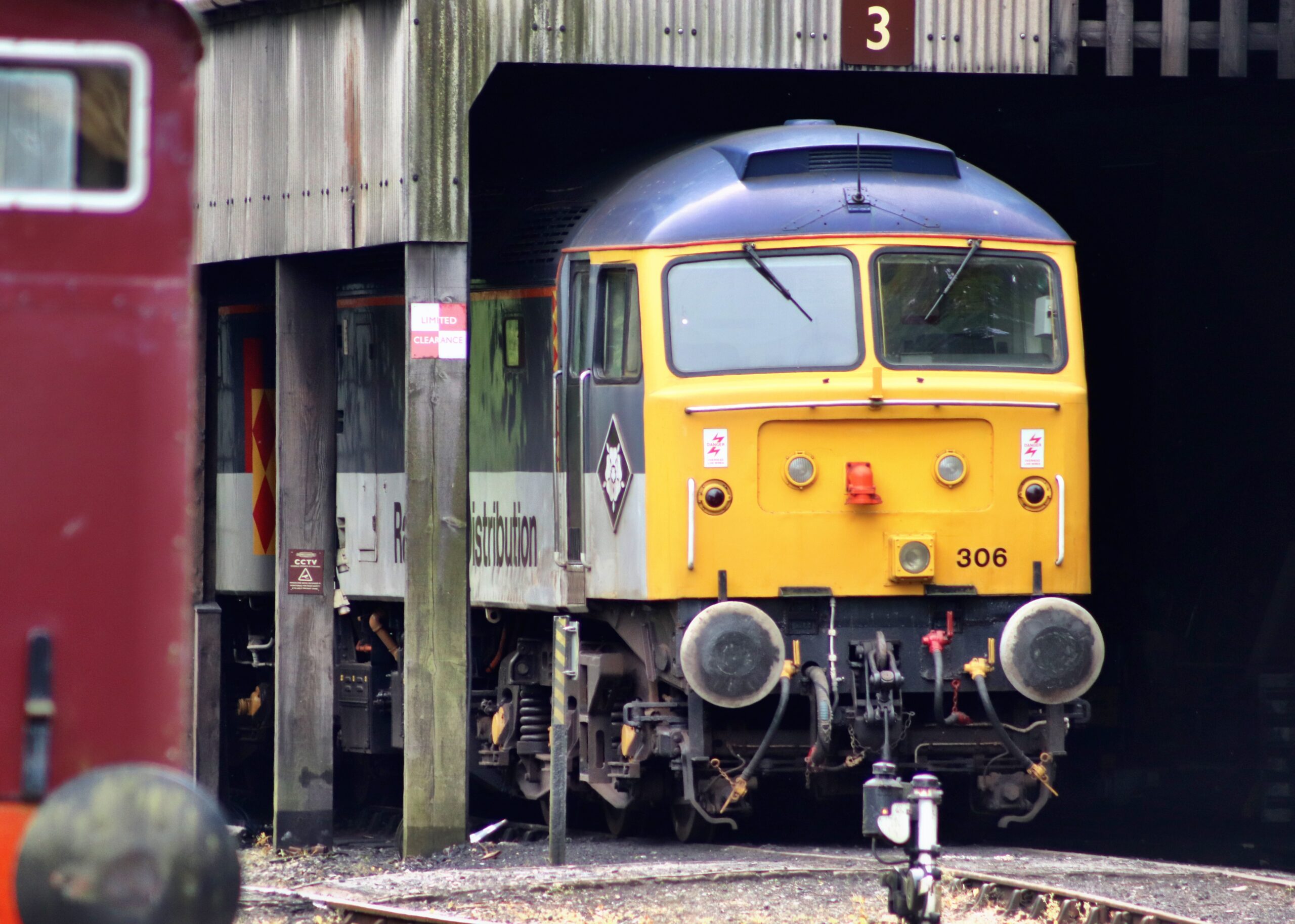
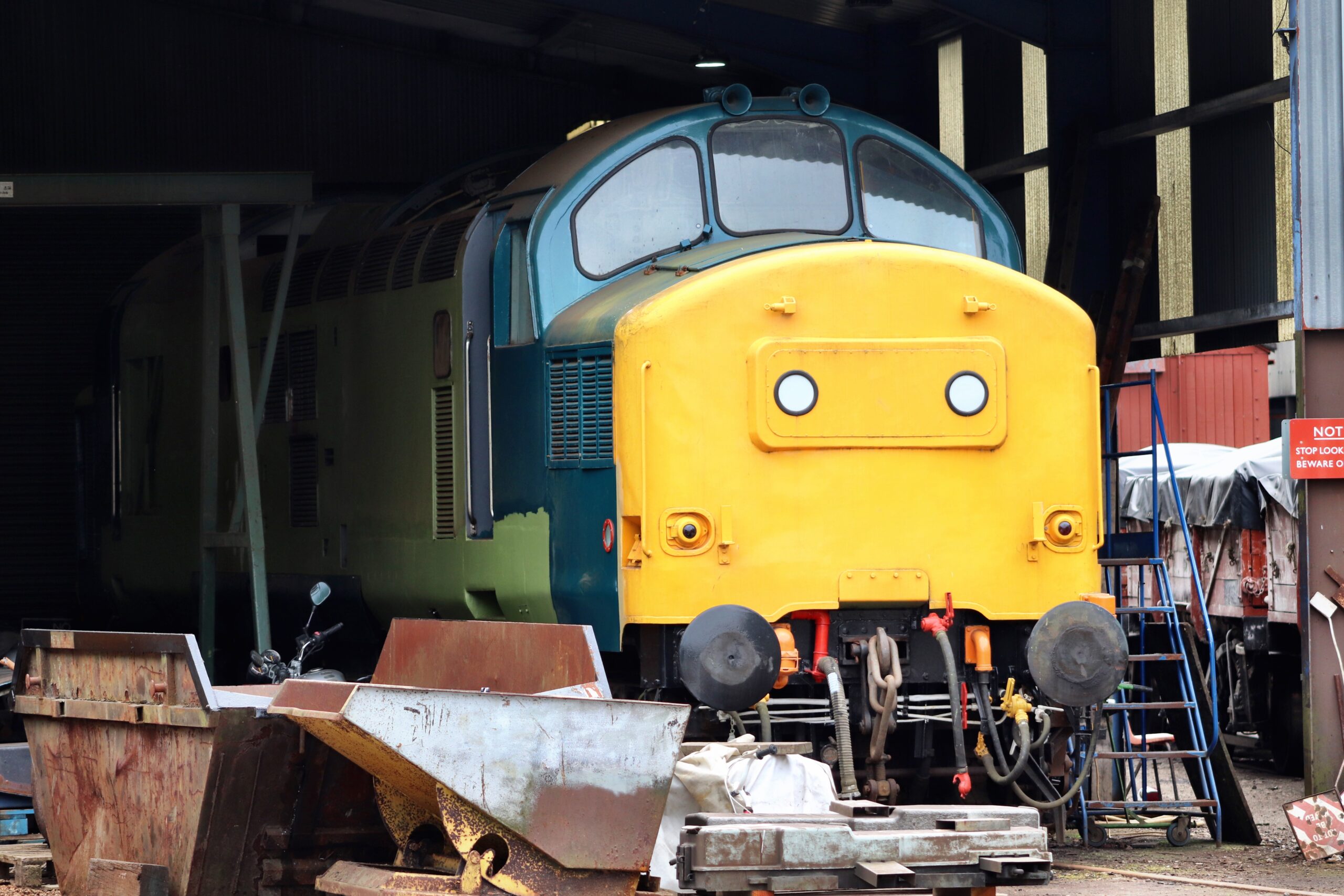
Class 50 No. 50042 ‘Triumph’ at Bodmin. Withdrawn in 1990 the Bodmin Mainline Diesel Group purchased the loco in 1991 and restored her to pristine condition in 1993 – 23/05/2023Class 47 No. 47306 ‘The Sapper’ at Bodmin. Built by Brush at their Falcon Works in Loughborough in 1963 the locomotive arrived on the Bodmin and Wenford Railway in 2007 straight from St Blazey where she had been placed in store following withdrawal from mainline use – 23/05/2023Class 37 No. 37142 built in 1963 at English Electric’s Vulcan Foundry is currently undergoing an overhaul at Bodmin. In her mainline days she worked China Clay trains across Cornwall so is very much at home on the Bodmin and Wenford Railway – 23/05/2023
Travel back to April 1995 when Robert Stephenson & Hawthorn Works 0-6-0T locomotive No. 7597 was in operation on the Bodmin and Wenford Railway. The locomotive was built in 1959 and spent her industrial life at the Rye House Power Station on the Lea Valley in Essex. She is currently being overhauled at The Lincolnshire Wolds Railway.
We also had time to take photographs of GWR Castle HST Sets and a passing freight at Bodmin Parkway railway station which we visited before reuniting with Caroline. The signal box at Bodmin Parkway is now a café and I enjoyed a latte in between photographing passing trains.
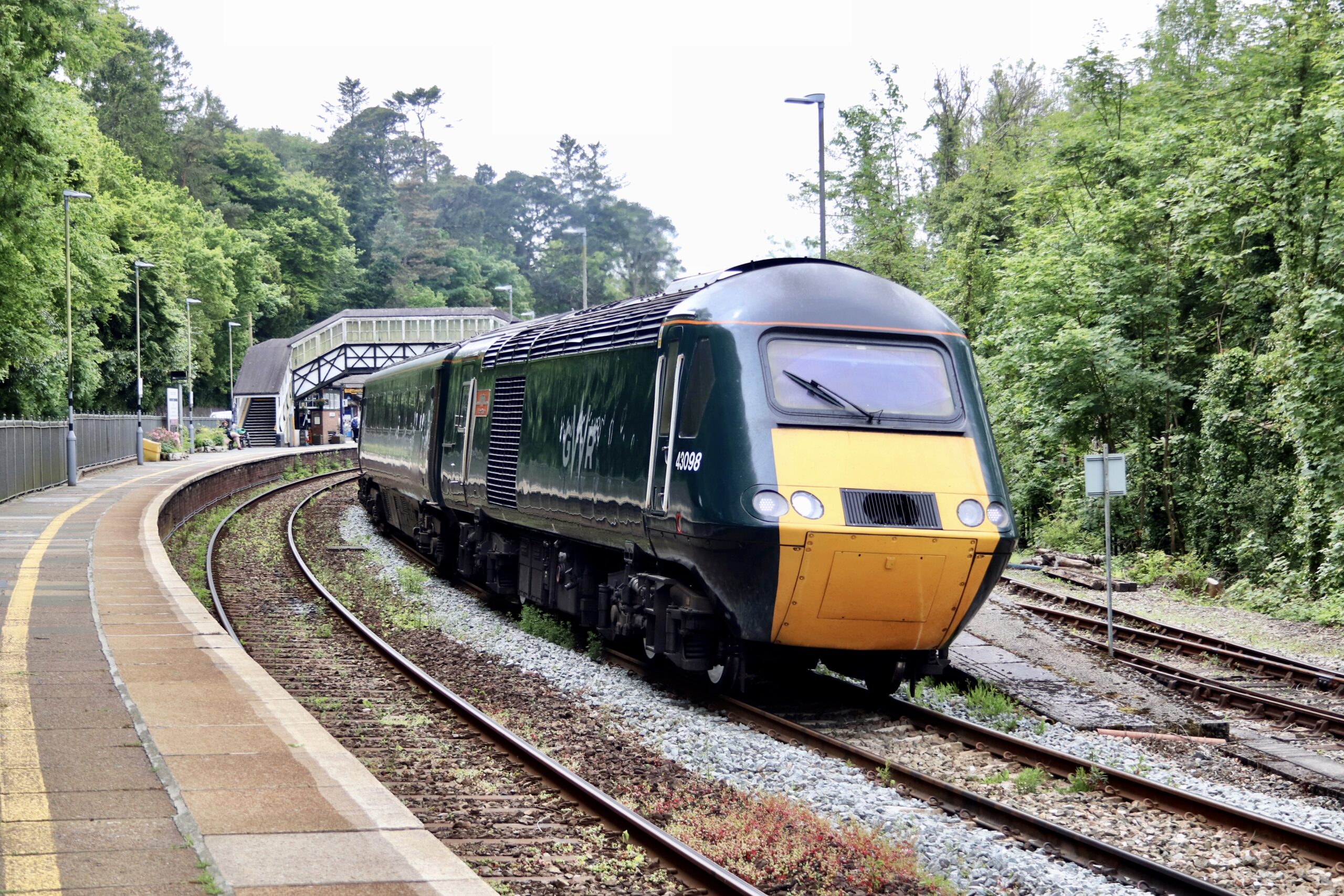
Class 43 No. 43098 ‘Walton Castle’ departs Bodmin Parkway working 2U24 1250 Penzance to Cardiff Central – 23/05/2023GWR IEP No. 802107 departs Bodmin Parkway with 1A88 1215 Penzance to London Paddington passing DB Class 66 No. 66165 6C99 1103 Exeter Riverside N.Y. to St. Blazey SS – 23/05/2023
The next day we drove to Penzance via a couple of stations which still have their semaphore signalling intact. Cornwall has long been one of the country’s most remarkable outposts of lower quadrant semaphore signalling, but time is fast running out for much of its marvellous mechanical infrastructure, with a major re-signalling project due to be completed in Autumn 2023.
The present Exeter signalling centre is to become the centralised control point for the West of England and will become a Railway Operations Centre in all but name. The section from Lostwithiel to Truro will be controlled from a new work station incorporating four or five VDU screens, sited in the Exeter centre. It will mean the closure of Lostwithiel, Par and Truro signal boxes but the same track layouts will be retained, more or less, except for some minor rationalisation. Improving the capacity on the Newquay branch is part of the plan as is the modernisation of two level-crossings on each of the Looe and Gunnislake branches.
At Lostwithiel, the junction for the Fowey freight line, the two holding loops for the china clay trains, and the level crossing at the eastern end of the station, will all be controlled from Exeter. The crossing will become CCTV-controlled, with the monitoring screens sited at the Exeter work station. It is anticipated that the downtime of the barriers, a cause of local complaint, can be reduced with this arrangement.
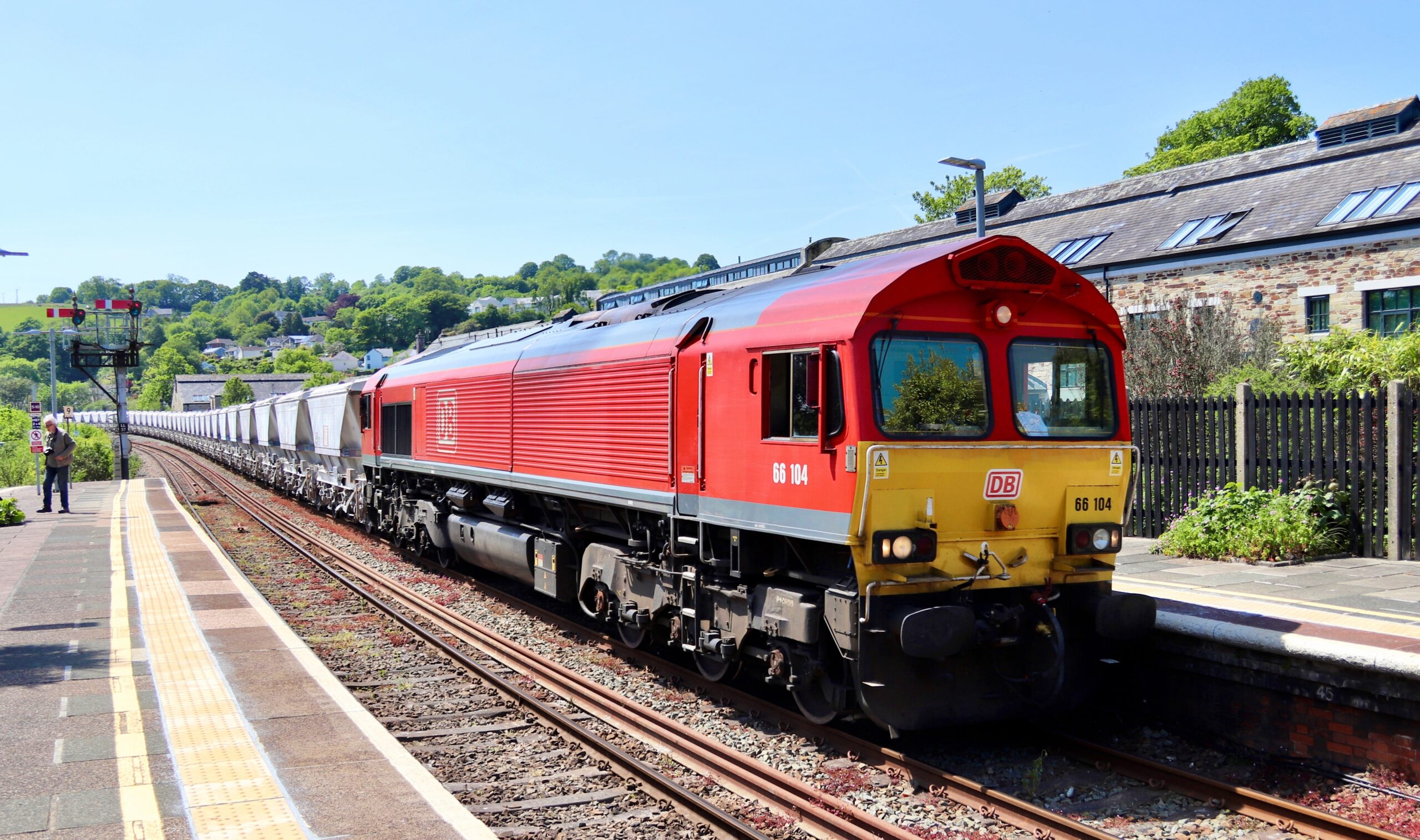
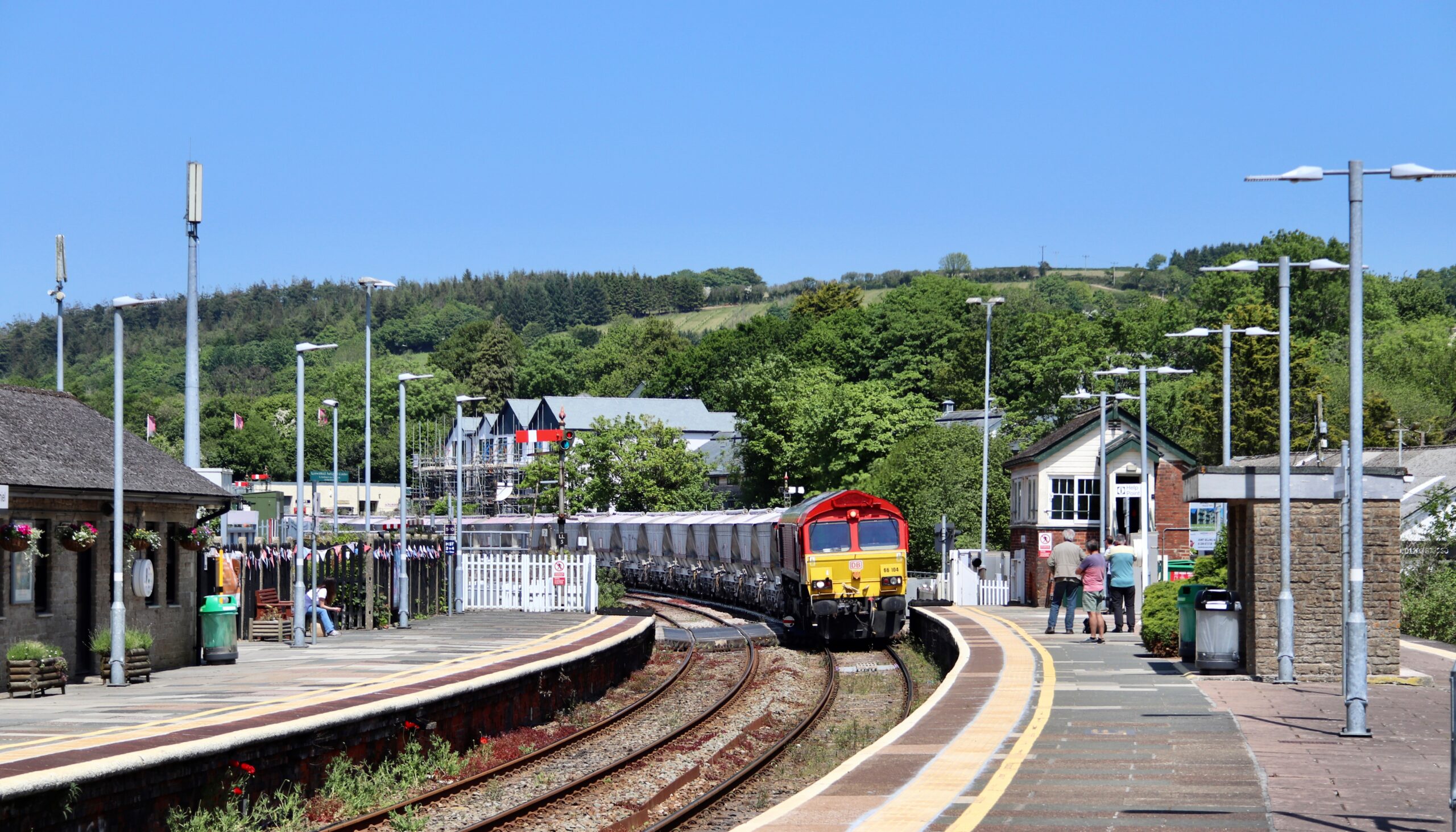
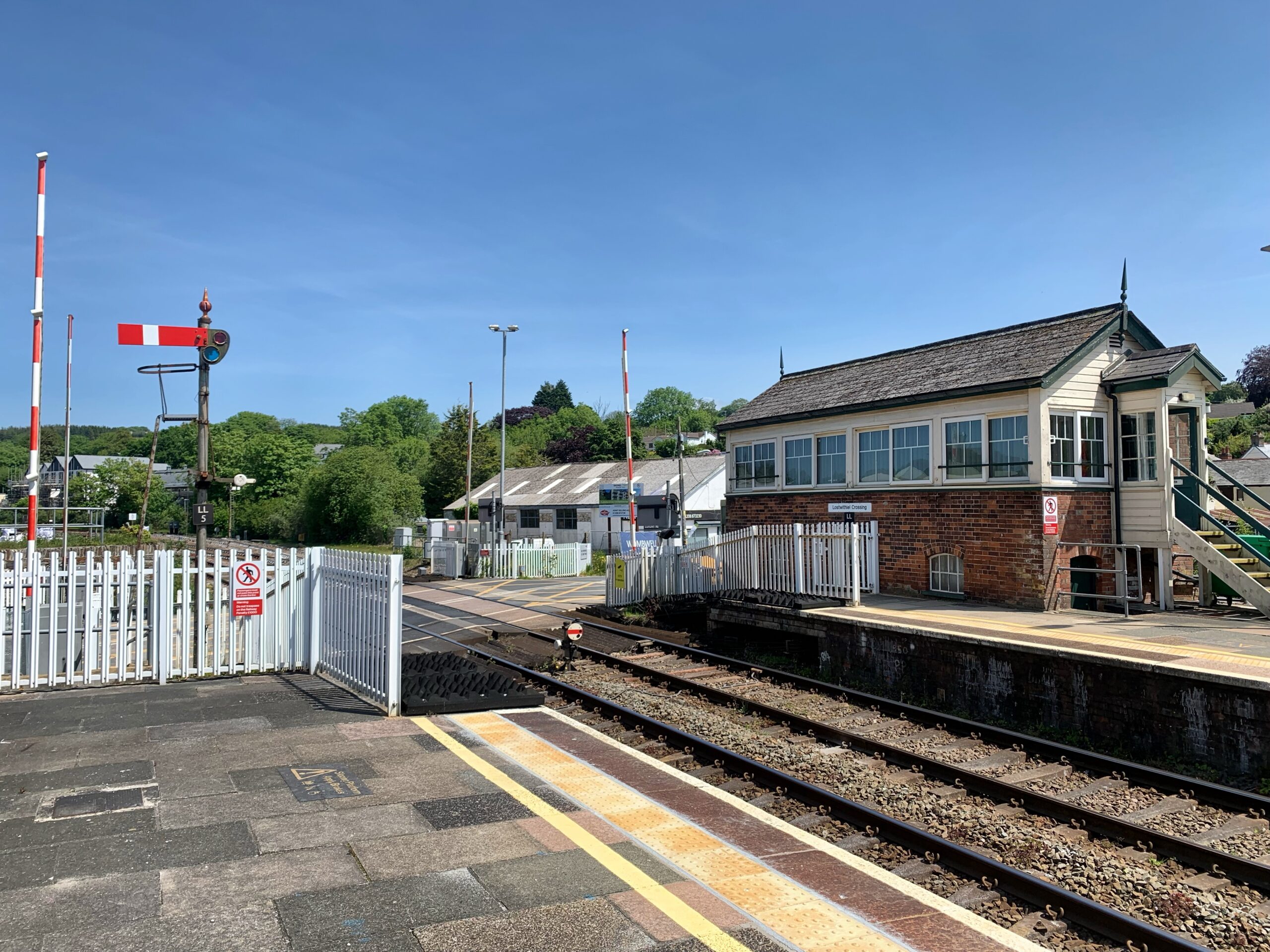
Class 43 No. 43010 ‘Lydford Castle’ at the rear of the late running 2C69 0900 Cardiff Central to Penzance Castle HST service – 24/05/2023Class 66 No. 66104 heads up 6G09 1302 Goonbarrow Junction EWS to Fowey Dock Carne Point china clay working at Lostwithiel. The locomotive runs around the train in Lostwithiel Up Goods Loop before heading back through the station to Fowey – 24/05/2023Having run round its wagons, Class 66 No. 66104 hauls 6G09 1302 Goonbarrow Junction EWS to Fowey Dock Carne Point china clay back through Lostwithiel – 24/05/2023Lostwithiel signal box and crossing – 24/05/2023
At Par, the junction for the Newquay branch, the signal box will be abolished and the entire layout, including the main line connections to enable through running to the branch, will be put on the Exeter work station. The intermediate block sections at St Austell, Burngullow and Probus will also transfer to Exeter. Par station will be equipped with a new footbridge and lifts to comply with the disabled access requirements.
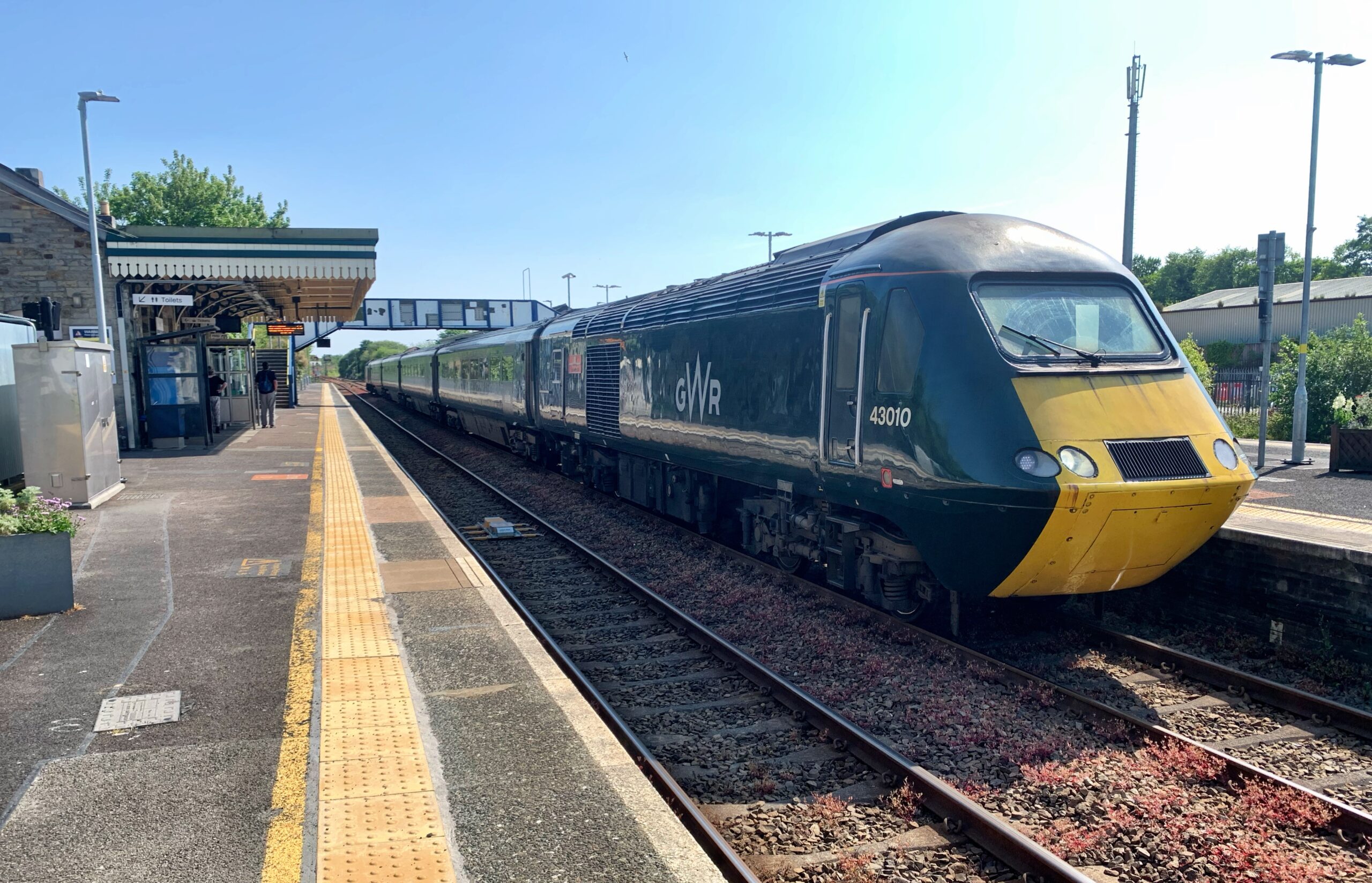
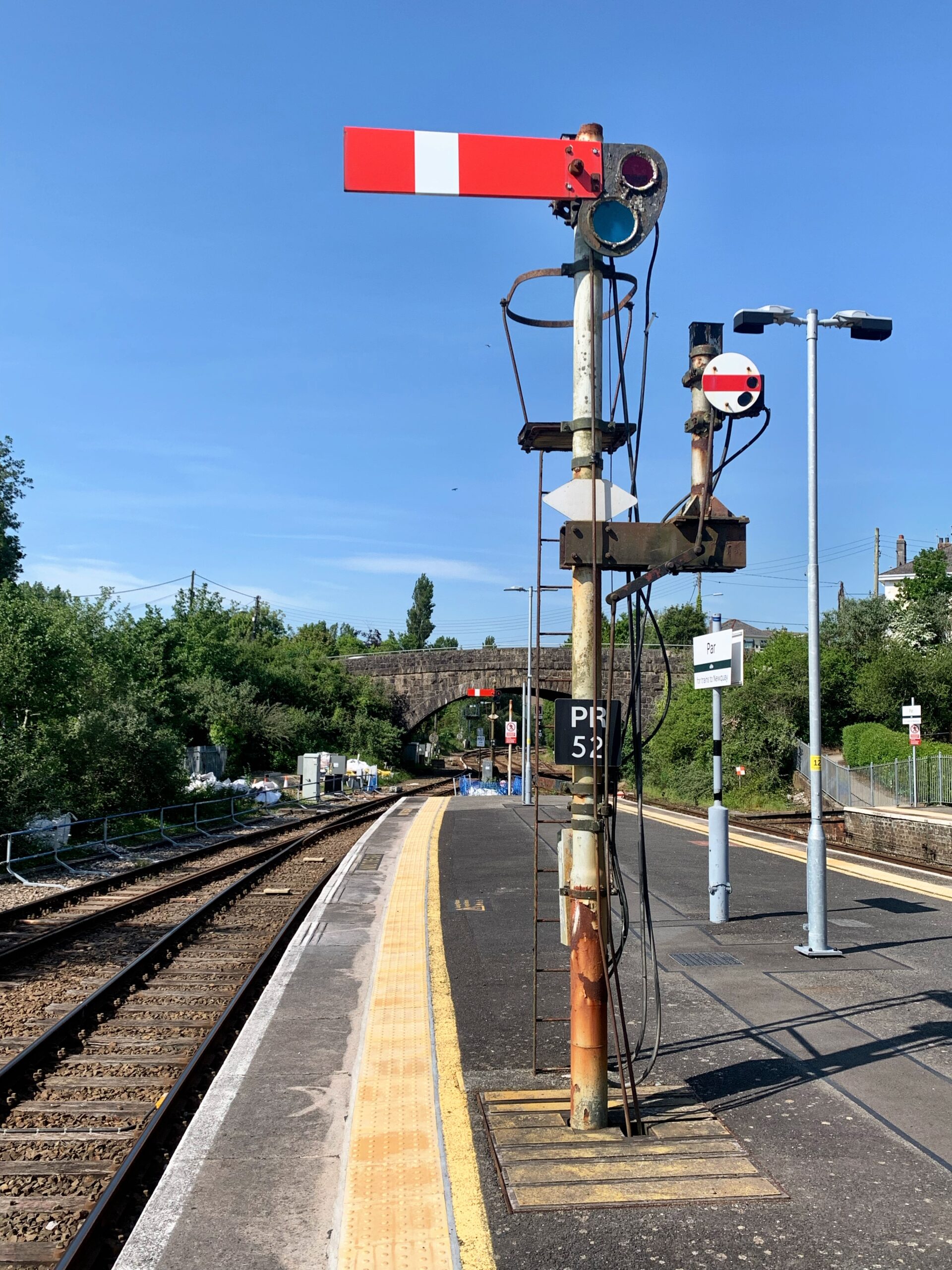
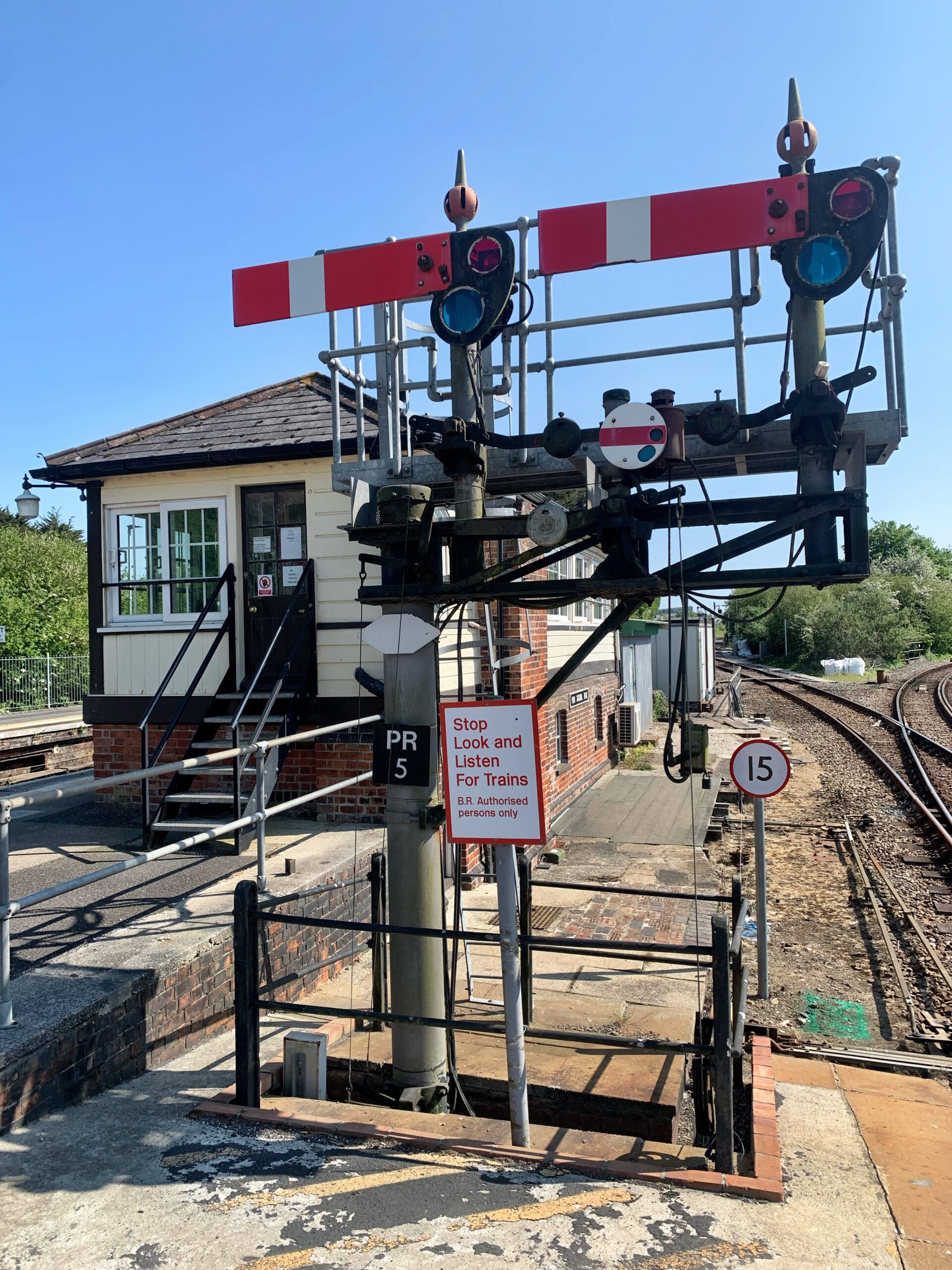
Class 43 No. 43010 ‘Lydford Castle’ pauses at Par with 2P20 1515 Penzance to Plymouth service – 24/05/2023Semaphore signals at Par – 24/05/2023Grade II listed signal box and semaphore signals at Par. The box opened in 1879 and is built to the first GWR standard design, it was set up to control the GWR’s mainline onwards to Penzance, together with the junction for the branch to Newquay – 24/05/2023
Par is one of two operational Cornish signal boxes – along with Lostwithiel – to enjoy a Grade II Listing, being one of only two surviving examples of a GWR-designed Type 2 box to survive in its original location, at the western end of platforms 2 and 3 on Par station.
As well as the main line, modifications will be made to some of the Cornish branch lines to increase operating flexibility and an improved train service. The most significant of these will be on the one from Par to Newquay, currently the Cinderella branch in the county with, broadly, a two-hour interval service. The intermediate signal box at Goonbarrow splits the section, after that the branch being ‘One Train Working’.
802006 ‘Harry Billinge MBE LdH’ at Newquay having arrived with the 1N68 0905 Plymouth to Newquay service – 23/05/2023
Only one operational platform exists at Newquay. A passing loop is to be provided at Goss Moor that will enable an hourly service to be introduced. The second platform at Newquay will be brought back into use thus enabling more through trains from beyond Par. The county’s ambition is to create a Mid Cornwall Metro to facilitate more train usage into the areas of greater employment. This will imply the restoration of full signalling throughout, which will be controlled from Exeter.
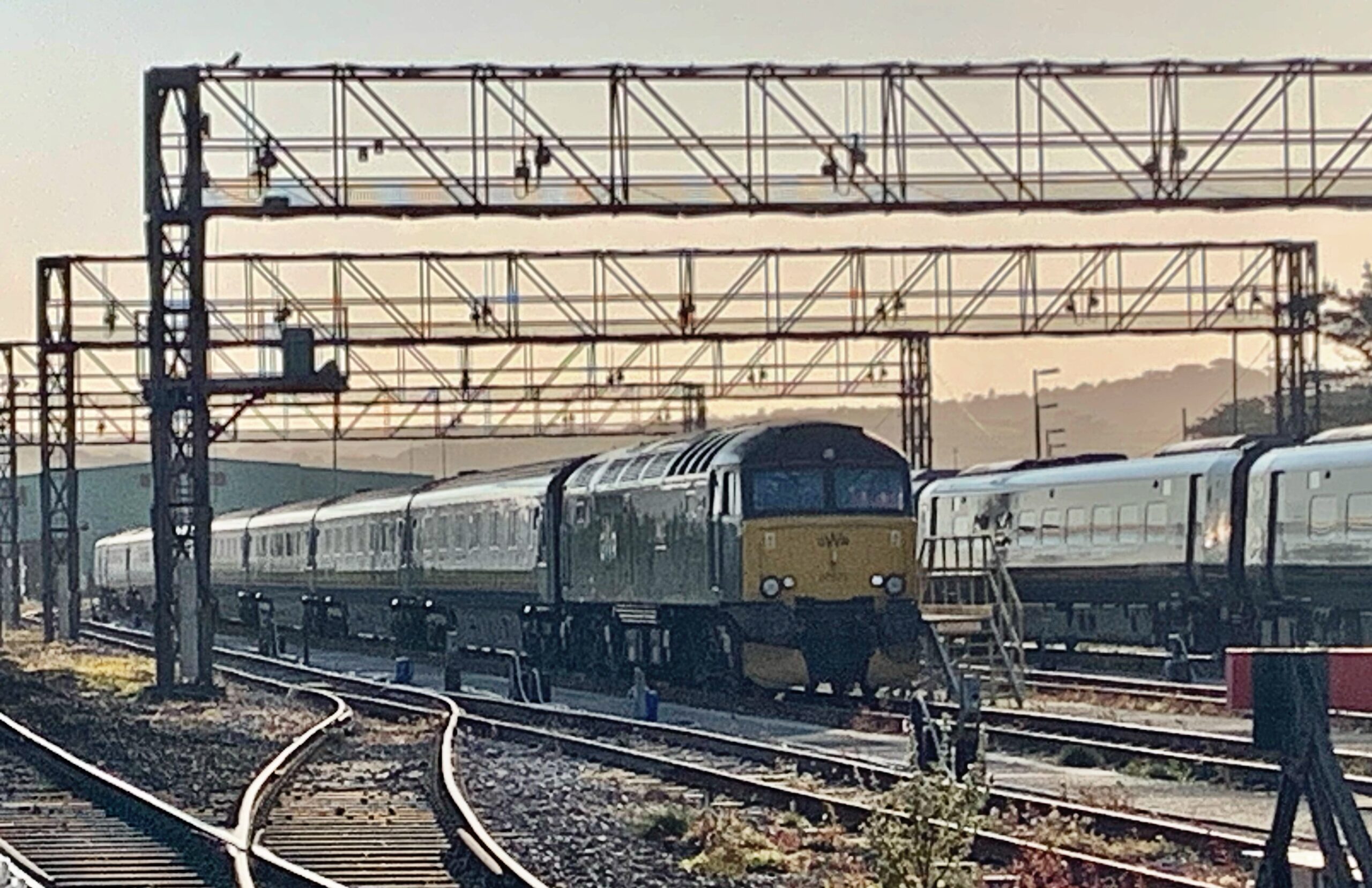
During our sty in Penzance, I enjoyed watching the GWR sleeper service headed up by Class 57 locomotives depart for London in the evening and the corresponding service arrive from the capital in the morning. The Night Riviera leaves Penzance at 2145 and arrives in London paddington at 0504 while the reverse working departs London at 2345 and is scheduled to pull in to Penzance at 0754. On the Wednesday, I was interested to learn that the sleeper service was diverted via Yeovil that day.
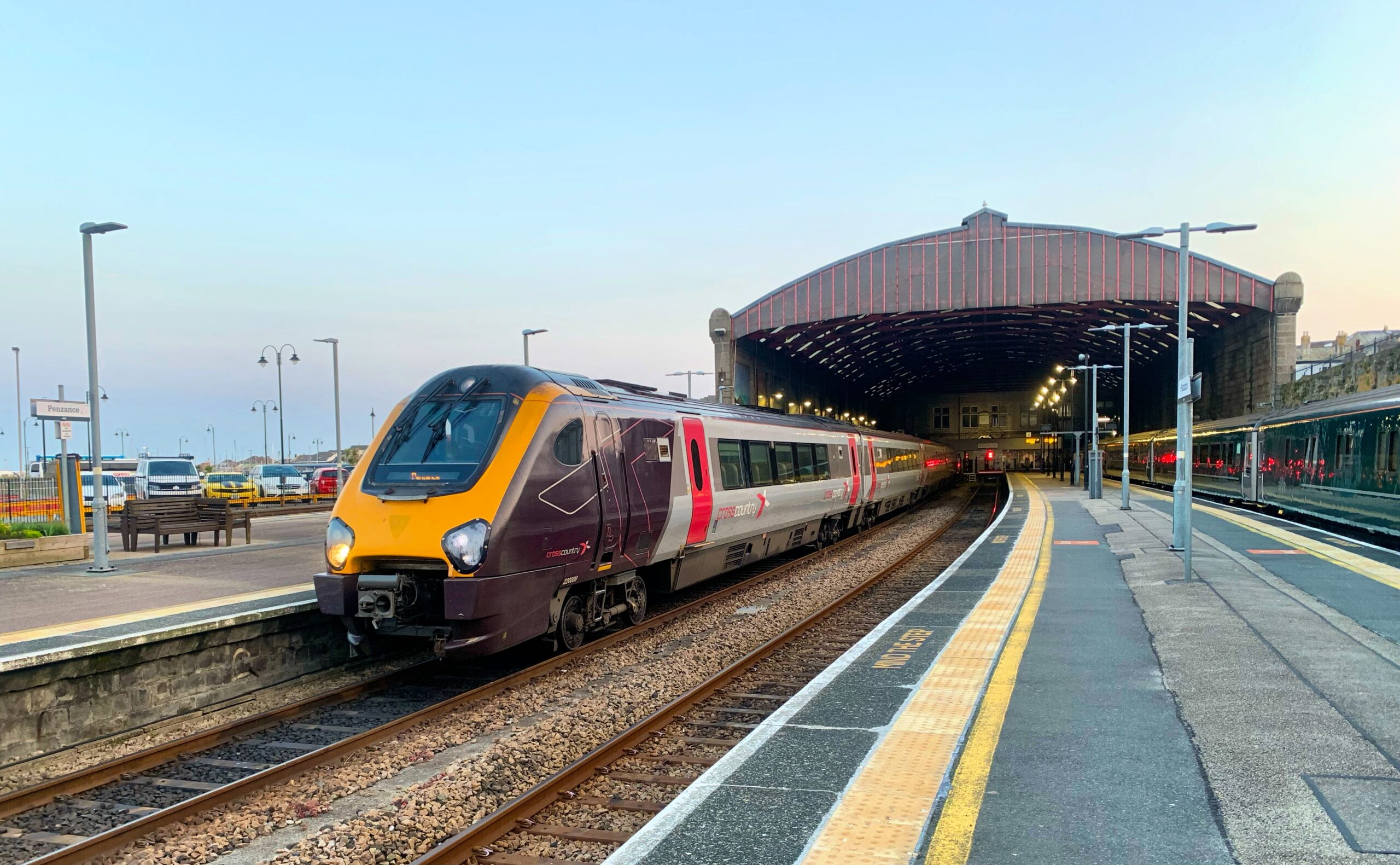
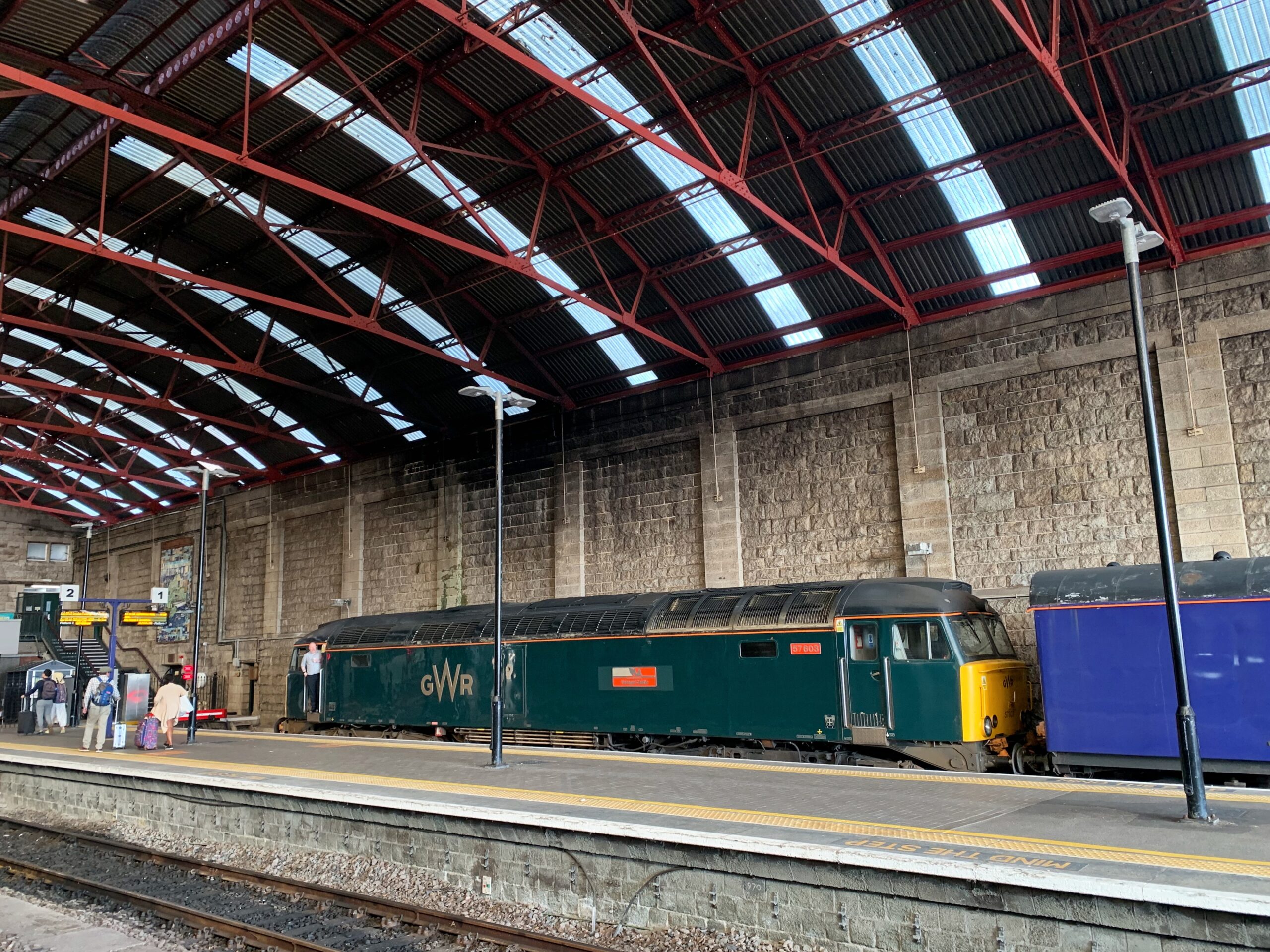
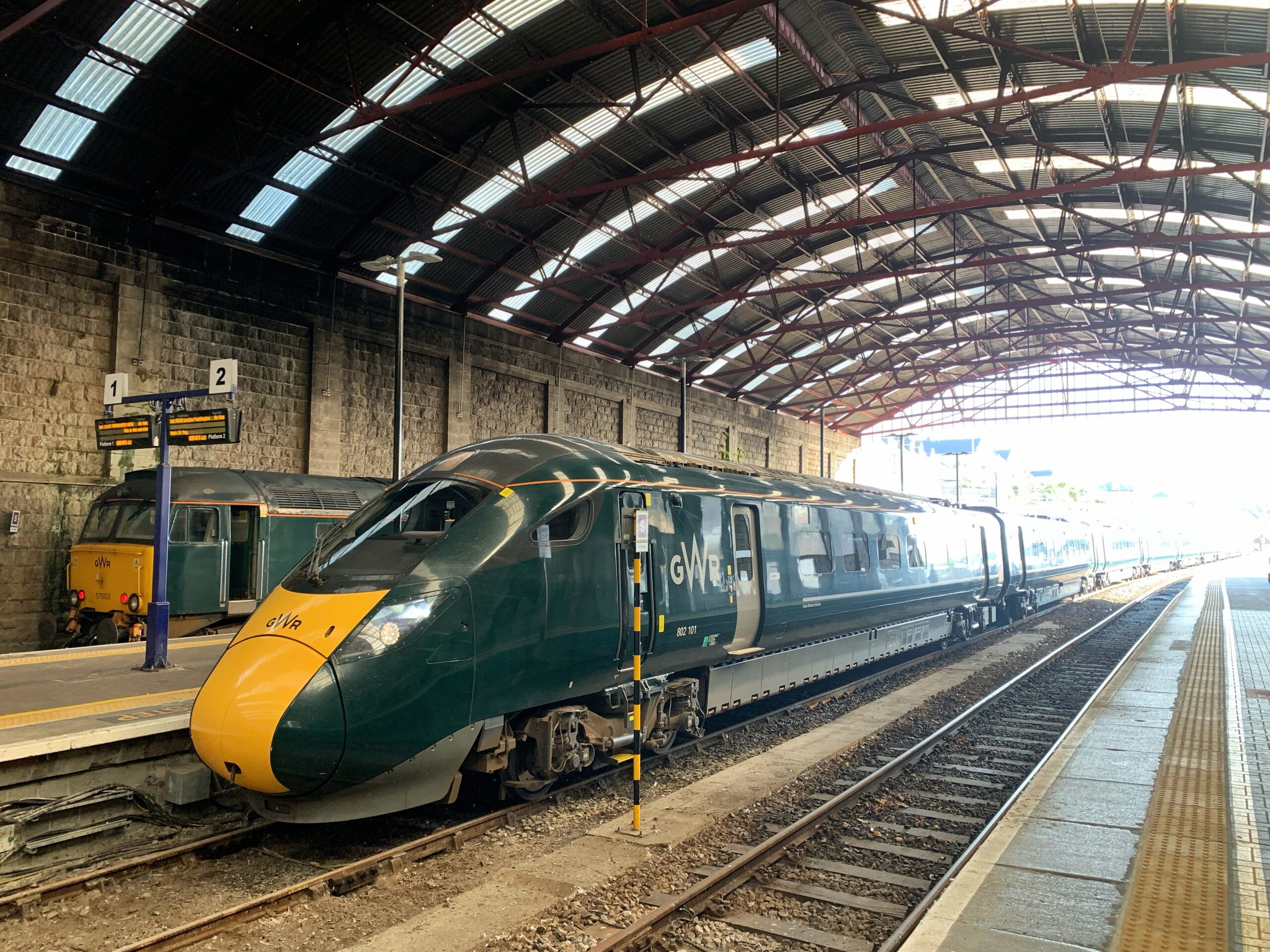
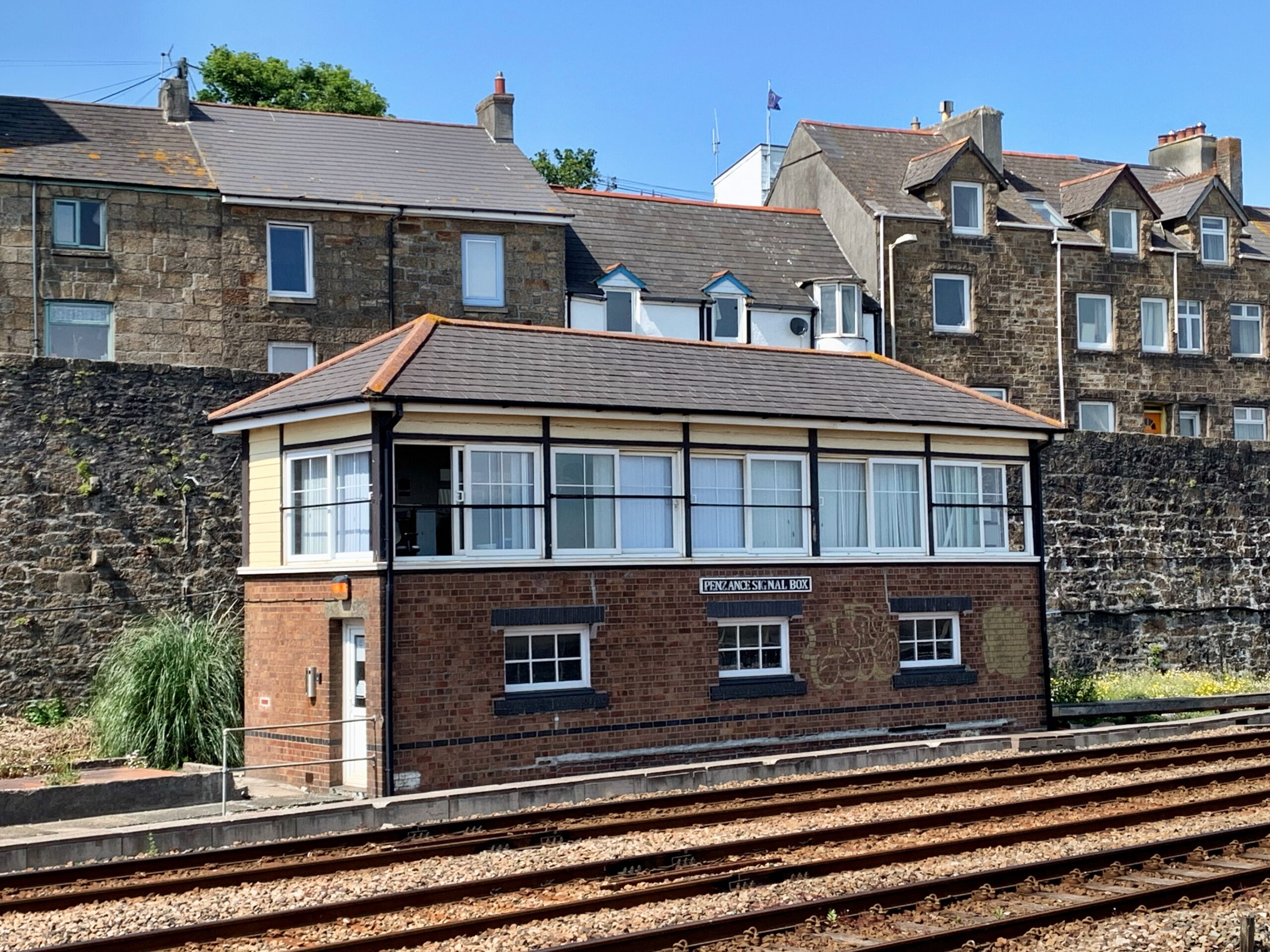
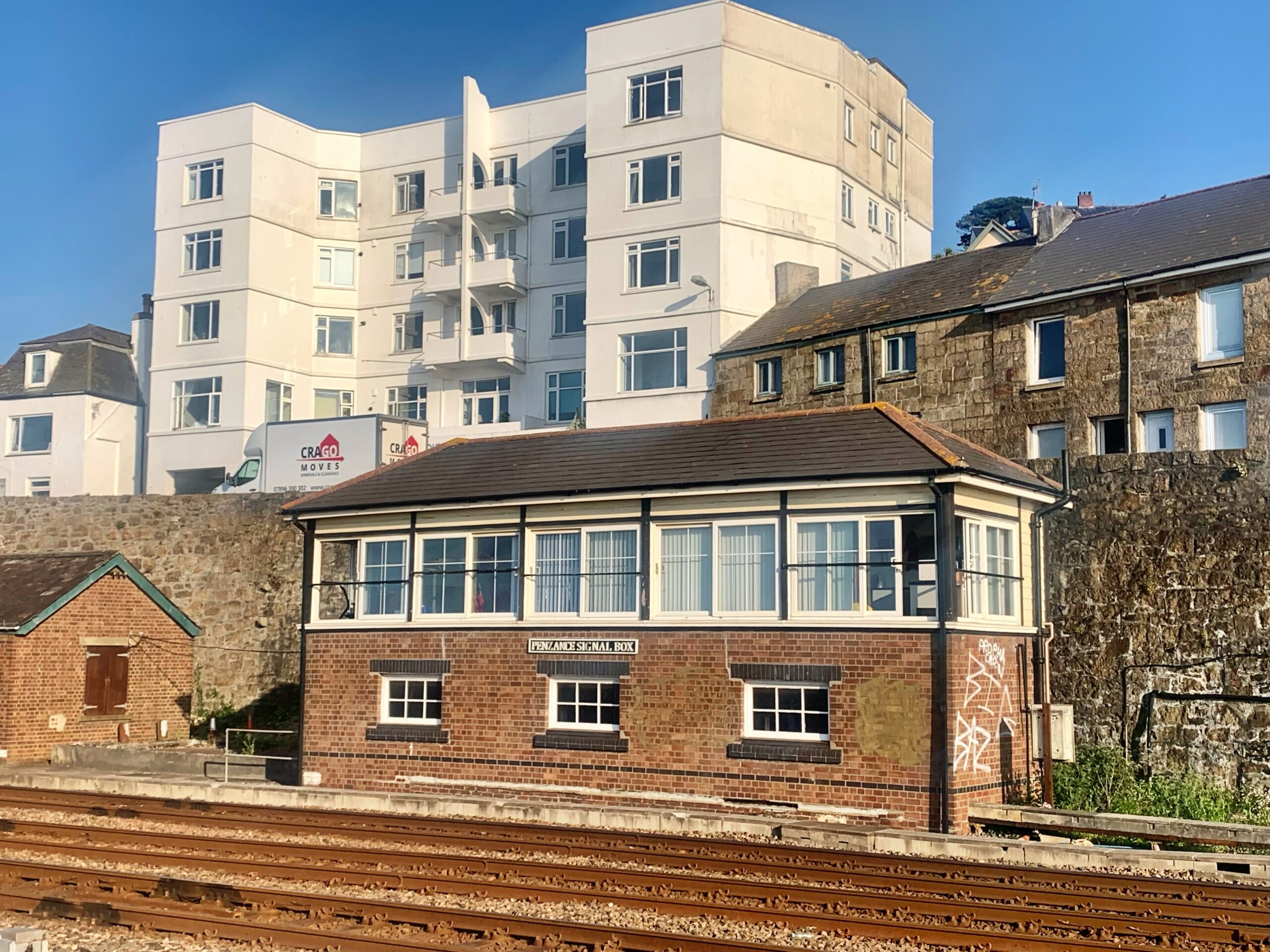
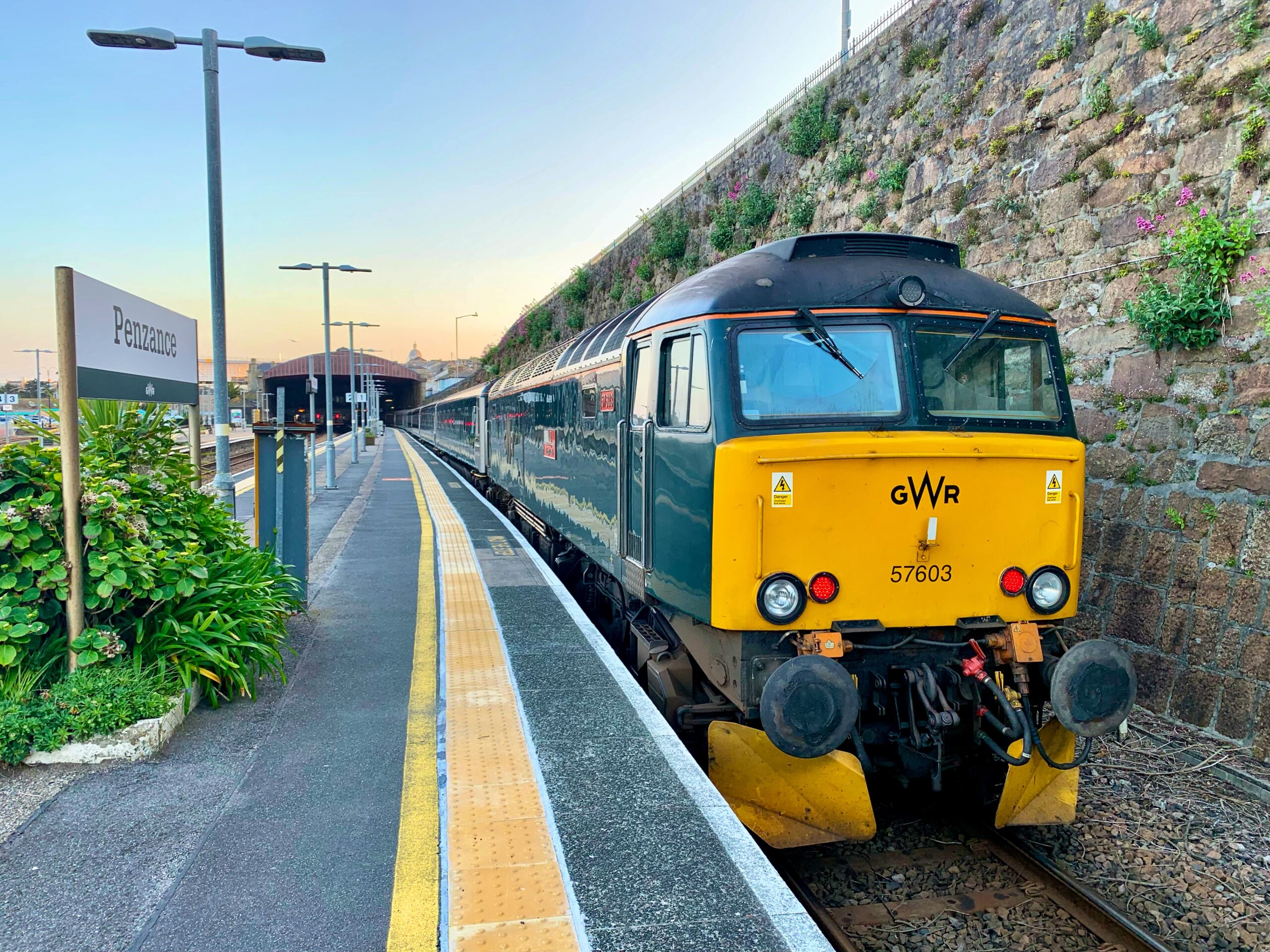
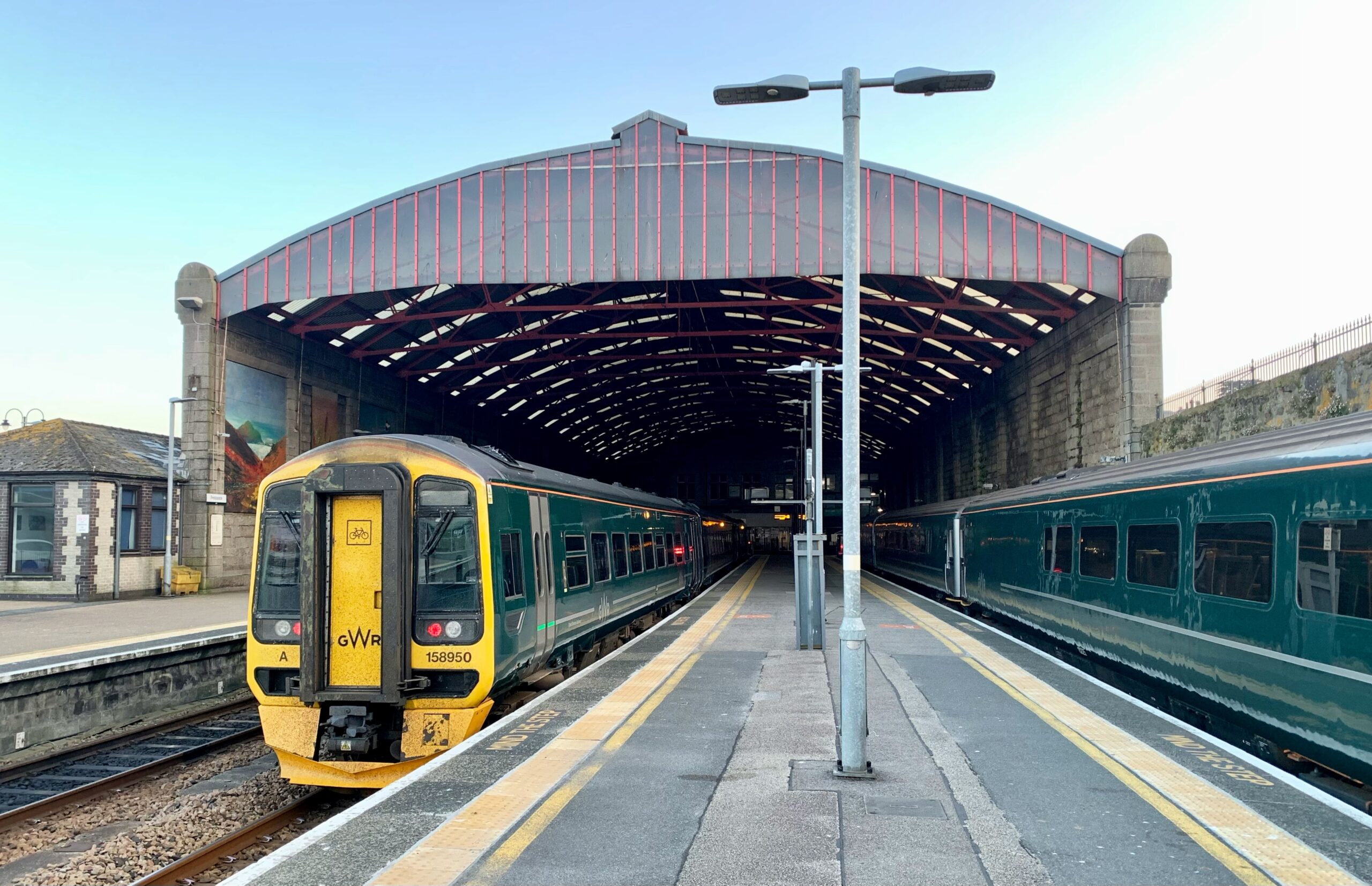
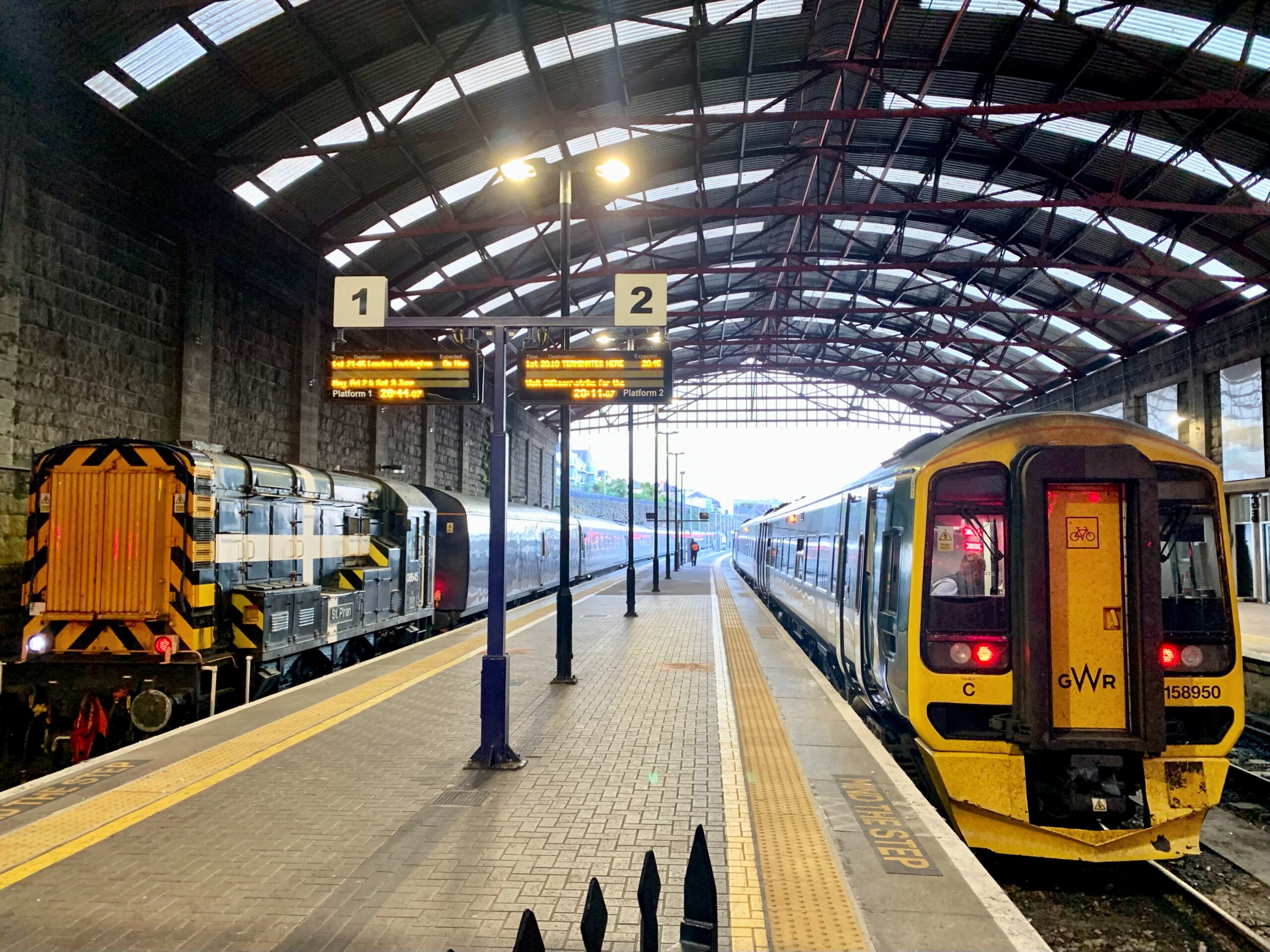
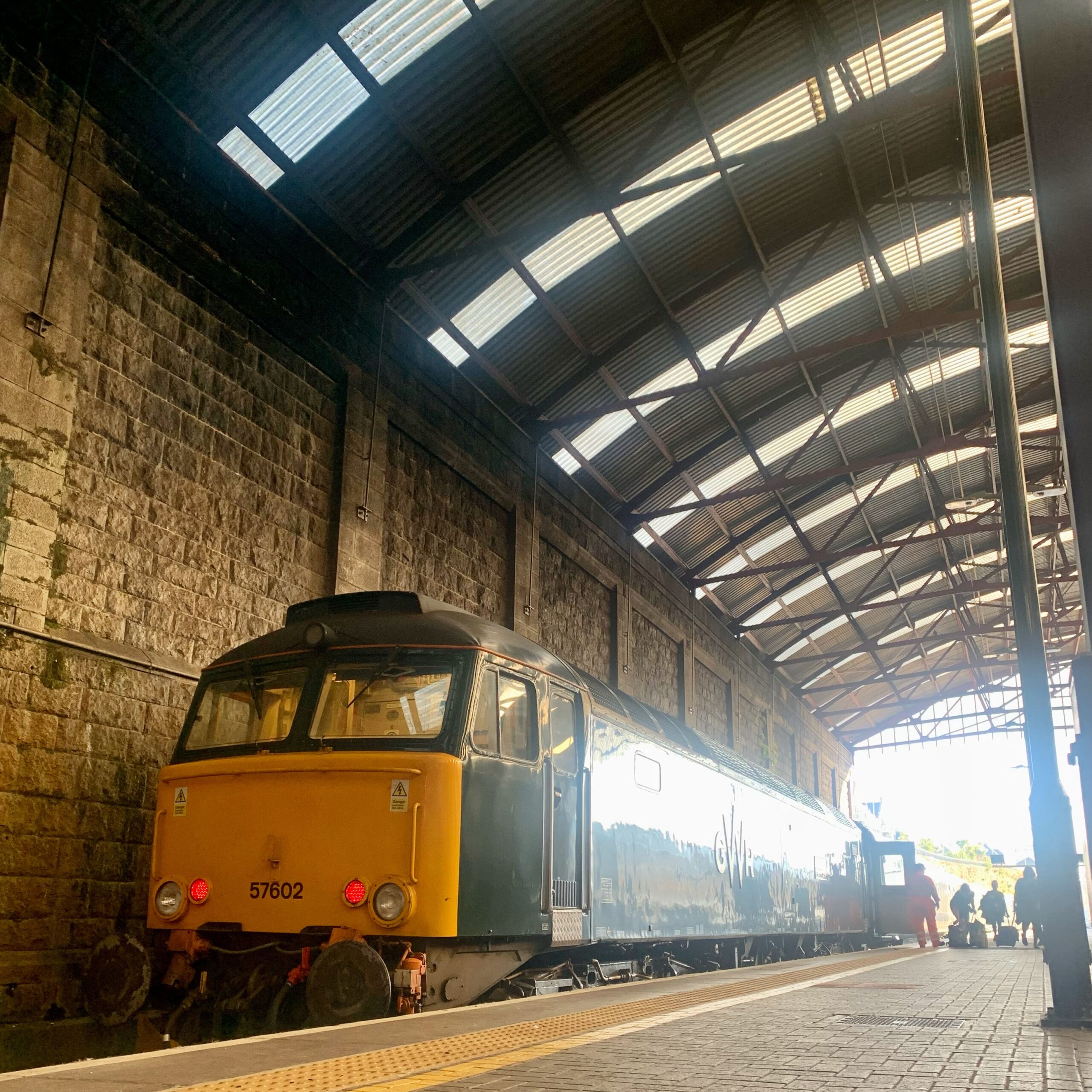
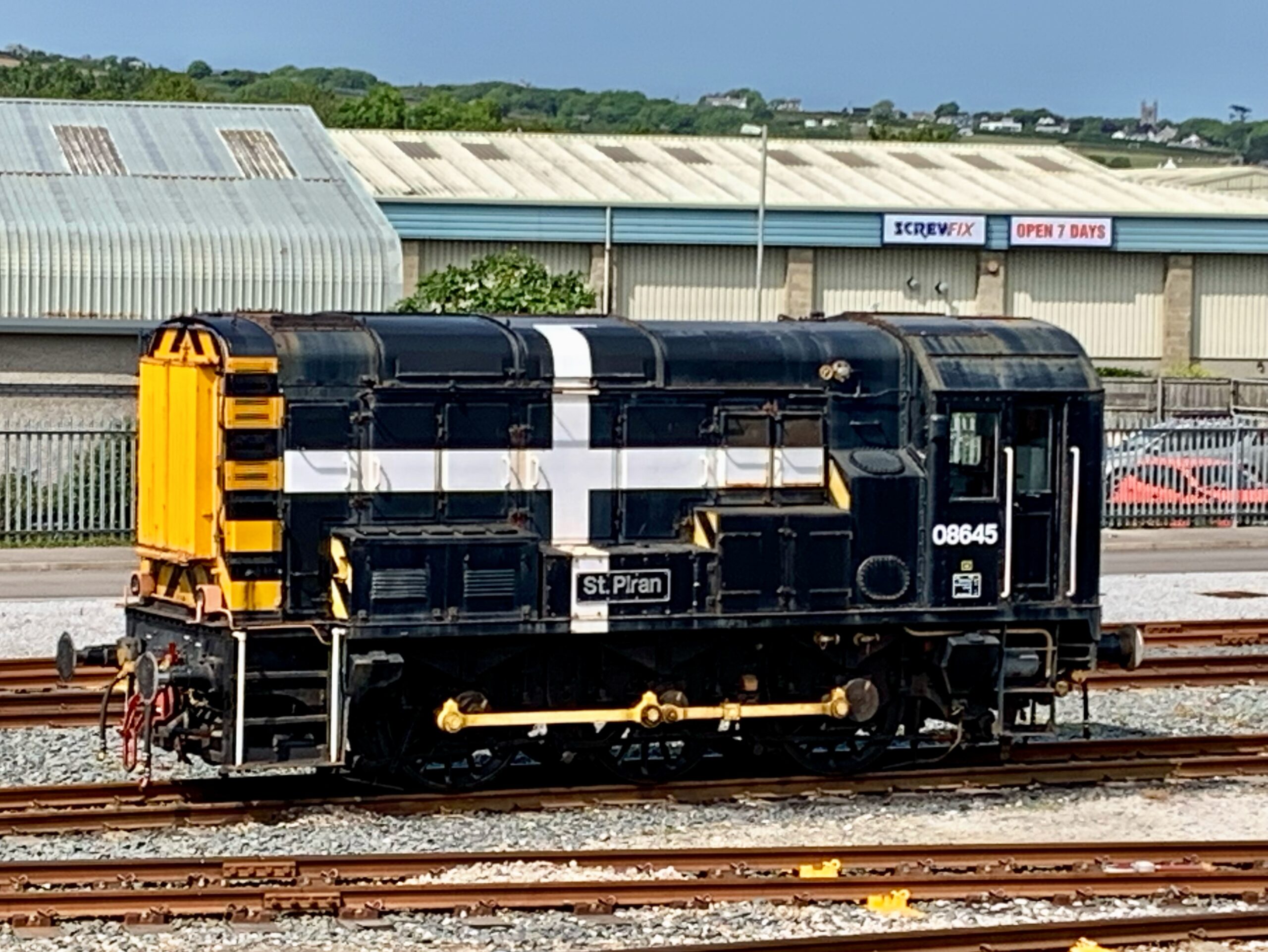
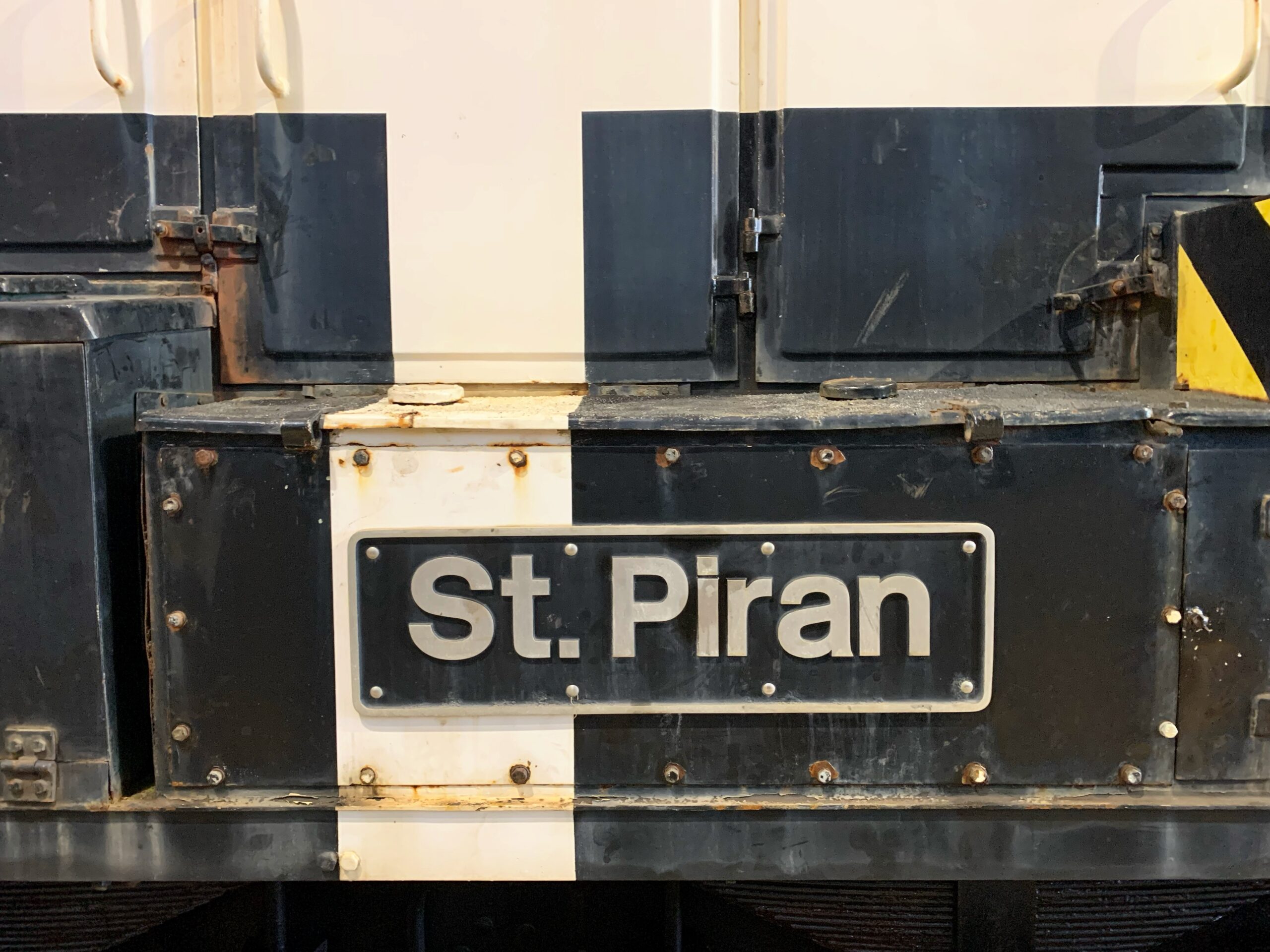
Class 57 No. 57604 ‘Pendennis Castle’ awaits departure of 1A50 2145 Penzance to London Paddington sleeper – 24/05/2023CrossCountry Voyager Class 220 No. 220009 ready to set off ECS to Long Rock after working in 1V58 1003 Edinburgh Waverley to Penzance – 24/05/2023Class 57 No. 57603 ‘Tintagel Castle’ at the buffer stops at Penzance having worked 1C50 2345 London Paddington to Penzance – 25/05/2023Class 57 No. 57603 ‘Tintagel Castle’ nameplateClass 57 No. 57603 ‘Tintagel Castle’ awaiting shunting movement to Long Rock having arrived with the morning 1C50 2345 London Paddington to Penzance service – 25/05/2023Class 57 No. 57603 ‘Tintagel Castle’ and GWR Bi-Mode IET Class 802 No. 802101 ‘Nancy Astor’ working 1A80 0815 Penzance to London Paddington – 25/05/2023Penzance Signal Box – 25/05/2023Penzance Signal Box – 26/05/2023Class 57 No. 57603 ‘Tintagel Castle’ at the rear of 5A50 2012 Penzance Traction & Rolling Stock Maintenance Depot to Penzance Empty Coaching Stock move forming the evening Night Riviera sleeper service to London Paddington – 25/05/2023Class 57 No. 57603 ‘Tintagel Castle’ having arrived at the rear of the ECS move from Long Rock ready to haul the 1A50 2145 Penzance to London Paddington sleeper – 25/05/2023GWR Class 158 No. 158950 at Penzance having arrived with 2C36 1830 Plymouth to Penzance service – 25/05/2023Class 08 No. 08645 ‘St.Piran’ at rest having brought the Night Riviera stock into Penzance whilst GWR Class 158 No. 158950 awaits departure with the 2E30 2100 service to Exeter St. Davids – 25/05/2023Class 57 No. 57602 ‘Restormel Castle’ at the buffer stops in Penzance having worked the down Night Riviera sleeper service – 26/05/2023
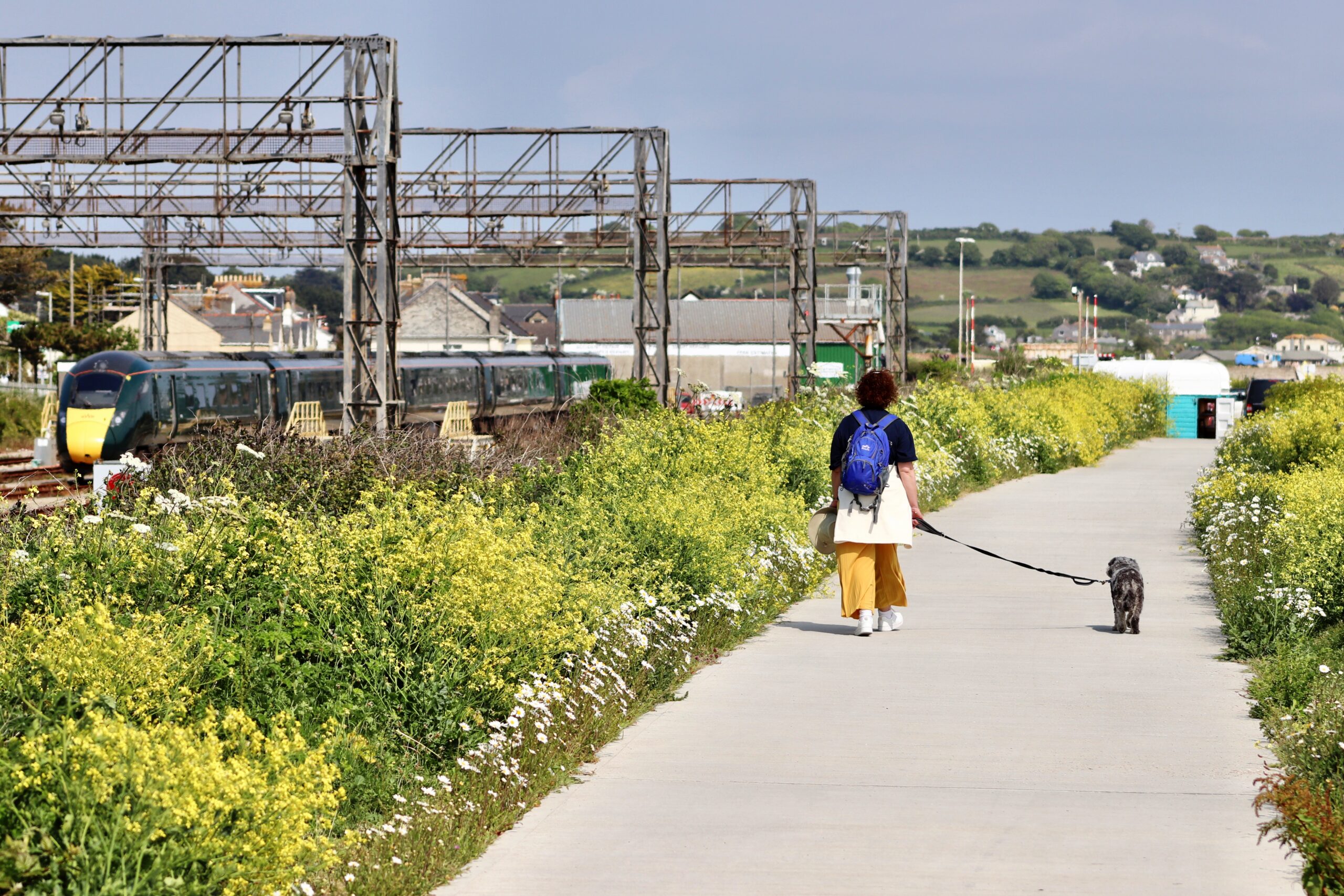
On Thursday we walked from Penzance to Marazion which conveniently meant we passed by Long Rock where Penzance TMD, the most westerly and southerly rail depot in the country, is located. There has been a depot a Long Rock since 1914 when a steam shed was opened. The current depot dates from 1977 with later modernisation to increase capacity in 2017.
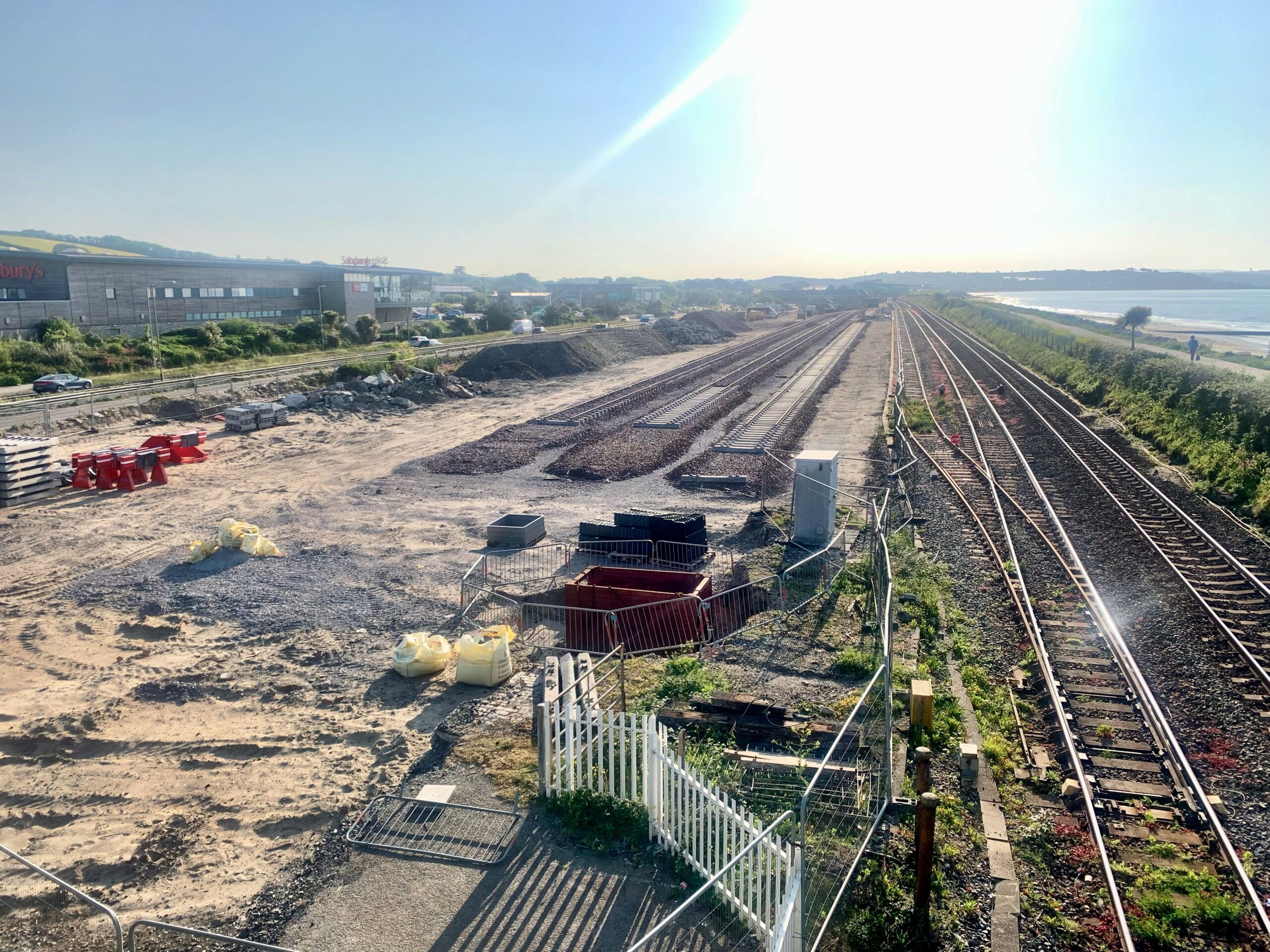
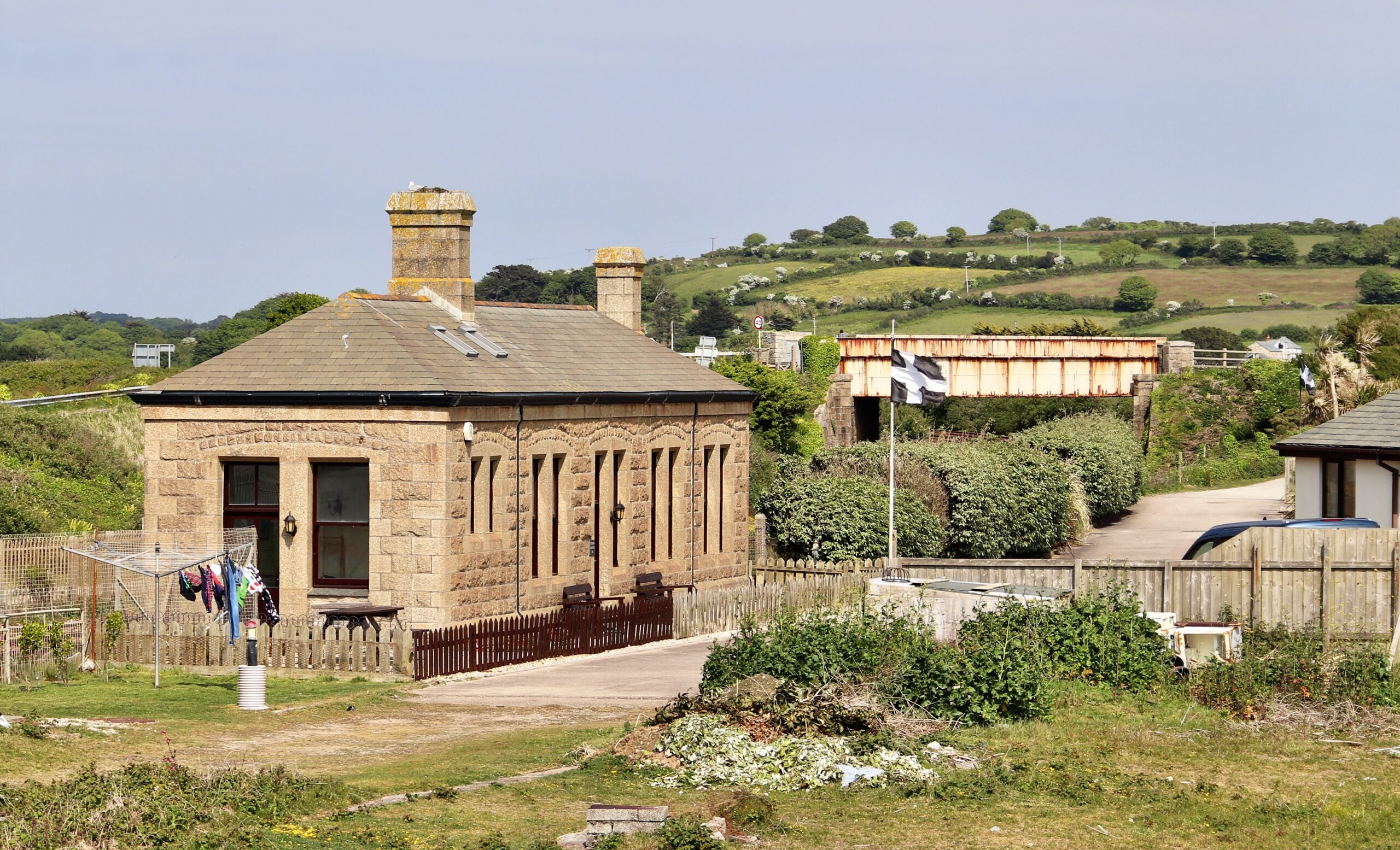
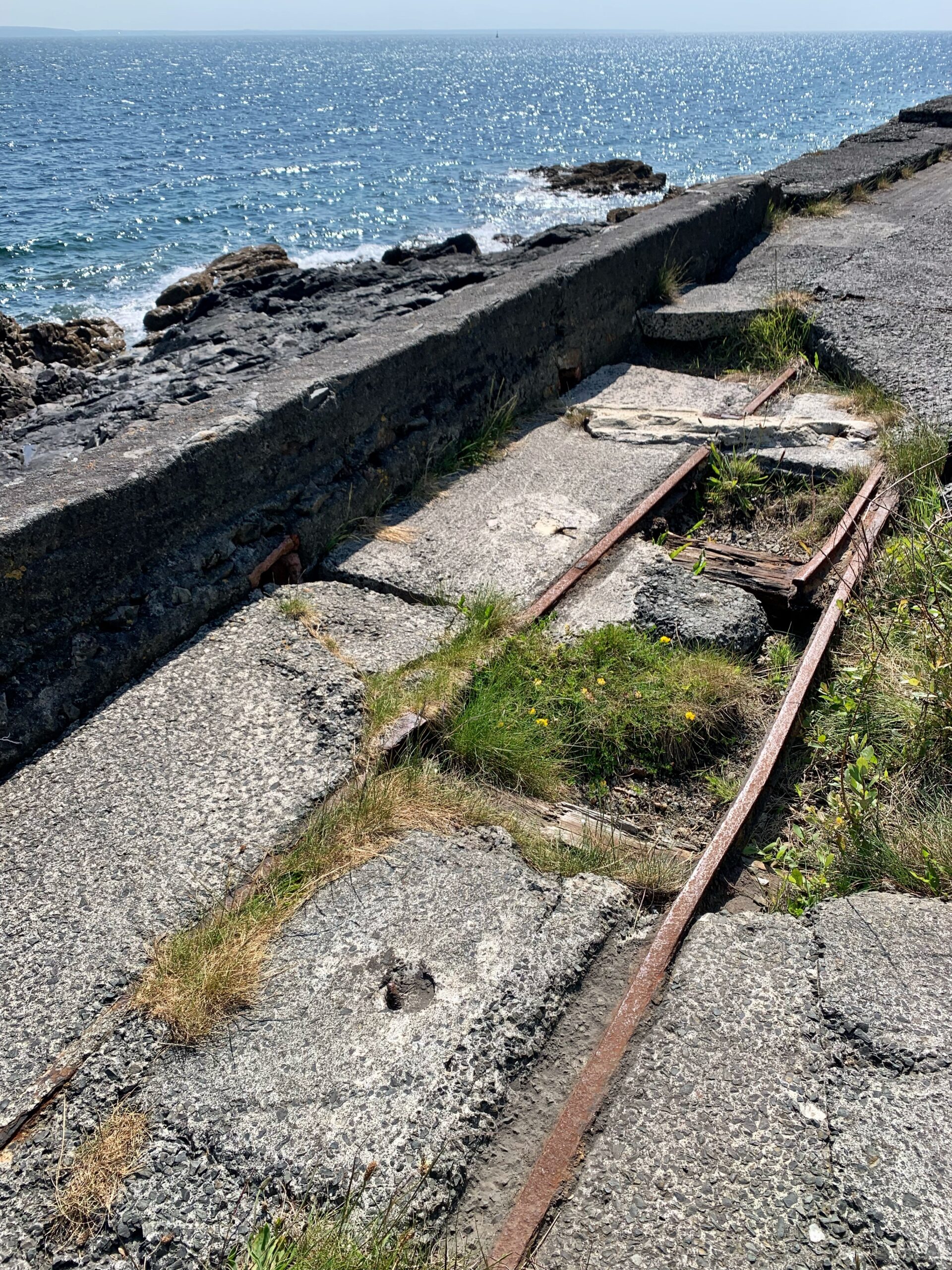
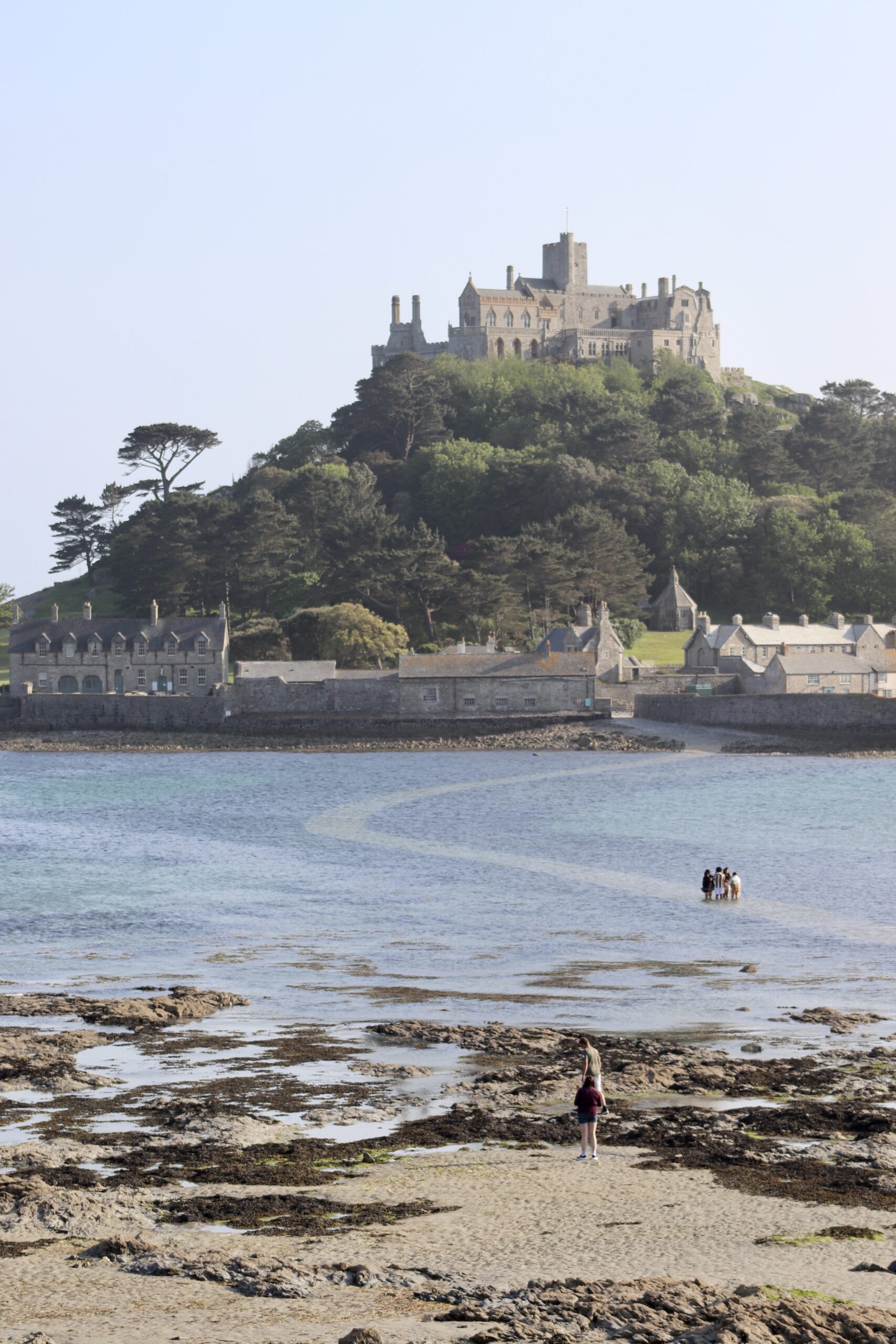
Long Rock depot seen from the west of Penzance – 25/05/2023The coastal path runs adjacent to Long Rock. Caroline and Yoshi pass an unidentified IET awaiting its next duty from Penzance – 25/05/2023Class 08 No. 08645 ‘St.Piran’ (after the patron saint of Cornwall) in Kernow livery at Long Rock, Penzance. Built at Harwich Works and originally numbered D3812 this 0-6-0 diesel shunter entered traffic in February 1959 being allocated to Newport Pill. The locomotive was allocated to different Welsh depots until December 2018 when, with the closure of Landore, she moved to Penzance. Her new livery was unveiled to the public at a special open day to raise money for the Penlee Lifeboat in April 2019 – Nameplate of Class 08 No. 08645 ‘St. Piran’ Class 57 No. 57603 ‘Tintagel Castle’ pokes her nose out of the shed at Long Rock – 25/05/2023 Class 57 No. 57603 ‘Tintagel Castle’ with the Night Riviera Sleeper stock in the sidings at Long Rock – 25/05/2023New sidings being constructed at Long Rock depot, Penzance – 26/05/2023Once an important stop on the main London Paddington – Penzance route, Marazion railway station, which originally opened in March 1852 by the West Cornwall Railway, has been stripped of its platforms and awnings. The current building which dates from the 1880’s has been fully restored into a two bedroom bungalow. The line was absorbed into the Great Western Railway on 1st January 1877. The station was never particularly busy, although it dealt with a fair bit of agricultural traffic including broccoli and new potatoes. The station was closed to passengers 5 Oct 1964, with freight services following on 6 Dec 1965. The station is situated on the shore of Mount’s Bay and offers wonderful views across to St. Michael’s Mount. For many years Marazion was home to six old Pullman coaches that were employed as camping coaches, holiday accommodation offered by the railway containing sleeping and living space designed to encourage people to travel by train to the stations where they were situated. I remember the coaches from a previous visit to the area and I’ll tray and find some photographs at some point! The coaches, which had fallen into disrepair, were removed in 2006 and nine holiday cottages built in their place – 25/05/2023Yoshi was a real trooper on our walks. Earlier on the same day we had walked to Mousehole before setting off for Marazion. St Michael’s Mount can be seen behind Yoshi. It is a rocky island crowned by a medieval church and castle, home to the St Aubyn family and a community of islanders – 25/05/2023Yoshi at Mousehole. Famous for its narrow streets and tiny harbour, its name comes from a cave in the cliffs nearby. Until the 16th century it was one of the main ports on Mount’s Bay, the other being Marazion. Mousehole is believed to have been the landing place of the Knights of St John when they returned from the Holy Land. The poet, Dylan Thomas called it the prettiest village in England – 25/05/2023Stone from Penlee Quarry was transported along by the coast near Newlyn in large containers on rails. The containers were originally pulled by a locomotive called ‘Penlee’, also known as ‘Janner’s Engine’ to the south pier in Newlyn, where the contents were loaded onto boats. Later, in the 1960’s, six diesel locomotives were required for hauling the stone. The quarry closed in the late 1980’s – 25/05/2023Marazion is a town of great antiquity, being one of the oldest chartered towns in Cornwall and in Medieval times was a significant location. Marazion was granted its first charter of incorporation by Henry III in 1257 and was reaffirmed on 13th June 1595 by Queen Elizabeth I. The name derives from the important fairs and markets that were held in the town, the earliest dating back to 1070; Marghas Byghan (Small Market) and Marghas Yow or Jew (Thursday Market) blurred over time to become ‘Marazion’. The presence of the Benedictine Monastery on St. Michael’s Mount attracted pilgrims to Marazion, who hung about in the town until the causeway was revealed by the ebbing tide allowing them to cross to the island – 25/05/2023
Lineside video of our visit to Cornwall in May 2023
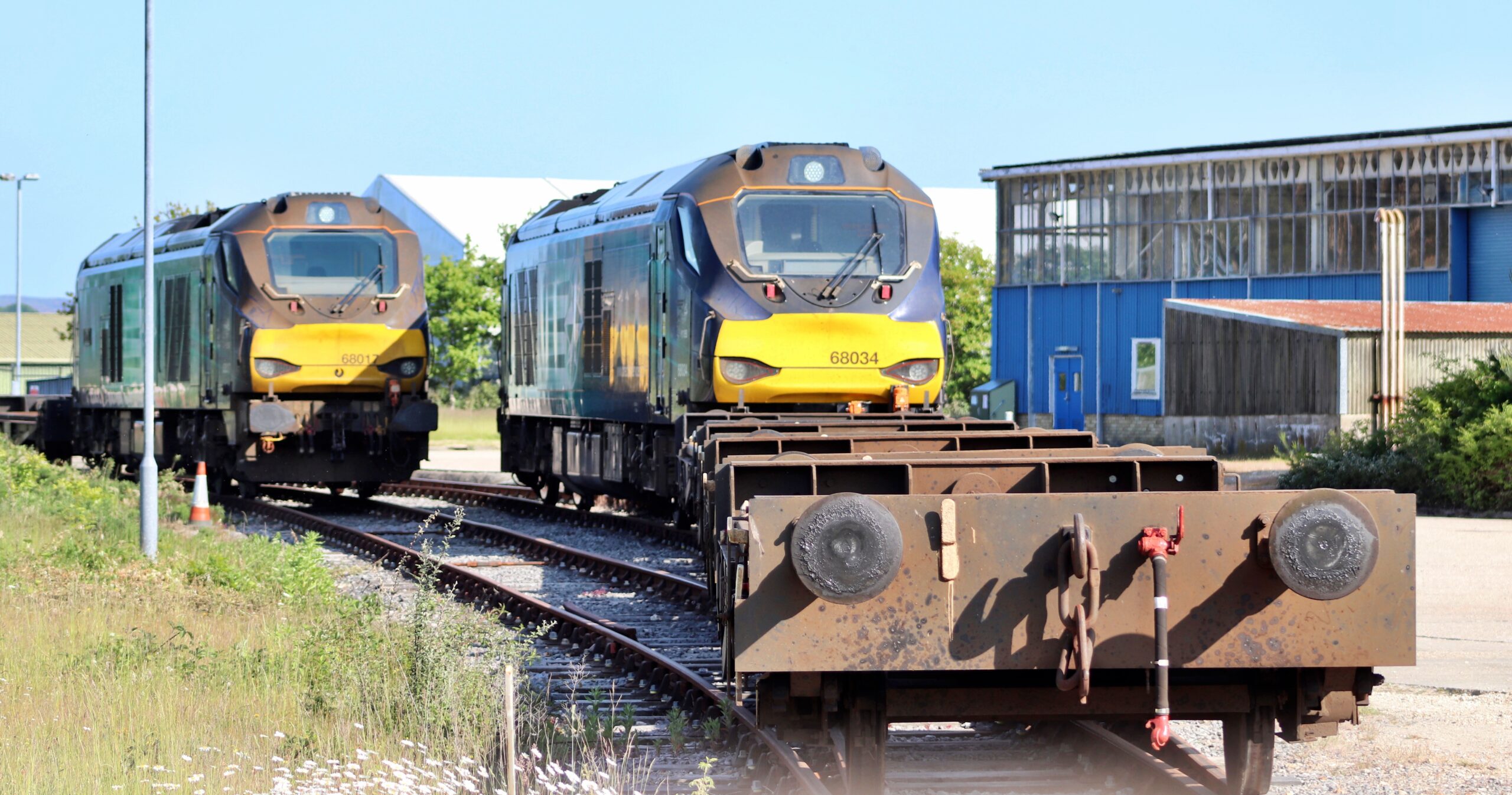
Bringing us up to date, another Winfrith run took place over 31st May and 1st June 2023 as unusually the train collecting low lever radioactive waste from the Steam-Generating Heavy Water Reactor stayed a night in the sidings at the Dorset facility. Ownership of the Winfrith Nuclear site is under the auspices of the Nuclear Decommissioning Authority (NDA). The site is managed by Magnox Limited who are contracted to deliver the site decommissioning programme, the Winfrith reactor having been shut down in 1990.
Direct Rail Services (DRS) Class 68’s No.’s 68017 ‘Hornet’ and 68034 top and tail 6Z62 Crewe Coal Sidings DRS to Winfrith Sidings on the approach to Parkstone railway station – 31/05/2023DRS Class 68’s No.’s 68017 ‘Hornet’ and 68034 in the sidings at Winfrith – 31/05/2023DRS Class 68’s No.’s 68017 ‘Hornet’ and 68034 in the sidings at Winfrith – 31/05/2023DRS Class 68 No. 68034 passing through Hamworthy heading up the return working 6Z95 Winfrith Sidings to Crewe Coal Sidings DRS. No. 68017 ‘Hornet’ was on the rear of the consist – 01/06/2023
Winfrith Cats 31/05/2023 & 01/06/2023
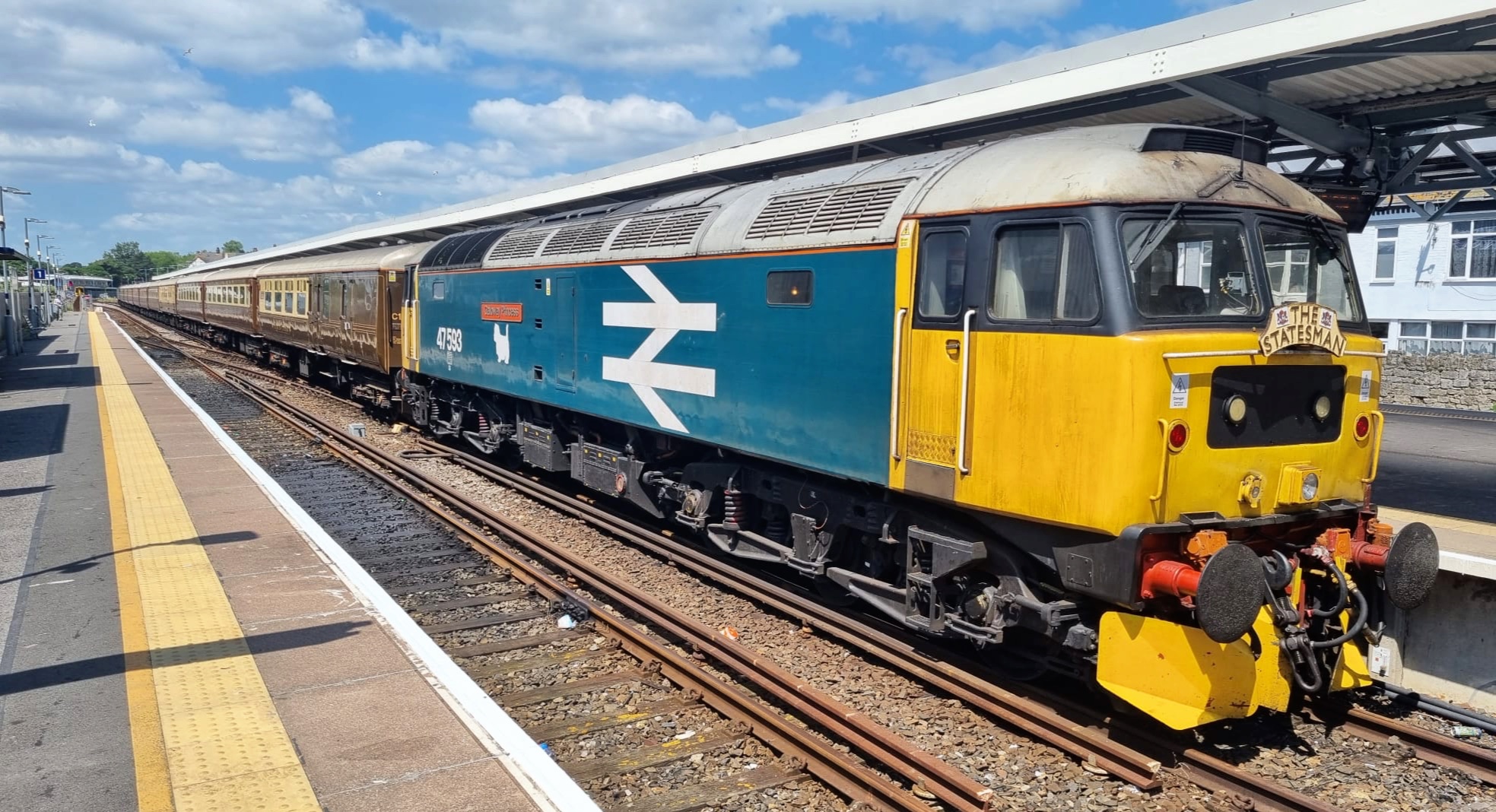
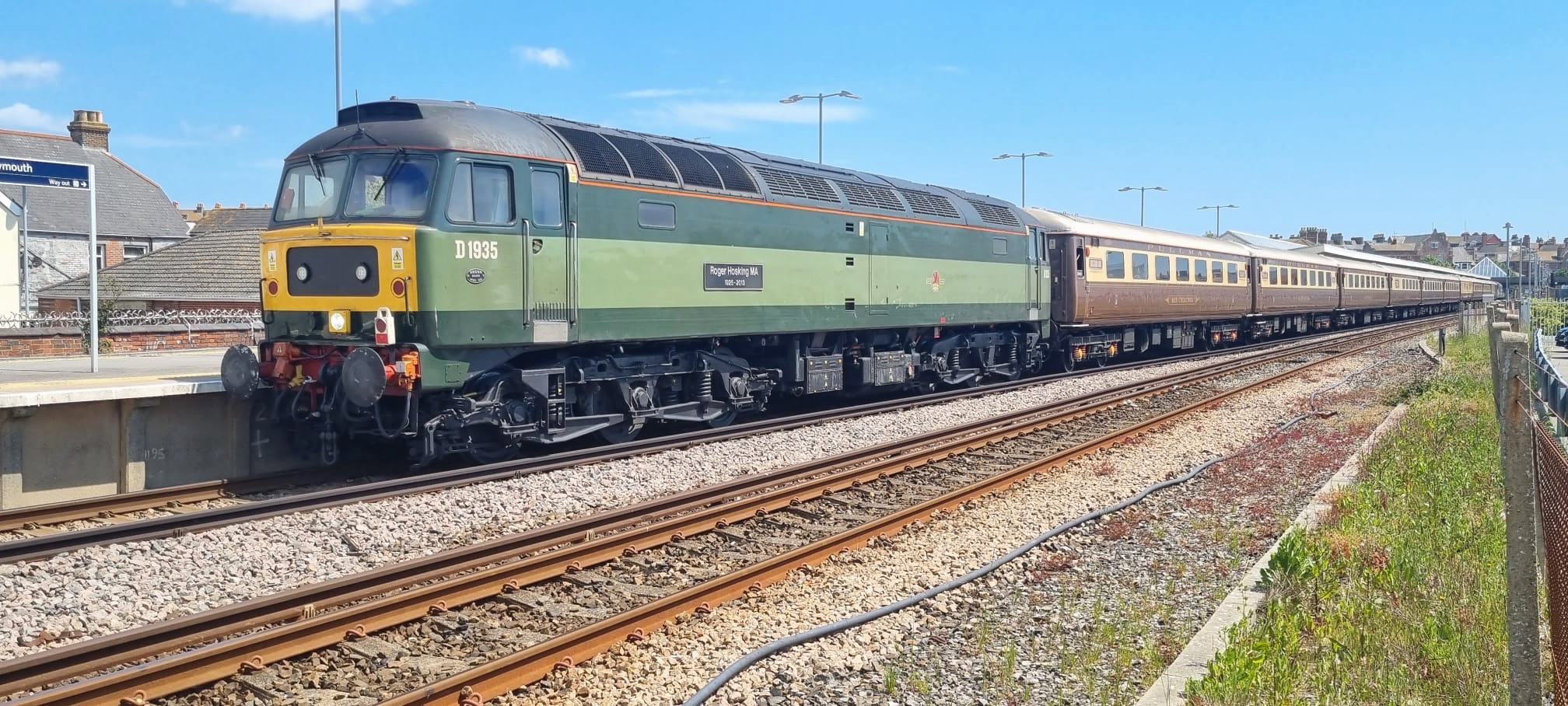
On Saturday 3rd June “The Dorset Coast Statesman” ran to Weymouth for the third time in 2023. On this occasion the tour originated from Peterborough and was top and tailed by LSL Class 47 locomotive No.’s 47805 ‘Roger Hosking MA 1925-2013’ and 47593 ‘Galloway Princess’. I was unable to see this working (again!) as I was in Lichfield helping to celebrate the wedding of two friends, and the following photos are by kind permission of Scott Lewis.
47593 ‘Galloway Princess’ at the buffer stops in Weymouth – 03/06/2023 (Image courtesy of Scott Lewis)47805 ‘Roger Hosking MA 1925-2013’ in Weymouth station at the rear of 1Z40 0617 Peterborough to Weymouth – 03/06/2023 (Image courtesy of Scott Lewis)
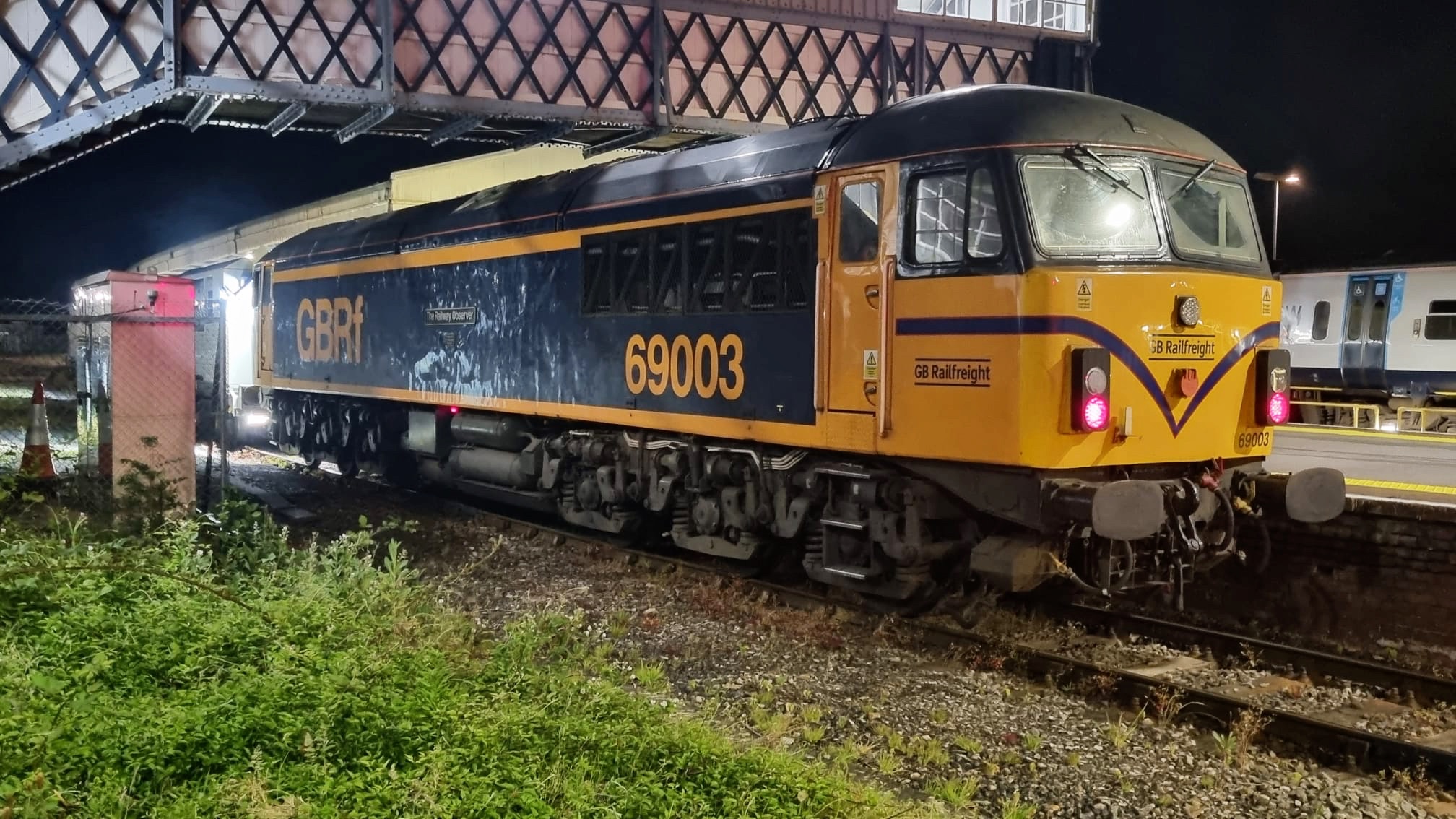
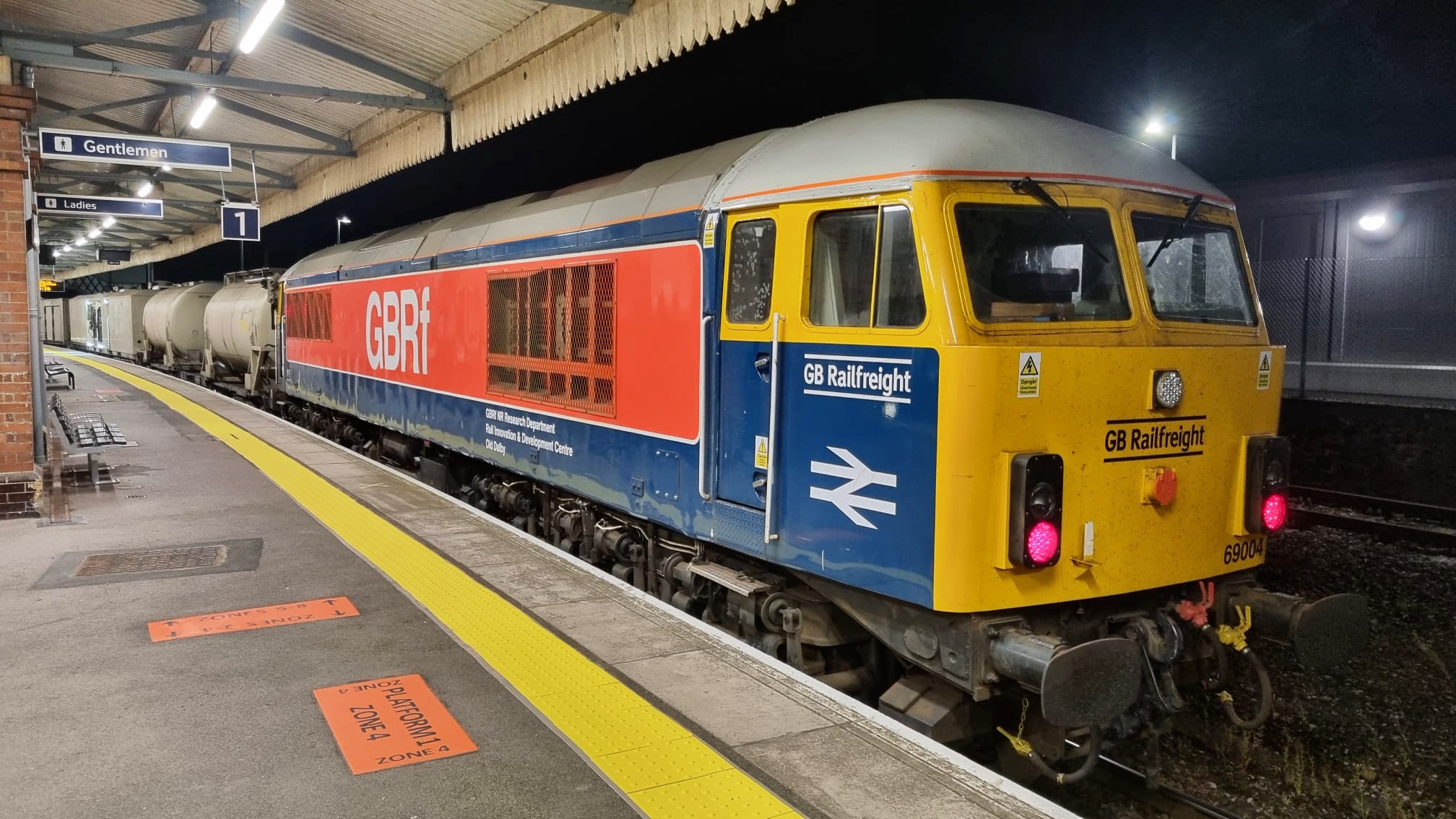
Our North Dorset Correspondent was up in the early hours of Tuesday 6th June to see Class 69 locomotives No.’s 69003 ‘The Railway Observer’ and 69004 which are currently operating in the West Country on weedkiller duties. This is the first operational visit of the class to our area. Yeovil Junction railway station was in Dorset until 1991 when county boundaries were changed. The 69’s are scheduled to work the same vegetation management train to Dorchester West in the early hours of 9th June and the Bournemouth to Weymouth on the 12th/13th June 2023.
GBRf Class 69 No.’s 69003 ‘The Railway Observer’ at Yeovil Junction – 06/06/2023 (Image courtesy of Scott Lewis)GBRf Class 69 No.’s 69004 at Yeovil Junction working 3Q00 Exeter Riverside NY to Exeter Riverside NY – 06/06/2023 (Image courtesy of Scott Lewis)
Yoshi was delighted to learn that South Western Railway (SWR) have joined other rail operators in banning e-scooters, e-skateboards, u-unicycles and “hoverboards” across its stations as from 1st June 2023. The rule has been introduced as there is a small fire risk due to the potential for their lithium-ion batteries to overheat.
With that piece of trivia we come to the end of another blog entry. Thank you for joining us and as always we appreciate your comments, corrections and feedback. We’ll be seeing you.
Fab weather. Not seen Tintagel Bridge was nothing like that the last time I was down that way. But of course the semaphore signals made the whole week worthwhile. 😉
Happened upon your post on the WordPress feed and just wanted to send a friendly shout-out! Your content caught my attention, and I’m thrilled to delve into more of your thought-provoking posts. Although I couldn’t locate the follow button (funny enough!), I’ll definitely save it for later ! Rest assured, I’ll be on the lookout for your future posts.
Looking forward to embarking on this reading adventure with you!
Came across your post on the WordPress feed and just wanted to drop by and say hello ! Your content caught my attention, and I’m excited to dive into more of your engaging posts. Although I couldn’t locate the follow button (funny enough!), I’ll definitely keep it in my reading list! Rest assured, I’ll Spin8: keep an eye out for your future posts.
Wishing you continued inspiration and success in your blogging journey!
Hey there! Stumbled upon your post on the WordPress feed and couldn’t resist saying hello. I’m already hooked and eagerly looking forward to more captivating posts. Can’t seem to find the follow button, haha! Guess I’ll have to bookmark your blog instead. But rest assured, I’ll be keeping an eye out for your updates!





















Leave a Reply