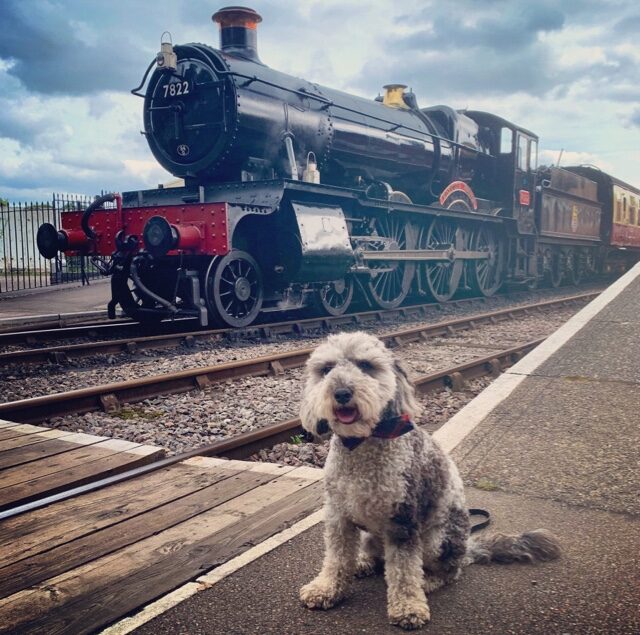
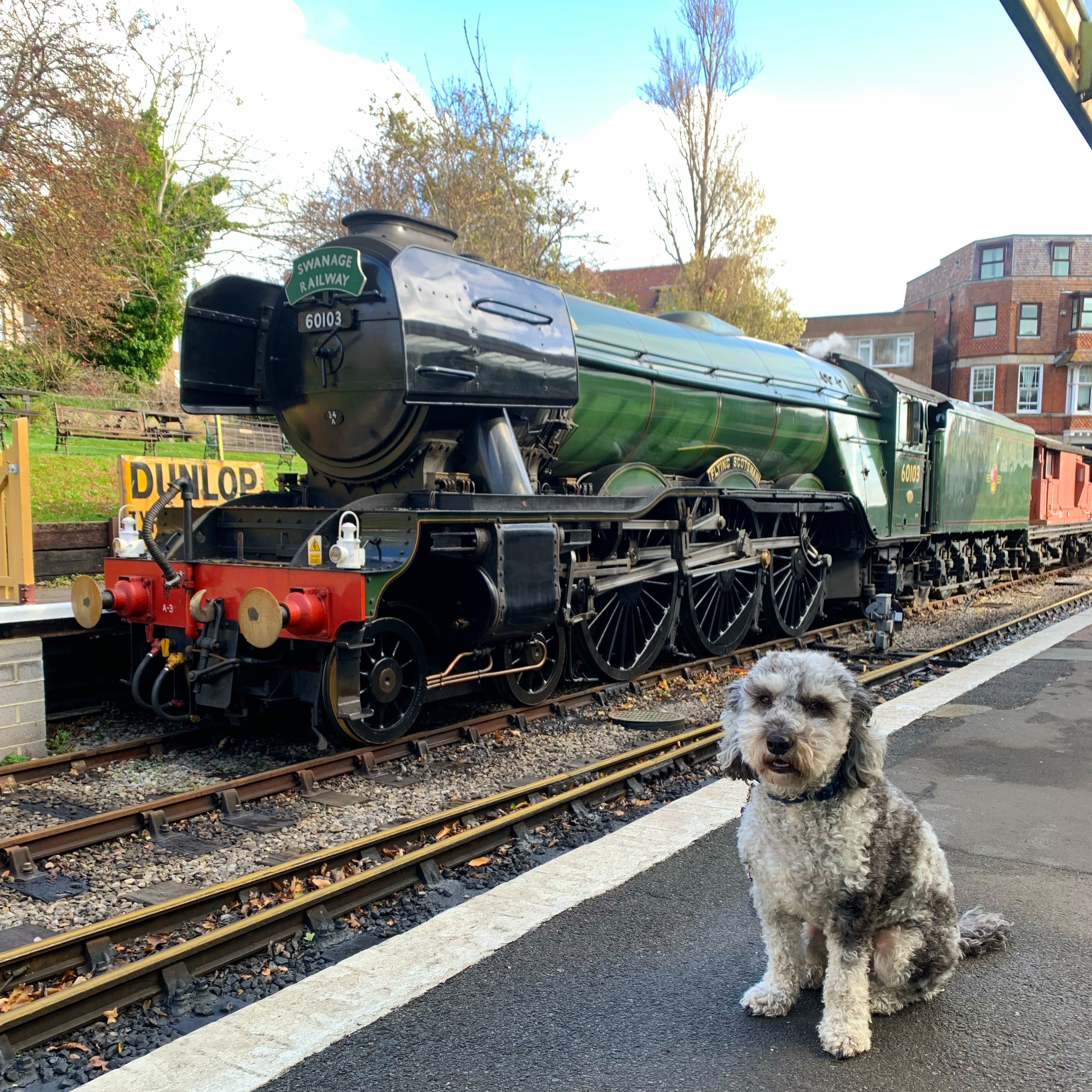
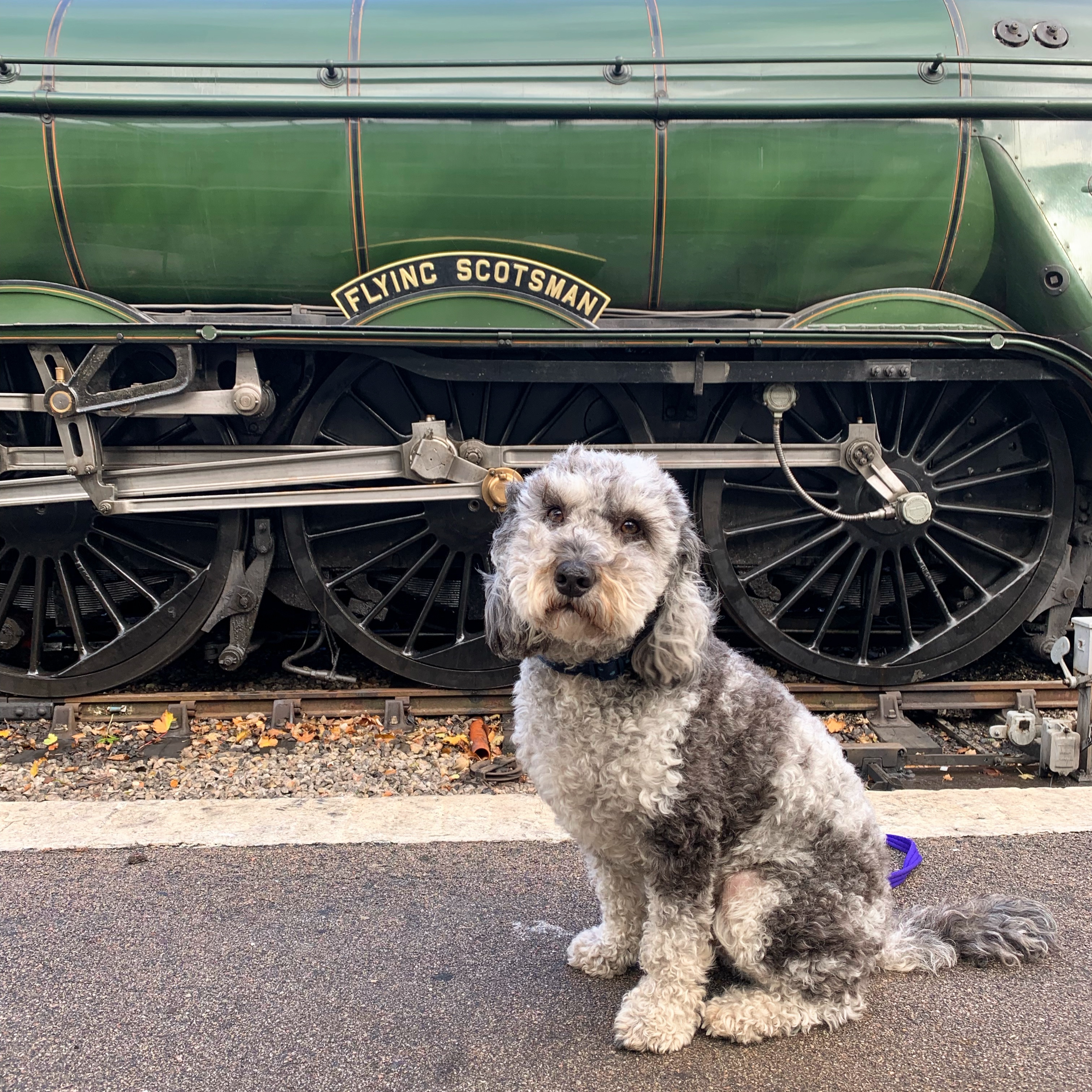
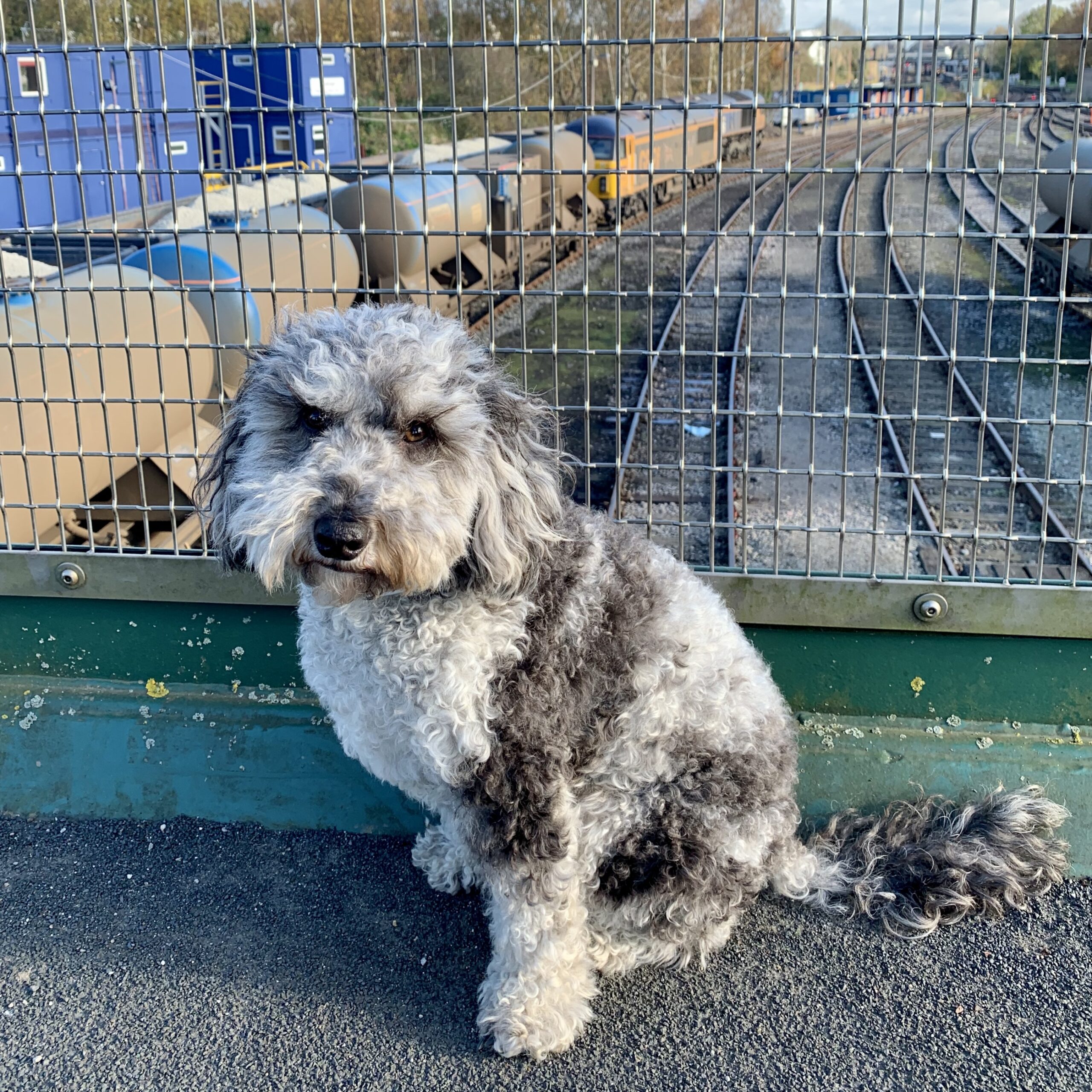
Yoshi takes a close look at ‘Clan Line’ while visiting Yeovil Junction – 04/12/2024
04/12/2024
Southern Railway rebuilt Merchant Navy 4-6-2 No. 35028 ‘Clan Line’ worked the “Sherborne Christmas Carol” railtour 1Z28 0842 London Victoria to Yeovil Junction Heritage Platform. We saw the train passing Worting Junction and its arrival at Yeovil Junction with ‘Clan Line’ later being turned on the turntable at the Yeovil Railway Centre.
Southern Railway rebuilt Merchant Navy 4-6-2 No. 35028 ‘Clan Line’ at Worting working the “Sherborne Christmas Carol” railtour 1Z28 0842 London Victoria to Yeovil Junction Heritage Platform – 04/12/2024Southern Railway rebuilt Merchant Navy 4-6-2 No. 35028 ‘Clan Line’ at the head of the “Sherborne Christmas Carol” railtour arrives in Yeovil Junction – 04/12/2024Yoshi meets Francis Bourgeois at the Yeovil Railway Centre – 04/12/2024
Southern Railway rebuilt Merchant Navy 4-6-2 No. 35028 ‘Clan Line’ working the “Sherborne Christmas Carol” railtour 1Z28 0842 London Victoria to Yeovil Junction Heritage Platform – 04/12/2024
08/12/2024
West Coast Railways Class 57 diesel-electric locomotives No.’s 57601 ‘Windsor Castle’ and 57315 top and tailed “The Northern Belle” into Castle Cary working 1Z25 1311 Paddington to Castle Cary before reversing and running back towards London as 1Z26 1540 Castle Cary to Euston.
West Coast Railways Class 57 diesel-electric locomotives No.’s 57601 ‘Windsor Castle’ and 57315 top and tailed “The Northern Belle” into Castle Cary working 1Z25 1311 Paddington to Castle Cary – 08/12/2024West Coast Railways Class 57 diesel-electric locomotive No.57315 leads away from Castle Cary at the head of 1Z26 1540 Castle Cary to Euston – 08/12/2024
The Northern Belle reverses at Castle Cary – 08/12/2024
10/12/2024
Overnight 09/12/2024 – 10/12/2024 saw Colas Railfreight running a Network Rail ballast train into Dorset reporting as 6C13 2251 Eastleigh East Yard to Dorchester South / 6C13 0455 Moreton (Dorset) to Eastleigh East Yard with Class 66 No. 66846 and Class 70 No. 70815 in charge. We saw the train passing Poole on the outward leg and at Hamworthy and Parkstone on the return.
Colas Rail Freight Class 70 No. 70815 passing Hamworthy with 6C13 0455 Moreton (Dorset) to Eastleigh East Yard – 10/12/2024
Colas ballast train – 10/12/2024
12/12/2024
A day out in Somerset began with seeing Colas Railfreight Class 43 HST power cars No’s 43274 & 43303 at Yeovil Junction on the Network Rail New Measurement Train 1Q23 0552 Reading to Salisbury
Colas Railfreight Class 43 HST power car No’s 43274 arriving at Yeovil Junction with 1Q23 0552 Reading to Salisbury – 12/12/2024Yoshi with Class 43 No. 43303 at Yeovil Junction. The HST power car was at the rear of the outward leg of 1Q23 0552 Reading to Salisbury – 12/12/2024
1Q23 0552 Reading to Salisbury – 12/12/2024
A drive over to Highbridge saw HNRC’s Regional Railways liveried Class 37 No. 37425 which has been reunited with her ‘Concrete Bob’ nameplates in honour of Sir Robert McAlpine passing Highbridge & Burnham whilst working the 5Z11 0949 Bristol Kingsland Road to Bristol Kingsland Road test train
Harry Needle Railroad Company’s Class 37 No. 37425 ‘Concrete Bob’ passing Highbridge and Burnham working the 5Z11 0949 Bristol Kingsland Road to Bristol Kingsland Road test train – 12/12/2024
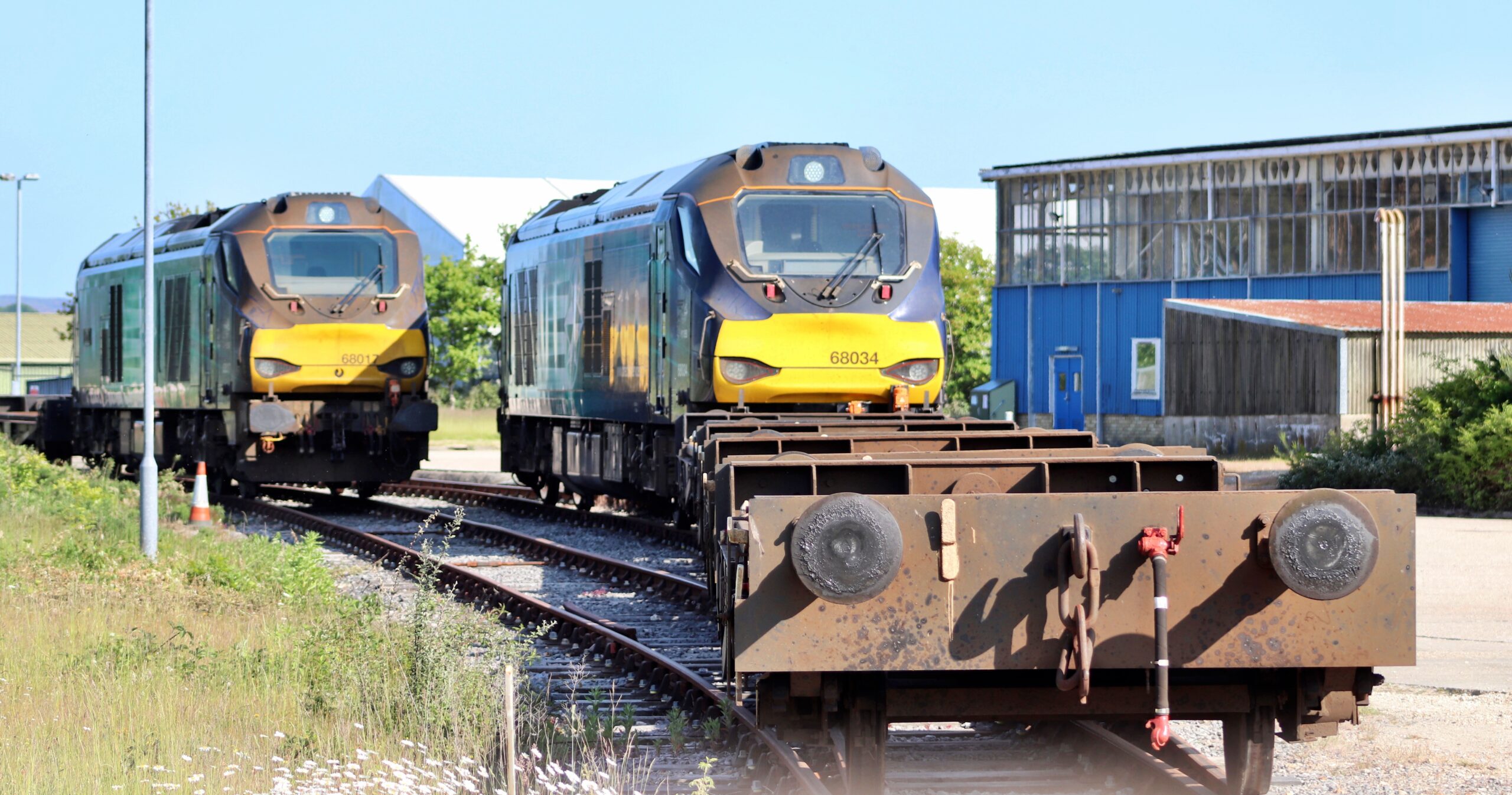
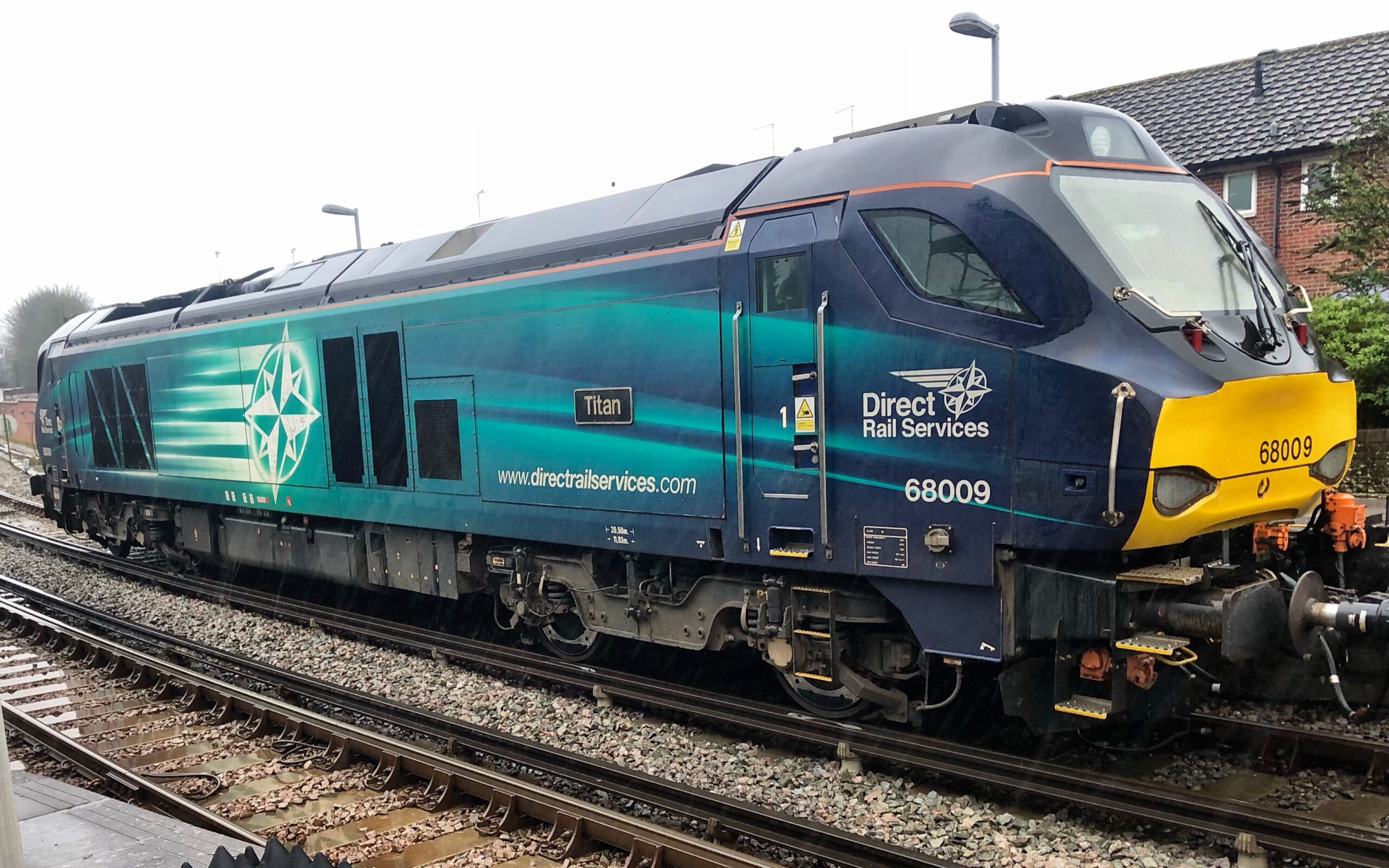
Later we caught up with the twice weekly Direct Rail Services flask train departing Bridgwater in the care of Class 68 No.’s 68009 ‘Titan’ and 68034 ‘Rail Riders’ working 6M63 1210 Bridgwater F.D to Crewe Coal Sidings (DRS)
DRS Class 68 No.’s 68009 ‘Titan’ and 68034 ‘Rail Riders’ in the sidings at Bridgwater – 12/12/2024DRS Class 68 No. 68034 ‘Rail Riders’ prepares to depart Bridgwater with 6M63 1210 Bridgwater F.D to Crewe Coal Sidings (DRS) – 12/12/2024
DRS Flasks at Bridgwater – 12/12/2024
16/12/2024
Having missed November, the monthly PLP test train utilising GBRf Class 73 locomotives made it to Weymouth in December. The train, in the charge of GBRf Class 73 No.’s 73962 ‘Dick Mabbutt’ and 73965 ‘Des O’Brien’, reported as 1Q51 1115 Derby RTC to Eastleigh Yard via Weymouth. I saw 73’s on their way from Weymouth to Eastleigh at Hamworthy having missed the outward leg as I was being entertained by the Christmas lights at Kew Gardens.
1Q51 1115 Derby RTC to Eastleigh Yard via Weymouth – 16/12/2024
17/12/2024 – 19/12/2024
The trials and tribulations of delivering SWR Class 458/4 No. 458414 which was the final unit to be converted from a five car Class 458/5. Tuesday 17th December 2024, GBRf Class 57 No. 57310 reversed at Poole with the intention of delivering the refurbished EMU to Bournemouth depot as 5Q64 1603 Southampton Central to Bournemouth T&R.S.M.D. However due to a points failure leading into the depot, the consist traveled back up the line to Eastleigh East Yard. The following day sister locomotive No. 57303 did the honours working 5Q64 1548 Eastleigh East Yard to Bournemouth T&R.S.M.D which saw the Class 458 safely delivered to its Home Depot. Finally on the morning of 19th December 2024, No. 57303 returned to Leicester with the barrier coaches formed from ex-Class 508 driving coaches working 5M09 0855 Bournemouth T&R.S.M.D to Leicester L.I.P. which I saw at Totton as it passed running 46 minutes late.
Class 57 movements in association with SWR Class 458 drags to Bournemouth – December 2024
18/12/2024
The Heart of Wessex test train ran once again with ex High Speed Train Class 43 power cars – No.’s 43274 & 43303 – reporting as 1Q22 0647 Derby R.T.C.(Network Rail) to Bristol Kingsland Road. We saw the train at Yeovil Pen Mill and Upwey
Heart of Wessex Network Rail Test Train – 18/12/2024
19/12/2024
The Wessex Snow & Ice Treatment Train (SITT) arrived at Totton Yard on 7th December 2024 in readiness for the winter 2024/25 season. However, it wasn’t until 19th December that the train turned a wheel in anger and ran down to Weymouth as 3Y88 0905 Totton Yard to Totton Yard top and tailed by GBRf Class 66 locomotives No.’s 66 66768 ‘Yvonne Bradley’ + 66714 ‘Cromer Lifeboat’. Caught out by the late departure of this service from Totton Yard, I was able to see the train arrive back at base
Snow & Ice Train – 19/12/2024
24/12/2024
A Christmas Eve treat from GBRf and SWR as Class 57 No. 57303 hauls Class 458/4 No. 458419 with barrier coaches No.’s 64664 & 64707 past Baiter Park, Poole reporting as 5Q45 1118 Wembley Receptions 1-7 to Bournemouth T&R.S.M.D. The train was running 46 minutes ahead of schedule on arrival at Poole. The EMU is the last member of the class to be delivered to Bournemouth depot following the completion of the 458 refurbishment programme carried out at Widnes Transport Tech. The locomotive and barrier coaches departed Bournemouth depot as the early running 5Z66 1851 Bournemouth T&R.S.M.D to Eastleigh East Yard, but by that time I was in the pub enjoying a festive drink.
The final 458 refurb drag to Bournemouth – 24/12/2024
27/12/2024
The video below is of trains during a post Christmas visit to the Southampton area on 27/12/2024, taking in Eastleigh, Winchester and St Denys.
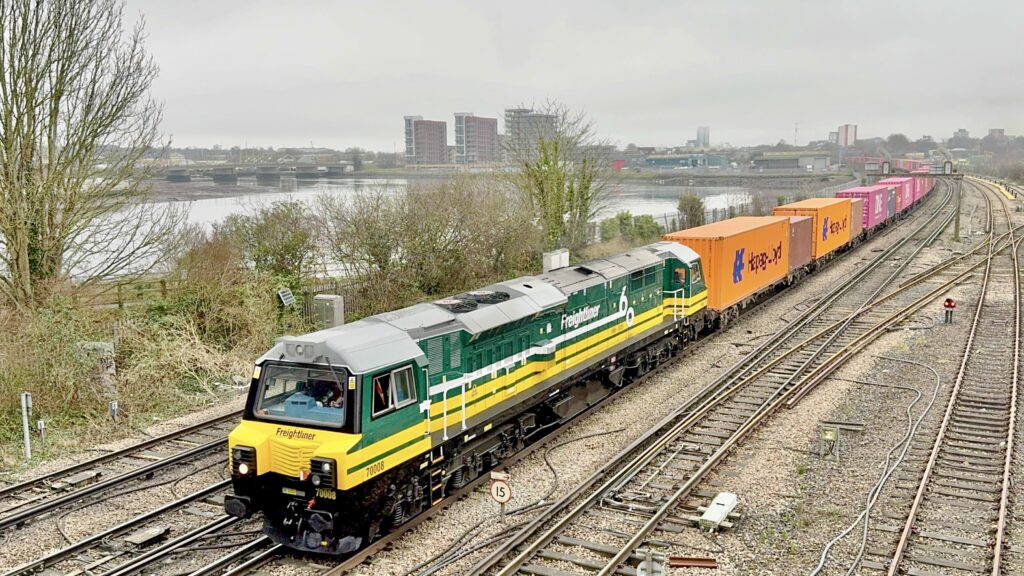
Freightliner anniversary liveried Class 70 No. 70008 working 4M61 1256 Southampton MCT to Trafford Park FLT on the approach to St Denys – 27/12/2024
My vote for the favourite ’spot of the day’ would have to be FL Class 70 No. 70008 carrying a new special yellow and green livery in a nod to the company’s past. The locomotive’s repaint was carried out by UK Rail Leasing in Loughborough, and completed on November 20th 2024 in readiness for Freightliner’s 60th anniversary in 2025. When sold by British Rail, Freightliner originally used a version of the old BR two- tone grey livery, before moving to a new green livery with yellow cabs – first for its Class 57’s and then its Class 66 locomotives. The arrival of the first Class 70 in 2010 resulted in a new ‘PowerHaul’ livery being introduced that was latter applied to a handful of Class 66’s, 86’s and 90’s. The takeover by Genesee and Wyoming saw a break from this, with a striking orange and black livery starting to be applied, as seen in this video being carried by Class 66 No. 66419 ‘Lionesses’ Roar’
Southampton area compilation – 27/12/2024
Thanks for reading – a reminder the best way to keep up to date with our latest videos is via the Railway Dog YouTube Channel – why not subscribe today! Or you can catch random witterings and photos via the Railway Dog Facebook group. Be seeing you!
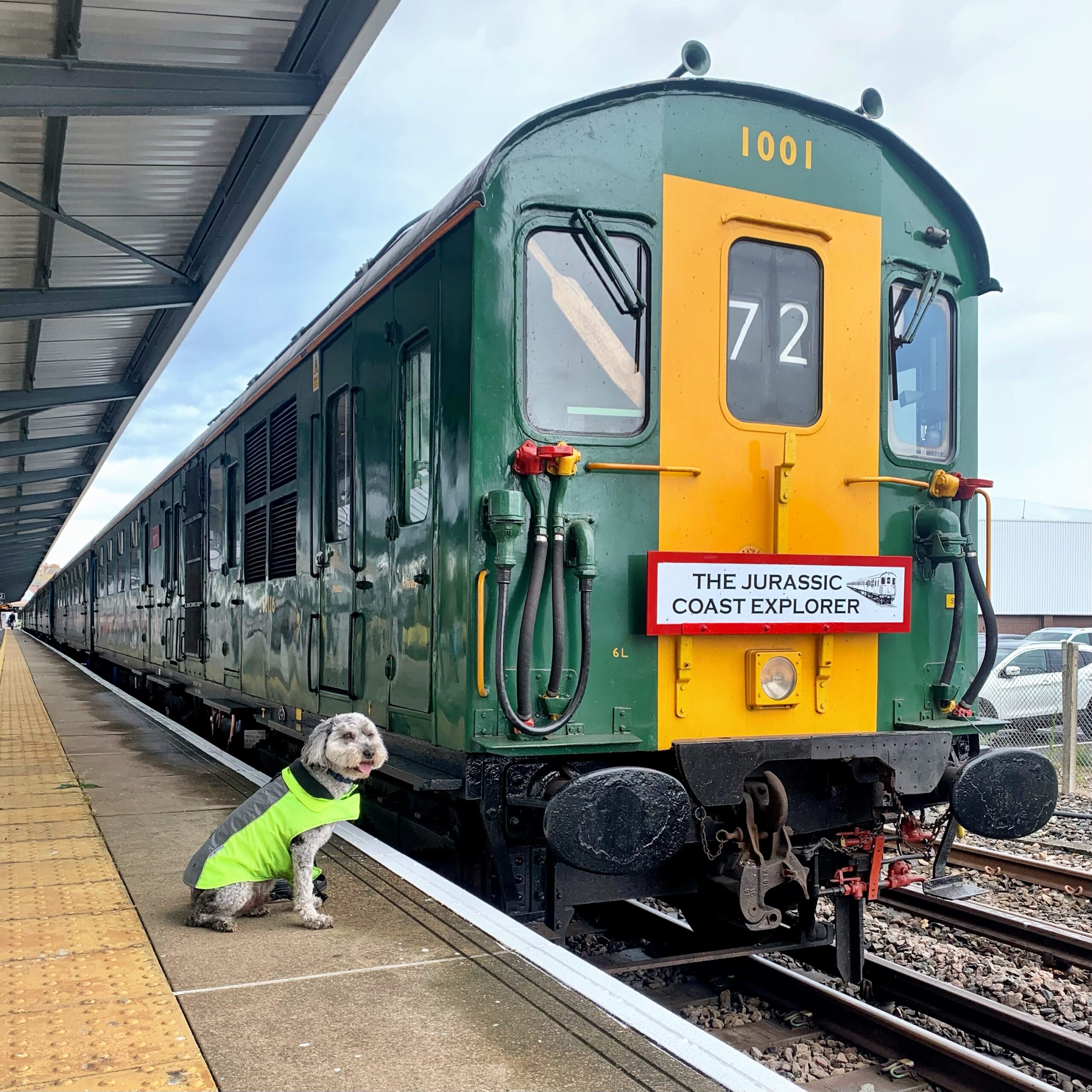
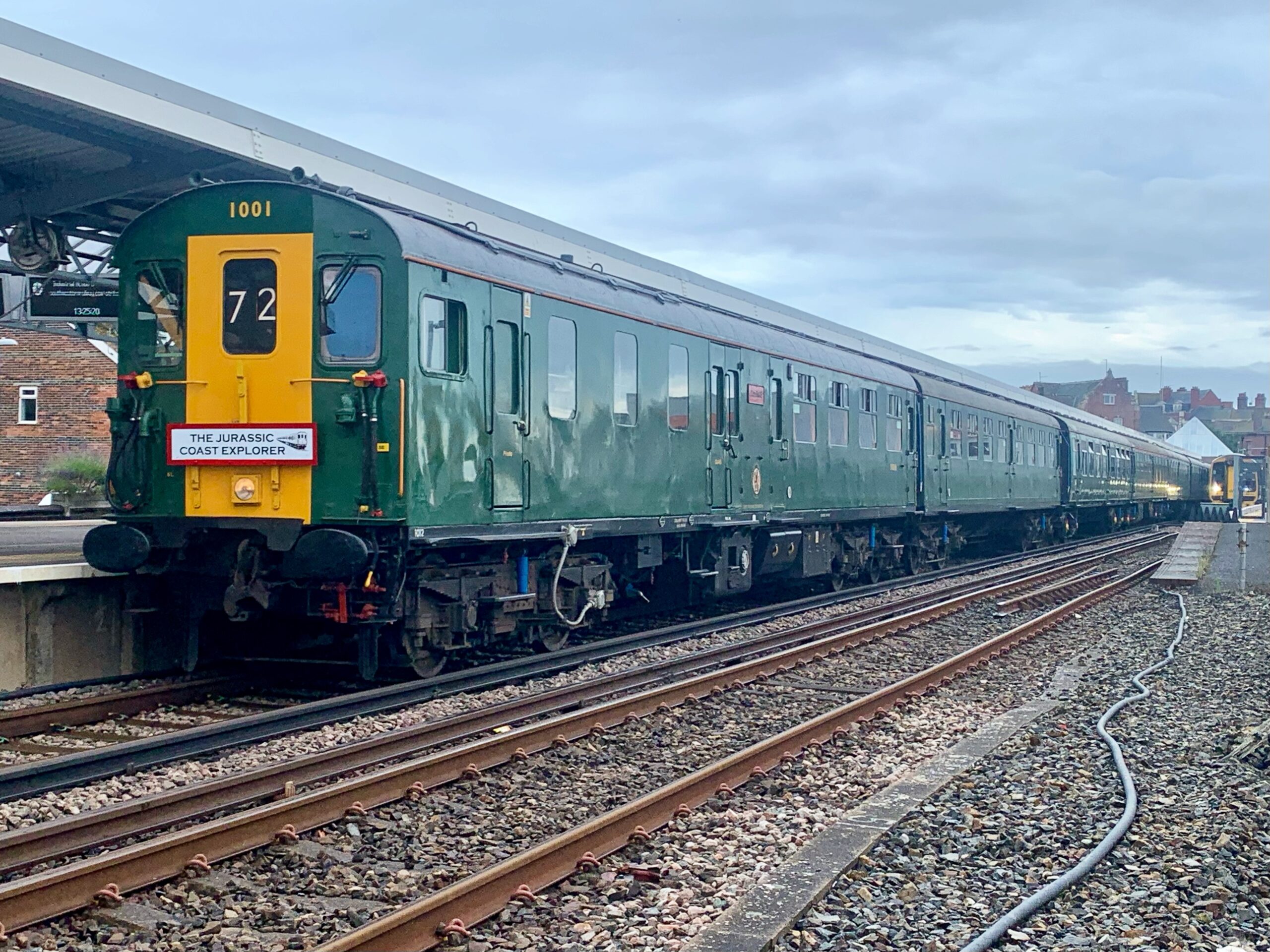
In between showers of rain, Yoshi takes a look at Hastings Unit No. 1001 at Weymouth following its arrival with “The Jurassic Coast Explorer” railtour – 08/07/2023
July 5th 2023 to July 11th 2023
This time around we were lucky enough to see two separate railtours grace our patch. But before that on Wednesday 5th July, the Ultrasonic Test Unit (UTU) reached Weymouth via Bournemouth working as 3Q02 2140 Eastleigh East Yard to Eastleigh East Yard via Weymouth Signal DR194. As the name of the UTU suggests, ultrasonic equipment – the same technology used in medical practices – is employed to detect minute flaws in the track as the train passes over it. Hauled by Colas Class 37 No. 37175 the ensemble was in much use in the South and visited Weymouth once again on Sunday 9th July (although running around two hours late) as 3Q14 1517 Westbury to Westbury via Weymouth. UTU’s inspect around 64,000 miles of track all over the UK using four trains over 750 shifts annually.
Ultrasonic Test Unit (UTU) in Dorset – July 2023 (Additional video by kind permission of G E Barrett)
Ultrasonic Testing Unit trains usually have 1 locomotive at one end, and a DBSO (Driving Brake Standard Open) at the other. The DBSO controls the locomotive at the other end whilst it is leading the formation. UTU trains have ground-penetrating radar systems to detect voids and deformations up to 2 meters into the ballast and earth. Similarly to Plain Line Pattern Recognition test trains (on which more below), UTU trains use rail profile scanners to help identify problems or degradation in track profile, comparing it to a template of an ideal track.
Hastings Unit No. 1001 at Weymouth having arrived with “The Jurassic Coast Explorer” – 08/07/2023
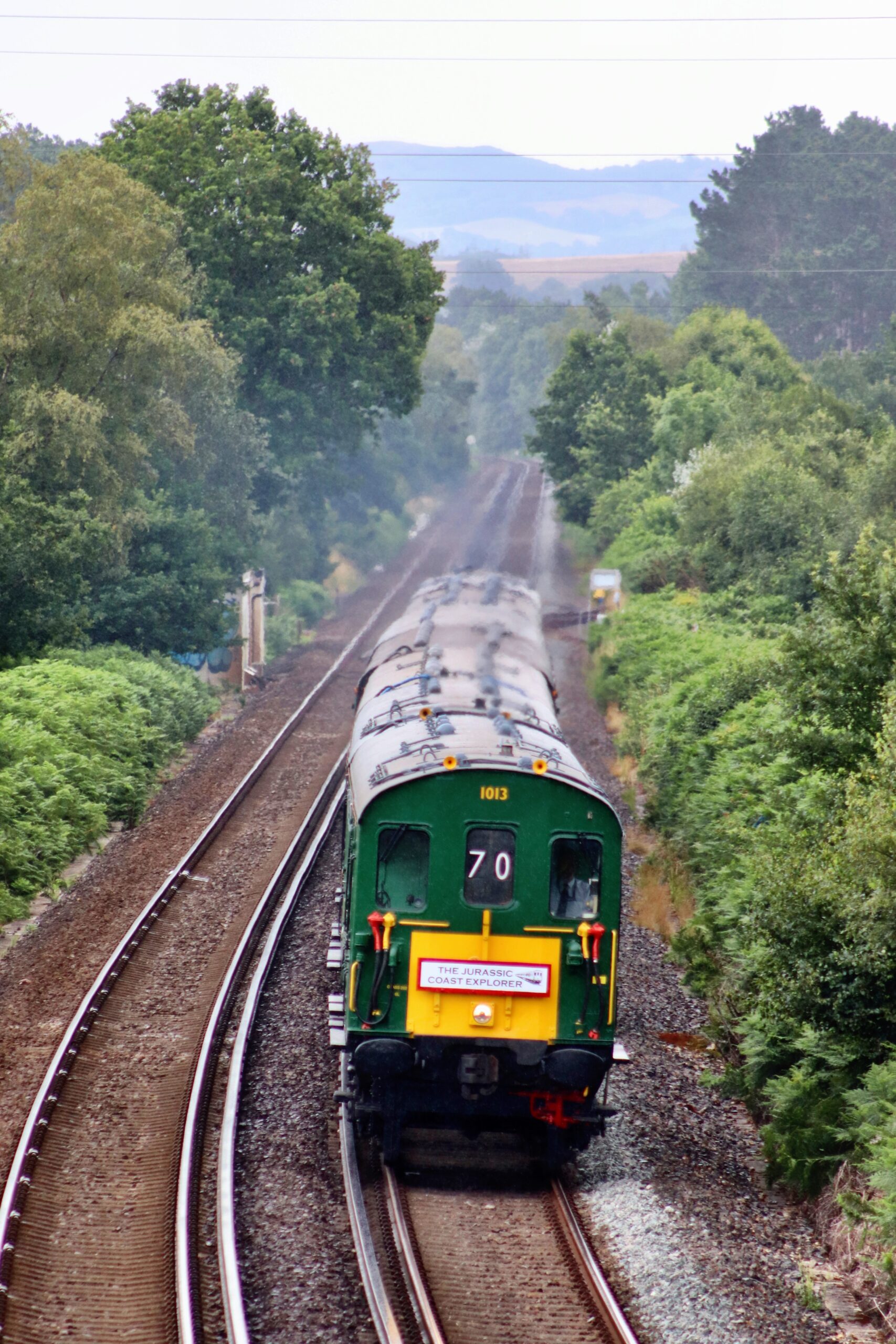
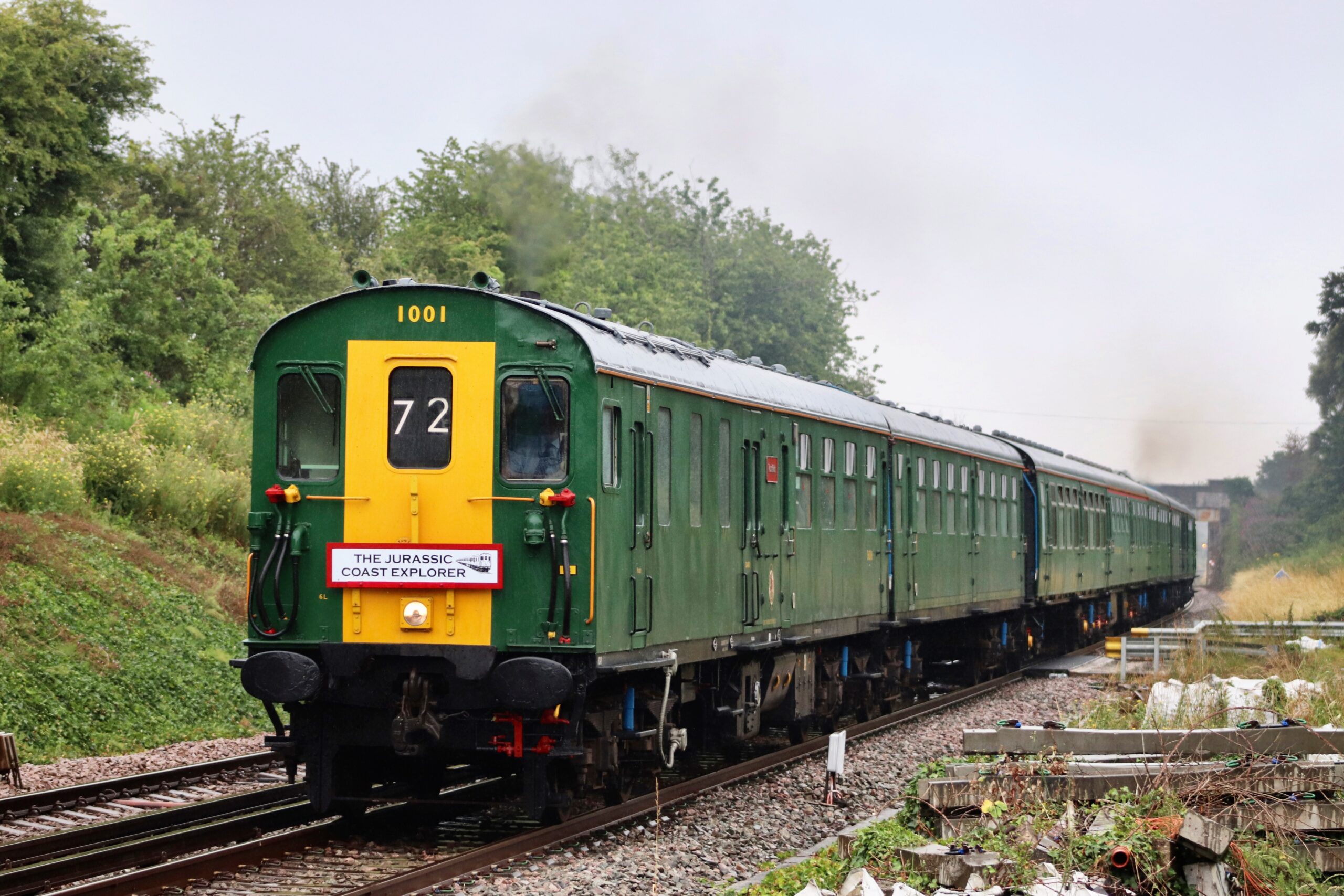
The first railtour over the weekend was Hastings Diesels Limited’s (HDL) “The Jurassic Coast Explorer” which ran on Saturday July 8th 2023 employing their Hastings Diesel-Electric Multiple-Unit (DEMU), one of a class of trains built during 1957 and 1958 to replace steam-hauled stock operating between London and Hastings via Tunbridge Wells. The six-coach units, incorporating diesel generators at each end, were unique in having specially narrow bodies which enabled them to pass through the unusually narrow tunnels on the Hastings line. When the line was electrified in 1986, these “Hastings” diesel units were withdrawn (and the tunnels single-tracked to solve the width problem). The preserved example, certified for mainline running, is numbered Unit No. 1001 but actually includes vehicles from several different units and trains including a buffet car from a 4-BIG electric multiple unit (EMU) and a Trailer Second (TSO) from a 4-CEP EMU which unlike the other stock are built to standard UK loading gauge.
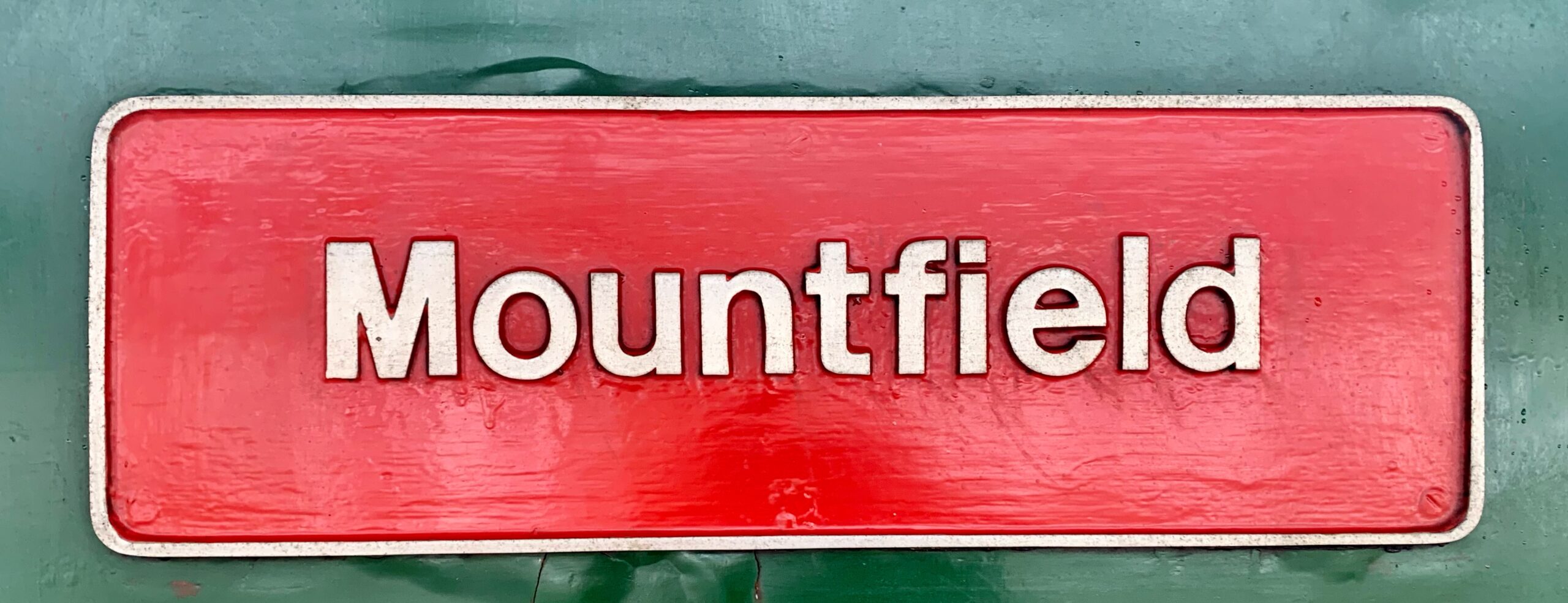
Hastings Unit No. 1001 speeds past Winfrith working 1Z70 0651 Hastings to Weymouth “The Jurassic Coast Explorer” – 08/07/2023Hastings Unit No. 1001 at rest in Weymouth whilst working “The Jurassic Coast Explorer” – 08/07/2023Hastings Unit DEMU nameplate detail ‘Mountfield’ – 08/07/2023Hastings Unit DEMU nameplate detail ‘Tunbridge Wells’ – 08/07/2023Hastings Unit No. 1001 powers up through Upwey whilst working the return “The Jurassic Coast Explorer” 1Z72 1538 Weymouth to Hastings – 08/07/2023 (With thanks to G E Barrett for Dorchester images)
Video of Hastings Unit No. 1001 railtour “The Jurassic Coast Explorer” – 08/07/2023
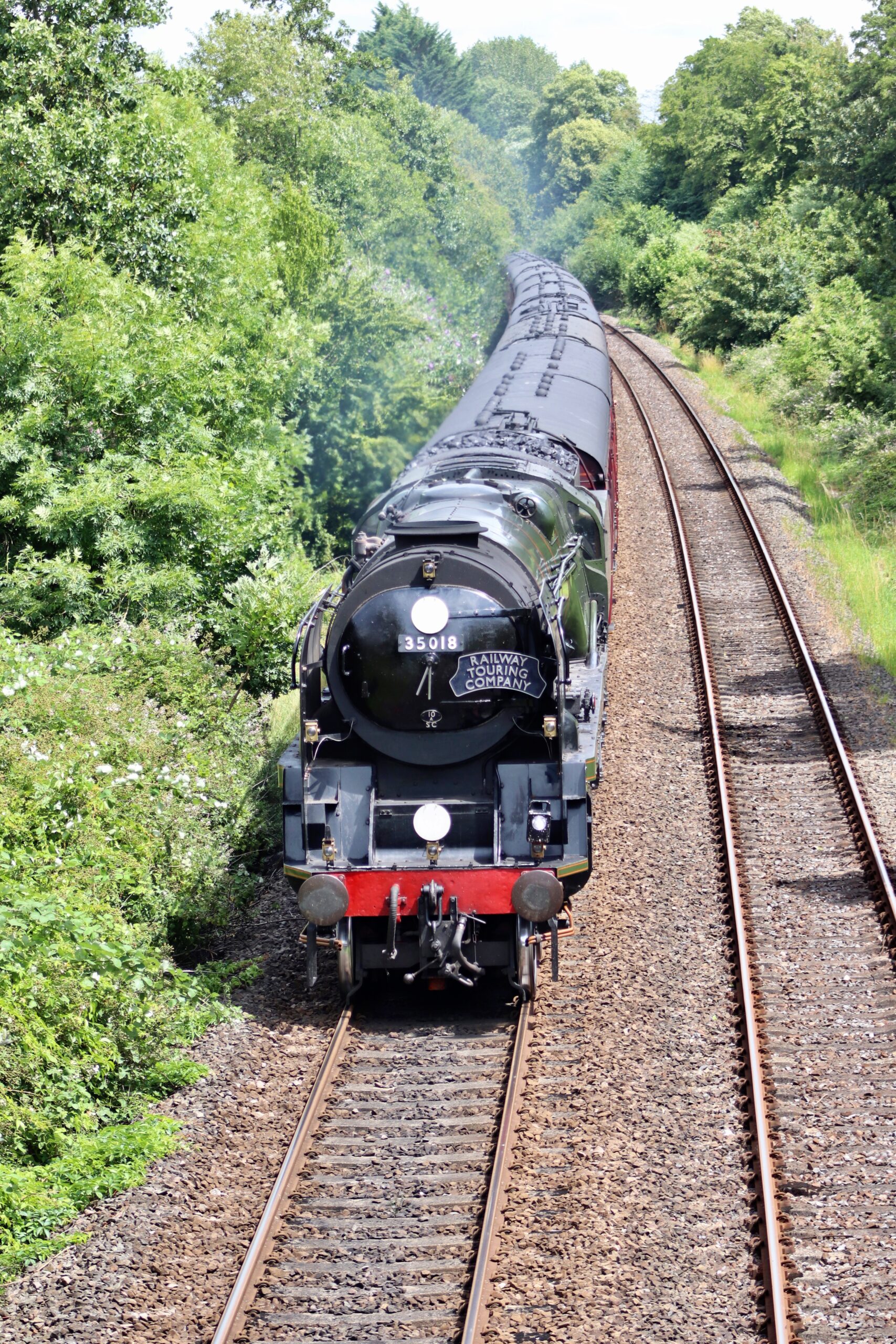
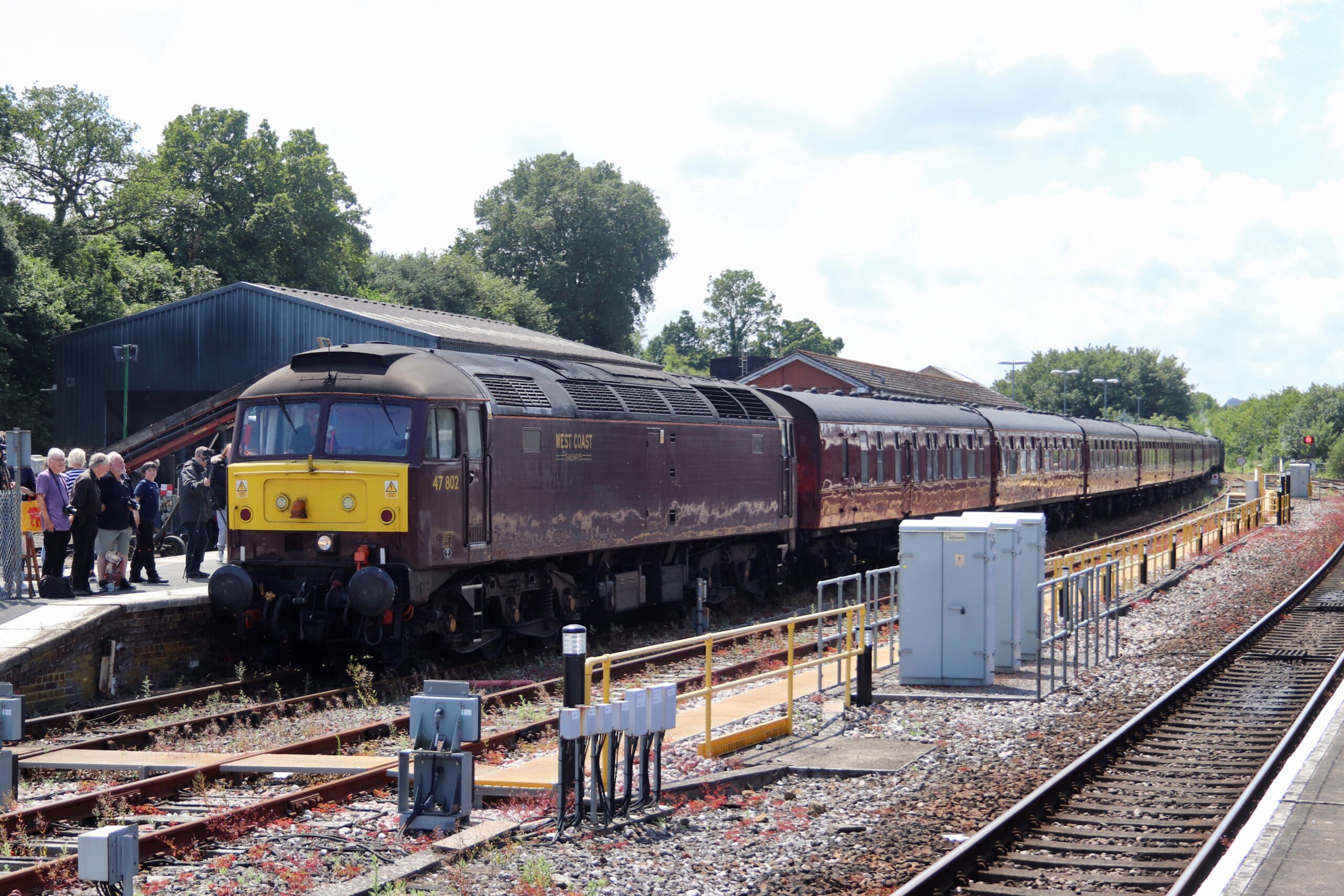
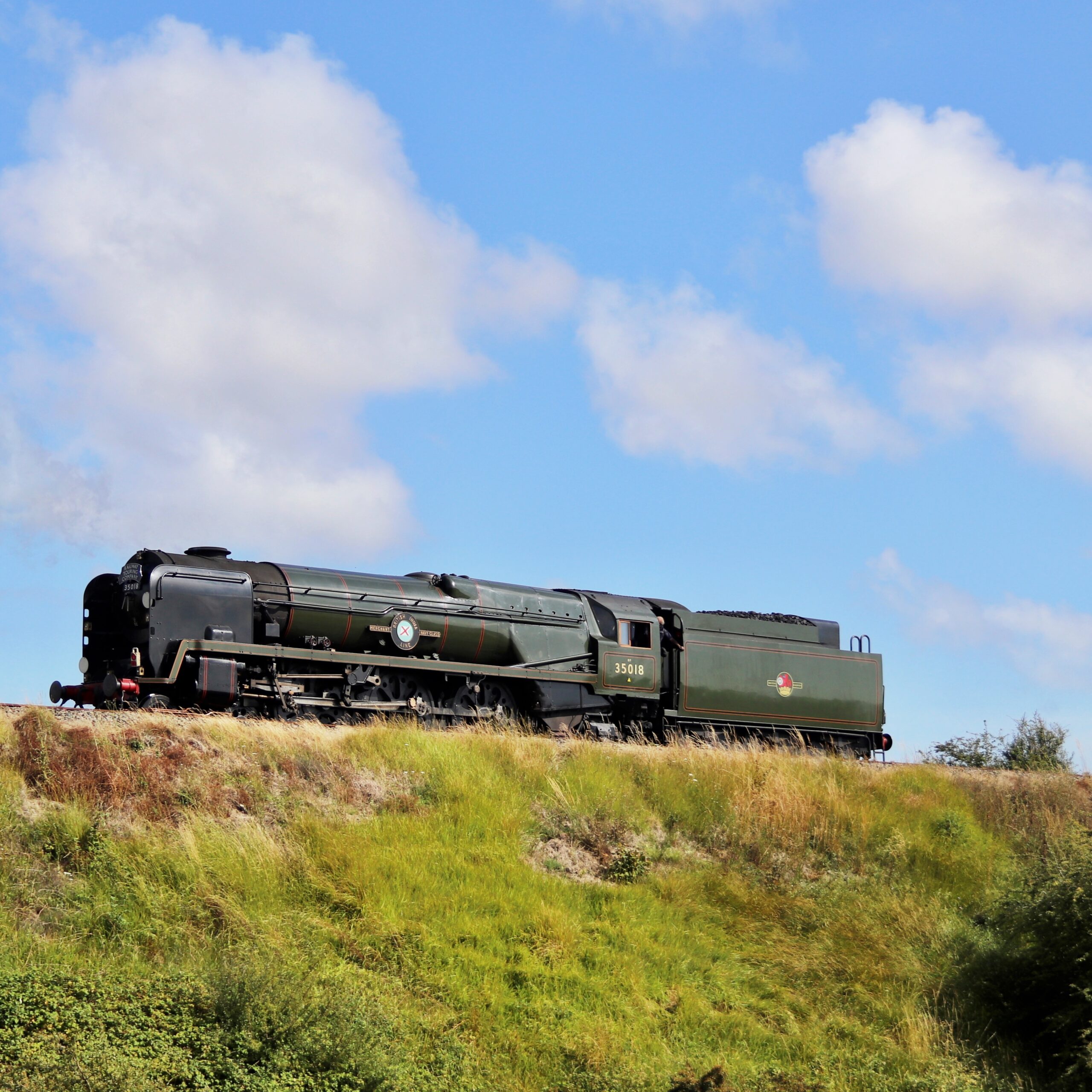
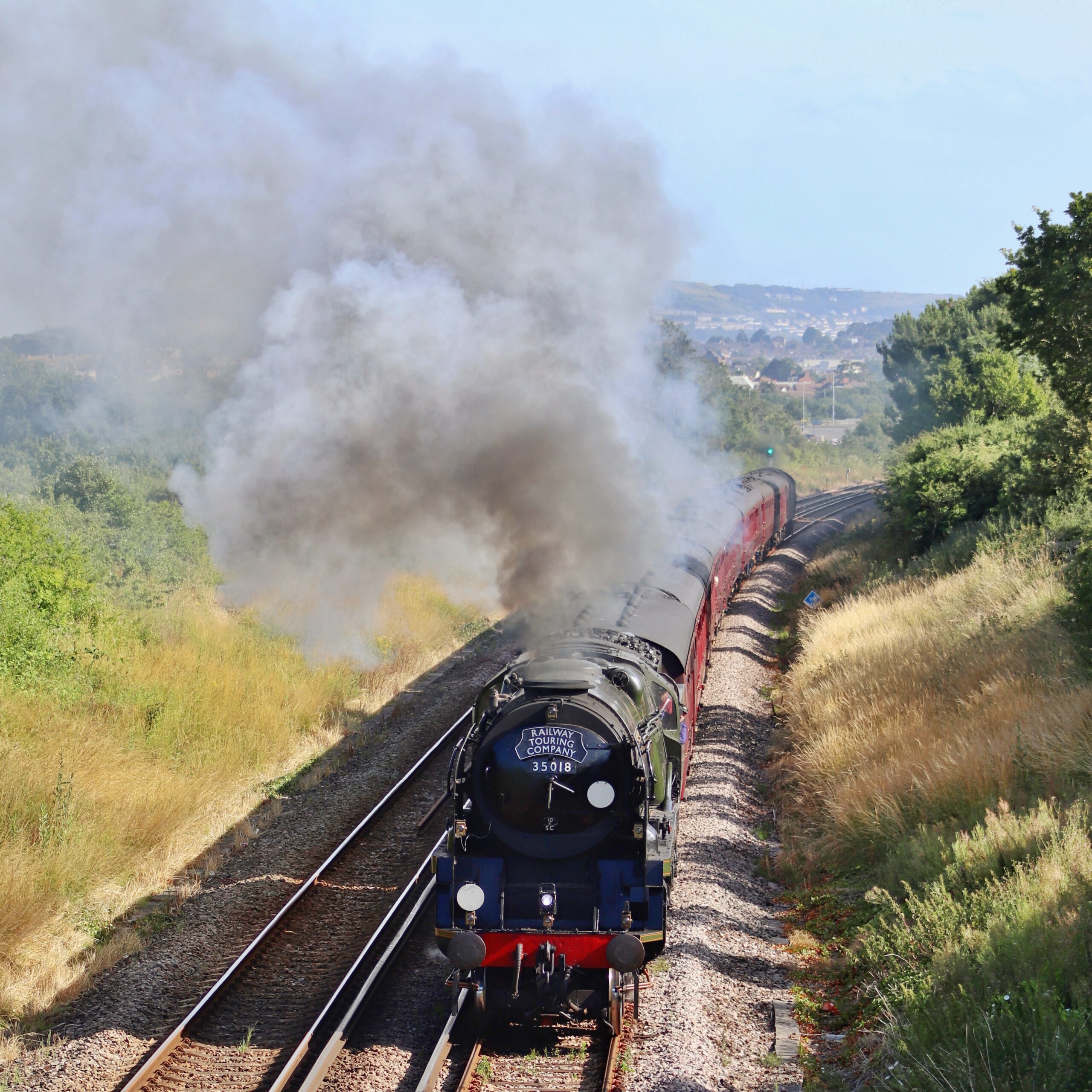
The following day, Sunday July 9th the seemingly annual tour celebrating “The End Of Southern Steam” reached Weymouth. The last day of regular steam haulage across the British Railways (BR) Southern Region took place on July 9th 1967. 56 years later and Southern Railway Bullied Pacific No. 35018 ‘British India Line’ returned to the metals she would have travelled over back in her working BR days. Starting out from London Victoria the passengers were hauled by No. 35018 to Yeovil Junction via Salisbury where the steam locomotive was removed from the train for turning and servicing, the tour advancing to Weymouth behind West Coast Railway Company (WCRC) owned Class 47 No. 47802 which had been on the rear of the train since its London departure.
I left home thinking I had lots of time to find a location to photograph the train near Gillingham, and was surprised to see on Real Time Trains the tour had in fact gained five minutes by the time it had reached Dorset. So a change of plan was instigated and I diverted off to Sherborne where I was caught out by the train approaching my over bridge vantage point wrong line.
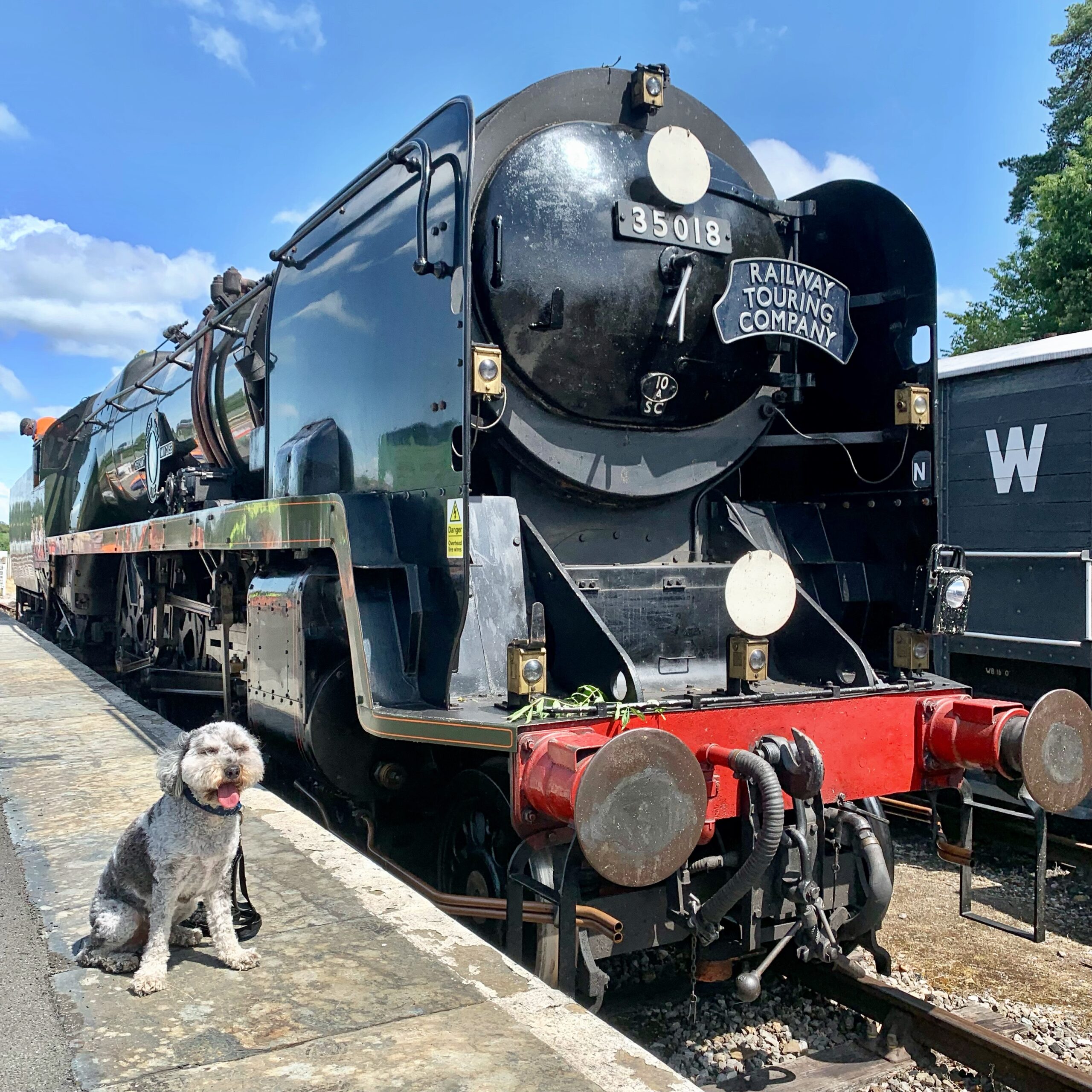
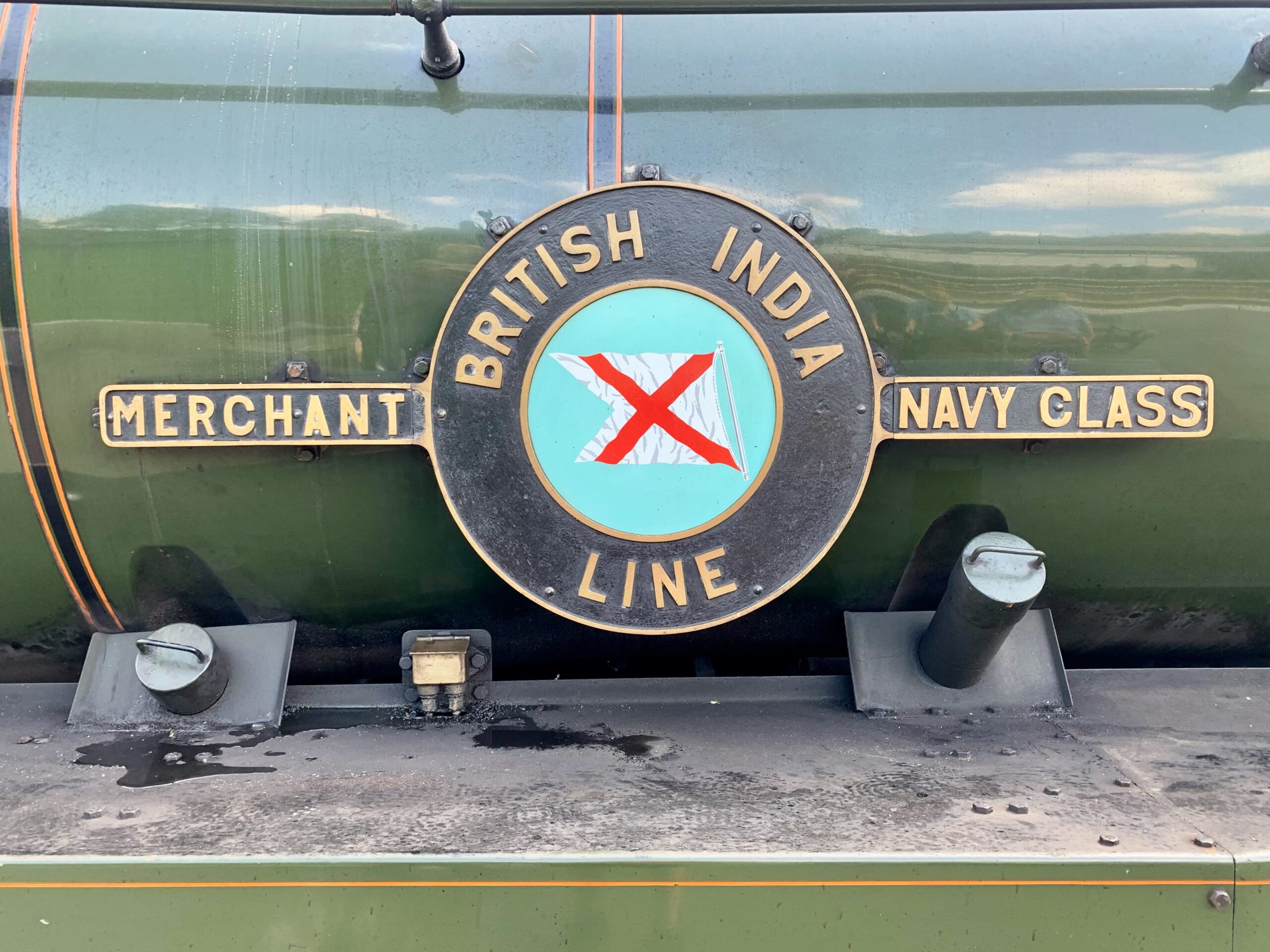
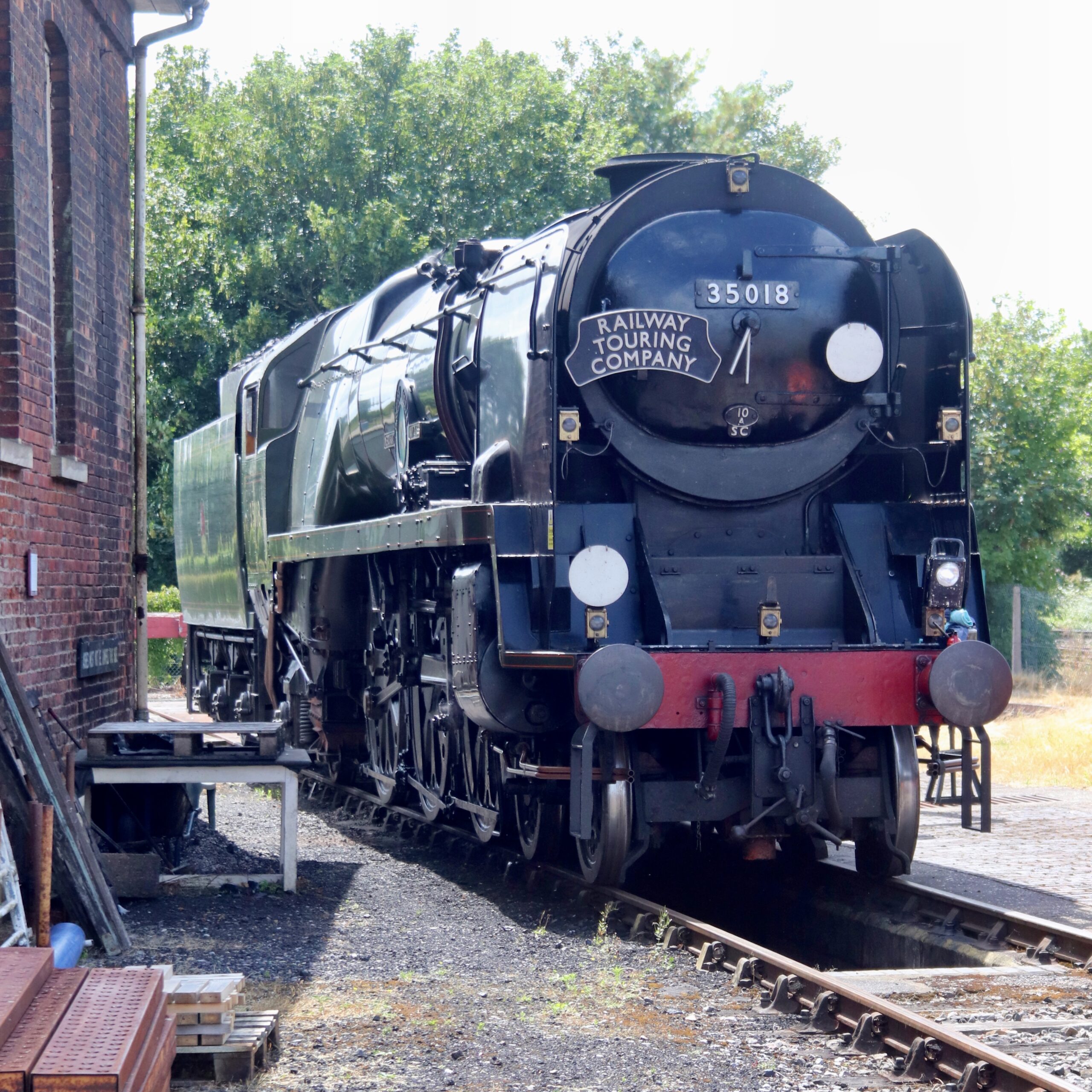
Southern Railway Bullied Pacific No. 35018 ‘British India Line’ working wrong line at Sherborne as 1Z82 London Victoria to Yeovil Junction Down Main Platform – 09/07/2023WCRC Class 47 No. 47802 resides departure with 1Z83 1344 Yeovil Junction Down Main Platform to Weymouth which left Yeovil 20 minutes late – 09/07/2023Yoshi meets Southern Railway Bullied Pacific No. 35018 ‘British India Line’ at Yeovil Junction which was being serviced at the Yeovil Railway Centre – 09/07/2023Nameplate detail for Bullied Pacific No. 35018 ‘British India Line’ – 09/07/2023Southern Railway Bullied Pacific No. 35018 ‘British India Line’ having been turned on the Yeovil Railway Centre turntable – 09/07/2023
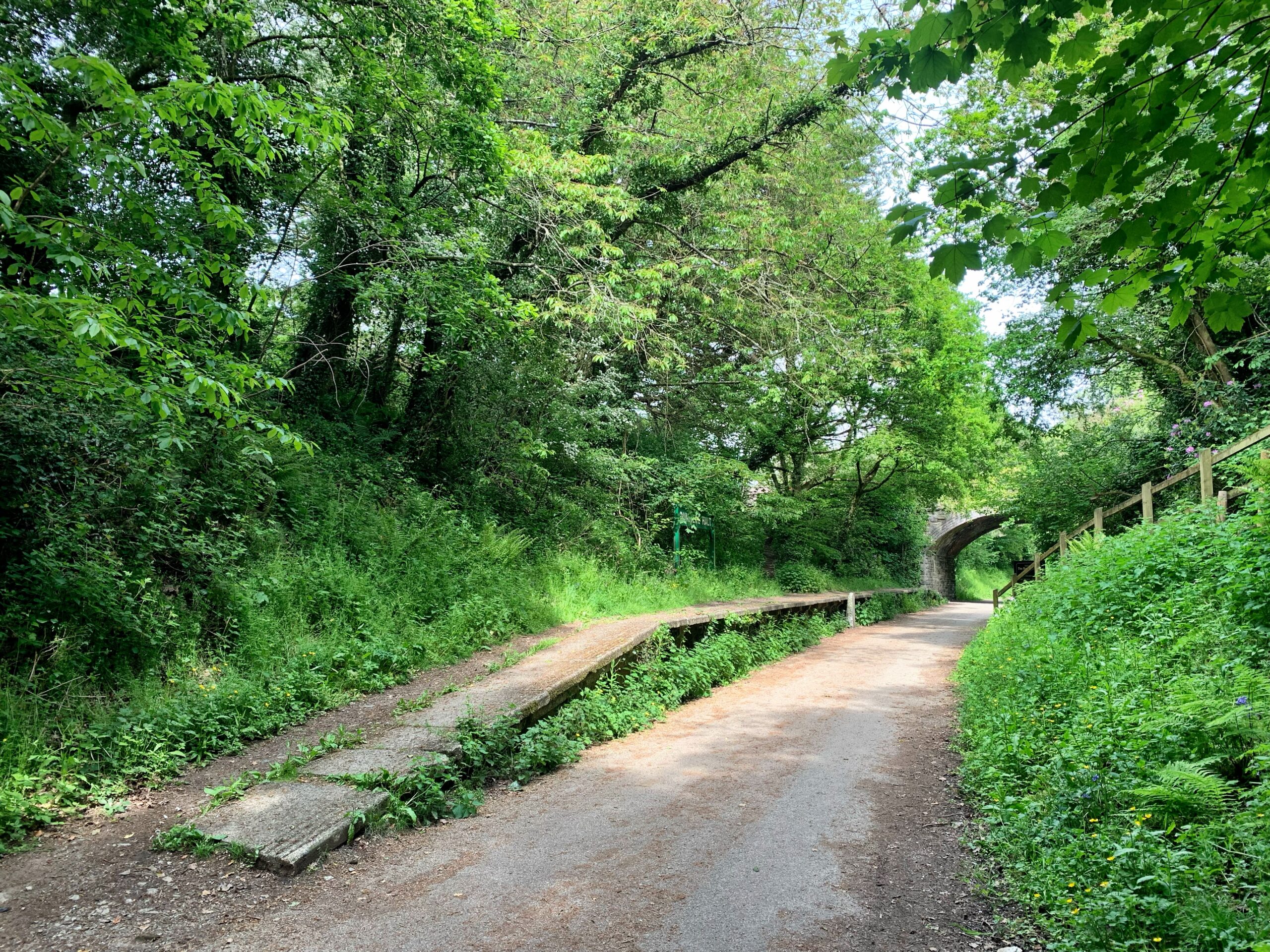
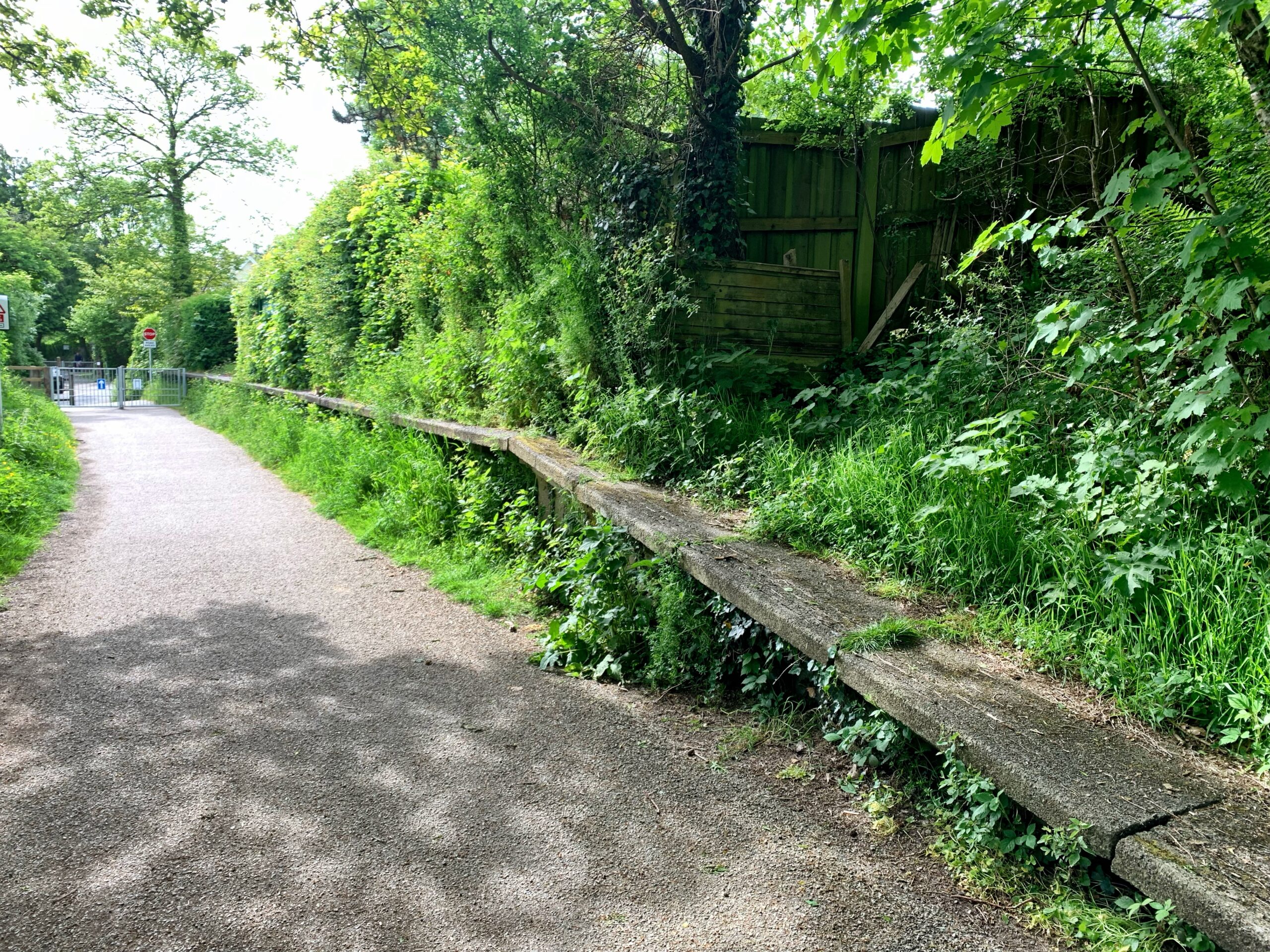
Having been refreshed by the team at the Yeovil Railway Centre, No. 35018 worked light engine down to Weymouth where she re-joined the railtour for a spirited late afternoon departure bound for London Waterloo. I waited for the light locomotive at Evershot, but my view was obscured by steam. I then got ahead of No. 35018 and saw her again very close to the former Monkton and Came Halt which had been opened by the Great Western Railway in 1905 as part of their ambitions to combat road based transport. The station served the nearby Came Golf Links and visitors to Maiden Castle. This ultimately failed and the Halt was closed in 1957. Some remains of the platforms can still be seen.
Running tender first to Weymouth as 0Z84 1523 Yeovil Junction Down Main Platform to Weymouth Jersey Siding to rejoin the main train Southern Railway Bullied Pacific No. 35018 ‘British India Line’ passes Monkton – 09/07/2023Making a spirited climb towards Bincombe summit Southern Railway Bullied Pacific No. 35018 ‘British India Line’ hauling Railway Touring Company’s “End of Southern Steam” 1Z84 1724 Weymouth to London Waterloo tour advances towards Upwey – 09/07/2023
Southern Railway Bullied Pacific No. 35018 ‘British India Line’ the “End of Southern Steam” tour – 09/07/2023 (With grateful thanks to @da_buckley967 for the departure from Weymouth and G E Barrett for Dorchester footage)
Co-incidentally two days later, London Waterloo celebrated its 175th anniversary which included the unveiling of a plaque commemorating the landmark birthday, a joint Network Rail and South Western Railway choir treated visitors to iconic ‘Waterloo’ songs such as ABBA’s “Waterloo” and The Kinks’ “Waterloo Sunset” as well of a preview of Class 701 “Arterio” EMU No. 701043 on platform 19 which was also adorned with a celebratory London Waterloo 175 roundel . The fleet of 90 Class 701 trains are over two years late at being introduced on Reading, Windsor and South West London suburban routes. In addition, fittingly situated under the famous Waterloo clock on the station concourse, a fascinating 40-panel history exhibition was put on display for a limited time.
Celebrating Waterloo 175 logo – 12/07/2023An exhibition celebrating Waterloo 175 stood for a few days on the concourse of the Southern Terminus – 12/07/2023
Delayed by a week, Monday 10th July saw the monthly 1Q51 Plain Line Pattern Recognition (PLPR) test train head to Weymouth, as usual top and tailed by GBRf Class 73 electro-diesel locomotives, but this time in daylight. The train usually runs on our patch in in the late evenings but the rescheduled working was scheduled for a lunchtime turn around at Weymouth.
GBRf Class 73 No. 73962 ‘Dick Mabbutt’ leading the outward leg of 1Q51 1008 Woking Up Yard Reception to Woking Up Yard Reception via Weymouth Plain Line Pattern Recognition (PLPR) test train passing Hamworthy – 10/07/2023GBRf Class 73 No. 73961 ‘Alison’ at the rear of 1Q51 Woking to Woking via Weymouth passing Hamworthy – 10/07/2023
Plain Line Pattern Recognition uses a variety of tools to measure and detect defects and potential problems that might arise in track condition. PLPR uses equipment such as: 4 foot camera used to check the track condition, thermal imaging to check rail temperature, fasteners are checked with diagonal and top down cameras. The various cameras used store HD laser scanned images which show different angles and planes of the track and rails. PLPR was initially rolled out on the NMT measurement train, but has since been fitted to Network Rail’s coaches and can be seen across the UK rail network. The coaches on the PLPR may also by fitted with Radio Survey equipment, for testing of NRN, CSR and GSM-R communication systems.
Video of 1Q51 Plain Line Pattern Recognition (PLPR) Test Train – 10/07/2023 (With thanks to G E Barrett for Dorchester video)
From the Archive…
In contrast to how SR Bullied Pacific No. 35018 ‘British India Line’ looked on her recent visit to Weymouth, below are three images of the locomotive and tender when she left storage on Portland taken by John Chappell.
No. 35018 ‘British India Line’ was the first Merchant Navy locomotive to have the original air-smoothed casing removed as part of a rebuild of the class and emerged from Eastleigh Works in her new form during February 1956. She was withdrawn from service with British Railways in August 1964 and despatched to Barry Scrapyard for disposal. However, after languishing in South Wales for 15 years, she was purchased for preservation by Richard Heather and John Bunch, and in March 1980 the engine was moved to the Mid Hants Railway (MHR) where it was planned for her to be restored to full working order. In the event little work was undertaken on the locomotive during this time and she was later moved to a site in Portland but following little work again being undertaken on restoring the engine she moved once again, in 2012, to Carnforth in Lancashire having been purchased by David Smith. She finally underwent a thorough restoration to running order for mainline standards.
SR Bullied Pacific No. 35018 ‘British India Line’ departs storage on Portland – 24/04/2012 (Image: John Chappell)SR Bullied Pacific No. 35018 ‘British India Line’ is manoeuvred out of storage on Portland – 24/04/2012 (Image: John Chappell)Tender for SR Bullied Pacific No. 35018 ‘British India Line’ departs storage on Portland – 24/04/2012 (Image: John Chappell)
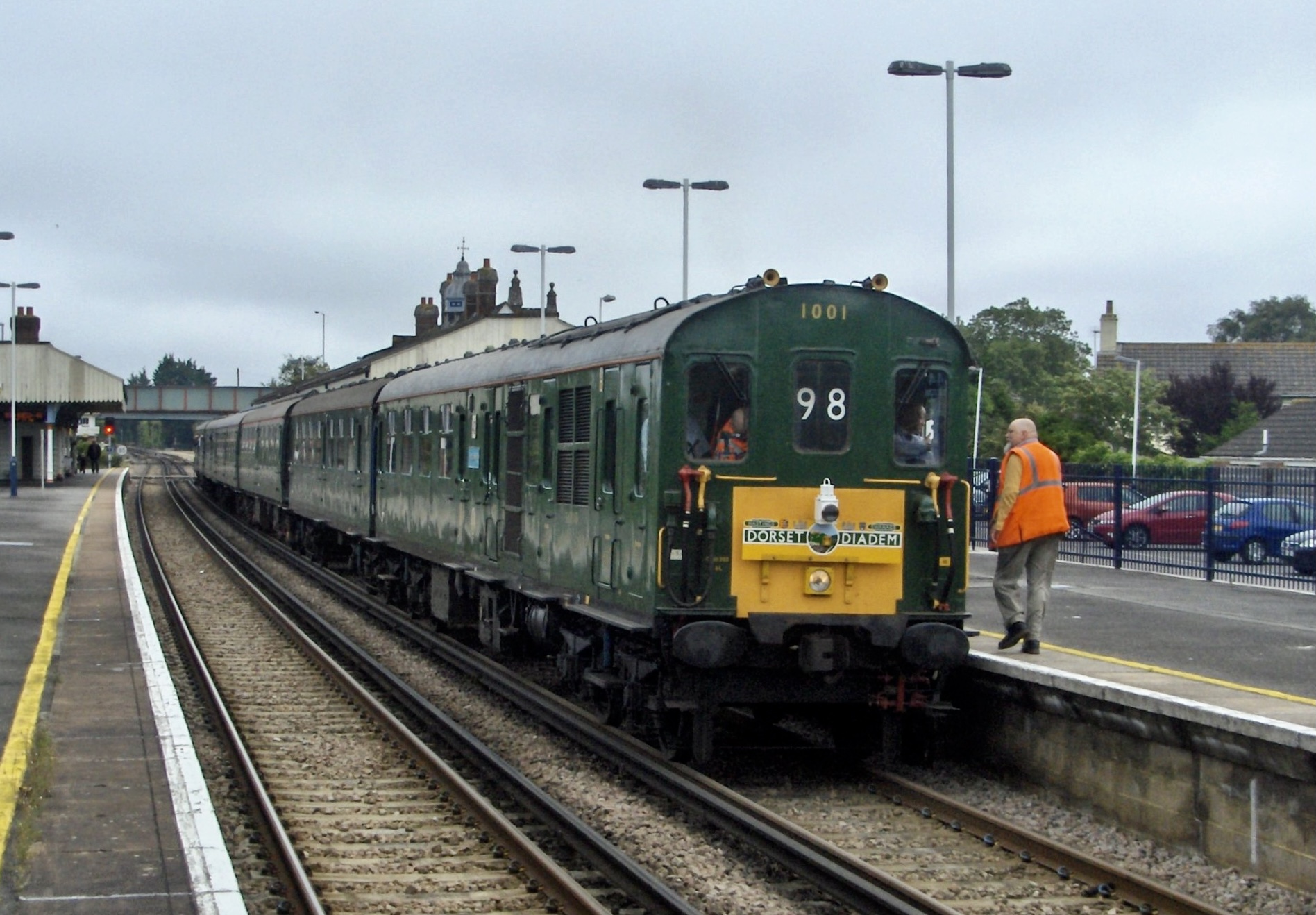
Hastings Unit No. 1001 was privately chartered for the Any Piper Memorial Railtour from Hastings to London Waterloo, Bournemouth and Poole in conjunction with Network rail and GBRf – 08/08/2010
“The Dorset Diadem” rail tour took Hastings Unit No. 1001 to Bournemouth and Swanage were she was scheduled to arrive at 1320 and giving passengers just under three hours at the seaside town.
Hastings Unit DEMU No. 1001 “The Dorset Diadem” at Wareham – 25/06/2011 (Image: John Chappell)No. 1001 forming the “The Dorset Diadem” railtour to Swanage rests at Wareham – 25/06/2011 (Image: John Chappell)
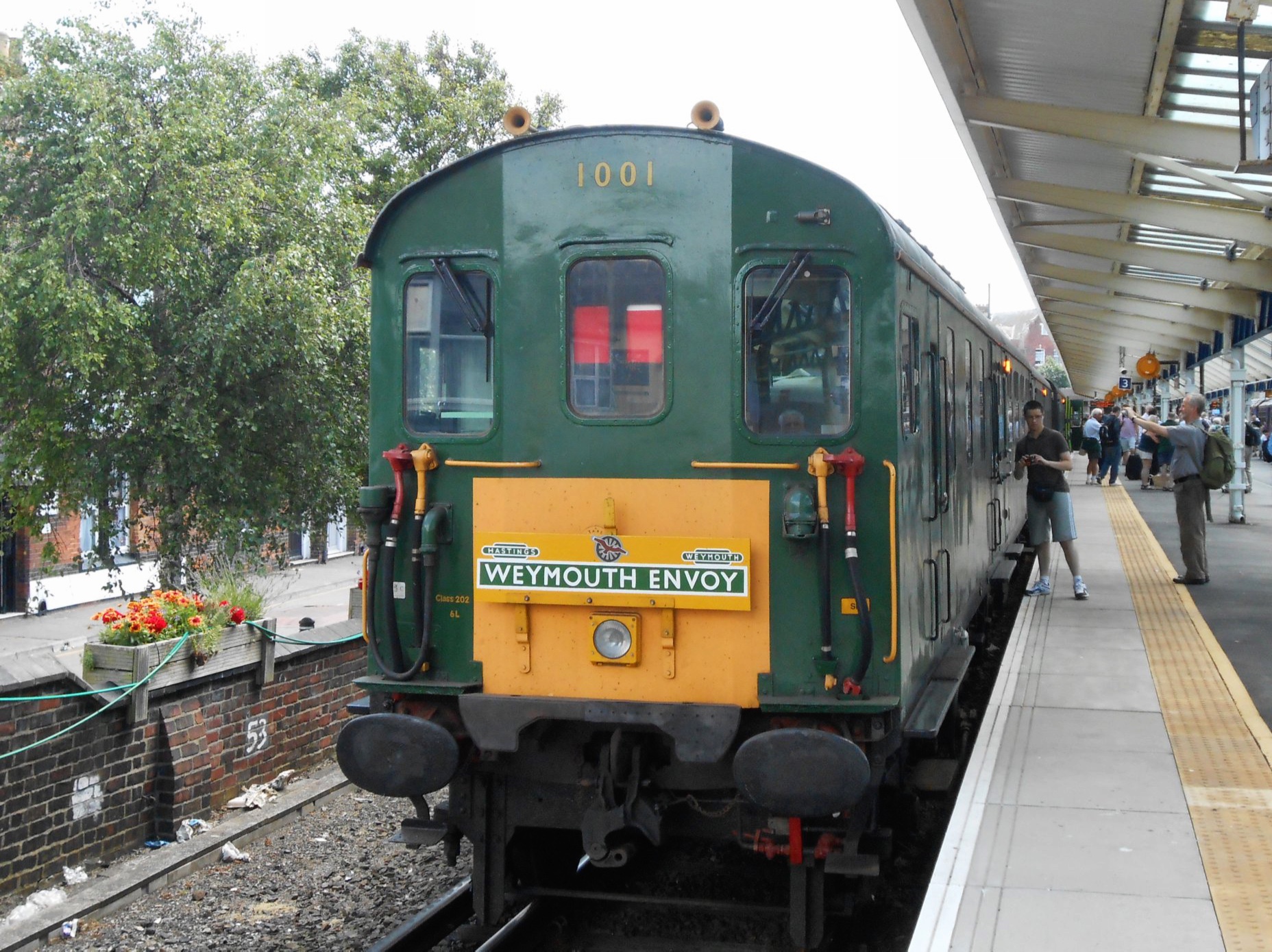
Hastings Diesel Limited’s 57th public rail tour the “Weymouth Envoy” ran from Hastings to Weymouth via London Waterloo therefore running the entire length of the LSWR main line.
At Weymouth No. 1001 was shunted to Jersey Sidings and is seen here pulling forward on the return to Weymouth Railway Station to pick up passengers passing Great Western Railway Class 150 No. 150927 – 20/07/2012 (Image: John Chappell)Hastings Unit No. 1001 awaits 1632 departure working as 1Z31 Weymouth to Hastings – 20/07/2012 (Image: John Chappell)Back in July 2015, Colas Class 37 No. 37175 was again in charge of the Ultrasonic Test Unit, seen here at Dorchester West propelling to Weymouth – 16/07/2015
Thank you for stopping by. Your comments, corrections, contributions are most welcome. Be seeing you.
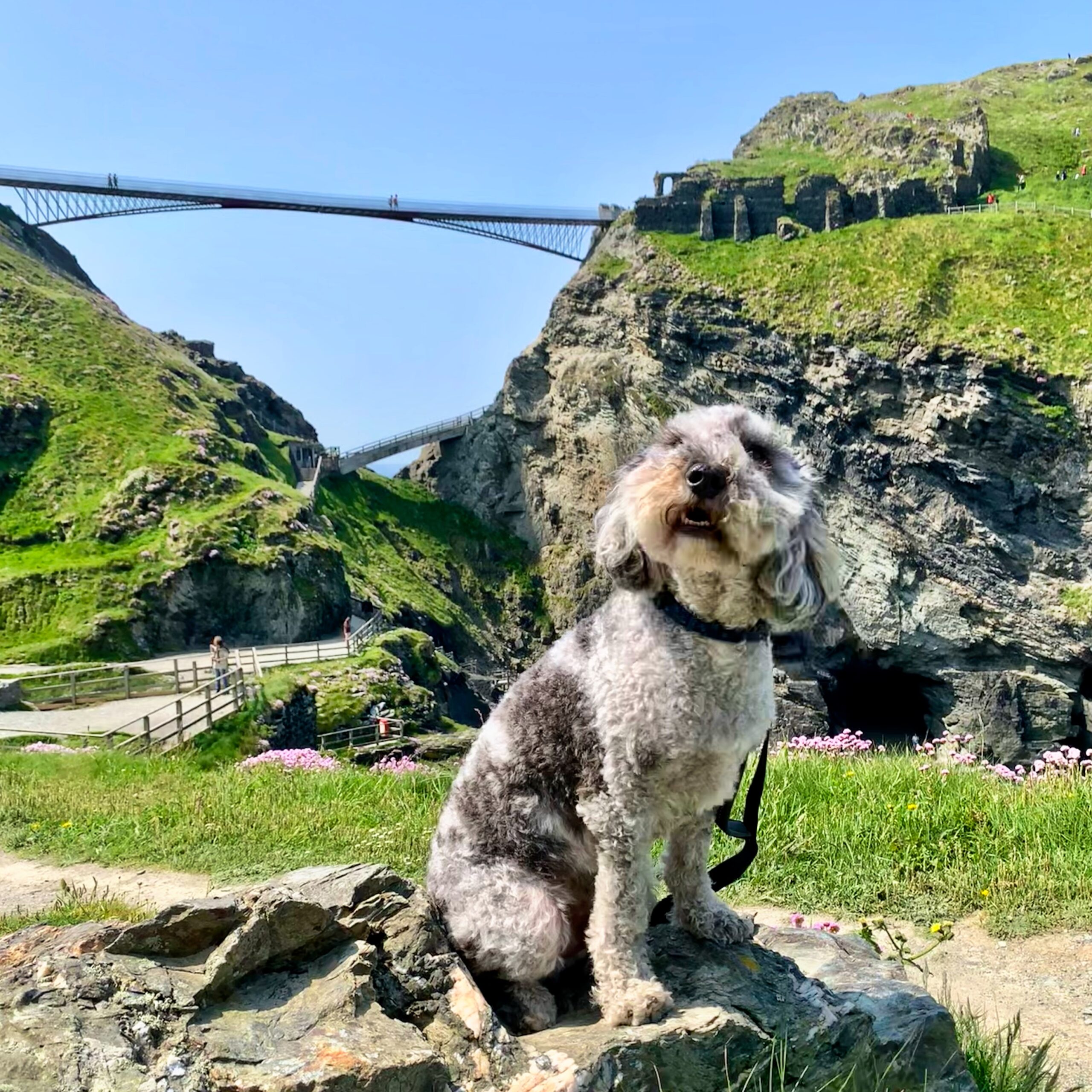
Did Yoshi discover King Arthur at Tintagel during our trip to Cornwall? “Gallos”(meaning ‘power’ in Cornish) created by sculptor Rubin Eynon is an 8ft bronze sculpture standing above cliffs on the Atlantic coast-side of the castle – 22/03/2023Yoshi with the new Tintagel Bridge in the background which reinstates the original route to the castle. In the Middle Ages, Tintagel’s residents walked from one side of the site to the other using a narrow land bridge as high as the clifftops. But the crossing disappeared between the 14th and 17th centuries, leaving the castle divided by a natural chasm. English Heritage launched a competition in 2015 to find a design for a new bridge. The winning concept was created by Ney & Partners Civil Engineers and William Matthews Associates. The project was completed in August 2019. The design sees two cantilevers reach out and meet, not quite touching, with a 40mm gap in the middle. The gap represents the transition from the mainland to the island, present to past. The bridge is paved with Cornish Delabole slate, with stainless steel balustrades fitted along its length. The balustrades have been designed to be so fine that, when viewed from a distance, they disappear against the sky – 22/03/2023
As mentioned in our last blog, we recently spent a few days in Cornwall. This gave me the opportunity to see some of the remaining semaphore signals on the Great Western mainline and also GWR sleeper trains arriving and departing from Penzance. We stayed in Camelford for three nights before moving onto Penzance for a couple of days.
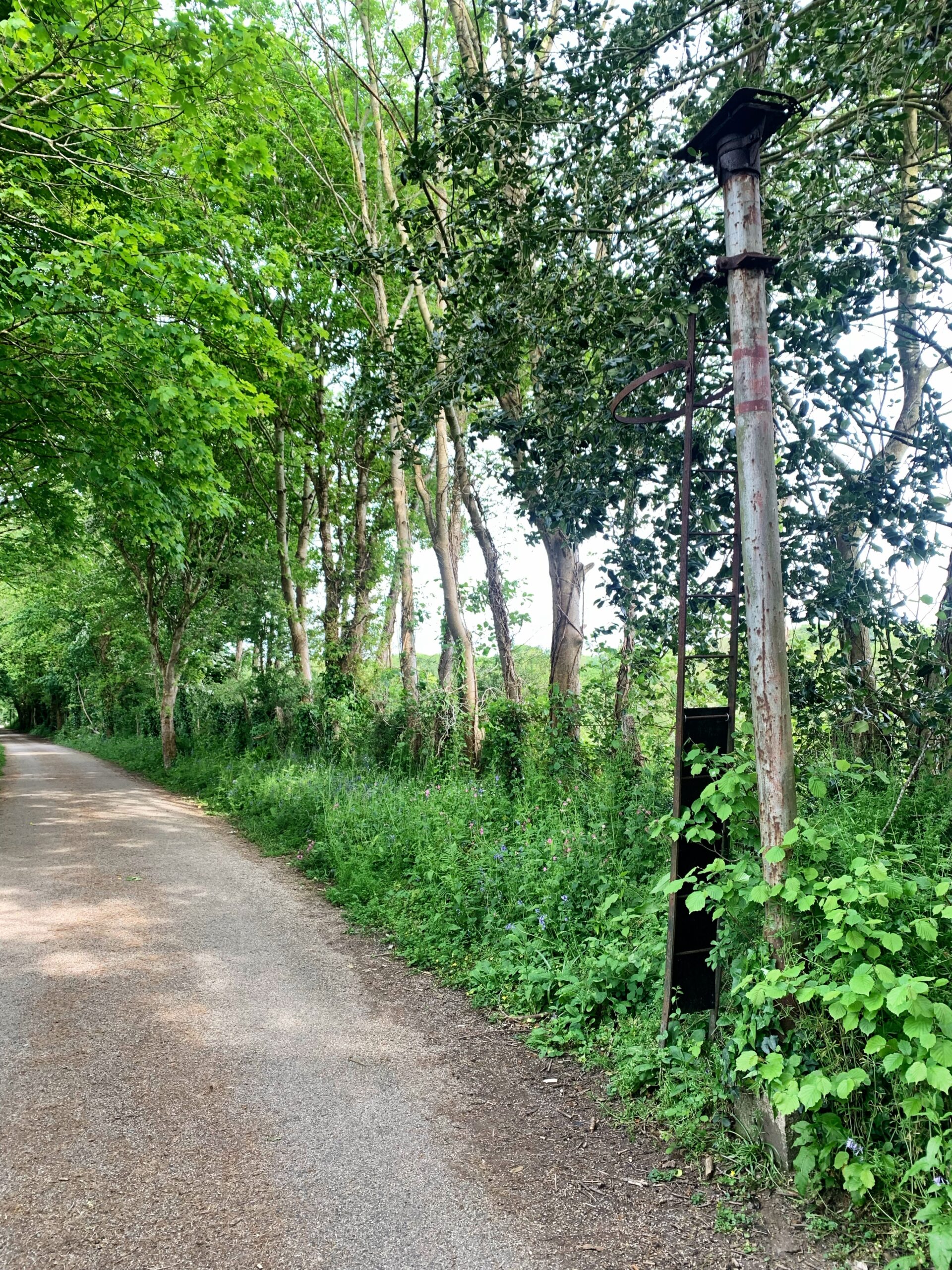
While we were in the Camelford area we visited Padstow and Bodmin and we were able to walk along some disused railway trackbed which now forms the Camel Trail; an 18 mile largely traffic free, surfaced and virtually level multi use trail. It provides access to the beautiful Cornish countryside between Wenfordbridge, Bodmin, Wadebridge and Padstow and is suitable for walkers, cyclists, horse-riders and wheel-chair users.
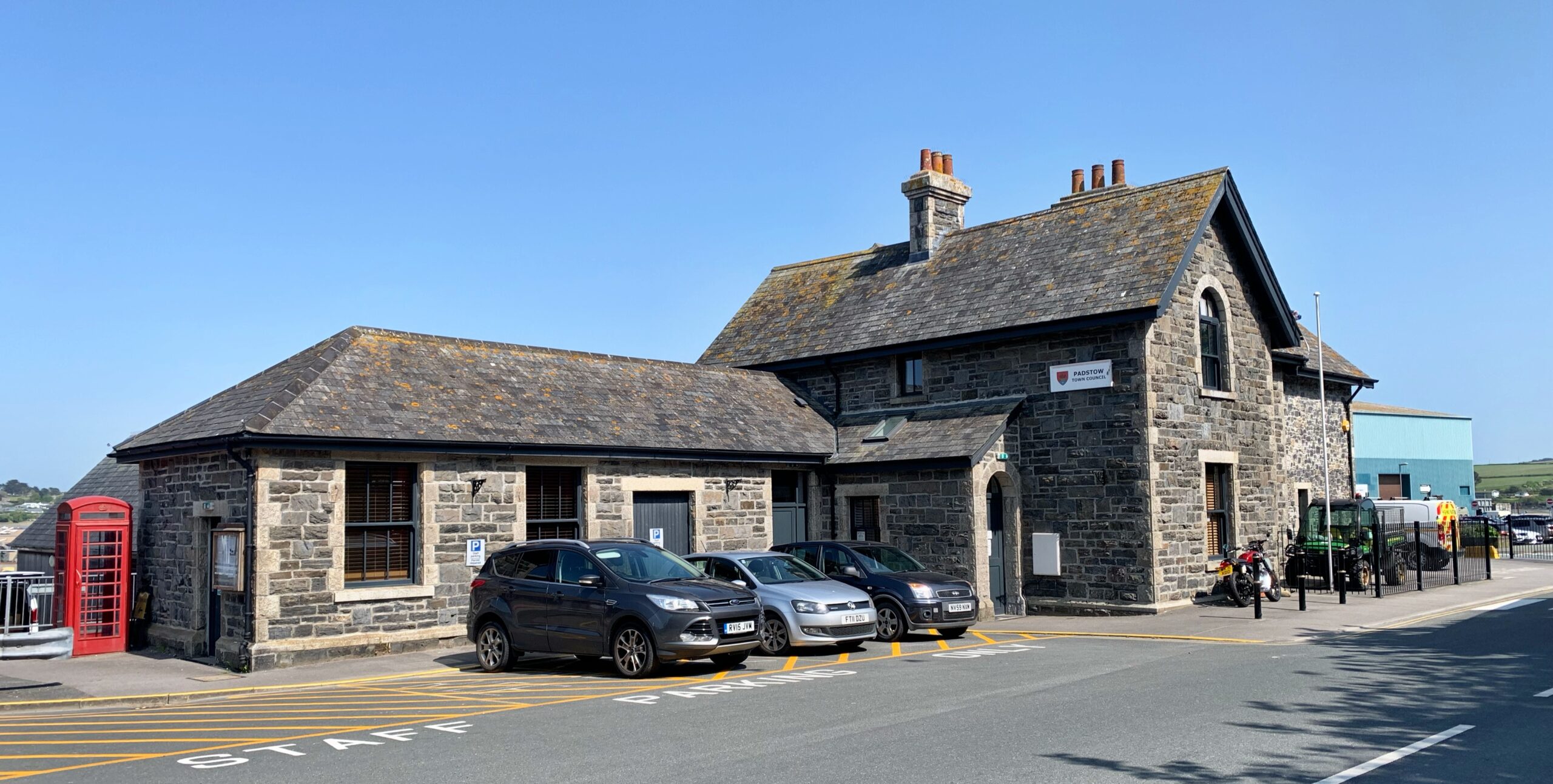
The former Padstow railway station, the western terminus of the North Cornwall Railway. It was opened in 1899 by the London and South Western Railway and closed in 1967 following the Beeching report. The building currently houses the offices of Padstow Town Council – 22/05/2023
We walked from Padstow towards Wadebridge and from Bodmin, we also walked in the direction of Wadebridge as the trail follows the paths of two former railway lines; a section of the North Cornwall Railway between Padstow and Wadebridge and most of the Bodmin and Wadebridge Railway from Wadebridge to Wenford Bridge, along with a short branch from that line to Bodmin.
The Bodmin and Wadebridge Railway was originally built at a cost of £35,000 following a study commissioned in 1831 by local landowner Sir William Molesworth of Pencarrow. The line was intended to carry sand from the Camel estuary to inland farms for use as fertiliser. In the 1840’s, England’s railway network expanded towards Bodmin. The London and South Western Railway (LSWR) purchased the Bodmin and Wadebridge Railway in 1846 and intended to connect it to the rest of the system by a new line through North Cornwall. The line from Halwill reached Wadebridge in June 1895 and then Padstow in March 1899. Later the railway was used to ship slate and china clay from inland quarries to ships in Padstow and also transport fish landed in Padstow inland to London and other cities. When both quarrying and fishing died off, the railway lost most of its traffic. The last passenger train ran in 1967 and freight ceased in 1983, when a need to invest in new track forced the line to close.
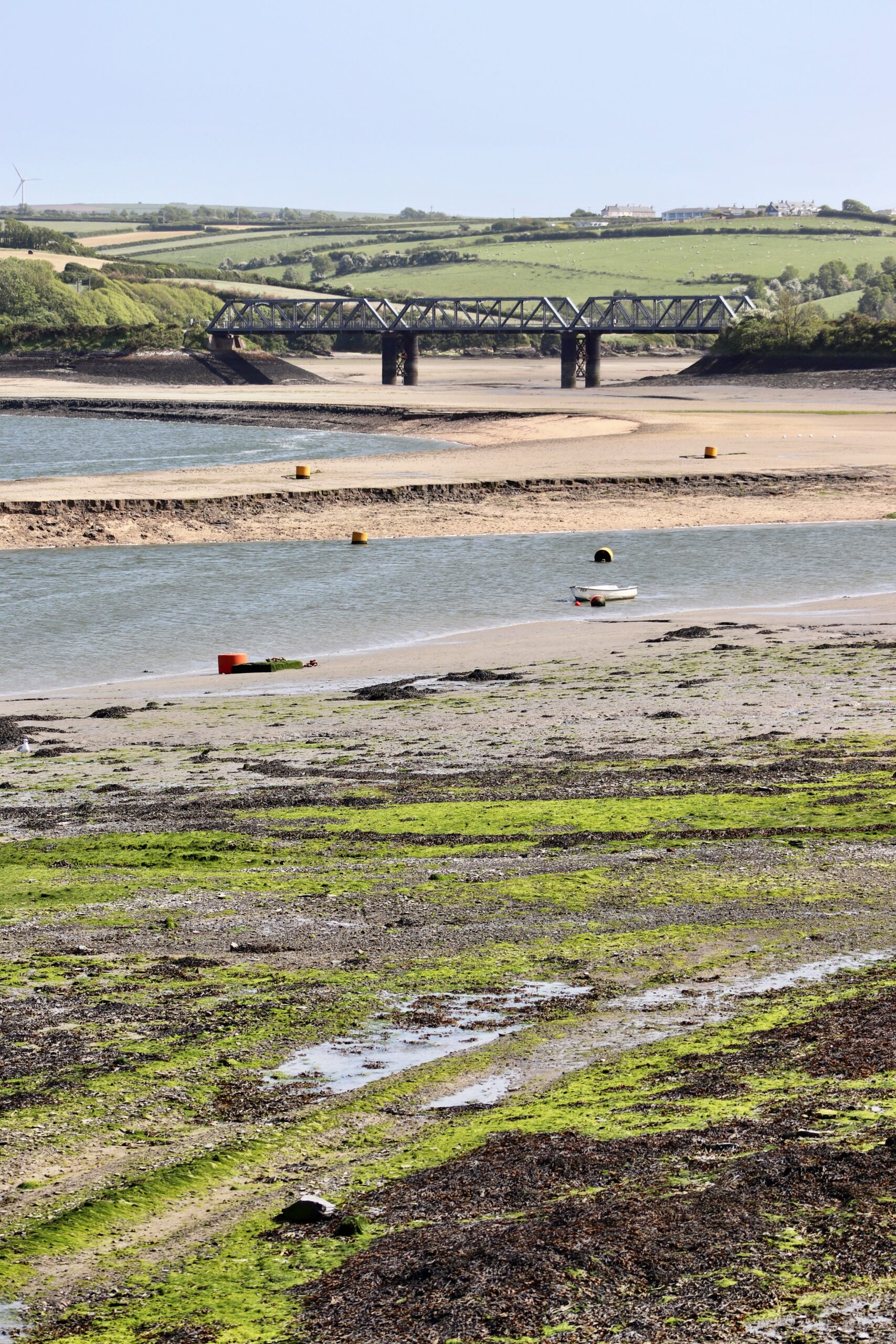
On leaving Padstow, the Camel Trail crosses Petherick Creek on this bridge which formerly carried the North Cornwall Railway – 22/05/2023Petherick Creek bridge. Construction began in December 1896 with the erection of temporary staging over Little Petherick Creek, a mile south-east of Padstow. This facilitated construction of a bridge comprising three spans of 133 feet each, curving to the north on a radius of about 20 chains. It was built by contractors from Derby, Messrs Eastwood Swingler & Co. The spans are formed of two Pratt trusses, together with nine cross girders and three wind braces, giving a deck width of 16 feet 3 inches. Two rail bearers are also provided. The ironwork was brought by rail to Wadebridge before being carried on barges to site down the River Camel. Each truss weighs 350 tons. Heading towards Padstow, the structure is approached on a 230-yard embankment, protected by revetments. This incorporates a brick and slate arched bridge at its east end.The main bridge’s abutments are formed in brick and concrete. Supporting the spans are two piers incorporating pairs of cast iron cylinders, 8 feet in diameter and at 18 feet 3 inch centres. These are braced at the top. Rail level is approximately 85 feet above bedrock, 30 feet above the river bed and 16 feet above high water level. At the top of the cylinders are granite bedstones and cast iron bearings.The contractor experienced considerable difficulty assembling the piers. Each 200-ton cylinder was loaded with a 50 ton weight, causing it to sink through the river silt. With bedrock found, the mud was then excavated using grabs, sometimes taking 48 hours to progress just one yard down. When the water had been pumped out and the interior cleaned, they were then filled with concrete – 22/05/2023
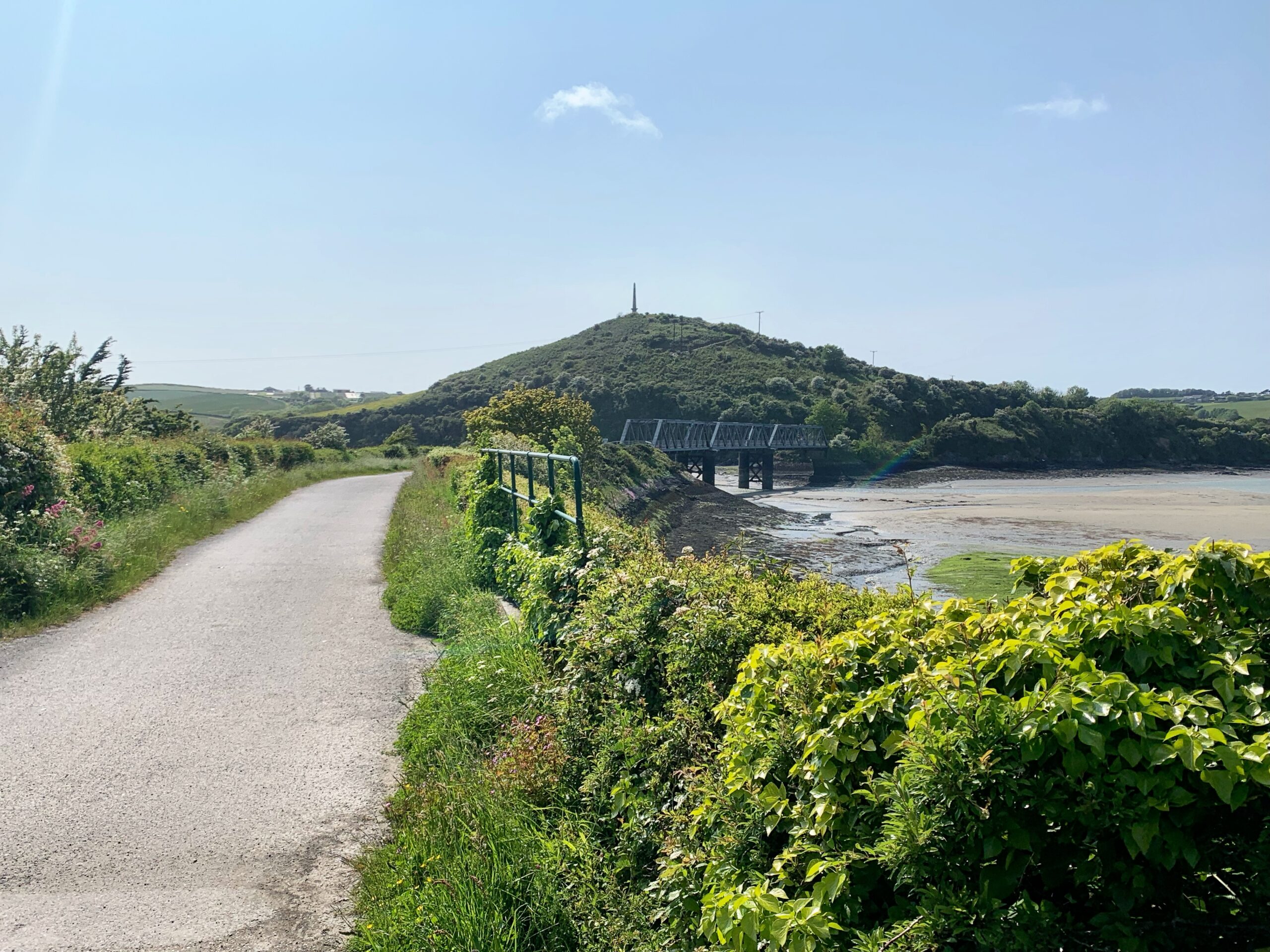
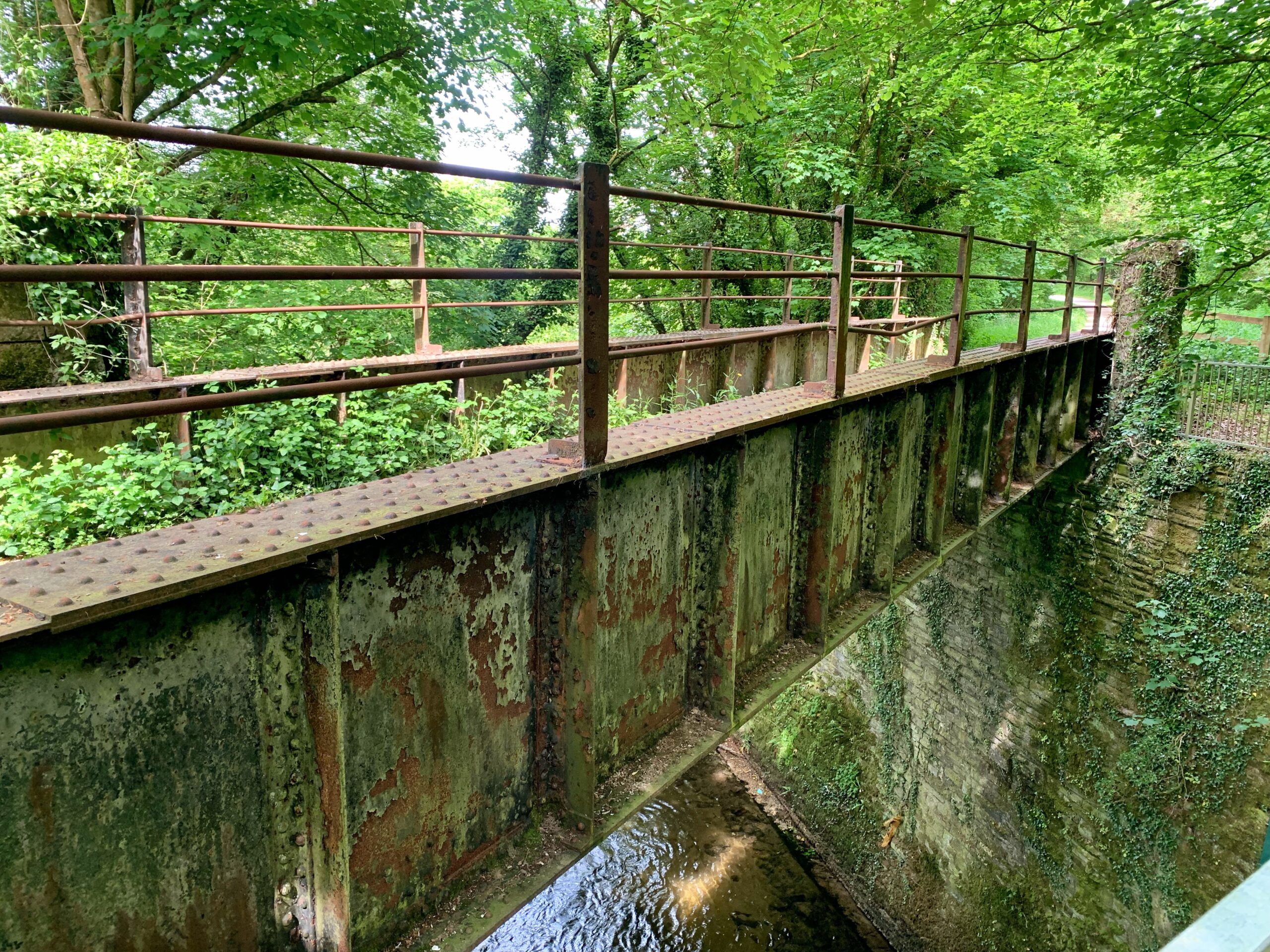
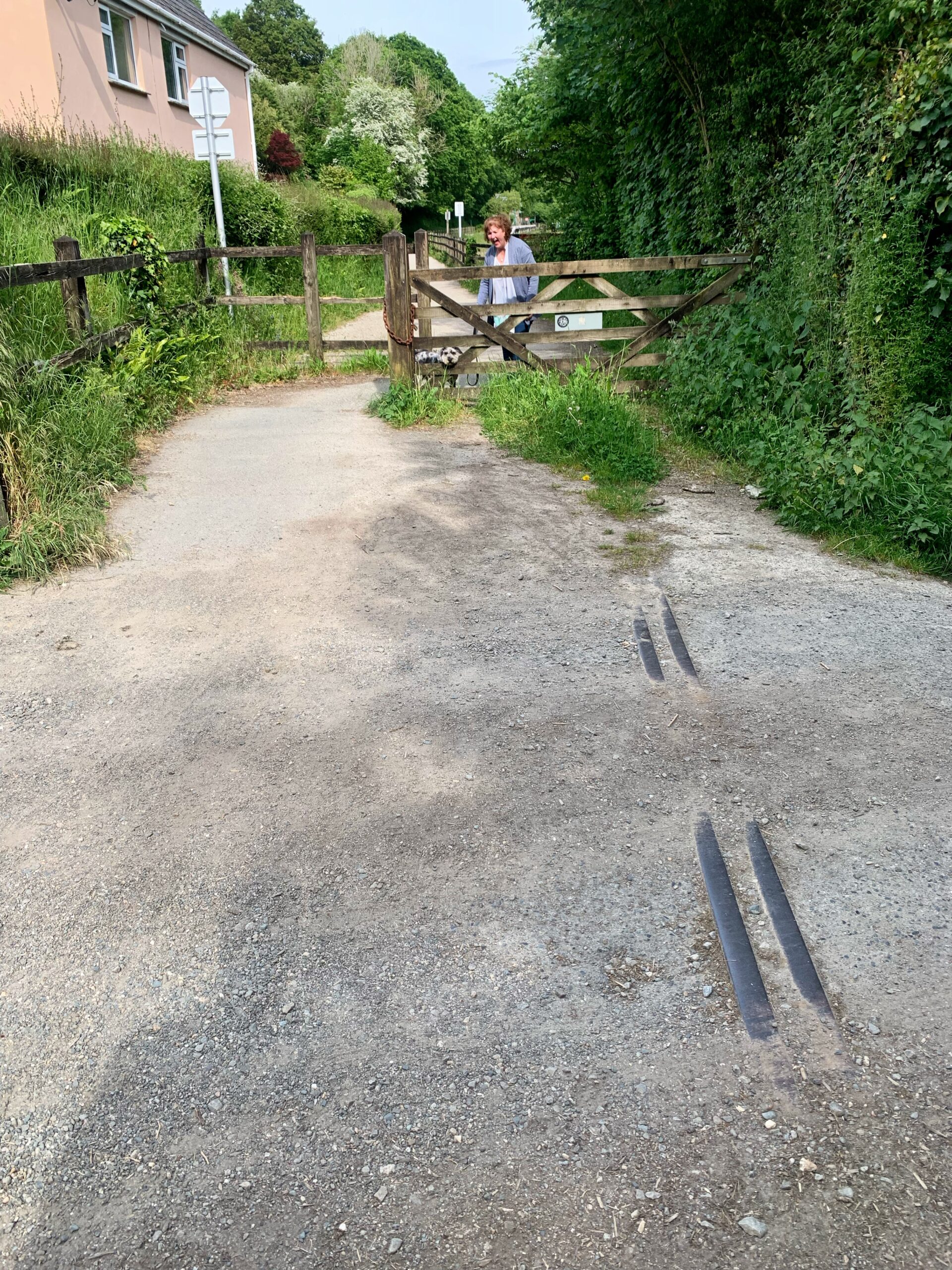
Listen to the wind as Yoshi crosses Petherick Creek bridge in a rare portrait ratio video – 22/05/2023Looking back at Petherick Creek – 22/05/2023The Camel Trail near Padstow -22/05/2023St Issey on the Camel Trail – 22/05/2023Lobster pots on the River Camel alongside the disused railway line – 22/05/2023Road bridge over the Camel Trail at Bodmin – 23/05/2023Dunmere on the Camel Trail – 23/05/2023Dunmere Halt on the Camel Trail – 23/05/2023Dunmere Halt on the Camel Trail – 23/05/2023Dunmere on the Camel Trail – 23/05/2023Nanstallon Halt on the Camel Trail – 23/05/2023Remains of railway track at Nanstallon on the Camel Trail – 23/05/2023Remains of signalling at Nanstallon on the Camel Trail – 23/05/2023The branch to Camelford on the Camel Trail – 23/05/2023
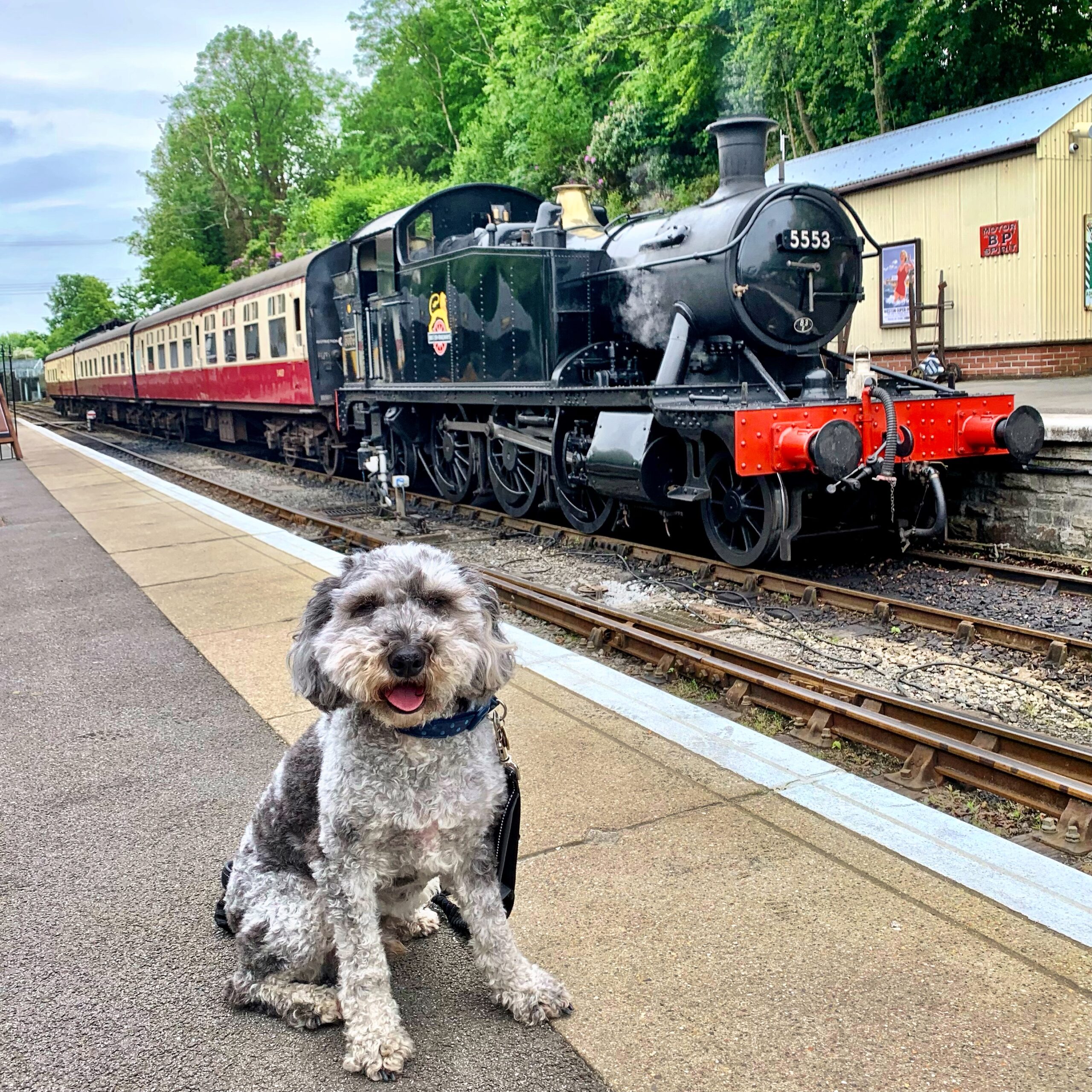
While Yoshi’s mama was visiting Bodmin Jail (now a tourist attraction, Caroline wasn’t spending time at the invitation of the local constabulary), the boy and I also popped in briefly on the Bodmin & Wenford Railway. On the day of our visit visiting steam loco GWR Small Prairie Class 4500 Churchwood 2-6-2T tank engine No. 5553 was in operation, but we also saw several heritage diesel locomotives on site. The Bodmin Railway Preservation Society (BRPS) was formed in 1984, and they in turn formed the Bodmin Railway plc in order to raise funds to purchase the line from Bodmin Parkway to Boscarne Junction, via Bodmin General. They were successful, and North Cornwall District Council (now part of Cornwall Council) secured the land from British Rail.
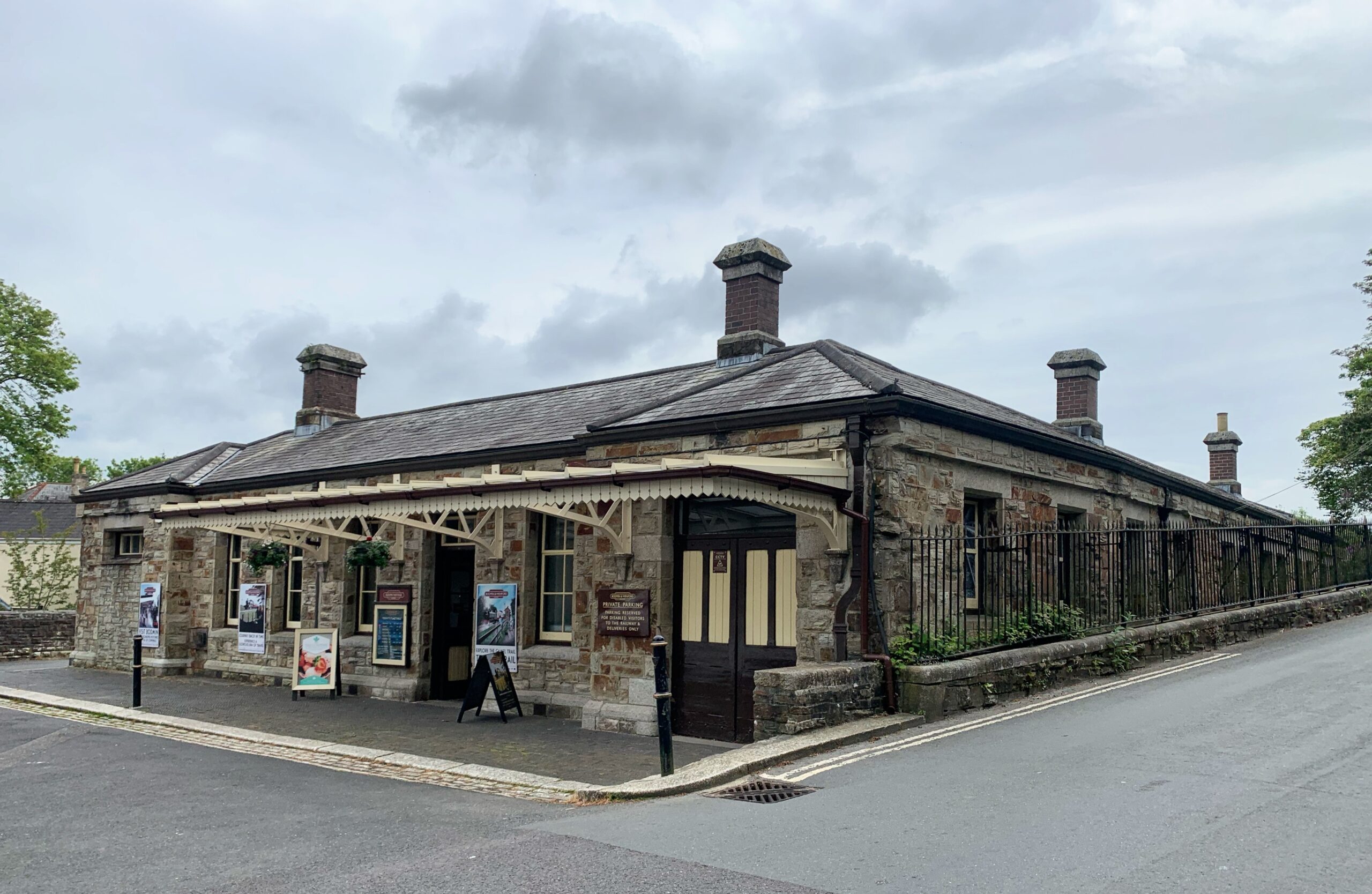
Bodmin General railway station was constructed by the Great Western Railway and opened in 1887, when the 3½-mile branch line from Bodmin Road to Bodmin was opened. The station is beautifully restored to reflect the 1950’s and is resplendent in the British Railways (Western Region) colour scheme of the period. It currently houses the headquarters of the Bodmin and Wenford Railway – 23/05/2023Yoshi at Bodmin General with GWR Small Prairie No. 5553. The locomotive was built at Swindon in 1928 and withdrawn in November 1961 when she was sold for scrap to Woodham Brothers in Barry. Having spent nearly 28 years in the scrapyard, she was the last locomotive to leave Barry in January 1990 where she was transported to the Dean Forest Railway – 23/05/2023
No. 5553 arrives at Bodmin General. Feel free to bark along – 25/03/2023
Services between Bodmin Parkway and Bodmin General were restored in 1990, and the line was extended back to Boscarne Junction six years later, in 1996.
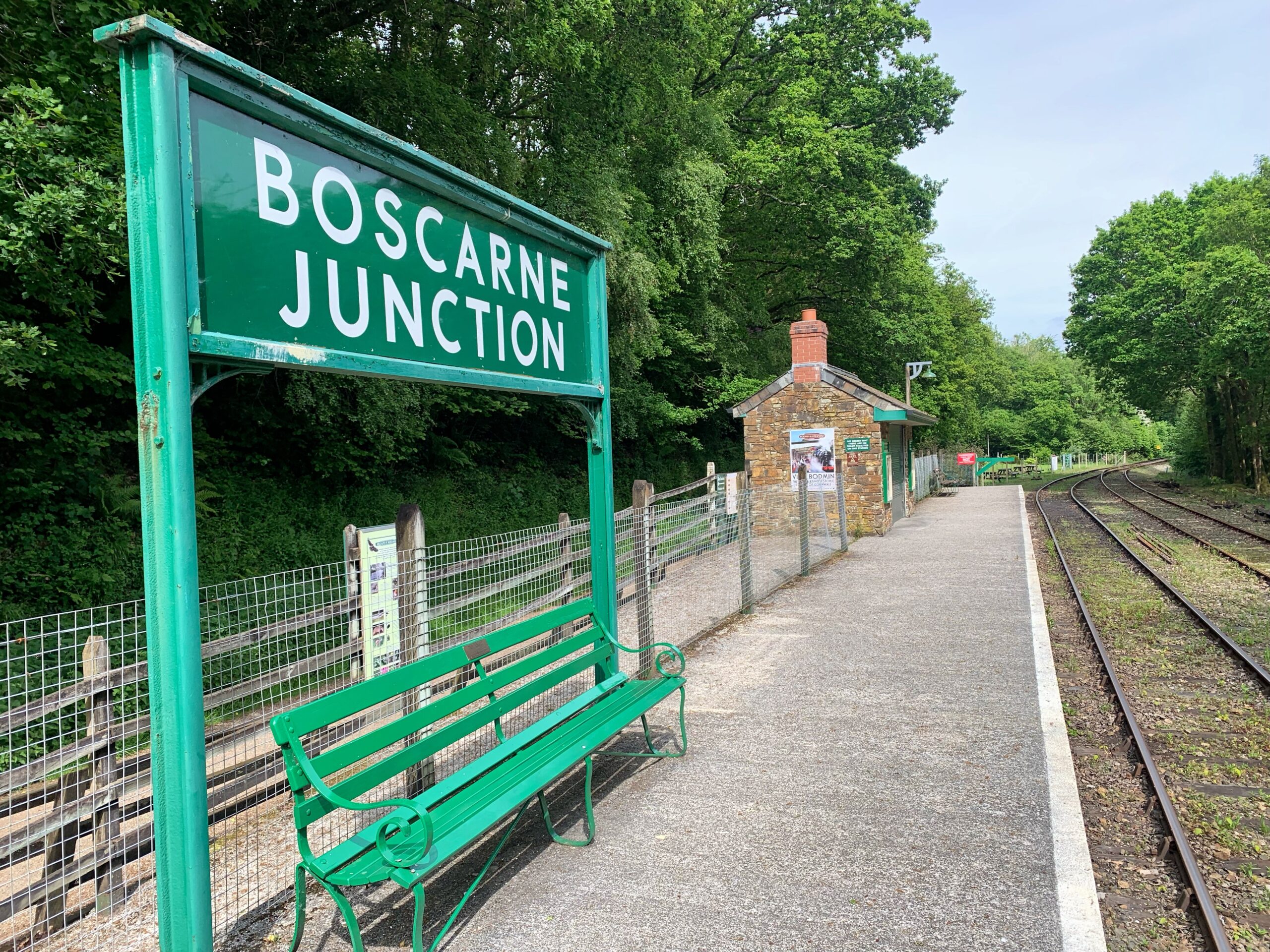
Boscarne Junction station on the Bodmin and Wenford railway. The Camel Trail passes this location – 23/05/2023
Since then the Bodmin & Wenford Railway has operated trains – principally steam, but with some heritage diesel services – over the 6½ miles between Bodmin Parkway and Boscarne Junction via Bodmin General.
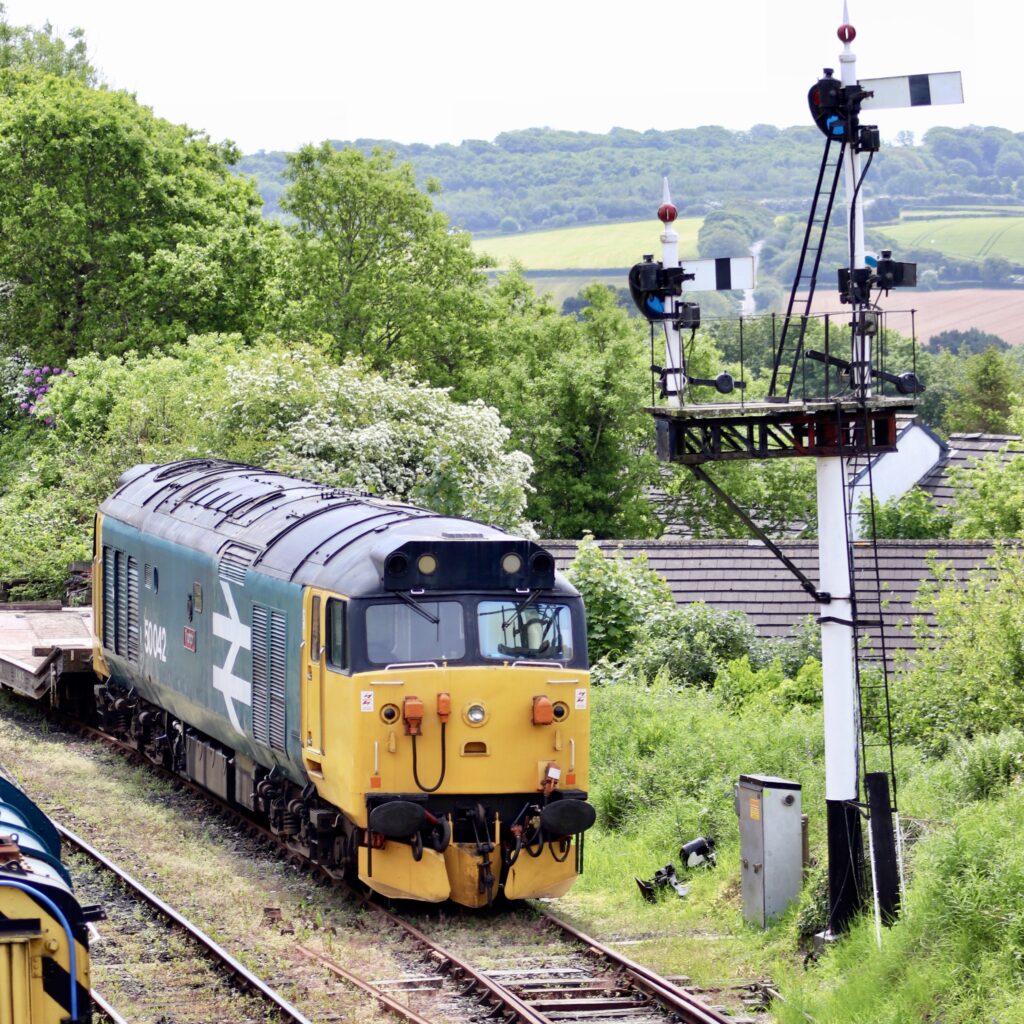
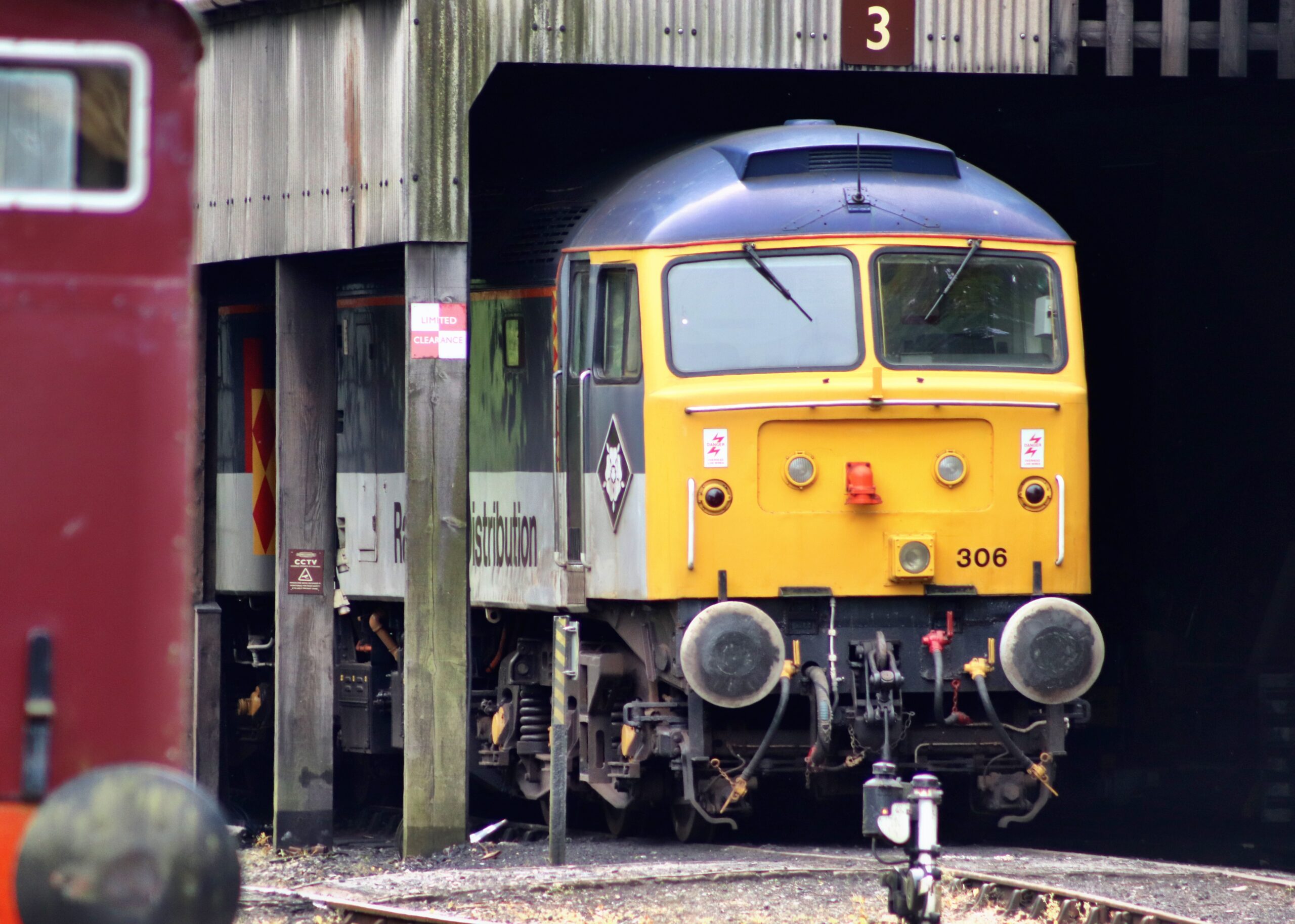
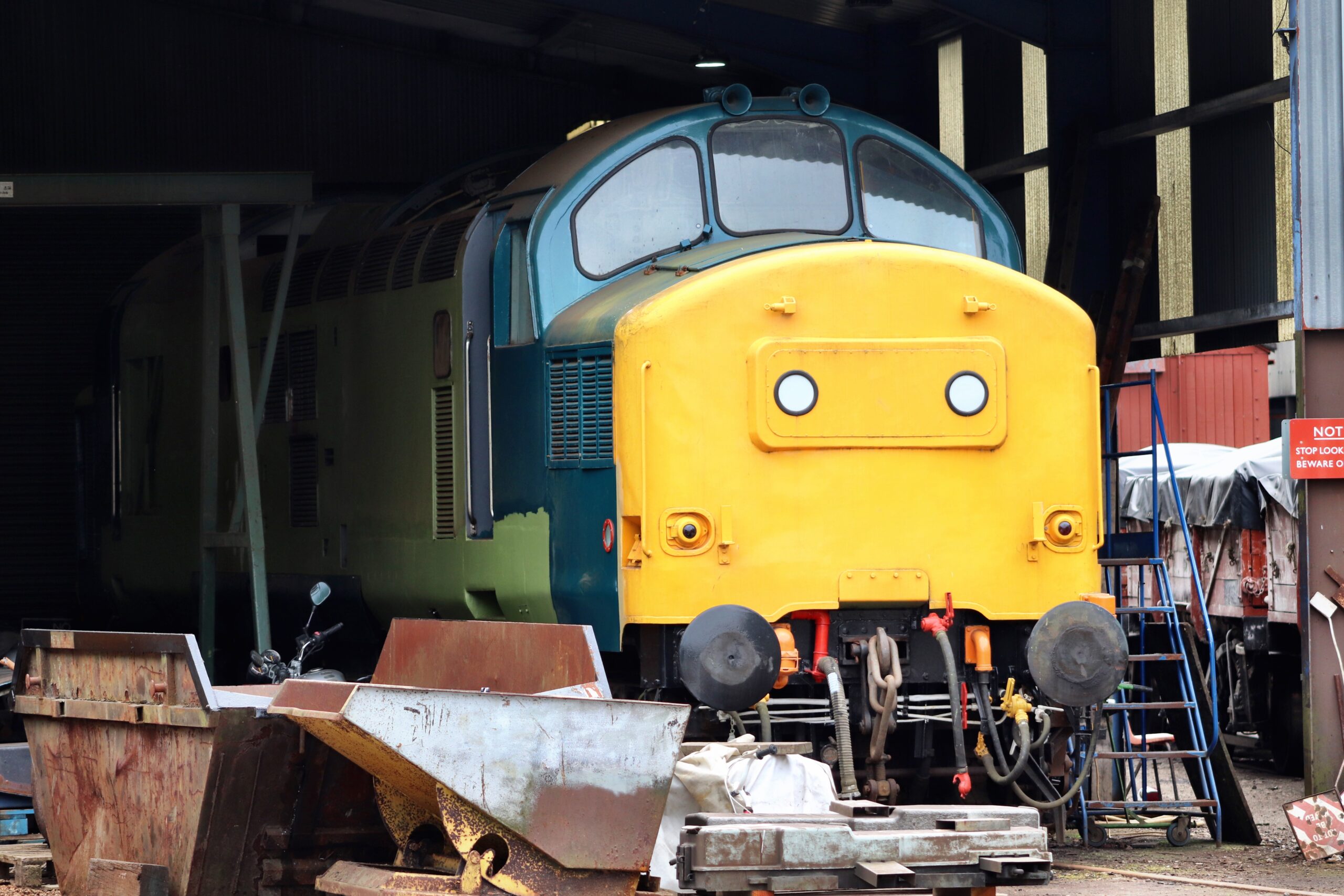
Class 50 No. 50042 ‘Triumph’ at Bodmin. Withdrawn in 1990 the Bodmin Mainline Diesel Group purchased the loco in 1991 and restored her to pristine condition in 1993 – 23/05/2023Class 47 No. 47306 ‘The Sapper’ at Bodmin. Built by Brush at their Falcon Works in Loughborough in 1963 the locomotive arrived on the Bodmin and Wenford Railway in 2007 straight from St Blazey where she had been placed in store following withdrawal from mainline use – 23/05/2023Class 37 No. 37142 built in 1963 at English Electric’s Vulcan Foundry is currently undergoing an overhaul at Bodmin. In her mainline days she worked China Clay trains across Cornwall so is very much at home on the Bodmin and Wenford Railway – 23/05/2023
Travel back to April 1995 when Robert Stephenson & Hawthorn Works 0-6-0T locomotive No. 7597 was in operation on the Bodmin and Wenford Railway. The locomotive was built in 1959 and spent her industrial life at the Rye House Power Station on the Lea Valley in Essex. She is currently being overhauled at The Lincolnshire Wolds Railway.
We also had time to take photographs of GWR Castle HST Sets and a passing freight at Bodmin Parkway railway station which we visited before reuniting with Caroline. The signal box at Bodmin Parkway is now a café and I enjoyed a latte in between photographing passing trains.
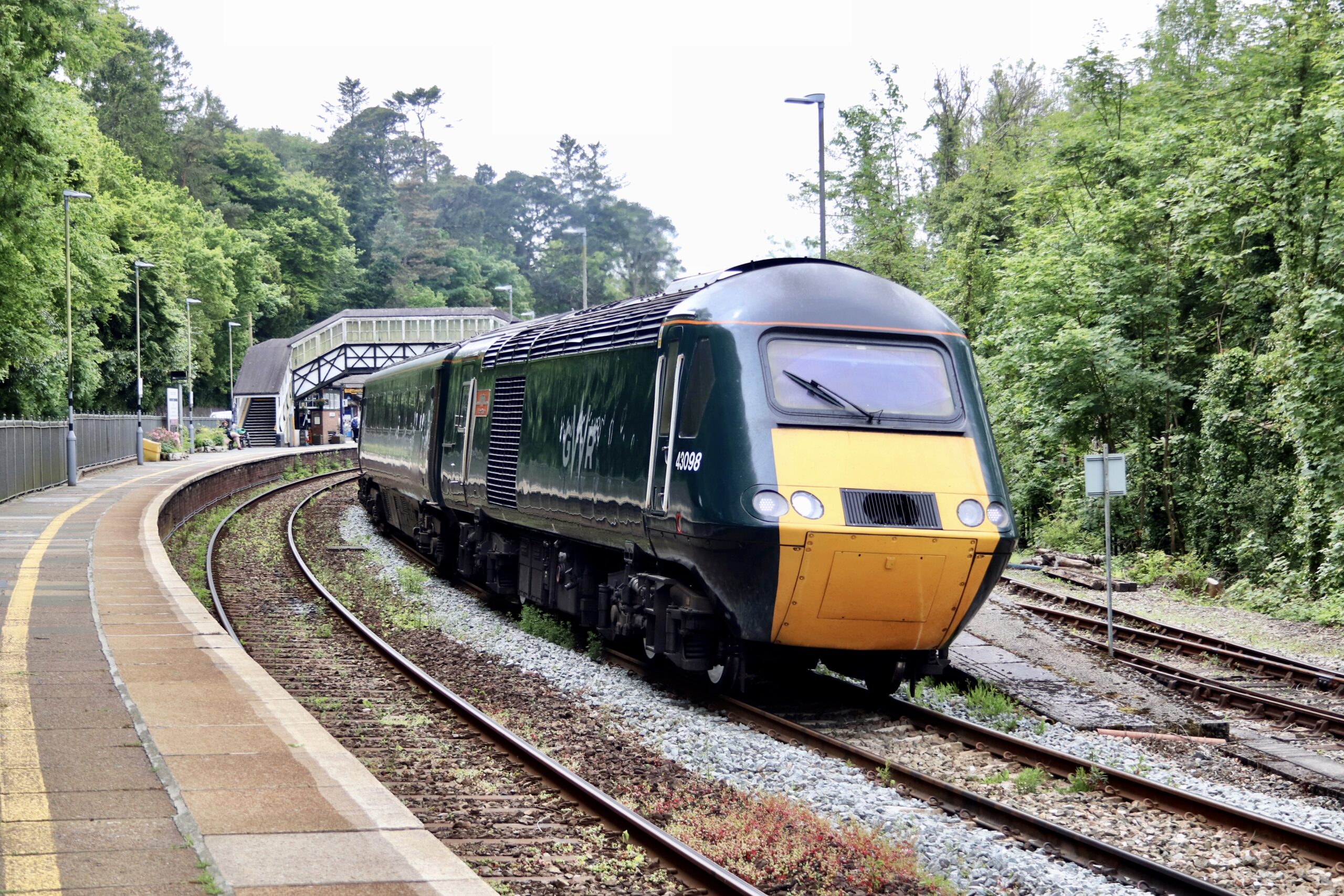
Class 43 No. 43098 ‘Walton Castle’ departs Bodmin Parkway working 2U24 1250 Penzance to Cardiff Central – 23/05/2023GWR IEP No. 802107 departs Bodmin Parkway with 1A88 1215 Penzance to London Paddington passing DB Class 66 No. 66165 6C99 1103 Exeter Riverside N.Y. to St. Blazey SS – 23/05/2023
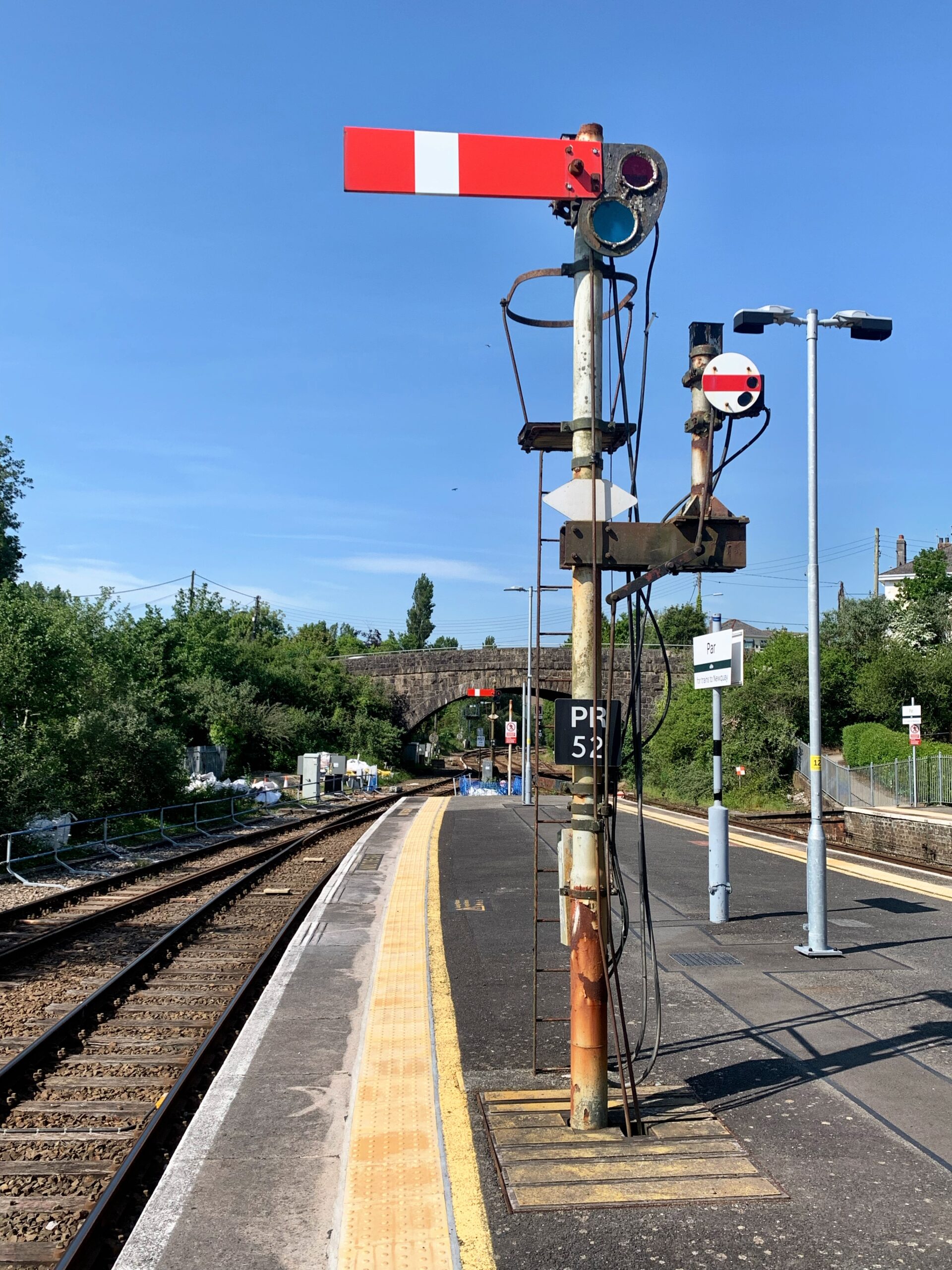
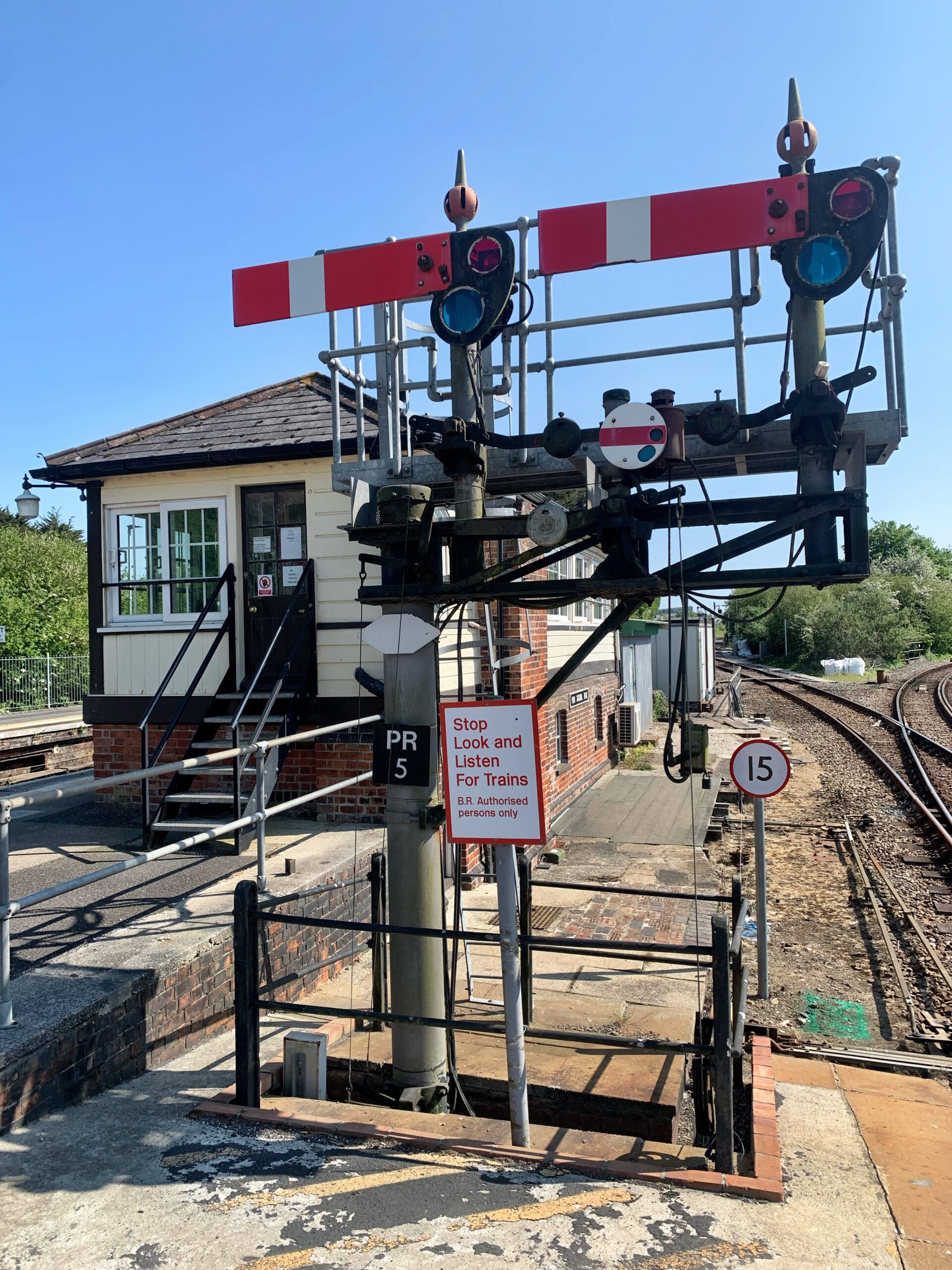
The next day we drove to Penzance via a couple of stations which still have their semaphore signalling intact. Cornwall has long been one of the country’s most remarkable outposts of lower quadrant semaphore signalling, but time is fast running out for much of its marvellous mechanical infrastructure, with a major re-signalling project due to be completed in Autumn 2023.
The present Exeter signalling centre is to become the centralised control point for the West of England and will become a Railway Operations Centre in all but name. The section from Lostwithiel to Truro will be controlled from a new work station incorporating four or five VDU screens, sited in the Exeter centre. It will mean the closure of Lostwithiel, Par and Truro signal boxes but the same track layouts will be retained, more or less, except for some minor rationalisation. Improving the capacity on the Newquay branch is part of the plan as is the modernisation of two level-crossings on each of the Looe and Gunnislake branches.
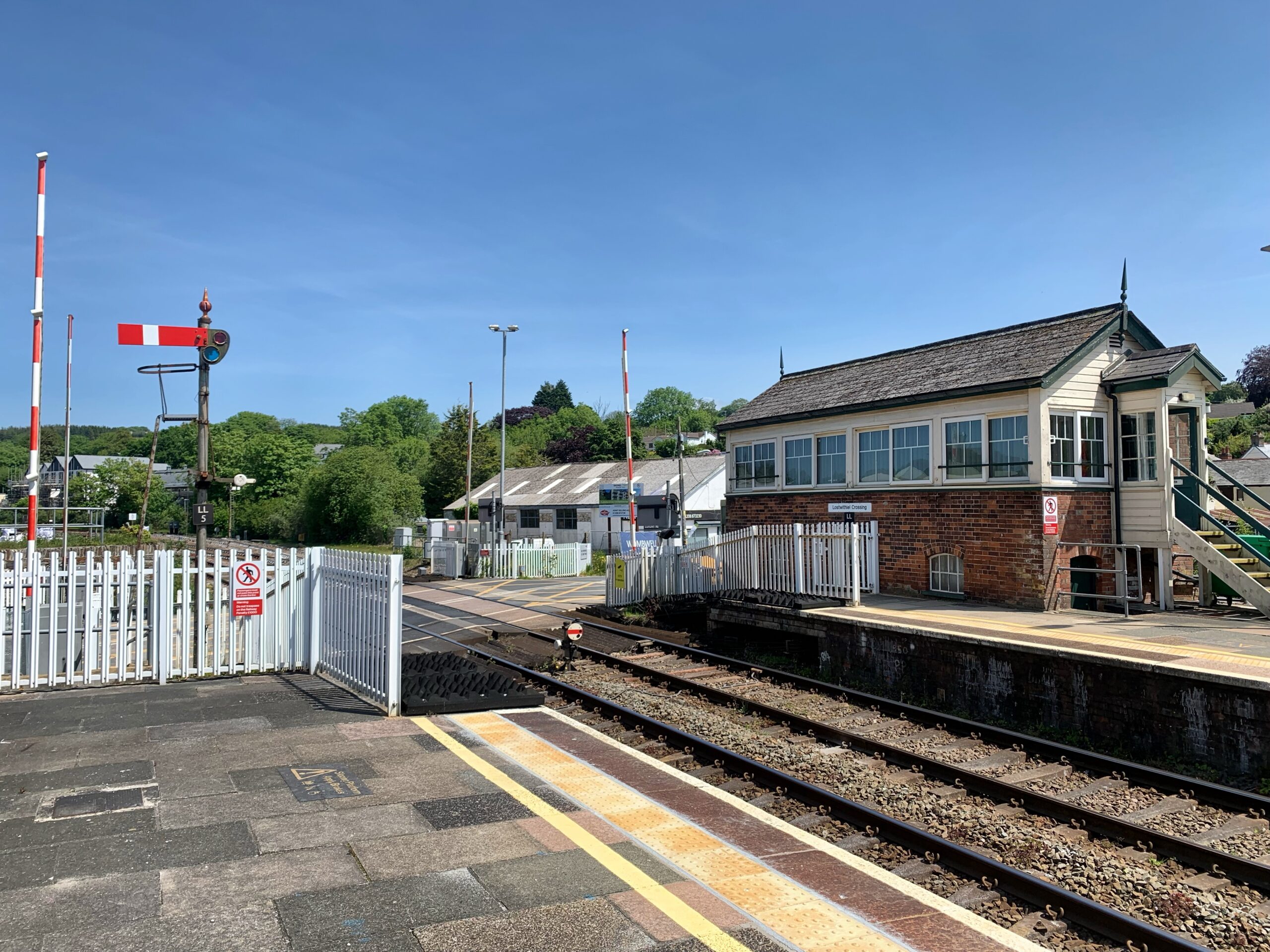
At Lostwithiel, the junction for the Fowey freight line, the two holding loops for the china clay trains, and the level crossing at the eastern end of the station, will all be controlled from Exeter. The crossing will become CCTV-controlled, with the monitoring screens sited at the Exeter work station. It is anticipated that the downtime of the barriers, a cause of local complaint, can be reduced with this arrangement.
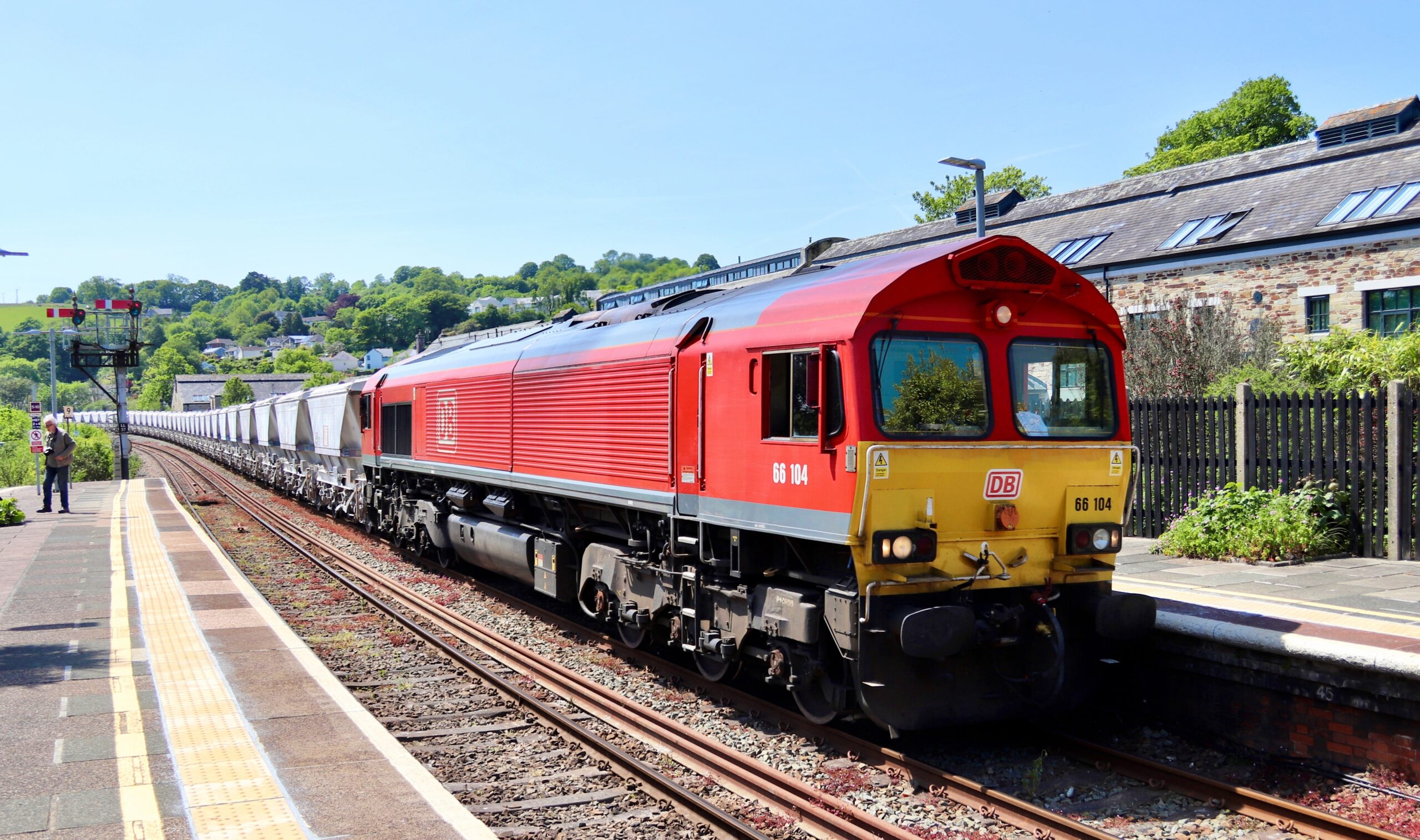
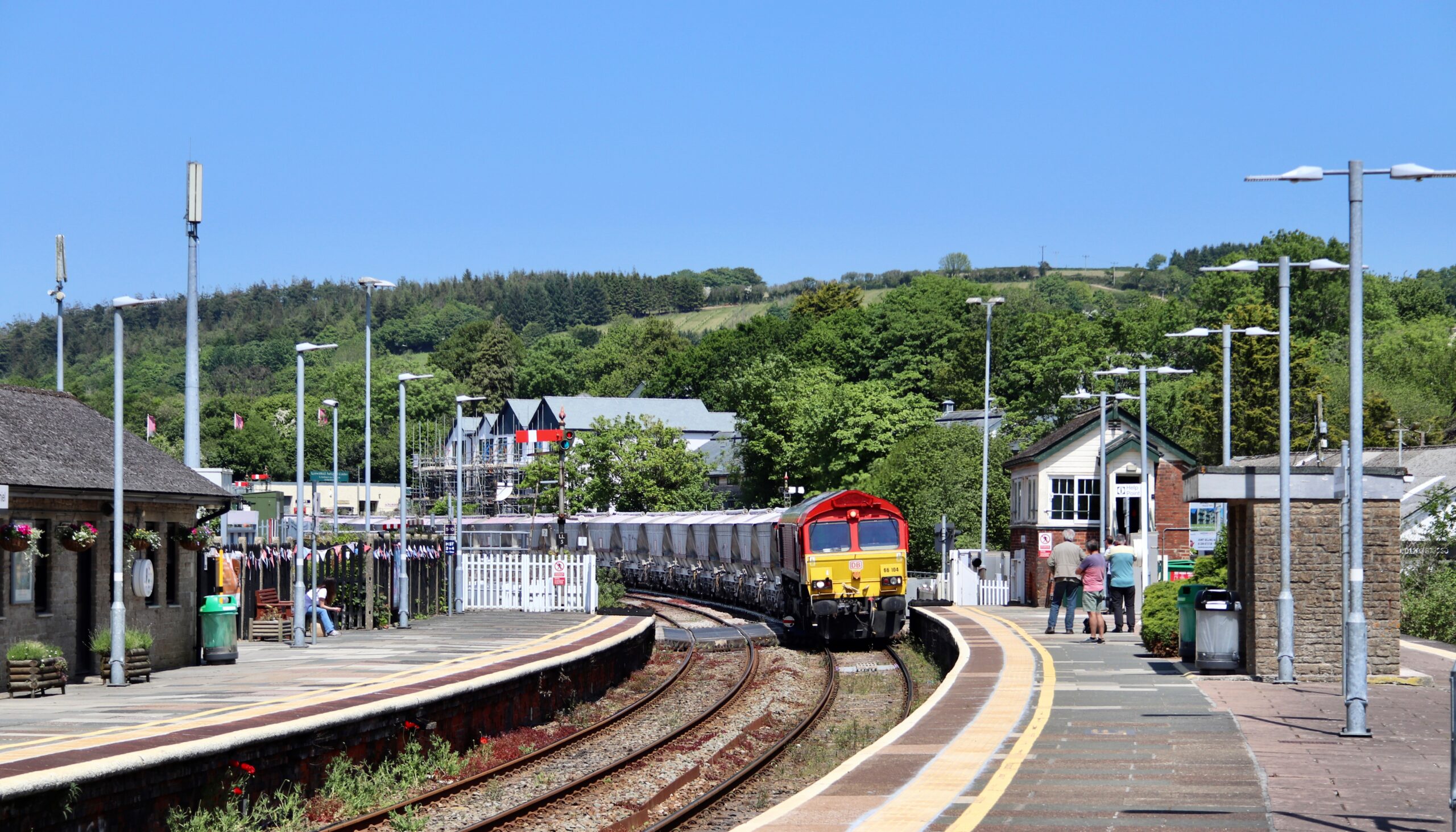
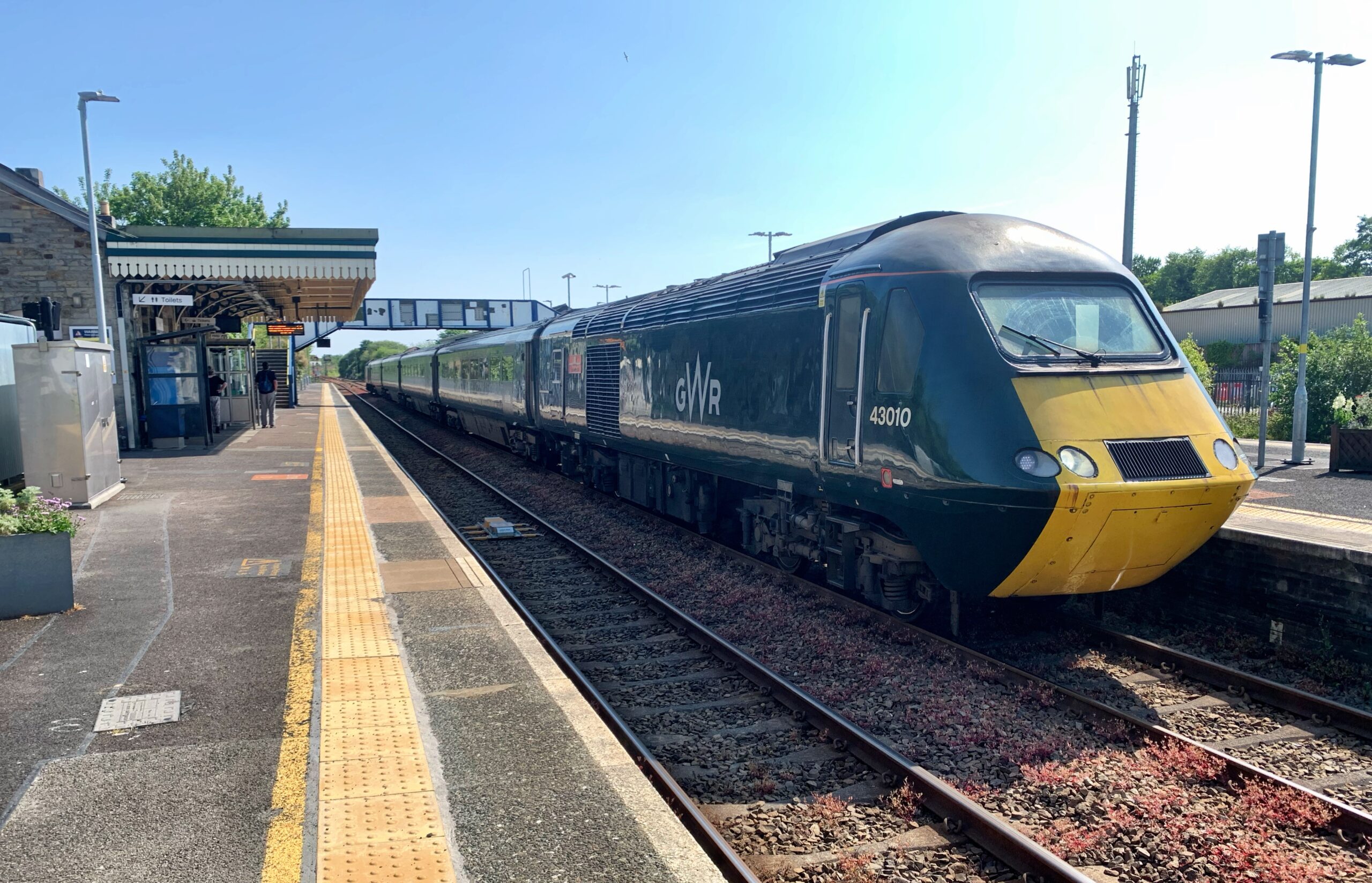
Class 43 No. 43010 ‘Lydford Castle’ at the rear of the late running 2C69 0900 Cardiff Central to Penzance Castle HST service – 24/05/2023Class 66 No. 66104 heads up 6G09 1302 Goonbarrow Junction EWS to Fowey Dock Carne Point china clay working at Lostwithiel. The locomotive runs around the train in Lostwithiel Up Goods Loop before heading back through the station to Fowey – 24/05/2023Having run round its wagons, Class 66 No. 66104 hauls 6G09 1302 Goonbarrow Junction EWS to Fowey Dock Carne Point china clay back through Lostwithiel – 24/05/2023Lostwithiel signal box and crossing – 24/05/2023
At Par, the junction for the Newquay branch, the signal box will be abolished and the entire layout, including the main line connections to enable through running to the branch, will be put on the Exeter work station. The intermediate block sections at St Austell, Burngullow and Probus will also transfer to Exeter. Par station will be equipped with a new footbridge and lifts to comply with the disabled access requirements.
Class 43 No. 43010 ‘Lydford Castle’ pauses at Par with 2P20 1515 Penzance to Plymouth service – 24/05/2023Semaphore signals at Par – 24/05/2023Grade II listed signal box and semaphore signals at Par. The box opened in 1879 and is built to the first GWR standard design, it was set up to control the GWR’s mainline onwards to Penzance, together with the junction for the branch to Newquay – 24/05/2023
Par is one of two operational Cornish signal boxes – along with Lostwithiel – to enjoy a Grade II Listing, being one of only two surviving examples of a GWR-designed Type 2 box to survive in its original location, at the western end of platforms 2 and 3 on Par station.
As well as the main line, modifications will be made to some of the Cornish branch lines to increase operating flexibility and an improved train service. The most significant of these will be on the one from Par to Newquay, currently the Cinderella branch in the county with, broadly, a two-hour interval service. The intermediate signal box at Goonbarrow splits the section, after that the branch being ‘One Train Working’.
802006 ‘Harry Billinge MBE LdH’ at Newquay having arrived with the 1N68 0905 Plymouth to Newquay service – 23/05/2023
Only one operational platform exists at Newquay. A passing loop is to be provided at Goss Moor that will enable an hourly service to be introduced. The second platform at Newquay will be brought back into use thus enabling more through trains from beyond Par. The county’s ambition is to create a Mid Cornwall Metro to facilitate more train usage into the areas of greater employment. This will imply the restoration of full signalling throughout, which will be controlled from Exeter.
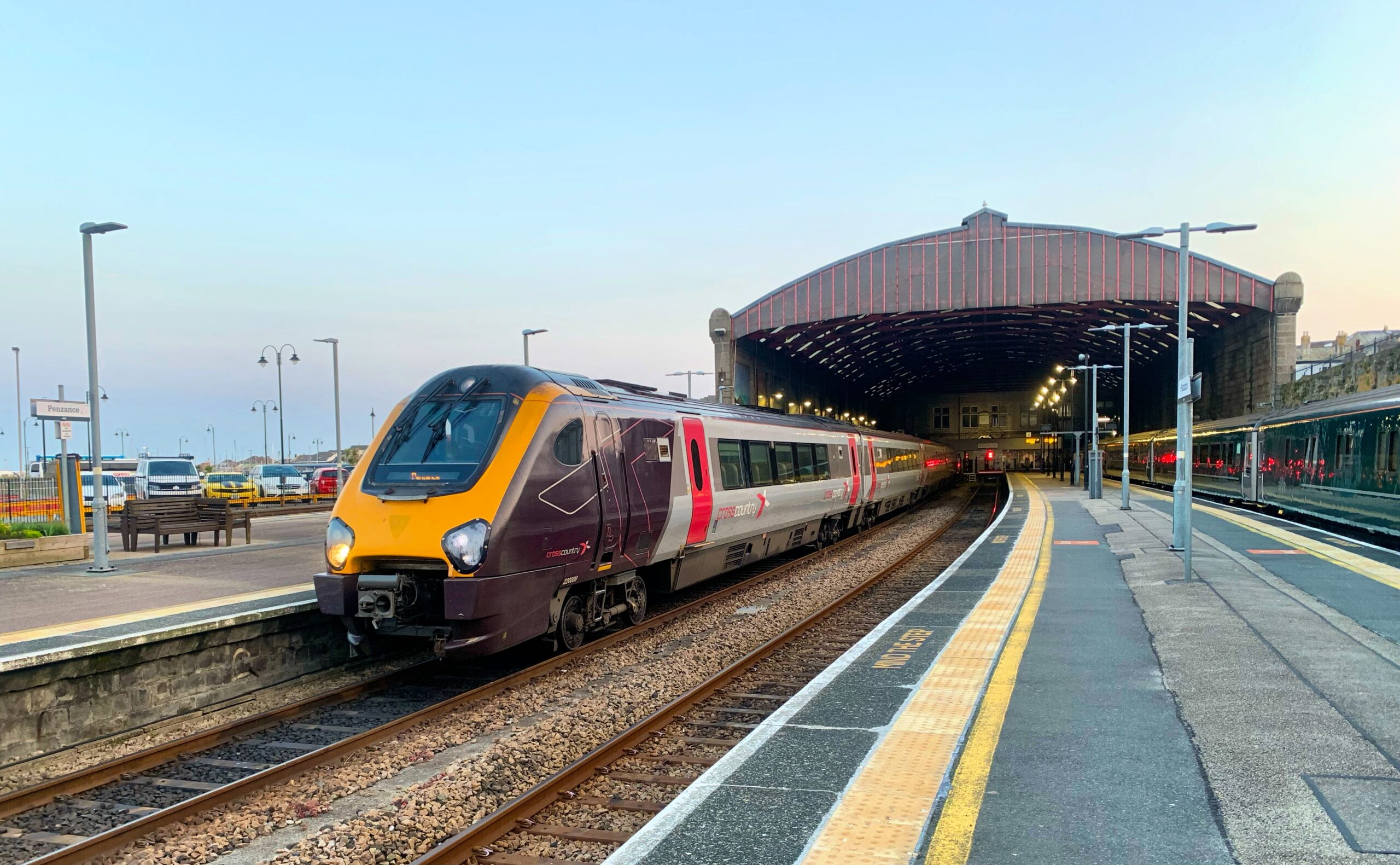
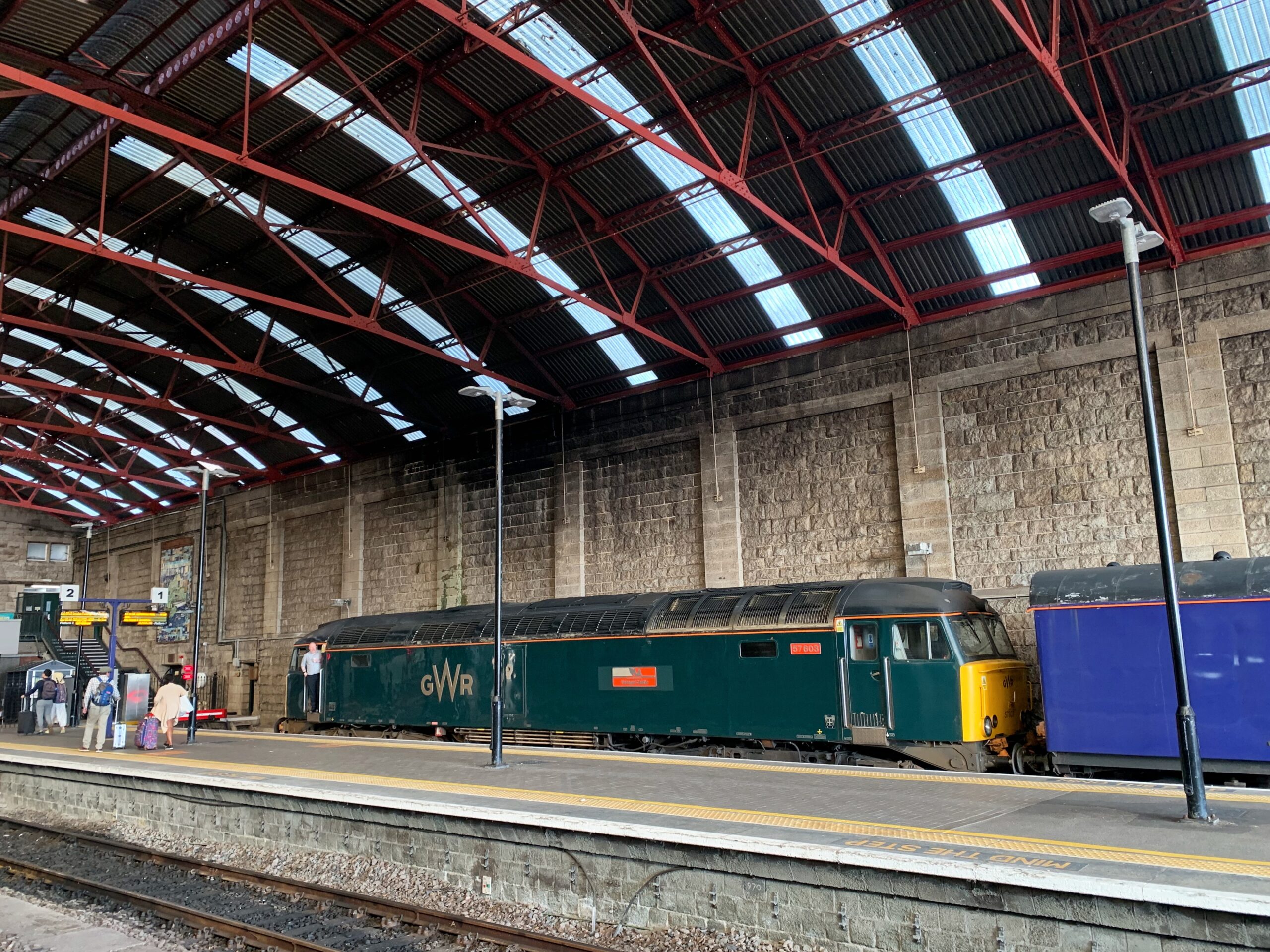
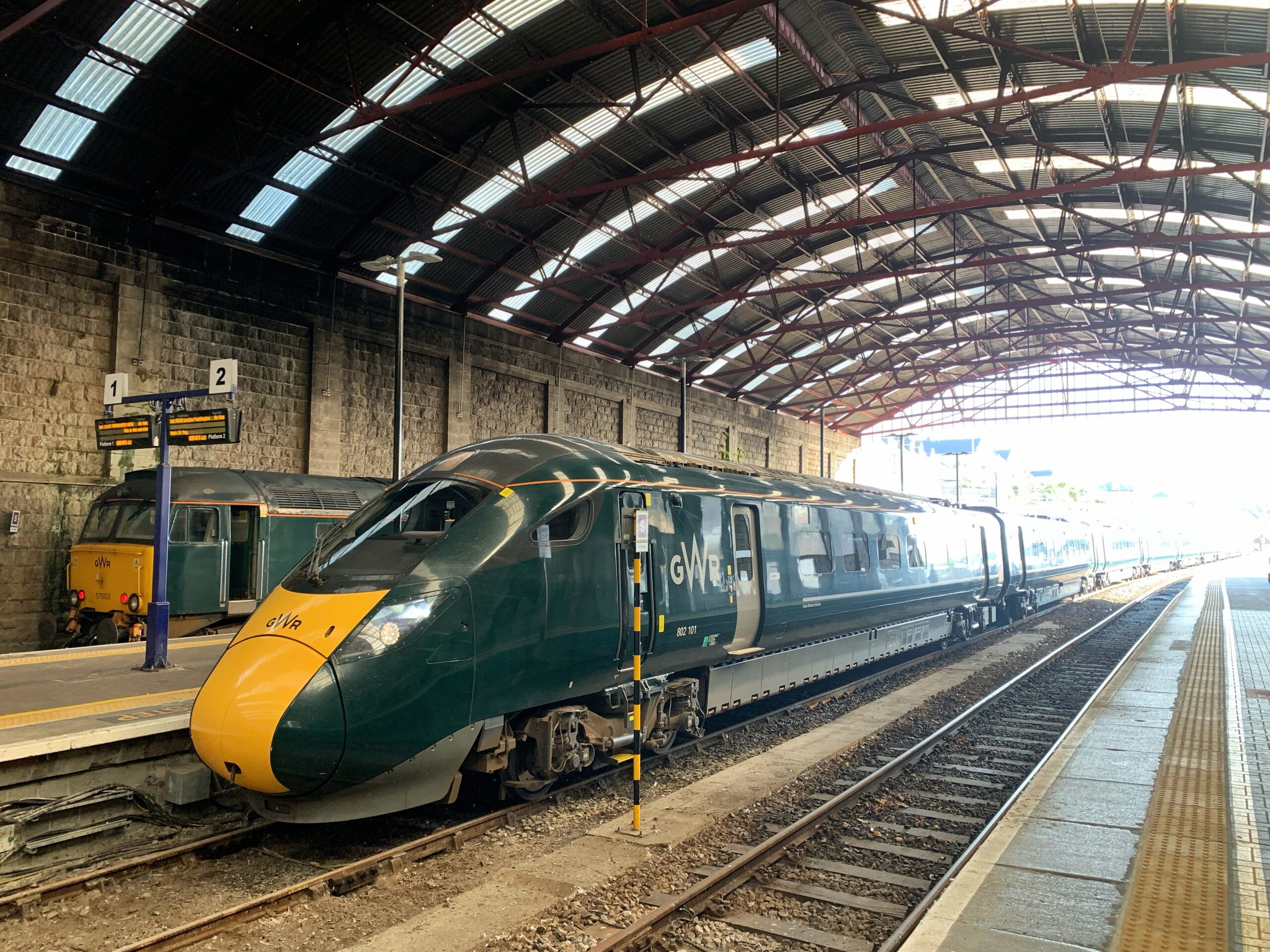
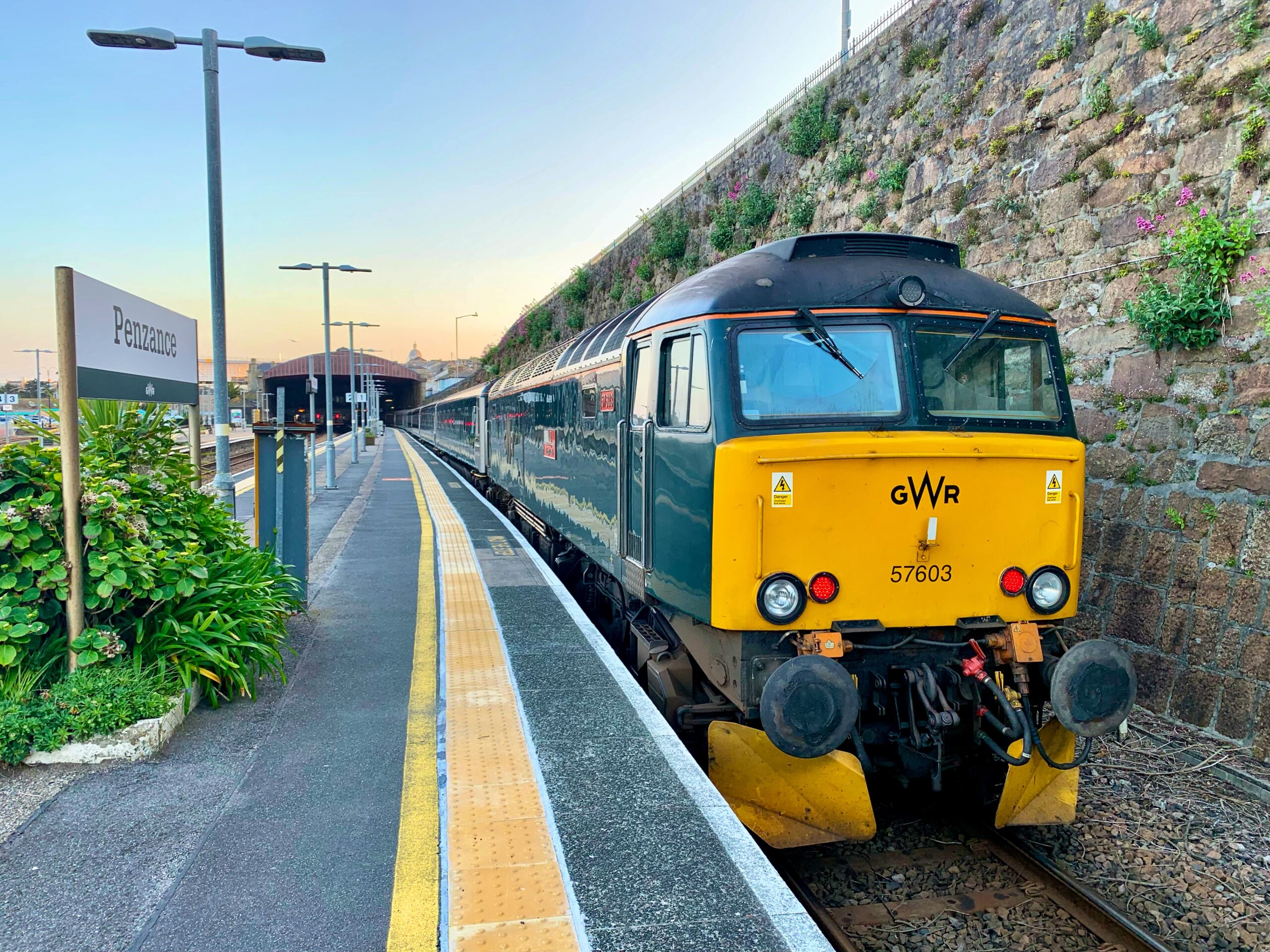
During our sty in Penzance, I enjoyed watching the GWR sleeper service headed up by Class 57 locomotives depart for London in the evening and the corresponding service arrive from the capital in the morning. The Night Riviera leaves Penzance at 2145 and arrives in London paddington at 0504 while the reverse working departs London at 2345 and is scheduled to pull in to Penzance at 0754. On the Wednesday, I was interested to learn that the sleeper service was diverted via Yeovil that day.
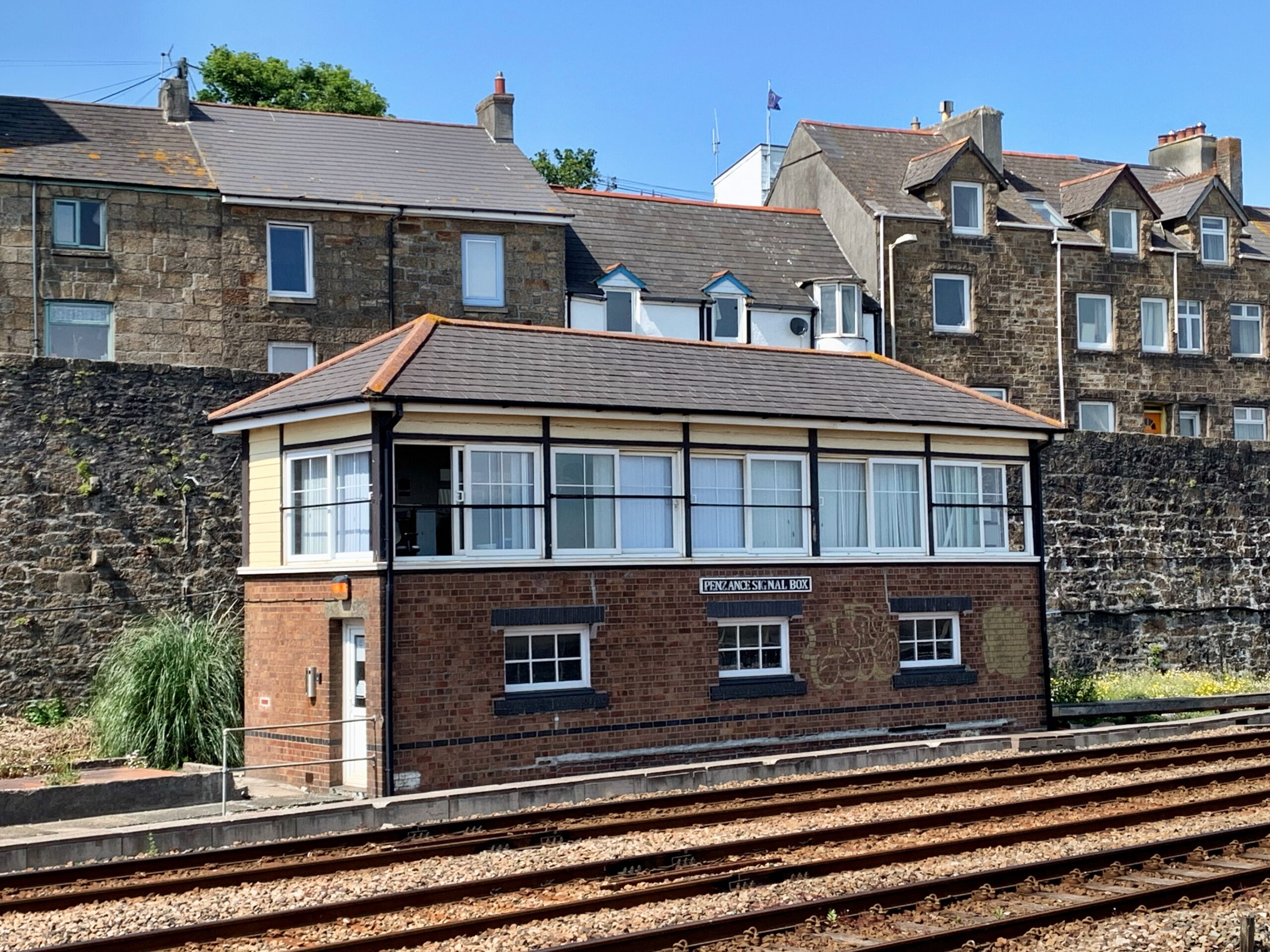
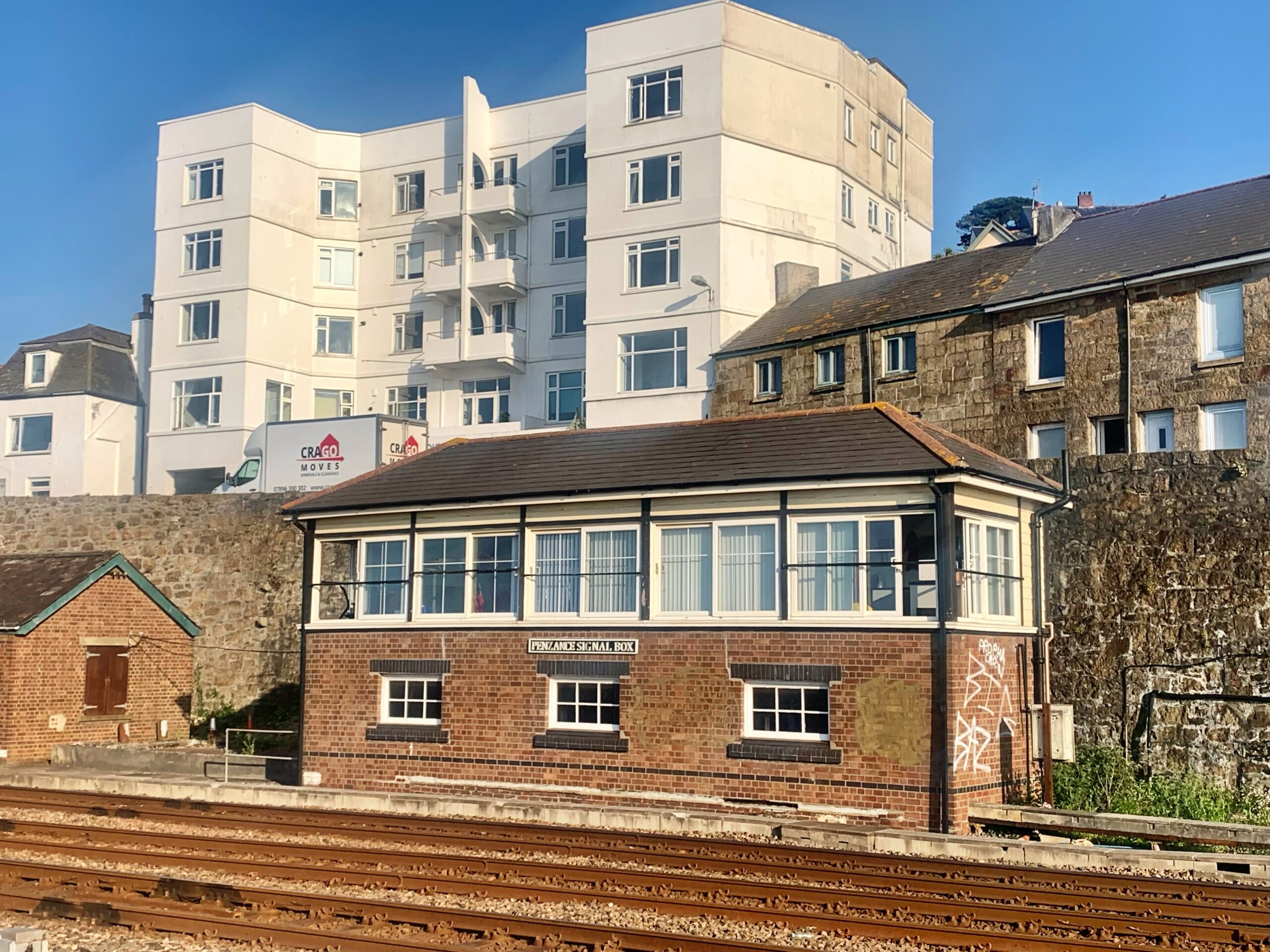
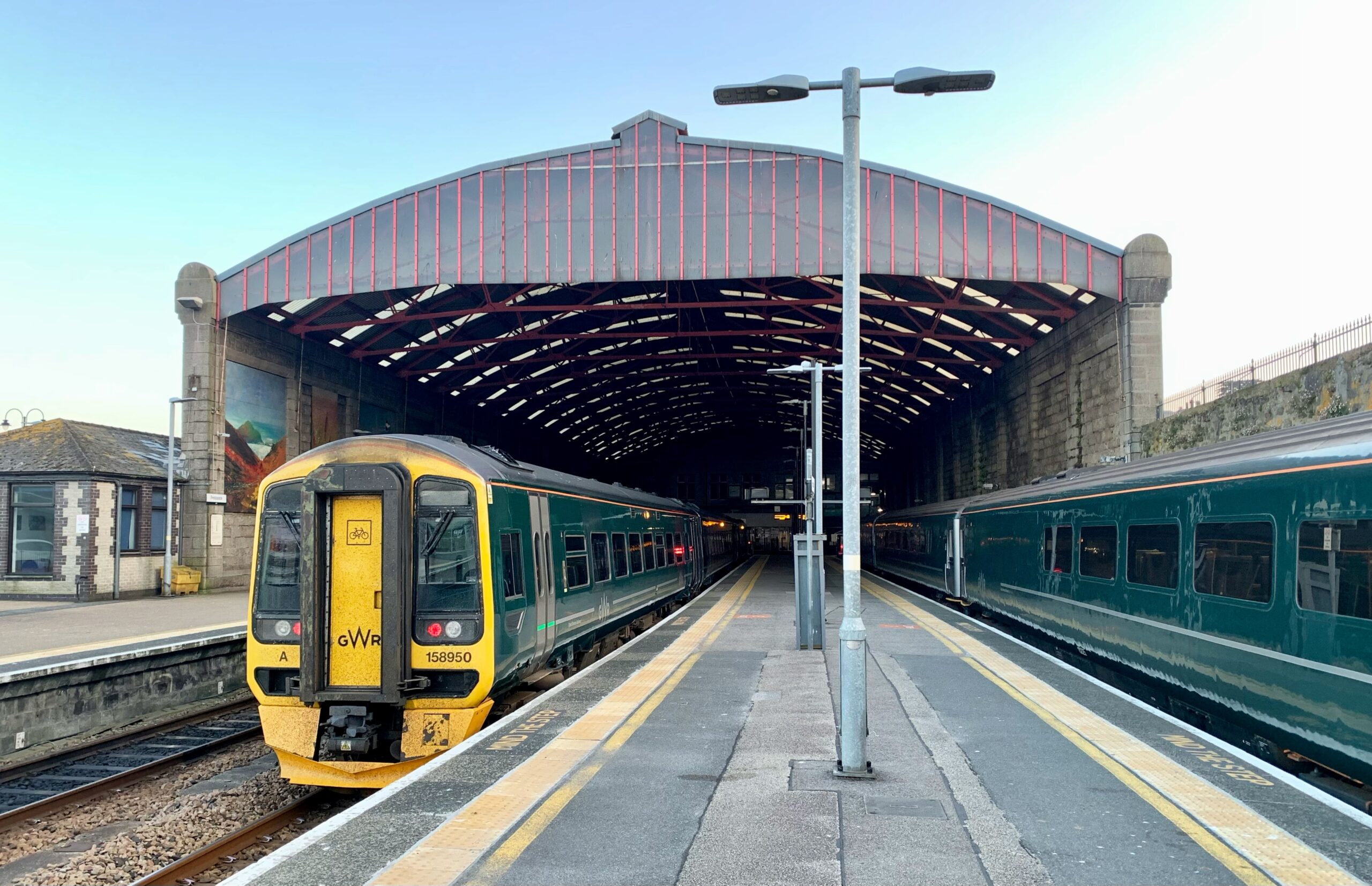
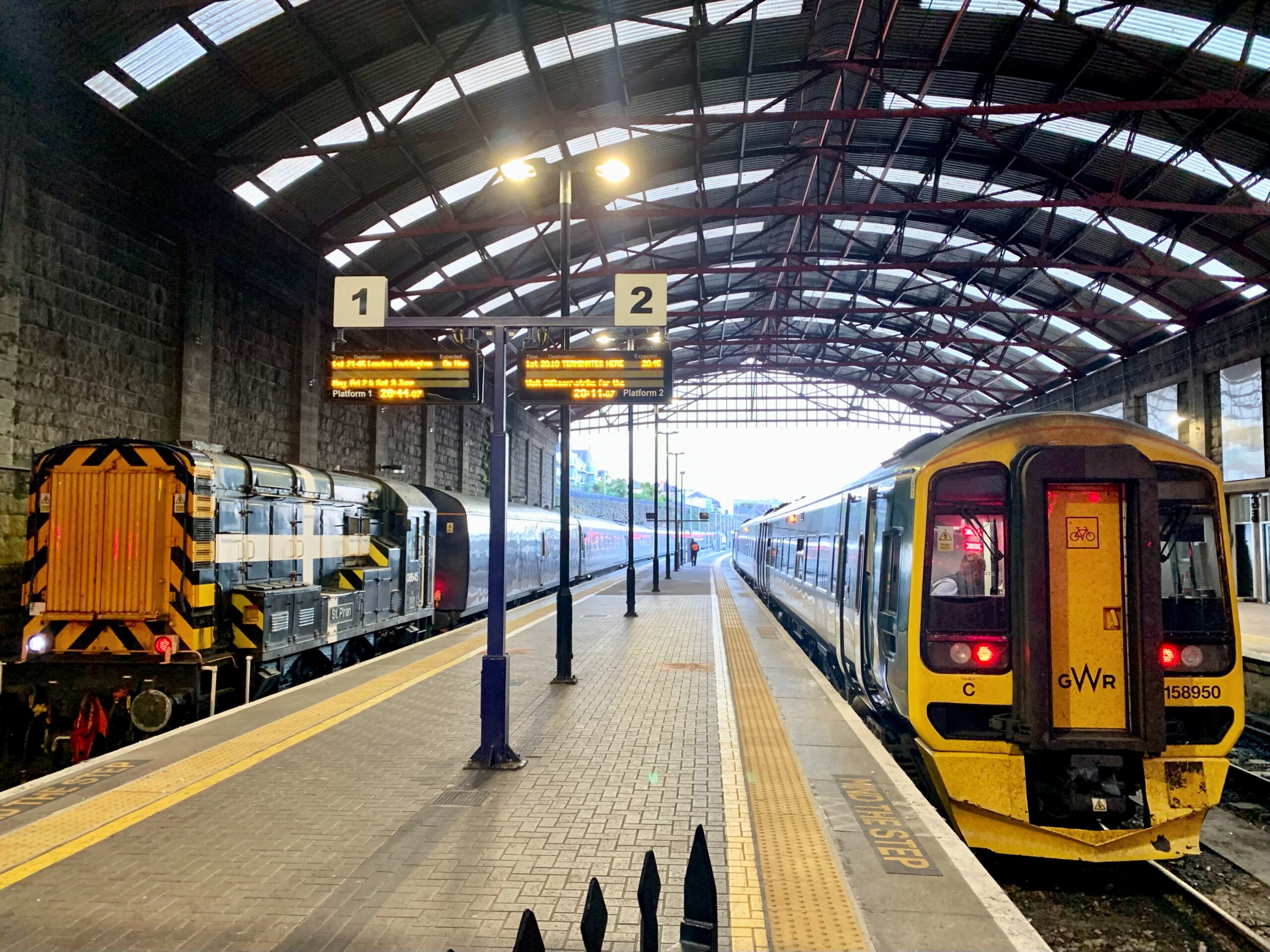
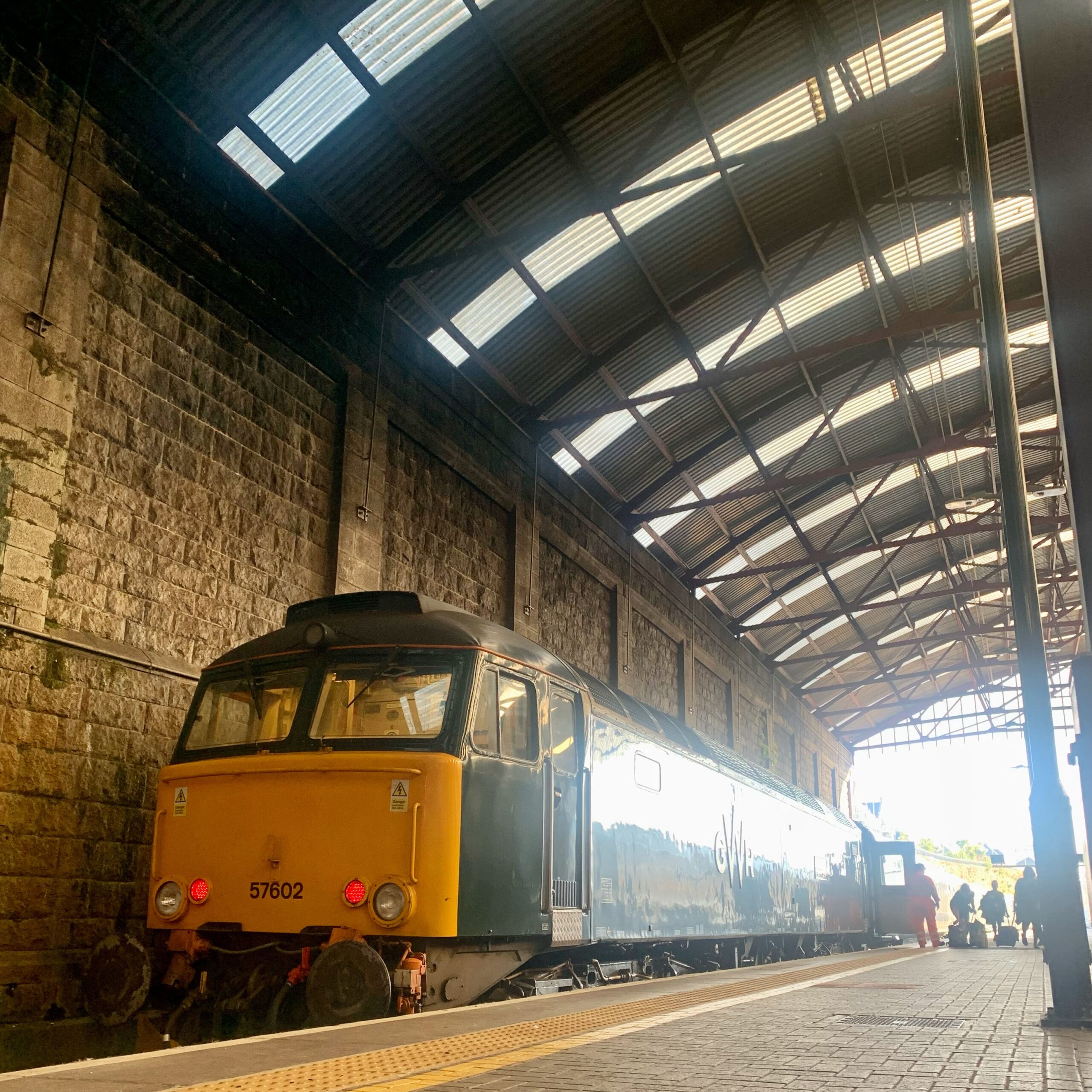
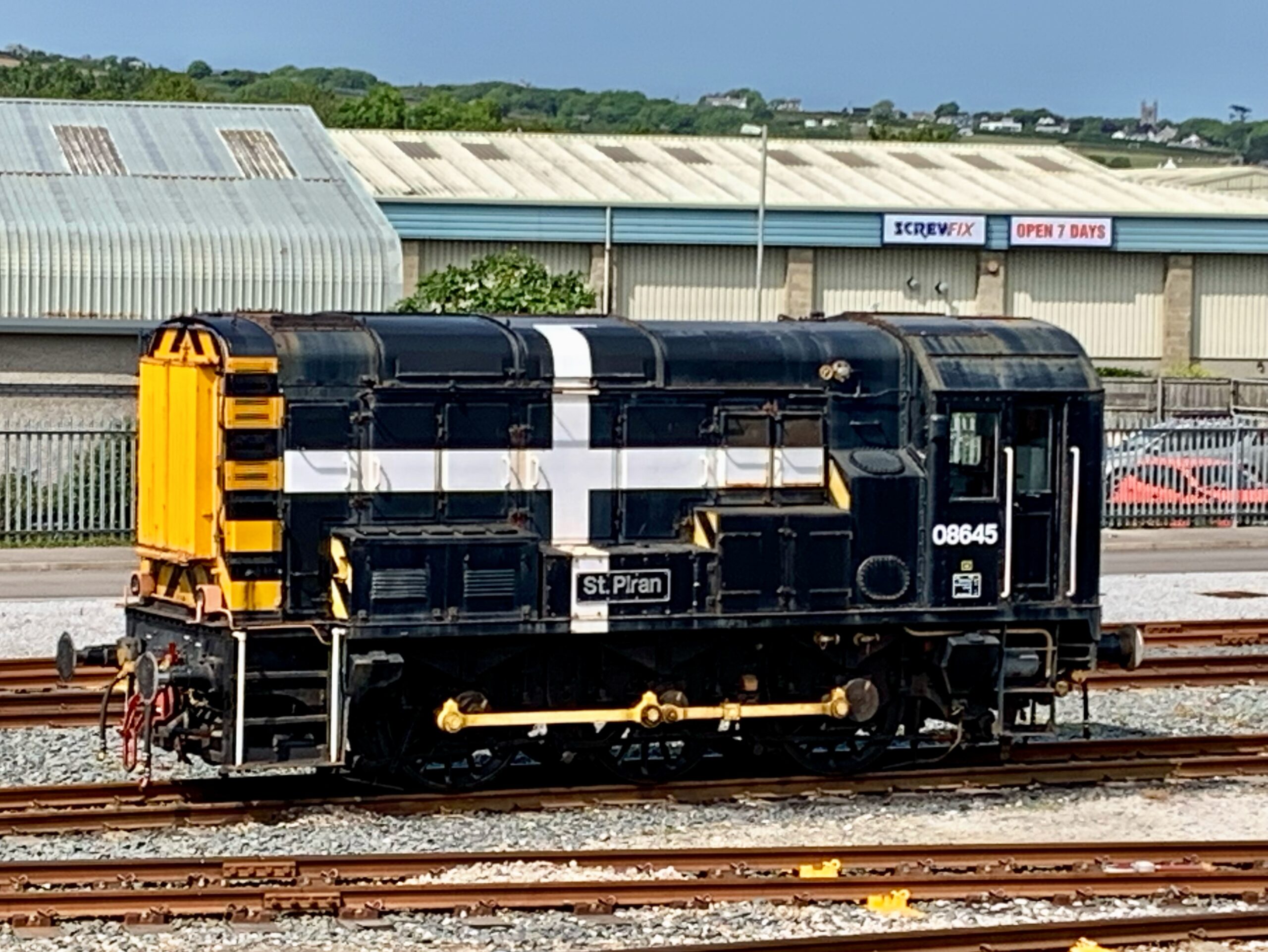
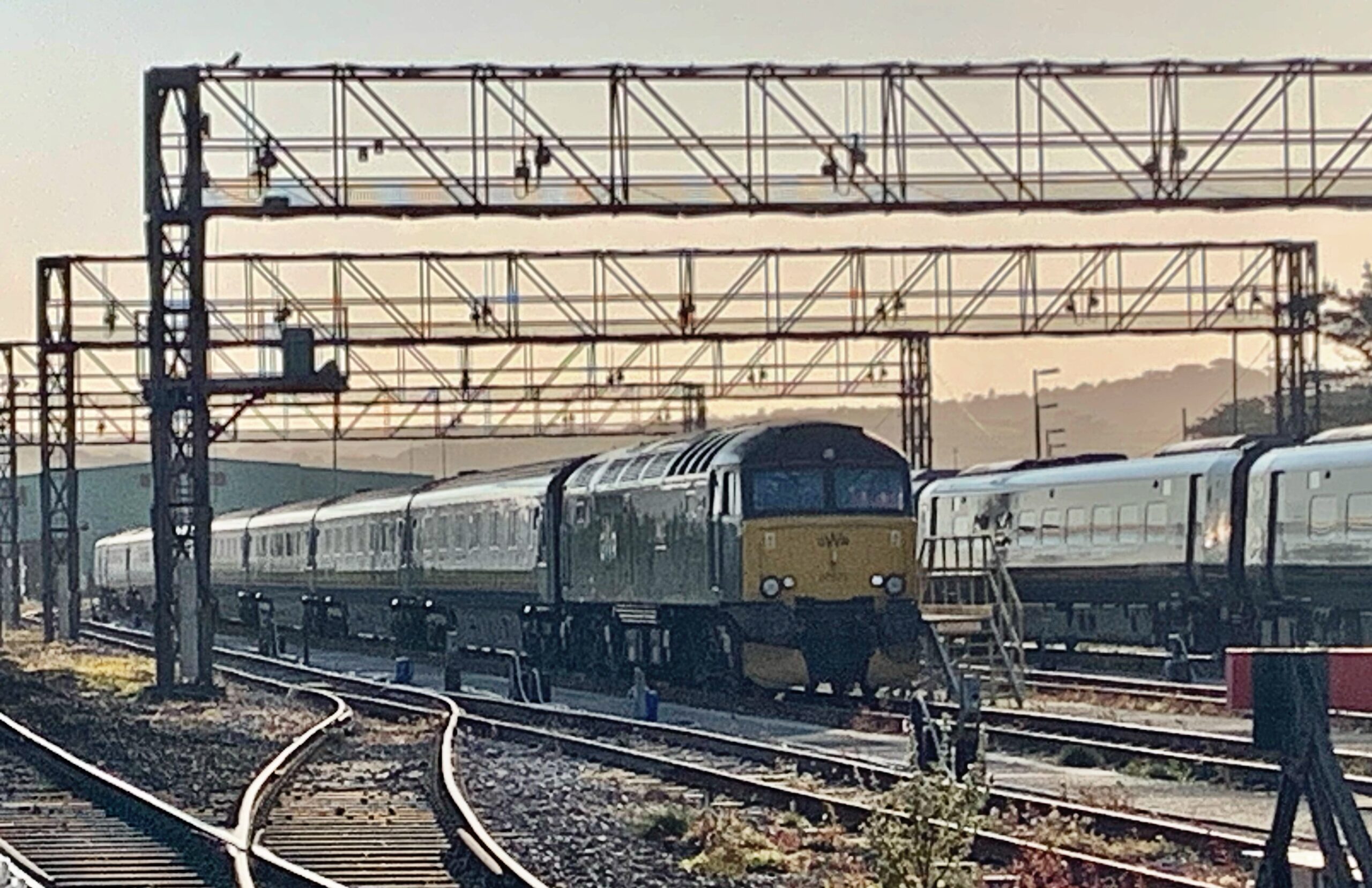
Class 57 No. 57604 ‘Pendennis Castle’ awaits departure of 1A50 2145 Penzance to London Paddington sleeper – 24/05/2023CrossCountry Voyager Class 220 No. 220009 ready to set off ECS to Long Rock after working in 1V58 1003 Edinburgh Waverley to Penzance – 24/05/2023Class 57 No. 57603 ‘Tintagel Castle’ at the buffer stops at Penzance having worked 1C50 2345 London Paddington to Penzance – 25/05/2023Class 57 No. 57603 ‘Tintagel Castle’ nameplateClass 57 No. 57603 ‘Tintagel Castle’ awaiting shunting movement to Long Rock having arrived with the morning 1C50 2345 London Paddington to Penzance service – 25/05/2023Class 57 No. 57603 ‘Tintagel Castle’ and GWR Bi-Mode IET Class 802 No. 802101 ‘Nancy Astor’ working 1A80 0815 Penzance to London Paddington – 25/05/2023Penzance Signal Box – 25/05/2023Penzance Signal Box – 26/05/2023Class 57 No. 57603 ‘Tintagel Castle’ at the rear of 5A50 2012 Penzance Traction & Rolling Stock Maintenance Depot to Penzance Empty Coaching Stock move forming the evening Night Riviera sleeper service to London Paddington – 25/05/2023Class 57 No. 57603 ‘Tintagel Castle’ having arrived at the rear of the ECS move from Long Rock ready to haul the 1A50 2145 Penzance to London Paddington sleeper – 25/05/2023GWR Class 158 No. 158950 at Penzance having arrived with 2C36 1830 Plymouth to Penzance service – 25/05/2023Class 08 No. 08645 ‘St.Piran’ at rest having brought the Night Riviera stock into Penzance whilst GWR Class 158 No. 158950 awaits departure with the 2E30 2100 service to Exeter St. Davids – 25/05/2023Class 57 No. 57602 ‘Restormel Castle’ at the buffer stops in Penzance having worked the down Night Riviera sleeper service – 26/05/2023
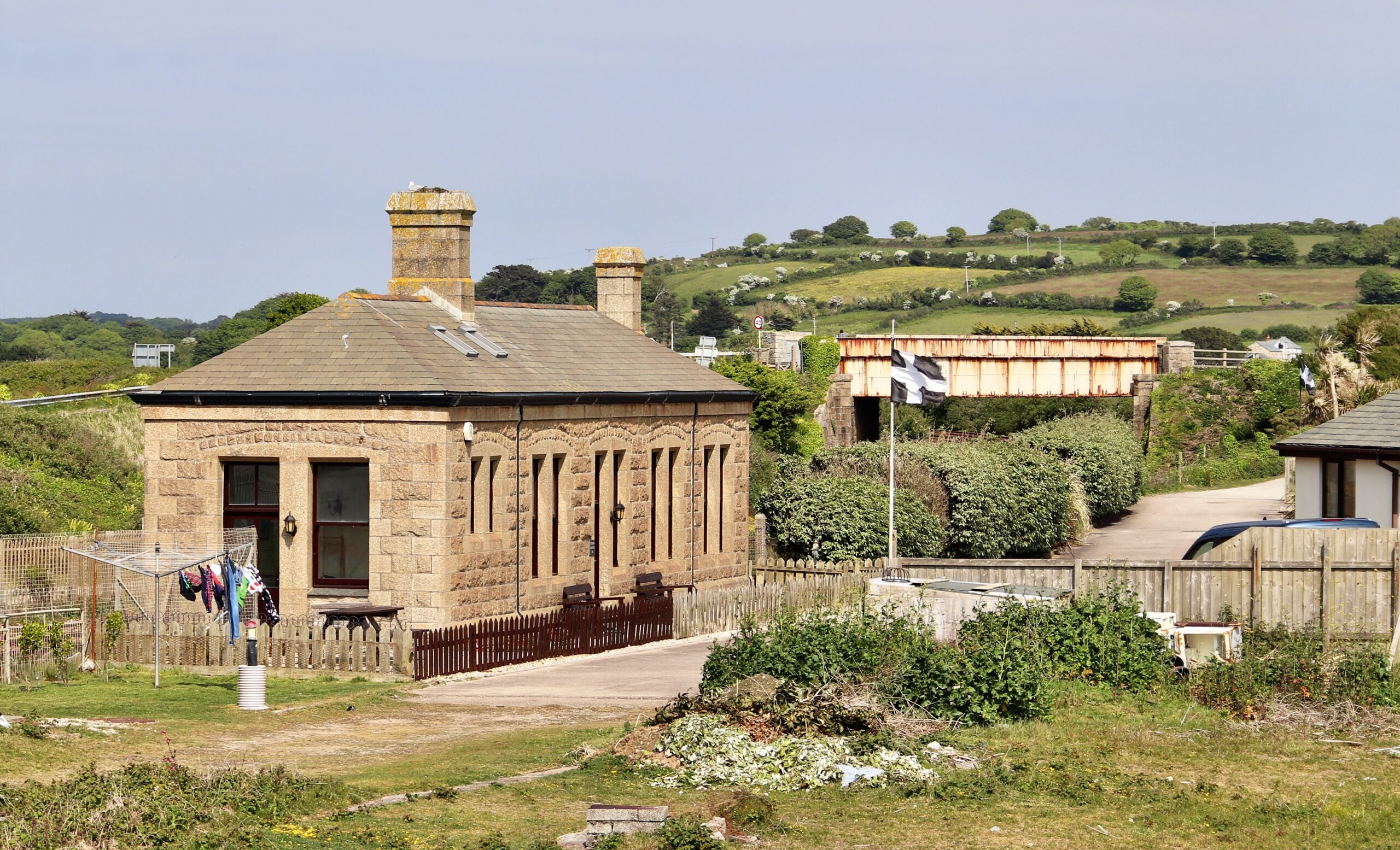
On Thursday we walked from Penzance to Marazion which conveniently meant we passed by Long Rock where Penzance TMD, the most westerly and southerly rail depot in the country, is located. There has been a depot a Long Rock since 1914 when a steam shed was opened. The current depot dates from 1977 with later modernisation to increase capacity in 2017.
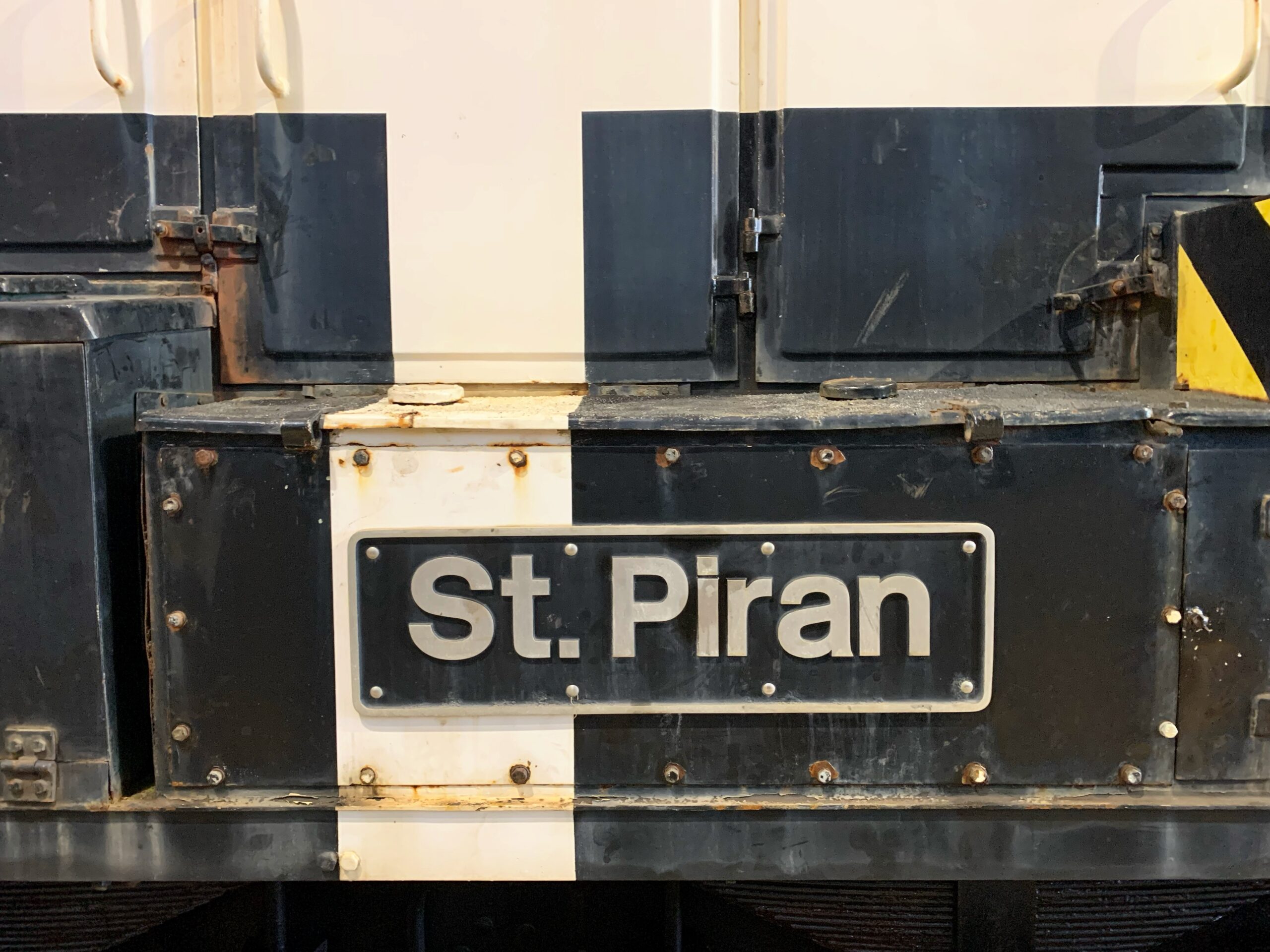
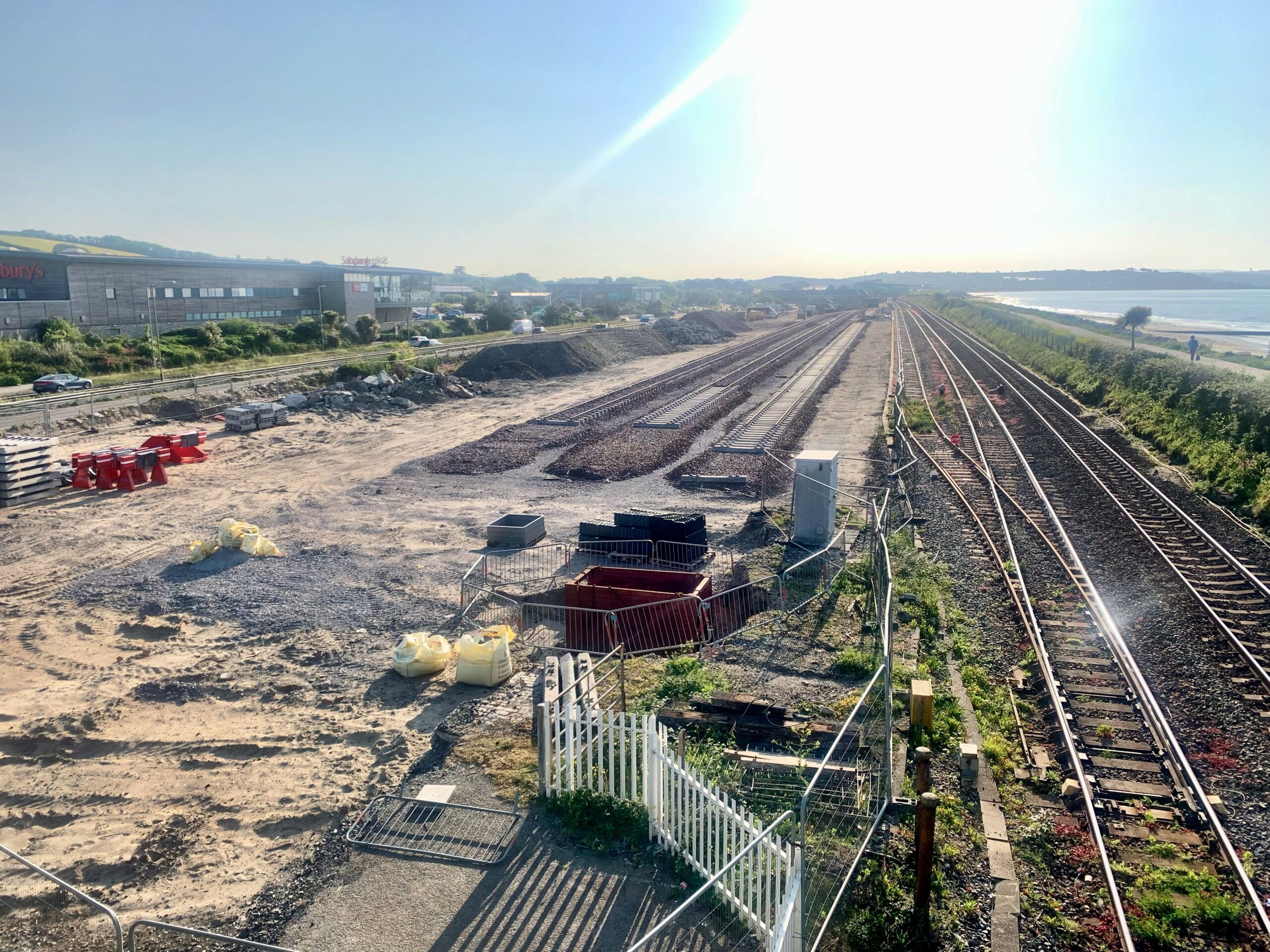
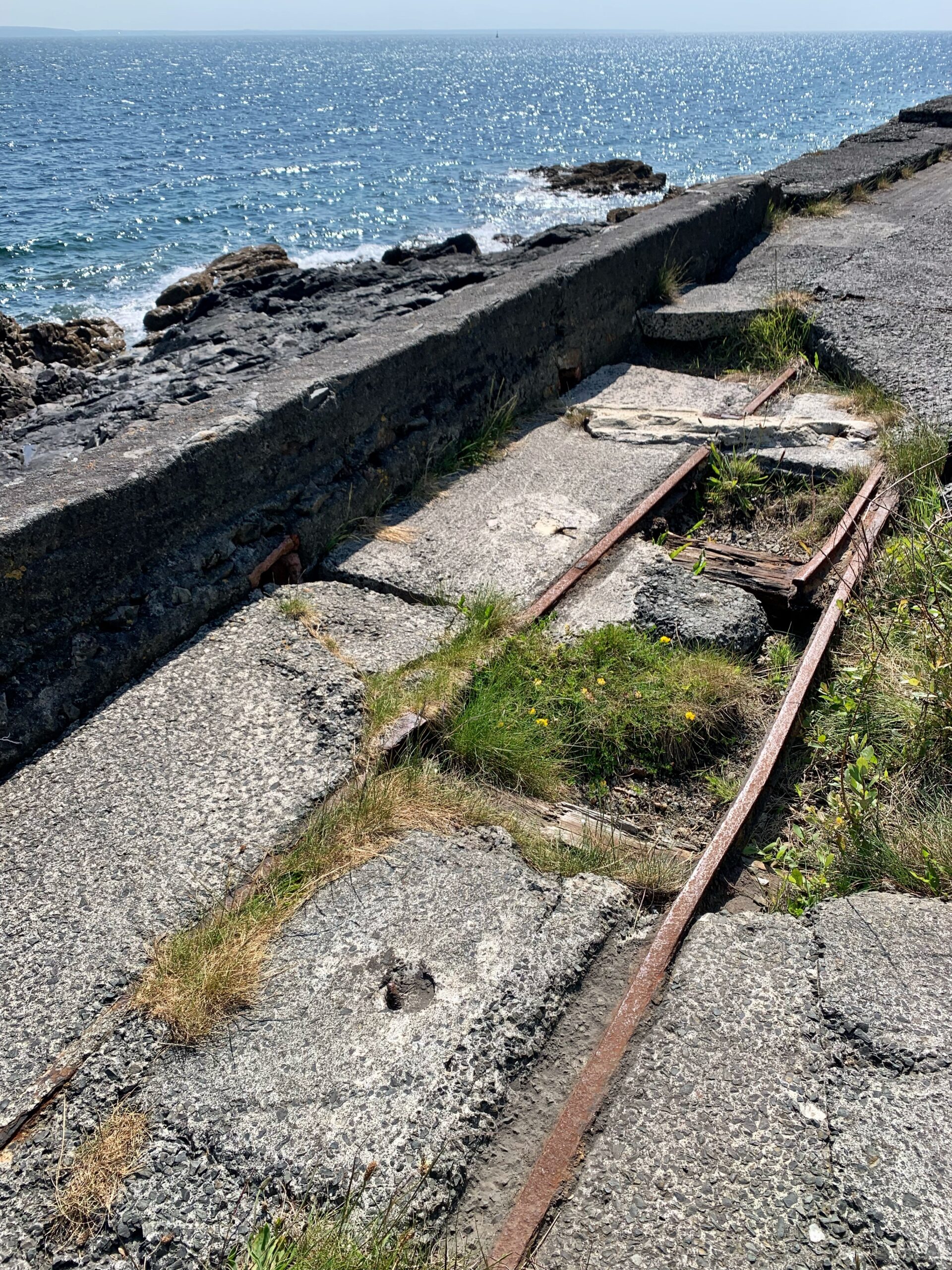
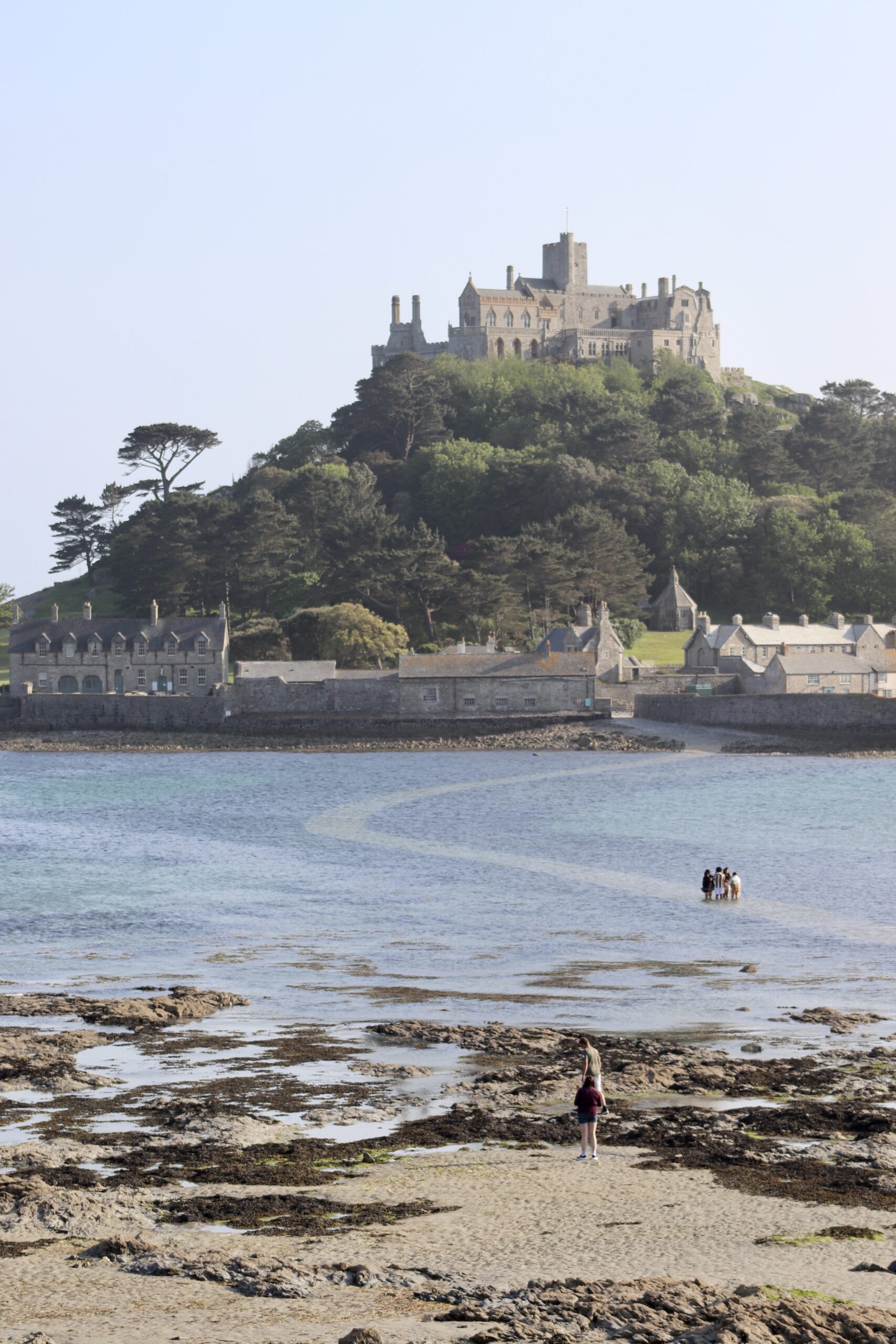
Long Rock depot seen from the west of Penzance – 25/05/2023The coastal path runs adjacent to Long Rock. Caroline and Yoshi pass an unidentified IET awaiting its next duty from Penzance – 25/05/2023Class 08 No. 08645 ‘St.Piran’ (after the patron saint of Cornwall) in Kernow livery at Long Rock, Penzance. Built at Harwich Works and originally numbered D3812 this 0-6-0 diesel shunter entered traffic in February 1959 being allocated to Newport Pill. The locomotive was allocated to different Welsh depots until December 2018 when, with the closure of Landore, she moved to Penzance. Her new livery was unveiled to the public at a special open day to raise money for the Penlee Lifeboat in April 2019 – Nameplate of Class 08 No. 08645 ‘St. Piran’ Class 57 No. 57603 ‘Tintagel Castle’ pokes her nose out of the shed at Long Rock – 25/05/2023 Class 57 No. 57603 ‘Tintagel Castle’ with the Night Riviera Sleeper stock in the sidings at Long Rock – 25/05/2023New sidings being constructed at Long Rock depot, Penzance – 26/05/2023Once an important stop on the main London Paddington – Penzance route, Marazion railway station, which originally opened in March 1852 by the West Cornwall Railway, has been stripped of its platforms and awnings. The current building which dates from the 1880’s has been fully restored into a two bedroom bungalow. The line was absorbed into the Great Western Railway on 1st January 1877. The station was never particularly busy, although it dealt with a fair bit of agricultural traffic including broccoli and new potatoes. The station was closed to passengers 5 Oct 1964, with freight services following on 6 Dec 1965. The station is situated on the shore of Mount’s Bay and offers wonderful views across to St. Michael’s Mount. For many years Marazion was home to six old Pullman coaches that were employed as camping coaches, holiday accommodation offered by the railway containing sleeping and living space designed to encourage people to travel by train to the stations where they were situated. I remember the coaches from a previous visit to the area and I’ll tray and find some photographs at some point! The coaches, which had fallen into disrepair, were removed in 2006 and nine holiday cottages built in their place – 25/05/2023Yoshi was a real trooper on our walks. Earlier on the same day we had walked to Mousehole before setting off for Marazion. St Michael’s Mount can be seen behind Yoshi. It is a rocky island crowned by a medieval church and castle, home to the St Aubyn family and a community of islanders – 25/05/2023Yoshi at Mousehole. Famous for its narrow streets and tiny harbour, its name comes from a cave in the cliffs nearby. Until the 16th century it was one of the main ports on Mount’s Bay, the other being Marazion. Mousehole is believed to have been the landing place of the Knights of St John when they returned from the Holy Land. The poet, Dylan Thomas called it the prettiest village in England – 25/05/2023Stone from Penlee Quarry was transported along by the coast near Newlyn in large containers on rails. The containers were originally pulled by a locomotive called ‘Penlee’, also known as ‘Janner’s Engine’ to the south pier in Newlyn, where the contents were loaded onto boats. Later, in the 1960’s, six diesel locomotives were required for hauling the stone. The quarry closed in the late 1980’s – 25/05/2023Marazion is a town of great antiquity, being one of the oldest chartered towns in Cornwall and in Medieval times was a significant location. Marazion was granted its first charter of incorporation by Henry III in 1257 and was reaffirmed on 13th June 1595 by Queen Elizabeth I. The name derives from the important fairs and markets that were held in the town, the earliest dating back to 1070; Marghas Byghan (Small Market) and Marghas Yow or Jew (Thursday Market) blurred over time to become ‘Marazion’. The presence of the Benedictine Monastery on St. Michael’s Mount attracted pilgrims to Marazion, who hung about in the town until the causeway was revealed by the ebbing tide allowing them to cross to the island – 25/05/2023
Lineside video of our visit to Cornwall in May 2023
Bringing us up to date, another Winfrith run took place over 31st May and 1st June 2023 as unusually the train collecting low lever radioactive waste from the Steam-Generating Heavy Water Reactor stayed a night in the sidings at the Dorset facility. Ownership of the Winfrith Nuclear site is under the auspices of the Nuclear Decommissioning Authority (NDA). The site is managed by Magnox Limited who are contracted to deliver the site decommissioning programme, the Winfrith reactor having been shut down in 1990.
Direct Rail Services (DRS) Class 68’s No.’s 68017 ‘Hornet’ and 68034 top and tail 6Z62 Crewe Coal Sidings DRS to Winfrith Sidings on the approach to Parkstone railway station – 31/05/2023DRS Class 68’s No.’s 68017 ‘Hornet’ and 68034 in the sidings at Winfrith – 31/05/2023DRS Class 68’s No.’s 68017 ‘Hornet’ and 68034 in the sidings at Winfrith – 31/05/2023DRS Class 68 No. 68034 passing through Hamworthy heading up the return working 6Z95 Winfrith Sidings to Crewe Coal Sidings DRS. No. 68017 ‘Hornet’ was on the rear of the consist – 01/06/2023
Winfrith Cats 31/05/2023 & 01/06/2023
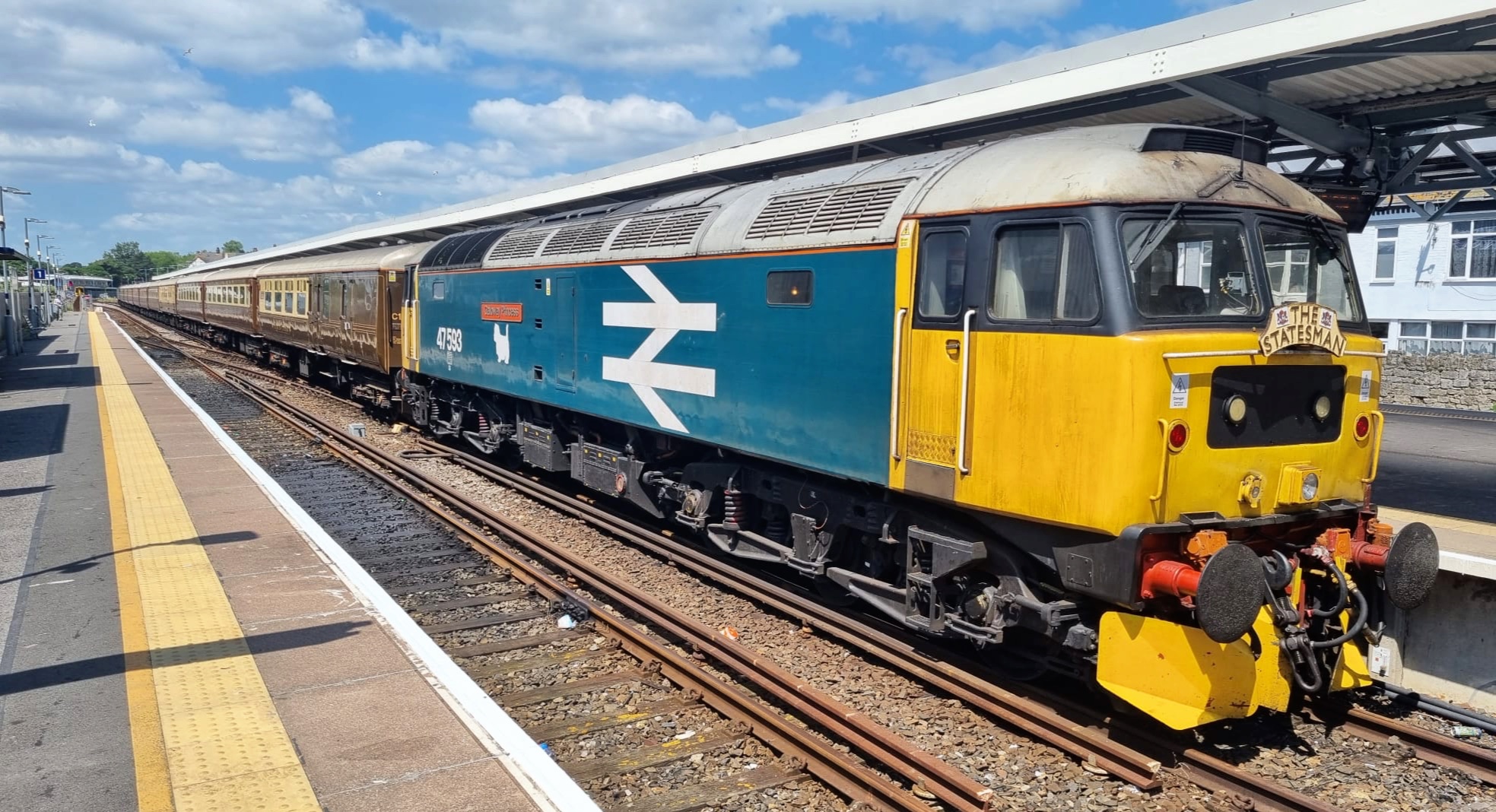
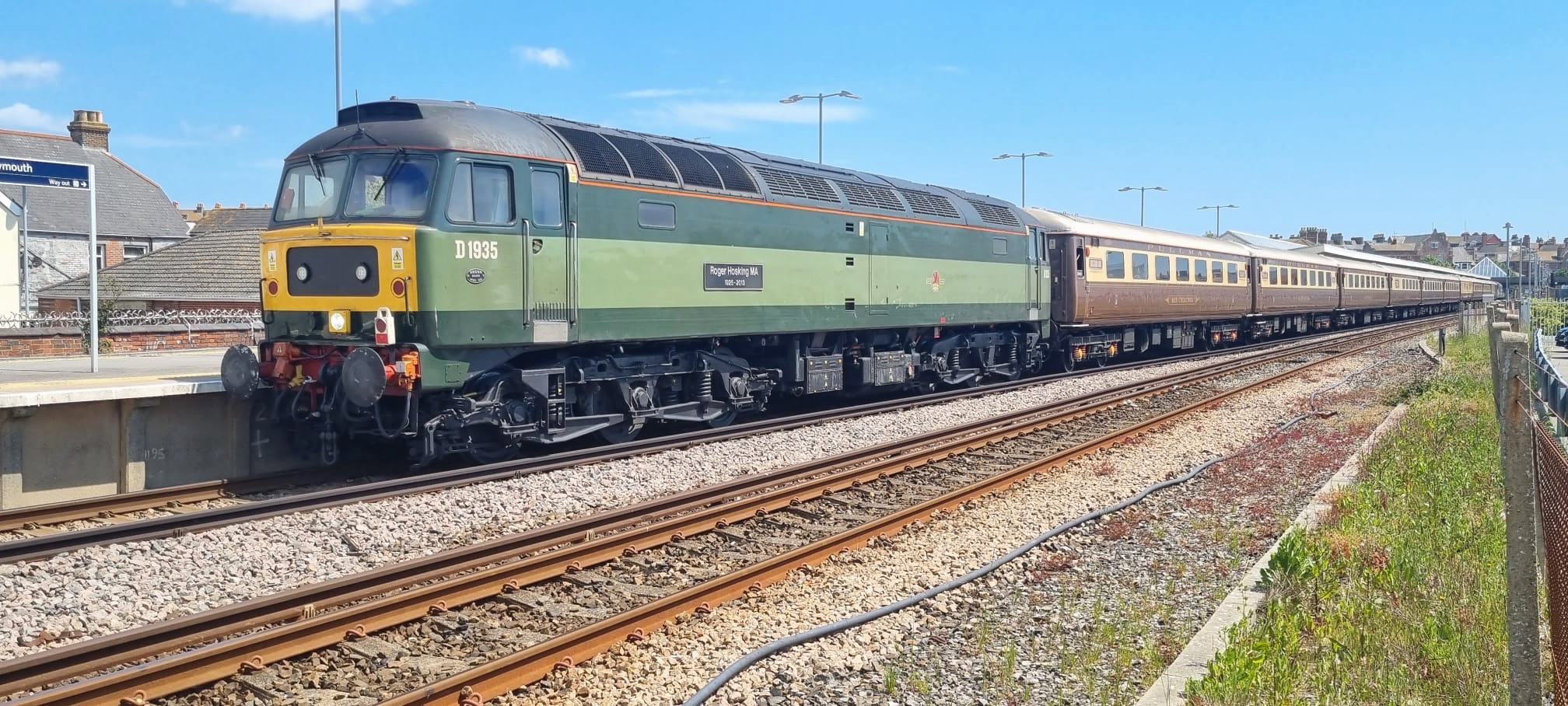
On Saturday 3rd June “The Dorset Coast Statesman” ran to Weymouth for the third time in 2023. On this occasion the tour originated from Peterborough and was top and tailed by LSL Class 47 locomotive No.’s 47805 ‘Roger Hosking MA 1925-2013’ and 47593 ‘Galloway Princess’. I was unable to see this working (again!) as I was in Lichfield helping to celebrate the wedding of two friends, and the following photos are by kind permission of Scott Lewis.
47593 ‘Galloway Princess’ at the buffer stops in Weymouth – 03/06/2023 (Image courtesy of Scott Lewis)47805 ‘Roger Hosking MA 1925-2013’ in Weymouth station at the rear of 1Z40 0617 Peterborough to Weymouth – 03/06/2023 (Image courtesy of Scott Lewis)
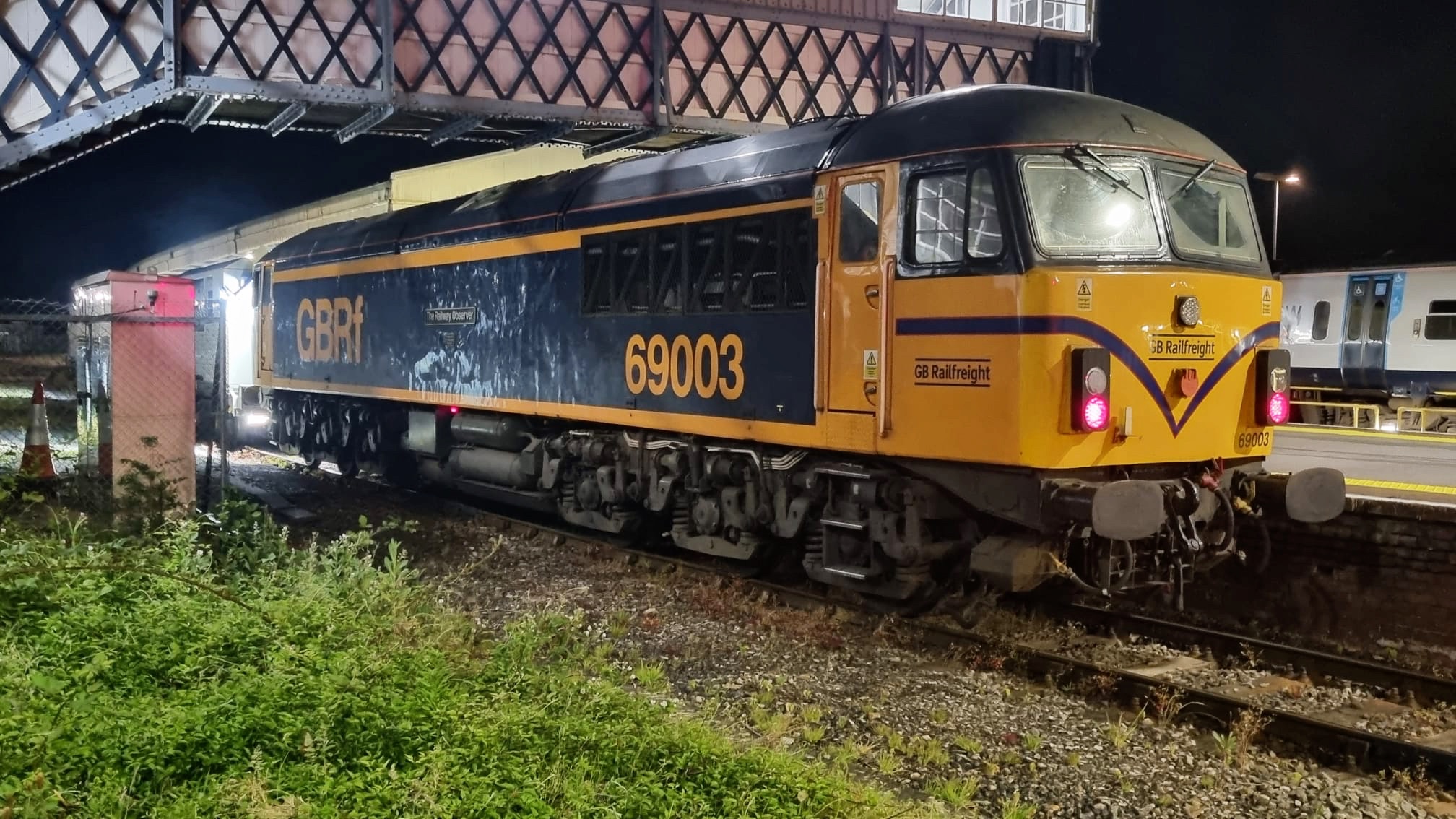
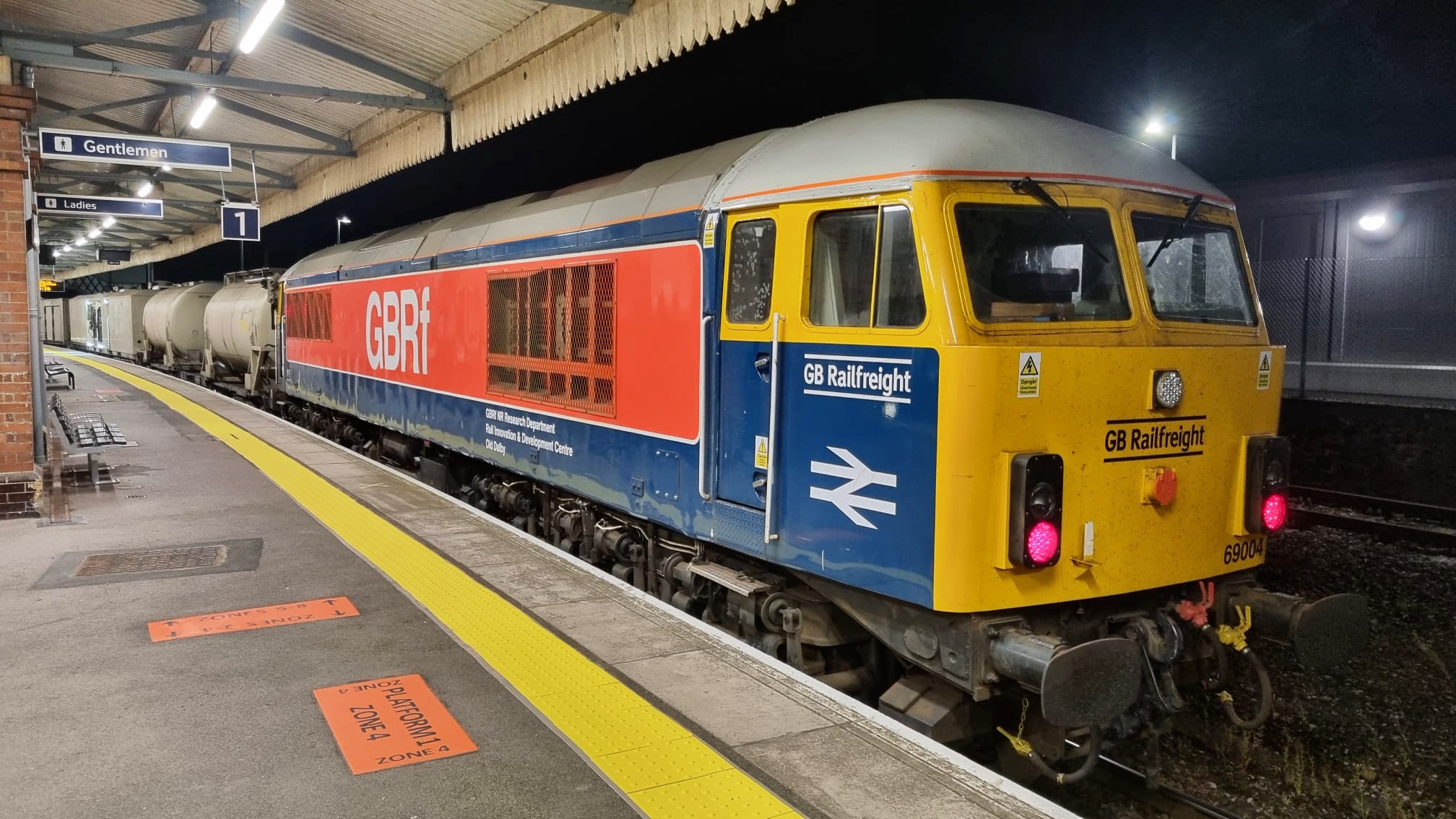
Our North Dorset Correspondent was up in the early hours of Tuesday 6th June to see Class 69 locomotives No.’s 69003 ‘The Railway Observer’ and 69004 which are currently operating in the West Country on weedkiller duties. This is the first operational visit of the class to our area. Yeovil Junction railway station was in Dorset until 1991 when county boundaries were changed. The 69’s are scheduled to work the same vegetation management train to Dorchester West in the early hours of 9th June and the Bournemouth to Weymouth on the 12th/13th June 2023.
GBRf Class 69 No.’s 69003 ‘The Railway Observer’ at Yeovil Junction – 06/06/2023 (Image courtesy of Scott Lewis)GBRf Class 69 No.’s 69004 at Yeovil Junction working 3Q00 Exeter Riverside NY to Exeter Riverside NY – 06/06/2023 (Image courtesy of Scott Lewis)
Yoshi was delighted to learn that South Western Railway (SWR) have joined other rail operators in banning e-scooters, e-skateboards, u-unicycles and “hoverboards” across its stations as from 1st June 2023. The rule has been introduced as there is a small fire risk due to the potential for their lithium-ion batteries to overheat.
With that piece of trivia we come to the end of another blog entry. Thank you for joining us and as always we appreciate your comments, corrections and feedback. We’ll be seeing you.
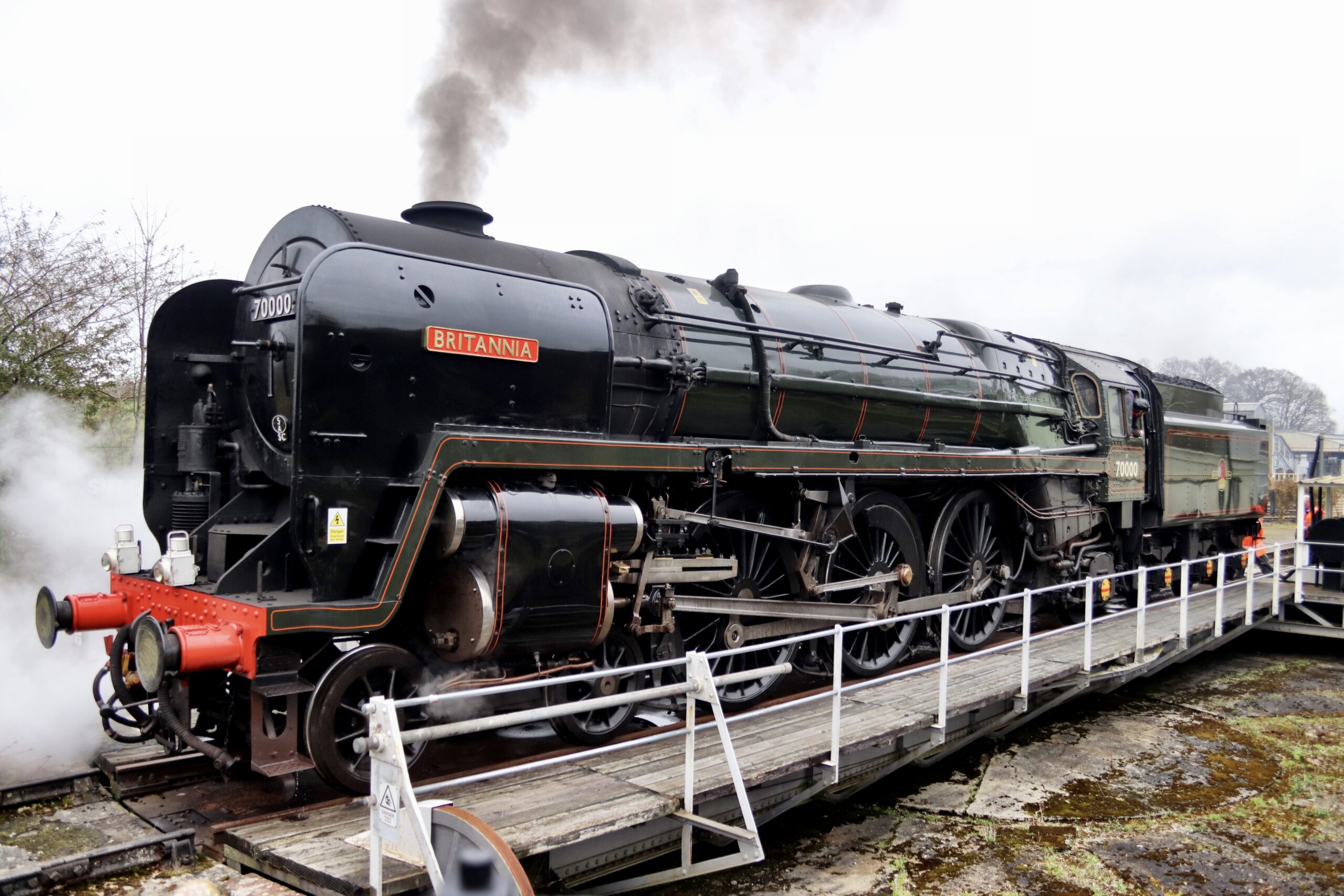
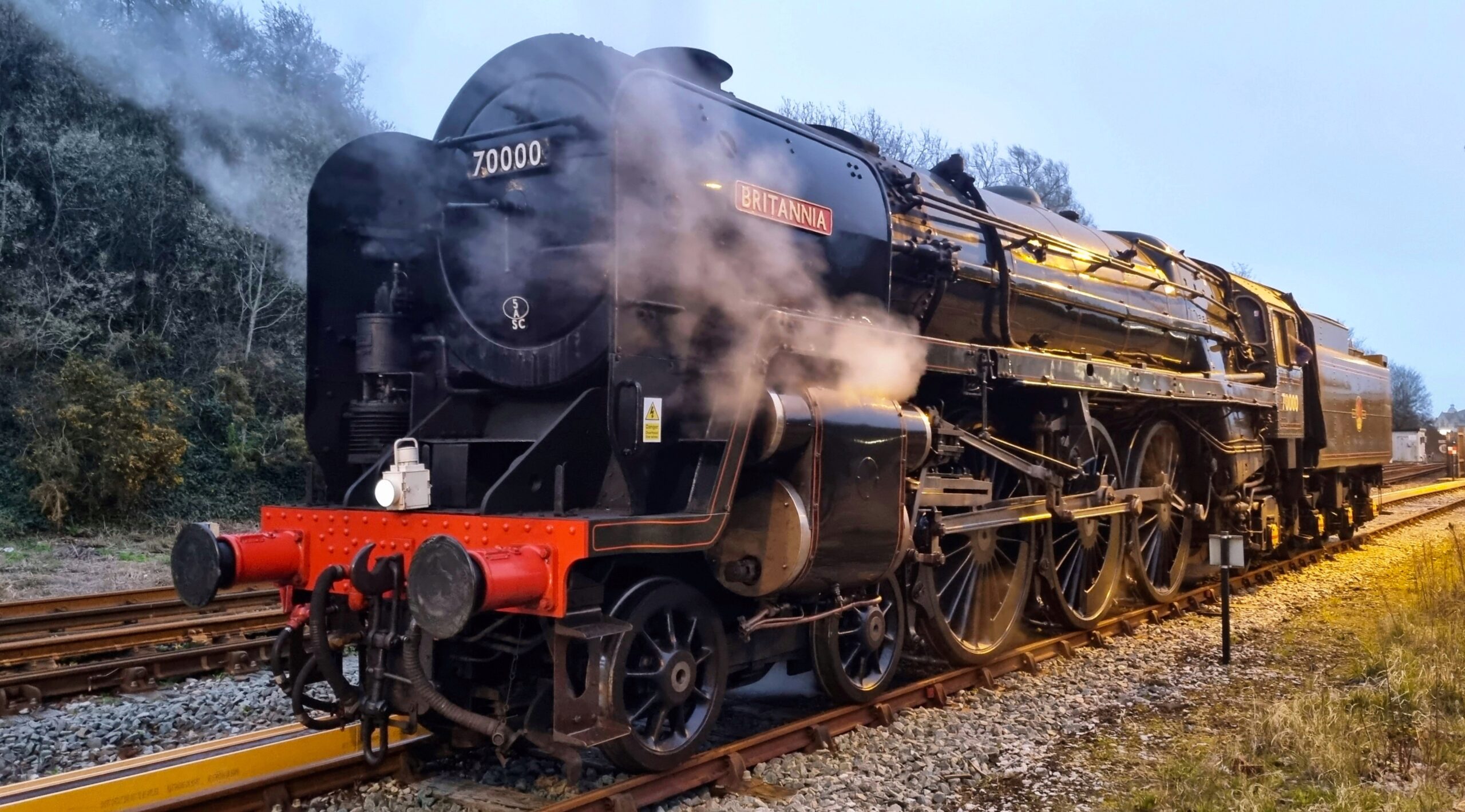
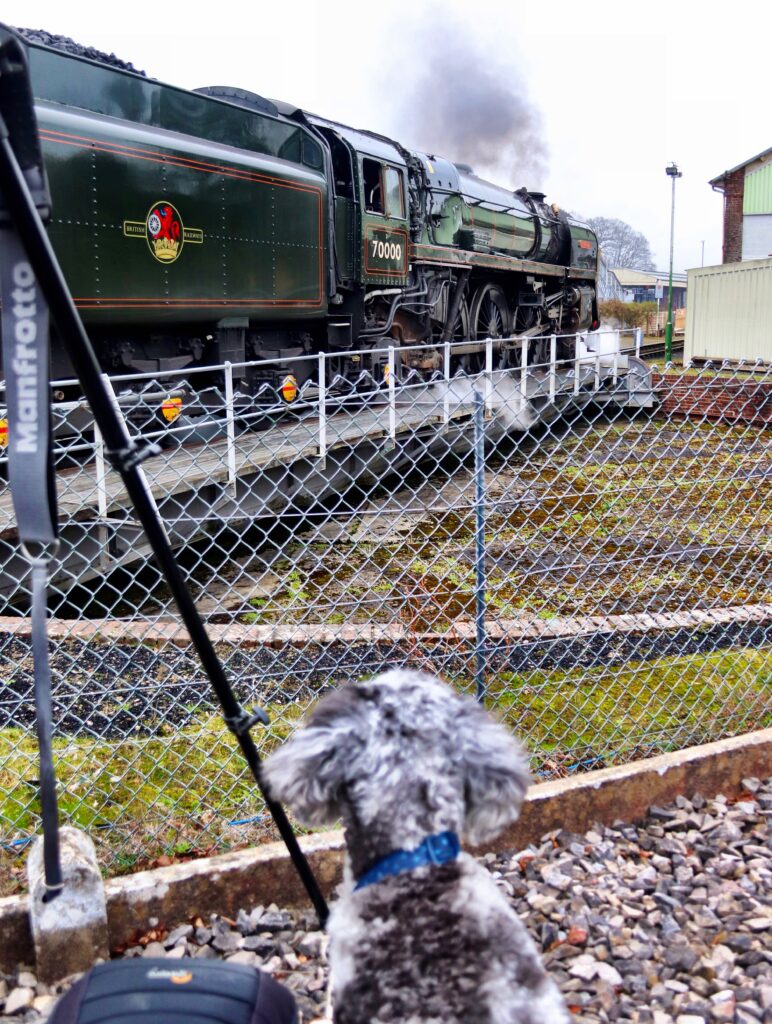
British Railways Standard Class 7 4-6-2 No. 70000 ‘Britannia’ on the turntable at the Yeovil Railway Centre – 22/03/2023
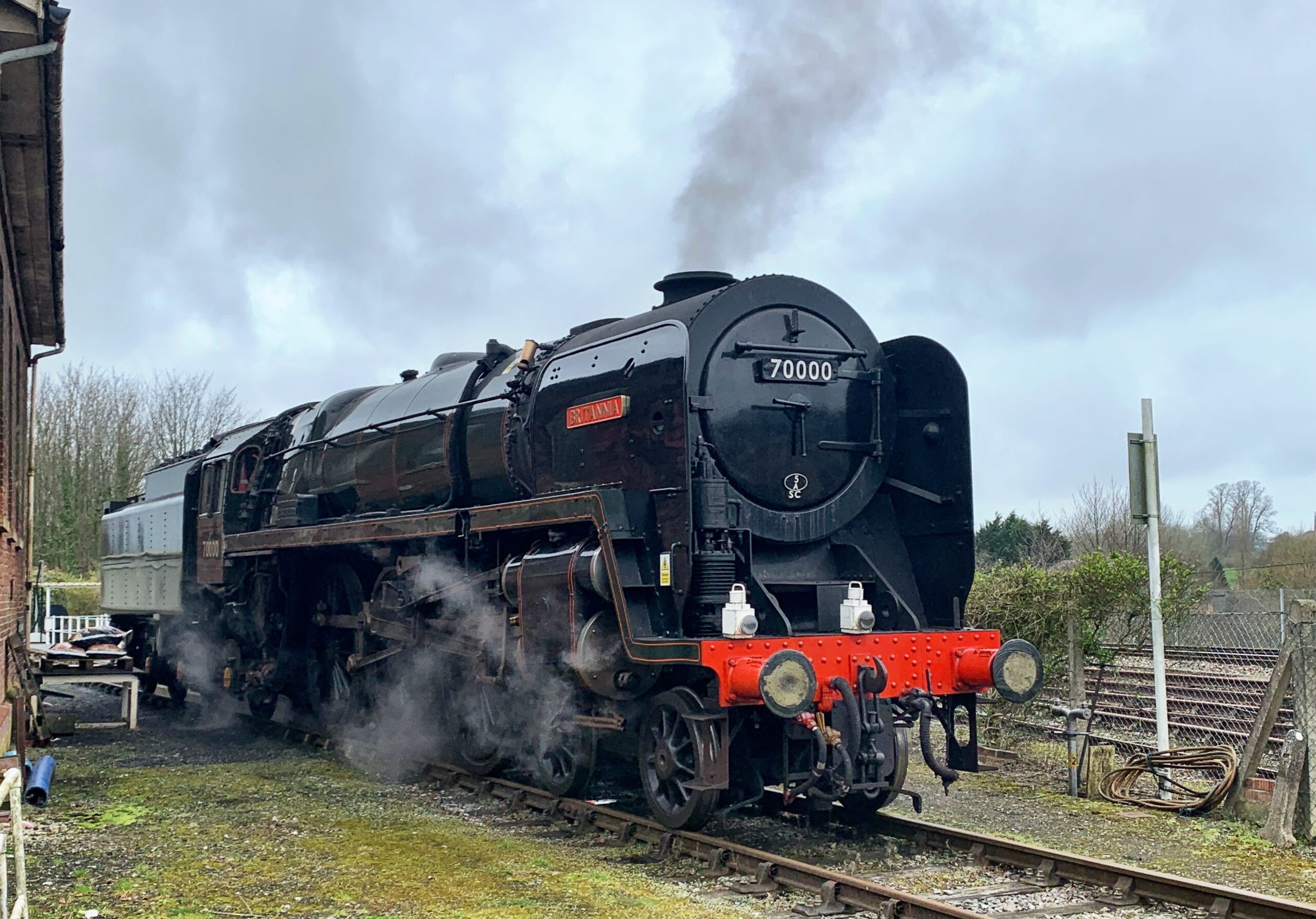
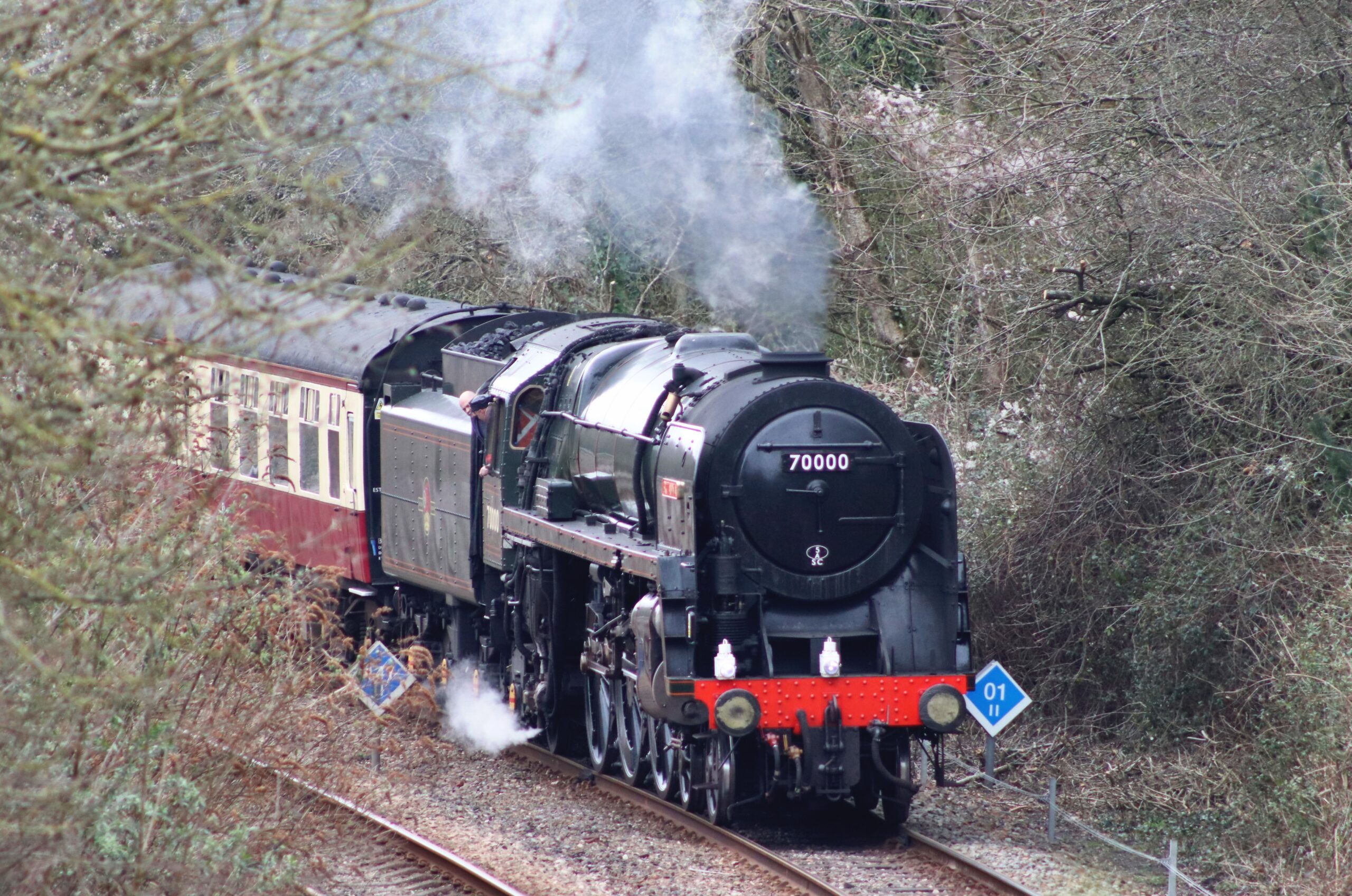
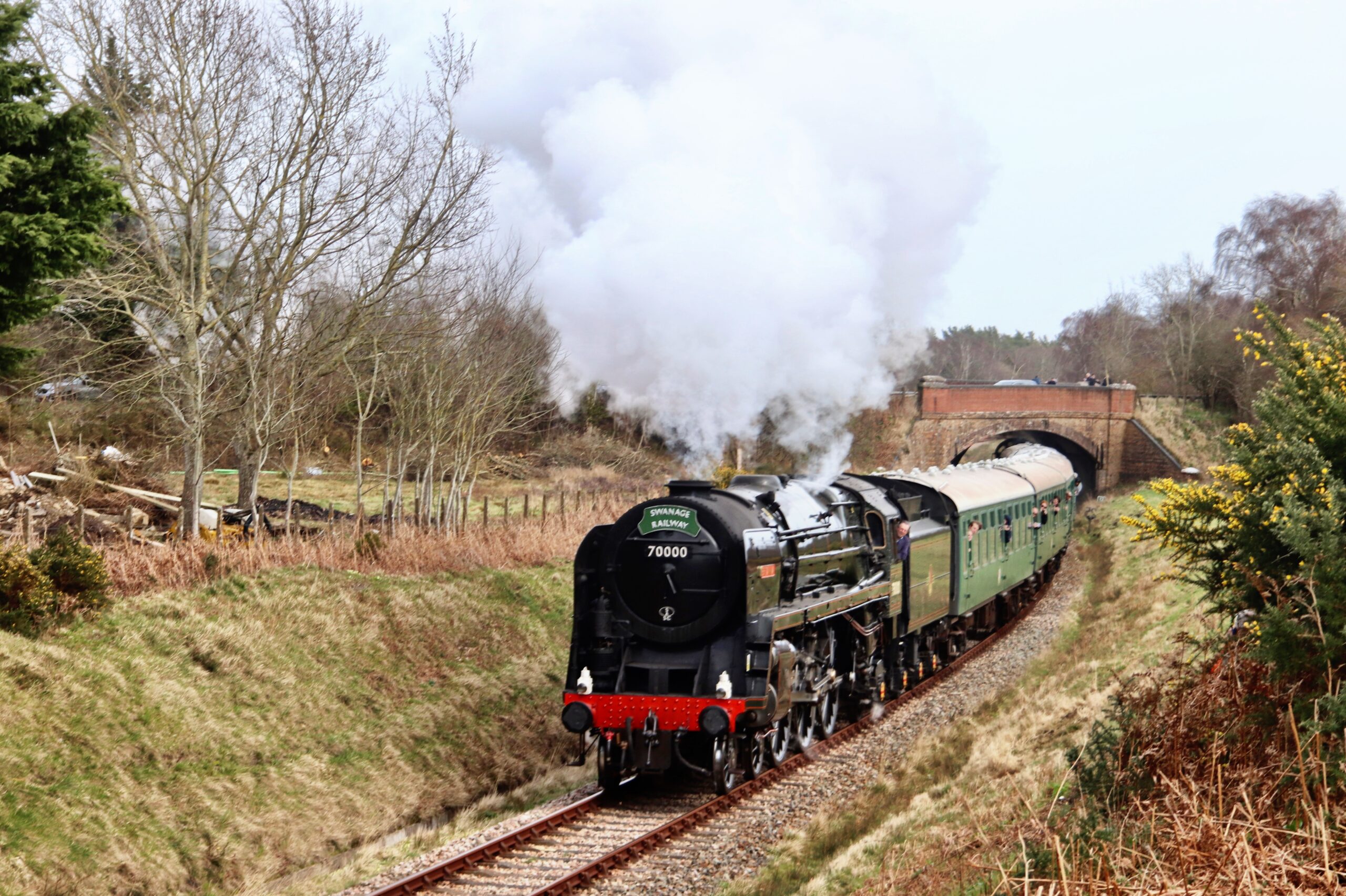
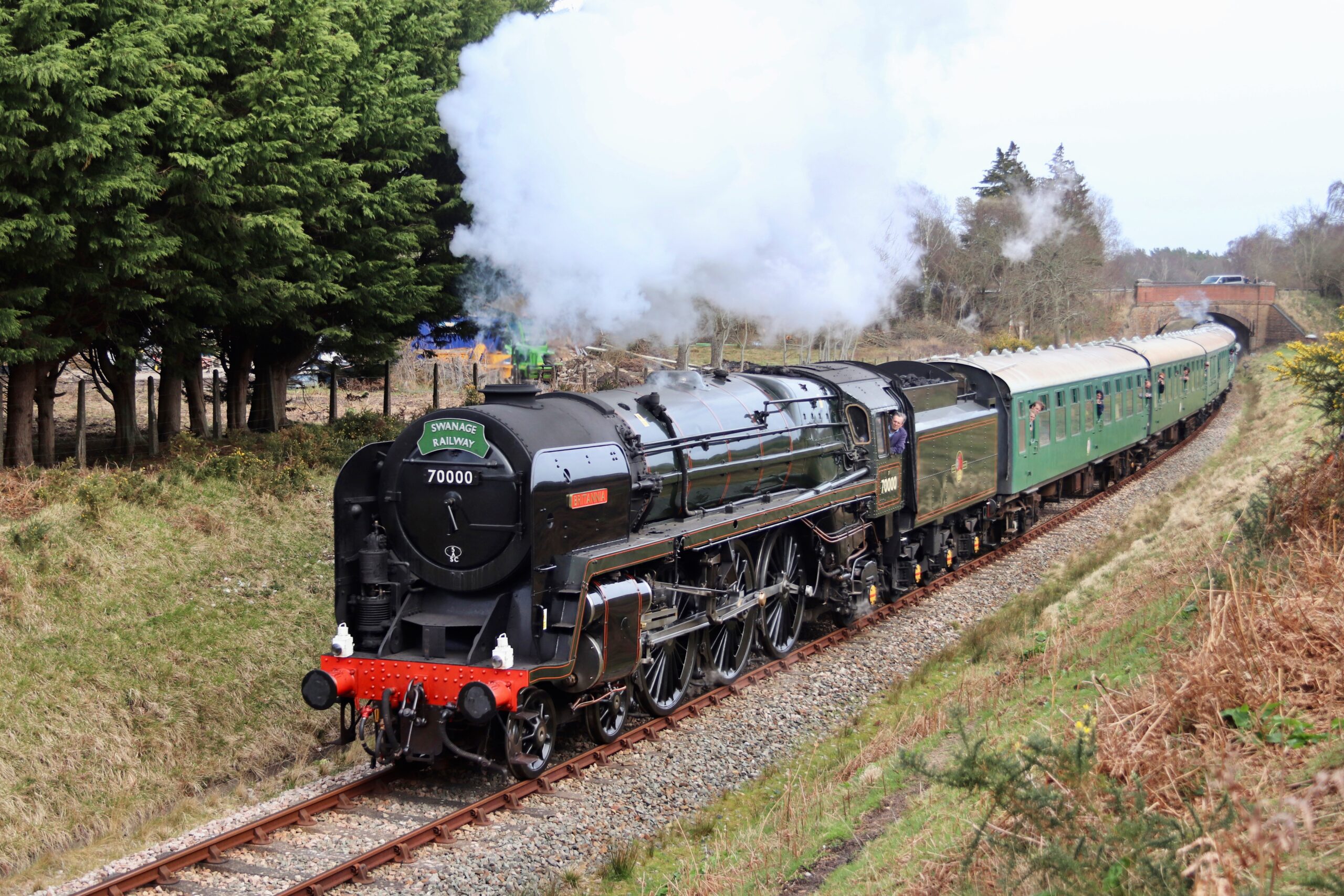
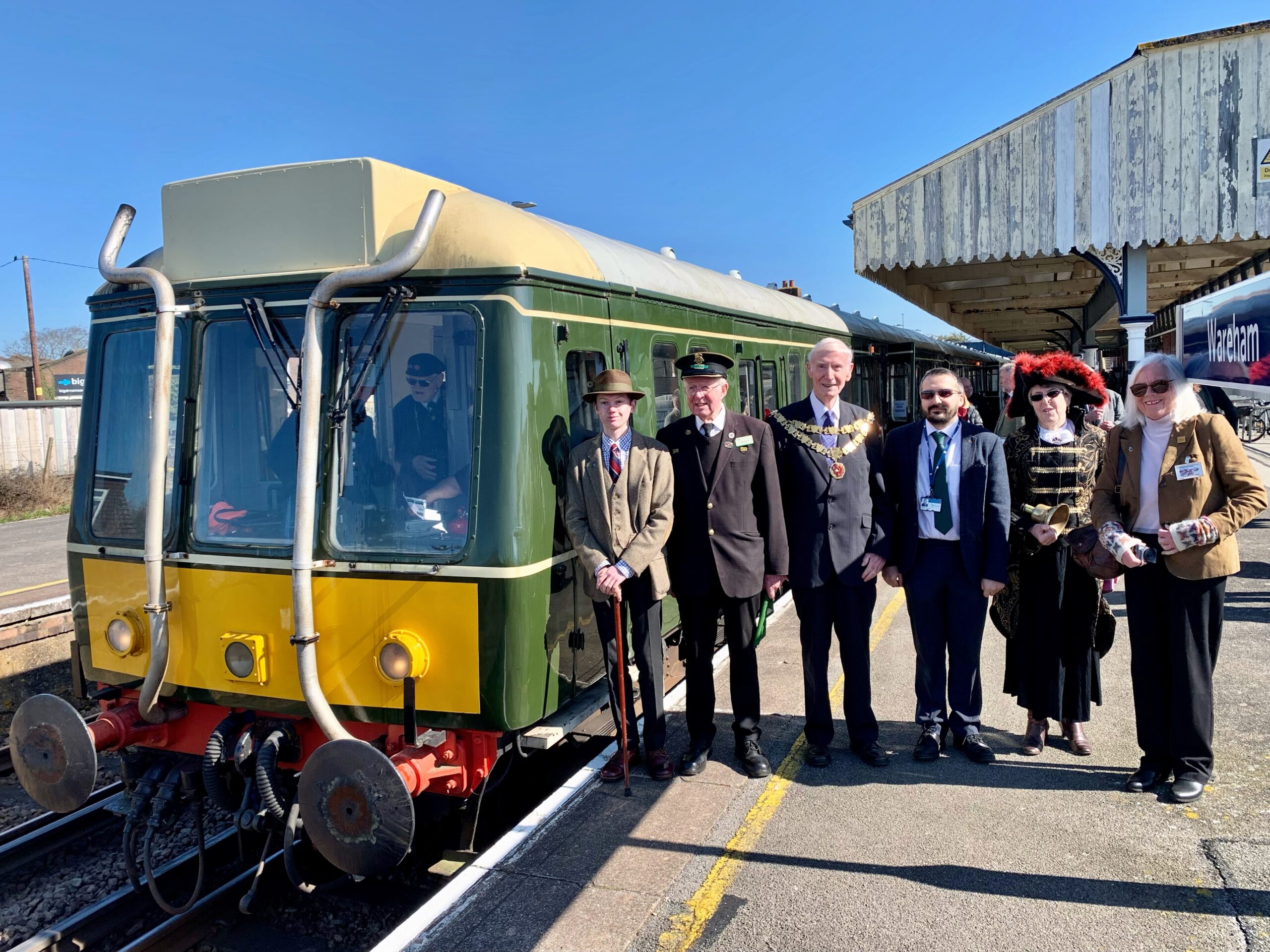
Hello there – after a week away, we are back with a lot to catch up on. We hope you found last times Beeching blog of interest – it’s certainly a period in railway history which incites discussion and reflection. This time we are concentrating on more recent events concerning the Swanage Railway including our visit to their excellent March 2023 Steam Gala – which featured British Rail Standard Class 7 4-6-2 No. 70000 ‘Britannia’ – and the first diesel multiple unit train departing Wareham connecting the Purbeck heritage railway to the main line.
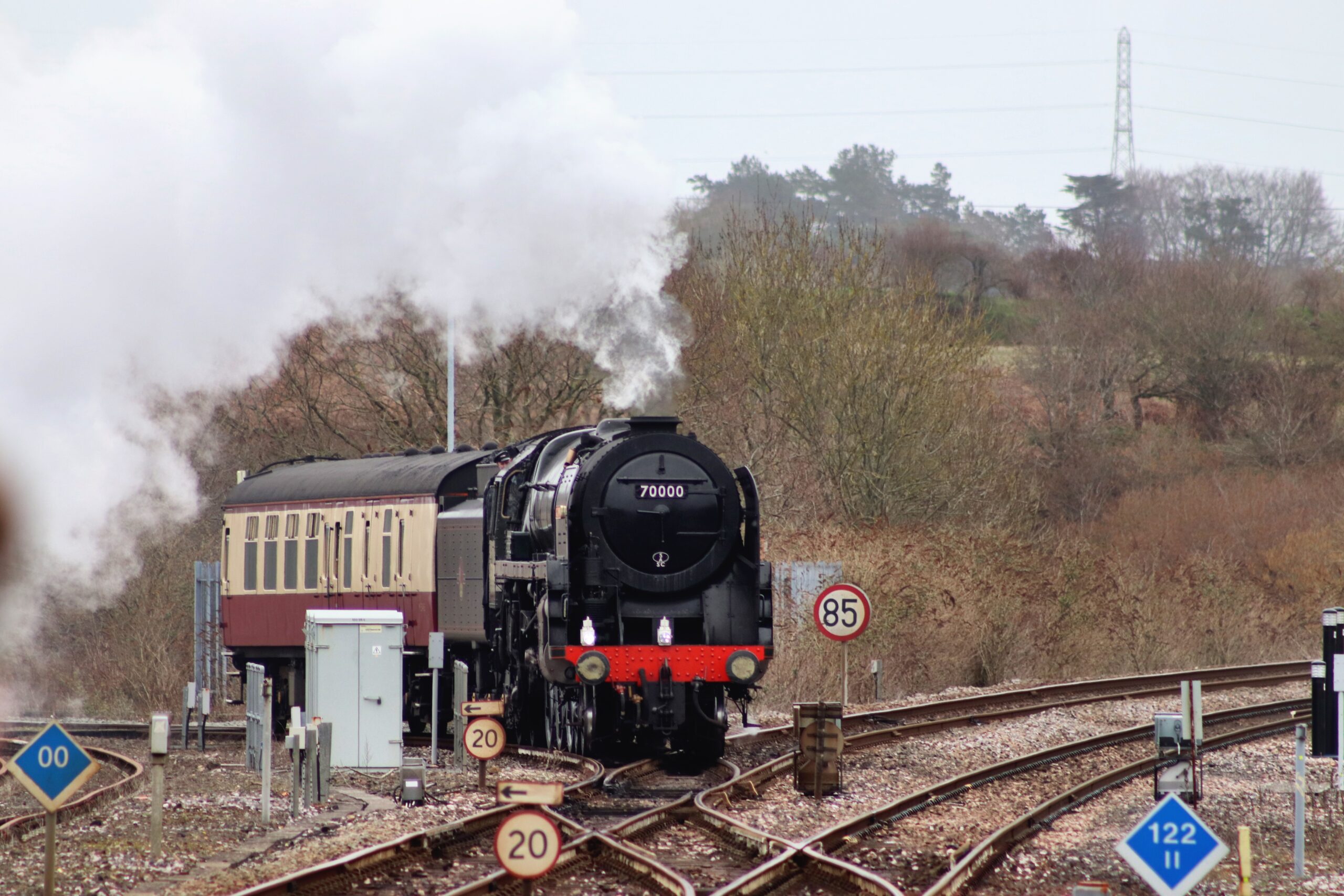
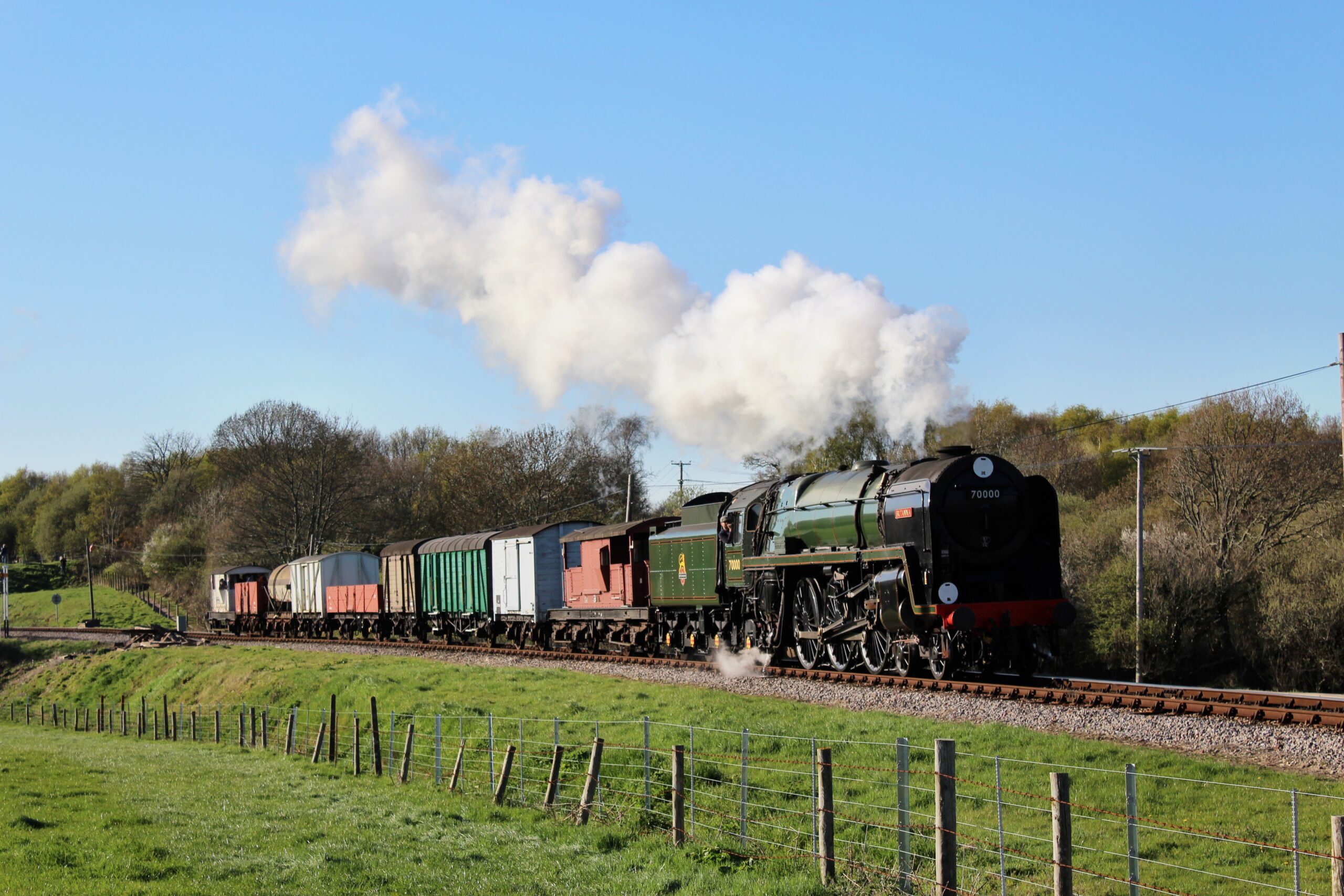
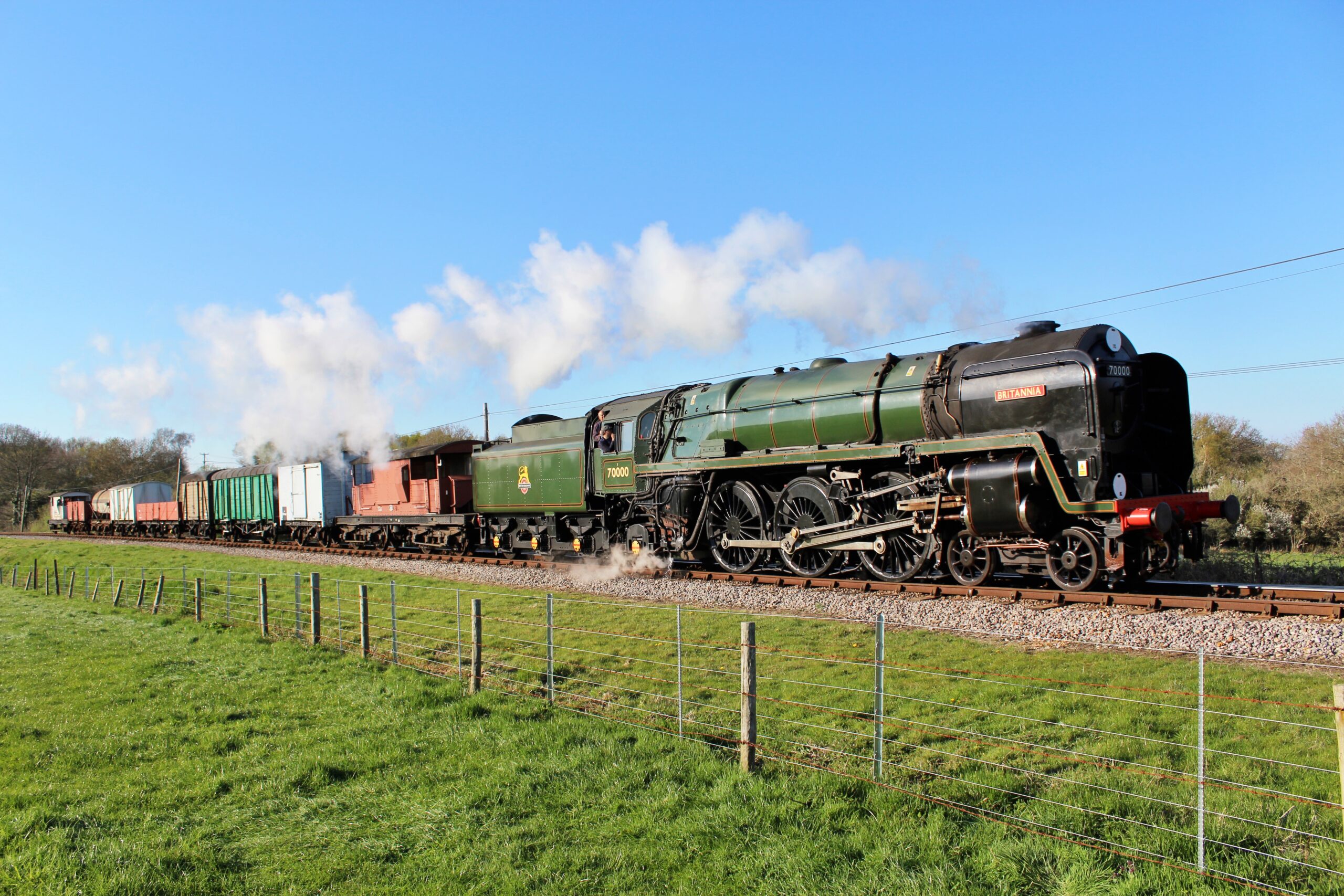
British Railways Standard Class 7 4-6-2 No. 70000 ‘Britannia’ approaches Yeovil Junction working 5Z70 Crewe HS to Swanage having used the connecting curve from Yeovil Pen Mill – 22/03/2023
On Wednesday 22nd March 2023, we headed over to Yeovil to see No. 70000 ‘Britannia’ arrive at Yeovil Junction in readiness for her being turned on Yeovil Railway Centre’s turntable. I always enjoy watching locomotives on the turntable, and despite a few initial barks form Yoshi, he mostly watched on with quiet fascination.
British Railways Standard Class 7 4-6-2 No. 70000 ‘Britannia’ is turned on the Yeovil Railway Centre turntable – 22/03/2023British Railways Standard Class 7 4-6-2 No. 70000 ‘Britannia’ after being turned at the Yeovil Railway Centre – 22/03/2023
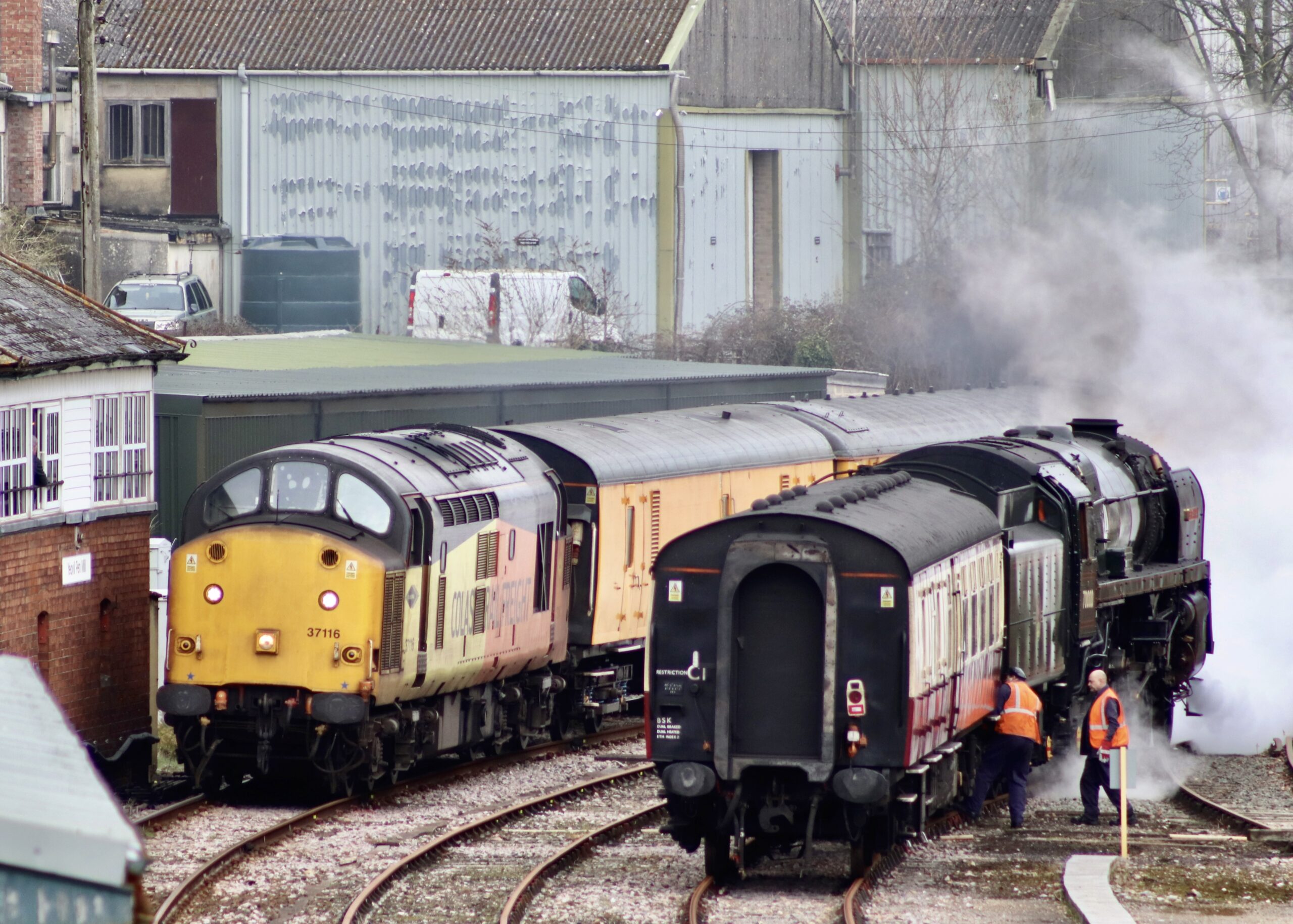
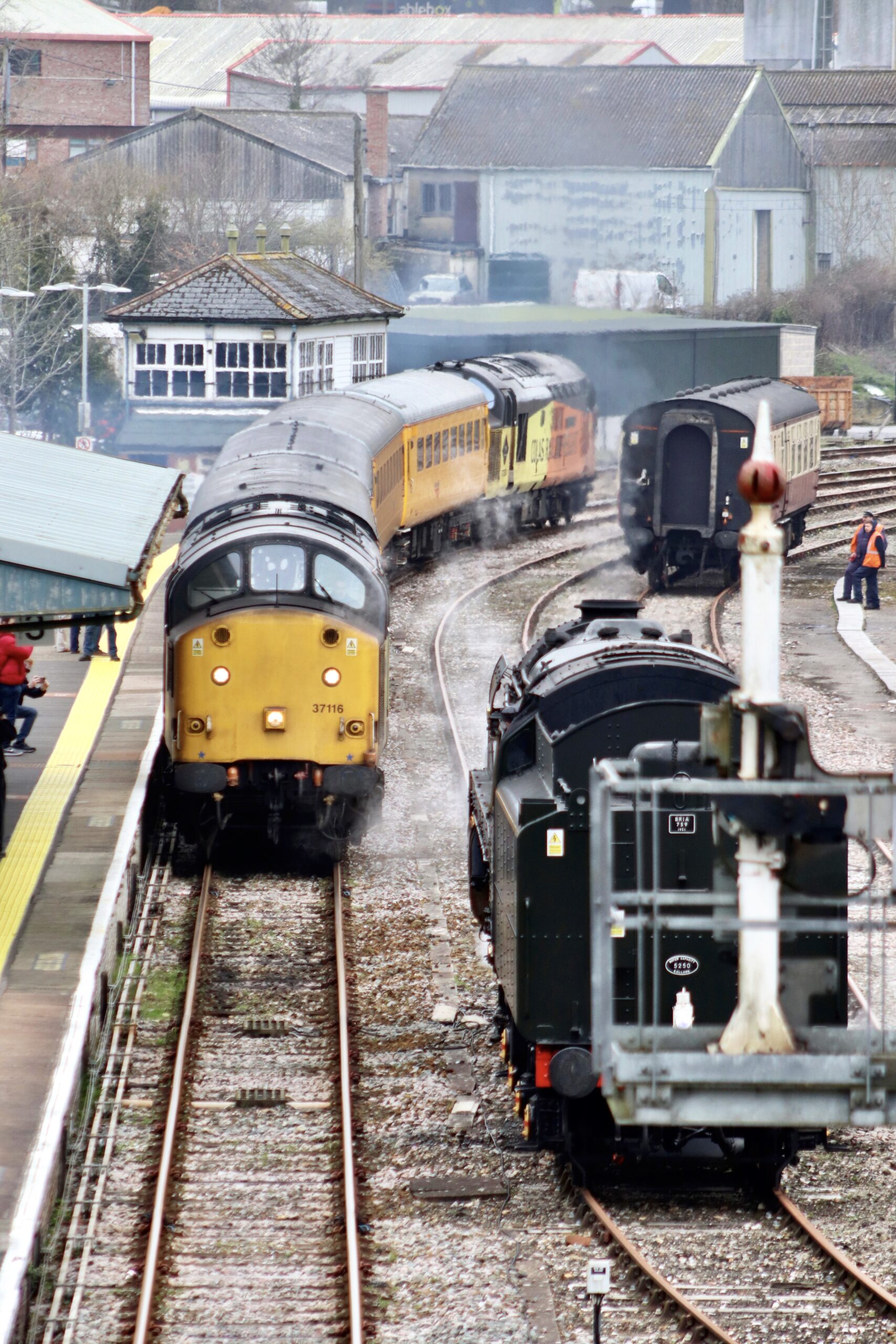
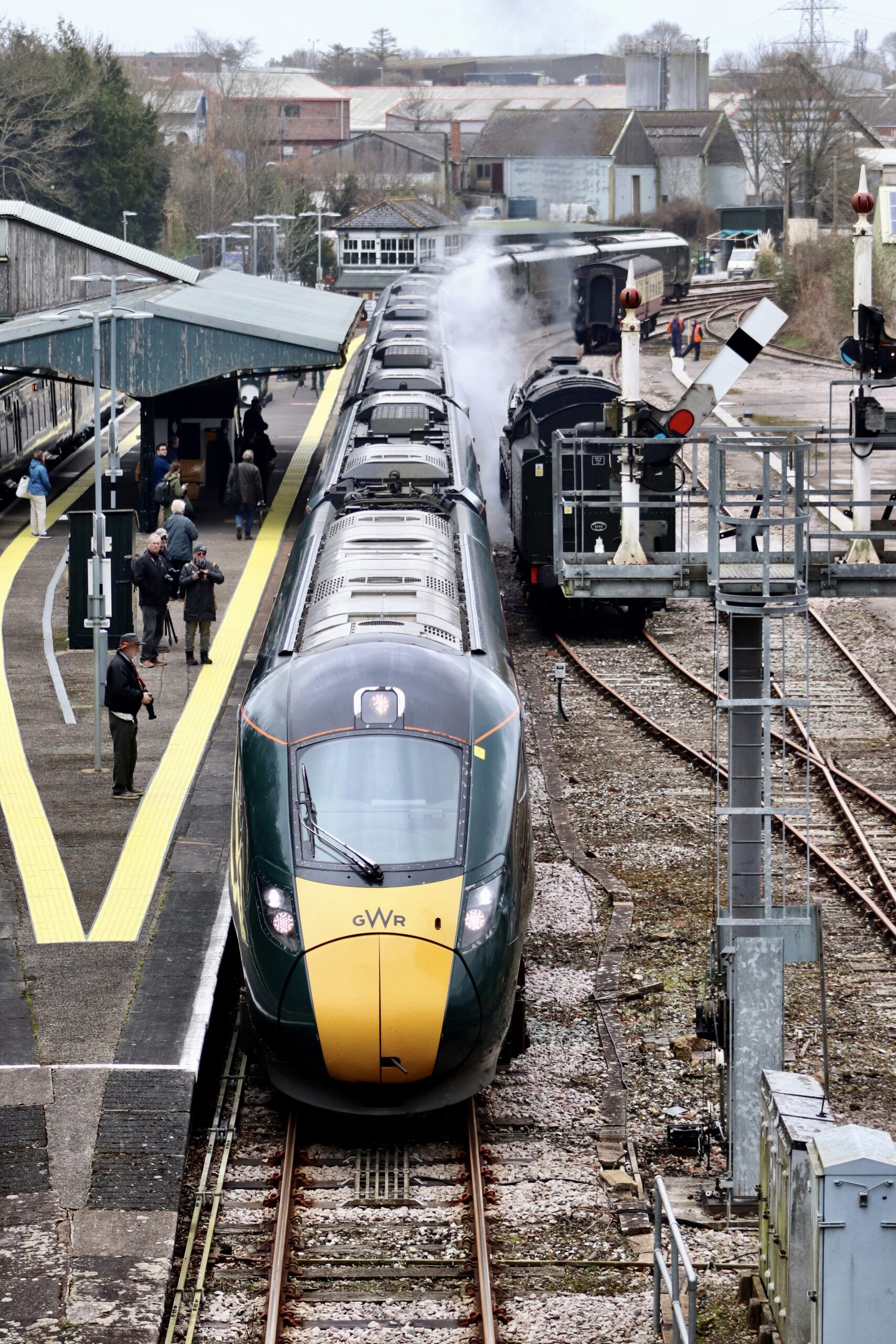
Following her spin on the turntable, ‘Britannia’ backed out onto the main line at Junction station and we drove down to Yeovil Pen Mill so that we could capture a pair of Class 37 diesel locomotives working test train 1Z22 Derby Railway Technical Centre to Bristol Kingsland Road via Weymouth which was scheduled to pass through at around 1500, 20 minutes or so before ‘Britannia’ was due to arrive at Pen Mill prior to a tender first run down to Weymouth. The test train, however, top and tailed by Colas No.’s 37116 and 37254 arrived at Pen Mill almost thirty minutes late and by this time ‘Britannia’ had already made the run down from Junction with her support coach. We were also able to see a Great Western Railway (GWR) Class 800 IET pass through on a divert as engineering work was taking place on the Taunton line and services to Exeter were taking the West of England route.
British Railways Standard Class 7 4-6-2 No. 70000 ‘Britannia’ having turned at Yeovil Junction nears Yeovil Pen Mill where she will run round her support coach before proceeding to Weymouth – 22/03/2023Colas Class 37 No. 37116 arrives at Yeovil Pen Mill with 1Z22 Derby Railway Technical Centre to Bristol Kingsland Road. British Railways Standard Class 7 4-6-2 No. 70000 ‘Britannia’ stands in the sidings waiting to run round her support coach before proceeding to run tender first to Weymouth – 22/03/2022 Colas Class 37 No’s. 37116 and 37254 depart Yeovil Pen Mill top and tailing 1Z22 Derby Railway Technical Centre to Bristol Kingsland Road as No. 70000 ‘Britannia’ waits to reverse out of the station and back on to her support coach – 22/03/2023Great Western Railway Class 800 IET No. 802102 works the diverted 1C84 1404 London Paddington to Plymouth service through Yeovil Pen Mill – 22/03/2023British Railways Standard Class 7 4-6-2 No. 70000 ‘Britannia’ prepares to reverse out of Yeovil Pen Mill and run back in to couple up with her support coach – 22/03/2023British Railways Standard Class 7 4-6-2 No. 70000 ‘Britannia’ at Weymouth here she again ran around her support coach in preparation for the journey to Poole, where she again changes ends on the coach, before working back down to Swanage (Image courtesy of Scott Lewis) – 22/03/2023
Video from Yeovil, Dorchester, Upwey and Hamworthy as British Railways Standard Class 7 4-6-2 No. 70000 ‘Britannia’ makes her way to Dorset having departed Crewe earlier in the day as working 5Z70 Crewe HS to Swanage (additional video courtesy of G E Barrett and Scott Lewis – 22/03/2023
I had an idea that I would pop over to Yeovil Pen Mill at 2am some point during the week to see the Penzance sleeper services cross via the diversionary route, but decided to wait until warmer weather later in the year should the diversions take place again. However, our North Dorset Correspondent was far more intrepid and caught the following exchange as No. 57604 ‘Pendennis Castle’ passed No. 57602 ‘Restormel Castle’:
GWR Sleeper trains on divert pass at Yeovil Pen Mill. Video courtesy of Scott Lewis – 24/03/2023
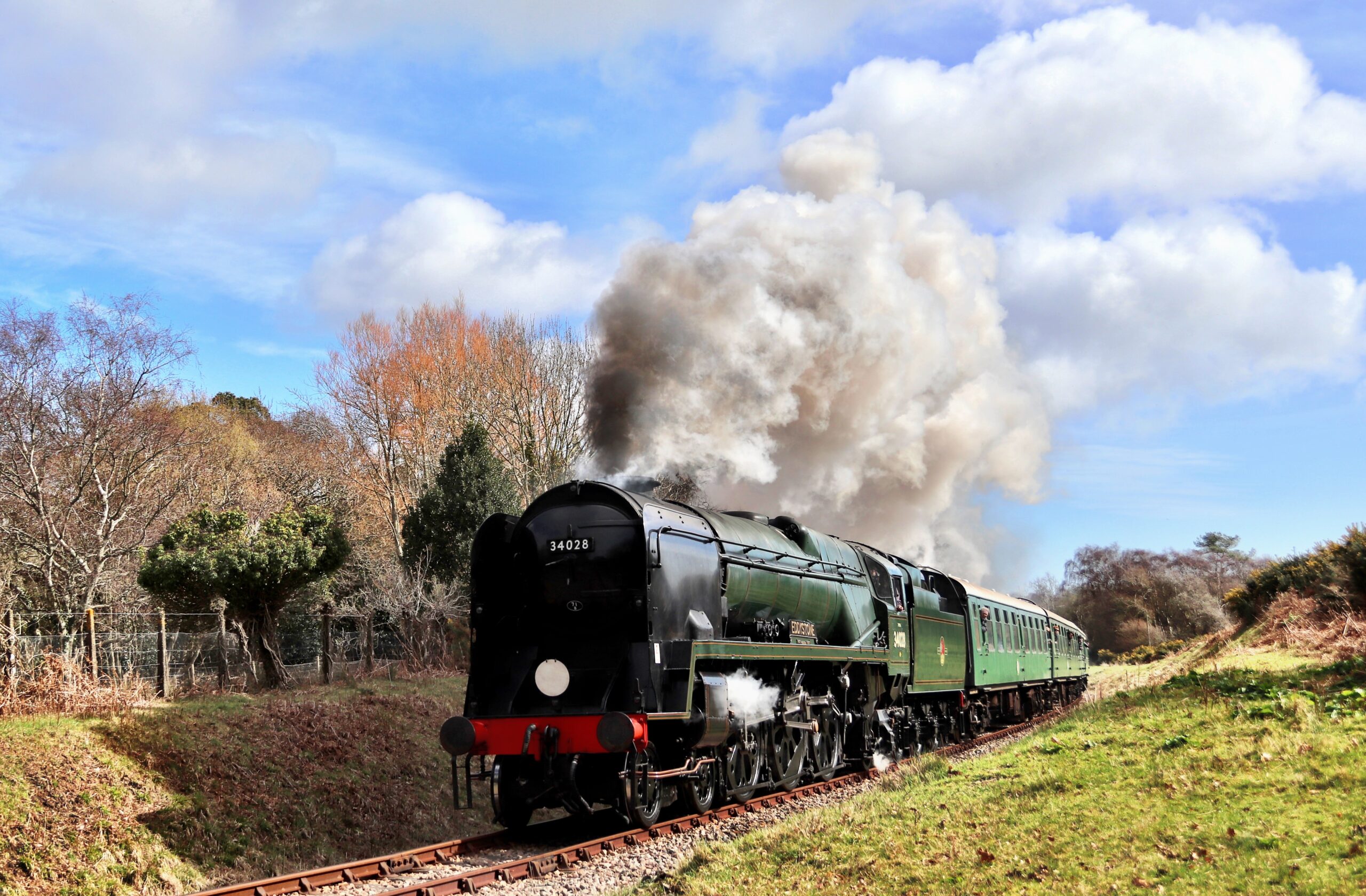
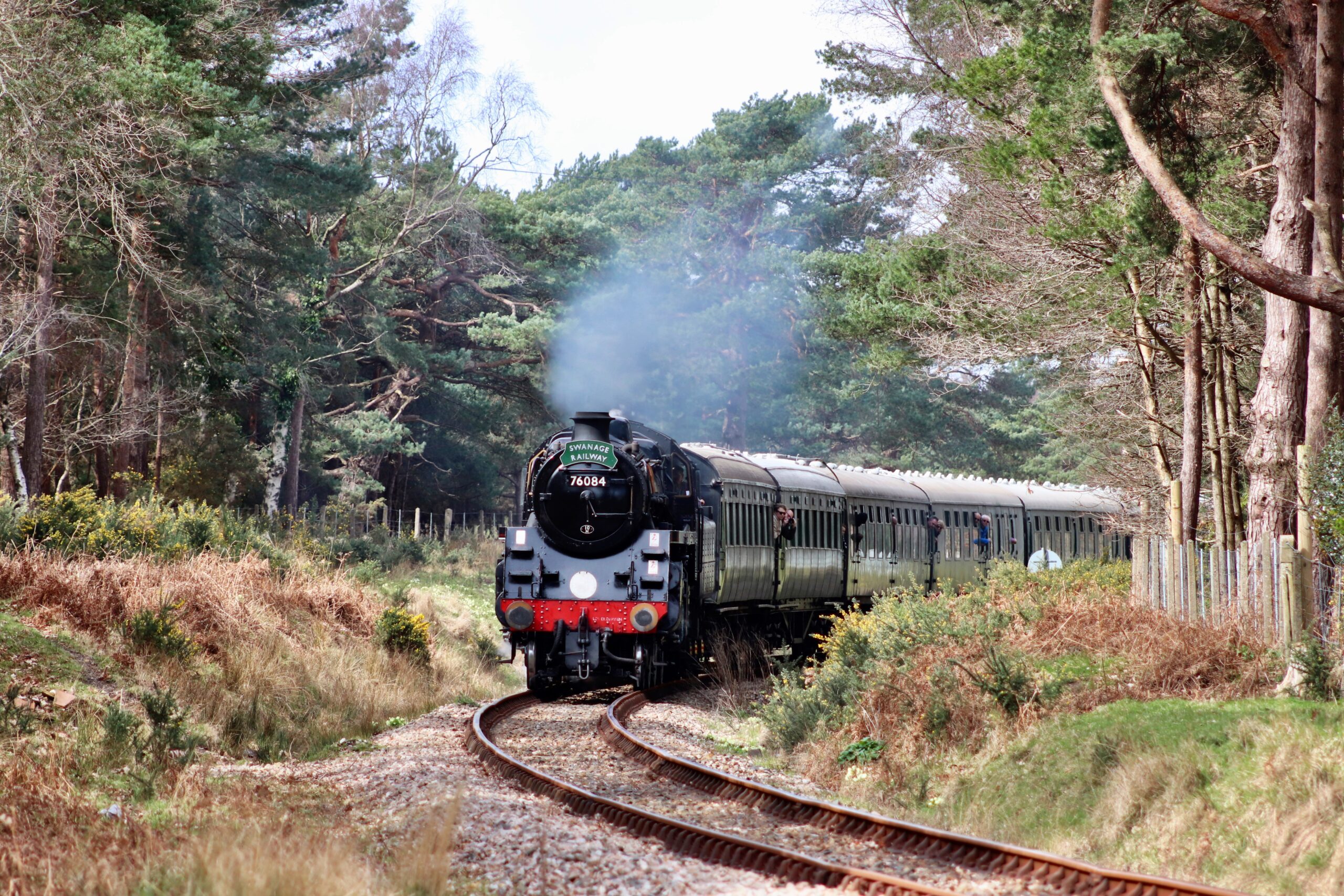
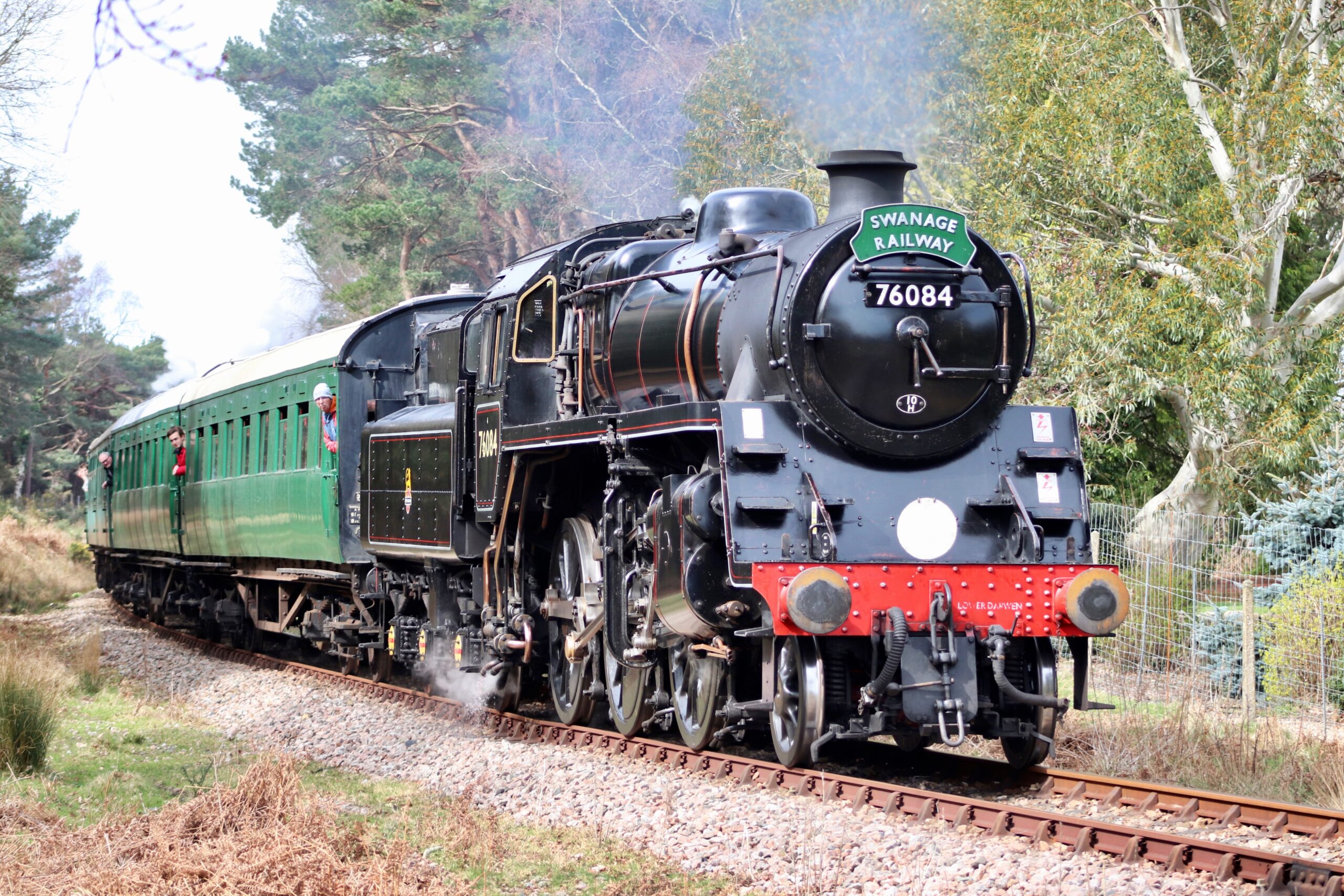
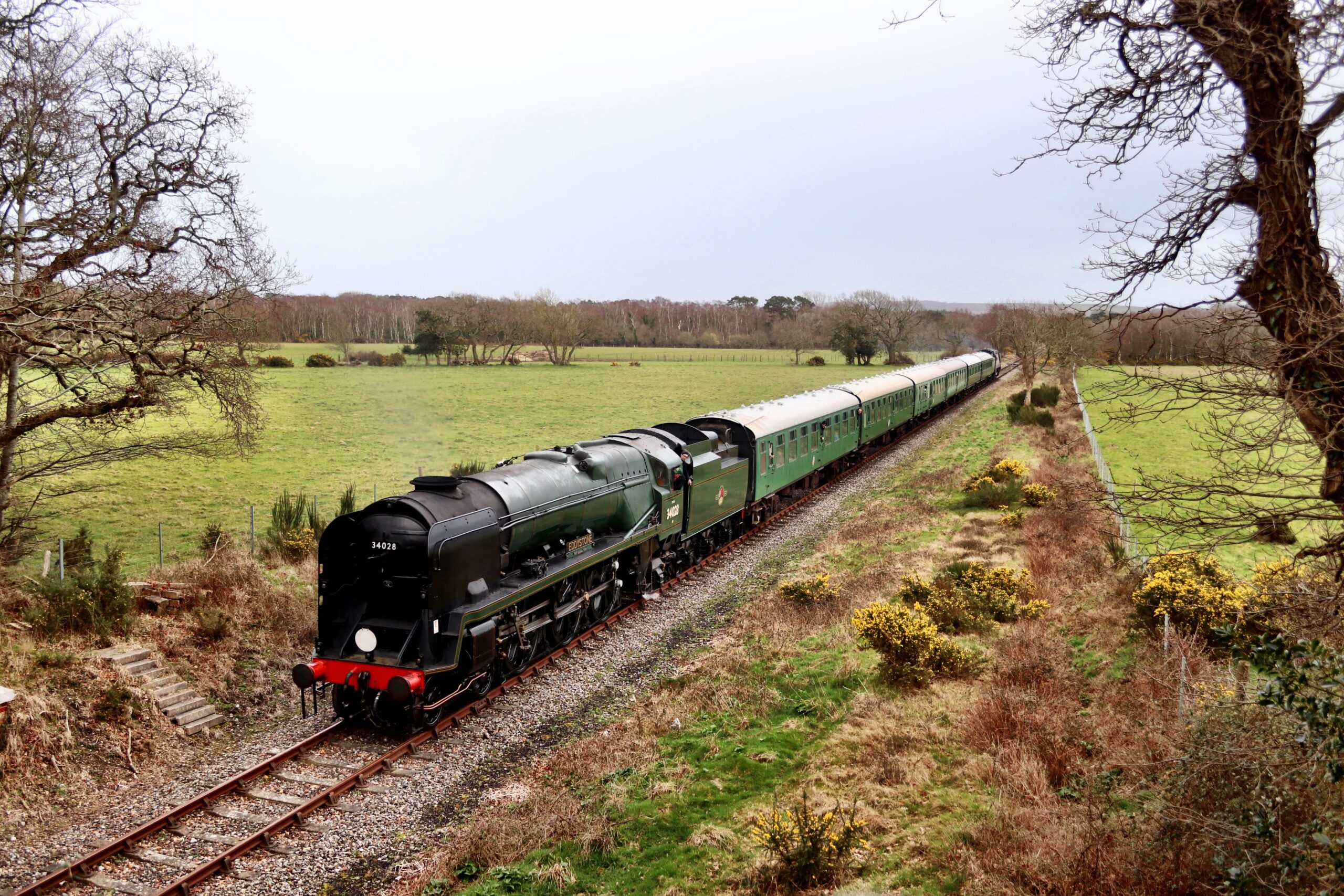
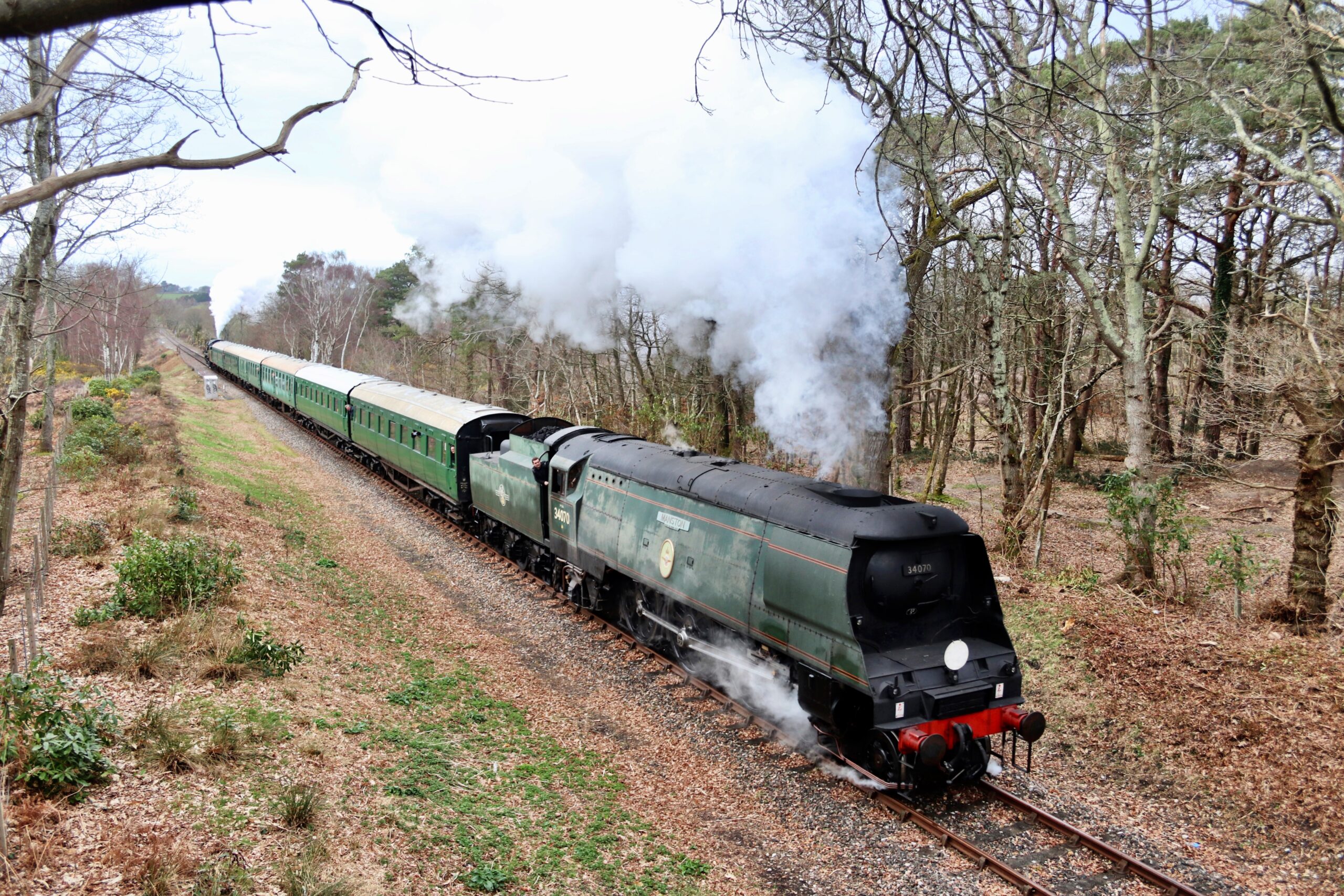
Over the final March weekend, the Swanage Railway ran their popular Spring Steam Gala which featured ‘Britannia’ and BR Standard Class 4MT 2-6-0 No. 76084 as guest locomotives alongside home fleet Southern Railway U Class No. 31806 and Southern Railway Bulleid Pacifics No. 34070 ‘Manston’ and No. 34028 ‘Eddystone’. I headed down to join in the fun on the Saturday leaving Yoshi with his mama. I had planned on seeing the first train of the day which was scheduled to be double headed – but I also needed to pop into Wareham and visit the Post Office – so my arrival at the National Trust car park at Corfe Castle was delayed and I just missed the ensemble pass. To make things worse, the National Trust tea room at the car park was closed, so no breakfast for me as I had left home with the idea of catching refreshment between trains. However, luckily for me, Jamie came to my rescue and very kindly shared his packed lunch so I didn’t waste away through the lack of nourishment.
A video snap shot of the 2023 Swanage Steam Gala – 25/03/2023Unrebuilt Battle of Britain Class Bulleid Pacific No. 34070 ‘Manston’ between Norden and Corfe Castle – 25/03/2023Rebuilt West Country Class Bulleid Pacific No. 34028 ‘Eddystone’ nears Cat’s Eye Crossing with a train bound fro the River Frome boundary – 25/03/2023Bulleid Pacific No. 34028 ‘Eddystone’ approaching Cat’s Eye Crossing – 25/03/2023BR Standard Class 4MT 2-6-0 No. 76084 nears Cat’s Eye Crossing – 25/03/2025BR Standard Class 4MT 2-6-0 No. 76084 approaching Cat’s Eye Crossing – 25/03/2023Bulleid Pacific No. 34028 ‘Eddystone’ approaches Holme Lane Bridge on the Swanage Railway – 25/03/2023Bulleid Pacific No. 34070 ‘Manston’ hauls a train away from the River Frome boundary – 25/03/2023British Railways Standard Class 7 4-6-2 No. 70000 ‘Britannia’ with a train heading towards the River Frome boundary passing under Cat’s Eye Bridge – 25/03/2023British Railways Standard Class 7 4-6-2 No. 70000 ‘Britannia’ nears Cat’s Eye Crossing – 25/03/2023
Undoubtably the star of the gala; No. 70000 ‘Britannia’ was built at Crewe Works to a new design and entered servive in January 1951. She was the first British Railways Standard locomotive to be constructed and was the initial locomotive in the Britannia Class which went on to number 55 examples. The design of the ‘Britannias’ was based on best practice from the pre-nationalisation “Big Four” railway companies. The new classes were designed by Ernest Stewart Cox, under Robert Riddles who had previously designed the War Department Austerity 2-8-0 and 2-10-0 locomotives for use during World War 2. No. 70000 was named ‘Britannia’ during a ceremony held at Marylebone station by Minister for Transport Alfred Barnes on the 30th January 1951. ‘Britannia’ had the honour of hauling the funeral train of King George VI from King’s Lynn to London in February 1952, for which she had her cab roof painted white as was the custom for royal locomotives. No. 70000 was withdrawn after only 15 years of service in May 1966 and was initially destined for the National Collection, but was passed over for sister locomotive No. 70013 ‘Oliver Cromwell’. She was saved from the cutter’s torch by the Britannia Locomotive Company Ltd. She is currently operated by Locomotive Services Limited (LSL). One of most memorable main line steam locomotives when I used to enjoy the chase in the mid 1990’s, a video with footage of ‘Britannia’ from this period is below:
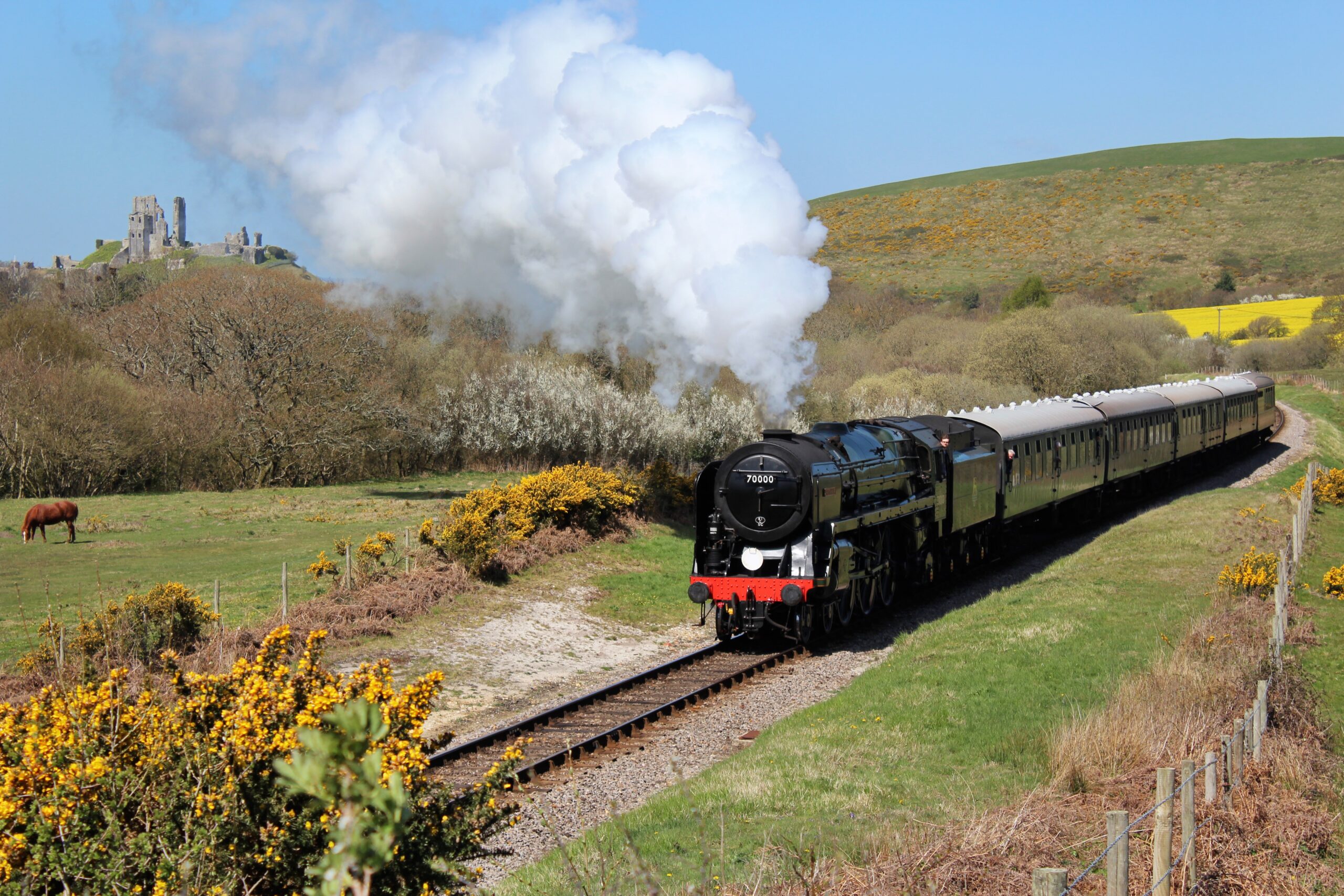
No. 70000 ‘Britannia’ also visited the Swanage Railway in 2015 and I’ve dug out a few images of that time to share:
British Railways Standard Class 7 4-6-2 No. 70000 ‘Britannia’ heads a Swanage bound service with Corfe Castle in the background – 18/04/2015British Railways Standard Class 4 2-6-4 No. 80104 double heads with BR Standard Class 7 4-6-2 No. 70000 ‘Britannia’ having just left Norden – 18/04/2015British Railways Standard Class 7 4-6-2 No. 70000 ‘Britannia’ works a demonstration freight nears Corfe Castle – 18/04/2015Another view of British Railways Standard Class 7 4-6-2 No. 70000 ‘Britannia’ working the Swanage Railway demonstration freight – 18/04/2015
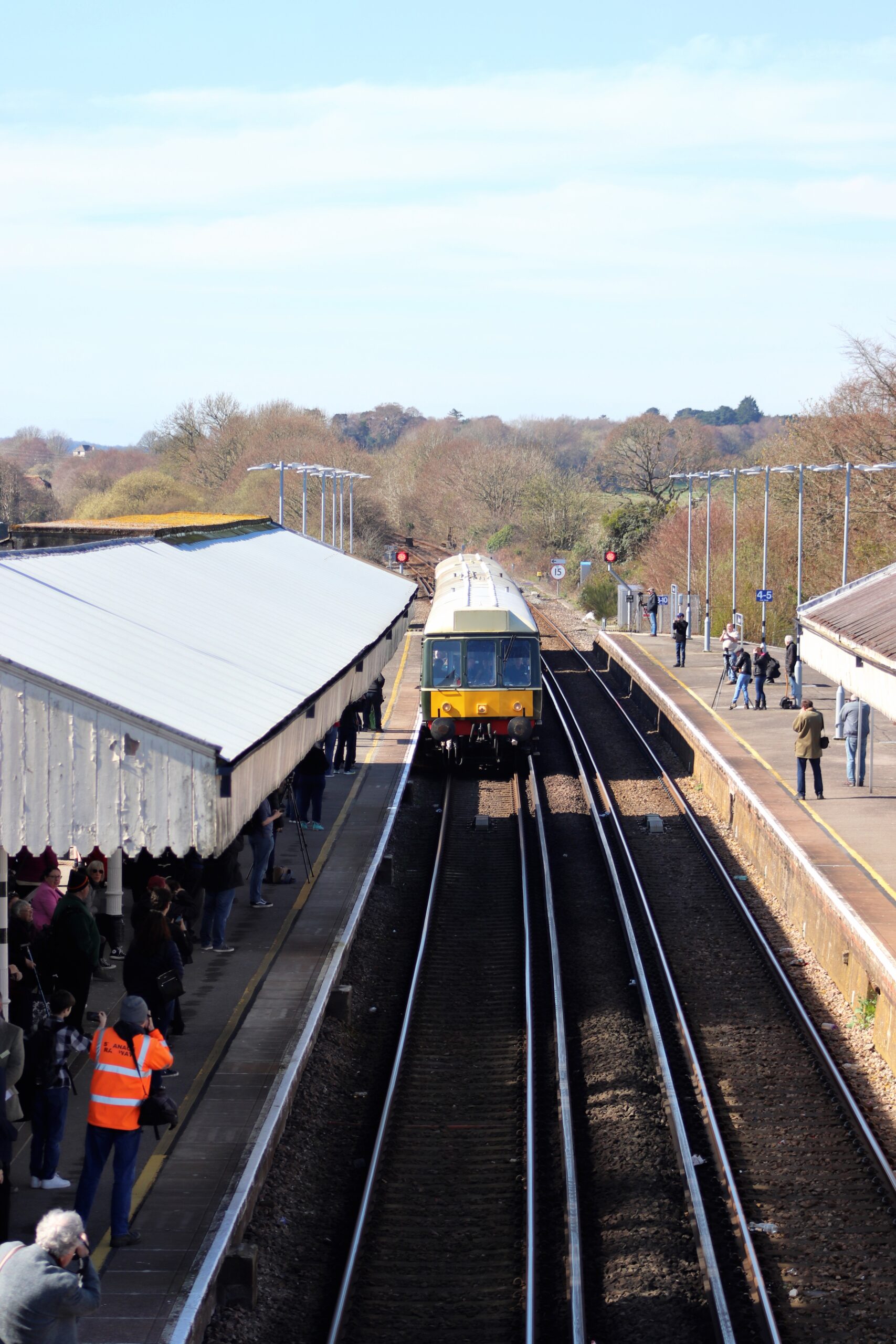
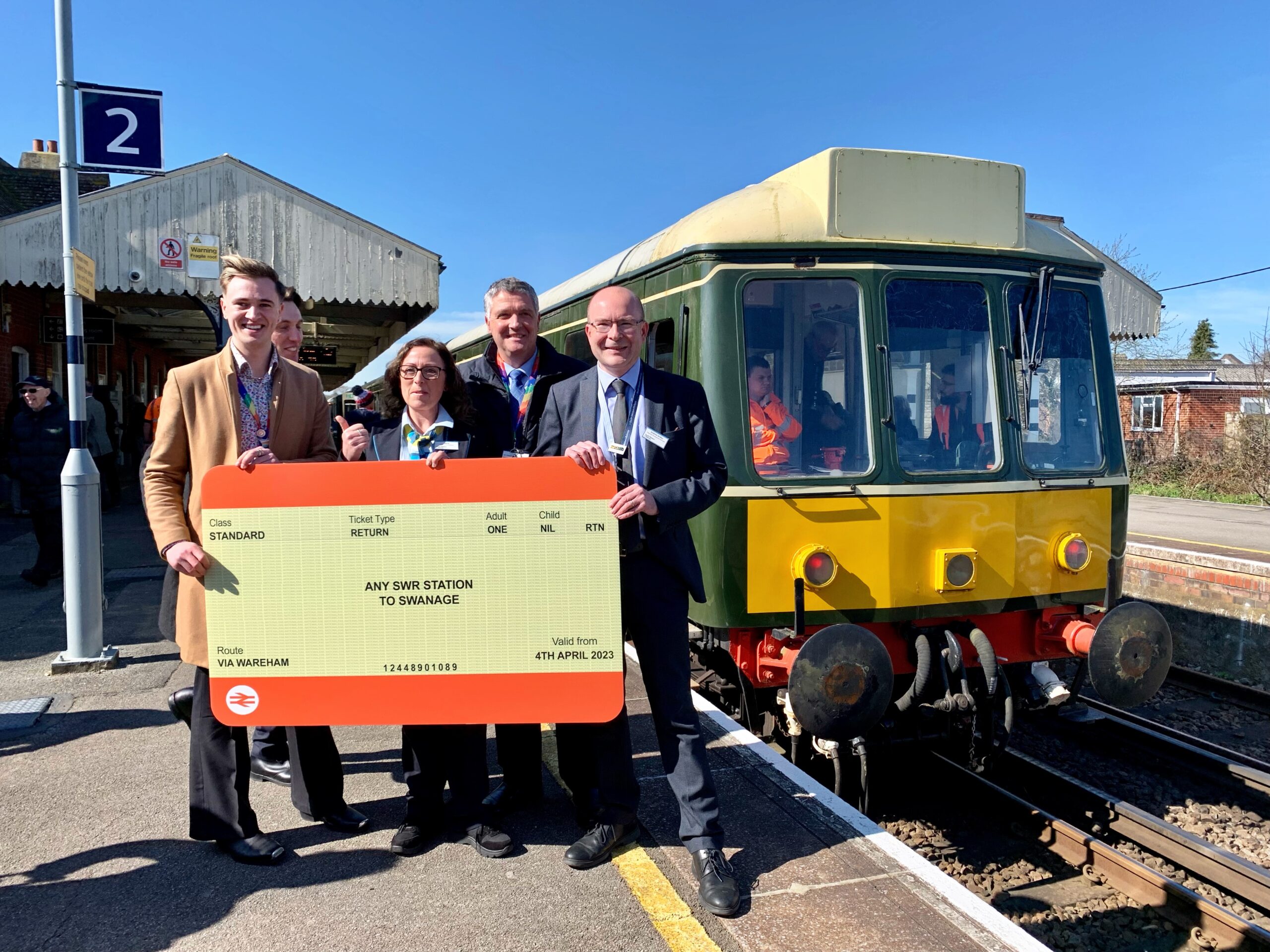
The Swanage Railway has also been in the news following their launch of a trial train service from main line Wareham through to the heritage branch line. Operating from April to September 2023, tickets for the service will also be available from South Western Railway (SWR) from late April so passengers can add tickets for Corfe Castle and Swanage to their main line tickets. This is the first time in 51 years that through ticketing to Corfe and Swanage has been possible. The last day of British Rail passenger services between Wareham, Corfe Castle and Swanage was on Saturday 1st January 1972 when the branch was closed. The eleven mile service, one mile of which running from Worgret Junction into Wareham station will be over main line Network Rail metals, will utilise restored and upgraded 1950’s Class 117 and Class 121 heritage diesel multiple units. The trial service will operate on Tuesdays, Wednesdays, Thursdays and Saturdays from 4th April to 10th September 2023, with the first train departing Wareham at 1119 and the last train leaving Swanage for Wareham at 1620 giving visitors the opportunity to spend four hours in Swanage or Corfe Castle. The timetable is subject to change on special event days. We popped over to Wareham to see the first service arrive and depart from Wareham.
Swanage Railways Class 117 DMU leads into Wareham with the first trail service onto the main line – 04/04/2023South Western Railway staff pose at Wareham with an actual sized ticket to promote through ticketing to Corfe Castle and Swanage – 18/04/2023Dignitaries pose in front of the single car Class 121 DMU at Wareham ahead of the first departure to Swanage – 04/04/2023
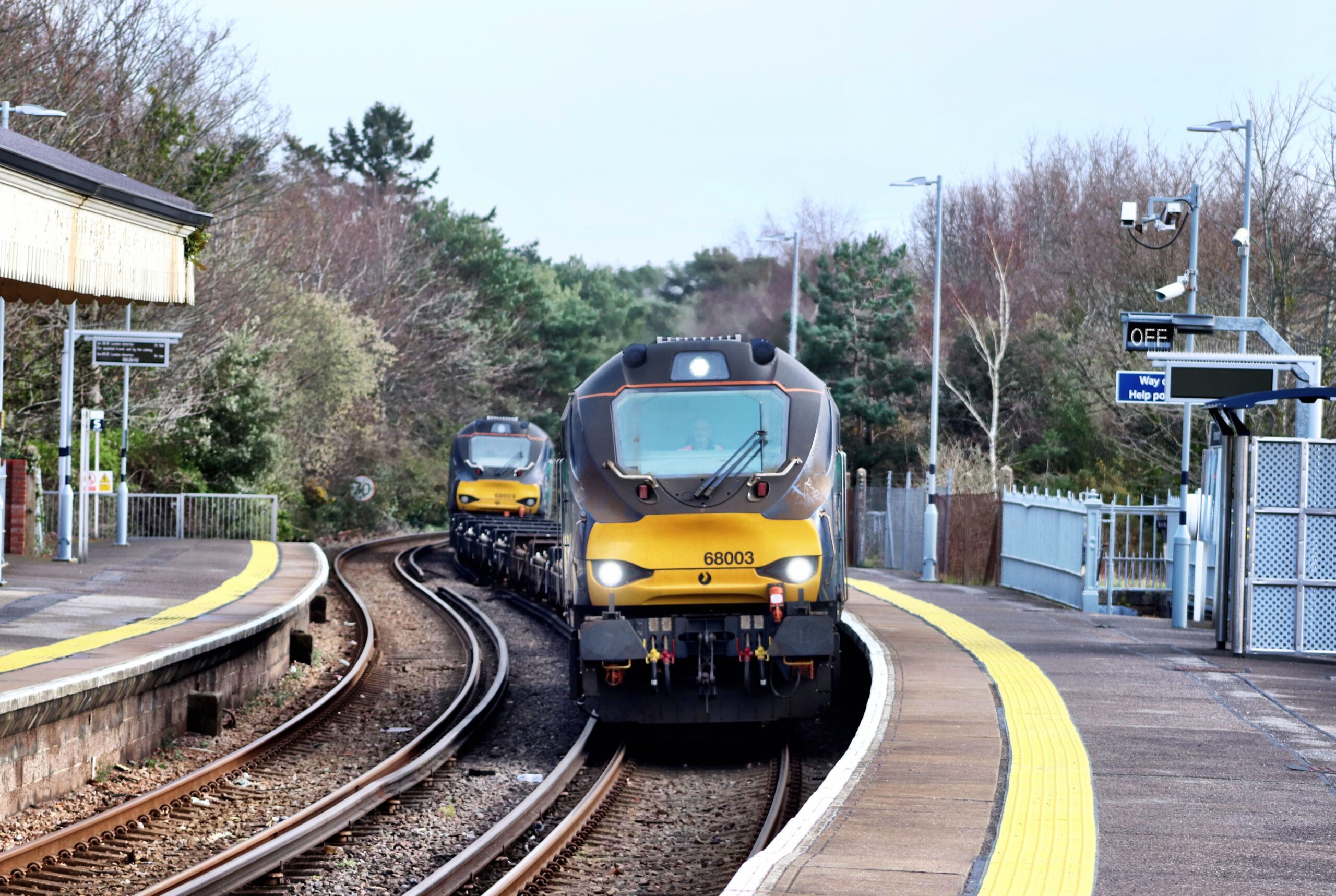
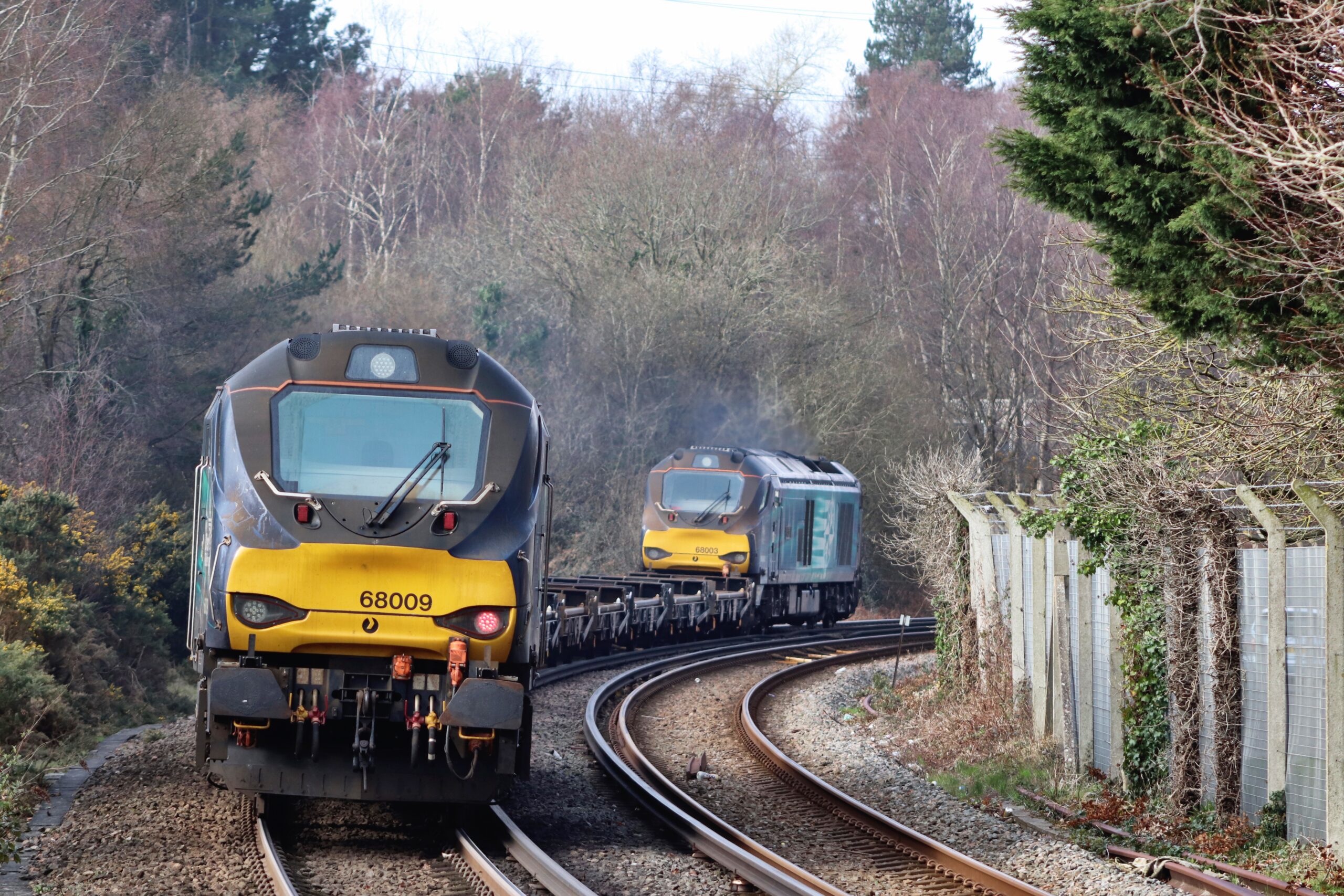
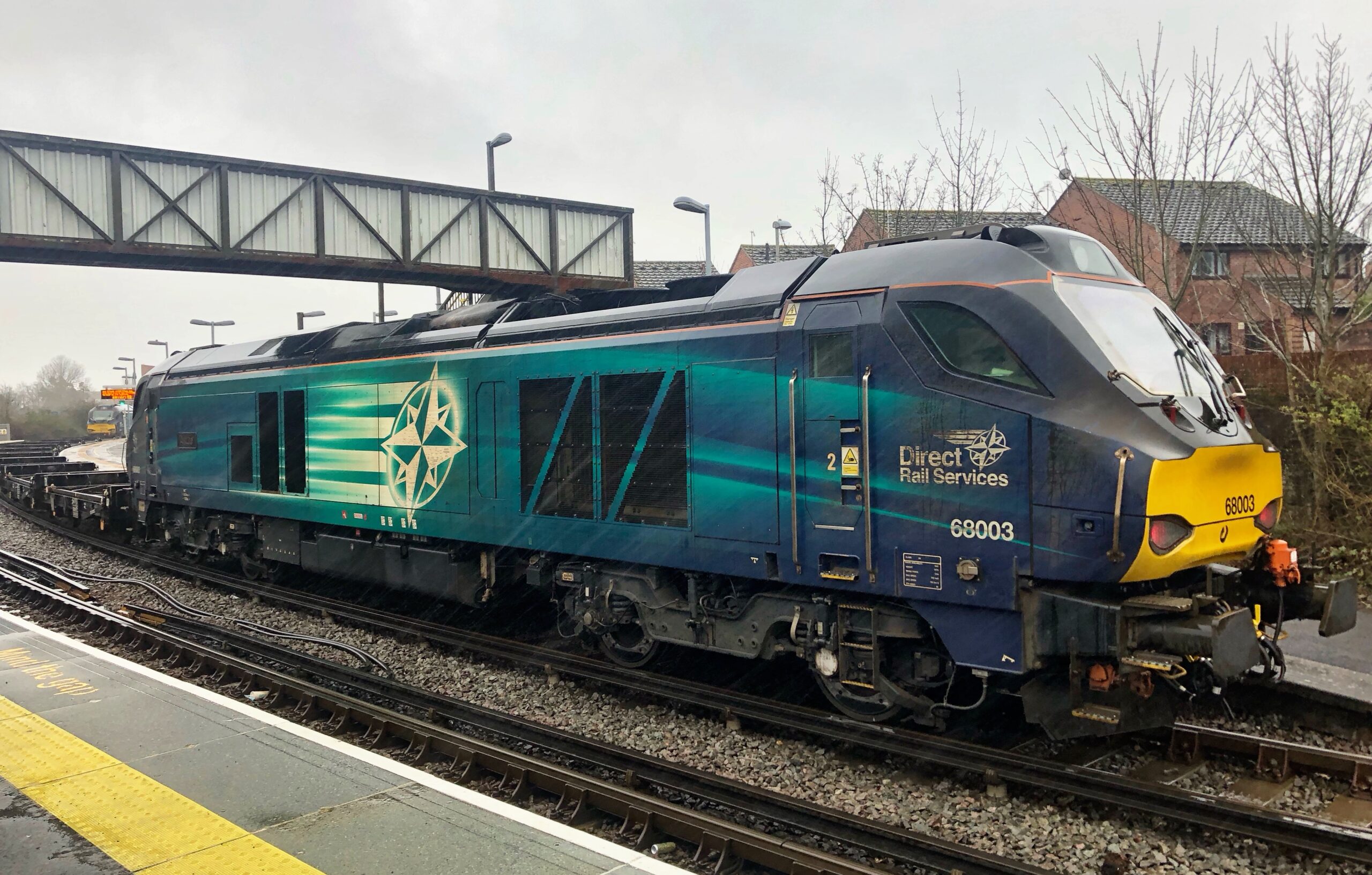
A surprise run to Winfrith occurred on March 23rd 2023, timings only appearing on Real Time Trains late the previous day. Two new to Dorset Direct Rail Services (DRS) Class 68 locomotives top and tailed the train which interestingly returned empty to Crewe. It is thought that the high winds in evidence on the day meant it was unsafe to use the crane at Winfrith employed to load the low level nuclear waste onto the wagons.
DRS Class 68 No. 68003 ‘Astute’ heads up 6Z62 0100 Crewe Coal Sidings DRS to Wool Winfrith Sidings with classmate No. 68009 ‘Titan’ behind passing through Hamworthy – 23/03/2023DRS Class 68 No. No. 68009 ‘Titan’ trails No. 68003 ‘Astute’ having passed through Hamworthy working 6Z62 0100 Crewe Coal Sidings DRS to Wool Winfrith Sidings – 23/03/2023DRS Class 68 No. 68003 ‘Astute’ at Dorchester South working 6Z95 1554 Wool Winfrith Sidings to Crewe Coal Sidings DRS (image courtesy of G E Barrett) – 23/03/2023DRS Class 68 No. No. 68009 ‘Titan’ prepares to lead 6Z95 1554 Wool Winfrith Sidings to Crewe Coal Sidings DRS away from Dorchester South (image courtesy of G E Barrett) – 23/03/2023
Video of the DRS Class 68 No.’s 68003 ‘Astute’ and 68009 ‘Titan’ working a Winfrith train. Additional video courtesy of G E Barrett – 23/03/2023
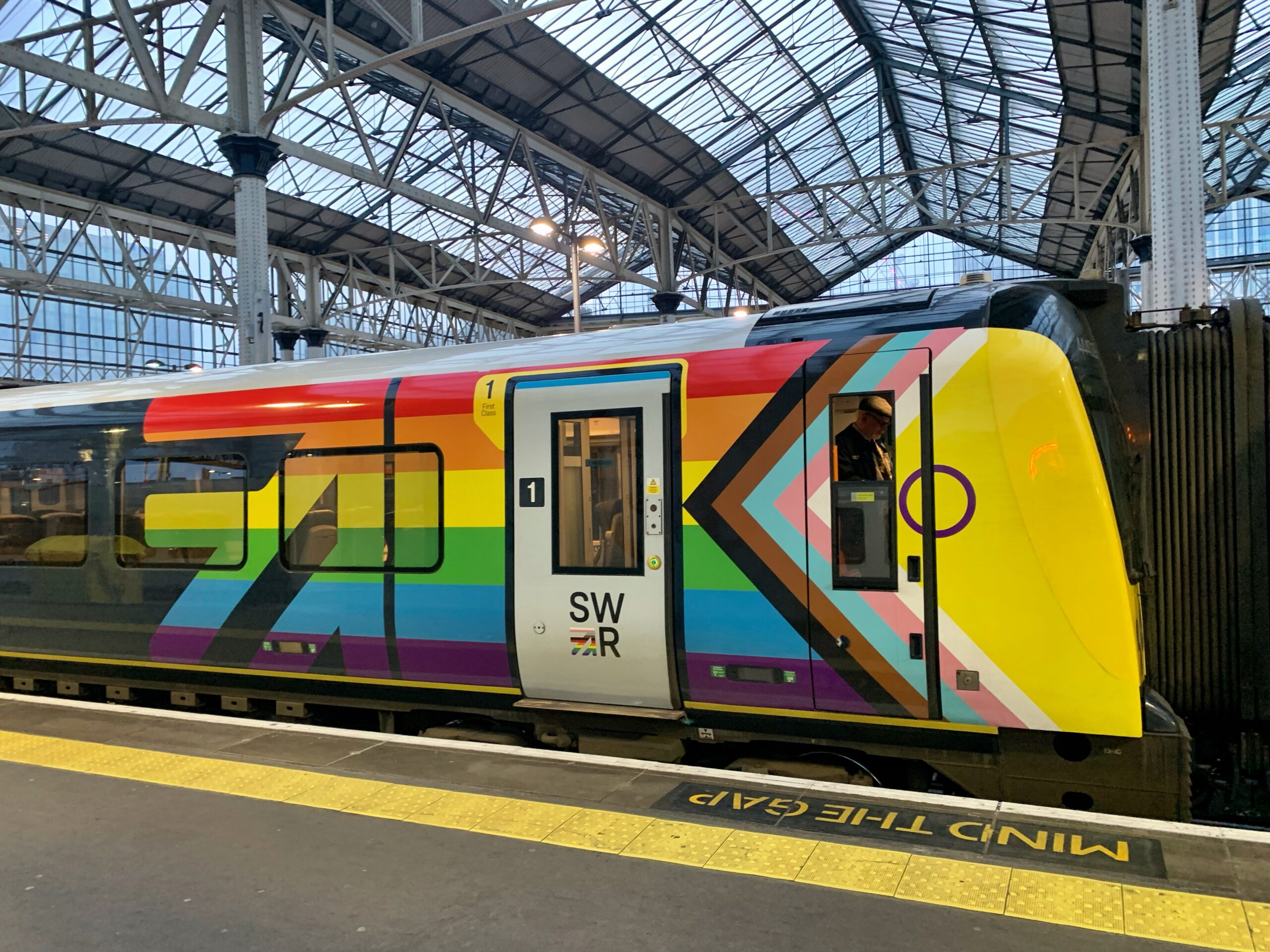
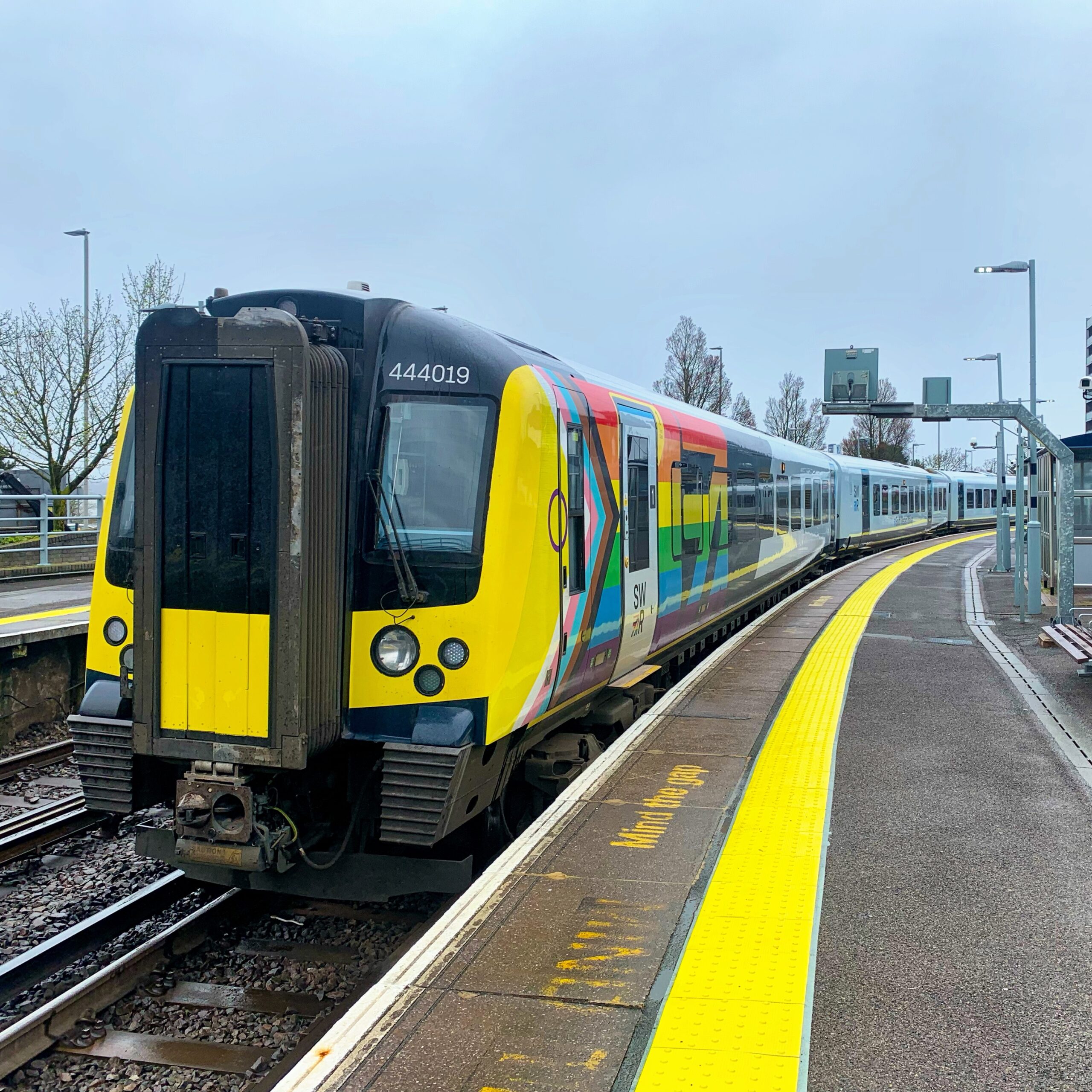
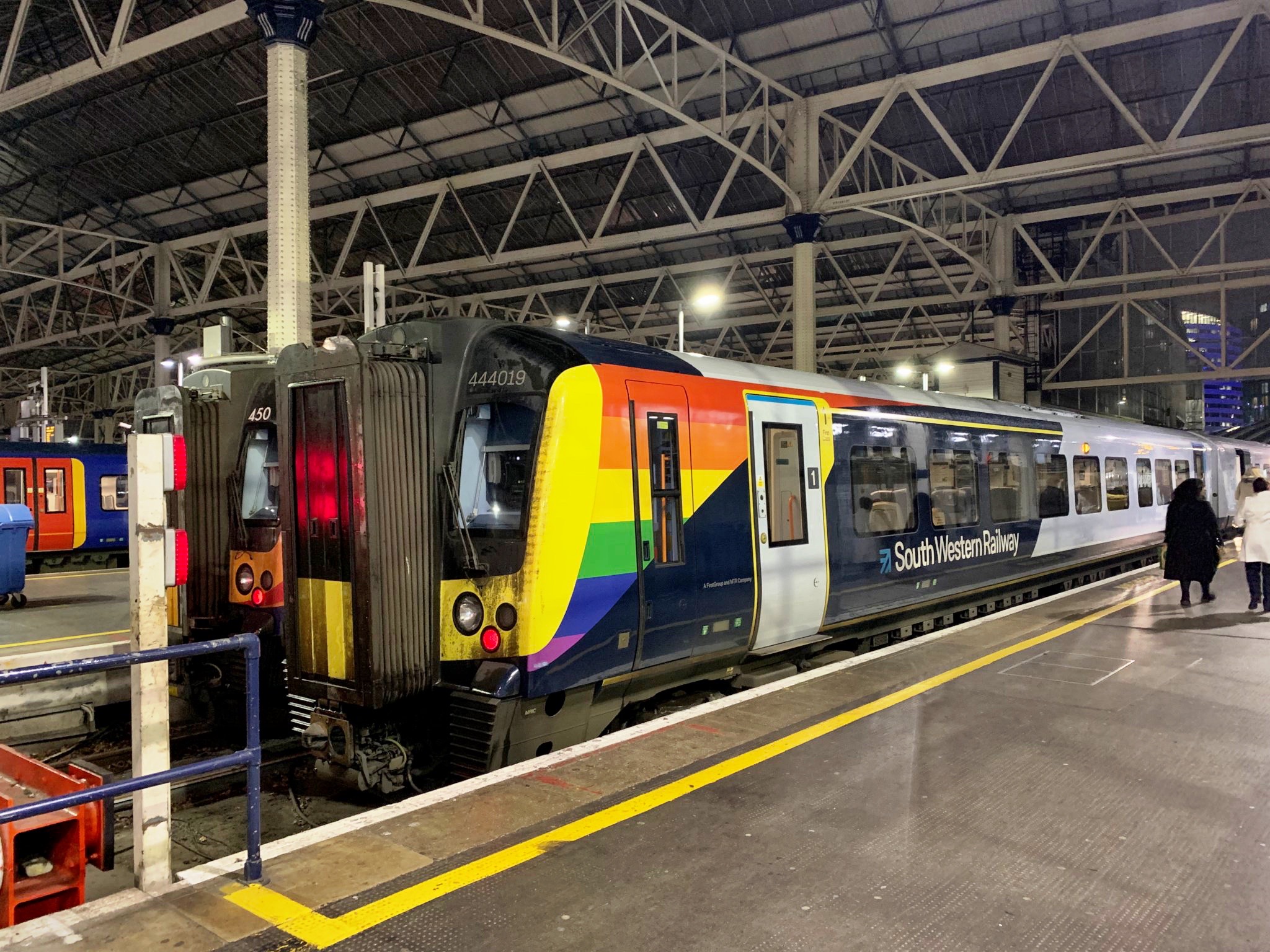
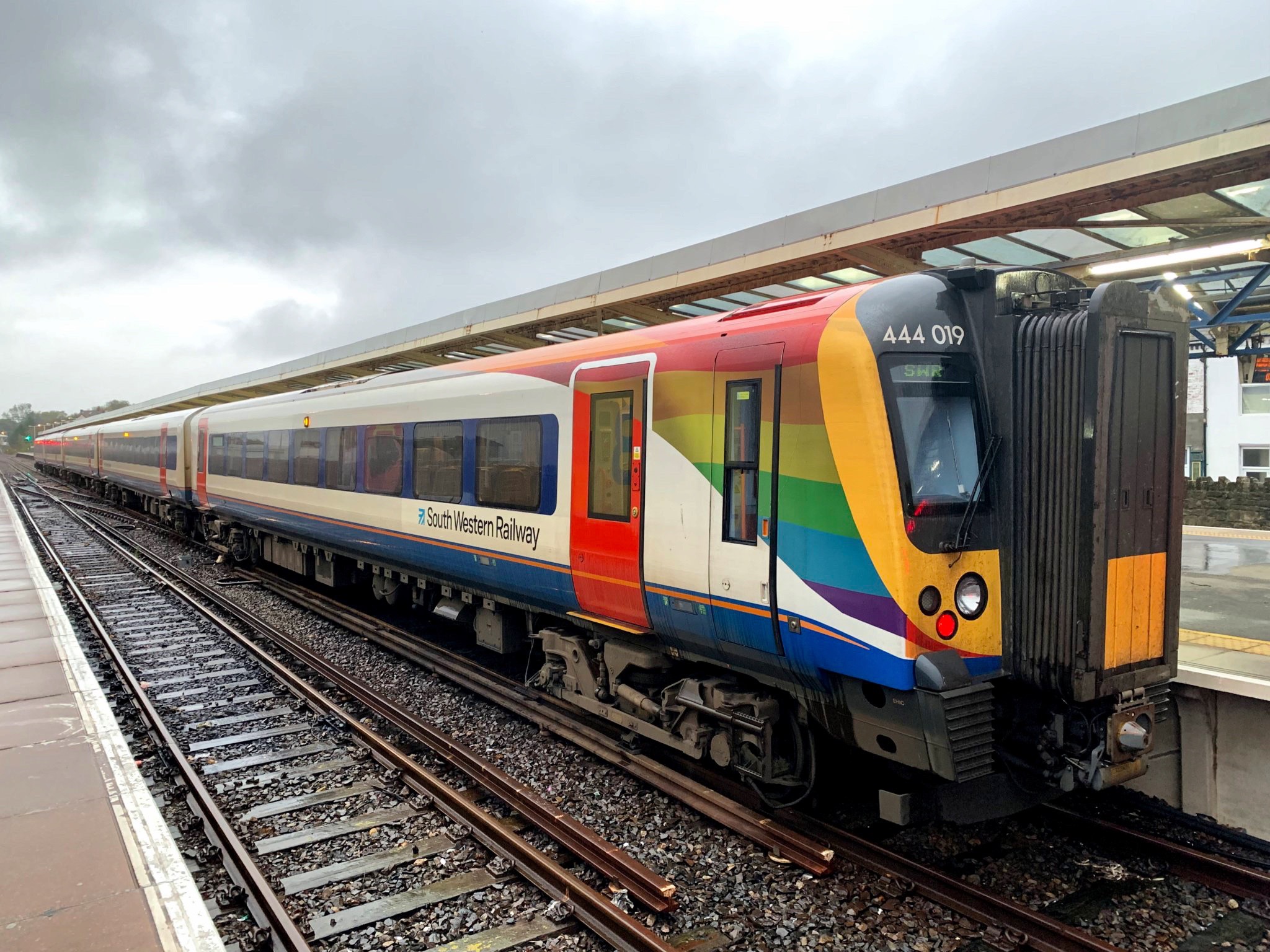
South Western Railway (SWR) have unveiled Class 444 Electric Multiple Unit No. 444019 in a new version of their ‘Pride’ livery. The unit was wrapped at Bournemouth Traction and Rolling Stock Maintenance depot on 25th/26th March 2023 and displays the LGBTQIA+ flag on the driving ends.
SWR Class 444 No. 444019 displays the new ‘Pride’ livery at London Waterloo before working IP65 2000 London Waterloo to Portsmouth & Southsea – 30/03/2023SWR Class 444 No. 444019 awaits departure from Poole with the 2W56 1100 service to London Waterloo – 31/03/2023SWR Class 444 No. 444019 in an earlier ‘Pride’ livery stands at the buffer stops in London Waterloo – 05/03/2022How Class 444 No. 444019 used to look, seen at Weymouth – 12/10/2019
That’s it for this week, thanks for joining us! We’ll be back in seven days or so when we have a look at the Crewe Heritage Centre amongst other things.
Yoshi watches on as British Railways Standard Class 7 4-6-2 No. 70000 ‘Britannia’ turns on the Yeovil Steam Centre turntable – 22/03/2023
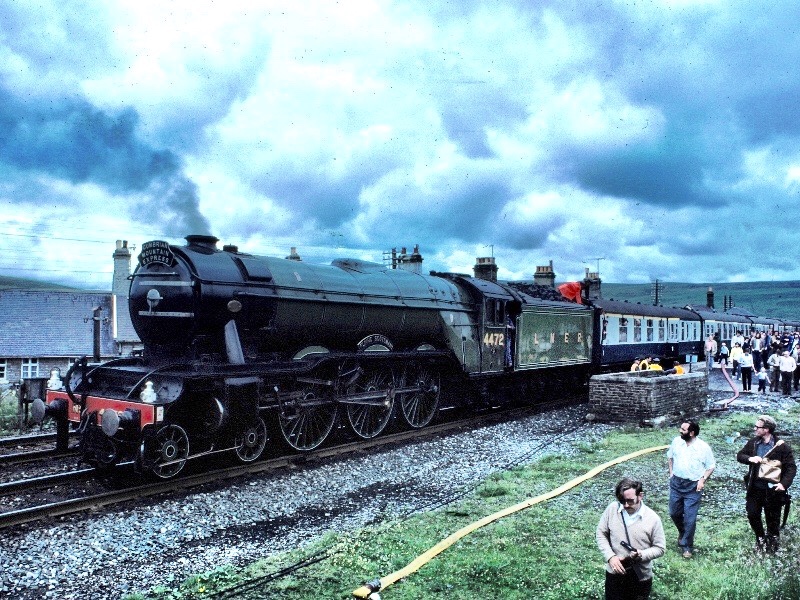
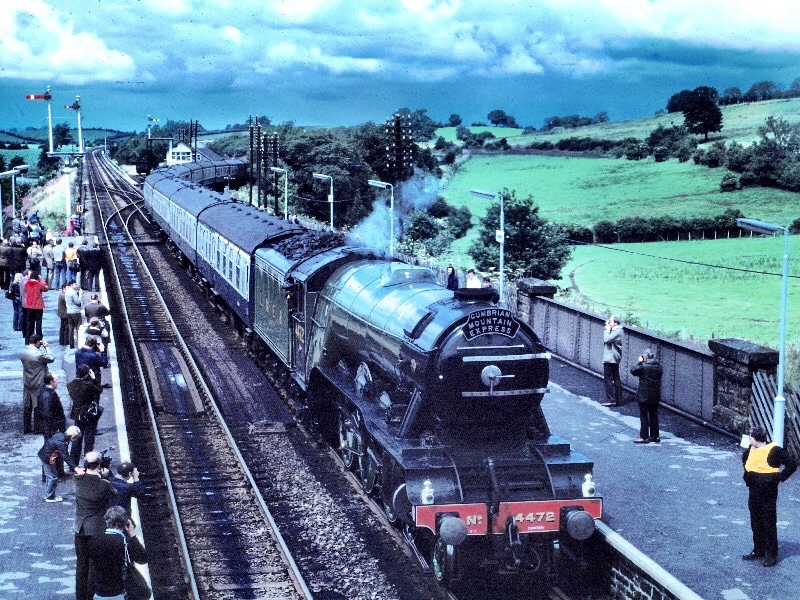
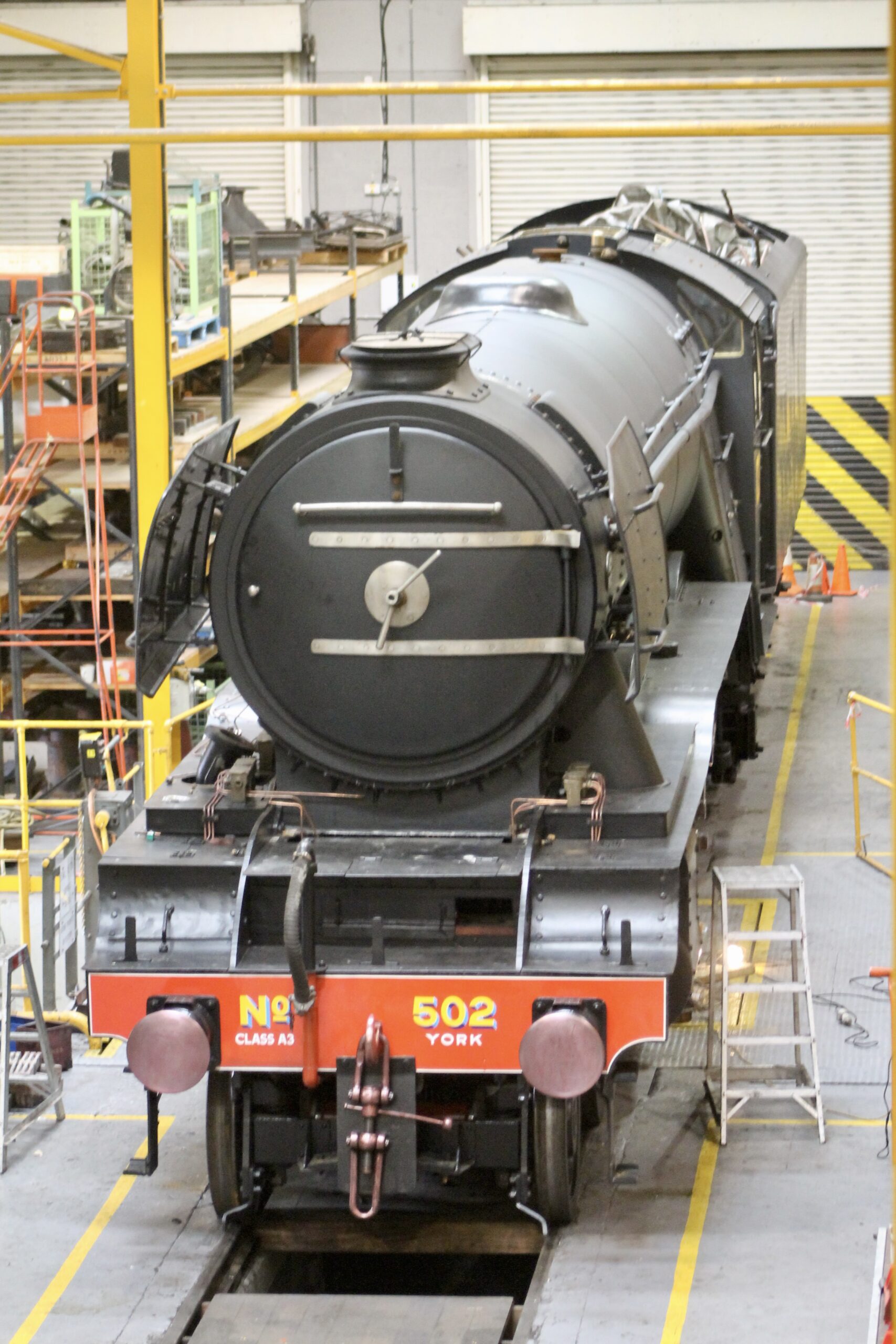
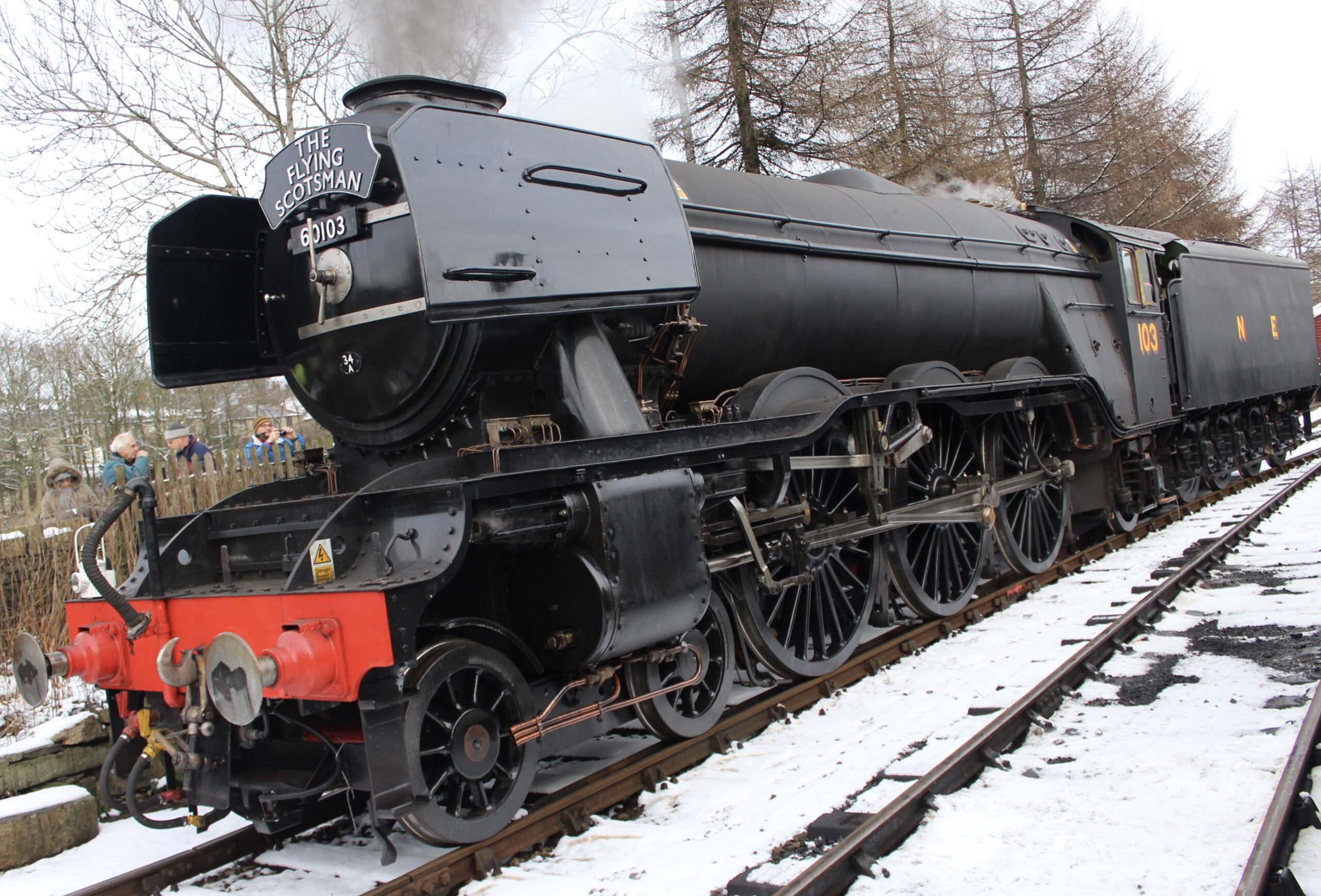
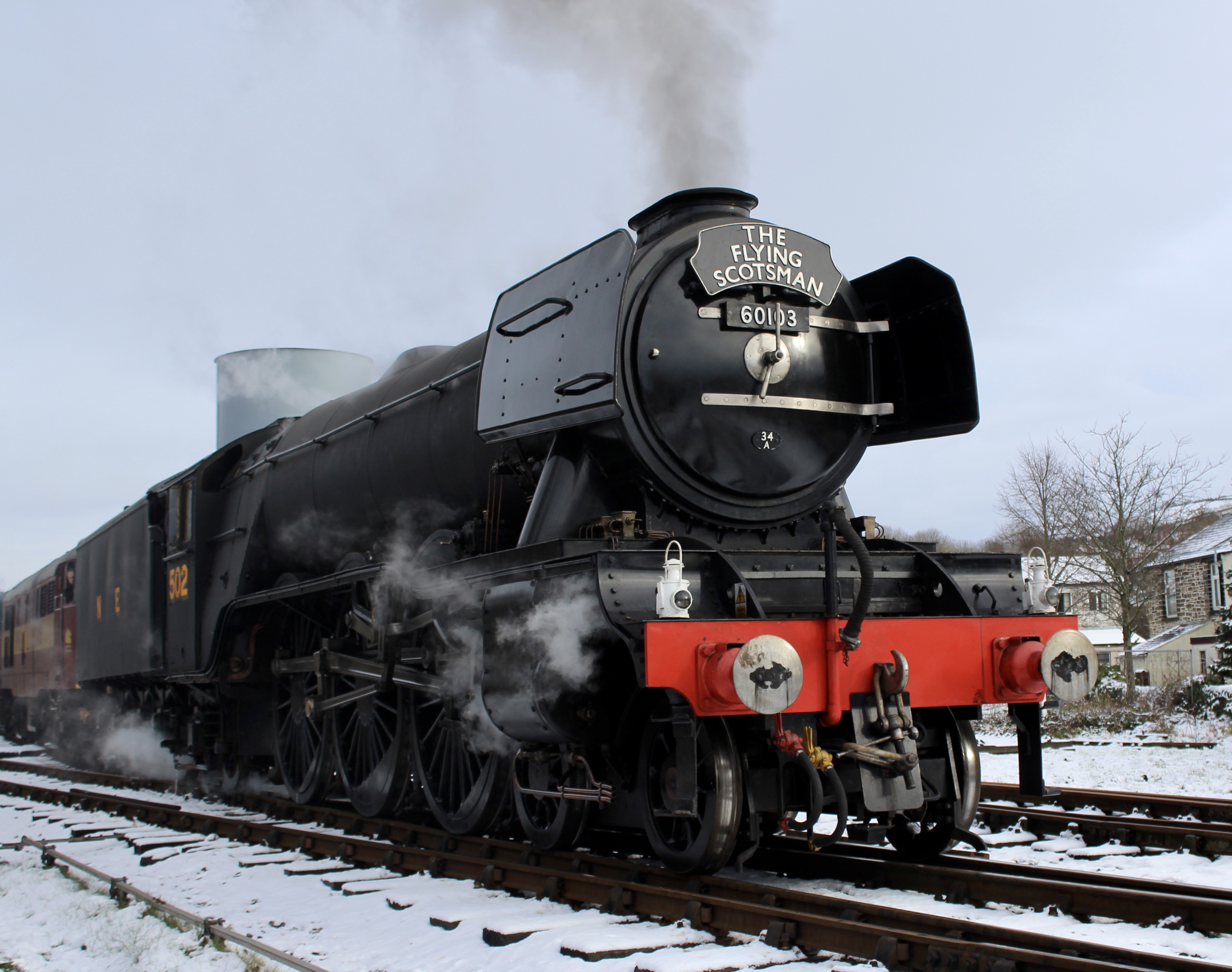
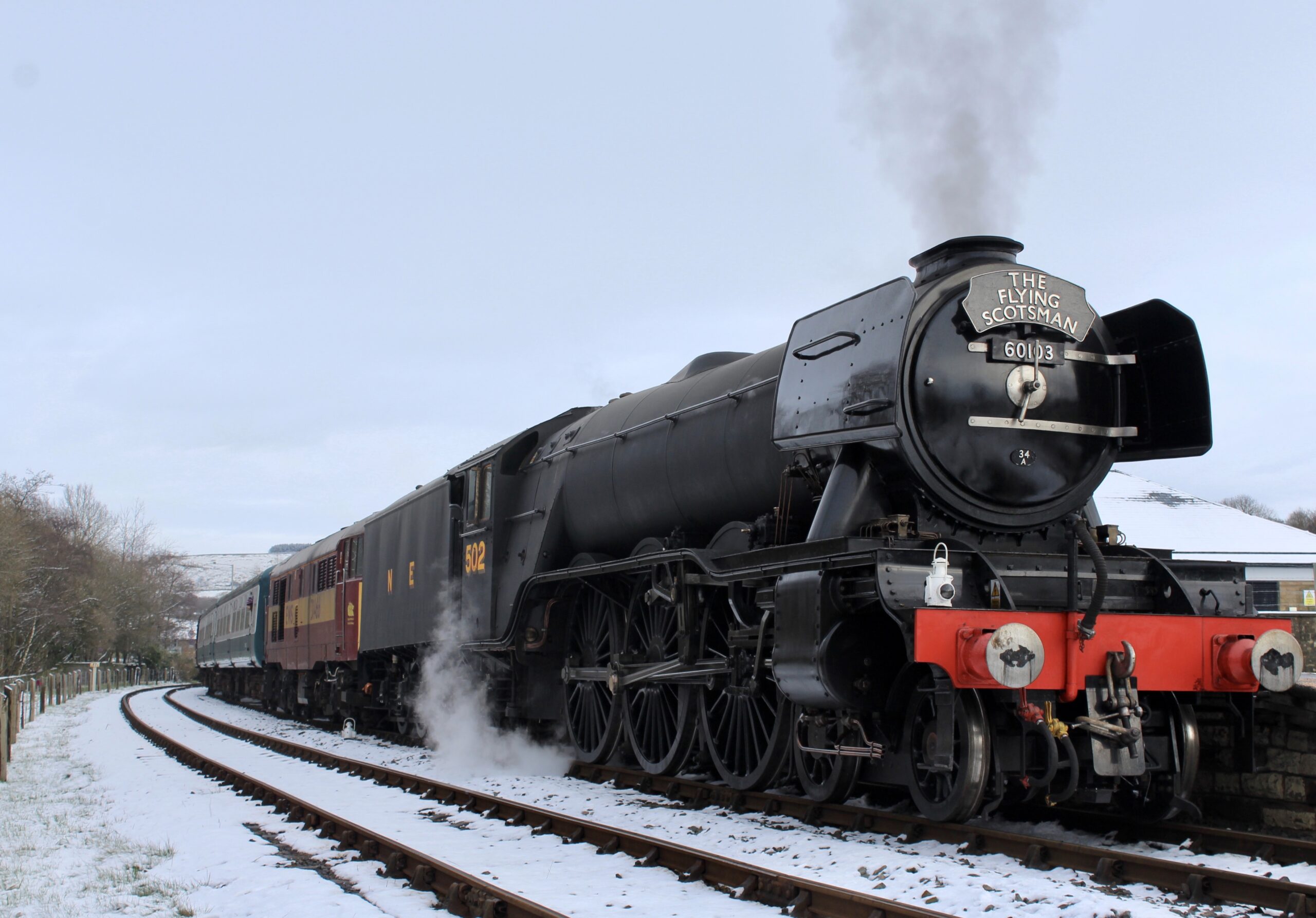
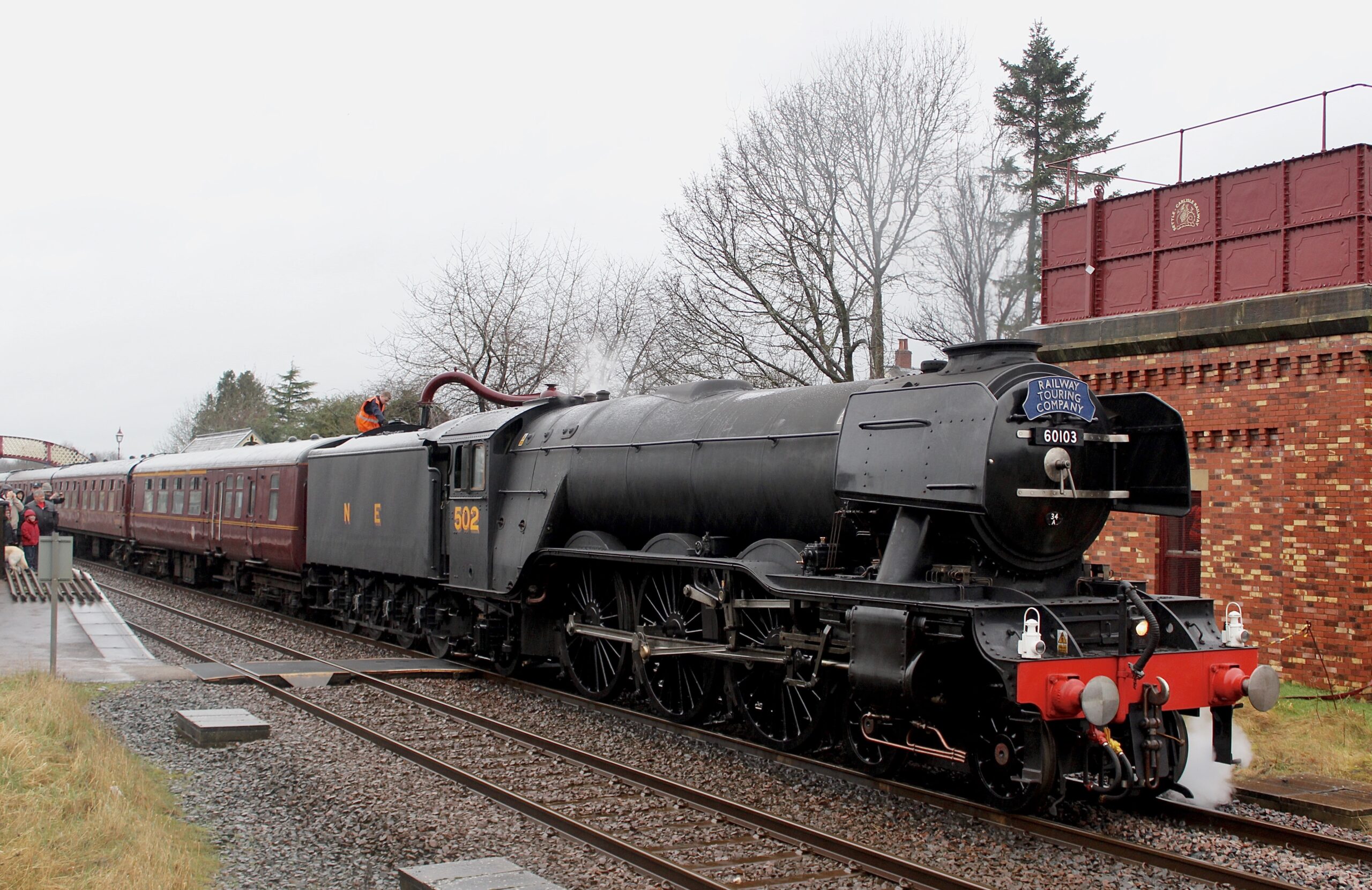
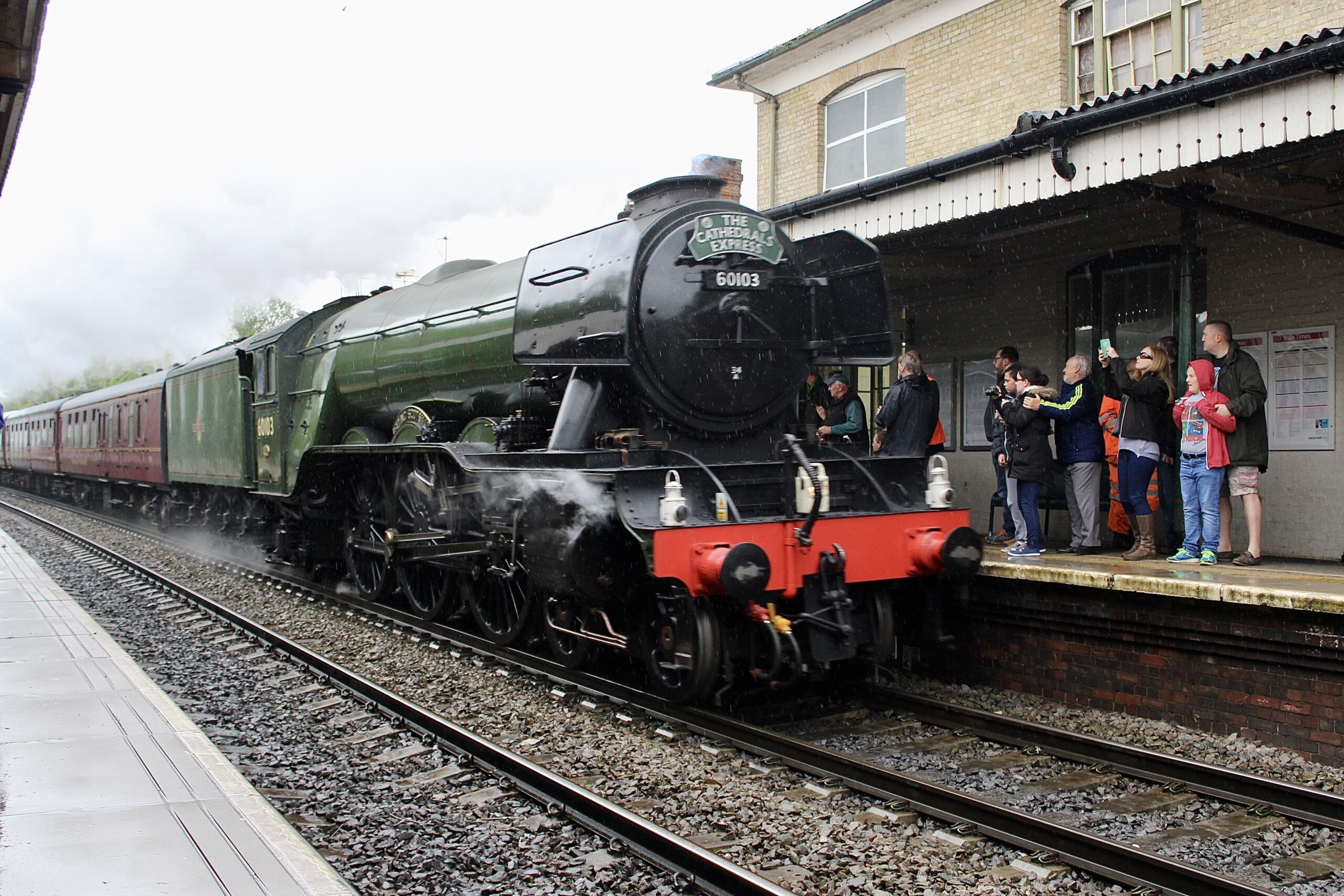
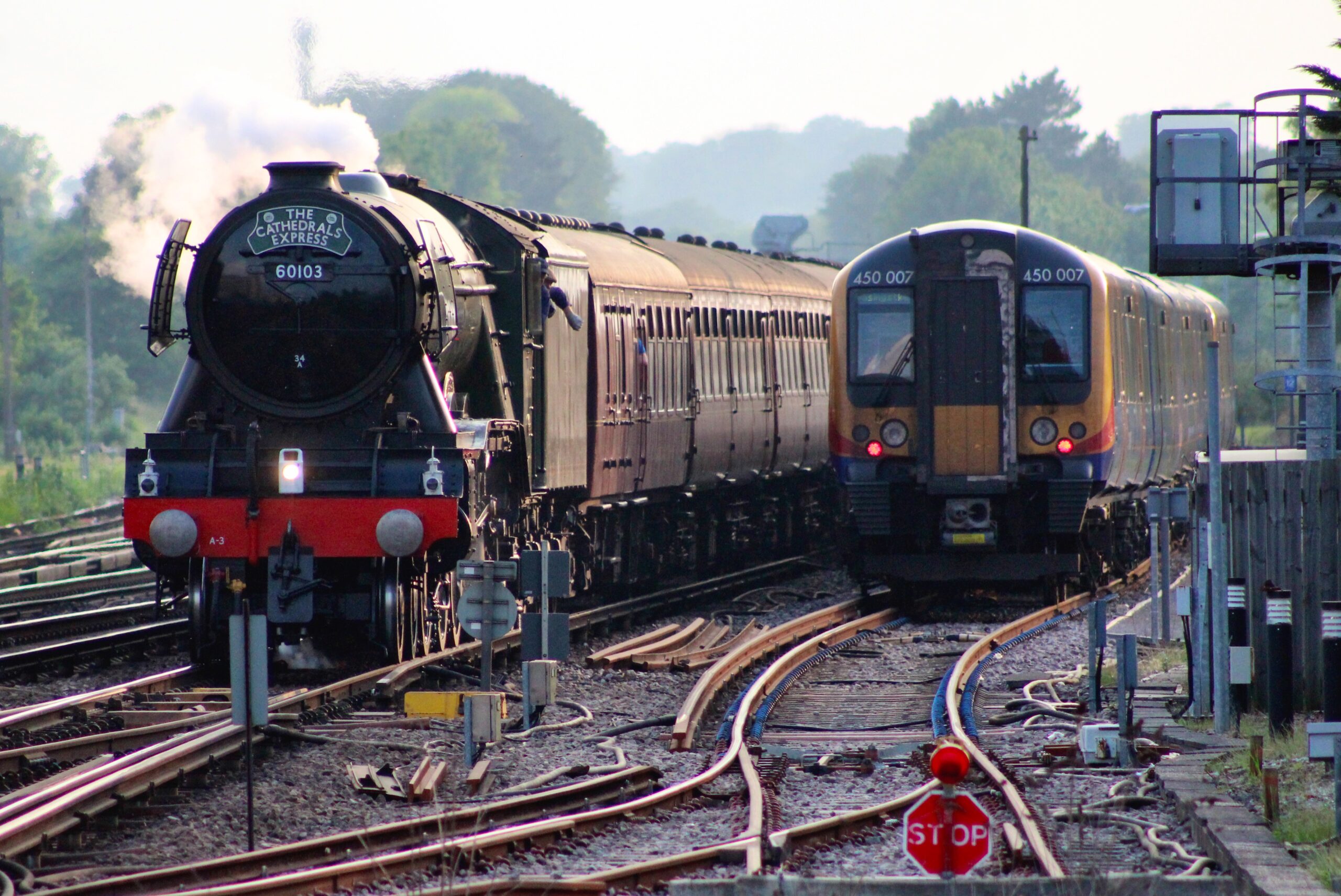
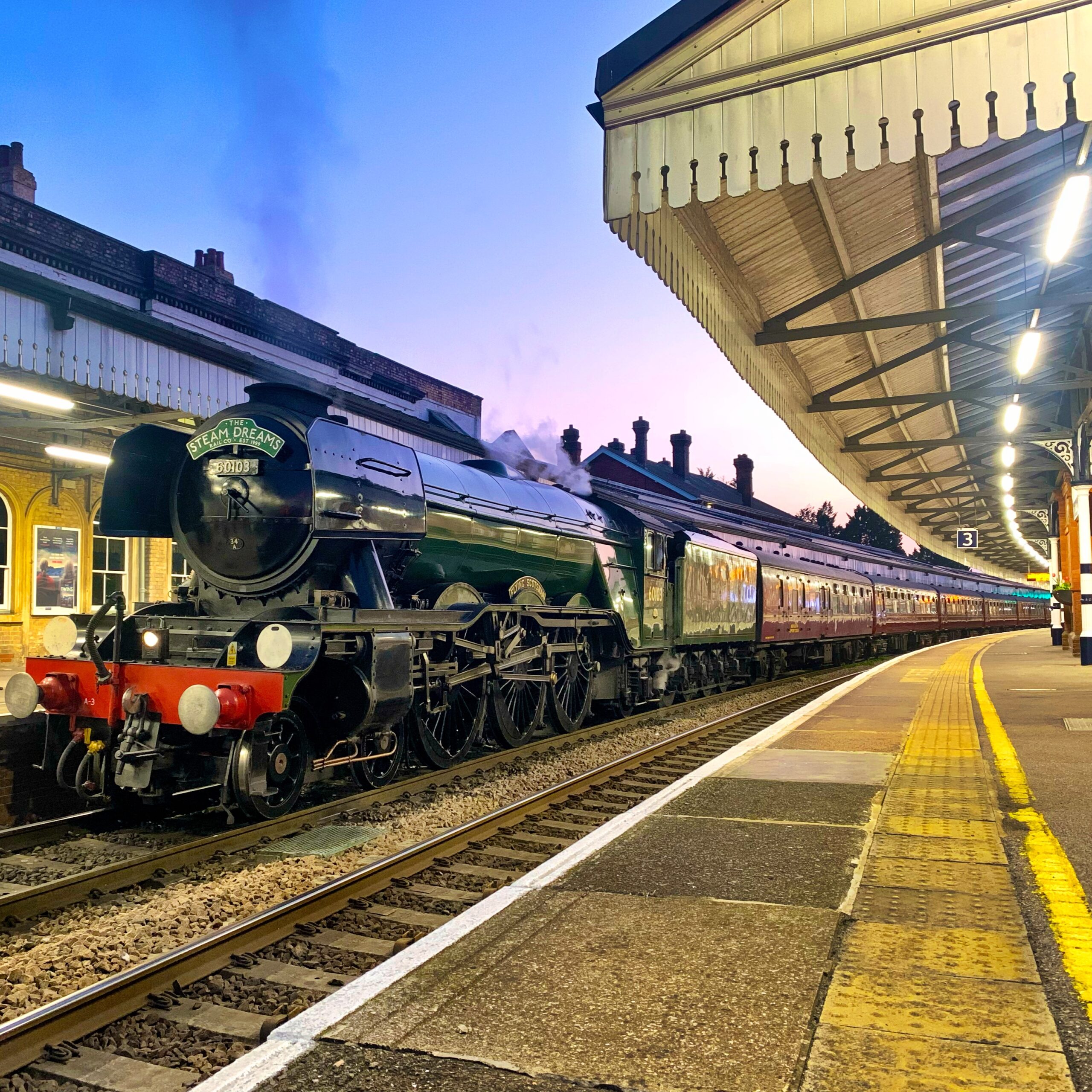
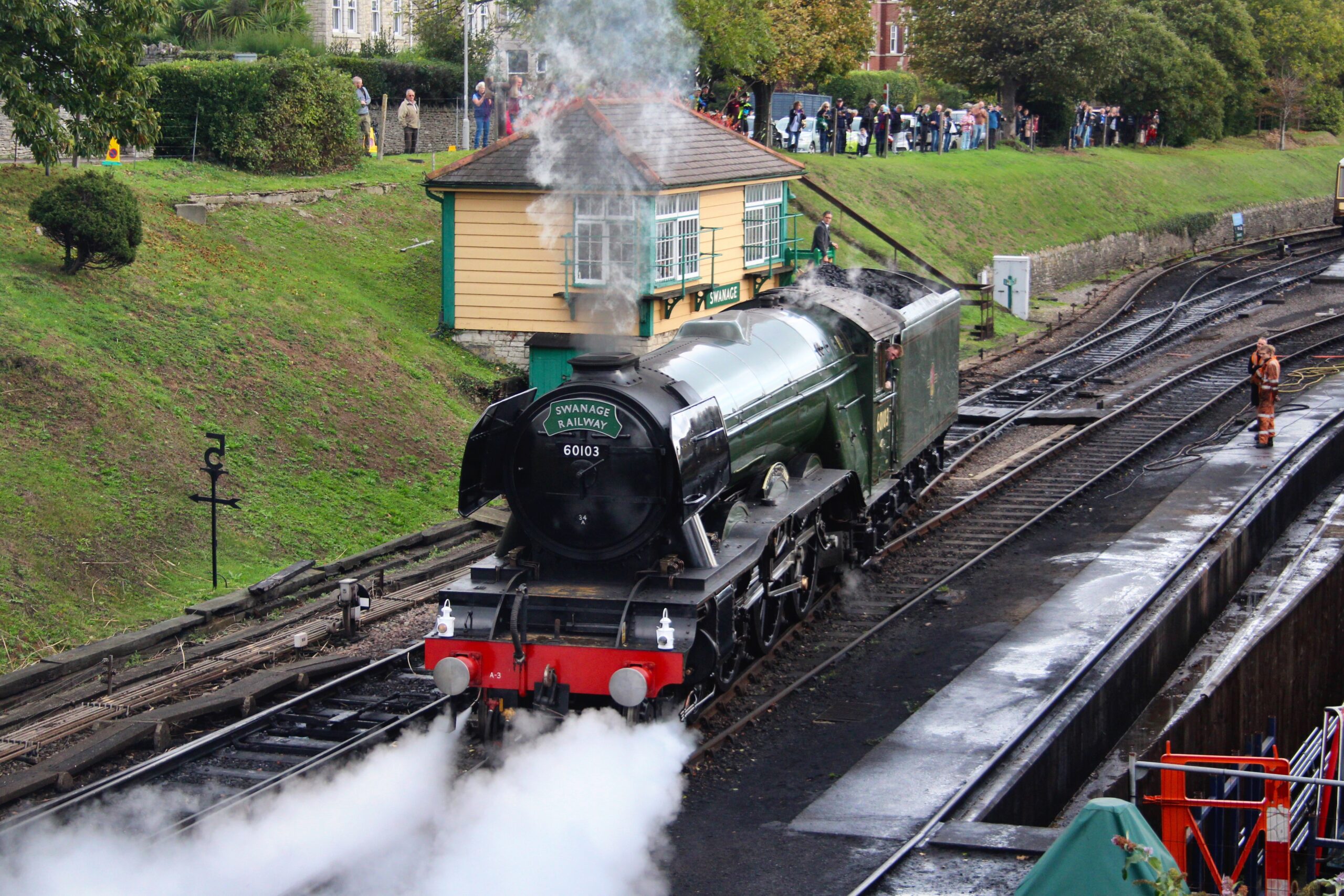
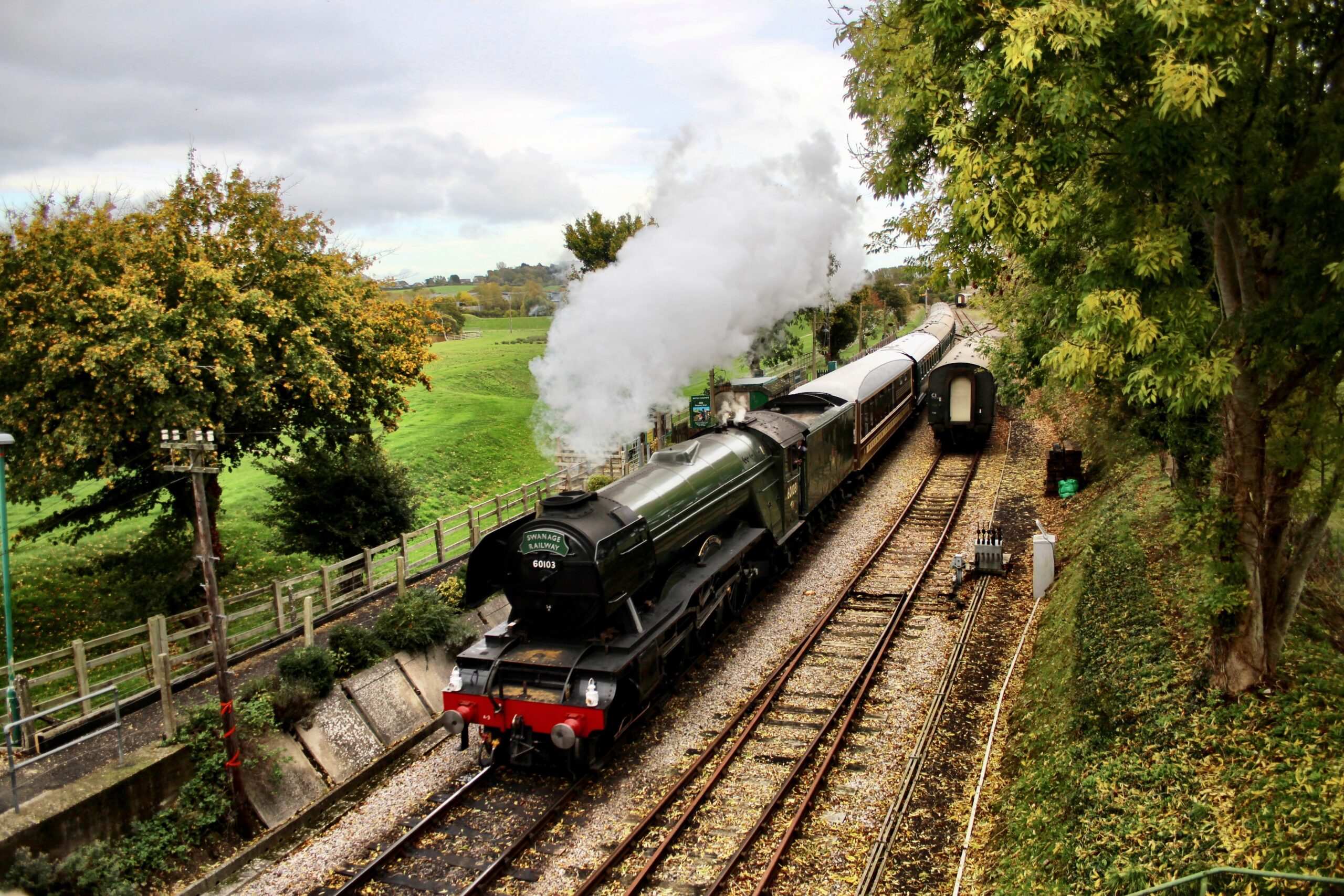
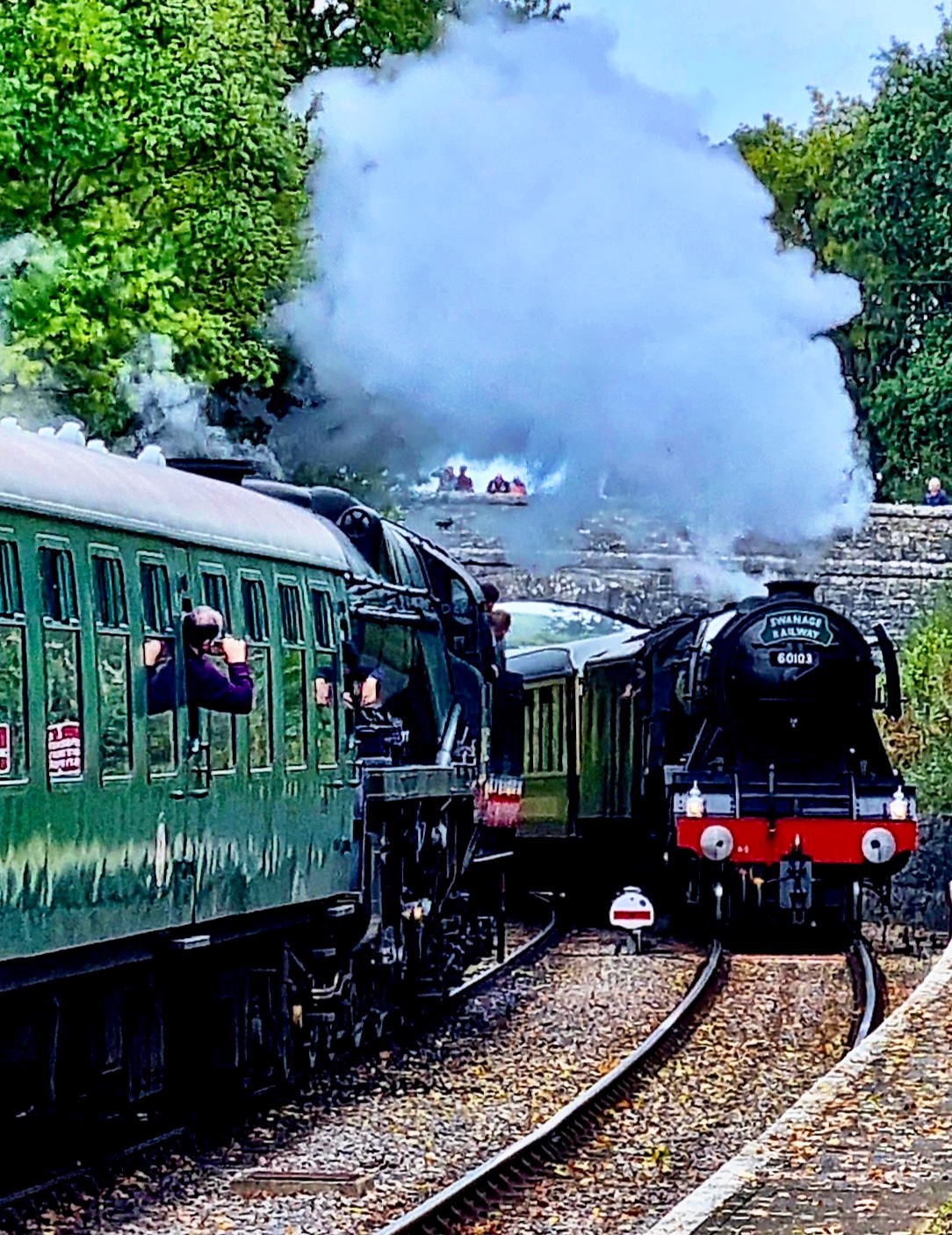
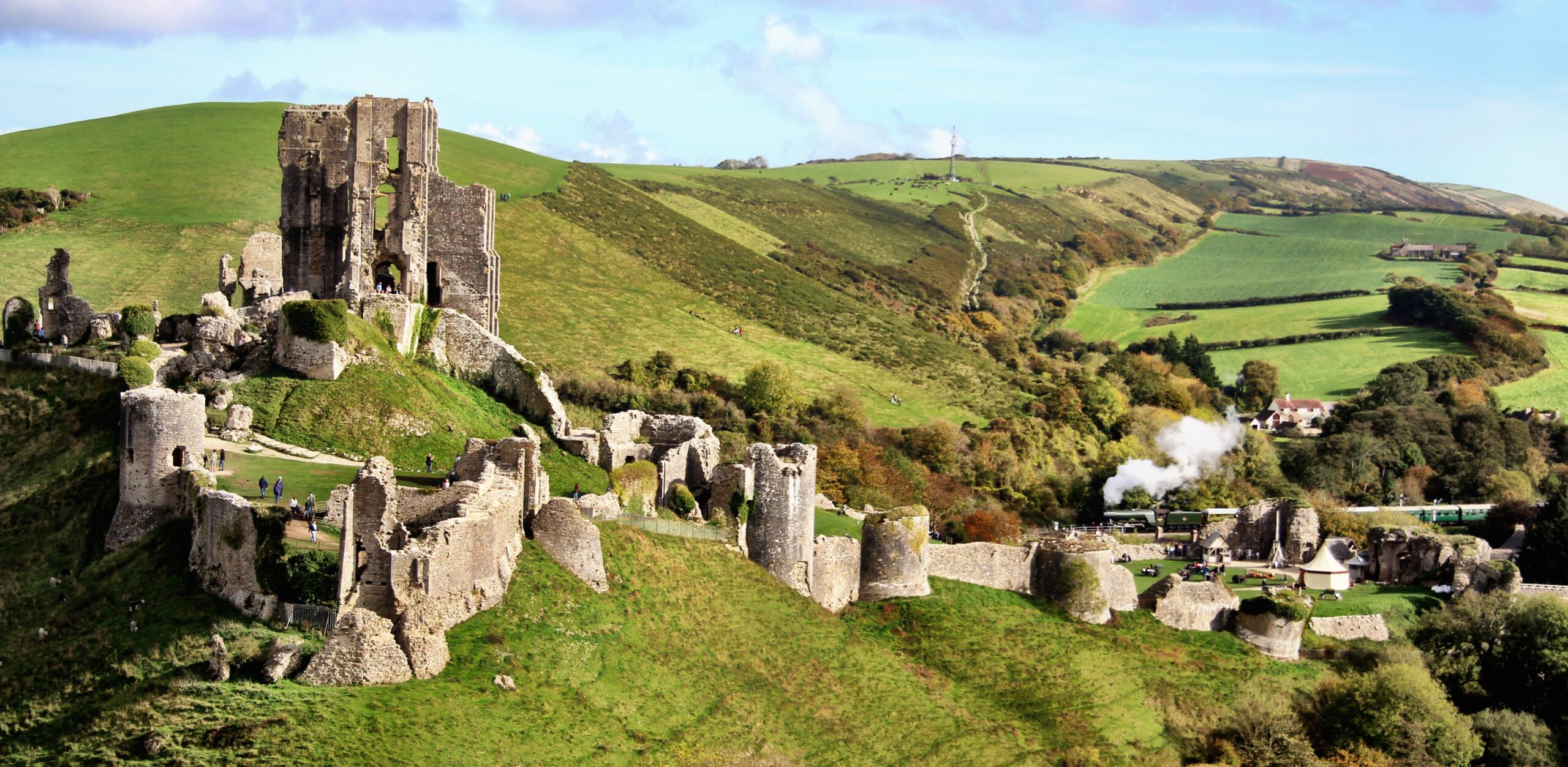
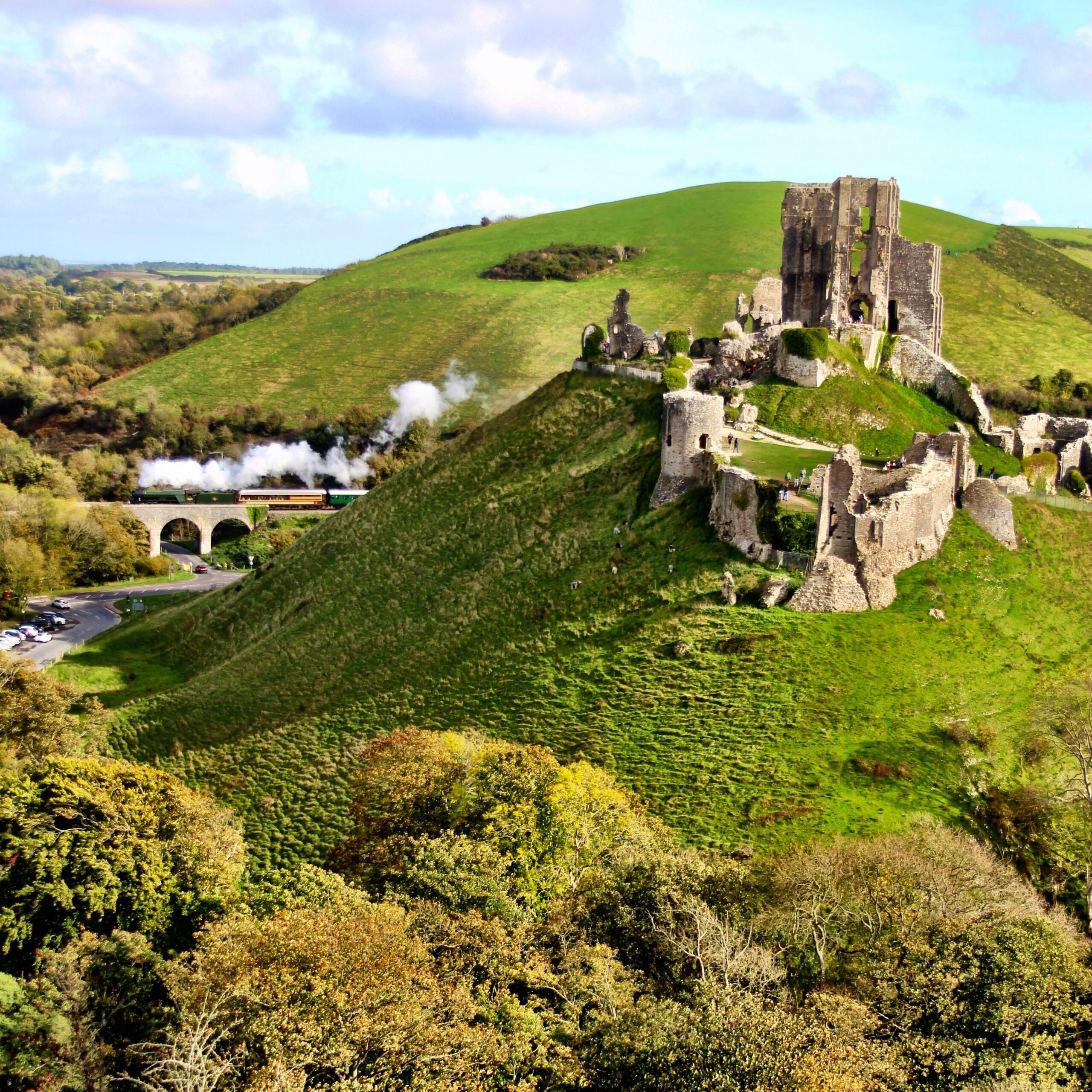
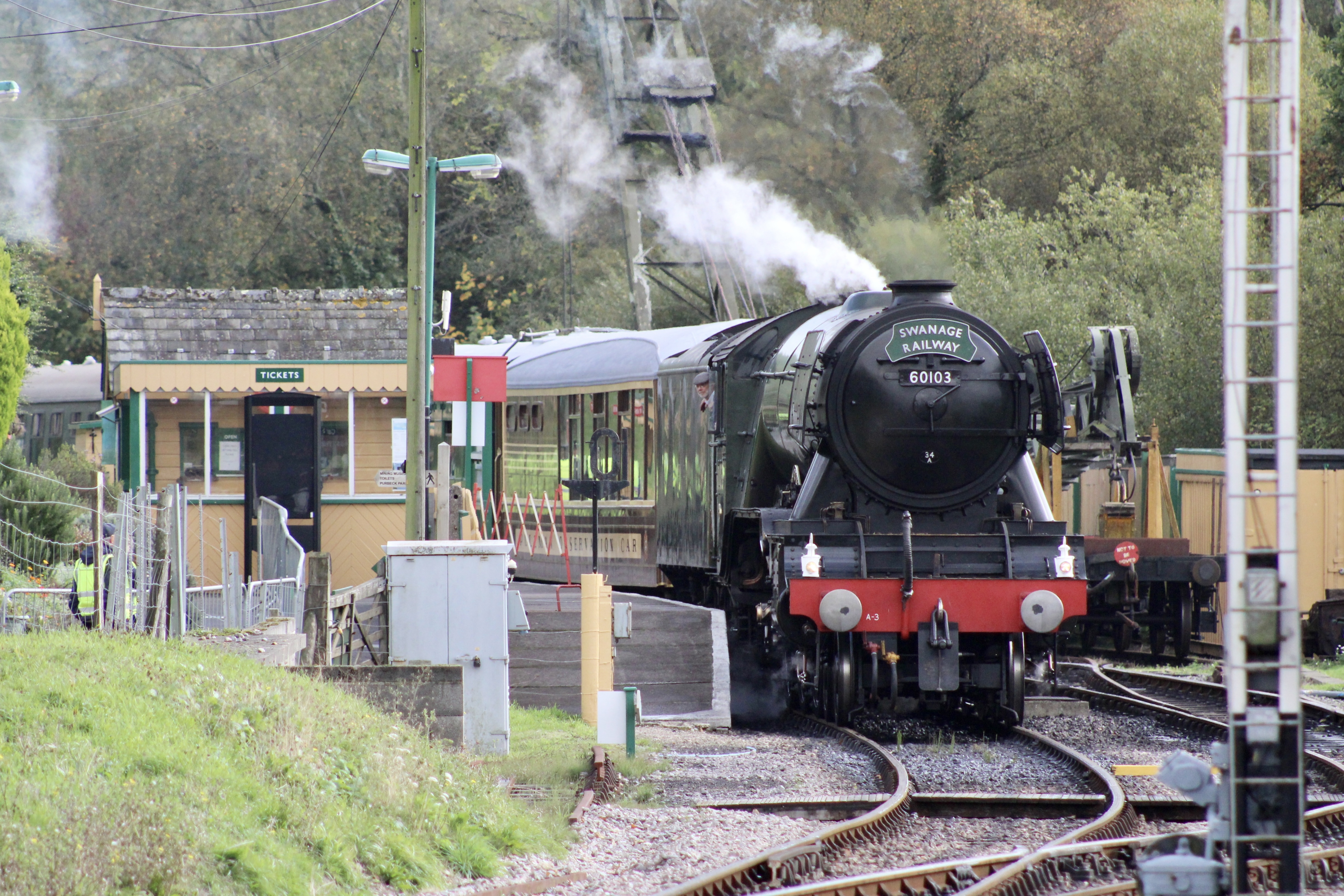
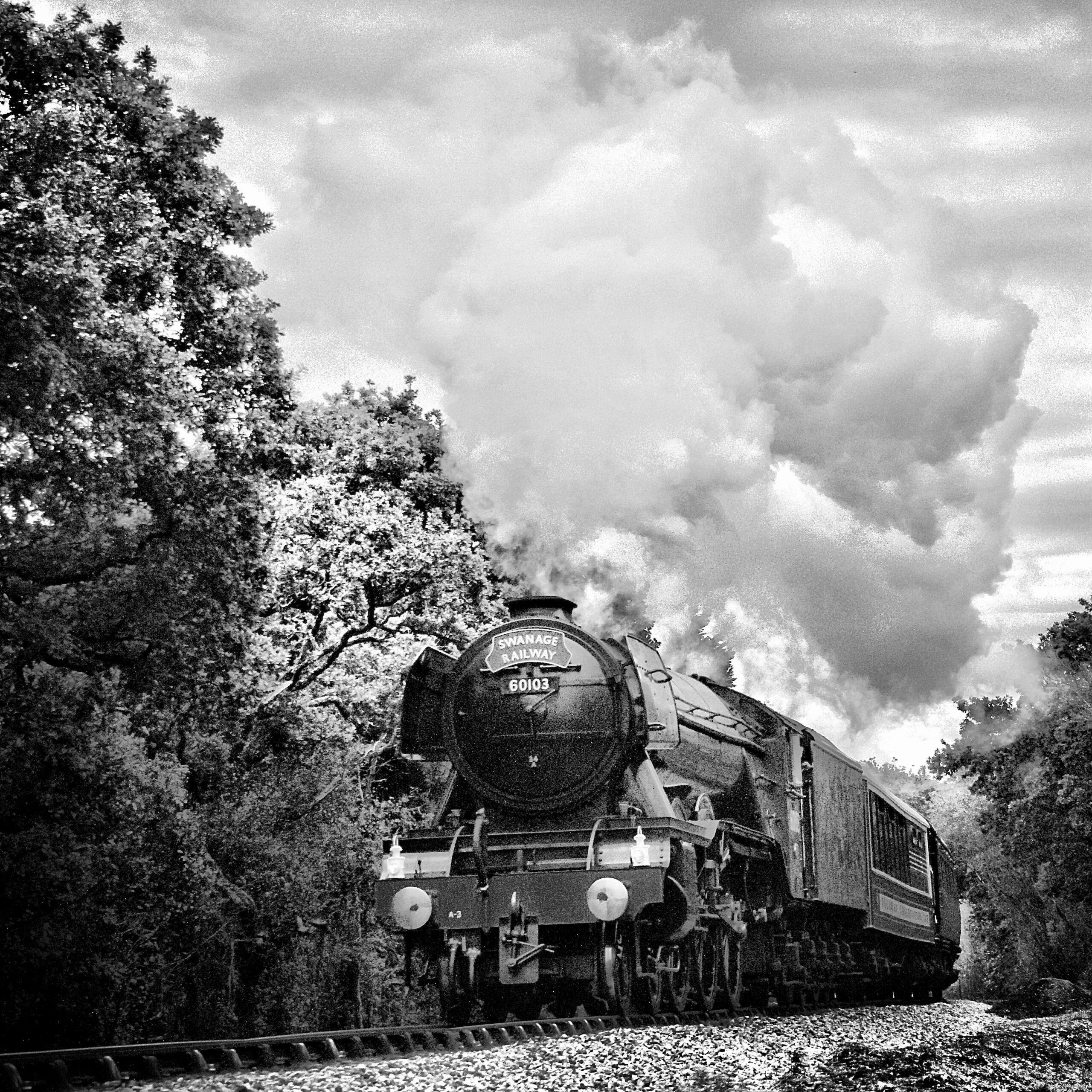
LNER Gresley A3 4-6-2 No. 60103 hauls her last passenger train during her 2022 visit to the Swanage Railway as 1X10 1645 Swanage to Norden crosses Corfe Viaduct – 26/10/2022No. 4472 ‘Flying Scotsman’ alongside Stanier Black Five Class 5MT 4-6-0 No. 5407 at Steamtown which occupied the site of the former London Midland & Scottish Railway Carnforth Motive Power Depot (MPD) opened in 1944. It was hoped that the depot would form part of a preservation scheme involving what is now the Lakeside & Haverthwaite Railway but when this could not be realised due to road modernisation it was developed as major visitor attraction. In 1974 Sir William McAlpine became a shareholder in the company for the purposes of stabling ‘Flying Scotsman’ and he eventually took a controlling interest in the company and purchased the complete site including the track from British Rail. In 1990 McAlpine’s controlling stake in Steamtown Railway Museum Ltd was sold to David Smith, who over the following years has bought out the majority of the minority shareholders. The site closed to the public in 1998 and today it is the base for Smith’s West Coast Railways, which operates heritage steam and diesel trains across the national UK railway network – 18/07/1981The “Cumbrian Mountain Express” departed Crewe at 0940 behind electric traction to Carlisle where No. 4472 ‘Flying Scotsman’ took over and took the train along Settle & Carlisle to Skipton and Carnforth followed by electric haulage to Crewe. Seen here for a water stop at Garsdale – 22/07/1981A feature of CME tours were the run pasts through Appleby where passengers detrained and given the opportunity to photograph the steam locomotive and train in action – 22/07/1981The same view 35 years later and delayed because of single line working imposed by a landslip at Eden Brows near Armathwaite, “The Winter Cumbrian Mountain Express” 1Z87 1436 Carlisle to London Euston arrives at approximately 45 minutes late arrives at Appleby. No. 60103 ‘Flying Scotsman’ replaced LMS Princess Coronation No. 46233 ‘Duchess of Sutherland’ and was 60103’s first main line rail tour following her £4.2 million, 10 year major overhaul. She ran in Wartime black livery and carried the numbers 103 and 502 on either cab side – 06/02/2016No. 502 ‘Flying Scotsman’ in wartime black livery undergoing overhaul and restoration in the works at the National Railway Museum (NRM), York. ‘Flying Scotsman’ was bought for the nation by the NRM in April 2004 at a cost of £2.3million. She ran intermittently until December 2005 (although she was out of action between September 2004 and May 2005 undergoing a ‘heavy intermediate repair’) when she was withdrawn for overhaul. At the time, the NRM said this would take 12 months and cost around £750,000. In 2012 when the above image was taken, she was still not ready to steam again and the cost of the work undertaken had spiralled to over £2.6million. A report at the time, commissioned for the Trustees of the Science Museum Group (of which the NRM is part) to help understand quite why the overhaul had gone over time and over budget, was prepared by a respected steam engineer from Tyseley Locomotive Works, Bob Meanley, assisted by a professor of engineering and found “It is difficult to analyse drift in the project because there was no real plan against which it could be measured and new tasks were added to the workload as new problems were uncovered.” The report confirmed ‘Flying Scotsman’ was in a very worn out condition when acquired by the NRM. To a large degree this had been well known, although reports commissioned at the time seem to have been overly optimistic. The NRM had been clearly under pressure to secure the locomotive amid fears it may have been sold abroad, but is found not to have properly assessed the state of its new acquisition following purchase or to have drawn up a credible refurbishment plan. New faults are noted as having taken staff by surprise five years after purchase. In 2011, the locomotive had to be dismantled again to correct issues many thought would have been identified back in early 2006. – 03/07/2012No. 502 ‘Flying Scotsman’ at the Railway Museum, York. After the release of the 2012 report on the restoration of ‘Flying Scotsman’, the NRM commissioned an independent review to determine the next steps on how to proceed. It was recommended that further work on the locomotives overhaul should be put out to external tender and subsequently it was announced this would be Riley & Son and ‘Flying Scotsman’ was moved to their workshop at Bury. On 8 January 2016, ‘Flying Scotsman’ moved under her own steam for the first time since 2005. The final cost of the restoration was £4.5 million – 03/07/2012Following her ten year overhaul and restoration, ‘Flying Scotsman’ undertook running in tests on the East Lancashire Railway (ELR) and can be seen here at Rawtenstall – 17/01/2016Rawtenstall – 17/01/2016Awaiting the road at Rawtenstall – 17/01/2016Approaching Ramsbottom on the ELR – 17/01/20161Z86 0710 London Euston to Carlisle “The Winter Cumbrian Mountain Express” – No. 60103 ‘Flying Scotsman’ is seen here climbing Shap bank – 06/02/2016“The Winter Cumbrian Mountain Express” water stop at Appleby – 06/02/2016Steam Dreams organised 1Z60 0837 London Paddington to Salisbury “The Cathedrals Express” rail tour hauled by No. 60103 ‘Flying Scotsman’ approaches Dilton Marsh – 21/05/2016No. 60103 ‘Flying Scotsman’ working 1Z82 1502 Salisbury to Salisbury “The Cathedrals Express” passing through Romsey – 21/05/2016“The Cathedrals Express” 1Z62 1828 Salisbury to London Paddington at Grateley – 21/05/2016Delayed by a line side fire in the former British Rail Staff Association building at Salisbury station, “The Cathedrals Express” 1Z62 1856 Salisbury to London Paddington passes Class 450 No. 450007 on the approach Basingstoke – 28/05/2016No. 60103 ‘Flying Scotsman’ working 1Z75 1520 Salisbury to Southampton Central alongside the Lower Test Valley – 06/06/2021No. 60103 ‘Flying Scotsman’ awaits the road at Salisbury with Steam Dreams 1Z83 1852 Salisbury to London Victoria. Following this main line run, ‘Flying Scotsman’ was withdrawn from operation for an overhaul in preparation for her centenary year celebrations – 24/03/2022
Yoshi took the opportunity of ‘Flying Scotsman’ being on static display at Swanage railway station to get up close and personal! Last week we shared video of ‘Flying Scotsman’ during her 1994 visit to the Swanage Railway. This week we move forward to 1999 and 2000 when the locomotive could be found in her famous LNER Apple Green guise and numbered No. 4472, as she appeared when she was owned by Alan Peglar on purchase from British Railways in 1963:
Video of LNER Gresley A3 4-6-2 No. 4472 ‘Flying Scotsman’ on various workings in LNER Apple Green livery: 08/08/1999 Upton Scudamore whilst on a London Paddington – Salisbury – London Paddington rail tour, 27/11/1999 Deputising for GWR 6000 Class King 4-6-0 ‘King Edward I’ No. 6024 on Pathfinder Tours “The Capital King” seen at Bradford Abbas and Sherborne, 06/02/2000 Deputising for SR Merchant Navy 4-6-2 No. 35028 ‘Clan Line’ on a VSOE British Pullman London Victoria to Southampton Docks and return rail tour seen in Southampton Docks, and 16/04/2000 Past Time Rail’s “The Tall Ships” seen in Southampton Docks and light engine turning move passing Eastleigh12th September 1965 and No. 4472 ‘Flying Scotsman’ visited Weymouth and is seen here on Weymouth depot. I was told that I was taken to see the special train organised by The Gainsborough Model Railway Society pass through Dorchester, so perhaps inspiring a lifetime love of railways! – John Chappell 12/09/1965
Wednesday 26th October to Tuesday 1st November
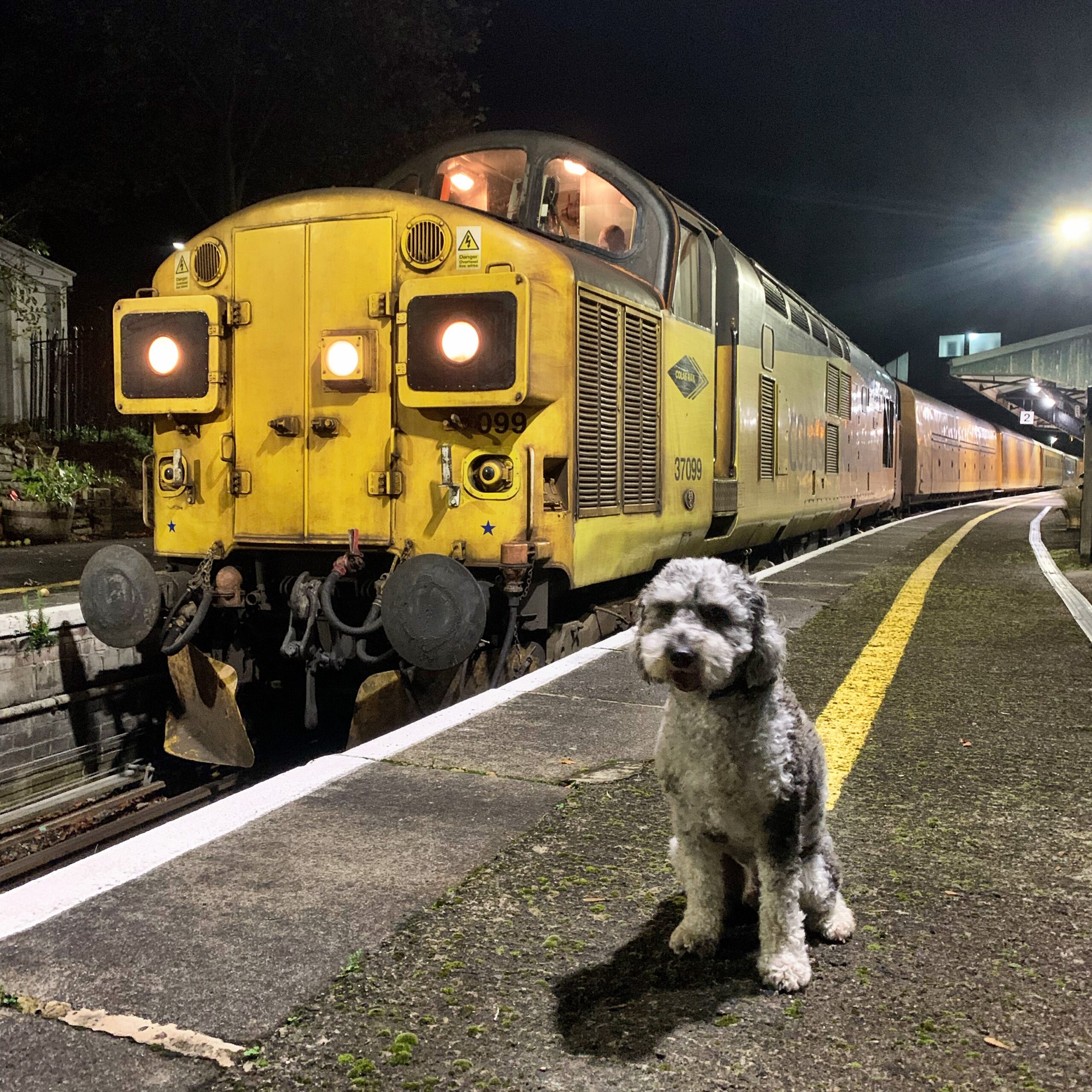
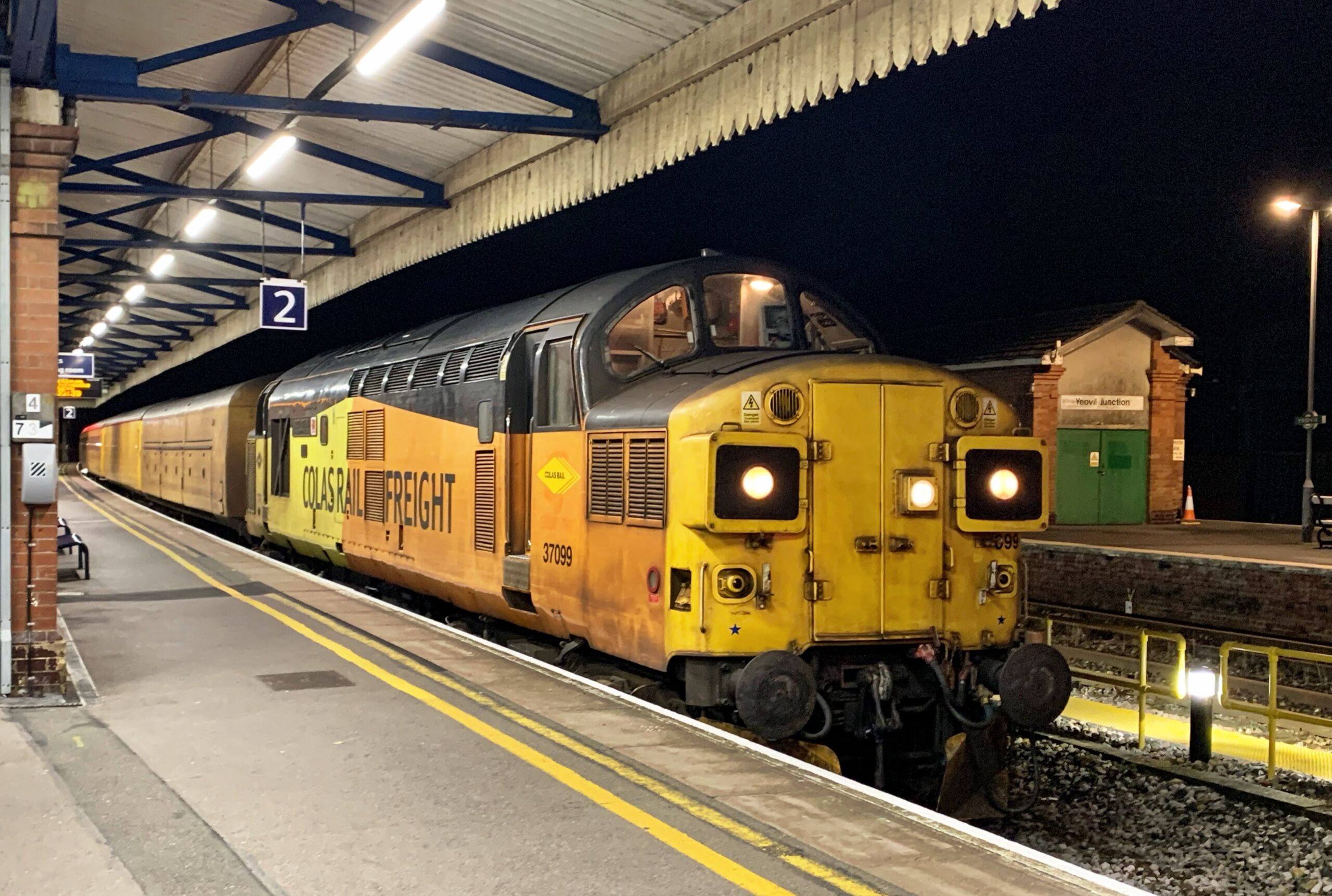
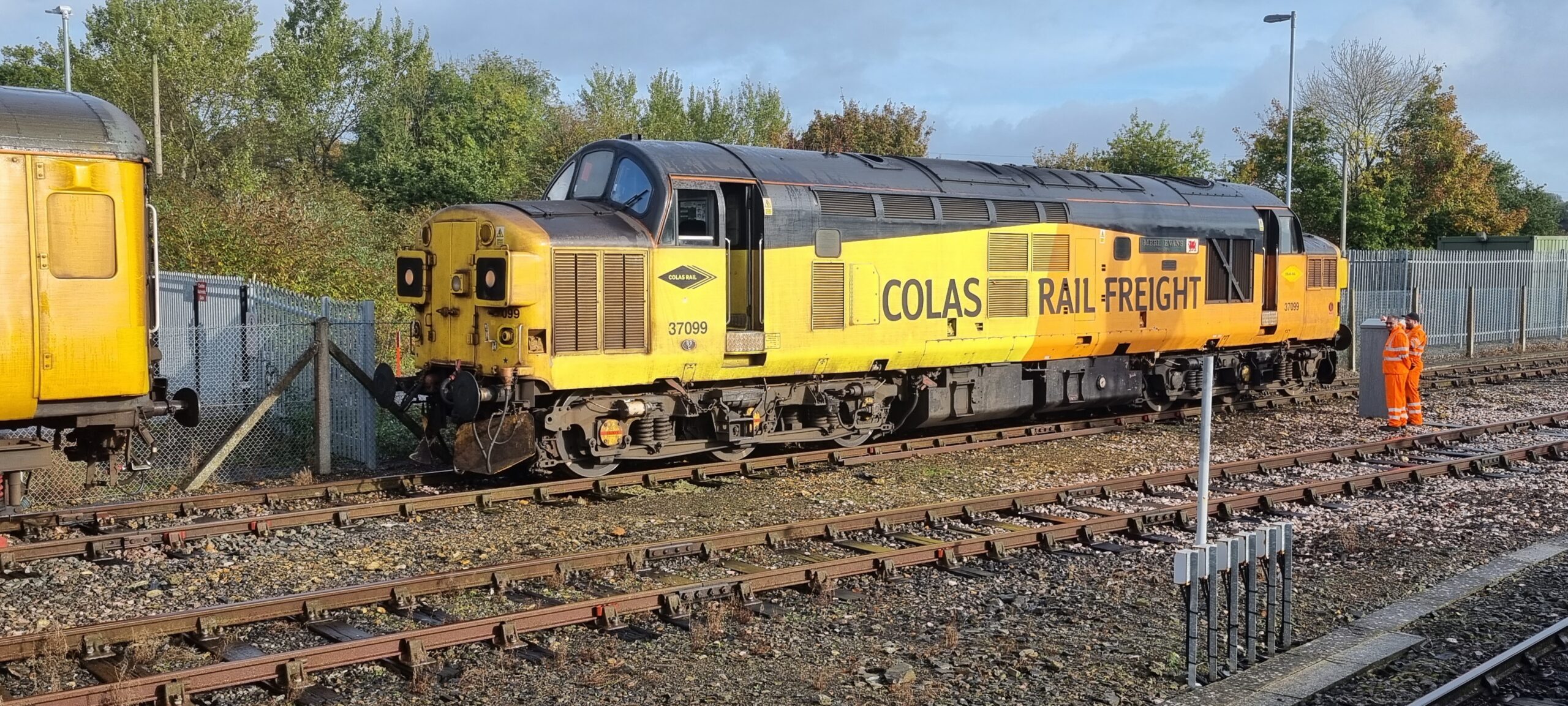
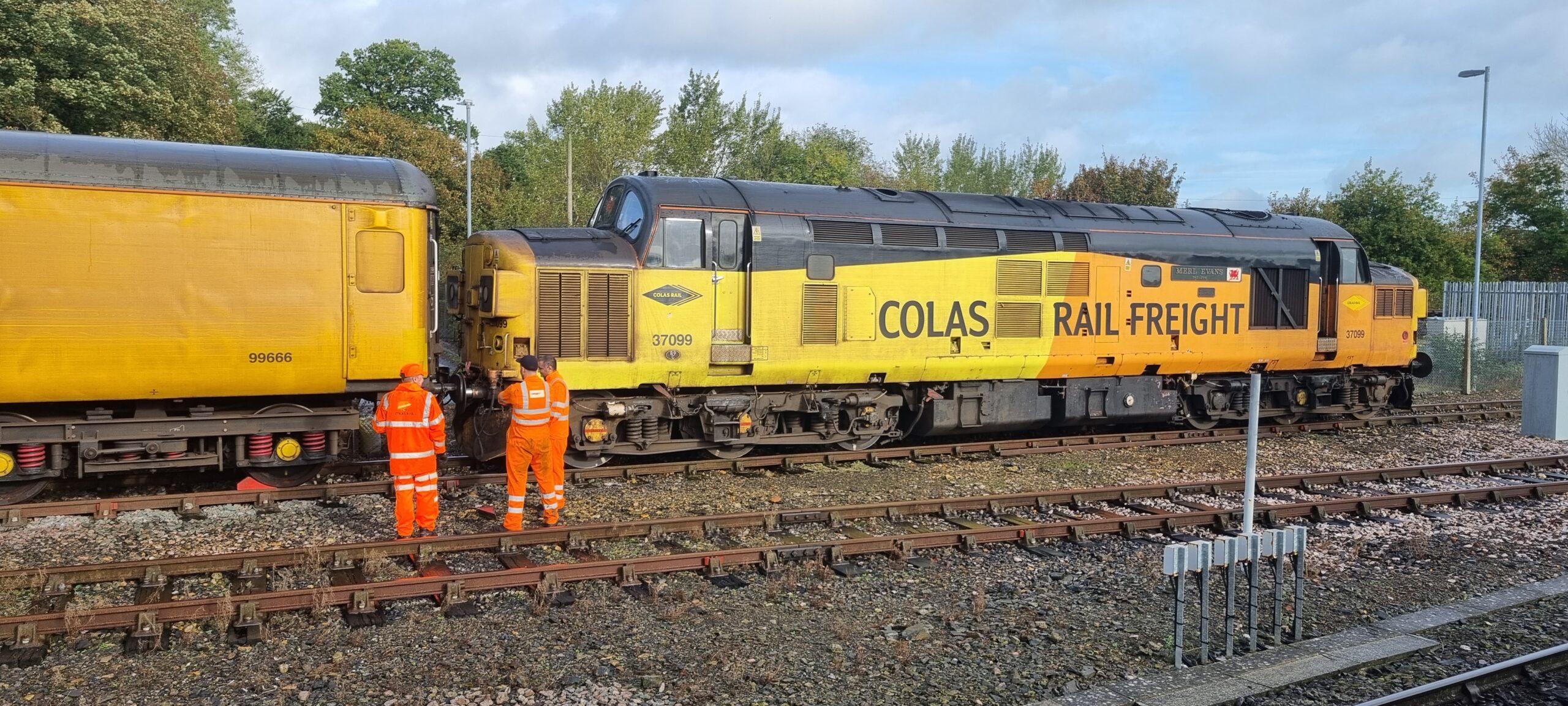
Returning to present day 2022 and Thursday 27th October which saw Yoshi and I travelling to Yeovil to catch sight of Colas Class 37 No. 37099 ‘Merl Evans 1947 – 2016’ working 3Q07 2053 Exeter Riverside New Yard to Exeter Riverside New Yard. This working consisting of a diesel locomotive on one end and a DBSO on the other usually heads off to Sherborne and Salisbury, but this month (possibly due to the speed restrictions on the line in place until 14th November 2022 because a clay embankment between Tisbury and Gillingham had dried out, causing the ground beneath the tracks to shrink) was scheduled to reverse at Yeovil Pen Mill, a station it usually misses out although is always booked to visit. I was 99% sure the train would make it to Pen Mill this time due to its pathing, but as I didn’t fully trust that the train wouldn’t be reversed before reaching here, I hedged my bets and went straight to Yeovil Junction to witness the test train working straight through. I jumped in the car and made it over to Yeovil Pen Mill just as the service arrived into platform 1. Being a glutton for punishment, we then headed back to Yeovil Junction to see the train arrive on the return leg before departure for Exeter at 0023.
Yoshi on a late night barking mission with Colas Class 37 No. 37099 ‘Merl Evans 1947 – 2016’ at Yeovil Pen Mill – 27/10/2022Nameplate detail of Colas Class 37 No. 37099 ‘Merl Evans 1947 – 2016’ named in memory of Mel’s outstanding contribution to British model railways – 27/10/2022Colas Class 37 No. 37099 ‘Merl Evans 1947 – 2016’ awaits the green light on the return path to Exeter at Yeovil Junction – 27/10/2022
Video of Colas Class 37 No. 37099 ‘Merl Evans 1947 – 2016’ working 3Q07 2053 Exeter Riverside New Yard to Exeter Riverside New Yard – 27/10/2022
On Sunday 30th October Yoshi and I visited National Trust’s Stourhead Gardens in Wiltshire. After an initial rain shower on arrival, we had a very pleasant few hours drying out whilst walking around the grounds of the estate and enjoying the autumnal colours of the trees as their leaves fluttered to the ground.
Yoshi enjoys his walks around National Trust Stourhead Gardens – 30/10/2022
Being so close to Westbury, we took the opportunity to pop in and see the 3S59 1554 Swindon Transfer to Loreton-On-Lugg Rail Head Treatment Train in fading light before tucking into a very tasty Sunday roast at The Three Horseshoes at Chapmanslade. Class 66 No. 66846 has returned to traffic after being temporarily replaced by Class 37 No. 37668 which we saw the previous Sunday on the equivalent working as it passed through Bradford on Avon. No 66850 ‘David Maidment’ was once again in evidence.
Colas Class 66 No. 66850 ‘David Maidment’ on the rear of 3S59 1554 Swindon Transfer to Loreton-On-Lugg RHTT having arrived at Westbury. The train reverses here – 30/10/2022
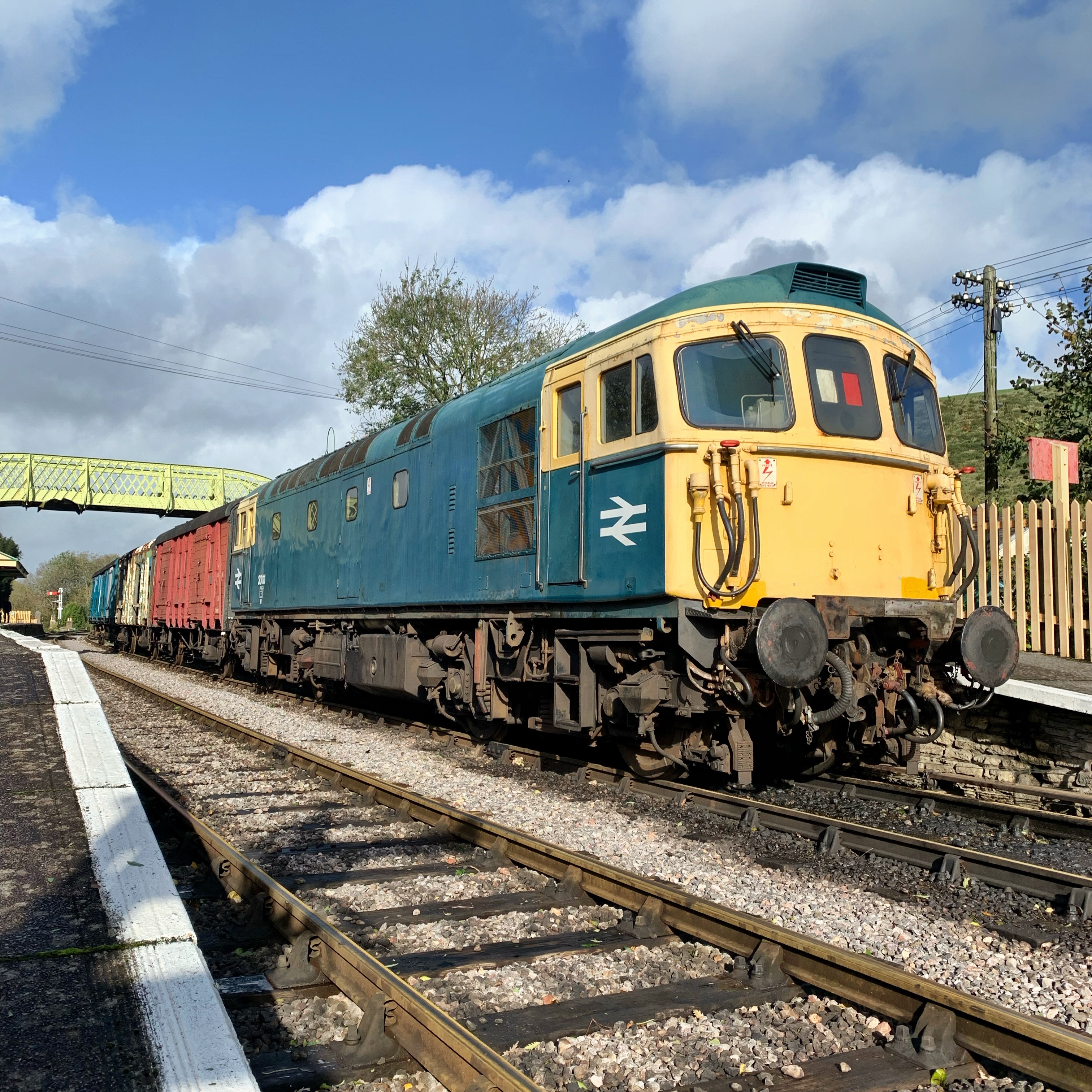
Video of Class 66 No.’s 66846 and 66850 reversing at Westbury with S59 1554 Swindon Transfer to Loreton-On-Lugg RHTT – 30/10/2022SR Battle of Britain Class 4-6-2 No. 34070 ‘Manston’ at Swanage Railway’s Herston Works. The locomotive was waiting in readiness to be collected by low loader and taken to Norden by road where she will undertake running in tests. Her place in the works will be taken by classmate No. 34053 ‘Sir Keith Park’. Many thanks to Jamie for getting permission for our visit to Herston – 01/11/2022The Swanage DMU stock keeping SR Battle of Britain Class 4-6-2 No. 34053 ‘Sir Keith Park’ company in the sidings at Corfe Castle ahead of her move to Herston Works – 01/11/2022BR Class 33 No. 33111 sits at Corfe Castle having removed a consist of wagons from Norden the previous day in readiness for the low loader moves in connection with ‘Manston’, ‘Sir Keith Park’. and ‘257 Squadron’ which is off on holiday to the Spa Valley railway to work Polar Express trains. ‘257 Squadron’ will be back at Swanage in early 2023- 01/11/2022SR West Country Class 4-6-2 No. 34028 ‘Eddystone’ departs Swanage with the 1000 service to Norden. SR U Class 2-6-0 No. 31806 sits in front of the ‘Flying Scotsman’ support coach. Note the fence panels which had blown over onto the coach on the extreme right of the picture – 01/11/2022
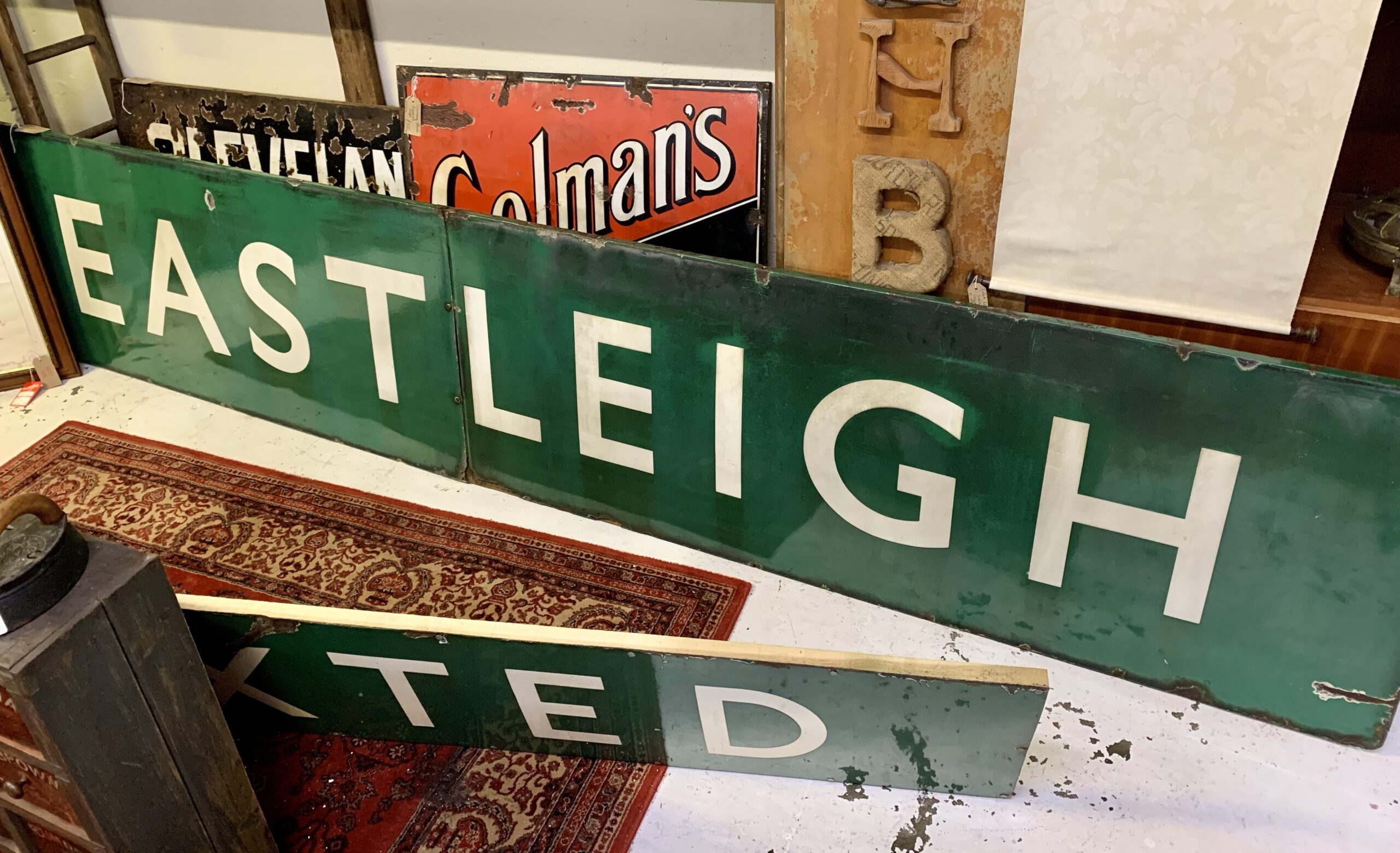
We also came across some interesting railwaymania when we visited the Den antiques emporium over the weekend:
£795 would make you the proud owner of an enamel British Railways Eastleigh station sign
Next, we found a signed Terrence Cuneo “The Night Express” print, an evocative study of a Great Western King Class 4-6-0 working along the sea wall near Teignmouth, painted by the Master in 1975 and issued by Felix Rosenstiels Widow & Sons Ltd. as a single edition of 850 prints signed by the artist in 1977. Terrence Cuneo (1907-1996) CVO, OBE is one of my favourite railway artists. He was also renowned for his military paintings and was the official artist for the coronation of Queen Elizabeth II in 1953. A bronze memorial statue of Terrence Cuneo, unveiled by Princess Anne in 2004, once stood on the concourse at London Waterloo, but was moved to Brompton Barracks in Kent prior to the development of the disused Eurostar platforms at the station. One of my favourite Cuneo paintings can be found at the Railway Museum in York and is of London Waterloo station:
That just about wraps up another week and all that remains is for me to thank you, dear reader, for taking the trouble to visit Yoshi’s blog. We’ve enjoyed having you stop by. As always, please feel free to comment or let me know of any typo’s, gobbledygook or misinformation! May your dog (or cat) go with you.
Wednesday October 19th to Tuesday October 25th2022
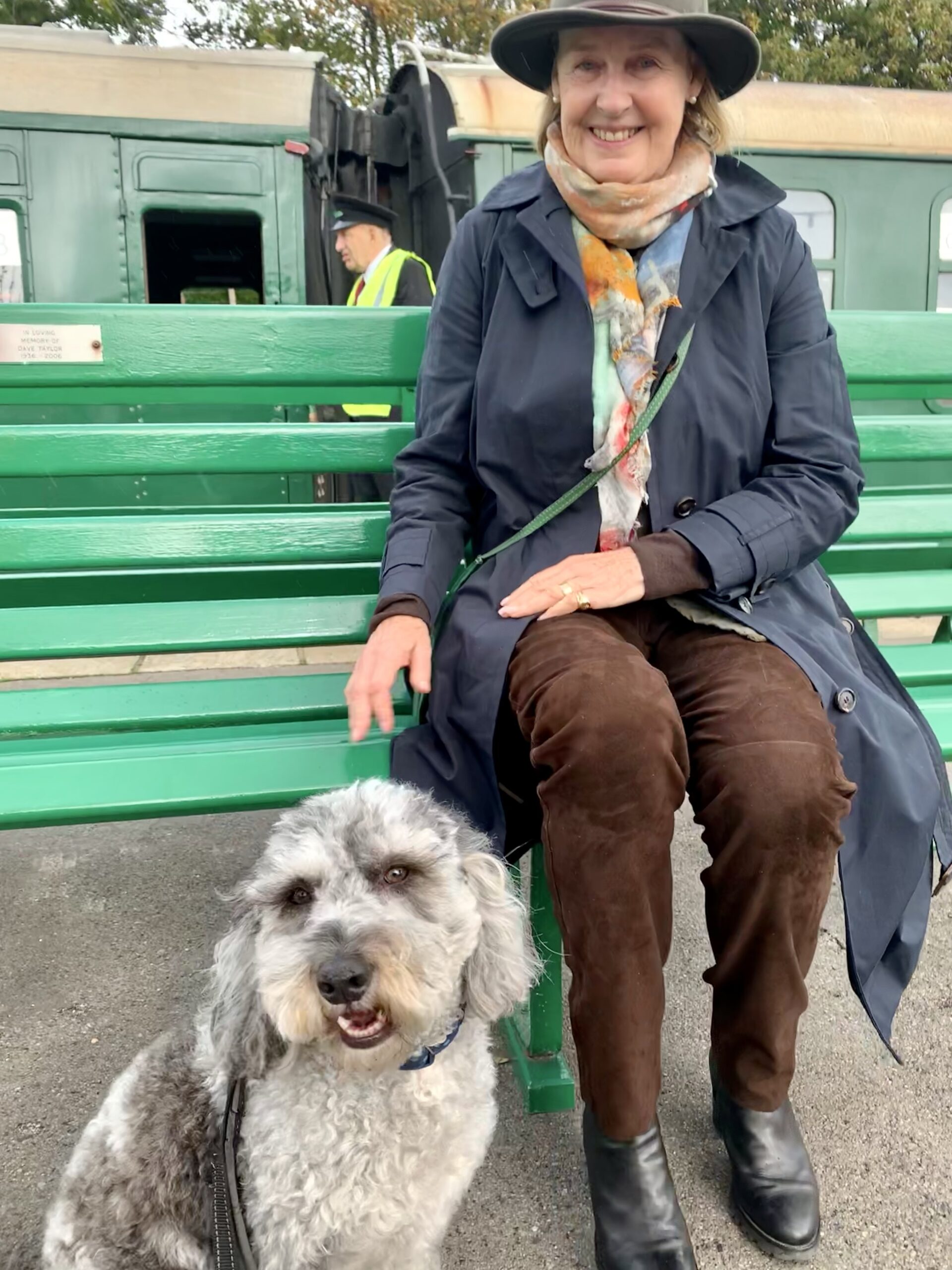
Yoshi meets Penny Peglar, daughter of Alan Peglar who rescued ‘Flying Scotsman’ from the scrapyard in 1963 – 22/10/2022
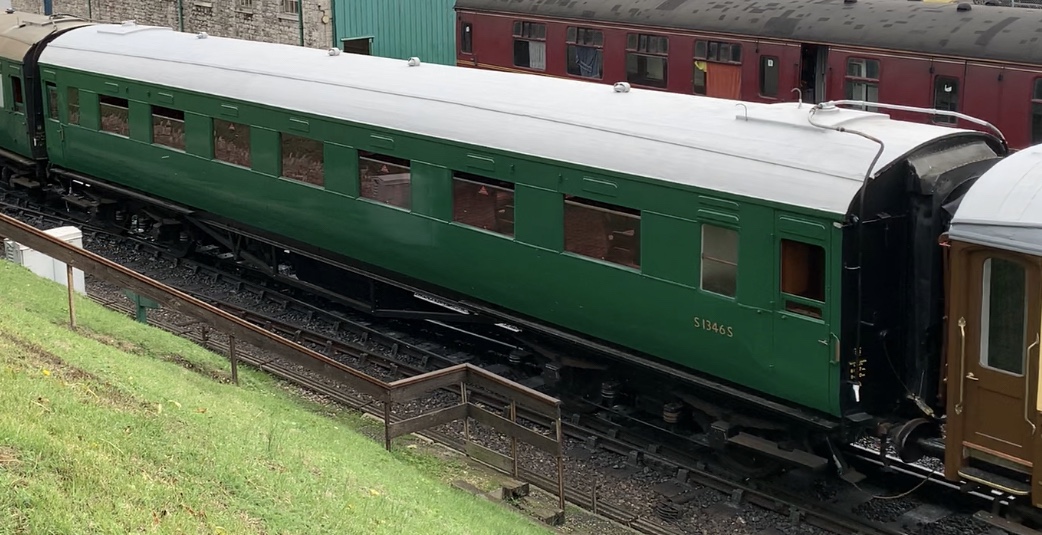
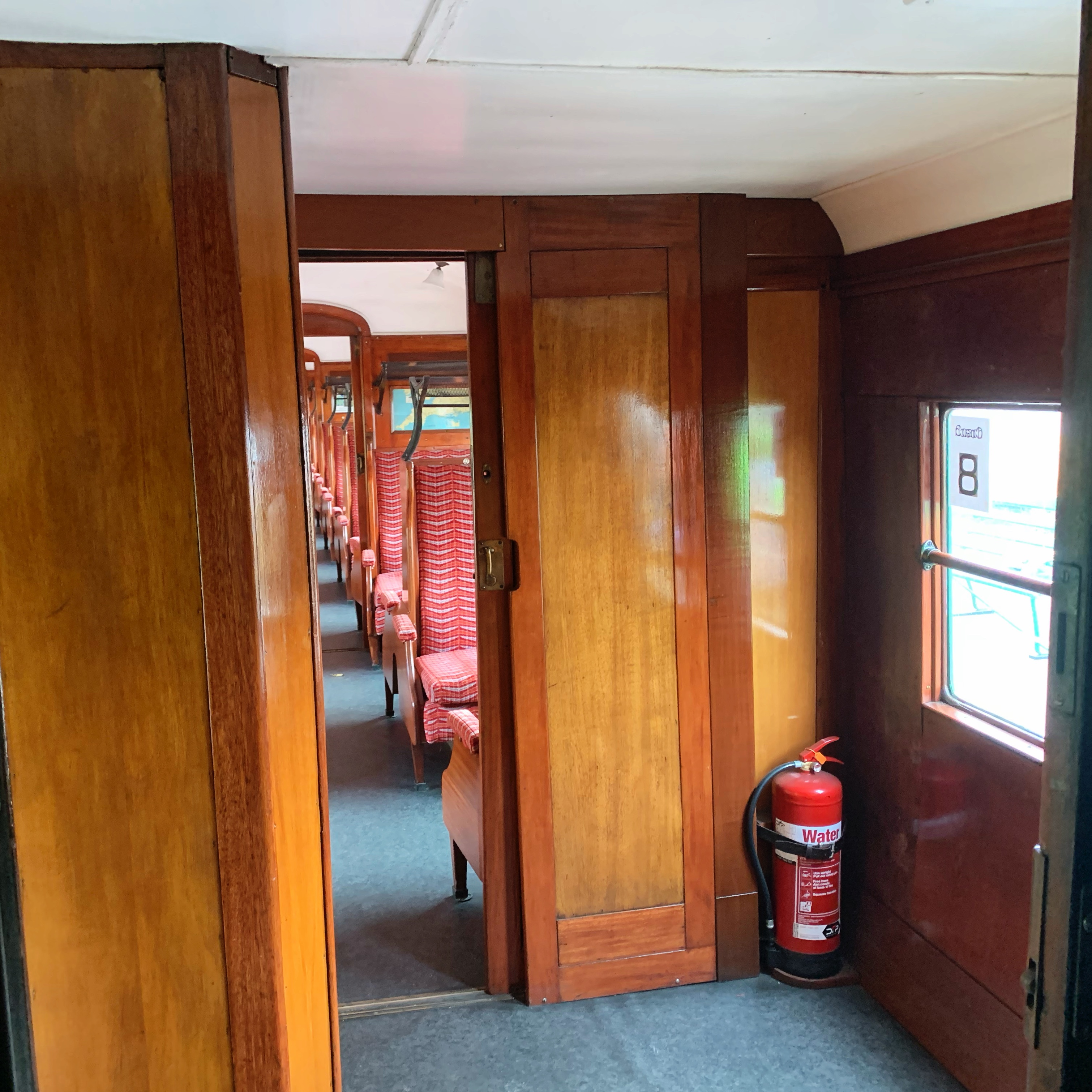
Hello Dear Reader – Yoshi and I had a lovely family day out on the Swanage Railway on Saturday 22nd October when we took a ride in lovingly restored 1933 Maunsell open third carriage No. 1346 behind visiting LNER Gresley A3 Pacific No. 60103 ‘Flying Scotsman’. Having survived a German bomb at Clapham in 1940, the coach ran in traffic until 1961 when it was withdrawn and converted for use as a mobile office and later a classroom. Sold into preservation in 1982 and initially based on the Kent & East Sussex Railway (K&ESR), the coach was purchased privately in 2002 for use on the Swanage Railway. Still awaiting the refitting of tables the restoration has been carried out to the highest standard and it really was a delight to see and travel in.
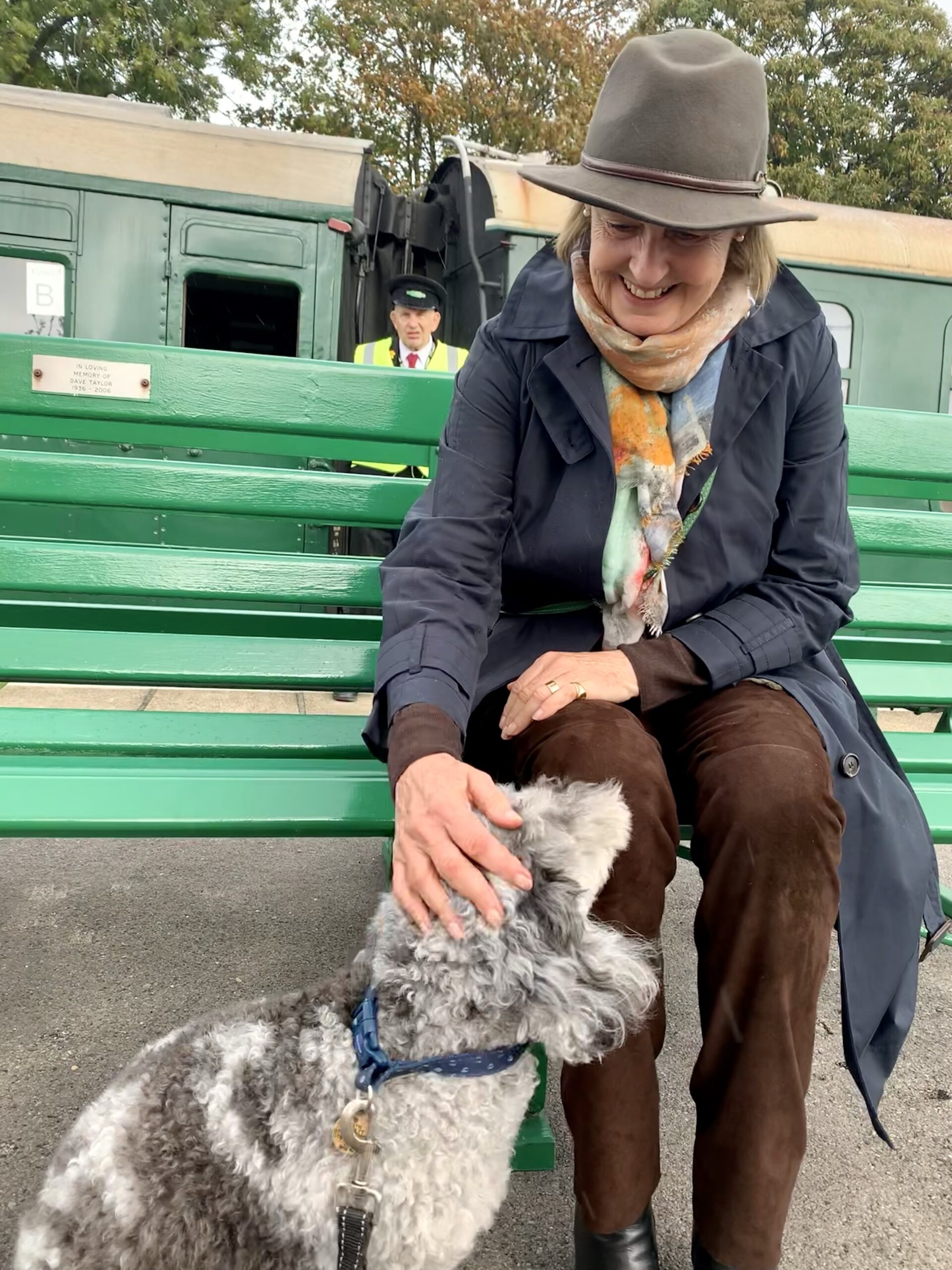
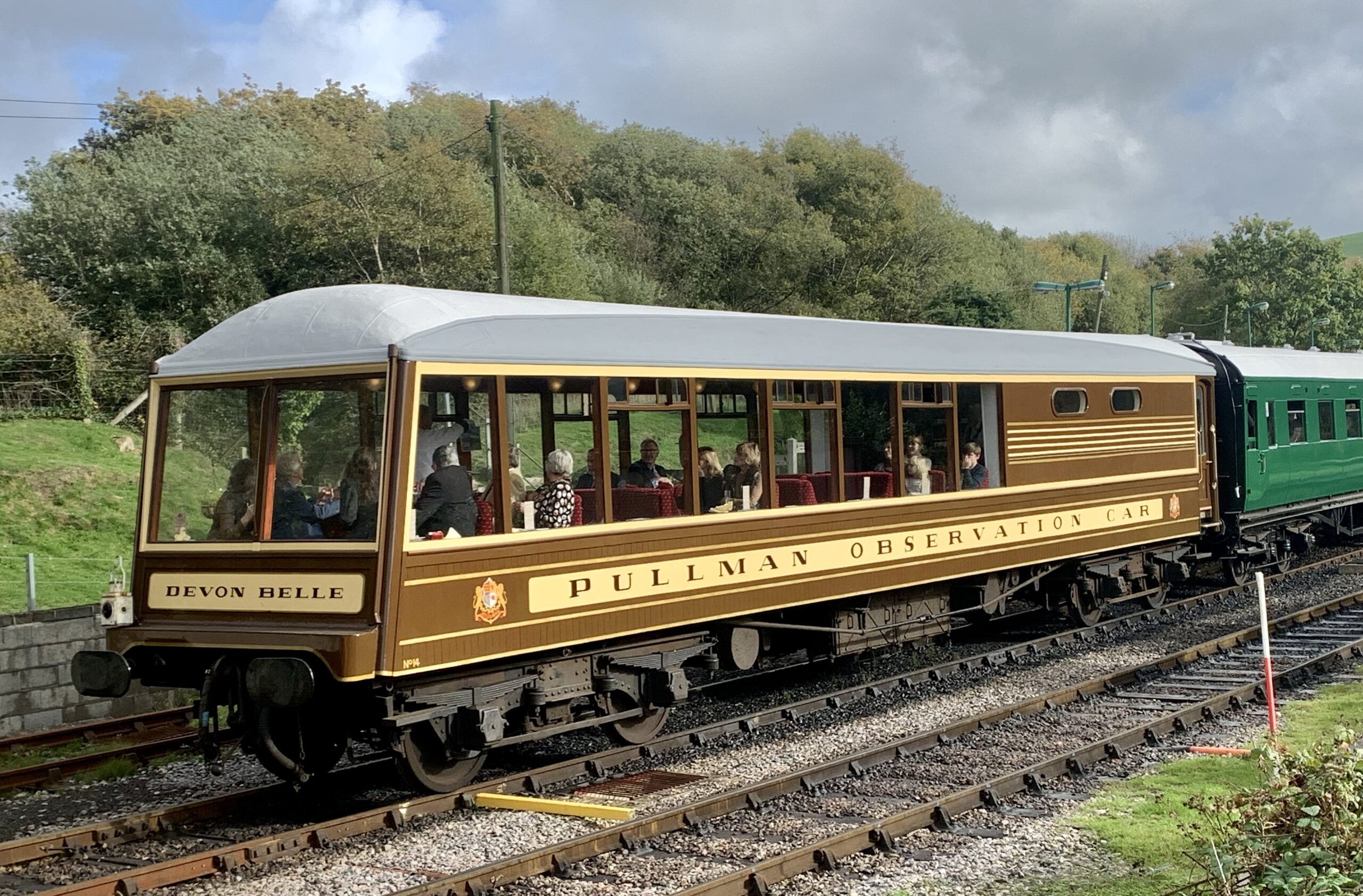
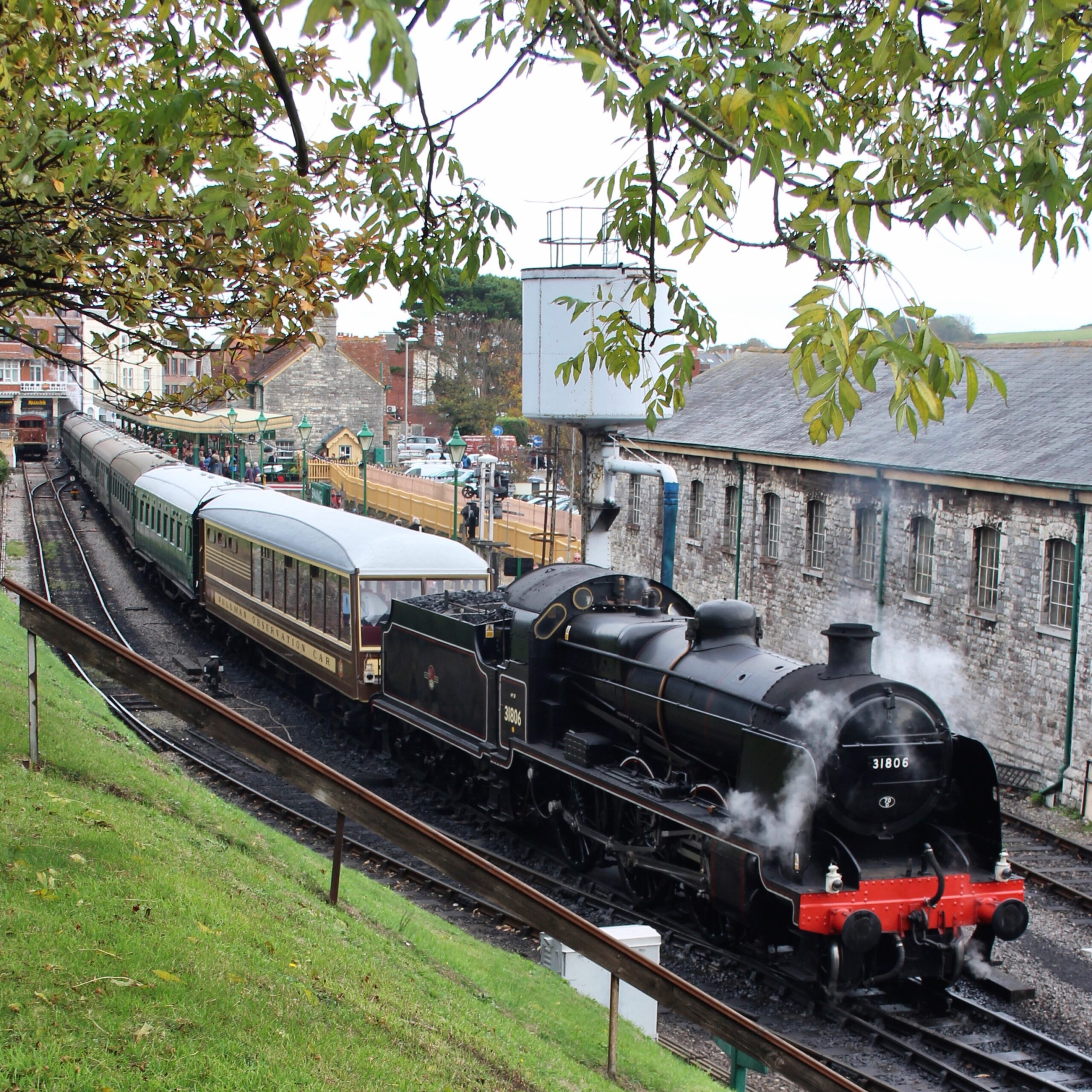
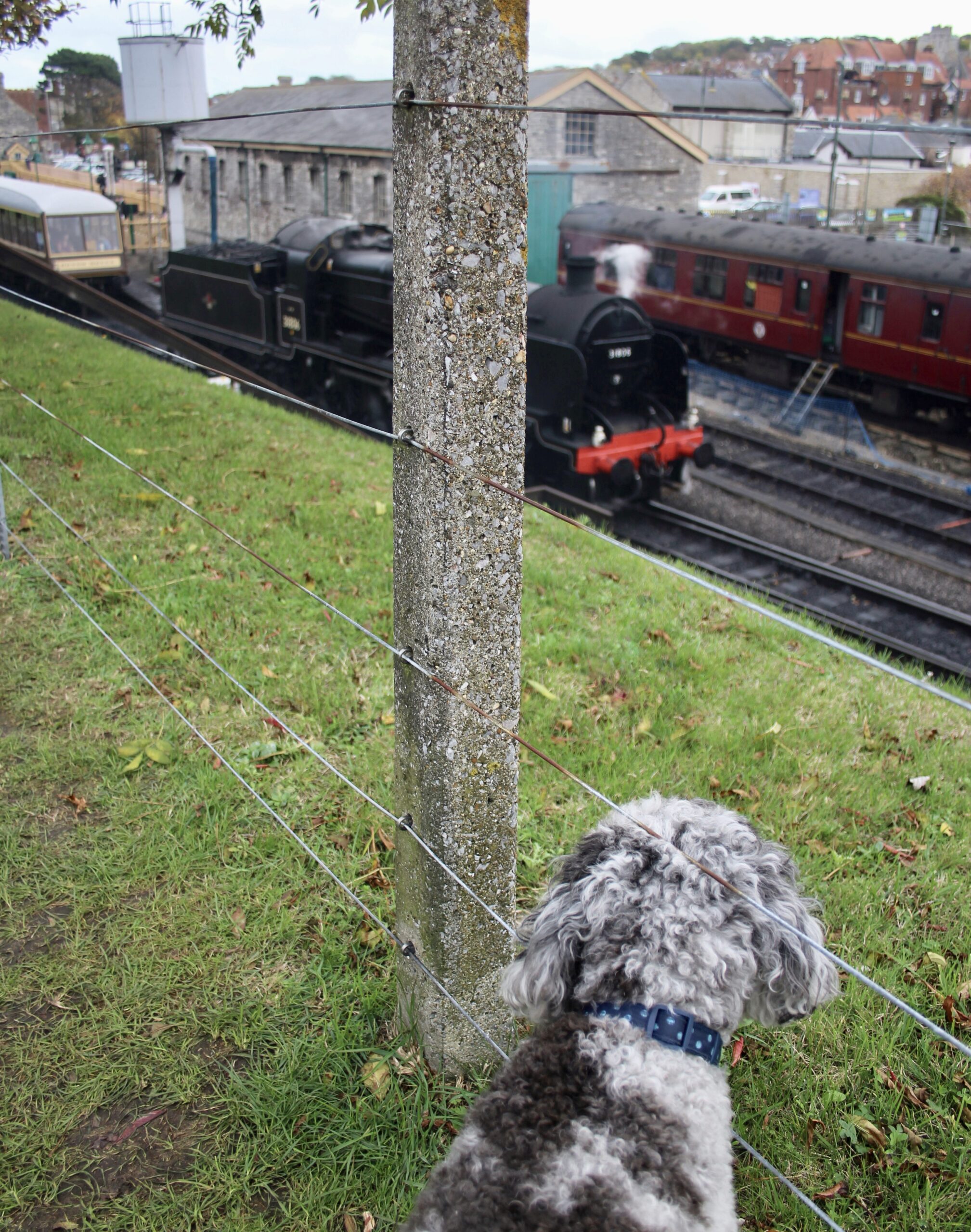
1933 Maunsell open third carriage No. 1346Yoshi and I explore 1933 Maunsell open third carriage No. 1346 (Image courtesy of Caroline Smith)Vestibule of 1933 Maunsell open third carriage No. 1346LNER Gresley A3 No. 60103 ‘Flying Scotsman’ prepares to back on to the seven coach train employed during running days at the Swanage Railway – 22/10/2022LNER Gresley A3 No. 60103 ‘Flying Scotsman’ passes Herston Halt – 25/10/2022LNER Gresley A3 No. 60103 ‘Flying Scotsman’ passes Southern Railway rebuilt West Country Class Bulleid Pacific No. 34028 ‘Eddystone’ at Harmans Cross – 22/10/2022 (Image courtesy of Caroline Smith)LNER Gresley A3 No. 60103 ‘Flying Scotsman’ passes Corfe Castle – 25/10/2022LNER Gresley A3 No. 60103 ‘Flying Scotsman’ crosses Corfe viaduct in the shadow of Corfe Castle – 25/10/2022LNER Gresley A3 No. 60103 ‘Flying Scotsman’ arrives at Norden with the 1X06 1325 service from Swanage – 24/10/2022 Yoshi welcomes a fuss from Penny Pegler, daughter of ‘Flying Scotsman’ saviour Alan Pegler, who visited the Swanage Railway from her home in Portugal and traveled on the 1145 departure on Saturday 22nd October 2022. Penny’s late father purchased ‘Flying Scotsman’ from British Railways in 1963 at the cost of £3,000 – 22/10/20221940’s Pullman “Devon Belle” observation coach Car 14 which accompanied ‘Flying Scotsman’ on tours of Canada and the United States to promote British exports was part of the consist of at Swanage this week. Volunteers with the Swanage Railway Trust carefully restored the wooden carriage after it was rescued from San Francisco where it was in use as a static bar. Norden – 24/10/2022SR U Class 2-6-0 No. 31806 assisted with the shunting of stock during the ‘Flying Scotsman’ running days at Swanage – 25/10/2022Yoshi keeps watch on SR U Class 2-6-0 No. 31806 as she backs onto the empty coaching stock in preparation for shunting – 25/10/2022
Video of Yoshi’s visit to the Swanage Railway and his trip behind ‘Flying Scotsman’. Playing the bagpipes as our train departed Swanage was 15 year old Frederick Sills from Wareham who is a member of Swanage Railway’s Sygnets youth group and a member of the Weymouth Sea Cadets. He did a wonderful job!
‘Flying Scotsman’ will be on static display at Swanage Railway station until the 6th November 2022.
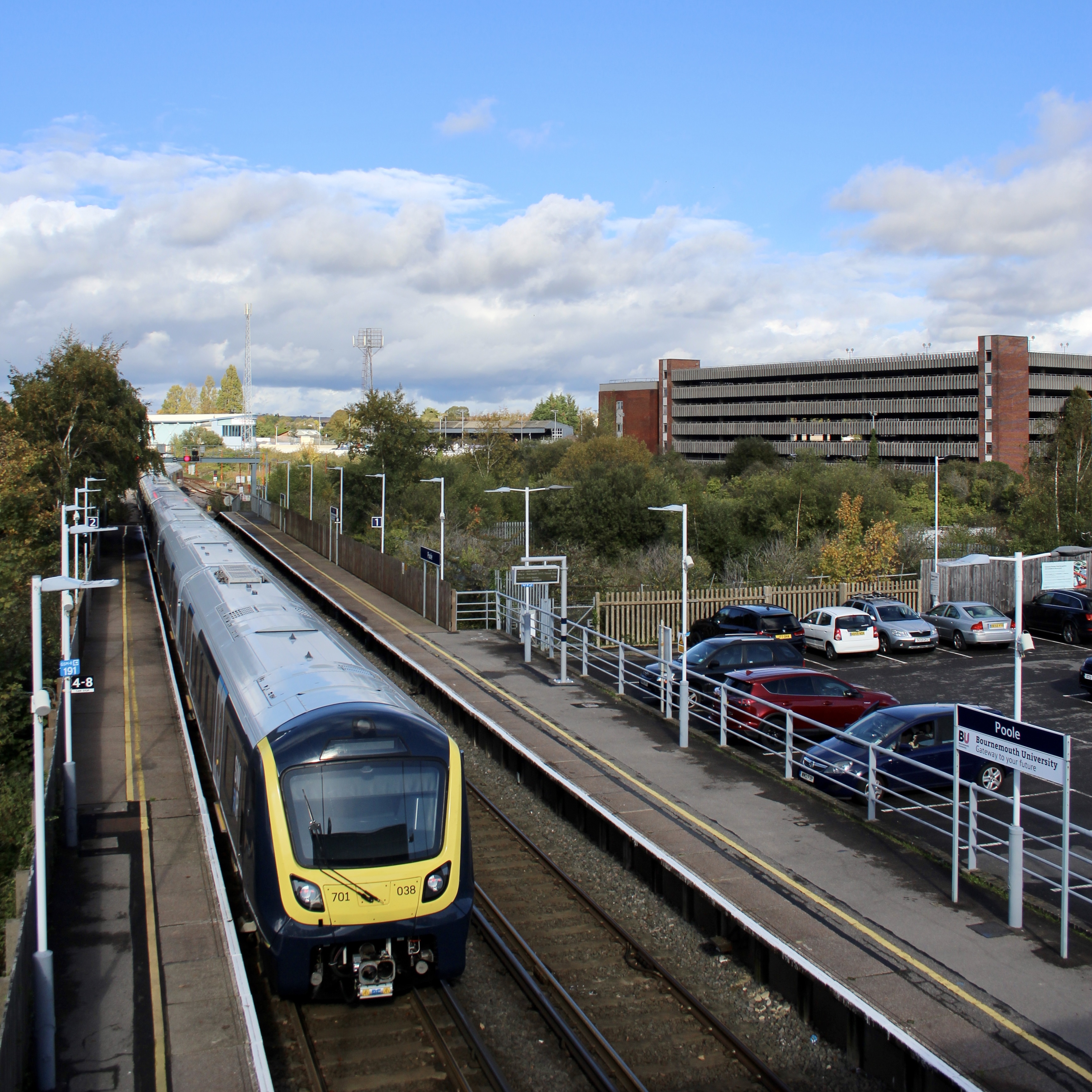
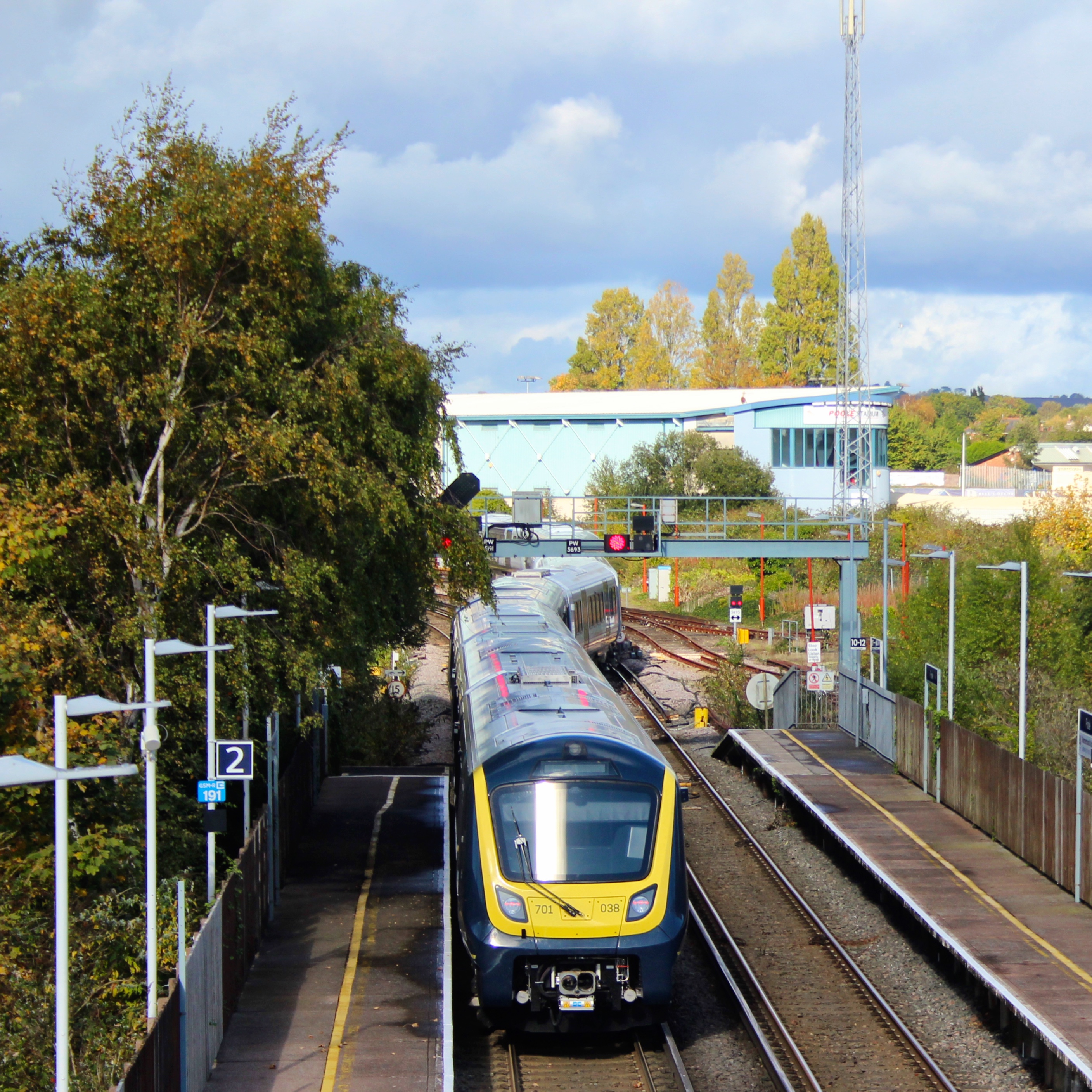
Although there is still no date for their introduction into revenue earning service, South Western Railway (SWR) Class 701 Electric Multiple Units (EMU) continue testing and mileage accumulation runs taking in Poole where they reverse. On Thursday 20th October it was the turn of No. 701038 to have a run out, and we saw the unit passing through Poole:
SWR Class 701 No. 701038 working 5Q51 1115 London Waterloo to Staines Up Loop passing through Poole – 20/10/2022SWR Class 701 No. 701038 working 5Q51 1115 London Waterloo to Staines Up Loop crosses over the Up Line to reach Poole Storage Sidings where the service reverses – 20/10/2022Having reversed in Poole Storage Sidings, SWR Class 701 No. 701038 working 5Q51 1115 London Waterloo to Staines Up Loop passes Class 444 No. 444035 which formed 1W65 1205 London Waterloo to Weymouth at Poole – 20/10/2022
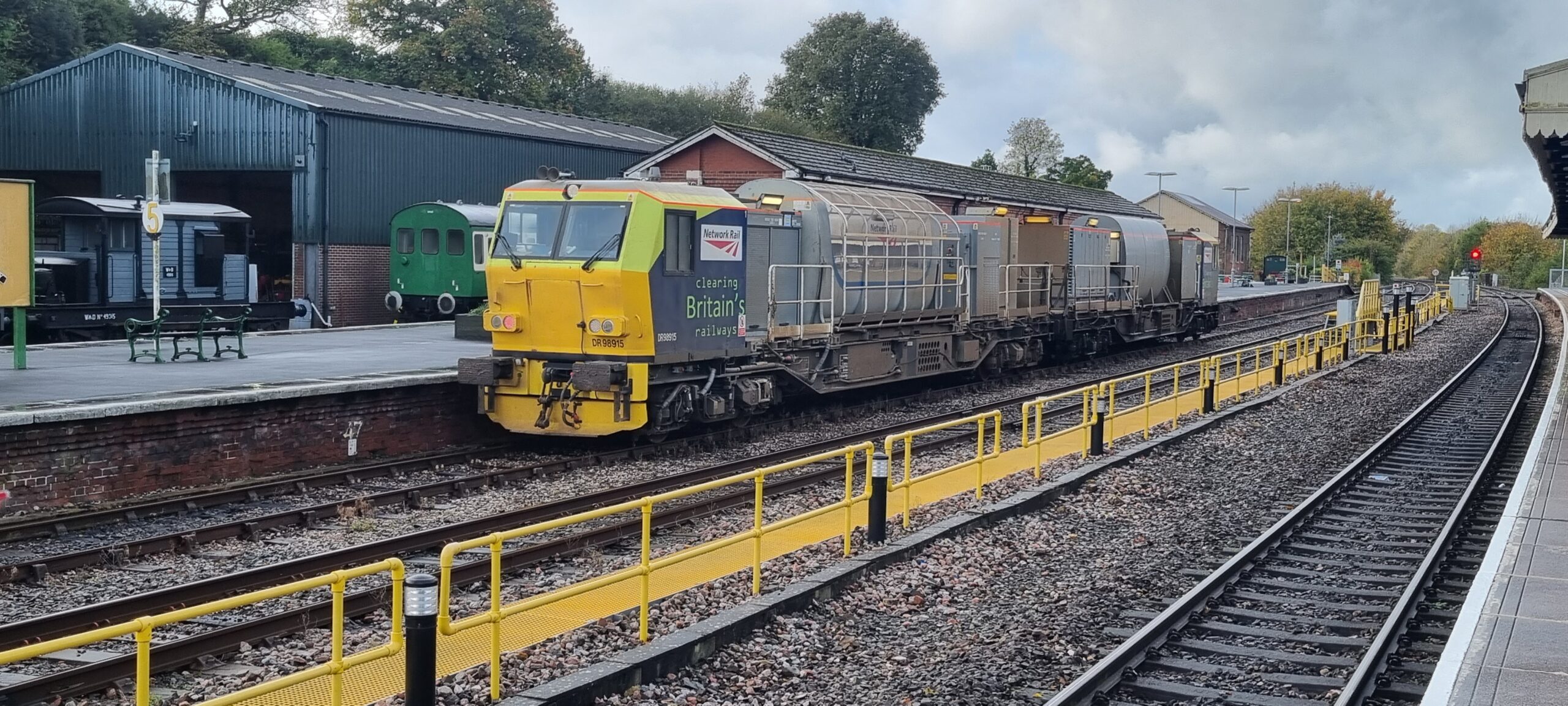
The railways in the UK are well into Rail Head Treatment Train (RHTT) season as the trees shed their leaves which are scattered across the nations railway tracks. This can cause problems for the track circuits and reduce a trans ability to grip to the rails when starting from stations, accelerating, climbing hills or stopping. In our neck of the woods we see regular Multi Purpose Vehicle (MPV) movements spreading adhesion modifier; a mixture of suspension gel (so it can be pumped), sand (to help train wheels grip the rail), and steel or iron shot that is pushed through contamination (compressed leaves and debris).
Multi Purpose Vehicle No. DR98915 at Yeovil Junction – 25/10/2022 (Courtesy of Scott Lewis)An unidentified MPV crosses Holes Bay, Poole working 3S81 0551 Totton Yard to Totton Yard – 25/10/2022
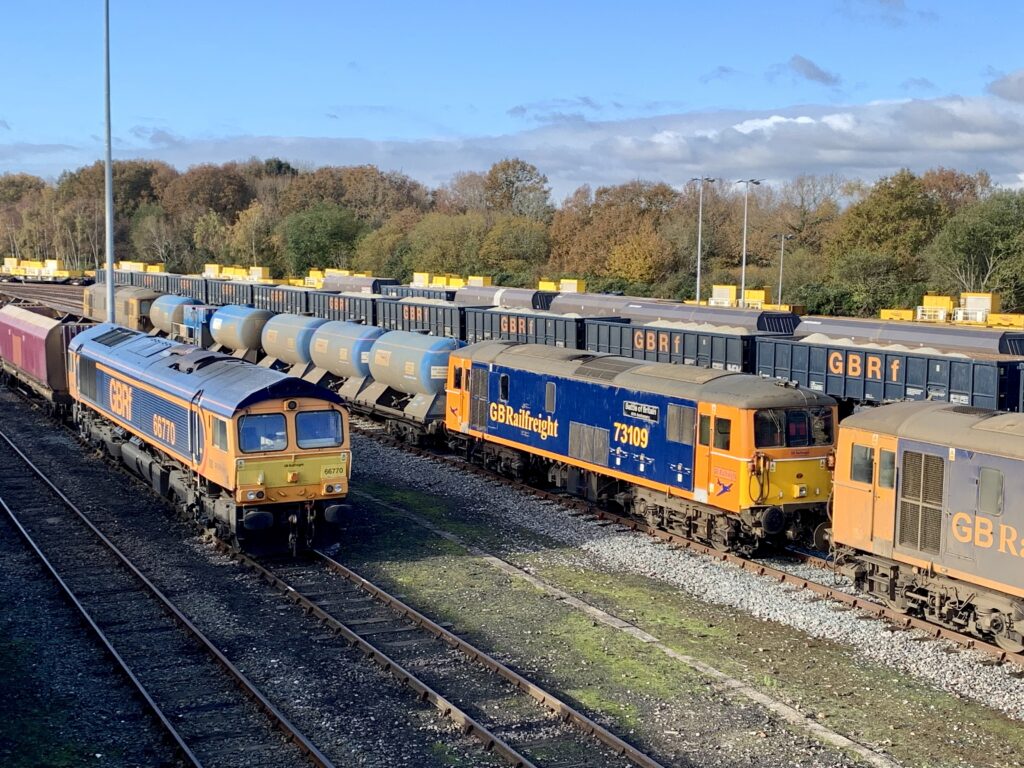
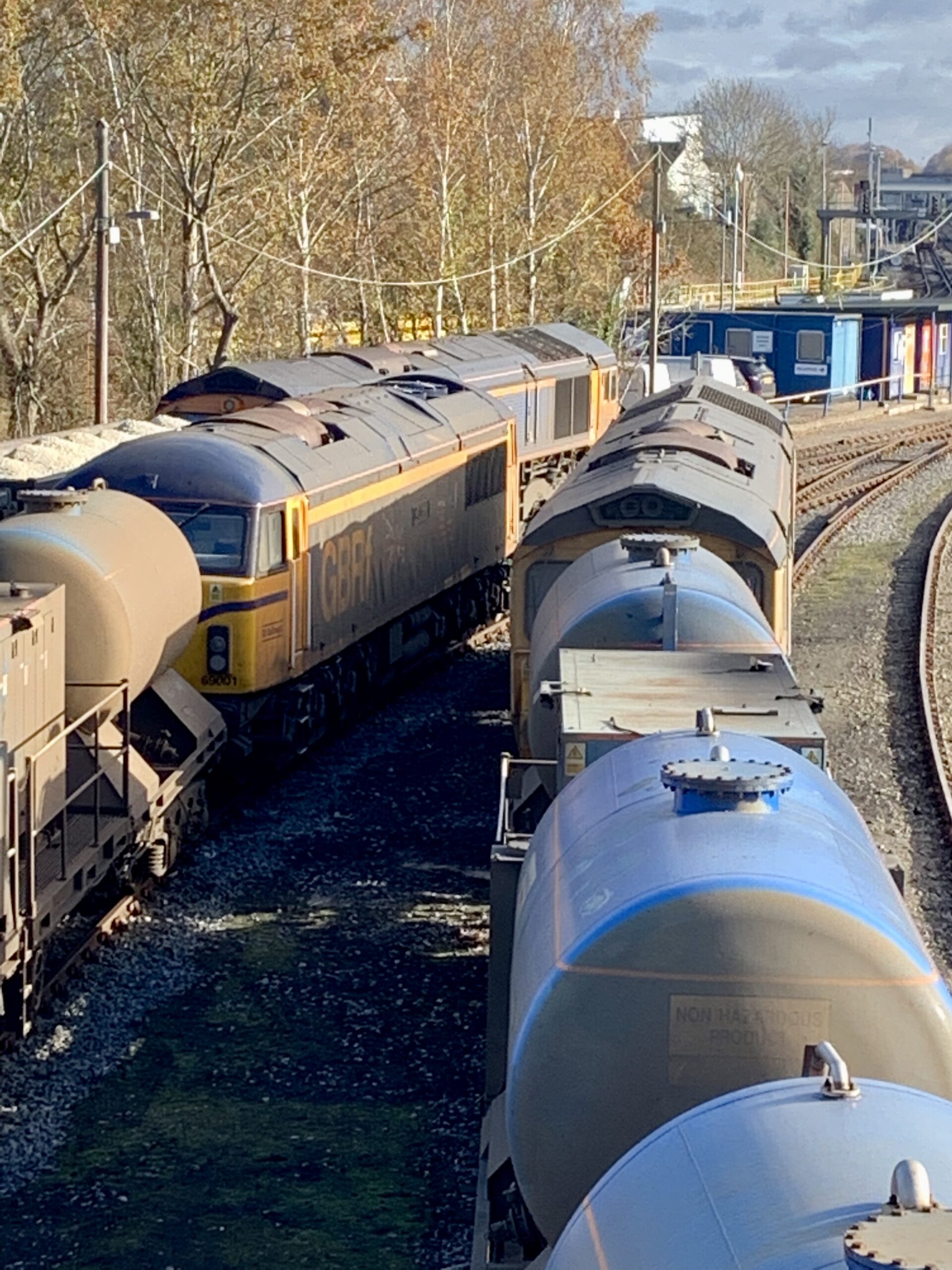
On the 28th October 2021, Direct Rail Services Class 37 No.’s 37218 and 37558 (37424) ‘Avro Vulcan XH558′ (named after a preserved Vulcan bomber) could be found working RHTT 310X 0900 Stowmarket DGI to Stowmarket DGI. The pair are seen passing through Ipswich.Yoshi taking a well earned rest on the lattice footbridge which crosses over Tonbridge West Yard with an RHTT behind. The Southern Railway commissioned the yard in 1941 to help cope with heavy wartime freight traffic – 21/11/2021Class 73 No. 73141, 73109 ‘Battle of Britain – 80th Anniversary’ and an unidentified class member (possibly No. 73119 ‘Borough of Eastleigh’ if a certain kind reader could confirm please?) with Class 66 No. 66770 at Tonbridge West Yard – 21/11/2021From left to right; Class 66 No. 66731 ‘Capt. Tom Moore’, Class 69 No. 69001 ‘Mayflower’ and Class 66 No. 66722 ‘Sir Edward Watkin’ at Tonbridge West Yard – 22/11/2021
Video of Rail Head Treatment Trains at Tonbridge West Yard – 22/11/2021
Network Rail’s website reveals there are 32 MPV and 29 locomotive-hauled RHTT’s which deliver the autumn rail head treatment programme. At the weekend, I was tipped off that a Class 37 diesel loco had been hired in by Colas for the Swindon area locomotive hauled RHTT replacing a Class 66 (No. 66846 which required repairs).
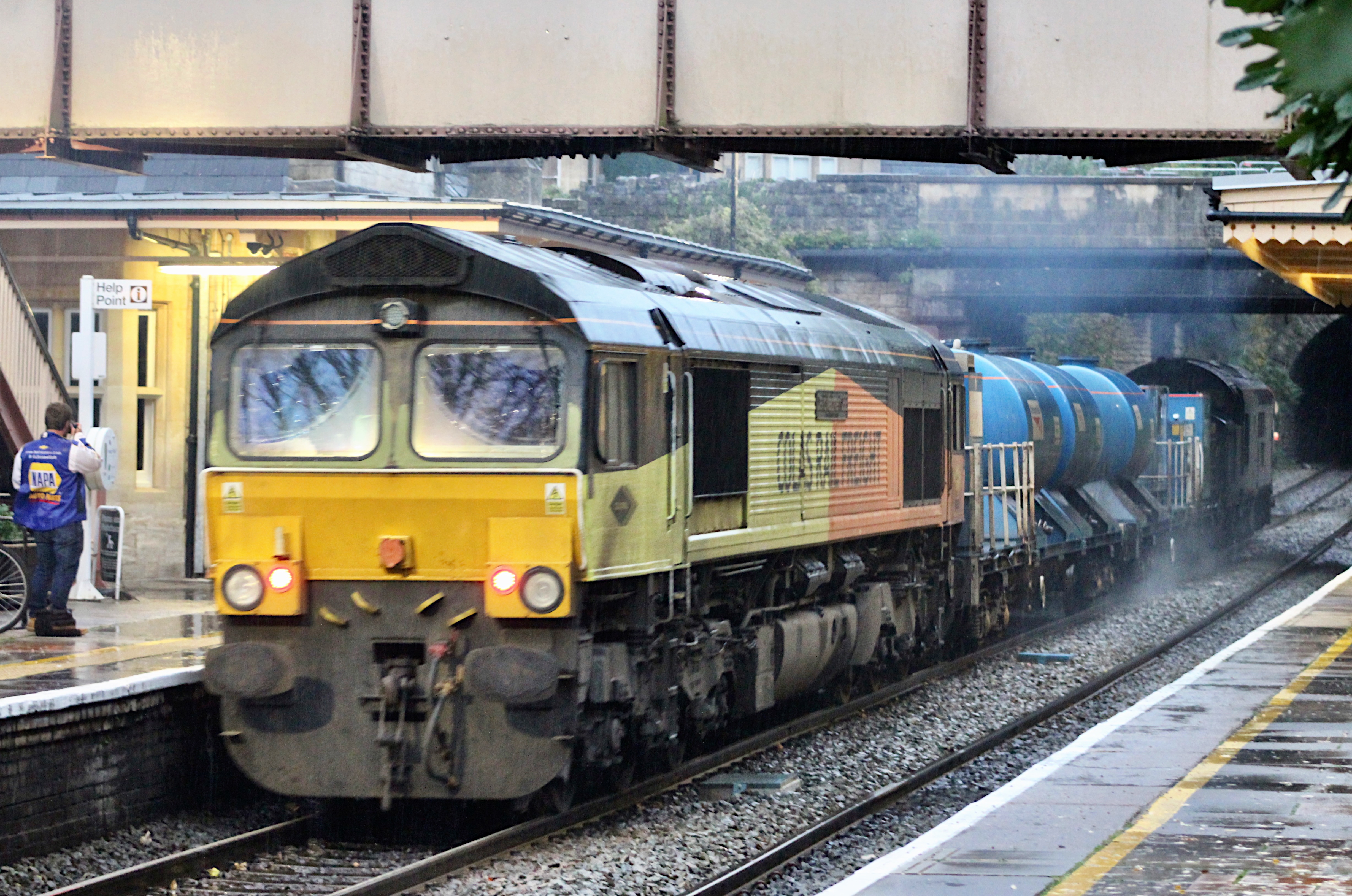
On hire to colas for Rail Head Treatment Train (RHTT) workings, West Coast Rail Class 37 No. 37668 spent the weekend partnering Class 66 No. 66850 ‘David Maidment’ on Swindon based runs. The pair are seen nearing Bradford on Avon in the rain working 3S59 1554 Swindon Transfer Sidings to Moreton on Lugg – 23/10/2022
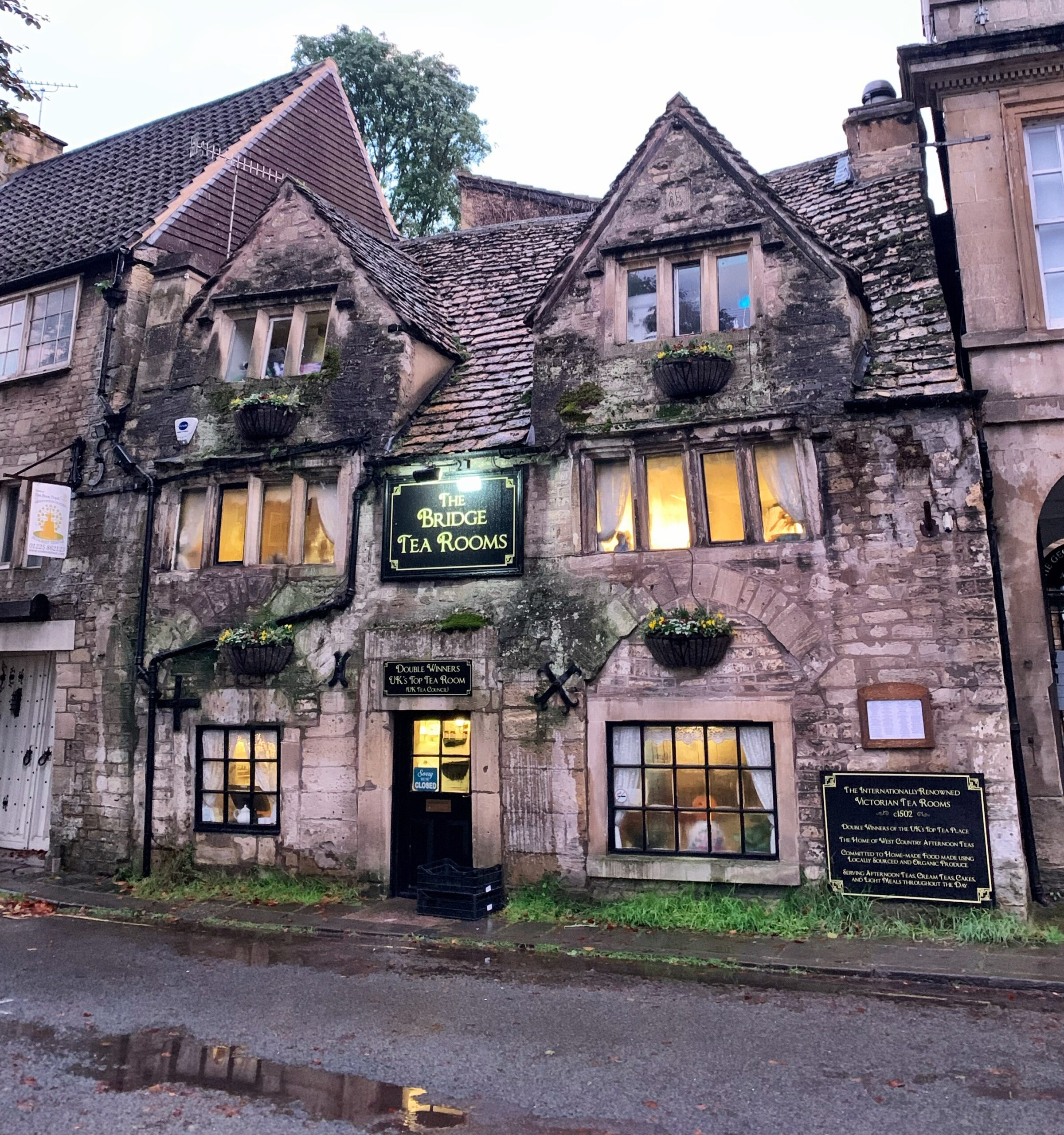
So on Sunday afternoon we found ourselves in Bradford on Avon clinking delicate bone china tea cups and enjoying lunch at The Bridge Tearooms, a former blacksmith’s cottage dating from 1502.
The Bridge Tea Rooms at Bradford on Avon does an excellent Welsh rarebit – 23/10/2022
After a walk taking in the ancient Tithe Barn and the Kennet & Avon Canal, I headed to Bradford on Avon railway station while Yoshi and his mum took shelter from the rain in a pub.
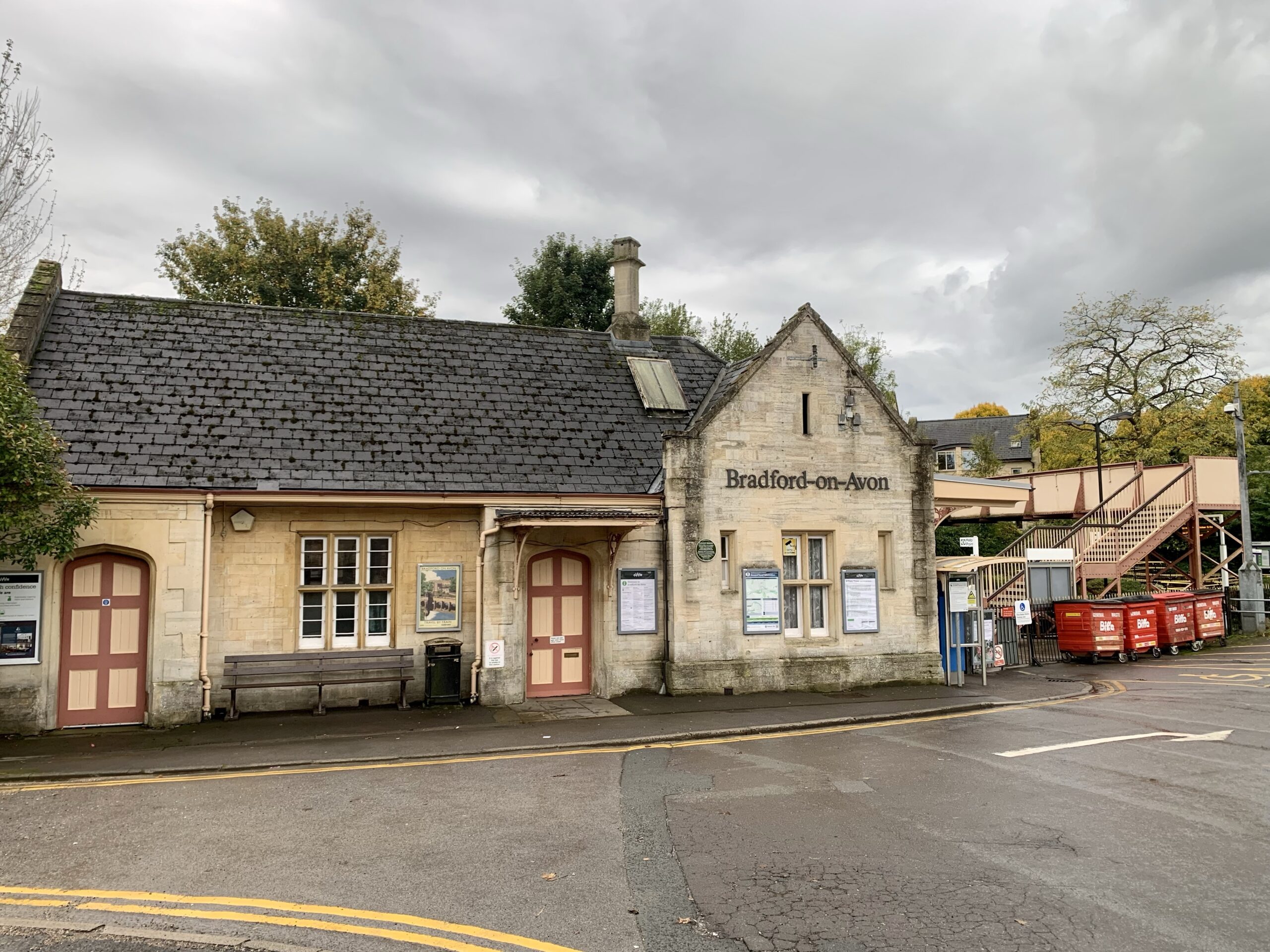
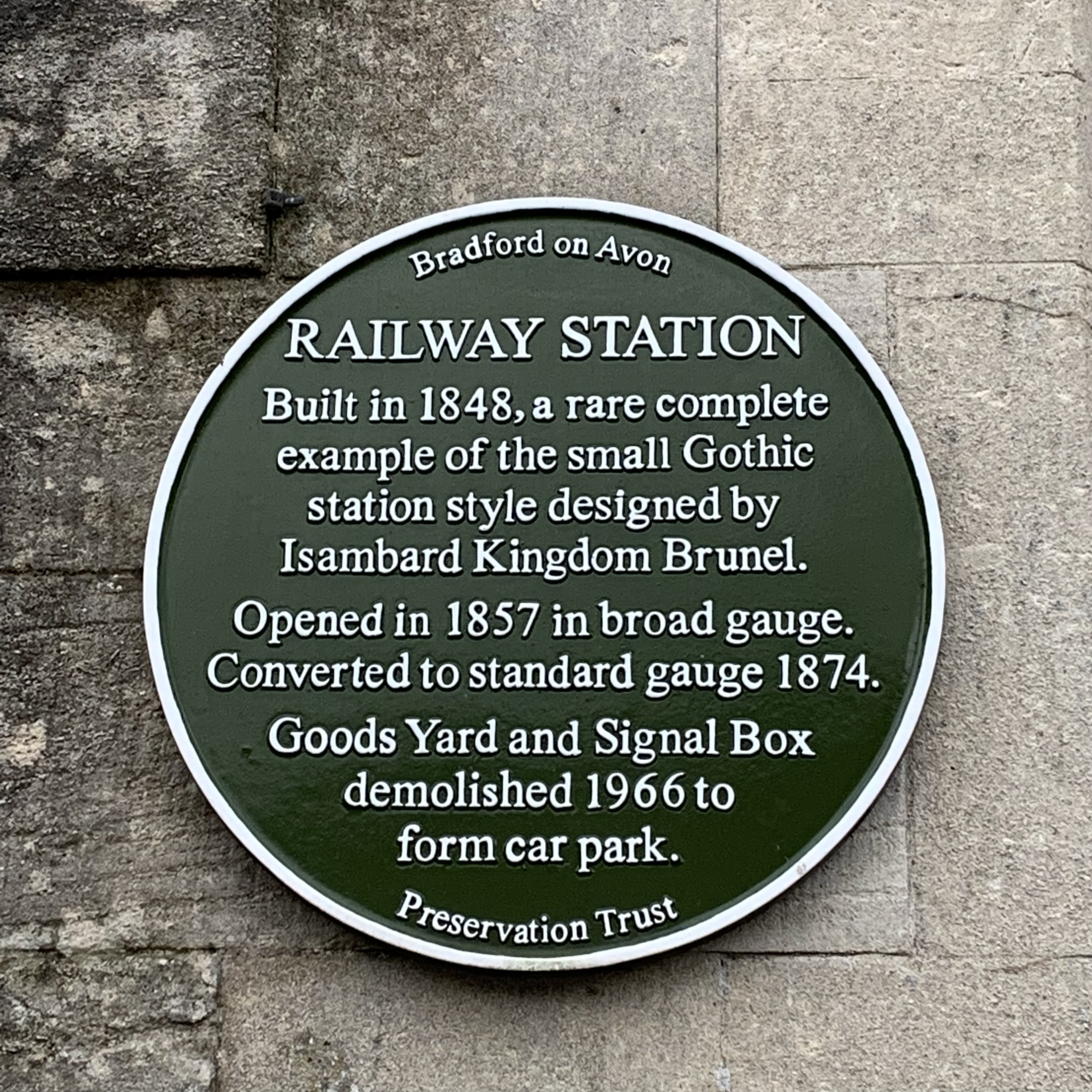
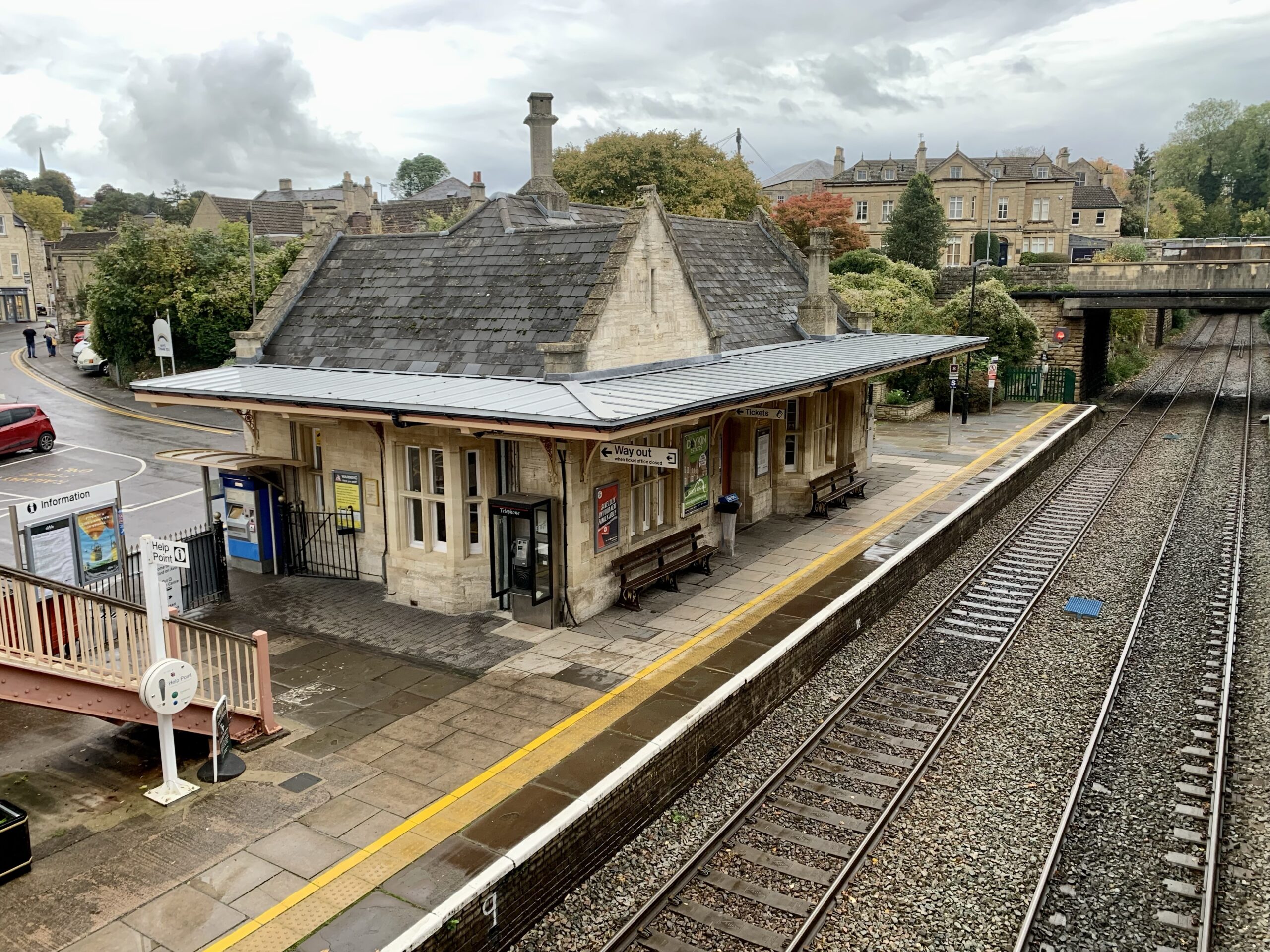
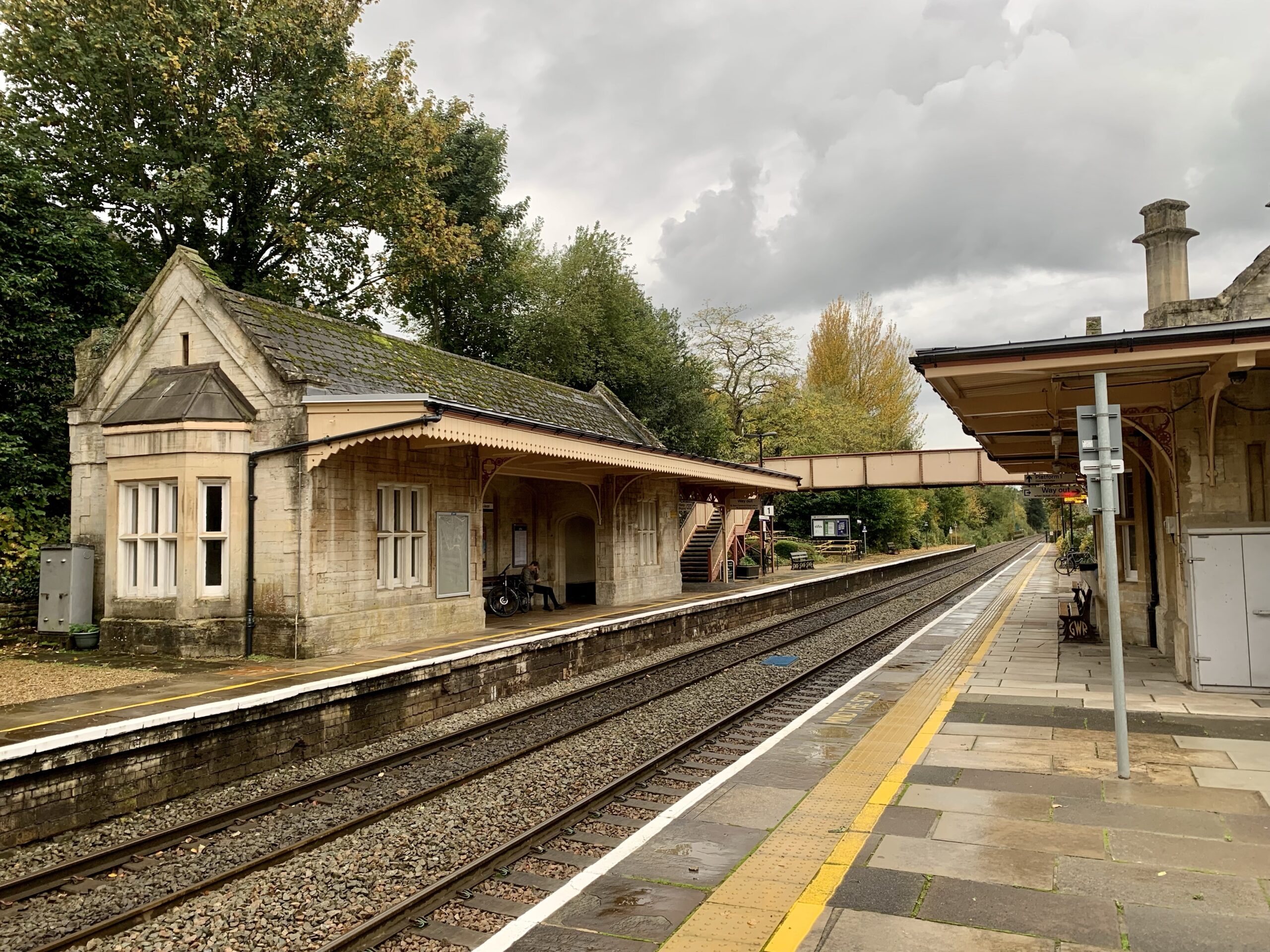
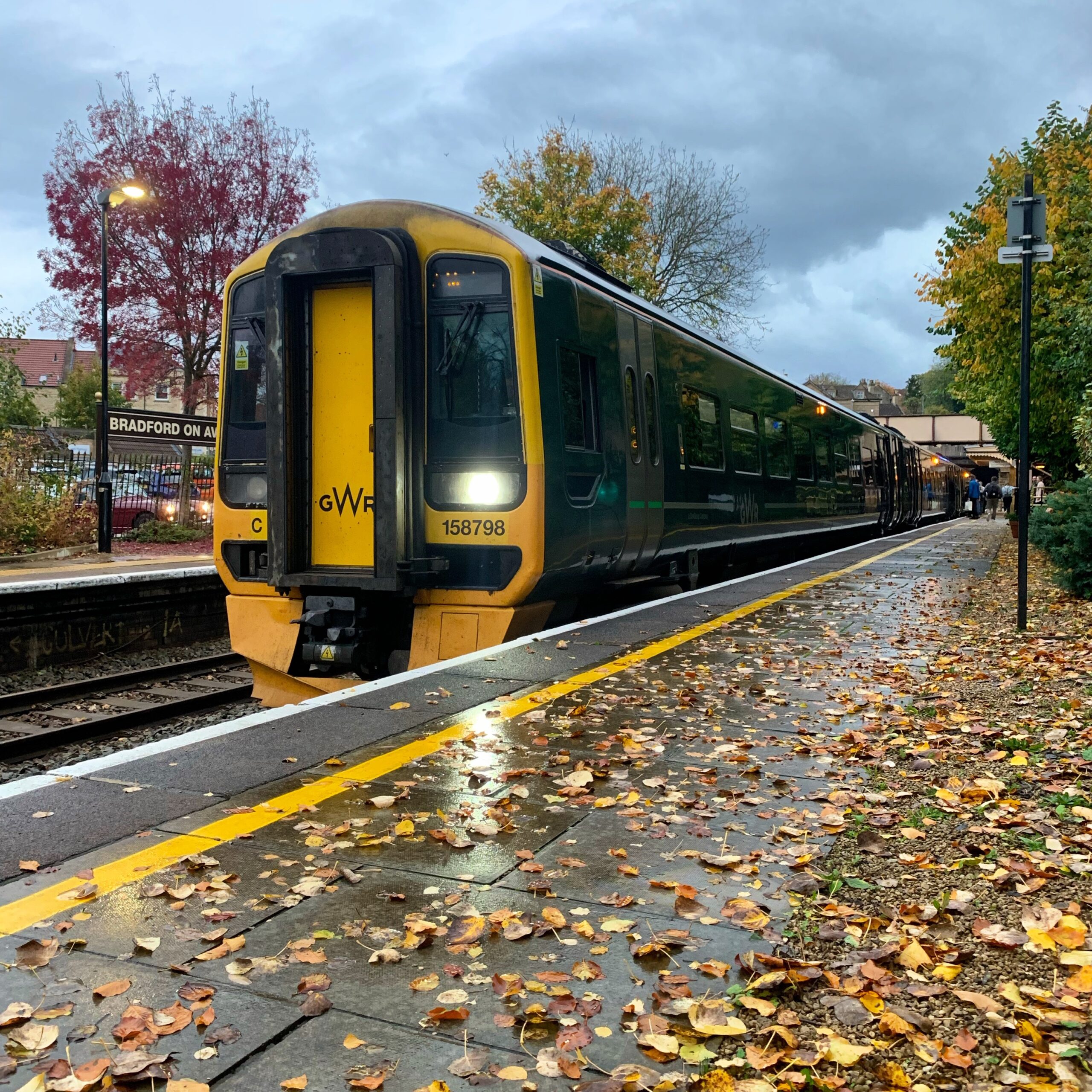
Bradford on Avon railway station exterior – 23/10/2022Bradford on Avon railway station plaque – 23/10/2022Bradford on Avon railway station platform 2 – 23/10/2022Bradford on Avon railway station platform 1 – 23/10/2022
Grade 2 listed Bradford on Avon station, originally planned by The Wilts, Somerset and Weymouth Railway, is situated 15 km south east of Bath between Avoncliff and Trowbridge and is a stop on Weymouth to Bristol services. In the event the station was not opened until 1857 when the line was in the control of The Great Western Railway
(GWR). The station is of a standard Brunel design but utilises local Bath stone rather than the usual bricks and mortar. Originally trains would have been of the seven-foot broad gauge variety, but the track was converted to standard gauge in 1874. Present day services are operated by Great Western Railway (formerly First Great Western and no relation to the old GWR), South Western Railway having withdrawn their direct services to Bristol. Trains are typically operated using Class 165 and Class 166 Networker Turbo trains and Class 158 diesel multiple units. The line is sometimes used as a diversionary route and sees GWR main line and CrossCountry trains, usually at weekends.
The goods yard located on the ‘up’ side of the line was closed to traffic in 1965 and is now home to a car park and health centre. The signal box was demolished in 1966. There is a campaign to reinstate the canopy on the 1899 footbridge, removed in 1964, and which I would have found very useful during my visit in the rain! The Bradford on Avon Footbridge Canopy Project were awarded a £22,000 grant from the Community Rail Development Fund (CDRF) in September 2022.
Class 158 No. 158798 pauses at Bradford on Avon working 2C96 1640 Westbury to Bristol Temple Meads. The canopy devoid footbridge can be seen above the rear of the train – 23/10/2022Class 166 No. 166204 ‘Norman Topsom MBE’ and Class 165 No. 165133 arrive at Bradford on Avon working 1F25 1526 Cardiff Central to Portsmouth Harbour which was terminated at Fratton due to an obstruction on the line – 23/10/2022Class 66 No. 66850 ‘David Maidment’ on the rear of 3S59 1554 Swindon Transfer Sidings to Moreton on Lugg RHTT passing Bradford on Avon – 23/10/2022
Video from Bradford on Avon – 23/10/2022
Our North Dorset Correspondent has been out and about in Yeovil over the last few days and has sent Yoshi the video and still images below:
First up are the GWR Sleeper trains crossing at Yeovil Pen Mill while on route diversion during the early hours of Monday 23rd October 2022. The up service 1A50 2115 Penzance to Paddington hauled by Class 57 No. 57602 ‘Restormel Castle’ was running just over an hour late and because of the single track to Castle Cary, was held at Yeovil Pen Mill to allow 57604 ‘Pendennis Castle’ on the down 1C50 2350 London Paddington to Penzance to enter the station. I have been muttering about heading to Yeovil to see the sleepers on diverts for a while now, and as far as I am aware, this is most likely the final opportunity for 2022, so many thanks to Scott for braving the inclement weather!
GWR Sleeper divers at Yeovil Pen Mill 24/10/2022 – courtesy of Scott Lewis
The following day, Scott was back in Yeovil, this time at Yeovil Junction as Colas Class 37 No. 37099 arrived from Exeter Riverside and was engaged in shunting two damaged Network Rail test train coaches into position for recovery by low loader. After loading, there was a problem with one of the escort vehicles so the departure by road was delayed.
Class 37 No. 37099 and Network Rail MK2 coaches at Yeovil Pen Mill – 25/10/2022 (with grateful thanks to Scott Lewis)
Monday 24th October 2022 also saw the regular Class 73 hauled test train visit the Bournemouth to Weymouth line with GBRf Class 73 electro-diesel locomotives No. 73961 ‘Alison’ and 73963 ‘Janice’ top and tailing 1Q51 1115 Derby RTC to Eastleigh East Yard and we popped into Hamworthy station to see it and have a good old bark as it passed by on its outward run.
1Q51 1115 Derby RTC to Eastleigh East Yard passing Hamworthy – 24/10/2022
Thanks for reading and as always, many thanks for your comments, observations and corrections. We’ll leave you with some video footage from the archive of ‘Flying Scotsman’ when she visited the Swanage Railway in 1994:
‘Flying Scotsman’ at Swanage 1994
Endpiece:
LNER Gresley A3 No. 60103 ‘Flying Scotsman’ approaches Harmans Cross with her last turn of the day on Tuesday 25th October 2022
Yoshi basks in the sun alongside Peckett & Sons 0-4-0T ‘Pectin’ at Yeovil Junction
Every now and then, even in this internet age, a test train or light locomotive working manages to pass me by. Recently it was a top and tailed Class 73 test train which visited our local area when I was tucking into Sunday lunch. Last year I was thwarted in seeing a Class 56 in Dorset due to a traffic queue created by roadworks and because I had dinner in the oven. This last weekend I missed seeing Class 37 No. 37612 heading up a test train from Westbury to Dorchester West and return. I was having a lovely afternoon looking around a National Trust property near Yeovil (and yes, enjoying a cuppa) when the heritage loco passed by a few miles away. We are able to share the following photograph of the Class 37 working with grateful thanks to Jim Smith.
Class 37 No. 37612 at Dorchester West 20/03/2022 ( Image courtesy of Jim Smith )
The following video shows 37612, along with sister locomotive 37610, during a previous visit to Dorchester West on December 2nd 2020 working the 0820 Tyseley L.M.D. to Bristol High Level Siding test train. Last Sunday’s working was in beautiful bright sunlight, whereas this earlier visit clearly wasn’t.
376212 Dorchester West 02/12/2020
As well as visiting stately homes on Sunday, our morning was spent at the Yeovil Railway Centre which is situated on a site covering the turntable and the former Clifton Maybank branch adjacent to Yeovil Junction railway station. The event celebrated Peckett & Sons 0-4-0ST Works No. 1579 Pectin which formally returned to traffic on 20th March 2022. We enjoyed watching turntable displays and taking a train ride along the former Clifton Maybank spur.
The first Yeovil Railway Festival organised by the South Western Main Line Steam Company was held on the 8th and 9th October 1994 and was opened by Jim Morgan, Director of Railtrack South West. Drummond Locomotive Society’s 0-4-4T Class M7 loco 30053 (as 30129) ran shuttles to Yeovil Pen Mill and trips to Maiden Newton while BR Standard Pacific No. 70000 ‘Britannia’ and examples of classes 47 (Lady Godiva from Waterman Railways), 33 and 37 were on display. S15 4-6-0 No. 828 hauled Pathfinder steam excursion, The Exe-Parrett (suitably adorned with parrot toy on the smoke box), through Yeovil from Bristol to Exeter and back to Bristol via Taunton on the Saturday and returned from Bristol for display on the Sunday. Before heading to Yeovil, our first video of the weekend sees 828 first at Westbury but also GWR Castle Class 4073 4-6-0 5029 ‘Nunney Castle’ working the London Paddington – Cranmore Capitals United Express rail tour organised by Flying Scotsman Services. You can also catch a glimpse of one of my favourite railway and wildlife artists David Shepherd with the train.
M7 No. 30053 (as 30129) ran shuttles to Yeovil Pen Mill and trips to Maiden Newton
Things didn’t run quite to plan for Pathfinder on the Sunday when the Dorset Docker rail tour hauled by a pair of Class 20 diesel locomotives en route to Weymouth and Weymouth Quay was deemed a failure at Yeovil Pen Mill when No. 20187 expired. Class 37 No. 37375 which had been on display at Yeovil Junction, working in multiple with 20075, was rostered to work the tour back as far as Westbury. The 37 was substituted for Class 47 No. 47475 which hauled the tour and the Class 20’s onward from Westbury to Wolverhampton. Our next video, filmed mostly on the Sunday captures a glimpse of the Class 37 and Class 20’s at Yeovil Pen Mill.
On 4th and 5th October 1997 the second Yeovil Railway Festival was held, once again opened by Jim Morgan now Director of GB Railways. USA Tank No. 30075 was in the upside sidings whilst S15 No. 828 and M7 No. 30053 joined in once again taking turns at operating a shuttle service to Castle Cary. Class 20 No. D8188 was named “River Yeo” by Murray Brown, editor of Rail Express magazine. Two failed Class 73 locomotives, 73104 and 73128, were unofficially on display with an engineers train. On the second day Hertfordshire Railtours ran The Blackmore Vale 125 Special HST excursion from Paddington with power cars 43006 and 43185.
This past week saw the return of the Snow & Ice Treatment Train (SITT) to the Bournemouth – Weymouth line with GBRf Class 66 locomotive No’s 66799 and 66760 ‘David Gordon Harris’ remaining in charge. We’ll share our video of these workings in our next blog.
Class 66 No.’s 66799 and 66760 seen at Poole working the SITT on 21/03/2022Class 66 No.’s 66799 and 66760 seen at Poole working the SITT on 22/03/2022
We saw the SITT leave Totton Yard on Thursday 17th March 2022 before we headed off to Eastleigh to visit an old friend and visit McDonald’s. While there, we took the opportunity to spend a few hours watching trains before and after lunch. There’s a video after this collection of photographs.
Class 59/2 No. 59205 was derailed at Eastleigh for over a week following an incident involving track spread.GBRf Class 66 No. 66764 working 1150 Southampton Western Docks to East Midlands Gateway passes 444036 on a London Waterloo to Weymouth service – Eastleigh 17/03/2022
Class 701 testing continues, as evidenced in the image below as 701037 waits for a clear road before departing from Eastleigh.
Freightliner Class 66 No. 66572working 0536 Garston FLT to Southampton MCT – Eastleigh 17/03/202266095 working 0514 Wakefield Europort to Southampton western Docks Berth 109 – Eastleigh 17/03/2022Class 67008 shunting MK4 stock – Eastleigh 17/03/202266792 working 4Y19 1230 Mountfield Sidings (GBRf) to Southampton Western Docks – Eastleigh 17/03/202266522 working 0931 Crewe Basford Hall SSM to Southampton MCT – Eastleigh 17/03/2022
In other local news, Swanage Railway have announced the postponement of their Summer 2022 planned 90 selected day trial of a Wareham to Swanage and Corfe Castle service using heritage British Railways diesel multiple units because of ‘challenging trading conditions and economic uncertainty. Plans are now being made to run the trial in 2023.
Swanage Railway heritage DMU seen at Norden on 3rd January 2022 with a train celebrating the last BR train on the branch
Fifty historic railway structures originally earmarked for demolition or infilling may be spared after an independent review of National Highways plans found that they could be readily preserved for active travel schemes. The government ordered review carried out by Sustrans concluded that two-thirds of the 75 structures could be useful for use as part of the National Cycle Network (NCN) or as local walking and cycling routes.
One such bridge deemed useful for the NCN is the bridge which carried the former Bridport branch line at Barrowland Lane, Toller Porcorum. Local residents were left angry last year when National Highways felled trees on land next to the disused bridge. The Historical Railways Estate Group, made up of engineers, sustainable transport advocates and greenway developers – want to use the bridge in its ambitious plans to develop a sustainable railway and cycle link from West Bay to Maiden Newton.
The images below show both ends of the proposed cycle / walk way; Maiden Newton and WestBay.
The former Bridport Branch Bay at Maiden NewtonFormer Bridport Branch trackbed, Maiden NewtonFormer Bridport Branch trackbed, Maiden NewtonWest Bay Station – March 2016West Bay Station – March 2016
For our final video clip this time, we have included a brief view of the last day of operation on the Bridport Branch filmed by John Chappell showing a diesel multiple unit formed using No.’s 55033, 51345 + 59497 + 51387 which ran the final services on the line. This silent cine film also offers a glimpse of Southern Electric Group rail tour The Dorset Dawdler which utilised Diesel Electric Multiple Unit No. 1131. Passengers on this tour were able to transfer to the DMU service for a trip to Bridport and back. The SEG DEMU tour also took in the Fawley branch and Weymouth Quay Tramway earlier in the day.
That’s all for this week. Thanks for reading and hopefully we’ll be back with an update in seven days.