July 5th 2023 to July 11th 2023
This time around we were lucky enough to see two separate railtours grace our patch. But before that on Wednesday 5th July, the Ultrasonic Test Unit (UTU) reached Weymouth via Bournemouth working as 3Q02 2140 Eastleigh East Yard to Eastleigh East Yard via Weymouth Signal DR194. As the name of the UTU suggests, ultrasonic equipment – the same technology used in medical practices – is employed to detect minute flaws in the track as the train passes over it. Hauled by Colas Class 37 No. 37175 the ensemble was in much use in the South and visited Weymouth once again on Sunday 9th July (although running around two hours late) as 3Q14 1517 Westbury to Westbury via Weymouth. UTU’s inspect around 64,000 miles of track all over the UK using four trains over 750 shifts annually.
Ultrasonic Testing Unit trains usually have 1 locomotive at one end, and a DBSO (Driving Brake Standard Open) at the other. The DBSO controls the locomotive at the other end whilst it is leading the formation. UTU trains have ground-penetrating radar systems to detect voids and deformations up to 2 meters into the ballast and earth. Similarly to Plain Line Pattern Recognition test trains (on which more below), UTU trains use rail profile scanners to help identify problems or degradation in track profile, comparing it to a template of an ideal track.

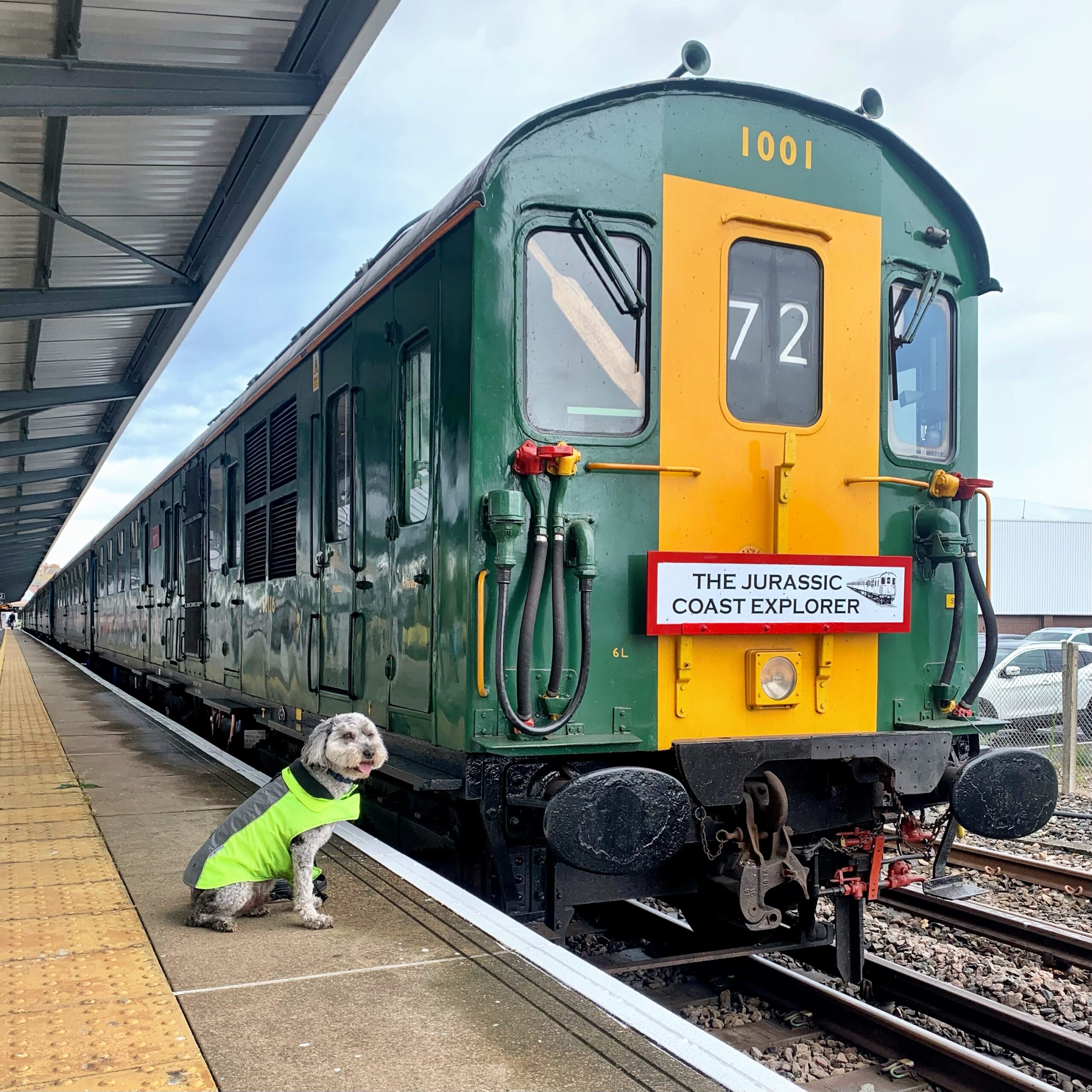
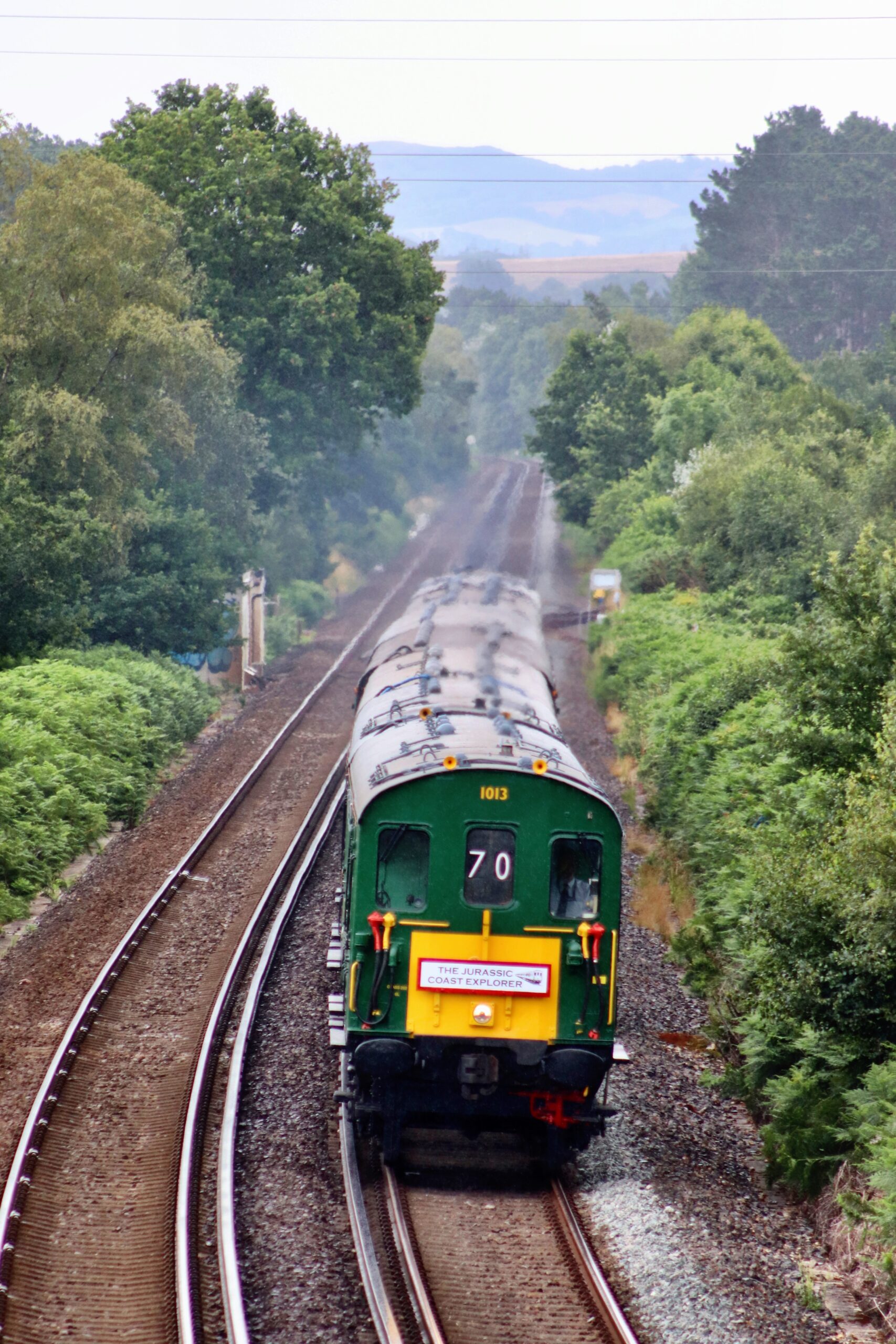
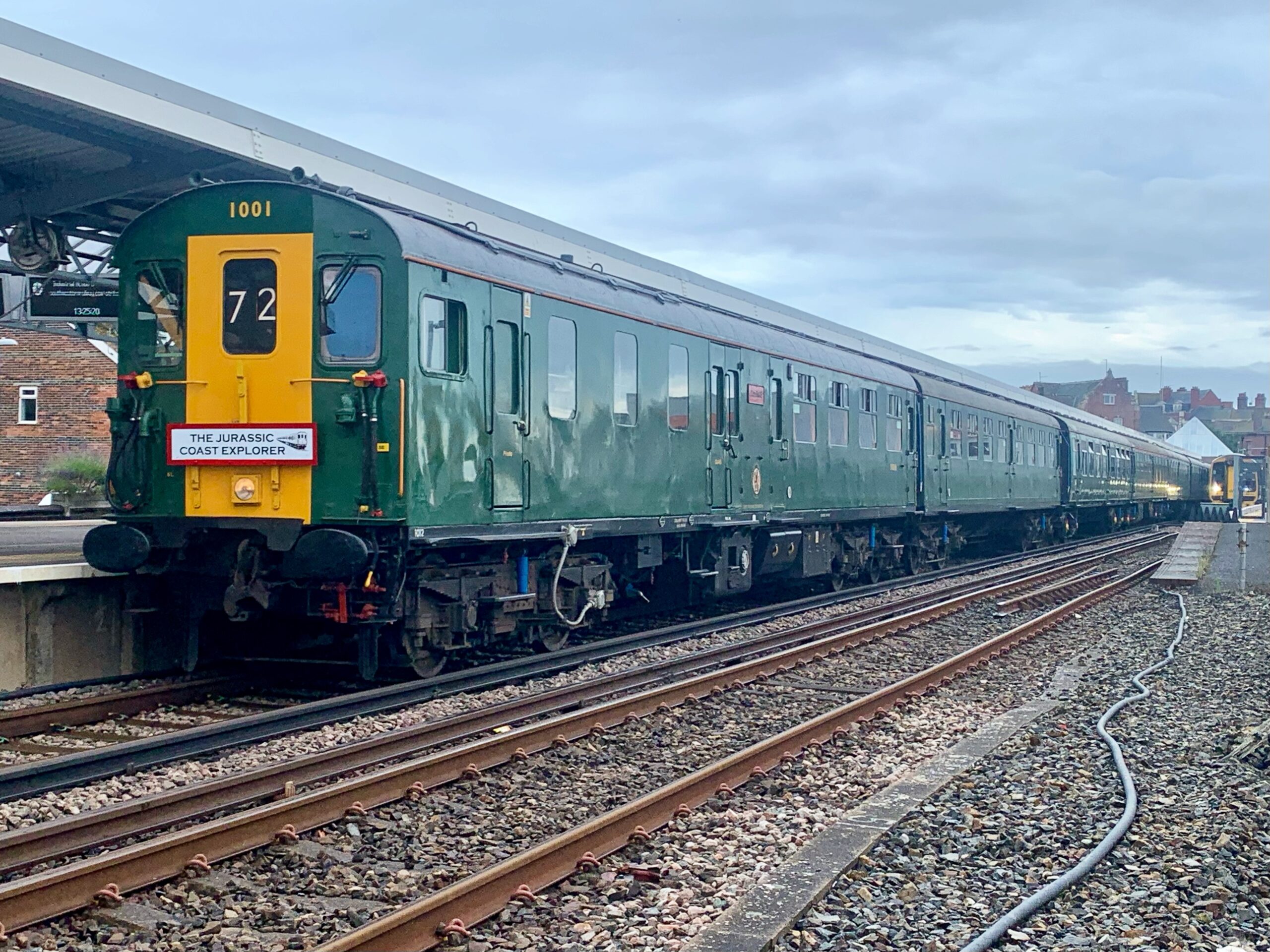
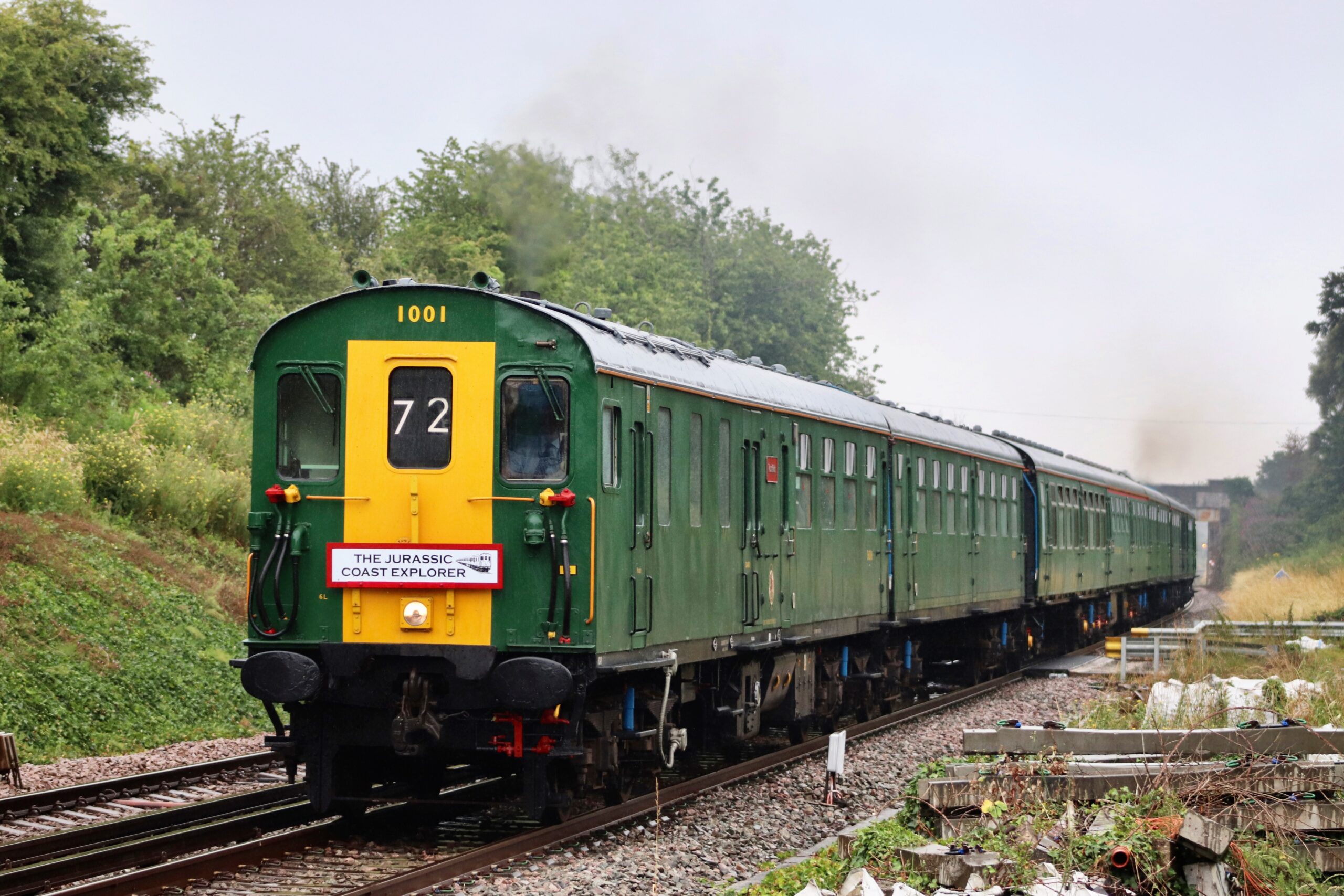
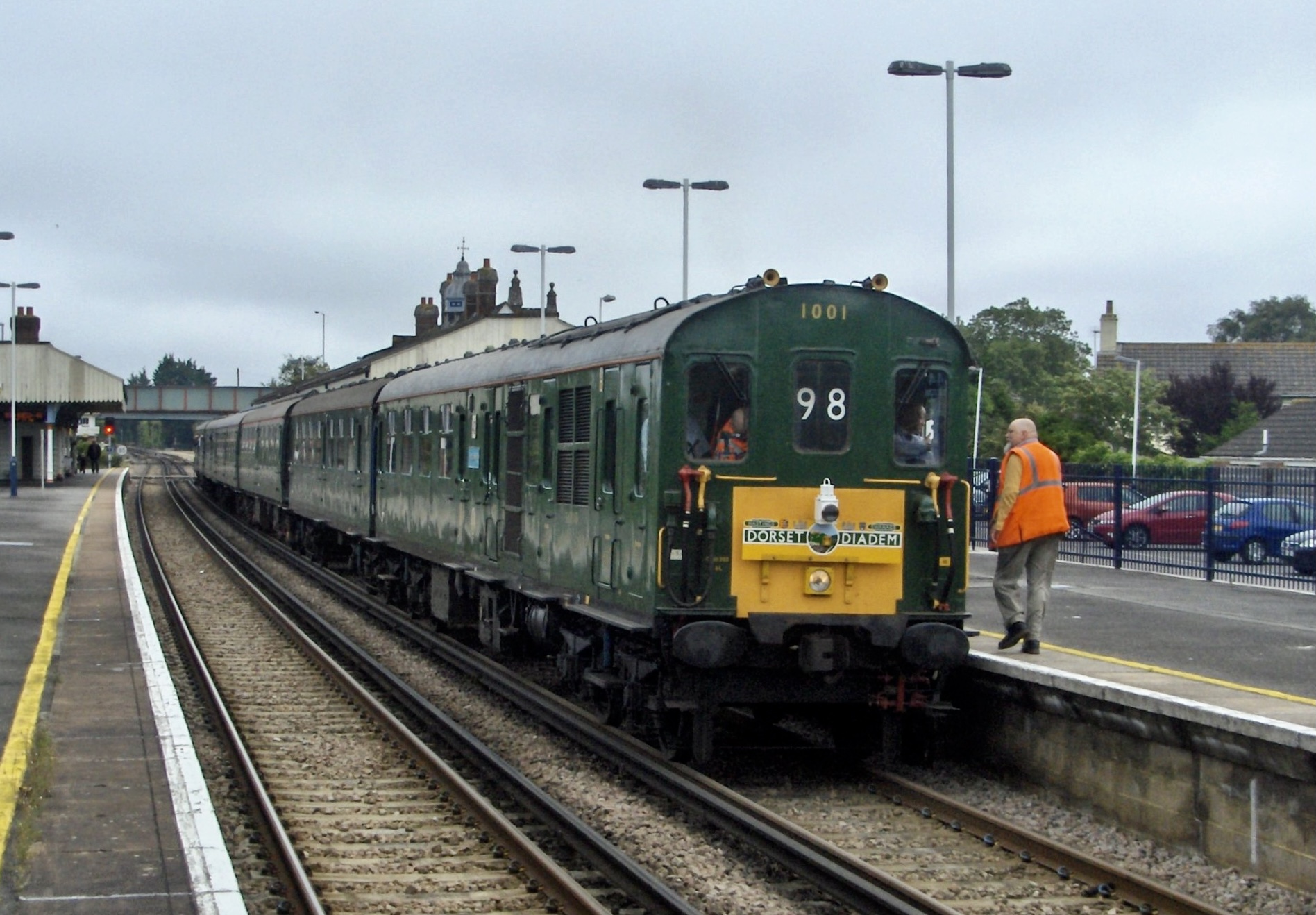
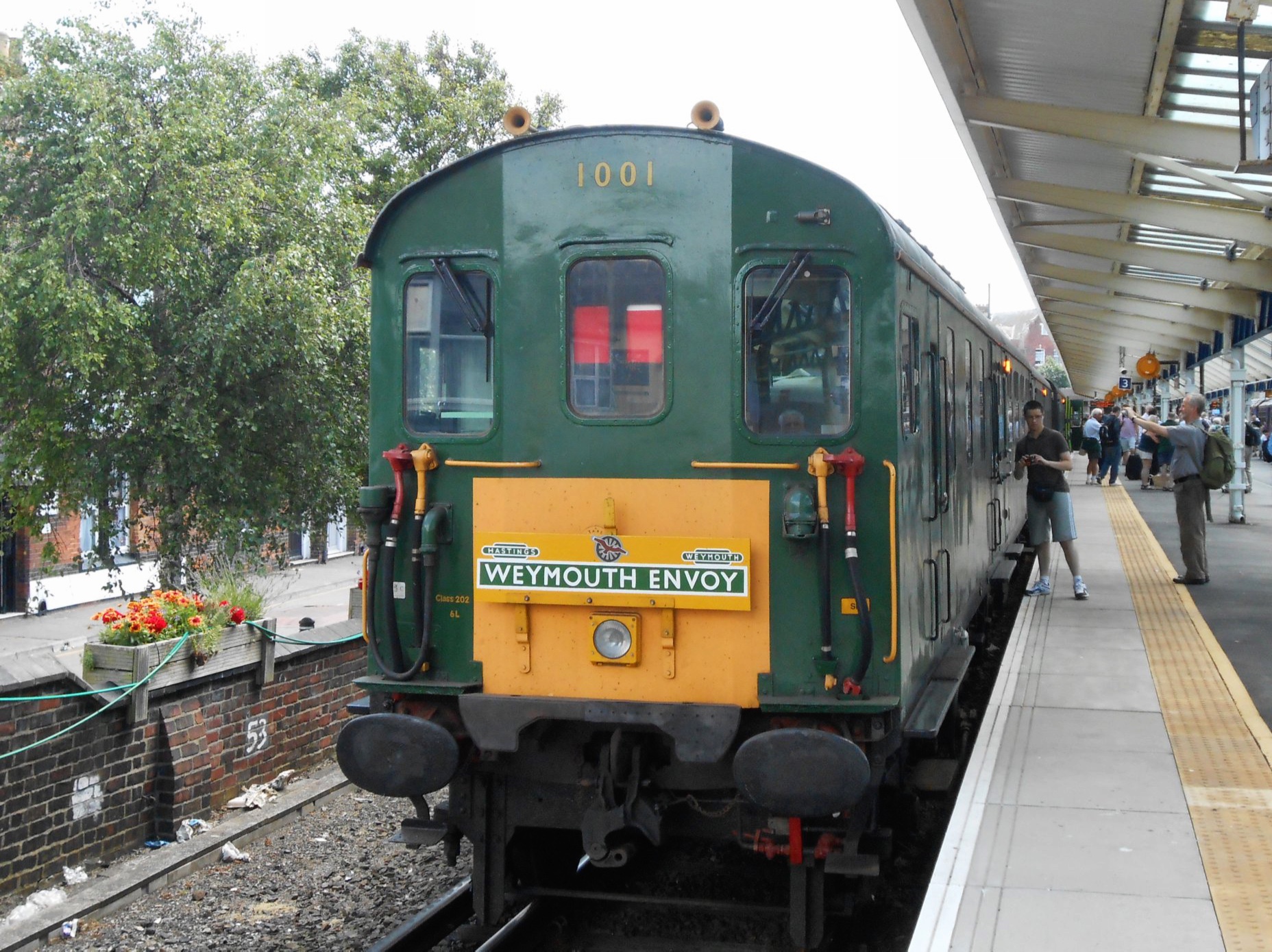
The first railtour over the weekend was Hastings Diesels Limited’s (HDL) “The Jurassic Coast Explorer” which ran on Saturday July 8th 2023 employing their Hastings Diesel-Electric Multiple-Unit (DEMU), one of a class of trains built during 1957 and 1958 to replace steam-hauled stock operating between London and Hastings via Tunbridge Wells. The six-coach units, incorporating diesel generators at each end, were unique in having specially narrow bodies which enabled them to pass through the unusually narrow tunnels on the Hastings line. When the line was electrified in 1986, these “Hastings” diesel units were withdrawn (and the tunnels single-tracked to solve the width problem). The preserved example, certified for mainline running, is numbered Unit No. 1001 but actually includes vehicles from several different units and trains including a buffet car from a 4-BIG electric multiple unit (EMU) and a Trailer Second (TSO) from a 4-CEP EMU which unlike the other stock are built to standard UK loading gauge.

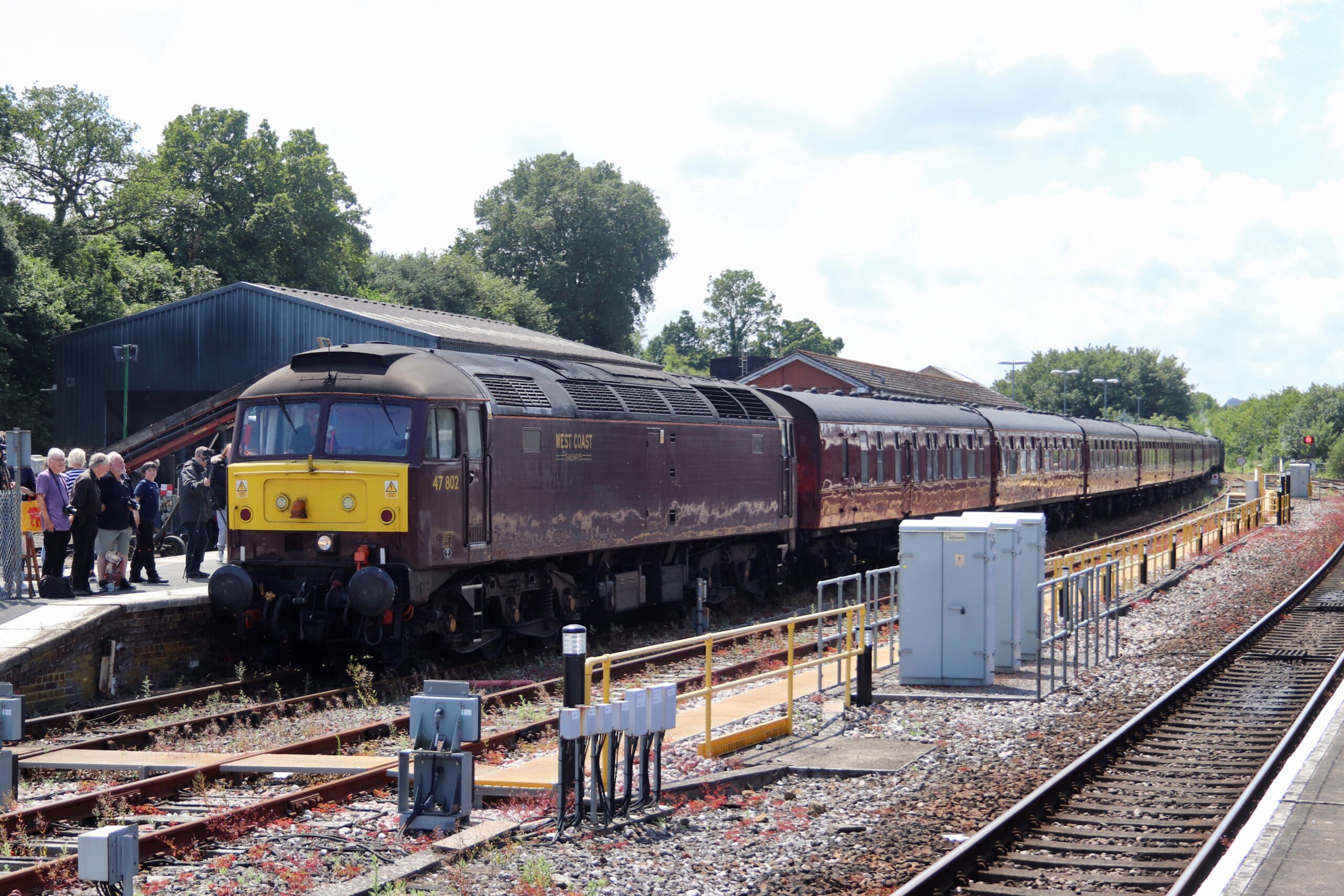
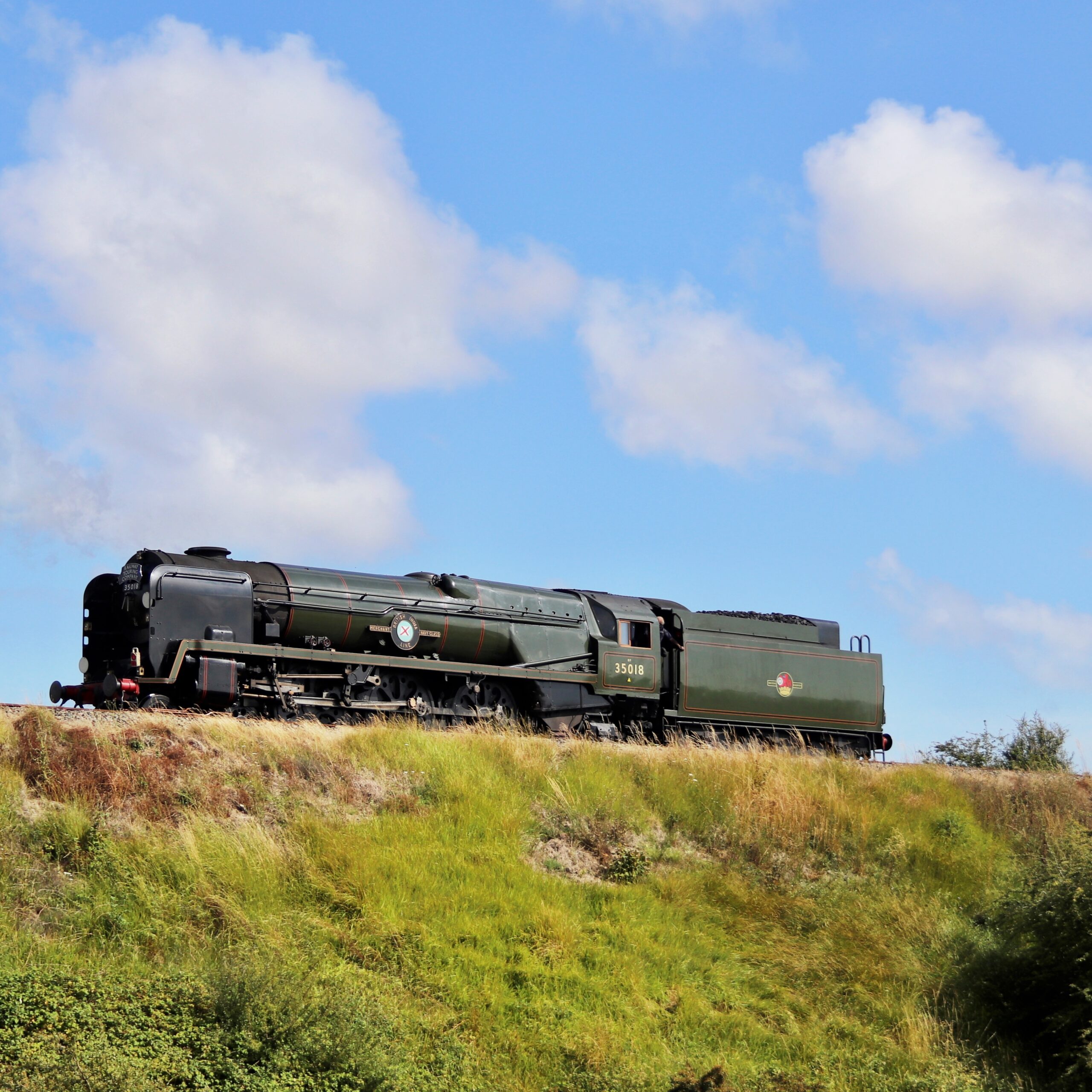
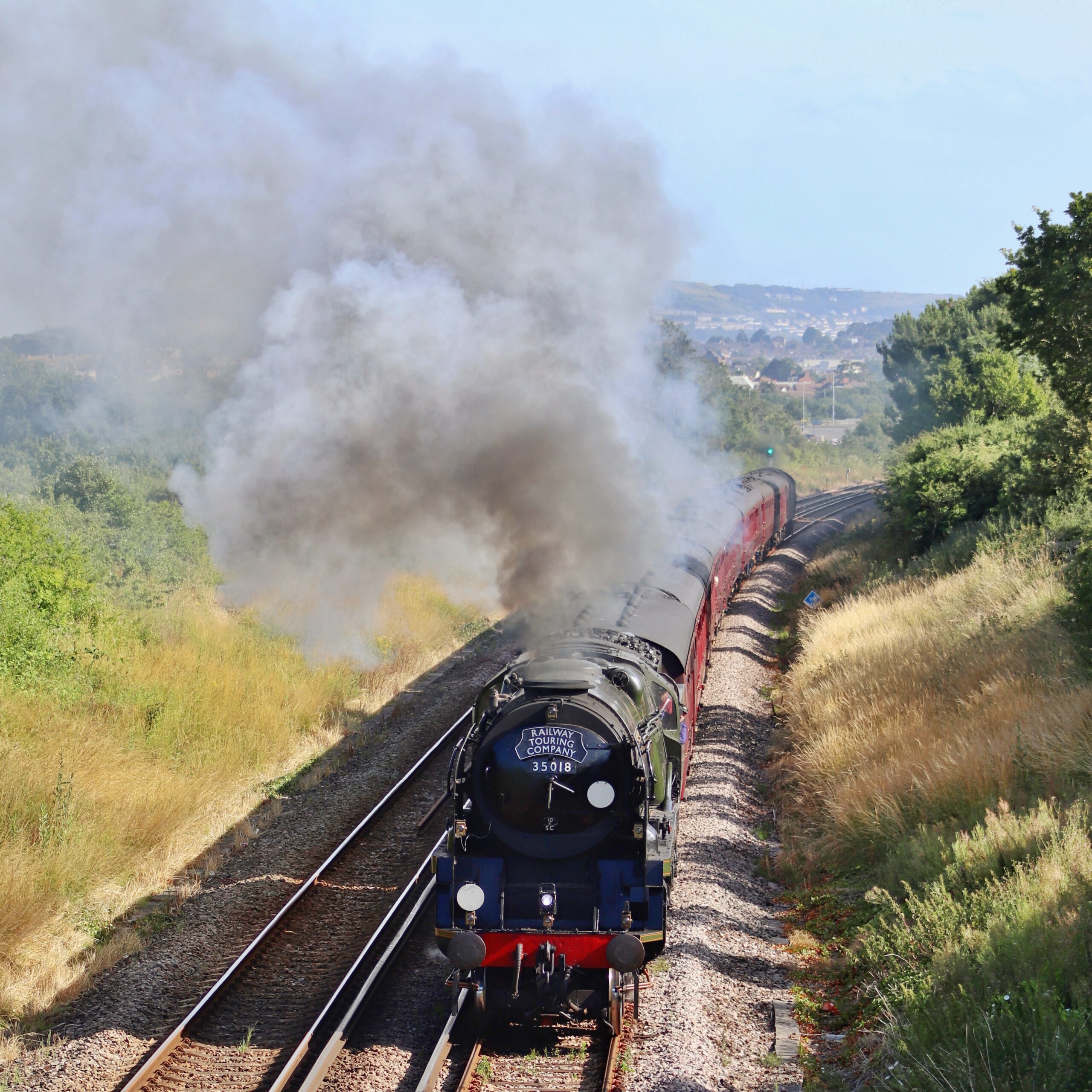
The following day, Sunday July 9th the seemingly annual tour celebrating “The End Of Southern Steam” reached Weymouth. The last day of regular steam haulage across the British Railways (BR) Southern Region took place on July 9th 1967. 56 years later and Southern Railway Bullied Pacific No. 35018 ‘British India Line’ returned to the metals she would have travelled over back in her working BR days. Starting out from London Victoria the passengers were hauled by No. 35018 to Yeovil Junction via Salisbury where the steam locomotive was removed from the train for turning and servicing, the tour advancing to Weymouth behind West Coast Railway Company (WCRC) owned Class 47 No. 47802 which had been on the rear of the train since its London departure.
I left home thinking I had lots of time to find a location to photograph the train near Gillingham, and was surprised to see on Real Time Trains the tour had in fact gained five minutes by the time it had reached Dorset. So a change of plan was instigated and I diverted off to Sherborne where I was caught out by the train approaching my over bridge vantage point wrong line.
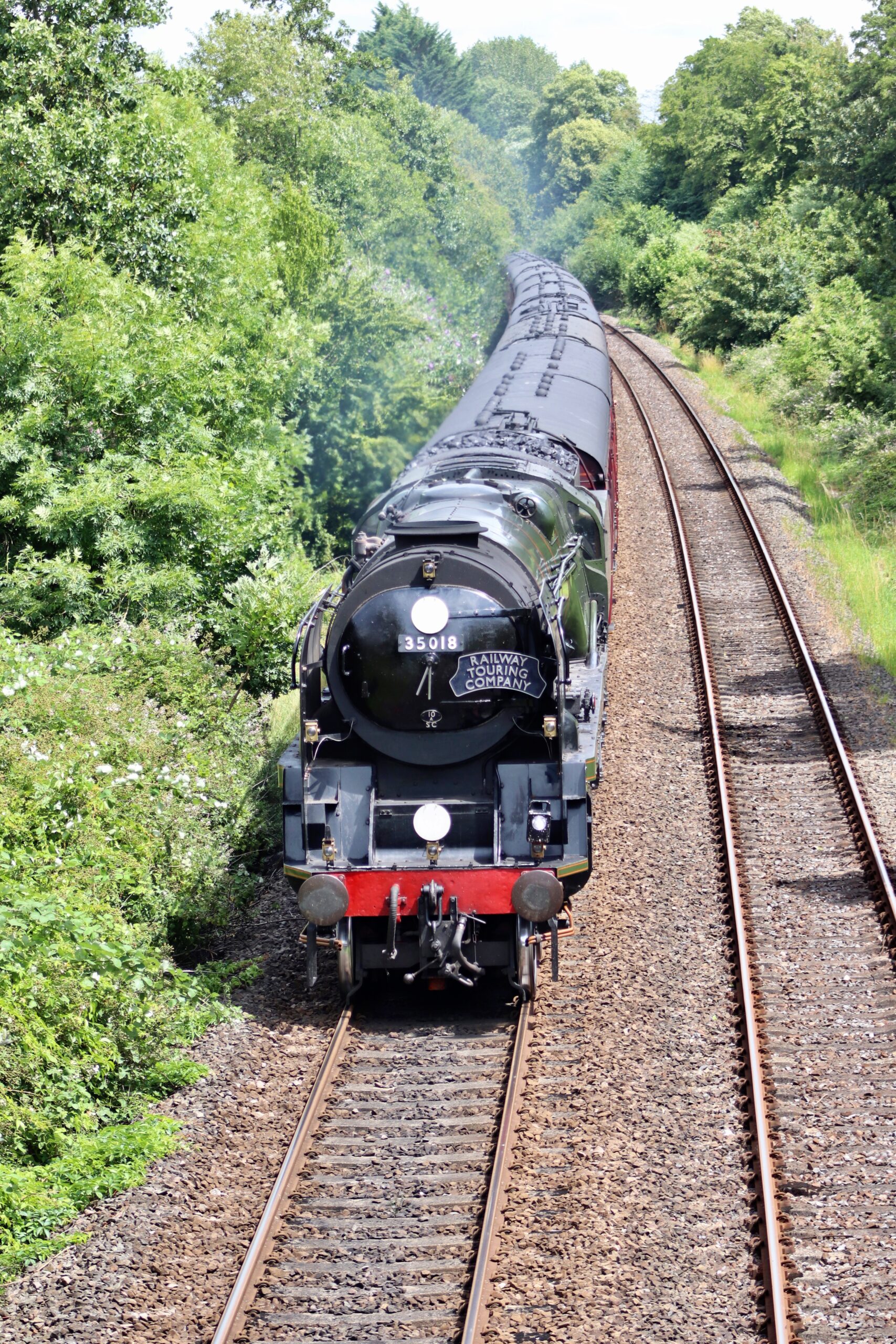
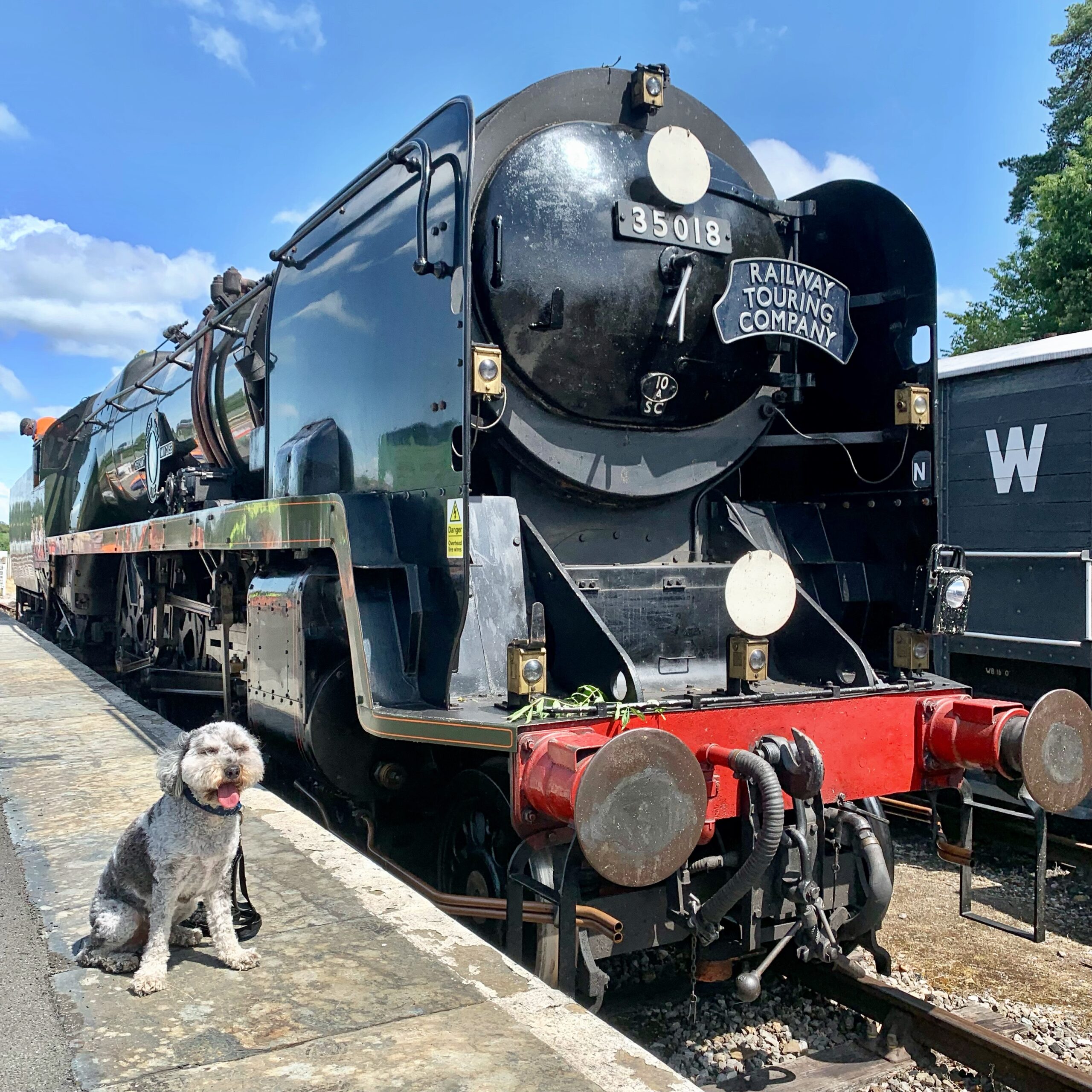
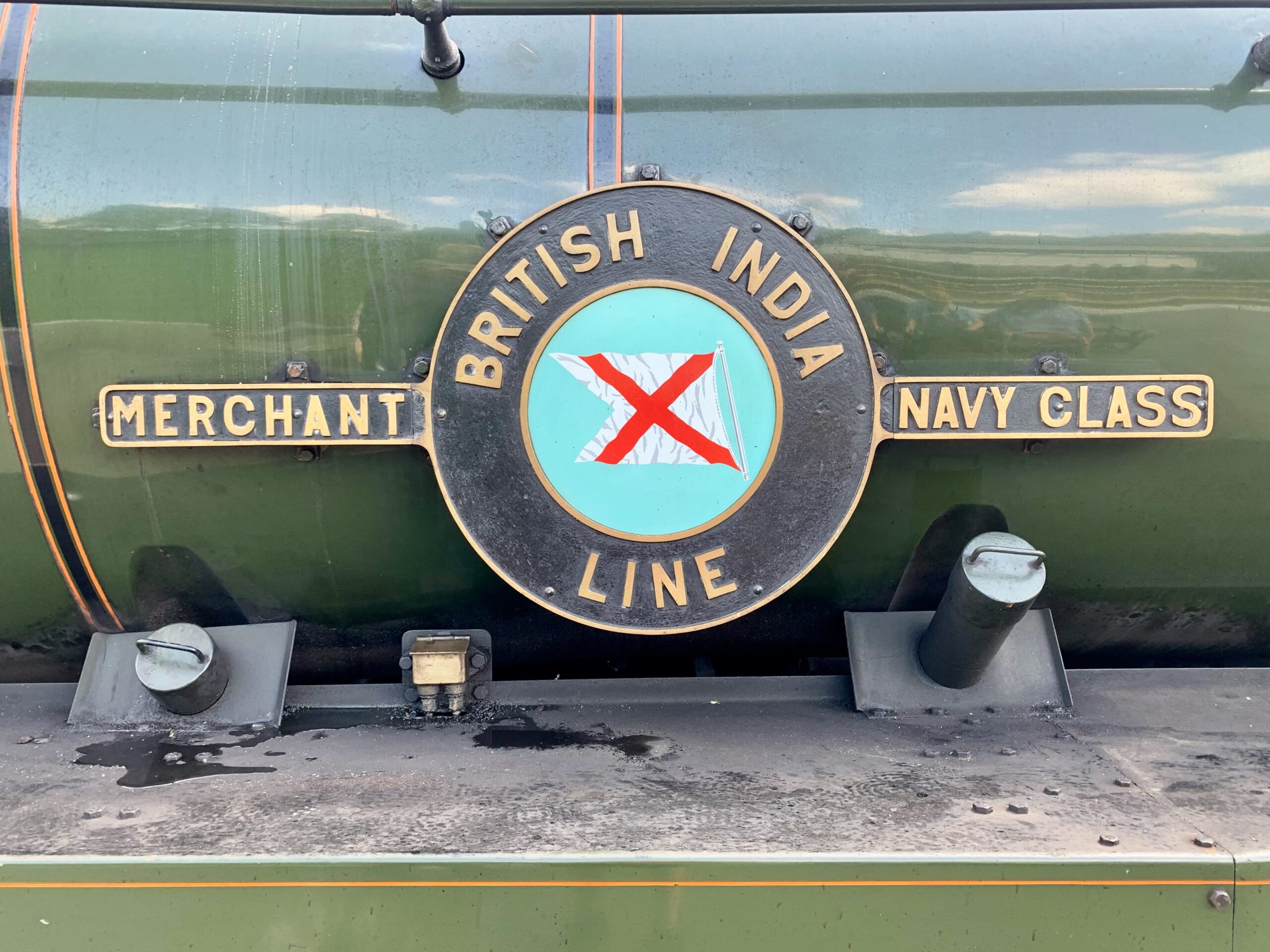
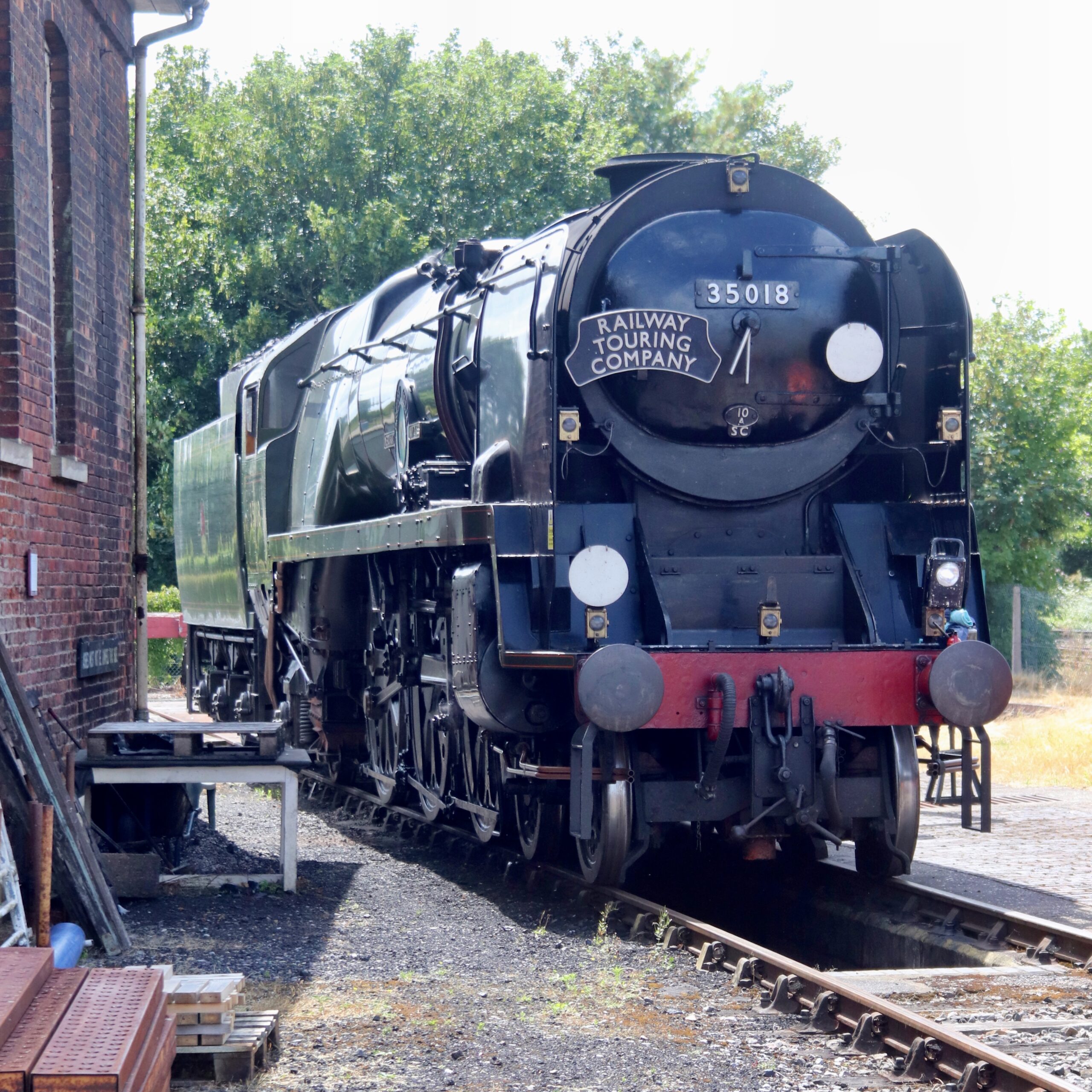
Having been refreshed by the team at the Yeovil Railway Centre, No. 35018 worked light engine down to Weymouth where she re-joined the railtour for a spirited late afternoon departure bound for London Waterloo. I waited for the light locomotive at Evershot, but my view was obscured by steam. I then got ahead of No. 35018 and saw her again very close to the former Monkton and Came Halt which had been opened by the Great Western Railway in 1905 as part of their ambitions to combat road based transport. The station served the nearby Came Golf Links and visitors to Maiden Castle. This ultimately failed and the Halt was closed in 1957. Some remains of the platforms can still be seen.
Co-incidentally two days later, London Waterloo celebrated its 175th anniversary which included the unveiling of a plaque commemorating the landmark birthday, a joint Network Rail and South Western Railway choir treated visitors to iconic ‘Waterloo’ songs such as ABBA’s “Waterloo” and The Kinks’ “Waterloo Sunset” as well of a preview of Class 701 “Arterio” EMU No. 701043 on platform 19 which was also adorned with a celebratory London Waterloo 175 roundel . The fleet of 90 Class 701 trains are over two years late at being introduced on Reading, Windsor and South West London suburban routes. In addition, fittingly situated under the famous Waterloo clock on the station concourse, a fascinating 40-panel history exhibition was put on display for a limited time.


Delayed by a week, Monday 10th July saw the monthly 1Q51 Plain Line Pattern Recognition (PLPR) test train head to Weymouth, as usual top and tailed by GBRf Class 73 electro-diesel locomotives, but this time in daylight. The train usually runs on our patch in in the late evenings but the rescheduled working was scheduled for a lunchtime turn around at Weymouth.
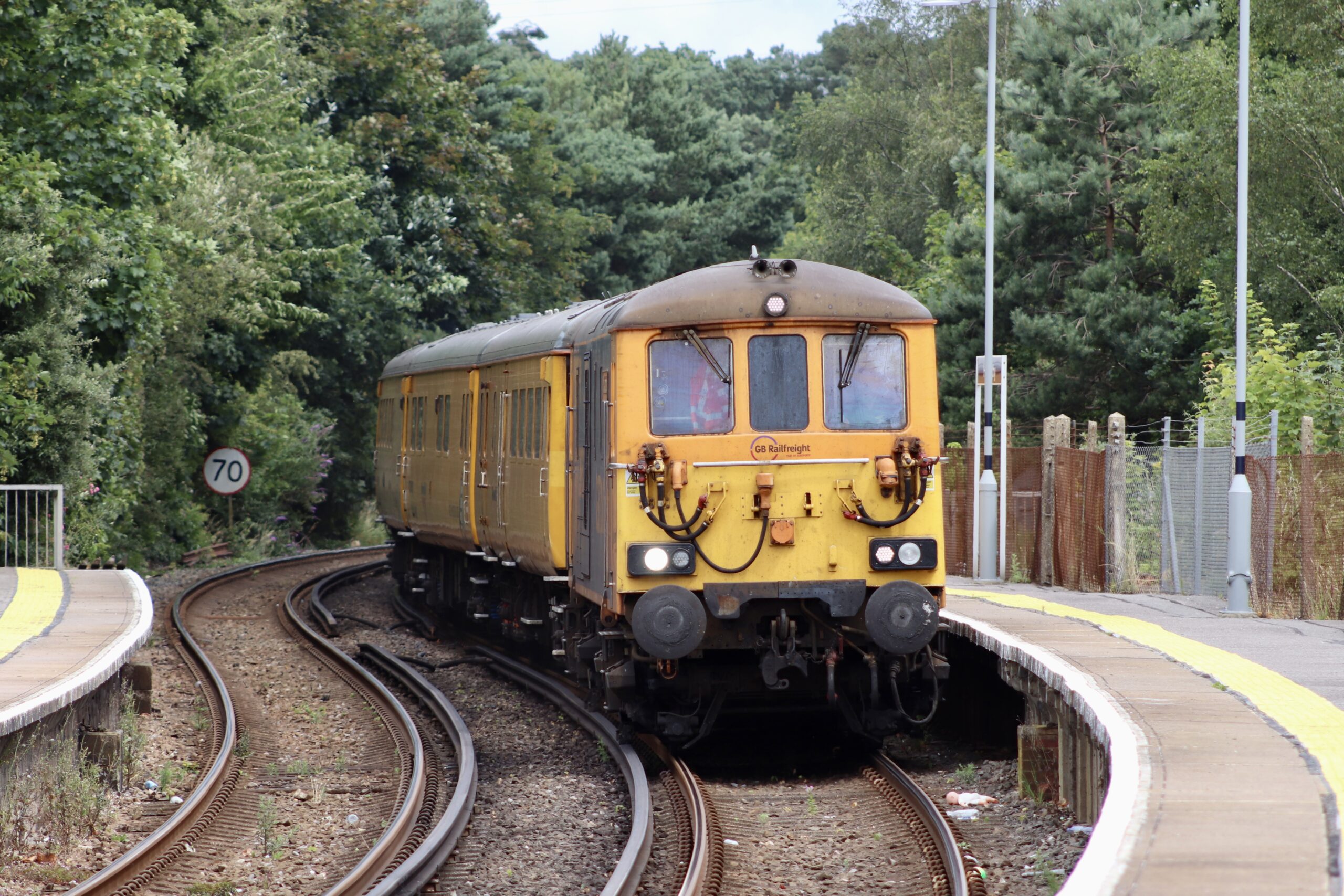
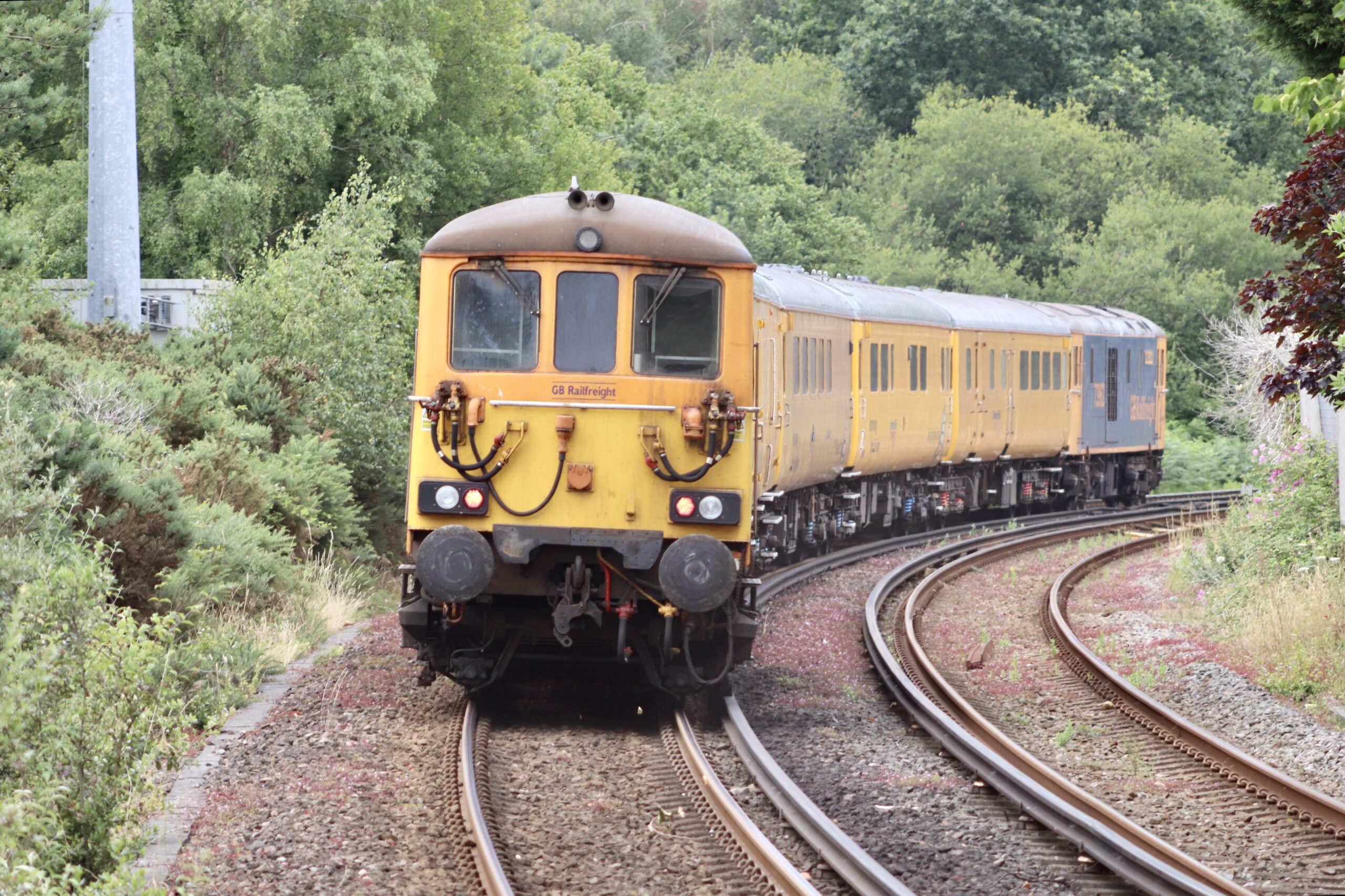
Plain Line Pattern Recognition uses a variety of tools to measure and detect defects and potential problems that might arise in track condition. PLPR uses equipment such as: 4 foot camera used to check the track condition, thermal imaging to check rail temperature, fasteners are checked with diagonal and top down cameras. The various cameras used store HD laser scanned images which show different angles and planes of the track and rails. PLPR was initially rolled out on the NMT measurement train, but has since been fitted to Network Rail’s coaches and can be seen across the UK rail network. The coaches on the PLPR may also by fitted with Radio Survey equipment, for testing of NRN, CSR and GSM-R communication systems.
From the Archive…
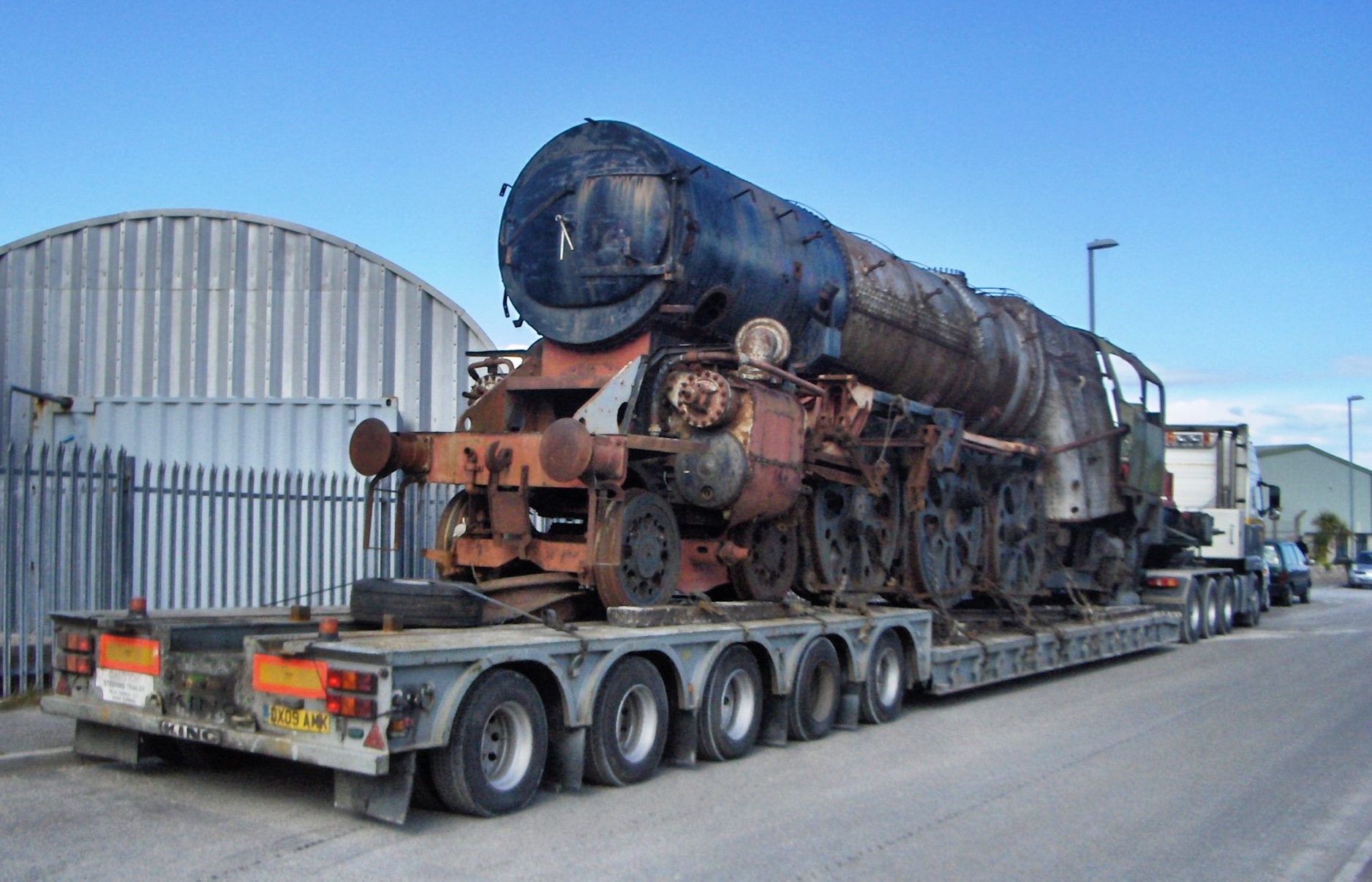
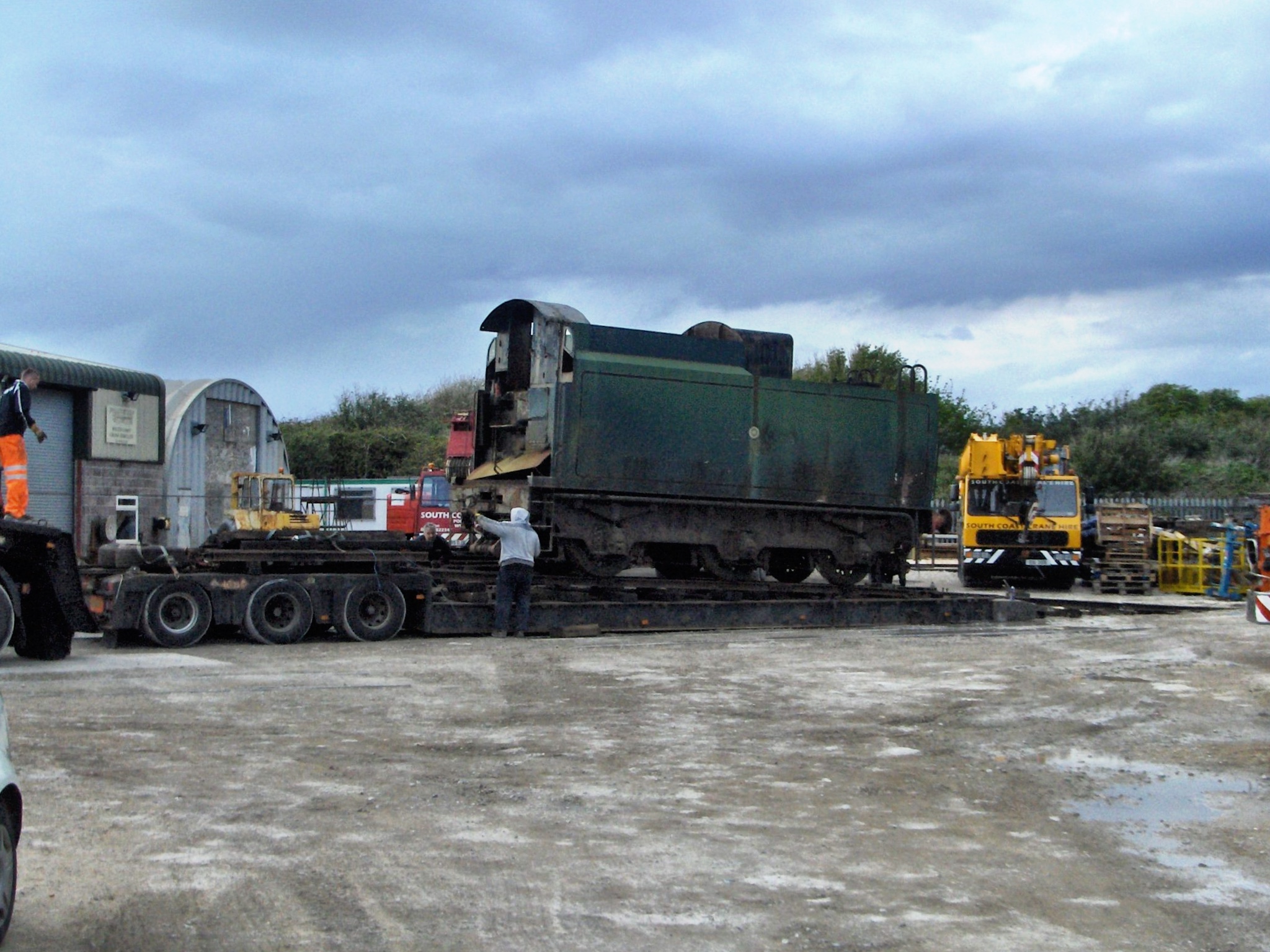
In contrast to how SR Bullied Pacific No. 35018 ‘British India Line’ looked on her recent visit to Weymouth, below are three images of the locomotive and tender when she left storage on Portland taken by John Chappell.
No. 35018 ‘British India Line’ was the first Merchant Navy locomotive to have the original air-smoothed casing removed as part of a rebuild of the class and emerged from Eastleigh Works in her new form during February 1956. She was withdrawn from service with British Railways in August 1964 and despatched to Barry Scrapyard for disposal. However, after languishing in South Wales for 15 years, she was purchased for preservation by Richard Heather and John Bunch, and in March 1980 the engine was moved to the Mid Hants Railway (MHR) where it was planned for her to be restored to full working order. In the event little work was undertaken on the locomotive during this time and she was later moved to a site in Portland but following little work again being undertaken on restoring the engine she moved once again, in 2012, to Carnforth in Lancashire having been purchased by David Smith. She finally underwent a thorough restoration to running order for mainline standards.

“The Dorset Diadem” rail tour took Hastings Unit No. 1001 to Bournemouth and Swanage were she was scheduled to arrive at 1320 and giving passengers just under three hours at the seaside town.

Hastings Diesel Limited’s 57th public rail tour the “Weymouth Envoy” ran from Hastings to Weymouth via London Waterloo therefore running the entire length of the LSWR main line.


Thank you for stopping by. Your comments, corrections, contributions are most welcome. Be seeing you.
Leave a Reply