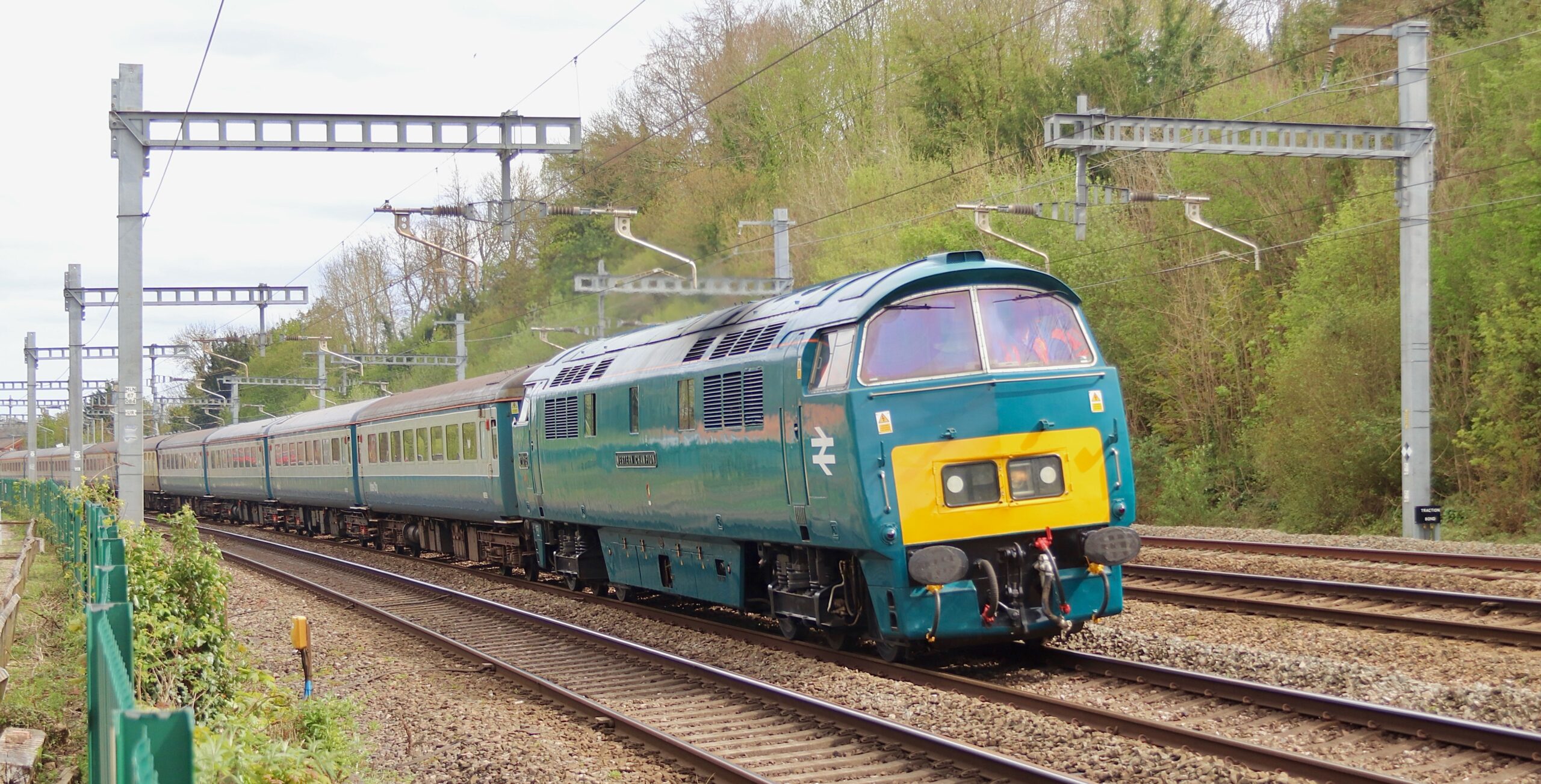
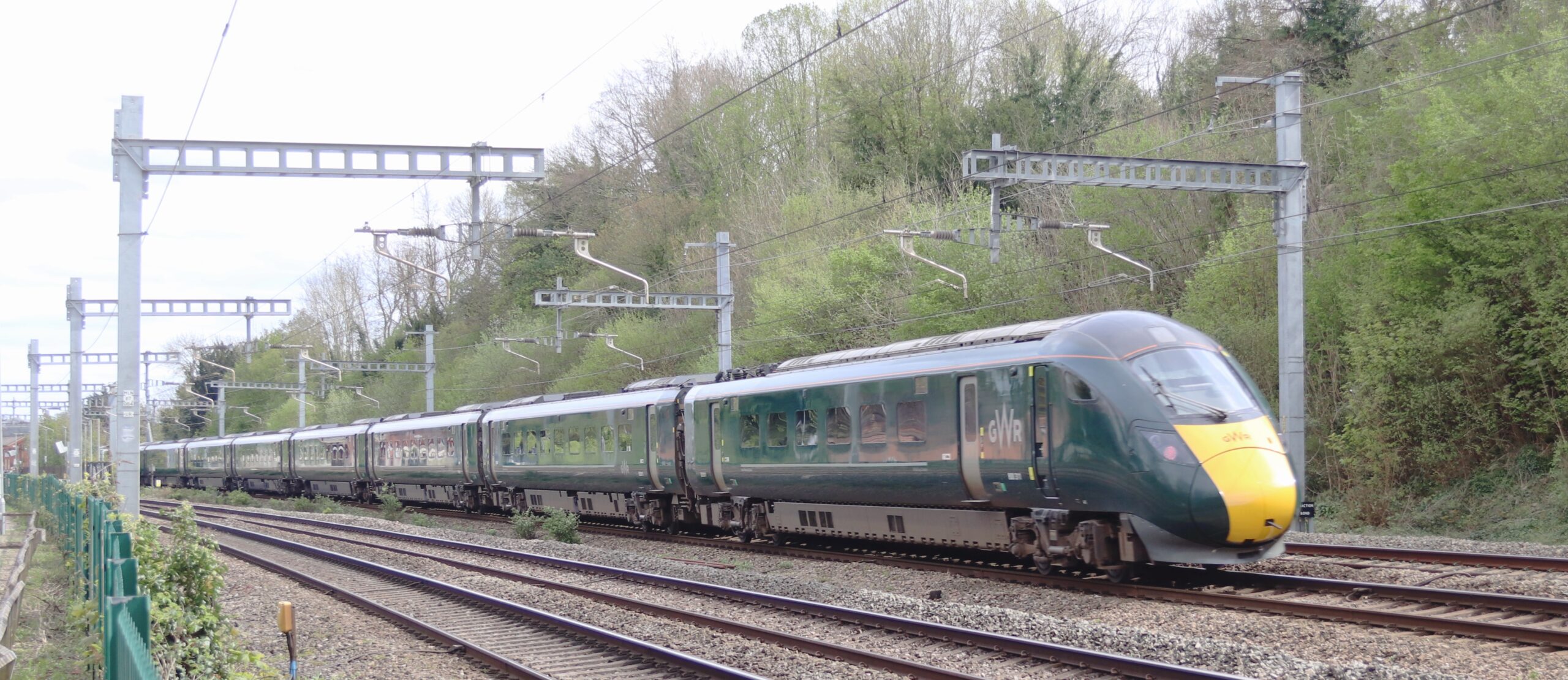
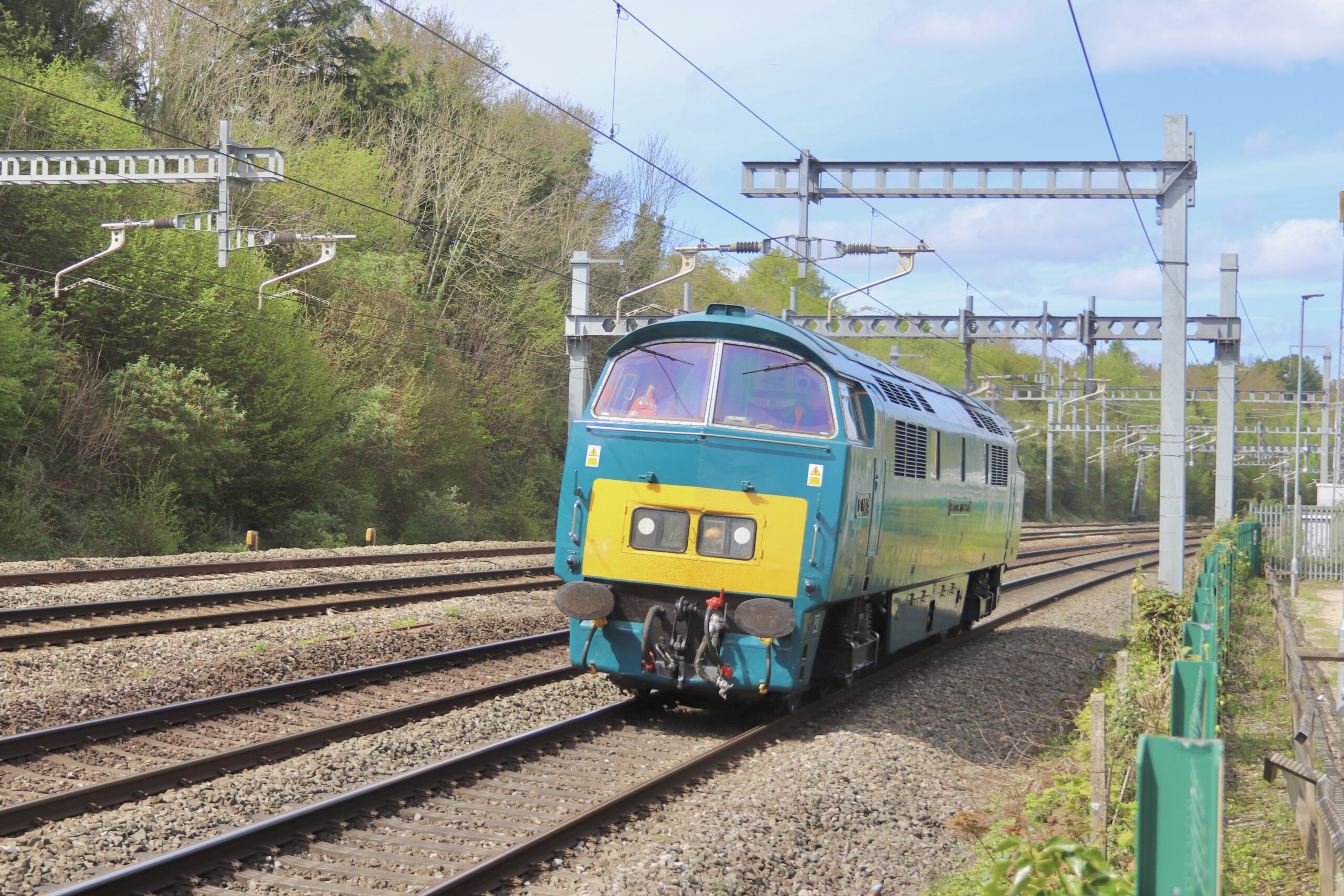
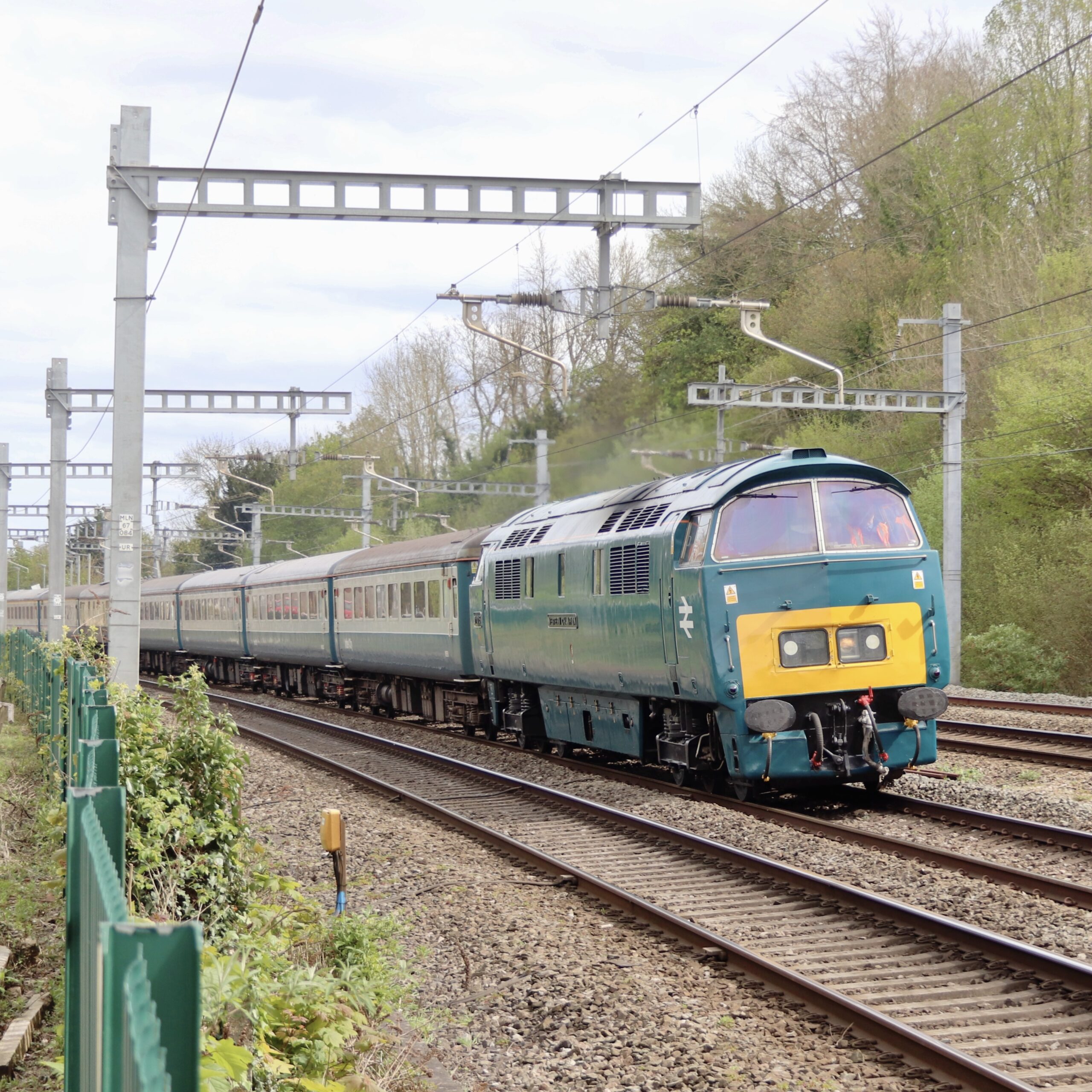
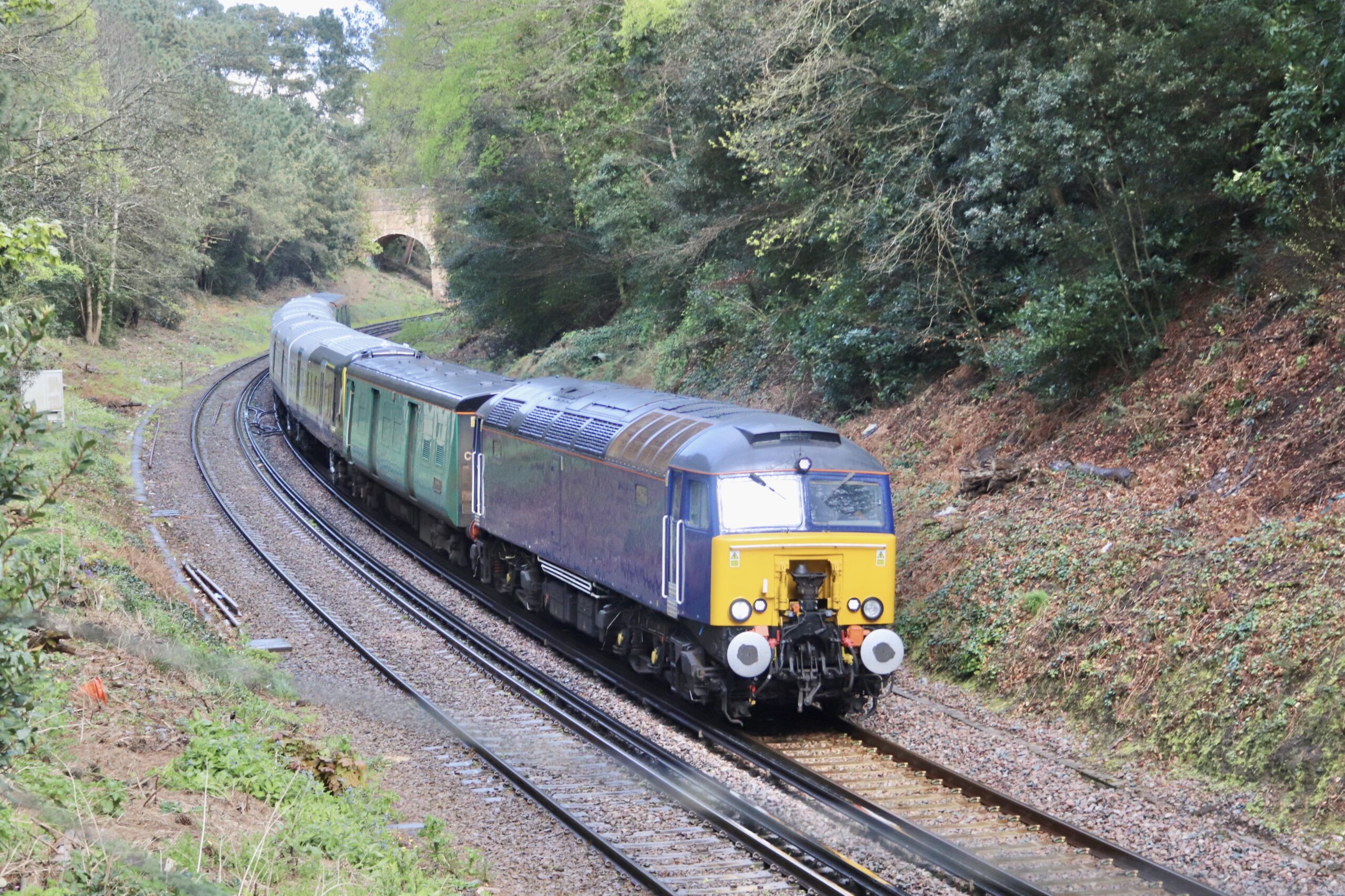
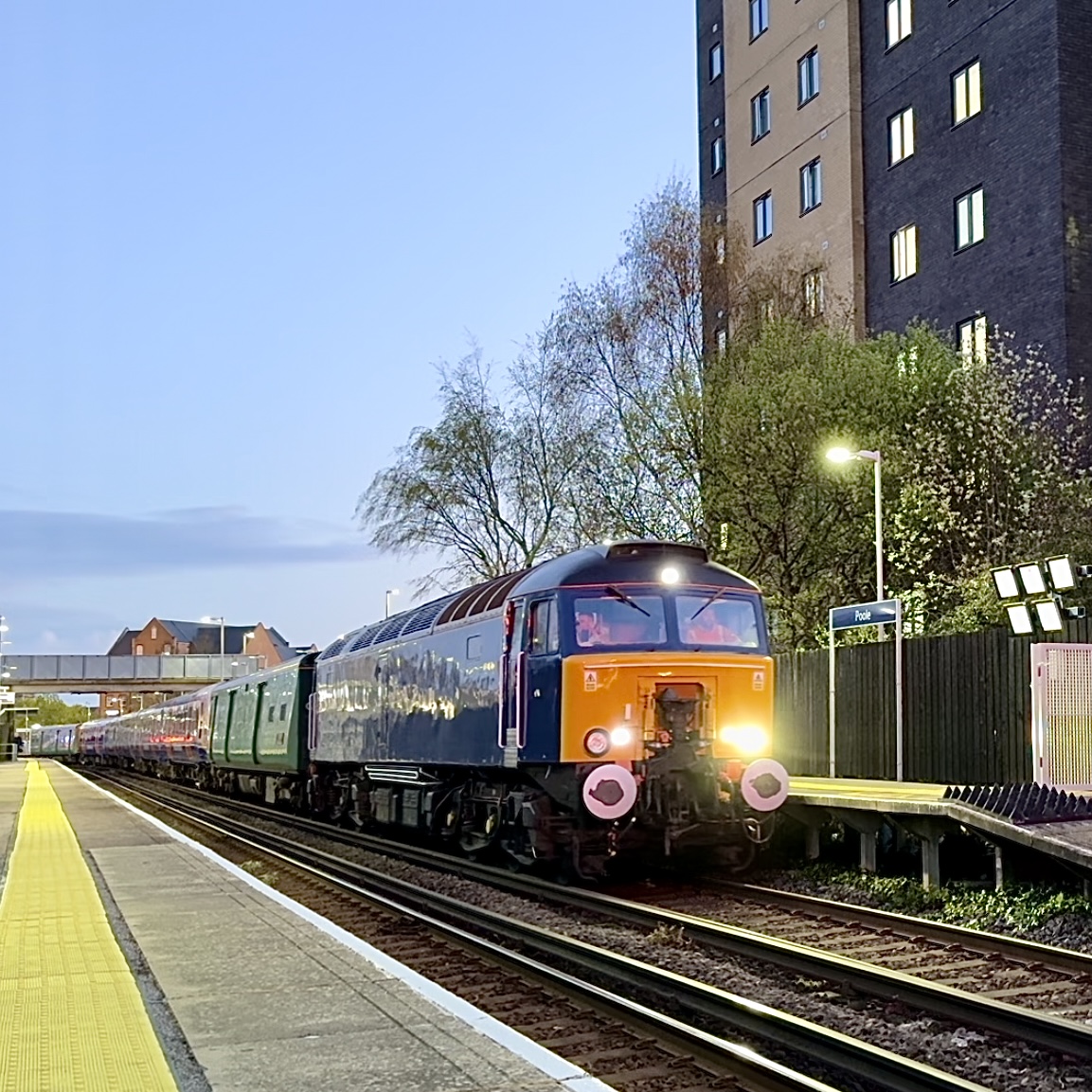
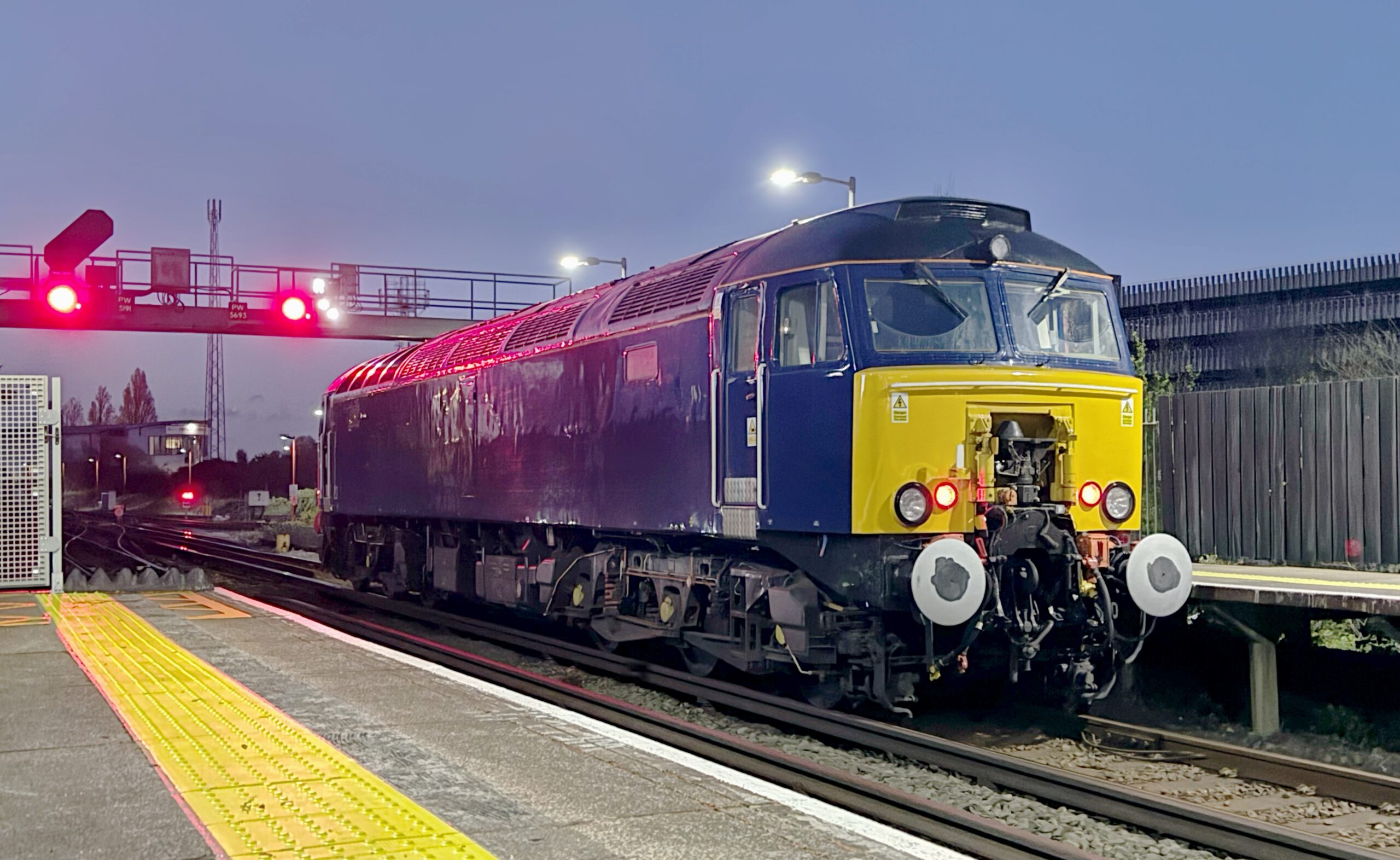
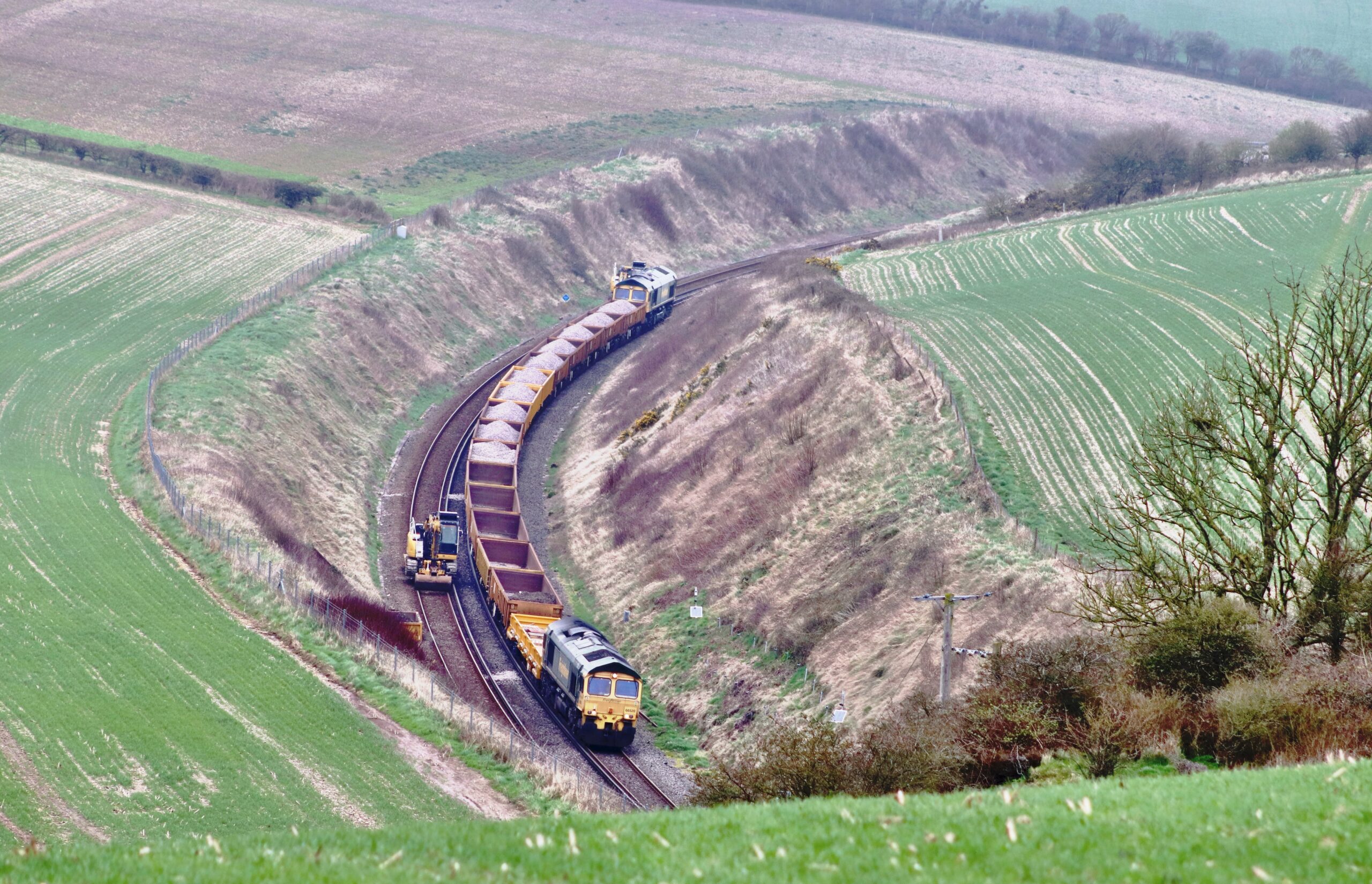
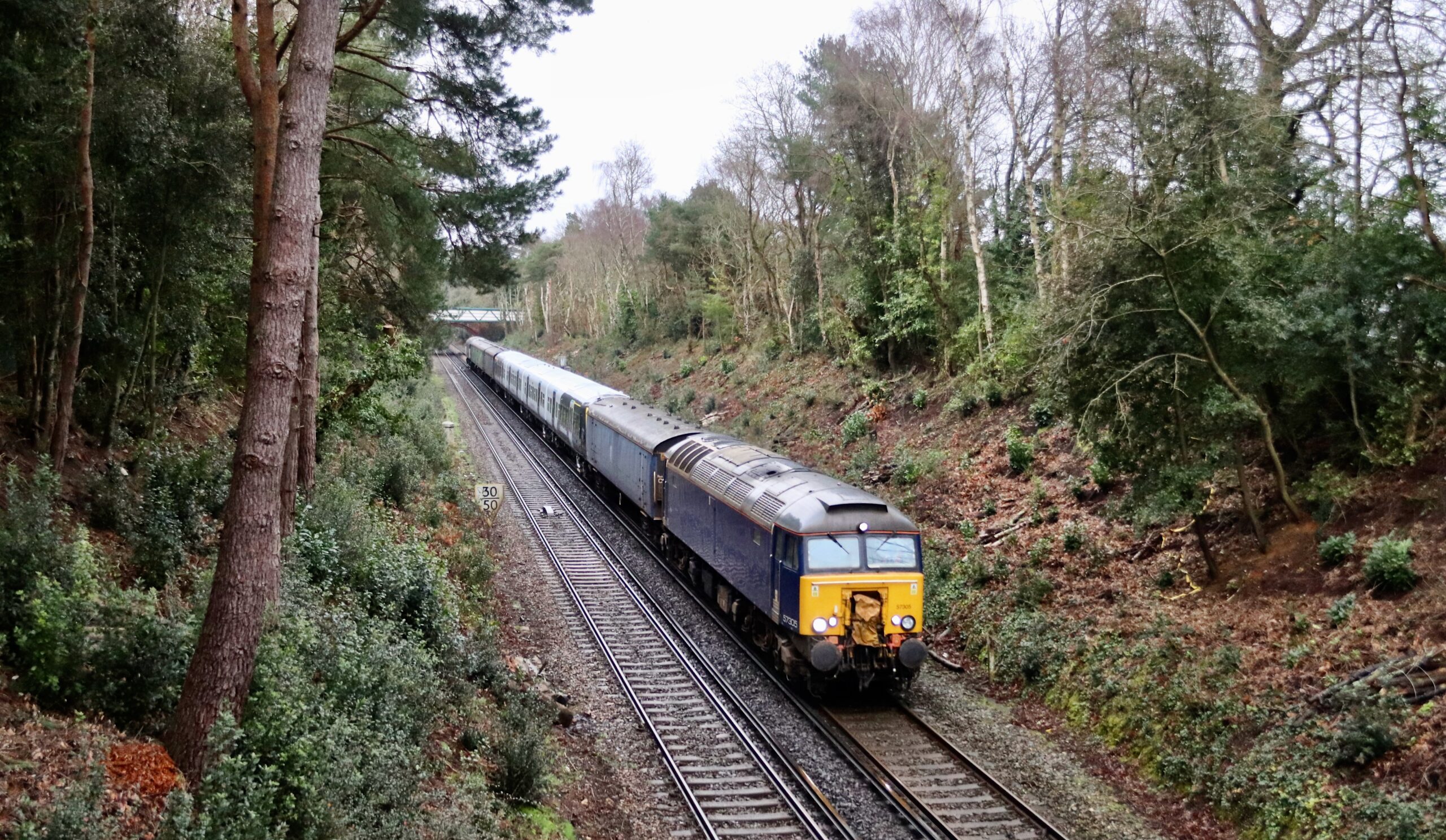
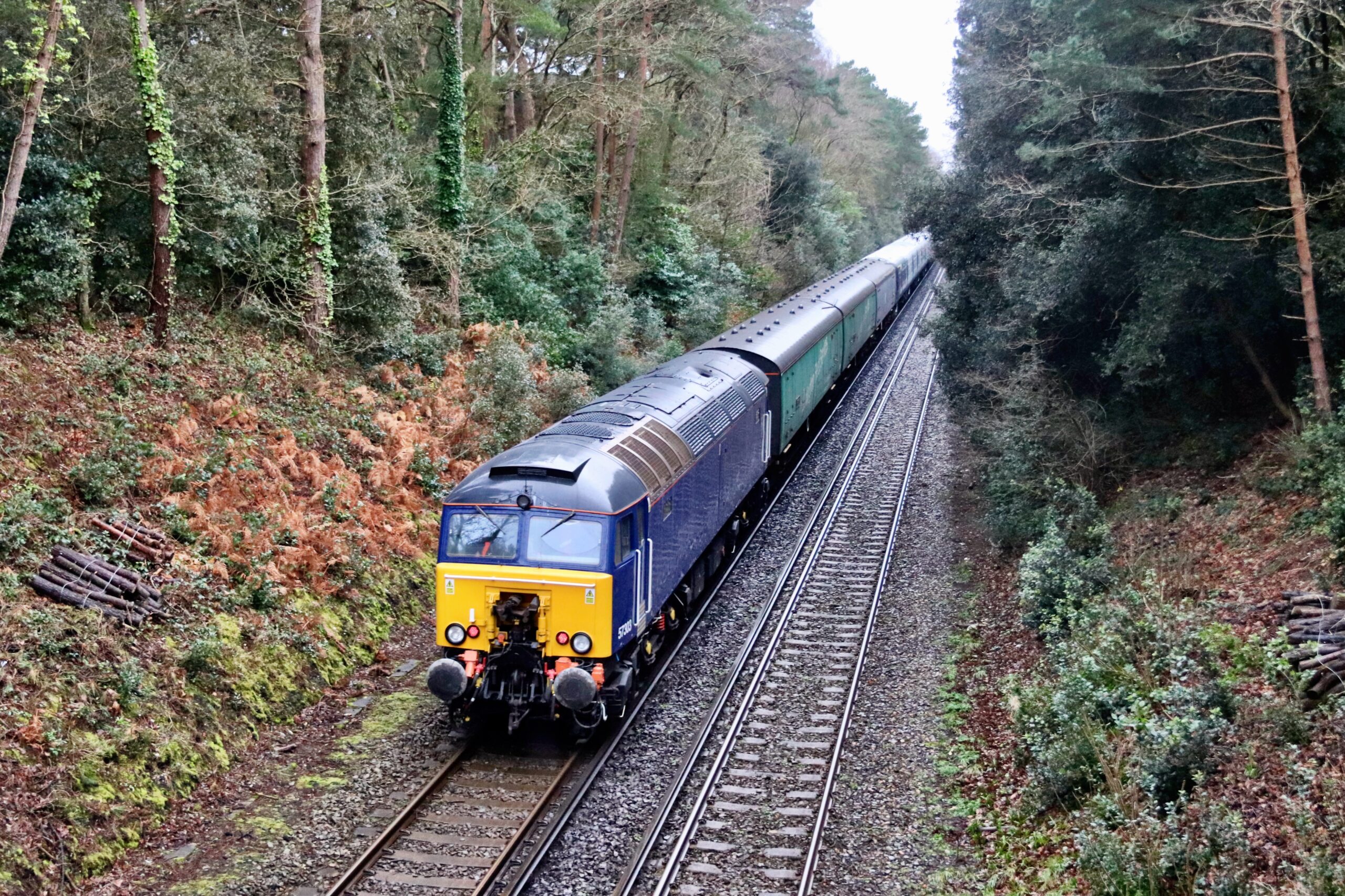
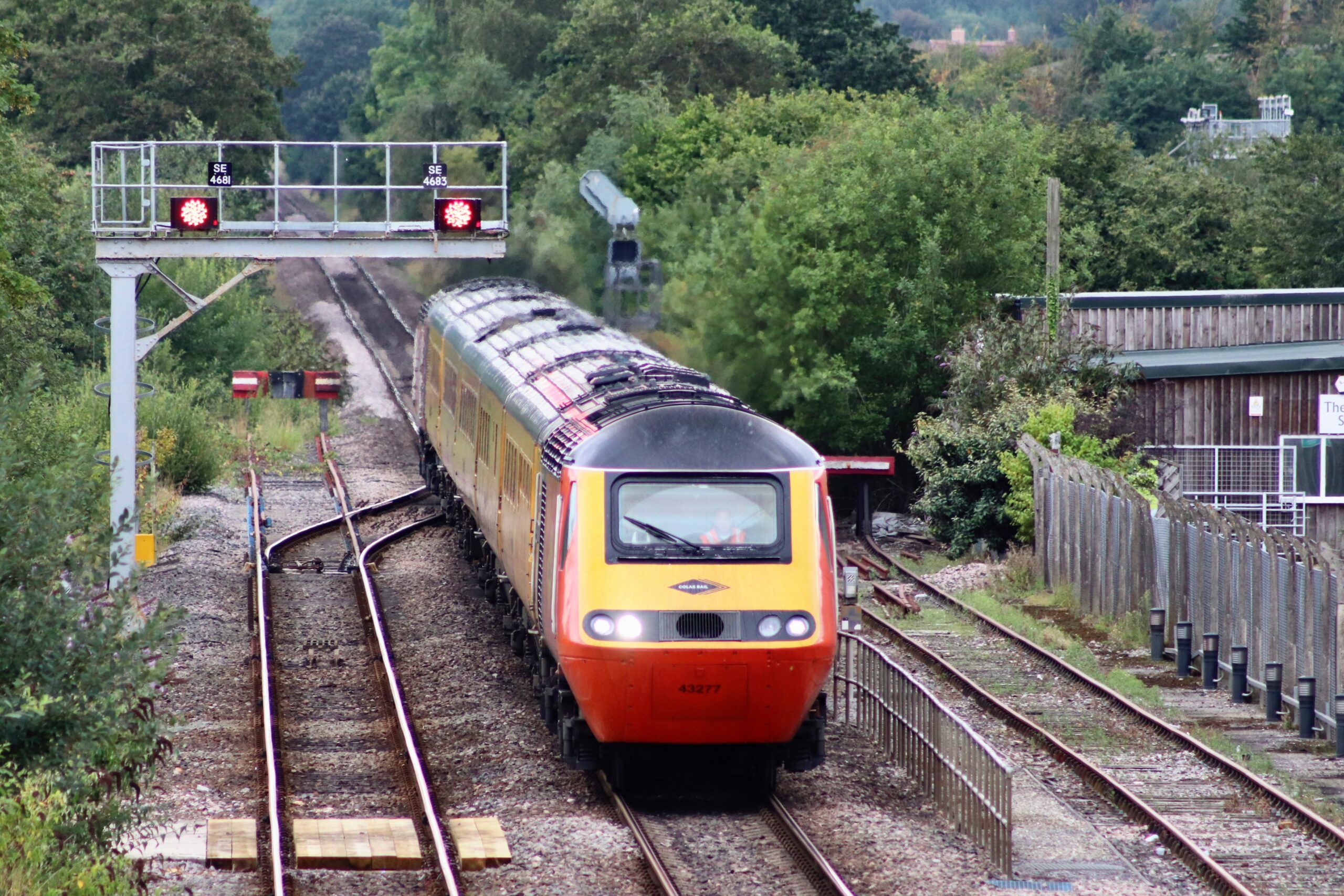
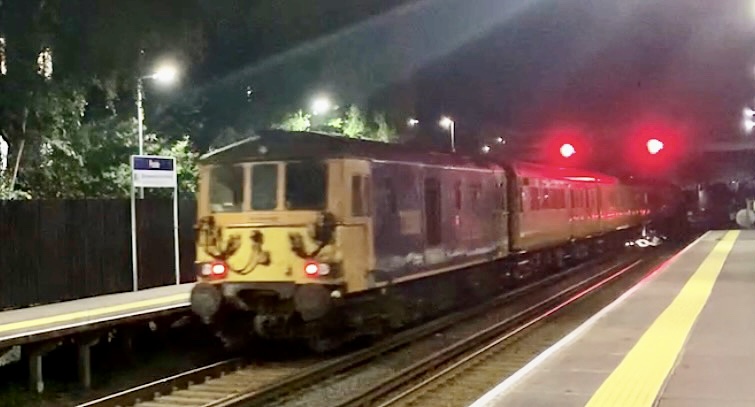
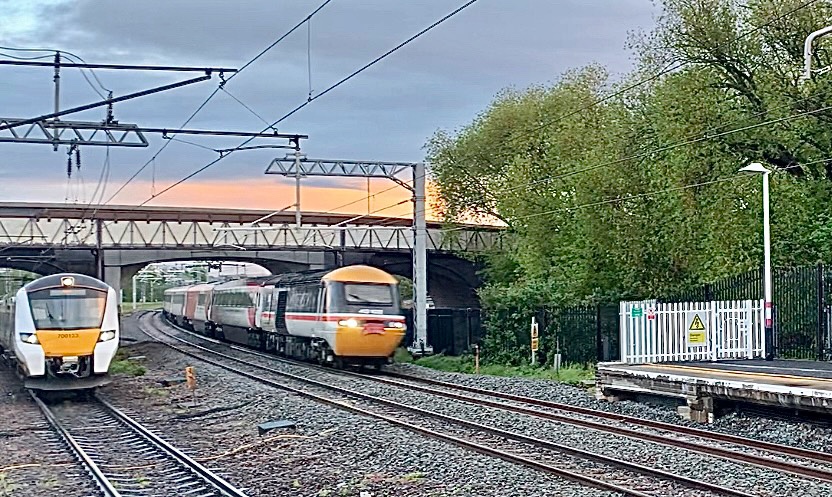
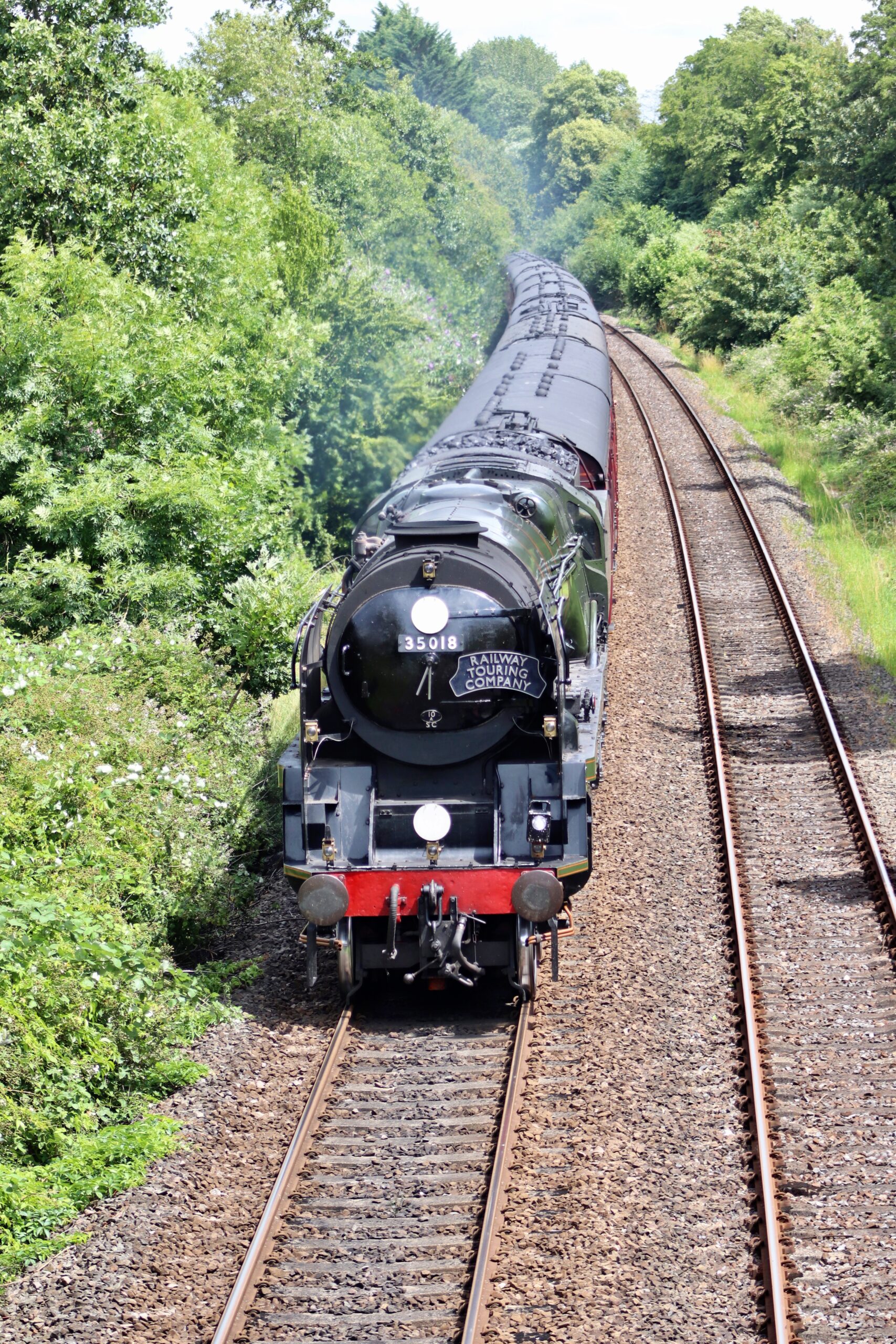
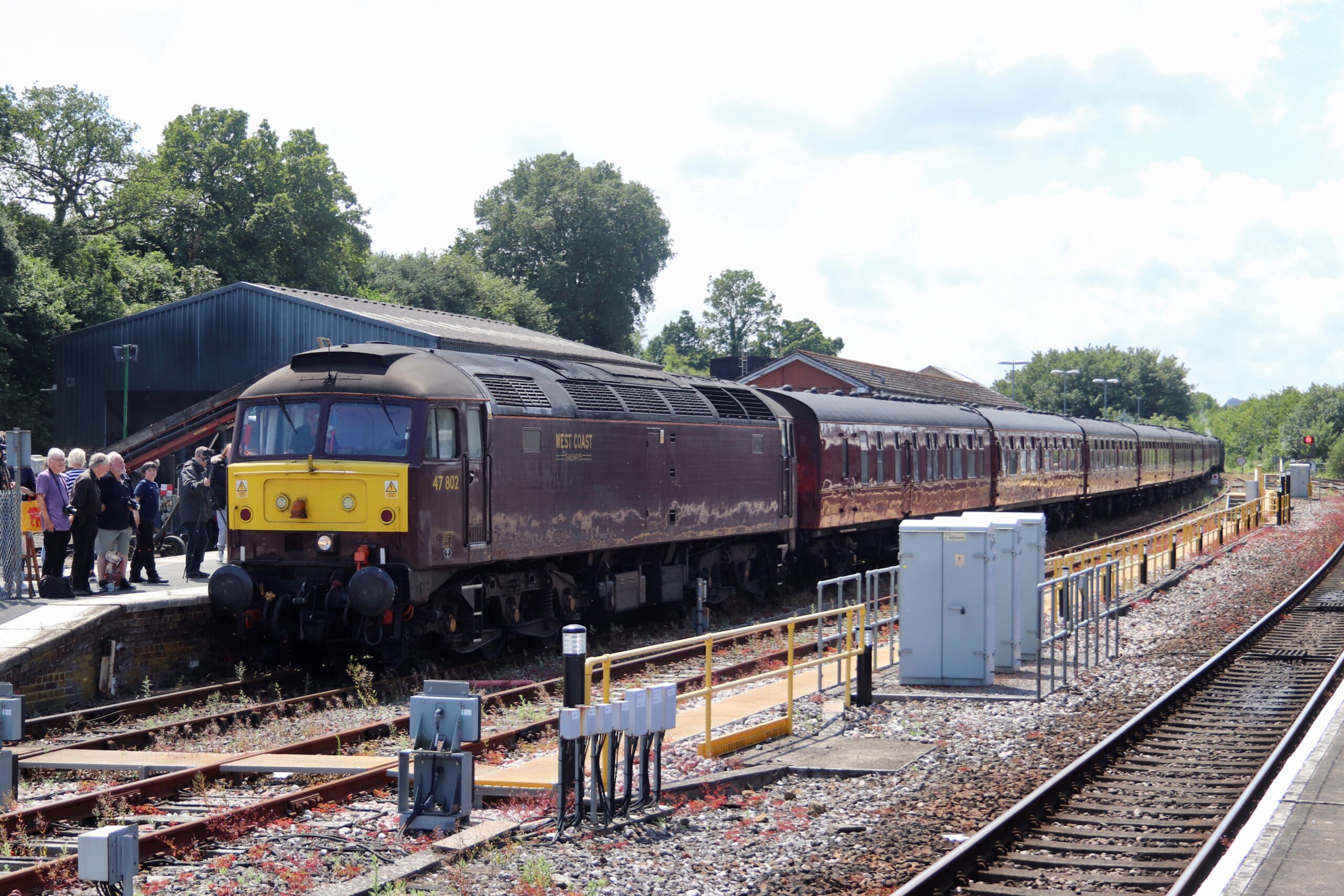
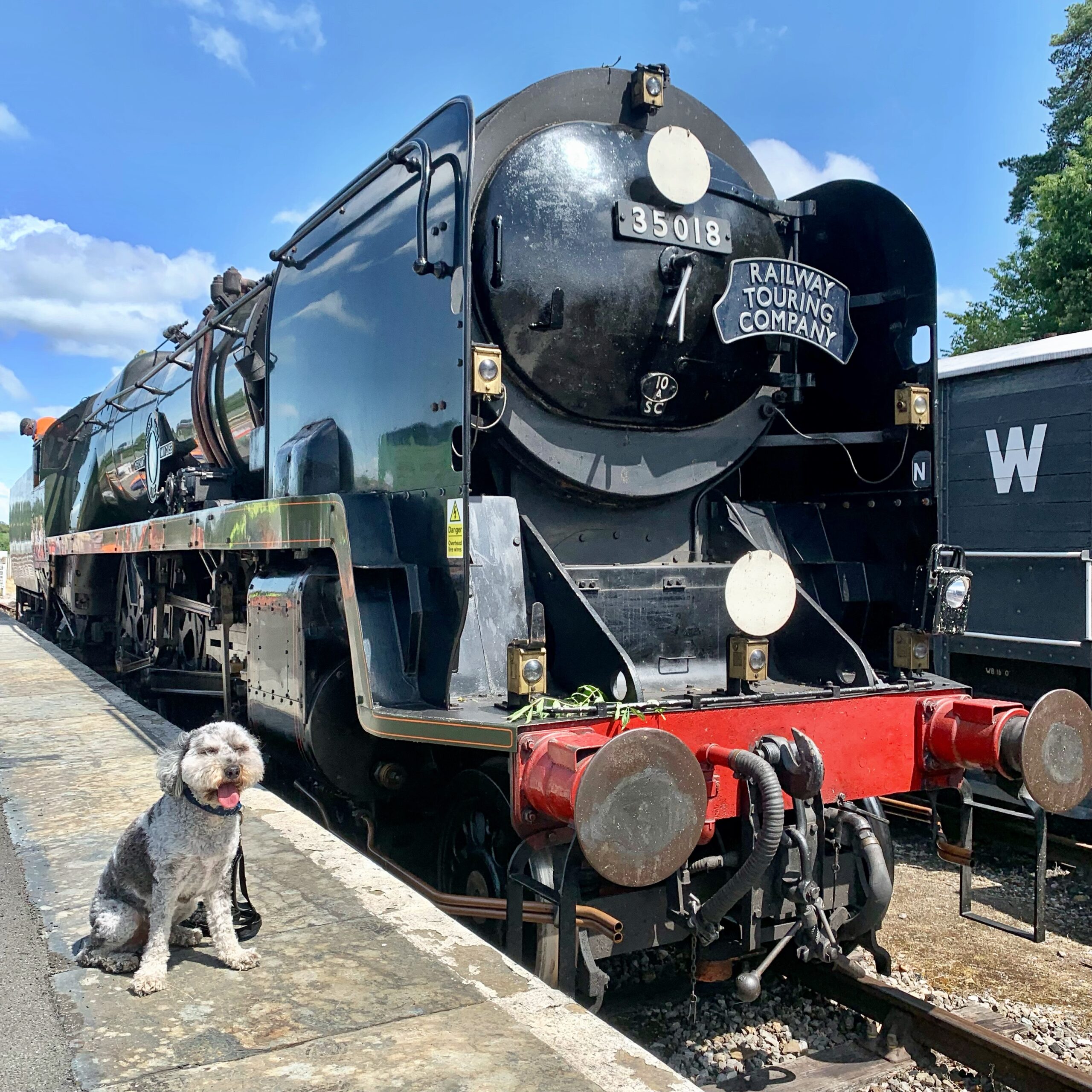
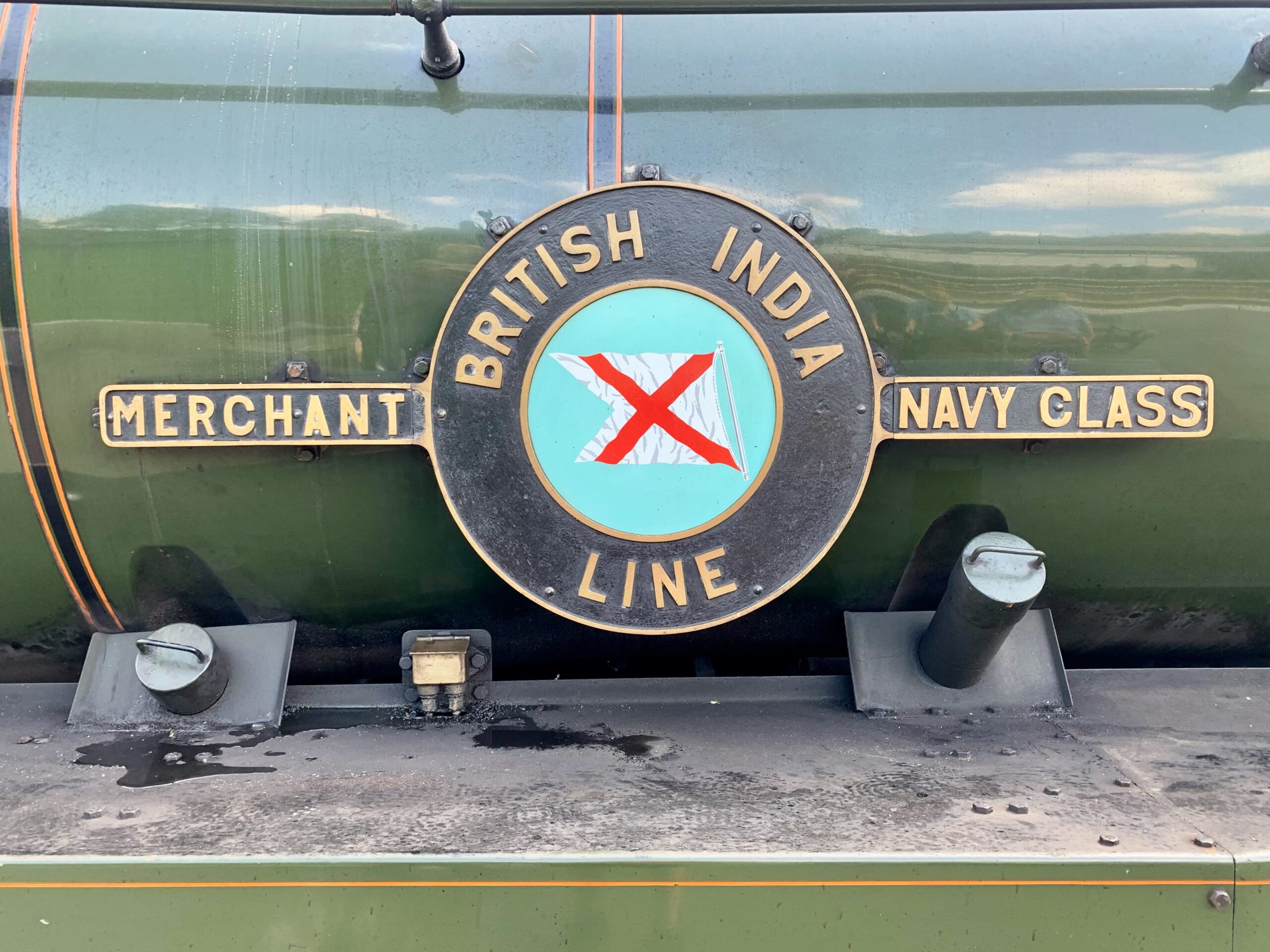
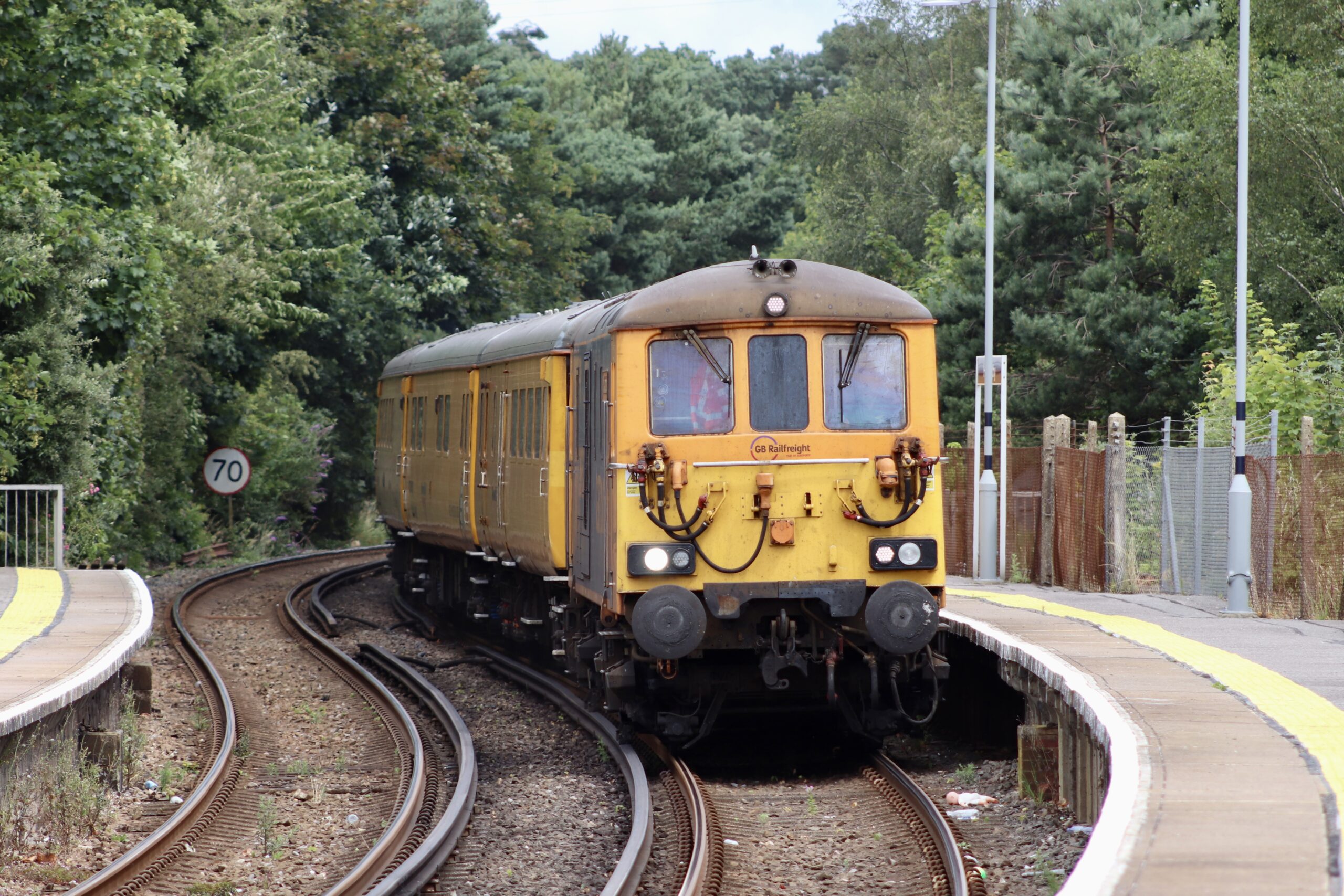
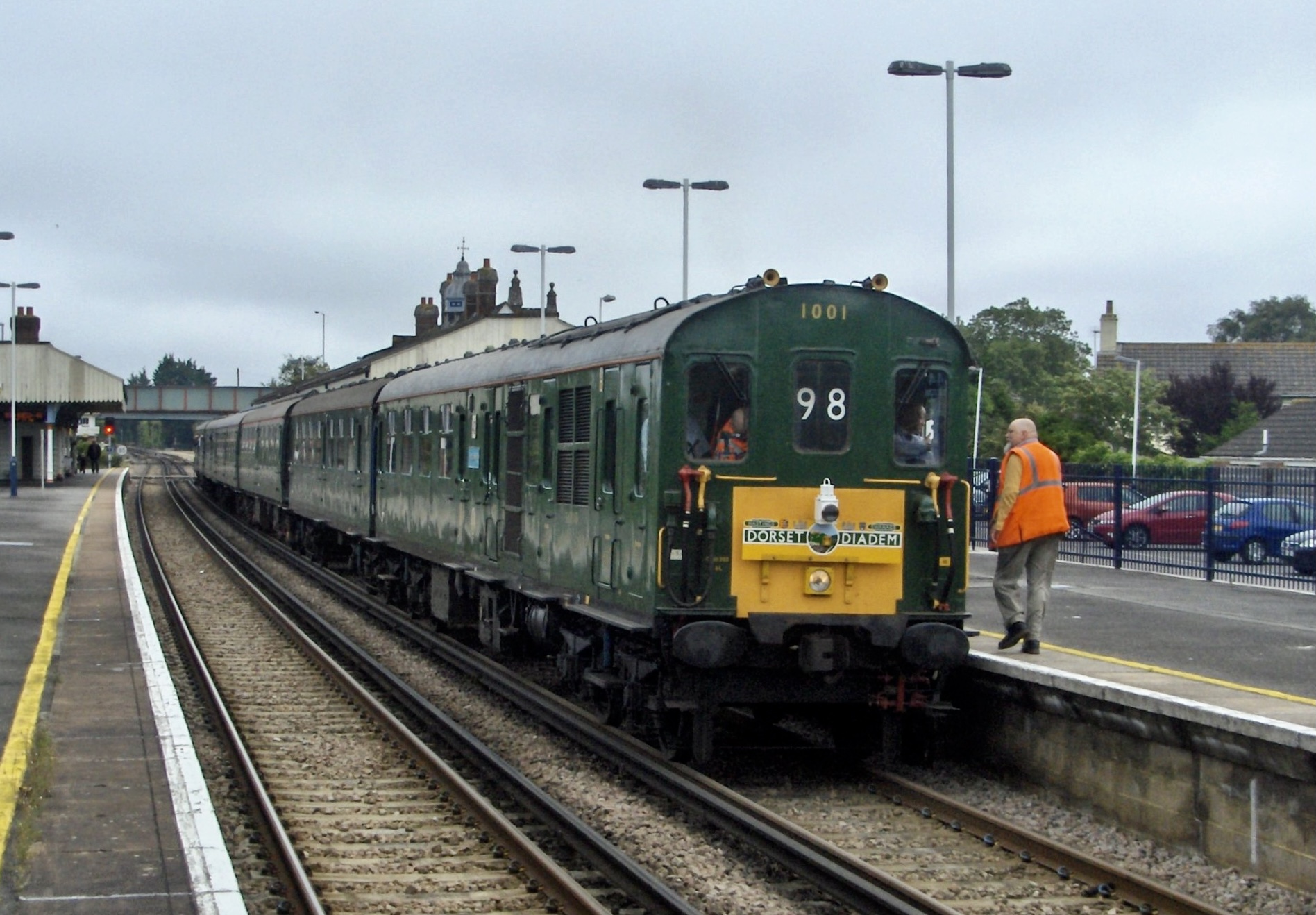
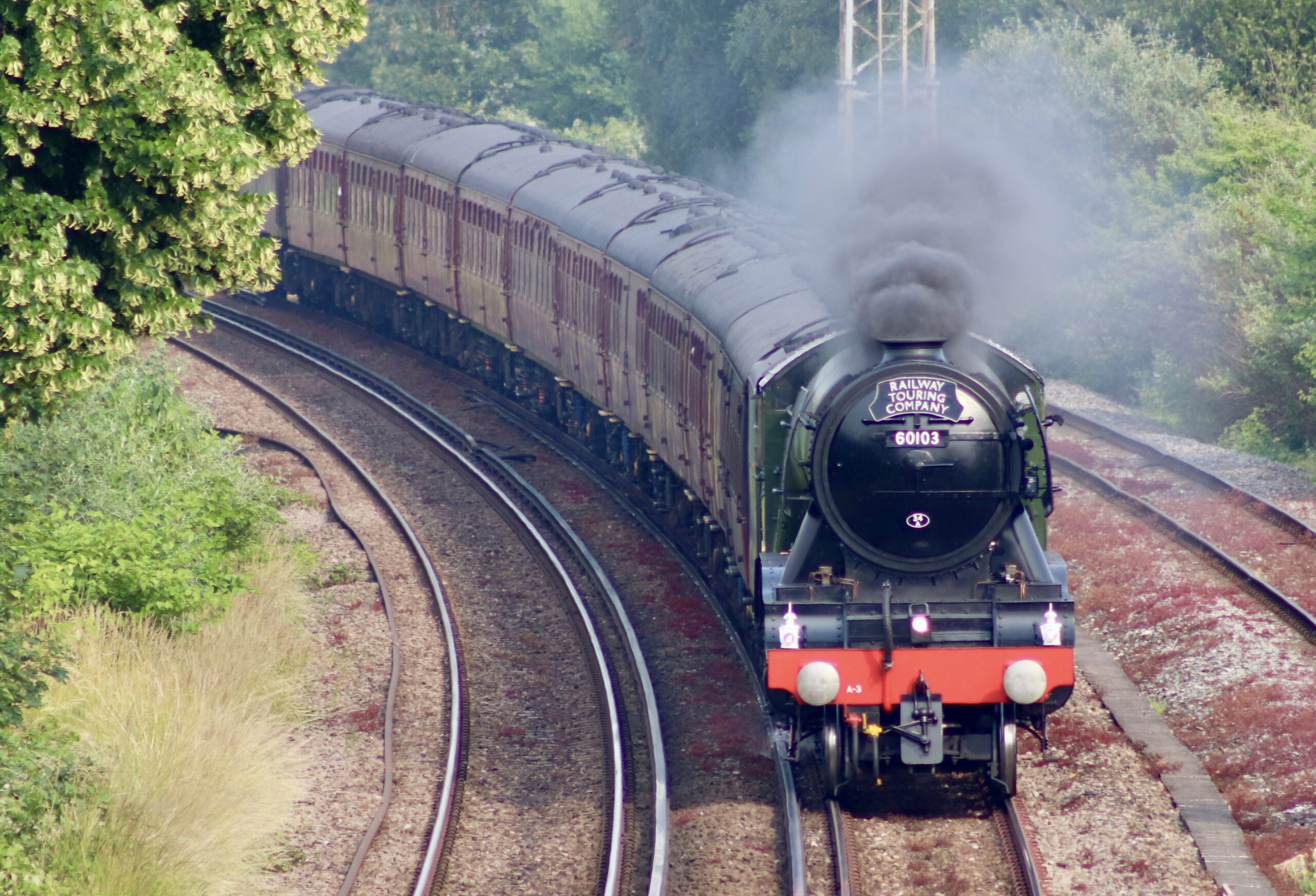
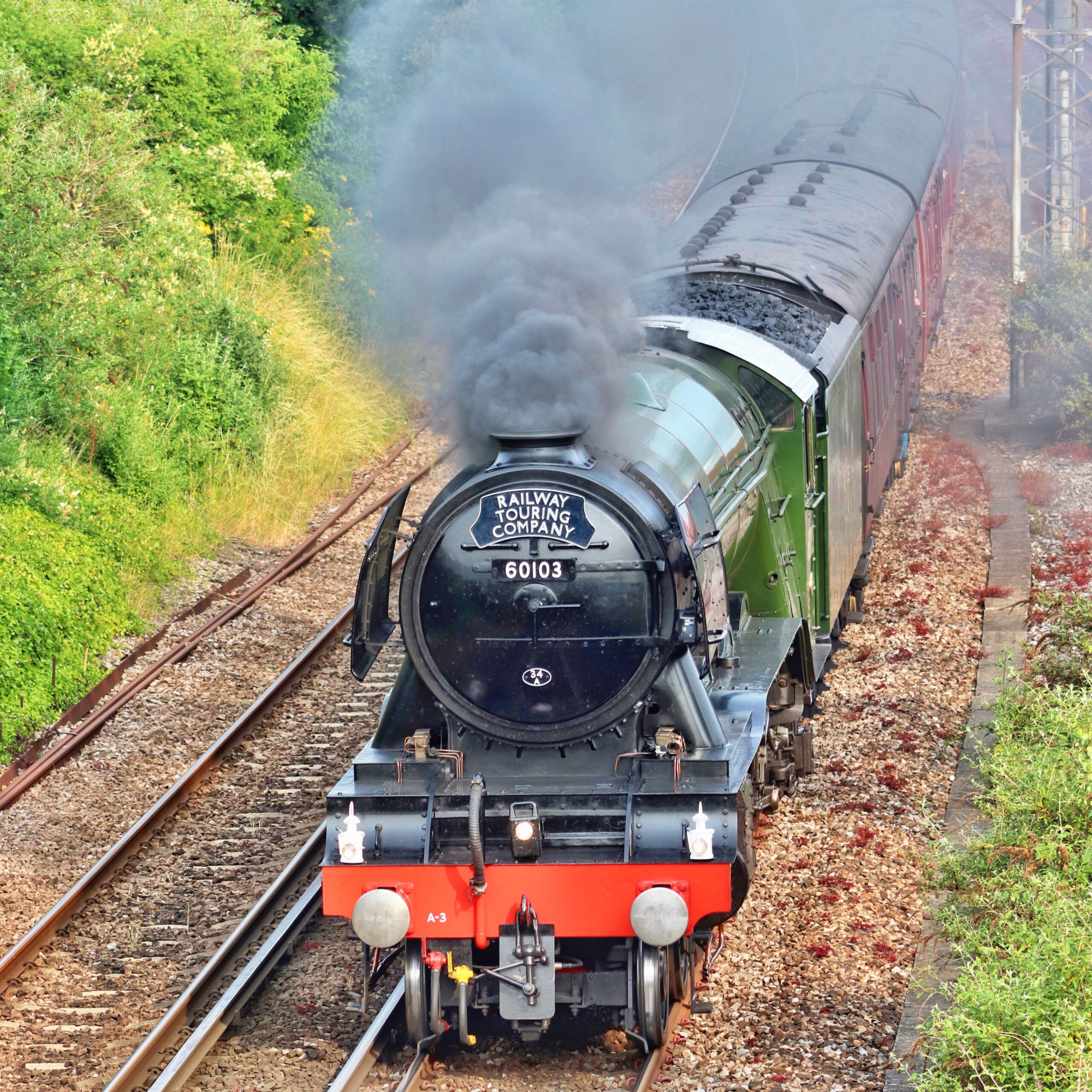
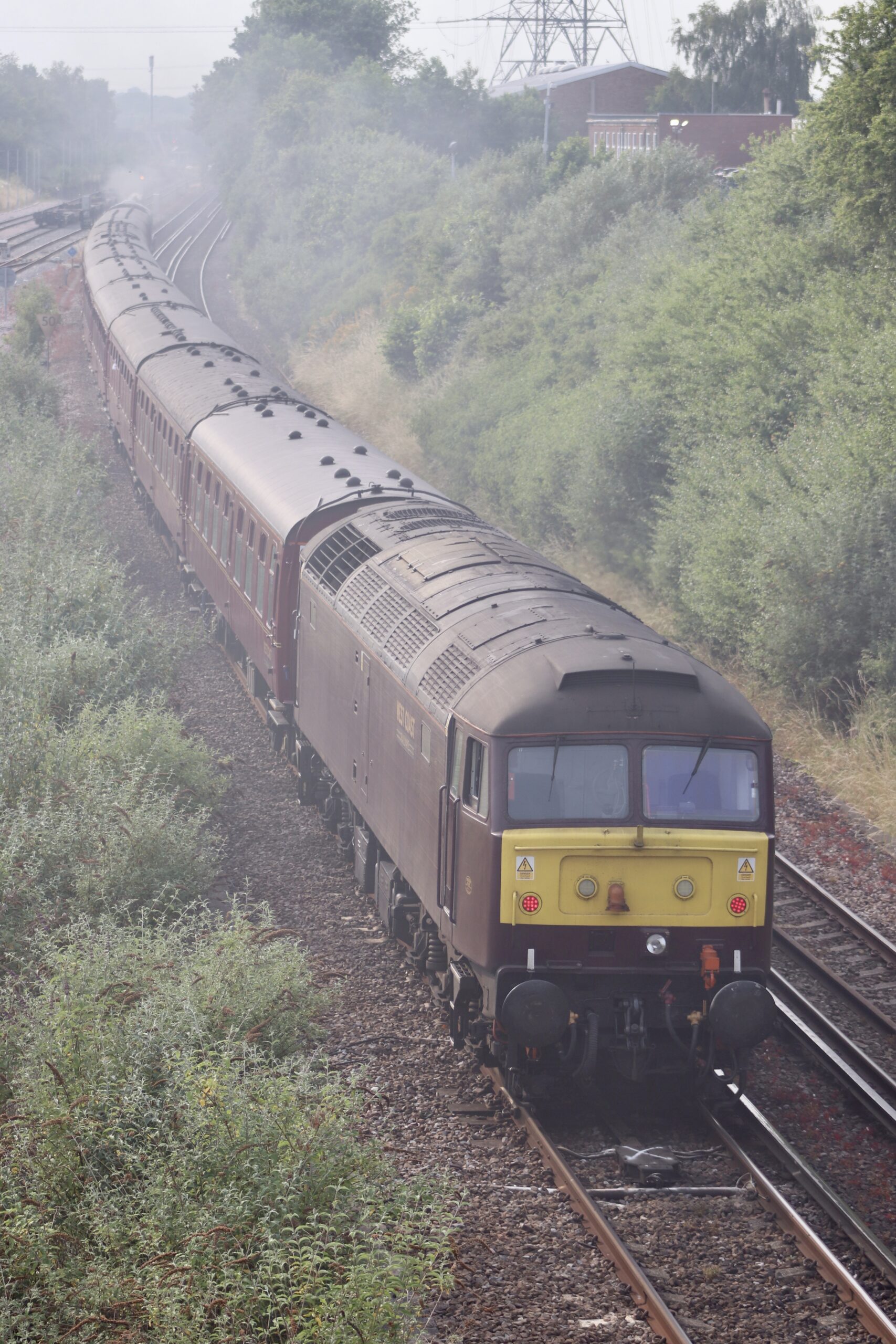
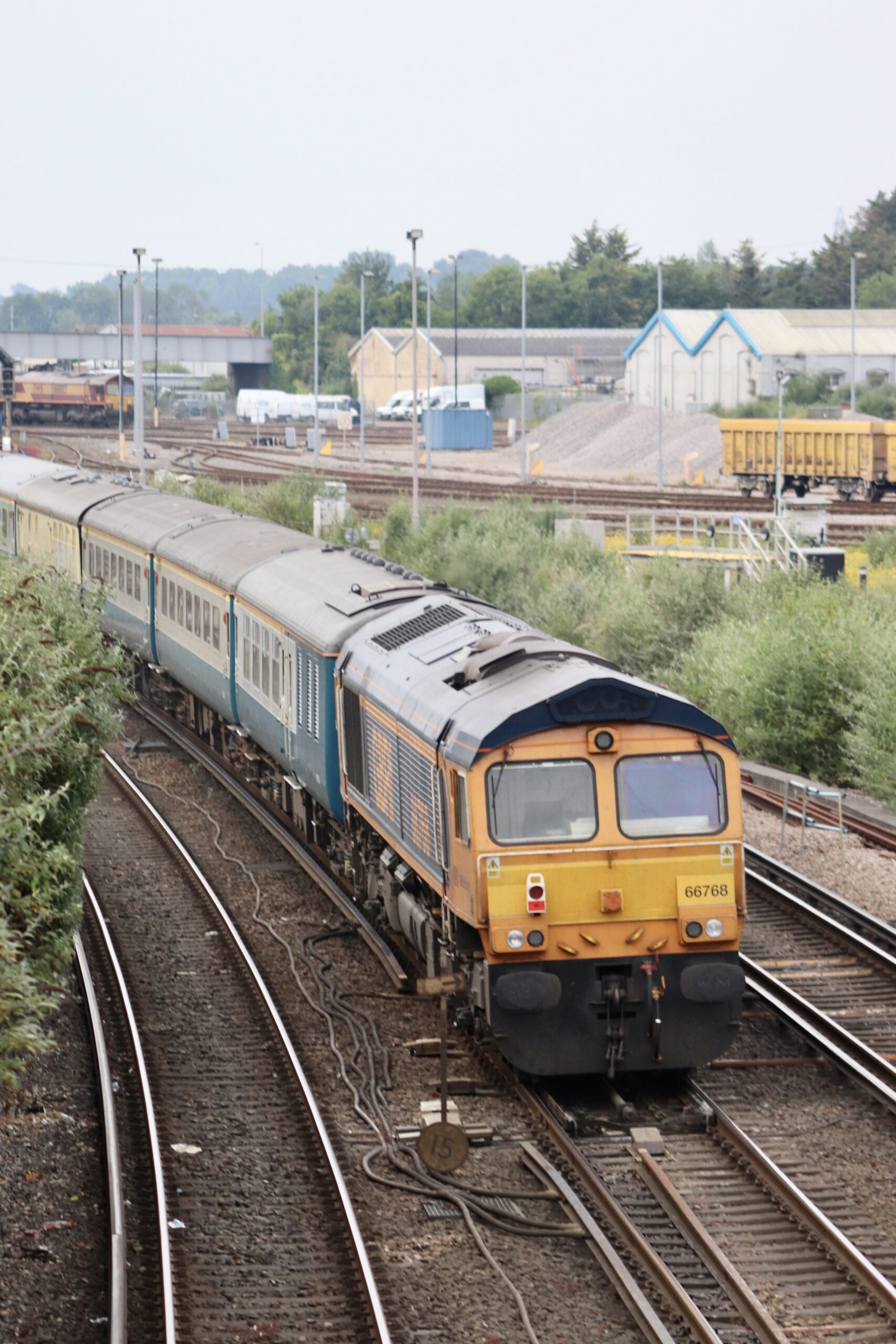
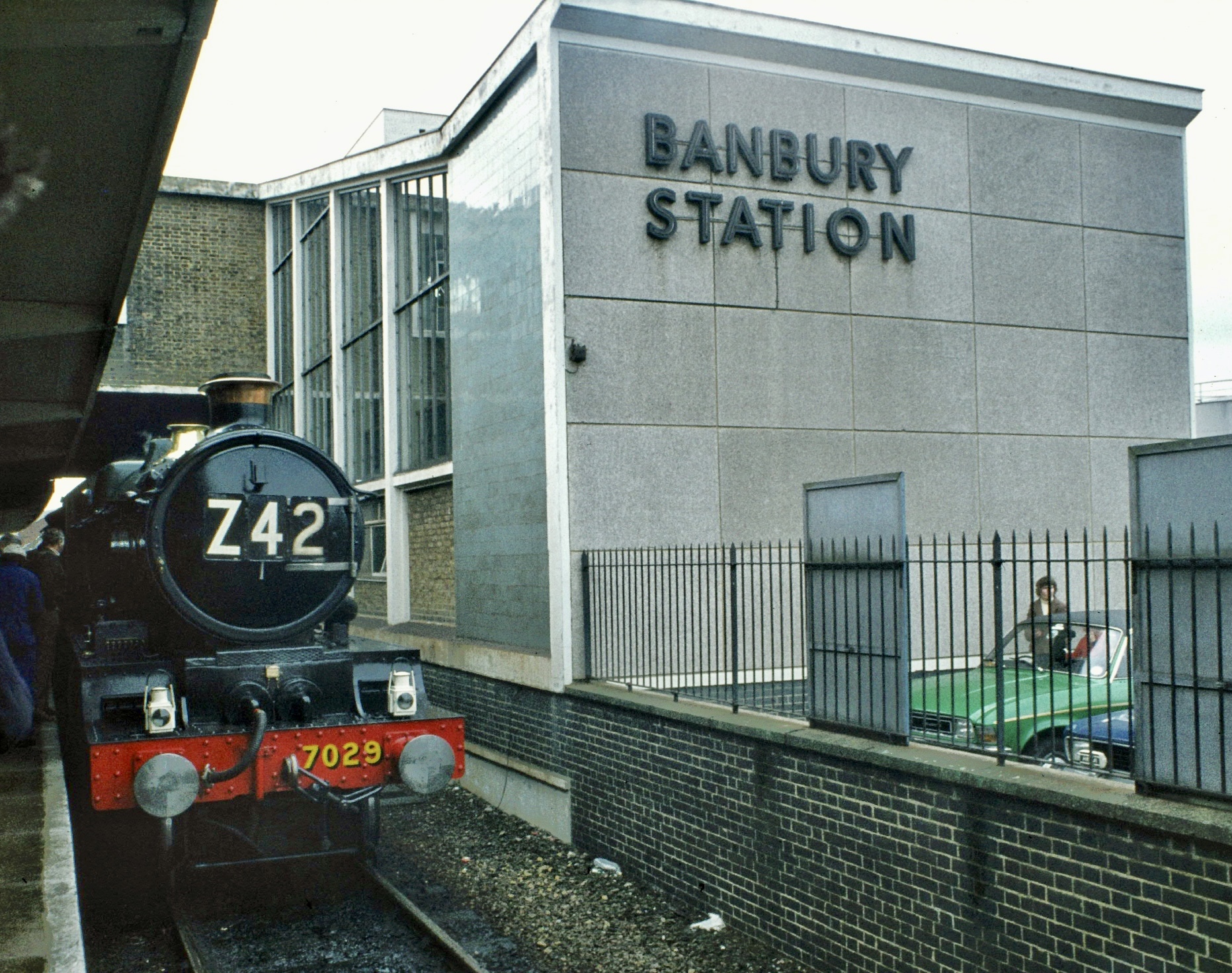
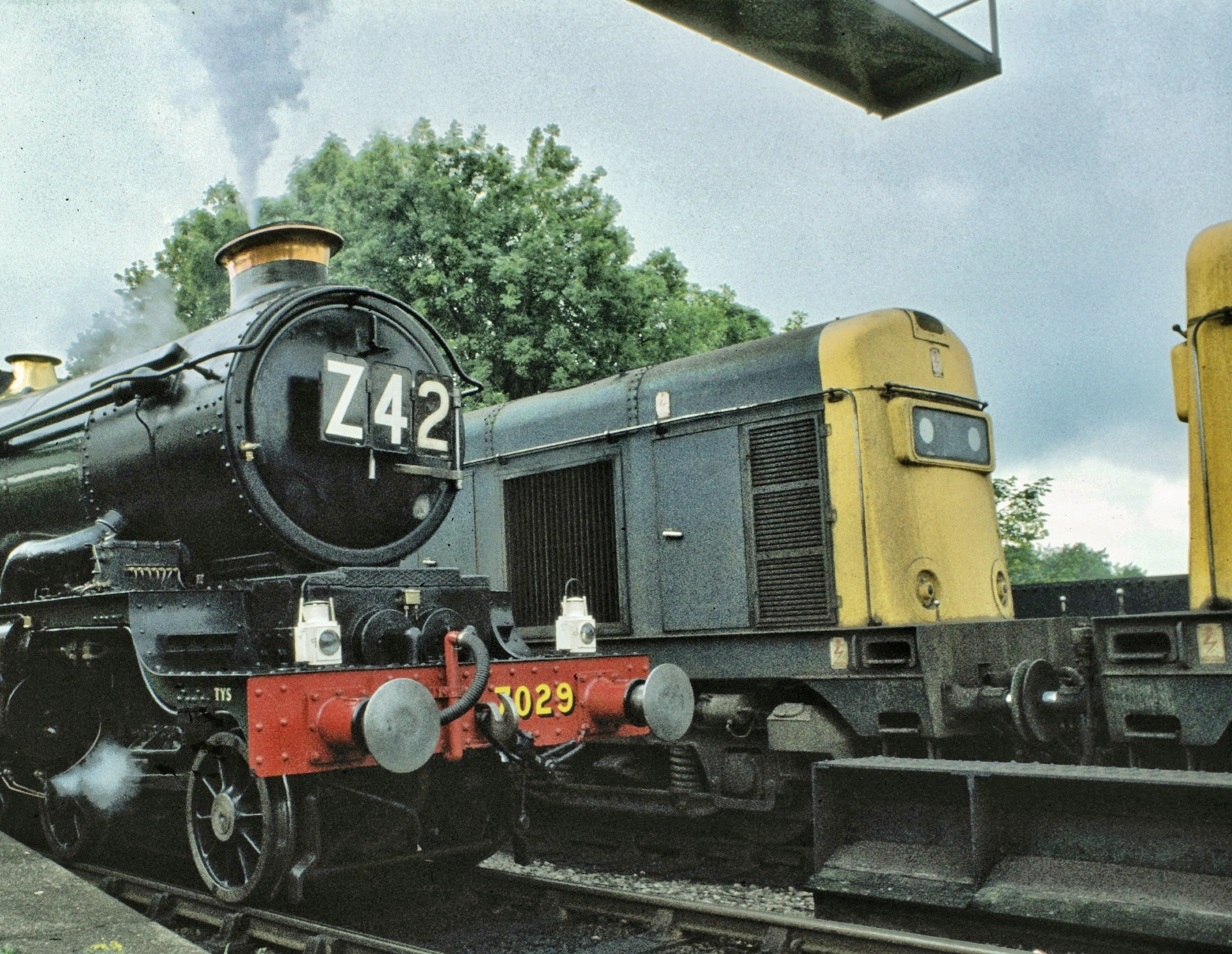
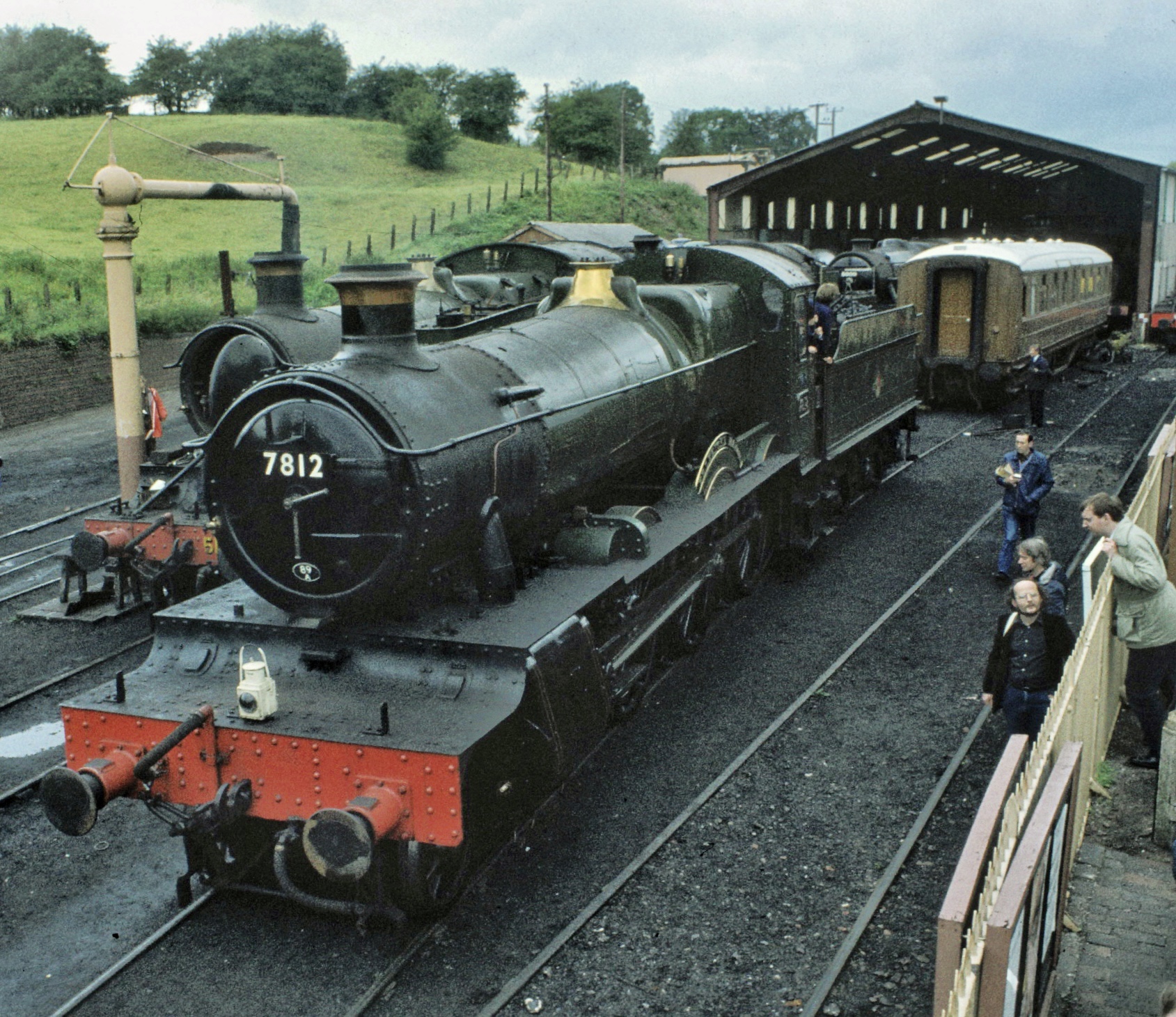
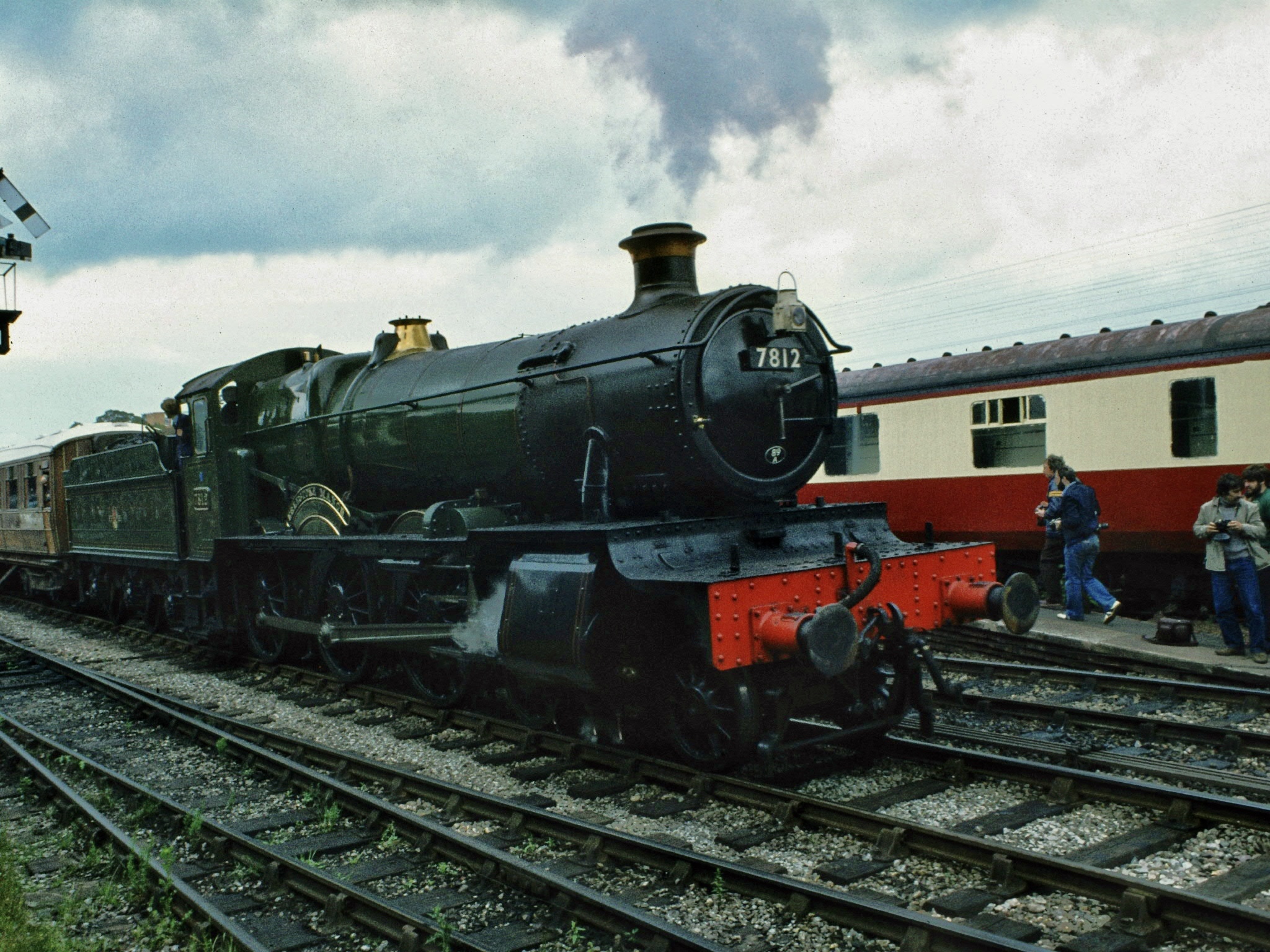
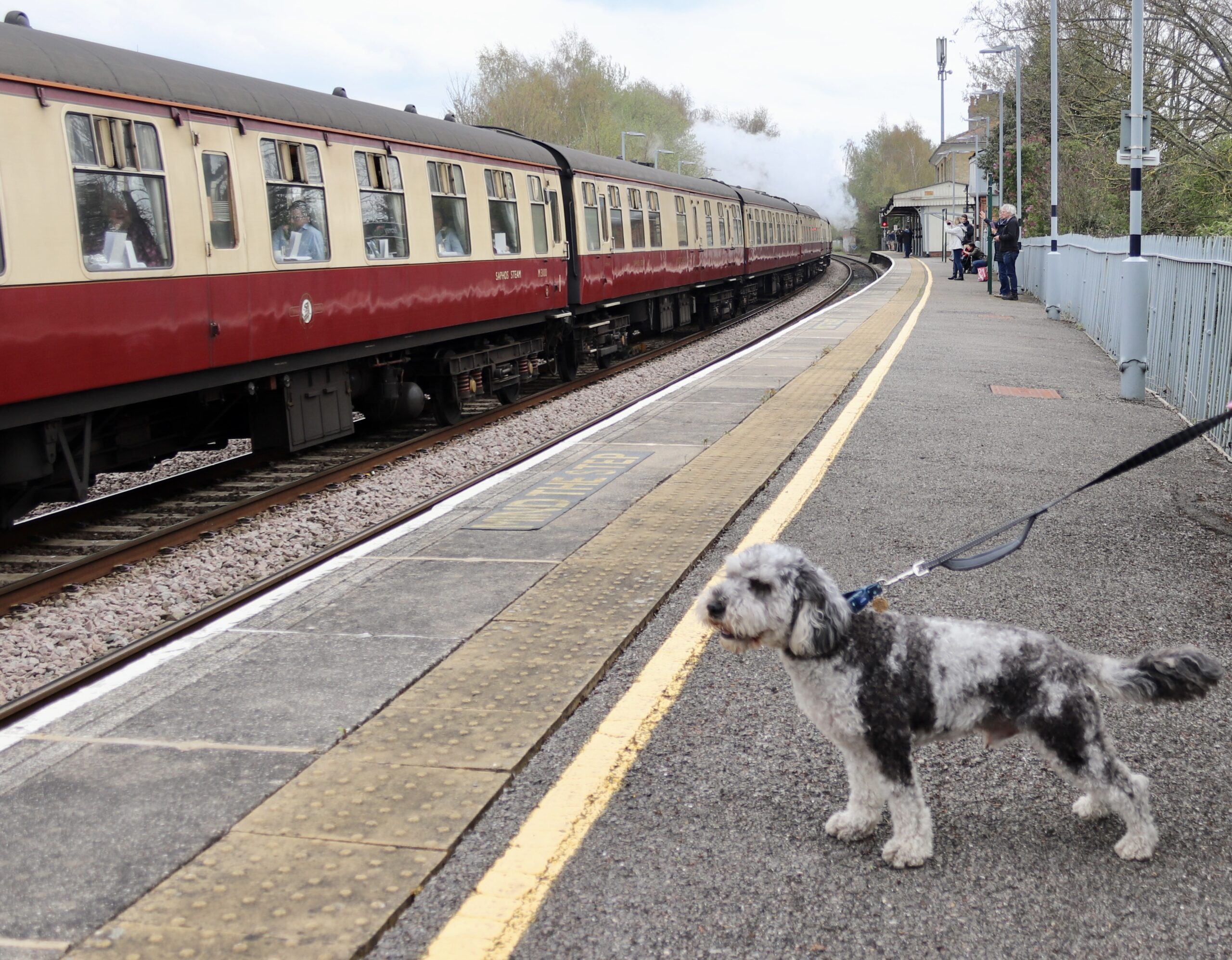
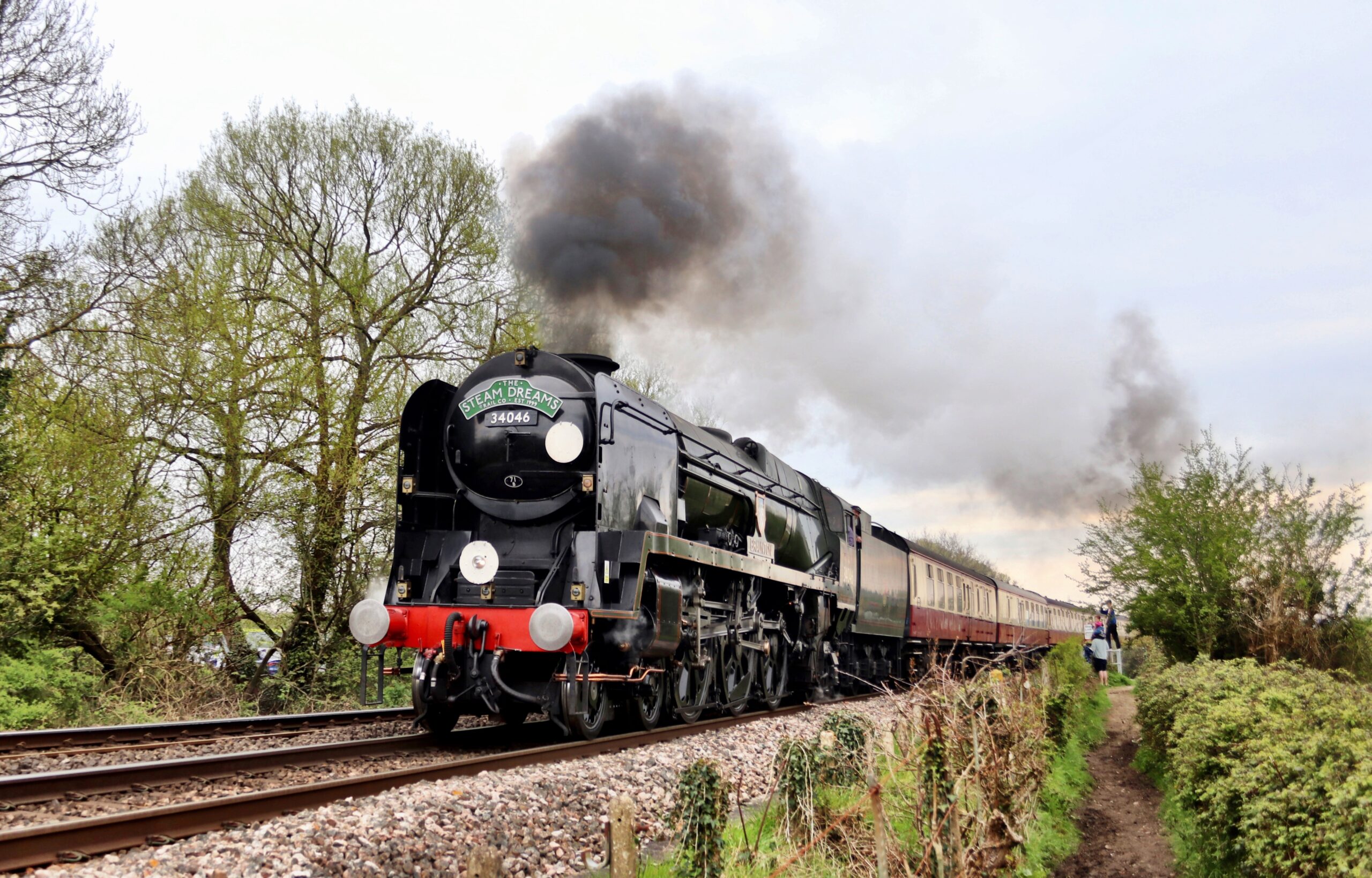
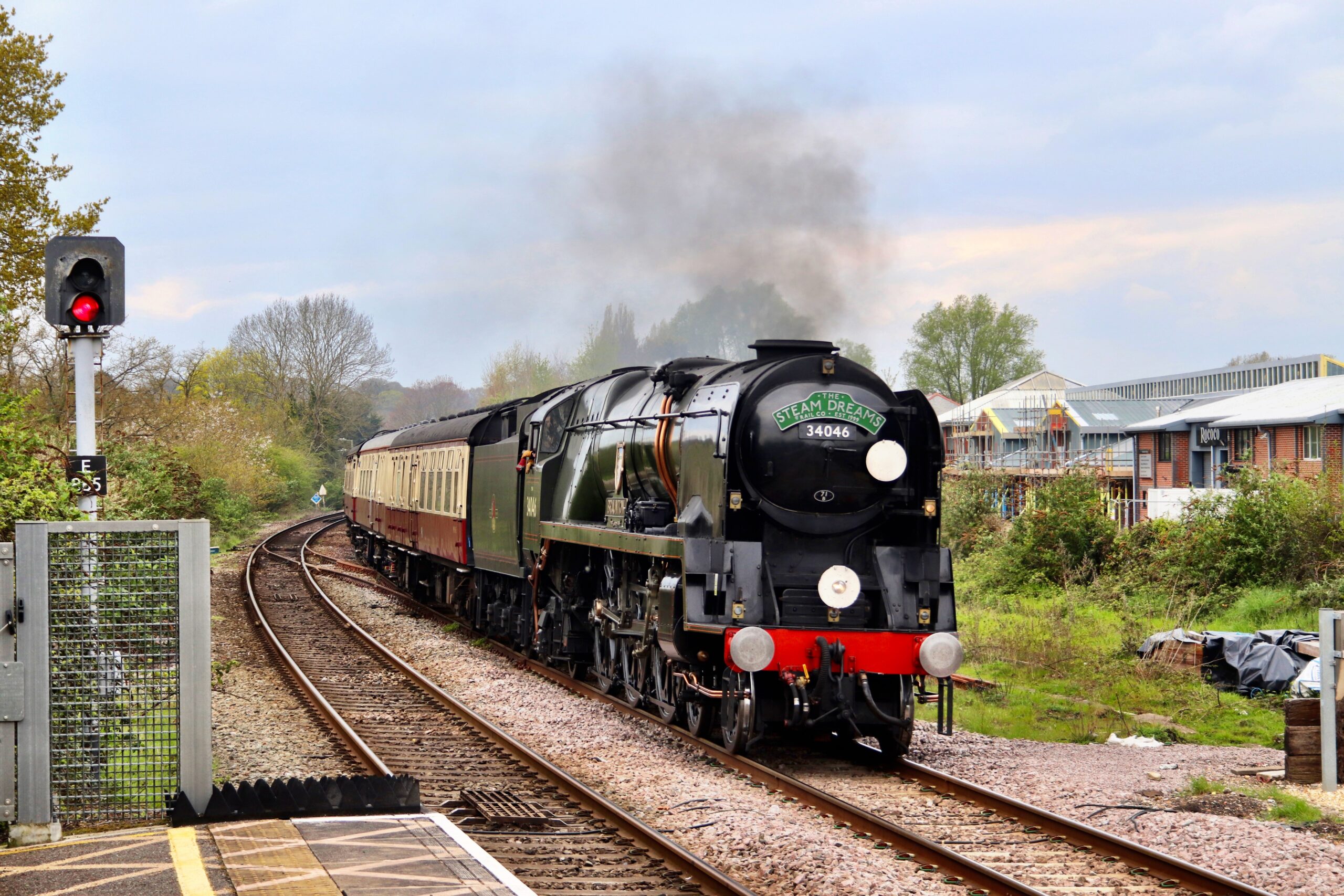
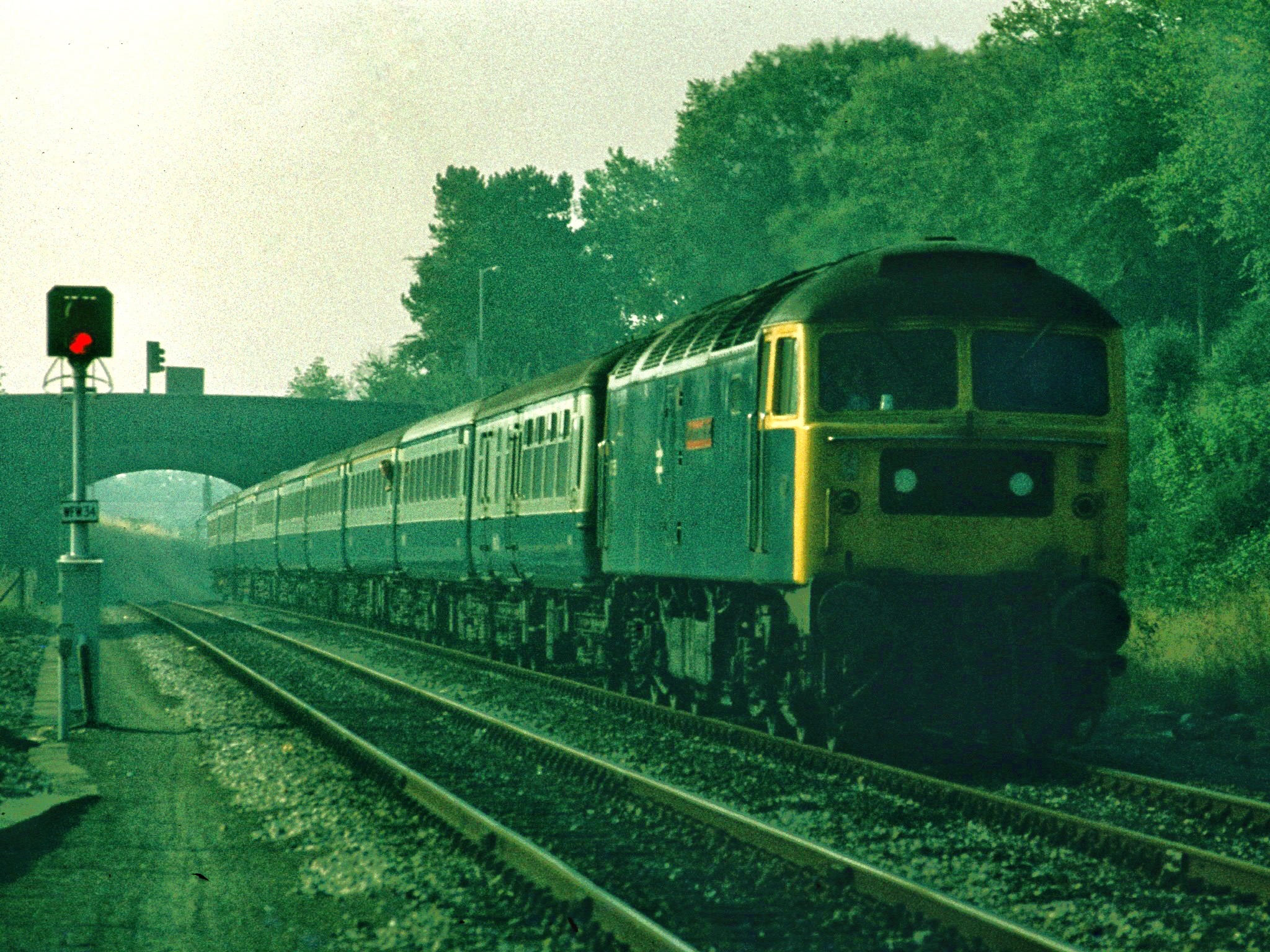
Having worked up to London Paddington earlier in the day, the Diesel Traction Group owned Class 52 “Western” diesel-hydraulic No. D1015 ‘Western Champion’ passes through Pangbourne at the head of 1Z56 1352 London Paddington to Birmingham New Street charter train. Originally an empty coaching stock movement to Burton, it was instead tuned into a main line test run for No. D1015 and opened up for public use as a joint operation by UK Railtours and Pathfinder Tours named “The One Way Wizzo”. The “Western” worked the tour as far as Bescot Yard, from where Class 57 No. 57303 took over the last into New Street before taking the ECS forward to Burton-on-Trent – 14/04/2024
April 14th 2024 to April 24th 2024
On Sunday 14th April 2024, preserved Class 52 “Western” diesel-hydraulic locomotive No. D1015 ‘Western Champion’ worked a loaded test run from London Paddington to Birmingham New Street, supported by GBRf Class 57 No. 57303 which was utilised as a passenger carrying one way rail tour. No. D1015 ran light into Paddington and then headed up the “One Way Wizzo” as far as Bescot Yard, with No. 57303 taking charge for the final leg into New Street. After the tour, ‘Western Champion’ returned to her base on the Severn Valley Railway.
I was quite intrigued with the idea of trying to photograph both the Western’s light engine move as well as the loaded test run itself, so devised a plan for a visit to a National Trust property as a day-out for Yoshi and Caroline. Checking out the route of the Great Western main line on Google maps, I settled on Basildon Park as our heritage destination as the railway runs very close to the estate. On the day, I checked out potential photographic spots, but discounting these, back-tracked slightly to Pangbourne railway station as the car park is ideally situated for photography as long as you can position yourself above the line-side fencing; remembering to stay safe at all times!
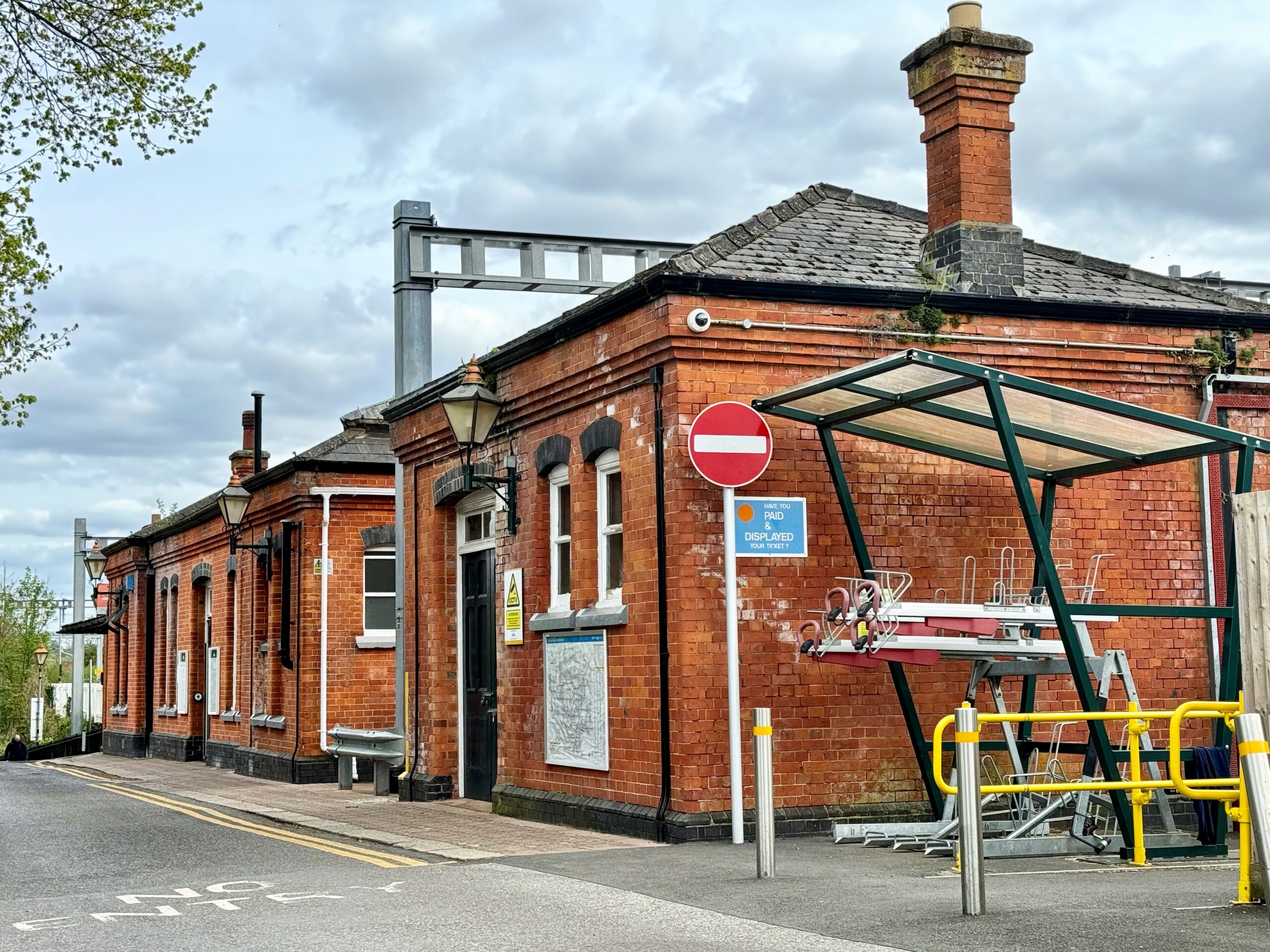
Pangbourne station is located close to the village centre, with the main station buildings on the opposite side of the railway to the village. It has two platforms, one on each of the relief (slow) lines, whilst the fast lines pass behind the station. The platforms are linked to each other and the station entrance, on the up relief platform, by a pedestrian underpass. The station once had four platforms with those situated on the main fast lines now no longer in situ.
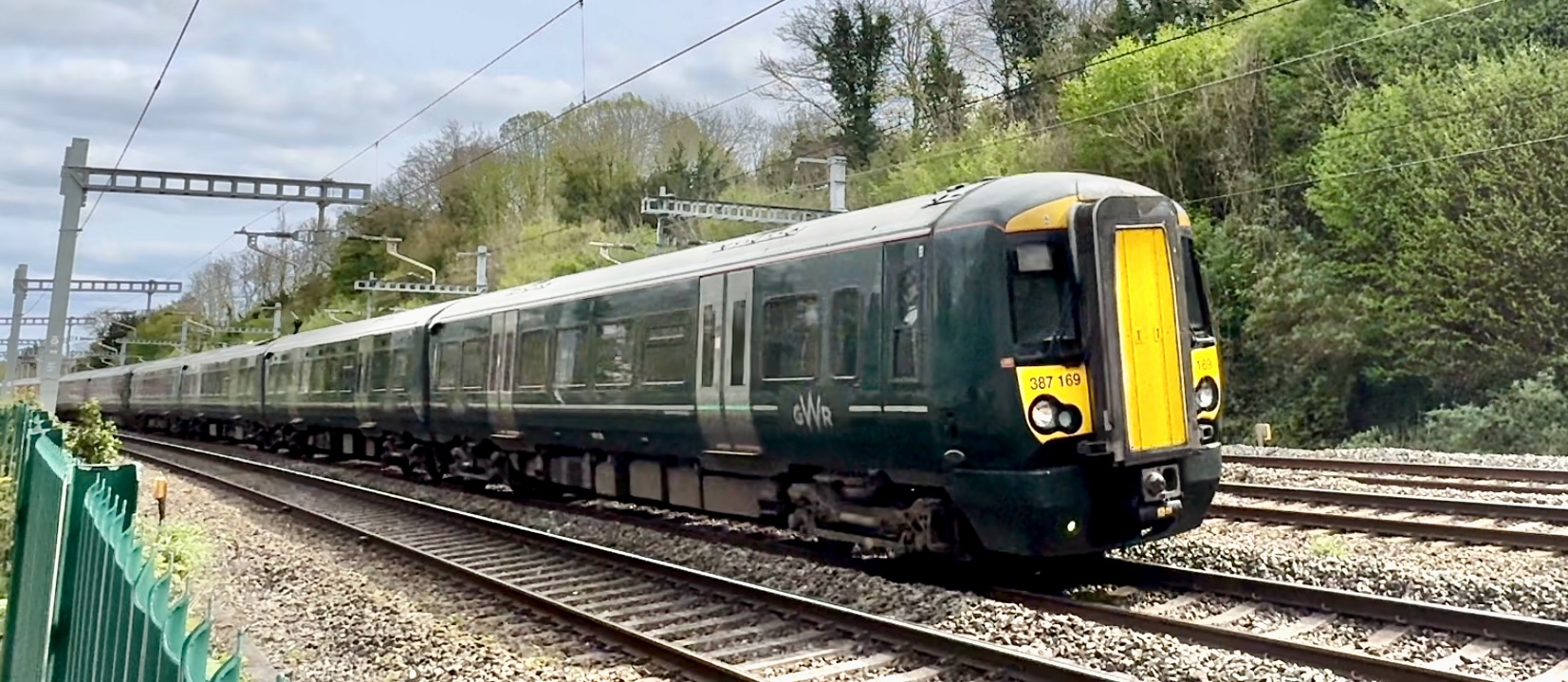
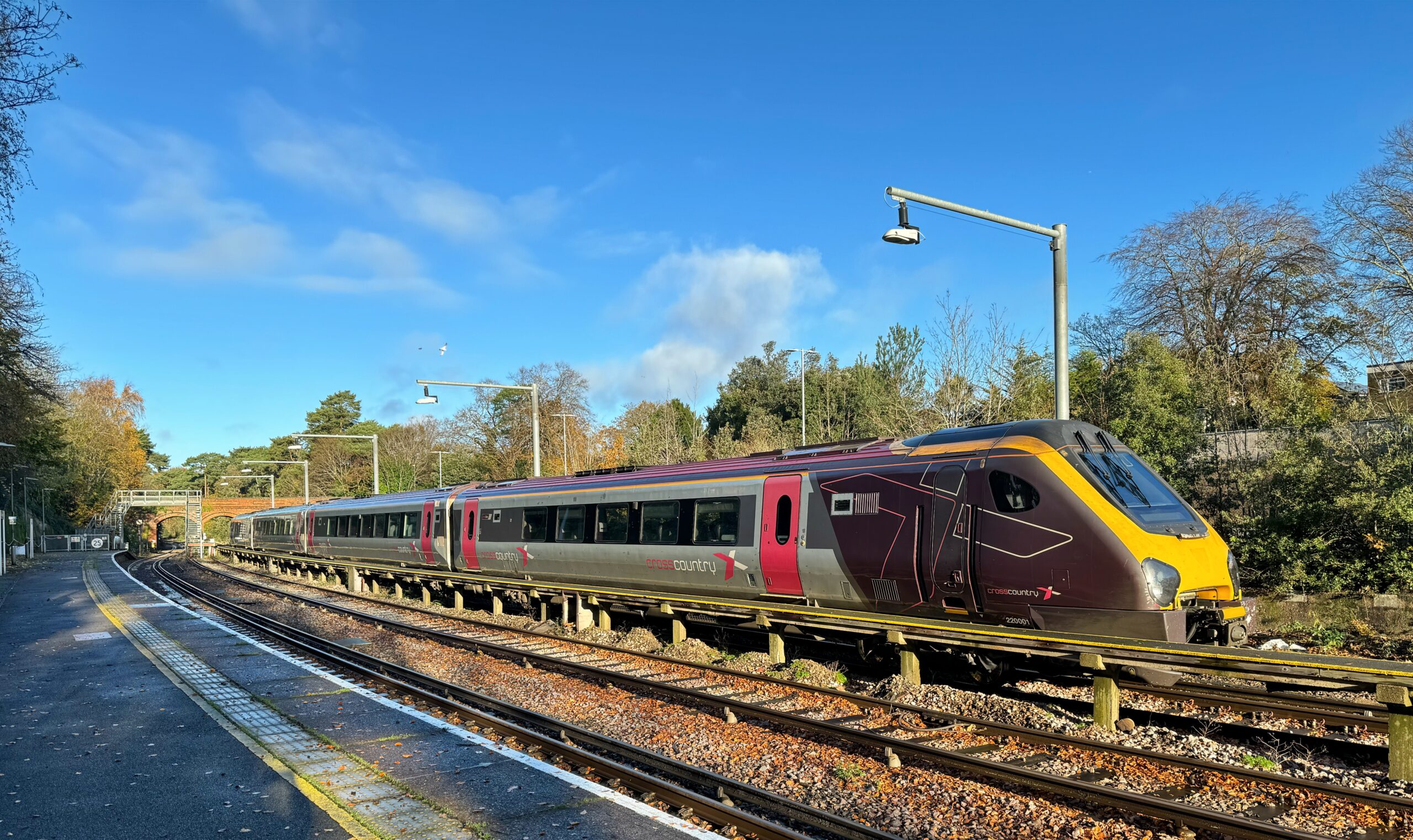
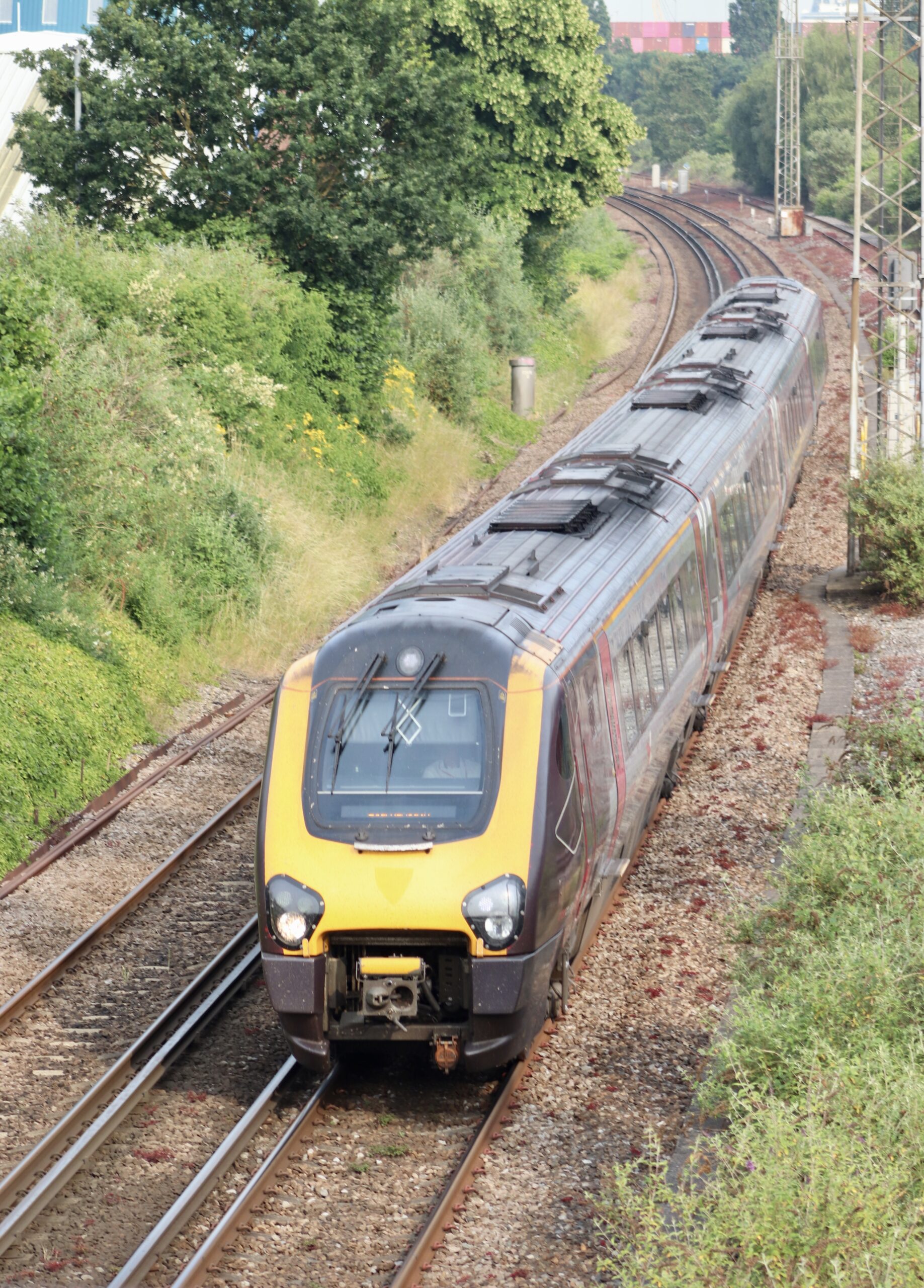
Exterior of Pangbourne railway station. The station is on the original line of the Great Western Railway, which was opened in stages: the portion between Reading and Steventon opened on 1st June 1840, with Pangbourne being the first station west out of Reading – 14/04/2024All services at Pangbourne are operated by Great Western Railway (GWR) using Class 387 EMU’s. The typical off-peak is two trains per hour in each direction between London Paddington and Didcot Parkway. On Sundays, the service is reduced to hourly in each direction. Screenshot of Class 387 Electrostar electric multiple unit (EMU) No.’s 387169 & 387170 depart Pangbourne working 2N42 1426 Reading to Didcot Parkway – 14/04/2024Great Western Railway Intercity Express Train (IET) pass Pangbourne on the fast lines situated behind the platforms at Pangbourne. Class 800 No. 800311 passes Pangbourne working 1A18 1300 Bristol Temple Meads to London Paddington – 14/04/2024CrossCountry trains also pass Pangbourne. Screenshot of CrossCountry Class 221 Super Voyager No. 221133 works 1O16 1124 Manchester Piccadilly to Southampton through Pangbourne – 14/04/2024
While waiting for No. D1015 to pass us on her way to London Paddington, the local security operated by Land Sheriffs Ltd pulled into the car park and parked up casting a weather eye over my activity. As the Western was still a good few minutes off, I strolled over for a chat. The two security guards were really friendly and knew just what I was waiting for. They were, however, surprised to learn that the heritage diesel-hydraulic locomotive was making a solo pass prior to its railtour work as they had been charged with keeping an eye on proceedings further up the line at Didcot when the “One Way Wizzo” was due to pass later that afternoon as the train was sure to attract much attention from railway enthusiasts. Satisfied that I was not a security risk, the Land Sheriffs left me to await the first appearance of No. D1015.
Class 52 No. D1015 ‘Western Champion’ runs light engine towards Pangbourne railway station working 0Z55 1020 Kidderminster SVR to London Paddington – 14/04/2024
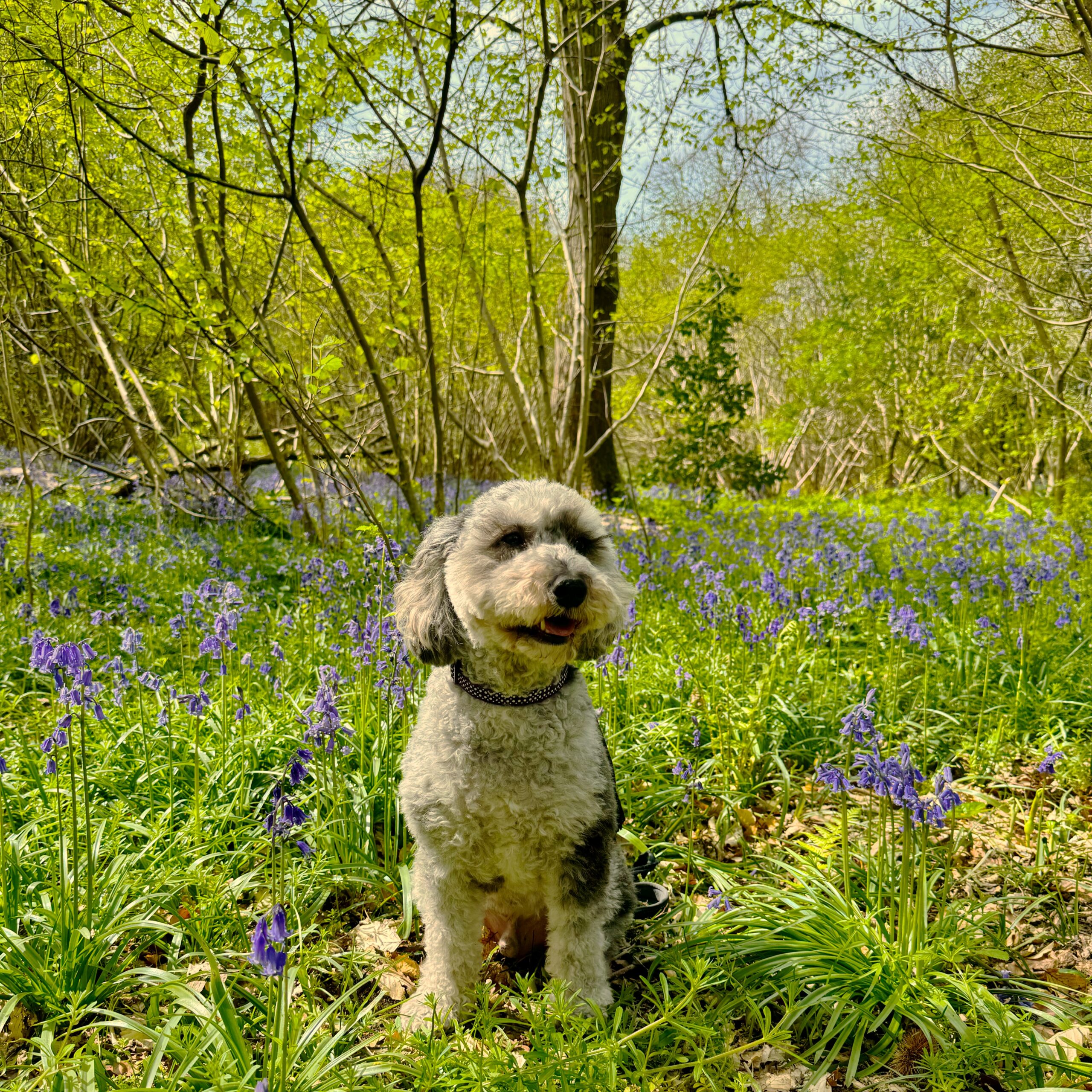
It was a good couple of hours before ‘Western Champion’ was timed to pass Pangbourne on her way to Bescot, so we decamped to National Trust Basildon Park where we enjoyed a woodland walk taking in the bluebells before Caroline took a tour of the mansion house and Yoshi and I headed back to the railway station car park for another shot at photographing No. D1015, this time at the head of a rake of carriages.
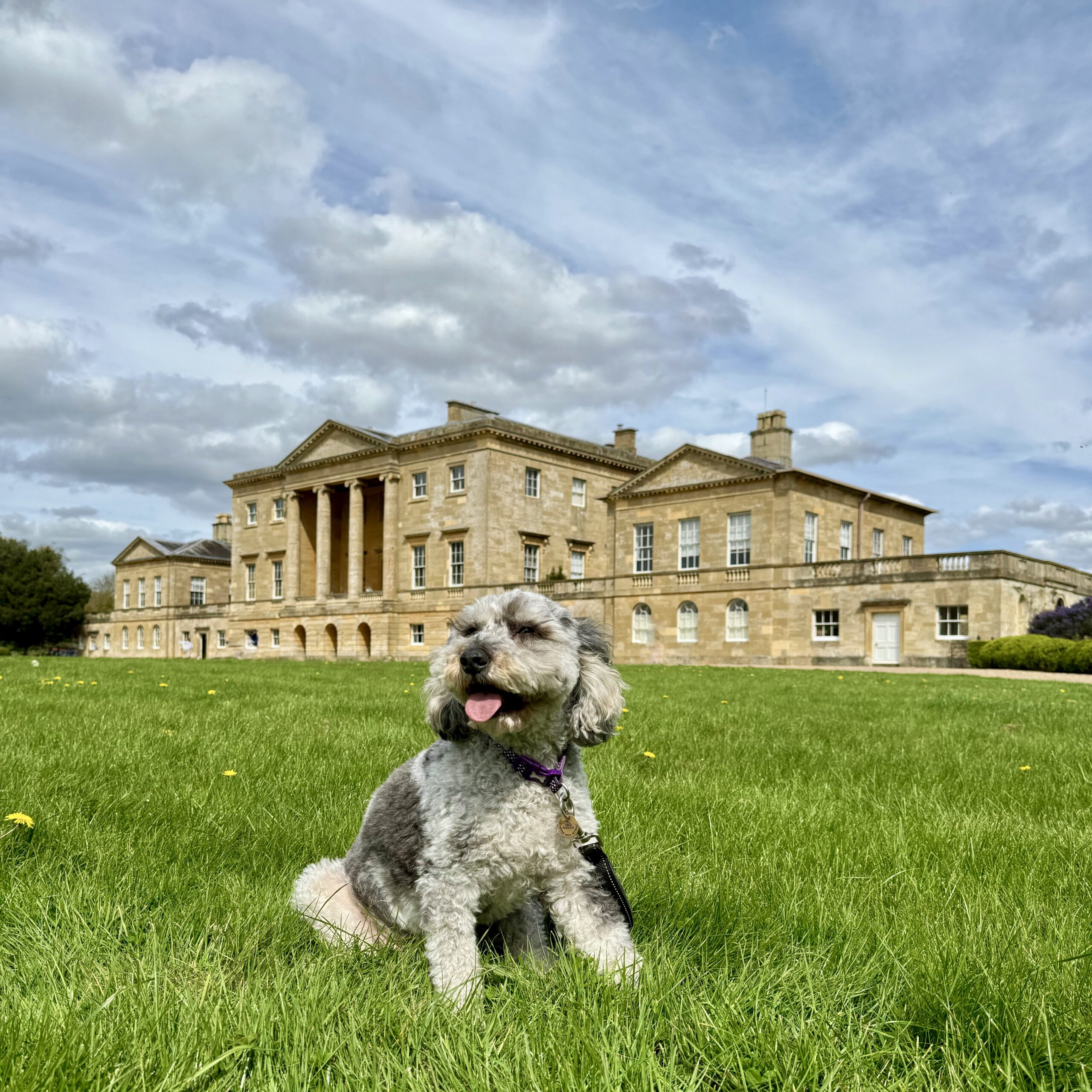
Yoshi amongst the bluebells in the wooded parkland at Basildon Park – 14/04/2024Yoshi at National Trust Basildon Park. The estate was purchased by Francis Sykes in 1771. Sykes had made his fortune in the East India Company and required a home befitting his status. He demolished the old house and employed architect John Carr to build the Bath-stone mansion which exists today. The property was gifted to the National Trust in 1978 by Lord and Lady Iliffe who had bought Basildon Park in 1952 – 14/04/2024Class 52 “Western” diesel-hydraulic No. D1015 ‘Western Champion’ passes Pangbourne with “One Way Wizzo” 1Z56 1352 London Paddington to Birmingham New Street – 14/04/2024
Video of Class 52 “Western” diesel-hydraulic No. D1015 ‘Western Champion’ passing Pangbourne – 14/04/2024
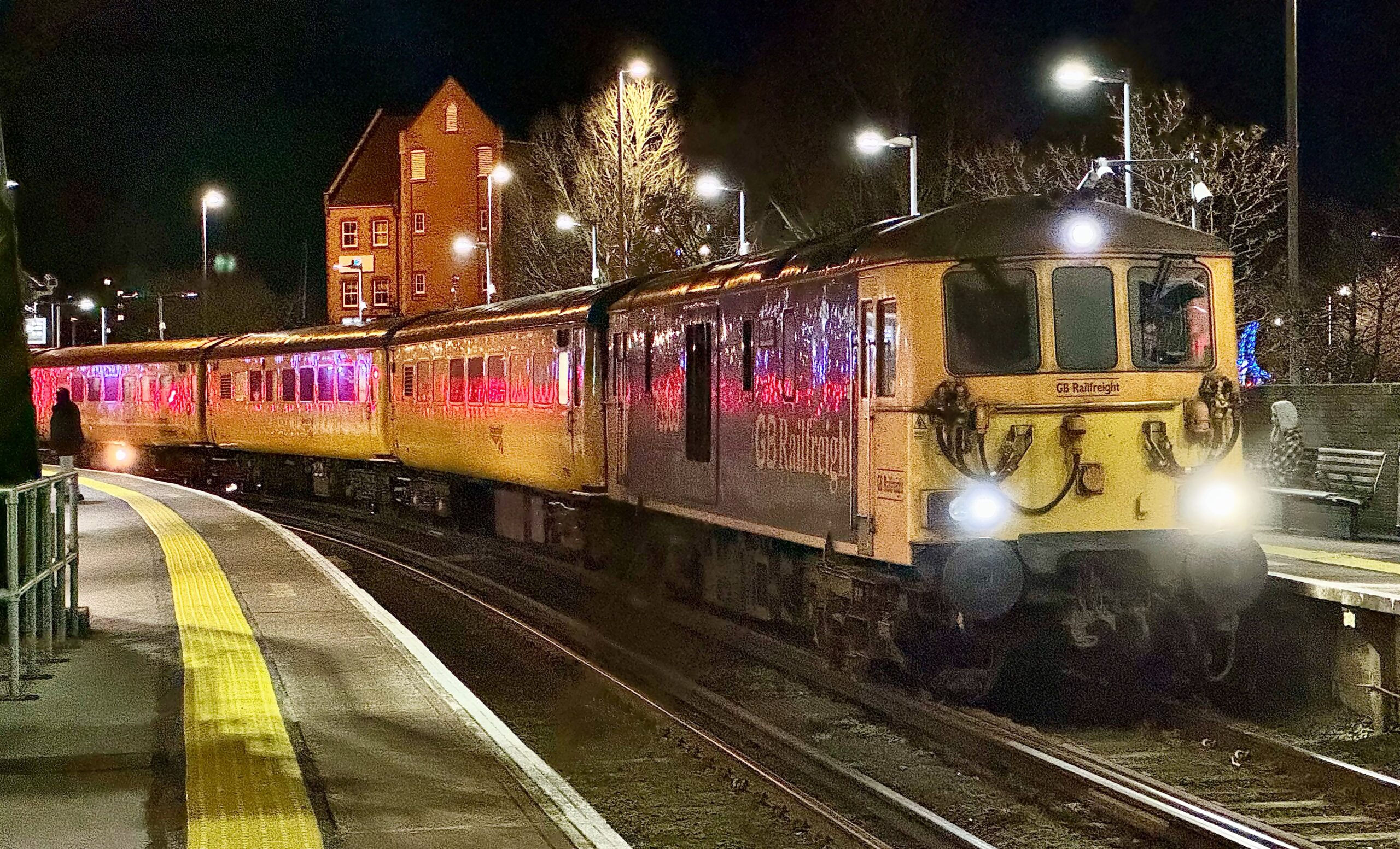
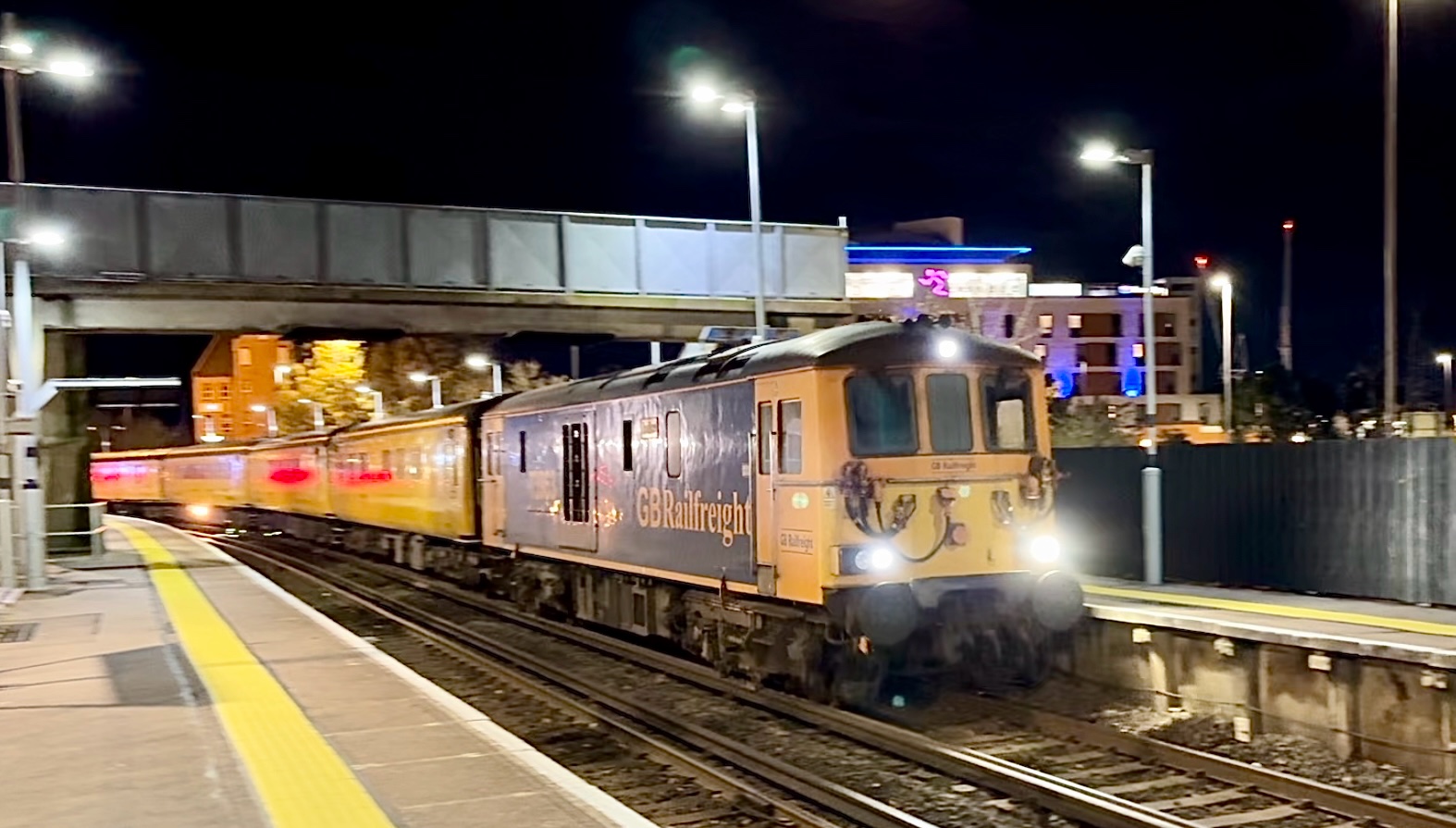
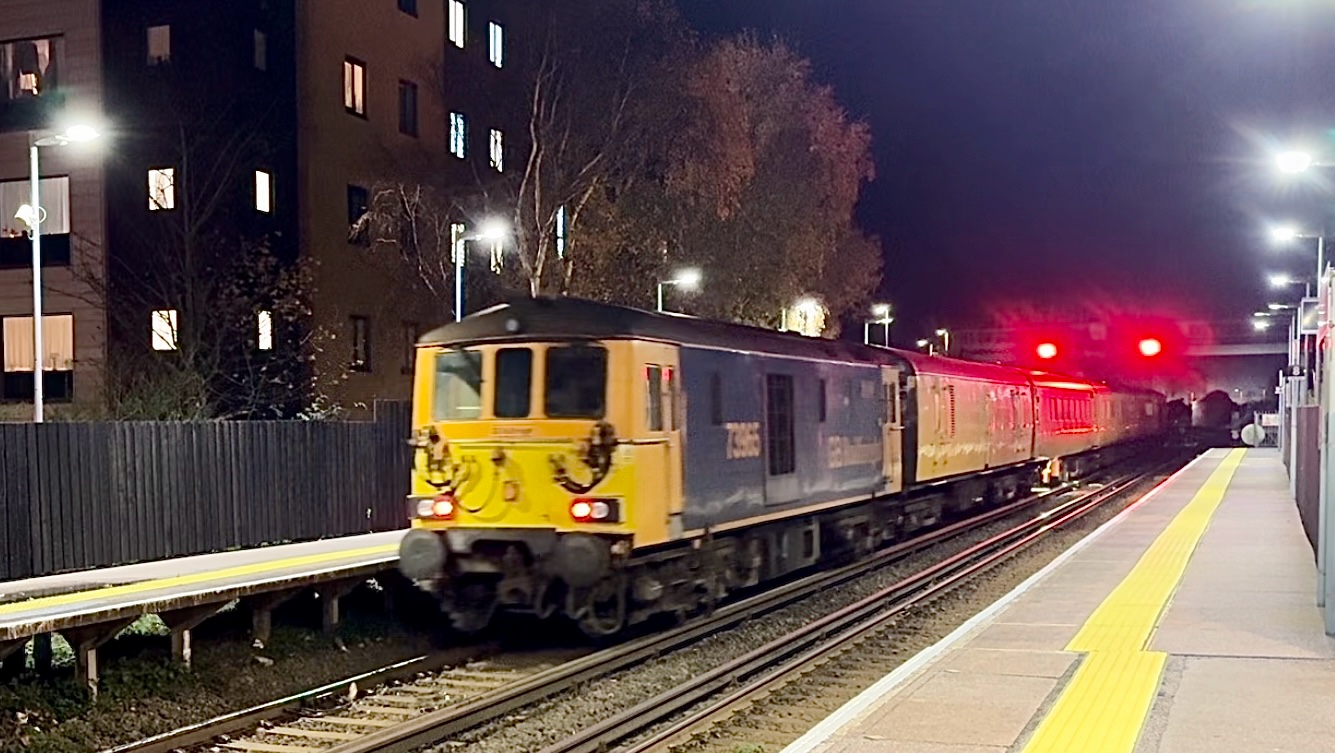
Monday 15th April we were back at Poole railway station in readiness for GBRf Class 73 No.’s 73962 ‘Dick Mabbutt’ and 73961 ‘Alison’ working the monthly 1Q51 11:15 Derby RTC to Eastleigh Yard via Weymouth test train.
Video screenshots of GBRf Class 73 No.’s 73962 ‘Dick Mabbutt’ and 73961 ‘Alison’ working 1Q51 11:15 Derby RTC to Eastleigh Yard via Weymouth – 15/04/2024
Video of 1Q51 11:15 Derby RTC to Eastleigh Yard via Weymouth at Poole – 15/04/2024
The following day, Tuesday 16th April, we were out to see GBRf Class 57 No. 57303 once again, this time performing electric multiple unit drag duties, hauling South Western Railway (SWR) refurbished Class 458 No. 458421 and 508 barriers as 5Q64 1534 Southampton Central to Bournemouth T&R.S.M.D. having worked down from Widnes Transport Tech as far as Wembley Receptions 1-7 the previous day before progressing into Dorset.
GBRf Class 57 No. 57303 leading SWR Class 458 No. 458421 and 508 barriers towards Parkstone railway station as 5Q64 1534 Southampton Central to Bournemouth T&R.S.M.D. – 16/04/2024After running round its train, GBRf Class 57 No. 57303 hauls SWR Class 458 No. 458421 up Parkstone Bank working 5Q64 1534 Southampton Central to Bournemouth T&R.S.M.D. – 16/04/2024
Later the same day, No. 57303 departed Bournemouth depot with un-refurbished Class 458 No. 458513 as 5Z66 2018 Bournemouth T&R.S.M.D to Eastleigh East Yard. The formation was scheduled to stable at Eastleigh overnight before proceeding to Widnes Transport Tech on Wednesday 17th. We saw this formation at Poole on the first leg of its journey.
Screenshot of GBRf Class 57 No. 57303 with Class 508 barrier coaches and SWR Class 458 No. 458513 arrives at Poole working 5Z66 2018 Bournemouth T&R.S.M.D to Eastleigh East Yard. The train heads out to Poole Storage Sidings – 16/04/2024Having left the Class 458 in Poole Storage Sidings, GBRf Class 57 No. 57303 runs light engine into Poole railway station before heading back to attach to the London end of its train – 16/04/2024
GBRf Class 57 No. 57303 on SWR Class unit drags – 16/04/2024
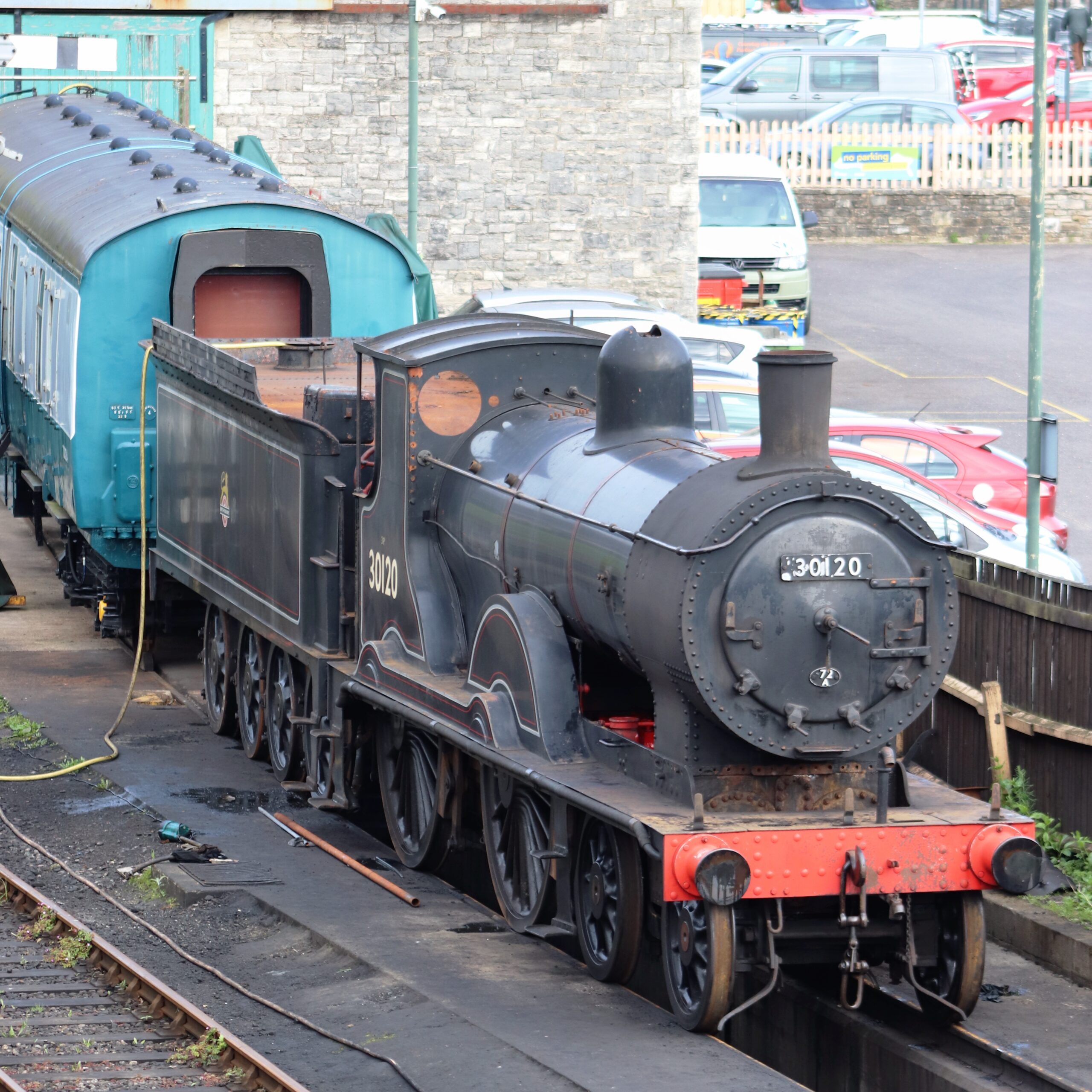
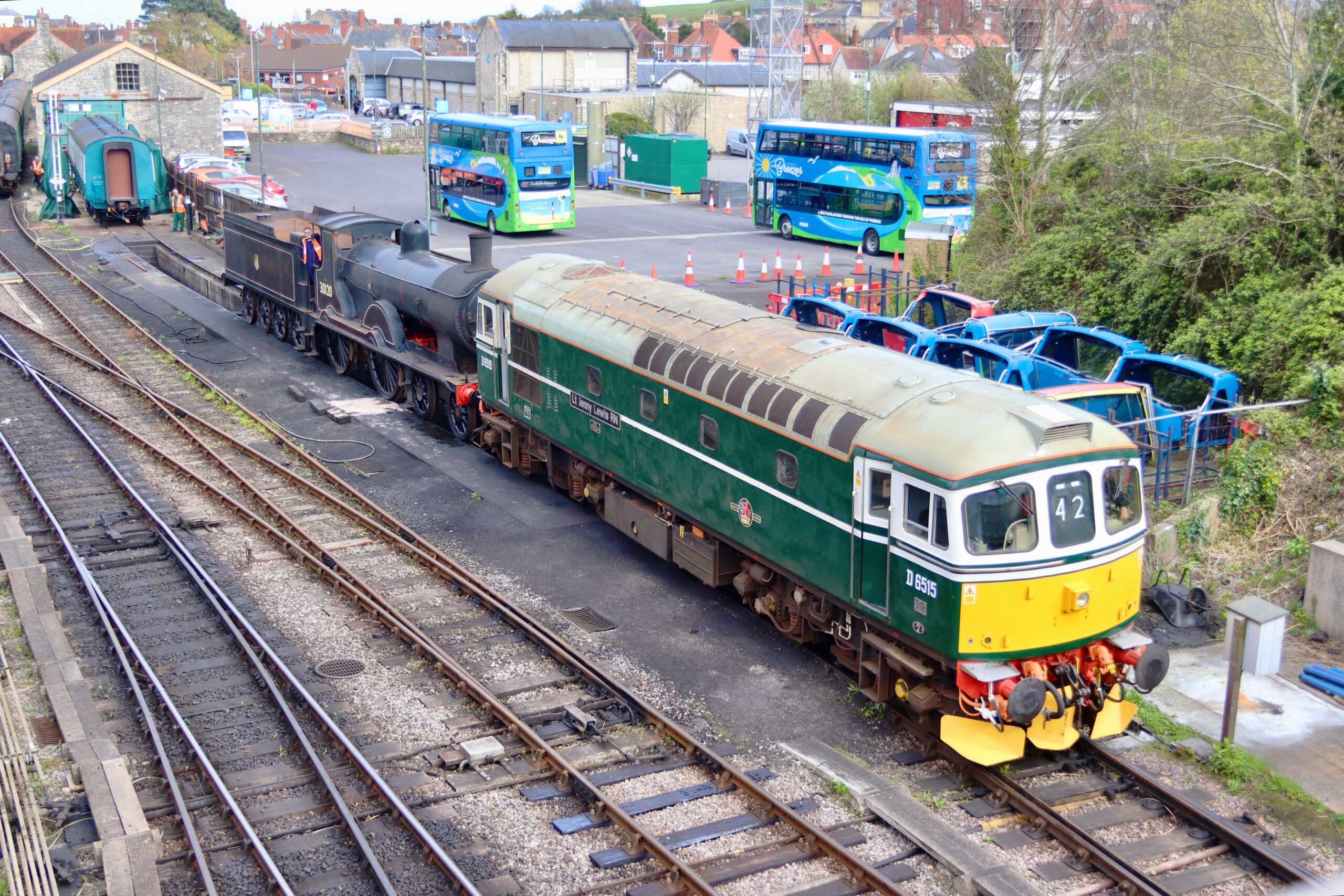
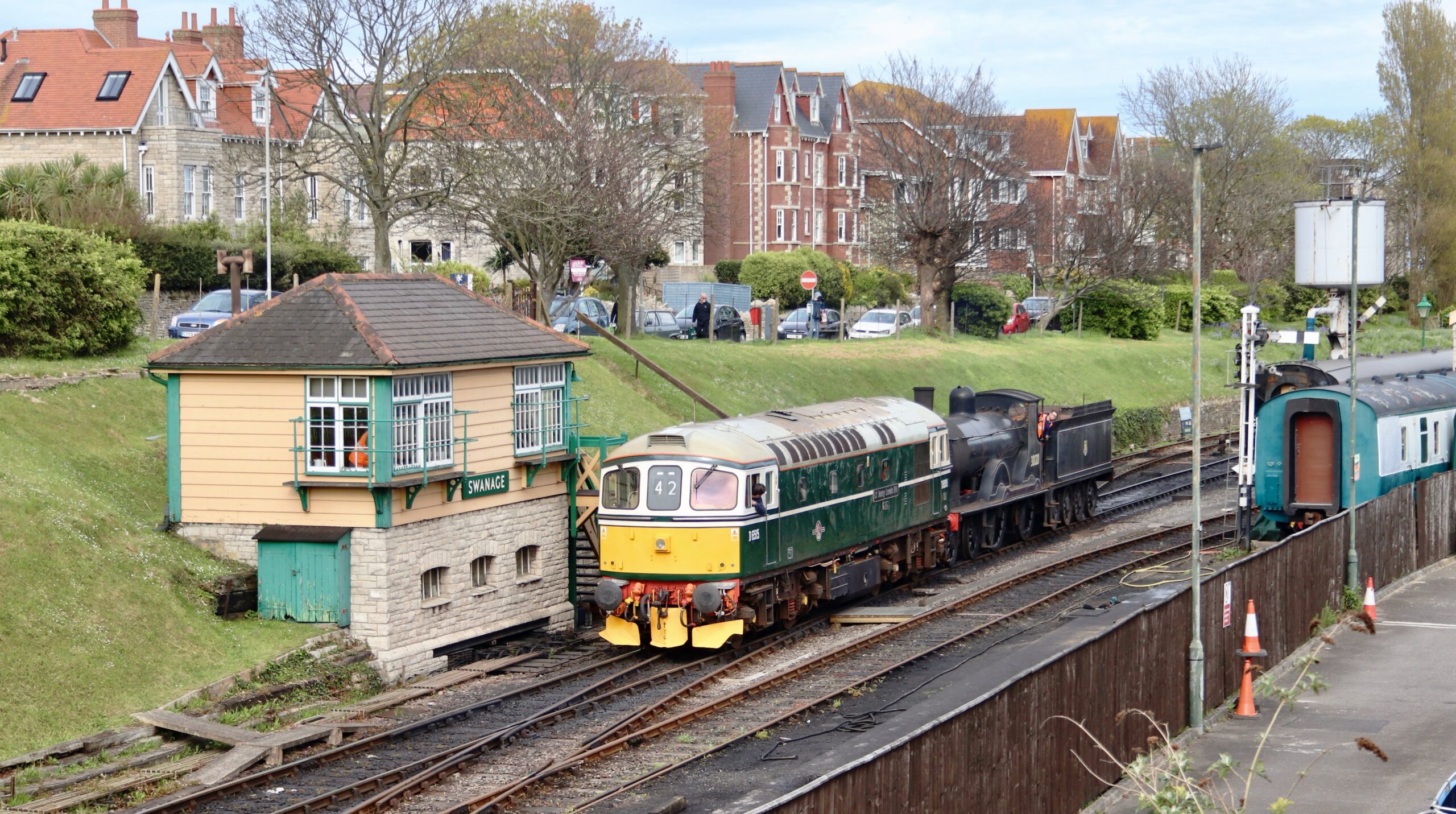
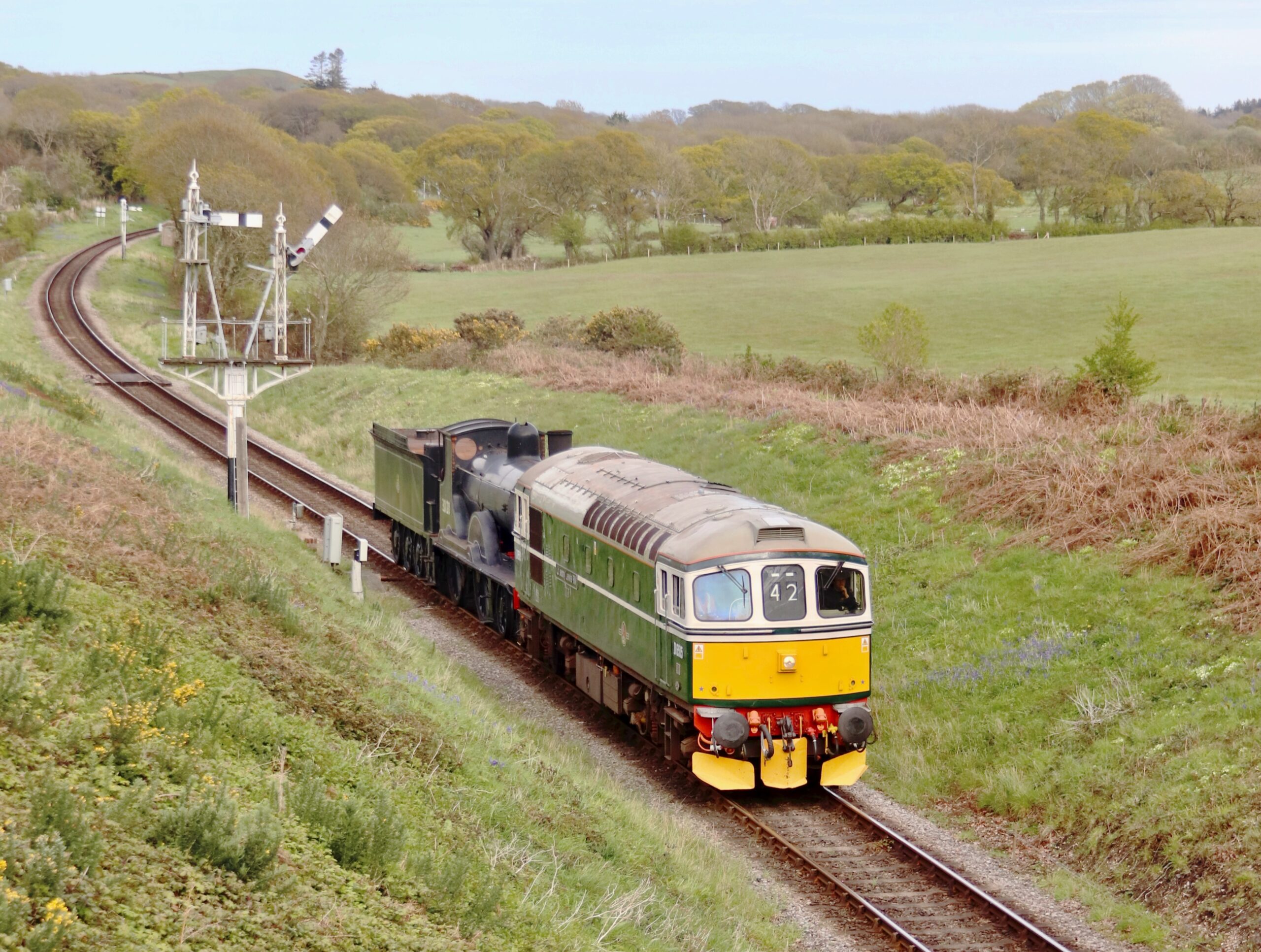
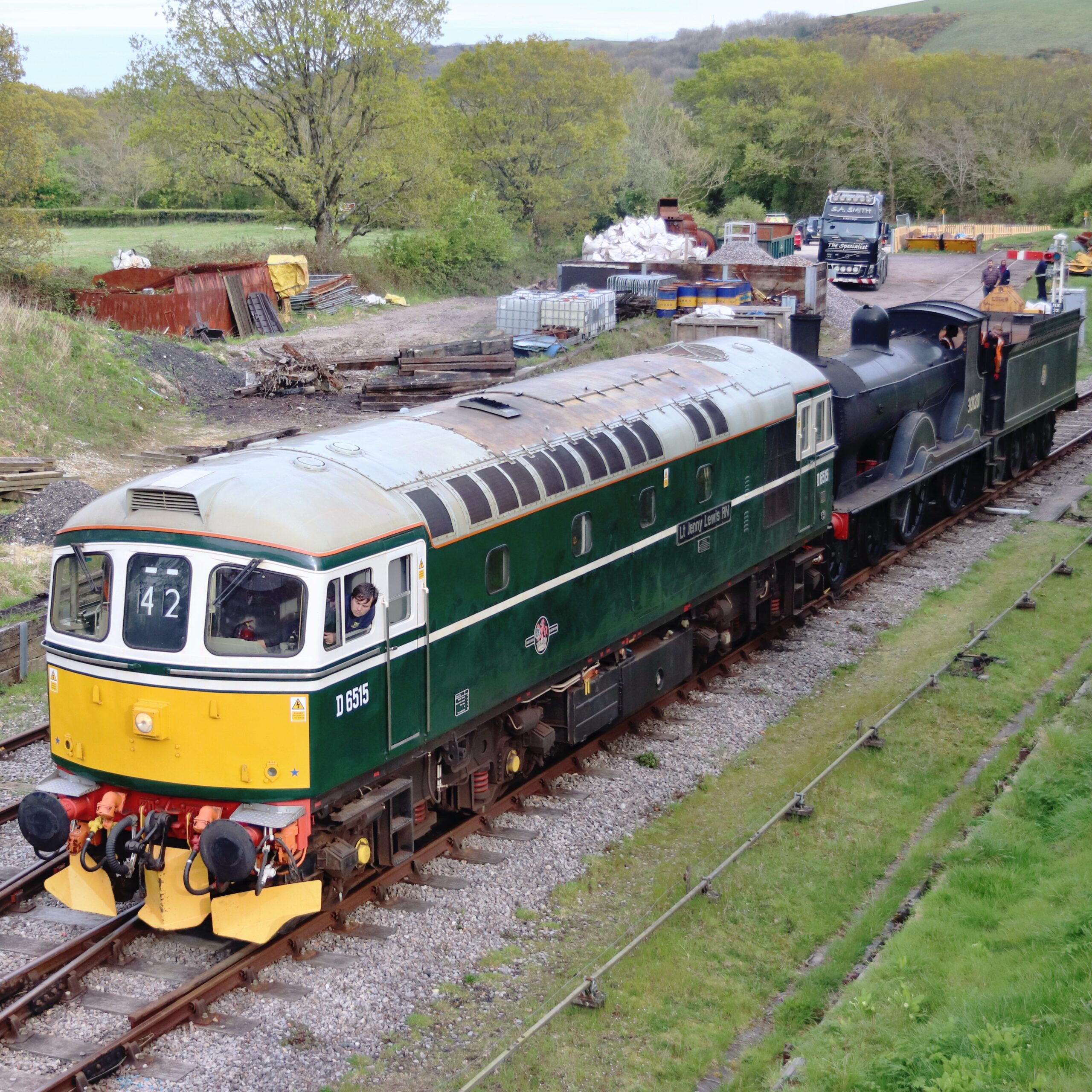
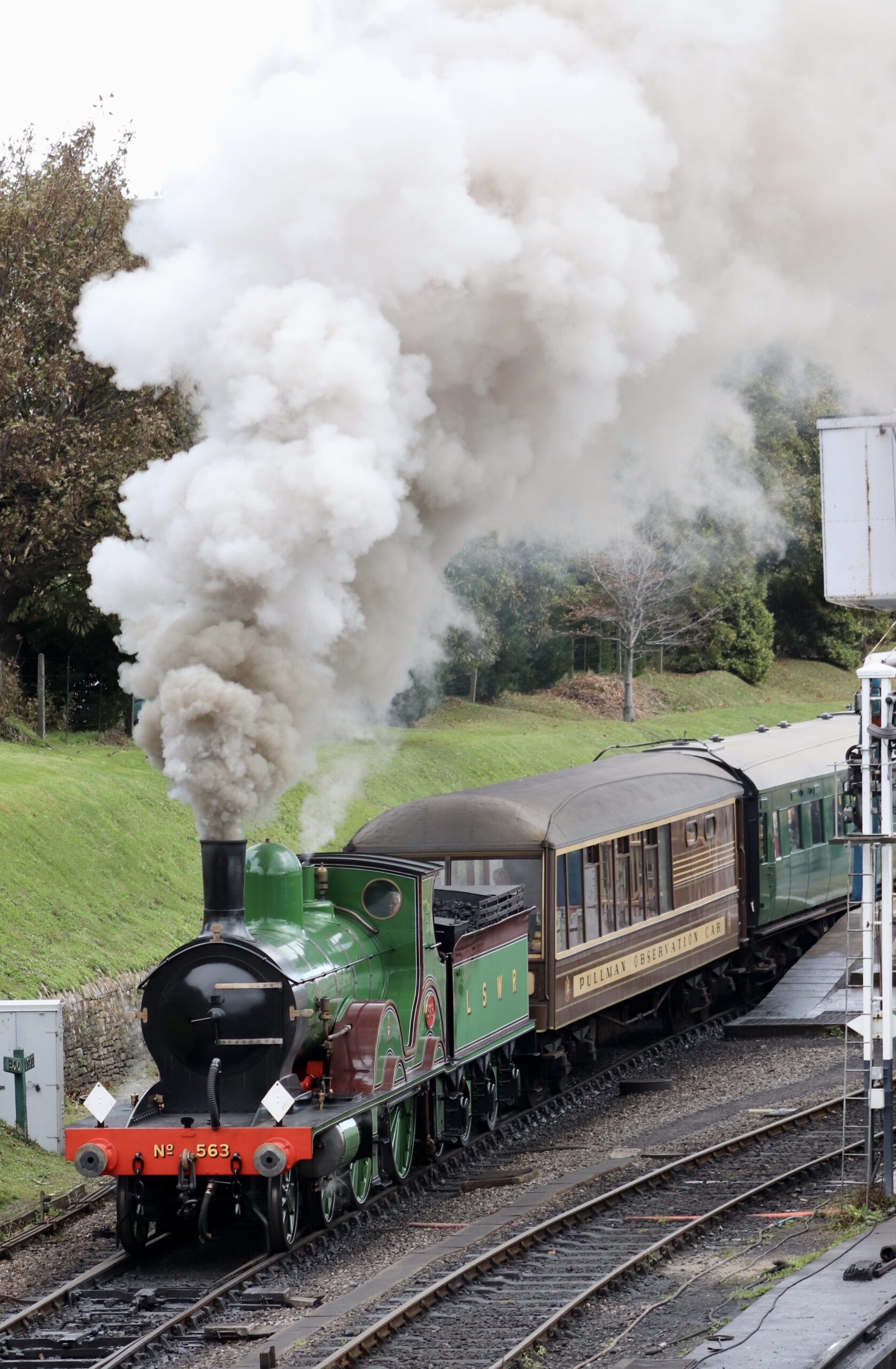
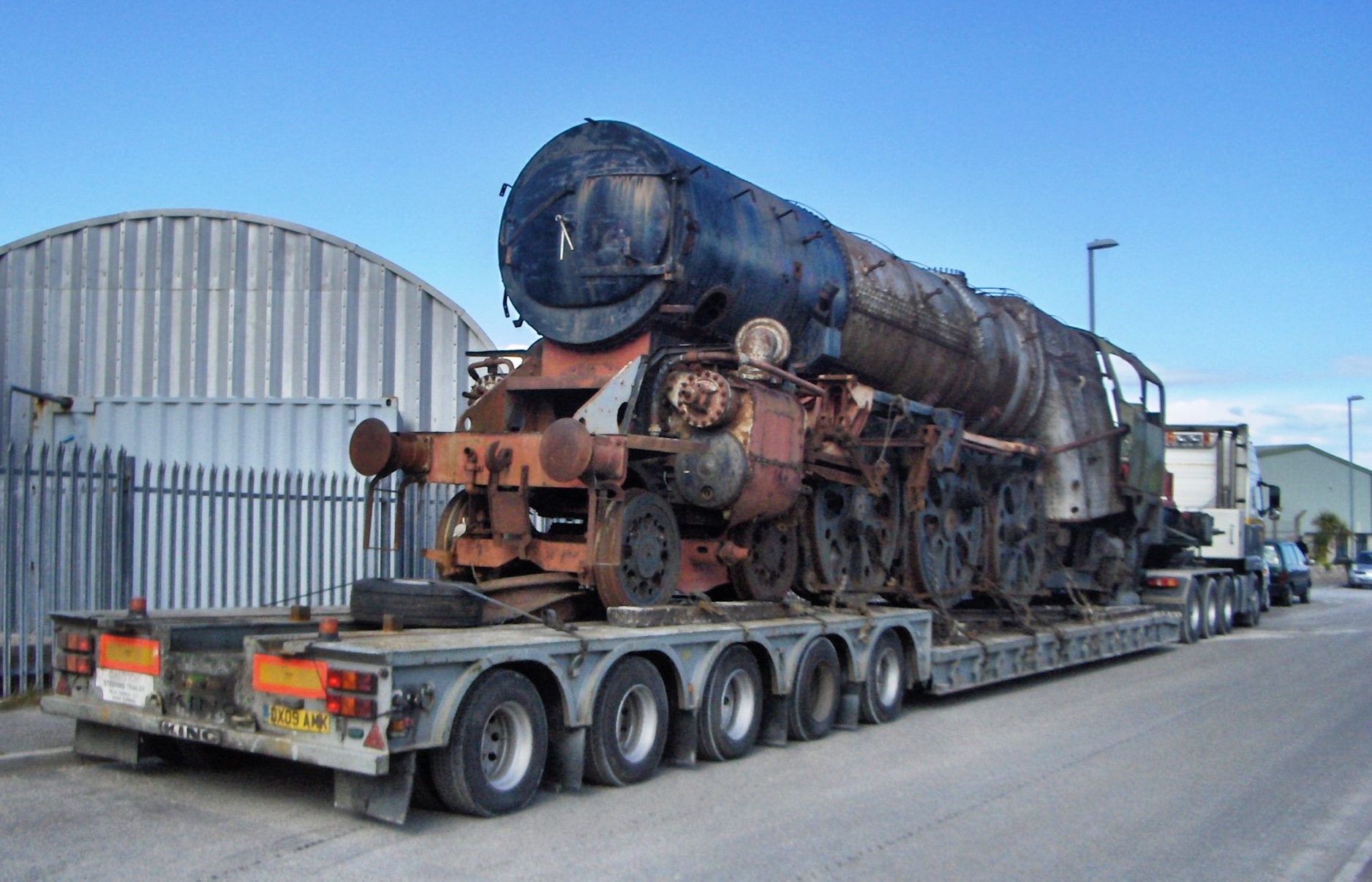
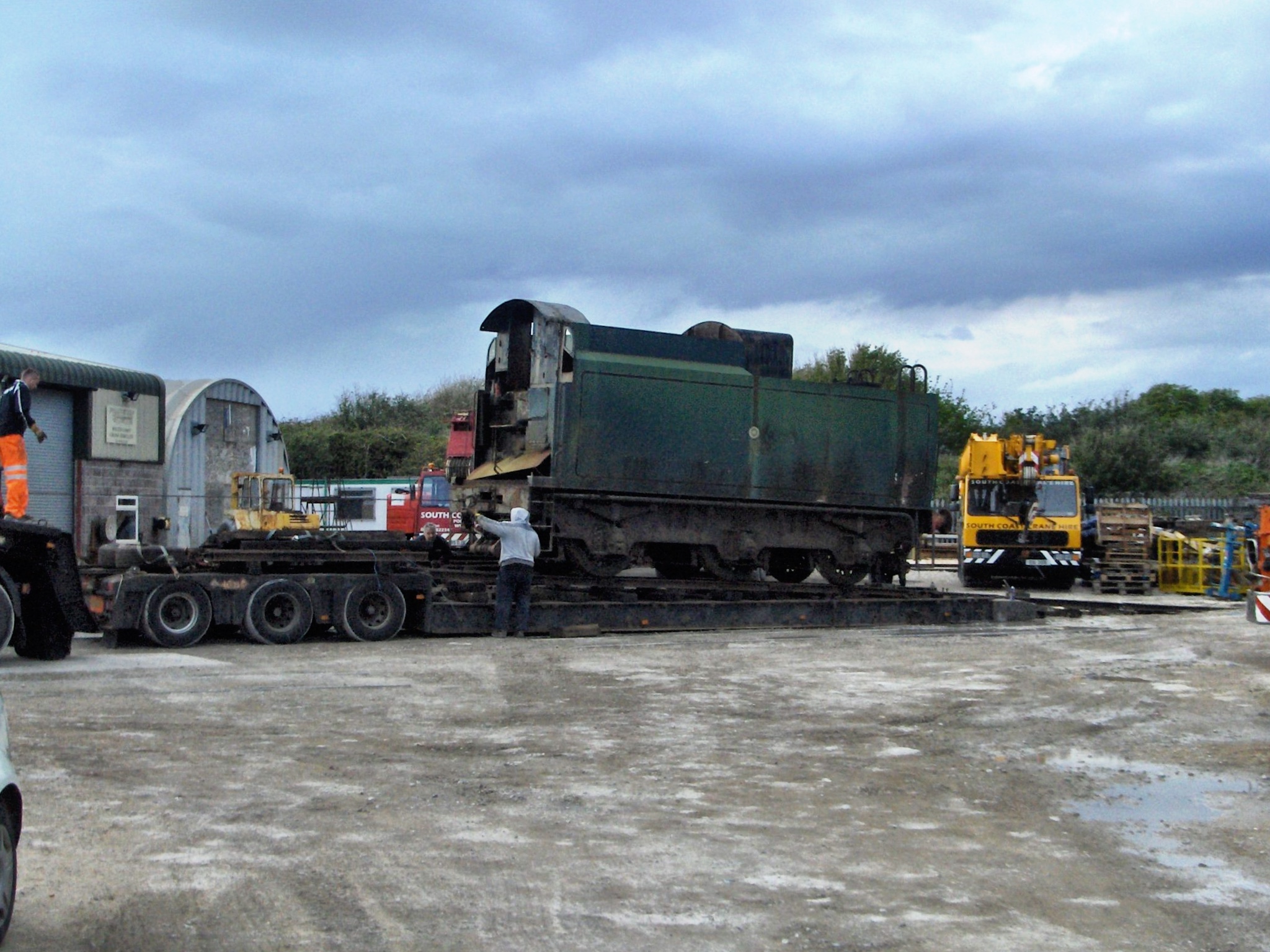
Following the successful restoration of LSWR Adams T3 Class No. 563, the team at the Swanage Railway are now turning their attention to their next challenge, that of returning LSWR T9 Class No.120 to steam in time for its 130th birthday in 2029 resplendent in Olive green livery. Thursday 18th April was therefore an eventful one for No.120 as she departed the Swanage Railway by road for transit to The Flour Mill Locomotive Repair Workshop in Lydney, Gloucestershire. The Flour Mill is a listed former colliery electricity generating station which was converted to a railway workshop between 1995 and 1996. The Flour Mill Ltd operates the business undertaking work repairing and overhauling steam locomotives. We popped over to the Purbeck line to witness the Victorian locomotive being collected from Swanage by resident diesel Class 33 No. D6515 (33012) ‘Lt. Jenny Lewis RN’. The pairing then travelled up to Arne Road sidings where No.120 was to be placed on a road low-loader.
The T9 is owned by the National Railway Museum (NRM) and agreement has been reached where the condition of the locomotive will be assessed ahead of a commitment to return her to steam for further service on the Swanage Railway.
Designed by Dugald Drummond and built in 1899 at Nine Elms works, No.120 was a member of the T9 class of locomotives, affectionately known as the “Greyhounds” for their swift performances on the West of England main lines.
LSWR 4-4-0 T9 Class No.30120 at Swanage – 18/04/2024
Altogether, sixty-six T9 locomotives were built, with No.120 being the only survivor. She was withdrawn from regular service in 1961 and painted in London South Western Railway (LSWR) ‘Pea Green’ livery, colours – inappropriate as she was modified with a superheater by Robert Urie and as a consequence her appearance was substantially altered from her early days. However, in this guise she hauled special trains for a few years before becoming part of the National Collection. After spells of service on the Mid-Hants Railway, at Swanage and on the Bodmin & Wenford Railway, No. 120 returned to Swanage in 2017 and became a vital part of the fleet until her boiler certificate expired. During her time at Swanage the locomotive proved a powerful but economic machine, popular with both crews and visitors alike. Her restoration will allow the Swanage railway to develop a more sustainable locomotive fleet into the future as the T9, like the T3, is perfectly sized for the heritage branch.
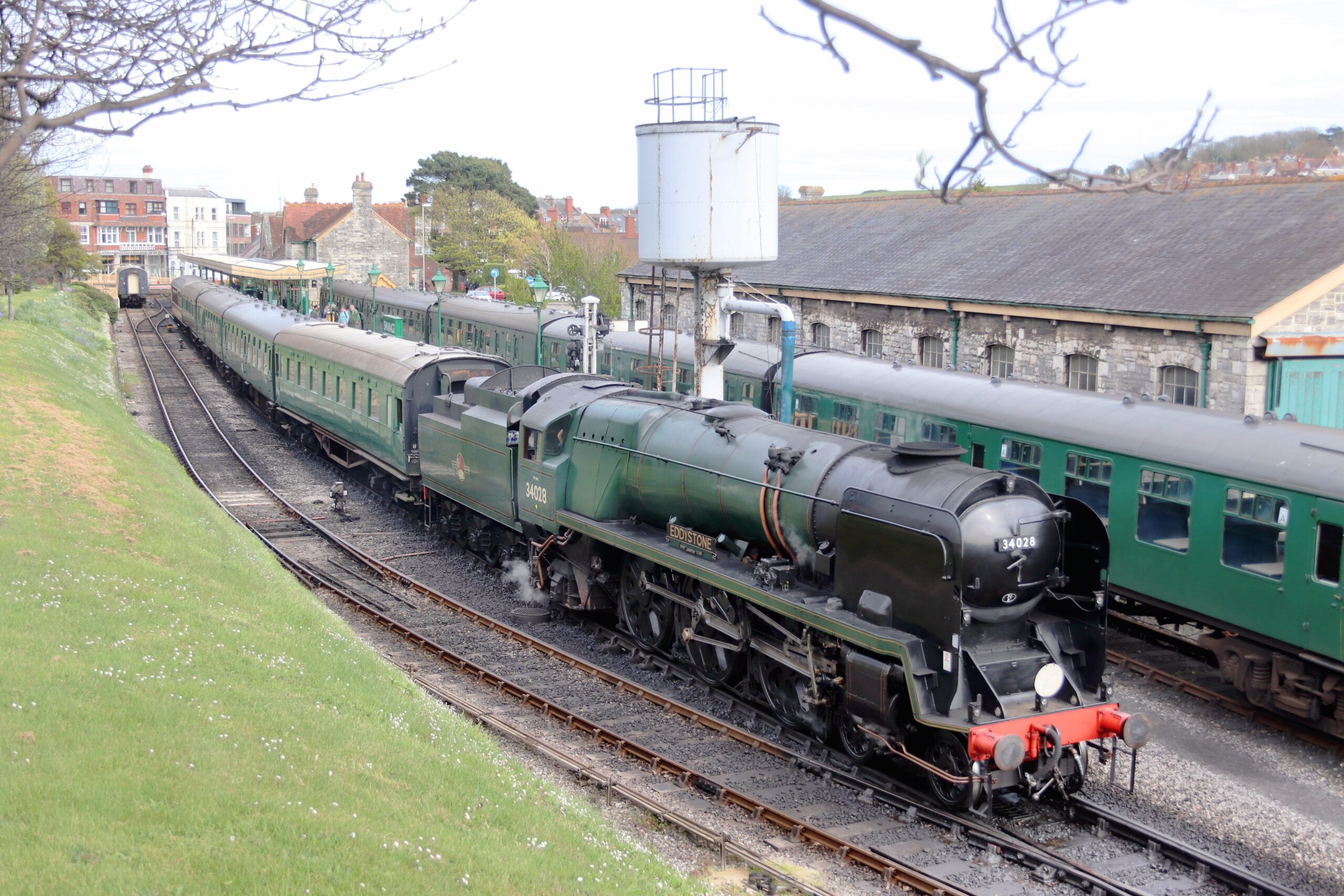
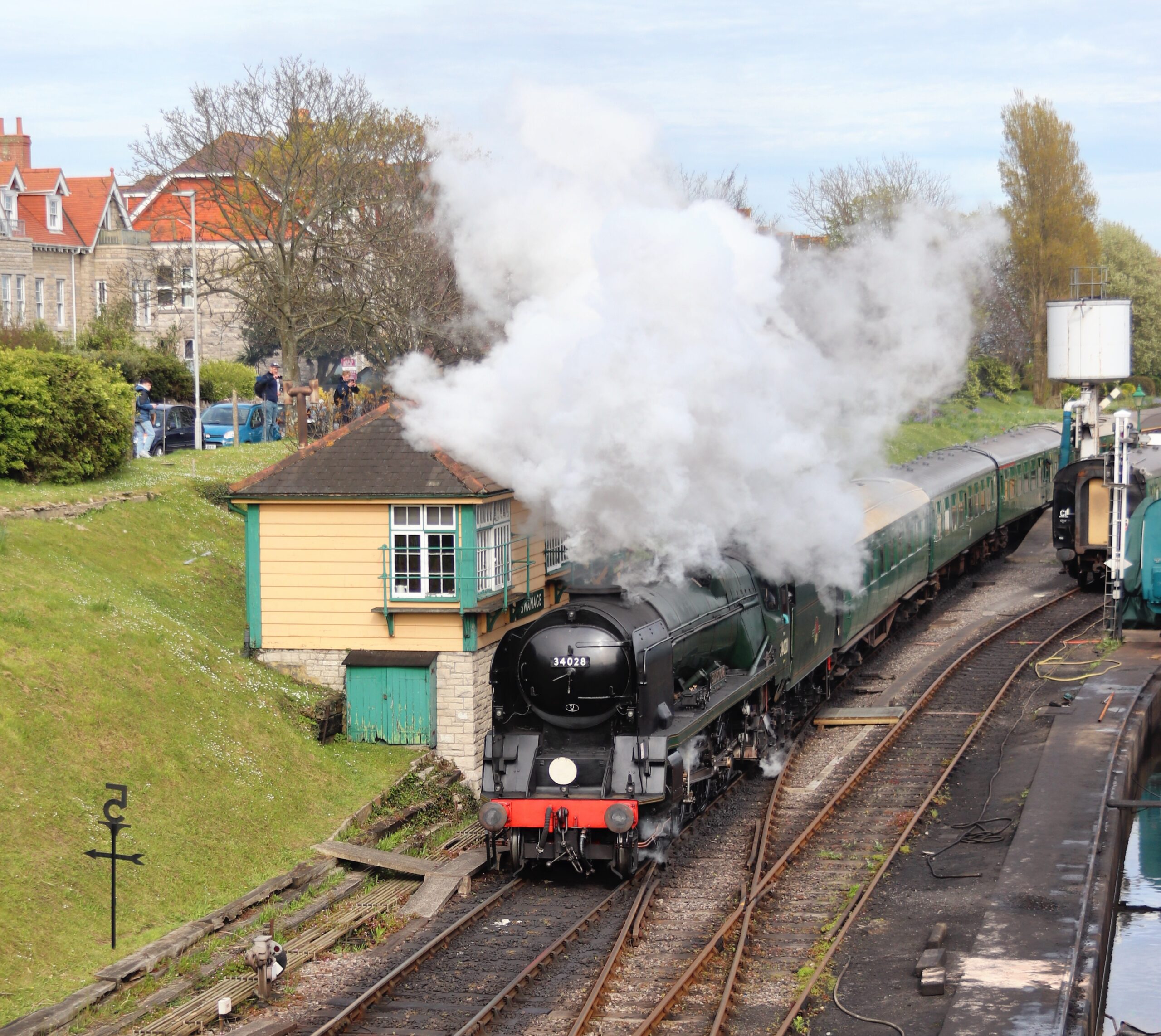
Swanage resident Class 33 No.D6515 (33012) ‘Lt. Jenny Lewis RN’ having coupled up to 4-4-0 T9 Class No.30120 in readiness of forming 6Z12 1652 Swanage to Arne Road Siding – 18/04/2024Crompton No. D6515 (33012) ‘Lt. Jenny Lewis RN’ is owned by the 71A Loco Group, and returned to Swanage in time for the May 2011 Diesel Gala after undergoing overhaul at Eastleigh works. She is seen here reversing into Swanage railway station with 4-4-0 T9 Class No.30120 – 18/04/2024Southern Railway 4-6-2 “West Country” Class No. 34028 ‘Eddystone’ at Swanage having backed onto the coaching stock of the 2N10 1640 Swanage to Norden service – 18/04/2024Southern Railway 4-6-2 “West Country” Class No. 34028 ‘Eddystone’ departs Swanage working 2N10 1640 Swanage to Norden – 18/04/2024Class 33 No.D6515 (33012) ‘Lt. Jenny Lewis RN’ hauls 4-4-0 T9 Class No.30120 away from Swanage working as 6Z12 1652 Swanage to Arne Road Siding – 18/04/2024Class 33 No.D6515 (33012) ‘Lt. Jenny Lewis RN’ and 4-4-0 T9 Class No.30120 on the approach to Harmans Cross working 6Z12 1652 Swanage to Arne Road Siding – 18/04/2024
The Swanage Railway Trust are hoping to raise £50,000 for this project, which will enable No. 120 to be dismantled and assessed at the Flour Mill. Following this, a report will be produced detailing the work required to return 120 to service, including an assessment of the cylinder block and whether this needs to be replaced. If the report is favourable, the Trust can proceed to the next stage of the overhaul later in the year. Should it be decided the locomotive is not a suitable contender for restoration, the remainder of the £50,000 will see No. 120 re-assembled and returned to the NRM for further display.
Class 33 No.D6515 (33012) ‘Lt. Jenny Lewis RN’ arrives at Arne Road with 4-4-0 T9 Class No.30120 in tow working 6Z12 1652 Swanage to Arne Road Siding – 18/04/2024
Video of T9 Class No.30120 being hauled to Arne Sidings on the Swanage Railway – 18/04/2024
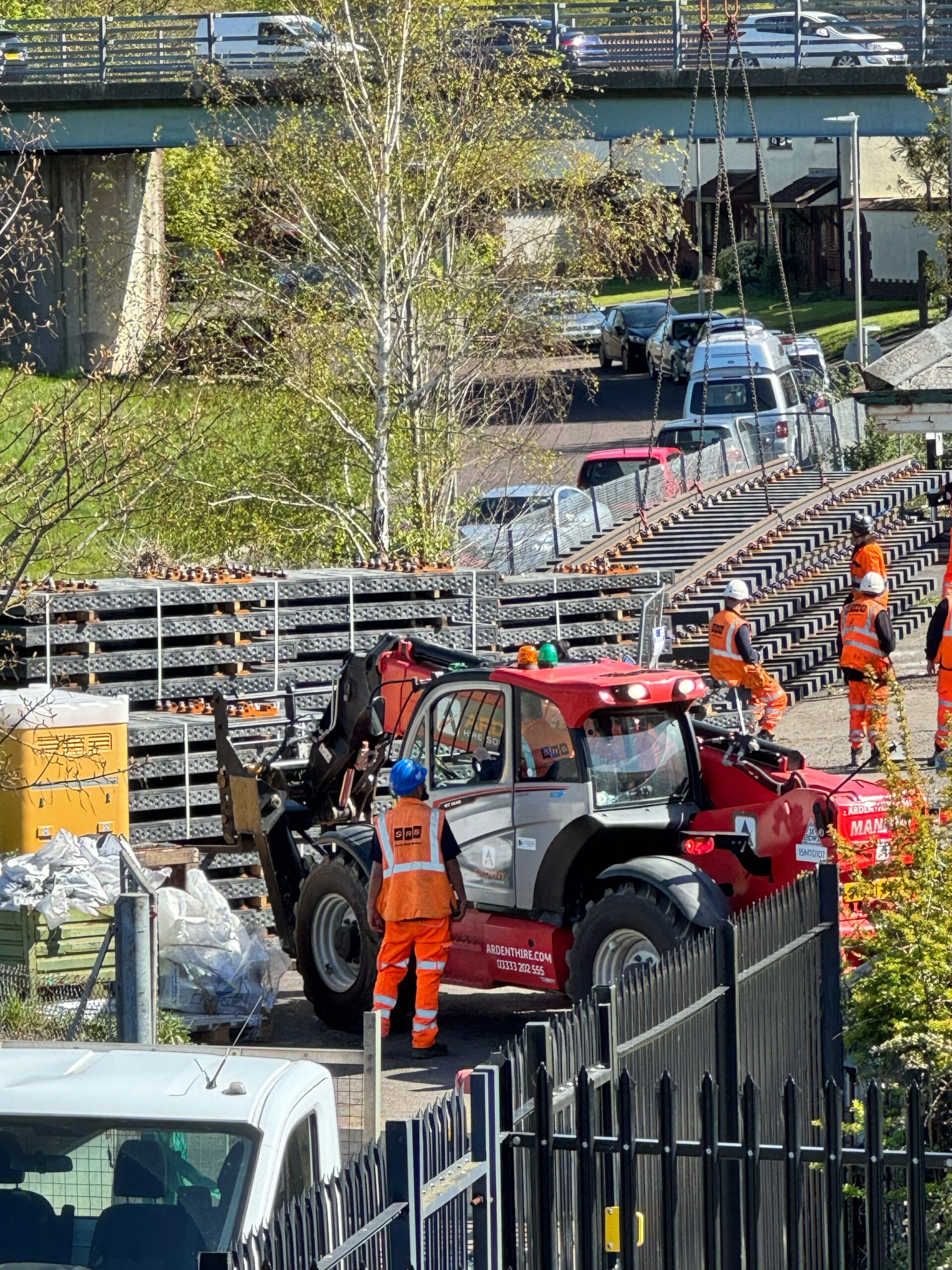
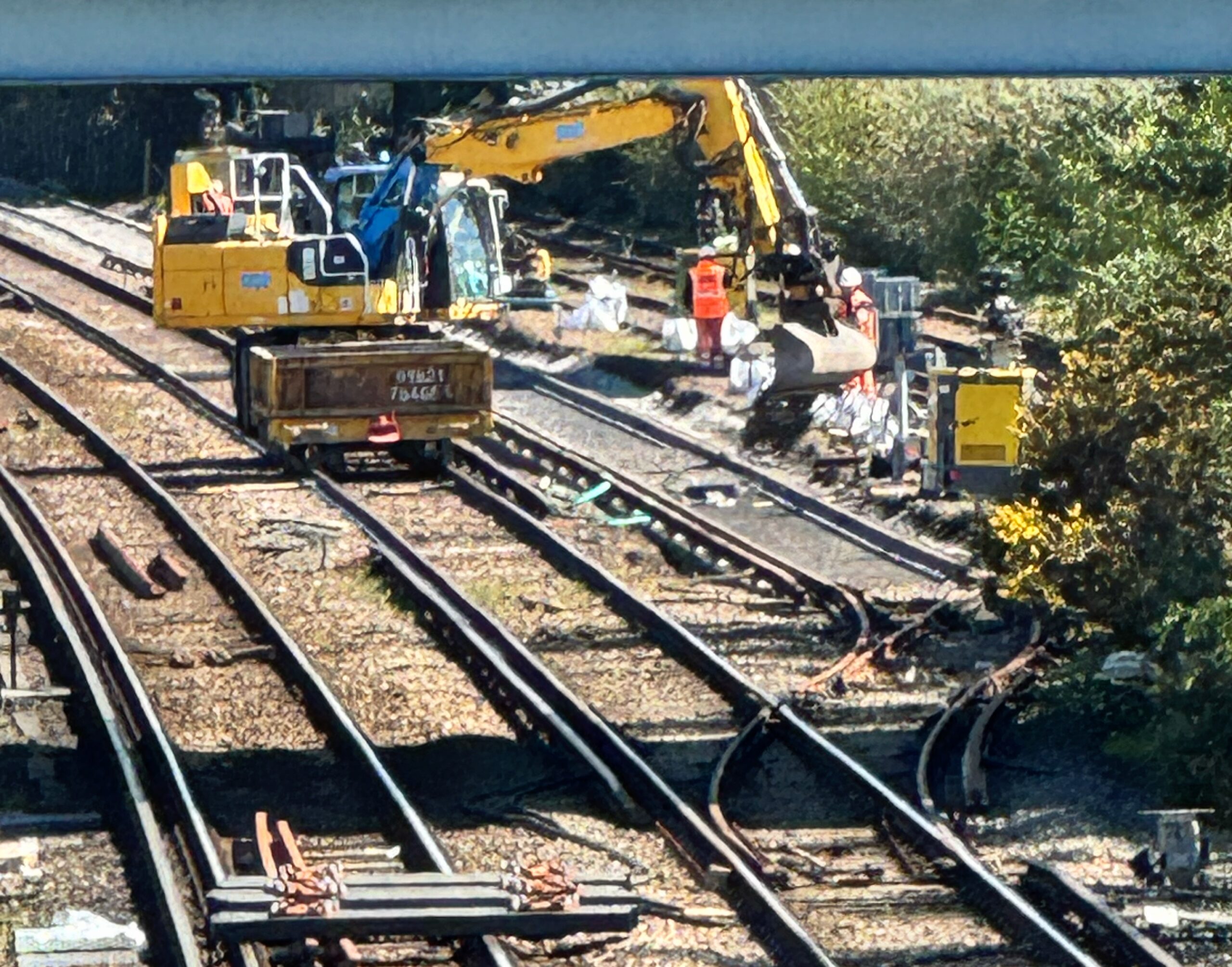
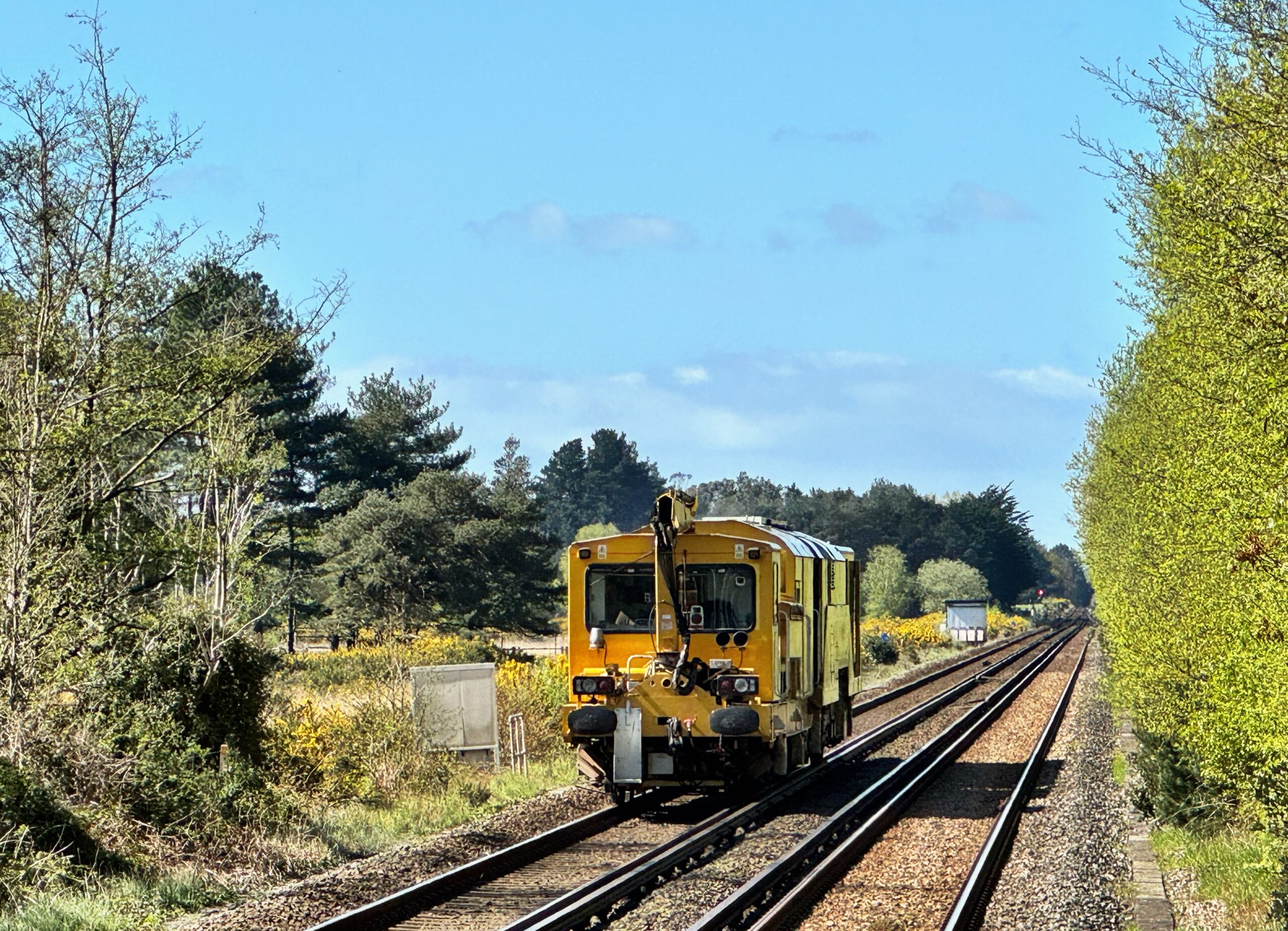
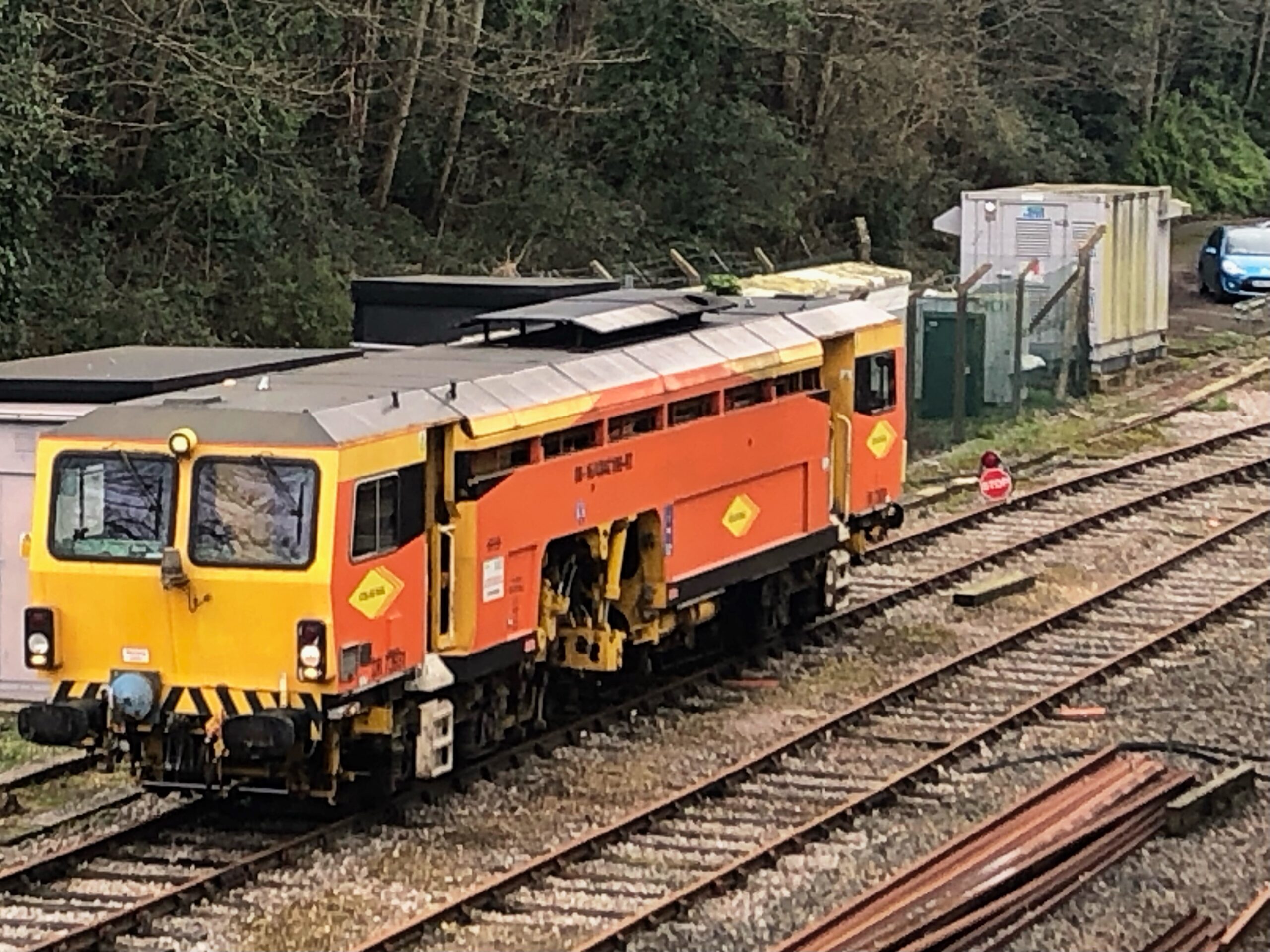
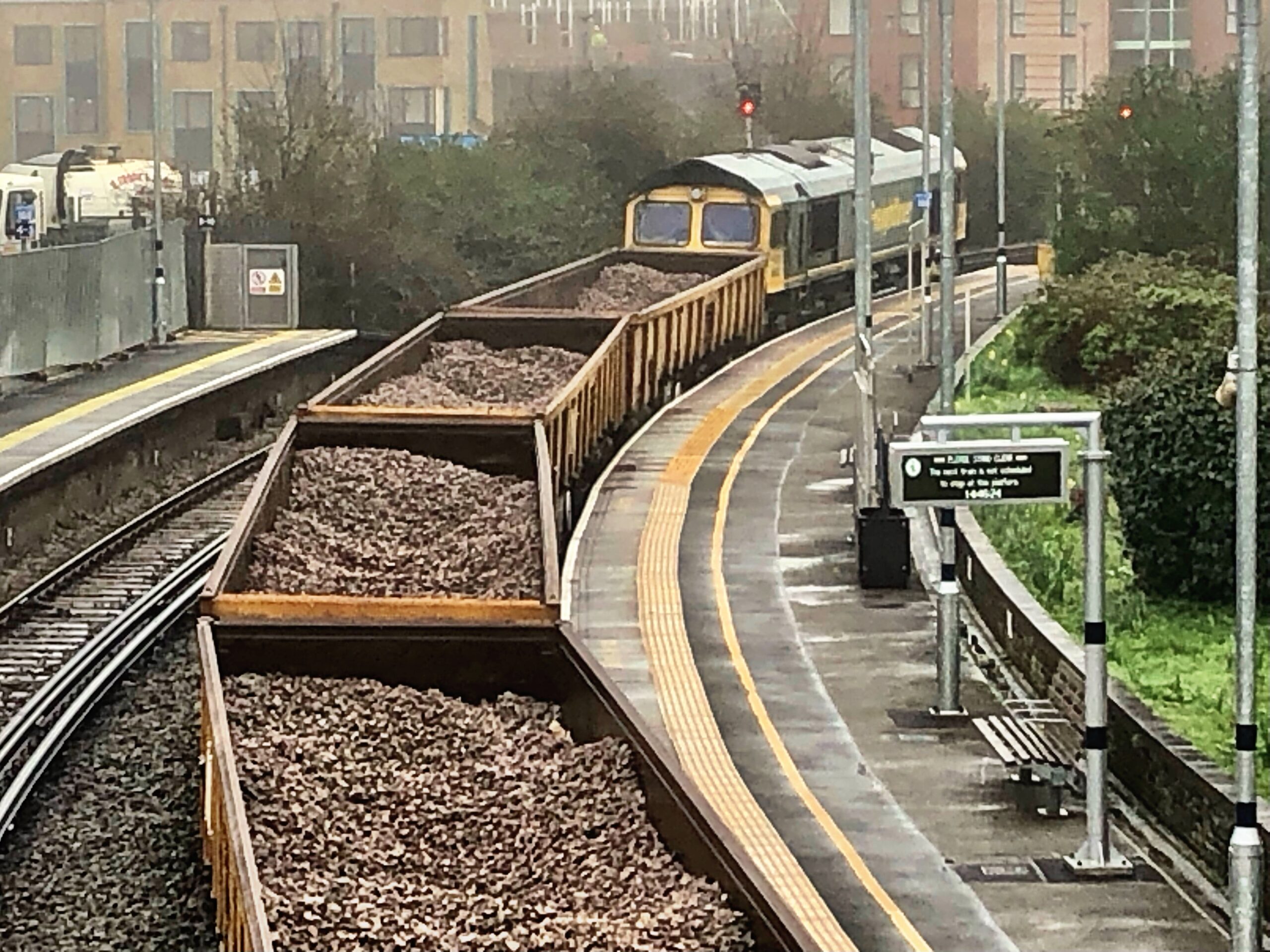
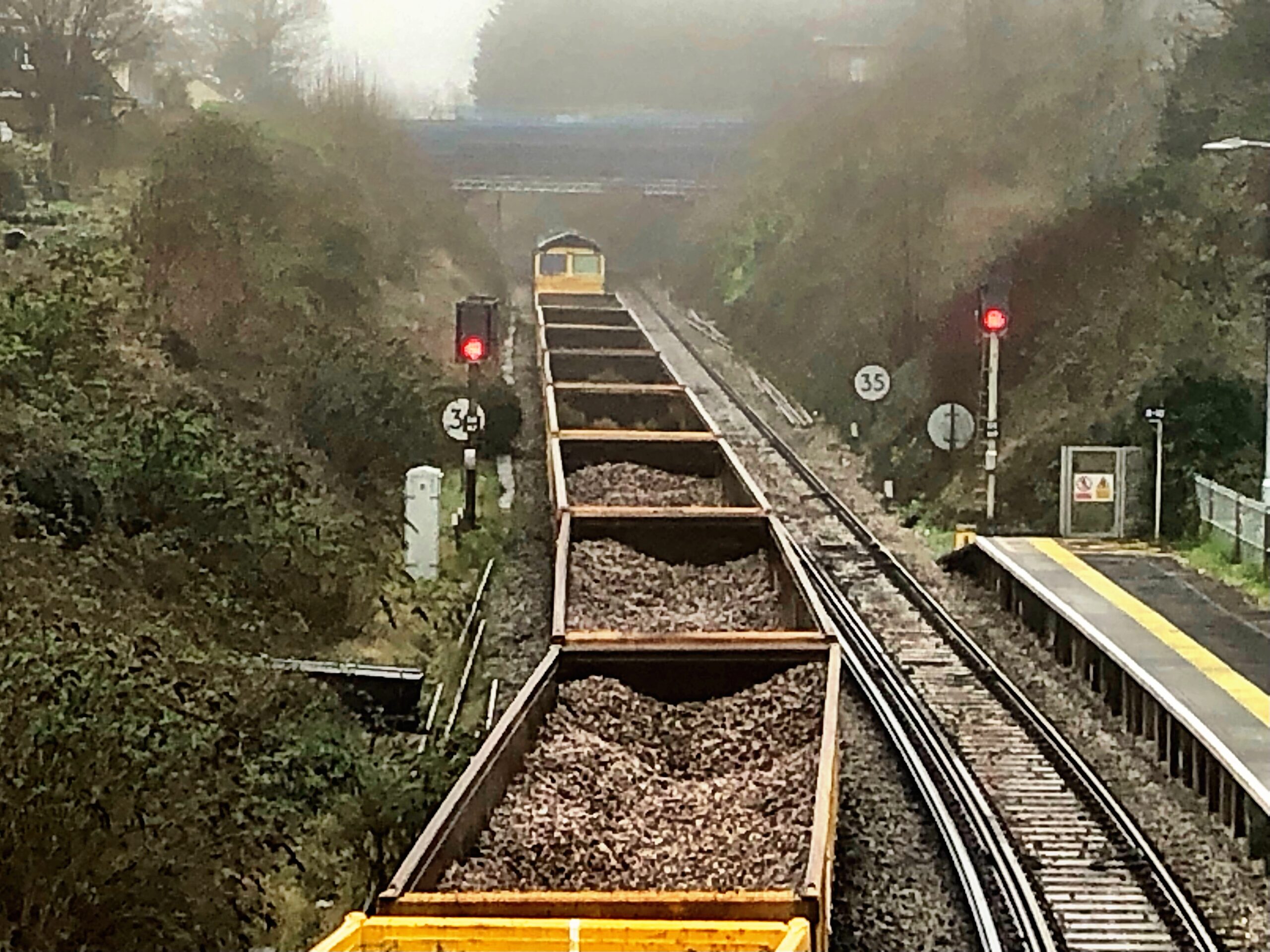
Engineering Work took place in the Wareham area over the weekend of 20th / 21st April 2024. The sidings to the east of Wareham railway station were renewed, ballast was refreshed at Worgret Junction and the footbridge at Wool railway station received attention. Two engineering trains were engaged for the work; 6G13 2212 Eastleigh East Yard to Wareham top and tailed by GBRf Class 66 No.’s 66795 & 66749 ‘Christopher Hopcroft MBE 60 Years Railway Service’ and 6C03 1939 Eastleigh East Yard to Holton Heath in the sole charge of Colas Class 66 No.66850 ‘David Maidment OBE’. Two other associated workings featured 4-wheeler Track Machine Colas Tamper No. DR73931 forming 6J86 1844 Woking Up Yard Reception to Wool MOD Siding GBRf and Pandrol Jackson Plain Line Stoneblower No. DR80205 working as 6U37 2103½ Horsham Up T.C. to Holton Heath.
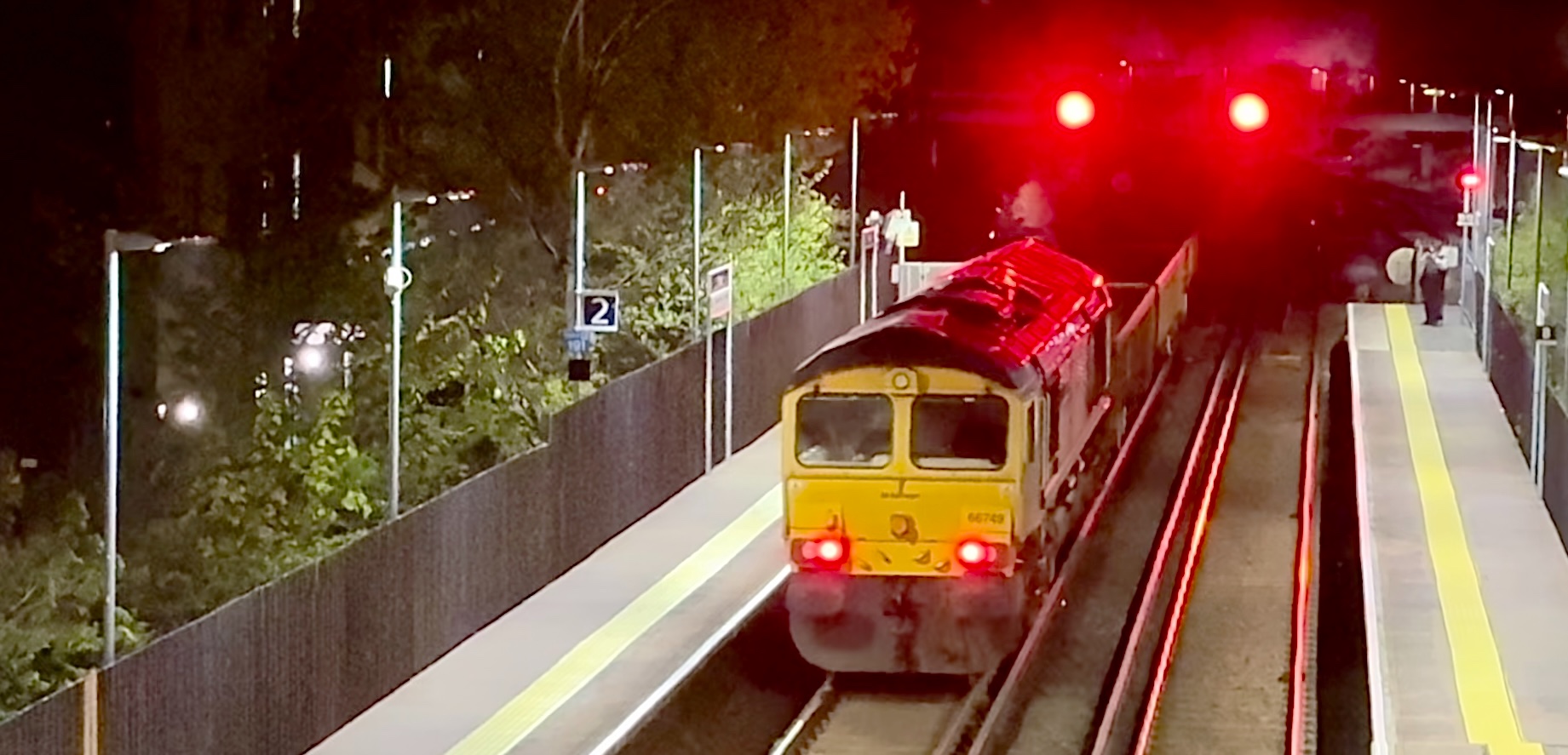
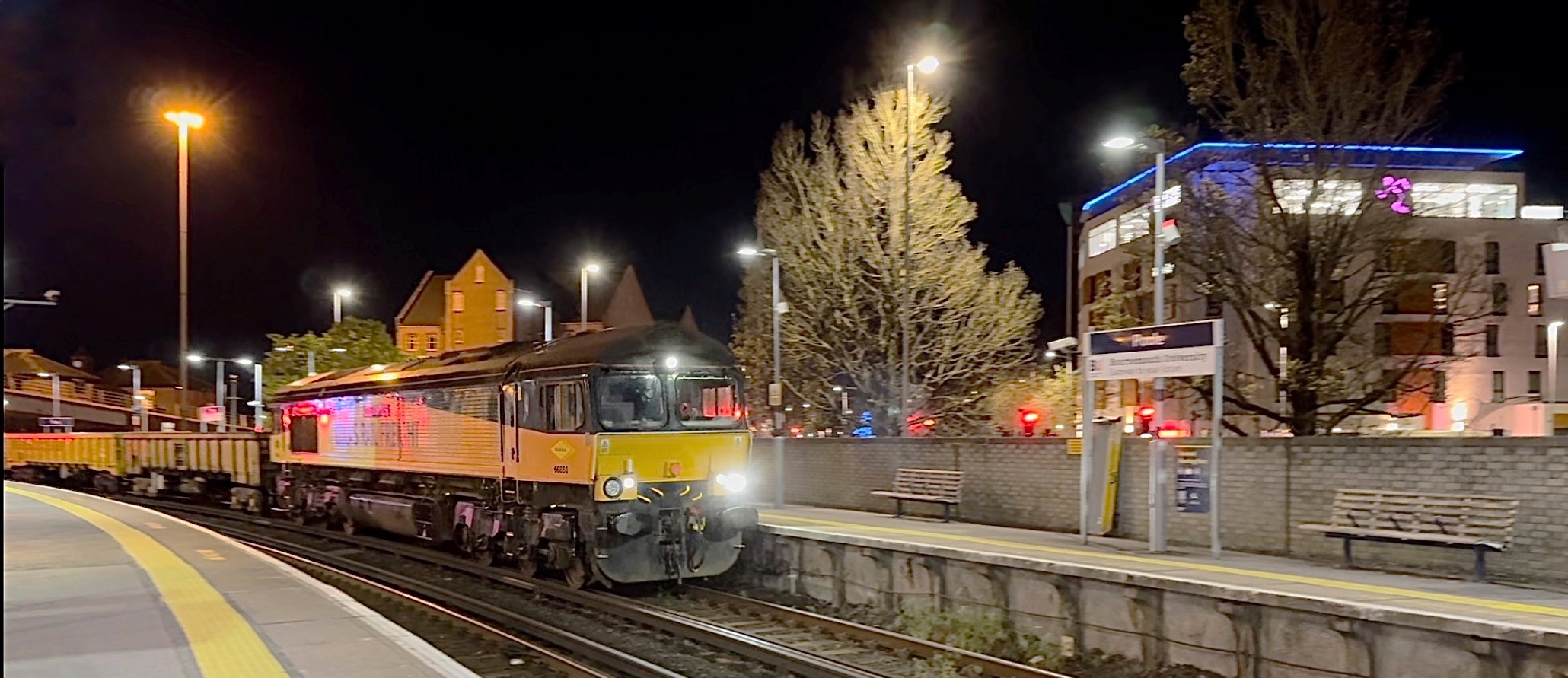
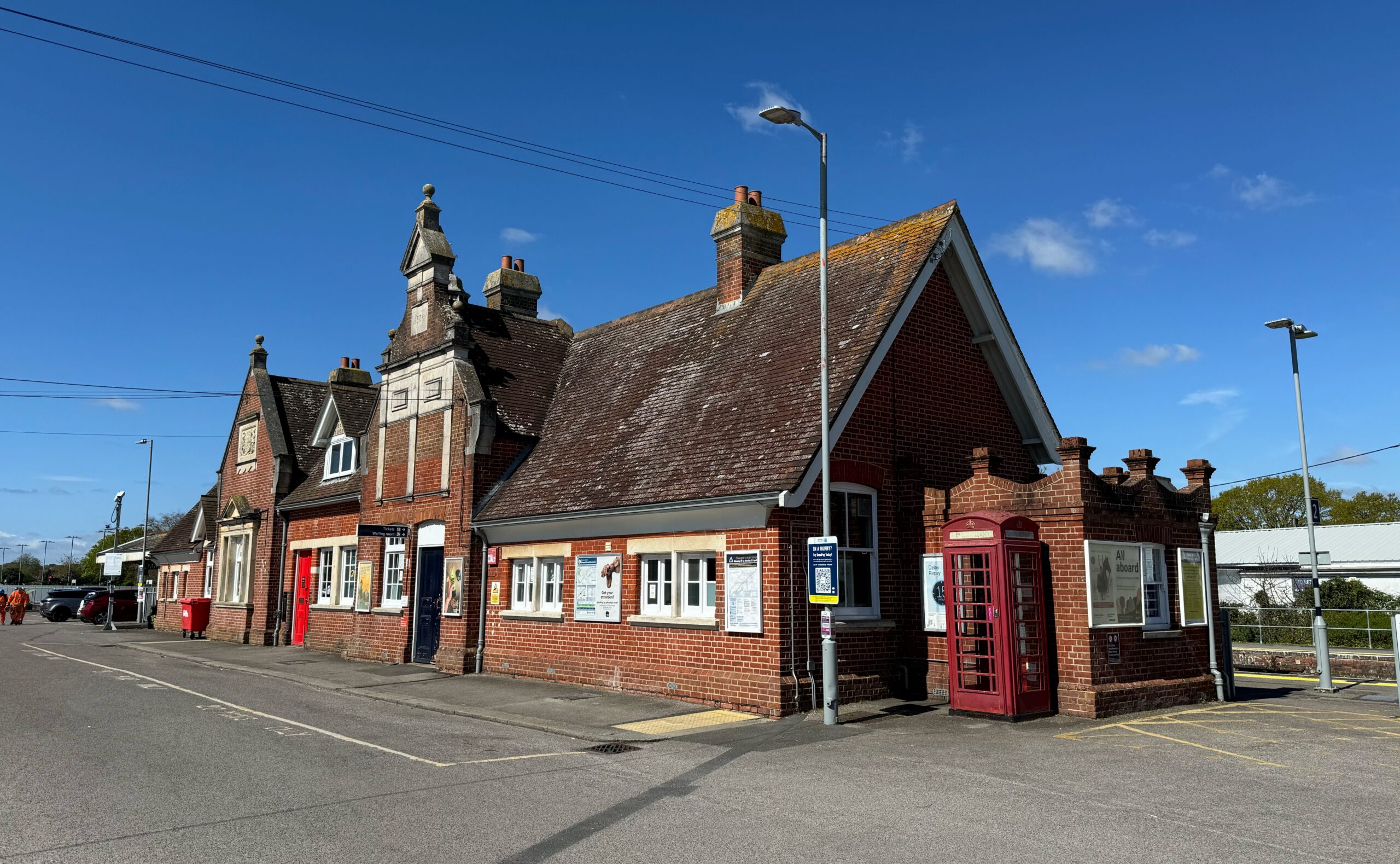
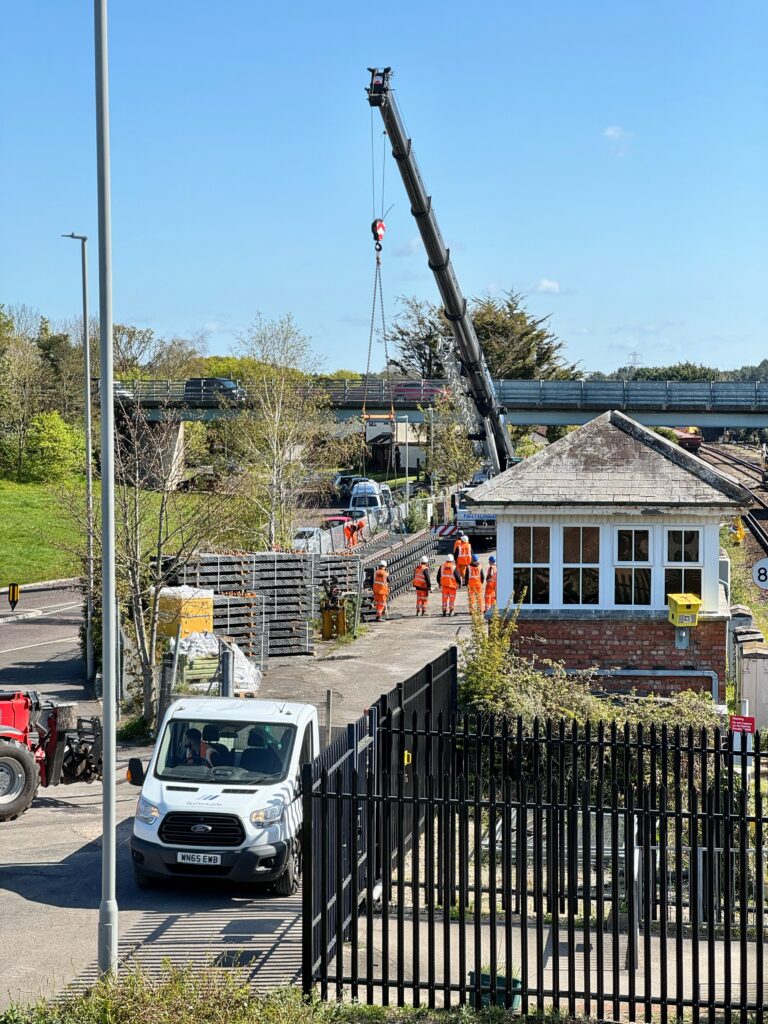
Screenshot of GBRf Class 66 No. 66795 at Poole leading on 6G13 2212 Eastleigh East Yard to Wareham – 20/04/2024Screenshot of GBRf Class 66 No. 66749 ‘Christopher Hopcroft MBE 60 Years Railway Service’ passes through Poole at the rear of 6G13 2212 Eastleigh East Yard to Wareham – 20/04/2024Screenshot of Colas Class 66 No.66850 ‘David Maidment OBE’ passing Poole working 6C03 1939 Eastleigh East Yard to Holton Heath – 20/04/2024Wareham Railway Station – 21/04/2024A hand written note informs us that the pedestrian crossing at Wareham railway station is closed due to engineering work – 20/04/2024New track panels stacked adjacent the unused signal box at Wareham – 20/04/2024Work continues at Wareham – 20/04/2024A view up the line towards Wareham sidings which would be partially renewed during the weekend engineering works- 20/04/2024A Road Rail Vehicle (RRV) at work in Wareham – 21/04/2024Pandrol Jackson Plain Line Stoneblower No. DR80205 used for the initial levelling of track after it has been freshly installed awaits the call of duty at Holton Heath – 21/04/2024
The Class 66 hauled engineers trains departed the possession area in the early hours of Monday 22nd reporting as 6G13 0230 Bournemouth to Eastleigh East Yard and 6C03 0330 Bournemouth to Eastleigh East Yard.
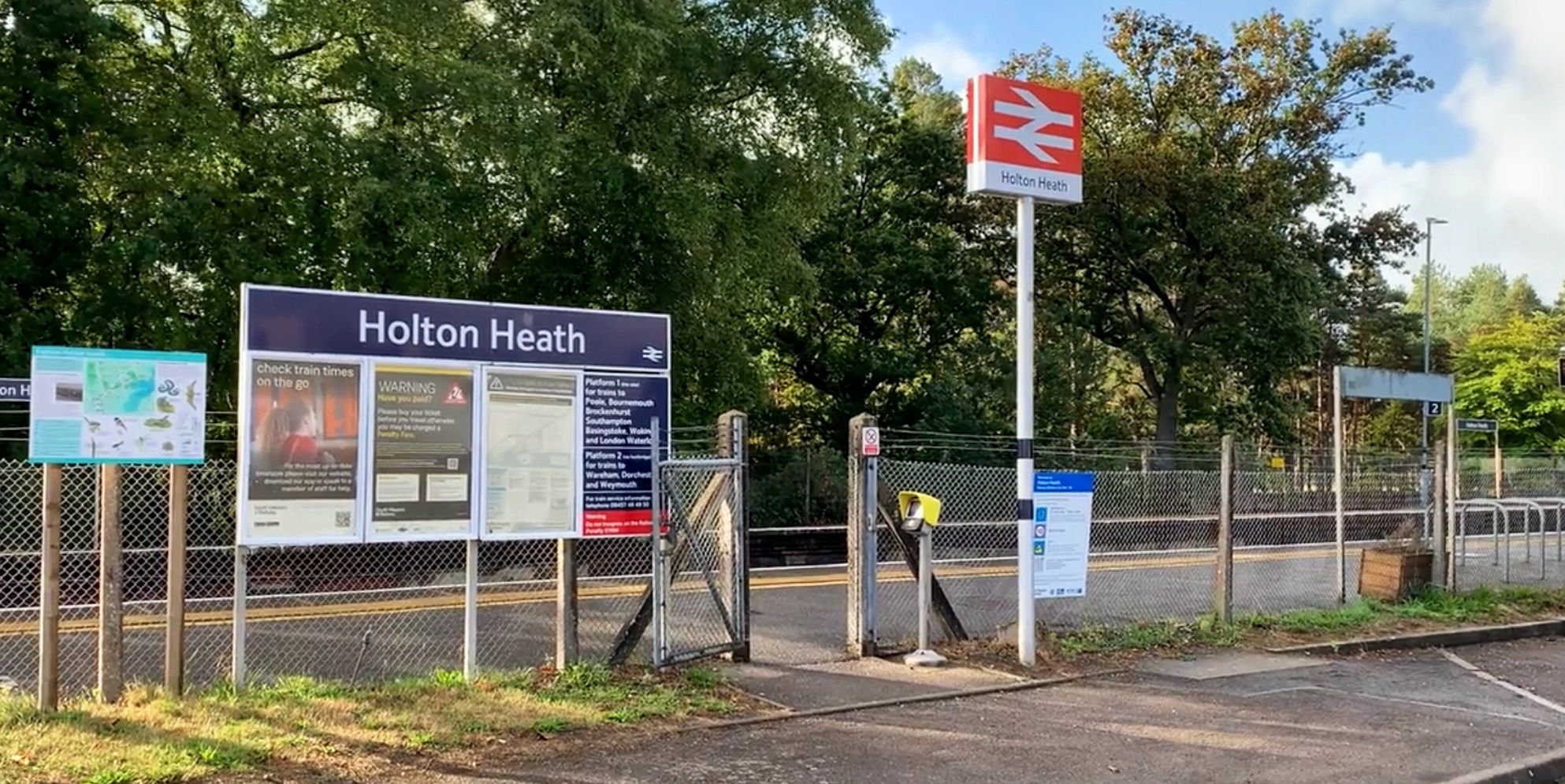
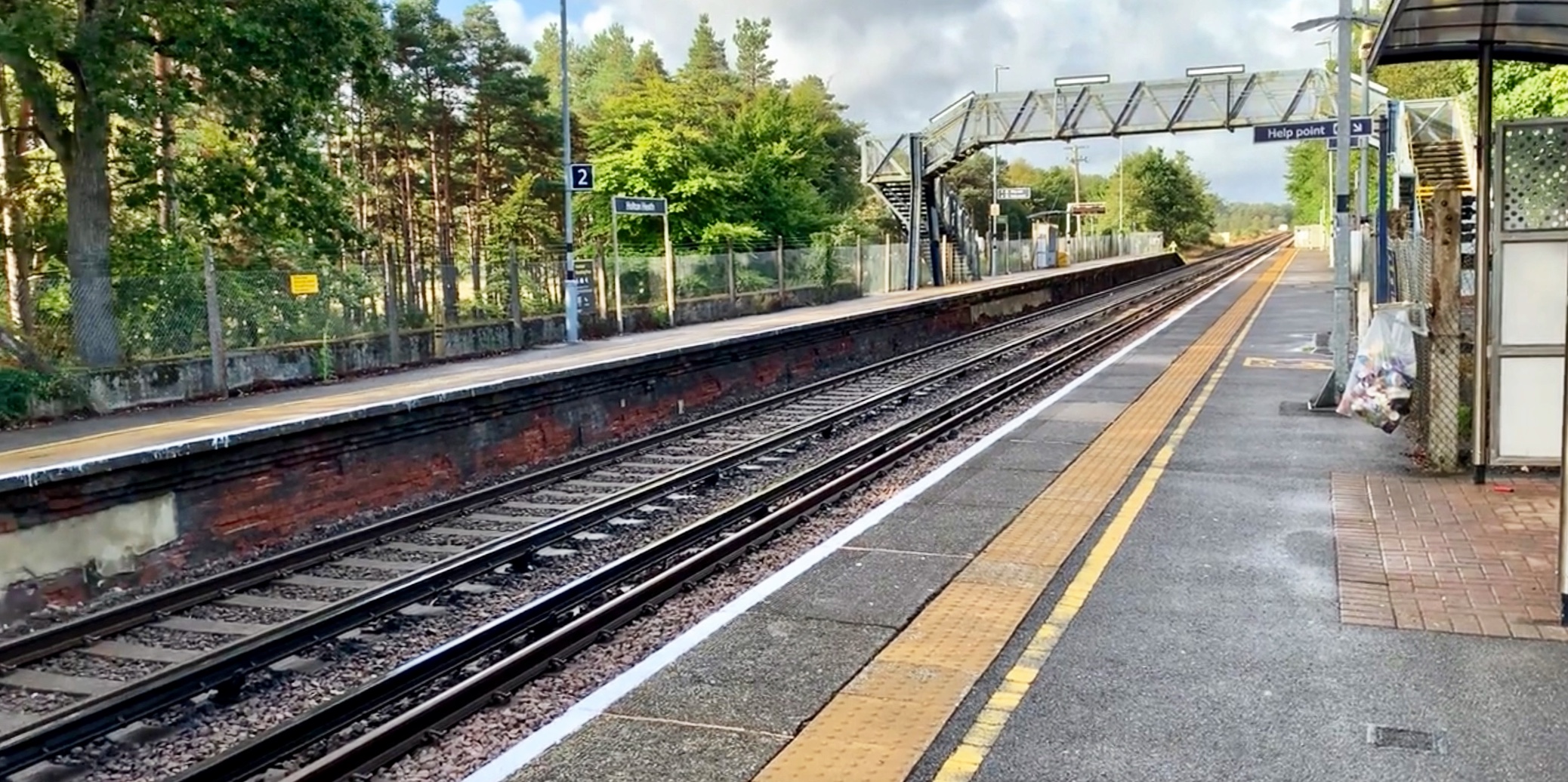
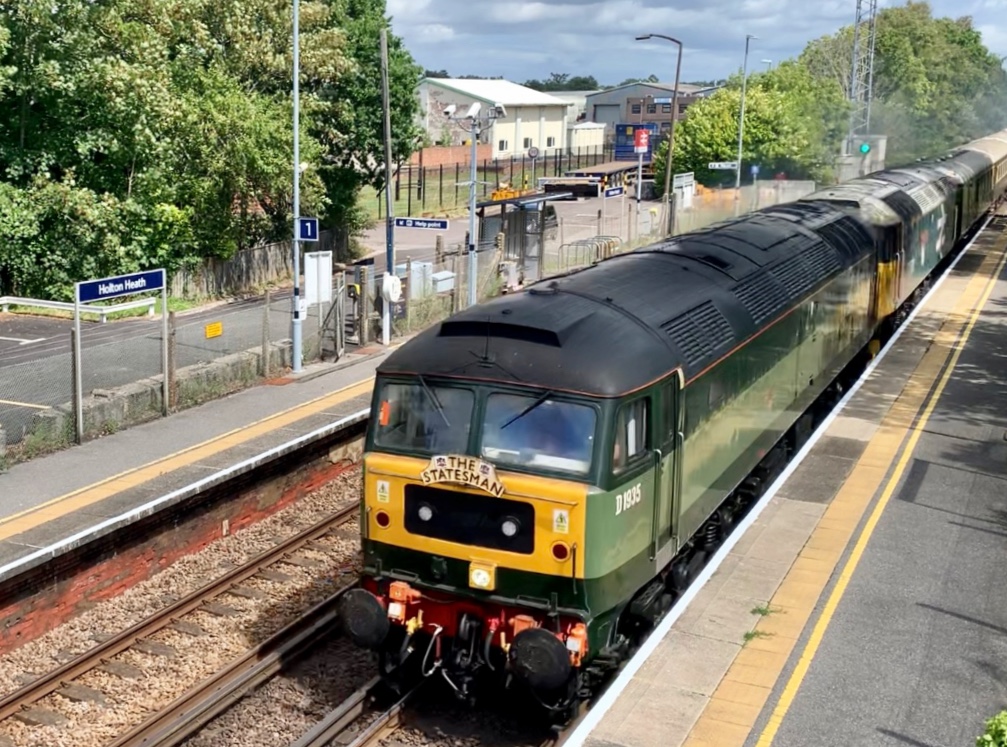
Holton Heath railway station – September 2022
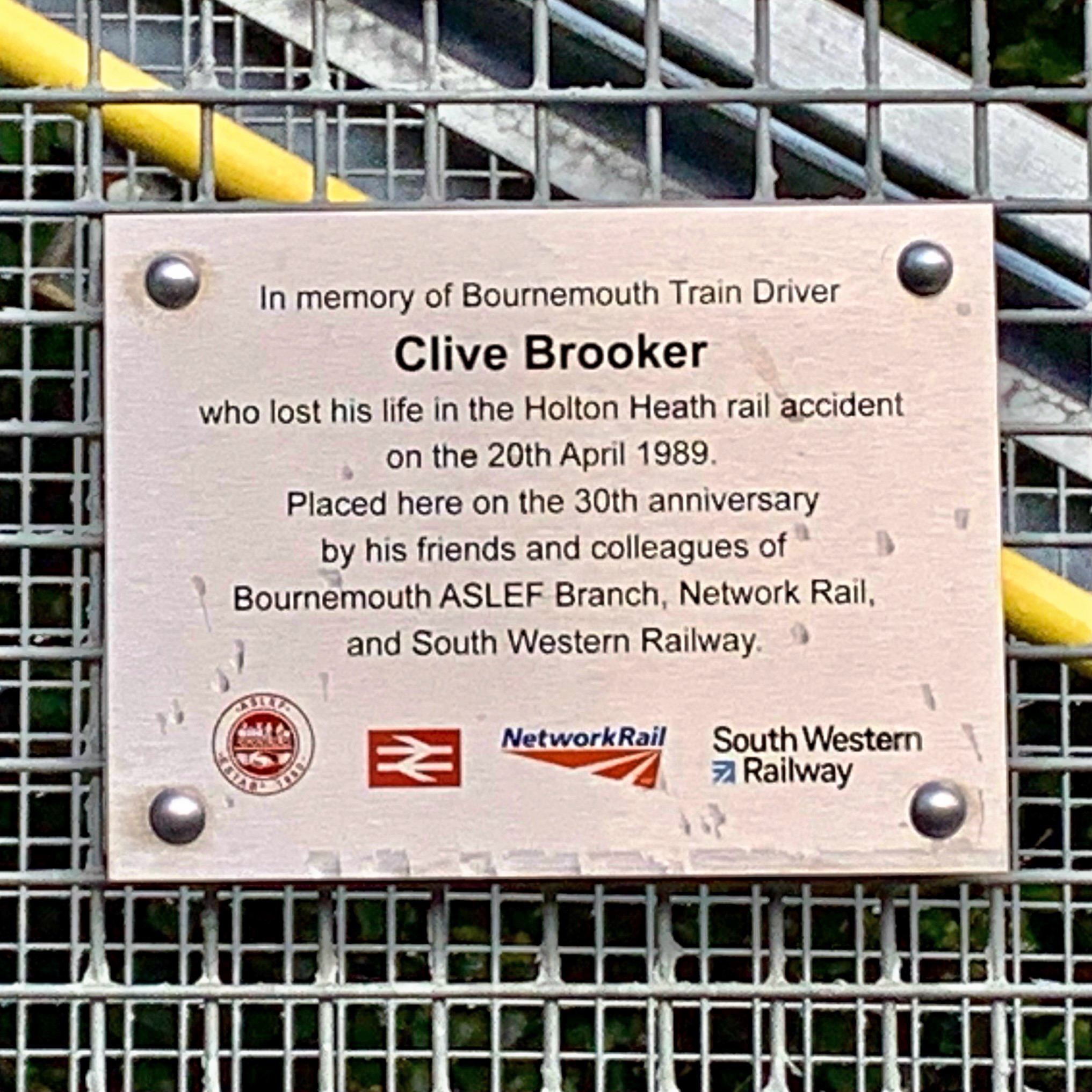
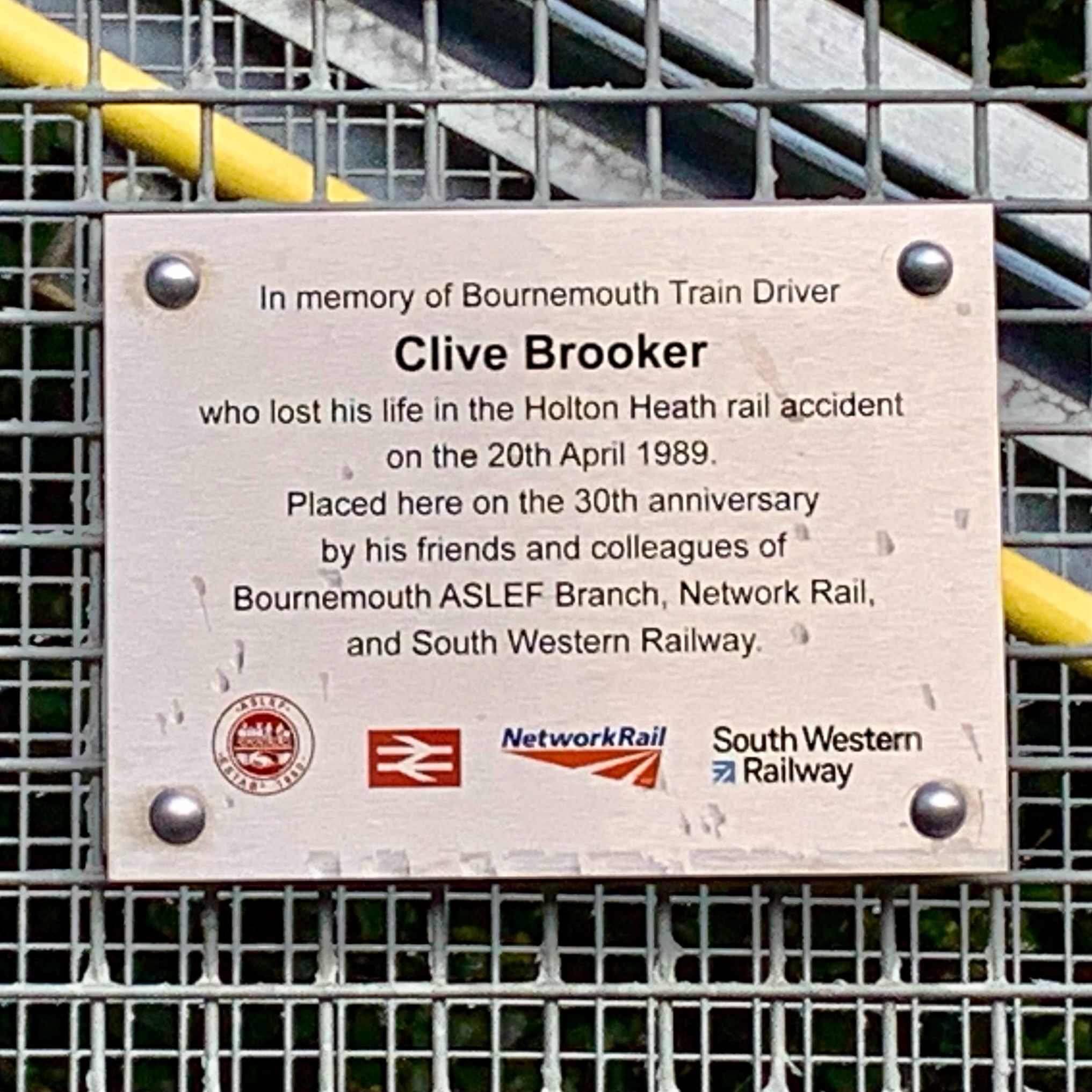
20th April was the 35th anniversary of a collision which occurred at Holton Heath in 1989. Tragically, Bournemouth train driver Clive Brooker lost his life in the accident. The archived report can be found here.
Plaque in memory of Driver Clive Brooker situated at Hamworthy railway station; “At about 1202, a light locomotive, that is one travelling without a train, collided with the rear of a freight train at Holton Heath. I regret to report that the driver of the light locomotive… died as a result of the accident. The driver and the guard of the freight train suffered minor injuries.
On a dry clear day, the diesel locomotive, No. 33107, was travelling at speed under clear signals along the Up line between Wareham and Hamworthy Junction, when it struck the rear of the 1145 Wool to Eastleigh freight train 6W54 as it was accelerating away from a stand after carrying out shunting duties at Holton Heath Siding. The freight train consisted of eight wagons hauled by an electro-diesel locomotive No. 73002; the rearmost wagon being the Type VAA four-wheeled covered van with long sliding doors and loaded with bagged and palletised ballcla.”
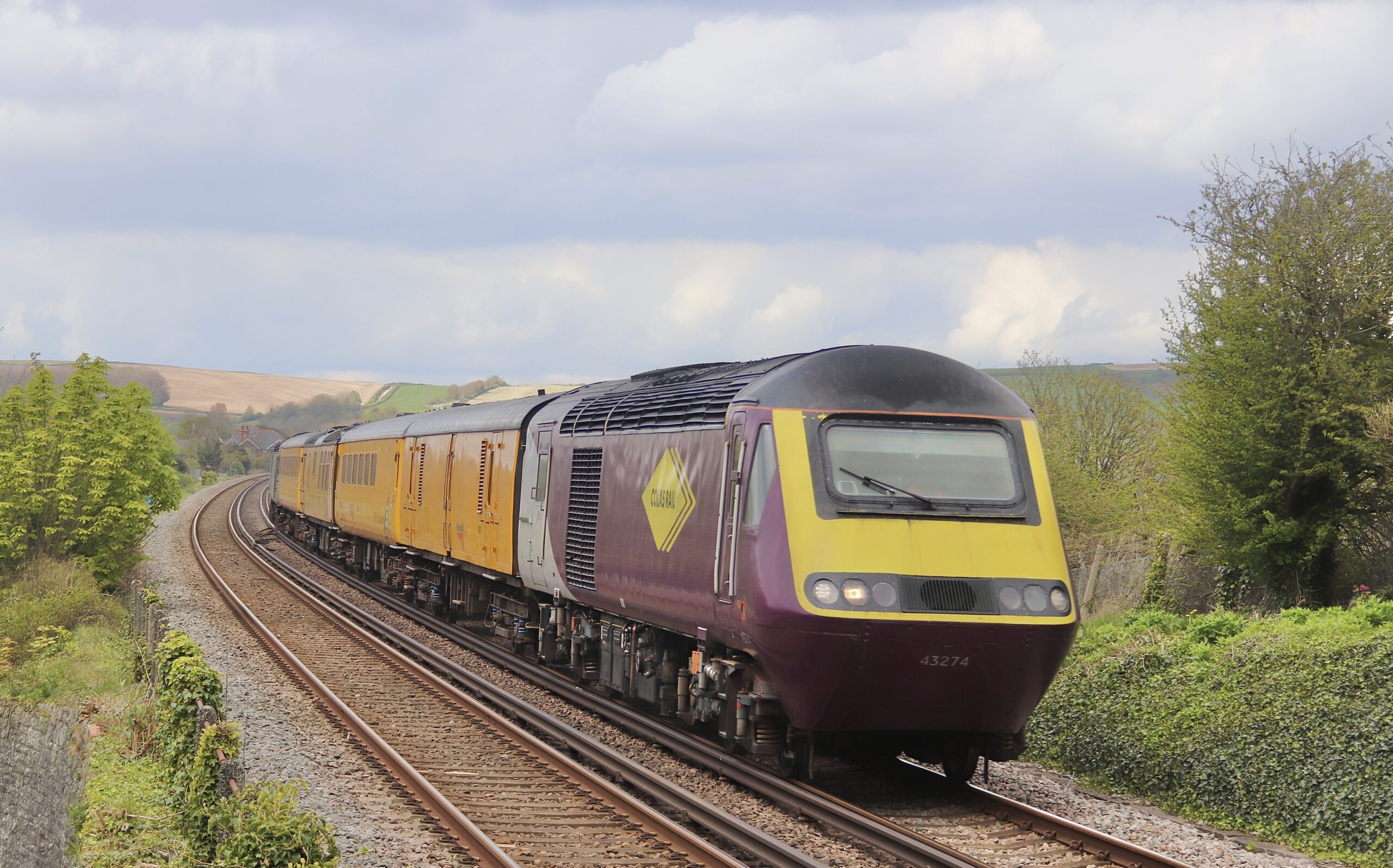
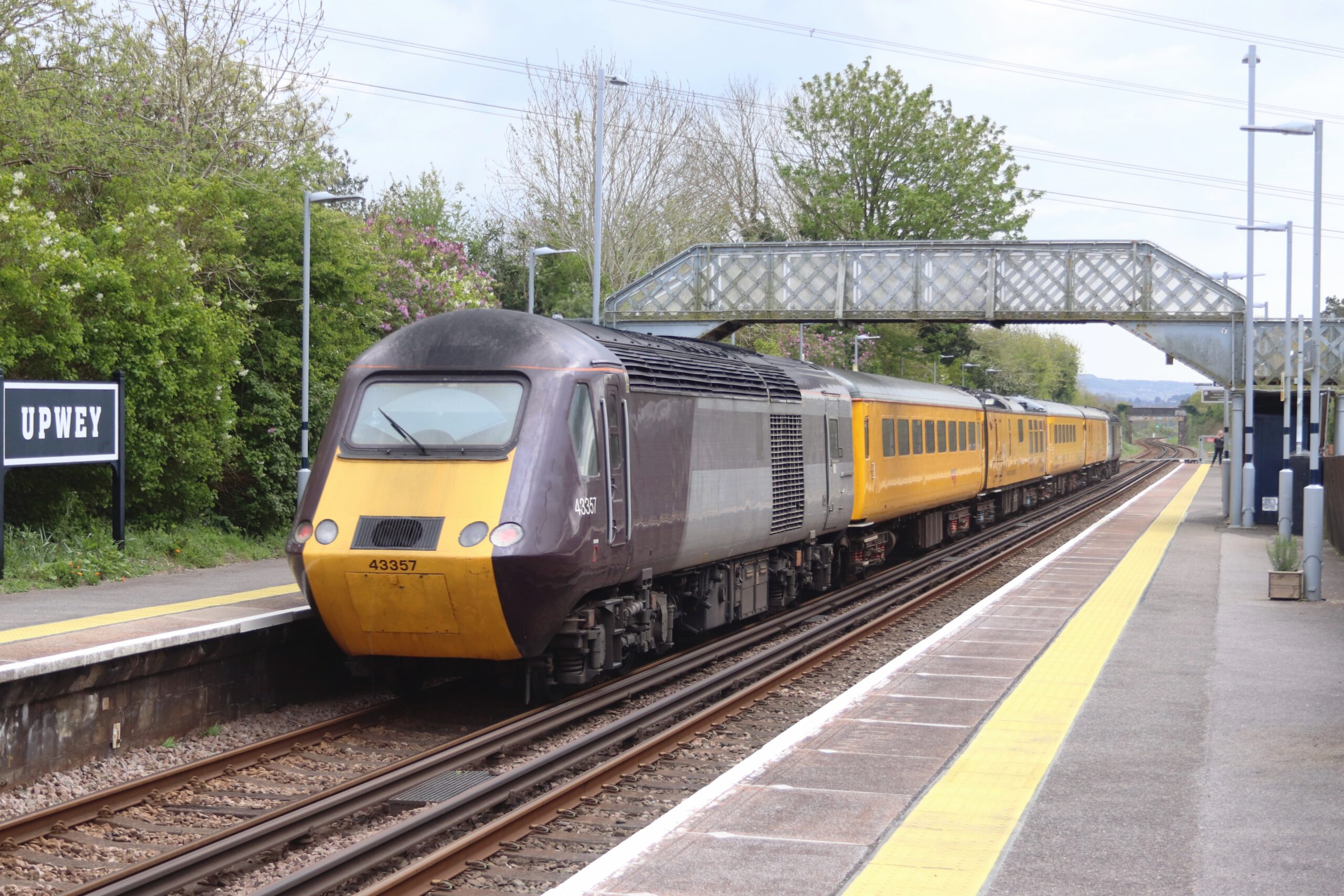
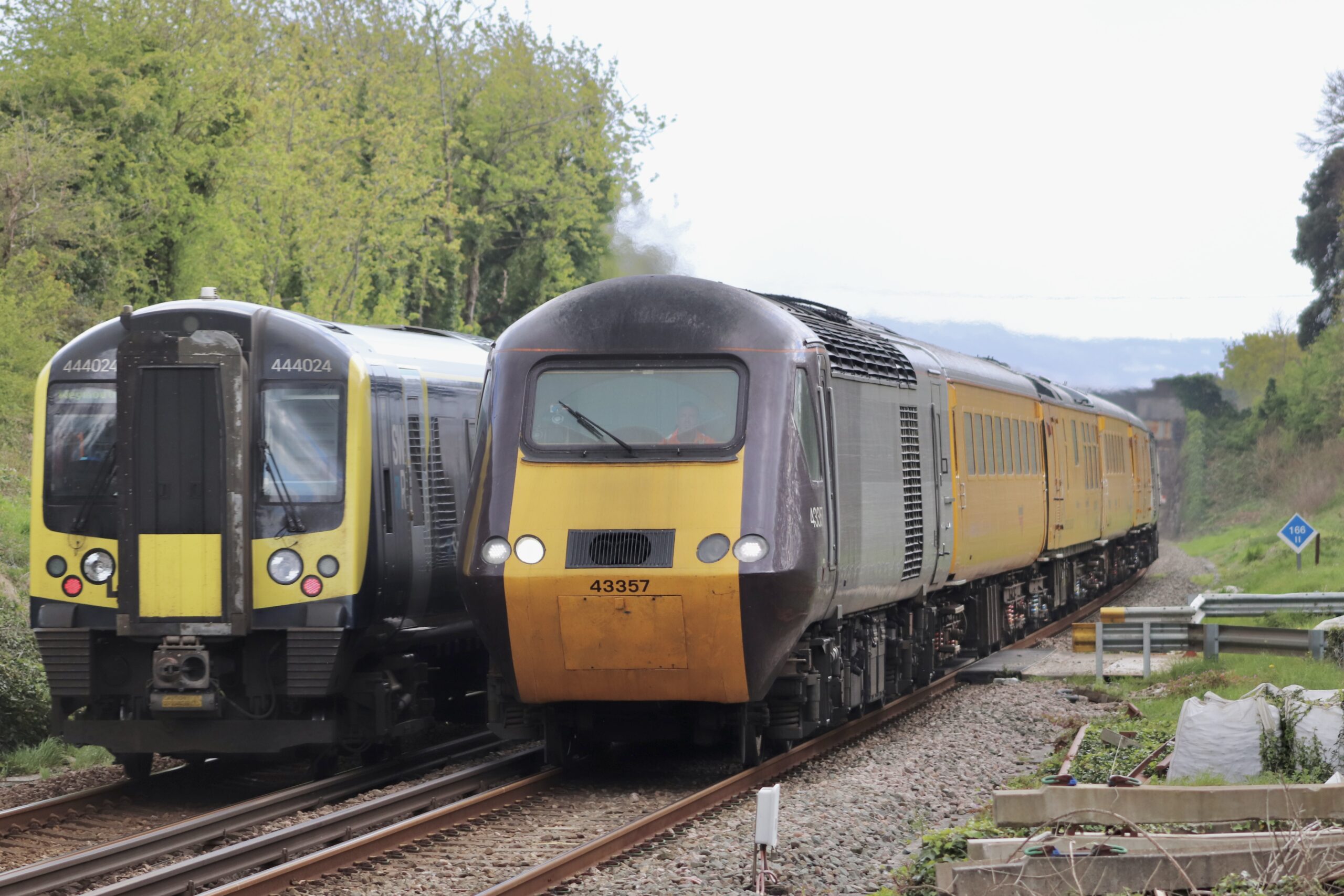
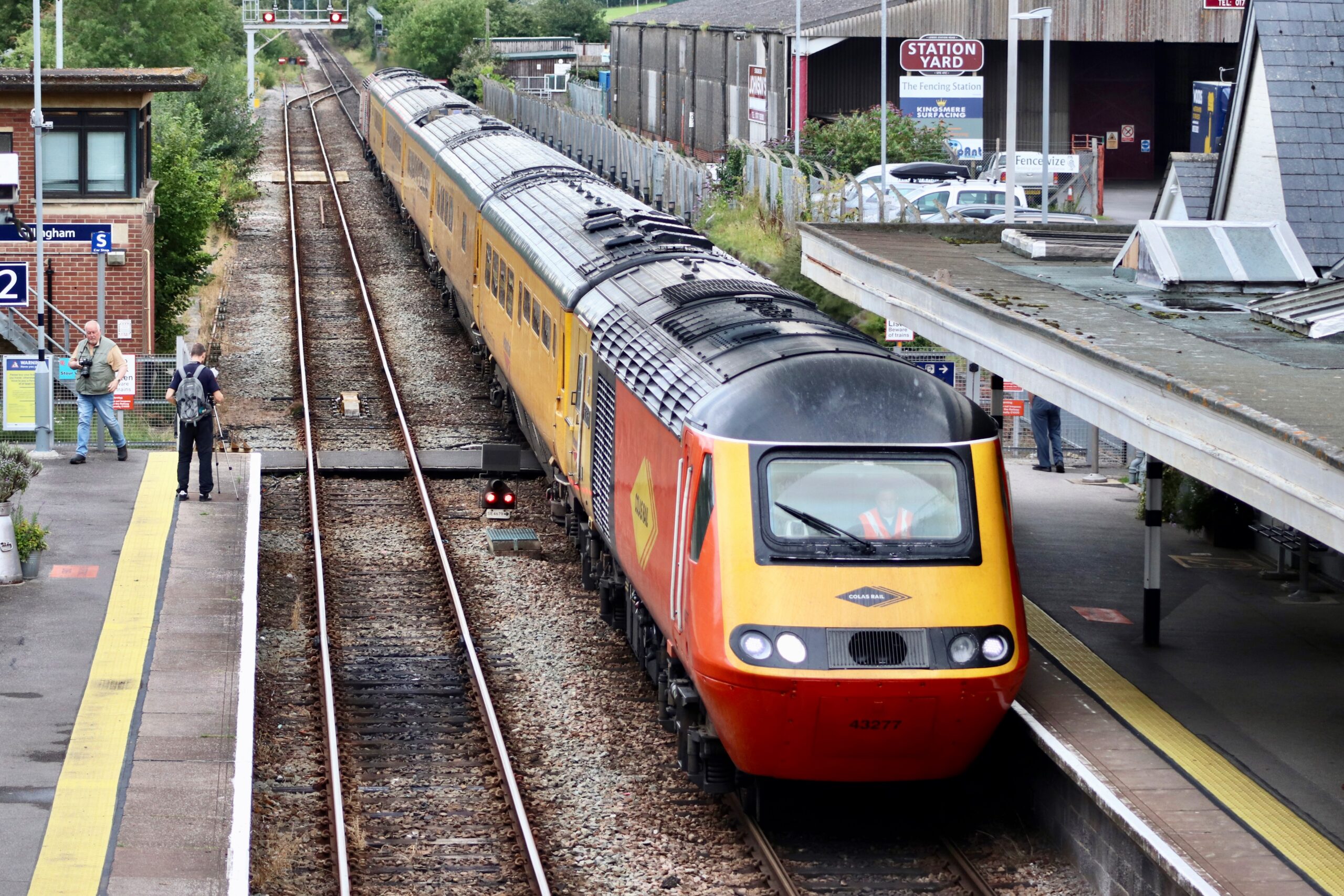
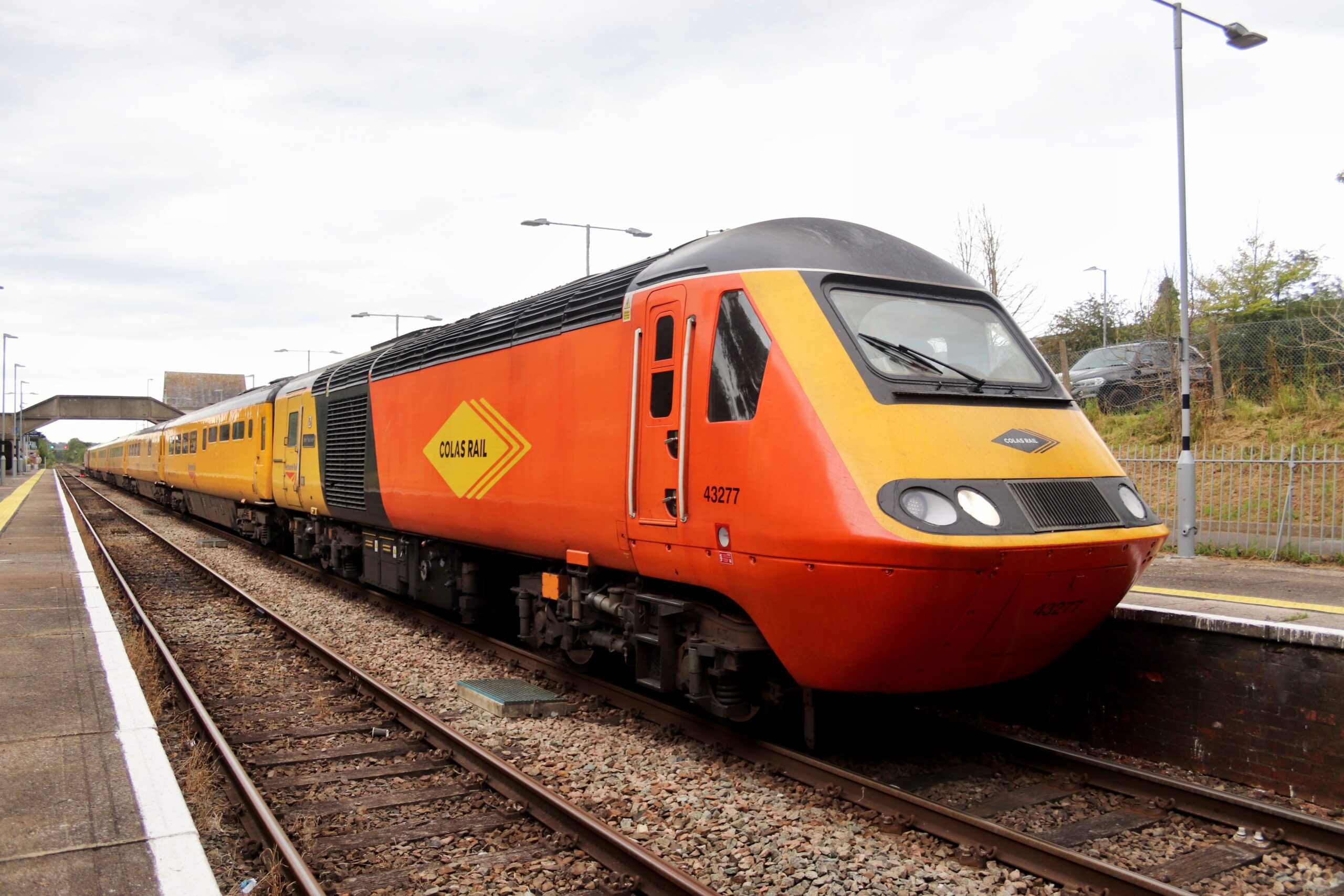
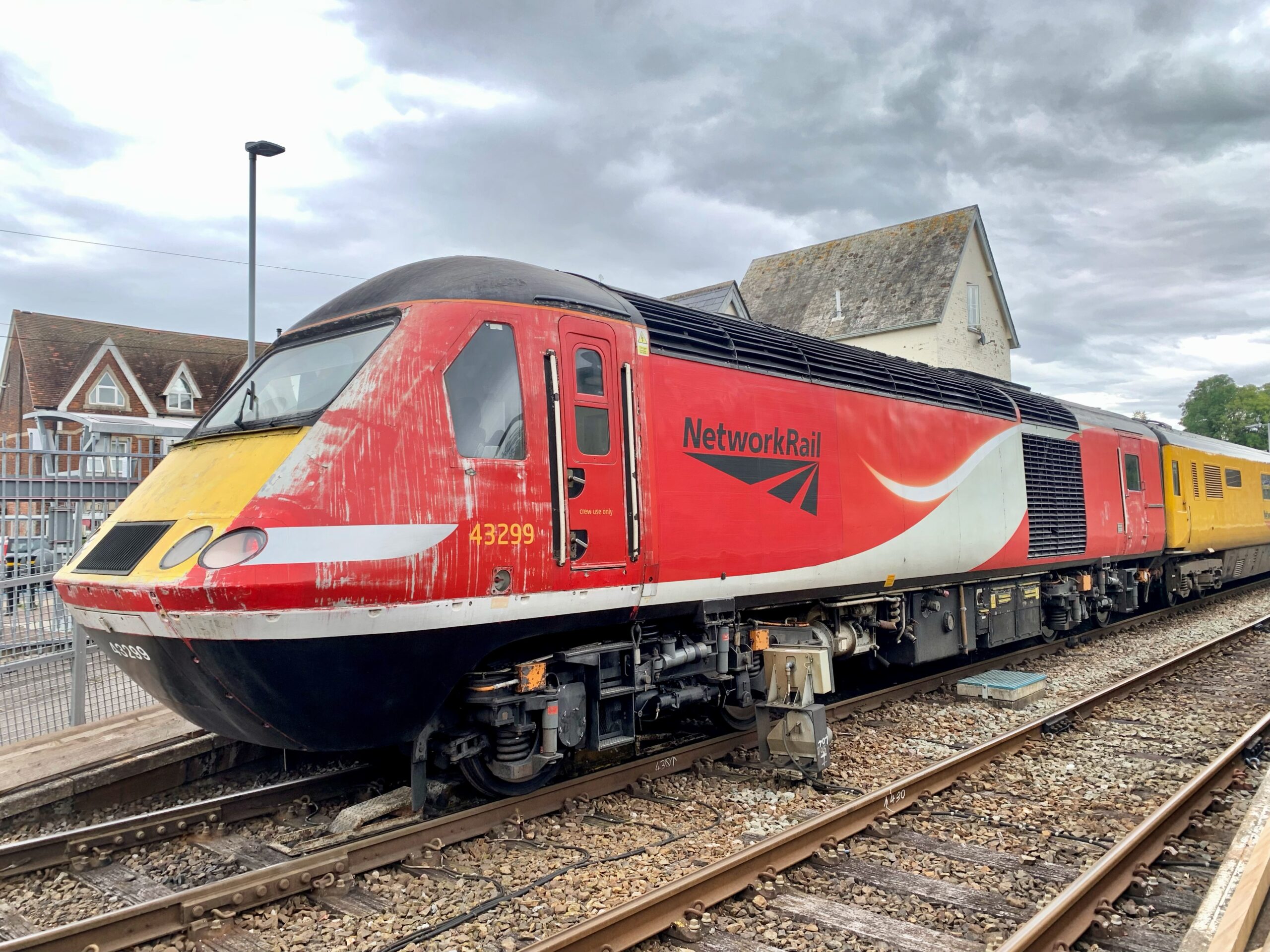
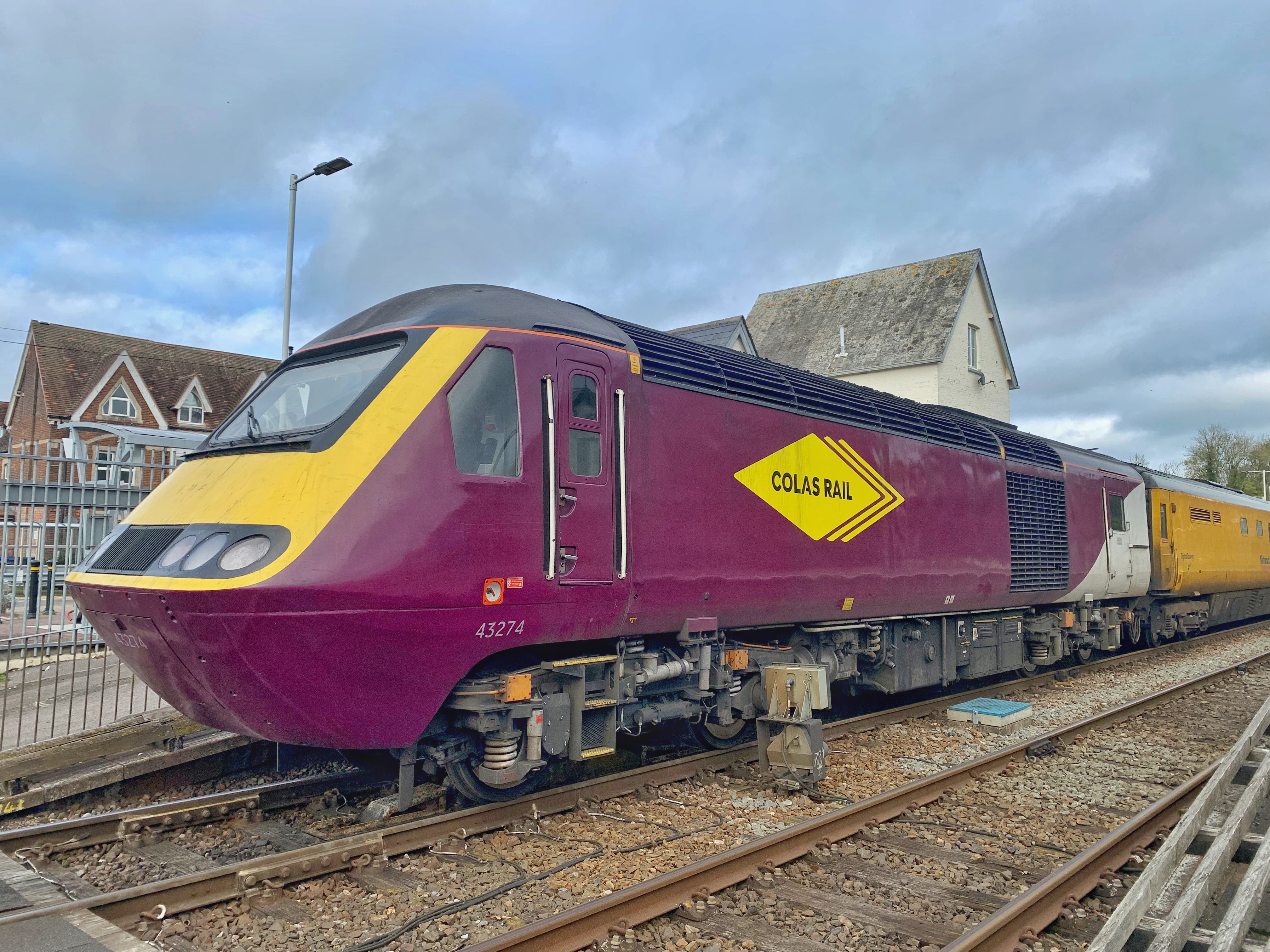
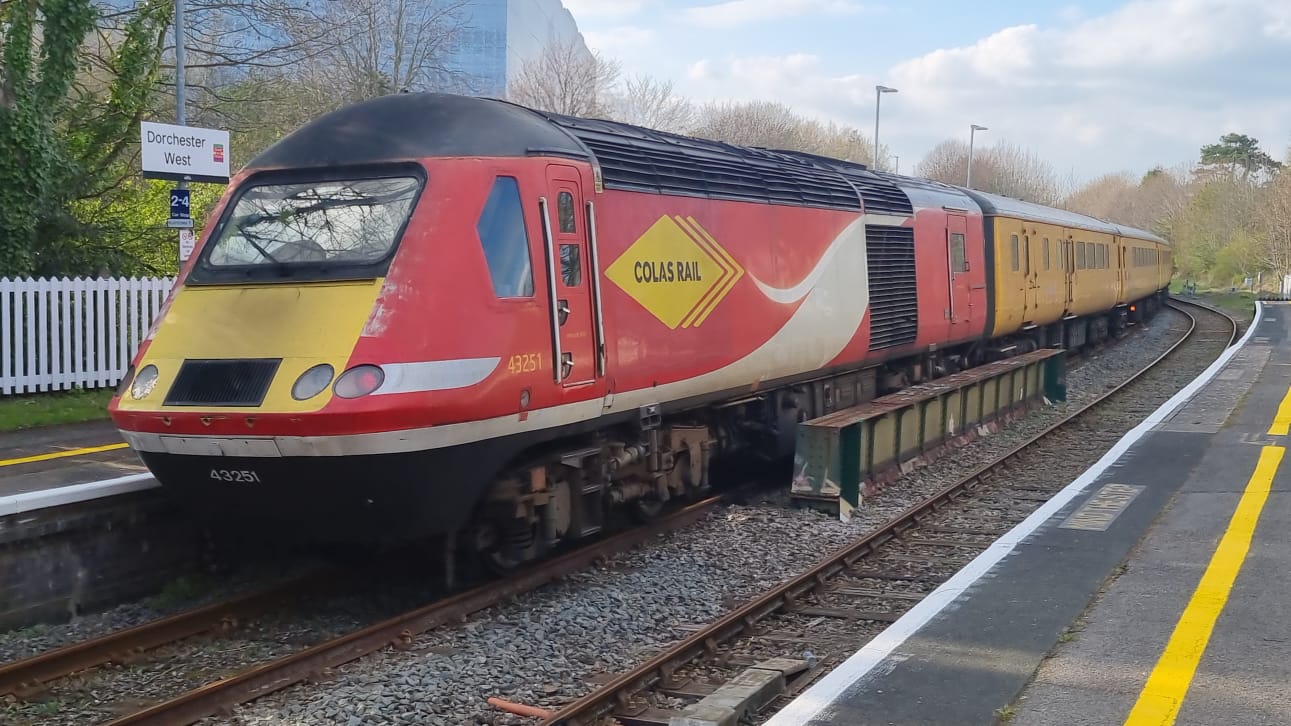
Wednesday April 24th 2024 and it was the turn of Network Rail’s (NR) New Measurement Train (NMT) to visit Weymouth via the western route from Yeovil Pen Mill. Having missed out the Dorset seaside town because of line closures in March the train, which monitors and records track condition information at speeds up to 125mph, was in the hands of former High Speed Train Class 43 power cars No.’s 43274 and 43357 this month. Yoshi and I visited Upwey to see the outward and return legs.
In its Colas branded East Midlands Railway (EMR) livery, Class 43 High Speed Train power car No. 43274 leads on the approach to Upwey working the New Measurement Train 1Z22 0747 Derby Railway Technical Centre to Bristol Kingsland Road via Weymouth – 24/04/2024At the rear of the New Measurement Train – reporting as 1Z22 0747 Derby RTC to Bristol Kingsland Road via Weymouth – in de-branded CrossCountry livery Class 43 High Speed Train power car No. 43357 passes through Upwey on its way to Weymouth – 24/04/2024Class 43 High Speed Train power car No. 43357 forming the New Measurement Train 1Z22 0747 Derby Railway Technical Centre to Bristol Kingsland Road via Weymouth passes South Western Railway Class 444 No. 444024 forming 1W27 1335 London Waterloo to Weymouth at Upwey – 24/04/2024
Video of the Dorset HST Hew Measurement Train – 24/04/2024 (with thanks to da_bucklet967 and G E Barrett for additional video content)
Train drivers union, ASLEF, have announced fresh strikes and an overtime ban taking place between Monday 6th May and Saturday 11th May 2024. Train Operating Companies (TOC) in Dorset affected by strike action days are SWR on Tuesday 7th May and GWR on Wednesday 8th May when revised services will run, with short-notice cancellations possible.
That’s it for another belated blog entry, thanks for joining us looking back on our railway themed adventures! We appreciate your comments, corrections and feedback. We’ll be back with another update soon. Until then, be seeing you!
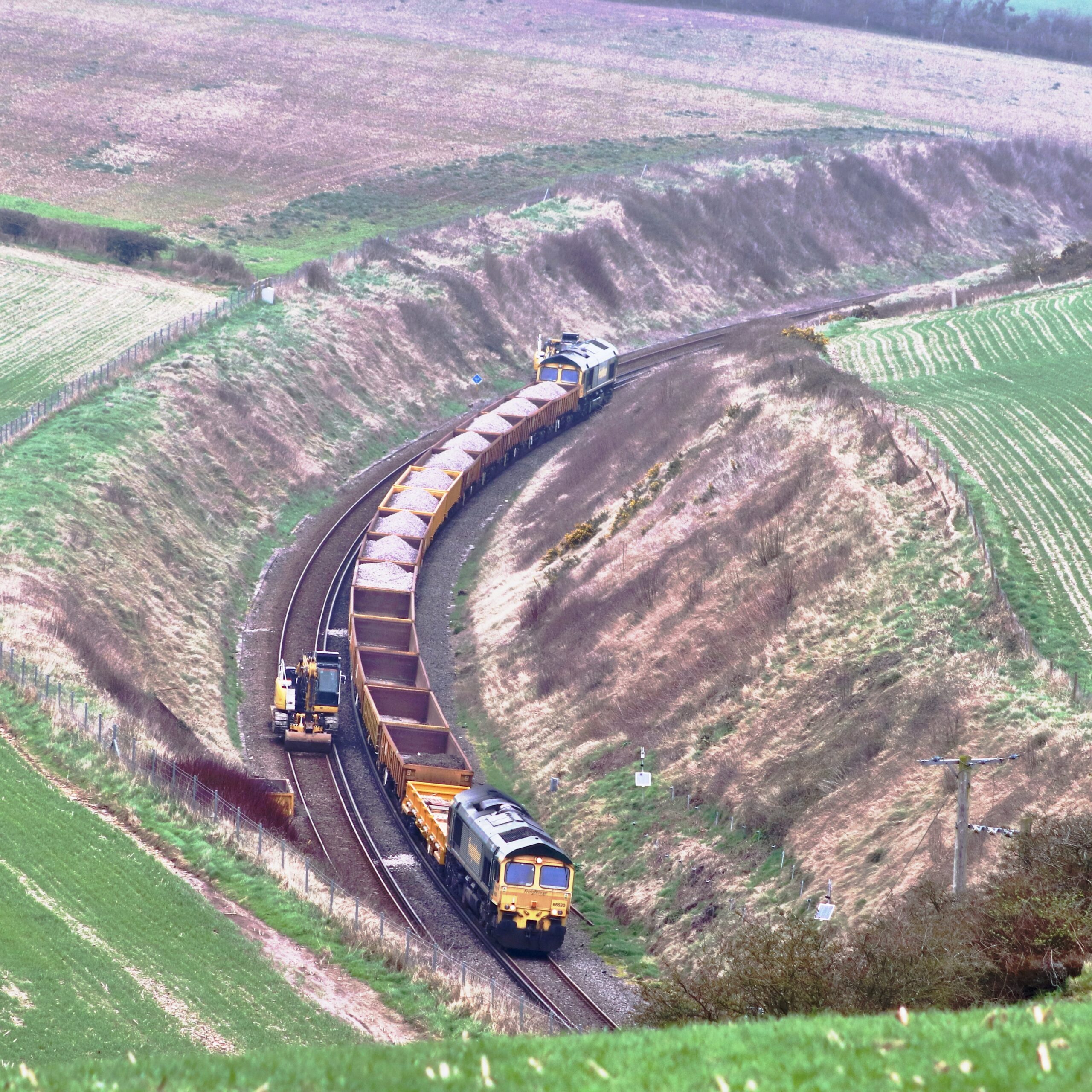
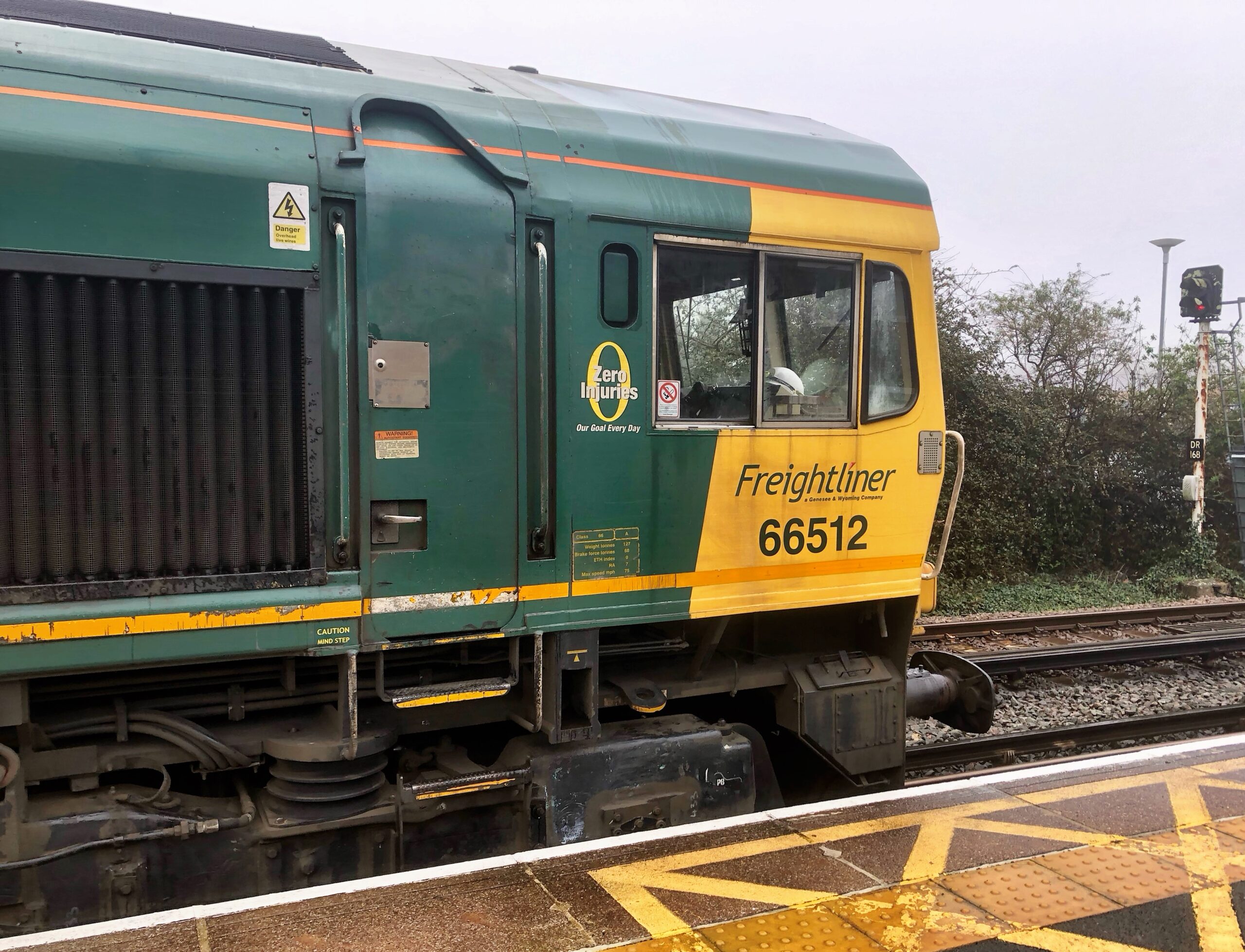
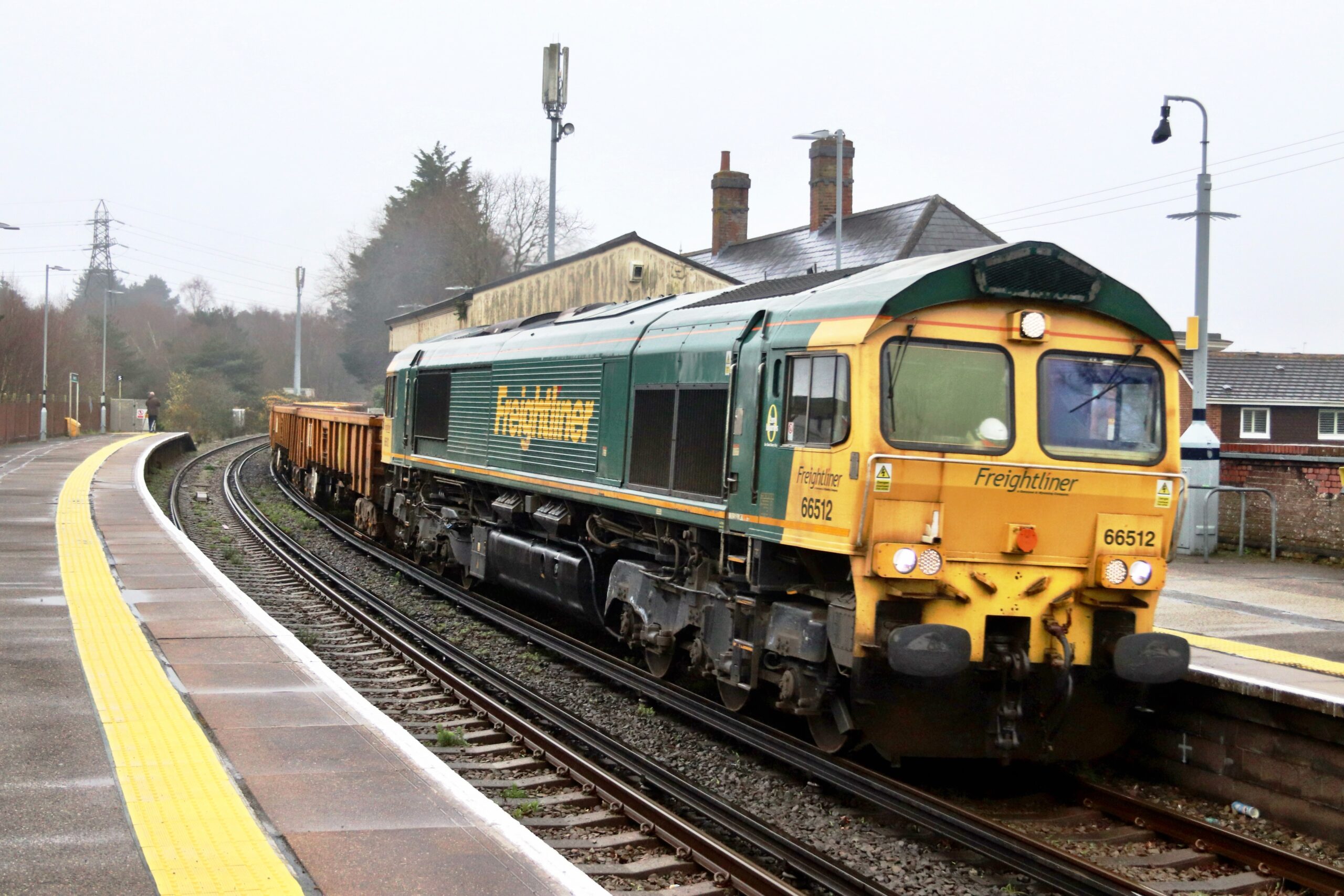
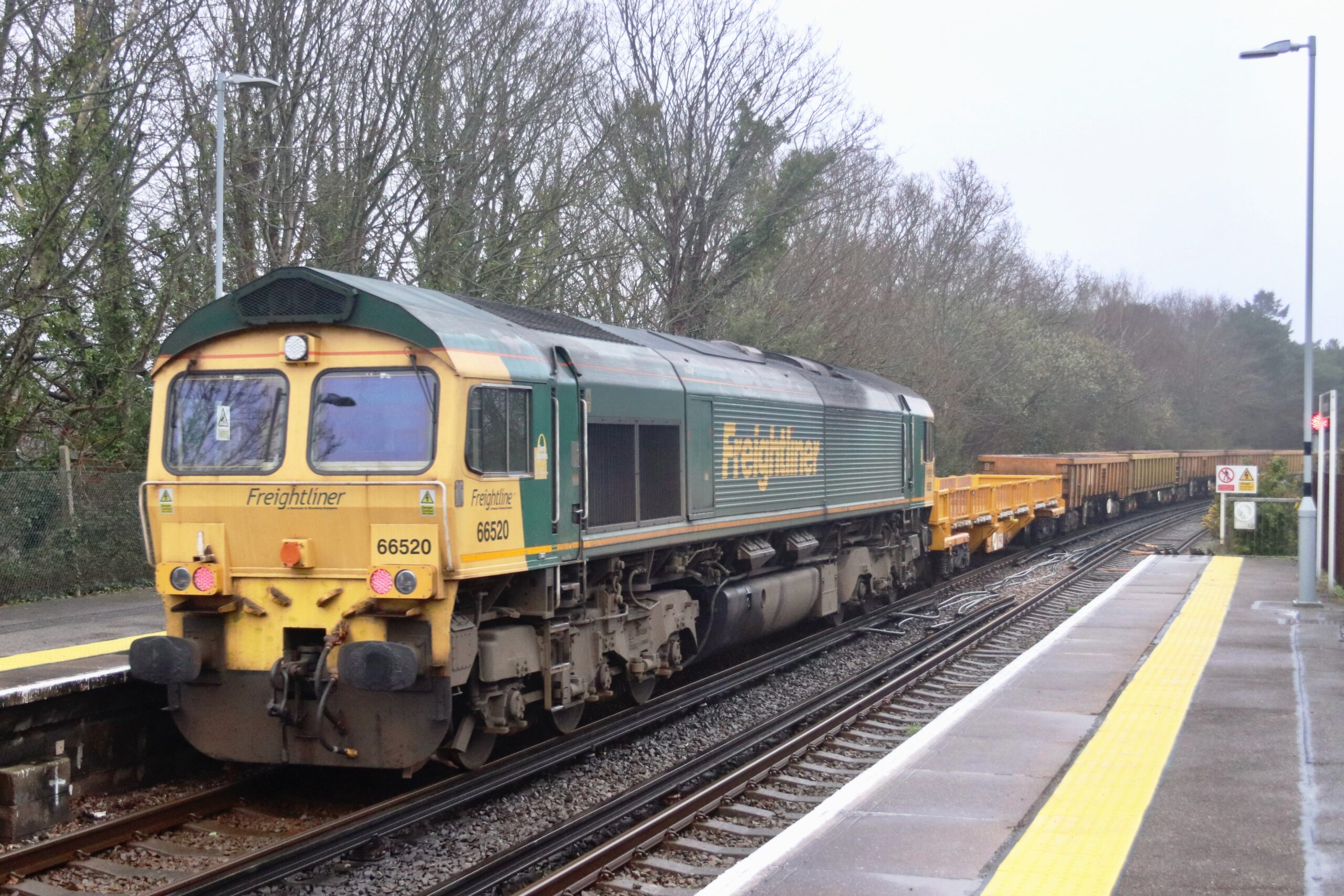
Freightliner Class 66 locomotives No.’s 66520 and 66512 at Bincombe during engineering work reporting as 6Y85 2348 Eastleigh East Yard to Dorchester South – 18/03/2024
March 16th 2024 to March 22nd 2024
Maintenance work between Dorchester and Weymouth closed the railway line from Monday 18th to Wednesday 20th March 2024 affecting both South Western Railway (SWR) and Great Western Railway (GWR) services along this route. In association with the work, an engineers train, in the hands of Freightliner, worked from Eastleigh East Yard to Dorchester South overnight of 16/17th March, arriving in the County Town at 0156 on the Monday morning, approximately 46 minutes behind schedule. We saw the train pass through Hamworthy, top and tailed by Class 66 locomotives No.’s 66520 and 66512, at which point it was running 36 minutes late.
Freightliner Class 66 No. 66520 leads through Hamworthy working 6Y85 2348 Eastleigh East Yard to Dorchester South – 17/03/2024FL Class 66 No. 66512 brings up the rear on 6Y85 2348 Eastleigh East Yard to Dorchester South passing Hamworthy – 17/03/2024
As we arrived at the station in good time to see the engineering train heading to Weymouth, we were surprised to see an empty coaching stock movement, formed of SWR Class 444 No. 444001 passing through Hamworthy just after 0100 on its way to Bournemouth Traincare depot working as 5W71 0041 Weymouth to Bournemouth TRSMD. A result of the line being closed in the Poole area on the Sunday meant trains from London Waterloo terminated at Bournemouth. A replacement bus service ran to stations between Bournemouth and Wareham with a shuttle train service operating between Wareham and Weymouth during the day.
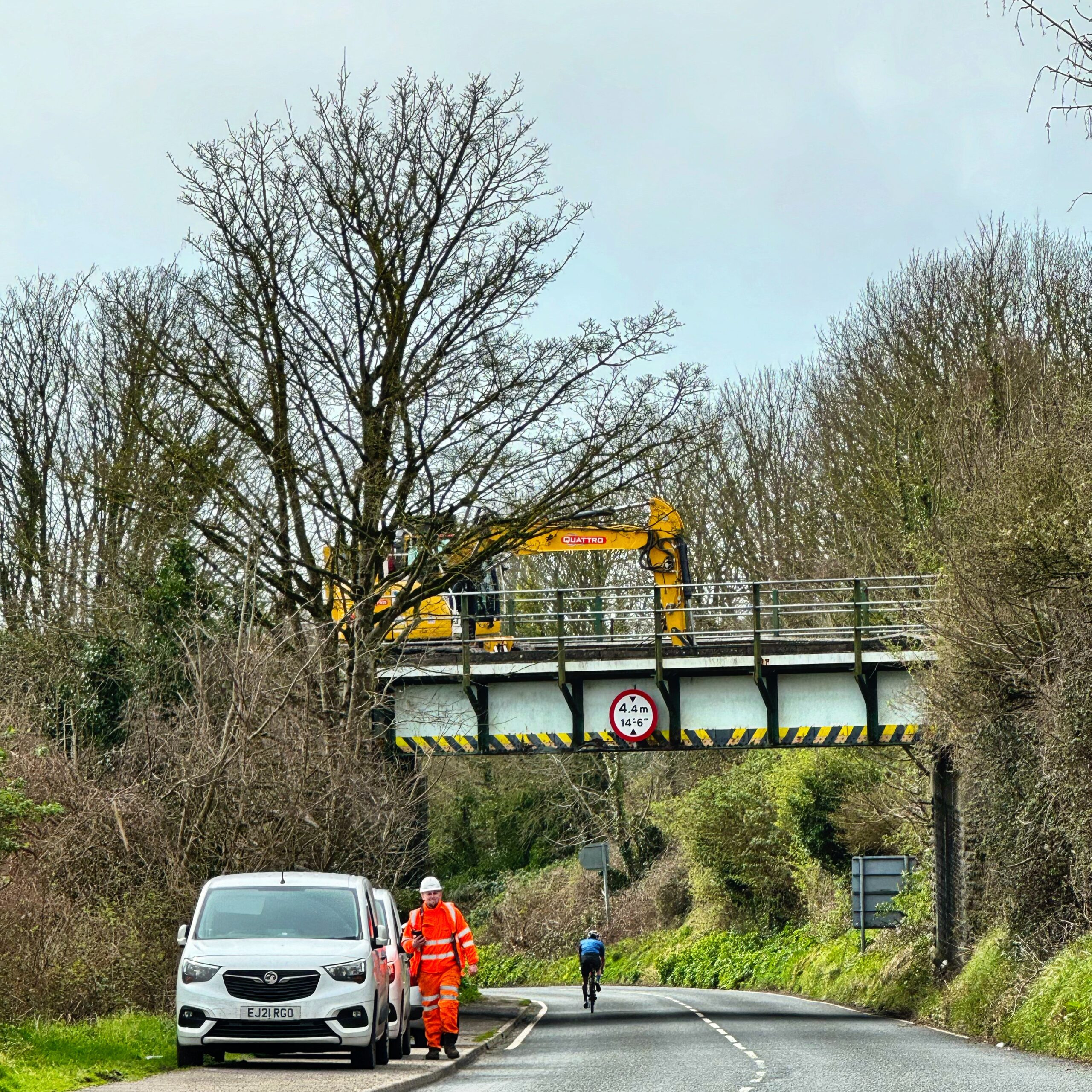
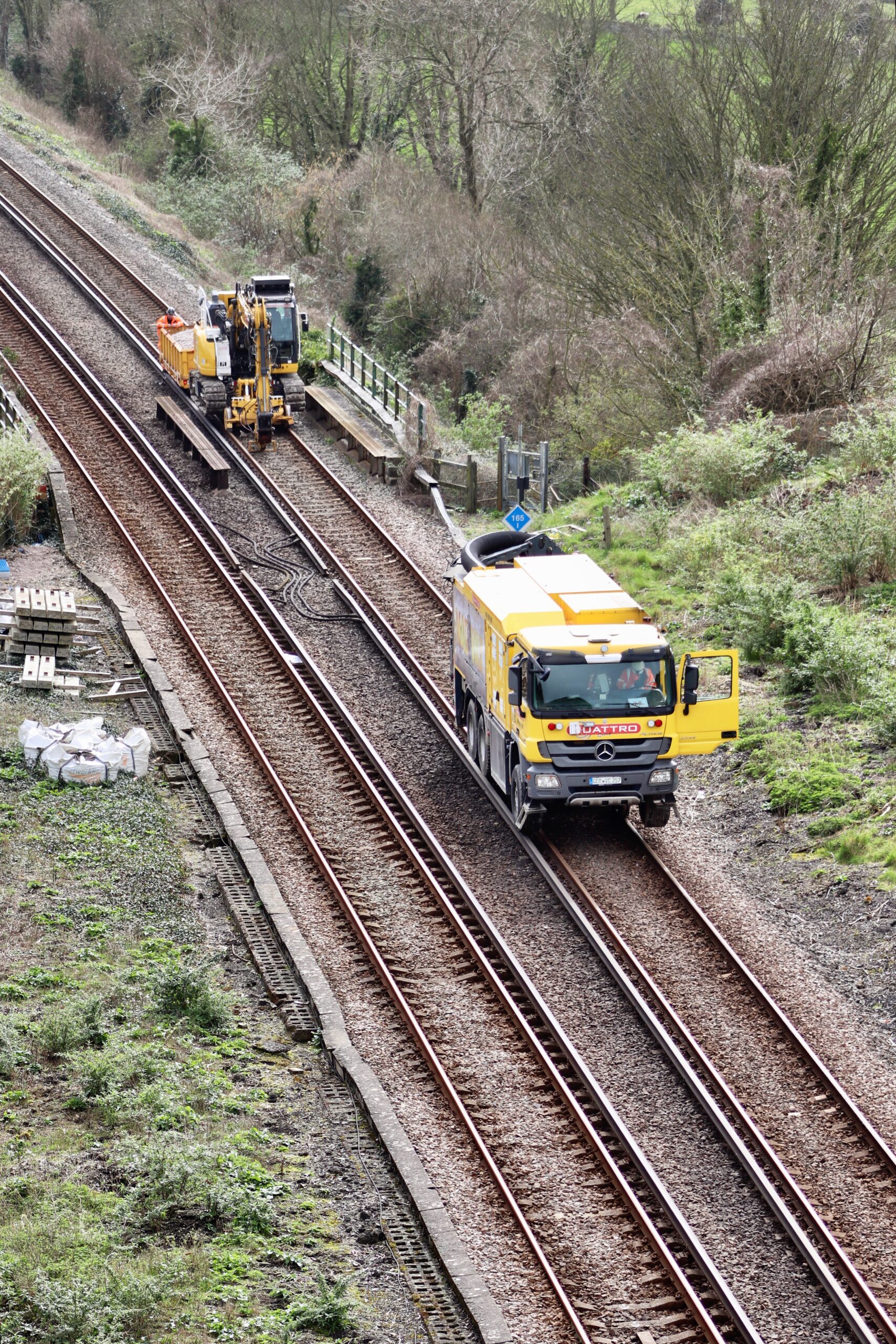
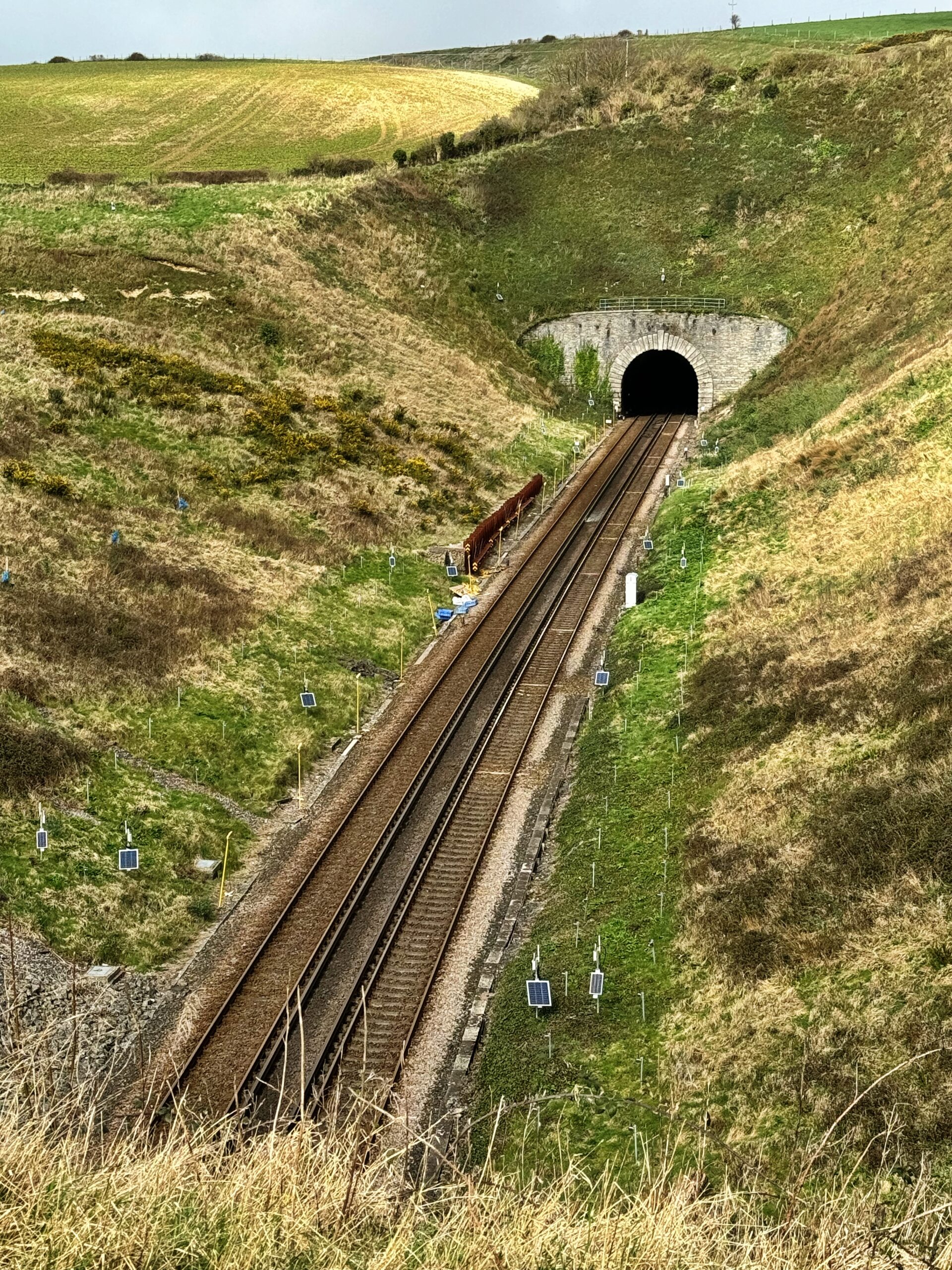
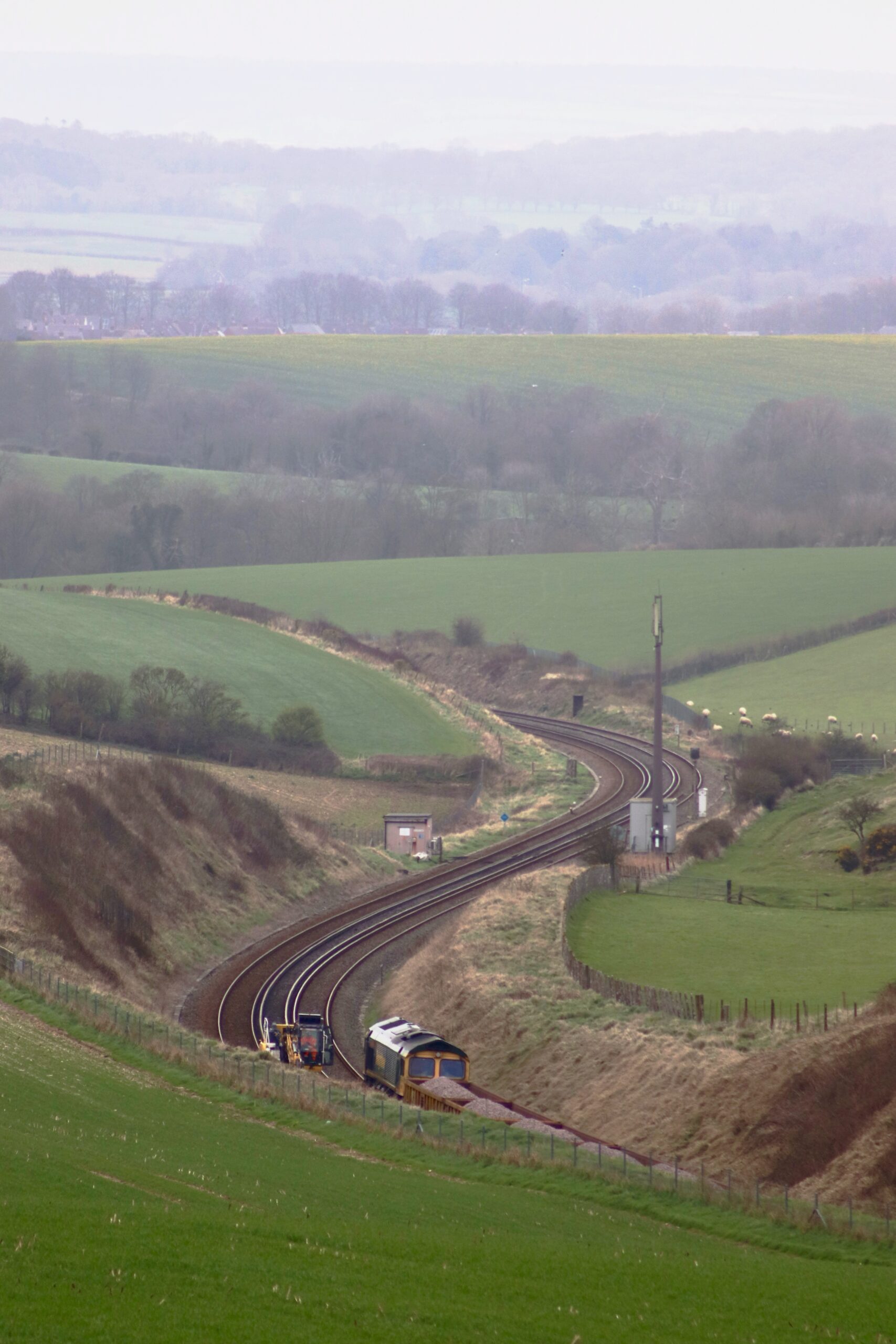
The worksite necessitating the Monday to Wednesday line closure was located in the Bincombe area, where track would receive the attention of a tamper and gain some fresh ballast. We popped out on Monday afternoon to take a look at what was going on, expecting to find the two Class 66 locomotives parked up on the down line between Bincombe Tunnel and Bincombe Tunnel Number 2. Instead we found Quattro Group’s Mercedes rail road vehicle ‘Mad Vax’ and one of their tracked Road Rail Vehicles (RRV).
A RailRoad vehicle at Bincombe – 18/03/2024Quattro Group’s Mad Vax vacuum excavation system, which won the Most Innovative RRV Product Award at the National Rail Awards in 2019, prepares to do its stuff at Bincombe. Quattro Group are rightly proud of this piece of kit; “The Mad Vax vacuum excavation system has all the power and performance needed to complete a wide array of rail applications from ballast removal to spillage clean up operation. The unit’s spoil capacity is an impressive 6m3, and with a side tipping hopper it can be emptied lineside, utilising a special split-lid spoil tank to give a lower overall profile and to reduce overall tipping height for works under overhead power cables or at a suitable location when off track. The machine is also equipped with a Powerarm and IKE rotating suction tube to aid in breaking up harder ground for improved efficiency.” – 18/03/2024Bincombe worksite for the March 2024 maintenance work – 18/03/2024
After a quick chat with friend of this blog, Robin, we drove off towards Upwey to see if the engineers train was stabled near the railway station. Despite much of the line side trees and vegetation having been cut back, there was no sign of the Freightliner train. After refreshments at The Royal Standard in Upwey, we proceeded to drive back towards Dorchester when, glancing to the right as we came over the brow of Ridgeway hill, we could see the unmistakable sight of a Class 66 locomotive. Parking the car in the next lay-by, I crossed over the road and proceeded along the footpath back in the direction of Weymouth to see if it was possible to get a photo of the train at rest.
Class 66 No. 66512 stands out amidst the Dorset countryside – 18/03/2024
I was quite pleased with the resulting photo of the train parked at the northern portal of Bincombe Tunnel, perfectly placed for a photograph imho.
Because I liked the shot so much, another view of Freightliner Class 66 locomotives No.’s 66520 and 66512 at Bincombe during engineering work reporting as 6Y85 2348 Eastleigh East Yard to Dorchester South – 18/03/2024A tamper sits in the sidings at Dorchester South waiting to be deployed at Bincombe – 18/03/2024 (G E Barrett)
The Class 66’s returned to Eastleigh on the afternoon of Tuesday 19th March. It was quite a novelty to see a local engineers train working in daylight hours!
Class 66 No. 66512 awaiting departure with 6Y85 1454 Dorchester South to Eastleigh East Yard – 19/03/2024 (G E Barrett)Class 66 No. 66520 in the gloom of a wet Dorchester South at the rear of 6Y85 1454 Dorchester South to Eastleigh East Yard – 19/03/2024 (G E Barrett)Freightliner Class 66 No. 66512 ready to depart from Dorchester South working 6Y85 1454 Dorchester South to Eastleigh East Yard – 19/03/2024 (G E Barrett)Freightliner Class 66 No. 66512 leads on 6Y85 1454 Dorchester South to Eastleigh East Yard passing Hamworthy – 19/03/2024Freightliner Class 66 No. 66520 runs through Hamworthy at the rear of 6Y85 1454 Dorchester South to Eastleigh East Yard – 19/03/2024
Video of Freightliner Class 66 No.’s 66520 and 66512 working a Dorset engineering train – March 2024 (Additional video courtesy of G E Barrett)
The monthly New Measurement Train (NMT) which is scheduled to visit Weymouth via the West route through Maiden Newton was curtailed at Yeovil on Wednesday 20th March 2024 owing to the line closure between Dorchester and Weymouth. Allocated Class 43 High Speed Train (HST) power cars No.’s 43357 and 43277 worked 1Q18 0748 Derby RTC to Bristol Kingsland Road.
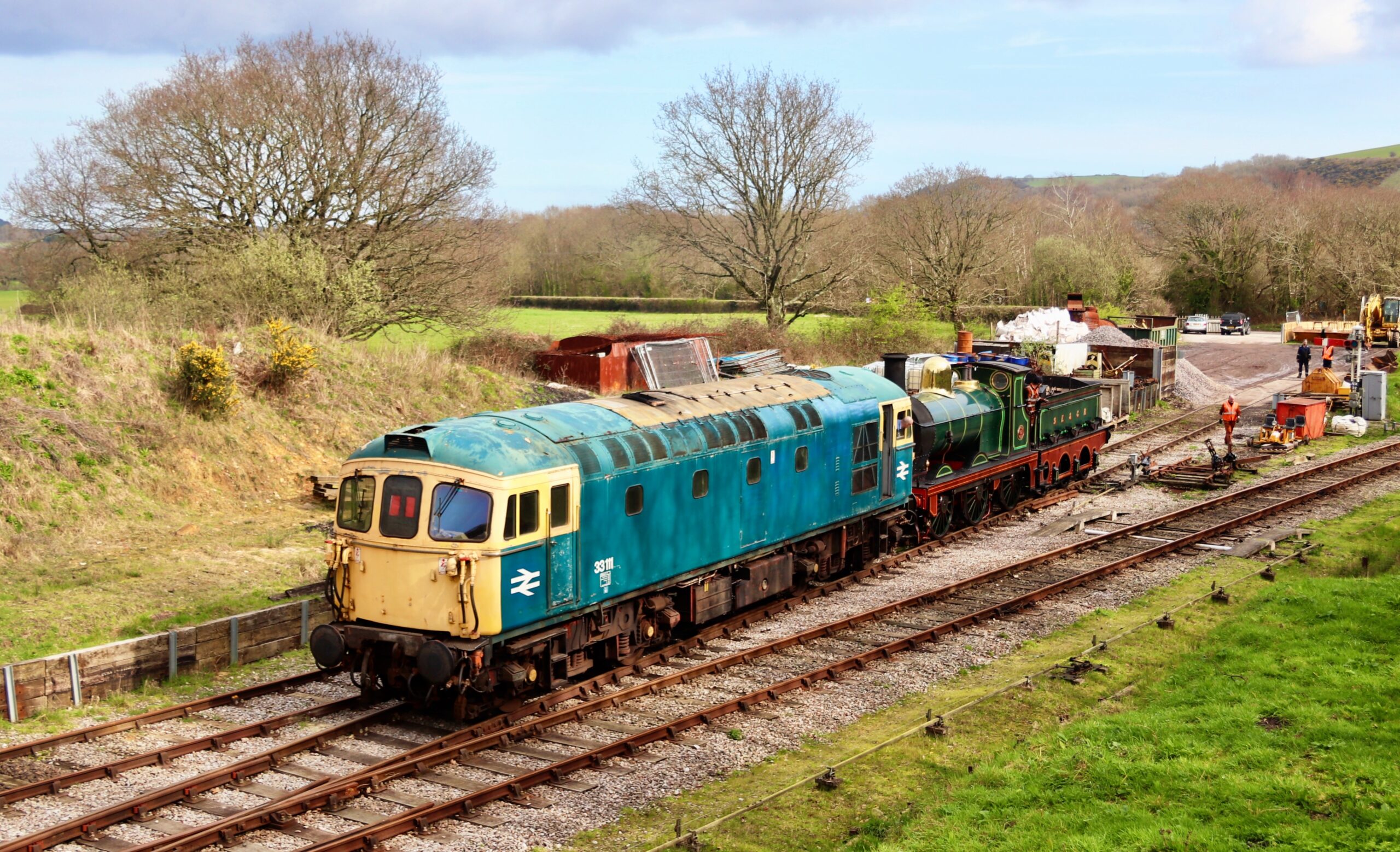
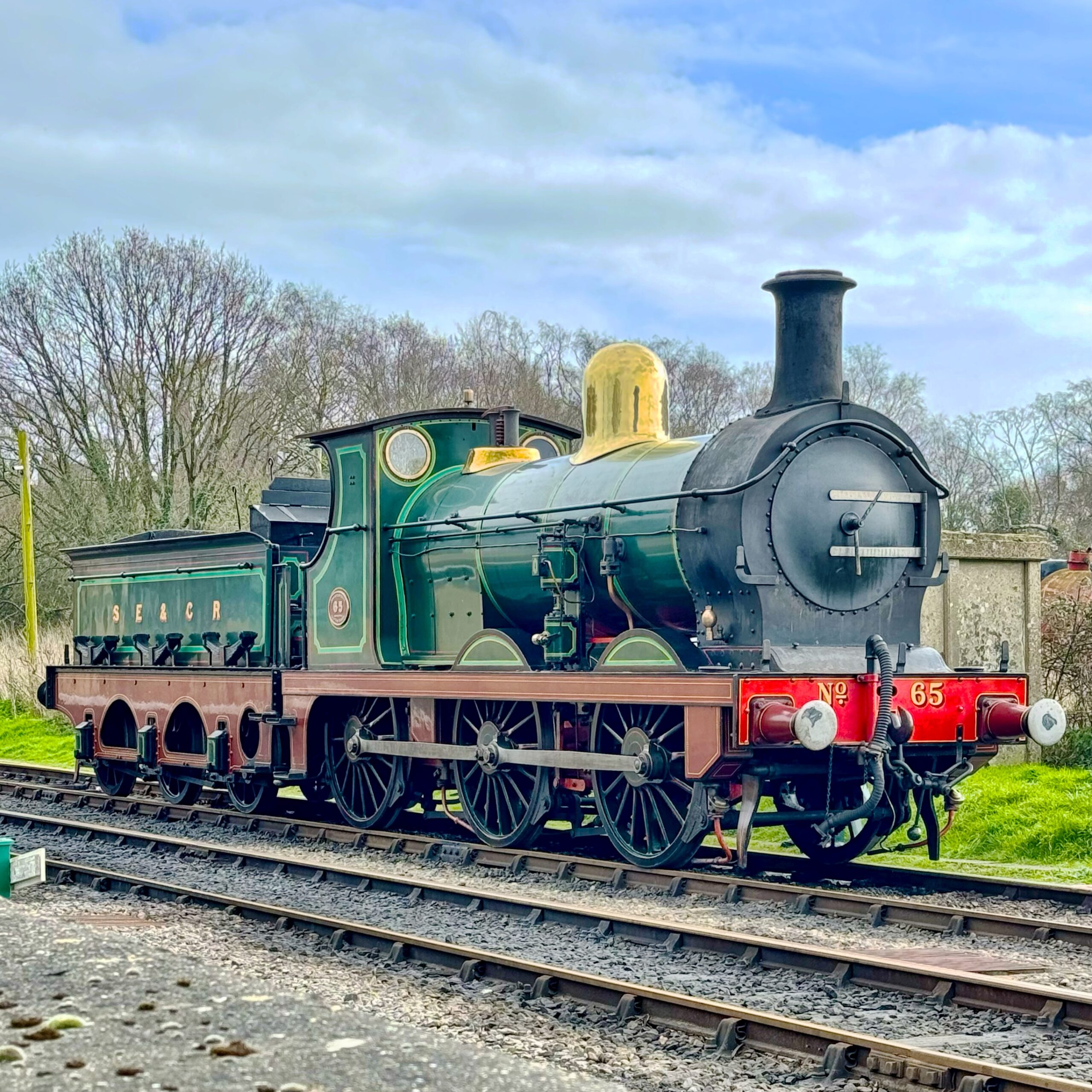
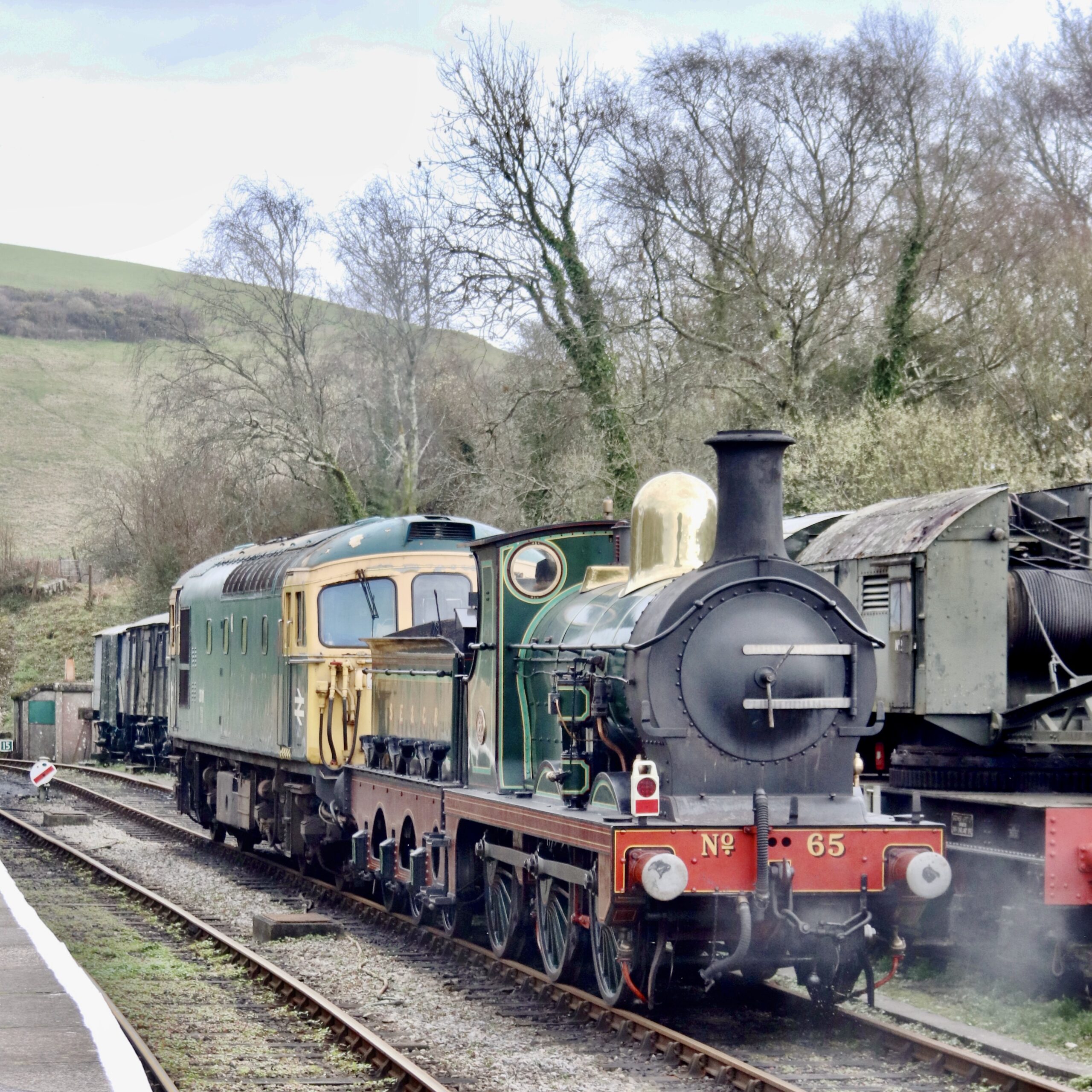
While the NMT was making its way to Somerset, I could be found at Norden on the Swanage Railway watching visiting South Eastern & Chatham Railway (SECR) Class O1 steam locomotive No. 65 being prepped for towing down to Swanage in readiness for the railways Victorian Weekend. Resident preserved Birmingham Rail & Carriage Works (BR&CW) Class 33 No. 33111 had the task of collecting No. 65 and hauling her down to Swanage.
Swanage resident Class 33/1 No. 33111 cautiously hauls South Eastern & Chatham Railway (SECR) Class O1 steam locomotive No. 65 away from Norden sidings – 20/03/2024South Eastern & Chatham Railway (SECR) Class O1 steam locomotive No. 65 at Norden during the operation to haul her to Swanage in readiness for the railway’s Victorian Weekend – 20/03/3024Class 33/1 No. 33111 hauls South Eastern & Chatham Railway (SECR) Class O1 steam locomotive No. 65 as they depart Norden station heading to Swanage – 20/03/2024
SECR O1 No. 65 arrives on the Swanage Railway – 20/03/2024
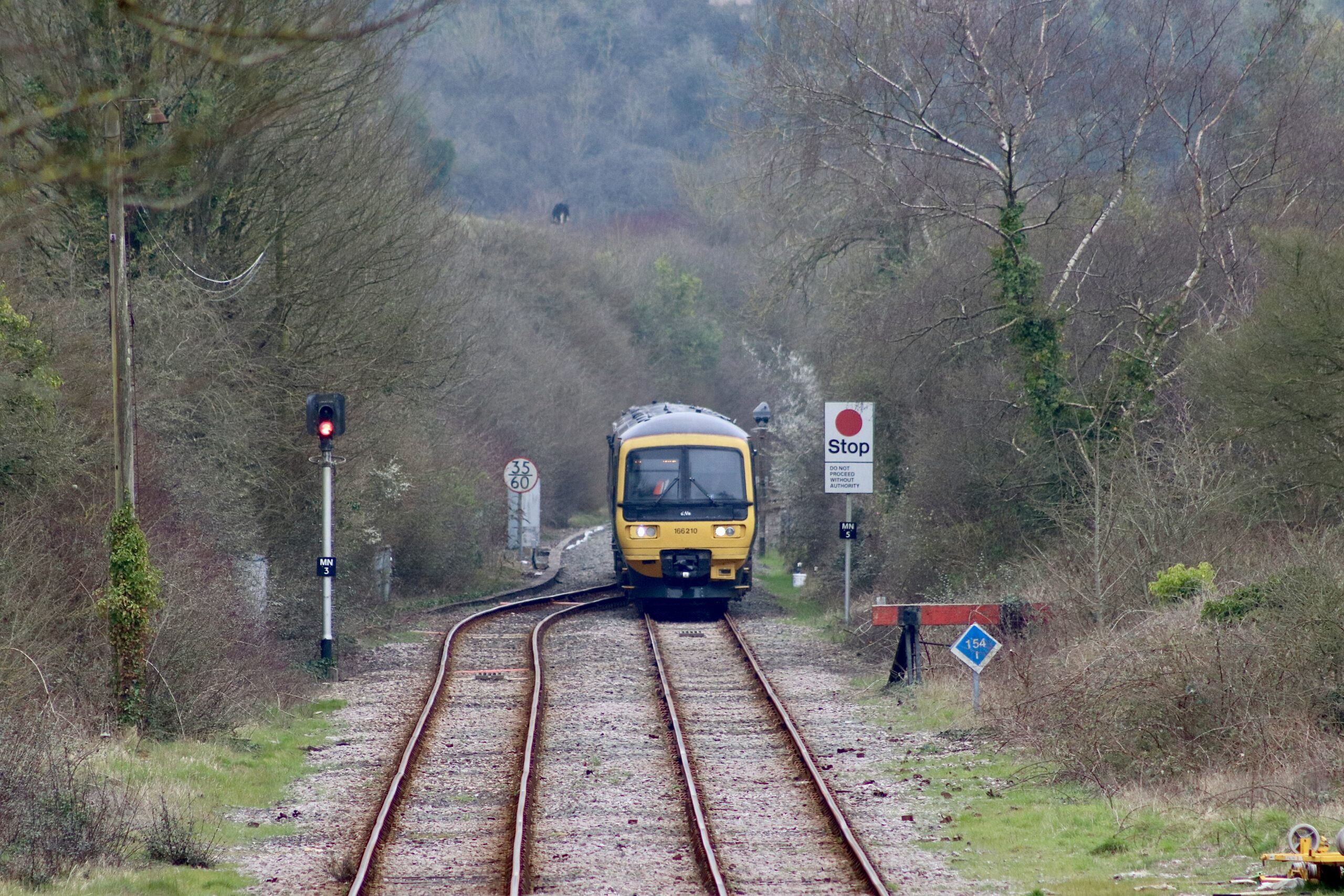
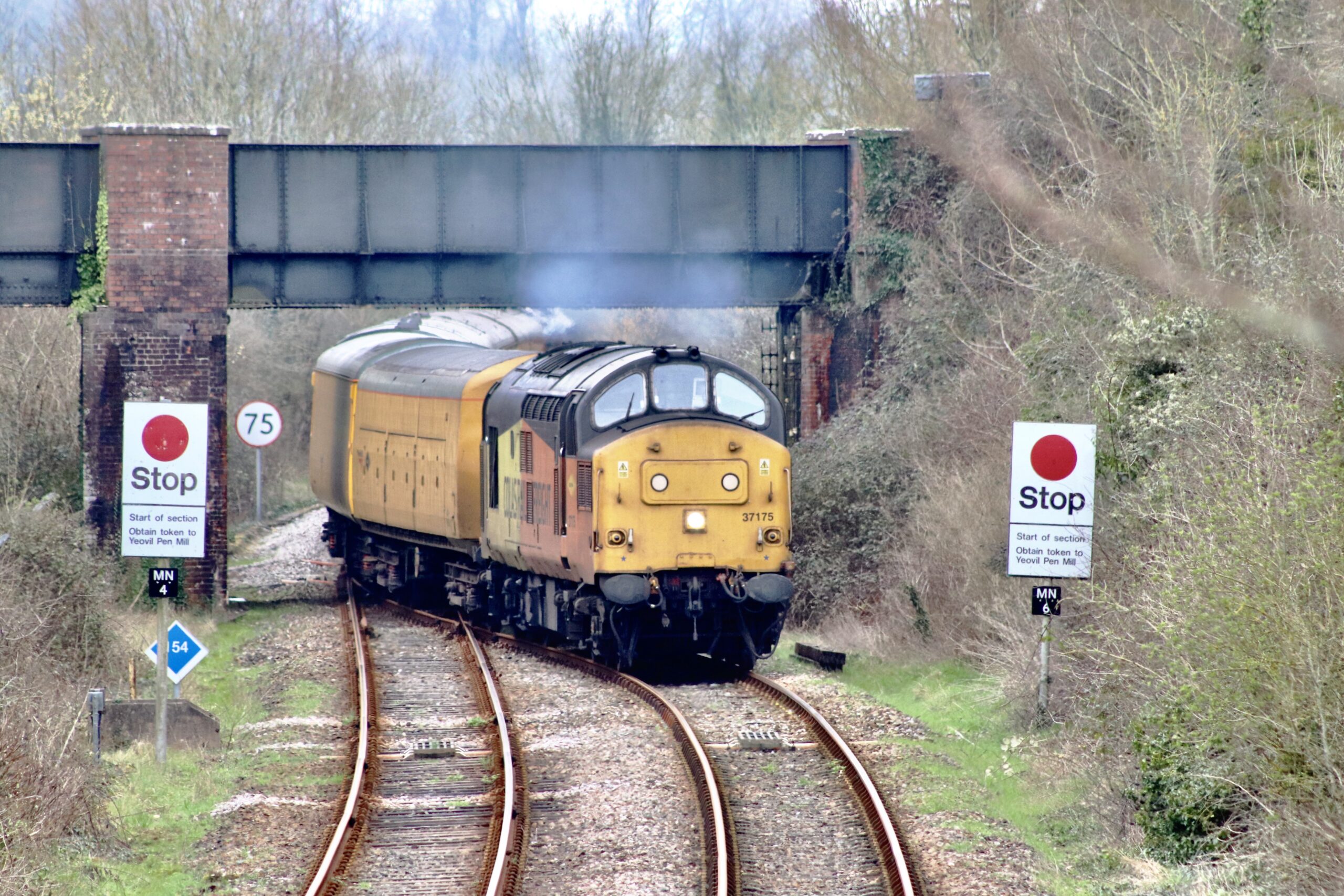
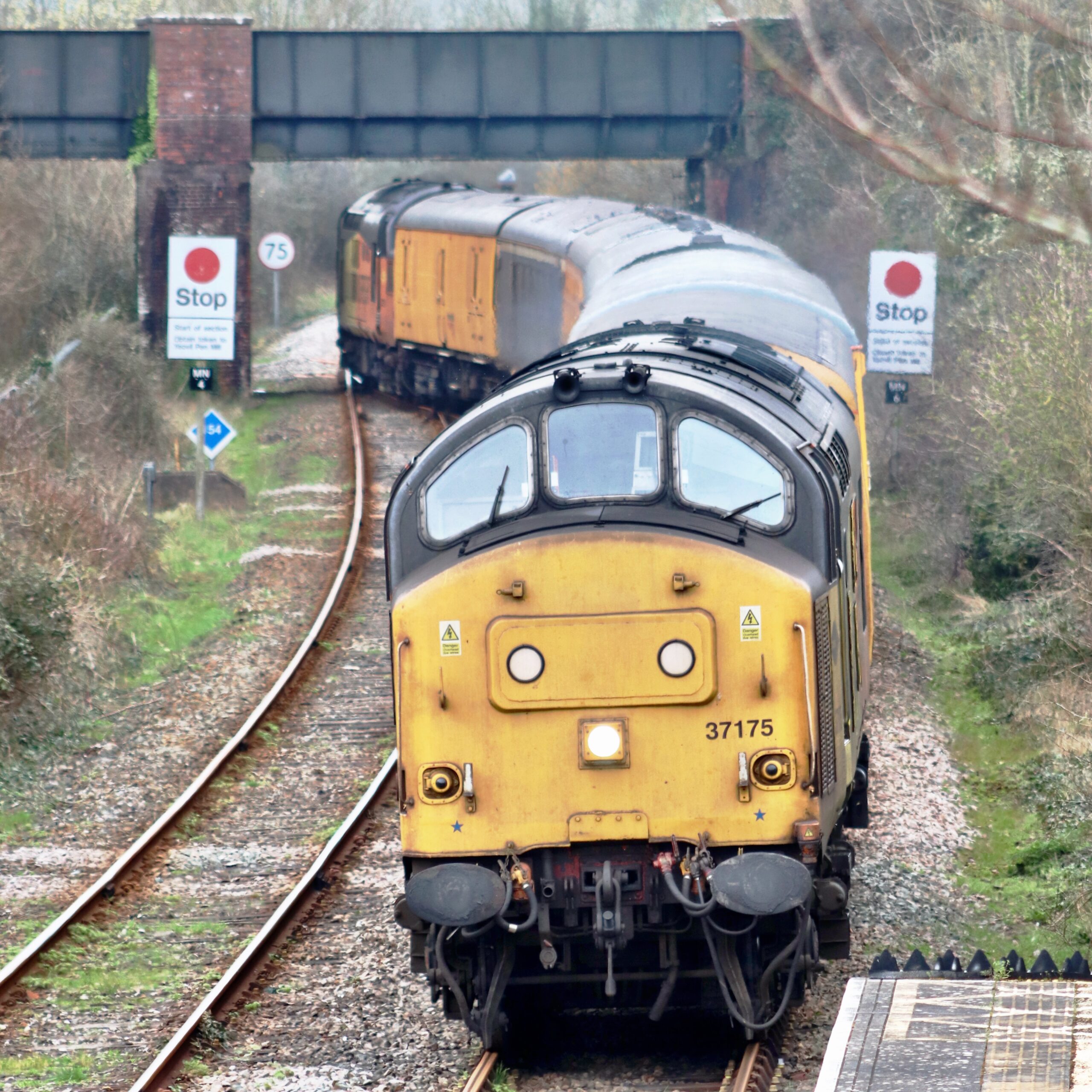
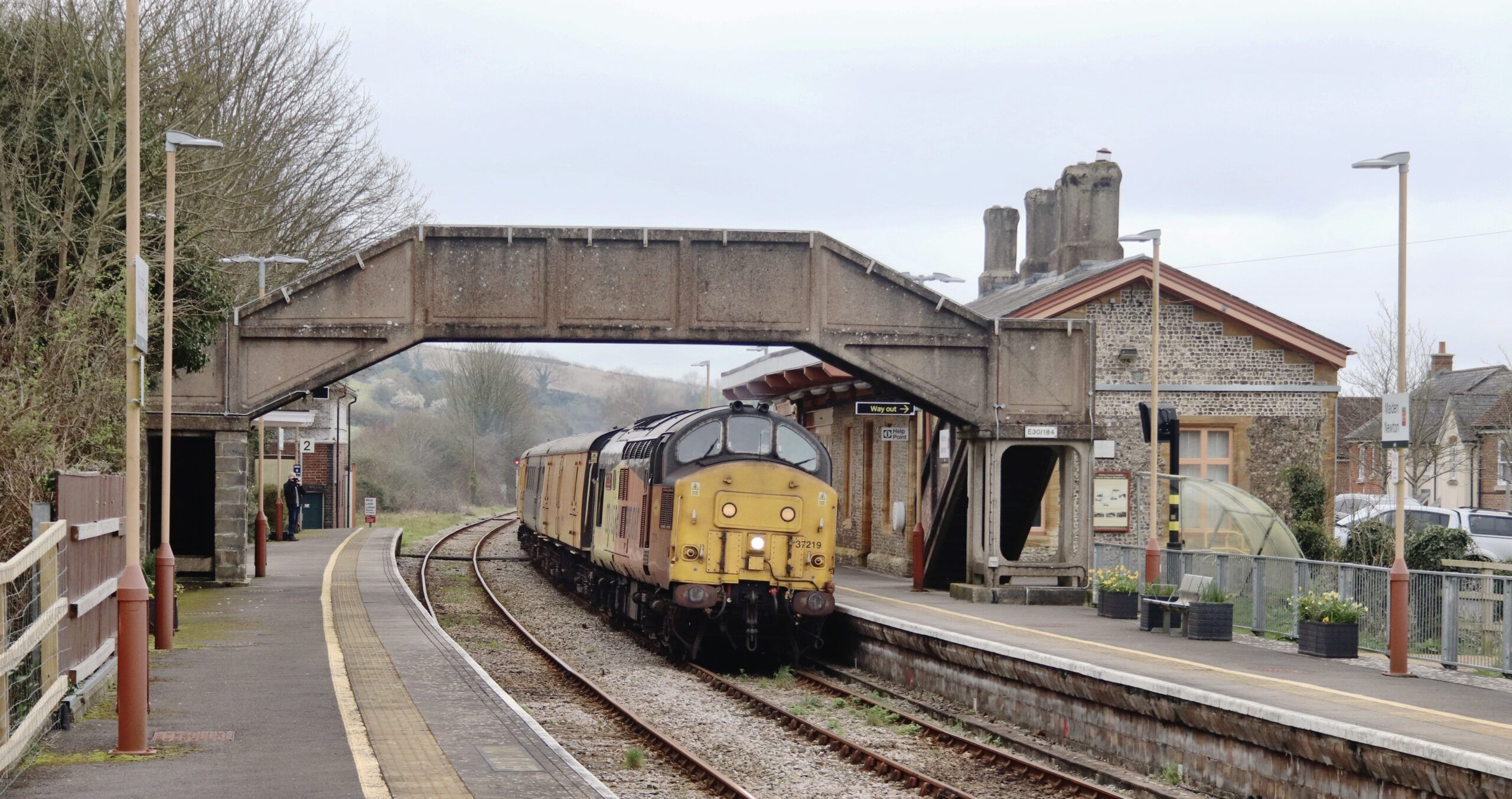
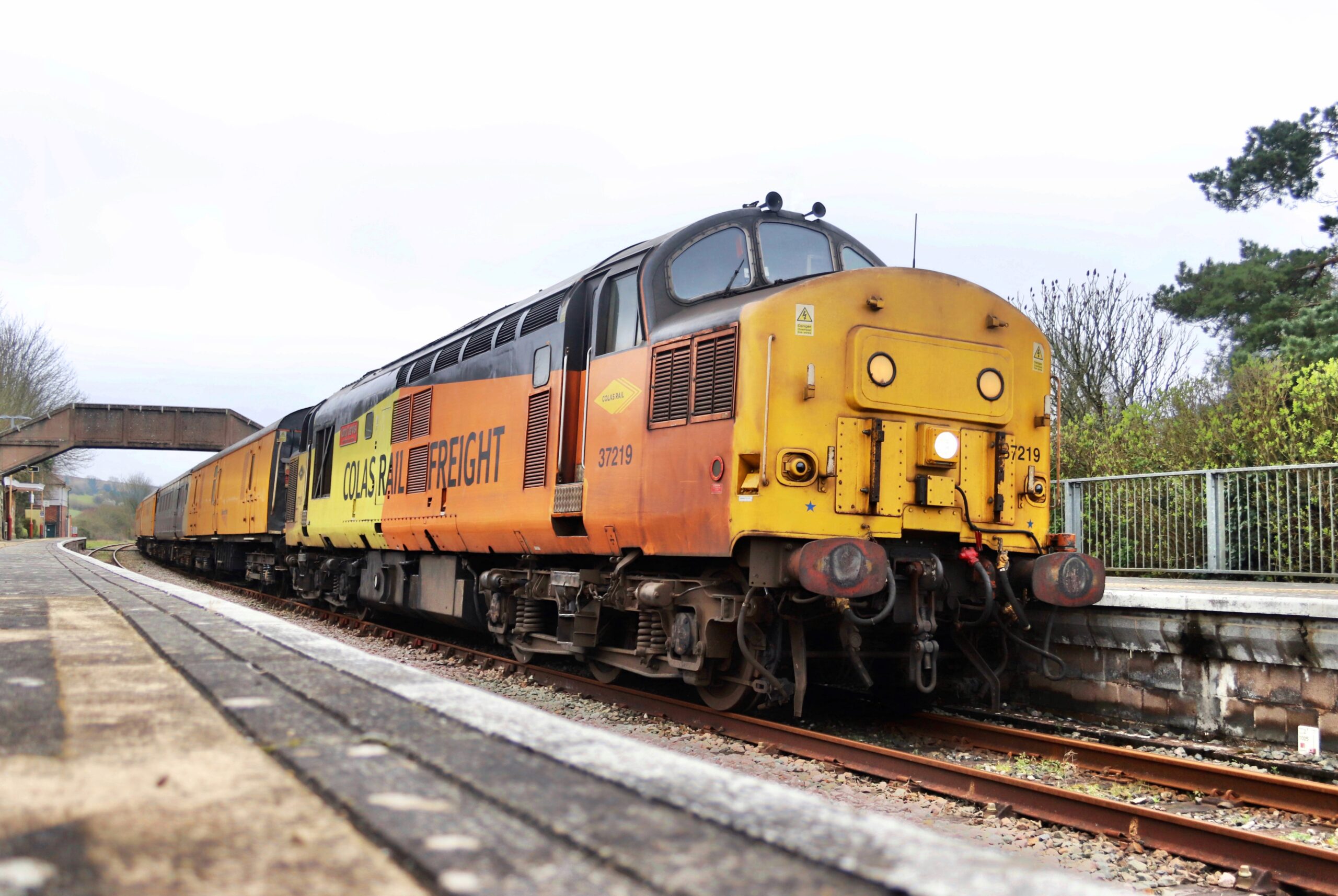
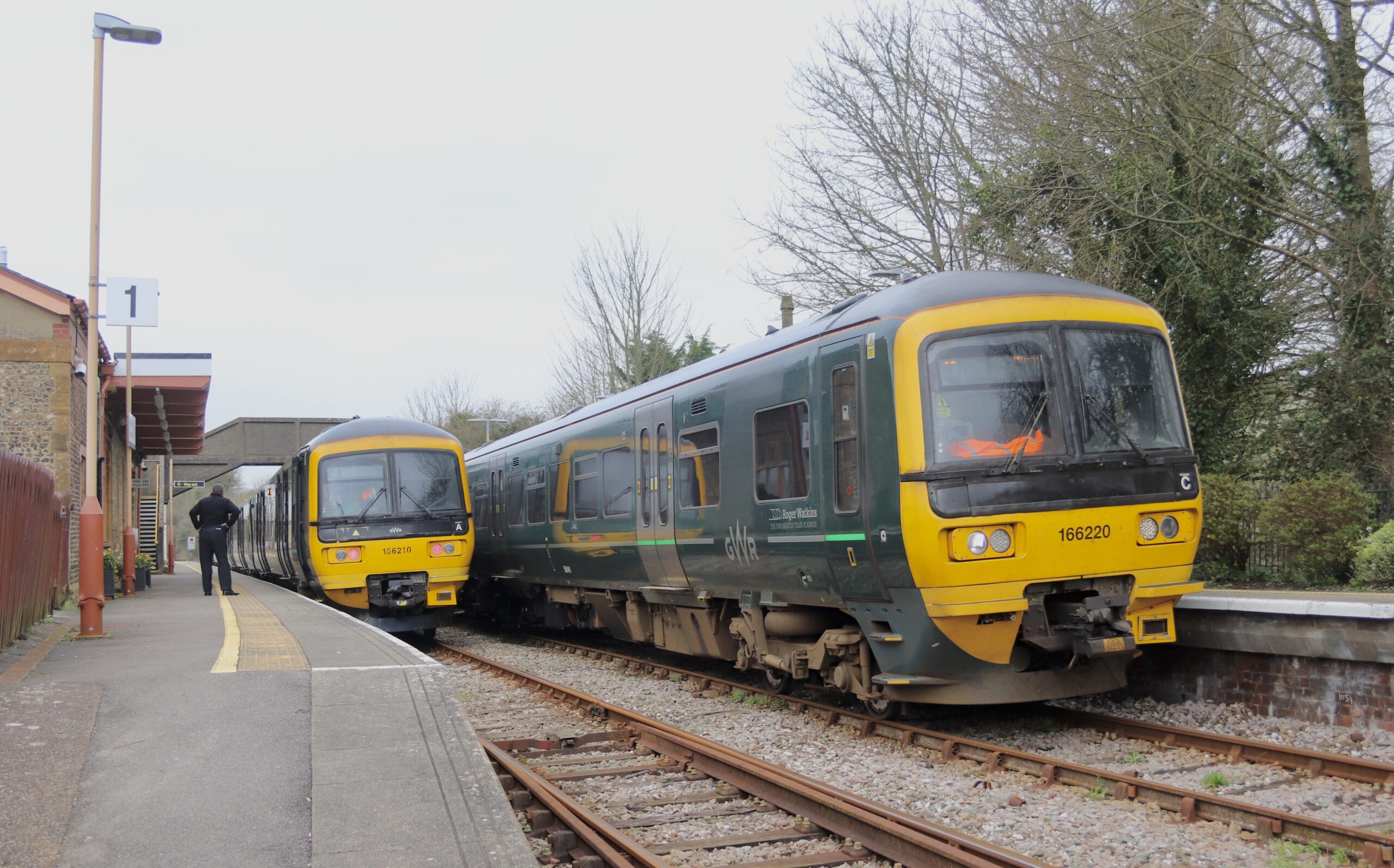
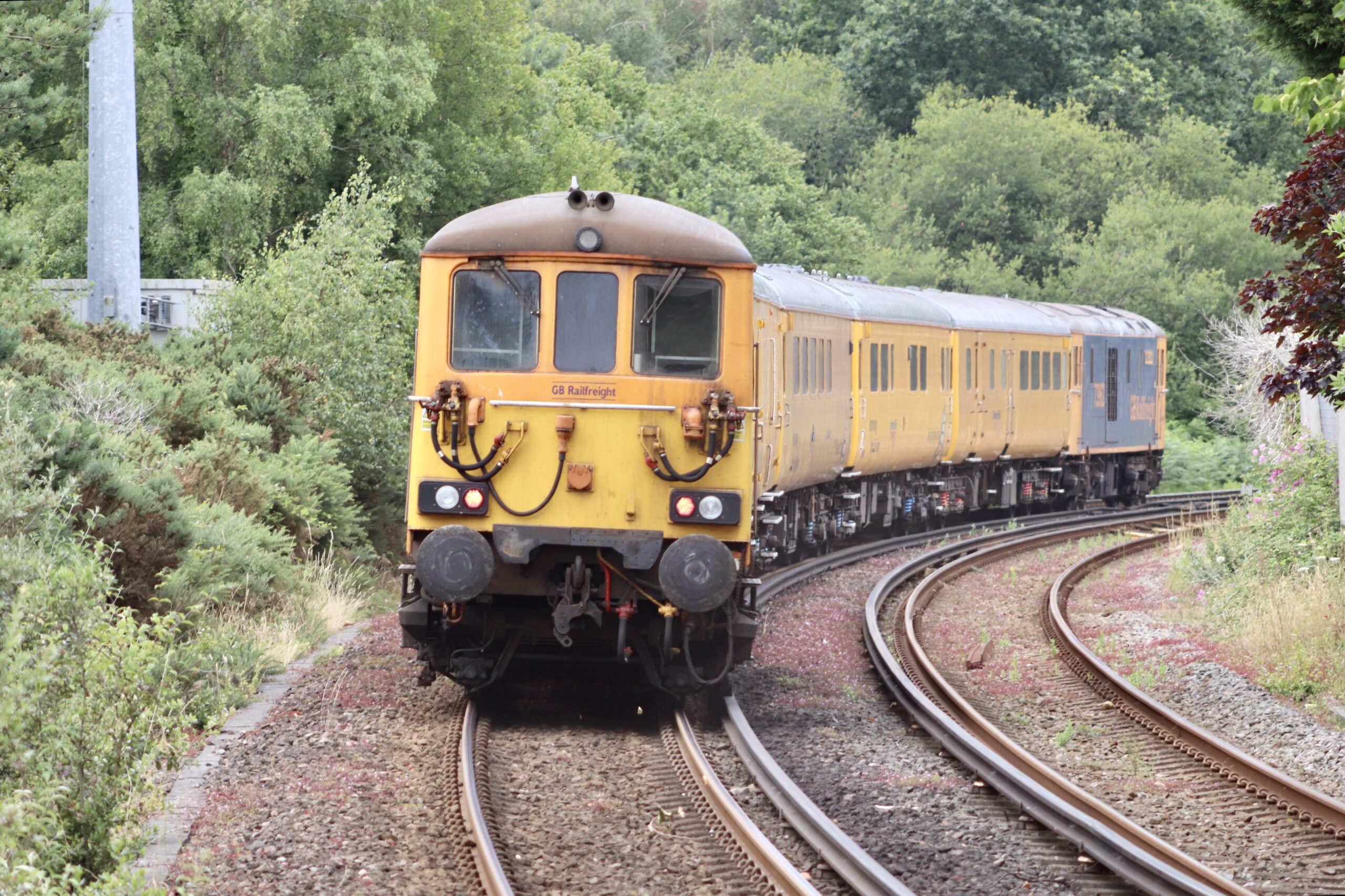
The following day, I hitched a lift with friend of the blog Jamie for a visit to Maiden Newton to see Colas Railfreight Class 37 No.’s 37175 and 37219 ‘Jonty Jarvis’ top and tailing a Structure Gauging Train on its way from Westbury to Weymouth and return. The working left Westbury around two hours late and I probably aged Jamie by a few years by claiming we had plenty of time to make the journey over to see the train! We arrived in Maiden Newton with ten minutes to spare.
Great Western Railway Class 166 No. 166210 on the approach to Maiden Newton working 2V68 1328 Weymouth to Gloucester – 21/03/2024Colas Railfreight Class 37 No. 37175 on the approach to Maiden Newton leading on 3Q14 1021 Westbury Down Yard to Westbury Down Yard – 21/03/2024Colas Railfreight Class 37 No. 37175 with 37219 ‘Jonty Jarvis’ at the rear at Maiden Newton leading on 3Q14 1021 Westbury Down Yard to Westbury Down Yard on the outward leg to Weymouth – 21/03/2024On the return leg of 3Q14 1021 Westbury Down Yard to Westbury Down Yard Colas Class 37 No. 37219 ‘Jonty Jarvis’ leads into Maiden Newton – 21/03/2024 Colas Class 37 No. 37219 ‘Jonty Jarvis’ pauses at Maiden Newton as the driver collects to token to allow the train to progress onto the next single line section of track – 21/03/2024Great Western Railway Class 166 Turbo’s cross at Maiden Newton; No.166220 working 2O76 1110 Gloucester to Weymouth and No. 166210 forms 2V68 1328 Weymouth to Gloucester – 21/03/2024
Maiden Newton trains – 21/03/2024
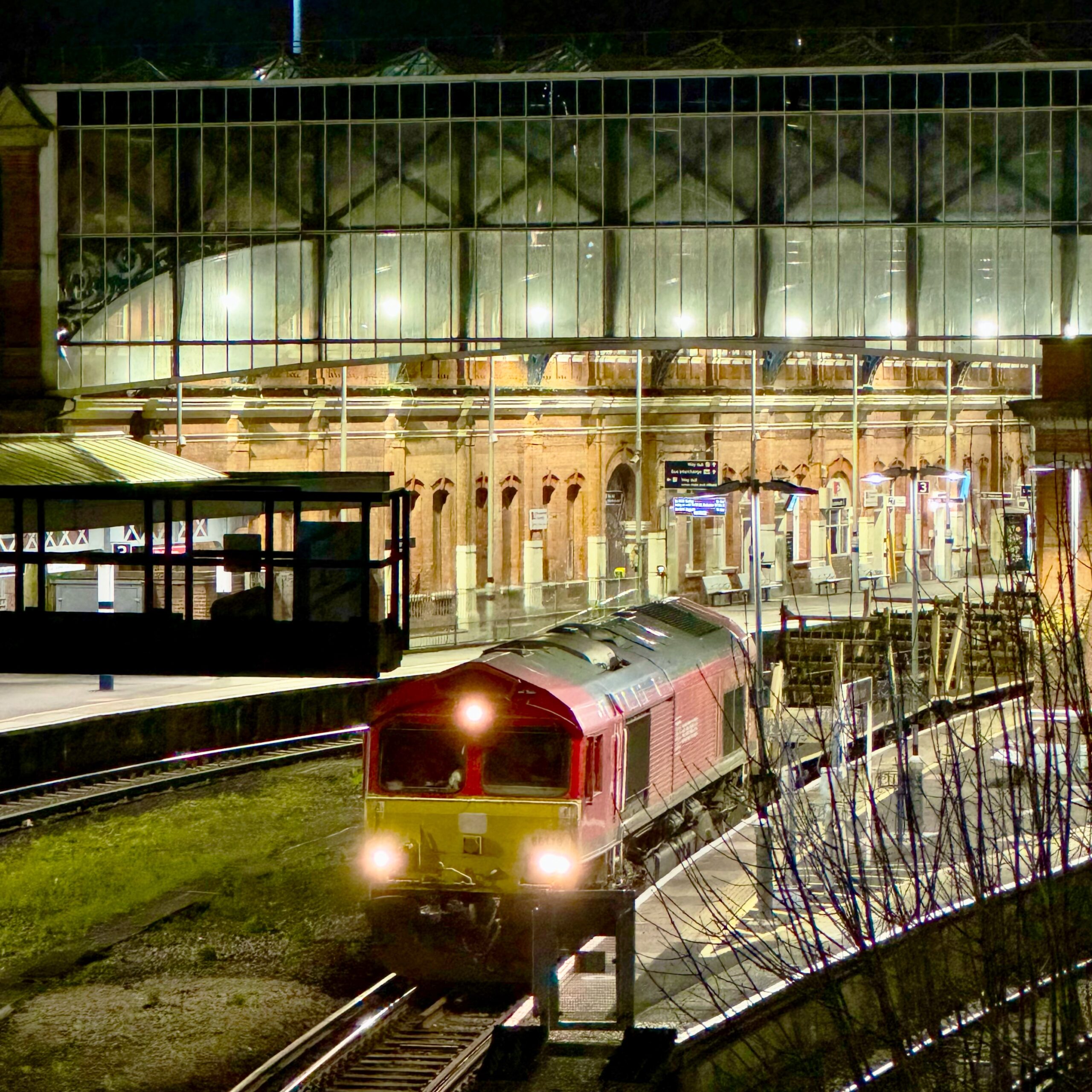
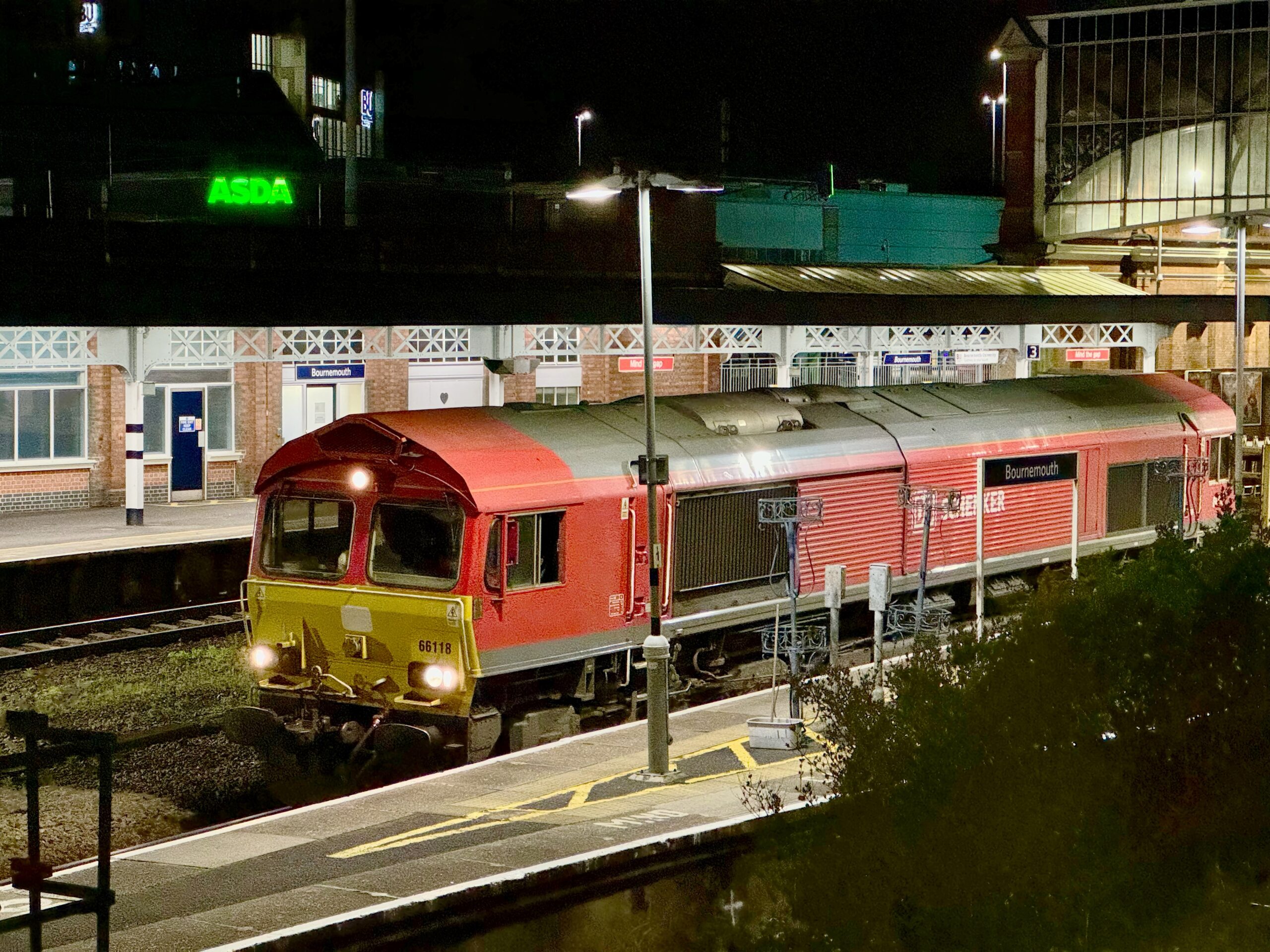
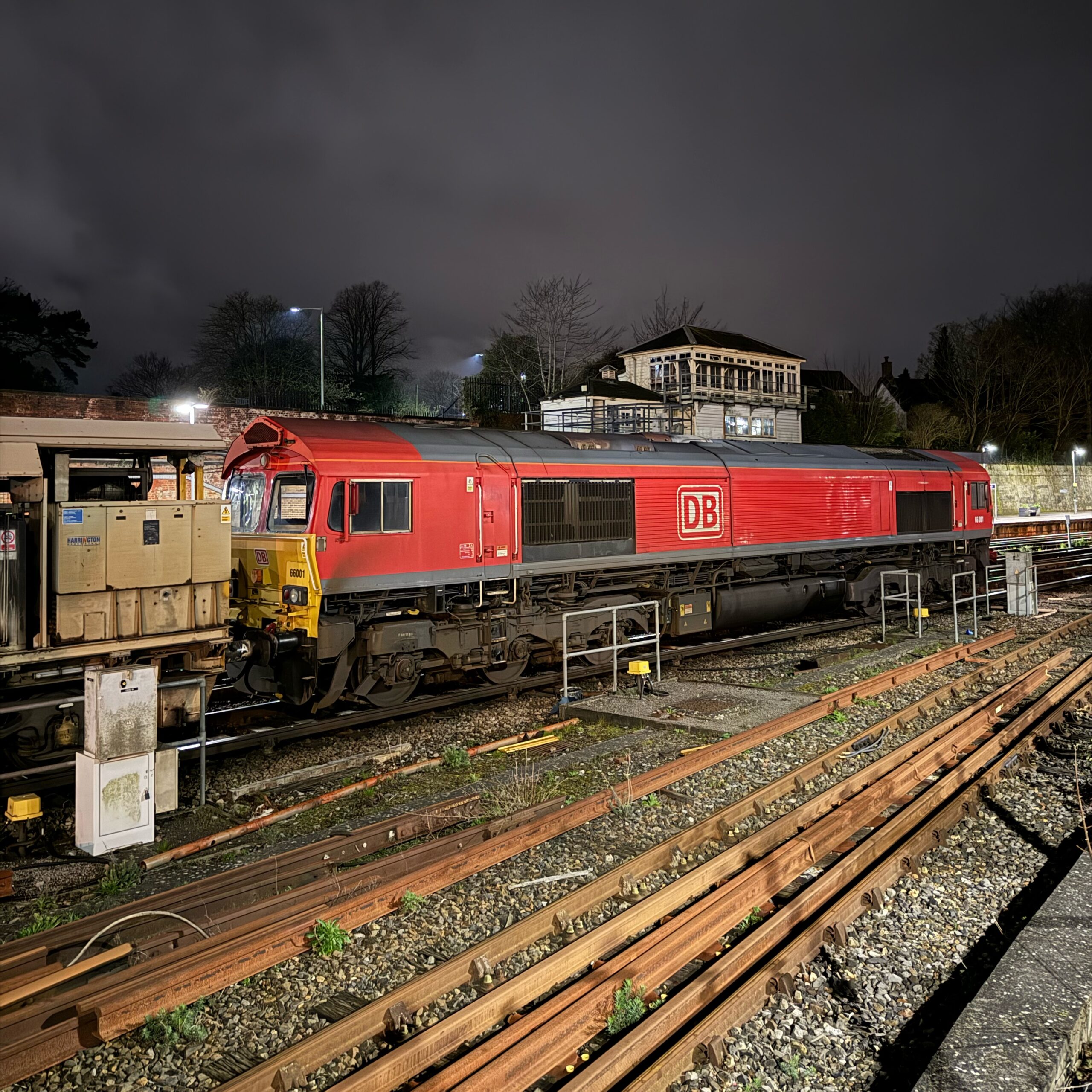
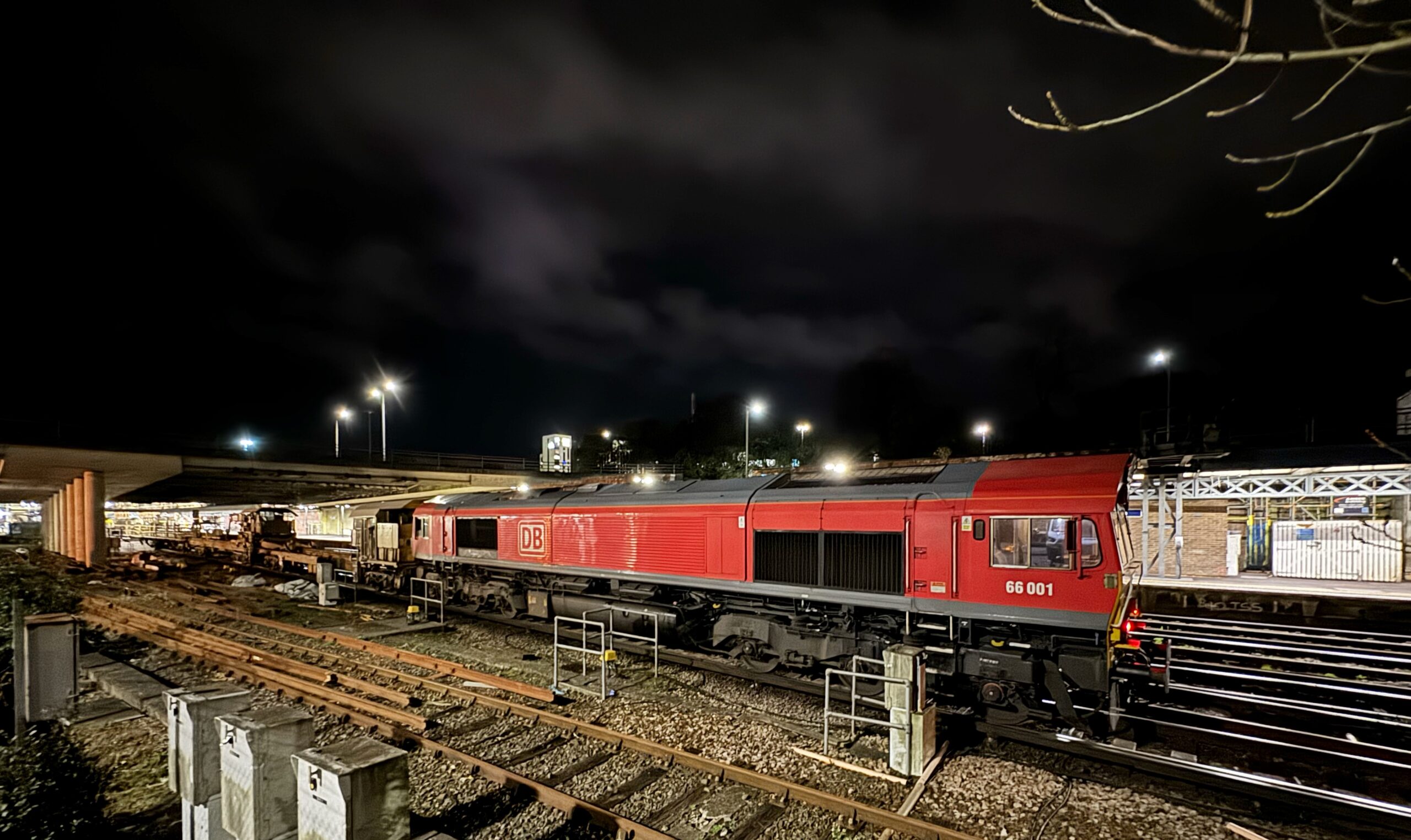
Later that night, another engineering train ventured into Dorset in conjunction with work in the Christchurch area. I didn’t see train 6N75 2300 Eastleigh East Yard to Christchurch arrive, but I did get up early Friday morning to see DB Class 66 No. 66118 and pioneer shed No. 66001 departing Bournemouth as they returned with their train to Eastleigh East Yard this time working as 6N75 0505 Bournemouth to Eastleigh East Yard. It was so early, Bournemouth railway station was still locked up when I arrived. However the train departed around 20 minutes behind schedule, but not wanting to risk missing filming the departure, I stood steadfastly at my vantage point overlooking the station when I could have easily ventured down to platform level once the station was opened up to the travelling public for the first passenger trains of the day.
With Bournemouth railway station as its backdrop, DB Cargo Class 66 No. 66118 awaits departure working 6N75 0505 Bournemouth to Eastleigh East Yard – 22/03/2024DB Cargo Class 66 No. 66118 at Bournemouth leading on 6N75 0505 Bournemouth to Eastleigh East Yard – 22/03/2024DB Cargo Class 66 No. 66001 at the rear of 6N75 0505 Bournemouth to Eastleigh East Yard – 22/03/2024DB Cargo Class 66 No. 66001 awaits departure of 6N75 0505 Bournemouth to Eastleigh East Yard – 22/03/2024
DB Cargo Class 66’s at Bournemouth – 22/03/2024
HAMWORTHY BRANCH
Poole Harbour Commissioners (PHC) Annual Stakeholders Open Evening 2024 – 20/03/2024
Poole Harbour Commissioners (PHC) Annual Stakeholders Open Evening 2024 took place on 20th March in the North Lounge of the Passenger Terminal. We went along to see if there were any updates on the restoration of freight traffic along the Hamworthy Branch which runs down to the port area from a junction to the mainline at Hamworthy railway station. PHC CEO Captain Brian Murphy said; “We are very fortunate to have the port railway. We haven’t used it for some time, but it’s there and it aligns perfectly with our decarbonisation goals. Modal shift is the best way to get transport off the roads. We want to grow the business, we want to grow the freight. We want more cargo through the port but we’d rather actually get as much as possible on to rail rather than the roads. So this does align with the governments ambitious targets which are of part of their 2050 plan for clean maritime and reducing carbon emissions and there has been a lot of work which has actually happened thus far. The commissioners have invested quite heavily in securing the lease that runs from the port all the way to the mainline and there has been a lot of upgrading work which has happened on the Hamworthy Branch. We’ve got a little bit more to do in terms of in the port but we are looking at the business case and hopefully it all aligns. But clearly in terms of ownership, it’ll be a lot of trucks off the road so very excited about that project.”
We recently learned of the passing of our friend and fellow railway enthusiast, Syd Brown. Syd has been a transport enthusiast for many years and could regularly be found supporting local transport events. He was an active member of the old Dorset Transport Circle in times past. Syd’s working life was spent in Dorset County Council’s Roads and Bridges department (now known as Transport and Engineering) and he was also an official in the Dorset County branch of NALGO (now UNISON). Our condolences to Syd’s family.
Thank you for reading and for your comments and corrections. We’ll be back soon with our record of our day attending the Swanage Railway Victorian Weekend. Be seeing you!
Postscript:
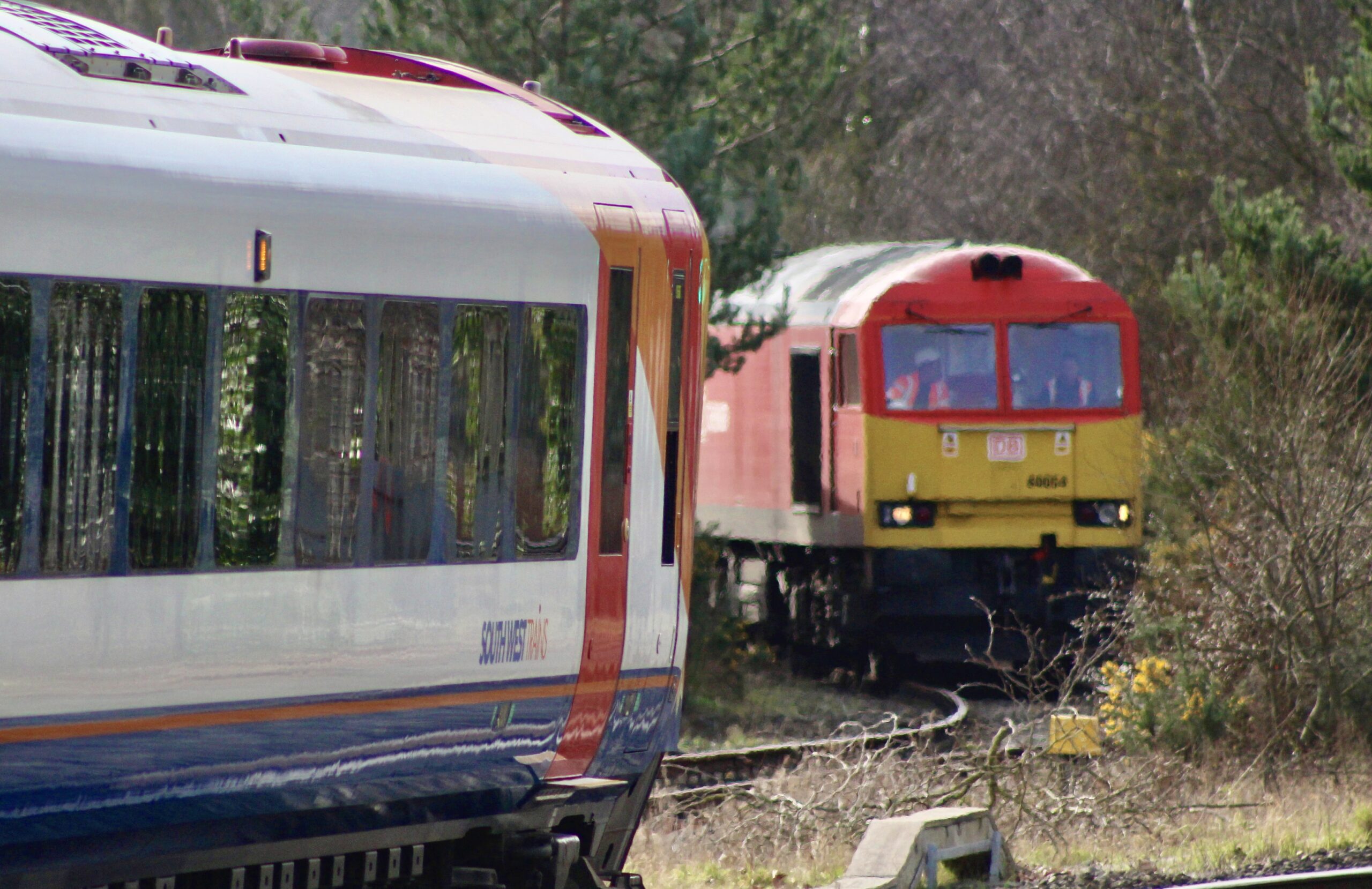
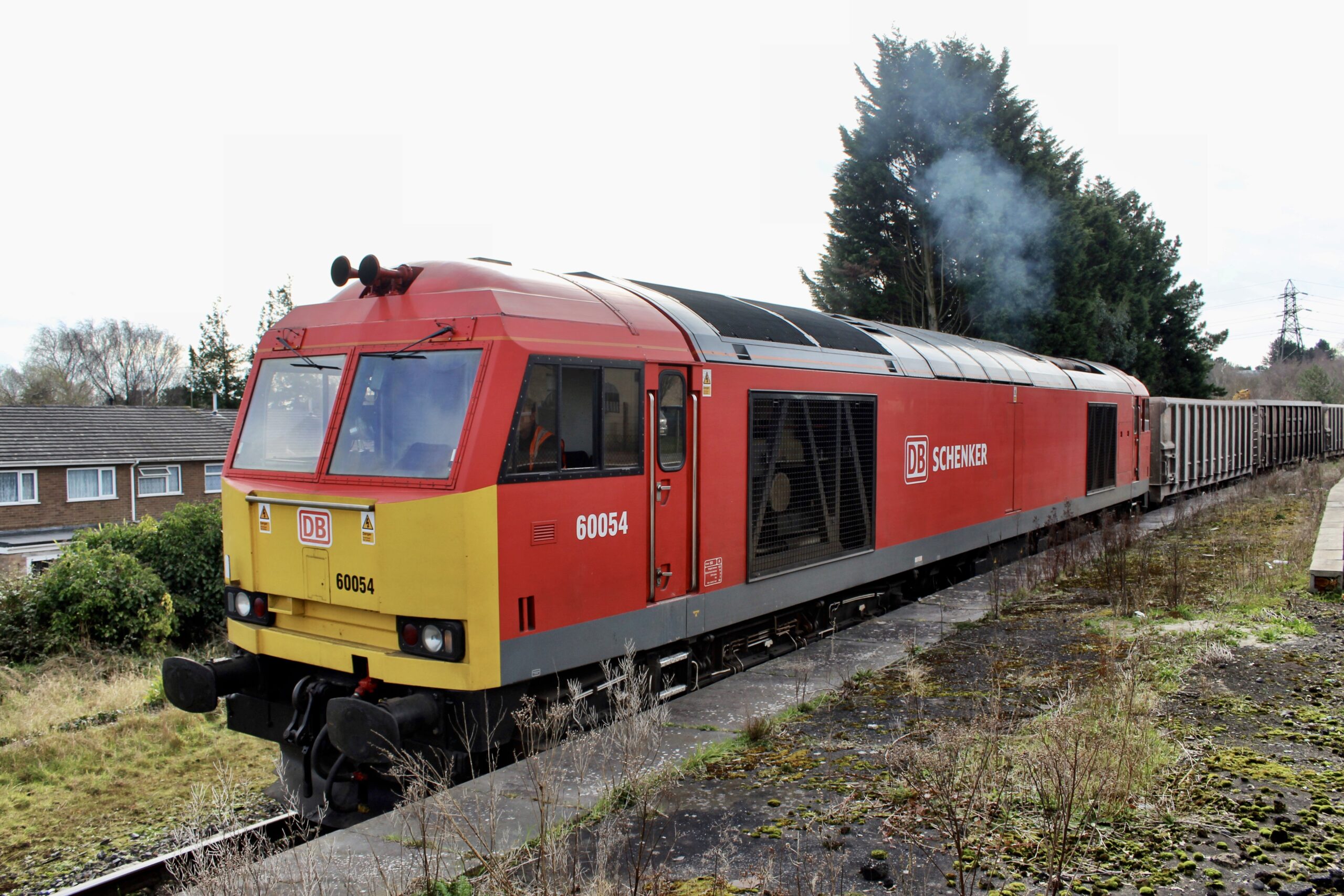
Will we ever see trains coming off the Hamworthy Branch again? Back in 2017, DB Cargo Class 60 No. 60054 heads towards the mainline at Hamworthy while South West Trains (SWT) Class 444 No. 444032 waits at platform with a Weymouth service – 17/02/2017 DB Cargo Class 60 No. 60054 draws up to the signal protecting the branch from the mainline at Hamworthy – 17/02/2017
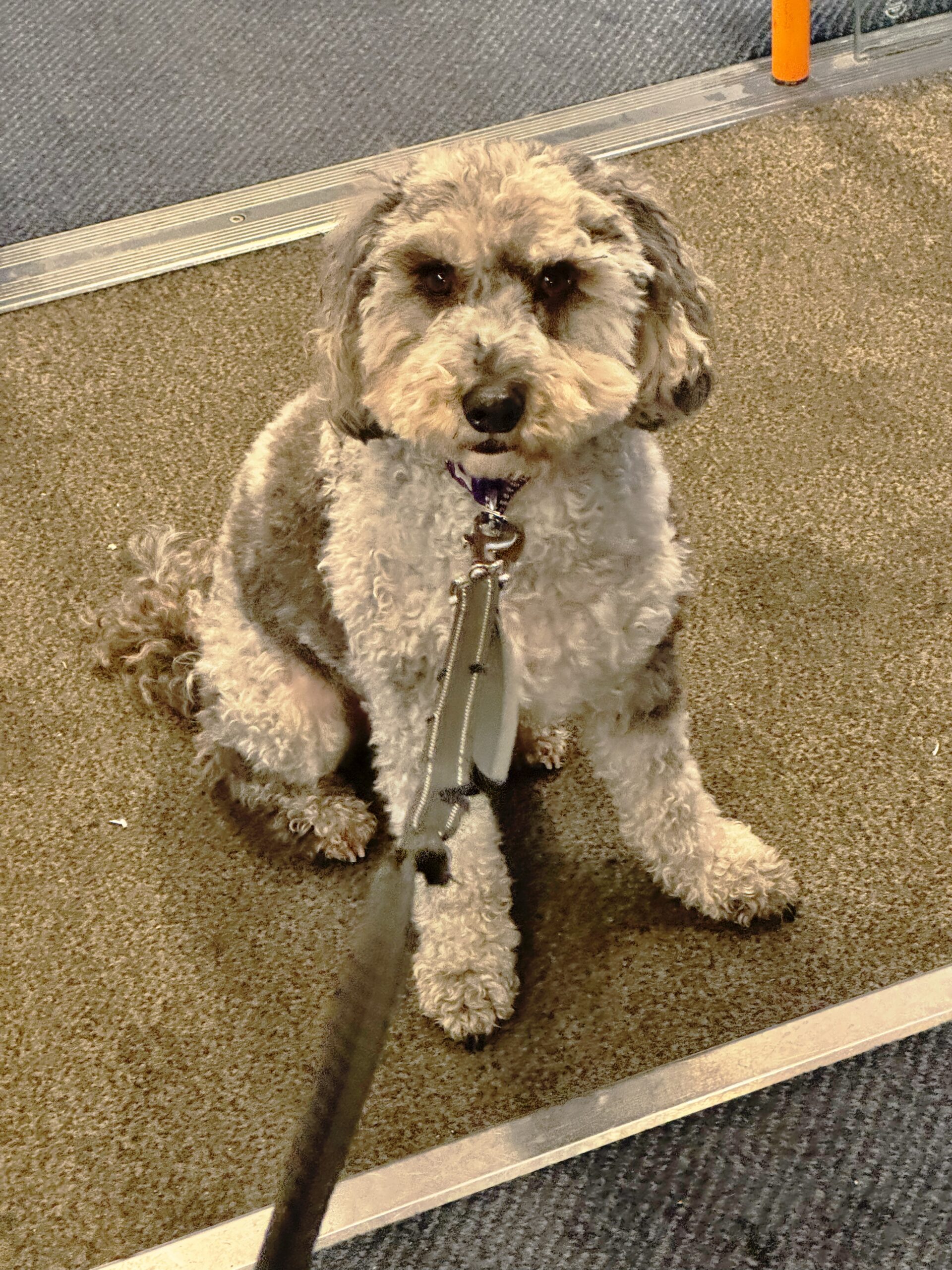
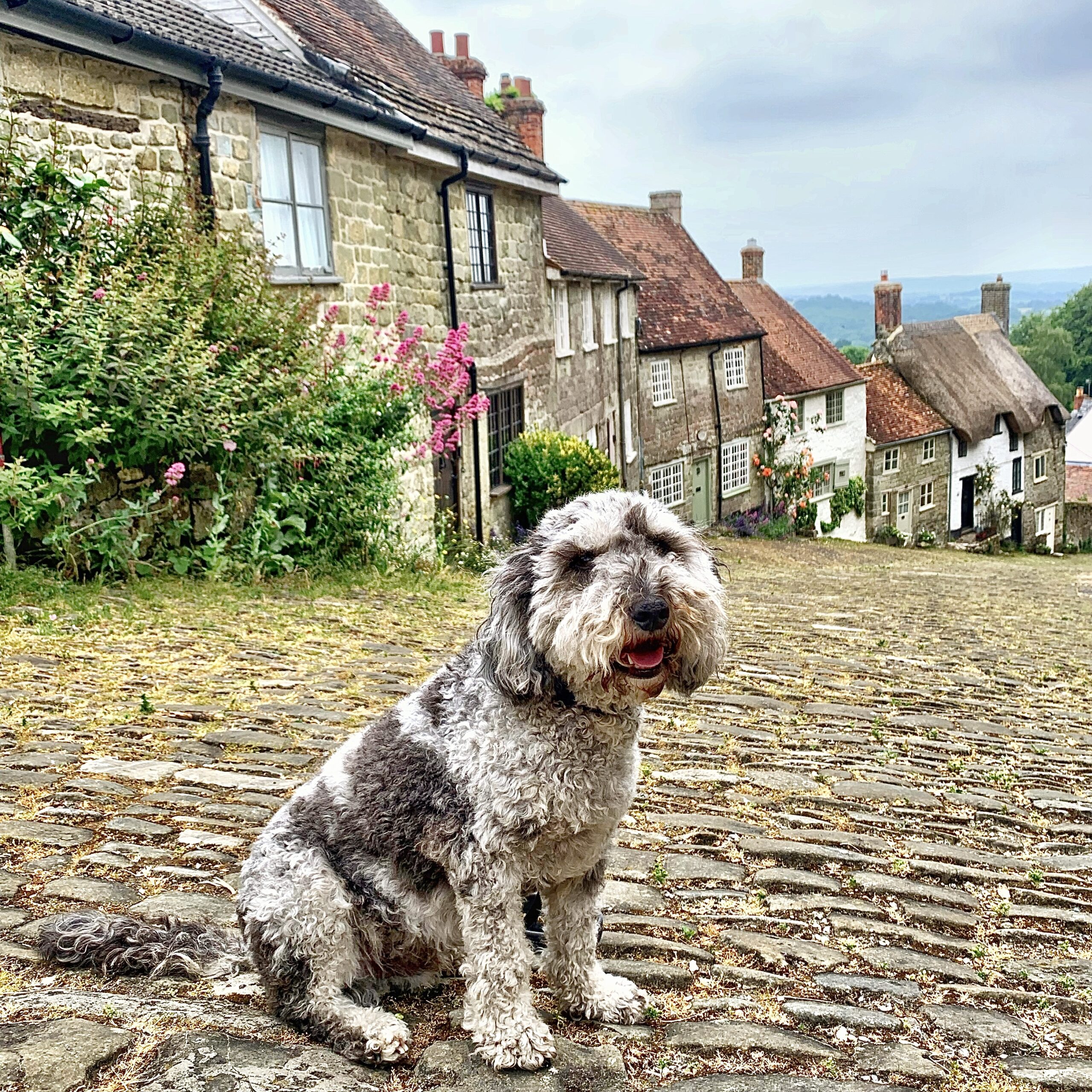
Yoshi in the back of the car having enjoyed a wet and muddy walk in the woods!
February 10th 2024 to February 21st 2024
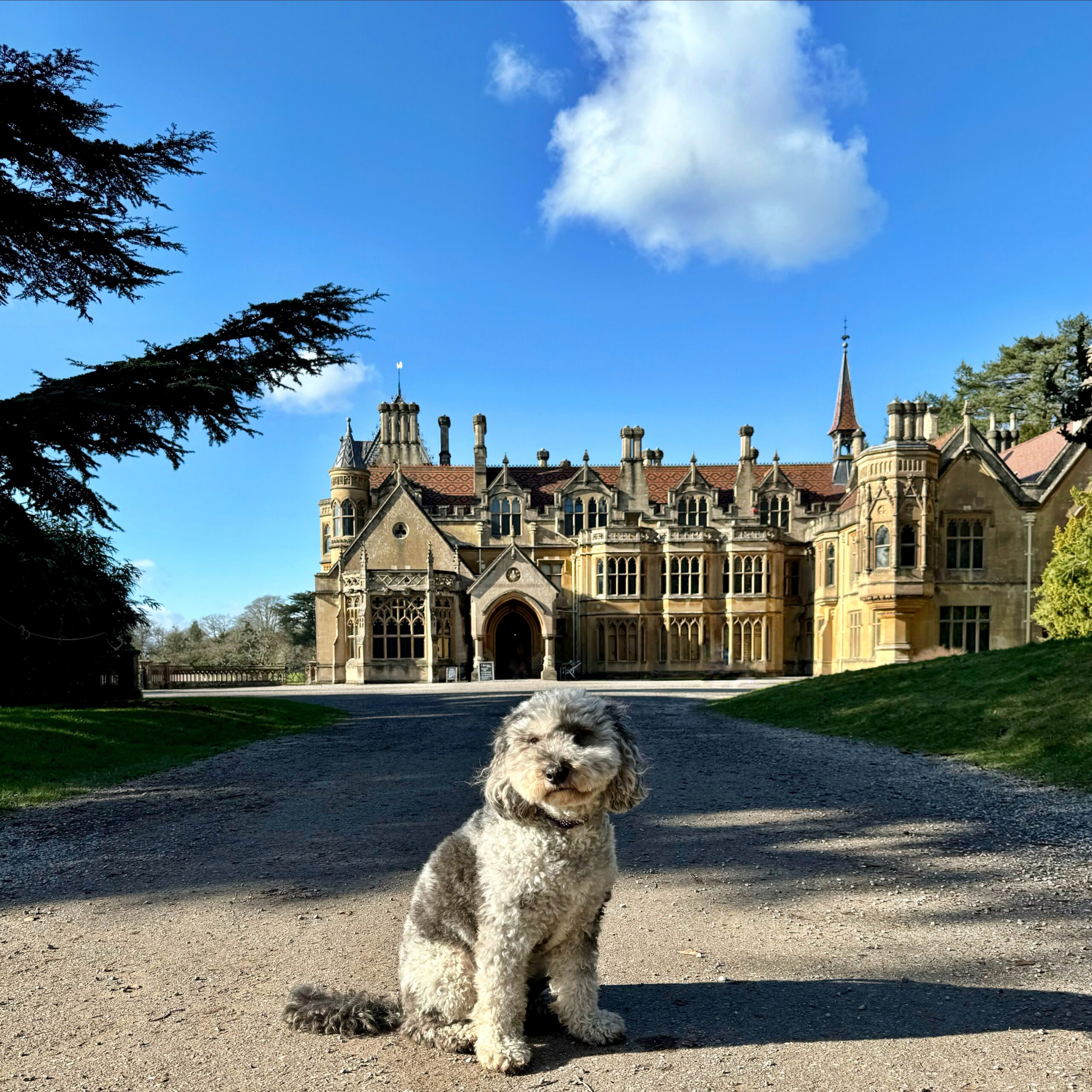
Hello – as mentioned briefly last time around, we were planning on bringing you an archive feature on Bournemouth Depot Open days, but we need to find and scan some additional negatives as well as editing down and converting 8mm video tape, so that’ll take a little bit more time to prepare. That’ll teach us, and to be fair this blog entry has taken long enough! In the meantime, a rolling stone gathers no moss and Yoshi has been exploring Stonehenge (or at least the footpath outside the English Heritage site, as dogs are “NOT ALLOWED” near the ancient monument). A note to English Heritage – can you provide dog poo bins prior to the section where dogs cannot pass please? Thanks very much. And as if Yoshi couldn’t get enough of old rocks, he also took a walk around the stone circle at Avebury – no trains, but lots of mystical ley lines – before moving onto Wells and Tyntesfield House.
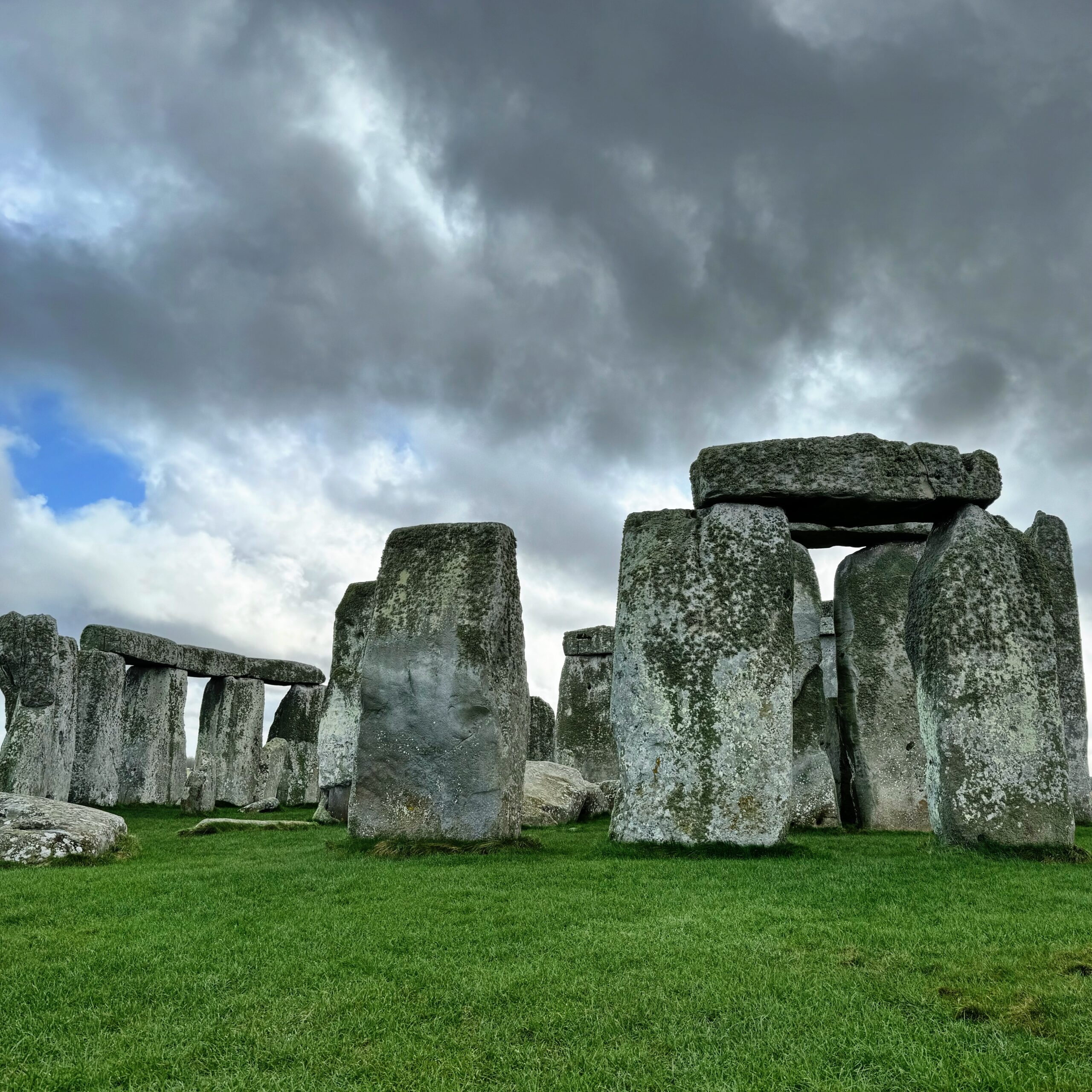
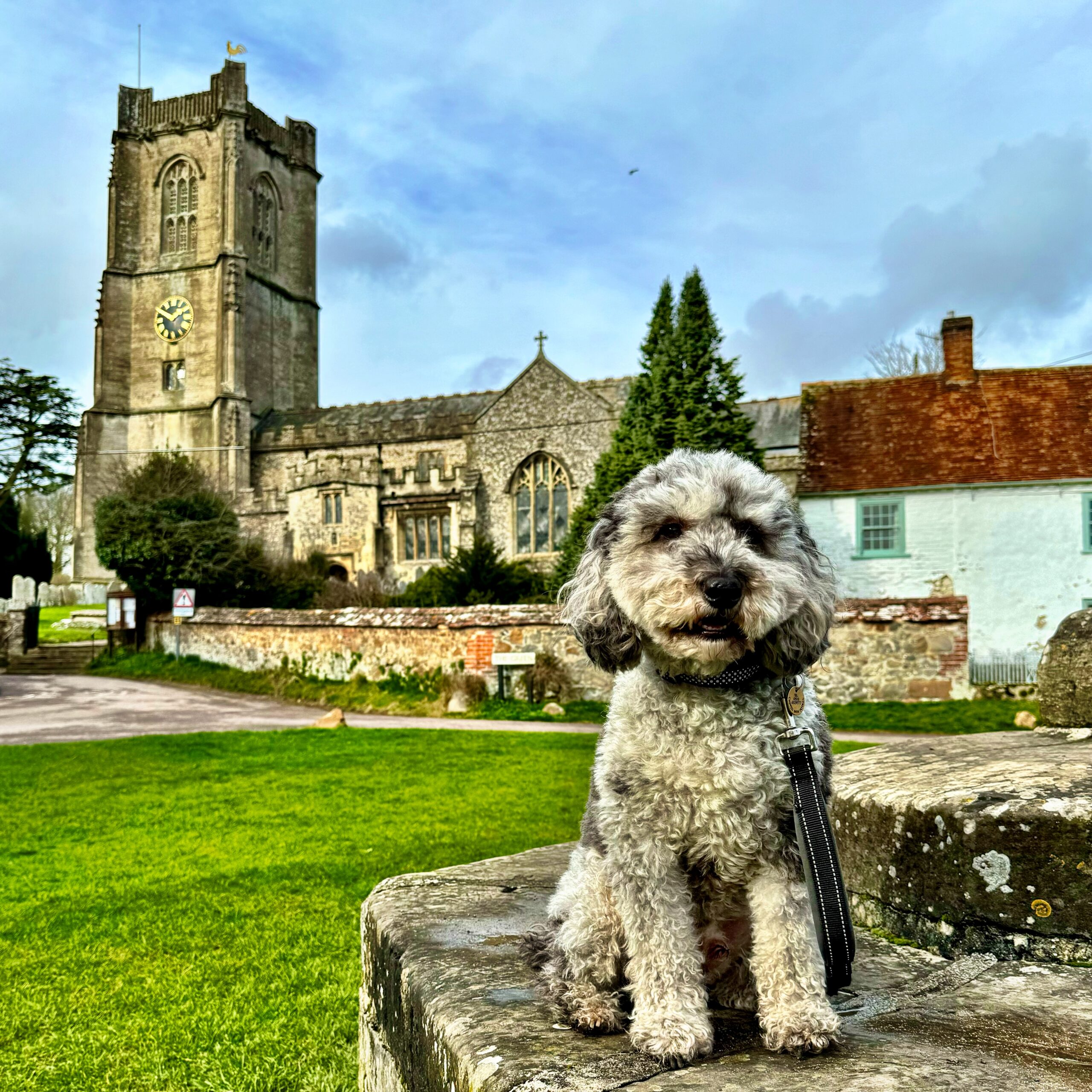
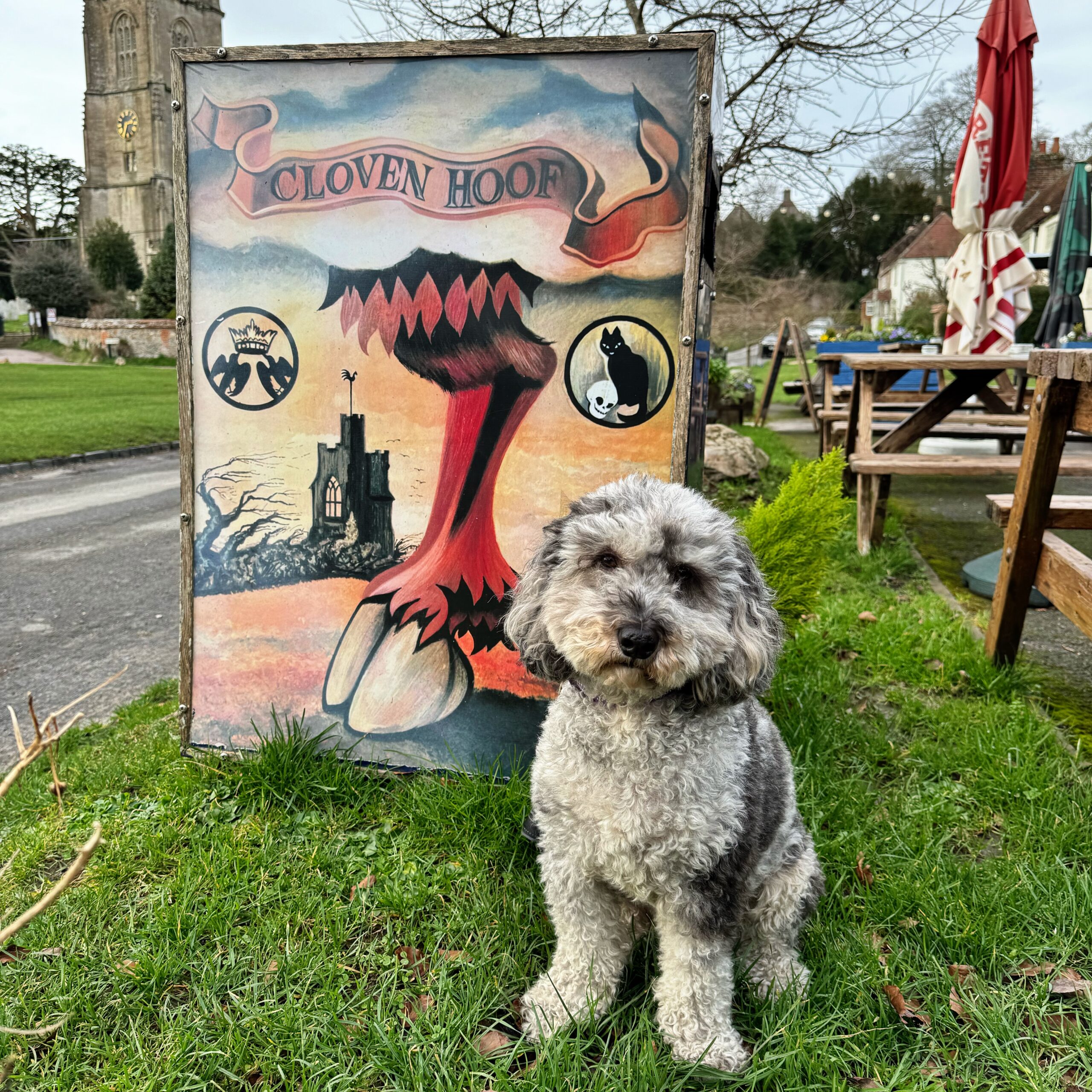
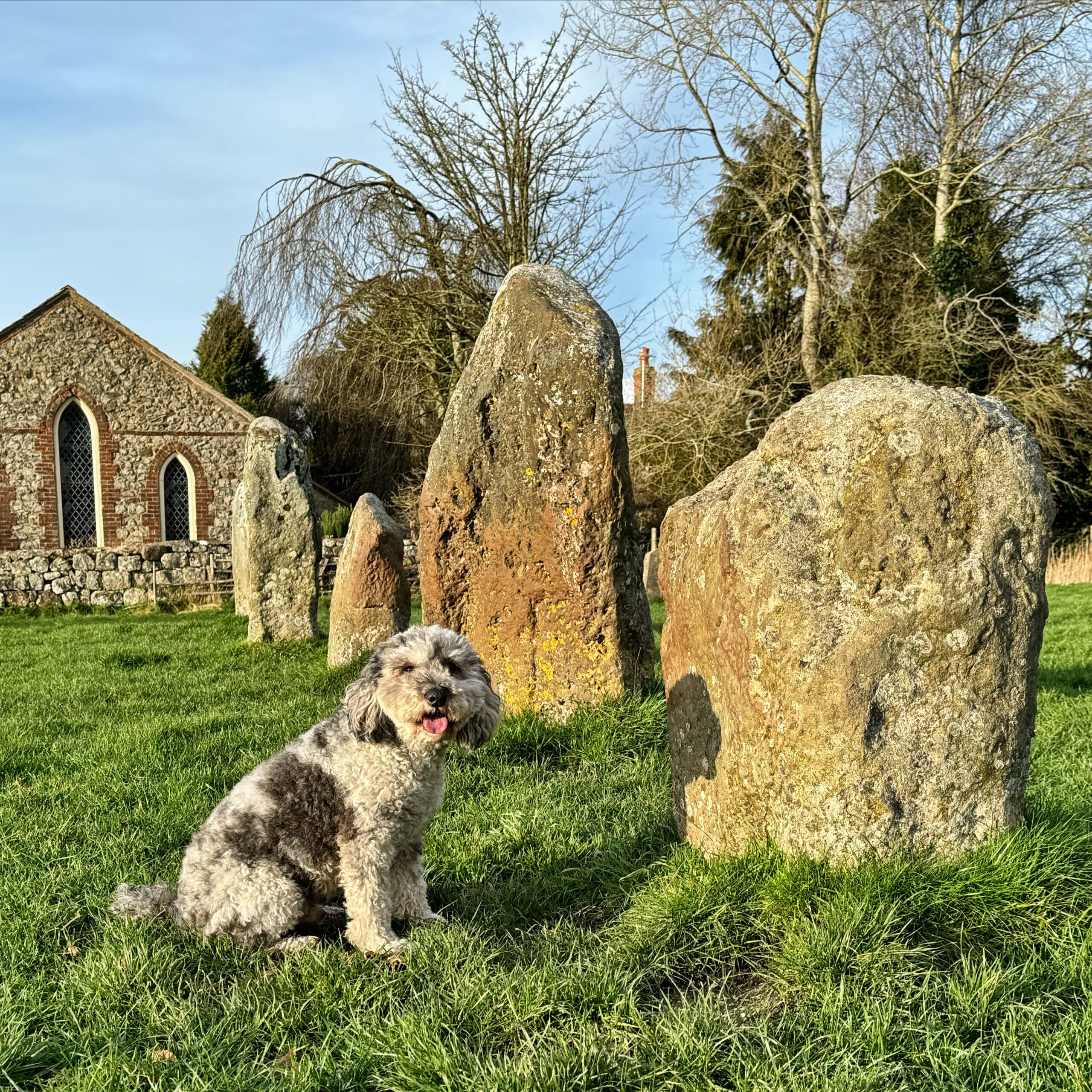
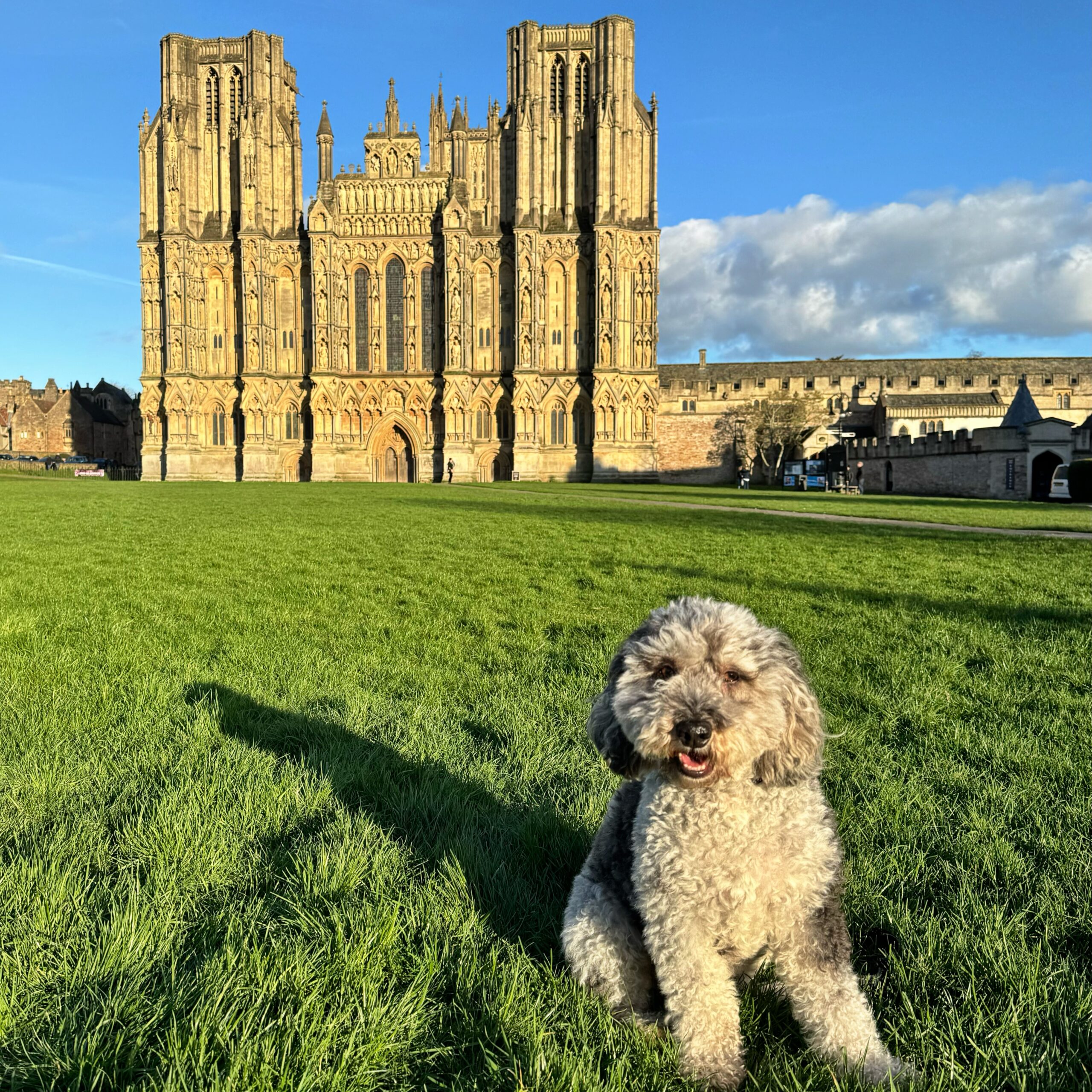
Yoshi gets as close to Stonehenge as he is allowed! Stonehenge is a prehistoric megalithic structure on Salisbury Plain in Wiltshire two miles west of Amesbury. It consists of an outer ring of vertical sarsen standing stones, each around 13 feet high, seven feet wide, and weighing around 25 tons, topped by connecting horizontal lintel-stones. Inside is a ring of smaller bluestones. Inside these, are free-standing trilithons; two bulkier vertical sarsens joined by one lintel. The whole monument is aligned towards the sunrise on the summer solstice and sunset on the winter solstice. Archaeologists believe that Stonehenge was constructed in several phases from around 3100 BC to 1600 BC, with the circle of large sarsen stones placed between 2600 BC and 2400 BC. Doctor Who used Stonehenge as a plot point in the 2010 episode “The Big Bang”. I liked that episode. I should rewatch it. I include the mention to the BBC TV series, as it was something of a developing theme…..An announcement in November 2020 stated that a plan to construct a four-lane tunnel for traffic below the site had been approved. This was intended to eliminate the section of the A303 that runs close to the circle. The plan had received opposition from a group of “archaeologists, environmentalists and modern-day druids” according to National Geographic but was supported by others who wanted to “restore the landscape to its original setting and improve the experience for visitors”. Opponents of the plan were concerned that artifacts that are underground in the area would be lost or that excavation in the area could de-stabilize the stones, leading to their sinking, shifting or perhaps falling. On 14th July 2023, the Department for Transport (DaFT) announced that, despite the original planning application having been overturned by the High Court in 2021, the Transport Secretary, Mark Harper, had approved plans for a 2 mile road tunnel. On 19th February 2024, the High Court in London rejected a fresh bid by campaigners to stop the road tunnel construction.Yoshi’s next stop was Aldbourne where he visited the village green and took a look at the medieval St Michael’s church. During the Second World War, U.S. Army paratroopers of Easy Company, 2nd Battalion, 506th Parachute Infantry Regiment, 101st Airborne Division were based at Aldbourne from late 1943 to mid-1944, in preparation for the Normandy landings in June 1944 and Operation Market Garden in September.Aldbourne is also known as Devil’s End in the Doctor Who story “The Dæmons” featuring The Third incarnation of the Time Lord played by Jon Pertwee. One of the village pubs, The Blue Boar, was renamed as The Cloven Hoof! A model of St.Michaels’s church was also blown up during the story, which anecdotally generated complaints from viewers. A reminder of the Aldbourne Doctor Who link is this TARDIS litter bin, free for public use 🙂The prehistoric Avebury henge and stone circles were built and much altered during the Neolithic period (2850 BC and 2200 BC) survivING as a huge circular bank and ditch, encircling an area that includes part of Avebury village. Within the henge is the largest stone circle in the UK which originally consisted of approximately 100 stones. Two smaller stone circles are enclosed within. Avebury was memorably used as the location of the itv children’s drama series “Children of the Stones” (1977). As far as I know, the stones have not been seen in Doctor Who. So, in a bid for completism, I searched for a link and found it in nearby Yatesbury, where from 1942 – 1965 an RAF Radar School was situated and attended by Brian Hodgson who went on to run the BBC Radiophonic Workshop and devised the sound of the TARDIS by scraping his mother’s front door key along the strings of a piano. The video to the 1988 No.1 hit song “Doctorin’ the Tardis” by The Timelords, better known as The KLF, was partly filmed at Yatesbury. Don’t worry, we’ll get to the trains soon. Yoshi takes a look at Wells Cathedral – construction of which began on c1180 and was completed by the time of Henry VII. It was damaged during the English Civil War, but was later restored during the Victorian age. The building has also been used as a Doctor Who filming location when to stood in for Southwark Cathedral in the 2006 story “The Lazarus Experiment” featuring David Tennant as the Tenth Doctor.National Trust owned Tyntesfield House, bought in 1844 by William Gibbs as a retreat for his wife,Blanche, and their growing family. Close relatives in Bristol and neighbouring Belmont House in Wraxall, the estate benefited from direct links to London on Brunel’s newly built Great Western Railway (GWR). Keeping up with the Doctor Who connection, the property was used as a haunted mansion in Matt Smith’s tenure during the 2013 episode “Hide”.A walk in Horton Woods….…. past the 140ft high Horton Tower, also known as Sturt’s Folly, built in c1750 by the Lord of Horton Manor, Humphrey Sturt, who was an architect and a Dorset MP. In 1967 the tower featured in the film adaptation of Thomas Hardy’s “Far From the Madding Crowd”. Over the years it had fallen into disrepair but in 1991, Vodafone was granted permission to use the tower for mobile phone masts. As part of the deal the company agreed to carry out repairs, and the conservation project was recognised with a Royal Town Planning Institute award in January 1995.Journey’s End; Yoshi relaxing in front of a warm fire at The Horton Inn after our walk!
For The record
12/02/2024: 1Q51 1115 Derby RTC to Eastleigh East Yard via Weymouth
73963 ‘Janice’ pauses briefly at Poole leading on 1Q51 1115 Derby RTC to Eastleigh East Yard via Weymouth – 12/02/2024
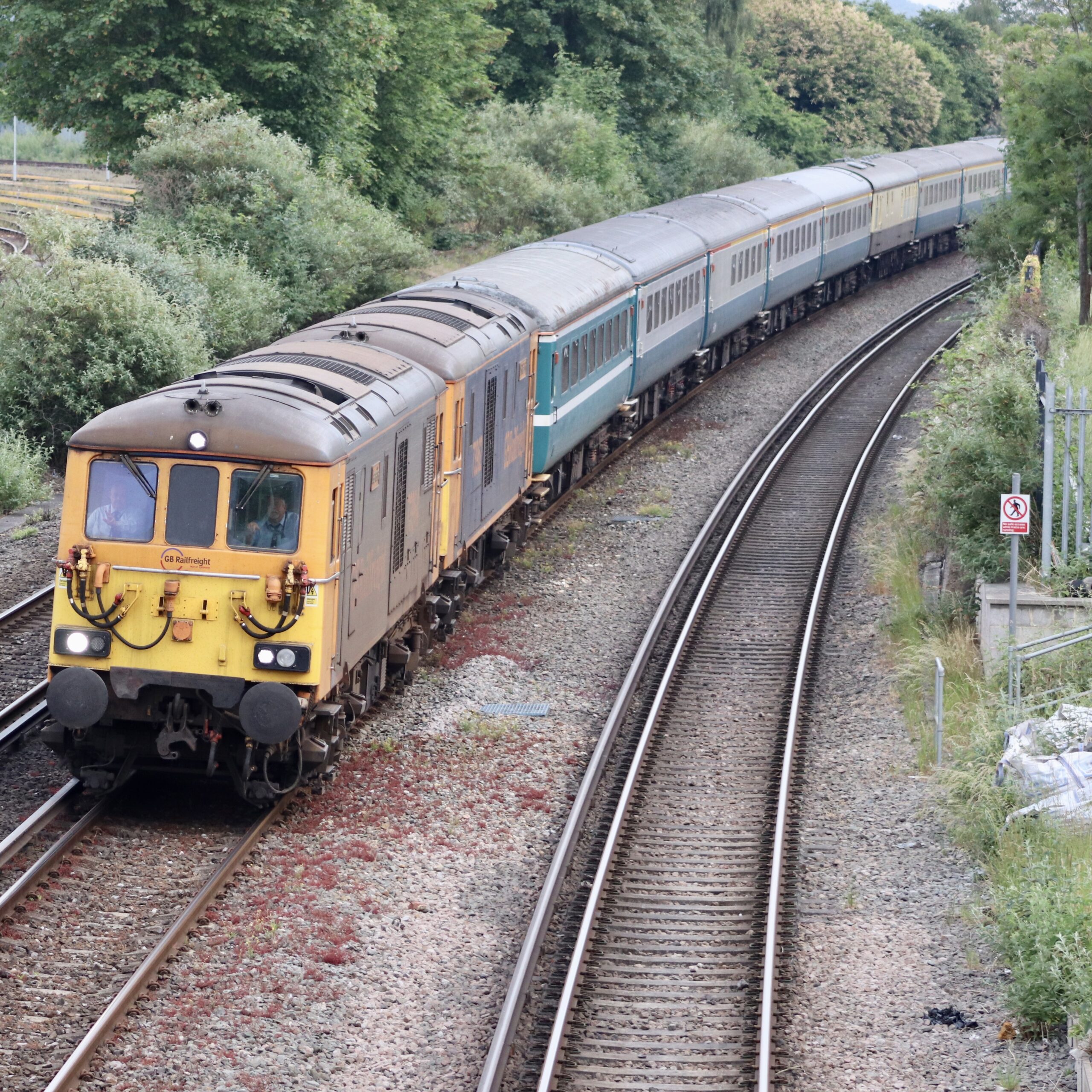
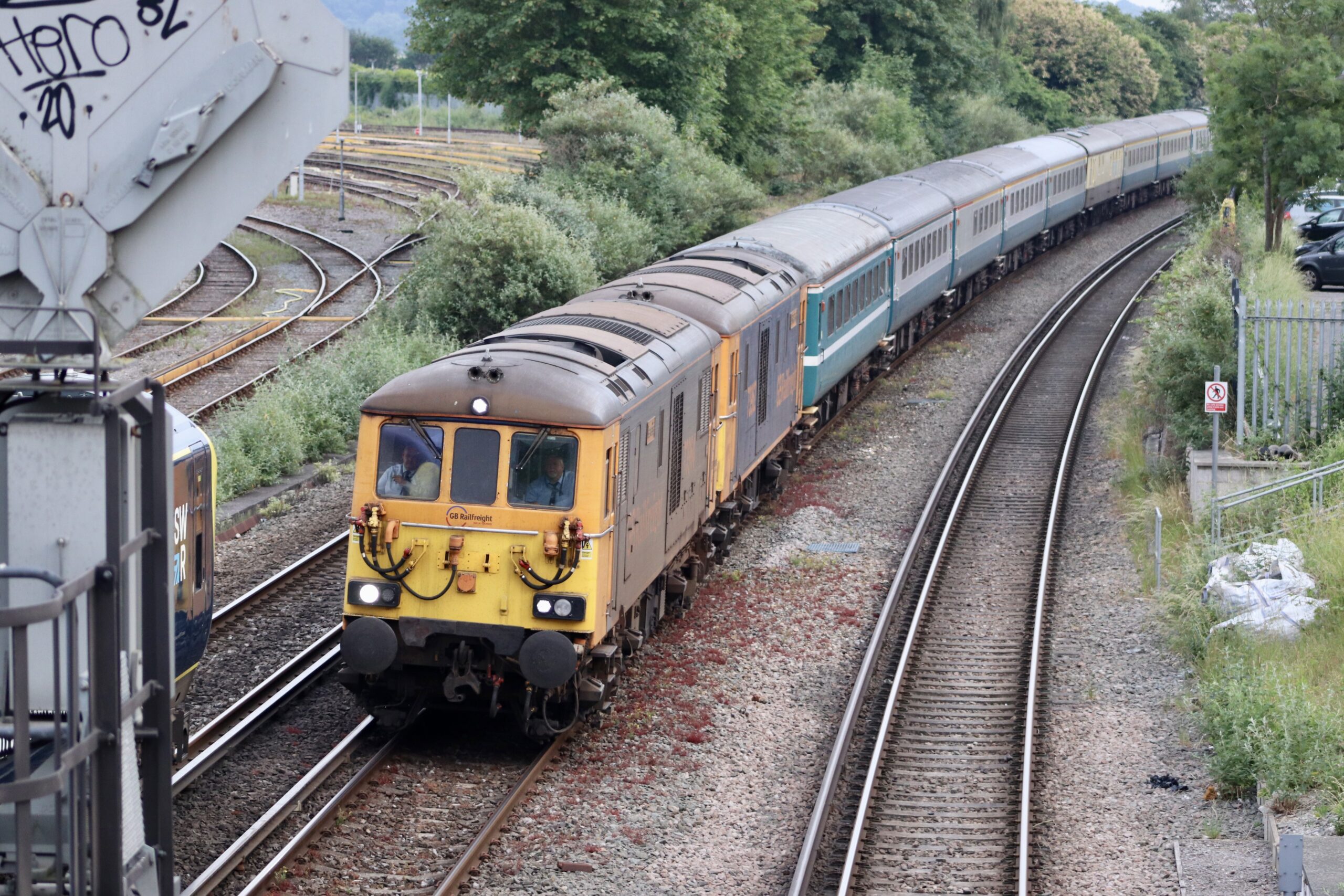
GB Railfreight (GBRf ) Class 73 Electro-Diesel No.’s 73962 ‘Dick Mabbutt’ and 73963 ‘Janice’ returned for the monthly Colas Plain Line Pattern Recognition Train.
1Q51 1115 Derby RTC to Eastleigh East Yard via Weymouth at Poole – 12/02/2024
13/02/2024: 5X62 0524 Wembley Terminal Complex Wheel Lathe to Bournemouth Traction & Rolling Stock Maintenance Depot / 5Q64 1321 Bournemouth Traction & Rolling Stock Maintenance Depot to Widnes Transport Tech
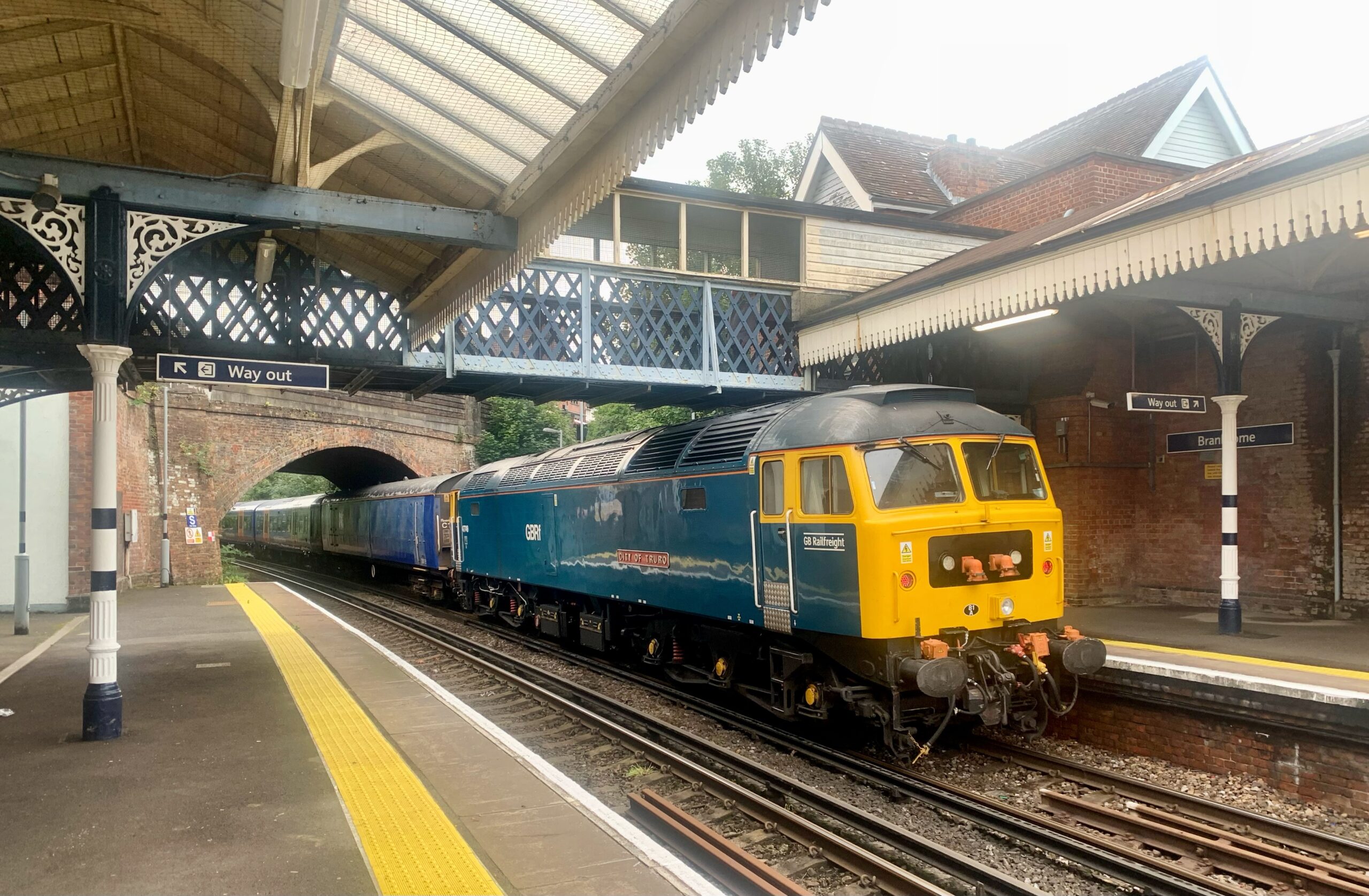
GBRf Class 57 No. 57305 leading on 5X62 0524 Wembley Terminal Complex Wheel Lathe to Bournemouth Traction & Rolling Stock Maintenance Depot. SWR Class 458 No. 458416 was sandwiched between the front loco and No. 57303 at the rear of the consist – 13/02/2024GBRf Class 57 No. 57303 at the rear of 5X62 0524 Wembley Terminal Complex Wheel Lathe to Bournemouth Traction & Rolling Stock Maintenance Depot – 13/02/2024
GBRf Class 57 No.’s 57303 and 57305 arrived at Bournemouth depot with refurbished SWR Class 458 No. 458416. The pair of Class 57 locomotives departed with 5-Car Class 458 No. No. 458515 later in the day. A similar exercise scheduled for Thursday 15th February; 5X62 0524 Wembley Receptions 1-7 to Bournemouth T&R.S.M.D and 5M64 1314 Bournemouth T&R.S.M.D to Leicester L.I.P. did not run. It is most likely that the same pair of Class 57 locomotives would have been involved.
While waiting for the morning unit drag to Bournemouth depot, we were entertained by passing South Western Railway (SWR) Class 444’s on regular passenger services.
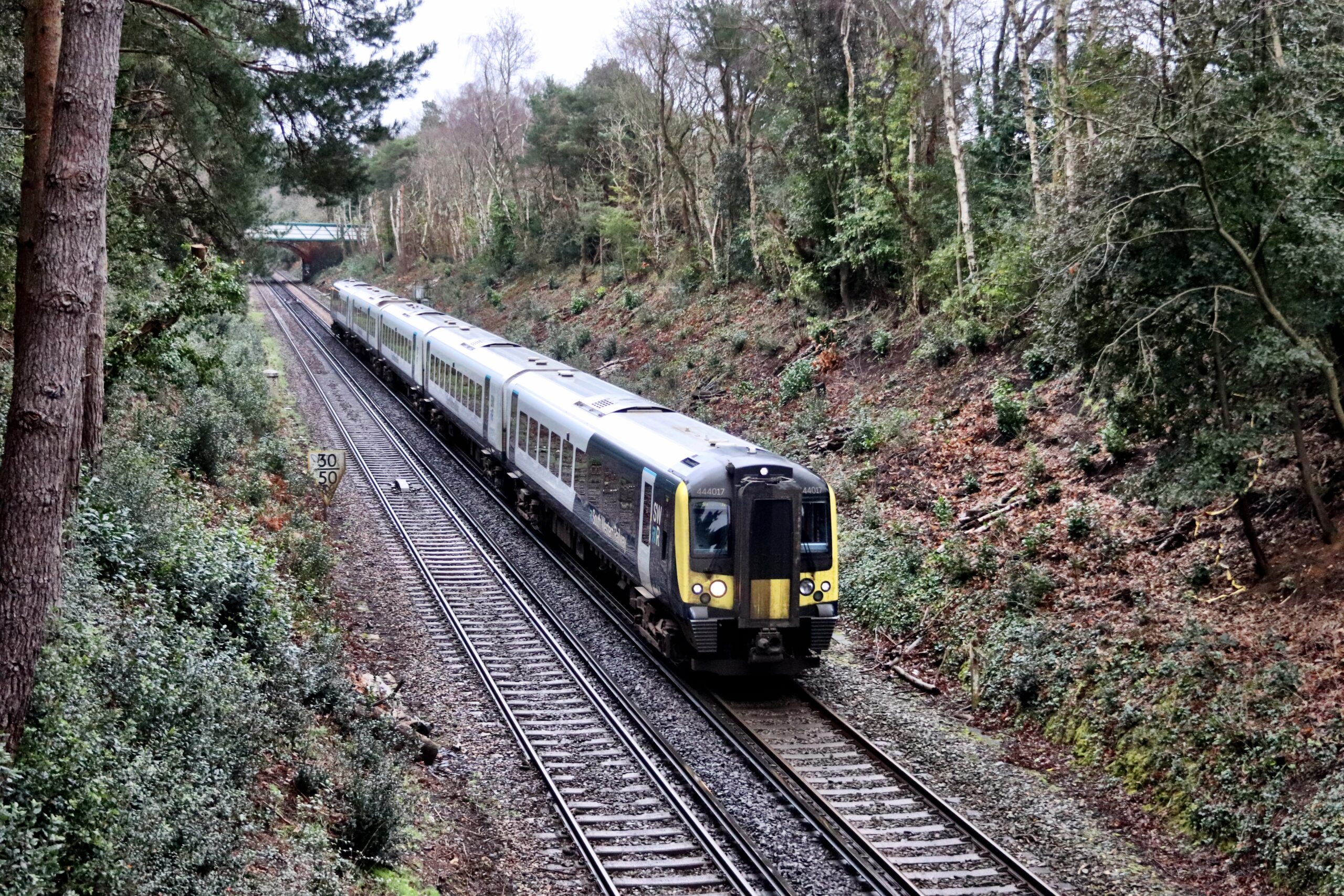
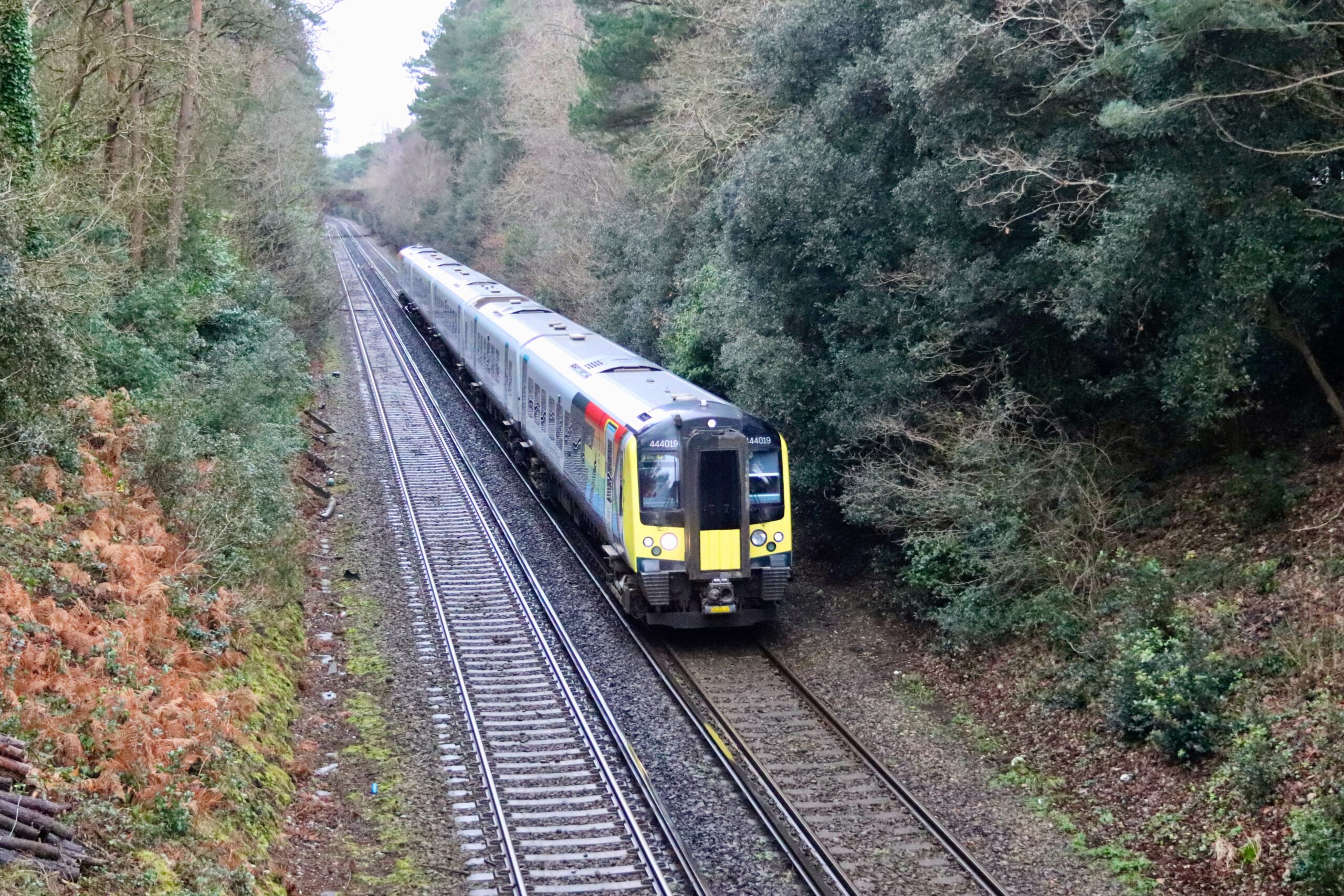
SWR Class 444 No. 444017 working 2W13 0904 Bournemouth to Weymouth – 13/02/2024Unique Pride liveried SWR Class 444 No. 444019 forms 2W52 0900 Poole to Bournemouth – 13/02/2024
5X62 0524 Wembley Terminal Complex Wheel Lathe to Bournemouth Traction & Rolling Stock Maintenance Depot between Bournemouth and Branksome – 13/02/2024
18/02/2024: 3Q02 2155 Eastleigh East Yard to Eastleigh East Yard
HNR Class 37 No. 37607 seen at Derby Technical Centre at the head of a Network Rail Test Train – 02/04/2023
Harry Needle Rail operated Class 37 No. 37607 was scheduled to visit the Bournemouth to Weymouth line with the Ultrasonic Test Train overnight on Sunday 18th / Monday 19th February. Disappointingly for us, however, this service was cancelled due to the train crew not being available and did not run.
21/02/2024: 1Z22 0747 Derby R.T.C.(Network Rail) to Bristol Kingsland Road
Former High Speed Train Class 43 Power Cars No.’s 43272 in debranded Virgin Trains East Coast livery and 43274 in East Midlands Railway Purple livery worked the New Measurement Train to Weymouth on Wednesday 21st February.
I missed this pairing as I was in London for a work meeting. I took the opportunity to pop into London Euston and London Kings Cross on my way to the office after arriving at London Waterloo.
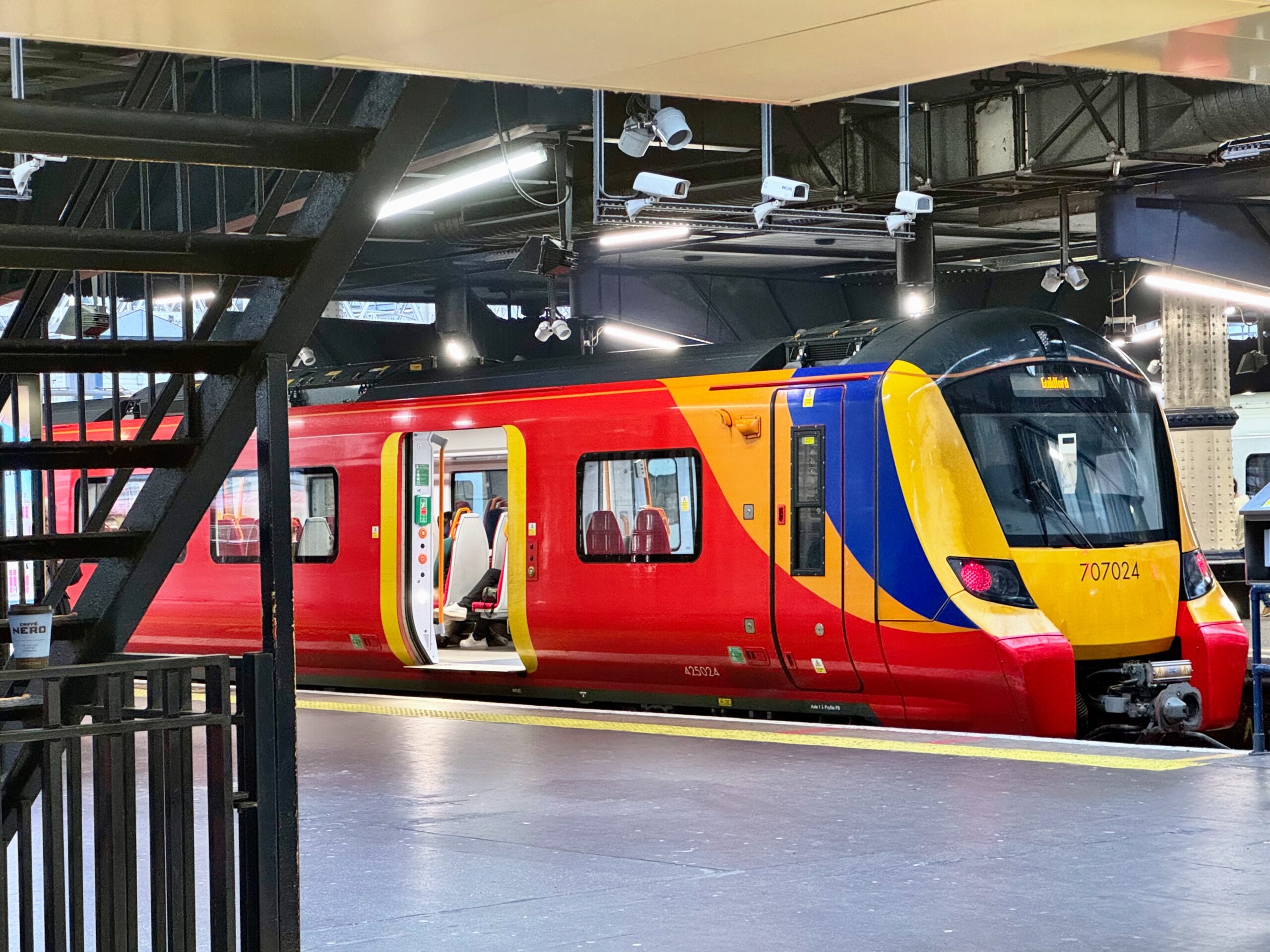
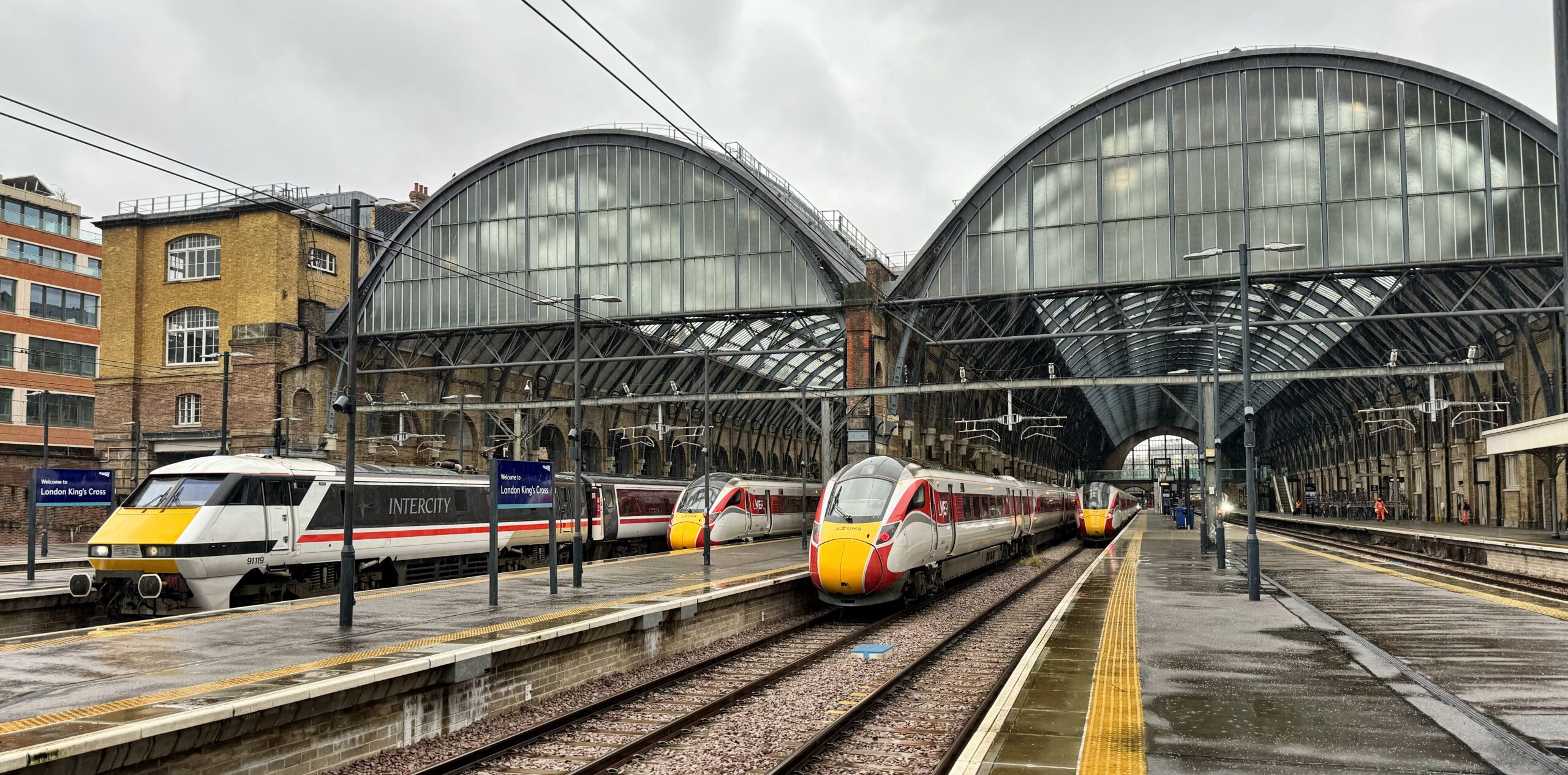
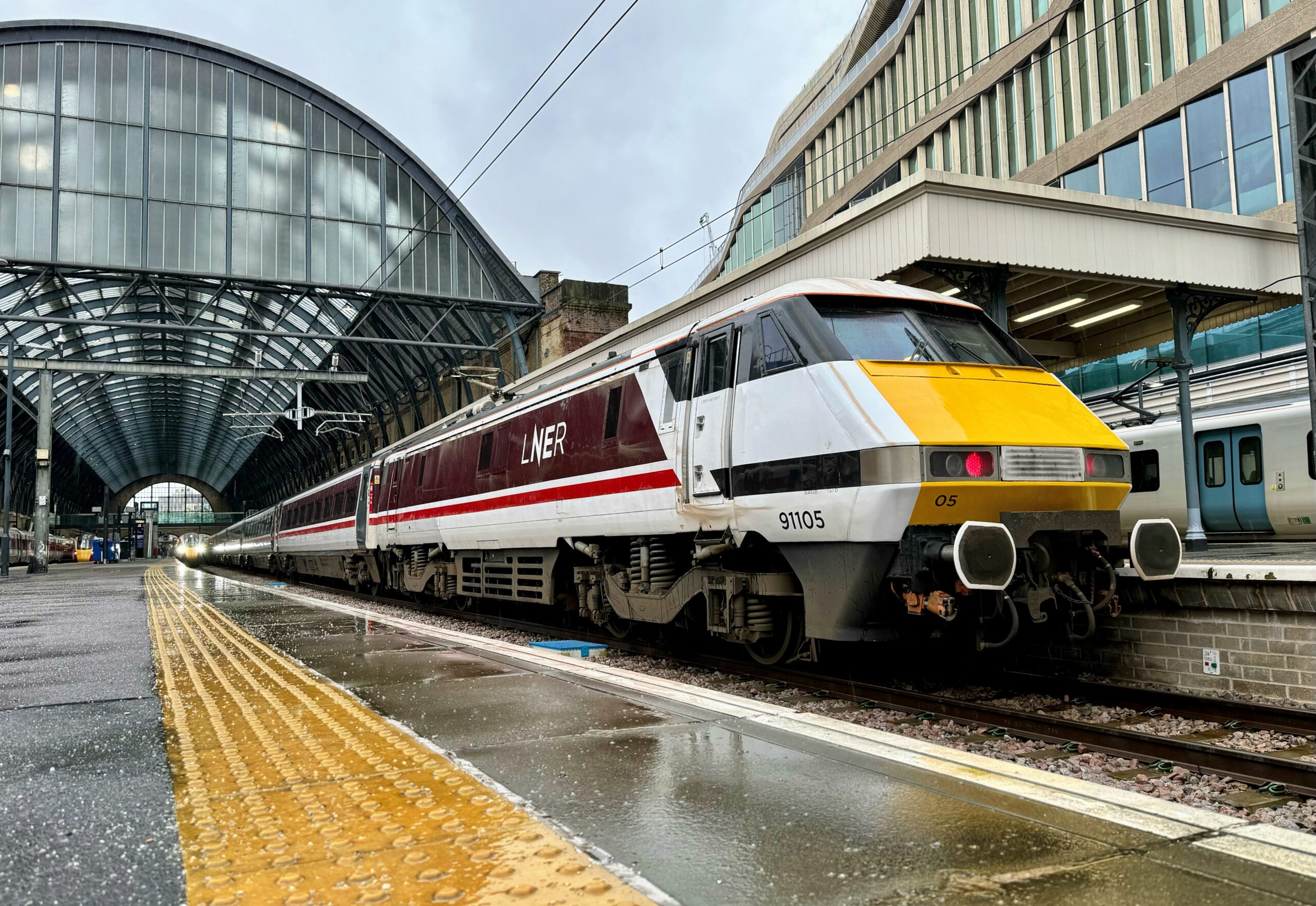
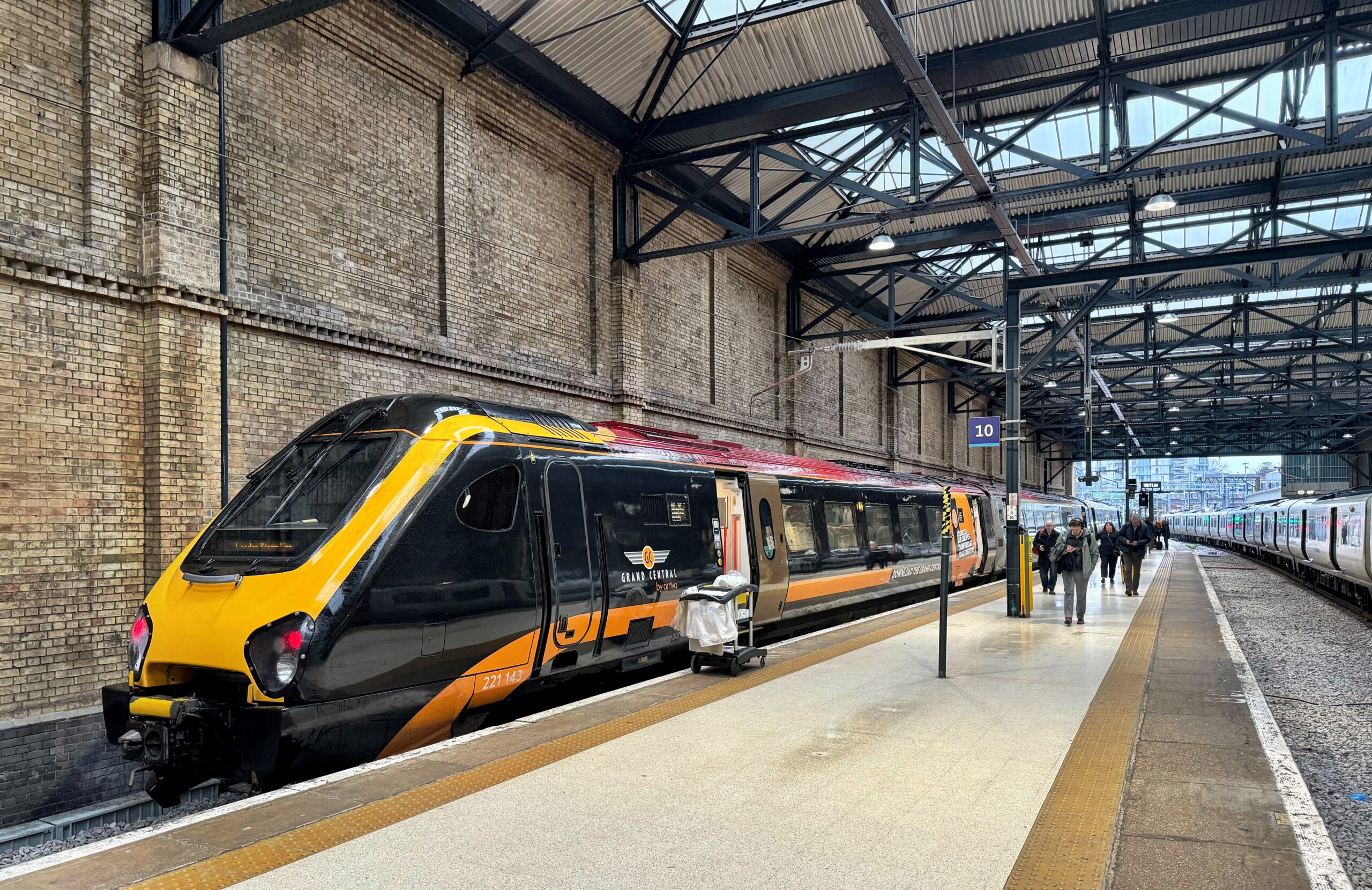
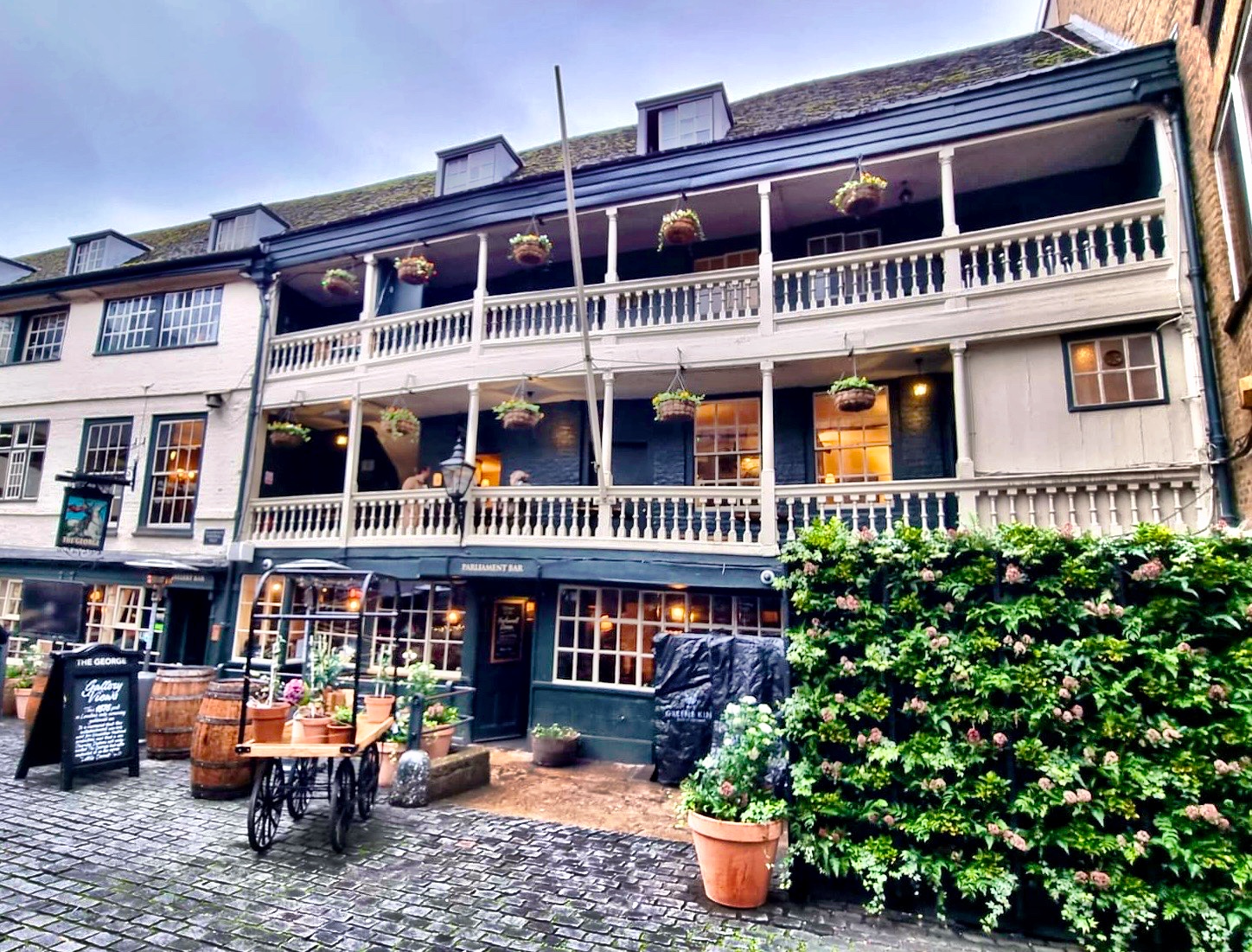
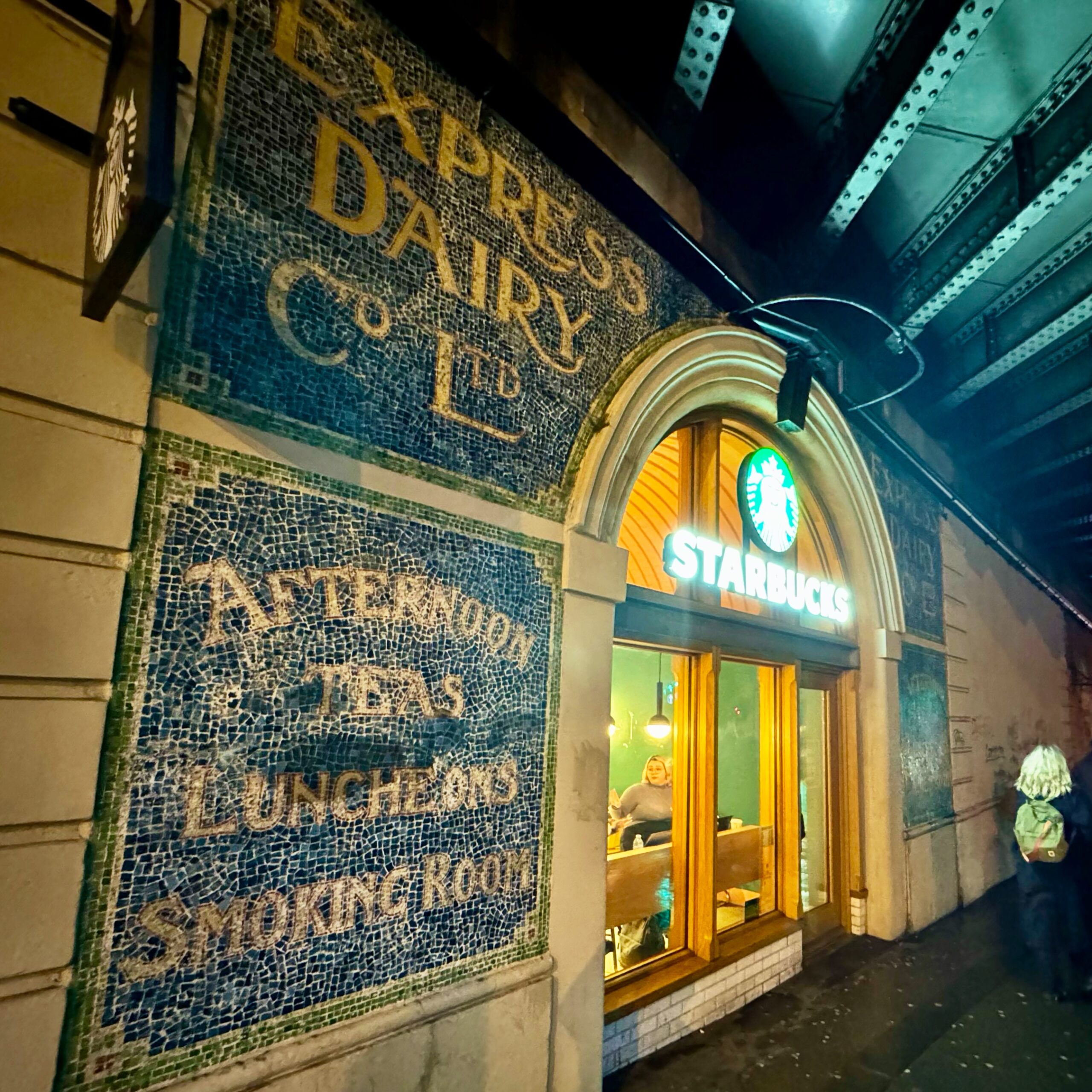
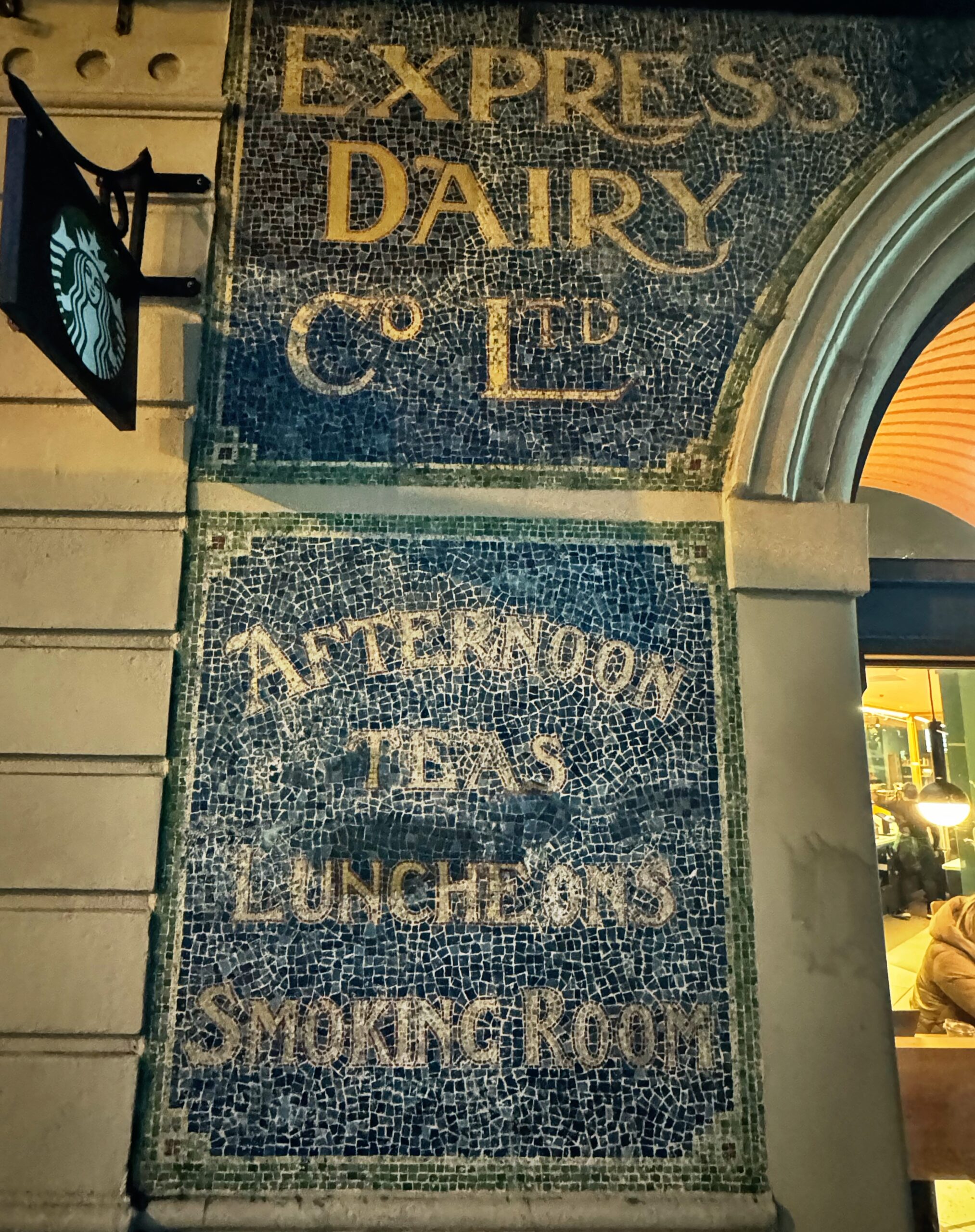
One of two remaining Class 707 EMU’s still with SWR No. 707024 at the buffer stops of London Waterloo – 21/02/2024Caledonian Sleeper Class 92 No. 92038 at London Euston. I had hoped to see the incoming sleeper service in the station, but this was running almost two hours late, and I had places to be – 21/02/2024London Kings Cross with Class 91 No. 91119 ‘Bounds Green InterCity Depot 1977-2017’ working 1D09 1003 London Kings Cross to Leeds alongside LNER Azuma trains 801210 forming 1S12 1S12 1030 Kings Cross to Edinburgh Waverley, 801213 on 1Y11 0630 Newcastle to London Kings Cross and 800209 having arrived with 1A12 0700 Hull to London Kings Cross – 21/02/2024Class 91 No. 91105 at London Kings Cross having arrived at the rear of the 1A13 0656 service from Skipton – 21/02/2024Covering low-availability of the Class 180 fleet, Grand Central have supplemented their fleet with a pair of former Avanti Super Voyagers. Here Class 221 No. 221143, now with driving vehicles in Grand Central’s livery stands at platform 10 at The Cross having arrived with 1A59 0659 Bradford Interchange to London Kings Cross – 21/02/2024Meeting over, we sought out refreshments at The George pub, established in medieval times on Borough High Street in Southwark. It is currently owned and leased by the National Trust and is the only surviving galleried London coaching inn. I recommend the Mac n’ Cheese – 21/02/2024One of the railway arches in the recently restored Findlater’s Corner at London Bridge railway station that was formerly an Express Dairy tea room is now a branch of Starbucks. During renovation work an impressive mosaic was revealed showing its previous function, advertising afternoon teas, luncheons, and smoking rooms – 21/02/2024Express Dairy was founded in 1864 and its name is part of the marketing as it was an early adopter of the railways to ship milk from the countryside to a bottling plant in South Acton and then ship them around London, also by rail. At a time when many people got milk from urban cows, milk from the countryside was seen as a healthier option. At its peak, Express Dairy had over 240 tea rooms across London, making it the Edwardian equivalent of Starbucks today, which seems fitting….
Winfrith No More
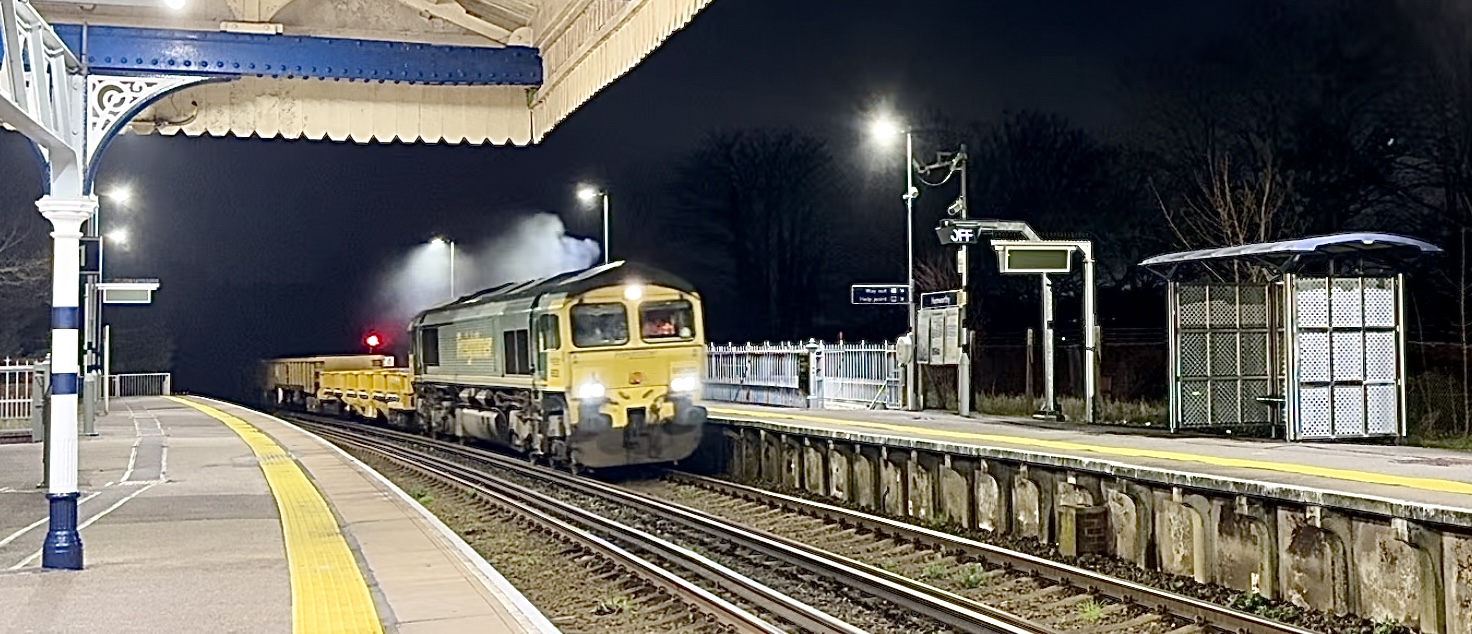
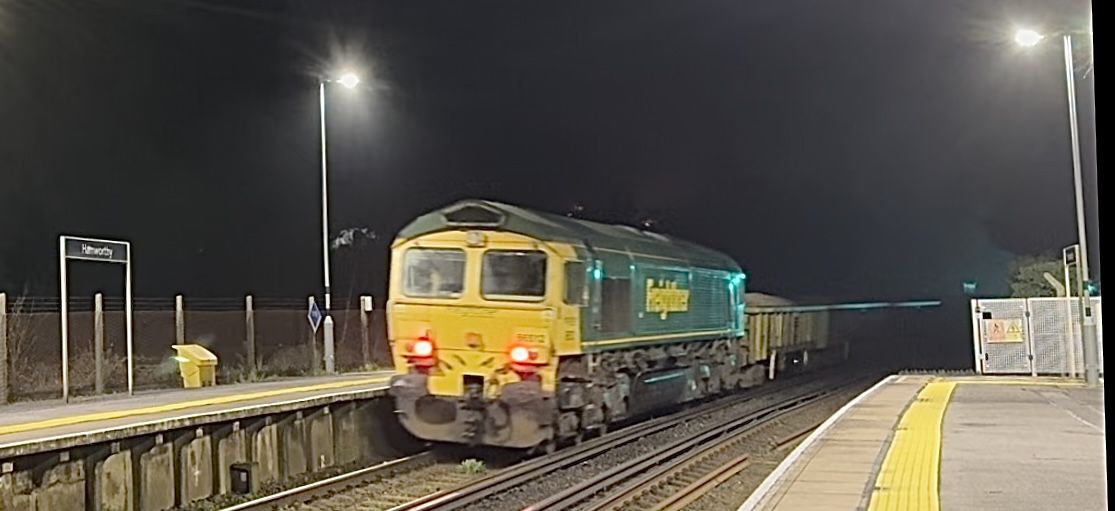
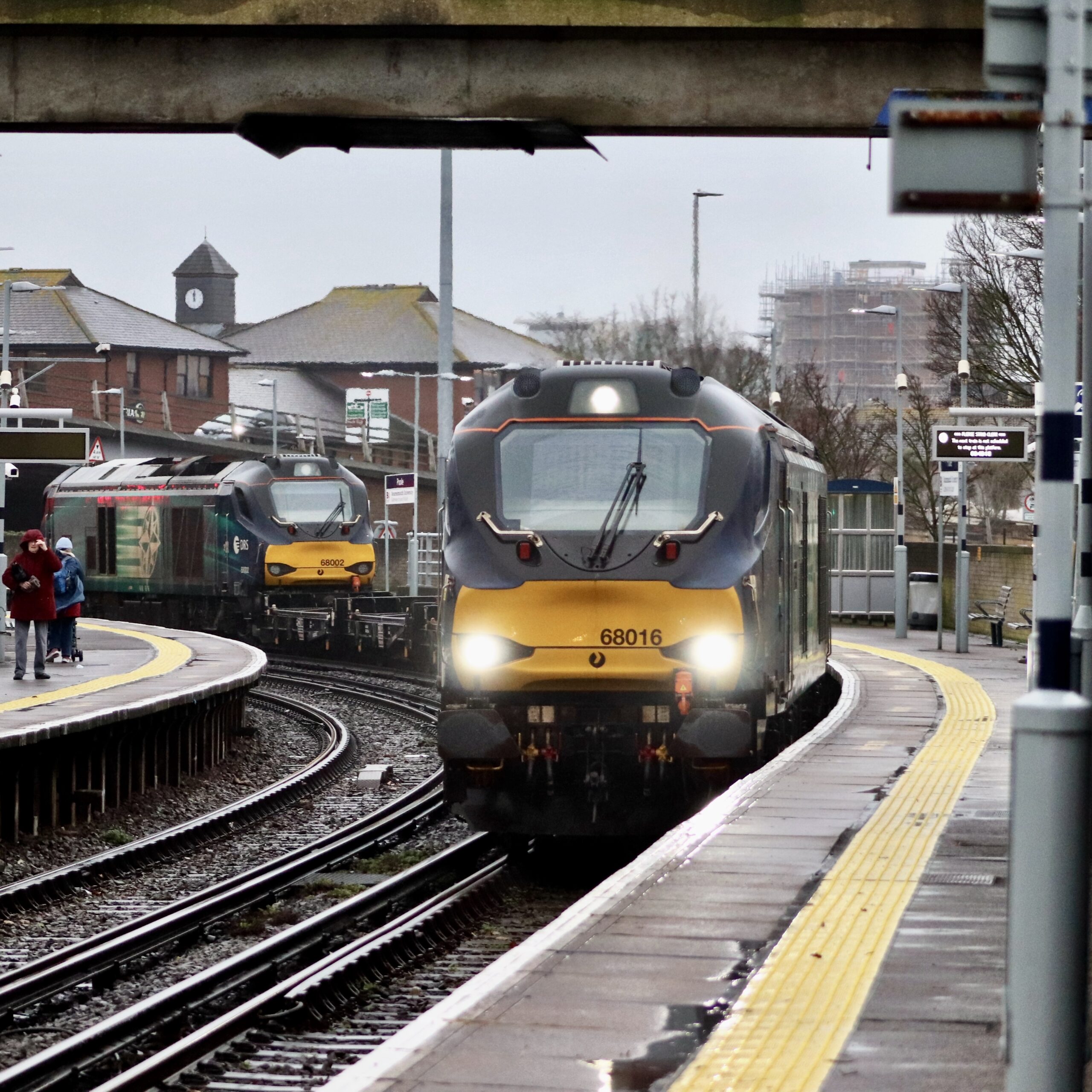
On what turned out to be the final trip to Winfrith; Direct Rail Services Class 68 No.’s 68016 ‘Fearless’ & 68002 ‘Intrepid’ work 6Z62 0100 Crewe Coal Sidings DRS to Winfrith Sidings (Wool) passing through Poole – 23/01/2024
It has been announced Direct Rail Services (DRS), the rail freight arm of Nuclear Transport Solutions (NTS), has now completed its task in the transportation of radioactive materials from the Winfrith treated waste store as the very last flasks of radioactive waste have been moved to their final destination at the low-level waste repository near Cumbria in the Lake District. The final rail shipment ran on 23rd January 2024 and marked a reduction in legacy waste on the Winfrith site by approximately seventy per cent. The successful completion of this contract contributes to returning the site to heathland with public access. It’s the first site from the first generation of nuclear power plants to be completely decommissioned.
From 1980, a Class 33/0 at Dorchester South yard with a Winfrith flask. I’ve rather frustratingly mislaid the original photographic print which contains the actual date and locomotive detail, but do recall we trainspotters were chased away by railway staff when these workings arrived – xx/xx/1980
Forthcoming Dorset Engineering Work
The lines in the Poole area will be closed all day due to maintenance work on Sunday 17th March 2024.
London Waterloo to Weymouth services will terminate at Bournemouth.
London Waterloo to Poole services will terminate at Bournemouth.
Buses will run between Bournemouth and Poole (non-stop).
Buses will run between Bournemouth and Wareham.
A revised service will run between Wareham and Weymouth.
Monday 18th to Wednesday 20th March 2024, the lines between Dorchester South and Weymouth will be closed from Monday to Wednesday all days inclusive due to maintenance work.
Great Western Railway services between Weymouth and Yeovil Pen Mill will be affected by this work.
London Waterloo to Weymouth services will be revised and will terminate at Dorchester South.
Buses will run between Dorchester South and Weymouth.
In association with these works, a Freightliner engineering train is showing on Real Time Trains as running as 6Y85 2348 Eastleigh East Yard to Dorchester South departs its source on Sunday 17th March 2024 and arrives Dorchester South at 0110 (on the 18th) – returning as 6Y85 1454 Dorchester South to Eastleigh East Yard on 19th March
The lines between Bournemouth and Poole will be closed all day due to maintenance work on 23rd March.
London Waterloo to Poole and Weymouth services will terminate at Bournemouth.
Buses will run between Bournemouth and Poole.
A revised service will run between Poole and Weymouth.
In addition to this, the lines in the Brockenhurst area will be closed all day due to maintenance work on 24th March.
London Waterloo to Weymouth services will terminate at Southampton Central.
London Waterloo to Poole services will terminate at Southampton Central.
Fast buses will run between Southampton Airport Parkway, Bournemouth and Poole.
Fast buses will run between Southampton Central, Bournemouth and Poole.
Buses will run between Southampton and Poole via Brockenhurst (buses will not call at Beaulieu Road).
A revised service will run between Poole and Weymouth.
Passengers travelling from London Waterloo to Bournemouth, Poole and Weymouth should change at Southampton Airport Parkway for the fast bus service to Poole.
Sunday 28th April, the lines in the Wool area will be closed all day due to maintenance work.
London Waterloo to Weymouth services will terminate at Wareham.
Buses will run between Wareham and Dorchester South.
Buses will run between Wareham and Weymouth.
A revised service will run between Dorchester South and Weymouth.
Looking further ahead, rail improvement work will also affect train services between Castle Cary and Weymouth in the autumn.
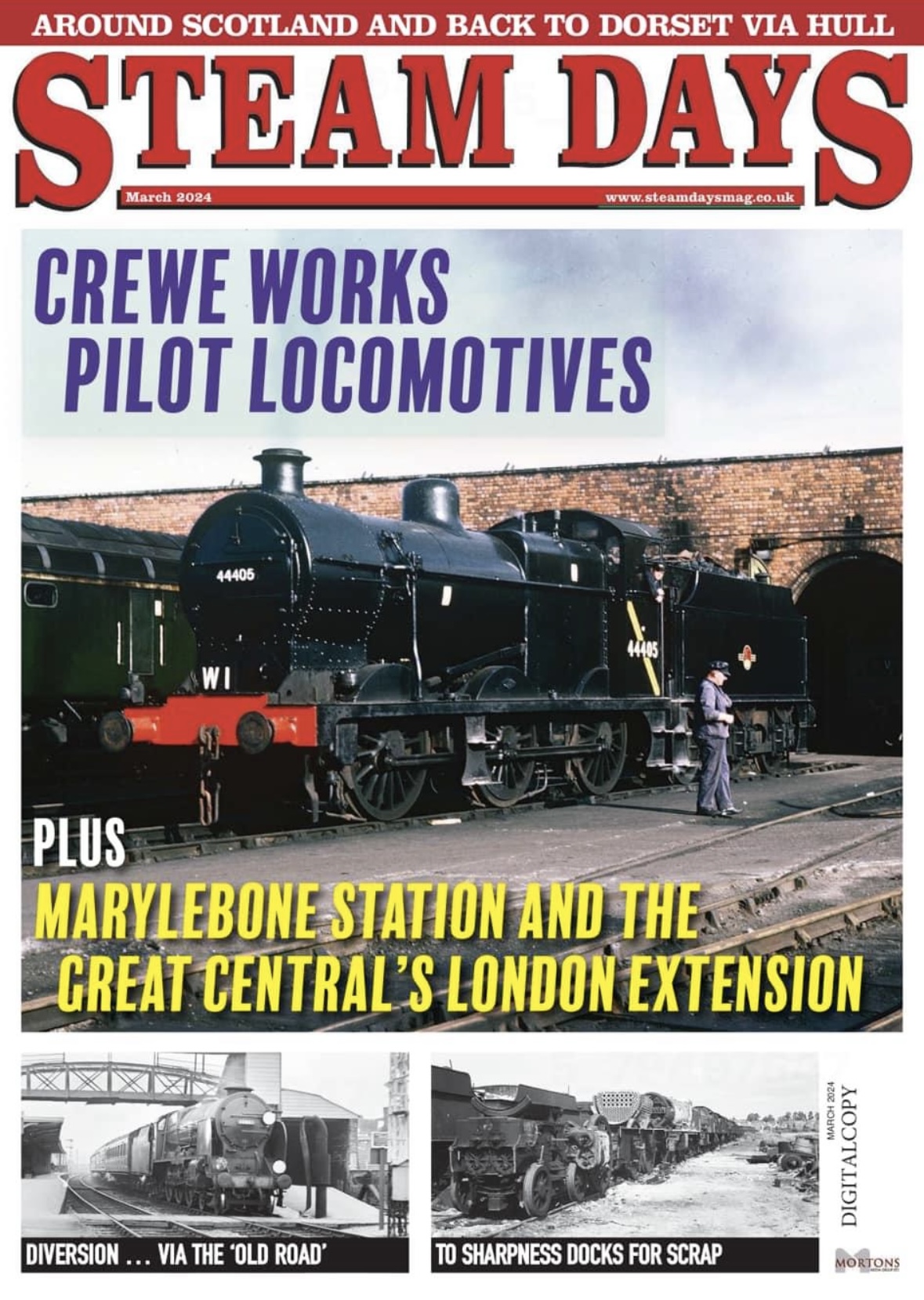
The March 2024 edition of “Steam Days” magazine features Colin Boocock’s well illustrated account of train diversions in 1960 off the Bournemouth main line and onto what was known as both the ‘Old Road’ after the direct line to Bournemouth was opened in 1888 or ‘Castleman’s Corkscrew’, so named after Charles Castleman who was the driving force in getting the Southampton & Dorchester Railway built and its somewhat circuitous route.
Thanks for reading – we’ll be back soon with a further updates of happenings along the rails in Dorset. Be seeing you!
Postscript:
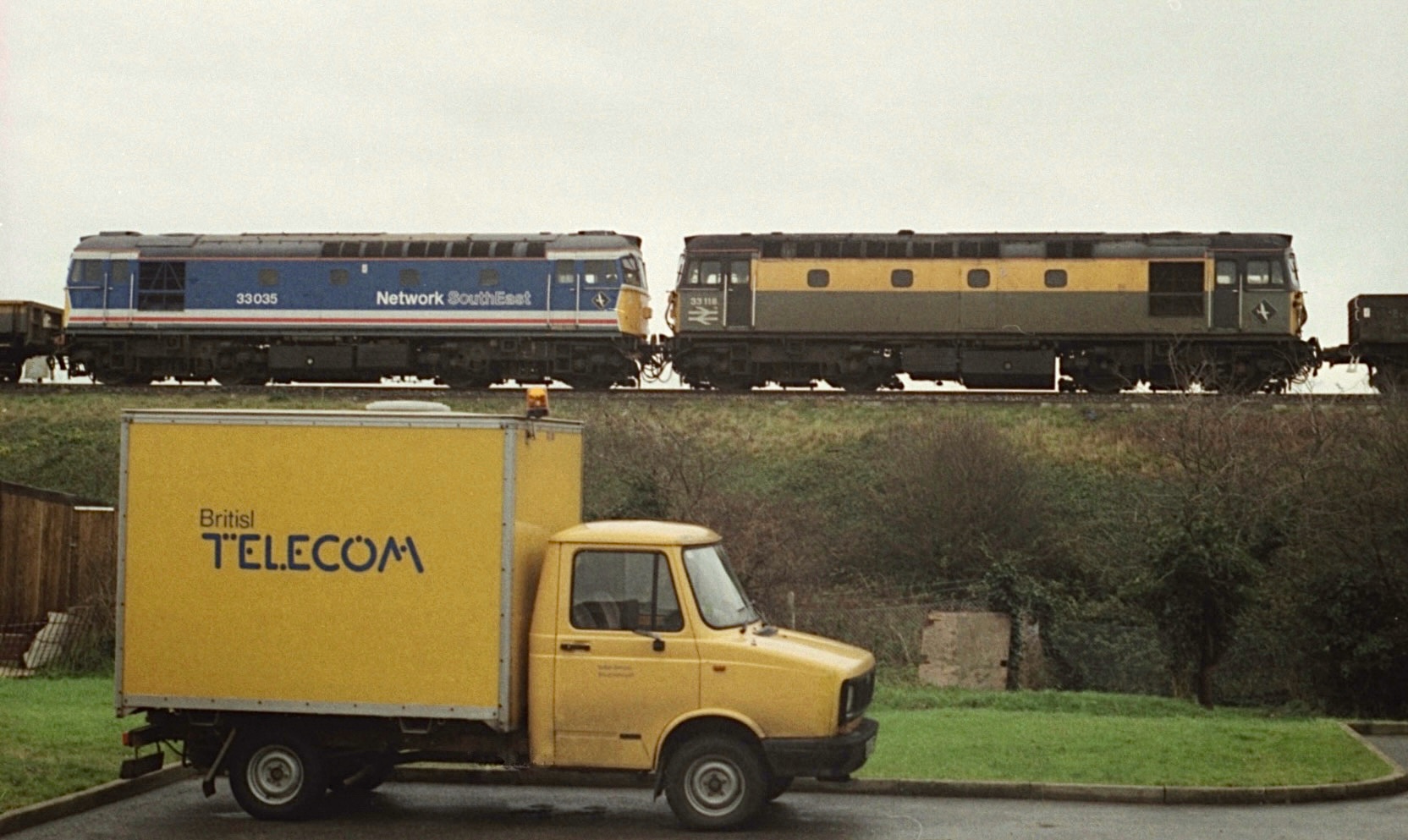
Engineering work in days gone by…. Class 33/0 No. 33035 and Class 33/1 No. 33118 on Bincombe Bank adjacent to Upwey Telephone Exchange sometime in the early 1990’s. No. 33118 was withdrawn from service in April 1993 and cut up by MRJ Phillips at Eastleigh Depot by February 1997. No. 33035 was named ‘Spitfire’ in December 1993 and withdrawn in October 1996 but lives on in preservation – xx/xx/199x
GBRf Class 57 No.’s 57306 ‘Her Majesty’s Railway Inspectorate’ and 57310 ‘Pride of Cumbria’ head into the yard after reversing in Tonbridge station working 3W01 0907 Tonbridge West Yard GBRf to Tonbridge West Yard GBRf – 19/11/2023
November 18th 2023 to November 23rd 2023
I may have mentioned previously that I have a list of locomotives or unit trains I would very much like to photograph. These include named examples to livery variations. One such loco is GB Railfreight’s (GBRf) Class 66 No. 66743 which can be usually found North of The Border operating the luxury Belmond Royal Scotsman train along with sister locomotive No. 66746. GBRf took over the running of these excursion trains from West Coast Railways (WCR) in 2016. Outside the Scottish railtour season, the Royal Scotsman locos have to earn their keep on more mundane tasks, and last week No. 66743 was shuttling backwards and forwards from Scunthorpe or Doncaster to Eastleigh East Yard on freight or engineers related workings. At least until the weekend when she ended up on one of the engineering trains involved in the 16 day closure of the railway line between Salisbury and Yeovil Junction. This, I observed, meant she was stabled at Eastleigh East Yard on Sunday following her outing to Wiltshire. So with hopeful abandon, off I set at 0730 thinking the locomotive might well be parked in an advantageous position for a photo. Unfortunately, this was not to be the case with No. 66743 being somewhat obscured by a row wagons. It’s like that, this hobby, you win some and you lose some. The trick is not to be disheartened because next time, things may well go your way.
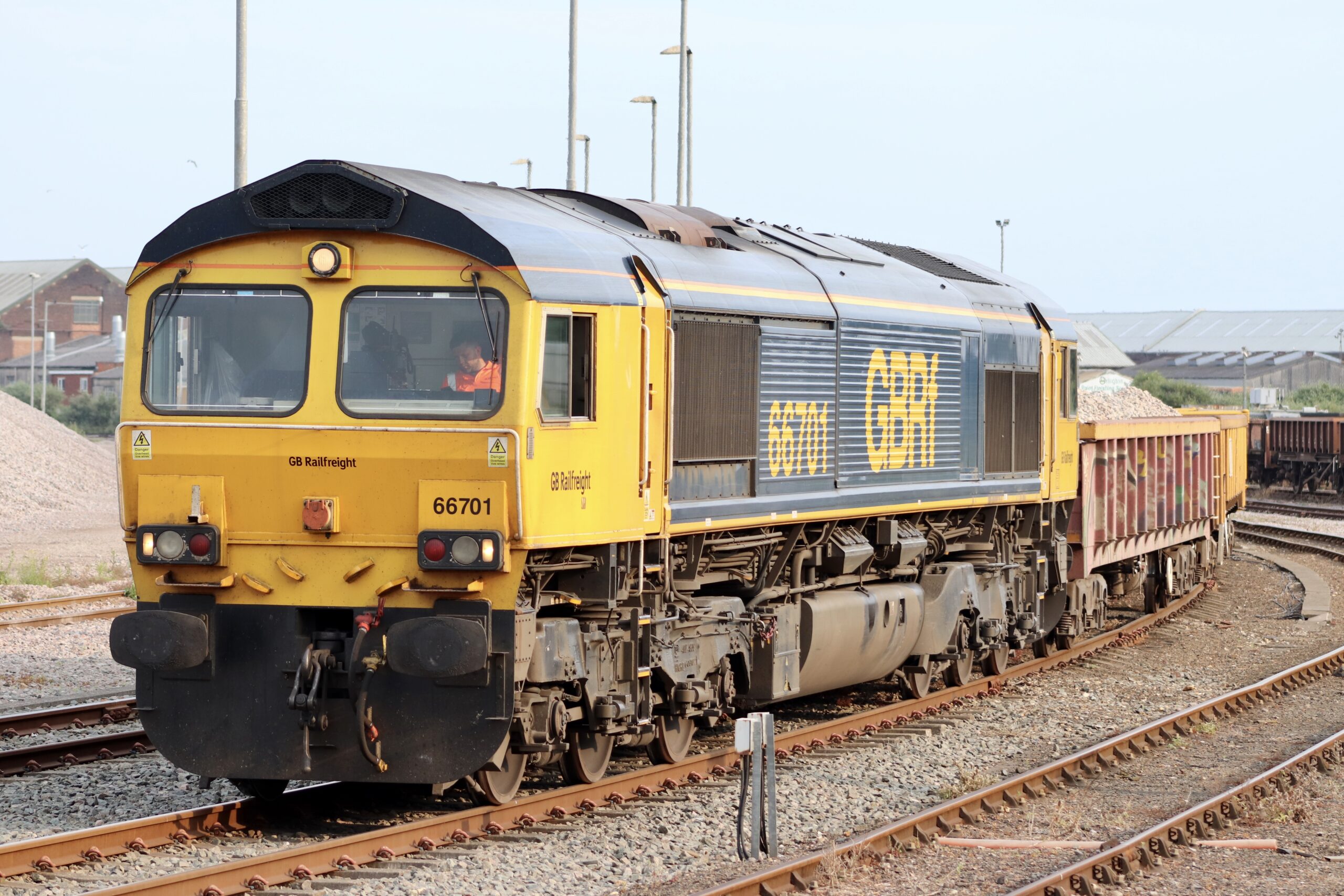
Belmond Royal Scotsman liveried Class 66 No. 66743 partially hidden behind wagons in Eastleigh East Yard – 19/11/2023
While I was in Eastleigh I took advantage of the lull in between rain showers to walk Yoshi and photograph other trains parked up.
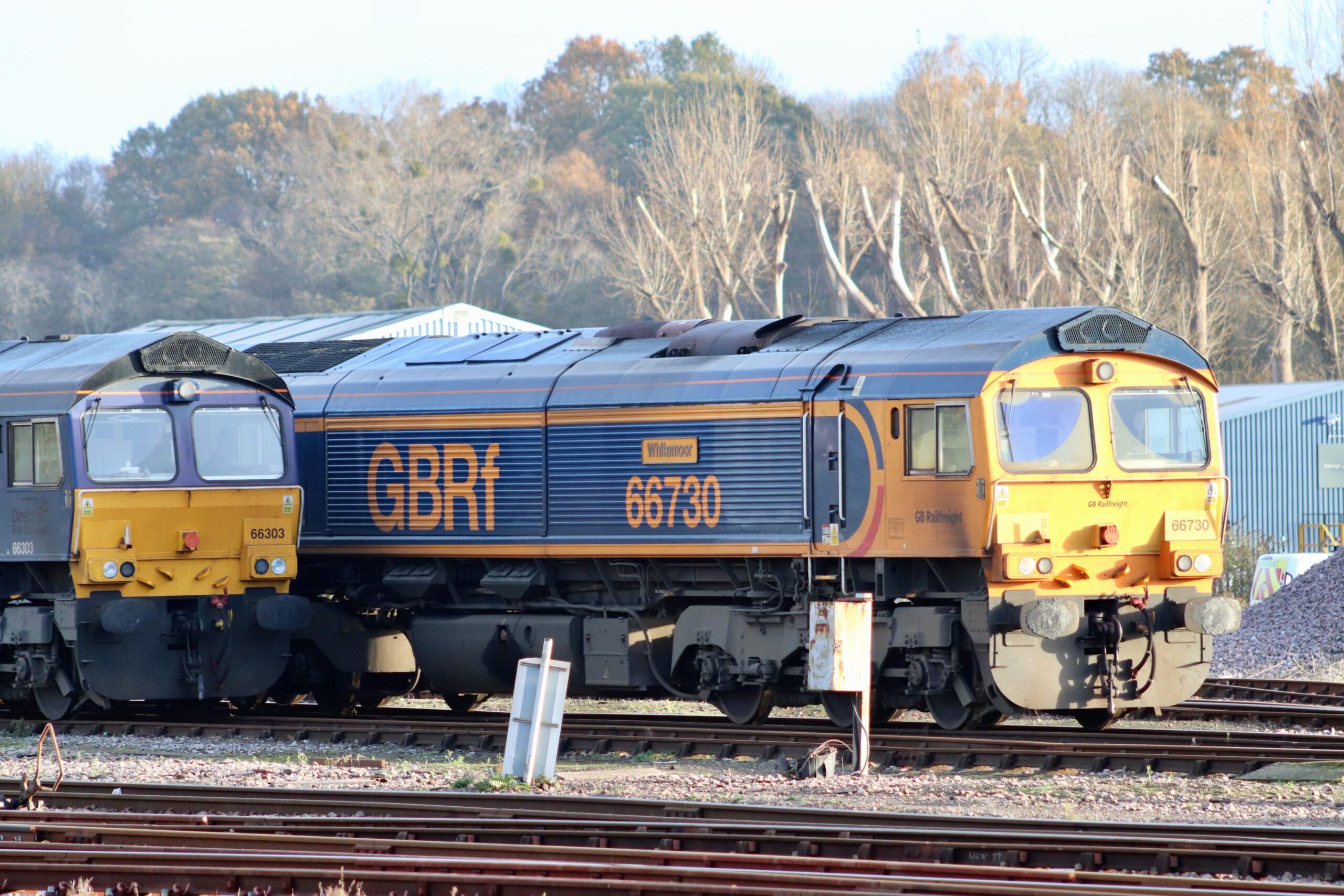
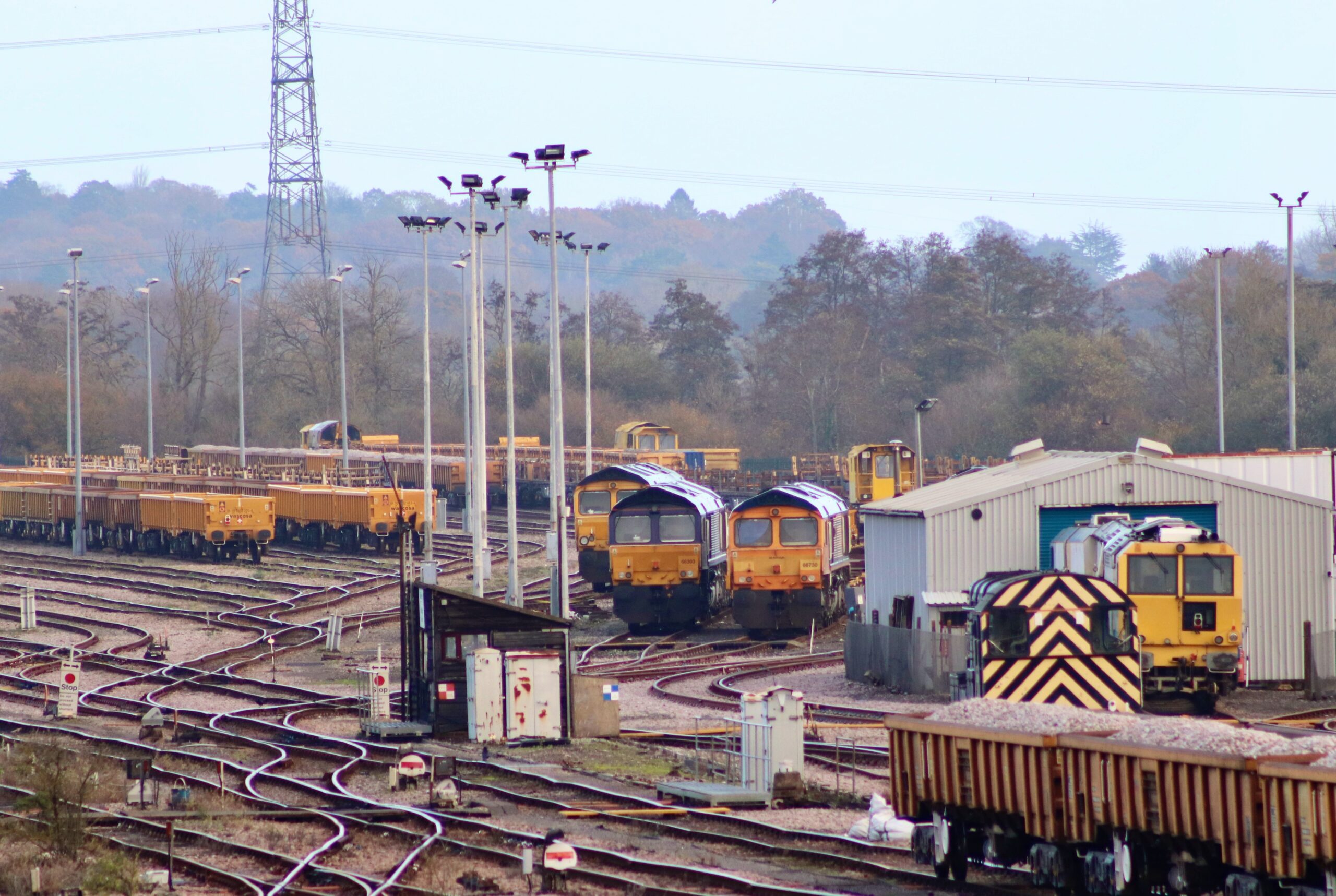
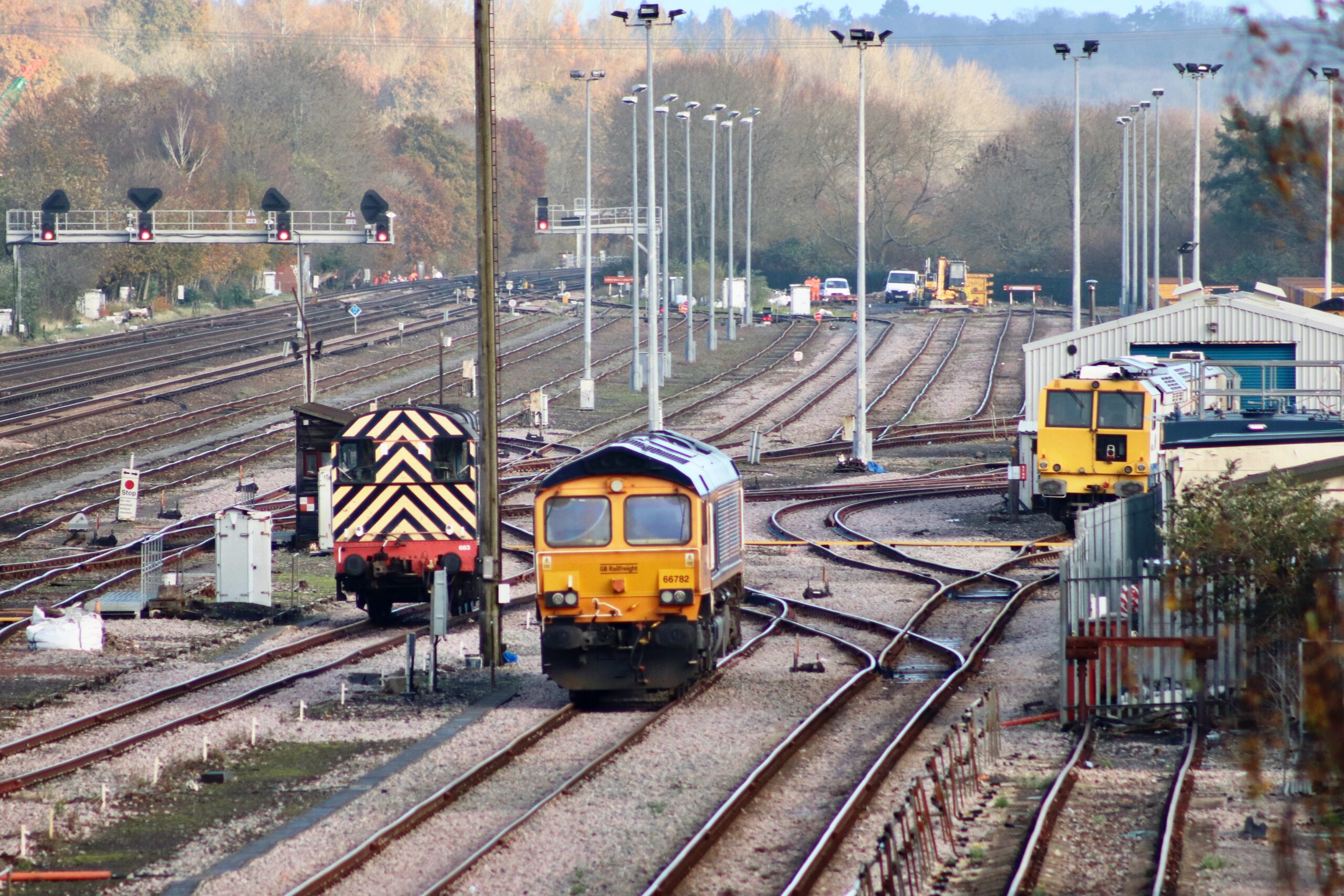
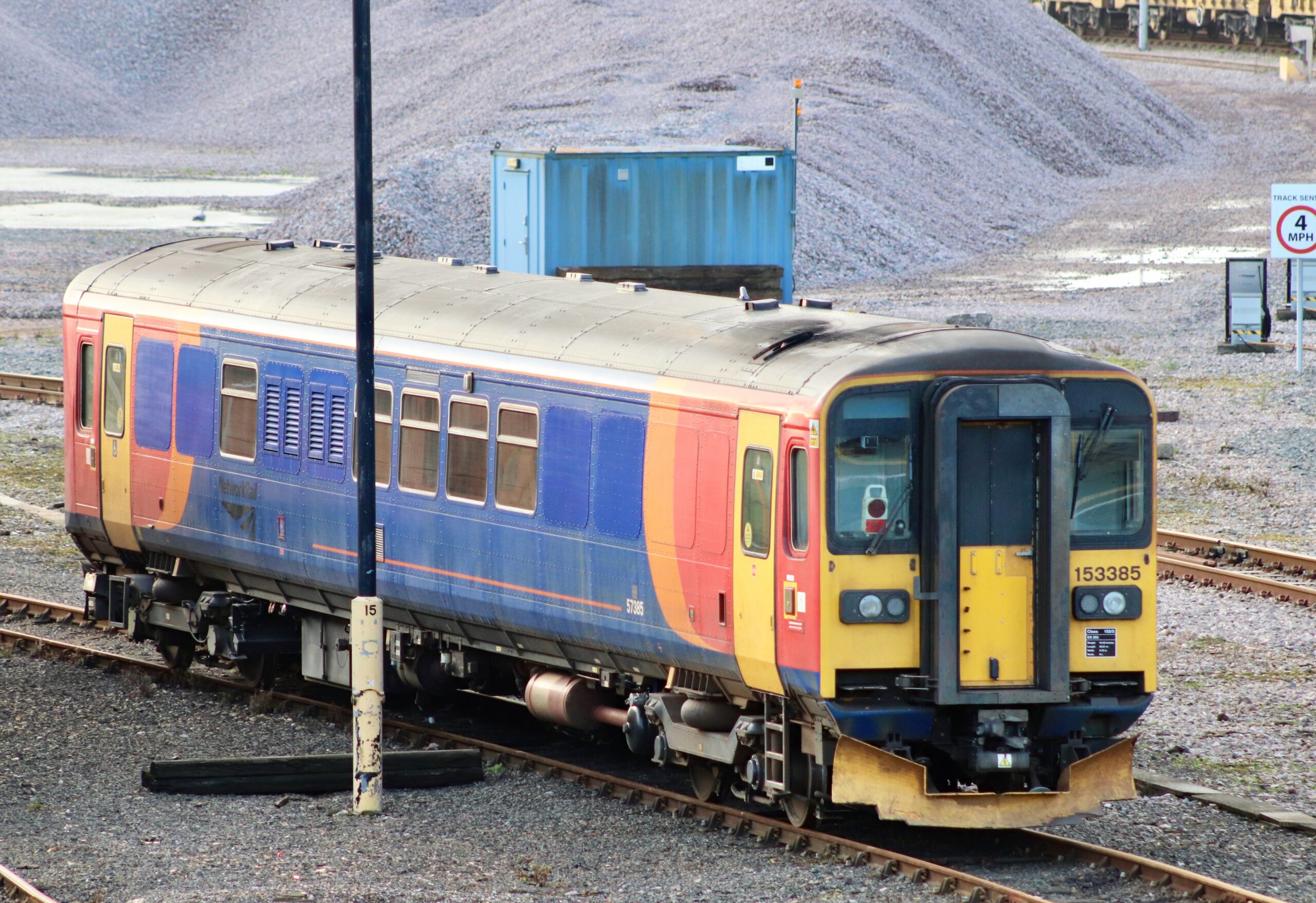
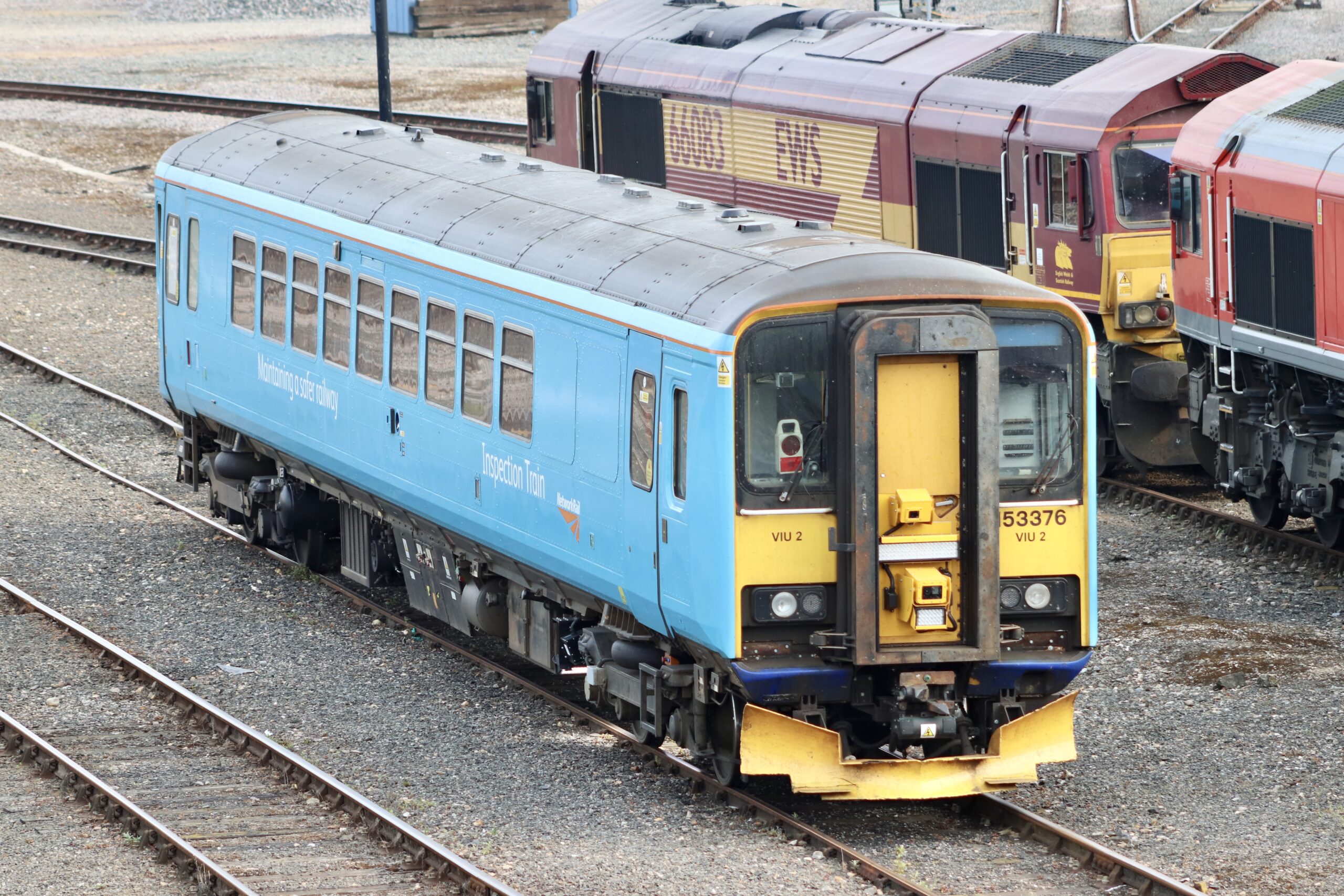
Class 66 No. 66303 stands in Eastleigh East Yard – 19/11/2023Class 66 No. 66730 ‘Whitemoor’ alongside stablemate No. 66303 at Eastleigh East Yard – 19/11/2023GBRf Class 66 No. 66740 ‘Sarah’ stands at Eastleigh CTT Forwardings – 19/11/2023A view across to Eastleigh East Yard – with Class 66 locomotives No.’s 66730/66303/66740 resting between duties – 19/11/2023Class 66 No. 66782 at Eastleigh East Yard alongside a Class 08 shunter – 19/11/2023Class 08 No. 08511 in Eastleigh East Yard – 19/11/2023Colas Class 70 No. 70810 at Eastleigh – 19/11/2023Class 153 DMU Network Rail Video Inspection Unit No. 153385, Eastleigh – 19/11/2023
Eschewing a FatMacs breakfast (I’m on a diet, don’t you know), I decided to press on and drive over to Tonbridge in the hope that the Rail Head Treatment Trains (RHTT) based there would be engaged in leaf clearing as runs were scheduled across the day to and from Tonbridge West Yard. These are dependant on requirements and don’t always run however. Coincidentally, we started this blog two years ago on November 22nd 2021 with a brief clip of a steam hauled Belmond British Pullman tour through Tonbridge taken the previous day. I’d forgotten just how short those early blog entries were – something to be mindful of now, perhaps! We made another visit to Tonbridge on 12th November 2022, so this is becoming rather like an annual tradition. I felt the visit this year was one of diminishing returns, although we were able to capture an assortment of Class 57’s and Class 73’s!
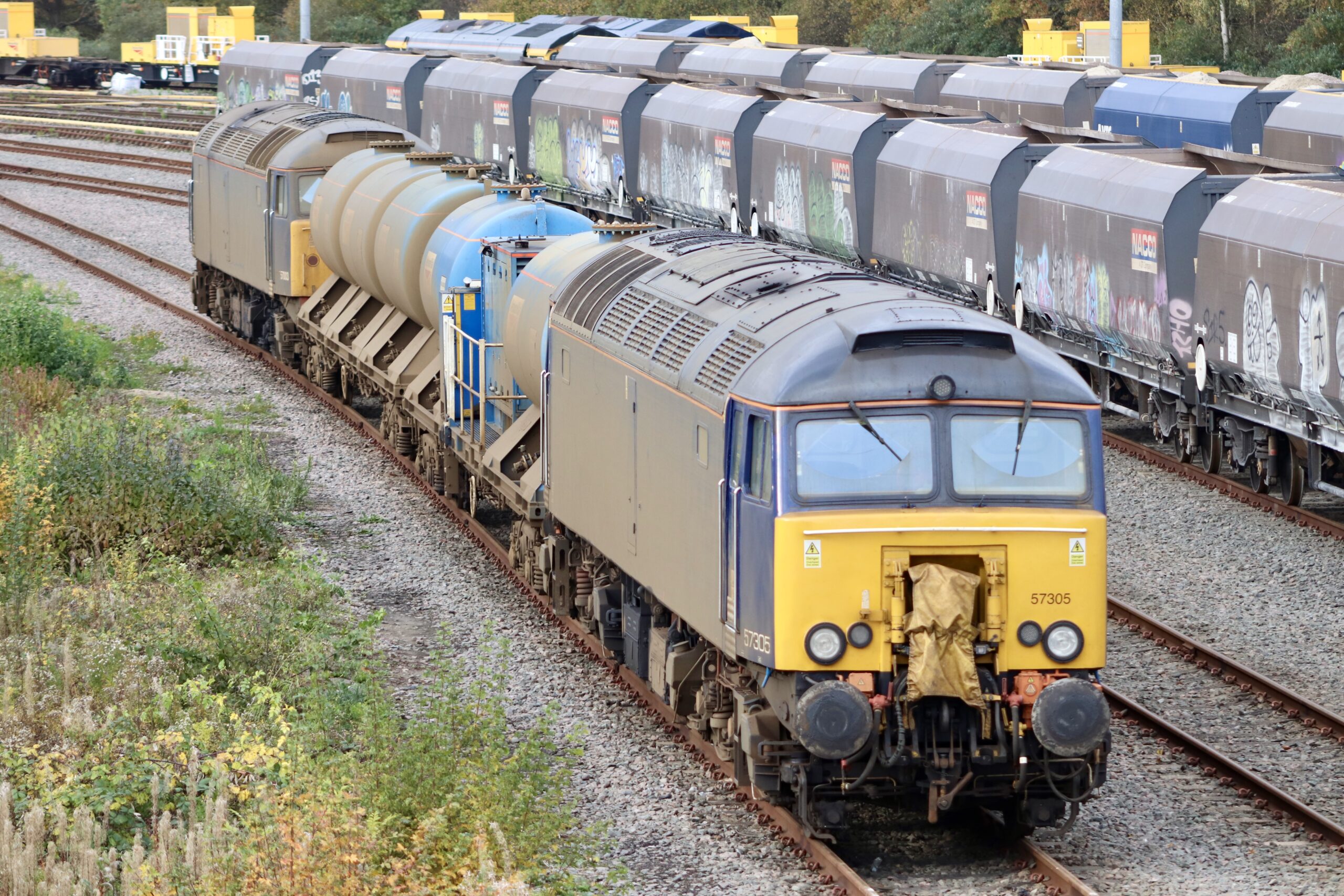
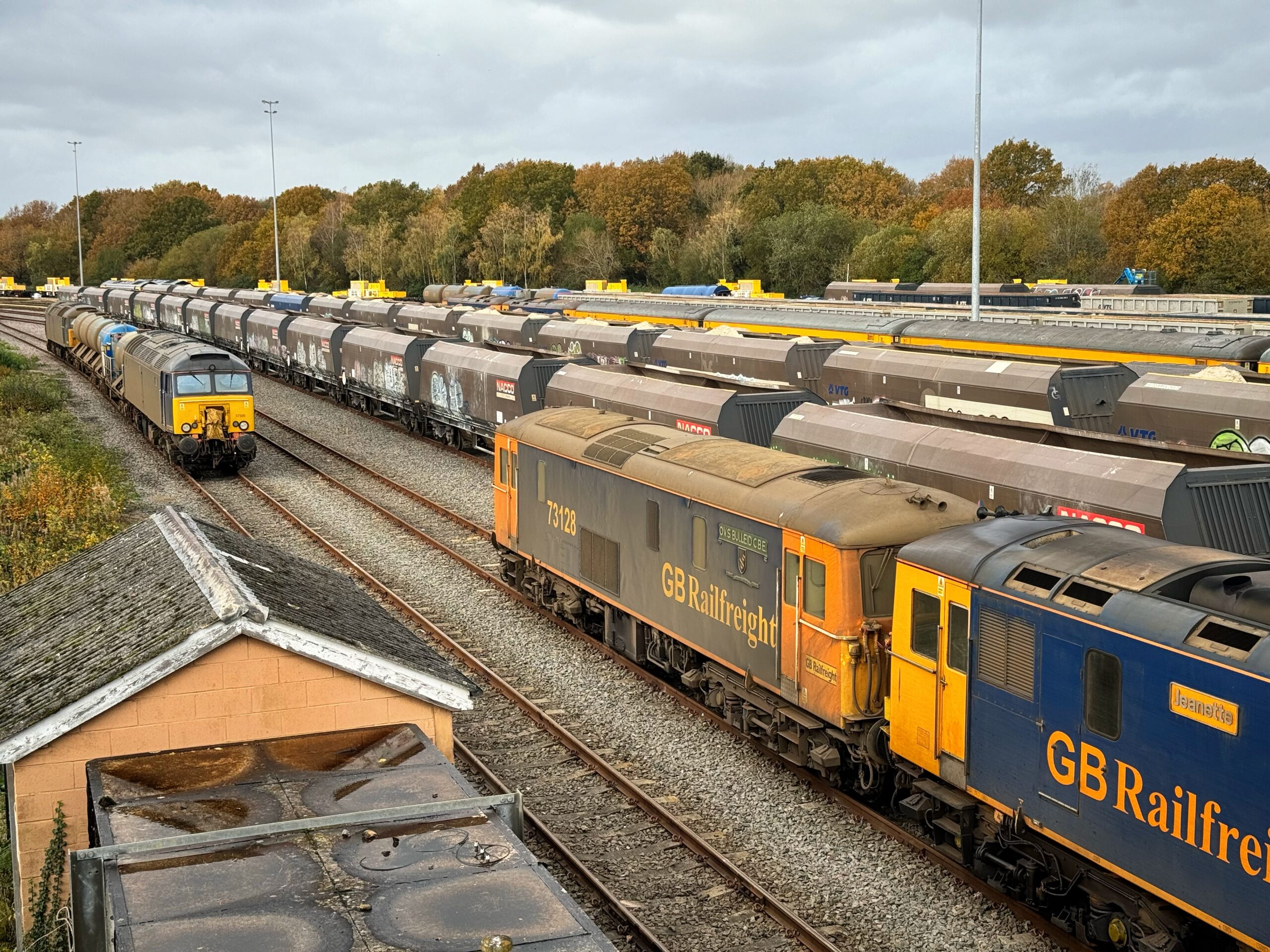
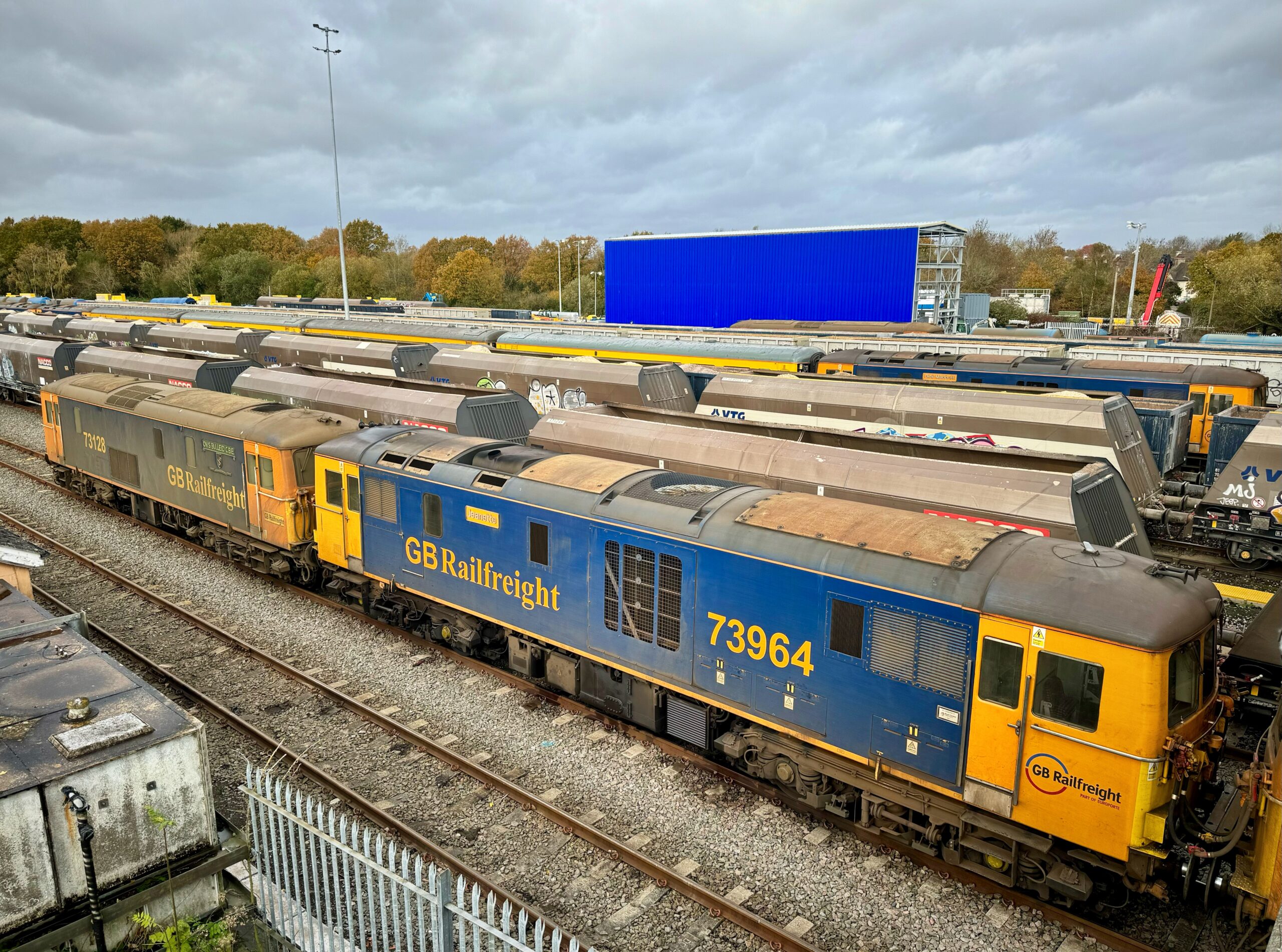
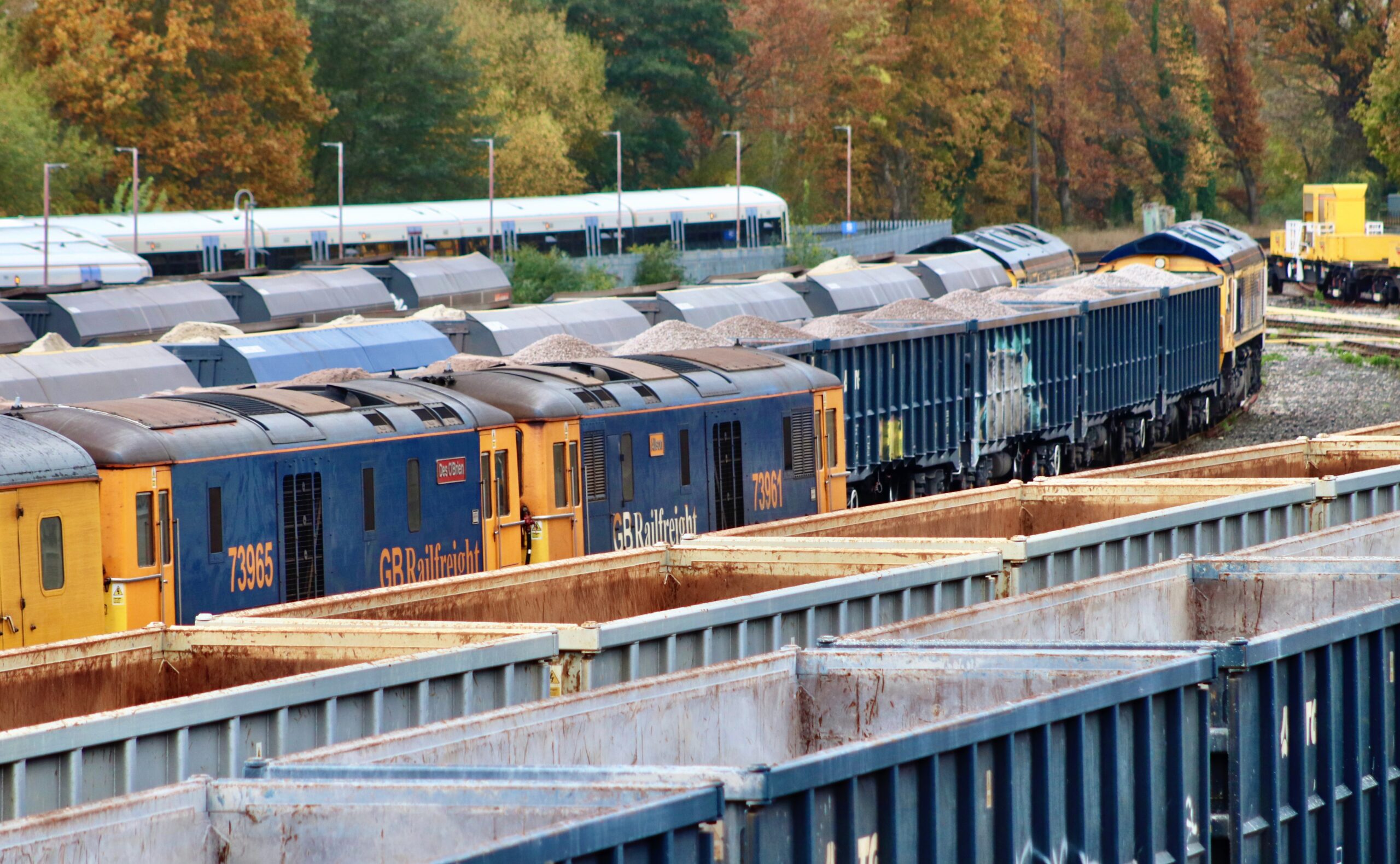
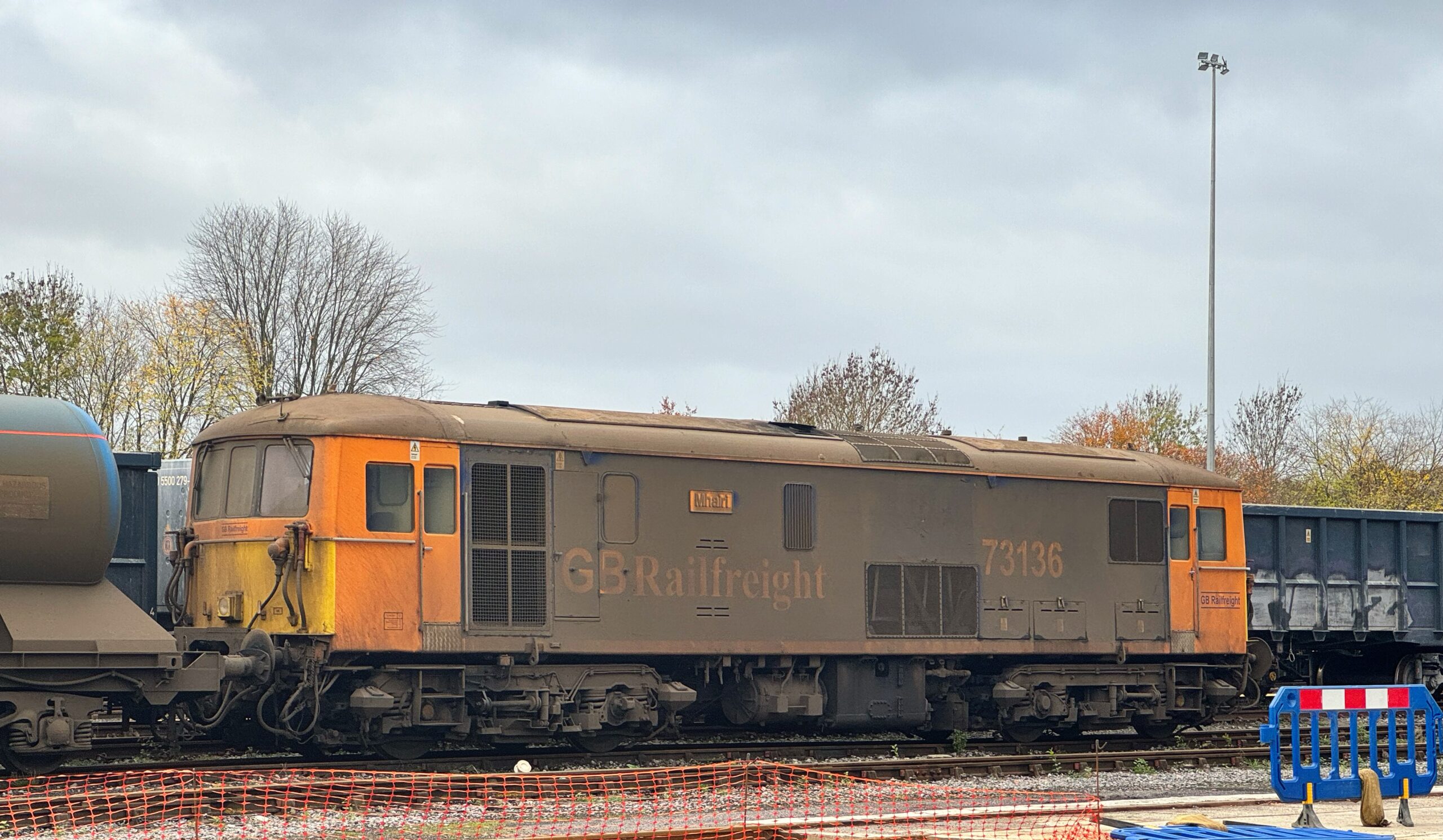
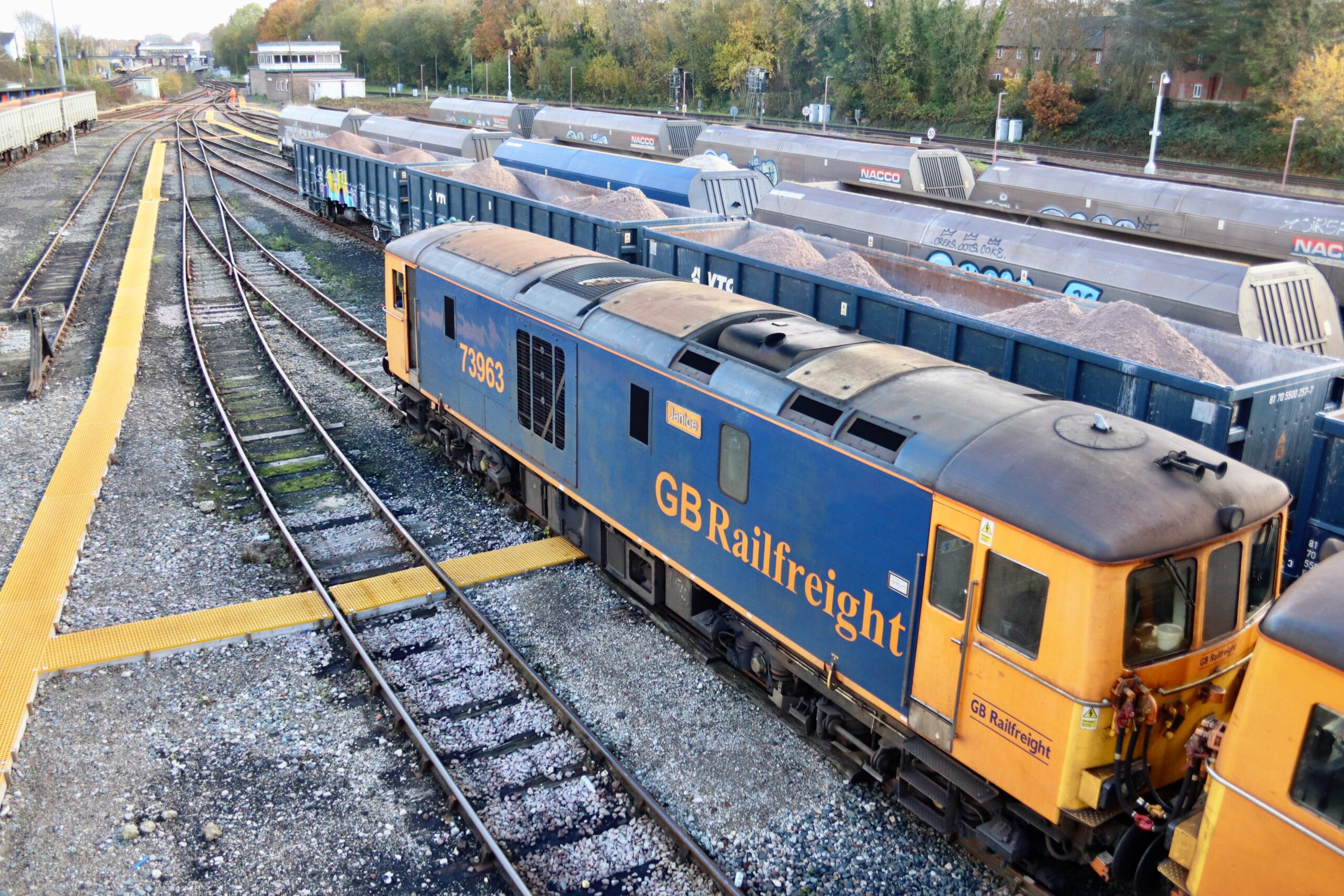
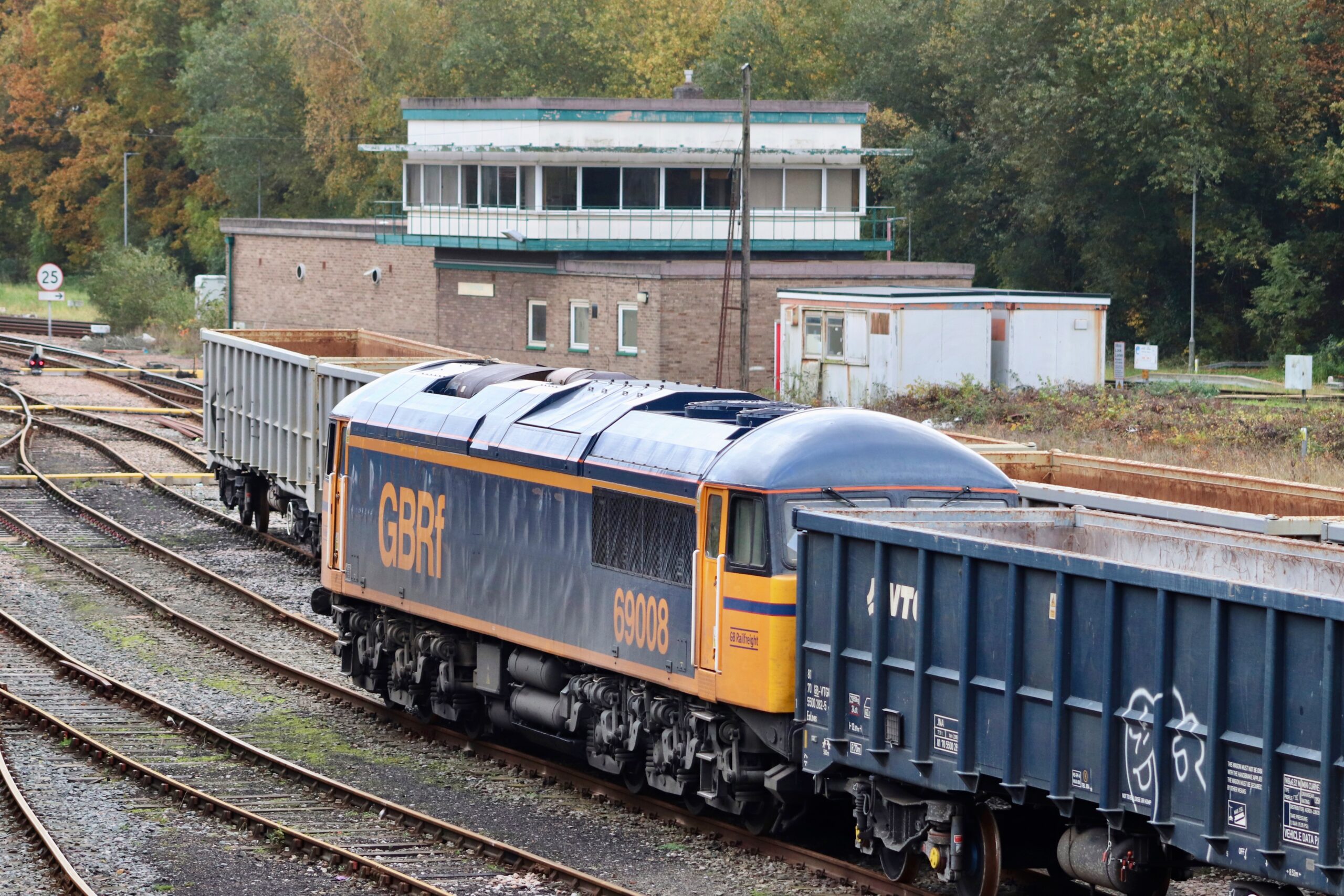
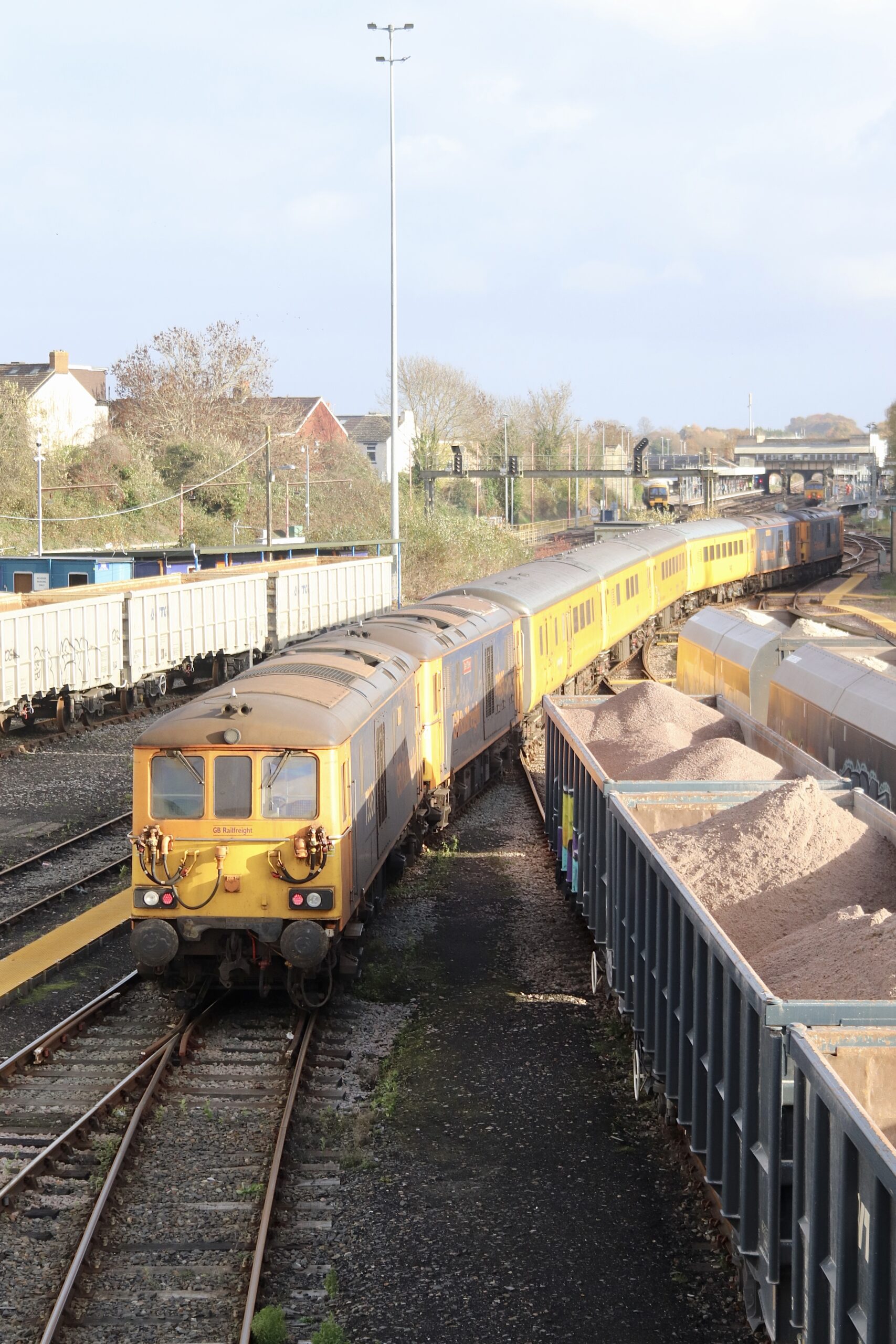
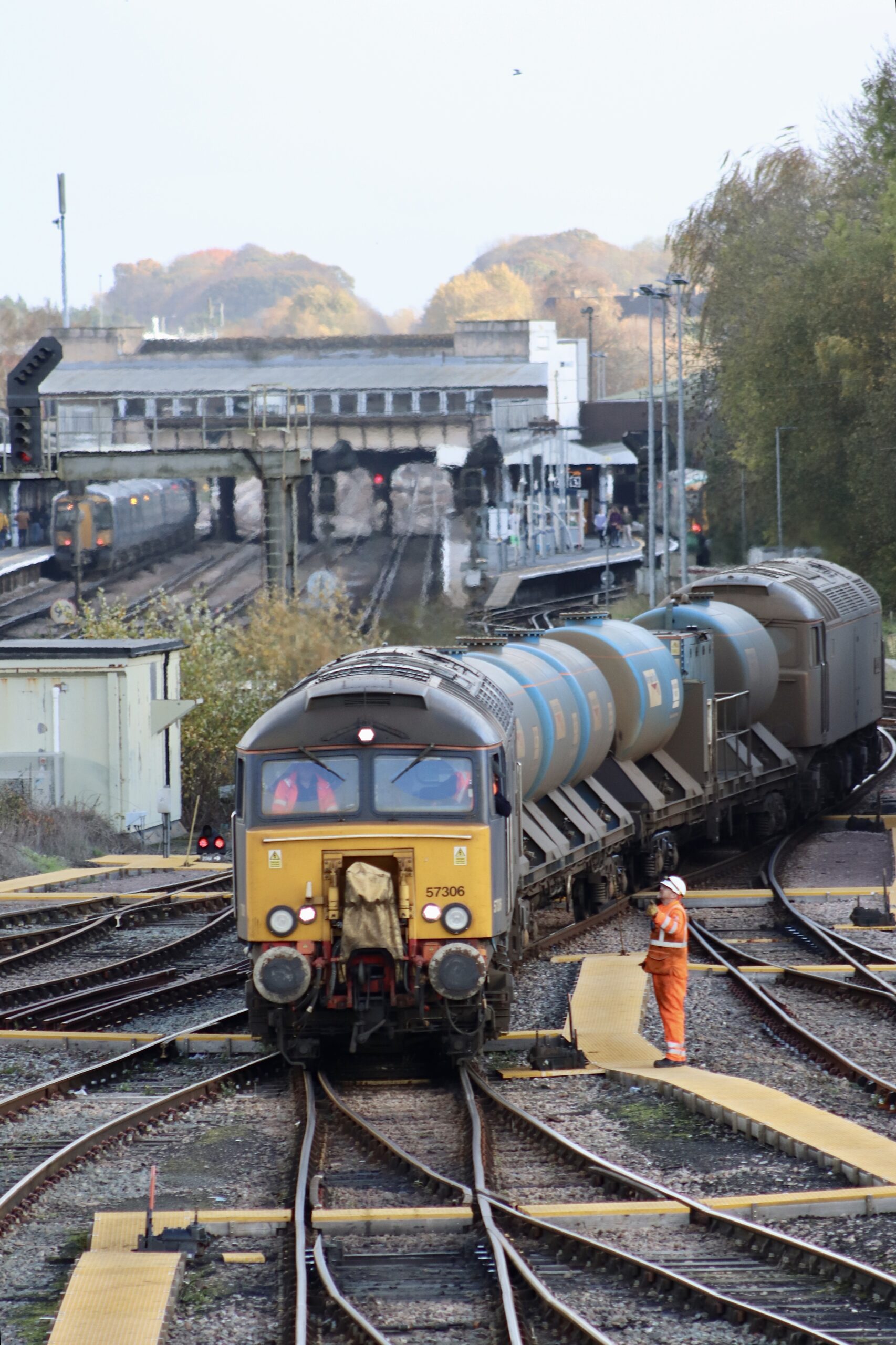
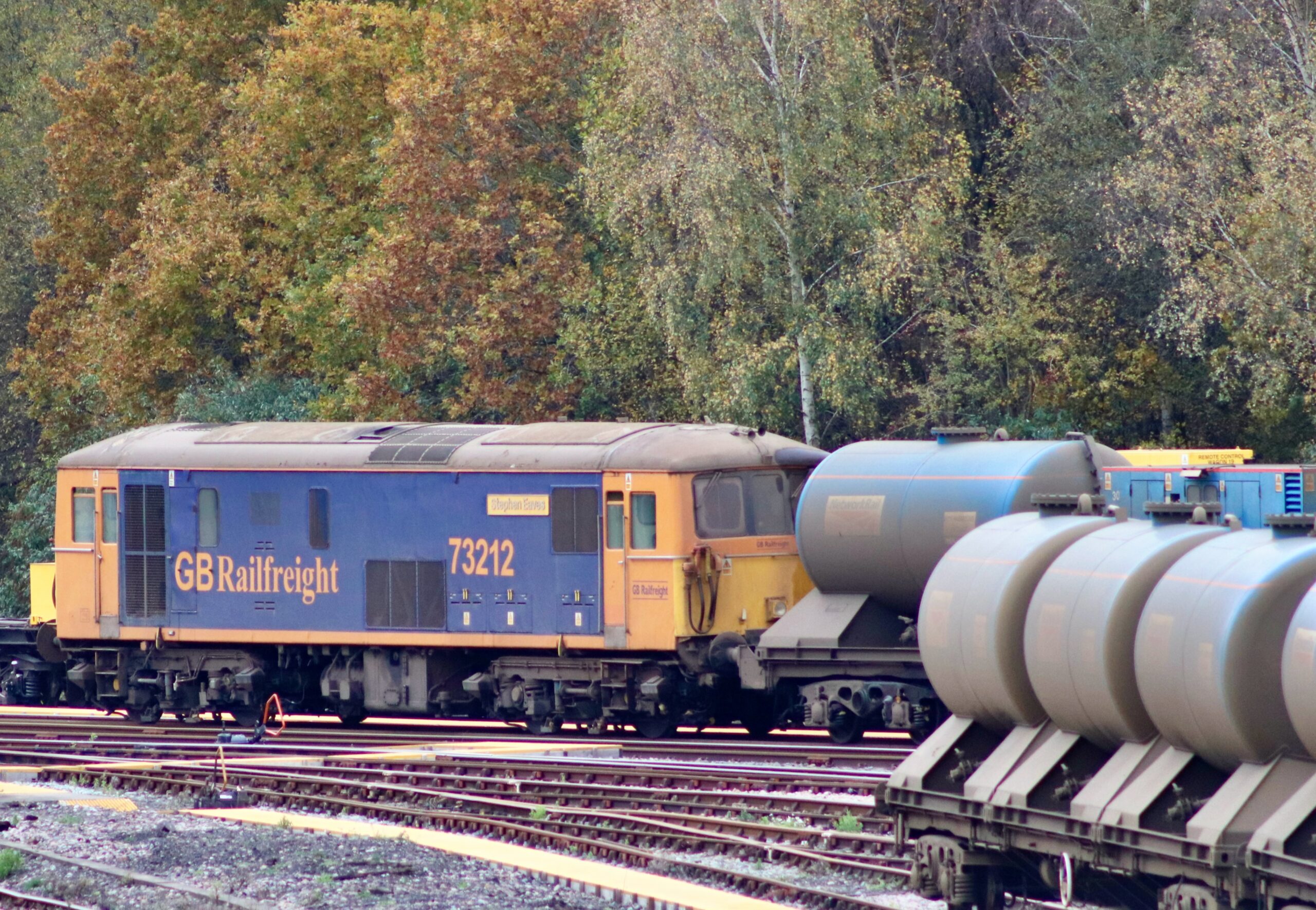
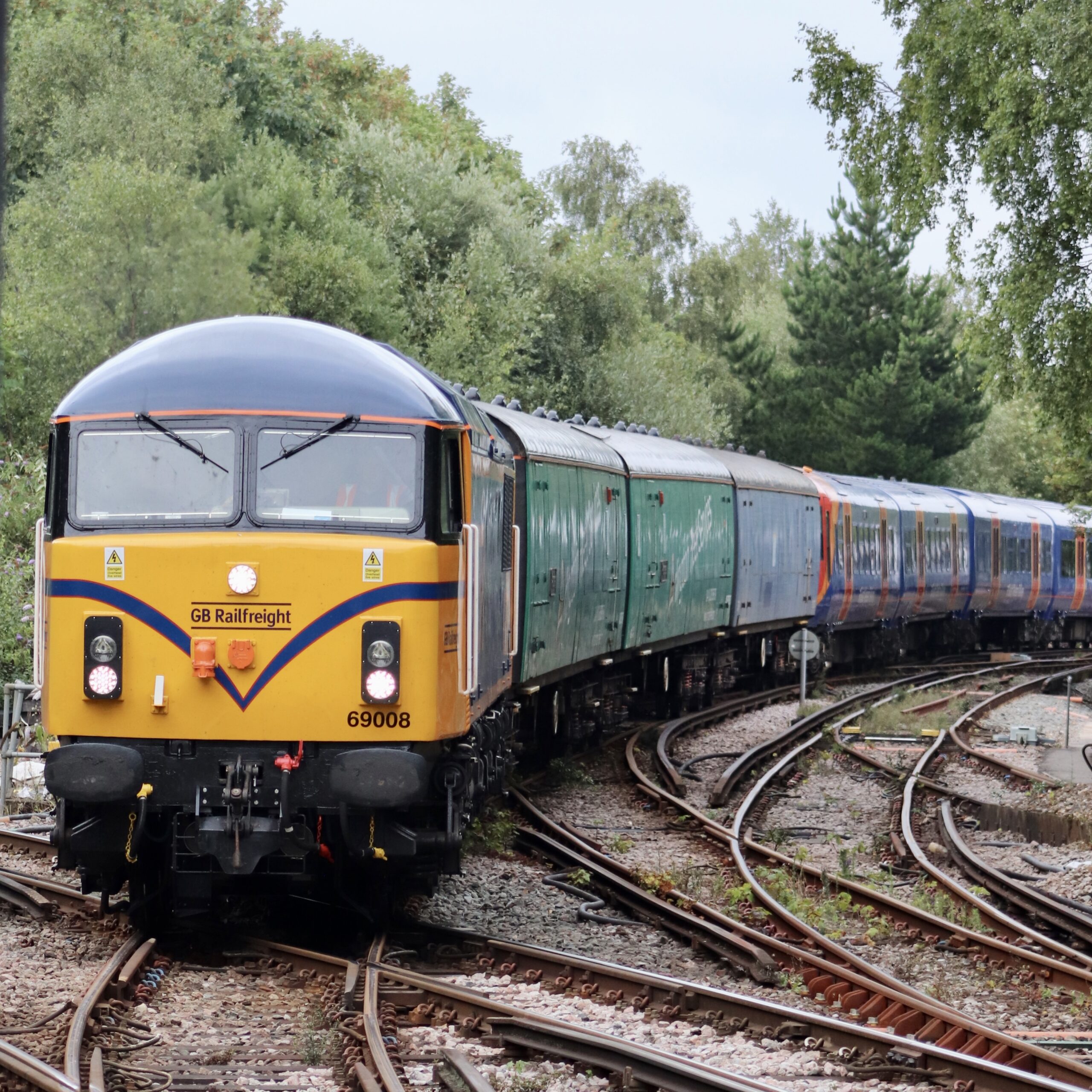
Class 57’s have been employed on the Tonbridge circuit RHTT this year. No.’s 57305 and 57003 are seen in-between duties at Tonbridge West Yard – 19/11/2023Class 73 No.’s 73964 ‘Jeanette’ and 73128 ‘O.V.S. Bulleid CBE’ with Class 57 No.’s 57305 and 57003 in Tonbridge West Yard – 19/11/2023Class 73 No.’s 73964 ‘Jeanette’ and 73128 ‘O.V.S. Bulleid CBE’ at Tonbridge West Yard. A new GBRf shed can be seen during construction in the background – 19/11/2023Class 73 No. 73109 ‘Battle of Britain 80th Anniversary’ in seasonal RHTT livery in Tonbridge West Yard – 19/11/2023Class 73’s No.’s 73965 and 73961 at the rear of 1Z01 1300 Tonbridge West Yard to Derby RTC in Tonbridge West Yard with two unidentified Class 66 locomotives at the head of aggregate trains – 19/11/2023Class 73 No. 73136 ‘Mhairi’ in Tonbridge West Yard – 19/11/2023GBRf Class 73 No. 73963 ‘Janice’ at the head of 1Z01 1300 Tonbridge West Yard to Derby RTC awaits departure – 19/11/2023GBRf Class 69 No. 69008 was the only member of the class in evidence at Tonbridge West Yard during this visit – 19/11/2023GBRf Class 73’s No.’s 73961 ‘Alison’ and 73965 ‘Des O’Brien’ at the rear 1Z01 1300 Tonbridge West Yard to Derby RTC depart Tonbridge West Yard. No.’s 73963 ‘Janice’ and 73962 ‘Dick Mabbutt’ are leading – 19/11/2023 With four GBRf Class 73’s attached, Colas test train 1Z01 1300 Tonbridge West Yard to Derby RTC departs Tonbridge West Yard. No. 73961 ‘Alison’ is the trailing locomotive along with No.’s 73965 ‘Des O’Brien’, 73962 ‘Dick Mabbutt’ and 73963 ‘Janice’ – 19/11/2023 GBRf Class 73 No. 73963 ‘Janice’ and 73962 ‘Dick Mabbutt’ leading 1Z01 1300 Tonbridge West Yard to Derby RTC out of the yard while RHTT 3W01 0907 Tonbridge West Yard GBRf to Tonbridge West Yard GBRf top and tailed by GBRf Class 57 No.’s 57306 ‘Her Majesty’s Railway Inspectorate’ and 57310 ‘Pride of Cumbria’ arrive at Tonbridge station where the train reverses – 19/11/2023GBRf Class 57 No.’s 57306 ‘Her Majesty’s Railway Inspectorate’ and 57310 ‘Pride of Cumbria’ pause as they enter Tonbridge West Yard working 3W01 0907 Tonbridge West Yard GBRf to Tonbridge West Yard GBRf – 19/11/2023GBRf Class 73 No. 73119 ‘Paul Taylor’ arrives at Tonbridge West Yard working 3W91 1026 Tonbridge West Yard GBRf to Tonbridge West Yard GBRf, with No. 73212 ‘Stephen Eaves’ at the rear – 19/11/2023GBRf Class 73 No. 73212 ‘Stephen Eaves’ at the rear of 3W91 1026 Tonbridge West Yard GBRf to Tonbridge West Yard GBRf – 19/11/2023GBRf Class 73 No. 73119 ‘Paul Taylor’ in retro BR ‘Dutch’ Civil Engineers livery at Tonbridge West Yard having arrived with RHTT working 3W91 1026 Tonbridge West Yard GBRf to Tonbridge West Yard GBRf – 19/11/2023
On leaving Tonbridge, Yoshi and I had planned on seeing one more RHTT, this time passing through at Edenbridge Town Station as it was in the direction of home.
Edenbridge Town railway station on the Uckfield branch, one of two stations serving Edenbridge in Kent, was opened in January 1888 – 19/11/2023
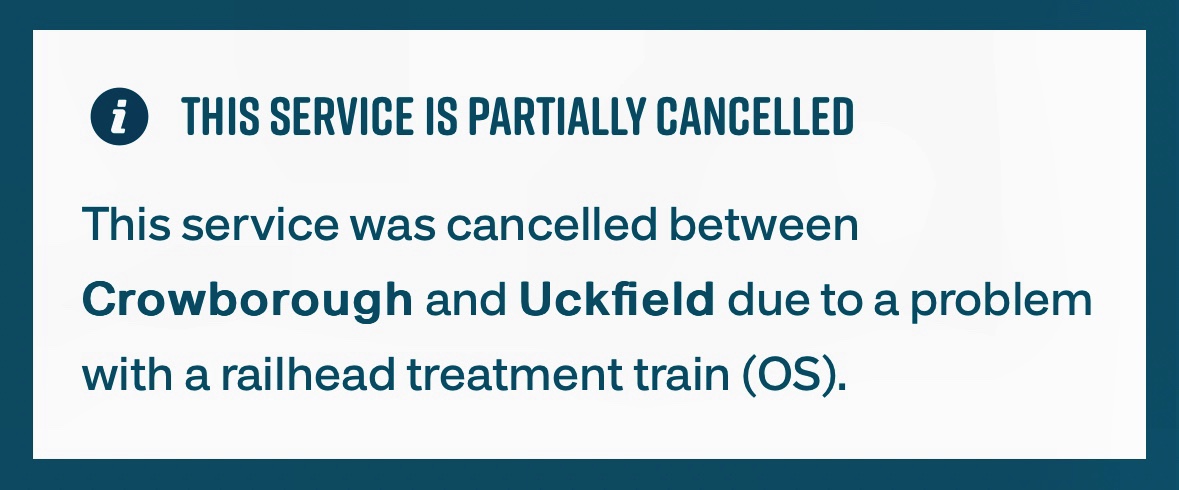
We parked up in the station car park and checked Real Time Trains (RTT) to see that the train; 3W90 0715 Tonbridge West Yard to Tonbridge West Yard via the South East of England, top and tailed by GBRf Class 73 No.’s 73107 and 73213, was at Uckfield and had been for 20 minutes or so beyond its scheduled departure time. Passenger trains into Uckfield (which is a terminus station) were being turned around at Crowborough as the line beyond was effectively blocked.
RTT information regarding partially cancelled passenger trains on the Uckfield branch – 19/11/2023
I hung around in Edenbridge for a little while, but soon came to the conclusion that this RHTT was not going to be heading our way while there was still a decent amount of daylight left to photograph it. I briefly contemplated driving to Uckfield, but Google Maps informed me it was at least a 30 minute drive away and would substantially delay my arrival home, so instead made the decision to head for Dorset. Had I known there would be delays on the M25 caused by pedestrians “being loose on the carriageway”, I might well have taken the Uckfield option and returned home via the South Coast route!
Video from our visit to Tonbridge – 19/11/2023
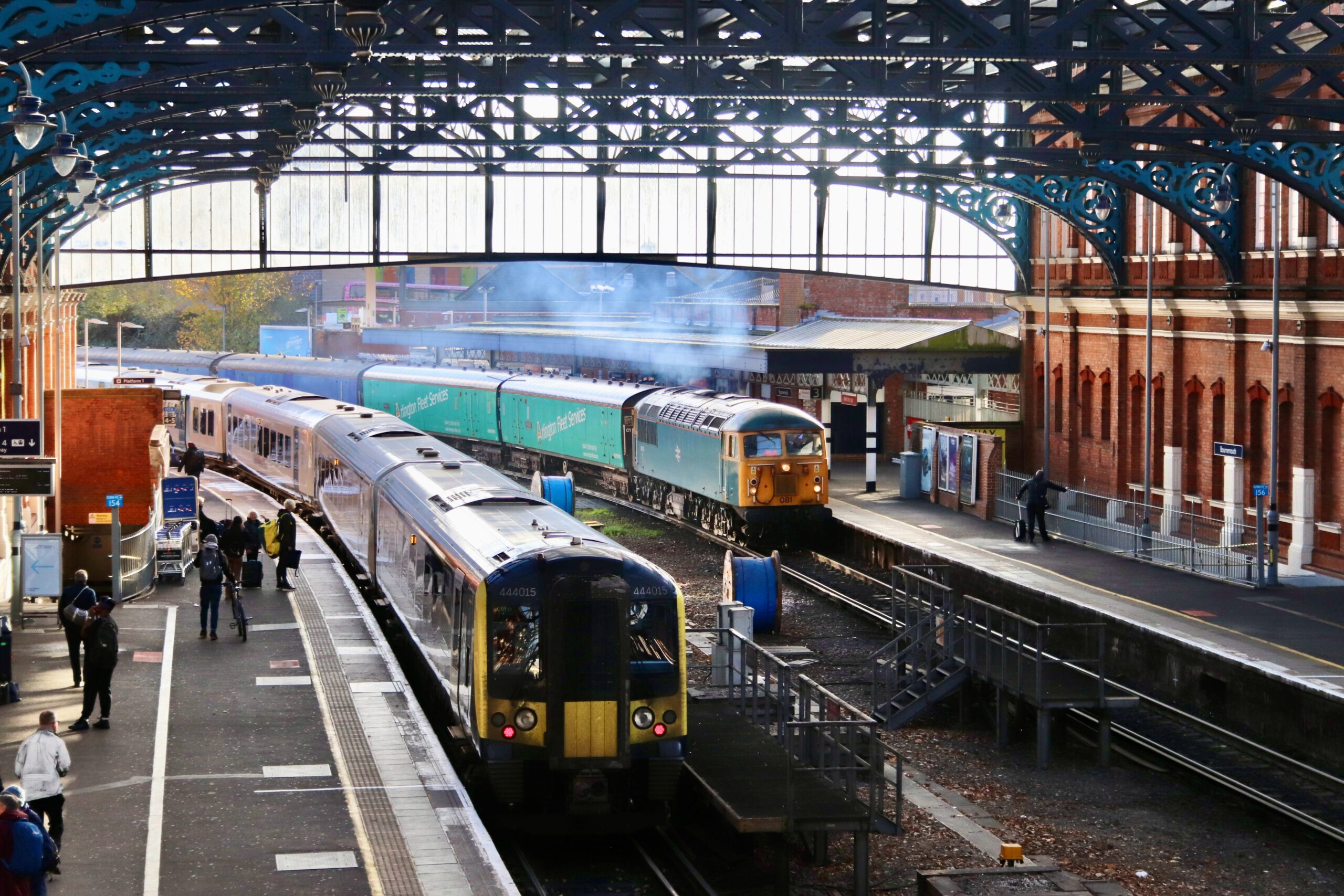
Monday 20th November saw another attempt to collect South Western Railway (SWR) Class 458 Electric Multiple Unit (EMU) No. 458524 for onward transit to Alstom Widnes Transport Tech where it is to undergo refurbishment. Our regular reader may recall an abortive attempt a couple of weeks ago when the brakes on the EMU curtailed the train in Christchurch station. With the associated locomotives and barrier coaches due to arrive at Bournemouth depot mid-morning, I chose to head out to see the train pass through Bournemouth railway station as I felt I’d photographed and videoed these workings at Branksome where they reverse into the depot many times, so was looking for something different. The change of location was well rewarded as Class 56 No. 56081, leading on 5O58 0520 Leicester L.I.P. to Bournemouth T&R.S.M.D, made a fine sight and sound as she opened up passing through the station with the sound of her 3,250 brake horsepower (bhp) Ruston-Paxman power unit echoing around the glass roofed building.
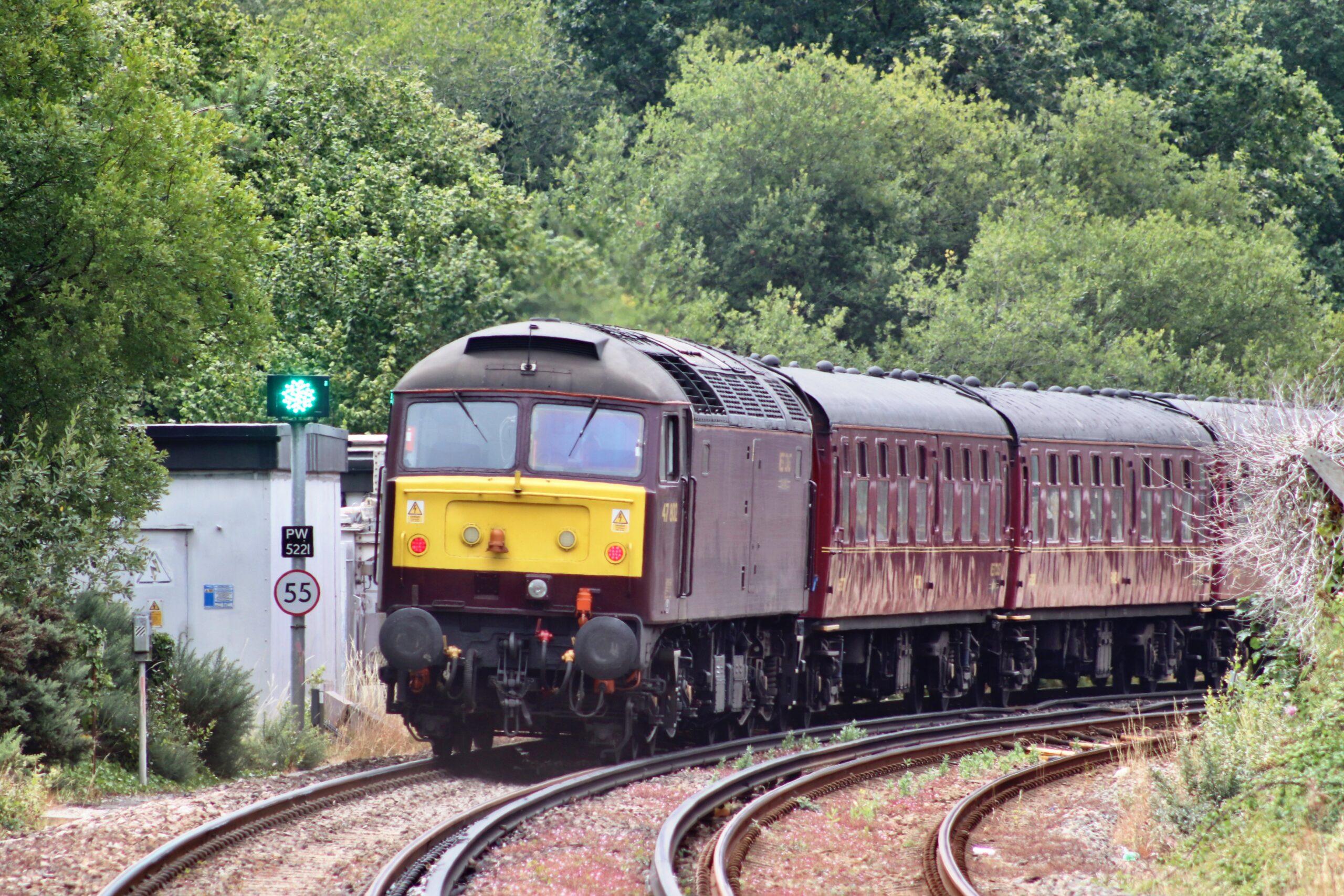
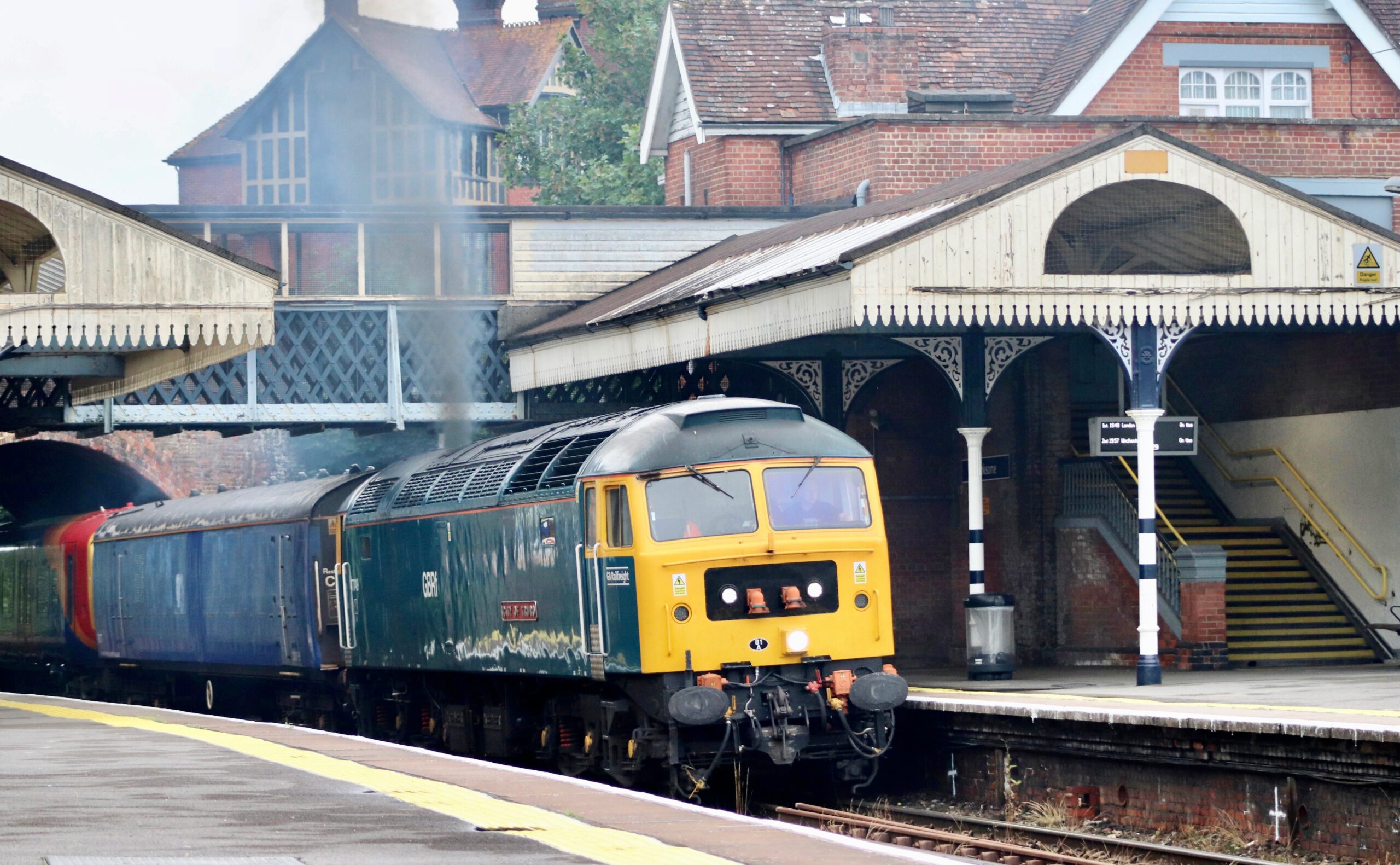
GBRf Class 56 No. 56081 opens up as she arrives at Bournemouth station working 5058 0520 Leicester LIP to Bournemouth T&RSMD passing SWR Class 444 No. 444015 which has arrived on 2W54 1000 Poole to London Waterloo – 20/11/2023GBRf Class 56 No. 56081 thunders through Bournemouth station on 5058 0520 Leicester LIP to Bournemouth T&RSMD. Class 47 No. 47727 ‘Edinburgh Castle’ is at the rear, while SWR Class 444 No. 444015 awaits the arrival of a Weymouth service before coupling up and departing for London Waterloo – 20/11/2023Class 47 No. 47727 ‘Edinburgh Castle / Caisteal Dhun Eideann’ passing Bournemouth at the rear of 5058 0520 Leicester LIP to Bournemouth T&RSMD – 20/11/2023
I had also planned on seeing the return working from Branksome, due to arrive at 1715 running as 5Q58 17:11 Bournemouth Traction & Rolling Stock Maintenance Depot to Widnes Transport Tech. However, unbeknown to me – and most of the other local rail enthusiasts – the train left the depot, unheralded, at around 1300. You win some…..
While I was in Bournemouth, I took the opportunity of capturing some images and video of everyday operations, which I mostly forget to do.
CrossCountry Class 220 Voyager DMU No. 220001 in Bournemouth Middle Sidings waiting to move forward to form a service to Manchester – 20/11/2023 SWR Class 450 No. 450034 at Bournemouth platform 1 awaiting departure on 2B36 1002 Bournemouth to Winchester while Class 444 No. 444001 stands at platform 3 with the short formed 1W08 0903 Weymouth to London Waterloo – 20/11/2023SWR Class 444 No. 444024 waits at platform forming 2W57 0805 London Waterloo to Poole as fellow class member No. 444017 departs with the front five coaches of 1W57 0805 London Waterloo to Weymouth – 20/11/2023
Video from Bournemouth station, including GBRf Class 56 No. 56081, captured on 20/11/2023
Later Monday evening the regular monthly Colas test train from Derby RTC to Eastleigh East Yard via Weymouth ran as 1Q51 1115 Derby R.T.C.(Network Rail) to Eastleigh East Yard employing the usual traction of GBRf Class 73 locomotives. This time is was the turn of No.’s 73963 ‘Janice’ and 73965 ‘Des O’Brien’ – two locomotives we had seen the previous day departing Tonbridge bound for Derby.
Video screen grab of GBRf Class 73 No. 73963 ‘Janice’ at the head of 1Q51 1115 Derby RTC to Eastleigh East Yard via Weymouth passing through Poole – 20/11/2023Video screen grab of Class 73 No. 73965 ‘Des O’Brien’ passing Poole at the rear of 1Q51 1115 Derby RTC to Eastleigh East Yard via Weymouth – 20/11/2023
Video of 1Q51 1115 Derby RTC to Eastleigh East Yard via Weymouth passing through Poole – 20/11/2023Notification of BCP roadworks for 21st November 2023
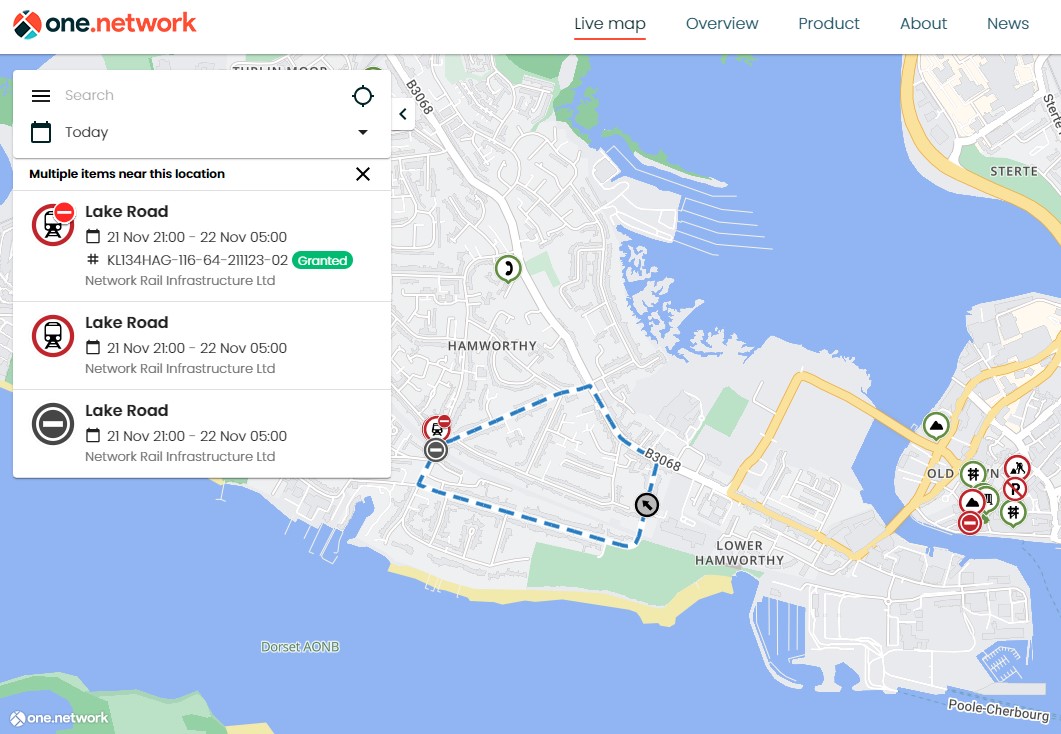
The railway bridge over Lake Road on the Hamworthy Branch was subject to an inspection this week. A small group of Highway Maintenance engineers were on site for a few hours from 2100 on Tuesday 21st November.
Inspection of Lake Road bridge on the Hamworthy Branch – 21/11/2023Inspection of Lake Road bridge on the Hamworthy Branch – 21/11/2023Inspection of Lake Road bridge on the Hamworthy Branch – 21/11/2023Inspection of Lake Road bridge on the Hamworthy Branch – 21/11/2023
The guy we spoke to from the team was very enamoured with Yoshi, but wasn’t able to give us an inside scoop of what might happen at the bridge in the future. Further road closures described as “Works for Rail Purposes” are scheduled at the location in January 2024.
BCP roadworks map detailing roadworks at Lake Road bridge in January 2024
For The Record:
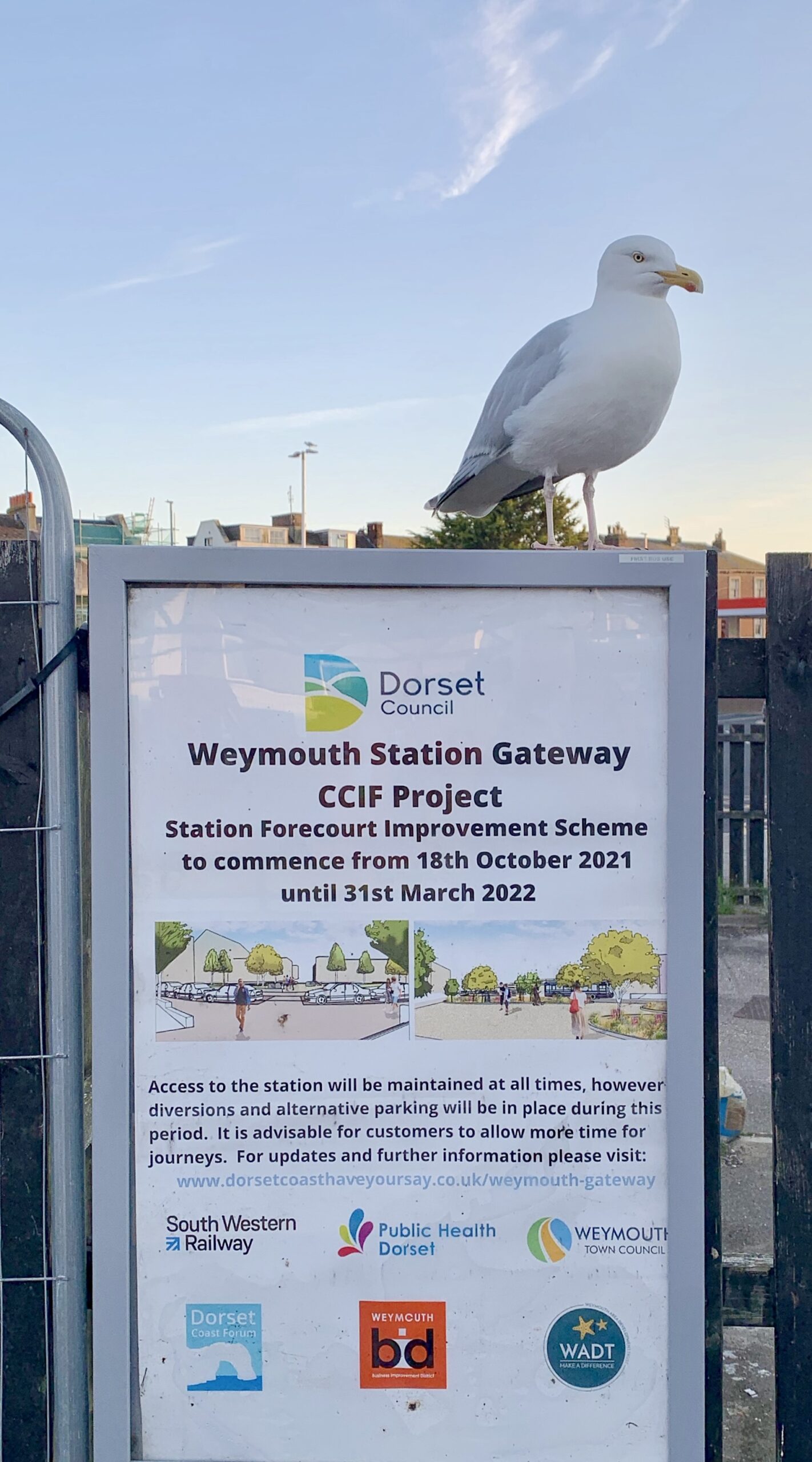
Poster giving customer information for the, clearly over-running, Weymouth Station Gateway Project in May 2022 – 22/05/2022
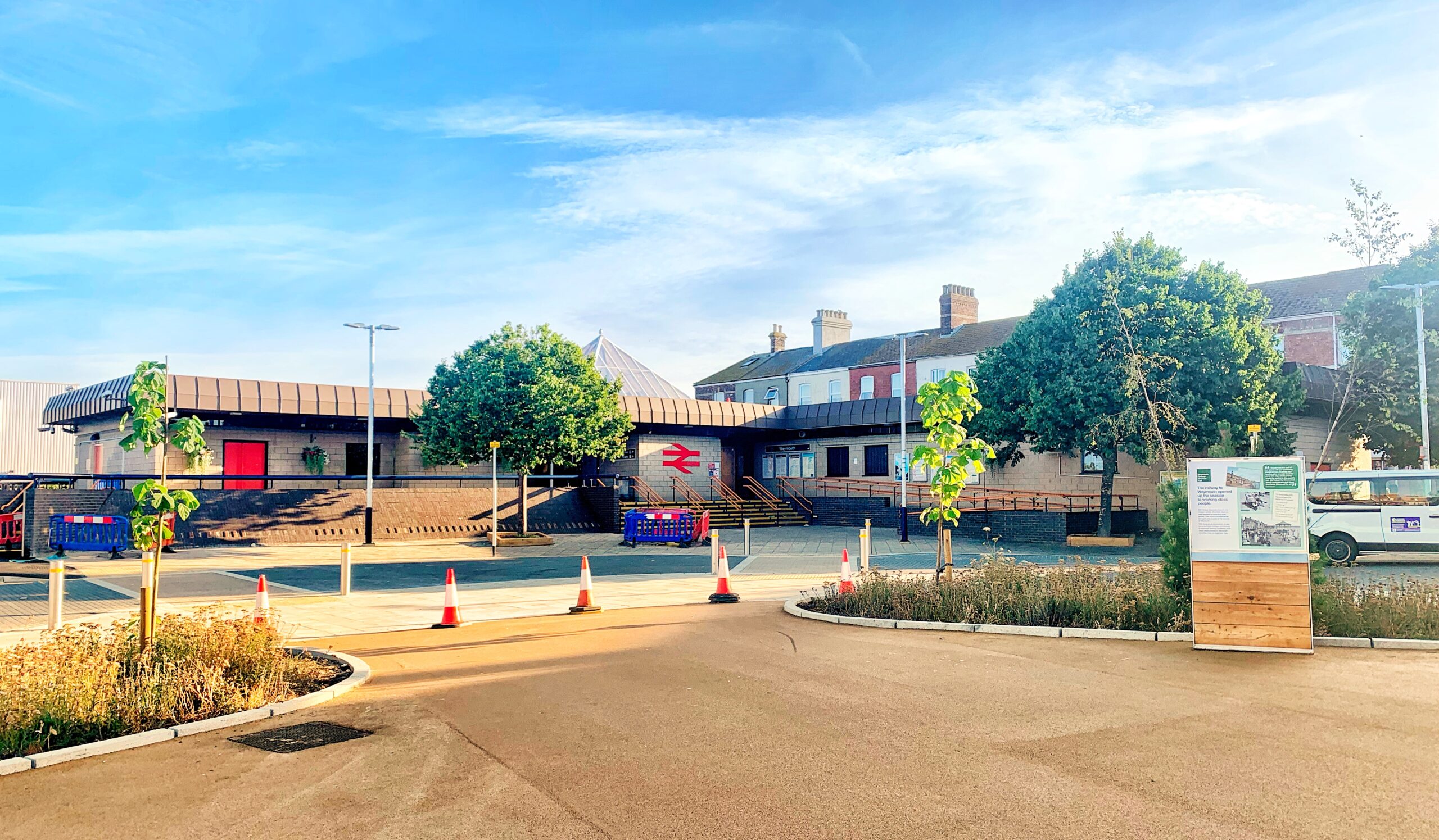
The Weymouth Station Gateway project (WSP), designed to create a more welcoming and user-friendly space for residents, businesses, and visitors to Weymouth railway station has won two trophies at the Institution of Civil Engineers (ICE) South West Civil Engineering Awards 2023. The £1.2m project led by Dorset Coast Forum in partnership with Dorset Council, using funding from South Western Railway, was designed by WSP to open up the layout of the station forecourt, promoting sustainable transport options and reducing anti-social behaviour. The scheme also involved the creation of Pocket Park from a disused section of track on the former Weymouth Harbour Branch. As well as being presented with the Community Award, Weymouth Station Gateway was also given the Judges’ Special Award. The judging panel was impressed with the collaborative, respectful partnership behind the scheme, bringing together the local community, the rail company and the transport authority to improve the public realm. The judges described the project as an outstanding example of infrastructure that unites communities and improves people’s daily lives.
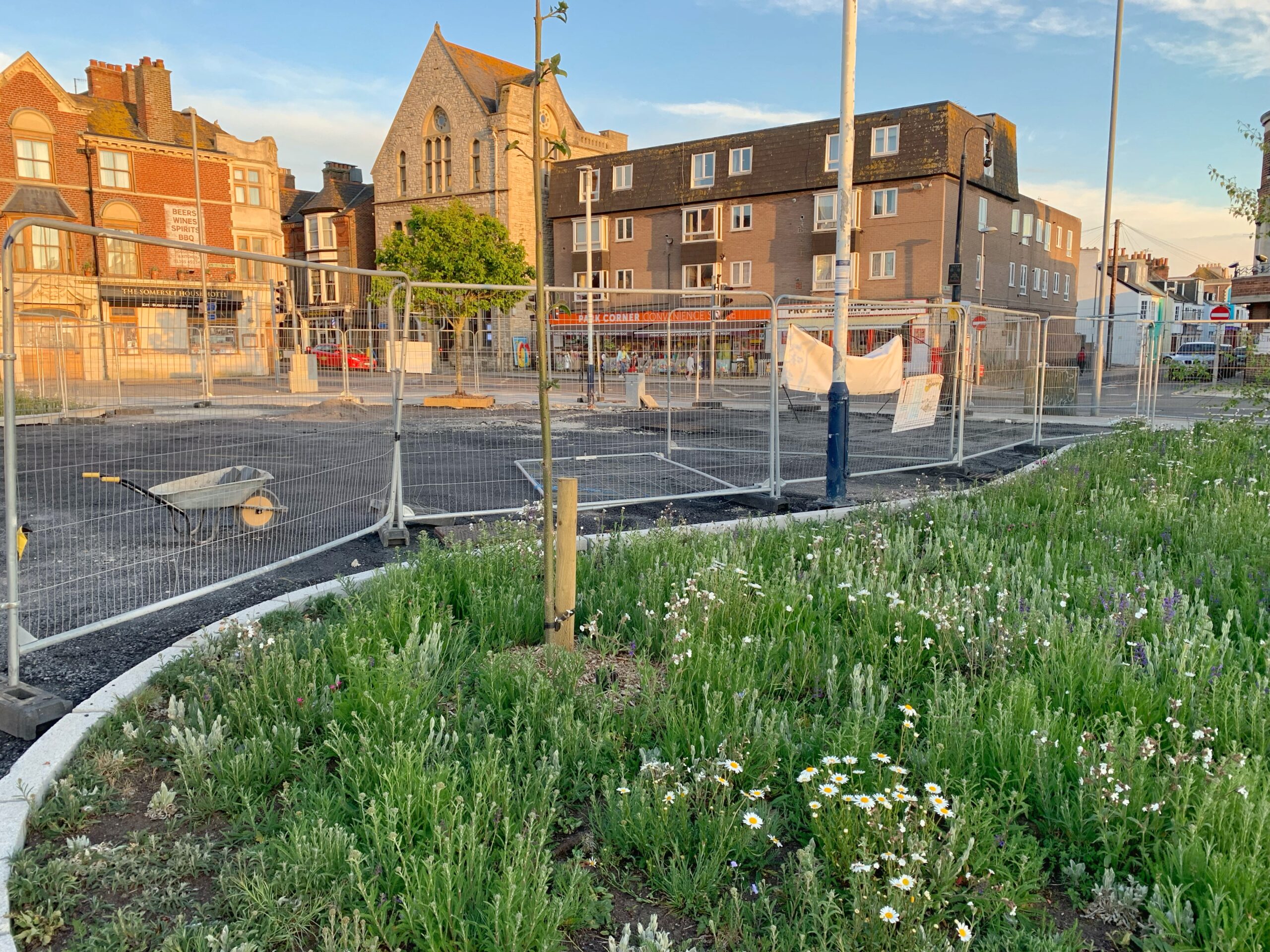
Works during the Weymouth Station Gateway Project – 23/07/2022Works during the Weymouth Station Gateway Project – 22/05/2022
Ten project awards and two individual trophies were presented at the ICE South West Civil Engineering Awards in association with Kier BAM on Friday 10th November 2023 at a gala ceremony in Bristol hosted by TV presenter, Rob Bell. The awards are held annually to recognise achievement among regional engineers and project teams.
…. and relax. Thanks for visiting our page and for your comments and corrections, which are always gratefully received! We’ll be back next week all being well! Be seeing you!
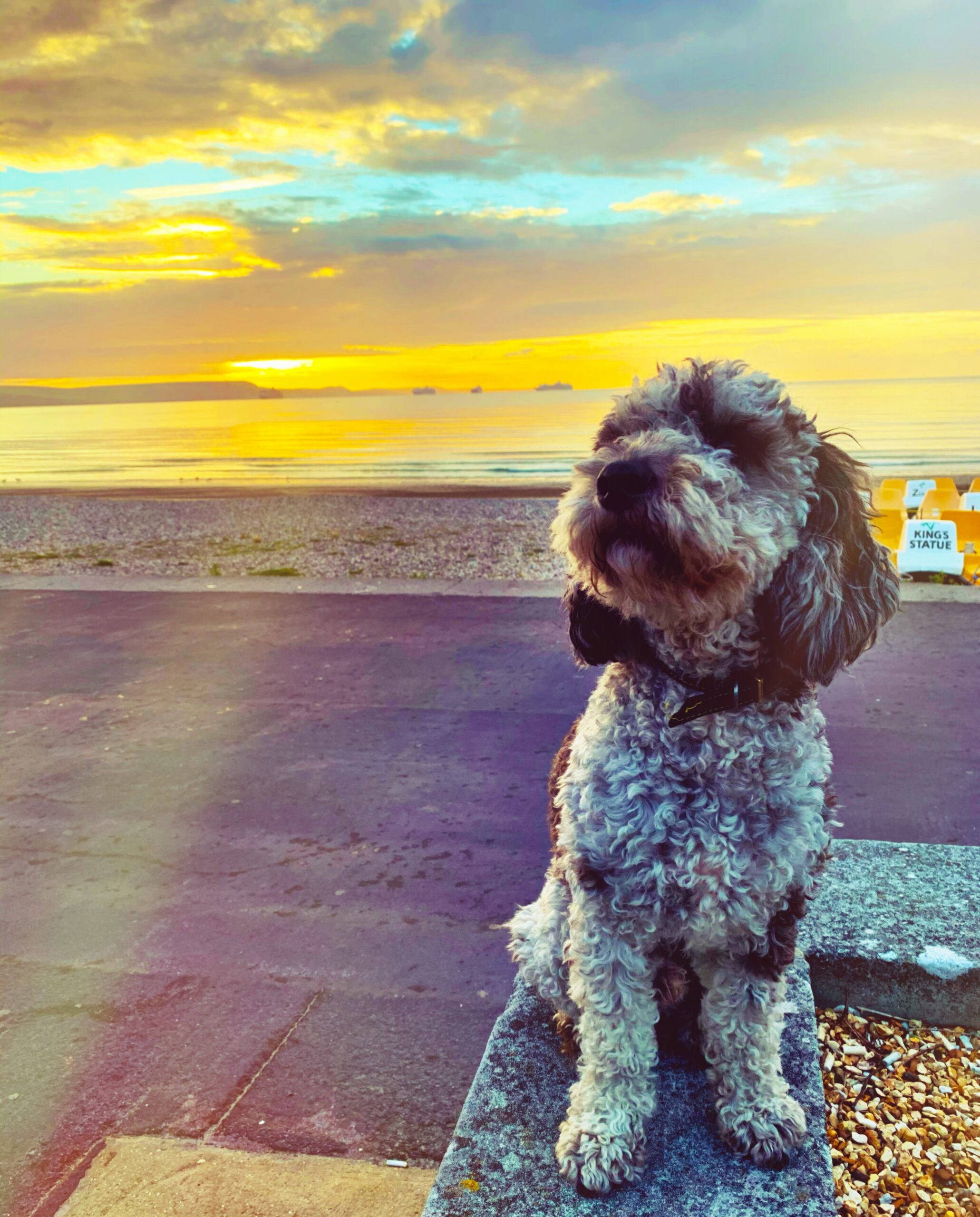
Yoshi celebrating not only this blog’s second birthday, but the 60th Anniversary of Doctor Whoof – 23/11/2023
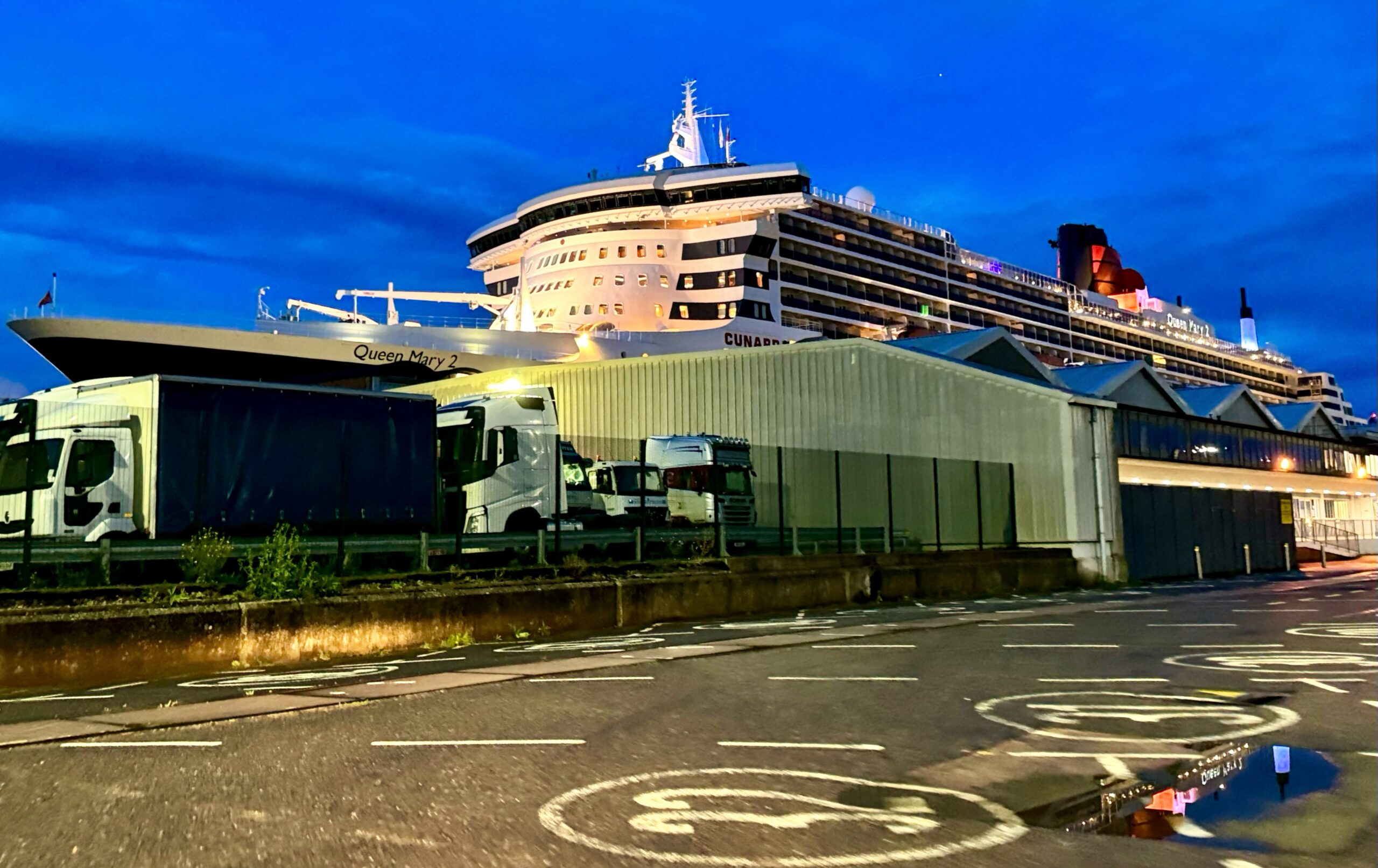
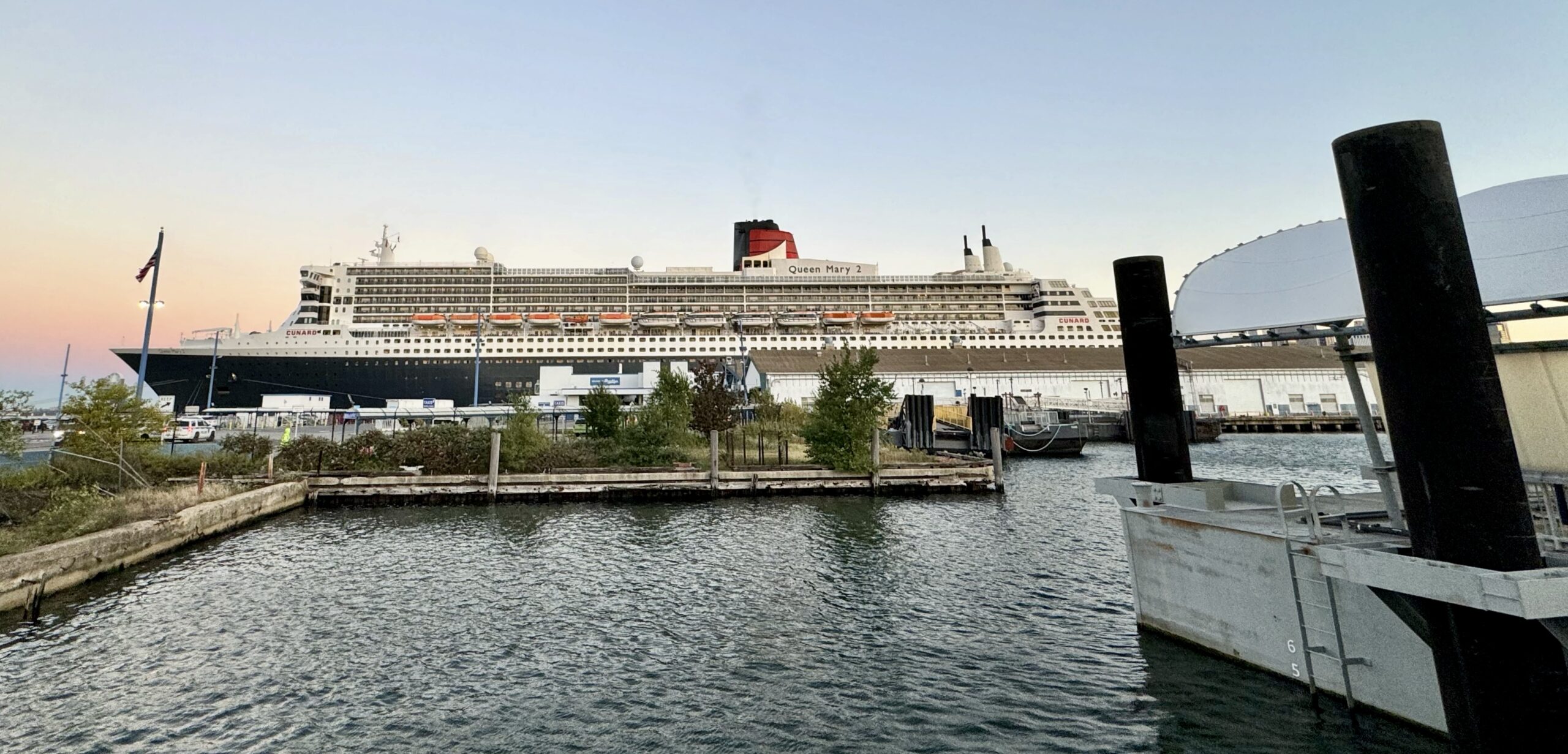
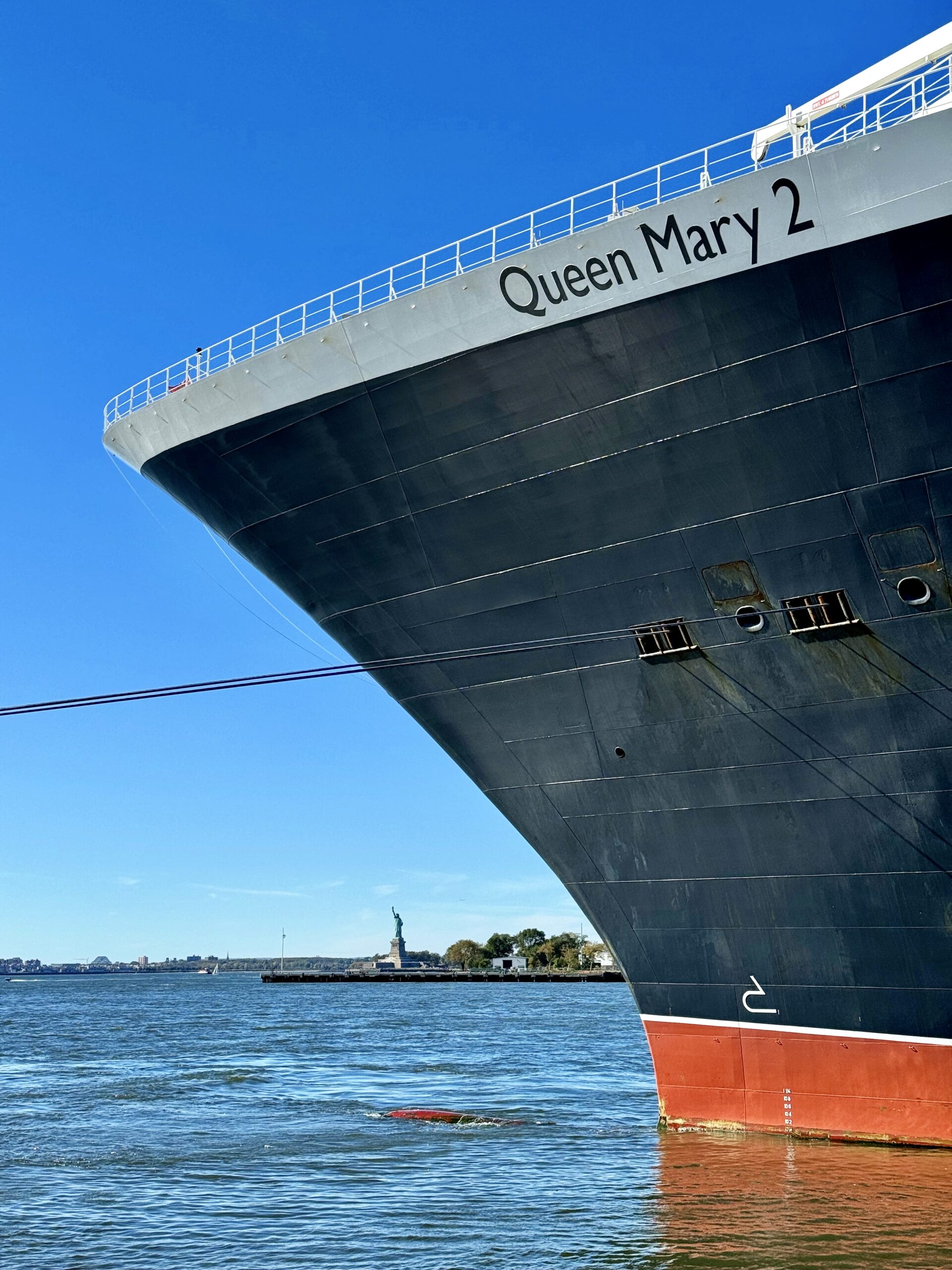
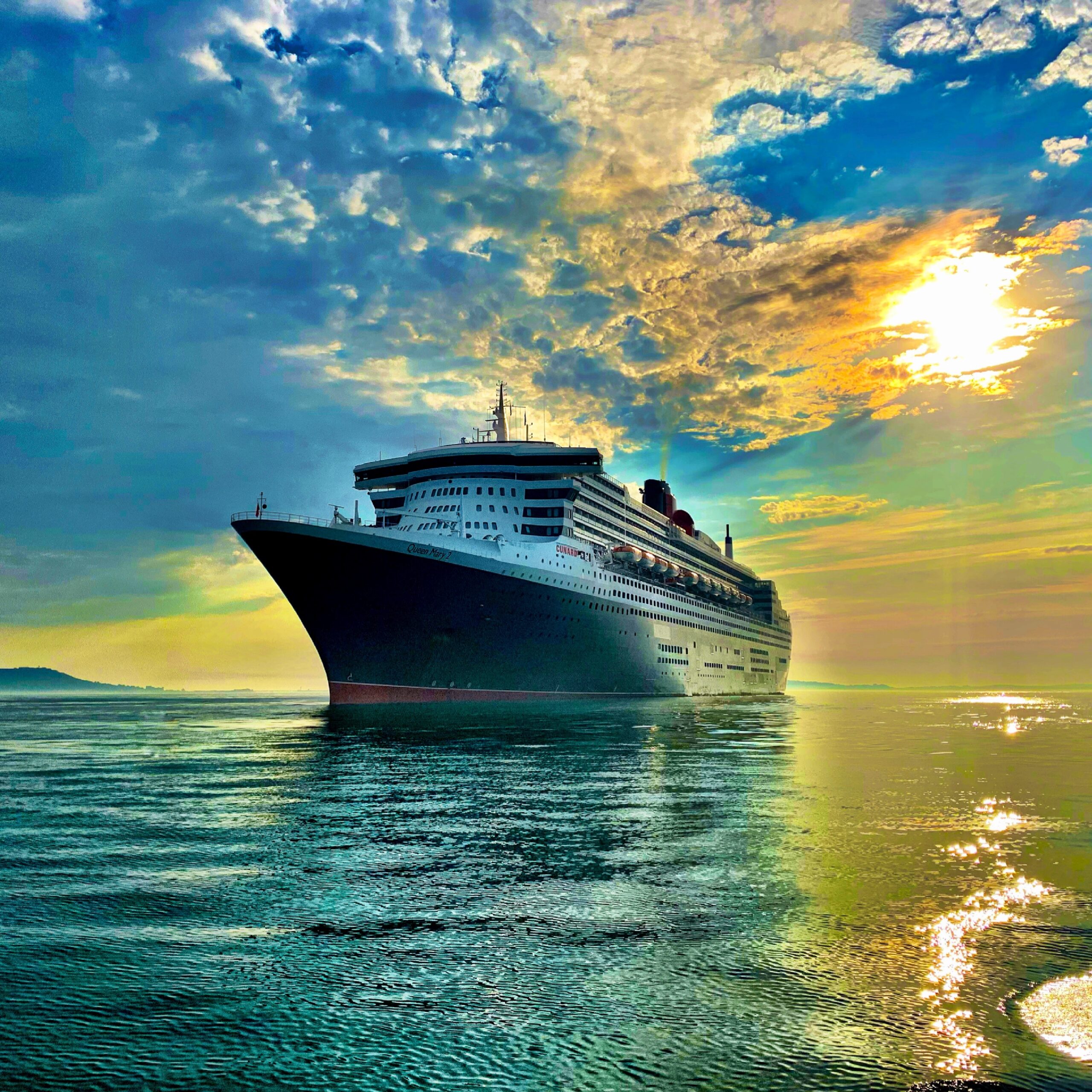
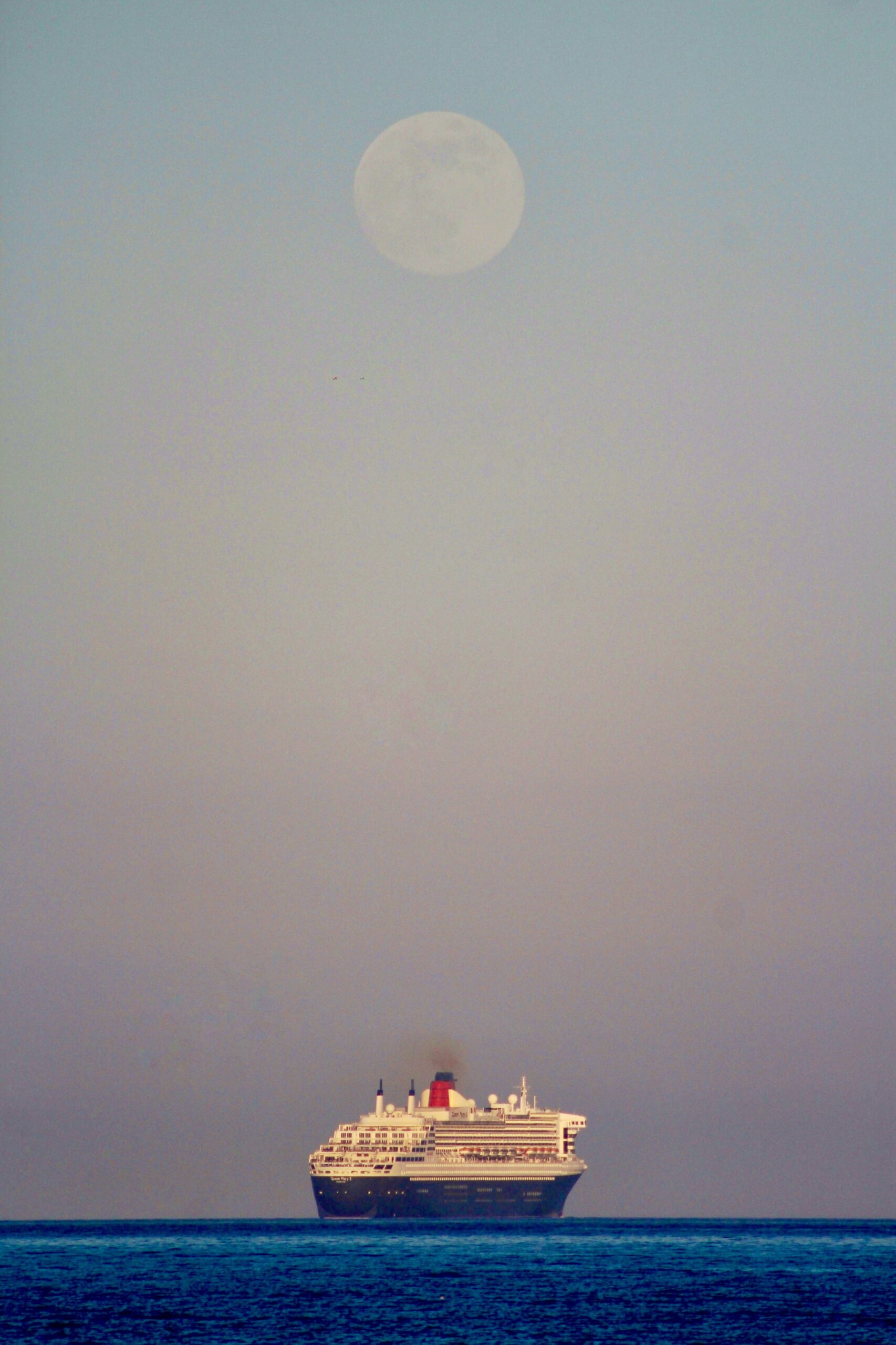
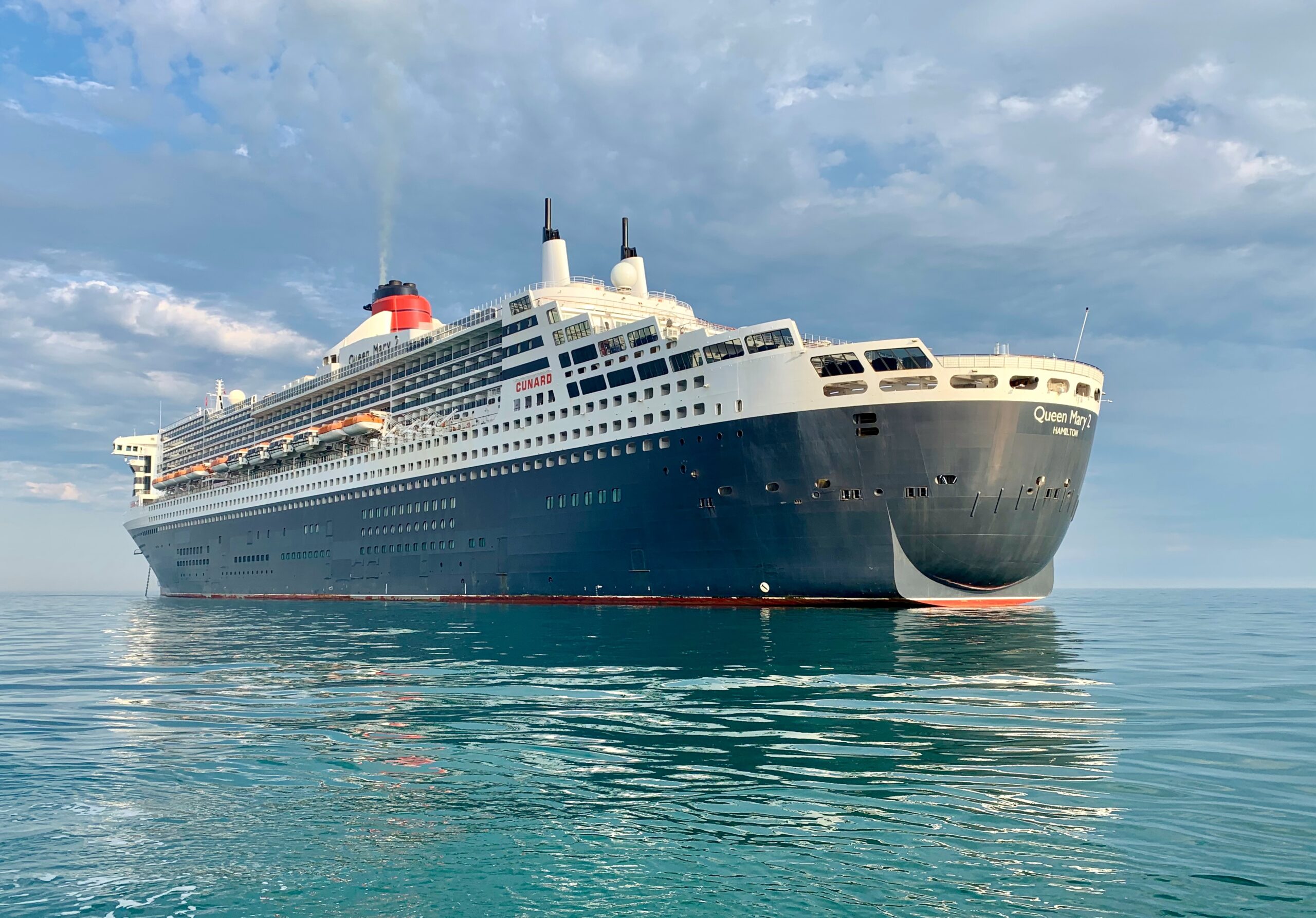
Queen Mary 2 alongside Southampton Mayflower Cruise Terminal – 20/10/2023
October 6th 2023 to October 25th 2023
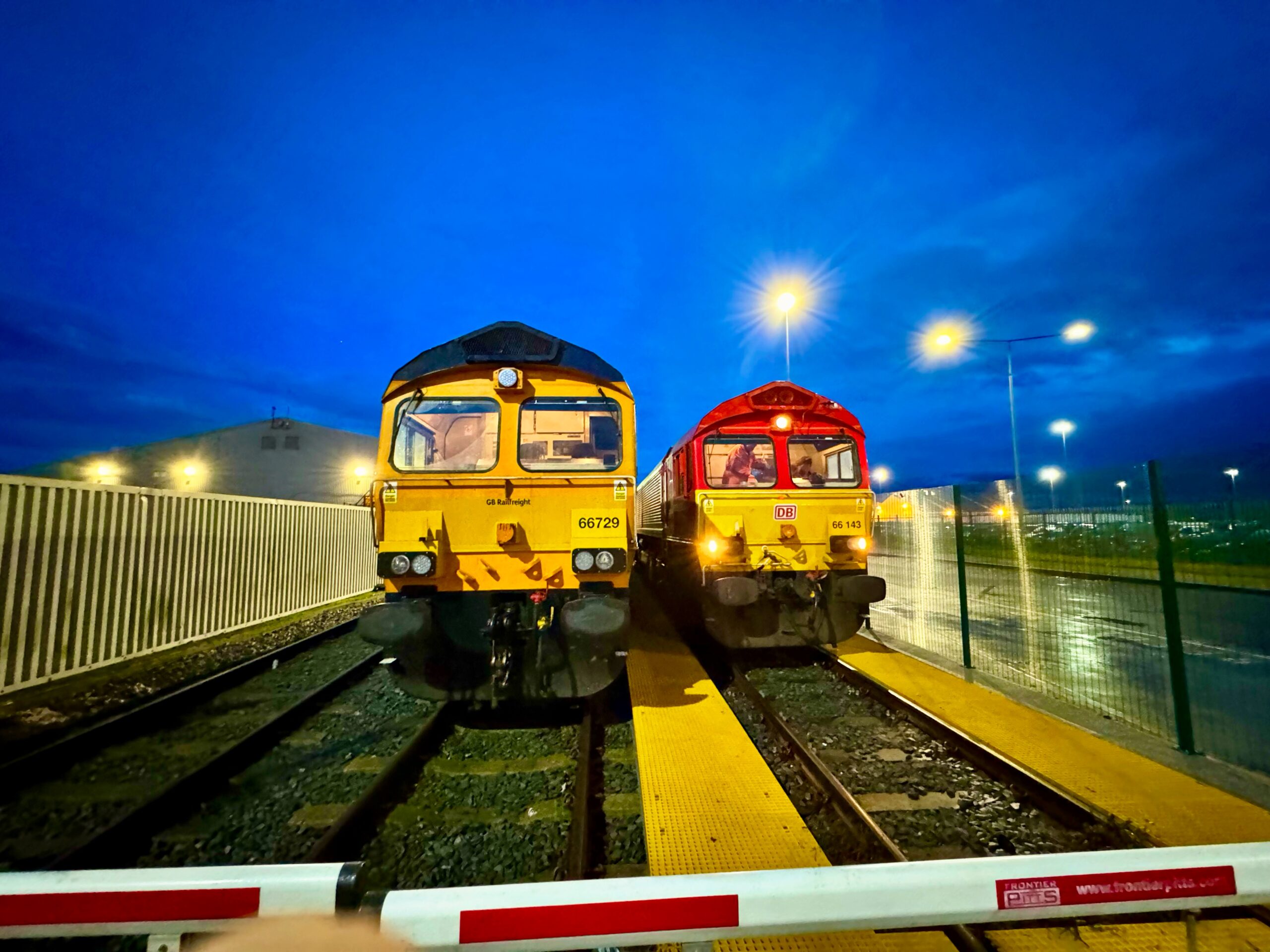
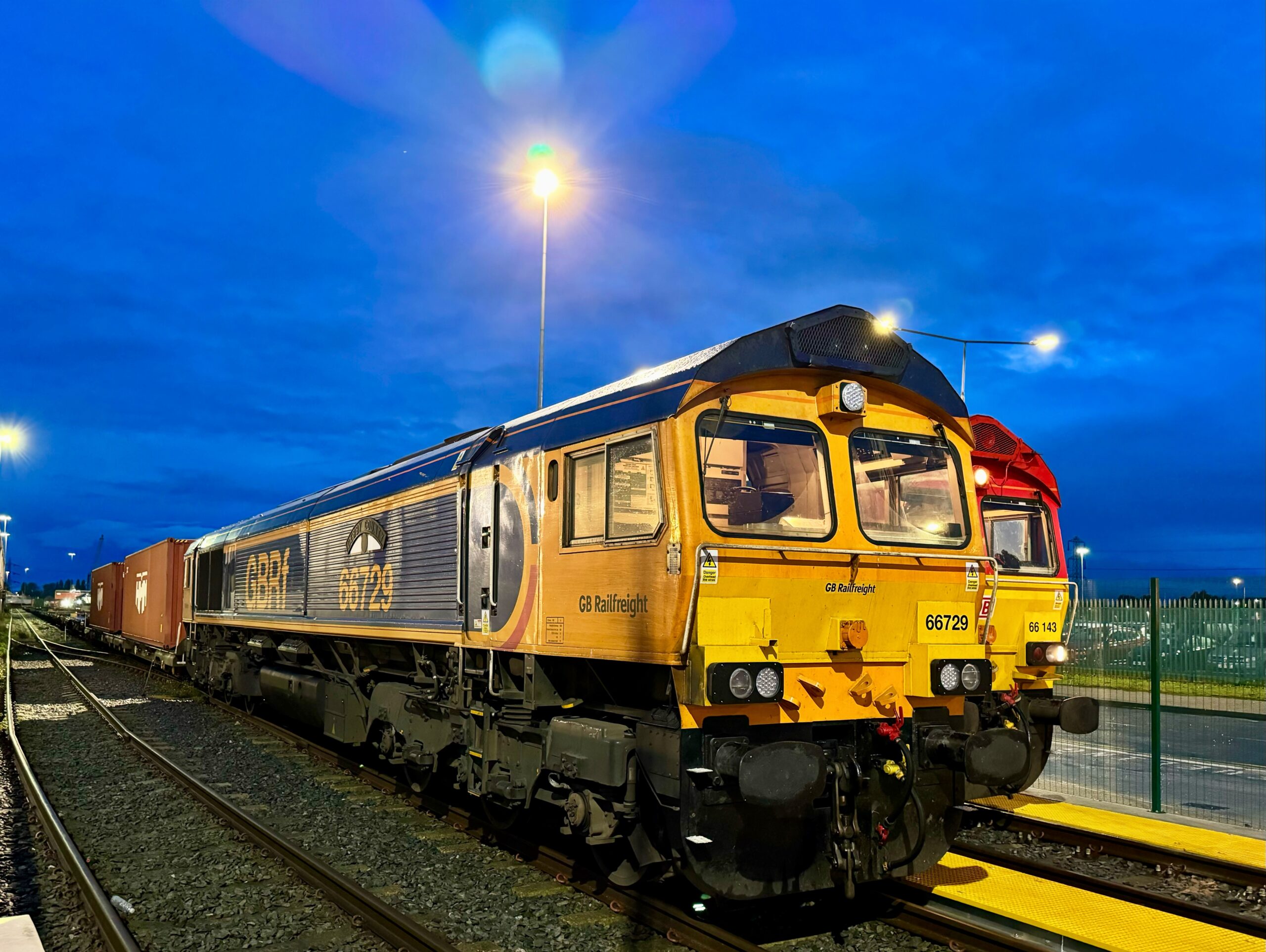
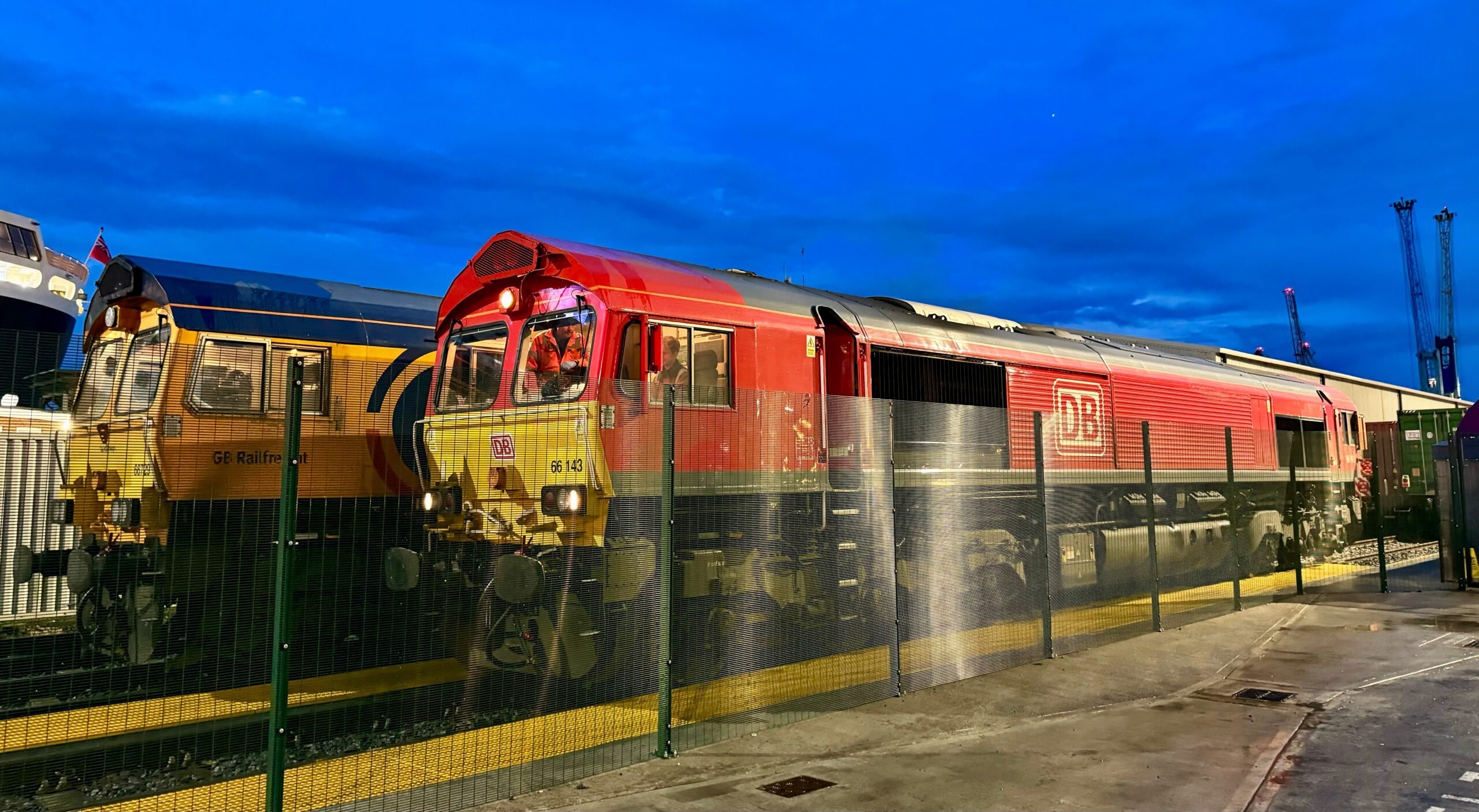
We had a fabulous couple of weeks away cruising on Cunard’s flagship Queen Mary 2 arriving back in Southampton on 20th October where I was quietly pleased to be shown two class 66 locomotives waiting to have their photo taken alongside the Mayflower Cruise Terminal situated at Western Docks via Dock Gate 10 where our ship had berthed.
Class 66’s at Southampton Western Docks – GBRf No. 66729 ‘Derby County’ and DB No. 66143 – 20/10/2023GBRf Class 66 No. 66729 .Derby County’ having worked into Southampton Docks with 4O59 2343 Ditton (O’Connor) GBRf to Southampton Western Docks GB Railfreight – 20/10/2023DB Class 66 No. 66143 at Southampton Western Docks having arrived working 4O63 Kingsbury Birch Coppice Exchange Sidings to Southampton Western Docks Shed 107 – 20/10/2023
We had a lot to catch up on (not least two weeks of laundry!) and I was interested to see how many out off the ordinary railway workings to Dorset and other events I had missed. First up was the launch of Adams T3 No. 563 into service at the Swanage Railway following weeks of test runs and remedial work.
Railway heritage at its very best! An immaculate 1893 built LSWR T3 No.563 in all its glory crosses the viaduct at Corfe – 21/10/2023
Built in 1893 by the London and South Western Railway (LSWR) William Adams T3 4-4-0 No. 563 hauled her first passenger trains in 75 years on 7th October 2023 during a special day celebrating supporters who donated to the £650,000, six year restoration of the Victorian steam locomotive. Designed to haul express trains between London Waterloo and the south coast of England, No. 563 was destined for scrap in 1939 but the outbreak of World War Two saw her being saved and pressed into wartime service. She once again escaped the cutters torch when she helped mark the centenary of London Waterloo railway station in 1948. No. 563 was donated to Swanage Railway Trust by the National Railway Museum (NRM) in 2017.
Guests at the launch ceremony included Swanage Railway Trust patron Sir Philip Williams whose great-grandfather was on the board of the LSWR, the Lord-Lieutenant of Dorset; Angus Campbell, and Anthony Coulls, senior curator of rail transport and technology at the NRM. The relaunch of the locomotive coincided with the centenary of the Southern Railway (SR) and the 185th anniversary of the formation of the LSWR.
Adams 4-4-0 T3 No.563 departs Swanage with a passenger train bound for Norden – 21/10/2023
The T3 ran public services on the 8th October as well as half-term week 21st – 29th October 2023. We went to see the locomotive in service on Saturday 21st.
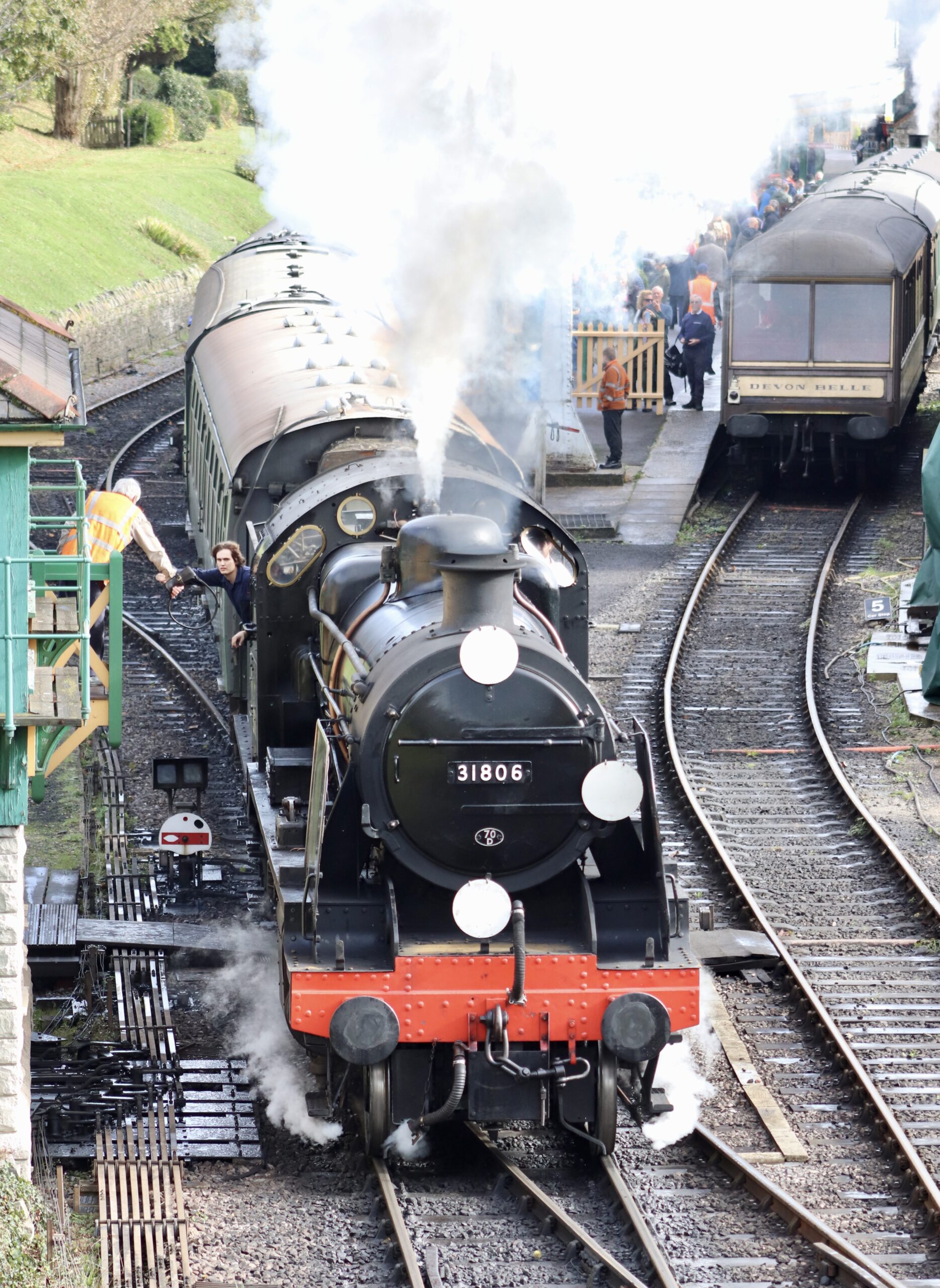
T3 No. 563 makes a fine scene passing Harman’s Cross – 21/10/2023Also sharing duties with the T3 was SR U Class 2-6-0 No. 31806, seen here departing Swanage with a member of the footplate crew collecting the token from the signalman – 21/10/2023
Video from the Swanage Railway of T3 No. 563 in action – 21/10/2023
For The Record:
Over the last few weeks, a number of interesting workings have taken place in Dorset. Which is typical as I managed to miss most of them!
GBRf liveried Class 50’s returned to Bournemouth employed on South Western Railway (SWR) Class 458 drags on 11th & 12th October 2023 running as 5X72 1044 Wembley Terminal Complex Wheel Lathe to Bournemouth Traction & Rolling Stock Maintenance Depot / 5Q73 1610 Bournemouth Traction & Rolling Stock Maintenance Depot to Widnes Transport Tech. Locomotives involved were No.’s 50007 ‘Hercules’ and 50049 ‘Defiance’ delivering No. 458425 to Bournemouth and taking No. 458416 to Widnes for conversion. The Class 458 units now based at Bournemouth depot have been out on test runs over the last few weeks.
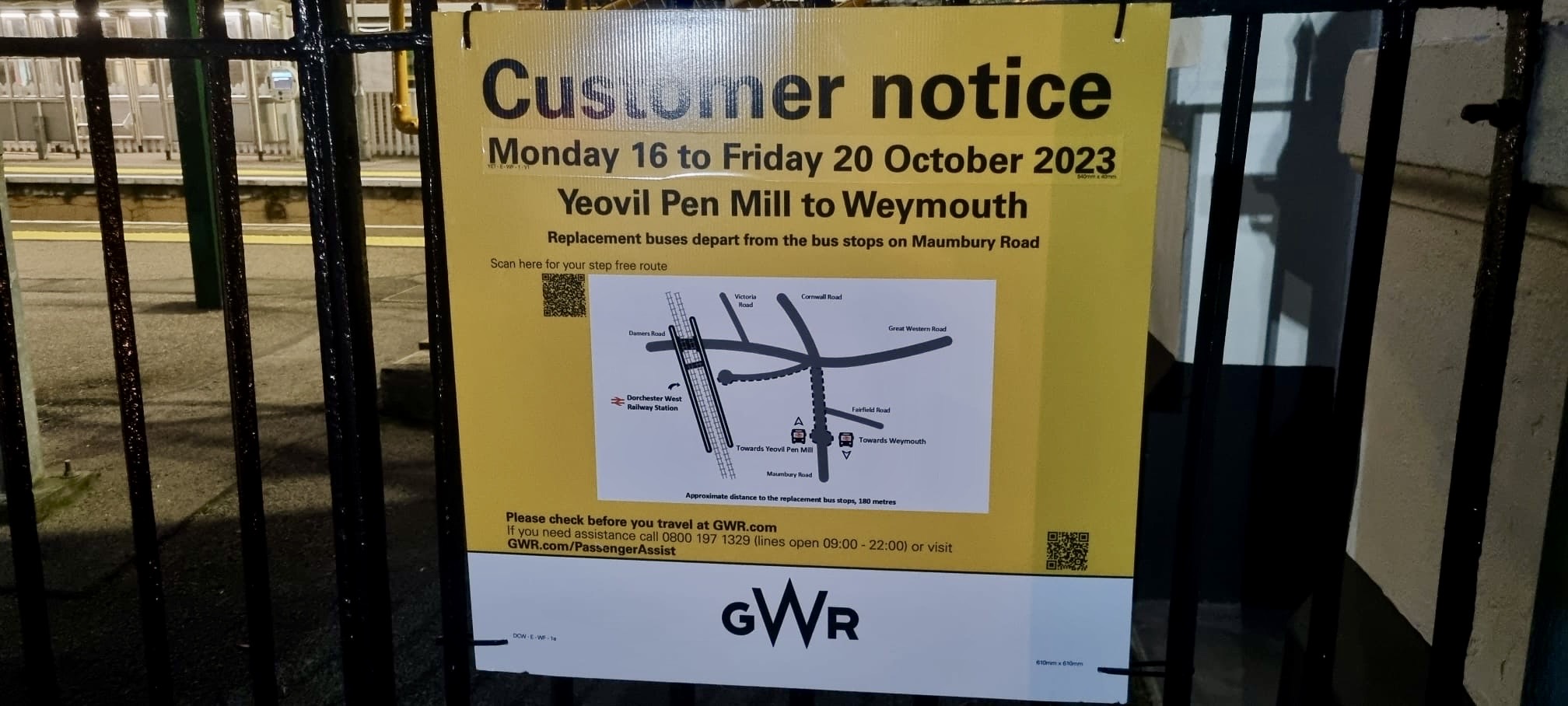
Engineering work west of Yeovil meant buses replaced trains between Yeovil Pen Mill and Weymouth from Monday 16th to Friday 20th October. Network Rail (NR) engineers renewed just under half a mile of old 1950’s era track between Maiden Newton and Chetnole stations. The track update is said to “help prevent speed restrictions and means smoother passenger journeys”. Work also saw repairs being carried out to brickwork at Evershot tunnel and is part of a long-running programme to improve performance on the Heart of Wessex Line. Network Rail and train operators think it is more efficient to close the route for a whole week rather than to shut it for several weekends.
Sign explaining rail replacement bus operations at Dorchester West (image courtesy of Scott Lewis)
Associated engineers trains were as follows; 15th October 2023: 6C04 2349 Westbury Down T.C. to Yeovil Pen Mill – Class 70 No. 70814 17th October 2023: 6C04 02:00 Yeovil Pen Mill to Westbury Down Yard – No. 70814 / 6G22 0202 Westbury Down T.C. to Yeovil Pen Mill – Class 66 No.’s 66709 and 66774 / 6Y88 0921 Westbury Down T.C. to Yeovil Pen Mill – No.’s 66544 and 66556 18th October 2023: 6G22 0837 Yeovil Pen Mill to Westbury Down T.C. – No.’s 66774 and 66709 / 6Y88 11:40 Yeovil Pen Mill to Westbury Down Yard – No.’s 66544 and 66556 / 6Y90 2156 Westbury Down T.C. to Yeovil Pen Mill – No. 66415. 19th October 2023: 6Y90 2334 Yeovil Pen Mill to Westbury Down T.C. – No. 66415
16th & 17th October 2023: saw a rare visit of inspection saloon ‘Caroline’ to the area working as 5Z01 1102 Derby R.T.C.(Network Rail) to Bournemouth Up Siding / 5Z02 0655 Bournemouth Up Siding to Bournemouth / 2Z02 0735 Bournemouth to Southampton Central via Weymouth all involving Class 37 No. 37418 ‘An Comunn Gaidhealach’ along with No. 975025 ‘Caroline’
Class 37 No. 37418 ‘An Comunn Gaidhealach’ with 975025 ‘Caroline’ working as 2Z02 0735 Bournemouth to Southampton Central via Weymouth – 17/10/2023 (video courtesy of G E Barrett)
19th October 2023 1Q23 0556 Reading to Salisbury New Measurement Train in the charge of Class 43 HST power cars No.’s 43251 and 43274 failed when climbing the bank between Exeter St Davids and Exeter Central. The train returned to Exeter St Davids, departing from there at around 1210 and routed towards Taunton, picking up the timetabled path at Westbury some 114 minutes late.
Two engineers trains also visited the Bournemouth area when the 19th and 20th October 2023 saw 6N70 2254 Eastleigh East Yard to Christchurch /6N70 0502 Bournemouth to Eastleigh East Yard top and tailed by Class 66 No.’s 66007 and 66088 whilst on 21st October 2023 6G17 0032 Eastleigh East Yard to New Milton via Bournemouth operated by No.’s 66755 and 66711
23rd October 2023 and it was the return of Network Rail’s Plain Line Pattern Recognition Train (PLPR) hauled, as usual by GBRf Class 73 electro-diesel locomotives which this month were No. 73965 ‘Des O’Brien’ and No. 73964 ‘Jeanette’. PLPR trains use a variety of tools to measure and detect defects in the track which may have the potential to cause problems. Equipment include a 4 foot camera used to check on track condition and thermal imaging to check rail temperatures.
1Q51 1115 Derby R.T.C.(Network Rail) to Eastleigh East Yard at Hamworthy with 73965 ‘Des O’Brien’ and 73964 ‘Jeanette’ – 23/10/2023
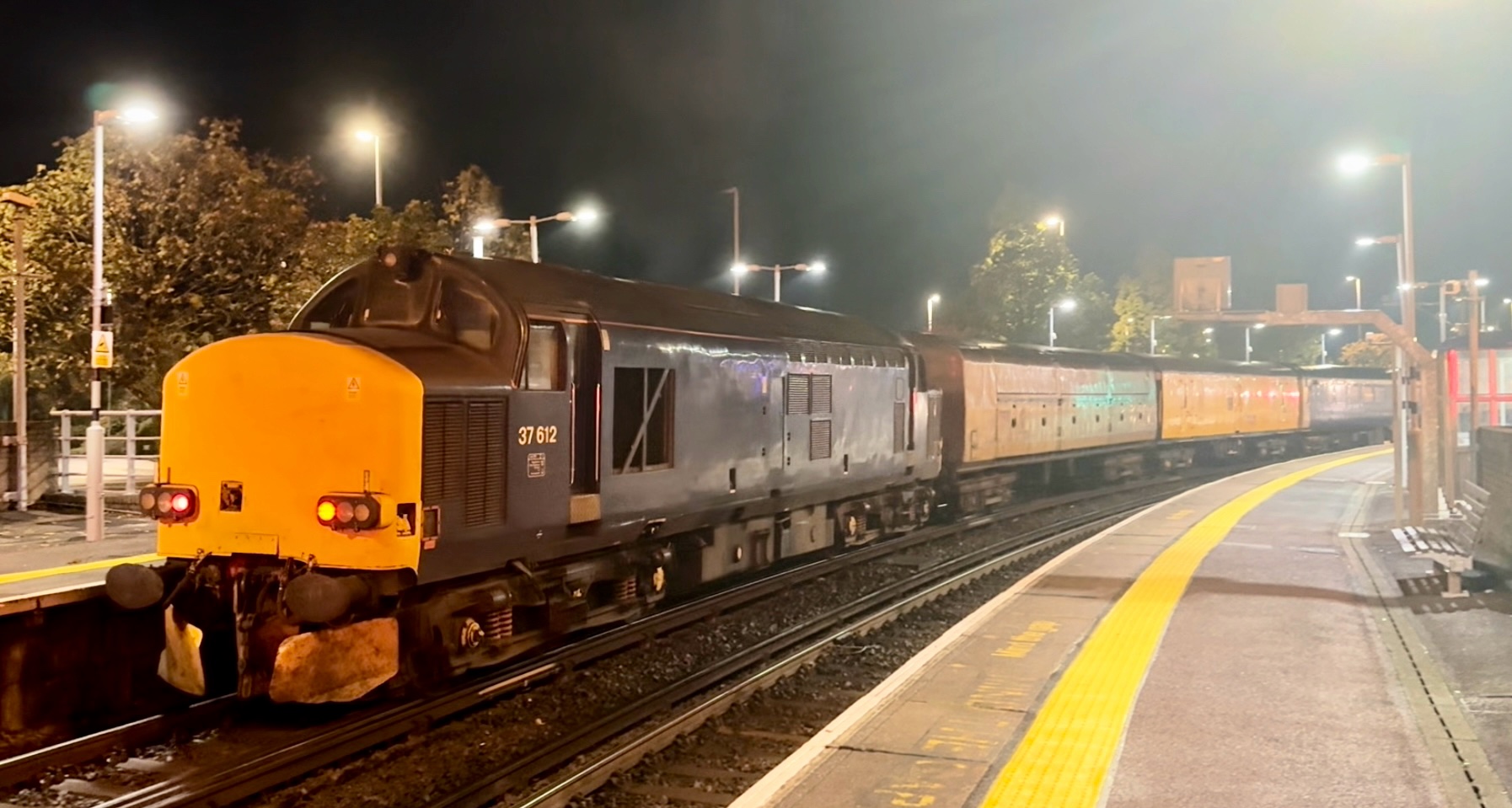
A couple of days later on 25th October 2023 and the Ultrasonic Test Train (UTU) was out and about on our patch as 3Q02 2140 Eastleigh East Yard to Eastleigh East Yard. The UTU is usually comprised of a locomotive at one end and a Driving Brake Standard Open (DBSO) at the other. The DBSO can lead the train and control the locomotive at the other end, which was the case on the outward run of 3Q02 to Weymouth this time around. UTU trains have ground penetrating radar systems to detect voids and deformations up to two metres into the ballast and earth below, and use profile scanners to help identify any issues similar to the PLPR test train.
Colas Class 37 No. 37612 in debranded DRS blue livery at the rear of the Ultrasonic Test Train at Poole – 25/10/2023
Class 37 No. 37612 and DBSO No. 9703 working 3Q02 2140 Eastleigh East Yard to Eastleigh East Yard at Poole – 25/10/2023
In the next few weeks, there is more local rail disruption to come affecting trains in North Dorset on the Waterloo – Exeter route as Network Rail will be closing the line between Salisbury and Axminster for 21 days in November and December 2023.
Firstly, the line between between Yeovil Junction and Axminster will be closed for five days between Monday November 6th to Friday November 10th. A second closure takes place between Salisbury and Yeovil Junction from Saturday November 25th to Sunday December 10th. Engineers will be working around the clock to complete key upgrades at four different worksites and upgrades are part of a wider half a million-pound investment to improve reliability and performance along the line. Work will also take place at Crewkerne Tunnel where engineers will attempt to stabilise the cutting following a landslip in October 2021. There will be an installation of new drainage to help to reduce the impact of heavy rainfall. Additional work will take place with the replacement of the barriers at the Broom and Axe level crossing, and the Weycroft River Bridge will have protective, anti-corrosion paint work applied. Areas of waterlogged track stones will be removed.
The Salisbury-Exeter Rail Users Group (SERUG) accepts the maintenance work to track and earthworks is necessary as it says only 77% of services run on time.
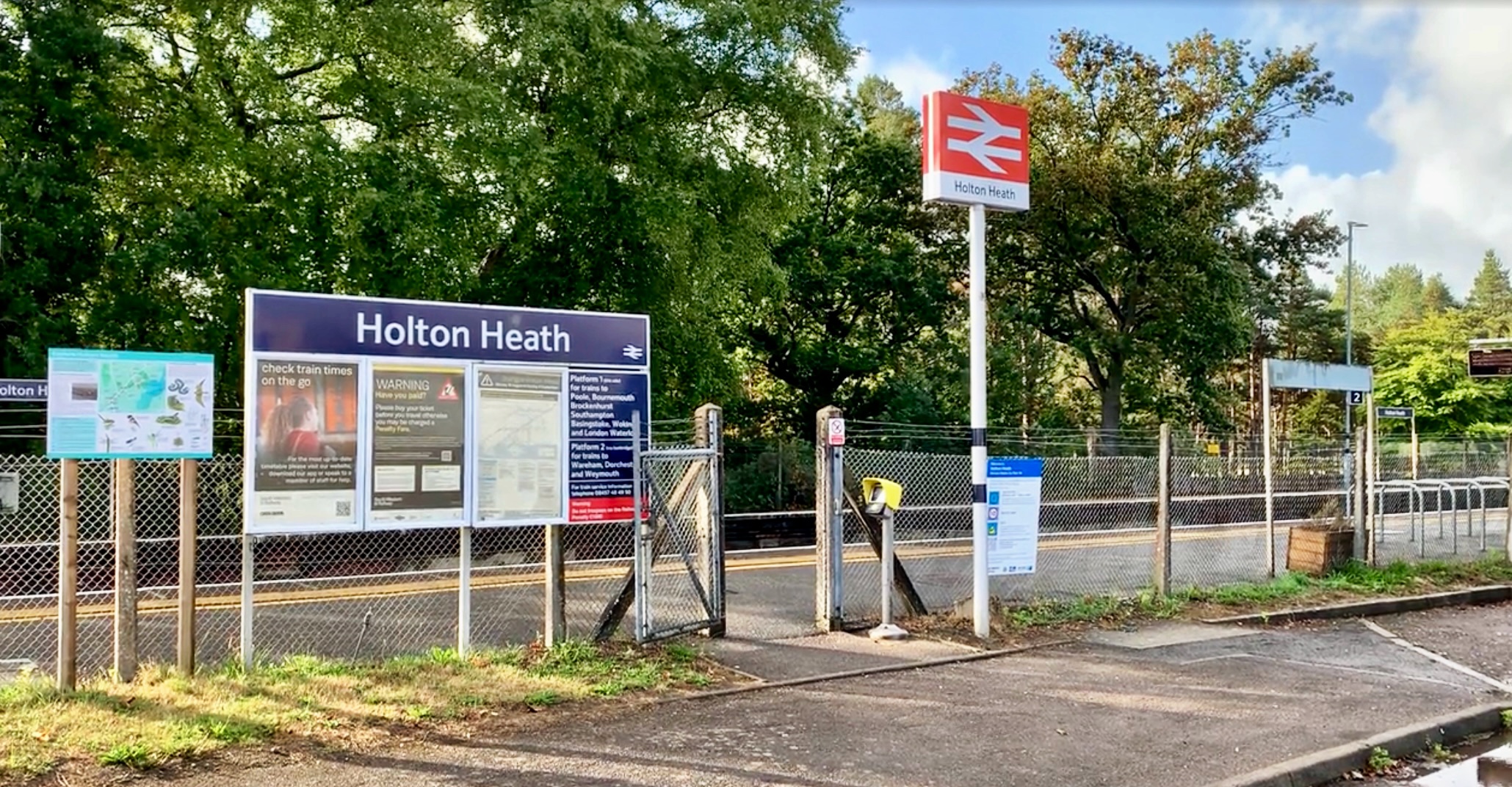
Holton Heath railway station – 07/09/2022
In other news, the Poole Harbour Trails community group have successfully registered a disused railway line as a right of way after spending the last 13 years trying to formalise the footpath at Sandford, Poole. The currently overgrown route follows the railway that serviced the Royal Naval Cordite Factory (RNCF) at Holton Heath that closed in the 1950’s and had been used as a path by locals for many years until it became obstructed in 2010. The Friends of the Cordite Way Clearance group received permission earlier this year to start clearance but had to wait for the nesting season to end, beginning work in September on the first section to the viewpoint overlooking Poole Harbour and Arne peninsular. It is hoped to open this first section in the summer of 2024.
Recent research by the walking charity Ramblers found that more than 49,000 miles of paths in England and Wales did not feature on official maps and were at risk of being permanently lost with the government setting a deadline in England of 2031 to apply to get these paths re-registered, however Ramblers believe this deadline should be withdrawn.
Holton Heath railway station – 07/09/2022
Holton Heath railway station is located near the western shore of Poole Harbour and was opened on 3rd April 1916 for use by workers at the Naval Cordite Works which had been established during the First World War. The station was made available for public use from 14th July 1924. Holton Heath has been unstaffed since 1964, with the signal box being removed on 3rd November 1969.
On 20th April 1989 a fatal accident occurred just beyond the siding on the London side of the station, when a light locomotive, which had just completed shunting duties at Winfrith nuclear power station, collided with the rear of a freight train. The driver of the light locomotive, Clive Brooker, died in the accident. Holton Heath railway station – 07/09/2022
Cordite was an explosive component used as a propellant for shells. The factory was built in 1915-16. It was the first purpose-built site for cordite production in the United Kingdom. One of the main ingredients for cordite was acetone. The factory provided its own supply through an acetone plant, which employed novel fermentation technology using maize as a starch source. The RNCF was effectively self-sufficient and had its own internal rail system with about five miles of standard gauge track and 14 miles of narrow gauge, together with its own rolling stock. During the First World War, cordite was dispatched to a jetty in Poole Harbour by rail where it was loaded onto sailing barges for transport to Priddy’s Hard in Gosport. The factory continued to manufacture cordite until 1946. Production at RNCF finally ended in 1957 but many of the buildings still survive.
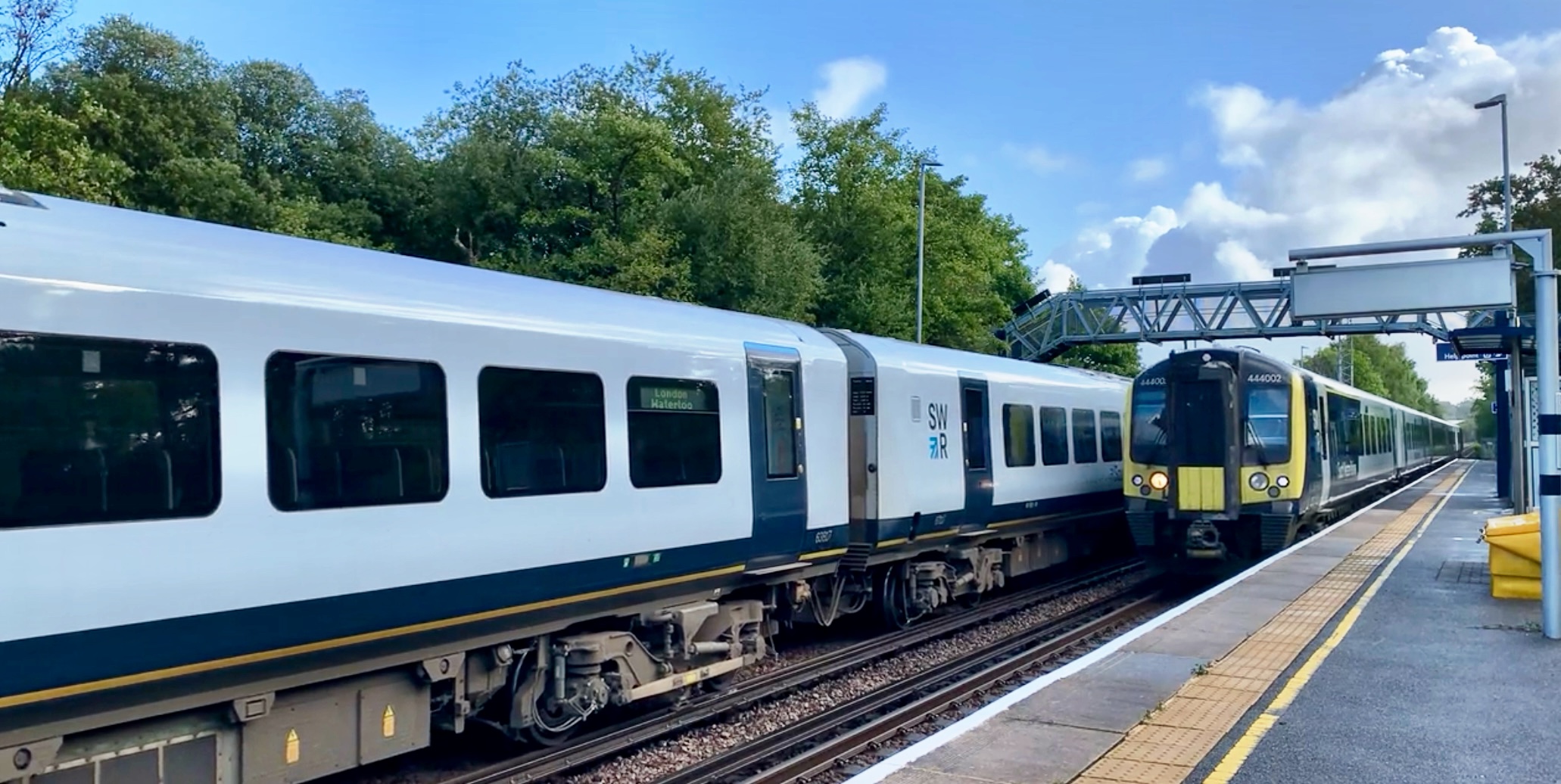
SWR Class 444 No. 444002 passes No. 444017 at Holton Heath railway station – 07/09/2022
Grand Central Terminal
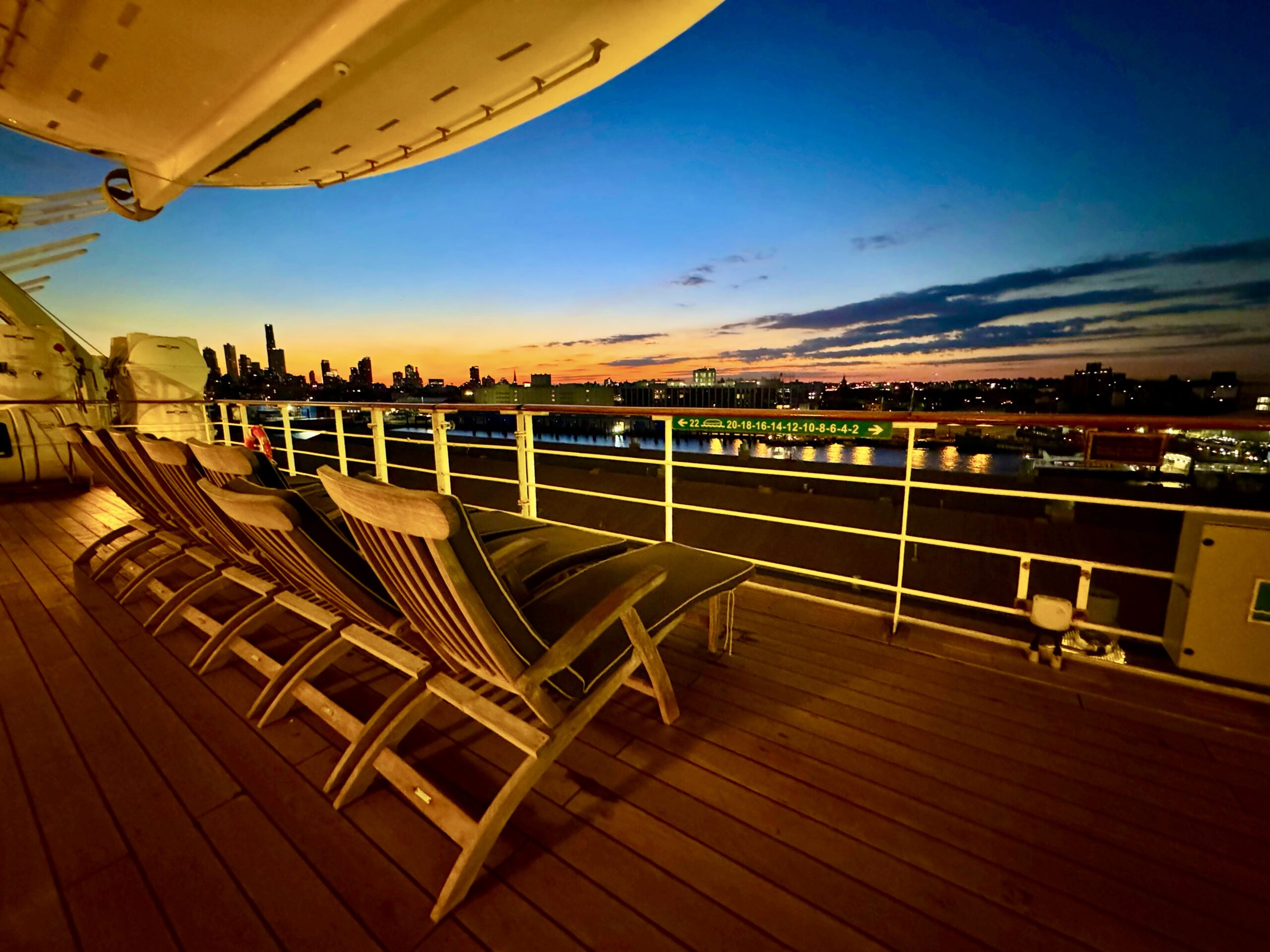
Sunrise over Manhatten from the deck of Queen Mary 2 – 13/10/2023
We were able to spend a few hours in New York on Friday 13th October 2023. Having never visited the Big Apple previously, I had a short list of things I was hoping to see and Caroline, who has spent time in the city before, was kind enough to indulge me.
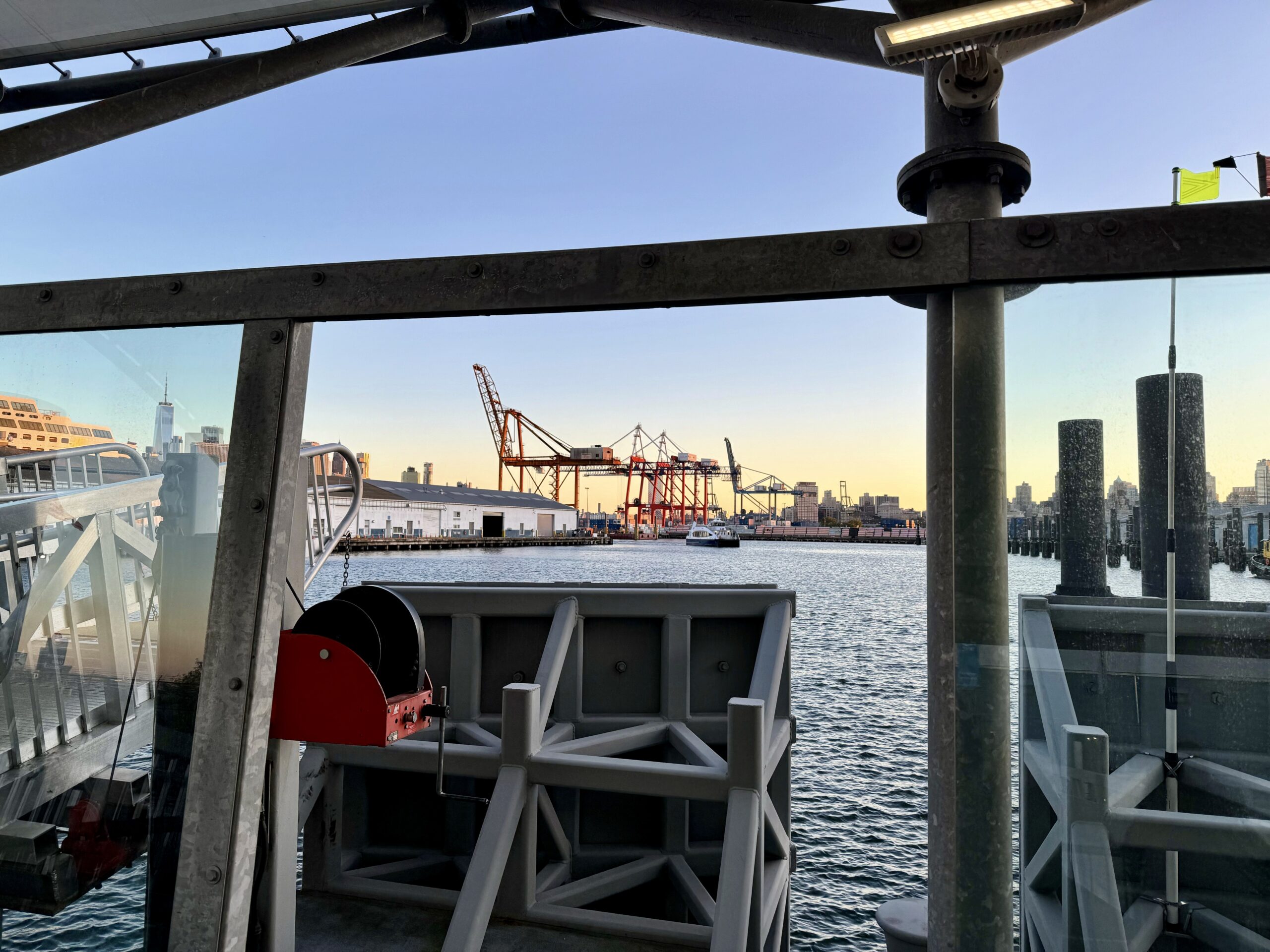
QM2 Brooklyn Cruise Terminal. She is too large to dock on the West Side Piers which means passengers require transit to Manhattan – 13/10/2023The NY Water Ferry approaches Red Hook Atlantic Basin, Brooklyn – 13/10/2023
We disembarked the ship at 0700 and were waved through immigration arriving in good time to catch the first water ferry from Red Hook Atlantic Basin, Brooklyn which was adjacent to QM2’s berth over to Manhattan Island.
A NY water Ferry passes QM2, Red Hook, Brooklyn – 13/10/2023
We needed to change ferries at Wall Street to take us up the East river to East 34th Street and following a 42 minute walk we were able to have “Breakfast outside Tiffany’s” before continuing our journey on foot through Times Square and past the New York Library (which was yet to open, but was on my list for a visit to the Polonsky Exhibition of The New York Public Library’s Treasures) to Grand Central Terminal, located at 42nd Street and Park Avenue in Midtown Manhattan.
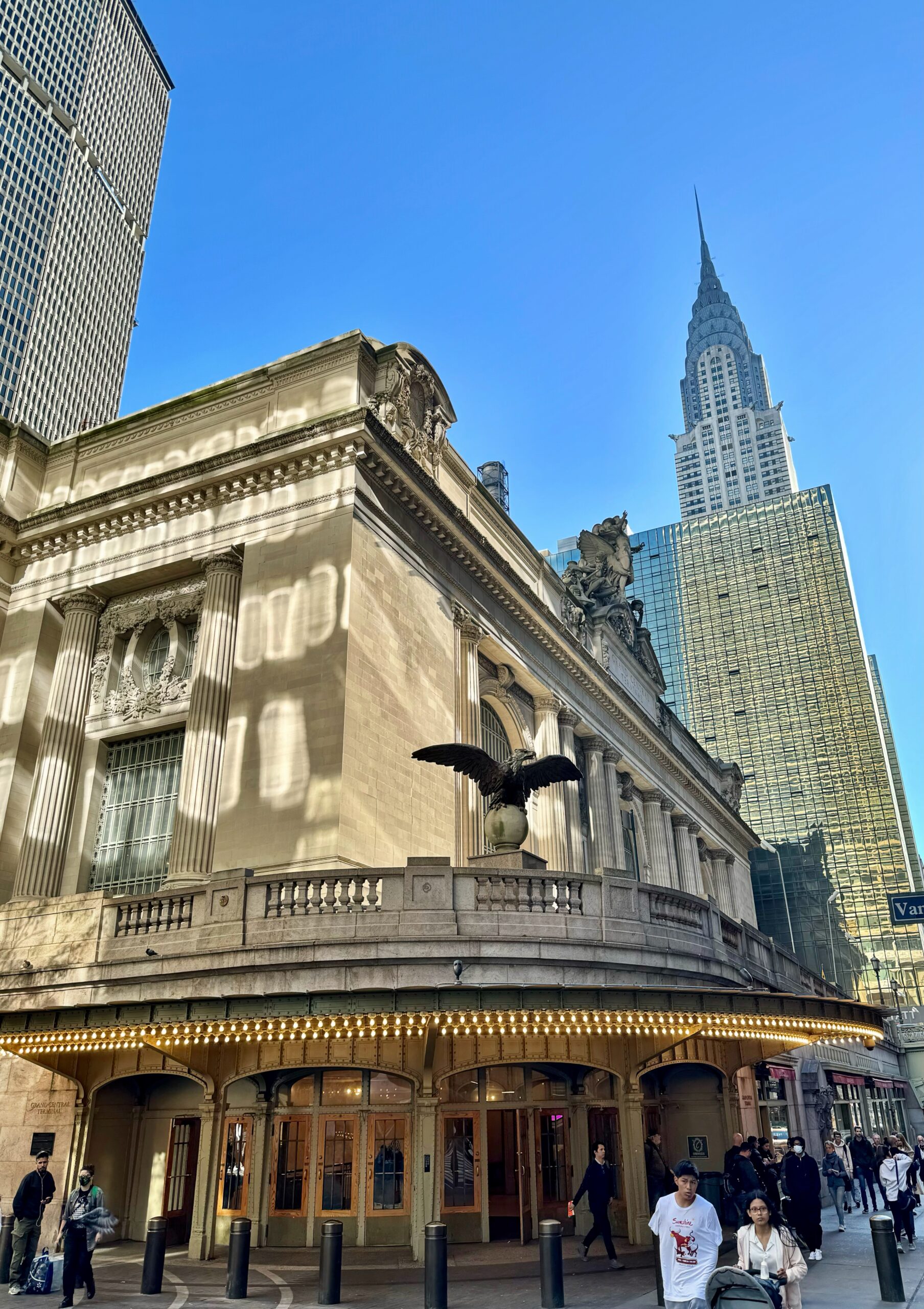
The Chrysler Building, at 1,046 ft is the tallest brick building in the world with a steel framework, overlooks Grand Central Terminal – 13/10/2023
Grand Central Terminal was designed in the Beaux-Arts style by Reed and Stem – an American architectural and engineering firm founded in Minnesota in 1891 as a partnership between Charles A. Reed (1858–1911) and Allen H. Stem (1856–1931) – who handled the overall design of the terminal, and Warren and Wetmore – a New York architecture partnership between Whitney Warren (1864–1943) and Charles Delevan Wetmore (1866–1941) – which mainly made cosmetic alterations to the exterior and interior.
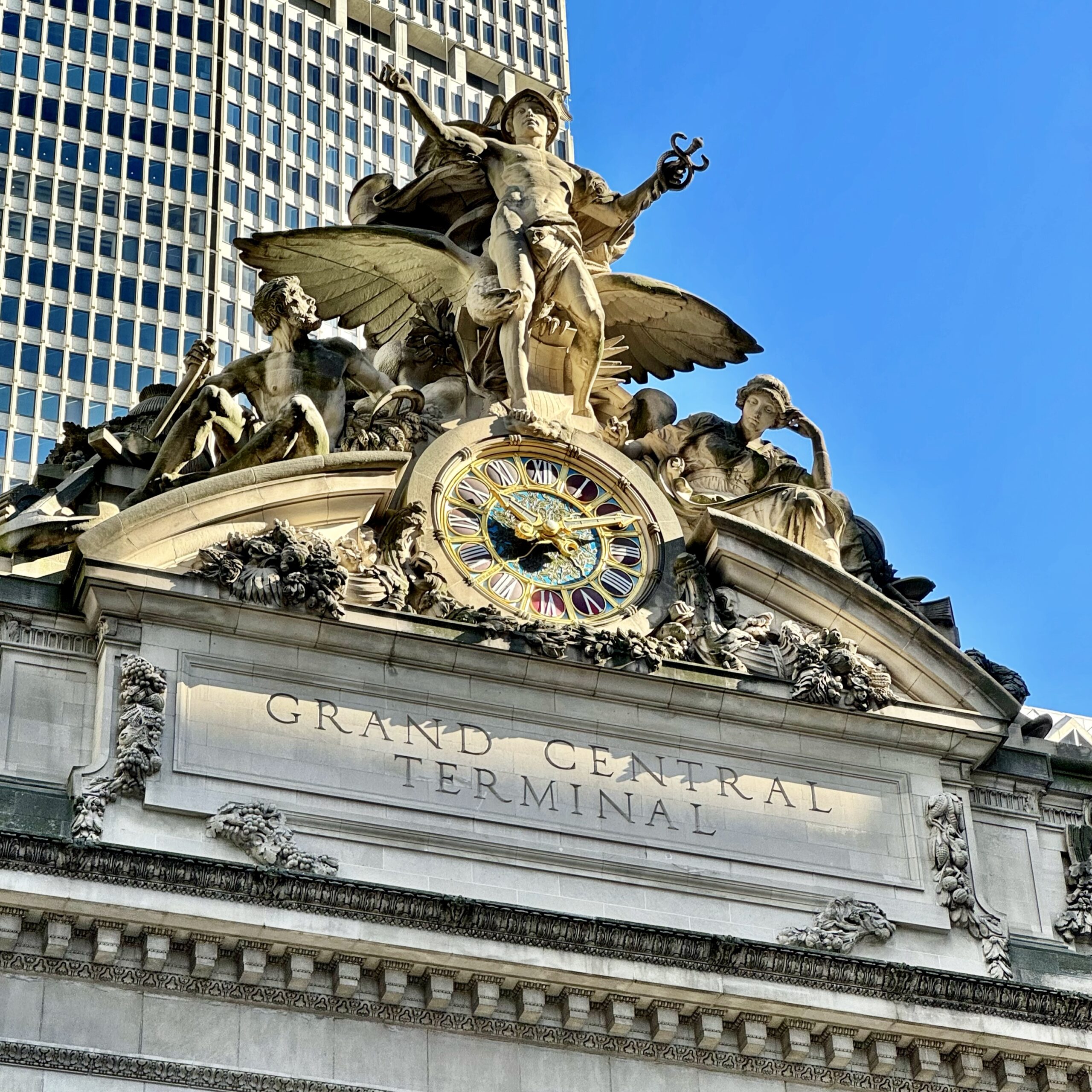
“Glory of Commerce”, a sculptural group by Jules-Félix Coutan – 13/10/2023
The Beaux-Arts architecture evolved from the French classicism of the Style Louis XIV, and then French neoclassicism beginning with Style Louis XV and Style Louis XV and was the academic architectural style taught at the École des Beaux-Arts in Paris, particularly from the 1830’s to the end of the 19th century. It drew upon the principles of French neoclassicism, but also incorporated Renaissance and Baroque elements, and used modern materials, such as iron and glass, and later, steel. It was an important style in Europe and the Americas through the end of the 19th century, and into the 20th. Various elements inside the terminal were designed by French architects and artists Jules-Félix Coutan (1848–1939), Sylvain Salières (1865–1920), and Paul César Helleu (1859–1927). Grand Central has monumental spaces as well as meticulously crafted detail, especially on its facade, which is based on an overall exterior design provided by Whitney Warren.
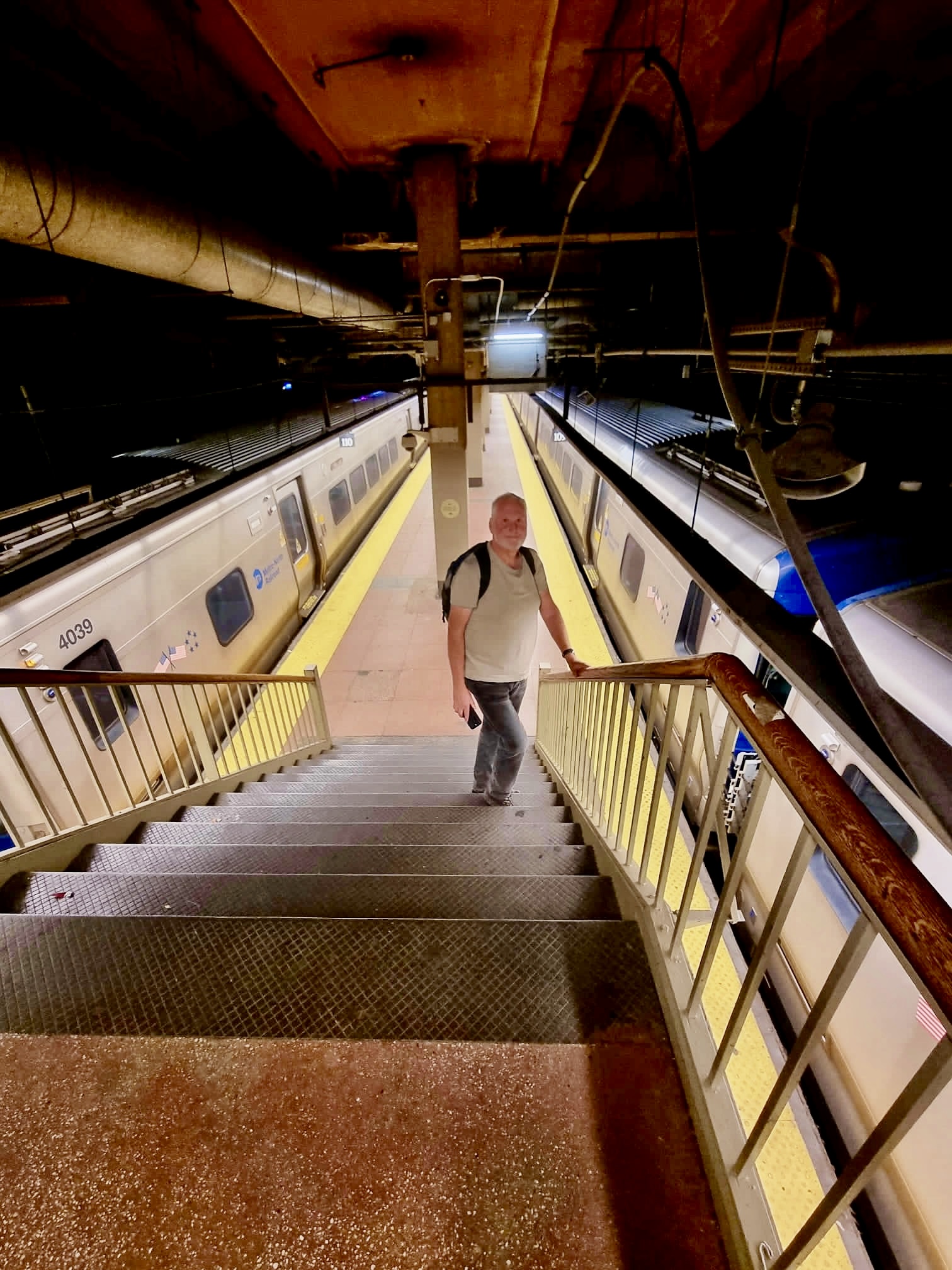
I made it to the trains! Grand Central Terminal – 13/10/2023 (CLS)
The Terminal, built on the site of a former railroad depot and phased in over the course of nearly a decade being completed in 1913, covers 48 acres and has over 40 platforms, more than any other railway station in the world. The platforms are all below ground, serving 30 tracks on the upper level and 26 on the lower. In total, there are 67 tracks, including a rail yard and sidings; of these, 43 tracks are in use for passenger services, while the remaining two dozen or so are used to store trains.
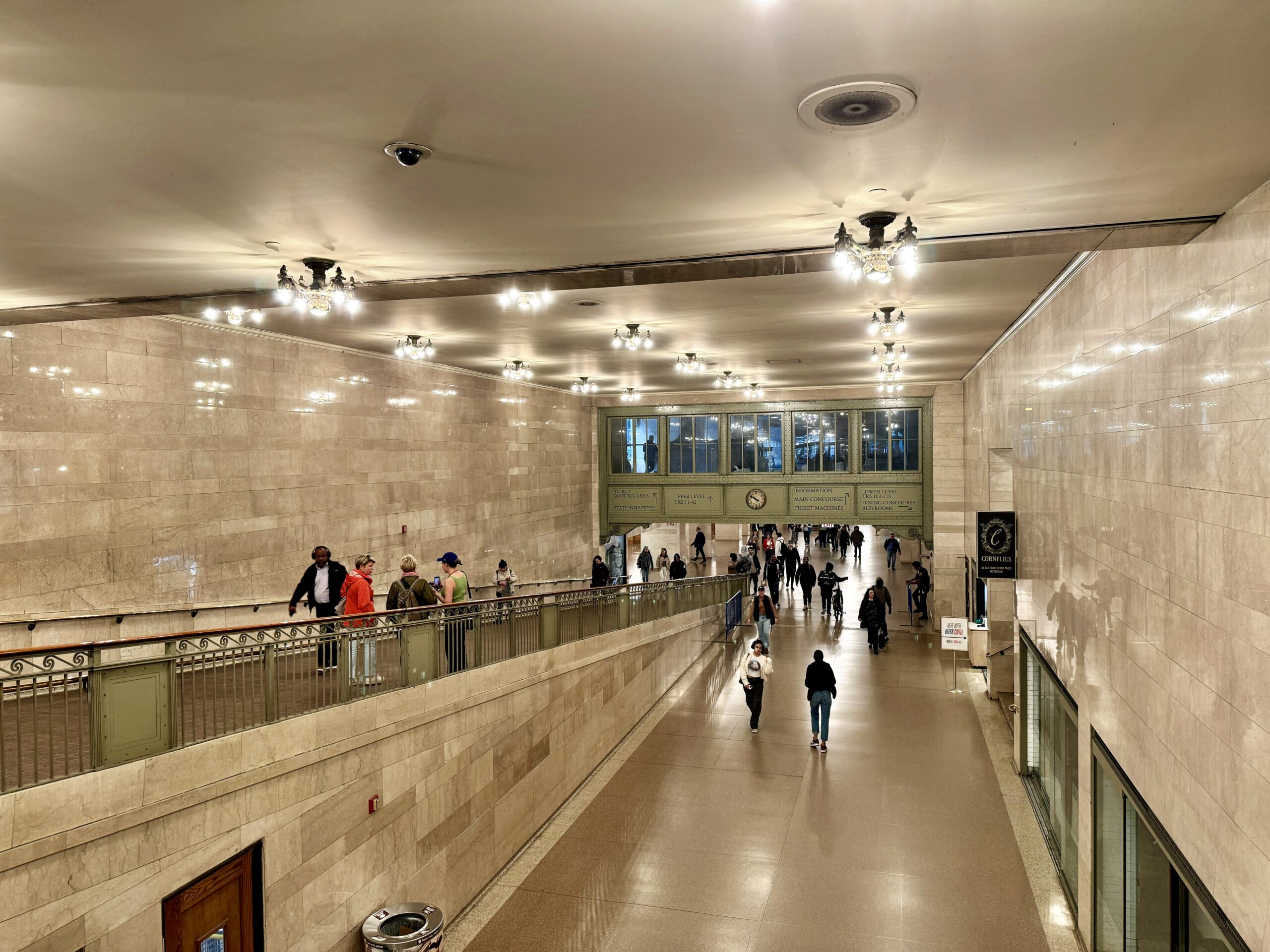
Ramp to the Main Concourse, Grand Central Terminal – 13/10/2023
Grand Central Terminal was built and named by the New York Central Railroad which also served the New York, New Haven and Hartford Railroad. The terminal was built on the site of two previous stations, the first of which originated in 1871. Grand Central Terminal served intercity trains until 1991, when Amtrak began routing its trains through nearby New York Penn Station. Grand Central is now the southern terminus of the Metro-North Railroad’s Harlem, Hudson and New Haven Lines, serving the northern parts of the New York metropolitan area. It also contains a connection to the Long Island Rail Road through the Grand Central Madison station as well as connecting to the New York City Subway at Grand Central–42nd Street station. The terminal is the third-busiest railway station in North America.
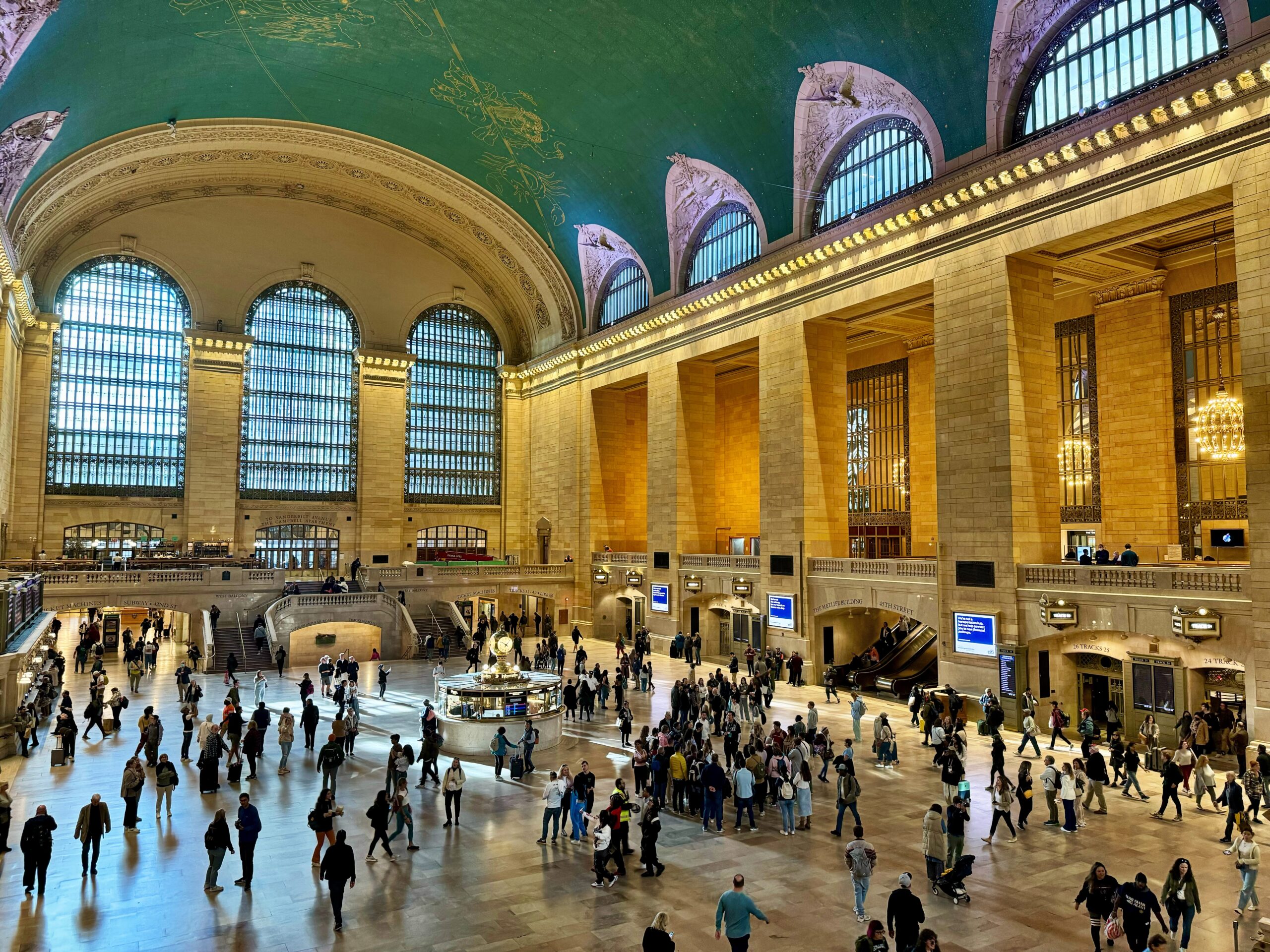
The Main Concourse at Grand Central – 13/10/2023
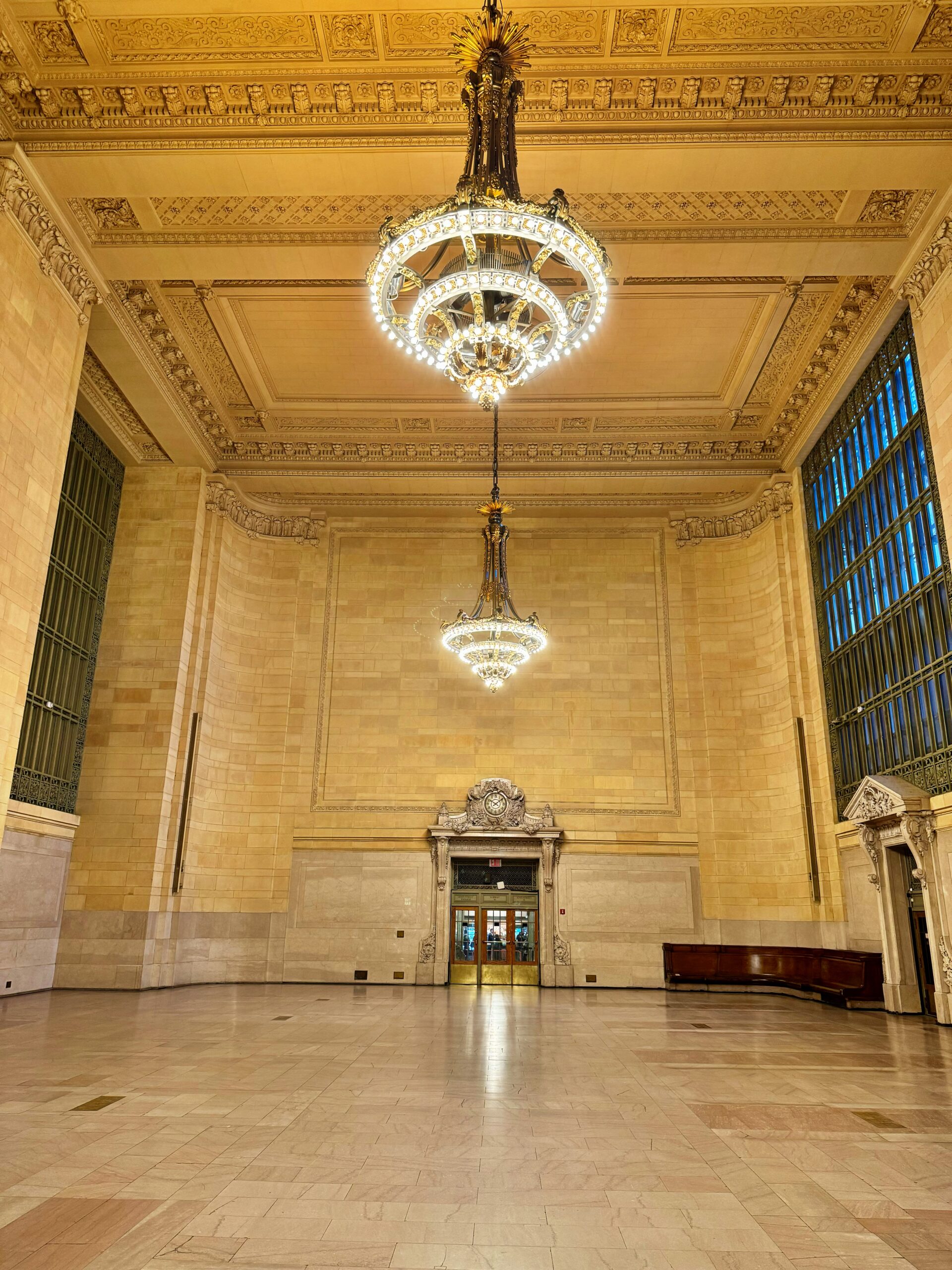
The Main Concourse is located on the upper platform level of Grand Central, in the centre of the station building. The 35,000 square foot area leads directly to most of the terminal’s upper-level tracks. In their design for the station’s interior, Reed & Stem created a circulation system that allowed passengers alighting from trains to enter the Main Concourse, then leave through various passages that branch from it. The Main Concourse, often featured in films and television, is a busy space filled with people hurrying to their destination or onlookers taking in the grandeur of their location.
The four-sided brass clock at Grand Central – 13/10/2023 (CLS)
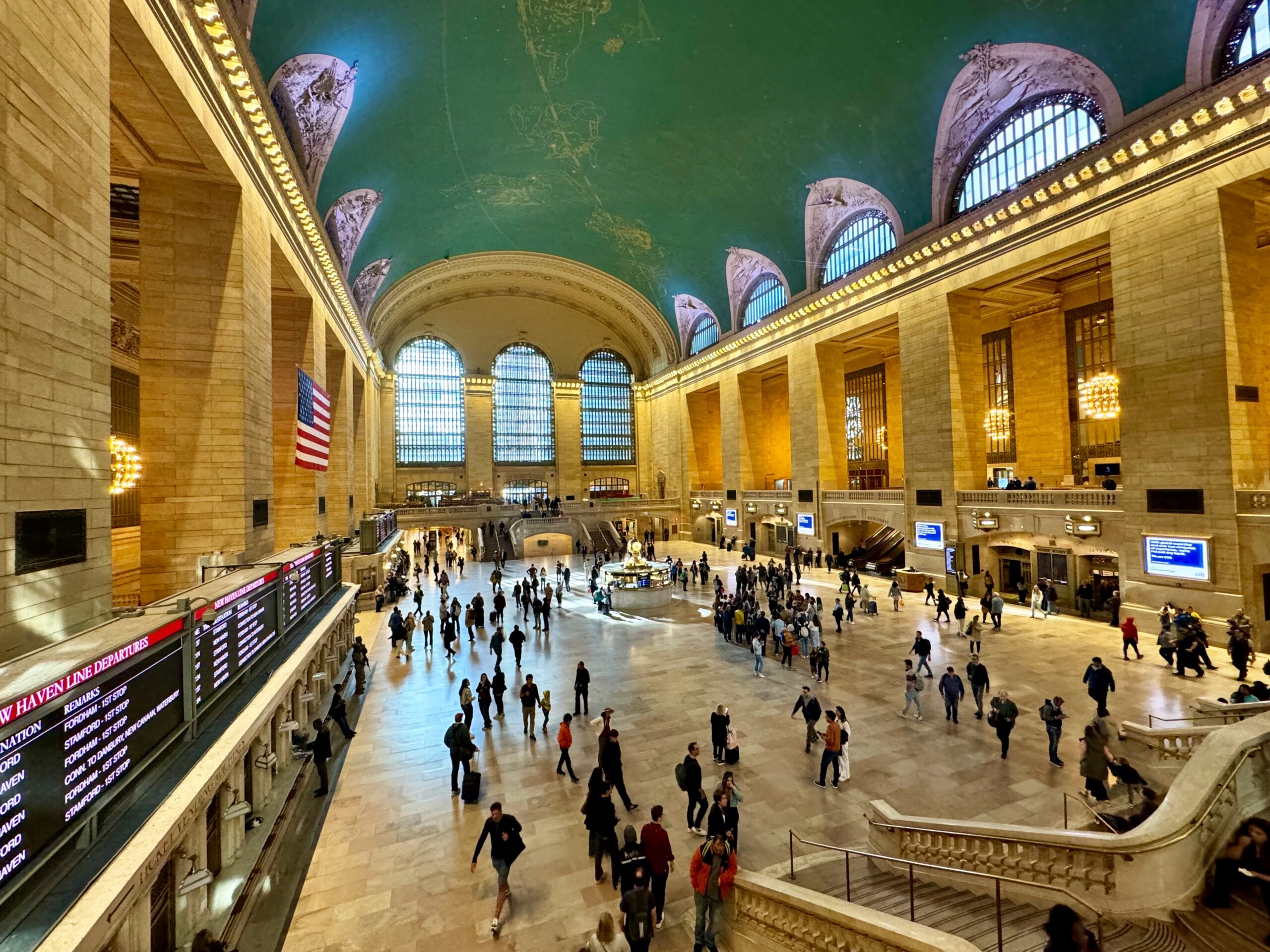
At the centre of the concourse is an information booth topped with a four sided brass clock, one of Grand Central’s most recognisable icons. The terminal’s main departure boards are located at the south end of the concourse.
The Main Concourse, Grand Central Terminal with the train information boards on the left hand side of the image – 13/10/2023
Grand Central Terminal contains a variety of stores and food vendors, including restaurants and bars, a food hall, and a grocery marketplace. The building is also noted for its library, event hall, tennis club, control centre and offices for the railroad, and sub-basement power station.
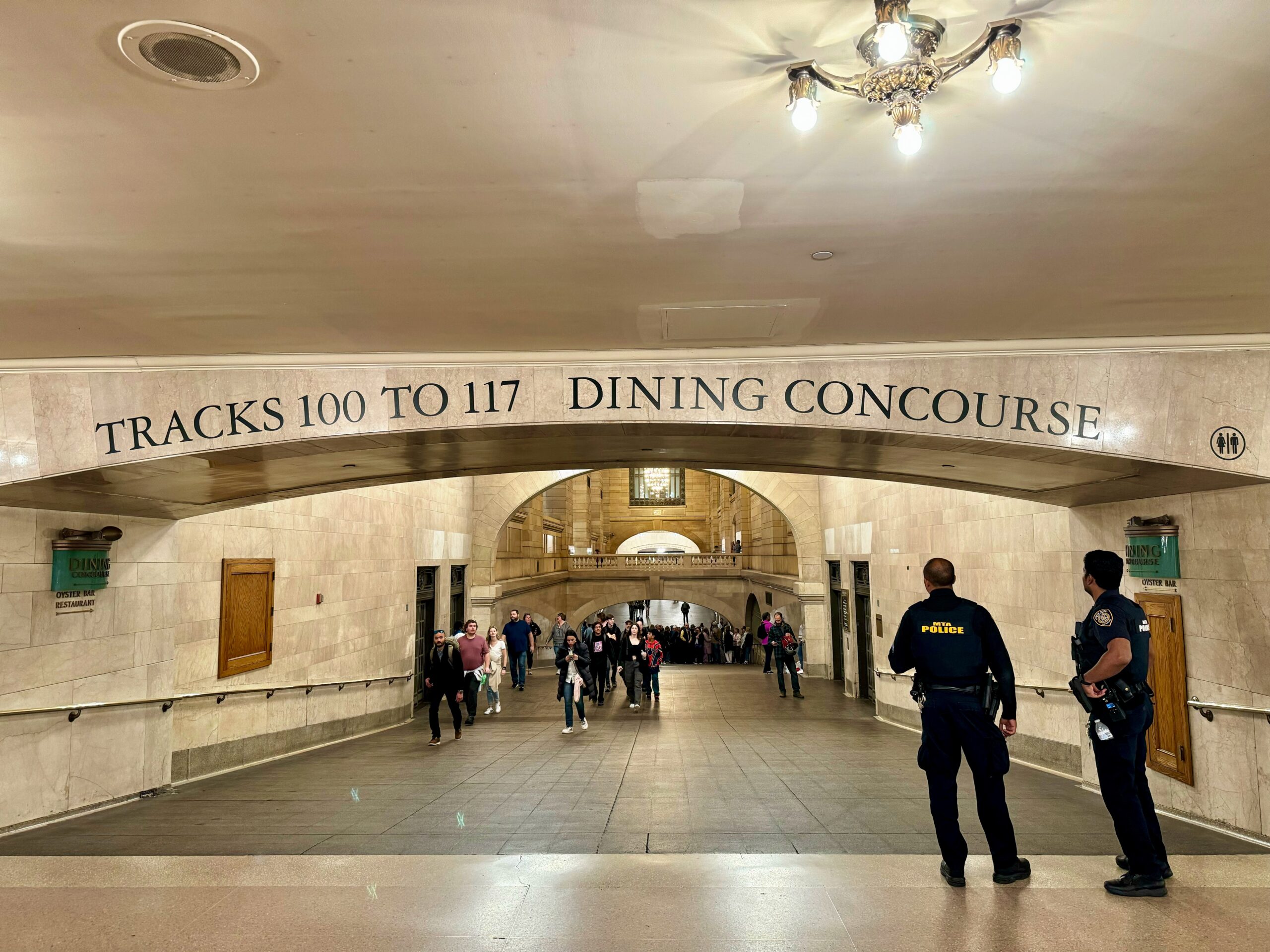
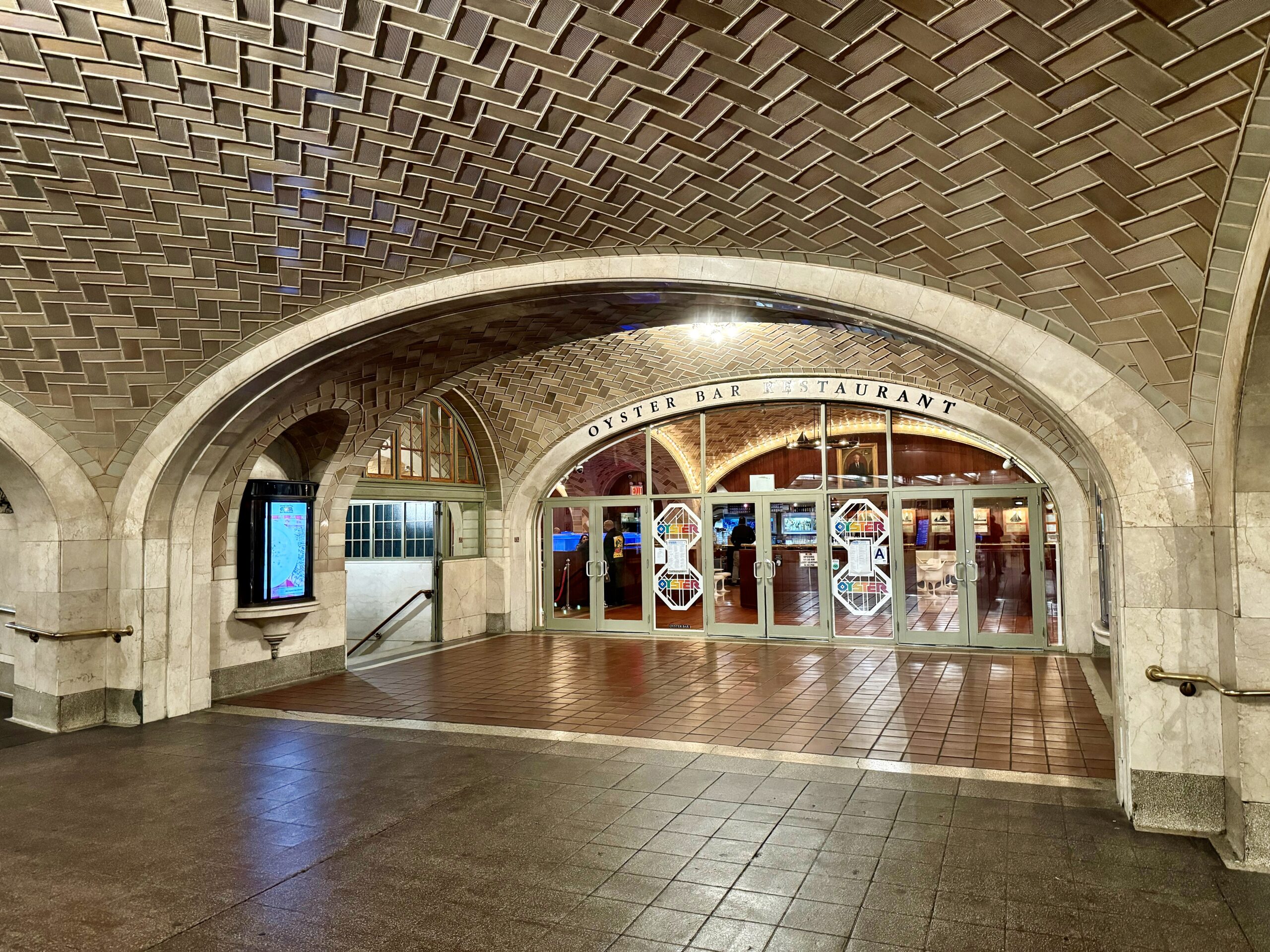
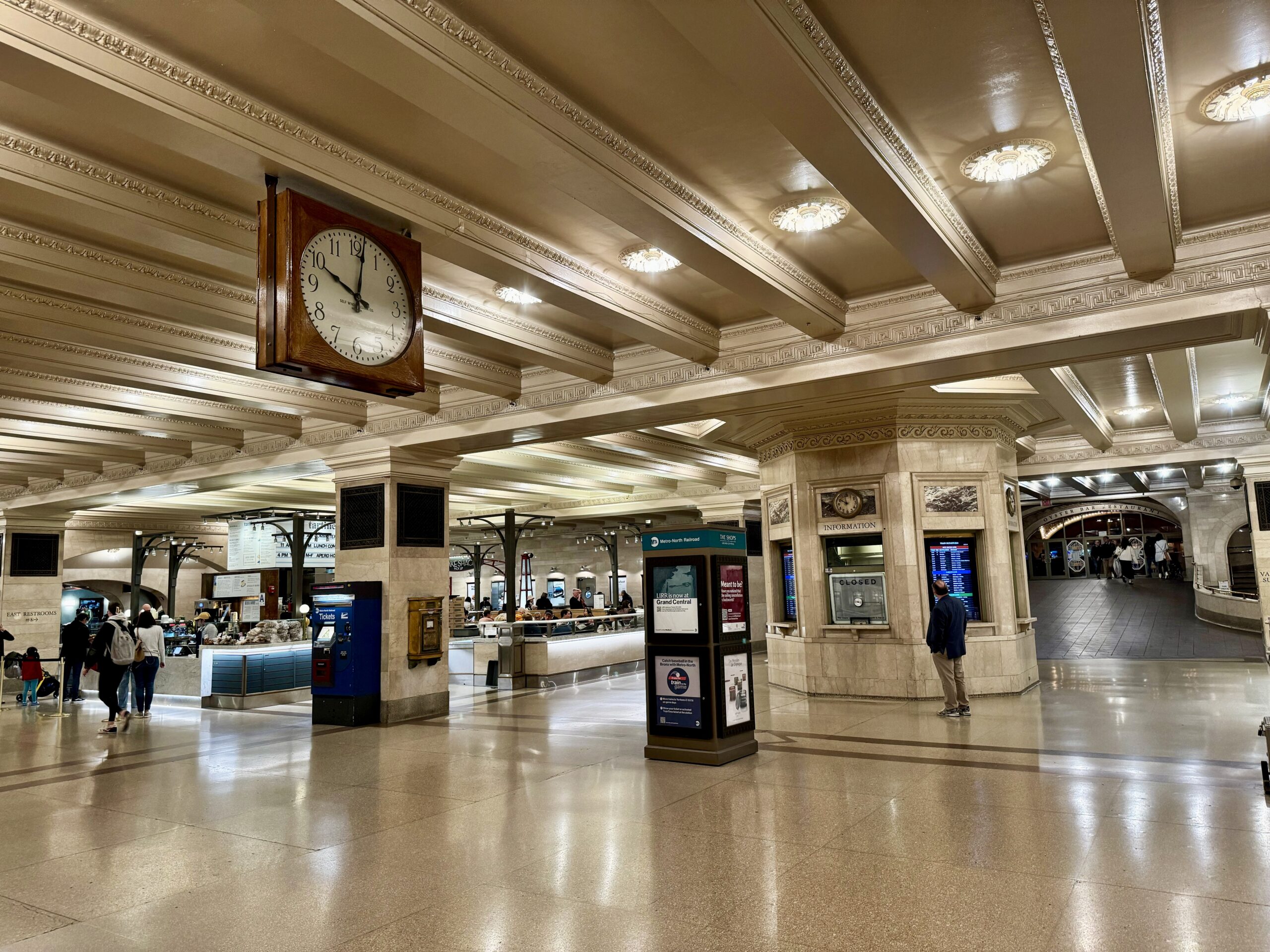
Ramp to the Dining Concourse, Grand Central – 13/10/2023The Oyster Bar – 13/10/2023Dining Concourse, Grand Central Terminal – 13/10/2023
Ramps include the Vanderbilt Avenue ramp and the Oyster Bar ramps. The Oyster Bar ramps lead down from the Main Concourse to the Oyster Bar and Dining Concourse.
Jacqueline Kennedy Onassis Foyer – 13/10/2023
The main entrance into the terminal, underneath the Park Avenue Viaduct, opens into the Jacqueline Kennedy Onassis Foyer, so named in 2014 in honour of the former First Lady of the United States, who in the 1970’s helped prevent the demolition of the Main Concourse and the plan to build Grand Central Tower.
Vanderbilt Hall , Grand Central Terminus – 13/10/2023
Vanderbilt Hall is an event space on the south side of the terminal, between the main entrance and the Main Concourse to its north. The north and south walls are divided into five bays, each with large rectangular windows, screened with heavy bronze grills. The room is lit by Beaux-Arts chandeliers, each with 132 bulbs on four tiers. Vanderbilt Hall was formerly the main waiting room for the terminal, used particularly by intercity travellers.
After exploring this wonderful building we headed back out into the streets and walked back to the NY Library to find the original Winnie The Pooh and friends who had been donated in 1987 having been brought to the United States by A.A Milne’s (1882-1956) US publisher; Elliott Macrae (1901-1968) former President of E.P. Dutton in 1947.
The Statue of Liberty stands on Liberty Island in New York Harbour seen behind QM2 – 13/10/2023The Statue of Liberty – 13/10/2023
From the Archive:
A few images from 2020, that strange time when we all spent months staying indoors only going outside for an hours exercise a day. During the Covid pandemic, cruise ships were forced out of work and laid up at anchor in various harbours and ports around the UK, Weymouth being no exception.
RMS Queen Mary 2 in Weymouth Bay – 07/08/2020
RMS Queen Mary 2 introduced in 2003 was, at that time; the largest, longest, widest, tallest grandest and most expensive ocean liner ever built. She replaced the beloved QE2 on the transatlantic run and as flagship of the Cunard line. Queen Mary 2 has a maximum speed of just over 30 knots and a cruising speed of 26 knots which is faster than a contemporary cruise ship. She had the Royal Mail Ship (RMS) prefix conferred on her by the Royal Mail when she entered service in 2004, as a gesture to Cunard’s history. Onboard facilities include fifteen restaurants and bars, five swimming pools, a casino, a ballroom, a theatre, and the first planetarium at sea. Queen Mary 2 is powered primarily by four diesel engines supplemented by two gas turbines which provide extra power as and when required.
QM2 employs a quadruple podded propeller propulsion system which like giant outboard motors hang under the ship replacing the need for traditional propeller shafts. The forward pair of thrusters is fixed, but the aft pair can swivel through 360°, removing the need for a rudder. Queen Mary 2 carries eight spare blades on her foredeck. The ship is also fitted with three bow thrusters which allow the ship to turn in its own length while in port, to conduct more complex docking manoeuvres. The pods fitted to Queen Mary 2 have been prone to failure despite redesigns. In January 2009, Cunard sued the manufacturers Rolls-Royce in the United States claiming the design of the pods were inherently defective, and that Rolls-Royce knew about the design deficiencies and deliberately conspired to mislead, deceive and defraud in the course of winning the contract. In January 2011, the court awarded Carnival US$24 million.
During the pandemic the cruise ships would make regular sorties along the south coast and returning to port for supplies and crew changes, Queen Mary 2 is seen here as she departs Weymouth on one such outing – 06/05/2020
When Covid-19 started to spread across the globe in 2020, Queen Mary 2 was enjoying a world cruise. In early February, Cunard cancelled the Asian leg of the voyage, with the remainder of the journey being cancelled on 15th March. Passengers were disembarked in Fremantle, Western Australia, with the ship returning to Southampton in April.
QM2 arrives into the bay at Weymouth – 17/12/2020A stern view of Queen Mary 2 seen from one of the tourist boats which ran trips around Weymouth Bay for close up encounters with the anchored cruise ships – 07/08/2020Yoshi on Weymouth esplanade with cruise ships in the background – 06/09/2020Cunard’s Queen Victoria, Weymouth Bay – 07/08/2020Queen Elizabeth, Weymouth – 07/08/2020Yoshi enjoyed walks along the beach as we watched the cruise ships. Three Cunard Queens along with P&O and TUI’s Marella vessels are behind him in this image – 07/08/2020Three Cunard Queen’s lined up together in Weymouth Bay – Queen Victoria, Queen Elizabeth and Queen Mary 2. This was the only time I think I managed to photograph the Cunard fleet without any other interlopers between them – 23/08/2023
A bit of a mixed bag on this occasion, but that’s all we have time for! Thanks for reading and hopefully we’ll be back with another instalment soon. Until then, take care. Be seeing You!
It was lovely to be reunited with our boy as we disembarked QM2 last Friday. He was excited to see us again after being separated for over two weeks. A huge thank you to my brother and family for taking such good care of Yoshi xXx
References used for the Grand Central Terminal section:
Charles River Editors Grand Central Station: The History of New York City’s Famous Railroad Terminal, (CreateSpace Independent Publishing Platform 2015)
Metro-North Railroad (2023) Grand Central Retrieved from https://www.grandcentralterminal.com
Wikipedia (October 24, 2023) Grand Central Terminal Rettrieved from https://en.wikipedia.org/wiki/Grand_Central_Terminal
Yoshi gets Tangoed! The boy meets Colas class 43 High Speed Train power car No. 43277 ‘Safety Task Force’ during its layover at Gillingham – 24/08/2023
August 24th 2023 to August 29th 2023
On Thursday 24th August I made a lunchtime jaunt to North Dorset in order to catch a view of Colas Rail Class 43 High Speed Train (HST) power car No. 43277 which has been on my list of locomotives to see for a few months ever since it was outshopped in an attractive hybrid Colas/Network Rail (NR) livery, incorporating Colas’ deep orange paintwork on the majority of the power car, with NR’s bright yellow colours at the rear, separated by a thick black angled band over the radiator grilles. The major repair and repaint was carried out by South Devon Railway Engineering (SDRE), the contract engineering arm of the South Devon Railway over the course of a year and was the first such contract on an HST carried out by SDRE. As well as the full paint job the overhaul comprised bodywork repairs, underframe attention, electrical cubicle component repairs, mechanical and electrical cab equipment repairs. The power car returned to service with Colas in March 2023 and named ‘Safety Task Force’ by Network Rail’s Safety Task Force director, Nick Millington MBE.
No. 43277 was previously in service on the East Coast Main Line with LNER until it was withdrawn when the operator stopped using HST’s on its services at the end of 2019. It was one of a number of power cars transferred for use with East Midlands Railway (EMR) on its HST services and was moved to Barrow Hill for storage. However, it was never revived for use with the Midland Main Line operator, and after EMR also ceased using HST’s, it was subsequently one of five Porterbrook-owned Class 43 power cars along with 43251/257/272/ and 274 to be moved to Arley on the Severn Valley Railway (SVR) in July 2021 for temporary storage. Now one of the power cars employed as part of the New Measurement Train (NMT) it’s been a patient wait for the locomotive to be allocated to a working heading to Dorset. I had originally contemplated an early morning excursion to see the train at Yeovil Junction on its way from Reading to Exeter New Yard but opted to see the return leg as No. 43277 would be leading. As the NMT has a scheduled 16 minute wait at Gillingham for pathing reasons, this was where I decided on seeing it – mostly for the opportunity to photograph the unique liveried Class 43 as it stood at the platform.
Of the other formerly stored power cars now in operation with Colas No.’s 43251/257/272 all carry former Virgin Trains East Coast red and grey colours with Colas branding, while 43274 carries the unique East Midlands Railway aubergine livery that was applied for its final weeks in service with EMR in 2021. Colas Rail also operates No.’s 43013/014/062/290 and 299 on behalf of Network Rail on the New Measurement Train.
Class 43 No. 43277 ‘Safety Task Force’ leads the Network Rail New Measurement Train on the approach to Gillingham working as 1Q23 0556 Reading to Salisbury – 24/08/2023
The first appearance of the Tangoed Class 43 power car in the region working 1Q23 0556 Reading to Salisbury attracted a number of other rail enthusiasts who came out and see her. Consequently, I was one of a number of photographers at Gillingham but I’m pleased to report everyone was thoughtful and courteous of each other and hopefully we all got the shots we wanted. It was also great to see the railway dog’s North Dorset correspondent, Scott, who had also arrived to see the NMT working. Watching the approach of 1Q23 on the Open Train Times (OTT) website map it appeared that the train was being held outside of Gillingham for no apparent reason, but eventually it arrived at platform 1 just three minutes late. After videoing the arrival from the station footbridge, Yoshi and I headed up the platform to get shots of No. 43277 and nameplate.
Class 43 No. 43277 ‘Safety Task Force’ leads the Network Rail New Measurement Train enters Gillingham working as 1Q23 0556 Reading to Salisbury – 24/08/2023Class 43 No. 43277 ‘Safety Task Force’ with the Network Rail New Measurement Train at Gillingham awaiting the arrival of a down passenger working before departing on the single line track towards Salisbury – 24/08/2023Class 43 No. 43299 looking in poor external condition at the rear of the Network Rail New Measurement Train at Gillingham working as 1Q23 0556 Reading to Salisbury – 24/08/2023Nameplate detail and crest of Class 43 No. 43277 ‘Safety Task Force’ – 24/08/2023
As I have previously filmed an NMT departure from the platforms of Gillingham station previously I decided this time I’d try the road bridge which carries the B3081 over the railway line east of the station. A footpath adjacent to track provides pedestrian access from platform 1 up to and from the road bridge and takes a minute or two to walk. There’s also grass and posts and other things for doggo’s to sniff on the way, so if you’re with a canine friend, perhaps allow a little longer!
Class 43 No. 43277 ‘Safety Task Force’ leads the Network Rail New Measurement Train out of Gillingham working as 1Q23 0556 Reading to Salisbury – 24/08/2023Colas Class 43 No. 43299 at the rear of the Network Rail New Measurement Train having departed Gillingham working as 1Q23 0556 Reading to Salisbury – 24/08/2023
Video of the Network Rail New Measurement Train at Gillingham 1Q23 0556 Reading to Salisbury – 24/08/2023
On Sunday we had a day trip to Lyme Regis, which was once the terminus of a branch line from Axminster. Once a small but busy harbour, Lyme had fallen into decline by the 17thCentury as ships grew in size, but the town saw its fortunes reversed in the early 19th Century when it became a holiday destination for the wealthy. Early tourism was boosted by a popular interest in geology and palaeontology. Jane Austen was delighted by the town and in her novel ‘Persuasion’ wrote “a very strange stranger it must be who does not see charms in the immediate environs of Lyme, to make him wish to know it better.” In the 1840’s a line running from Bridgwater to Lyme Regis was proposed but it was not until 1899 that the Axminster & Lyme Regis light railway order was made and Arthur C. Pain appointed as engineer. The branch line ran through the picturesque landscape of the Devon and Dorset border with steep gradients and sharp curves.
Axminster Railway station where the branch for Lyme Regis originated – 01/06/2013The bay for the Lyme Regis branch at Axminster was located on the left of the above image. On departure from Axminster the Lyme branch was carried over the main line by a bridge slightly further west – 01/06/2013
The route opened on 24th August 1903 with the London & South Western Railway (LSWR) receiving 55% of the revenue due to their financial backing. The LSWR eventually took over the branch on 1st January 1907. The line became part of the Southern Railway on 1st January 1923 and in 1948 part of the Southern Region of British Railways, although it later transferred to the Western Region. Goods services survived until 3rd February 1964 with passenger trains running until complete closure of services on 29th November 1965. There is no trace of where the railway station was once located in Lyme, although the physical timber building survives at Alresford on the Watercress Line.
The former wooden Lyme Regis station building was dismantled and rebuilt at Alresford on the Watercress Line in Hampshire. It now houses the station tea rooms and can be seen on the right in the above image – 06/03/2022
The impressive Cannington Viaduct still stands however and on our way into the town, we took a slight diversion to view the structure, one of the earliest examples of a major concrete construction in the South of England and is comparable to those built by ‘Concrete Bob’ McAlpine, notably Glenfinnan (1901), on the West Highland Railway in Scotland.
Cannington Viaduct in 2023 – 27/08/2023Issues with subsidence during the construction of Cannington Viaduct, and in particular No. 3 arch, was partially remedied by the building of diaphragm walls of brick – 27/08/2023
Monday evening saw the monthly run of the Plain Line Pattern Recognition (PLPR) test train running from Derby RTC to Eastleigh East Yard via Weymouth with GBRf Class 73 Electro-Diesel No.’s 73961 ‘Alison’ and 73965 ‘Des O’Brien’… again. For a change we popped into Poole to see the outward run.
Video screen grab of GBRf Class 73 Electro-Diesel No. 73961 ‘Alison’ leading the Plain Line Pattern Recognition (PLPR) test train 1Q51 1115 Derby RTC to Eastleigh East Yard via Weymouth – 28/08/2023Video screen grab of GBRf Class 73 Electro-Diesel No. 73965 ‘Des O’Brien’ at the rear of the Plain Line Pattern Recognition (PLPR) test train at Poole heading to Weymouth – 28/08/2023
Video of the Class 73 hauled Plain Line Pattern Recognition (PLPR) test train at Poole – 28/08/2023
For the record, the Network Rail Video Inspection Unit VIU2 formed of Class 153 No. 153376 was in operation in North Dorset on Bank Holiday Monday running as 2Q20 0913 Eastleigh to Reading via Yeovil.
The Minister of State for Rail and HS2, Huw Merriman MP, made an informal visit to the Swanage Railway, visiting the Dorset heritage line via its trial diesel train service from the main line at Wareham. The Minister was accompanied by South Dorset MP Richard Drax and Dorset Council transport portfolio holder Councillor Ray Bryan.
The cast bronze Paddington Bear statue in its original location by the escalators at Paddington railway station sculpture was created by Marcus Cornish in 2000. Paddington now stands on Platform 1 under the station clock – 13/01/2013
Paddington Bear is to appear on 10 special stamps to mark his 65th anniversary. Released by the Royal Mail, six of the stamps feature images from animator Ivor Wood’s comic strip cartoons first published in the London Evening News in the 1970’s. The other four stamps capture moments from the BBC television series that Wood designed and directed from 1976.
2023 Royal Mail Paddington Bear stamps and First Day Cover 2023 Royal Mail Paddington Bear mini-sheet stamps and First Day Cover
The Peruvian bear first appeared in 1958 in Michael Bond’s book “A Bear Called Paddington”. It is the first time he has been dedicated his own stamp set having previously featured on stamps in 2014 to celebrate 60 years of children’s television, alongside Peppa Pig, Bob the Builder and Shaun the Sheep and in a stamp set released by Royal Mail in 1994. In the story, Paddington is adopted by the Brown family and named after the London railway station where he was found. More than 35m Paddington books have been sold worldwide, spawning toys and TV programmes. He has gone on to star in films in more recent years, with Ben Whishaw voicing the character. The movie version of the bear also appeared with the late Queen Elizabeth II in a sketch marking her Platinum Jubilee in 2022. Paddington will be seen alongside the profile of King Prince Charles on the new stamps which go on general sale on 5th September 2023.
Paddington has previously appeared on three other UK stamps over the yearsThe Royal Mint issued Paddington Bear 50p coins in 2018/19. Designed by David Knapton the coins show Paddington in front of top landmarks, including The Tower of London, Buckingham Palace, St. Paul’s Cathedral and Paddington Station (Image courtesy of G E Barrett)
For more information on Ivor Wood’s history with everyone’s favourite ursine refugee, visit here
There are only a few days left to have your say and give feedback on the closure of 974 ticket offices across England by completing the online form at: https://www.transportfocus.org.uk/ticket-office-consultation/ More than 460,000 responses have been submitted to date.
The 29th August 2023 Daily Mirror front page covered the closure of railway ticket offices – 29/08/2023
It has been reported in the national press that South Western Railway (SWR) admitted the “potential of negative impact of [ticket] machines [as] not accessible for wheelchair users due to the height of the screen and card reader. No audio available so not accessible for visually impaired customers and those with reduced literacy. For customers with visual impairments the contrast on the screen is a challenge. There is a risk that some customers may feel like children if staff have to push buttons for them. Concerns have been raised about those who are in a vulnerable state and wish to end their lives.”
As part of Heritage Open Days, the Grade II listed former railway goods shed in Wareham is open to the public on Friday 15th September 2023 between 1000 and 1600, no booking is required. Now occupied by Morgan Carey Architects, this is a chance to see a working Architects Practice in full swing and visit their converted railway goods shed studio. For more details see here.
From the archive:
A look back to Saturday 15th May 2021 which saw the end of an era for the Midland Mainline, when East Midlands Railway (EMR) ran their final High Speed Train passenger services.
For 39 years the Class 43 HST’s dominated the Midland Mainline running services from London St Pancras to destinations such as Leicester, Nottingham, Derby, Sheffield and Leeds, plus occasionally making trips to Lincoln Central, Skegness, York and Scarborough.
To celebrate the retirement of their HST’s, EMR re-liveried two of their Class 43 power cars in special liveries, No. 43102, one of the two fastest diesel locomotives in the world (alongside No. 43159) being painted into InterCity Swallow livery and named ‘The Journey Shrinker’ with its speed record of 148.5mph noted underneath the nameplate, and No. 43274 which was turned out in East Midlands Railway purple livery, making this the only power car to run in these colours.
Video screen grab of EMR HST No. 43102 ‘The Journey Shrinker’ working 1F70 2001 London St Pancras International to Leeds via Derby on the approach to Bedford while Class 700 EMU No. 700133 runs parallel – 15/05/2021
On 15th May 2021 Yoshi and I had journeyed to the Severn Valley Railway for the first post-Covid lockdown diesel gala. Unfortunately the weather was mostly awful, with constant drizzle and despite @dabuckley_967 popping to the nearby Tesco and purchasing towels to dry off a soggy cockapoo, by mid-afternoon we’d had enough and the plan of seeing the final two HST workings on the Midland Mainline began to form. Driving across country through some pretty heavy downpours we arrived at Bedford railway station and after waiting for the skies to clear we were very kindly allowed onto the platforms in time to see the final EMR HST services; 1D63 1834 London St. Pancras International to Leeds via Nottingham with No.’s 43309 & 43272 followed later by No.’s 43102 & 43274 working 1F70 2001 London St. Pancras International to Leeds via Derby. No. 43102 carried a special headboard marking the occasion inscribed “1982 – 2021 The Last HST From London”. Unfortunately for us, our view of the train passing through Bedford was partially blocked by the parallel arrival of a local service in the form of Class 700 EMU No. 700133 – as you can see in the video below – and we failed to get a clear view of No. 43274 at the rear of its train. For some, it is still too soon to talk of this diversion to Bedford.
The final EMR HST passenger services through Bedford with No.’s 43309 & 43272 – 1D63 1834 London St Pancras International to Leeds via Nottingham No.’s 43102 & 43274 – 1F70 2001 London St Pancras International to Leeds via Derby – 15/05/2021
No. 43102 ‘The Journey Shrinker’ is now preserved at Locomotion Shildon.
The one we missed at Bedford! Still carrying EMR purple applied to commemorate the final Midland Mainline HST workings but with Colas branding, No. 43274 at the rear of an NMT working at Gillingham – 18/11/2021
Thank you for reading. Be seeing you!
During our day out to Lyme Regis, Yoshi was very pleased to find a statue of Mary Anning, one of our local heroes. Mary was born in Lyme Regis in 1799 and went on to become a pioneering palaeontologist. Anning’s discoveries in the early 19th Century helped shape scientific understanding of prehistoric life, but her work was never properly recognised as she was widely snubbed by the scientific community and never fully credited for her discoveries because she was a working-class woman with little formal education.
The installation of the statue in May 2022 was the result of a four year campaign by the Mary Anning Rocks group started by Evie Swire, then aged 11 and her mother Anya Pearson, which raised more than £100,000 for the bronze statue created by Stoke-on-Trent based sculptor Denise Dutton – 27/08/2023
One highlight from this week was GBRf Class 47 No. 47749 ‘City Of Truro’ on a unit drag from Bournemouth depot – 31/07/2023
Steam returned on the Bournemouth to Weymouth line this week, when The Railway Touring Company ran one of their summer day trips from London to Weymouth. The steam traction was in the form of LMS Jubilee Class 4-6-0 No. 45596 ‘Bahamas’ with support at the rear of the train from West Coast Railway Class 47 Brush Type 4 diesel locomotive No. 47802.
LMS Jubilee Class 4-6-0 No. 45596 ‘Bahamas’ runs through Hamworthy with “The Dorset Coast Express” – 26/07/2023WCRC Class 47 No. 47802 assisted ‘Bahamas’ at the rear of “The Dorset Coast Express” 1Z82 0845 London Victoria to Weymouth – 26/07/2023
The departure from Weymouth was planned to have been hauled by Swanage based Southern Railway U Class 2-6-0 No.31806 but a combination of gauging concerns and politics meant the return leg was instead in the hands of WCRC Class 47 No. 47802. The train reverses at Southampton Central with ‘Bahamas’ once again taking charge for the run to London.
Video of “The Dorset Coast Express” from 26th July 2023; 1Z82 0845 London Victoria to Weymouth / 1Z83 1636 Weymouth to London Victoria. With thanks to G E Barrett and @da_buckley967 for additional video!
‘Bahamas’ was built in 1935 by the North British Locomotive Company at Queens Park, Glasgow and entered into traffic with the London Midland and Scottish Railway (LMS) as No. 5596 being allocated to Crewe North depot. The “Jubilee” class of locomotives, so called after the first of the class was named ‘Silver Jubilee’ to coincide with celebrations to mark King George V’s 25th anniversary on the throne, was designed by Sir William Stanier on his arrival at the LMS following a review of locomotive requirements. Stanier discovered a requirement for a locomotive capable of hauling fast secondary express passenger services between major cities where his newly built 4-6-2 Pacific Princess Royal class engines were excluded by loading gauge restrictions. The “Jubilees” were derived from an older type of engine known as the “Patriots” which had been designed by his predecessor, Henry Fowler. On introduction to service, they failed to impress the LMS workforce and they initially gained a reputation for being poor steamers. However, after tests and modifications to improve the boiler design they eventually became efficient locomotives and the class survived until within 12 months of the end of steam on British Railways (BR), the last example being withdrawn from traffic in October 1967.
One interesting ‘Bahamas’ fact to note is as steam was drawing to a close, BR made one last attempt to improve the performance of its steam locomotives and in 1961 No. 45596 was fitted with a double blastpipe and chimney as an experiment. This was the last modification to a steam locomotive undertaken by BR. ‘Bahamas’ was withdrawn in July 1966 and was put into storage at the back of Stockport Edgeley shed, under cover and forgotten until she was bought directly from BR in January 1967 by the newly formed Bahamas Locomotive Society. The rest, as they say, is history with the loco in great demand for mainline tours.
Class 59 No. 59205 rubbed down ready for repainting into Freightliner colours at Eastleigh Arlington Works – 27/07/2023Repainted and awaiting collection and preparation for UK use; GBRf Class 66 No. 66309 on Eastleigh Works. No. 73964 stands behind the Class 66 – 27/07/2023Network Rail Video Inspection Unit VIU2 formed of Class 153 No. 153376 is out and about in the South East and seen here in the sidings adjacent to Eastleigh railway station – 27/07/2023GBRf Class 66 No. 66781 ‘Darius Cheskin’ crawls out of Eastleigh East Yard working 4046 0310 Trafford Park Euro TML GBRf to Southampton Western Docks GBRf as South Western Railway Class 444 No.’s 444022 and 444034 pass forming 1T30 0859 Portsmouth harbour to London Waterloo – 27/07/2023
Saturday was a strike day on South Western Railway, but we saw another run to Weymouth of “The Dorset Coast Statesman”. On the outward run, the train was double-headed by two Class 47 locomotives, but on the return the locos were in top ‘n tail formation. I was enjoying the delights of the Poole Harbour Festival but did manage to watch the return working as it passed Baiter Park during an excellent set by Punk On Your Hits.
LSL owned Class 47 No.’s 47805 and 47593 double head the outward leg of “The Dorset Coast Statesman” through Holton Heath – 29/07/2023
LSL Class 47 No.’s 47805 and 47593 work “The Dorset Coast Statesman”; 1Z93 0550 Shrewsbury to Weymouth / 1Z95 1514 Weymouth to Shrewsbury. With thanks to G E Barrett and @da_buckley967 for additional video!
Another attempt at taking Class 458 No. 458523 up to Widnes for refurbishment was scheduled for Monday 31st July and this time the unit was successfully hauled out of Bournemouth depot as GBRf Class 69 No. 69008 returned to complete the job, this time with Class 47 No. 47749 ‘City Of Truro’ assisting. The locos and barrier coaches ran as 5Z51 0928 Leicester L.I.P. to Bournemouth T&R.S.M.D, but I didn’t pop out to see this arrive and elected instead to watch the later departure with the EMU.
GBRF’s Class 69 No. 69008 leads out of Bournemouth depot into Branksome railway station with Class 458 No. 458523 on its way to Widnes Transport Tech for refurbishment – 31/07/2023GBRf Class 47 No. 47749 ‘City Of Truro’ at Branksome working 5Q66 1916 Bournemouth T&R.S.M.D to Wembley Receptions 1-7, the first stage of taking the Class 458 to Widnes for refurbishment. The train ran through Branksome station to avoid potential passengers attempting to board the coaching stock – 31/07/2023GBRf Class 47 No. 47749 ‘City Of Truro’ at Branksome working 5Q66 1916 Bournemouth T&R.S.M.D to Wembley Receptions 1-7 departing Branksome – 31/07/2023
Video of 5Q66 1916 Bournemouth T&R.S.M.D to Wembley Receptions 1-7 at Branksome – 31/07/2023
The same evening Yoshi and I went to see the monthly Plain Line Pattern Recognition (PLPR) test train passing Hamworthy on its way to Weymouth with GBRf Class 73 Electro-Diesel No.’s 73961 ‘Alison’ and 73965 ‘Des O’Brien’ provided from amongst the usual suspects
Video of 1Q51 1115 Derby R.T.C.(Network Rail) to Eastleigh East Yard. Can you hear Yoshi barking? – 31/07/2023
From The Archive
I very much enjoyed seeing No. 47749 ‘City Of Truro’ in Dorset this week. Currently part of the GB Railfreight fleet, this Brush Type 4 locomotive, one of 512 examples built at Brush’s Falcon Works in Loughborough and at BR’s Crewe Works between 1962 and 1968, entered service in February 1965 and numbered D1660. She was initially allocated to Landore shed in Swansea. Named ‘City Of Truro’ by Dr Mabel Andrews the Mayor of Truro at Truro station on 8th June 1965 she carried the then standard livery of two tone green with small yellow warning panels. As part of the TOPS renumbering scheme she became No. 47076 – the number I am most familiar with – in February 1974 and she would have gained her BR Blue livery around the same time.
In 1984 she was modified to the 47/4 sub-class and renumbered as No. 47625. During the period October 1991 to October 1995 she carried the name ‘Resplendent’ and carried the red Rail Express Systems livery. Further modifications to conform to the 47/7b sub-class meant another renumbering in November 1995 to No. 47749. At the same time came another change of name came as she became ‘Atlantic College’, and she carried these plates until 1999. Under Colas ownership No. 47749 was named ‘Demelza’ and she carried this name from September 2007 through to April 2016 when she was reunited with the ‘City Of Truro’ nameplates.
No. 47749 ‘City Of Truro’ receives attention at the former Brush Works in Loughborough – 02/04/2023
In March 2021 Yoshi and I saw GBRf Class 47 No. 47749 ‘City Of Truro’ hauling Class 66 No. 66798 working as 0O66 1353 Doncaster Down Decoy to Eastleigh East Yard passing through Romsey. I had initially driven to Shawford to see this pairing, but due to a fatality between Reading and Basingstoke, the locomotives were diverted through Newbury, Westbury, Romsey and Southampton arriving at their final destination over 90 minutes late.No. 47749 in Colas livery and named ‘Demelza’ in Weymouth with an engineers train – 24/12/2012Showing she was built by BR at Crewe, 47749 ‘Demelza’ builders plate – 24/12/201247749 ‘Demelza’with an engineers train on the Weymouth Quay branch at town station with Class 66 No. 66847 at the country end – 24/12/2012Nameplate detail of No. 47076 ‘City Of Truro’ Reading – 16/06/1979Brush Type 4 No. 47076 ‘City Of Truro’ having departed Dorchester South with a summer inter-regional service bound for Weymouth – 18/04/1981
That’s all from us this week. Thanks for reading and for your kind comments and corrections. We’ll leave you with a photo of Yoshi. Be seeing you!
Yoshi visited his favourite pub on Monday. The Yachtsman is situated very close to Lake Road Bridge on the Hamworthy Branch – 31/07/2023
In between showers of rain, Yoshi takes a look at Hastings Unit No. 1001 at Weymouth following its arrival with “The Jurassic Coast Explorer” railtour – 08/07/2023
July 5th 2023 to July 11th 2023
This time around we were lucky enough to see two separate railtours grace our patch. But before that on Wednesday 5th July, the Ultrasonic Test Unit (UTU) reached Weymouth via Bournemouth working as 3Q02 2140 Eastleigh East Yard to Eastleigh East Yard via Weymouth Signal DR194. As the name of the UTU suggests, ultrasonic equipment – the same technology used in medical practices – is employed to detect minute flaws in the track as the train passes over it. Hauled by Colas Class 37 No. 37175 the ensemble was in much use in the South and visited Weymouth once again on Sunday 9th July (although running around two hours late) as 3Q14 1517 Westbury to Westbury via Weymouth. UTU’s inspect around 64,000 miles of track all over the UK using four trains over 750 shifts annually.
Ultrasonic Test Unit (UTU) in Dorset – July 2023 (Additional video by kind permission of G E Barrett)
Ultrasonic Testing Unit trains usually have 1 locomotive at one end, and a DBSO (Driving Brake Standard Open) at the other. The DBSO controls the locomotive at the other end whilst it is leading the formation. UTU trains have ground-penetrating radar systems to detect voids and deformations up to 2 meters into the ballast and earth. Similarly to Plain Line Pattern Recognition test trains (on which more below), UTU trains use rail profile scanners to help identify problems or degradation in track profile, comparing it to a template of an ideal track.
Hastings Unit No. 1001 at Weymouth having arrived with “The Jurassic Coast Explorer” – 08/07/2023
The first railtour over the weekend was Hastings Diesels Limited’s (HDL) “The Jurassic Coast Explorer” which ran on Saturday July 8th 2023 employing their Hastings Diesel-Electric Multiple-Unit (DEMU), one of a class of trains built during 1957 and 1958 to replace steam-hauled stock operating between London and Hastings via Tunbridge Wells. The six-coach units, incorporating diesel generators at each end, were unique in having specially narrow bodies which enabled them to pass through the unusually narrow tunnels on the Hastings line. When the line was electrified in 1986, these “Hastings” diesel units were withdrawn (and the tunnels single-tracked to solve the width problem). The preserved example, certified for mainline running, is numbered Unit No. 1001 but actually includes vehicles from several different units and trains including a buffet car from a 4-BIG electric multiple unit (EMU) and a Trailer Second (TSO) from a 4-CEP EMU which unlike the other stock are built to standard UK loading gauge.
Hastings Unit No. 1001 speeds past Winfrith working 1Z70 0651 Hastings to Weymouth “The Jurassic Coast Explorer” – 08/07/2023Hastings Unit No. 1001 at rest in Weymouth whilst working “The Jurassic Coast Explorer” – 08/07/2023Hastings Unit DEMU nameplate detail ‘Mountfield’ – 08/07/2023Hastings Unit DEMU nameplate detail ‘Tunbridge Wells’ – 08/07/2023Hastings Unit No. 1001 powers up through Upwey whilst working the return “The Jurassic Coast Explorer” 1Z72 1538 Weymouth to Hastings – 08/07/2023 (With thanks to G E Barrett for Dorchester images)
Video of Hastings Unit No. 1001 railtour “The Jurassic Coast Explorer” – 08/07/2023
The following day, Sunday July 9th the seemingly annual tour celebrating “The End Of Southern Steam” reached Weymouth. The last day of regular steam haulage across the British Railways (BR) Southern Region took place on July 9th 1967. 56 years later and Southern Railway Bullied Pacific No. 35018 ‘British India Line’ returned to the metals she would have travelled over back in her working BR days. Starting out from London Victoria the passengers were hauled by No. 35018 to Yeovil Junction via Salisbury where the steam locomotive was removed from the train for turning and servicing, the tour advancing to Weymouth behind West Coast Railway Company (WCRC) owned Class 47 No. 47802 which had been on the rear of the train since its London departure.
I left home thinking I had lots of time to find a location to photograph the train near Gillingham, and was surprised to see on Real Time Trains the tour had in fact gained five minutes by the time it had reached Dorset. So a change of plan was instigated and I diverted off to Sherborne where I was caught out by the train approaching my over bridge vantage point wrong line.
Southern Railway Bullied Pacific No. 35018 ‘British India Line’ working wrong line at Sherborne as 1Z82 London Victoria to Yeovil Junction Down Main Platform – 09/07/2023WCRC Class 47 No. 47802 resides departure with 1Z83 1344 Yeovil Junction Down Main Platform to Weymouth which left Yeovil 20 minutes late – 09/07/2023Yoshi meets Southern Railway Bullied Pacific No. 35018 ‘British India Line’ at Yeovil Junction which was being serviced at the Yeovil Railway Centre – 09/07/2023Nameplate detail for Bullied Pacific No. 35018 ‘British India Line’ – 09/07/2023Southern Railway Bullied Pacific No. 35018 ‘British India Line’ having been turned on the Yeovil Railway Centre turntable – 09/07/2023
Having been refreshed by the team at the Yeovil Railway Centre, No. 35018 worked light engine down to Weymouth where she re-joined the railtour for a spirited late afternoon departure bound for London Waterloo. I waited for the light locomotive at Evershot, but my view was obscured by steam. I then got ahead of No. 35018 and saw her again very close to the former Monkton and Came Halt which had been opened by the Great Western Railway in 1905 as part of their ambitions to combat road based transport. The station served the nearby Came Golf Links and visitors to Maiden Castle. This ultimately failed and the Halt was closed in 1957. Some remains of the platforms can still be seen.
Running tender first to Weymouth as 0Z84 1523 Yeovil Junction Down Main Platform to Weymouth Jersey Siding to rejoin the main train Southern Railway Bullied Pacific No. 35018 ‘British India Line’ passes Monkton – 09/07/2023Making a spirited climb towards Bincombe summit Southern Railway Bullied Pacific No. 35018 ‘British India Line’ hauling Railway Touring Company’s “End of Southern Steam” 1Z84 1724 Weymouth to London Waterloo tour advances towards Upwey – 09/07/2023
Southern Railway Bullied Pacific No. 35018 ‘British India Line’ the “End of Southern Steam” tour – 09/07/2023 (With grateful thanks to @da_buckley967 for the departure from Weymouth and G E Barrett for Dorchester footage)
Co-incidentally two days later, London Waterloo celebrated its 175th anniversary which included the unveiling of a plaque commemorating the landmark birthday, a joint Network Rail and South Western Railway choir treated visitors to iconic ‘Waterloo’ songs such as ABBA’s “Waterloo” and The Kinks’ “Waterloo Sunset” as well of a preview of Class 701 “Arterio” EMU No. 701043 on platform 19 which was also adorned with a celebratory London Waterloo 175 roundel . The fleet of 90 Class 701 trains are over two years late at being introduced on Reading, Windsor and South West London suburban routes. In addition, fittingly situated under the famous Waterloo clock on the station concourse, a fascinating 40-panel history exhibition was put on display for a limited time.
Celebrating Waterloo 175 logo – 12/07/2023An exhibition celebrating Waterloo 175 stood for a few days on the concourse of the Southern Terminus – 12/07/2023
Delayed by a week, Monday 10th July saw the monthly 1Q51 Plain Line Pattern Recognition (PLPR) test train head to Weymouth, as usual top and tailed by GBRf Class 73 electro-diesel locomotives, but this time in daylight. The train usually runs on our patch in in the late evenings but the rescheduled working was scheduled for a lunchtime turn around at Weymouth.
GBRf Class 73 No. 73962 ‘Dick Mabbutt’ leading the outward leg of 1Q51 1008 Woking Up Yard Reception to Woking Up Yard Reception via Weymouth Plain Line Pattern Recognition (PLPR) test train passing Hamworthy – 10/07/2023GBRf Class 73 No. 73961 ‘Alison’ at the rear of 1Q51 Woking to Woking via Weymouth passing Hamworthy – 10/07/2023
Plain Line Pattern Recognition uses a variety of tools to measure and detect defects and potential problems that might arise in track condition. PLPR uses equipment such as: 4 foot camera used to check the track condition, thermal imaging to check rail temperature, fasteners are checked with diagonal and top down cameras. The various cameras used store HD laser scanned images which show different angles and planes of the track and rails. PLPR was initially rolled out on the NMT measurement train, but has since been fitted to Network Rail’s coaches and can be seen across the UK rail network. The coaches on the PLPR may also by fitted with Radio Survey equipment, for testing of NRN, CSR and GSM-R communication systems.
Video of 1Q51 Plain Line Pattern Recognition (PLPR) Test Train – 10/07/2023 (With thanks to G E Barrett for Dorchester video)
From the Archive…
In contrast to how SR Bullied Pacific No. 35018 ‘British India Line’ looked on her recent visit to Weymouth, below are three images of the locomotive and tender when she left storage on Portland taken by John Chappell.
No. 35018 ‘British India Line’ was the first Merchant Navy locomotive to have the original air-smoothed casing removed as part of a rebuild of the class and emerged from Eastleigh Works in her new form during February 1956. She was withdrawn from service with British Railways in August 1964 and despatched to Barry Scrapyard for disposal. However, after languishing in South Wales for 15 years, she was purchased for preservation by Richard Heather and John Bunch, and in March 1980 the engine was moved to the Mid Hants Railway (MHR) where it was planned for her to be restored to full working order. In the event little work was undertaken on the locomotive during this time and she was later moved to a site in Portland but following little work again being undertaken on restoring the engine she moved once again, in 2012, to Carnforth in Lancashire having been purchased by David Smith. She finally underwent a thorough restoration to running order for mainline standards.
SR Bullied Pacific No. 35018 ‘British India Line’ departs storage on Portland – 24/04/2012 (Image: John Chappell)SR Bullied Pacific No. 35018 ‘British India Line’ is manoeuvred out of storage on Portland – 24/04/2012 (Image: John Chappell)Tender for SR Bullied Pacific No. 35018 ‘British India Line’ departs storage on Portland – 24/04/2012 (Image: John Chappell)
Hastings Unit No. 1001 was privately chartered for the Any Piper Memorial Railtour from Hastings to London Waterloo, Bournemouth and Poole in conjunction with Network rail and GBRf – 08/08/2010
“The Dorset Diadem” rail tour took Hastings Unit No. 1001 to Bournemouth and Swanage were she was scheduled to arrive at 1320 and giving passengers just under three hours at the seaside town.
Hastings Unit DEMU No. 1001 “The Dorset Diadem” at Wareham – 25/06/2011 (Image: John Chappell)No. 1001 forming the “The Dorset Diadem” railtour to Swanage rests at Wareham – 25/06/2011 (Image: John Chappell)
Hastings Diesel Limited’s 57th public rail tour the “Weymouth Envoy” ran from Hastings to Weymouth via London Waterloo therefore running the entire length of the LSWR main line.
At Weymouth No. 1001 was shunted to Jersey Sidings and is seen here pulling forward on the return to Weymouth Railway Station to pick up passengers passing Great Western Railway Class 150 No. 150927 – 20/07/2012 (Image: John Chappell)Hastings Unit No. 1001 awaits 1632 departure working as 1Z31 Weymouth to Hastings – 20/07/2012 (Image: John Chappell)Back in July 2015, Colas Class 37 No. 37175 was again in charge of the Ultrasonic Test Unit, seen here at Dorchester West propelling to Weymouth – 16/07/2015
Thank you for stopping by. Your comments, corrections, contributions are most welcome. Be seeing you.
We went to Shaftesbury on Sunday to see old buses. Caroline and I visited a pub or three and Yoshi took a liking to Gold Hill. Famous as the location for the 1973 Hovis bread TV advert directed by Ridley Scott. Still the same today as its always been – 18/06/2023
Wednesday 14th June 2023 saw Colas test train 1Q18 Derby RTC to Bristol Kingsland Road visit Dorset in the capable charge of top and tailed Class 37 locomotives No.’s 37612 and 37254. I was in the east of the county hoping to capture a Class 701 drag from Bournemouth to Eastleigh which didn’t materialise. It’s been quite a month for unusual movements being cancelled here; a Class 69 hauled Weedkiller to Weymouth, a Class 37 test train via the West and a Class 455 drag with a Rail Operations Group (ROG) Class 37 to Bournemouth T&RSMD to mention a few.
Class 37 No. 37612 leads 1Q18 Derby RTC to Bristol Kingsland Road via Weymouth into Dorchester West (video screen grab courtesy of G E Barrett) – 14/06/2023Class 37 No. 37254 leads out of Weymouth where 1Q18 Derby RTC to Bristol Kingsland Road has reversed for the run to Bristol (video screen grab courtesy of @da_buckley967) – 14/06/2023
Video of Class 37 No.s 37612 and 37254 working 1Q18 Derby RTC to Bristol Kingsland Road courtesy of @da_buckley967 and G E Barrett – 14/06/2023
On Saturday, I popped over to the Southampton area for a brief evening visit to see LNER A3 4-6-2 Pacific No. 60103 ‘Flying Scotsman’. I don’t understand the scorn poured on this locomotive by a certain section of the railway enthusiast fraternity. I think it’s great Scotsman captures the imagination of the general public and it was delightful to hear a lot of chatter on our local radio station before and after the locomotive visited Portsmouth. I was interested to see if No. 60103 retained her white roof which she had gained the previous week in advance of hauling the Royal Train carrying King Prince Charles over the North Yorkshire Moors Railway on Monday 12th June, and I was very pleased to see she had! I was able to observe the “Portsmouth Flyer” rail tour on its way back to London Victoria from the overbridge leading to Dock Gate 20 at Millbrook. It’s also an excellent vantage point to see the locomotives being stabled at Freightliner Maritime depot. I thought the location would be quite popular with onlookers, but in the event it was just myself and another photographer there to see the “People’s Locomotive” steam by. It was quite pleasant passing the time having a friendly chat about railways of today and years gone.
Freightliner Class 08 shunter No. 08785 at Southampton Maritime – 17/06/2023Class 66 No. 66594 at Southampton Maritime – 17/06/2023A line up of Class 70’s at Southampton Maritime, including No.’s 70003,70007 and 70014 with Class 66 No.’s 66565, 66594 and 66504 also visible- 17/06/2023Class 66 No. 66529 receives attention at Southampton Maritime – 17/06/2023CrossCountry Voyager No. 220011 nears Redbridge working 1020 1325 Manchester Piccadilly to Bournemouth – 17/06/2023LNER A3 Pacific No. 60103 ‘Flying Scotsman’ at Millbrook working the return “The Portsmouth Flyer” 1Z73 1606 Portsmouth Harbour to London Victoria – 17/06/2023The white cab roof applied to LNER A3 Pacific No. 60103 ‘Flying Scotsman’ can be seen clearly in this view of the locomotive as she works the return “The Portsmouth Flyer” 1Z73 1606 Portsmouth Harbour to London Victoria on the approach to Redbridge – 17/06/2023West Coast Railway Company Class 47 No. 47802 at the rear of “The Portsmouth Flyer” 1Z73 1606 Portsmouth Harbour to London Victoria approaching Redbridge – 17/06/2023
After seeing ‘Flying Scotsman’ I had just enough time to pop over to Eastleigh to get a photo of the Network Rail Class 153 Inspection Train. I was also able to see UK Railtours “The Magic Carpet” on its way from Exeter to London Victoria. This was hauled by two GBRf Class 73 Electro-diesels of the type we normally get here on a test train the first Monday of every month.
GBRf Class 66 No. 66726 ‘Sheffield Wednesday’ in Eastleigh East Yard in preparation for working 7C03 2302 to Clapham Junction Windsor Lines civil engineering train later in the day along with No. 66846 – 17/06/2023A view over Eastleigh East Yard with GBRf Class 66 No. 66726 ‘Sheffield Wednesday’ and Colas Rail Class 66 No. 66846 in the foreground – 17/06/2023DB Cargo Class 66 No. 66100 ‘Armistice 100 1918 – 2018’ in the sidings adjacent Eastleigh railway station – 17/06/2023Nameplate detail of Class 66 No. 66100 ‘Armistice 100 1918 – 2018’ – 17/06/2023Still carrying EWS Livery, DB Cargo Class 66 No. 66083 partners No. 66100 ‘Armistice 100 1918 – 2018’ at Eastleigh – 17/06/2023Network Rail Video Inspection Unit No. 2 (VIU2) No. 153376 rests at Eastleigh. Network Rail employs three Class 153 DMU’s for video assessment of track and points – 17/06/2023GBRf Class 66 No. 66701 having just reversed onto wagons ready to form 6G13 1952 Eastleigh East Yard to Cheam engineers train – 17/06/2023Maritime Blue liveried Class 66 No. 66051 ‘Maritime Intermodal Four’ passing through Eastleigh heading up 4V44 1824 Southampton Eastern Docks to Morris Cowley MAT – 17/06/2023GBRf Class 73/9 No.’s 73964 ‘Jeanette’ and 73962 ‘Dick Mabbutt’ hauling UK Railtours “The Magic Carpet” one the approach to Eastleigh – 17/06/2023GBRf Class 73/9 No.’s 73964 ‘Jeanette’ and 73962 ‘Dick Mabbutt’ hauling UK Railtours “The Magic Carpet” 1Z62 1533 Exeter St Davids to London Victoria on the approach to Eastleigh – 17/06/2023On the rear of “The Magic Carpet” 1Z62 1533 Exeter St Davids to London Victoria GBRf Class 66 No. 66768 – 17/06/2023In 2011, leasing company Akiem acquired seven unused JT42CWRM locomotives, which would originally enter service for Veolia Cargo SAS (77501-77503) as order 20078941 and Crossrail Benelux (77504-77507) as 20078920. On 20 June 2011, all seven locos were delivered with train protection systems for Germany, Belgium and France. After being delivered to Akiem, they were immediately leased to VFLI. Purchased and imported by GBRf Class 66 No.’s 66308 (ex-77503) and 66307 (ex-77502) are seen at Eastleigh Arlington Works having been repainted into standard GBRf livery following sizing modifications for the UK rail loading gauge carried out at Doncaster – 17/06/2023Class 313’s continue to arrive at Eastleigh Arlington for component recovery and scrapping. No.’s 313206, 313201, 313207 and 313208 can be identified in this view. An appeal to fund maintenance and storage costs of blue liveried No. 313201 has been launched – 17/06/2023No.’s 313206, 313201, 313217, 313207 and 313208 await their fate at Eastleigh Arlington – 17/06/2023These Class 313 EMU’s at Eastleigh Arlington have had their numbers cut out. We can identify No. 313202, closest to the camera, from the coach number 62530 – 17/06/2023
“The Magic Carpet” passed through Dorset and our North Dorset correspondent was on hand to capture the train at Gillingham:
GBRf Class 73/9 No.’s 73964 ‘Jeanette’ and 73962 ‘Dick Mabbutt’ head up UK Railtours “The Magic Carpet” at Gillingham on the return leg (photo courtesy of Scott Lewis) – 17/06/2023
This past weekend the 2023 “Royal Blue Run” saw the return of preserved and restored coaches to roads across the West Country, showcasing these fine specimens in authentic settings across the country recreating lost scenes. This year the Royal Blue & Associated Motorways run saw the privately owned vehicles recreate an age of bygone travel on the open roads through Wiltshire, Somerset, Devon and Cornwall reaching Penzance in the far south west. The specific routes chosen were drawn from Royal Blue timetables from different eras. Sometimes segments of express services are followed, or in other cases seasonal variants are used (e.g. summer Saturdays only or winter season routing). Every stretch has to be pre-driven to ensure the original roads remain suitable for coaches to pass even with modern parking practices or traffic management schemes. The coaches set out from Salisbury bus station on Friday 16th June and we chose to see them passing through Shaftesbury on their return final stage run up the A30, as used by the ‘stopping’ Penzance to London services, to Salisbury.
Burlingham C33F AEC Regal Reg No. CFK 340 in the livery of operator Burnham built 1948 at Shaftesbury – 18/06/2023Royal Blue ECW Bristol MW6G Fleet No. 2267 Reg No. 56 GUO built 1961 at Shaftesbury – 18/06/202Wilts & Dorset Beadle C32R Bristol L6B Fleet No. 279 Reg. EMW284, built 1947 at Shaftesbury – 18/06/202
The Thames Valley & Great Western Omnibus Trust (TV&GWOT) website provides more information on the Royal Blue Runs which “were established in 2002 so that owners and their passengers can relive the pleasures of long distance luxury coach travel for which their carefully preserved vehicles were originally intended. The aim is to follow original Royal Blue routes as closely as possible and to travel at a leisurely pace redolent of the times. The runs also create a wonderful spectacle for innocent bystanders and dedicated photographers alike, thanks to the hard work and resources the owners have devoted to restoring and maintaining their fine coaches.
A lot of work goes into planning the runs from selecting routes from the extensive Royal Blue network and researching the original drivers’ instructions and passenger timetables, preparing maps and outline routing, driving the routes to develop detailed instructions allowing for modern day features and constraints, organising refreshment stops, obtaining parking permissions, to identifying potential accommodation for a dozen or more coaches and their passengers. Despite all the preparations, final timings are hard to judge whether due to roadworks or things that might pique the interest of crews along the way. The coaches do not travel in close convoy so as not to inconvenience other road users. Some drivers have also been known on occasion to deviate from the intended route (unintentionally!).
Overall the focus is on education and enjoyment and we hope that however you take part you share in the pleasure.”
Western National Fleet No. 3307 Reg AFJ 727T Plaxton Supreme DP41F Bristol LH6L built in 1979 at Shaftesbury – 18/06/202A long way from home, Crossville Fleet No. CRG106 Reg AFM 106G ECW C49F Bristol RELH built in 1969 at Shaftesbury – 18/06/202Royal Blue Fleet No. 1286 Reg MOD 973 ECW Bristol LS6G C39F built in 1952 at Shaftesbury – 18/06/202Royal Blue (Western National) Fleet No. 1250 Reg. LTA 729 Duple Bristol LL6B C37F built in 1951 at Shaftesbury – 18/06/202
A very short video of Royal Blue Run buses passing through Shaftesbury – 18/06/2023
I certainly derived much pleasure from seeing the coaches which were running around thirty minutes behind schedule when they passed us. Not bad timing in my humble opinion! I previously saw the 2016 Royal Blue Run which having started at London Victoria Coach Station ran to Bristol on Day One. The following day was designed to commemorate 50 years since the final train on the Somerset & Dorset Railway, a much loved and mourned route that ran through Royal Blue heartland from Bath to Bournemouth. The route intertwined with several famous S&D locations, recreating in part the former rail replacement service that was created when the line closed in 1966. Day Three was an excursion from Bournemouth to Lulworth Cove, followed by a trip across the New Forest to Lyndhurst. It was Lulworth Cove where I decided to see the buses as they grouped together in the car park before once again taking to the open road where I took the opportunity to see them passing through Lulworth village and Wareham.
Royal Blue Bristol MW6G Fleet No. 2246 Reg. 625 DDV built 1960 enters the car park at Lulworth Cove – 19/06/2016Western National Bristol MW6G ECW C39F Fleet No. 1423 Reg. EDV 505D built in 1966 and entered service in Plymouth seen at Lulworth Cove – 19/06/2016A Royal Blue line up at Lulworth Cove – 19/06/2016Royal Blue ECW Bristol MW6G Fleet No. 2267 Reg No. 56 GUO built 1961 passing through Lulworth – 19/06/2016Wilts & Dorset Beadle bodied Bristol L6B Fleet No. 279 Reg. EMW284, built 1947 at Lulworth – 19/06/2016Royal Blue Fleet No. 1299 Reg. OTT 98 1953 Bristol LS6G with ECW C39F coachwork at Lulworth village – 19/06/2016Royal Blue express services Fleet No. 2351 Reg. 837 SUO Bristol RELH6G ECW passing through Wareham – 19/06/2016
From The Archives:
Mention of Penzance as part of the Royal Blue Run this year reminded me that I was going to look for a photograph of the Pullman Camping Coaches which used to stand at Marazion and I mentioned as much in our blog entry “Yoshi Goes To Cornwall”. As luck would have it, I was looking for some paperwork the other day and came across the following images:
For many years Marazion was home to six old Pullman coaches that were employed as camping coaches; holiday accommodation offered by the railway containing sleeping and living space designed to encourage people to travel by train to the stations where they were situated – March 1993British Rail Parcels Sector liveried Class 47 No. 47462 ‘Cambridge Traction & Rolling Stock Depot’ at Penzance – March 1993 Class 47 No. 47463 (with her pre-TOPS number D1586 marked between her head code lights) in BR Standard Monastral Blue livery, which she retained to the end, stands at Penzance. The locomotive entered service in May 1964 and was cut up in November 1996 by MRJ Phillips at Crewe Works – March 1993Class 47 No. 47462 ‘Cambridge Traction & Rolling Stock Depot’ at Penzance. The locomotive was built at Crewe and entered traffic on May 16th 1964 as D1582. Named at Cambridge Open Day held on 29th September 1990 by Jack Firman a retired workshop supervisor, the nameplates were removed in December 1993 and later transferred to No. 47736 – March 1993Class 47 No. 47462 at Penzance. The locomotive was cut up at Toton by Harry Needle Rail Co in March 2003 – March 1993
Alongside the Cornwall photographs above, the same box of documents contained, amongst other things, a Blake’s 7 ‘Liberator’ model and an old diary. I’ve not been one for keeping a diary, but for six months in 1982, I seemed to have managed it. Tucked inside the diary was a piece of paper from a rail tour I took from London Paddington to the Severn Valley Railway on Saturday 19th June 1982.
Great Western Society Limited “The Salopian II” information sheet – 19/06/1982Great Western Society Limited “The Salopian II” information sheet – 19/06/1982
This must have been my first visit to the SVR, and I don’t really remember much about the day if I’m honest. So from the pages of a diary not opened in years, here, extracted from amongst references to exams, my sister’s wedding, the Falklands War and working part-time at Bere Regis Motors in Dorchester, is my record of the Great Western Society Limited’s “The Salopian II”:
Thursday June 10th 1982
Rail tour tickets for the 19th arrived today. Going with Tony S. Adam Ant is number one with ‘Goody Two Shoes’
Friday June 18th 1982
At 2245 Tony and I boarded the mail train at Dorchester South. Jon H was there as well, but he’s going off somewhere else when we get to London.
There was talk about the mail train being taken off soon. If so, we will have problems if we want an overnight jaunt to connect with rail tours departing London in the future.
Saturday June 19th 1982
The locomotive which hauled the mail train from Dorchester, 33118, came off at Eastleigh where it was replaced by 73122. We arrived at London Waterloo right-time and then, together, Jon, Tony and I took a black cab across to Euston. At 0600 we went our separate ways with Jon heading to Kings Cross while Tony and I undertook the two and a half mile stroll to Paddington railway station. The weather was dismal , but at least it didn’t pour down with rain.
At Paddington, we were due to depart at 0740 but at the appointed time we were surprised to see our train loco; 47532, being taken off the stock at 0725 and taken away.
Class 47 No. 47532 at the head of “The Salopian II” rail tour at London Paddington prior to being removed from the train. HST Class 43 Power Car No. 43145 is on the adjacent track – 19/06/1982
We eventually left at 0757 with the class 47 having been replaced by 50012.
Class 50 No. 50012 ‘Benbow’ approaches London Paddington to take over “The Salopian II” rail tour. The locomotive would be withdrawn from service in January 1989 and cut up by Vic Berry in Leicester by July of that year – 19/06/1982
By the time we arrived at Didcot we were 27 minutes down on schedule. But a quick locomotive changeover meant this was reduced to 16 minutes when we left behind 7029 ‘Clun Castle’.
GWR 4073 Class 4-6-0 No. 7029 ‘Clun Castle’ backs onto “The Salopian II” at Didcot – 19/06/1982GWR 4073 Class 4-6-0 No. 7029 ‘Clun Castle’ at Didcot – 19/06/1982GWR 4073 Class 4-6-0 No. 7029 ‘Clun Castle’ at Didcot – 19/06/1982GWR 4073 Class 4-6-0 No. 7029 ‘Clun Castle’ stopped at Banbury for a water stop – 19/06/1982Class 33 No. 33025 ‘Sultan’ in the bay platform at Banbury as No. 7029 ‘Clun Castle’, having drawn forward from the previous image, takes on water – 19/06/1982
By the time of our next locomotive changeover the ‘Castle’ had managed to make up the deficit and we arrived bang on time allowing 20165 and 20167 to take us forward to Bewdley on the Severn Valley Railway where we still managed to arrive 20 minutes late!
GWR 4073 Class 4-6-0 No. 7029 ‘Clun Castle’ alongside Class 20 No.’s 20165 and 20167 which took over “The Salopian II” at Dorridge – 19/06/1982Class 20 No.’s 20165 and 20167 backing onto “The Salopian II” at Dorridge – 19/06/1982
On the SVR we were hauled by 43106 from Bewdley to Dorridge and return. We had a couple of hours to look around the shed at Bridgnorth and get refreshments.
While on Severn Valley Railway metals our train was hauled by LMS Ivan Class 4 No. 43106, the only surviving member of the class. Seen here at Bridgnorth – 19/06/1982GWR 7800 Class 4-6-0 No. 7812 ‘Erlestoke Manor’ at Bridgnorth – 19/06/1982LMS Stanier Class 5 4-6-0 No. 5000 at Bridgnorth. No. 5000 is part of the National Collection and is currently on static display at the Shildon Locomotion Museum in County Durham – 19/06/1982Longmoor Military Railway No. 600 ‘Gordon’ (named after General Gordon of Khartoum) was. built in 1943 for the War Department and is seen here at Bridgnorth. In 1957, during the Suez Crisis, ‘Gordon’ worked highly secretive trains between Longmoor Military Base and Southampton. The locomotive is currently on static display on the SVR at The Engine House, Highley – 19/06/1982GWR 7800 Class 4-6-0 No. 7812 ‘Erlestoke Manor’ at Bridgnorth – 19/06/1982GWR 7800 Class 4-6-0 No. 7812 ‘Erlestoke Manor’ at Bridgnorth – 19/06/1982
I managed to get a piece of smut in my in my eye from 4930 ’Hagley Hall’ which I just couldn’t get out. [2023 note: I’m thinking No. 4930 may have hauled us one way on the SVR, but my diary says No. 43106 worked the train in both directions]
GWR Collett 4-6-0 Hall Class No. 4930 ‘Hagley Hall’ at Bridgnorth. She was built in 1929 at Swindon Works and originally allocated to Wolverhampton Stafford Road – 19/06/1982GWR Collett 5700 Class 0-60PT “Pannier Tank” No. 5764 entered service at London’s Old Oak Common in 1929 and was later one of a number of the class sold to London Transport following withdrawal from British Rail in 1960. She is currently on static display in London Transport guise, numbered L95, at The Engine House, Highley. She is seen here in GWR livery at Bridgnorth – 19/06/1982
Returning to Bewdley, the 20’s took control of our train once again and regained all lost time and even gained 15 minutes. But despite these efforts, the quarter hour and more was lost due to a number of signal stops. In my opinion the star of the day; 92220 ‘Evening Star’, to be precise, replaced the diesel power at Saltley and despite working hard we arrived back at Didcot some 16 minutes down.
BR Standard Class 9F No. 92220 ‘Evening Star’ during a water stop at Banbury. No. 92220 was the last steam locomotive to be built at for British Railways and was earmarked for preservation before she entered service in March 1960. She hauled the last Pines Express on the Somerset & Dorset line on 8th September 1962. ‘Evening Star’ had a working life of five years before being withdrawn from service in March 1965 after sustaining damage in a shunting incident at Cardiff Docks. She was overhauled and restored at Crewe Works following withdrawal working in preservation until the late 1980’s. She is now on static display at the Railway Museum in York and one of nine existing locomotives of a class which numbered 251- 19/06/1982
50040 took us forward to Reading where Tony and I de-trained for our connection down to Basingstoke and home.
Sunday June 20th 1982
The down Mail arrived into Basingstoke at Midnight. We were extremely lucky to have made it as our connecting service train from Reading should have left at 2300 and “The Salopian II” arrived at 2302. We met Paul E and Mark B, two rail enthusiasts from Charminster who had been part of the group who went to Plymouth Laira with us in April. This time they had been to Calais with Mark’s parents. A class 73 took us from Basingstoke to Eastleigh where 33010 came on to bring us into Dorchester South just after 0300 where we all said our good-byes and headed home to our beds.
I was up again at 0900 in order to see some excursion trains.
Class 33 No. 33029 approaching Dorchester South – 20/06/1982Class 47 No. 47526 at Dorchester West – 20/06/1982
The piece of smut in my eye from ‘Hagley Hall’ was still there, so I called on [my brother], who was out. Anyway, he appeared at half four and spent an hour moving the smut from the blue bit of my eye to the edge and finally relief!
GBRf Class 73 No.’s 73964 ‘Jeanette’ and 73961 ‘Alison’ were out on a GB Railfreight staff special the “Tonbridge Trailblazer” in June 2016 running from Ashford International to Weston-super-Mare. The ED’s are seen here at Bath Spa on the return leg working 1Z63 1725 Weston-super-Mare to Ashford International – 18/06/2016
Postscript:
Longmoor Military Railway No. 600 ‘Gordon’ as seen in 2023 at The Engine House, Highley – 20/05/2023London Transport No. L95 (the former GWR Collett 5700 Class 0-60PT “Pannier Tank” No. 5764) as seen in 2023 at The Engine House, Highley – 20/05/2023It’s goodbye from me, and a goodbye from Yoshi! Thanks for reading. We appreciate your comments, contributions, updates and corrections. See you soon!
Yoshi watches Steam Dreams afternoon Test Valley rail tour passing through Romsey – 22/04/2023
The Weymouth line was visited by a rail tour on Wednesday 19th April 2023 when Statesman Rail’s Dorset Coast Statesman, hauled by double-headed Brush Type 4 Class 47 diesel-electric locomotives No.’s 47593 ‘Galloway Princess’ and 47828 ran from Crewe to the Dorset seaside town for an afternoon layover. We saw the train on its outward leg passing over Holes Bay at Poole. If you look very closely in the following video you might be able to work out the train as it crosses the causeway. Thankfully my brother was at Dorchester South and managed to capture a much better clip. On the return journey, I elected to pop up to Hamworthy railway station to see the train passing through, which I only just managed as it was running nine minutes early and I was only just able to grab my phone to video the pass, my stills camera remaining firmly in its bag!
Class 47 No.’s 47593 ‘Galloway Princess’ and 47828 working the outward leg of Statesman Rail’s Dorset Coast Statesman 1Z67 0614 Crewe to Weymouth – 19/04/2023
Additional video from Dorchester South courtesy of G E Barrett
Wednesday also saw the regular monthly New Measurement Test Train working to Weymouth. This month it ran with two former High Speed train power cars and arrived 75 minutes late because of incidents on its journey south from Derby. Thinking the train would be capped enroute, I elected not to go and see this working, so I’m very grateful for the great video kindly provided by both my brother, and Scott our North Dorset correspondent!
Video courtesy of G E Barrett and Scott LewisColas Class 43 HST Power Car No. 43274 at Dorchester West working the late running 1Z22 0804 Derby R.T.C.(Network Rail) to Bristol Kingsland Road having reversed at Weymouth. Image courtesy of Scott Lewis – 19/04/2023Colas Class 43 HST Power Car No. 43251 runs through Dorchester West working 1Z22 0804 Derby R.T.C.(Network Rail) to Bristol Kingsland Road. Image courtesy of Scott Lewis – 19/04/2023
The following day saw another out of the norm working as Direct Rail Services (DRS) Class 68’s No.’s 68001 ‘Evolution’ and 68018 ‘Vigilant’ top and tailed ten FNA wagons on their mission to collect low level nuclear waste from Magnox Winfrith. The previous working left empty because of operational difficulties preventing the loading of the train so it was good to see all went smoothly this time around. We were able to have another wander around the perimeter fence at Winfrith to see the train up close. As always, security staff were on hand to politely request that photographs and video refrained from showing buildings or the faces of staff. I was happy to oblige. Although leaving Winfrith more or less right-time, the return working was delayed by some 86 minutes further up the line following an incident at Basingstoke.
Direct Rail Services Class 68’s No.’s 68001 ‘Evolution’ and 68018 ‘Vigilant’ on the approach to Poole working 6Z62 0100 Crewe Coal Sidings (DRS) to Winfrith Sidings – 20/04/2023DRS Class 68 No. 68001 ‘Evolution’ is seen prior to marshalling the loaded train together at Winfrith. 68018 ‘Vigilant’ is in the background – 20/04/2023DRS Class 68 No. 68018 ‘Vigilant’ leads out of Dorchester South with the return 6Z95 1551 Winfrith Sdgs to Crewe Coal Sidings (DRS). No. 68001 ‘Evolution’ at the rear – 20/04/2023
On Saturday, to tie in with a passing steam hauled excursion train, Yoshi, his Mama and I had a walk along the Test Valley nature reserve. Or that was the plan at least. We encountered a fair bit of flood water so our walk was curtailed and instead, while we waited for the Winchester to Salisbury circular tour to pass by we grabbed a take away tea from a burger van outside of B&Q Nursling and sat awhile at a convenient picnic table located on Franconia Drive, named, we assume, after the Cunard ship of the same name. Or perhaps the road name is inspired by English Electric Class 40 Diesel loco No. D220 (40020) ‘Franconia’ which was of course definitely named after the liner. This is an excuse to share the following two images from 1982:
EE Class 40 No. 40020 at Crewe, the ‘Franconia’ nameplates long gone having been removed but carrying a stencilled name instead – 24/10/1982Class 40 No. 40020 at Preston – 13/08/1982
Class 40 locomotives in the number range D210–D235 were mostly named after ships operated by the Cunard Line, Elder Dempster Lines and Canadian Pacific Steamships as the diesel locos hauled express trains to and from Liverpool, the home port of these companies. In the early 1970’s, with Class 40’s no longer working these trains, the nameplates were gradually removed, although enthusiasts still remembered the names and as in the images above, replacement versions were often applied.
Suitably refreshed following our cuppa (Yoshi had water and some snacks), we headed back to the footpath which runs alongside the railway line, only to discover the location had suddenly become very popular with other enthusiasts and observers of steam trains. The two locations I had thought about photographing the train from had ‘been taken’ so I settled for another view which was slightly obscured by lineside vegetation, but turned out to be a reasonable shot after all. Afterwards, we drove the short distance to Romsey to see the train head back to Winchester prior to its onward journey to London.
Southern Railway West Country Class No. 34046 ‘Braunton’ powers along the Lower Test Valley working Steam Dreams 1Z92 1316 Winchester to Salisbury – 22/04/2023Southern Railway West Country Class No. 34046 ‘Braunton’ approaches Romsey working Steam Dreams 1Z93 1444 Salisbury to Winchester – 22/04/2023Second viewing for us as Class 47 No. 47593 ‘Galloway Princess’ works Steam Dreams 1Z93 1444 Salisbury to Winchester through Romsey – 22/04/2023
The following day, Yoshi and I went in search of a pair of Class 47 locomotive cabs which I have seen photographs of, but never quite managed to work out where they are located. Tipped off by our pal Nick, we headed out to Longham near Bournemouth and were able to get the following snaps. Our North Dorset correspondent, Scott, was able to confirm that the cabs came from Brush Type 4 No. 47236 which was retired from service and put into store in February 1999 lasting until November 2017 when it was cut up by Morecambe Metals at Carnforth.
Cabs from Class 47 No. 47236 as garden decoration near Bournemouth – 23/04/2023Cabs from Class 47 No. 47236 – 23/04/2023Cabs from Class 47 No. 47236 – 23/04/2023Cab from Class 47 No. 47236 – 23/04/2023Cab from Class 47 No. 47236 – 23/04/2023
No. 47236 was involved in an incident at Dorchester West on Sunday 25th August 1974 when she fell foul of trap points having passed a signal at danger in heavy rain whilst working 1Z61 Weymouth to Hereford excursion train. The main damage to the locomotive was at the trailing end where the leading coach had ridden up over the buffers, tearing them off in the process. The cab-end panelling was torn away from the bottom edge and stove in to just above the head code indicator; the side panelling between the corners and cab doors was torn and buckled. Both bogies suffered damage to their brake equipment. The leading coach, a brake second corridor, had its forward bogie displaced by about 7 feet and suffered minor damage to the end of the coach where it had struck the rear of the locomotive. The second coach, an open second, was also damaged. The track survived intact following the derailment and the only damage to the signalling equipment was the slight displacement of one lineside apparatus case. The accident report, published in 1976, was written by Major P. M. Olver who noted:
“The train was the 2000 Weymouth to Hereford return passenger excursion train, consisting of 12 coaches and hauled by a Class 47 diesel-electric locomotive. Travelling at about 15 mile/h, the head of the train passed Dorchester Junction Up Main Starting signal at Danger, the locomotive and first two coaches being diverted into a sand drag by trap points protecting the single line to Maiden Newton. The locomotive and leading coach ran off the end of the sand drag and were derailed before the train came to a stand.
I am glad to report that of the 600 passengers, who were railway staff and their families from the Hereford Staff Association and Social Club, only 6 were required to be taken to hospital for the treatment of their minor injuries and a further 12 were given first aid attention on site. A special train was formed from the rear 10 coaches of the train, after they had been examined and found fit to run, and the passengers finally departed for Hereford via Bournemouth and Southampton at 2346.”
Class 47 No. 47236 in the aftermath of the 25th August 1974 derailment at Dorchester West – Image by John ChappellClass 47 No. 47236 in the aftermath of the 25th August 1974 derailment at Dorchester West – Image by John ChappellClass 47 No. 47236 in the aftermath of the 25th August 1974 derailment at Dorchester West – Image by John ChappellClass 47 No. 47236 in the aftermath of the 25th August 1974 derailment at Dorchester West – Image by John ChappellClass 47 No. 47236 in the aftermath of the 25th August 1974 derailment at Dorchester West – Image by John ChappellClass 47 No. 47236 in the aftermath of the 25th August 1974 derailment at Dorchester West – Image by John Chappell
It’s been a family story that my brother spent much of one night following the derailment watching recovery operations, much to the consternation of our mum who wondered where he’d got to!
For The Record
An informal event took place on 21st April 2023 to mark the opening of the new look forecourt at Weymouth railway station. Work began on the £1 million redevelopment in November 2021 with most of the work having been completed by September 2022.
Network Rail has started a two-year project to refurbish London Waterloo’s roof, which was built in 1922. Around 10,000 new glazed panels will be installed across 12,000 square metres of roof – an area nearly twice the size of the pitch at Wembley Stadium. The panels will be made from a polycarbonate material which is around 50% lighter than the existing panels in order to reduce stress on the structure. Other changes to the station will include the addition of more seating and improved toilet and baby changing facilities. London Waterloo, which celebrates its 175th Anniversary in 2023, was originally opened in 1848 and is now Britain’s busiest train station with 99.4 million journeys a year.
South Western Railway (SWR) severely reduced services in the Romsey area and west of Salisbury following reports biofuel was clogging the engine fuel filters of Class 158 and Class 159 diesel multiple units (DMU’s) which reduced their power and performance. The fault was discovered in much of the diesel fleet at depots in Exeter and Salisbury on Wednesday 19th April 2023. The fuel tanks will have to be flushed clean and the filters replaced which is not an insignificant task. SWR will run one train every two hours on routes connecting Salisbury to Exeter and Southampton. One train an hour will operate between Salisbury and Basingstoke, while services to Westbury and Yeovil Pen Mill will not run. Disruption is expected until the end of the day on 28/04/23.
Class 158 DMU No.’s 158887 and 158884 working 2R50 1356 Salisbury to Romsey service – 23/04/2023Timetable changes meant Class 158 DMU No. 158884 reversed at Romsey to form the 2S43 1507 Romsey to Salisbury service. No. 158887 was the lead unit – 23/04/2023
Initial Class 444 Desiro Electric Multiple Unit (EMU) No. 444001 has been the latest vehicle to receive the corporate South Western Railway (SWR) livery having been repainted at Bournemouth T&RSMD and released back into traffic on 23rd April 2023. Formerly still carrying South West Trains livery, No. 444001 was the last unit in SWR’s fleet to carry a proper nameplate which it carried since being named ‘Naomi House’ at London Waterloo on 24th May 2007 to mark the 10th anniversary of the Winchester charity of the same name. The unit emerged without the nameplate or a replacement SWR style sticker name.
South Western Railway Class 444 No. 444001 ‘Naomi House’ at Weymouth – 26/04/2020South West Trains Class 444 No. 444001 at Bournemouth while “slim gauge” Hastings Diesel Electric Multiple Unit (DEMU) No. 1001 passes with the “Dorset Diadem’ Rail tour – 25/06/2011Newly re-liveried SWR Class 444 No. 444001 departs Poole working 5B19 1137 Poole to Poole Storage Sidings – 23/04/2023
The Class 444’s were built by Siemens in Austria between 2002 and 2004, initially on Portsmouth services. They began replacing Class 442 “Wessex Electrics” on the Weymouth line from November 2006. They have five carriages and can operate in multiple, meaning two Class 444’s can run together as a ten-car service or they can work with a four car Class 450 to make a nine-car train.
That’s all we have time for this week. Thank you for reading and for your corrections and comments – all very much appreciated!
End Shot
Class 47/4 No. 47555 ‘The Commonwealth Spirit’ heads up a rake of MK2 Inter-City coaches approaching Dorchester West on 5th September 1981. The locomotive entered traffic on 28th February 1964 as No. D1717. It carried the number 47126 for a short while, before being fitted with Electric Train Heating (ETH) in 1974. She was withdrawn in January 1999 and cut up at EWS Wigan Springs Branch CRDC by January of the following year. This was one of my favourite Class 47 locos. It’s a bit strange to have favourites I suppose, but I liked the name and I saw her many times. Unlike sister loco, No. 47595 ‘Confederation of British Industry’ which I always found a bit toxic.