October 6th 2023 to October 25th 2023
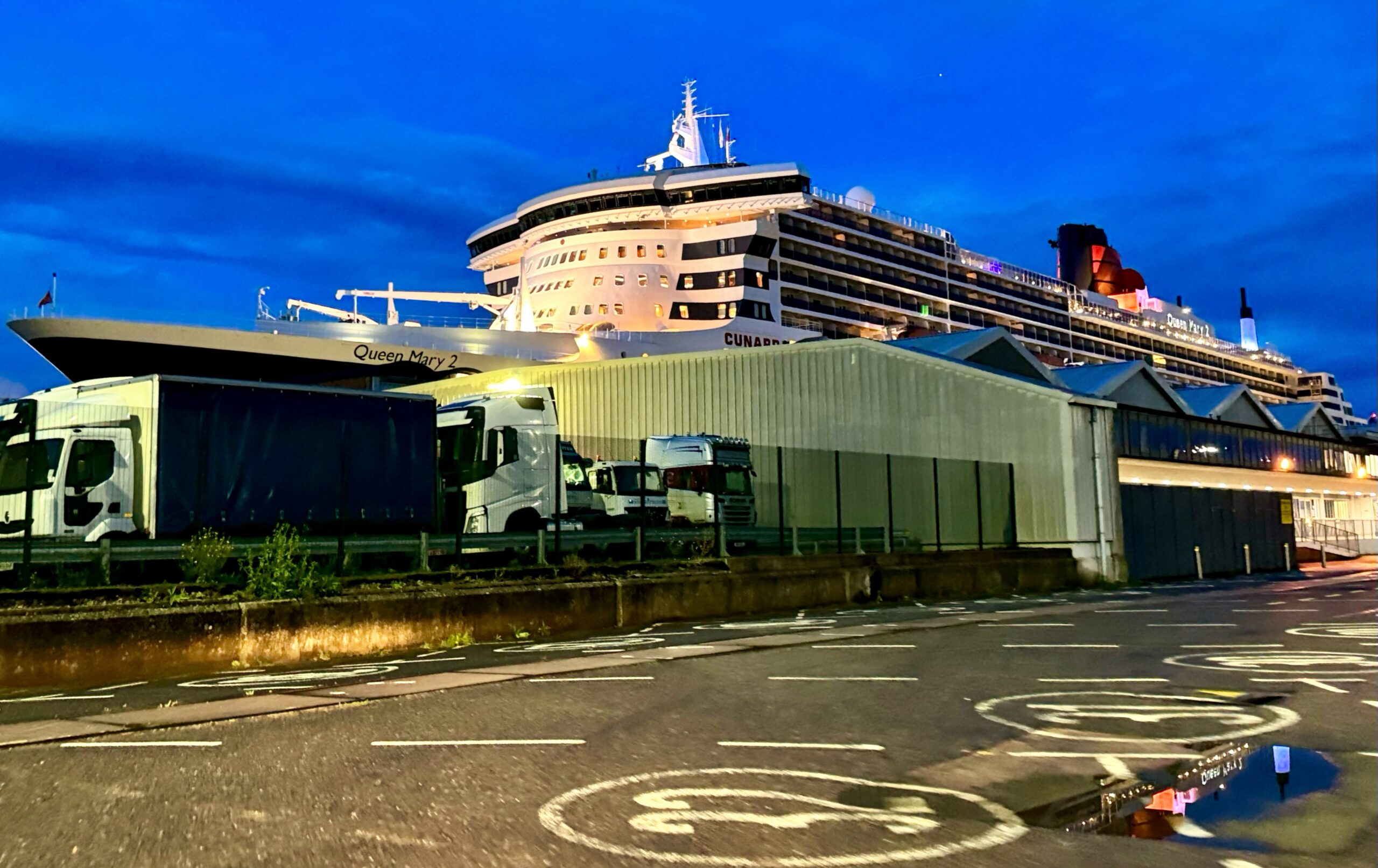
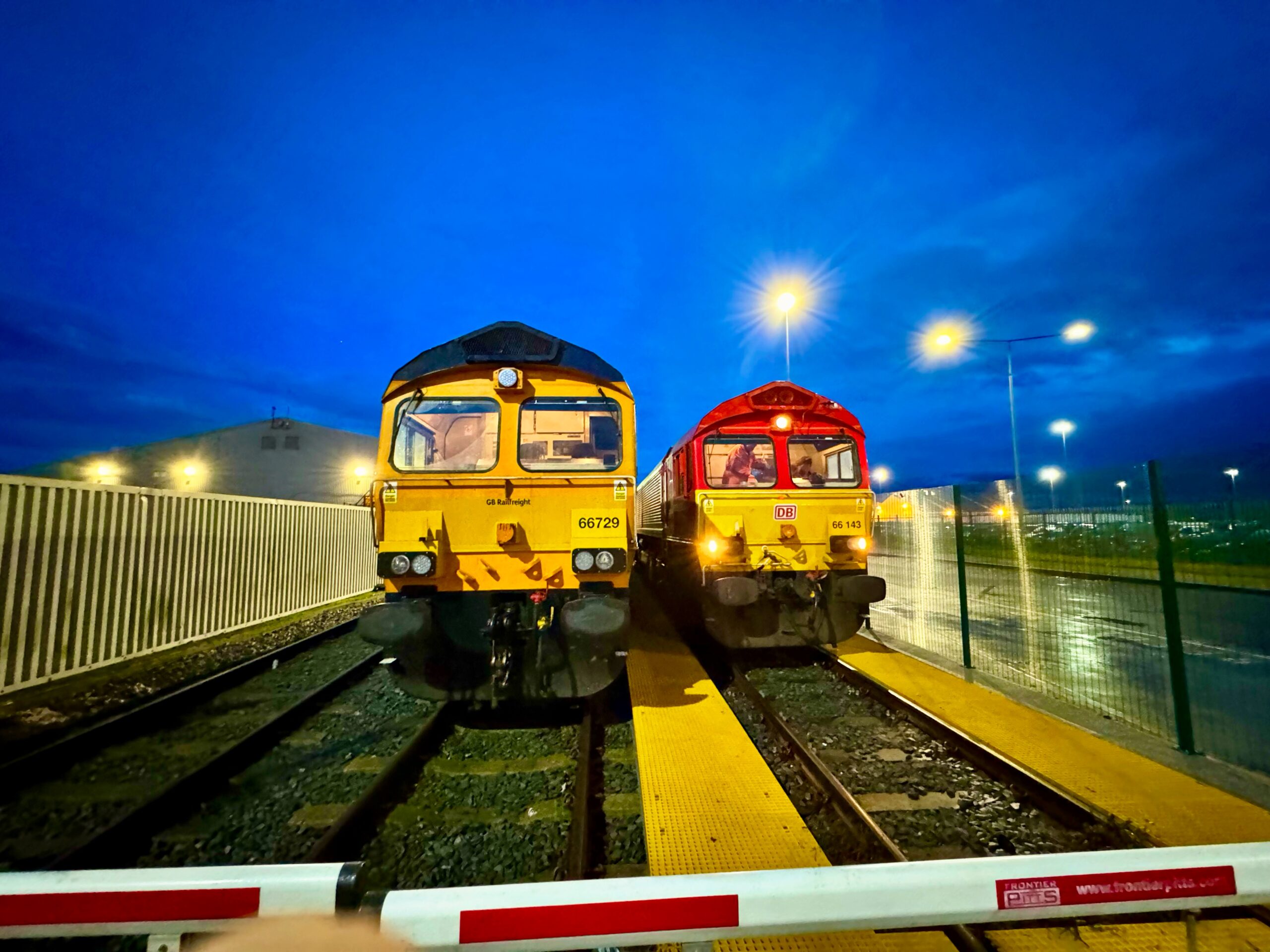
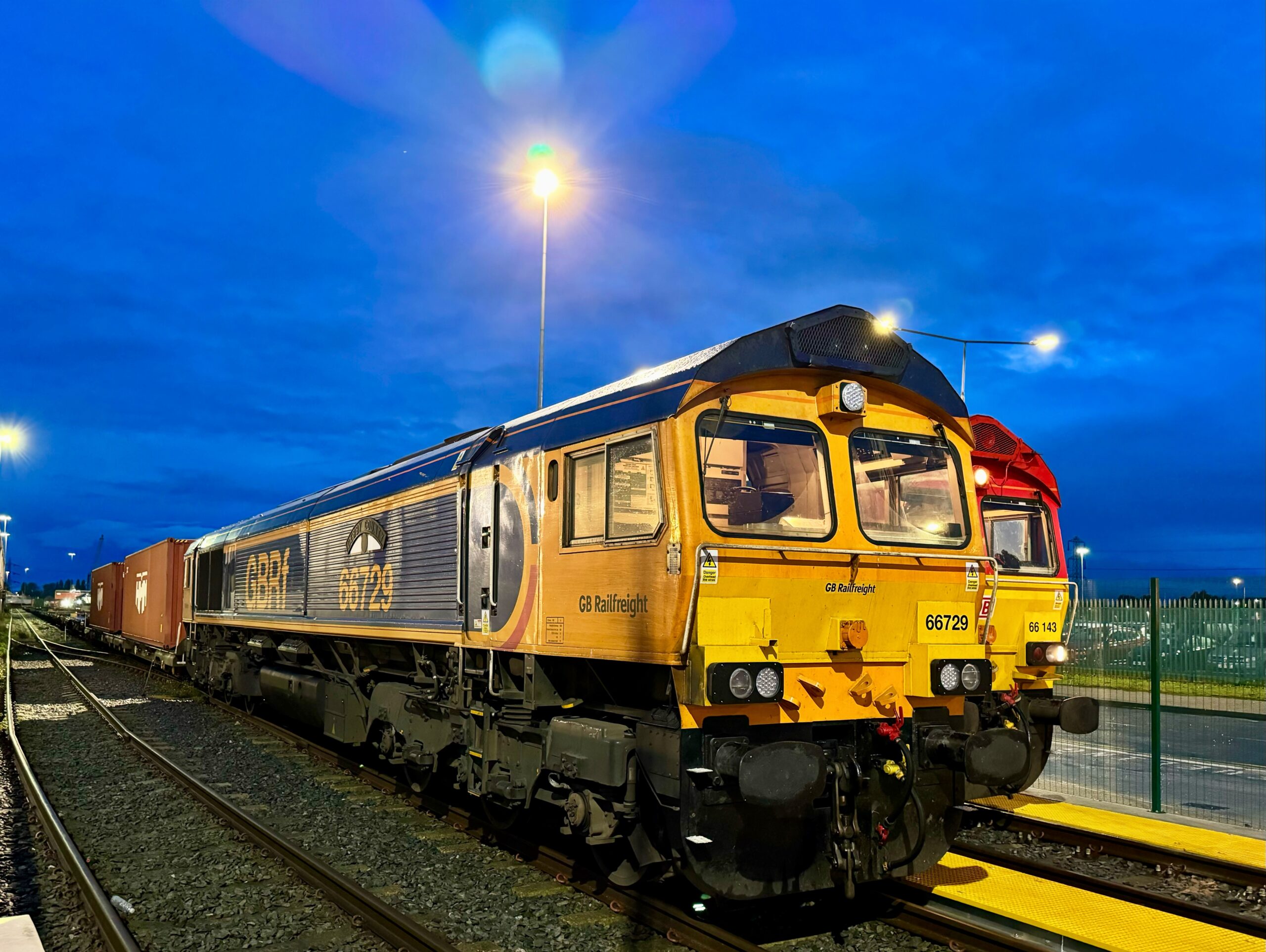
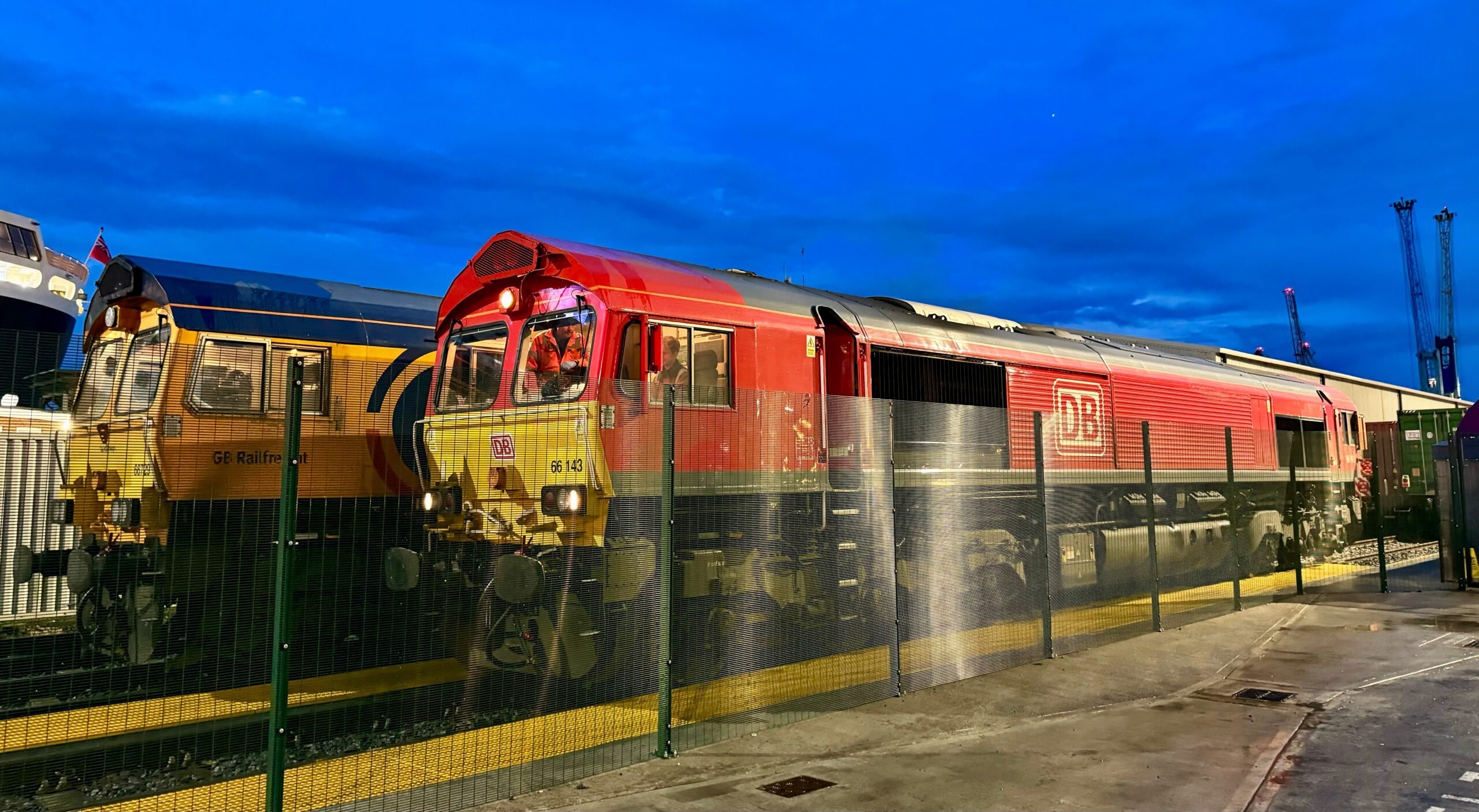
We had a fabulous couple of weeks away cruising on Cunard’s flagship Queen Mary 2 arriving back in Southampton on 20th October where I was quietly pleased to be shown two class 66 locomotives waiting to have their photo taken alongside the Mayflower Cruise Terminal situated at Western Docks via Dock Gate 10 where our ship had berthed.
We had a lot to catch up on (not least two weeks of laundry!) and I was interested to see how many out off the ordinary railway workings to Dorset and other events I had missed. First up was the launch of Adams T3 No. 563 into service at the Swanage Railway following weeks of test runs and remedial work.

Built in 1893 by the London and South Western Railway (LSWR) William Adams T3 4-4-0 No. 563 hauled her first passenger trains in 75 years on 7th October 2023 during a special day celebrating supporters who donated to the £650,000, six year restoration of the Victorian steam locomotive. Designed to haul express trains between London Waterloo and the south coast of England, No. 563 was destined for scrap in 1939 but the outbreak of World War Two saw her being saved and pressed into wartime service. She once again escaped the cutters torch when she helped mark the centenary of London Waterloo railway station in 1948. No. 563 was donated to Swanage Railway Trust by the National Railway Museum (NRM) in 2017.
Guests at the launch ceremony included Swanage Railway Trust patron Sir Philip Williams whose great-grandfather was on the board of the LSWR, the Lord-Lieutenant of Dorset; Angus Campbell, and Anthony Coulls, senior curator of rail transport and technology at the NRM. The relaunch of the locomotive coincided with the centenary of the Southern Railway (SR) and the 185th anniversary of the formation of the LSWR.
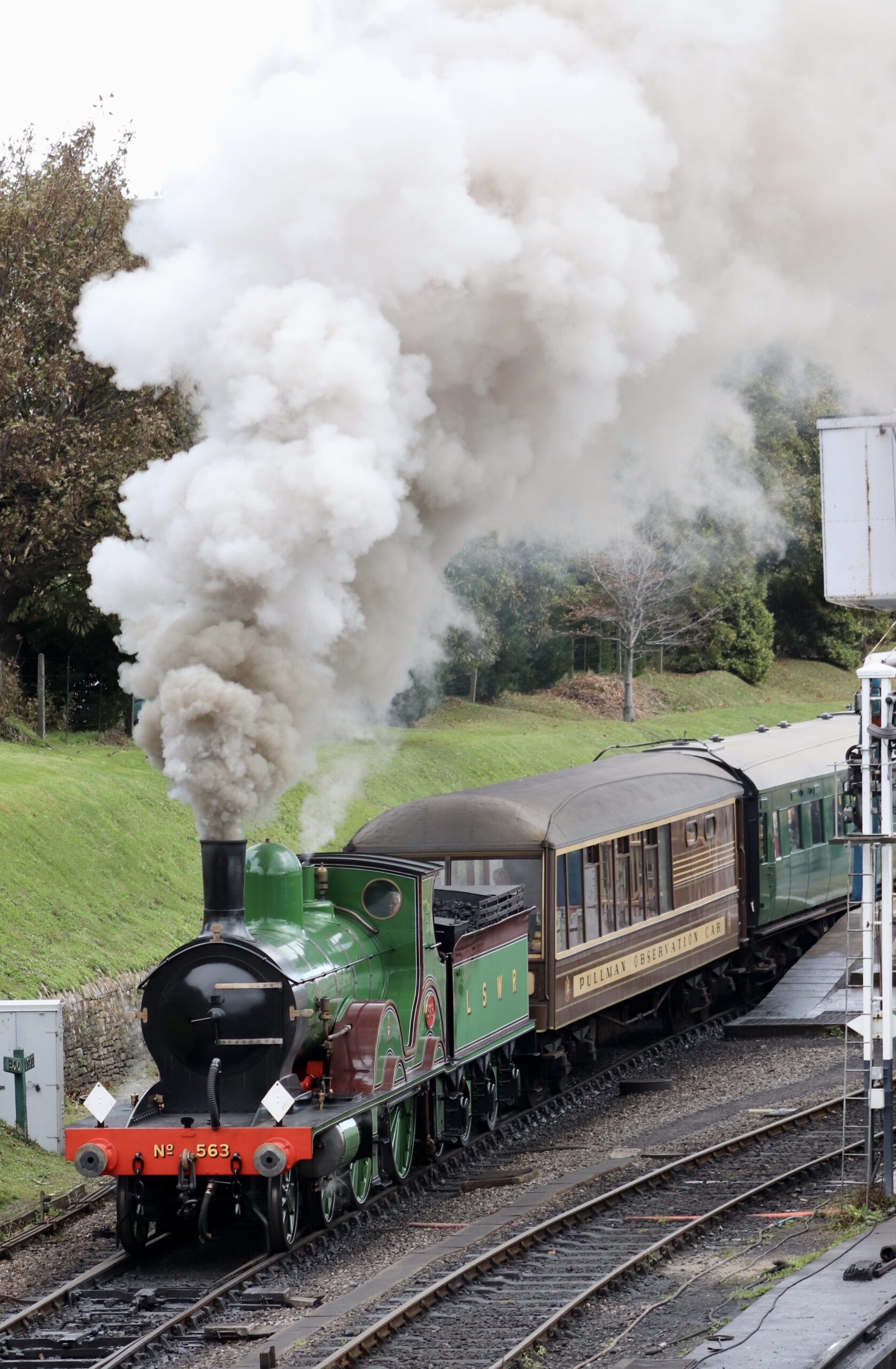
The T3 ran public services on the 8th October as well as half-term week 21st – 29th October 2023. We went to see the locomotive in service on Saturday 21st.

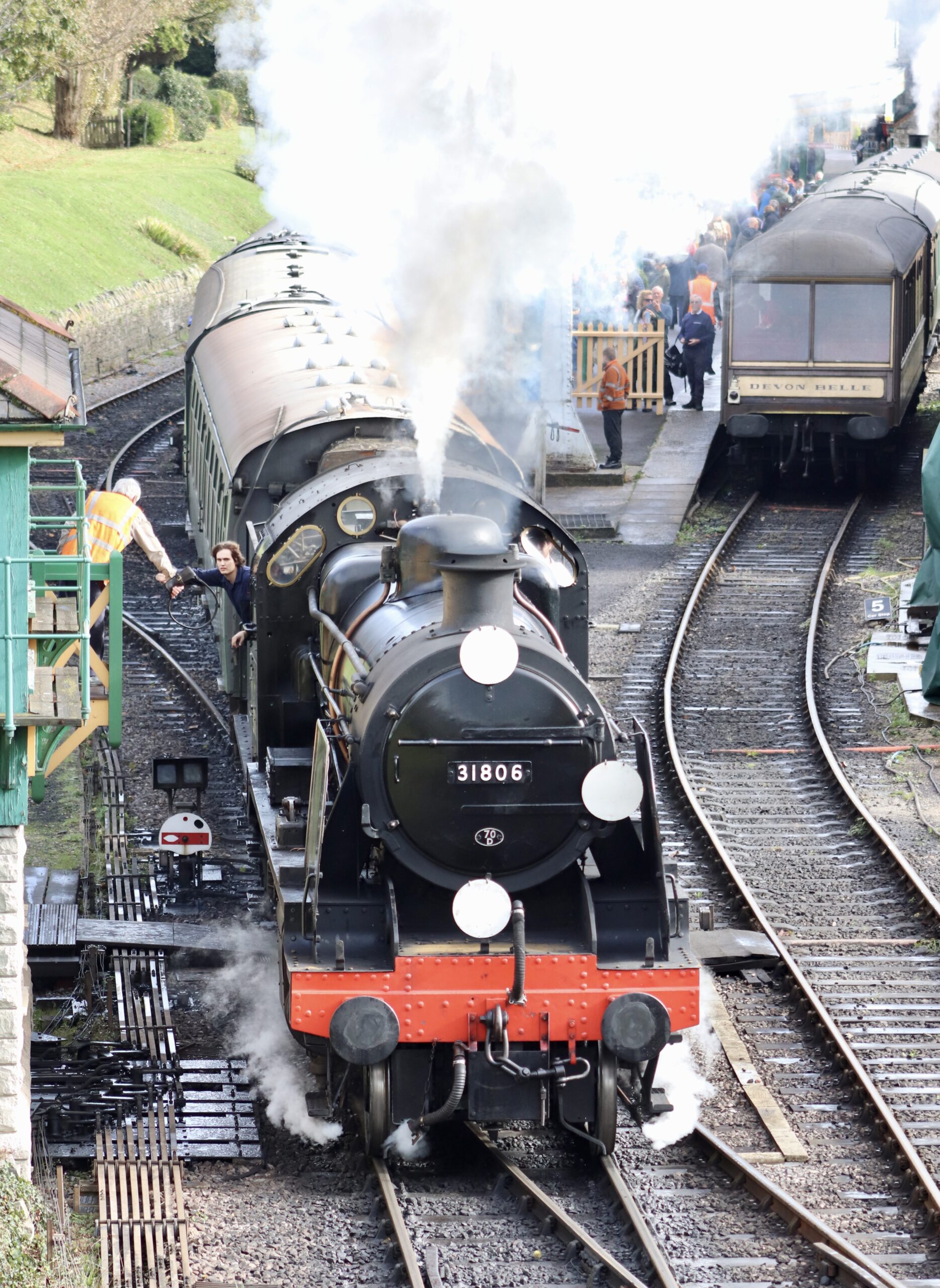
For The Record:
Over the last few weeks, a number of interesting workings have taken place in Dorset. Which is typical as I managed to miss most of them!
GBRf liveried Class 50’s returned to Bournemouth employed on South Western Railway (SWR) Class 458 drags on 11th & 12th October 2023 running as 5X72 1044 Wembley Terminal Complex Wheel Lathe to Bournemouth Traction & Rolling Stock Maintenance Depot / 5Q73 1610 Bournemouth Traction & Rolling Stock Maintenance Depot to Widnes Transport Tech. Locomotives involved were No.’s 50007 ‘Hercules’ and 50049 ‘Defiance’ delivering No. 458425 to Bournemouth and taking No. 458416 to Widnes for conversion. The Class 458 units now based at Bournemouth depot have been out on test runs over the last few weeks.
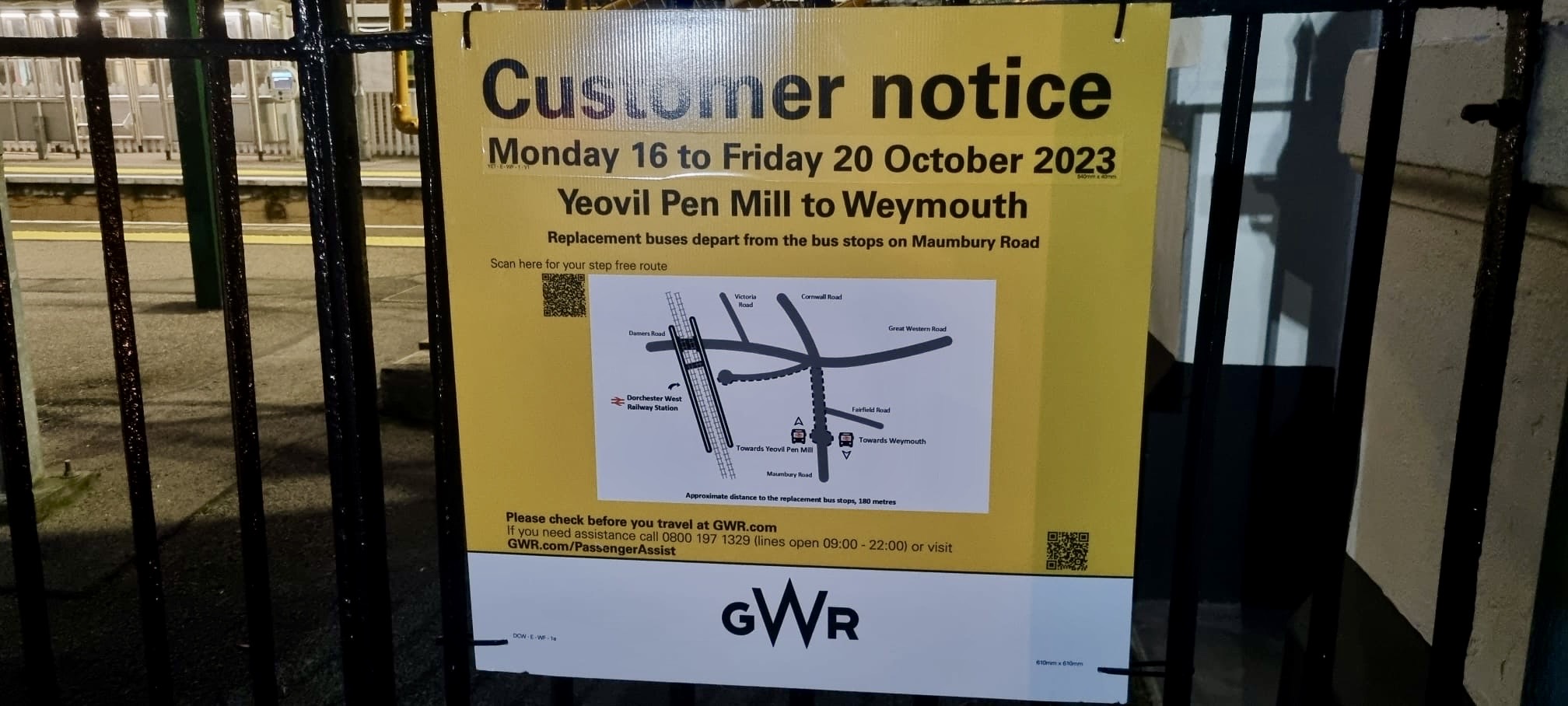
Engineering work west of Yeovil meant buses replaced trains between Yeovil Pen Mill and Weymouth from Monday 16th to Friday 20th October. Network Rail (NR) engineers renewed just under half a mile of old 1950’s era track between Maiden Newton and Chetnole stations. The track update is said to “help prevent speed restrictions and means smoother passenger journeys”. Work also saw repairs being carried out to brickwork at Evershot tunnel and is part of a long-running programme to improve performance on the Heart of Wessex Line. Network Rail and train operators think it is more efficient to close the route for a whole week rather than to shut it for several weekends.
Associated engineers trains were as follows; 15th October 2023: 6C04 2349 Westbury Down T.C. to Yeovil Pen Mill – Class 70 No. 70814 17th October 2023: 6C04 02:00 Yeovil Pen Mill to Westbury Down Yard – No. 70814 / 6G22 0202 Westbury Down T.C. to Yeovil Pen Mill – Class 66 No.’s 66709 and 66774 / 6Y88 0921 Westbury Down T.C. to Yeovil Pen Mill – No.’s 66544 and 66556 18th October 2023: 6G22 0837 Yeovil Pen Mill to Westbury Down T.C. – No.’s 66774 and 66709 / 6Y88 11:40 Yeovil Pen Mill to Westbury Down Yard – No.’s 66544 and 66556 / 6Y90 2156 Westbury Down T.C. to Yeovil Pen Mill – No. 66415. 19th October 2023: 6Y90 2334 Yeovil Pen Mill to Westbury Down T.C. – No. 66415
16th & 17th October 2023: saw a rare visit of inspection saloon ‘Caroline’ to the area working as 5Z01 1102 Derby R.T.C.(Network Rail) to Bournemouth Up Siding / 5Z02 0655 Bournemouth Up Siding to Bournemouth / 2Z02 0735 Bournemouth to Southampton Central via Weymouth all involving Class 37 No. 37418 ‘An Comunn Gaidhealach’ along with No. 975025 ‘Caroline’
19th October 2023 1Q23 0556 Reading to Salisbury New Measurement Train in the charge of Class 43 HST power cars No.’s 43251 and 43274 failed when climbing the bank between Exeter St Davids and Exeter Central. The train returned to Exeter St Davids, departing from there at around 1210 and routed towards Taunton, picking up the timetabled path at Westbury some 114 minutes late.
Two engineers trains also visited the Bournemouth area when the 19th and 20th October 2023 saw 6N70 2254 Eastleigh East Yard to Christchurch /6N70 0502 Bournemouth to Eastleigh East Yard top and tailed by Class 66 No.’s 66007 and 66088 whilst on 21st October 2023 6G17 0032 Eastleigh East Yard to New Milton via Bournemouth operated by No.’s 66755 and 66711
23rd October 2023 and it was the return of Network Rail’s Plain Line Pattern Recognition Train (PLPR) hauled, as usual by GBRf Class 73 electro-diesel locomotives which this month were No. 73965 ‘Des O’Brien’ and No. 73964 ‘Jeanette’. PLPR trains use a variety of tools to measure and detect defects in the track which may have the potential to cause problems. Equipment include a 4 foot camera used to check on track condition and thermal imaging to check rail temperatures.
A couple of days later on 25th October 2023 and the Ultrasonic Test Train (UTU) was out and about on our patch as 3Q02 2140 Eastleigh East Yard to Eastleigh East Yard. The UTU is usually comprised of a locomotive at one end and a Driving Brake Standard Open (DBSO) at the other. The DBSO can lead the train and control the locomotive at the other end, which was the case on the outward run of 3Q02 to Weymouth this time around. UTU trains have ground penetrating radar systems to detect voids and deformations up to two metres into the ballast and earth below, and use profile scanners to help identify any issues similar to the PLPR test train.
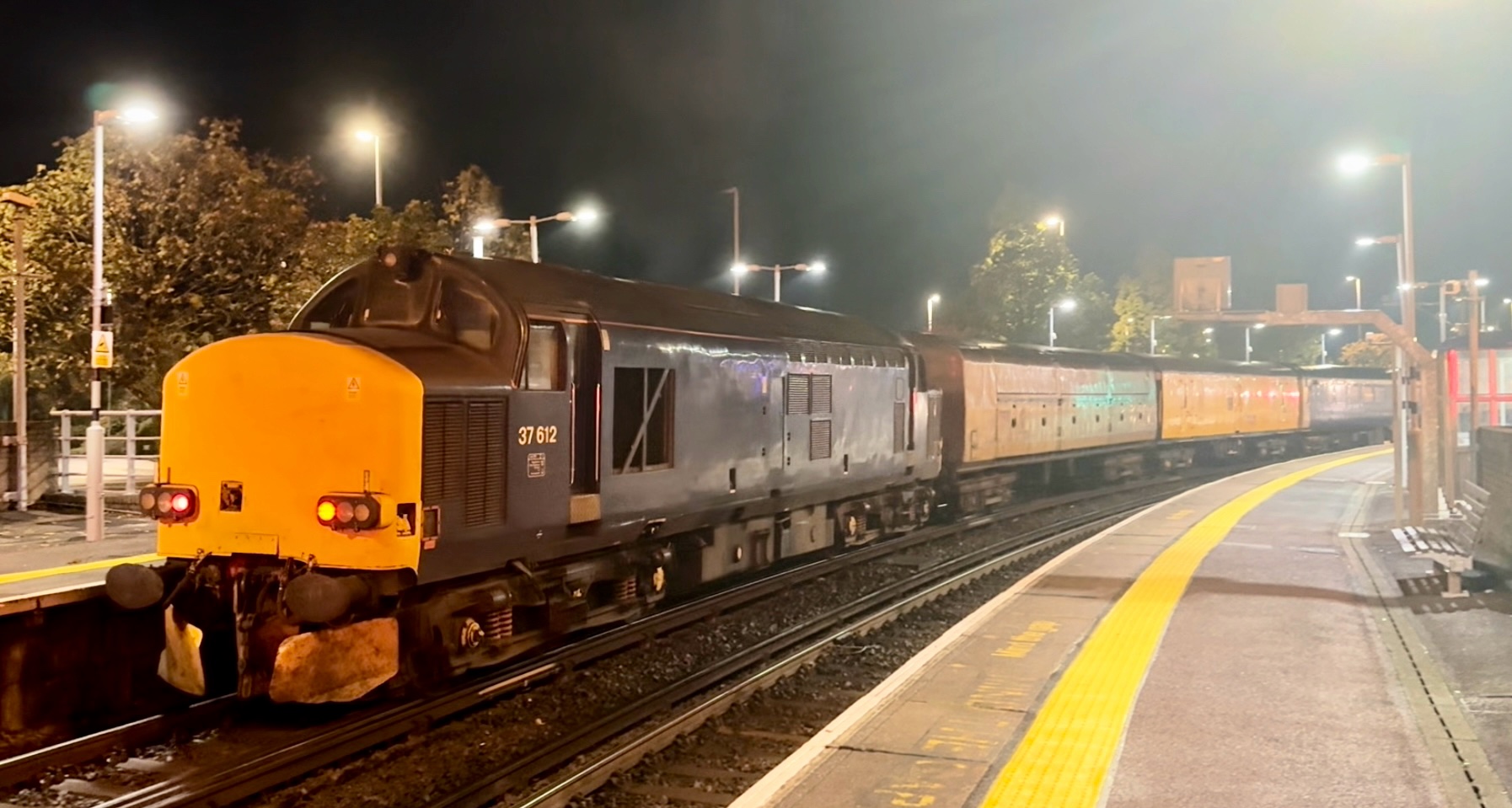
In the next few weeks, there is more local rail disruption to come affecting trains in North Dorset on the Waterloo – Exeter route as Network Rail will be closing the line between Salisbury and Axminster for 21 days in November and December 2023.
Firstly, the line between between Yeovil Junction and Axminster will be closed for five days between Monday November 6th to Friday November 10th. A second closure takes place between Salisbury and Yeovil Junction from Saturday November 25th to Sunday December 10th. Engineers will be working around the clock to complete key upgrades at four different worksites and upgrades are part of a wider half a million-pound investment to improve reliability and performance along the line. Work will also take place at Crewkerne Tunnel where engineers will attempt to stabilise the cutting following a landslip in October 2021. There will be an installation of new drainage to help to reduce the impact of heavy rainfall. Additional work will take place with the replacement of the barriers at the Broom and Axe level crossing, and the Weycroft River Bridge will have protective, anti-corrosion paint work applied. Areas of waterlogged track stones will be removed.
The Salisbury-Exeter Rail Users Group (SERUG) accepts the maintenance work to track and earthworks is necessary as it says only 77% of services run on time.
In other news, the Poole Harbour Trails community group have successfully registered a disused railway line as a right of way after spending the last 13 years trying to formalise the footpath at Sandford, Poole. The currently overgrown route follows the railway that serviced the Royal Naval Cordite Factory (RNCF) at Holton Heath that closed in the 1950’s and had been used as a path by locals for many years until it became obstructed in 2010. The Friends of the Cordite Way Clearance group received permission earlier this year to start clearance but had to wait for the nesting season to end, beginning work in September on the first section to the viewpoint overlooking Poole Harbour and Arne peninsular. It is hoped to open this first section in the summer of 2024.
Recent research by the walking charity Ramblers found that more than 49,000 miles of paths in England and Wales did not feature on official maps and were at risk of being permanently lost with the government setting a deadline in England of 2031 to apply to get these paths re-registered, however Ramblers believe this deadline should be withdrawn.
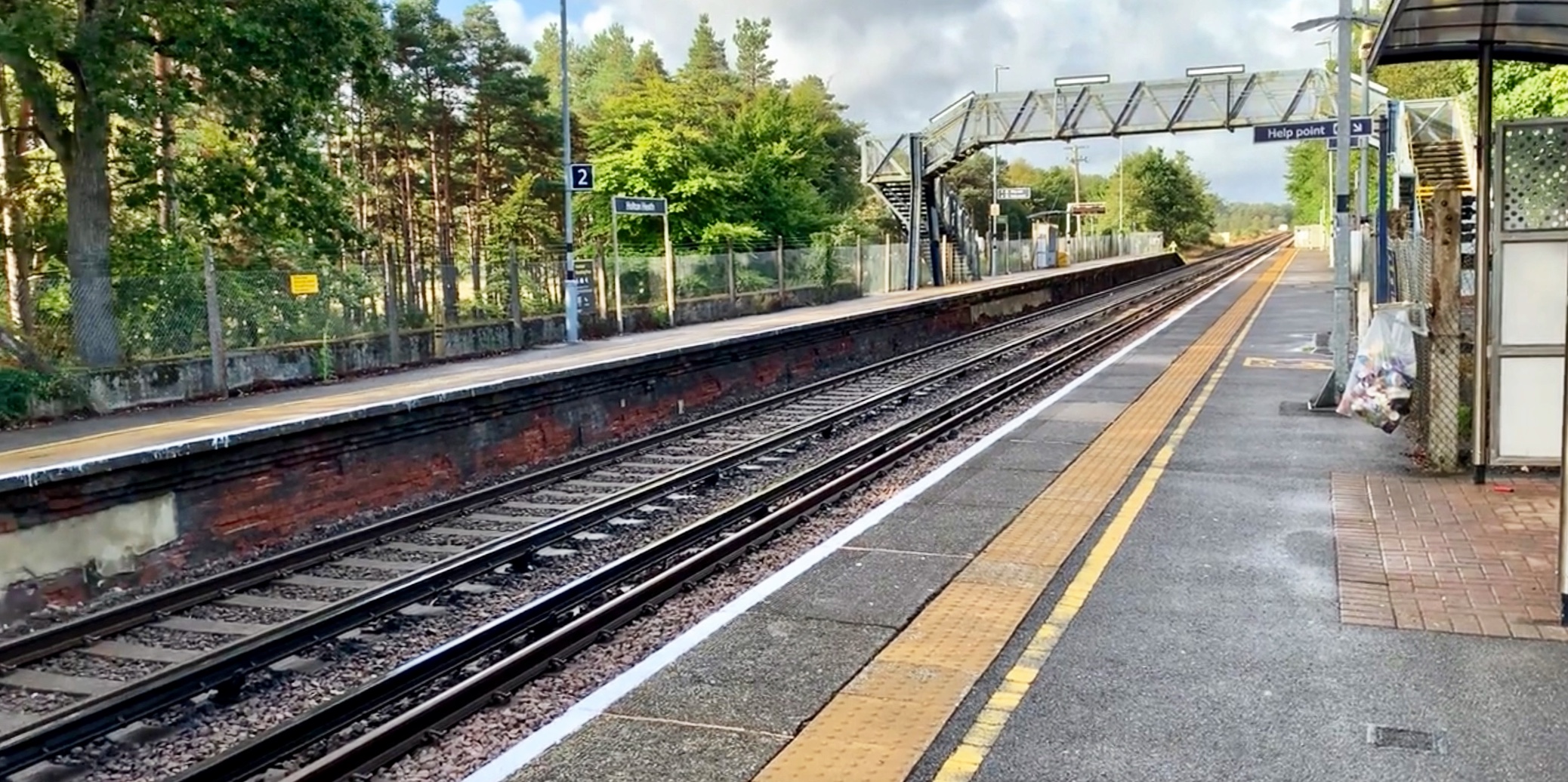
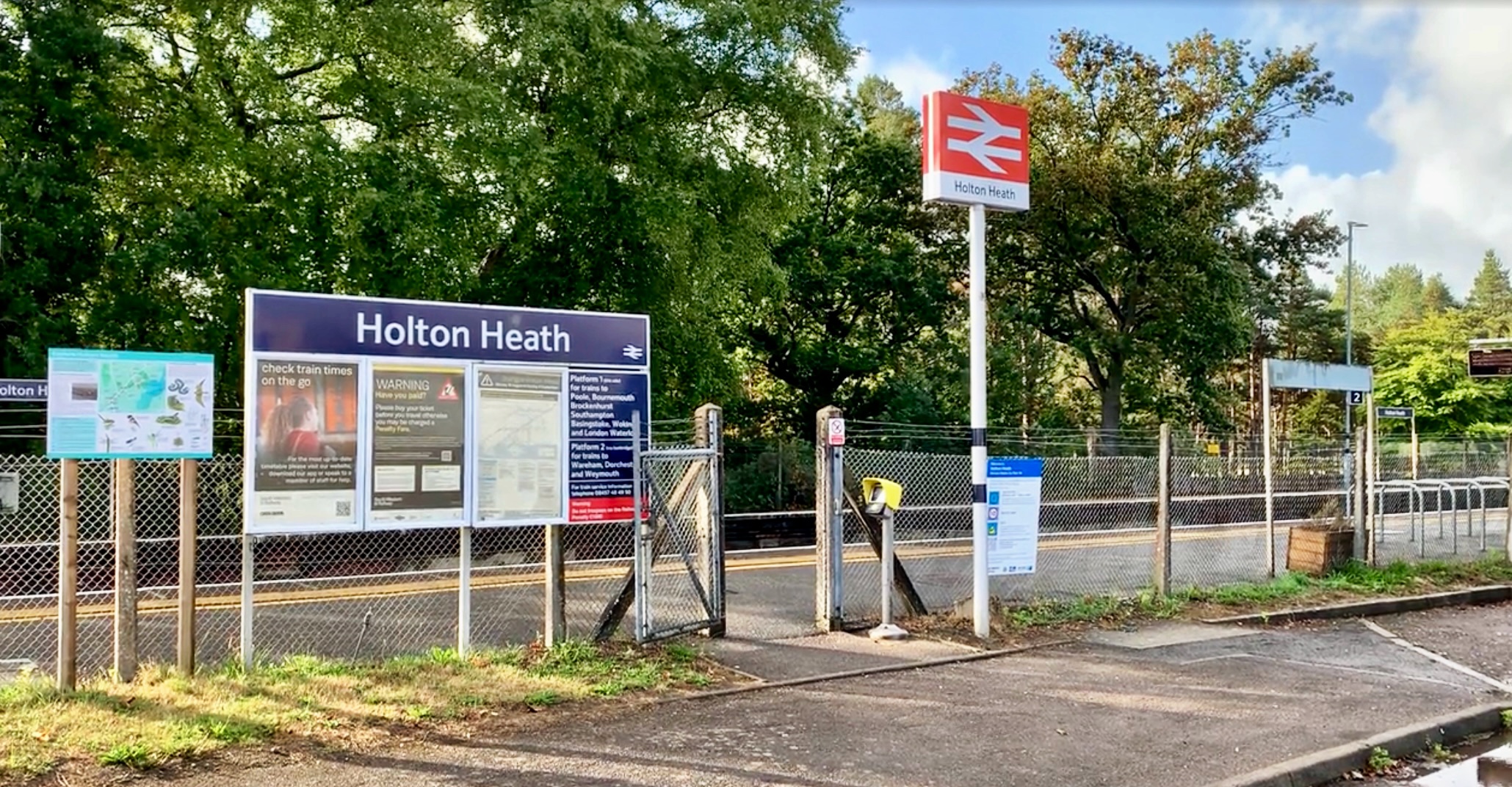
Holton Heath railway station is located near the western shore of Poole Harbour and was opened on 3rd April 1916 for use by workers at the Naval Cordite Works which had been established during the First World War. The station was made available for public use from 14th July 1924. Holton Heath has been unstaffed since 1964, with the signal box being removed on 3rd November 1969.
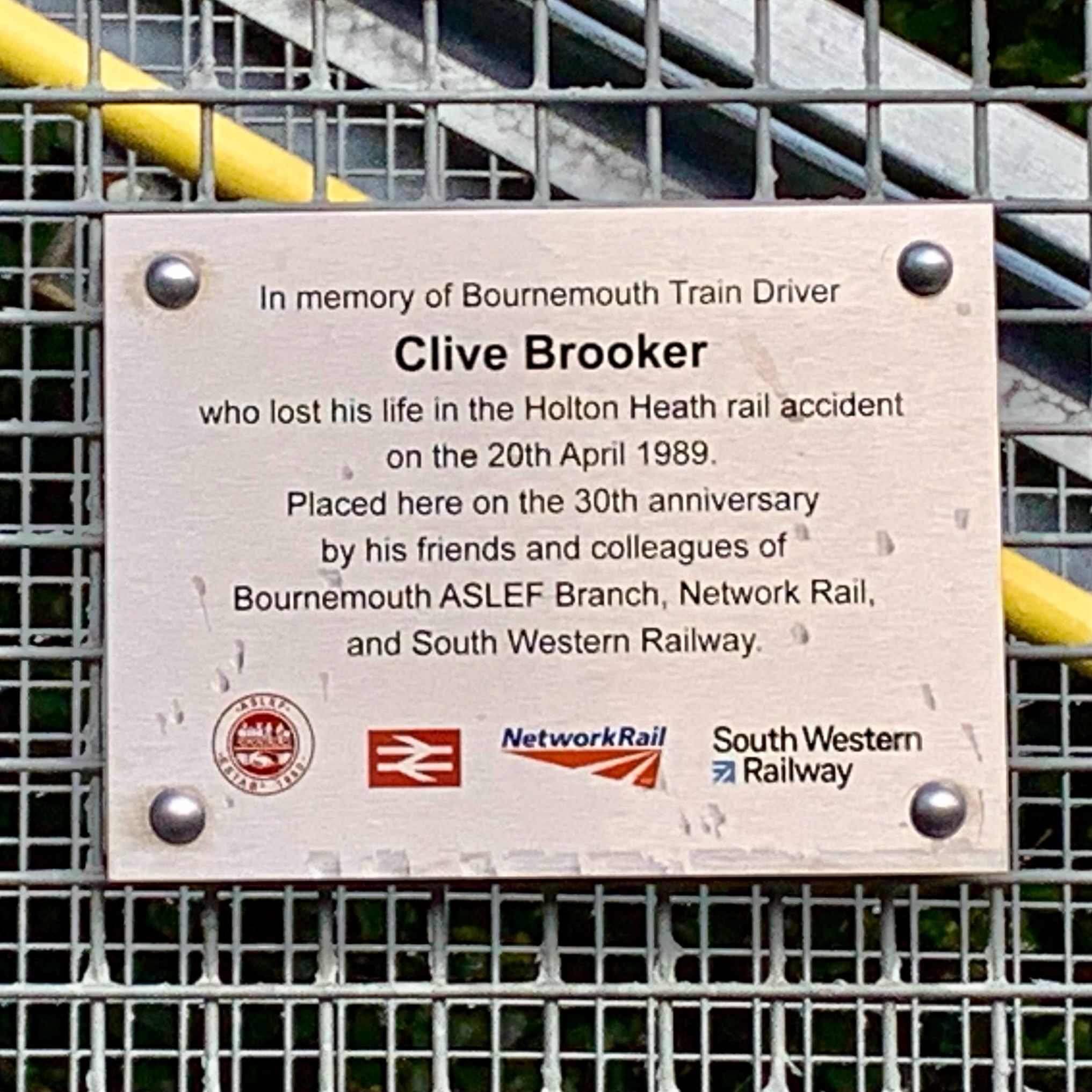
Cordite was an explosive component used as a propellant for shells. The factory was built in 1915-16. It was the first purpose-built site for cordite production in the United Kingdom. One of the main ingredients for cordite was acetone. The factory provided its own supply through an acetone plant, which employed novel fermentation technology using maize as a starch source. The RNCF was effectively self-sufficient and had its own internal rail system with about five miles of standard gauge track and 14 miles of narrow gauge, together with its own rolling stock. During the First World War, cordite was dispatched to a jetty in Poole Harbour by rail where it was loaded onto sailing barges for transport to Priddy’s Hard in Gosport. The factory continued to manufacture cordite until 1946. Production at RNCF finally ended in 1957 but many of the buildings still survive.
Grand Central Terminal
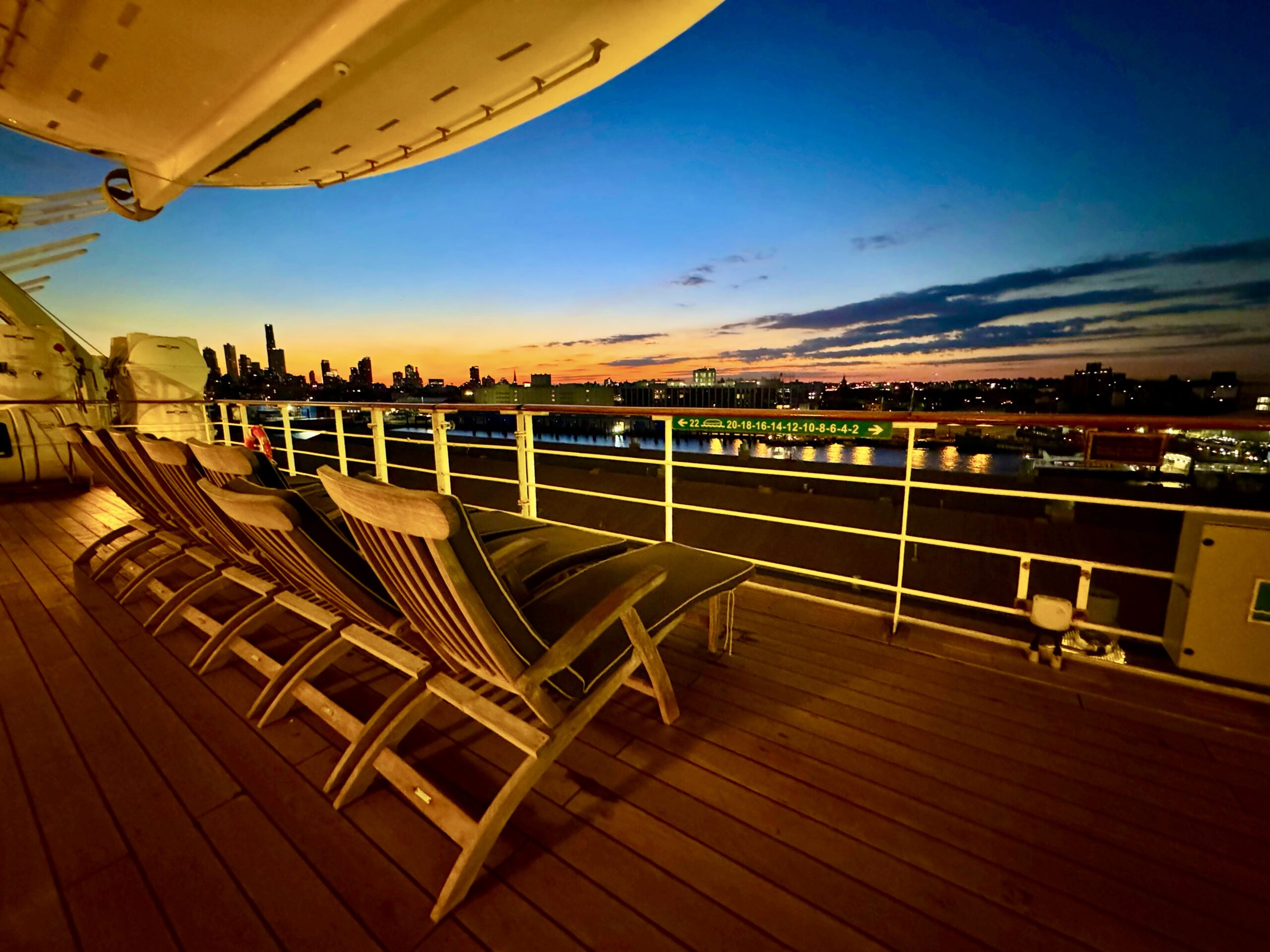
We were able to spend a few hours in New York on Friday 13th October 2023. Having never visited the Big Apple previously, I had a short list of things I was hoping to see and Caroline, who has spent time in the city before, was kind enough to indulge me.
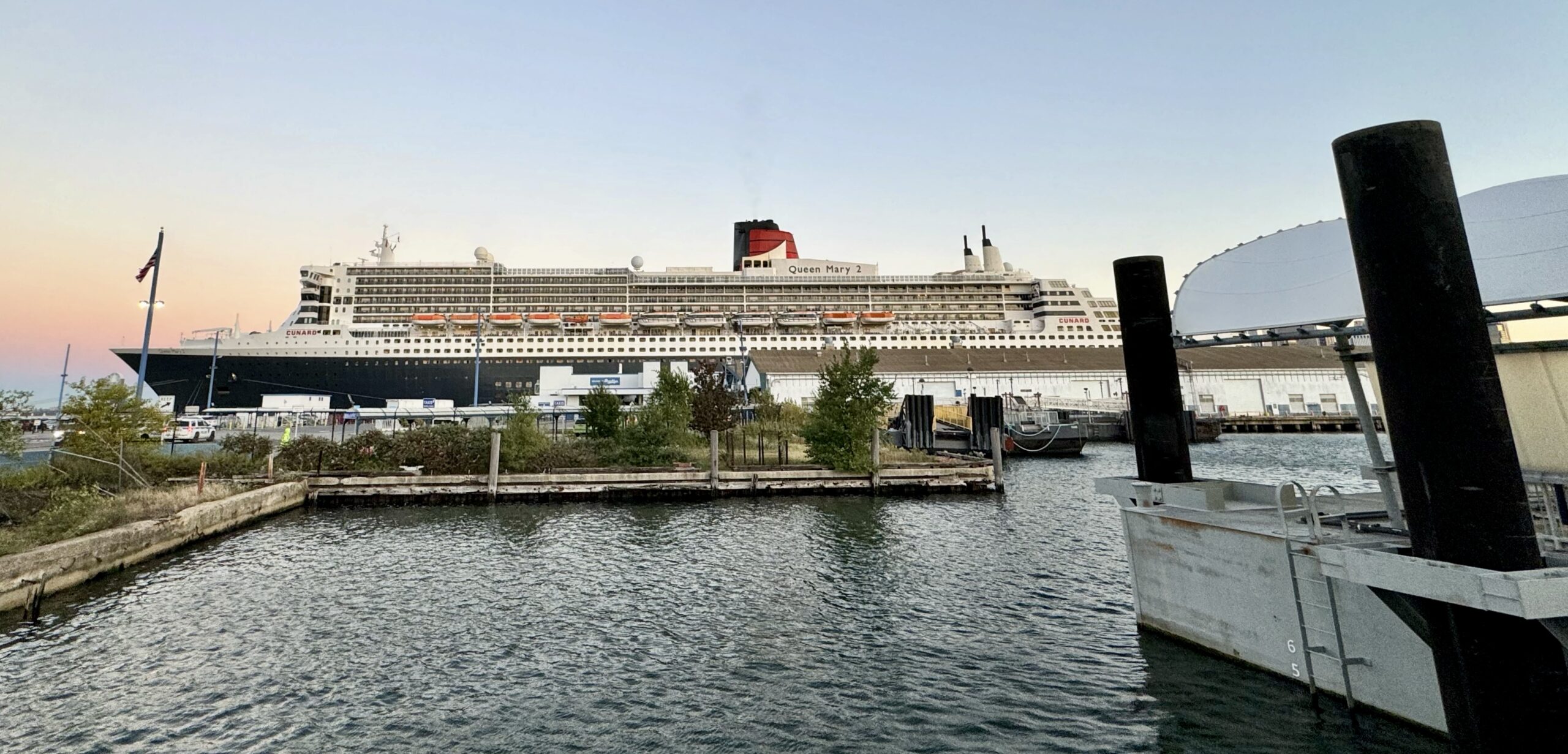
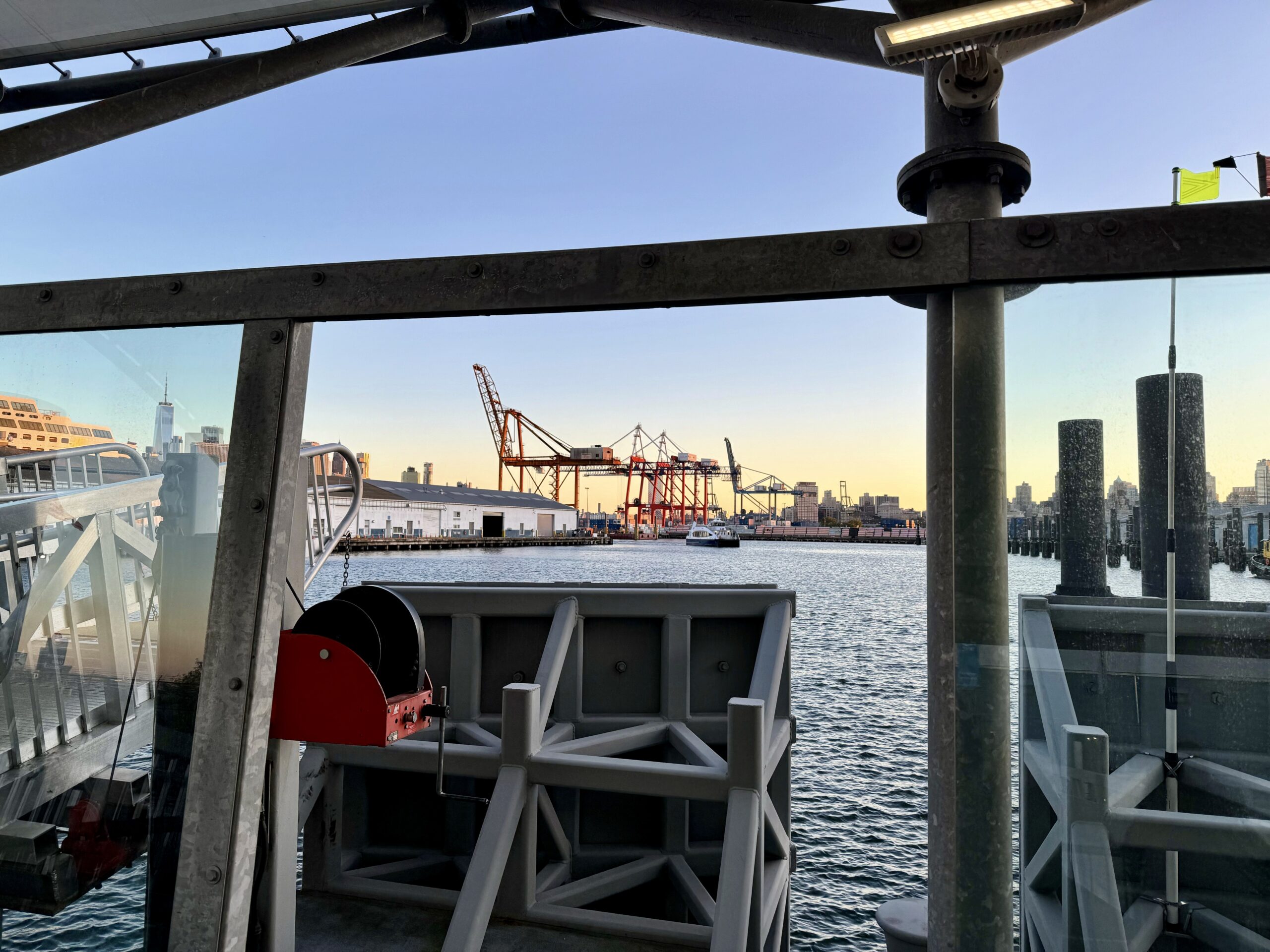
We disembarked the ship at 0700 and were waved through immigration arriving in good time to catch the first water ferry from Red Hook Atlantic Basin, Brooklyn which was adjacent to QM2’s berth over to Manhattan Island.

We needed to change ferries at Wall Street to take us up the East river to East 34th Street and following a 42 minute walk we were able to have “Breakfast outside Tiffany’s” before continuing our journey on foot through Times Square and past the New York Library (which was yet to open, but was on my list for a visit to the Polonsky Exhibition of The New York Public Library’s Treasures) to Grand Central Terminal, located at 42nd Street and Park Avenue in Midtown Manhattan.
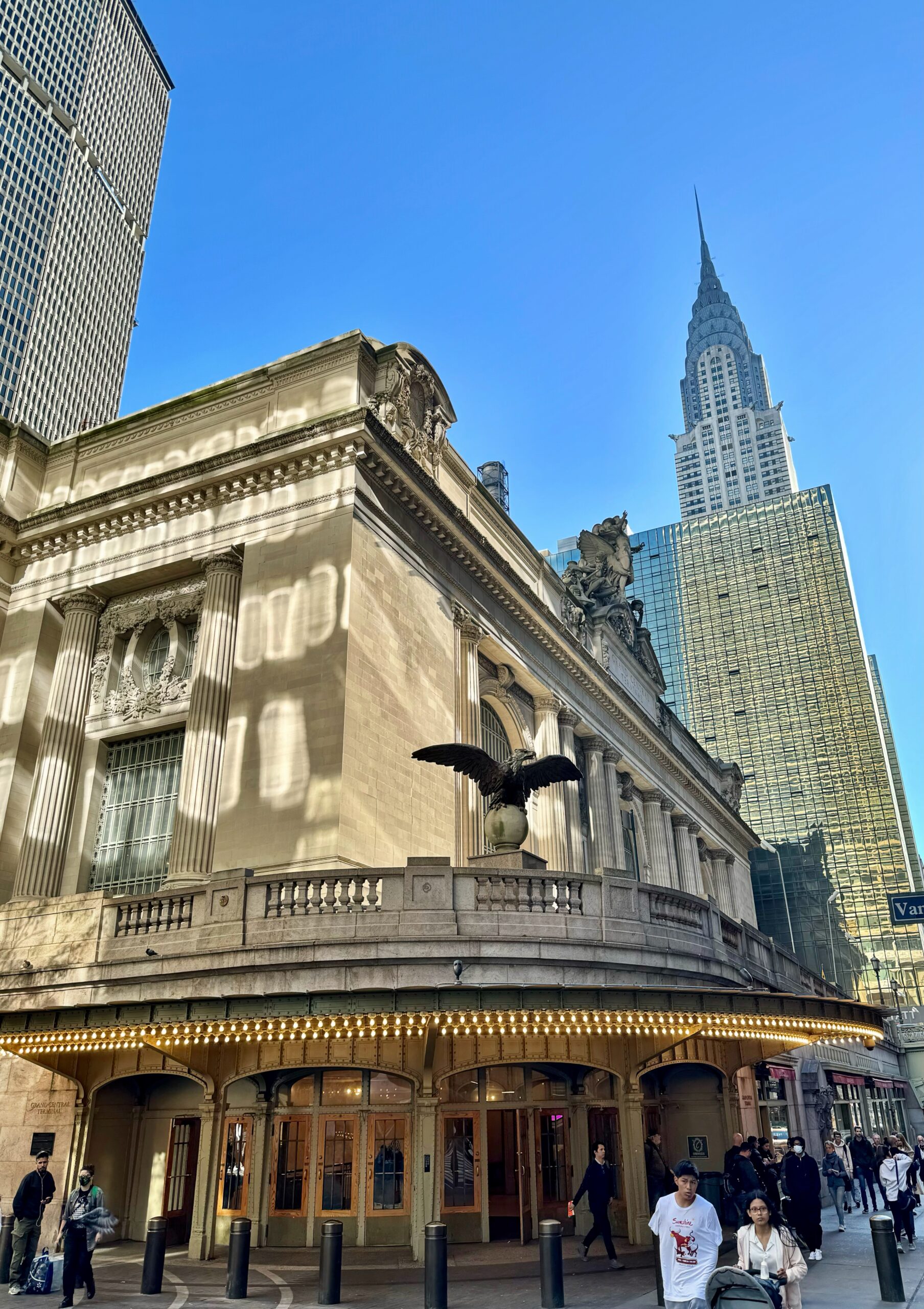
Grand Central Terminal was designed in the Beaux-Arts style by Reed and Stem – an American architectural and engineering firm founded in Minnesota in 1891 as a partnership between Charles A. Reed (1858–1911) and Allen H. Stem (1856–1931) – who handled the overall design of the terminal, and Warren and Wetmore – a New York architecture partnership between Whitney Warren (1864–1943) and Charles Delevan Wetmore (1866–1941) – which mainly made cosmetic alterations to the exterior and interior.
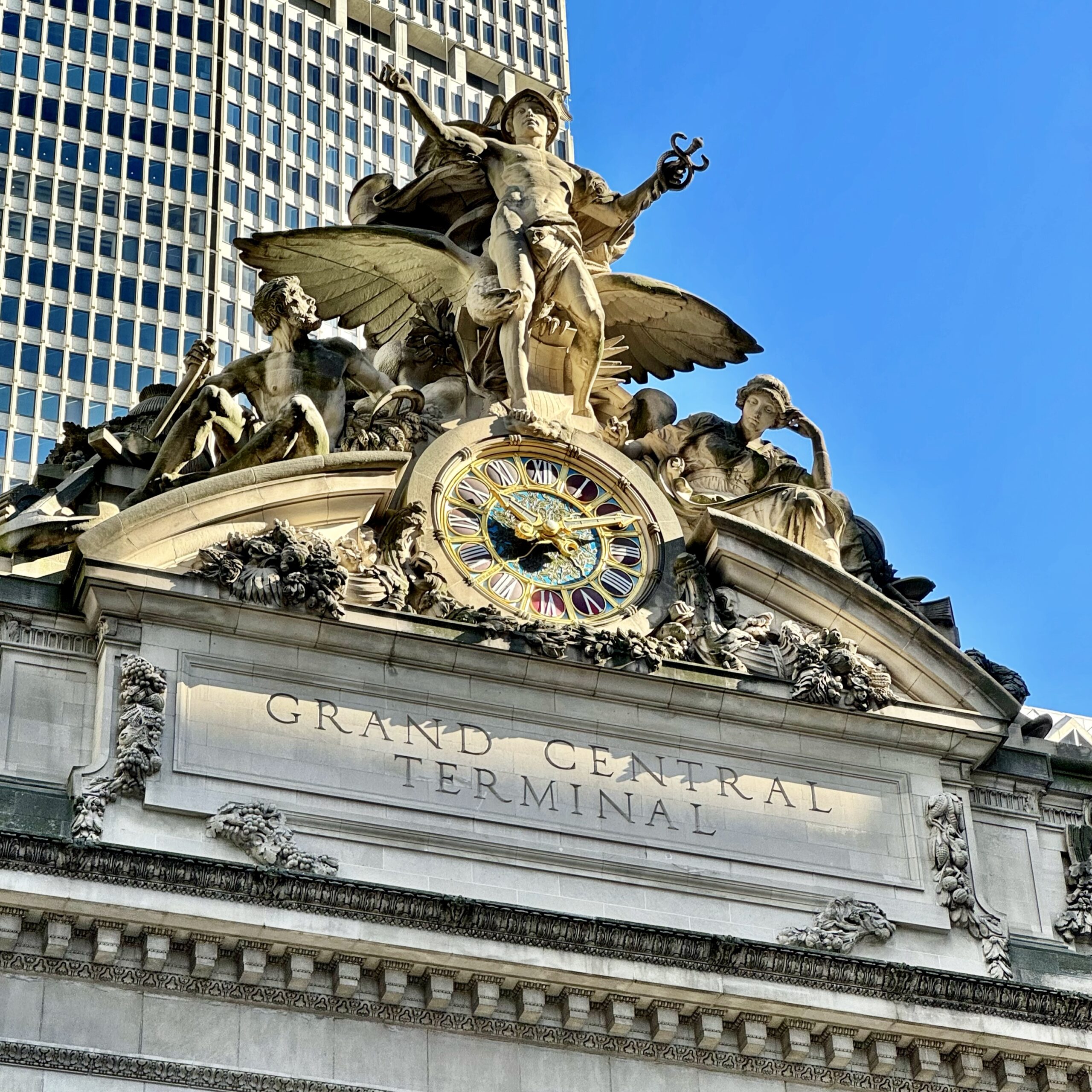
The Beaux-Arts architecture evolved from the French classicism of the Style Louis XIV, and then French neoclassicism beginning with Style Louis XV and Style Louis XV and was the academic architectural style taught at the École des Beaux-Arts in Paris, particularly from the 1830’s to the end of the 19th century. It drew upon the principles of French neoclassicism, but also incorporated Renaissance and Baroque elements, and used modern materials, such as iron and glass, and later, steel. It was an important style in Europe and the Americas through the end of the 19th century, and into the 20th. Various elements inside the terminal were designed by French architects and artists Jules-Félix Coutan (1848–1939), Sylvain Salières (1865–1920), and Paul César Helleu (1859–1927). Grand Central has monumental spaces as well as meticulously crafted detail, especially on its facade, which is based on an overall exterior design provided by Whitney Warren.
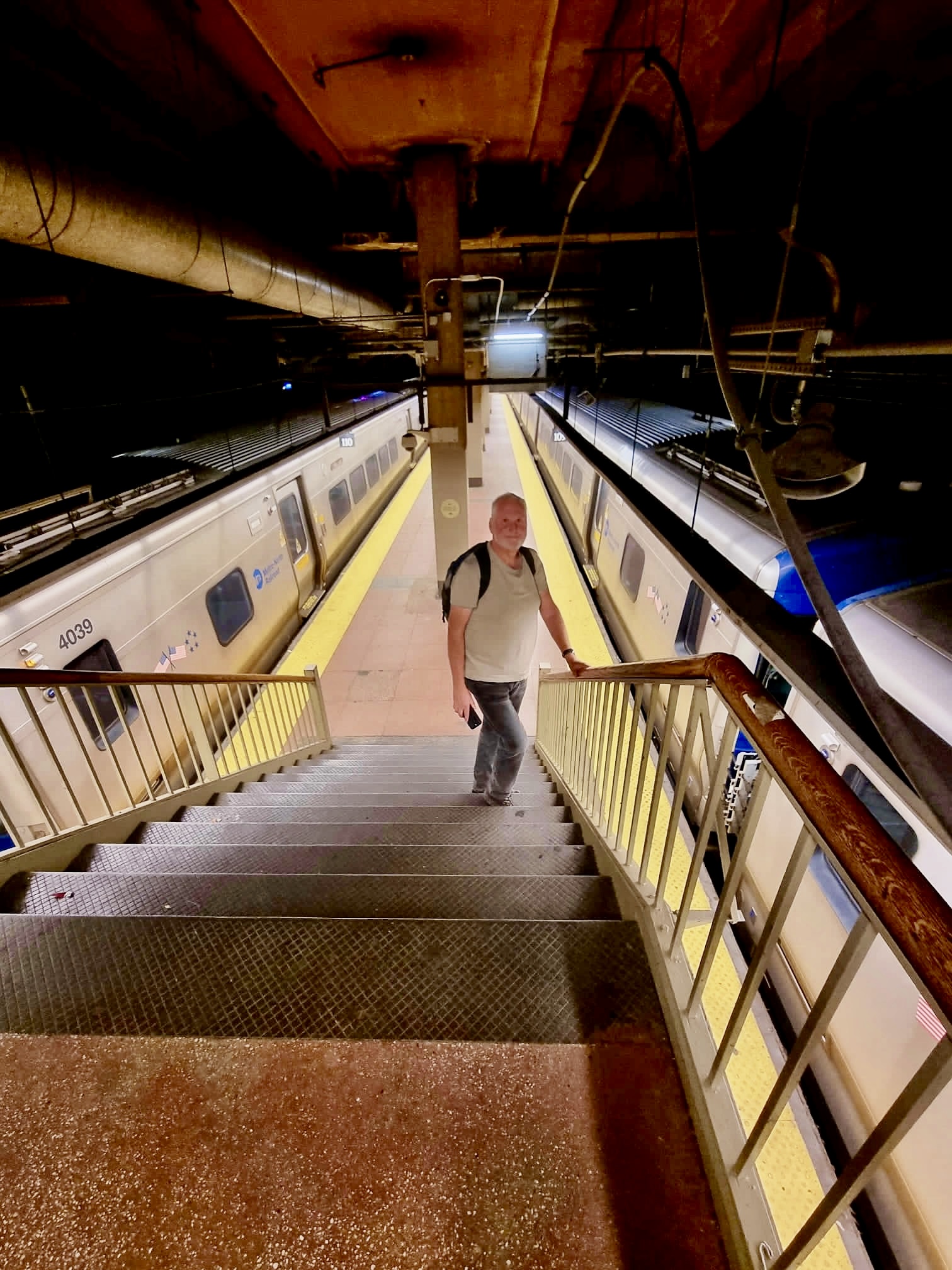
The Terminal, built on the site of a former railroad depot and phased in over the course of nearly a decade being completed in 1913, covers 48 acres and has over 40 platforms, more than any other railway station in the world. The platforms are all below ground, serving 30 tracks on the upper level and 26 on the lower. In total, there are 67 tracks, including a rail yard and sidings; of these, 43 tracks are in use for passenger services, while the remaining two dozen or so are used to store trains.
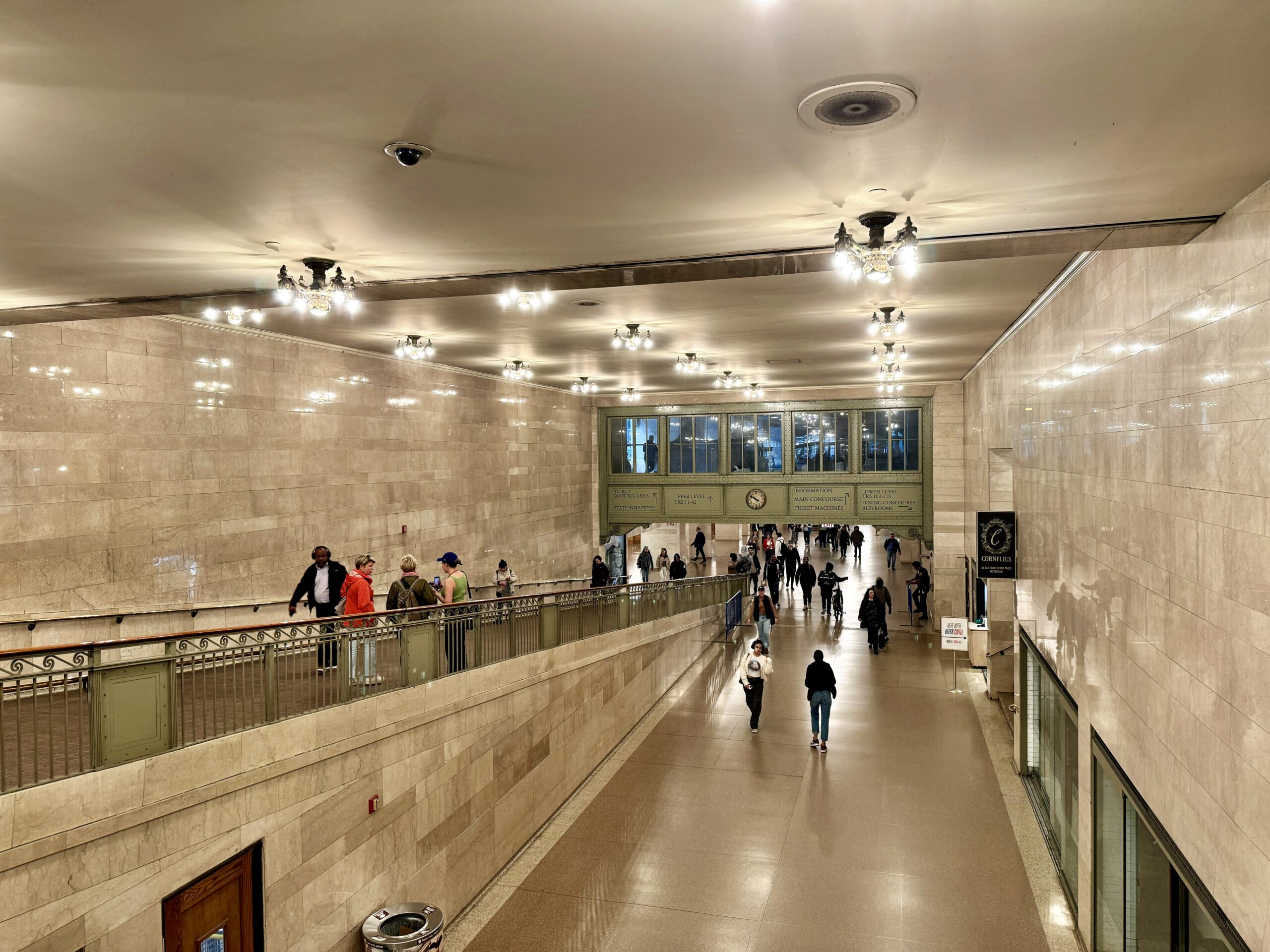
Grand Central Terminal was built and named by the New York Central Railroad which also served the New York, New Haven and Hartford Railroad. The terminal was built on the site of two previous stations, the first of which originated in 1871. Grand Central Terminal served intercity trains until 1991, when Amtrak began routing its trains through nearby New York Penn Station. Grand Central is now the southern terminus of the Metro-North Railroad’s Harlem, Hudson and New Haven Lines, serving the northern parts of the New York metropolitan area. It also contains a connection to the Long Island Rail Road through the Grand Central Madison station as well as connecting to the New York City Subway at Grand Central–42nd Street station. The terminal is the third-busiest railway station in North America.
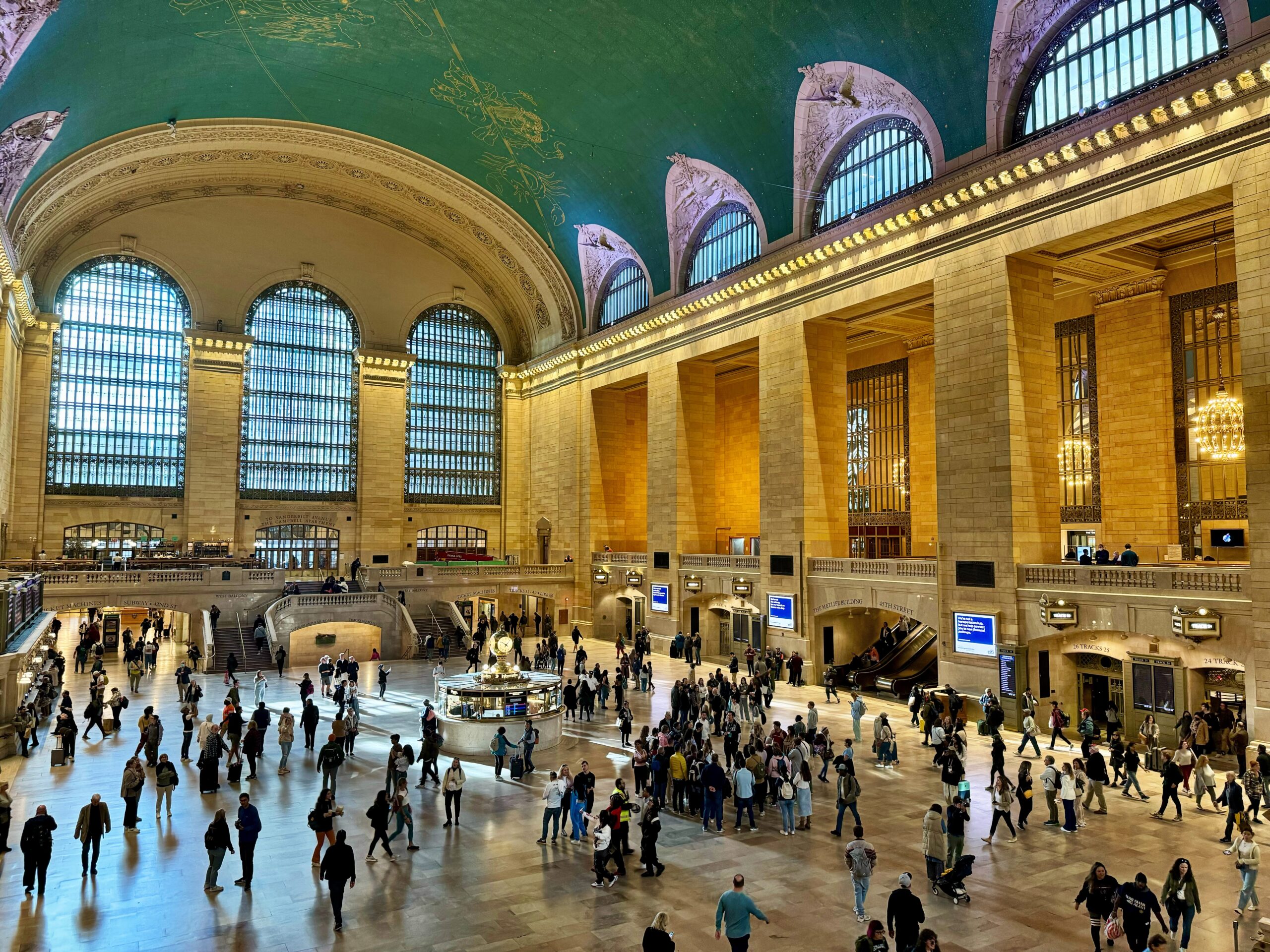
The Main Concourse is located on the upper platform level of Grand Central, in the centre of the station building. The 35,000 square foot area leads directly to most of the terminal’s upper-level tracks. In their design for the station’s interior, Reed & Stem created a circulation system that allowed passengers alighting from trains to enter the Main Concourse, then leave through various passages that branch from it. The Main Concourse, often featured in films and television, is a busy space filled with people hurrying to their destination or onlookers taking in the grandeur of their location.

At the centre of the concourse is an information booth topped with a four sided brass clock, one of Grand Central’s most recognisable icons. The terminal’s main departure boards are located at the south end of the concourse.
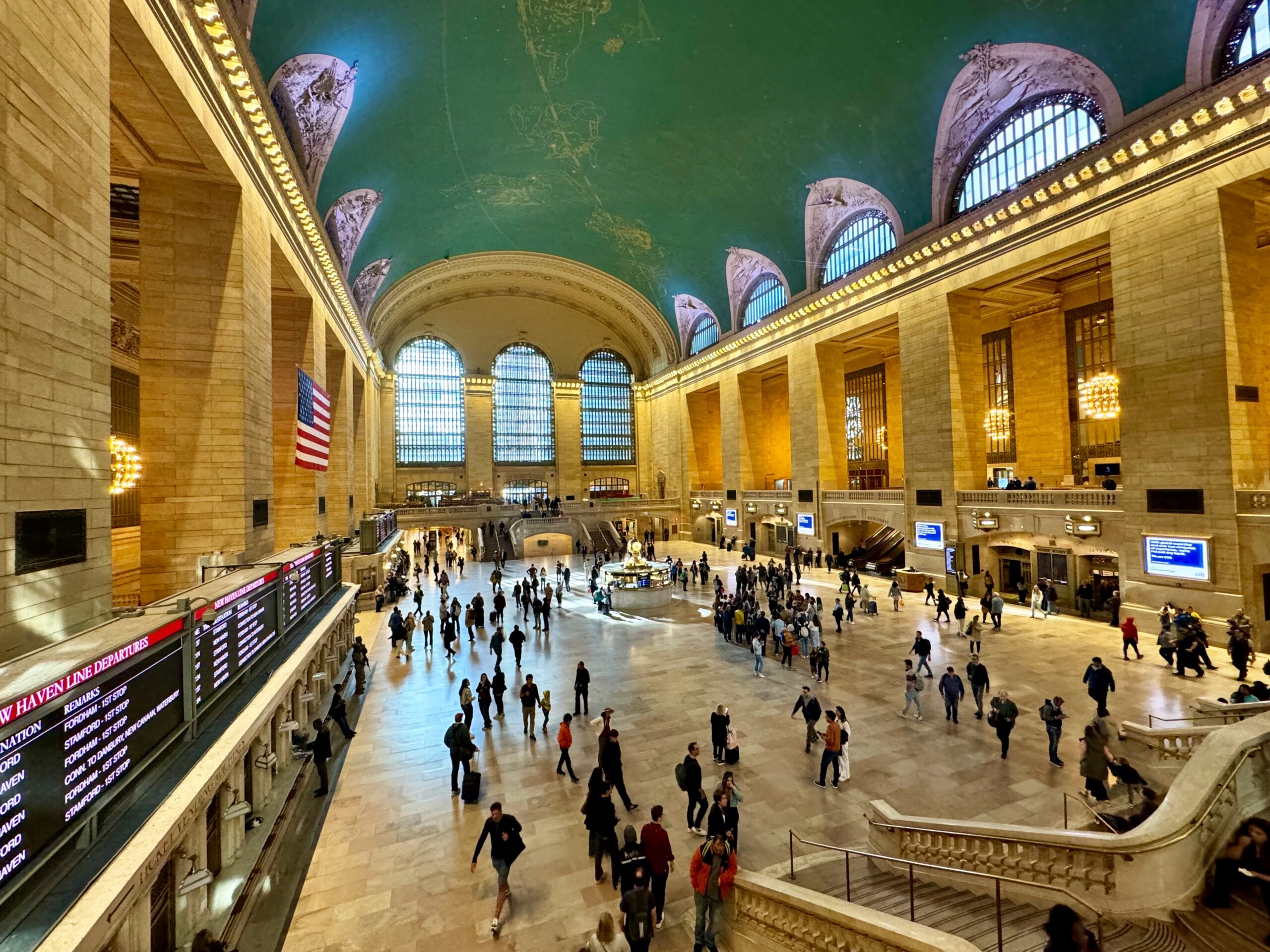
Grand Central Terminal contains a variety of stores and food vendors, including restaurants and bars, a food hall, and a grocery marketplace. The building is also noted for its library, event hall, tennis club, control centre and offices for the railroad, and sub-basement power station.
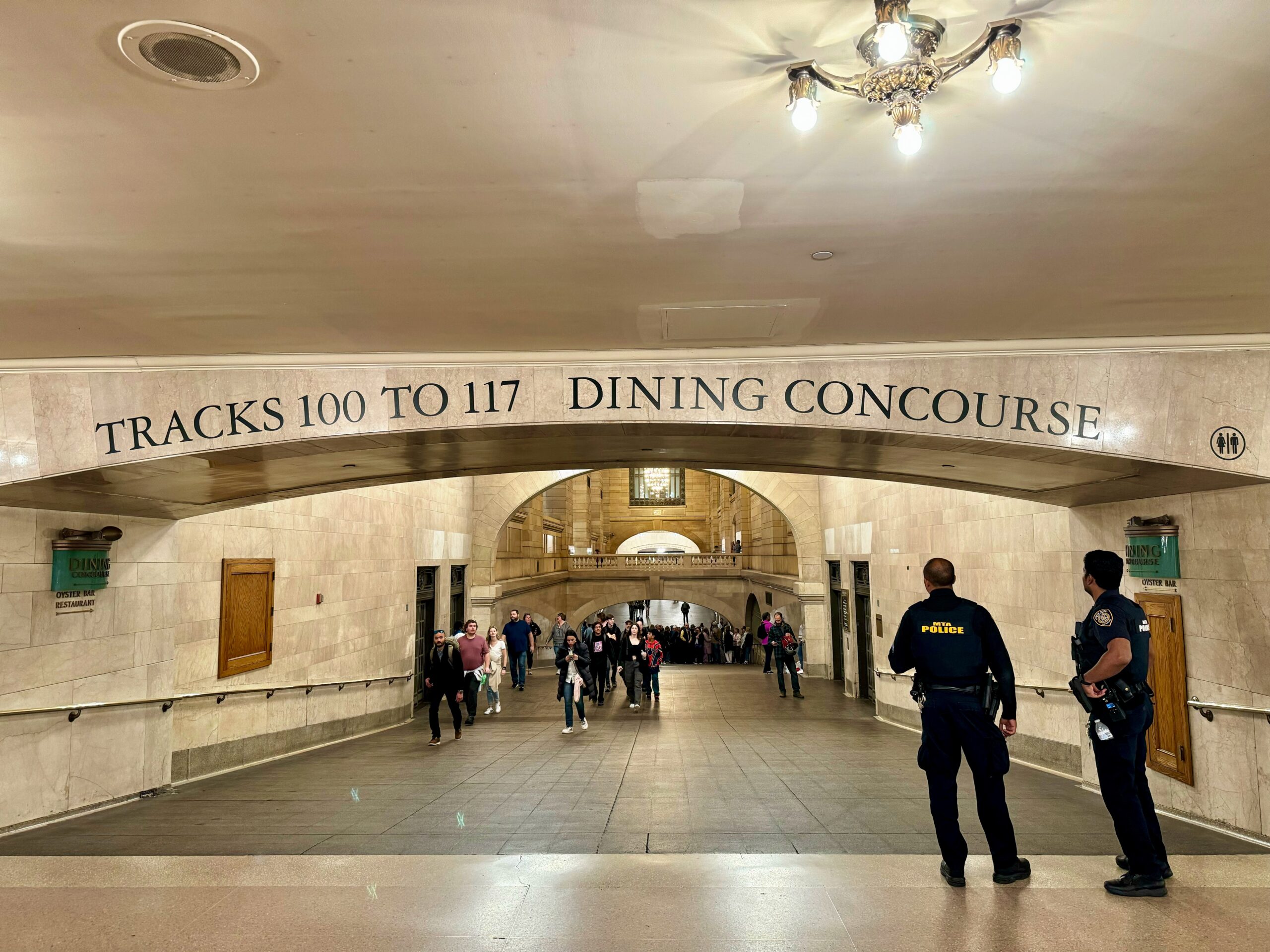
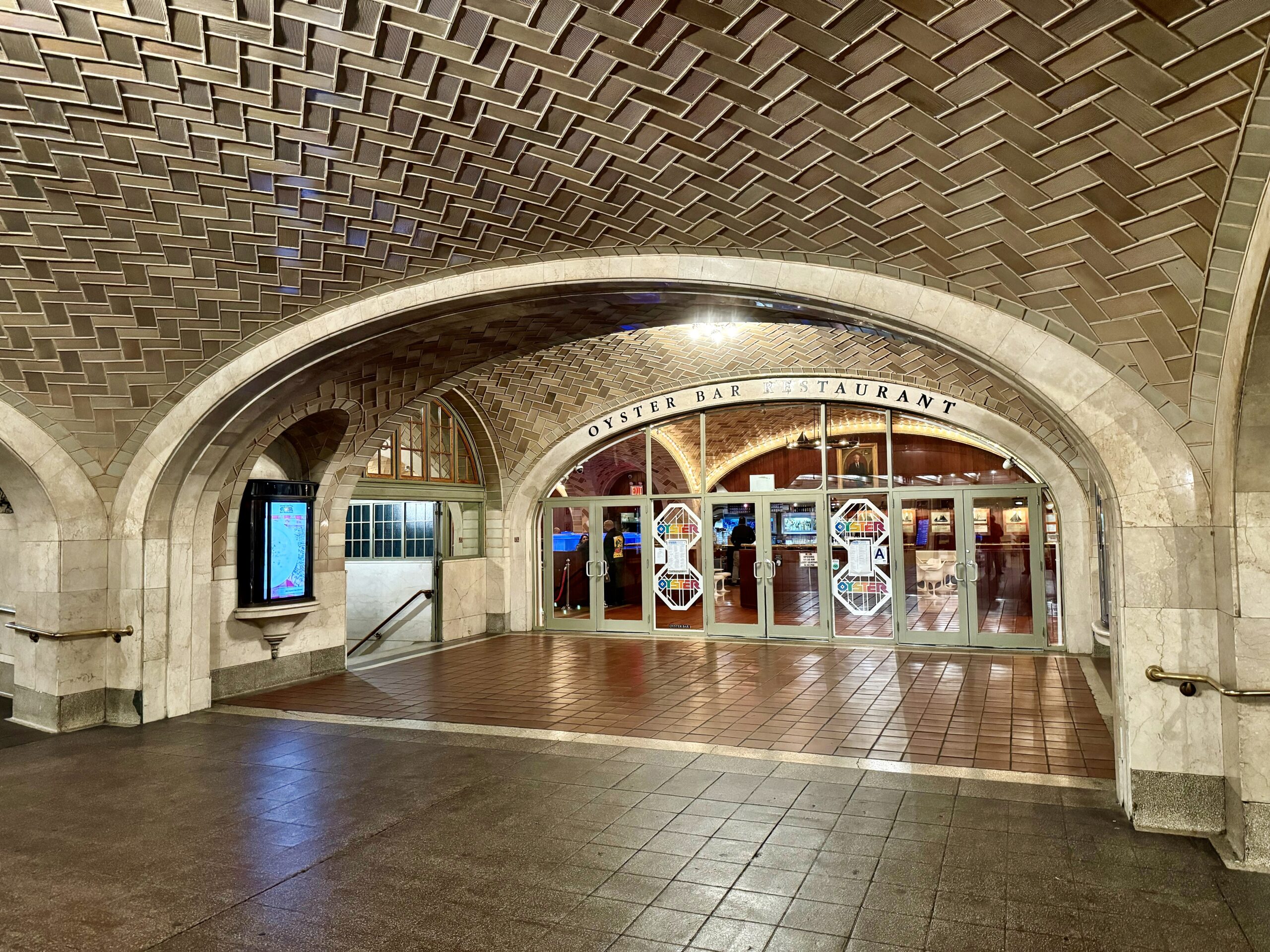
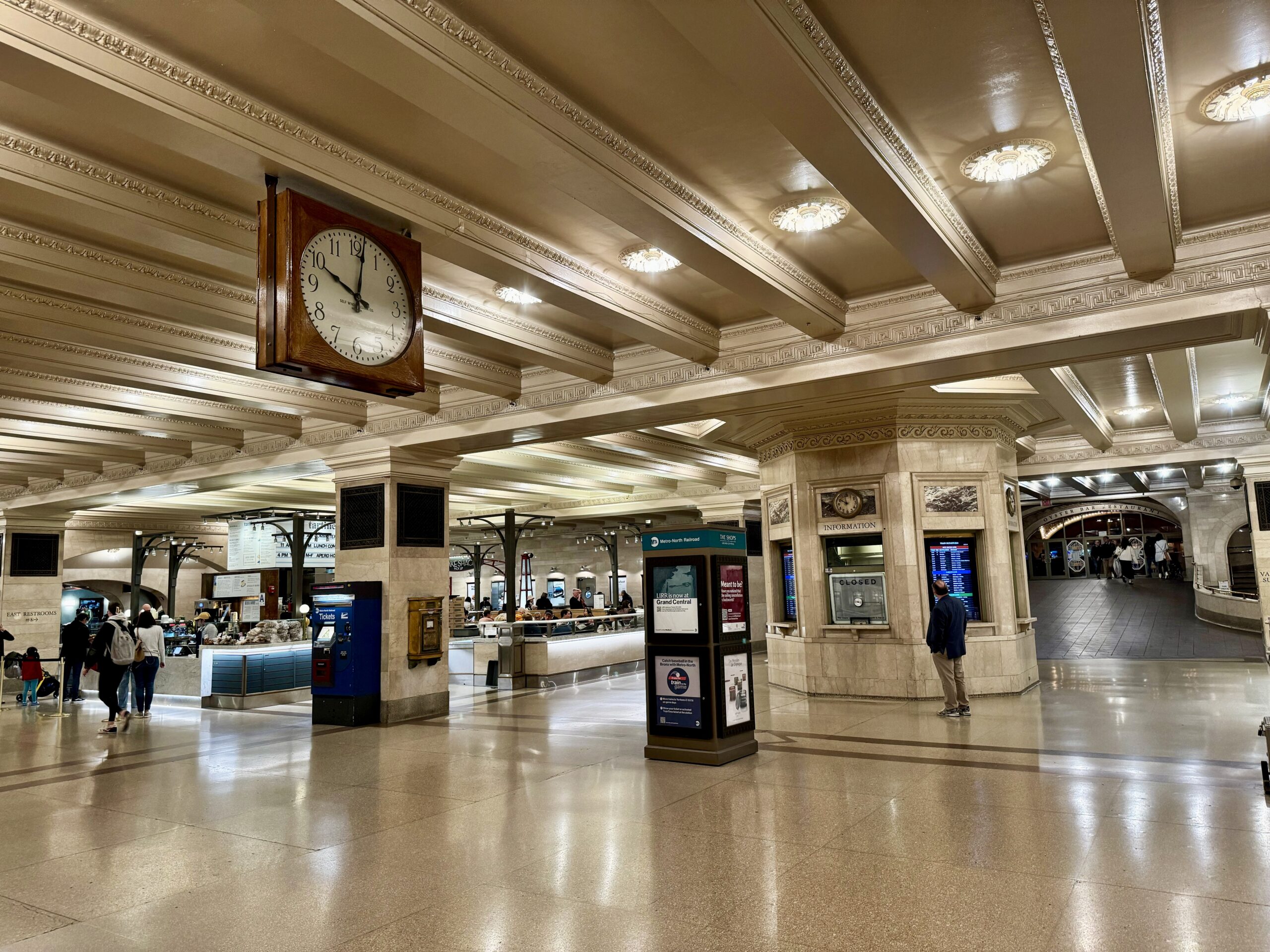
Ramps include the Vanderbilt Avenue ramp and the Oyster Bar ramps. The Oyster Bar ramps lead down from the Main Concourse to the Oyster Bar and Dining Concourse.
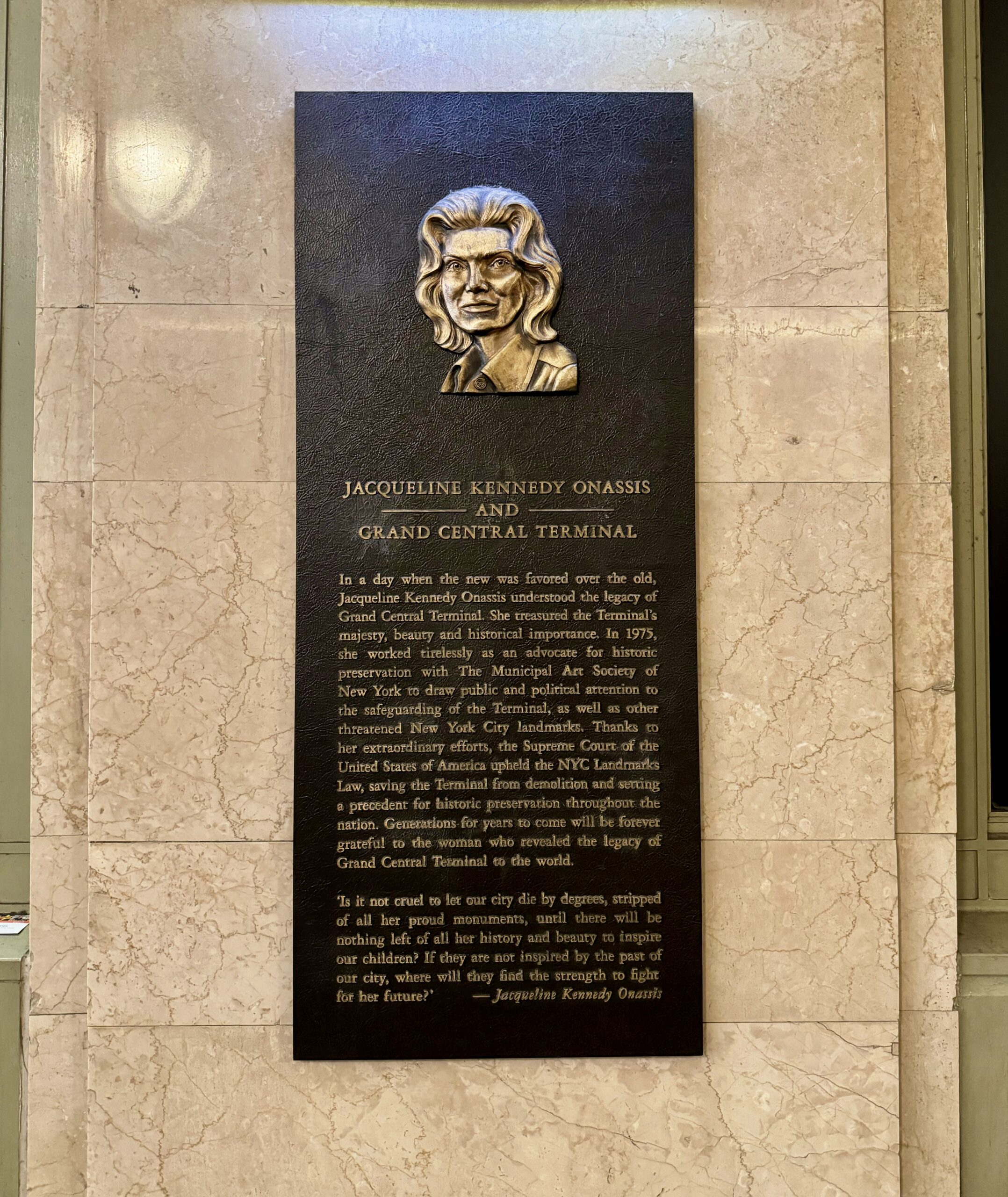
The main entrance into the terminal, underneath the Park Avenue Viaduct, opens into the Jacqueline Kennedy Onassis Foyer, so named in 2014 in honour of the former First Lady of the United States, who in the 1970’s helped prevent the demolition of the Main Concourse and the plan to build Grand Central Tower.
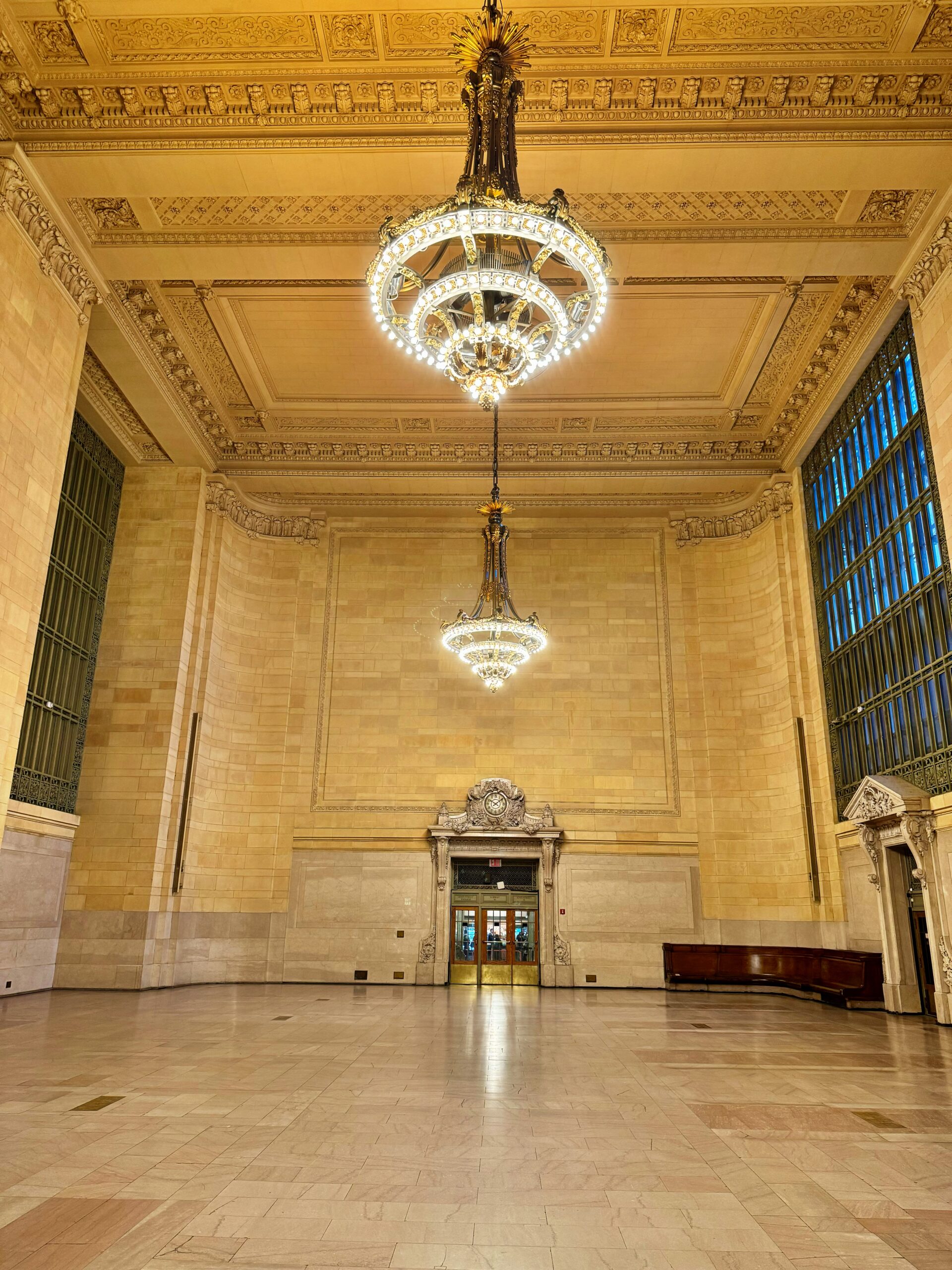
Vanderbilt Hall is an event space on the south side of the terminal, between the main entrance and the Main Concourse to its north. The north and south walls are divided into five bays, each with large rectangular windows, screened with heavy bronze grills. The room is lit by Beaux-Arts chandeliers, each with 132 bulbs on four tiers. Vanderbilt Hall was formerly the main waiting room for the terminal, used particularly by intercity travellers.
After exploring this wonderful building we headed back out into the streets and walked back to the NY Library to find the original Winnie The Pooh and friends who had been donated in 1987 having been brought to the United States by A.A Milne’s (1882-1956) US publisher; Elliott Macrae (1901-1968) former President of E.P. Dutton in 1947.
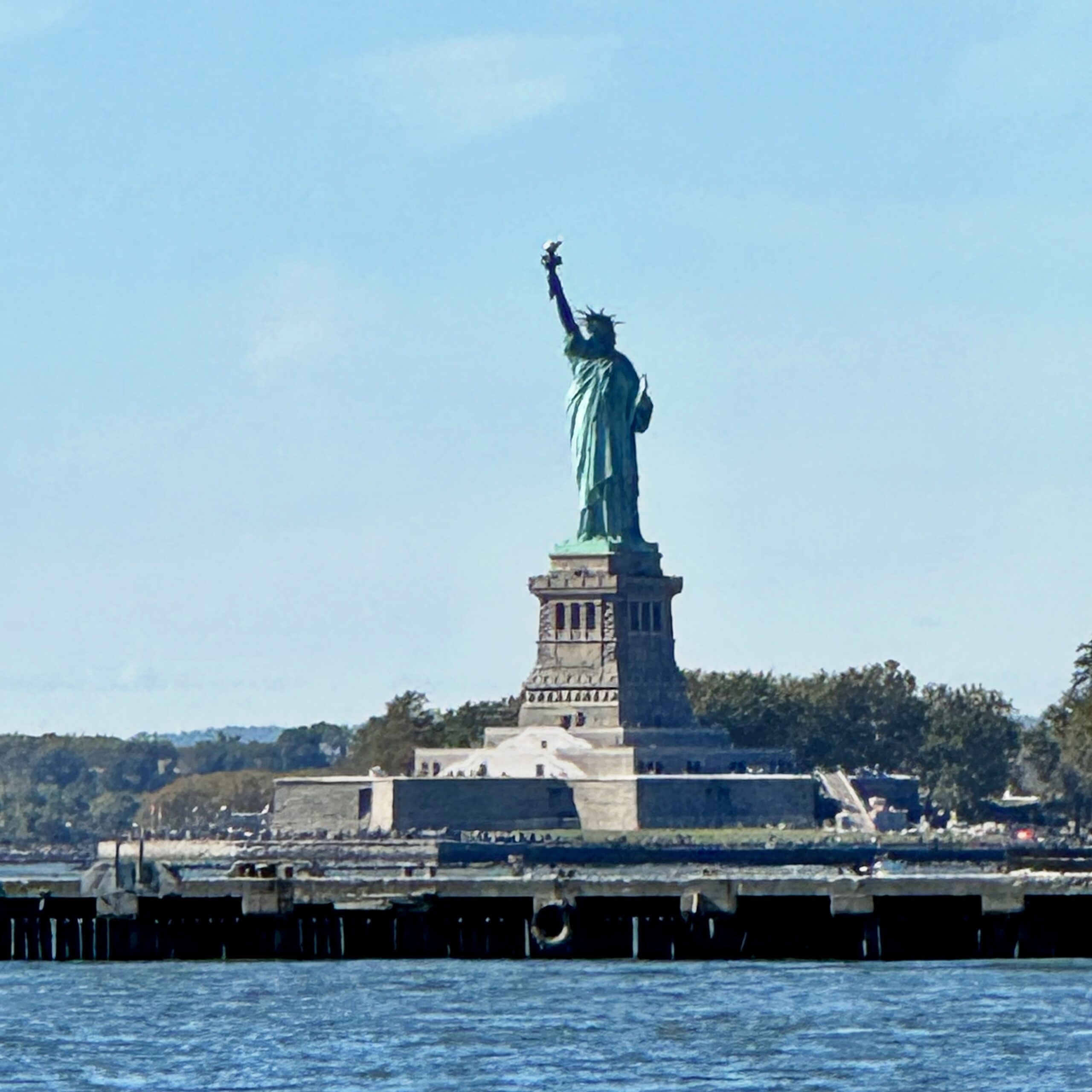
From the Archive:
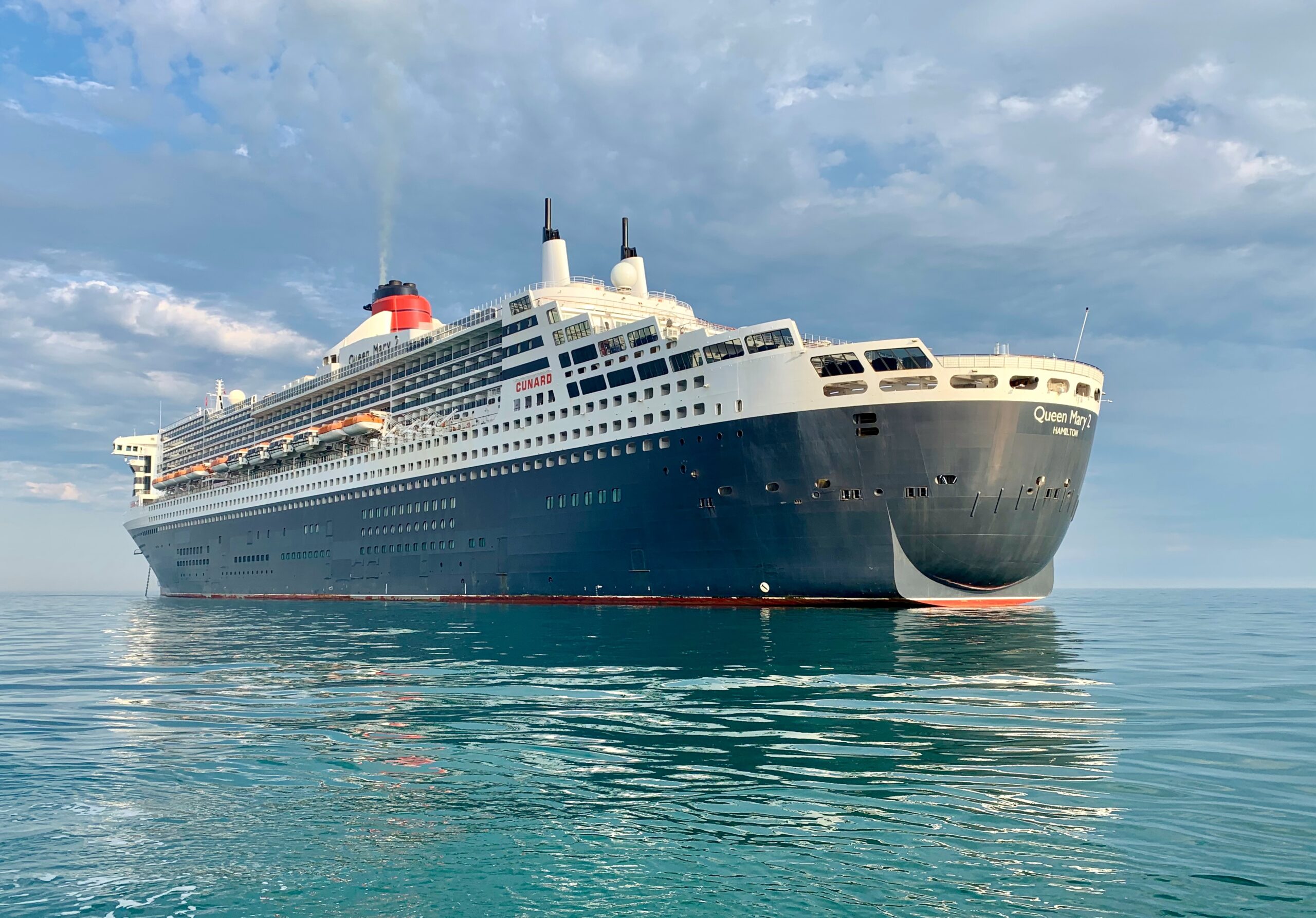
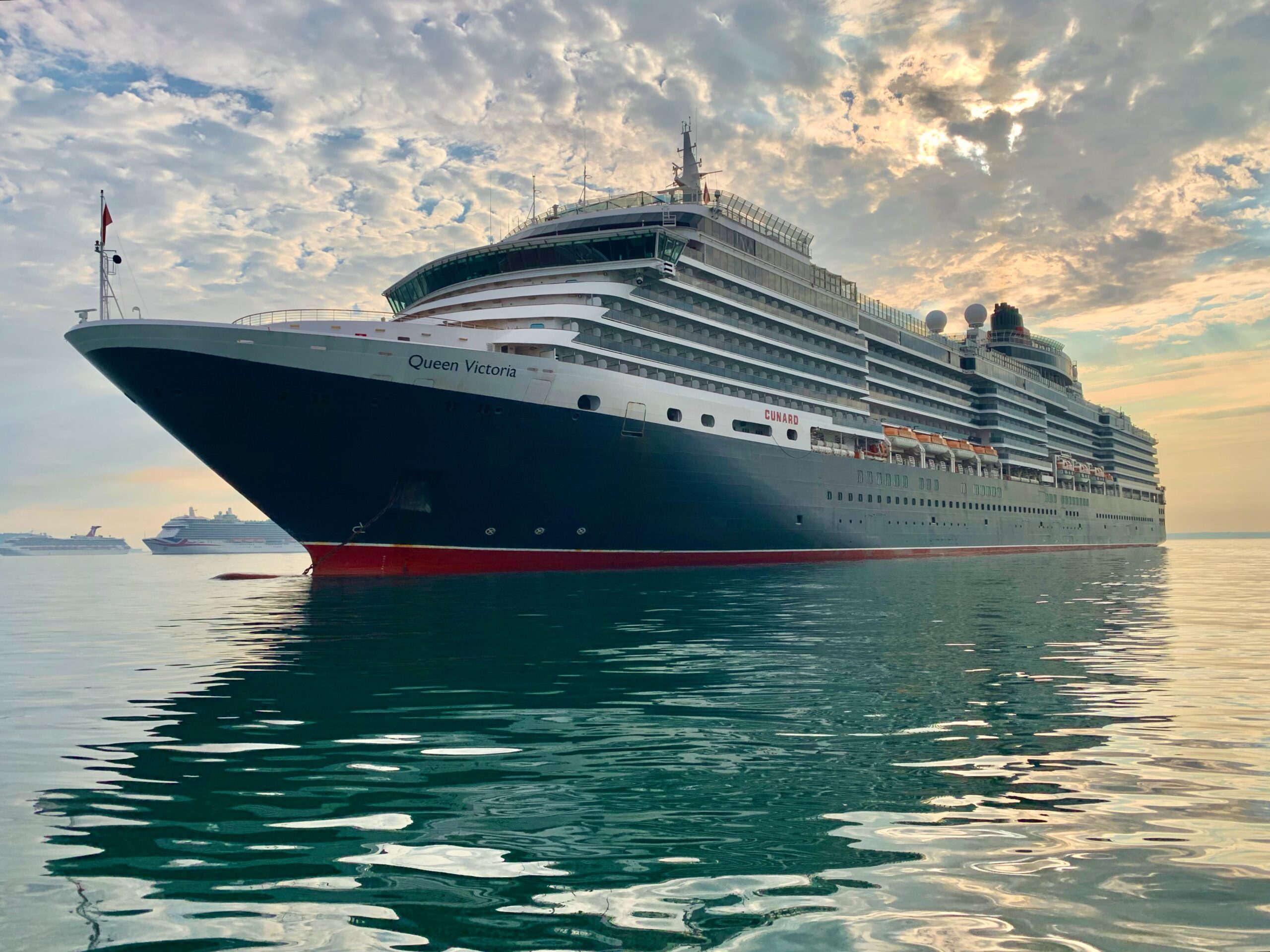
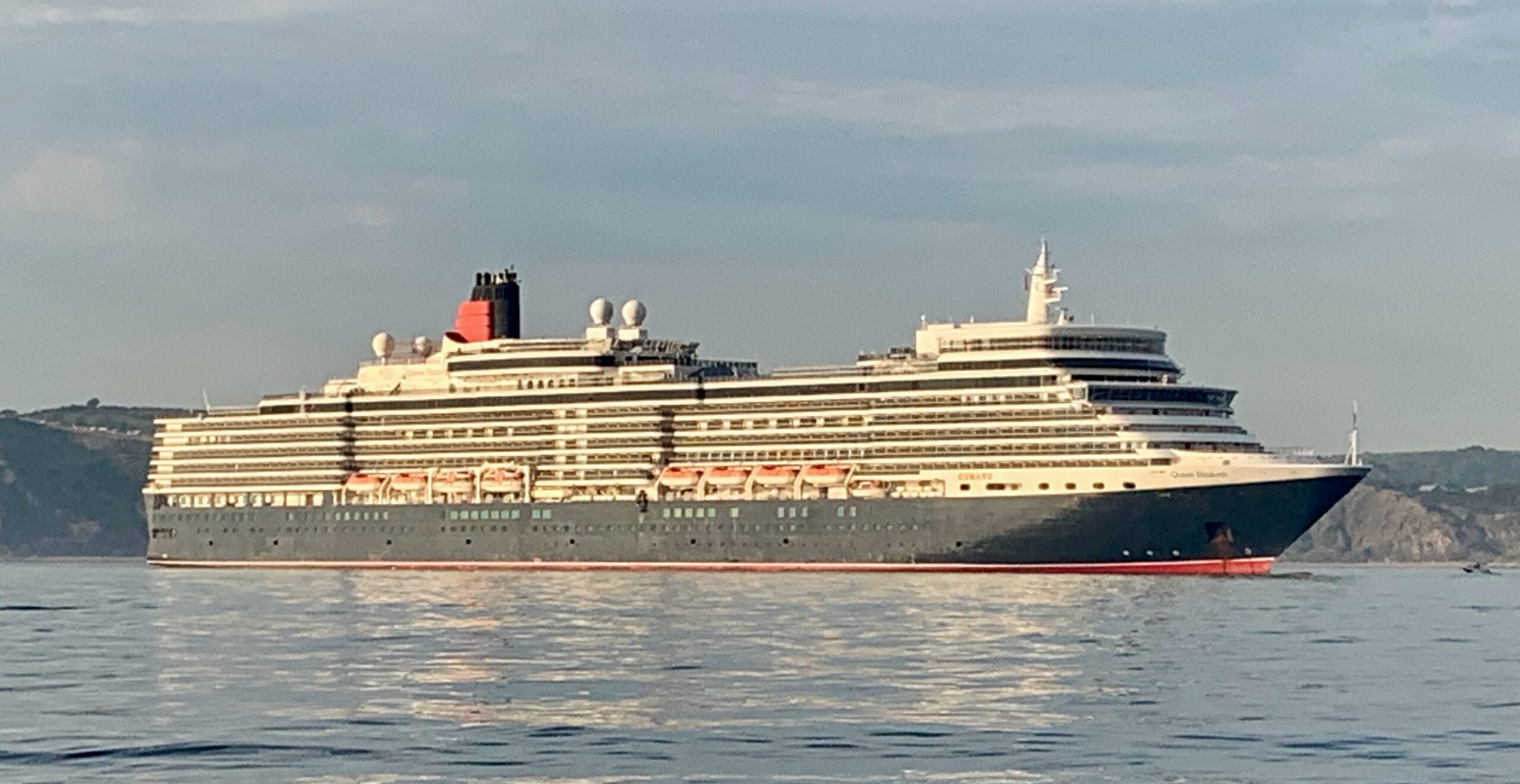
A few images from 2020, that strange time when we all spent months staying indoors only going outside for an hours exercise a day. During the Covid pandemic, cruise ships were forced out of work and laid up at anchor in various harbours and ports around the UK, Weymouth being no exception.
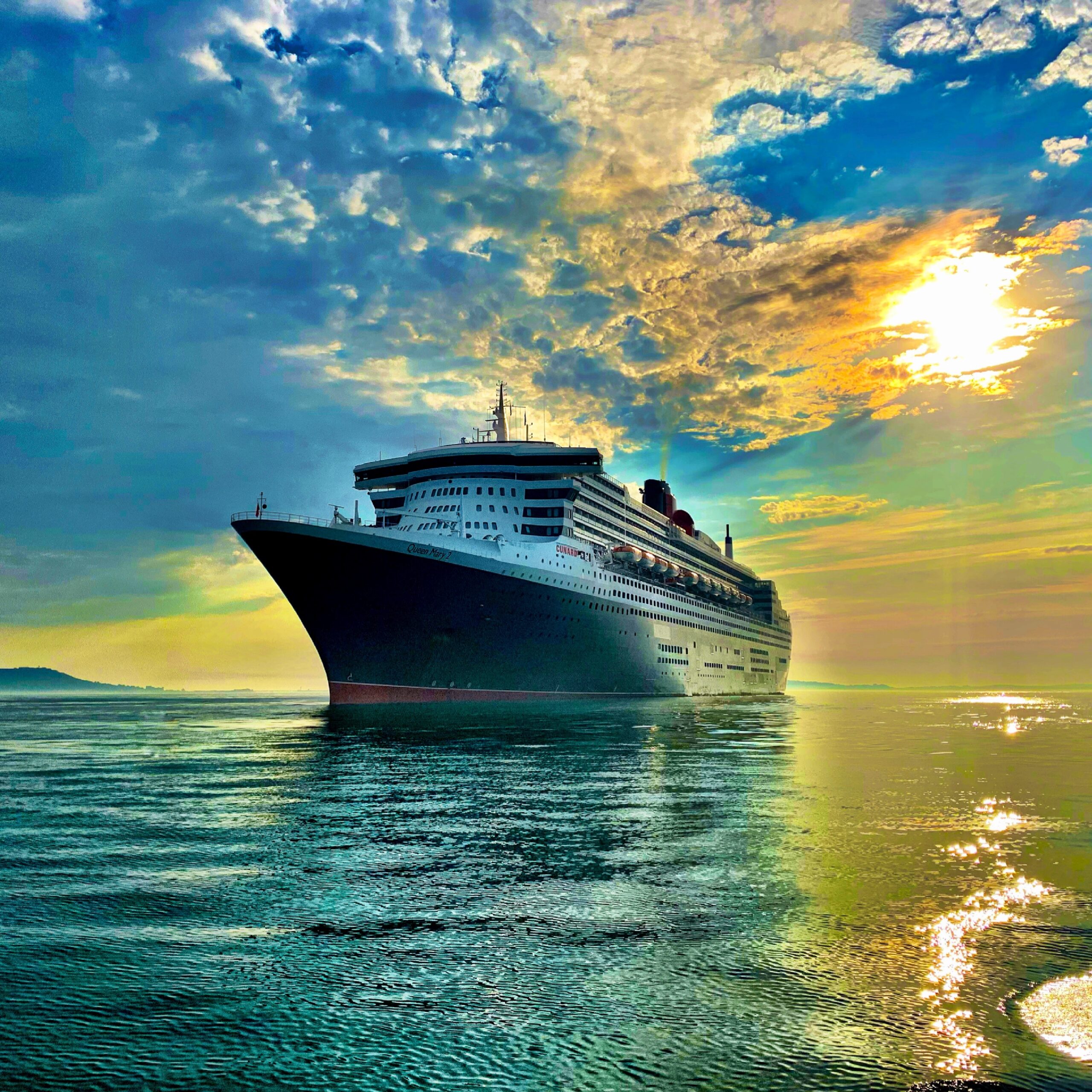
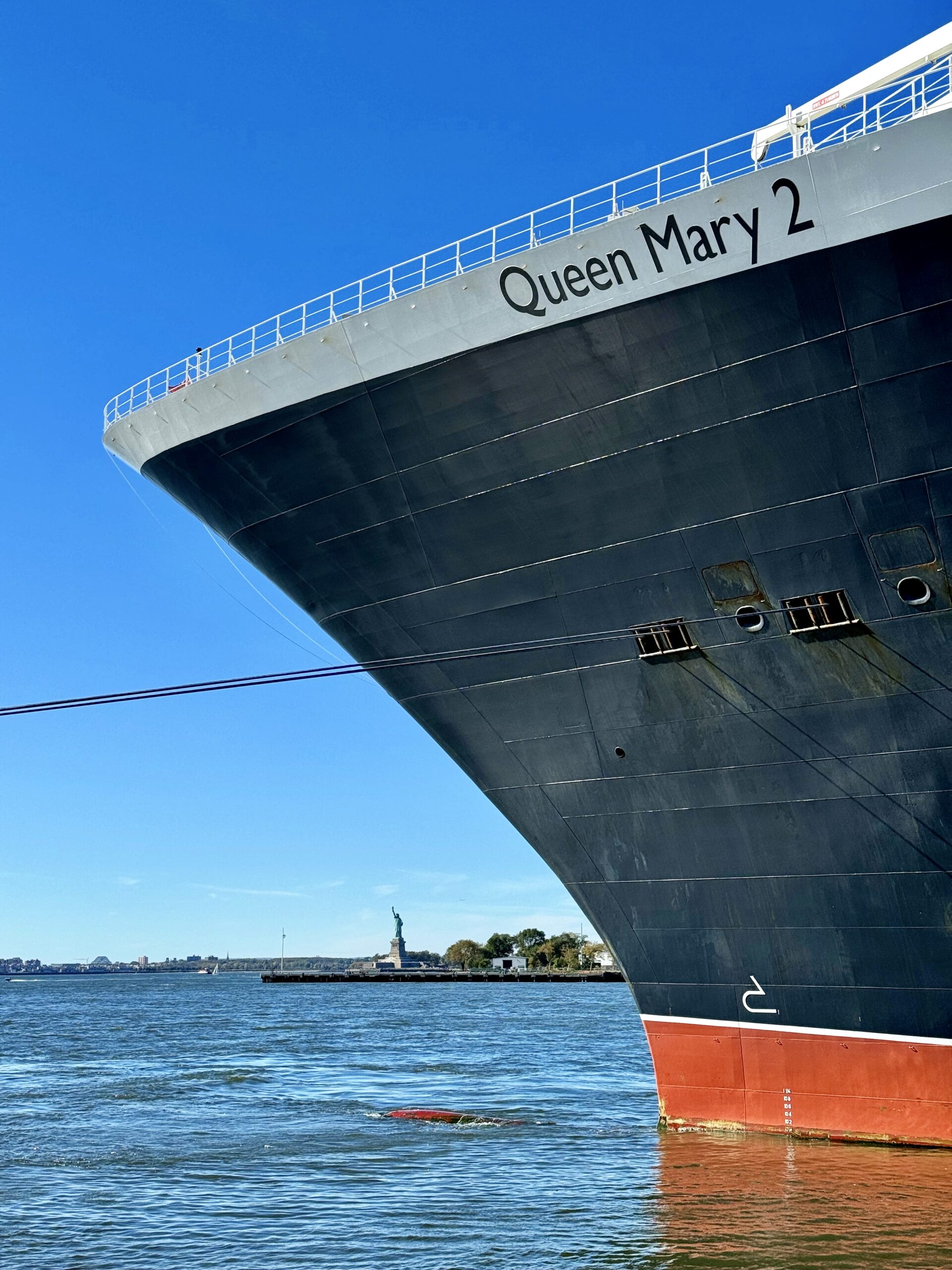
RMS Queen Mary 2 introduced in 2003 was, at that time; the largest, longest, widest, tallest grandest and most expensive ocean liner ever built. She replaced the beloved QE2 on the transatlantic run and as flagship of the Cunard line. Queen Mary 2 has a maximum speed of just over 30 knots and a cruising speed of 26 knots which is faster than a contemporary cruise ship. She had the Royal Mail Ship (RMS) prefix conferred on her by the Royal Mail when she entered service in 2004, as a gesture to Cunard’s history. Onboard facilities include fifteen restaurants and bars, five swimming pools, a casino, a ballroom, a theatre, and the first planetarium at sea. Queen Mary 2 is powered primarily by four diesel engines supplemented by two gas turbines which provide extra power as and when required.
QM2 employs a quadruple podded propeller propulsion system which like giant outboard motors hang under the ship replacing the need for traditional propeller shafts. The forward pair of thrusters is fixed, but the aft pair can swivel through 360°, removing the need for a rudder. Queen Mary 2 carries eight spare blades on her foredeck. The ship is also fitted with three bow thrusters which allow the ship to turn in its own length while in port, to conduct more complex docking manoeuvres. The pods fitted to Queen Mary 2 have been prone to failure despite redesigns. In January 2009, Cunard sued the manufacturers Rolls-Royce in the United States claiming the design of the pods were inherently defective, and that Rolls-Royce knew about the design deficiencies and deliberately conspired to mislead, deceive and defraud in the course of winning the contract. In January 2011, the court awarded Carnival US$24 million.
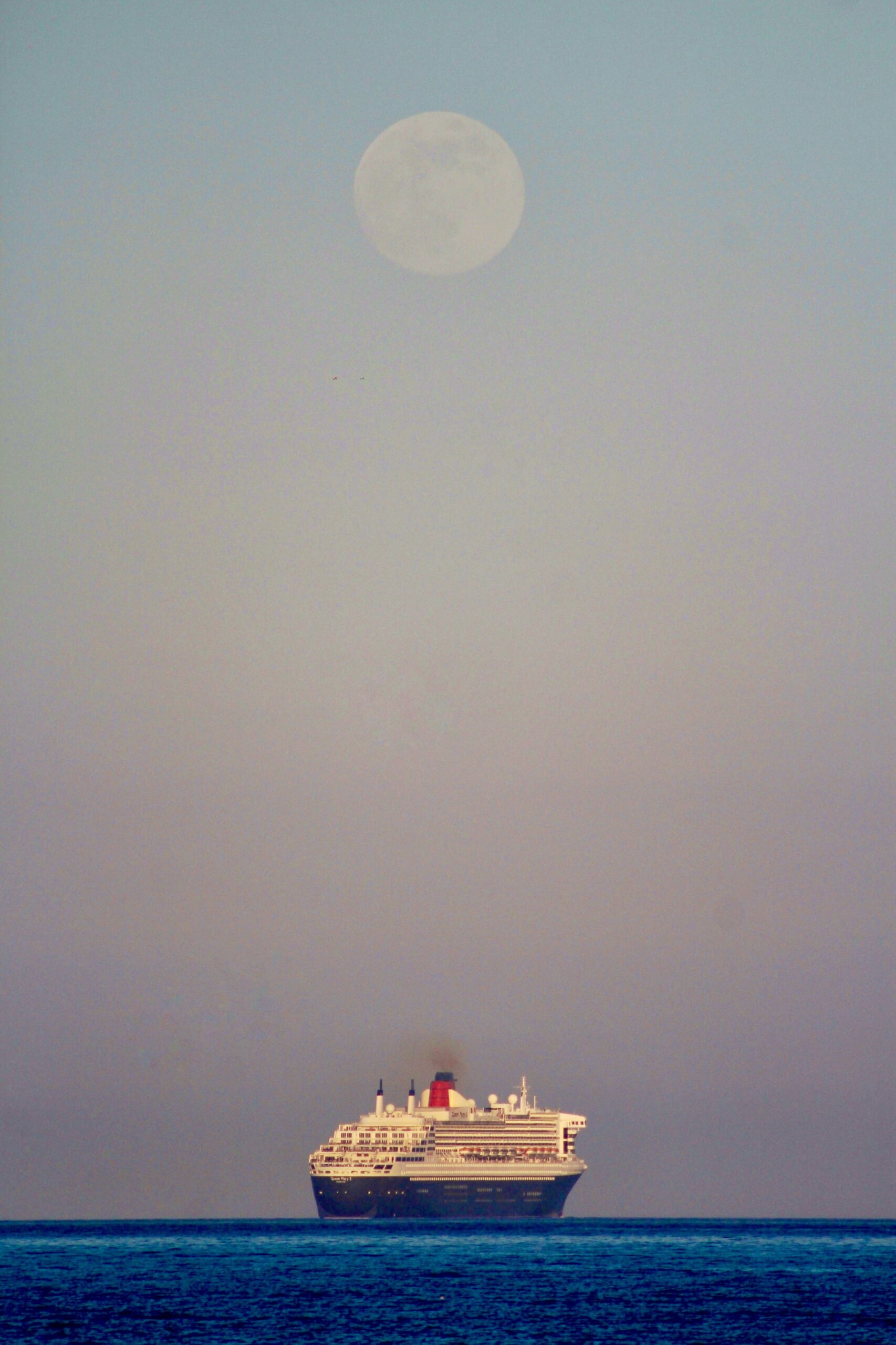
When Covid-19 started to spread across the globe in 2020, Queen Mary 2 was enjoying a world cruise. In early February, Cunard cancelled the Asian leg of the voyage, with the remainder of the journey being cancelled on 15th March. Passengers were disembarked in Fremantle, Western Australia, with the ship returning to Southampton in April.
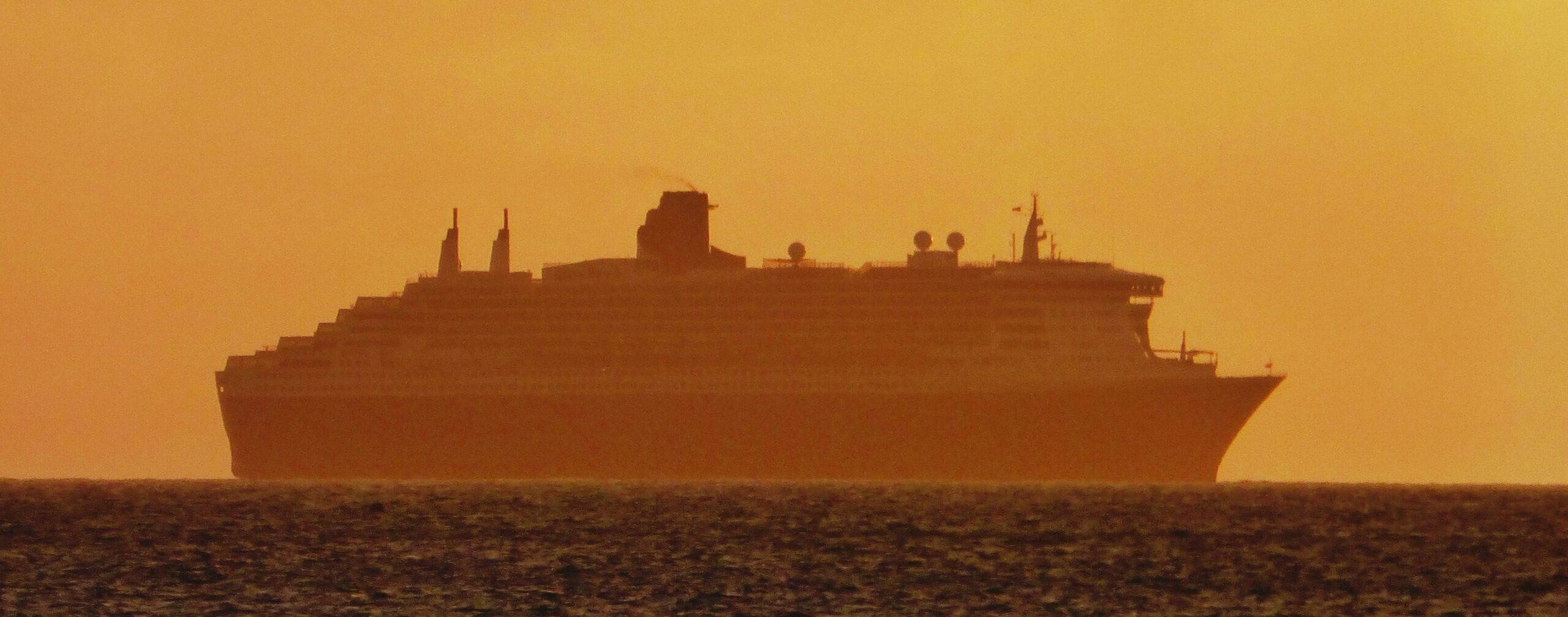
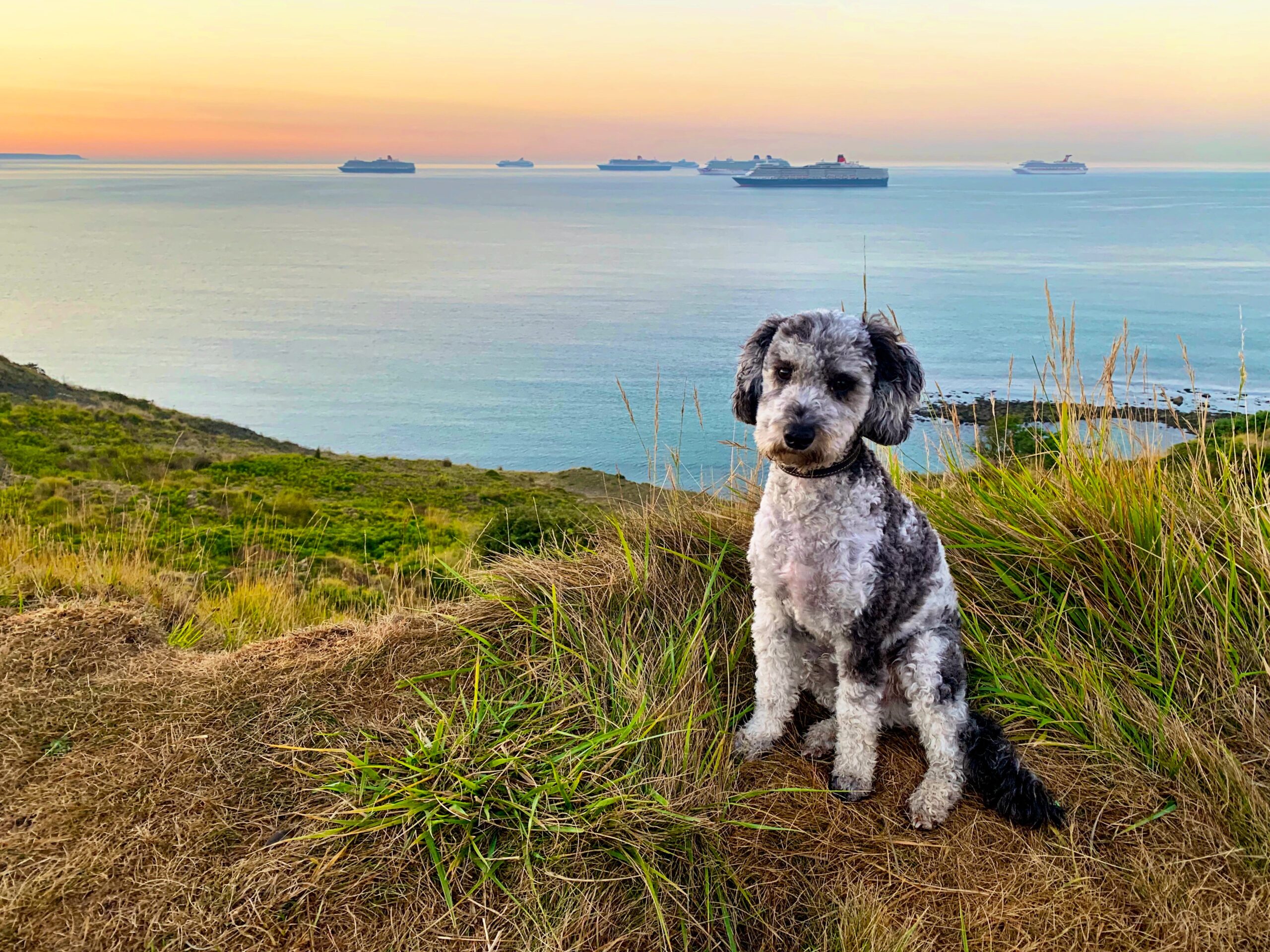

A bit of a mixed bag on this occasion, but that’s all we have time for! Thanks for reading and hopefully we’ll be back with another instalment soon. Until then, take care. Be seeing You!

References used for the Grand Central Terminal section:
Charles River Editors Grand Central Station: The History of New York City’s Famous Railroad Terminal, (CreateSpace Independent Publishing Platform 2015)
Metro-North Railroad (2023) Grand Central Retrieved from https://www.grandcentralterminal.com
Wikipedia (October 24, 2023) Grand Central Terminal Rettrieved from https://en.wikipedia.org/wiki/Grand_Central_Terminal


Leave a Reply