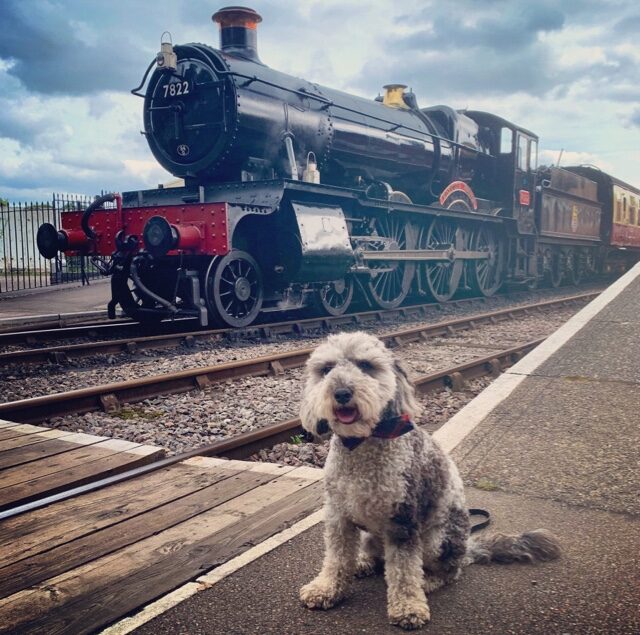
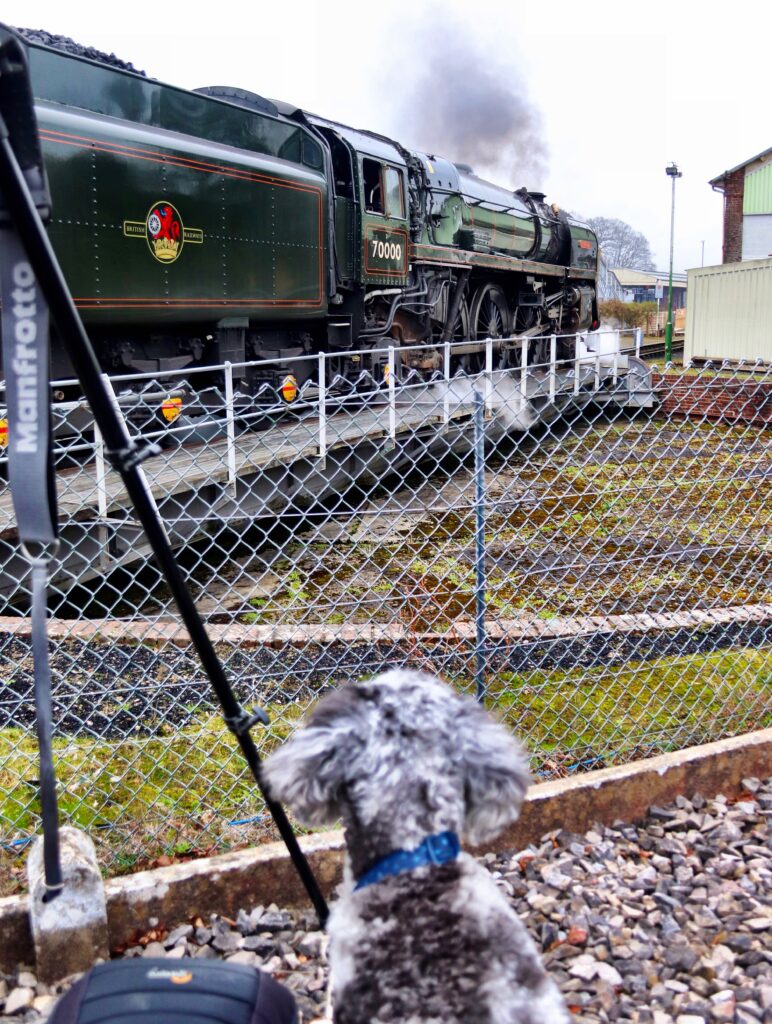
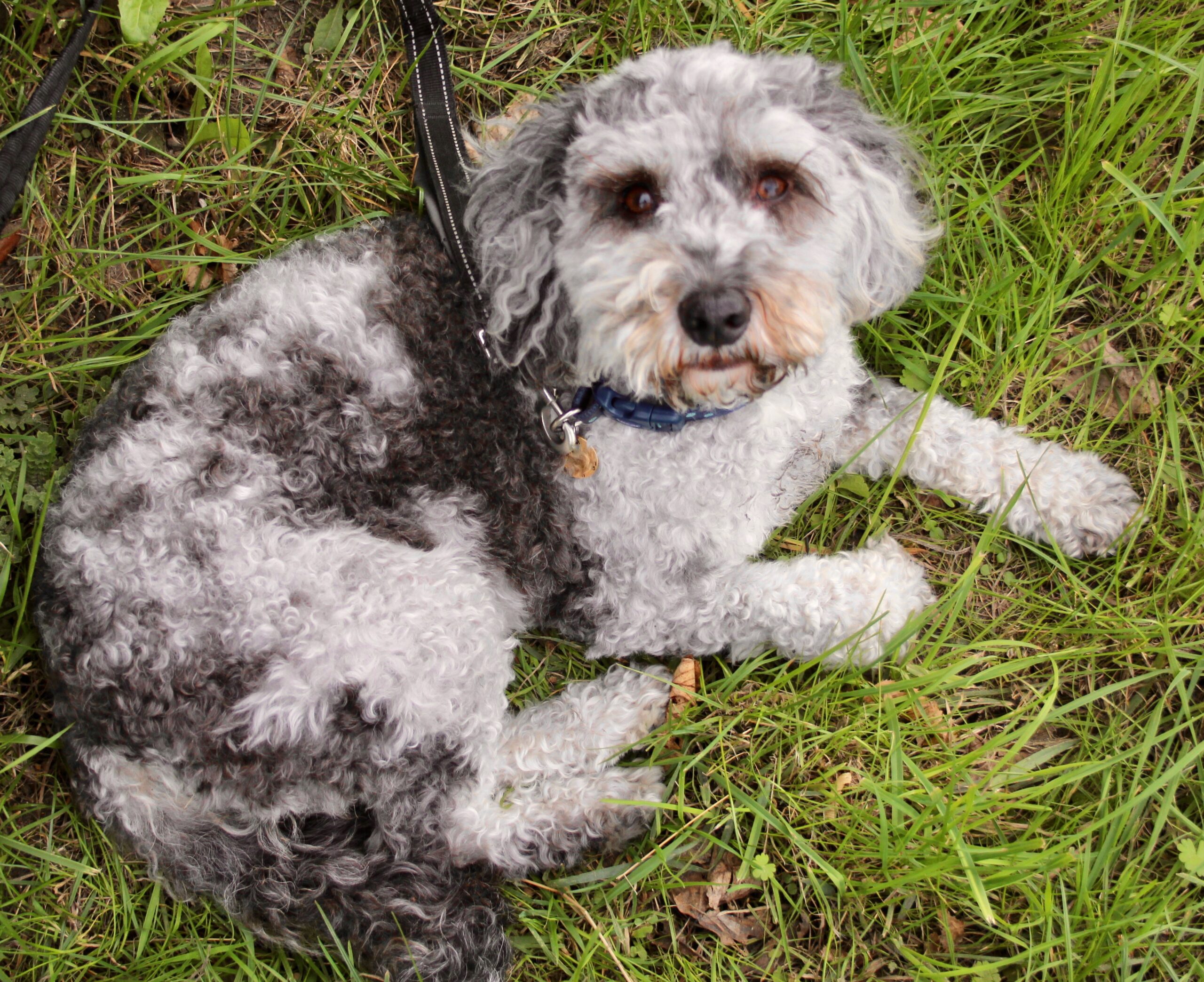
Yoshi in the back of the car having enjoyed a wet and muddy walk in the woods!
February 10th 2024 to February 21st 2024
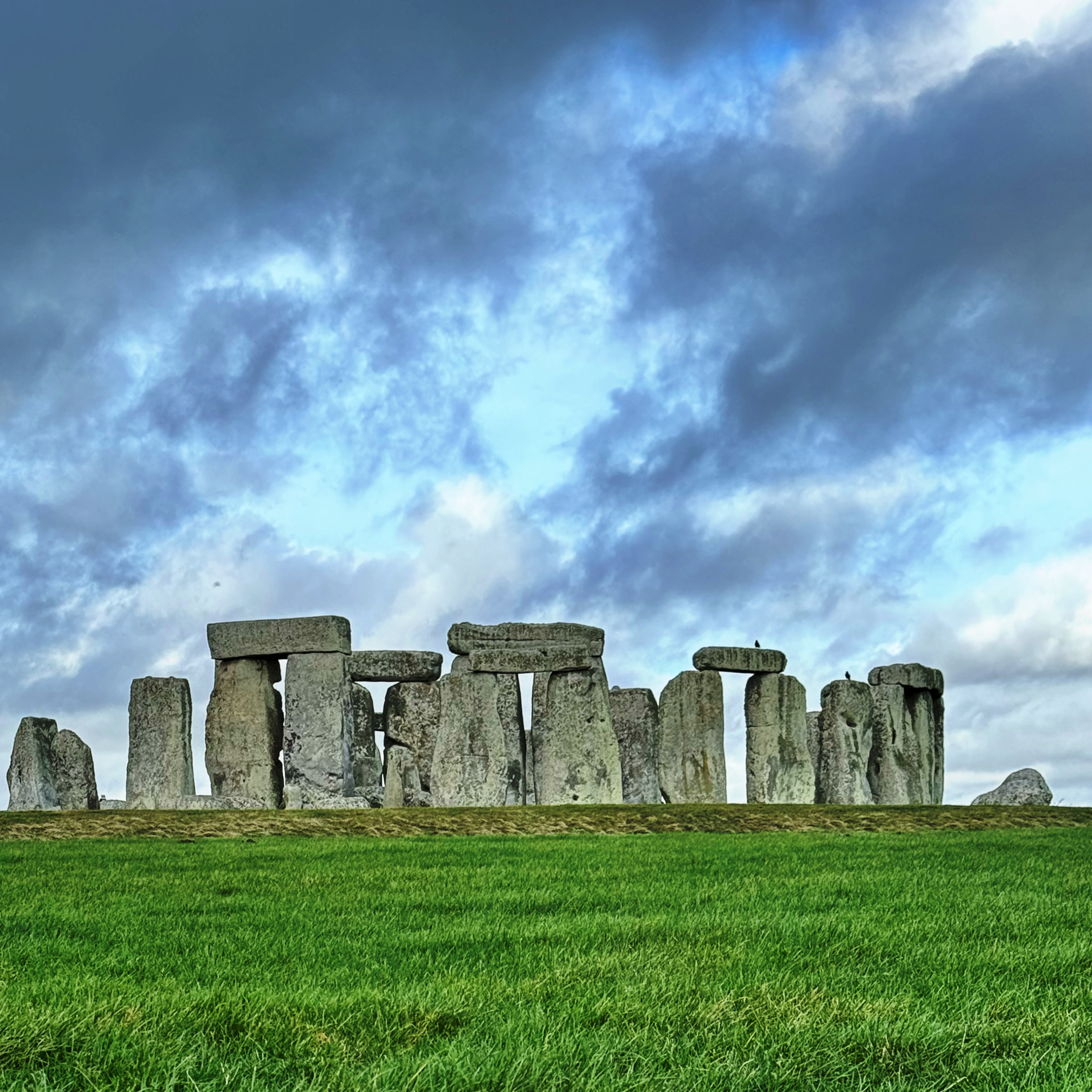
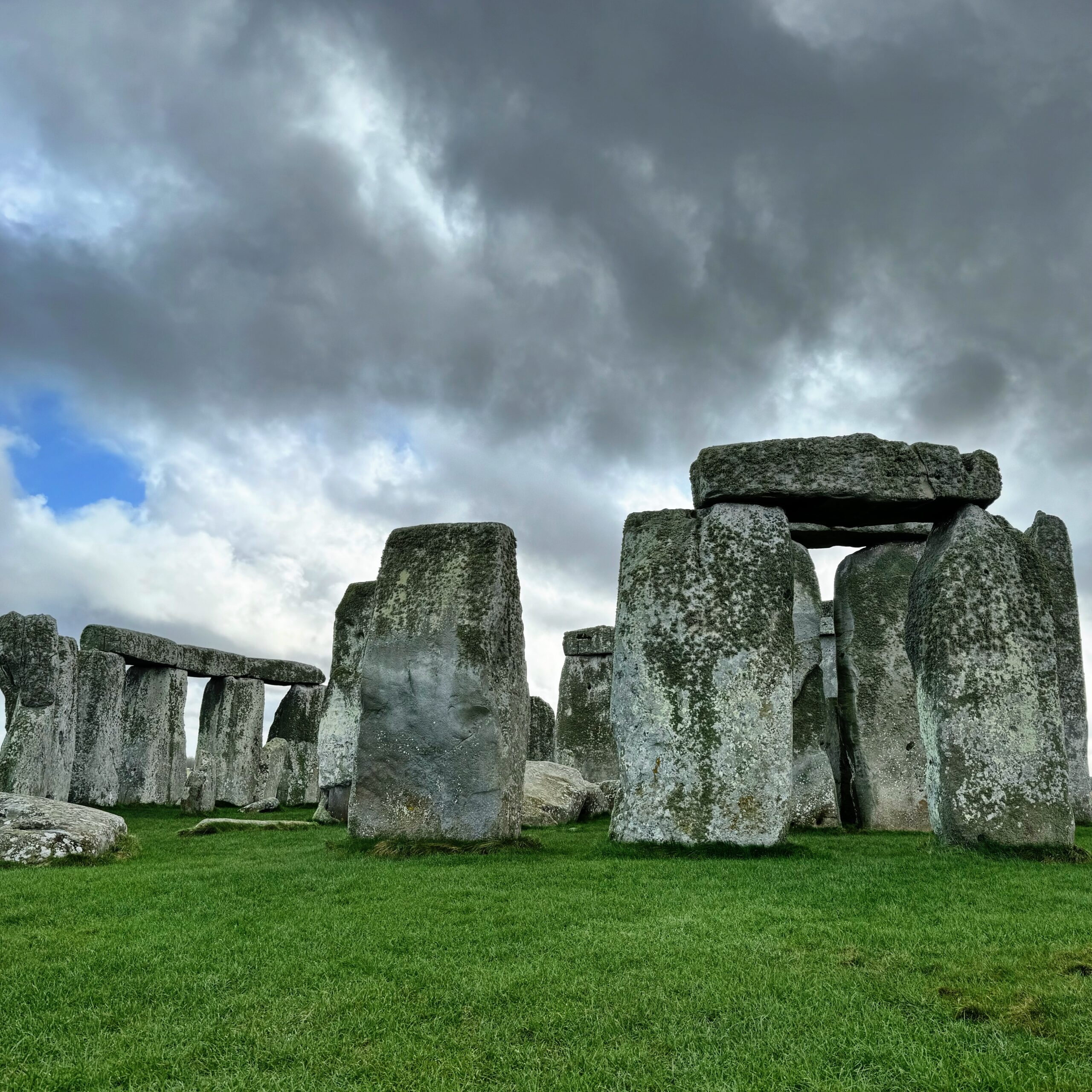
Hello – as mentioned briefly last time around, we were planning on bringing you an archive feature on Bournemouth Depot Open days, but we need to find and scan some additional negatives as well as editing down and converting 8mm video tape, so that’ll take a little bit more time to prepare. That’ll teach us, and to be fair this blog entry has taken long enough! In the meantime, a rolling stone gathers no moss and Yoshi has been exploring Stonehenge (or at least the footpath outside the English Heritage site, as dogs are “NOT ALLOWED” near the ancient monument). A note to English Heritage – can you provide dog poo bins prior to the section where dogs cannot pass please? Thanks very much. And as if Yoshi couldn’t get enough of old rocks, he also took a walk around the stone circle at Avebury – no trains, but lots of mystical ley lines – before moving onto Wells and Tyntesfield House.
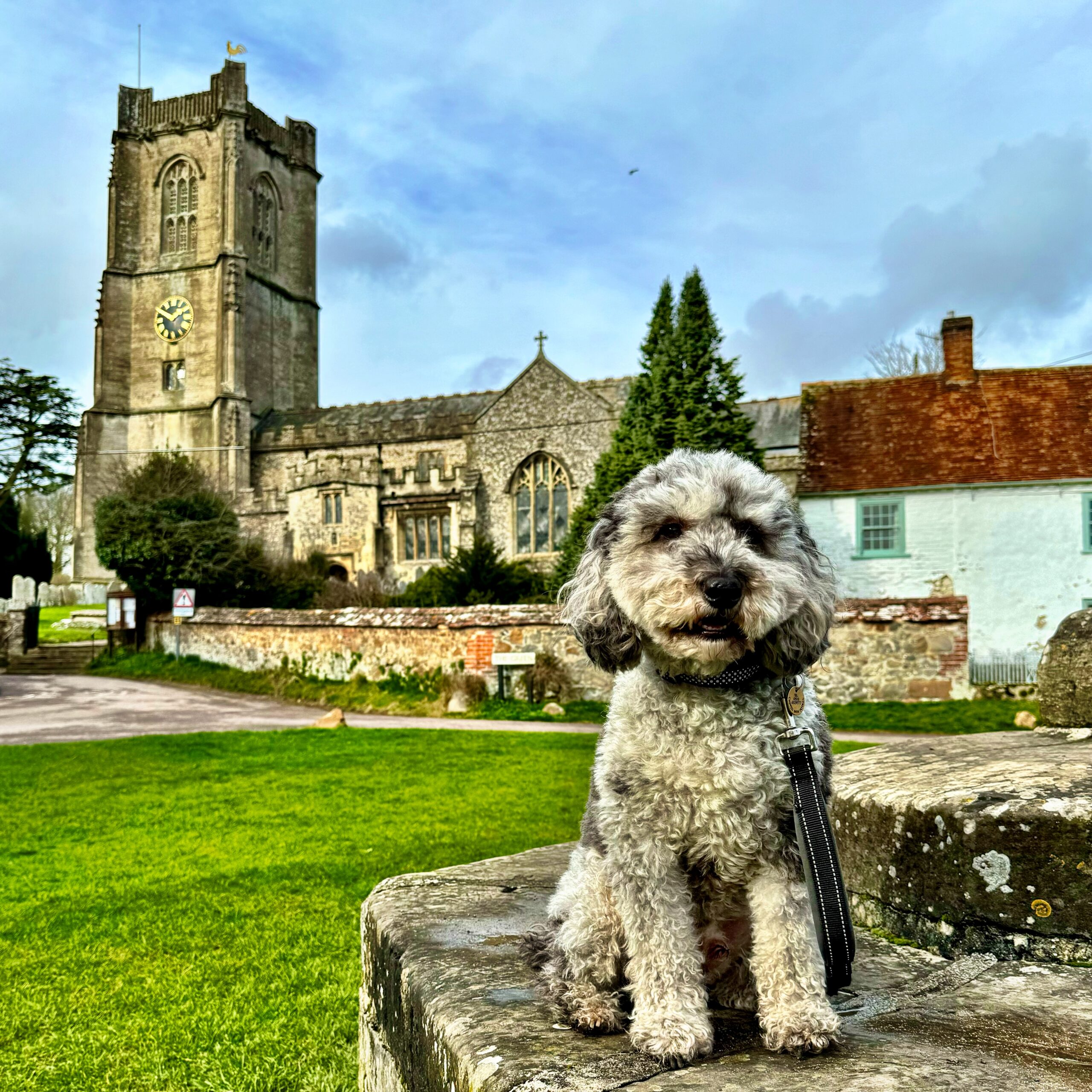
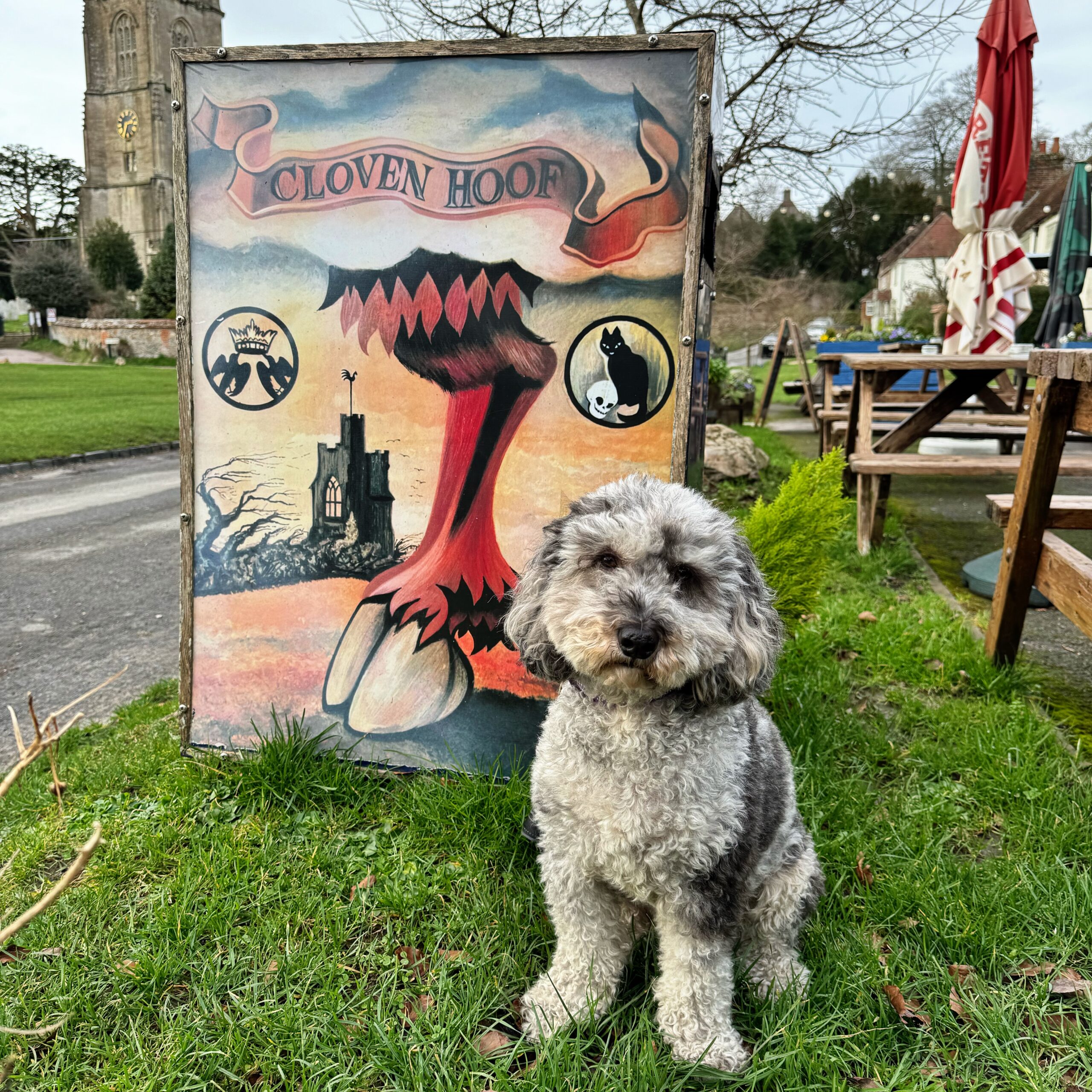
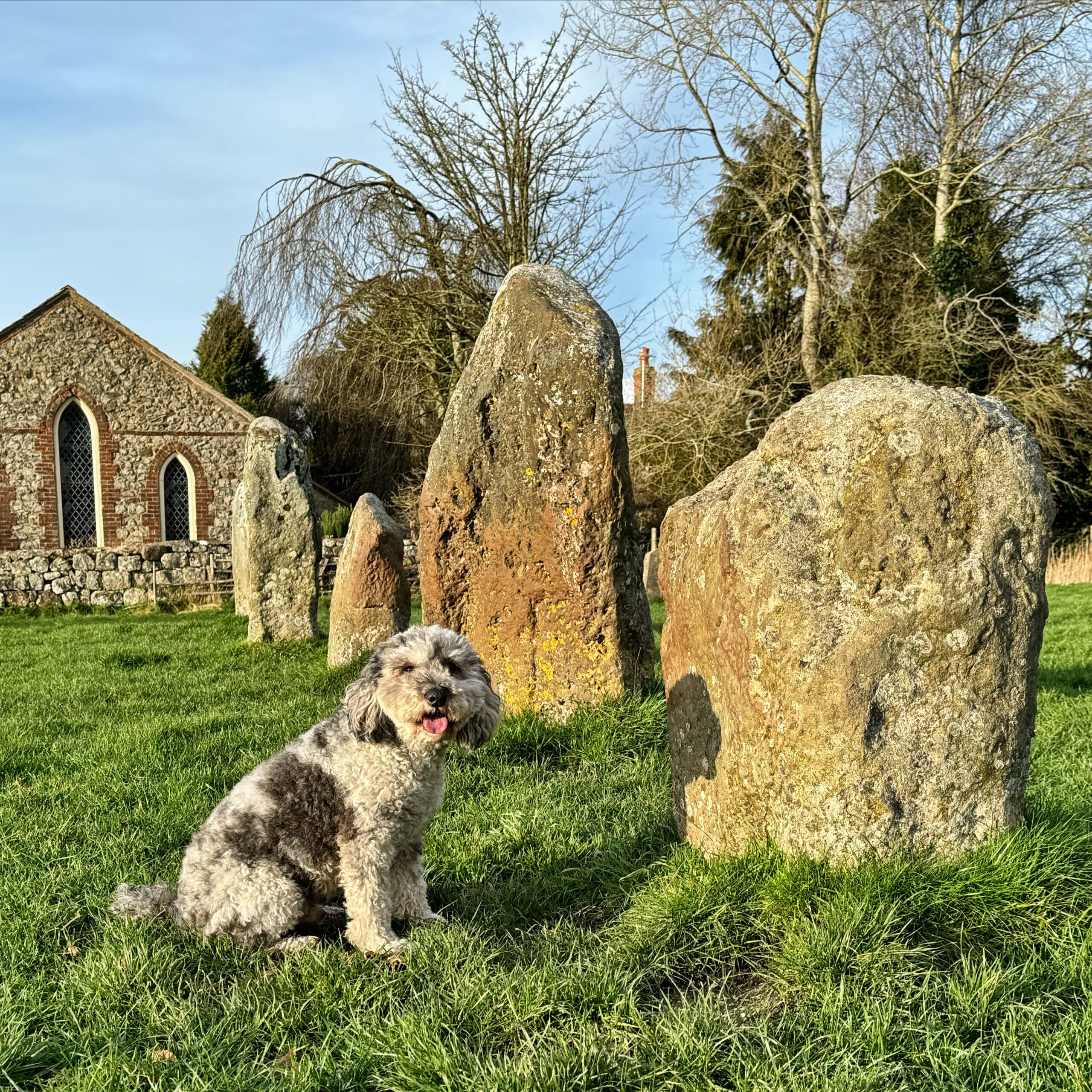
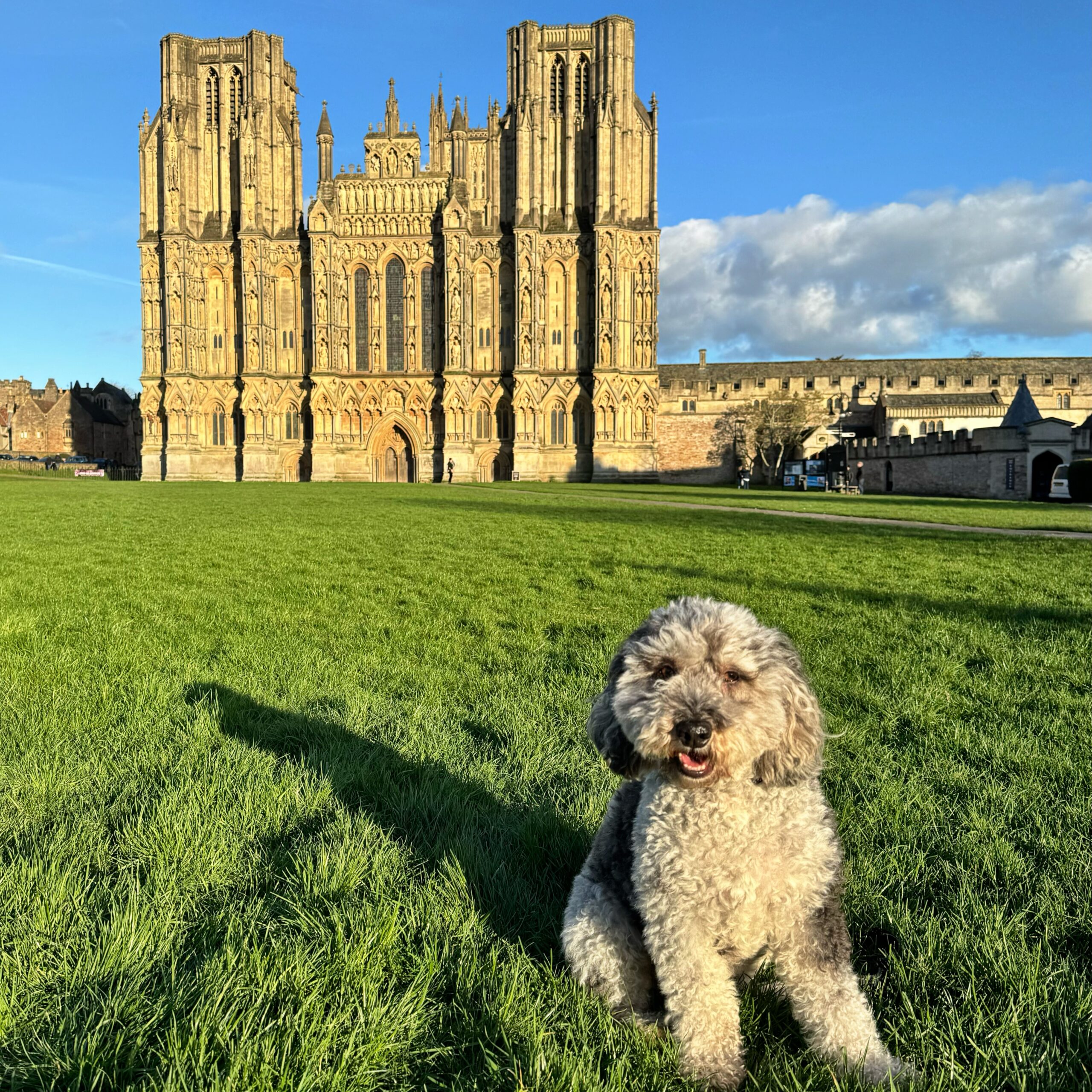
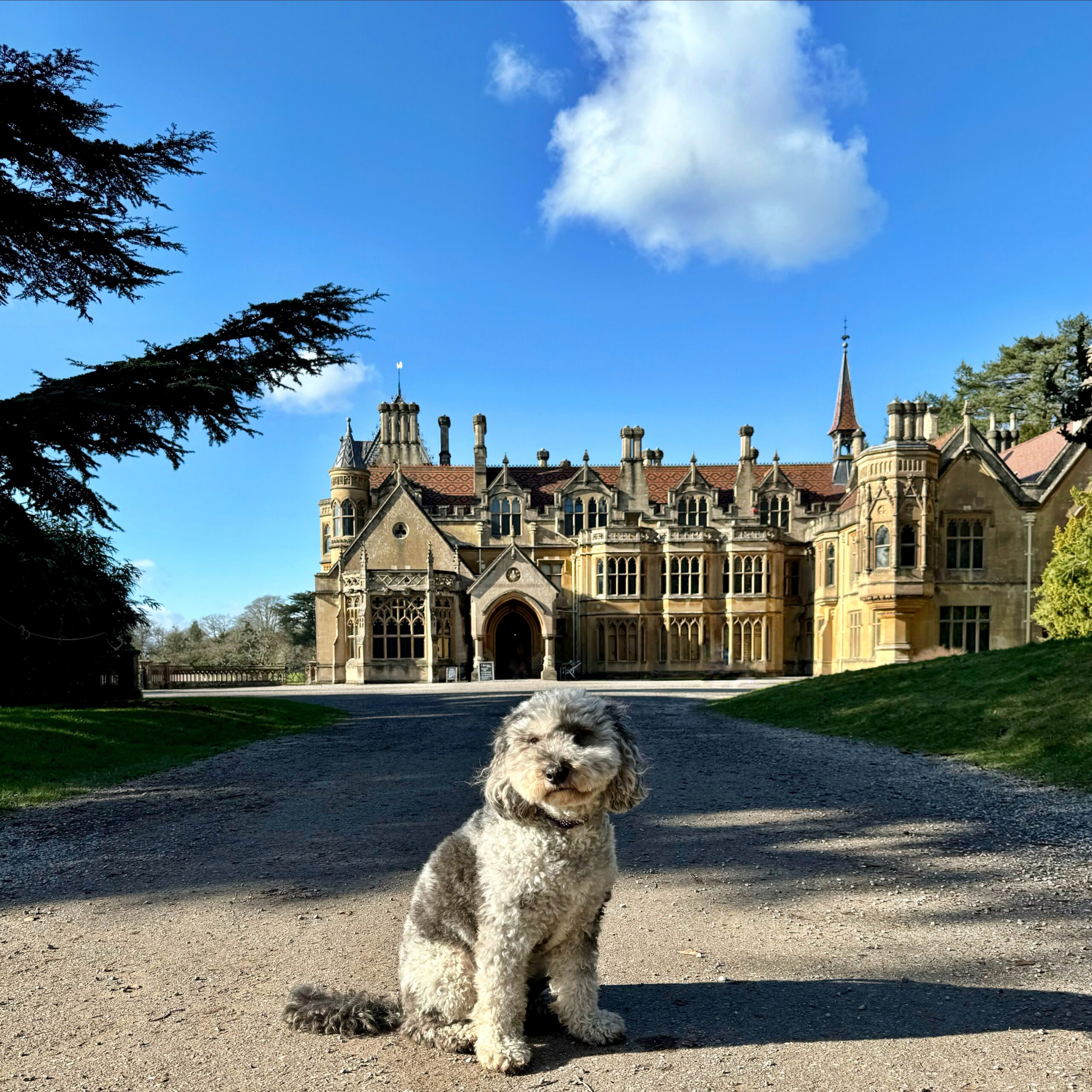
Yoshi gets as close to Stonehenge as he is allowed! Stonehenge is a prehistoric megalithic structure on Salisbury Plain in Wiltshire two miles west of Amesbury. It consists of an outer ring of vertical sarsen standing stones, each around 13 feet high, seven feet wide, and weighing around 25 tons, topped by connecting horizontal lintel-stones. Inside is a ring of smaller bluestones. Inside these, are free-standing trilithons; two bulkier vertical sarsens joined by one lintel. The whole monument is aligned towards the sunrise on the summer solstice and sunset on the winter solstice. Archaeologists believe that Stonehenge was constructed in several phases from around 3100 BC to 1600 BC, with the circle of large sarsen stones placed between 2600 BC and 2400 BC. Doctor Who used Stonehenge as a plot point in the 2010 episode “The Big Bang”. I liked that episode. I should rewatch it. I include the mention to the BBC TV series, as it was something of a developing theme…..An announcement in November 2020 stated that a plan to construct a four-lane tunnel for traffic below the site had been approved. This was intended to eliminate the section of the A303 that runs close to the circle. The plan had received opposition from a group of “archaeologists, environmentalists and modern-day druids” according to National Geographic but was supported by others who wanted to “restore the landscape to its original setting and improve the experience for visitors”. Opponents of the plan were concerned that artifacts that are underground in the area would be lost or that excavation in the area could de-stabilize the stones, leading to their sinking, shifting or perhaps falling. On 14th July 2023, the Department for Transport (DaFT) announced that, despite the original planning application having been overturned by the High Court in 2021, the Transport Secretary, Mark Harper, had approved plans for a 2 mile road tunnel. On 19th February 2024, the High Court in London rejected a fresh bid by campaigners to stop the road tunnel construction.Yoshi’s next stop was Aldbourne where he visited the village green and took a look at the medieval St Michael’s church. During the Second World War, U.S. Army paratroopers of Easy Company, 2nd Battalion, 506th Parachute Infantry Regiment, 101st Airborne Division were based at Aldbourne from late 1943 to mid-1944, in preparation for the Normandy landings in June 1944 and Operation Market Garden in September.Aldbourne is also known as Devil’s End in the Doctor Who story “The Dæmons” featuring The Third incarnation of the Time Lord played by Jon Pertwee. One of the village pubs, The Blue Boar, was renamed as The Cloven Hoof! A model of St.Michaels’s church was also blown up during the story, which anecdotally generated complaints from viewers. A reminder of the Aldbourne Doctor Who link is this TARDIS litter bin, free for public use 🙂The prehistoric Avebury henge and stone circles were built and much altered during the Neolithic period (2850 BC and 2200 BC) survivING as a huge circular bank and ditch, encircling an area that includes part of Avebury village. Within the henge is the largest stone circle in the UK which originally consisted of approximately 100 stones. Two smaller stone circles are enclosed within. Avebury was memorably used as the location of the itv children’s drama series “Children of the Stones” (1977). As far as I know, the stones have not been seen in Doctor Who. So, in a bid for completism, I searched for a link and found it in nearby Yatesbury, where from 1942 – 1965 an RAF Radar School was situated and attended by Brian Hodgson who went on to run the BBC Radiophonic Workshop and devised the sound of the TARDIS by scraping his mother’s front door key along the strings of a piano. The video to the 1988 No.1 hit song “Doctorin’ the Tardis” by The Timelords, better known as The KLF, was partly filmed at Yatesbury. Don’t worry, we’ll get to the trains soon. Yoshi takes a look at Wells Cathedral – construction of which began on c1180 and was completed by the time of Henry VII. It was damaged during the English Civil War, but was later restored during the Victorian age. The building has also been used as a Doctor Who filming location when to stood in for Southwark Cathedral in the 2006 story “The Lazarus Experiment” featuring David Tennant as the Tenth Doctor.National Trust owned Tyntesfield House, bought in 1844 by William Gibbs as a retreat for his wife,Blanche, and their growing family. Close relatives in Bristol and neighbouring Belmont House in Wraxall, the estate benefited from direct links to London on Brunel’s newly built Great Western Railway (GWR). Keeping up with the Doctor Who connection, the property was used as a haunted mansion in Matt Smith’s tenure during the 2013 episode “Hide”.A walk in Horton Woods….…. past the 140ft high Horton Tower, also known as Sturt’s Folly, built in c1750 by the Lord of Horton Manor, Humphrey Sturt, who was an architect and a Dorset MP. In 1967 the tower featured in the film adaptation of Thomas Hardy’s “Far From the Madding Crowd”. Over the years it had fallen into disrepair but in 1991, Vodafone was granted permission to use the tower for mobile phone masts. As part of the deal the company agreed to carry out repairs, and the conservation project was recognised with a Royal Town Planning Institute award in January 1995.Journey’s End; Yoshi relaxing in front of a warm fire at The Horton Inn after our walk!
For The record
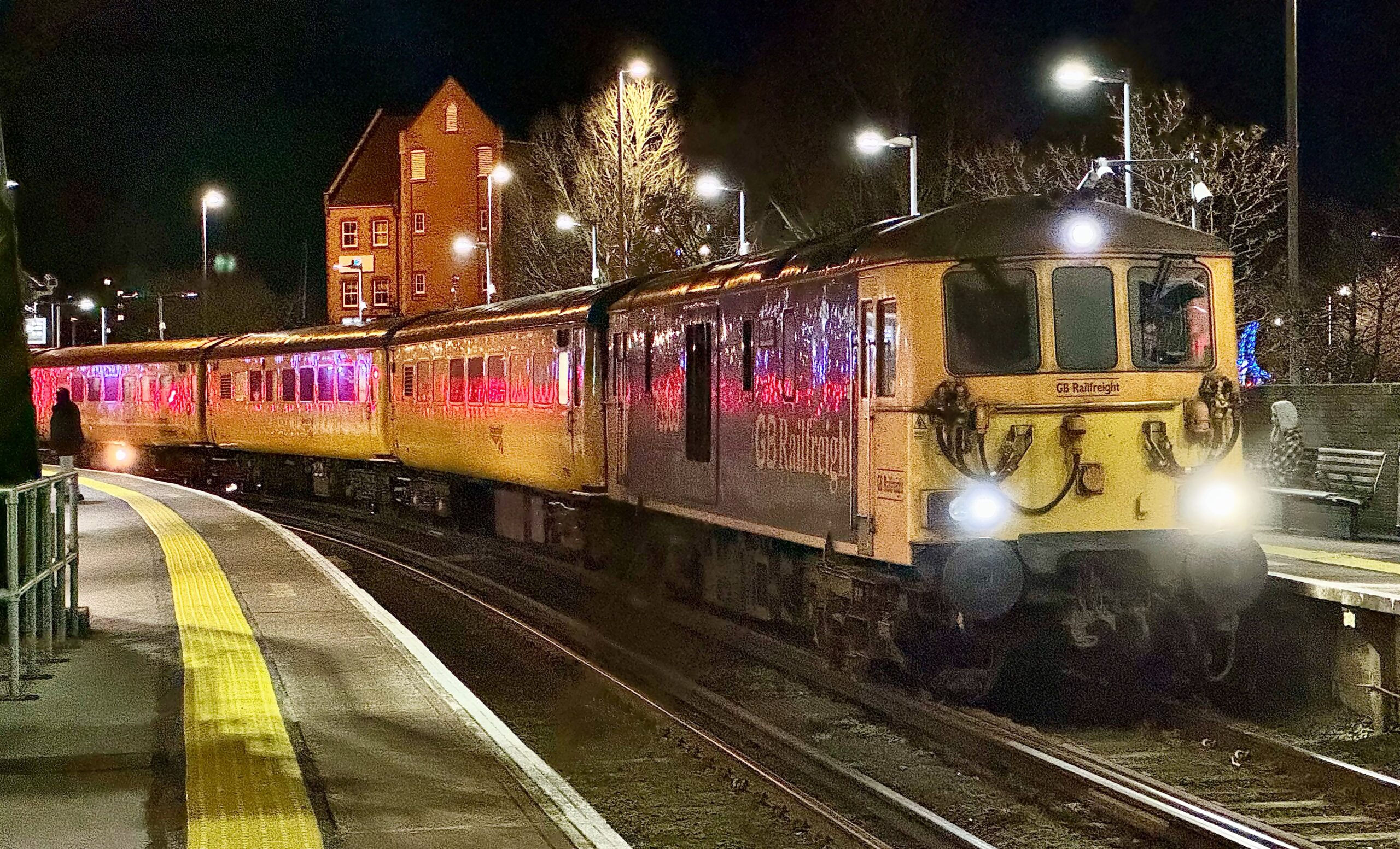
12/02/2024: 1Q51 1115 Derby RTC to Eastleigh East Yard via Weymouth
73963 ‘Janice’ pauses briefly at Poole leading on 1Q51 1115 Derby RTC to Eastleigh East Yard via Weymouth – 12/02/2024
GB Railfreight (GBRf ) Class 73 Electro-Diesel No.’s 73962 ‘Dick Mabbutt’ and 73963 ‘Janice’ returned for the monthly Colas Plain Line Pattern Recognition Train.
1Q51 1115 Derby RTC to Eastleigh East Yard via Weymouth at Poole – 12/02/2024
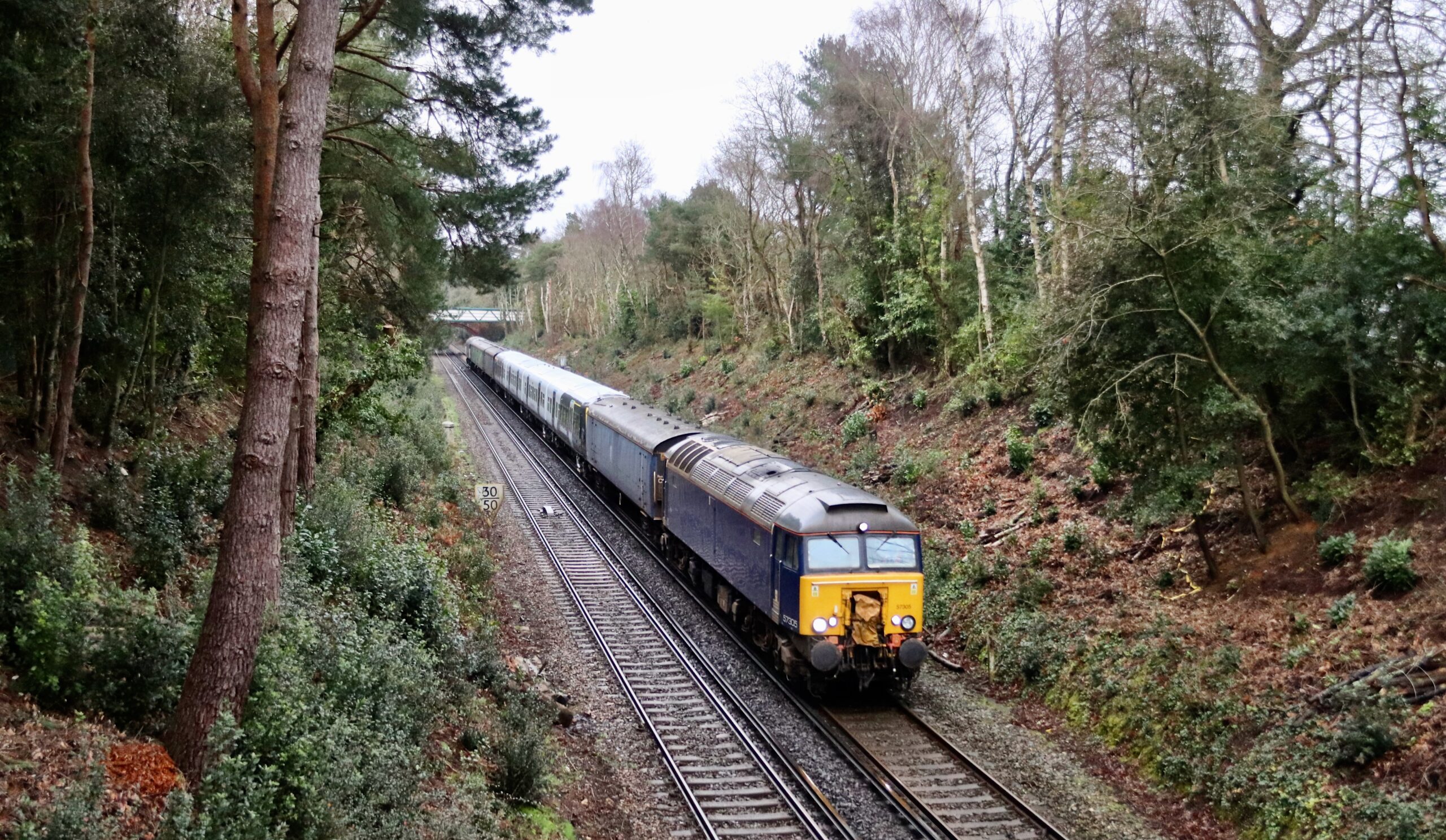
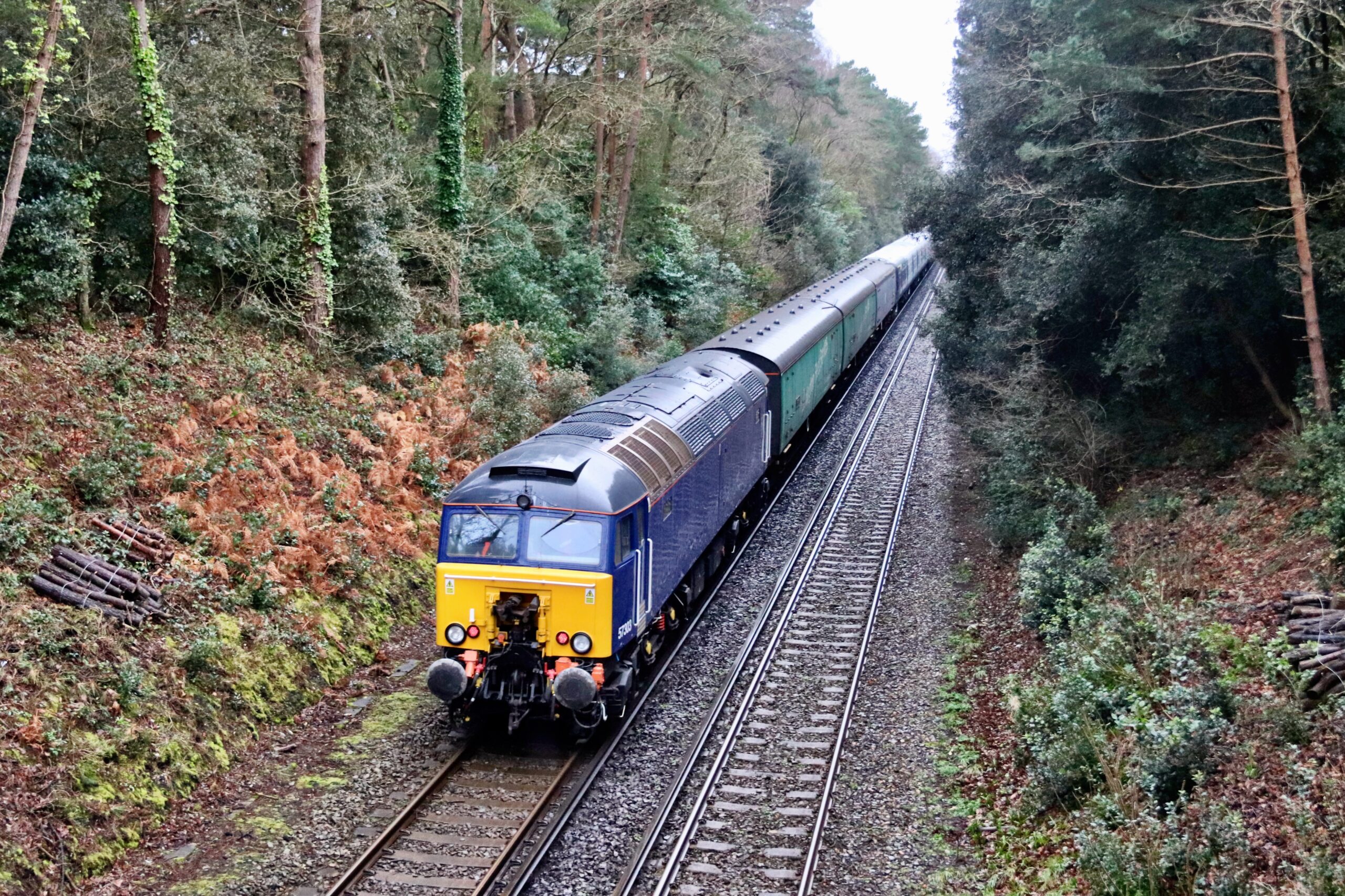
13/02/2024: 5X62 0524 Wembley Terminal Complex Wheel Lathe to Bournemouth Traction & Rolling Stock Maintenance Depot / 5Q64 1321 Bournemouth Traction & Rolling Stock Maintenance Depot to Widnes Transport Tech
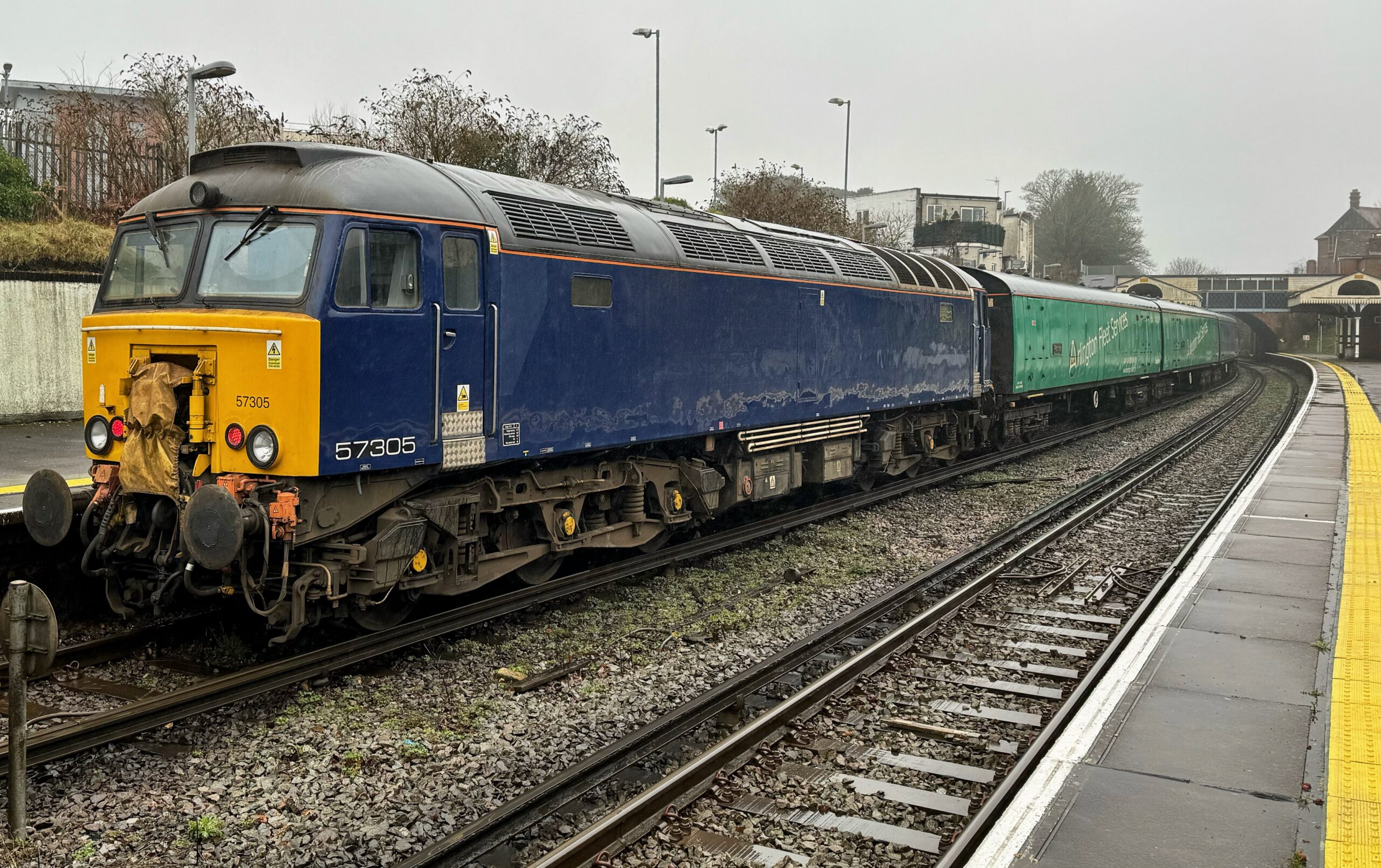
GBRf Class 57 No. 57305 leading on 5X62 0524 Wembley Terminal Complex Wheel Lathe to Bournemouth Traction & Rolling Stock Maintenance Depot. SWR Class 458 No. 458416 was sandwiched between the front loco and No. 57303 at the rear of the consist – 13/02/2024GBRf Class 57 No. 57303 at the rear of 5X62 0524 Wembley Terminal Complex Wheel Lathe to Bournemouth Traction & Rolling Stock Maintenance Depot – 13/02/2024
GBRf Class 57 No.’s 57303 and 57305 arrived at Bournemouth depot with refurbished SWR Class 458 No. 458416. The pair of Class 57 locomotives departed with 5-Car Class 458 No. No. 458515 later in the day. A similar exercise scheduled for Thursday 15th February; 5X62 0524 Wembley Receptions 1-7 to Bournemouth T&R.S.M.D and 5M64 1314 Bournemouth T&R.S.M.D to Leicester L.I.P. did not run. It is most likely that the same pair of Class 57 locomotives would have been involved.
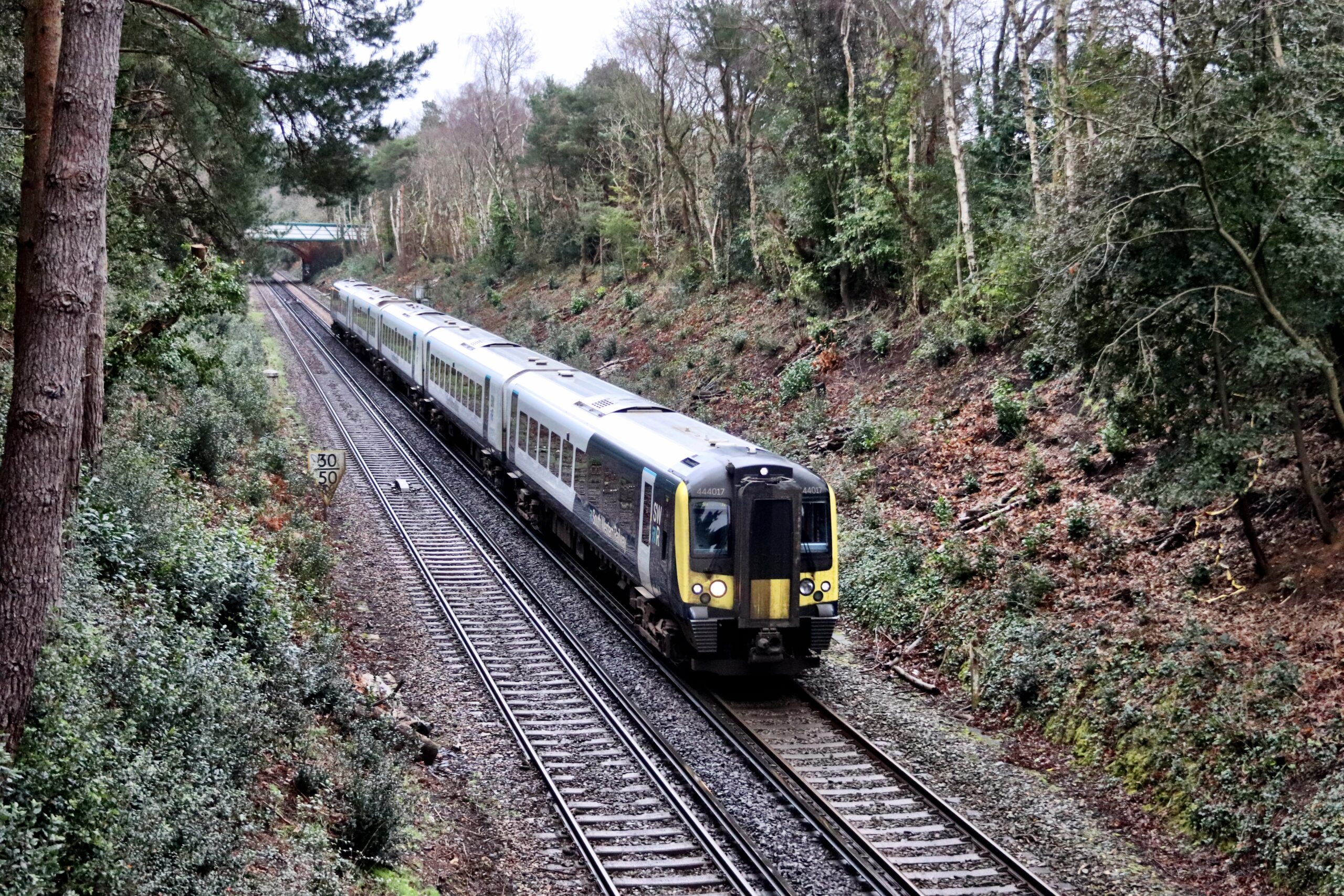
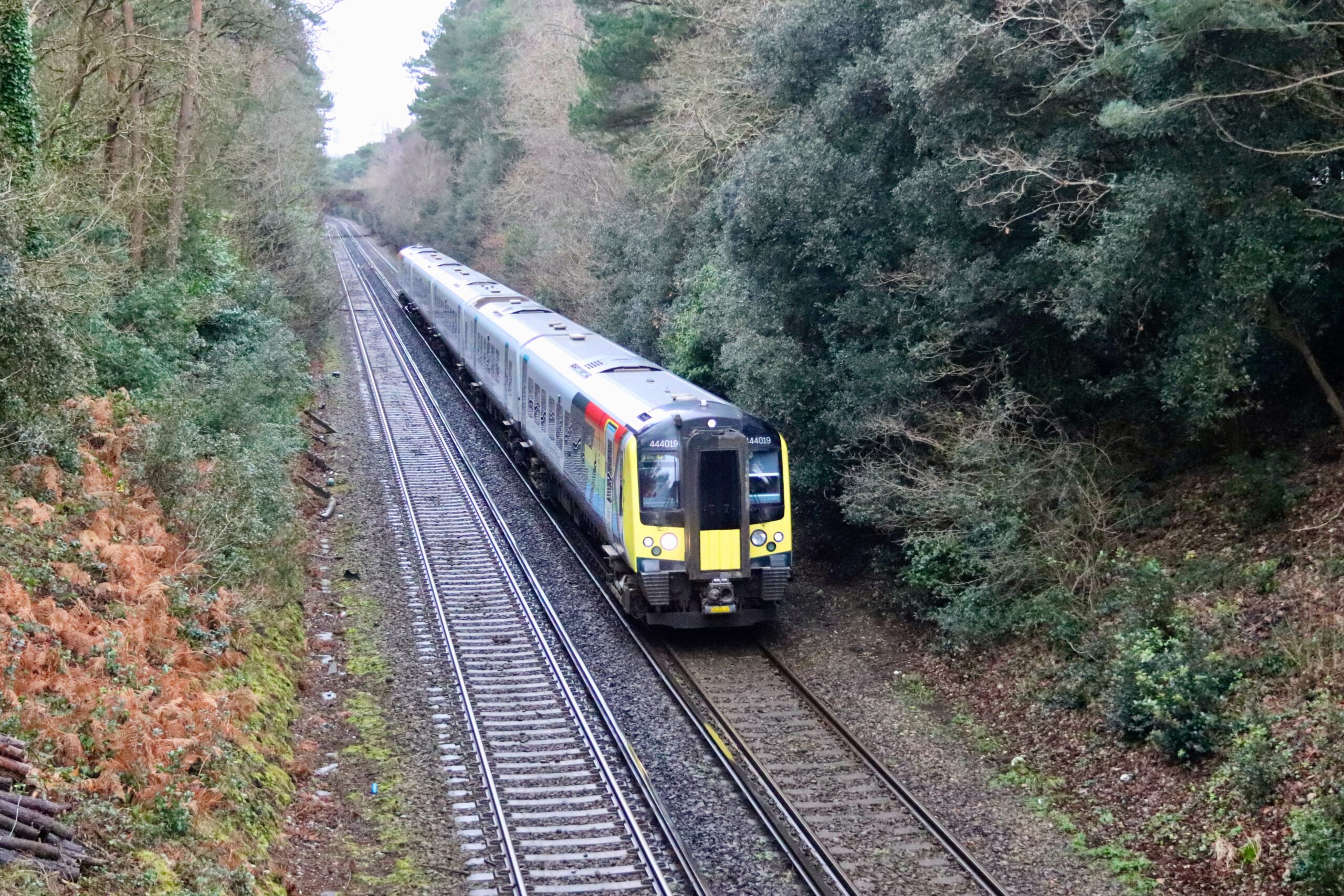
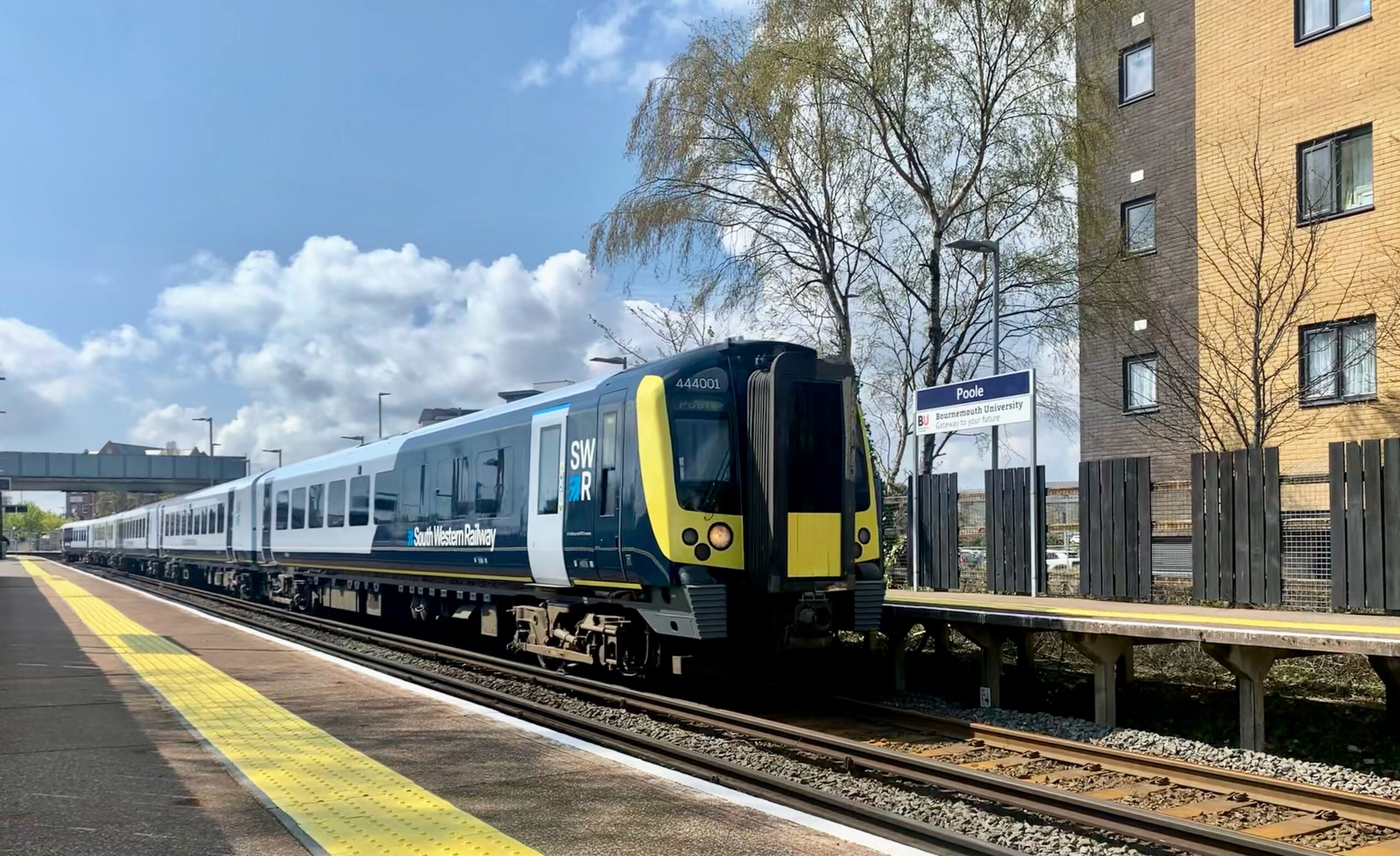
While waiting for the morning unit drag to Bournemouth depot, we were entertained by passing South Western Railway (SWR) Class 444’s on regular passenger services.
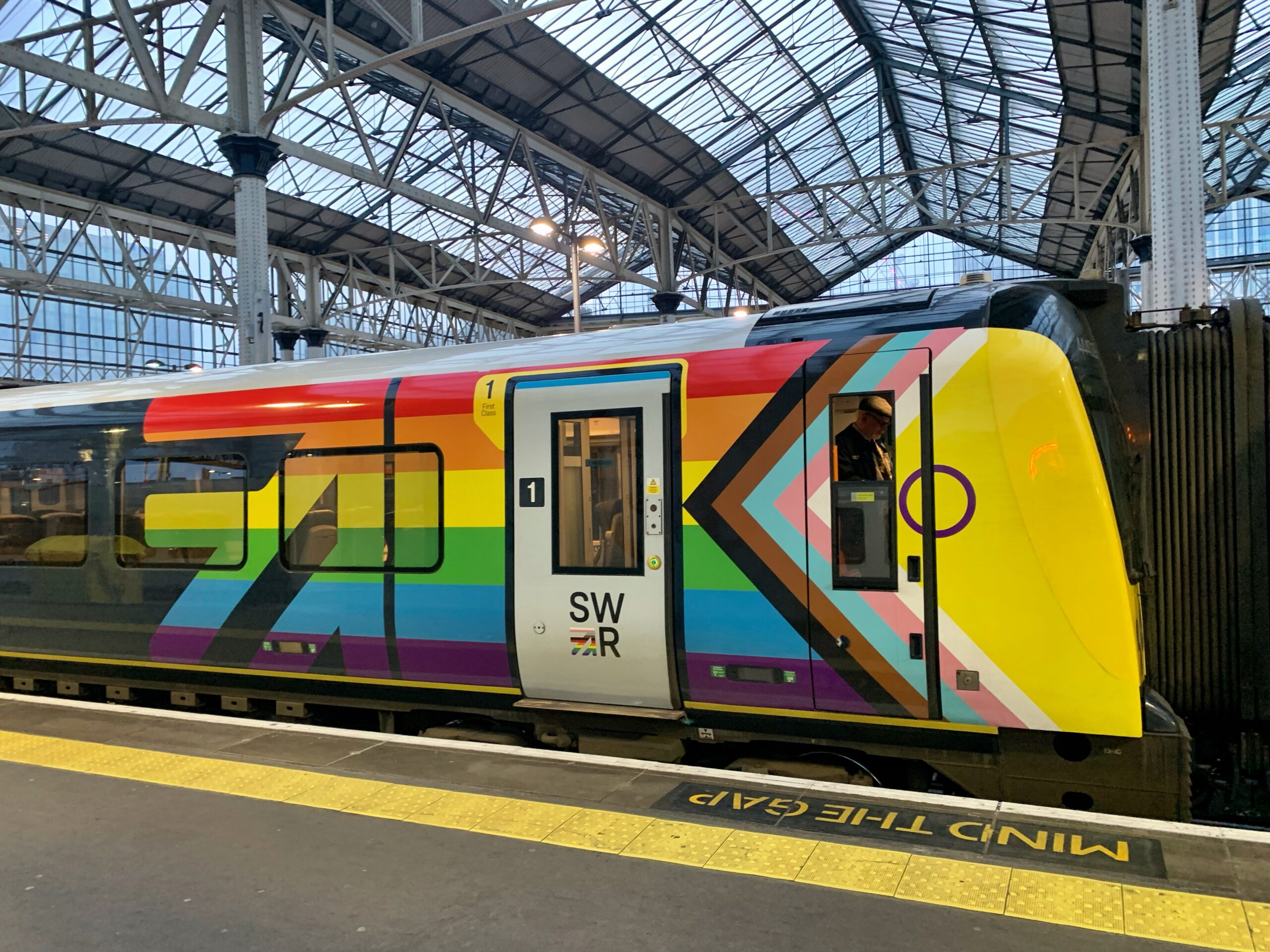
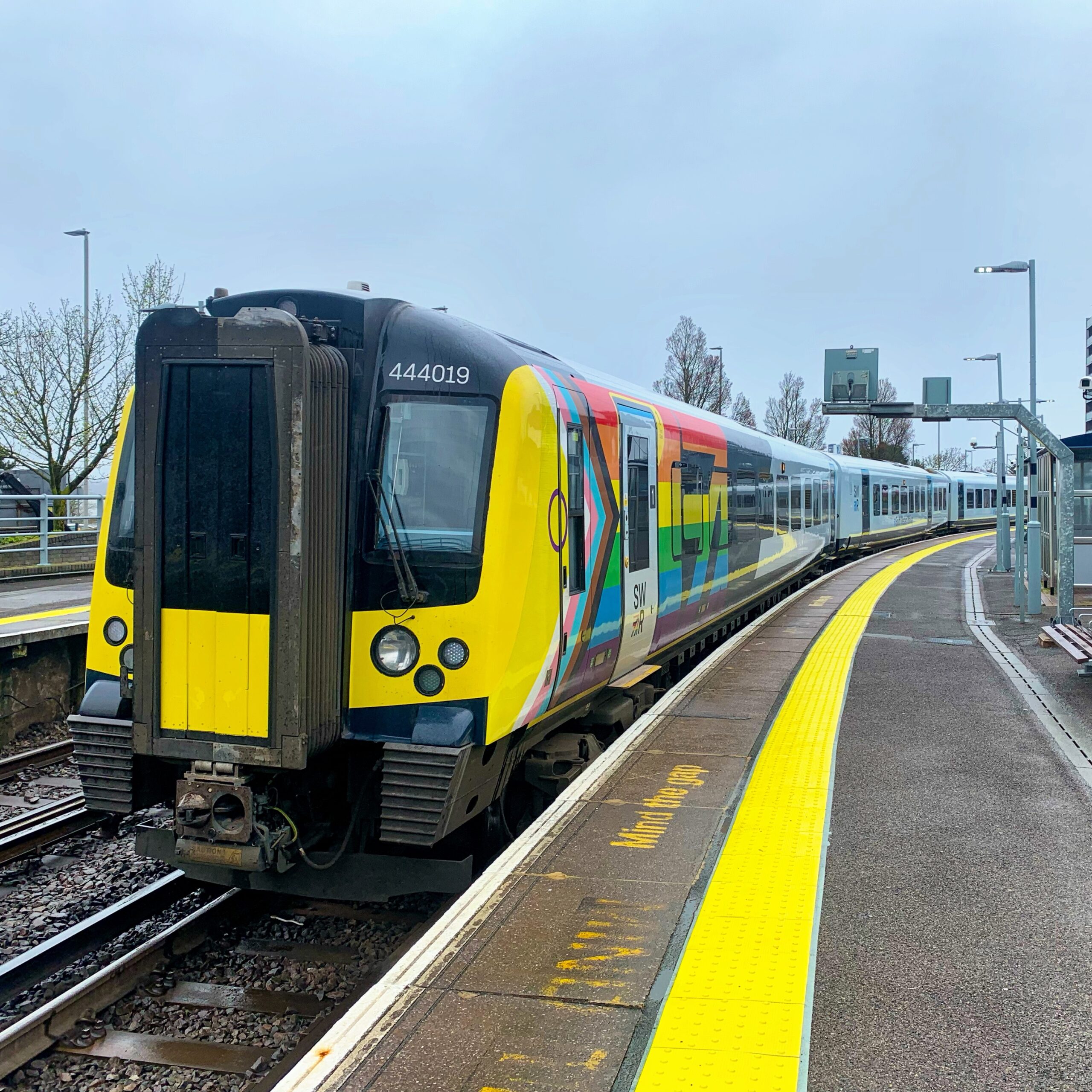
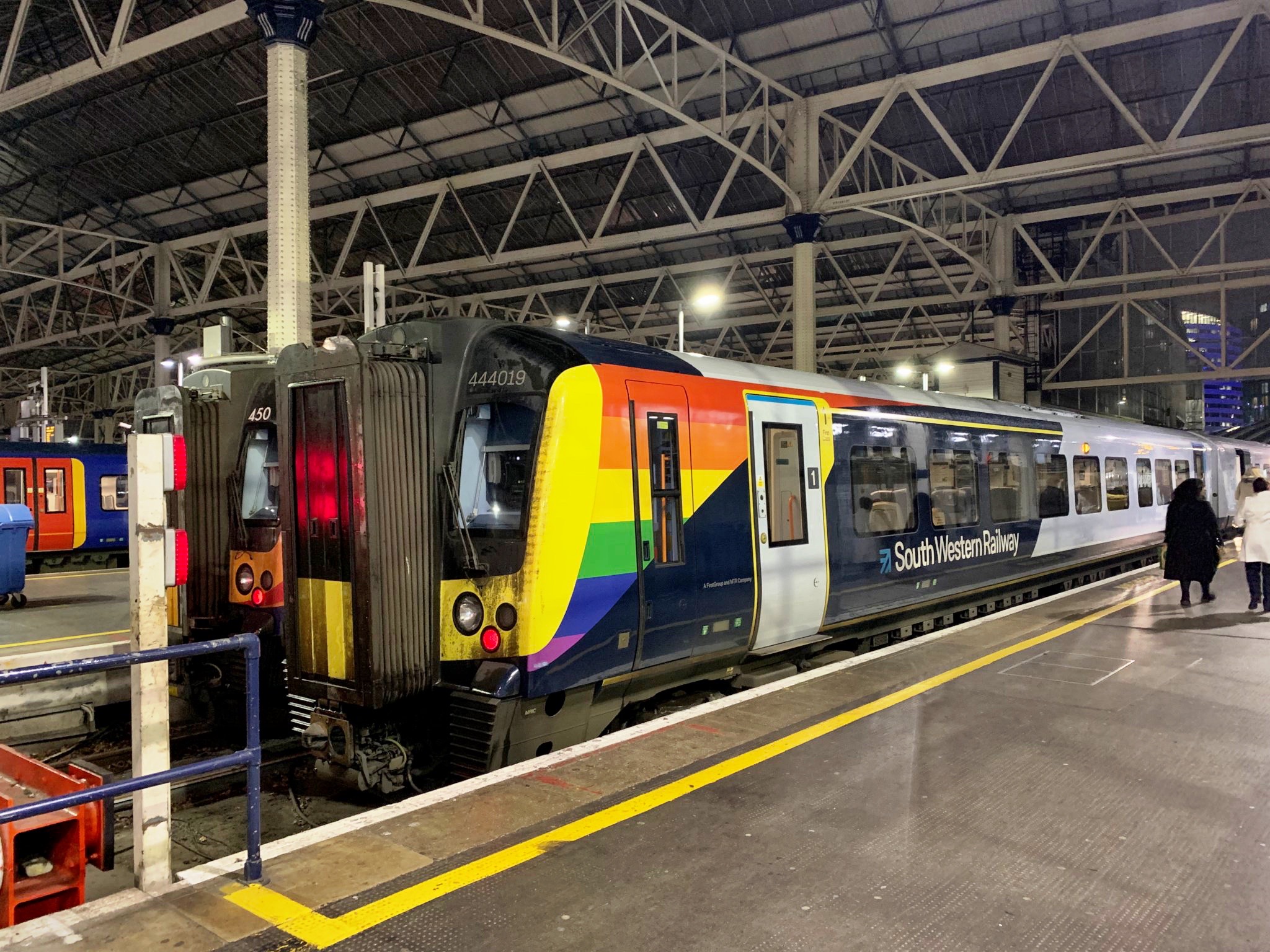
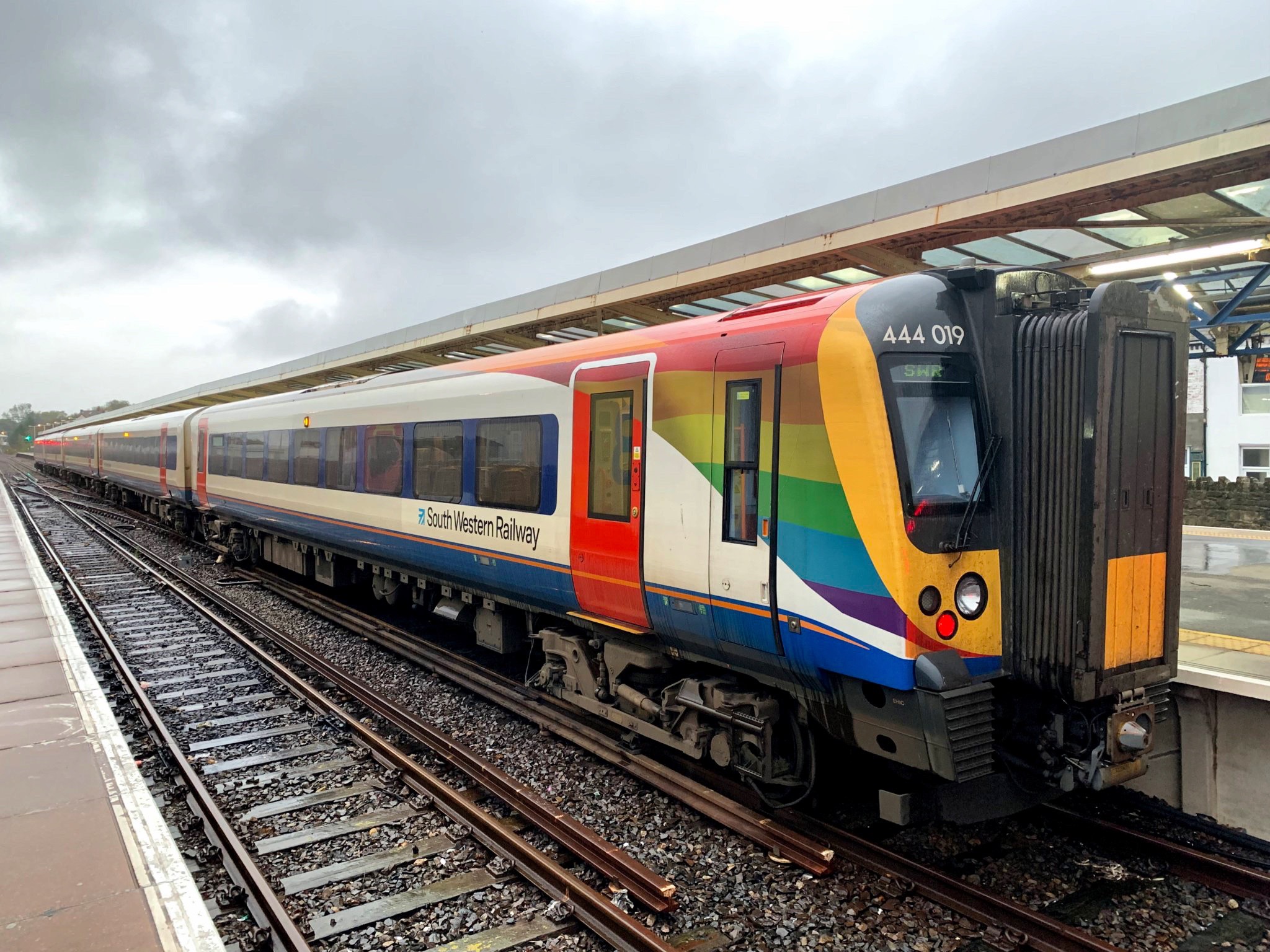
SWR Class 444 No. 444017 working 2W13 0904 Bournemouth to Weymouth – 13/02/2024Unique Pride liveried SWR Class 444 No. 444019 forms 2W52 0900 Poole to Bournemouth – 13/02/2024
5X62 0524 Wembley Terminal Complex Wheel Lathe to Bournemouth Traction & Rolling Stock Maintenance Depot between Bournemouth and Branksome – 13/02/2024
18/02/2024: 3Q02 2155 Eastleigh East Yard to Eastleigh East Yard
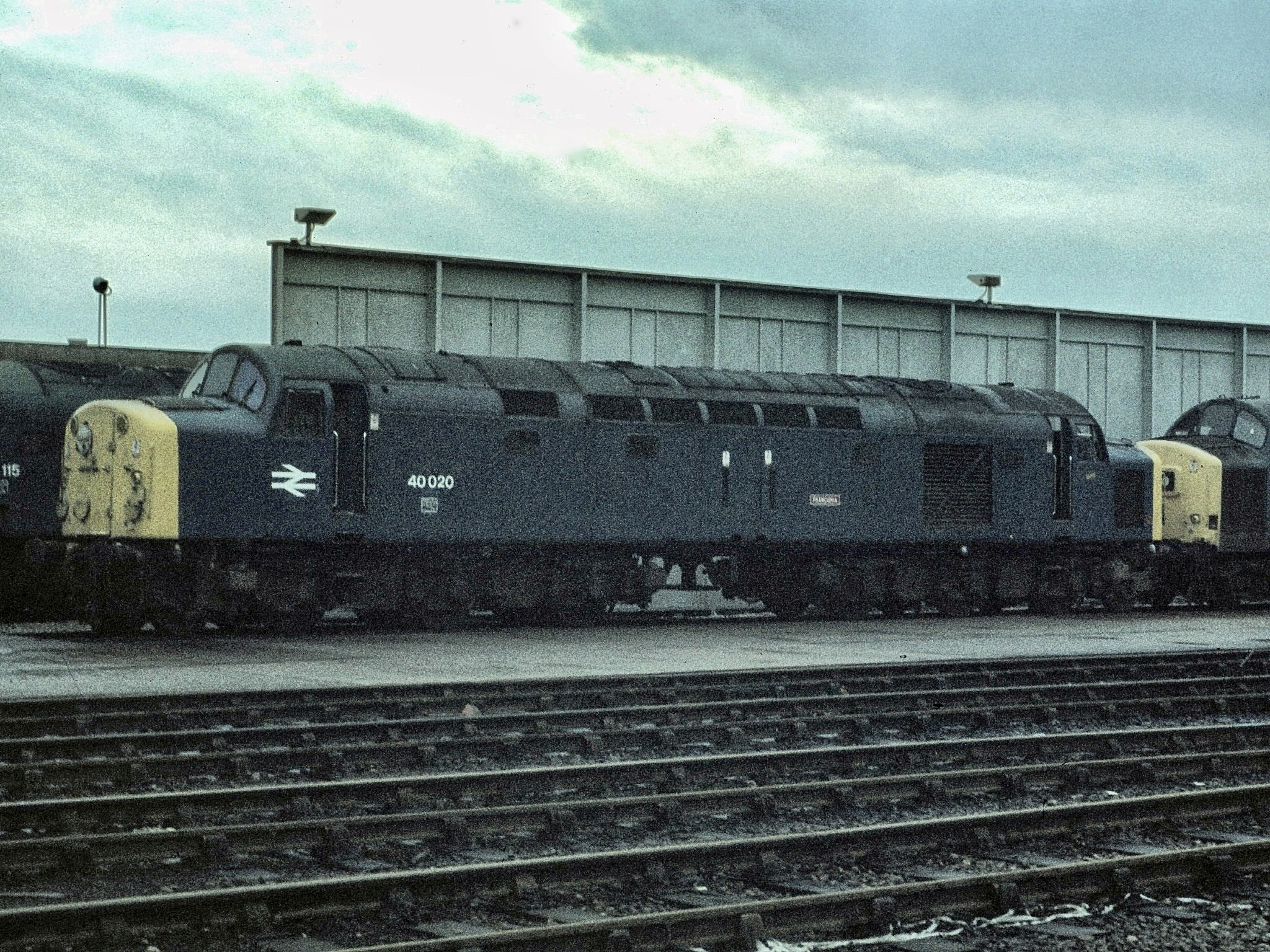
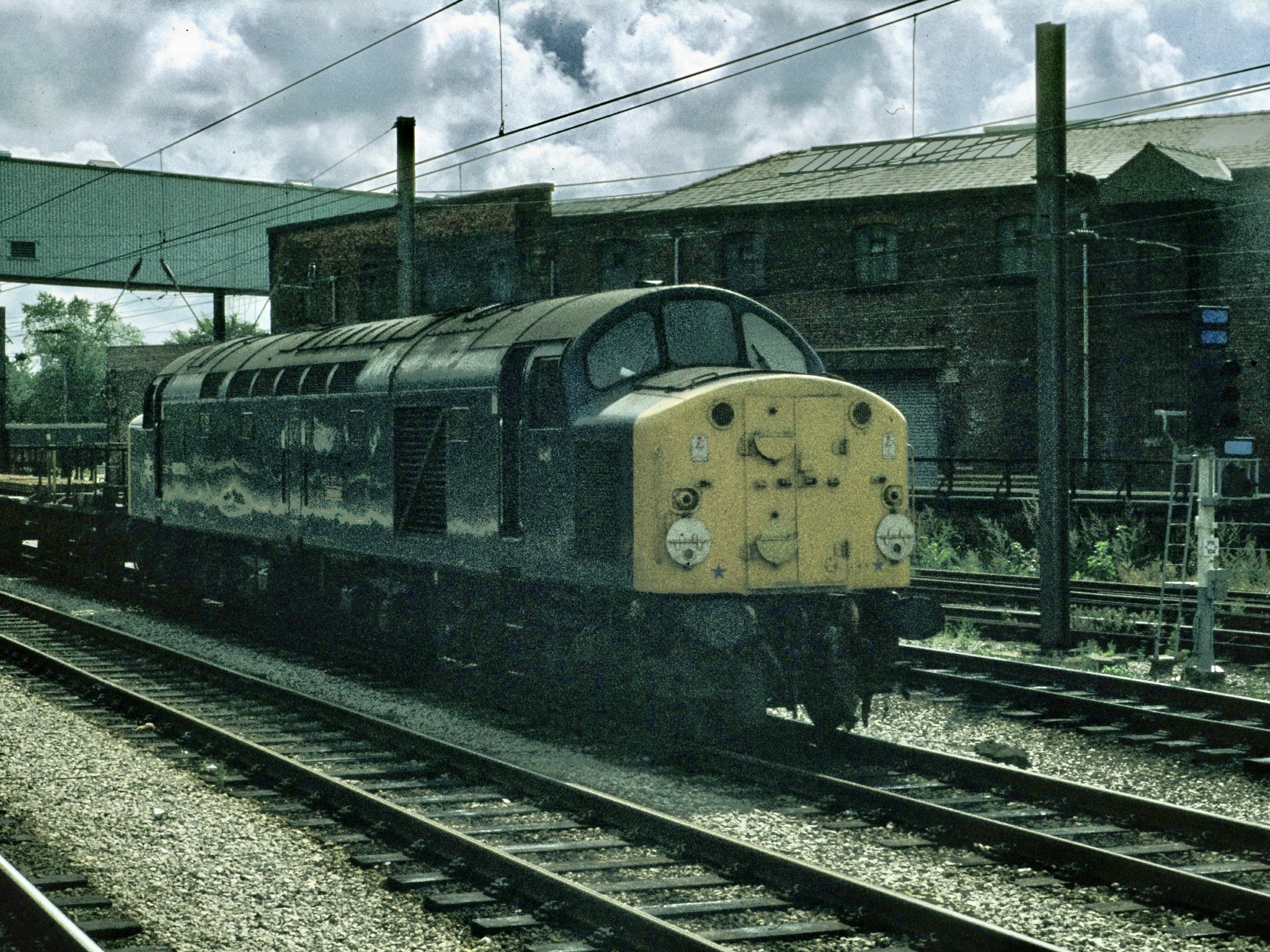
HNR Class 37 No. 37607 seen at Derby Technical Centre at the head of a Network Rail Test Train – 02/04/2023
Harry Needle Rail operated Class 37 No. 37607 was scheduled to visit the Bournemouth to Weymouth line with the Ultrasonic Test Train overnight on Sunday 18th / Monday 19th February. Disappointingly for us, however, this service was cancelled due to the train crew not being available and did not run.
21/02/2024: 1Z22 0747 Derby R.T.C.(Network Rail) to Bristol Kingsland Road
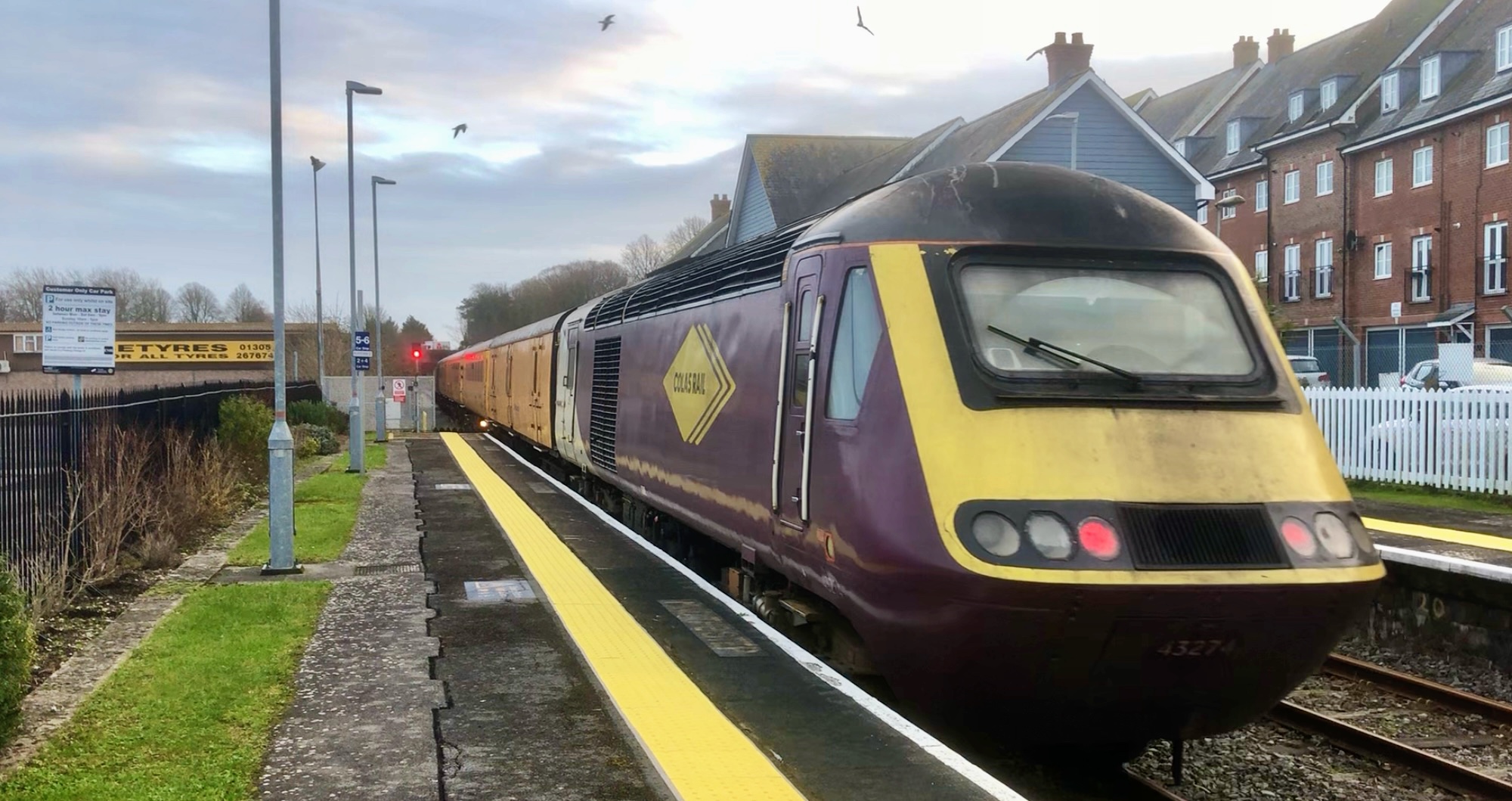
Former High Speed Train Class 43 Power Cars No.’s 43272 in debranded Virgin Trains East Coast livery and 43274 in East Midlands Railway Purple livery worked the New Measurement Train to Weymouth on Wednesday 21st February.
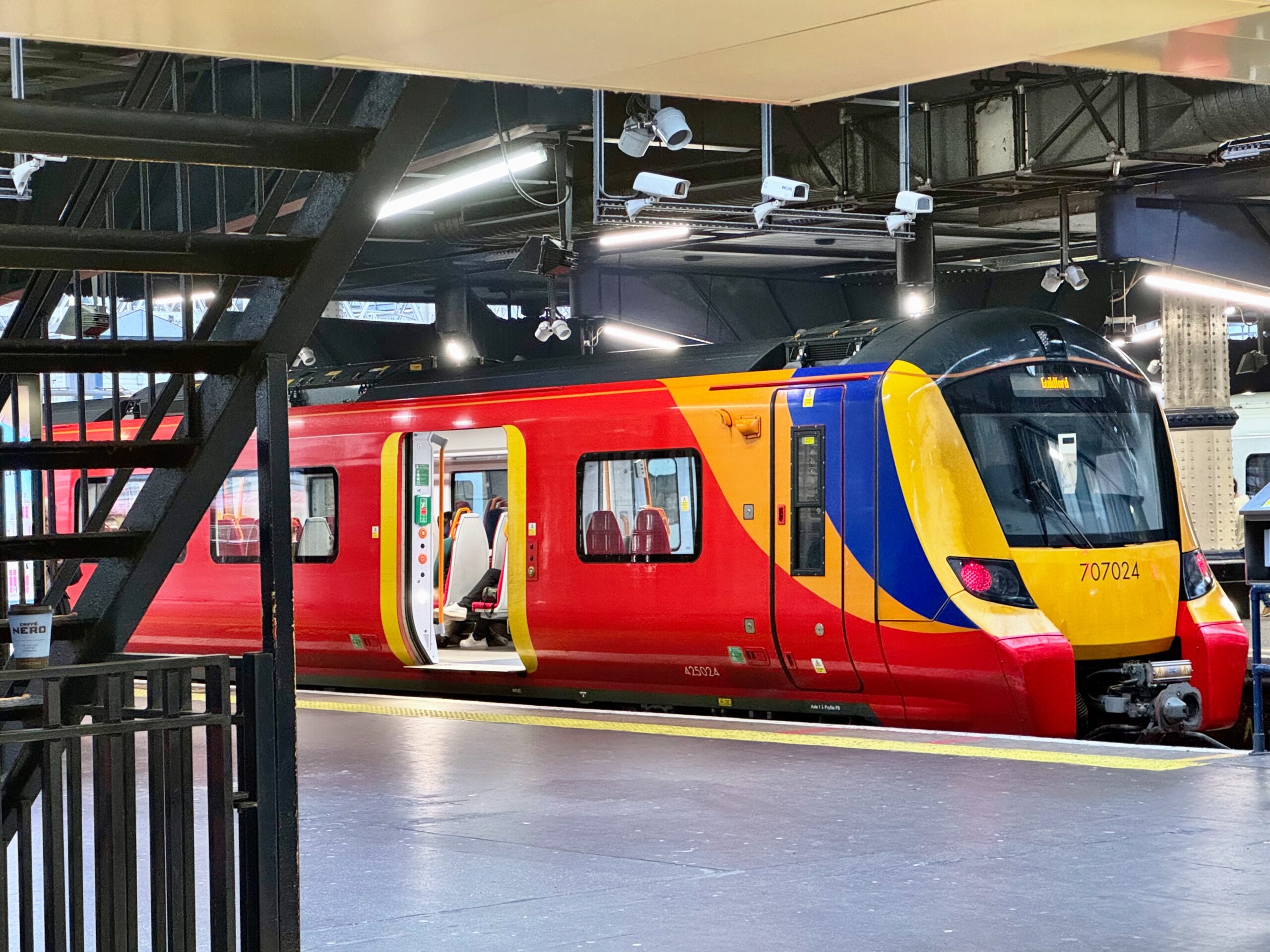
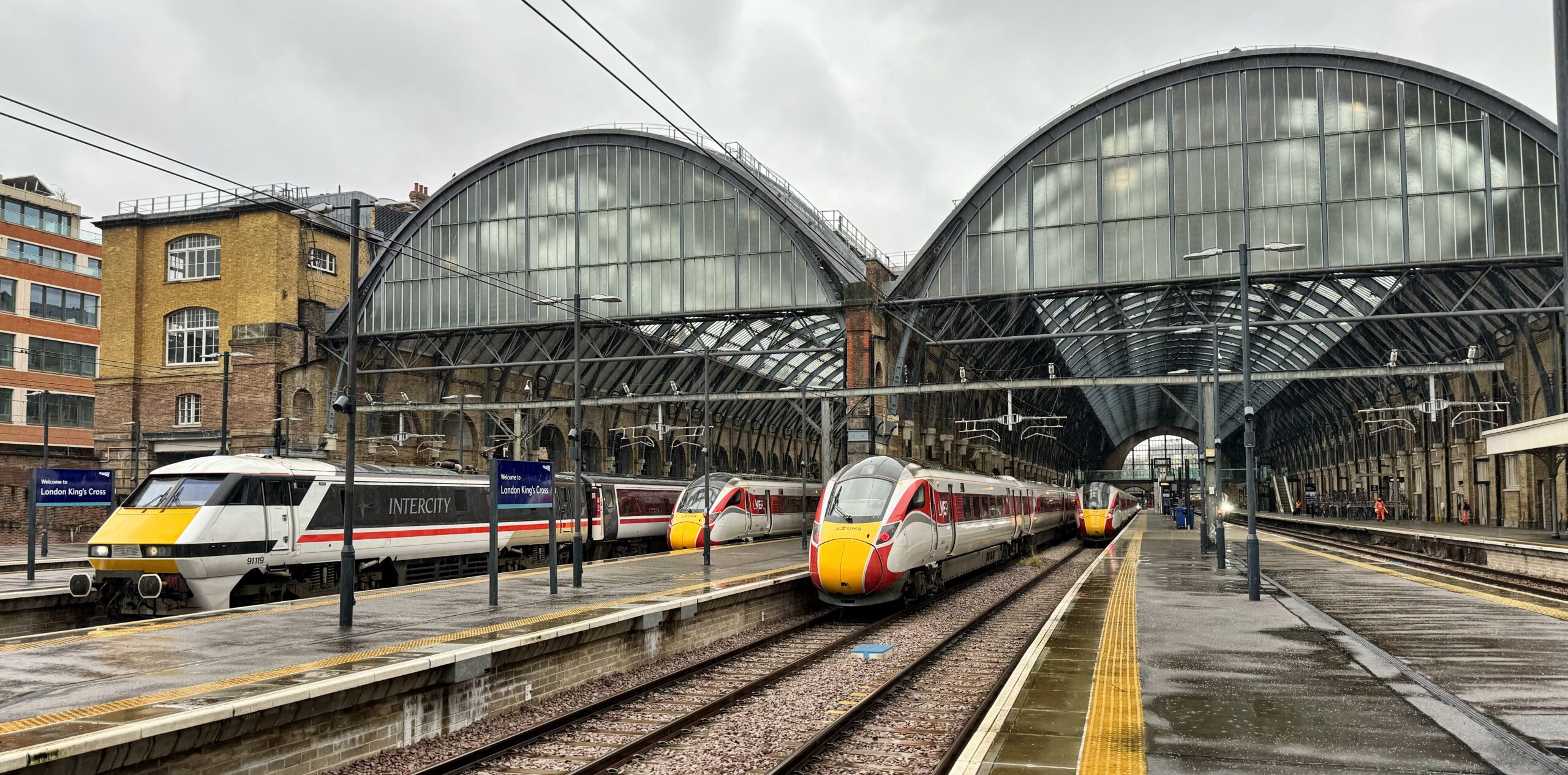
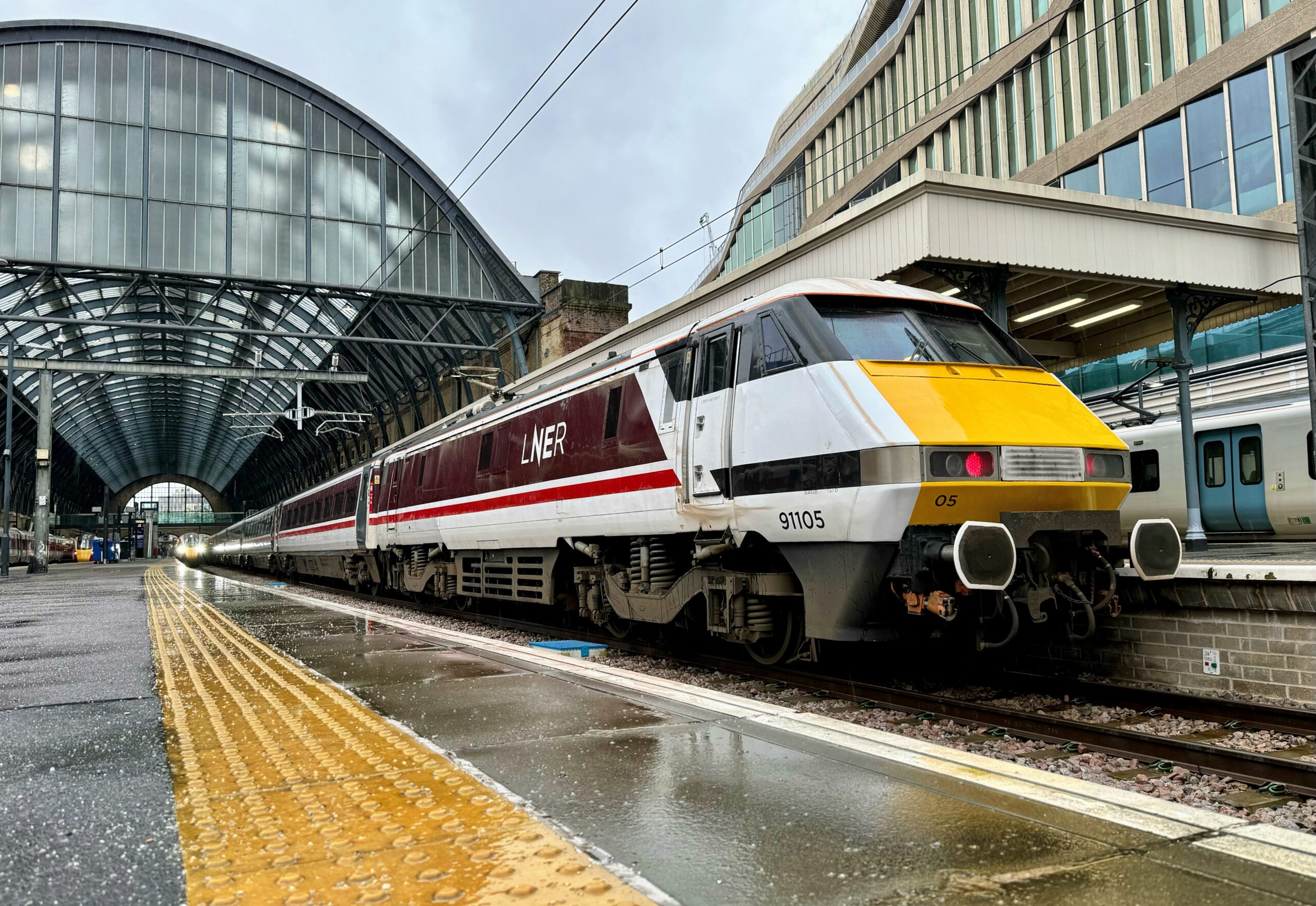
I missed this pairing as I was in London for a work meeting. I took the opportunity to pop into London Euston and London Kings Cross on my way to the office after arriving at London Waterloo.
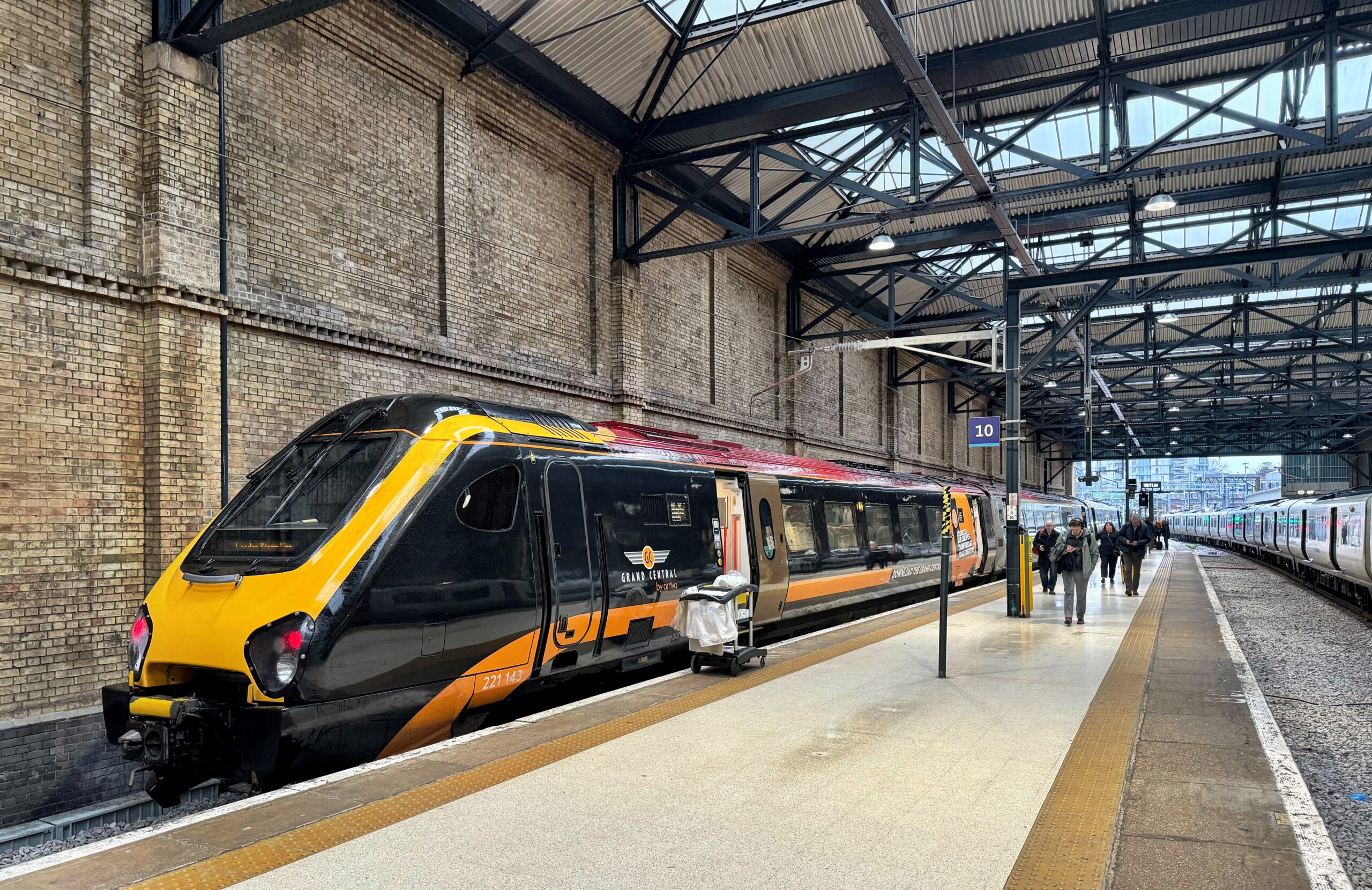
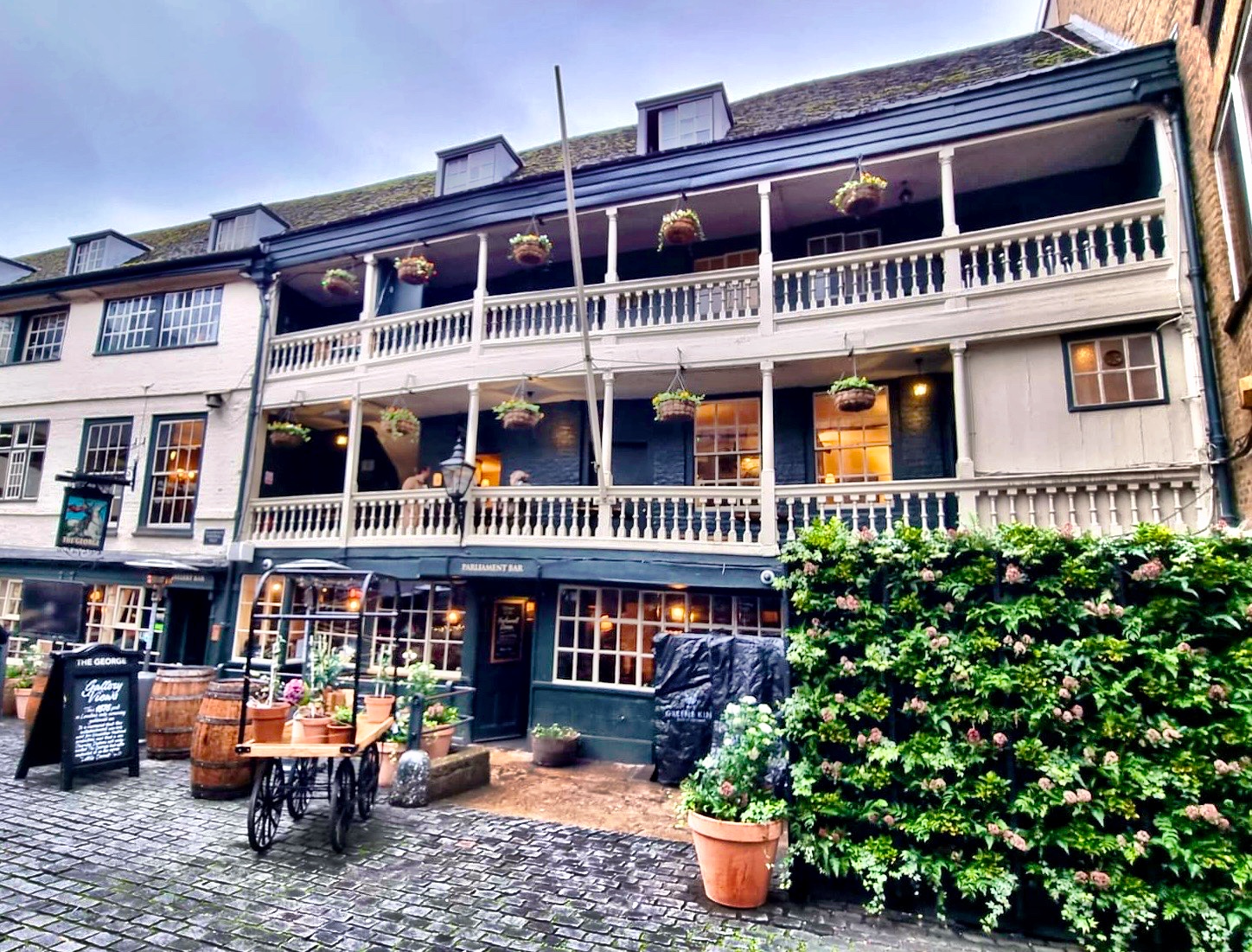
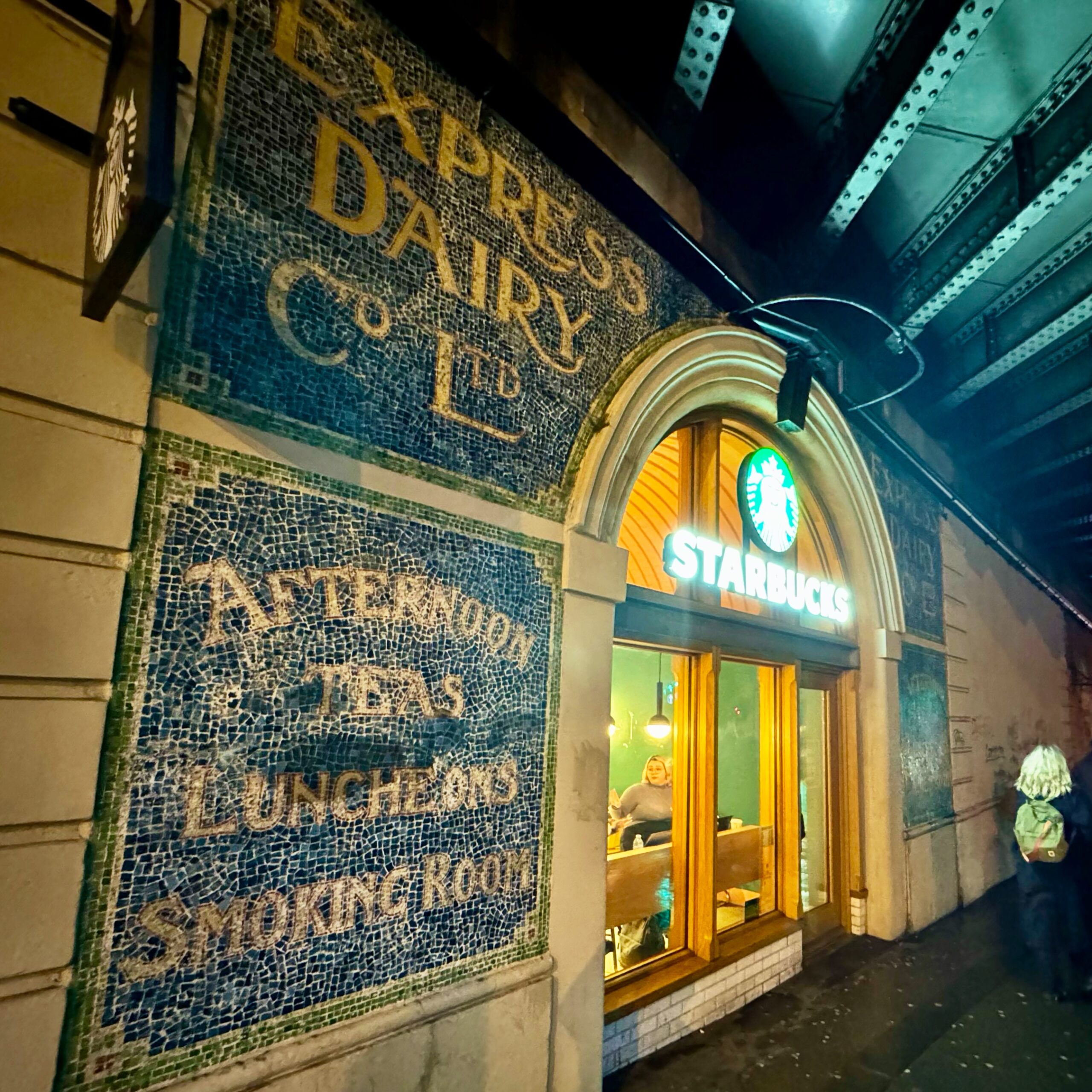
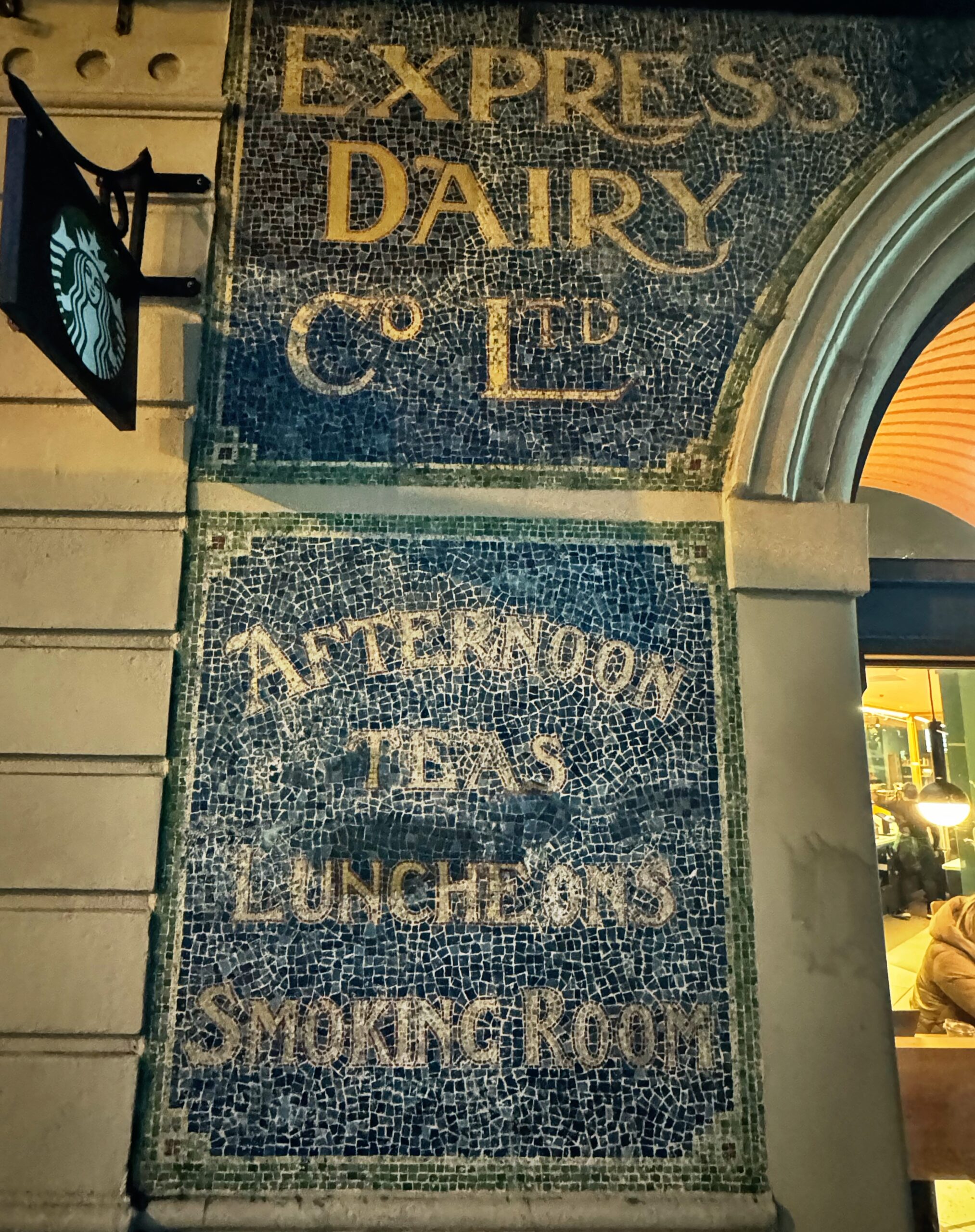
One of two remaining Class 707 EMU’s still with SWR No. 707024 at the buffer stops of London Waterloo – 21/02/2024Caledonian Sleeper Class 92 No. 92038 at London Euston. I had hoped to see the incoming sleeper service in the station, but this was running almost two hours late, and I had places to be – 21/02/2024London Kings Cross with Class 91 No. 91119 ‘Bounds Green InterCity Depot 1977-2017’ working 1D09 1003 London Kings Cross to Leeds alongside LNER Azuma trains 801210 forming 1S12 1S12 1030 Kings Cross to Edinburgh Waverley, 801213 on 1Y11 0630 Newcastle to London Kings Cross and 800209 having arrived with 1A12 0700 Hull to London Kings Cross – 21/02/2024Class 91 No. 91105 at London Kings Cross having arrived at the rear of the 1A13 0656 service from Skipton – 21/02/2024Covering low-availability of the Class 180 fleet, Grand Central have supplemented their fleet with a pair of former Avanti Super Voyagers. Here Class 221 No. 221143, now with driving vehicles in Grand Central’s livery stands at platform 10 at The Cross having arrived with 1A59 0659 Bradford Interchange to London Kings Cross – 21/02/2024Meeting over, we sought out refreshments at The George pub, established in medieval times on Borough High Street in Southwark. It is currently owned and leased by the National Trust and is the only surviving galleried London coaching inn. I recommend the Mac n’ Cheese – 21/02/2024One of the railway arches in the recently restored Findlater’s Corner at London Bridge railway station that was formerly an Express Dairy tea room is now a branch of Starbucks. During renovation work an impressive mosaic was revealed showing its previous function, advertising afternoon teas, luncheons, and smoking rooms – 21/02/2024Express Dairy was founded in 1864 and its name is part of the marketing as it was an early adopter of the railways to ship milk from the countryside to a bottling plant in South Acton and then ship them around London, also by rail. At a time when many people got milk from urban cows, milk from the countryside was seen as a healthier option. At its peak, Express Dairy had over 240 tea rooms across London, making it the Edwardian equivalent of Starbucks today, which seems fitting….
Winfrith No More
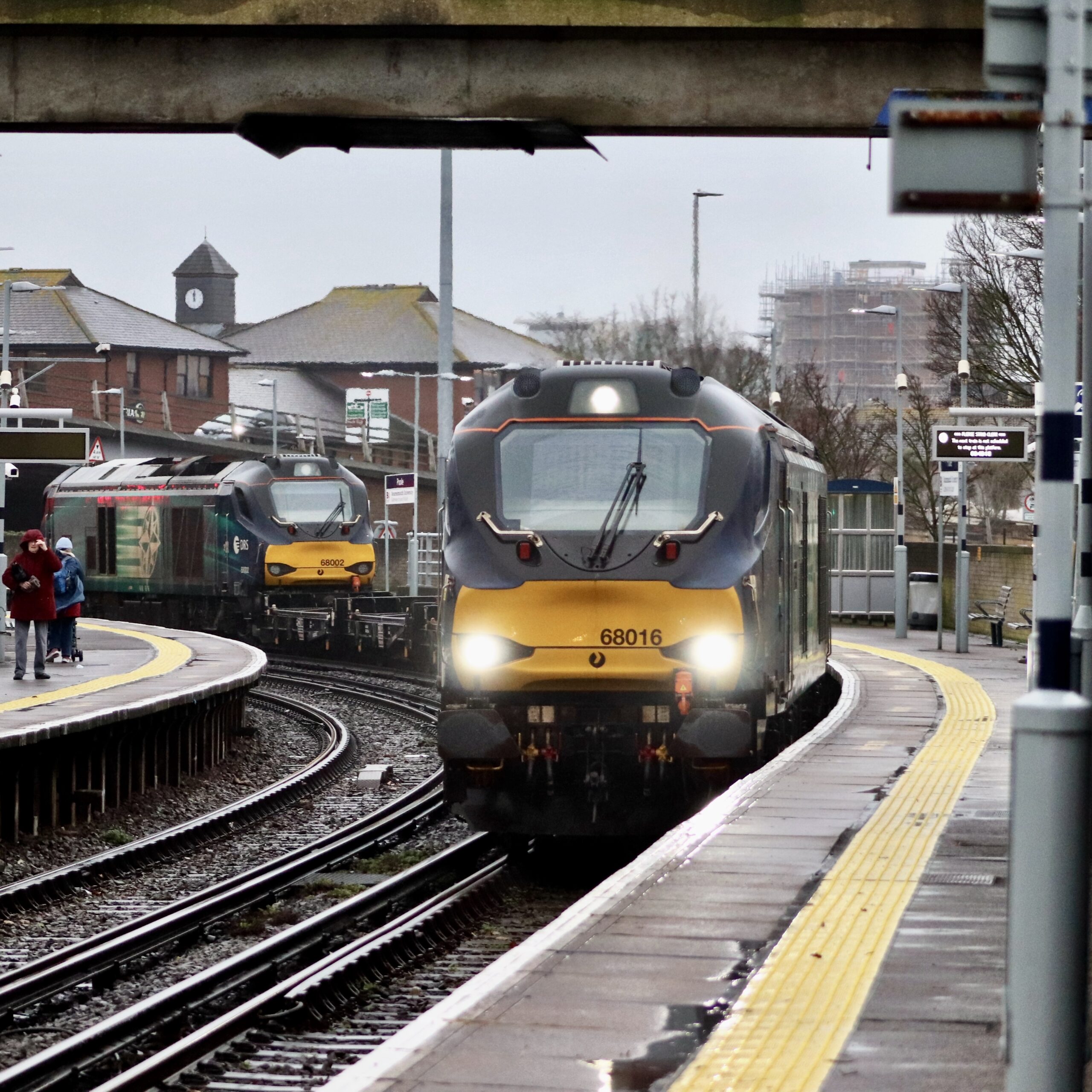
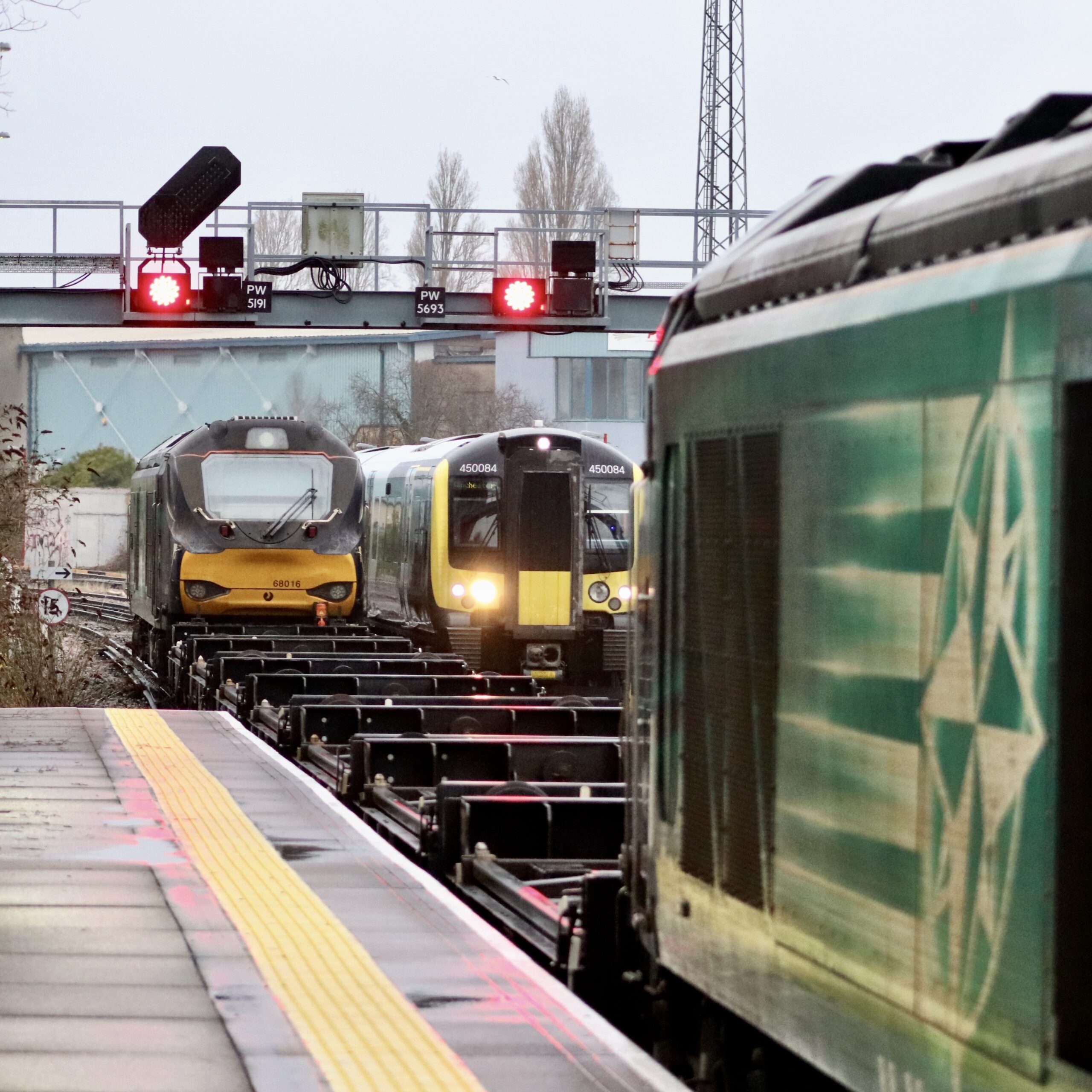
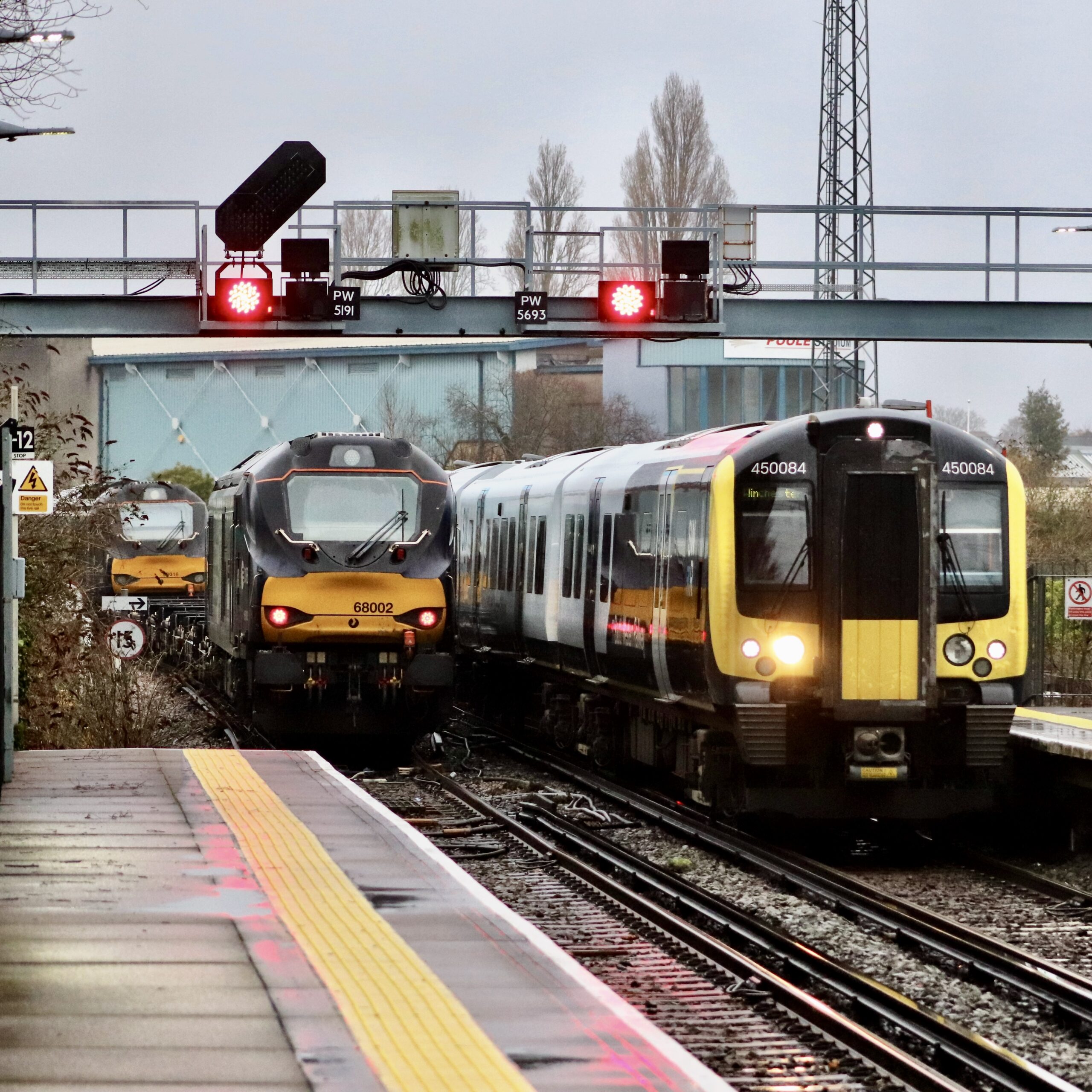
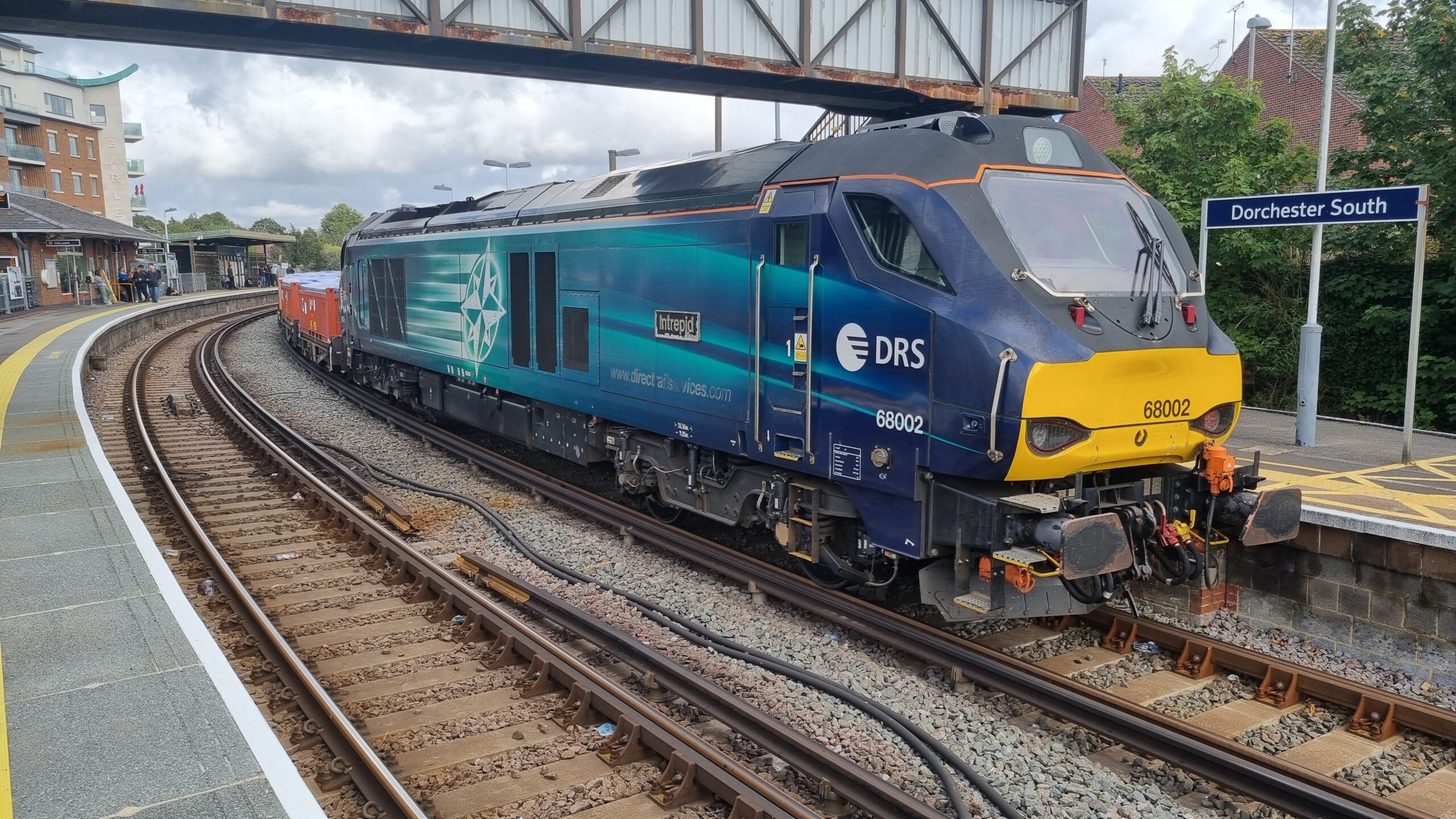
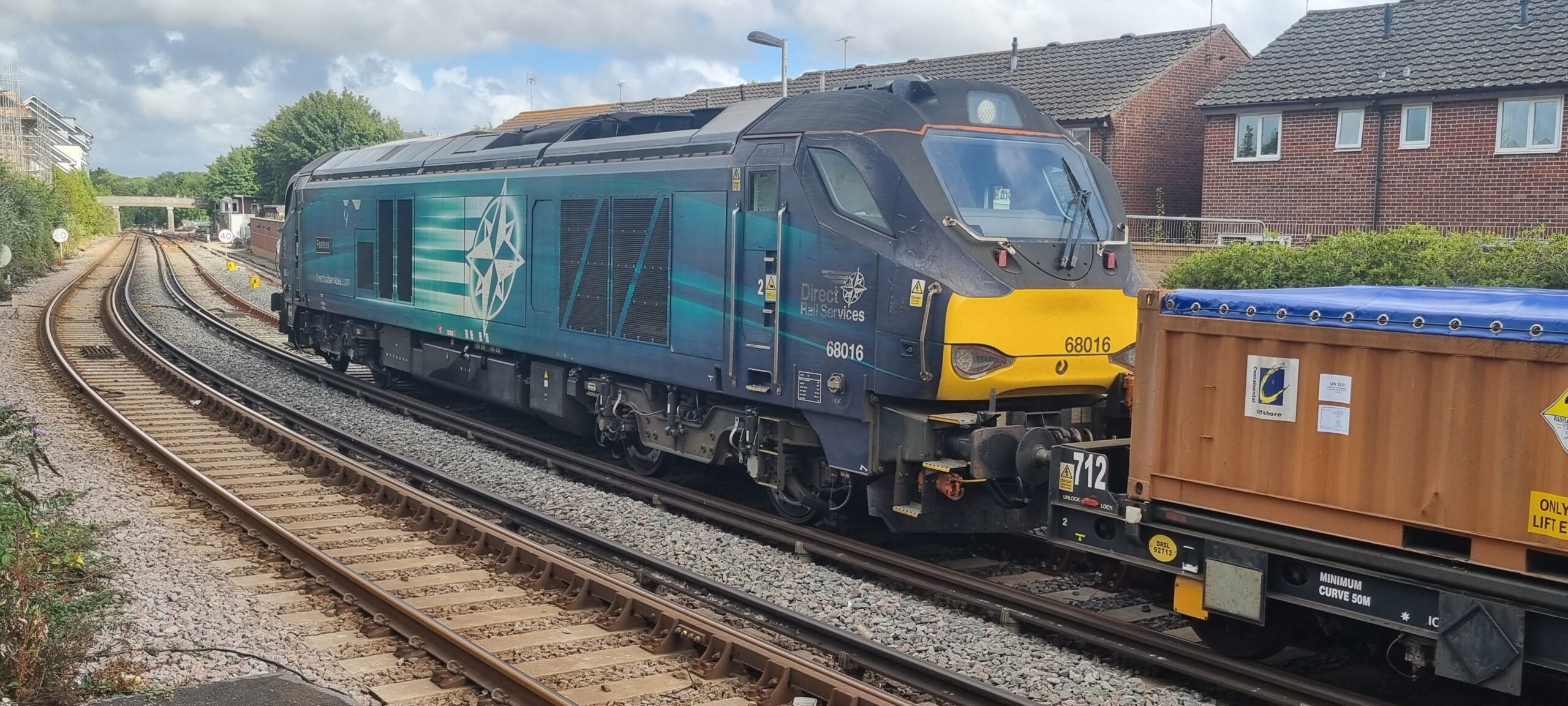
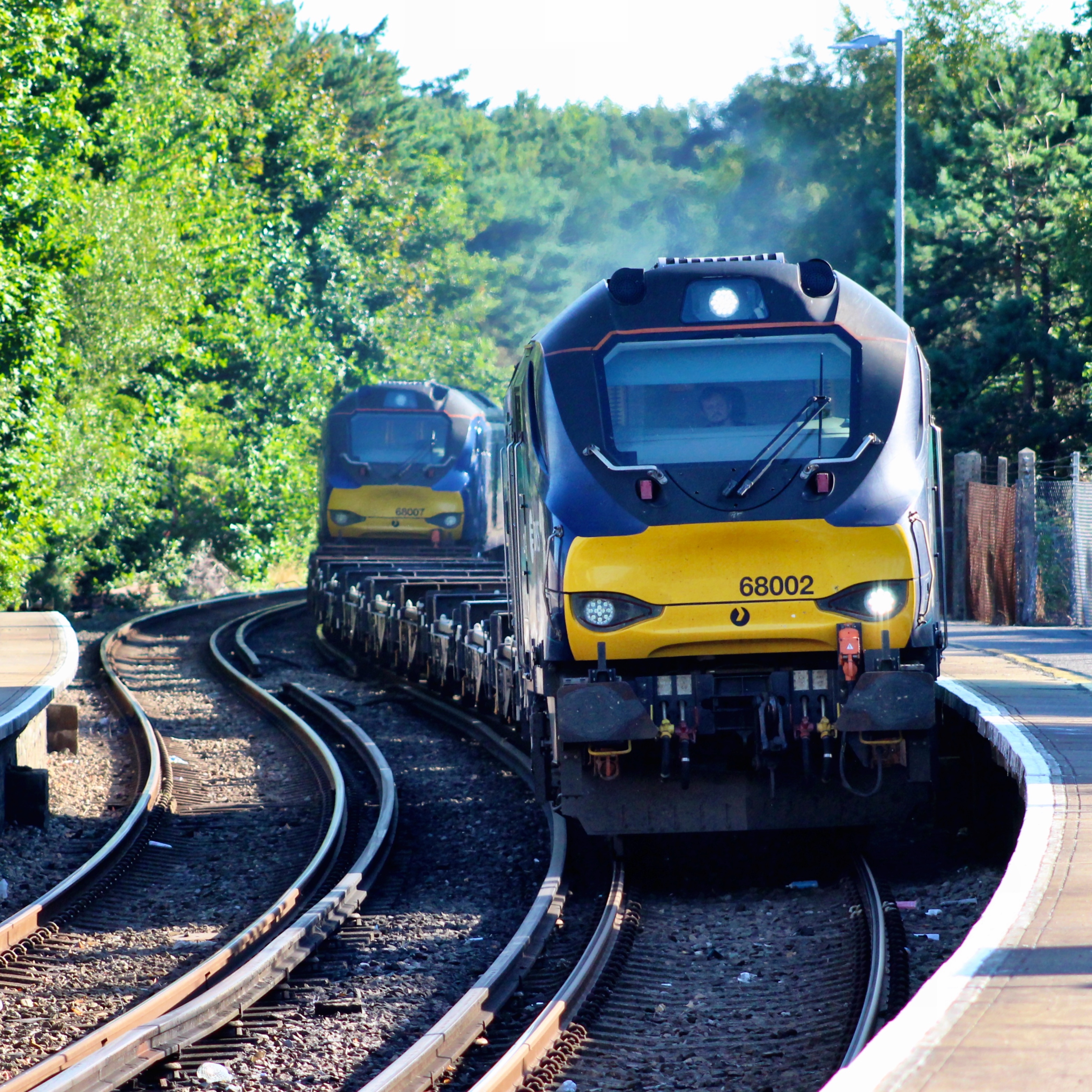
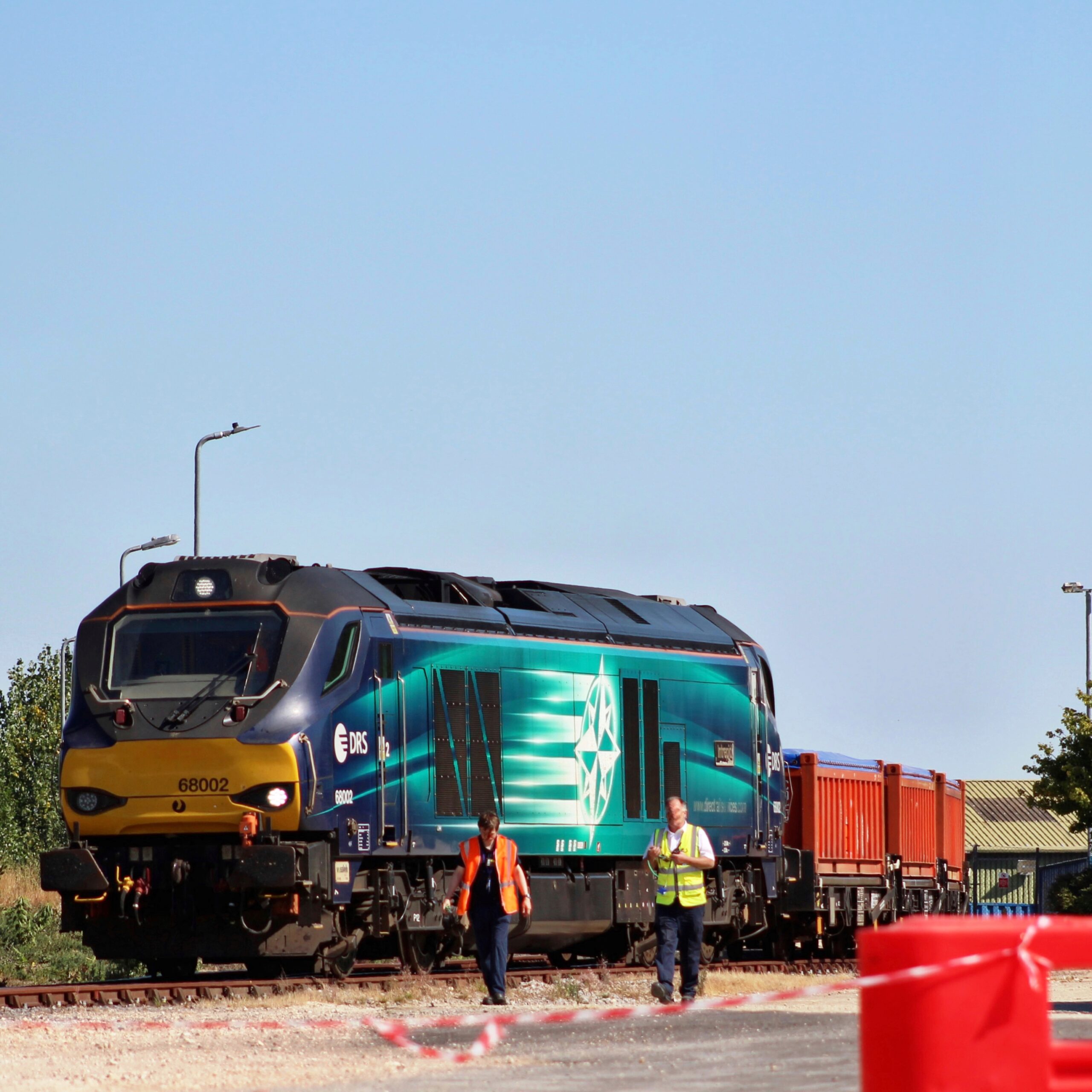
On what turned out to be the final trip to Winfrith; Direct Rail Services Class 68 No.’s 68016 ‘Fearless’ & 68002 ‘Intrepid’ work 6Z62 0100 Crewe Coal Sidings DRS to Winfrith Sidings (Wool) passing through Poole – 23/01/2024
It has been announced Direct Rail Services (DRS), the rail freight arm of Nuclear Transport Solutions (NTS), has now completed its task in the transportation of radioactive materials from the Winfrith treated waste store as the very last flasks of radioactive waste have been moved to their final destination at the low-level waste repository near Cumbria in the Lake District. The final rail shipment ran on 23rd January 2024 and marked a reduction in legacy waste on the Winfrith site by approximately seventy per cent. The successful completion of this contract contributes to returning the site to heathland with public access. It’s the first site from the first generation of nuclear power plants to be completely decommissioned.
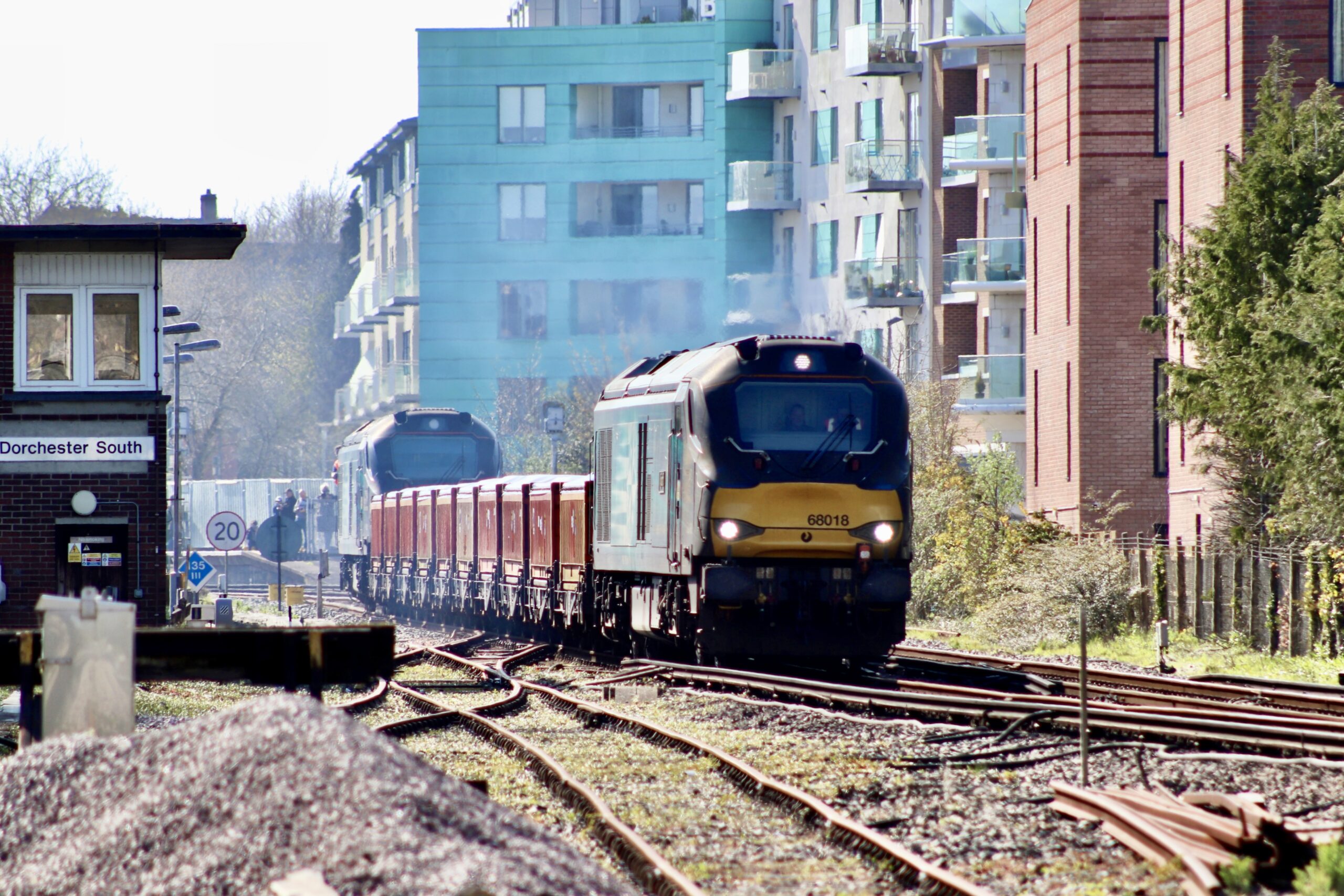
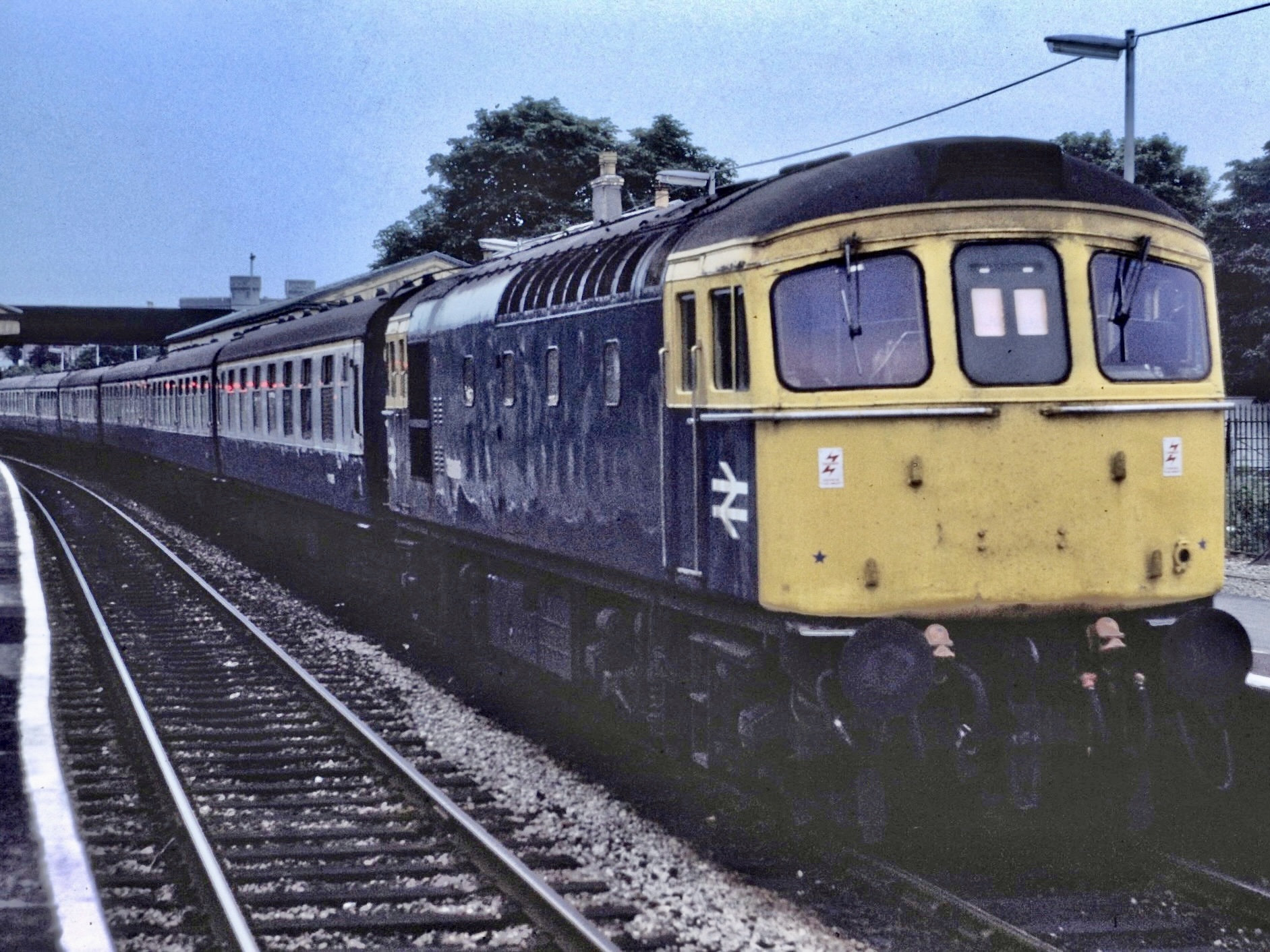
From 1980, a Class 33/0 at Dorchester South yard with a Winfrith flask. I’ve rather frustratingly mislaid the original photographic print which contains the actual date and locomotive detail, but do recall we trainspotters were chased away by railway staff when these workings arrived – xx/xx/1980
Forthcoming Dorset Engineering Work
The lines in the Poole area will be closed all day due to maintenance work on Sunday 17th March 2024.
London Waterloo to Weymouth services will terminate at Bournemouth.
London Waterloo to Poole services will terminate at Bournemouth.
Buses will run between Bournemouth and Poole (non-stop).
Buses will run between Bournemouth and Wareham.
A revised service will run between Wareham and Weymouth.
Monday 18th to Wednesday 20th March 2024, the lines between Dorchester South and Weymouth will be closed from Monday to Wednesday all days inclusive due to maintenance work.
Great Western Railway services between Weymouth and Yeovil Pen Mill will be affected by this work.
London Waterloo to Weymouth services will be revised and will terminate at Dorchester South.
Buses will run between Dorchester South and Weymouth.
In association with these works, a Freightliner engineering train is showing on Real Time Trains as running as 6Y85 2348 Eastleigh East Yard to Dorchester South departs its source on Sunday 17th March 2024 and arrives Dorchester South at 0110 (on the 18th) – returning as 6Y85 1454 Dorchester South to Eastleigh East Yard on 19th March
The lines between Bournemouth and Poole will be closed all day due to maintenance work on 23rd March.
London Waterloo to Poole and Weymouth services will terminate at Bournemouth.
Buses will run between Bournemouth and Poole.
A revised service will run between Poole and Weymouth.
In addition to this, the lines in the Brockenhurst area will be closed all day due to maintenance work on 24th March.
London Waterloo to Weymouth services will terminate at Southampton Central.
London Waterloo to Poole services will terminate at Southampton Central.
Fast buses will run between Southampton Airport Parkway, Bournemouth and Poole.
Fast buses will run between Southampton Central, Bournemouth and Poole.
Buses will run between Southampton and Poole via Brockenhurst (buses will not call at Beaulieu Road).
A revised service will run between Poole and Weymouth.
Passengers travelling from London Waterloo to Bournemouth, Poole and Weymouth should change at Southampton Airport Parkway for the fast bus service to Poole.
Sunday 28th April, the lines in the Wool area will be closed all day due to maintenance work.
London Waterloo to Weymouth services will terminate at Wareham.
Buses will run between Wareham and Dorchester South.
Buses will run between Wareham and Weymouth.
A revised service will run between Dorchester South and Weymouth.
Looking further ahead, rail improvement work will also affect train services between Castle Cary and Weymouth in the autumn.
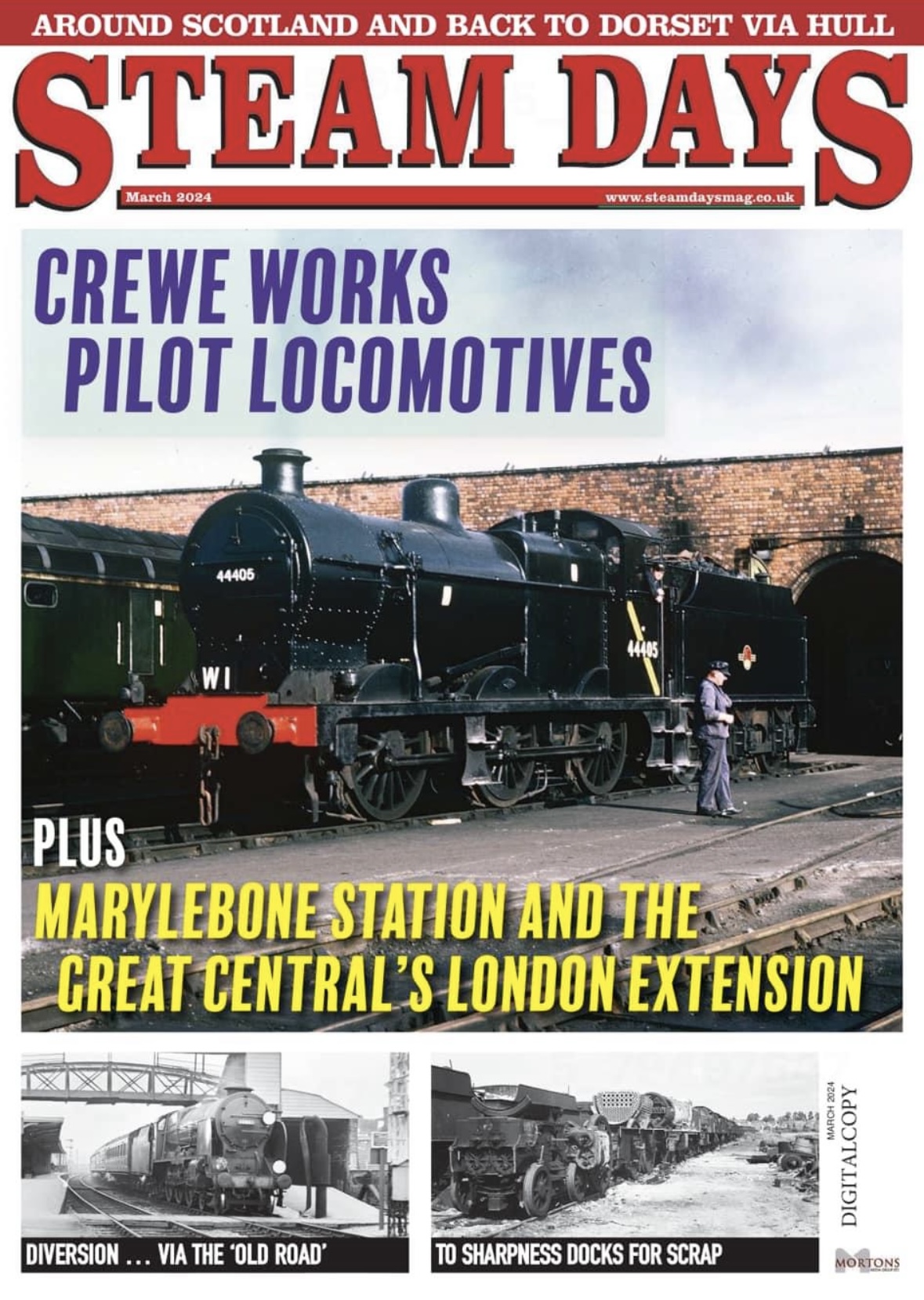
The March 2024 edition of “Steam Days” magazine features Colin Boocock’s well illustrated account of train diversions in 1960 off the Bournemouth main line and onto what was known as both the ‘Old Road’ after the direct line to Bournemouth was opened in 1888 or ‘Castleman’s Corkscrew’, so named after Charles Castleman who was the driving force in getting the Southampton & Dorchester Railway built and its somewhat circuitous route.
Thanks for reading – we’ll be back soon with a further updates of happenings along the rails in Dorset. Be seeing you!
Postscript:
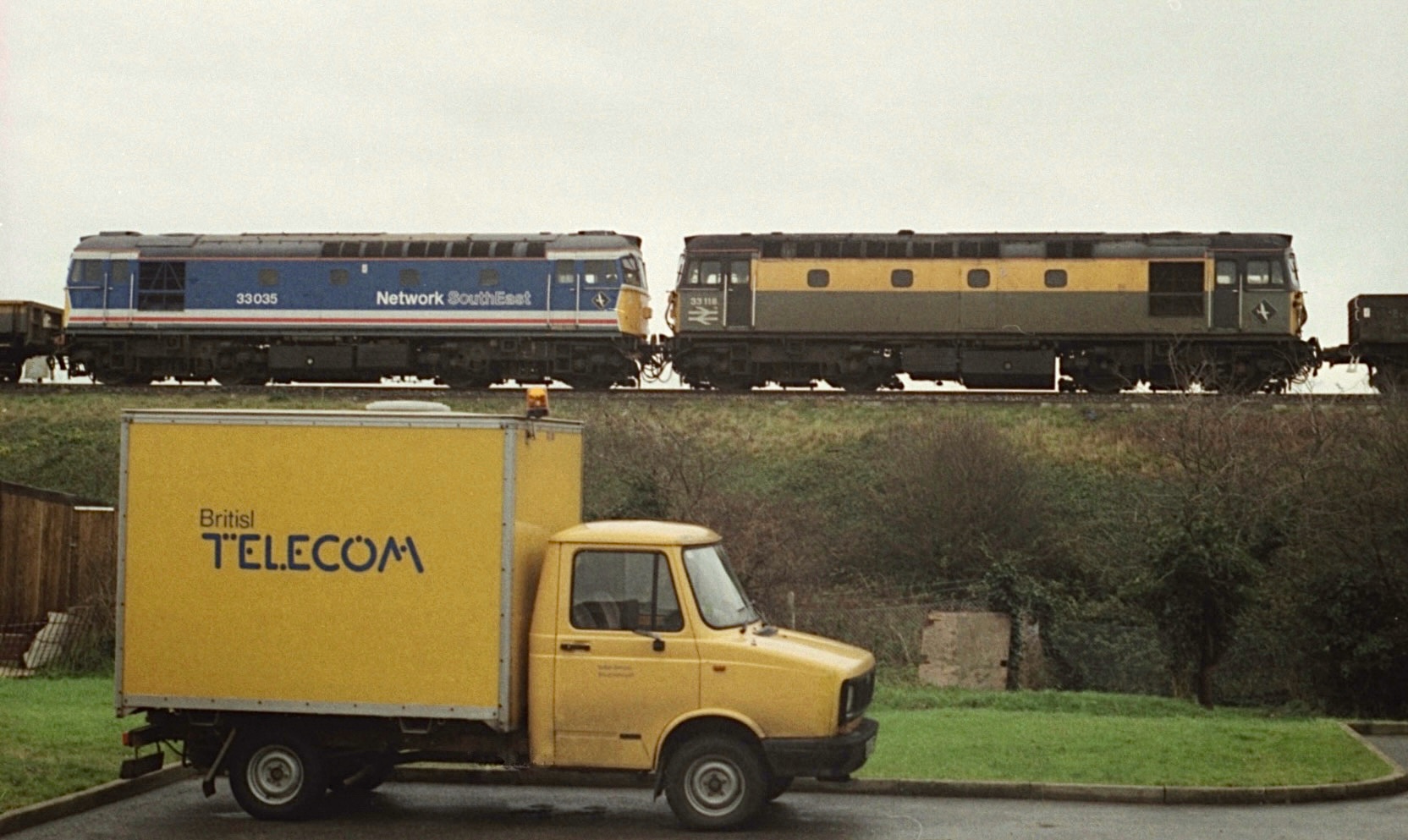
Engineering work in days gone by…. Class 33/0 No. 33035 and Class 33/1 No. 33118 on Bincombe Bank adjacent to Upwey Telephone Exchange sometime in the early 1990’s. No. 33118 was withdrawn from service in April 1993 and cut up by MRJ Phillips at Eastleigh Depot by February 1997. No. 33035 was named ‘Spitfire’ in December 1993 and withdrawn in October 1996 but lives on in preservation – xx/xx/199x
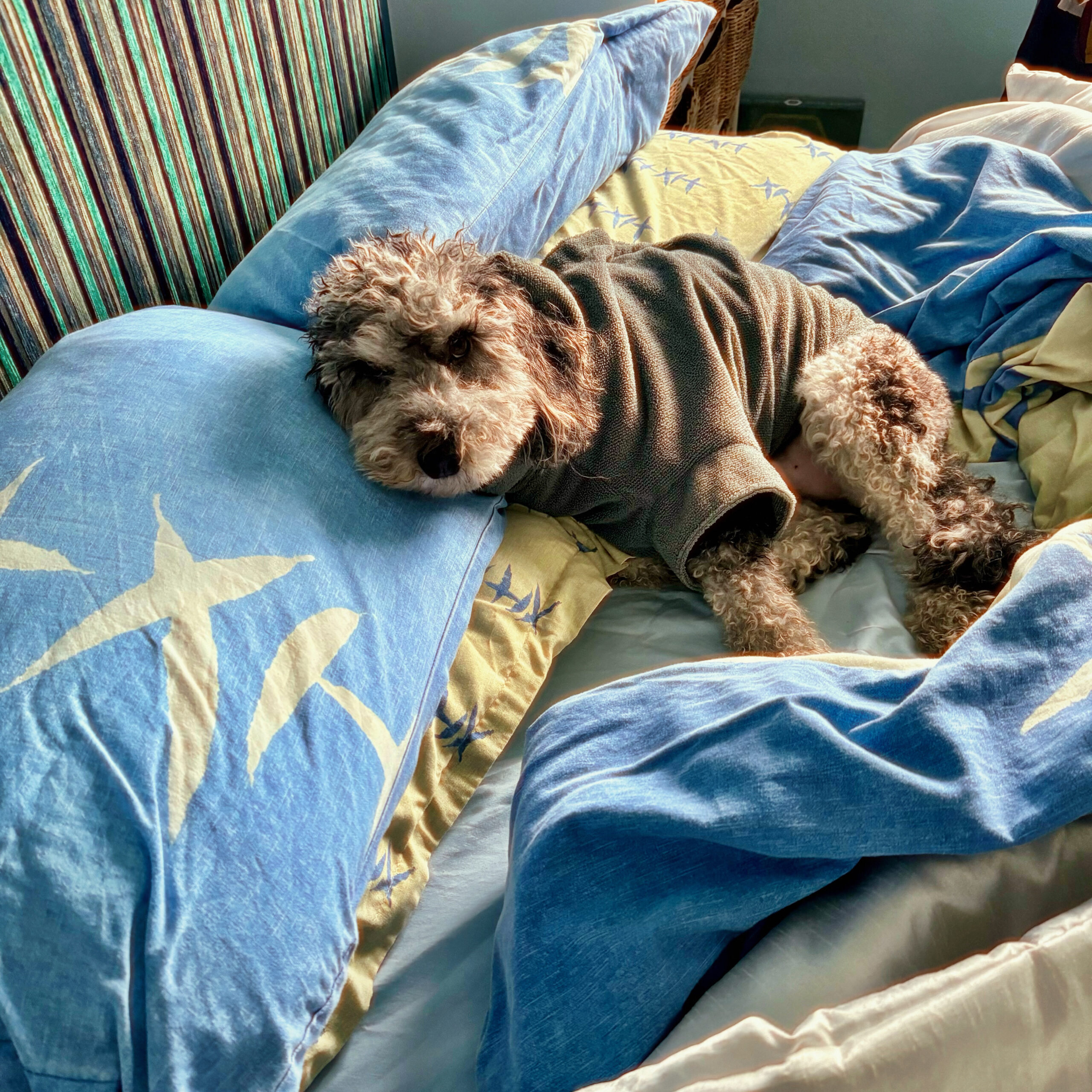
After rolling in something unquestionable while out on a walk, Yoshi enjoyed a wash in the shower. Afterwards he made himself at home in the guest room. Just as long as he didn’t expect room service! – 30/01/2024
January 20th 2024 to January 31st 2024
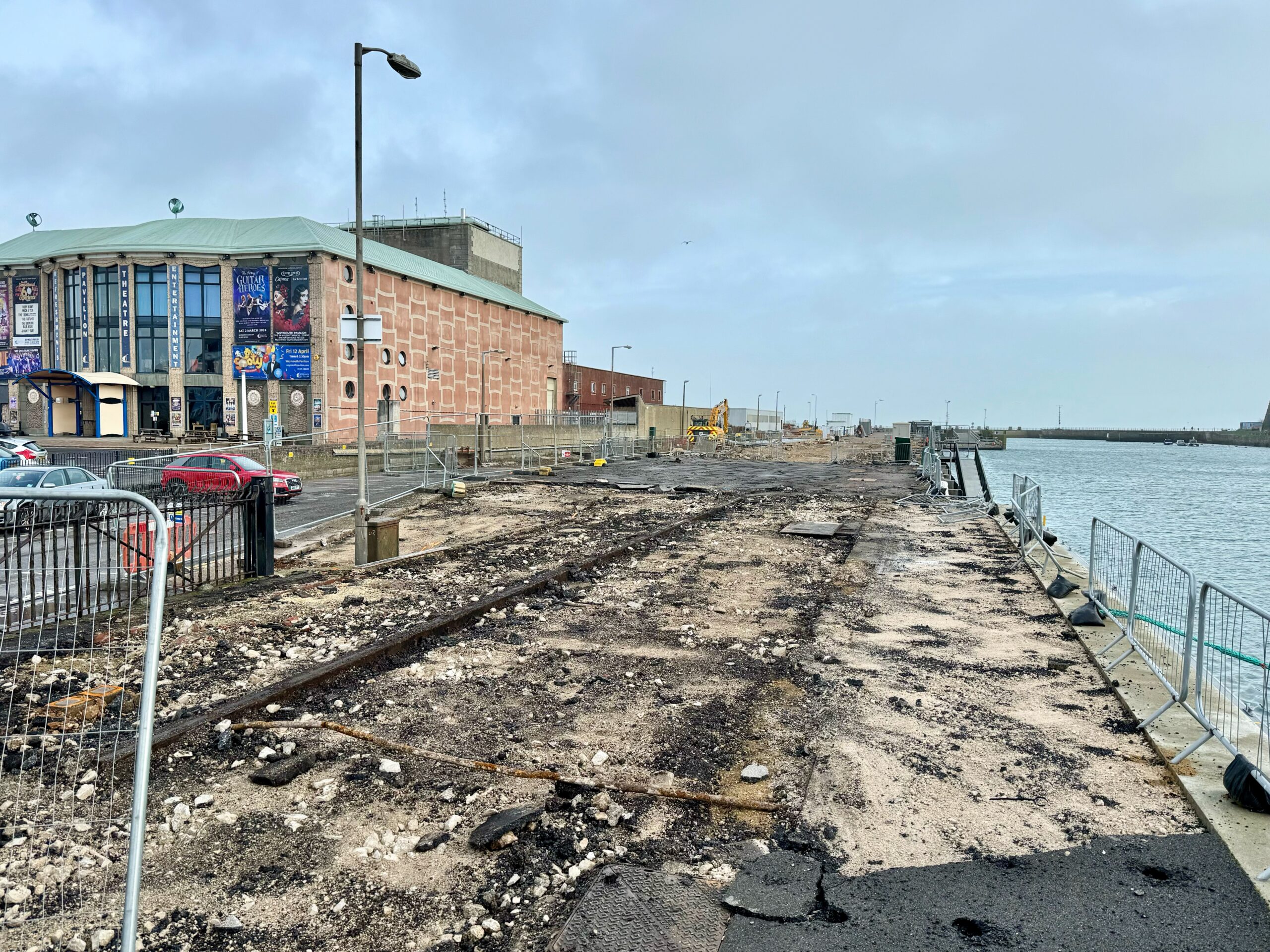
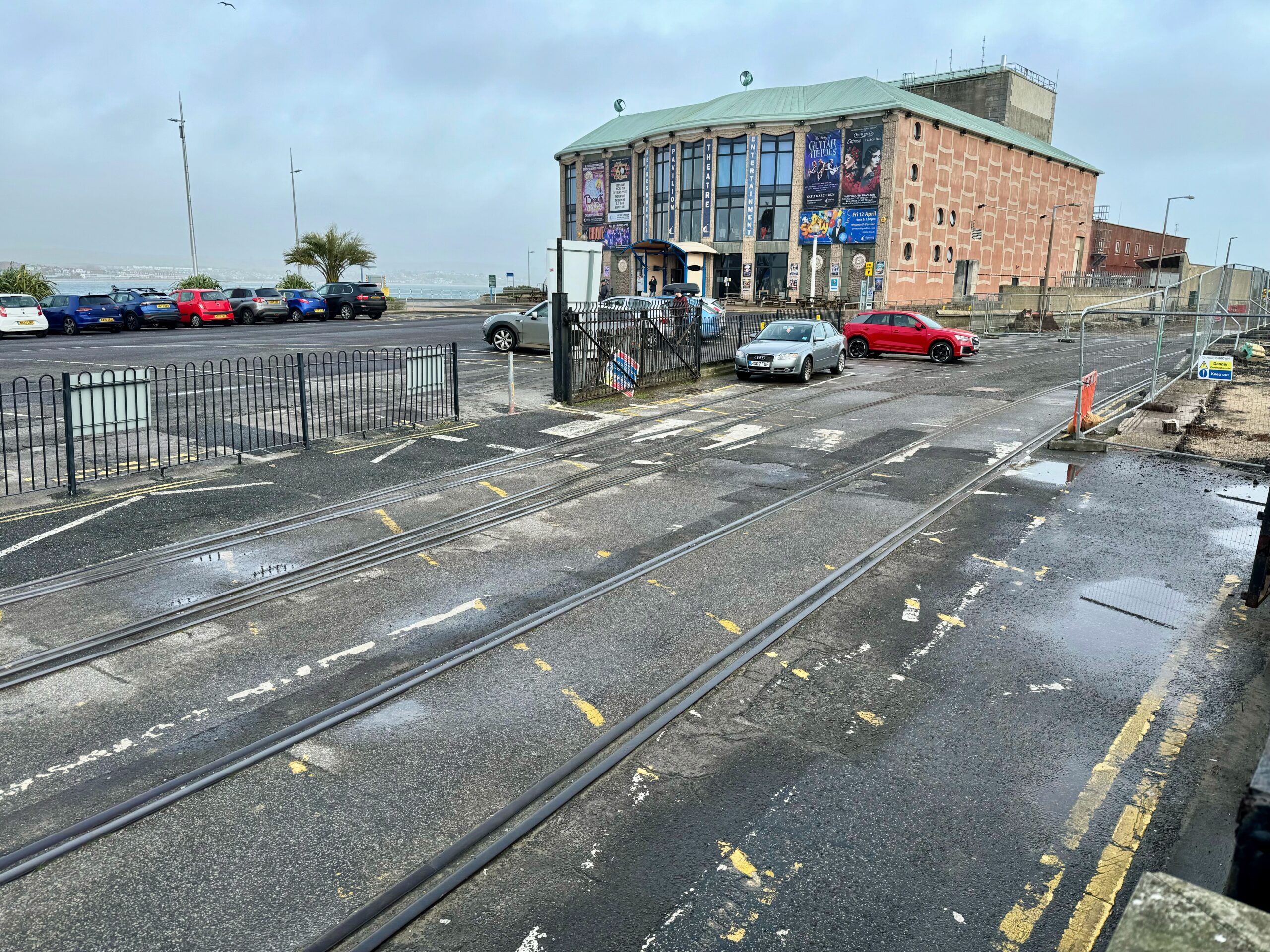
Sunday 21st – Yoshi and I took a drive to Weymouth to catch up with old friends. We took a walk around the Weymouth Peninsula to see the continuing work at the site of the former Weymouth Harbour railway station which is part of the Weymouth Quay Regeneration Project. Tracks which would have once been used by quayside cranes had been unearthed, but their exposure was short-lived and I’m told they have now been removed. The old platform will, I assume be completely levelled to make way for new fishing and harbour businesses, pedestrianised access and seating areas which will be created along the quayside eventually joining with other walkways linking the harbour with Weymouth beach.
The site of the former Weymouth Quay station in January 2024 – 21/01/2024
The work has been enabled because of a grant worth £3.79m which was awarded to the then Weymouth and Portland Borough Council, in partnership with the Weymouth Area Development Trust, in March 2019 from the Government’s Coastal Communities Fund. The bid was submitted on behalf of the Weymouth Coastal Community Team.
There are still partial remains of the Weymouth Harbour Tramway track, most of which was torn up in 2020/2021 – 21/01/2024
Monday 22nd – Because of concerns that Storm Isha, which hit the UK overnight on 21st/22nd January, Network Rail (NR) took the precautionary decision to run a “route proving” train between Bournemouth and Dorchester South in the early hours of Monday morning. It’s a common practice in many parts of the country with locomotives owned by freight operating companies being deployed for specific conditions on a specific route and at riskier locations, “proving a section of railway line is clear” of obstacles prior to scheduled passenger or freight trains running. I’m not aware of a previous similar event happening locally in recent times.
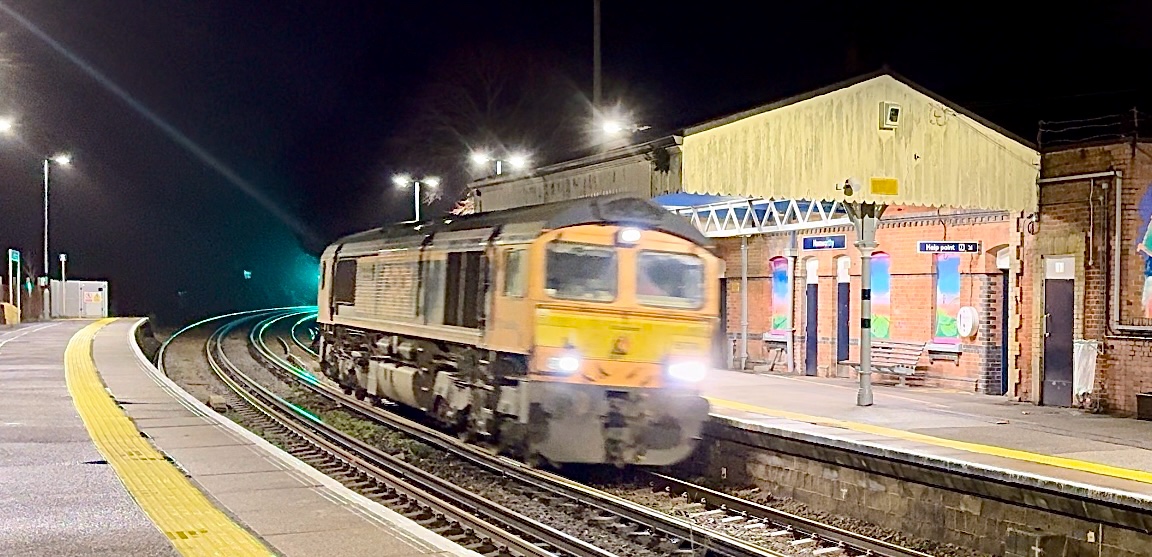
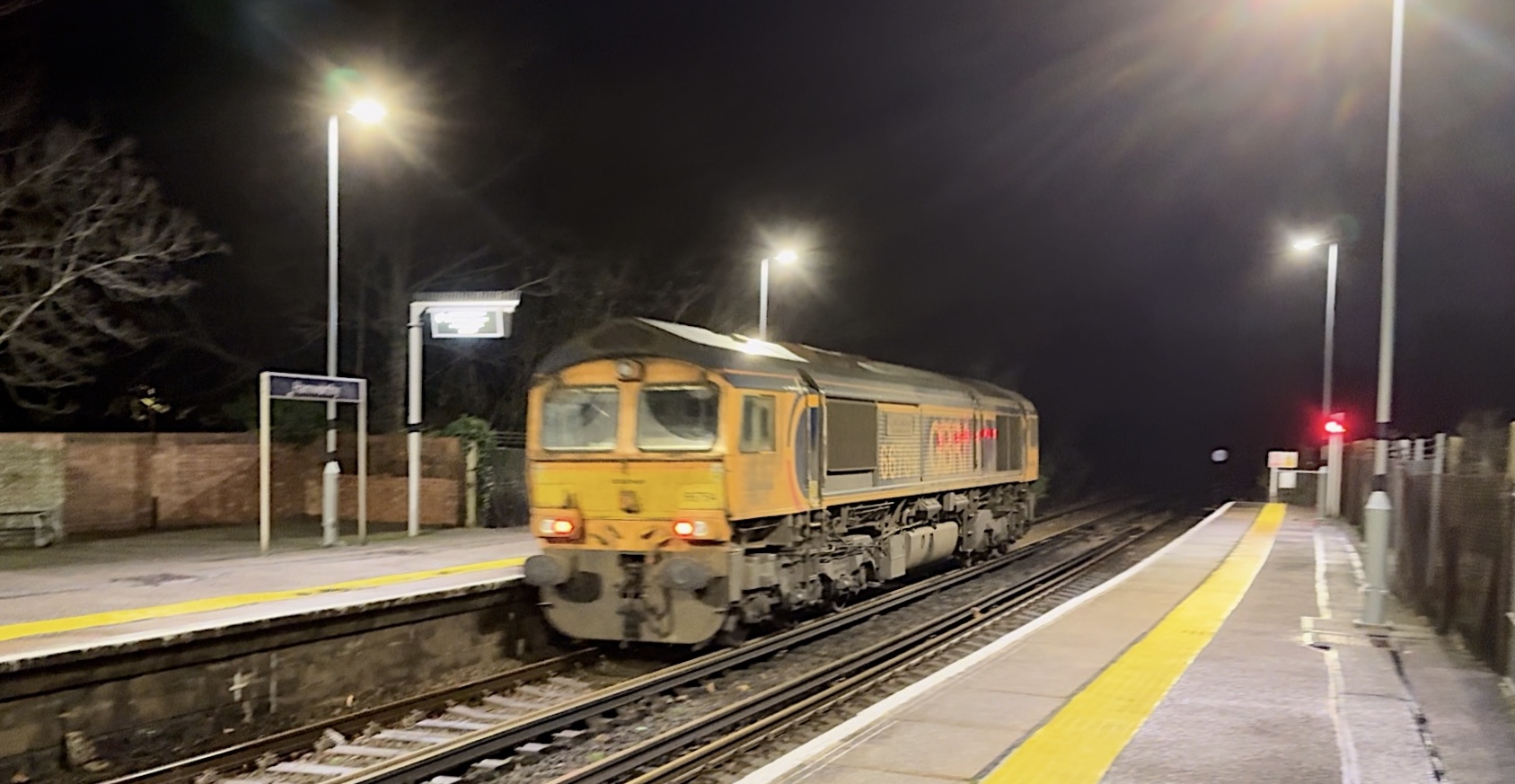
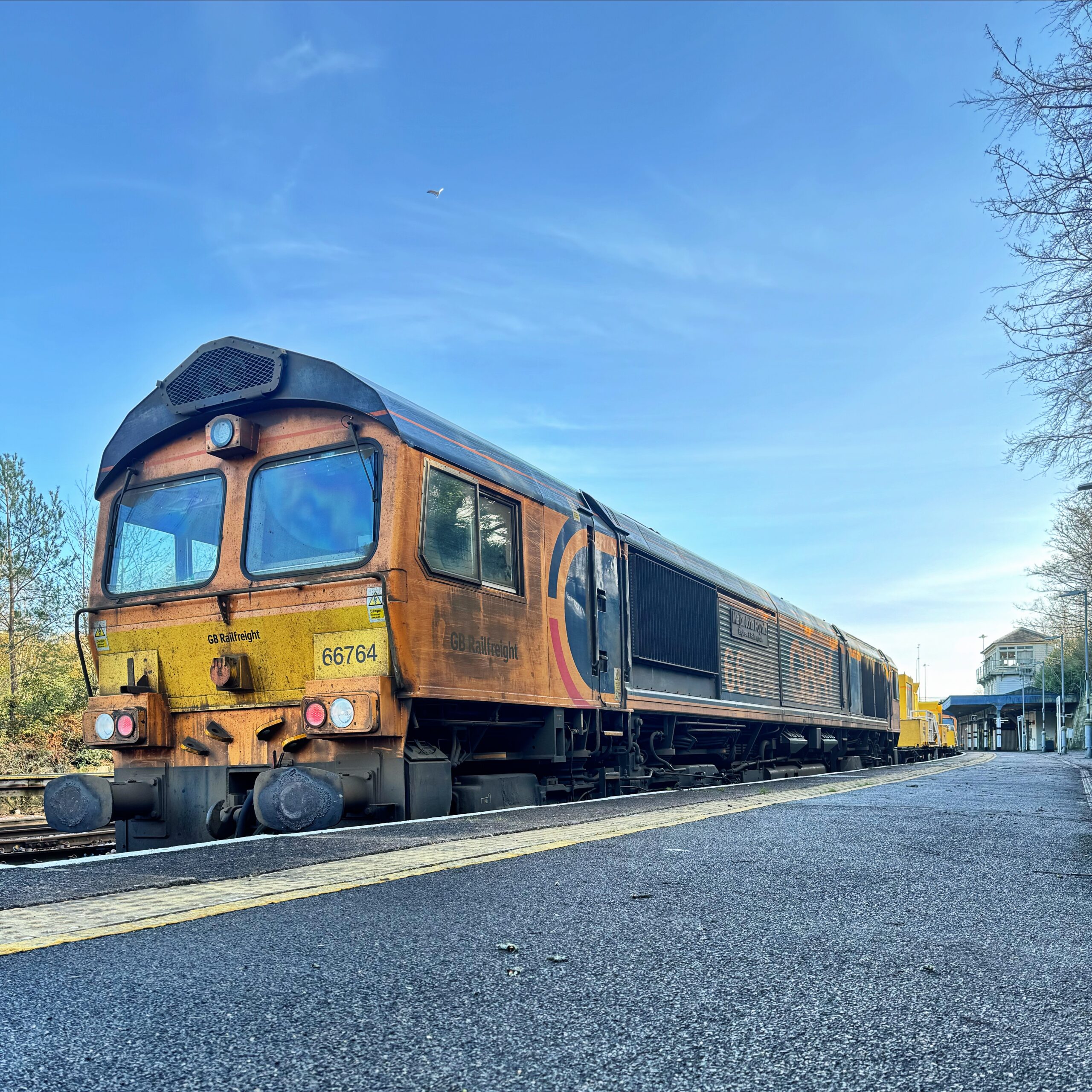
Light engine movement passing Hamworthy with GBRf Class 66 No. 66764 ‘Major John Poyntz Engineer & Railwayman’ worked proving train 0Y89 0045 Totton Yard to Totton Yard which ran to Dorchester South – 22/01/2024GBRf Class 66 No. 66764 ‘Major John Poyntz Engineer & Railwayman’ running as 0Y89 0045 Totton Yard to Totton Yard passing Hamworthy – 22/01/2024
The first passenger train out of Weymouth formed by Class 444 No. 444032 ran ECS to Dorchester South, thus providing route proving between these two stations.
Tuesday 23rd – A busy day when both a run to Winfrith and a Class 458 Unit Drag to Bournemouth depot took place. First up was Direct Rail Services (DRS) Class 68 No.’s 68 68016 ‘Fearless’ & 68002 ‘Intrepid’ working 6Z62 0100 Crewe Coal Sidings DRS to Winfrith Sidings (Wool). I chose to see this one passing through Poole and I was both intrepid and fearless heading out in the wet weather conditions.
Direct Rail Services Class 68 No.’s 68 68016 ‘Fearless’ & 68002 ‘Intrepid’ working 6Z62 0100 Crewe Coal Sidings DRS to Winfrith Sidings (Wool) passing Poole – 23/01/2024DRS Class 68 No.’s 68 68016 ‘Fearless’ & 68002 ‘Intrepid’ top and tail 6Z62 0100 Crewe Coal Sidings DRS to Winfrith Sidings (Wool) passing SWR Class 450 No. 450084 working ECS move 5B32 0846 Poole Storage Sidings to Poole before running a service to Winchester – 23/01/2024Class 450 No. 450084 working ECS move 5B32 0846 Poole Storage Sidings to Poole approaches Poole as DRS Class 68 No.’s 68 68016 ‘Fearless’ & 68002 ‘Intrepid’ working 6Z62 0100 Crewe Coal Sidings DRS to Winfrith Sidings (Wool) pass – 23/01/2024
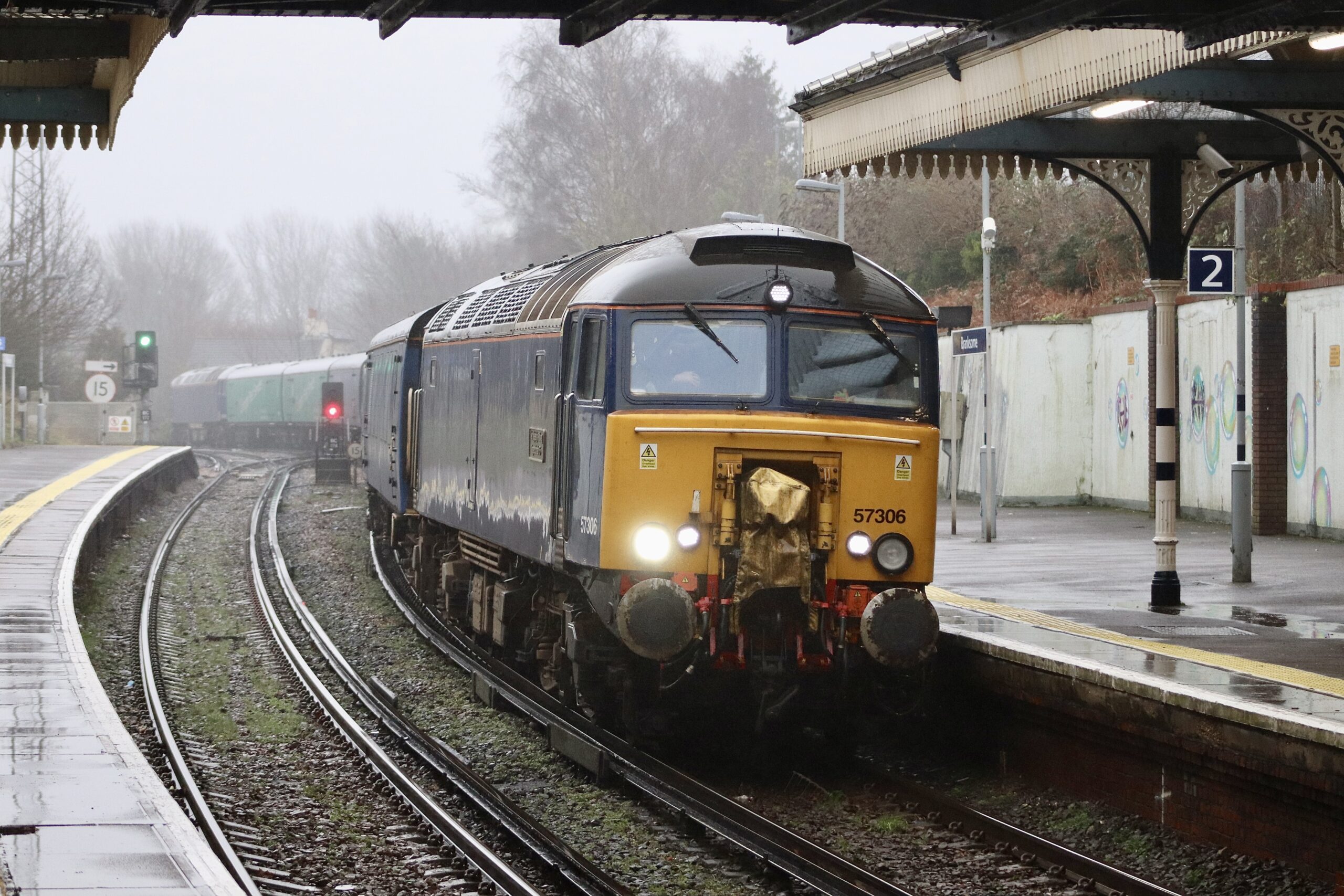
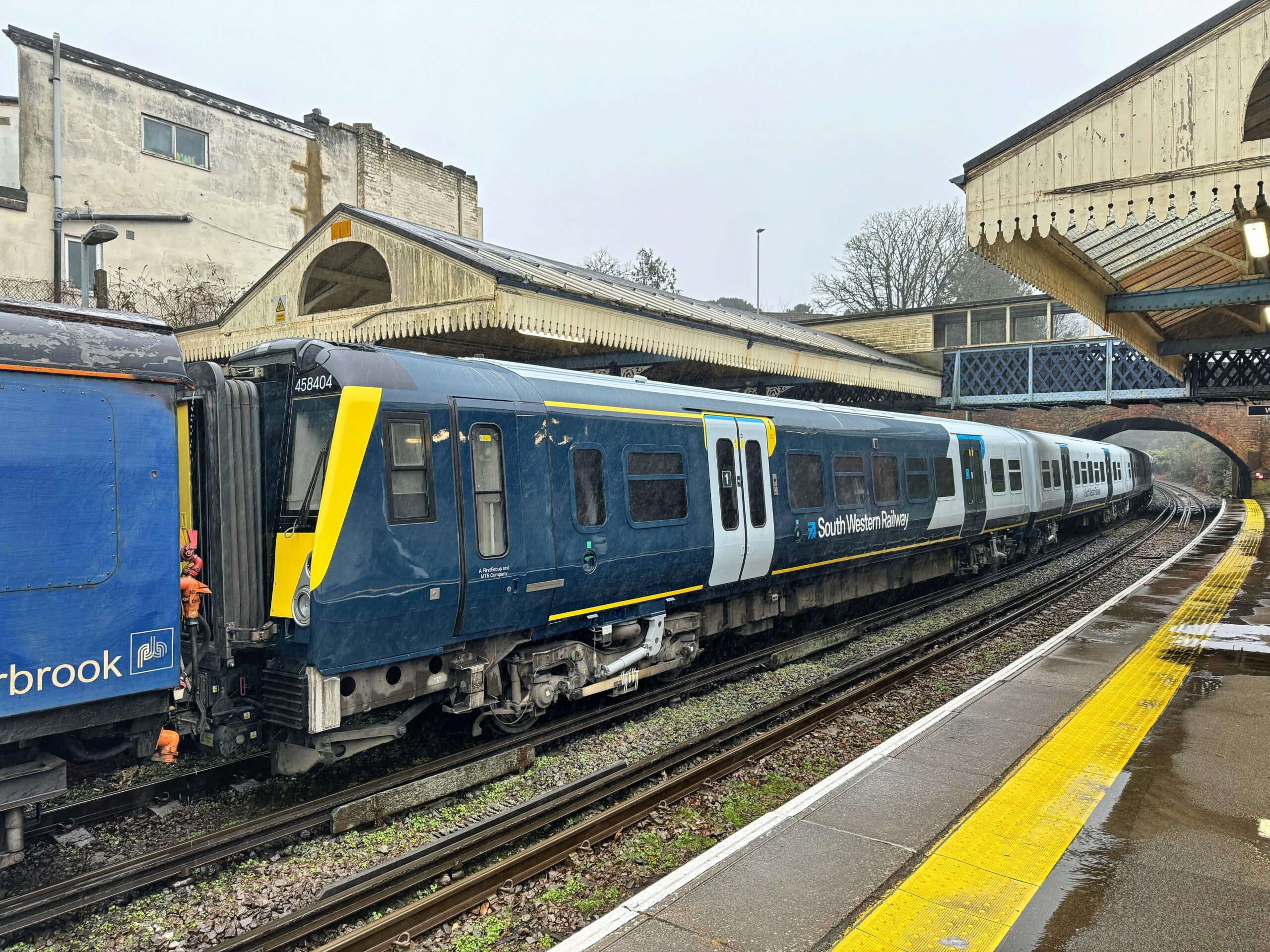
Later that morning I took the train to see GBRf Class 57 No. 57306 ‘Her Majesty’s Railway Inspectorate 175’ leading refurbished South Western Railway (SWR) Class 458 EMU No. 458404 with No. 57305 at the rear into Branksome prior to the consist reversing into the depot. This was the second leg of the EMU’s transfer after initially setting out from Widnes the previous day, this working was recorded as 5X73 0728 Wembley Receptions 1-7 to Bournemouth TRSMD.
GBRf Class 57 No. 57306 ‘Her Majesty’s Railway Inspectorate 175’ enters Branksome railway station leading on 5X73 0728 Wembley Receptions 1-7 to Bournemouth TRSMD – 23/01/2024Refurbished SWR Class 458 EMU No. 458404 at Branksome – 23/01/2024GBRf Class 57 No. 57305 at Branksome preparing to haul 5X73 0728 Wembley Receptions 1-7 to Bournemouth TRSMD into the depot – 23/01/2024GBRf Class 57 No. 57306 ‘Her Majesty’s Railway Inspectorate 175’ now at the rear of 5X73 0728 Wembley Receptions 1-7 to Bournemouth TRSMD trails as the train makes its way into the depot – 23/01/2024
The Class 57’s returned to Widnes later in the day as 5Q58 1711 Bournemouth T&RSMD to Widnes Transport Tech taking with them Class 458 No. 458520, but I was unable to witness this. Well, dinner doesn’t eat itself!
I did however see the return, loaded Winfrith working; 6Z95 1551 Winfrith Sidings to Crewe Coal Sidings (DRS) which was running over half an hour late by the time it passed me at Hamworthy.
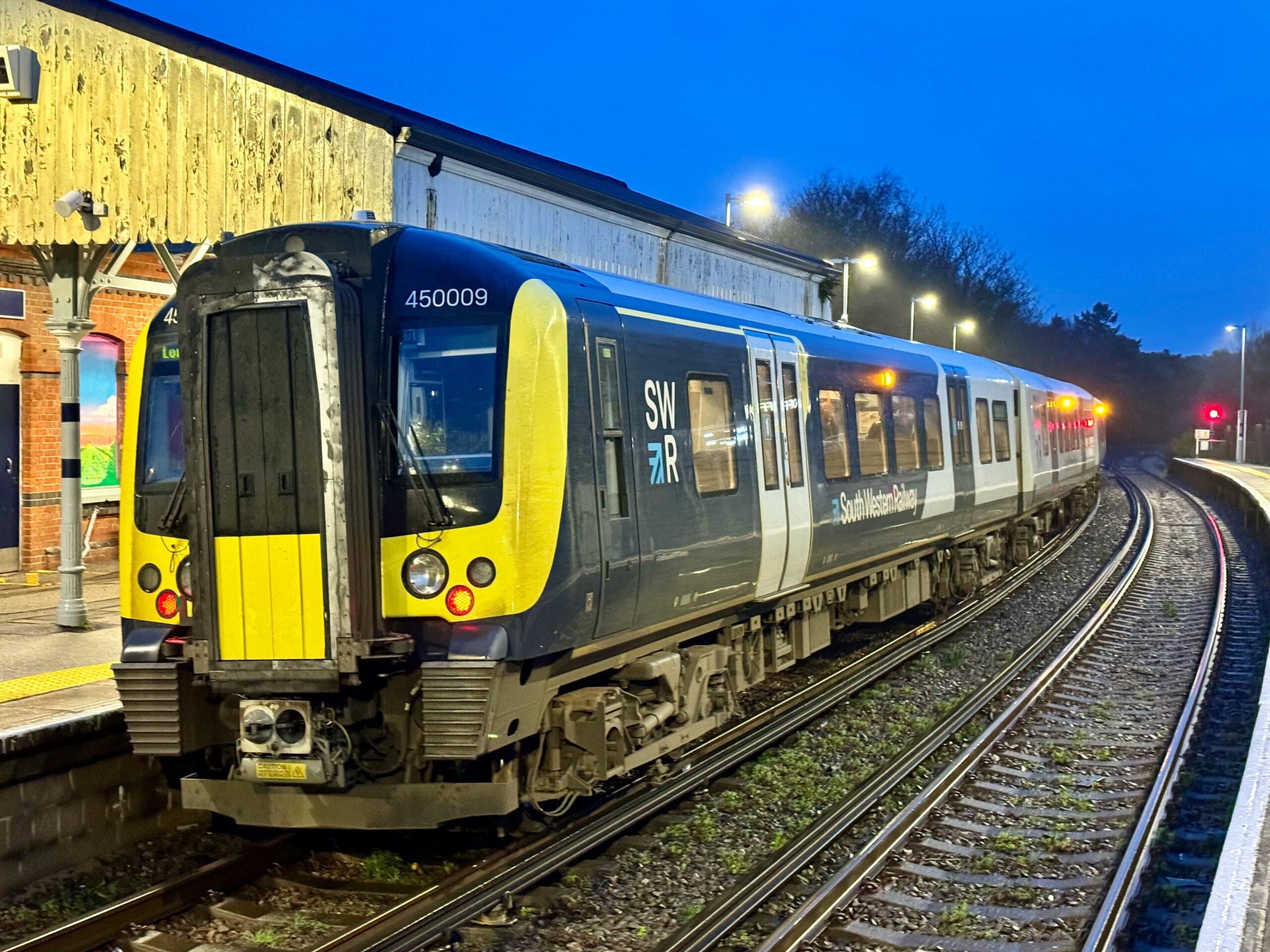
There have been several examples of 4-car Class 450 Desiro units making it west of Poole forming services to Weymouth recently. One such example was No. 450009 working 1W67 1305 London Waterloo to Weymouth and the corresponding return 1W68 1620 Weymouth to London Waterloo on 23rd January. Services to Weymouth are mostly entrusted to 5-car Class 444’s.
A rare visitor west of Poole Class 450 No. 450009 pauses at Hamworthy on 1W68 1620 Weymouth to London Waterloo – 23/01/2024
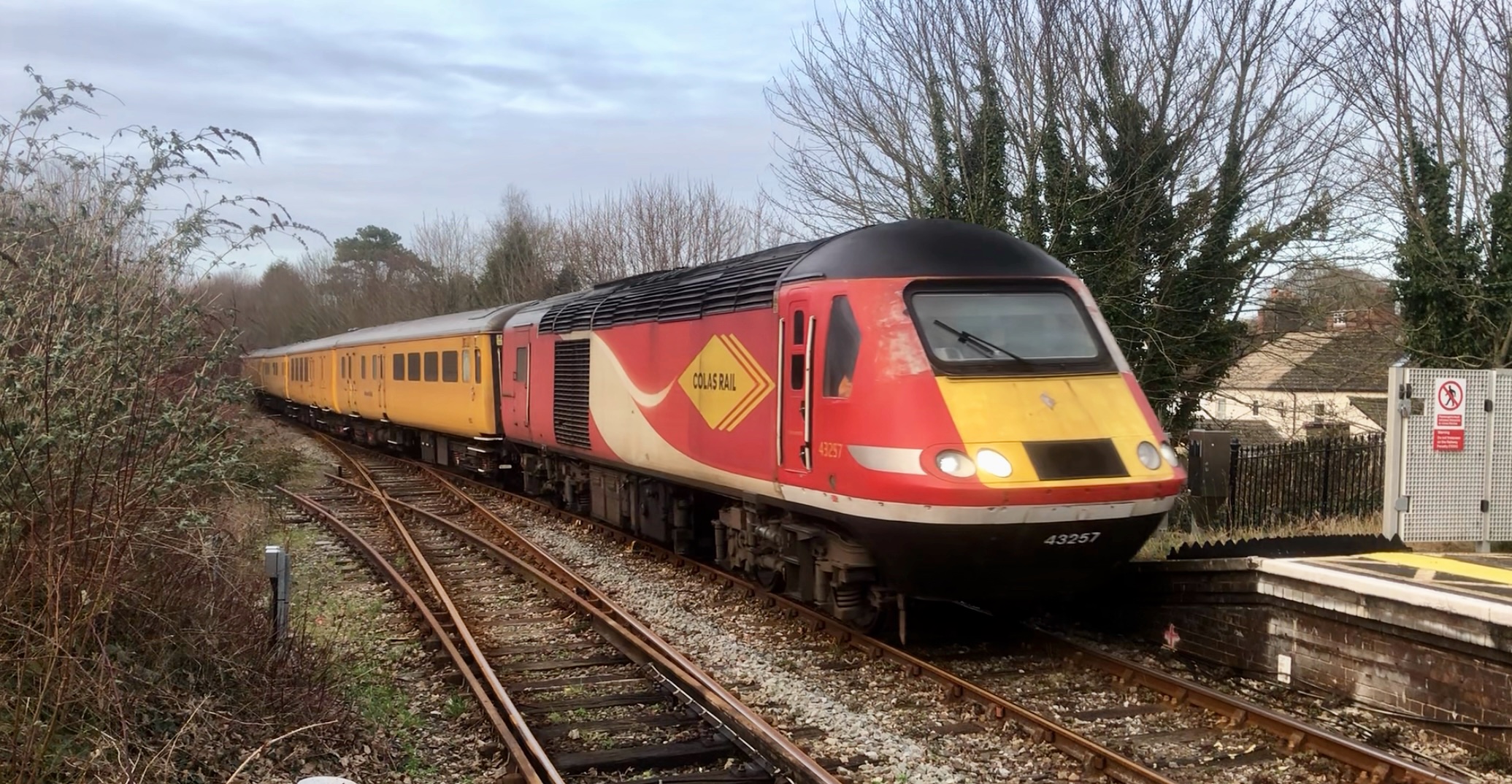
Wednesday 24th – The Network Rail (NR) New Measurement Train (NMT) top and tailed by Colas High Speed Train (HST) Class 43 power cars No.’s 43257 and 43274 working as 1Z22 0746 Derby R.T.C.(Network Rail) to Bristol Kingsland Road actually made it to Weymouth this month. Cause for celebration all round!
Class 43 No. 43257 on the approach to Dorchester West leading on 1Z22 0746 Derby R.T.C.(Network Rail) to Bristol Kingsland Road – 24/01/2024 (G E Barrett)Class 43 No. 43274 departing Dorchester West as 1Z22 0746 Derby R.T.C.(Network Rail) to Bristol Kingsland Road – 24/01/2024 (G E Barrett)
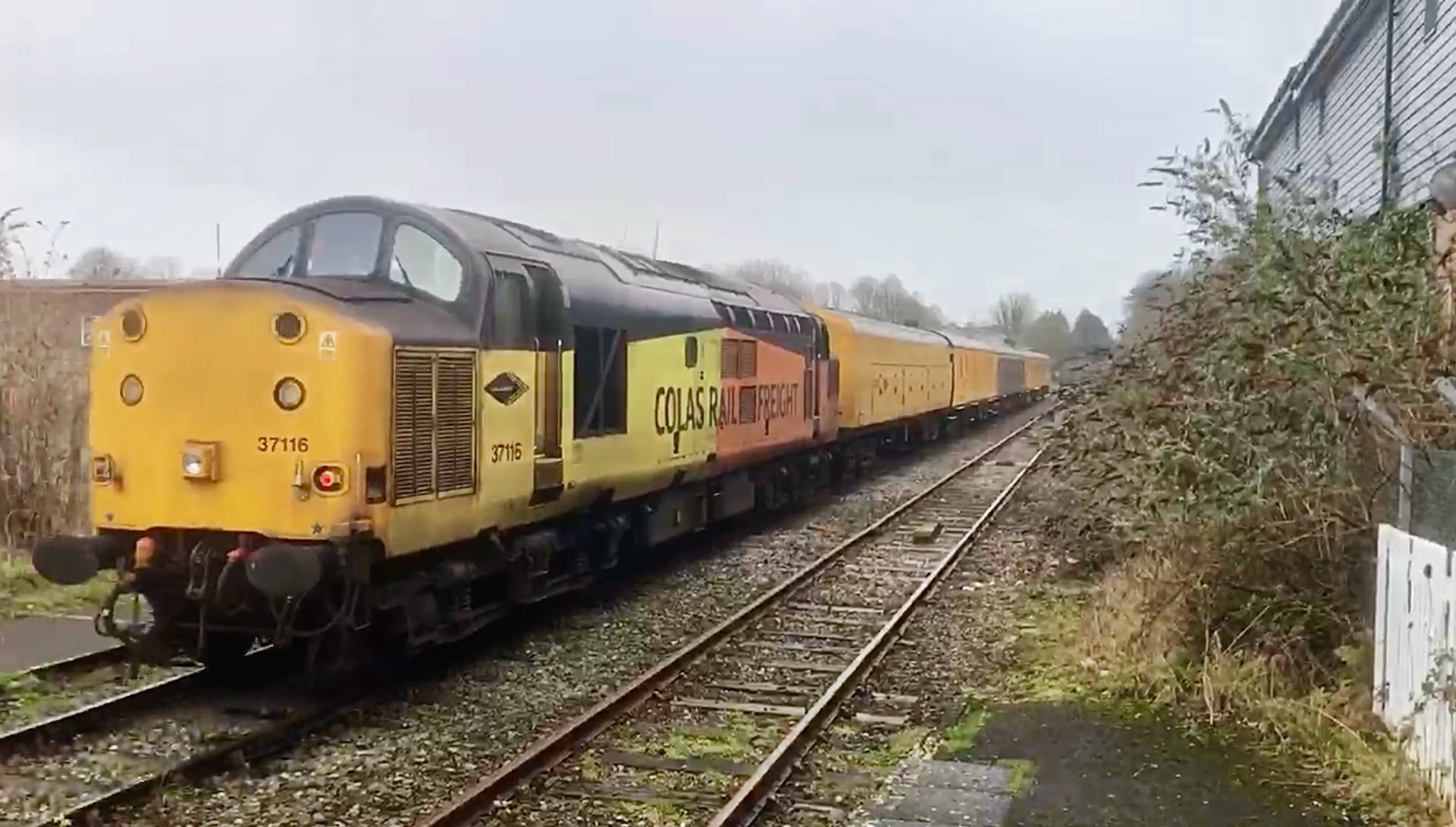
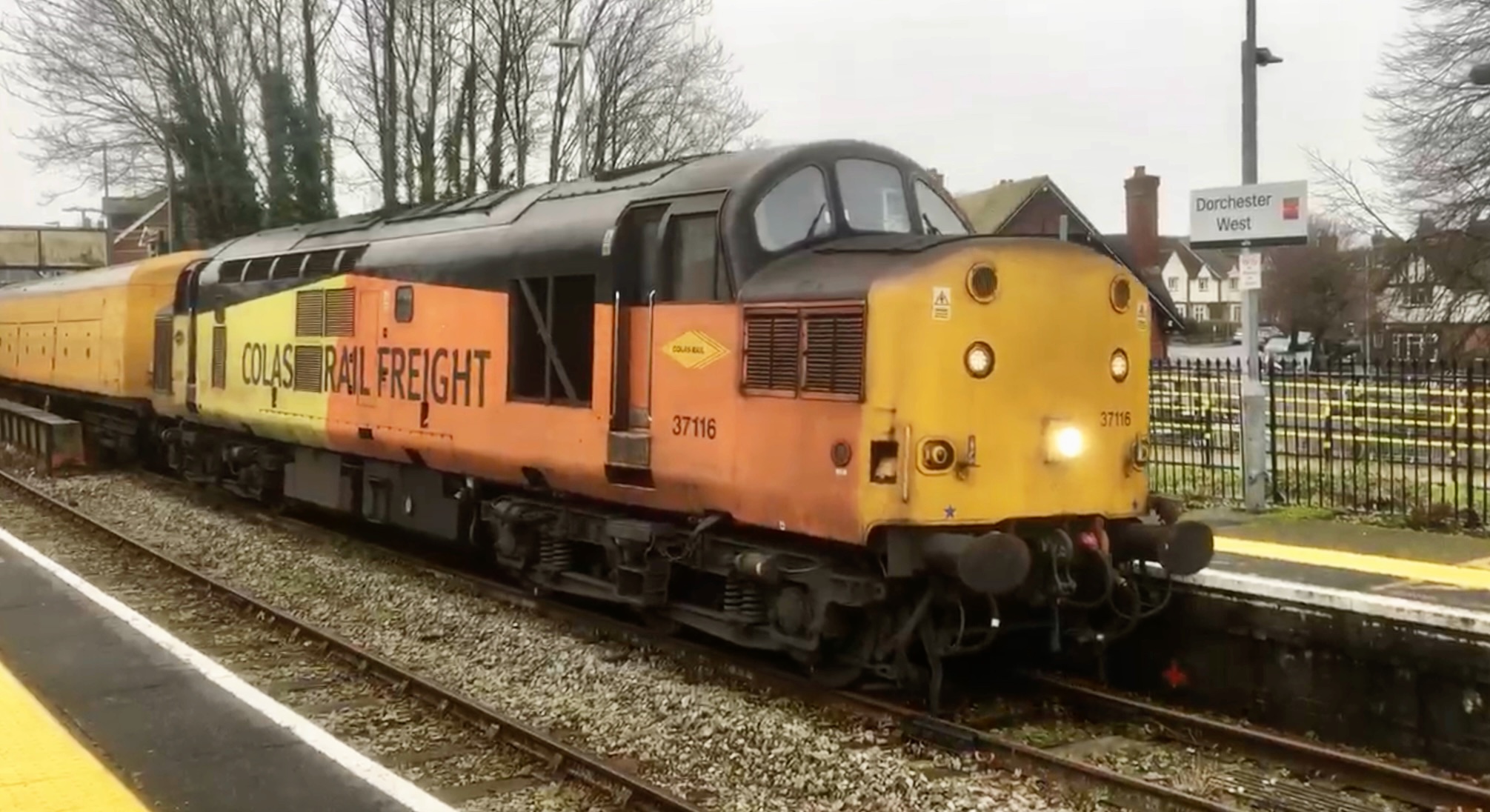
Thursday 25th – The Ultrasonic Test Unit consisting of Colas Class 37 No. 37116 and DBSO No. 9702 reached Weymouth as 3Q14 1109 Westbury Down T.C. to Westbury Down T.C.
Colas Class 37 No. 37116 departing Dorchester West at the rear of 3Q14 1109 Westbury Down T.C. to Westbury Down T.C. – 25/01/2024 (G E Barrett)Colas Class 37 No. 37116 at Dorchester West on the return leg of 3Q14 1109 Westbury Down T.C. to Westbury Down T.Chaving reversed at Weymouth – 25/01/2024 (G E Barrett)
Over on the South Western Main Line, services were severely disrupted on 25th January following the discovery of a broken rail between Christchurch and Hinton Admiral. South Western Railway (SWR) and CrossCountry (XC) trains were cancelled, delayed or revised with alternative road replacement transport being provided
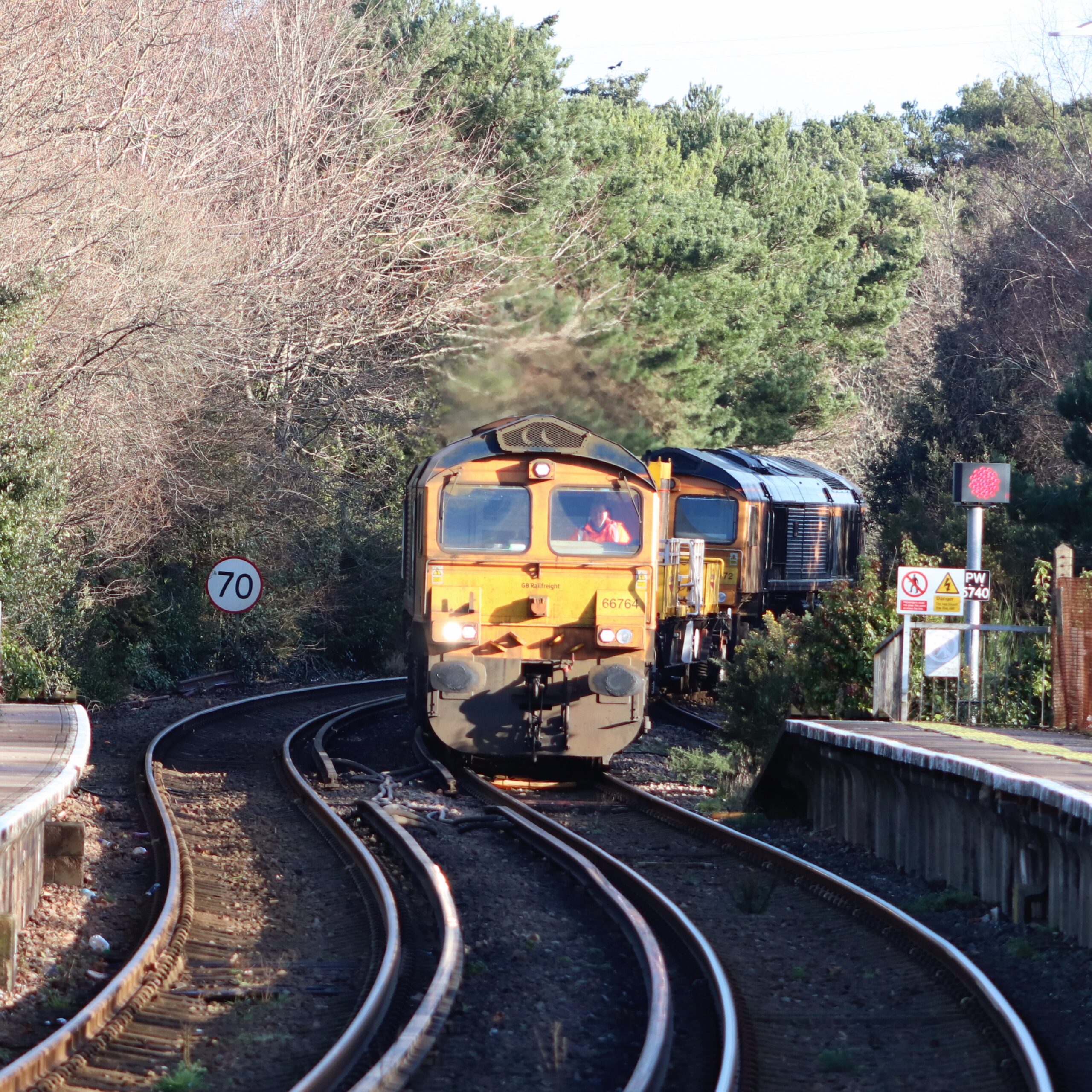
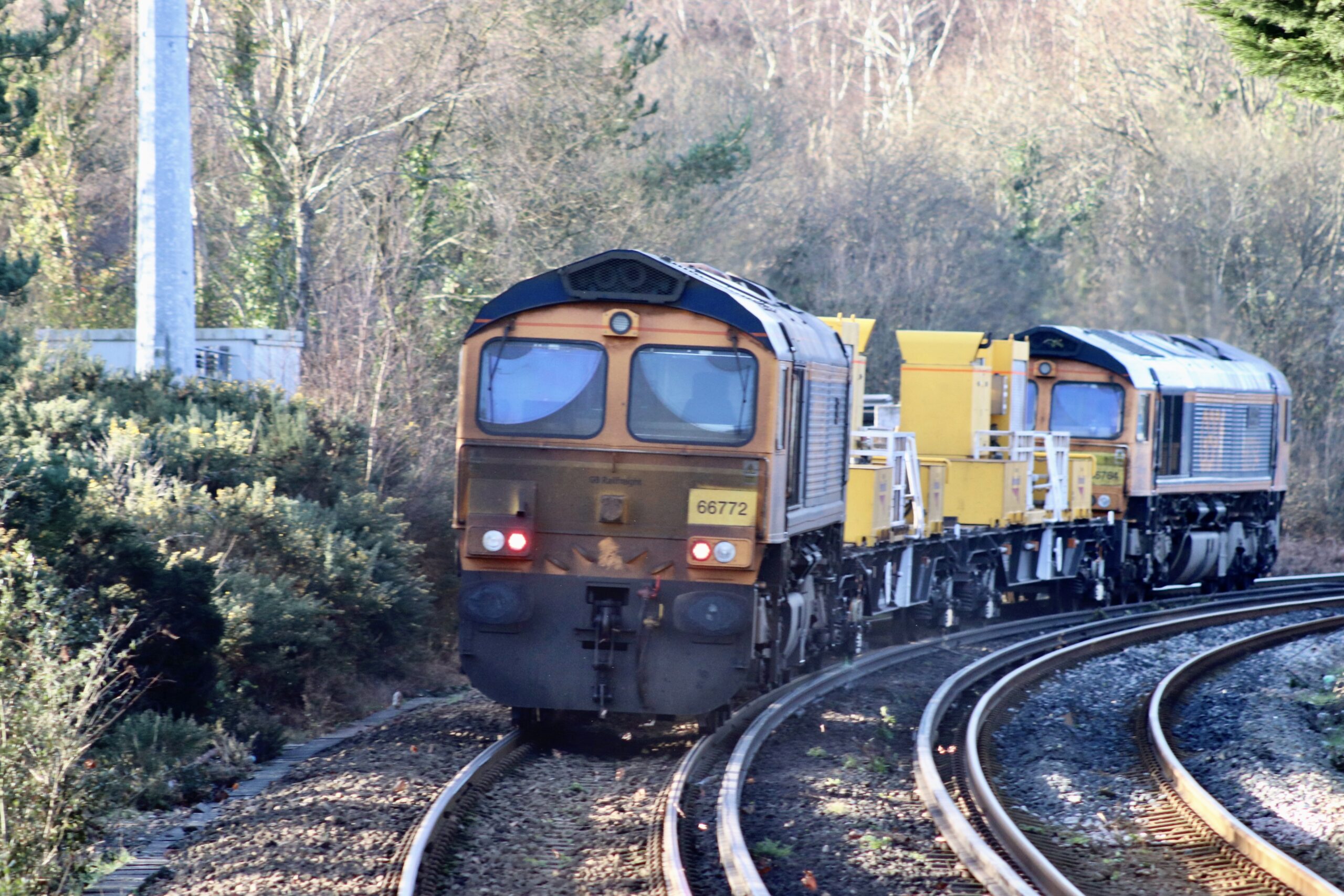
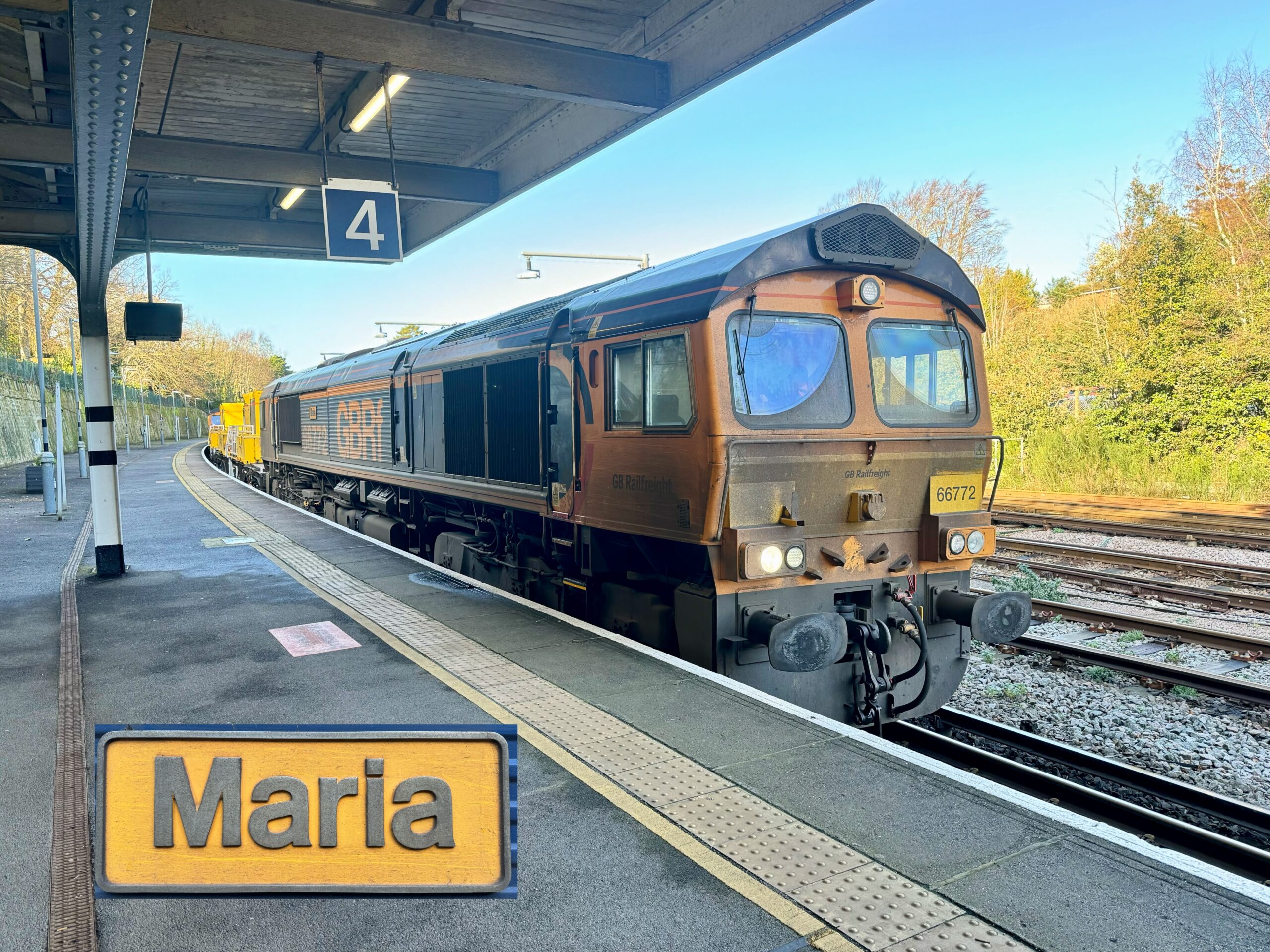
Friday 26th – With the weather turning drier, brighter and colder, today saw another outing for the Totton Yard based Snow & Ice Treatment Train (SITT) – the first and only run this week. Keeping an eye on it via the Open Time Train (OTT) maps and Real Time Trains (RTT) schedules, I could see that it was running almost 50 minutes ahead of schedule after departing Totton Yard early, so I opted to pop up to one of my favourite local locations, Hamworthy railway station, to see GBRf Class 66 No.’s 66764 ‘Major John Point Engineer & Railwayman’ and 66772 ‘Maria’ run through heading to Weymouth.
GBRf Class 66 No.’s 66764 ‘Major John Point Engineer & Railwayman’ and 66772 ‘Maria’ running 47 minutes early entering Hamworthy working 3Y88 0931 Totton Yard to Totton Yard – 26/01/2024GBRf Class 66 No. 66772 ‘Maria’ at the rear of SITT 3Y88 0931 Totton Yard to Totton Yard with 66764 ‘Major John Point Engineer & Railwayman’ leading, the consist having passed Hamworthy – 26/01/2024
Work commitments meant I hadn’t planned on seeing the return working, however a signal fault in the Poole area putting a full halt on trains heading east and Caroline having a lunch appointment meant, when I was free, I took the car and drove her to Christchurch – a sensible choice as this was where she needed to be. Conveniently, for me, the SITT still hadn’t passed Bournemouth as I drove home, so I ducked into the Asda car park which is conveniently situated adjacent the railway station and wandered over to the platforms where I was kindly allowed through the barriers to take photographs and video using my phone.
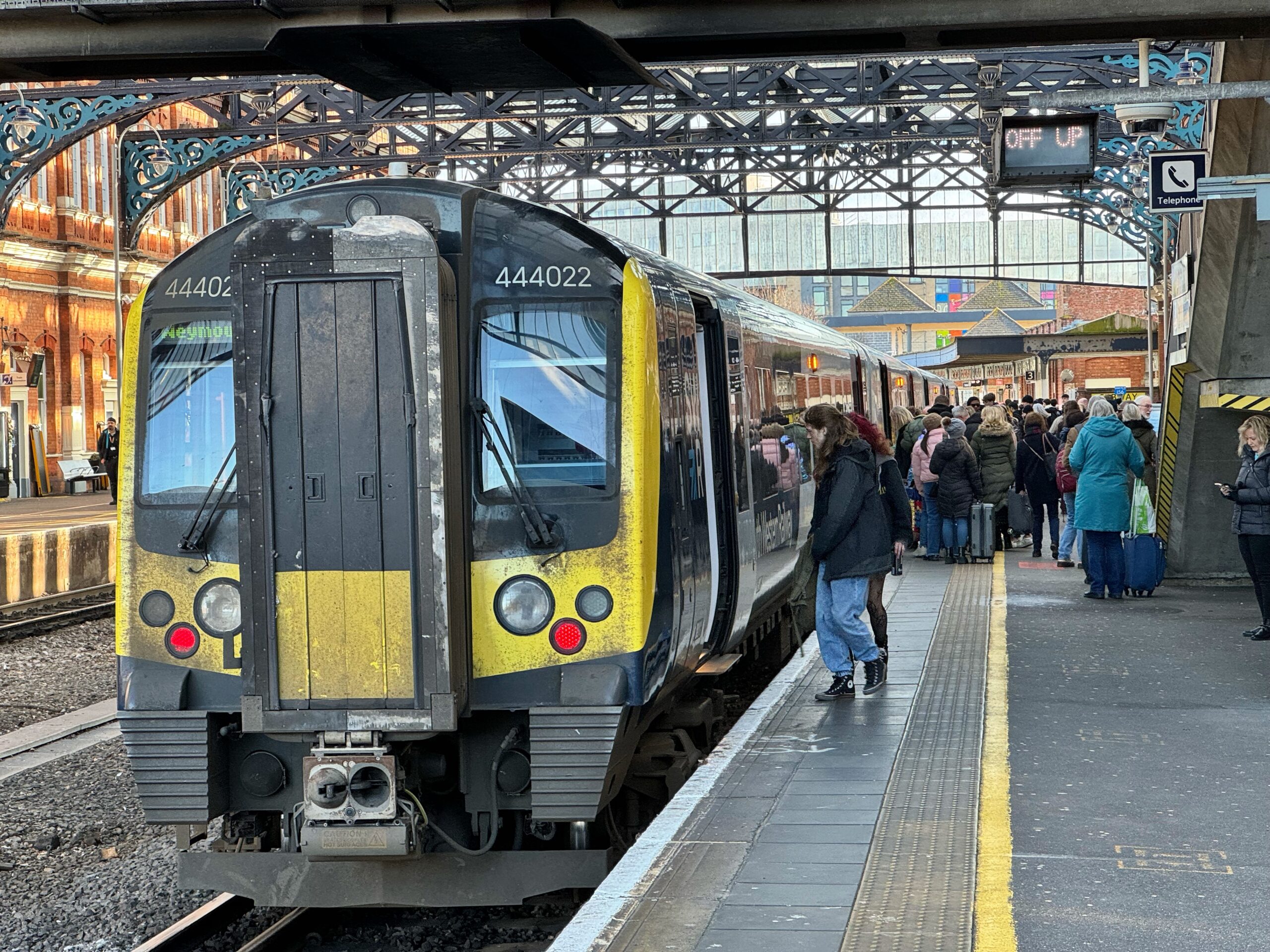
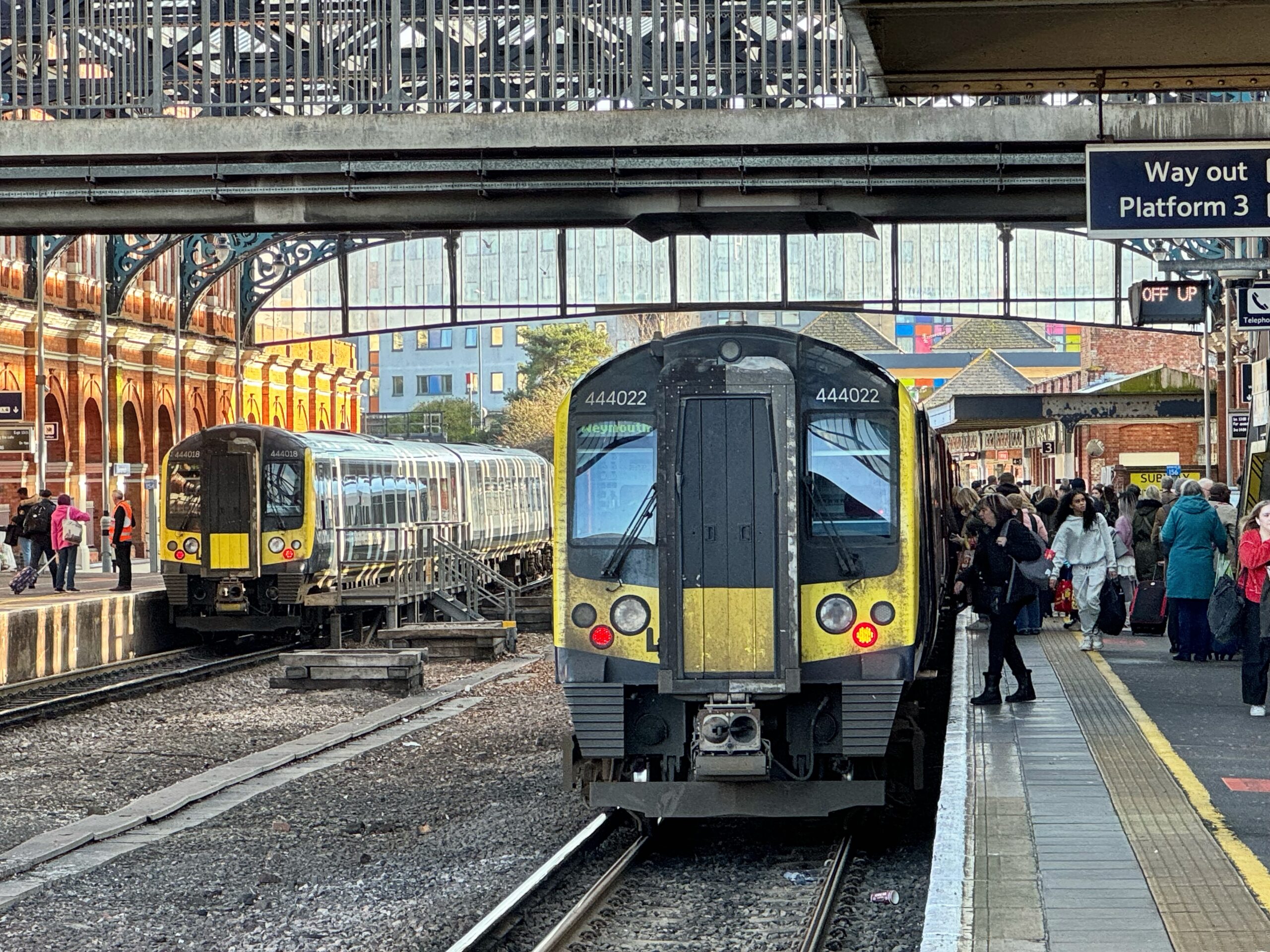
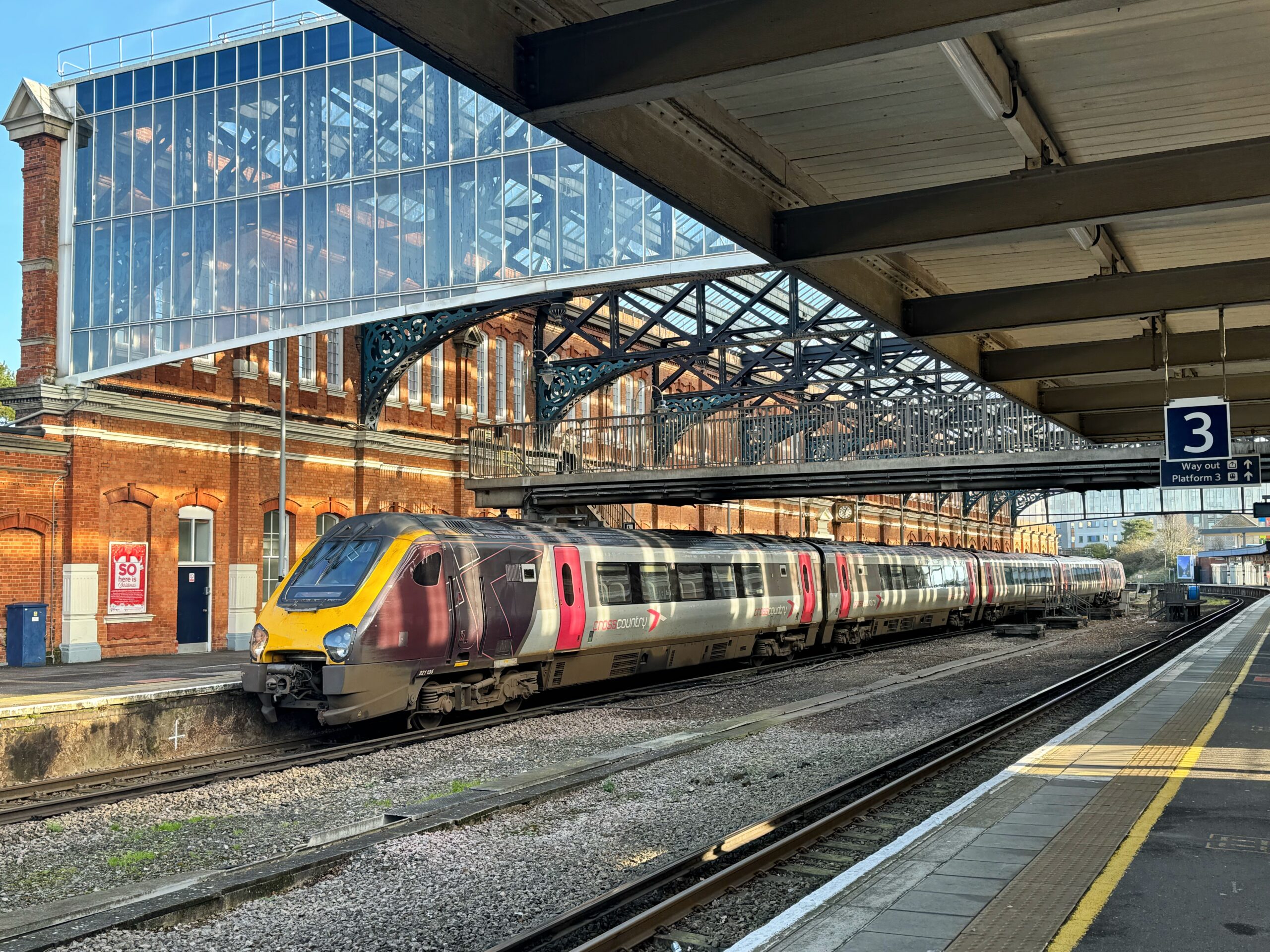
A signalling fault at Poole caused chaos with trains in the area. SWR Class 444 No. 444022 forms the VSTP (Very Short Term Planning) 1Z18 1259 Bournemouth to London Waterloo service – 26/01/2024SWR Class 444 No. 444022 begins boarding as the 1Z18 1259 Bournemouth to London Waterloo service while classmate No. 444018 awaits the arrival of another 5 carriages before it continues as the delayed 1W58 1120 Weymouth to London Waterloo. Due to a later points failure between Basingstoke and Waterloo, this service was eventually terminated at Basingstoke – 26/01/2024Class 66 No. 66772 ‘Maria’ at Bournemouth working 3Y88 0931 Totton Yard to Totton Yard awaiting the green – 26/01/2024Class 66 No. 66764 ‘Major John Point Engineer & Railwayman’ at the rear of the return 3Y88 0931 Totton Yard to Totton Yard SITT pauses at Bournemouth – 26/01/2024CrossCountry Class 221 Voyager No. 221135 arrives at Bournemouth as 1010 0825 Manchester Piccadilly to Bournemouth – 26/01/2024
Later in the afternoon, SWR services were getting back on schedule and Caroline was able to get her planned train home. While she was waiting at Christchurch, she sent me the image below of a CrossCountry Voyager passing through:
Catching the last of the sun, CrossCountry Voyager No. 220006 races through Christchurch working 1M62 1545 Bournemouth to Manchester Piccadilly – 26/01/2024 (CLS)
GBRf Class 66 No.’s 66764 ‘Major John Point Engineer & Railwayman’ and 66772 ‘Maria’ working 3Y88 0931 Totton Yard to Totton Yard – 26/01/2024
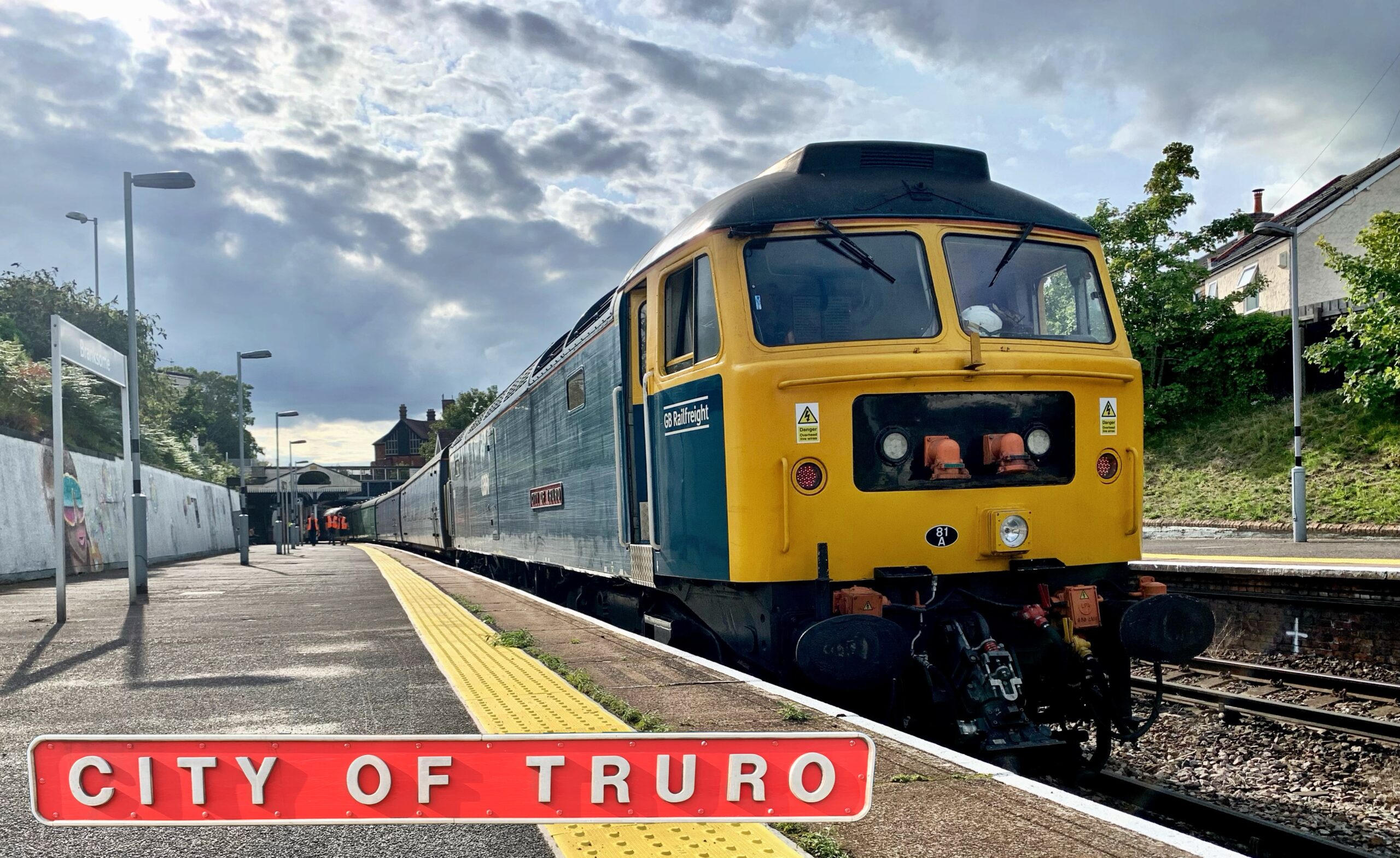
Monday 29th – A Class 458 was picked up from Bournemouth T&RSMD by GBRf locomotives, Class 57 No 57305 and Class 47 No. 47749 ‘City Of Truro’ logged as 5058 0511 Leicester Locomotive Inspection Point to Bournemouth Traction & Rolling Stock Maintenance Depot. Thinking it had been cancelled, the train defied me and actually left Leicester 140 minutes late. I was busy and unable to see the incoming working consisting of locomotives and barrier coaches. I had, though, planned on seeing the return with Class 458 No. 458524 in tow, but typically it left 90 minutes early and evaded my gaze! SWR industrial action meant that the train timetable was heavily altered and options for me to get over to Branksome by rail were much reduced. Incidentally, No. 458524 has already been refurbished at Widnes, so there is some speculation as to why the unit is returning to Cheshire.
Flashback to August 2023 when GBRf Class 47 No. 477749 ‘City Of Truro’ ran to Branksome working 5Z72 1548 Eastleigh East Yard to Bournemouth T&RSMD – 30/08/2023
Tuesday 30th – Today was a strike day on SWR with ASLEF the train drivers union members taking industrial action. The drivers also refused to work overtime from Monday 29th January until Tuesday 6th February. The first strike in this long running dispute by ASLEF was in July 2022.
FROM THE ARCHIVE
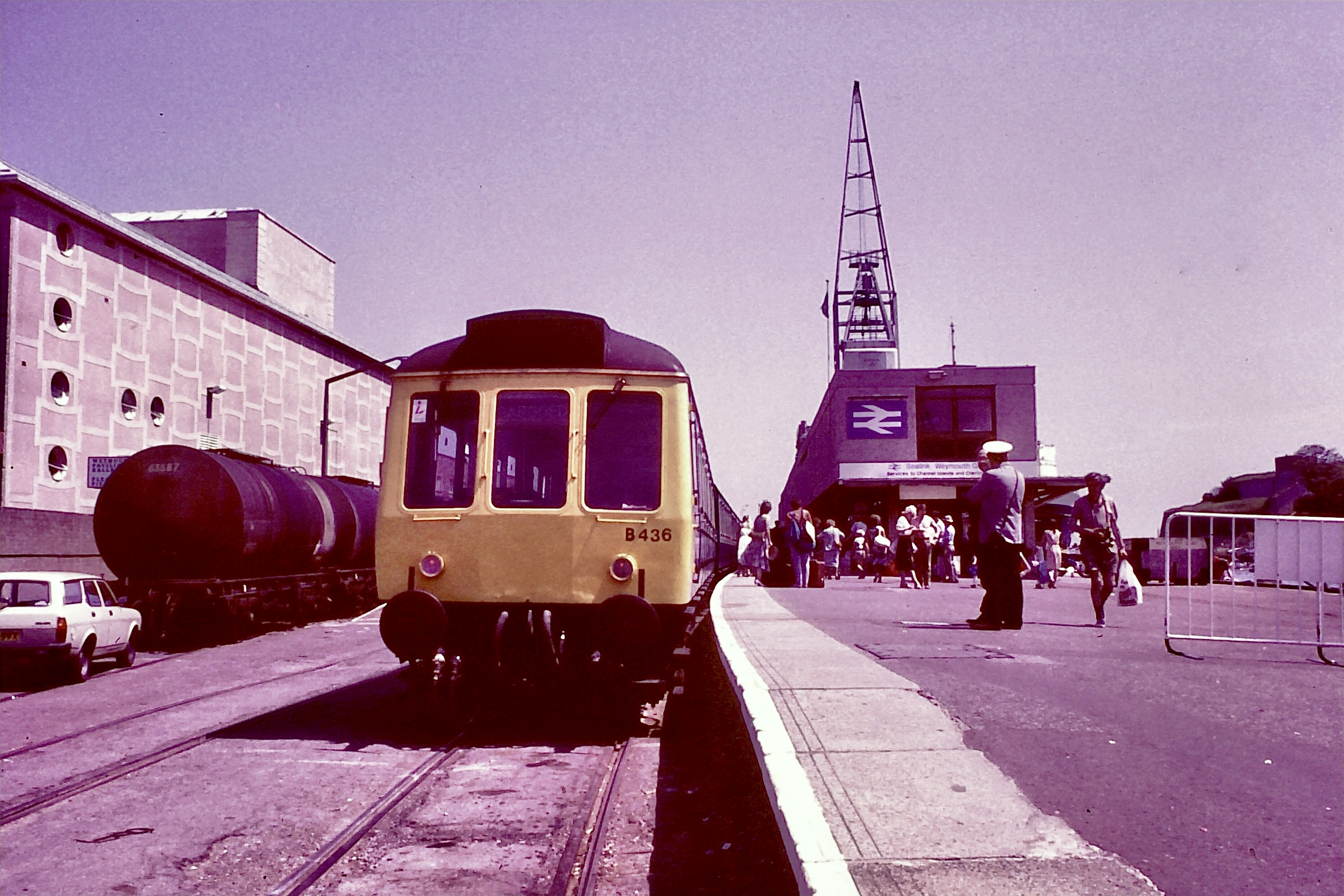
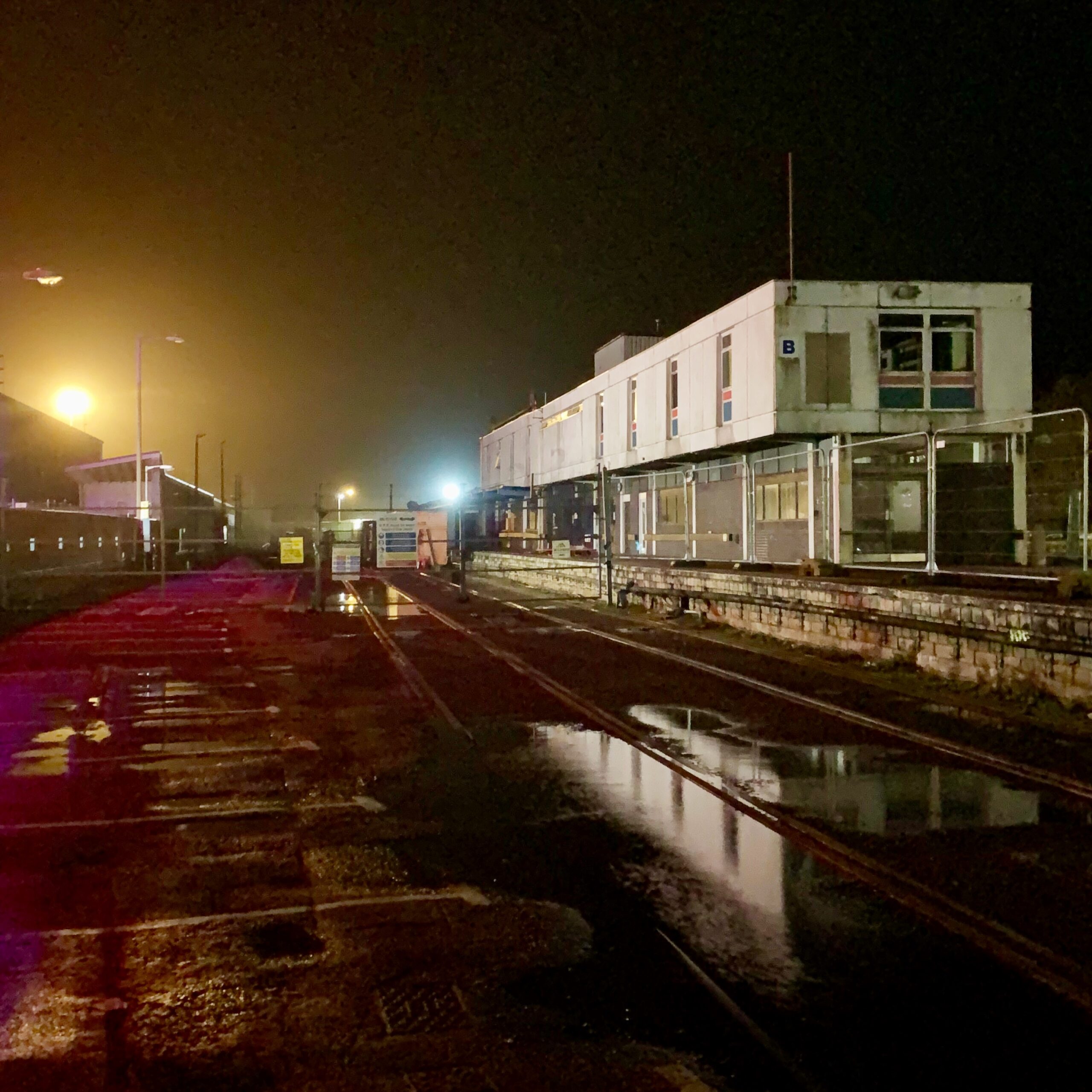
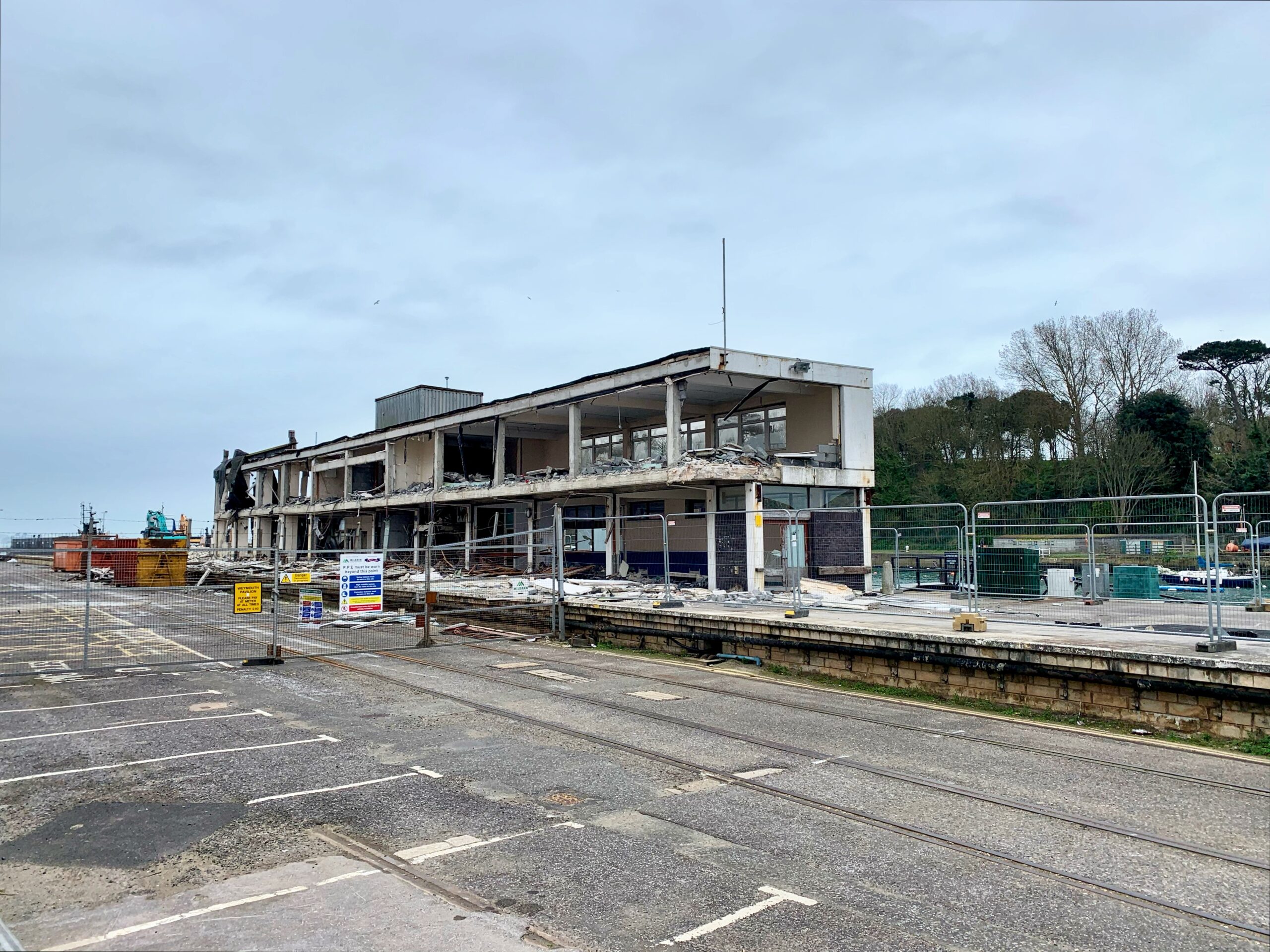
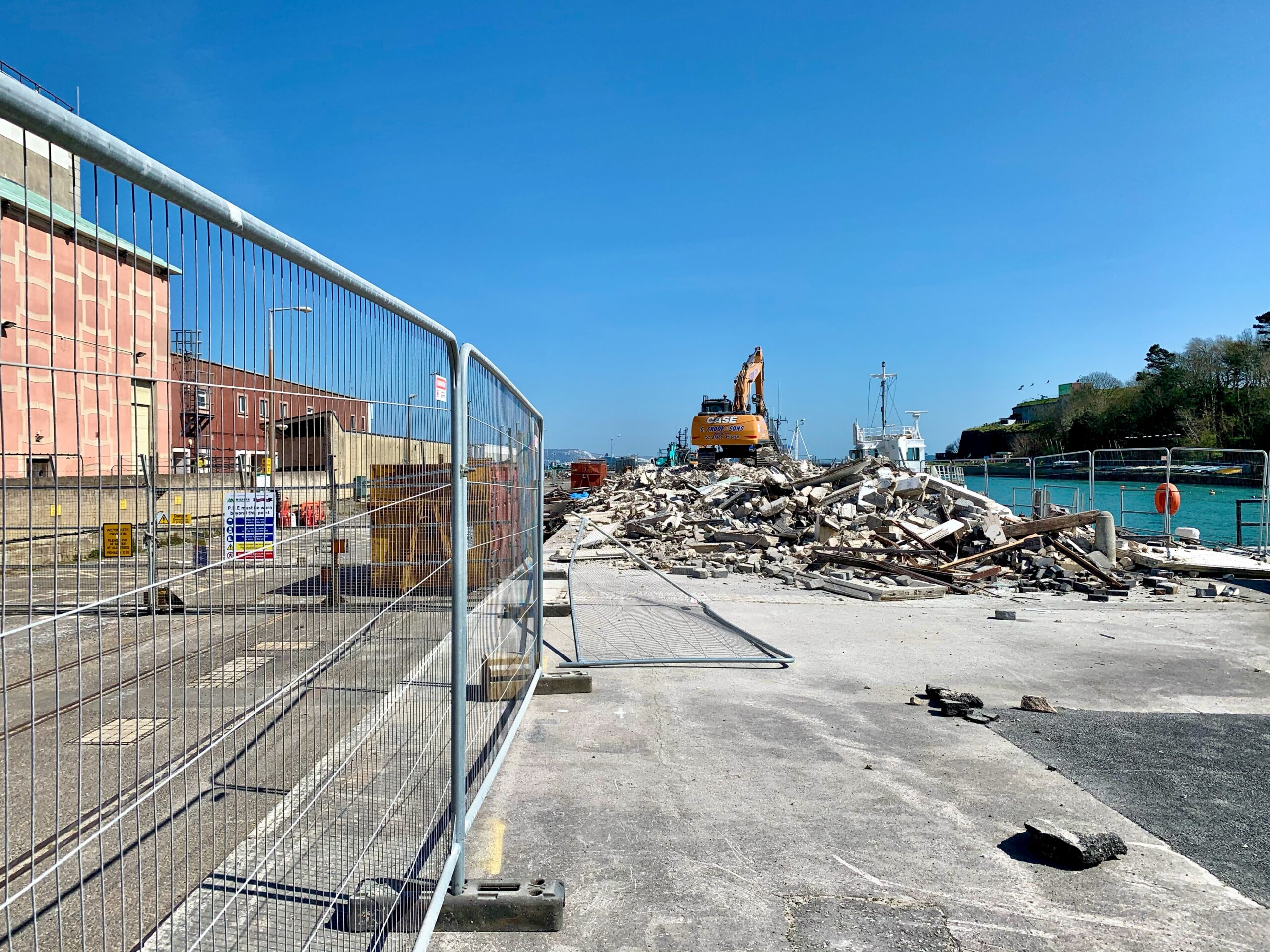
With the site now being redeveloped, we take a look back at Weymouth Quay station. The Weymouth Harbour Tramway was opened by the Great Western Railway (GWR) in 1865 in connection with Channel Island boat trains. Regular services along the branch ceased in 1987.
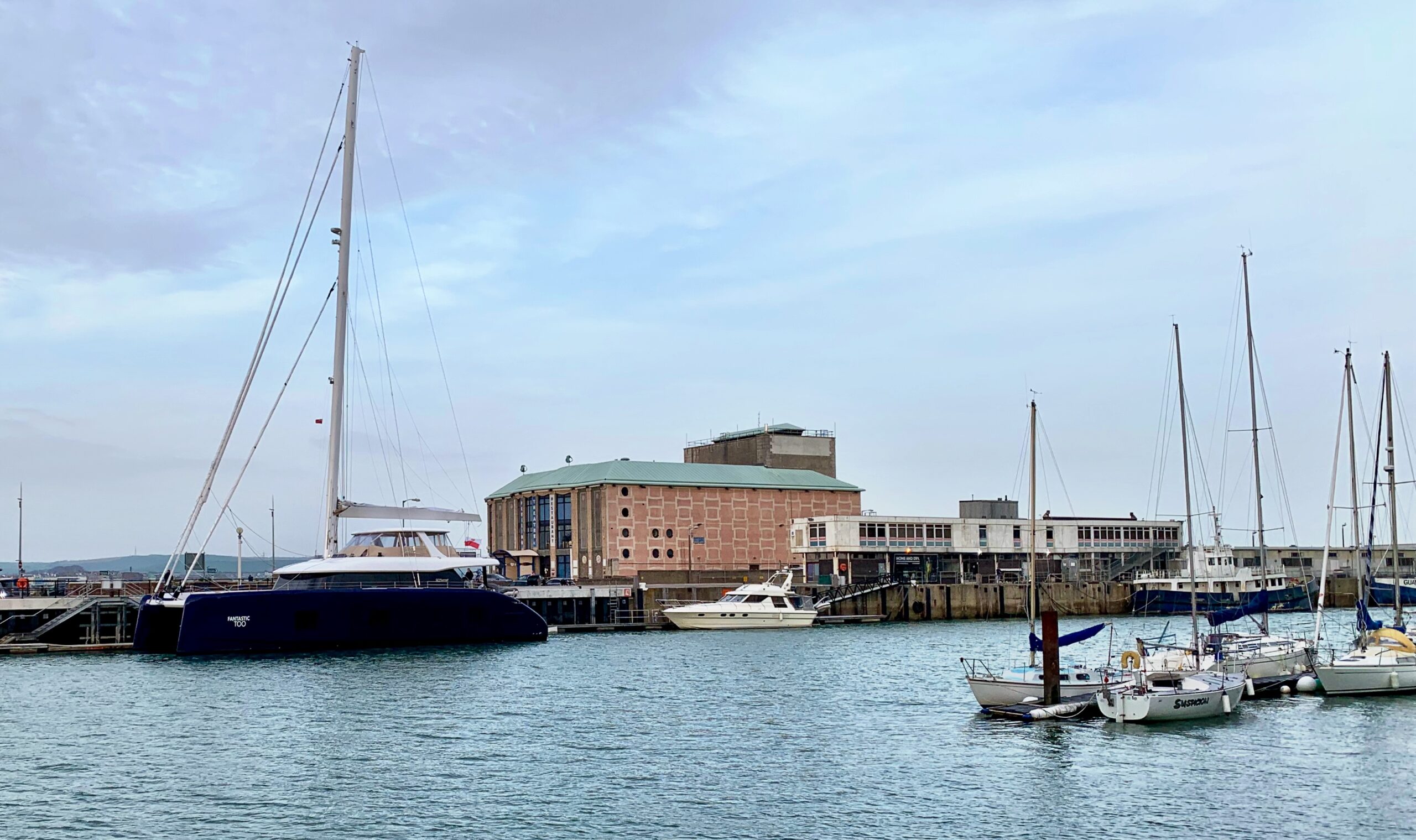
Pressed Steel Class 117 DMU set B436 (presumably set formed by car No.’s 51334 + 59500 + 51376). This was the first working of a diesel multiple-unit passenger service from Weymouth (Town) to Weymouth Quay. It is believed DMU’s worked on the tramway in 1983 and 1984 – 03/07/2023Weymouth Quay station is still standing in this image. On the left is the 78’4″ ‘Fantastic Too’ catamaran yacht, the world’s first full carbon sailing superyacht, built by the Polish shipyard Sunreef Yachts in 2020 and is available for charter and will accommodate up to 10 guests in 5 cabins. – 07/11/2020Reflecting on past glories, the former Weymouth Quay station went into service with Condor Ferries when they operated out of Weymouth – 17/02/2021Going, going… – 28/03/2021Gone – 04/04/2021
Saturday 25th June 1994 saw Hertfordshire Rail Tours “Corfe Mixture” railtour operate to Weymouth Quay. The train consisted of EMU’s 4-BEP No. 2301 and 4-CIG No. 1318 and appropriately Class 33 No. 33116 ‘Hertfordshire Rail Tours’. The special train ran from London Waterloo to Wareham where passengers transferred onto road coaches which took them to Swanage. After approximately 3 hours, road transport returned passengers to Wareham and the EMU’s continued to Weymouth (Town) station where everyone alighted. The Class 33 diesel loco then attached to the units and took them ECS to Weymouth Quay from where the return leg, propelled by No. 33116 as far as Weymouth Junction, started. From Weymouth Jct the two EMU’s returned to Waterloo stopping en route at Wareham to collect passengers who had elected to visit Corfe Castle after Swanage rather than going down to Weymouth. I wonder how many opted to do this?
Hertfordshire Rail Tours “Corfe Mixture” rail tour operates to Weymouth Quay with Class 33 No. 33116 ‘Hertfordshire Rail Tours’ – 25/06/1994
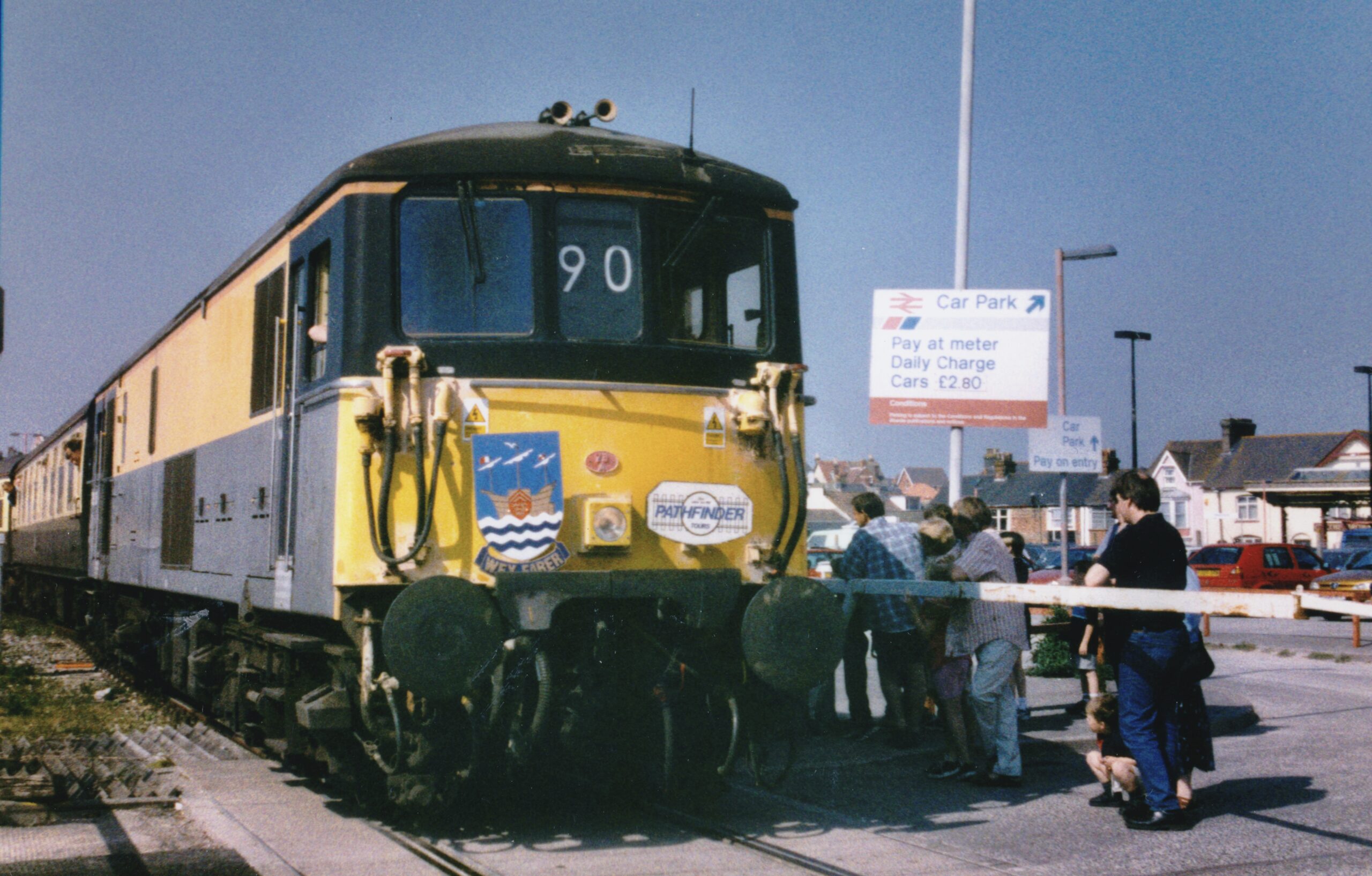
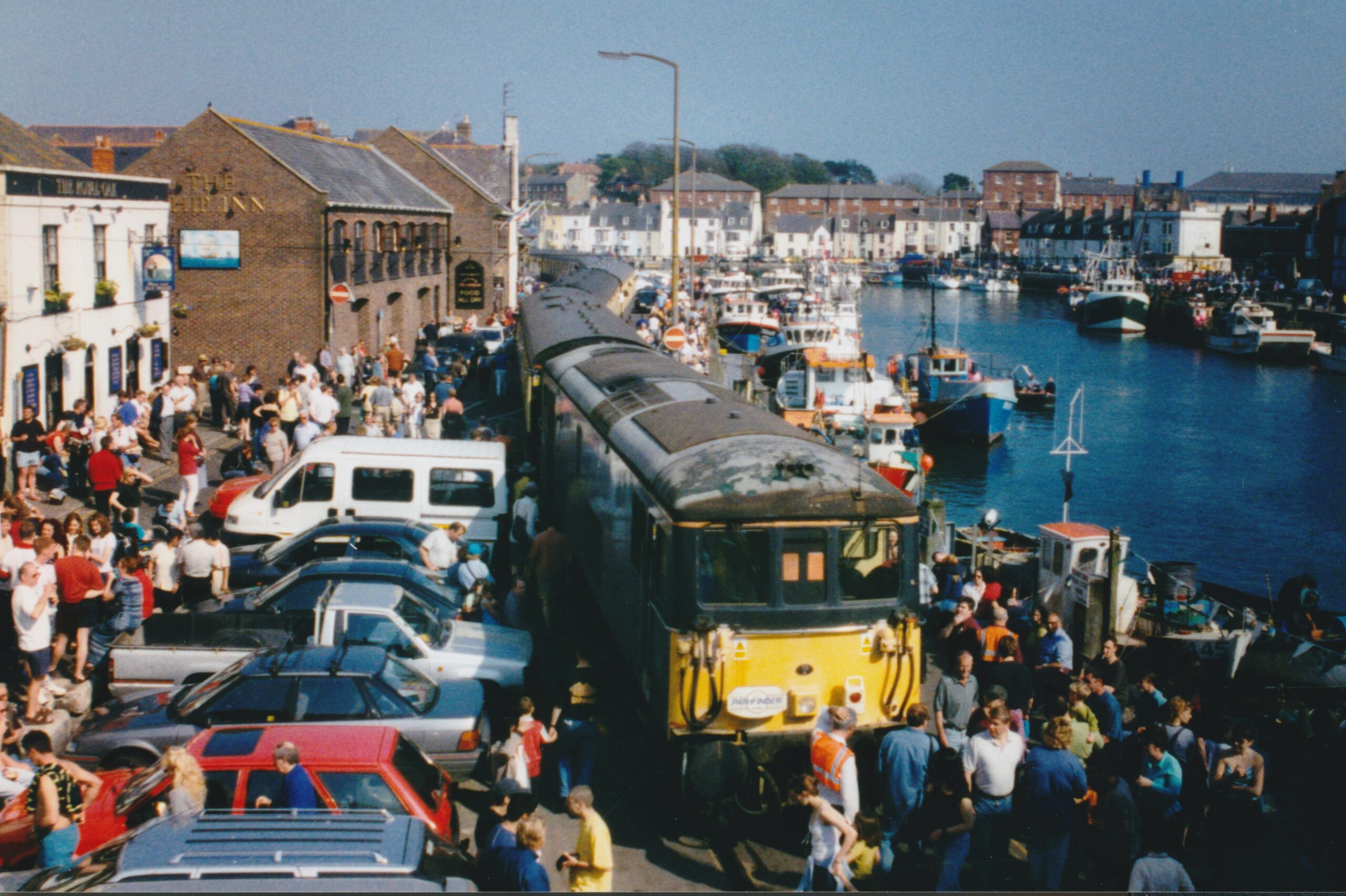
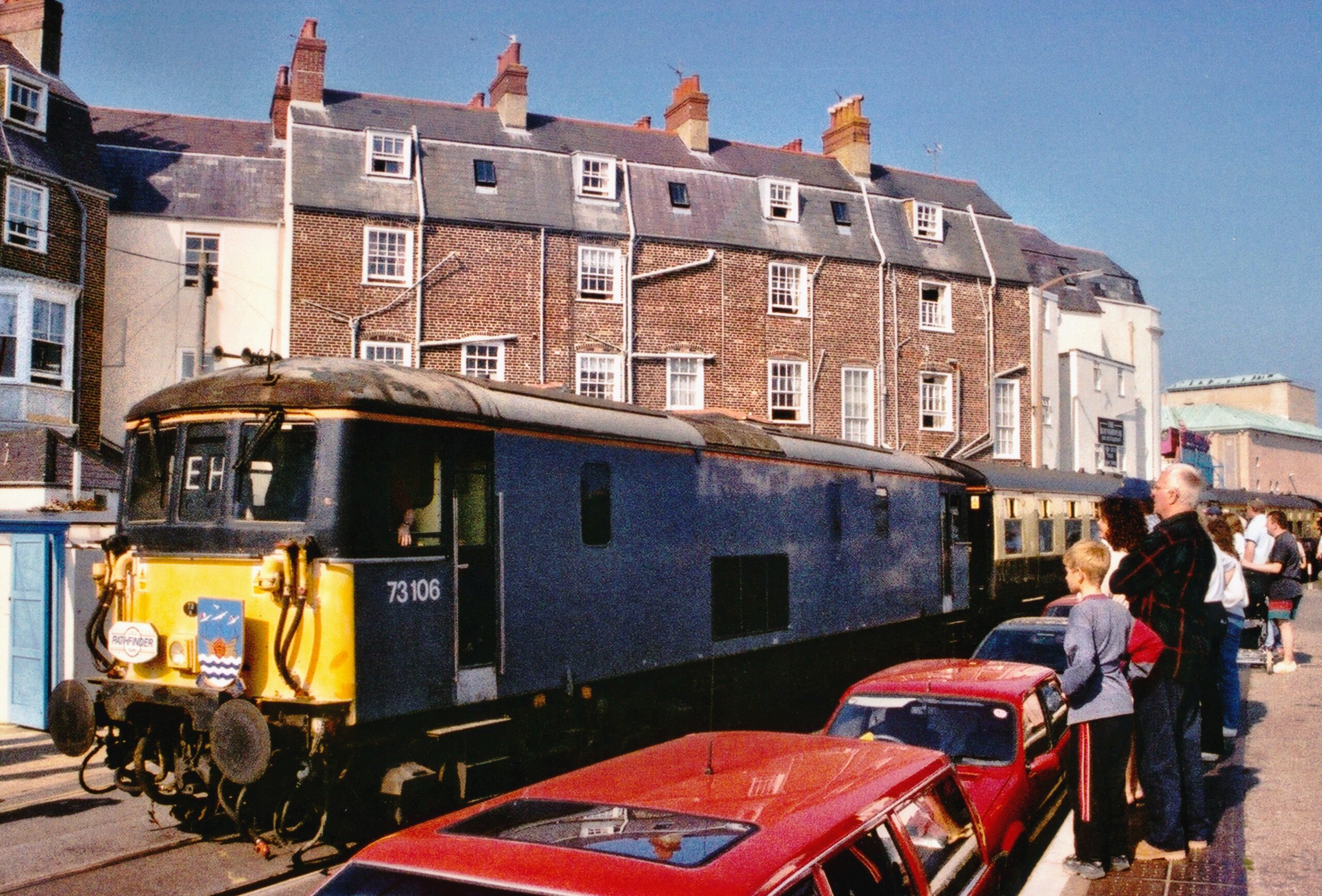
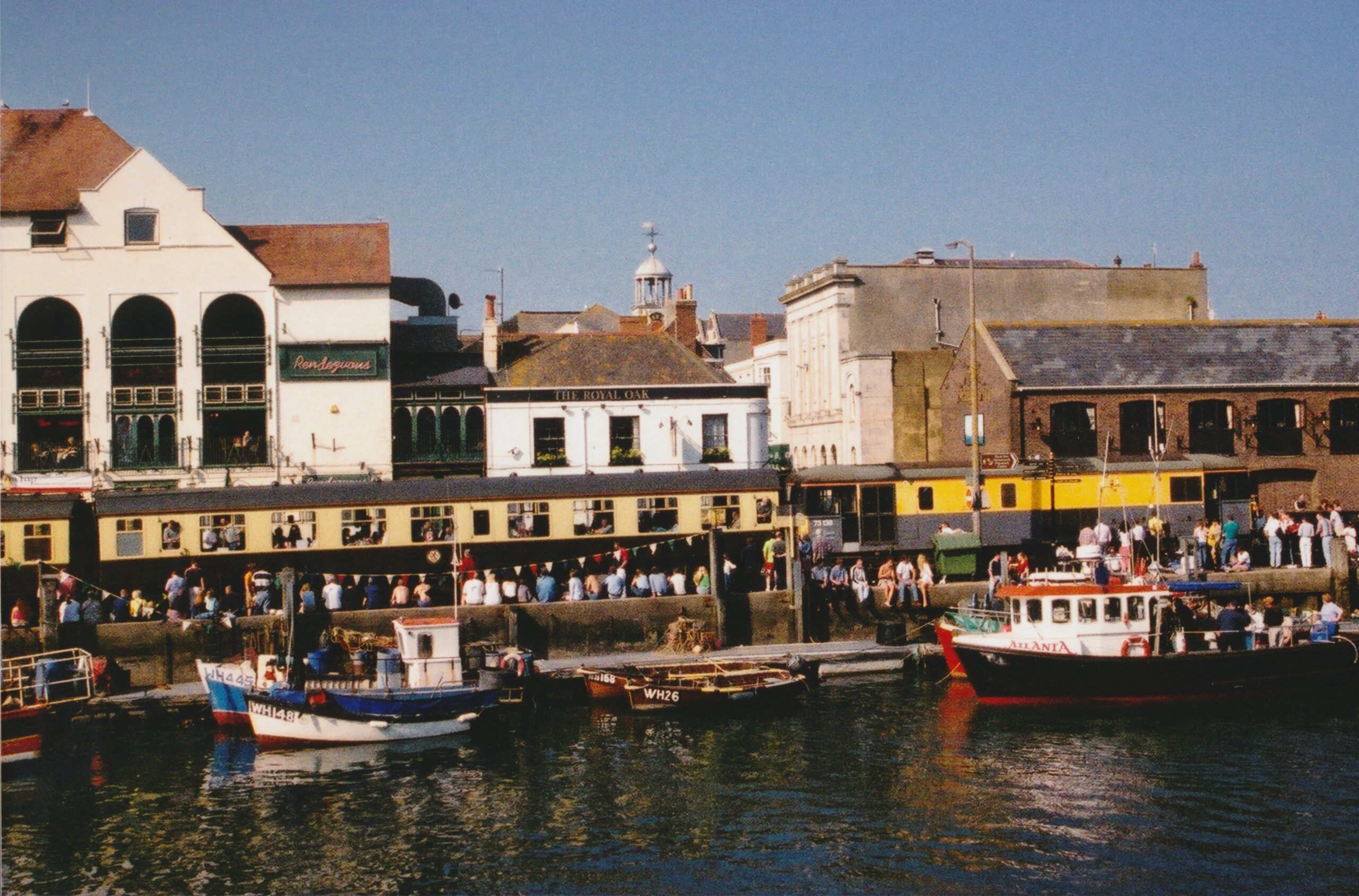
The final train to run along Weymouth Harbour Tramway took place on 2nd May 1999. With holidaymakers, bystanders and rail enthusiasts milling around, and preceded by a police escort, Class 73 electro-diesels No.’s 73138 and 73106 negotiated their way to Weymouth Quay station with Pathfinder Tours “Wey-Farer” railtour – in fact two identical trains worked over the line during the day, although I can only remember one! I must be getting old!
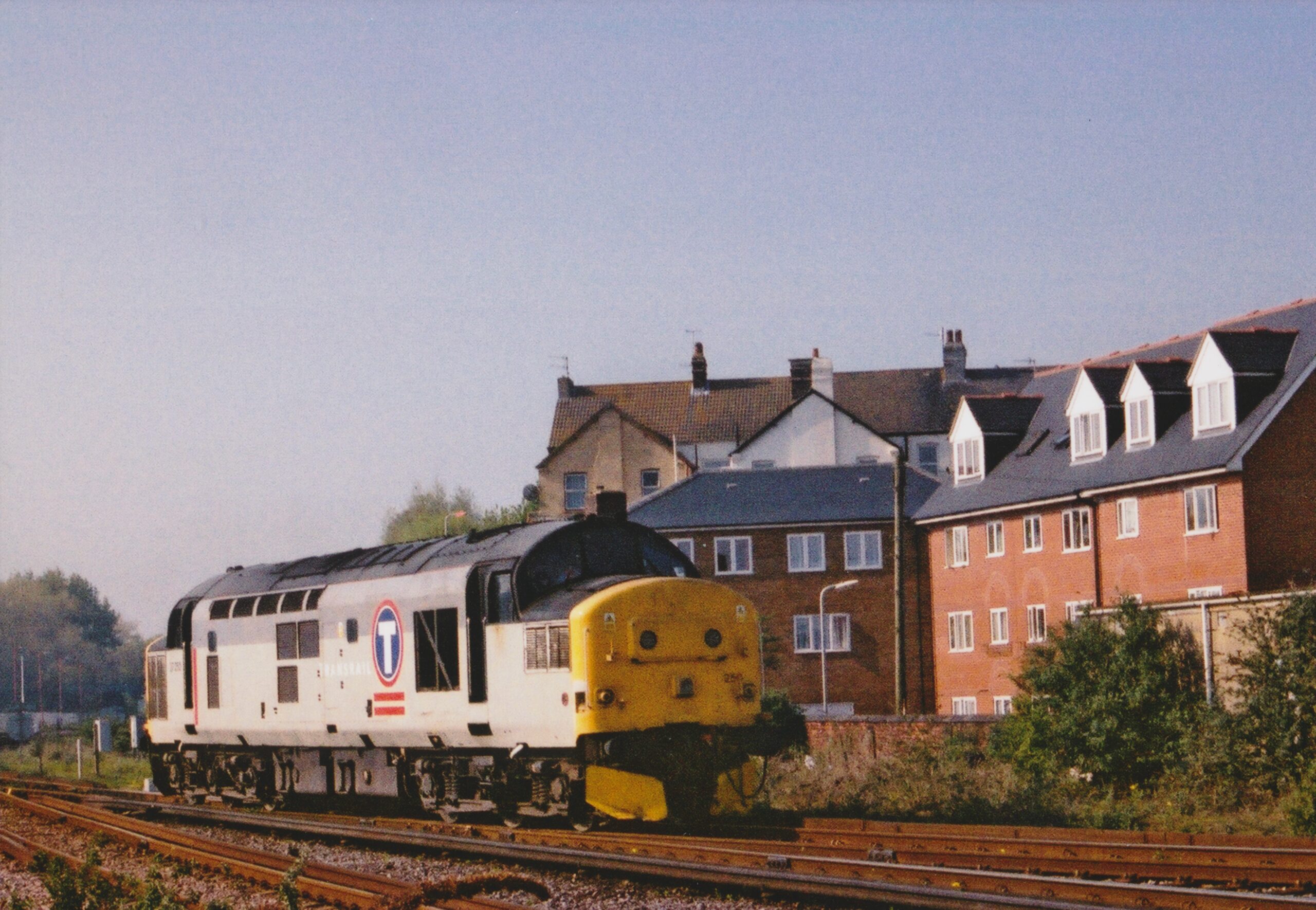
With Weymouth station in the background, Class 73 No. 73138 heads up the Weymouth Harbour branch – 02/05/1999Class 73 No. 73106 at the rear of the “Wet-Farer” railtour – 02/05/1999Class 73 No. 73106 on the return leg to Weymouth (Town) station – 02/05/1999With police escort, Class 73 No. 73106 crawls through the streets of Weymouth – 02/05/1999Class 73 No. 73138 at the rear of “The Wey-Farer” tour passing a packed Harbourside. Did we know this was the last time we would enjoy this incredible spectacle? – 02/05/1999Transrail liveried Class 37 No. 37250 runs light engine towards Weymouth (Town) station to lead the “Wey-Farer” tour to Yeovil. Transrail was created in 1994 along with Mainline Freight and Loadhaul as part of the broadly regional split of British Rail’s Trainload Freight operations – 02/05/1999
We’ll revisit the Weymouth Harbour Railway in a future blog, I’m sure. It’s a much missed element of the local railway scene and, as always, I wish I’d taken more photographs of the boat trains and other traffic traversing through the streets of Weymouth.
That’s it for another blog entry – thanks for reading, for your comments and corrections, all are much appreciated. Be seeing you!
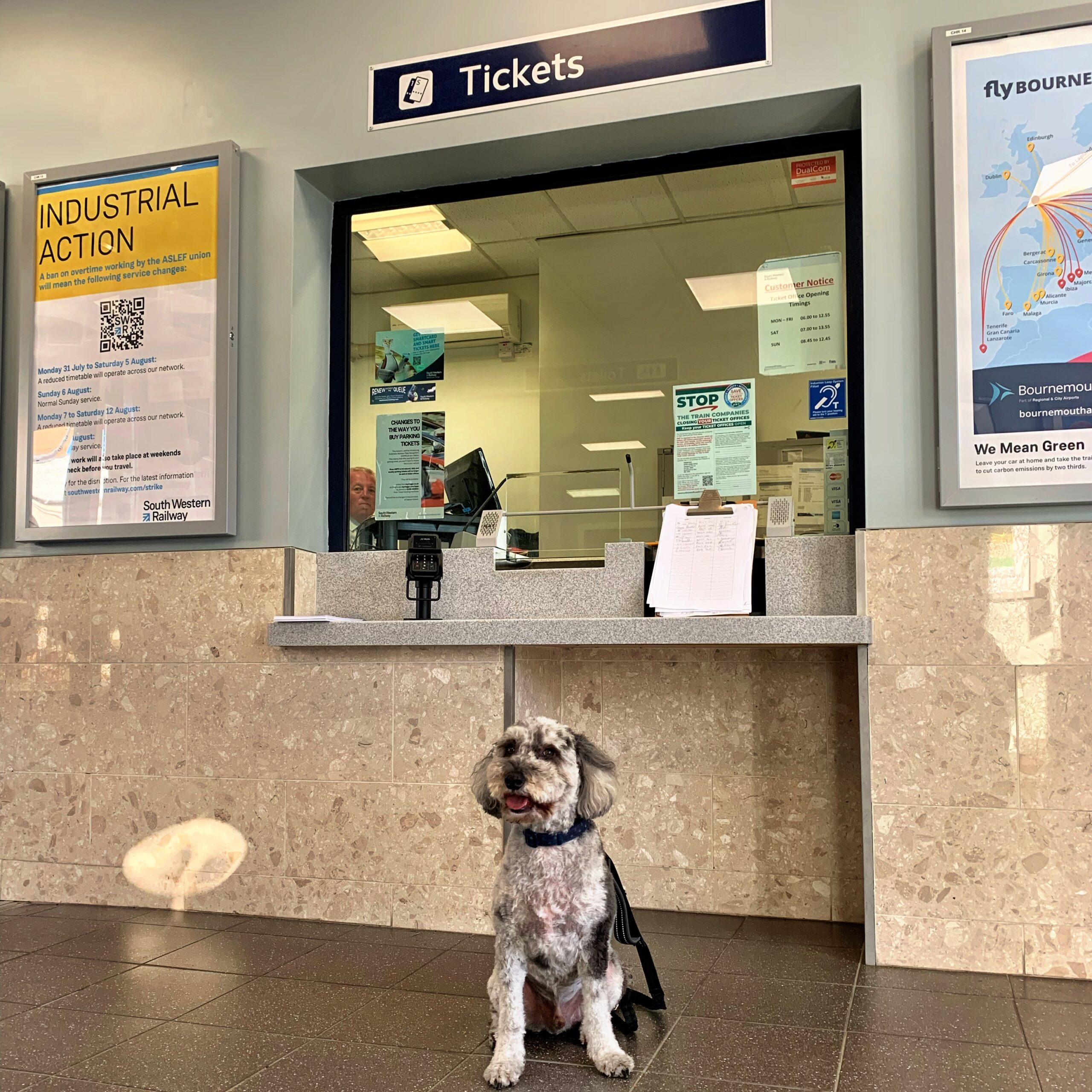
A freshly groomed Yoshi checks in at Christchurch railway station ticket office – 10/08/2023
August 9th 2023 to August 15th 2023
Yoshi is supporting the campaign to keep railway ticket offices open following the train companies proposals to begin closing 974 booking halls across England. The passenger watchdogs Transport Focus and London Travelwatch are overseeing a public consultation which closes on 1st September 2023. Have your say by completing the online form at: https://www.transportfocus.org.uk/ticket-office-consultation/
You could also write to your MP. I did. I’ll let you know if I get a response.
The plan represents the complete depersonalisation of the ticket retail process and another piece in the jigsaw to deter people from using the railways along with, but not limited to, scrapping Wi-Fi on trains and impossible to understand ticket machines. I also miss onboard buffets and / or tea trolleys on South Western Railway.
We are told that 10% of travellers buy their tickets at a booking office, compared with 80% in the 1990’s when, as I’m sure you will recall, there was no other way in doing so (with the exception of season ticket purchases, granted). 13% of revenue still comes via ticket offices which shows, on average, high-value transactions which may well be too complex for a ticket machine to deal with.
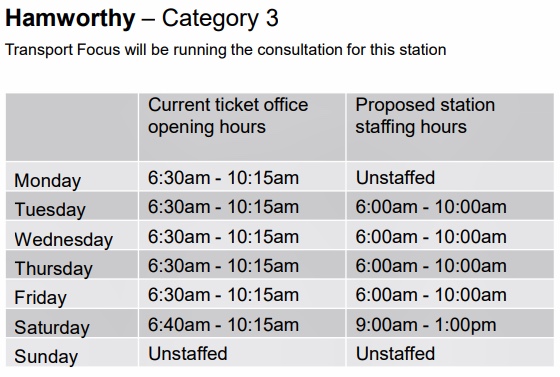
Hamworthy ticket office current and proposed opening hours
Take Hamworthy as an example which has been designated as Category 3 by South Western Railway with the proposed new staffing hours showing the station unstaffed on a Monday, which just seems a deliberate ploy to discourage users. When I commuted daily by rail I always purchased my weekly season ticket on a Monday. On visits to the ticket machine at Hamworthy over the last six months has found it not working or the touch screen smashed.
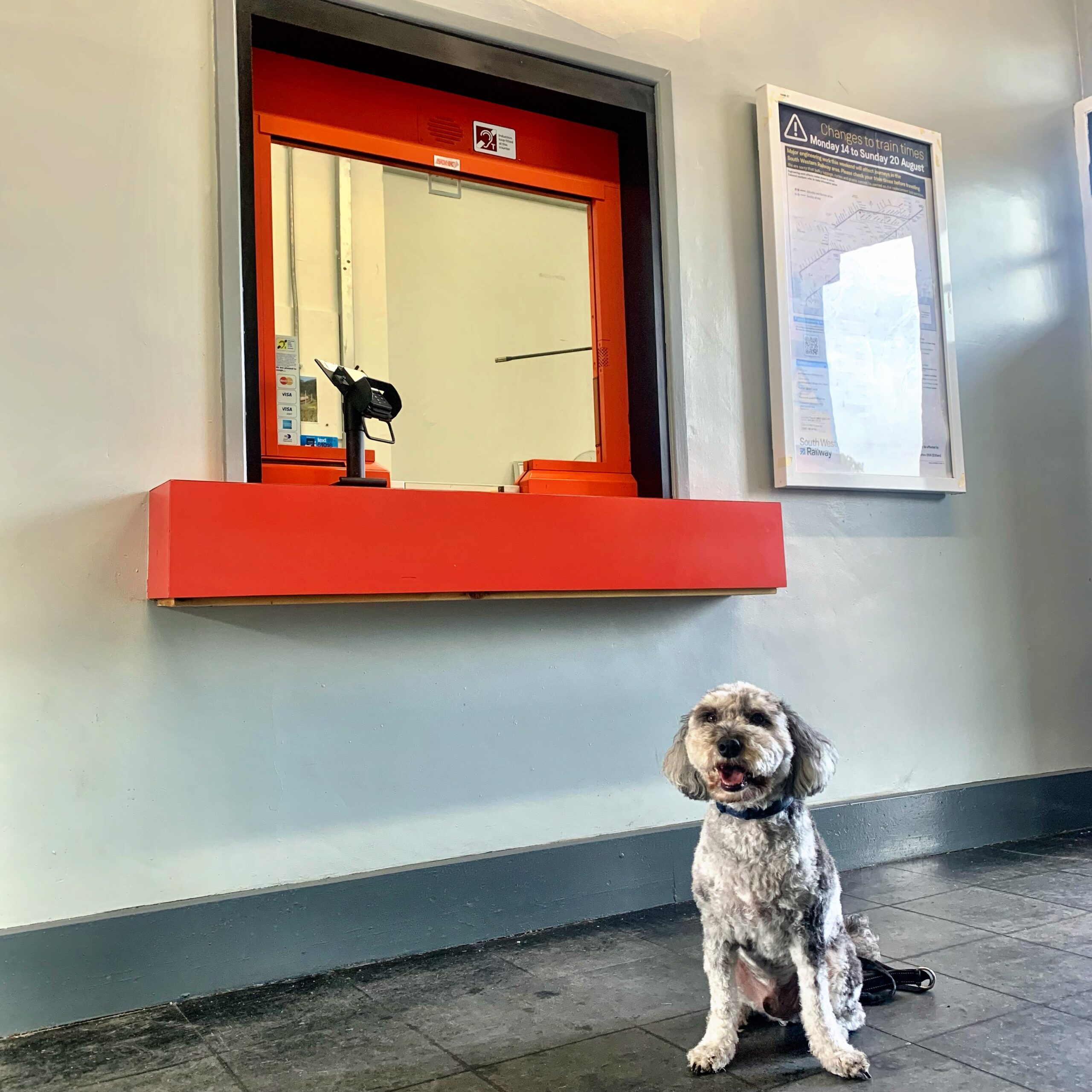
Yoshi at Hamworthy ticket office – 11/08/2023
I also believe the proposals to close ticket offices will have a severe detrimental effect on the disabled and elderly. Staffed ticket offices effect everything from the ability to buy tickets, receive assistance, access site facilities, navigate the station, plan routes, and feeling confident in making journeys. They are one of the most vital accessibility features of railway stations and their closure would only serve to isolate people further.
The closures would also have negative implications more broadly speaking. Ticket office staff provide assistance not only to disabled and elderly people, but to tourists, passengers with luggage, the unbanked, parents with buggies, and everyone who needs advice or assistance. By potentially stopping so many people from travelling by rail, the closures will also negatively impact spending in local economies, slow economic growth, and prevent people from getting to work.
Although these reforms are being flown under the banner of ‘modernisation’, they are anything but. A modern railway is one that works for everybody – one that is accessible, safe, and easy to navigate. To remove ticket offices would therefore be an actively regressive step, making vital infrastructure unusable for millions.
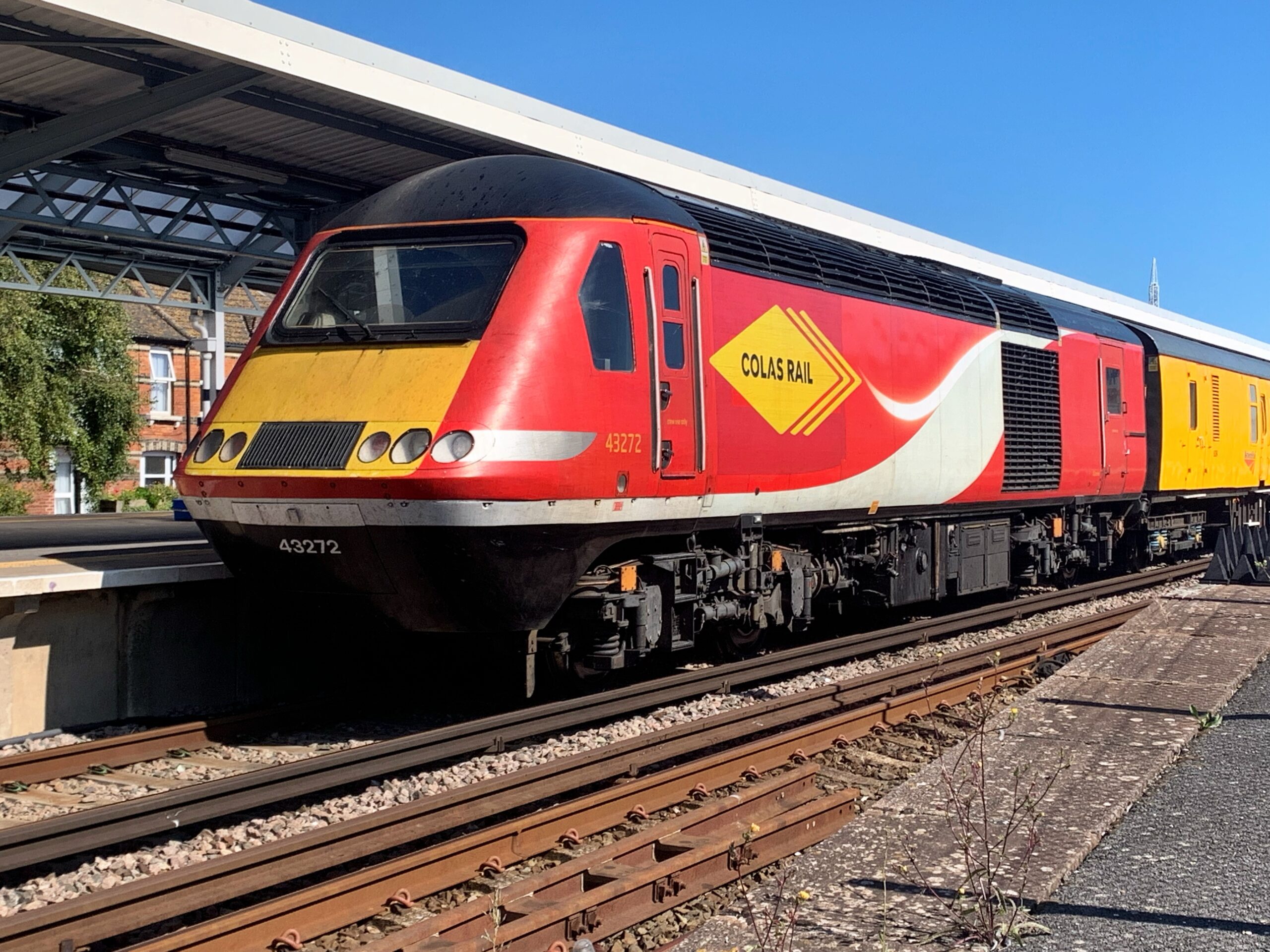
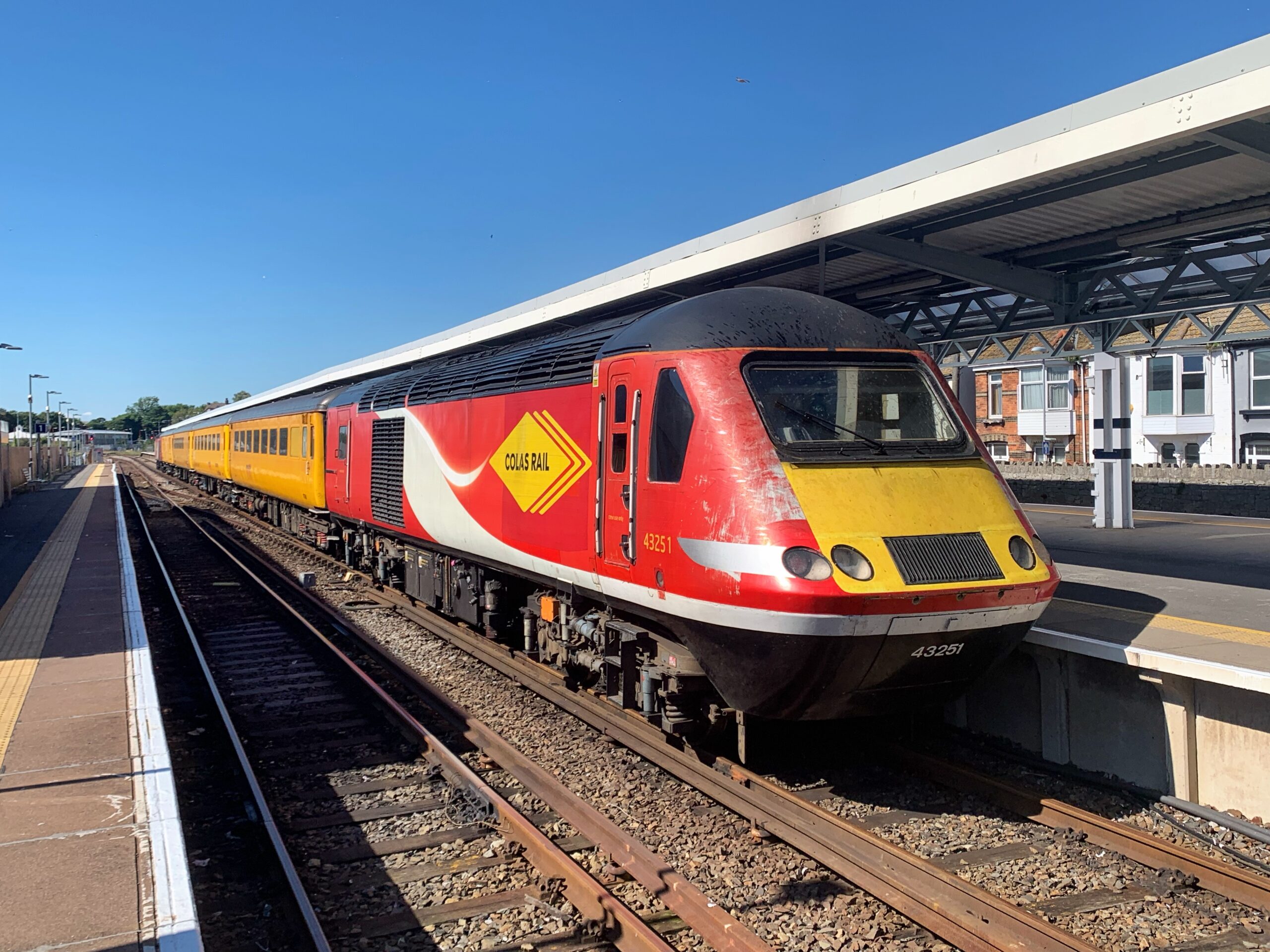
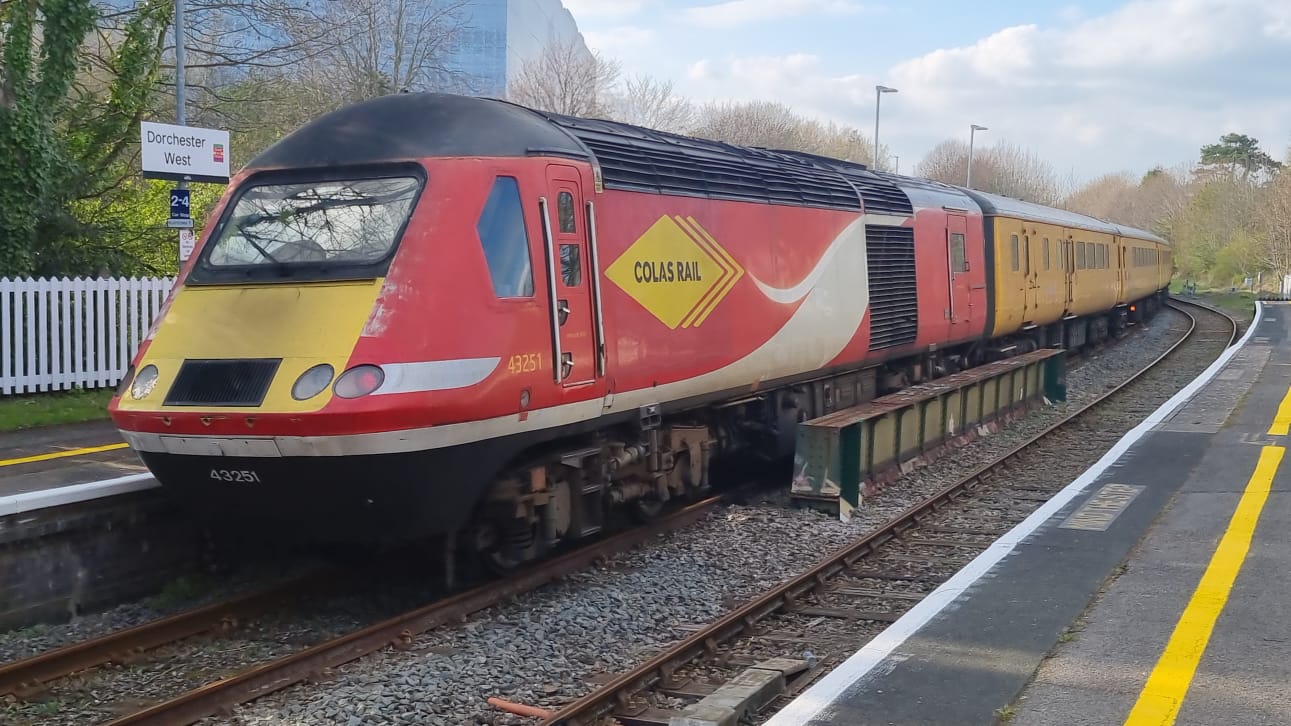
A visit of the Network Rail New Measurement Train to Weymouth which arrived via Yeovil and Dorchester West took place on Wednesday 9th August. This time the train was sandwiched between a pair of Colas Class 43 High Speed Train power cars No.’s 43251 and 43272 running as 1Z22 0757 Derby RTC (Network Rail) to Bristol Kingland Road. Yoshi had an appointment with the groomer in Broadstone at the same time, so I was unable to see this test train, but happily we can share the following video and photographs:
Colas Class 43 HST Power Car No. 43272 at Weymouth (@da_bukley967) – 09/08/2023Looking in need of some TLC, Colas Class 43 HST Power Car No. 43251 at Weymouth (@da_bukley967) – 09/08/2023
1Z22 0757 Derby RTC (Network Rail) to Bristol Kingland Road on 9th August 2023 (video courtesy of G E Barrett & @da_buckly967)
Thursday was an early start for us as Yoshi’s mama was off to Guernsey for the day. After dropping Caroline off at Poole Port for the “vomit comet” ferry service to the Channel Islands, the boy and I headed towards the East of the county to Christchurch in search of a different (for me) photographic location in order to catch the latest Crewe to Winfrith Sidings train. With only a handful of these left to run I’m enjoying seeking out different locations from where to view them. On arrival in Christchurch we had a little time to wander and after visiting the railway station I settled on Barrack Road bridge as my vantage point overlooking the rails. This location, although quite busy from motor traffic affords a view back down to the station for trains heading west. The pavement is also quite wide meaning Yoshi and I wouldn’t be a hindrance to passers by.
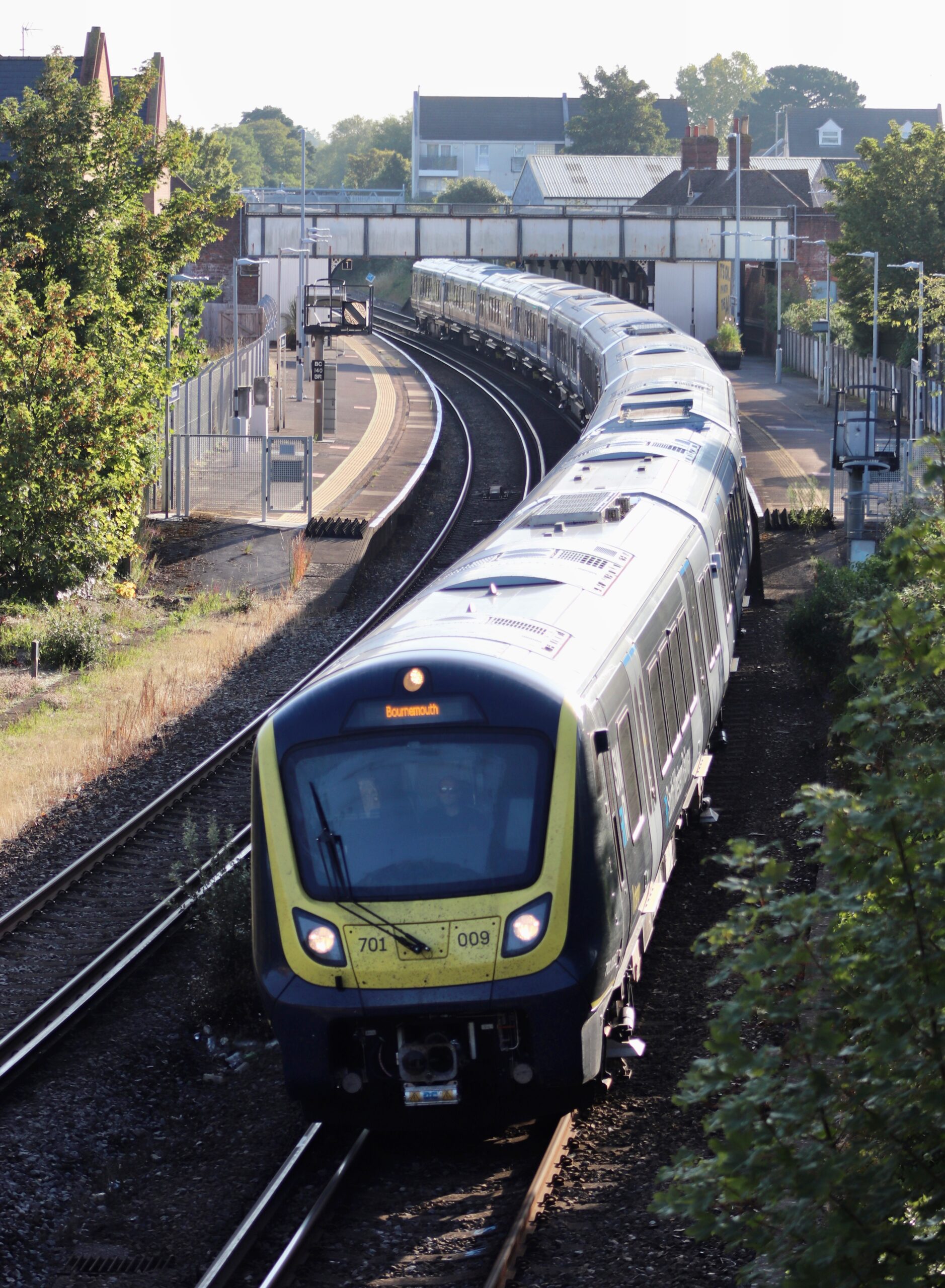
While we were waiting for the Winfrith, we also managed a glimpse of a SWR Class 701 on a mileage accumulation run as No. 701009 paused briefly in the platforms of Christchurch railway station waiting for the service train ahead of it to clear the section.
SWR Class 701 No. 701009 passes through Christchurch on a mileage accumulation run working as 5Q50 0612 Eastleigh Trsmd to London Waterloo – 10/08/2023
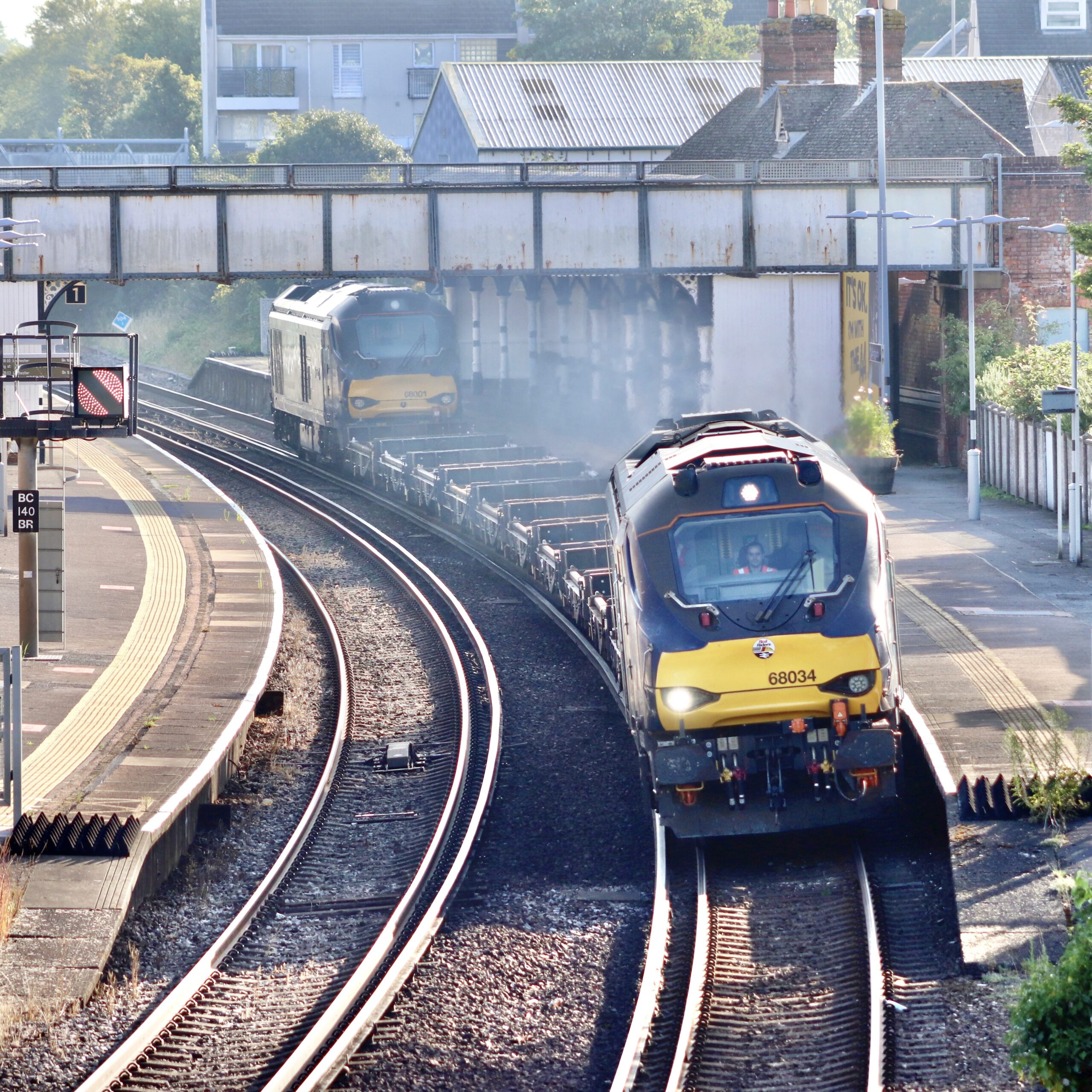
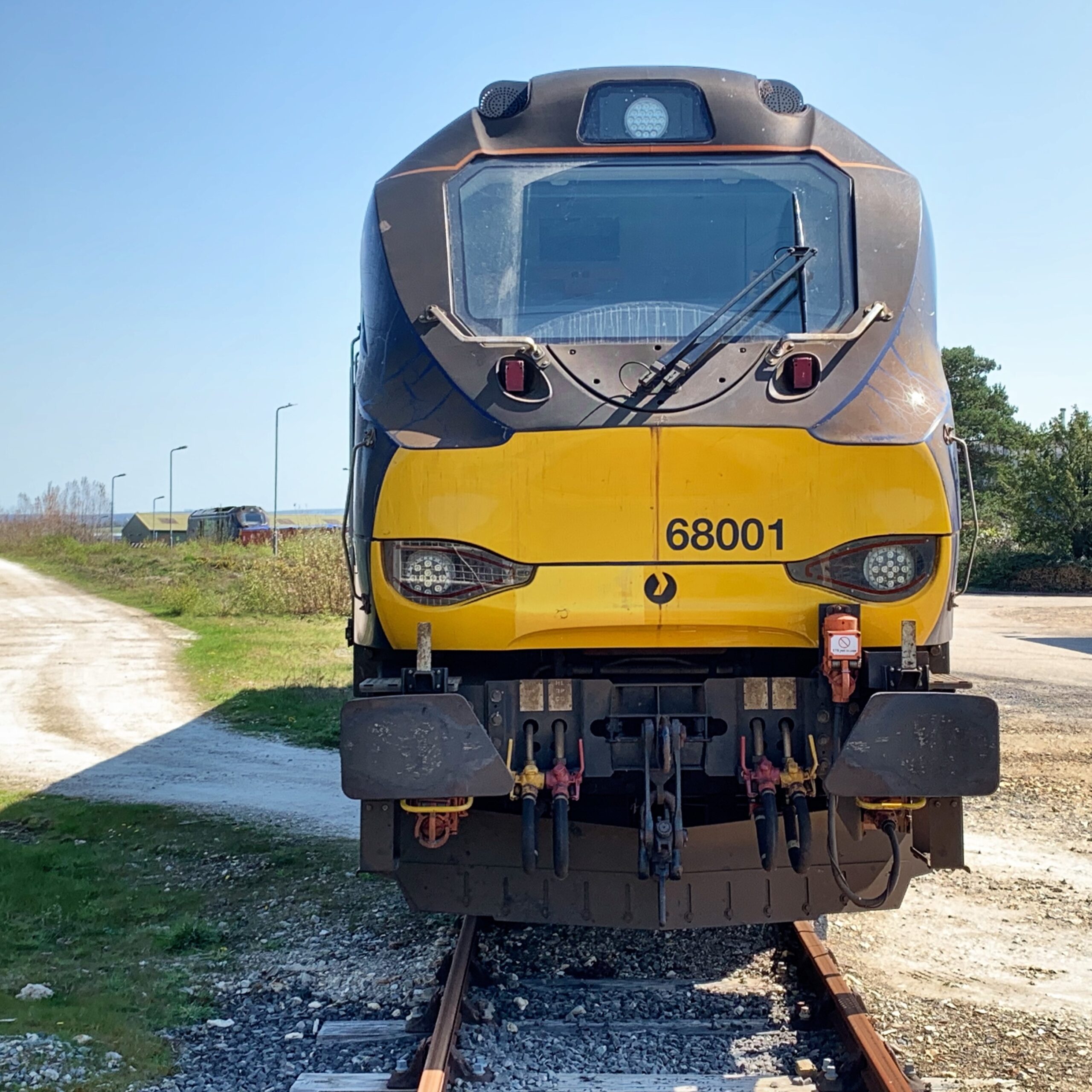
This run from Crewe to Winfrith turned up Direct Rail Services Class 68 No.’s 68034 ‘Rail Riders 2020’ and 68001 ‘Evolution’, both of which had visited Dorset previously, although No. 68034 was un-named at the time. There had been a moment the previous day when it looked like a bi-mode Class 88 had been allocated to the empty wagons scheduled to run from Sellafield to Crewe, but this turned out to be a false hope and as yet a member of the class is yet to visit Dorset. The Class 88 has a pantograph for the collection of electricity from overhead wires, and a Caterpillar diesel engine which provides 500 miles of working when no electric source is available.
Direct Rail Services Class 68’s No.’s 68034 ‘Rail Riders 2020’ and 68001 ‘Evolution’ with empty PFA wagons bound for Winfrith passing Christchurch – 10/08/2023
For the return working I opted for a visit to Poole High Street and planted myself on the footbridge by the level crossing which provided a good view from which to see the now loaded train of PFA wagons. Footfall across the bridge was a little busier than I expected but I have to admit to deriving some small pleasure in answering the usual “Is there a special train coming?” question from passers by with imparting the information that a train carrying nuclear waste was imminent.
DRS Class 68 No. 68001 ‘Evolution’ leads the return Winfrith working across Poole High Street Level Crossing – 10/08/2023DRS Class 68 No. 68034 ‘Rail Riders 2020’ at the rear of 6Z95 1551 Winfrith Sdgs to Crewe Coal Sidings (DRS) powers away from Poole – 10/08/2023
Video from 10th August including: 1M30 0730 Bournemouth to Manchester Piccadilly – 221129 1B24 0734 Bournemouth and Weymouth to London Waterloo – 444029 1W51 0530 London Waterloo to Weymouth – 444024 5Q50 0612 Eastleigh Trsmd to London Waterloo – 701009 6Z62 0100 Crewe Coal Sidings (Drs) to Winfrith Sdgs – 68034 / 68001 1W26 1555 Weymouth to London Waterloo – 444024 1W29 1430 London Waterloo to Weymouth – 444031 6Z95 1551 Winfrith Sdgs to Crewe Coal Sidings (Drs) – 68001 / 68034
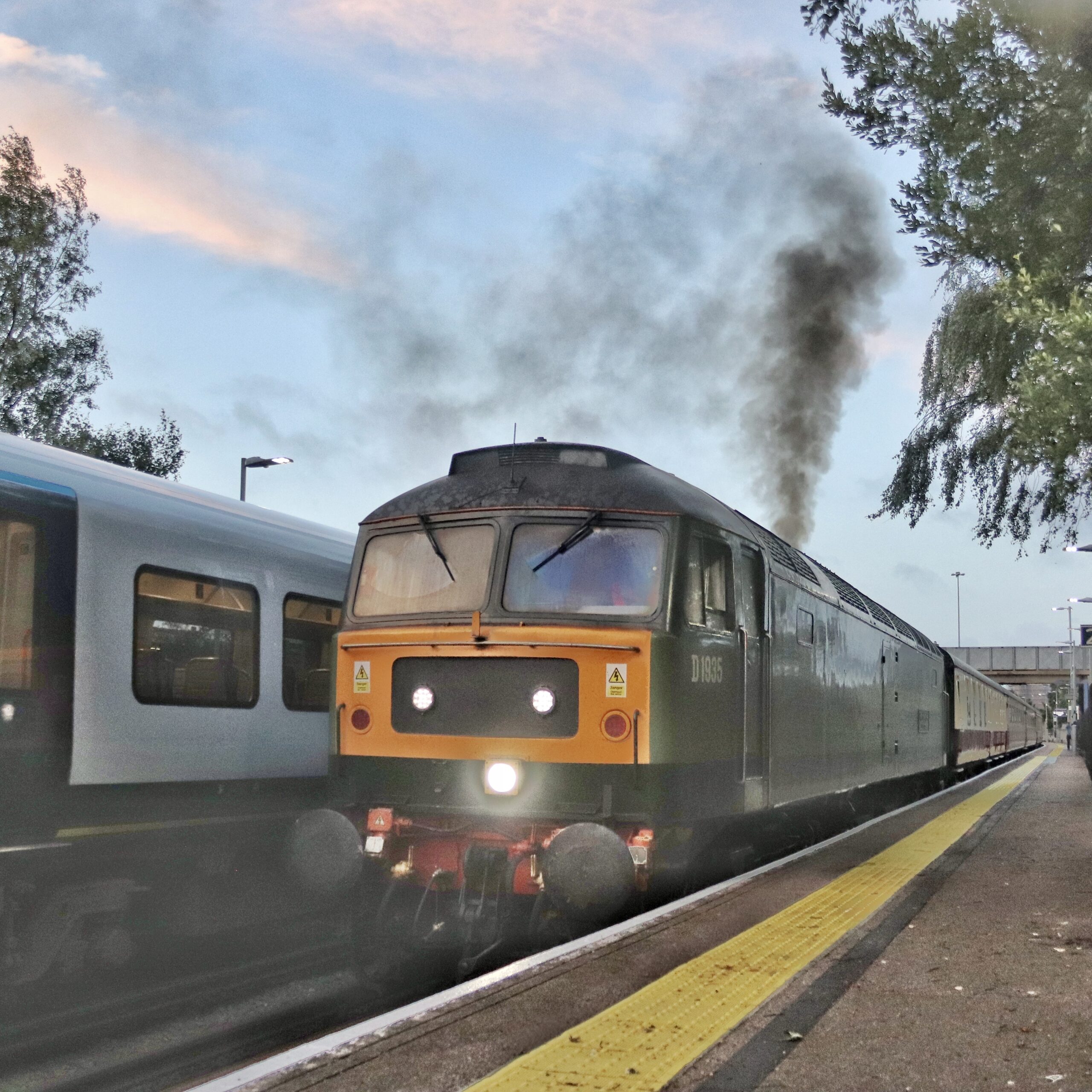
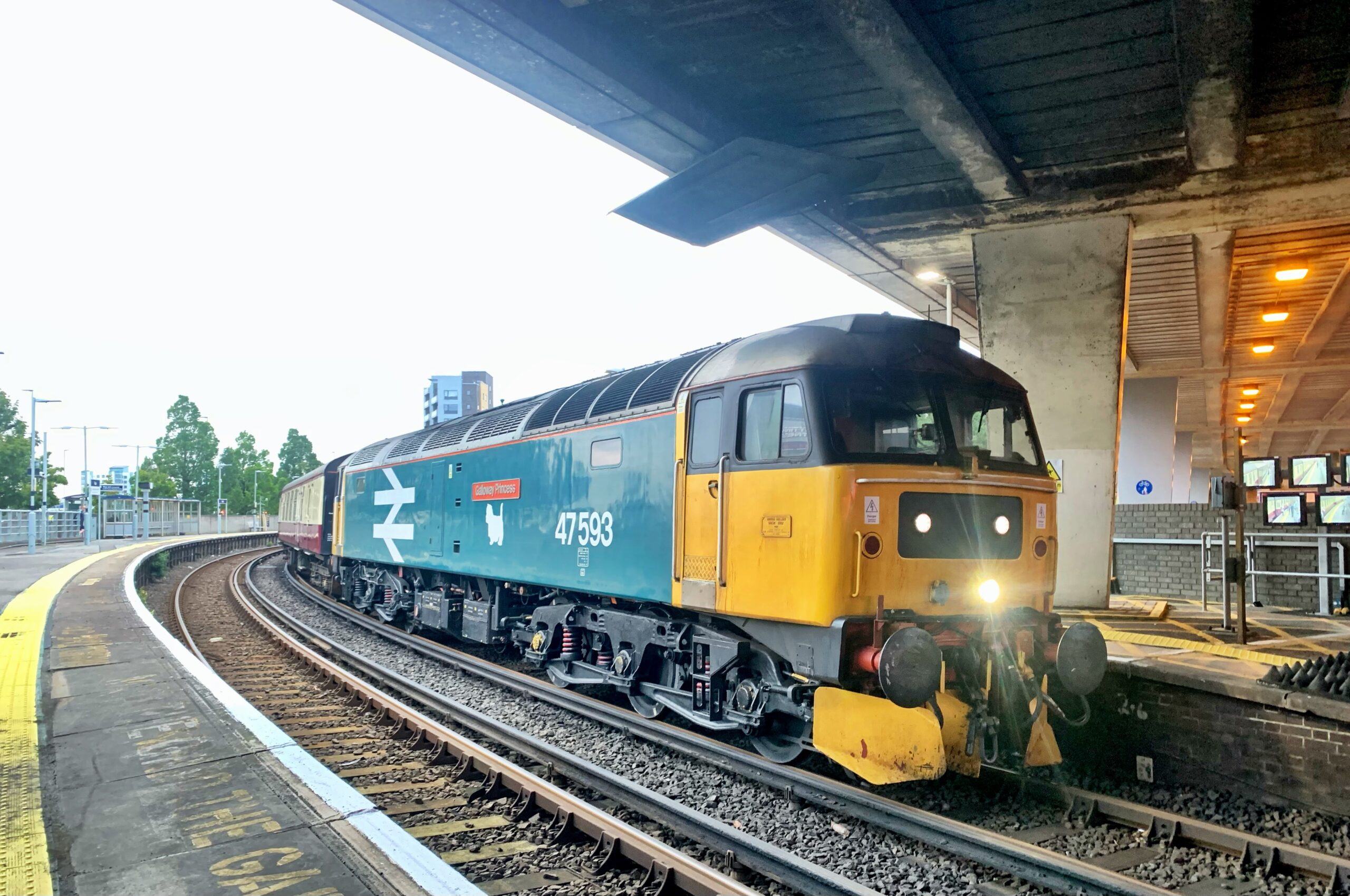
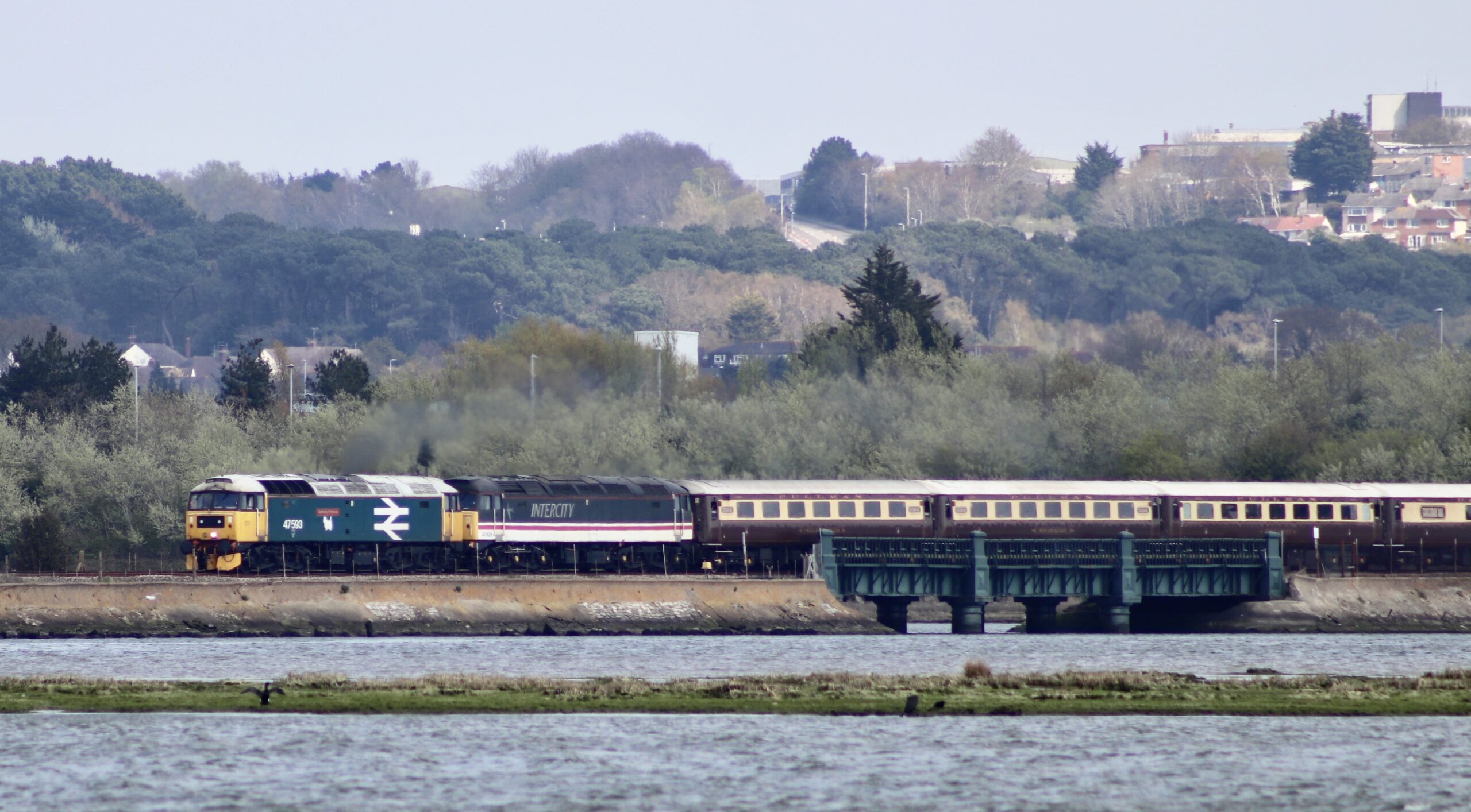
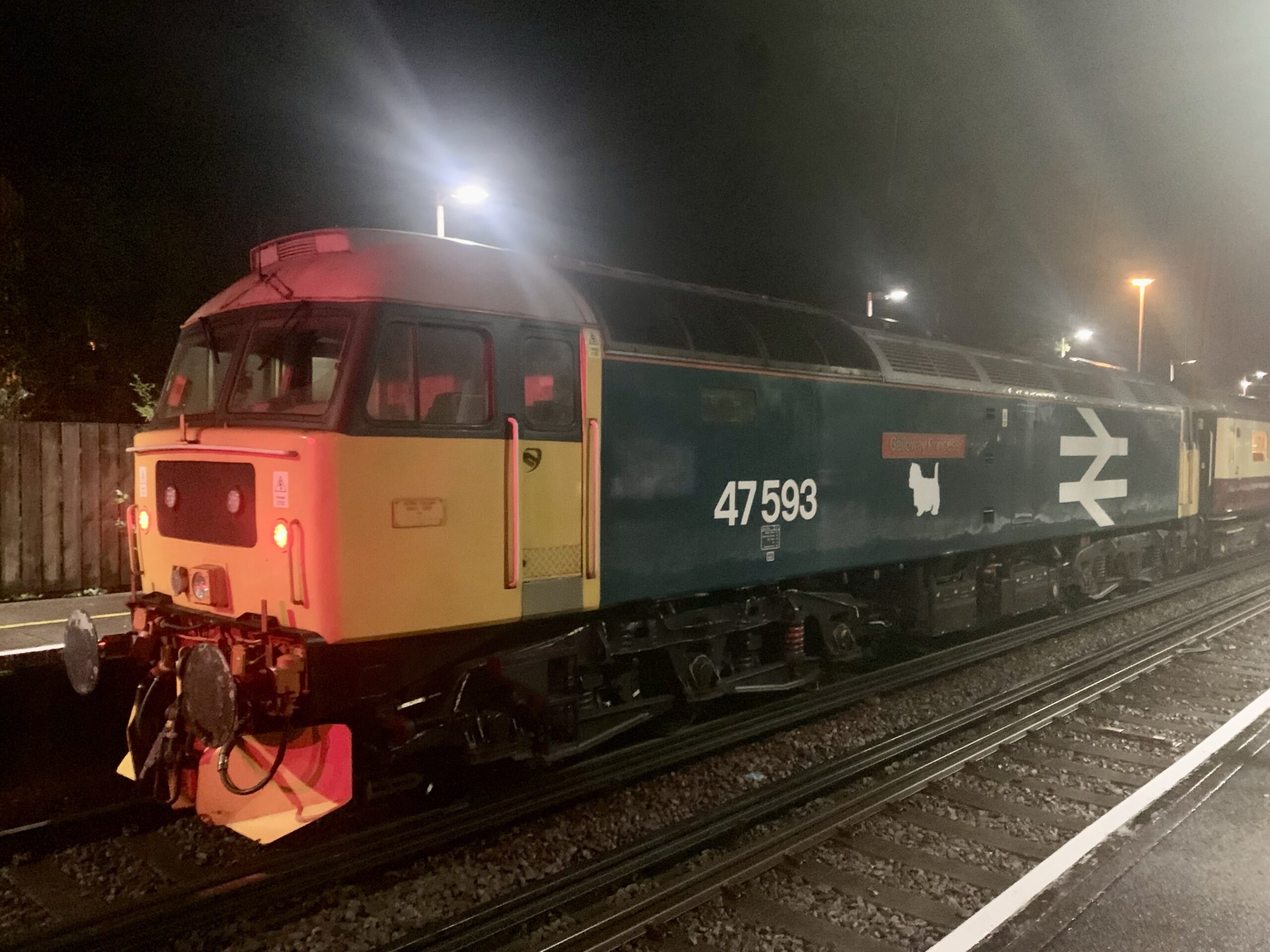
Early doors Saturday morning found me and several other enthusiasts waiting on Poole railway station for the empty coaching stock (ecs) which would form the “English Riviera Express” excursion to Kingswear. This was top and tailed by Locomotive Services Limited’s class 47 locomotives No. 47805 assisted by No. 47593 deputising for No. 47828 which had developed a fault and remained at Eastleigh. The ecs ran through Poole out to the storage sidings before heading back into the station to pick up passengers.
LSL Class 47 No. 47805 erupts working 5Z27 Eastleigh Arlington (ZG) to Poole – 12/08/2023LSL Class 47 No. 47593 bringing the ECS in from Poole Storage Sidings into Poole station – 12/08/2023Now working as 1Z27 0635 Poole to Kingswear (For Dartmouth) LSL Class 47 No. 47593 prepares for departure – 12/08/2023
With Yoshi now in tow, we headed off to Somerset to see the same train at Creech St Michael before the planned locomotive changeover to steam traction in the form of LNER A4 4-6-2 No. 60007 ‘Sir Nigel Gresley’ which took place in Taunton.
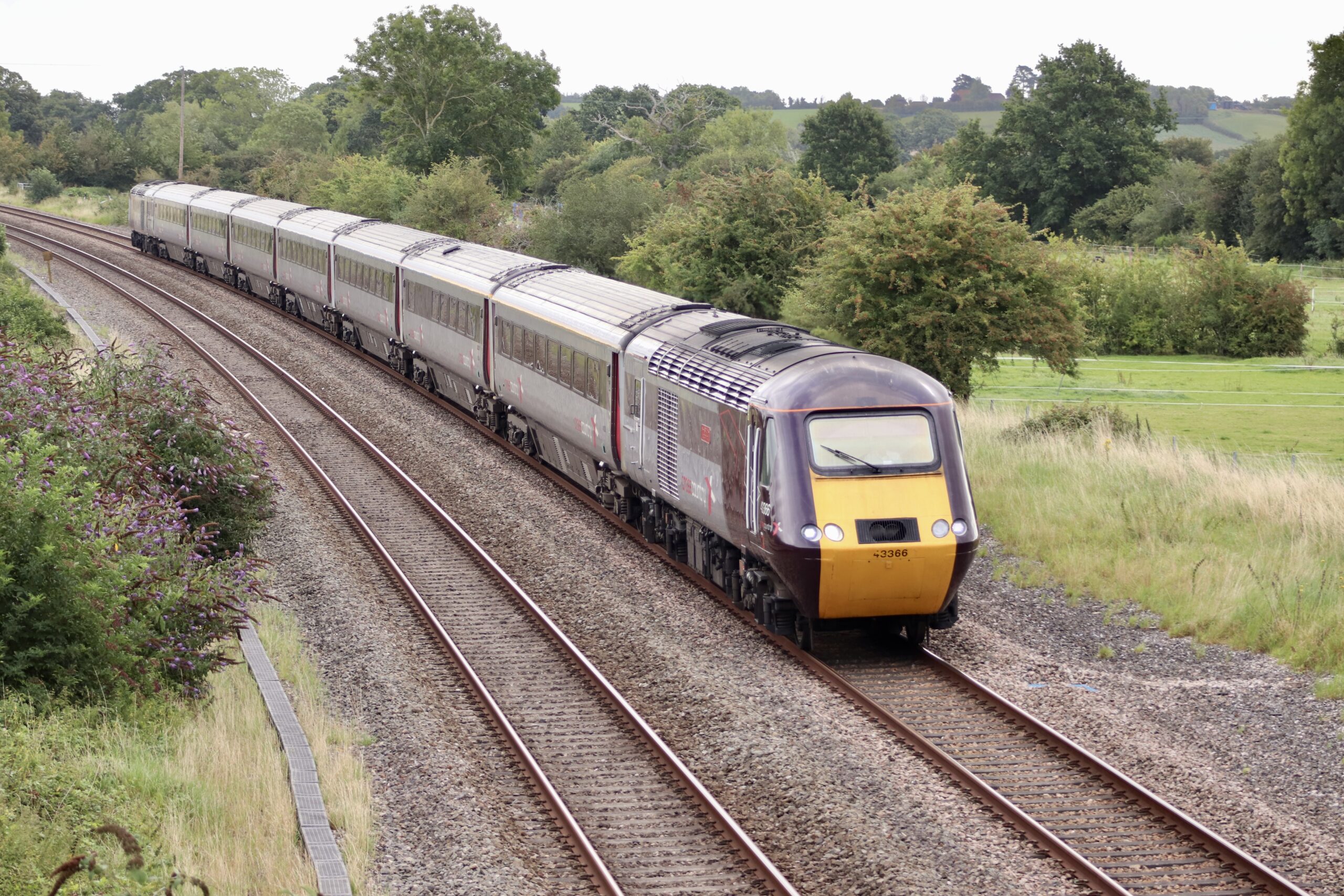
Having reversed at Westbury LSL Class 47 No. 47805 is back as the leading locomotive passing Creech St Michael 1Z27 0635 Poole to Kingswear (For Dartmouth) – 12/08/2023With only a matter of weeks left in service, CrossCountry HST set with Class 43 power cars No.’s 43366 and 43378 top and tail 1V44 0609 Leeds to Plymouth past Creech St Michael – 12/08/2023
As there was a good 30 minutes or so in the schedule to enable the changeover from diesel to steam, we drove to the other side of Taunton to see ‘Sir Nigel’ passing Norton Fitzwarren at the head of the Poole to Kingswear excursion train. A location chosen as not long afterwards, LMS Jubilee 4-6-0 No. 45596 ‘Bahamas’ was also due to pass on her way to the West Somerset Railway.
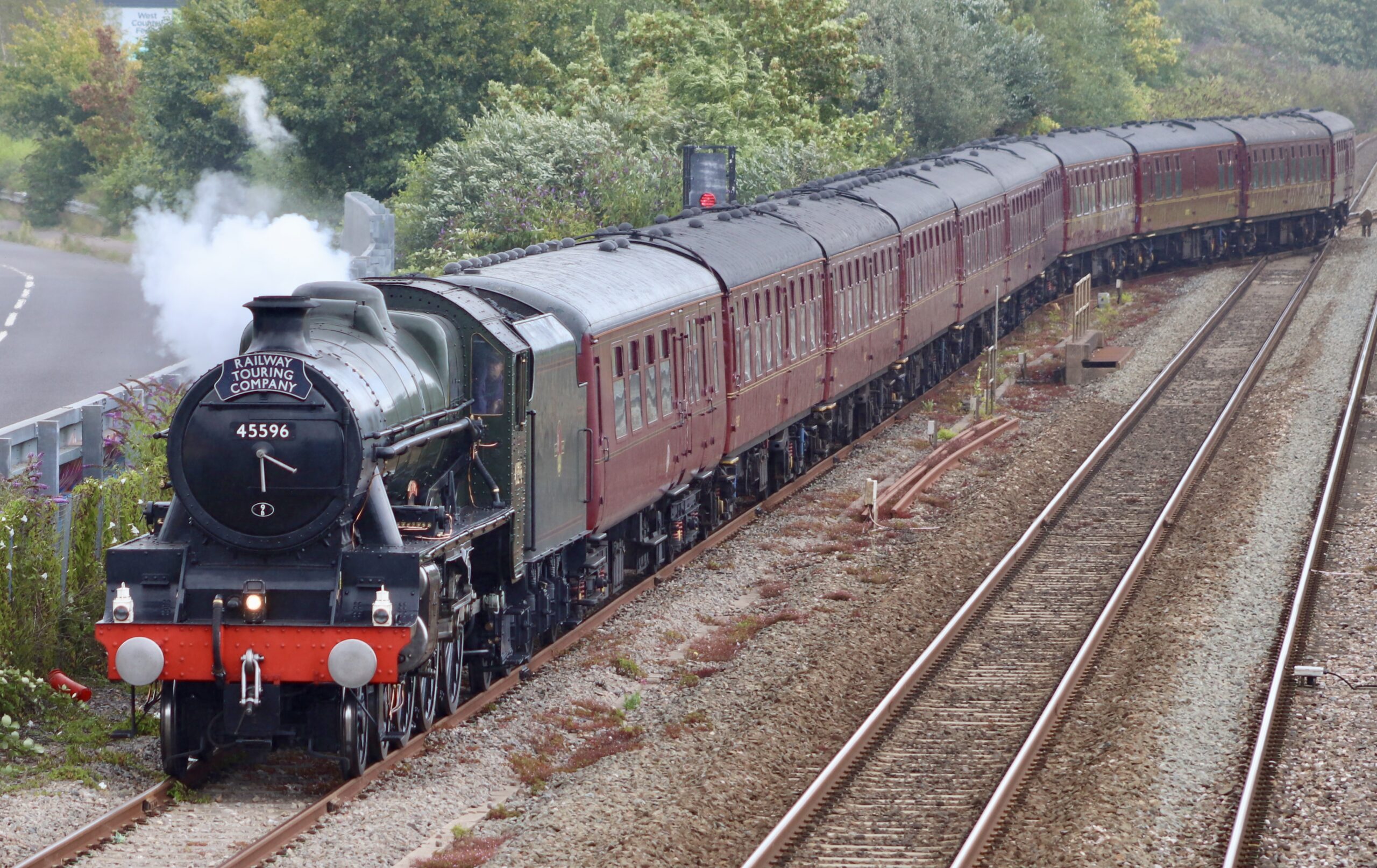
With Class 47 No. 47805 having been replaced at Taunton by LNER A4 4-6-2 No. 60007 ‘Sir Nigel Gresley’ the English Riviera Express – 1Z27 0635 Poole to Kingswear (For Dartmouth) – passes Norton Fitzwarren. Class 47 No. 47593 remained at the rear of the train for support – 12/08/2023The second rail tour of the day through Taunton saw stalwart LMS Jubilee 4-6-0 No. 45596 ‘Bahamas’ hauling “The West Somerset Steam Express” heading off the mainline for the branch leading to the West Somerset Railway – 12/08/2023
Video from Poole and the Taunton area on 12th August 2023
After all the steam hauled rail tour excitement which afforded a few barks of approval from Yoshi, we headed for home with a slight diversion via Westbury, which, if I’m honest took far longer than expected! Although ultimately worthwhile as we were lucky enough to see a diverted container train on its way to Southampton as well as Class 67 No. 67027 which has recently reverted to Colas after being briefly part of the GBRf fleet, the intention being for it to be employed on sleeper services in the Scottish Highlands.
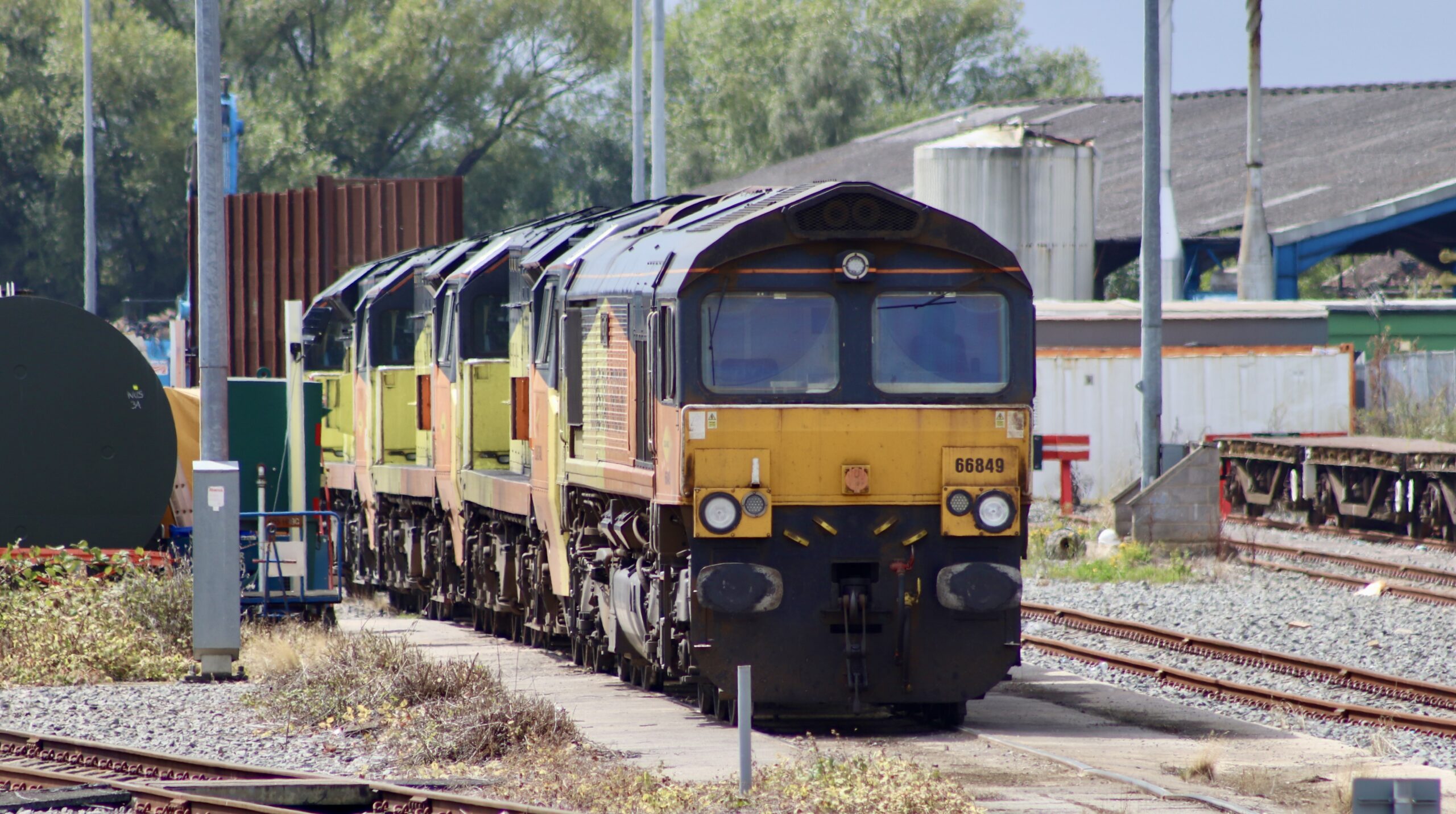
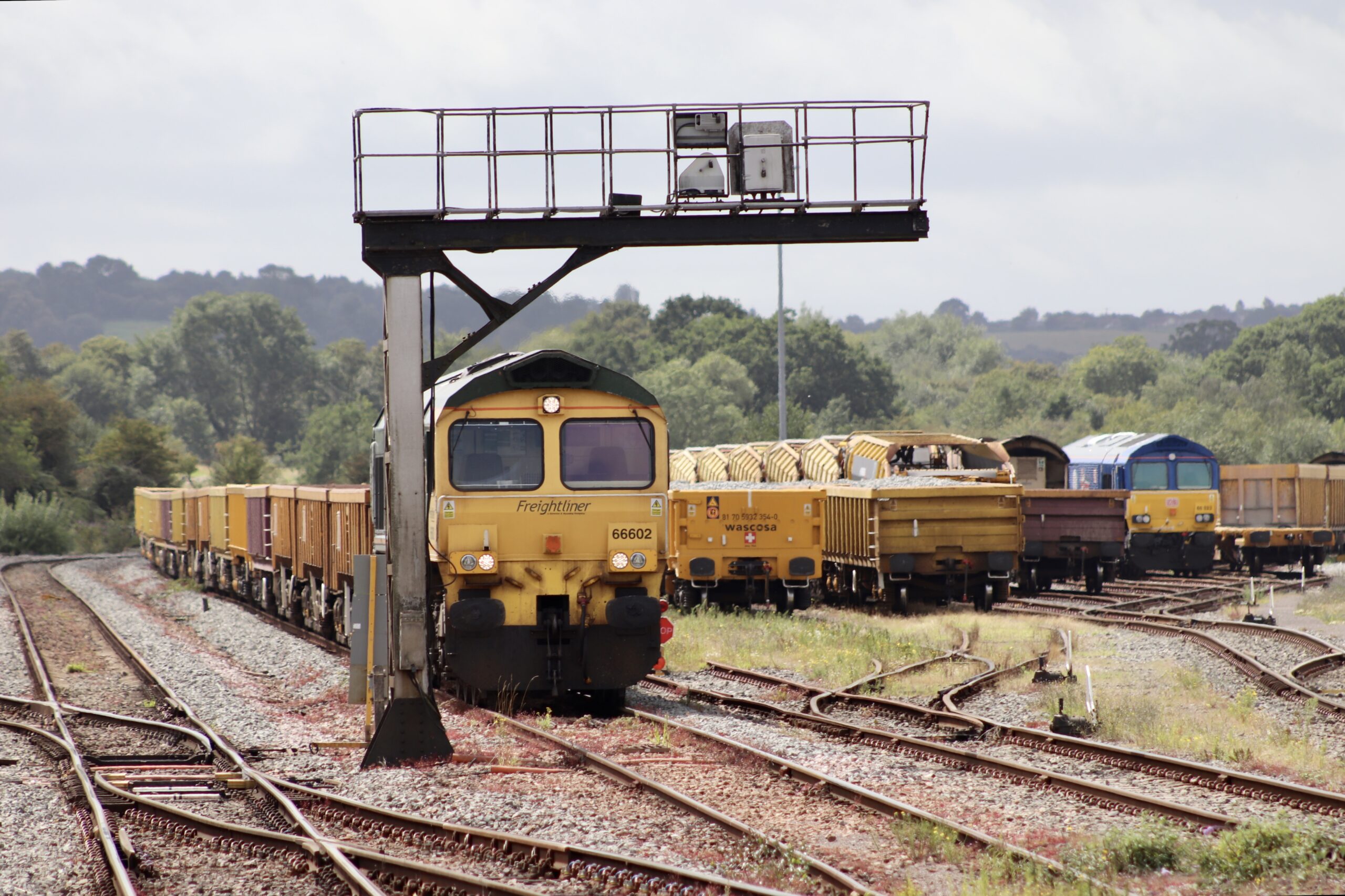
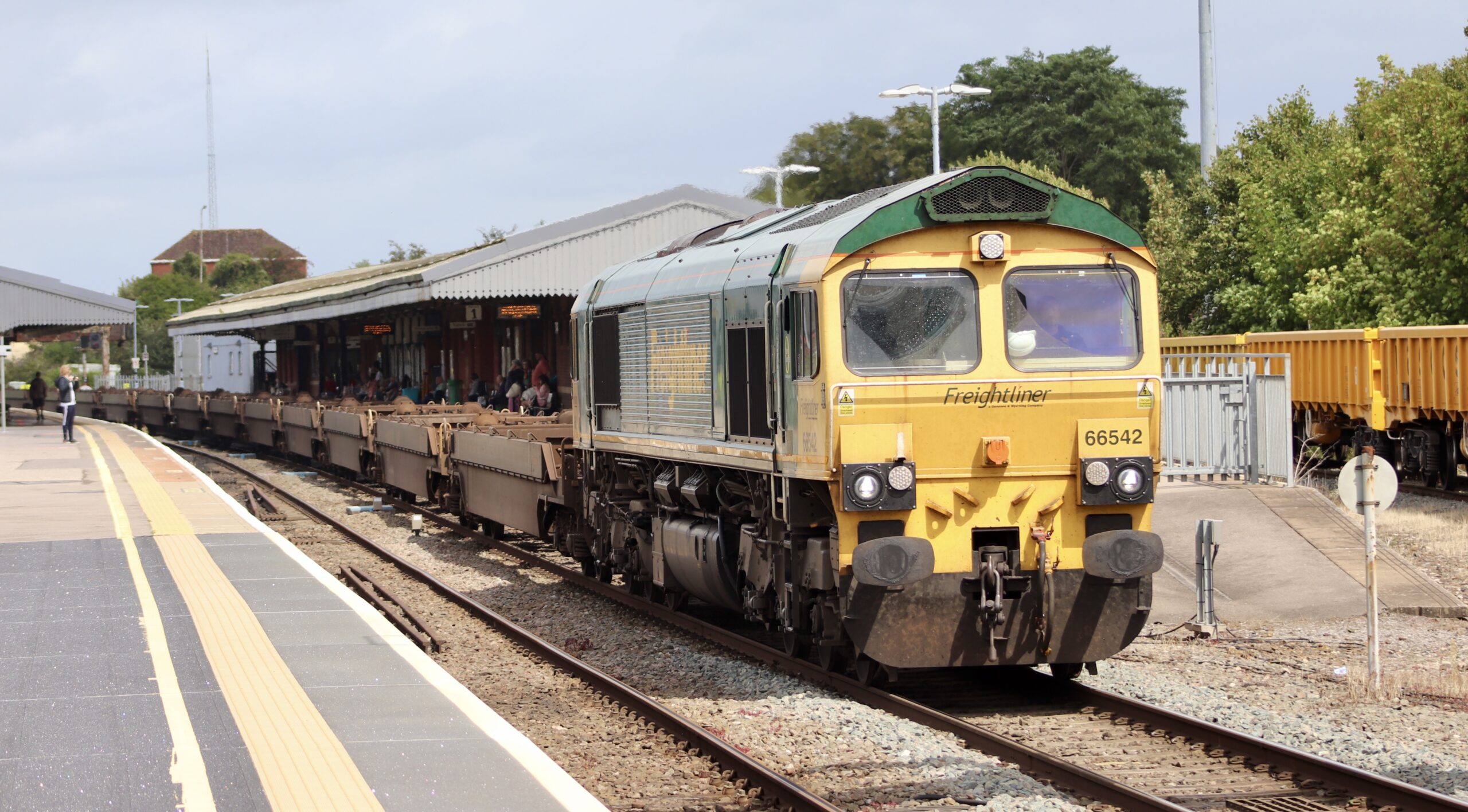
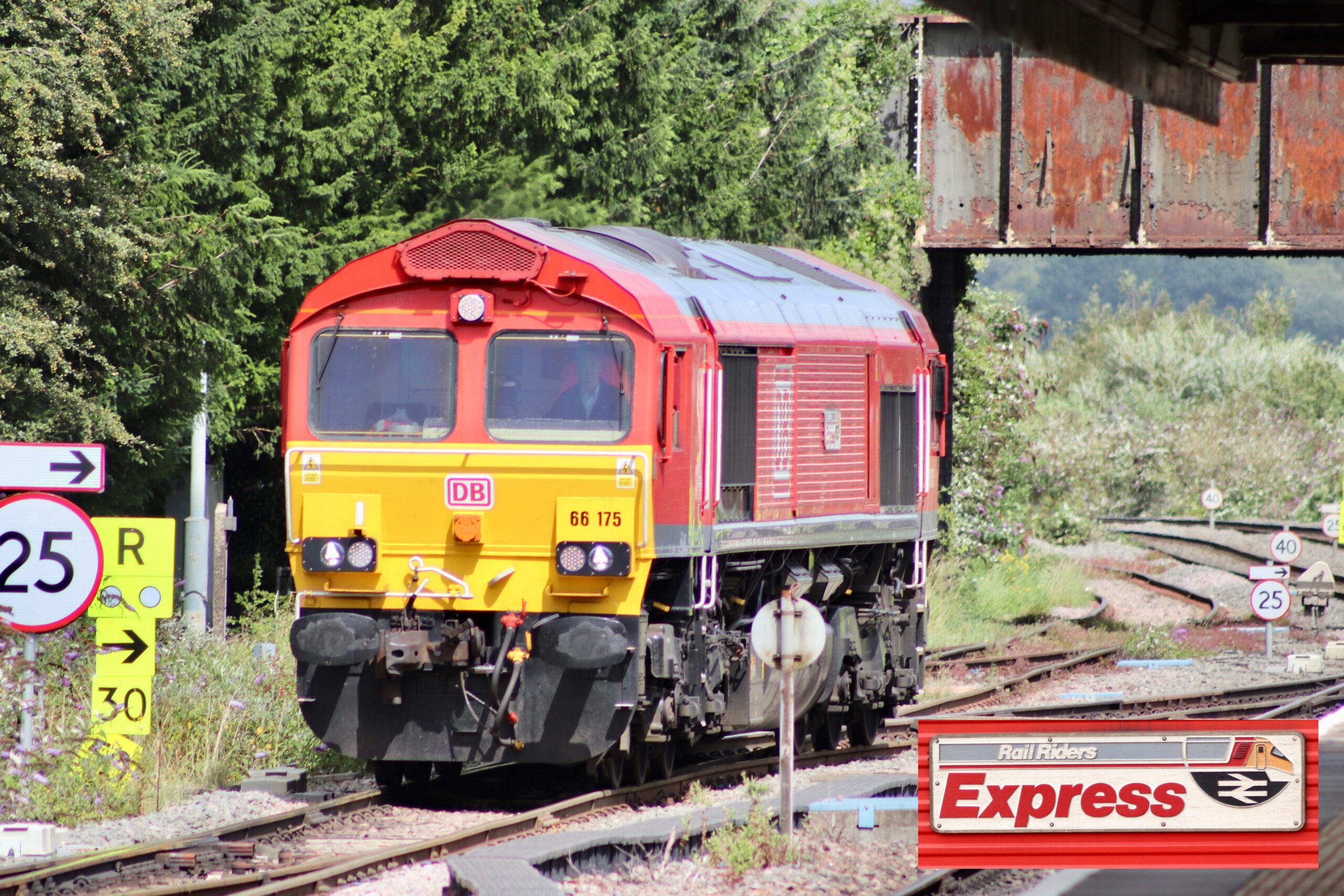
A line up of Colas locos! Class 66 No. 66849 with Class 70’s 70811, 70809 and 70803 await their next turns at Westbury – 12/08/2023Freightliner Class 66 No. 66602 and DB Cargo No. 66023 with its special King Prince Charles Coronation livery mostly hidden by wagons at Westbury – 12/08/2023Freightliner Class 66 No. 66542 passes through Westbury working the diverted 4O51 1040 Wentloog Freight Terminal Freightliner to Southampton Maritime Container Terminal – 12/08/202366175 ‘Rail Riders Express’ arrives light engine working as 0012 1106 Margam TC to Westbury Down TC – 12/08/2023Unique liveried GBRf Class 66 No. 66797 at Westbury – 12/08/2023Class 67 No. 67027 outside the Colas Maintenance Facility, also known as The Elephant House for some reason which has, as yet, escaped me – 12/08/2023
On Monday I found myself once again in Southampton and obviously couldn’t resist a quick look in on Eastleigh!
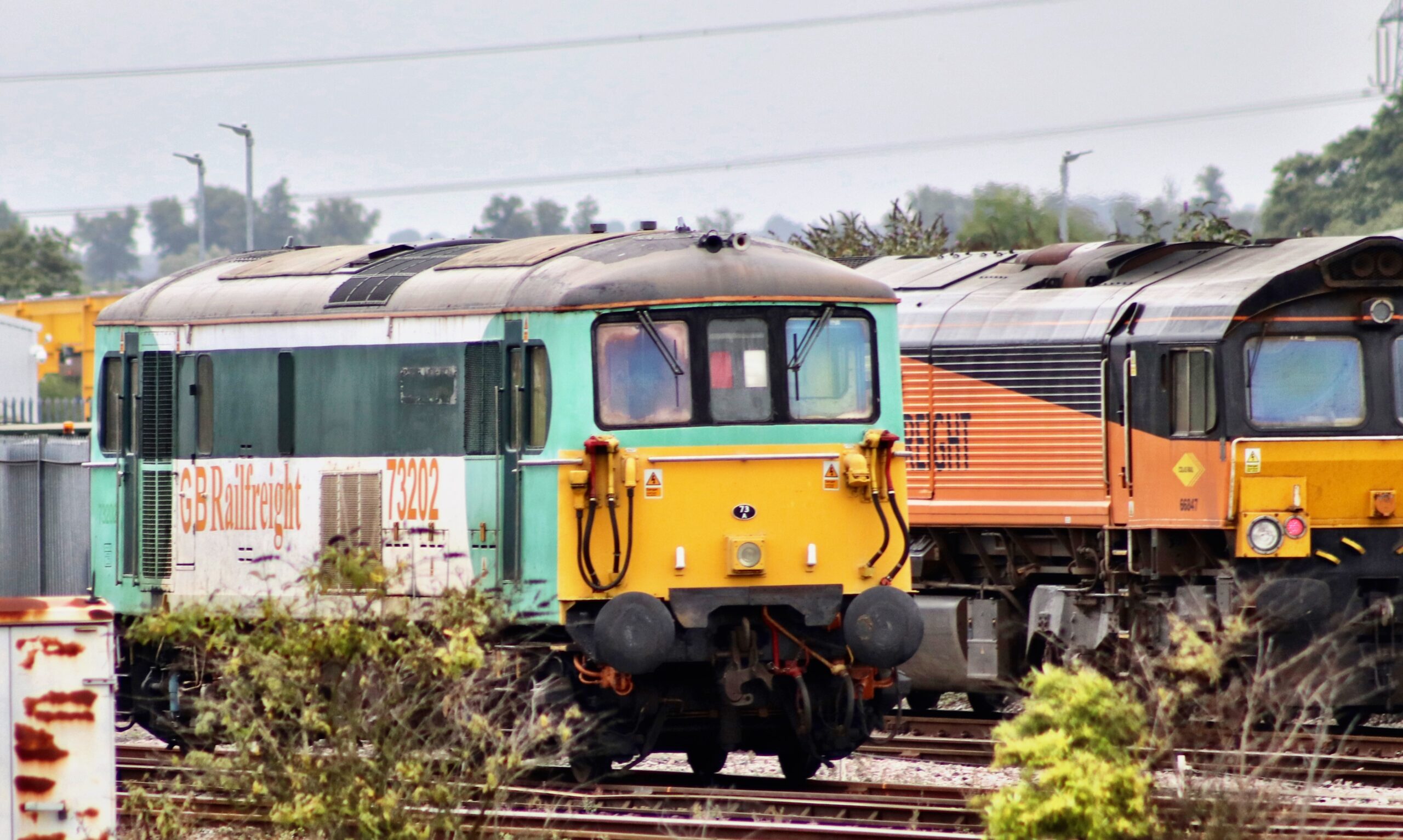
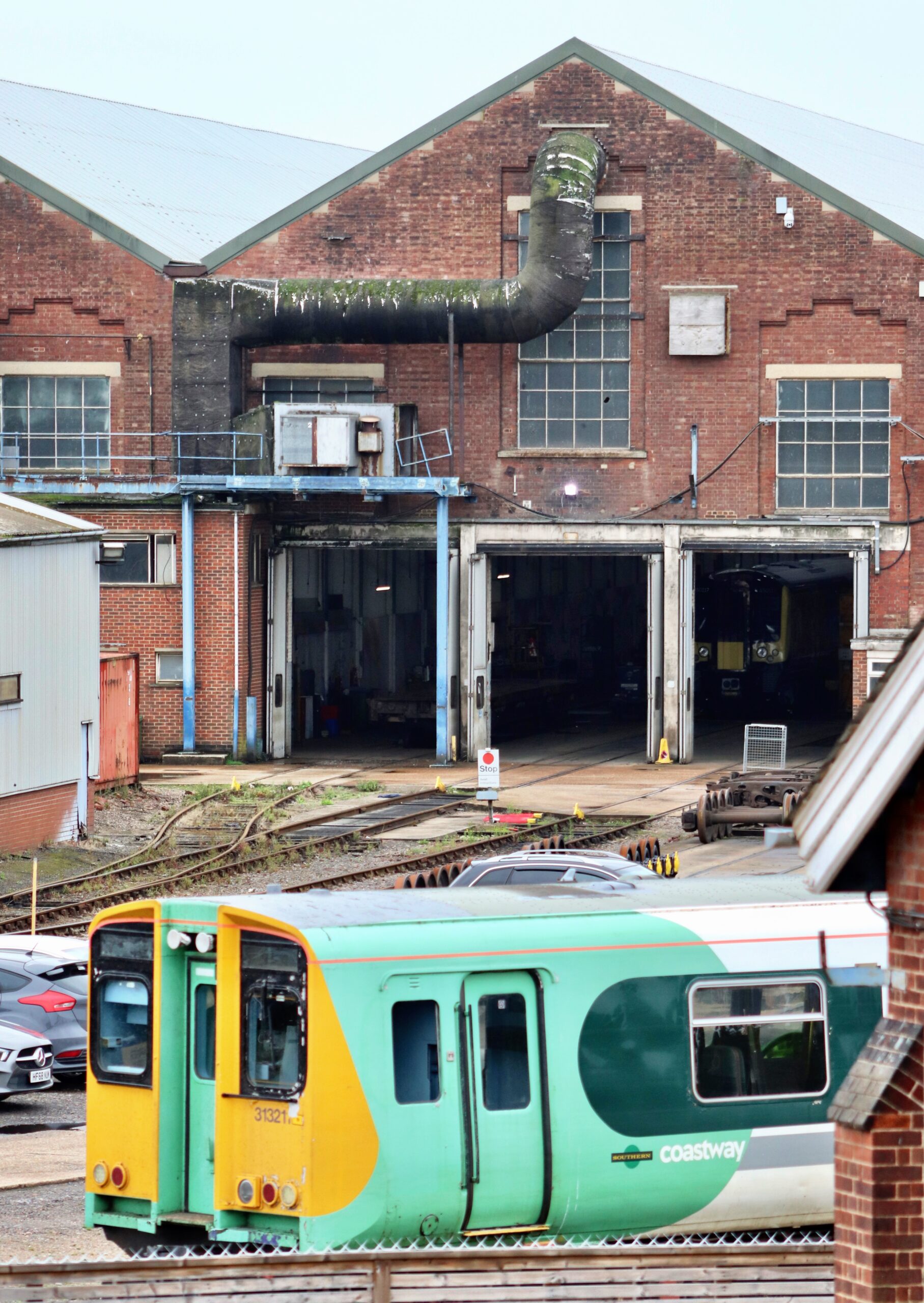
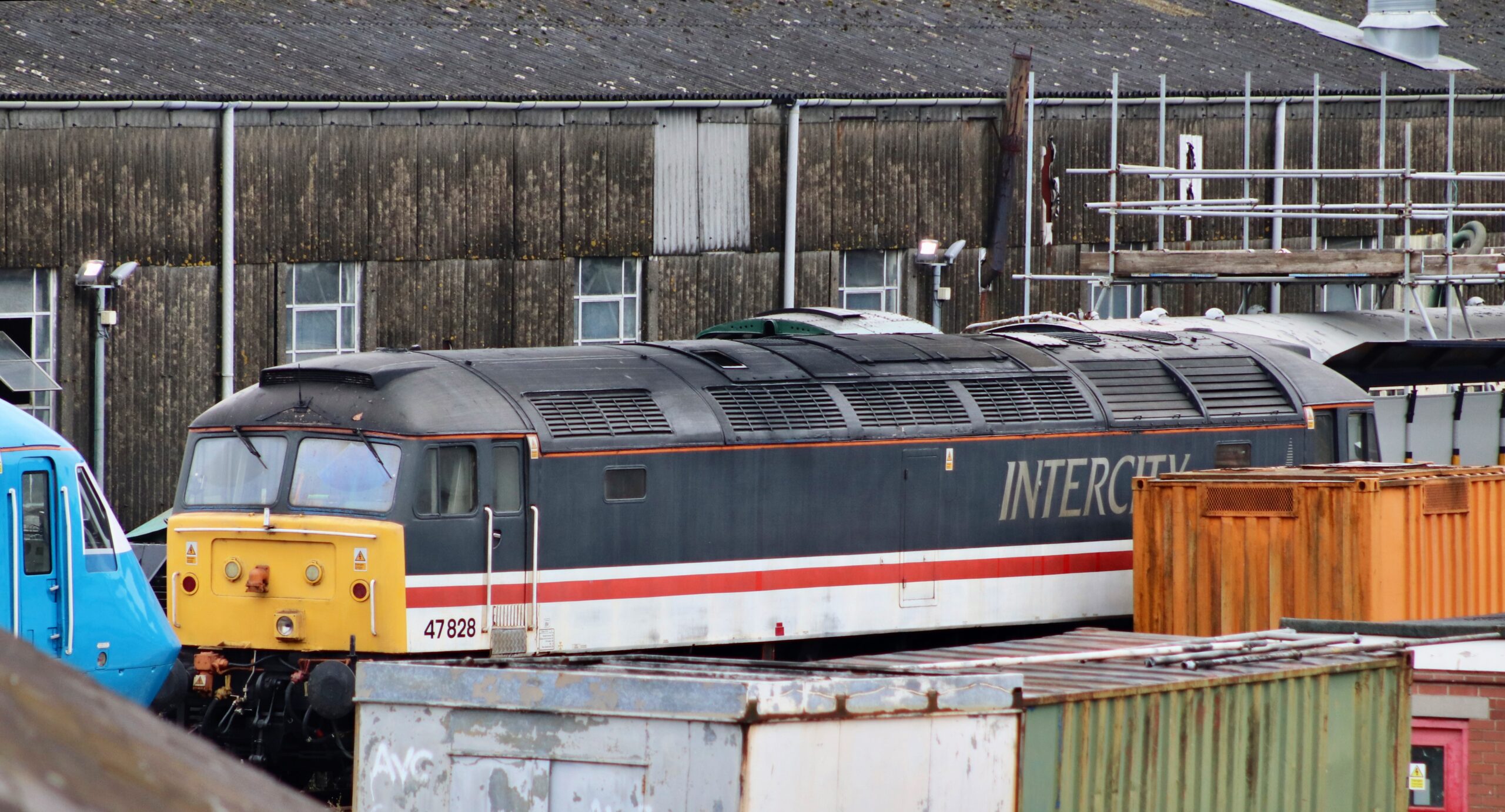
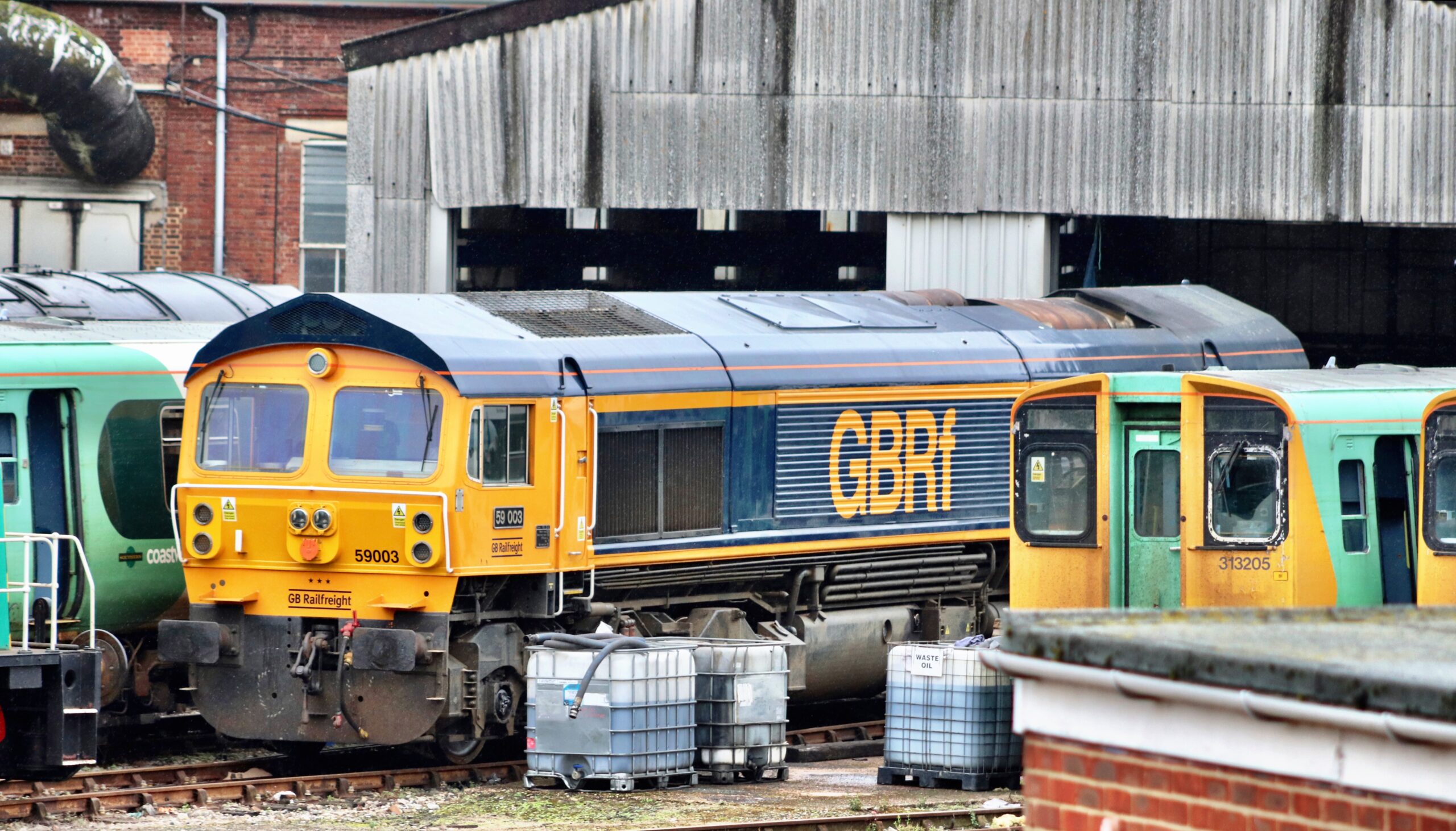
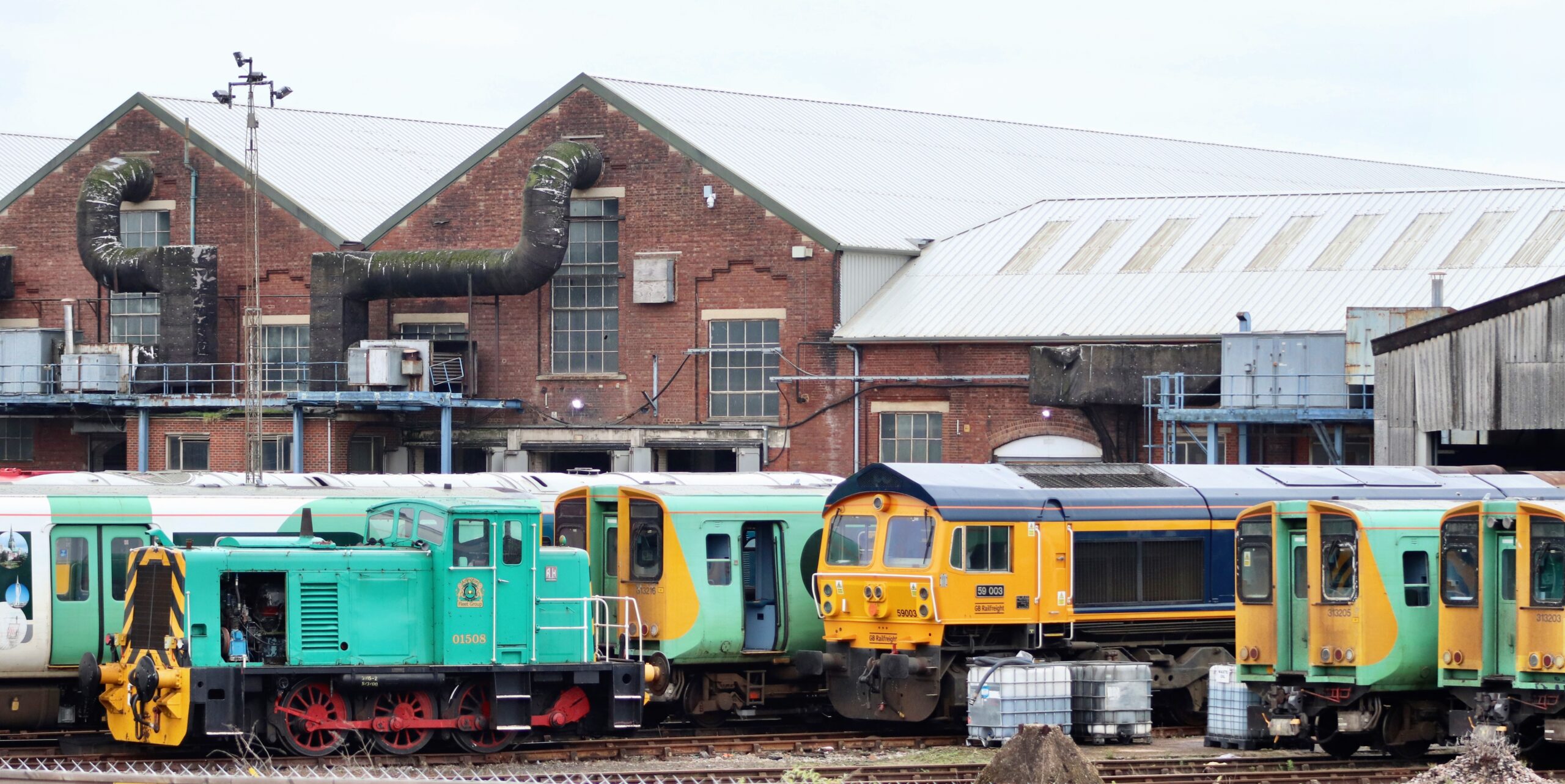
GBRf Class 73 No. 73202 still in its unique rebranded Southern livery at Eastleigh East Yard – 14/08/2023GBRf Class 73 No. 73107 ‘Tracy’ at Eastleigh Works – 14/08/2023Ex-Southern Coastway Class 313 No. 313211 with SWR Class 450 No. 450117 in the shed behind at Eastleigh – 14/08/2023LSL Class 47 No. 47828 in retro Inter-City livery at Eastleigh. This loco should have been on the “English Riviera Express” from Poole to Kingswear on Saturday 12th August, but was prevented from doing so after developing a fault – 14/08/2023Damaged in recovery attempts of the diesel-multiple units involved in the Salisbury tunnel incident in October 2021, GBRf Class 59 No. 59003 ‘Yeoman Highlander’ looks to be nearing a return to mainline service. Seen here at Eastleigh Arlington. A test run to Westbury scheduled later in the day did not materialise – 14/08/2023Arlington Fleet Group Ruston & Hornsby 0-6-0DH shunter No. 01508 built in 1961 with GBRf Class 59 No. 59003 ‘Yeoman Highlander’ and numerous Class 313 EMU’s at Eastleigh Works – 14/08/2023GBRf Class 59 No. 59003 ‘Yeoman Highlander’ surrounded by withdrawn Class 313 EMU’s at Eastleigh Works – 14/08/2023Eastleigh Class 07 shunter No. 07007 with the London Underground 4TC in the background – 14/08/2023
Apologies for lateness and brevity of this weeks entry. I’ve been playing with 3D printing, to varied degrees of success! Please do make your thoughts known about the railway ticket office closures. As of 3rd August 315,000 responses had been received as part of the consultation, which shows just how much public interest there is to the Government’s proposals. We’ll be back again soon – be seeing you!
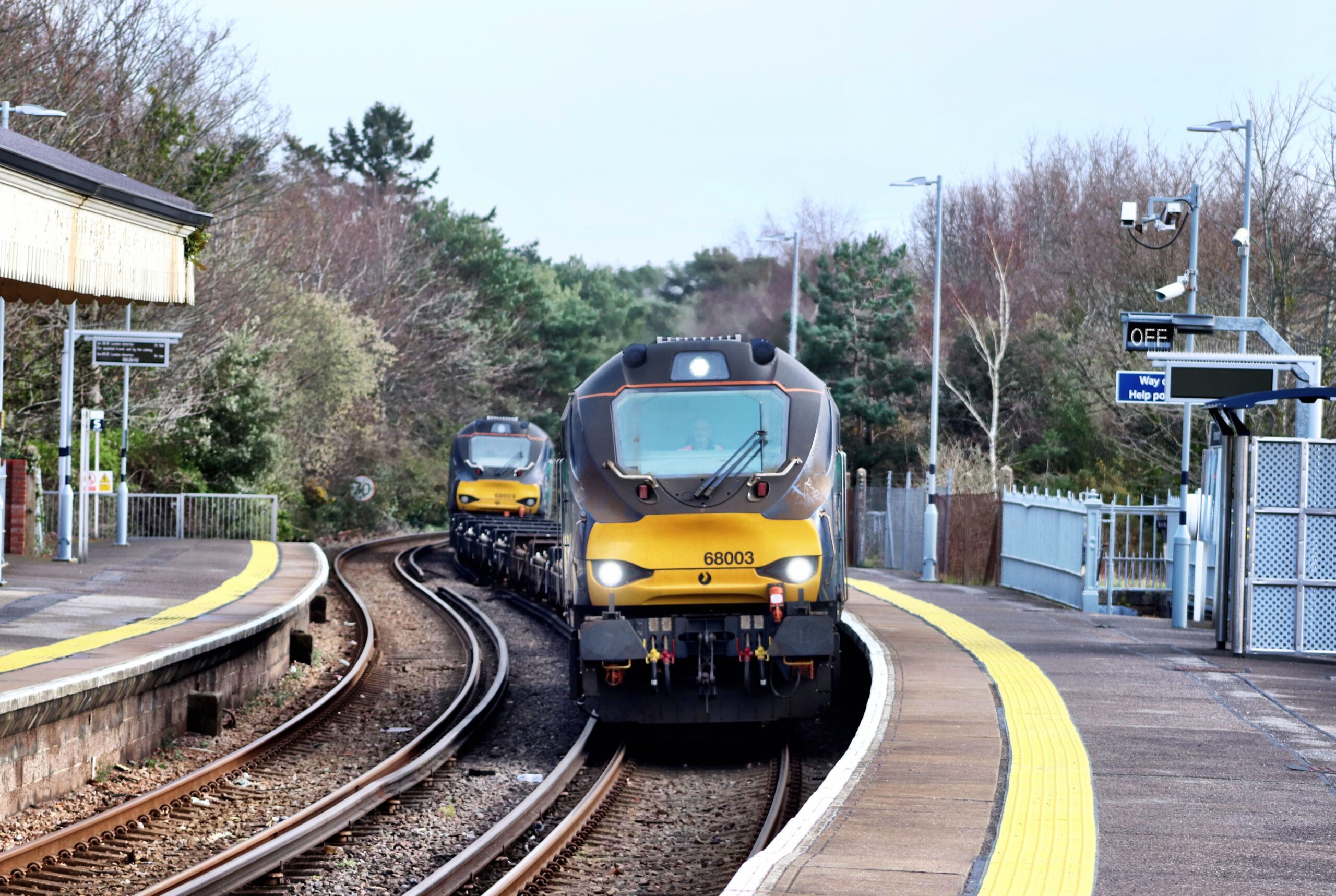
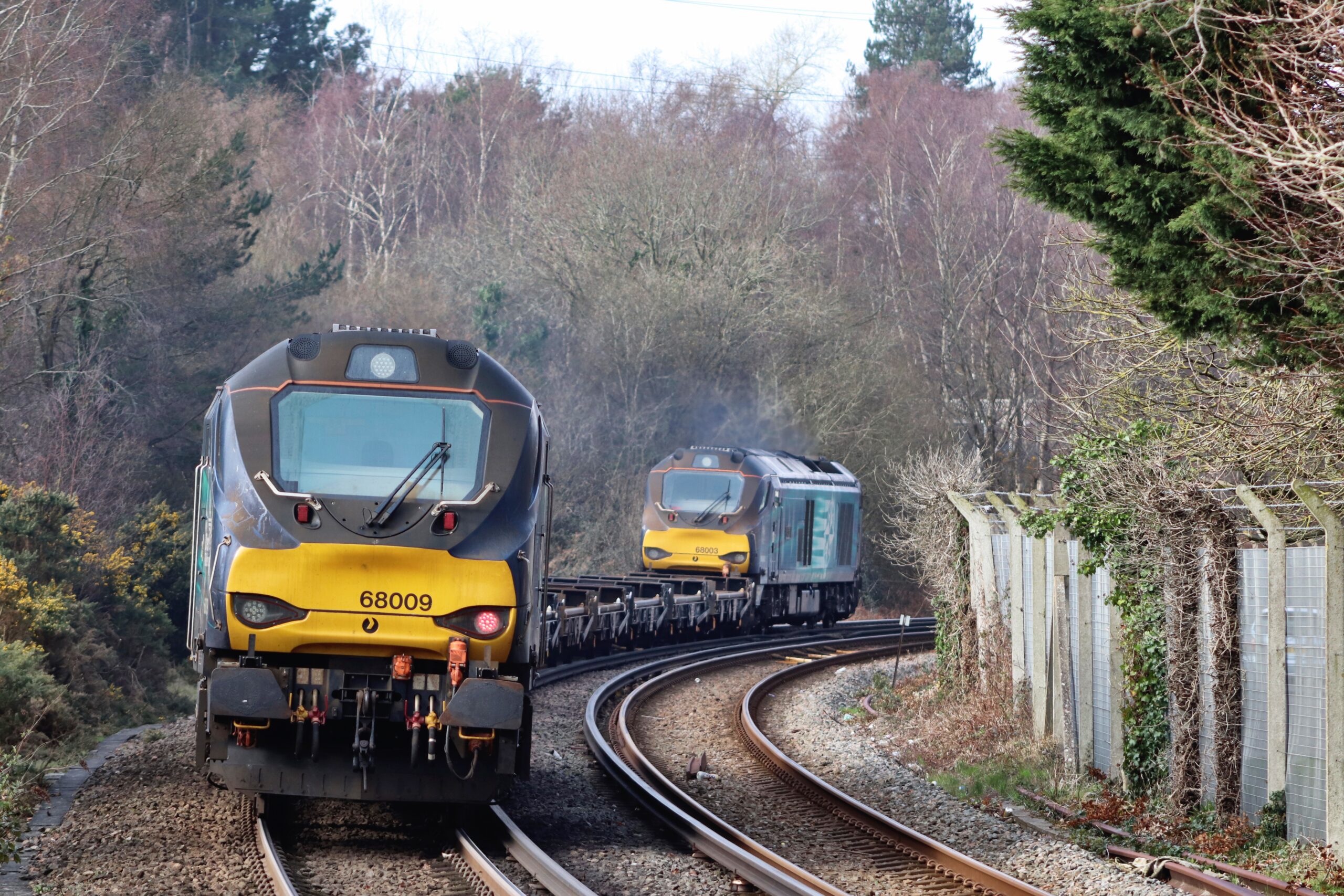
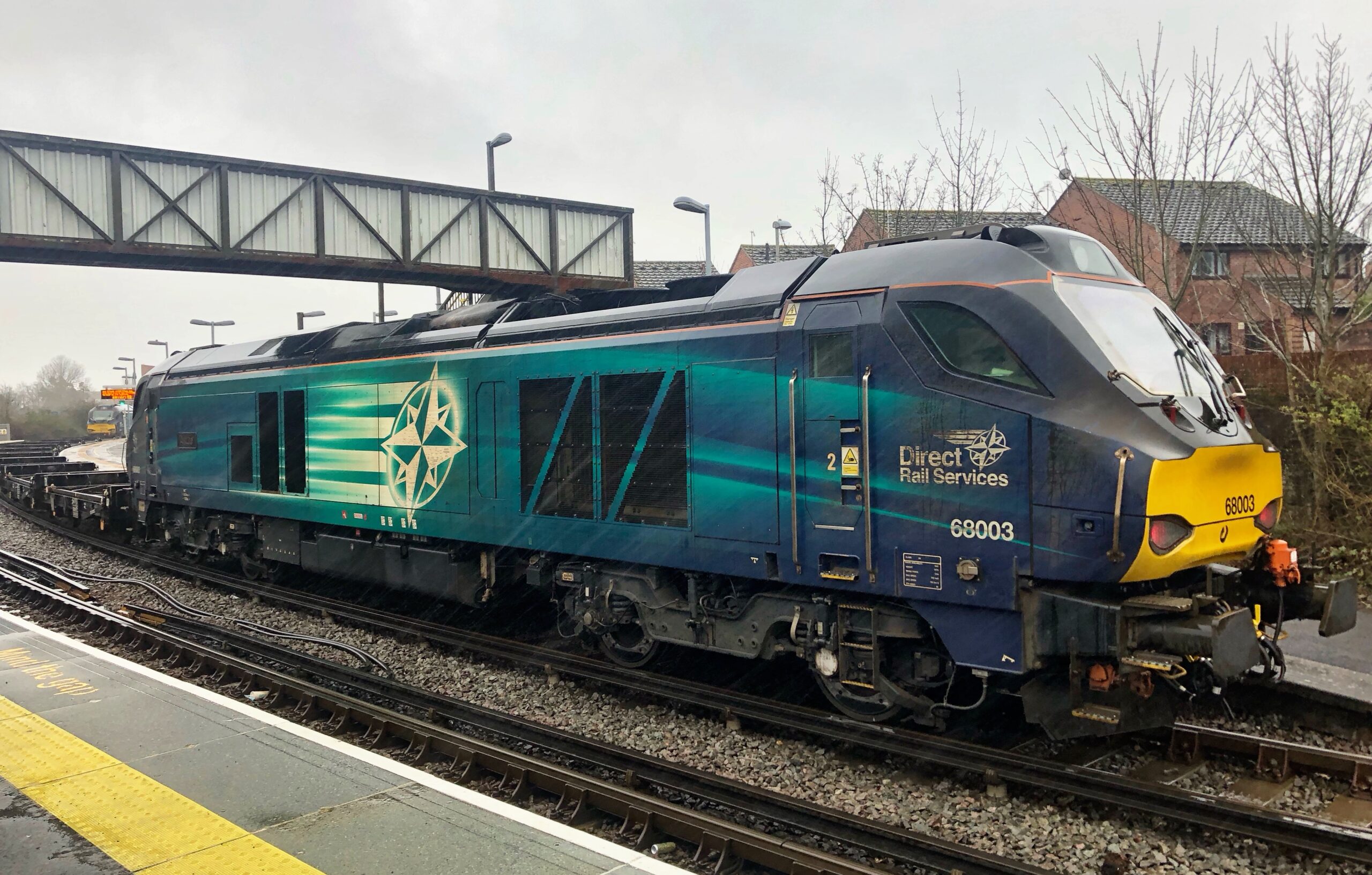
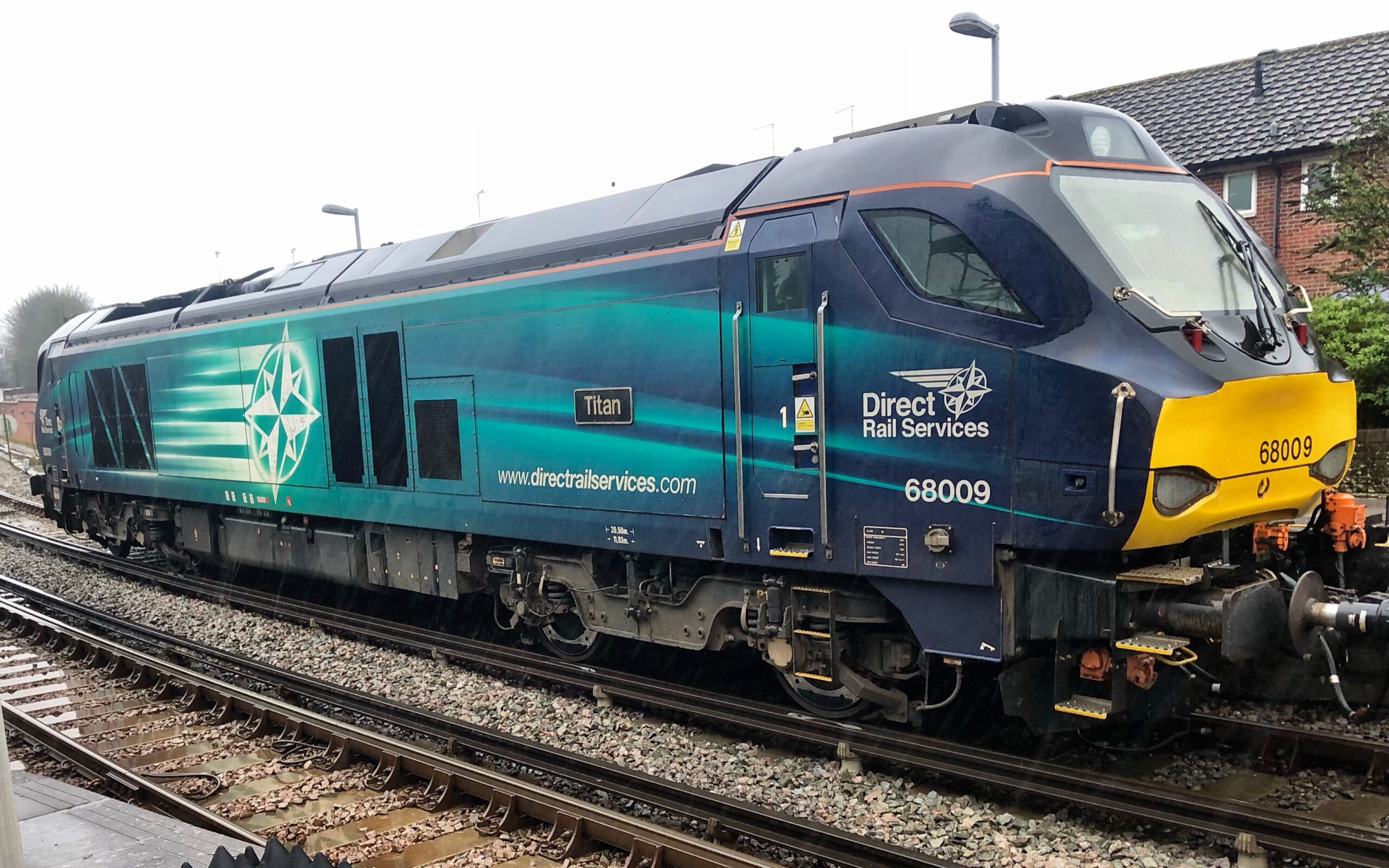
This week Yoshi and I visited the East Lancashire Railway for their annual summer diesel gala. The original plan was to arrive in Bury by the early afternoon of Thursday 29th June, but a spanner was thrown in the works when I decided I’d like to see what might well be the final Winfrith working. Delayed by 24 hours, Direct Rail Services Class 68 locomotive No.’s 68002 ‘Intrepid’ and 68003 ‘Astute’ headed south from Crewe to collect low level nuclear west from the decommissioned Dorset power station. I chose the vantage point of the road bridge just west of Winfrith Magnox as I fully expected the train to consist of ten empty wagons as had been the usual consist. This would have meant the lead locomotive halting very close to the road bridge I had positioned myself prior to reversing into Winfrith sidings. However, I was disappointed to see the train was but two wagons long which obviously meant the train stopped well short of my vantage point and even with a long lens the train was a little too far away for my liking! We did have a quick walk down to the fenced boundary of Magnox Winfrith and after a quick chat with security who asked us not to photograph the workforce or buildings we took a few record shots and were on our way.
Direct Rail Services Class 68 No.’s 68002 ‘Intrepid’ and 68003 ‘Astute’ working 6Z62 0100 Crewe Coal Sidings DRS to Winfrith Wool Sidings reverse into Winfrith sidings from the mainline as a service train to Weymouth formed of a South Western Railway Class 444 unit awaits clearance – 29/06/2023Class 68 No.’s 68002 ‘Intrepid’ and 68003 ‘Astute’ with two PFA wagons await loading in Winfrith Sidings – 29/06/2023
Direct Rail Services Class 68 No.’s 68002 ‘Intrepid’ and 68003 ‘Astute’ working 6Z62 0100 Crewe Coal Sidings DRS to Winfrith Wool Sidings – 29/06/2023
Catching the “Winfrith” had a knock on effect to travel plans and we didn’t get on the road north until 1000, well behind schedule.
Further delays occurred around Bristol as I looked in vain around Portbury Docks for newly arrived Class 93 Tri-mode locomotive No. 93001 which had been delivered by ship from Spain the previous day. Traffic congestion didn’t help matters and by the time we arrived in Lancashire it was too late to catch any East Lancs Railway diesel action. So instead, after a quick refresh, we took a tram into Manchester where we took in the delights of Manchester Piccadilly.
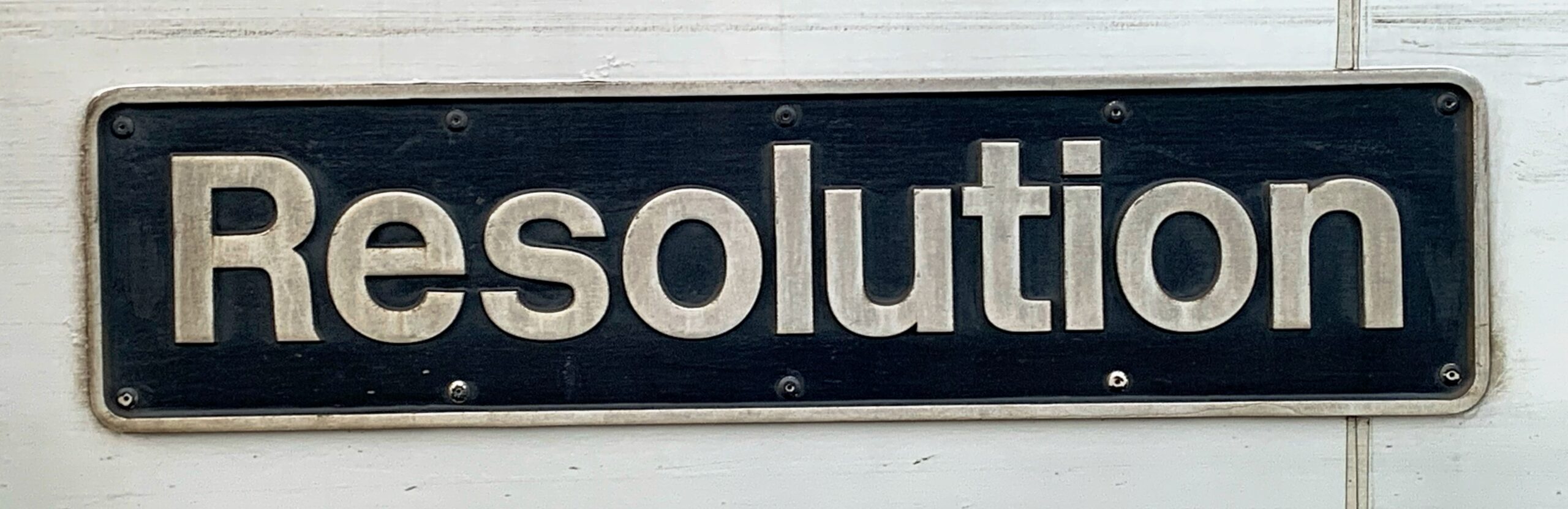
Bombardier M5000 Manchester Metrolink Tram No. 3104 at Bury. The Bury line was identified by transport planners in the 1980’s as one of the local railway lines in the Greater Manchester area which was used mostly for local traffic, and could therefore be split off from the main line network and converted to light-rail operation – 29/06/2023Victory Over Blindness by Johanna Domke-Guyot was commissioned to commemorate the centenary of the First World War and is situated on Piccadilly Approach outside the main entrance of Manchester Piccadilly Railway Station. The bronze sculpture depicts seven blind figures guiding each other and walking together. Their likeness are based upon real veterans who all suffered blindness as a result of action on the frontline – Platforms at Manchester Piccadilly with Northern Rail Class 156 No. 156428 forming the rear of 2K34 2006 Manchester Piccadilly to Crewe and an Avanti West Coast Pendolino which had arrived with the 1H35 1753 London Euston to Manchester Piccadilly service – 29/06/2023Trans Penine Express Class 185 No. 185132 working the 2E91 2058 Manchester Piccadilly to Leeds service – 29/06/2023TPE liveried Class 68 No. 68022 ‘Resolution’ pauses at Manchester Piccadilly with 5H85 Liverpool Lime Street to Longsight Car. M.D. empty coaching stock. I believe Class 68’s will soon cease on services to Liverpool / Manchester – 29/06/2023Nameplate of Class 68 No. 68022 ‘Resolution’ We visited The Mill at Manchester Piccadilly located up on the Mezzanine. The staff were extremely welcoming and even provided Yoshi with sausages and water while I enjoyed a five bean chilli and a pint of Birra Moretti – 29/06/2023Avanti West Coast Pendolino Class 390 No. 390119 ‘Progress’ at Manchester Piccadilly platform 6 waiting to depart as 5H38 2136 Manchester Piccadilly to Longsight Carriage Maintenance Depot having worked up from London Euston with the 1H38 1853 service – 29/06/2023Transport for Wales service 1W65 1855 Cardiff Central to Manchester Piccadilly having been propelled by DB liveried Class 67 No. 67010 stands at Piccadilly platform 10 – 29/06/2023Following our Manchester outing we returned to our Travelodge accommodation in Bury. After brushing my teeth in the bathroom I returned to find Yoshi had well and truly made himself at home! – 29/06/2023
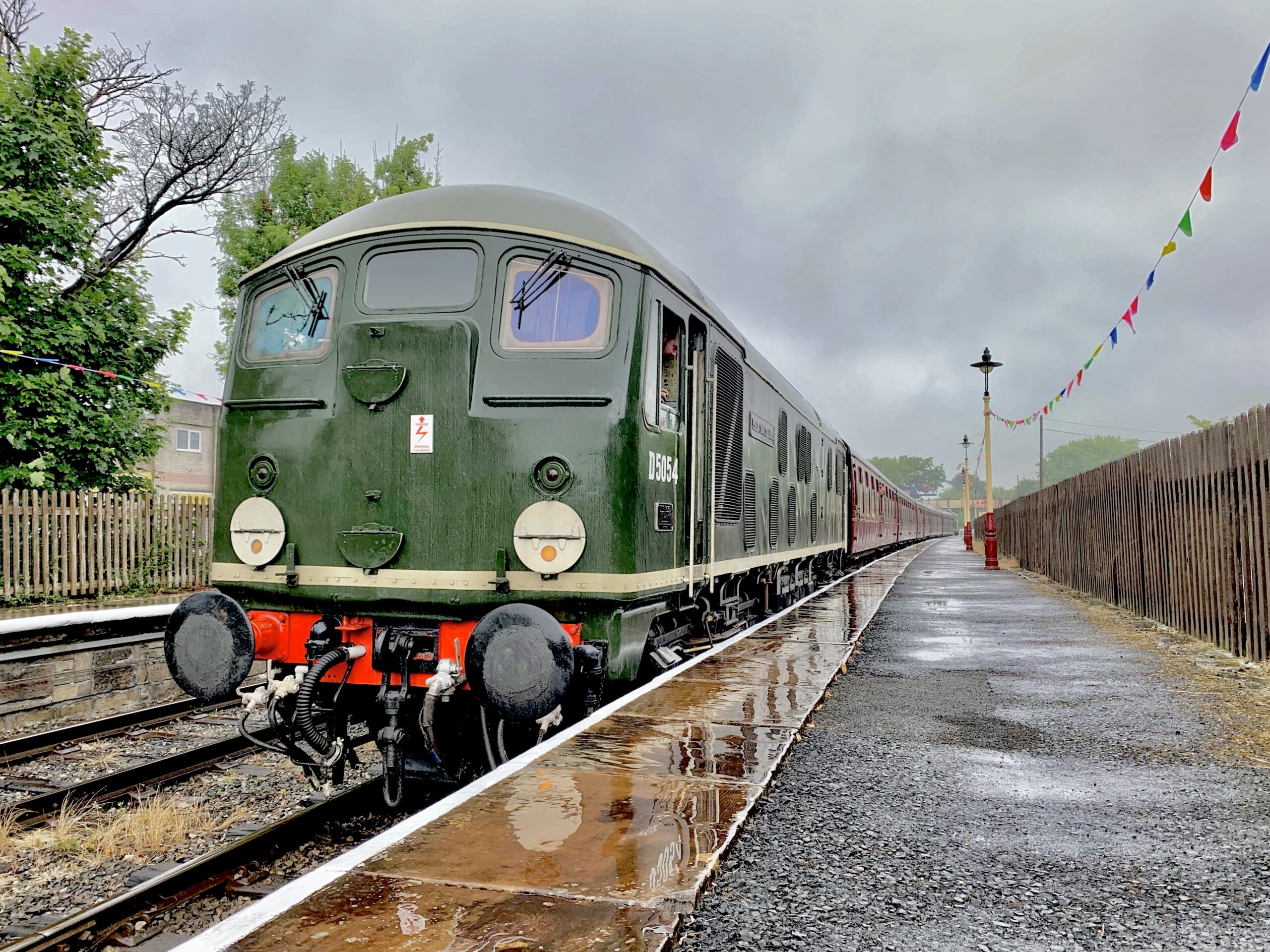
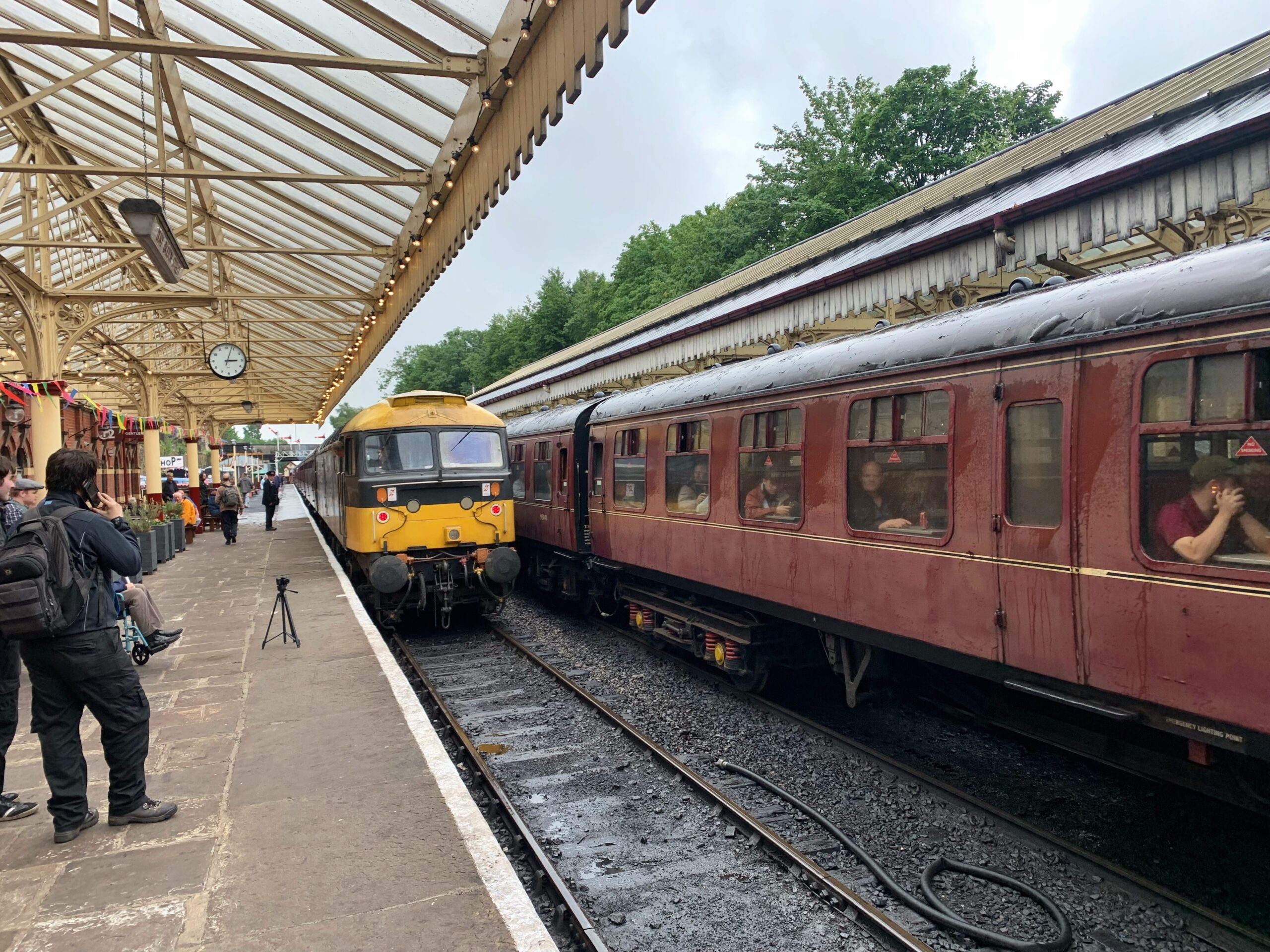
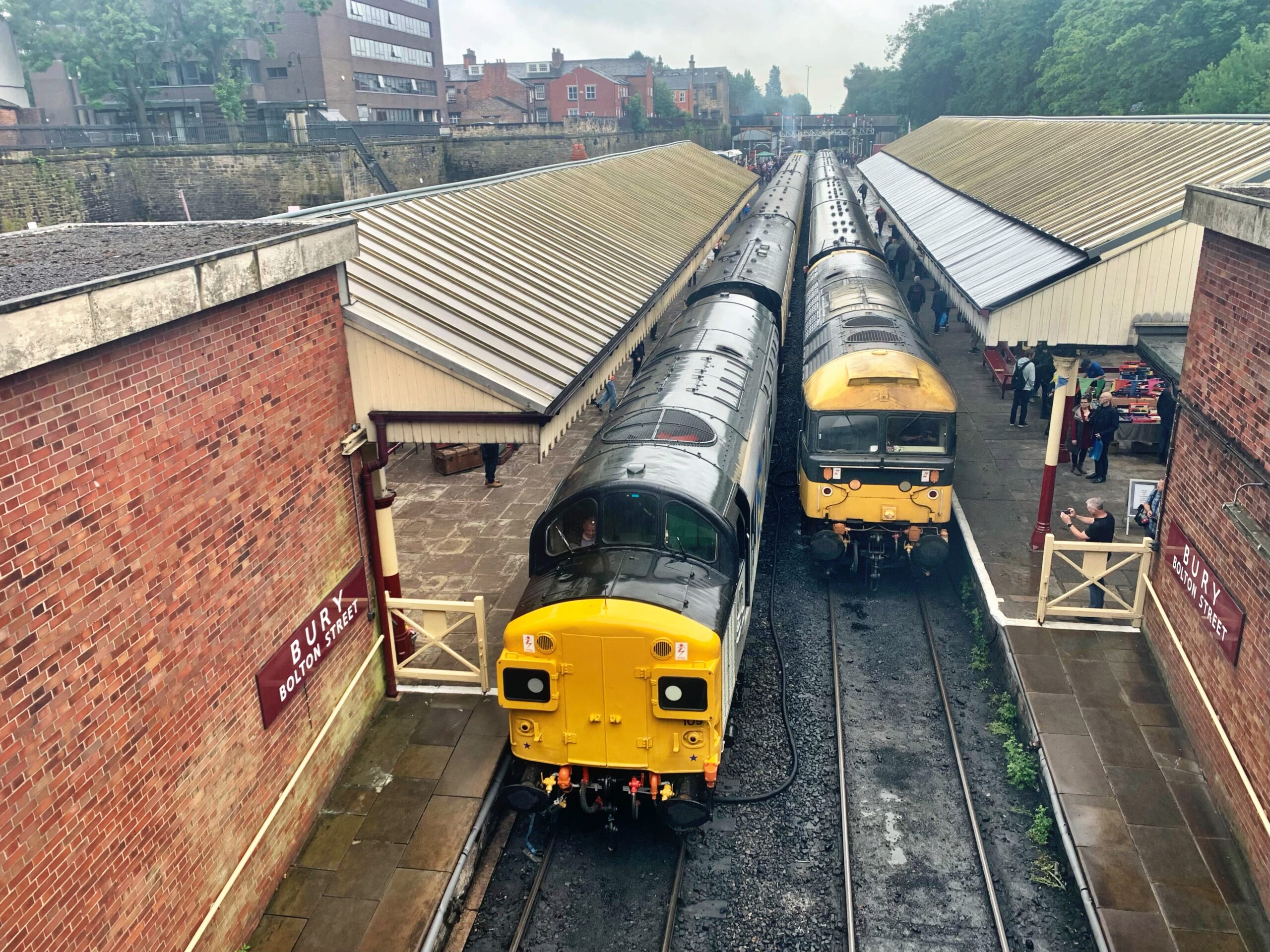
To make up for the lack of heritage diesel action the previous day, we had an early start on the Friday and we at Bury Bolton Street railway station in good time to see the first train of the day, behind Class 24 No. D5054 ‘Phil Southern’ depart. The weather on the Friday was dismal and it hardly stopped raining until the late afternoon. It was also frustrating that only a few locomotives were rostered on trains for the most part on the Friday. Resident Class 42 Warship No. D832 ‘Onslaught’, Class 25 No.25279 and visiting Class 37 No. 37059 were not in use.
Class 24 No. D5054 (24054) ‘Phil Southern’ is one of just four preserved examples from the original 151 strong fleet of locos and was amongst the first Diesel locomotives to be based at Bury, arriving in 1987 – 30/06/2023Beautifully restored Southern Region Ferry Van No. B889011 is owned by the 3P20 group which also restores and runs other parcel and non-passenger stock on the ELR – 30/06/2023Class 40 No. D345 (40145) was built in 1961, the first locomotive of the final 54 class 40’s, constructed with centre-headcode panels. Damage sustained in a derailment at Stourton Yard, Leeds saw 40145 withdrawn from the 10th of June 1983. 40145 was the first of the seven class members to be secured for preservation and was an early diesel arrival in Bury on the 16th of February 1984. The locomotive is seen adjacent to Bury South signal box – 30/06/2023Class 40 No. D345 (40145) awaits departure from Bury Bolton Street. The station is located in the heart of Bury Town Centre and was opened by the East Lancashire Railway (ELR), on 28th September 1846, as Bury station. The ELR was absorbed by the Lancashire and Yorkshire Railway (L&YR) on 13th May 1859. The station was renamed Bury Bolton Street in February 1866. The station was rebuilt in the 1880’s and the existing platform canopy dates from that time. Street frontage buildings were also provided but were destroyed by fire on 14th May 1947 and replaced with a new brick and concrete entrance and footbridge in 1952. British Rail closed the station on 17th March 1980, when it was replaced by a new bus/rail interchange which has been the terminus of the Metrolink service from Manchester since 1991 – 30/06/2023
Originally opened by The East Lancashire Railway and operated from 1844 to 1859 the present day ELR began as a railway from Clifton via Bury to Rawtenstall. Following several years of discussions, the East Lancashire Railway was in 1859 amalgamated with the Lancashire and Yorkshire Railway. Passenger services between Bury and Rawtenstall were withdrawn by British Rail on 3 June 1972. Coal services to Rawtenstall ended in 1980 and formal closure of the line followed in 1982. The East Lancashire Railway Trust reopened the line on 25 July 1987. The initial service operated between Bury and Ramsbottom, via Summerseat. In 1991, the service was extended northwards from Ramsbottom to reach Rawtenstall, via Irwell Vale. The heritage line is now just over 12 miles (19 km) long and has a mainline connection with the national railway network at Castleton, just beyond Heywood. The ELR is planning to extend the running line to Castleton in the future, with a new cross platform interchange being the preferred option.
It was soon evident that forgetting to take a coat along with me was a amateur mistake and after a brief stop at picturesque Summerseat station the rain forced a retreat to Ramsbottom where more cover would provide respite from the adverse weather.
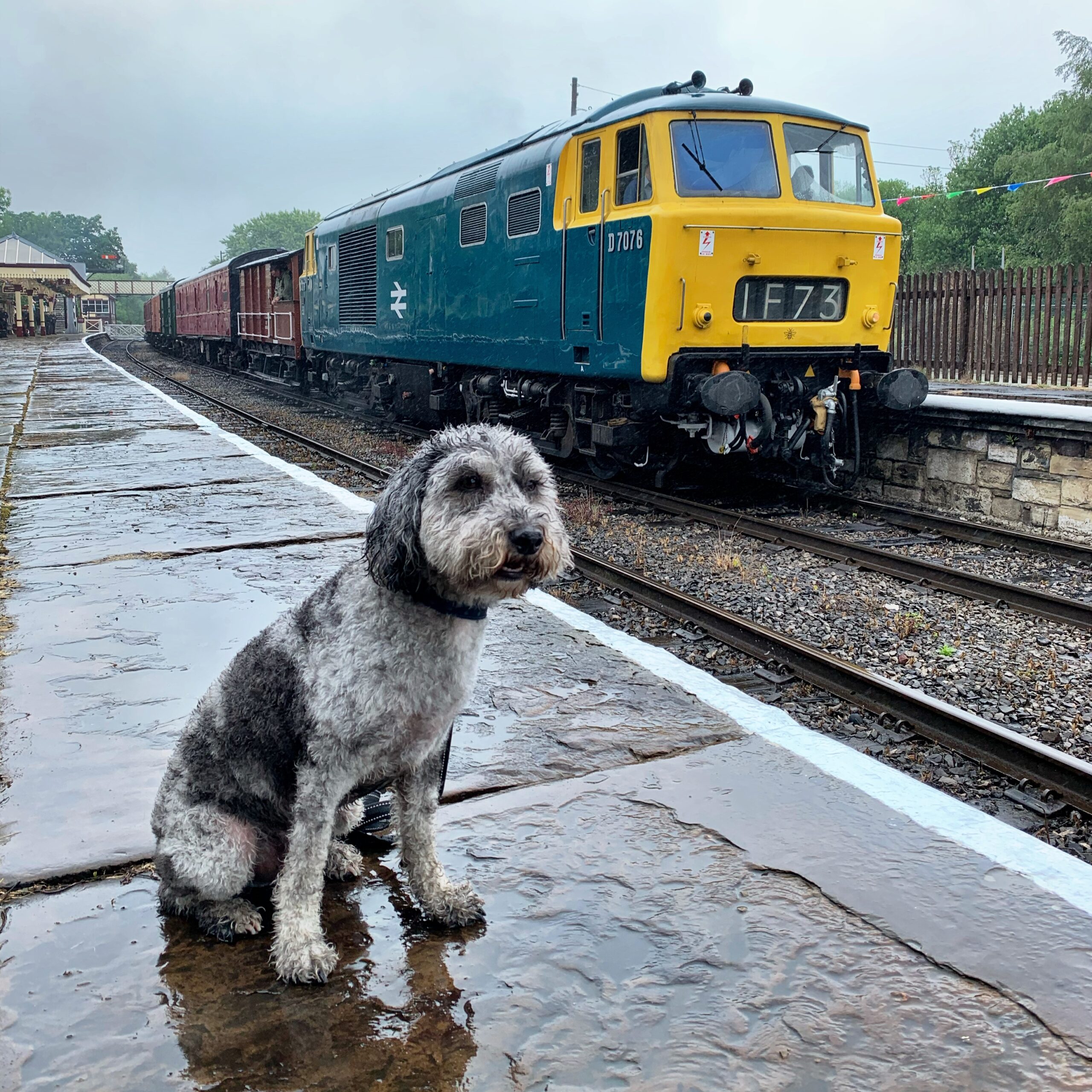
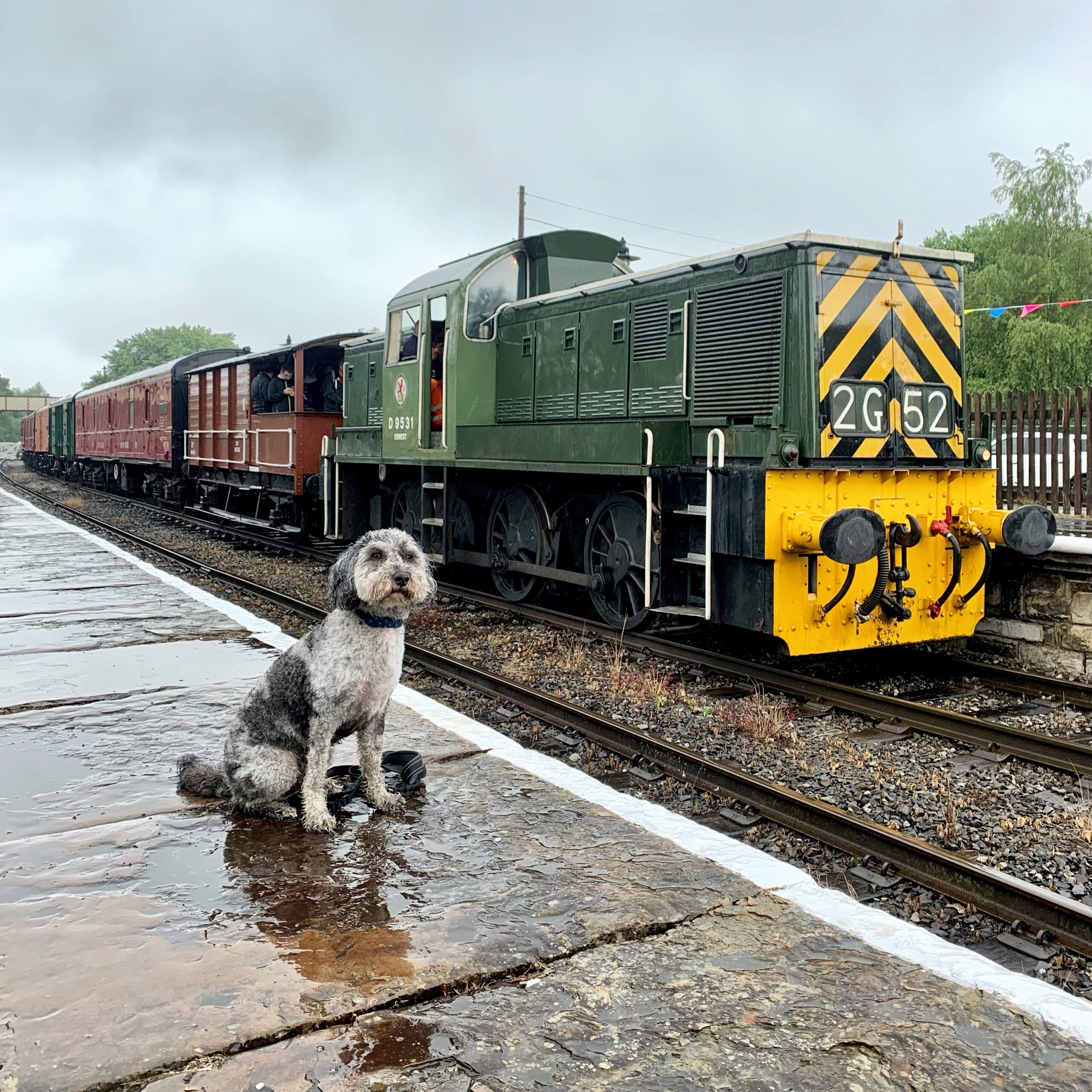
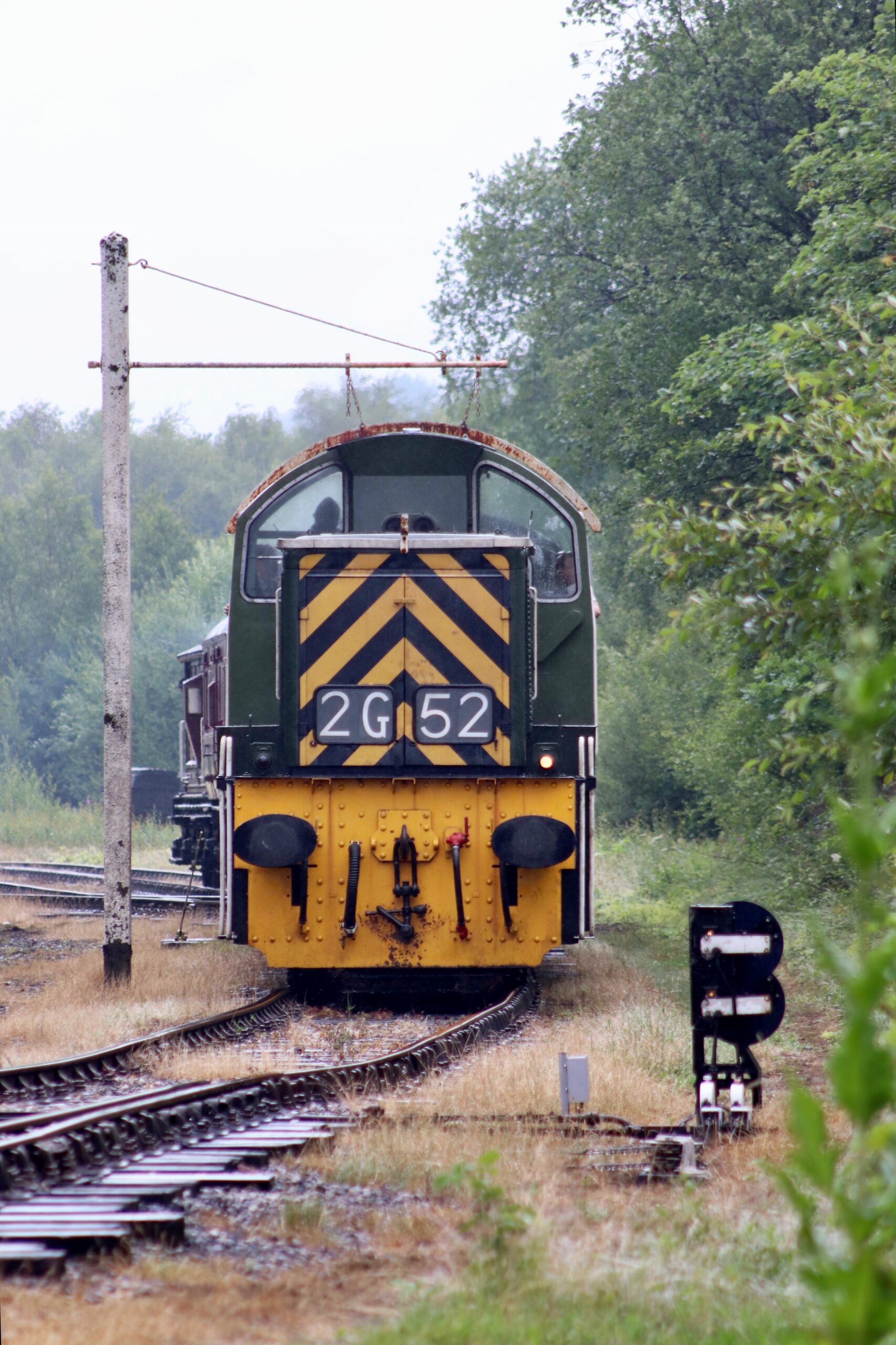
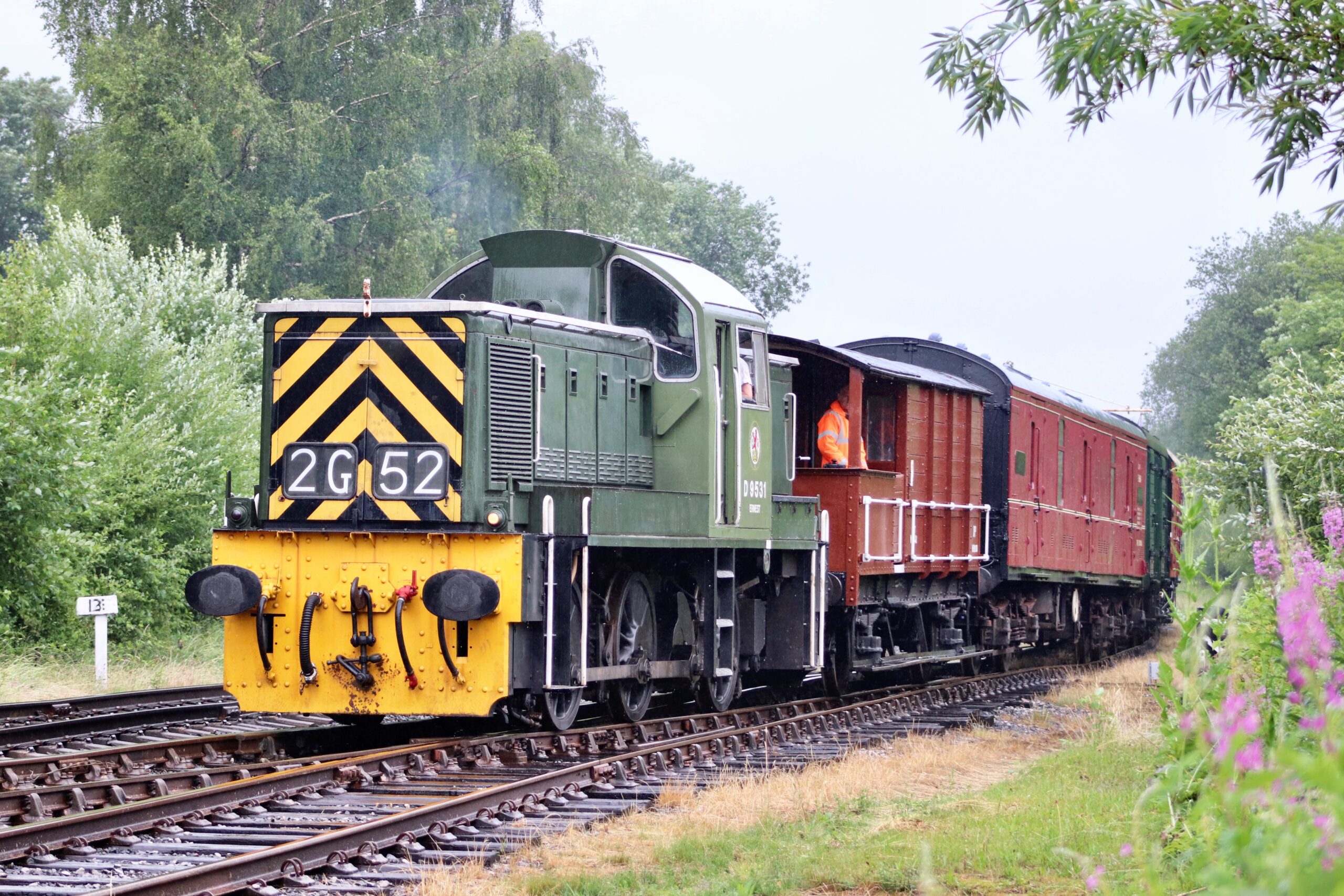
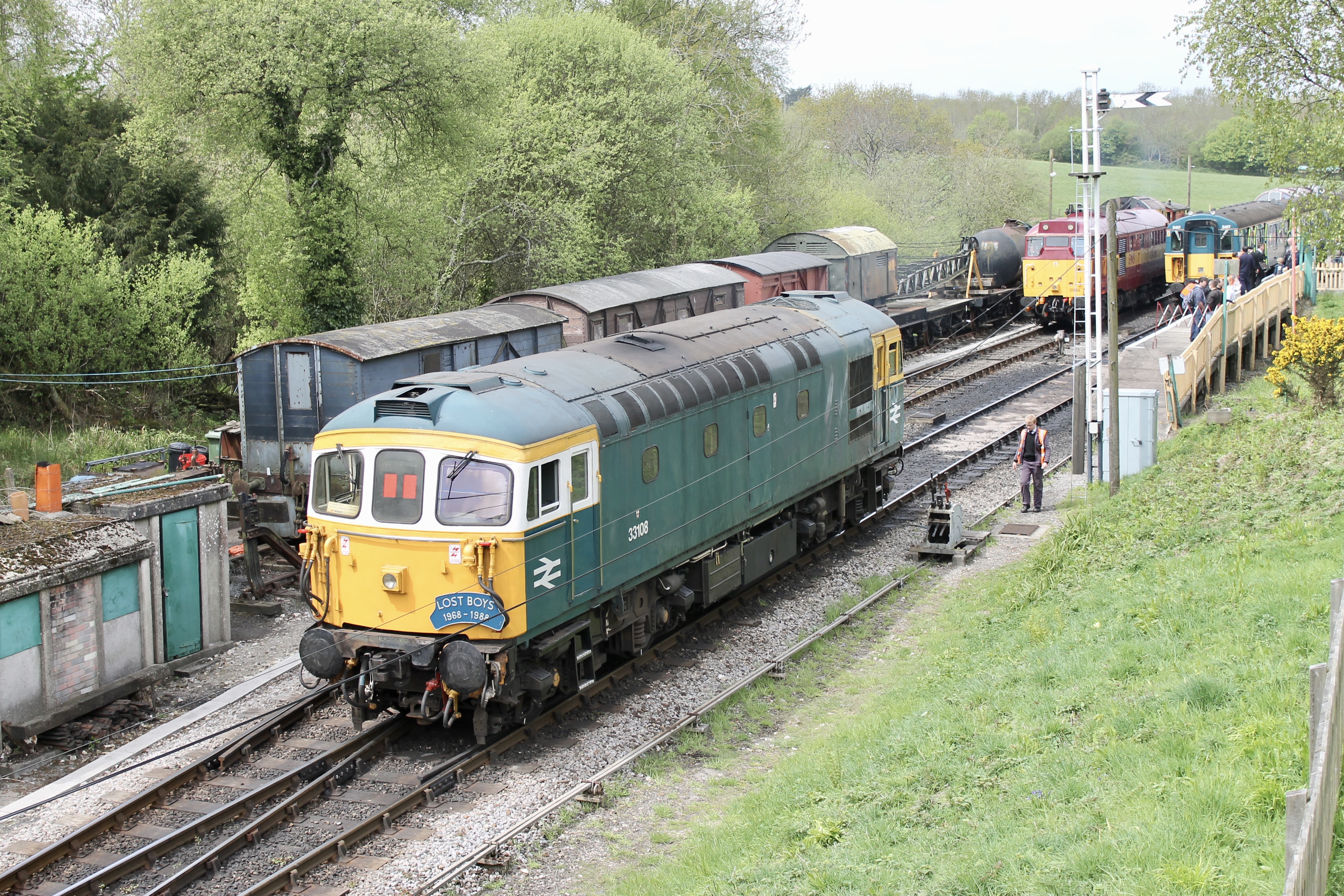
Class 50 No. 50015 (D415) ‘Valiant’ arrives at Ramsbottom with a train from Bury. No. 50015 is one of 18 preserved Class 50’s out of 50 locomotives of the class, an extremely high percentage. Withdrawn by BR on the 5th June 1992, ‘Valiant’ was initially bought by Pete Waterman, she was later transferred to the Manchester Class 50 Group. The locomotive arrived at Bury during October 1992 and is now owned and maintained by the Bury Valiant Group – 30/06/2023Yoshi doesn’t mind the rain. Which was a good job! In between showers, Class 35 Hymek diesel-hydraulic No. D7076 awaits departure from Ramsbottom. This locomotive is one of four preserved examples of the class and the only remaining locomotive from the later MkII batch. Built in 1962, No. D7076 along with the other Hymeks had a very short service life, being withdrawn in May 1973. She was retained at the Railway Technical Centre (RTC) in Derby along with classmate No. D7096, used as dead loads etc. By the time No. D7076 was secured for preservation both of the RTC Hymeks were in a bad state and it was possible to restore one by using spares from the other. No. D7096 was the donor locomotive and its number is carried in D7076’s B-end cab in memory. The shell of No. D7096 was scrapped in 1986 at Marple and Gillots scrapyard in Attercliffe Sheffield – 30/06/2023Class 24 No. D5054 (24054) ‘Phil Southern’ at Ramsbottom – 30/06/2023Nameplate of Class 24 No. D5054 (24054). Named after Phil Southern, an early member of the ELR going back to their original base at Helmshore. When the ELR moved to Bury he became a director of the Railway responsible for electrical maintenance and projects. Phil was one of the pioneers who got the Bury to Rawtenstall line re-opened for passenger service for both steam and diesel. He was a member of the Bury Type 2 Group and sadly was the first member to pass away. It was thought by the majority of the group that D5054 should carry his name in memory of Phil and his great works at the ELR – 30/06/2023Yoshi takes a look at Class 14 “Teddy Bear” No. D9531 at Ramsbottom. The locomotive was nicknamed ‘Ernest’ during her 15 year restoration 1997 – 2012 – 30/06/2023Class 20 No. 20305 visiting courtesy of Harry Needle Railway Company (HNRC) approaching Ramsbottom – 30/06/20231965 built Class 14 “Teddy Bear” No. D9531 ‘Ernest’ passes under the loading gauge at Ramsbottom – 30/06/2023Class 14 “Teddy Bear” No. D9531 ‘Ernest’ leaves the sidings at Ramsbottom with the brake van freight stock – 30/06/2023Class 33 No. 33109 (D6525) ‘Captain Bill Smith RNR’ on the approach to Ramsbottom. Built by Birmingham Railway Carriage and Wagon Company (BRCW) in 1960, D6525 entered traffic with British Railways on the 8th October 1960. As No. 33109 she was named ‘Captain Bill Smith RNR’ in a special ceremony at Kensington Olympia on the 3rd July 1993 to commemorate Captain Smith who bought GNR No. 1247 in 1959 and the first locomotive to be bought privately from British Railways for preservation and has since been donated to the National Railway Museum (NRM) at York. Bill Smith played a significant part in the international field of railway preservation and in 1982 was made the first honorary life member of the Friends of the NRM. In September 1993, additional plaques were fitted under the nameplates with an explanation of the dedication. The nameplates were removed in October 1996 and the locomotive officially withdrawn on the 13th of February 1997. Sold for preservation in March 1997, No. 33109 moved to the Mid Hants Railway in September that year. The ‘Captain Bill’ nameplates, along with the plaques, were refitted and subsequently re-dedicated at Alresford station on the 1st of August 1999, once again carrying the identity of D6525 – 30/06/2023Class 47 No. 47765 ‘Ressaldar’ was new to British Railways as No. D1643 in January 1965, this loco is one of the 202 Class 47’s built by BR at Crewe to the Brush Traction design. She entered traffic at Cardiff Canton depot becoming No. 47059 in the TOPS system during September 1974. She was renumbered as No. 47631 in 1985, following removal of the steam heat boiler and conversion to supply Electric Train Heating (ETH). Further re-classified as a 47/7b, becoming No. 47765 in March 1994, she received extended range fuel tanks (former boiler water tank used for fuel) and RCH jumpers to enable working with Propelling Control Vehicles (PCV) as seen on Royal Mail trains of the time. No. 47765 was withdrawn for disposal in April 2004 but was sold in July 2005 and entered preservation in August of the same year. The locomotive is seen here at Bury Bolton Street – 30/06/2023No. D5705 is the sole survivor of the 20 ‘Co-Bo’ Class 28 locomotives. The Metro-Vic Class 28s were different to everything in many respects, not least the wheel arrangement from which the ‘Co-Bo’ or ‘Bo-Co’ name is derived, having a ‘Bo’ (two axled) bogie at one end and a ‘Co’ (three axled) bogie at the other. All five axles are powered via traction motors. No. D5705 was withdrawn in 1968 and the whole class by 1969. No. D5705 survived only due to being used by the BR Research Division and later being converted into a Carriage Heating Unit as TDB 968006. I remember seeing her at Bristol Bath Road depot where she resided for many years. The loco was secured for preservation in 1980 and, prior to arrival at the ELR, spent many years at Matlock. Seen here at Bury on static display, the locomotive is being restored to running order and we enjoyed a tour of the locomotive after giving a donation towards her return to traffic – 30/06/2023For some reason Yoshi decided he wanted to “cab” No. D5705 and jumped up into the open door. Thankfully he was no worse for wear and was content to sit outside being looked after by a volunteer member of the Co-Bo Restoration fund as I was shown around the inside of the locomotive – 30/06/2023English Electric Class 37 No. 37109 (D6809) seen at Bury was built in 1962 and is part of the ELR home fleet. Substantial bodywork repairs were undertaken during Winter 2022/23 plus a full repaint into Trainload Metals livery – she looked stunning – 30/06/2023 Class 37 No. 37109 (D6809) side by side with Class 47 No. 47765 ‘Ressaldar’ at Bury – 30/06/2023Class 37 No. 37109 (D6809) and Class 47 No. 47765 ‘Ressaldar’ seen from the covered footbridge at Bury – 30/06/2023Visiting from the Severn Valley Railway was Class 42 Warship diesel-hydraulic No. D821 ‘Greyhound’. I had hoped to see this locomotive paired with the ELR’s example No. D832 ‘Onslaught’ but during my visit the locomotives were not running at the same time. There were more interesting pairings and running the following day on the Saturday, but I was unable to attend due to other commitments – 30/06/2023My only view of D832 ‘Onslaught’ was through the gates of the yard at Bury. Class 25 No. 25279 on the right was also a non-runner during my visit – 30/06/2023
All in all a mildly disappointing day on the East Lancs. To compound things; on the way home via the M6 and M5 I was very much hopeful at catching a glimpse of the pioneer Class 93 which had departed Portbury that afternoon and was heading to Worksop. Unbeknown to me, I drove past the locomotive which had stopped off at the northbound Strensham Service area for an overnight stop. You win some, you lose some!
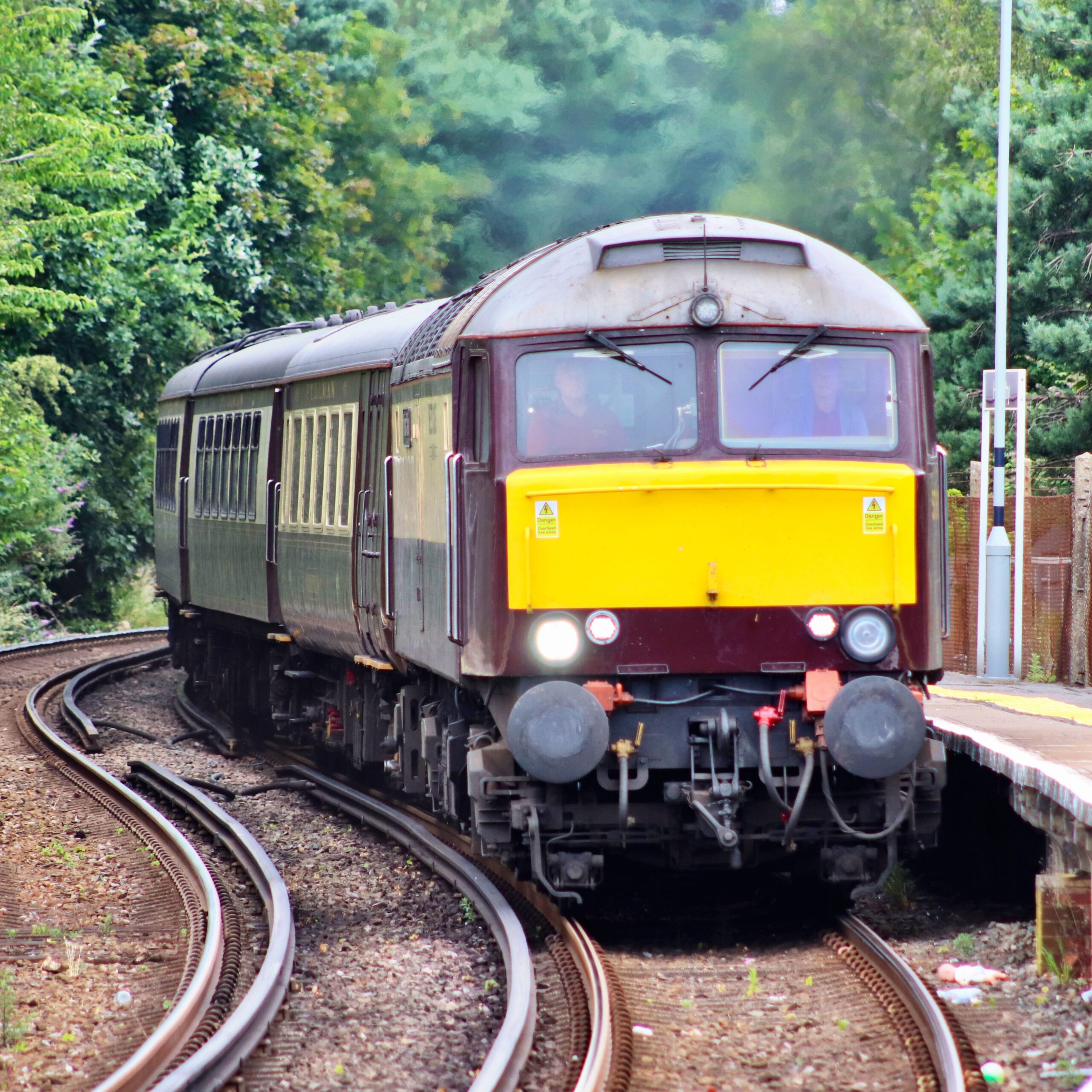
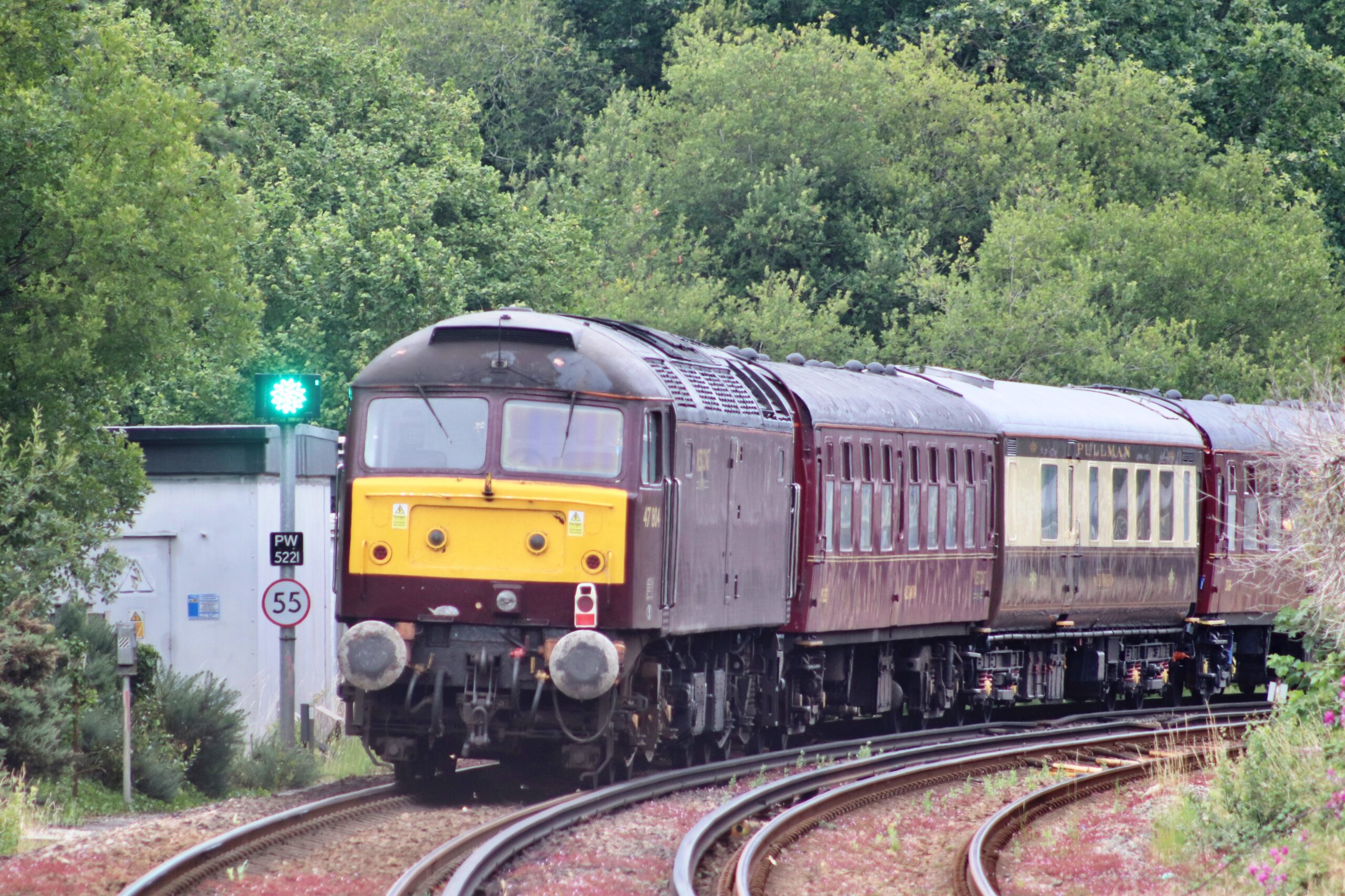
While we were away from home, Saltburn railtours had organised a Pullman charter “The Bournemouth Belle” over the weekend of 30th June to 3rd July 2023. Saltburn Railtours have been organising excursion trains since 1995 and have been to destinations the length and breadth of the UK. This year they came to Bournemouth utilising West Coast Railways locomotives and rolling stock. The tour was scheduled to arrive in Bournemouth at 1732 on the Friday after an early morning departure from Saltburn in North Yorkshire. Once the passengers detrained, interestingly the empty coaching stock ran to Weymouth before reversing and heading off to Southall. The tour returned North on the Monday, scheduled to depart Bournemouth and run via Weymouth and “up the West” via Yeovil.
Class 57 No. 57601 ‘Windsor Castle’ in Northern Belle Maroon / Cream livery working 1Z79 1045 Bournemouth to Saltburn through Hamworthy – 03/07/2023West Coast Railways Class 47 No. 47804 at the rear of 1Z79 1045 Bournemouth to Saltburn at Hamworthy – 03/07/2023
Saltburn Railtours Bournemouth rail tour and associated ECS (with kind help from G E Barrett) – 2023
However, things didn’t go quite to plan as a fallen tree over the track between Dorchester West and Maiden Newton meant the train reversed to Dorchester Junction and then headed east back through Dorchester South. The tour, already off route, travelled via Basingstoke and Oxford before regaining its original path at Bordesley Junction, approximately 68 minutes behind schedule. It would appear that later locomotive problems necessitated the use of WCRC Class 47 No. 47813 at Milford Loop. The train eventually reached Saltburn at 2305, 95 minutes late.
On Saturday Yoshi visited Ladram Bay, Devon for a surprise 60th birthday party being thrown for a friend. We must take the opportunity on a future visit to walk the disused railway line on the former Budleigh Salterton Railway, a single track branch railway line that ran from a junction on the Sidmouth Railway at Tipton St Johns to Exmouth. East Budleigh station would have been the closest railway stop to Ladram Bay and the station building is now a private residence. The line closed on 6th March 1967.[
Yoshi at Ladram Bay. The stacks behind Yoshi are the remains of caves and arches that have collapsed, leaving behind the stumps. The rock is Otter Sandstone deposited in a hot dry climate during the Triassic Period, about 220 million years ago. These are some of the best examples of sea stacks in the British Isles – 01/07/2023
Our trip to Devon (and spending the morning buying new sofas) meant we just missed out on seeing Northern Belle’s “Tribute To The Bournemouth Belle” tour which originated at London Victoria and ran, funnily enough, to Bournemouth. The motive power was provided by West Coast Railways Class 47 No.’s 47826 and 47813. Friend of this blog, Jamie Smith, shared the following:
Class 47 No. 47813 arrives at Bournemouth with “Tribute To The Bournemouth Belle” ECS (Image by kind permission of Jamie Smith) – 01/07/2023 Class 47 No.’s 47826 heads the return “Tribute To The Bournemouth Belle” (Image by kind permission of Jamie Smith) – 01/07/2023
Jamie’s most excellent video of the “Tribute To The Bournemouth Belle”. -don’t forget to check out the other videos on his You Tube channel!
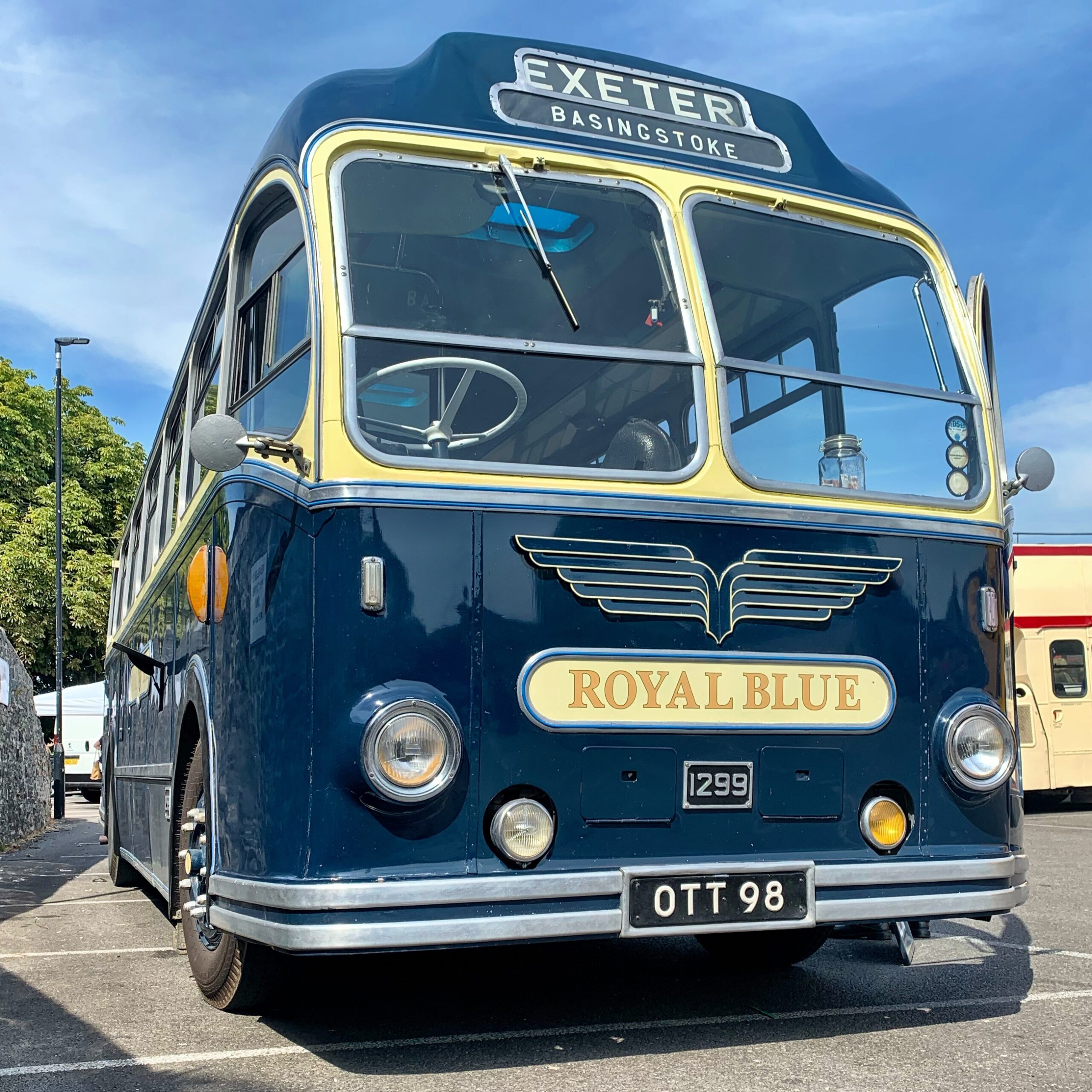
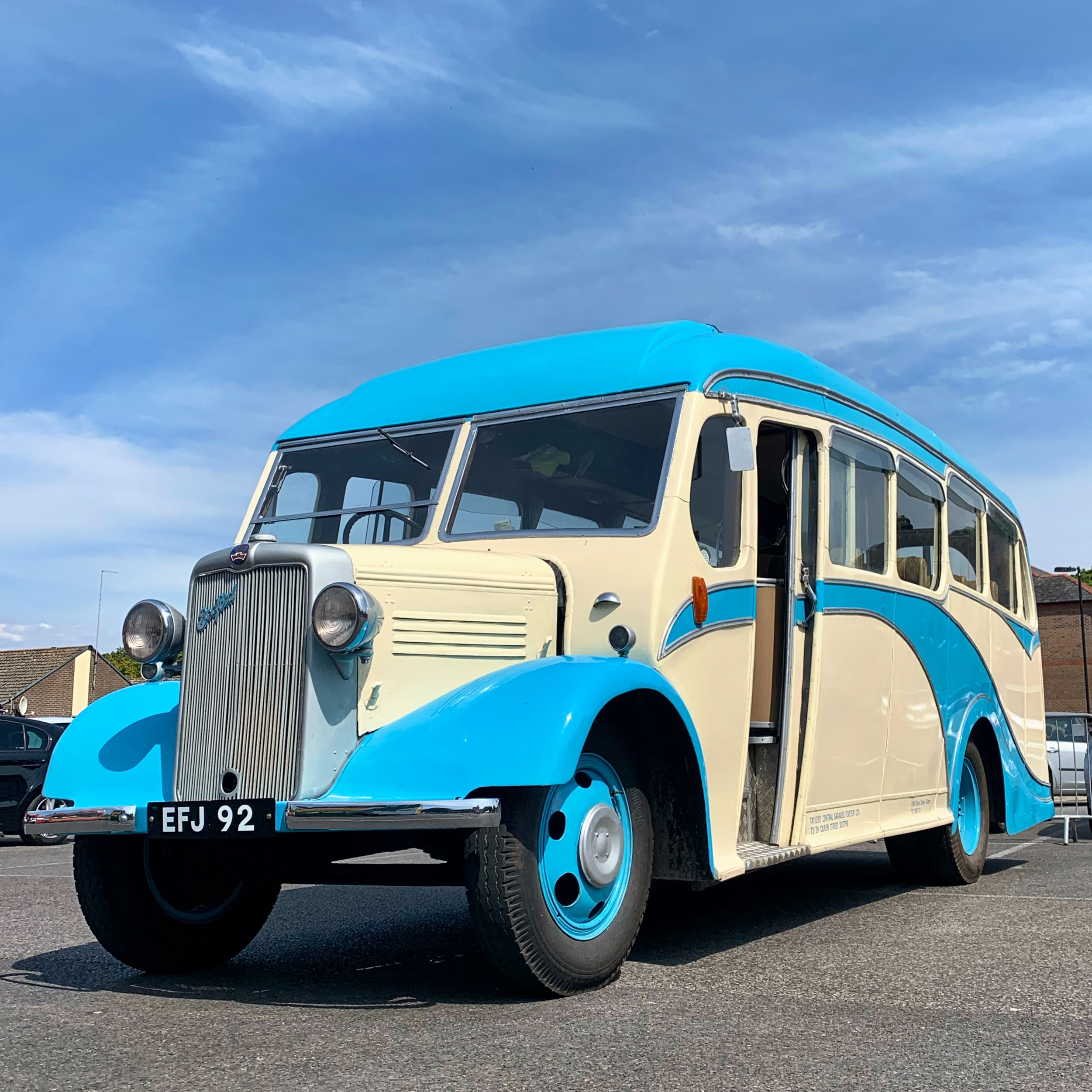
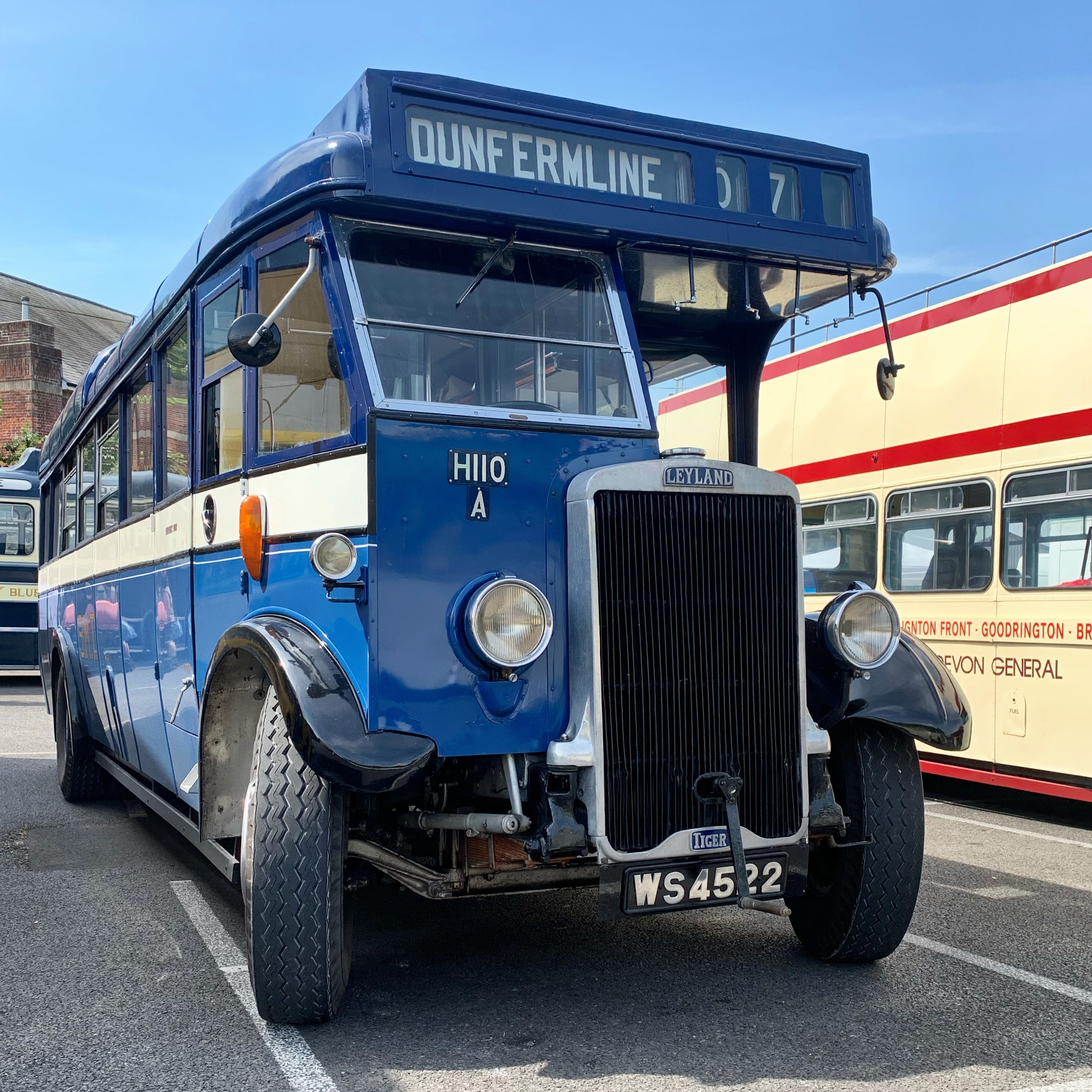
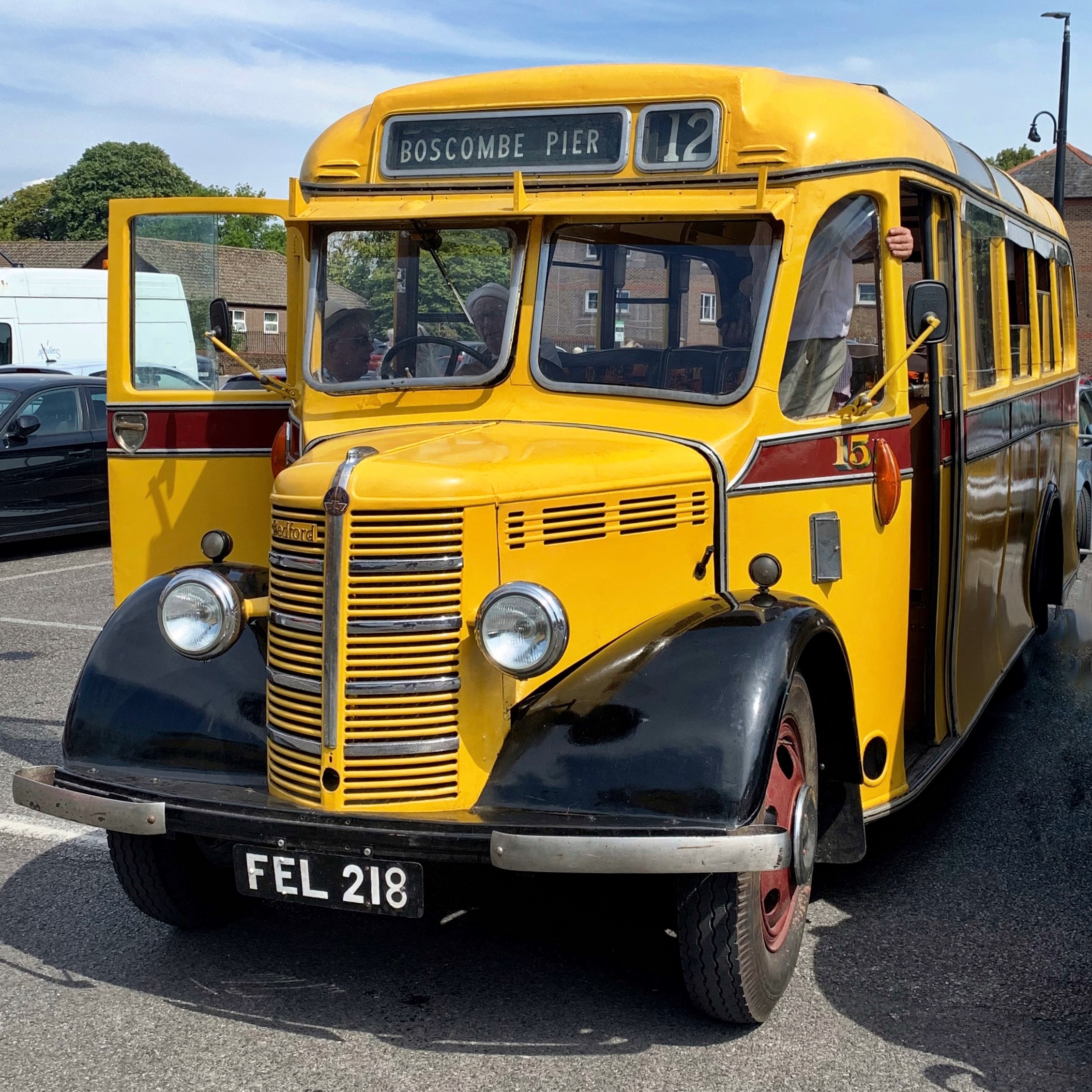
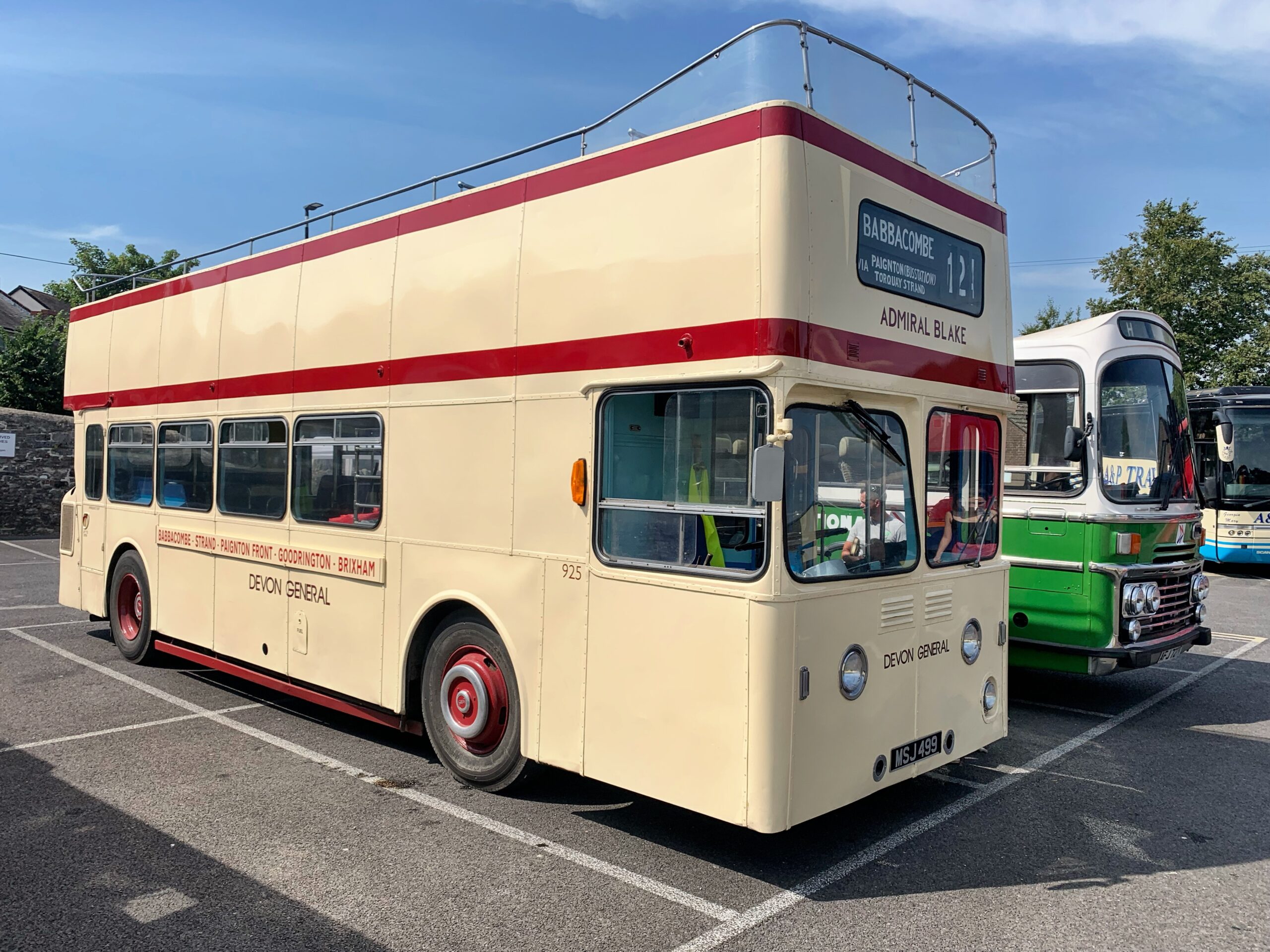
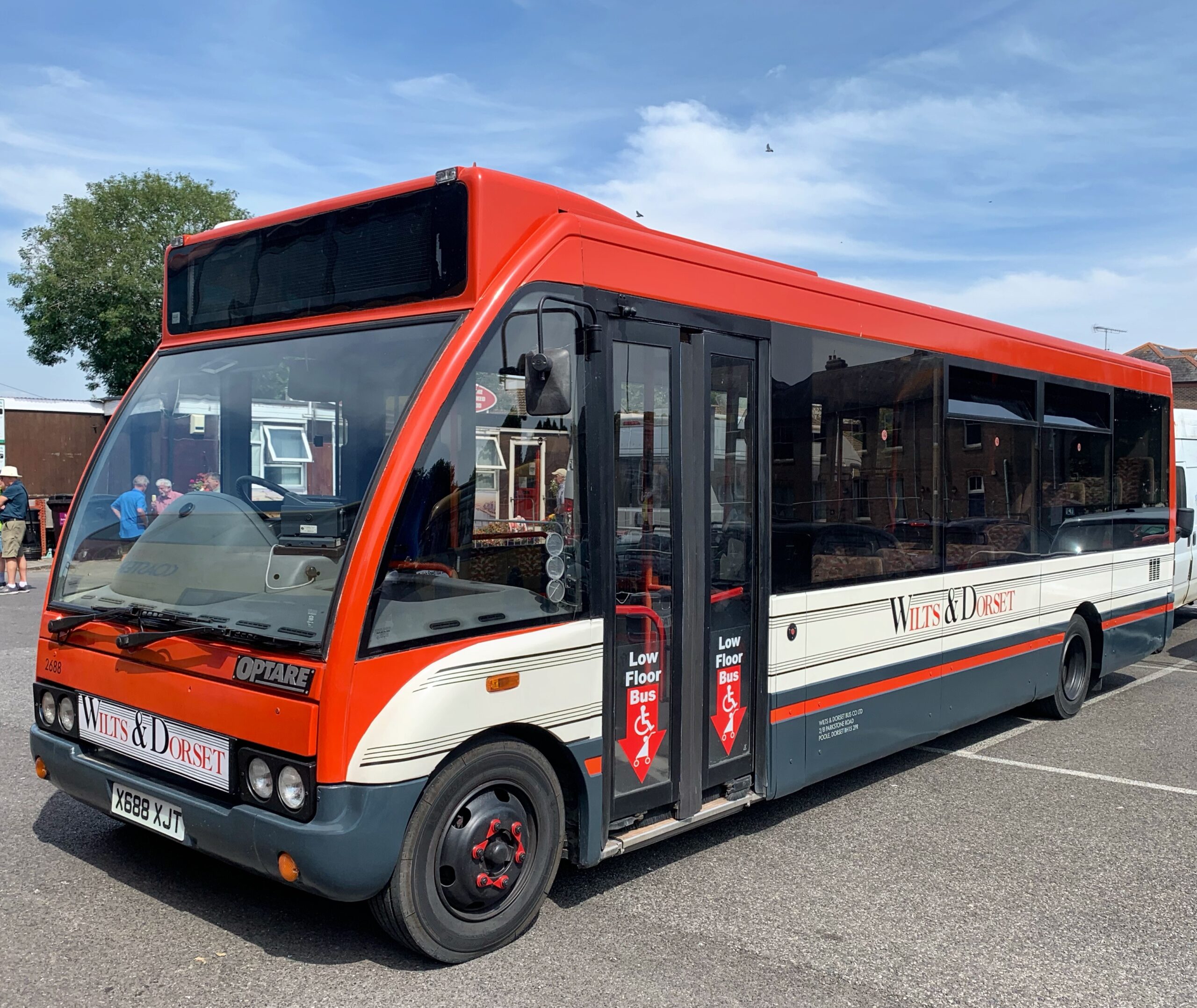
Sunday 2nd July 2023 saw the annual Bournemouth Bus rally take place at Kings Park, Boscombe.
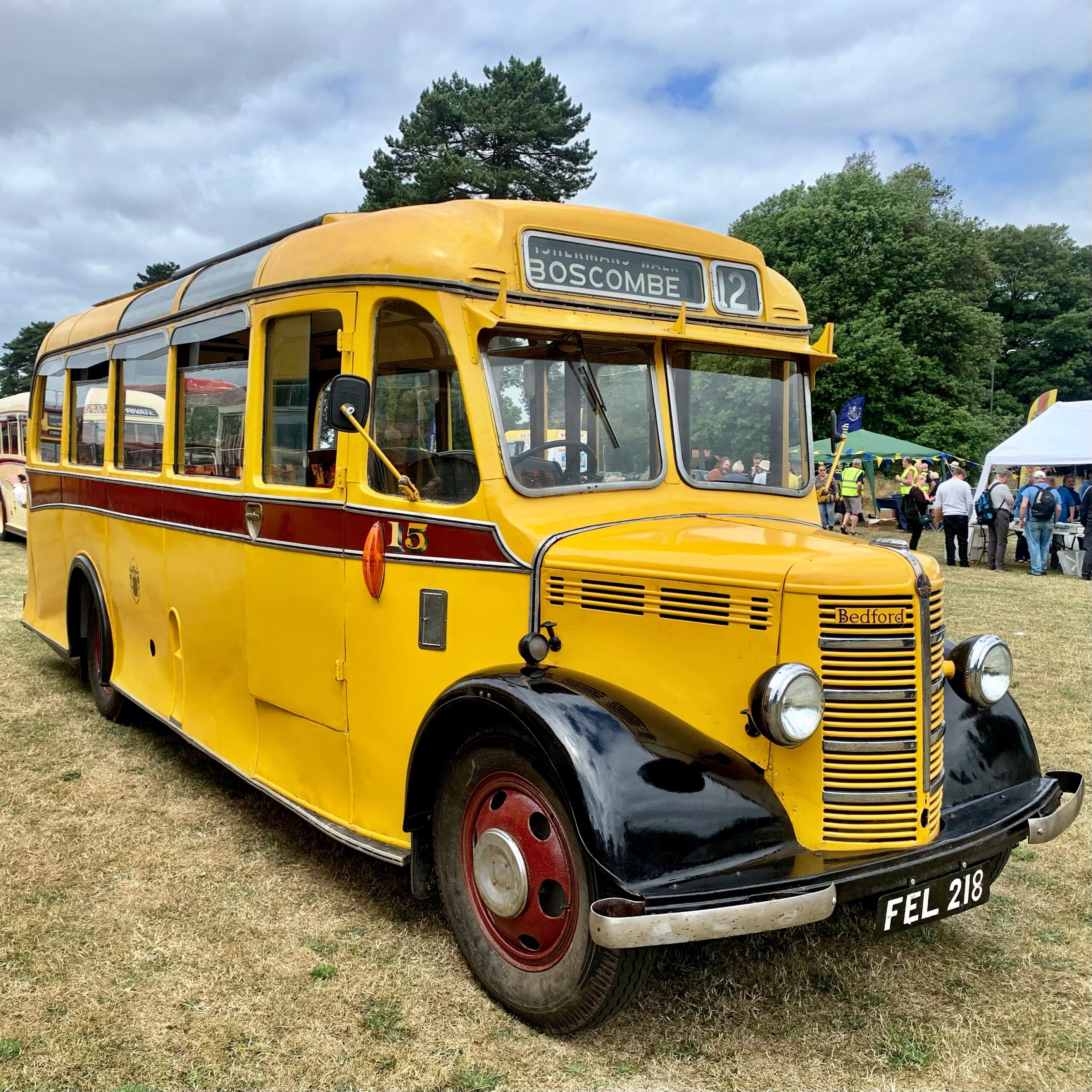
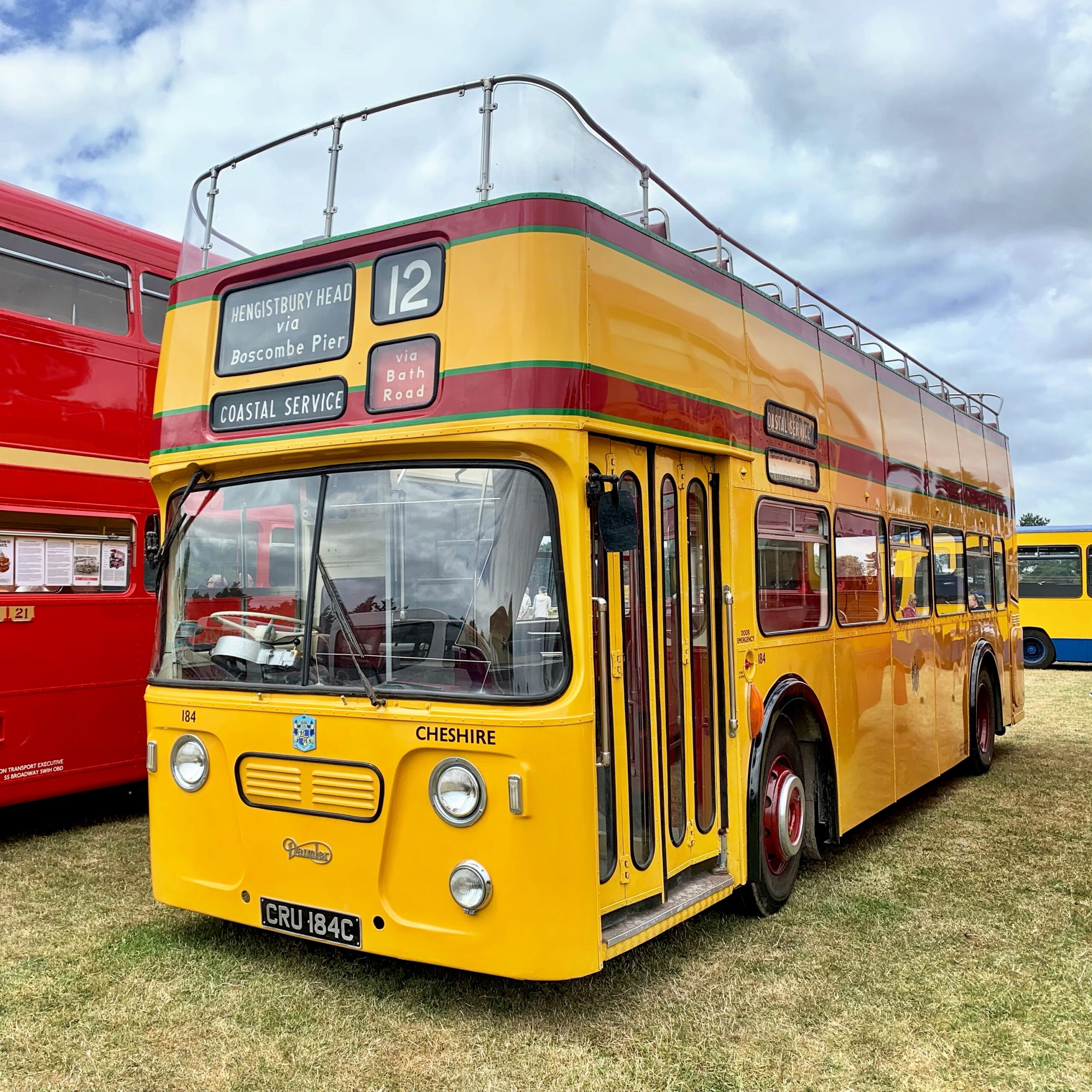
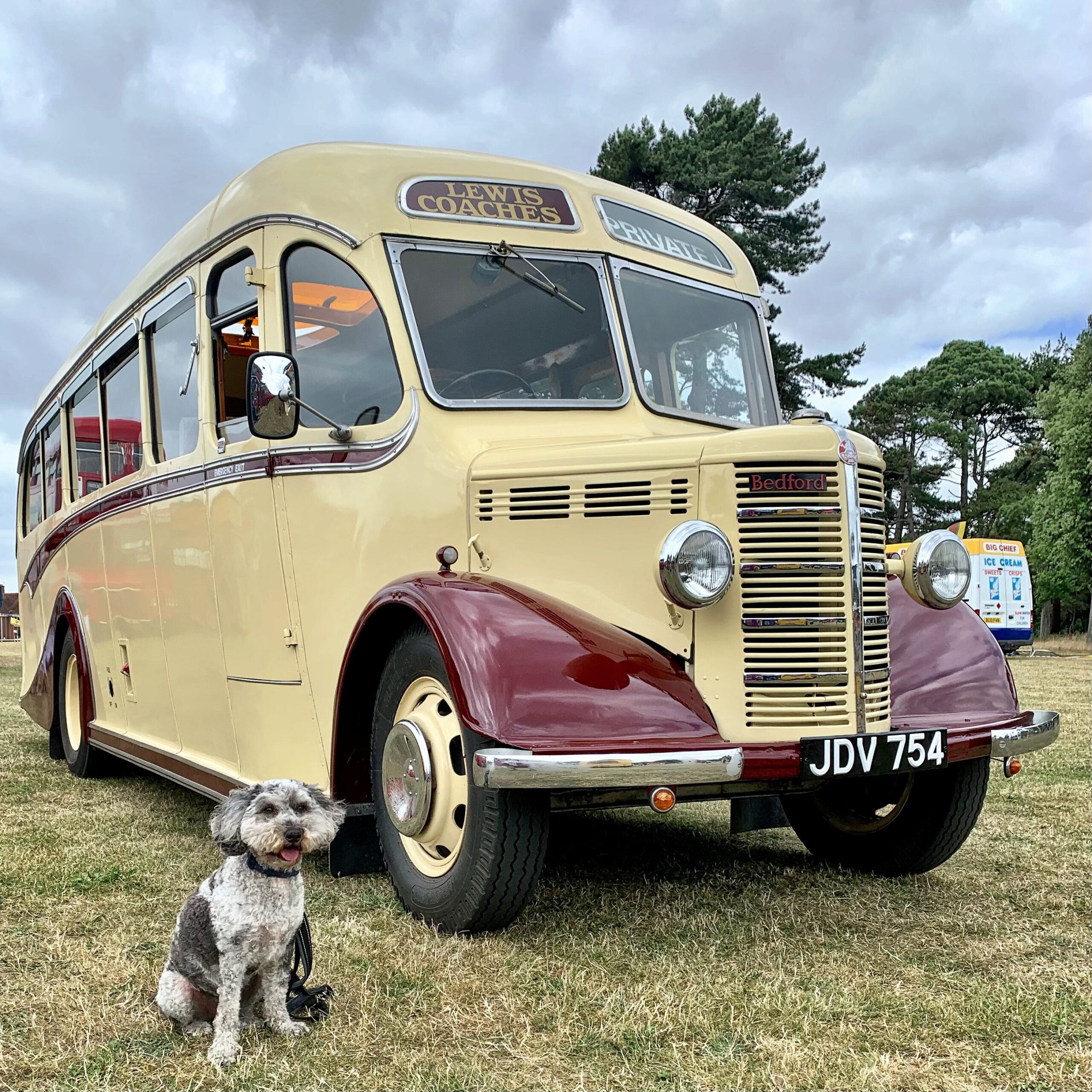
WLT349 1960 AEC Routemaster ex London Transport RM349 – 02/07/2023FEL218 Burlingham bodied Bedford WTB, new to Bournemouth in June 1939- 02/07/2023Yoshi and FEL218 – 02/07/20231013MW Weymann bodied Leyland Atlantean, new to Silver Star of Porton Down in February 1962 – 02/07/2023Yoshi poses with 8159EL Weymann bodied Leyland Titan PD3/1, new to Bournemouth in November 1960 – 02/07/2023CRU184C 1965 Weymann bodied Daimler Fleetline, new to Bournemouth in July 1965 – 02/07/2023OAX9F 1968 Eastern Coach Works bodied Bristol RELH-6L, new to Red & White in March 1968. Now preserved in Red & White livery – 02/07/2023Yoshi with JDV754 – 02/07/2023JDV754 Duple Vista bodied Bedford OB, new to Woolacombe & Morthoe Motor Company in December 1947, now preserved in Lewis Coaches of Henstridge, Somerset colours – 02/07/2023
Apologies for the late posting of this blog entry which was due to technical issues which prevented uploading of images or posts. I need to get to the bottom of these issues, I’ve tried a few simple things to fix errors, but to no avail. Having researched online it seems a common error, and one which can be sorted.
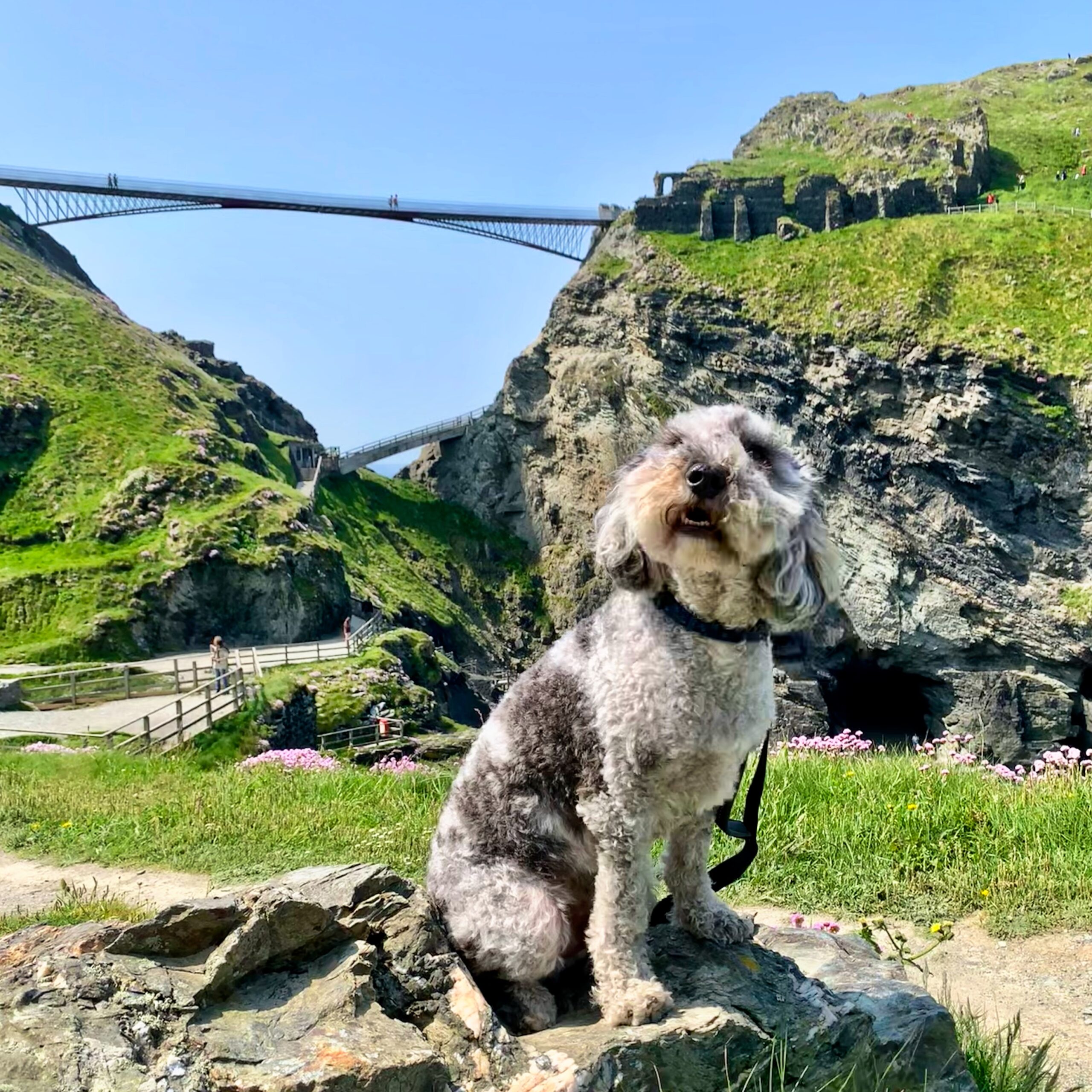
Did Yoshi discover King Arthur at Tintagel during our trip to Cornwall? “Gallos”(meaning ‘power’ in Cornish) created by sculptor Rubin Eynon is an 8ft bronze sculpture standing above cliffs on the Atlantic coast-side of the castle – 22/03/2023Yoshi with the new Tintagel Bridge in the background which reinstates the original route to the castle. In the Middle Ages, Tintagel’s residents walked from one side of the site to the other using a narrow land bridge as high as the clifftops. But the crossing disappeared between the 14th and 17th centuries, leaving the castle divided by a natural chasm. English Heritage launched a competition in 2015 to find a design for a new bridge. The winning concept was created by Ney & Partners Civil Engineers and William Matthews Associates. The project was completed in August 2019. The design sees two cantilevers reach out and meet, not quite touching, with a 40mm gap in the middle. The gap represents the transition from the mainland to the island, present to past. The bridge is paved with Cornish Delabole slate, with stainless steel balustrades fitted along its length. The balustrades have been designed to be so fine that, when viewed from a distance, they disappear against the sky – 22/03/2023
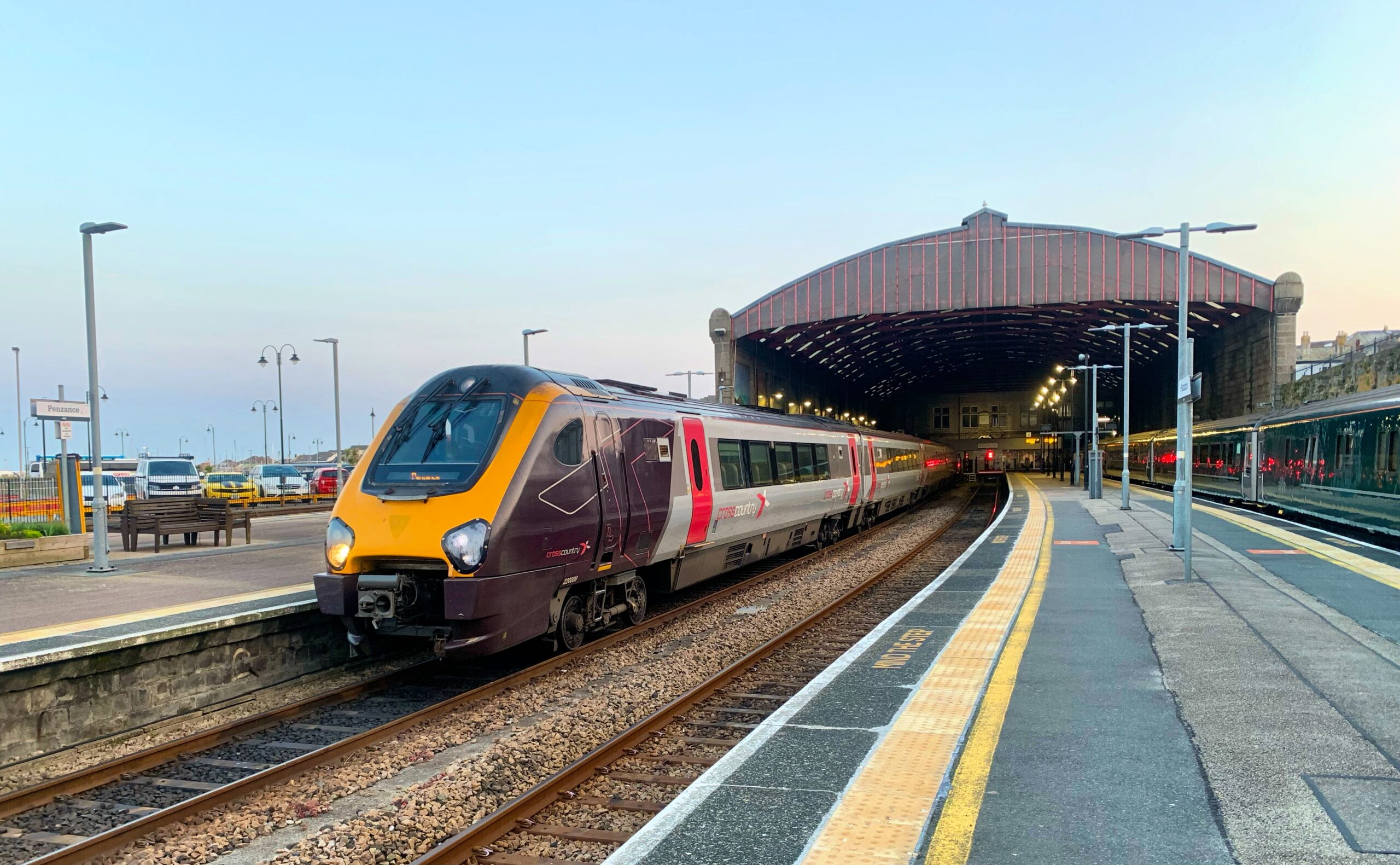
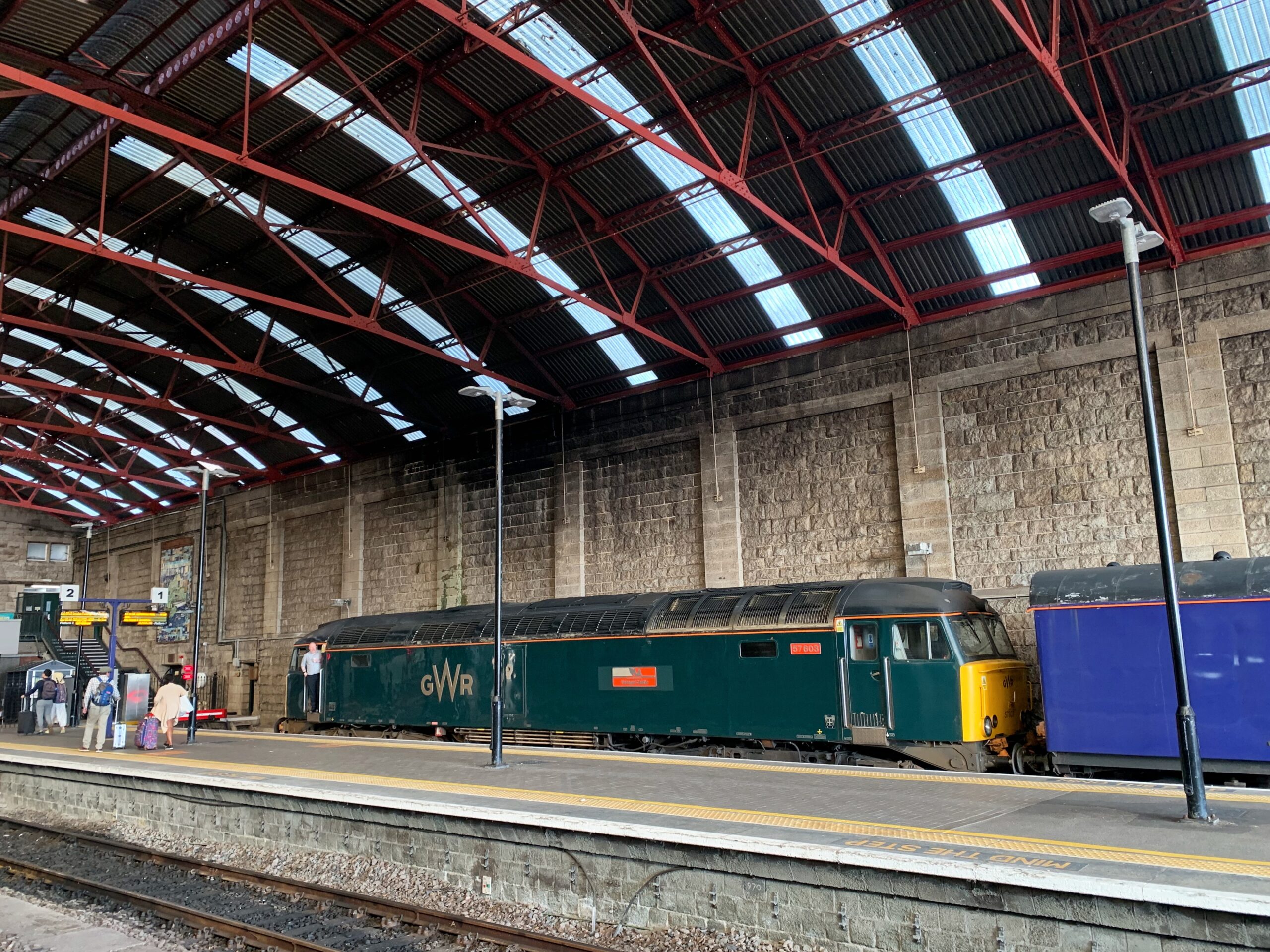
As mentioned in our last blog, we recently spent a few days in Cornwall. This gave me the opportunity to see some of the remaining semaphore signals on the Great Western mainline and also GWR sleeper trains arriving and departing from Penzance. We stayed in Camelford for three nights before moving onto Penzance for a couple of days.
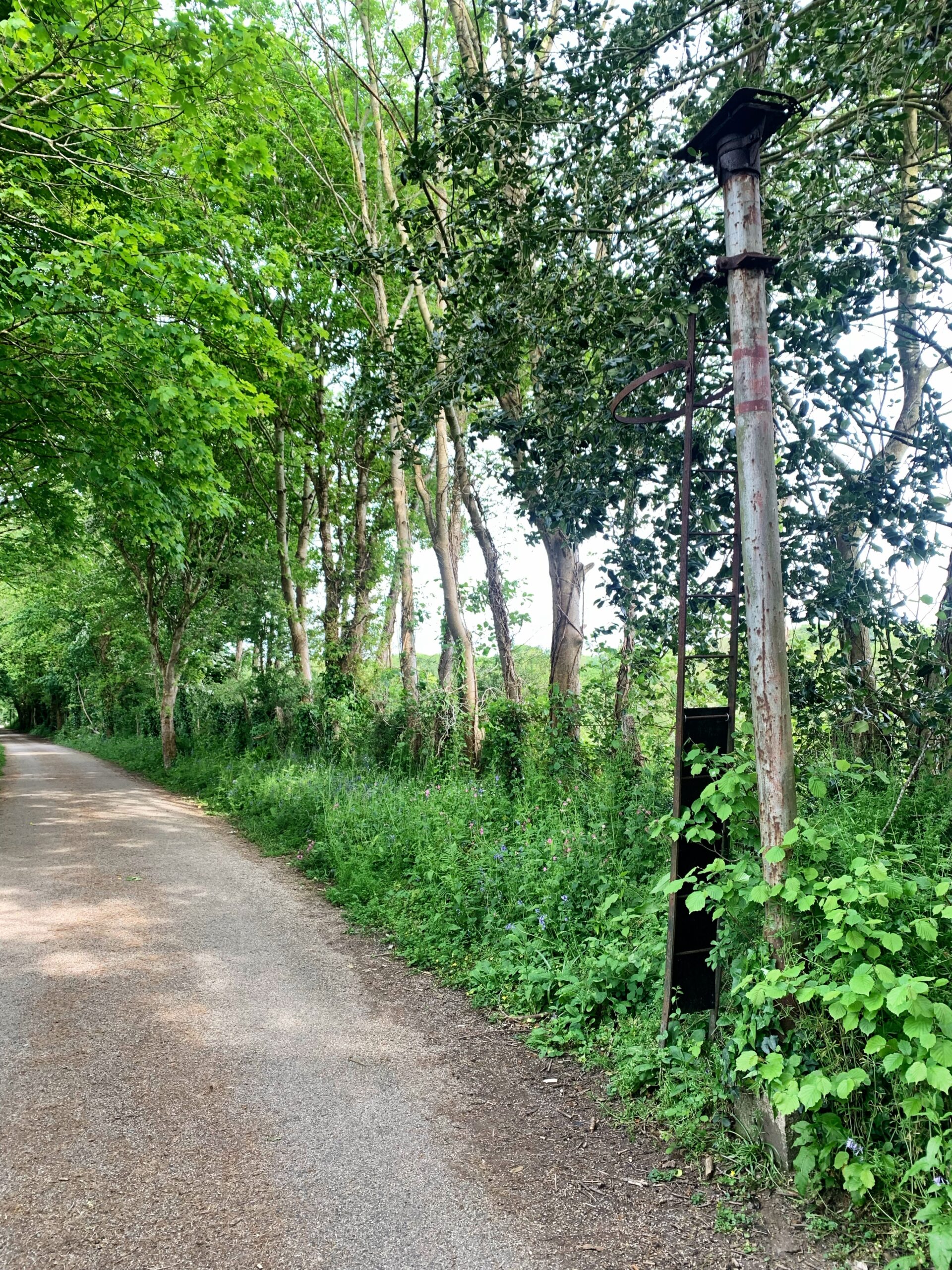
While we were in the Camelford area we visited Padstow and Bodmin and we were able to walk along some disused railway trackbed which now forms the Camel Trail; an 18 mile largely traffic free, surfaced and virtually level multi use trail. It provides access to the beautiful Cornish countryside between Wenfordbridge, Bodmin, Wadebridge and Padstow and is suitable for walkers, cyclists, horse-riders and wheel-chair users.
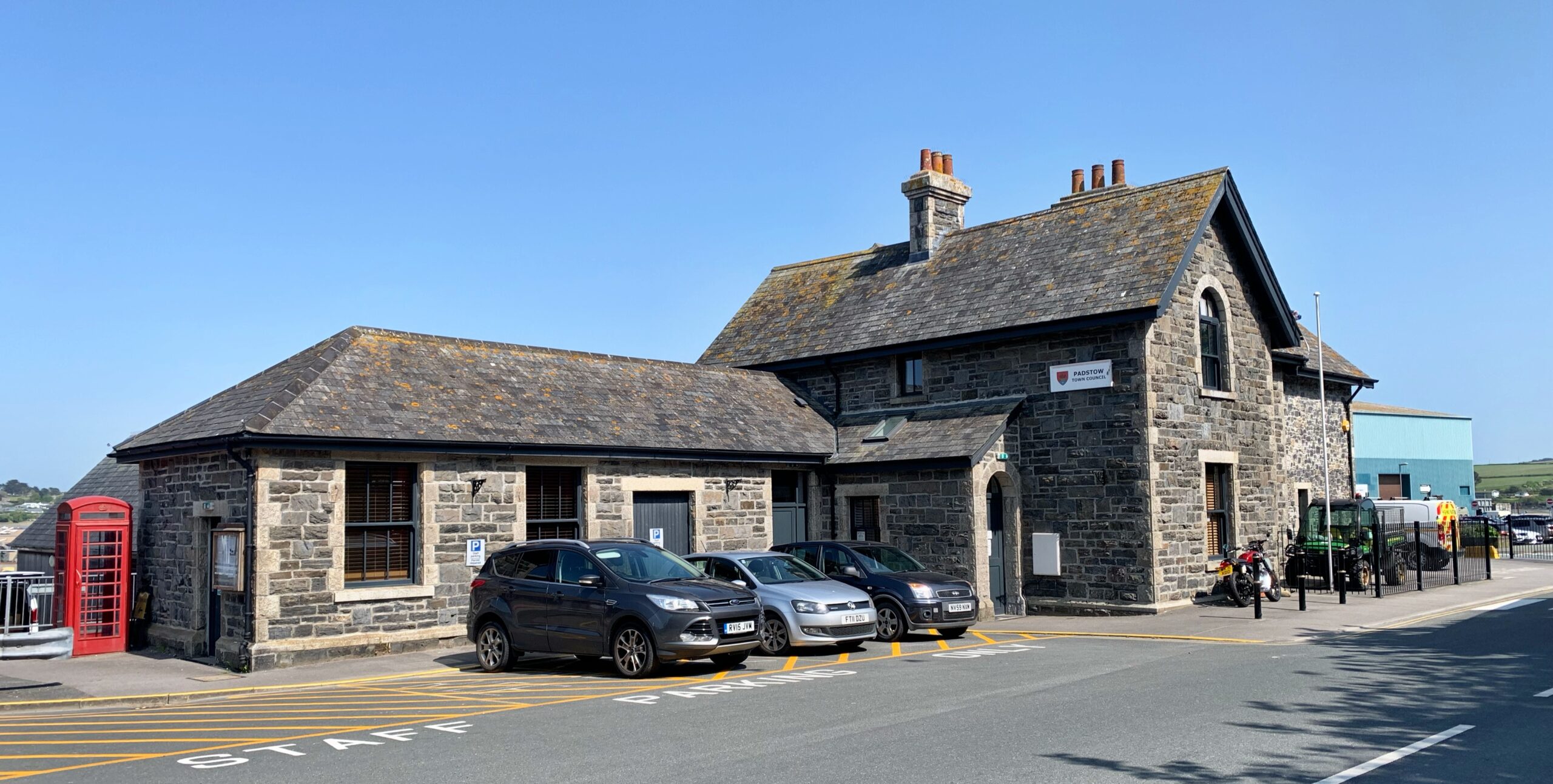
The former Padstow railway station, the western terminus of the North Cornwall Railway. It was opened in 1899 by the London and South Western Railway and closed in 1967 following the Beeching report. The building currently houses the offices of Padstow Town Council – 22/05/2023
We walked from Padstow towards Wadebridge and from Bodmin, we also walked in the direction of Wadebridge as the trail follows the paths of two former railway lines; a section of the North Cornwall Railway between Padstow and Wadebridge and most of the Bodmin and Wadebridge Railway from Wadebridge to Wenford Bridge, along with a short branch from that line to Bodmin.
The Bodmin and Wadebridge Railway was originally built at a cost of £35,000 following a study commissioned in 1831 by local landowner Sir William Molesworth of Pencarrow. The line was intended to carry sand from the Camel estuary to inland farms for use as fertiliser. In the 1840’s, England’s railway network expanded towards Bodmin. The London and South Western Railway (LSWR) purchased the Bodmin and Wadebridge Railway in 1846 and intended to connect it to the rest of the system by a new line through North Cornwall. The line from Halwill reached Wadebridge in June 1895 and then Padstow in March 1899. Later the railway was used to ship slate and china clay from inland quarries to ships in Padstow and also transport fish landed in Padstow inland to London and other cities. When both quarrying and fishing died off, the railway lost most of its traffic. The last passenger train ran in 1967 and freight ceased in 1983, when a need to invest in new track forced the line to close.
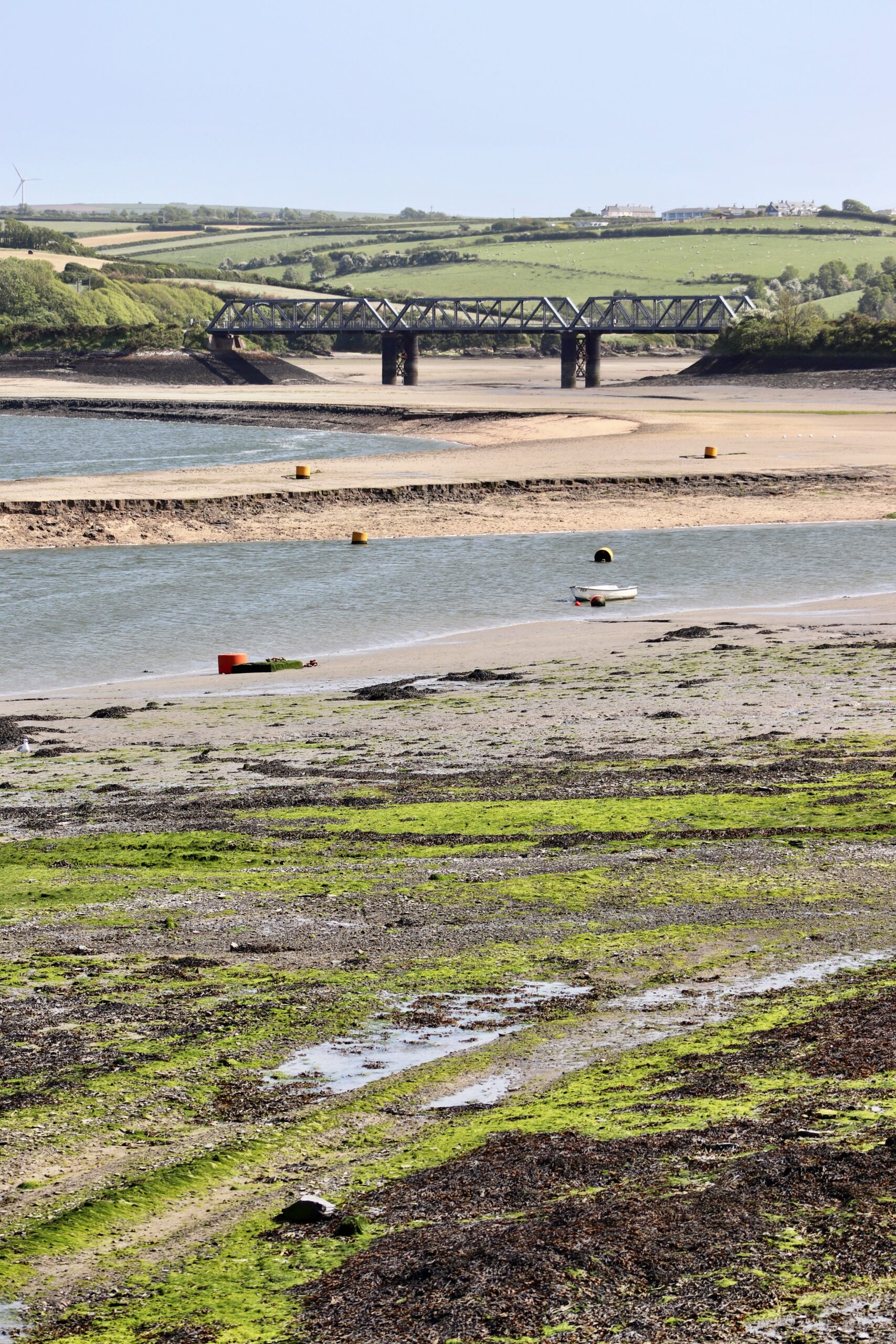
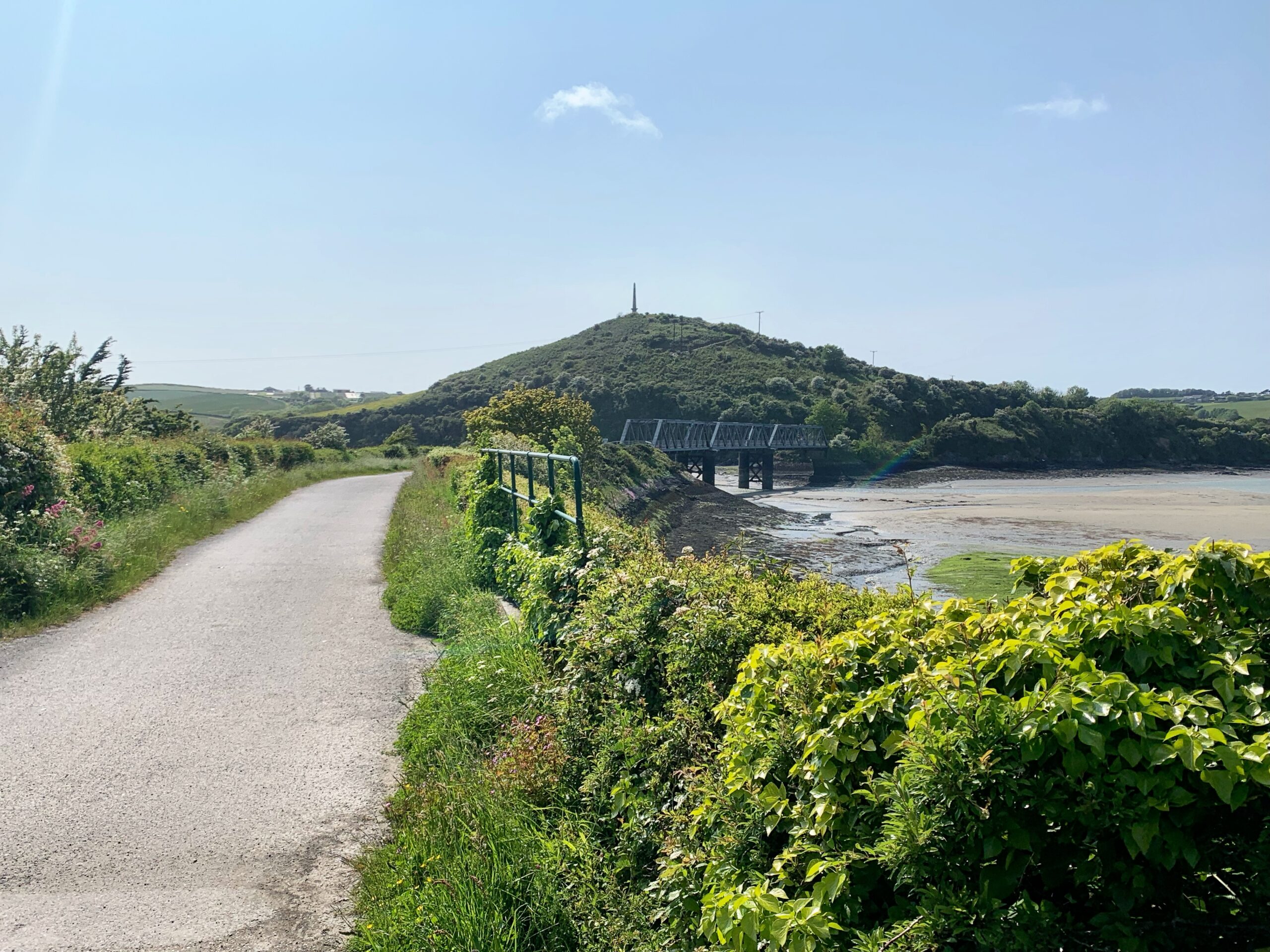
On leaving Padstow, the Camel Trail crosses Petherick Creek on this bridge which formerly carried the North Cornwall Railway – 22/05/2023Petherick Creek bridge. Construction began in December 1896 with the erection of temporary staging over Little Petherick Creek, a mile south-east of Padstow. This facilitated construction of a bridge comprising three spans of 133 feet each, curving to the north on a radius of about 20 chains. It was built by contractors from Derby, Messrs Eastwood Swingler & Co. The spans are formed of two Pratt trusses, together with nine cross girders and three wind braces, giving a deck width of 16 feet 3 inches. Two rail bearers are also provided. The ironwork was brought by rail to Wadebridge before being carried on barges to site down the River Camel. Each truss weighs 350 tons. Heading towards Padstow, the structure is approached on a 230-yard embankment, protected by revetments. This incorporates a brick and slate arched bridge at its east end.The main bridge’s abutments are formed in brick and concrete. Supporting the spans are two piers incorporating pairs of cast iron cylinders, 8 feet in diameter and at 18 feet 3 inch centres. These are braced at the top. Rail level is approximately 85 feet above bedrock, 30 feet above the river bed and 16 feet above high water level. At the top of the cylinders are granite bedstones and cast iron bearings.The contractor experienced considerable difficulty assembling the piers. Each 200-ton cylinder was loaded with a 50 ton weight, causing it to sink through the river silt. With bedrock found, the mud was then excavated using grabs, sometimes taking 48 hours to progress just one yard down. When the water had been pumped out and the interior cleaned, they were then filled with concrete – 22/05/2023
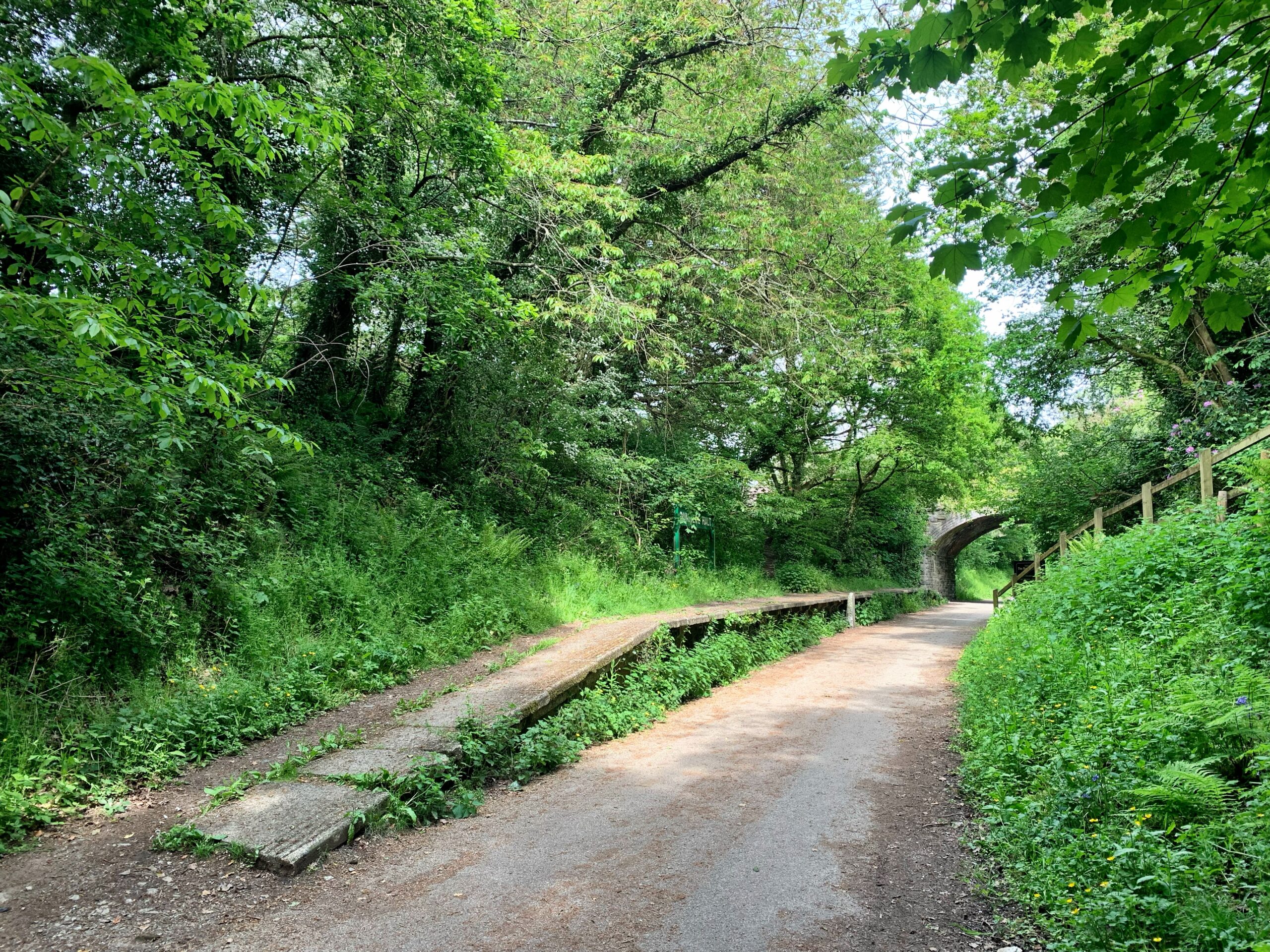
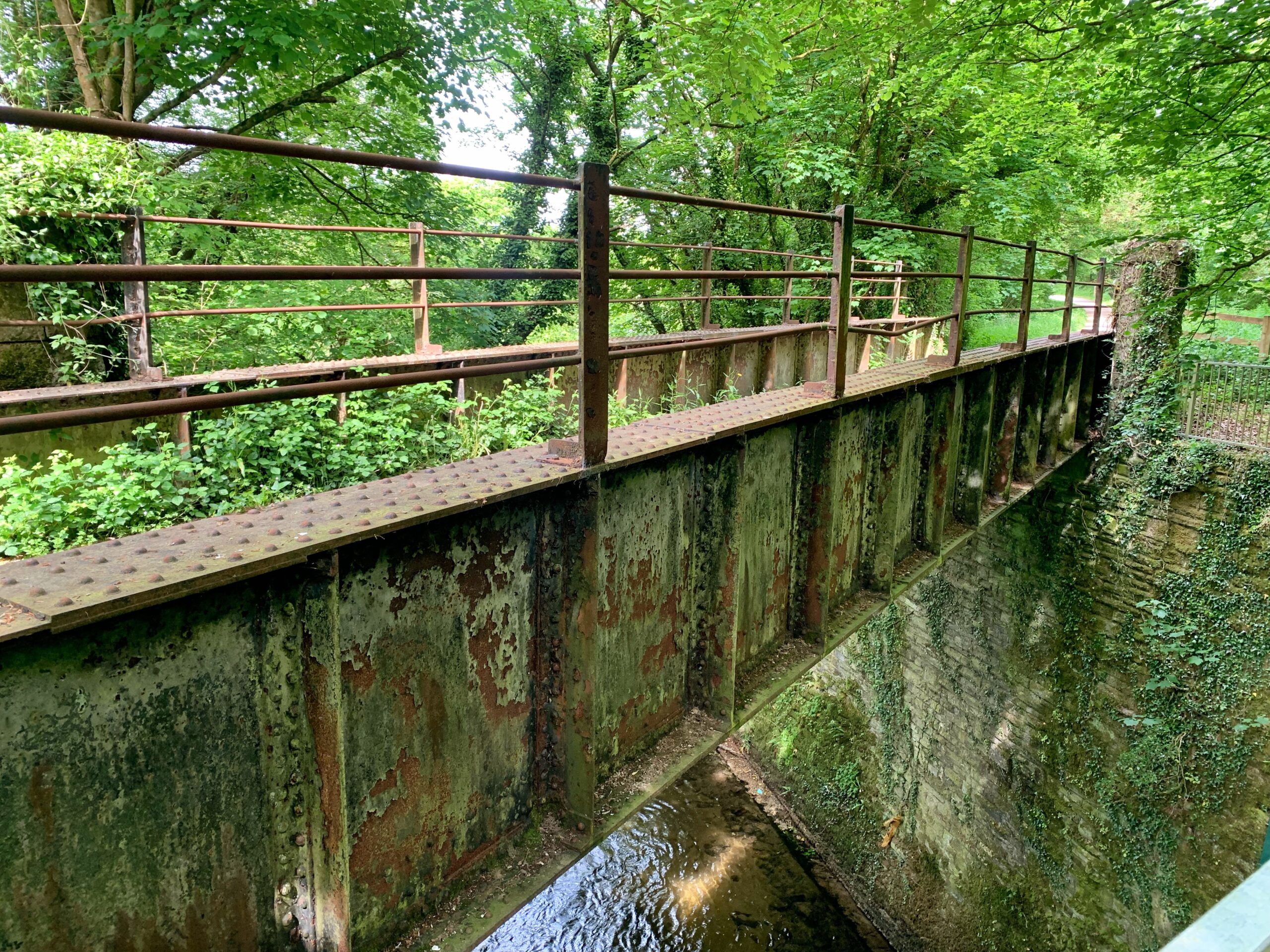
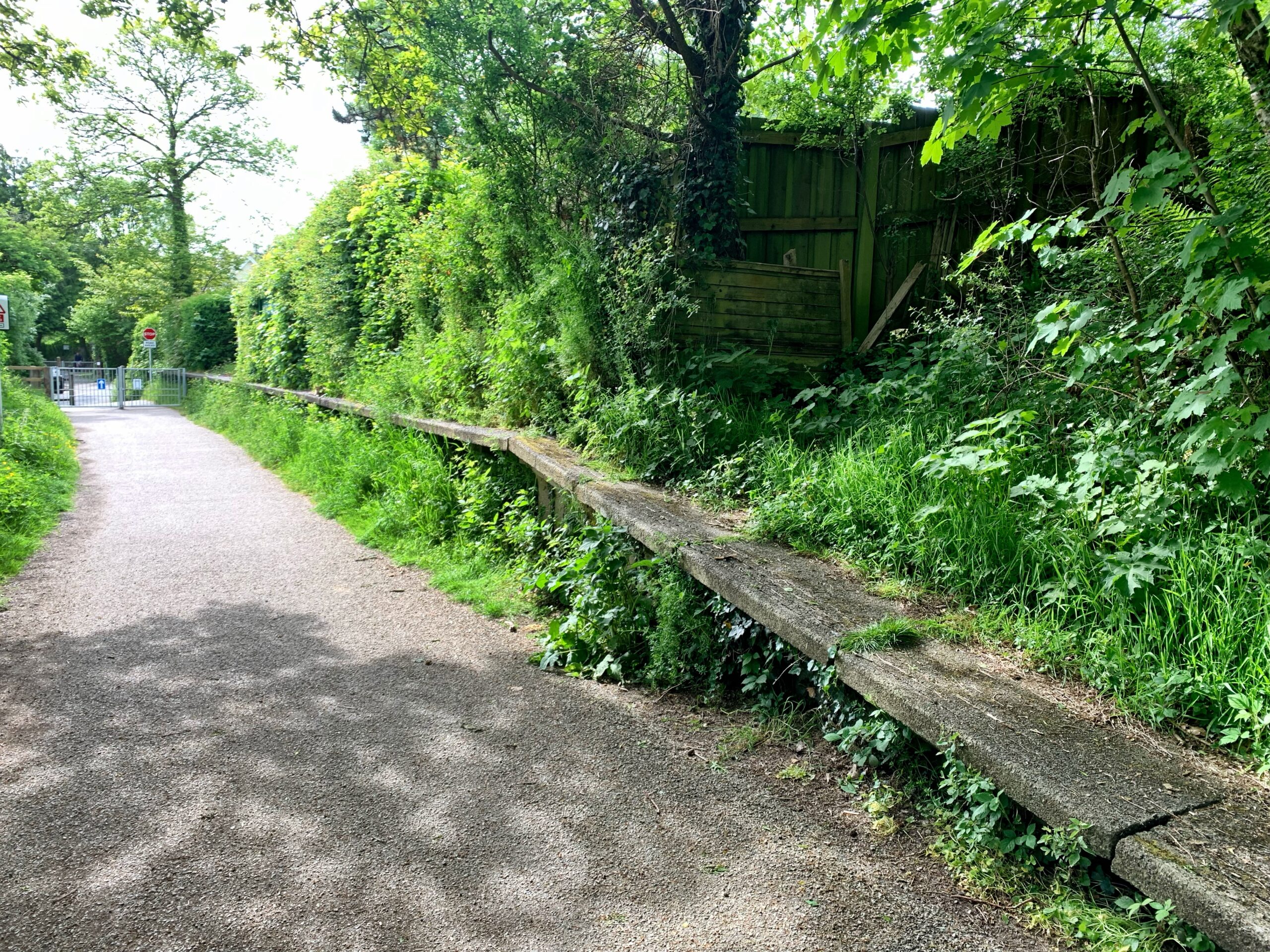
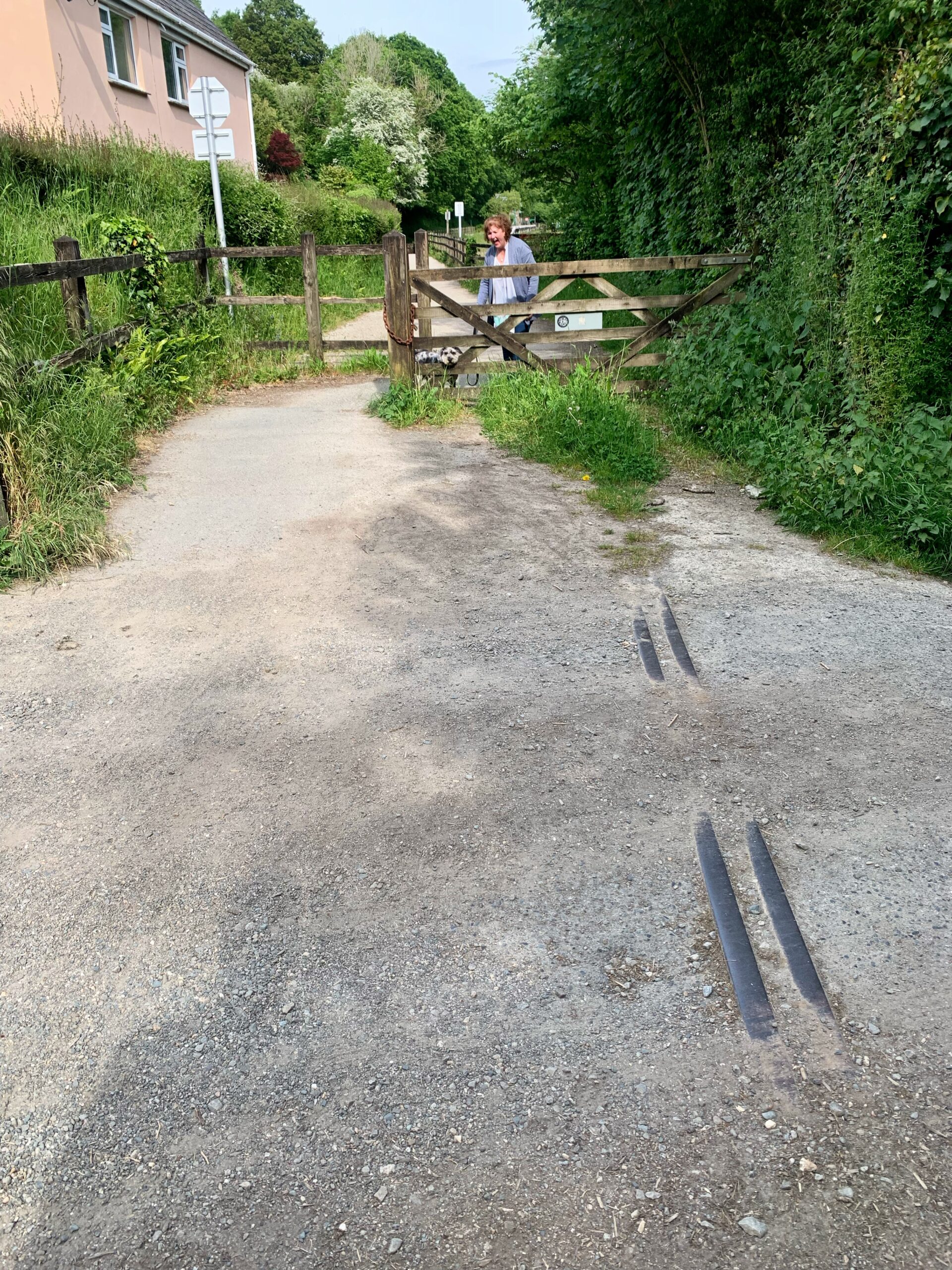
Listen to the wind as Yoshi crosses Petherick Creek bridge in a rare portrait ratio video – 22/05/2023Looking back at Petherick Creek – 22/05/2023The Camel Trail near Padstow -22/05/2023St Issey on the Camel Trail – 22/05/2023Lobster pots on the River Camel alongside the disused railway line – 22/05/2023Road bridge over the Camel Trail at Bodmin – 23/05/2023Dunmere on the Camel Trail – 23/05/2023Dunmere Halt on the Camel Trail – 23/05/2023Dunmere Halt on the Camel Trail – 23/05/2023Dunmere on the Camel Trail – 23/05/2023Nanstallon Halt on the Camel Trail – 23/05/2023Remains of railway track at Nanstallon on the Camel Trail – 23/05/2023Remains of signalling at Nanstallon on the Camel Trail – 23/05/2023The branch to Camelford on the Camel Trail – 23/05/2023
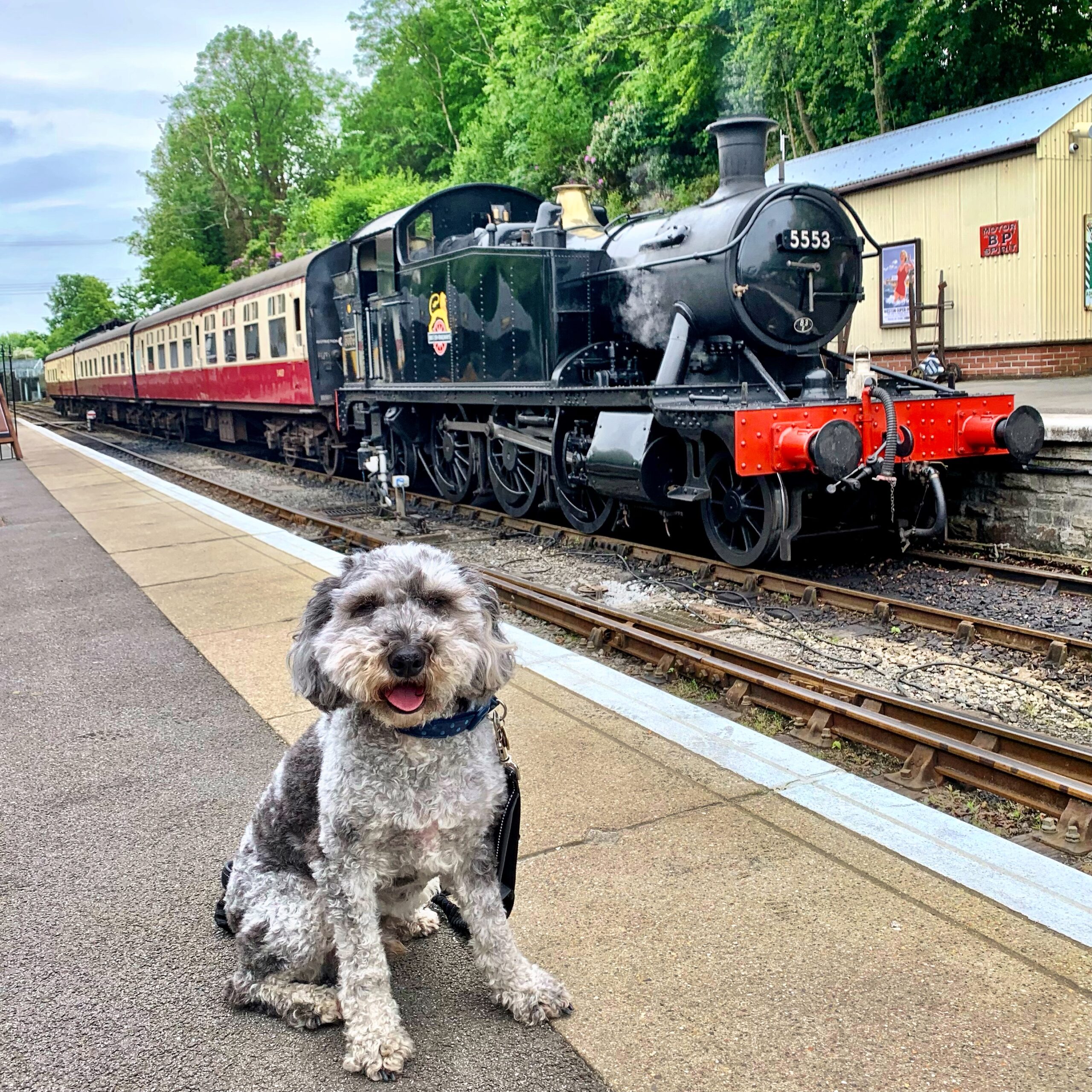
While Yoshi’s mama was visiting Bodmin Jail (now a tourist attraction, Caroline wasn’t spending time at the invitation of the local constabulary), the boy and I also popped in briefly on the Bodmin & Wenford Railway. On the day of our visit visiting steam loco GWR Small Prairie Class 4500 Churchwood 2-6-2T tank engine No. 5553 was in operation, but we also saw several heritage diesel locomotives on site. The Bodmin Railway Preservation Society (BRPS) was formed in 1984, and they in turn formed the Bodmin Railway plc in order to raise funds to purchase the line from Bodmin Parkway to Boscarne Junction, via Bodmin General. They were successful, and North Cornwall District Council (now part of Cornwall Council) secured the land from British Rail.
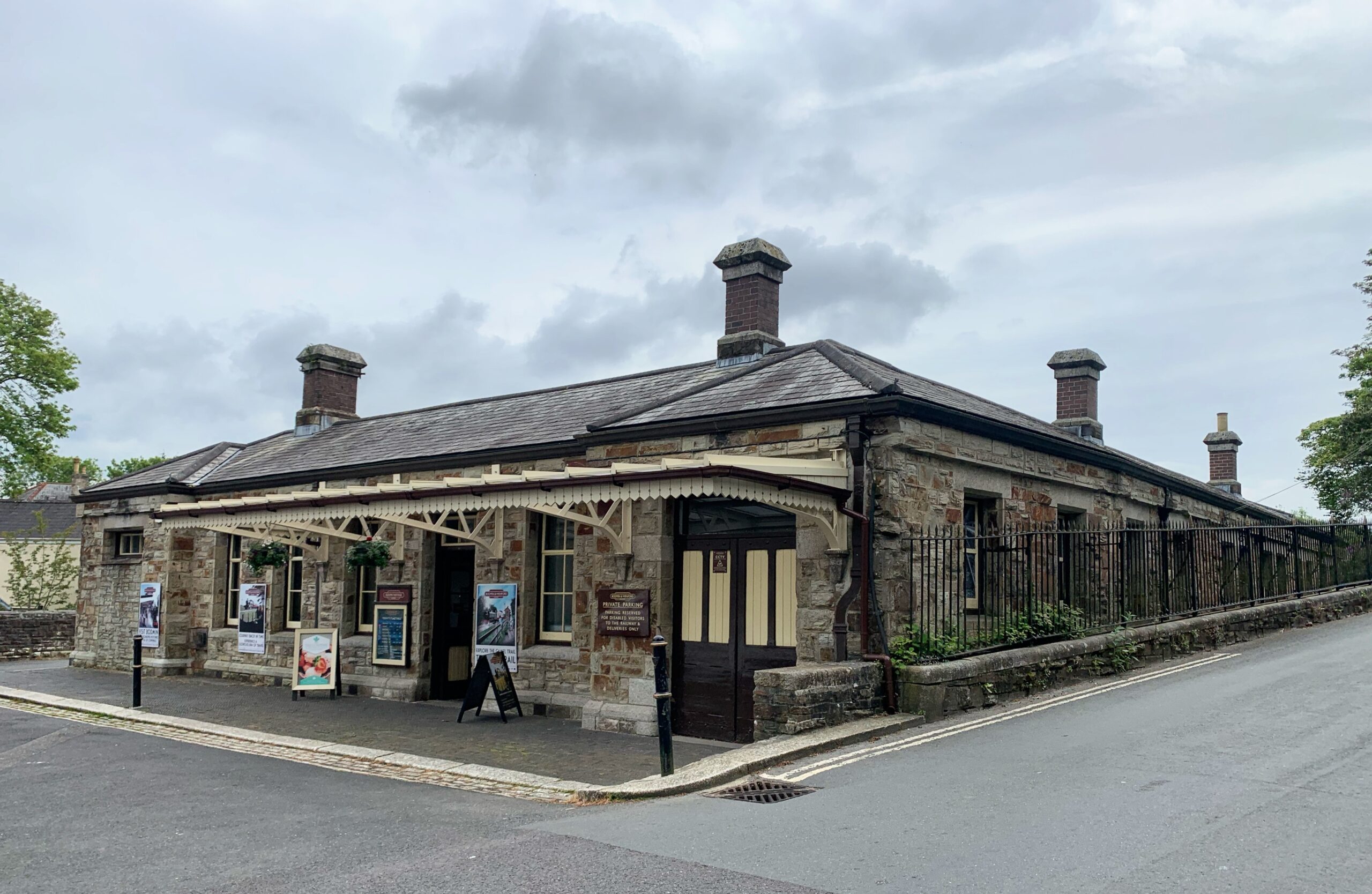
Bodmin General railway station was constructed by the Great Western Railway and opened in 1887, when the 3½-mile branch line from Bodmin Road to Bodmin was opened. The station is beautifully restored to reflect the 1950’s and is resplendent in the British Railways (Western Region) colour scheme of the period. It currently houses the headquarters of the Bodmin and Wenford Railway – 23/05/2023Yoshi at Bodmin General with GWR Small Prairie No. 5553. The locomotive was built at Swindon in 1928 and withdrawn in November 1961 when she was sold for scrap to Woodham Brothers in Barry. Having spent nearly 28 years in the scrapyard, she was the last locomotive to leave Barry in January 1990 where she was transported to the Dean Forest Railway – 23/05/2023
No. 5553 arrives at Bodmin General. Feel free to bark along – 25/03/2023
Services between Bodmin Parkway and Bodmin General were restored in 1990, and the line was extended back to Boscarne Junction six years later, in 1996.
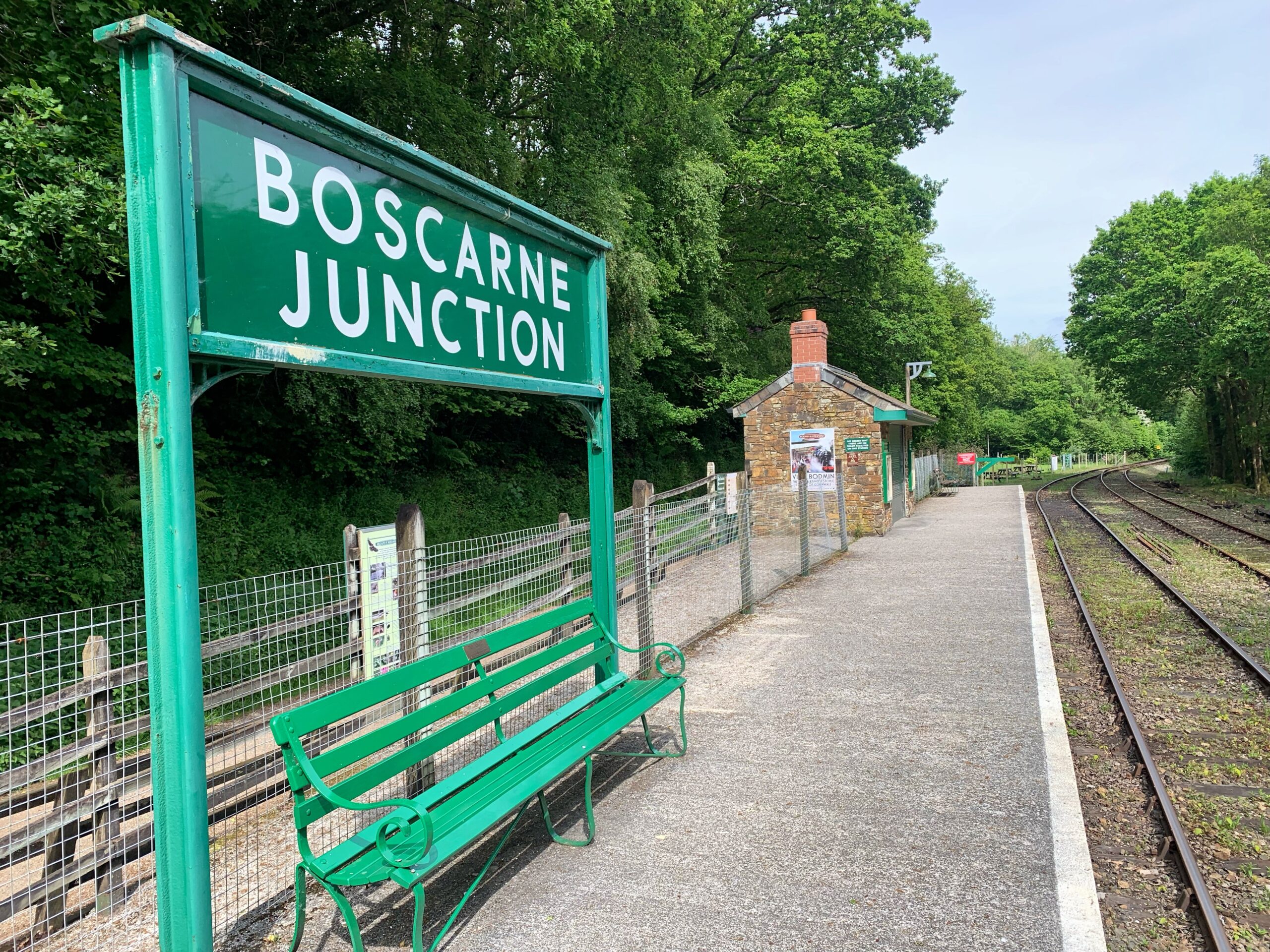
Boscarne Junction station on the Bodmin and Wenford railway. The Camel Trail passes this location – 23/05/2023
Since then the Bodmin & Wenford Railway has operated trains – principally steam, but with some heritage diesel services – over the 6½ miles between Bodmin Parkway and Boscarne Junction via Bodmin General.
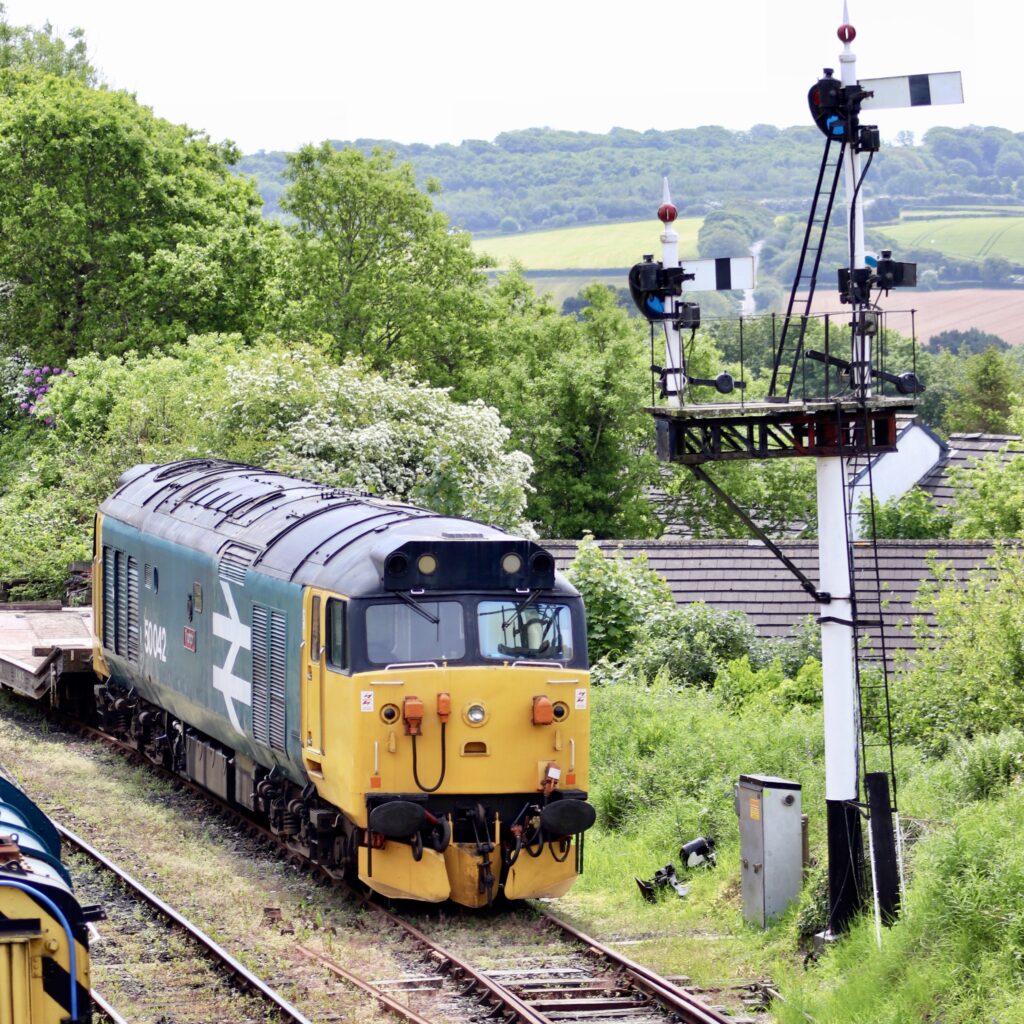
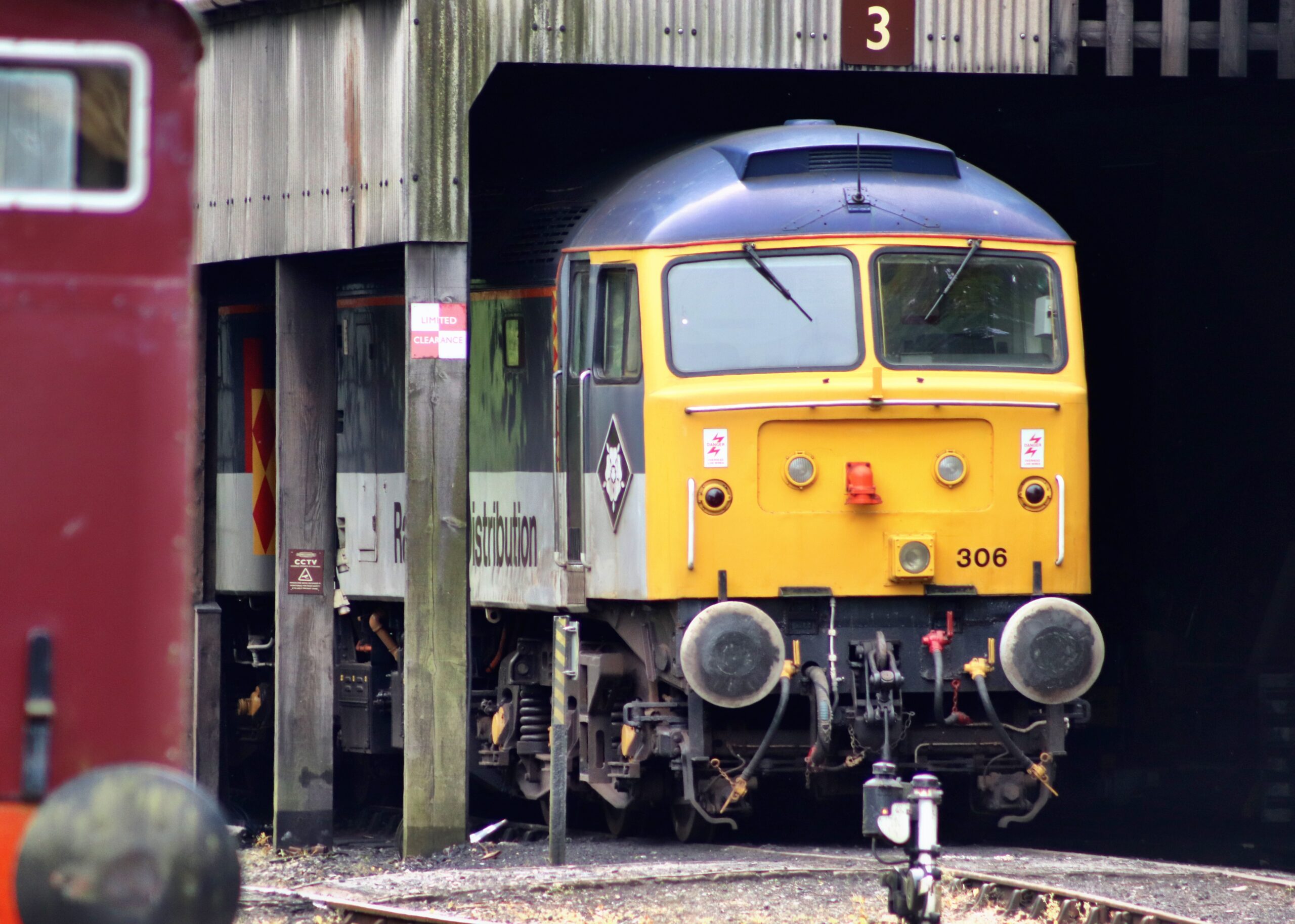
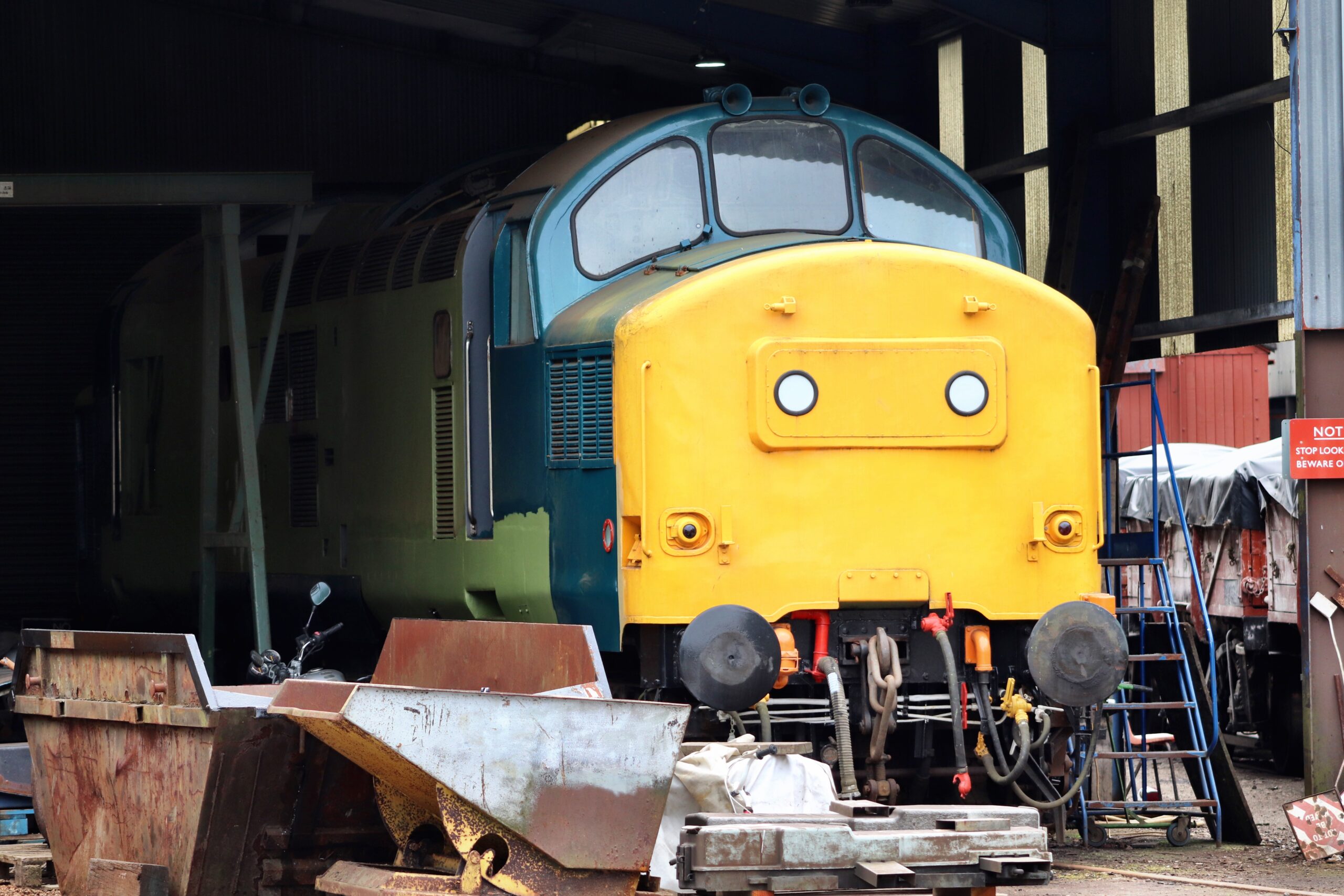
Class 50 No. 50042 ‘Triumph’ at Bodmin. Withdrawn in 1990 the Bodmin Mainline Diesel Group purchased the loco in 1991 and restored her to pristine condition in 1993 – 23/05/2023Class 47 No. 47306 ‘The Sapper’ at Bodmin. Built by Brush at their Falcon Works in Loughborough in 1963 the locomotive arrived on the Bodmin and Wenford Railway in 2007 straight from St Blazey where she had been placed in store following withdrawal from mainline use – 23/05/2023Class 37 No. 37142 built in 1963 at English Electric’s Vulcan Foundry is currently undergoing an overhaul at Bodmin. In her mainline days she worked China Clay trains across Cornwall so is very much at home on the Bodmin and Wenford Railway – 23/05/2023
Travel back to April 1995 when Robert Stephenson & Hawthorn Works 0-6-0T locomotive No. 7597 was in operation on the Bodmin and Wenford Railway. The locomotive was built in 1959 and spent her industrial life at the Rye House Power Station on the Lea Valley in Essex. She is currently being overhauled at The Lincolnshire Wolds Railway.
We also had time to take photographs of GWR Castle HST Sets and a passing freight at Bodmin Parkway railway station which we visited before reuniting with Caroline. The signal box at Bodmin Parkway is now a café and I enjoyed a latte in between photographing passing trains.
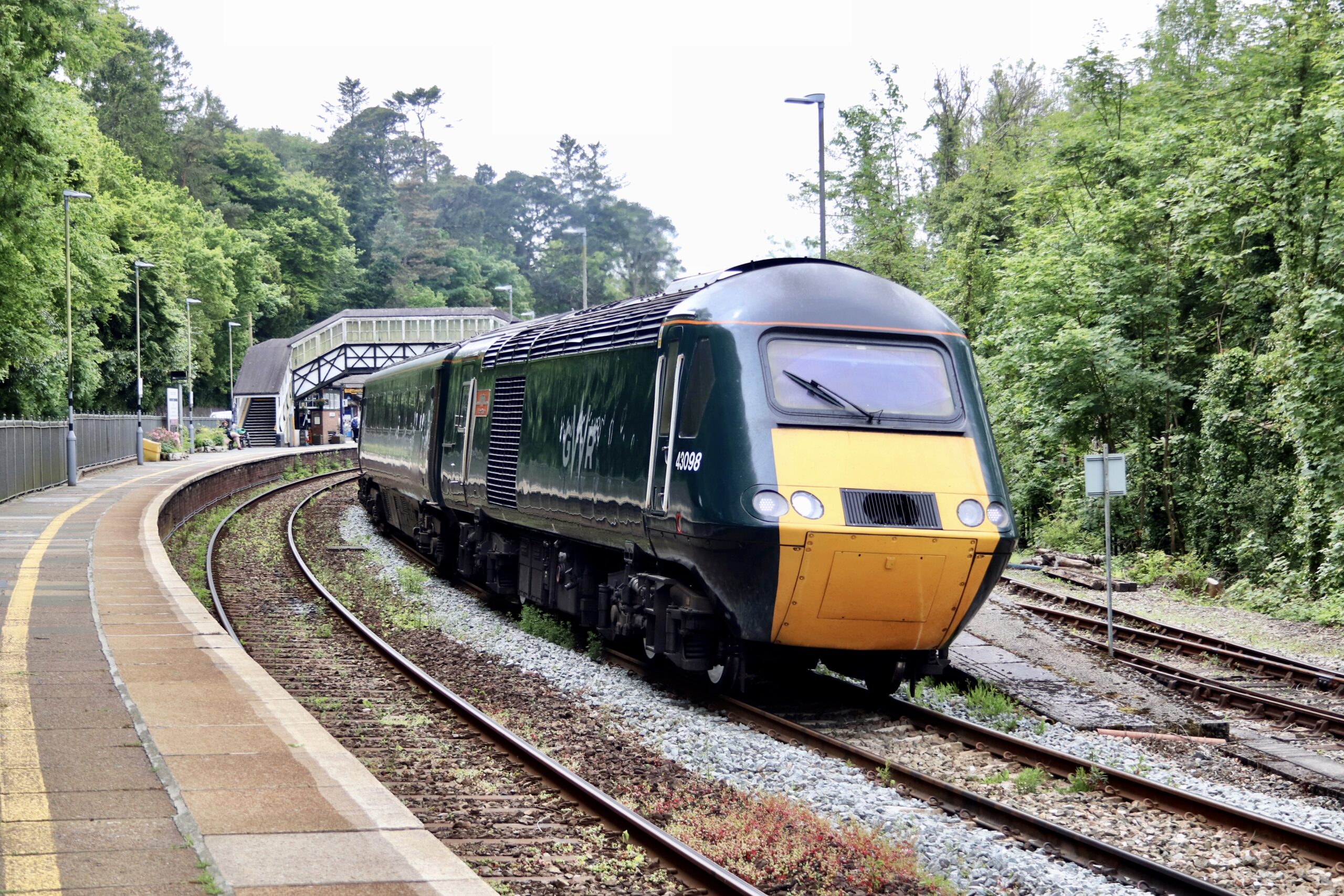
Class 43 No. 43098 ‘Walton Castle’ departs Bodmin Parkway working 2U24 1250 Penzance to Cardiff Central – 23/05/2023GWR IEP No. 802107 departs Bodmin Parkway with 1A88 1215 Penzance to London Paddington passing DB Class 66 No. 66165 6C99 1103 Exeter Riverside N.Y. to St. Blazey SS – 23/05/2023
The next day we drove to Penzance via a couple of stations which still have their semaphore signalling intact. Cornwall has long been one of the country’s most remarkable outposts of lower quadrant semaphore signalling, but time is fast running out for much of its marvellous mechanical infrastructure, with a major re-signalling project due to be completed in Autumn 2023.
The present Exeter signalling centre is to become the centralised control point for the West of England and will become a Railway Operations Centre in all but name. The section from Lostwithiel to Truro will be controlled from a new work station incorporating four or five VDU screens, sited in the Exeter centre. It will mean the closure of Lostwithiel, Par and Truro signal boxes but the same track layouts will be retained, more or less, except for some minor rationalisation. Improving the capacity on the Newquay branch is part of the plan as is the modernisation of two level-crossings on each of the Looe and Gunnislake branches.
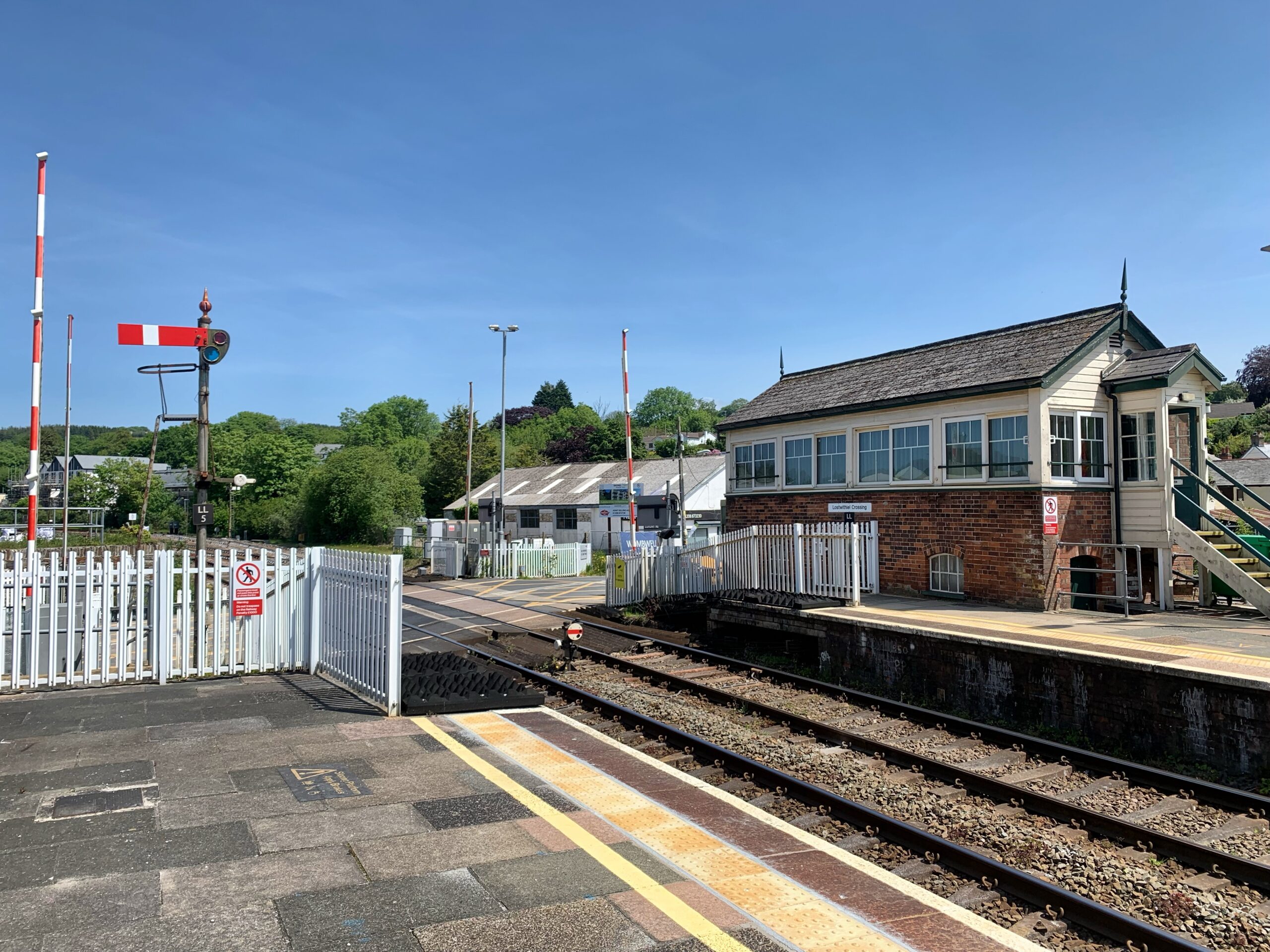
At Lostwithiel, the junction for the Fowey freight line, the two holding loops for the china clay trains, and the level crossing at the eastern end of the station, will all be controlled from Exeter. The crossing will become CCTV-controlled, with the monitoring screens sited at the Exeter work station. It is anticipated that the downtime of the barriers, a cause of local complaint, can be reduced with this arrangement.
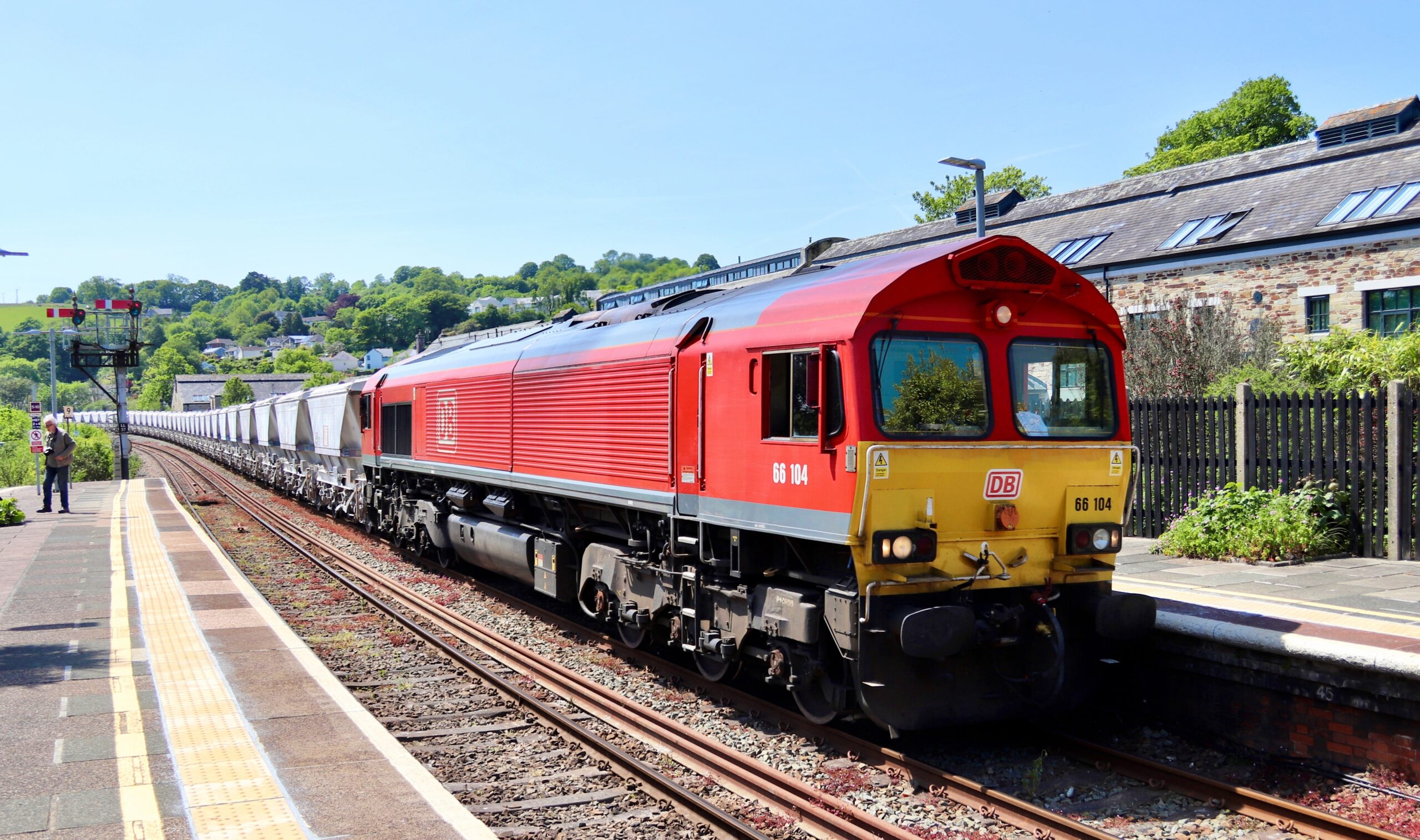
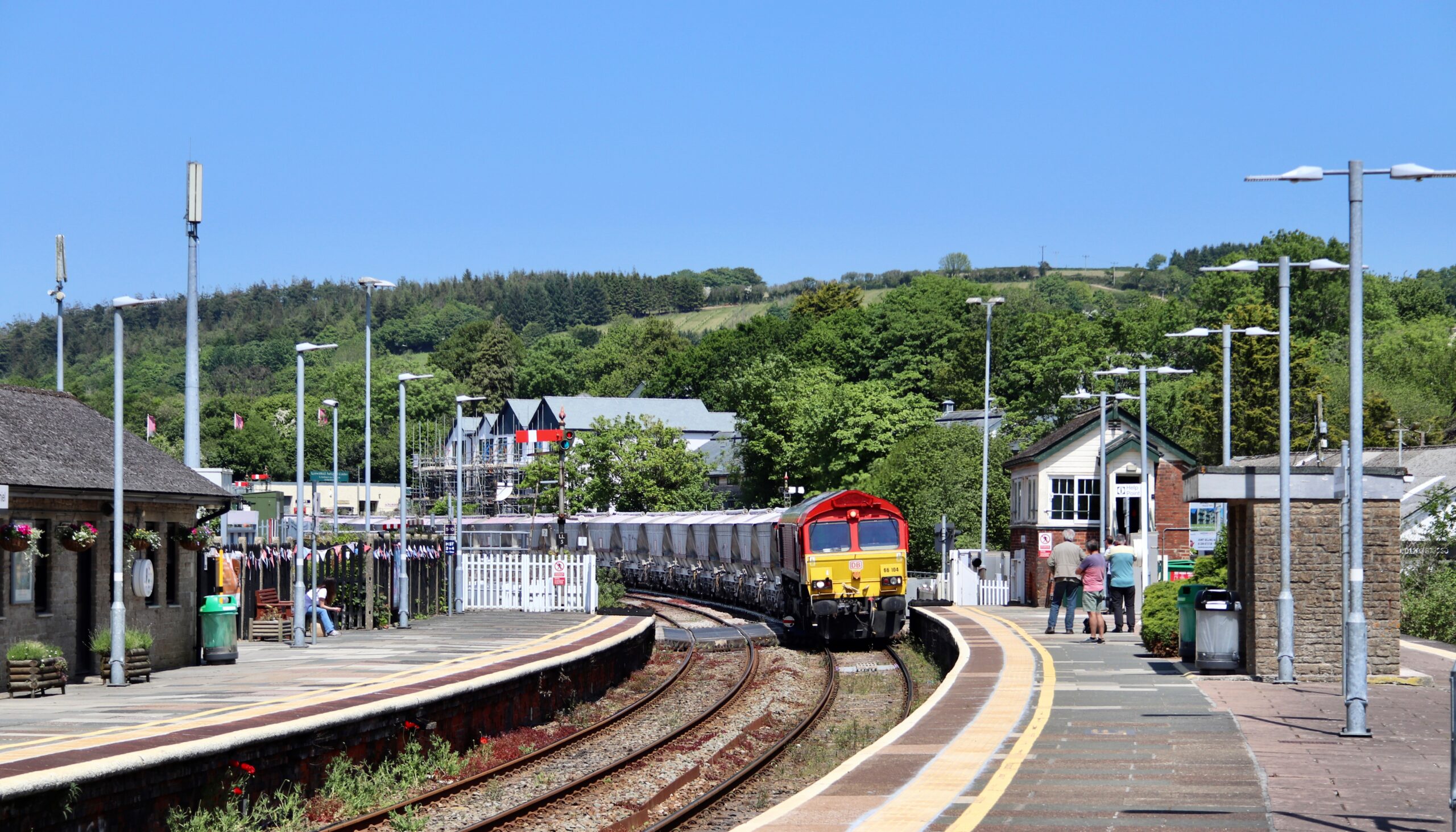
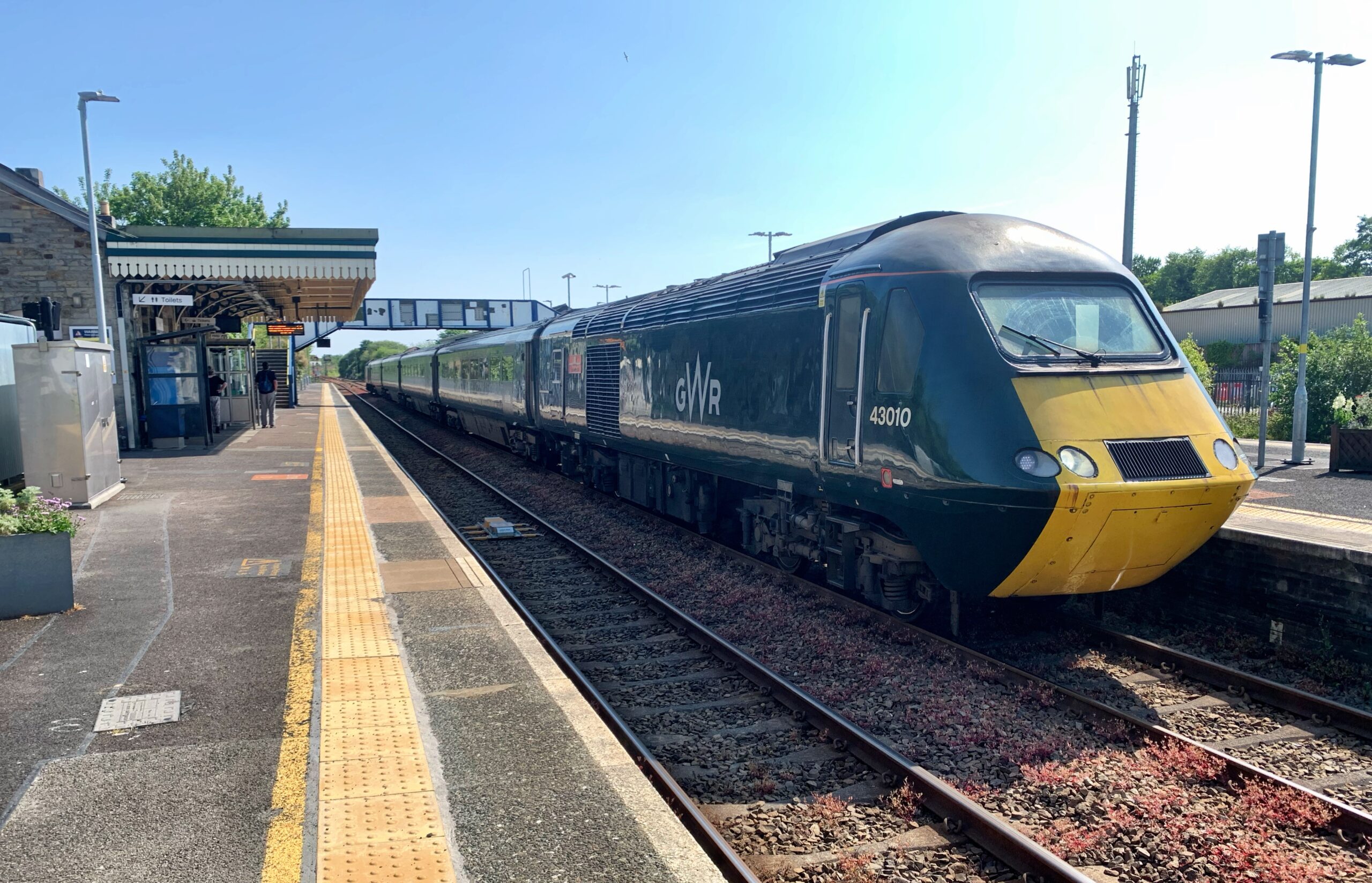
Class 43 No. 43010 ‘Lydford Castle’ at the rear of the late running 2C69 0900 Cardiff Central to Penzance Castle HST service – 24/05/2023Class 66 No. 66104 heads up 6G09 1302 Goonbarrow Junction EWS to Fowey Dock Carne Point china clay working at Lostwithiel. The locomotive runs around the train in Lostwithiel Up Goods Loop before heading back through the station to Fowey – 24/05/2023Having run round its wagons, Class 66 No. 66104 hauls 6G09 1302 Goonbarrow Junction EWS to Fowey Dock Carne Point china clay back through Lostwithiel – 24/05/2023Lostwithiel signal box and crossing – 24/05/2023
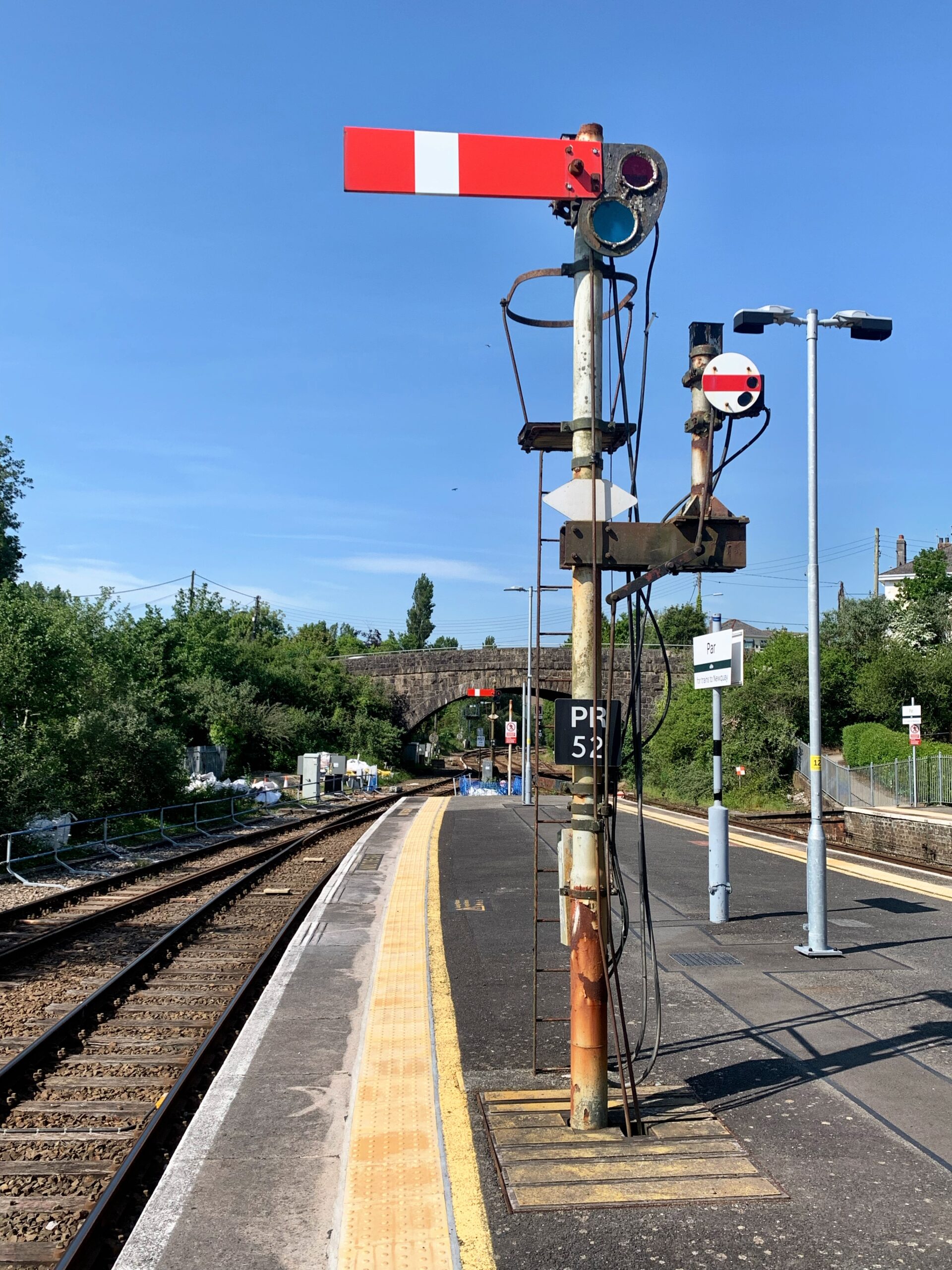
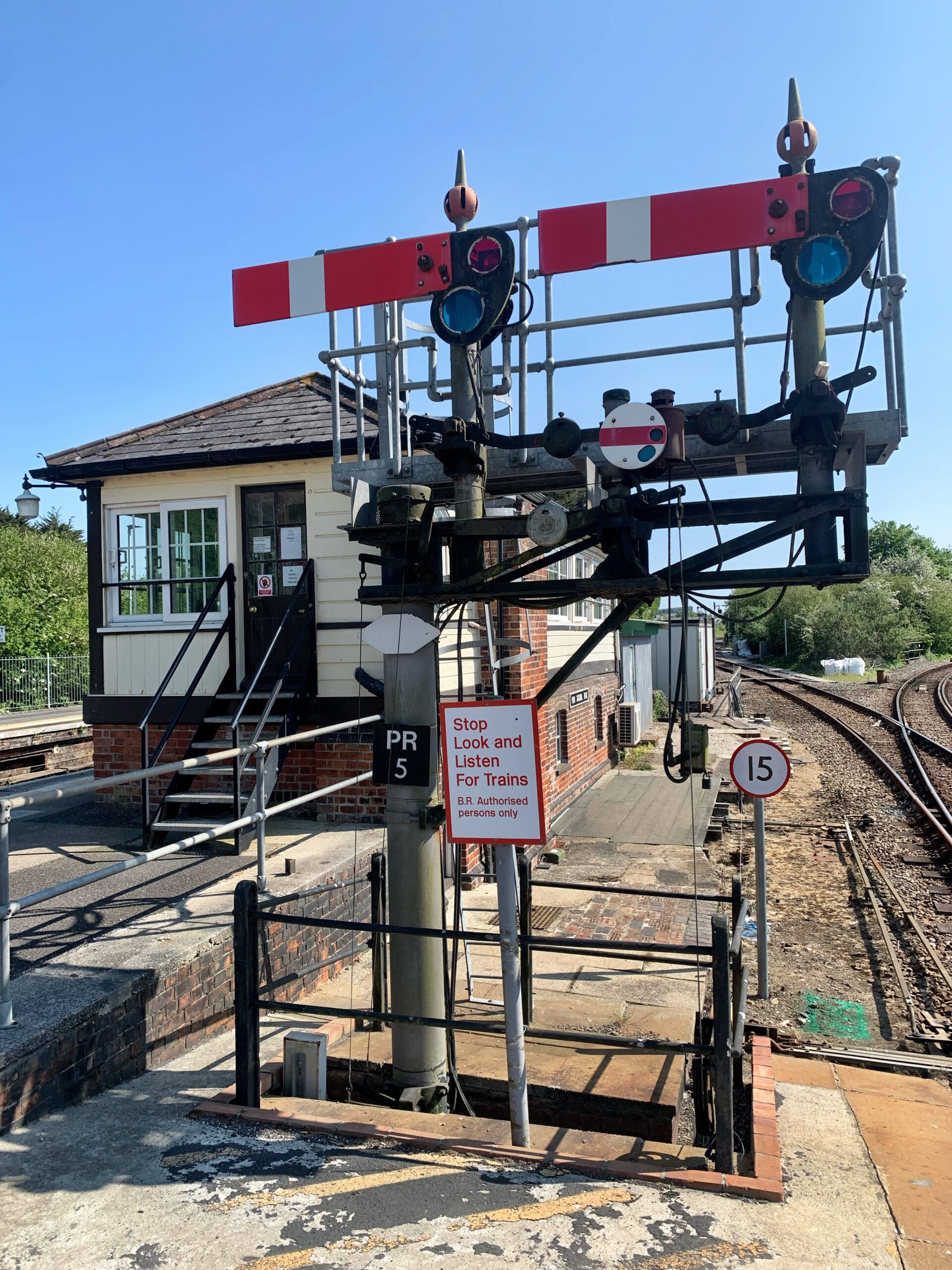
At Par, the junction for the Newquay branch, the signal box will be abolished and the entire layout, including the main line connections to enable through running to the branch, will be put on the Exeter work station. The intermediate block sections at St Austell, Burngullow and Probus will also transfer to Exeter. Par station will be equipped with a new footbridge and lifts to comply with the disabled access requirements.
Class 43 No. 43010 ‘Lydford Castle’ pauses at Par with 2P20 1515 Penzance to Plymouth service – 24/05/2023Semaphore signals at Par – 24/05/2023Grade II listed signal box and semaphore signals at Par. The box opened in 1879 and is built to the first GWR standard design, it was set up to control the GWR’s mainline onwards to Penzance, together with the junction for the branch to Newquay – 24/05/2023
Par is one of two operational Cornish signal boxes – along with Lostwithiel – to enjoy a Grade II Listing, being one of only two surviving examples of a GWR-designed Type 2 box to survive in its original location, at the western end of platforms 2 and 3 on Par station.
As well as the main line, modifications will be made to some of the Cornish branch lines to increase operating flexibility and an improved train service. The most significant of these will be on the one from Par to Newquay, currently the Cinderella branch in the county with, broadly, a two-hour interval service. The intermediate signal box at Goonbarrow splits the section, after that the branch being ‘One Train Working’.
802006 ‘Harry Billinge MBE LdH’ at Newquay having arrived with the 1N68 0905 Plymouth to Newquay service – 23/05/2023
Only one operational platform exists at Newquay. A passing loop is to be provided at Goss Moor that will enable an hourly service to be introduced. The second platform at Newquay will be brought back into use thus enabling more through trains from beyond Par. The county’s ambition is to create a Mid Cornwall Metro to facilitate more train usage into the areas of greater employment. This will imply the restoration of full signalling throughout, which will be controlled from Exeter.
During our sty in Penzance, I enjoyed watching the GWR sleeper service headed up by Class 57 locomotives depart for London in the evening and the corresponding service arrive from the capital in the morning. The Night Riviera leaves Penzance at 2145 and arrives in London paddington at 0504 while the reverse working departs London at 2345 and is scheduled to pull in to Penzance at 0754. On the Wednesday, I was interested to learn that the sleeper service was diverted via Yeovil that day.
Class 57 No. 57604 ‘Pendennis Castle’ awaits departure of 1A50 2145 Penzance to London Paddington sleeper – 24/05/2023CrossCountry Voyager Class 220 No. 220009 ready to set off ECS to Long Rock after working in 1V58 1003 Edinburgh Waverley to Penzance – 24/05/2023Class 57 No. 57603 ‘Tintagel Castle’ at the buffer stops at Penzance having worked 1C50 2345 London Paddington to Penzance – 25/05/2023Class 57 No. 57603 ‘Tintagel Castle’ nameplateClass 57 No. 57603 ‘Tintagel Castle’ awaiting shunting movement to Long Rock having arrived with the morning 1C50 2345 London Paddington to Penzance service – 25/05/2023Class 57 No. 57603 ‘Tintagel Castle’ and GWR Bi-Mode IET Class 802 No. 802101 ‘Nancy Astor’ working 1A80 0815 Penzance to London Paddington – 25/05/2023Penzance Signal Box – 25/05/2023Penzance Signal Box – 26/05/2023Class 57 No. 57603 ‘Tintagel Castle’ at the rear of 5A50 2012 Penzance Traction & Rolling Stock Maintenance Depot to Penzance Empty Coaching Stock move forming the evening Night Riviera sleeper service to London Paddington – 25/05/2023Class 57 No. 57603 ‘Tintagel Castle’ having arrived at the rear of the ECS move from Long Rock ready to haul the 1A50 2145 Penzance to London Paddington sleeper – 25/05/2023GWR Class 158 No. 158950 at Penzance having arrived with 2C36 1830 Plymouth to Penzance service – 25/05/2023Class 08 No. 08645 ‘St.Piran’ at rest having brought the Night Riviera stock into Penzance whilst GWR Class 158 No. 158950 awaits departure with the 2E30 2100 service to Exeter St. Davids – 25/05/2023Class 57 No. 57602 ‘Restormel Castle’ at the buffer stops in Penzance having worked the down Night Riviera sleeper service – 26/05/2023
On Thursday we walked from Penzance to Marazion which conveniently meant we passed by Long Rock where Penzance TMD, the most westerly and southerly rail depot in the country, is located. There has been a depot a Long Rock since 1914 when a steam shed was opened. The current depot dates from 1977 with later modernisation to increase capacity in 2017.
Long Rock depot seen from the west of Penzance – 25/05/2023The coastal path runs adjacent to Long Rock. Caroline and Yoshi pass an unidentified IET awaiting its next duty from Penzance – 25/05/2023Class 08 No. 08645 ‘St.Piran’ (after the patron saint of Cornwall) in Kernow livery at Long Rock, Penzance. Built at Harwich Works and originally numbered D3812 this 0-6-0 diesel shunter entered traffic in February 1959 being allocated to Newport Pill. The locomotive was allocated to different Welsh depots until December 2018 when, with the closure of Landore, she moved to Penzance. Her new livery was unveiled to the public at a special open day to raise money for the Penlee Lifeboat in April 2019 – Nameplate of Class 08 No. 08645 ‘St. Piran’ Class 57 No. 57603 ‘Tintagel Castle’ pokes her nose out of the shed at Long Rock – 25/05/2023 Class 57 No. 57603 ‘Tintagel Castle’ with the Night Riviera Sleeper stock in the sidings at Long Rock – 25/05/2023New sidings being constructed at Long Rock depot, Penzance – 26/05/2023Once an important stop on the main London Paddington – Penzance route, Marazion railway station, which originally opened in March 1852 by the West Cornwall Railway, has been stripped of its platforms and awnings. The current building which dates from the 1880’s has been fully restored into a two bedroom bungalow. The line was absorbed into the Great Western Railway on 1st January 1877. The station was never particularly busy, although it dealt with a fair bit of agricultural traffic including broccoli and new potatoes. The station was closed to passengers 5 Oct 1964, with freight services following on 6 Dec 1965. The station is situated on the shore of Mount’s Bay and offers wonderful views across to St. Michael’s Mount. For many years Marazion was home to six old Pullman coaches that were employed as camping coaches, holiday accommodation offered by the railway containing sleeping and living space designed to encourage people to travel by train to the stations where they were situated. I remember the coaches from a previous visit to the area and I’ll tray and find some photographs at some point! The coaches, which had fallen into disrepair, were removed in 2006 and nine holiday cottages built in their place – 25/05/2023Yoshi was a real trooper on our walks. Earlier on the same day we had walked to Mousehole before setting off for Marazion. St Michael’s Mount can be seen behind Yoshi. It is a rocky island crowned by a medieval church and castle, home to the St Aubyn family and a community of islanders – 25/05/2023Yoshi at Mousehole. Famous for its narrow streets and tiny harbour, its name comes from a cave in the cliffs nearby. Until the 16th century it was one of the main ports on Mount’s Bay, the other being Marazion. Mousehole is believed to have been the landing place of the Knights of St John when they returned from the Holy Land. The poet, Dylan Thomas called it the prettiest village in England – 25/05/2023Stone from Penlee Quarry was transported along by the coast near Newlyn in large containers on rails. The containers were originally pulled by a locomotive called ‘Penlee’, also known as ‘Janner’s Engine’ to the south pier in Newlyn, where the contents were loaded onto boats. Later, in the 1960’s, six diesel locomotives were required for hauling the stone. The quarry closed in the late 1980’s – 25/05/2023Marazion is a town of great antiquity, being one of the oldest chartered towns in Cornwall and in Medieval times was a significant location. Marazion was granted its first charter of incorporation by Henry III in 1257 and was reaffirmed on 13th June 1595 by Queen Elizabeth I. The name derives from the important fairs and markets that were held in the town, the earliest dating back to 1070; Marghas Byghan (Small Market) and Marghas Yow or Jew (Thursday Market) blurred over time to become ‘Marazion’. The presence of the Benedictine Monastery on St. Michael’s Mount attracted pilgrims to Marazion, who hung about in the town until the causeway was revealed by the ebbing tide allowing them to cross to the island – 25/05/2023
Lineside video of our visit to Cornwall in May 2023
Bringing us up to date, another Winfrith run took place over 31st May and 1st June 2023 as unusually the train collecting low lever radioactive waste from the Steam-Generating Heavy Water Reactor stayed a night in the sidings at the Dorset facility. Ownership of the Winfrith Nuclear site is under the auspices of the Nuclear Decommissioning Authority (NDA). The site is managed by Magnox Limited who are contracted to deliver the site decommissioning programme, the Winfrith reactor having been shut down in 1990.
Direct Rail Services (DRS) Class 68’s No.’s 68017 ‘Hornet’ and 68034 top and tail 6Z62 Crewe Coal Sidings DRS to Winfrith Sidings on the approach to Parkstone railway station – 31/05/2023DRS Class 68’s No.’s 68017 ‘Hornet’ and 68034 in the sidings at Winfrith – 31/05/2023DRS Class 68’s No.’s 68017 ‘Hornet’ and 68034 in the sidings at Winfrith – 31/05/2023DRS Class 68 No. 68034 passing through Hamworthy heading up the return working 6Z95 Winfrith Sidings to Crewe Coal Sidings DRS. No. 68017 ‘Hornet’ was on the rear of the consist – 01/06/2023
Winfrith Cats 31/05/2023 & 01/06/2023
On Saturday 3rd June “The Dorset Coast Statesman” ran to Weymouth for the third time in 2023. On this occasion the tour originated from Peterborough and was top and tailed by LSL Class 47 locomotive No.’s 47805 ‘Roger Hosking MA 1925-2013’ and 47593 ‘Galloway Princess’. I was unable to see this working (again!) as I was in Lichfield helping to celebrate the wedding of two friends, and the following photos are by kind permission of Scott Lewis.
47593 ‘Galloway Princess’ at the buffer stops in Weymouth – 03/06/2023 (Image courtesy of Scott Lewis)47805 ‘Roger Hosking MA 1925-2013’ in Weymouth station at the rear of 1Z40 0617 Peterborough to Weymouth – 03/06/2023 (Image courtesy of Scott Lewis)
Our North Dorset Correspondent was up in the early hours of Tuesday 6th June to see Class 69 locomotives No.’s 69003 ‘The Railway Observer’ and 69004 which are currently operating in the West Country on weedkiller duties. This is the first operational visit of the class to our area. Yeovil Junction railway station was in Dorset until 1991 when county boundaries were changed. The 69’s are scheduled to work the same vegetation management train to Dorchester West in the early hours of 9th June and the Bournemouth to Weymouth on the 12th/13th June 2023.
GBRf Class 69 No.’s 69003 ‘The Railway Observer’ at Yeovil Junction – 06/06/2023 (Image courtesy of Scott Lewis)GBRf Class 69 No.’s 69004 at Yeovil Junction working 3Q00 Exeter Riverside NY to Exeter Riverside NY – 06/06/2023 (Image courtesy of Scott Lewis)
Yoshi was delighted to learn that South Western Railway (SWR) have joined other rail operators in banning e-scooters, e-skateboards, u-unicycles and “hoverboards” across its stations as from 1st June 2023. The rule has been introduced as there is a small fire risk due to the potential for their lithium-ion batteries to overheat.
With that piece of trivia we come to the end of another blog entry. Thank you for joining us and as always we appreciate your comments, corrections and feedback. We’ll be seeing you.
Yoshi watches Steam Dreams afternoon Test Valley rail tour passing through Romsey – 22/04/2023
The Weymouth line was visited by a rail tour on Wednesday 19th April 2023 when Statesman Rail’s Dorset Coast Statesman, hauled by double-headed Brush Type 4 Class 47 diesel-electric locomotives No.’s 47593 ‘Galloway Princess’ and 47828 ran from Crewe to the Dorset seaside town for an afternoon layover. We saw the train on its outward leg passing over Holes Bay at Poole. If you look very closely in the following video you might be able to work out the train as it crosses the causeway. Thankfully my brother was at Dorchester South and managed to capture a much better clip. On the return journey, I elected to pop up to Hamworthy railway station to see the train passing through, which I only just managed as it was running nine minutes early and I was only just able to grab my phone to video the pass, my stills camera remaining firmly in its bag!
Class 47 No.’s 47593 ‘Galloway Princess’ and 47828 working the outward leg of Statesman Rail’s Dorset Coast Statesman 1Z67 0614 Crewe to Weymouth – 19/04/2023
Additional video from Dorchester South courtesy of G E Barrett
Wednesday also saw the regular monthly New Measurement Test Train working to Weymouth. This month it ran with two former High Speed train power cars and arrived 75 minutes late because of incidents on its journey south from Derby. Thinking the train would be capped enroute, I elected not to go and see this working, so I’m very grateful for the great video kindly provided by both my brother, and Scott our North Dorset correspondent!
Video courtesy of G E Barrett and Scott LewisColas Class 43 HST Power Car No. 43274 at Dorchester West working the late running 1Z22 0804 Derby R.T.C.(Network Rail) to Bristol Kingsland Road having reversed at Weymouth. Image courtesy of Scott Lewis – 19/04/2023Colas Class 43 HST Power Car No. 43251 runs through Dorchester West working 1Z22 0804 Derby R.T.C.(Network Rail) to Bristol Kingsland Road. Image courtesy of Scott Lewis – 19/04/2023
The following day saw another out of the norm working as Direct Rail Services (DRS) Class 68’s No.’s 68001 ‘Evolution’ and 68018 ‘Vigilant’ top and tailed ten FNA wagons on their mission to collect low level nuclear waste from Magnox Winfrith. The previous working left empty because of operational difficulties preventing the loading of the train so it was good to see all went smoothly this time around. We were able to have another wander around the perimeter fence at Winfrith to see the train up close. As always, security staff were on hand to politely request that photographs and video refrained from showing buildings or the faces of staff. I was happy to oblige. Although leaving Winfrith more or less right-time, the return working was delayed by some 86 minutes further up the line following an incident at Basingstoke.
Direct Rail Services Class 68’s No.’s 68001 ‘Evolution’ and 68018 ‘Vigilant’ on the approach to Poole working 6Z62 0100 Crewe Coal Sidings (DRS) to Winfrith Sidings – 20/04/2023DRS Class 68 No. 68001 ‘Evolution’ is seen prior to marshalling the loaded train together at Winfrith. 68018 ‘Vigilant’ is in the background – 20/04/2023DRS Class 68 No. 68018 ‘Vigilant’ leads out of Dorchester South with the return 6Z95 1551 Winfrith Sdgs to Crewe Coal Sidings (DRS). No. 68001 ‘Evolution’ at the rear – 20/04/2023
On Saturday, to tie in with a passing steam hauled excursion train, Yoshi, his Mama and I had a walk along the Test Valley nature reserve. Or that was the plan at least. We encountered a fair bit of flood water so our walk was curtailed and instead, while we waited for the Winchester to Salisbury circular tour to pass by we grabbed a take away tea from a burger van outside of B&Q Nursling and sat awhile at a convenient picnic table located on Franconia Drive, named, we assume, after the Cunard ship of the same name. Or perhaps the road name is inspired by English Electric Class 40 Diesel loco No. D220 (40020) ‘Franconia’ which was of course definitely named after the liner. This is an excuse to share the following two images from 1982:
EE Class 40 No. 40020 at Crewe, the ‘Franconia’ nameplates long gone having been removed but carrying a stencilled name instead – 24/10/1982Class 40 No. 40020 at Preston – 13/08/1982
Class 40 locomotives in the number range D210–D235 were mostly named after ships operated by the Cunard Line, Elder Dempster Lines and Canadian Pacific Steamships as the diesel locos hauled express trains to and from Liverpool, the home port of these companies. In the early 1970’s, with Class 40’s no longer working these trains, the nameplates were gradually removed, although enthusiasts still remembered the names and as in the images above, replacement versions were often applied.
Suitably refreshed following our cuppa (Yoshi had water and some snacks), we headed back to the footpath which runs alongside the railway line, only to discover the location had suddenly become very popular with other enthusiasts and observers of steam trains. The two locations I had thought about photographing the train from had ‘been taken’ so I settled for another view which was slightly obscured by lineside vegetation, but turned out to be a reasonable shot after all. Afterwards, we drove the short distance to Romsey to see the train head back to Winchester prior to its onward journey to London.
Southern Railway West Country Class No. 34046 ‘Braunton’ powers along the Lower Test Valley working Steam Dreams 1Z92 1316 Winchester to Salisbury – 22/04/2023Southern Railway West Country Class No. 34046 ‘Braunton’ approaches Romsey working Steam Dreams 1Z93 1444 Salisbury to Winchester – 22/04/2023Second viewing for us as Class 47 No. 47593 ‘Galloway Princess’ works Steam Dreams 1Z93 1444 Salisbury to Winchester through Romsey – 22/04/2023
The following day, Yoshi and I went in search of a pair of Class 47 locomotive cabs which I have seen photographs of, but never quite managed to work out where they are located. Tipped off by our pal Nick, we headed out to Longham near Bournemouth and were able to get the following snaps. Our North Dorset correspondent, Scott, was able to confirm that the cabs came from Brush Type 4 No. 47236 which was retired from service and put into store in February 1999 lasting until November 2017 when it was cut up by Morecambe Metals at Carnforth.
Cabs from Class 47 No. 47236 as garden decoration near Bournemouth – 23/04/2023Cabs from Class 47 No. 47236 – 23/04/2023Cabs from Class 47 No. 47236 – 23/04/2023Cab from Class 47 No. 47236 – 23/04/2023Cab from Class 47 No. 47236 – 23/04/2023
No. 47236 was involved in an incident at Dorchester West on Sunday 25th August 1974 when she fell foul of trap points having passed a signal at danger in heavy rain whilst working 1Z61 Weymouth to Hereford excursion train. The main damage to the locomotive was at the trailing end where the leading coach had ridden up over the buffers, tearing them off in the process. The cab-end panelling was torn away from the bottom edge and stove in to just above the head code indicator; the side panelling between the corners and cab doors was torn and buckled. Both bogies suffered damage to their brake equipment. The leading coach, a brake second corridor, had its forward bogie displaced by about 7 feet and suffered minor damage to the end of the coach where it had struck the rear of the locomotive. The second coach, an open second, was also damaged. The track survived intact following the derailment and the only damage to the signalling equipment was the slight displacement of one lineside apparatus case. The accident report, published in 1976, was written by Major P. M. Olver who noted:
“The train was the 2000 Weymouth to Hereford return passenger excursion train, consisting of 12 coaches and hauled by a Class 47 diesel-electric locomotive. Travelling at about 15 mile/h, the head of the train passed Dorchester Junction Up Main Starting signal at Danger, the locomotive and first two coaches being diverted into a sand drag by trap points protecting the single line to Maiden Newton. The locomotive and leading coach ran off the end of the sand drag and were derailed before the train came to a stand.
I am glad to report that of the 600 passengers, who were railway staff and their families from the Hereford Staff Association and Social Club, only 6 were required to be taken to hospital for the treatment of their minor injuries and a further 12 were given first aid attention on site. A special train was formed from the rear 10 coaches of the train, after they had been examined and found fit to run, and the passengers finally departed for Hereford via Bournemouth and Southampton at 2346.”
Class 47 No. 47236 in the aftermath of the 25th August 1974 derailment at Dorchester West – Image by John ChappellClass 47 No. 47236 in the aftermath of the 25th August 1974 derailment at Dorchester West – Image by John ChappellClass 47 No. 47236 in the aftermath of the 25th August 1974 derailment at Dorchester West – Image by John ChappellClass 47 No. 47236 in the aftermath of the 25th August 1974 derailment at Dorchester West – Image by John ChappellClass 47 No. 47236 in the aftermath of the 25th August 1974 derailment at Dorchester West – Image by John ChappellClass 47 No. 47236 in the aftermath of the 25th August 1974 derailment at Dorchester West – Image by John Chappell
It’s been a family story that my brother spent much of one night following the derailment watching recovery operations, much to the consternation of our mum who wondered where he’d got to!
For The Record
An informal event took place on 21st April 2023 to mark the opening of the new look forecourt at Weymouth railway station. Work began on the £1 million redevelopment in November 2021 with most of the work having been completed by September 2022.
Network Rail has started a two-year project to refurbish London Waterloo’s roof, which was built in 1922. Around 10,000 new glazed panels will be installed across 12,000 square metres of roof – an area nearly twice the size of the pitch at Wembley Stadium. The panels will be made from a polycarbonate material which is around 50% lighter than the existing panels in order to reduce stress on the structure. Other changes to the station will include the addition of more seating and improved toilet and baby changing facilities. London Waterloo, which celebrates its 175th Anniversary in 2023, was originally opened in 1848 and is now Britain’s busiest train station with 99.4 million journeys a year.
South Western Railway (SWR) severely reduced services in the Romsey area and west of Salisbury following reports biofuel was clogging the engine fuel filters of Class 158 and Class 159 diesel multiple units (DMU’s) which reduced their power and performance. The fault was discovered in much of the diesel fleet at depots in Exeter and Salisbury on Wednesday 19th April 2023. The fuel tanks will have to be flushed clean and the filters replaced which is not an insignificant task. SWR will run one train every two hours on routes connecting Salisbury to Exeter and Southampton. One train an hour will operate between Salisbury and Basingstoke, while services to Westbury and Yeovil Pen Mill will not run. Disruption is expected until the end of the day on 28/04/23.
Class 158 DMU No.’s 158887 and 158884 working 2R50 1356 Salisbury to Romsey service – 23/04/2023Timetable changes meant Class 158 DMU No. 158884 reversed at Romsey to form the 2S43 1507 Romsey to Salisbury service. No. 158887 was the lead unit – 23/04/2023
Initial Class 444 Desiro Electric Multiple Unit (EMU) No. 444001 has been the latest vehicle to receive the corporate South Western Railway (SWR) livery having been repainted at Bournemouth T&RSMD and released back into traffic on 23rd April 2023. Formerly still carrying South West Trains livery, No. 444001 was the last unit in SWR’s fleet to carry a proper nameplate which it carried since being named ‘Naomi House’ at London Waterloo on 24th May 2007 to mark the 10th anniversary of the Winchester charity of the same name. The unit emerged without the nameplate or a replacement SWR style sticker name.
South Western Railway Class 444 No. 444001 ‘Naomi House’ at Weymouth – 26/04/2020South West Trains Class 444 No. 444001 at Bournemouth while “slim gauge” Hastings Diesel Electric Multiple Unit (DEMU) No. 1001 passes with the “Dorset Diadem’ Rail tour – 25/06/2011Newly re-liveried SWR Class 444 No. 444001 departs Poole working 5B19 1137 Poole to Poole Storage Sidings – 23/04/2023
The Class 444’s were built by Siemens in Austria between 2002 and 2004, initially on Portsmouth services. They began replacing Class 442 “Wessex Electrics” on the Weymouth line from November 2006. They have five carriages and can operate in multiple, meaning two Class 444’s can run together as a ten-car service or they can work with a four car Class 450 to make a nine-car train.
That’s all we have time for this week. Thank you for reading and for your corrections and comments – all very much appreciated!
End Shot
Class 47/4 No. 47555 ‘The Commonwealth Spirit’ heads up a rake of MK2 Inter-City coaches approaching Dorchester West on 5th September 1981. The locomotive entered traffic on 28th February 1964 as No. D1717. It carried the number 47126 for a short while, before being fitted with Electric Train Heating (ETH) in 1974. She was withdrawn in January 1999 and cut up at EWS Wigan Springs Branch CRDC by January of the following year. This was one of my favourite Class 47 locos. It’s a bit strange to have favourites I suppose, but I liked the name and I saw her many times. Unlike sister loco, No. 47595 ‘Confederation of British Industry’ which I always found a bit toxic.
British Railways Standard Class 7 4-6-2 No. 70000 ‘Britannia’ on the turntable at the Yeovil Railway Centre – 22/03/2023
Hello there – after a week away, we are back with a lot to catch up on. We hope you found last times Beeching blog of interest – it’s certainly a period in railway history which incites discussion and reflection. This time we are concentrating on more recent events concerning the Swanage Railway including our visit to their excellent March 2023 Steam Gala – which featured British Rail Standard Class 7 4-6-2 No. 70000 ‘Britannia’ – and the first diesel multiple unit train departing Wareham connecting the Purbeck heritage railway to the main line.
British Railways Standard Class 7 4-6-2 No. 70000 ‘Britannia’ approaches Yeovil Junction working 5Z70 Crewe HS to Swanage having used the connecting curve from Yeovil Pen Mill – 22/03/2023
On Wednesday 22nd March 2023, we headed over to Yeovil to see No. 70000 ‘Britannia’ arrive at Yeovil Junction in readiness for her being turned on Yeovil Railway Centre’s turntable. I always enjoy watching locomotives on the turntable, and despite a few initial barks form Yoshi, he mostly watched on with quiet fascination.
British Railways Standard Class 7 4-6-2 No. 70000 ‘Britannia’ is turned on the Yeovil Railway Centre turntable – 22/03/2023British Railways Standard Class 7 4-6-2 No. 70000 ‘Britannia’ after being turned at the Yeovil Railway Centre – 22/03/2023
Following her spin on the turntable, ‘Britannia’ backed out onto the main line at Junction station and we drove down to Yeovil Pen Mill so that we could capture a pair of Class 37 diesel locomotives working test train 1Z22 Derby Railway Technical Centre to Bristol Kingsland Road via Weymouth which was scheduled to pass through at around 1500, 20 minutes or so before ‘Britannia’ was due to arrive at Pen Mill prior to a tender first run down to Weymouth. The test train, however, top and tailed by Colas No.’s 37116 and 37254 arrived at Pen Mill almost thirty minutes late and by this time ‘Britannia’ had already made the run down from Junction with her support coach. We were also able to see a Great Western Railway (GWR) Class 800 IET pass through on a divert as engineering work was taking place on the Taunton line and services to Exeter were taking the West of England route.
British Railways Standard Class 7 4-6-2 No. 70000 ‘Britannia’ having turned at Yeovil Junction nears Yeovil Pen Mill where she will run round her support coach before proceeding to Weymouth – 22/03/2023Colas Class 37 No. 37116 arrives at Yeovil Pen Mill with 1Z22 Derby Railway Technical Centre to Bristol Kingsland Road. British Railways Standard Class 7 4-6-2 No. 70000 ‘Britannia’ stands in the sidings waiting to run round her support coach before proceeding to run tender first to Weymouth – 22/03/2022 Colas Class 37 No’s. 37116 and 37254 depart Yeovil Pen Mill top and tailing 1Z22 Derby Railway Technical Centre to Bristol Kingsland Road as No. 70000 ‘Britannia’ waits to reverse out of the station and back on to her support coach – 22/03/2023Great Western Railway Class 800 IET No. 802102 works the diverted 1C84 1404 London Paddington to Plymouth service through Yeovil Pen Mill – 22/03/2023British Railways Standard Class 7 4-6-2 No. 70000 ‘Britannia’ prepares to reverse out of Yeovil Pen Mill and run back in to couple up with her support coach – 22/03/2023British Railways Standard Class 7 4-6-2 No. 70000 ‘Britannia’ at Weymouth here she again ran around her support coach in preparation for the journey to Poole, where she again changes ends on the coach, before working back down to Swanage (Image courtesy of Scott Lewis) – 22/03/2023
Video from Yeovil, Dorchester, Upwey and Hamworthy as British Railways Standard Class 7 4-6-2 No. 70000 ‘Britannia’ makes her way to Dorset having departed Crewe earlier in the day as working 5Z70 Crewe HS to Swanage (additional video courtesy of G E Barrett and Scott Lewis – 22/03/2023
I had an idea that I would pop over to Yeovil Pen Mill at 2am some point during the week to see the Penzance sleeper services cross via the diversionary route, but decided to wait until warmer weather later in the year should the diversions take place again. However, our North Dorset Correspondent was far more intrepid and caught the following exchange as No. 57604 ‘Pendennis Castle’ passed No. 57602 ‘Restormel Castle’:
GWR Sleeper trains on divert pass at Yeovil Pen Mill. Video courtesy of Scott Lewis – 24/03/2023
Over the final March weekend, the Swanage Railway ran their popular Spring Steam Gala which featured ‘Britannia’ and BR Standard Class 4MT 2-6-0 No. 76084 as guest locomotives alongside home fleet Southern Railway U Class No. 31806 and Southern Railway Bulleid Pacifics No. 34070 ‘Manston’ and No. 34028 ‘Eddystone’. I headed down to join in the fun on the Saturday leaving Yoshi with his mama. I had planned on seeing the first train of the day which was scheduled to be double headed – but I also needed to pop into Wareham and visit the Post Office – so my arrival at the National Trust car park at Corfe Castle was delayed and I just missed the ensemble pass. To make things worse, the National Trust tea room at the car park was closed, so no breakfast for me as I had left home with the idea of catching refreshment between trains. However, luckily for me, Jamie came to my rescue and very kindly shared his packed lunch so I didn’t waste away through the lack of nourishment.
A video snap shot of the 2023 Swanage Steam Gala – 25/03/2023Unrebuilt Battle of Britain Class Bulleid Pacific No. 34070 ‘Manston’ between Norden and Corfe Castle – 25/03/2023Rebuilt West Country Class Bulleid Pacific No. 34028 ‘Eddystone’ nears Cat’s Eye Crossing with a train bound fro the River Frome boundary – 25/03/2023Bulleid Pacific No. 34028 ‘Eddystone’ approaching Cat’s Eye Crossing – 25/03/2023BR Standard Class 4MT 2-6-0 No. 76084 nears Cat’s Eye Crossing – 25/03/2025BR Standard Class 4MT 2-6-0 No. 76084 approaching Cat’s Eye Crossing – 25/03/2023Bulleid Pacific No. 34028 ‘Eddystone’ approaches Holme Lane Bridge on the Swanage Railway – 25/03/2023Bulleid Pacific No. 34070 ‘Manston’ hauls a train away from the River Frome boundary – 25/03/2023British Railways Standard Class 7 4-6-2 No. 70000 ‘Britannia’ with a train heading towards the River Frome boundary passing under Cat’s Eye Bridge – 25/03/2023British Railways Standard Class 7 4-6-2 No. 70000 ‘Britannia’ nears Cat’s Eye Crossing – 25/03/2023
Undoubtably the star of the gala; No. 70000 ‘Britannia’ was built at Crewe Works to a new design and entered servive in January 1951. She was the first British Railways Standard locomotive to be constructed and was the initial locomotive in the Britannia Class which went on to number 55 examples. The design of the ‘Britannias’ was based on best practice from the pre-nationalisation “Big Four” railway companies. The new classes were designed by Ernest Stewart Cox, under Robert Riddles who had previously designed the War Department Austerity 2-8-0 and 2-10-0 locomotives for use during World War 2. No. 70000 was named ‘Britannia’ during a ceremony held at Marylebone station by Minister for Transport Alfred Barnes on the 30th January 1951. ‘Britannia’ had the honour of hauling the funeral train of King George VI from King’s Lynn to London in February 1952, for which she had her cab roof painted white as was the custom for royal locomotives. No. 70000 was withdrawn after only 15 years of service in May 1966 and was initially destined for the National Collection, but was passed over for sister locomotive No. 70013 ‘Oliver Cromwell’. She was saved from the cutter’s torch by the Britannia Locomotive Company Ltd. She is currently operated by Locomotive Services Limited (LSL). One of most memorable main line steam locomotives when I used to enjoy the chase in the mid 1990’s, a video with footage of ‘Britannia’ from this period is below:
No. 70000 ‘Britannia’ also visited the Swanage Railway in 2015 and I’ve dug out a few images of that time to share:
British Railways Standard Class 7 4-6-2 No. 70000 ‘Britannia’ heads a Swanage bound service with Corfe Castle in the background – 18/04/2015British Railways Standard Class 4 2-6-4 No. 80104 double heads with BR Standard Class 7 4-6-2 No. 70000 ‘Britannia’ having just left Norden – 18/04/2015British Railways Standard Class 7 4-6-2 No. 70000 ‘Britannia’ works a demonstration freight nears Corfe Castle – 18/04/2015Another view of British Railways Standard Class 7 4-6-2 No. 70000 ‘Britannia’ working the Swanage Railway demonstration freight – 18/04/2015
The Swanage Railway has also been in the news following their launch of a trial train service from main line Wareham through to the heritage branch line. Operating from April to September 2023, tickets for the service will also be available from South Western Railway (SWR) from late April so passengers can add tickets for Corfe Castle and Swanage to their main line tickets. This is the first time in 51 years that through ticketing to Corfe and Swanage has been possible. The last day of British Rail passenger services between Wareham, Corfe Castle and Swanage was on Saturday 1st January 1972 when the branch was closed. The eleven mile service, one mile of which running from Worgret Junction into Wareham station will be over main line Network Rail metals, will utilise restored and upgraded 1950’s Class 117 and Class 121 heritage diesel multiple units. The trial service will operate on Tuesdays, Wednesdays, Thursdays and Saturdays from 4th April to 10th September 2023, with the first train departing Wareham at 1119 and the last train leaving Swanage for Wareham at 1620 giving visitors the opportunity to spend four hours in Swanage or Corfe Castle. The timetable is subject to change on special event days. We popped over to Wareham to see the first service arrive and depart from Wareham.
Swanage Railways Class 117 DMU leads into Wareham with the first trail service onto the main line – 04/04/2023South Western Railway staff pose at Wareham with an actual sized ticket to promote through ticketing to Corfe Castle and Swanage – 18/04/2023Dignitaries pose in front of the single car Class 121 DMU at Wareham ahead of the first departure to Swanage – 04/04/2023
A surprise run to Winfrith occurred on March 23rd 2023, timings only appearing on Real Time Trains late the previous day. Two new to Dorset Direct Rail Services (DRS) Class 68 locomotives top and tailed the train which interestingly returned empty to Crewe. It is thought that the high winds in evidence on the day meant it was unsafe to use the crane at Winfrith employed to load the low level nuclear waste onto the wagons.
DRS Class 68 No. 68003 ‘Astute’ heads up 6Z62 0100 Crewe Coal Sidings DRS to Wool Winfrith Sidings with classmate No. 68009 ‘Titan’ behind passing through Hamworthy – 23/03/2023DRS Class 68 No. No. 68009 ‘Titan’ trails No. 68003 ‘Astute’ having passed through Hamworthy working 6Z62 0100 Crewe Coal Sidings DRS to Wool Winfrith Sidings – 23/03/2023DRS Class 68 No. 68003 ‘Astute’ at Dorchester South working 6Z95 1554 Wool Winfrith Sidings to Crewe Coal Sidings DRS (image courtesy of G E Barrett) – 23/03/2023DRS Class 68 No. No. 68009 ‘Titan’ prepares to lead 6Z95 1554 Wool Winfrith Sidings to Crewe Coal Sidings DRS away from Dorchester South (image courtesy of G E Barrett) – 23/03/2023
Video of the DRS Class 68 No.’s 68003 ‘Astute’ and 68009 ‘Titan’ working a Winfrith train. Additional video courtesy of G E Barrett – 23/03/2023
South Western Railway (SWR) have unveiled Class 444 Electric Multiple Unit No. 444019 in a new version of their ‘Pride’ livery. The unit was wrapped at Bournemouth Traction and Rolling Stock Maintenance depot on 25th/26th March 2023 and displays the LGBTQIA+ flag on the driving ends.
SWR Class 444 No. 444019 displays the new ‘Pride’ livery at London Waterloo before working IP65 2000 London Waterloo to Portsmouth & Southsea – 30/03/2023SWR Class 444 No. 444019 awaits departure from Poole with the 2W56 1100 service to London Waterloo – 31/03/2023SWR Class 444 No. 444019 in an earlier ‘Pride’ livery stands at the buffer stops in London Waterloo – 05/03/2022How Class 444 No. 444019 used to look, seen at Weymouth – 12/10/2019
That’s it for this week, thanks for joining us! We’ll be back in seven days or so when we have a look at the Crewe Heritage Centre amongst other things.
Yoshi watches on as British Railways Standard Class 7 4-6-2 No. 70000 ‘Britannia’ turns on the Yeovil Steam Centre turntable – 22/03/2023
Wednesday January 18th to Tuesday January 24th 2023
“It was very cold. To keep themselves warm they sang Pooh’s song right through six times, Piglet doing the tidily-poms and Pooh doing the rest of it, and both of them thumping on the top of the gate with pieces of stick at the proper places.” ~ A.A.Milne
It has been much colder here this last week, as you might expect in January, and Yoshi has enjoyed sniffing the hardened frosty ground as we venture out on our walks. On Wednesday January 18th, ice was preventing trains picking up electricity from the third rail between Poole and Weymouth. Train services were cancelled or delayed for up to 60 minutes. In an attempt to rectify the situation, the Totton Yard based Snow & Ice Treatment Train (SITT) made an additional afternoon day time run presenting a rare opportunity this year to see the SITT in daylight hours. We missed the ensemble heading to Weymouth, but we were able to get to Hamworthy railway station in time to see GBRf Class 66 No.’s 66722 ‘Sir Edward Watkin’ and 66745 as they hurried on their way back to Totton working as 3Y88 1245 Totton Yard to Totton Yard.
GBRf Class 66 No.’s 66722 ‘Sir Edward Watkin’ and 66745 power through Hamworthy with 3Y88 1245 Totton Yard to Totton Yard Snow & Ice Treatment Train – 18/01/2023
Earlier the same day, we were treated to the 5th Direct Rai Services (DRS) train to Winfrith for the collection of low level nuclear waste as 6Z62 0100 Crewe Coal Sidings (DRS) to Wool. Time constraints and with my car still out of use, I hurried to Hamworthy station to see the early running working, which because of the ongoing situation with the landslip at Hook ( see last weeks blog, and below, for more information), was re-routed via Reading. Running very close behind a South Western Railway (SWR) Weymouth bound service, the Class 68 hauled DRS train was signal checked at Hamworthy and the driver brought it to a stop in the station. This gave ample time for photographic opportunities as well as for the driver to briefly get out of the lead locomotive and distribute badges to grateful onlookers. I certainly wasn’t going to refuse this kind gesture.
DRS Class 68 No.’s 68018 ‘Vigilant’ and 68016 ‘Fearless’ working 6Z62 0100 Crewe Coal Sidings (DRS) to Wool at Hamworthy – 18/01/2023DRS Class 68 No.’s 68018 ‘Vigilant’ and 68016 ‘Fearless’ working 6Z62 0100 Crewe Coal Sidings (DRS) to Wool at Hamworthy – 18/01/2023DRS Class 68 No.’s 68018 ‘Vigilant’ and 68016 ‘Fearless’ working 6Z62 0100 Crewe Coal Sidings (DRS) to Wool rest at Hamworthy during a signal check – 18/01/2023DRS Class 68 No. 68018 ‘Vigilant’ at Hamworthy – 18/01/2023Class 68 No. 68016 ‘Fearless’ nameplate detail – 24/03/2022DRS Class 68 No.’s 68016 ‘Fearless’ and 68018 ‘Vigilant’ departing Hamworthy working 6Z62 0100 Crewe Coal Sidings (DRS) to Wool – 18/01/2023
We also popped out to see the return working (6Z95 1603 Winfrith Sdgs to Crewe Coal Sidings (DRS)) in fading light, which this time had no issues with red signals as it passed through Hamworthy.
In fading daylight, hence the motion blur, DRS Class 68 No.’s 68016 ‘Fearless’ and 68018 ‘Vigilant’ storm through Hamworthy working 6Z95 1603 Winfrith Sdgs to Crewe Coal Sidings (DRS) – 18/01/2023
For more information, photos and video regarding these Winfrith workings, check out these previous blog entries:
For the final special working of the day, the SITT returned under cover of darkness working as 3Y89 2200 Totton Yard to Totton Yard with the same pair of locomotives as earlier in the day. Two days later, on Friday 20th January, the SITT ran in the same path, again with No.’s 66722 ‘Sir Edward Watkin’ and 66745. Yoshi and I elected to remain in the warm at home!
Wednesday 18th January 2023 – a busy day on the rails in our neck of the woods. Additional videography of the Class 68’s at Wool kindly provided by “North Dorset Correspondent”; Scott Lewis
On Sunday, Yoshi and I took the train to Weymouth and Dorchester. Yoshi enjoyed all the attention he received and was a very good boy travelling on the train.
Hook Update
Over the weekend Network Rail engineers working to repair the railway line at Hook, Hampshire, temporarily remodelled the two undamaged tracks to enable a better train service between Basingstoke and Woking and allowing, once again, through services to run from Weymouth to London Waterloo.
Up Trains cross to the Up Slow at Basingstoke East and run to Farnborough where normal working resumes and they can use either Up Fast or Up Slow towards London.
Down Trains can use either Down Slow or Down Fast as far as Winchfield, where all trains use the Down Fast. Down Trains then use the temporary slewed tracks which take trains across to the Up Fast formation either side of the slip prior to returning to the Down Fast before Hook Station. Trains then continue to Basingstoke where they can use either line.
Engineers plan to construct a 60 metre retaining wall made up of @100 12 metre long sheet piles which are driven into the ground in order to stabilise the embankment and protect the railway from future landslips at the site. The steepness of the embankment slope will also be reduced at the same time to minimise the risk of material falling away.
From The Archive
In other news involving a locomotive named ‘Fearless’ (don’t you just love a tenuous link?), if you fancy owning a Class 50 diesel locomotive, it was recently announced by Boden Rail Engineering that No. 50050 ‘Fearless’ is being sold to help fund the growth of the depot at Nottingham Eastcroft. The locomotive is to be sold for mainline use only, but Boden Rail say that it is dual braked and has been a very reliable runner.
No. D400 was delivered to British Rail in October 1967, the first of fifty Class 50 locomotives. It was renumbered No. 50050 in February 1974, named after the warship ‘Fearless’ in August 1978. It was refurbished in 1983 at Doncaster, withdrawn in March 1994 and taken into preservation.
Just prior to being bought by engineer Neil Boden in January 2015, No. 50050 was stored at the Yeovil Railway Centre, adjacent to Yeovil Junction railway station. The loco was on display during the Yeovil Railway Centre’s 20th Anniversary open weekend of 31st May and 1st June 2014
Class 50 No. 50050 (D400) was owned by the D400 Fund in 2014 when this photo was taken and the Yeovil Railway Centre was her home for a number of years while its overhaul was ongoing before being sold to Boden Engineering Ltd. in February 2015 and returned to mainline running – 01/06/2014Visitors to the Yeovil Railway Centre’s 20th Anniversary weekend were able to visit the cab of Class 50 No. 50050 – 01/06/2014Devon & Cornwall Railways Limited (DCR) Class 56 No. 56303 working a shuttle along the Clifton Maybank branch. Originally closed in June 1937, volunteers undertook a significant task in relaying trackwork so that the Yeovil Railway Centre could run trains a short distance from Yeovil Junction – 01/06/2014Class 56 No. 56303 on land from DCR heads up the incline on the Clifton Maybank branch – 01/06/2014DCR Class 56 No. 56303 passing Andrew Barclay 0-4-0 ‘Lord Fisher’ at Yeovil Railway Centre – 01/06/2014Andrew Barclay 0-4-0 ‘Lord Fisher’ adjacent to Yeovil Junction working the “Clifton Maybank Rambler” shuttles – 01/06/2014Fowler diesel ‘Cockney Rebel’ top and tailed shuttles with Andrew Barclay 0-4-0 ‘Lord Fisher’ – 01/06/2014R W Darch & Sons Sentinal Steam Lorry owned by Jerry Darch and Aberdeen Coal & Shipping Company Sentinal Steam Lorry ‘Tiger’ belonging to Bob Garnett were loaned for the event – 01/06/2014Steam Dreams operated “The Cathedrals Express” from London Victoria to Yeovil Junction via Winchester, Southampton and Salisbury. Originally intended to be hauled by SR West Country 4-6-2 No. 34046 ‘Braunton’ the train was actually in charge of LMS Stanier Black 5 4-6-0 No. 44932 with Hastings Gauge Slim Class 33 No. 33207 ‘Jim Martin’ providing support at the rear – 01/06/2014LMS Stanier Black 5 4-6-0 No. 44932 approaches Yeovil Junction as Andrew Barclay 0-4-0 ‘Lord Fisher’ on a Clifton Maybank shuttle – 01/06/2014LMS Stanier Black 5 4-6-0 No. 44932 being coaled at Yeovil Junction – 01/06/2014LMS Stanier Black 5 4-6-0 No. 44932 being turned on the Yeovil Railway Centre 70ft turntable, built by Cowans and Sheldon of Glasgow in 1947. The turntable had been left in situ following the end of steam on the Waterloo – Exeter route and was the genesis of the South West Main Line Steam Company, the group behind the Yeovil Railway Centre – 01/06/2014Having just been turned on the turntable LMS Stanier Black 5 4-6-0 No. 44932 passes Class 33 No. 33207 ‘Jim Martin’ which had been shunting stock ready for the return working – 01/06/2014LMS Stanier Black 5 No. 44932 works the return “Cathedrals Express” past Bradford Abbas – 01/06/2014South West Trains Class 444 EMU No. 444018 meets Class 50 No’s 50007 ‘Hercules’ and 50050 ‘Fearless’ working 1Z50 0448 Derby – Swanage crossing Holes Bay, Poole – 11/06/2016Bearing her original number D400 on one cab end, Class 50 No. 50050 ‘Fearless’ stands head to head with classmate No. 50007 ‘Hercules’ at Swanage – 11/06/2016Nameplate detail of Class 50 No. 50050 ‘Fearless’ Class 50 No.’s 50050 ‘Fearless’ and 50007 ‘Hercules’ passing the out of use sidings at Furzebrook working the return Pathfinders Tours “The Purbeck & Boom Explorer” 1Z52 1605 Swanage – Derby excursion – 11/06/2016
For more Class 50 action, check out our previous post on the locomotive class:
That’s it for another week, as always thank you for visiting dear reader! All things being equal, we’ll be back next week for more cockapoo / railway fun. Take care and may your dog go with you.
Post Script
A final look at DRS Class 68 No. 68018 ‘Vigilant’ at the head of 6Z62 0100 Crewe Coal Sidings (DRS) to Wool pausing at Hamworthy during a signal check with the Direct Rail Services badge embedded in the image (not to scale!) – 18/01/2023
Felucca’s, a traditional Egyptian wooden sailing boat, at sunset on the River Nile at Aswan, Egypt – 16/09/2022
Dorset
After last weeks ‘filler’ blog entry on the XP64 livery, we’re back! I’ve been on my hols, as has Yoshi who has been staying with his cousins. I’m sure it was a very happy doggo madhouse for a couple of weeks! Have to admit I missed our boy and it was so very good to see his excited face again when we were all reunited together ready to catch up on Yoshi’s favourite TV programme; “Married At First Sight UK”.
Yoshi takes a break during his walkies
Before we went off on my travels, I was up early on Wednesday September 7th 2022 in order to see the departure of the “Welsh Marshes Express” rail tour from Poole on its way to Shrewsbury. The Dorset part of the tour saw top and tailed Locomotive Services Limited Class 47’s in charge, the working being taken over by steam in the form of BR Standard Class 7 No. 70000 ‘Britannia’ at Bristol where the train was taken forward to Shrewsbury and its return back to Temple Meads before the Class 47’s returned the train back to Poole.
LSL Class 47 No. 47593 ‘Galloway Princess’ having arrived at Poole with the empty coaching stock movement (5z64 0400 Eastleigh Arlington (ZG) to Poole) for Saphos Trains “Welsh Marches Express” – 07/09/2022Class 47 No/ 47614 awaits the green with 1Z65 0508 Poole to Shrewsbury “Welsh Marshes Express” excursion at Poole – 07/09/2022
Early morning video of Class 47 No.’s 47593 and 47614 at Poole. I may have messed up the departure shot! – 07/09/2022
Also the same day was an additional Winfrith working; 6Z62 0103 Crewe Coal Sidings (DRS) to Winfrith Sidings with Class 68’s once again taking a train of empty PFA wagons to collect low level nuclear waste from the Magnox site.
DRS Class 68 No. 68002 ‘Intrepid’ with sister locomotive 68016 at the rear powers through Holton Heath with a train consisting of ten empty PFA wagons bound for Magnox Winfrith – 07/09/202268016 ‘Fearless’ at the tail end of 6Z62 0103 Crewe Coal Sidings (DRS) to Winfrith Sidings having passed through Holton Heath – 07/09/2022
DRS Class 68 No.’s 68002 ‘Intrepid’ and 68016 ‘Fearless’ pass through Holton Heath – 07/09/2022
I was enjoying the hospitality of Heathrow T5 when 2 x Colas Class 37’s were in Weymouth working the New Measurement Train which is normally in the control of former HST power cars, but by kind permission, we can share the video below of the train reversing at Weymouth:
Class 37 No.’s 37219 and 37421 work 1Z22 0729 Derby RTC to Bristol Kingsland Road via Weymouth – 07/09/2022 with many thanks to @da_buckley967
The return working of the Winfrith low level nuclear waste train was occupying Dorchester South at around the same time the Class 37’s were passing through Dorchester West with the return NMT working. I at least didn’t have to make a choice as to which train I would have photographed as at that moment I was boarding my BA flight to Egypt. However, with kind permission, we can share the following images of the loaded DRS train at Dorchester South:
DRS Class 68 No. 68002 ‘Intrepid’ with the return working of the loaded low level nuclear waste train working as 6Z95 Winfrith Sidings to Crewe at Dorchester South where the train reversed – 07/09/2022 with many thanks to Scott LewisDRS Class 68 No. 68016 ‘Fearless’ prepares to depart Dorchester South with the return Winfrith – 07/09/2022 with many thanks to Scott Lewis
Thursday 8th September and Thursday 15th September were scheduled dates for steam hauled excursions into Dorset run by The Railway Touring Company. Unfortunately a passenger falling ill and then sadly passing away at London Victoria on “The Swanage Belle” on the 8th meant the train was cancelled prior to departure. Our condolences to family and friends concerned. “The Dorset Coast Express” due to run on the 15th fell foul of the scheduled rail strike which in the event was itself cancelled following the death of Queen Elizabeth II. Both trains were to have been worked on the outward leg by LMS Jubilee Class 4-6-0 No. 45596 ‘Bahamas’. “The Swanage Belle” was rescheduled for 22nd September 2022.
Egypt
In 1851 Abbas I, Khedive of Egypt, began negotiations with British engineer Robert Stephenson for the construction of a railway from Alexandria to Cairo. This was only the second railway built in the world and the first on the African continent. The 120 mile line to Cairo was completed by 1856 and work began on a southern extension with a 230 mile section to Assiut finished in 1874.
in September 2022, the majority of Egyptian National Railway services we saw during our stay were hauled by the impressive ES30ACi Light Evolution diesel locomotives built by the American GE Transportation Systems (now owned by Wabtec) and are are equipped with a 12-cylinder, 3200 HP GE Evolution Series engine. The locomotives are capable of passenger and freight train duties and 110 were ordered in 2017, the final units being delivered in March 2021.
I was a little concerned about railway photography in Egypt as UK Foreign Office advice noted that British nationals have been arrested for photographing amongst other things, train stations and bridges. So, during my stay I ensured that permission was asked and if possible I was with my guide or a local travel company agent. I’m pleased to report I wasn’t arrested, and was in all instances greeted by friendly waves, enthusiasm and chat.
We spent a few days in Cairo before flying to Luxor to board the M/S Royal Esadora which would take us along the River Nile to Aswan and back.
M/S Royal Esadora at Edfu – 14/09/2022
The Alexandria Tramway Network – Alexandria is located on the Nile delta in the north of Egypt. We travelled by car from Cairo for the day and as we drove around, our guide enthused over the wooden trams which still survive. The license to build a tramway system in Alexandria was issued on 16 August 1860, and the first line of the network began operating in on 8 January 1863. The system was electrified in 1902. There is an extensive network of 20 tram lines operating on 32 kilometers of track, serving 140 stops, running in the streets of central and western Alexandria as well as the coastal Al Raml line.
Former Copenhagen DUEWAG GT6 – the vehicles are almost 60 years old – Alexandria 11/09/2022Former Copenhagen DUEWAG GT6 unit which were introduced to Egypt between 1969 and 1972 – Alexandria 11/09/2022Tatra-Yug K-1E6 in service on lines 5/6 on the Ramleh tram – the vehicles are fitted with both standard pantographs and trolley poles in order to be operated on both networks – Alexandria 11/09/2022The Japanese Kinki Sharyo units were built between 1975 to 1995. One of the six double-deck iterations on the Ramleh tram – Alexandria 11/09/2022 A restored single Maschinenfabrik Oerlikon car dating from 1925 – Alexandria 11/09/2022A glimpse of Alexandria Railway Station – 11/09/2022
Cairo – Ramsis Railway Station is the main railway station in Cairo and our first glimpse of the lengthy imposing structure was out of the windows of the transfer car taking us from the airport to our hotel on our first night in Egypt. The station is named after Pharaoh Ramses II. We saw a lot about him during our stay in the country!
An older railway station was opened at the site in 1854. Later in 1890 the Egyptian government, driven by a desire to give Cairo a grand entrance way began work on the current, much larger railway station. For most visitors before the advent of air travel, Ramsis station was the entry point into Cairo after arriving in Alexandria by ship. The station is part terminus with some through platforms.
An upgrade to the structure was carried out in 1955 and from January 2001 to early 2011 the station underwent major modernisation being fully upgraded and air conditioned with new marble flooring and the addition of escalators. The railway station has also a connection to the Cairo Metro (which I was unable to photograph), buses, and taxis (although no idea where these were!)
Ramsis railway station exterior, Cairo – 20/09/2022An Egyptian National Railway ES30ACi Light Evolution diesel locomotive having backed onto a rake of coaches at Cairo railway station – 20/09/2022An EMD G16 built by General Motors at Cairo railway station having brought in empty coaching stock. Egyptian National Railway received a total of 111 G16’s in 1960–61 (ER numbers 3301–61) and seventeen G16Ws in 1964–65 (ER numbers 3362–411) – 20/09/2022Cairo Railway Station train shed – 20/09/2022A view from the twenty fifth floor of Fairmont Nile City of an Egyptian National Railways service about to cross the River Nile via the Imbaba Bridge. Just don’t ask what the bar bill was! – 09/09/2022
Luxor – Luxor is a modern city in Upper Egypt which includes the site of the Ancient City of Thebes. The temples of Karnak and Luxor are situated within the city with the Valley of the Kings (which includes the Tomb of Tutankhamun, discovered by Howard Carter almost 100 years ago) and Valley of the Queens located on the opposite west bank of the Nile.
Luxor railway station is located near the centre of the city, the original station having opened in 1898 to accommodate standard gauge trains. The railway between Luxor and Aswan was built to a 3 ft 6 in gauge eventually being converted to standard gauge in 1926. The exterior of the current station is built to reflect the local temples.
Luxor Railway Station exterior – 18/09/2022Luxor Railway Station booking hall – 18/09/2022Luxor Railway Station booking hall – 18/09/2022A Cairo bound train arrives at Luxor – 18/09/2022An EMD G16 in the yard at Luxor – 18/09/2022
Aswan – Aswan is a busy market and tourist centre located just north of the Aswan Dam on the east bank of the River Nile at the first cataract (shallow lengths of the Nile where the surface of the water is broken by small rocks and boulders jutting out of the river bed). I was taunted by the sound of passing trains out of my view as I spent time in my cabin or on the sun deck whilst catching up on my reading time.
Aswan Railway Station exterior – 15/09/2022Aswan Railway Station booking hall – 15/09/2022Aswan Railway Station booking hall – 15/09/2022ES30ACi Light Evolution No. 2564 in the bay platform at Aswan – 15/09/2022A line up of ES30ACi Light Evolution locomotives at Aswan – 15/09/2022
Video of our railway sightings while in Egypt, September 2022
Egyptian Railway Museum, Cairo – On our last morning in Cairo, Caroline very thoughtfully surprised me by hiring an Uber which took us into the centre of Cairo and the Egyptian Railway Museum which is located in the eastern wing of Ramsis railway station. I’d been whinging on about trying to fit in a visit throughout our stay. Trying to find a taxi to take us back to our hotel in time for our flight home was a bit of an adventure in itself, but Caroline relished the challenge!
The museum first opened in January 1933 and contains over 300 models and exhibits, a collection of documents, maps and statistical data.
No. 986, fabricated by Robert Stephenson in 1865, on display outside Ramsis Railway Station Cairo – 20/09/2022Saied Pasha locomotive – 1862Saied Pasha locomotive works plate – 1862Sectioned 4-4-2 No. 194 manufactured in 1906 by The North British Locomotive Co. Ltd.Model of the first steam locomotive imported into Egypt – one of six built by Stephenson & Co.Model of a 1957 1700 HP Hanshel diesel electric locomotiveModel of a 1948 1600 HP English Electric Co. diesel electric locomotiveModel of German Hanshel diesel electric locomotive from 1983
Earlier in the week, we enjoyed another mode of transport in the form of a hot air balloon which gave us an exceptional view of the Mortuary Temple of Queen Hatshepsut in Deir el Bahri near Luxor:
Hot air balloons over the Mortuary Temple of Queen Hatshepsut in Deir el Bahri near Luxor – 13/09/2022SS Sudan, built for the Egyptian Royal Family in 1885 was converted into a cruise liner in 1921 and took Agatha Christie and her husband, archaeologist Max Mallowan, on a trip along the Nile in 1933 and is believed to be the inspiration for her most famous work “Death On The Nile” published in 1937. SS Sudan fell into a state of disrepair following World War II but was restored in 1991 and again in 2000I couldn’t resist reading Christie’s novel onboard our ship on the Nile! While in Aswan, we visited “The Old Cataract Hotel” where Agatha Christie stayed and part of her novel “Death On The Nile” is set
We had a wonderful time visiting ancient Egyptian archaeological sites as well as modern railway stations! Huge thanks to our guides while we were in Egypt; Reda and Ahmed who shared their knowledge and facilitated some of the railway station visits.
This weeks blog was created while listening to Alphaville with Deutsches Filmerchester Babelsberg, Alison Moyet, and Handel’s Passacaglia, Suite no. 7 in G Minor, HWV 432/6 ( Modern Piano Solo Version performed by Johan Halvorsen on repeat). All being well, we’ll be back next week!
Yoshi in front of stationary Class 33/0 No. D6515 (33012) ‘Lt Jenny Lewis RN’ which was working Swanage Railway Friday Night Bistro train duties. The train stops here for around thirty minutes and we had permission from the driver and guard to take this photo. Please ensure you and your pets stay safe in and around railway property – 12/08/2022
This was looking like a quiet week on the local railway scene, but Yoshi and I had some lovely family events to fill the days. It’s not all about the trains, apparently. Despite the lack of main line entertainment, we were surprised to find another Direct Rail Services (DRS) Winfrith train was running on Thursday 11th August. These workings are in connection with the removal of low level nuclear waste from Magnox Winfrith. This weeks run only appeared on the schedules a couple of days previously (Tuesday 9th August 2022) and, according to folk at Magnox Winfrith I chatted to, may well be the last such working of 2022. The next is provisionally slated for around March 2023. Let’s see.
I chose to see the down working pass through Hamworthy on its way to Winfrith. The locomotives top and tailing the train were DRS Class 68 No.’s 68002 ‘Intrepid’ and 68007 ‘Valiant’. No. 68005 ‘Defiant’ had originally been allocated to the working but developed a fault on its way from Sellafield to Crewe with the empty PFA wagons which would be used for onward transit to Dorset. The Class 68’s were built by Vossloh at Albuixech, Valencia for use by Direct Rail Services.
DRS Class 68 locomotives No.’s 68002 ‘Intrepid’ and 68007 ‘Valiant’ top and tail a set of empty PFA wagons bound for Magnox Winfrith powering through Hamworthy with 6Z62 0103 Crewe Coal Siding (DRS) to Winfrith Sidings – 11/08/2022
For the return run, I wanted to catch the loaded train leaving Winfrith sidings as there will be only a limited number of these workings, so I thought I would take the opportunity on a beautiful sunny day. The security guys at Winfrith were pleasant and relaxed about my taking photos from a public footpath. After departure from Winfrith Sidings, the train goes on to Dorchester South where it reverses to embark on its trip back to Crewe. While it was doing this, I headed off to Poole in order to catch the consist passing over Holes Bay.
DRS Class 68 No. 68002 ‘Intrepid’ stands in Winfrith Sidings awaiting departure with the loaded train of low level nuclear waste – 11/08/2022DRS Class 68 No. 68002 ‘Intrepid’ edges out of Winfrith Sidings towards the main line – 11/08/2022At the rear of the loaded train DRS Class 68 No. 68007 ‘Valiant’ formerly in ScotRail livery – 11/08/2022DRS Class 68 locomotives No.’s 68007 ‘Valiant’ and 68002 ‘Intrepid’ crossing Holes Bay with the loaded 6Z95 1600 Winfrith Sidings to Crewe Coal Sidings (DRS) – 11/08/2022
And here’s our video of the August 2022 Winfrith Cats:
DRS Class 68 locomotives No. 68002 ‘Intrepid’ and 68007 ‘Valiant’ with the third Winfrith train of 2022 seen at Hamworthy, Winfrith and Holes Bay – 11/08/2022
Digital photography has given us the ability to snap away more or less at our hearts content. Back in my misspent youth armed at first with my 126 Kodak camera, then my 110 Kodak and finally my trusty Russian made 35mm Zenit SLR I was very conscious of both the cost of the film and of the developing and printing. This meant that, often, I had one chance to take a photograph of a particular train. I wasn’t always too mindful however of where the sun was in relation to my subject and the effect this would have on the resulting image. It would take a week or so for the prints to be returned in the post from Truprint or other postal D&P service which might have a money saving promotion on the go. In my mind I had always taken a masterpiece of railway photography, but invariably what was returned never lived up to my expectations. But what did it matter? There would be another Class 33/0 on the Weymouth Boat Train or Inter-Regional Class 47 hauled holiday special excursion to get into the camera viewfinder another day. Until when there wasn’t, of course. Railway’s have always encompassed change and development. If they didn’t, we’d still all be being hauled by variations of Stephenson’s ‘Rocket’ and getting smut in our faces sitting in open topped wagons. I sometimes wish I’d taken more photos of everyday scenes back in the 70’s and 80’s. But I didn’t and I don’t have a time machine to take me back there. Which is where, to some extent, our heritage railways step in. I have spent many a happy hour at a steam or diesel gala on a preserved railway. Some people like to travel behind their favourite class of locomotive, whereas I like to photograph or video the trains, as I know a lot of other enthusiasts do. I politely suggest photographers – and I am sure there are many who already do – who don’t travel on the trains make a donation to the railway they are using as their canvas. Or use the catering facilities, or buy merchandise. Anything to give something back.
Friday evening (August 12th), as the heat of the day had subsided, Yoshi and I ventured out to our local heritage line, The Swanage Railway, to see their resident Class 33/0 No. D6515 (33012) * ‘Lt Jenny Lewis RN’ hauling the custard and cream dining set on the Friday Bistro train. Although replicating an era prior to my interest in railways, the ensemble looked magnificent catching the last rays of the sun at the end of the day.
D6515 (33012) ‘Lt Jenny Lewis RN’ working Swanage Railways Friday Night Bistro Train 1N08 1930 Swanage to Norden having just departed Corfe Castle station – 12/08/2022D6515 (33012) ‘Lt Jenny Lewis RN’ working Swanage Railways Friday Night Bistro Train 1N09 2010 Norden to Swanage having just departed Norden – 12/08/2022
Class 33 No. D6515 (33012) ‘Lt Jenny Lewis RN’ with Swanage Railways Friday Bistro Train – 12/08/2022
Sister locomotive Class 33/1 No. 33111 experienced difficulties earlier on Friday and has had to be withdrawn from service pending repairs. Hopefully she won’t be out of action for too long. In the meantime, during the steam ban which resulted from the recent spell of dry weather, Swanage are employing their Diesel Multiple Unit set to run services in conjunction with No. D6515 with steam expected to return on Wednesday 17th August 2022.
*A note about British Rail diesel & electric locomotive numbering. Upon introduction as part of the 1950’s “Modernisation Plan”, diesel locomotives carried one to four-digit numbers prefixed with a letter ‘D’, and electric locomotives with a letter ‘E’. With a move to computerisation all locomotives were renumbered so they could be logged on the Total Operating Processing System (TOPS) which recorded the maintenance history of locomotives and rolling stock, along with its allocation to division and depot and duty, its current status, its location etc. Locomotives were numbered in a consecutive series in terms of classification with the first two or three digits used to denote the class of locomotive or multiple unit. Sub-classifications were indicated in the TOPS system with a slash and a subclass number. For example Birmingham R.C.&W. Co Type 3 Bo-Bo No. D6515 became Class 33/0 No. 33012.
Ian Allan were well known for publishing books of locomotive numbers for train spotters who could tick off or underline the examples they had seen. Here is the B.R.C&W Type 3 fleet list as at August 22nd 1966 published in “British Rail Locomotives And Other Motive Power”. As you can see D6502 is missing from this list, having already been withdrawn following an accident in 1964The Class 33’s divided into sub classes as seen from the 1980 edition of Ian Allan’s “British Rail Motive Power Combined Volume”Class 33/0 No. 33016 with a Bristol to Weymouth service at Dorchester West – 25/06/1981Class 33/1’s were modified for push pull operations on the un-electrified Bournemouth to Weymouth line and can be easily identified by their high-level brake pipes and jumper cables. They were originally going to be classified Class 34 under TOPS, but instead sensibly became a Class 33 sub-class. No. 33108 is seen at Norden on the Swanage Railway taking part in the 2013 diesel gala backing onto 4VEP EMU No. 3417 ‘Gordon Pettitt’. Class 31 No. 31466 can be seen in the background. No. 33108 is currently undergoing repairs to bodywork and traction motors at the Severn Valley Railway – 12/05/2013A batch of twelve locomotives were built with narrow bodies to enable working through narrow tunnels between Tunbridge Wells in Kent and Hastings in Sussex. These became Class 33/2 under TOPS and were nicknamed “Slim Jims” by enthusiasts. West Coast Railway Co. No. 33207 ‘Jim Martin’ is photographed in the sidings at Poole – 11/06/2011
I made a quick visit to Top o’ Town car park in Dorchester for The West Country Historic Omnibus & Transport Trust Dorchester Running Day on Sunday 14th August 2022. Although a smaller concern than in pre-covid times, it was still great to see these old vehicles making trips around town or on static display. It was far too hot to take Yoshi with me and he remained at home where it was much cooler for him.
Perhaps my favourite bus / coach is OTT 98 a Bristol/ECW LS6G integral coach. She was delivered to Southern National in 1953 and given the fleet number 1299 for working as part of the Royal Blue fleet from Bournemouth in 1969. I remember her from her Dorset Transport Circle days and associated trips out – 14/08/2022EFJ 92 a Bedford WTB with Heaver C25F body – delivered new to Taylors Central Garage (Exeter) Ltd in June 1938. Sold to Vic’s Tours of St. Mary’s on the Scilly Isles and operated until 1971 when she entered preservation – 14/08/2022WS 4522, a 1935 Scottish Motor Traction Co. (SMT) H110 Cowieson bodied Leyland Tiger TS7 – 14/08/2022FEL 218; Bournemouth Corporation Bedford WTB Duple B25F – 14/08/2022Preserved former Yellow Buses N465 TPR Dennis Dart with East Lancs body and H262 MFX Dennis Dominator with East Lancs body – 14/08/2022“Sea Dog” MSJ 499 a Leyland Atlantean PDR1 with open top Metro-Cammell body was delivered new in 1961 to Devon General and named ‘Admiral Blake’. She reminds me of my time working in Torquay in the mid-1980’s, not that I had much time to enjoy the local area! After she finished carrying passengers around the Devon coast she was sold to Yellow Buses in Bournemouth and used as a tree lopper before entering preservation in 2006 – 14/08/2022X688 XJT an Optare Solo M850 from 2000 in original Wilts & Dorset livery spent some years as a Tesco free bus – 14/08/2022
From The Archive
This week in….
2019: Saturday 10th August 2019, 8 month old Yoshi and I took a trip out to see SR Merchant Navy No. 35028 ‘Clan Line’ working UK Railtours “The Atlantic Coast Express” which originated from London Waterloo and took in Salisbury, Exeter, Bristol and Bath. It was around this time when I really renewed my latent enthusiasm in railways after several years of having only a passing interest.
Clan Line on “The Atlantic Coast Express” 1Z82 0752 London Waterloo to Exeter St Davids and 1Z84 1550 Exeter St Davids to London Waterloo – 10/08/2019
The following day, Sunday 11th August 2019, saw two special excursion trains visit Dorset. We saw “The Northern Belle” top and tailed by WCRC Class 57 No.’s 57601 ‘Windsor Castle’ and 57314 at Dorchester followed by a trip to Holton Heath to see the return working along with a glimpse of Class 73 No.’s 73107 ‘Tracy’ and 73201 ‘Broadlands’ working “The Swanage Sunday Special No.3”.
Thursday 15th August 2019 saw LNER Thompson Class B1 No. 61306 ‘Mayflower’ and WCRC Class 47 No. 47802 working a Steam Dream Rail Company “Cathedrals Express” excursion from West Brompton to Weymouth and return. In between arrival and departure of the special train, Colas Rail Class 37 No. D6757 (37057) also visited the seaside terminal with a Network Rail test train.
2010: The Railway Touring Company ran “The Dorset Coast Express” on Wednesday 11th August 2010. The train departed London Victoria at 0845 and was hauled down to Weymouth by LNER A4 4-6-2 No. 60019 ‘Bittern’ which I saw pass through Bournemouth. The return working to London Waterloo was headed by SR N15 King Arthur Class 4-6-0 No. 30777 ‘Sir Lamiel’ with the A4 providing banking assistance at the rear until Wareham which is where I filmed the ensemble. The A4 was detached and then ran with her support coach to Yeovil Railway Centre at Yeovil Junction.
That brings us to the end of another entry, this week the Railway Dog blog was mostly put together to the sounds of The Who, Lily Williams and Yoshi barking at anyone moving outside. We really appreciate you stopping by and reading the blog and watching the video clips. As always, comments, suggestions and corrections are welcomed and thank you to everyone who has helped out in some way. We look forward to seeing you again next week.