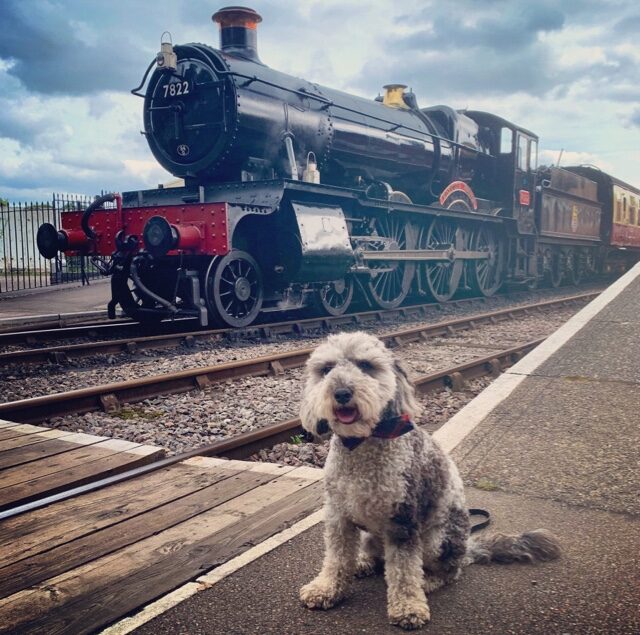
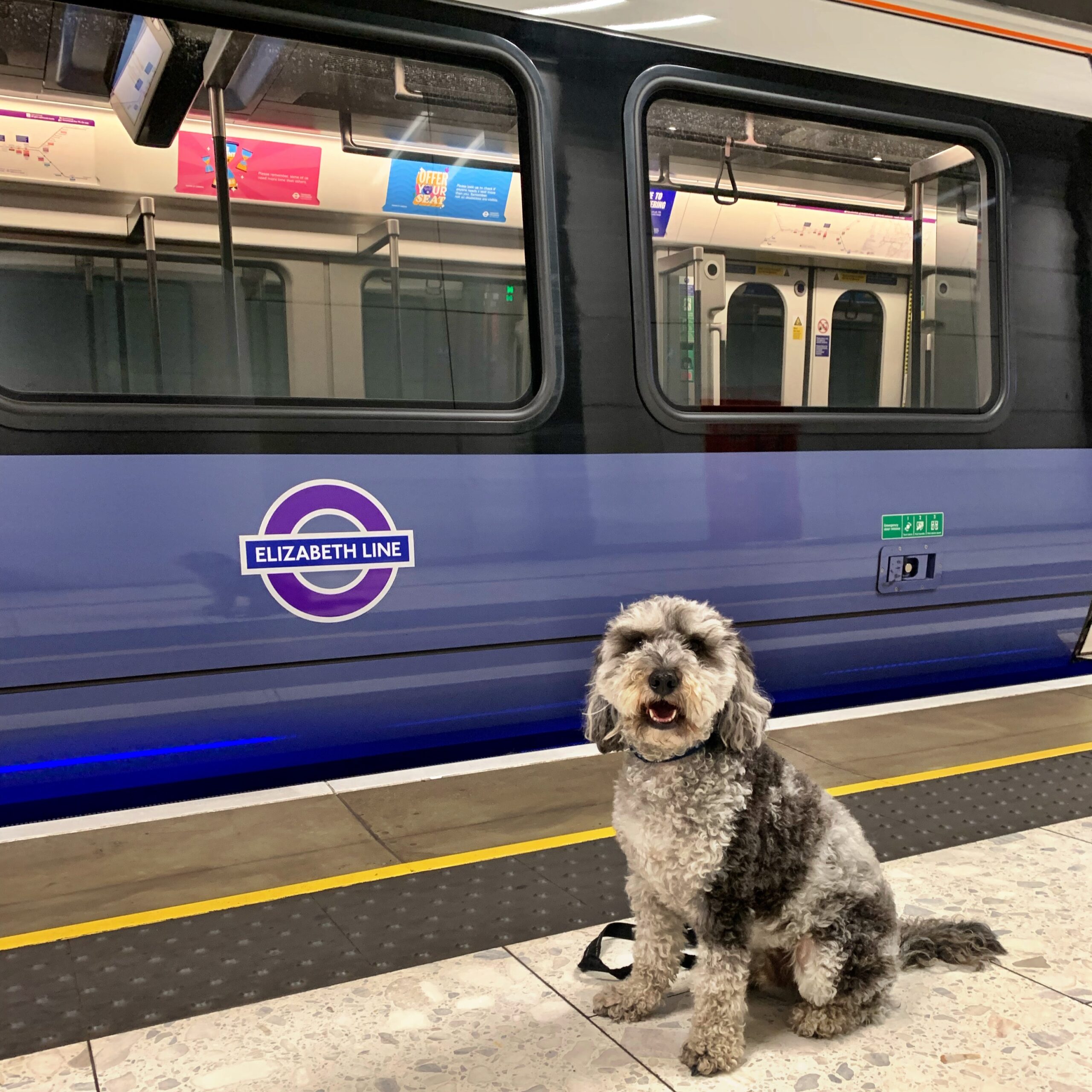
Yoshi shows off his new grooming cut while visiting the Old Ship in Dorchester – 18/11/2024
On Friday November 1st, Caroline and I went to a performance of “The Truth About Harry Beck” at the Cubic Theatre located in the London Transport Museum, Covent Garden. The play is a two hander and outlines the creation of the iconic London Tube map we know so well today – well recommended and is on multiple dates and times until Sunday 5th January 2025.
The Truth About Harry Beck – 01/11/2023
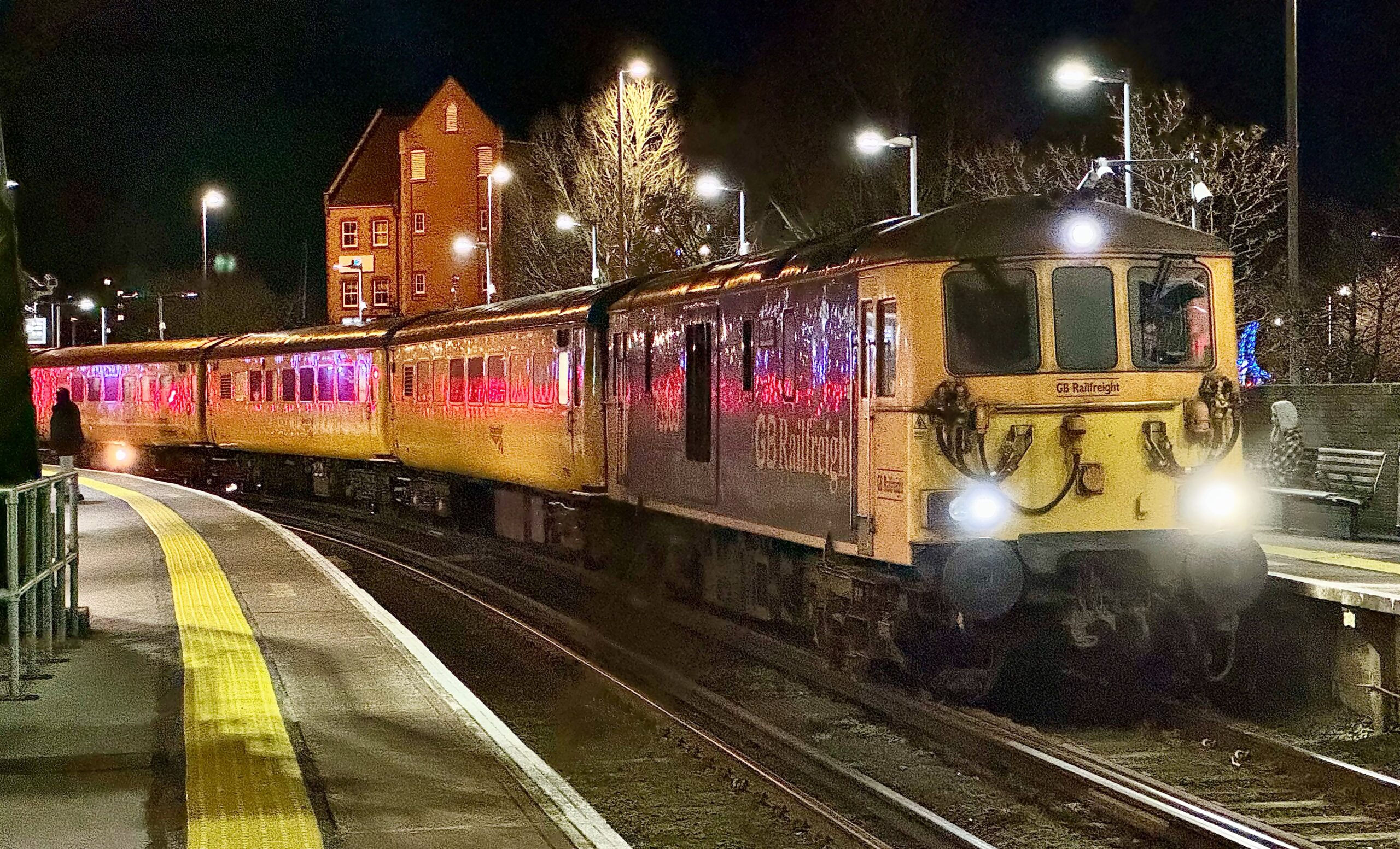
Over the first weekend of November 2024, the railway line between Wareham and Weymouth was closed to SWR passenger trains (GWR services terminated and originated at Dorchester West) as engineering work was carried out at a number of locations. Eight trains arrived with materials and equipment and eight trains left, involving ten locomotives (count them!):
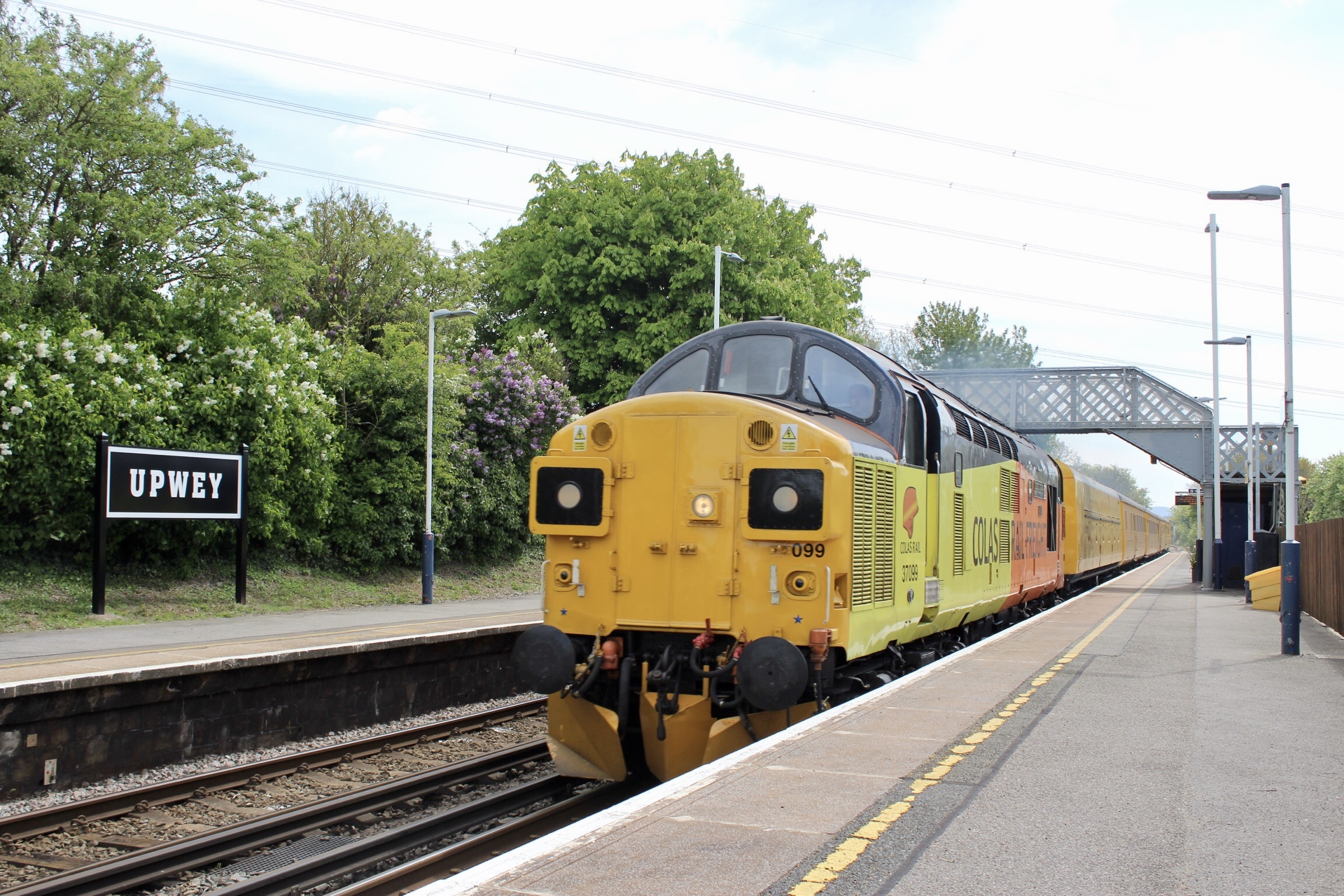
70815 tnt 70811: 6C01 2212 Eastleigh East Yard to Upwey / 56049 ‘Robin of Templecombe’,: 6C02 2252 Eastleigh East Yard to Dorchester South – 56049 ‘Robin of Templecombe’ at Hamworthy56051 ‘Survival’ : 6C03 2348 Eastleigh East Yard to Moreton / 66757 ‘West Somerset Railway’ : 6G11 0051 Eastleigh East Yard to Wareham / 66722 ‘Sir Edward Watkin’ : 6G12 0132 Eastleigh East Yard to Wareham – 66722 ‘Sir Edward Watkin’ at Poole66711 ‘Sence’ : 6G13 0241 Eastleigh East Yard to Wareham / 66557: 6Y84 0330 Eastleigh East Yard to Wareham / 66511 tnt 66413 : 6Y85 0400 Eastleigh East Yard to Wareham at Poole
Saturday 02/11/2024:
Freightliner Class 66 No. 66413 running early through Hamworthy heading up 6Y85 1800 Wareham to Eastleigh Yard – 02/11/2024
The list of workings for the Friday & Saturday were: 6C01 2212 Eastleigh East Yard to Upwey – 70815 tnt 70811, 6C02 2252 Eastleigh East Yard to Dorchester South – 56049 ‘Robin of Templecombe’, 6C03 2348 Eastleigh East Yard to Moreton – 56051 ‘Survival’, 6G11 0051 Eastleigh East Yard to Wareham – 66757 ‘West Somerset Railway’, 6G12 0132 Eastleigh East Yard to Wareham – 66722 ‘Sir Edward Watkin’, 6G13 0241 Eastleigh East Yard to Wareham – 66711 ‘Sence’, 6Y84 0330 Eastleigh East Yard to Wareham – 66557, 6Y85 0400 Eastleigh East Yard to Wareham – 66511 tnt 66413, 6Y85 1800 Wareham to Eastleigh Yard – 66413, 6Y84 2045 Wareham to Eastleigh East Yard – 66511
Sunday 03/11/2024:
Colas Railfreight Class 70 No. 70813 at Weymouth – 03/11/2024Colas Railfreight Class 70 No.’s 70811 and 70813 at Weymouth – 03/11/2024Colas Railfreight Class 56 No. 56049 ‘Robin of Templecombe’ at rest in Dorchester – 03/11/2024Colas Railfreight Class 56 No. 56051 ‘Survival’, Dorchester – 03/11/2024Freightliner Class 66 No. 66557 working 6G13 1555 Wareham to Eastleigh East Yard passing Wareham – 03/11/2024GBRf Class 66 No. 66722 powers through Holton Heath working 6G11 1755 Wareham to Eastleigh East Yard – 03/11/2024
The list of workings for the Sunday were: 6G13 1555 Wareham to Eastleigh East Yard – 66557, 6G12 1655 Wareham to Eastleigh East Yard – 66711, 6G11 1755 Wareham to Eastleigh East Yard – 66722, 6C03 1930 Wareham to Eastleigh East Yard – 66757, 6C02 2035 Wareham to Eastleigh East Yard – 56051 tnt 56049
The remaining departure was scheduled for the Monday morning and ran as 6C01 0400 Wareham to Eastleigh East Yard – 70815 tnt 70811
Friday evening, November 8th 2024, I was visiting a good friend near Eastleigh and on the way home, I took the opportunity to see DB Cargo Class 66 No. 66177 passing through the station working 6N05 2249 Eastleigh East Yard to Poole. The train was scheduled for a ten minute layover at Redbridge which would give me plenty of time to get closer to home in order to see No. 66177 once again. In the event, 6N05 went straight through Redbridge, but this meant Yoshi and I didn’t have long to wait at Branksome before getting another shot of the train. Finally we saw the consist parked up at Sterte, Poole in readiness for the locomotive to get in position for the weekend engineering work.
Screenshot DB Cargo Class 66 No. 66177 crawls through Eastleigh at the head of 6N05 2249 Eastleigh East Yard to Poole – 08/11/2024
The video below also includes views of Balfour Beatty Rail Services Matisa B41UE Tamper No. DR75411 working 6J61 2213 Eastleigh East Yard to Poole Storage Sidings at Southampton Airport Parkway and Branksome. The engineering work itself centred around Creekmoor Viaduct on the Holes Bay causeway.
DB Cargo Class 66 No. 66177 on the Holes Bay causeway – 10/11/2024
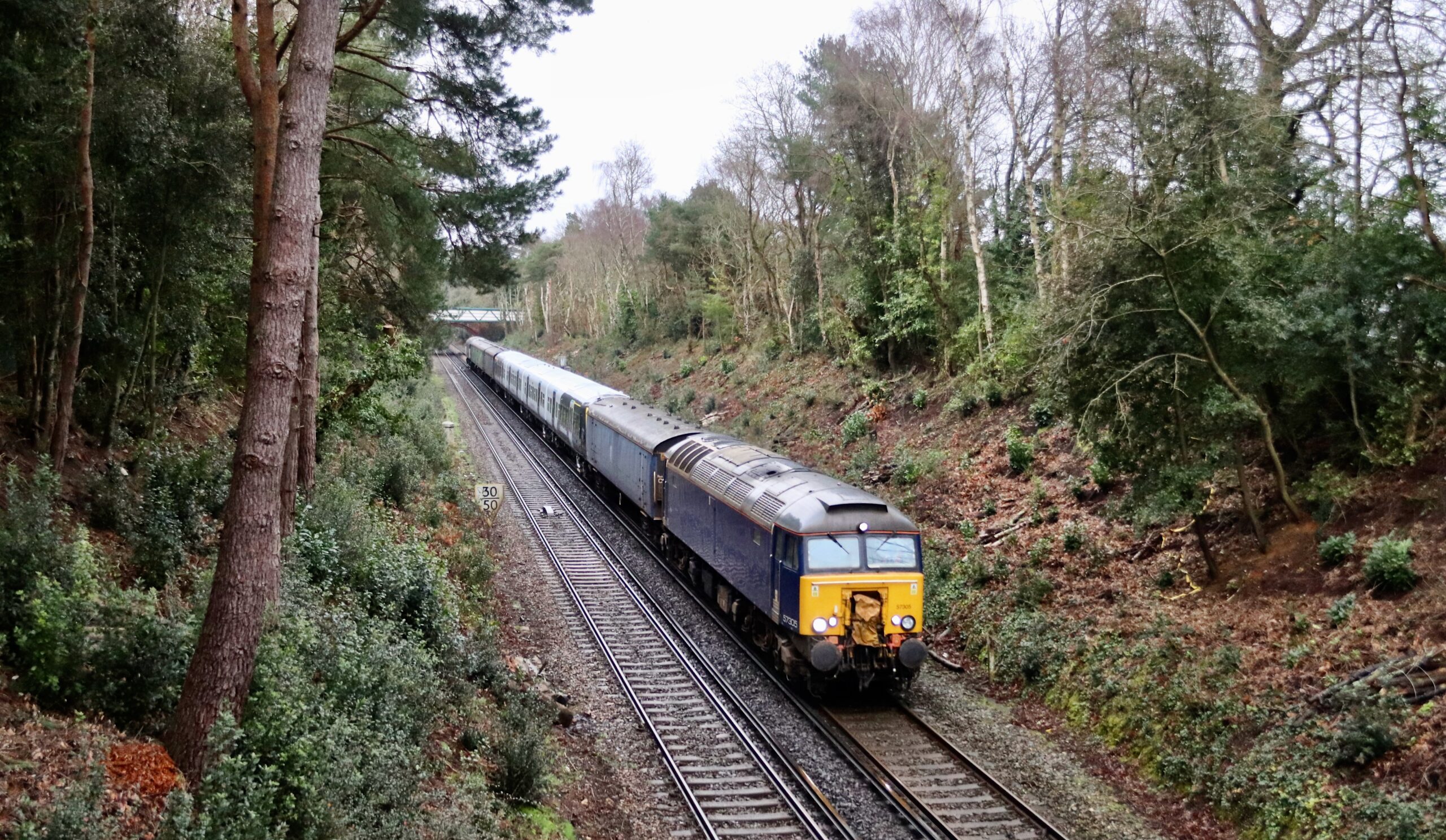
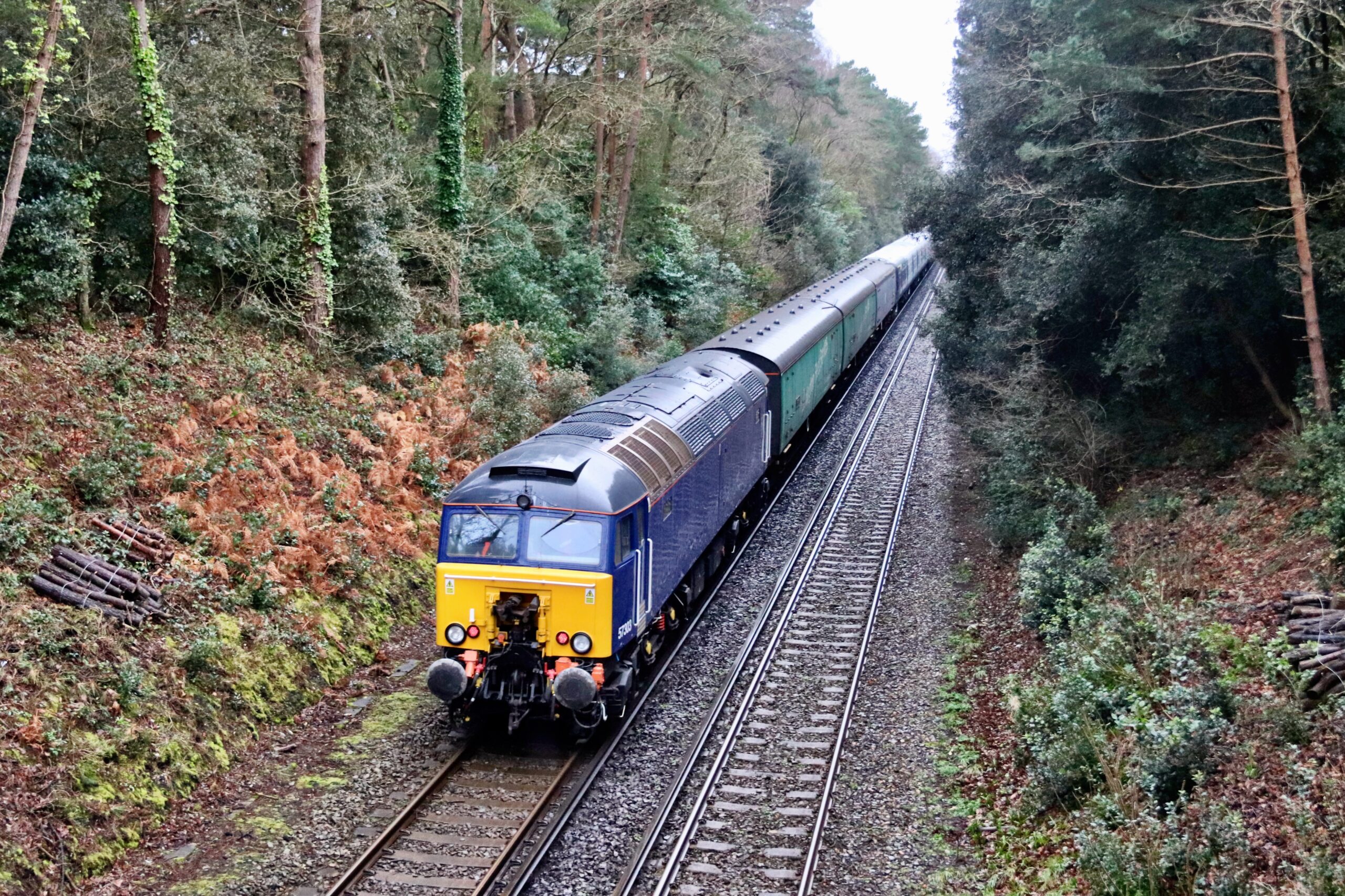
13th November 2024 – Working 5B09 0757 Eastleigh East Yard to Bournemouth T&R.S.M.D, GBRf Class 57 No. 57310 arrived at Poole hauling ex-Class 508 driver trailer barrier vehicles on the way to Bournemouth depot to collect the final South Western Railway Class 458/5 EMU to be delivered to Widnes Transport Tech later in the day. This was originally diagrammed to run as 5Z66 1441 Bournemouth T&R.S.M.D to Eastleigh East Yard but was later updated to 5Z66 1241 Bournemouth T&R.S.M.D to Eastleigh East Yard, which caught a lot of folk by surprise, including me and despite an attempt to see the train passing Christchurch, I just failed to capture a video of it passing!
GBRf Class 57 No. 57310 5B09 0757 Eastleigh East Yard to Bournemouth T&R.S.M.D
The New Measurement Train ran through North Dorset on Thursday 14th November 2024 with Class 43 HST power cars No.’s 43251 and 43303 reporting as 1Q23 0552 Reading to Salisbury via Exeter New Yard.
For the first time since 2019, the South Devon Railway hosted a diesel gala. This one day event utilised the SDR’s home fleet of diesel locomotives throughout the day alongside guest Class 60 No. 60029 ‘Ben Nevis’ provided by DCRail. We popped to Buckfastleigh for an afternoon of diesel action – 09/11/2024
Class 60 No. 60029 ‘Ben Nevis’ provided by DCRail at Buckfastleigh during the South Devon Railway’s diesel gala – 09/11/2024
In amongst the usual Avanti West Coast Pendolino’s and West Midlands Trains Class 350 EMU’s, I spent an interesting few hours at London Euston on 17th November 2024 as Great Western Railway diverts took place due to engineering work for the construction of HS2’s new station at Old Oak Common requiring the closure of the Great Western Mainline into London Paddington. The Caledonian Sleeper and the GWR Night Riviera stood side by side in the former LMS terminal. Class 92 No. 92033 ‘Railway Heritage Trust’ arrived with the empty coaching stock for the Caledonian Sleeper and departed light loco as 5S96 2117 Wembley Inter City Depot to London Euston / 0A96 2337 London Euston to Wembley Inter City Depot. While Class 92 No. 92018 headed up 1S26 2330 London Euston to Glasgow Central and Edinburgh having arrived light engine as 0S26 2104 London Euston to London Euston. The GWR sleeper stock was top and tailed by Class 57 No.’s 57602 ‘Restormal Castle’ and 57605 ‘Totnes Castle’ which arrived reporting as 5Z51 2115 Reading Traincare Depot to London Euston and departed forming 1Z51 2333 London Euston to Penzance. Locomotive Services Limited Class 90 No. 90001 ‘Royal Scot’ worked in light engine as 0Z51 Crewe Holding Sidings to London Euston and departed as 0Z52 2356 London Euston to Wembley H.S. , the locomotive hired in to provide power to the GWR Night Riviera stock while at Euston to alleviate diesel fumes from the Class 57 locomotives while waiting at platform. We were also treated to a Rail Head Treatment Train top and tailed by GBRf Class 66 No.’s 66750 and 66752 working as 3J01 1414 Kings Norton Ot Plant Dept to London Euston / 3S01 0007 London Euston to London Euston.
Great Western Railway IET No.’s 800019/800016 forming 1Z29 2132 London Euston to Reading meets Avanti West Coast Pendolino Class 390 No. 390155 which had arrived as 1A68 1855 Manchester Piccadilly to London Euston – 17/11/2024Caledonian Sleeper ECS with Class 92 No. 92033 ‘Railway Heritage Trust’ at Platform 1 London Euston with Locomotive Services Class 90 No. No. 90001 ‘Royal Scot’ providing power to the GWR Night Riviera stock at Platform 2 – 17/11/2024 Screenshot of Class 92 No. 92033 ‘Railway Heritage Trust’ running light engine as 0A96 2337 London Euston to Wembley ICD pass GWR Class 57 No. 57602 ‘Restormal Castle’ which is about to depart with the Cornish Riviera Sleeper 1Z51 2333 London Euston to Penzance sleeper service – 17/11/2024Locomotive Services Class 90 No. No. 90001 ‘Royal Scot’ ready to depart London Euston – 17/11/2024
Video of GWR diverts at London Euston – 17/11/2024
The monthly PLP test train utilising GBRf Class 73 locomotives did not make it to Dorset in November, the train being cancelled at Bedford due to a problem with the traction equipment. No.’s 73965 and 73963 had been allocated to 1Q51 1115 Derby RTC to Eastleigh Yard via Weymouth.
Another Class 458 Unit drag to Bournemouth was scheduled to take place on 19th November 2024 with GBRf Class 57 No. 57305 bringing No. 458403 down from Widnes following conversion. However the Class 57 failed at Wembley and was replaced by Class 47 No. 47739 which eventually arrived at Bournemouth depot the following day as 5Q64 1700 Southampton Central to Bournemouth T&RSMD. The first leg of the return path to Leicester LIP with loco and barrier coaches reported as 5Z66 2008 Bournemouth TRSMD to Eastleigh East Yard.
On a visit to Oxford, we enjoyed a walk along the Oxford Canal from the City Centre to the Trout Inn at Wolvercote. On the way we saw a couple of passing freight trains as well as Harry Needle Railroad Company Class 37 No. 37405 working 0Z38 1100 Oxford Down Engineers Siding to Oxford Down Engineers Siding – 26/11/2024
Screenshot Harry Needle Railroad Company Class 37 No. 37405 working 0Z38 1100 Oxford Down Engineers Siding to Oxford Down Engineers Siding passing Wolvercote – 26/11/2024
Video from Oxford – 26/11/2024
A launch event to mark the rollout of long-delayed new trains for South Western Railway (SWR) was held at London Waterloo on Thursday 28th November 2024 where Class 701 No. 701031 was named ‘Nighthawk’ by cricket legend Stuart Broad. The former One Day and Twenty20 captain unveiled the name a short trip up the line from Vauxhall, home to the Oval cricket ground where he took the final wicket in his last Test match. ‘Nighthawk’ is a nickname given to Broad by his teammates and reflects his role as a nightwatchman in the game of cricket. Thank goodness for press releases!
Highlighting its suburban network as a hub for sporting excellence, SWR also named trains the ‘Jockey’ for horseracing destinations such as Ascot, Sandown and Kempton Park; the ‘Red Rose’ for English rugby at Twickenham; the ‘Ace’ for the Wimbledon Championships; and the ‘Thames Racer’ in honour of the Boat Race.
The Derby-built Class 701 Arterio trains are five years behind schedule. Ninety trains, costing £1bn, were ordered in 2017 and were due in service from November 2019. The trains have been held up by extensive faults, mostly to do with their software. Many have spent years stored in sidings around the country.
The RMT union held 78 days of strikes about the role of guards on these trains before reaching an agreement with the train operator. The first Arterio train carried passengers between London Waterloo and Windsor in January 2024. The “development” service was mostly restricted to one return trip a day outside peak hours. Since then, five Arterios have appeared in service, serving the routes to Windsor & Eton Riverside and Shepperton, calling at some of SWR’s busiest stations including Earlsfield, Kingston, Richmond, Twickenham and Wimbledon.
Building on those destinations, it was confirmed that the new fleet will serve stations including Dorking, Epsom, Guildford, Hampton Court and Reading over the next six months, moving SWR closer to its ultimate goal of transforming every journey on its suburban network.
Each ten-car Arterio carries over 50% more customers than the eight-car Class 455 trains they replace, significantly increasing capacity for customers. The fleet will also improve customer comfort, providing modern features including Wi-Fi, charging points at every seat, real time information, accessible toilets and air conditioning.
To mark the Arterios being named and to celebrate the next ten being rolled out, an orchestra played a medley of well-known sporting tunes, including the themes from TV’s Grandstand and Match of the Day and the film Chariots of Fire.
SWR is training 750 drivers to operate the Class 701 trains.
SWR Class 701 No. 701031 stands at London Waterloo in readiness for the Arterio launch event – 28/11/2024SWR Class 701 No. 701031 ‘Nighthawk’ – 28/11/2024SWR Class 45 No. 455717 along with 455865 prepares to depart with the late running 2M25 1117 London Waterloo to Raynes Park – 28/11/2024A view of London Waterloo with Class 455’s in evidence – 28/11/2024
Video from London Waterloo – 28/11/2024
Thanks for reading – don’t forget the best way to keep up to date with our latest videos is via the Railway Dog YouTube Channel – why not subscribe today! Or you can catch random witterings and photos via the Railway Dog Facebook group. We’ll be back with the December 2024 round-up soon. Be seeing you!
Yoshi in the back of the car having enjoyed a wet and muddy walk in the woods!
February 10th 2024 to February 21st 2024
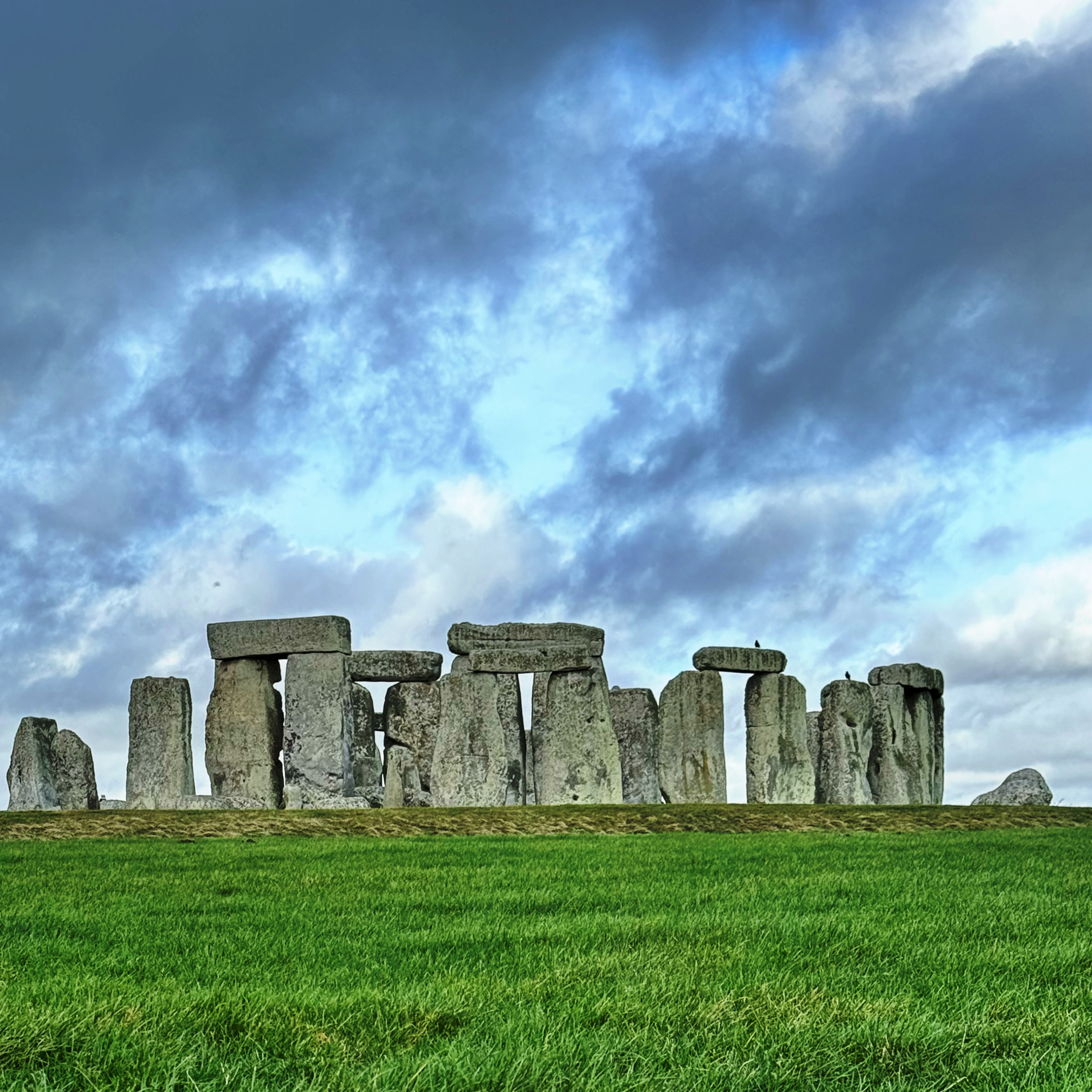
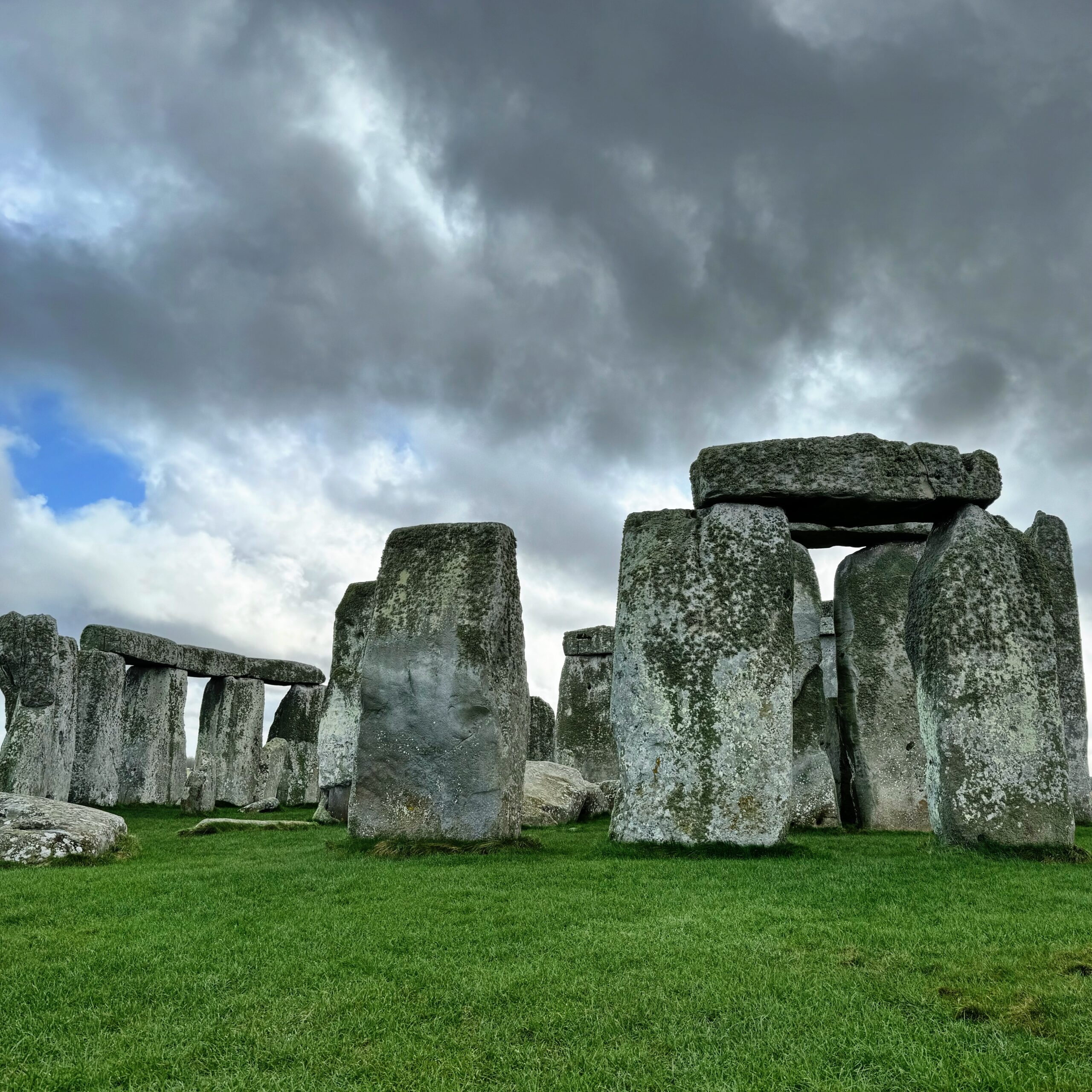
Hello – as mentioned briefly last time around, we were planning on bringing you an archive feature on Bournemouth Depot Open days, but we need to find and scan some additional negatives as well as editing down and converting 8mm video tape, so that’ll take a little bit more time to prepare. That’ll teach us, and to be fair this blog entry has taken long enough! In the meantime, a rolling stone gathers no moss and Yoshi has been exploring Stonehenge (or at least the footpath outside the English Heritage site, as dogs are “NOT ALLOWED” near the ancient monument). A note to English Heritage – can you provide dog poo bins prior to the section where dogs cannot pass please? Thanks very much. And as if Yoshi couldn’t get enough of old rocks, he also took a walk around the stone circle at Avebury – no trains, but lots of mystical ley lines – before moving onto Wells and Tyntesfield House.
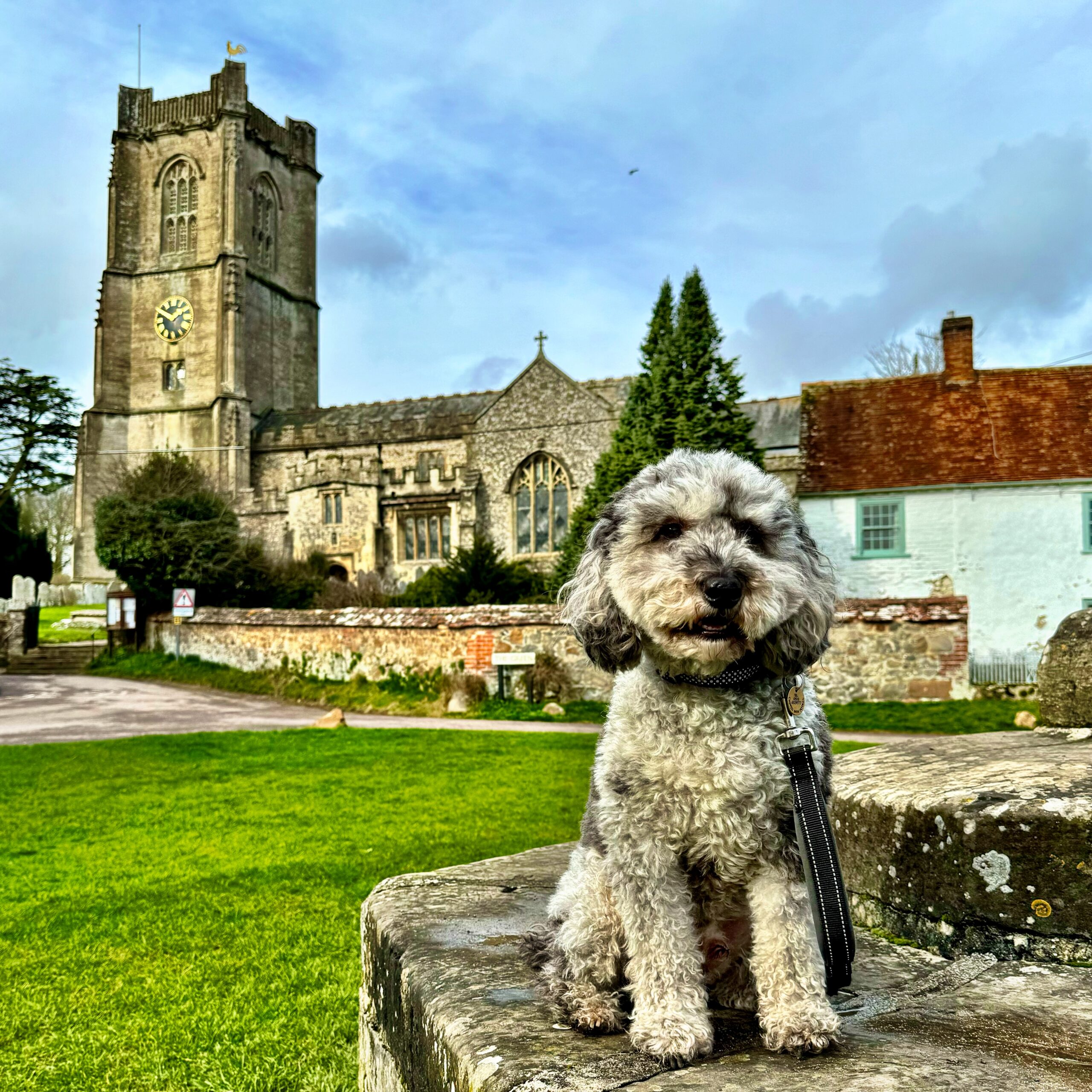
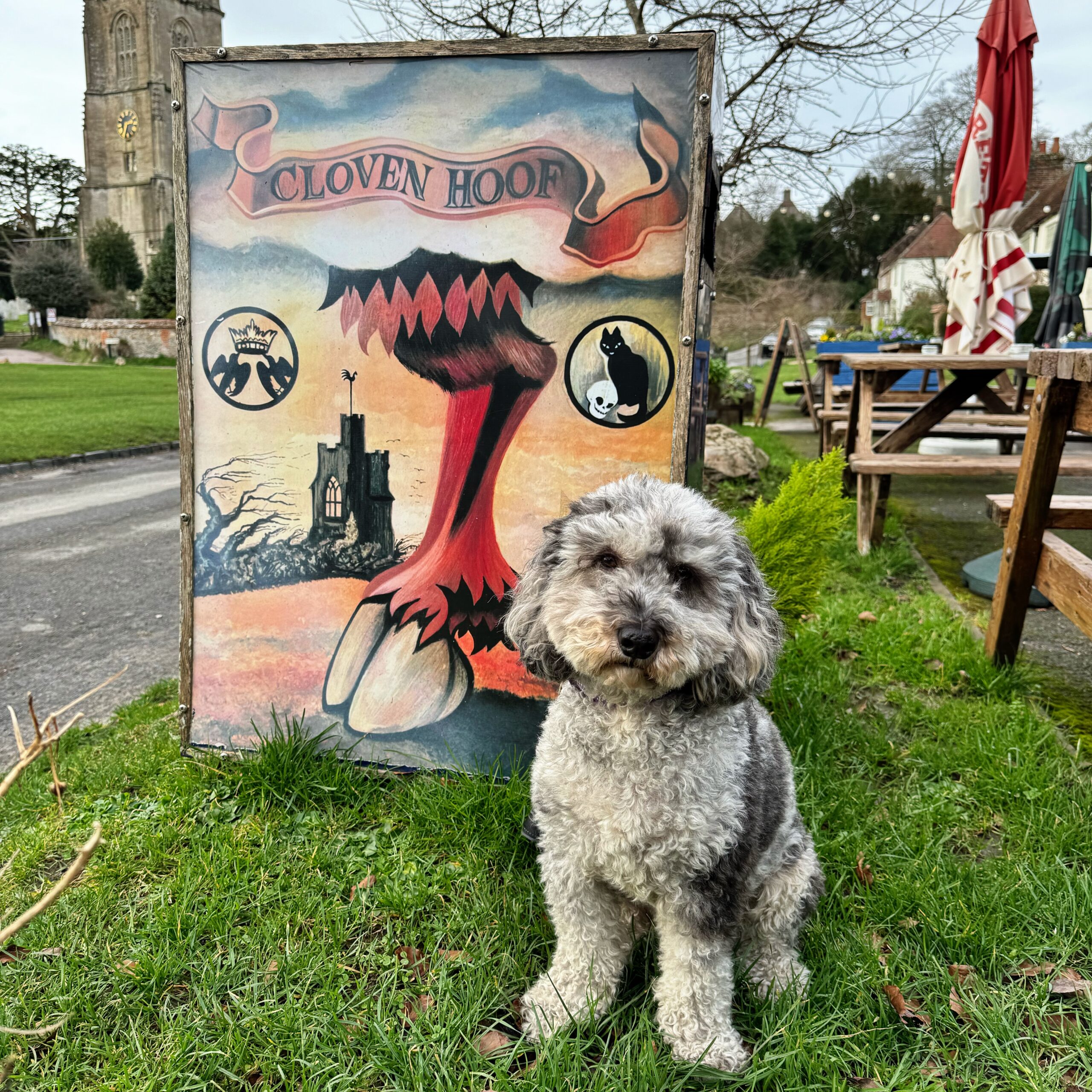
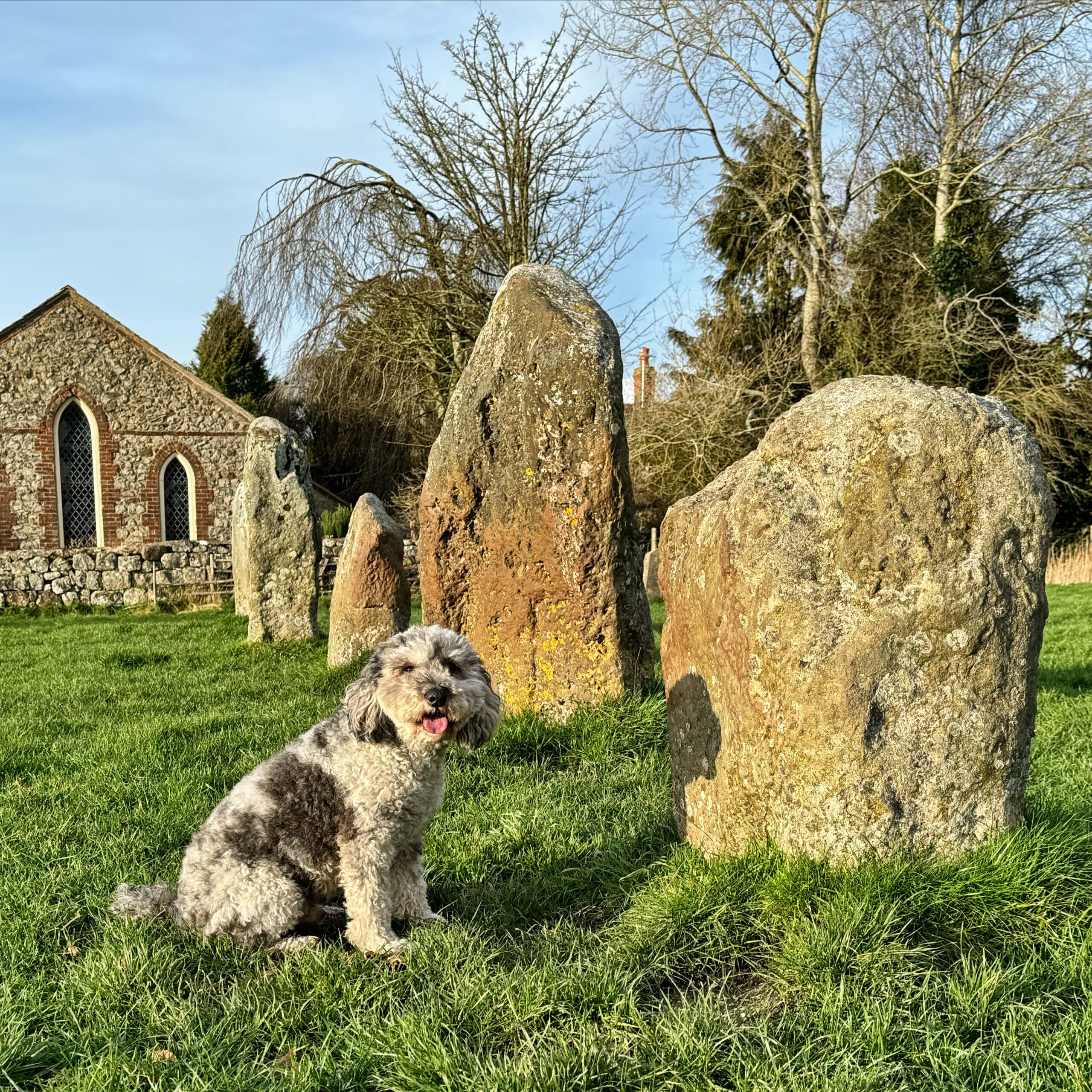
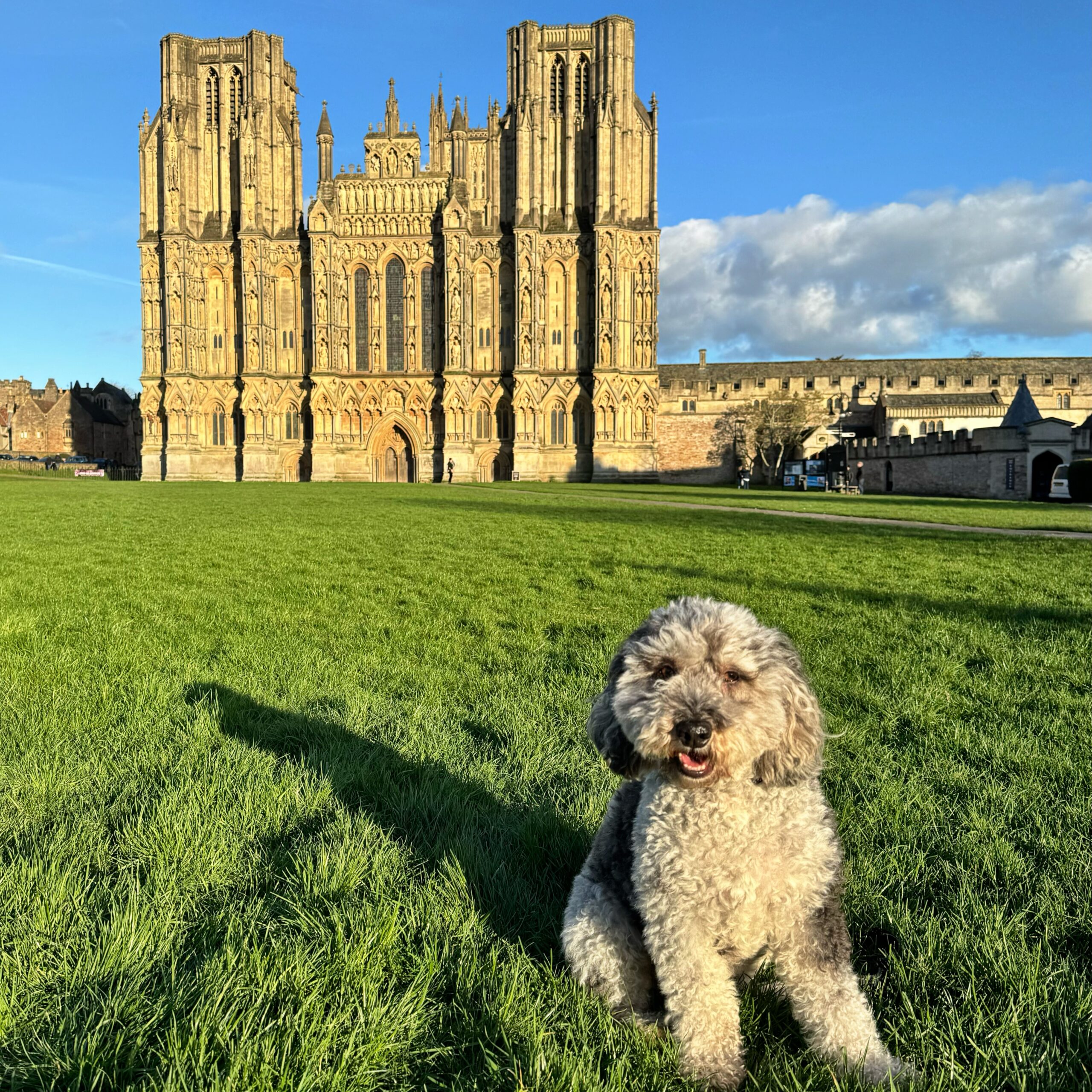
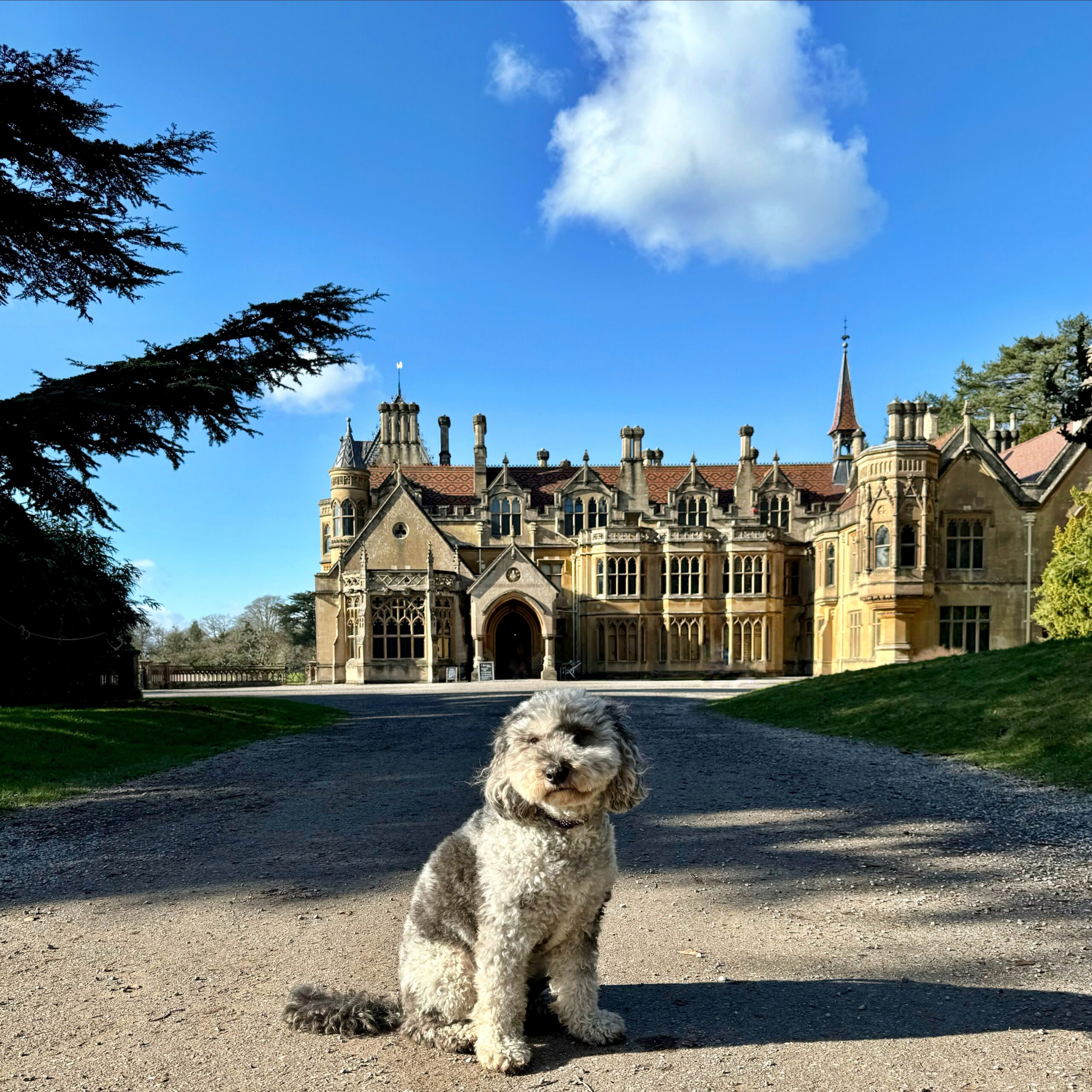
Yoshi gets as close to Stonehenge as he is allowed! Stonehenge is a prehistoric megalithic structure on Salisbury Plain in Wiltshire two miles west of Amesbury. It consists of an outer ring of vertical sarsen standing stones, each around 13 feet high, seven feet wide, and weighing around 25 tons, topped by connecting horizontal lintel-stones. Inside is a ring of smaller bluestones. Inside these, are free-standing trilithons; two bulkier vertical sarsens joined by one lintel. The whole monument is aligned towards the sunrise on the summer solstice and sunset on the winter solstice. Archaeologists believe that Stonehenge was constructed in several phases from around 3100 BC to 1600 BC, with the circle of large sarsen stones placed between 2600 BC and 2400 BC. Doctor Who used Stonehenge as a plot point in the 2010 episode “The Big Bang”. I liked that episode. I should rewatch it. I include the mention to the BBC TV series, as it was something of a developing theme…..An announcement in November 2020 stated that a plan to construct a four-lane tunnel for traffic below the site had been approved. This was intended to eliminate the section of the A303 that runs close to the circle. The plan had received opposition from a group of “archaeologists, environmentalists and modern-day druids” according to National Geographic but was supported by others who wanted to “restore the landscape to its original setting and improve the experience for visitors”. Opponents of the plan were concerned that artifacts that are underground in the area would be lost or that excavation in the area could de-stabilize the stones, leading to their sinking, shifting or perhaps falling. On 14th July 2023, the Department for Transport (DaFT) announced that, despite the original planning application having been overturned by the High Court in 2021, the Transport Secretary, Mark Harper, had approved plans for a 2 mile road tunnel. On 19th February 2024, the High Court in London rejected a fresh bid by campaigners to stop the road tunnel construction.Yoshi’s next stop was Aldbourne where he visited the village green and took a look at the medieval St Michael’s church. During the Second World War, U.S. Army paratroopers of Easy Company, 2nd Battalion, 506th Parachute Infantry Regiment, 101st Airborne Division were based at Aldbourne from late 1943 to mid-1944, in preparation for the Normandy landings in June 1944 and Operation Market Garden in September.Aldbourne is also known as Devil’s End in the Doctor Who story “The Dæmons” featuring The Third incarnation of the Time Lord played by Jon Pertwee. One of the village pubs, The Blue Boar, was renamed as The Cloven Hoof! A model of St.Michaels’s church was also blown up during the story, which anecdotally generated complaints from viewers. A reminder of the Aldbourne Doctor Who link is this TARDIS litter bin, free for public use 🙂The prehistoric Avebury henge and stone circles were built and much altered during the Neolithic period (2850 BC and 2200 BC) survivING as a huge circular bank and ditch, encircling an area that includes part of Avebury village. Within the henge is the largest stone circle in the UK which originally consisted of approximately 100 stones. Two smaller stone circles are enclosed within. Avebury was memorably used as the location of the itv children’s drama series “Children of the Stones” (1977). As far as I know, the stones have not been seen in Doctor Who. So, in a bid for completism, I searched for a link and found it in nearby Yatesbury, where from 1942 – 1965 an RAF Radar School was situated and attended by Brian Hodgson who went on to run the BBC Radiophonic Workshop and devised the sound of the TARDIS by scraping his mother’s front door key along the strings of a piano. The video to the 1988 No.1 hit song “Doctorin’ the Tardis” by The Timelords, better known as The KLF, was partly filmed at Yatesbury. Don’t worry, we’ll get to the trains soon. Yoshi takes a look at Wells Cathedral – construction of which began on c1180 and was completed by the time of Henry VII. It was damaged during the English Civil War, but was later restored during the Victorian age. The building has also been used as a Doctor Who filming location when to stood in for Southwark Cathedral in the 2006 story “The Lazarus Experiment” featuring David Tennant as the Tenth Doctor.National Trust owned Tyntesfield House, bought in 1844 by William Gibbs as a retreat for his wife,Blanche, and their growing family. Close relatives in Bristol and neighbouring Belmont House in Wraxall, the estate benefited from direct links to London on Brunel’s newly built Great Western Railway (GWR). Keeping up with the Doctor Who connection, the property was used as a haunted mansion in Matt Smith’s tenure during the 2013 episode “Hide”.A walk in Horton Woods….…. past the 140ft high Horton Tower, also known as Sturt’s Folly, built in c1750 by the Lord of Horton Manor, Humphrey Sturt, who was an architect and a Dorset MP. In 1967 the tower featured in the film adaptation of Thomas Hardy’s “Far From the Madding Crowd”. Over the years it had fallen into disrepair but in 1991, Vodafone was granted permission to use the tower for mobile phone masts. As part of the deal the company agreed to carry out repairs, and the conservation project was recognised with a Royal Town Planning Institute award in January 1995.Journey’s End; Yoshi relaxing in front of a warm fire at The Horton Inn after our walk!
For The record
12/02/2024: 1Q51 1115 Derby RTC to Eastleigh East Yard via Weymouth
73963 ‘Janice’ pauses briefly at Poole leading on 1Q51 1115 Derby RTC to Eastleigh East Yard via Weymouth – 12/02/2024
GB Railfreight (GBRf ) Class 73 Electro-Diesel No.’s 73962 ‘Dick Mabbutt’ and 73963 ‘Janice’ returned for the monthly Colas Plain Line Pattern Recognition Train.
1Q51 1115 Derby RTC to Eastleigh East Yard via Weymouth at Poole – 12/02/2024
13/02/2024: 5X62 0524 Wembley Terminal Complex Wheel Lathe to Bournemouth Traction & Rolling Stock Maintenance Depot / 5Q64 1321 Bournemouth Traction & Rolling Stock Maintenance Depot to Widnes Transport Tech
GBRf Class 57 No. 57305 leading on 5X62 0524 Wembley Terminal Complex Wheel Lathe to Bournemouth Traction & Rolling Stock Maintenance Depot. SWR Class 458 No. 458416 was sandwiched between the front loco and No. 57303 at the rear of the consist – 13/02/2024GBRf Class 57 No. 57303 at the rear of 5X62 0524 Wembley Terminal Complex Wheel Lathe to Bournemouth Traction & Rolling Stock Maintenance Depot – 13/02/2024
GBRf Class 57 No.’s 57303 and 57305 arrived at Bournemouth depot with refurbished SWR Class 458 No. 458416. The pair of Class 57 locomotives departed with 5-Car Class 458 No. No. 458515 later in the day. A similar exercise scheduled for Thursday 15th February; 5X62 0524 Wembley Receptions 1-7 to Bournemouth T&R.S.M.D and 5M64 1314 Bournemouth T&R.S.M.D to Leicester L.I.P. did not run. It is most likely that the same pair of Class 57 locomotives would have been involved.
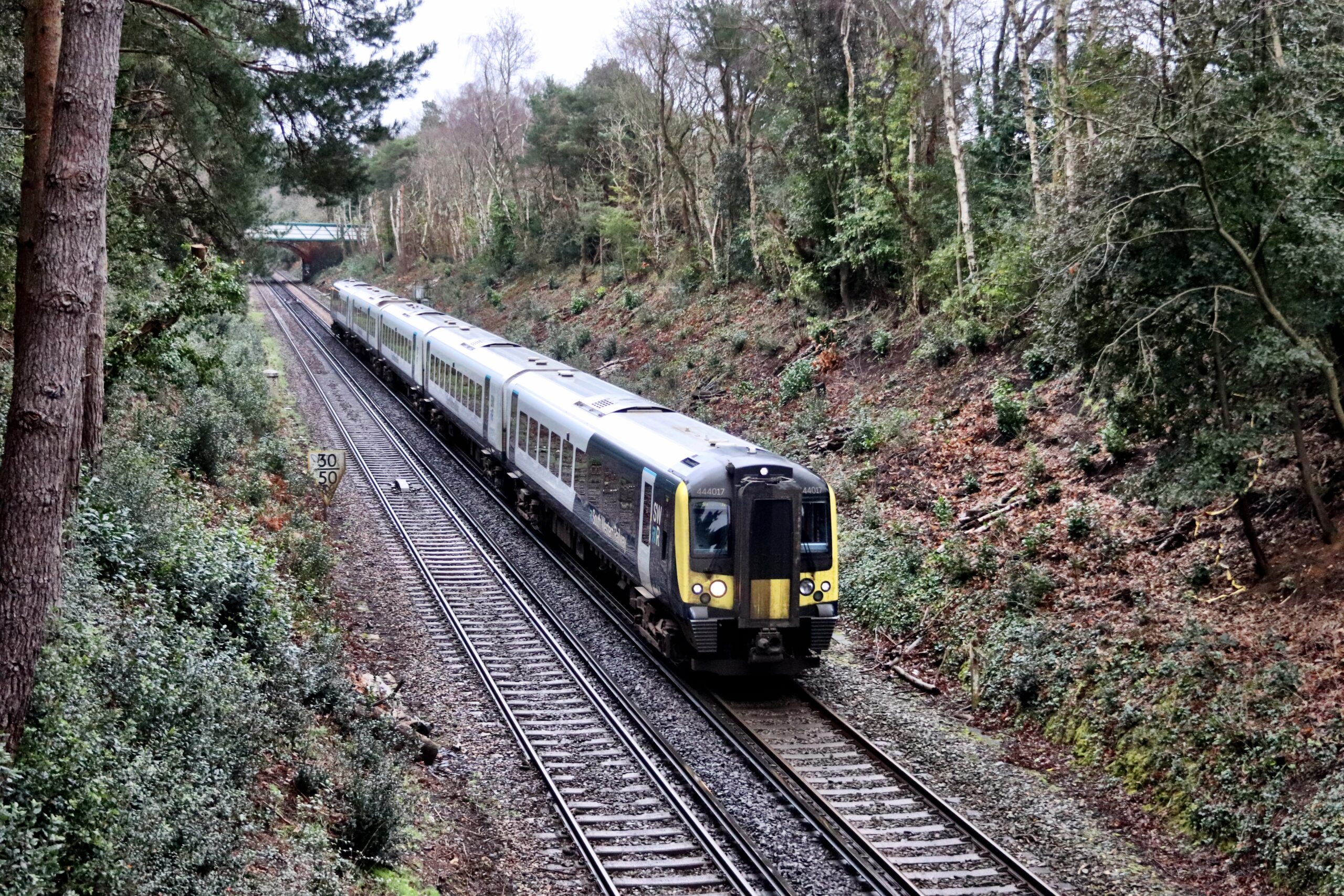
While waiting for the morning unit drag to Bournemouth depot, we were entertained by passing South Western Railway (SWR) Class 444’s on regular passenger services.
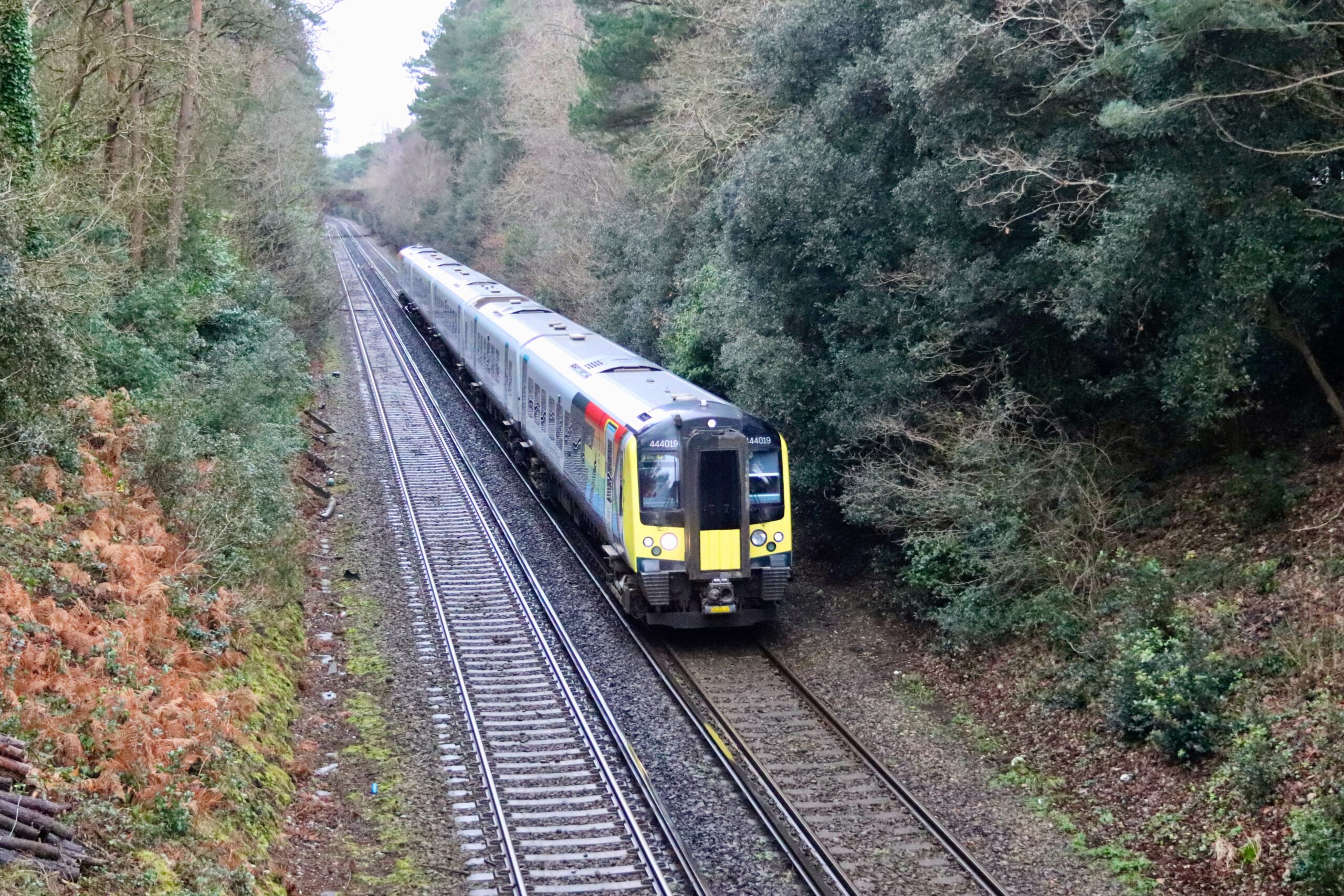
SWR Class 444 No. 444017 working 2W13 0904 Bournemouth to Weymouth – 13/02/2024Unique Pride liveried SWR Class 444 No. 444019 forms 2W52 0900 Poole to Bournemouth – 13/02/2024
5X62 0524 Wembley Terminal Complex Wheel Lathe to Bournemouth Traction & Rolling Stock Maintenance Depot between Bournemouth and Branksome – 13/02/2024
18/02/2024: 3Q02 2155 Eastleigh East Yard to Eastleigh East Yard
HNR Class 37 No. 37607 seen at Derby Technical Centre at the head of a Network Rail Test Train – 02/04/2023
Harry Needle Rail operated Class 37 No. 37607 was scheduled to visit the Bournemouth to Weymouth line with the Ultrasonic Test Train overnight on Sunday 18th / Monday 19th February. Disappointingly for us, however, this service was cancelled due to the train crew not being available and did not run.
21/02/2024: 1Z22 0747 Derby R.T.C.(Network Rail) to Bristol Kingsland Road
Former High Speed Train Class 43 Power Cars No.’s 43272 in debranded Virgin Trains East Coast livery and 43274 in East Midlands Railway Purple livery worked the New Measurement Train to Weymouth on Wednesday 21st February.
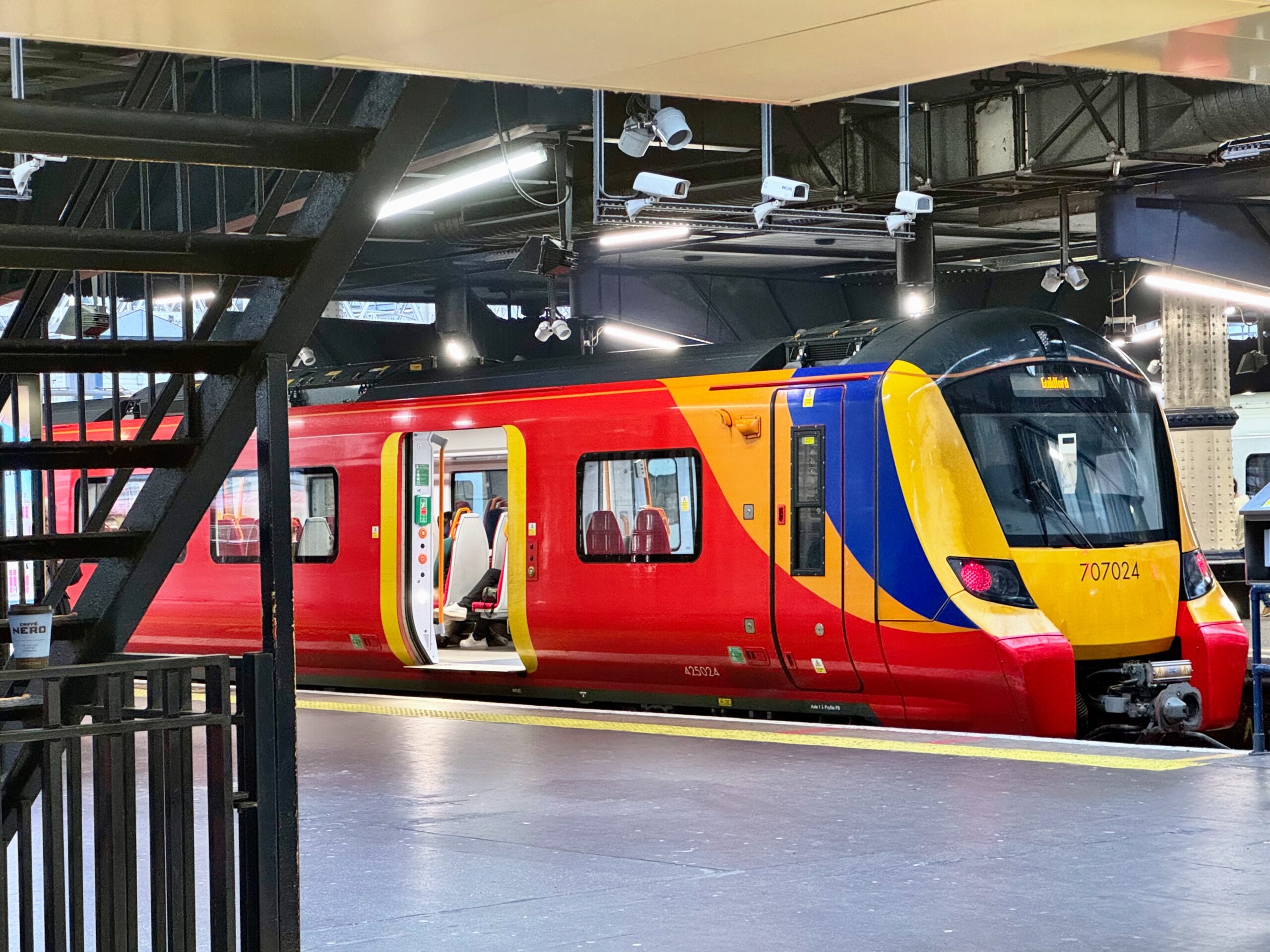
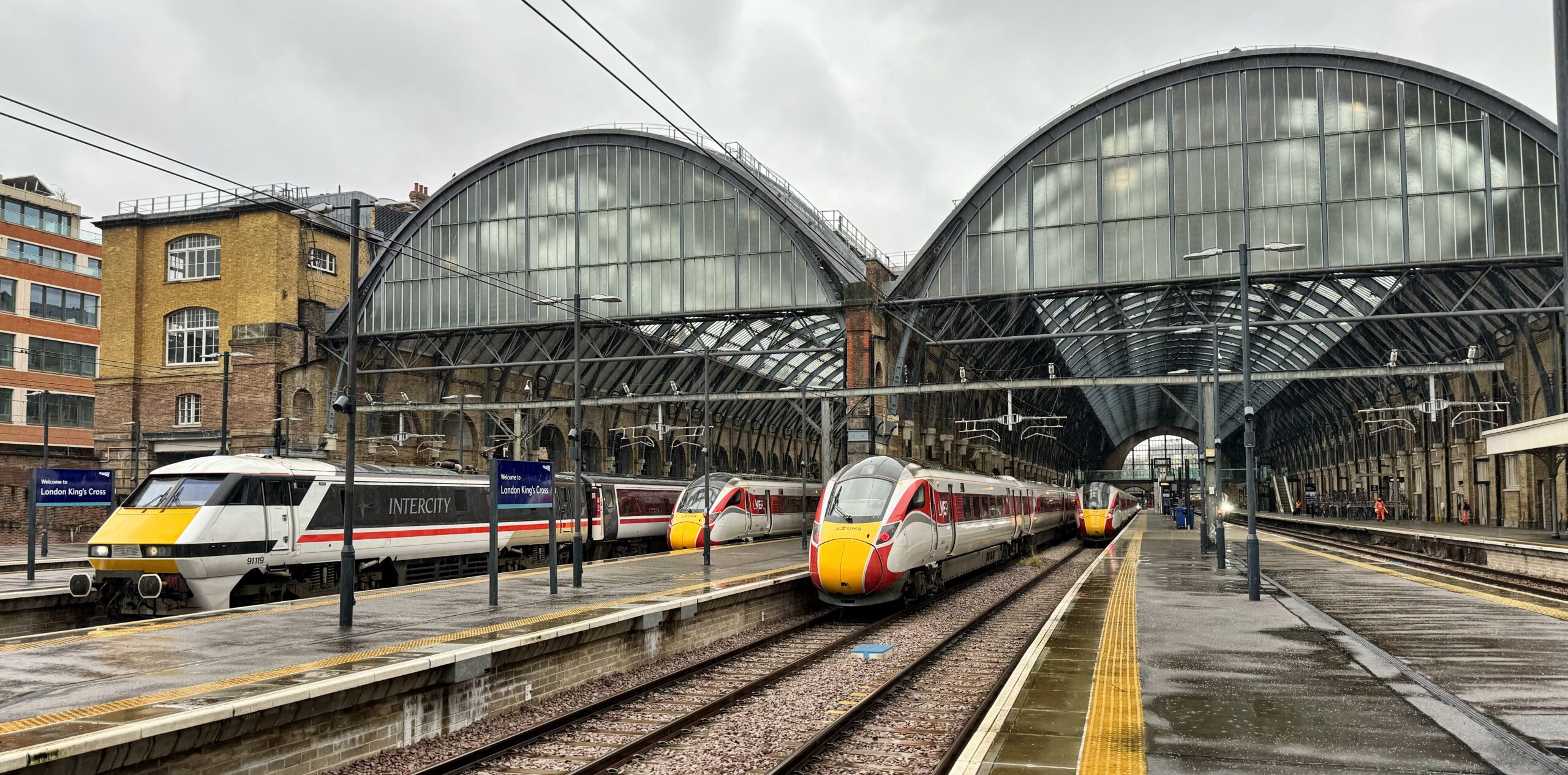
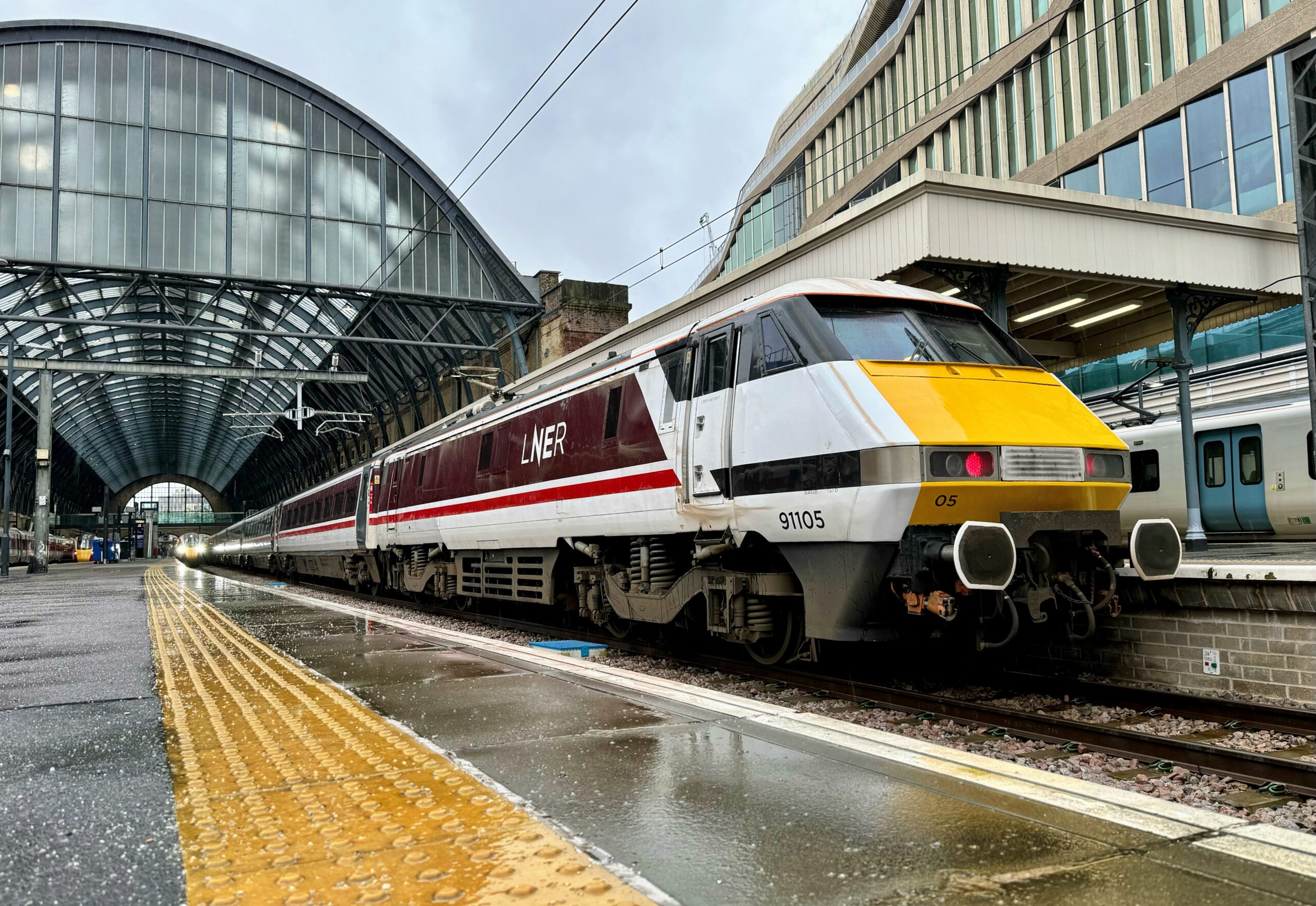
I missed this pairing as I was in London for a work meeting. I took the opportunity to pop into London Euston and London Kings Cross on my way to the office after arriving at London Waterloo.
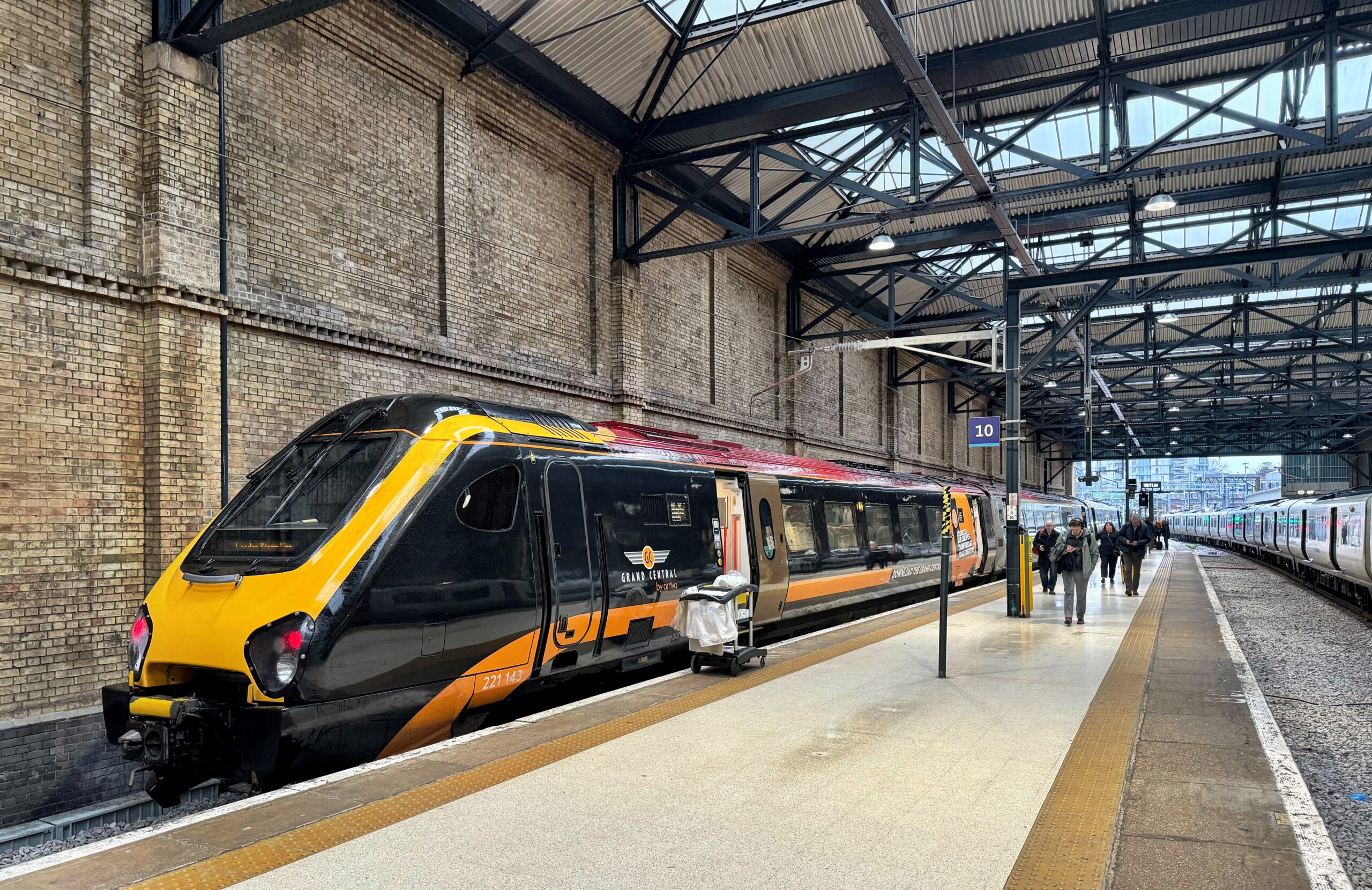
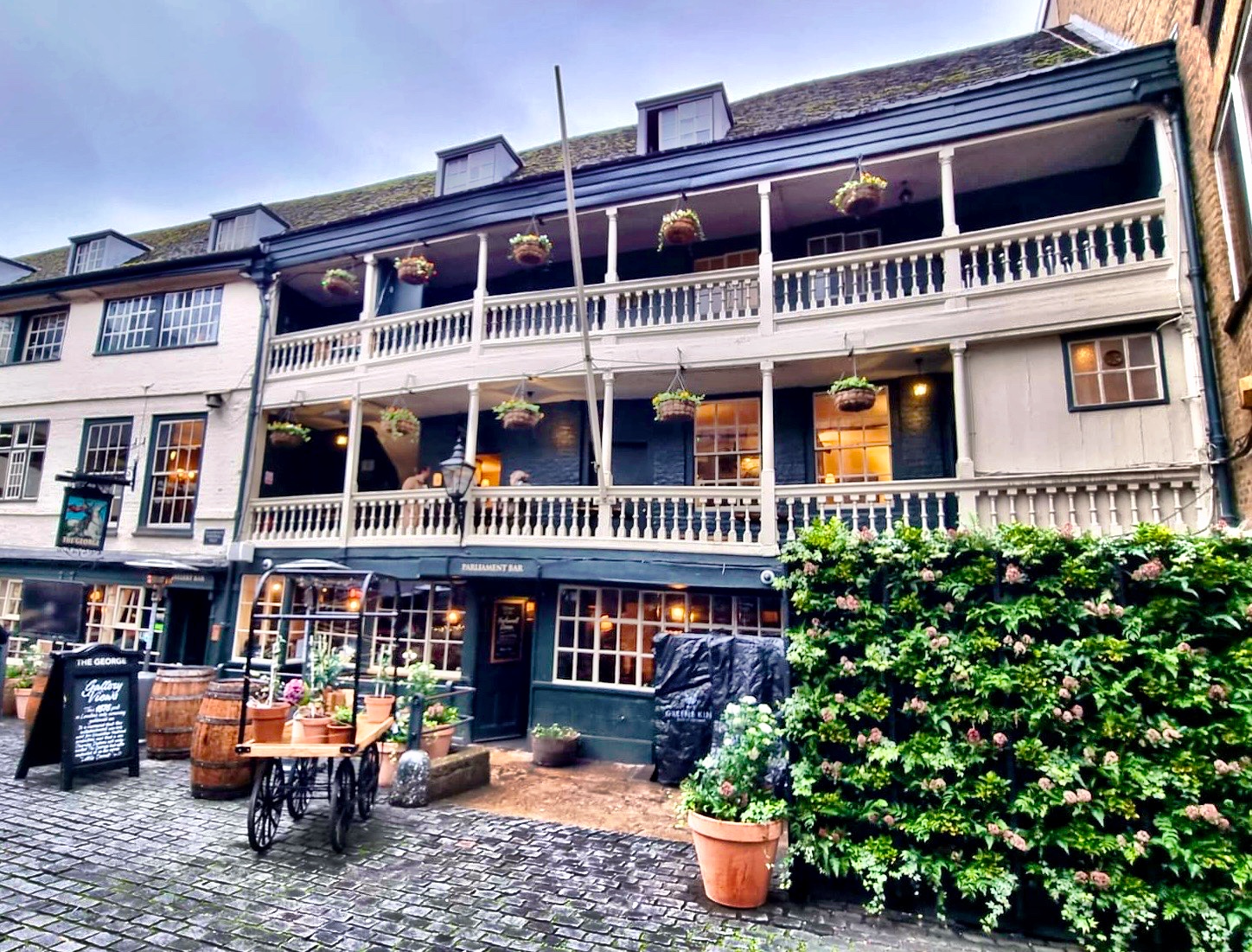
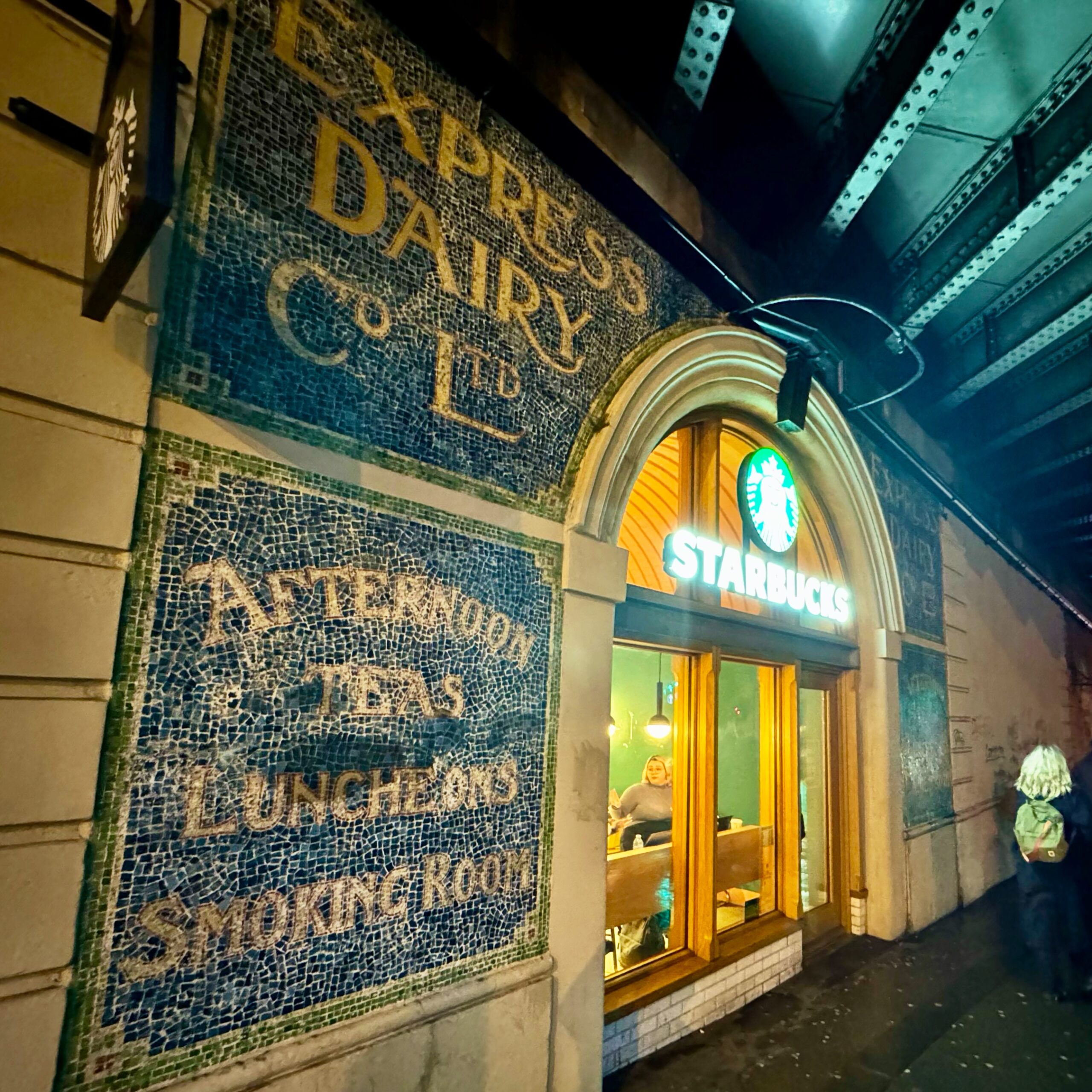
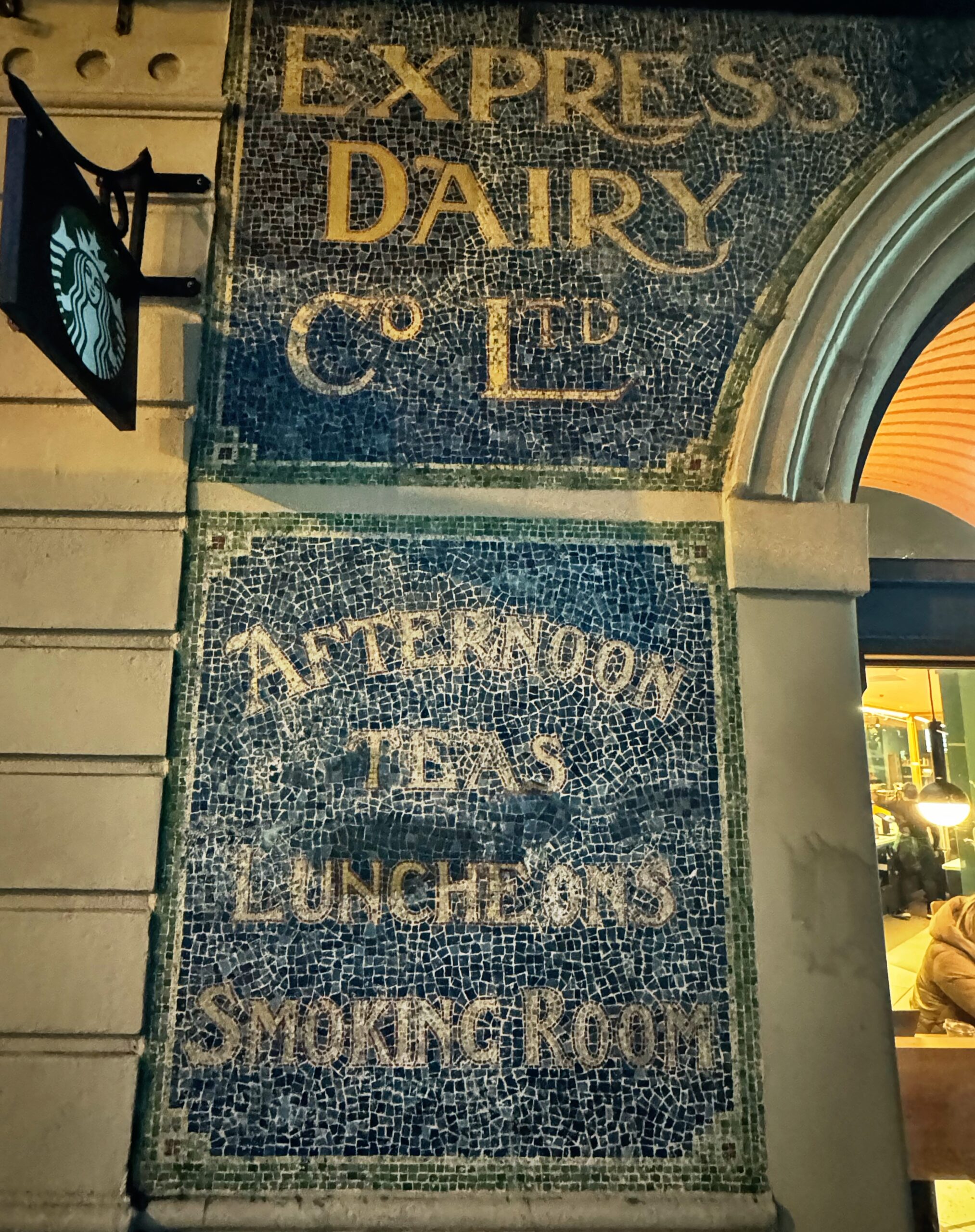
One of two remaining Class 707 EMU’s still with SWR No. 707024 at the buffer stops of London Waterloo – 21/02/2024Caledonian Sleeper Class 92 No. 92038 at London Euston. I had hoped to see the incoming sleeper service in the station, but this was running almost two hours late, and I had places to be – 21/02/2024London Kings Cross with Class 91 No. 91119 ‘Bounds Green InterCity Depot 1977-2017’ working 1D09 1003 London Kings Cross to Leeds alongside LNER Azuma trains 801210 forming 1S12 1S12 1030 Kings Cross to Edinburgh Waverley, 801213 on 1Y11 0630 Newcastle to London Kings Cross and 800209 having arrived with 1A12 0700 Hull to London Kings Cross – 21/02/2024Class 91 No. 91105 at London Kings Cross having arrived at the rear of the 1A13 0656 service from Skipton – 21/02/2024Covering low-availability of the Class 180 fleet, Grand Central have supplemented their fleet with a pair of former Avanti Super Voyagers. Here Class 221 No. 221143, now with driving vehicles in Grand Central’s livery stands at platform 10 at The Cross having arrived with 1A59 0659 Bradford Interchange to London Kings Cross – 21/02/2024Meeting over, we sought out refreshments at The George pub, established in medieval times on Borough High Street in Southwark. It is currently owned and leased by the National Trust and is the only surviving galleried London coaching inn. I recommend the Mac n’ Cheese – 21/02/2024One of the railway arches in the recently restored Findlater’s Corner at London Bridge railway station that was formerly an Express Dairy tea room is now a branch of Starbucks. During renovation work an impressive mosaic was revealed showing its previous function, advertising afternoon teas, luncheons, and smoking rooms – 21/02/2024Express Dairy was founded in 1864 and its name is part of the marketing as it was an early adopter of the railways to ship milk from the countryside to a bottling plant in South Acton and then ship them around London, also by rail. At a time when many people got milk from urban cows, milk from the countryside was seen as a healthier option. At its peak, Express Dairy had over 240 tea rooms across London, making it the Edwardian equivalent of Starbucks today, which seems fitting….
Winfrith No More
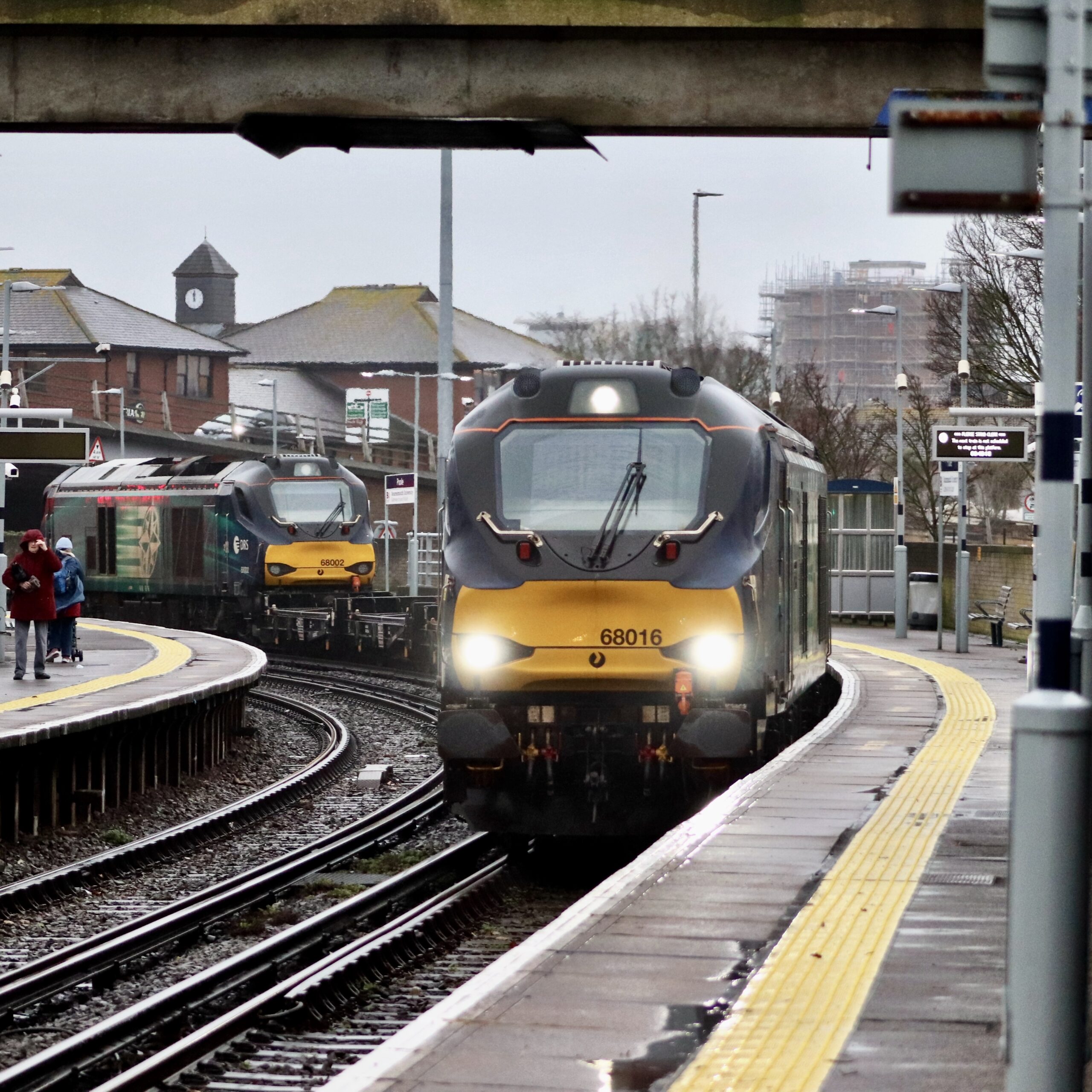
On what turned out to be the final trip to Winfrith; Direct Rail Services Class 68 No.’s 68016 ‘Fearless’ & 68002 ‘Intrepid’ work 6Z62 0100 Crewe Coal Sidings DRS to Winfrith Sidings (Wool) passing through Poole – 23/01/2024
It has been announced Direct Rail Services (DRS), the rail freight arm of Nuclear Transport Solutions (NTS), has now completed its task in the transportation of radioactive materials from the Winfrith treated waste store as the very last flasks of radioactive waste have been moved to their final destination at the low-level waste repository near Cumbria in the Lake District. The final rail shipment ran on 23rd January 2024 and marked a reduction in legacy waste on the Winfrith site by approximately seventy per cent. The successful completion of this contract contributes to returning the site to heathland with public access. It’s the first site from the first generation of nuclear power plants to be completely decommissioned.
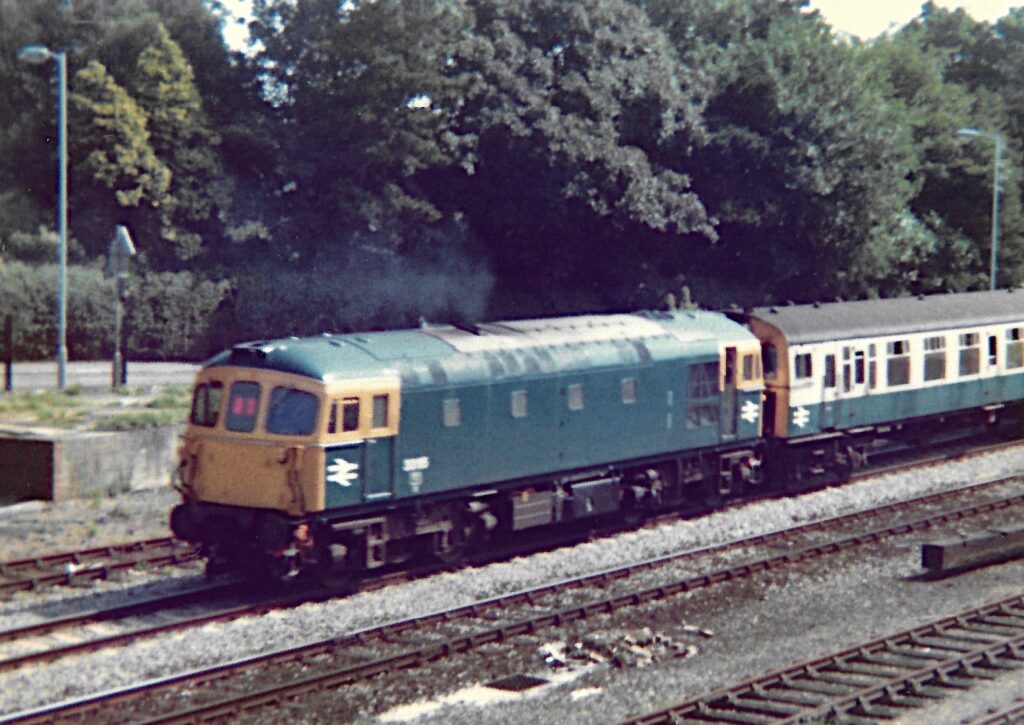
From 1980, a Class 33/0 at Dorchester South yard with a Winfrith flask. I’ve rather frustratingly mislaid the original photographic print which contains the actual date and locomotive detail, but do recall we trainspotters were chased away by railway staff when these workings arrived – xx/xx/1980
Forthcoming Dorset Engineering Work
The lines in the Poole area will be closed all day due to maintenance work on Sunday 17th March 2024.
London Waterloo to Weymouth services will terminate at Bournemouth.
London Waterloo to Poole services will terminate at Bournemouth.
Buses will run between Bournemouth and Poole (non-stop).
Buses will run between Bournemouth and Wareham.
A revised service will run between Wareham and Weymouth.
Monday 18th to Wednesday 20th March 2024, the lines between Dorchester South and Weymouth will be closed from Monday to Wednesday all days inclusive due to maintenance work.
Great Western Railway services between Weymouth and Yeovil Pen Mill will be affected by this work.
London Waterloo to Weymouth services will be revised and will terminate at Dorchester South.
Buses will run between Dorchester South and Weymouth.
In association with these works, a Freightliner engineering train is showing on Real Time Trains as running as 6Y85 2348 Eastleigh East Yard to Dorchester South departs its source on Sunday 17th March 2024 and arrives Dorchester South at 0110 (on the 18th) – returning as 6Y85 1454 Dorchester South to Eastleigh East Yard on 19th March
The lines between Bournemouth and Poole will be closed all day due to maintenance work on 23rd March.
London Waterloo to Poole and Weymouth services will terminate at Bournemouth.
Buses will run between Bournemouth and Poole.
A revised service will run between Poole and Weymouth.
In addition to this, the lines in the Brockenhurst area will be closed all day due to maintenance work on 24th March.
London Waterloo to Weymouth services will terminate at Southampton Central.
London Waterloo to Poole services will terminate at Southampton Central.
Fast buses will run between Southampton Airport Parkway, Bournemouth and Poole.
Fast buses will run between Southampton Central, Bournemouth and Poole.
Buses will run between Southampton and Poole via Brockenhurst (buses will not call at Beaulieu Road).
A revised service will run between Poole and Weymouth.
Passengers travelling from London Waterloo to Bournemouth, Poole and Weymouth should change at Southampton Airport Parkway for the fast bus service to Poole.
Sunday 28th April, the lines in the Wool area will be closed all day due to maintenance work.
London Waterloo to Weymouth services will terminate at Wareham.
Buses will run between Wareham and Dorchester South.
Buses will run between Wareham and Weymouth.
A revised service will run between Dorchester South and Weymouth.
Looking further ahead, rail improvement work will also affect train services between Castle Cary and Weymouth in the autumn.
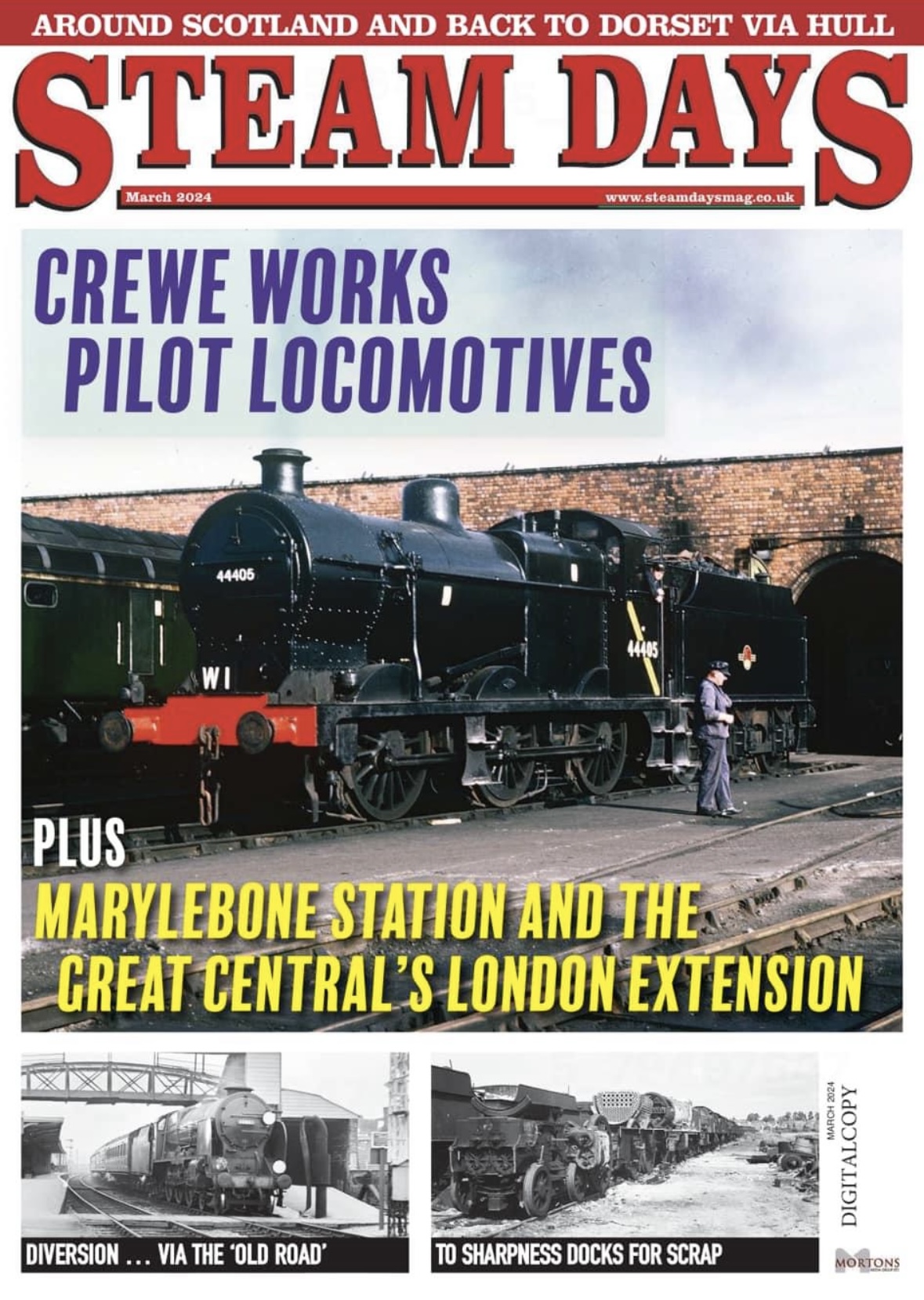
The March 2024 edition of “Steam Days” magazine features Colin Boocock’s well illustrated account of train diversions in 1960 off the Bournemouth main line and onto what was known as both the ‘Old Road’ after the direct line to Bournemouth was opened in 1888 or ‘Castleman’s Corkscrew’, so named after Charles Castleman who was the driving force in getting the Southampton & Dorchester Railway built and its somewhat circuitous route.
Thanks for reading – we’ll be back soon with a further updates of happenings along the rails in Dorset. Be seeing you!
Postscript:
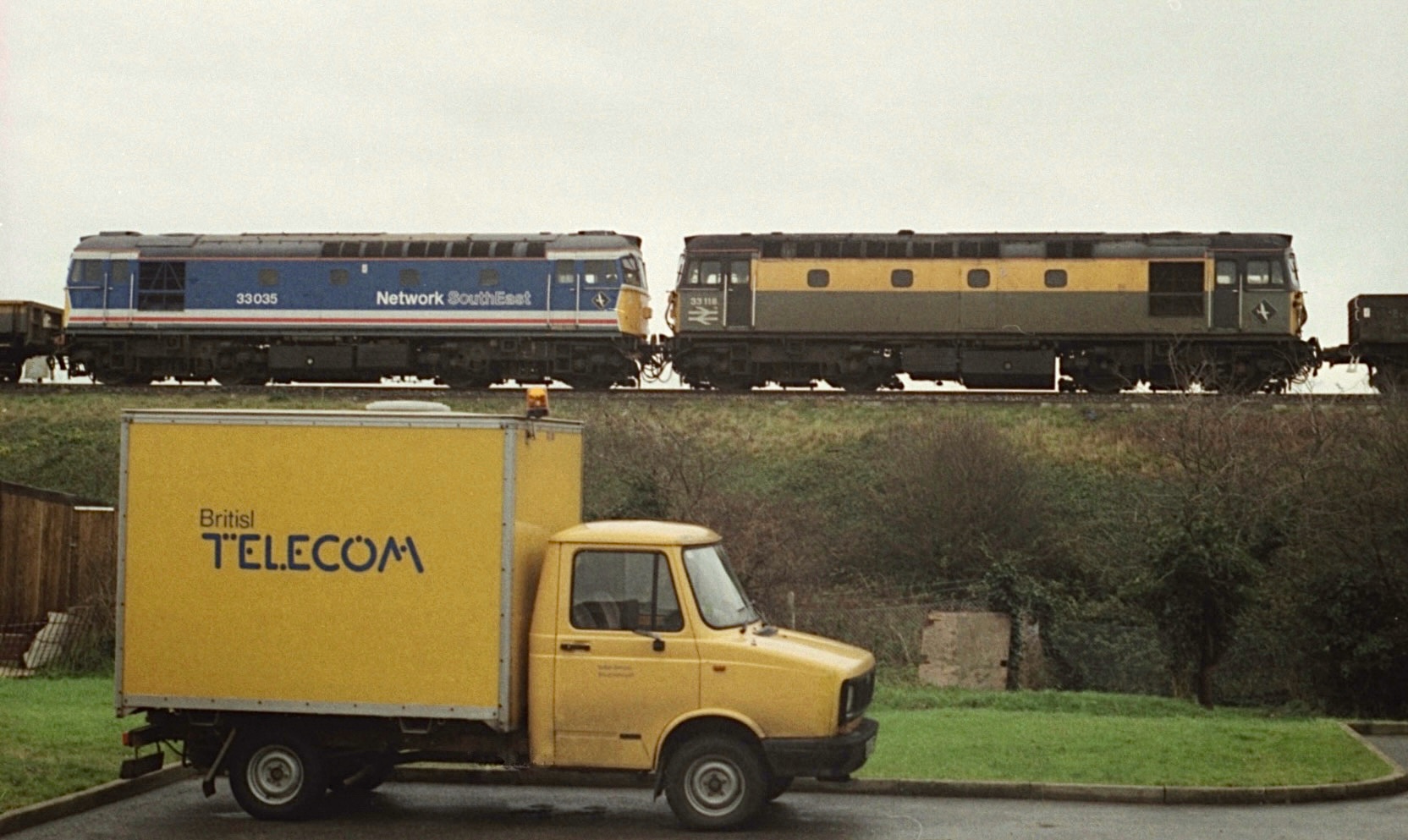
Engineering work in days gone by…. Class 33/0 No. 33035 and Class 33/1 No. 33118 on Bincombe Bank adjacent to Upwey Telephone Exchange sometime in the early 1990’s. No. 33118 was withdrawn from service in April 1993 and cut up by MRJ Phillips at Eastleigh Depot by February 1997. No. 33035 was named ‘Spitfire’ in December 1993 and withdrawn in October 1996 but lives on in preservation – xx/xx/199x
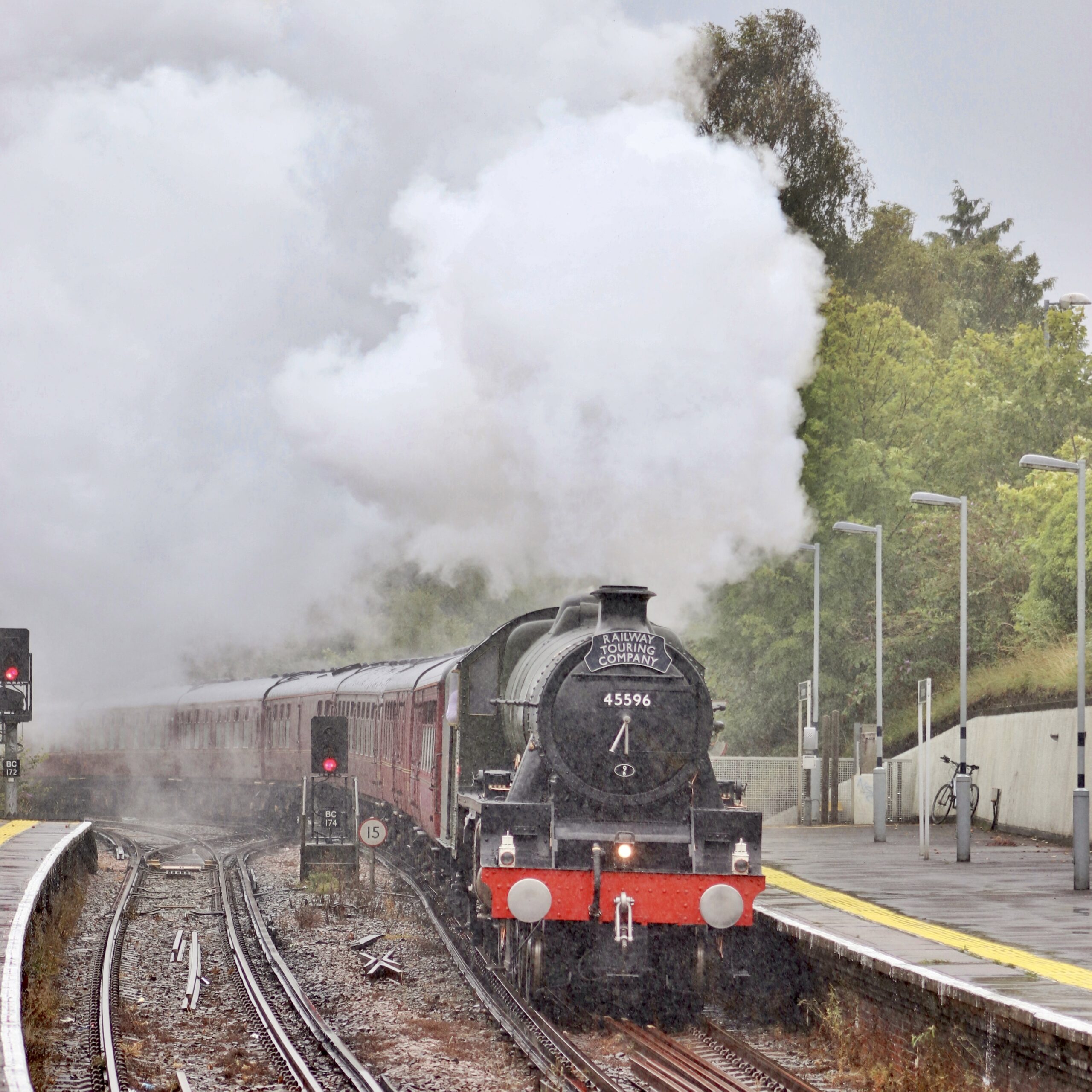
LMS Jubilee Class 4-6-0 No. 45596 ‘Bahamas’ supported by WCRC Class 47 No. 47802 (out of shot at the rear of the train) working 1Z82 0845 Victoria to Weymouth powers through the rain at Branksome with “The Dorset Coast Express” – 02/08/2023
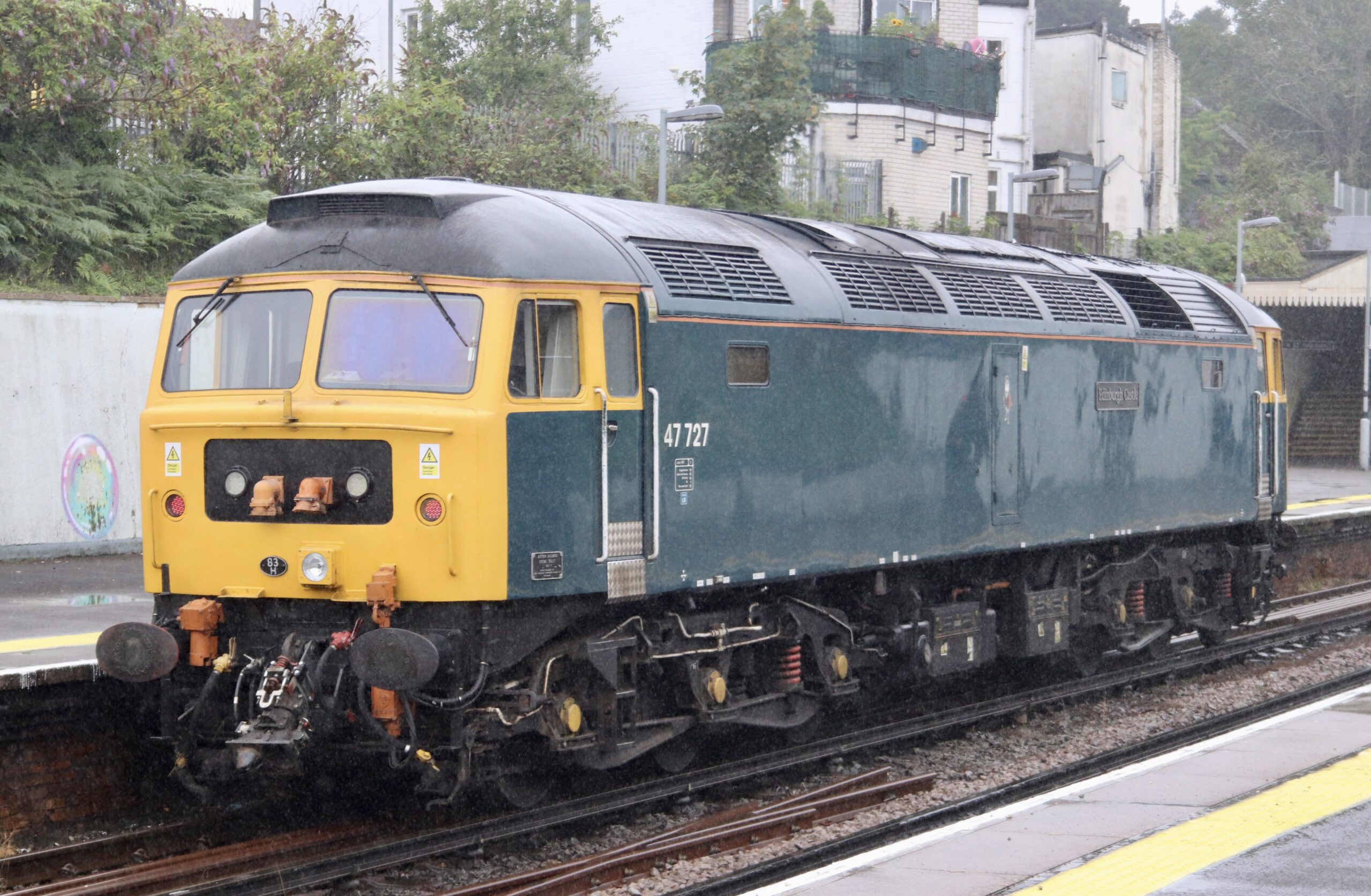
The dreadful weather on Wednesday August 2nd did not fully deter me from heading out to see the couple of special workings on the Dorset Coastway. With a light engine movement from Eastleigh to Bournemouth depot closely followed by the second “Dorset Coast Express” meant an early lunch as I decided to catch the train over to Branksome. I’d calculated that I would have at least ten minutes from getting to Branksome on the train which arrived at 1149 before the GBRf Class 47 running as 0Z48 1046 Eastleigh TRSMD to Bournemouth T&RSMD would arrive, so I was a little frustrated to learn that my train was running 16 minutes late because of problems with the doors. A quick check on Real Time Trains revealed that the light engine was also running late – 15 minutes at that point, and looking at the maps on Open Time Trains I saw that it had also been put into Totton Yard to allow a down passenger train to pass. So, in the event, I still managed to arrive at Branksome before No. 47727 ‘Edinburgh Castle’, although I hadn’t banked on the next service from Weymouth running on time and blocking out the duff’s arrival into platform 2.
GBRf Class 47 No. 47727 ‘Edinburgh Castle’ running light engine from Eastleigh to Bournemouth depot reverses in Branksome railway station – 02/08/2023
Having observed ‘Edinburgh Castle’ retiring into the depot area, it was a 45 minute wait before LMS Jubilee Class 4-6-0 No. 45596 ‘Bahamas’ made her second visit to Dorset this year with The railway Touring Company run special from London Victoria to Weymouth. The rain didn’t ease and more and more people hoping to get a glimpse of the steam hauled train pass began to shelter under the platform awnings. A last minute decision on my part meant a switch of platforms, which I’m pleased I did, as I was really happy with the resulting photographs and video of the train has it rushed through in the rain. Once again the planned use of a second steam locomotive, Swanage Railway’s U-Class 2-6-0 No. 31806, did not materialise. There’s one more DCE running this season, so I hope the issues preventing the U running can be resolved and she can make an appearance climbing the Dorset banks. As the rain was becoming increasingly heavy, I declined to go and see both the light Class 47 return working as 0Z49 1618 Bournemouth T&R.S.M.D to Eastleigh East Yard and the West Coast Railways Class 47 No. 47802 heading up the return “Dorset Coast Express”, although I’m pleased to report my brother did see this pass Dorchester South and his video is included below.
LMS Jubilee Class 4-6-0 No. 45596 ‘Bahamas’ top and tailed with WCRC Class 47 No. 47802 work 1Z82 0845 Victoria to Weymouth – 02/08/2023
Video from 2nd August 2023 (with thanks to GE Barrett for the Dorchester South material of the return “Dorset Coast Express”)
On Thursday it was an early start as I needed to be in Southampton and once again I took the opportunity for a quick look over at Eastleigh.
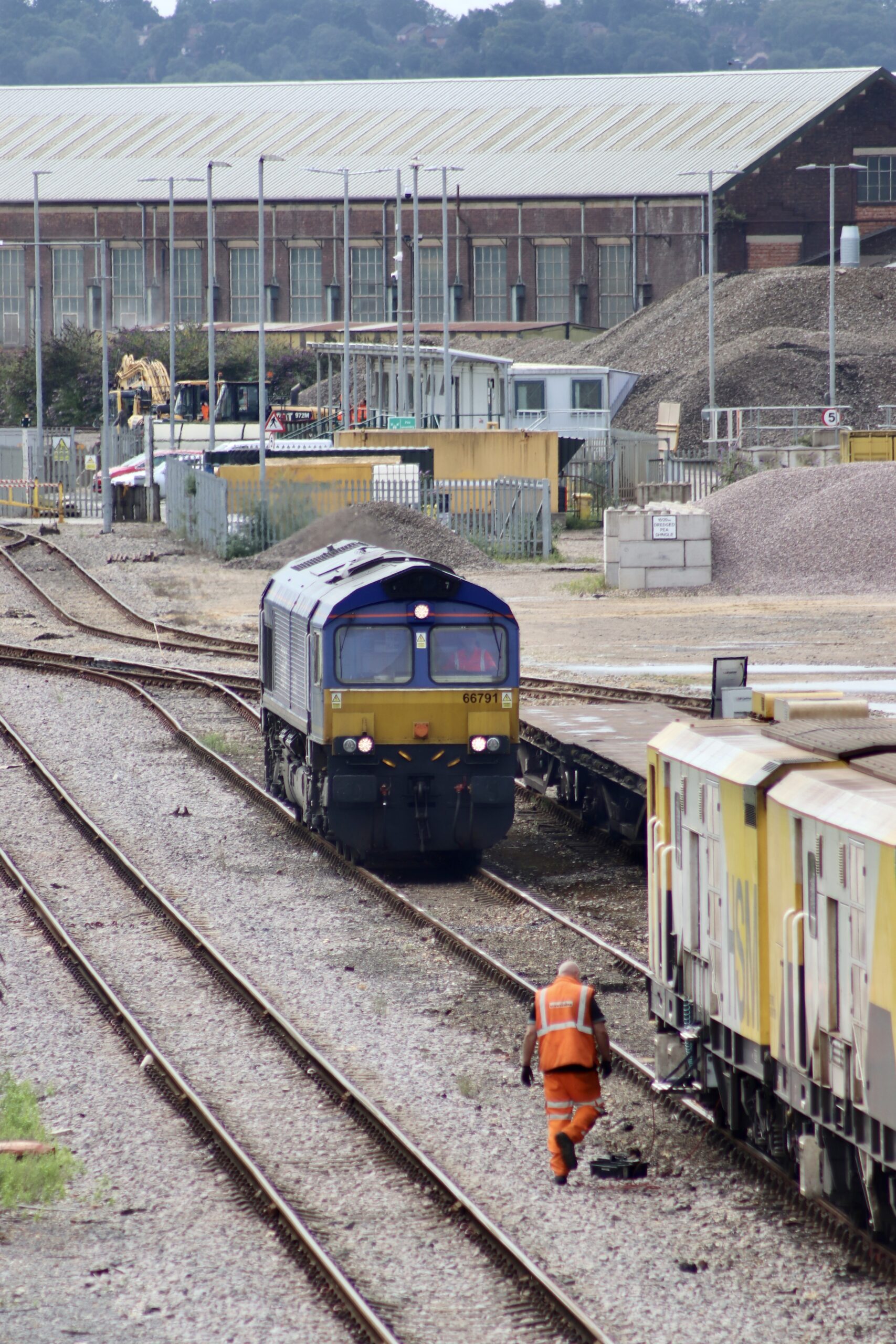
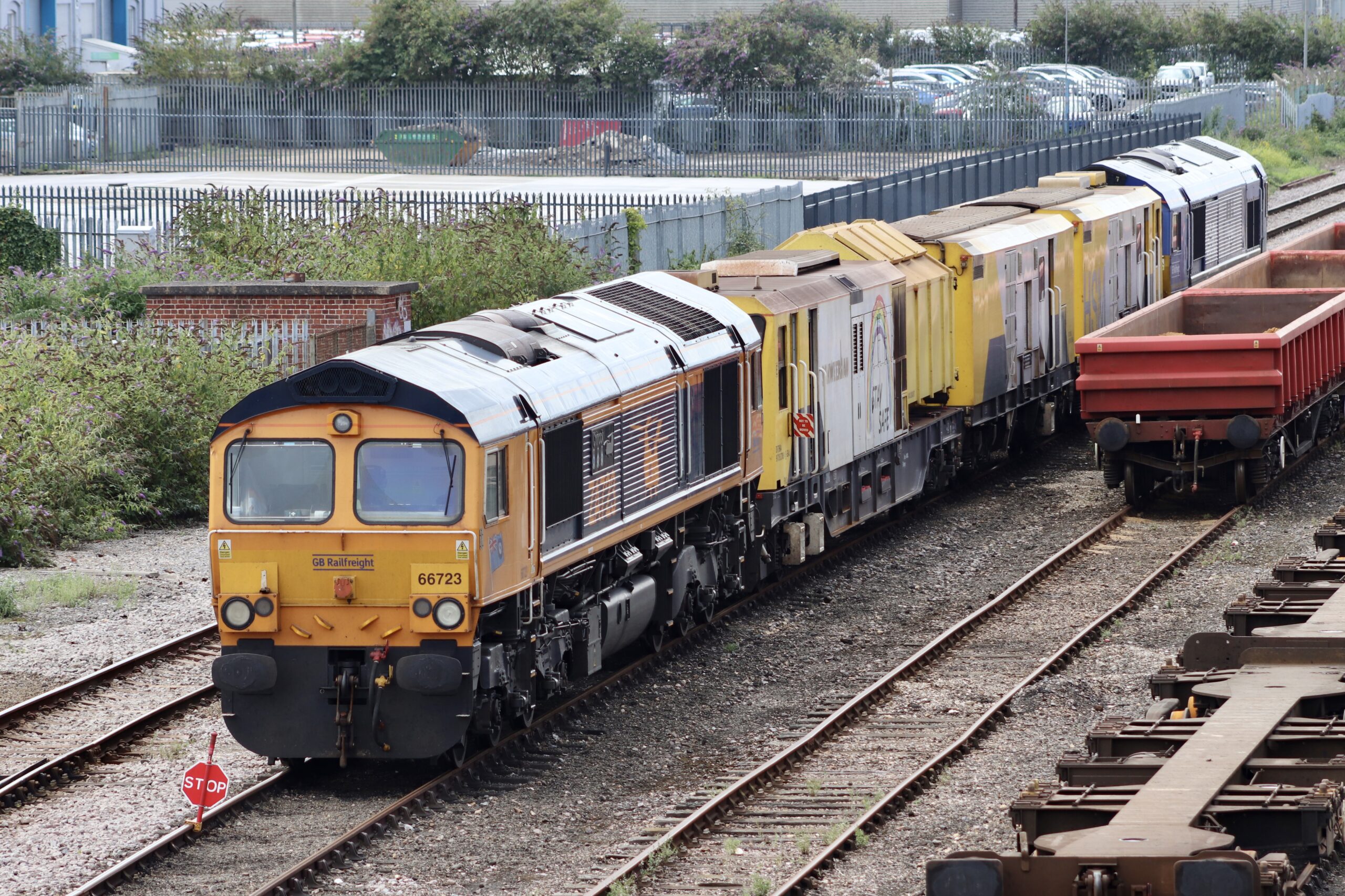
Class 66 No. 66791 backs onto the milling machine at Eastleigh – 03/08/2023GBRf’s Class 66 No. 66723 ‘Chinook’ with class mate No. 66791 at the rear top and tail the milling machine at Eastleigh – 03/08/2023GBRf Class 73 No.’s 73961 ‘Alison’ and 73965 ‘Des O’Brien’ prepare to work 1Q54 1255 Eastleigh Yard to Tonbridge Yard via Ascot, Aldershot, Guildford and Reading – 03/08/2023Three class 73 electro-diesels No.’s 73213, 73136 and 73119 stand at Eastleigh East Yard with Class 08 shunter No. 08810. Class 47 No. 47727 ‘Edinburgh Castle’ in the background later worked 0M10 1400 Eastleigh TRSMD to Leicester LIP – 03/08/2023
Thursday evening and it was the turn of Scott, our North Dorset Correspondent, to venture out to catch Colas liveried Class 37 No. 37116 on test train 3Q07 2031 Exeter Riverside to Exeter Riverside via Yeovil Pen Mill and Salisbury. The test train with a Class 37 and DBSO crossed through North Dorset as part of this working.
Colas Class 37 No. 37116 working 3Q07 2031 Exeter Riverside to Exeter Riverside via Yeovil Pen Mill and Salisbury at Yeovil Pen Mill – 03/08/2023 (Photo courtesy of Scott Lewis)Colas Class 37 No. 37116 working 3Q07 2031 Exeter Riverside to Exeter Riverside via Yeovil Pen Mill and Salisbury at Yeovil Pen Mill – 03/08/2023 (Photo courtesy of Scott Lewis)
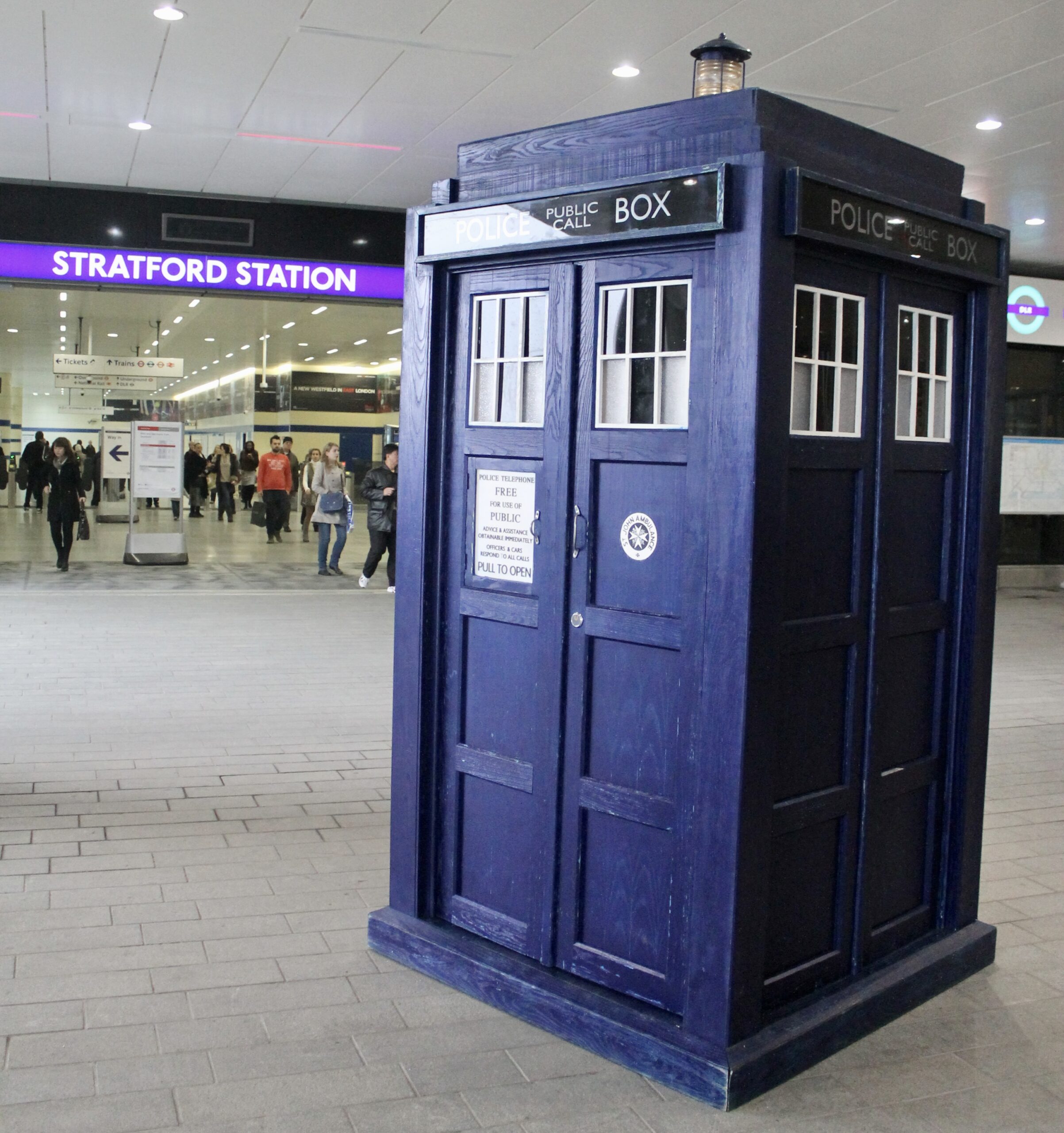
On Saturday, Yoshi enjoyed a mini break with his cousins as Caroline and I had a day in London, primarily to see “Abba Voyage” at the purpose built venue adjacent to the Pudding Mill Lane Docklands Light Railway (DLR) station. It was a phenomenal 90 minutes and well recommended. On our way back to Waterloo station for our train home, we made a brief diversion to the Westfield shopping centre which now inhabits much of the land which had been occupied by Stratford railway depot and works. For no apparent reason, other than it being a railway locomotive, Avonside Engine Co 0-6-0ST works No. 2068 ‘Robert’ stands on a section of track outside the entrance to Stratford railway station.
‘Robert’ was built by the Avonside Engine Company in 1933 for the Staveley Coal and Iron Ltd for use at their Lamport Calcine Sidings, Hanging Houghton, near Brixworth, Northamptonshire where it spent all of its working life as Lamport No3 until September 1969 when it was sold privately. Since then the locomotive has had many homes, including Buckinghamshire Railway Centre at Quainton, Foxfield Railway at Dilhorne in Staffordshire, Peak Rail at Matlock before going to the Midland Railway Centre at Butterley where the locomotive gained its name. In 1993 the locomotive was bought by the Dockland Development Corporation for the Kew Bridge Steam Museum where it was cosmetically restored to make it look like a Beckton Gas Works engine. The following year, 1994, the locomotive was displayed on the tracks of Winsor Terrace in Beckton close to the Beckton Gas Works and close to the then new extension of the DLR. Ownership passed to Newham Borough Council in 1999 and as ‘Robert’ had been vandalised it was decided to move the locomotive to a plinth in front of Stratford station. In 2008 due to bridge construction work in the area the locomotive was moved again to the East Anglia Railway Museum at Colchester and repainted at the expense of the Olympic Delivery Authority before returning to Stratford and placed in its current position during 2011 as a new community landmark – 05/08/2023
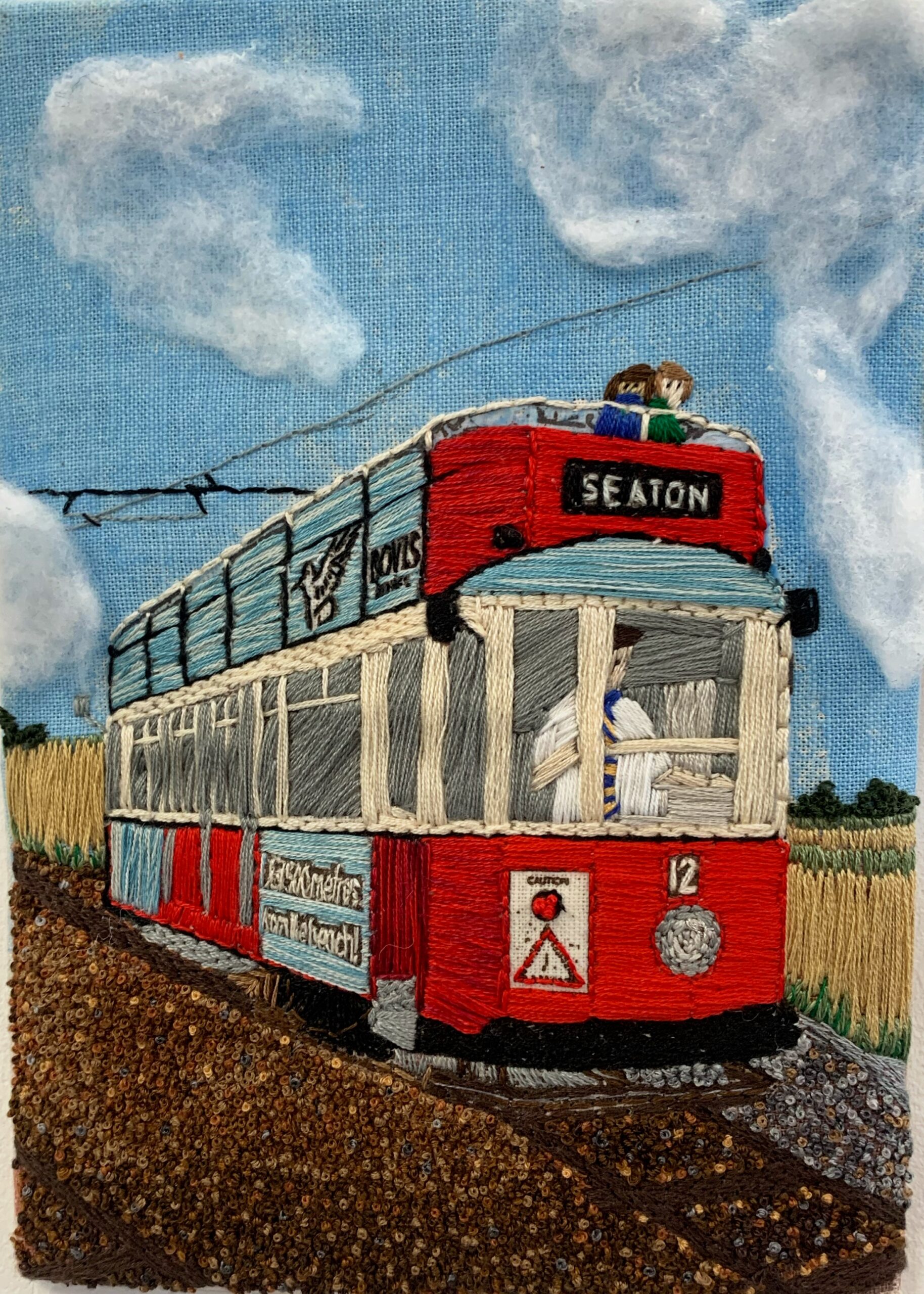
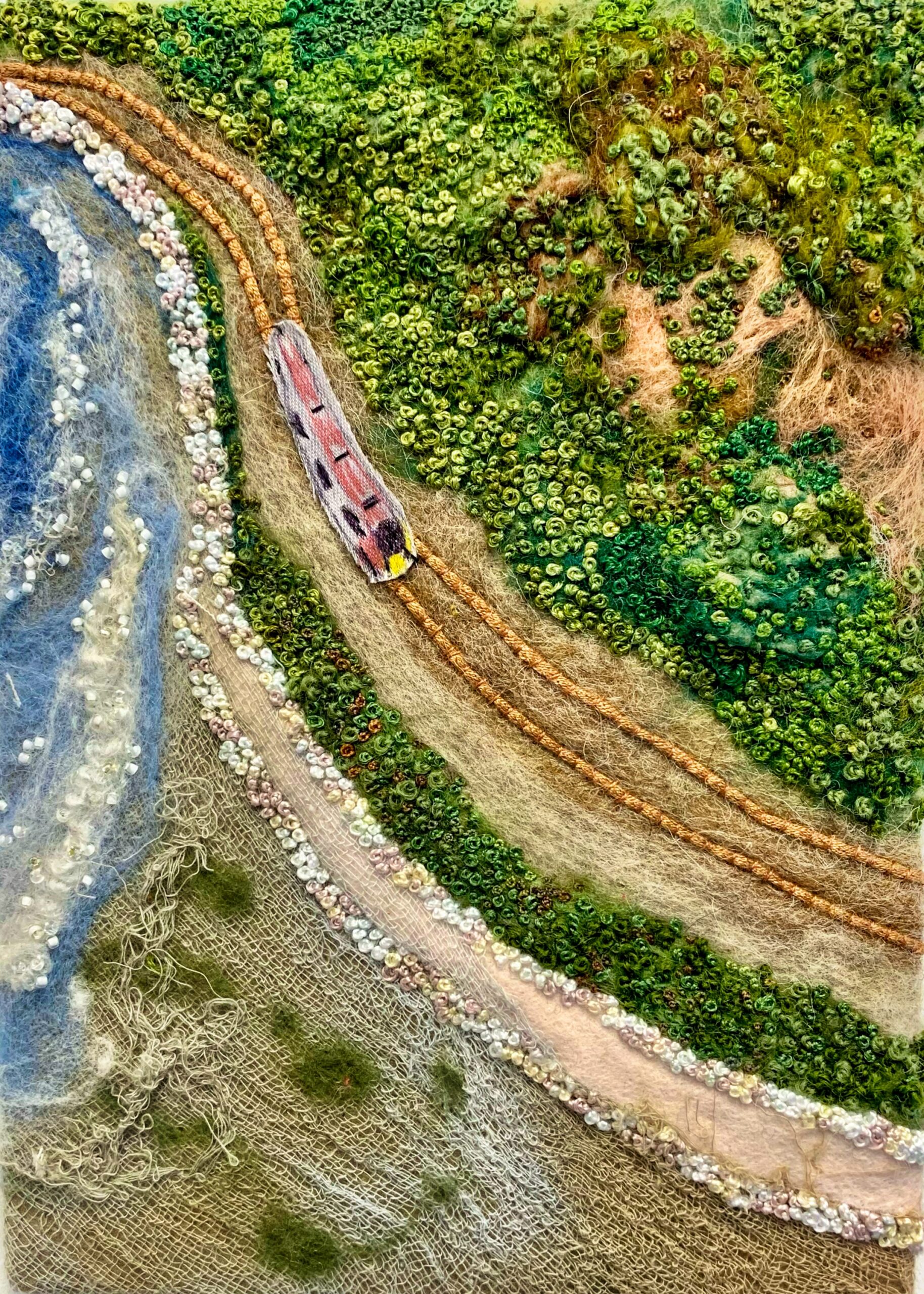
On Sunday we took Yoshi’s grandmama to The Purbeck School in Wareham as they were hosting the Dorset Arts & Crafts Association 2023 Showcase. Ever on the lookout for items of railway themed interest, I was pleased to find the following panels included as part of “The South West Coast Path” exhibition created by West Country Embroiderers as a celebration of its 50th Anniversary and to showcase the skills of its members. This special exhibition features 166 individual stitched panels, along with county markers and a map of the South West coast displayed consecutively so that the viewer has a ‘visual walk’ along the coast path from Studland in Dorset, through South Devon, Cornwall and finishing on the border of North Devon and Somerset. For another opportunity to see “The South West Coast Path” exhibition it will be displayed at The Gallery Upstairs in Upton Country Park, Poole from 5th to 9th October 2023, or you can view a slideshow here.
Seaton Tramway by Michaela Pohl, Ottery St Mary Sky and ground areas painted with fabric paint. Reverse printed a photo of a Tram onto the fabric. Outlined in back stitch. Various colours and stitches such as stem and long stitch used to fill in detail and people. French knots for the gravel areas. More long and stem stitches complete the cornfield and the trees. Needle felted clouds.Dawlish by Gillian Strong, Torbay Inspired by memories of family walks along the sea wall and watching the trains pass. Materials & amp; stitches: Calico painted background, cliff walls, beach and sea slightly felted. Embellished with French knots using embroidery silk threads, perle cotton No 8. A little scrim used on the beach, together with net, beads and French knots. Felt used for the path and railway and narrow cord for the railway track.Babbacombe Cliff Railway by Lynne Weston, Paignton Calico background. Worked entirely by hand using long and short stitch with a few French knots. Different shades of blue dominate the sky and sea, and shades of green for the surrounding wood and area.
From The Archive
I visited Stratford Depot a few times in the BR Blue days of the 70’s and 80’s – usually on an official Open Day, but at least once on a shed visit with the National Railway Enthusiasts Association (NREA) who ran coach tours for enthusiasts with permits to visit railway depots and sibling points. I recall there was a long access tunnel which led to the depot, so I dug out my copy of the Ian Allan ABC British Rail Locoshed Directory which gave geographical locations and information on all BR motive power depots to find the entry on Stratford:
The listing for Stratford Depot included in the 1978 edition of Ian Allan’s Locoshed Directory, the cover of which depicted locomotives at Stratford TMD
Stratford Depot was built by the Northern and Eastern Railway (NER) which operated a line between Stratford and Broxbourne opened in 1840. By 1843, the main building was a 16 track roundhouse which was known as The Polygon, with outbuildings including workshops, a blacksmith and saw pits all contained within the shed complex. In February 1846 additional accommodation was authorised, which included the Erecting Shop. In 1847 the Eastern Counties Railway (ECR) works in Romford were closed and moved to Stratford. By 1867 the carriage department which later became Stratford Works was installed in a 370 ft X 80 ft building attached to the north side of the Polygon. From this point, the development of Stratford Depot and Stratford Works were closely linked and as the site evolved, new sections of the works were opened away from the original shared site that lay between the Great Eastern Main Line and the Lea Valley line.
As part of the 1955 Modernisation Scheme Class 40 diesel-locomotives were delivered brand new to Stratford and allocated to main line express duties. These were replaced in the 1960’s by Class 37’s which in turn were replaced by Class 47’s with the Class 37’s transferring to freight duties. In 1977 two Stratford Class 47’s were famously turned out with silver roofs and “Union Jack” flags on their bodysides to celebrate the silver jubilee of Queen Elizabeth II. This was in contradiction of strict BR guidelines but proved so popular that soon other Stratford based Class 47 locomotives were adorned with silver roofs and became instantly identifiable to the delight of railway enthusiasts. The 1980’s saw a further addition of a small Cockney Sparrow symbol.
The Class 47’s were themselves displaced by the electrification of the main lines to Cambridge and Norwich in the mid 1980’s, when Class 86 locomotives allocated to Norwich Crown Point took over operation of express services on the Great Eastern Main Line. The Cambridge line was served by Electric Multiple Units.
The privatisation of the railways in April 1994 saw Stratford depot taken over by English Welsh & Scottish (EWS) and remained as such until closure in 2001 with the site being used for the construction of the new international station on High Speed One. A new diesel depot was opened at nearby Temple Mills but this only lasted a few years as changes to the freight market saw the depot closed.
Today the site is occupied by Stratford International station and a shopping centre called Westfield Stratford City. A commemorative plaque was unveiled on the site on 10 July 2012 featuring a 30A shedplate and Stratford cockney sparrow in its design and acknowledging the history of the site.
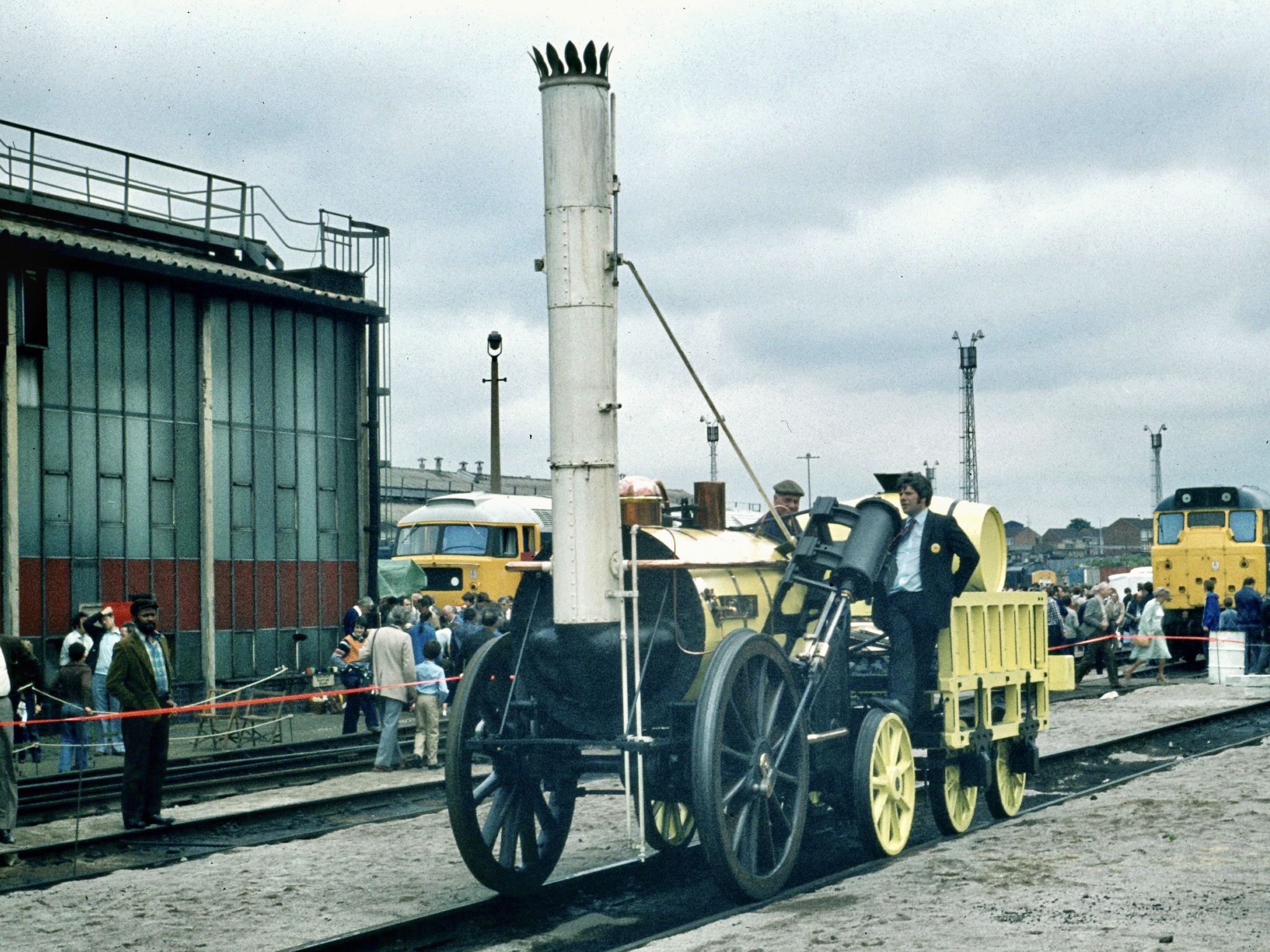
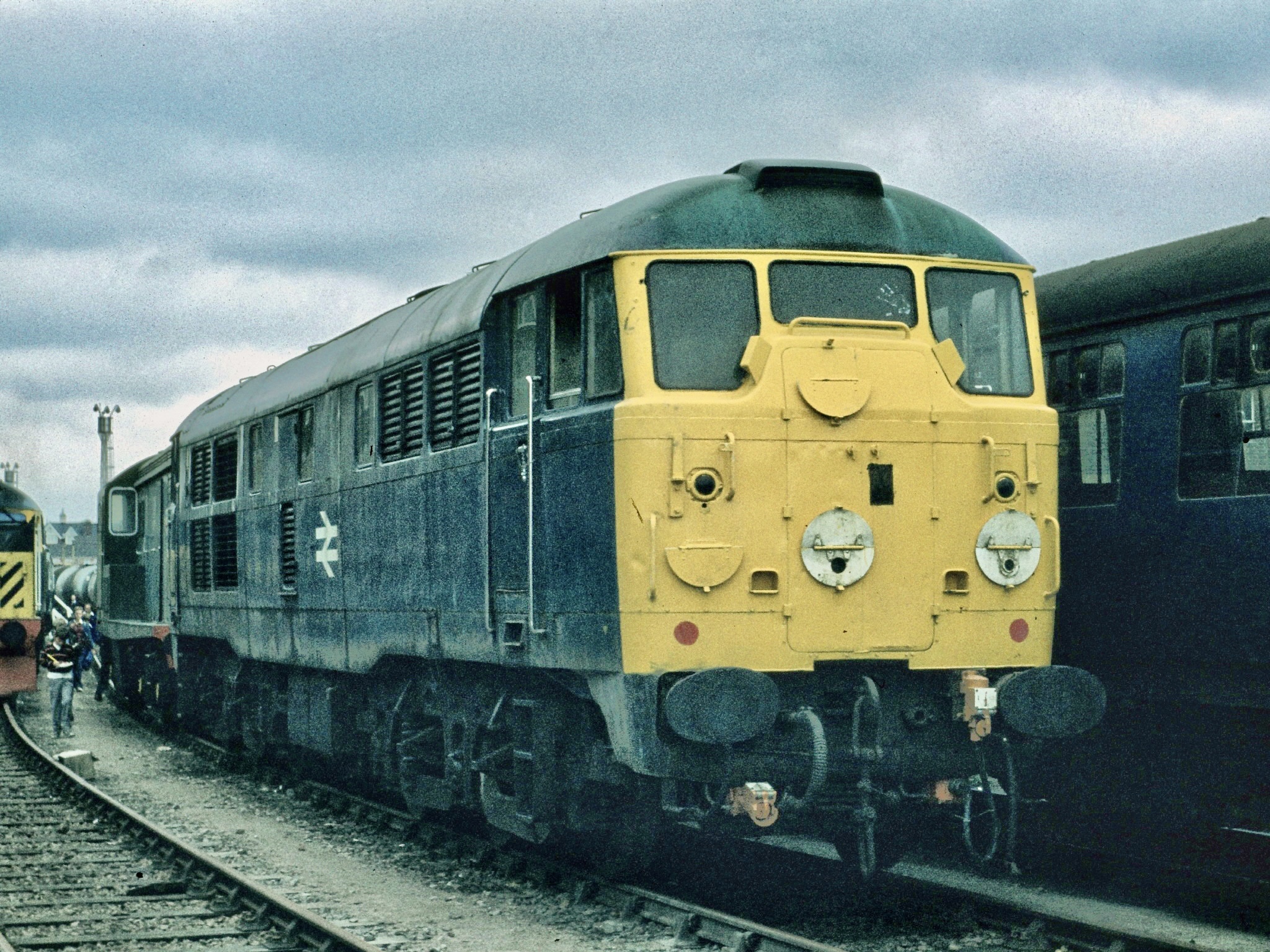
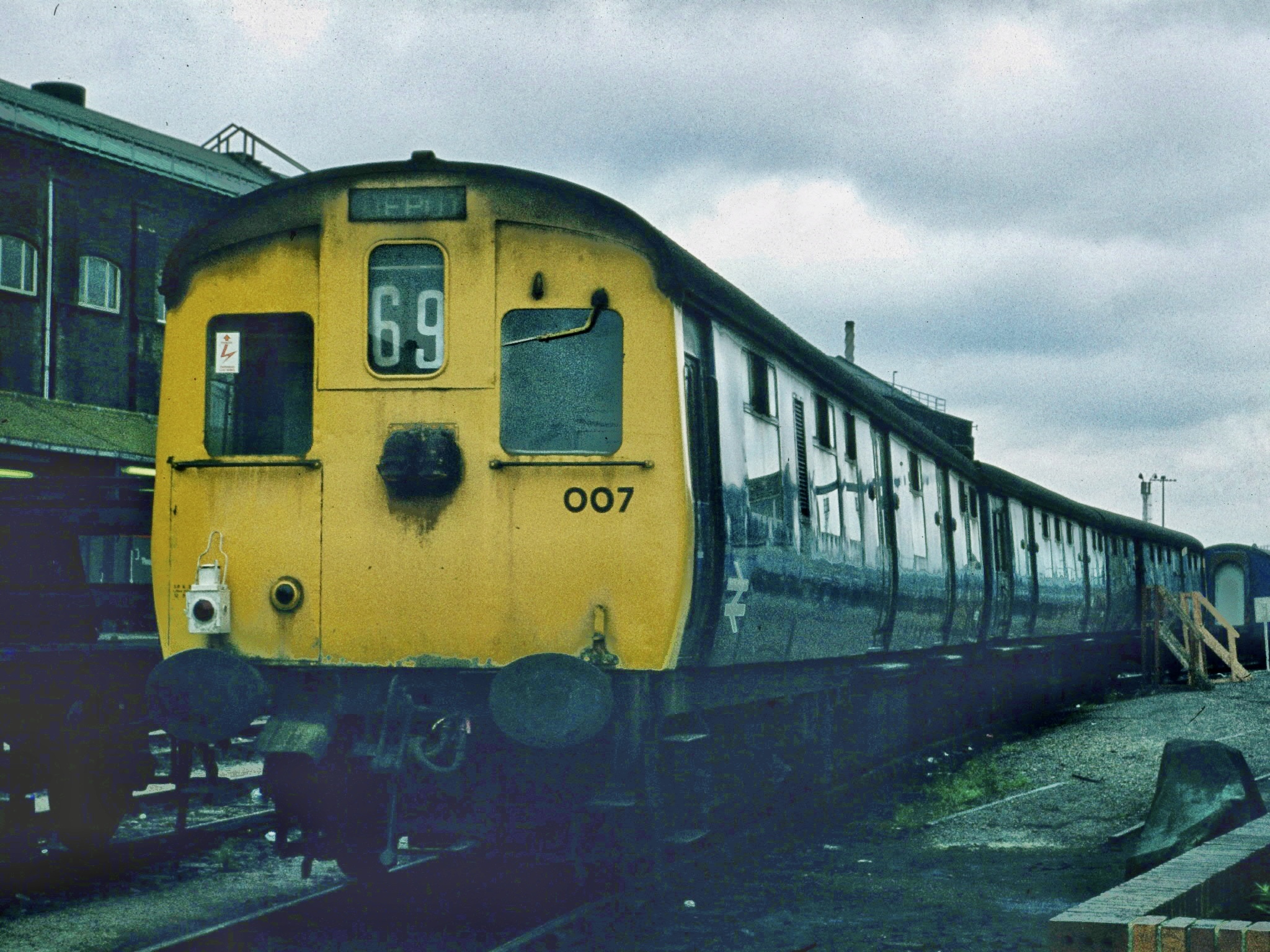
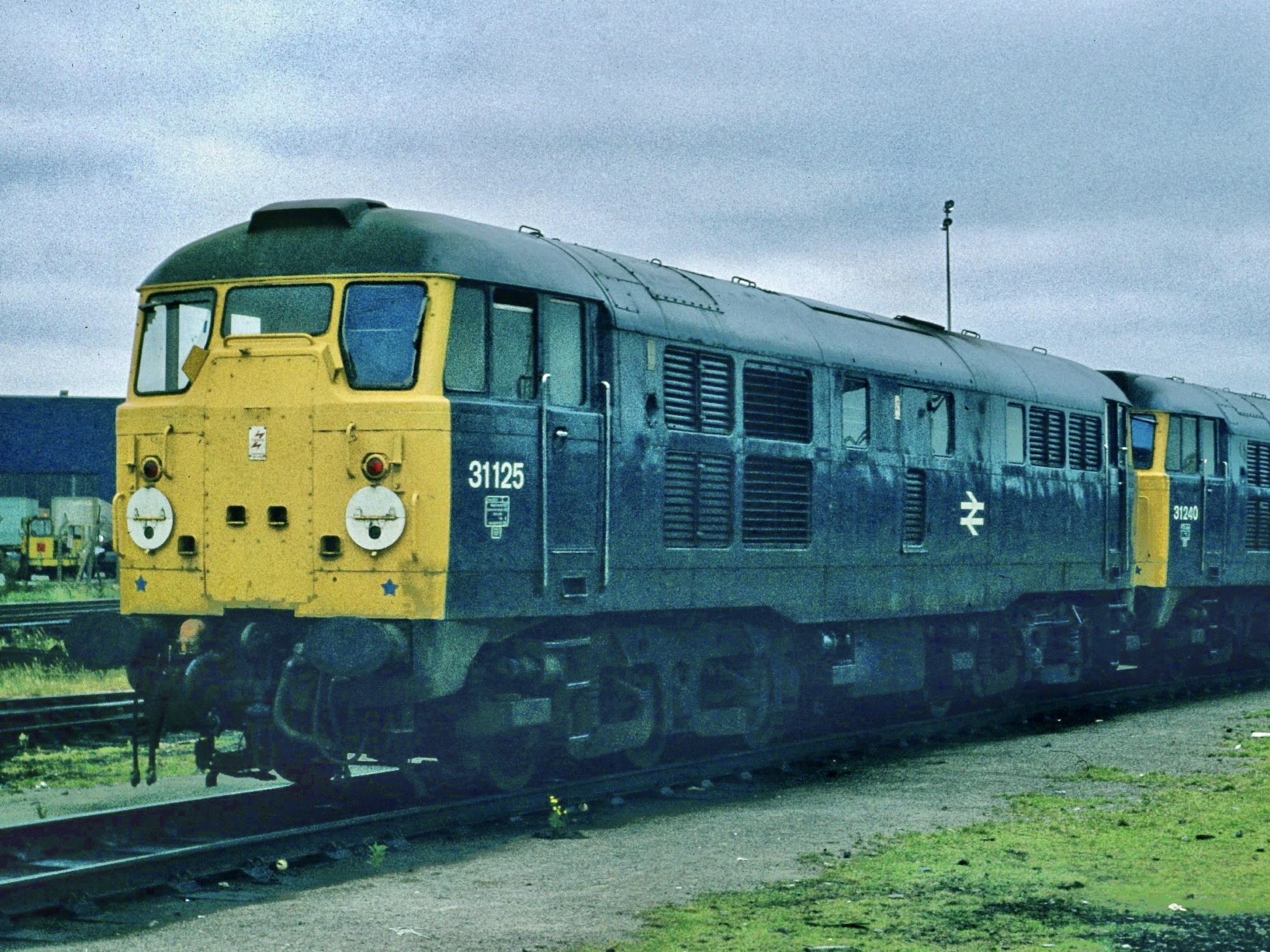
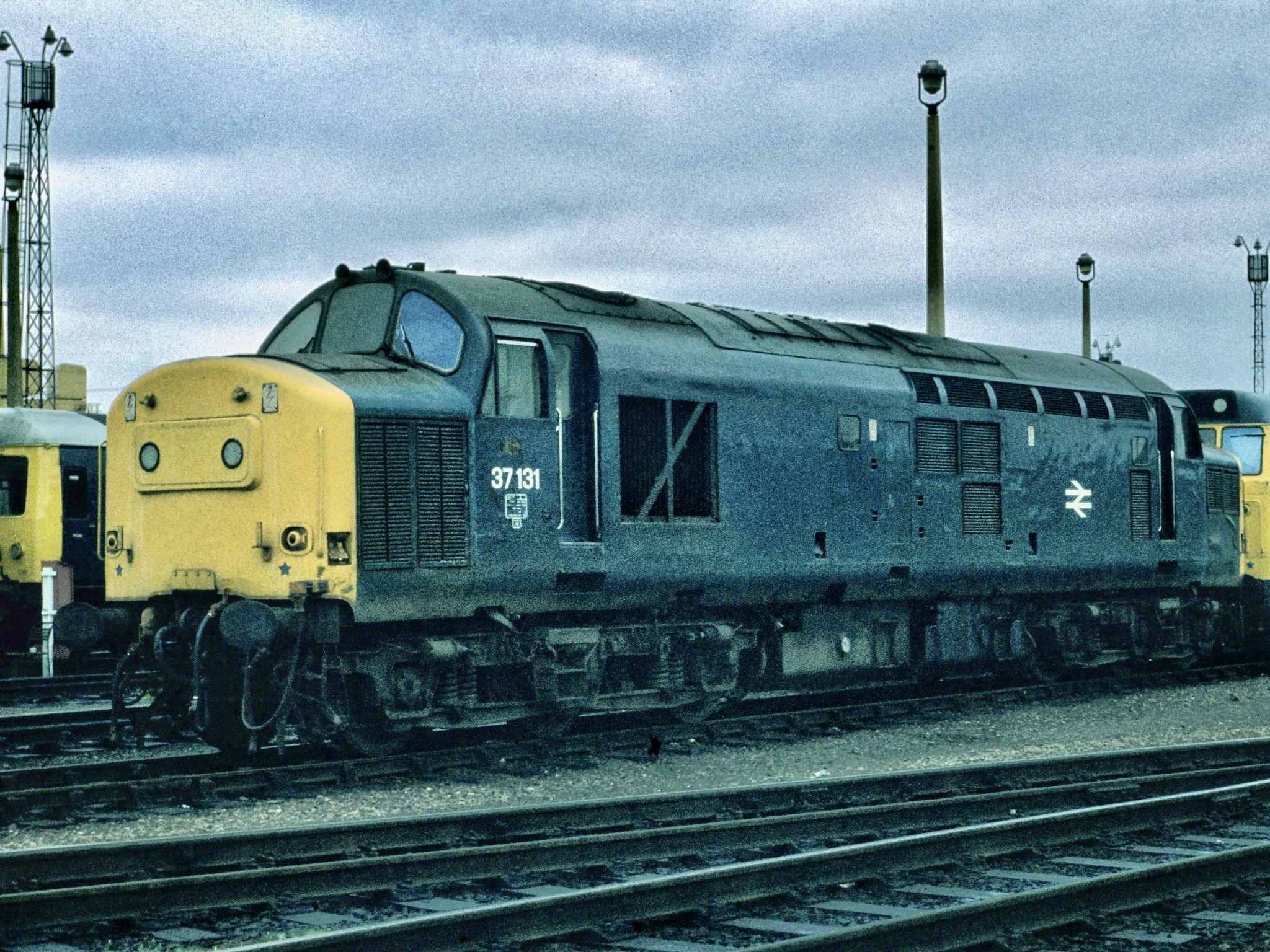
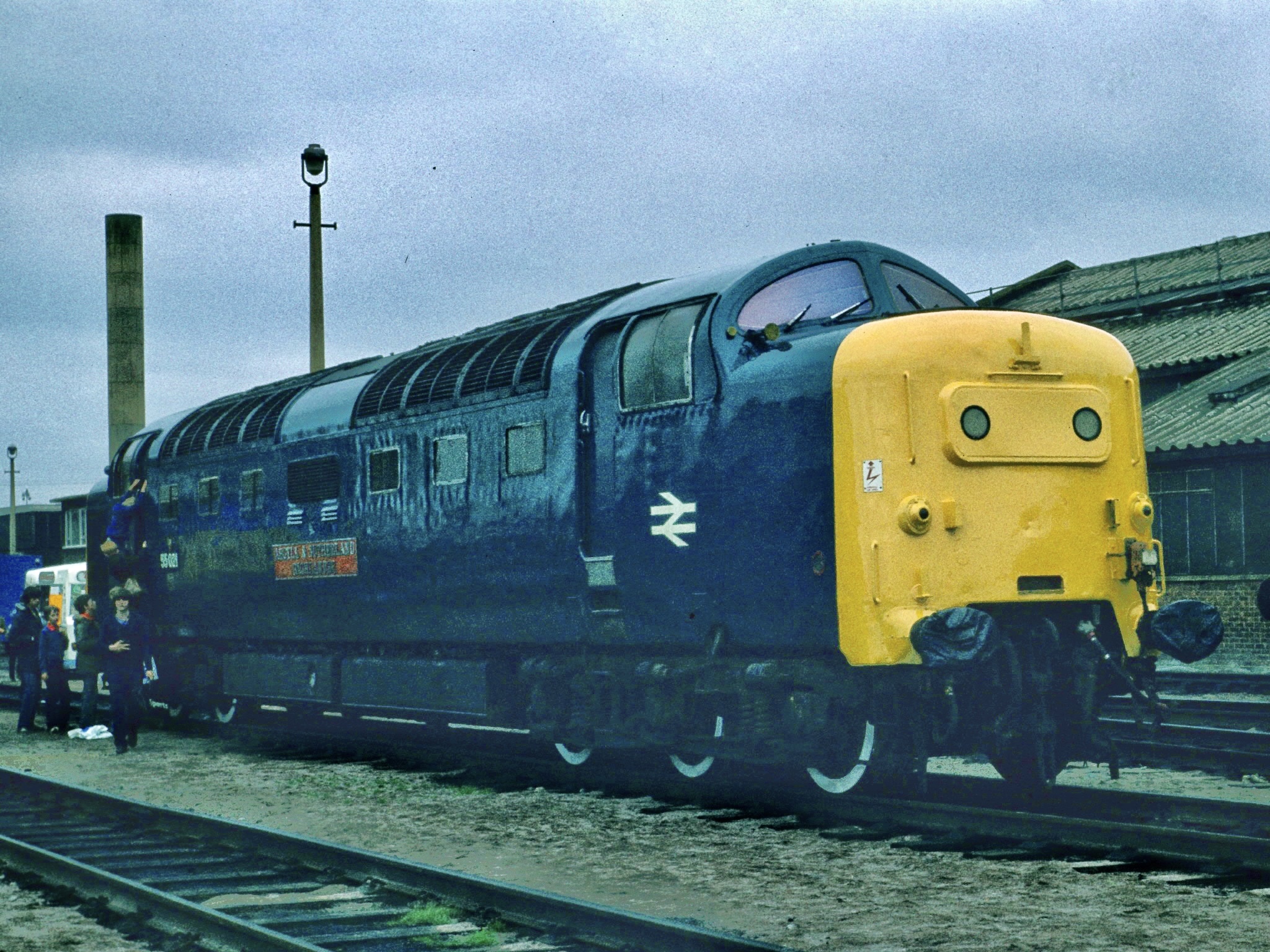
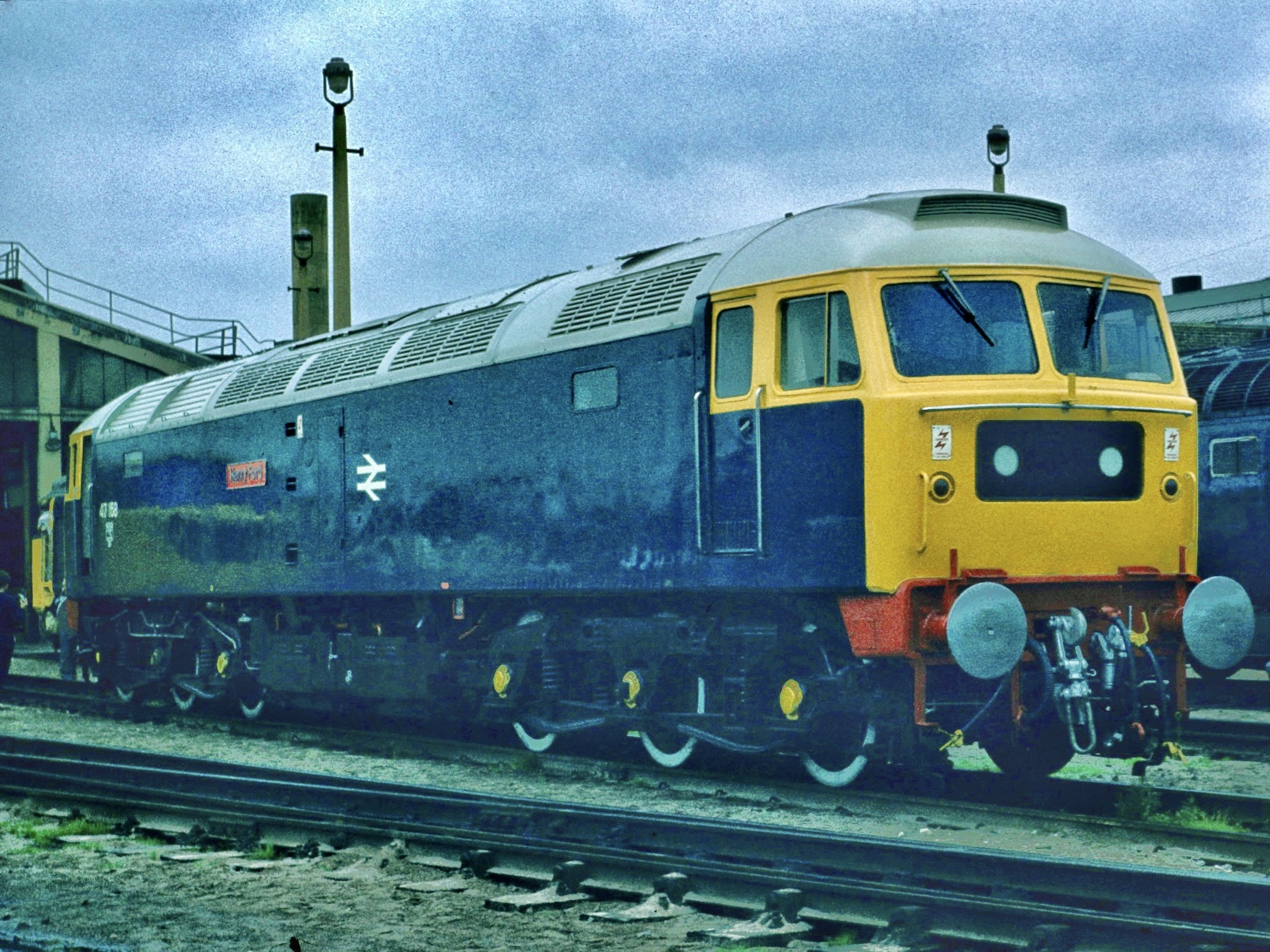
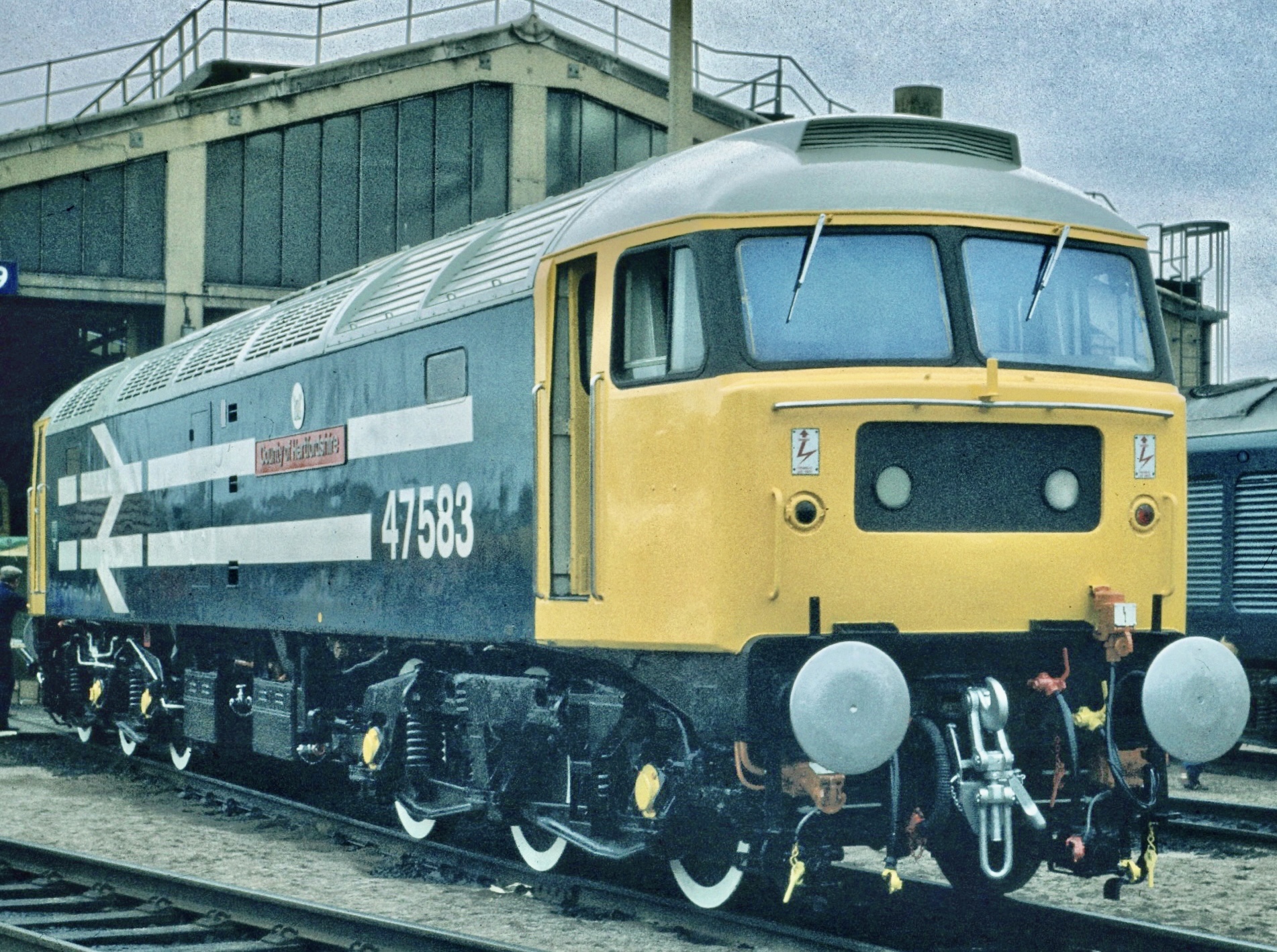
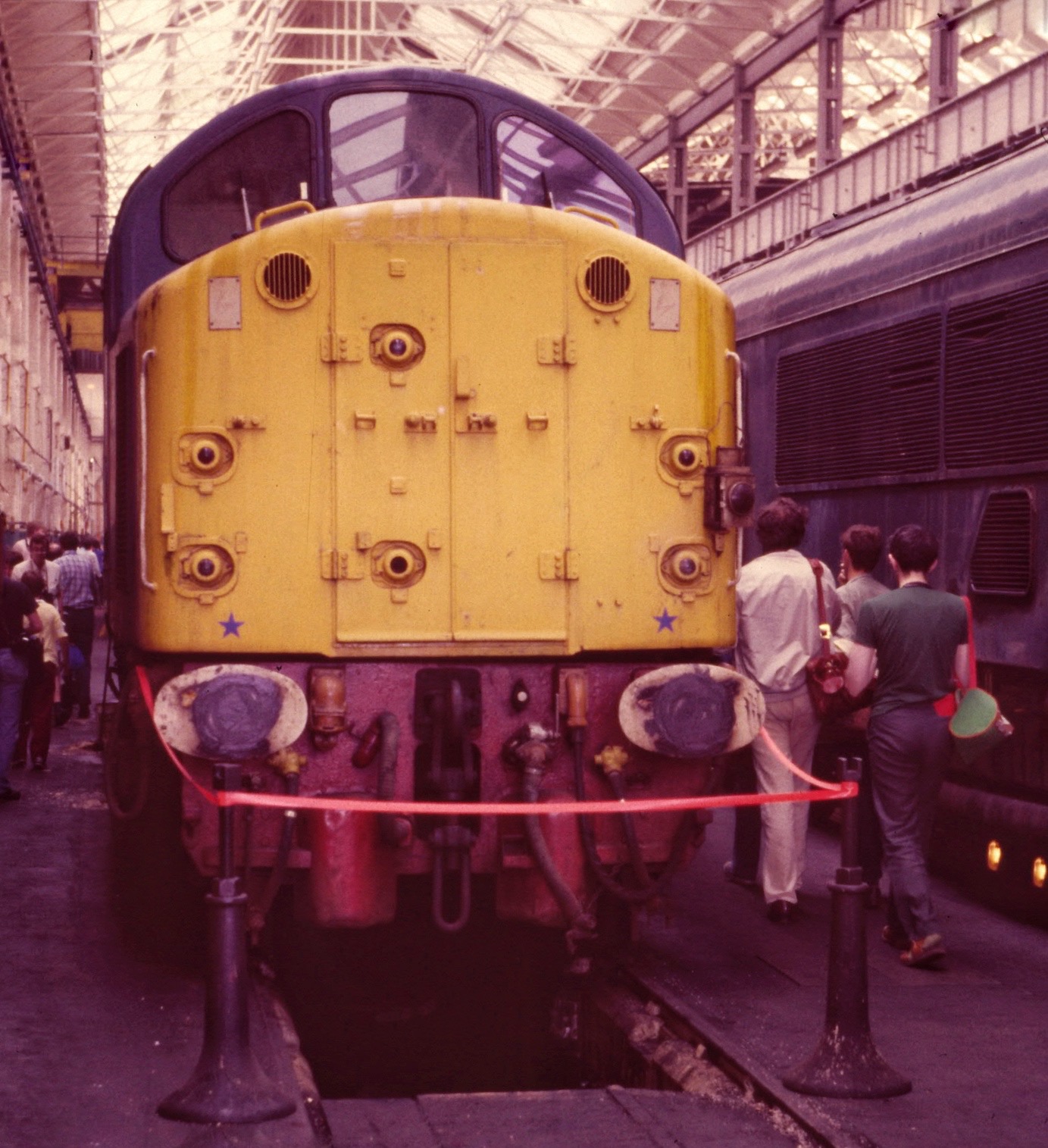
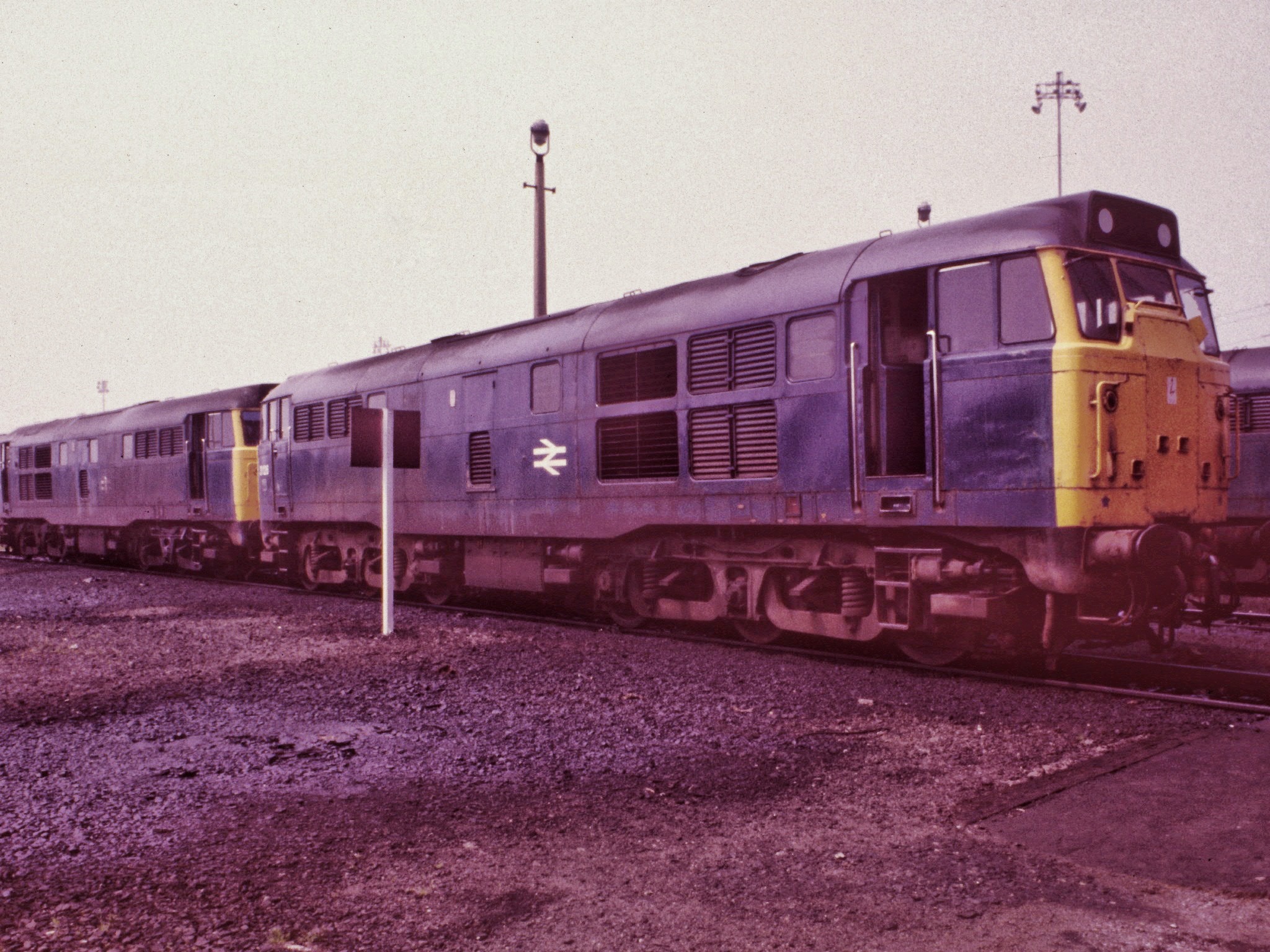
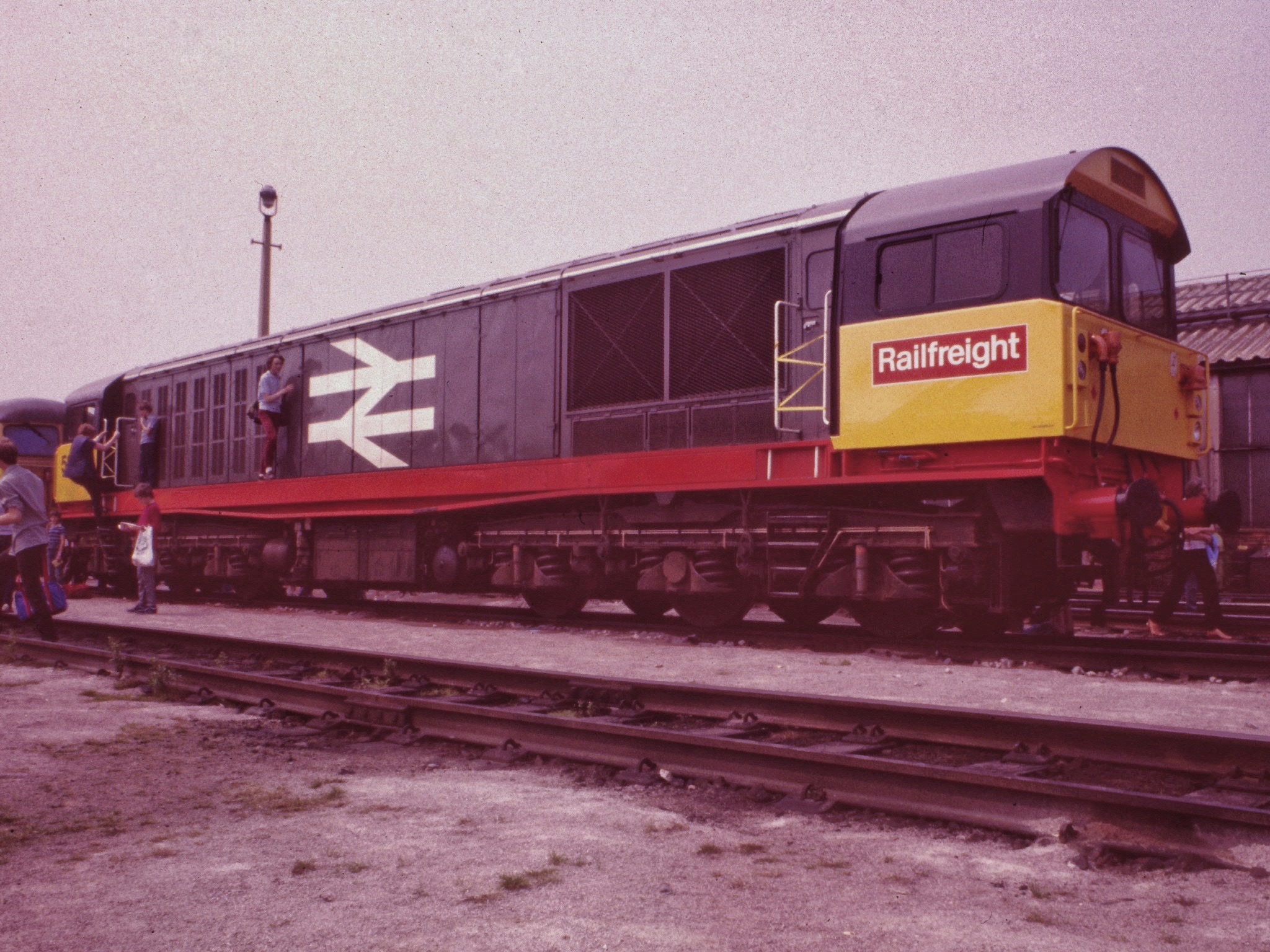
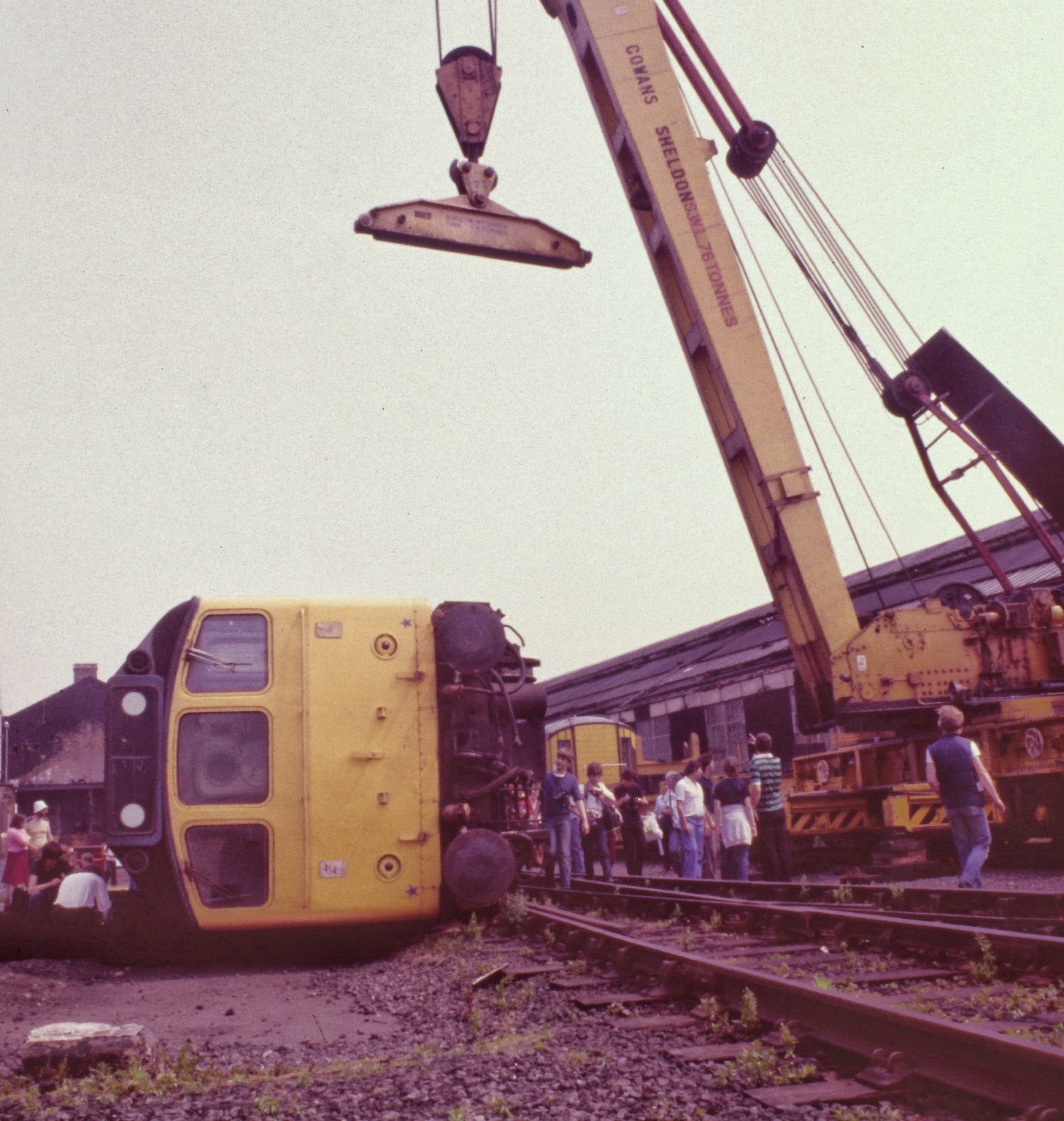
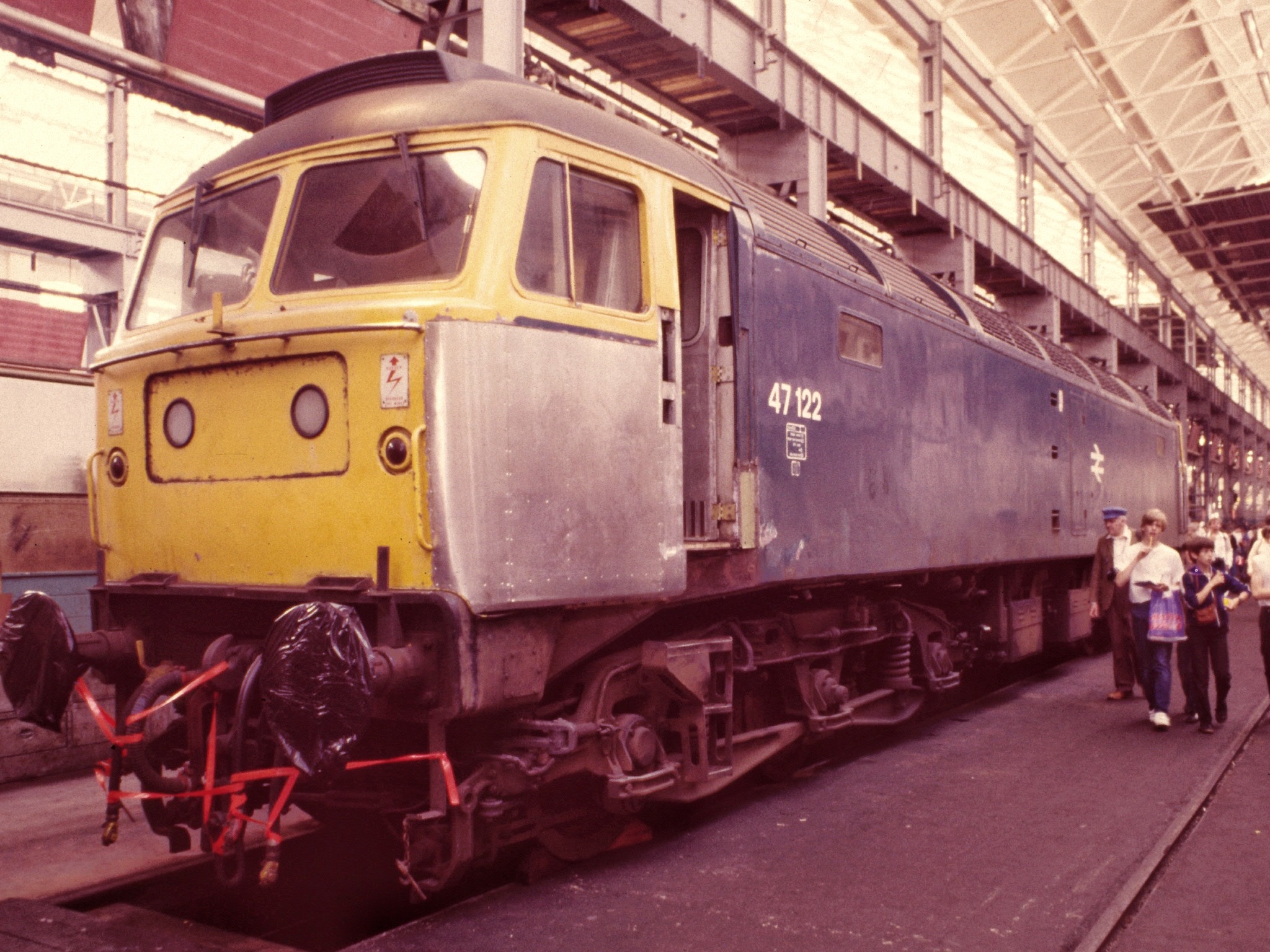
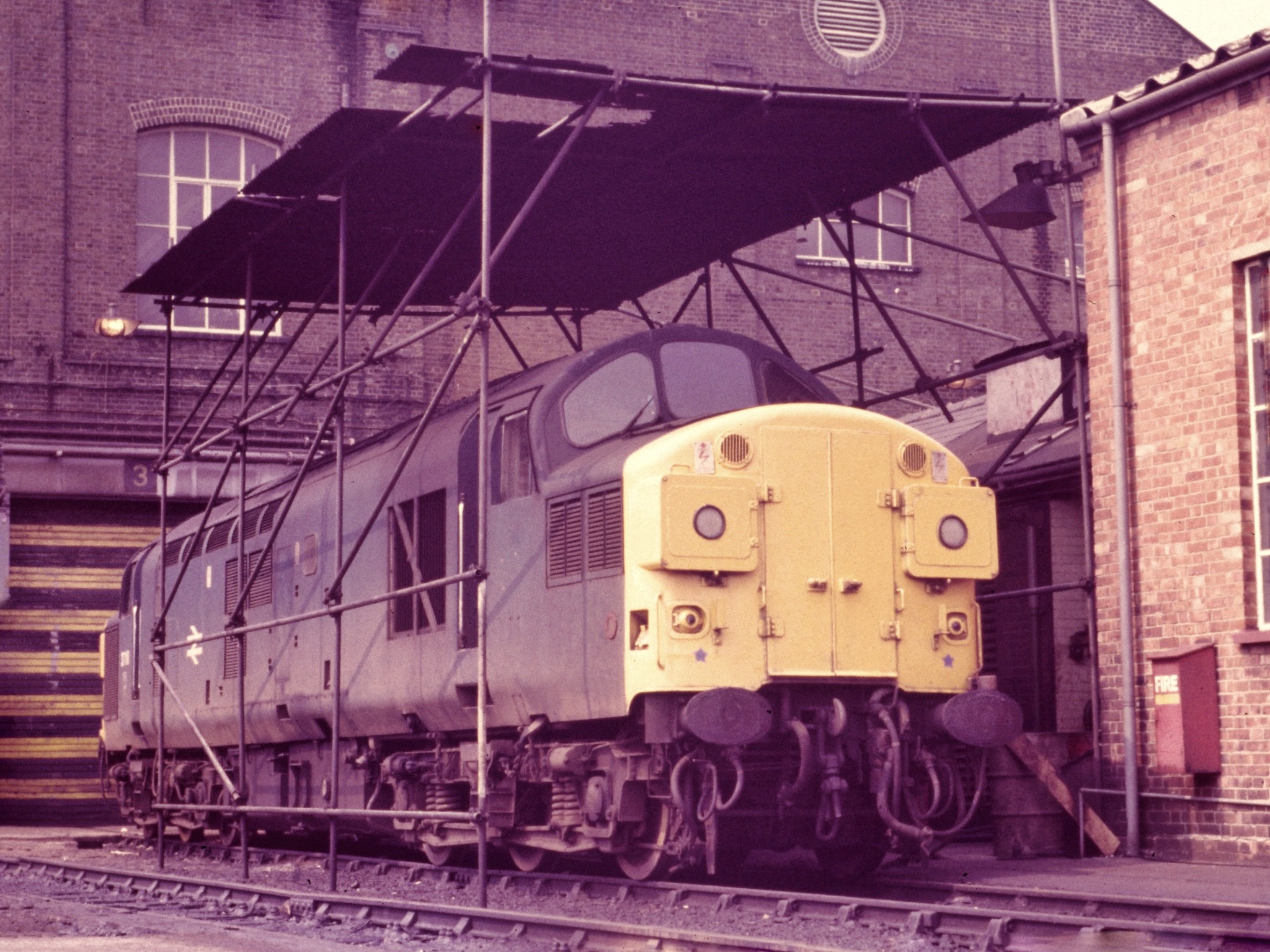
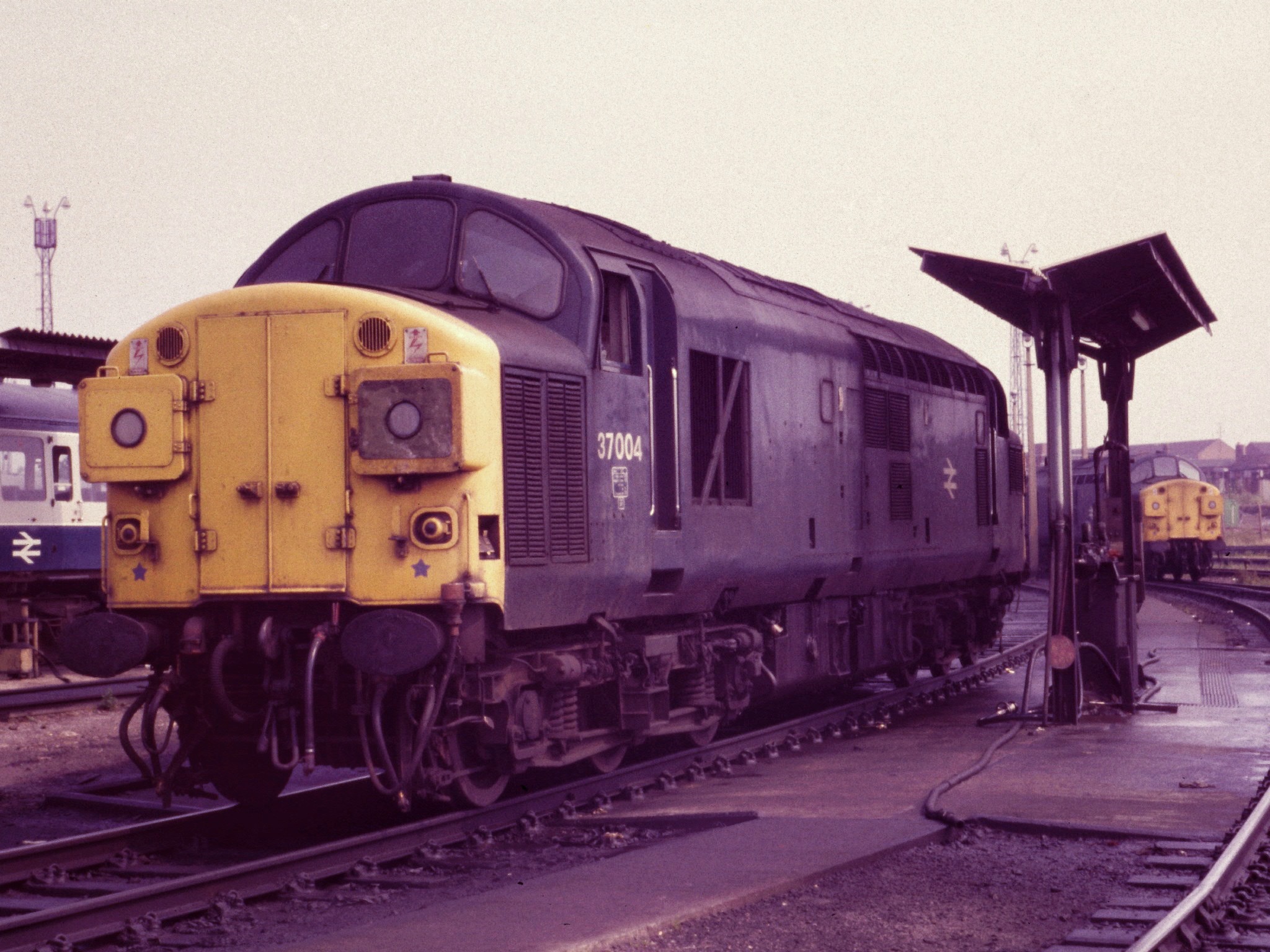
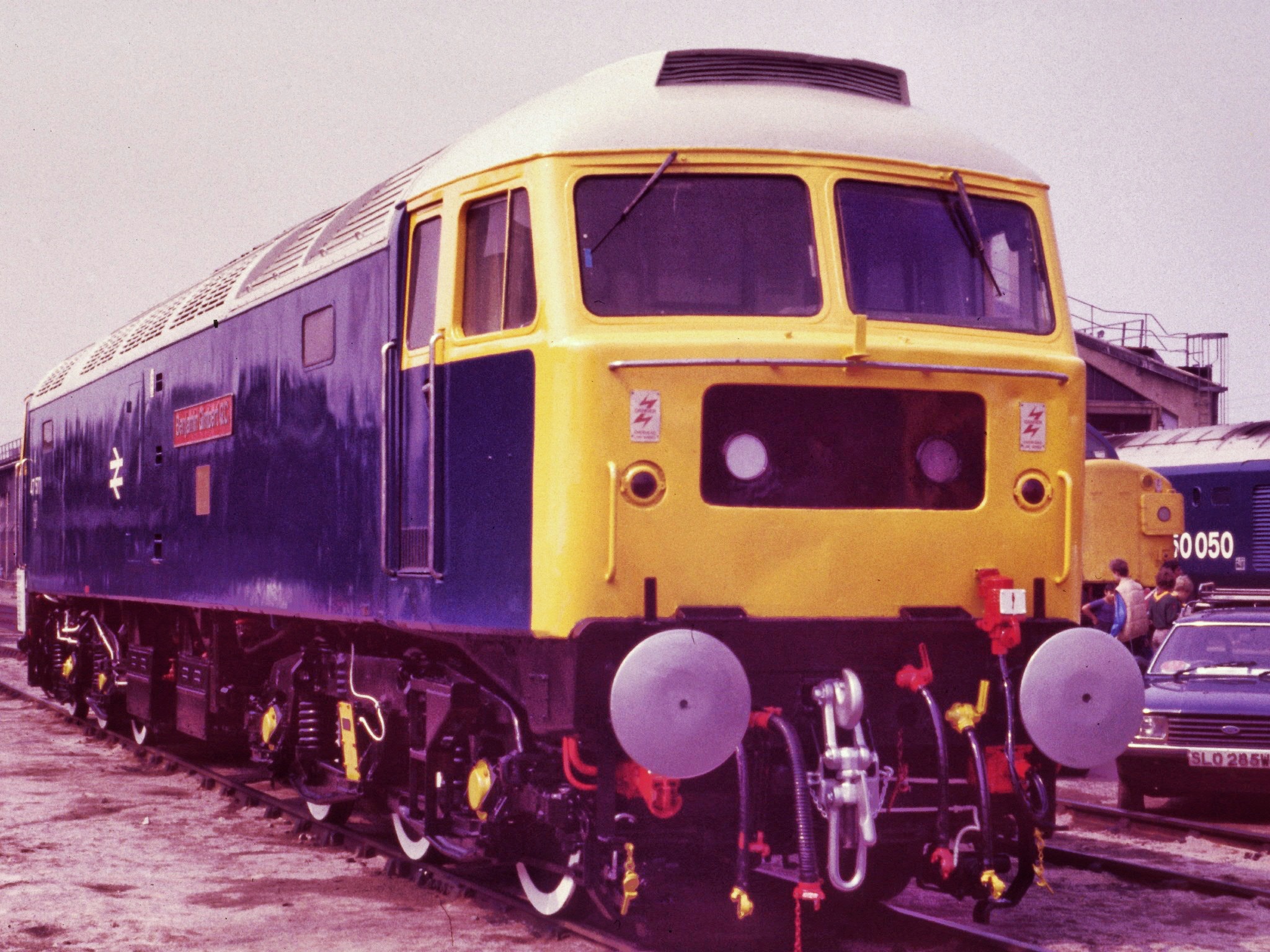
Replica of Stephenson’s ‘Rocket’ at Stratford Depot Open Day – 11/07/1981Class 31 No. 31008 at Stratford. Built at Brush Falcon works, Loughborough as No. D5508 this locomotive entered service in April 1958 as one of the twenty Brush Type 2 Pilot Scheme locomotives ordered by British Railways to replace steam traction and initially designated Class 30. These twenty locomotives did not have the headcode box mounted on the roof above the cab as did later members of the class and were “non-standard” in having Electro-Magnetic Multiple-Working control equipment (denoted by the orange circle clearly visible above each buffer) and limited to 80mph. They were allocated to East Anglian sheds throughout their service, ending their days allocated to Stratford. They were built with Mirrlees JVS12T 1250bhp engines and Brush electrical equipment, but the engines were not a success and in 1964 a programme of works commenced to re-engine the fleet with the 1470bhp English Electric 12SVT engines with No. D5504 receiving her new engine during a classified repair at Doncaster works in October 1968. The re-engined locomotives became Class 31/0 and being non standard with the rest of the class 31 fleet these twenty locomotives were early casualties with the nine (31001/07/09/10/11/12/14/16/18) being placed into storage in May 1976. However No. 31008 was one of the more fortunate of the sub-class and would survive in traffic until October 1980 when the last three (31004/08/19) were withdrawn. This was not the end for No. 31008 however as she was transferred for departmental use and converted into a non-powered carriage heating unit, re-numbered ADB968016 being used in the Stratford area before being condemned in 1982. She was eventually broken up at Crewe works in June 1985 – 11/07/1981Class 306 (AM6) three car electrical multiple unit (Shenfield Unit) No. 007 at Stratford. The Class 306’s were introduced in 1949 for the Liverpool Street to Shenfield services. They were originally built to run on DC power but as part of an exercise to standardise systems over the BR network all 92 sets were rebuilt in 1960 to utilise the new AC system. The Class 306’s remained on the lines out of London Liverpool Street for all of their lives and were withdrawn during 1980 and 1981 with all except one unit being scrapped. Unit No. 017 survives as part of the National Collection – 11/07/1981Class 31 No. 31125 at Stratford. Note the absence of the over-window headcode box which were introduced on later members of the class. This locomotive was cut up in May 2001 by Harry Needle Railroad Co. – 11/07/1981Class 37 No. 37131 at Stratford. This loco entered service in March 1963 and was withdrawn in June 2005. She was cut up at C F Booth in Rotherham in April 2007 – 11/07/1981English Electric Class 37 No.’s 37044 and 37267 on shed at Stratford. 37044 was renumbered in 1988 survived until 2021 as No.37710 with WCRC. No. 37267 lives in with Colas as No. 37421 – 11/07/1981Class 55 Deltic and megabeast No. 55021 ”Argyll and Sutherland Highlander’ on display at Stratford Open Day. The cab of this locomotive survives and is owned by The South Wales Loco Cab Preservation Group – 11/07/1981Class 47 No. 47158 ‘Henry Ford’ was named at Stratford Open Day. This locomotive was withdrawn from service in 2001 and cut up at Kingsbury by the Harry Needle Railroad Company in October 2004 – 11/07/1981Class 47 No. 47583 was painted in large logo livery with two white horizontal stripes extending from the double BR arrow along the bodyside. For the week of Prince Charles and Lady Diana Spencer’s wedding, red and blue stripes were added to the arrow emblem – 11/07/1981Class 40 No. 40092 at Stratford. This loco was disposed of at BREL Swindon in March 1986 – 09/07/1983Class 31 No.’s 31126 and 31179 at Stratford – 09/07/1983Only two months old Class 58 No. 58002 on display at Stratford. This locomotive was cut up at Eastleigh in December 2013 – 09/07/1983Peak Class 46 No. 46010 in Stratford Works. The locomotive is currently privately preserved – 09/07/1983Class 25 No. 25177 took part in re-railing demonstrations during the 1983 Stratford Open Day. The locomotive lasted another three years before being cut up at Swindon Works – 09/07/1983Class 47 No. 47122 at Stratford. This locomotive was introduced into service in January 1964 and scrapped at Springburn in October 1989 – 09/07/1983Class 37 No. 37118 at Stratford. The loco was broken up at Carnforth in 2005 – 09/07/1983Class 37 No. 37004 on the fuelling point at Stratford. Lasting in service for over 35 years, No. 37004 was introduced into traffic in January 1961 and cut up at MC Metals in Springburn June 1996 – 09/07/1983With its distinctive silver roof denoting a Stratford based loco Class 47 No. 47577 ‘Benjamin Gimbert GC’ on display at the 1983 depot open day – 09/07/1983
Benjamin Gimbert GC (6th February 1903 – 6th May 1976) was an engine driver with the LNER who was awarded the George Cross and the Order of Industrial Heroism along with his fireman James Nightall (whose award was posthumous) for saving an ammunition train from a fire on 2nd June 1944 during the Soham rail disaster when the leading wagon on a fifty-one cart ammunition train caught fire. Gimbert and Nightall uncoupled the burning wagon from the rest of the train in order to allow Gimbert to tow the burning wagon away from the rest of the ammunition train. The wagon exploded after being towed a distance 140 yards, killing Nightall instantly, but preventing a chain reaction in the other wagons. The explosion blew a twenty-foot crater in the track, destroying Soham railway station and damaged 600 buildings in the nearby village. Gimbert miraculously survived.
The citation for the George Cross awards reads: “As an ammunition train was pulling into a station in Cambridgeshire, the driver, Gimbert, discovered that the wagon next to the engine was on fire. He immediately drew Nightall’s attention to the fire and brought the train to a standstill. By the time the train had stopped the whole of the truck was enveloped in flames and, realising the danger, the driver instructed the fireman to try to uncouple the truck immediately behind the blazing vehicle. Without the slightest hesitation Nightall, although he knew that the truck contained explosives, uncoupled the vehicle and rejoined his driver on the footplate. The blazing van was close to the station buildings and was obviously liable to endanger life in the village. The driver and fireman realised that it was essential to separate the truck from the remainder of the train and run it into the open. Driver Gimbert set the engine in motion and as he approached a signal box he warned the signalman to stop any trains which were likely to be involved and indicated what he intended to do. Almost immediately the vehicle blew up. Nightall was killed and Gimbert was very severely injured. Gimbert and Nightall were fully aware of the contents of the wagon which was on fire and displayed outstanding courage and resource in endeavouring to isolate it. When they discovered that the wagon was on fire they could easily have left the train and sought shelter, but realising that if they did not remove the burning vehicle the whole of the train, which consisted of 51 wagons of explosives, would have blown up, they risked their lives in order to minimise the effect of the fire. There is no doubt that if the whole train had been involved, as it would have been but for the gallant action of the men concerned, there would have been serious loss of life and property”
On 28th September 1981 two Class 47 locomotives were named in honour of the two railwaymen: No. 47577 was named ‘Benjamin Gimbert, GC’ and No. 47579 ‘James Nightall, GC. The names are now carried by DB Cargo Class 66 locomotive No.’s 66077 and 66079 respectively
Today the site of Stratford Depot is occupied by Stratford International station and the Westfield Stratford City shopping centre. A commemorative plaque was unveiled on the site on 10 July 2012 featuring a 30A shedplate and Stratford cockney sparrow in its design and acknowledging the history of the site.
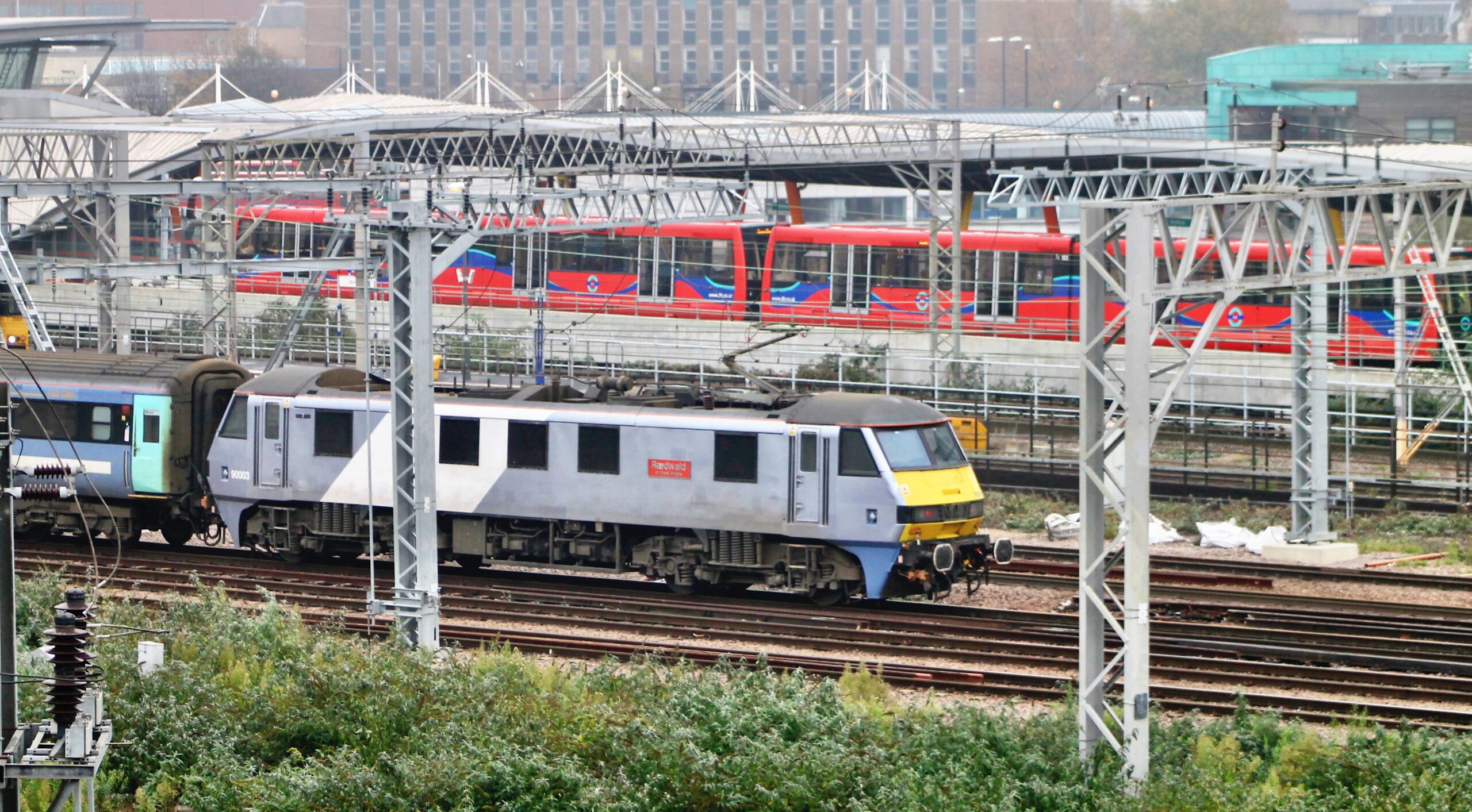
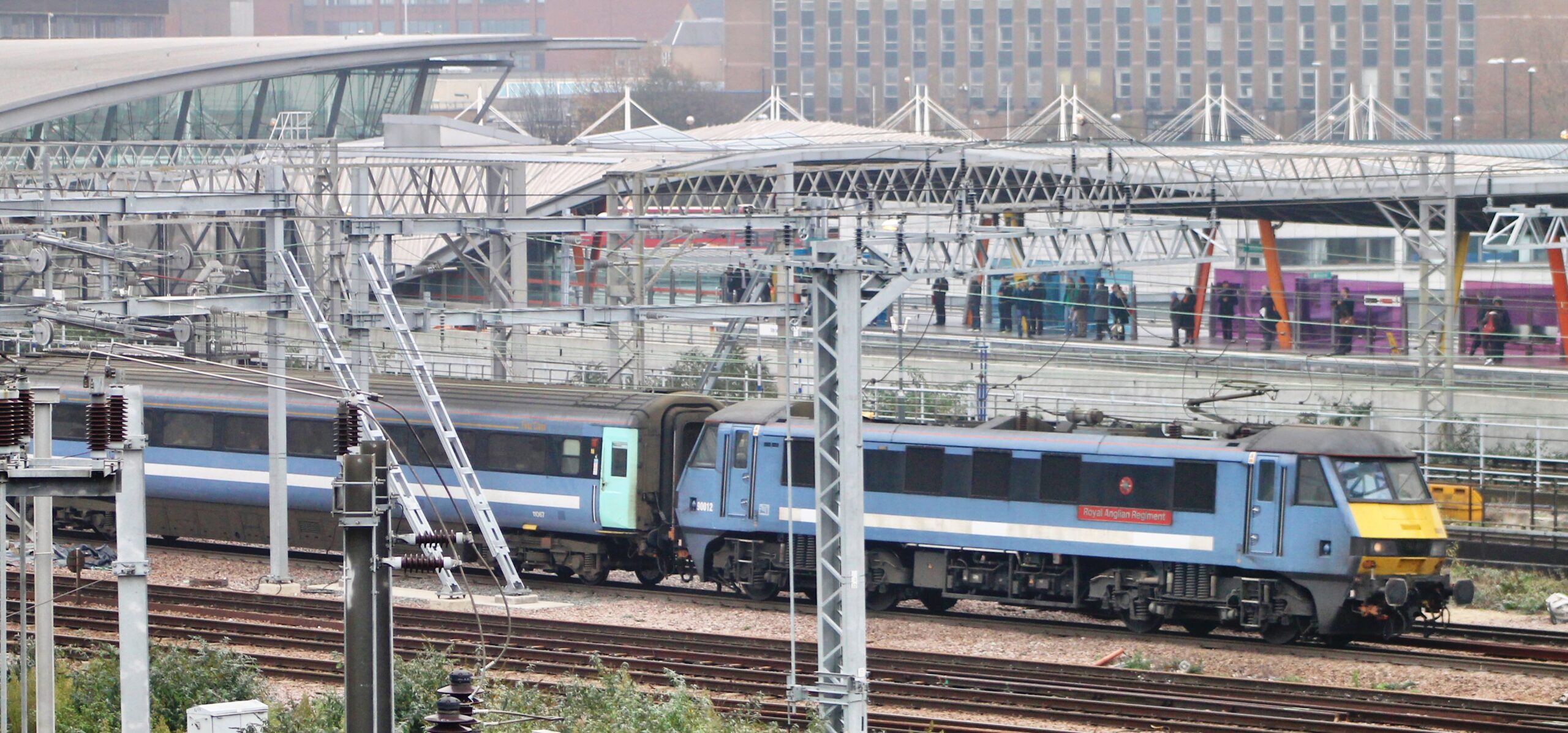
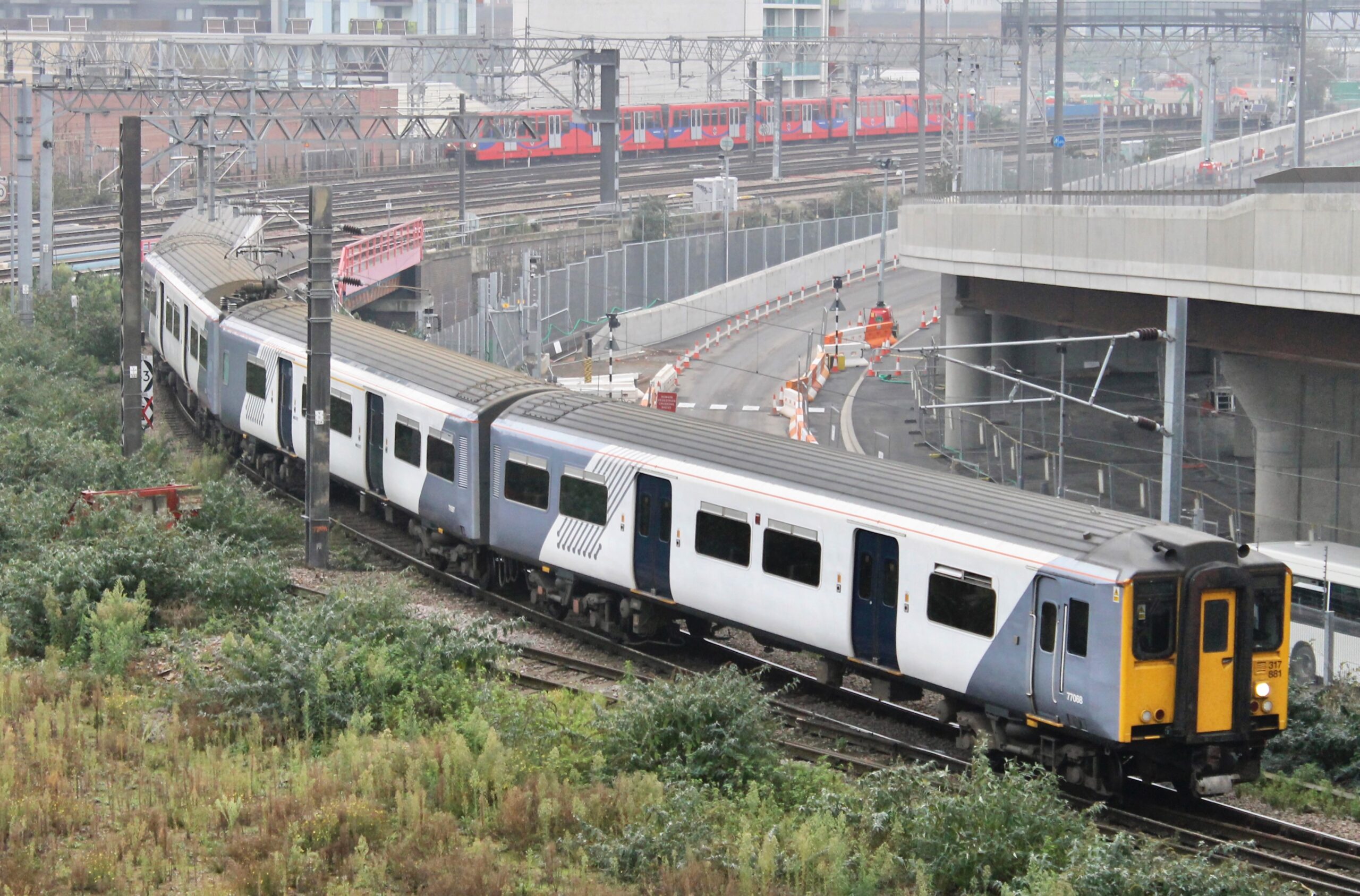
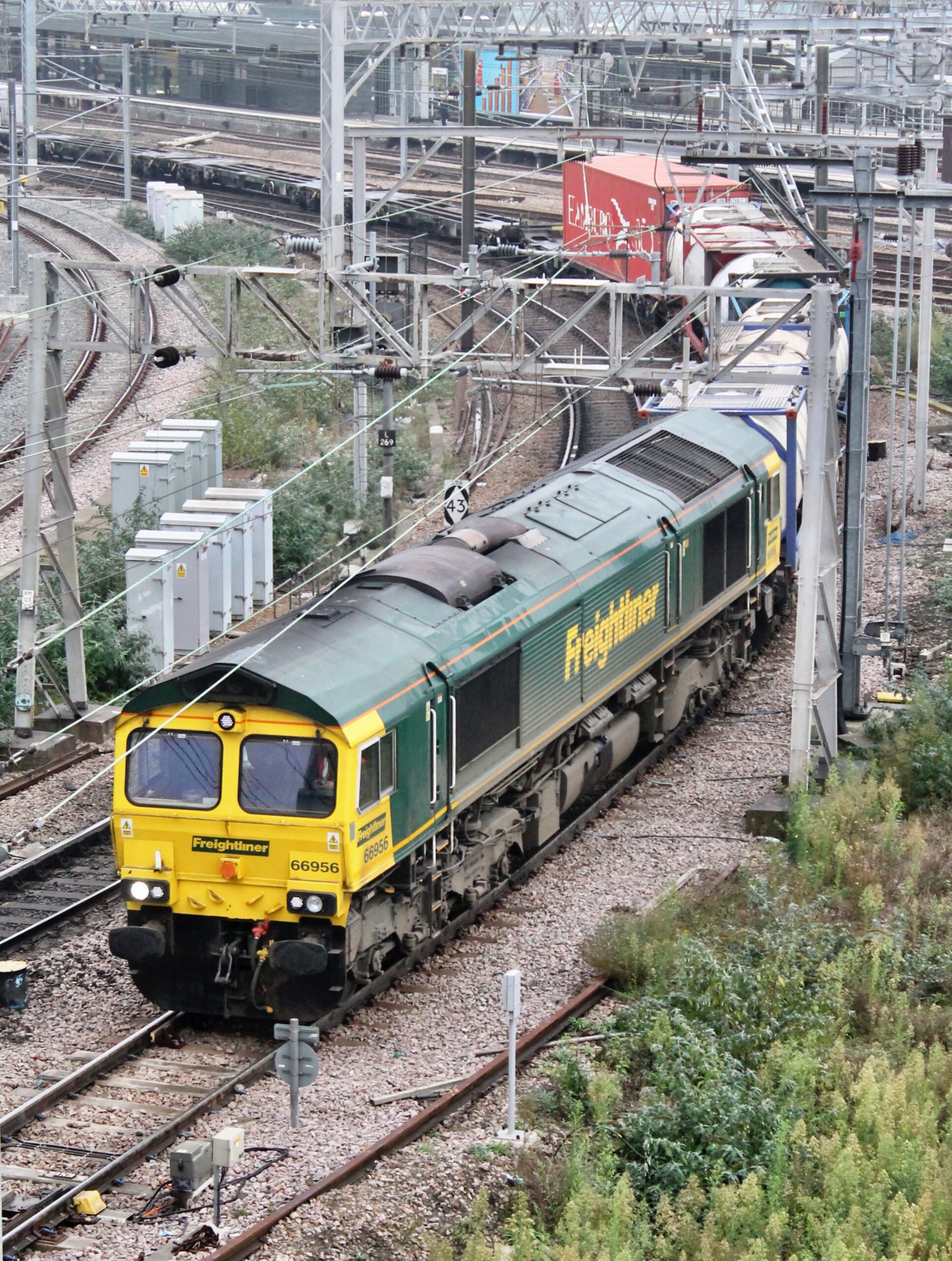
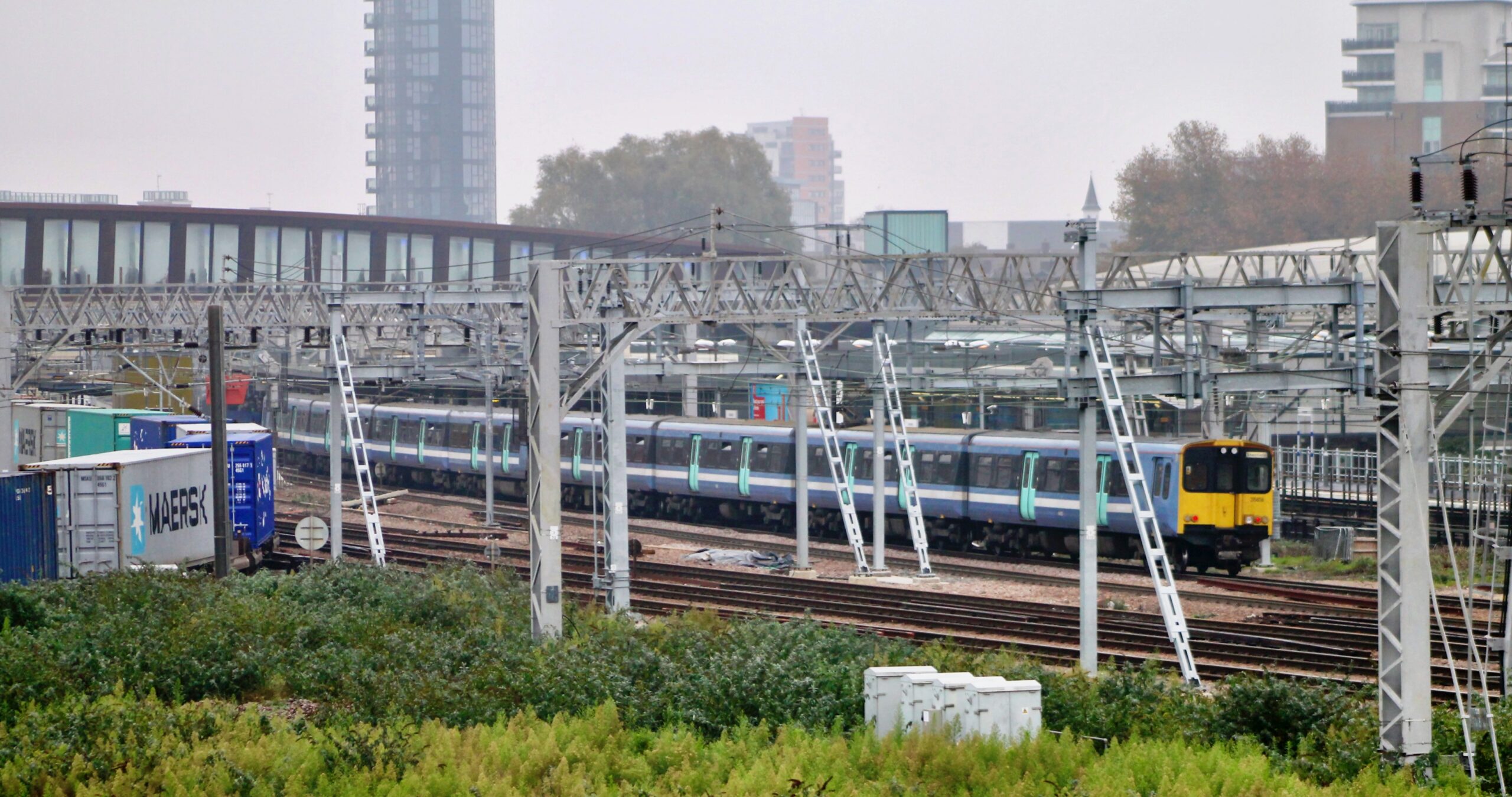
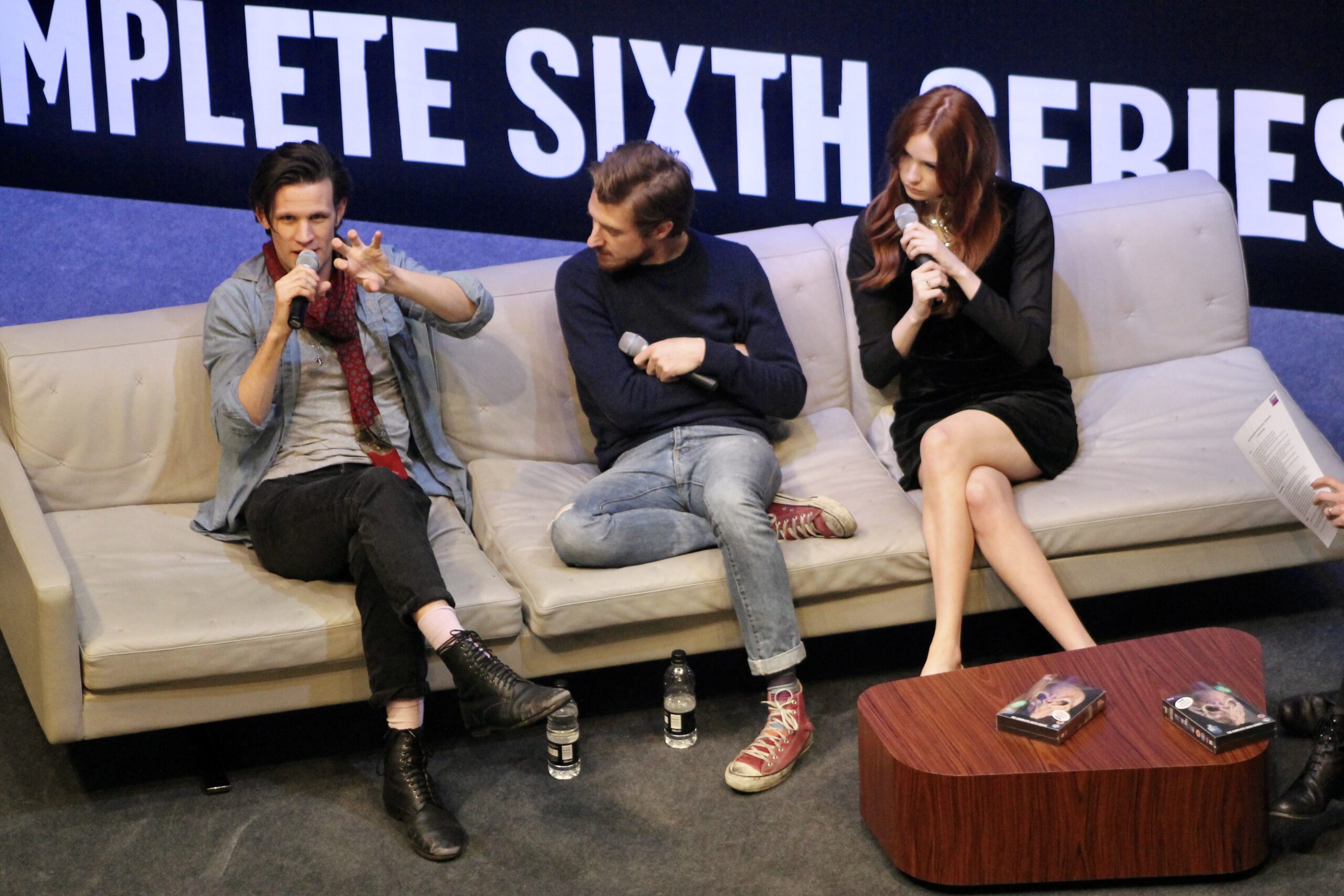
EWS Class 66 No. 66137 on a container train at Stratford – 21/11/201166064 leads on a Rail Head Treatment Train towards Stratford – 21/11/2011Class 90 No. 90003 ‘Raedwald of East Anglia’ passes a Dockland Light Railway train at Stratford. The Class 90 25kV AC overhead electric locomotives, built for mixed-traffic duties, were introduced to service during the closing years of BR – 21/11/2011Class 90 No. 90012 ‘Royal Anglian Regiment’ at Stratford. A total of 50 Class 90 locomotives were manufactured by BREL at Crewe Works between 1985 and 1990. The design of the Class 90 is heavily derived from the Class 87, but incorporates many improvements and new features and were intended as replacements for the Class 81-85 locomotives, all of which dated from the early 1960’s and had become quite unreliable due to their advanced age – 21/11/2011Class 90 No. 90013 ‘The Evening Star’ passes Stratford. As part of its East Anglia franchise bid, National Express provided a fleet plan to replace the ageing Class 86 locomotives in use on the Great Eastern Main Line with the more powerful and newer Class 90 locomotives, hoping this would improve performance and reduce operating costs. The Class 90’s were to become available due to Virgin Trains plan to replace all loco hauled passenger trains with Class 390 Pendolino units, freeing up their 15 class 90 locomotives. No.’s 90001 – 90015 were progressively delivered to Crown Point Traction Maintenance Depot to replace the Class 86’s. The National Express franchise came to an end in February 2012, with the replacement franchisee Greater Anglia taking over and continuing to operate the Class 90’s. In January 2020, the Class 745 FLIRT emu sets began entering service to replace the Class 90 sets. Following the introduction of these units, the loco-hauled sets were all withdrawn from service, with the final set running its last services on 24th March 2020. Thirteen Class 90’s moved to Freightliner to replace their class 86’s, while two went to Locomotive Services Limited (LSL) to operate their excursion trains – 21/11/2011Class 317 No. 317881. The British Rail Class 317 is an electric multiple unit (EMU) passenger train constructed by British Rail Engineering Limited in two batches, 48 sets being produced in 1981–82 and 24 sets in 1985–87. They were the first of several classes of British Rail EMU to be based on the all-steel Mark 3 bodyshell, departing from the “PEP”-aluminium design which had spawned the earlier Class 313 to Class 315, Class 507 and Class 508. The Mark 3 bodyshell was also the basis of Class 318, Class 455, and the diesel Class 150. The Class 317 uses overhead alternating current electrification. All were withdrawn in July 2022. – 21/11/2011Freightliner Class 66 No. 66956 heads through Stratford – 21/11/2011Class 315 No. 315856 runs through Stratford. The BR Class 315 was a fleet of alternating current (AC) electric multiple unit (EMU) trains, built by British Rail Engineering Limited at Holgate Road Carriage Works in York between 1980 and 1981; they replaced the Class 306 units. It was the fifth and final variant of unit derived from British Rail’s 1971 prototype suburban EMU design which, as the BREL 1972 family, eventually encompassed 755 vehicles across Classes 313, 314, 315, 507 and 508. Revenue services with Class 315 units commenced in 1980 and continued until December 2022 – 21/11/2011An unusual form of transportation materialised at Stratford in November 2011 – 21/11/2011Celebrating the release of the Sixth Series of the regenerated Doctor Who at Westfield, Stratford with 11th Doctor actor, Matt Smith and his companions Arthur Darvill – who played Rory, and Karen Gillan who was Amy Pond – 21/11/2011
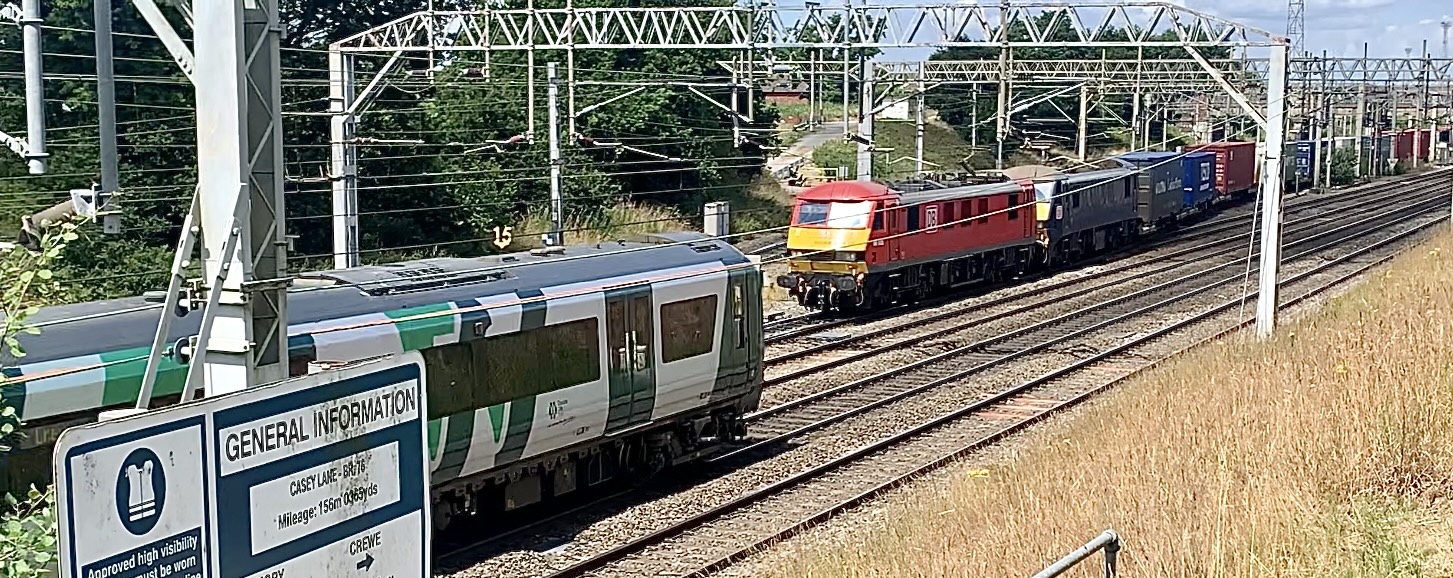
Short video from a visit to Stratford in March 2001A footnote to the Class 90 info above – DB Cargo have announced recently that because of the increased costs for electricity, it is no longer commercially viable to run their Class 90 25kV electric locomotives and have put their last five active members of the class into storage. Class 66 diesel locomotives will replace them on West Coast Main Line intermodal trains. The video screenshot above shows DB Class 90 No.’s 90035 and 90034 heading out of Crewe Basford Hall yard – 14/07/2022
And with that, we reach the end of another blog entry. I’ll leave you with a pic of Yoshi. Thanks for reading and for your comments and corrections. Be seeing you!
Yoshi was rather taken with the pavement art sunflowers in South Street, Dorchester and demanded he had his photo taken with one – 06/08/2023
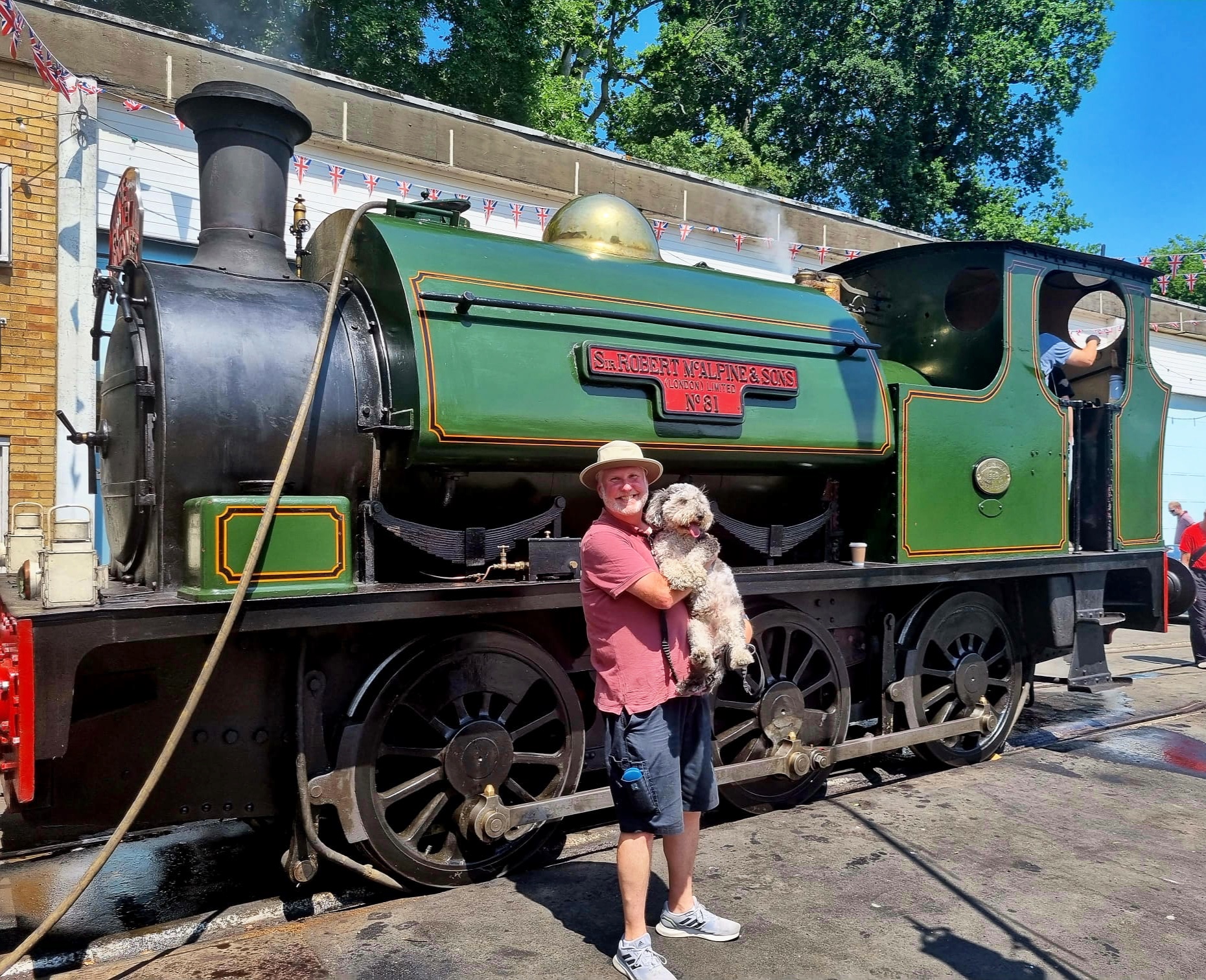
Yoshi and I in front of Hudswell Clarke & Co Ltd 0-6-0 ST No. 31 at Fawley Hill Museum – 25/06/2023
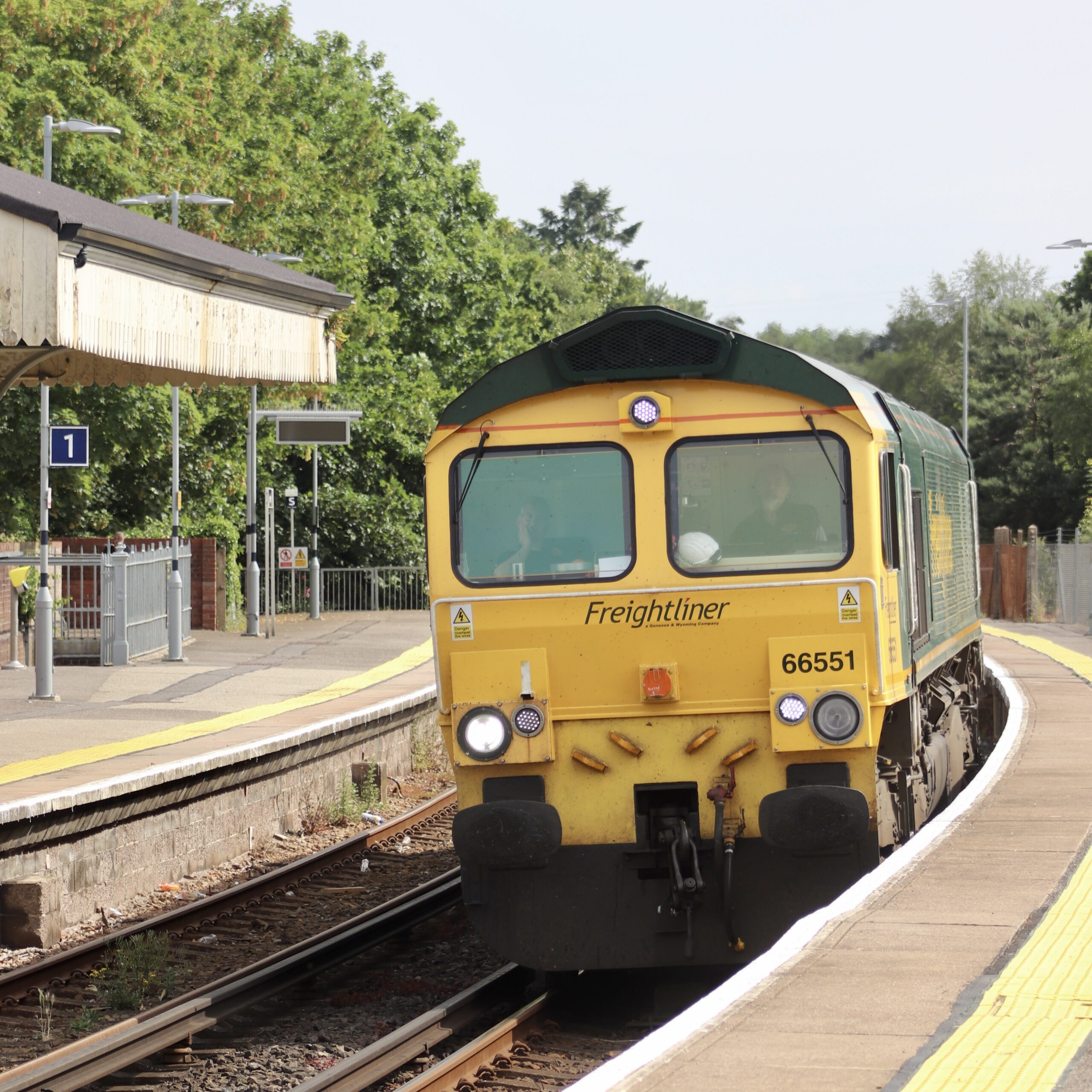
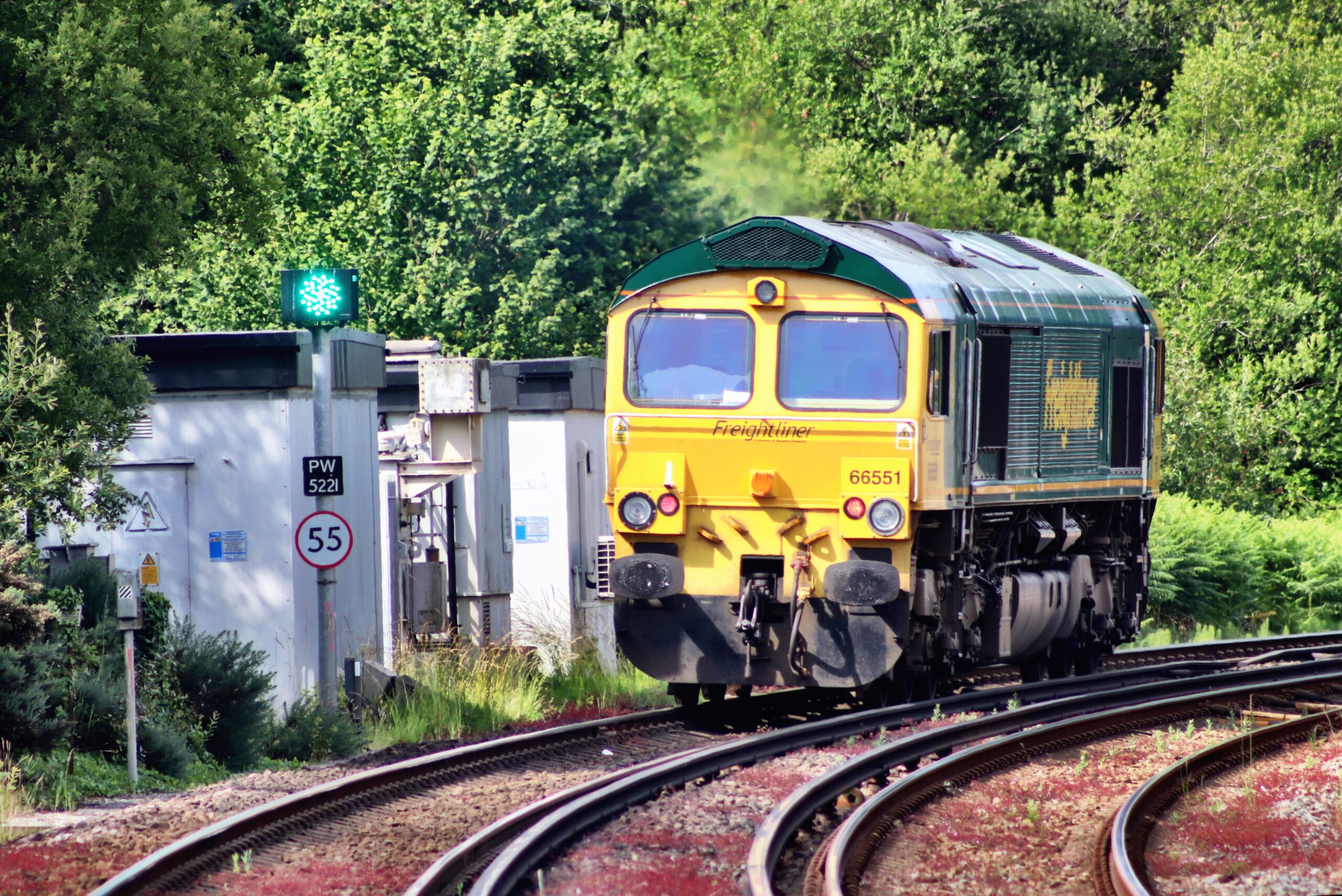
We eased into a busy few days by popping over to Hamworthy on Friday 23rd June 2023 to see a Freightliner Class 66 locomotive on a route learner from Southampton Maritime to Weymouth and back. No idea if this means there may be some engineering trains heading our way in the future or just a refresher for the crew. Either way, it was good to see.
Freightliner Class 66 No. 66551 passes Hamworthy on a route learner running as 0W45 0902 Southampton MCT to Weymouth – 23/06/2023Freightliner Class 66 No. 66551 having passed through Hamworthy station working 0W45 0902 Southampton MCT to Weymouth – 23/06/2023
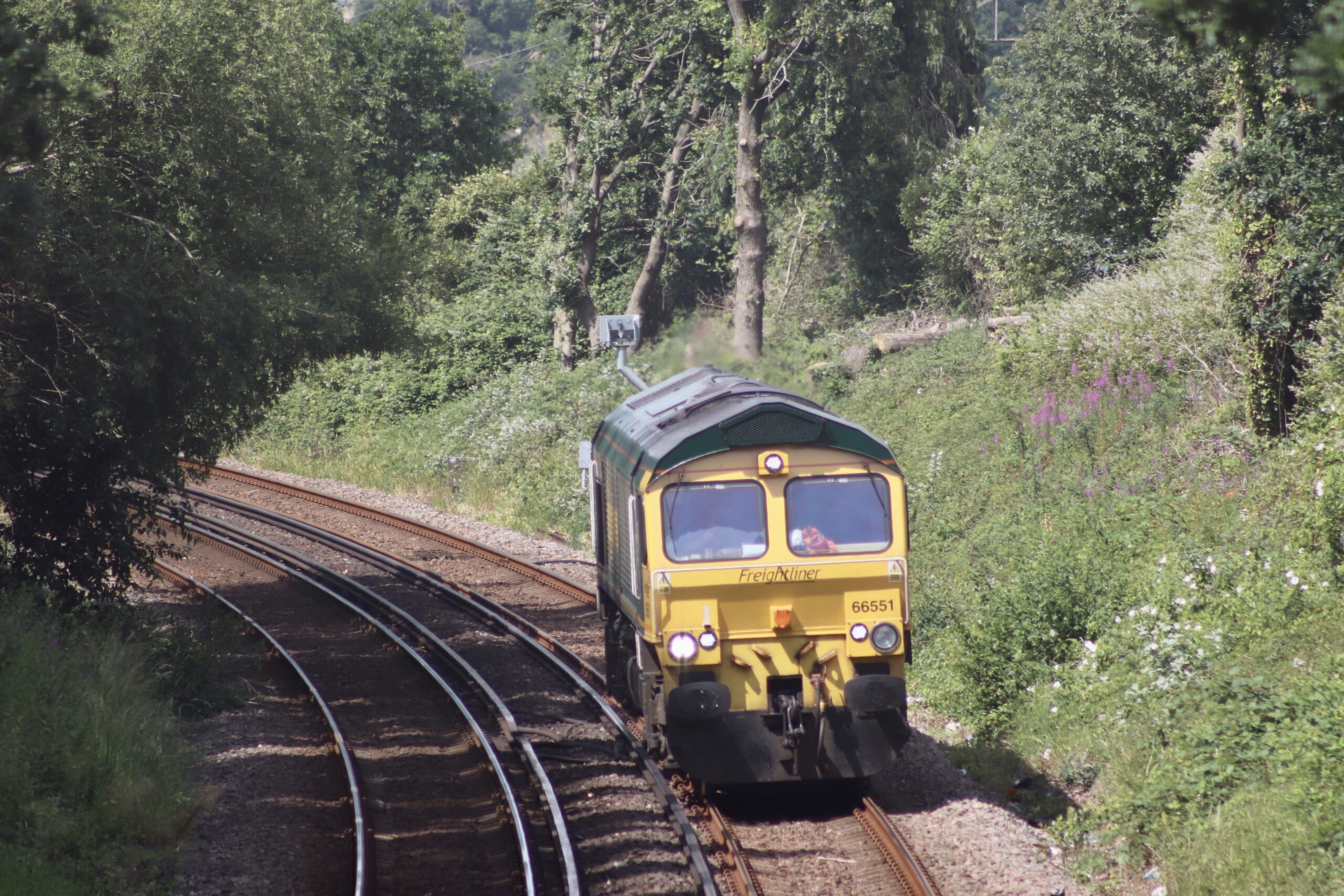
On the return trip back to Southampton Maritime, I sought a location I have not used previously. A footbridge across the railway afforded a nice view of the mainline on the approaches west of Hamworthy. I had not, however, taken into the account that the bridge was surrounded by mesh which made photography very difficult. It was also very bouncy when being walked across, so I was very relieved nobody passed at the same time as the light Class 66 trundled by underneath!
Freightliner Class 66 No. 66551 passes Hamworthy on the return route learner running as 0W46 1041 Weymouth to Southampton MCT – 23/06/2023
Class 66 No. 66551 on route learning duties – 23/06/2023
On Saturday, Yoshi’s mama had planned an all female picnic meet-up with friends, which left the boy and I free to go and see some trains during the day! I’d noted on the rail tour calendar that double-headed Class 69’s were scheduled to run down to Cornwall, so this became my objective of the day. In fact there were four tours scheduled to pass through Taunton that same day, with one changing diesel traction for steam in the station, so this was probably a good choice of location.
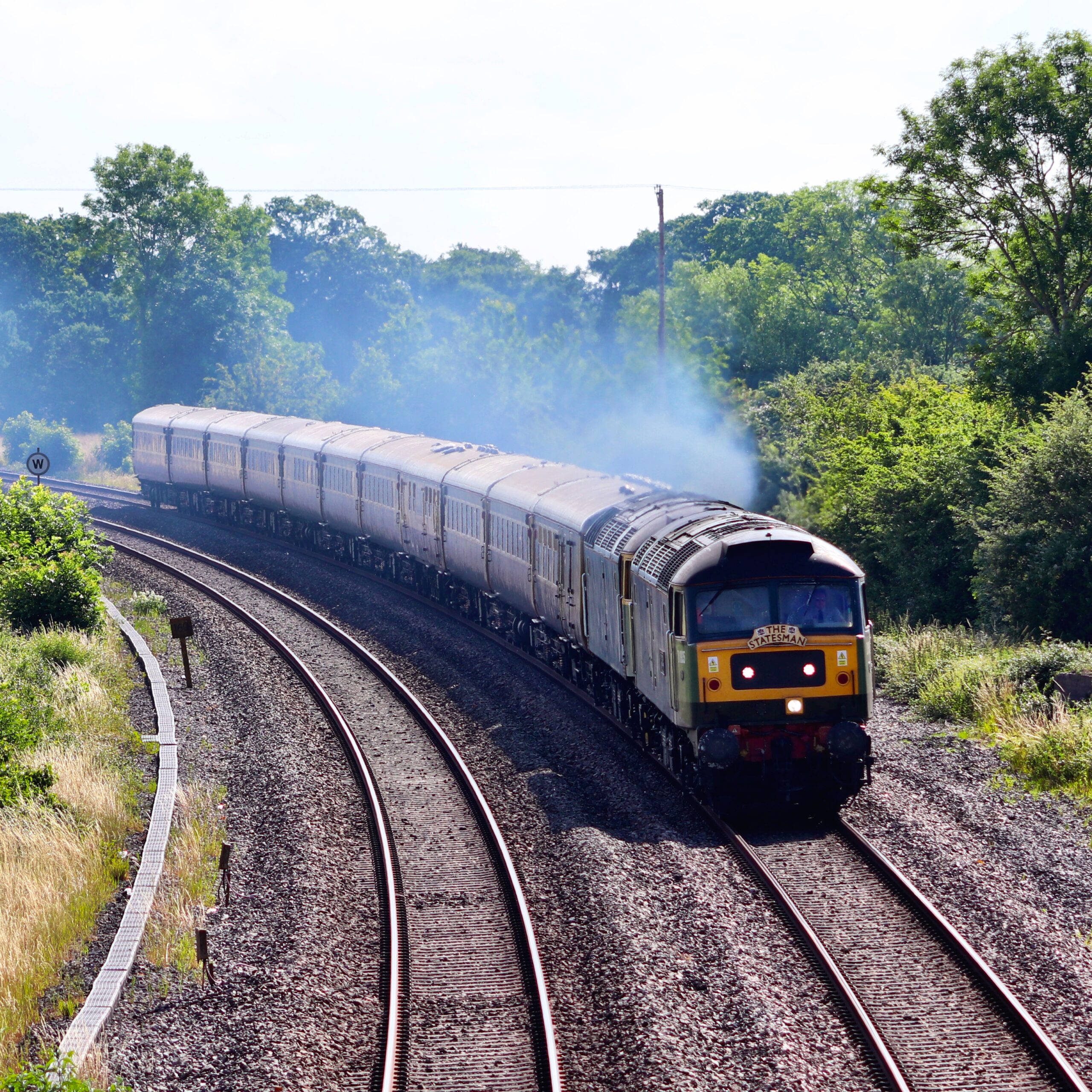
Cornish Mazey Day Statesman – 1Z64 0522 Solihull to Penzance
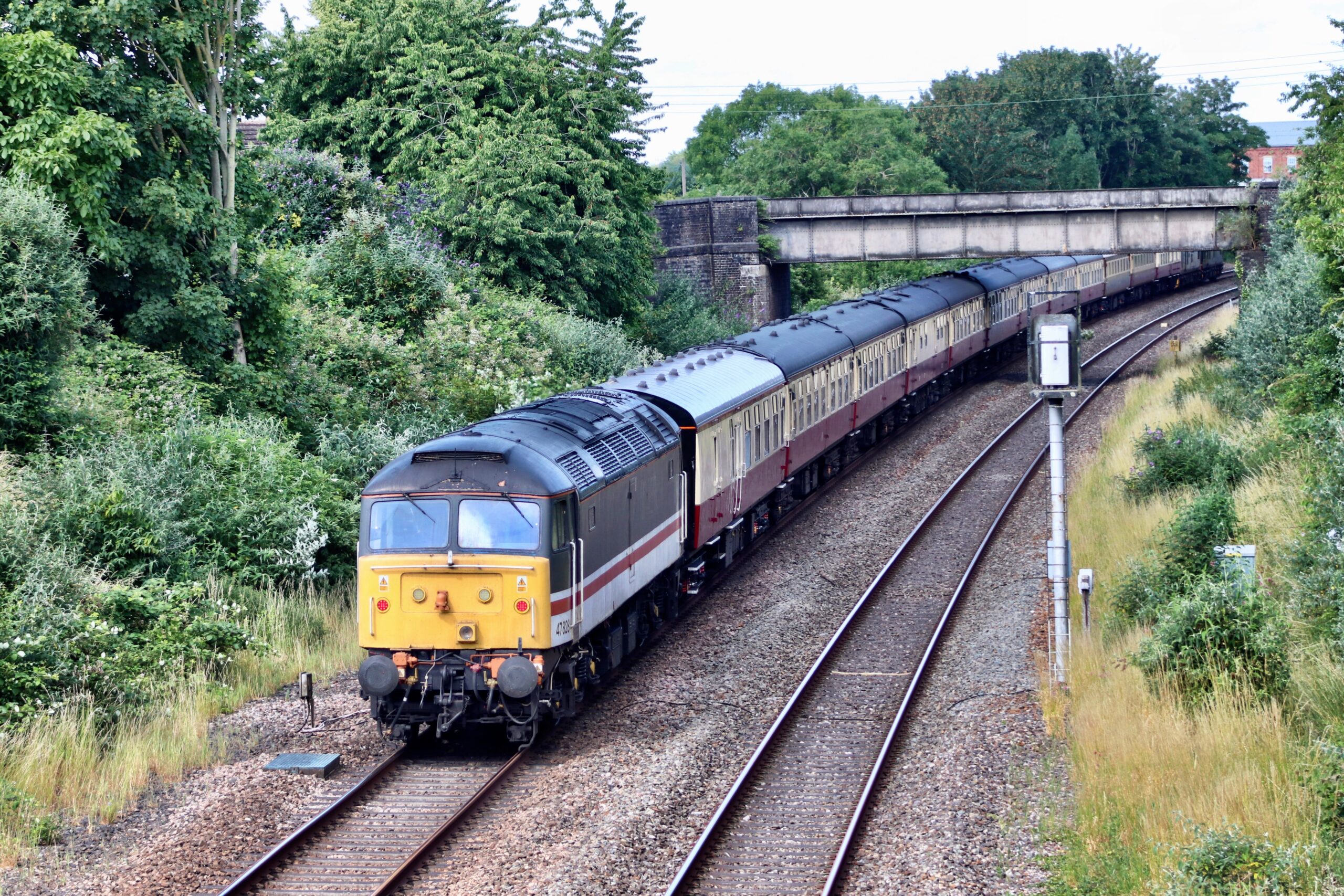
LSL Class 47 No.’s 47805 and 47614 flying through Creech St. Michael with the “Cornish Mazey Day Statesman” 1Z64 0522 Solihull to Penzance – 24/06/2023
Operated by: Statesman Rail
Motive power: 2 x LSL Class 47 No.’s 47805 and 47614
The Pathfinder Mazey Day Special – 1Z69 0544 Tame Bridge Parkway to Penzance
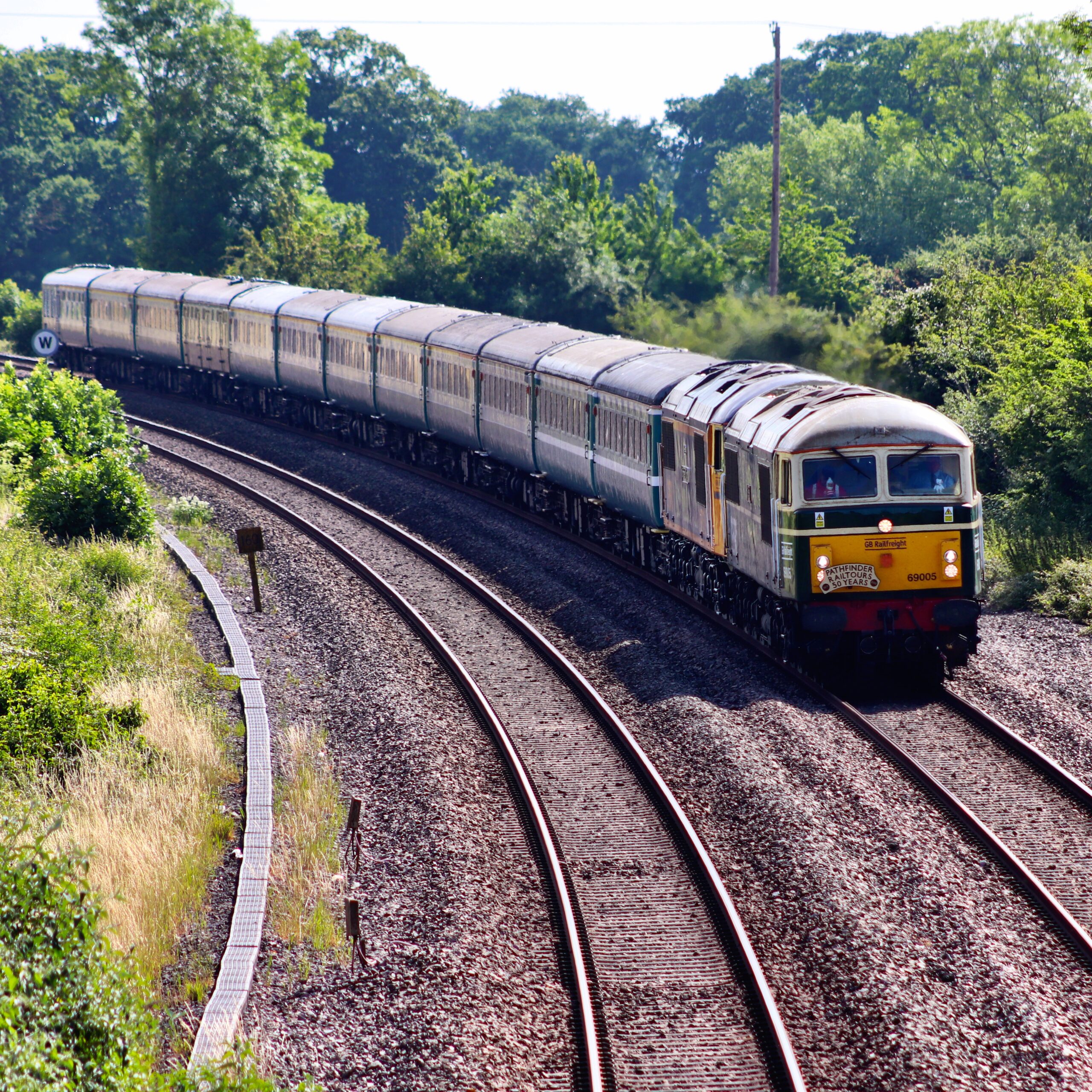
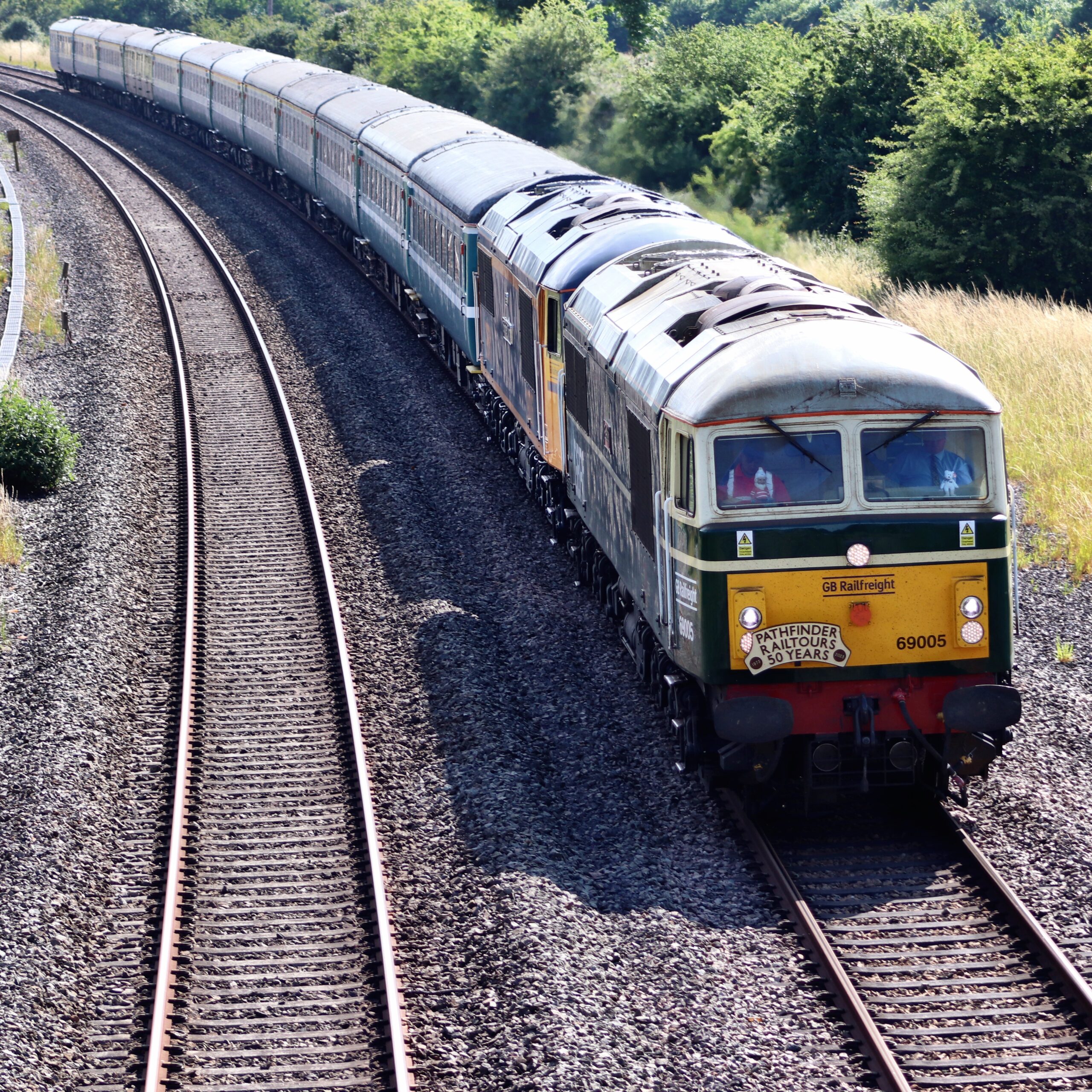
GBRf Class 69 No.’s 69005 and 69006 on the approach to Creech St. Michael working “The Pathfinder Mazey Day Special” 1Z69 0544 Tame Bridge Parkway to Penzance – 24/06/2023GBRf Class 69 No.’s 69005 and 69006 on the approach to Creech St. Michael working “The Pathfinder Mazey Day Special” 1Z69 0544 Tame Bridge Parkway to Penzance – 24/06/2023
Operated by: Pathfinder Tours
Motive power: 2 x GBRf Class 69 No.’s 69005 and 69006
At a ceremony in Gloucester on Friday 23rd June 2023, No. 69006 was named ‘Pathfinder Railtours – Peter Watts 50 Years Service 1973-2023’. After the naming No.’s 69006 and 69005 ran light engines to Burton to collect the tour stock for the following day.
English Riviera Express – 1Z27 0550 Shrewbury to Kingswear (For Dartmouth)
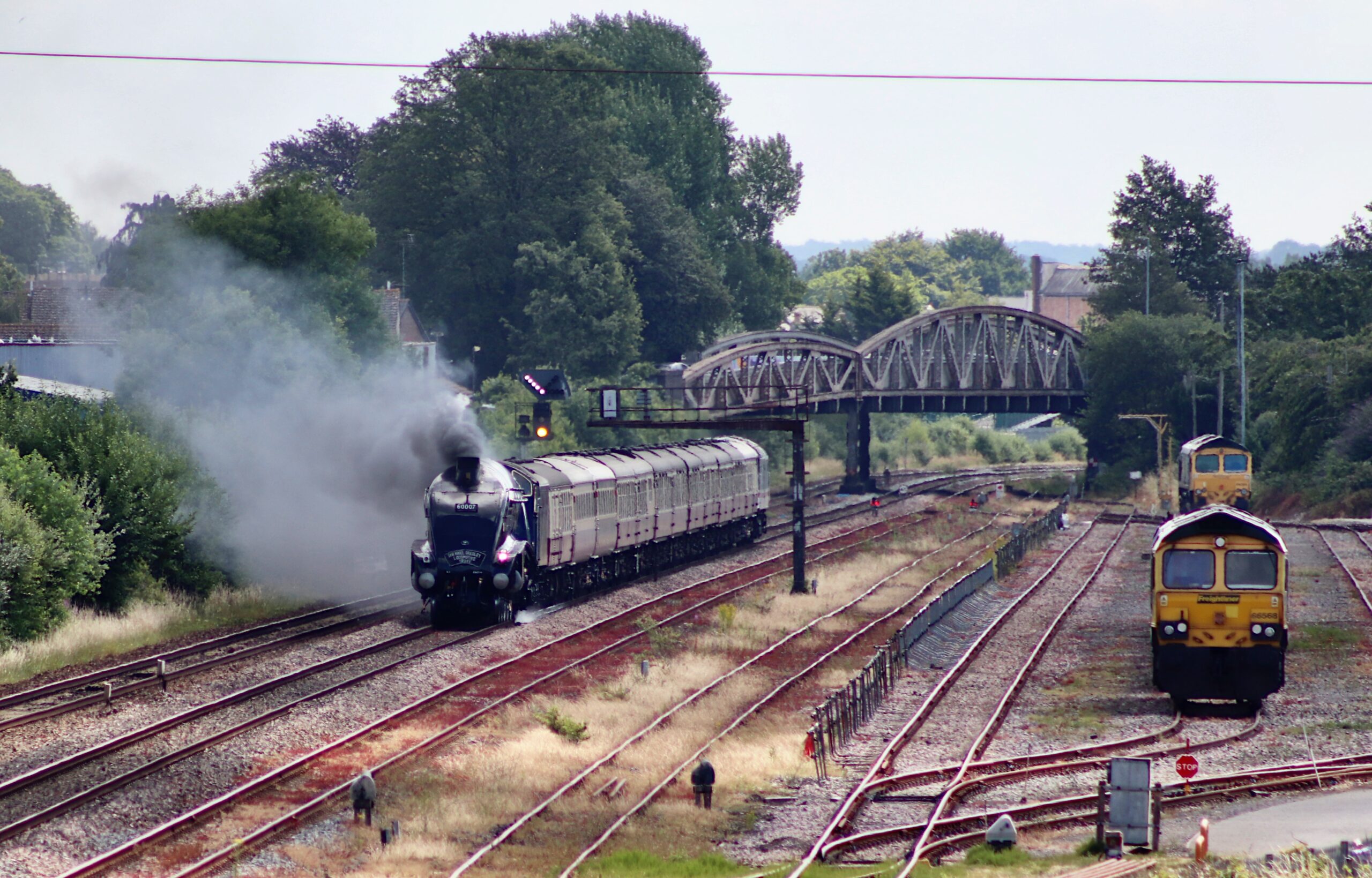
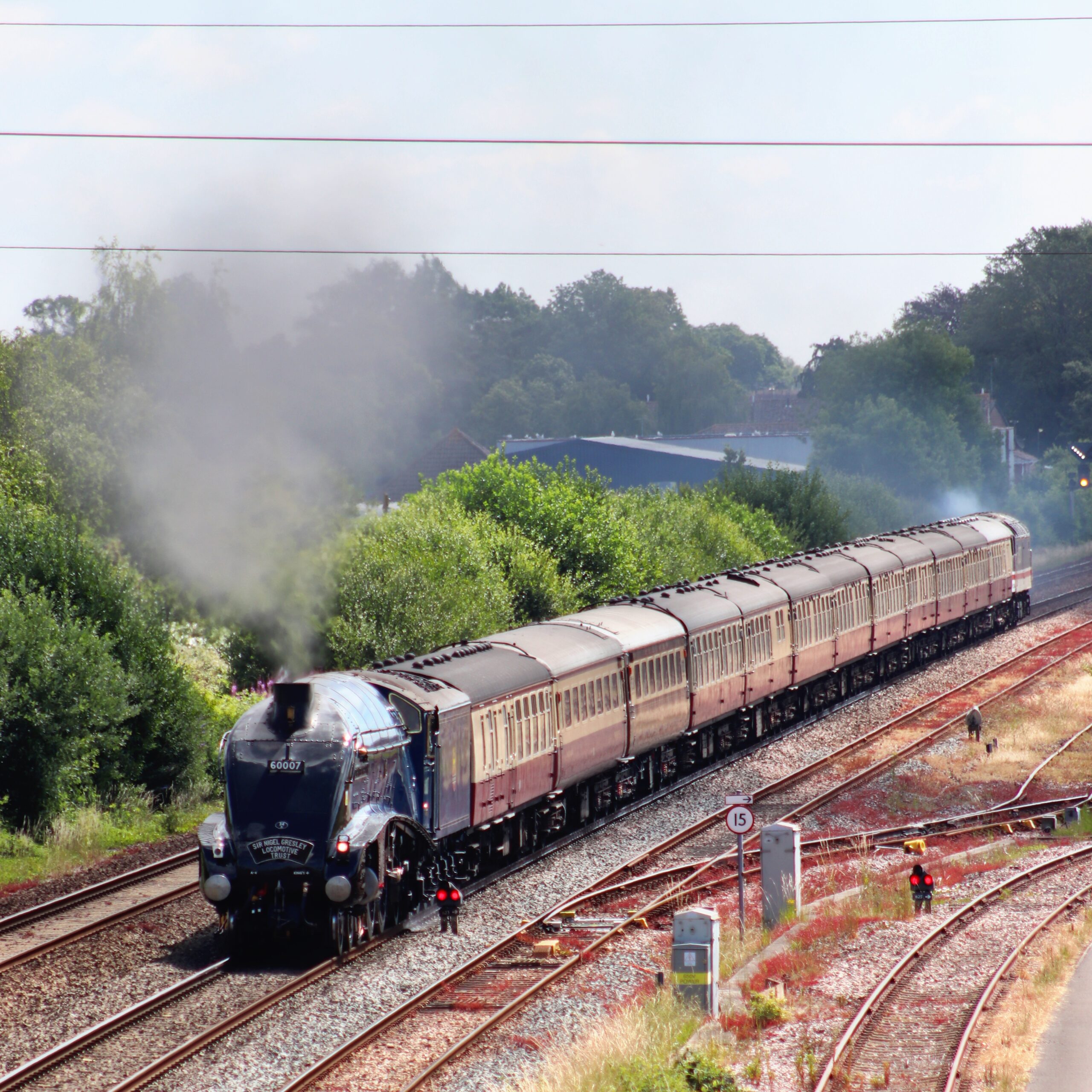
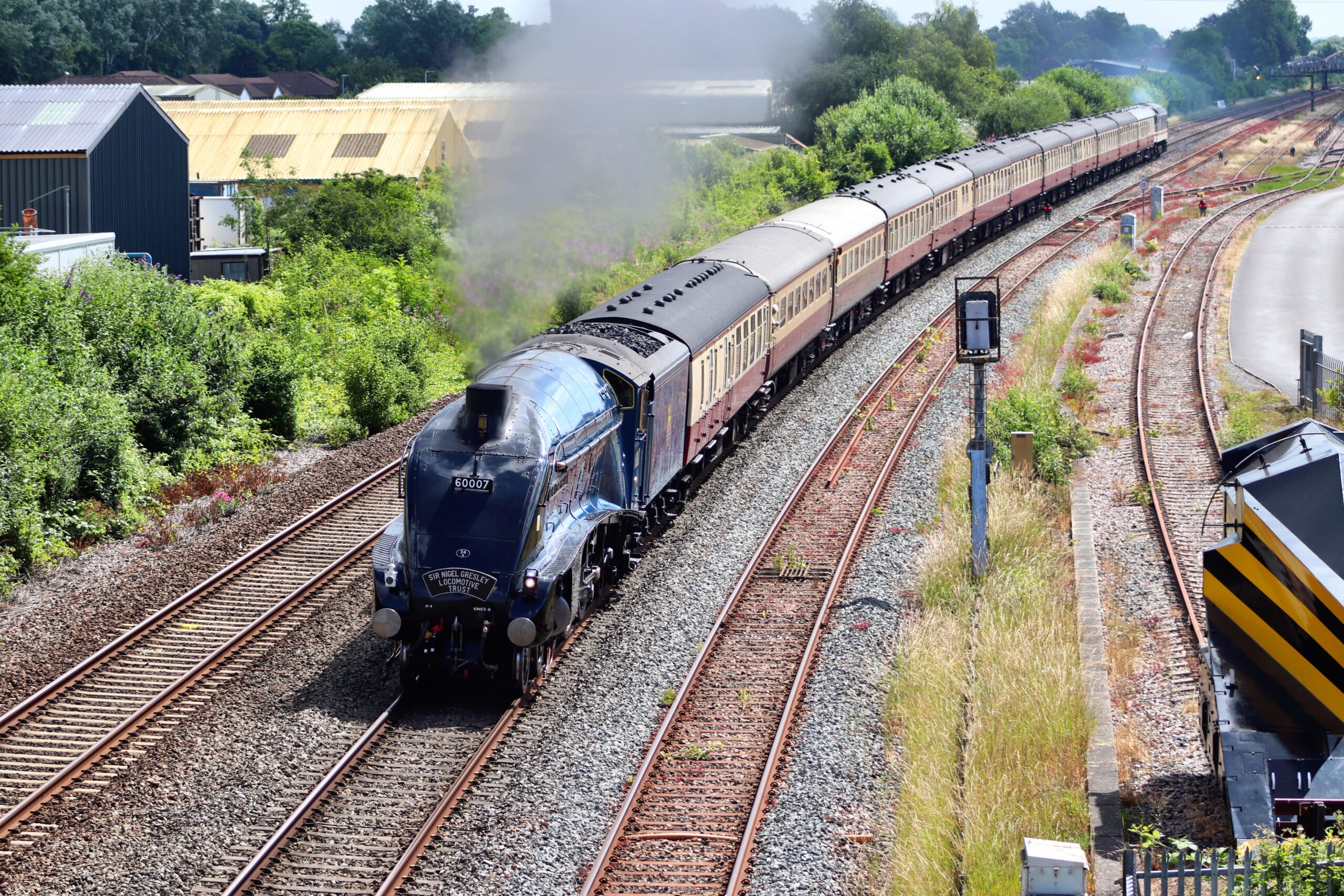
LSL Class 37 No.’s 37521 and 37688 with Class 47 No. 47828 at the rear hauling the diesel leg of the “English Riviera Express” 1Z27 0550 Shrewbury to Kingswear (For Dartmouth) at Creech St. Michael – 24/06/2023LSL Class 47 No. 47828 at the rear of the “English Riviera Express” 1Z27 0550 Shrewbury to Kingswear (For Dartmouth) at Creech St. Michael – 24/06/2023Having changed locomotives in Taunton railway station and now with LNER A4 4-6-2 No. 60007 ‘Sir Nigel Gresley’ in charge “English Riviera Express” 1Z27 0550 Shrewbury to Kingswear (For Dartmouth) passes Fairwater Yard, Taunton – 24/06/2023LNER A4 4-6-2 No. 60007 ‘Sir Nigel Gresley’ heads up the “English Riviera Express” 1Z27 0550 Shrewbury to Kingswear (For Dartmouth) with Class 47 No. 47828 at the rear passing Fairwater Yard, Taunton – 24/06/2023LNER A4 4-6-2 No. 60007 ‘Sir Nigel Gresley’ heads up the “English Riviera Express” 1Z27 0550 Shrewbury to Kingswear (For Dartmouth) at Silk Mills, Taunton – 24/06/2023
Operated by: Saphos Trains
Motive power: 2 x LSL Class 37 No.’s 37521 and 37688 with Class 47 No. 47828 at the rear. At Taunton the Class 37’s were taken off the train and substituted by LNER A4 4-6-2 No. 60007 ‘Sir Nigel Gresley’. The Class 47 remained to provide assistance at the rear.
The Whistling Ghost – 1Z10 0608 Birmingham Snow Hill to Bishops Lydeard
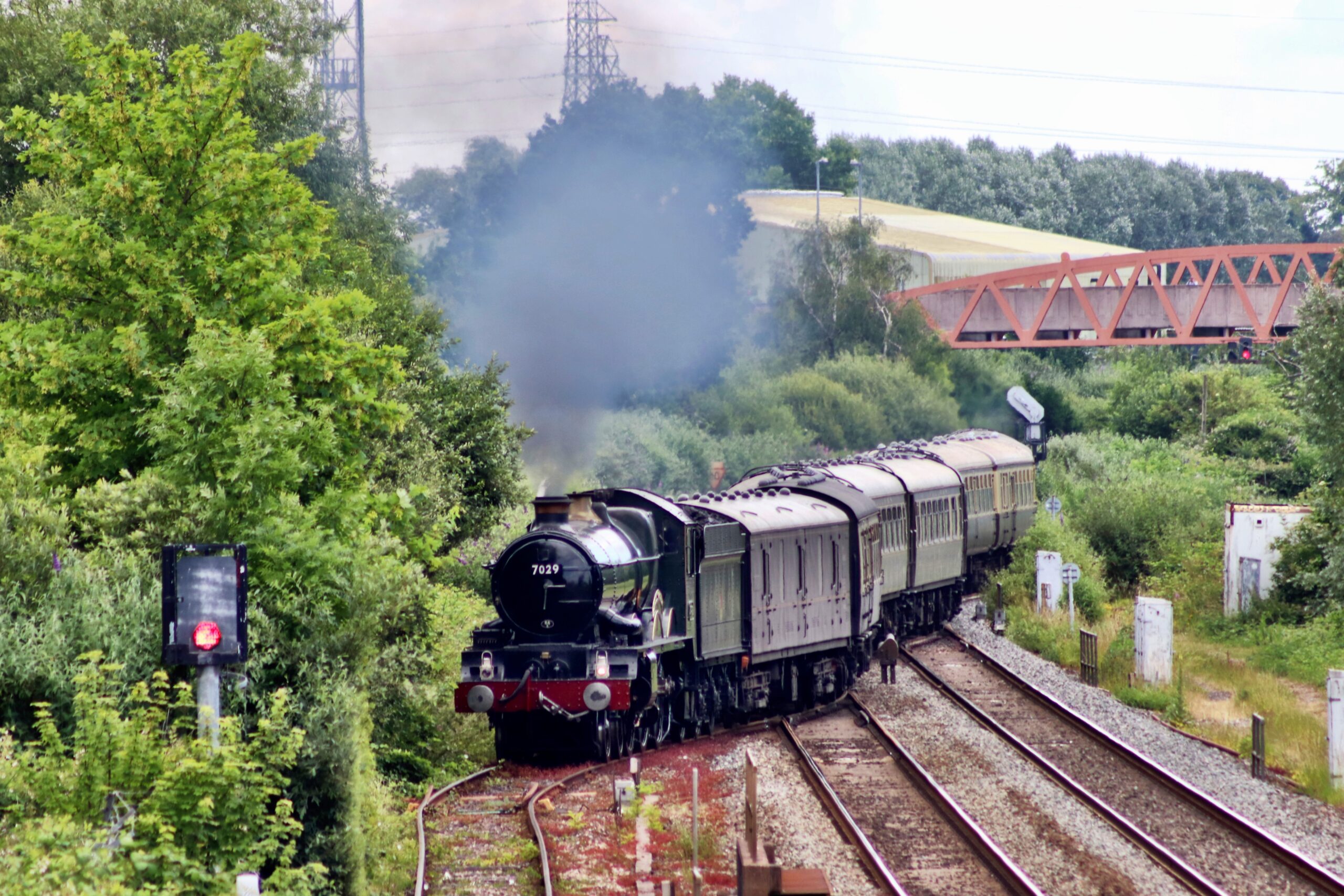
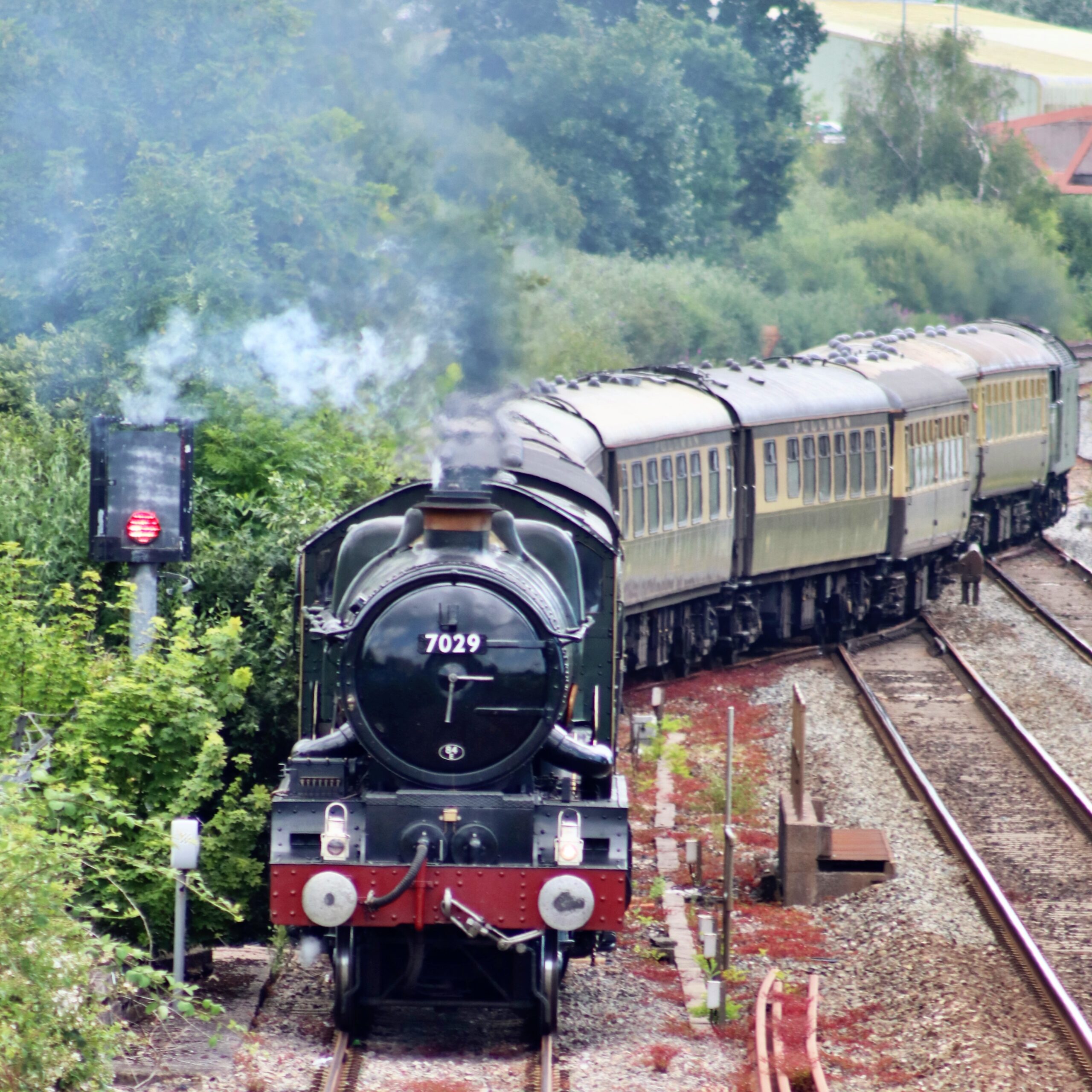
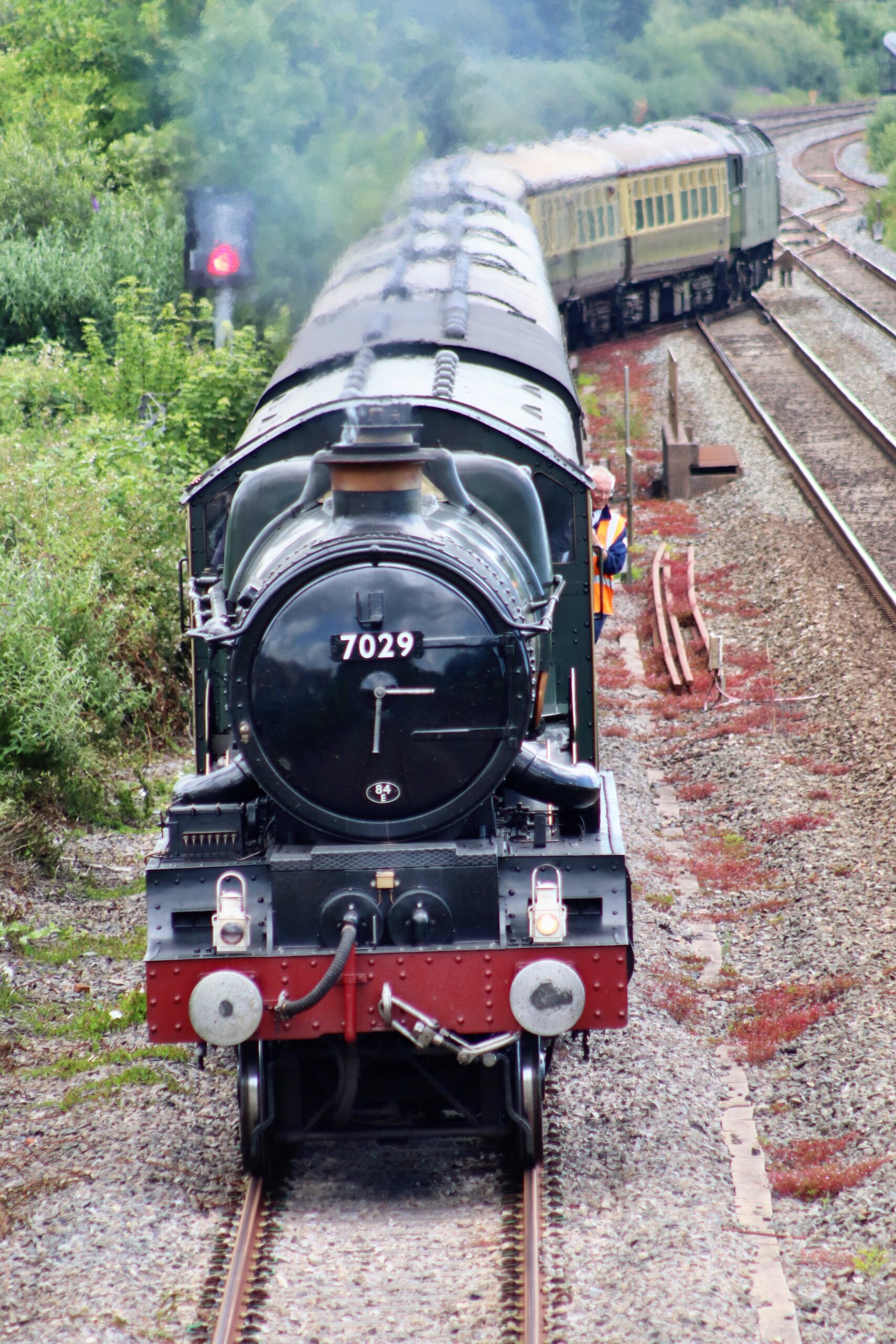
With Silk Mills bridge in the background, GWR Castle 4-6-0 No. 7029 ‘Clun Castle’ hauling “The Whistling Ghost” 1Z10 0608 Birmingham Snow Hill to Bishops Lydeard wending its way across the GW mainline onto the branch which leads to the West Somerset Railway – 24/06/2023GWR Castle 4-6-0 No. 7029 ‘Clun Castle’ hauling “The Whistling Ghost” 1Z10 0608 Birmingham Snow Hill to Bishops Lydeard pulls onto the branch which leads to the West Somerset Railway – 24/06/2023GWR Castle 4-6-0 No. 7029 ‘Clun Castle’ at the head of “The Whistling Ghost” 1Z10 0608 Birmingham Snow Hill to Bishops Lydeard at Norton Fitzwarren. The Tysley collection’s Class 47 No. 47773 at the rear – 24/06/2023
Operated by: Vintage Trains
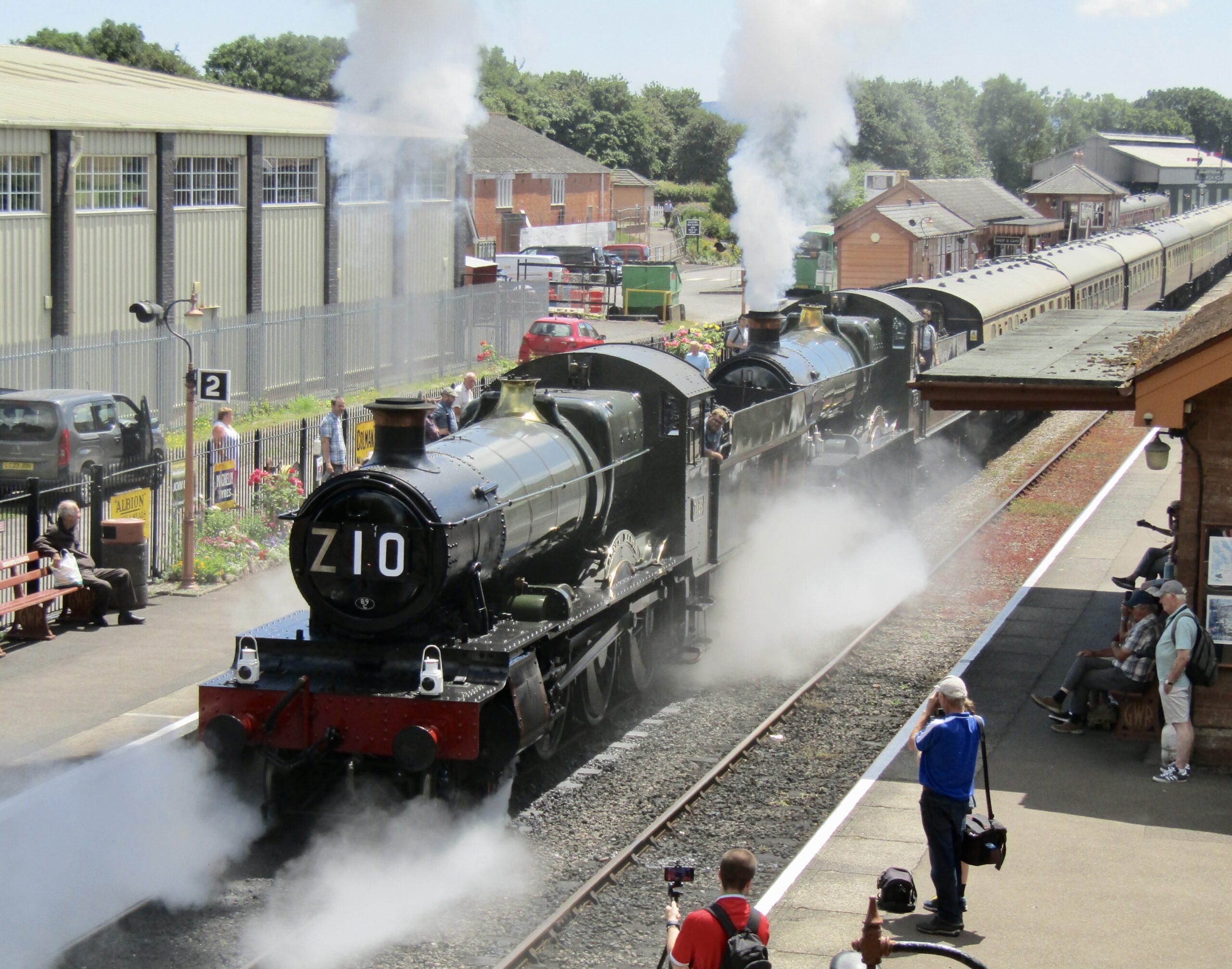
Motive power: GWR Castle 4-6-0 No. 7029 ‘Clun Castle’ with support from Class 47 No. 47773. Originally planned to run on 20th May 2023, the tour was rescheduled to June. On the WSR the train was taken from Bishops Lydeard to Minehead by 2 x GWR Manor Class 4-6-0 locomotives No.’s 7828 and 7812. Good friend of therailwaydog.co.uk, @smithy.377 kindly allowed us to share the following photos and video from the West Somerset leg of the tour.
GWR Manor Class 4-6-0 locomotives No.’s 7828 ‘Odney Manor’ and 7812 ‘Erlestoke Manor’ await the arrival of “The Whistling Ghost” tour at Bishops Lydeard (image by kind permission of @smithy.377) – 24/06/2023
Video from @smithy.377 as No.’s 7828 ‘Odney Manor’ and 7812 ‘Erlestoke Manor’ pass No. 7029 ‘Clun Castle’ at Bishops Lydeard – 24/06/2023 Having substituted for No. 7029 ‘Clun Castle’, No.’s 7828 ‘Odney Manor’ and 7812 ‘Erlestoke Manor’ await departure from Bishops Lydeard with “The Whistling Ghost” tour (image by kind permission of @smithy.377) – 24/06/2023GWR Manor Class 4-6-0 locomotives No.’s 7828 ‘Odney Manor’ and 7812 ‘Erlestoke Manor’ depart Bishops Lydeard with “The Whistling Ghost” bound for Minehead (image by kind permission of @smithy.377) – 24/06/2023
It was another hot day and for the most part Yoshi was able to find shade or at least a cooling breeze. We had toyed with the idea of heading to Bristol as two Class 20 locomotives were reported to be stabled at Bristol Kingsland Road (more on these later). But ultimately, it was far too hot for the boy to be out in the sun for any prolonged period so we waited a little while to see an interesting Class 43 HST power car move from Plymouth to Doncaster and then headed home in good time to pick up Caroline after the picnic.
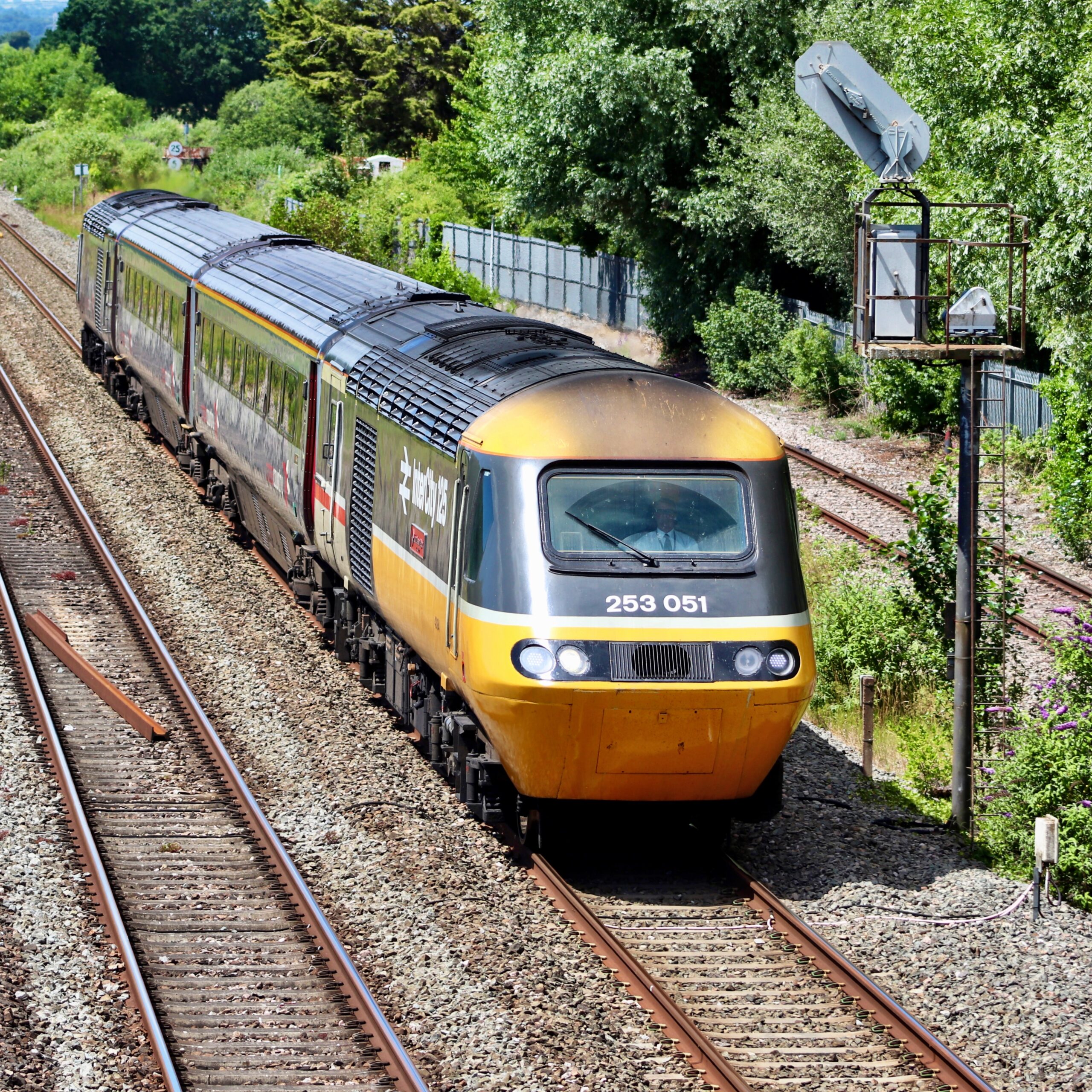
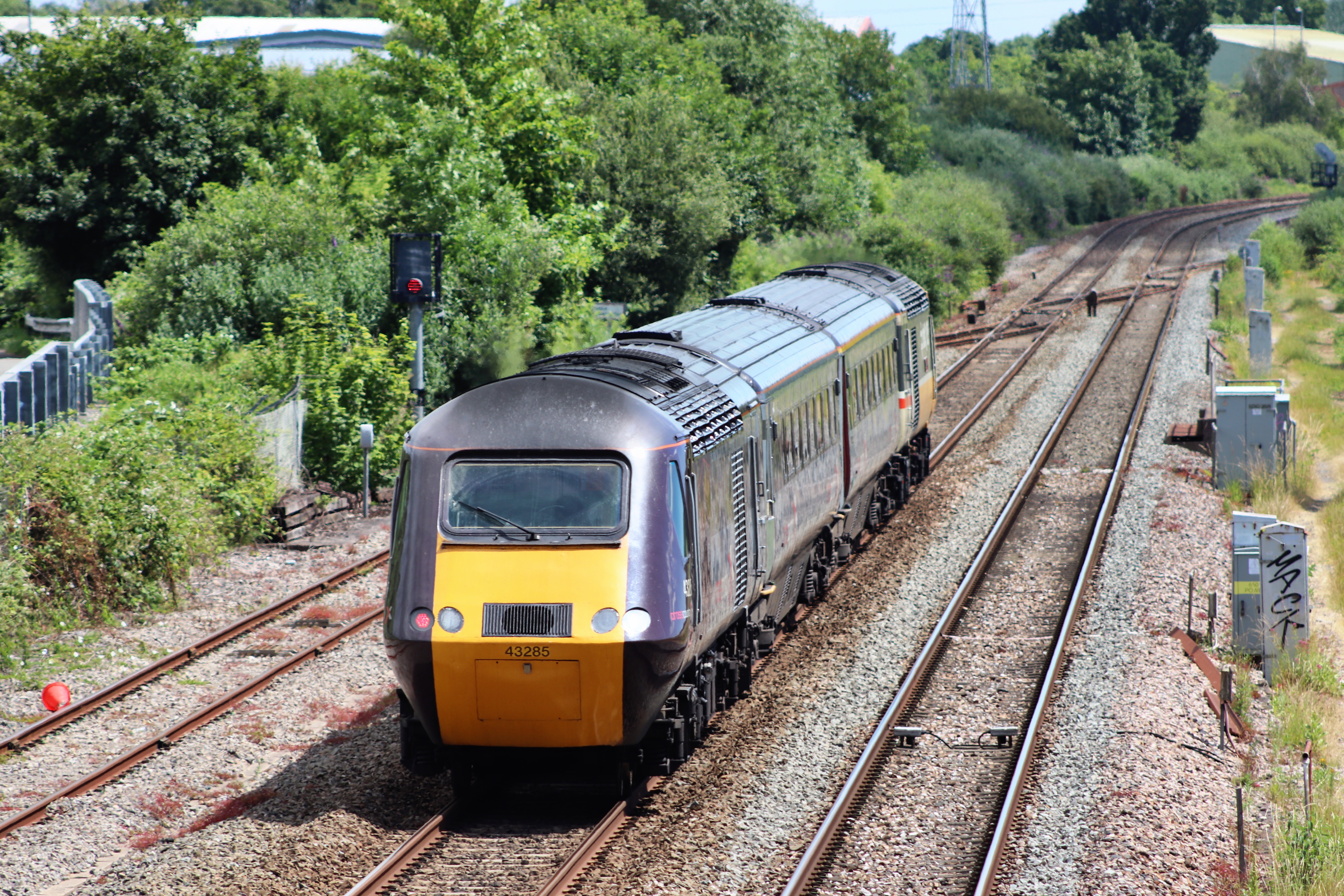
Inter-City liveried Class 43 No. 43184 with No. 43285 at the rear working 5E23 1036 Laira T&RSMD to Doncaster Works Wagon Shops seen passing Norton Fitzwarren – 24/06/2023HST Class 43 power car No. 43285 tailing No. 43184 and two MK3 coaches as 5E23 1036 Laira T&RSMD to Doncaster Works Wagon Shops at Norton Fitzwarren – 24/06/2023
Trains around Taunton the morning of 24th June 2023
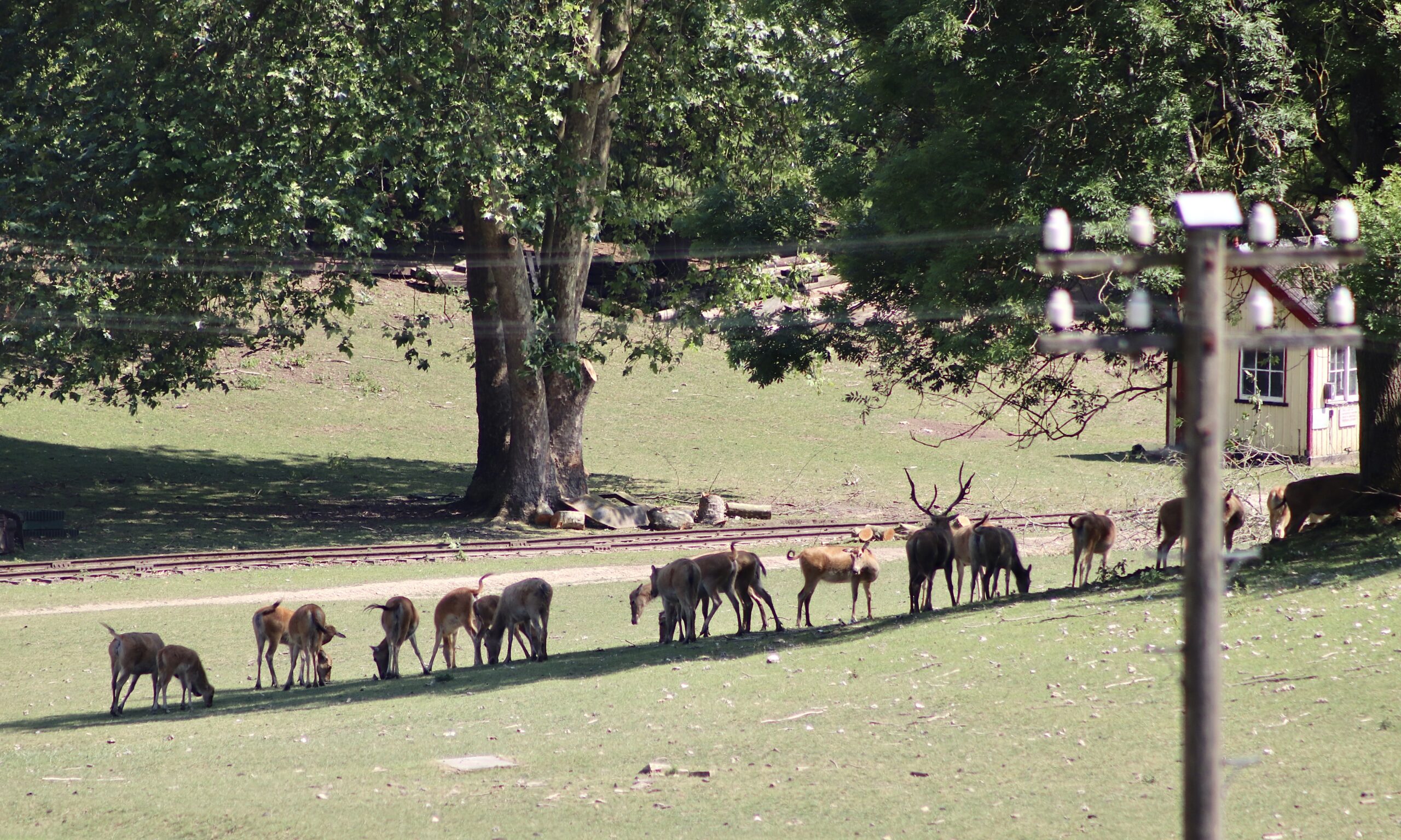
On Sunday 25th June, Yoshi, Caroline and I had been invited to Fawley Hill Museum and Railway Running Day. It sounds very grand to be invited. In reality, because the museum and railway are open on a limited number of days per year, admission is by prior application and invitation only as space is limited. Fawley Hill is a private museum established in the 1960’s by the late Sir William McAlpine at his estate near Henley on Thames. It hosts a fine collection of memorabilia and models relating to railways together with a working standard gauge railway operating on the steepest gradient in the country. Since its inception the site has grown steadily with a wide range of interesting artefacts and buildings arriving from all over the country. Many items of architecture have been rescued and reassembled at Fawley Hill to save them from demolition, creating a unique urban landscape in a country estate. The park also contains a variety of animals including many species of deer.
Deer at Fawley Hill – 25/06/2023
There is a strict “No Photography” rule on visitors inside the Museum, although in reality we found limited photography was acceptable as long as no images are posted on the internet in any way. Which unfortunately includes blogs about railways. So, you’re going to have to take my word for it – the museum is fascinating and holds over 6,000 objects. My favourite sections were a display on the artist Terrence Cuneo, and an area dedicated to LNER A3 No. 60103 ‘Flying Scotsman’ which was saved for the nation by Sir William McAlpine, the Museum’s founder. There are some amazing models including a very clever diorama of Swindon Works employing use of reflections to force a longer perspective.
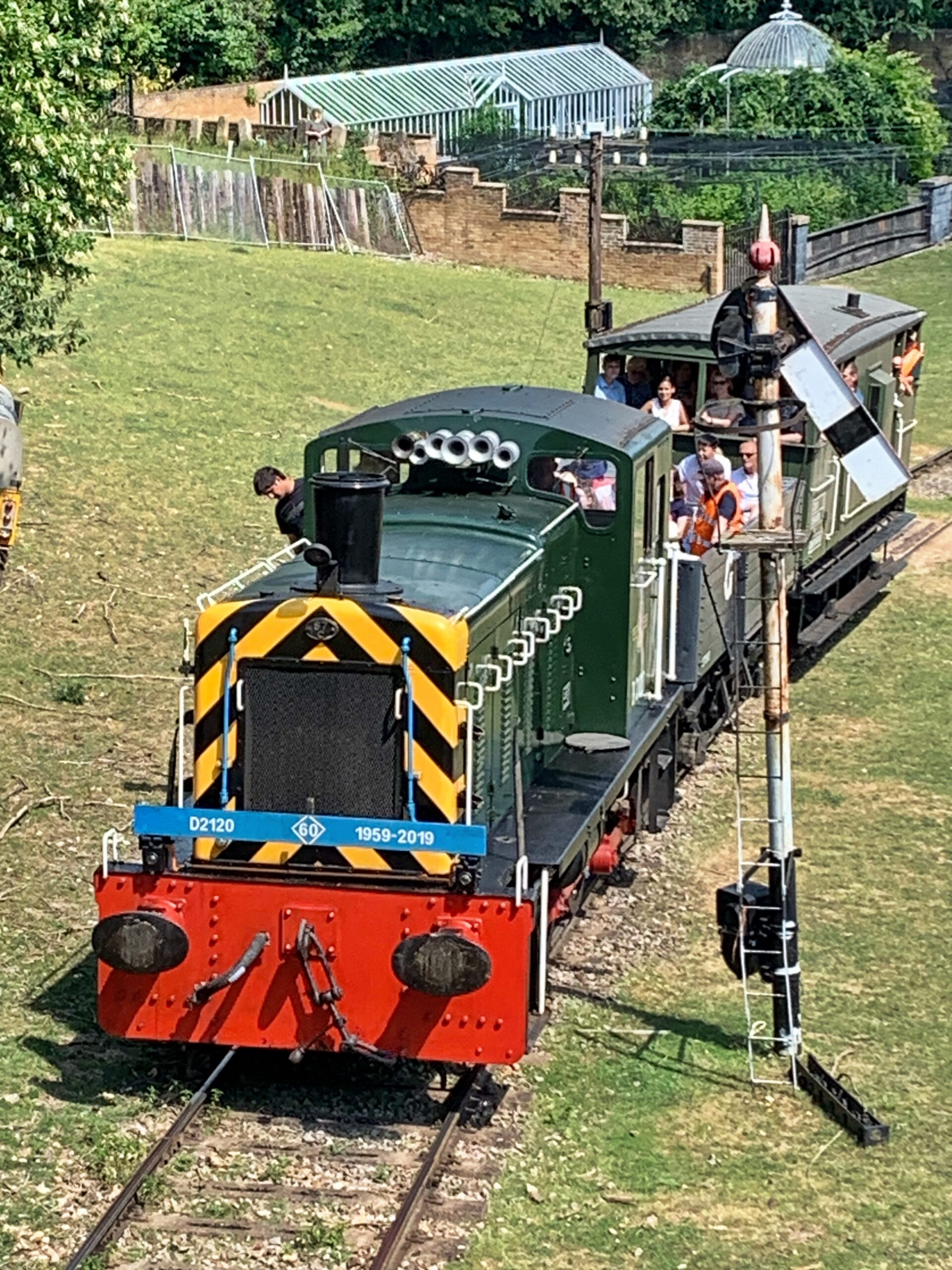
On the day of our visit, Class 03 No.D2120 was running trains, and we took a ride in Lancashire & Yorkshire Railway half-coach ‘Judy’. Yoshi was allowed to sit with us on the wooden seating and he watched out of the window as we meandered around the estate’s railway system.
Class 03 0-6-0 Diesel Mechanical Shunter No. D2120 climbs the slope to Somersham Station at Fawley Hill pulling Lancashire & Yorkshire Railway half-coach ‘Judy’ – 25/06/2023
230 Class 03 diesel shunter locomotives were constructed by BR at Swindon and Doncaster Works between 1957 and 1962. No. D2120 was built at Swindon and entered service in October 1959. She was first allocated to Dangraig Depot and spent her entire career in the Swansea area of South Wales.
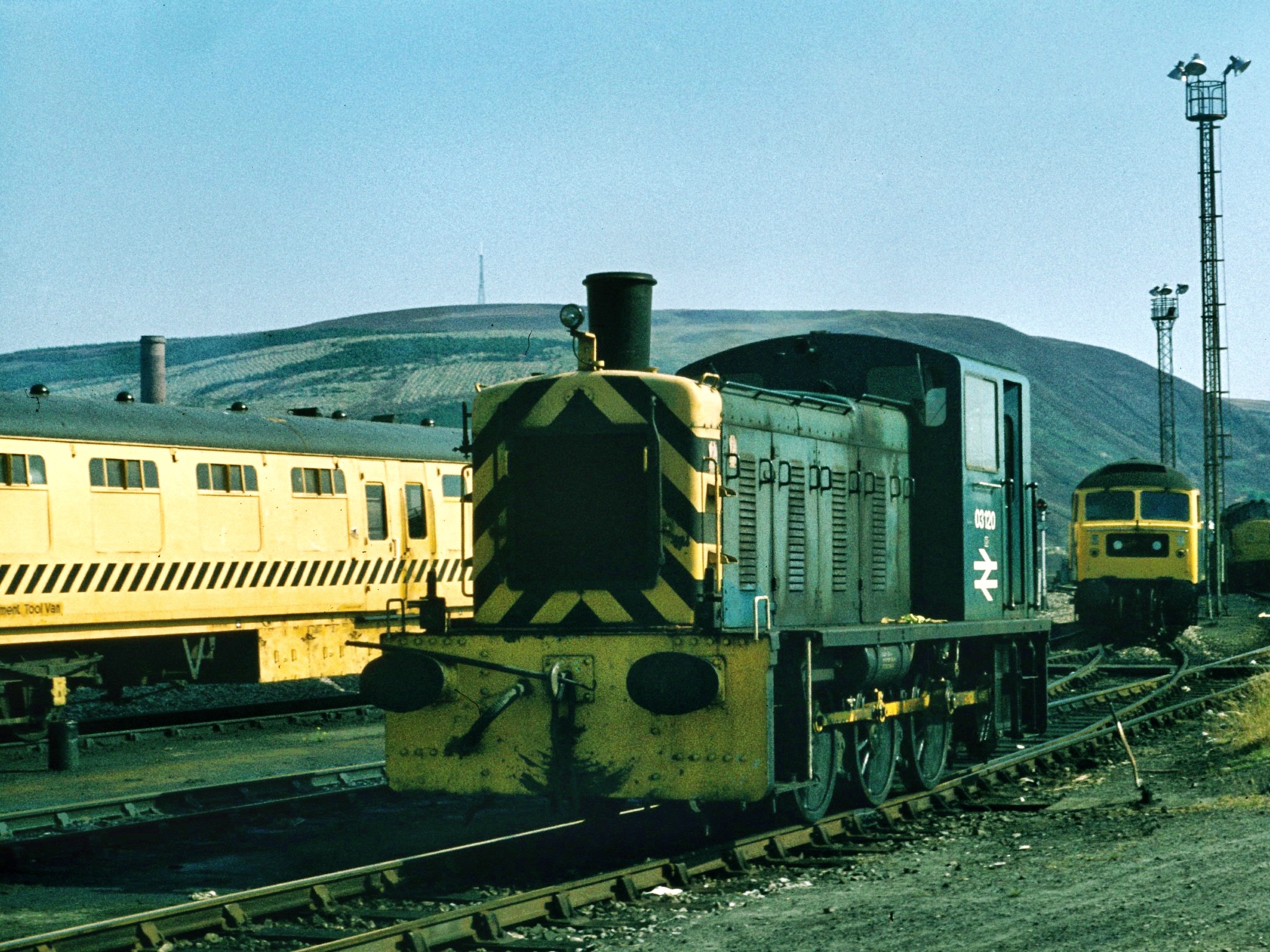
In March 1972 whilst undergoing an overhaul, No. D2120 was converted to Burry Port & Gwendraeth Valley Railway (BPGVR) loading gauge. Eventually a total of 11 Class 03’s were converted in this way. The BPGVR had a severe height restriction and this conversion involved reducing the cab height by 4½ inches, and the fitting of a headlight in front of the exhaust stack, and another at the rear of the cab, for use when locomotives crossed unprotected level crossings. The converted locomotives were also fitted for multiple working with a second locomotive of the same class. During the mid 1970’s British Rail adopted a locomotive five figure computer numbering methodology under the Total Operations Processing System (TOPS) used for managing railway locomotives and rolling stock and No. D2120 was renumbered No. 03120 in March 1974.
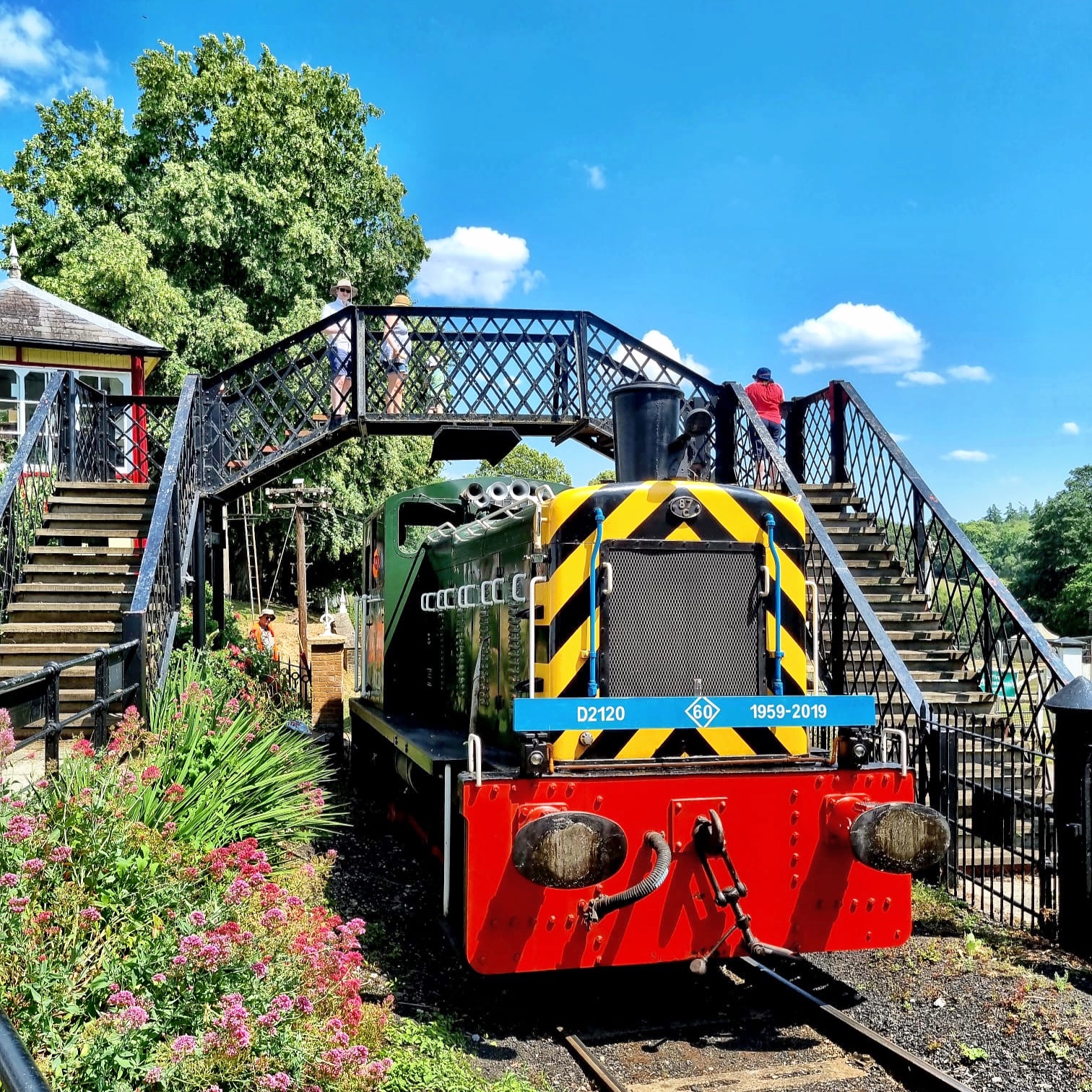
In 1978, No. 03120 spent three months (August – October) in store at Swindon, being re-introduced into service in November. She was given a final general overhaul at Swindon in May 1983 and retained as a standby loco, allocated to Landore Depot, Swansea. She was finally withdrawn by BR in February 1986 and released for sale. Purchased by Sir William McAlpine, No. 03120 arrived at Fawley in December 1986, wearing the standard fleet livery of BR rail blue with ‘wasp’ yellow and black painted warning ends. Since arriving at Fawley, she has been repainted into early BR Green as No. D2120, the wasp stripes at each end of the locomotive were restored in 2019. D2120 wears loco shed allocation plate 87C (Danygraig).
Class 03 0-6-0 Diesel Mechanical Shunter No. D2120 backs onto a GWR plank open wagon and a guards van to increase passenger capacity on the train rides at Fawley Hill – 25/06/2023Class 03 0-6-0 Diesel Mechanical Shunter No. D2120 working visitor train rides at Fawley Hill – 25/06/2023Class 03 0-6-0 Diesel Mechanical Shunter No. D2120 passes under the footbridge which was originally located at Brading Station on the Isle of Wight where it spanned the Ryde to Shanklin line before moving to Fawley Hill in March 2000 (CLS) – 25/06/2023
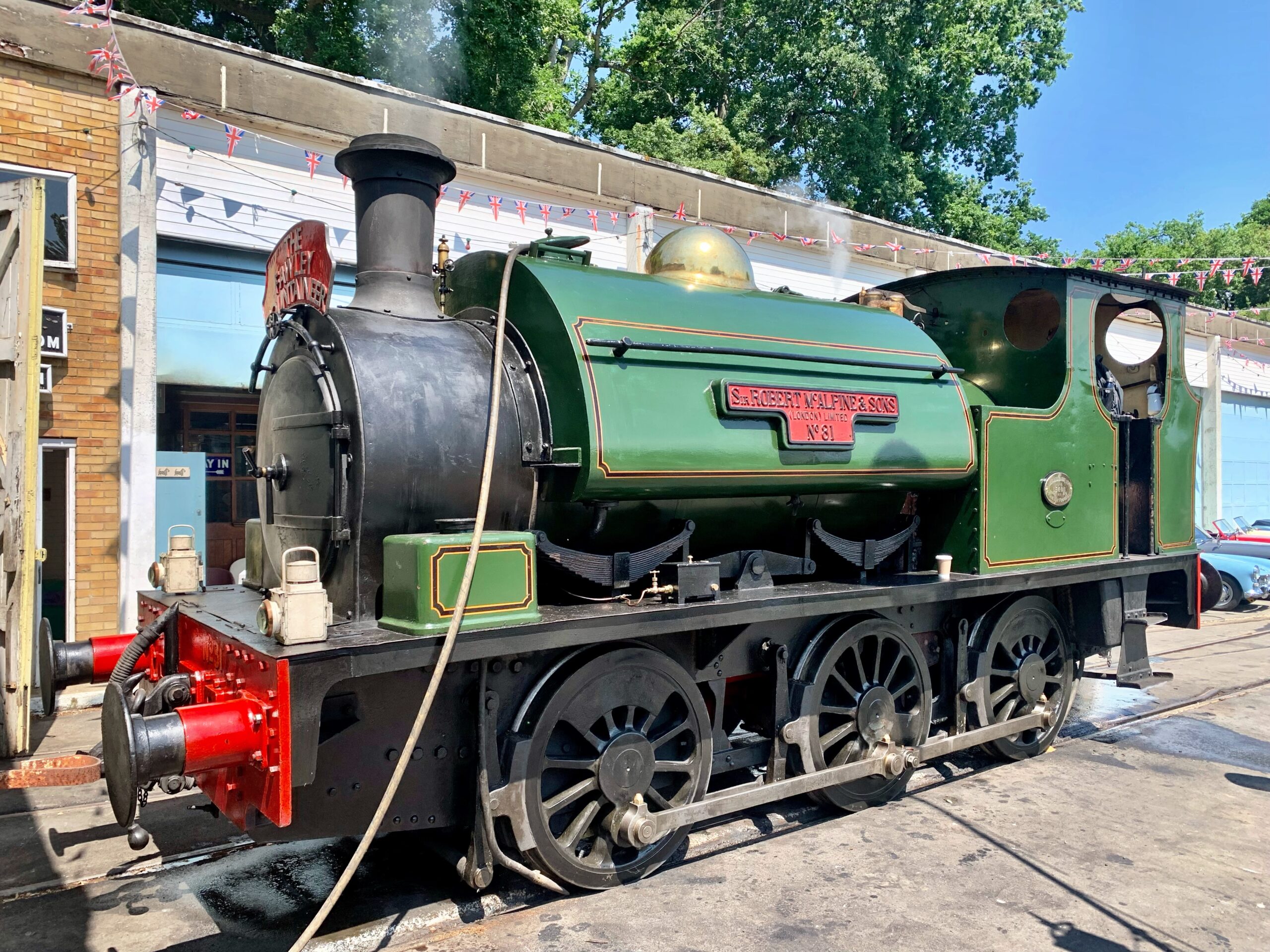
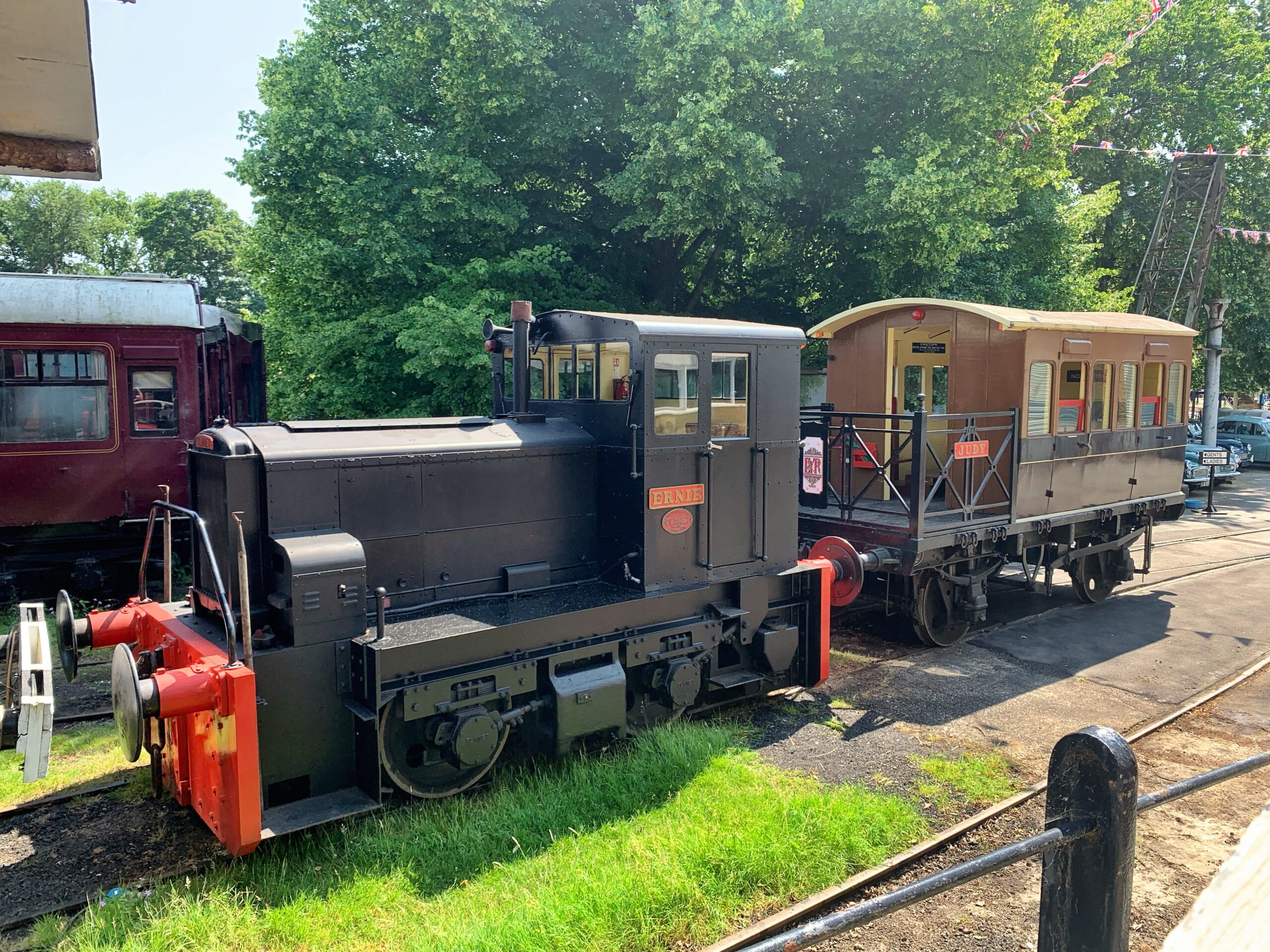
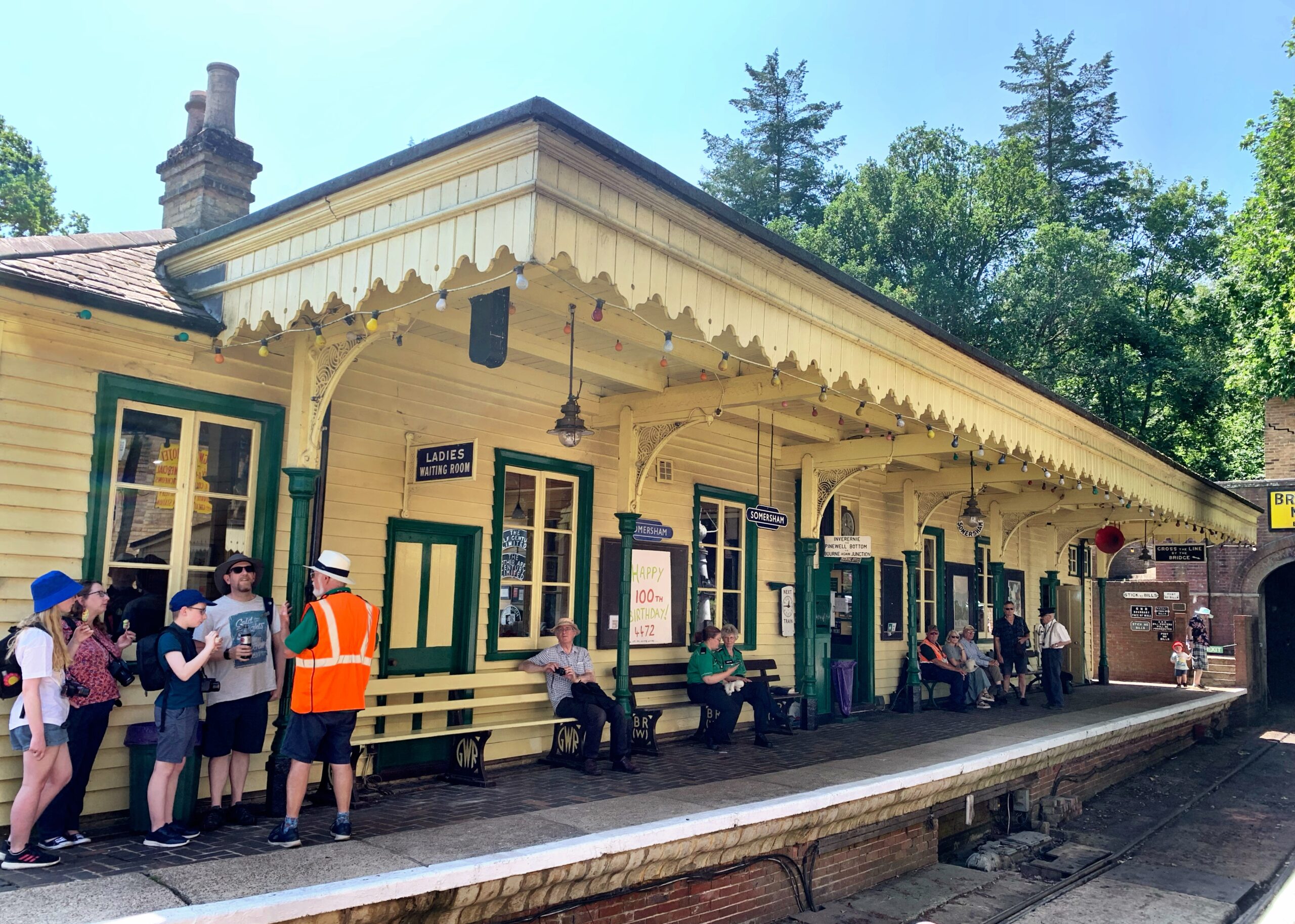
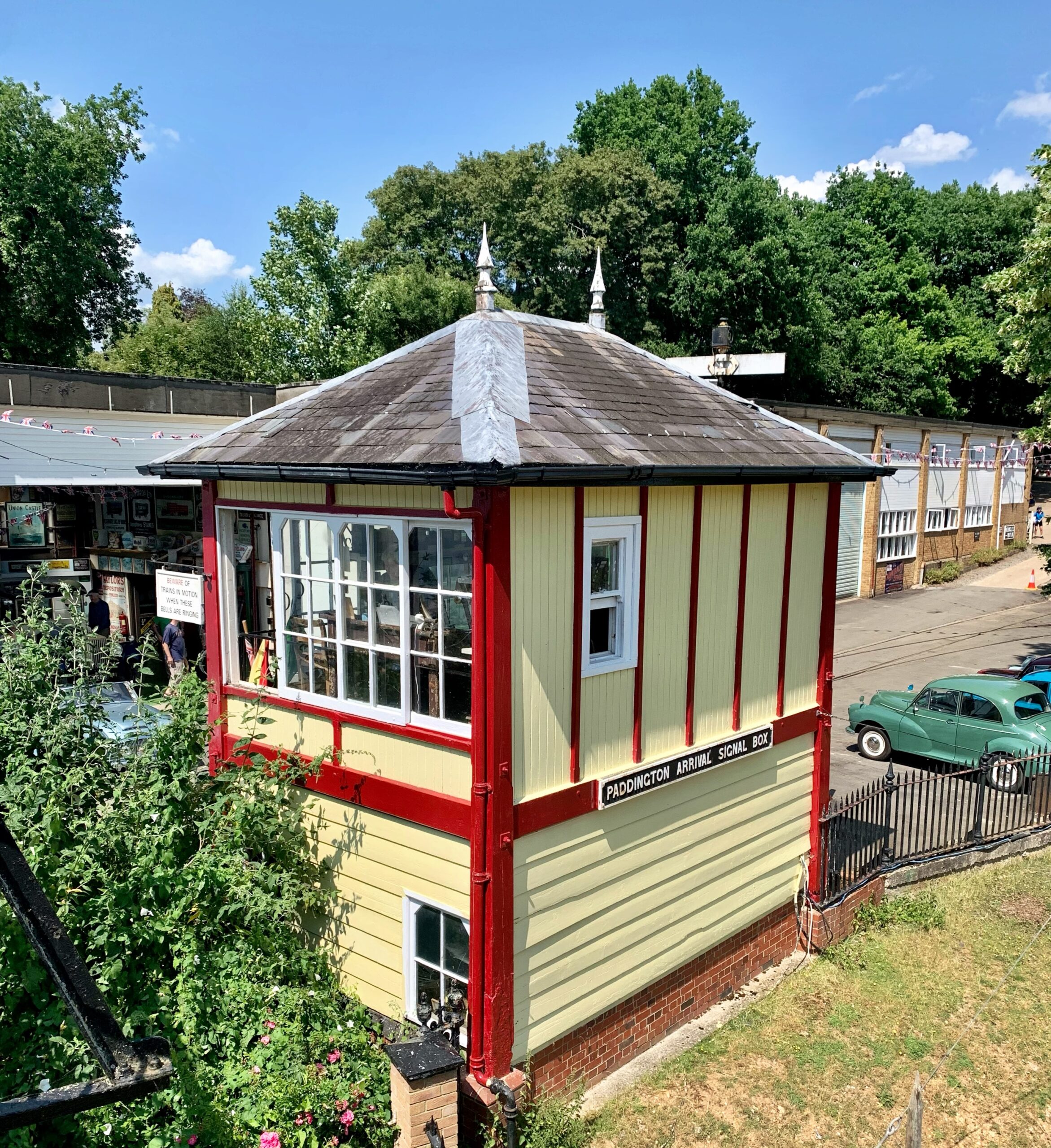
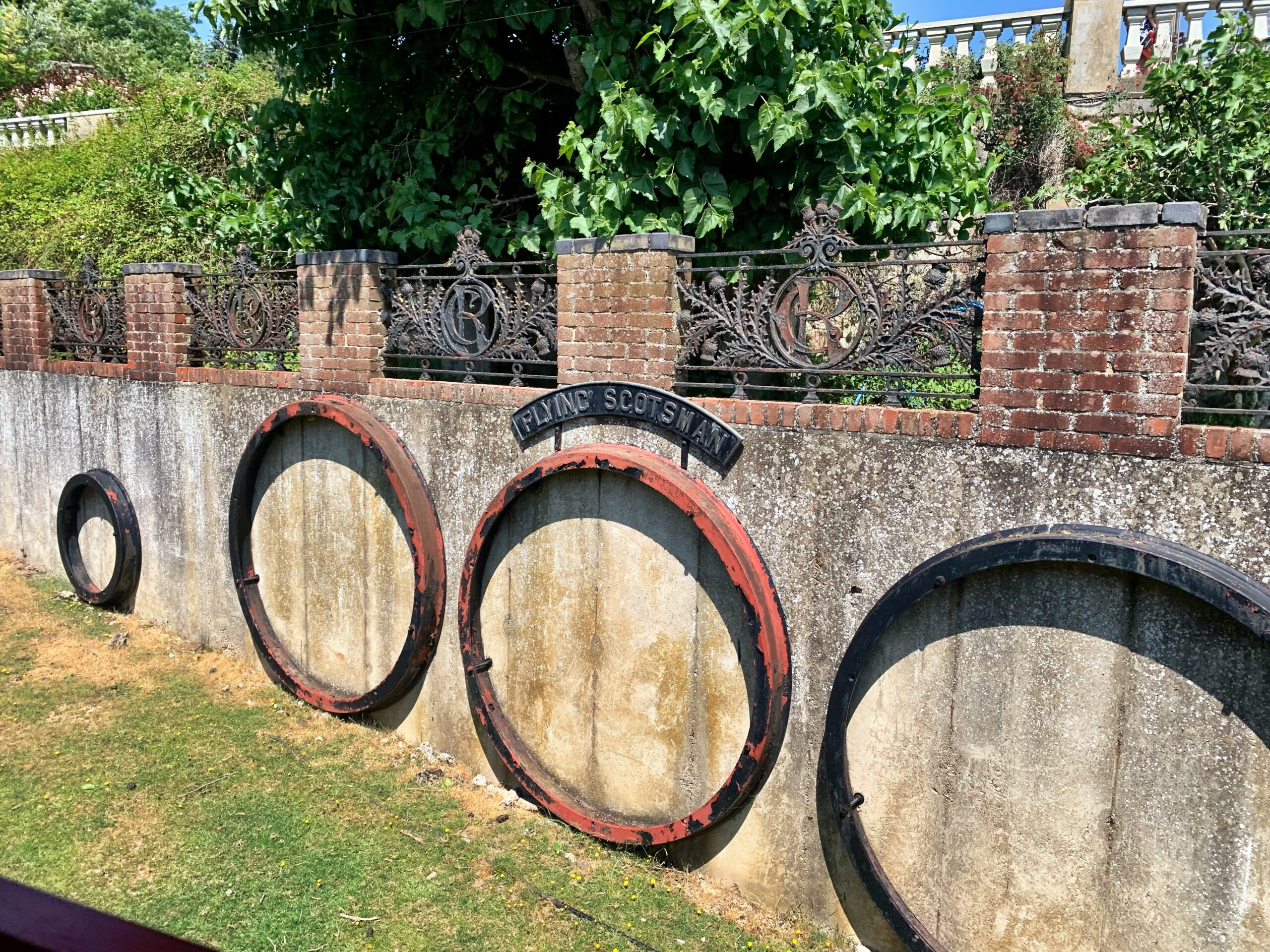
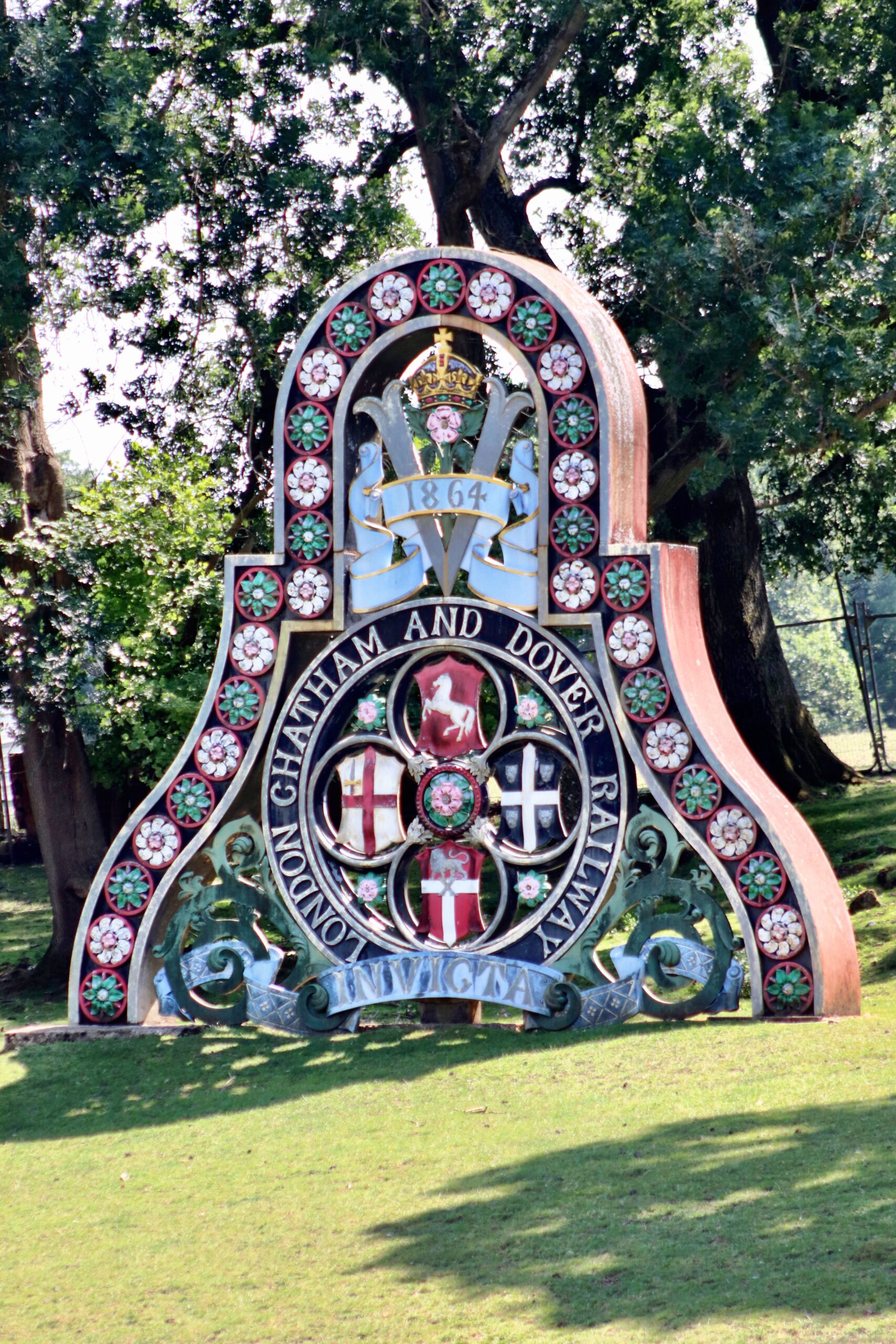
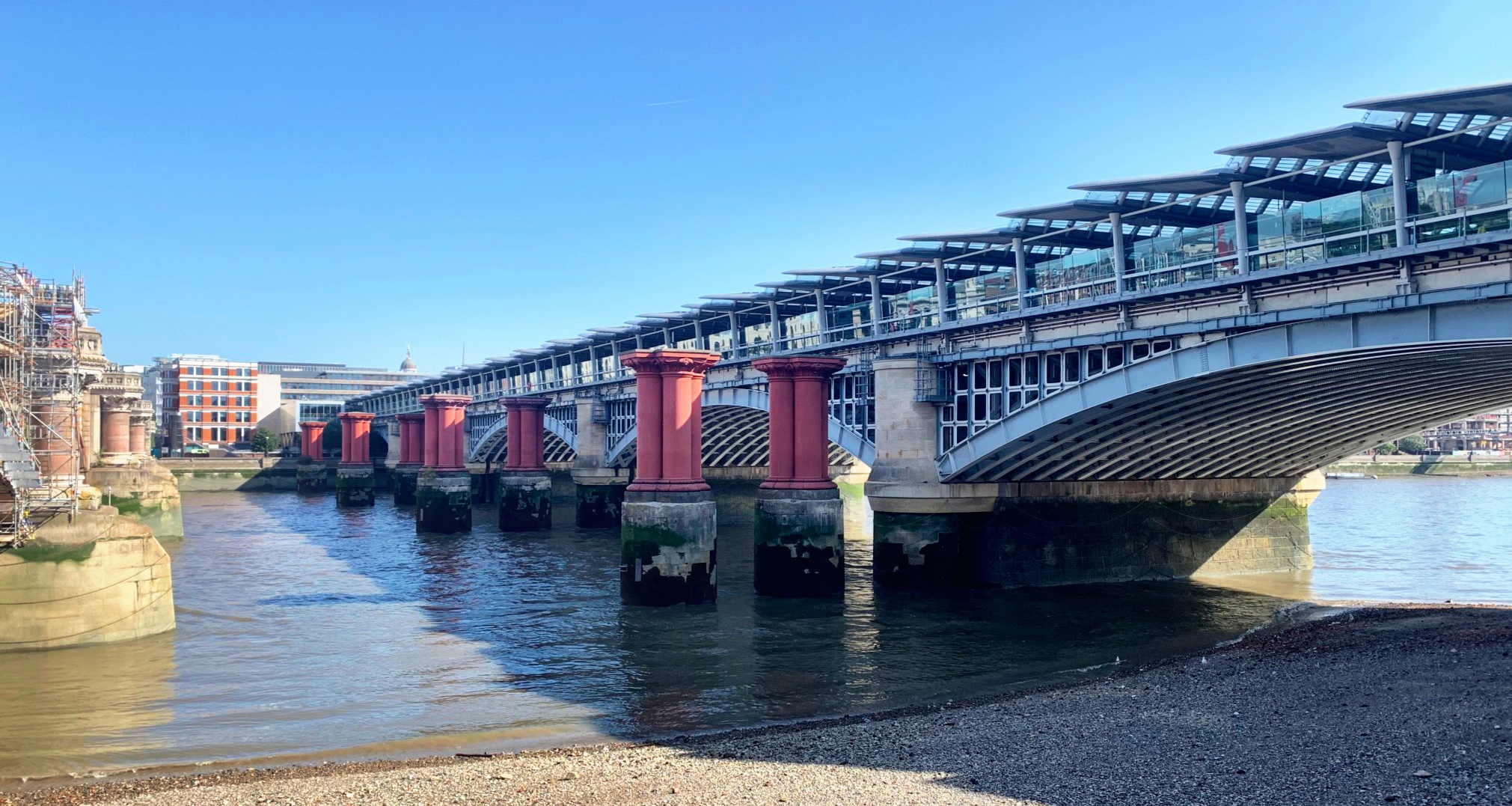
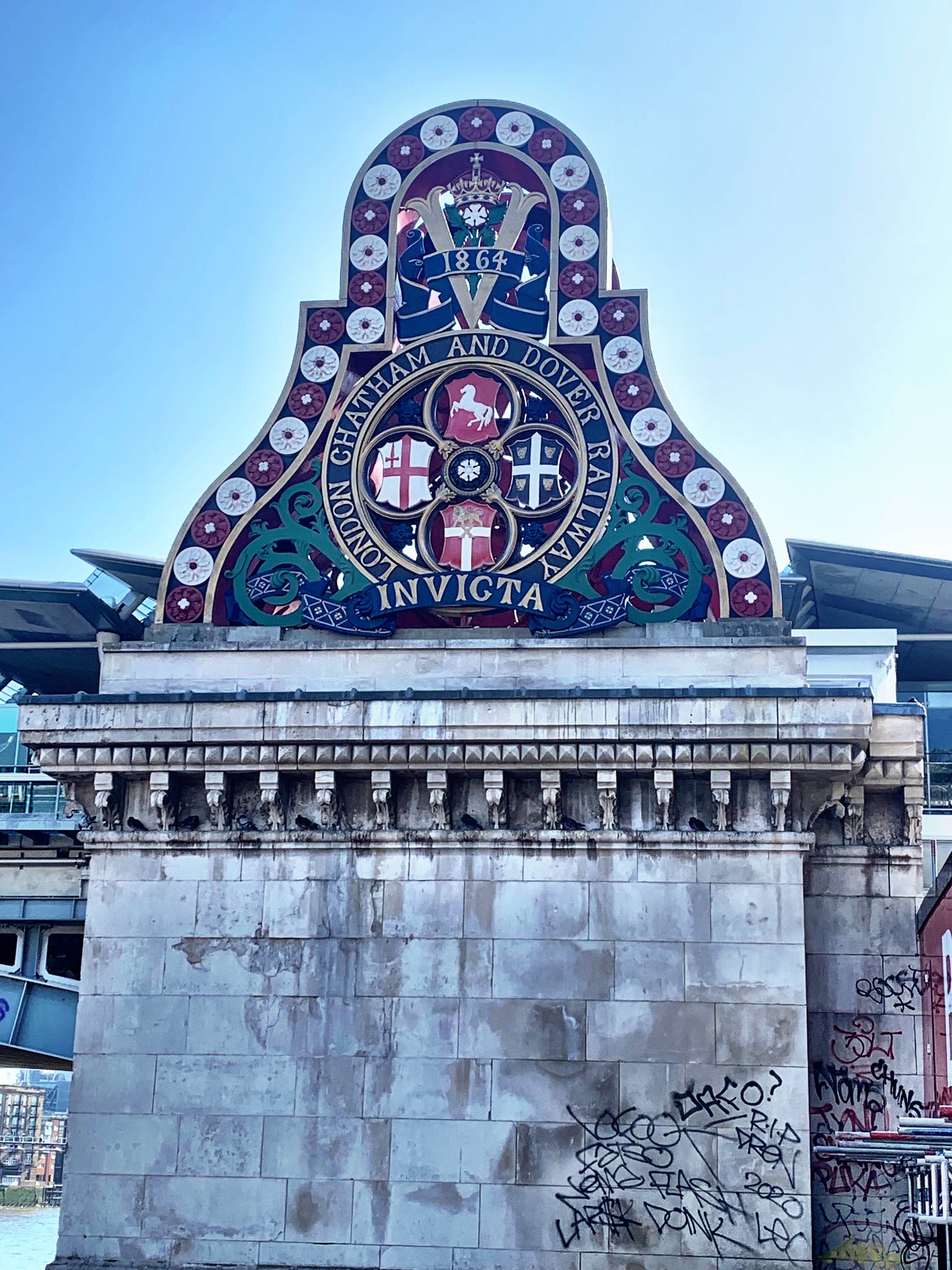
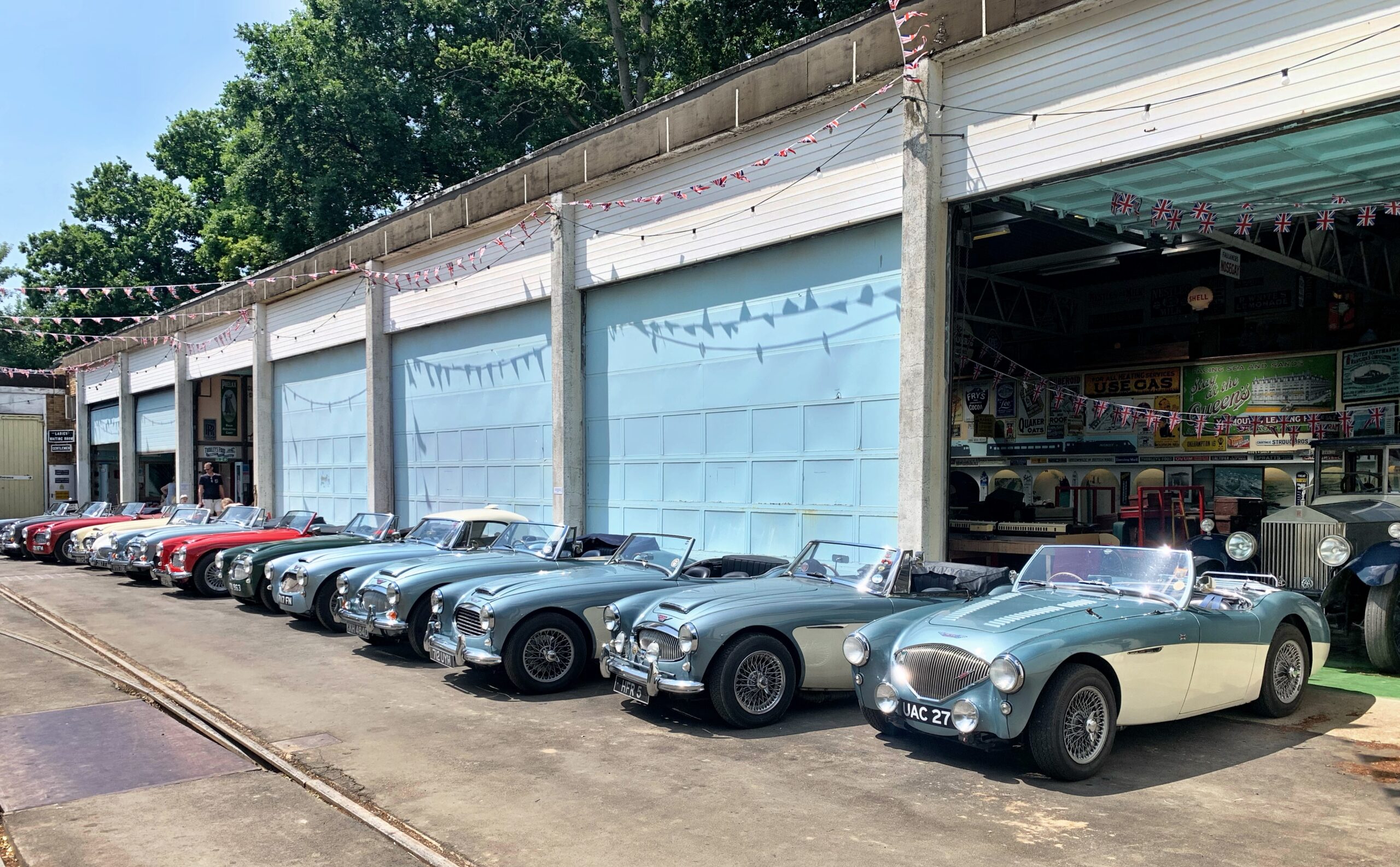
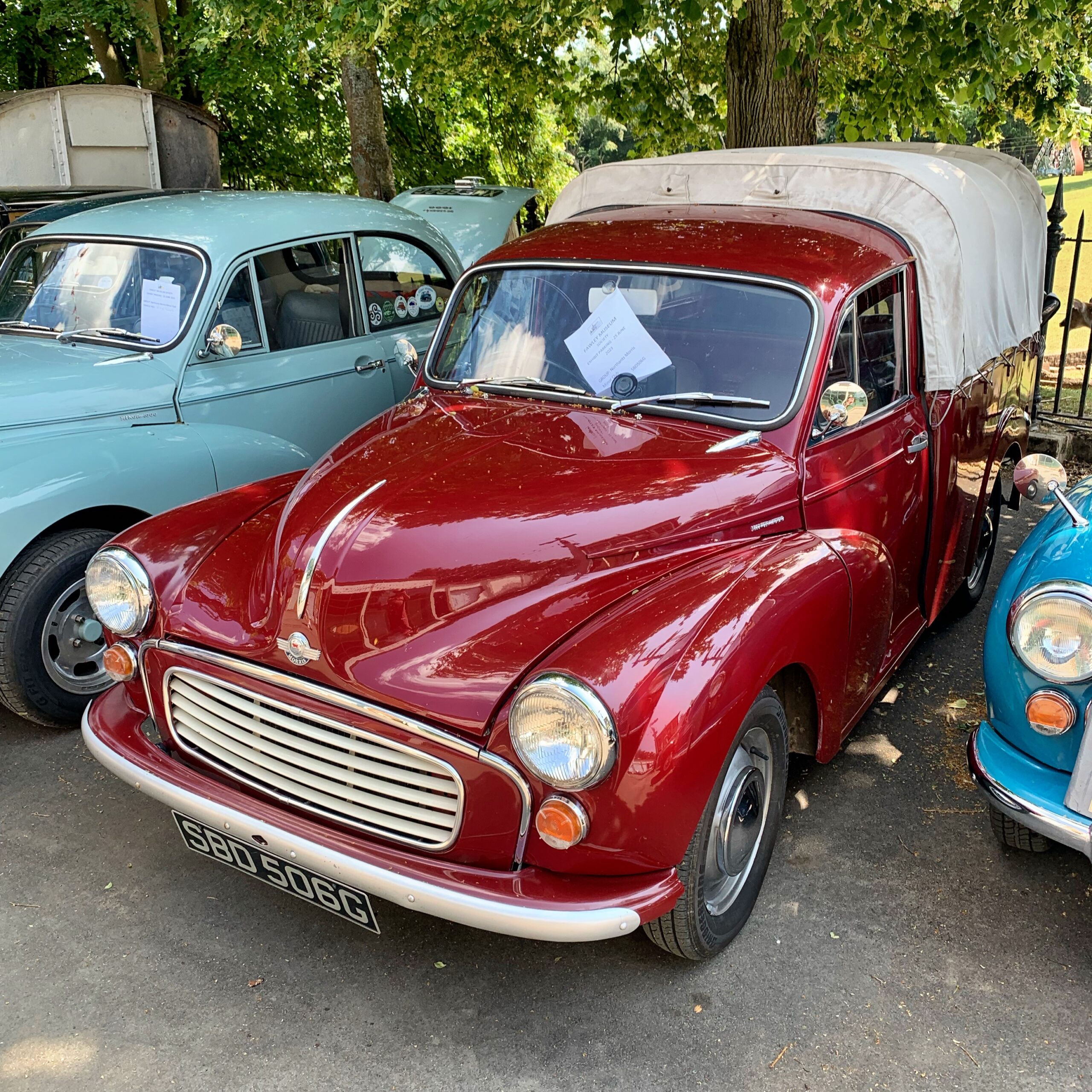
Hudswell Clarke & Co Ltd 0-6-0 ST No. 31 at Fawley Hill Museum. This locomotive was ordered from Hudswell Clarke & Co Ltd in November 1912 by the Ministry of Fuel and Power, and built at their Hunslet, Leeds works. She was allocated builder’s number 1026, and completed in April 1913, at a total cost of £1485. Delivered new to Robert McAlpine & Sons, Cuffley on 14 April 1913, No 31 was allocated Plant Number 2581 in 1931. She was outshopped in Caledonian Blue, a colour she kept throughout her time at the McAlpine company even though the corporate colour was green. No 31 is the only surviving locomotive to have been owned by Sir Robert McAlpine & Sons for the whole of its working life. She worked on a number of building contracts including Wembley Stadium (1923-1924), RAF Boscombe Down (1944) and Llanwern Steelworks (1960-1961). The locomotive was rebuilt by Hudswell Clarke & Co in 1938. No 31 went into storage at McAlpine’s yard at Hayes in 1961 and remained there until she was identified for scrapping in 1965. At this point, Sir William decided to give No 31 a new life in retirement and purchased the locomotive. No 31 arrived at Fawley in September 1965 and was subsequently repainted in GWR Brunswick green livery. Above the smokebox door is carried loco shed plate 81M – a code unique to Fawley – 25/06/2023One of two Planet 0-4-0 Diesel Mechanical locomotives at Fawley, No. 3894 ‘Ernie’ in Fawley station yard with Lancashire & Yorkshire Railway half-coach ‘Judy’ – 25/06/2023Somersham Station, previously to be found on the St. Ives to March line. The station was opened by the Eastern Counties Railway (ECR) in 1848. The line was closed to all rail traffic in 1967. The waiting room survived until 1977 when it was moved to Fawley – 25/06/2023Shobnall Maltings Signal Box is a Midland Railway (Type 3a) signal box dating from 1905. It was the first building to arrive for use on the Fawley railway in 1969 and was originally built at Swadlincote East near Burton-on-Trent. It was moved to operate at the Bass, Ratcliff & Gretton Ltd brewery and renamed Shobnall Maltings – 25/06/2023 These tyres from ‘Flying Scotsman’ were removed from the driving wheels of the famous LNER Class A3 4-6-2 prior to her journey to Australia in September 1988 – 25/06/2023Blackfriars Bridge Capital taken from the old Blackfriars Bridge across the River Thames in London. The bridge opened in June 1864 and demolished in the 1960’s. The bridge abutments remained until the mid-1980’s when the one on the north side of the river was removed along with its decorative cast iron capital or pediment. This example arrived at Fawley in 1984 whilst the remaining two are still in situ in London – 25/06/2023The columns of the old Blackfriars railway bridge standing next to the current bridge – 26/08/2022The southern abutment and LC&DR insignia have been restored – 26/08/2022Our visit coincided with the arrival of some Austin-Healey sports cars… – 25/06/2023…and some Morris Minor cars and vans! – 25/06/2023
Doggos are not permitted inside the museum buildings at Fawley Hill, so Caroline and I took it in turns to enjoy the delights on display while the other sat with Yoshi in a cool spot which obviously happened to be situated just by the toilets. It was during my time at this spot that I checked email on my phone and although the 4G coverage was barely existant, I discovered the Class 20’s I mentioned earlier and at that time believed to be in Bristol were in actual fact stabled at Didcot just 18 miles up the road from our current location and more or less in the correct direction for our drive back to Dorset. So after a cup of tea and an excellent piece of raspberry and coconut slice, we took a few final photographs and set off towards home.
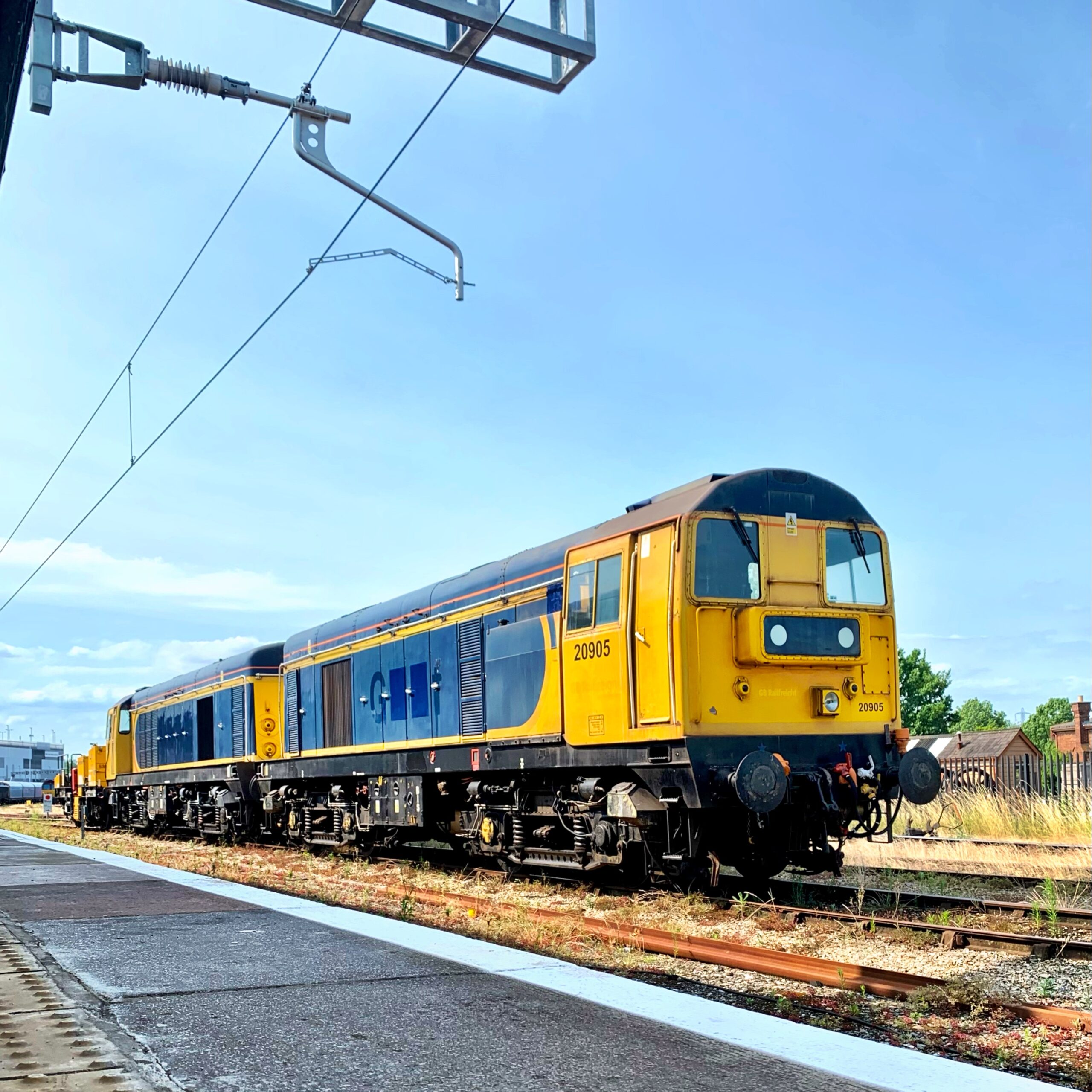
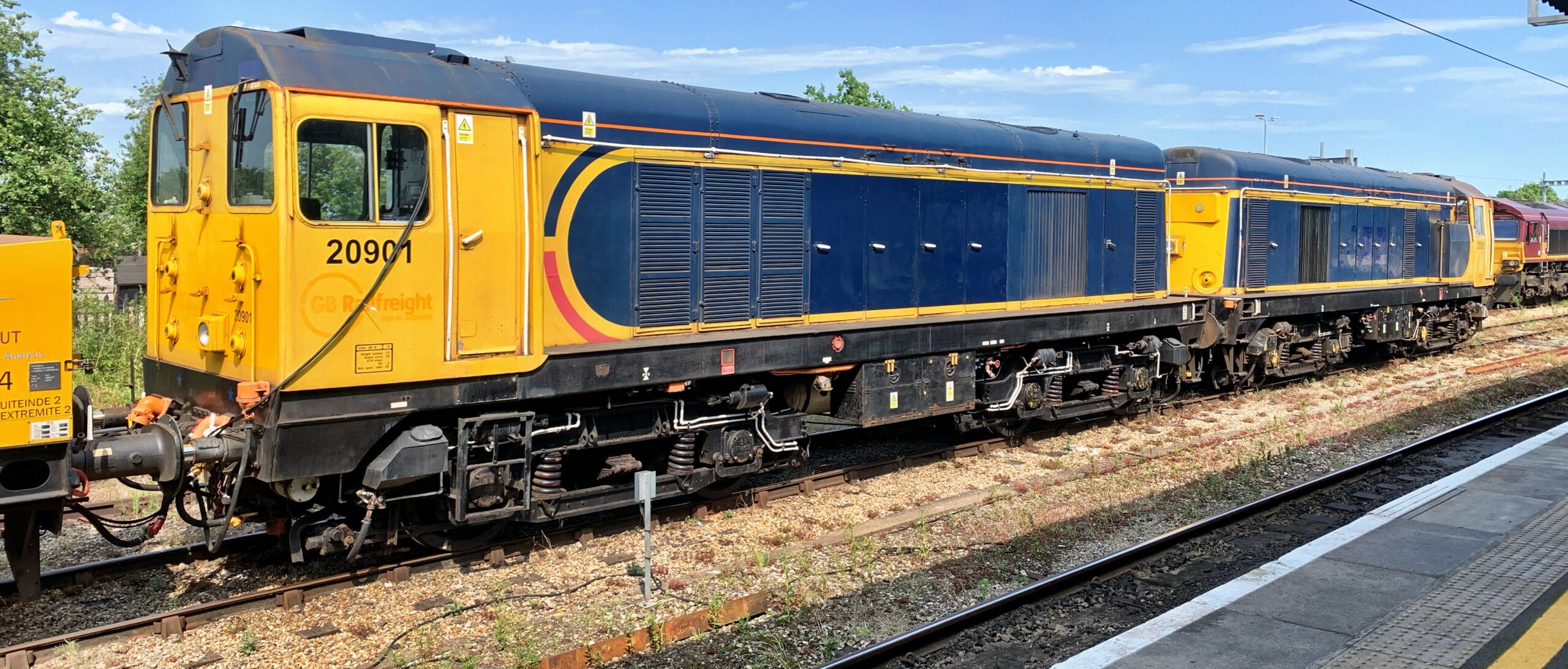
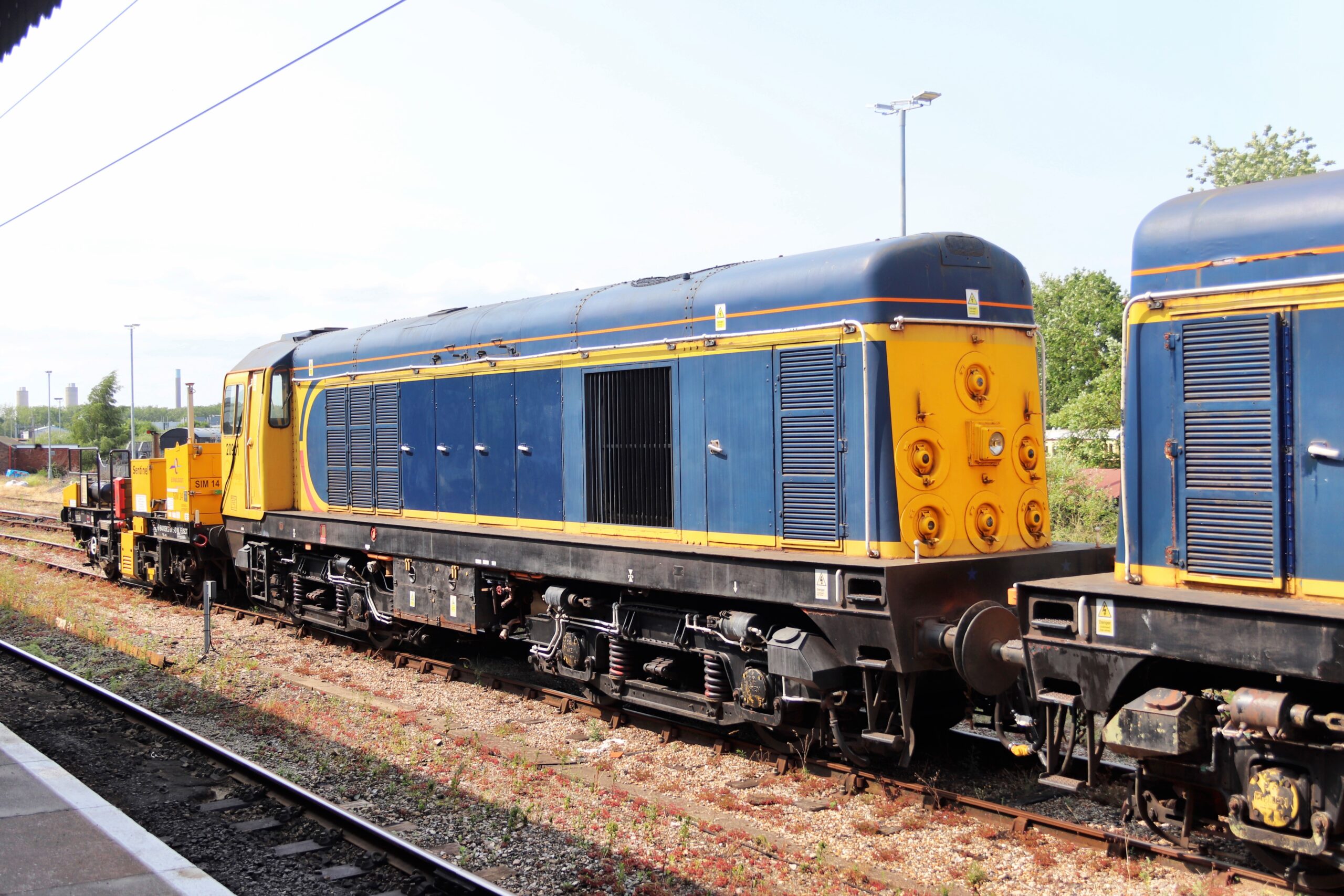
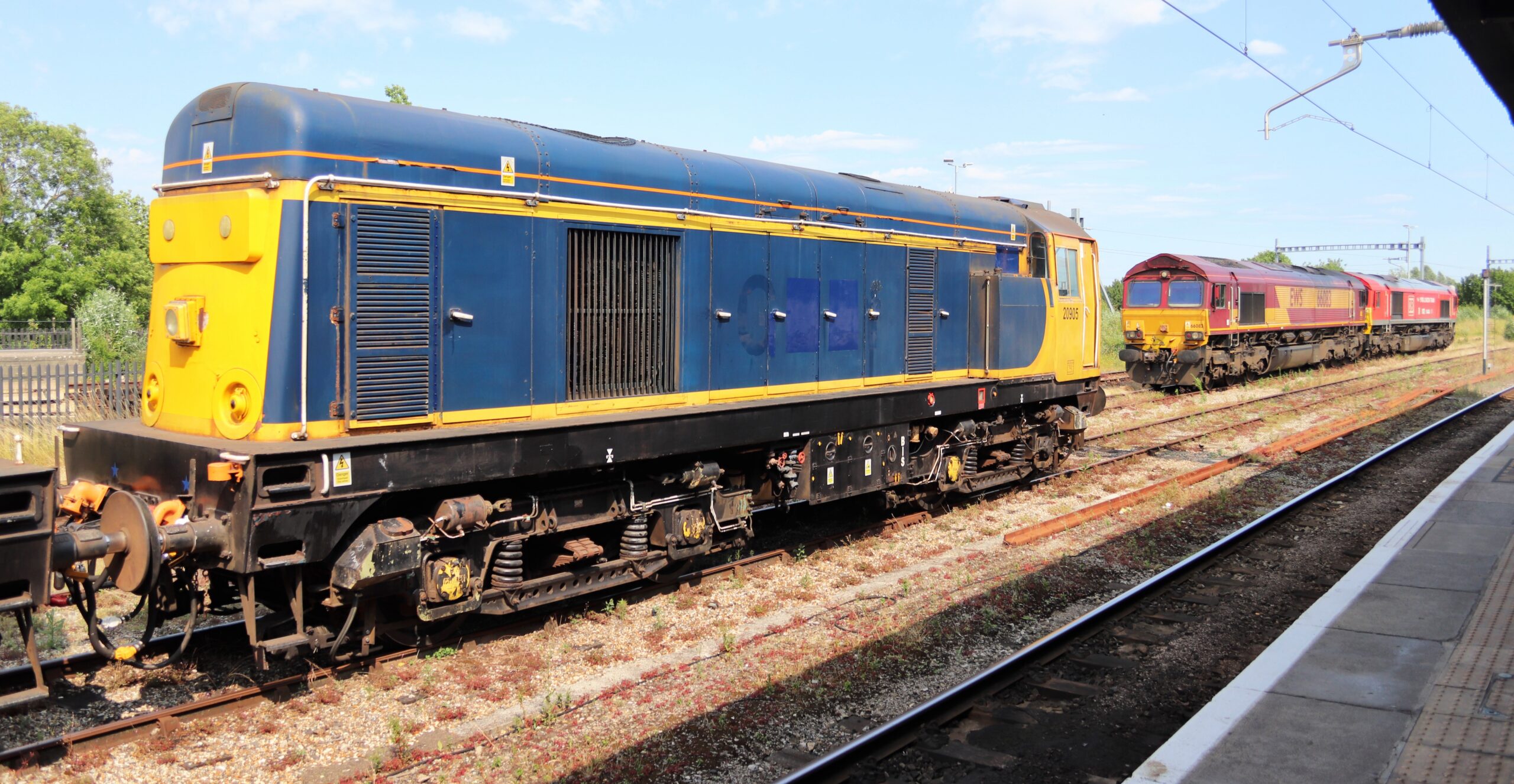
On arrival in Didcot, we parked up and I took a stroll over to the railway station. The Class 20’s were conveniently parked adjacent to the platforms and were getting a fair bit of attention from other rail enthusiasts, much to the puzzlement of waiting passengers. The locomotives, currently part of the Harry Needle Rail Company (HNRC) fleet but still carrying the remnant livery of their previous owners; GBRf, are on hire to Rail Operations Group (ROG).
Class 20 No.’s 20905 and 20901 with SIM14 ‘Sentinel’ (No. 99 84 0362 006-0) at Didcot – 25/06/2023Class 20 No.’s 20901 and 20905 at Didcot – 25/06/2023Class 20 No. 20901 at Didcot. Contrast the differences in nose end detail with the following image of classmate No. 20905 – 25/06/2023No. 20905 at Didcot. Contrast and compare with the image above of classmate No. 20901 – 25/06/2023
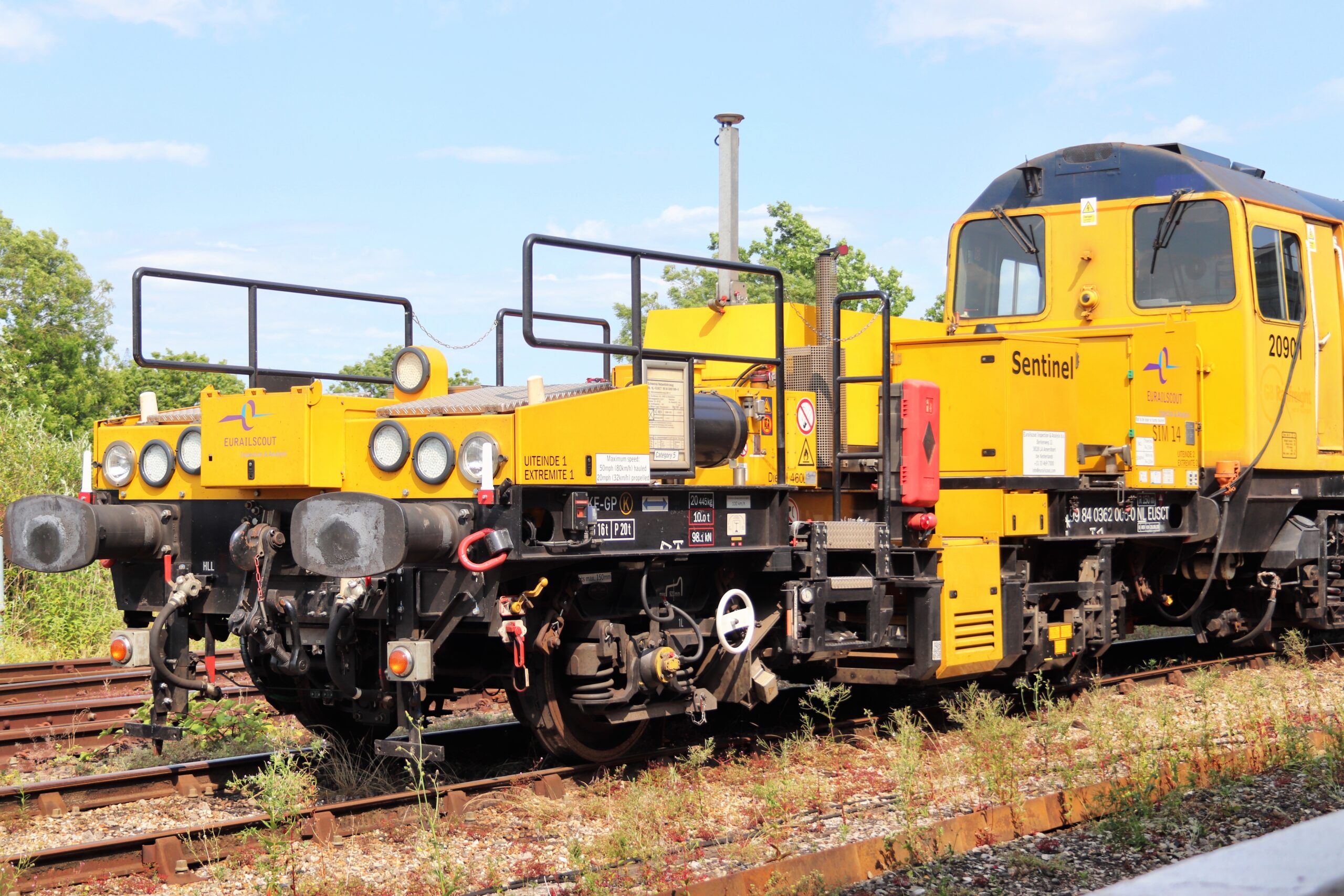
The locos, rare visitors to west, are currently working in tandem with one of seven Eurailscout Switch Inspection Machines (SIM). I’m more used to switches being called points, but accept this “Americanism” as it quite an explanatory term. The points are the movable rails which guide the wheels towards either the straight or the diverging track allowing a train to switch tracks if required. They’re quite complex really and require a fair amount of maintenance to ensure they are in a safe and usable condition. SIM14 ‘Sentinel’ (No. 99 84 0362 006-0) arrived at Didcot by road from Holland at the start of June 2023 and was subsequently moved to Bristol Kingsland Road by a single Class 20 locomotive. It spent several nights working in the Bristol area doing exactly what the name suggests – inspecting various switches and junctions in the vicinity of Temple Meads, East Junction and West Junction. After spending the weekend at Didcot again, it was moved to Southall yard on the 12th June for further overnight inspections in the Paddington area. More recently the single Class 20 was joined by its classmate and on the 20th June returned to the Bristol area, moving back to Didcot on the morning of the 23rd despite the TOPS reporting they were still 77 miles further west.
Close up of Eurailscout SIM14 ‘Sentinel’ (No. 99 84 0362 006-0) at Didcot – 25/06/2023
Eurailscout says the following about the Swith Inspection Machines: “About 50% of all track disruptions are caused by faulty switches, with timely maintenance being needed in order to prevent these disruptions. We use a SIM wagon to measure and inspect the geometry and rail profiles of your switches under day-to-day operating conditions. A single locomotive can push or pull the SIM wagon, which means it can be shunted around quickly between the normal rail traffic. Since we also record high-quality video images during this work, you can make a visual inspection of the switch without having to put it out of service for the inspection and without your staff having to walk on the track themselves.”
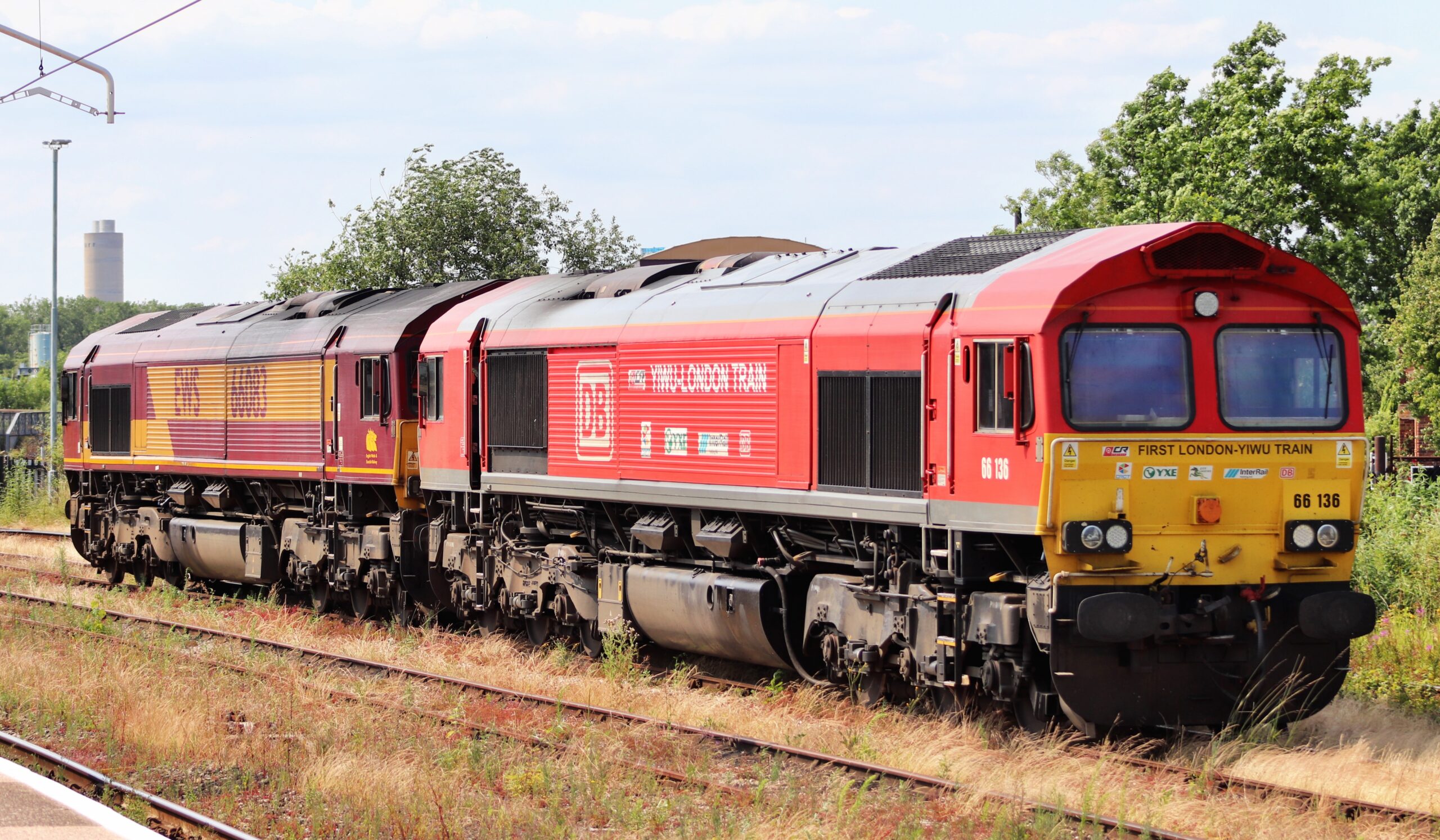
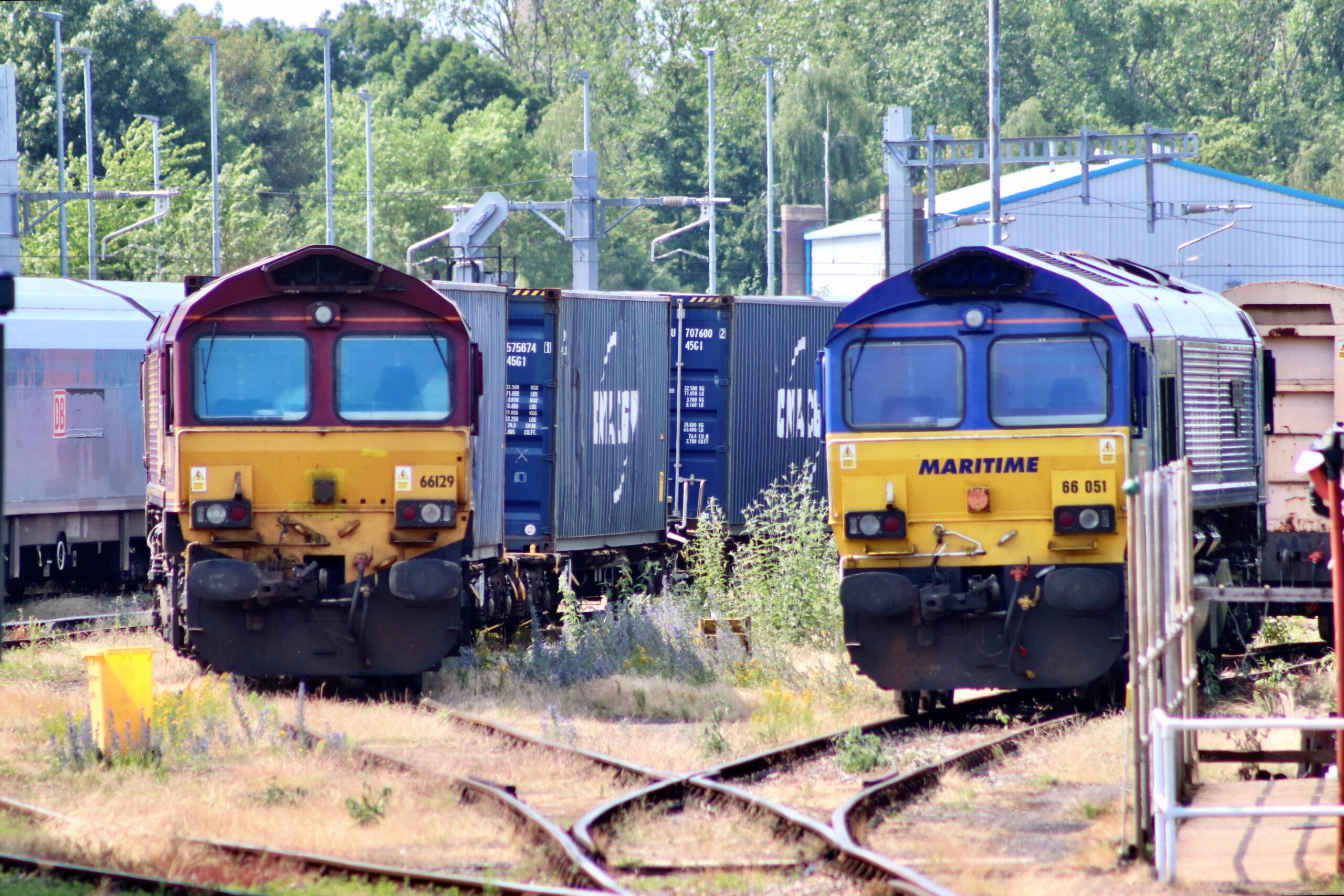
Also stabled at Didcot were Class 66 No.’s 66136 and 66083 – 25/06/2023Class 66 No.’s 66051 ‘Maritime Intermodal Four’ and 66129, Didcot Yard – 25/06/2023
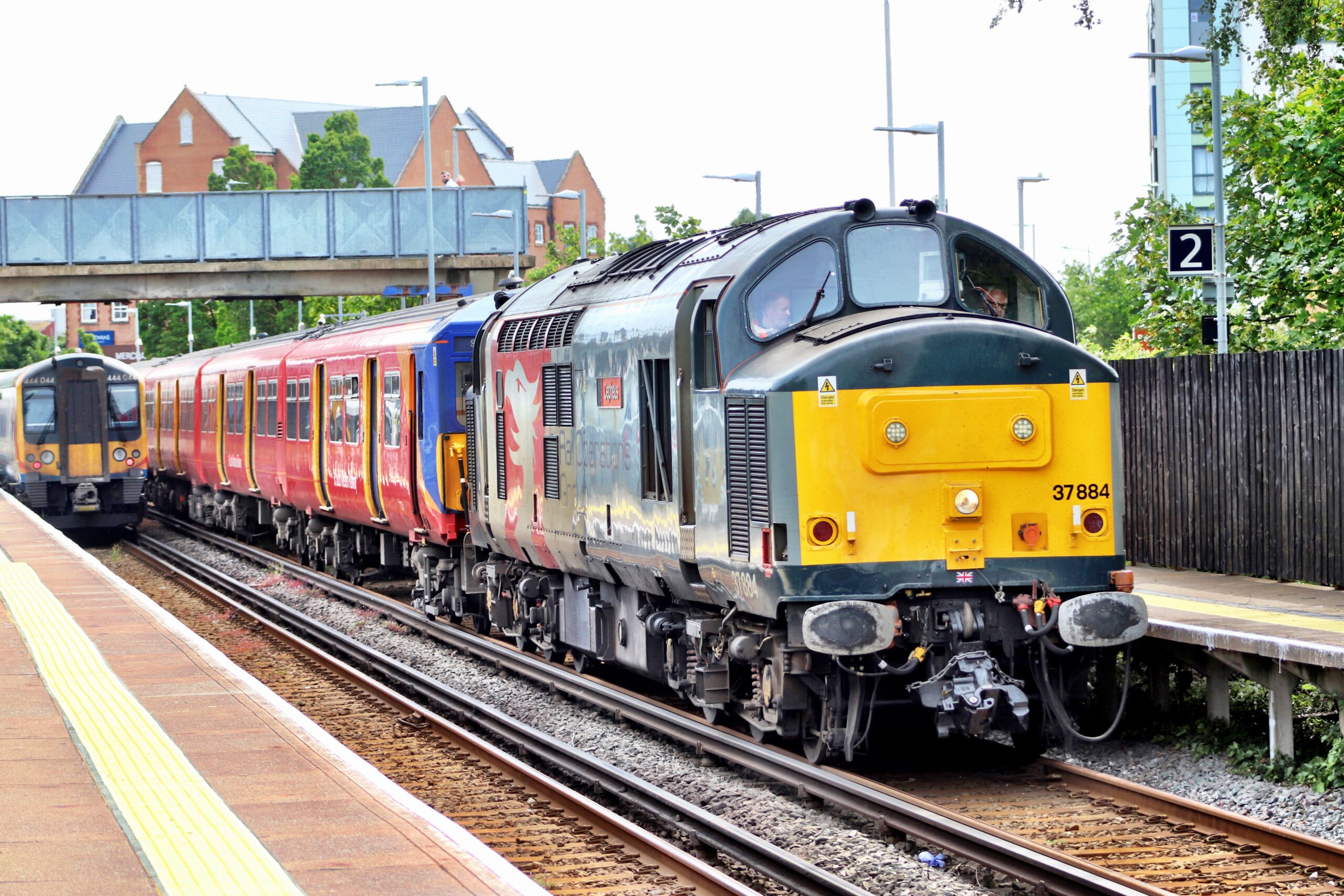
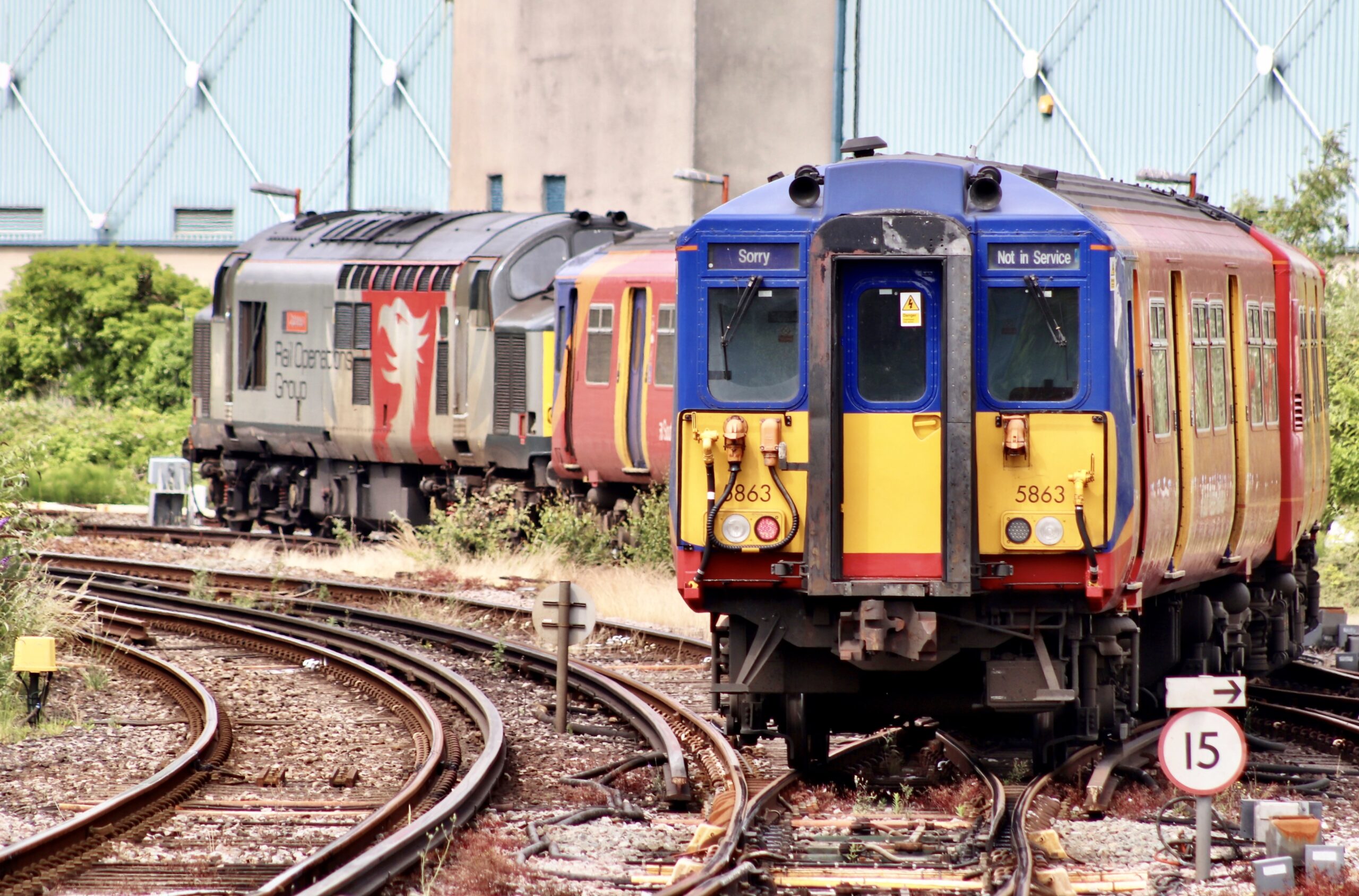
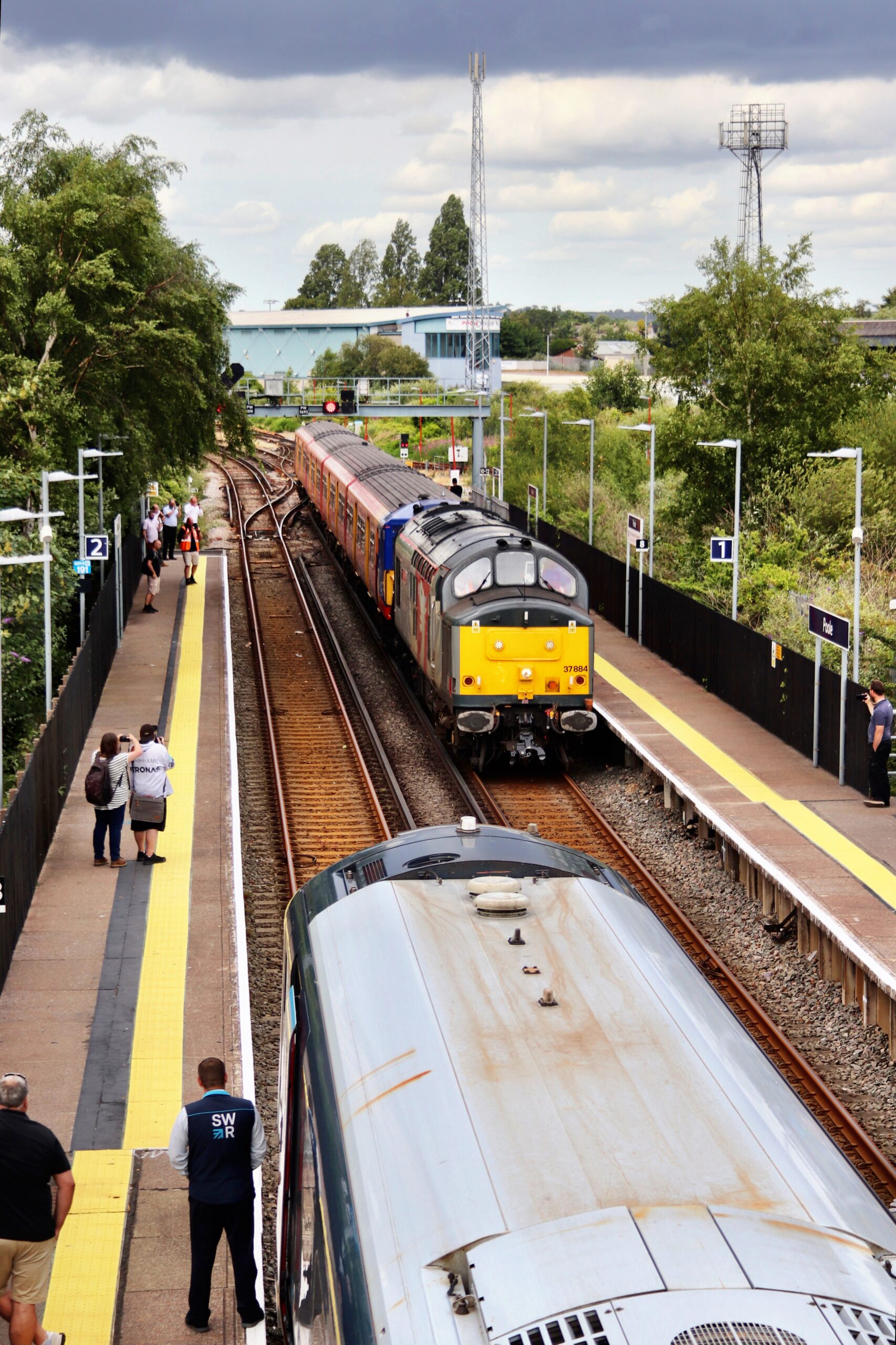
Monday and Tuesday saw some stock movements run around at Poole Storage Sidings as they either went to or from Bournemouth T&RSMD. First up on June 26th was ROG Class 37 No. 37884 ‘Cepheus’ hauling a Class 455 electric multiple unit No. 455863 from Wimbledon to Bournemouth for repair of a failed motor alternator. We saw the Cass 37 and empty coaching stock unit pass through Poole station on the way to the sidings. The locomotive detached from the front of the unit and ran back into Poole station and reversed back out again to attach itself to the other end of the empty stock before passing back through the station on the way to Bournemouth depot.
ROG Class 37 No. 37884 ‘Cepheus’ hauling broken Class 455 electric multiple unit No. 455863 through Poole as 5Q86 1246 Wimbledon Park CSD to Bournemouth T&RSMD – 26/06/2023Class 455 No. 455863 being towed into Poole Storage Sidings as 5Q86 1246 Wimbledon Park CSD to Bournemouth T&RSMD. Class 37 No. 37884 ‘Cepheus’ will run around the EMU to haul it back to Bournemouth depot – 26/06/2023Class 37 No. 37884 ‘Cepheus’ at Poole running around 5Q86 1246 Wimbledon Park CSD to Bournemouth T&RSMD – 26/06/2023Class 37 No. 37884 ‘Cepheus’ and No. 455863 work 5Q86 1246 Wimbledon Park CSD to Bournemouth T&RSMD – 26/06/2023
5Q86 1246 Wimbledon Park CSD to Bournemouth T&RSMD at Poole – 26/06/2023
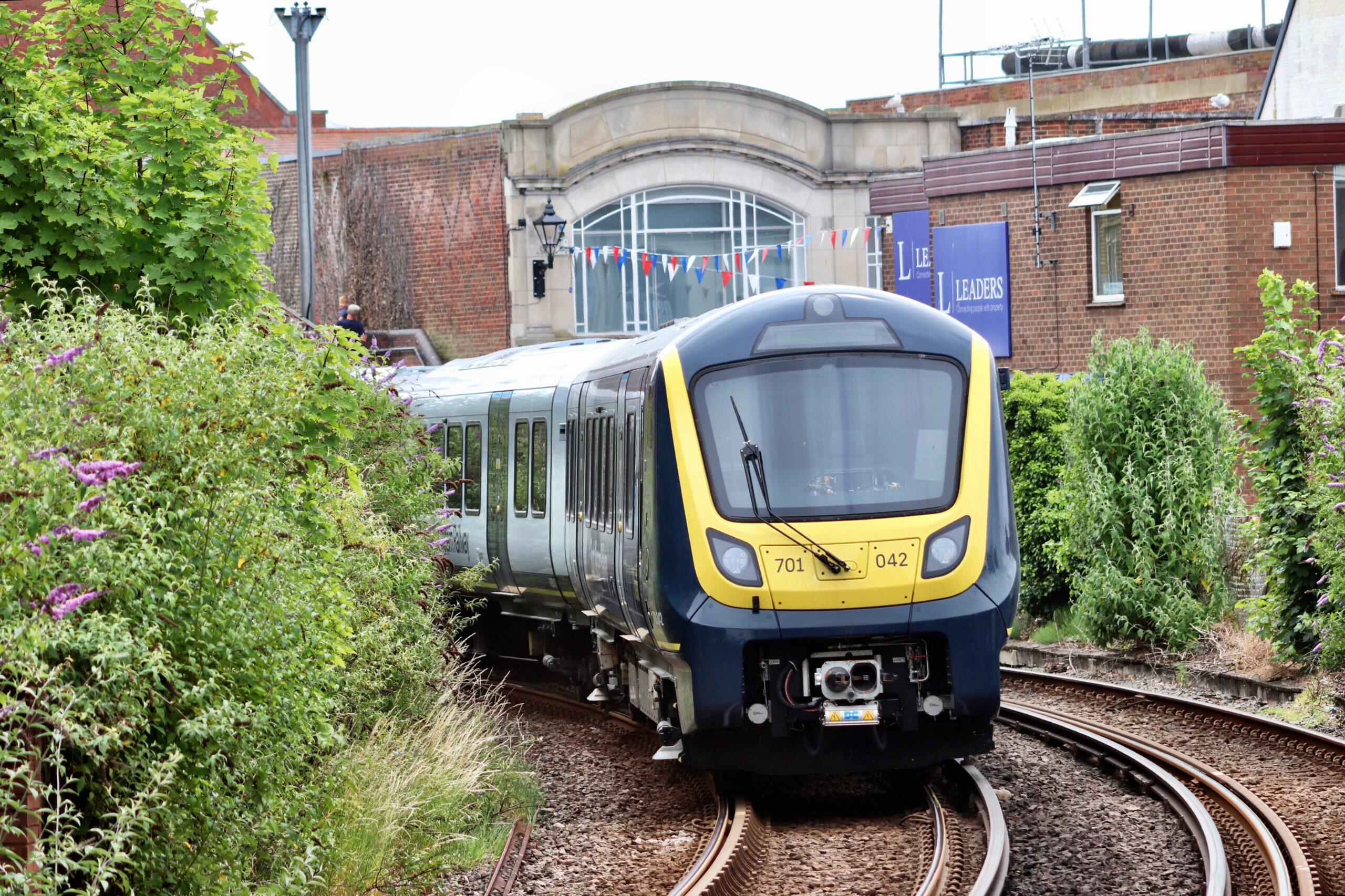
The following day it was the turn of Class 47 No. 47727 ‘Edinburgh Castle’ to arrive at Bournemouth T&RSMD to collect a stored ten-car Class 701 unit and take it off to Wimbledon for a further priod of storage. Regular readers may recall that the Class 701’s are yet to enter revenue earning service with South Western Railway and are currently undergoing testing and running in mileage accumulation runs. In fact, if you have a length of track able to accommodate one of these units, I’m sure Network Rail would love to hear from you as sidings all over the country are being filled up with these trains. Scheduled to depart Bournemouth at 1235, I was very much caught out when I discovered that the train had left 66 minutes early. I was very kindly picked up by our friend Jamie who deposited me at Poole station. Unfortunately, there were no free parking spaces available and as Jamie drove off in search of one, the Class 47 and unit hove into view.
Class 47 No. 47727 ‘Edinburgh Castle’ powers up at Poole hauling Class 701 EMU No. 701042 working 5Q86 1235 Bournemouth T&RSMD to Wimbledon Park Depot Sidings – 27/06/2023Class 701 No. 701042 being hauled to Wimbledon having passed through Poole behind Class 47 No. 47727 ‘Edinburgh Castle’ – 27/06/2023
5Q86 1235 Bournemouth T&RSMD to Wimbledon Park Depot Sidings departing Poole – 27/06/2023
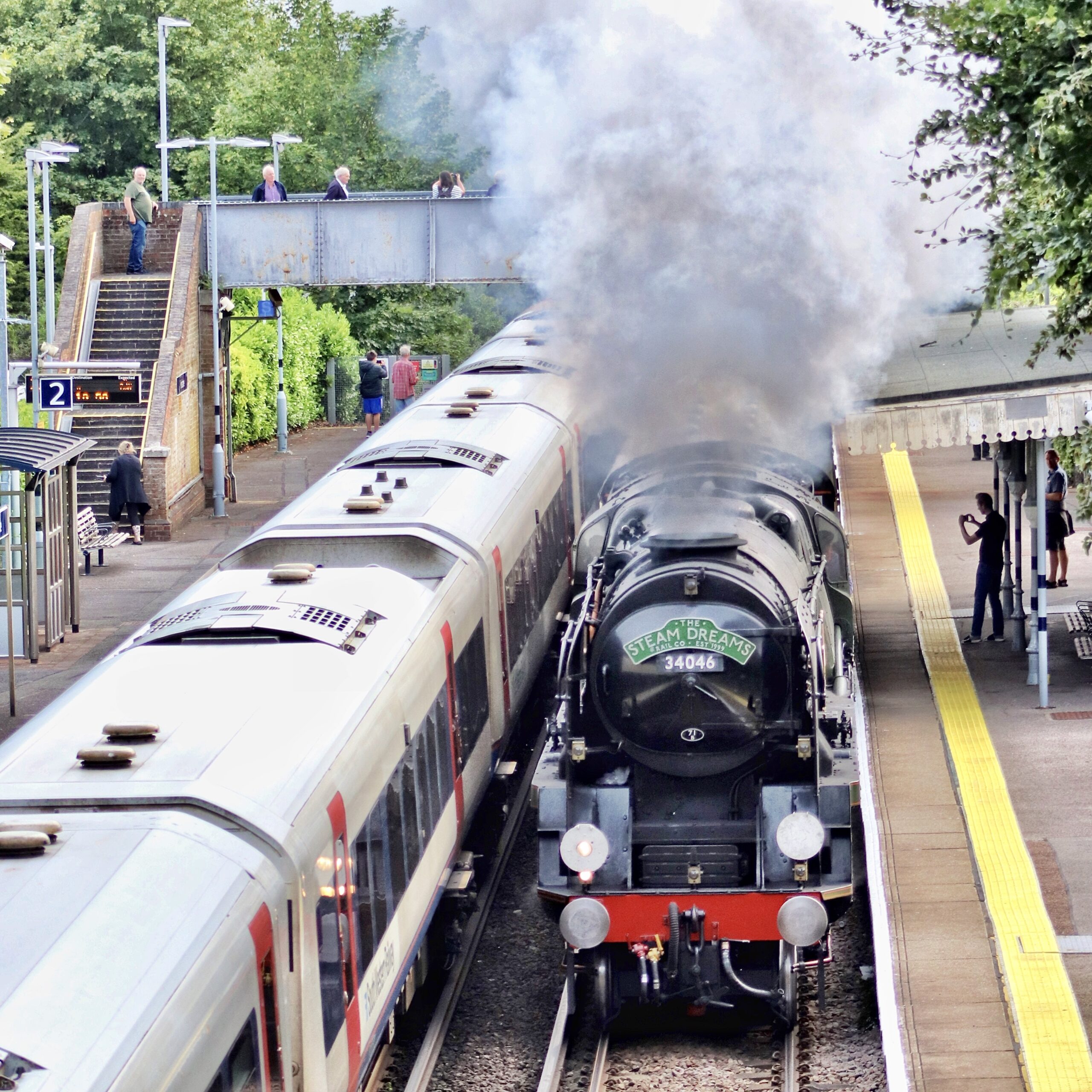
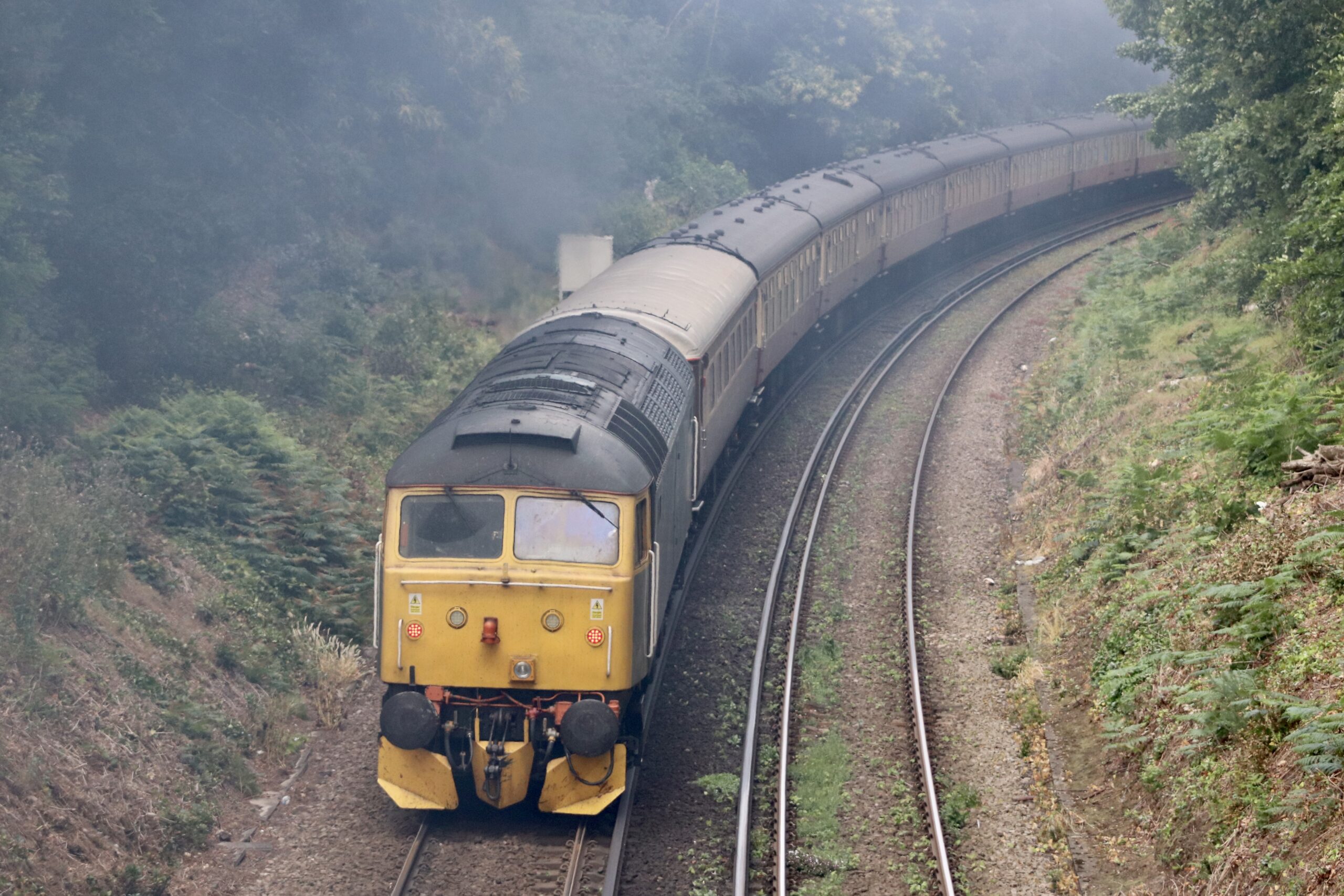
Later the same day, Southern Railway West Country Class 4-6-2 No. 34046 ‘Braunton’ visited Weymouth with a Steam Dreams excursion originating from London Victoria. The tour ran to Yeovil Junction where the steam locomotive came off the train for servicing and turning at the Yeovil Railway Centre whilst Class 47 No. 47614 took the train onto Weymouth.
A lineside fire at Upwey got most of us thinking that the cause was ‘Braunton’, but in fact the steam locomotive hadn’t even passed through the area when the line to Weymouth was closed. Thankfully it wasn’t long until everything was sorted and the track between Upwey and Weymouth reopened at around 1800. This enabled the light steam locomotive to complete its run down to rejoin the stock with no delay to the departure of the tour which was scheduled to return to London via the Bournemouth route.
Jamie was again kind enough to allow me to join him at Parkstone to see the train pass through. Unfortunately, ‘Braunton’ was running an impressive 8 minutes early as she stormed the bank at Parkstone, just as a London Waterloo to Poole service in the form of SWR Class 444 No. 444004 pulled in on platform 2, obscuring the view for many of those waiting to photograph or video the steam passing through on the Up line. So, my sincere apologies to Jamie who had his view blocked by the service train. I don’t think he’ll be asking me to accompany him on any future outings at this rate!
Southern Railway West Country Class 4-6-2 No. 34046 ‘Braunton’ storms the bank at Parkstone working 1Z72 1836 Weymouth to London Victoria – 27/06/2023Class 47 No. 47614 shrouded in steam at the rear of 1Z72 1836 Weymouth to London Victoria having passed through Parkstone – 27/06/2023
Steam Dreams “Weymouth” rail tour (Dorchester video by kind permission of GE Barrett)- 27/06/2023
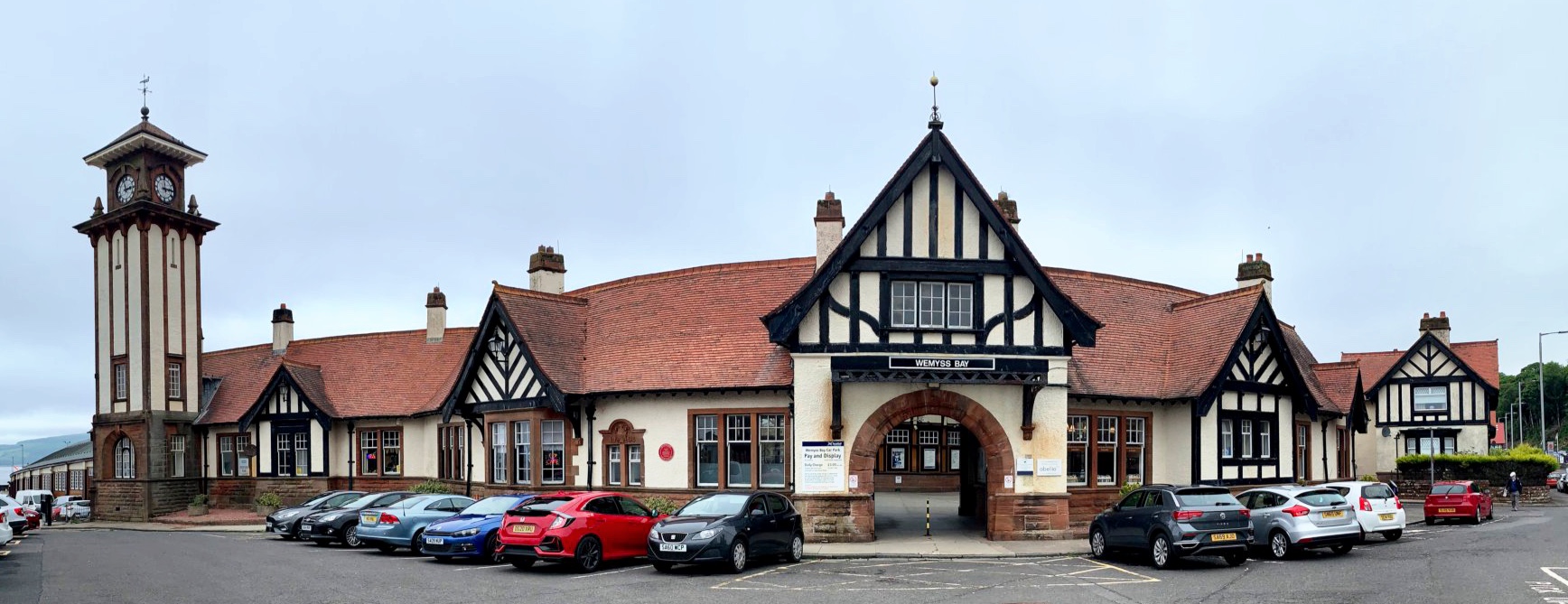
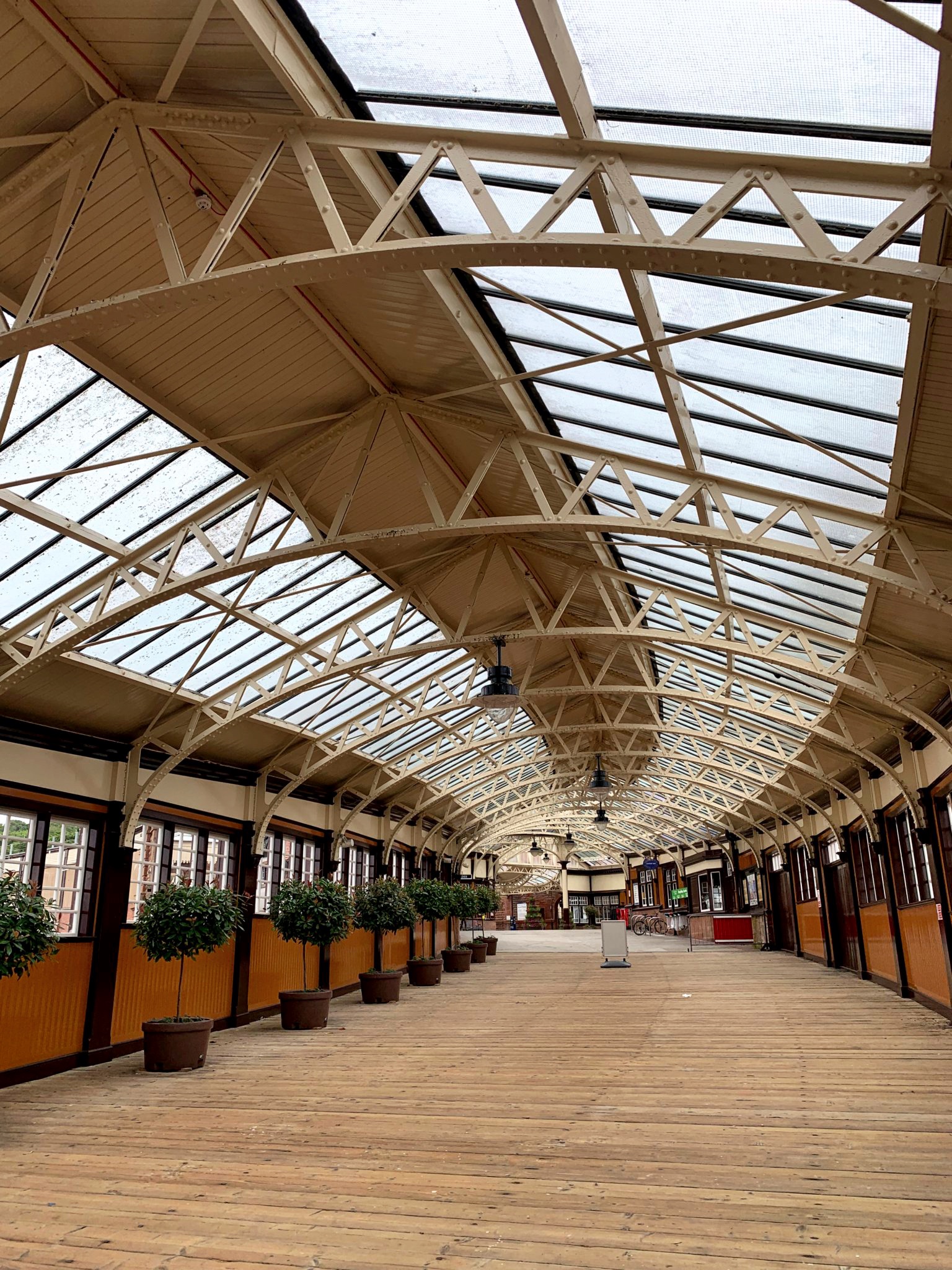
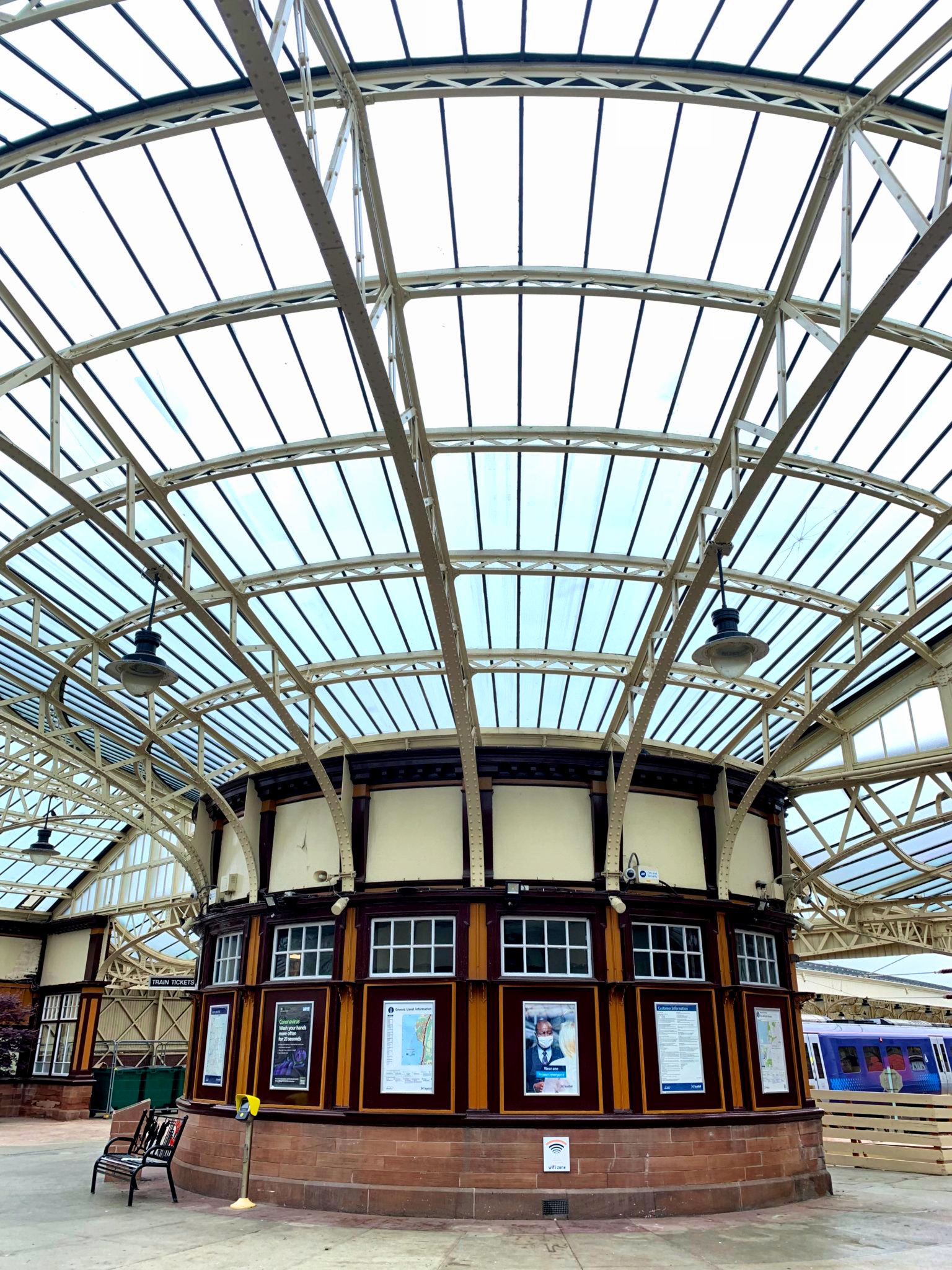
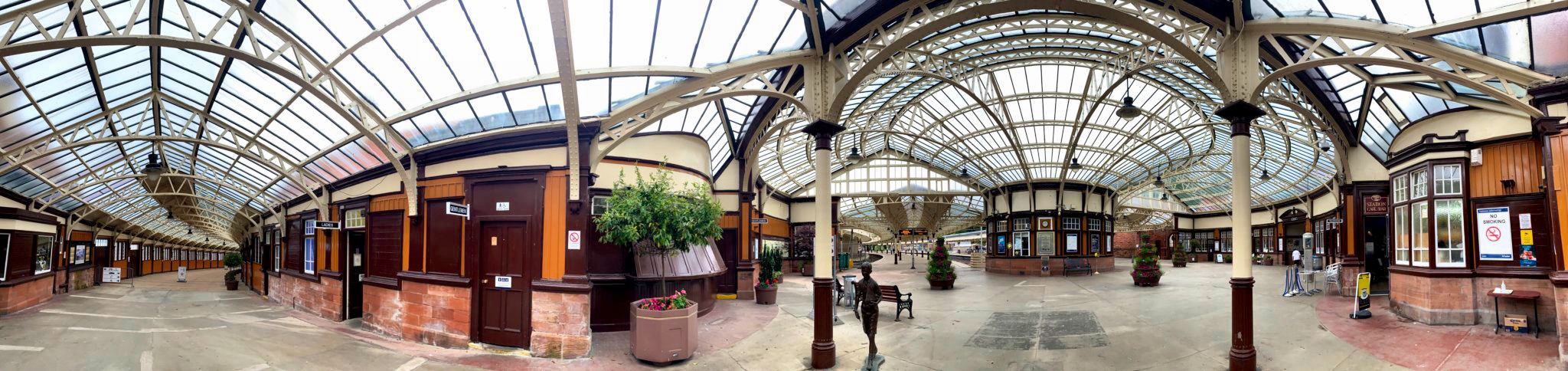
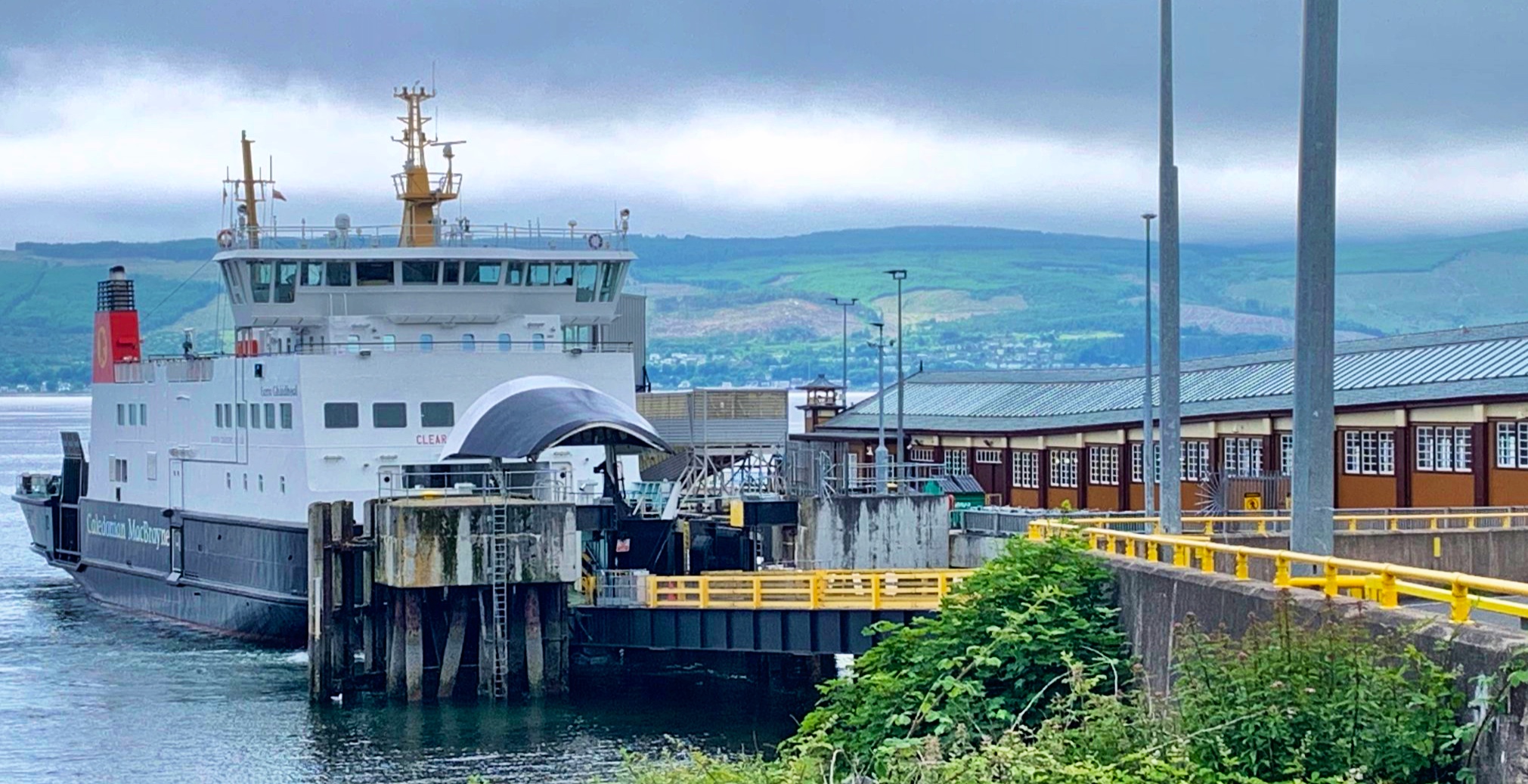
I was pleased to learn one of my favourite railway stations, Wemyss Bay in Scotland, has won this year’s World Cup of Stations competition following a five day contest across 11 geographical regions in England, Scotland and Wales. Supported by the Rail Delivery Group and the Community Rail Network over 70,000 votes were cast. 48 stations were chosen by TV presenter Tim Dunn and pitched against each other in 16 rounds to whittle down the final few. Wemyss Bay came in at first place with 8,403 votes in the last round, beating second place Denmark Hill on 7,441 votes and third place runner up Leamington Spa with 3,271 votes.
Wemyss Bay Railway station exterior. The station was designed by James Miller (1860-1947) in 1903 for the Caledonian Railway and is a Category A listed building – 23/06/2021 The station is a terminus on the Inverclyde Line, located 26 miles west of Glasgow Central. The station incorporates the Caledonian MacBrayne ferry terminal connecting mainland Scotland to Rothesay on the Isle of Bute and was designed to move passengers from train to ferry in five minutes via a curved covered way while luggage was moved on trolleys by a separate route – 23/06/2021The centrepiece of Wemyss Bay Station is a semi-circular ticket office, your eyes drawn upwards… – 23/06/2021…. towards curving roofs with a remarkable use of glass and steel curves. Platforms bend in one direction and the ramp down to the pier in another – 23/06/2023 ‘MV Argyle’ or ‘Earra-Ghaidheal’ in Gaelic pictured here, alongside her sister ship, ‘MV Bute’, operate sailings between Wemyss Bay and Rothesay on the Isle of Bute – 23/06/2021
And there we have it! We’ve reached the end of another blog entry. Thank you for your time in visiting us and for your comments, encouragement, corrections and contributions! We’ll be seeing you.
Postscript
Fawley Hill’s Cut-down cab Class 03 No. D2120 in BR blue days as No. 03120 at Landore depot, Swansea – 27/08/1981
Thursday 22nd December to Tuesday 3rd January 2023
Empty trains parked up on Christmas Day at Weymouth railway station – 25/12/2022
The UK rail network wound down for the Christmas break early on 24th December in 2022 because of industrial action. Several South Western Railway (SWR) Class 444 Electric Multiple Units and a Great Western Railway (GWR) Class 165 diesel multiple unit spent Christmas parked up at Weymouth railway station awaiting the restart on the 27th December 2022.
SWR Class 444 EMU No. 444038 in Weymouth – 25/12/2022
Following the Christmas close down of the railways, the first train to run on the Bournemouth to Weymouth route was the seasonal Snow & Ice Treatment Train (SITT) which set off from Eastleigh mid-morning to ensure rails were free of ice before passenger services started after mid-day.
GBRf Class 66 locomotives No.’s 66753 ‘EMD Roberts Road’ and 66745 top and tail 3Y88 1000 Eastleigh East Yard to Totton Yard SITT through Hamworthy on the outward run to Weymouth – 27/12/2022GBRf Class 66 locomotives No.’s 66745 and 66753 ‘EMD Roberts Road’ top and tail 3Y88 1000 Eastleigh East Yard to Totton Yard SITT across the Holes Bay causeway on the return run from Weymouth. No. 66722 replaced No. 66753 two days later, although this combination has yet to venture West to Bournemouth or Weymouth as SITT runs have been working East from Totton Yard – 27/12/2022
GBRf Class 66 locomotives No.’s 66753 ‘EMD Roberts Road’ and 66745 top and tail 3Y88 1000 Eastleigh East Yard to Totton Yard SITT – 27/12/2022. Additional video courtesy of @dabuckley967
1st January 2023 marks 100 years since the formation of the ‘Big Four’, the term coined by “The Railway Magazine” for the grouping of 120 individual railway companies into just four: Great Western Railway (GWR), Southern Railway (SR), London, Midland and Scottish Railway (LMS) and London and North Eastern Railway (LNER). The grouping was outlined in the 1921 Railways Act which strived to stem losses and regulate what were seen as inefficient, diverse and, in some cases, overlapping operations which had been struggling following the Great War. The act eliminated competition, as each group now had a regional monopoly. It also established standard fares and charges for particular services. 75 years ago on 1st January 1948, as a result of the Transport Act of 1947, the Big Four companies were nationalised to form British Railways.
LSWR T9 Class No. 30120, seen here with SR U Class No. 31806, is a surviving locomotive from the pre-Big Four grouping period having been built in 1899 and has been stored at Swanage following the expiry of her boiler certificate in August 2020 – 12/02/2022
New Years Day 2023 saw Yoshi’s Mum and I heading to London to take in the conveniently extended “Beatrix Potter: Drawn to Nature” exhibition at the V&A and Matthew Bourne’s “Sleeping Beauty” at Sadler’s Wells. We had intended to take the train, but South Western Railways timetabling around the RMT industrial action meant we would not be able to get everything done and home on the day with our last train leaving London Waterloo at 1830. So instead, we took to the roads and parked up at Kew Gardens and travelled into Town using the London Underground District Line from there.
I like Kew, it has a lovely village feel and Kew Gardens railway station is a fine Grade II listed example of mid-Victorian architecture and one of the last remaining 19th Century stations on the North London Line having been opened in 1869 by the London & South Western Railway (L&SWR) who were, prior to the formation of ‘The Big Four’, custodians of the Bournemouth to Dorchester line. Current services calling at Kew Gardens are operated by London Underground (LU) and National Rail London Overground utilising LU S7 stock and British Rail Class 378’s respectively. The Class 378 EMU’s replaced the Class 313’s operated by Silverlink and were introduced in 2008. Kew Gardens is also the only station on the London Underground network I know of which has a pub attached to it. The pub once had a door which gave access to platform one, but this is no longer in use. The pub is currently called ‘The Tap on the Line’ but was formerly known as ‘The Railway’.
The footbridge over the tracks at the southern end of the station buildings is Grade II listed in its own right and is a rare surviving example of a reinforced concrete structure built by French engineer Francois Hennebique (1842-1921). The bridge, restored in 2004, has high sides which protected users from the smoke emitted from steam locomotives passing below when originally installed.
Kew Gardens railway station exterior on the “Up” side – 01/01/2023Kew Gardens railway station – 30/07/2016Kew Gardens railway station, platform side – 01/01/2023Class 378 Capitalstar Electric Multiple Unit No. 378208 operated by London Overground arrives at Kew Gardens with 2N05 1010 Richmond NII to Stratford while London Underground S7 Stock Fleet No.21403 with driving coach No. 21404 at the rear of 2O51 Upminster LT to Upminster LT via Richmond awaits departure – 01/01/2023London Underground S7 Stock Fleet No. 21377 with driving coach No. 21378 leading arrives at Kew Gardens working 2O16 Upminster LT to Upminster LT via Richmond. The footbridge can be seen in the background – 01/01/2023
I very much enjoyed the V&A’s exhibition celebrating the life and work of Beatrix Potter. One railway themed item was this illustrated letter Beatrix sent to Marjorie Moore, the daughter of her last governess, detailing an eventful train journey when a farmer’s collie exited the carriage by jumping through a window:
Letter from Beatrix Potter to Marjorie Moore written on 23rd August 1898Beatrix had many animals during her lifetime. Kep, who is shown here was immortalised as Jemima Puddle-Duck’s hero when he rescued her from a ‘sandy whiskered gentleman’
Following our visit to the V&A (and a fabulous lunch – mustn’t forget the lunch!) we headed off to Islington via Old St. Pancras Churchyard so we could see ‘The Hardy Tree’ which had recently succumbed to a fungal infection and had fallen. During the 1860’s the Midland Railway line was being built over part of the original St. Pancras Churchyard. Arthur Blomfield, a Covent Garden based architect, was commissioned by the Bishop of London to supervise the proper exhumation of human remains and the dismantling of tombs. He passed this unenviable task onto his protégé Thomas Hardy in 1865. Hardy (1840-1928) is best known as a Dorset author and poet with his novels set in rural ‘Wessex’, however before turning to writing full time he studied architecture in London from 1862-67.
Hardy would have spent many hours in Old St. Pancras Churchyard during the construction of the railway, overseeing the careful removal of bodies and tombs from the land on which the tracks were being laid. Legend has it that Hardy stacked displaced headstones in a circle around an ash tree with the stones becoming embedded in the tree over time.
A few years before Hardy’s involvement, Charles Dickens (1812-1870) makes reference to Old St. Pancras Churchyard in “A Tale of Two Cities” (1859), as the churchyard in which Roger Cly was buried and where Jerry Cruncher was known to ‘fish’ – a 19th Century term for tomb robbery and body snatching!
The sad sight of the fallen Hardy Tree, St. Pancras Old Churchyard – 01/01/2023
Thanks for reading and Happy New Year! This blog entry was brought to you by Halls Soothers. Until next time, we’ll leave you with this; Thomas Hardy, inspired by a visit to Upwey, wrote a poem “At the Railway Station, Upway”, about waiting for a train at a country station:
“There is not much that I can do, For I’ve no money that’s quite my own!” Spoke up the pitying child – A little boy with a violin At the station before the train came in, – “But I can play my fiddle to you, And a nice one ’tis, and good in tone!”
The man in the handcuffs smiled; The constable looked, and he smiled, too, As the fiddle began to twang; And the man in the handcuffs suddenly sang Uproariously: “This life so free Is the thing for me!” And the constable smiled, and said no word, As if unconscious of what he heard; And so they went on till the train came in – The convict, and boy with the violin.
Colas Rail Class 37 No. 37099 working a test train through Upwey – 27/04/2017
Wednesday 7th December 2022 to Tuesday 13th December 2022
LMS Coronation Pacific No. 6233 ‘Duchess of Sutherland’ at Worting Junction working The Railway Touring Company’s “The Bath & Bristol Christmas Market” 1Z82 0847 London Victoria to Bristol Temple Meads – 10/12/2022
This week, Yoshi and I took a trip along the Southern Railway West Coastway route to witness the final days of the Class 313 electric multiple units (EMU), saw LMS Coronation Pacific No. 6233 ‘Duchess of Sutherland’ storming past Worting Junction and took in some Great Western Castle Class HST’s in frosty conditions.
Class 313
In preparation of spending a day on the Western Coastway route to see Class 313 emu’s, we had pre-booked our Southern Daysave ticket well in advance, and paid extra for next day delivery to avoid the postal strikes. It was a good job we did, as the ticket still took four days to arrive. So, on Friday 9th December we set off on a South Western Railway (SWR) service for Southampton (where we saw a couple of passing Class 66 hauled freight workings) to pick up a Southampton to London Victoria train which would take us to Barnham where we changed platforms to get a Class 313 operated shuttle to Bognor Regis. These are the last days of the Class 313’s and we hoped to record some of the units still in service.
The three-car Class 313’s were the first production, second generation, EMU’s built as a direct result of trials in 1972 with the PEP prototypes on British Rail Southern Region. I remember seeing at least one of the PEP units at Wimbledon on my first train journey to London in the early 1970’s. I may not have been an avid rail enthusiast at the time, but I’d clearly read about the new trains being introduced by British Rail. None of the prototypes survive and they were all cut up by 1990.
PEP Unit No. 4002 in the sidings at Wimbledon – 27/08/1982
The production-run classes which are most visibly similar to the PEP Stock are the dual voltage 750 V DC third rail / 25 kV AC overhead power collection Class 313, the 25 kV AC Classes 314 and 315, and the 750 V DC Classes 507 and 508. We covered the 507’s and 508’s earlier in the year when we visited Stockport. You can read about that adventure here.
A fleet of 64 three car sets were built by British Rail Engineering Limited (BREL) in York in 1976/1977 and were intended for the then newly modernised and electrified Great Northern inner suburban lines. The front end doors were designed for evacuation in an emergency in a single bore tunnel and the fleet were constructed to take in the slightly restricted loading gauge between Drayton Park and Moorgate.
Class 313 No. 313008 at Finsbury Park with a service to Moorgate – 30/10/1980
Upon privatisation, the 313’s were operated by Silverlink Railways and West Anglia Great Northern (WAGN) and later, in 2007, the class were transferred to London Overground who ran them until September 2010.
19 Class 313’s were modified for DC pick up only at Wolverton works and transferred to Southern to operate on the Coastway services out of Brighton from May 2010. These were deliveries into GTR Southern green and white with pictogram route branding. The remaining Great Northern members of the class were all withdrawn from service and scrapped by the end of 2019.
Yoshi gets up close to Class 313 No. 313207 at Bognor Regis having worked in with the 2P26 1053 service from Littlehampton – 09/12/2022When the Class 313’s were transferred to GTR Southern from May 2010 the sets were overhauled and the interiors refurbished with new seating in low-density 2+2 style using high backed seating – 09/12/2022Southern Class 313 onboard diagram – 09/12/2022Faded branding detail applied the intermediate coach of Coastway Class 313 No. 313207 (and other members of the class) on transfer to GTR Southern promoting the route Portsmouth, Chichester, Bognor, Littlehampton, Worthing, Brighton, Lewes, Seaford and Eastbourne – 09/12/2022In 2017 No. 313201, the first of the class to be built and therefore the oldest operational EMU in use in the UK, was repainted into as near as possible the BR blue/grey livery and it is believed the unit is destined for the National Collection. Because of disability reasons, the unit has contrasting colour doors and is seen here at Barnham – 09/12/2022On transfer to GTR Southern, the fleet was repainted in GTR Southern white and green. Class 313 No. 313210 at Brighton having arrived with Not being used on the day of our visit, Class 313 No. 313216 in the sidings at Brighton – 09/12/2022Class 313 No. 313206 at Brighton having arrived with the 1453 service from Seaford – 09/12/2022Class 313 No. 313203 has a short rest at Brighton prior to working the 1511 Brighton to Seaford service – 09/12/2022
Coastway Class 313’s – 09/12/2022Class 313 No. 313121 transferred to Network Rail in 2013 for use as a dynamic test vehicle for the development of the European Traffic Control System (ETCS). The set is based at Eastleigh Arlington where it is seen here – 30/01/2022 Development set 313 No. 313121 at Arlington Works, Eastleigh – 02/07/2022
Sherwood Forester
While on our Class 313 mission, we spent an hour at Chichester to coincide with the arrival of the steam hauled “Chichester For Carols” rail tour operated by Steam Dreams. Arriving just over half an hour late and with some confusion as to which platform the train was going to arrive on, LMS Black Five No. 45231 ‘Sherwood Forester’ hove into view.
LMS Stanier Class Five 4-6-0 No. 45231 ‘Sherwood Forester’ sits at Chichester having brought in Steam Dreams “Chichester for Carols” rail tour 1Z45 0649 Shoeburyness to Chichester – 09/12/2022Class 47 No. D1935 (47805) ‘Roger Hosking MA 1925-2013’ at the rear of Steam Dreams “Chichester for Carols” rail tour 1Z45 0649 Shoeburyness to Chichester – 09/12/2022
1Z45 0649 Shoeburyness to Chichester – 09/12/2022
Duchess
Saturday saw us heading towards London in order to capture LMS Coronation Pacific No. 6233 ‘Duchess of Sutherland’ which was heading the Railway Touring Company “The Bath & Bristol Christmas Market” excursion. Having elected to see the tour at Worting Junction we were greeted by bright sunshine on a beautiful frosty day. Yoshi didn’t much care for the approaching steam locomotive and made his concerns known.
Worting Junction and LMS Coronation Pacific No. 6233 ‘Duchess of Sutherland’ – 10/12/2022
Following our view of the Duchess we headed towards London in the hope of seeing a second steam excursion originating from London Victoria, but in the event the promised steam locomotive had been replaced by a Class 67 diesel (again). Our view of the Belmond Pullman train was obscured by the parallel running of a Southern service into the London terminus. You win some, you lose some!
London Victoria – 10/12/2022
Bristol Temple Meads
Sunday and we were in Bristol in the hope of capturing the Lilly’s Pet Food Christmas liveried IET No. 802106 which had been allocated to work the 1300 Bristol Temple Meads to London Paddington service. We were disappointed when this colourful unit did not materialise. However, we had a lovely few hours meeting new friends, downing festive coffee and getting photos of trains in wintery conditions.
5 car CrossCountry Voyager No. 221135 arrives at a snowy Bristol Temple Meads working 1S45 0927 Plymouth to Dundee – 11/12/2022
Great Western Railway (GWR) has confirmed that it intends to withdraw its fleet of Castle Class HST sets with the December 2023 timetable change with IET’s taking over their duties.
GWR Castle HST Class 43 Power Car No. 43155 ‘Rougemont Castle’ at Bristol Temple Meads forming 2E42 1338 service to Worcester Foregate Street – 11/12/2022What should have been the special Lilly’s Christmas liveried IETNo. 802106 was disappointingly plain old No. 802103 instead working 1A18 1300 Bristol Temple Meads to London Paddington – 11/12/2022CrossCountry Class 43 HST Power Car No. 43378 at Bristol Temple Meads working 1V48 0811 Leeds to Plymouth – 11/12/2022Yoshi with a snowman he made at Bristol Temple Meads – 11/12/2022
For The Record
The seasonal locomotive hauled Snow & Ice Treatment Trains (SITT) began running on 11th December 2022, with the first instance of the consist traversing the Bournemouth to Weymouth line in the early hours of 12th December. GBRf Class 66 locomotives No.’s 66745 and 66704 have been stationed at Totton Yard alongside the usual Multi Purpose Vehicles (MPV). Although running @25 minutes late, I remained tucked up in my warm bed and didn’t venture out in freezing temperatures to record the SITT pass. The Network Rail SITT scrapes any build up of ice from the Third Rail (the conductor rail from which electric traction pick up their power) using metal brushes and spraying anti-icing fluid to prevent further ice from forming. Without this process occurring, depending on the volume of ice, electric trains can struggle to pick up power and in really exceptional instances will be unable to move, which is what appears to have happened on Sunday 11th December when icy conditions between Weymouth and Brockenhurst meant all services were stopped. Engineering works taking place east of Brockenhurst prevented the SITT from running to Weymouth to rectify the situation. Limited services were later resumed, although South Western Railway (SWR) requested only essential journeys should be made. During the suspension of train services, passengers could source taxis between Brockenhurst and Weymouth and claim the cost back from SWR providing evidence of a train ticket and taxi receipt for the associated journey.
Throwback to December 2019 and GBRf Class 66 No. 66717 ‘Good Old Boy’ at the head of the SITT waiting departure from Weymouth to Totton Yard – 17/12/2019
The start of the new timetable on Sunday December 11th 2022 saw the inclusion of a weekday path along the Hamworthy Branch originating from Westbury Tarmac and terminating at Hamworthy BCI. It came as no surprise that the service did not run.
Many thanks for stopping by. This weeks blog is slightly curtailed owing to the fact somewhere along the line I have picked up a cold. Or more likely an extreme case of man-flu! Anyway, you have been saved my witterings on Brighton Railway Station, Class 701’s at Clapham Junction, video from Bristol and more about the Coastway Route.
Postscript
As a codicil to the Class 313 feature above, there was a period when I spent a great deal of time in North London. My local railway services were provided by Class 315 emu’s which were introduced in 1980 and was the last variant of five to have their design based on the PEP prototype units. The Class 315’s were set to end over 40 years of service on 9th December 2022. One unit, No. 315856 which took part in a farewell tour of the class organised by the Class 315 Preservation Society and the Branch Line Society, has been saved for preservation. The Class 315 Preservation Society has acquired the unit from Eversholt Rail Group and is destined for the Dean Forest Railway where it will be restored to original BR condition.
Class 315 No. 315830 arrives at Highams Park with a Chingford to London Liverpool Street service – 18/09/2020Class 315 No. 315801 arrives at Highams Park with a London Liverpool Street to Chingford service – 23/03/2020Class 315 No. 315807 passes the signal box at Highams Park with a London Liverpool Street to Chingford service – 19/04/2020Class 315 No. 315812 crosses the A406 rail bridge with a Chingford to London Liverpool Street service – 11/06/2020
Wednesday October 12th to Tuesday October 18th2022
‘Flying Scotsman’, perhaps the most famous steam locomotive ever, kicked off a year of events to celebrate 100 years since she first emerged from Doncaster Works in February 1923. Costing £7,944 and originally numbered 1472 she was the first locomotive built for the London North Eastern Railway (LNER) and in 1924 was chosen to be exhibited at the British Empire Exhibition at Wembley Park in London which aimed to celebrate the British Empire and its economic achievements and potential. It was at this time the locomotive was renumbered to 4472 and given the name ‘Flying Scotsman’ in honour of the prestigious daily 1000am London to Edinburgh passenger service. In 2022, now in British Railways livery and numbered 60103, ‘Flying Scotsman’ spent the weekend of 15th/ 16th October in light steam at the buffer stops of Kings Cross platform 8 allowing visitors to view this icon. The event also tied in with the 170th Anniversary of the opening of Kings Cross station in 1852.
Visitors to the station over the weekend were also able to take part in associated activities including a ‘Flying Scotsman’ driving simulator, where people could experience driving the engine out of The Cross, screens to watch live footage of ‘Flying Scotsman’ from the concourse and regular recorded announcements from Michael Portillo.
Kings Cross railway station exterior – 15/10/2022Blue plaque, Kings Cross – 15/10/2022Hornby Railways stand at Kings Cross. Hornby is lead sponsor of the ‘Flying Scotsman’ Centenary events. The steel structure engineered by Arup forming the roof seen in this image was added as part of a refurbishment programme completed in 2012 which included a new semi-circular departures concourse has been described as being “like some kind of reverse waterfall, a white steel grid that swoops up from the ground and cascades over your head” – 15/10/2022Hornby’s Marketing and Product Development Director, Simon Kohler – 15/10/2022The entrance to Platform 8 at Kings Cross – 15/10/2022‘Flying Scotsman’ Souvenir Platform Ticket LNER Gresley A3 4-6-2 No. 60103 ‘Flying Scotsman’ sits at Kings Cross platform 8 – 15/10/2022‘Flying Scotsman’ name plate LNER Gresley A3 4-6-2 No. 60103 ‘Flying Scotsman’ sits at Kings Cross platform 8 as a modern day LNER Azuma arrives at platform 10 – 15/10/2022The Gresley A3’s and A4’s gave way to diesel traction. Class 43 HST power car No. 43059 alongside Class 55 “Deltic” No. 55015 ‘Tulyar’ at Kings Cross – 18/10/1981Class 91 No. 91127 at the head of 1D19 1503 Kings Cross to Leeds – 15/10/2022LNER Gresley A3 4-6-2 No. 60103 ‘Flying Scotsman’ sits at Kings Cross platform 8 – 15/10/2022
For my Saturday October 25th visit to see No. 60103 at Kings Cross, Yoshi stayed at home with his mum as we thought things might be a little too crowded for our boy. For my part, it was great to be reacquainted with ‘Flying Scotsman’ once again and to hear her whistle echo around Kings Cross. Also a great joy was to witness the faces of passengers arriving at the station and unexpectedly coming across the peoples’ locomotive. It seems that everyone loves a steam engine, and none more so than Sir Nigel Gresley’s most famous A3.
Brief video of ‘Flying Scotsman’ at the buffer stops of platform 8 of London Kings Cross – 15/10/2022
Purchased by Alan Peglar from regular British Railways service for £3,000 in 1963 after covering 2,076,000 miles, ‘Flying Scotsman’ was later under the custodianship of Sir William McAlpine and then Tony Marchington before, in 2004, a campaign spearheaded by the National Railway Museum (NRM) to save the locomotive for the nation was supported by thousands of members of the public, confirming its status as a national treasure. A ten year £4.2 million restoration project funded by the National Heritage Memorial Fund, the Heritage Lottery Fund and public donations followed.
There will be a calendar of mainline UK rail tours involving No. 60103 across the the next year. ‘Flying Scotsman’ is extremely well travelled as in addition to hauling enthusiast specials across England, Scotland and Wales, between 1969 and 1973 the locomotive toured extensively in the United States and Canada and from 1988 to 1989 she visited Australia where she set a record for the longest non-stop run by a steam locomotive of 422 miles on 8 August 1989. ‘Flying Scotsman’ actually set two world records for steam traction being the first steam locomotive to be officially recorded at reaching 100mph which happened on 30 November 1934.
The next of the planned Centenary events takes place on Yoshi’s doorstep as ‘Flying Scotsman’ visits the Swanage Railway for a three week visit until November 7th 2022. No. 60103 is on display at Swanage railway station for pre-booked visits to her footplate on 20th and 21st October 2022 as well as every day between 27th October to 6th November inclusive. ‘Flying Scotsman’ will be hauling passenger trains between Swanage and Norden from 22nd October to 26th October.
Making her way to the Isle of Purbeck, No. 60103 passed through East Dorset and we popped out to see her working tender first as she crossed the Holes Bay Causeway near Poole on the morning of 18th October 2022.
LNER Gresley A3 4-6-2 No. 60103 ‘Flying Scotsman’ having traversed Creekmoor Viaduct on the Holes Bay causeway working 5Z74 0452 Southall WCR to Swanage – 18/10/2022LNER Gresley A3 4-6-2 No. 60103 ‘Flying Scotsman’ crossing Upton Viaduct on the Holes Bay causeway working 5Z74 0452 Southall WCR to Swanage – 18/10/2022LNER Gresley A3 4-6-2 No. 60103 ‘Flying Scotsman’ nears Hamworthy after crossing Upton Viaduct on the Holes Bay causeway working 5Z74 0452 Southall WCR to Swanage – 18/10/2022
Video of LNER Gresley A3 4-6-2 No. 60103 ‘Flying Scotsman’ crossing the Holes Bay causeway working 5Z74 0452 Southall WCR to Swanage – 18/10/2022
Another reason for my visit to London on Saturday was the opportunity to view the former Victorian St Pancras railway station water tower which was the subject of an open day. The water tower was built in 1872 and sat on the eastern side of St Pancras providing refreshment for steam locomotives using the station.
The St Pancras water tower was designed by the office of Sir George Gilbert Scott and features elaborate brickwork detailing around the edges of the overhang that supported the water tank – 15/10/2022
The water tower was nearly demolished as part of the 2001 Channel Tunnel rail link development at St Pancras. Thankfully a solution was sought to retain the building, and although now moved slightly from its original location, the water tower survives on land owned by the St Pancras Cruising Club. It was not an easy task relocating the structure as it was discovered that dismantling it brick by brick would be impossible given the hardness of the original mortar used in its construction. So instead, the tower was cut in half horizontally and moved in two pieces, the operation being completed by 2005.
Once I’d managed to find the entrance, which was gained by crossing canal lock gates, the tower’s elevated location and low lying surroundings contributed to stunning views across St Pancras and the Regent’s Canal.
Two SouthEastern Class 395 Javelin EMU’s, with No. 395011 ‘Katherine Grainger’ leading, form the 1F38 1425 St Pancras International to Rochester service – 15/10/2022Class 373/1 Eurostar set No. 373007 9031 1313 Paris Nord to St Pancras International on the approach to the London terminus – 15/10/2022The St Pancras water tower serves as a back drop to the Regent’s Canal – 15/10/2022
Trains viewed from the St. Pancras water tower – 15/10/2022
St Pancras railway station was designed by Midland Railway engineer William Barlow and his masterpiece train shed roof was built to span five tracks in one single arc with its cross ties buried under the floor in the form of horizontal girders. At 74 metres this was once the largest span in the world. Not content with this, the company turned to Sir George Gilbert Scott to design a hotel which would be the most luxurious on the planet. Scott’s building has an entrance wing facing Euston Road with a curved quadrant forecourt to reach Barlow’s existing entrance ramps to the station. The Midland Grand hotel closed in 1935 and was then used as office space.
The interior of St Pancras International with Eurostar trains in evidence – 21/06/2014
In the 1960’s British Railways driven by modernisation wanted to sweep it all away and concentrate rail services into neighbouring Kings Cross. However, unlike the corporate vandalism bestowed on London Euston, St Pancras had a flurry of supporters determined to save the building led by Sir John Betjeman and the newly formed Victorian Society. In 1967 the British Government acquiesced and St Pancras gained Grade I listed status and was saved the fate of the wrecking ball. Despite continued future use as BR offices and dormitories for rail staff the building fell into disrepair and was shut down in the 1980’s after failing fire safety checks. At a cost of £10 million, the exterior was restored and made structurally sound. But it was not until 2004 that planning permission was given for the building to be redeveloped into a new hotel.
Statue of Sir John Betjeman who led a campaign to save St Pancras Station from demolition in the 1960’s. In tribute to the famous poet and railway enthusiast a 2.10 metre high sculpture by Martin Jennings was unveiled in 2007 to celebrate the man and his poetry – 21/06/2014
The main public rooms of the former Midland Grand Hotel were restored, along with some of the bedrooms. The former driveway for taxis entering St Pancras station which passed under the main tower of the building was converted into a hotel lobby and a new wing constructed on the western side of the Barlow train shed. Although open to guests in March 2011, the formal Grand Opening of The St Pancras Renaissance Hotel was held on the 5th May the same year, 138 years to the day after the original hotel opened in 1873. St Pancras is, without doubt, my favourite building in London. One day I’ll have breakfast at the hotel, or stay a night – maybe even both.
St Pancras railway station and The St Pancras Renaissance Hotel viewed from Euston Road – 15/10/2022 St Pancras railway station and The St Pancras Renaissance Hotel – 21/06/2014“The Meeting Place” is a 9 metre high, 20 tonne bronze sculpture that stands at the south end of the upper level of St Pancras. Designed by the British artist Paul Day and unveiled in 2007, it is intended to evoke the romance of travel through the depiction of a couple locked in an embrace – 21/06/2014Class 45 No. 45112 and an unidentified classmate at St Pancras circa 1977Class 47 No. 47484 ‘Isambard Kingdom Brunel’ awaits departure at St Pancras – 11/07/1981Class 45 No.’s 45149 and 45117 at the buffer stops of St Pancras – 11/07/1981
Staying with buildings connected to Sir George Gilbert Scott, Grade II Battersea Power Station re-opened on 14th October, so as I was in London and hoping to find an inflatable pig tethered above it, I thought it would be remiss of me not to stick my nose in and see what had been done to the place. The construction is actually two near-identical power stations built to form a single structure balanced by four chimneys, one in each corner of the plan. Designed by a team of architects and engineers, and allowing me to seamlessly segue from railway water towers to power stations, the third son of Sir George; Sir Giles Gilbert Scott, was brought onboard in 1930 by the London Power Company as consulting architect. Working with the buildings designer and the company chief engineer, Leonard Pearce (not to be confused with Lennard Pearce who played Grandad in BBC sitcom “Only Fools and Horses”), Scott’s role was to enhance the external appearance of the structure. He remodelled the four corner chimneys so they mimicked classical columns and added detailing to the vast brick walls.
Battersea Power Station was originally opened in 1933, but has been disused since 1982. It was always one of the buildings I would look out for on rail journeys into London Waterloo, but is now obscured by modern buildings. At the time of its opening, The Observer newspaper called it “one of the finest sights in London” and I, for one, am happy it survived the intervening years which saw numerous unfulfilled proposals put forward for its regeneration. From theme parks to football stadiums, what we have ended up with on the site is a shopping centre, offices (soon to accommodate Apple’s London HQ) and homes occupying the building which was once dubbed “The Cathedral of Power” at the cost of £9 billion. 1,600 luxury flats have been built with a further 2,400 planned. Despite its size and six million bricks, I felt the former Power Station was somewhat lost amongst these new developments which have sprung up around it.
The London Underground’s Northern Line was extended, branching off at Kennington, with two new stations; Nine Elms and Battersea Power Station opening on 20th September 2021. The construction cost £1.1 billion and the extension is 3 kilometres long.
A Northern Line train awaits departure from platform 2 at Battersea Power Station – 15/10/2022Battersea Power Station roundel – 15/10/2022Exterior of Battersea Power Station tube – 15/10/2022Battersea Power Station – 15/10/2022Battersea Power Station – 15/10/2022
Not everything is open yet or accessible, such as the lift in one of the chimneys which promises aerial views of London, and Control Room A which will be used as an event space by invitation only. You can, however, visit Control Room B which is now a bar of the same name where staff wear white boiler suits and punters sit alongside switches and dials which technicians once used to control one fifth of the capital’s electricity. There was a queue of people waiting for seats when I passed by. On a future visit, I will definitely be checking out chef Gordon Ramsey’s bottomless pizzas at “Gordon Ramsey Street Pizza”. Unfortunately my visit of the exterior area was curtailed because of rain, so my intention of checking out the view of the railway originating from London Victoria across Grosvenor Bridge will have to wait until next time.
Shopping centre West Entrance to Battersea Power Station – 15/10/2022Battersea Power Station from alongside the River Thames – 15/10/2022North Entrance Battersea Power Station – 15/10/2022Interior Battersea Power Station – 15/10/2022Control Room B, Battersea Power Station – 15/10/2022Control Room B, Battersea Power Station – 15/10/2022
Sir Giles Gilbert Scott has a Dorset connection having designed the Church of the Annunciation, a Roman Catholic Church in Bournemouth. But this isn’t a blog about churches. Or power stations for that matter. And anyway, Bournemouth was in Hampshire in 1905.
Returning to my recent London adventure, I did however set Battersea Power Station in my sights later in the day when on my way home, I alighted from my Victoria Line tube train to see Belmond Trains “Brighton Belle” British Pullman rail tour arrive at London Victoria.
Platinum Jubilee liveried DB Class 67 No. 67007 working the return Brighton Belle 1Z91 Hove to London Victoria passes Grosvenor Road Carriage Sheds with the newly re-opened Battersea Power station as backdrop – 15/10/2022Light locomotive Class 67 No. 67024 in British Pullman livery working 0Y83 Stewarts Lane T&R.S.M.D to London Victoria – 15/10/2022Class 67 No. 67024 in British Pullman livery departing Victoria station with 5O82 London Victoria to Stewarts Lane T&R.S.M.D
Comings and goings at London Victoria vowed from Ebury Road bridge – 15/10/2022
Thank you for stopping by, Yoshi and I will be back next week for more ‘Flying Scotsman’ related tales. Until then, take care!
Yoshi at Kidderminster enjoying the last gasp of autumn sun with Class 52 Western diesel hydraulic No. D1040 ‘Western Queen’ in the background – 02/10/2022
Hello Dear Reader! It’s been a relatively quiet week on the rails in Yoshi’s manor. Engineers trains for the Chetnole track upgrade came and went, utilising the same locomotives on a rota as at the start of the work. Because of the their early departures via Dorchester South, Yoshi and I remained snuggled up in our bed. We had planned on seeing the final two trains depart via Yeovil Pen Mill on the Friday evening, but the rain and winds put us off as we didn’t fancy hanging around for them to make an appearance on an open windswept railway station. In the event it appears they left more or less on time, so it would not have be so tortuous!
Severn Valley Railway
Sunday 2nd October found us back at the Severn Valley Railway, this time for their 2022 Autumn Diesel Bash. The main attraction for me being the visit of two GB Railfreight Class 56 locomotives which have been repainted into retro British Rail liveries. The GBRf Class 56’s will eventually be rebuilt as Class 69 locomotives in due course, so we thought we’d take the opportunity to catch these while we can. Only one of the two Class 56 locomotives ran each day over the weekend; No. 56098 on Saturday and 56081 on the Sunday. I hoped that the locomotive not being used would be on static display, but this wasn’t really the case, and only a record shot could be achieved from publicly accessible areas.
GBRf Class 56 No.’s 56098 and 56081 coupled together at Kidderminster SVR awaiting their return to Old Dalby the following day – 02/10/2022
Despite this, we had another great day out at the Severn Valley. Even the fact the coffee machine wasn’t working at The Engine House cafe in Highley didn’t dampen my spirits. As we left Dorset and made our way northwards, the weather didn’t look conducive to a day out, but once past Bristol, the sun made a welcome appearance for the rest of the day. Thanks to Andrew and Scott for their excellent company and helping to look after Yoshi.
Deltic No. 55009 ‘Alycidon’ on the approach to Highley. I first saw this class of locomotive at London Kings Cross in 1977 and they immediately became my favourite diesel locomotives – 02/10/2022Class 50 No. 50049 ‘Defiance’ departs Highley – 02/10/2022Class 50 No. 50035 ‘Ark Royal’ arriving into Kidderminster – 02/20/2022Class 50 No. 50033 ‘Glorious’ awaiting to be rescued at Highley with a ‘local service’ after being declared a failure – 02/10/2022Class 31 No. 31466 plays Thunderbird loco for Class 50 No. 50033 ‘Glorious’ at Highley. A minor defect in the Class 50’s air system intermittently prevented the locomotive creating a brake – 02/10/2022Class 31 No. 31466 at Highley – 02/10/2022Class 52 No. D1015 ‘Western Champion’ nears Highley – 02/10/2022Class 52 No. D1015 ‘Western Champion’ departs Kidderminster with an evening service – 02/10/2022Class 52 No. D1062 ‘Western Courier’ running as classmate No. D1040 ‘Western Queen’ catching the late afternoon sun at Kidderminster – 02/10/2022The second man on Class 52 No. D1040 ‘Western Queen’ ready to exchange tokens entering Highley – 02/10/2022GBRf Class 56 No. 56081 and Class 20 No. 20048 being used as a translator locomotive for braking near Highley – 02/10/2022GBRf Class 56 No. 56081 having arrived at Kidderminster after its sole round trip – 02/10/2022GBRf Class 56 No. 56081 prepares to run to the sidings at Kidderminster – 02/10/2022Large Logo liveried Class 56 No. 56098 at Kidderminster – 02/10/2022Class 09 No. 09012 (D4100) ‘Dick Hardy’ came to the rescue after Class 46 No. D182 was withdrawn from service earlier during the gala – 02/20/2022 Class 20 No. 20048 departs Kidderminster on the rear of a train to Bridgnorth – 02/10/2022Yoshi chats with the driver of Class 31 No. 31466 during a stop at Bewdley – 02/10/2022
Our video from the 2022 Autumn Diesel Bash at the SVR
Class 91’s
Prior to our Seven Valley adventure, on Wednesday 28th September I was in London for a work meeting and I took the opportunity to pop into Kings Cross on my way to the office to catch a couple of Class 91 departures. I rather like the look of the business end of the Class 91 locomotive.
A total of 31 Class 91 ‘Electras’ were built by British Rail Engineering Limited (BREL) at Crewe Works from 1988 to 1991 and numbered 91001 to 91031. They were overhauled by Bombardier at Doncaster between 2000 and 2003 and renumbered by adding 100 to their original number, with the exception of No. 91023 which became No. 91132 due to its involvement in fatal accidents at Hatfield in 2000 and Great Heck in 2001.
The IC225 fleet of 314 Mk 4 carriages built by Metro-Cammell in Birmingham were formed into 30 sets and with the addition of a Driving Trailer Van (DVT) allowed push-pull operation with the Class 91’s. The fleet is now greatly reduced following the introduction of Hitachi InterCity Express Trains (IET) and eight coaching sets have been retained for use on the East Coast Mainline with 12 Class 91’s.
Over the years the trains have seen several changes in operator as franchises have collapsed and taken over by government backed Operators of Last Resort. GNER was replaced by National Express East Coast, followed by East Coast, Virgin Trains East Coast and currently LNER. Each operator has applied its own livery to the locomotives and coaching stock with most recently LNER simply replacing the Virgin Trains branding with its own. Now, however, the fleet is receiving repaints with those not carrying a celebrity livery receiving a retro style inspired by the original Intercity 225 design of sharp lines and red and white styling, the LNER brand replacing the InterCity lettering and swallow motif which can be seen applied to No. 91004 in the video from 1994 further down this page.
Class 91 No. 91110 ‘Battle of Britain Memorial Flight’ awaits departure from London Kings Cross with the 1003 1D09 service to Leeds. The InterCity 225 fleet leased by LNER is in the process of receiving a full repaint as the rolling stock is brought in for essential maintenance. The repaint of No. 91110 was completed in July 2022 – 28/09/2022Side detail of Class 91 No. 91110 ‘Battle of Britain Memorial Flight’Side detail of Class 91 No. 91110 ‘Battle of Britain Memorial Flight’Side detail and nameplate of Class 91 No. 91110 ‘Battle of Britain Memorial Flight’Side detail of Class 91 No. 91110 ‘Battle of Britain Memorial Flight’. In September 1989 No. 91110 achieved 162.8 mph on an overspeed test at Stoke Bank near Peterborough, the fastest ever recorded by a UK locomotive. Stoke Bank is the same location where the world record for a steam locomotive was set at 126 mph by Gresley A4 No. 4468 ‘Mallard’ on 3rd July 1938.Class 91 No. 91107 ‘Skyfall’ at Kings Cross platform 2 heading 1D10 1033 London Kings Cross to Leeds. The Class 91 powered IC225 trains have been operating on the East Coast Main Line for 33 years. The Gresley A4’s managed 27 years and the Class 55 Deltics 20 years. The Gresley A3’s and the IC125 HST’s both notched up 40 years of continuous ECML service – 28/09/2022Close up of nameplate for Class 91 No. 91107 ‘Skyfall’
Class 91 departures at London Kings Cross – 28/09/2022Class 91 No. 91114 ‘Durham Cathedral’ at York – 04/07/2013Nameplate detail of Class 91 No. 91114 ‘Durham Cathedral’ at York – 04/07/2013Livery variation applied to Class 91 No. 91114 ‘Durham Cathedral’ at York – 04/07/2013East Coast liveried Class 91 No. 91120 at York – 28/08/2011Class 91 No. 91101 with Flying Scotsman branding at Doncaster – 05/07/2013Class 91 No. 91102 at York – 28/08/2011Class 91 No. 91121 at York – 28/08/2011Europhoenix liveried Class 91 No. 91117 stands adjacent to unique Class 89 No.89001 ‘Avocet’ at the recent Barrow Hill 150+2 celebrations – 28/08/2022The flat end of Class 91 No. 91120 can be seen clearly in this image alongside Class 89 No.89001 ‘Avocet’ at the recent Barrow Hill 150+2 celebrations. The Class 89 was a prototype for an electric six-axle mixed traffic locomotive which did not progress beyond this example – 28/08/2022Another view of Europhoenix Class 91 No. 91120 in the company of “Peak” Class 45 No. 45060 ‘Sherwood Forester’ and Class 66 No. 66726 ‘Sheffield Wednesday’ at Barrow Hill 150+2 celebrations – 28/08/2022
From The Archives
My first visit to London Kings Cross found Class 55 Deltic No.’s 55002 ‘The Kings Own Yorkshire Light Infantry’ and 55008 ‘The Green Howards’ await departure in 1977 In the diesel era the stabling point at London Kings Cross was commonly known as “Passenger Loco”. It was usually used by locomotives that needed a quick service and refuelling before their next trip north. There was a pit inside the shed where an “A exam” could be performed. A few locos would be berthed there during the day between trips and at night. Also from my first visit to The Cross in 1977Class 55 Deltic No. 55004 ‘Queens Own Highlander’ stands next to a Class 254 HST set at Kings Cross. The Deltic’s replaced Gresley A3 and A4 Pacific steam locomotives on top link duties before themselves succumbing to the advent of the High Speed Train which in turn were replaced by the Class 91’s – 25/09/1981
In 1994 what was heralded as being the best ever programme of main line steam specials was announced on 11th August, exactly 26 years after the end of regular steam on British Railways. A big surprise was the announcement of the return to steam at Kings Cross on the weekend of 29th / 30th October 1994 when LNER A4 Pacific No. 60009 ‘Union Of South Africa’, coincidentally the last steam locomotive to leave the East Coast terminus thirty years previously, was booked to haul private charters to Peterborough. Following these successful charter runs, No. 9 found herself imprisoned in Bounds Green depot for six weeks following an “under the wires” ban imposed by Railtrack who declared the locomotive as being out of gauge by 1.5 inches at an overbridge near Primrose Hill Tunnel which could have resulted in a flashover. This led Railtrack to impose a complete ban on all steam movements under overhead wires across the rail network which saw the cancellation of three other rail tours until Railtrack backed down and agreed the locomotive was in gauge all along!
I went along to Kings Cross on the 30th October 1994 to see the locomotive and train head for Peterborough – but as you can see in the video below my view of the departure was almost ruined by the arrival of Class 91 No. 91004 ‘The Red Arrows’! This Class 91 locomotive was withdrawn in February 2020 and is currently awaiting disposal at Booths of Rotherham, its fate is unconnected with passing in front of me while I was attempting to film steam at The Cross however!
Steam at Kings Cross 30/10/1994
Sixteen years later, I was once again able to see steam at Kings Cross – two A4’s this time when No. 60007 ‘Sir Nigel Gresley’ hauled the Railway Touring Company special train “The Tynesider” from Newcastle to the London terminus with sister locomotive No. 60019 ‘Bittern’ sporting two tenders to facilitate a non-stop run to York as there was no requirement to take on water en-route. I was using a mini DV camera at the time which had a tendency to “hunt’ in low light. Well, in any lighting conditions to be honest. But we include it here as it seems appropriate.
Steam at Kings Cross 27/11/2010
Thanks for visiting. We aim to be back again next week and hope to see you again. Thank you as always for comments and corrections which are very much appreciated.
GBRf Class 66 No. 66734 ‘Platinum Jubilee’ stands adjacent to Eastleigh railway station – 02/06/2022
66734 ‘Platinum Jubilee’
We kicked off our four day Platinum Jubilee Weekend when we popped into Eastleigh to see newly outshopped GBRf EU Class 66 conversion No. 66734. The locomotive, previously No. PB04 when in use in Europe, has taken the identity of Class 66/7 No. 66734, which was written off in a landslide adjacent near Loch Trieg in 2012, and is the 100th member of the class acquired by GBRailfreight.
GBRf Class 66 No. 66734 ‘Platinum Jubilee’ stands adjacent to Eastleigh railway station – 02/06/2022Detail from 66734 ‘Platinum Jubilee’
To mark the Platinum Jubilee of Her Majesty The Queen, the engine has been given a special purple and silver livery, with the Platinum Jubilee logo and Union Flag on the bodyside. The engine has been named ‘Platinum Jubilee’, and although it currently carries vinyl nameplates, these will be replaced by cast versions in time.
Detail from 66734 ‘Platinum Jubilee’Detail from 66734 ‘Platinum Jubilee’GBRf Class 66 No. 66734 ‘Platinum Jubilee’ and Freightliner sister No. 66553 stabled next to Eastleigh railway station – 02/06/2022
Didcot
After our brief visit to Eastleigh, we headed off to Didcot Railway Centre for an evening photographic event run by TimeLine Events who had arranged for Great Western Railway Castle Class 4-6-0 No. 4079 ‘Pendennis Castle’ to be in steam for a number of scenarios around the site. You can read about our earlier visit to Didcot when No. 4079 was relaunched into service here.
TimeLine events specialise in recreating scenes from past eras using convincing re-enactors wearing authentic period dress in credible locations. Joining one of these events has been on my bucket list for a while now. We were a little late on arrival and once we had gained access to the railway centre, we quickly joined in the spirit of things. I really enjoyed the evening and the photographic opportunities and would attend another similar event in the future. I wasn’t totally satisfied with my resulting images and another time I would mount my camera on a tripod and try a variation of settings. As it was, this time around I hand held the DSLR and this certainly shows on shots taken later on in the evening.
Great Western Railway Castle Class 4-6-0 No. 4079 ‘Pendennis Castle’ at DidcotGreat Western Railway Castle Class 4-6-0 No. 4079 ‘Pendennis Castle’in the shed at DidcotGreat Western Railway Castle Class 4-6-0 No. 4079 ‘Pendennis Castle’ at Didcot
Although not the prime reason for attending the evening, I very much enjoyed seeing ‘Pendennis Castle’ in steam as she moved around Didcot and being turned on the turntable. Here’s a video showing a little taste of the evening:
Castle Class 4-6-0 No. 4079 ‘Pendennis Castle’ joins a line up of GWR engines at Didcot
Swanage Railway
Over the weekend Yoshi and I made a couple of visits to our local heritage railway in the Purbecks where dedicated Swanage Railway volunteer, Malcolm Munro, had spent a week crafting two special headboards marking the Queen’s Platinum Jubilee. Headboards are carried on trains to denote a special service or working and in the days of steam were a regular sight, including two famous Dorset related examples; The Bournemouth Belle and The Royal Wessex. The silver and red Platinum Jubilee headboards were carried by locomotives operating the Swanage Railway’s steam trains between Thursday 2nd June and Sunday 5th June 2022.
With SR 4-6-2 West Country Class No. 34028 ‘Eddystone’ on holiday at the Gloucestershire & Warwickshire Railway, steam services at Swanage were in the capable hands of SR 2-6-0 U Class No. 31806 and SR 4-6-2 Battle of Britain Class No. 34072 ‘257 Squadron’. Class 33 No. D6515 (33012) ‘Lt Jenny Lewis RN’ was in action on Saturday evening with the dining train.
SR 2-6-0 U Class No. 31806 enters Harman’s Cross – 02/06/2022SR 4-6-2 Battle of Britain Class No. 34072 ‘257 Squadron’ being prepared for departure from Swanage with the first train of the day. The special Platinum Jubilee headboard can be seen clearly – 04/06/2022Class 33 No. D6515 (33012) ‘Lt Jenny Lewis RN’ working the evening Curry Train across Corfe Common – 04/06/2022
Video of trains on the Swanage Railway over the Platinum Jubilee holiday weekend 2022
Mainline Happenings!
I was fully expecting a quiet time with local out of the ordinary main line workings over the bank holiday period and was pleasantly surprised to discover a GBRf route learner had been conjured up when I checked my emails on Saturday morning. So it was a hurried five minutes collecting cameras together and persuading Yoshi to jump in the car before setting off to view Class 66 No. 66755 ‘Tony Berkeley OBE’ working 0Z20 0813 Eastleigh East Yard to Weymouth. Over the weekend there had been several of these driver training workings set up, but in actuality only one ran each day on the Saturday and Sunday
GBRf Class 66 No. 66755 ‘Tony Berkeley OBE’ working light engine through Hamworthy as SWR Class 444 No. 444029 departs with a service bound for London Waterloo – 04/06/2022
Over the course of the Saturday and Sunday runs we managed to catch the light loco in a number of different settings – narrowly avoiding missing a shot once or twice because of passing passenger trains, as can be seen in the video below:
GBRf Class 66 No. 66755 ‘Tony Berkeley OBE’ heads into Poole having cleared the High Street crossing – 05/06/2022GBRf Class 66 No. 66755 ‘Tony Berkeley OBE’ runs down Bincombe bank into Upwey – 05/06/2022
The evening of Monday 6th June 2022 saw a test train and a heritage diesel working pass through the east of our area. The first was BR Green Class 33 No. D6515 from Swanage hauling Network SouthEast Class 50 No. 50026 ‘Indomitable’ heading to Dereham to pick up “slim’ Class 33/2 No. 33202 ‘Dennis G. Robinson’ before onward working to star at The Keighley & Worth Valley Railway diesel gala being held Friday 10th June through to Sunday 12th June 2022.
Class 33 No. D6515 from Swanage hauling Network SouthEast Class 50 No. 50026 ‘Indomitable’ through Hamworthy – 06/06/2022
The Class 33/ Class 50 combo was followed later by the monthly Colas test train top and tailed by Class 73 electro-diesels No.’s 73963 ‘Janice’ and 73962 ‘Dick Mabbutt’ working 1Q51 1115 Derby RTC to Eastleigh east Yard via Weymouth
Class 73 electro-diesels No.’s 73963 ‘Janice’ and 73962 ‘Dick Mabbutt’ working 1Q51 1115 Derby RTC to Eastleigh east Yard via Weymouth pass through Hamworthy – 06/06/2022
Elizabeth Line
We took the opportunity of an airport run to meet Yoshi’s aunty who was flying into London Heathrow to bookend our Platinum Jubilee weekend with a quick visit to see an Elizabeth line train at the T5 railway station. The staff were amazingly friendly, helpful and accommodating allowing us to onto the platform to take photographs of one of the Alstom Class 345 Aventra trains as well as explaining technical and timetable details. The Elizabeth line was officially opened by Her Majesty The Queen accompanied by HRH Prince Edward, Earl of Wessex on May 17th 2022 when a commemorative plaque was unveiled at London Paddington station a week in advance of the route opening to passenger services on May 24th.
Initially know as Crossrail, the Elizabeth line is operated by “MTR Elizabeth Line” as a concession of Transport for London between London Paddington and Abbey Wood. The Class 345’s have already been running between Paddington, Heathrow Airport and Reading in the west and between London Liverpool Street and Sheffield to the east prior to the central core opening for service. There are 70 trains, some seven carriages in length and others with nine carriages which were designed and built by Alstom in Derby. They are maintained by Alstom at Old Oak Common depot in west London. It is planned for the company to maintain the trains for the next 32 years as part of a rolling stock and provision contract.
Yoshi alongside Class 345 No. 345170Yoshi explores the interior of a Class 345 trainYoshi poses next to the Elizabeth line logo
On the day of our visit around 4,000 London Underground station staff were on strike with most services being severely disrupted so the Elizabeth line may have been busier than normal during our visit. The RMT union says it is protecting jobs and the pensions of its members which are being reviewed. TfL says jobs are not under threat. Later this month, more than 40,000 railway workers across 13 railway companies, including South Western Railway and Great Western Railway, will walk out as part of a three day national strike on 21st, 23rd and 25th June after talks about pay and redundancies collapsed.
With the tube not running because of a strike, Yoshi was unable to access the London Underground
That’s all from us at therailwaydog.co.uk for this week. Thanks, as always, for reading. My regular reader ( you know who you are ) will no doubt recall the first Railway Dog blog entry where I shared the first railway photographs I ever took, which to continue the jubilee theme, were from 1977 and show a Silver Jubilee special excursion passing through Dorchester West on its way to Weymouth. You can read more about this and see the images here.
A quiet week with out of the ordinary trains in the Bournemouth to Weymouth area this week. The New Measurement Train which was scheduled to have run on Wednesday 23rd February was cancelled. Maybe we’ll get visited by a COLAS HST in March instead.
Sleeper and track replacement at Bournemouth over the weekend saw an engineers train powered by two Freightliner Class 66 locomotives No’s. 66598 and 66512 visit the station. I was asleep when the consist arrived in the early hours of Saturday, but after breakfast, Yoshi and I headed over to Bournemouth to have a quick look at what was going on.
On Sunday, I left Yoshi at home with his mum while I went off to London for the day. At Christmas I was given a fabulous book; ‘Britain’s 100 Best Railway Stations’ by Simon Jenkins, which as the title suggests takes a look at some beautiful railway station architecture across the UK. One of the London Termini included is Marylebone, the smallest railway terminus in the capital. Being in the vicinity, I decided to take a quick look.
Grade II listed Marylebone is the only London terminus not to see electric traction and all services are operated by diesel trains. Despite strong opposition from the Marylebone Cricket Club who objected to the line crossing Lord’s cricket ground which sits to the north, the station opened for passenger traffic on 15th March 1899 having been constructed by the Great Central Railway for their London extension and was the last of London’s main line termini to be built. Sir Edward Watkin who created the GCR and one of the Victorian era’s great Railway Kings hoped that the line would continue south to the coast and cross to France via a Channel Tunnel. The station architect was Henry William Braddock who worked as a civil engineer with the GCR. Because of the fight over Lord’s cricket ground and the agreed solution of a cut and cover tunnel to the east of the hallowed turf, money was tight and this is reflected in the modest design of the station which was originally intended to have eight platforms but only four were built. Marylebone gained two extra platforms in 2006 following rail privatisation. The design utilises attractive red brickwork with terracotta dressings. Over 500 houses were demolished to make way for the railway and those displaced were rehoused by the Great Central. It is currently the southern terminus of Chiltern Railways, but in the 1980’s serious consideration was given to tarmacking the track bed and running buses over a road expressway. I’m rather pleased that this option was not adopted and the railway survives into the 21st Century.
For comparison below is archive footage of Marylebone and Aylesbury from March 1992 recorded by my late friend John Chappell who sadly passed away in 2021. John was an enthusiastic follower of all things transport and a supporter of the Swanage Railway and the Merchant Navy Locomotive Preservation Society and their steam locomotive No. 35028 ‘Clan Line’.
As well as Class 165 and Class 168 diesel multiple units Chiltern Railways also employ Class 68 locomotives on London Marylebone to Birmigham Moor Street services. No.68012 is seen arriving at Birmingham Moor Street on Friday 13th March 2020Chiltern Railways Class 168 No. 168109 at Birmingham Moor Street – 13/03/2020
Another visit to the archives here with video from September 1992. Last week we included photos of newly outcropped Class 69 No. 69004 in Railway Technical Centre livery and the video below, filmed by John Chappell, shows two test train examples of rolling stock painted in this livery.
Of particular interest is the footage of the International Services Test Train passing through Eastleigh. This ensemble was part of the testing employed for the Trans Manche Super Train (TMST) Channel Tunnel stock. In December 1989, an order was placed with GEC-Alsthom for the construction of thirty TGV-style electric train sets which were to operate from London to Paris and Brussels. These trains were required to take electric current from 25 kV overhead wires while passing through the Channel Tunnel and in France, and 3 kV in Belgium. On the British side, however, the trains would be utilising the existing suburban 750 Volt DC 3rd rail track. Sir Edward Watkin of the Great Central Railway would have been proud to have seen his vision finally realised!
As part of the programme, withdrawn from service Class 33 No. 33115 was converted into a Driving Van Trailer (DVT) at Doncaster Works in 1990 and was given a fresh look in InterCity Executive livery and renumbered 83301. The locomotive had been modified with TGV-type bogies equipped with third rail pick-up shoes. Unpowered, it kept its seized engine as a dead weight. The decal ‘Test Vehicle For International Services’ was added to the lower body sides. The ex Class 33/1 nicknamed ‘Zebedee’ and was paired with Class 73 No. 73205 ‘London Chamber of Commerce’. The two were semi-permanently coupled to each other, 83301 being used to collect electricity from the 3rd rail which was then transferred to the 73 via heavy duty cabling to provide motive power. The remainder of the test train was initially formed of 4TC Class 438 No. 8007 ( coach numbers: 977684-7 ) painted in Railway Technical Centre red and blue but was later supplemented, in 1991, with ex 4TC coaches 977763/4 in Network SouthEast livery.
As seen in the video, the test train was commonly found running between Waterloo and Eastleigh until regular Eurostar services commenced in November 1994, running from Waterloo International to Paris and Brussels. No. 83301 was donated to the Class 33/1 Preservation Company Ltd utilising parts for Swanage railway based classmate No. 33111, the remainder being scrapped at St Leonards depot in 1996. No. 73205 remains in service with GBRf and is now named ‘Jeanette’.
Ten years prior to conversion to DVT No. 83301, Class 33/1 No. 33115 departs Dorchester with a Weymouth to London Waterloo service – 25/07/1980Class 33 No. 33115 propelling a Weymouth to London Waterloo service formed of two 4TC sets near Dorchester – 04/07/1981Class 73 No. 73205 ‘Jeanette’ still in InterCity Executive livery seen working a test train at Weymouth – 17/02/2014 (John Chappell)Yoshi gets up close and personal with Class 33/1 No. 33111 at Corfe Castle. Classmate No. 33115 donated spares to this locomotive via the Class 33 Preservation Company Ltd
That’s all for this week. Join us next time for more of the same, but subtly different.