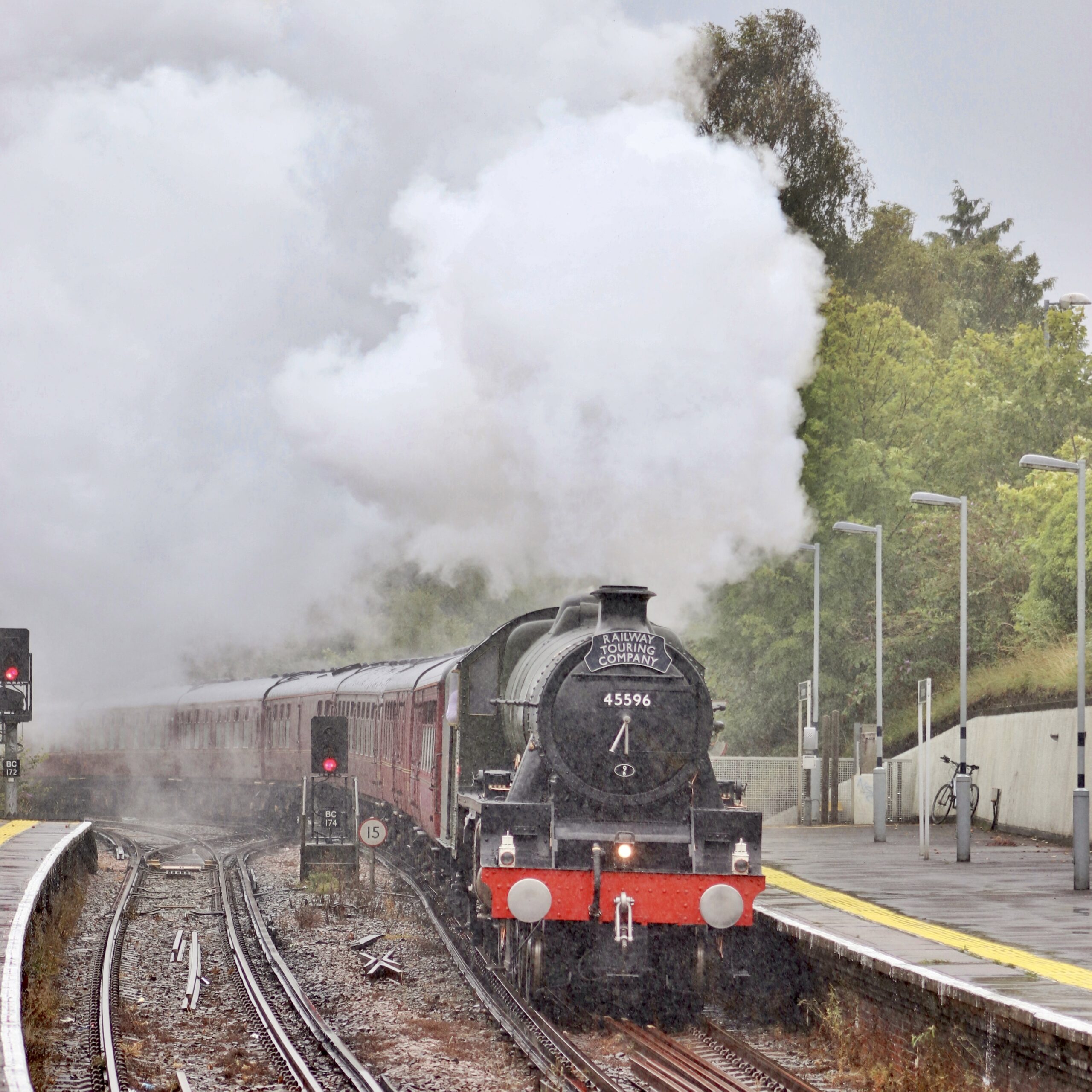
LMS Jubilee Class 4-6-0 No. 45596 ‘Bahamas’ supported by WCRC Class 47 No. 47802 (out of shot at the rear of the train) working 1Z82 0845 Victoria to Weymouth powers through the rain at Branksome with “The Dorset Coast Express” – 02/08/2023
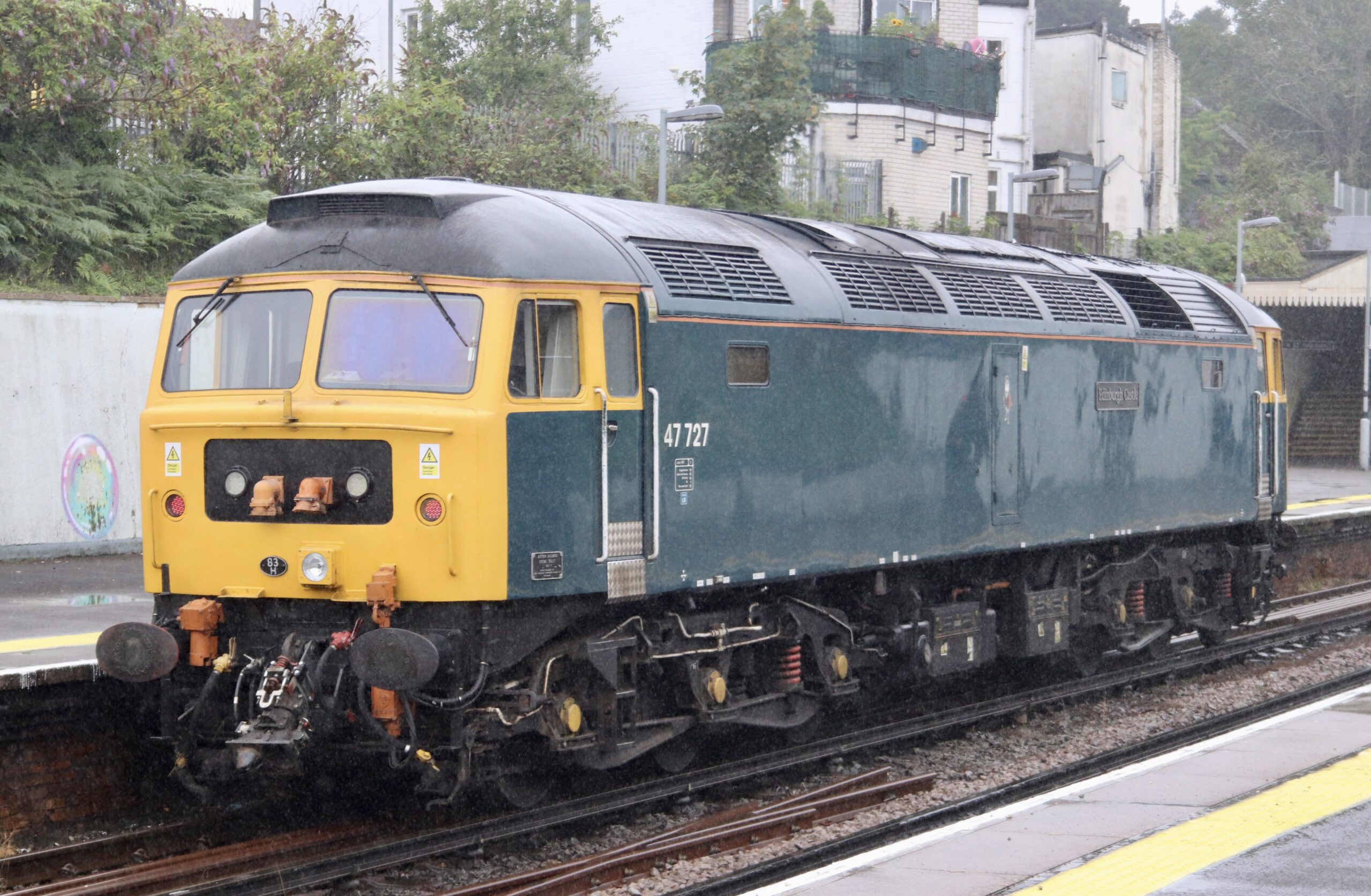
The dreadful weather on Wednesday August 2nd did not fully deter me from heading out to see the couple of special workings on the Dorset Coastway. With a light engine movement from Eastleigh to Bournemouth depot closely followed by the second “Dorset Coast Express” meant an early lunch as I decided to catch the train over to Branksome. I’d calculated that I would have at least ten minutes from getting to Branksome on the train which arrived at 1149 before the GBRf Class 47 running as 0Z48 1046 Eastleigh TRSMD to Bournemouth T&RSMD would arrive, so I was a little frustrated to learn that my train was running 16 minutes late because of problems with the doors. A quick check on Real Time Trains revealed that the light engine was also running late – 15 minutes at that point, and looking at the maps on Open Time Trains I saw that it had also been put into Totton Yard to allow a down passenger train to pass. So, in the event, I still managed to arrive at Branksome before No. 47727 ‘Edinburgh Castle’, although I hadn’t banked on the next service from Weymouth running on time and blocking out the duff’s arrival into platform 2.
GBRf Class 47 No. 47727 ‘Edinburgh Castle’ running light engine from Eastleigh to Bournemouth depot reverses in Branksome railway station – 02/08/2023
Having observed ‘Edinburgh Castle’ retiring into the depot area, it was a 45 minute wait before LMS Jubilee Class 4-6-0 No. 45596 ‘Bahamas’ made her second visit to Dorset this year with The railway Touring Company run special from London Victoria to Weymouth. The rain didn’t ease and more and more people hoping to get a glimpse of the steam hauled train pass began to shelter under the platform awnings. A last minute decision on my part meant a switch of platforms, which I’m pleased I did, as I was really happy with the resulting photographs and video of the train has it rushed through in the rain. Once again the planned use of a second steam locomotive, Swanage Railway’s U-Class 2-6-0 No. 31806, did not materialise. There’s one more DCE running this season, so I hope the issues preventing the U running can be resolved and she can make an appearance climbing the Dorset banks. As the rain was becoming increasingly heavy, I declined to go and see both the light Class 47 return working as 0Z49 1618 Bournemouth T&R.S.M.D to Eastleigh East Yard and the West Coast Railways Class 47 No. 47802 heading up the return “Dorset Coast Express”, although I’m pleased to report my brother did see this pass Dorchester South and his video is included below.
LMS Jubilee Class 4-6-0 No. 45596 ‘Bahamas’ top and tailed with WCRC Class 47 No. 47802 work 1Z82 0845 Victoria to Weymouth – 02/08/2023
Video from 2nd August 2023 (with thanks to GE Barrett for the Dorchester South material of the return “Dorset Coast Express”)
On Thursday it was an early start as I needed to be in Southampton and once again I took the opportunity for a quick look over at Eastleigh.
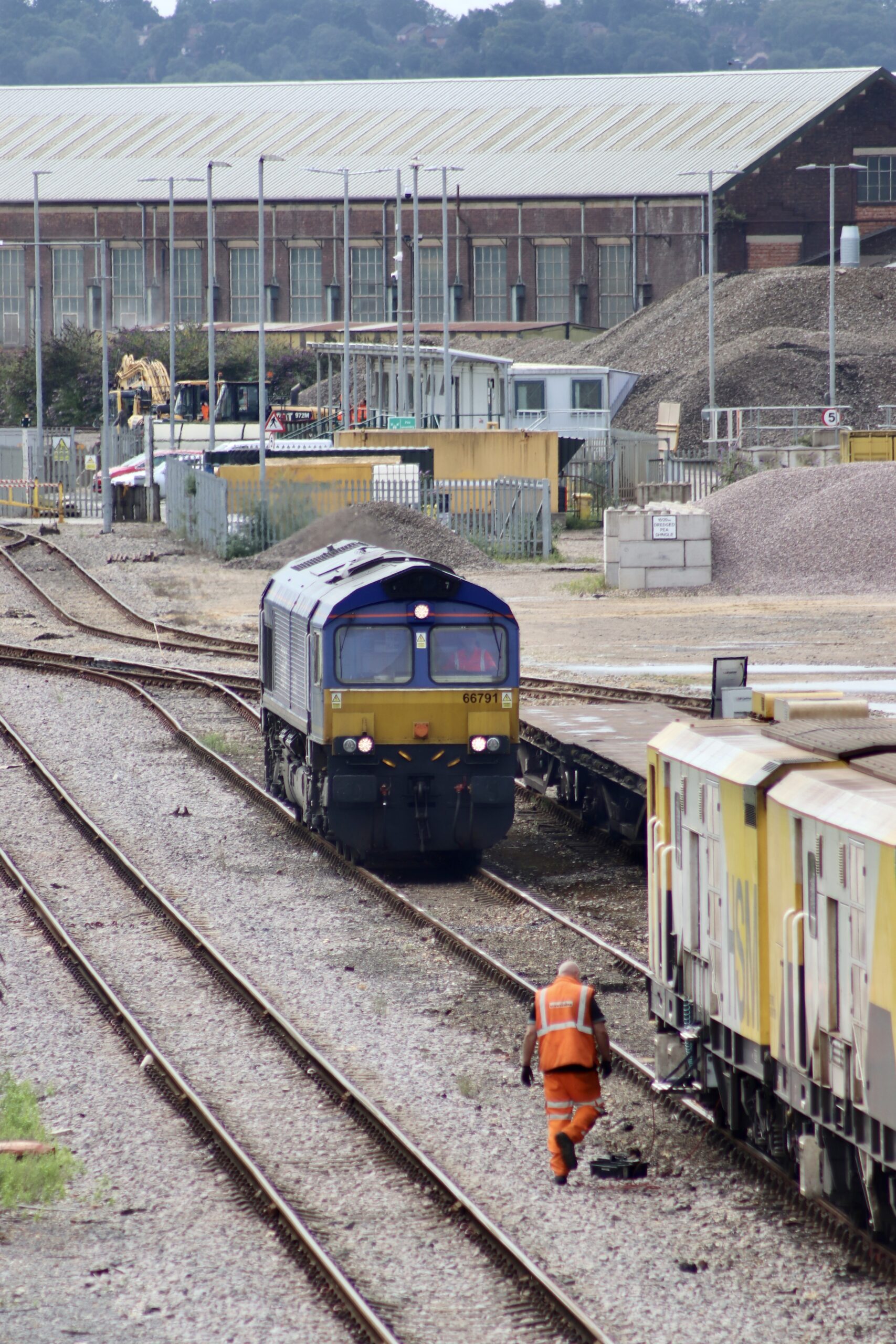
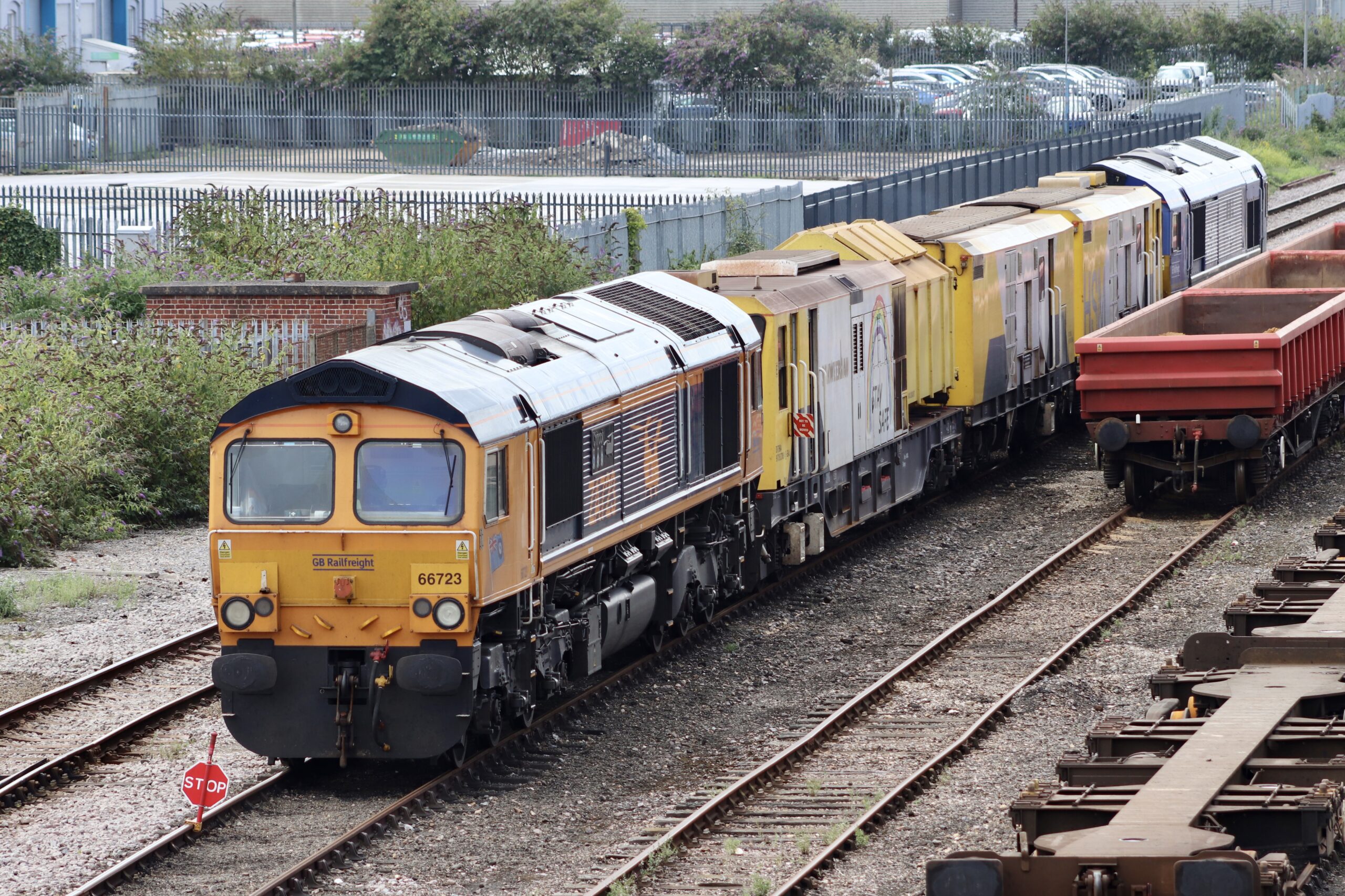
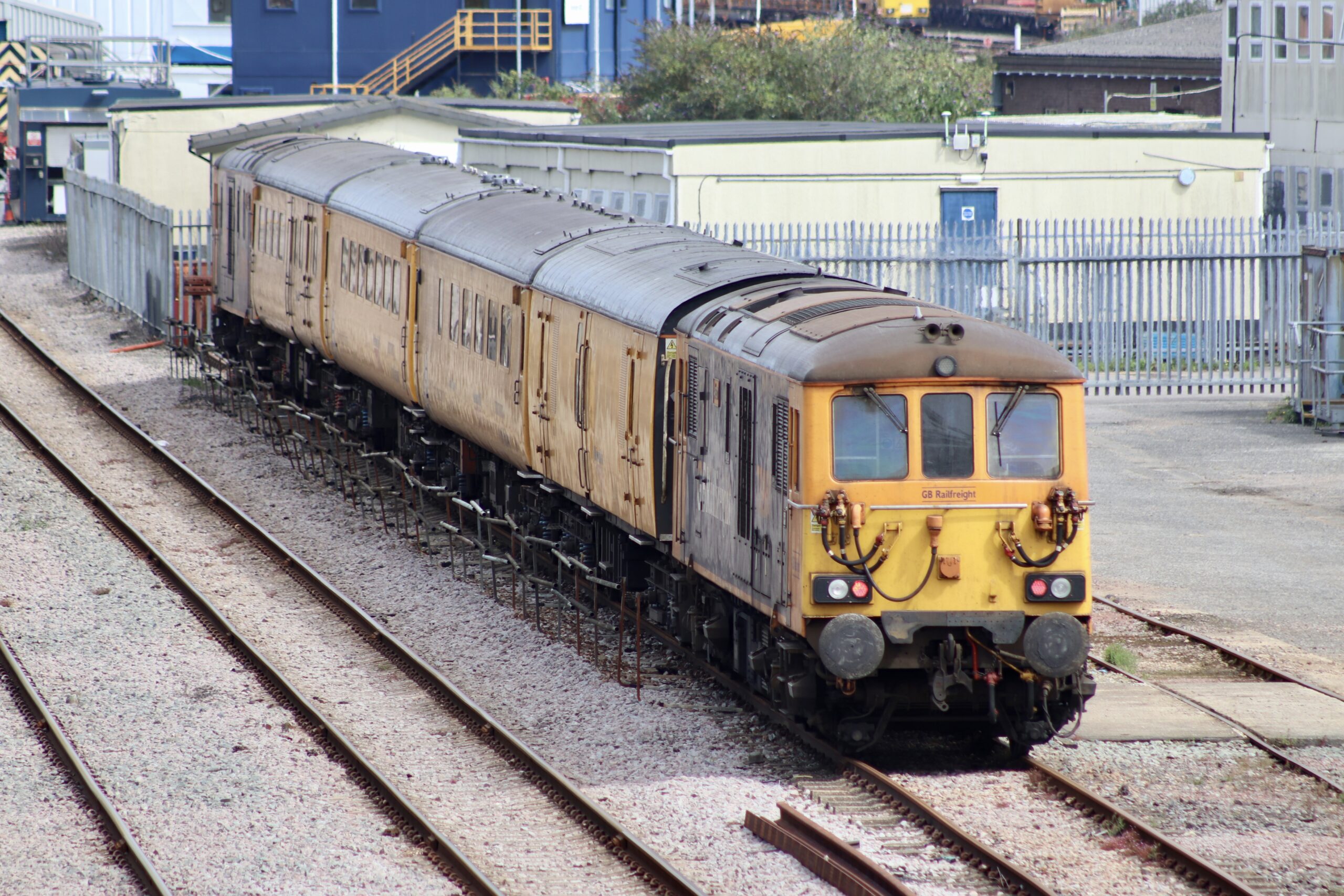
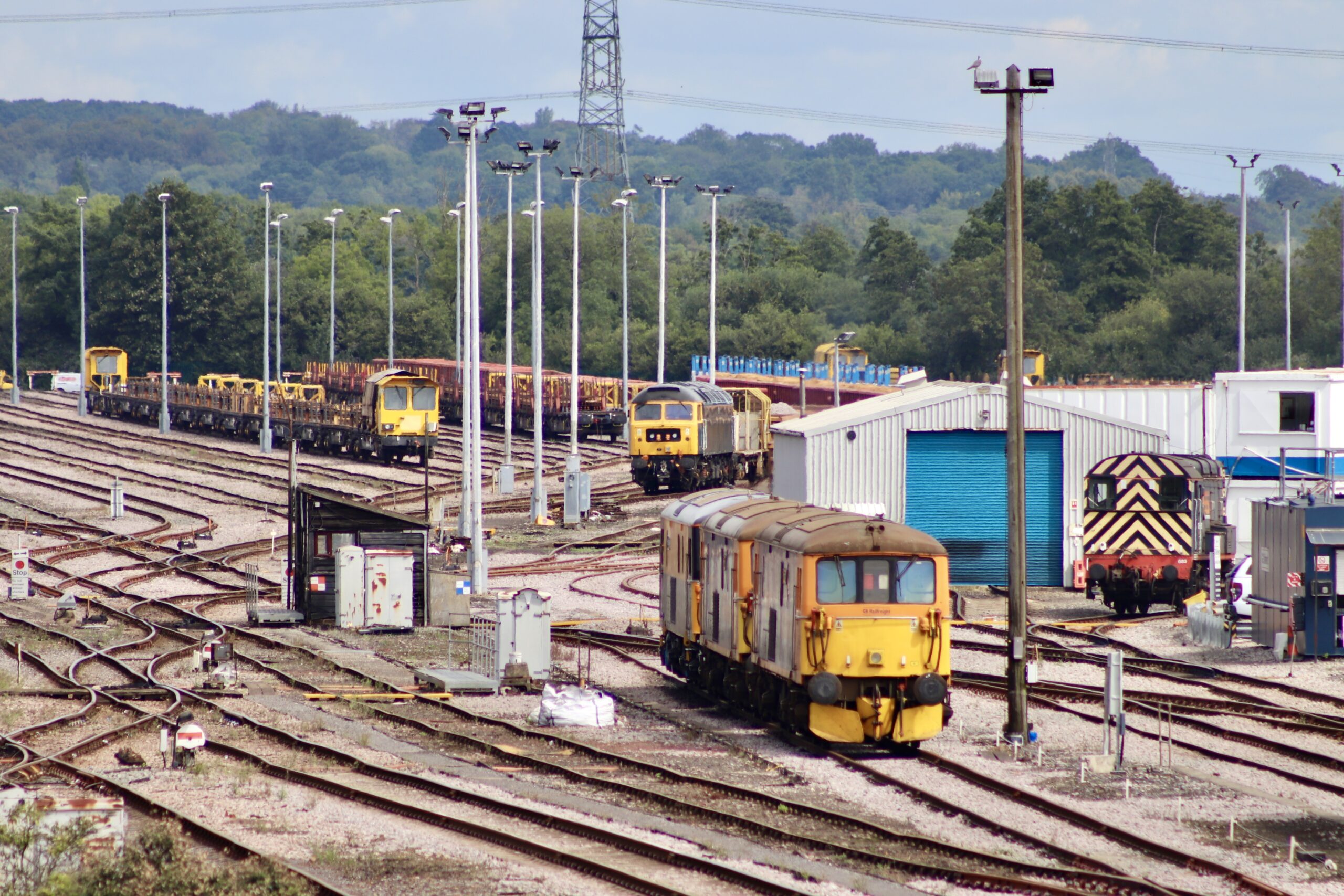
Class 66 No. 66791 backs onto the milling machine at Eastleigh – 03/08/2023GBRf’s Class 66 No. 66723 ‘Chinook’ with class mate No. 66791 at the rear top and tail the milling machine at Eastleigh – 03/08/2023GBRf Class 73 No.’s 73961 ‘Alison’ and 73965 ‘Des O’Brien’ prepare to work 1Q54 1255 Eastleigh Yard to Tonbridge Yard via Ascot, Aldershot, Guildford and Reading – 03/08/2023Three class 73 electro-diesels No.’s 73213, 73136 and 73119 stand at Eastleigh East Yard with Class 08 shunter No. 08810. Class 47 No. 47727 ‘Edinburgh Castle’ in the background later worked 0M10 1400 Eastleigh TRSMD to Leicester LIP – 03/08/2023
Thursday evening and it was the turn of Scott, our North Dorset Correspondent, to venture out to catch Colas liveried Class 37 No. 37116 on test train 3Q07 2031 Exeter Riverside to Exeter Riverside via Yeovil Pen Mill and Salisbury. The test train with a Class 37 and DBSO crossed through North Dorset as part of this working.
Colas Class 37 No. 37116 working 3Q07 2031 Exeter Riverside to Exeter Riverside via Yeovil Pen Mill and Salisbury at Yeovil Pen Mill – 03/08/2023 (Photo courtesy of Scott Lewis)Colas Class 37 No. 37116 working 3Q07 2031 Exeter Riverside to Exeter Riverside via Yeovil Pen Mill and Salisbury at Yeovil Pen Mill – 03/08/2023 (Photo courtesy of Scott Lewis)
On Saturday, Yoshi enjoyed a mini break with his cousins as Caroline and I had a day in London, primarily to see “Abba Voyage” at the purpose built venue adjacent to the Pudding Mill Lane Docklands Light Railway (DLR) station. It was a phenomenal 90 minutes and well recommended. On our way back to Waterloo station for our train home, we made a brief diversion to the Westfield shopping centre which now inhabits much of the land which had been occupied by Stratford railway depot and works. For no apparent reason, other than it being a railway locomotive, Avonside Engine Co 0-6-0ST works No. 2068 ‘Robert’ stands on a section of track outside the entrance to Stratford railway station.
‘Robert’ was built by the Avonside Engine Company in 1933 for the Staveley Coal and Iron Ltd for use at their Lamport Calcine Sidings, Hanging Houghton, near Brixworth, Northamptonshire where it spent all of its working life as Lamport No3 until September 1969 when it was sold privately. Since then the locomotive has had many homes, including Buckinghamshire Railway Centre at Quainton, Foxfield Railway at Dilhorne in Staffordshire, Peak Rail at Matlock before going to the Midland Railway Centre at Butterley where the locomotive gained its name. In 1993 the locomotive was bought by the Dockland Development Corporation for the Kew Bridge Steam Museum where it was cosmetically restored to make it look like a Beckton Gas Works engine. The following year, 1994, the locomotive was displayed on the tracks of Winsor Terrace in Beckton close to the Beckton Gas Works and close to the then new extension of the DLR. Ownership passed to Newham Borough Council in 1999 and as ‘Robert’ had been vandalised it was decided to move the locomotive to a plinth in front of Stratford station. In 2008 due to bridge construction work in the area the locomotive was moved again to the East Anglia Railway Museum at Colchester and repainted at the expense of the Olympic Delivery Authority before returning to Stratford and placed in its current position during 2011 as a new community landmark – 05/08/2023
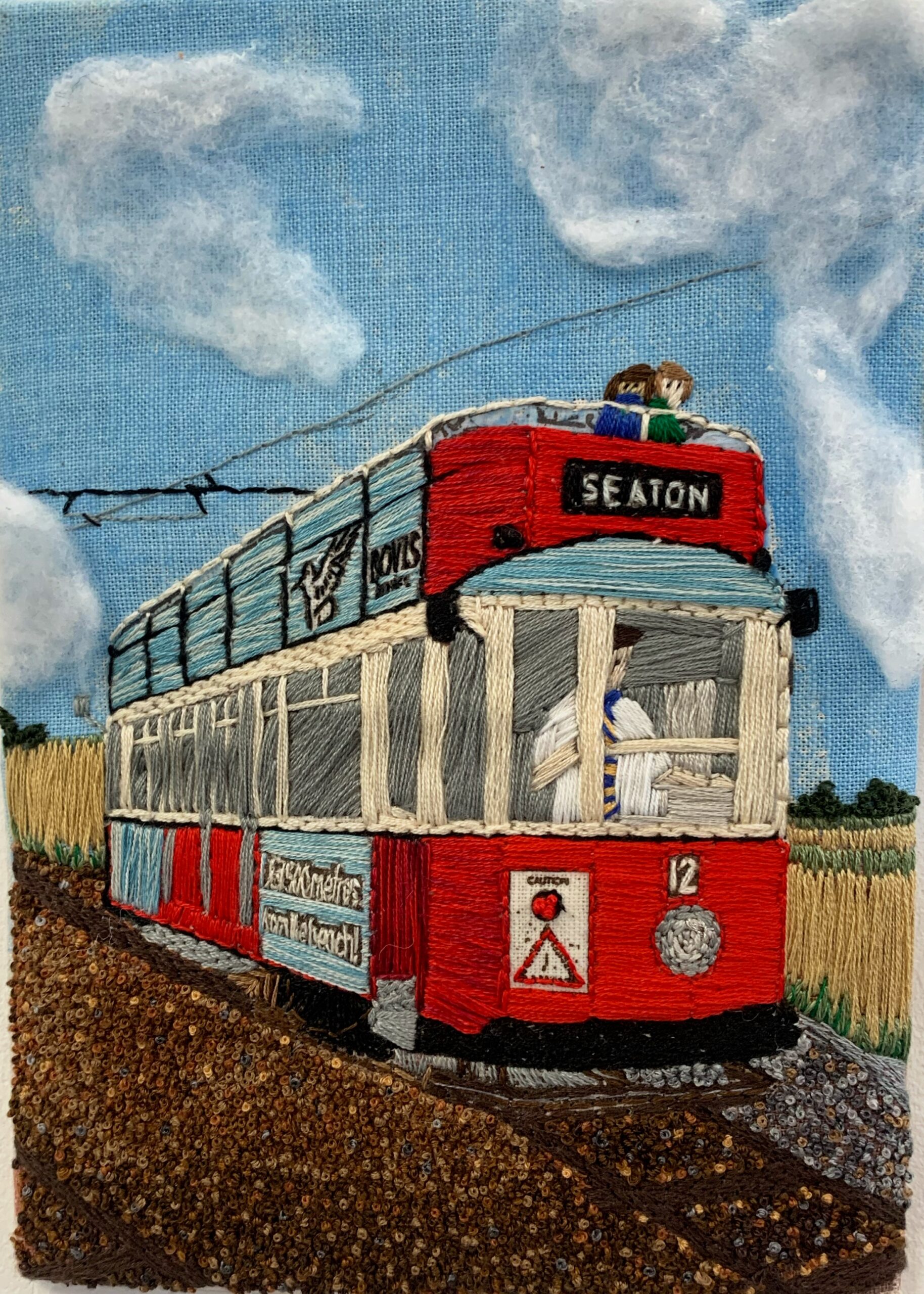
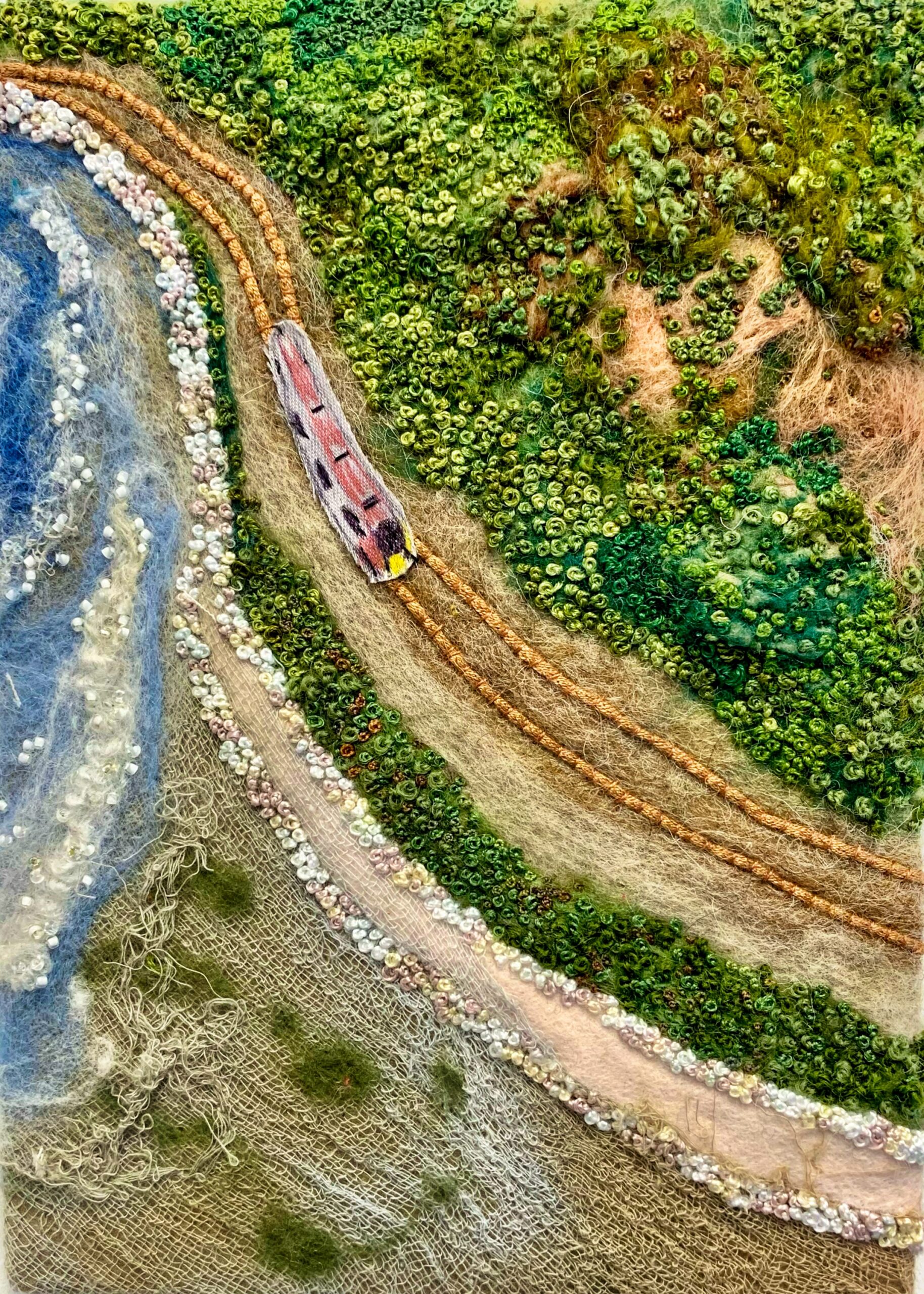
On Sunday we took Yoshi’s grandmama to The Purbeck School in Wareham as they were hosting the Dorset Arts & Crafts Association 2023 Showcase. Ever on the lookout for items of railway themed interest, I was pleased to find the following panels included as part of “The South West Coast Path” exhibition created by West Country Embroiderers as a celebration of its 50th Anniversary and to showcase the skills of its members. This special exhibition features 166 individual stitched panels, along with county markers and a map of the South West coast displayed consecutively so that the viewer has a ‘visual walk’ along the coast path from Studland in Dorset, through South Devon, Cornwall and finishing on the border of North Devon and Somerset. For another opportunity to see “The South West Coast Path” exhibition it will be displayed at The Gallery Upstairs in Upton Country Park, Poole from 5th to 9th October 2023, or you can view a slideshow here.
Seaton Tramway by Michaela Pohl, Ottery St Mary Sky and ground areas painted with fabric paint. Reverse printed a photo of a Tram onto the fabric. Outlined in back stitch. Various colours and stitches such as stem and long stitch used to fill in detail and people. French knots for the gravel areas. More long and stem stitches complete the cornfield and the trees. Needle felted clouds.Dawlish by Gillian Strong, Torbay Inspired by memories of family walks along the sea wall and watching the trains pass. Materials & amp; stitches: Calico painted background, cliff walls, beach and sea slightly felted. Embellished with French knots using embroidery silk threads, perle cotton No 8. A little scrim used on the beach, together with net, beads and French knots. Felt used for the path and railway and narrow cord for the railway track.Babbacombe Cliff Railway by Lynne Weston, Paignton Calico background. Worked entirely by hand using long and short stitch with a few French knots. Different shades of blue dominate the sky and sea, and shades of green for the surrounding wood and area.
From The Archive
I visited Stratford Depot a few times in the BR Blue days of the 70’s and 80’s – usually on an official Open Day, but at least once on a shed visit with the National Railway Enthusiasts Association (NREA) who ran coach tours for enthusiasts with permits to visit railway depots and sibling points. I recall there was a long access tunnel which led to the depot, so I dug out my copy of the Ian Allan ABC British Rail Locoshed Directory which gave geographical locations and information on all BR motive power depots to find the entry on Stratford:
The listing for Stratford Depot included in the 1978 edition of Ian Allan’s Locoshed Directory, the cover of which depicted locomotives at Stratford TMD
Stratford Depot was built by the Northern and Eastern Railway (NER) which operated a line between Stratford and Broxbourne opened in 1840. By 1843, the main building was a 16 track roundhouse which was known as The Polygon, with outbuildings including workshops, a blacksmith and saw pits all contained within the shed complex. In February 1846 additional accommodation was authorised, which included the Erecting Shop. In 1847 the Eastern Counties Railway (ECR) works in Romford were closed and moved to Stratford. By 1867 the carriage department which later became Stratford Works was installed in a 370 ft X 80 ft building attached to the north side of the Polygon. From this point, the development of Stratford Depot and Stratford Works were closely linked and as the site evolved, new sections of the works were opened away from the original shared site that lay between the Great Eastern Main Line and the Lea Valley line.
As part of the 1955 Modernisation Scheme Class 40 diesel-locomotives were delivered brand new to Stratford and allocated to main line express duties. These were replaced in the 1960’s by Class 37’s which in turn were replaced by Class 47’s with the Class 37’s transferring to freight duties. In 1977 two Stratford Class 47’s were famously turned out with silver roofs and “Union Jack” flags on their bodysides to celebrate the silver jubilee of Queen Elizabeth II. This was in contradiction of strict BR guidelines but proved so popular that soon other Stratford based Class 47 locomotives were adorned with silver roofs and became instantly identifiable to the delight of railway enthusiasts. The 1980’s saw a further addition of a small Cockney Sparrow symbol.
The Class 47’s were themselves displaced by the electrification of the main lines to Cambridge and Norwich in the mid 1980’s, when Class 86 locomotives allocated to Norwich Crown Point took over operation of express services on the Great Eastern Main Line. The Cambridge line was served by Electric Multiple Units.
The privatisation of the railways in April 1994 saw Stratford depot taken over by English Welsh & Scottish (EWS) and remained as such until closure in 2001 with the site being used for the construction of the new international station on High Speed One. A new diesel depot was opened at nearby Temple Mills but this only lasted a few years as changes to the freight market saw the depot closed.
Today the site is occupied by Stratford International station and a shopping centre called Westfield Stratford City. A commemorative plaque was unveiled on the site on 10 July 2012 featuring a 30A shedplate and Stratford cockney sparrow in its design and acknowledging the history of the site.
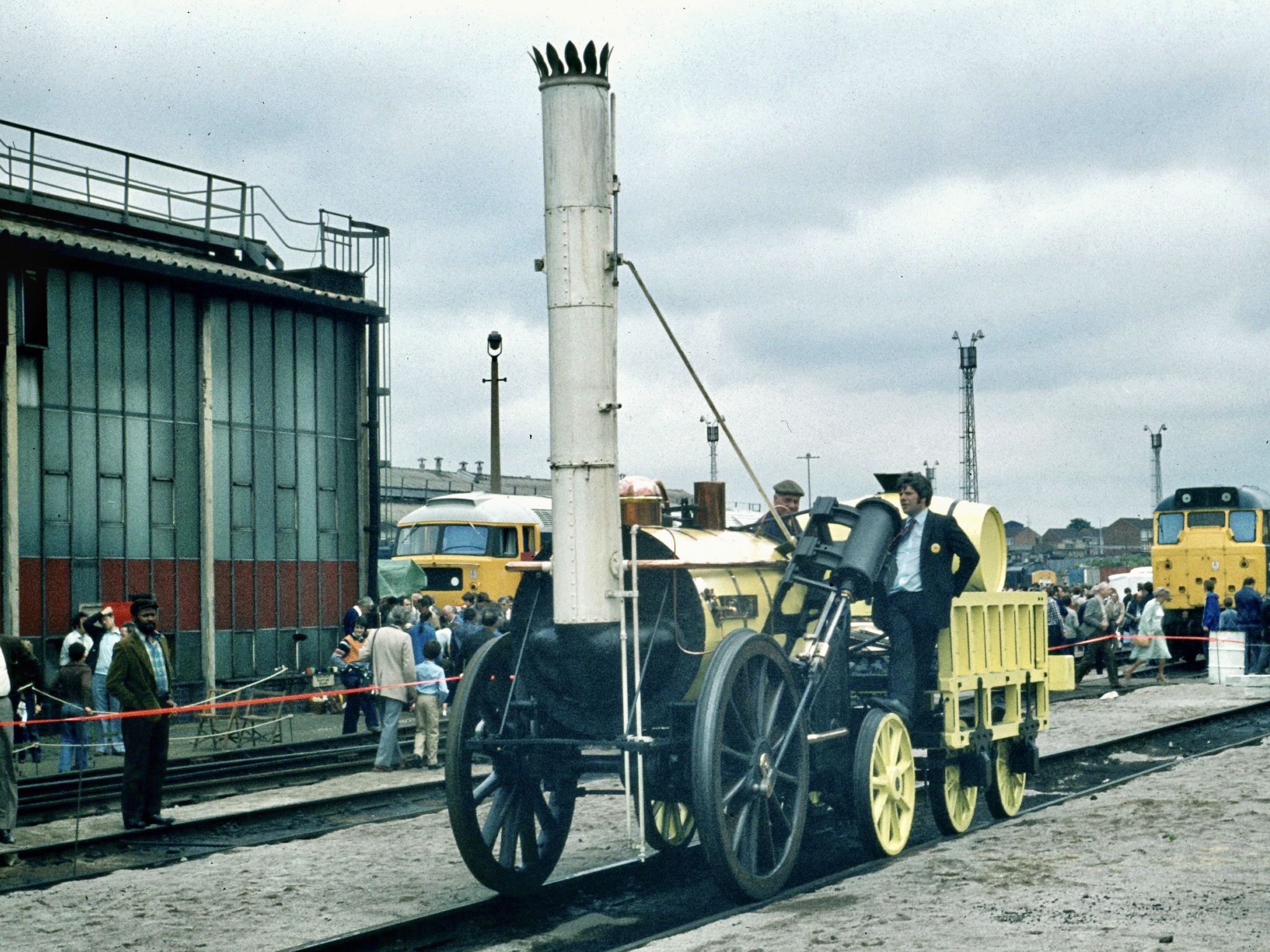
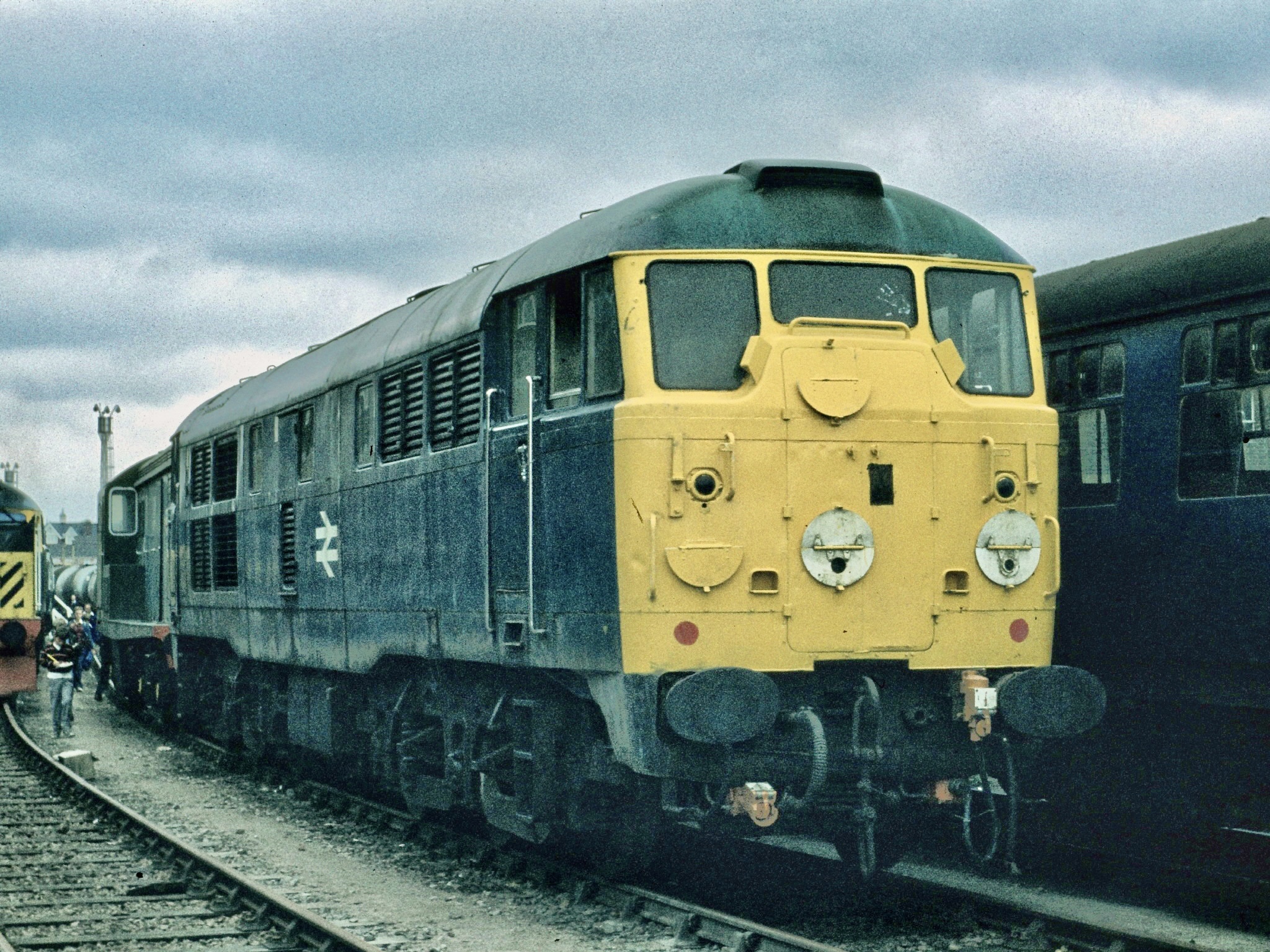
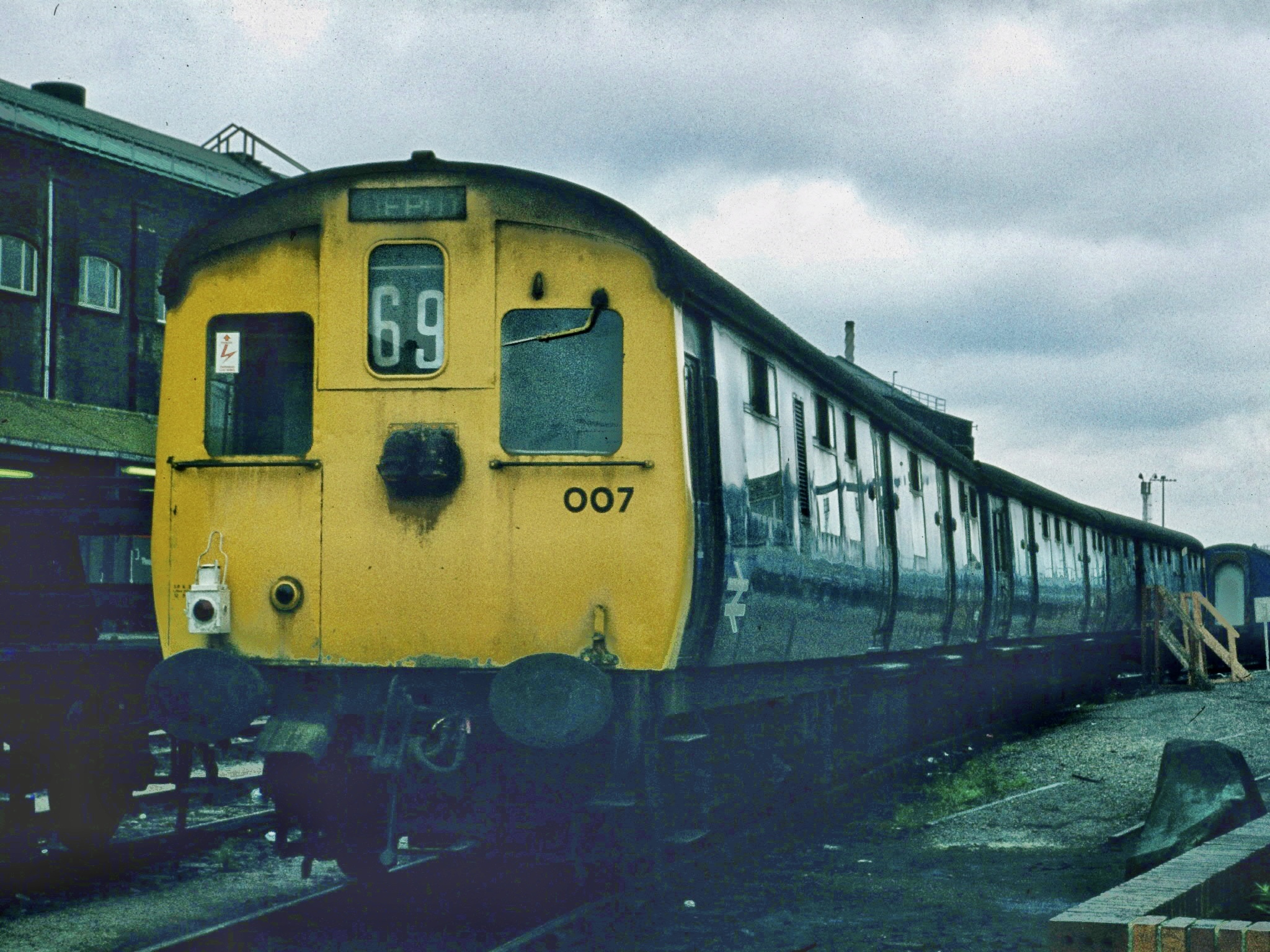
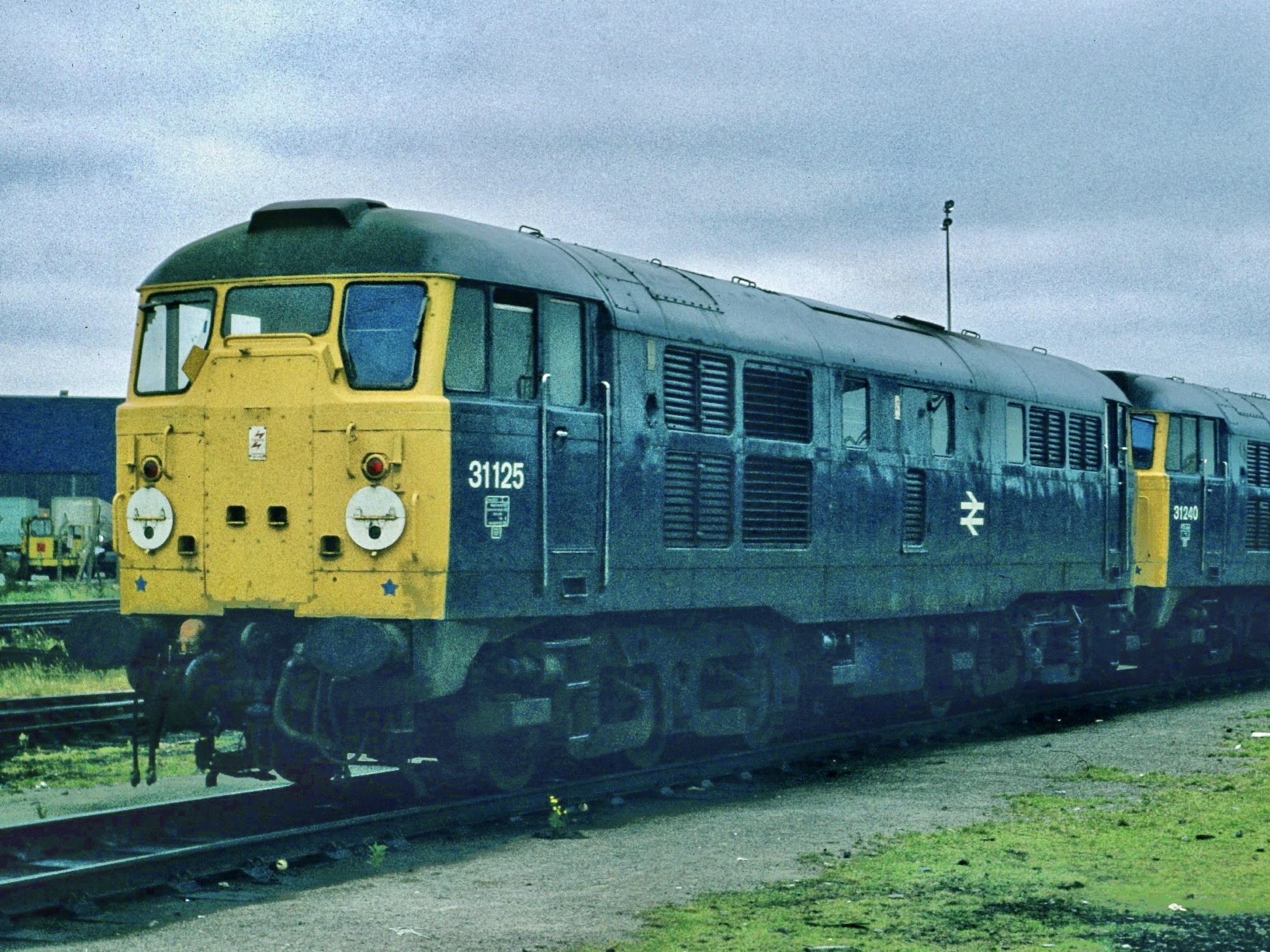
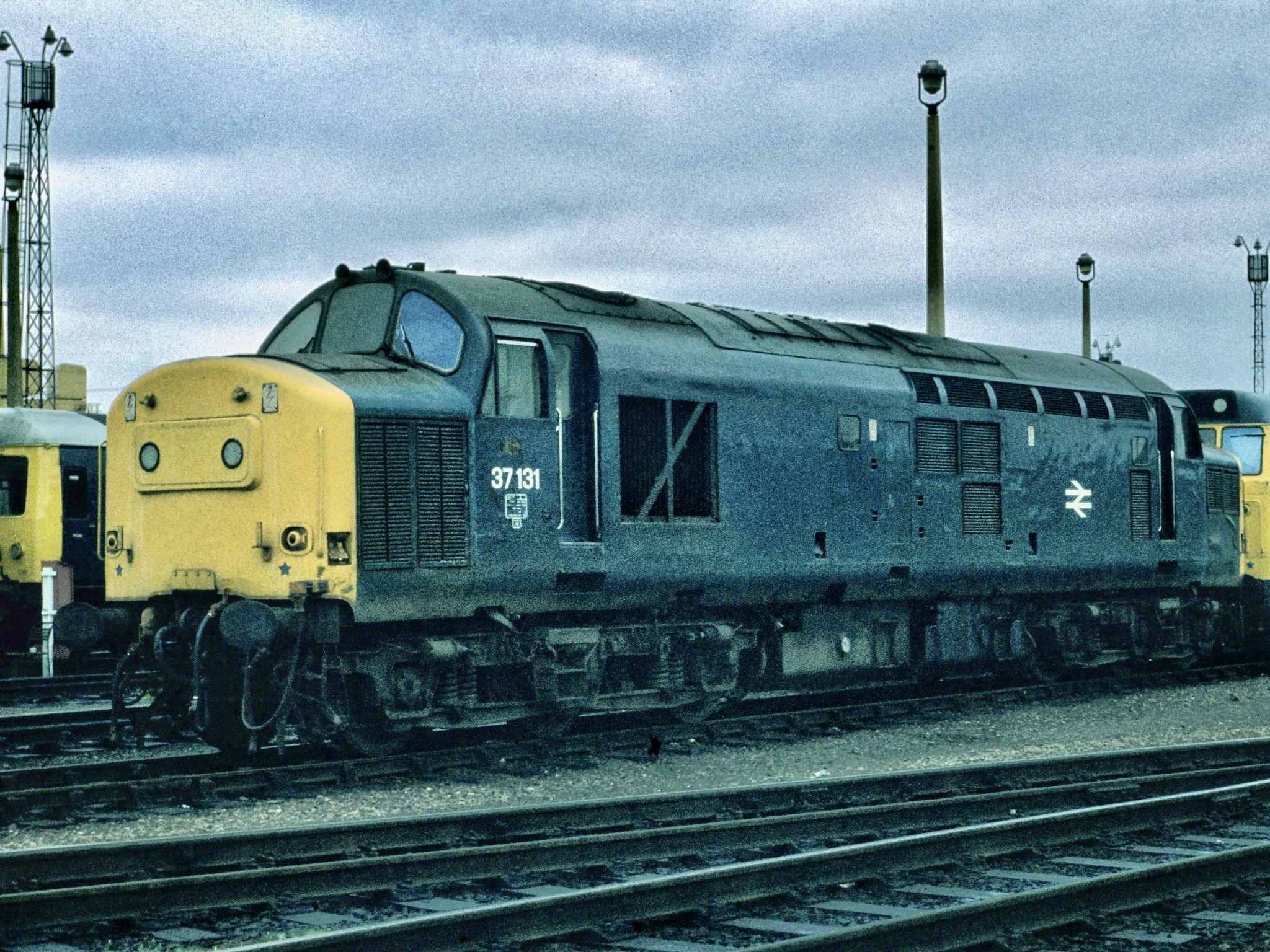
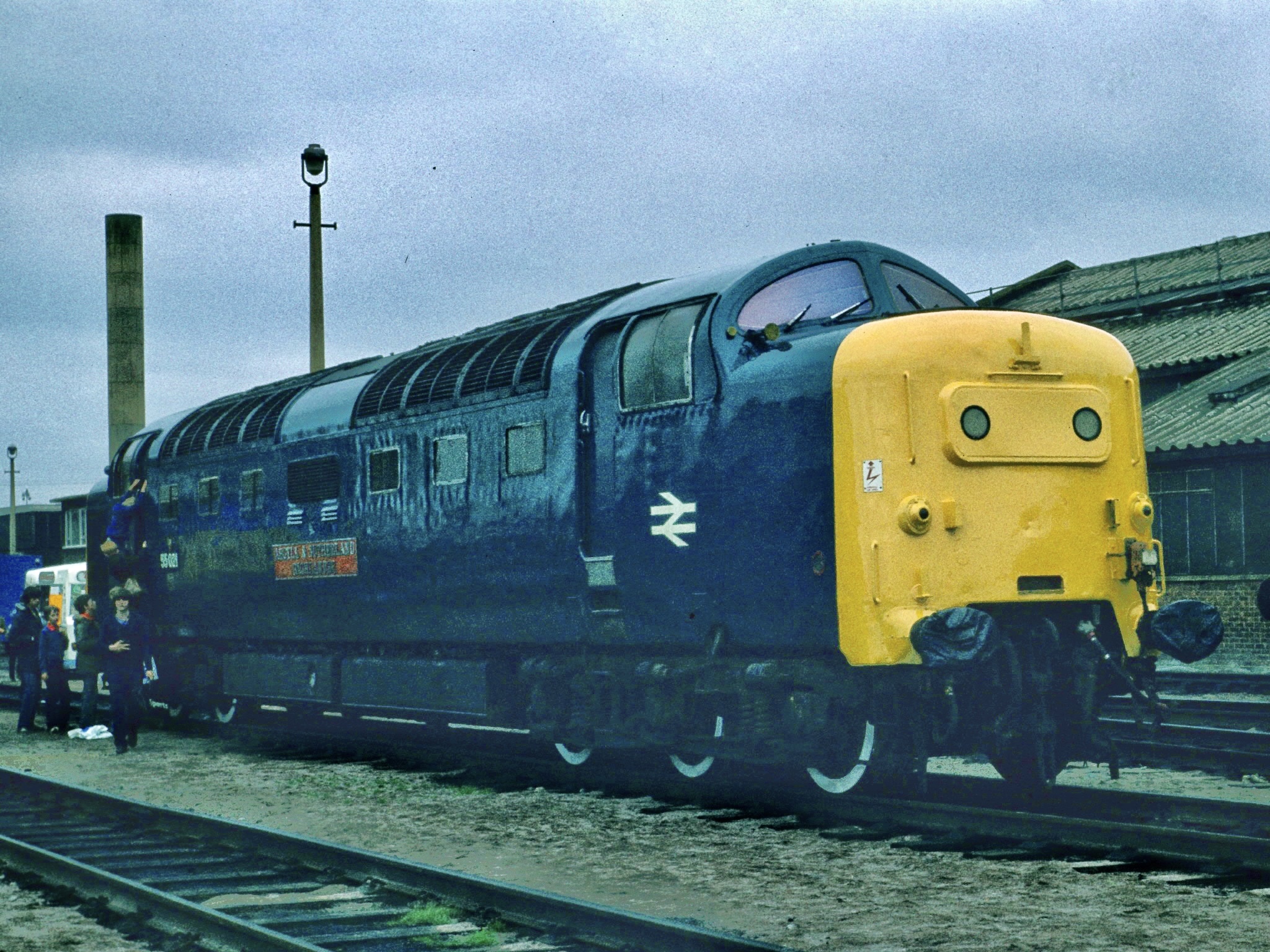
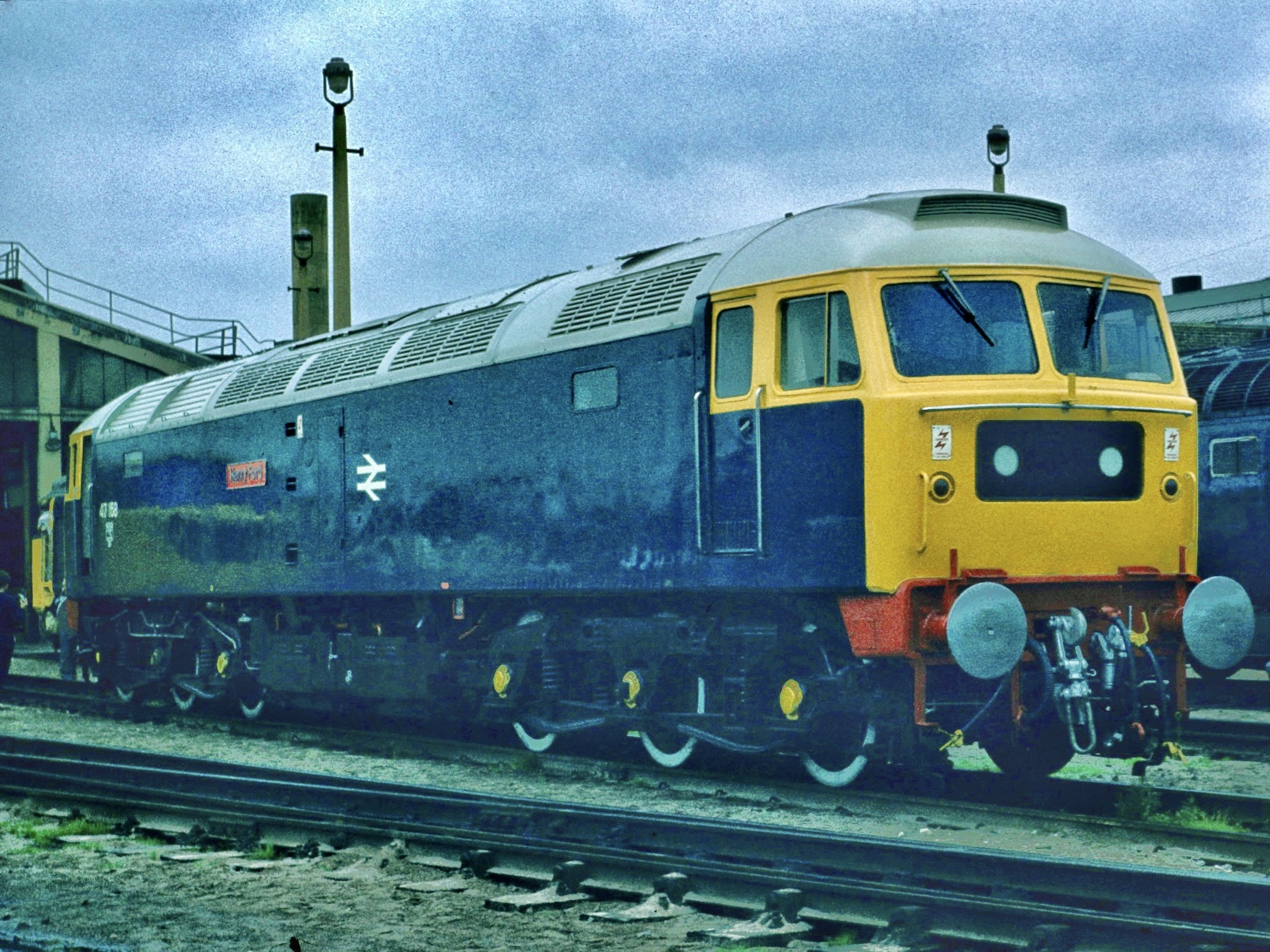
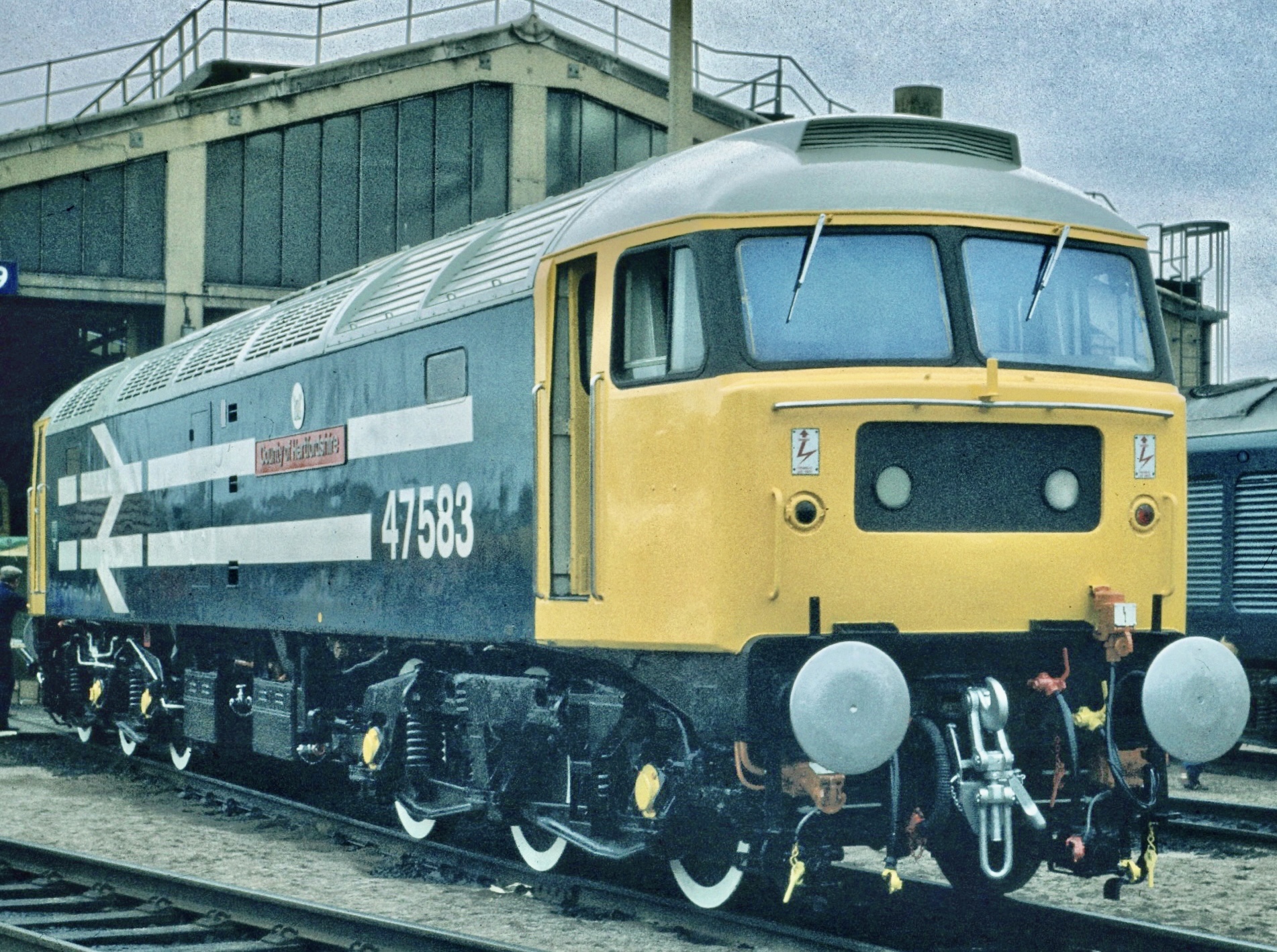
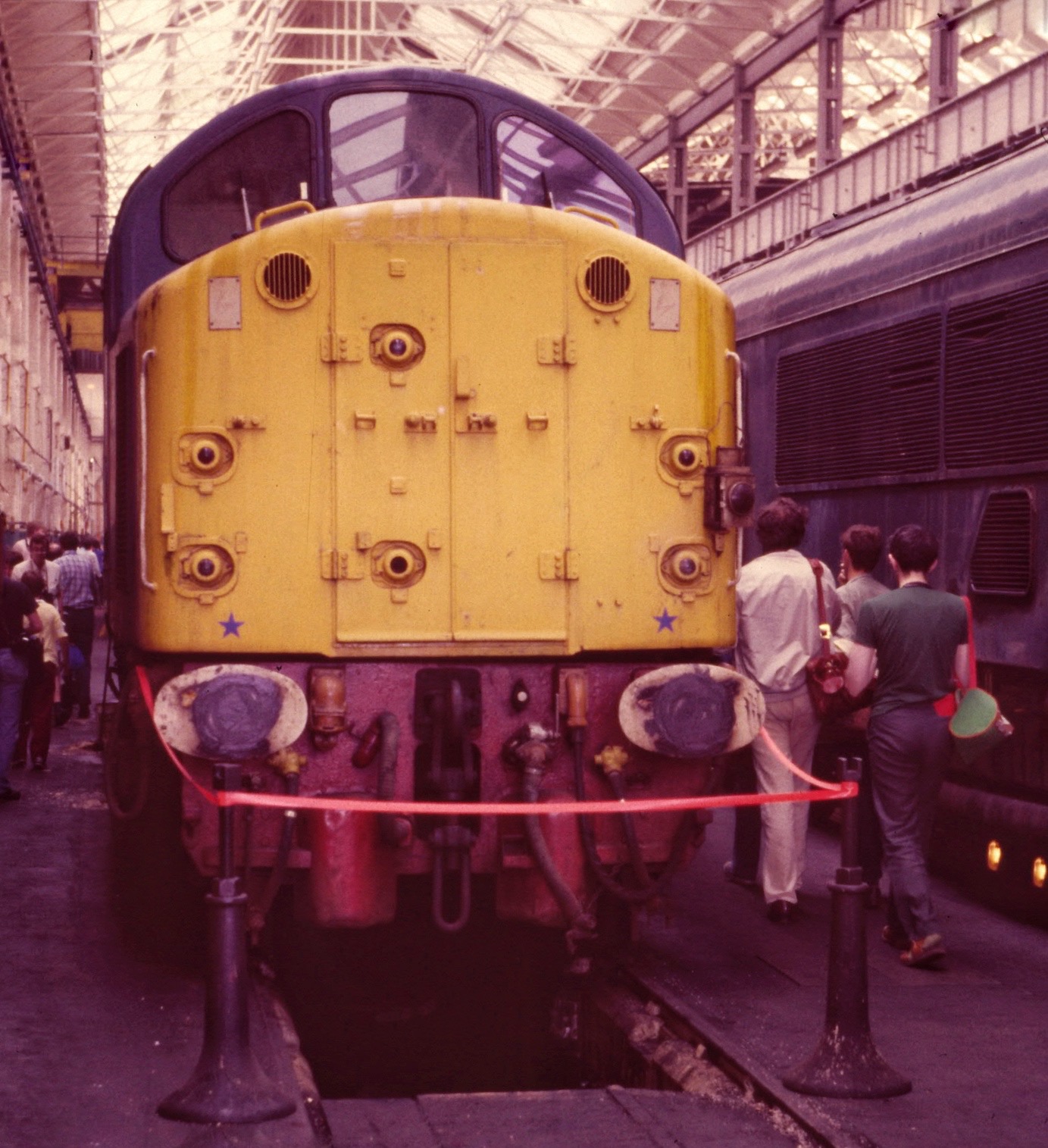
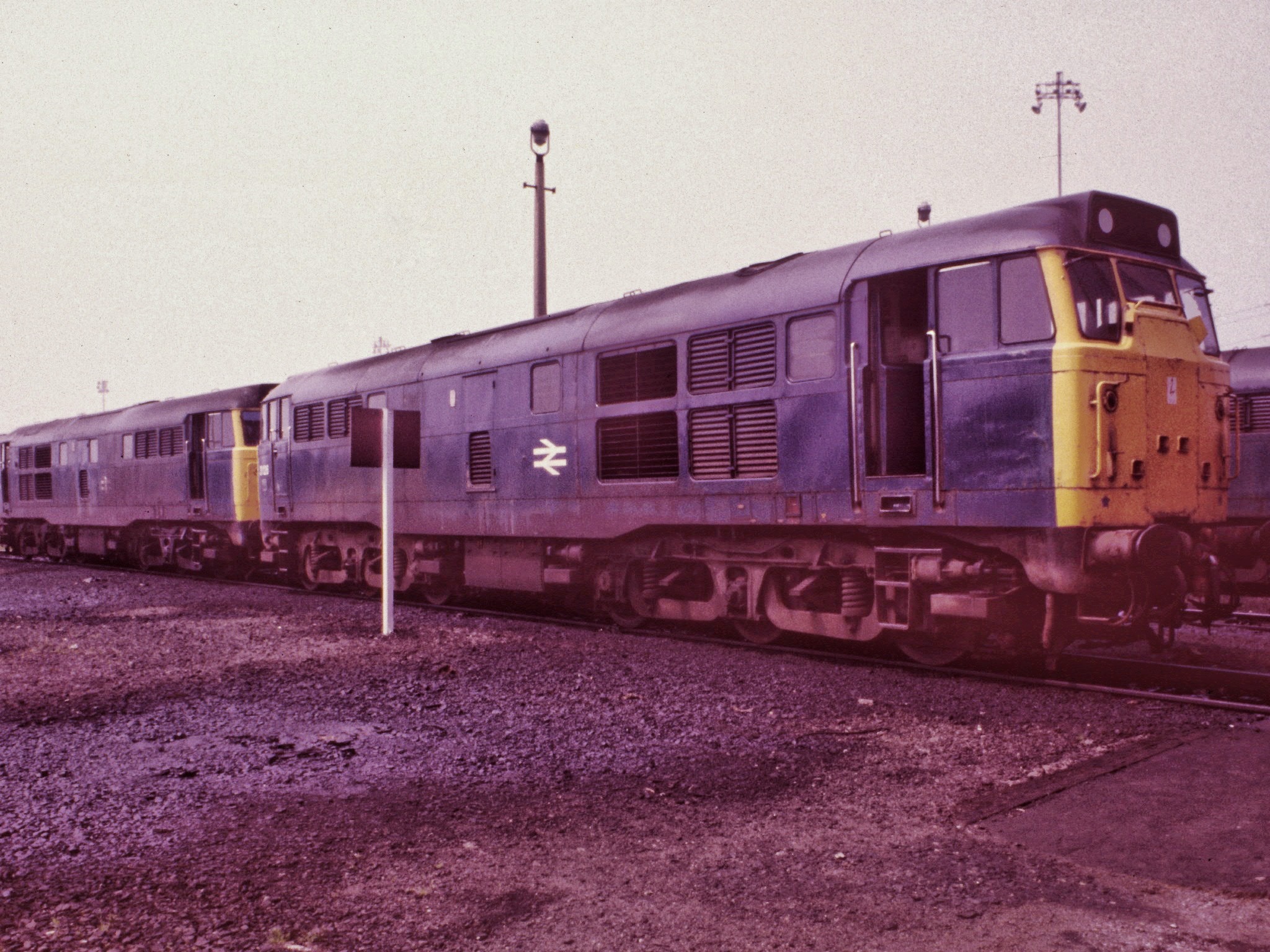
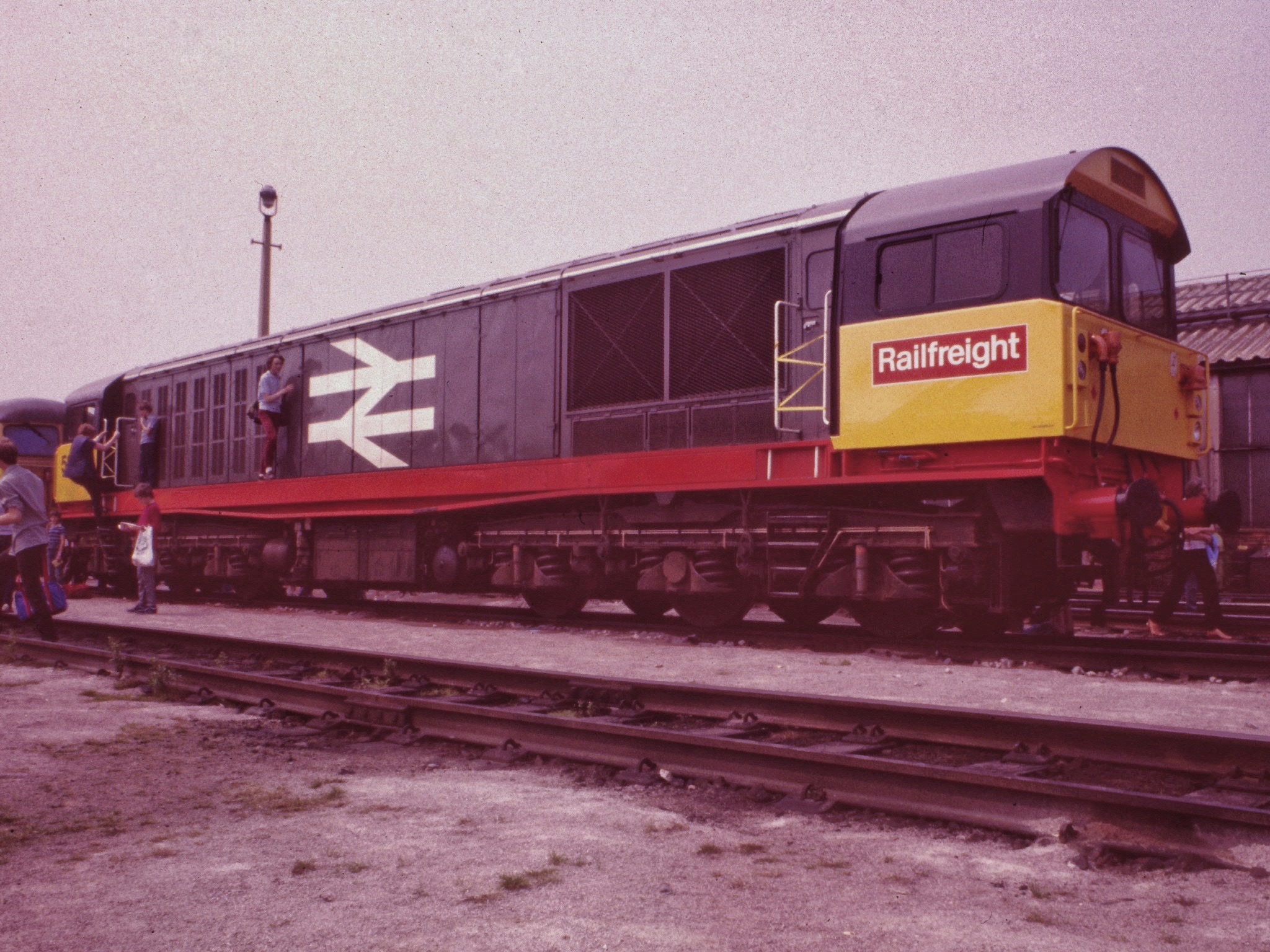
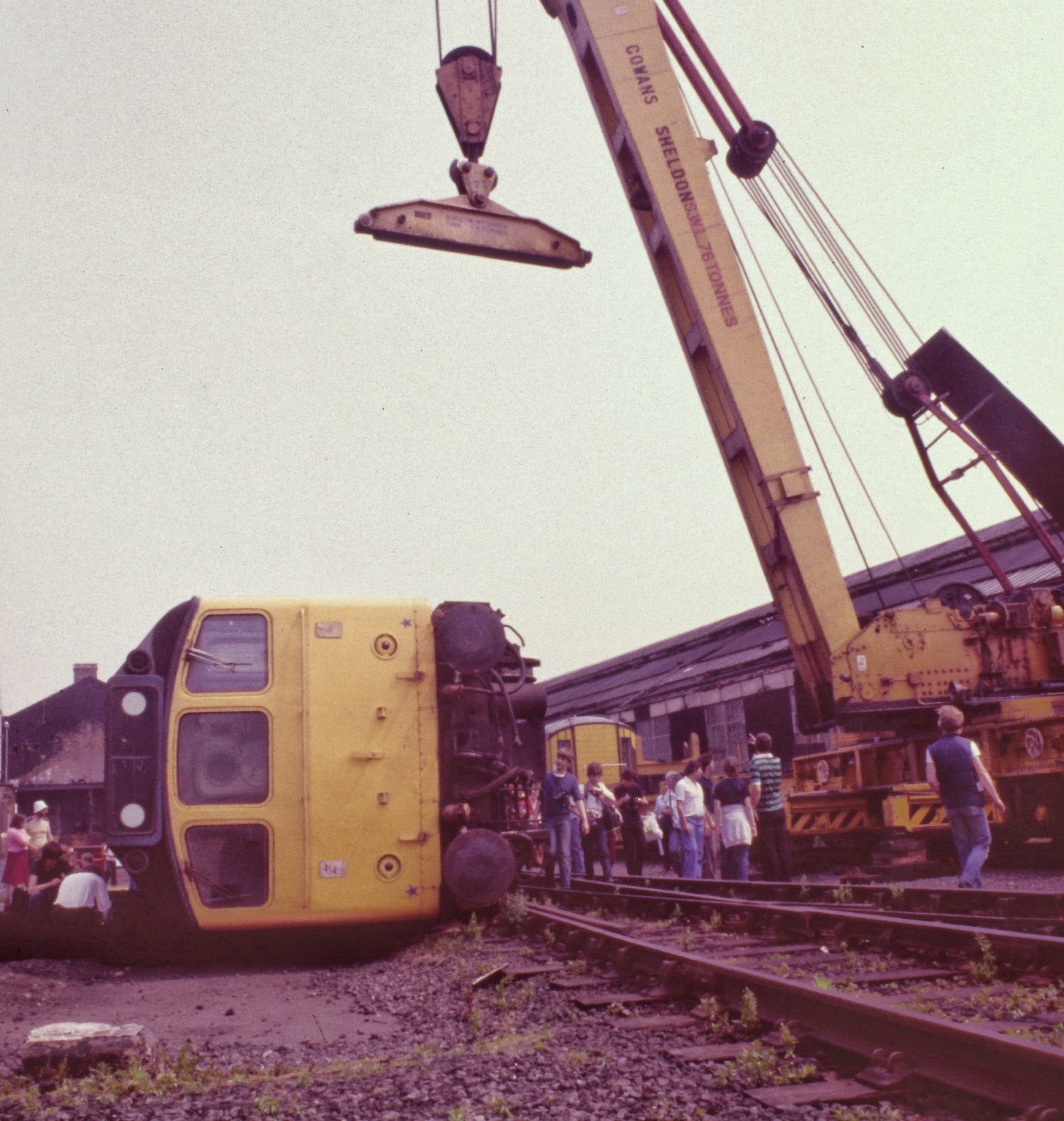
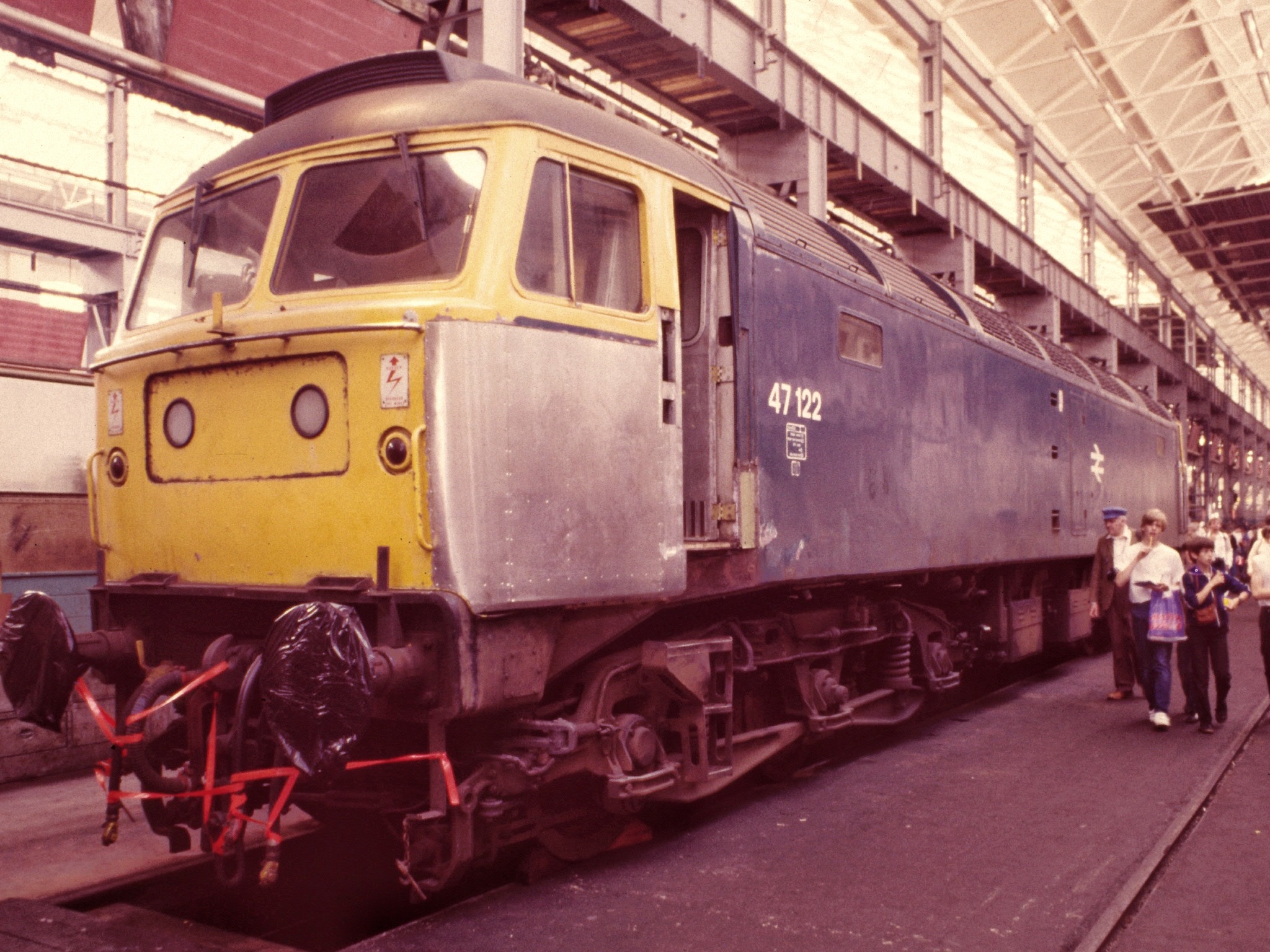
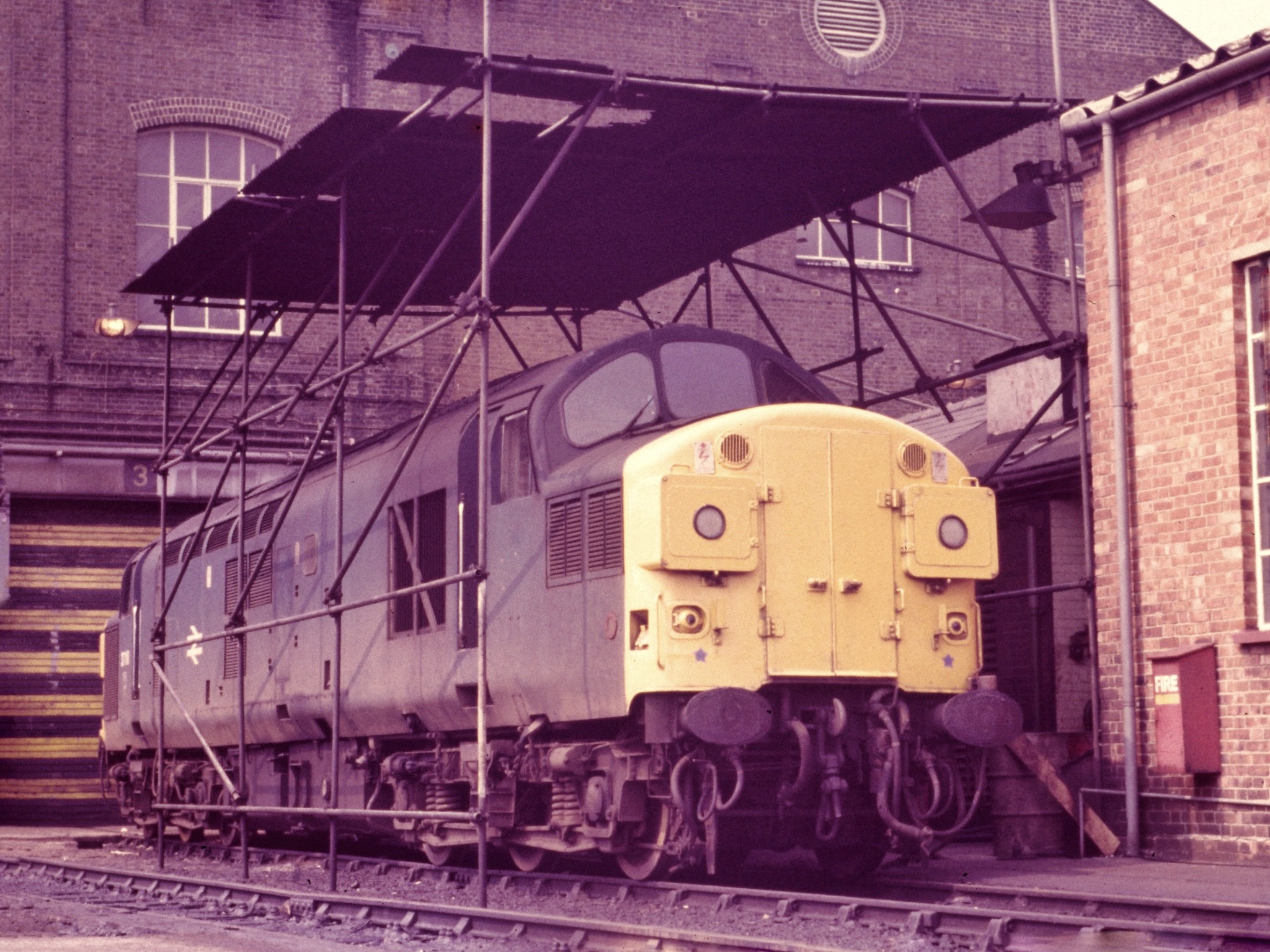
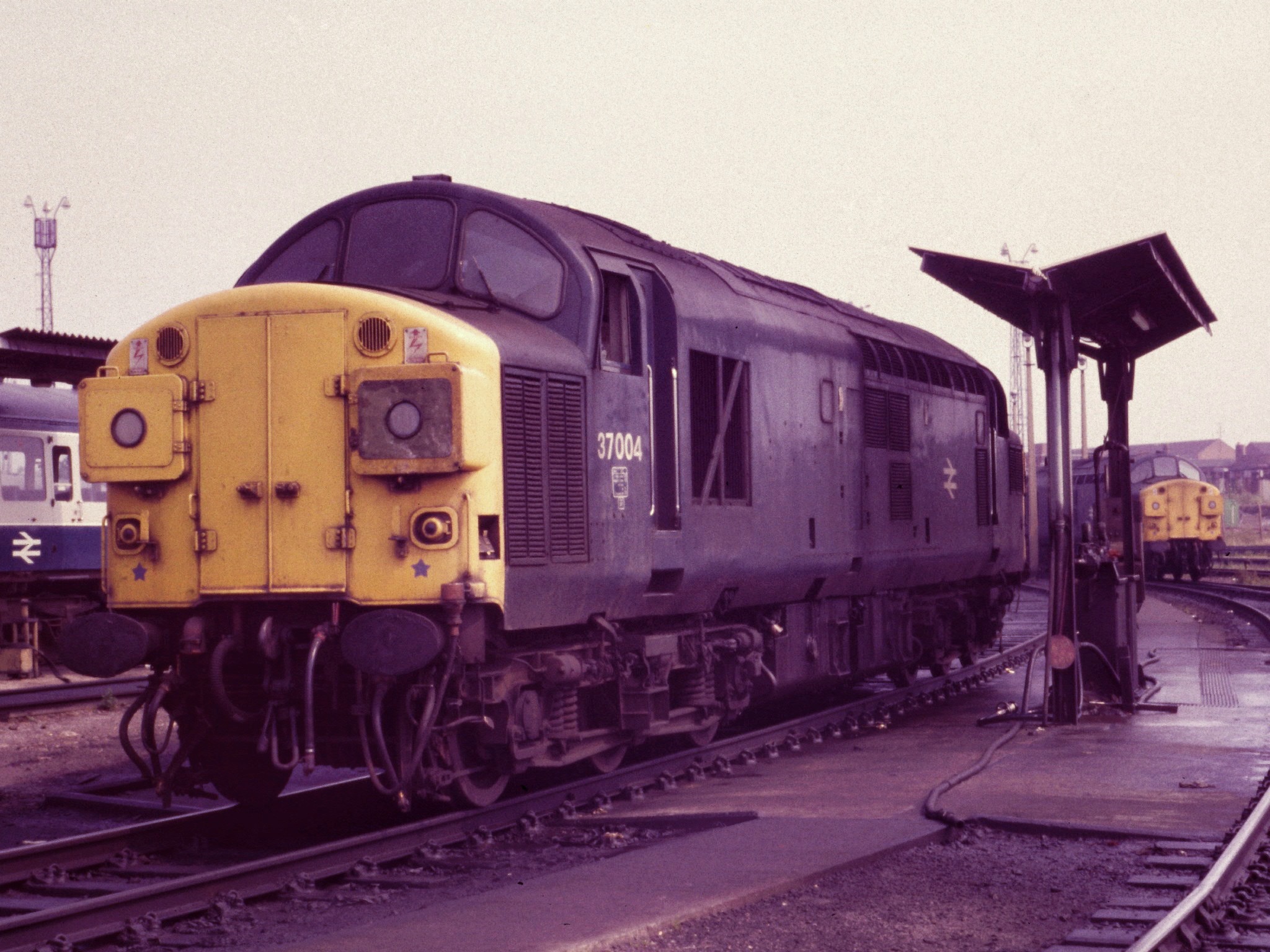
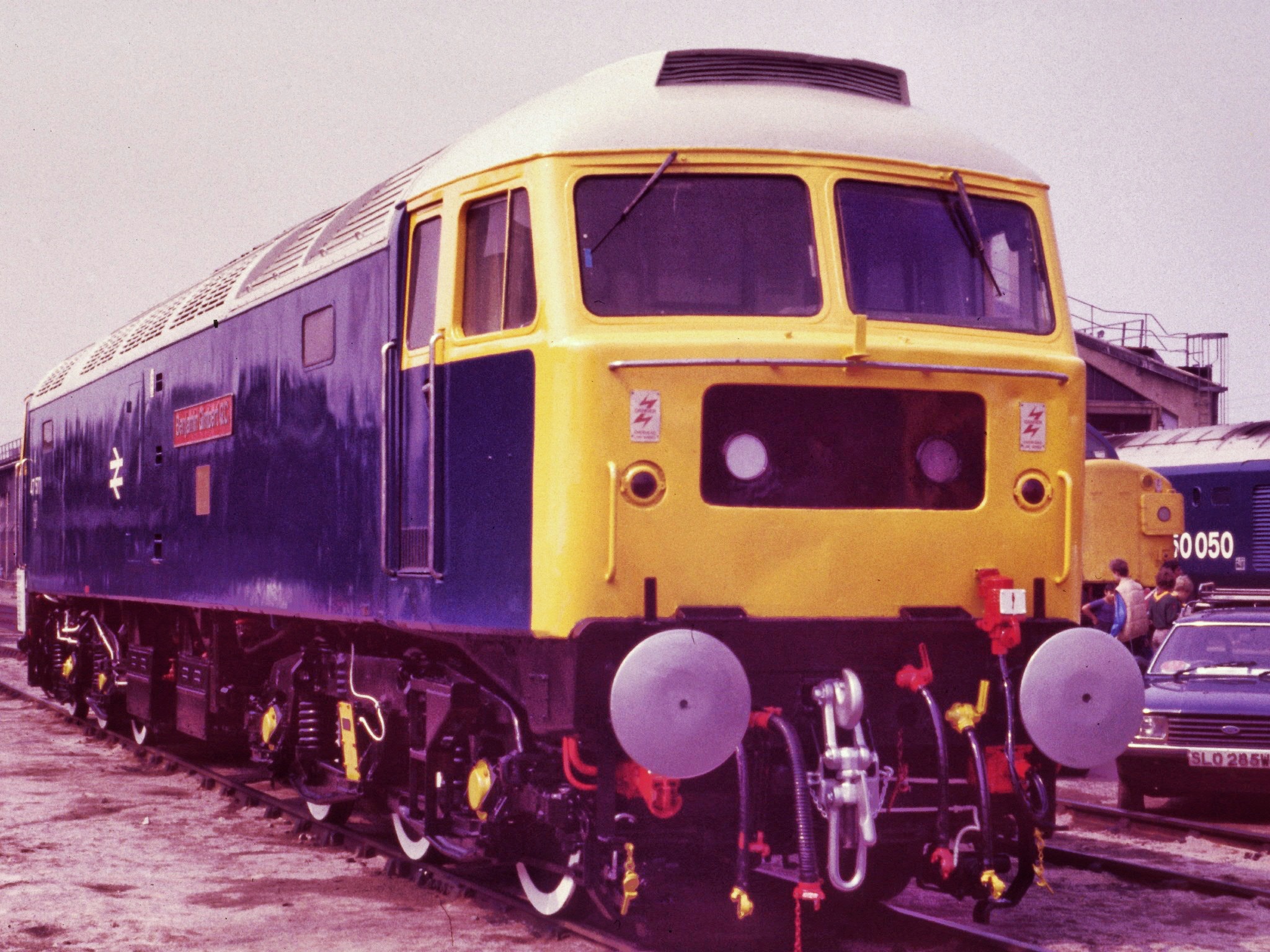
Replica of Stephenson’s ‘Rocket’ at Stratford Depot Open Day – 11/07/1981Class 31 No. 31008 at Stratford. Built at Brush Falcon works, Loughborough as No. D5508 this locomotive entered service in April 1958 as one of the twenty Brush Type 2 Pilot Scheme locomotives ordered by British Railways to replace steam traction and initially designated Class 30. These twenty locomotives did not have the headcode box mounted on the roof above the cab as did later members of the class and were “non-standard” in having Electro-Magnetic Multiple-Working control equipment (denoted by the orange circle clearly visible above each buffer) and limited to 80mph. They were allocated to East Anglian sheds throughout their service, ending their days allocated to Stratford. They were built with Mirrlees JVS12T 1250bhp engines and Brush electrical equipment, but the engines were not a success and in 1964 a programme of works commenced to re-engine the fleet with the 1470bhp English Electric 12SVT engines with No. D5504 receiving her new engine during a classified repair at Doncaster works in October 1968. The re-engined locomotives became Class 31/0 and being non standard with the rest of the class 31 fleet these twenty locomotives were early casualties with the nine (31001/07/09/10/11/12/14/16/18) being placed into storage in May 1976. However No. 31008 was one of the more fortunate of the sub-class and would survive in traffic until October 1980 when the last three (31004/08/19) were withdrawn. This was not the end for No. 31008 however as she was transferred for departmental use and converted into a non-powered carriage heating unit, re-numbered ADB968016 being used in the Stratford area before being condemned in 1982. She was eventually broken up at Crewe works in June 1985 – 11/07/1981Class 306 (AM6) three car electrical multiple unit (Shenfield Unit) No. 007 at Stratford. The Class 306’s were introduced in 1949 for the Liverpool Street to Shenfield services. They were originally built to run on DC power but as part of an exercise to standardise systems over the BR network all 92 sets were rebuilt in 1960 to utilise the new AC system. The Class 306’s remained on the lines out of London Liverpool Street for all of their lives and were withdrawn during 1980 and 1981 with all except one unit being scrapped. Unit No. 017 survives as part of the National Collection – 11/07/1981Class 31 No. 31125 at Stratford. Note the absence of the over-window headcode box which were introduced on later members of the class. This locomotive was cut up in May 2001 by Harry Needle Railroad Co. – 11/07/1981Class 37 No. 37131 at Stratford. This loco entered service in March 1963 and was withdrawn in June 2005. She was cut up at C F Booth in Rotherham in April 2007 – 11/07/1981English Electric Class 37 No.’s 37044 and 37267 on shed at Stratford. 37044 was renumbered in 1988 survived until 2021 as No.37710 with WCRC. No. 37267 lives in with Colas as No. 37421 – 11/07/1981Class 55 Deltic and megabeast No. 55021 ”Argyll and Sutherland Highlander’ on display at Stratford Open Day. The cab of this locomotive survives and is owned by The South Wales Loco Cab Preservation Group – 11/07/1981Class 47 No. 47158 ‘Henry Ford’ was named at Stratford Open Day. This locomotive was withdrawn from service in 2001 and cut up at Kingsbury by the Harry Needle Railroad Company in October 2004 – 11/07/1981Class 47 No. 47583 was painted in large logo livery with two white horizontal stripes extending from the double BR arrow along the bodyside. For the week of Prince Charles and Lady Diana Spencer’s wedding, red and blue stripes were added to the arrow emblem – 11/07/1981Class 40 No. 40092 at Stratford. This loco was disposed of at BREL Swindon in March 1986 – 09/07/1983Class 31 No.’s 31126 and 31179 at Stratford – 09/07/1983Only two months old Class 58 No. 58002 on display at Stratford. This locomotive was cut up at Eastleigh in December 2013 – 09/07/1983Peak Class 46 No. 46010 in Stratford Works. The locomotive is currently privately preserved – 09/07/1983Class 25 No. 25177 took part in re-railing demonstrations during the 1983 Stratford Open Day. The locomotive lasted another three years before being cut up at Swindon Works – 09/07/1983Class 47 No. 47122 at Stratford. This locomotive was introduced into service in January 1964 and scrapped at Springburn in October 1989 – 09/07/1983Class 37 No. 37118 at Stratford. The loco was broken up at Carnforth in 2005 – 09/07/1983Class 37 No. 37004 on the fuelling point at Stratford. Lasting in service for over 35 years, No. 37004 was introduced into traffic in January 1961 and cut up at MC Metals in Springburn June 1996 – 09/07/1983With its distinctive silver roof denoting a Stratford based loco Class 47 No. 47577 ‘Benjamin Gimbert GC’ on display at the 1983 depot open day – 09/07/1983
Benjamin Gimbert GC (6th February 1903 – 6th May 1976) was an engine driver with the LNER who was awarded the George Cross and the Order of Industrial Heroism along with his fireman James Nightall (whose award was posthumous) for saving an ammunition train from a fire on 2nd June 1944 during the Soham rail disaster when the leading wagon on a fifty-one cart ammunition train caught fire. Gimbert and Nightall uncoupled the burning wagon from the rest of the train in order to allow Gimbert to tow the burning wagon away from the rest of the ammunition train. The wagon exploded after being towed a distance 140 yards, killing Nightall instantly, but preventing a chain reaction in the other wagons. The explosion blew a twenty-foot crater in the track, destroying Soham railway station and damaged 600 buildings in the nearby village. Gimbert miraculously survived.
The citation for the George Cross awards reads: “As an ammunition train was pulling into a station in Cambridgeshire, the driver, Gimbert, discovered that the wagon next to the engine was on fire. He immediately drew Nightall’s attention to the fire and brought the train to a standstill. By the time the train had stopped the whole of the truck was enveloped in flames and, realising the danger, the driver instructed the fireman to try to uncouple the truck immediately behind the blazing vehicle. Without the slightest hesitation Nightall, although he knew that the truck contained explosives, uncoupled the vehicle and rejoined his driver on the footplate. The blazing van was close to the station buildings and was obviously liable to endanger life in the village. The driver and fireman realised that it was essential to separate the truck from the remainder of the train and run it into the open. Driver Gimbert set the engine in motion and as he approached a signal box he warned the signalman to stop any trains which were likely to be involved and indicated what he intended to do. Almost immediately the vehicle blew up. Nightall was killed and Gimbert was very severely injured. Gimbert and Nightall were fully aware of the contents of the wagon which was on fire and displayed outstanding courage and resource in endeavouring to isolate it. When they discovered that the wagon was on fire they could easily have left the train and sought shelter, but realising that if they did not remove the burning vehicle the whole of the train, which consisted of 51 wagons of explosives, would have blown up, they risked their lives in order to minimise the effect of the fire. There is no doubt that if the whole train had been involved, as it would have been but for the gallant action of the men concerned, there would have been serious loss of life and property”
On 28th September 1981 two Class 47 locomotives were named in honour of the two railwaymen: No. 47577 was named ‘Benjamin Gimbert, GC’ and No. 47579 ‘James Nightall, GC. The names are now carried by DB Cargo Class 66 locomotive No.’s 66077 and 66079 respectively
Today the site of Stratford Depot is occupied by Stratford International station and the Westfield Stratford City shopping centre. A commemorative plaque was unveiled on the site on 10 July 2012 featuring a 30A shedplate and Stratford cockney sparrow in its design and acknowledging the history of the site.
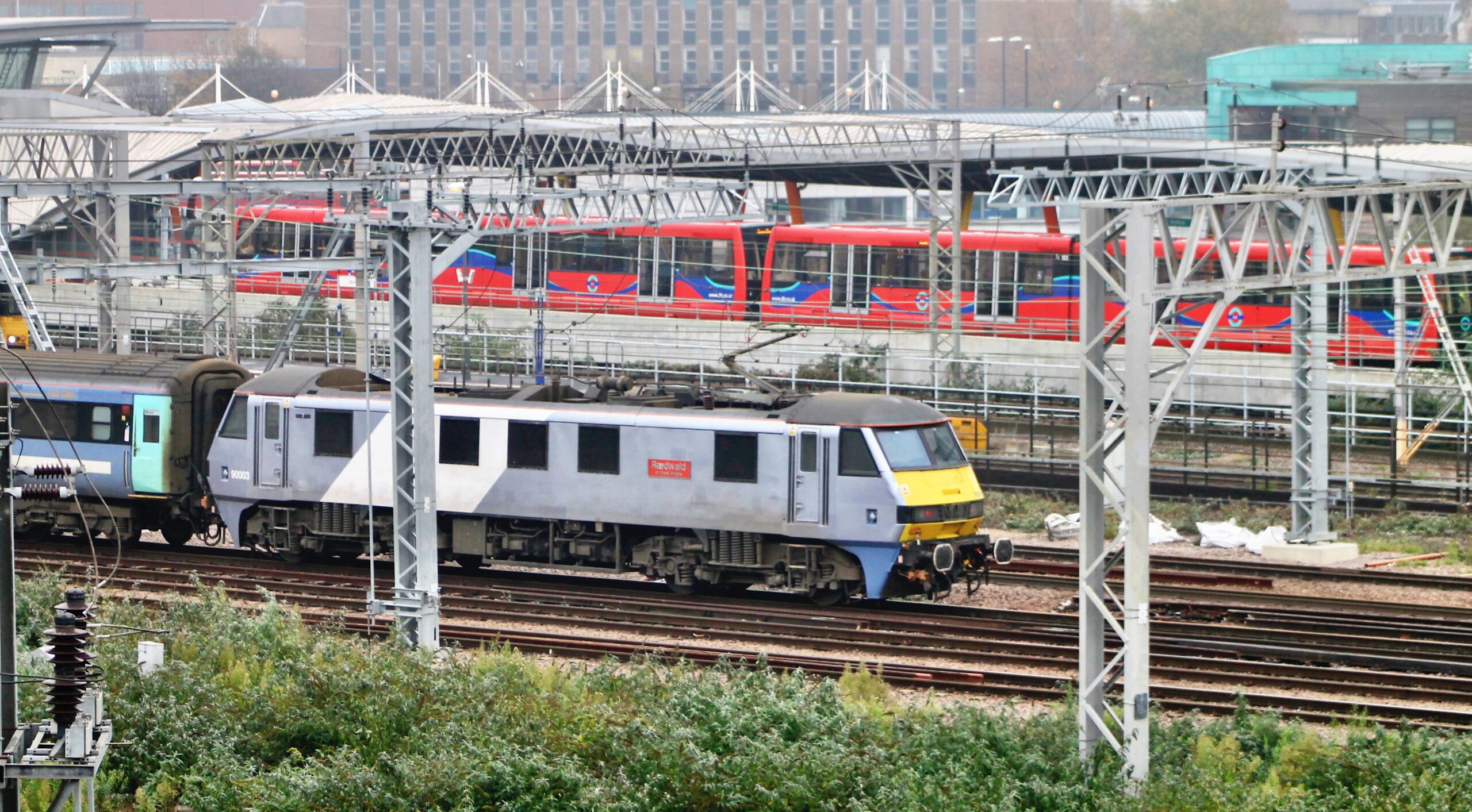
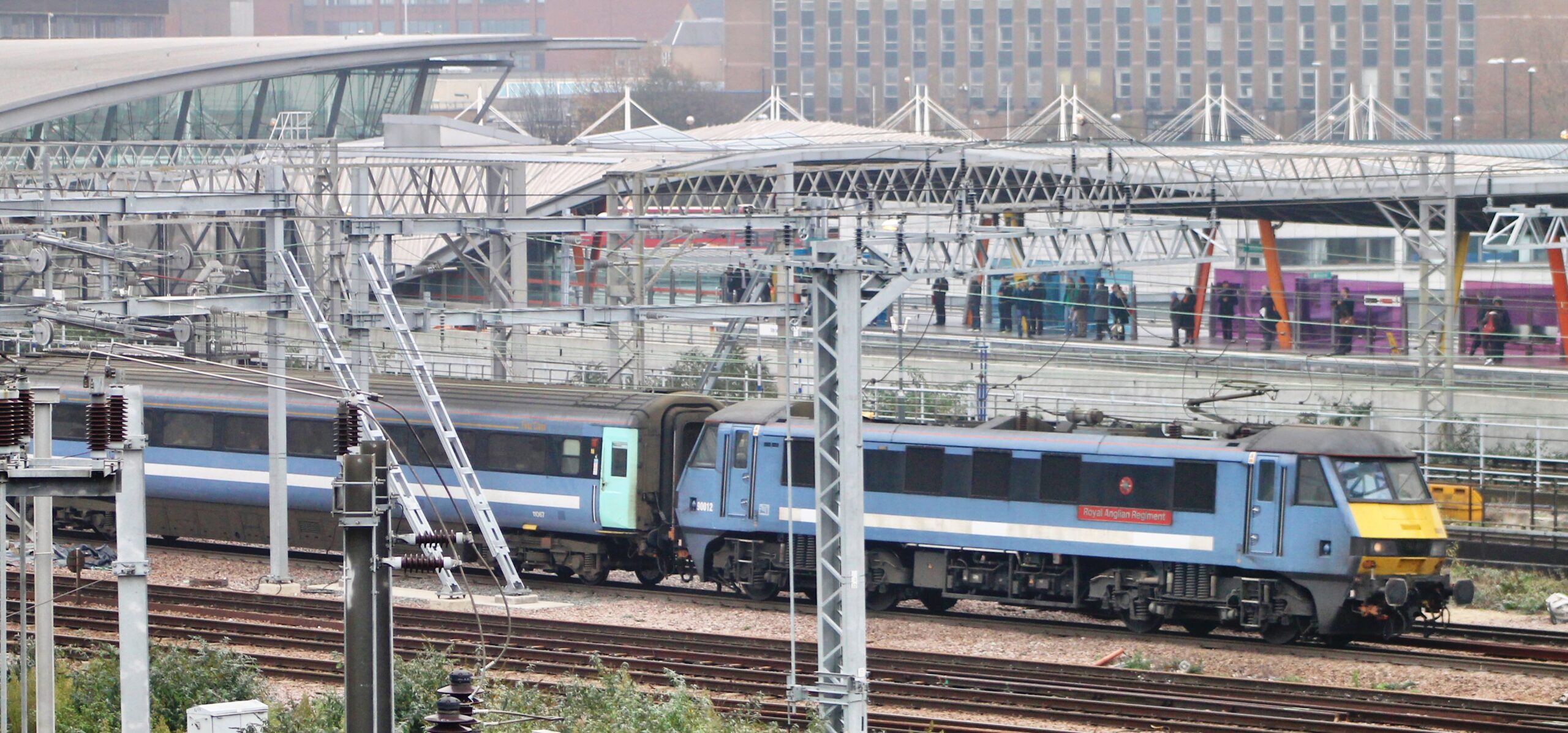
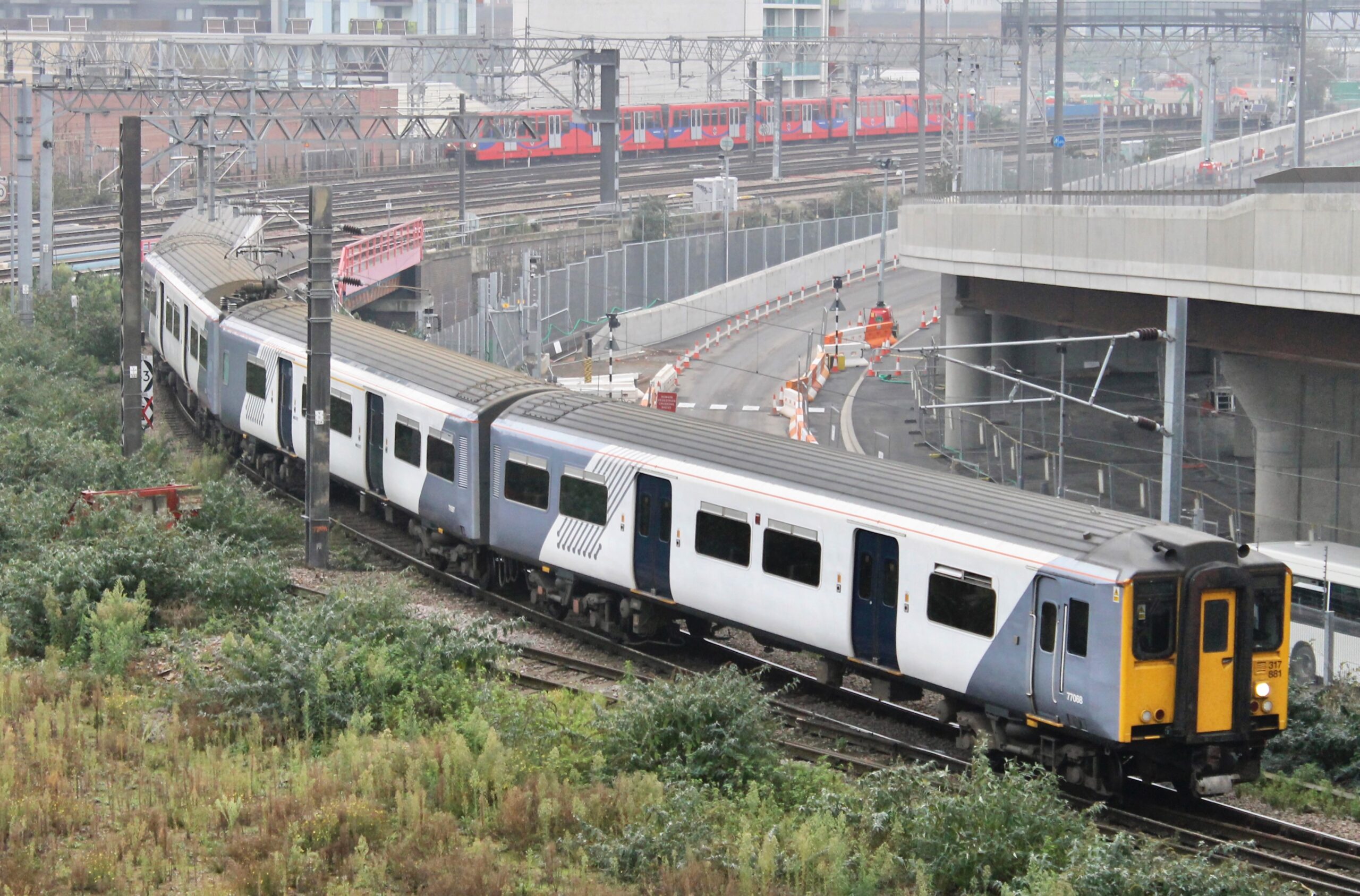
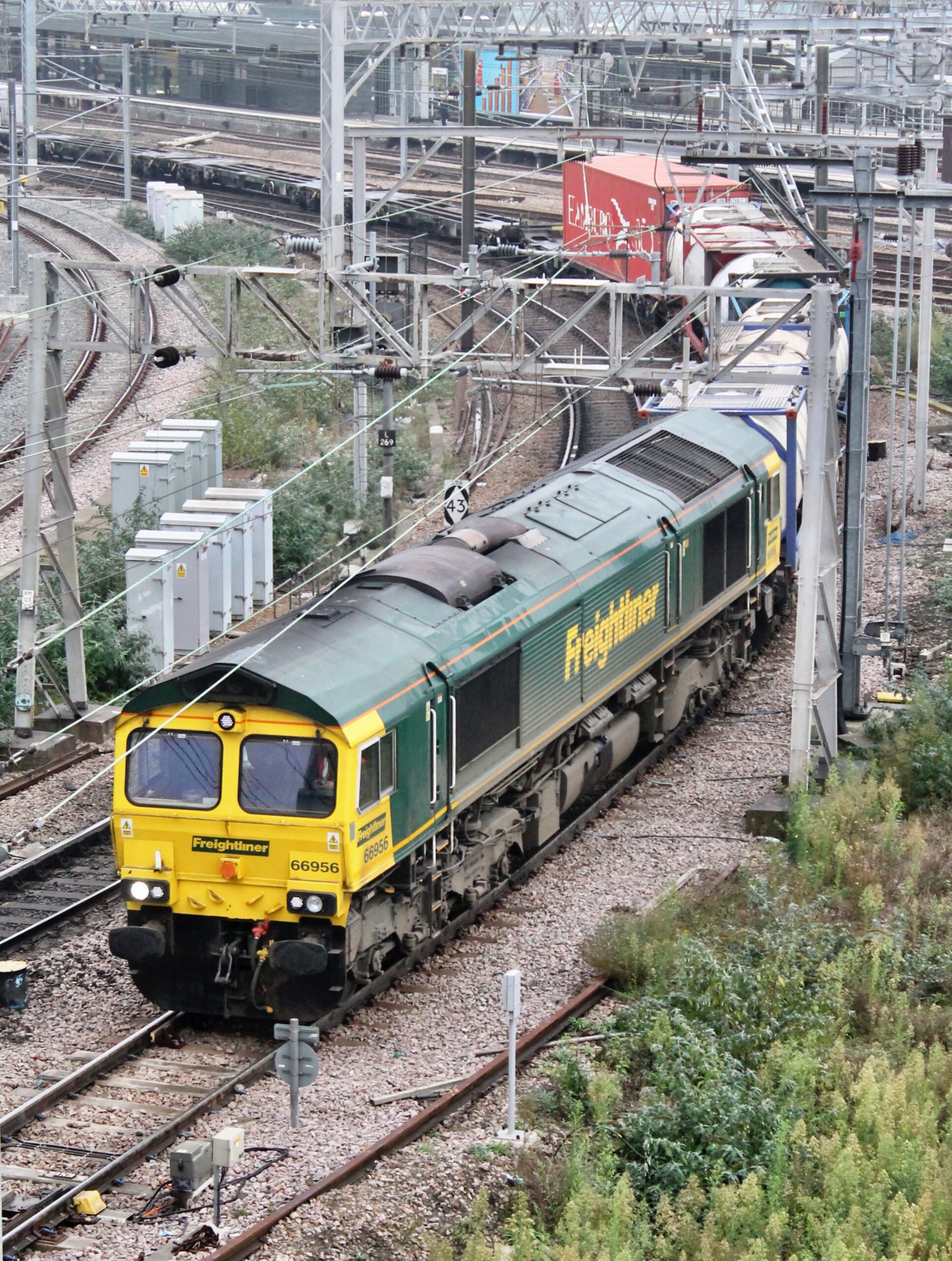
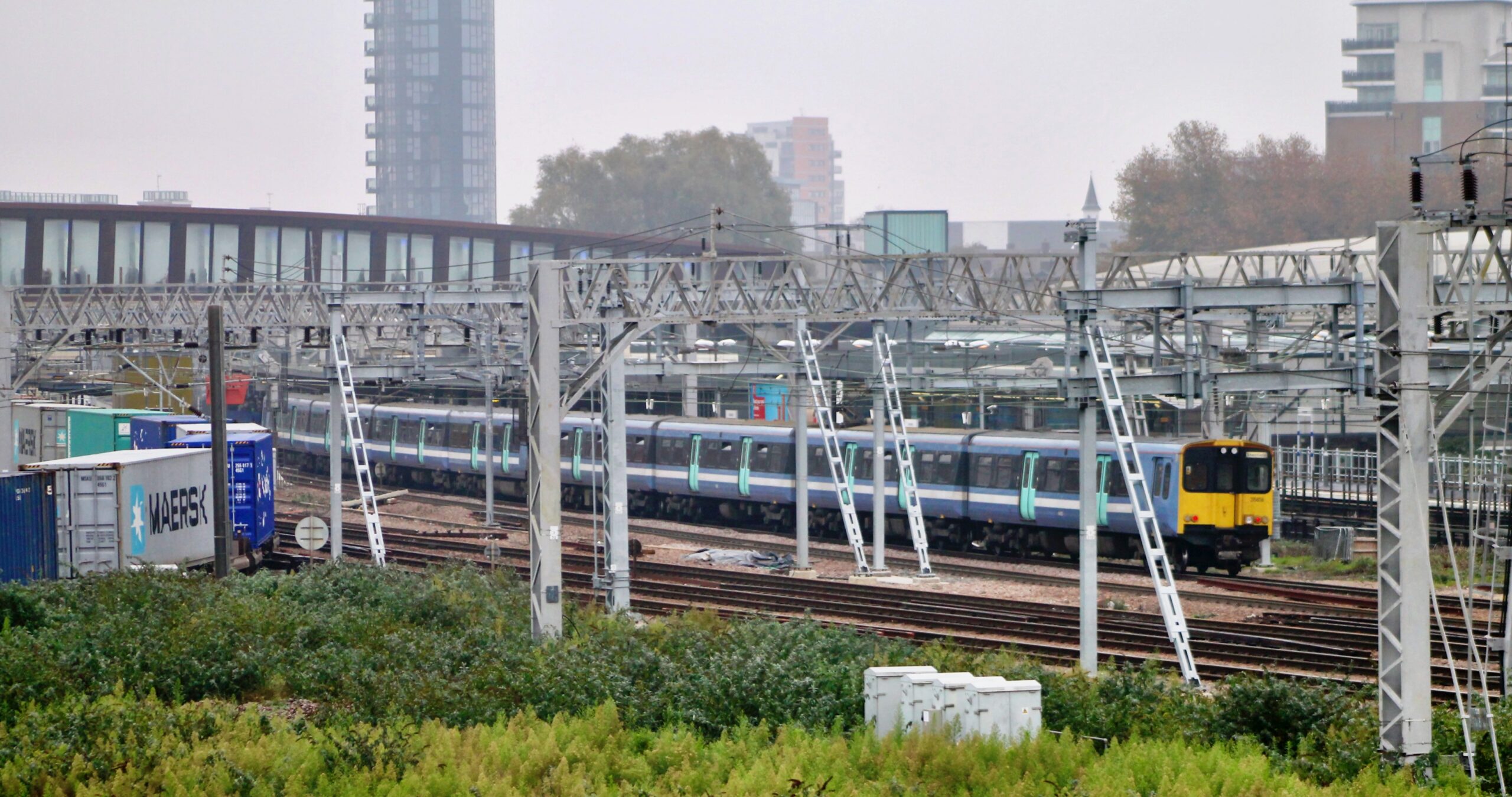
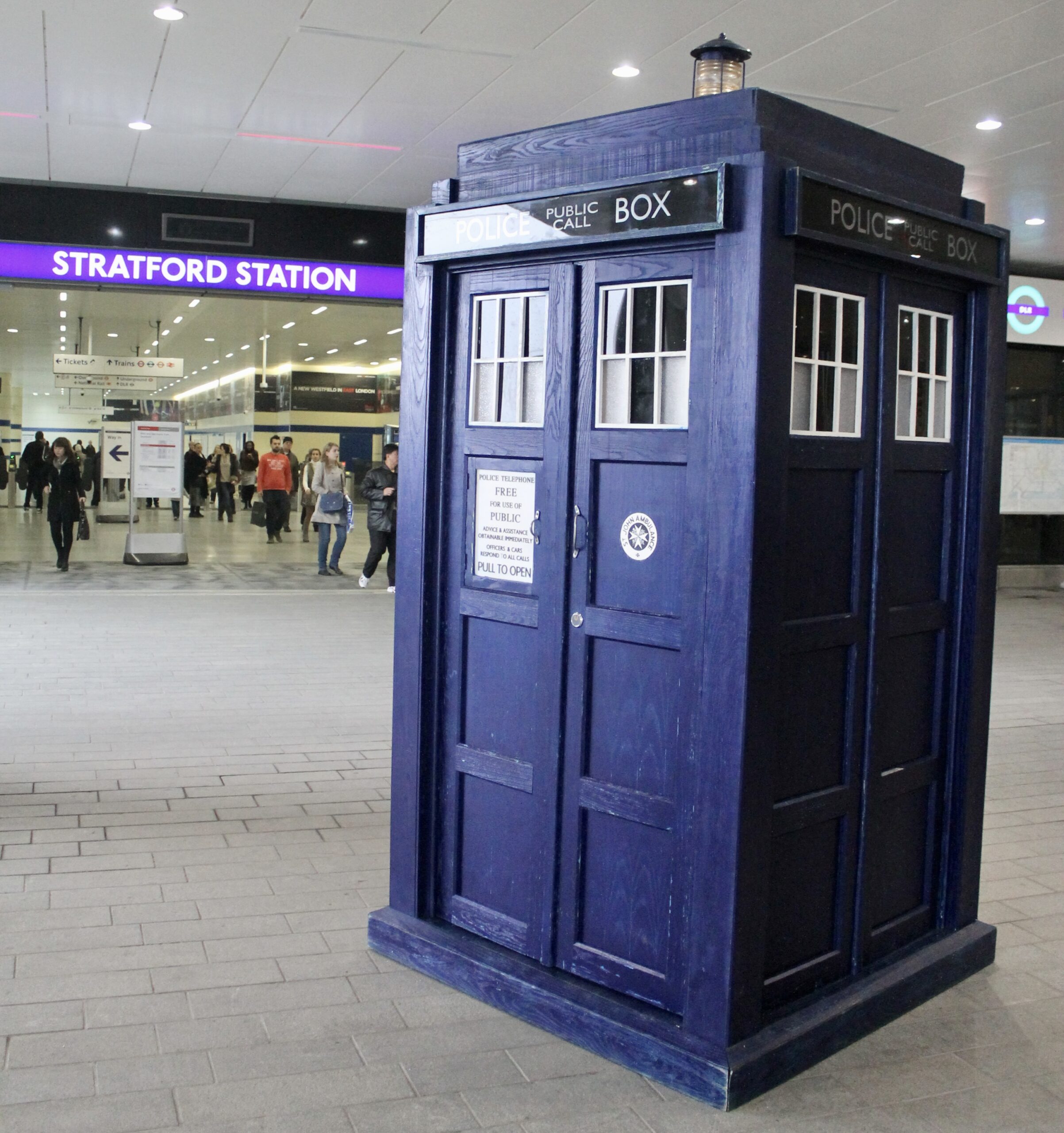
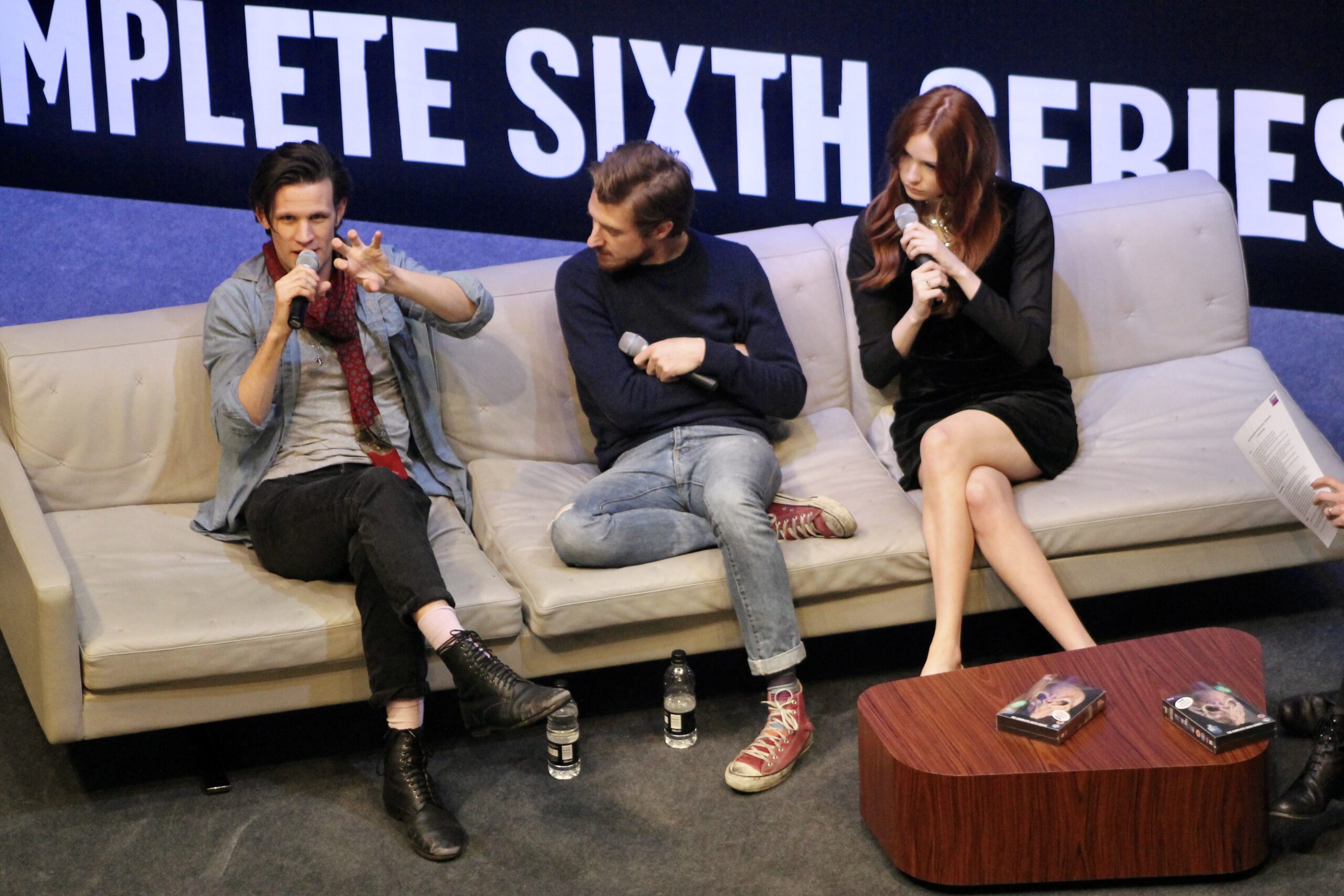
EWS Class 66 No. 66137 on a container train at Stratford – 21/11/201166064 leads on a Rail Head Treatment Train towards Stratford – 21/11/2011Class 90 No. 90003 ‘Raedwald of East Anglia’ passes a Dockland Light Railway train at Stratford. The Class 90 25kV AC overhead electric locomotives, built for mixed-traffic duties, were introduced to service during the closing years of BR – 21/11/2011Class 90 No. 90012 ‘Royal Anglian Regiment’ at Stratford. A total of 50 Class 90 locomotives were manufactured by BREL at Crewe Works between 1985 and 1990. The design of the Class 90 is heavily derived from the Class 87, but incorporates many improvements and new features and were intended as replacements for the Class 81-85 locomotives, all of which dated from the early 1960’s and had become quite unreliable due to their advanced age – 21/11/2011Class 90 No. 90013 ‘The Evening Star’ passes Stratford. As part of its East Anglia franchise bid, National Express provided a fleet plan to replace the ageing Class 86 locomotives in use on the Great Eastern Main Line with the more powerful and newer Class 90 locomotives, hoping this would improve performance and reduce operating costs. The Class 90’s were to become available due to Virgin Trains plan to replace all loco hauled passenger trains with Class 390 Pendolino units, freeing up their 15 class 90 locomotives. No.’s 90001 – 90015 were progressively delivered to Crown Point Traction Maintenance Depot to replace the Class 86’s. The National Express franchise came to an end in February 2012, with the replacement franchisee Greater Anglia taking over and continuing to operate the Class 90’s. In January 2020, the Class 745 FLIRT emu sets began entering service to replace the Class 90 sets. Following the introduction of these units, the loco-hauled sets were all withdrawn from service, with the final set running its last services on 24th March 2020. Thirteen Class 90’s moved to Freightliner to replace their class 86’s, while two went to Locomotive Services Limited (LSL) to operate their excursion trains – 21/11/2011Class 317 No. 317881. The British Rail Class 317 is an electric multiple unit (EMU) passenger train constructed by British Rail Engineering Limited in two batches, 48 sets being produced in 1981–82 and 24 sets in 1985–87. They were the first of several classes of British Rail EMU to be based on the all-steel Mark 3 bodyshell, departing from the “PEP”-aluminium design which had spawned the earlier Class 313 to Class 315, Class 507 and Class 508. The Mark 3 bodyshell was also the basis of Class 318, Class 455, and the diesel Class 150. The Class 317 uses overhead alternating current electrification. All were withdrawn in July 2022. – 21/11/2011Freightliner Class 66 No. 66956 heads through Stratford – 21/11/2011Class 315 No. 315856 runs through Stratford. The BR Class 315 was a fleet of alternating current (AC) electric multiple unit (EMU) trains, built by British Rail Engineering Limited at Holgate Road Carriage Works in York between 1980 and 1981; they replaced the Class 306 units. It was the fifth and final variant of unit derived from British Rail’s 1971 prototype suburban EMU design which, as the BREL 1972 family, eventually encompassed 755 vehicles across Classes 313, 314, 315, 507 and 508. Revenue services with Class 315 units commenced in 1980 and continued until December 2022 – 21/11/2011An unusual form of transportation materialised at Stratford in November 2011 – 21/11/2011Celebrating the release of the Sixth Series of the regenerated Doctor Who at Westfield, Stratford with 11th Doctor actor, Matt Smith and his companions Arthur Darvill – who played Rory, and Karen Gillan who was Amy Pond – 21/11/2011
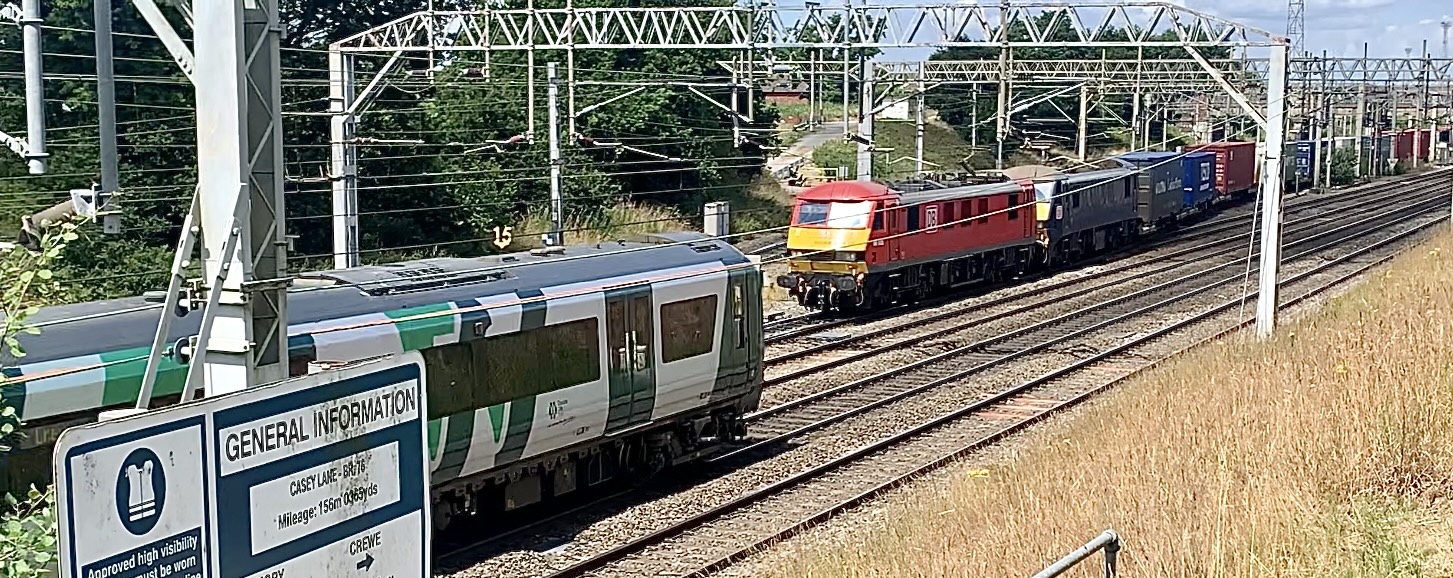
Short video from a visit to Stratford in March 2001A footnote to the Class 90 info above – DB Cargo have announced recently that because of the increased costs for electricity, it is no longer commercially viable to run their Class 90 25kV electric locomotives and have put their last five active members of the class into storage. Class 66 diesel locomotives will replace them on West Coast Main Line intermodal trains. The video screenshot above shows DB Class 90 No.’s 90035 and 90034 heading out of Crewe Basford Hall yard – 14/07/2022
And with that, we reach the end of another blog entry. I’ll leave you with a pic of Yoshi. Thanks for reading and for your comments and corrections. Be seeing you!
Yoshi was rather taken with the pavement art sunflowers in South Street, Dorchester and demanded he had his photo taken with one – 06/08/2023











Leave a Reply