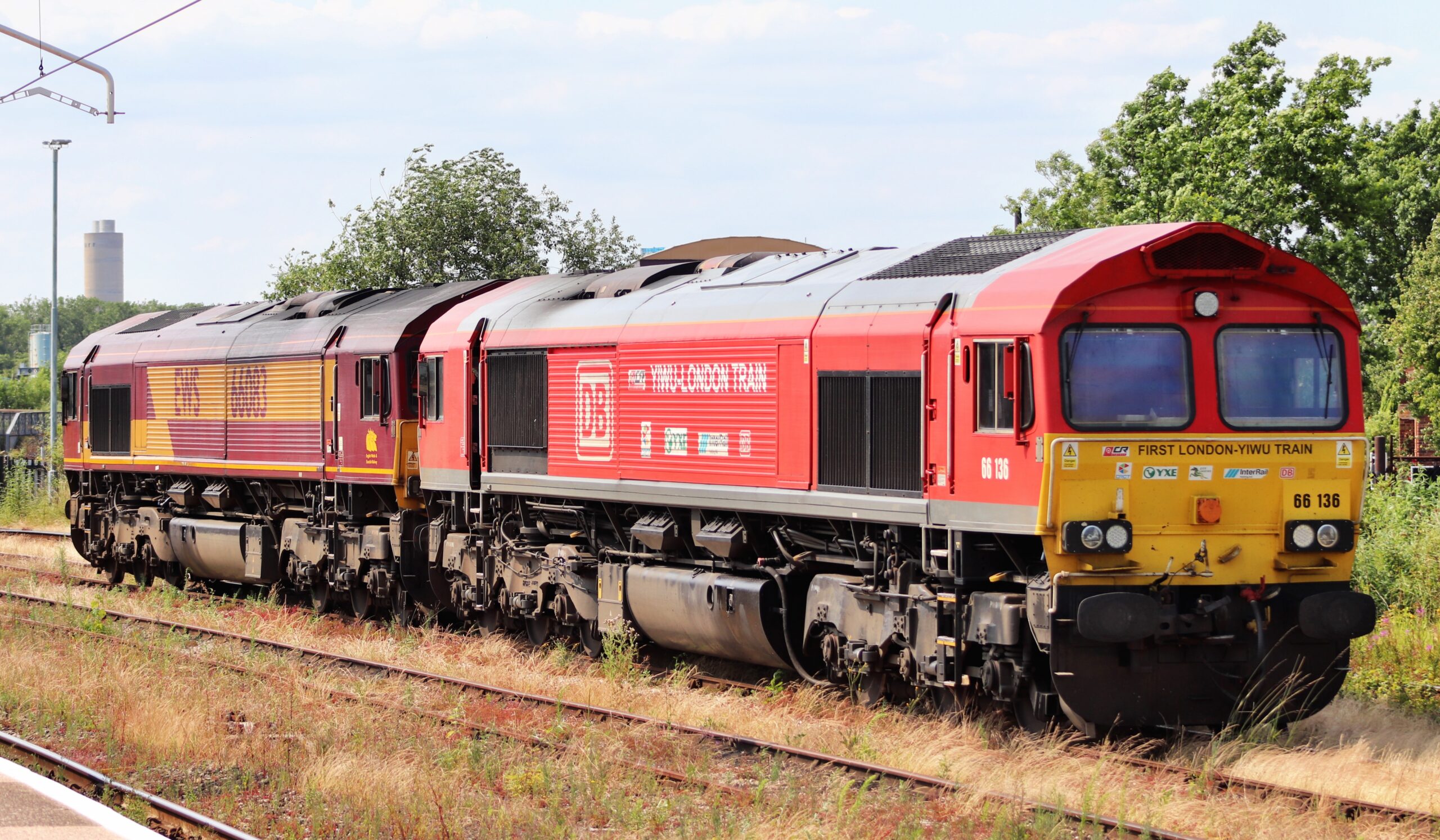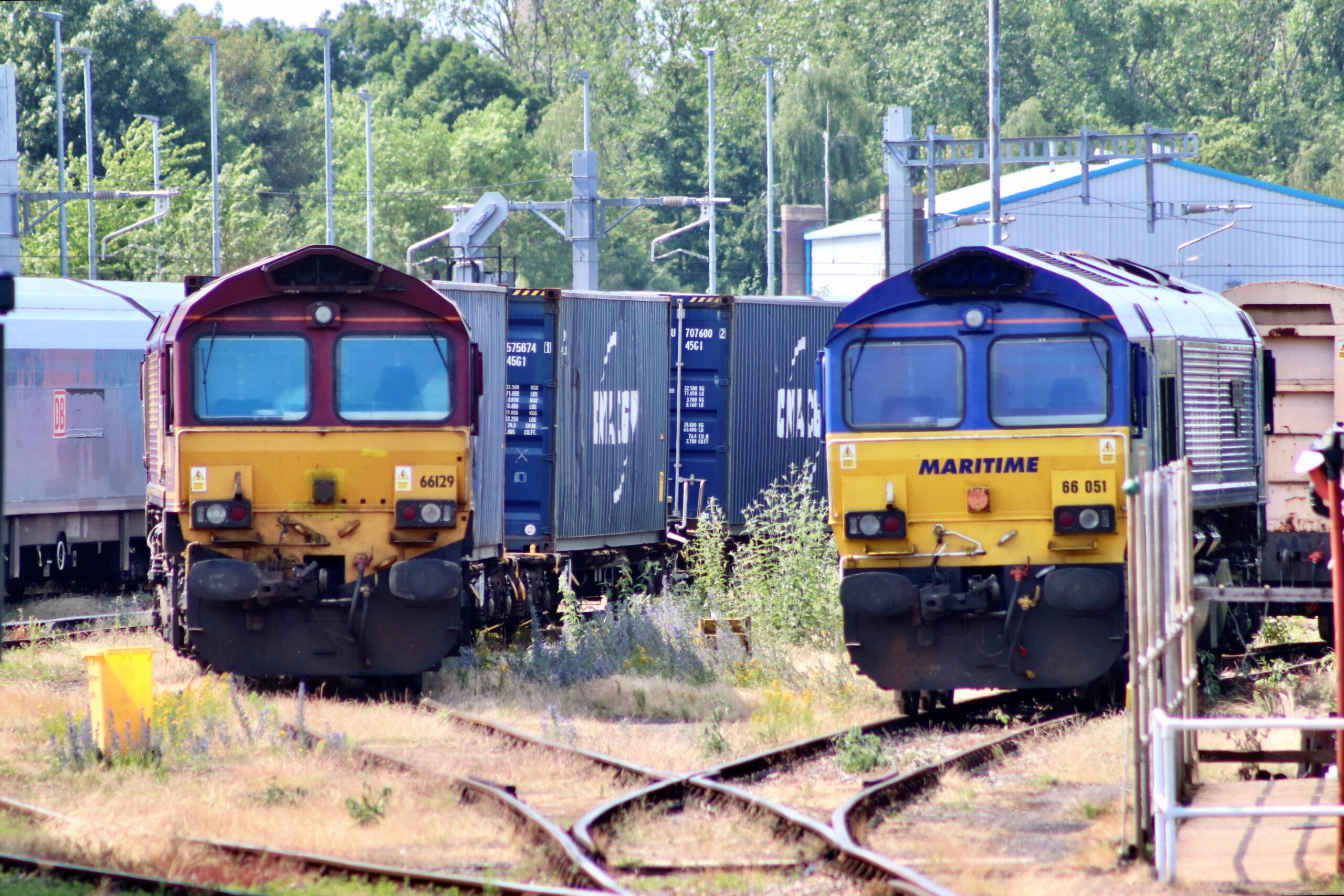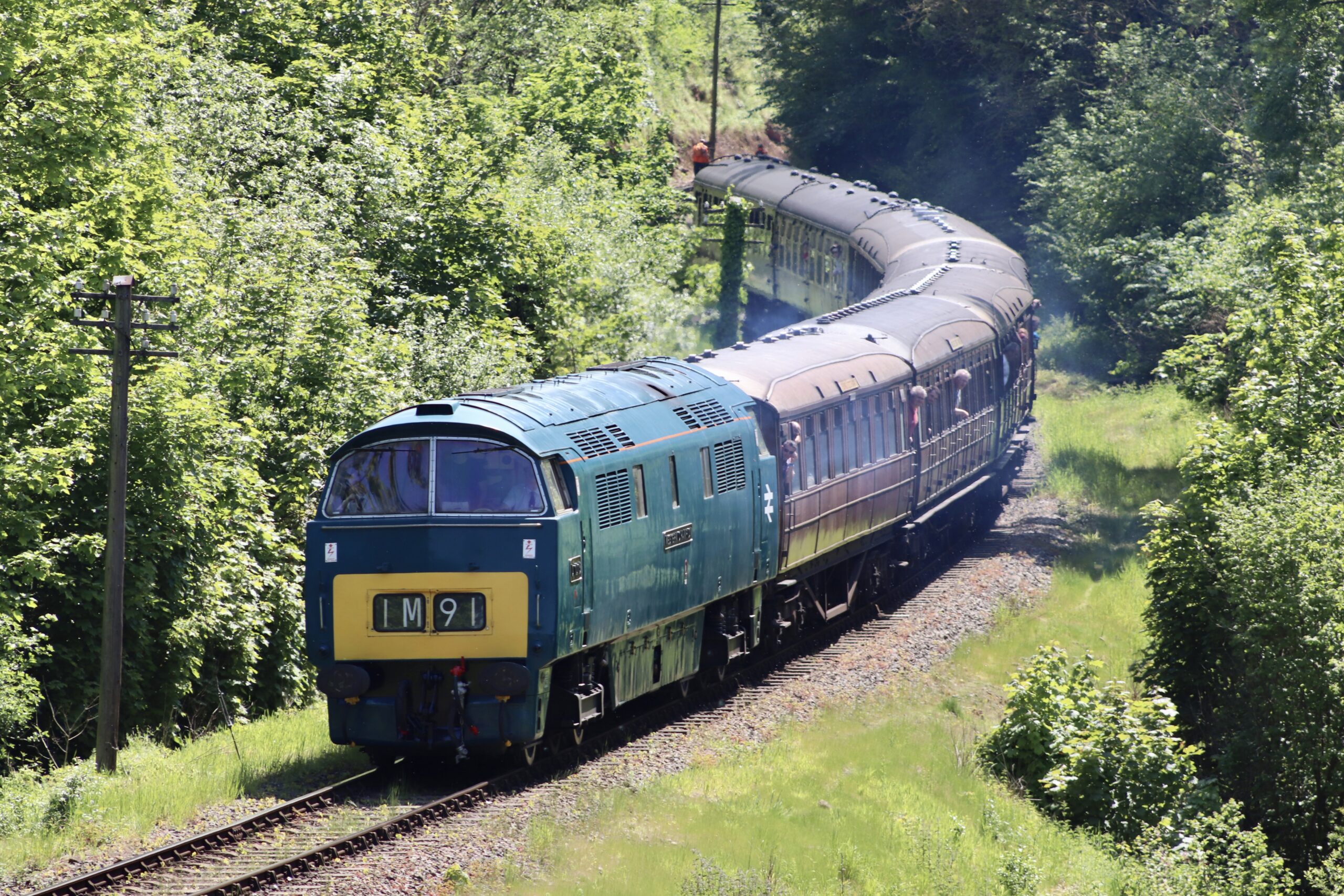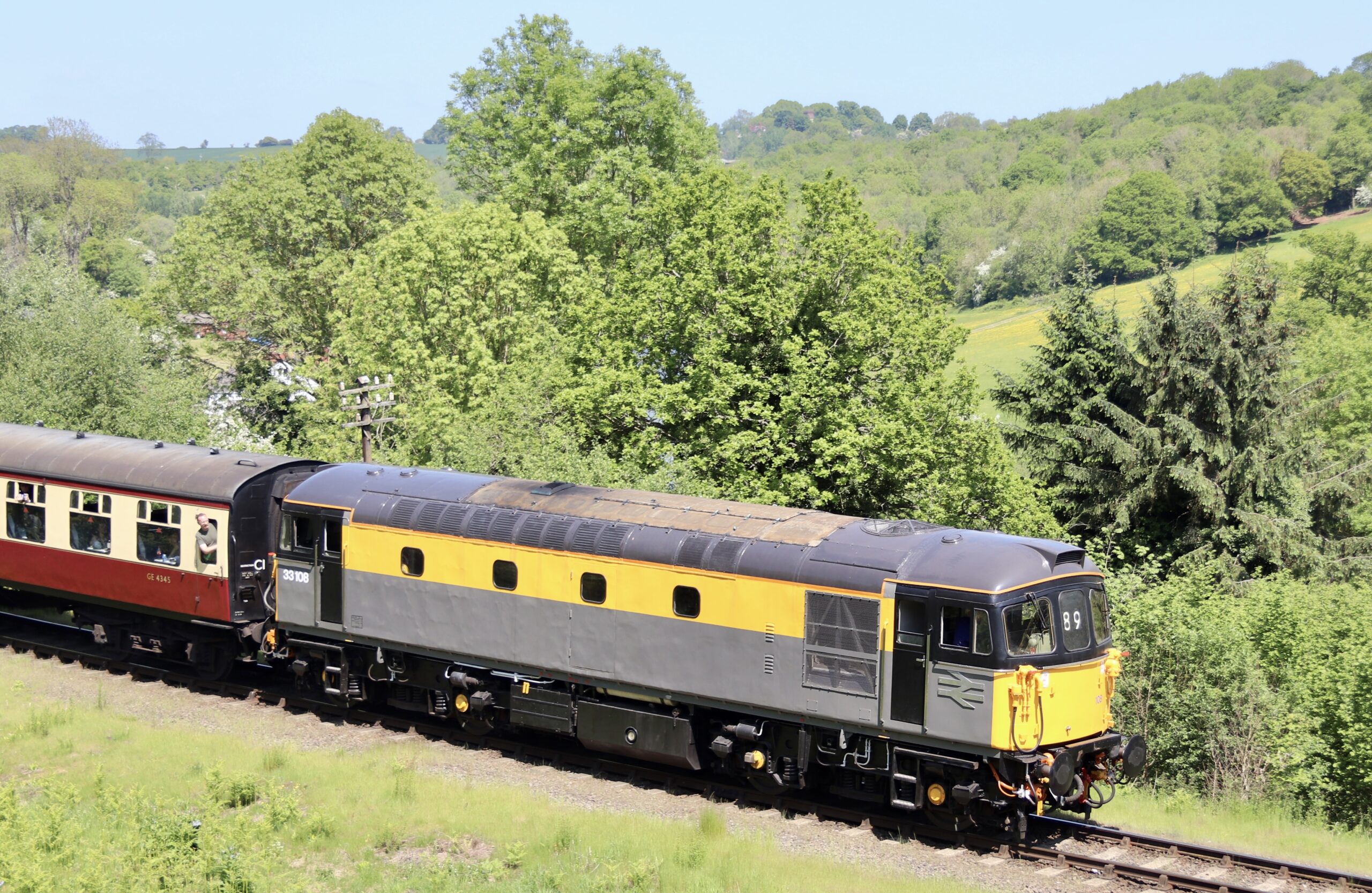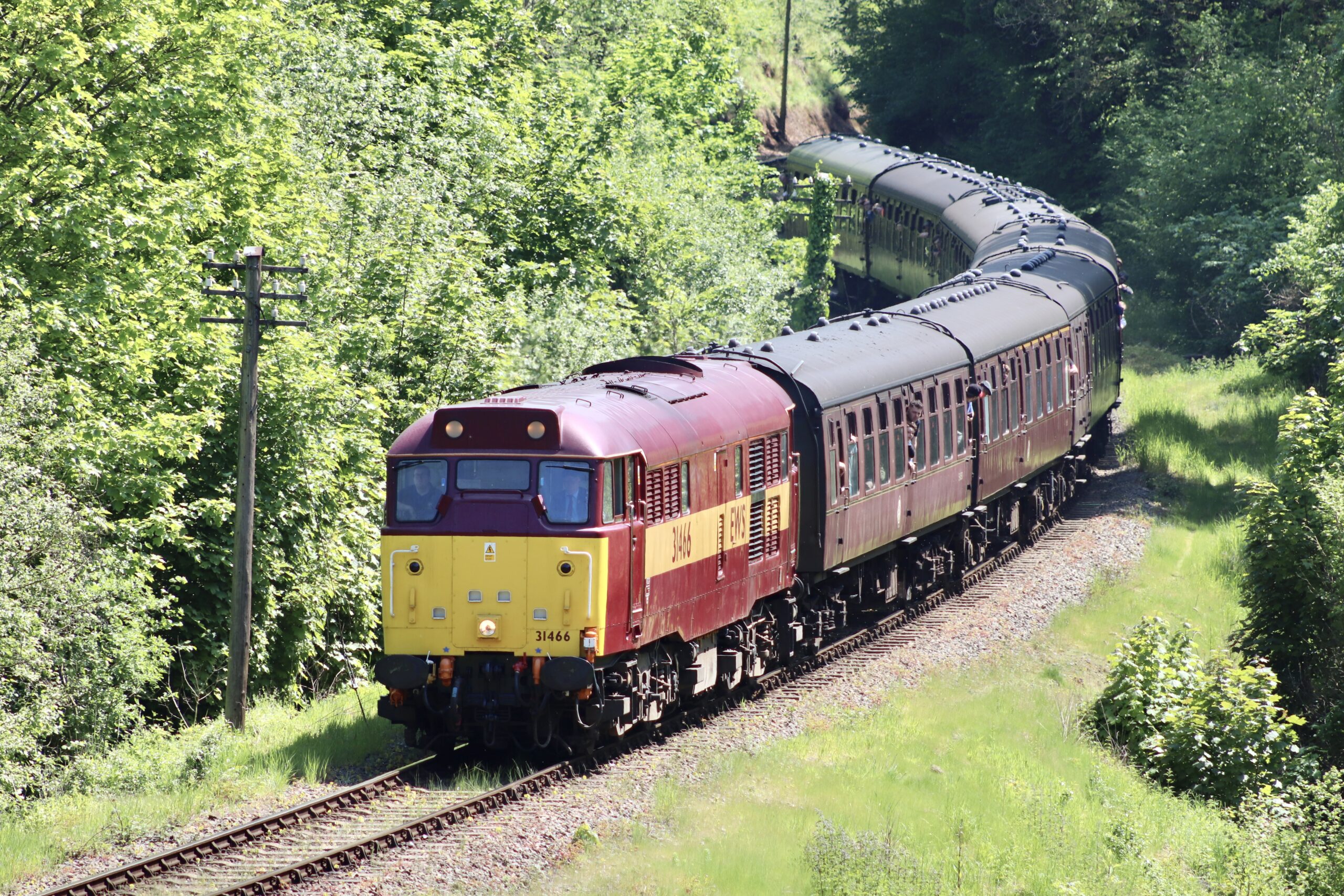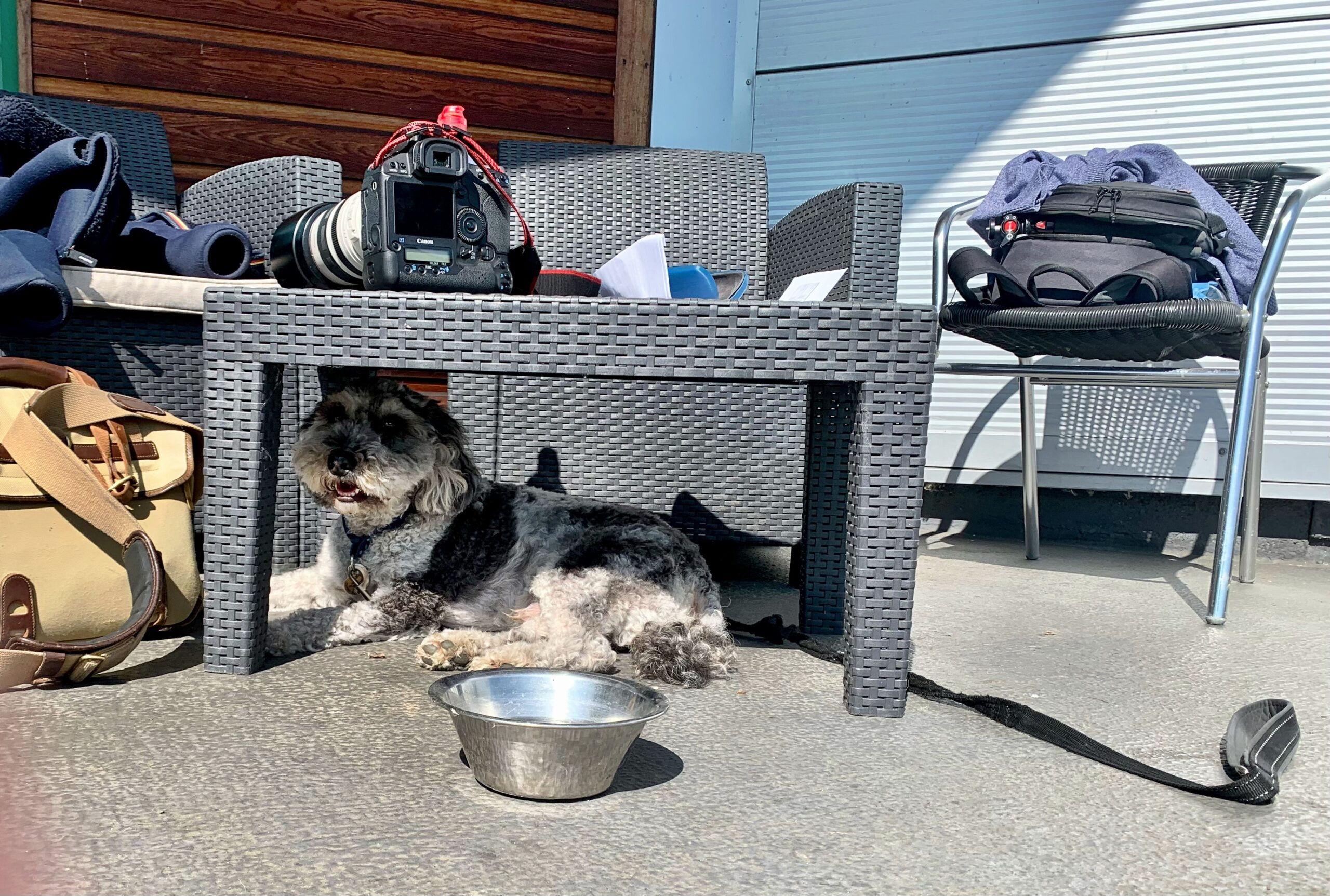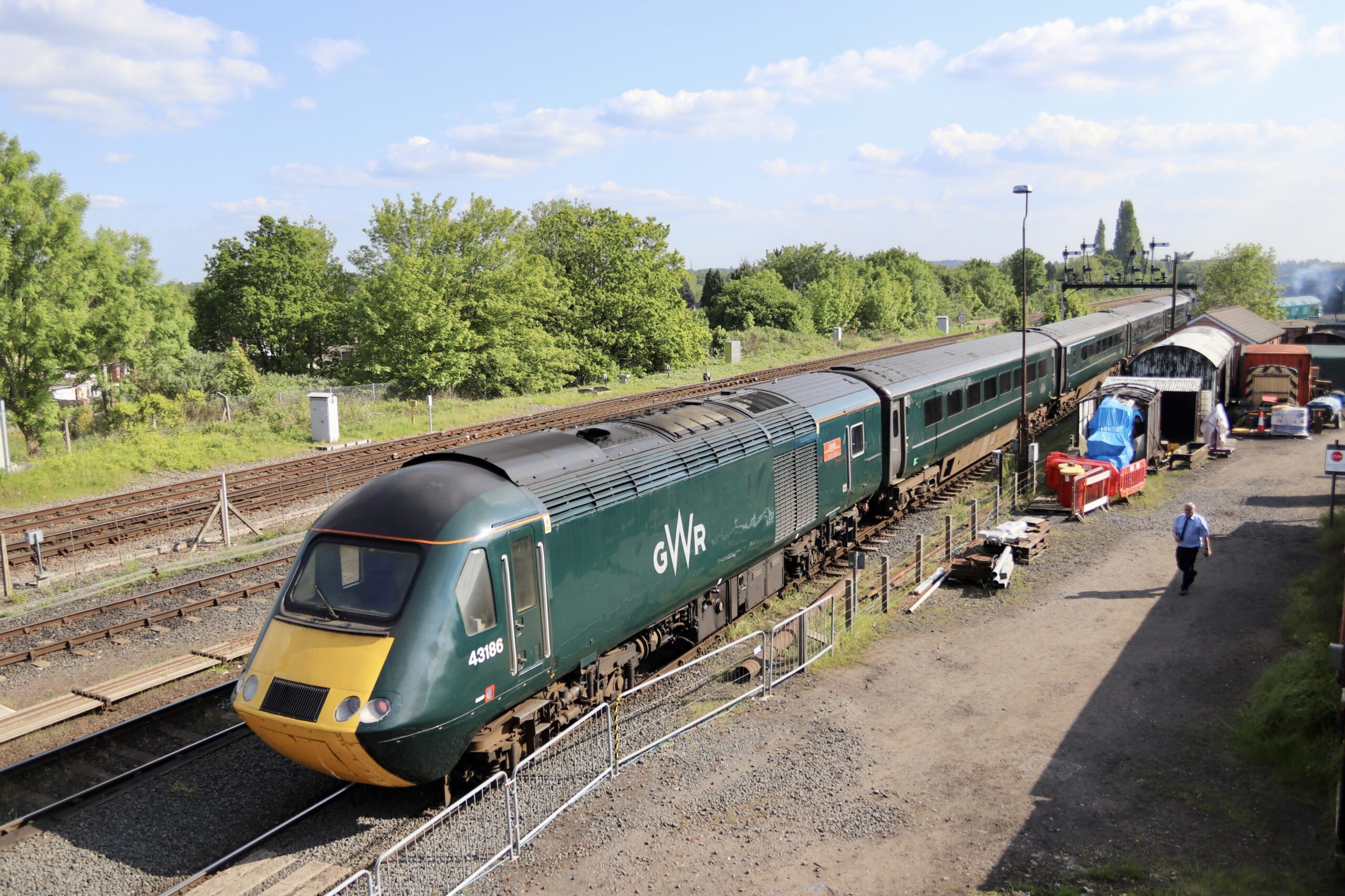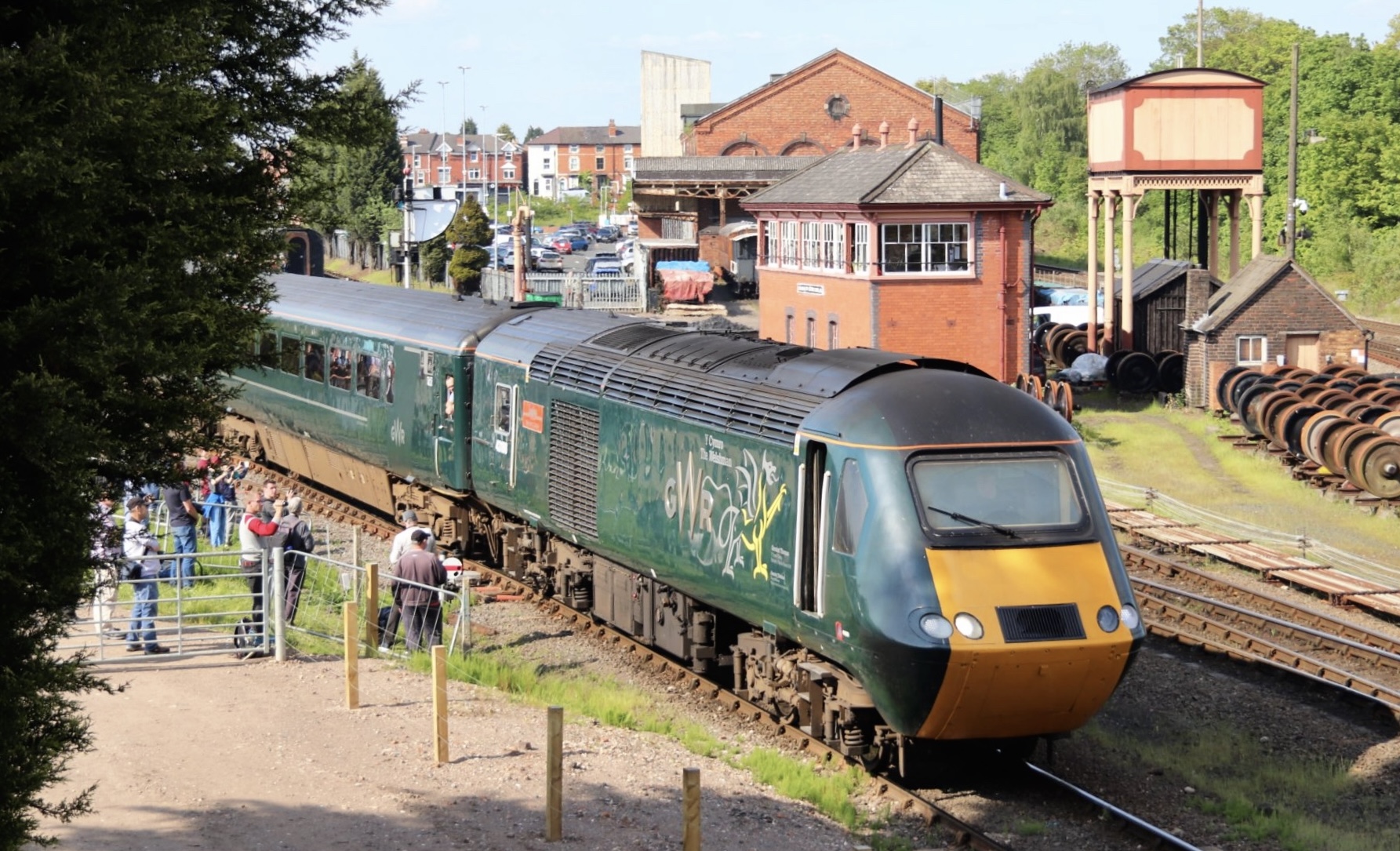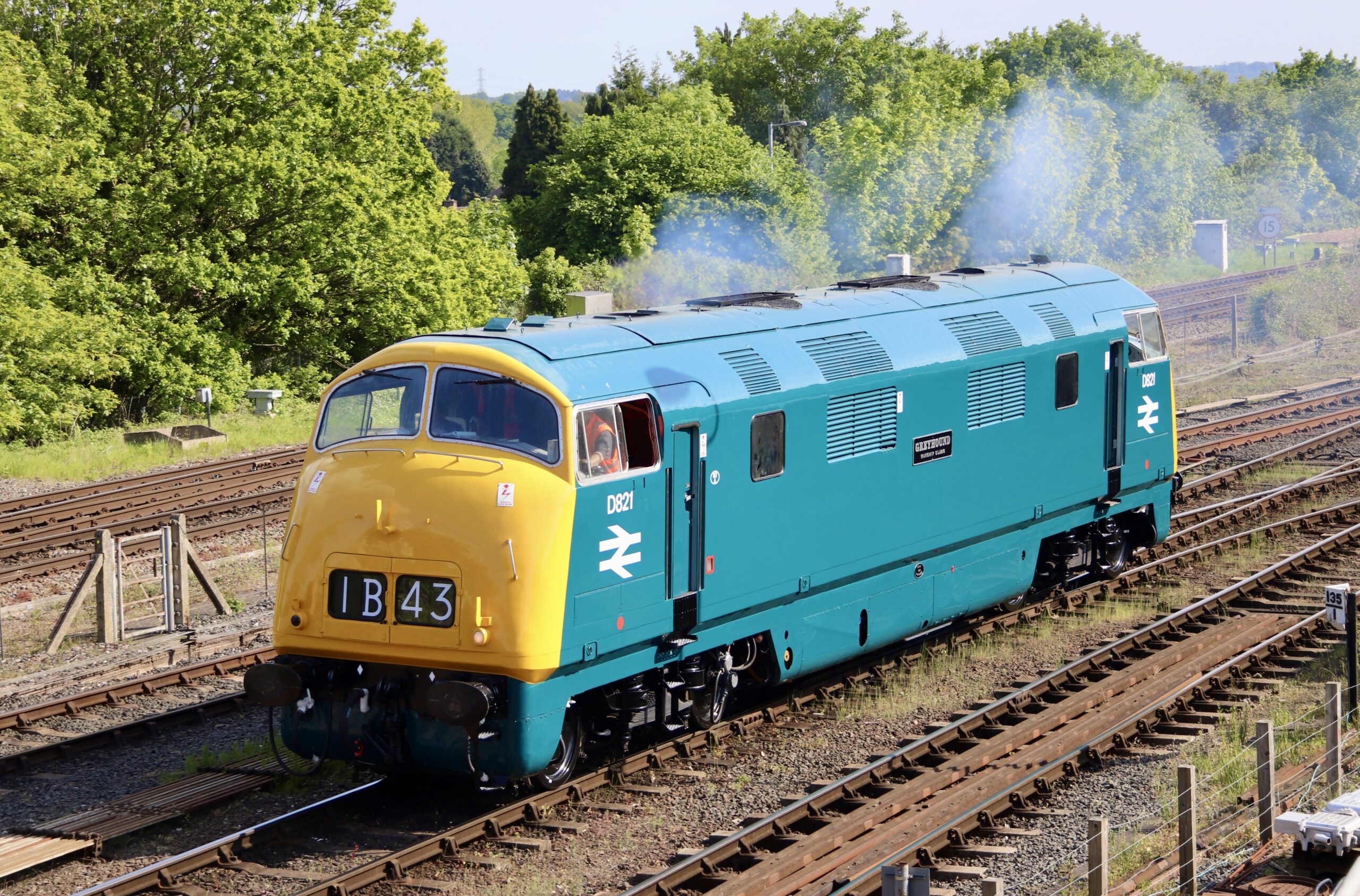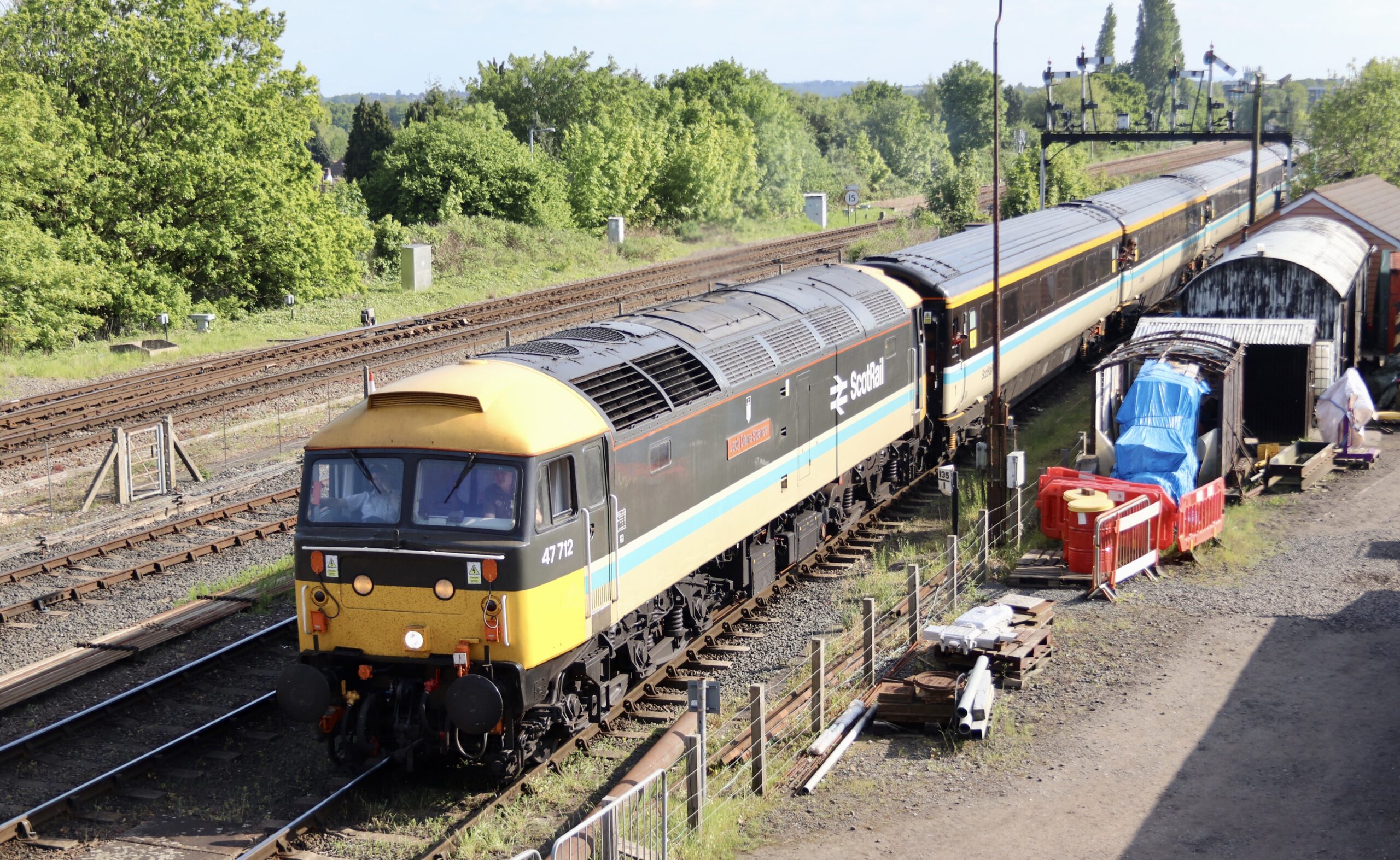
Category: Class 37

  • ScotRail Inter7City HST’s

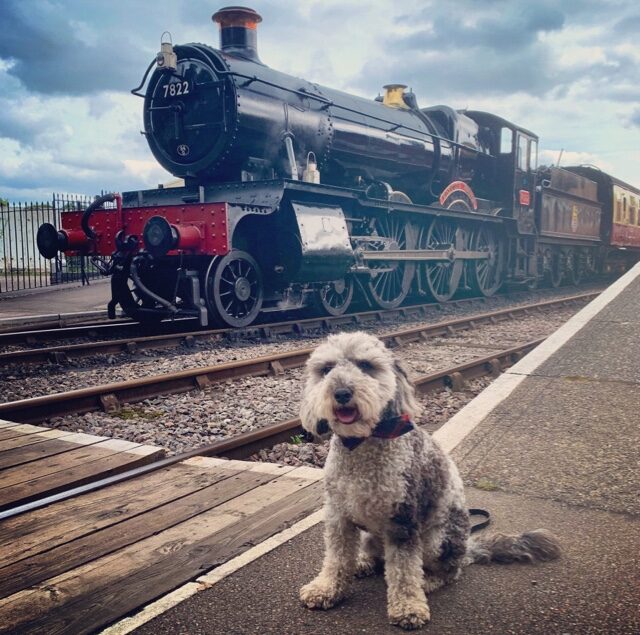
    Yoshi at Edinburgh Waverley railway station with ScotRail Inter7City High Speed Train Class 43 power car behind – 14/09/2024

    On September 3rd 2024, it was announced that ScotRail’s Inter7City High Speed Train fleet used on routes between Glasgow, Edinburgh, Aberdeen and Inverness, is to be replaced with formal procurement due to start within weeks.
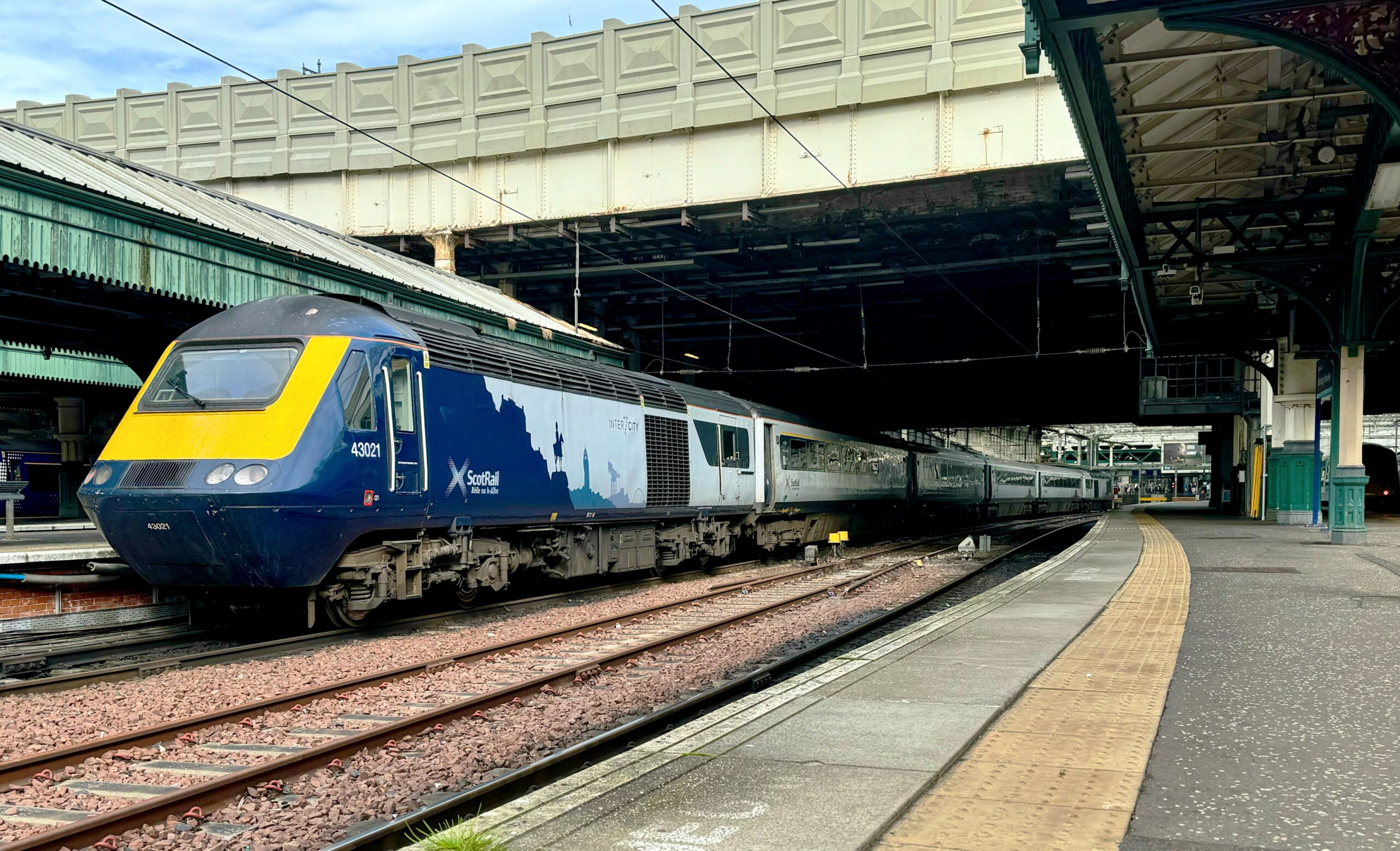
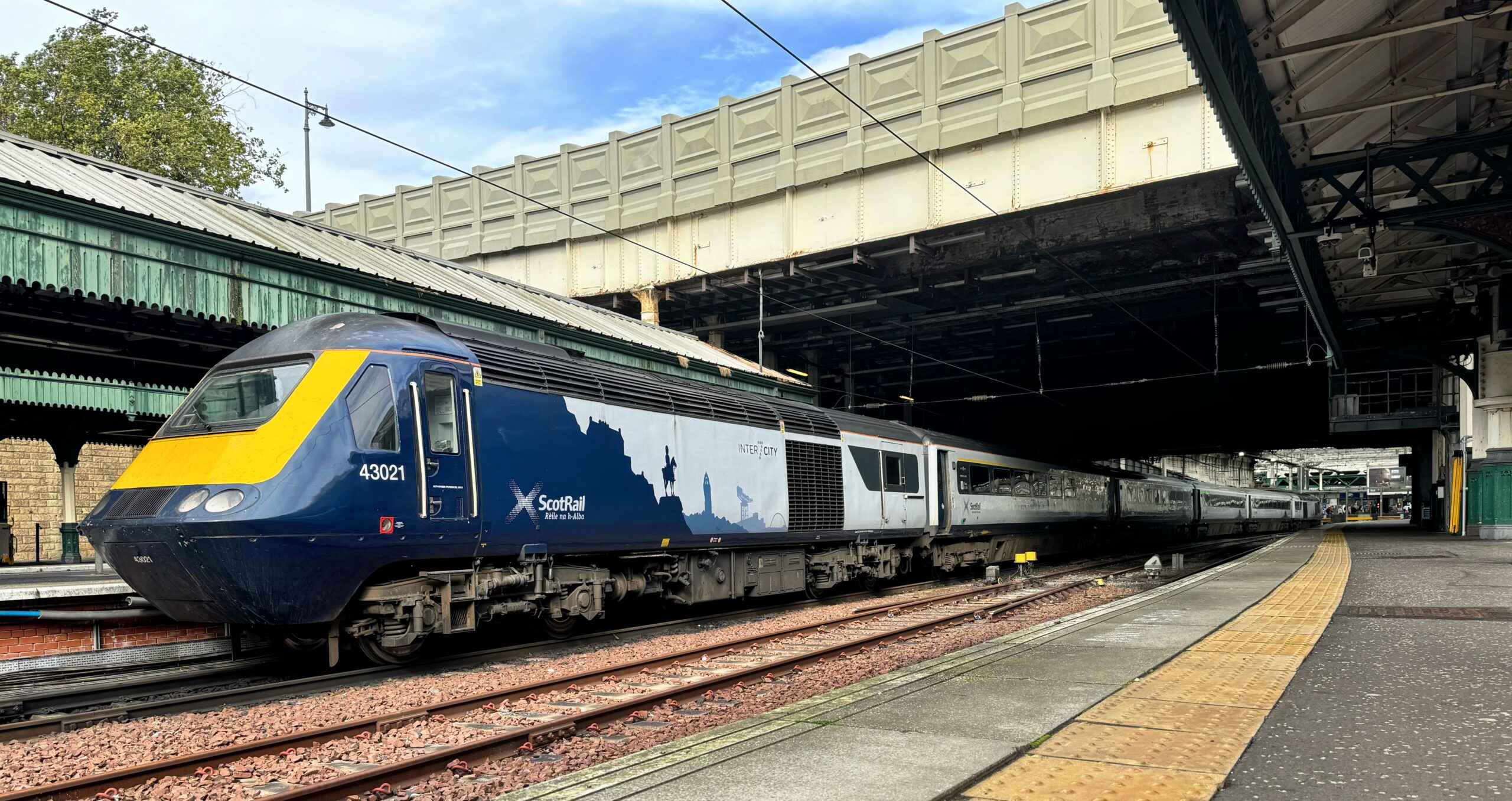
    Class 43 No. 43021 at Edinburgh Waverley having arrived at the rear of 1B82 1309 Aberdeen to Edinburgh – 14/09/2024

    ScotRail operates 52 Class 43 power cars with 22 sets of Mark 3 coaches modified with sliding doors. Two, No.’s 43030 and 43140 were written off after the 2020 Carmont derailment. ASLEF, the train drivers union, have called for the withdrawal of the ScotRail HST fleet for a number of years as “not fit for purpose”citing drivers descriptions of the trains as “notoriously unreliable”, an “unmitigated disaster” and that using them is “tantamount to environmental vandalism”

    ASLEF have further expressed the view that “the HST’s are not crashworthy and do not meet modern safety standards. Their fibreglass cabs with wooden frames bolted on were built in the 70’s and are not fit for purpose for speeds of up to 125 mph. As such our members who drive these trains have little or no confidence in them.”

    Cabinet Secretary for Transport, Fiona Hyslop announced ScotRail will lead the acquisition of replacement rolling stock and a detailed delivery timetable will be announced at the award of the contract, adding; “Resilient, reliable ScotRail services are key to encouraging more people to choose to travel by train rather than car, to cutting our transport emissions and to helping to move people around Scotland for work, leisure and learning. Over 4 million passenger journeys were made on inter-city trains in the last year. We want to maintain and where possible, increase that number choosing to go by train between Scotland’s cities. We want to replace the current inter-city fleet with trains which provide more comfort and accessibility for passengers on these routes. This planned investment will ensure the reliability of our inter-city routes for the long-term, will reduce emissions from inter-city services and will support our efforts to decarbonise Scotland’s railways.”

    ScotRail Managing Director Joanne Maguire said “today’s announcement is good news for our customers and an important step for ScotRail as we work towards delivering a safe, green, and reliable railway.”

    Although no announcement on whether new-build or cascaded trains will be deployed, suitable inter-city rolling stock could soon become available with the introduction of East Midlands Railway’s Hitachi Class 810 bi-mode units, which will replace its Class 222 Meridian DEMU’s. Introduced by Midland Mainline from 2004, EMR operates 27 sets, running in five and seven-car formations, owned by Eversholt.

    I mention the Inter7City HST’s because we had already planned a road trip which would give me an opportunity to see these surviving trains from a bygone age of British Rail at Edinburgh and Aberdeen.

    At Edinburgh Waverley Yoshi and I were very kindly allowed through the electronic ticket barriers and on to the platforms to photograph the HST sets. We were approached during our visit at the end of platform 18 by a member of station staff who wanted to know if we were “lost or just catching the breeze”. Once we’d explained ourselves, we had a friendly chat as we walked over to platform 2 in time for the next HST arrival.
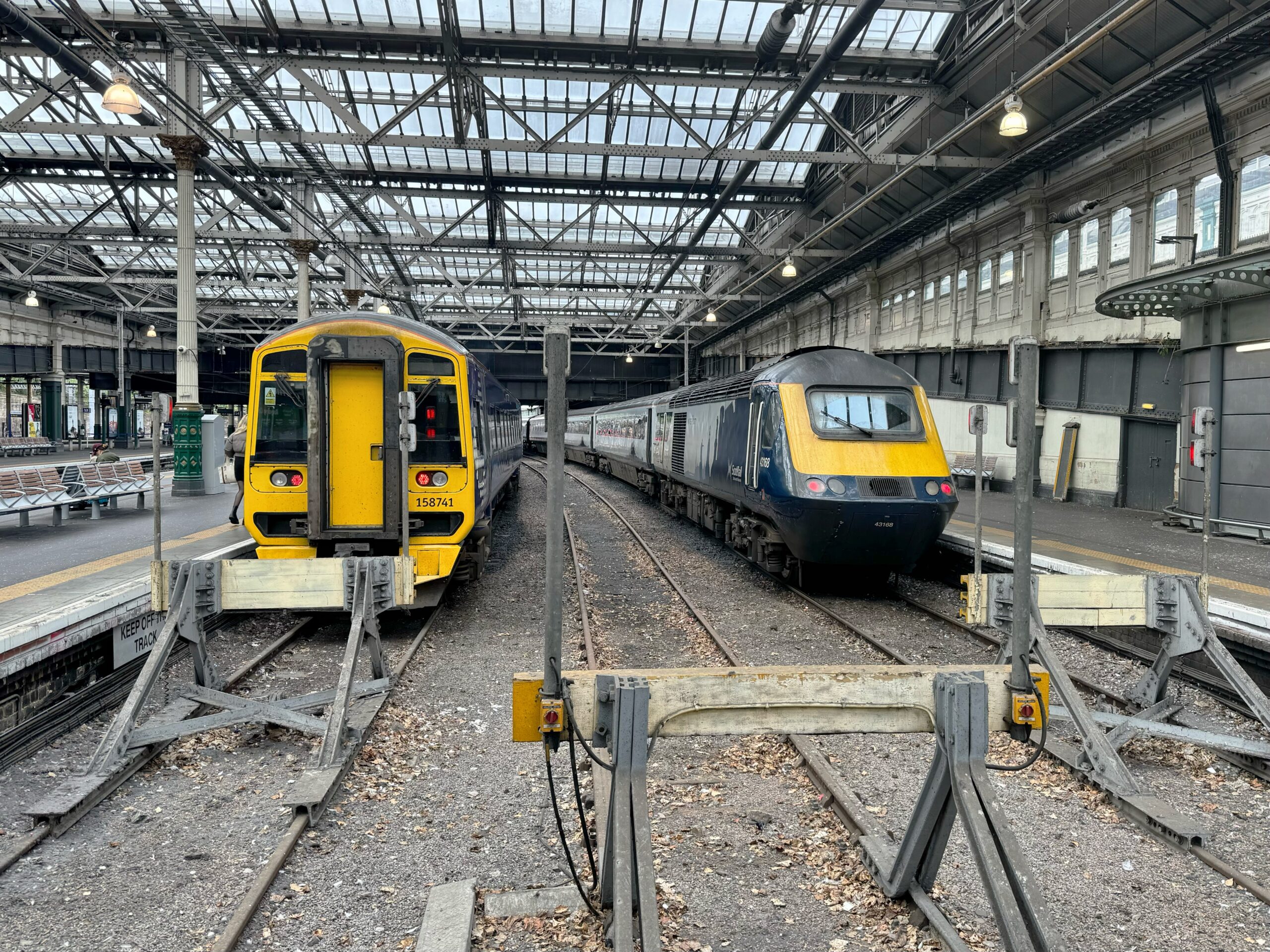
    Class 43 No 43168 forming the rear of 1A81 1130 Edinburgh to Aberdeen at the buffer stops alongside Class 158 “Express Sprinter” DMU No.158741, Edinburgh Waverley – 14/09/2024
    Class 43 No 43179 1A81 1130 Edinburgh to Aberdeen at Edinburgh Waverley in the company of Class 158 No. 158740 and Class 334 Coradia Juniper EMU No. 334013 – 14/09/2024
    Another view of Class 43 No. 43021 at Edinburgh Waverley having arrived at the rear of 1B82 1309 Aberdeen to Edinburgh – 14/09/2024
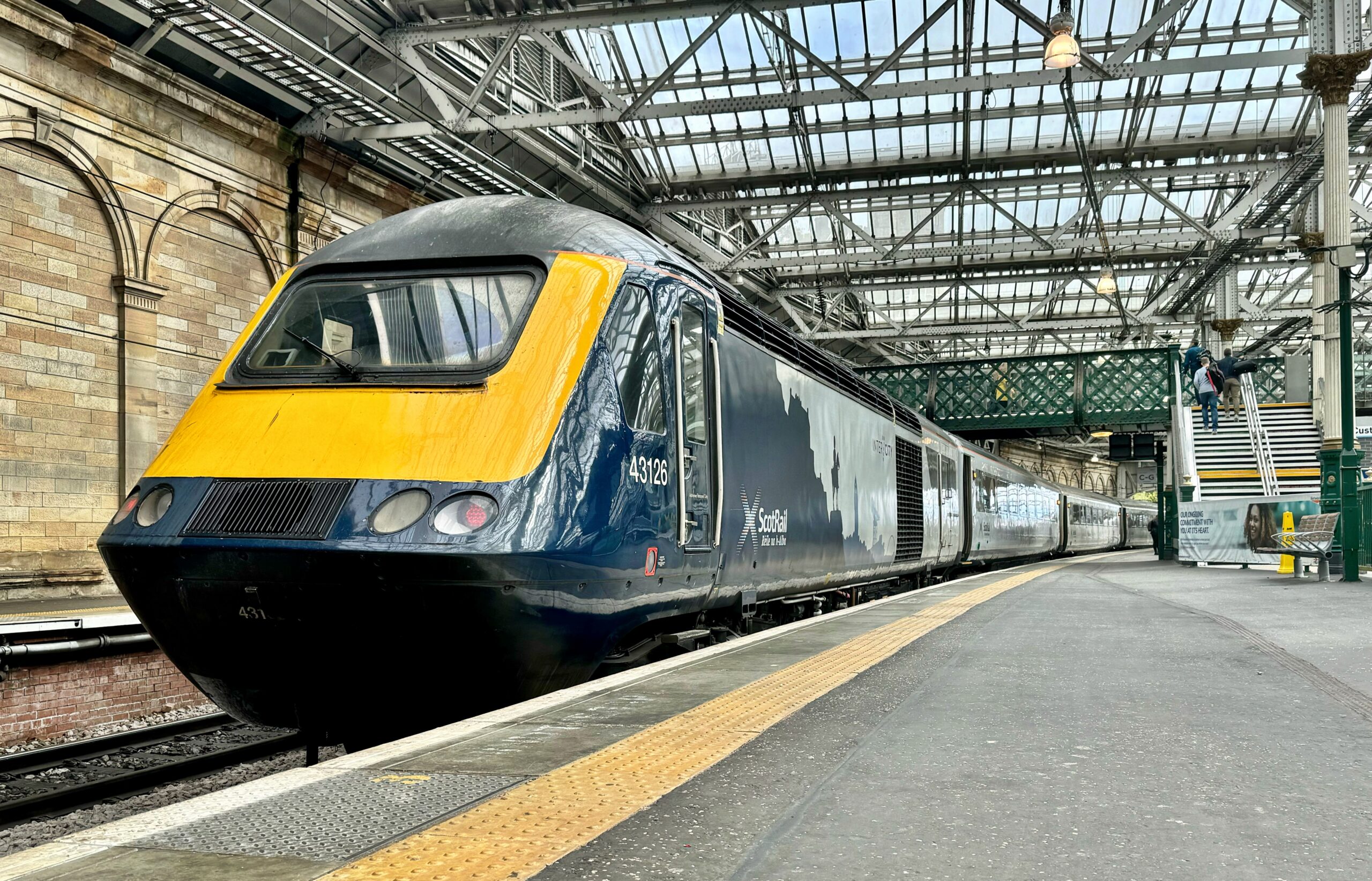
    Class 43 No 43126 having arrived at Edinburgh Waverley with 1B74 0905 Aberdeen to Edinburgh – 14/09/2024
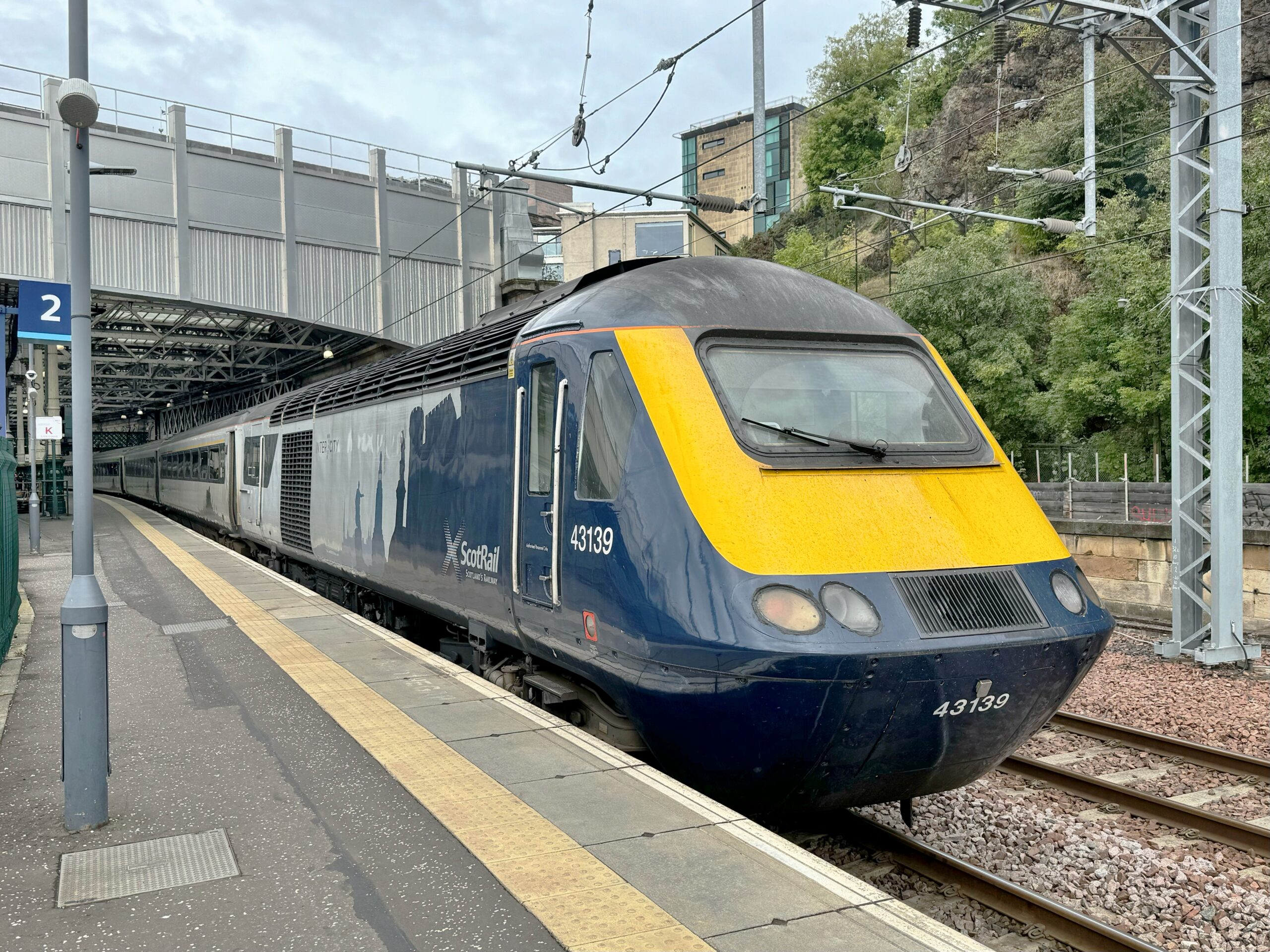
    Class 43 No 43139 at Edinburgh Waverley leading on 1B74 0905 Aberdeen to Edinburgh – 14/09/2024
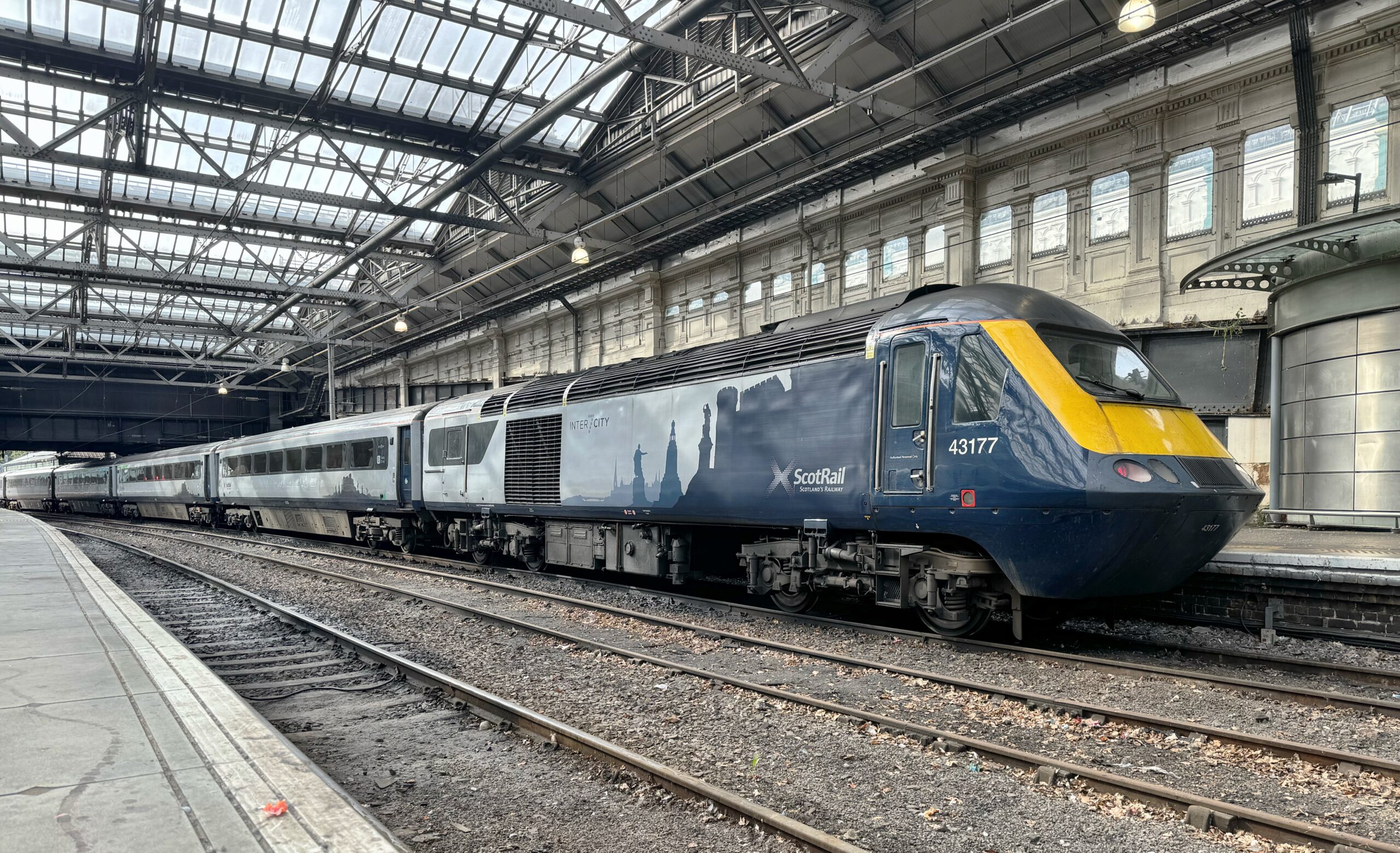
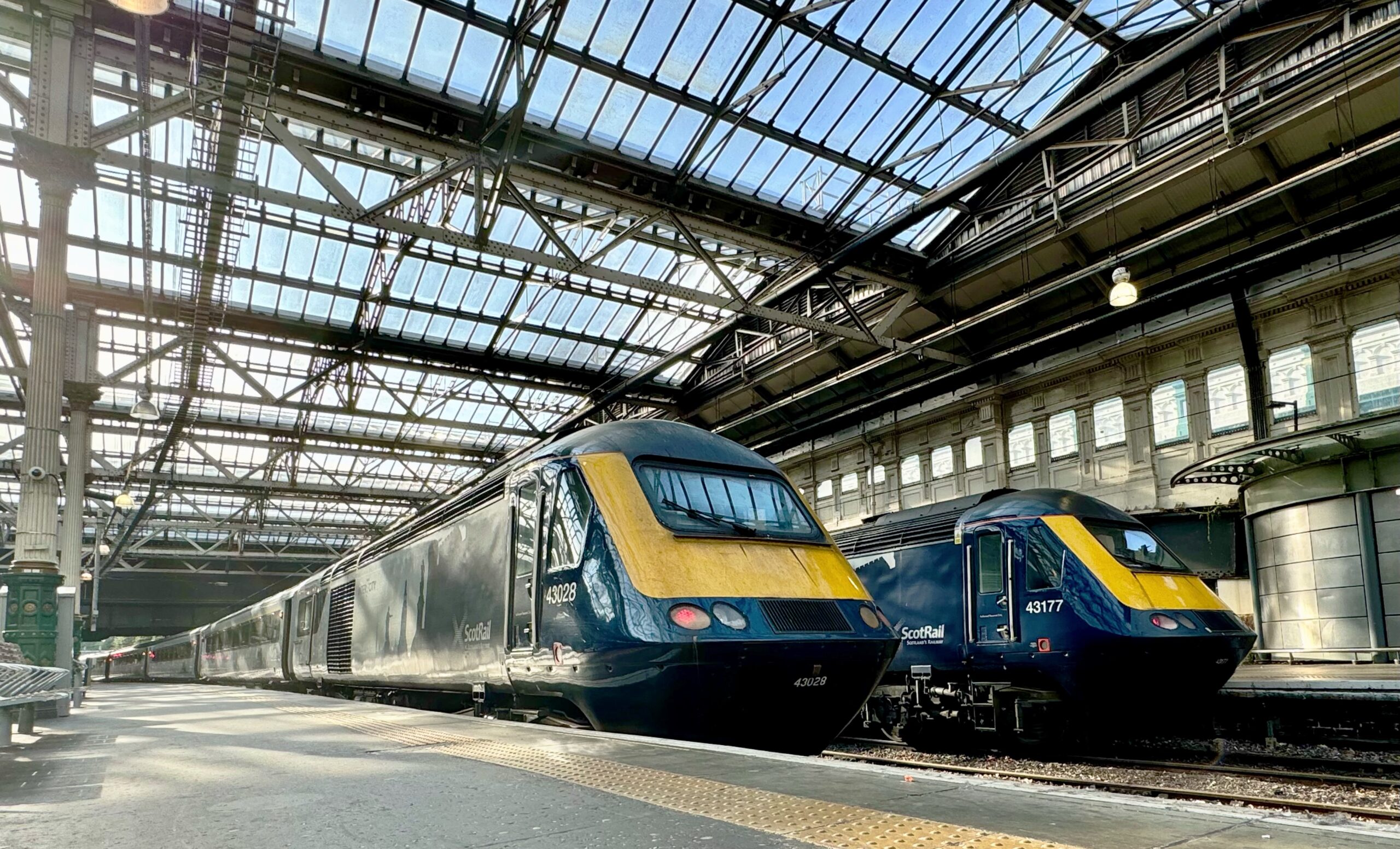
    ScotRail Inter7City High Speed Train Class 43 power cars side by side at Edinburg Waverley. No. 43177 having arrived at the rear of 1B82 1309 Aberdeen to Edinburgh and No. 43148 on the rear of 1B30 1248 Inverness to Edinburgh – 14/09/2024
    Class 43 No 43177 1B82 1309 Aberdeen to Edinburgh – 14/09/2024
    Afternoon arrivals at Edinburgh Waverley; Class 43 No. 43028 having arrived with 1B30 1248 Inverness to Edinburgh stands alongside No. 43177 which was working 1B82 1309 Aberdeen to Edinburgh – 14/09/2024
    Another view of Class 43 No. 43028 having arrived with 1B30 1248 Inverness to Edinburgh stands alongside No. 43177 which was working 1B82 1309 Aberdeen to Edinburgh – 14/09/2024

    The dark blue and pale grey ‘Inter7City’ livery features large silhouettes of landmarks in the seven cities of Scotland. Before relivery, the power cars were in the plain blue livery of First Great Western.

    Abellio ScotRail received nine 4-carriage and 17 five-carriage trainsets from Great Western Railway (GWR) for use on longer-distance services between the major Scottish cities.

    The power cars were refurbished at Brush Loughborough, with the coaches being refurbished at Wabtec Doncaster. The first set, which included power cars No.’s 43021 and 43132, was delivered to ScotRail on 1st September 2017. The set was transferred to Aberdeen Clayhills on 10th September for the start of driver training. The first refurbished set was due in February 2018, with a full fleet in service by December 2018.

    On the 15th October 2018 after months of crew training, the first revenue earning and fully branded ‘InterCity’ diagram began and ran with power cars No.’s 43033 & 43183 along with refurbished MK3 Set HA26 on the Edinburgh – Aberdeen route.
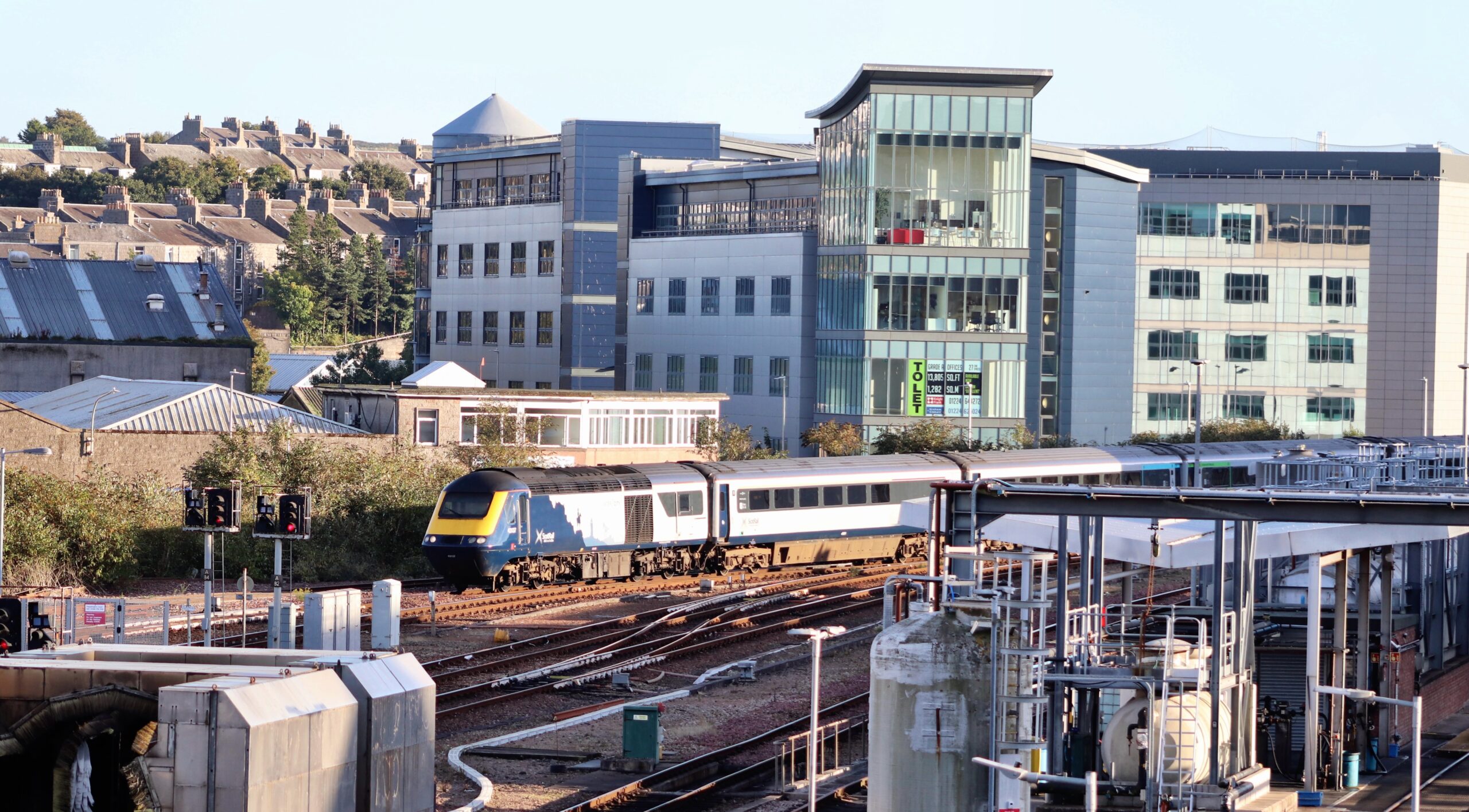
    Class 43 No. 43137 arrives at Aberdeen working the 1A87 1530 Edinburgh to Aberdeen service 17/09/2024
    Class 43 No. 43152 rests at Aberdeen Clayhills Carriage Maintenance Depot. I didn’t think to check on the power car at the other end! The Caledonian Sleeper stock shares the depot with Class 73 No. 73968. Clayhills depot is used for maintaining and stabling long distance locomotive hauled services, more specifically, ScotRail Class 43, High Speed Trains, their respective Mark 3 carriages, Class 158 Express Sprinters and Class 170 Turbostars, as well as LNER Class 800 Azumas – 17/09/2024
    Class 43 No. 43175 at Aberdeen having arrived at the rear of A87 1530 Edinburgh to Aberdeen service 17/09/2024
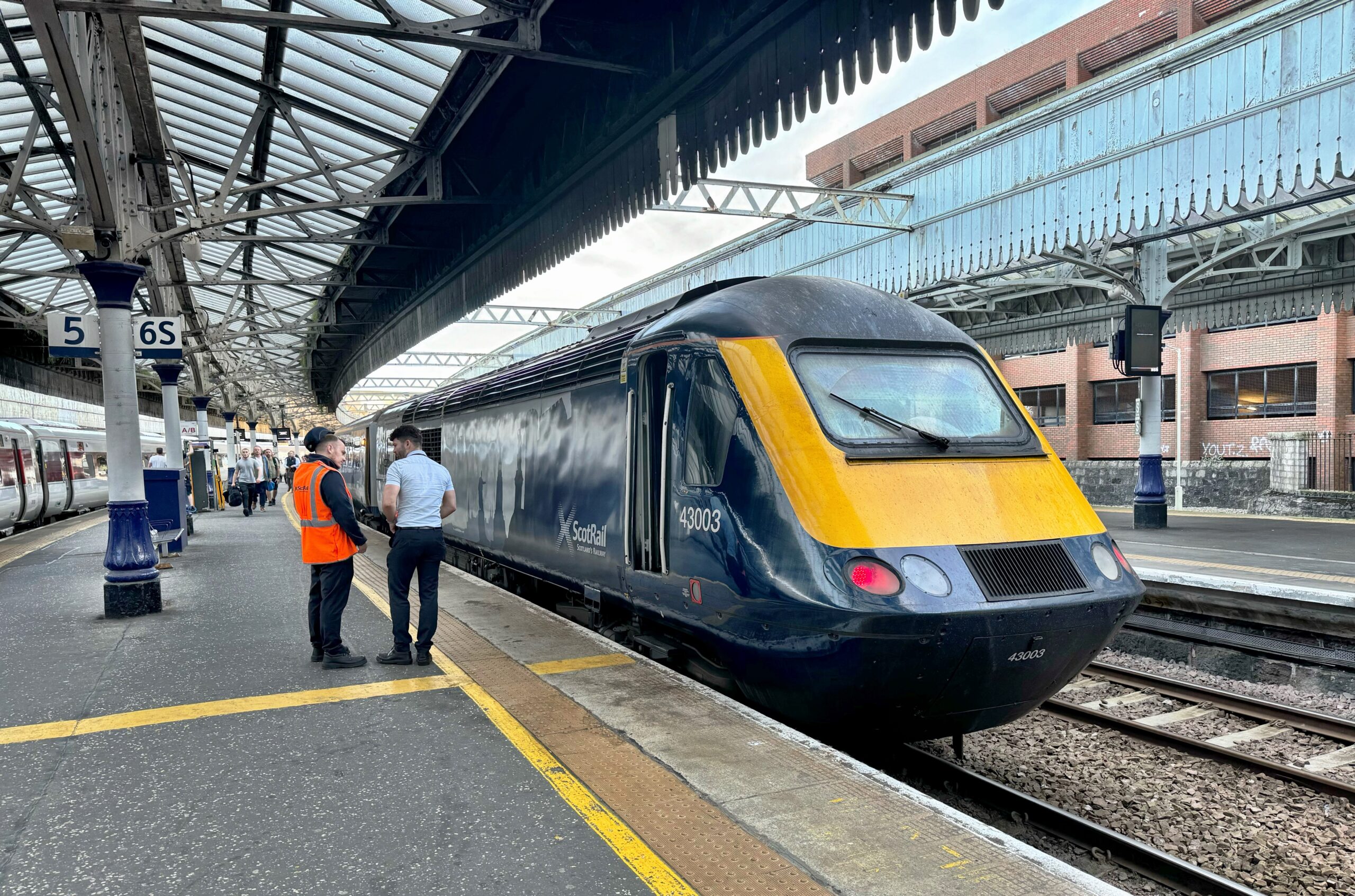
    Class 43 No. 43003, the oldest HST power car in service at Aberdeen having arrived with 1A49 1539 Glasgow Queen Street to Aberdeen – 17/09/2024
    Class 43 No. 43137 arrives at Aberdeen having terminated working 1A87 1530 Edinburgh to Aberdeen service 17/09/2024
    Class 43 No. 43124 has arrived at Aberdeen with 1A49 1539 Glasgow Queen Street to Aberdeen prepares to depart as 5A75 1853 Aberdeen to Aberdeen Clayhills Carriage MD. No. 43175 in the background will be leading on 1T62 1836 Aberdeen to Glasgow Queen Street – 17/09/2024
    Class 43 No. 43003 has arrived at Aberdeen Clayhills – 17/09/2024
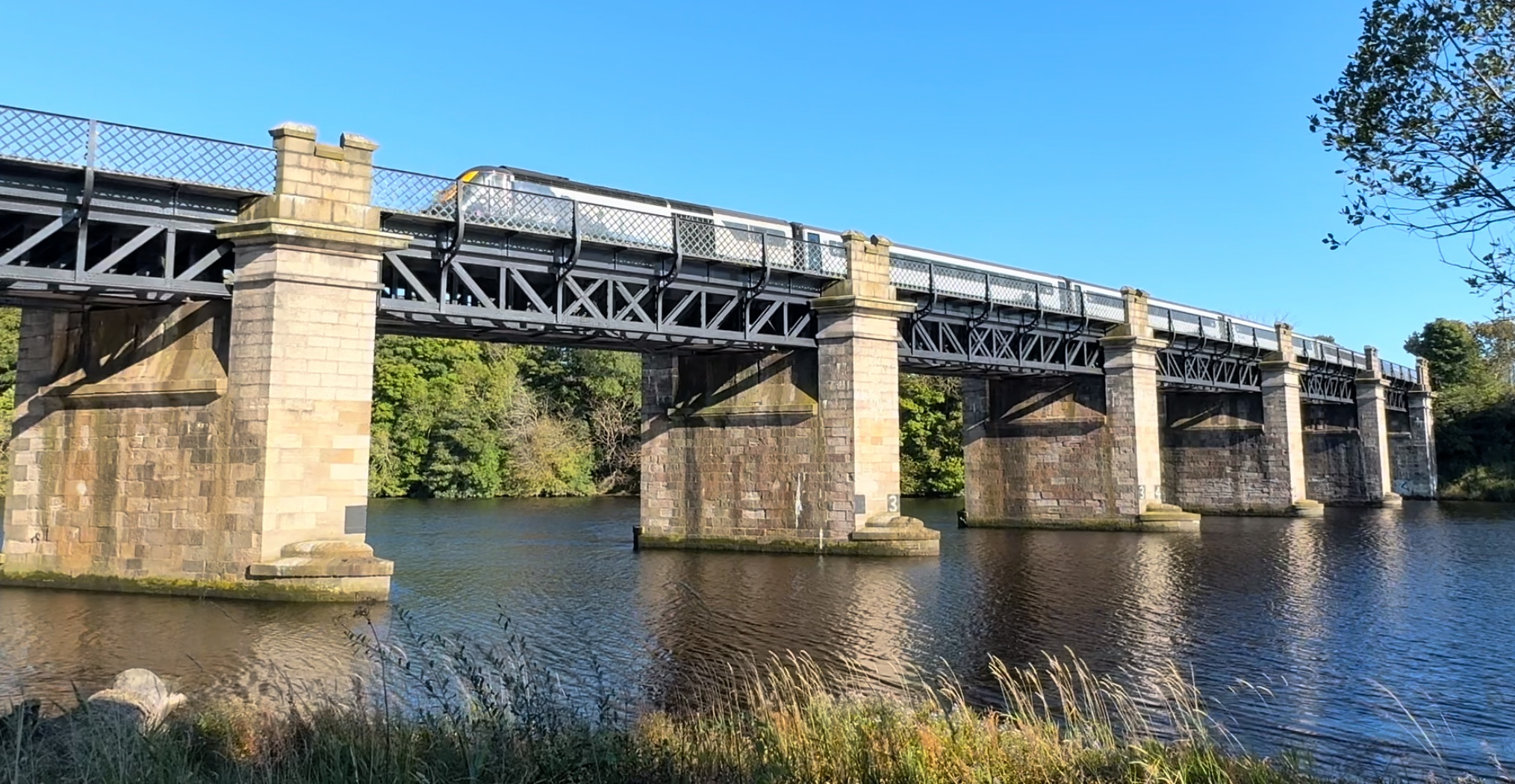
    Screenshot of Class 43 No. 43028 passing over the River Dee Railway Bridge working 1T50 1535 Aberdeen to Glasgow Queen Street. The bridge, built by Lock and Errington in 1848 has 11-spans, consisting of 7 principal spans of steel trussed on granite and sandstone piers, with cutwaters forming a crenellated parapet for mesh railings. There are four round-arched sandstone approach spans with polished arch rings and a coped parapet. The original bridge, as constructed by the Aberdeen Railway Company, included wooden beams on stone foundations, but from the 1880’s onwards, these were replaced by iron girders as a major programme of bridge improvements to accommodate heavier trains 18/09/2024
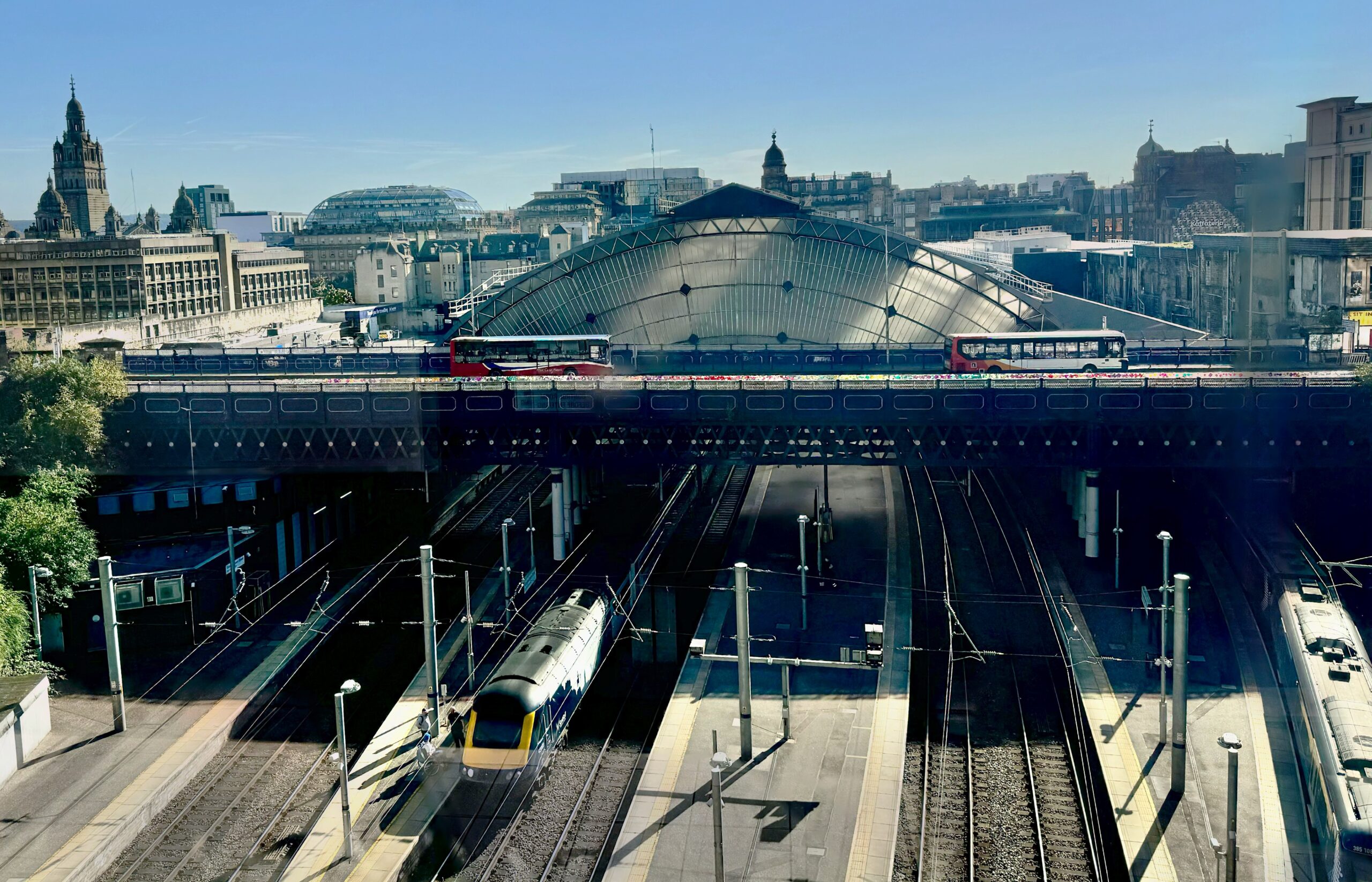
    Another chance encounter with Class 43 No. 43003 in Glasgow preparing to work 1A49 1539 Glasgow Queen Street to Aberdeen – 19/09/2024
    Class 43 No. 43003 prior to working 1A49 1539 Glasgow Queen Street to Aberdeen – 19/09/2024
    Class 43 No. 43003 at the head of 1A49 1539 Glasgow Queen Street to Aberdeen – 19/09/2024

    While in Aberdeen, as well as taking the opportunity to pop down to the railway station one evening to see some ScotRail HST workings, I was also able to observe Class 73/9 No. 73968 at rest having worked into the station on empty coaching stock move 5B16 1935 Aberdeen Clayhills Car.M.D to Aberdeen prior to heading the Aberdeen to Edinburgh section of 1B16 2143 Aberdeen to London Euston.

    Class 73/9 No 73968 at rest having arrived at platform with 5B16 1935 Aberdeen Clayhills Car.M.D to Aberdeen – 17/09/2024

    Class 73’s are Electro-Diesel locomotives, built by English Electric between 1962-1967 for the Southern Region of British Rail. Primarily intended to work on 3rd rail electrified lines, as built they were also equipped with a 600hp diesel engine for short distance movements.

    Between 2013 and 2016, eleven of these locomotives owned by GB Railfreight were rebuilt by Wabtec at the Brush Traction works in Loughborough and designated Class 73/9.

    Plaque detailing rebuild on No. 73968 – 17/09/2024

    The rebuilt locos have a 1600hp MTU ‘R43 4000’ V8 diesel engine, coupled to a new Lechmotoren alternator. The existing bogies and DC traction motors are retained. The locos are now fitted with AAR multiple working control and can also work with class 66 and 67 locos, however the old Style MW jumpers are kept for compatibility with un-rebuilt Class 73’s. Other features retained were the driving controls on both sides of the cab, the drop-head buckeye coupling, central buffing plate and retractable side buffers.

    Five locos for duties in Southern England are numbered 73961 to 73965 and painted in GBRf livery. Six of these locomotives are deployed on Sleeper services north of Edinburgh replacing Class 67 locos from 2016. The locos utilised for Caledonian Sleeper duties are numbered 73966 to 73971, and painted in ‘Midnight Teal’ livery.

    Having arrived with the Caledonian Sleeper ECS, Class 73/9 No 73968 will work the Aberdeen to Edinburgh section of the 1B16 2143 Aberdeen to London Euston sleeper service – 17/09/2024

    No. 73968 was formerly No. 73117 (E6023).

    The Caledonian Sleeper locos No.’s 73966-971 have several detail differences to the earlier No.’s 73961-965 batch:

    * Driving Desk is more extensively modernised.

    * The cab centre window is ‘unblanked’ and fitted with a wiper.

    * 1-piece miniature obstacle deflectors fitted.

    * High-level air hoses removed.

    * Communications jumper socket left of coupling.

    * Additional main air reservoir pipe left of coupling.

    * NRN Radio and aerials. (NRN radios removed in 2016).

    * ETS on/off indicators on the sides of the Headlamp clusters.

    * Electric Train Supply to coaching stock increased from ETH 38 to ETH 70.

    * 3rd-rail pick-ups were initially retained, but isolated.

    * RETB-NG (fitted to the locos in Scotland during 2016).

    * The buckeye coupling and central buffing plate would later be removed in favour of drop-head Dellner couplings, with the obstacle deflectors changed to accommodate this.

    * The cab centre window (formerly a 2-character headcode display) was not installed on locos No.’s 73966 and 73967 until return visits to Loughborough in February 2016.

    * The conversion programme and introduction to service (originally intended for the 1st April 2015) was severely delayed, a major factor being the new alternators suffering from vibration problems, particularly when at full power.

    * From October 2016 the Sleeper Class 73/9s were only providing ETH, with Class 66 providing traction, rather than working in multiple.

    * Delivery of the final conversion No. 73971 was postponed until November 2016, while a solution to the alternator issue was sought.
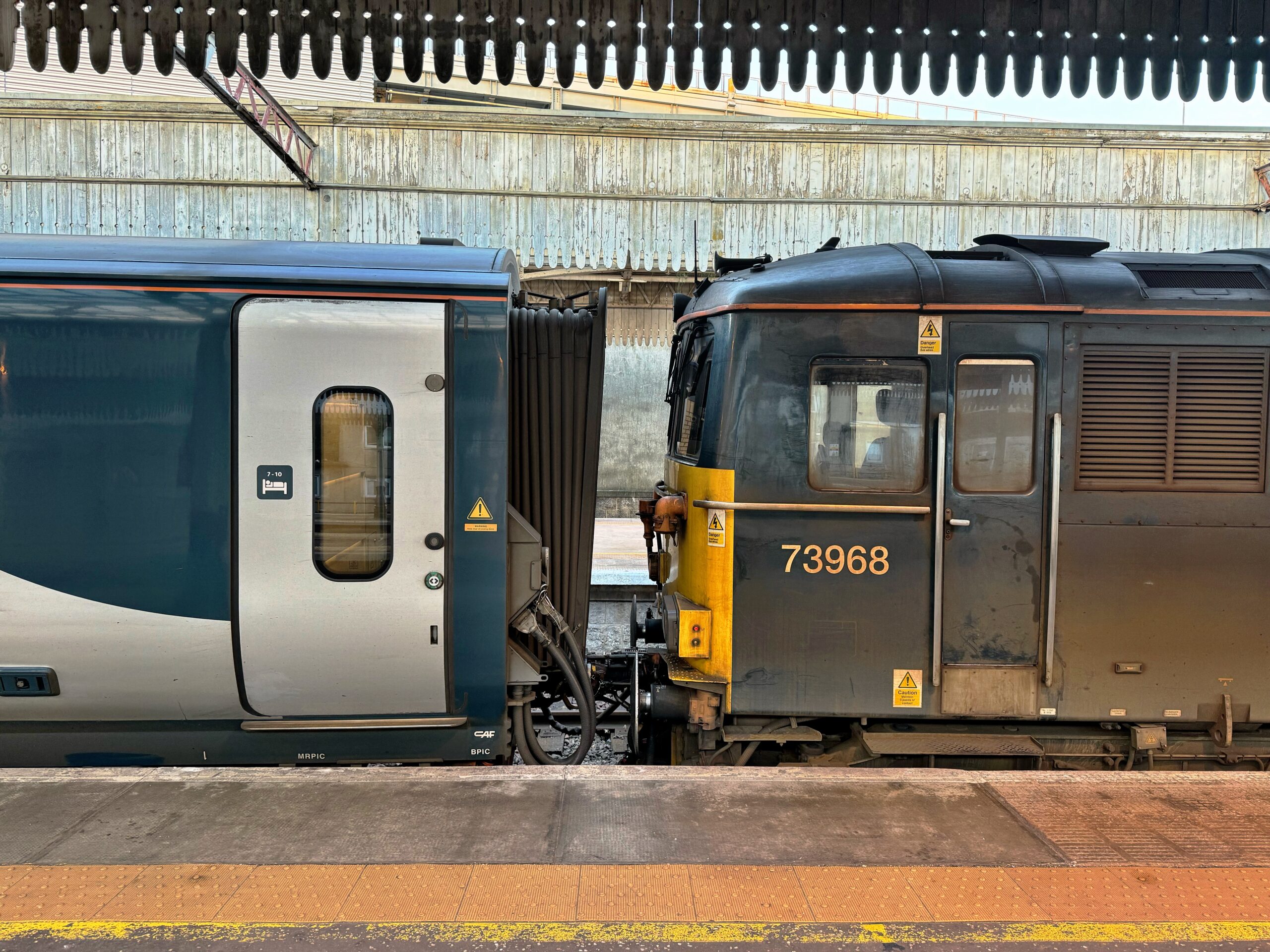
    Class 73 No. 73968 at Aberdeen with the Caledonian Sleeper – 17/09/2024

    * Further changes to the locomotive were required to operate with the new Mk5 sleeper coaches which have dellner semi-automatic couplings.

    * The first to be equipped was No. 73971 which went south to Brush at Loughborough on 19th of April 2017 and returned to Craigentinny on 9th July 2017 with its new drop-head Dellner coupling fitted, but covered up.

    * The class 73/9s had initially retained 3rd rail pick-up shoes, but these were removed when the six locomotives visited Eastleigh Works for new wheelsets in 2019/2020.

    Source: http://www.scot-rail.co.uk/page/Class+73#google_vignette

    For The Record

    The Heart of Wessex Line closed between Castle Cary and Weymouth on Monday 23rd September 2024 to Sunday 29th September 2024 as Network Rail replaced less than a mile of over fifty year old track. Improvements were also made to the junctions either side of Maiden Newton railway station. A rail replacement bus service operated during the closure period for passengers.

    GB Railfreight Class 66 No. 66789 awaits clearance to proceed at Yeovil Pen Mill at the head of engineers train 6G12 2145 Hinksey Sidings to Maiden Newton. The locomotive was scheduled to return to Eastleigh East Yard via Dorchester West and the South Western Mainline later that morning but the driver was not cleared for the route, so instead the Class 66 travelled back through the engineering possession to Yeovil Pen Mill and made its way to Eastleigh via Westbury – 23/09/2024
    Colas Railfreight Class 70 No. 70807 at Yeovil Pen Mill at the head of 6C01 2047 Hinksey Sidings to Yeovil Pen Mill – 23/09/2024

    The first two engineering trains in association with the works arrived at Yeovil Pen Mill in the early hours of 23rd September. Colas and Freightliner were also involved with engineering trains during the ensuing days.

    Video at Yeovil Pen Mill of engineering trains – 23/09/2024

    Monday 23rd September and it was time for the monthly Plain Line Pattern Recognition (PLPR) train which this time around was top and tailed by GBRf Class 73/9 electro-diesel locomotives No. 73965 ‘Des O’Brien’ and 73962 ‘Dick Mabbutt’.
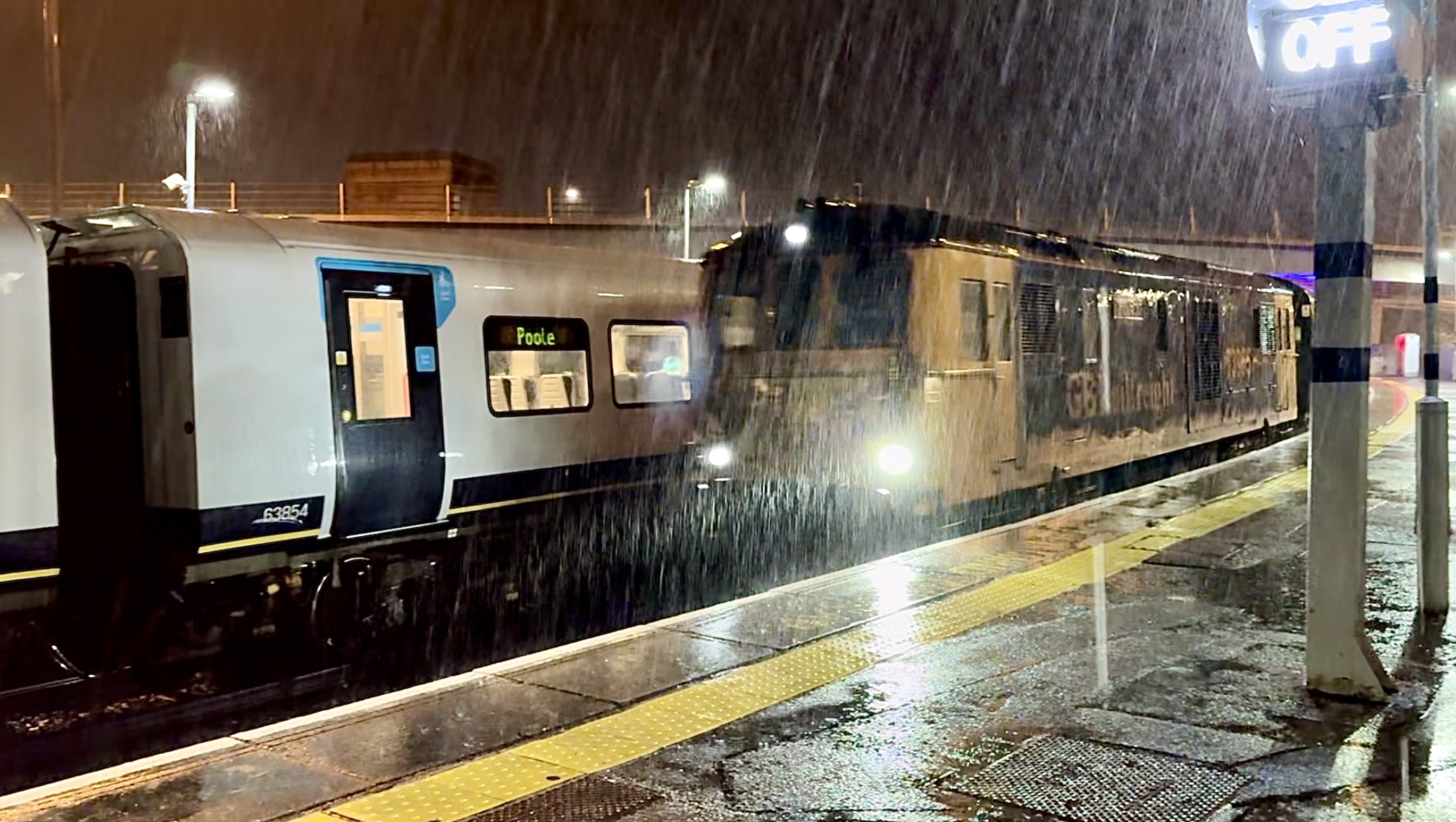
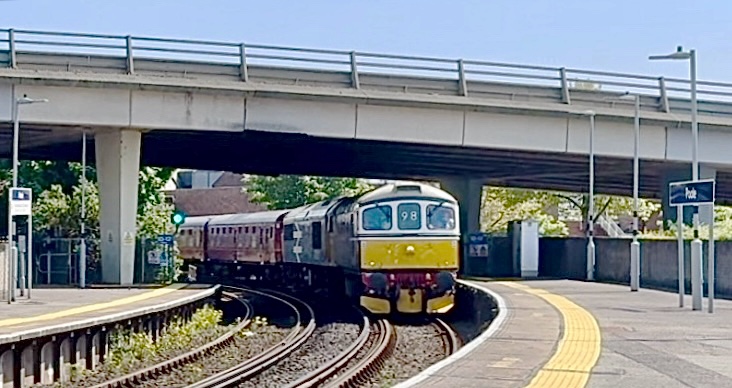
    Screenshot of GBRf Class 73/9 electro-diesel locomotives No. 73965 ‘Des O’Brien’ at Poole working 1Q51 1115 Derby R.T.C.(Network Rail) to Eastleigh East Yard via Weymouth – 23/09/2024

    I saw the train reporting as 1Q51 1115 Derby R.T.C.(Network Rail) to Eastleigh East Yard via Weymouth passing through Poole in heavy rain. Must be mad!

    1Q51 1115 Derby R.T.C.(Network Rail) to Eastleigh East Yard via Weymouth – 23/09/2024

    GBRf Class 69 No. 69009 ‘Western Consort’ was once again charged with transporting South Western Railway Class 458 Electric Multiple Units between Widnes Transport Tech and Bournemouth T&RSMD. The loco hauled refurbished SWR Class 458/4 No. 458411 on its return south as 5064 1603 Southampton Central to Bournemouth T&R.S.M.D, returning later with SWR Class 458/5 No. 458502 reporting as 5Z66 2018 Bournemouth TRSMD to Eastleigh East Yard.
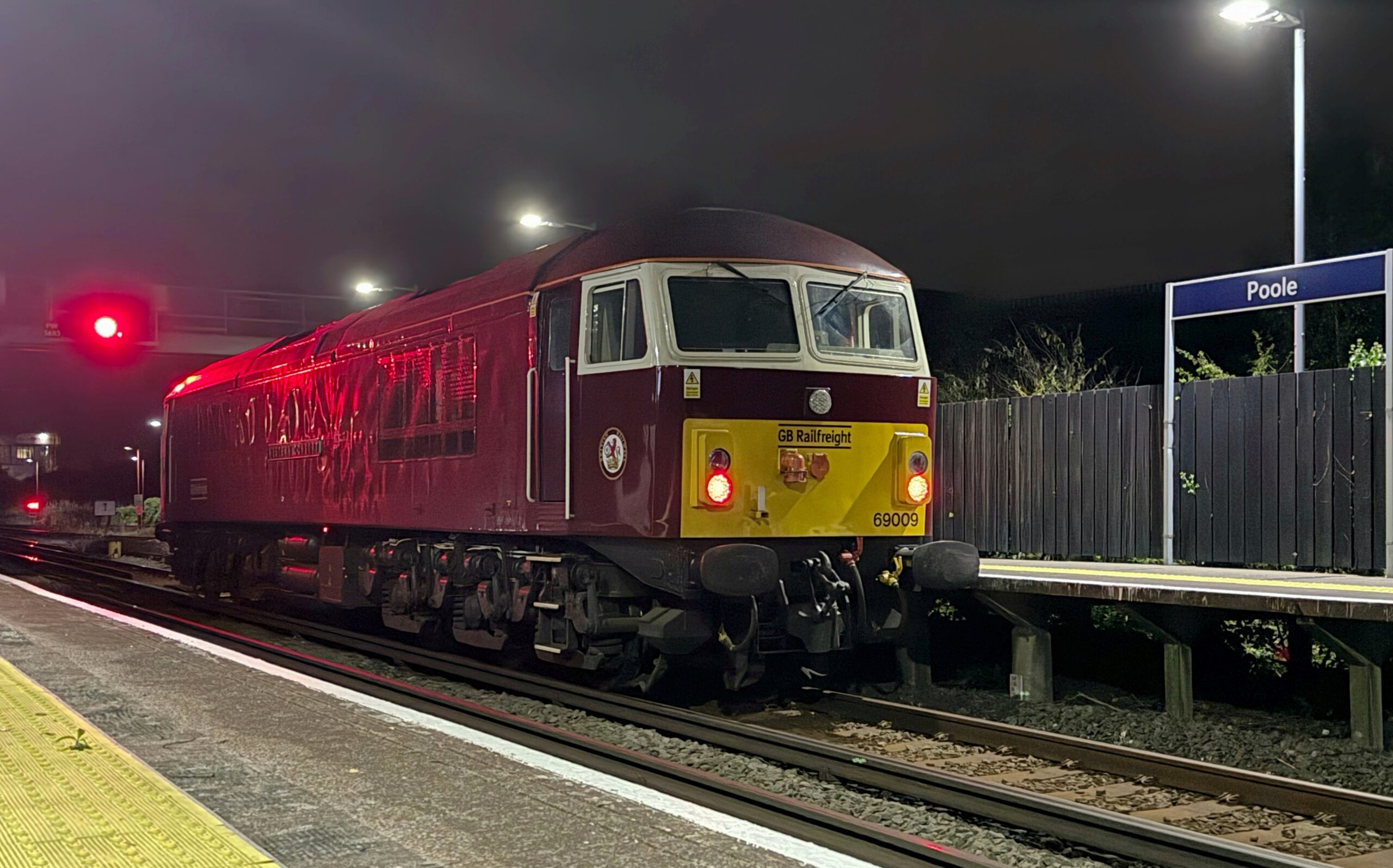
    GBRf Class 69 No. 69009 ‘Western Consort’ at Poole while running around its train – 24/09/2024

    As part of the operation, the consist heads to Poole Storage Sidings where the loco changes ends and the train heads back east along the South Western Mainline.

    Class 458 EMU drags to/from Bournemouth TRSMD – 24/09/2024

    Network Rail’s Ultrasonic Test Unit (UTU) visited Dorset in the early hours of 26th September. UTU’s usually have one locomotive at one end and a Driving Brake Standard Open (DBSO) at the other. The train can operate in push-pull mode with the loco hauling or pushing with the DBSO controlling it. UTU trains have ground penetrating radar systems to detect voids and deformities up to two metres into the ballast and ground and employ rail profile scanners to identify issues in track profile in comparison to an ideal track template.
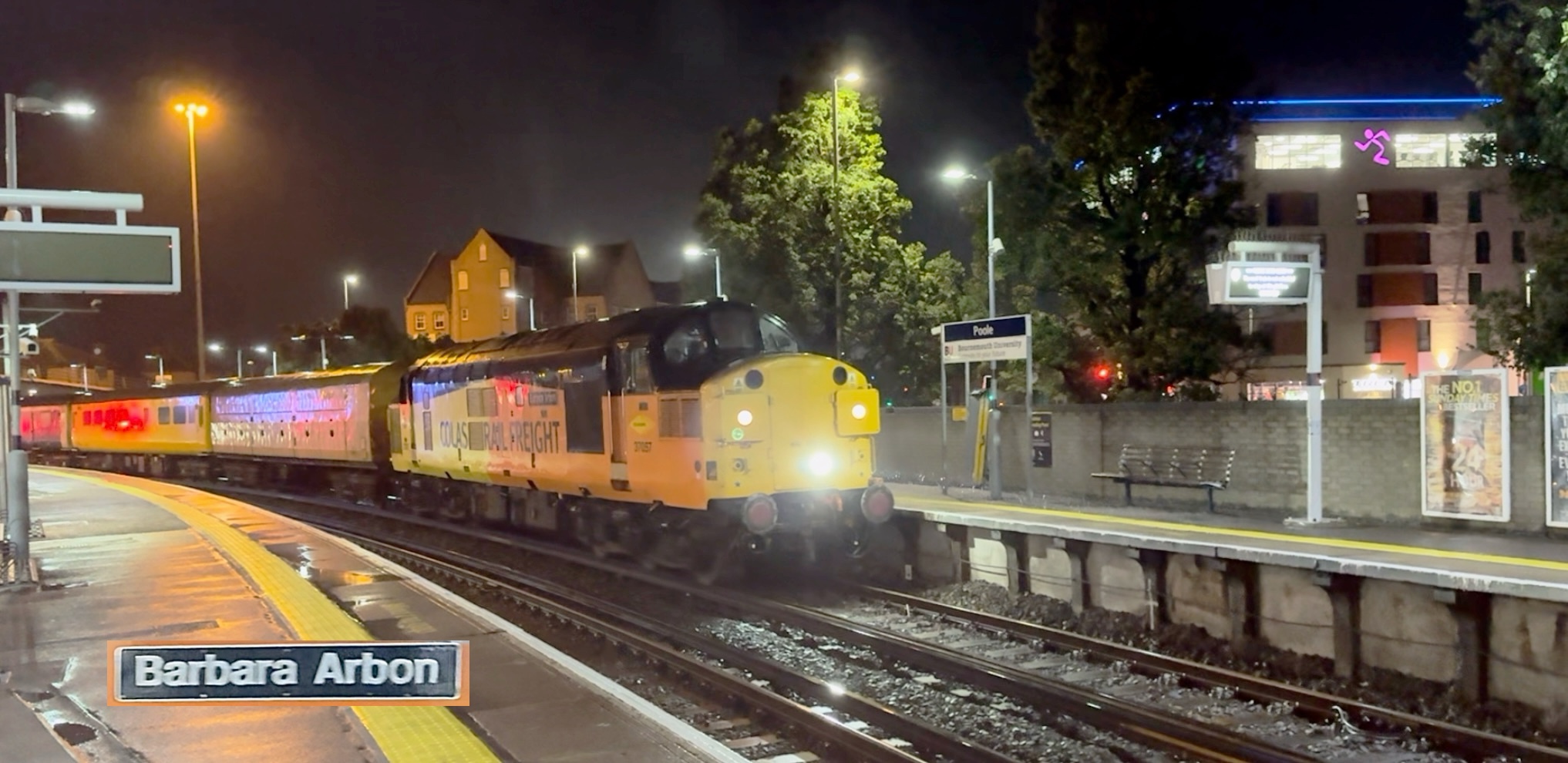
    Screenshot of Colas Railfreight Class 37 No.37057 ‘Barbara Arbon’ at Poole working 3Q02 2140 Eastleigh East Yard to Eastleigh East Yard via Weymouth – 26/09/2024

    Running 102 minutes late, Colas Railfreight Class 37 No.37057 ‘Barbara Arbon’ passes through Poole working 3Q02 2140 Eastleigh East Yard to Eastleigh East Yard via Weymouth. No. 37057 was named in honour of Barbara Arbon on July 4th 2021 at Loram, Derby. Barbara was a member of the Colas Infrastructure Monitoring Team who sadly passed away in 2020. She was affectionately known by her colleagues as ‘Auntie Barbara’.

    Video of 3Q02 2140 Eastleigh East Yard to Eastleigh East Yard via Weymouth – 26/09/2024

    “The Last Post”

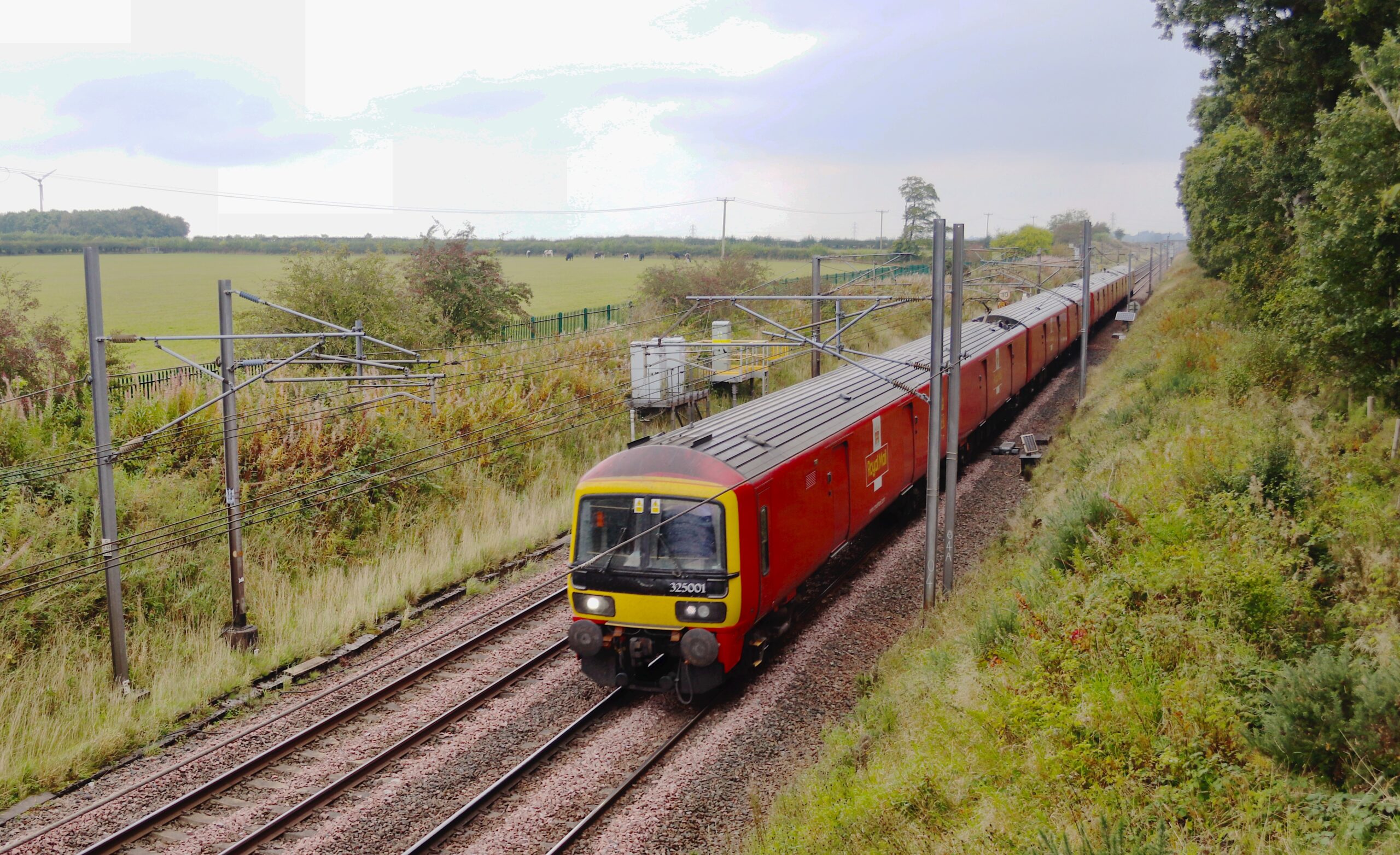
    Class 325 No.’s 325001 & 325002 on the approach to Quintinshill working 1M27 1235 Shieldmuir Mail Terminal to Willesden PRDC – 20/09/2024

    Reportedly the final DB Cargo operated mail trains on the West Coast Main Line ran on Friday 20th September 2024, the cessation of the services being brought forward from the original end date of October 10th. I was fortunate enough to see Class 325 No.’s 325001 & 325002 passing Quintinshill working 1M27 1235 Shieldmuir Mail Terminal to Willesden PRDC while we were on a walk to remember the Quintnshill Railway Disaster which claimed the lives of over 200 people and left 246 injured. The incident remains the worst rail disaster in British history.

    Fire rages amongst the debris of the Quintinshill rail disaster – 22/05/1915 (Unknown – The Illustrated London News, 25 May 1915)

    Human error caused the accident, two signalmen made several careless mistakes and omissions in their duties. They had shunted a local train onto the main line and while it stood there in plain view of the signal box, they accepted a troop train travelling south carrying 500 soldiers of the 1/7th Royal Scots Territorial Battalion and then, minutes later, a sleeper from London heading north on the same line. The local train’s brakes were on, which upon collision, caused the troop train to telescope to half of its original length, while survivors staggered from the wreckage, the Carlisle express ran into It.

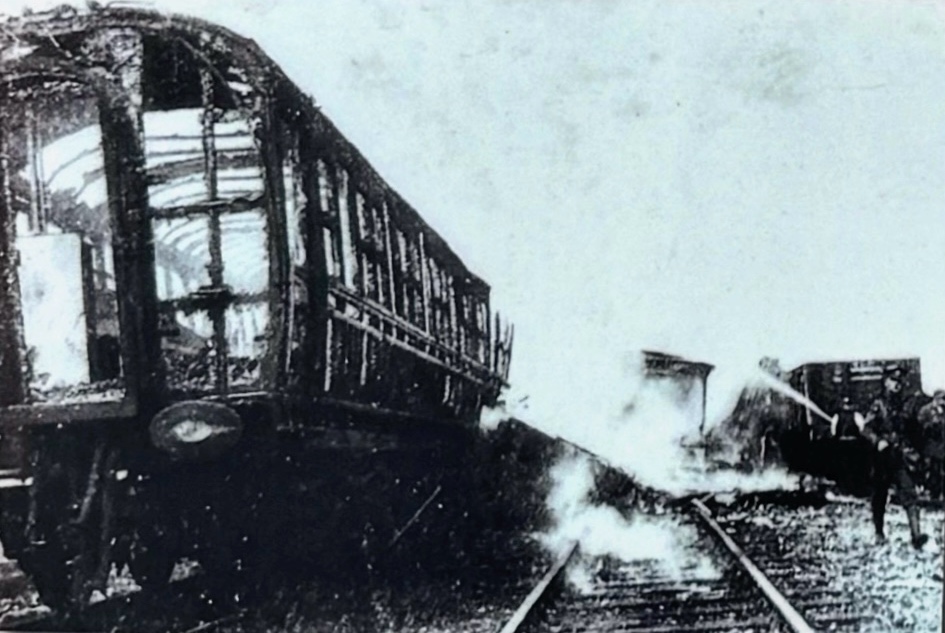
    The impact of the collision pushed the express locomotives on top of the debris of the first crash. The carriages were telescoped, after the collision the troop train which was 215 vards in length was reduced to only 67 yards – 05/1915 (Unknown)
    The fire in the wooden carriages was almost impossible to extinguish with the small jets of water that the fire brigade could play on the flames – 22/05/1915 (Unknown)

    Immediately after the collisions, fire broke out. Hot coals from the engine of the troop train set alight the wooden carriages and the flames were fed by gas from the train’s lighting supply. Despite vain attempts to quell the fire with water from the tanks of two goods trains and by syphoning water from a nearby stream, the inferno raged for 24 hours with devastating results. Once it was extinguished, 82 bodies were unrecognisable and 50 were never traced at all.

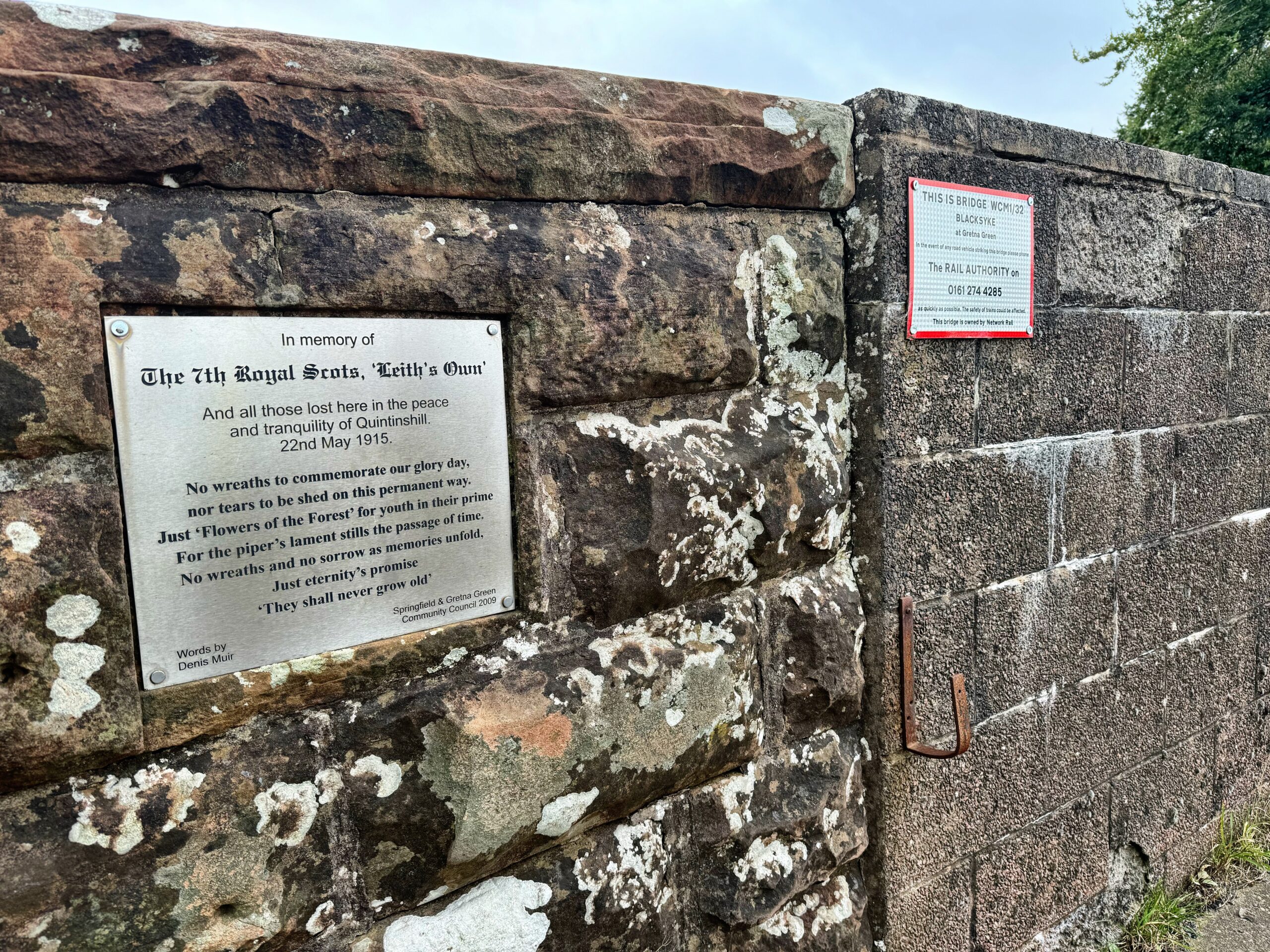
    Memorials to the troops were built at Rosebank Cemetery, Edinburgh and one was erected at Gretna Visitor Centre by the Scottish Area of the Western Front Association, being unveiled on 21st May 1995. In September 2010 a plaque to commemorate the disaster was unveiled on Blacksyke Bridge which overlooks the crash site. Today, little trace of Quintinshill remains, the signal box having been demolished in the early 1970’s.
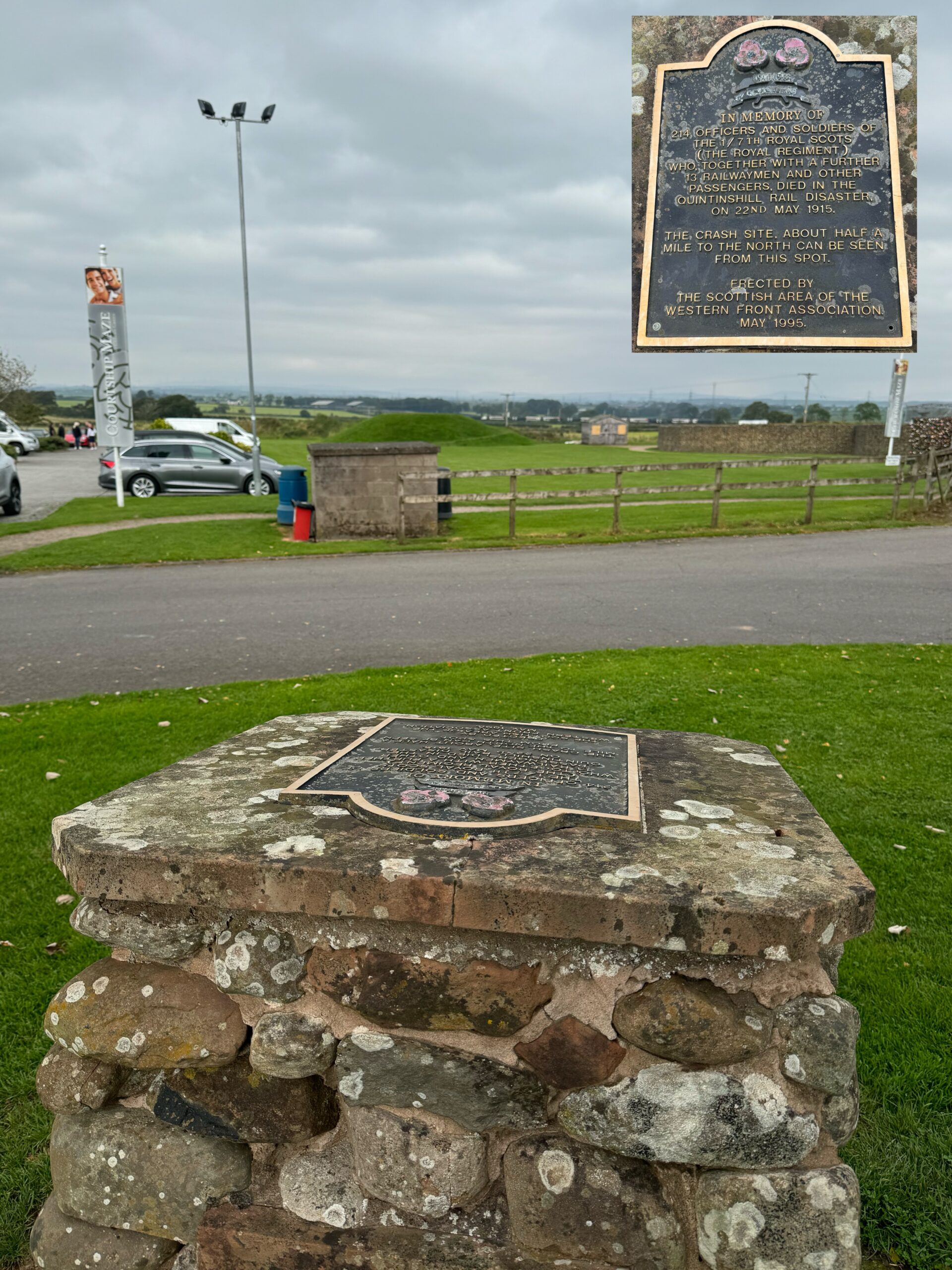
    Memorial overlooking the site of the Quintinshill disaster at Rail Gretna Visitor Centre. Avanti West Coast Class 390 No. 390044 is passing with 9M55 1156 Glasgow Central to London Euston – 20/09/2024
    The plaque which commemorates the disaster on Blacksyke Bridge – 20/09/2024
    Trans Pennine Express Class 397 No. 397001 passes the site of the disaster working 1S51 1104 Manchester Airport to Glasgow Central. Left to right: up loop; up main (where the first collision occurred); down main; down loop. The signal box was on the outside of the up loop – 20/09/2024

    To round off a Scottish themed September, on Monday 23rd, while Caroline was shopping in Southampton, I decamped to Eastleigh for a few hours to see Locomotive Services Class 37 No. 37401 ‘Mary Queen of Scots’ which has been outshopped in retro ScotRail livery depart with stablemate Class 57 No. 57003 ‘Inter City Railway Society 50th Anniversary 1973 – 2023’ which carries Trainload Freight Speedlink colours.
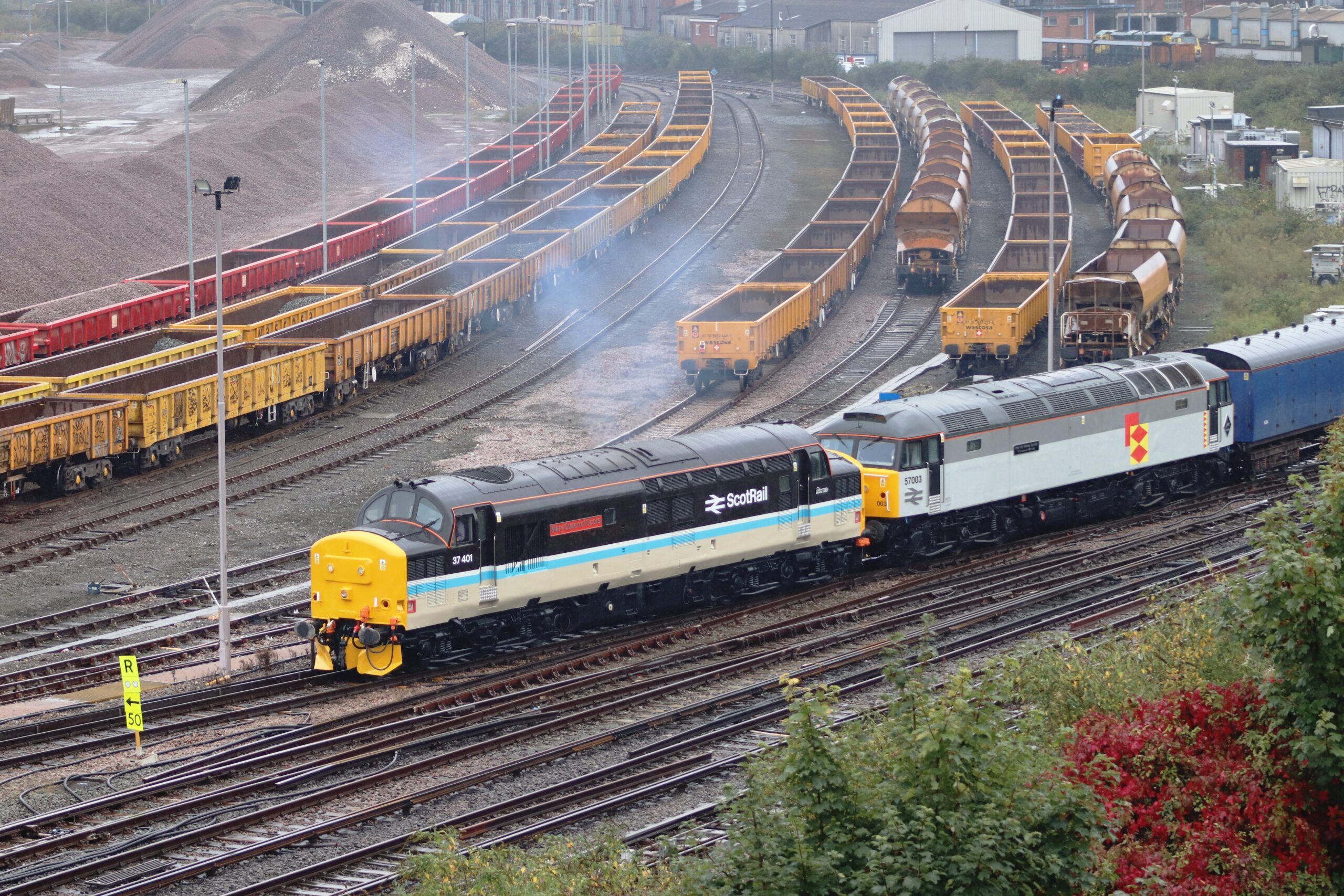
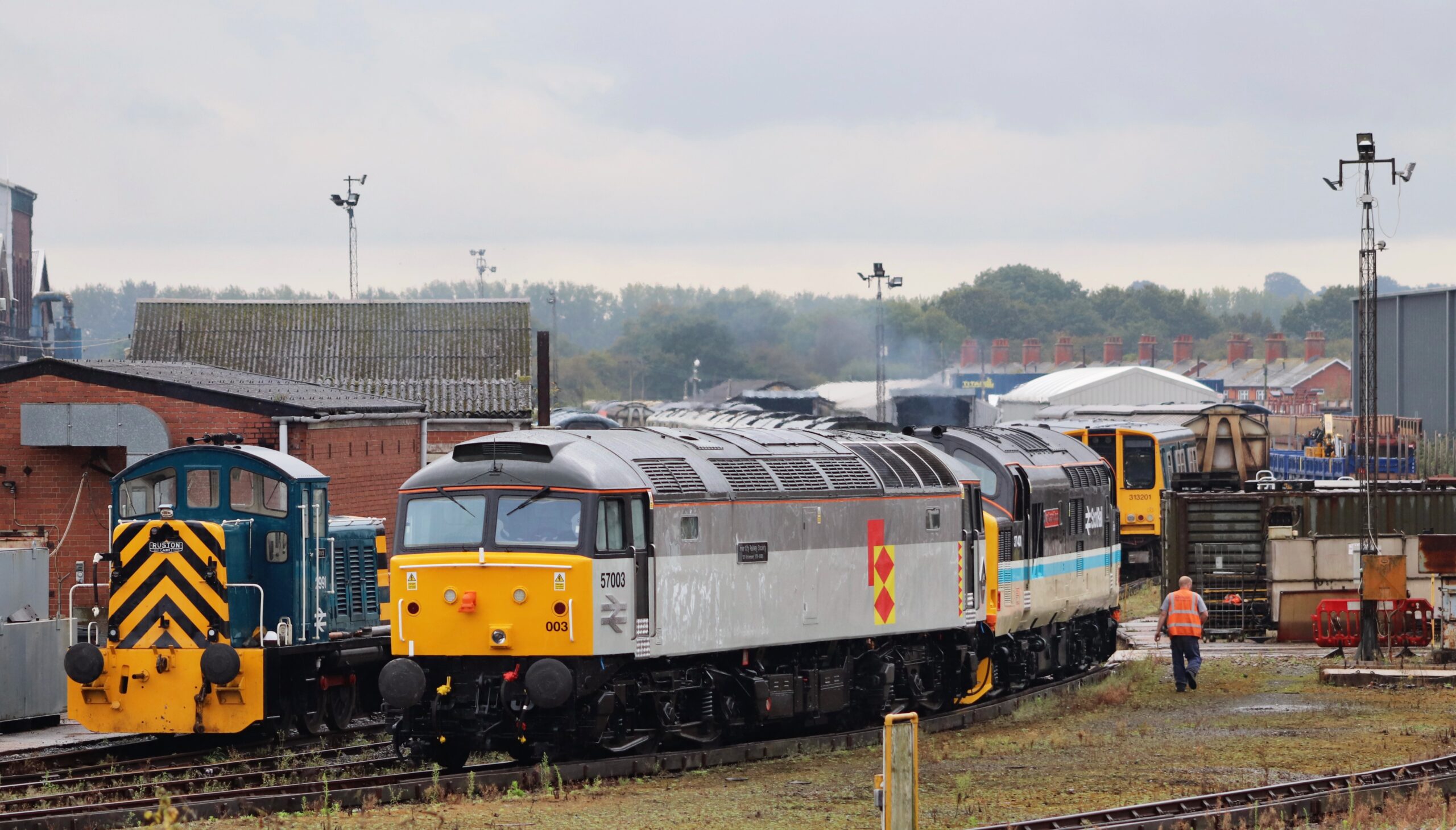
    Locomotive Services Limited (LSL) Class 37 No. 37401 ‘Mary Queen of Scots’ leads Class 57 No. 57003 ‘Inter City Railway Society 50th Anniversary 1973 – 2023’ on the approach to Eastleigh railway station forming 5Z45 1500 Eastleigh Arlington to Crewe HS. The Class 37 would later fail near Northampton, requiring rescue by a Class 86 also belonging to LSL – 23/09/2024
    Class 57 No. 57003 ‘Inter City Railway Society 50th Anniversary 1973 – 2023’ shows off its retro Trainload Freight Speedlink livery at Eastleigh Arlington – 23/09/2024
    Video from a day at Eastleigh – 23/09/2024

    That’s it for another blog entry. We’ll be back in a few weeks with a look back at October lineside adventures. Thanks for popping by and for your comments and corrections which are always welcome.

    Don’t forget you can catch up on our latest videos on the Railway Dog YouTube Channel or catch random witterings and photos via the new Railway Dog Facebook group.

    Be seeing you!

  • Mostly Swanage

    The Sun sets on Class 52 No. D1015 ‘Western Champion’ as she awaits the start of another day at the Swanage Diesel Gala – 10/05/2024

    April 25th to May 16th 2024

    It’s been a while… where did we get to last time? Ah yes, Class 52 “Western”, the New Measurement Train, engineering trains, Swanage and such like. I think this post may be a case of deja vu as many of these topics appear once again. But first, we had a trip to Derbyshire to attend a wedding via Bridport where we bumped into Ninth Doctor Who actor Christopher Eccleston (outside the toilets, no less). Chris was attending a screening of Ken Loach’s “Kes” (1969) as part of Bridport’s Film Festival 2024 ‘From Page To Screen’ series. It was great to see the film on the “big screen”.

    Christopher Eccleston chats about “Kes” as part of the Bridport Film Festival – 25/04/2024

    Having dropped Yoshi off at his cousins, we headed to Derbyshire for wedding celebrations at the beautiful Buxton Pavilion. We arrived in good time and checked into our hotel which meant we had time for a wander into Buxton before the wedding ceremony.

    I was lucky enough to see a pair of Class 66’s top and tailing across Spring Gardens Viaduct as we looked for a pub to have lunch. I managed to get a shot of No. 66044 operating as tail gunner, but an hour or so later, I was able to see this “Shed” and sister loco No. 66156 continue on their way after reversing at Buxton Up Relief Sidings.

    DB Cargo Class 66 No. 66044 at rest on Spring Gardens Viaduct, Buxton on the rear of 6H52 1305 Download Briggs Sidings to Ashburys SS – 26/04/2024
    Video of DB Cargo Class 66 No.’s 66044 and 66156 working 6H52 1305 Download Briggs Sidings to Ashburys SS at Buxton – 26/04/2024

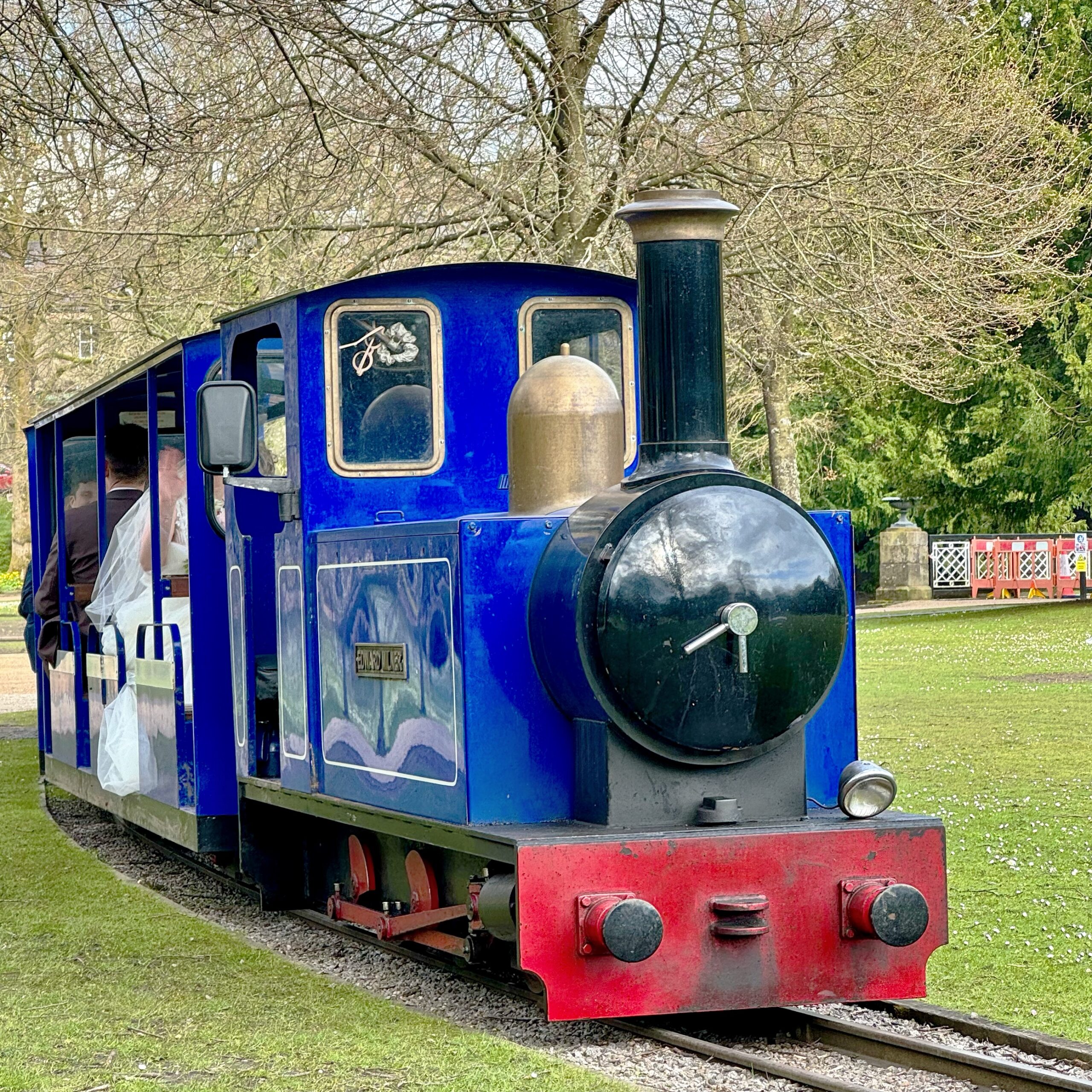
    Following a wonderful wedding ceremony in the Buxton Spa Botanical Conservatory, as if the day couldn’t have been more fabulous, the bride and groom had arranged for the Buxton Pavilion Gardens Miniature Railway to be in service.

    Steam Outline 0-6-0 diesel-hydraulic No. 2000 ‘Edward Milner’ in Wedding Day Special service on the Buxton Pavilion Gardens Miniature Railway – 26/04/2024
    Steam Outline 0-6-0 diesel-hydraulic No. 2000 ‘Edward Milner’ on the Buxton Pavilion Gardens Miniature Railway – 26/04/2024

    The railway first opened in 1972 as a 10 1/4″ gauge line. Trains were initially hauled by ‘Borough of Buxton’ a Shepperton Metal Products locomotive. In the winter of 1998, the line was regauged to 12.25″ in order to accommodate Alan Keef stock. Steam Outline 0-6-0 diesel-hydraulic No. 2000 ‘Edward Milner’ was built in 2000 and is named after the designer of the park it runs in.

    Video of Steam Outline 0-6-0 diesel-hydraulic No. 2000 ‘Edward Milner’ in Wedding Day Special service on the Buxton Pavilion Gardens Miniature Railway – 26/04/2024

    After an evening of celebration, the following day we travelled north for a stay in Holmfirth via a quick look in at Cemex Peak Forest.

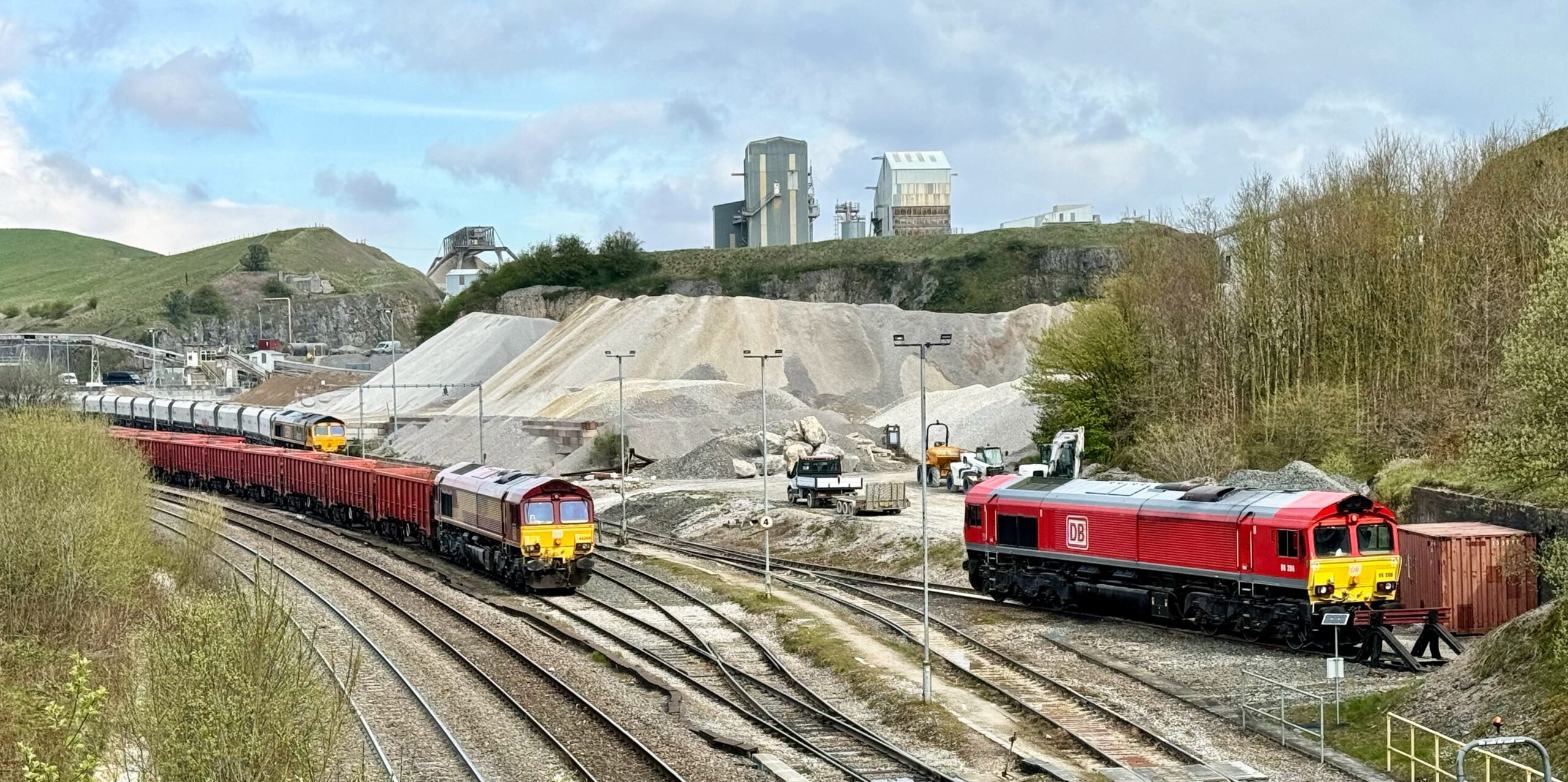
    DB Cargo Class 66 No.’s 66200 (left) and 66206 with GBRf No. 66707 ‘Sir Sam Fay GREAT CENTRAL RAILWAY’ behind at Cemex Peak Forest – 27/04/2024
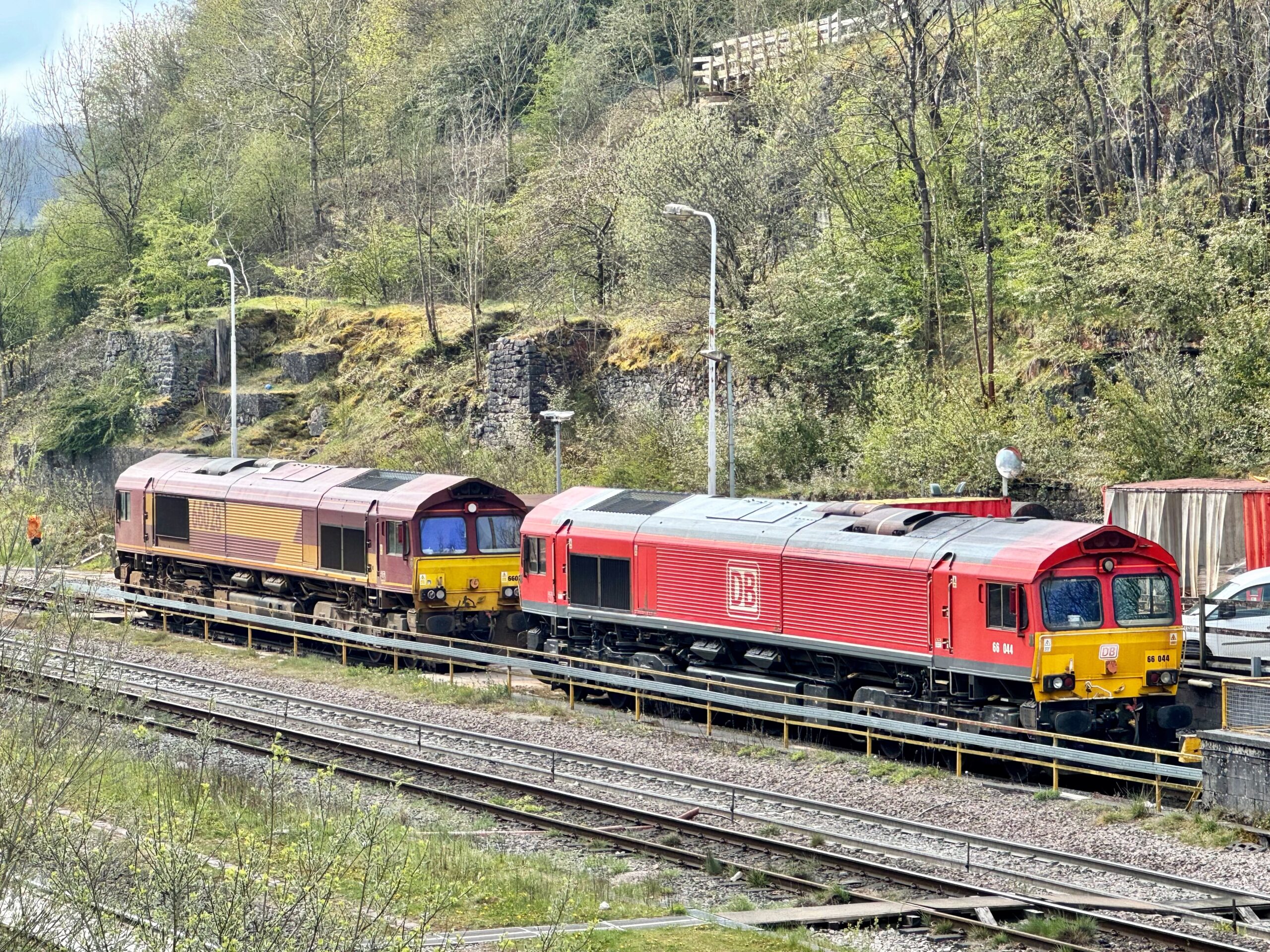
    DB Cargo Class 66 No.’s 66044 and 66028 on the Peak Forest Stabling Point – 27/04/2024
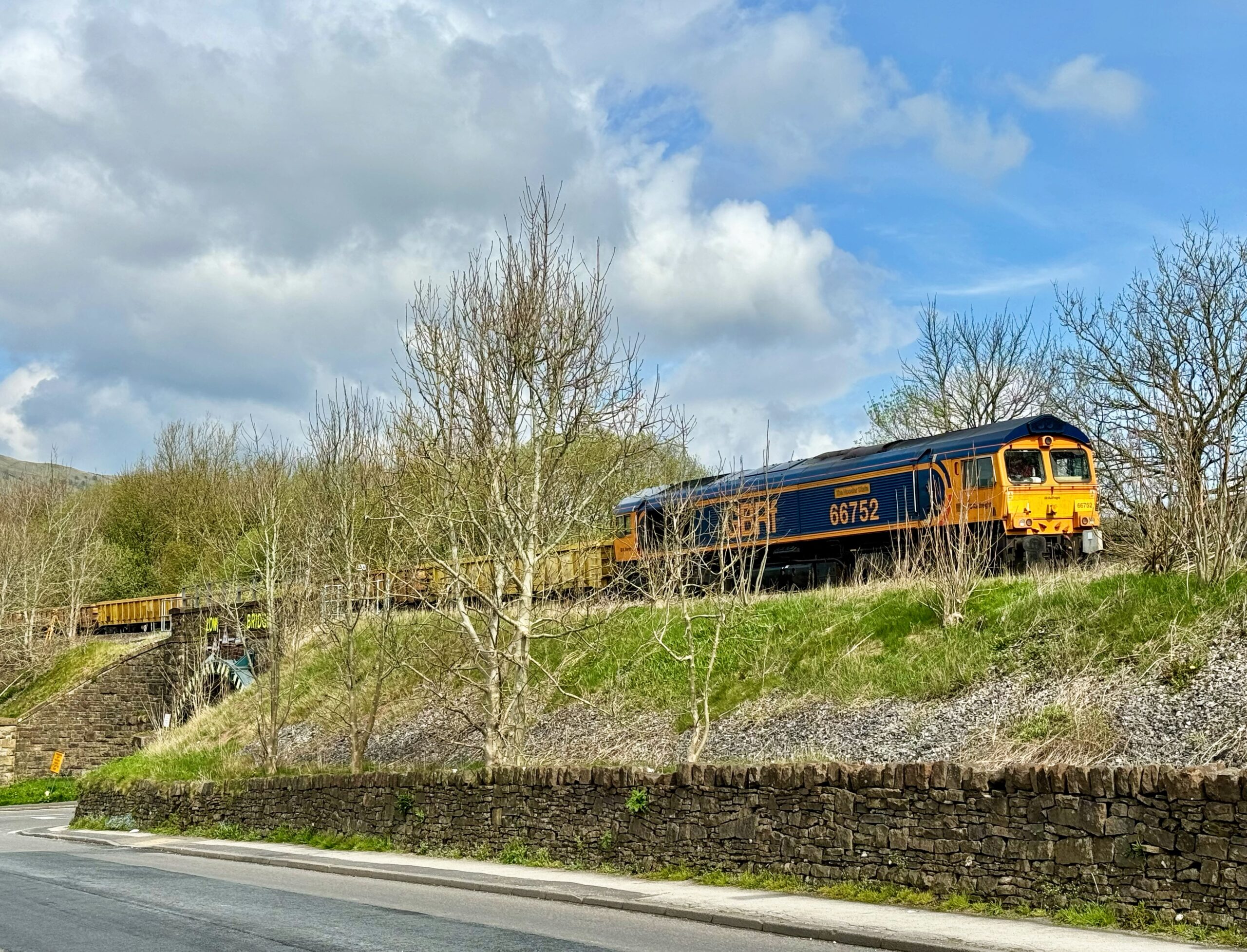
    GBRf Class 66 No. 66752 ‘The Hoosier State’ at the head of an engineers train rests at Chinley – 27/04/2024

    We returned to Dorset, stopping off at National Trust Moseley Old Hall, a Grade II* listed Elizabethan farmhouse situated north of Wolverhampton. The house is notable as one of the hiding places of King Charles II during his escape to France following defeat at the Battle of Worcester in 1651.

    National Trust Moseley Old Hall – 29/04/2024

    Constructed in approximately 1600 by Henry Pitt, few structural changes were made to the hall until around 1870 when the outer walls were replaced by bricks and casements replaced the Elizabethan windows.

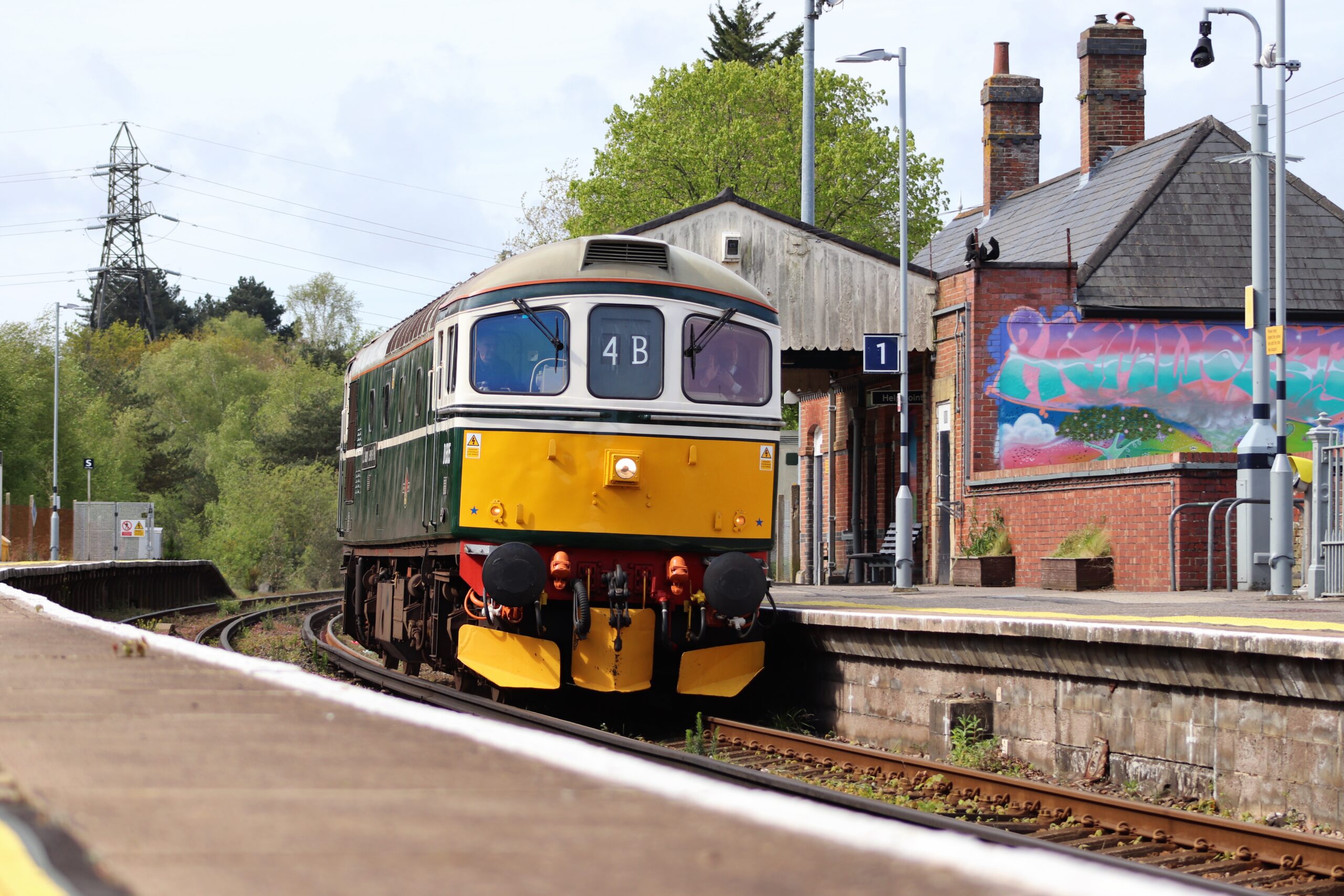
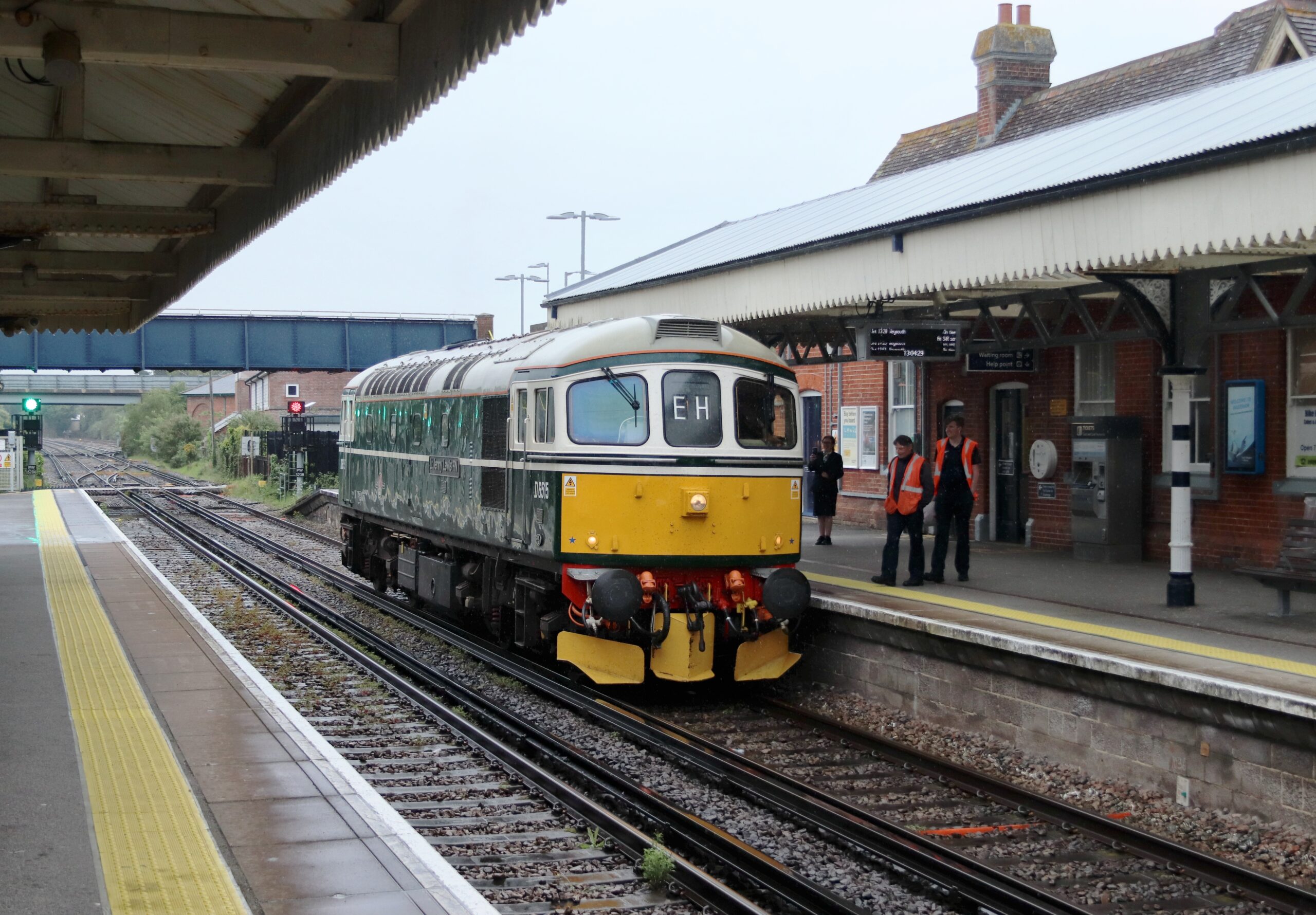
    Tuesday 30th April saw Swanage Railway resident Class 33 No. D6515 (33012) ‘Lt Jenny lewis RN’ working 0Z33 0920 Swanage to Eastleigh Arlington (ZG) in advance of booked railtour duties later in the week for the Branch Line Society (BLS). We saw the “Crompton” working light engine through Hamworthy.

    Class 33 No. D6515 (33012) ‘Lt Jenny lewis RN’ working 0Z33 0920 Swanage to Eastleigh Arlington (ZG) light engine through Hamworthy – 30/04/2024
    Video clip of Class 33 No. D6515 (33012) ‘Lt Jenny lewis RN’ working 0Z33 0920 Swanage to Eastleigh Arlington (ZG)

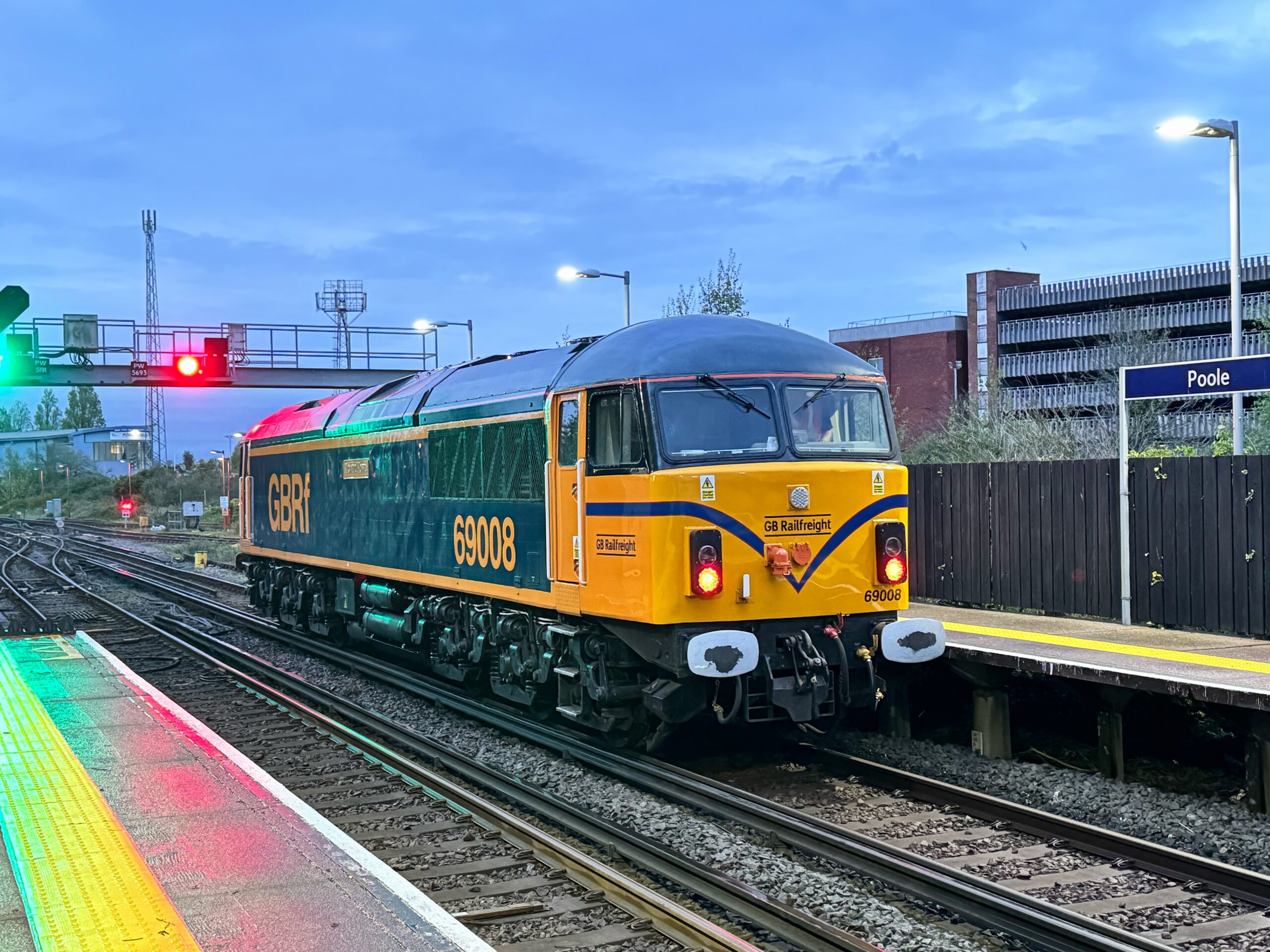
    Later the same day Bournemouth depot received another newly refurbished South Western Railway (SWR) Class 458 electric multiple unit (EMU) and despatched another to Widnes Transport Tech to enable modification works. Both of these unit drags involved GBRf Class 69 No. 69008 ‘Richard Howe’ running round at Poole.

    GBRf Class 69 No. 69008 ‘Richard Howe’ at Poole High Street Level crossing leading SWR Class 458 No. 458401 reporting as 5Q64 1534 Southampton Central to Bournemouth TRSMD – 30/04/2024
    GBRf Class 69 No. 69008 ‘Richard Howe’ at Poole station running round working 5Z66 2018 Bournemouth TRSMD to Eastleigh Yard – 30/04/2024

    458527 5Z66 2018 Bournemouth TRSMD to Eastleigh Yard – 30/04/2024

    Video of GBRf Class 69 No. 69008 ‘Richard Howe’ on Class 458 EMU drags – 30/04/2024

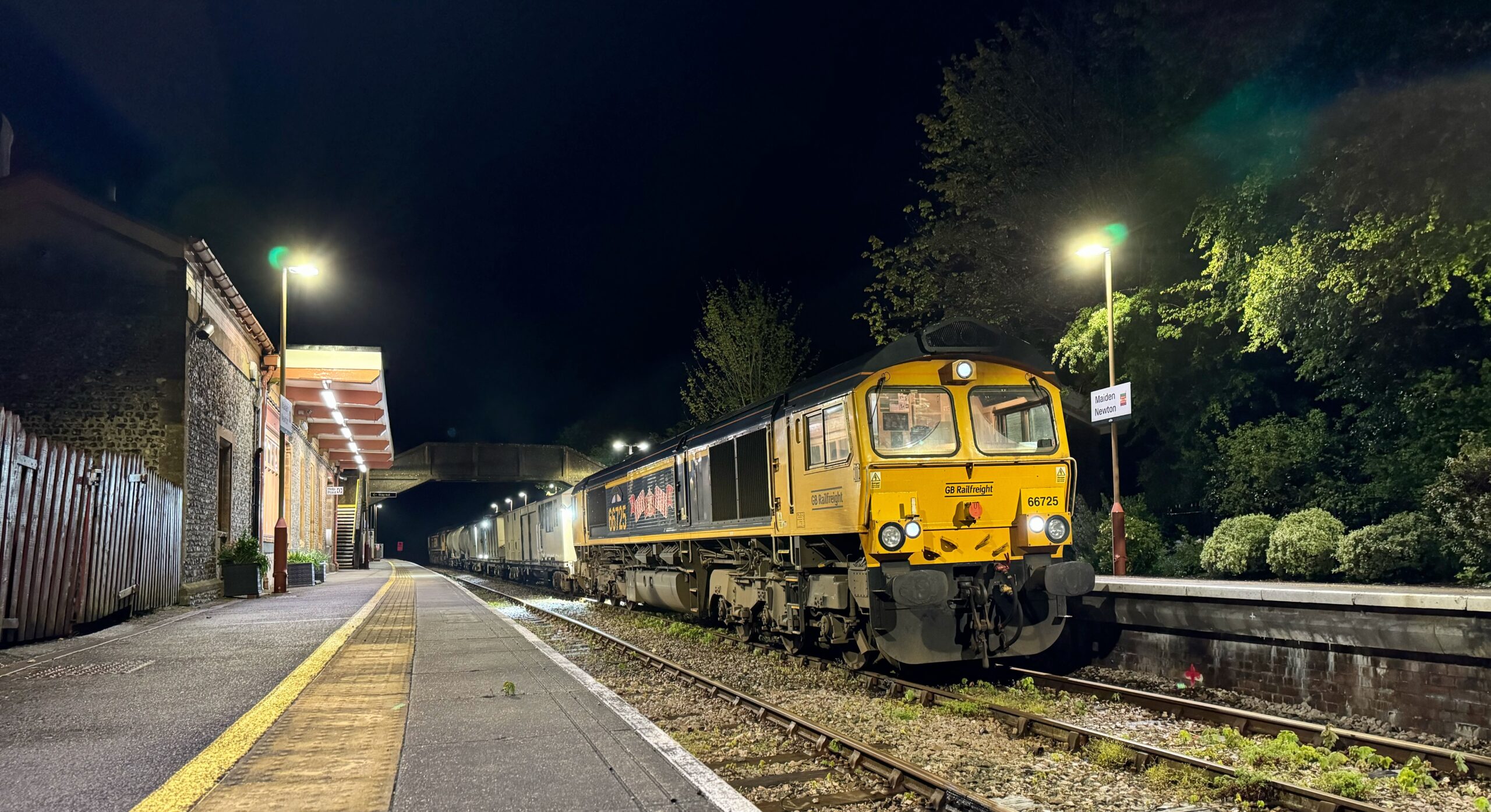
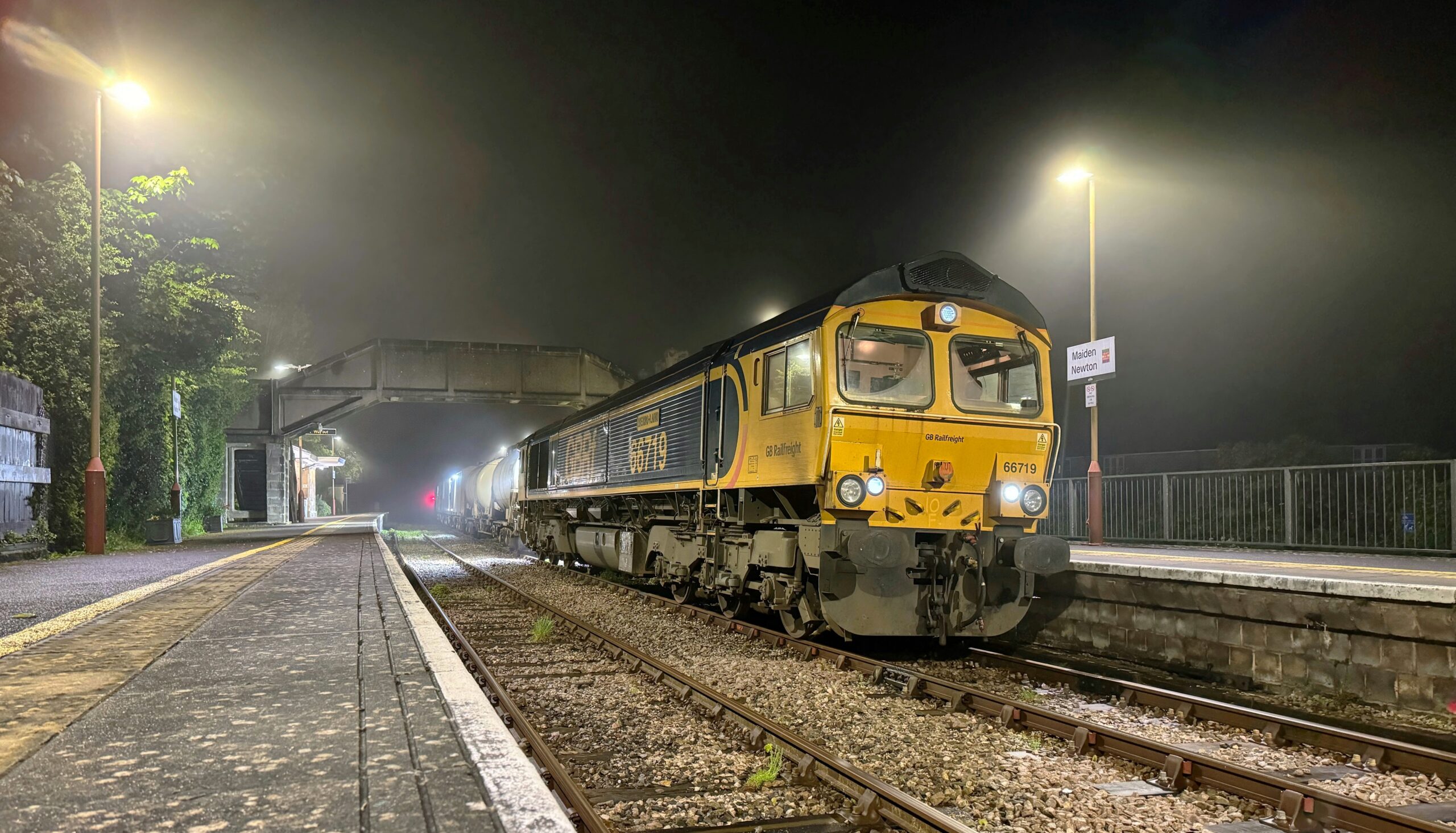
    In the early hours of Wednesday May 1st, I set out for Maiden Newton to see GBRf Class 66 locomotives No.’s 66725 ‘Sunderland’ and 66719 ‘Metro-Land’ working the South West Weedkiller reporting as 3Q98 2309 Exeter Riverside New Yard to Exeter Riverside New Yard. I really enjoyed this little excursion, the train ran more or less on time and as it had to stop at Maiden Newton where the driver needed to pick up a token to allow onward travel through single line sections of track, I had ample opportunity to take photographs as well as recording video.

    GBRf Class 66 No. 66725 ‘Sunderland’ at Maiden Newton leading on the outward leg of the South West Weed killer 3Q98 2309 Exeter Riverside NY to Exeter Riverside NY – 01/05/2024
    GBRf Class 66 No. 66719 ‘Metro-Land’ pauses at Maiden Newton during weed killer duties having reversed at Dorchester Junction working 3Q98 2309 Exeter Riverside NY to Exeter Riverside NY – 01/05/2024
    Video of GBRf Class 66 locomotives on the South West Weedkiller at Maiden Newton – 01/05/2024

    As our regular reader will know, we enjoy walking along old railway lines, and on Thursday 2nd May, we revisited the Rodwell Trail in Weymouth, the former trackbed of the line from Weymouth to Portland.

    Yoshi on the Rodwell Trail, with the Isle of Portland in the background – 02/05/2023

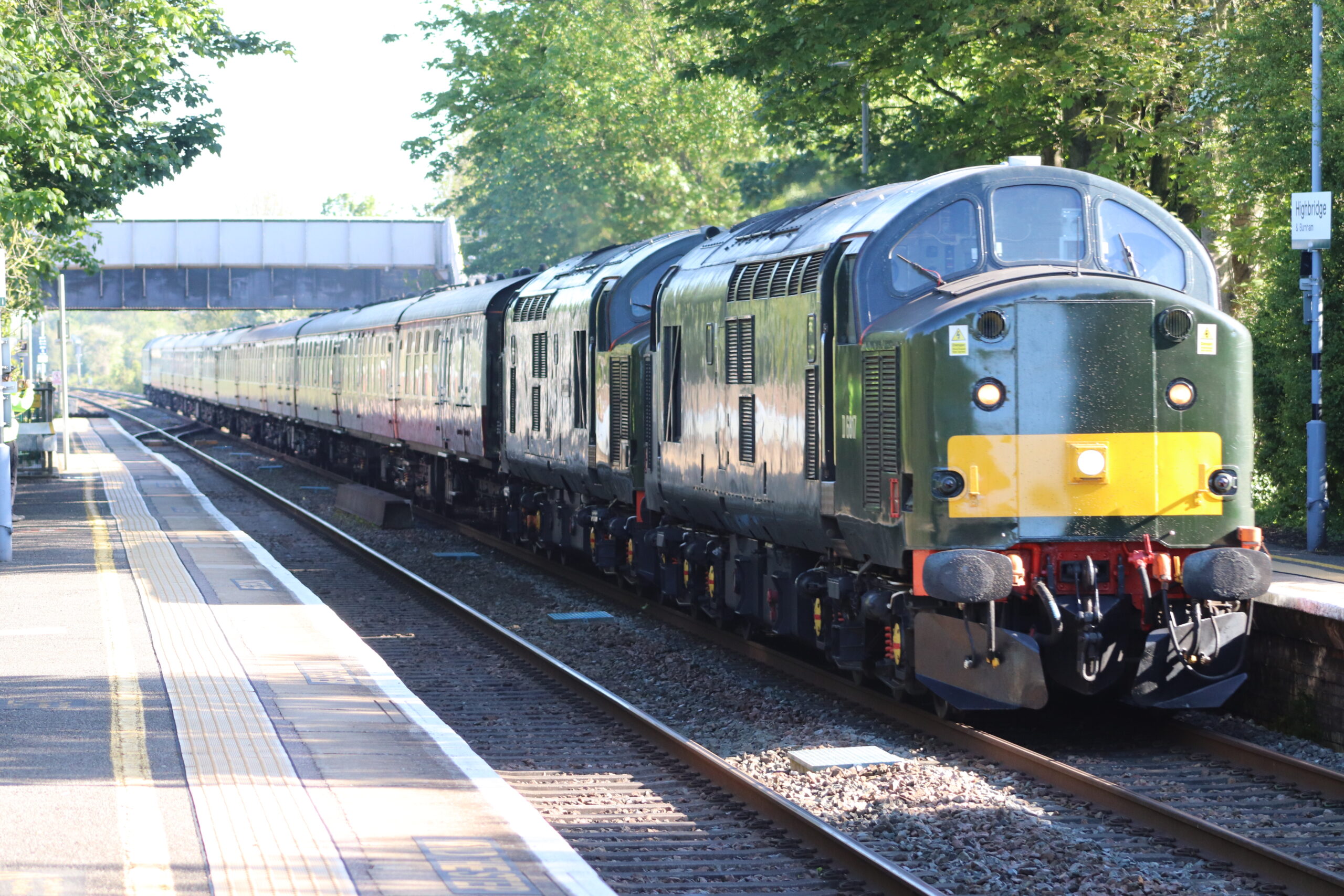
    For The Record: the North Dorset New Measurement Train passed through Gillingham and Sherborne with High Speed Train Class 43 power cars No.’s 43062 and 43274 reporting as 1Q23 0556 Reading to Salisbury via Exeter New Yard on 2nd May 2024. As we were walking along the old railway track bed in Weymouth, we missed this working, but friend of this blog, @smithy.377 kindly shared the video of the same consist running through Highbridge working 1Z18 1539 Paignton to Taunton the following day.

    New Measurement Train at Highbridge, courtesy of @smithy.377 – 03/05/2024

    On the weekend, the Saturday involved a drive to Exeter to see one of those BLS tours involving Class 33 No. D6515 we mentioned earlier. The Star Wars themed “May the Fourth be With You” charter originated and finished at Eastleigh running via Portsmouth, Westbury, Exeter, Yeovil, London Waterloo. Advertised as utilising the London Underground Class 438 4TC stock hauled by the preserved 71A Locomotive Group’s Class 33 and a GBRf Class 73/1 the reported addition of two Class 59 freight locomotives to pilot the train between Westbury and Exeter was too good to miss. Add to this the possibility of photographing two other rail tours in the West Country and a grand day out was in store. On the day we were surprised to learn that in fact three Class 59’s were being added to the train, meaning there were more locomotives than coaches!

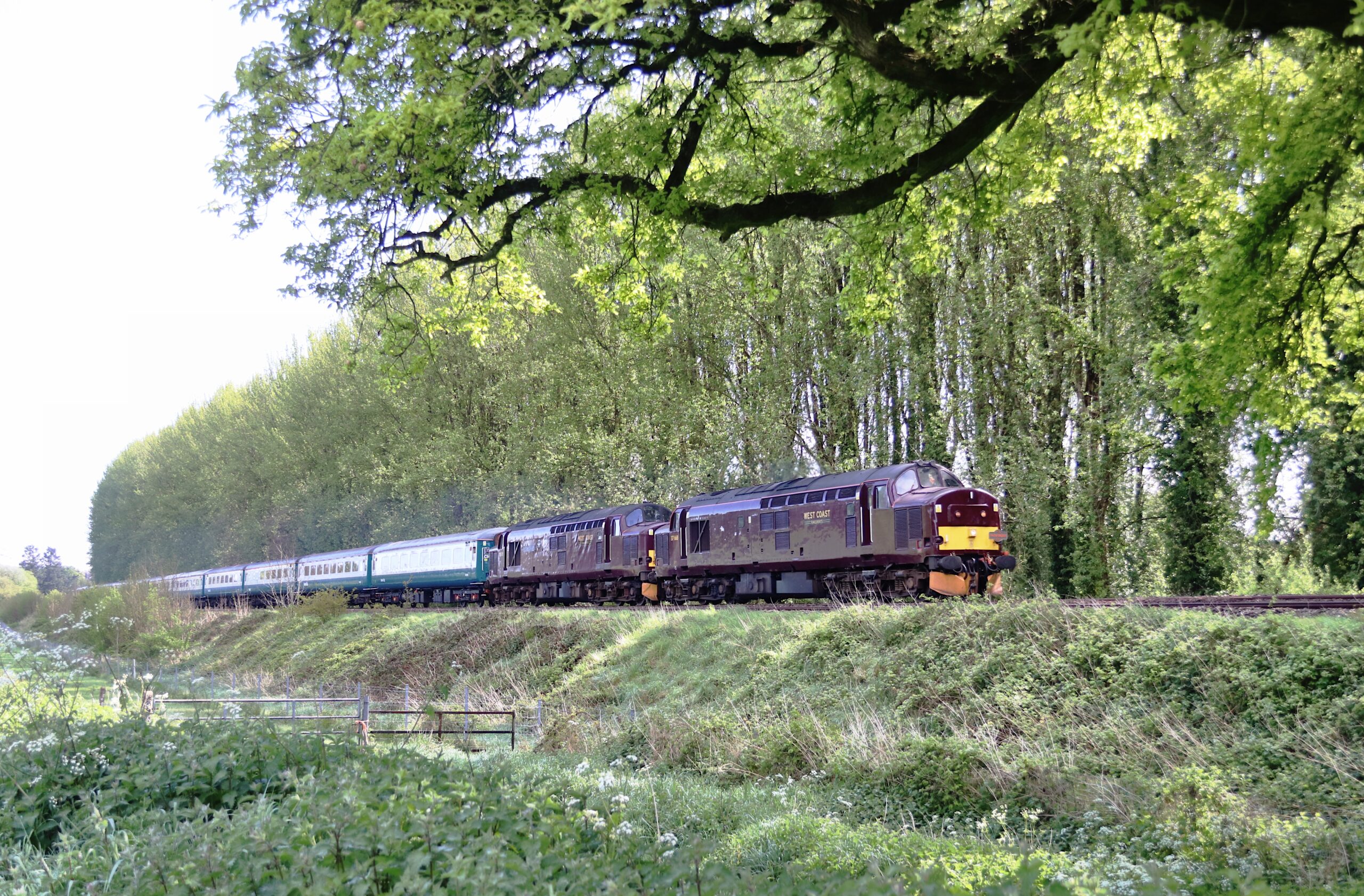
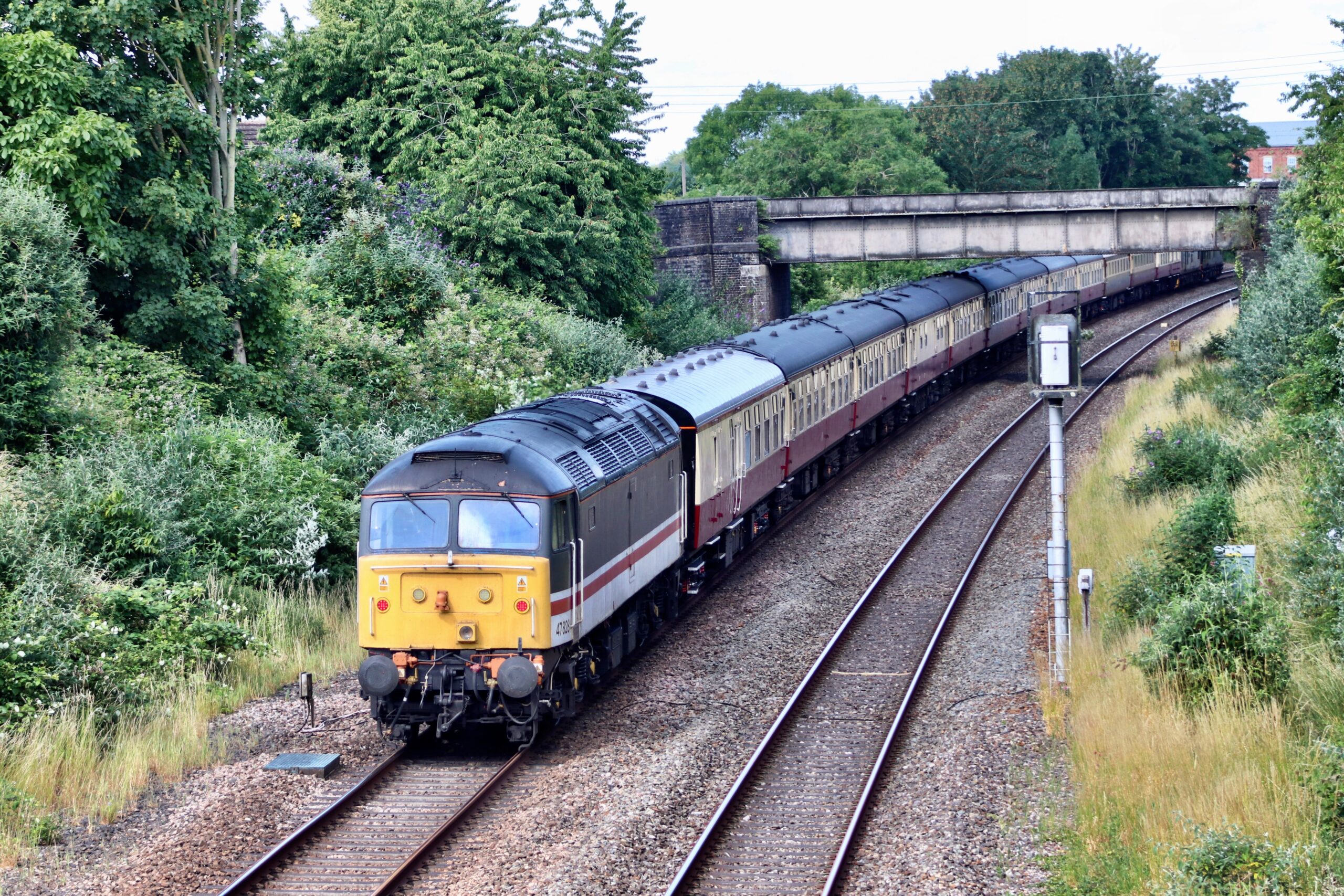
    Class 37 No.’s 37518 and 37668 passing Highbridge with Saphos Trains “English Riviera Express” 1Z36 0424 Nantwich to Kingswear – 04/05/2024
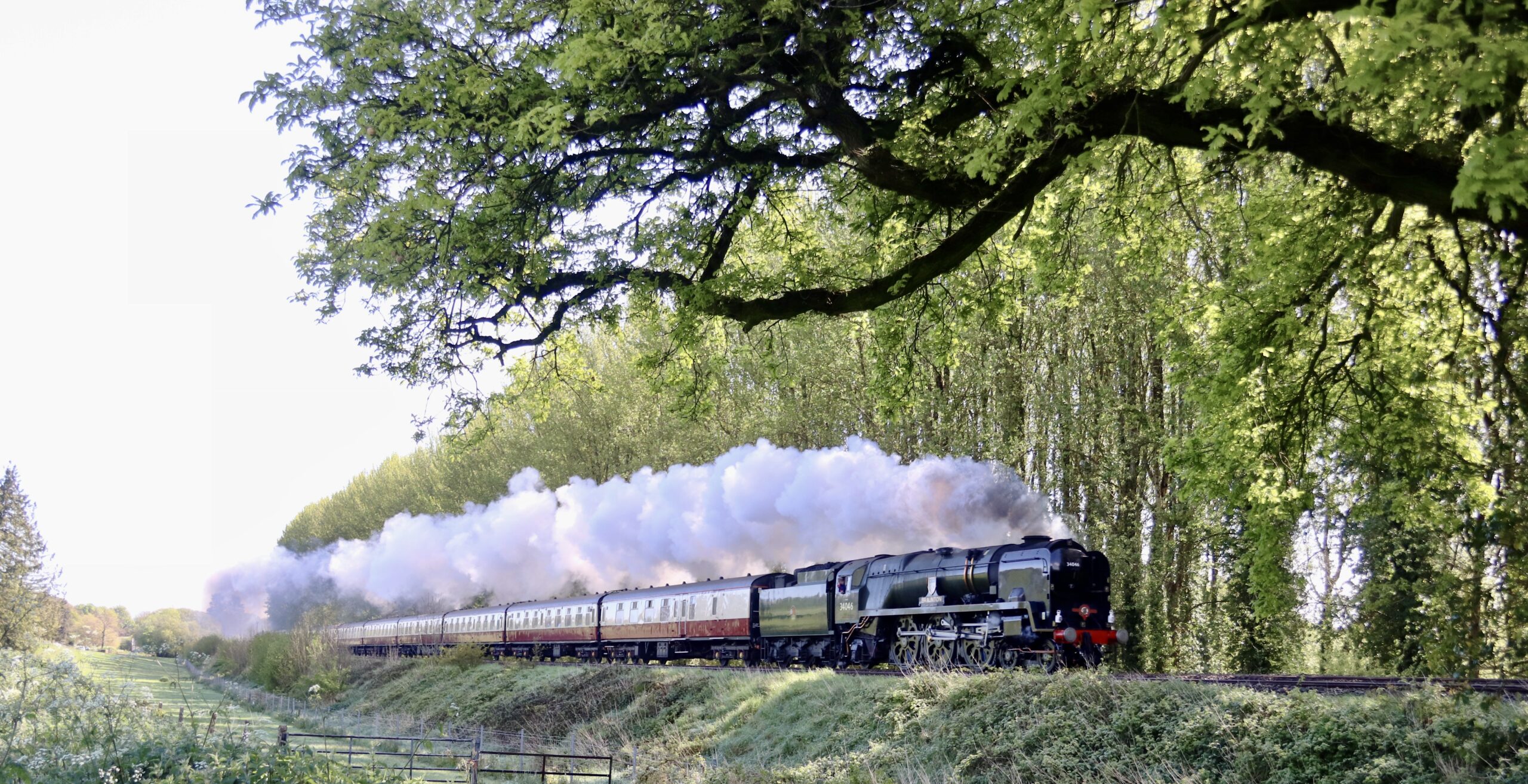
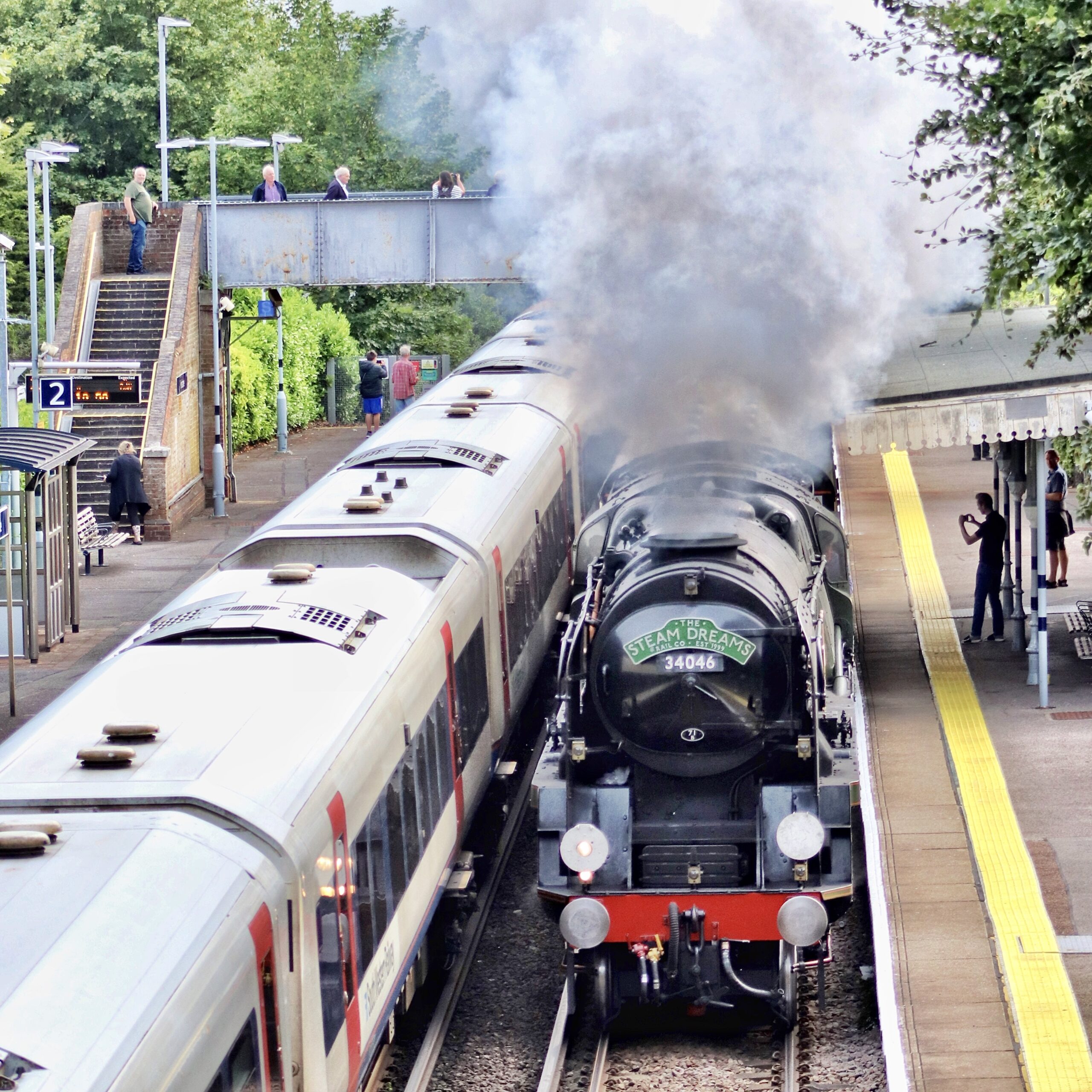
    Steam traction took over the “English Riviera Express” 1Z36 0424 Nantwich to Kingswear at Taunton. Southern Railway West Country Class 4-6-2 No. 34046 ‘Braunton’ prepares to storm Whiteball – 04/05/2024
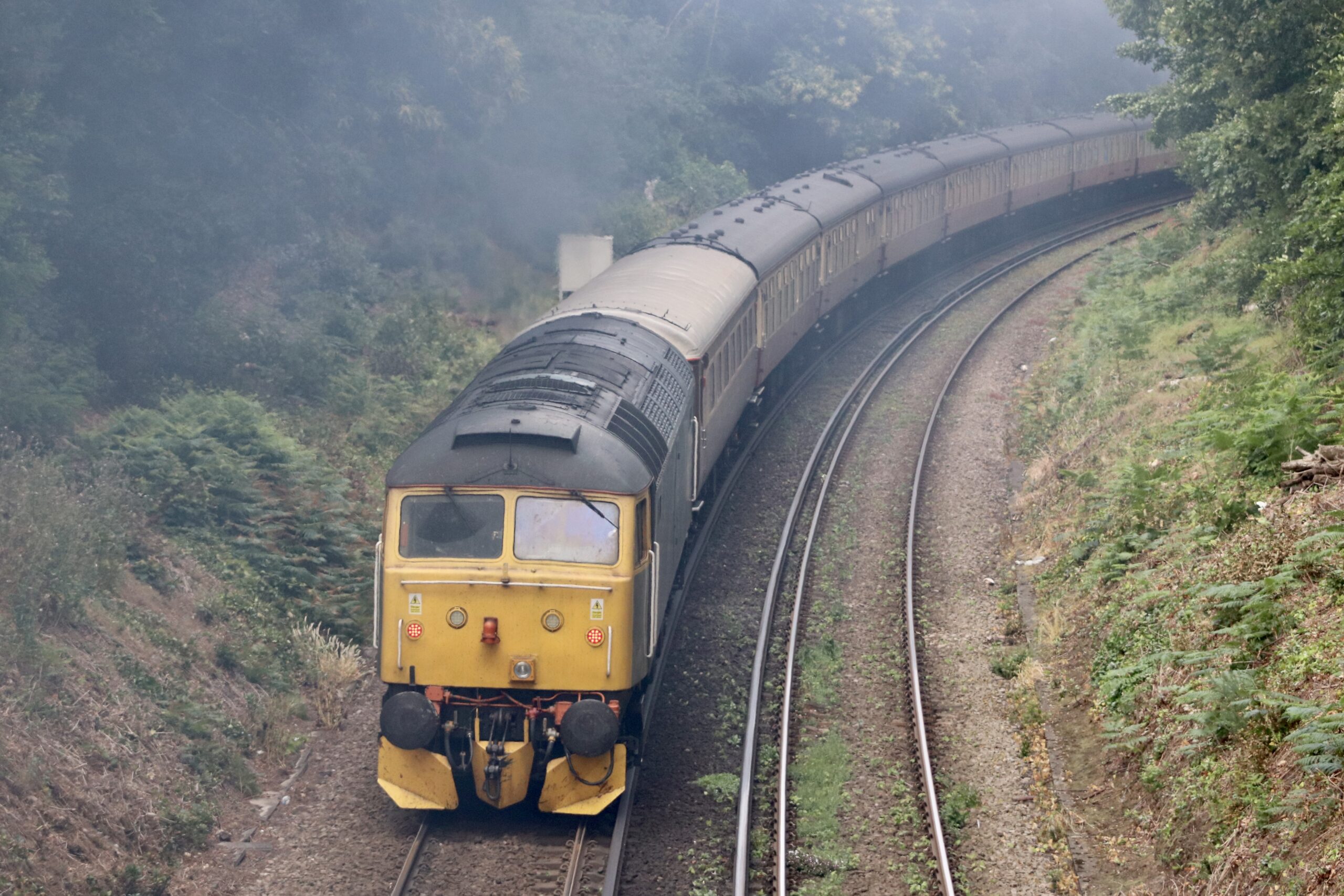
    LSL owned Class 47 No. 47828 seen at the rear of 1Z36 0424 Nantwich to Kingswear – 04/05/2024
    Class 37 No.’s 37518 and 37668 at Whiteball with Pathfinder Tours “The Spring Cornish Explorer” 1Z65 0553 Dorridge to Penznce – 04/05/2024
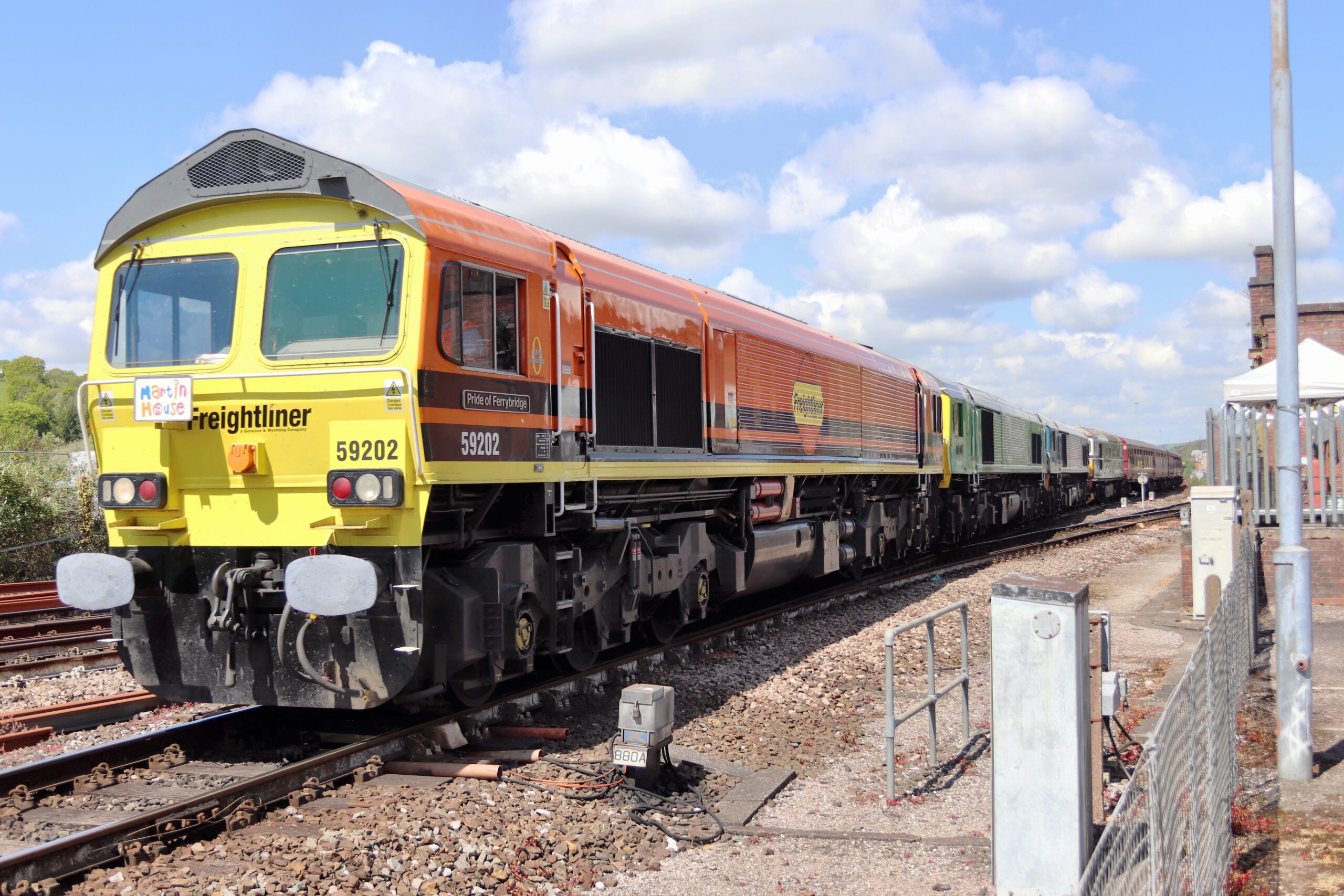
    Featuring five engines, including three different liveried Class 59 Locomotives, the Branch Line Society’s “May the Fourth be With You” charter featured No.’s 59202 ‘Alan Meadows Taylor’, 59101 ‘Village of Whatley’, 59104 ‘Village of Great Elm’ with No. D6515 (33012) ‘Lt Jenny Lewis RN’ on the approach to Exeter St. Davids. No. 73136 ‘Mhairi’ was on the rear of the London Underground 4tc set. The reporting number for this section of the rail tour was 1Z73 0648 Eastleigh to Exeter Central – 04/05/2024
    Freightliner Class 59 No.’s 59202 ‘Alan Meadows Taylor’, 59101 ‘Village of Whatley’, 59104 ‘Village of Great Elm’ with No. D6515 (33012) ‘Lt Jenny Lewis RN’ and No. 73136 ‘Mhairi’ (at the rear) bring the LU 4tc set into Exeter – 04/05/2024
    GB Railfreight Class 73 No. 73136 ‘Mhairi’ on the rear of the BLS “May the Fourth be With You” charter at Exeter St. Davids – 04/05/2024
    After piloting c into Exeter Central the three Class 59’s departed 59104 ‘Village of Great Elm’, 59101 ‘Village of Whatley’, 59202 ‘Alan Meadows Taylor’ worked back to Westbury as 0Z73 1359 Exeter Central to Westbury Tarmac BY – 04/05/2024
    Now sole leading engine on the BLS tour, Class 33 No. No. D6515 (33012) ‘Lt Jenny Lewis RN’ departs Exeter Central on the next leg 1Z33 1440 Exeter Central to London Waterloo – 04/05/2024
    We also caught the Class 33 No. D6515 (33012) ‘Lt Jenny Lewis RN’ hauling the BLS charter “May the Fourth be With You” through Sherborne – 04/05/2024
    Video of BLS charter “May the Fourth be With You” and other trains – 04/05/2024

    The first Dorset Hot Air Balloon & Music Festival caught our attention on Sunday 5th May. Having read about traffic issues getting into the event on the Saturday and other largely negative reviews online, it was with some trepidation that we set off for Dorchester. We sailed into the car park with no problems, save the need for careful driving on a very muddy field. The music was provided by tribute acts to the likes of Neil Diamond, Ed Sheeran and Jess Glynne while a fun fair took up a large part the main arena. Unfortunately for visitors hoping to see a flurry of hot air balloons taking to the skies, weather conditions meant we were only able to witness three balloons lifting off. But they were a fine sight to behold all the same, and a very relaxing mode of transport to watch. I think there were some valid criticisms about the event organisation, but some were also unfairly exaggerated. Nevertheless, if suggestions are taken on board and improvements made, I look forward to this being an annual event in the Dorset calendar. The organisers can not, of course, be held responsible for the weather conditions!

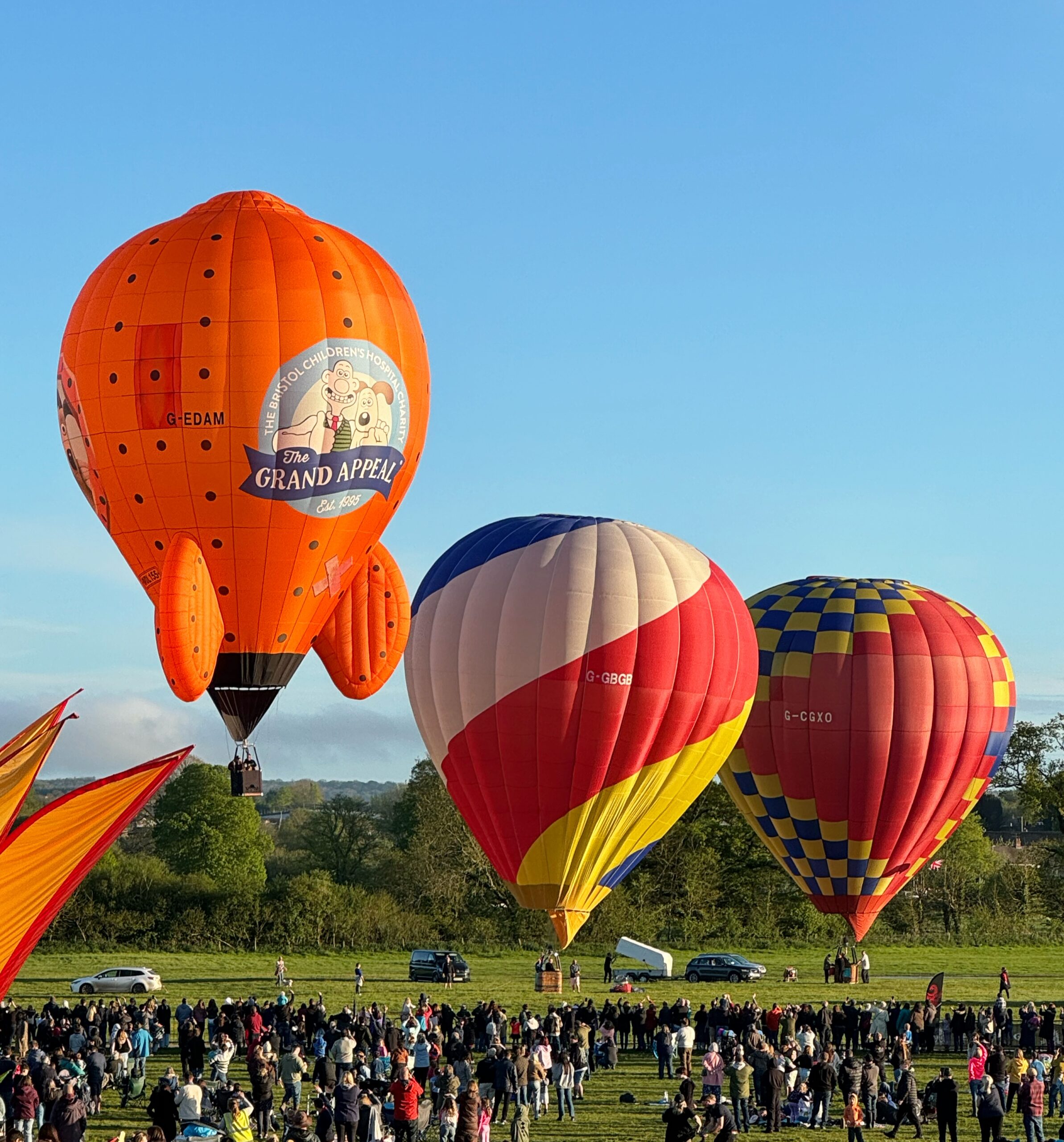
    Weather conditions on the Sunday of the Dorset Hot Air Balloon & Music Festival meant only experienced balloonists could take to the air. The Wallace & Gromit balloon was a favourite! – 05/05/2024
    Wallace & Gromit head up into the skies – 05/05/2024

    The dispute between the ASLEF union and train operating companies continue and the 7th May saw SWR drivers calling a strike day.

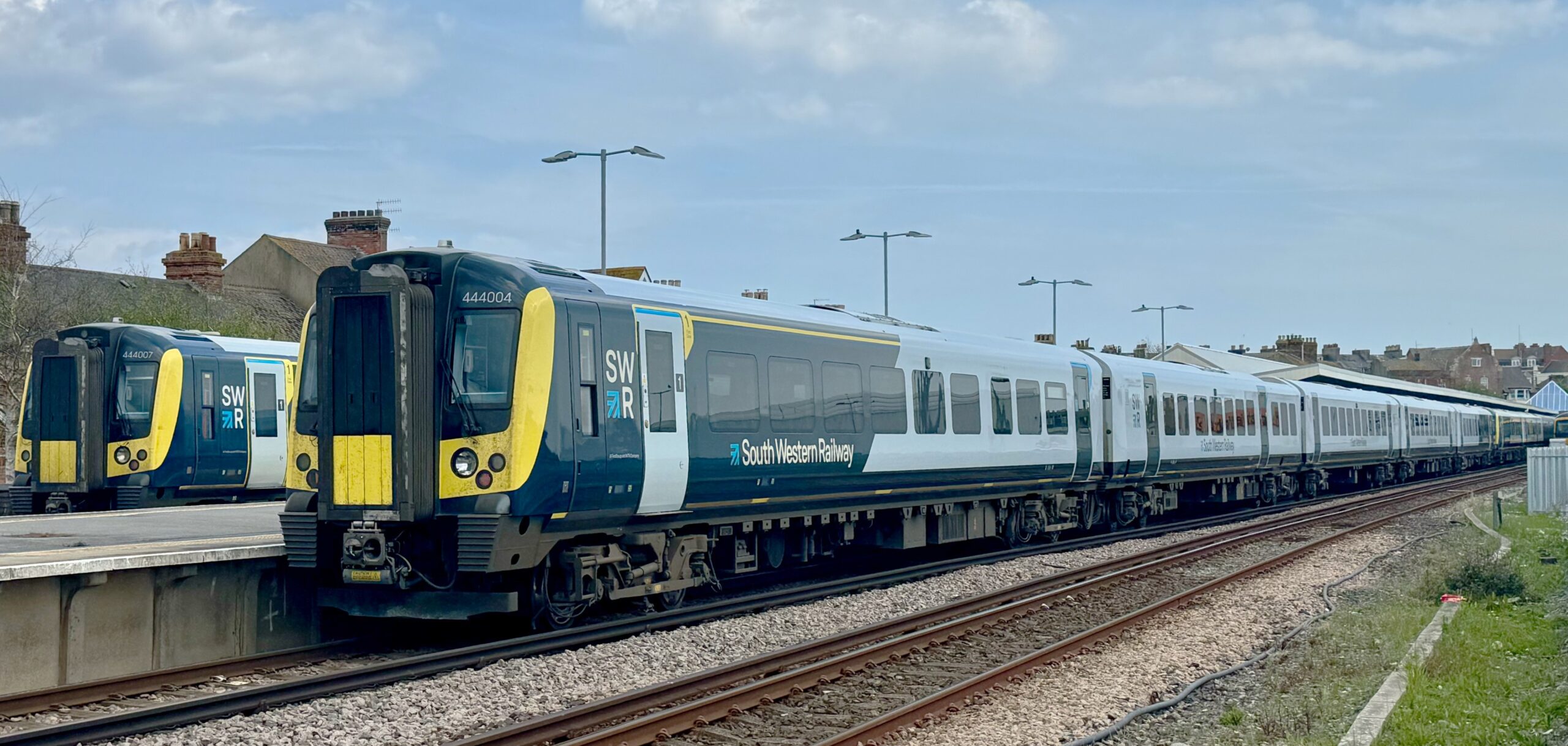
    All stop at Weymouth on the South Western Railway drivers strike day. SWR Class 444 No.’s 444004 and 444007 stand idle in Weymouth – 07/05/2024
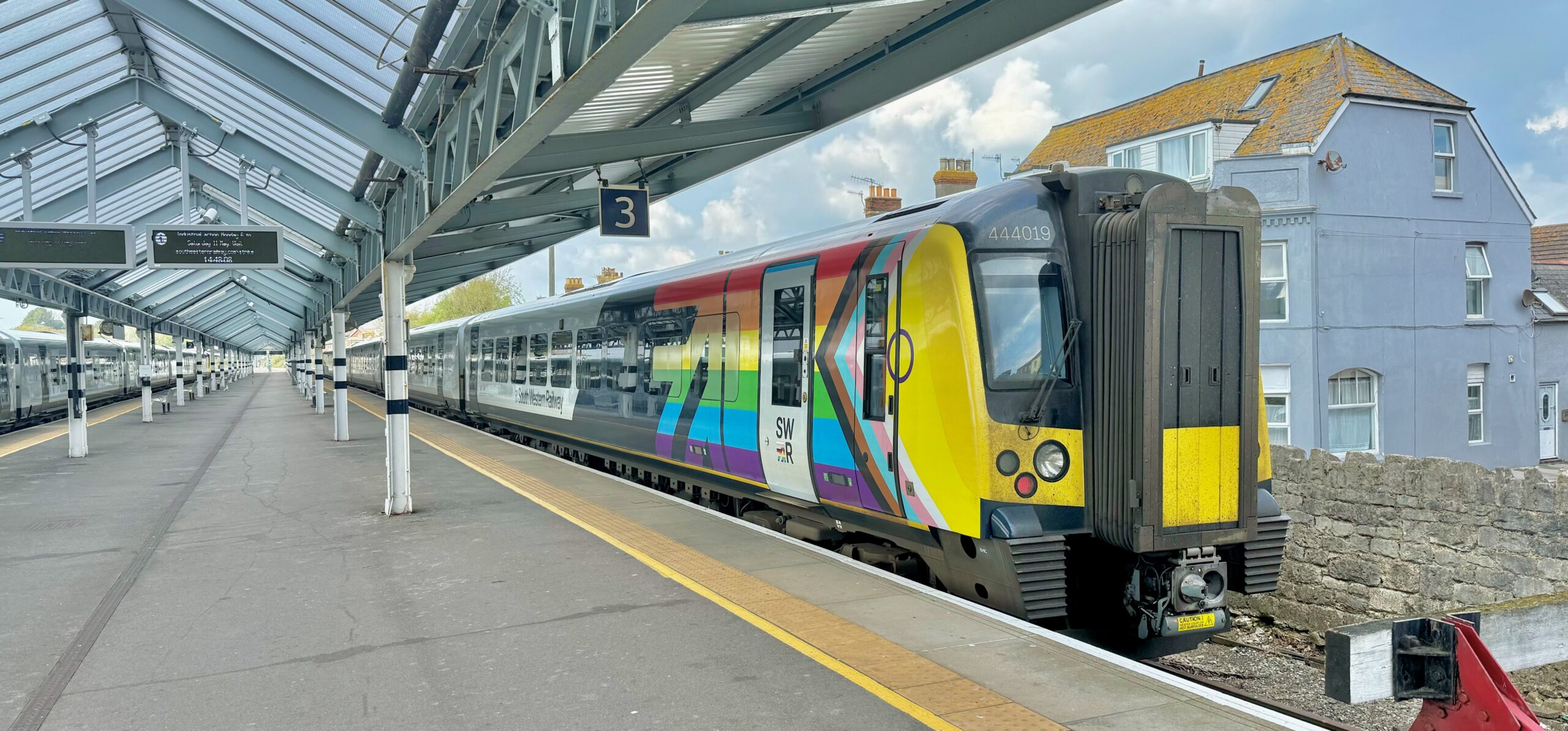
    Celebrity Pride liveried SWR Class 444 No. 444019 in platform 3 at Weymouth – 07/05/2024

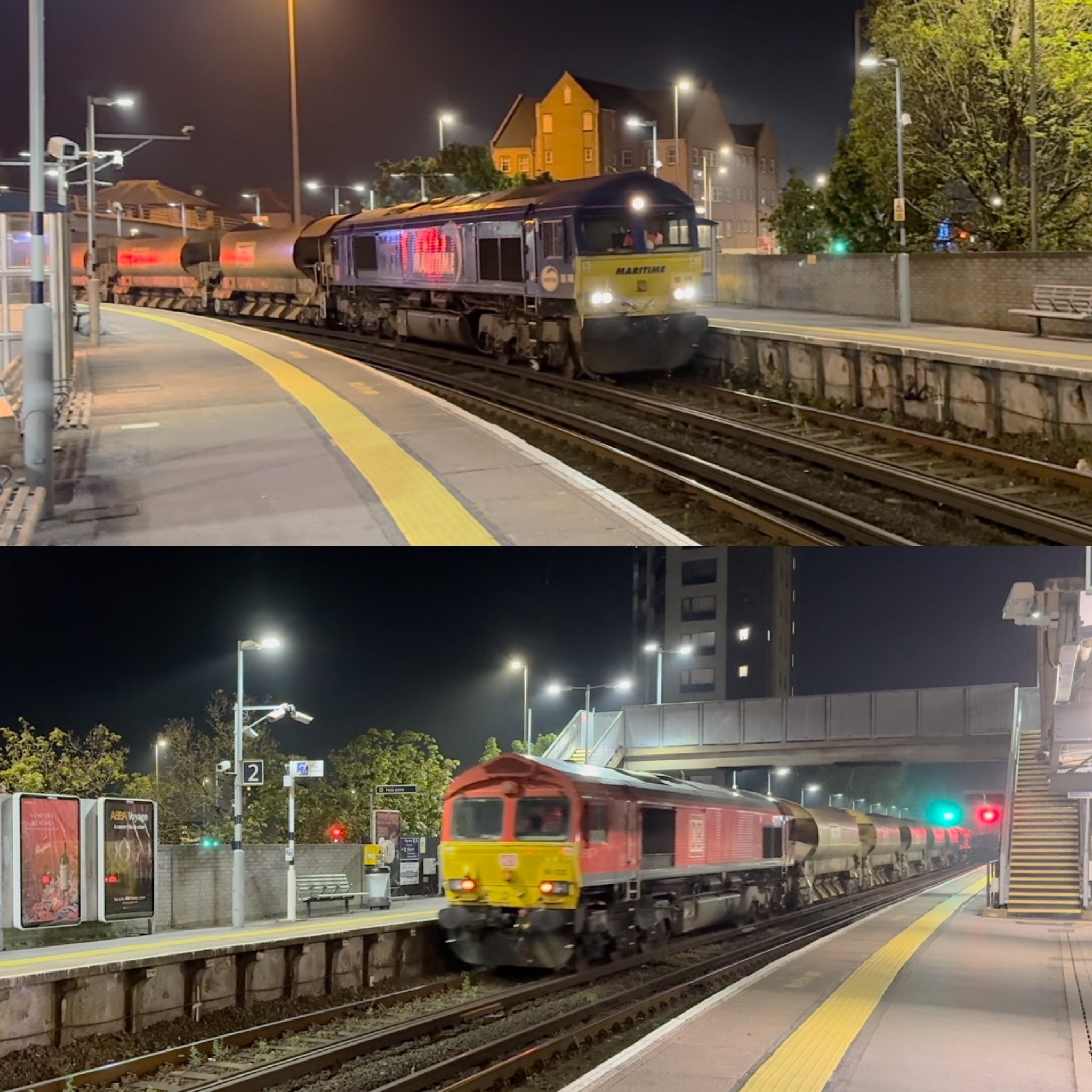
    Although SWR drivers were on strike, this did not affect drivers from the freight companies working. DB Cargo Class 66 No.’s 66148 ‘Maritime Intermodal Seven’ and 66025 worked engineers train 6N65 2140 Eastleigh East Yard to Moreton. We videoed the train passing through Poole.

    Video screenshot of DB Cargo Class 66 No.’s 66148 ‘Maritime Intermodal Seven’ and 66025 working 6N65 2140 Eastleigh East Yard to Moreton through Poole – 07/05/2024
    Video of DB Cargo working 6N65 2140 Eastleigh East Yard to Moreton – 07/05/2024

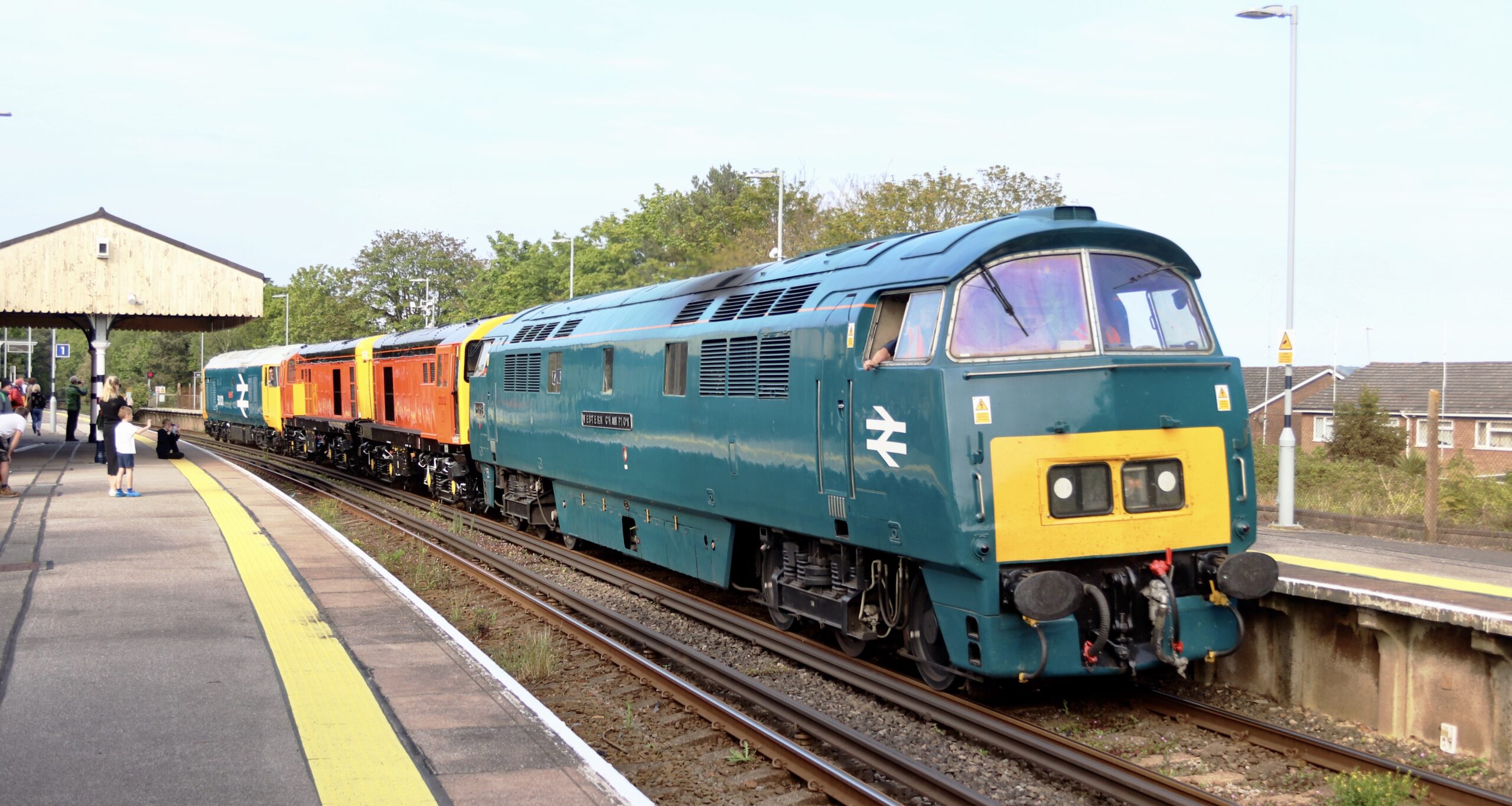
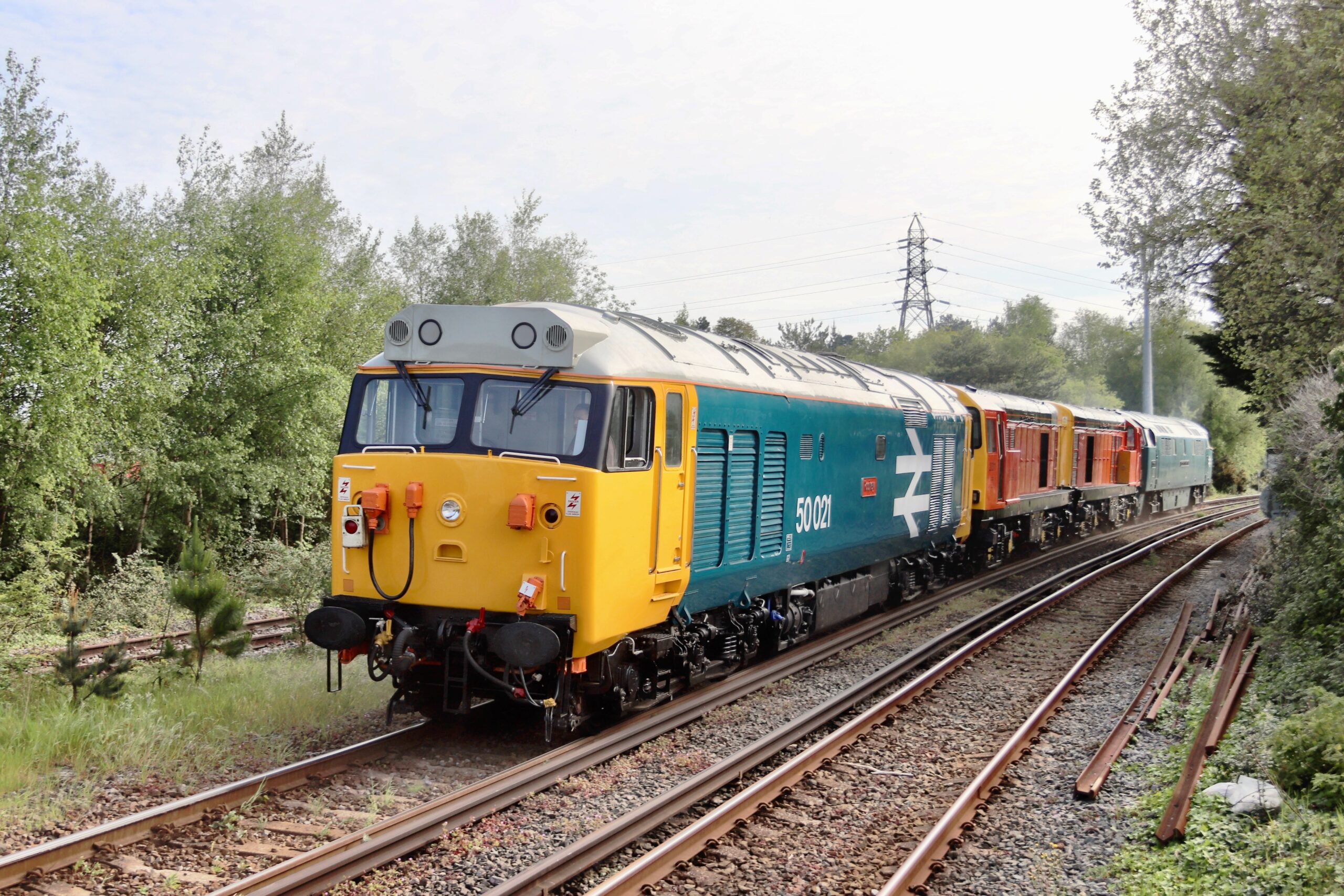
    8th May and time for my favourite railway working of the year; the arrival of the Swanage Railway Diesel Gala convoy of locomotives. This year the positioning move aroused much interest as it was headed up by Class 52 diesel-hydraulic No. D1015 ‘Western Champion’ with Harry Needle Railroad Company (HNRC) Class 20 No.’s 20302 and 20311 along with Class 50 No. 50021 ‘Rodney’ in tow. We saw the consist passing through Hamworthy as it made its way over to the Purbeck heritage line.

    Convoy! Always a highlight of the year – the Swanage Diesel Gala convoy with visiting guest locomotives passes Hamworthy with Class 52 “Western” No. D1015 ‘Western Champion’, Harry Needle Railroad Compay Class 20 No.’s 20302 and 20311 with Class 50 No. 50021 ‘Rodney’ bringing up the rear reporting as 0Z53 1544 Eastleigh Arlington (ZG) to Swanage – 08/05/2024
    Class 50 No. 50021 on the rear of the Swanage bound locomotive convoy 0Z53 1544 Eastleigh Arlington (ZG) to Swanage – 08/05/2024

    The following day, May 9th, and further Gala attractions made their way through Dorset in readiness for the annual Diesel Gala and Beer Festival as Colas Class 37 No. 37219 ‘Jonty Jarvis’ ran light engine reporting as 0Z37 0946 Westbury Down TC to Swanage. We saw the locomotive as she ran through Hamworthy

    Colas Class 37 No. 37219 ‘Jonty Jarvis’ running light engine as 0Z37 0946 Westbury Down TC to Swanage passing Hamworthy – 09/05/2024

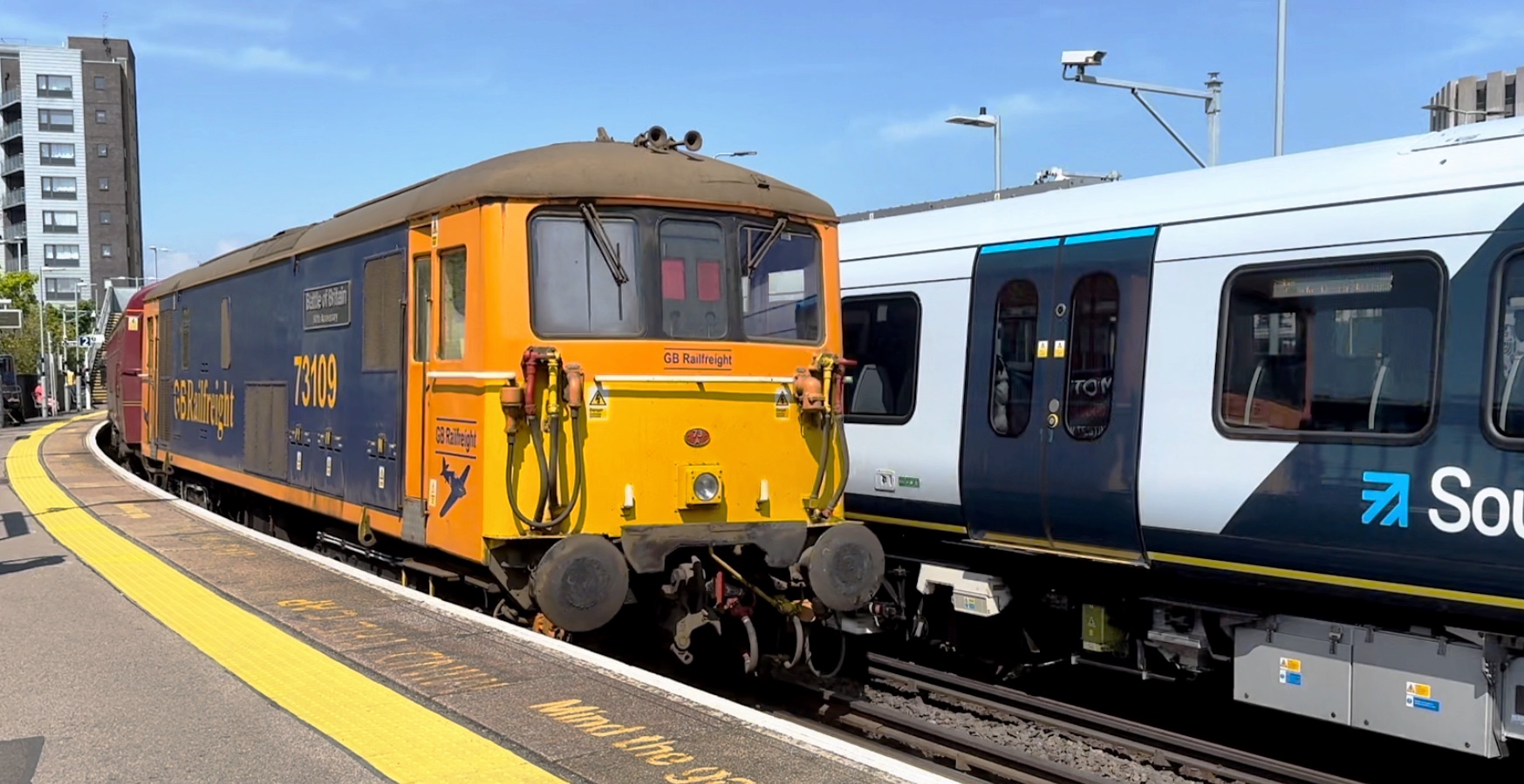
    GBRf had promised to provide a Class 69 locomotive for the Swanage Diesel Gala, with No. 69007 ‘Richard Trevithick’ being the ear marked example. In the event, this locomotive was declared a failure at Eastleigh and was replaced by fellow class member No. 69002 ‘Bob Tiller CM&E’. The Class 69 was scheduled to travel to Swanage as part of the BLS “The Jurassic Crompton” charter, again employing the London Underground Class 438 4TC coaching stock along with “Crompton” diesel Class 33 No. D6515 ‘Lt Jenny Lewis RN’. As a result of a temporary issue with the Electric Train Supply (ETS) on No. D6515, GBRf Class 73 No. 73109 ‘Battle of Britain’ was added to the consist to provide the ETS.

    As my camera “had issues”, here’s a video screenshot of the Branch Line Society promoted “The Jurassic Crompton” charter train with Swanage resident Class 33 No. D6515 (33012) ‘Lt Jenny Lewis RN’ and GBRf Class 69 No. 69002 ‘Bob Tiller CM&EE’ double heading on the London Underground Class 438 4tc set entering Poole – 09/05/2024
    Old and new pass at Poole! Screenshot of BLS “The Jurassic Crompton” special train headed up by Class 33 No. D6515 (33012) ‘Lt Jenny Lewis RN’, passing SWR Class 701 No. 701059 on test / mileage accumulation working. Two members of the 701’s crew can be seen taking an interest in the charter – 09/05/2024
    Screenshot BLS “The Jurassic Crompton” charter with GBRf Class 73 No. 73109 ‘Battle of Britain’ bringing up the rear – 09/05/2024
    Video of Swanage Diesel Gala guest locomotives and BLS charter “The Jurassic Crompton” on their way to the Purbeck Heritage line

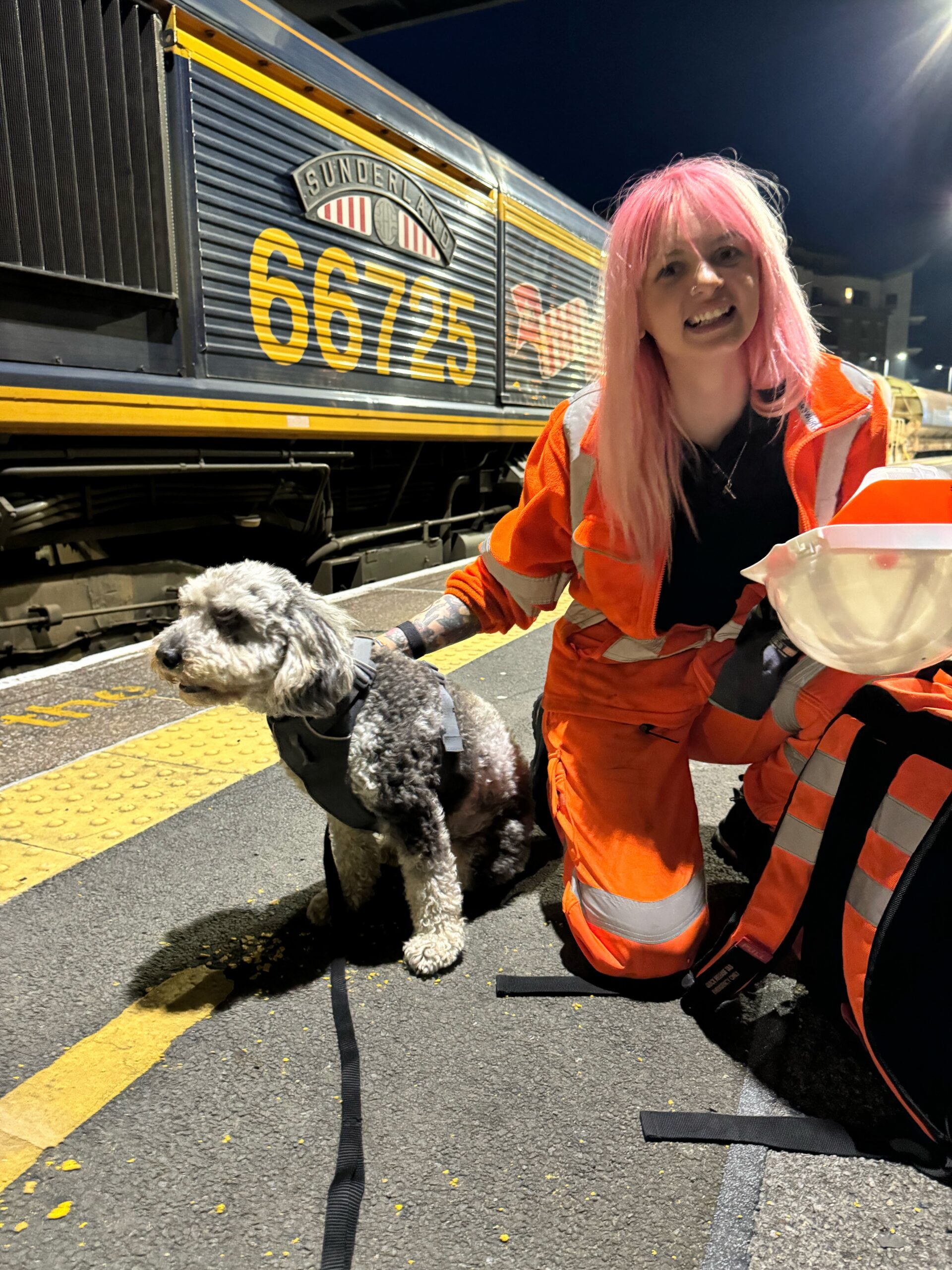
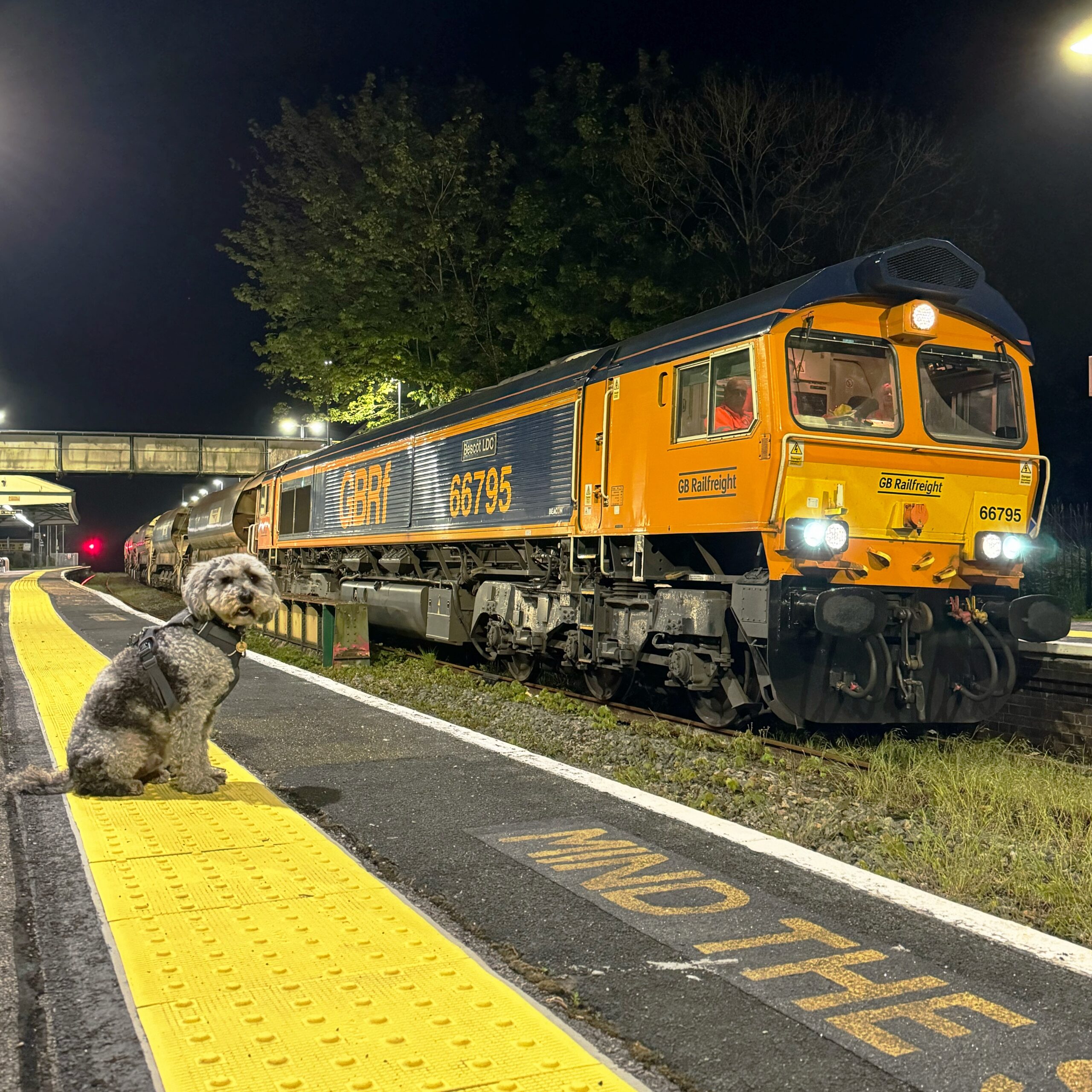
    Later that evening, a ballast train worked from Eastleigh to Maiden Newton via Dorchester Junction. GBRf provided the traction in the form of Class 66 No.’s 66725 ‘Sunderland’ and 66795 ‘Bescot LDC’. Yoshi was delighted to be reacquainted with GBRf driver Bessie Matthews who spotted our boy from the cab of the leading locomotive at Dorchester South. We saw also saw the train at Dorchester West, but as it was late, and there was no indication when the ballast train would depart for Maiden Newton, we headed home before it left.

    GBRf Class 66 No. 66725 ‘Sunderland’ on arrival at Dorchester South working 6G28 1939 Eastleigh East Yard to Dorchester West – 09/05/2024
    GBRf driver Bessie Matthews recognises Yoshin and says hello at Dorchester South – 09/05/2024
    Yoshi takes a keen interest in GBRf Class 66 No. 66795 ‘Bescot LDC’ as it rests at Dorchester West working 6G28 1939 Eastleigh East Yard to Dorchester West – 09/05/2024
    Yoshi poses with GBRf Class 66 No. 66725 ‘Sunderland’ at Dorchester West. The locomotive was working 6G28 1939 Eastleigh East Yard to Dorchester West – 09/05/2024
    Video of GBRf ballast train 6G28 1939 Eastleigh East Yard to Dorchester West – 09/05/2024

    For The Record: Colas Class 37 No. 37116 worked 3Q07 2031 Exeter Riverside NY to Exeter Riverside NY through North Dorset overnight of 10th May 2024. I had planned on seeing this move at Yeovil in connection with popping out to see the GBRf ballast train, but as the Class 37 ran early, this was not to be. I wasn’t too bothered, I will admit!

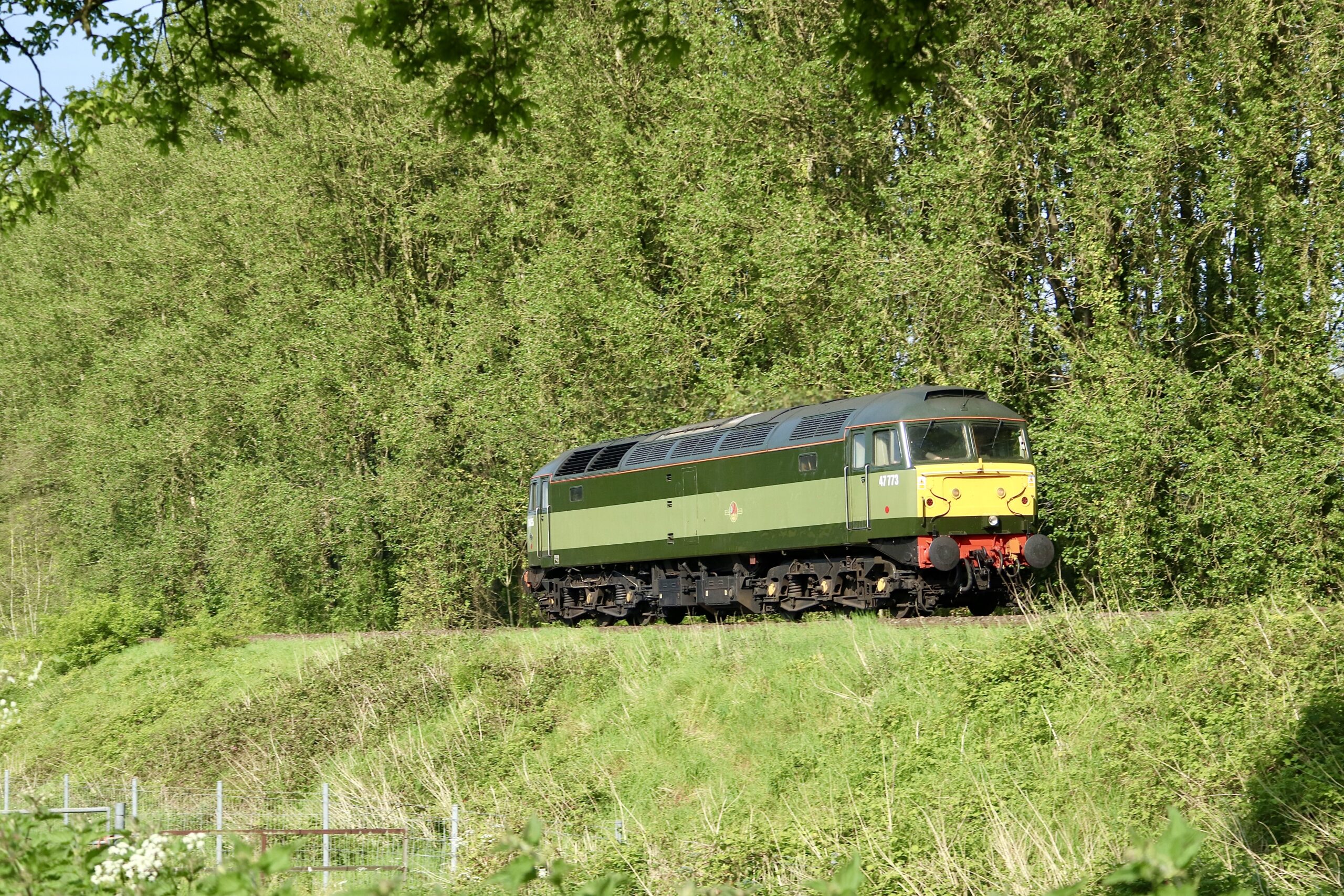
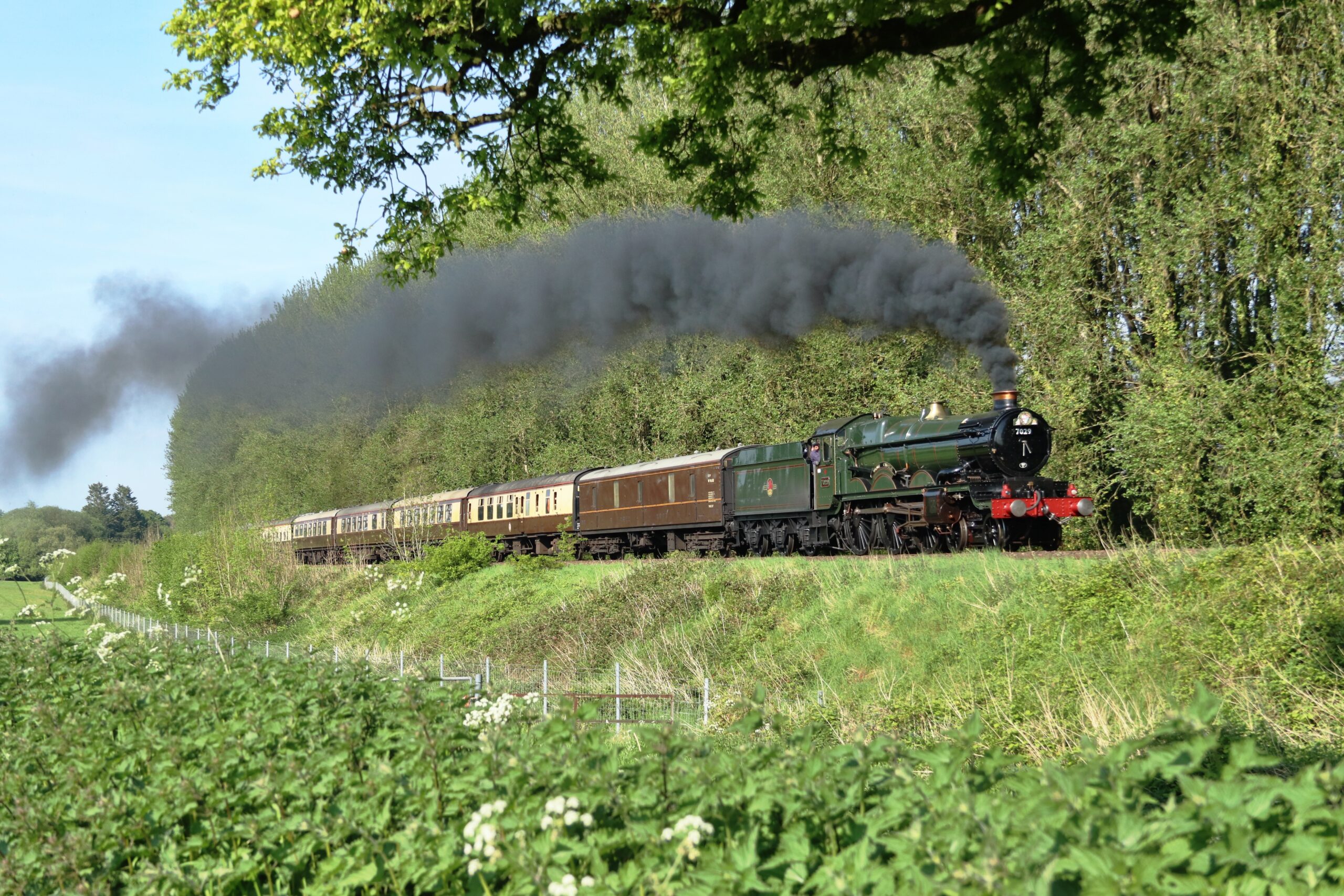
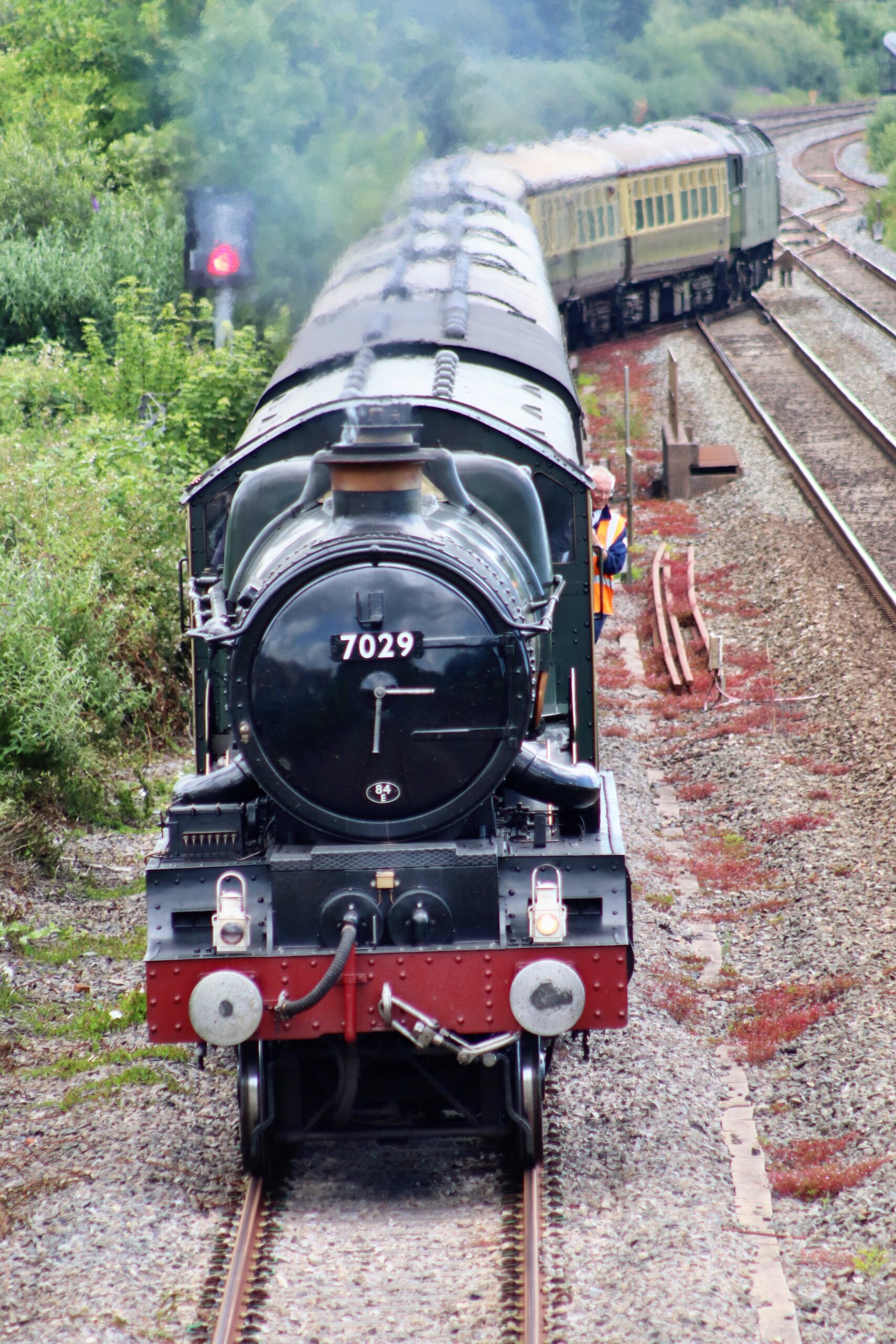
    10th May Great Western Railway (GWR) Castle Class 4-6-0 No. 7029 ‘Clun Castle’ supported by Class 47 No. 47773 operated the first of Vintage Trains two day “The Great Western Railway” tours between Birmingham Snow Hill and Plymouth. This tour marked 60 years when the locomotive achieved, what was then, the fastest ever non-stop run between Plymouth and Bristol completed in 133 minutes and 9 seconds. We saw the train heading West at Filton Abbey Wood and on its climb to Whiteball bank in Somerset. Unfortunately the return trip own the following day did not emulate the non-stop run of 60 years previously as ‘Clun Castle’ stalled on Hemerdon Bank. Tysley’s Class 47 No. 47773 which had been shadowing the train at this point came to the rescue and provided assistance. Part of the attraction for me of seeing this working was the steam locomotive working unassisted over the notorious Devon banks. But later timings on the Friday and my desire to attend the Swanage Diesel Gala on the Saturday meant I had to be content with the two viewings I was able to fit in.

    Great Western Railway (GWR) Castle Class 4-6-0 No. 7029 ‘Clun Castle’ at Filton Abbey Wood working “The Great Western” 1Z46 0830 Birmingham Snow Hill to Bristol Temple Meads – 10/05/2024
    Great Western Railway (GWR) Castle Class 4-6-0 No. 7029 ‘Clun Castle’ approaches Filton Abbey Wood station working the first day of Vintage Trains “The Great Western” charter which would see the steam locomotive tackle the Devon banks solo – 10/05/2024
    Support locomotive Class 47 No. 47773 working light engine as 0Z47 1435 Bristol East Depot DBC to Plymouth ahead of the steam hauled charter – 10/05/2024
    Great Western Railway (GWR) Castle Class 4-6-0 No. 7029 ‘Clun Castle’ makes the climb up Whiteball bank near Taunton reporting as 1Z47 1547 Bristol Temple Meads to Plymouth – 10/05/2024
    Video of Great Western Railway (GWR) Castle Class 4-6-0 No. 7029 ‘Clun Castle’on the mainline – 10/05/2024

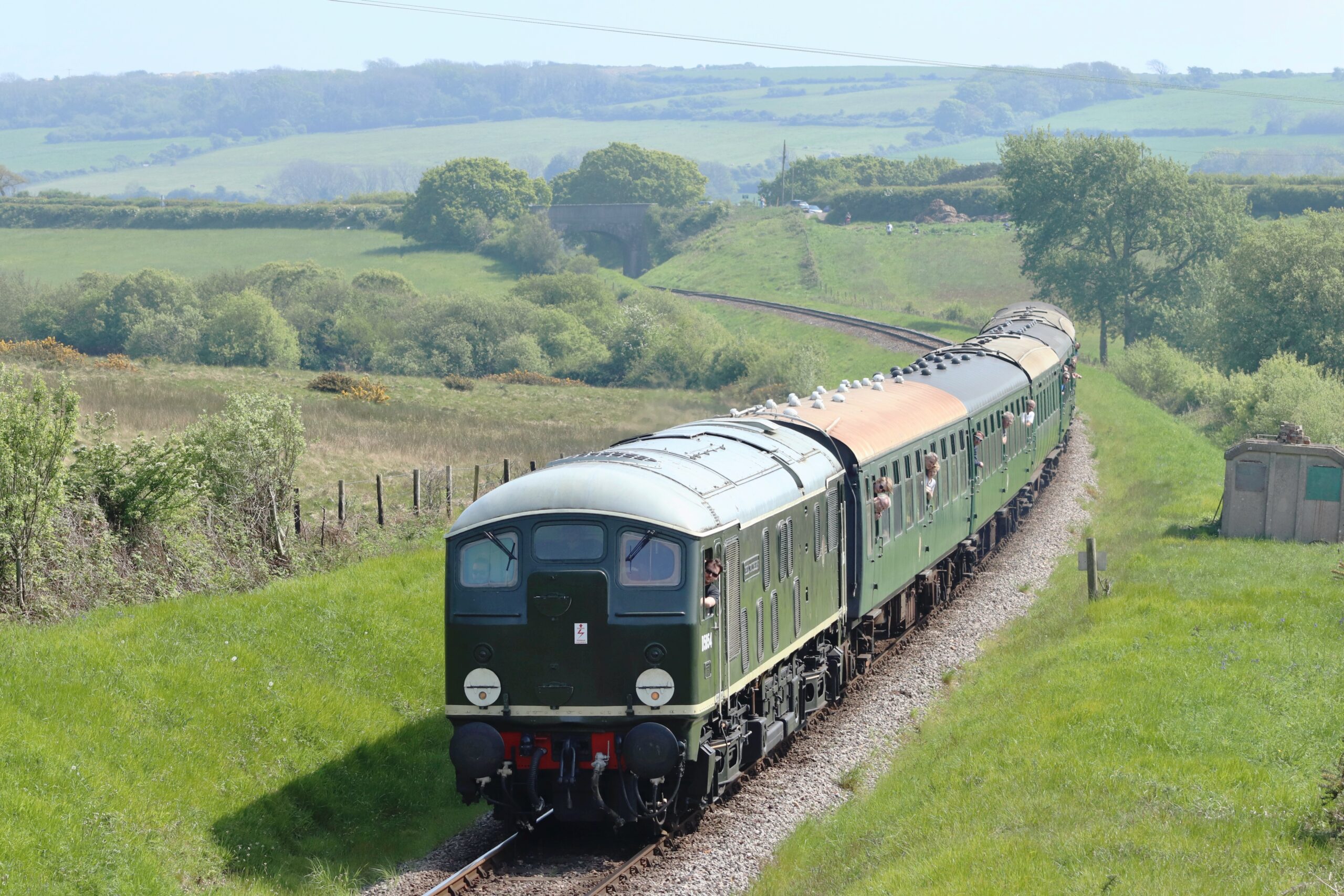
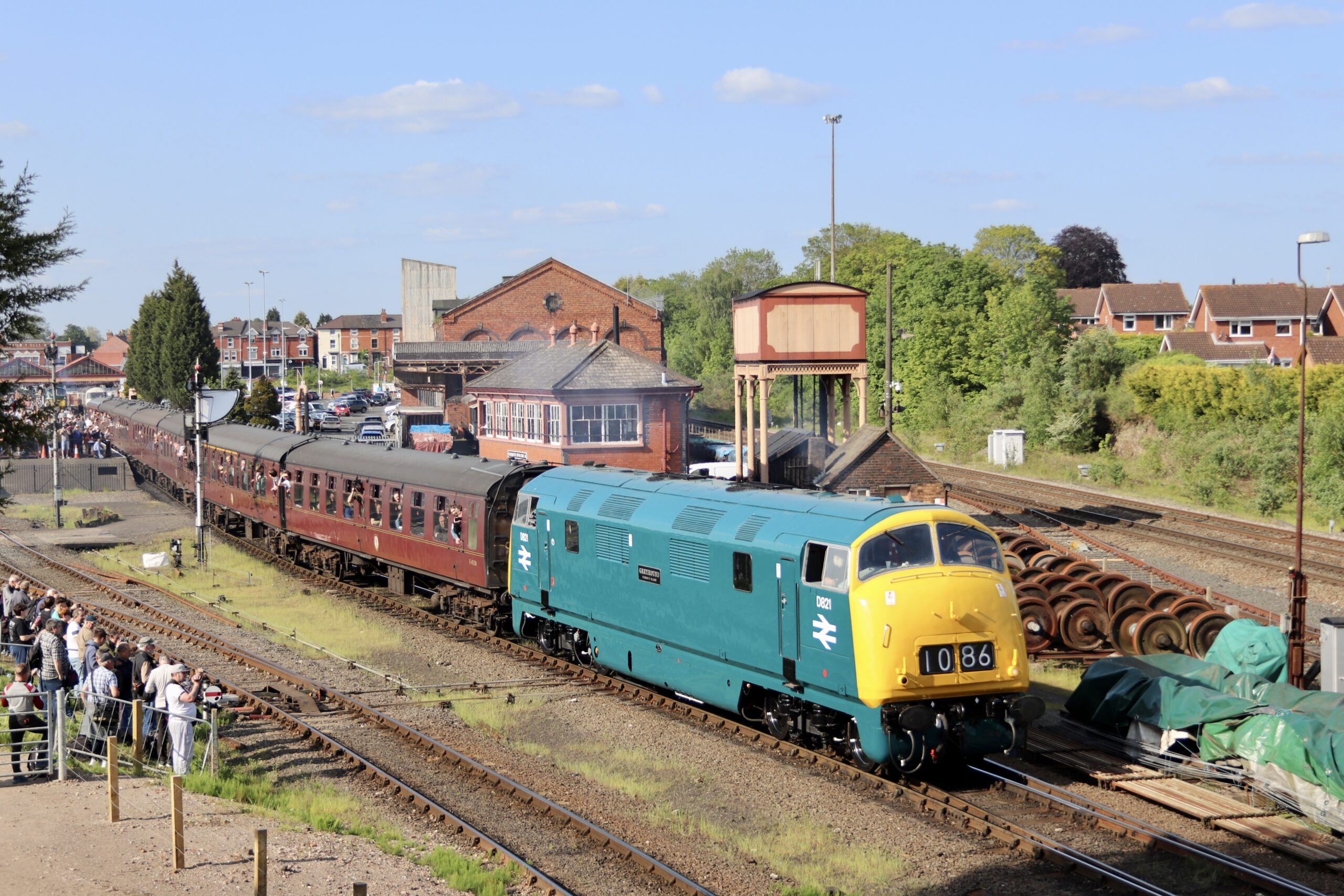
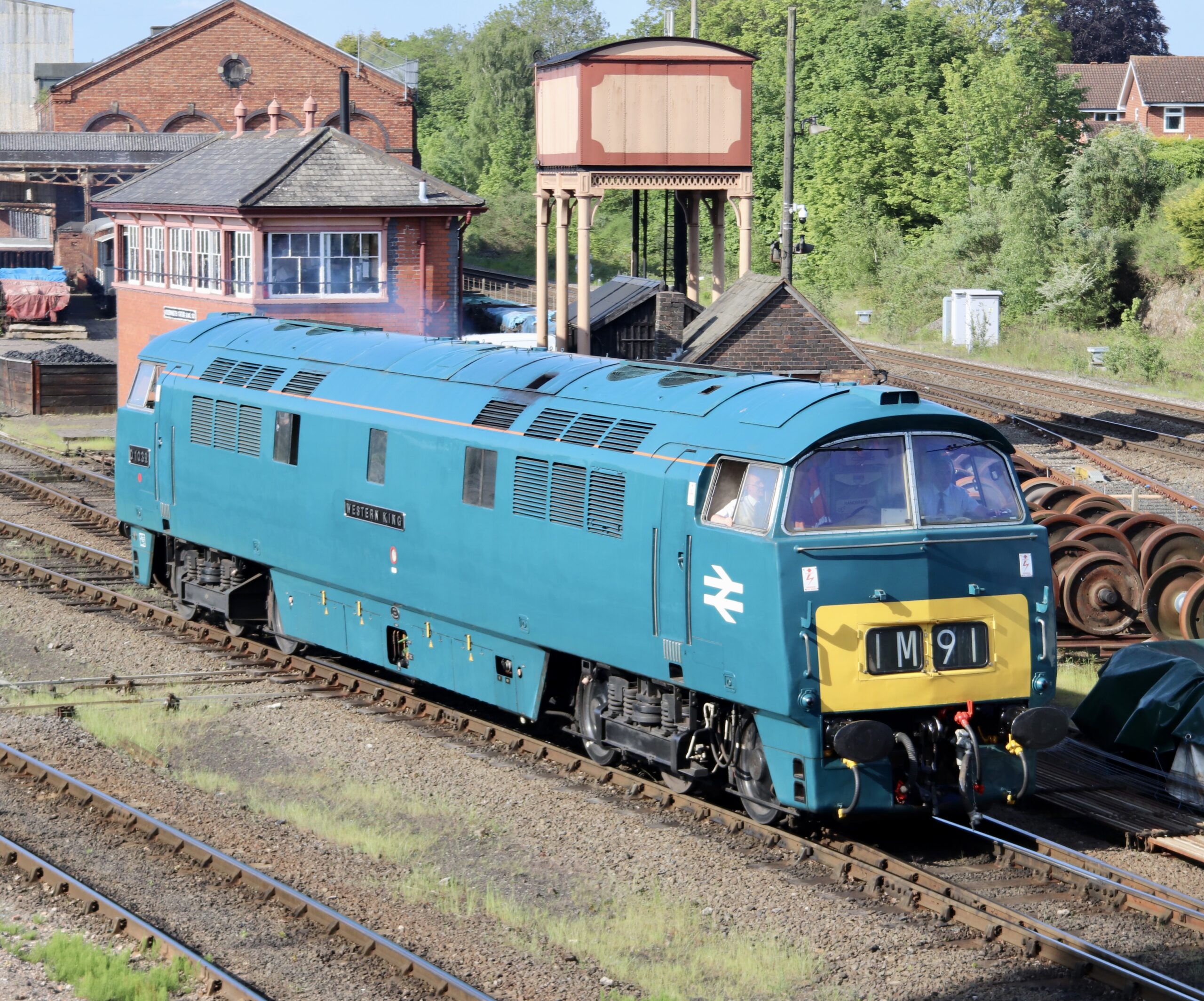
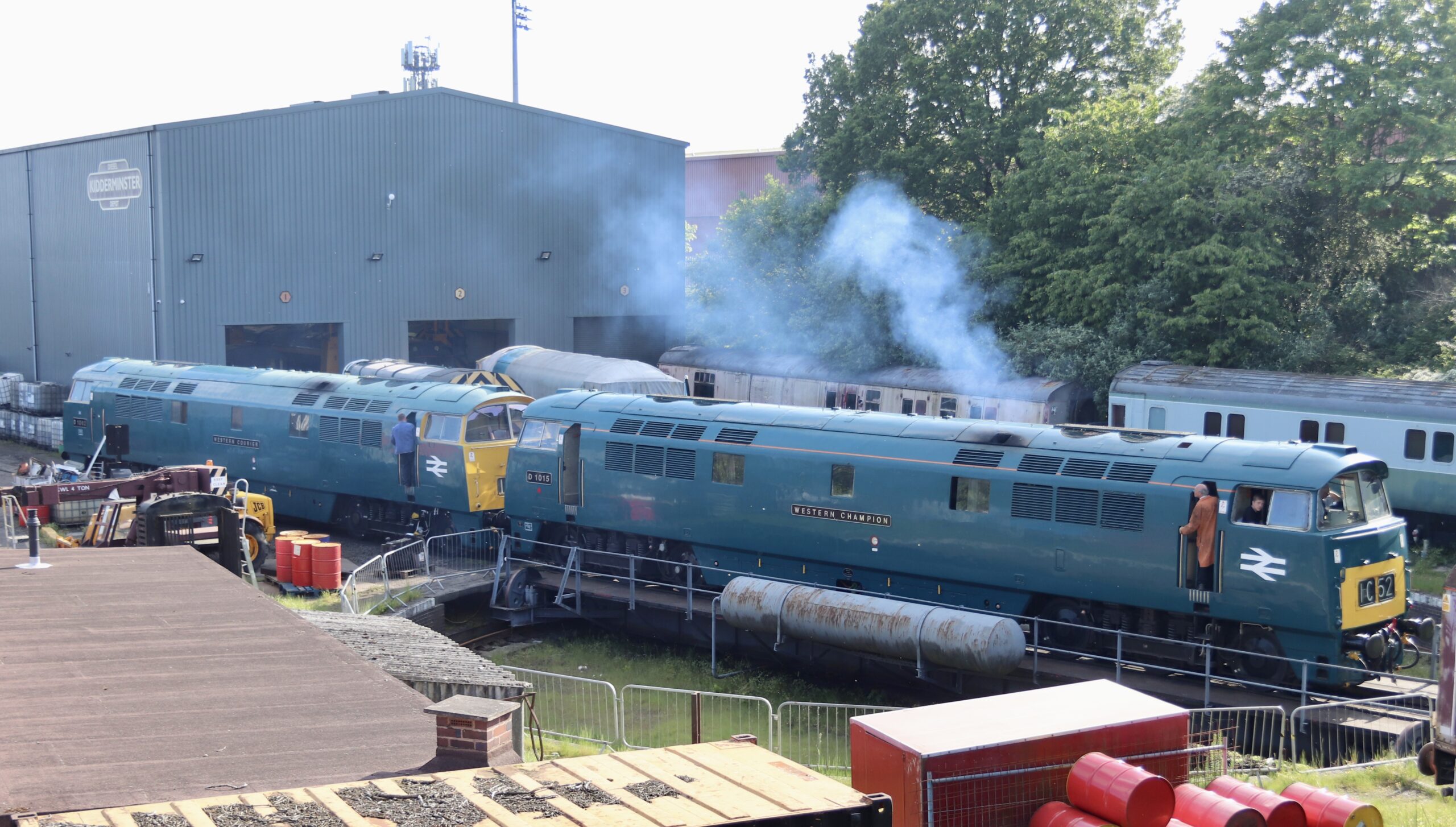
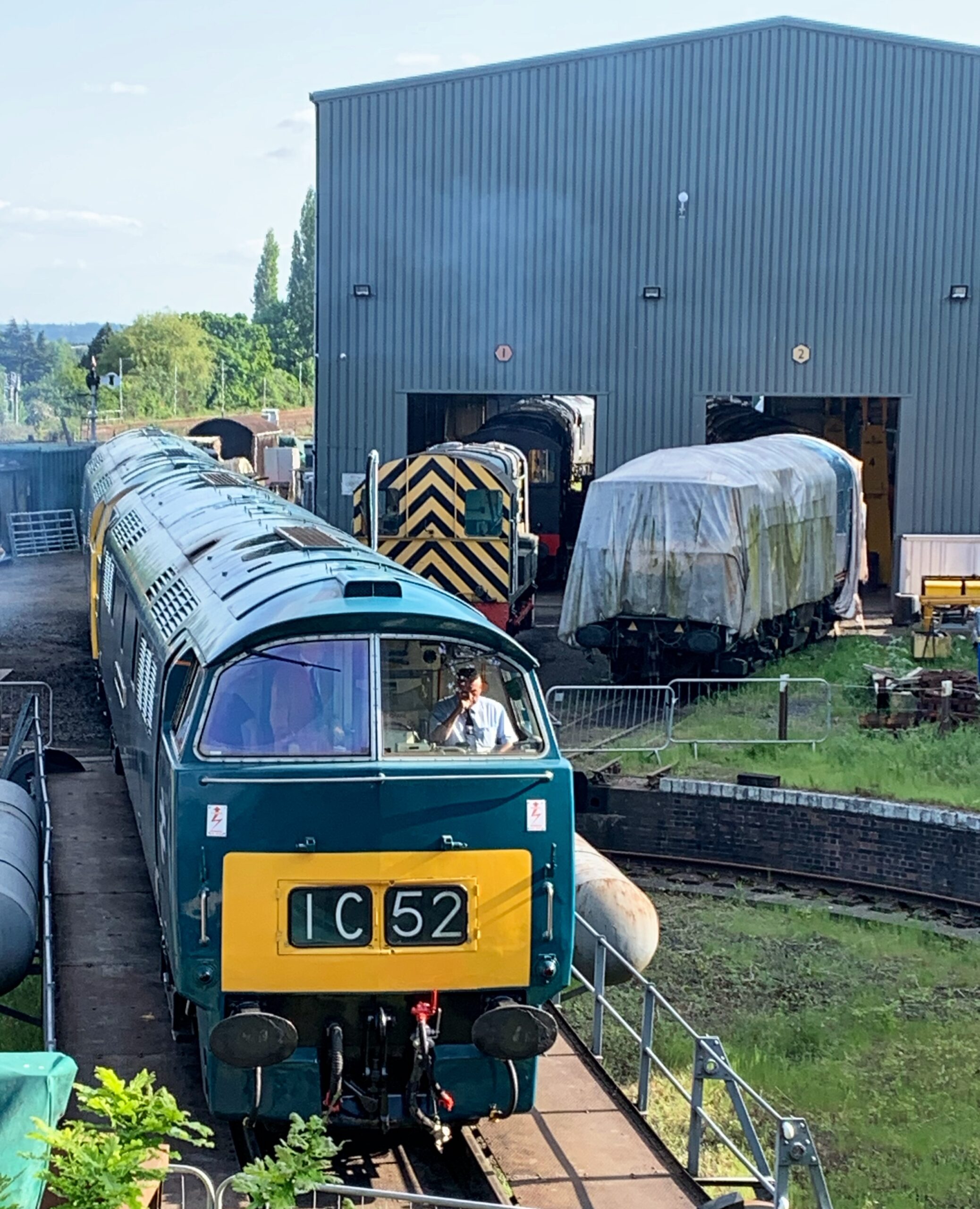
    The 2024 Swanage Railway Diesel Gala and Beer Festival took place from 10th to 12th May. Nine locomotives took part which involved an intensive three train service in operation with several trains running along the the entire length of the nine-mile line route from Swanage to the River Frome at the limit of the heritage line’s operations on the branch from Wareham. Star of the show was very much the Diesel Traction group’s Class 52 ‘Western’ No. D1015 ‘Western Champion’ which visited the Purbeck line for the first time since 2007 and the first time a member of the class which has run on the Swanage Railway since 2011. Alongside the first Class 69 hauling passenger trains on the line, the two Harry Needle Railroad Company (HNRC) Class 20’s, two Class 50’s and the Colas Class 37, the guest gala fleet was bolstered with Class 24 No. D5054 ‘Phil Southern’ which had previously arrived by road. The visiting locomotives were of course joined by Swanage Railway resident Class 33’s No. D6515 and 33111.

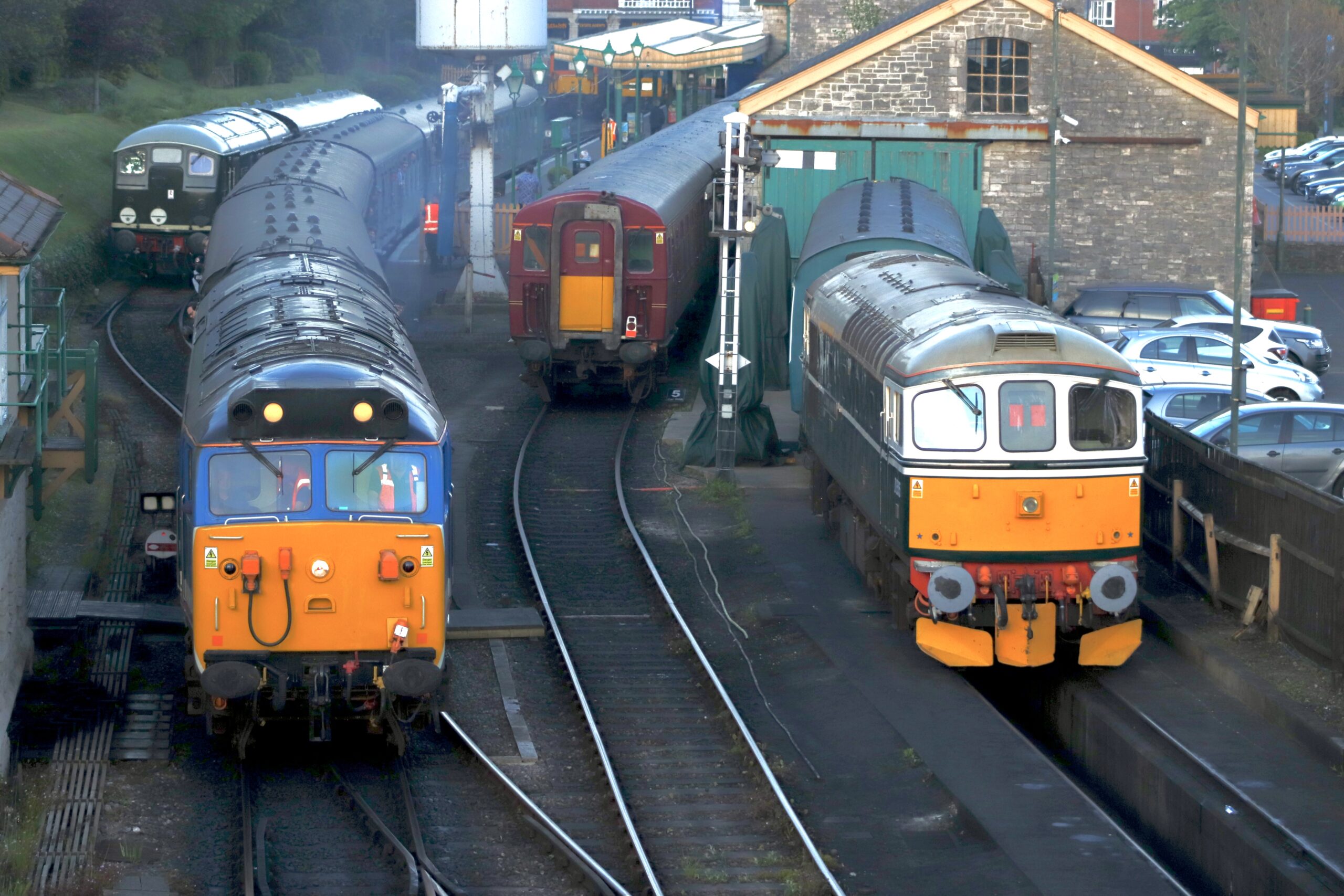
    Class 50 No. 50026 ‘Indomitable’ working a Beerex train to Corfe Castle, passing visiting Class 24 No. D5054 ‘Phil Southern’, the London Underground Class 4tc set and resident Class 33 No. D6515 (33012) ‘Lt Jenny Lewis RN’ – 10/05/2024
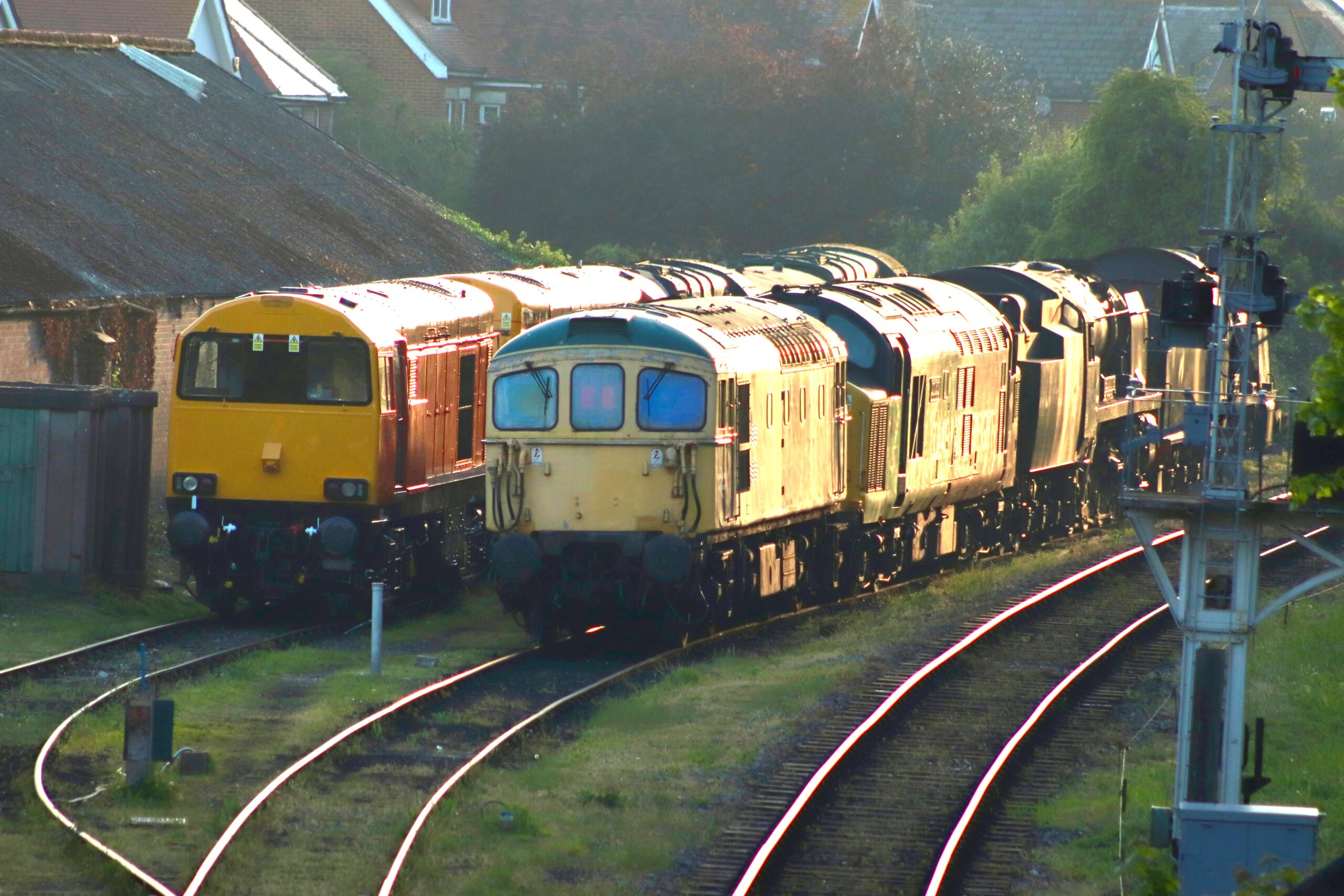
    An evening scene in the sidings at Swanage – 10/05/2024
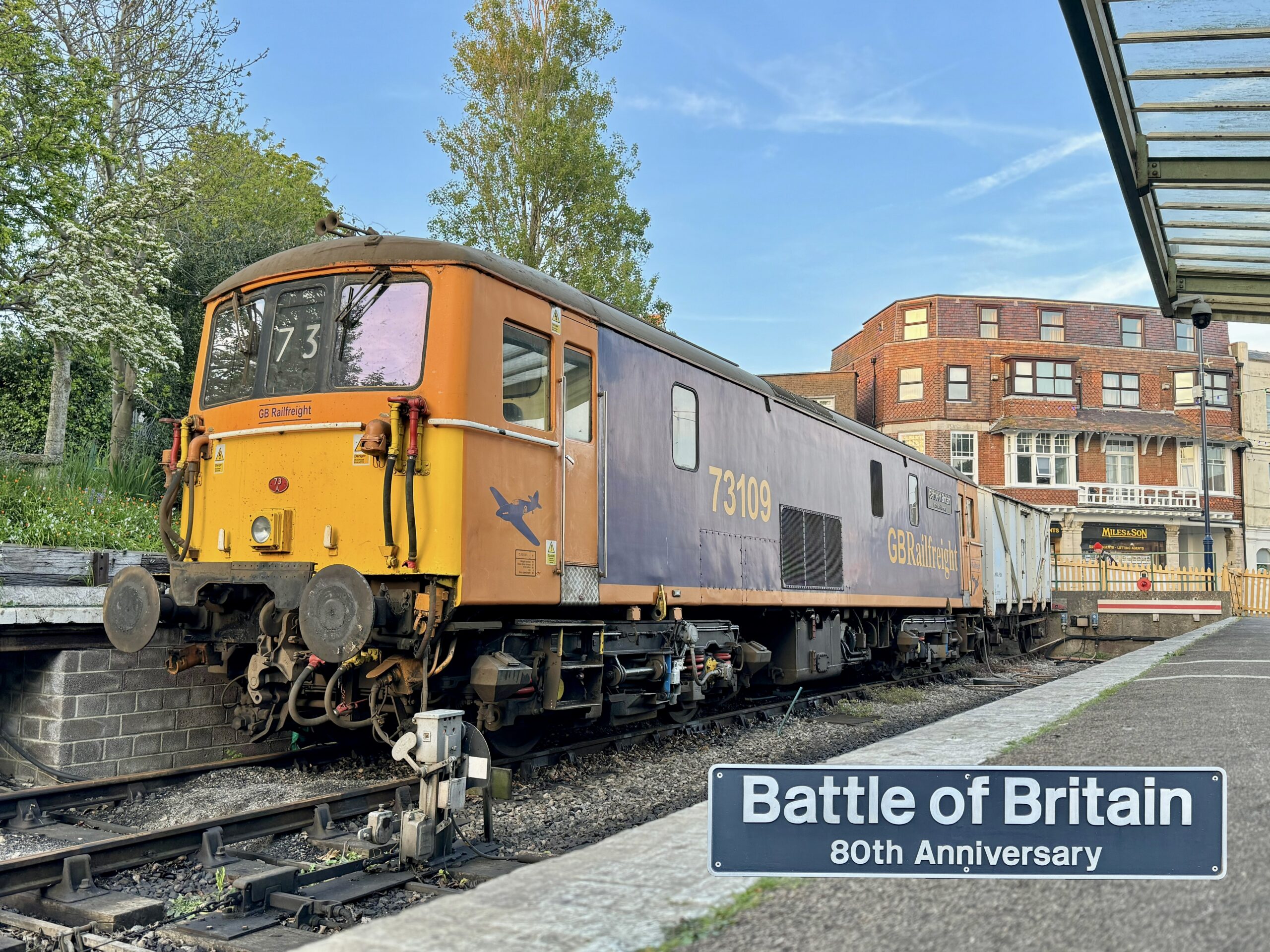
    GBRf Class 73 No. 73109 ‘Battle of Britain’ was on static display at Swanage station. The locomotive was enlisted to assist Class 33 No. D6515 (33012) ‘Lt Jenny Lewis RN’ on mainline railtour duty when the “Crompton” developed a fault – 10/05/2024
    Class 24 No. D5054 ‘Phil Southern’ from the East Lancs Railway. No. D5054 is one of just four preserved examples from the original 151 strong fleet of locomotives and was amongst the first diesel locomotives to be based at Bury. She is seen here at Swanage – 10/05/2024

    Class 50 No. 50026 ‘Indomitable’ was only scheduled to haul the Friday evening “Beerex” trains and it wasn’t to take any further part in the gala weekend. However, issues with the electronic field supply for the Electric Train Heat (ETH) generator on No. 50021 ‘Rodney’ meant the locomotive was withdrawn from running and the timetable had to be revised and No. 50026 was pressed into service. On a Class 50, the ETH generator also powers the radiator fan so the fault meant the locomotive had no cooling fan and without which would quickly overheat.

    Visiting Class 24 No. D5054 ‘Phil Southern’ on the approach to Harmans Cross – 11/05/2024
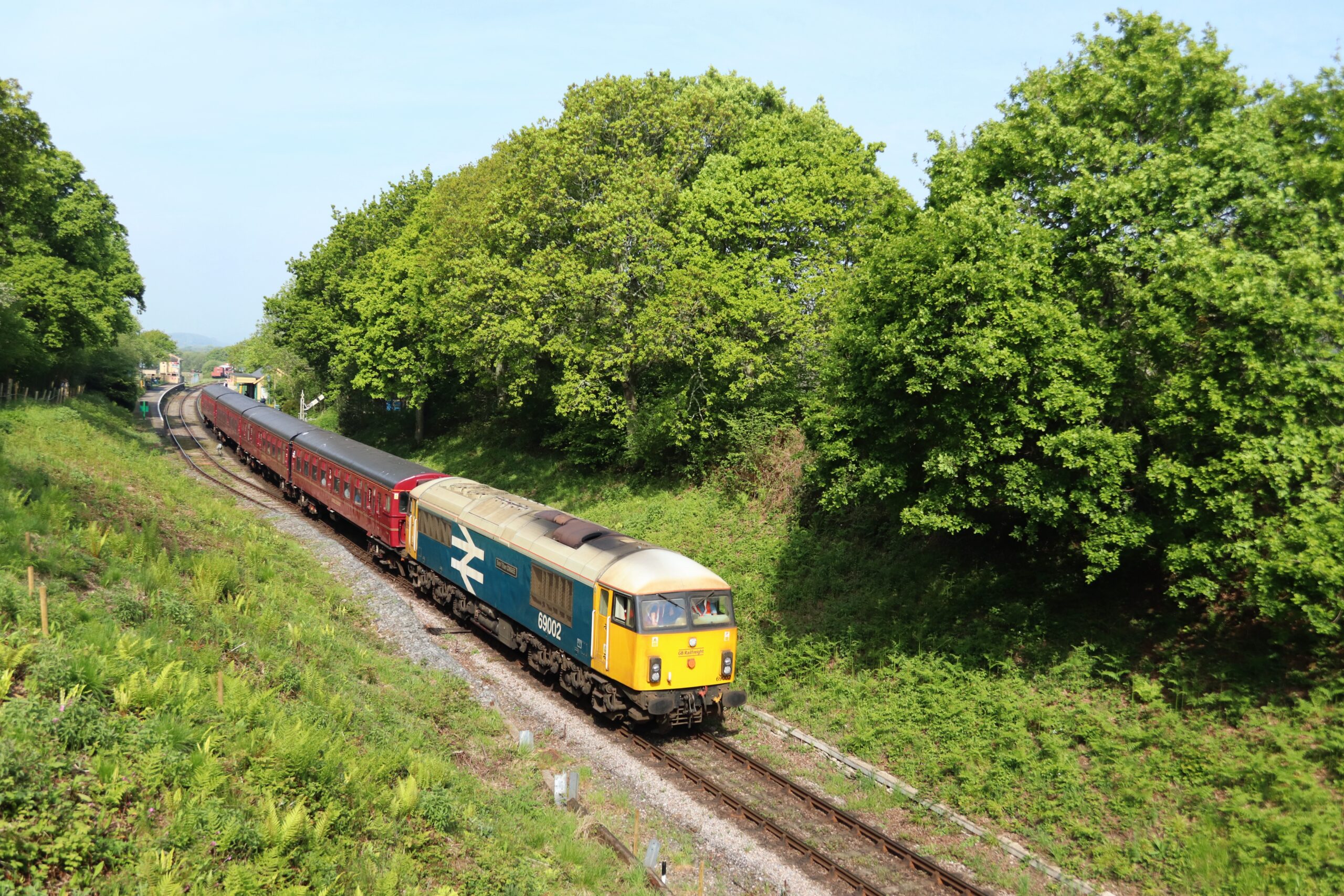
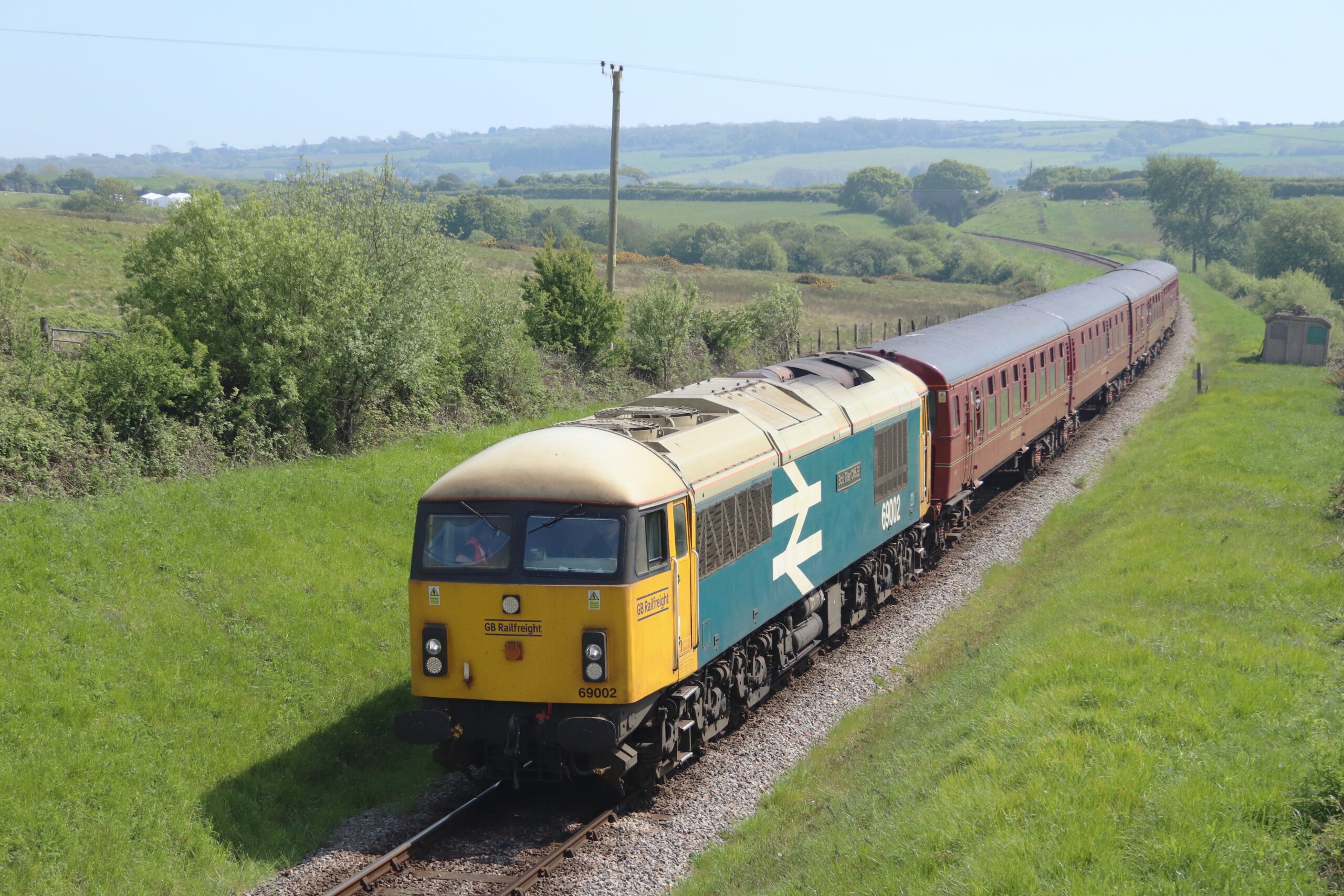
    GBRf Class 69 No. 69002 ‘Bob Tiller CM&EE’ ( a late replacement for failed sister loco No. 690XX) draws away from Harmans Cross – 11/05/2024
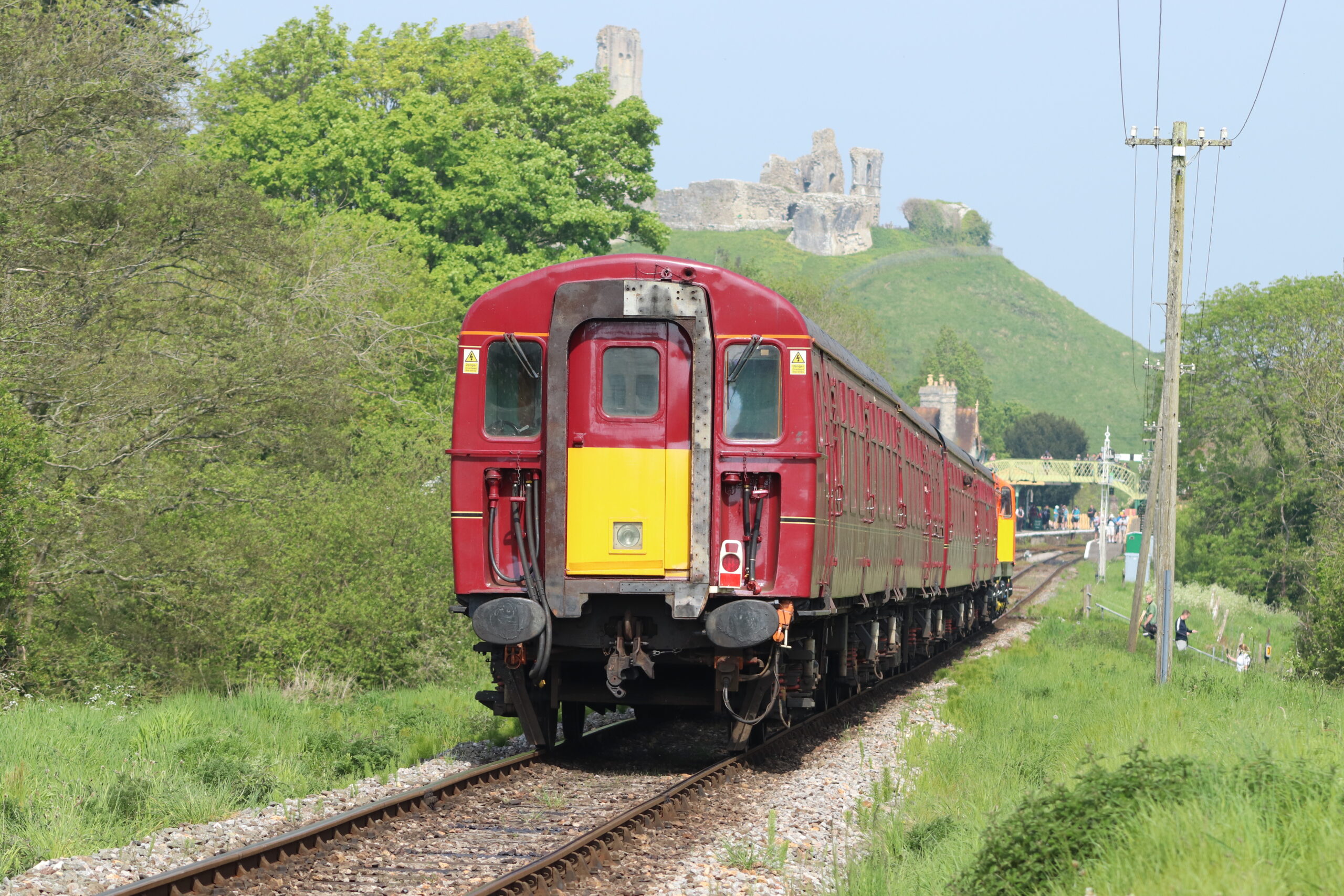
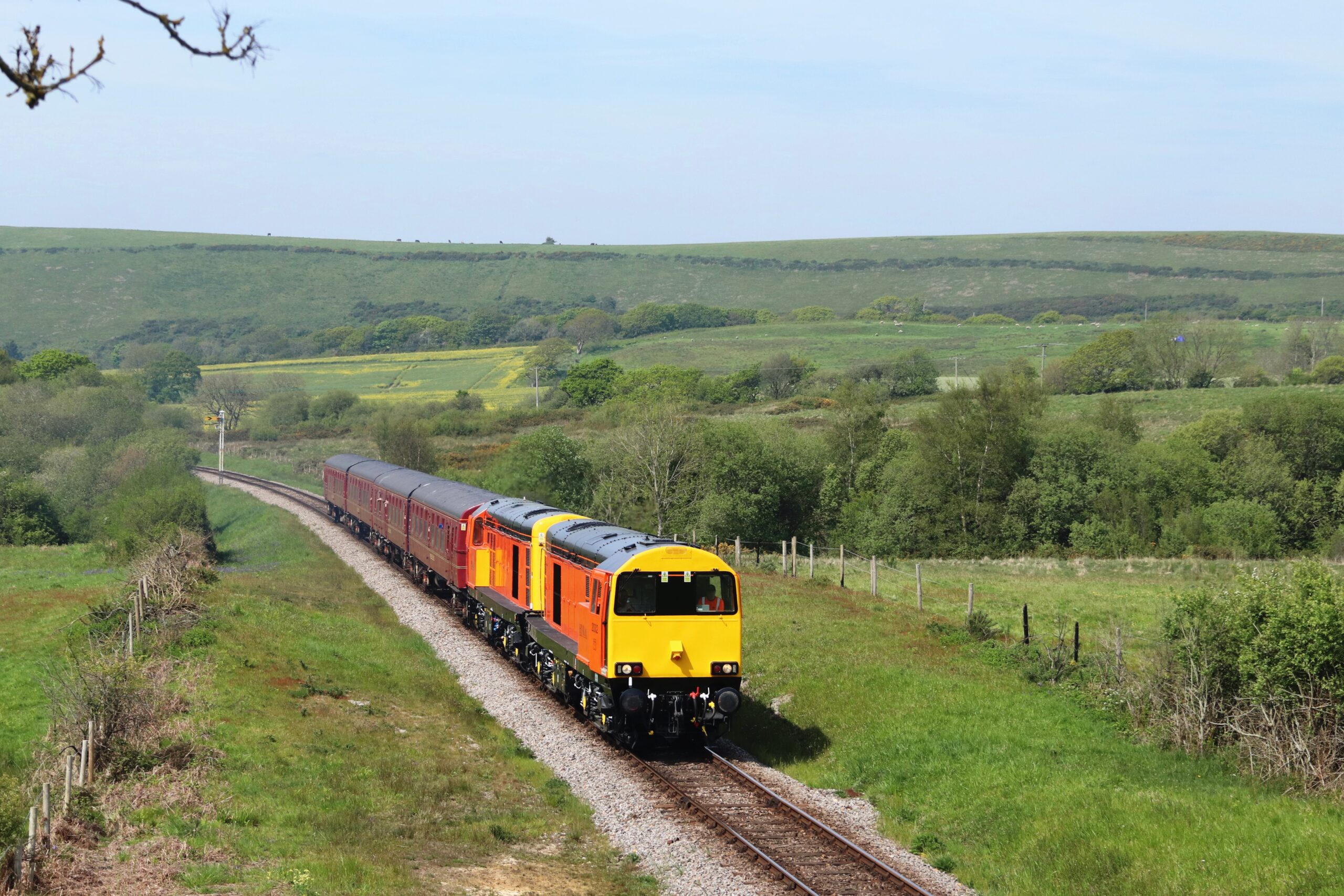
    Harry Needle Railroad Company (HNRC) Class 20 No.’s 20311 and 20302 hauling the London Underground 4tc set on the approach toCorfe Castle – 11/05/2024
    The London Underground Class 438 4tc set being hauled by the HNRC Class 20’s towards Corfe Castle – 11/05/2024
    Class 52 “Western” Diesel-Hydraulic No. D1015 ‘Western Champion’ on the approach to Corfe Castle – 11/05/2024
    Class 33 No. D6515 (33012) ‘Lt Jenny Lewis RN’ makes a fine sight departing Corfe Castle – 11/05/2024
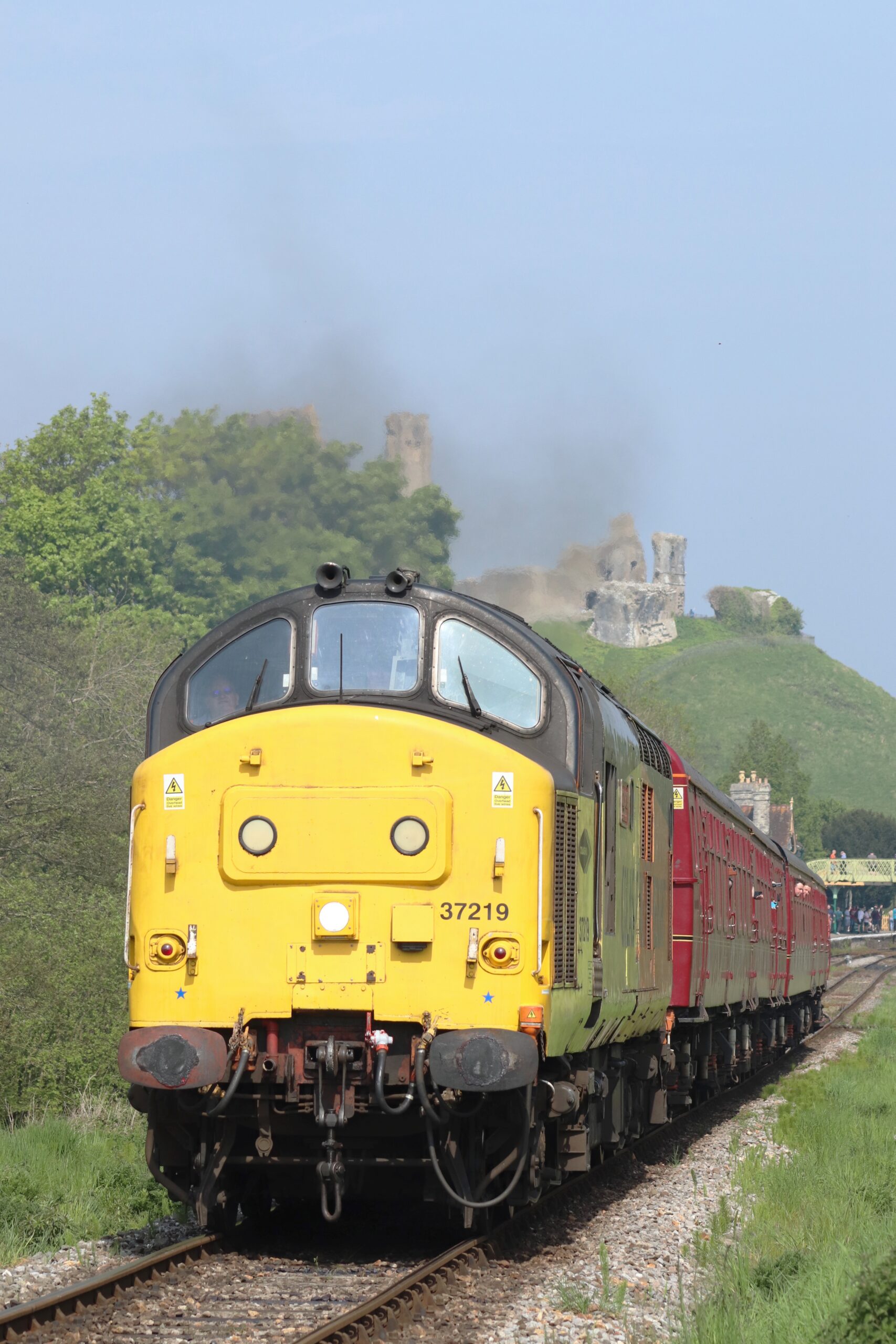
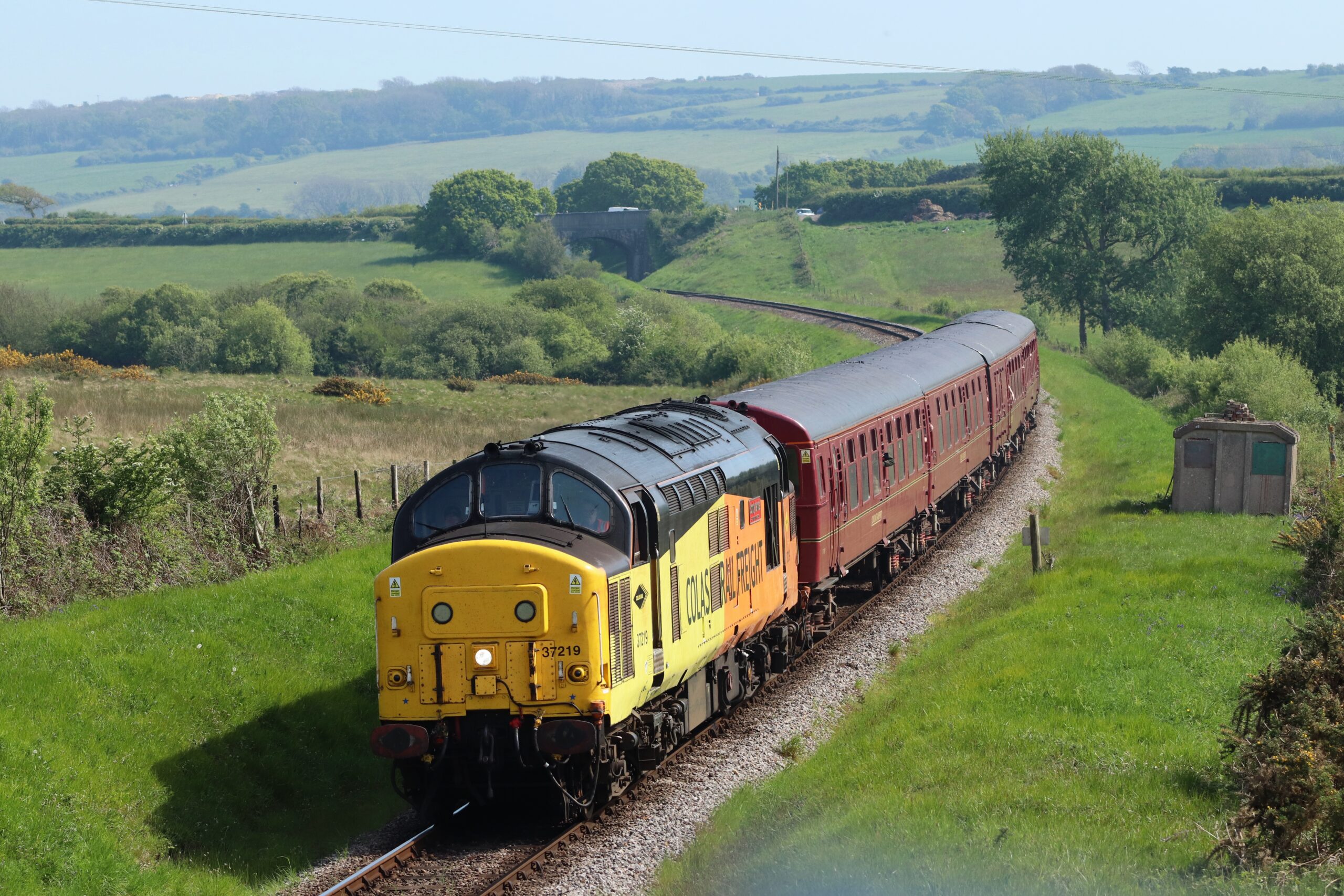
    Colas Railfreight Class 37 No. 37219 ‘Jonty Jarvis’ accelerates up the slight incline from Corfe Castle station – 11/05/2024
    Class 33 No. 33111 having departed Corfe Castle station – 11/05/2024
    Carrying a “Sulzer” headboard, Class 33 No. D6515 (33012) ‘Lt Jenny Lewis RN’ departs Swanage as the driver receives the token for the single line working from the signalman – 11/05/2024
    In its Network South East (NSE) livery, Class 50 No. 50026 ‘Indomitable’ powers towards Swanage – 11/05/2024
    GBRf Class 69 No. 69002 ‘Bob Tiller CM&EE’ having past Afflington. The London Underground 4tc set was made much use of during the gala weekend – 11/05/2024
    Harry Needle Railroad Company (HNRC) Class 20 No.’s 20311 and 20302 hauling the London Underground 4tc set towards Corfe Castle – 11/05/2024
    HNRC Class 20 No.’s 20302 and 20311 double head the London Underground 4tc set across Corfe Common – 11/05/2024
    Swanage resident Class 33 No. 33111 heads a train from Swanage – 11/05/2024
    Class 52 No. D1015 ‘Western Champion’ heads a Swanage bound train – 11/05/2024
    Colas Railfreight Class 37 No. 37219 ‘Jonty Jarvis’ hauls the London Underground 4tc set across Corfe Common – 11/05/2024
    Class 24 No. D5054 ‘Phil Southern’ heads towards Corfe Castle – 11/05/2024
    Colas Railfreight Class 37 No. 37219 ‘Jonty Jarvis’ powers towards Corfe Castle with Afflington Bridge behind – 11/05/2024
    My final shot of the day, GBRf Class 69 No. 69002 ‘Bob Tiller CM&EE’ with Corfe Castle in the distance heads across Corfe Common with a Swanage bound train – 11/05/2024

    Unfortunately there was further disruption on Saturday evening when No. 50026, on the back of a six-carriage passenger train, became partially derailed at Castle Corfe station at approximately 1830 – around the same time I was settling down to watch new ‘Doctor Who’ on BBC 1. The evening gala and Beerex services were suspended following the incident. No passengers were injured and no damage was sustained to the carriages on the train. The government’s Rail Accident Investigation Branch (RAIB) were advised and they carried out an investigation on the cause of the derailment. The Class 50 was re-railed during the night by rail support service Goodman’s and inspections did not reveal any damage to the locomotive.

    Webcam Screenshot from the Corfe Castle camera showing Class 50 No.50026 ‘Indomitable’ being assessed after she came off the rails. The Webcam feed was later turned off at the request of the Rail Accident Investigation Board (RAIB) – 11/05/2024
    Video glimpse of the 2024 Swanage Diesel Gala

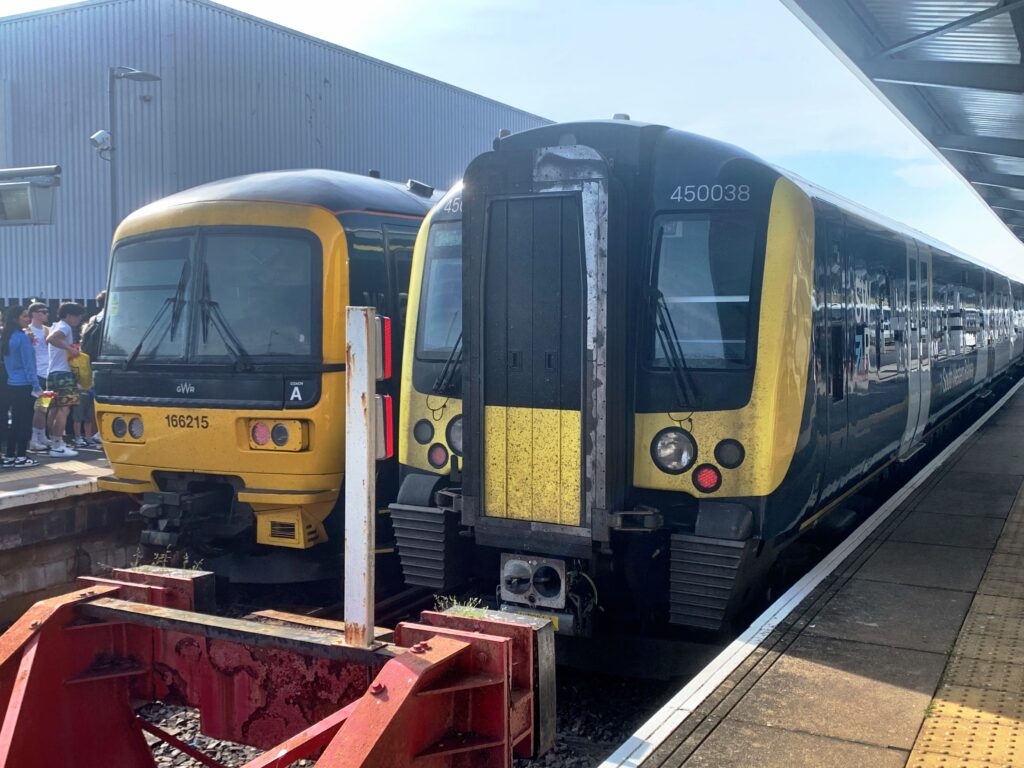
    Also of nite, the Saturday saw a surprise run of a pair of SWR Class 450 EMU’s to Weymouth forming an eight coach train. I was too busy on the Swanage Railway or watching new “Doctor Who” to pop out and see them, but good friend of the blog @da_buckley967 was on hand to capture No.’s 450091 and 450038 in Weymouth station having worked in from Portsmouth earlier in the day.

    Unusual visitors for Weymouth; two four car SWR Class 450 EMU No.’s 450091 and 450038 stand at platform having worked in with a VSTP (Very Short Term Plan) working 1K21 1056 Portsmouth Harbour to Weymouth – 11/05/2024 (Image courtesy of da_buckley967)
    SWR Class 450 No. 450038 forming the rear of 1K32 1903 Weymouth to Portsmouth Harbour at the buffer stops in Weymouth alongside GWR Class 166 No. 166215 working 2V96 1845 Weymouth to Bristol Temple Meads – 11/05/2024 (Image courtesy of da_buckley967)

    A heavily revised timetable was implemented at the Swanage Diesel Gala on the Sunday, but the BLS charter the “Return of the Jurassic Crompton” ran as scheduled, departing Swanage at 1430. We saw the charter train crossing the Holes Bay causeway.

    Class 33 No. D6515 (33012) ‘Lt Jenny Lewis RN’ traverses Creekmoor Viaduct with GBRf Class 73 No. 73109 ‘Battle of Britain’, the London Underground 4tc set and GBRf Class 69 No. 69002 ‘Bob Tiller CM&EE’ at the rear working the Branch Line Society railtour “The Return of the Jurassic Crompton” 1Z35 1420 Swanage to London Waterloo across Holes Bay causeway on the approach to Poole – 12/05/2024
    D6515 (33012) ‘Lt Jenny Lewis RN’ entering Wareham working light engine movement 0z36 1105 Eastleigh Arlington (ZG) to Swanage – 13/05/2024
    D6515 (33012) ‘Lt Jenny Lewis RN’ pauses at Wareham to pick up Swanage Railway crew as she returns to the heritage railway after the previous days railtour – 13/05/2024

    The other visiting locomotives mostly departed over the next couple of days, with No. 37219 ‘Jonty Jarvis’ leaving first on Monday 13th and a convoy consisting of the No. D1015, the Class 20’s and both Class 50’s heading to Eastleigh on Tuesday 14th.

    Colas Rail Class 37 No. 37219 ‘Jonty Jarvis’ passes through Hamworthy running as 0F75 1030 Swanage to Westbury Down TC – 13/05/2024
    Homeward bound – the Swanage Diesel Gala guest locomotive convoy crosses Rockley Sands Viaduct with Class 52 D1015 ‘Western Champion’ hauling HNRC Class 20’s 20311 and 20302 with 50021 ‘Rodney’ and 50026 ‘Indomitable’ reporting as 0Z50 1032 Swanage to Eastleigh Arlington (ZG) – 14/05/2024
    Video from of the 2024 associated Swanage Diesel Gala mainline workings

    Tuesday and another Class 458 delivery / departure ran, once again in the hands of GBRf Class 69 No. 69008 heading up 5Q64 1534 Southampton Central to Bournemouth TRSMD with refurb SWR Class 458 No. 458413 and returning later on 5Z66 2018 Bournemouth TRSMD to Eastleigh East Yard which took No. 458512 on its first leg to Widnes for refurbishment. These moves ran early and I missed my chance at taking photographs, however I did manage to capture some quick video of the first working as it passed Poole Park.

    Screenshot GBRf Class 69 No. 69008 heading up 5Q64 1534 Southampton Central to Bournemouth TRSMD with 458413 – 14/05/2024
    Video of GBRf Class 69 No. 69008 working 5Q64 1534 Southampton Central to Bournemouth TRSMD with SWR Class 458 No. 458413 – 14/05/2024

    And that brings us to the end of another blog instalment. We’ll be back in a week or so with our report from the Severn Valley Railway diesel gala and an update on out of the ordinary railway workings in Dorset. As always, thanks for reading and for your comments which are appreciated. Be seeing you!

  • Yoshi’s Bincombe Visit

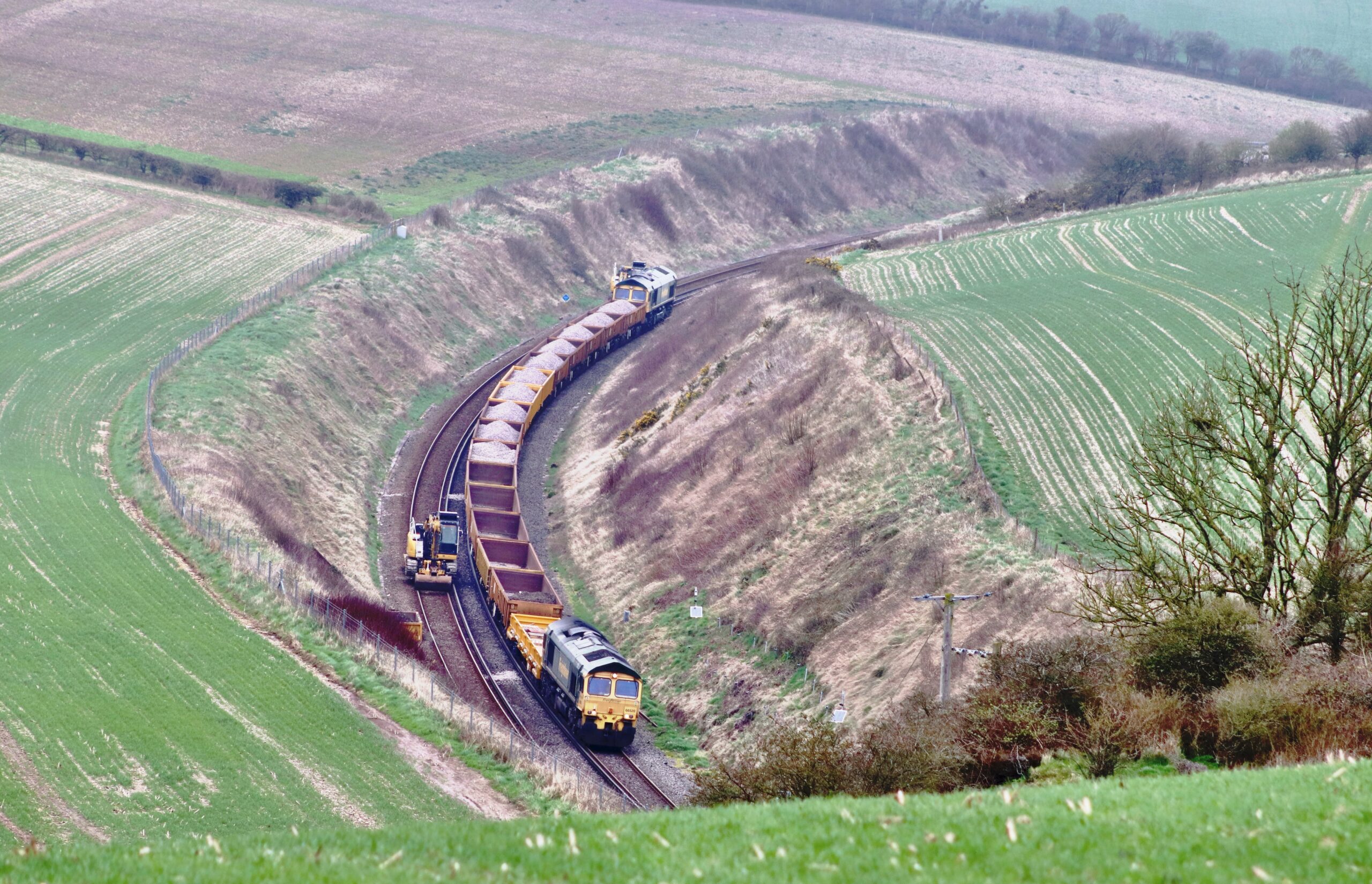
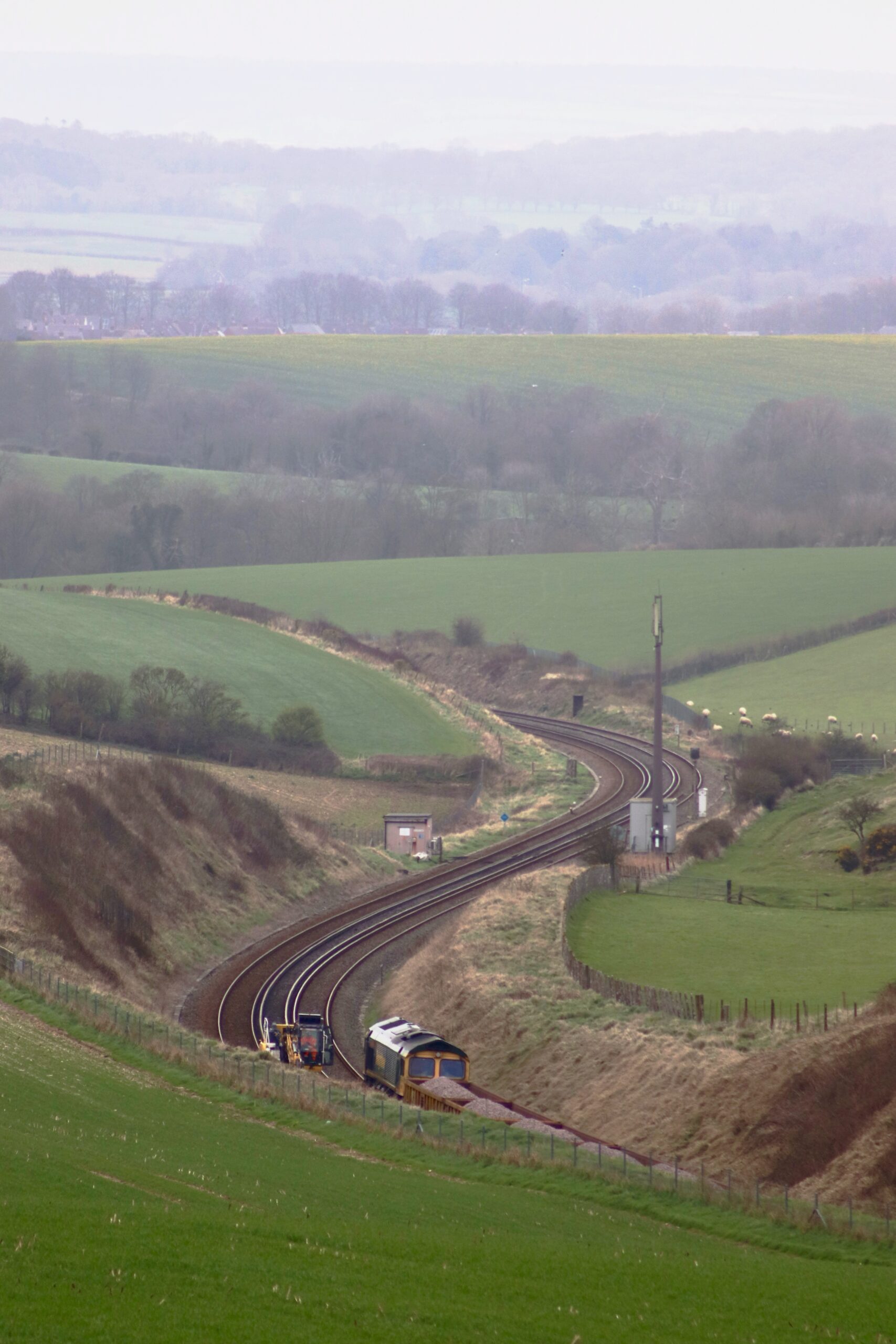
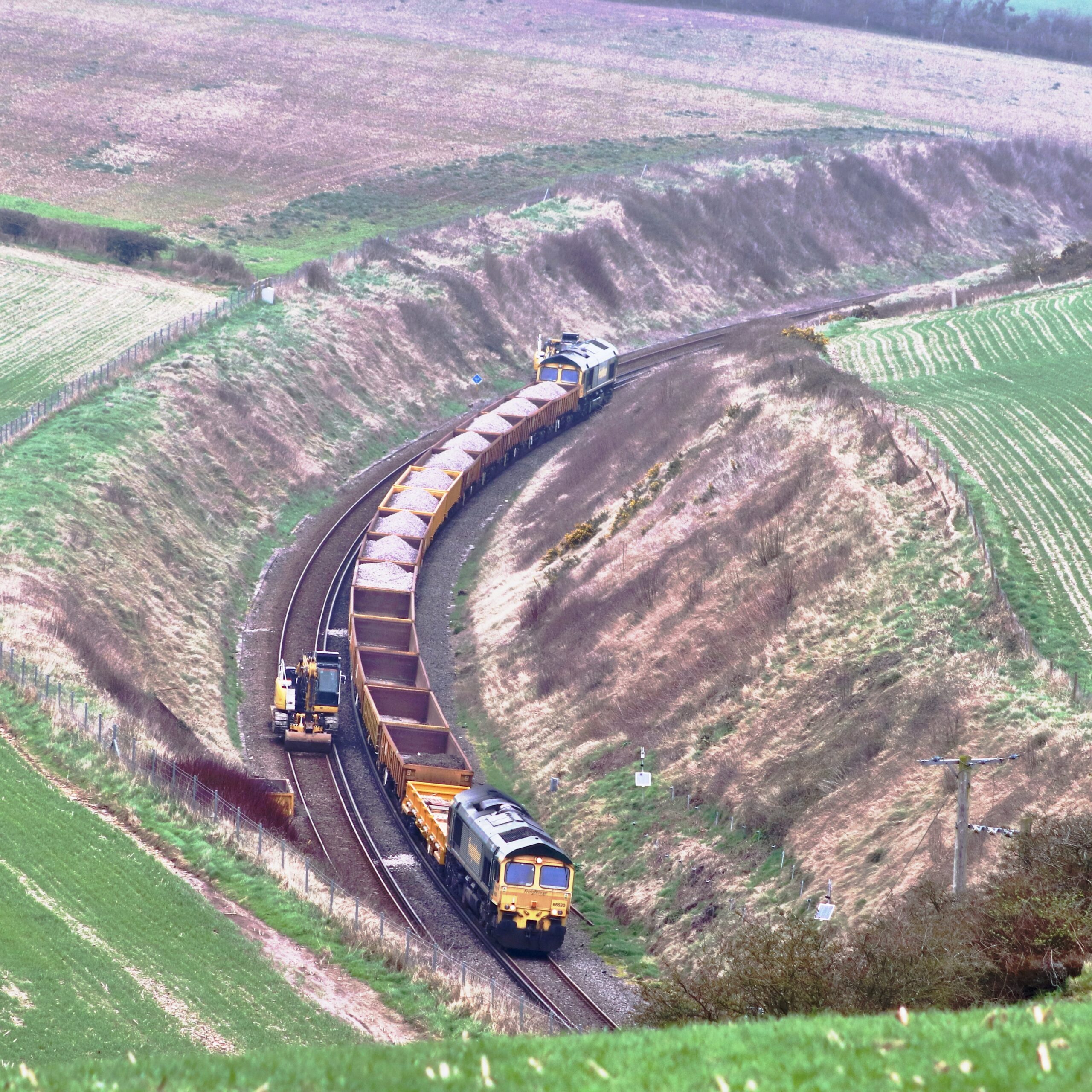
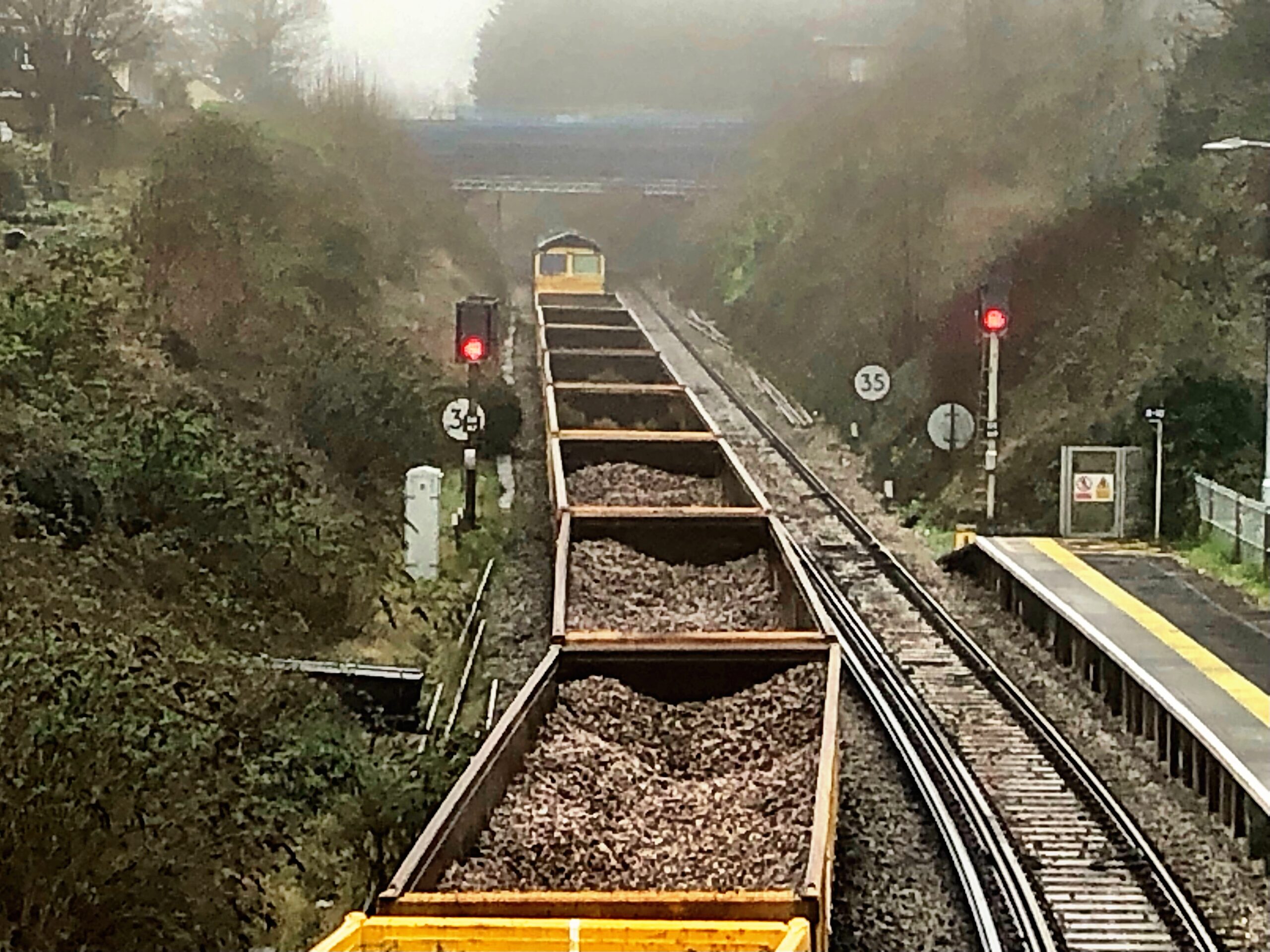
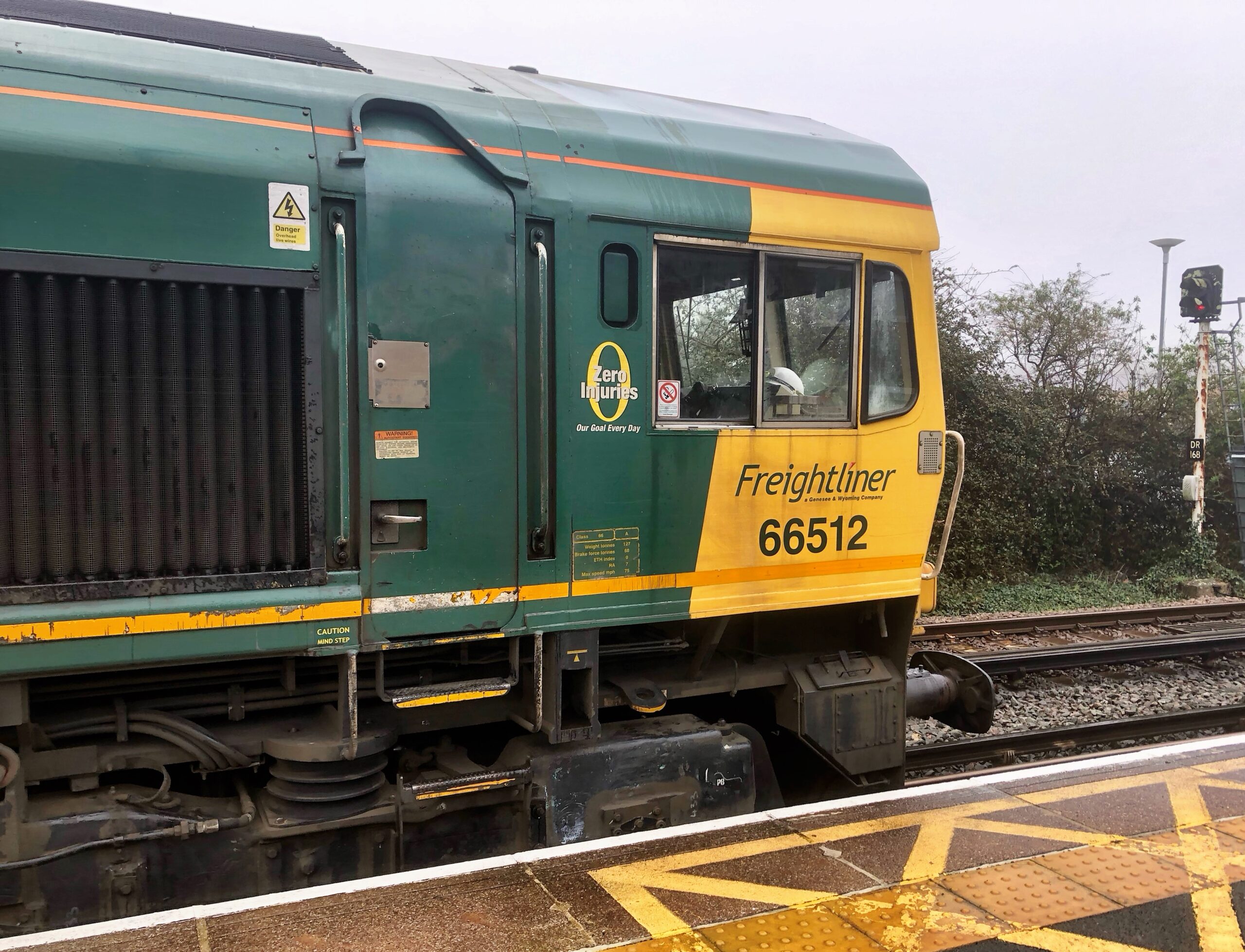
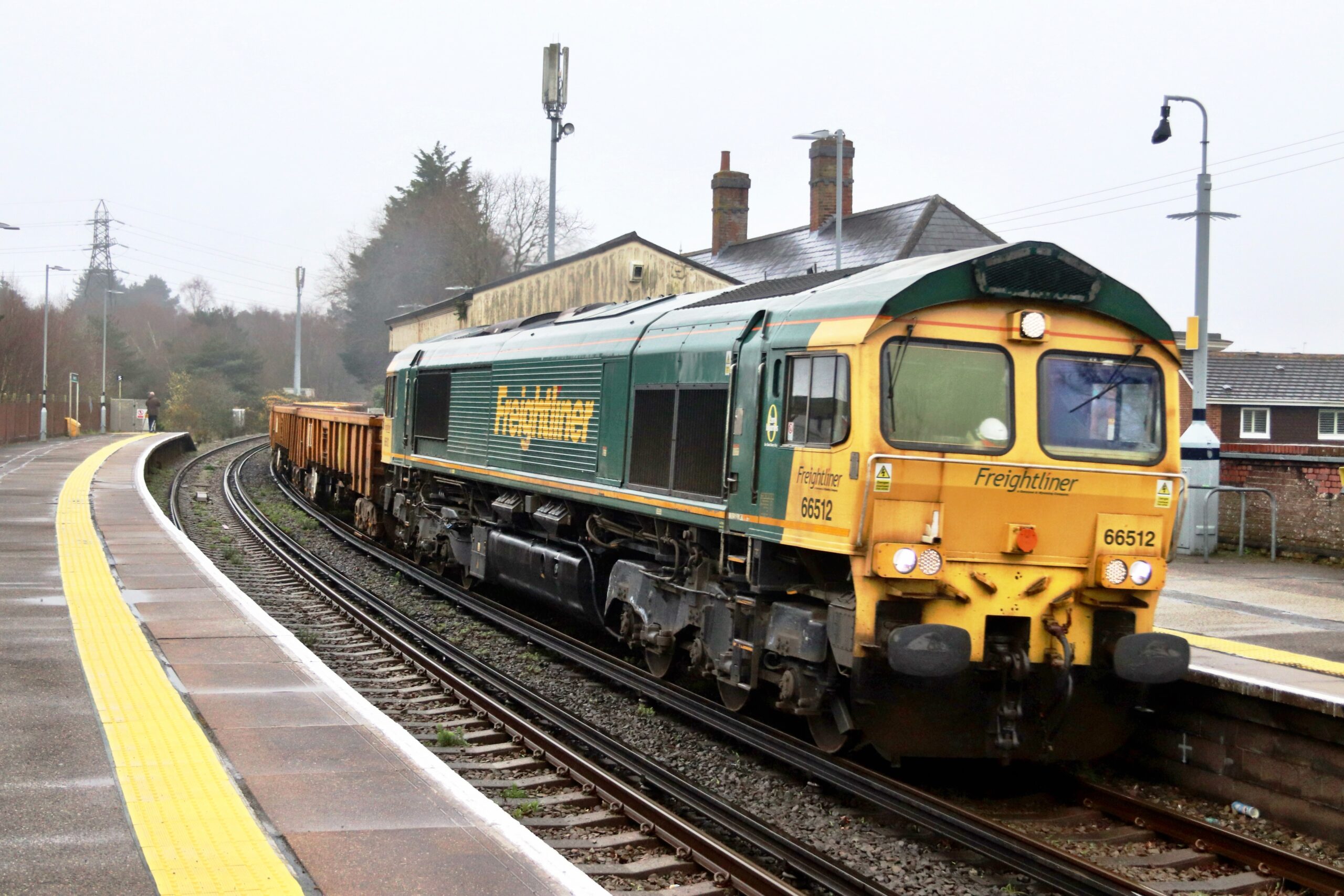
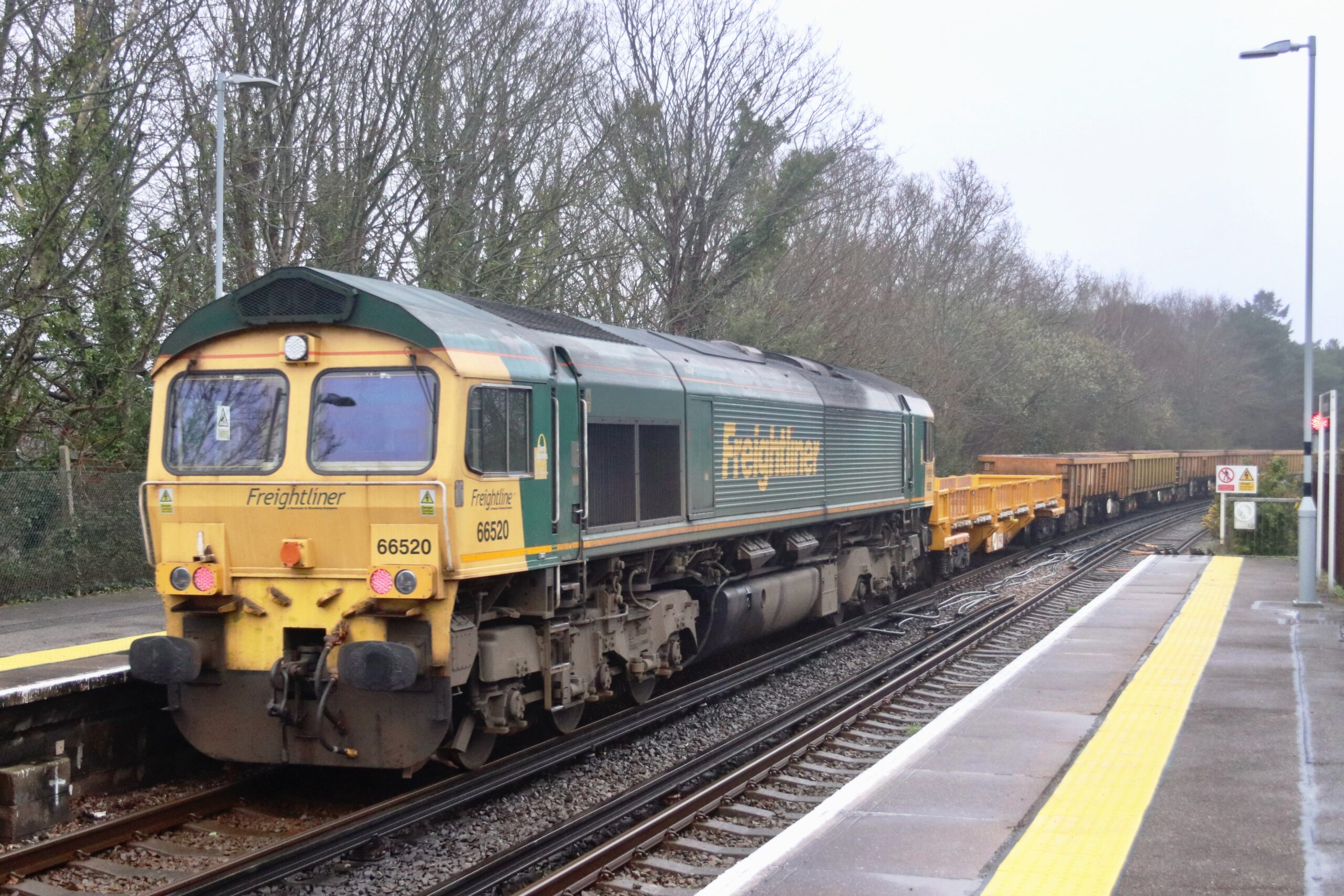
    Freightliner Class 66 locomotives No.’s 66520 and 66512 at Bincombe during engineering work reporting as 6Y85 2348 Eastleigh East Yard to Dorchester South – 18/03/2024

    March 16th 2024 to March 22nd 2024

    Maintenance work between Dorchester and Weymouth closed the railway line from Monday 18th to Wednesday 20th March 2024 affecting both South Western Railway (SWR) and Great Western Railway (GWR) services along this route. In association with the work, an engineers train, in the hands of Freightliner, worked from Eastleigh East Yard to Dorchester South overnight of 16/17th March, arriving in the County Town at 0156 on the Monday morning, approximately 46 minutes behind schedule. We saw the train pass through Hamworthy, top and tailed by Class 66 locomotives No.’s 66520 and 66512, at which point it was running 36 minutes late.

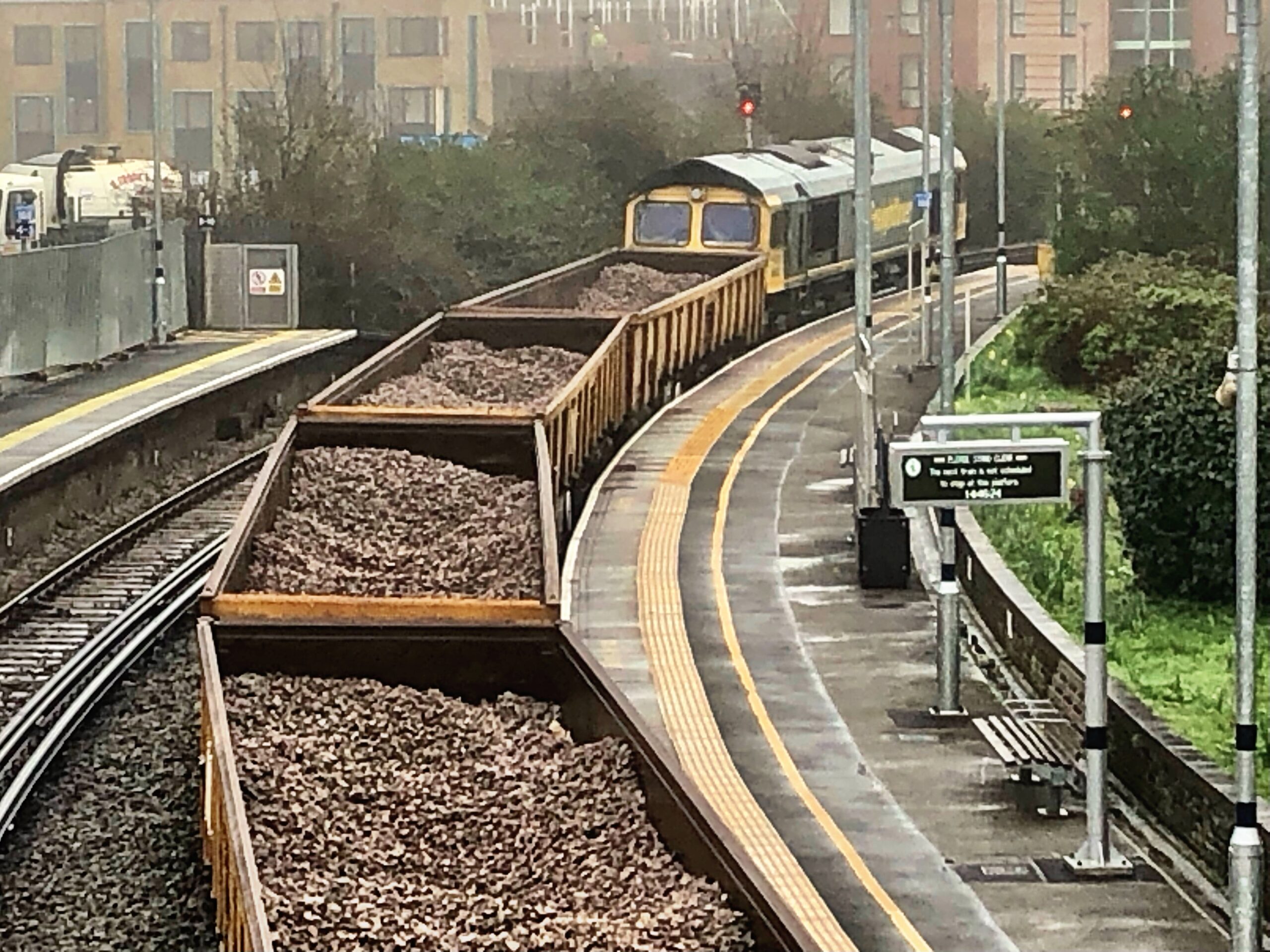
    Freightliner Class 66 No. 66520 leads through Hamworthy working 6Y85 2348 Eastleigh East Yard to Dorchester South – 17/03/2024
    FL Class 66 No. 66512 brings up the rear on 6Y85 2348 Eastleigh East Yard to Dorchester South passing Hamworthy – 17/03/2024

    As we arrived at the station in good time to see the engineering train heading to Weymouth, we were surprised to see an empty coaching stock movement, formed of SWR Class 444 No. 444001 passing through Hamworthy just after 0100 on its way to Bournemouth Traincare depot working as 5W71 0041 Weymouth to Bournemouth TRSMD. A result of the line being closed in the Poole area on the Sunday meant trains from London Waterloo terminated at Bournemouth. A replacement bus service ran to stations between Bournemouth and Wareham with a shuttle train service operating between Wareham and Weymouth during the day.

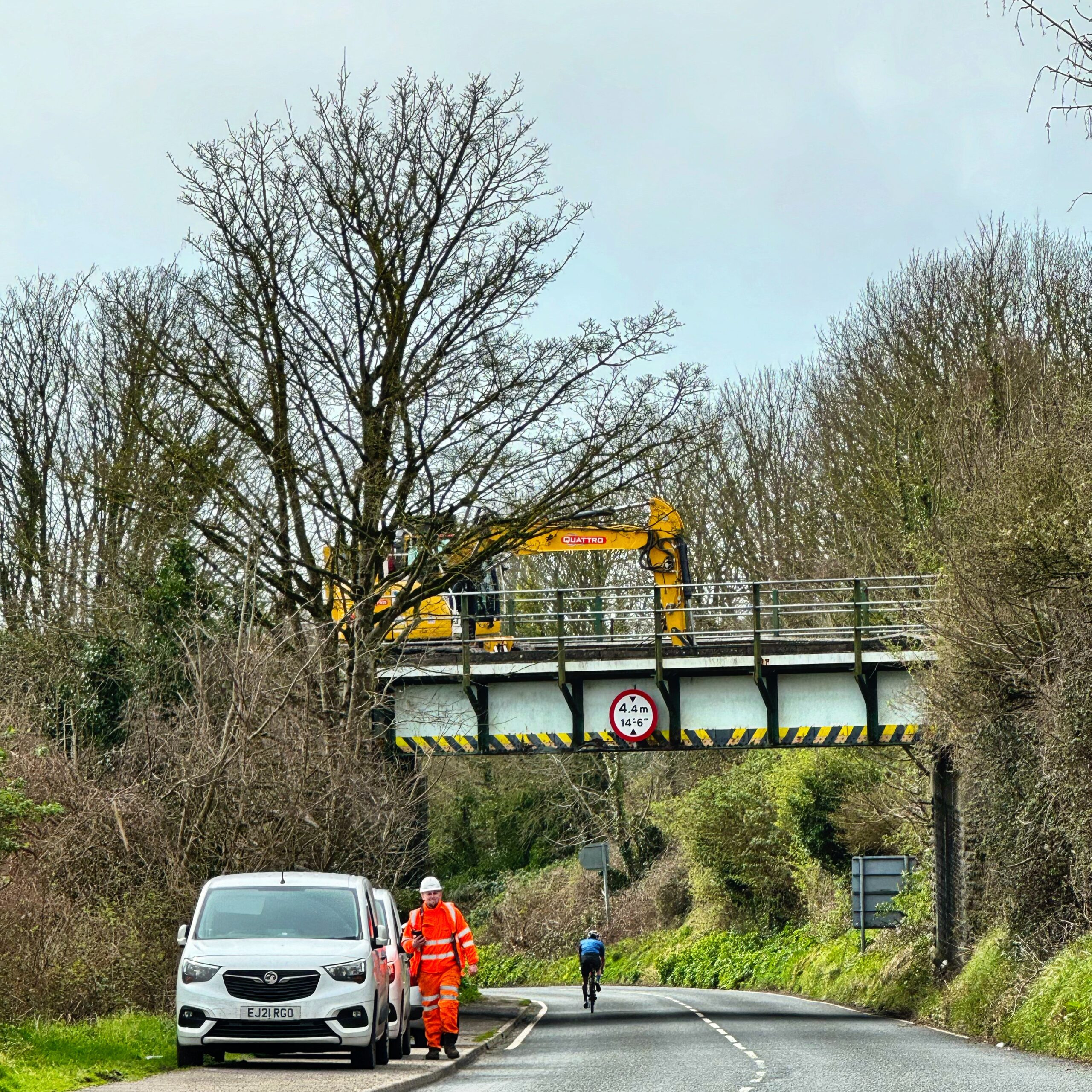
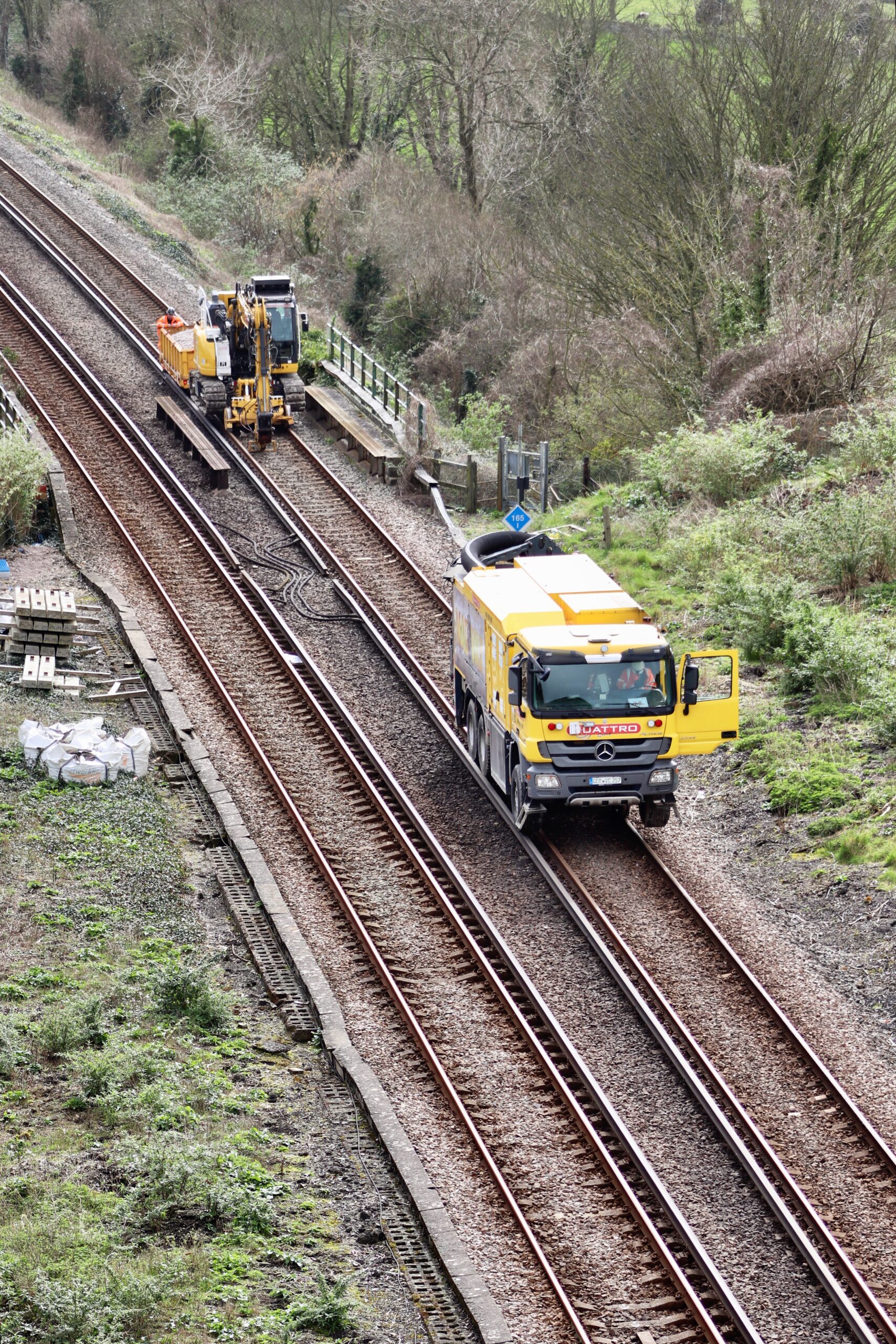
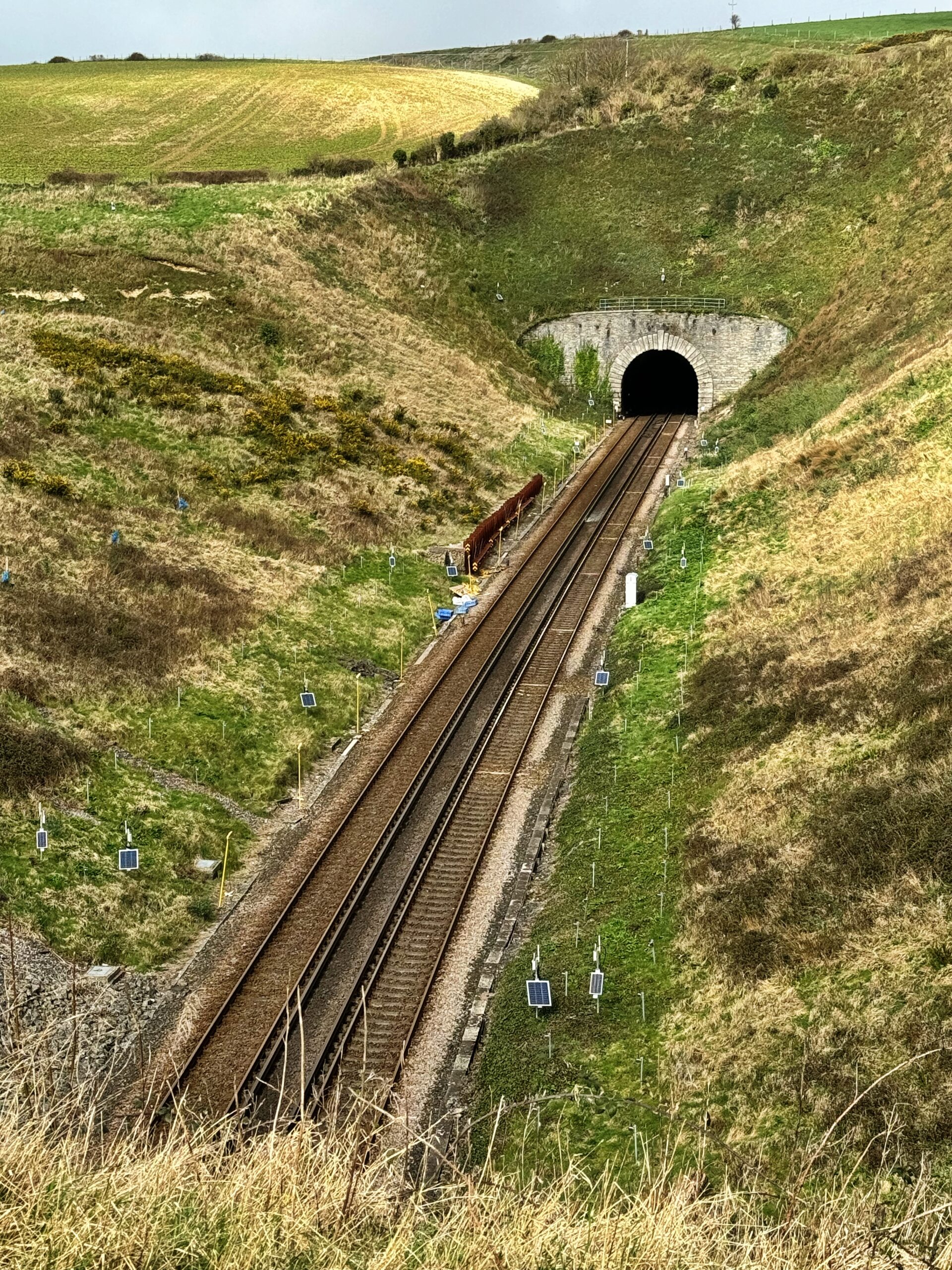
    The worksite necessitating the Monday to Wednesday line closure was located in the Bincombe area, where track would receive the attention of a tamper and gain some fresh ballast. We popped out on Monday afternoon to take a look at what was going on, expecting to find the two Class 66 locomotives parked up on the down line between Bincombe Tunnel and Bincombe Tunnel Number 2. Instead we found Quattro Group’s Mercedes rail road vehicle ‘Mad Vax’ and one of their tracked Road Rail Vehicles (RRV).

    A RailRoad vehicle at Bincombe – 18/03/2024
    Quattro Group’s Mad Vax vacuum excavation system, which won the Most Innovative RRV Product Award at the National Rail Awards in 2019, prepares to do its stuff at Bincombe. Quattro Group are rightly proud of this piece of kit; “The Mad Vax vacuum excavation system has all the power and performance needed to complete a wide array of rail applications from ballast removal to spillage clean up operation. The unit’s spoil capacity is an impressive 6m3, and with a side tipping hopper it can be emptied lineside, utilising a special split-lid spoil tank to give a lower overall profile and to reduce overall tipping height for works under overhead power cables or at a suitable location when off track. The machine is also equipped with a Powerarm and IKE rotating suction tube to aid in breaking up harder ground for improved efficiency.” – 18/03/2024
    Bincombe worksite for the March 2024 maintenance work – 18/03/2024

    After a quick chat with friend of this blog, Robin, we drove off towards Upwey to see if the engineers train was stabled near the railway station. Despite much of the line side trees and vegetation having been cut back, there was no sign of the Freightliner train. After refreshments at The Royal Standard in Upwey, we proceeded to drive back towards Dorchester when, glancing to the right as we came over the brow of Ridgeway hill, we could see the unmistakable sight of a Class 66 locomotive. Parking the car in the next lay-by, I crossed over the road and proceeded along the footpath back in the direction of Weymouth to see if it was possible to get a photo of the train at rest.

    Class 66 No. 66512 stands out amidst the Dorset countryside – 18/03/2024

    I was quite pleased with the resulting photo of the train parked at the northern portal of Bincombe Tunnel, perfectly placed for a photograph imho.

    Because I liked the shot so much, another view of Freightliner Class 66 locomotives No.’s 66520 and 66512 at Bincombe during engineering work reporting as 6Y85 2348 Eastleigh East Yard to Dorchester South – 18/03/2024
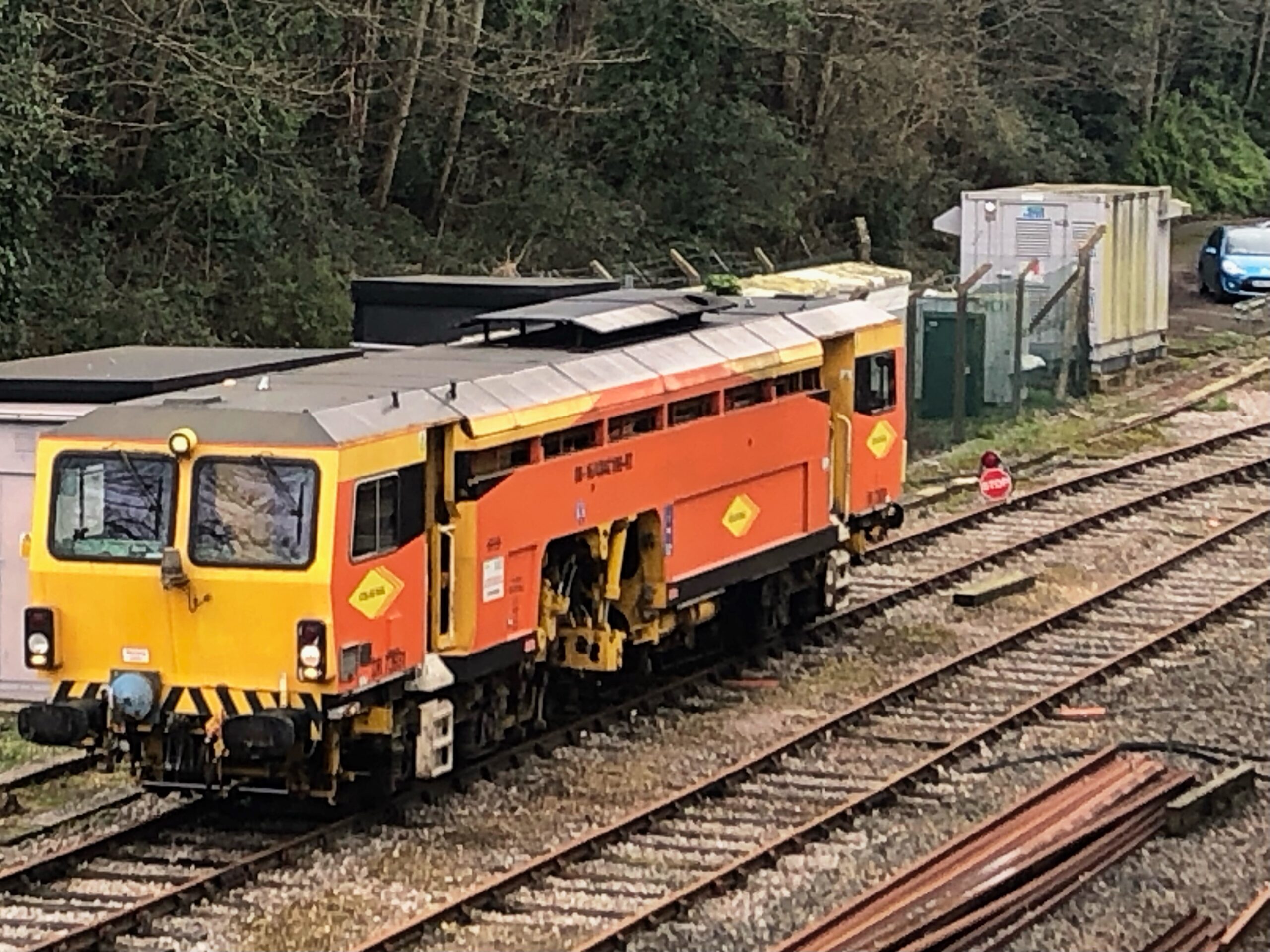
    A tamper sits in the sidings at Dorchester South waiting to be deployed at Bincombe – 18/03/2024 (G E Barrett)

    The Class 66’s returned to Eastleigh on the afternoon of Tuesday 19th March. It was quite a novelty to see a local engineers train working in daylight hours!

    Class 66 No. 66512 awaiting departure with 6Y85 1454 Dorchester South to Eastleigh East Yard – 19/03/2024 (G E Barrett)
    Class 66 No. 66520 in the gloom of a wet Dorchester South at the rear of 6Y85 1454 Dorchester South to Eastleigh East Yard – 19/03/2024 (G E Barrett)
    Freightliner Class 66 No. 66512 ready to depart from Dorchester South working 6Y85 1454 Dorchester South to Eastleigh East Yard – 19/03/2024 (G E Barrett)
    Freightliner Class 66 No. 66512 leads on 6Y85 1454 Dorchester South to Eastleigh East Yard passing Hamworthy – 19/03/2024
    Freightliner Class 66 No. 66520 runs through Hamworthy at the rear of 6Y85 1454 Dorchester South to Eastleigh East Yard – 19/03/2024
    Video of Freightliner Class 66 No.’s 66520 and 66512 working a Dorset engineering train – March 2024 (Additional video courtesy of G E Barrett)

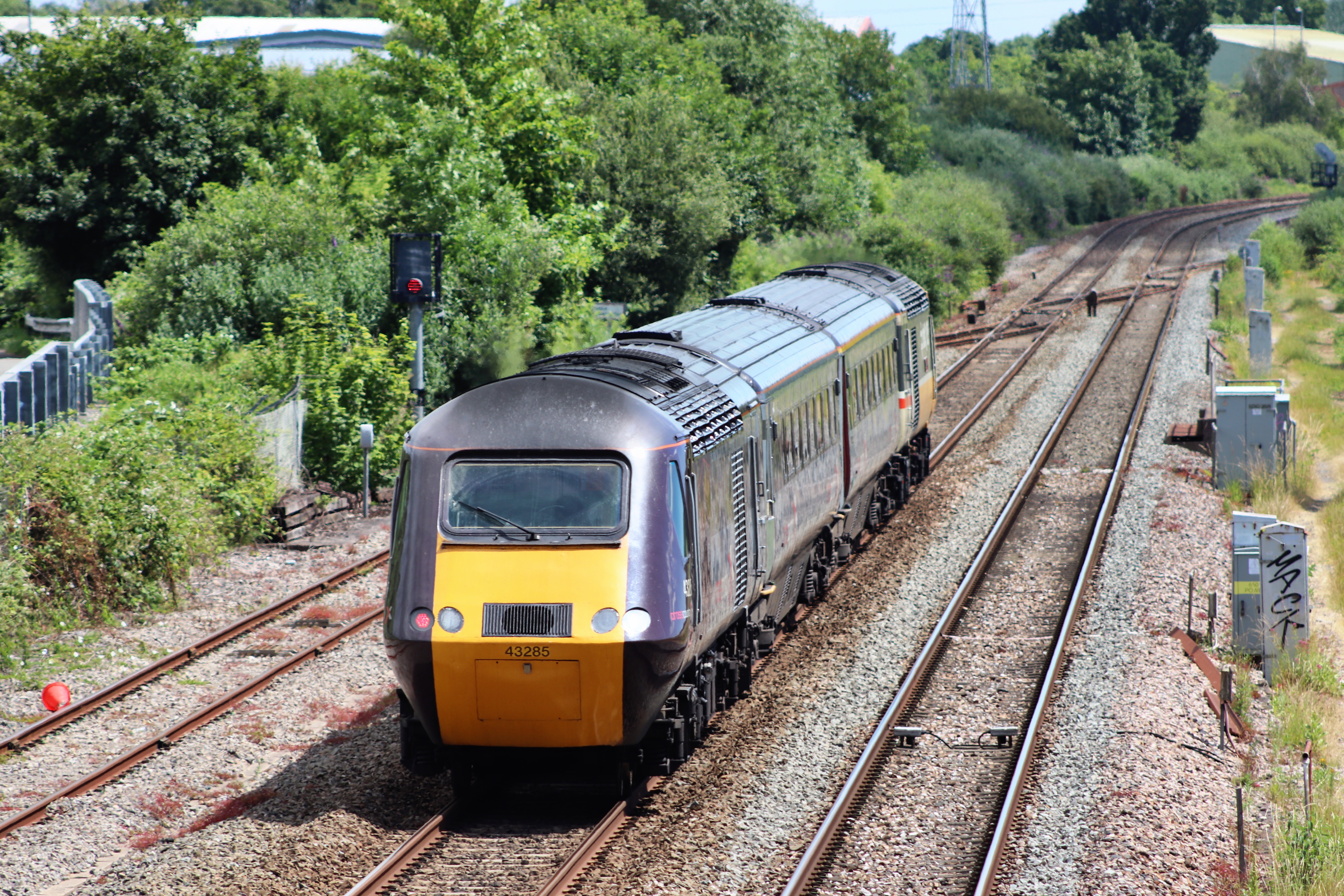
    The monthly New Measurement Train (NMT) which is scheduled to visit Weymouth via the West route through Maiden Newton was curtailed at Yeovil on Wednesday 20th March 2024 owing to the line closure between Dorchester and Weymouth. Allocated Class 43 High Speed Train (HST) power cars No.’s 43357 and 43277 worked 1Q18 0748 Derby RTC to Bristol Kingsland Road.

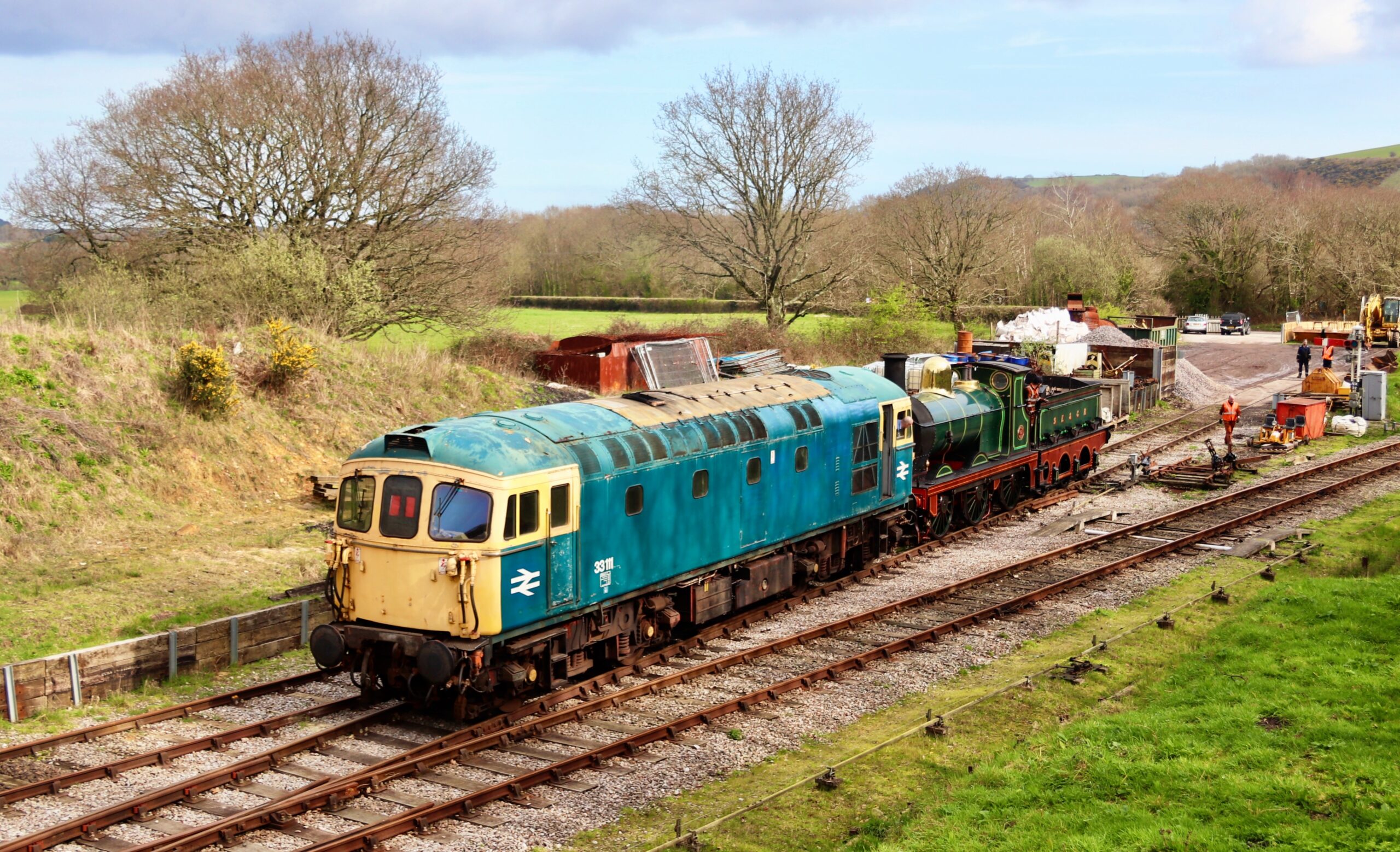
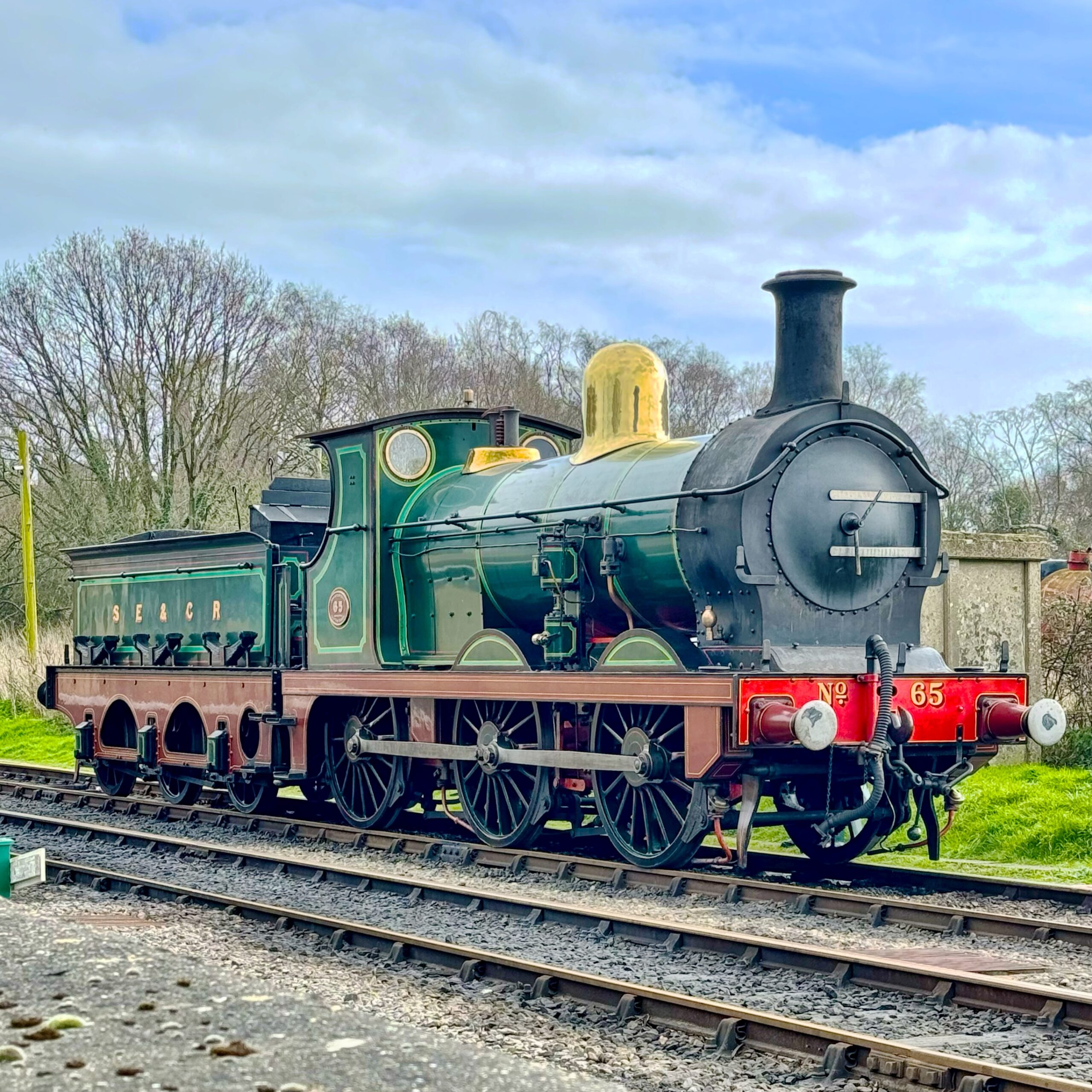
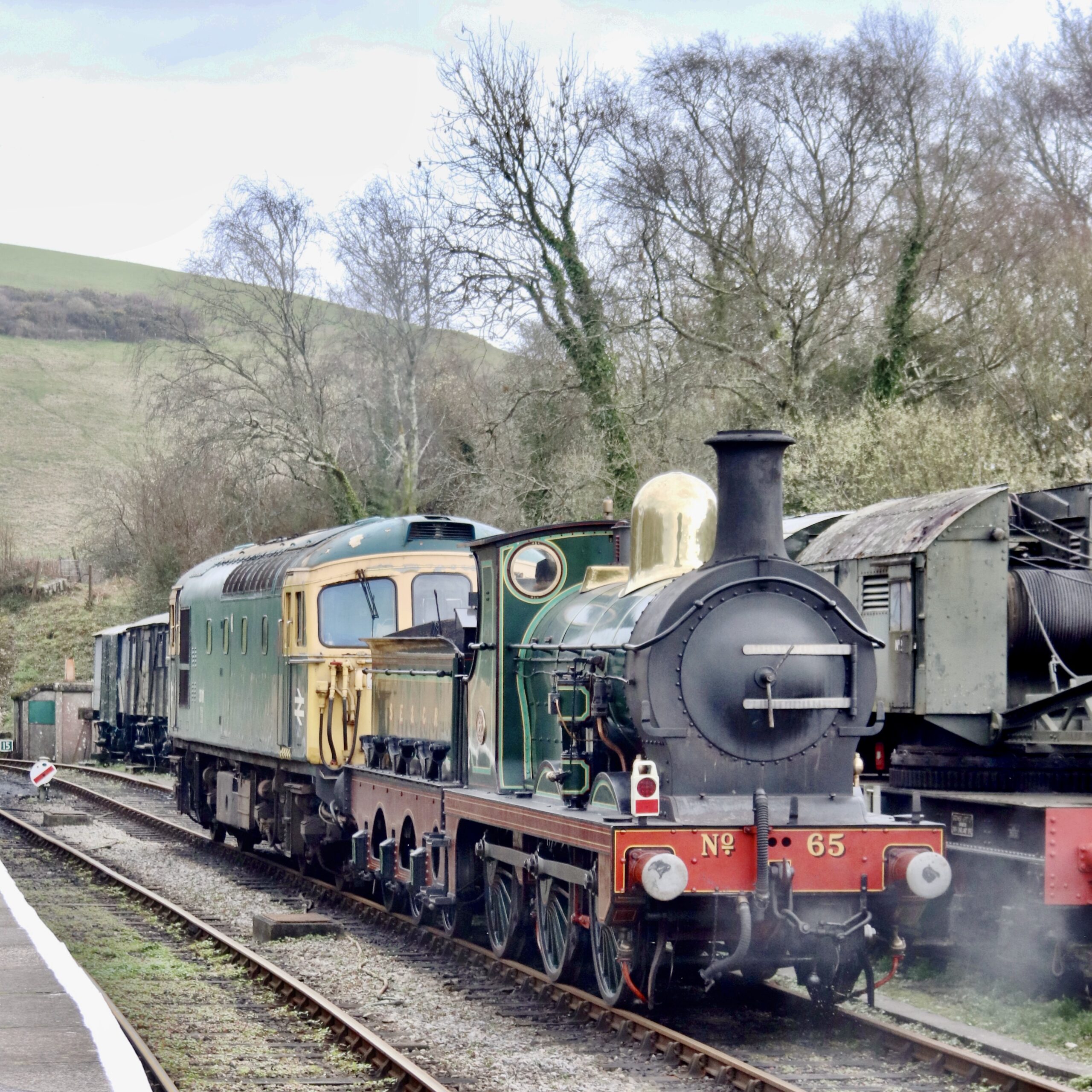
    While the NMT was making its way to Somerset, I could be found at Norden on the Swanage Railway watching visiting South Eastern & Chatham Railway (SECR) Class O1 steam locomotive No. 65 being prepped for towing down to Swanage in readiness for the railways Victorian Weekend. Resident preserved Birmingham Rail & Carriage Works (BR&CW) Class 33 No. 33111 had the task of collecting No. 65 and hauling her down to Swanage.

    Swanage resident Class 33/1 No. 33111 cautiously hauls South Eastern & Chatham Railway (SECR) Class O1 steam locomotive No. 65 away from Norden sidings – 20/03/2024
    South Eastern & Chatham Railway (SECR) Class O1 steam locomotive No. 65 at Norden during the operation to haul her to Swanage in readiness for the railway’s Victorian Weekend – 20/03/3024
    Class 33/1 No. 33111 hauls South Eastern & Chatham Railway (SECR) Class O1 steam locomotive No. 65 as they depart Norden station heading to Swanage – 20/03/2024
    SECR O1 No. 65 arrives on the Swanage Railway – 20/03/2024

    The following day, I hitched a lift with friend of the blog Jamie for a visit to Maiden Newton to see Colas Railfreight Class 37 No.’s 37175 and 37219 ‘Jonty Jarvis’ top and tailing a Structure Gauging Train on its way from Westbury to Weymouth and return. The working left Westbury around two hours late and I probably aged Jamie by a few years by claiming we had plenty of time to make the journey over to see the train! We arrived in Maiden Newton with ten minutes to spare.

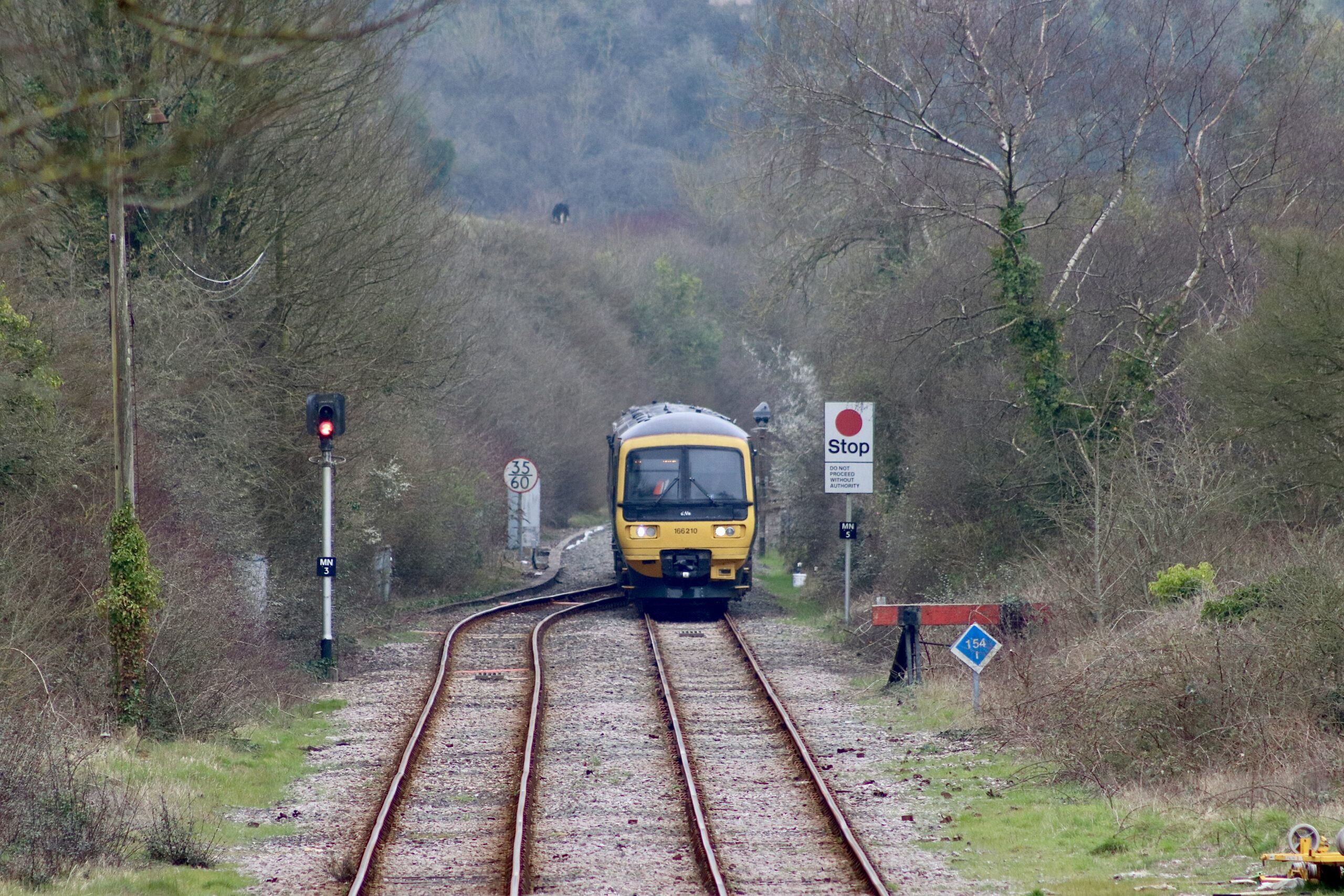
    Great Western Railway Class 166 No. 166210 on the approach to Maiden Newton working 2V68 1328 Weymouth to Gloucester – 21/03/2024
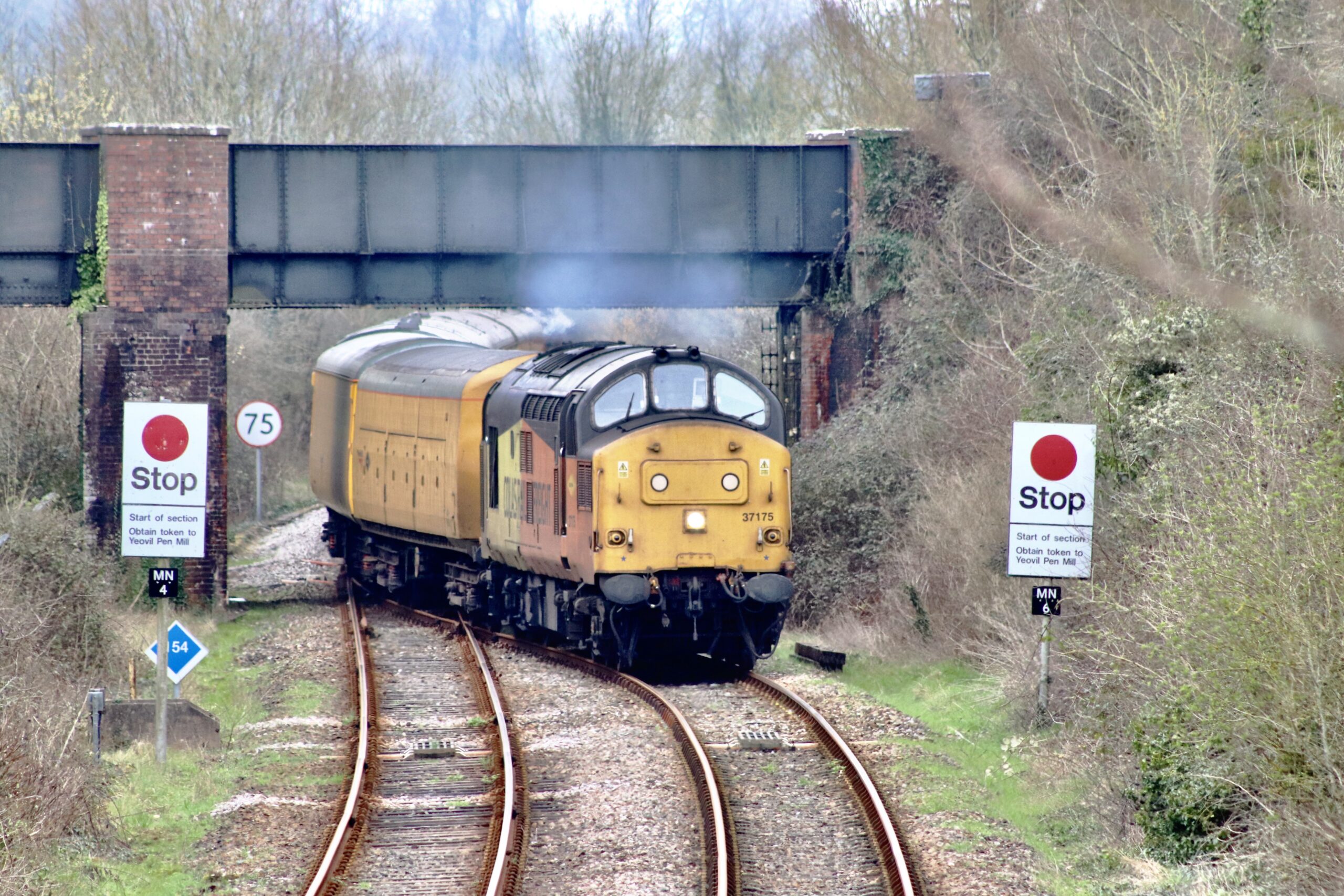
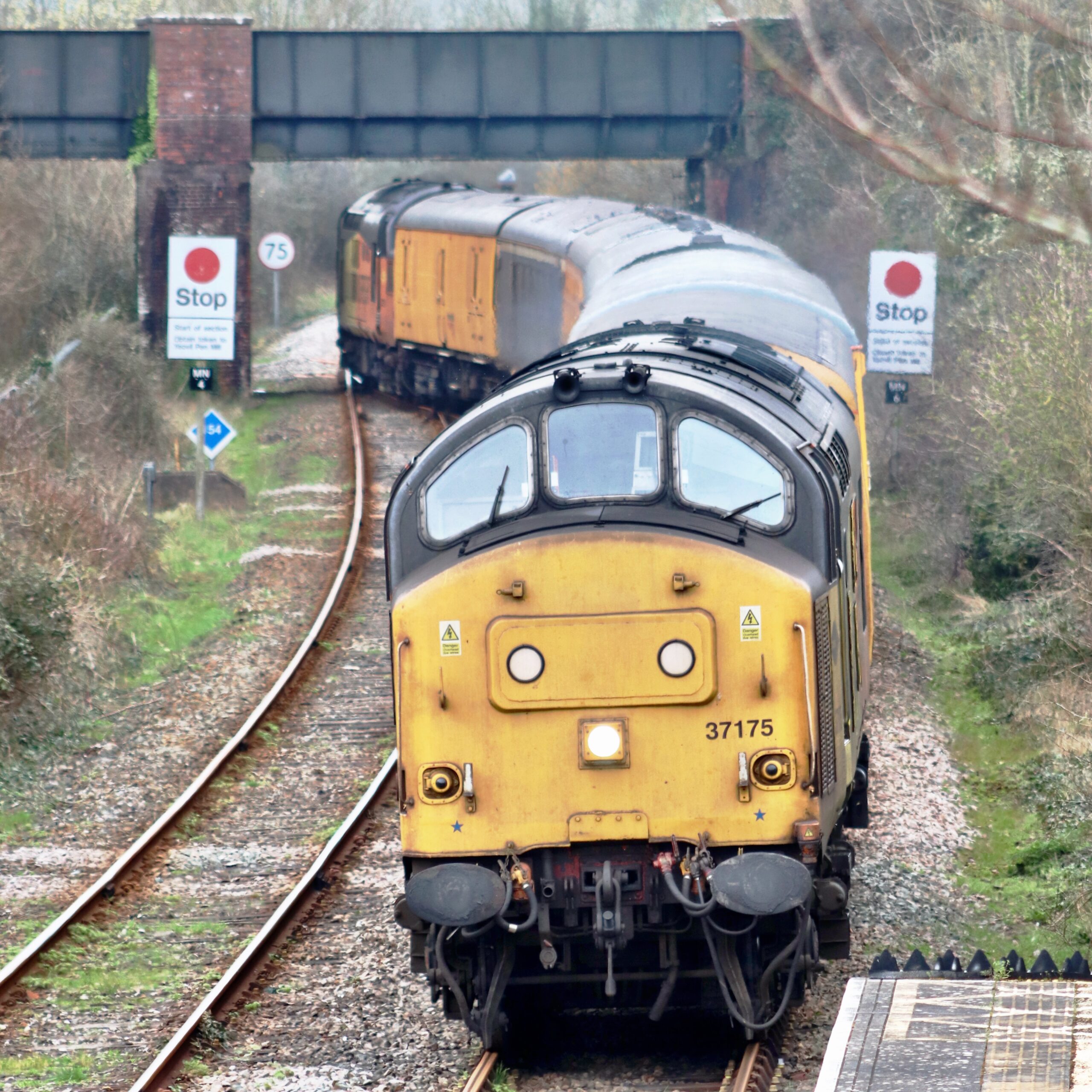
    Colas Railfreight Class 37 No. 37175 on the approach to Maiden Newton leading on 3Q14 1021 Westbury Down Yard to Westbury Down Yard – 21/03/2024
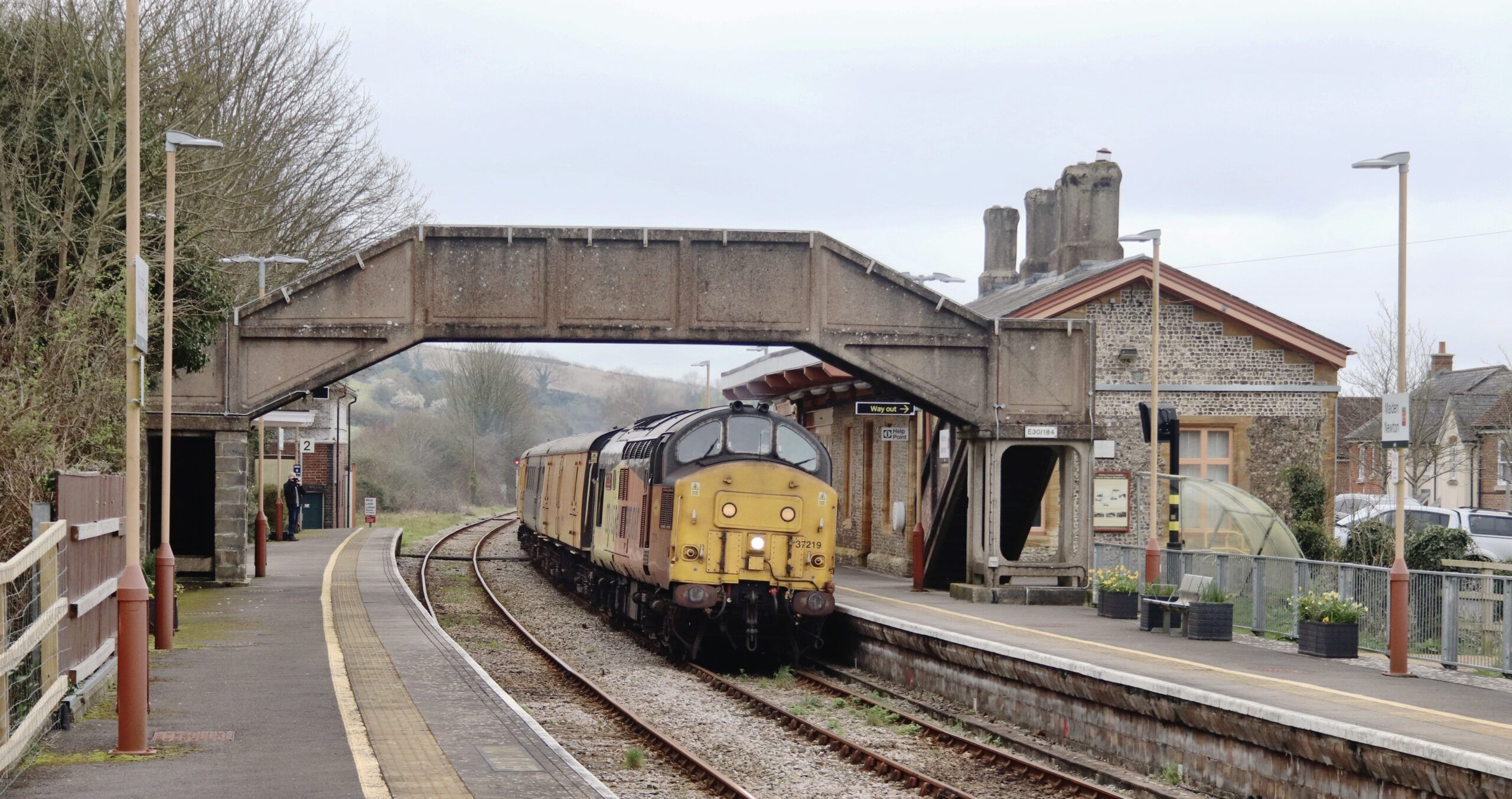
    Colas Railfreight Class 37 No. 37175 with 37219 ‘Jonty Jarvis’ at the rear at Maiden Newton leading on 3Q14 1021 Westbury Down Yard to Westbury Down Yard on the outward leg to Weymouth – 21/03/2024
    On the return leg of 3Q14 1021 Westbury Down Yard to Westbury Down Yard Colas Class 37 No. 37219 ‘Jonty Jarvis’ leads into Maiden Newton – 21/03/2024
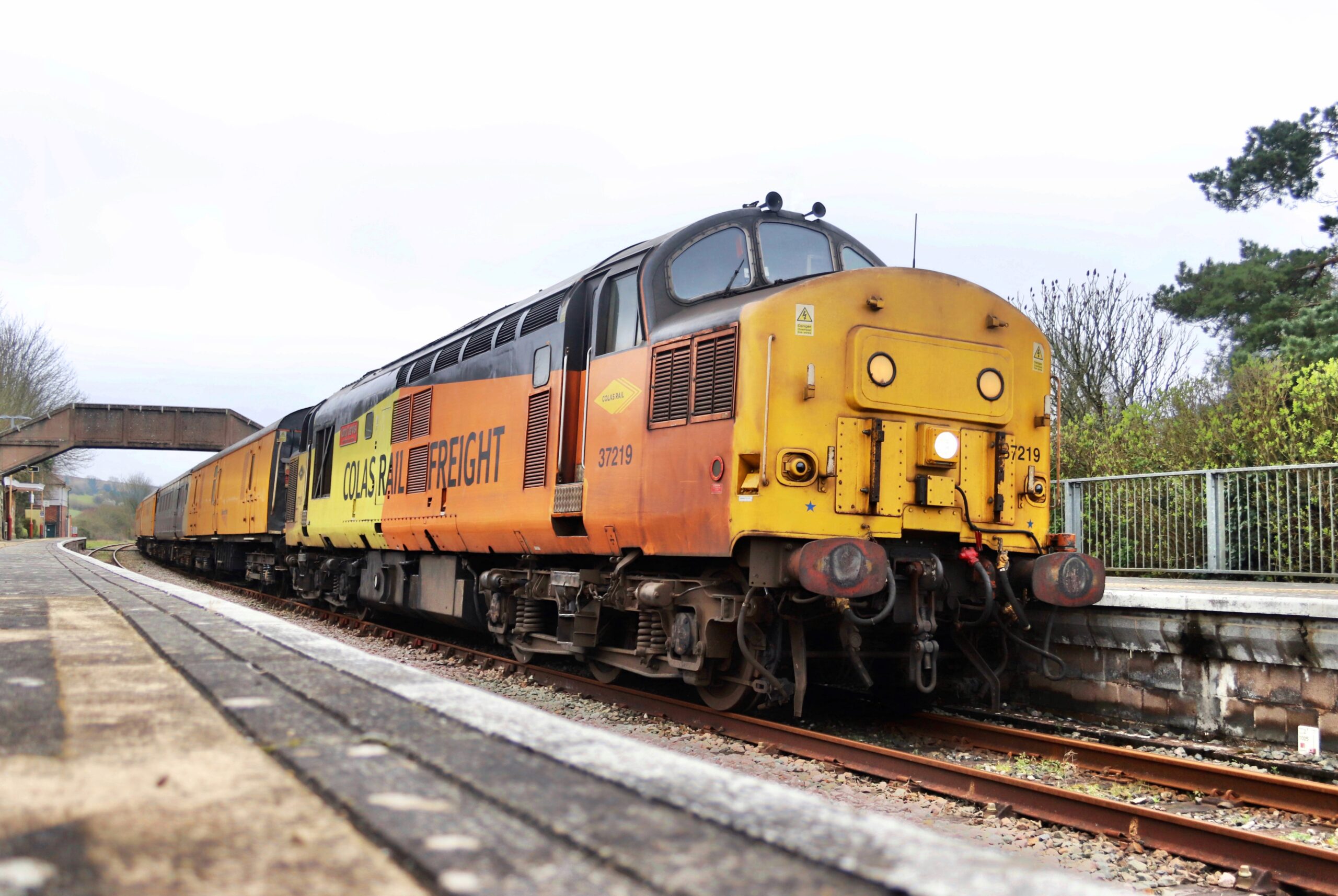
    Colas Class 37 No. 37219 ‘Jonty Jarvis’ pauses at Maiden Newton as the driver collects to token to allow the train to progress onto the next single line section of track – 21/03/2024
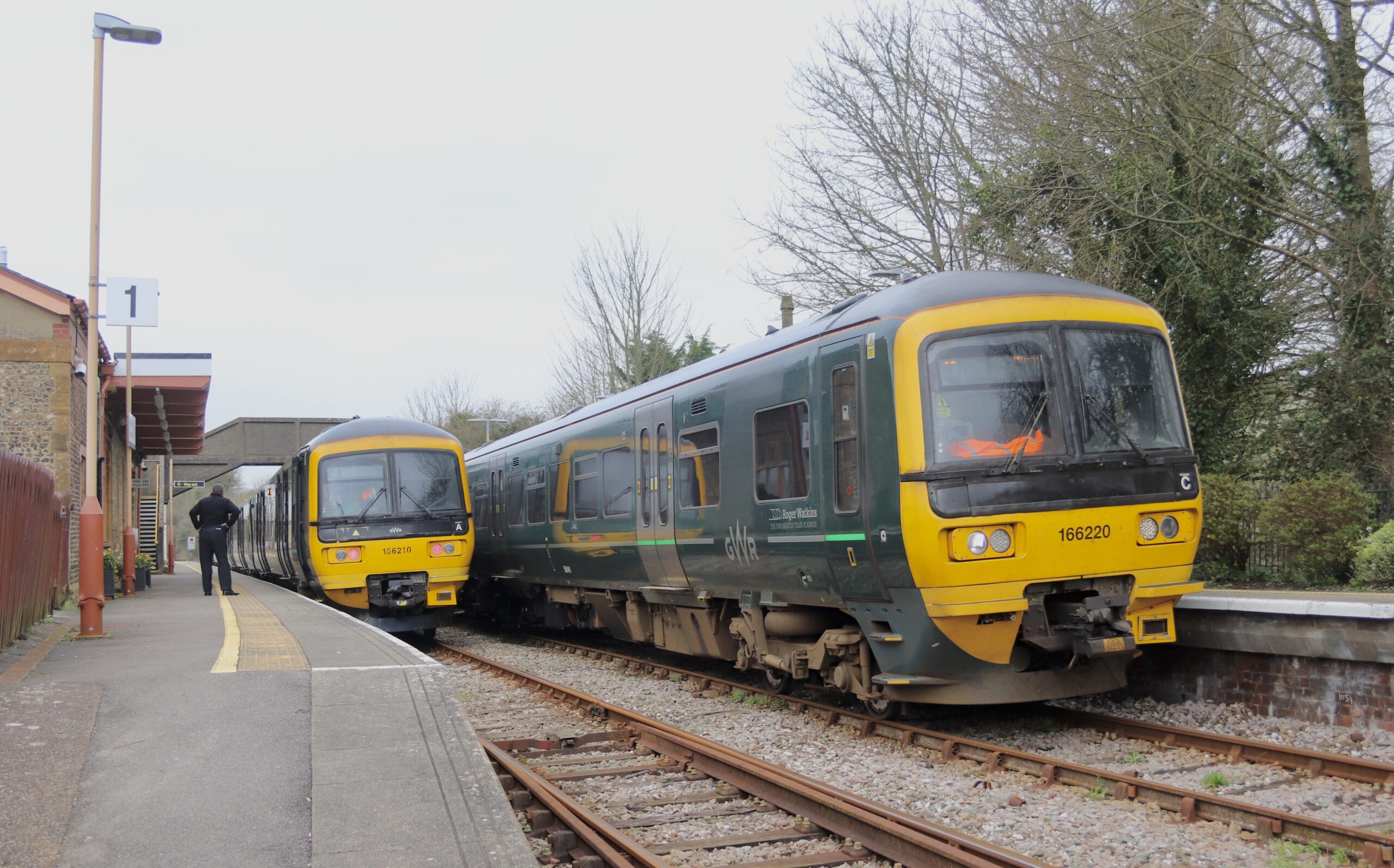
    Great Western Railway Class 166 Turbo’s cross at Maiden Newton; No.166220 working 2O76 1110 Gloucester to Weymouth and No. 166210 forms 2V68 1328 Weymouth to Gloucester – 21/03/2024
    Maiden Newton trains – 21/03/2024

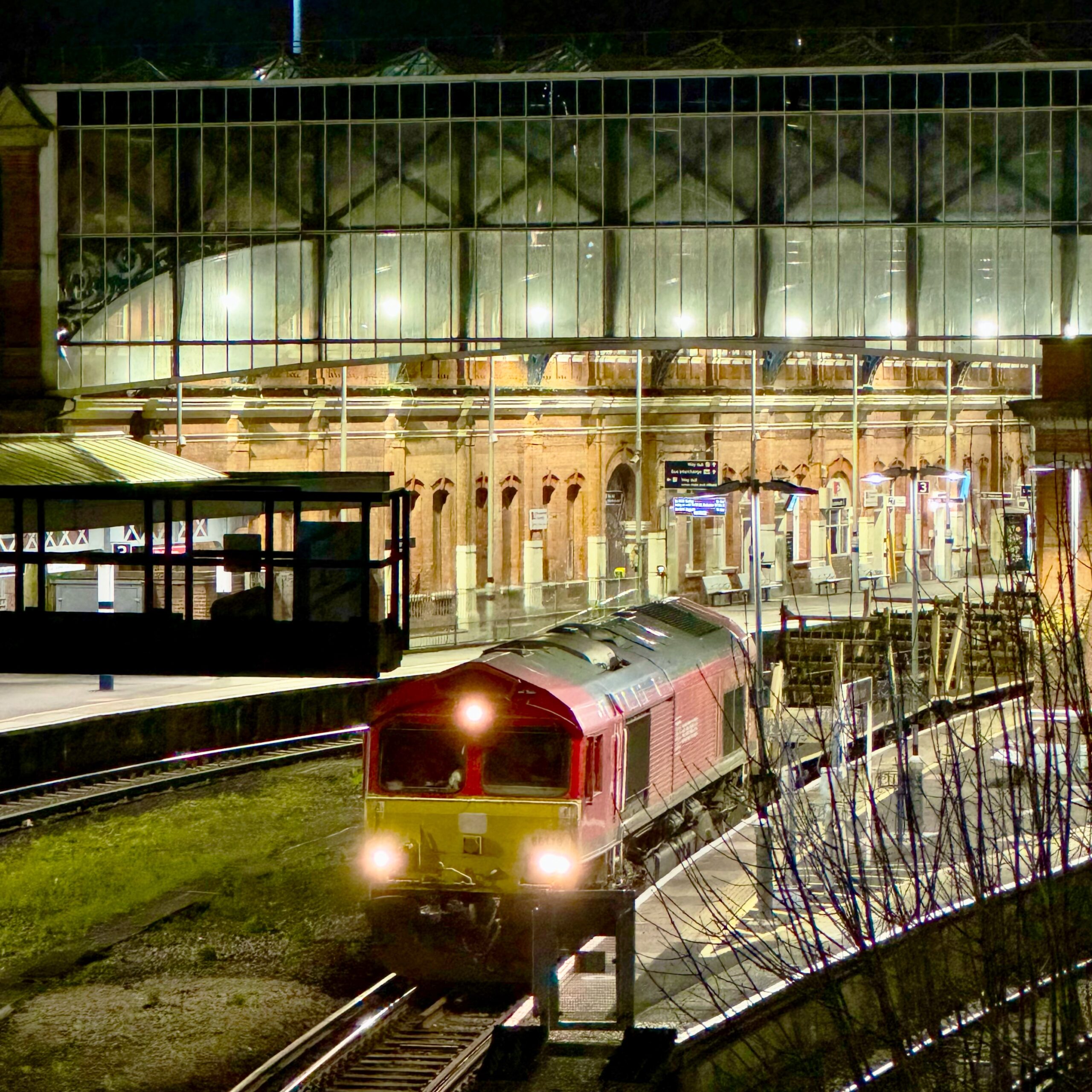
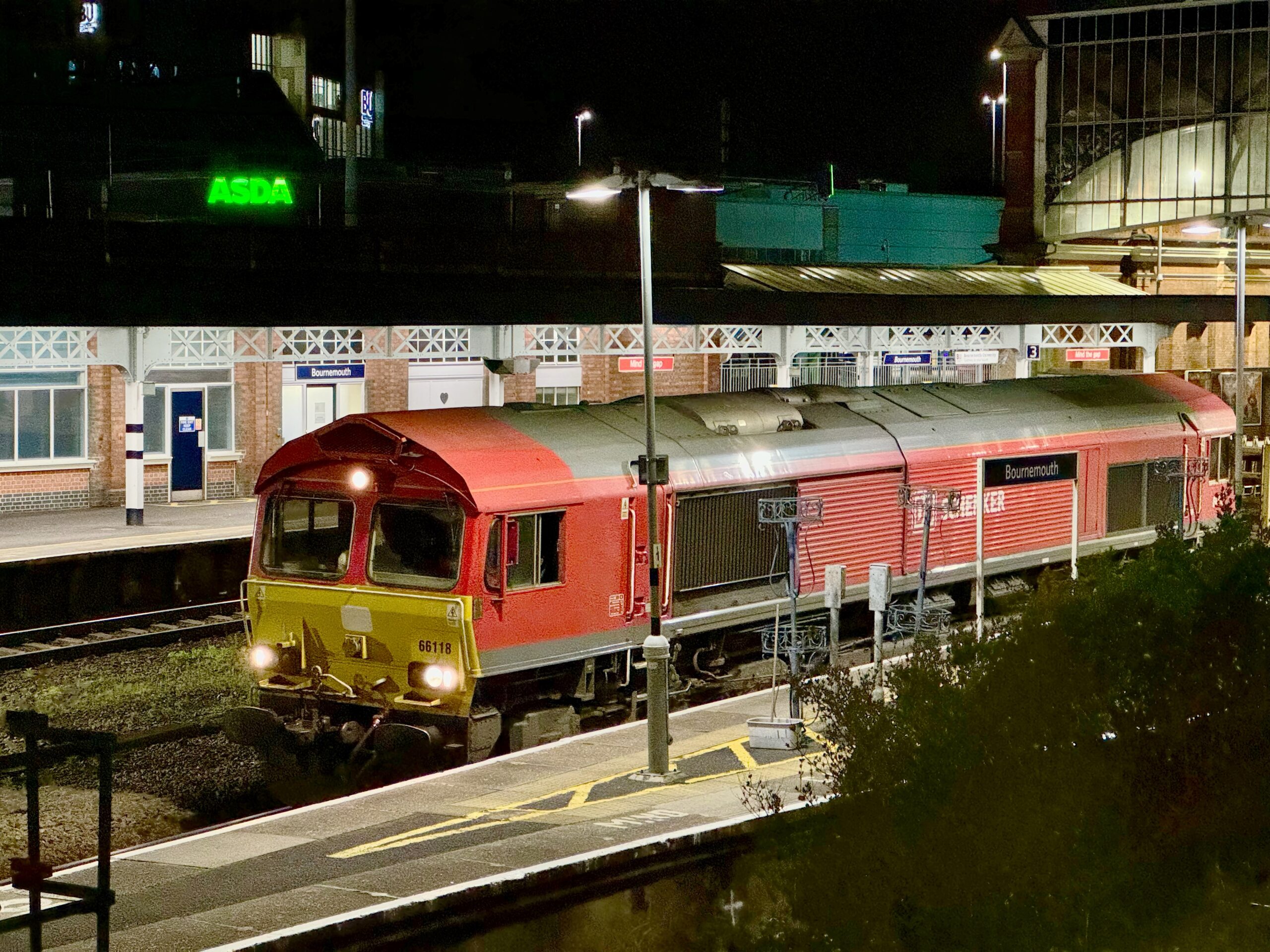
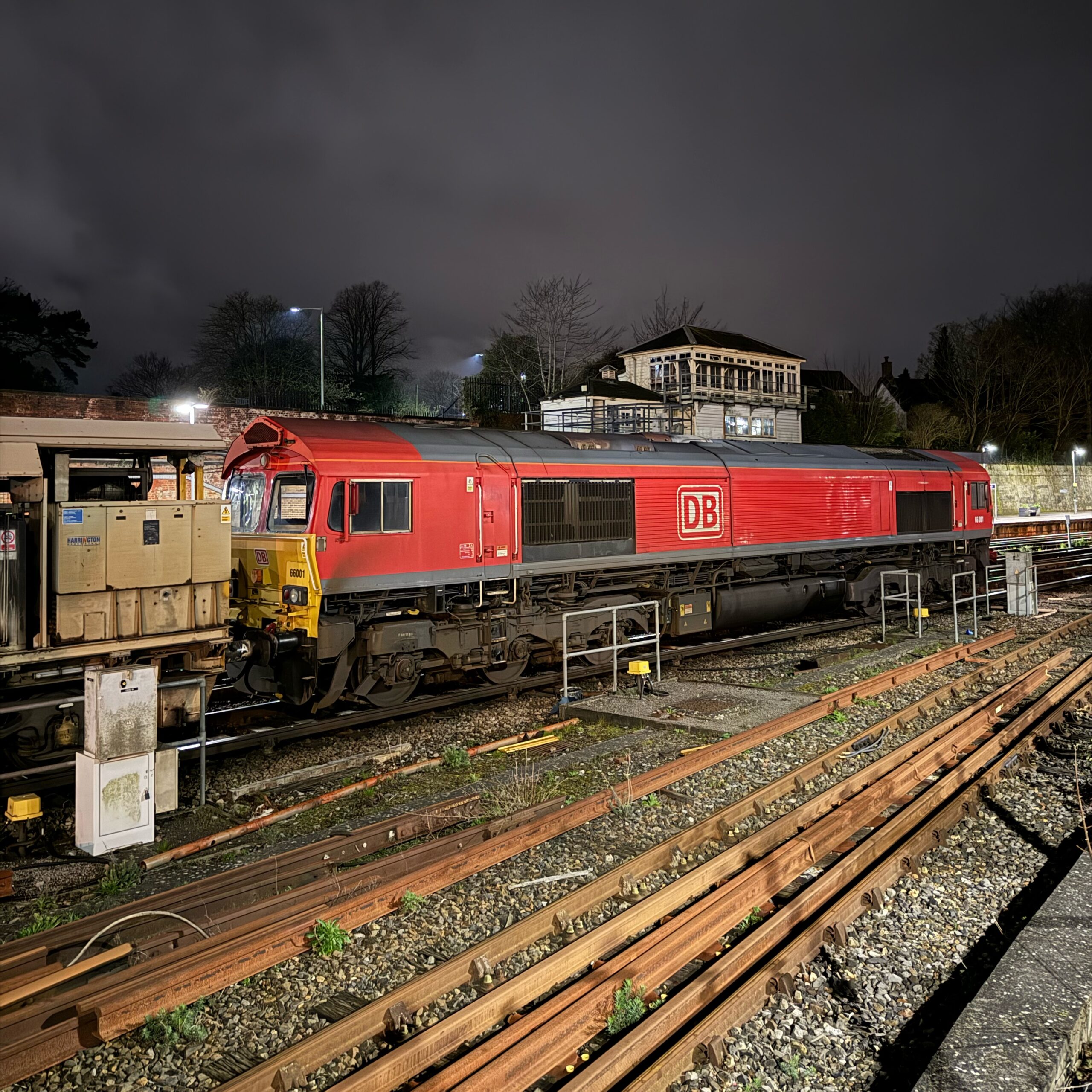
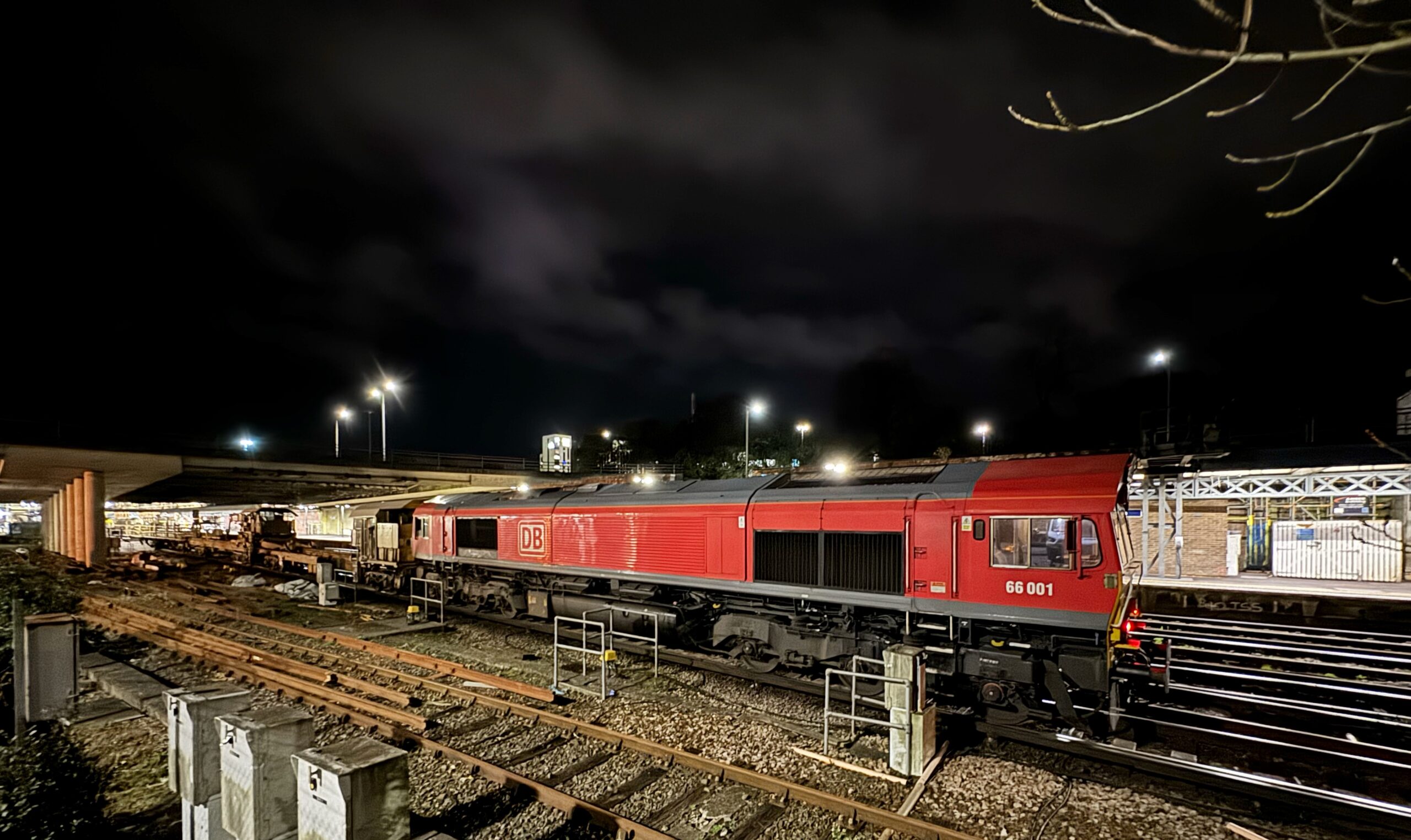
    Later that night, another engineering train ventured into Dorset in conjunction with work in the Christchurch area. I didn’t see train 6N75 2300 Eastleigh East Yard to Christchurch arrive, but I did get up early Friday morning to see DB Class 66 No. 66118 and pioneer shed No. 66001 departing Bournemouth as they returned with their train to Eastleigh East Yard this time working as 6N75 0505 Bournemouth to Eastleigh East Yard. It was so early, Bournemouth railway station was still locked up when I arrived. However the train departed around 20 minutes behind schedule, but not wanting to risk missing filming the departure, I stood steadfastly at my vantage point overlooking the station when I could have easily ventured down to platform level once the station was opened up to the travelling public for the first passenger trains of the day.

    With Bournemouth railway station as its backdrop, DB Cargo Class 66 No. 66118 awaits departure working 6N75 0505 Bournemouth to Eastleigh East Yard – 22/03/2024
    DB Cargo Class 66 No. 66118 at Bournemouth leading on 6N75 0505 Bournemouth to Eastleigh East Yard – 22/03/2024
    DB Cargo Class 66 No. 66001 at the rear of 6N75 0505 Bournemouth to Eastleigh East Yard – 22/03/2024
    DB Cargo Class 66 No. 66001 awaits departure of 6N75 0505 Bournemouth to Eastleigh East Yard – 22/03/2024
    DB Cargo Class 66’s at Bournemouth – 22/03/2024

    HAMWORTHY BRANCH

    Poole Harbour Commissioners (PHC) Annual Stakeholders Open Evening 2024 – 20/03/2024

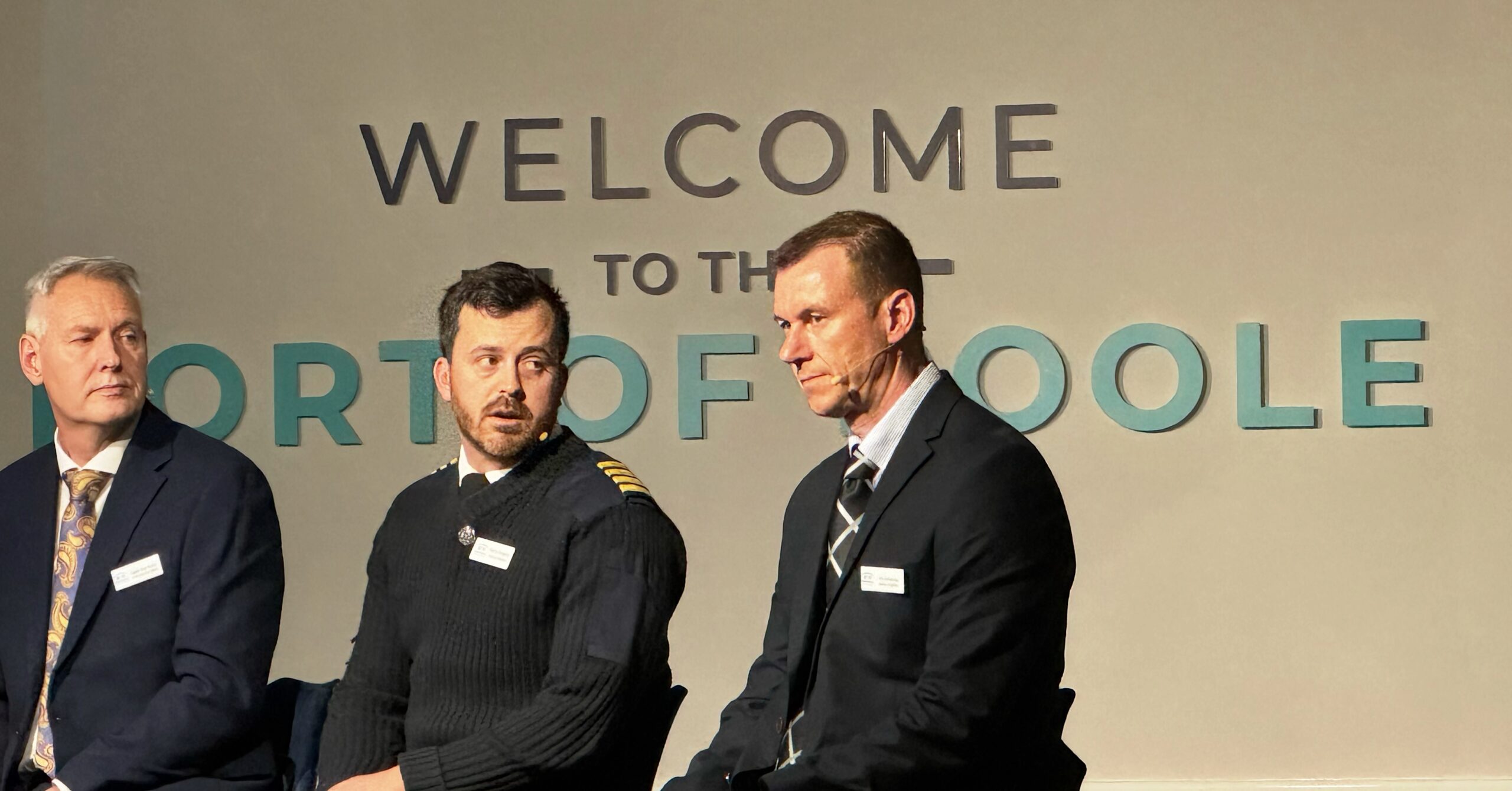
    Poole Harbour Commissioners (PHC) Annual Stakeholders Open Evening 2024 took place on 20th March in the North Lounge of the Passenger Terminal. We went along to see if there were any updates on the restoration of freight traffic along the Hamworthy Branch which runs down to the port area from a junction to the mainline at Hamworthy railway station. PHC CEO Captain Brian Murphy said; “We are very fortunate to have the port railway. We haven’t used it for some time, but it’s there and it aligns perfectly with our decarbonisation goals. Modal shift is the best way to get transport off the roads. We want to grow the business, we want to grow the freight. We want more cargo through the port but we’d rather actually get as much as possible on to rail rather than the roads. So this does align with the governments ambitious targets which are of part of their 2050 plan for clean maritime and reducing carbon emissions and there has been a lot of work which has actually happened thus far. The commissioners have invested quite heavily in securing the lease that runs from the port all the way to the mainline and there has been a lot of upgrading work which has happened on the Hamworthy Branch. We’ve got a little bit more to do in terms of in the port but we are looking at the business case and hopefully it all aligns. But clearly in terms of ownership, it’ll be a lot of trucks off the road so very excited about that project.”

    We recently learned of the passing of our friend and fellow railway enthusiast, Syd Brown. Syd has been a transport enthusiast for many years and could regularly be found supporting local transport events. He was an active member of the old Dorset Transport Circle in times past. Syd’s working life was spent in Dorset County Council’s Roads and Bridges department (now known as Transport and Engineering) and he was also an official in the Dorset County branch of NALGO (now UNISON). Our condolences to Syd’s family.

    Thank you for reading and for your comments and corrections. We’ll be back soon with our record of our day attending the Swanage Railway Victorian Weekend. Be seeing you!

    Postscript:

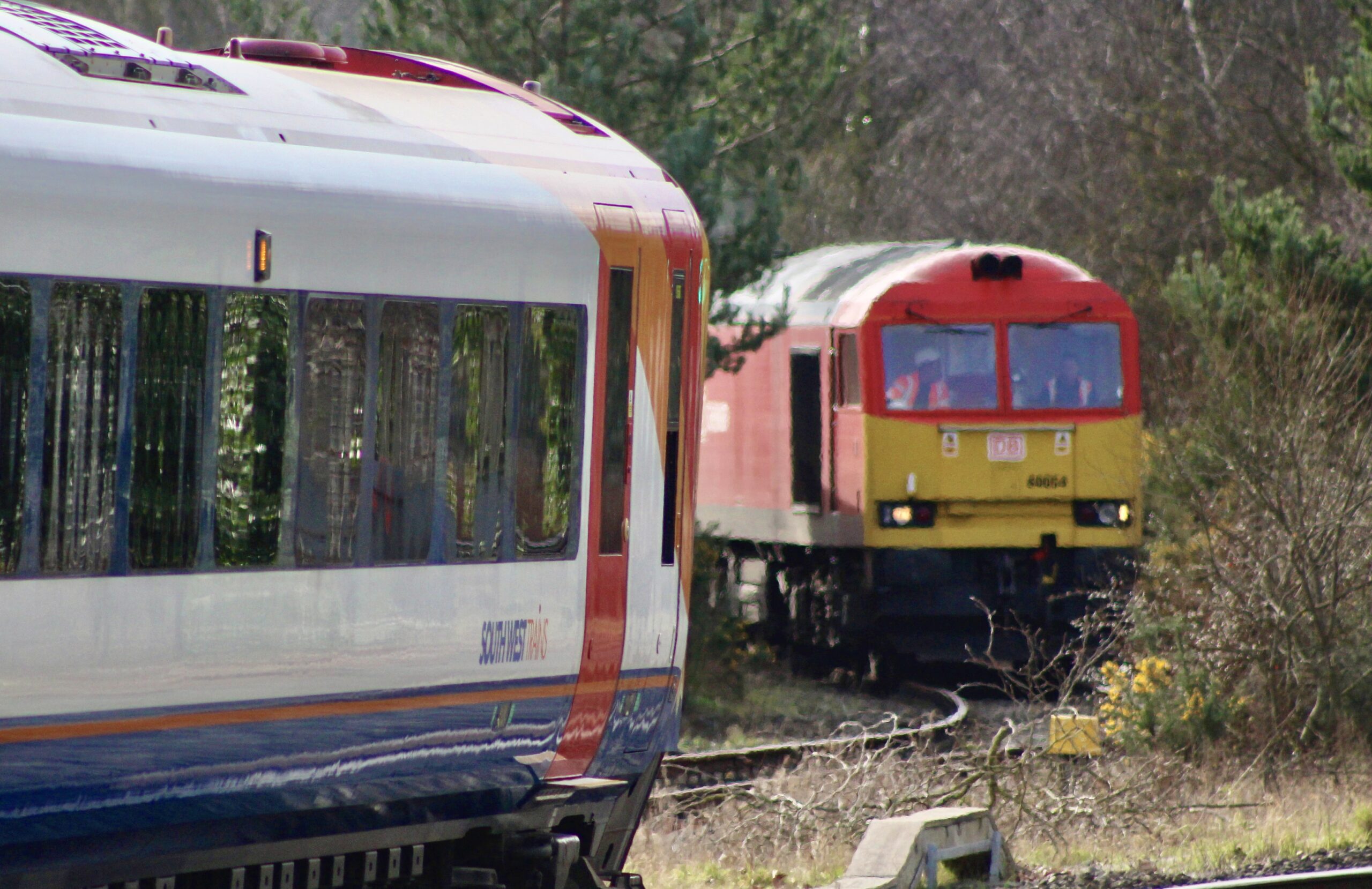
    Will we ever see trains coming off the Hamworthy Branch again? Back in 2017, DB Cargo Class 60 No. 60054 heads towards the mainline at Hamworthy while South West Trains (SWT) Class 444 No. 444032 waits at platform with a Weymouth service – 17/02/2017
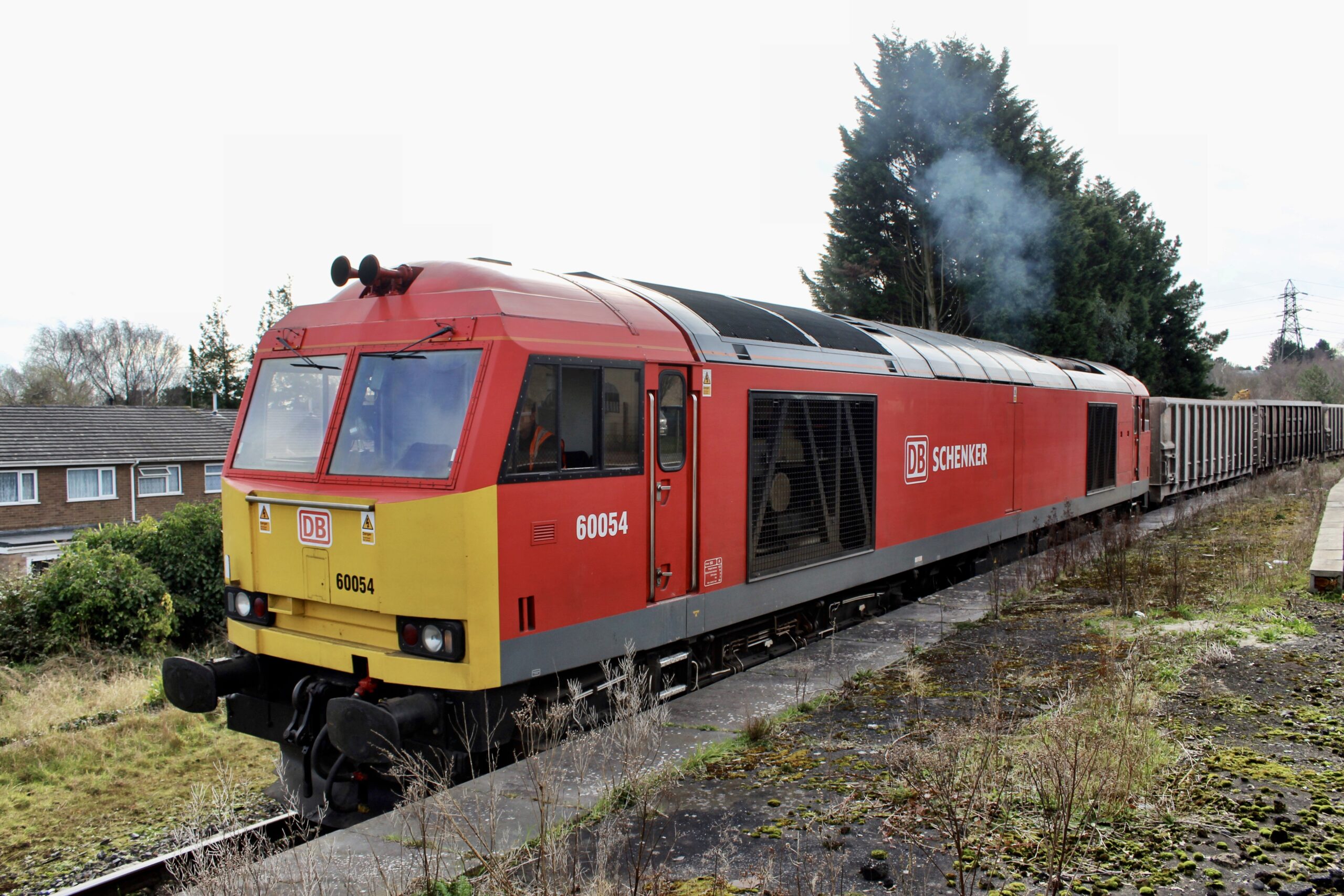
    DB Cargo Class 60 No. 60054 draws up to the signal protecting the branch from the mainline at Hamworthy – 17/02/2017
  • Yoshi Goes To Fawley Hill

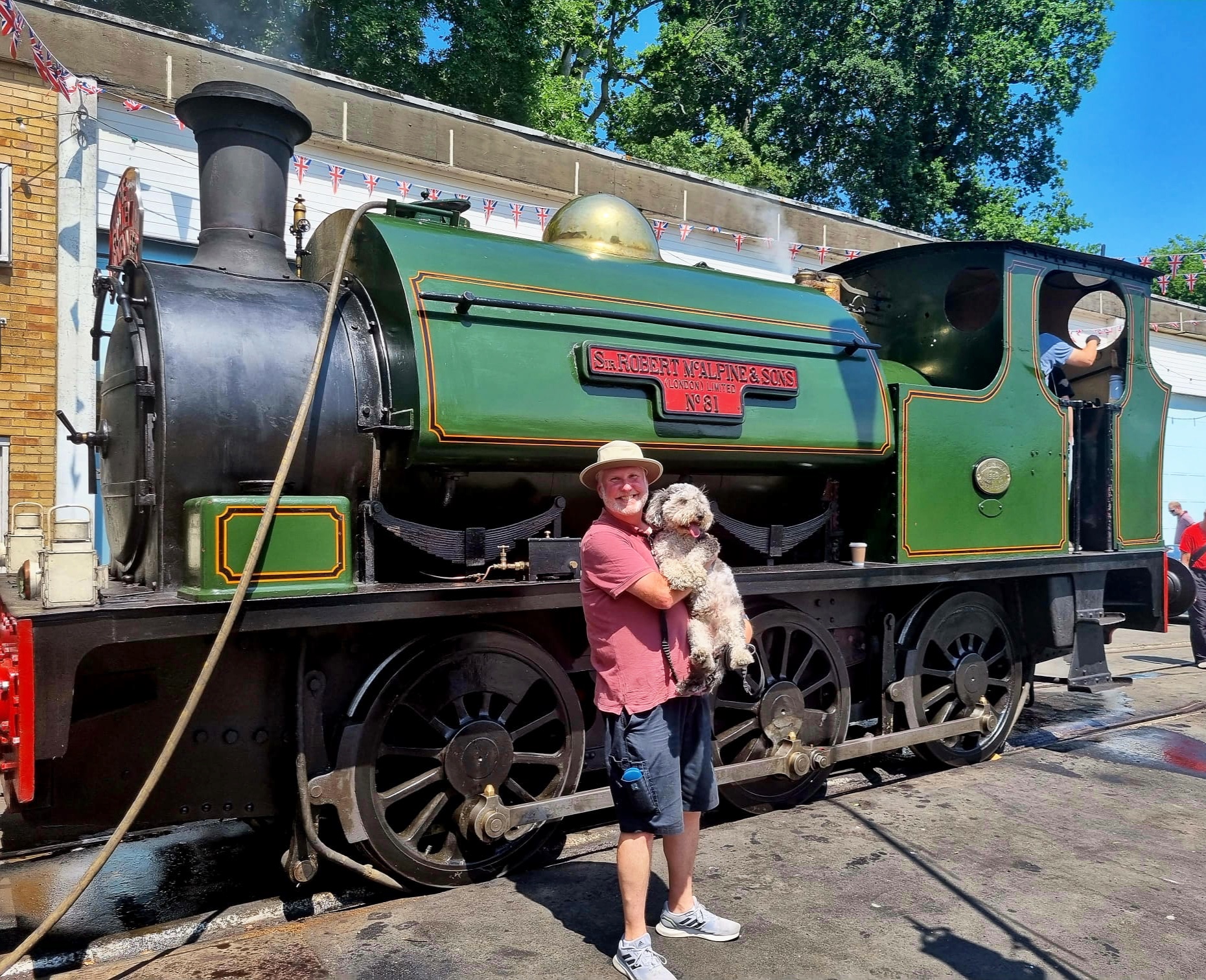
    Yoshi and I in front of Hudswell Clarke & Co Ltd 0-6-0 ST No. 31 at Fawley Hill Museum – 25/06/2023

    We eased into a busy few days by popping over to Hamworthy on Friday 23rd June 2023 to see a Freightliner Class 66 locomotive on a route learner from Southampton Maritime to Weymouth and back.  No idea if this means there may be some engineering trains heading our way in the future or just a refresher for the crew. Either way, it was good to see. 

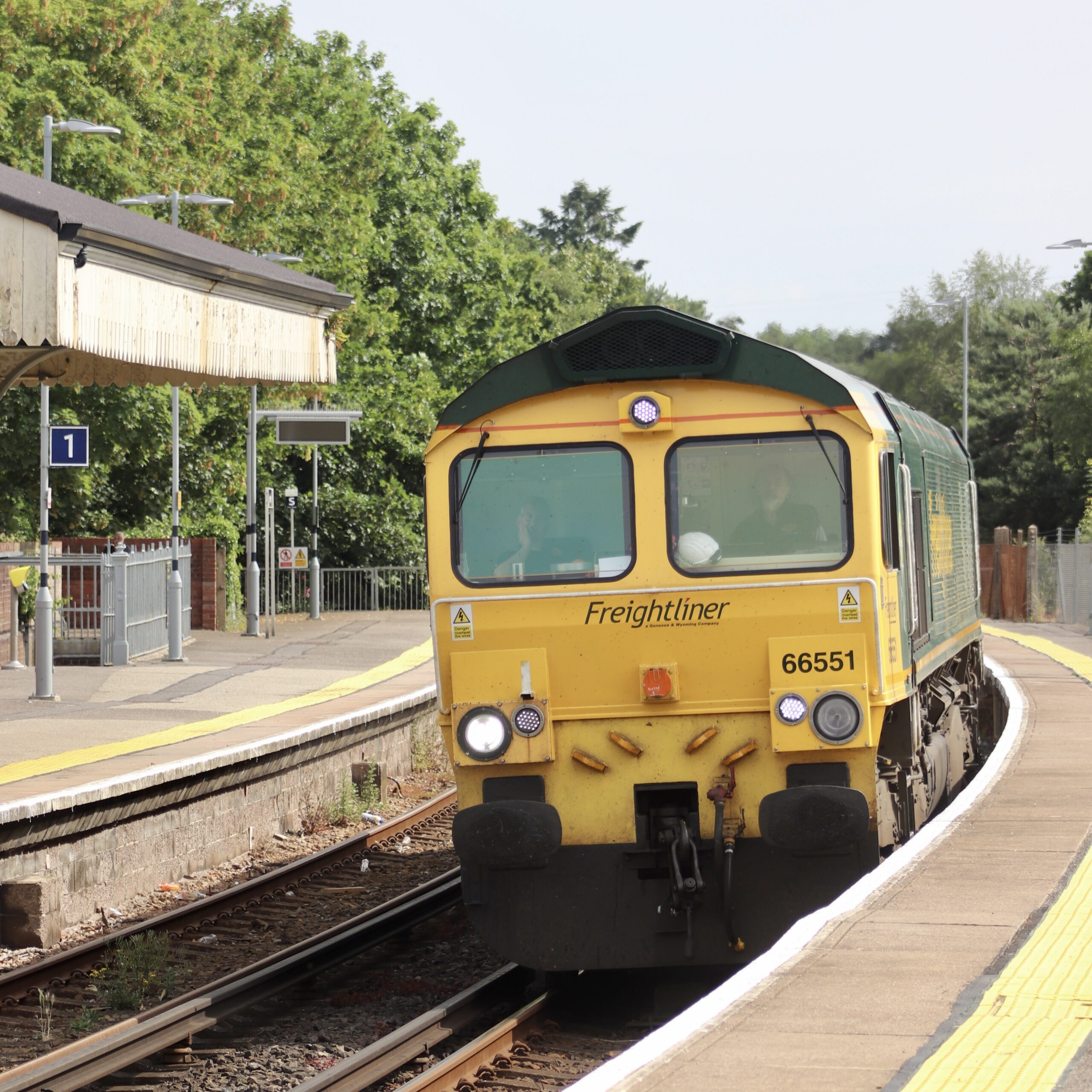
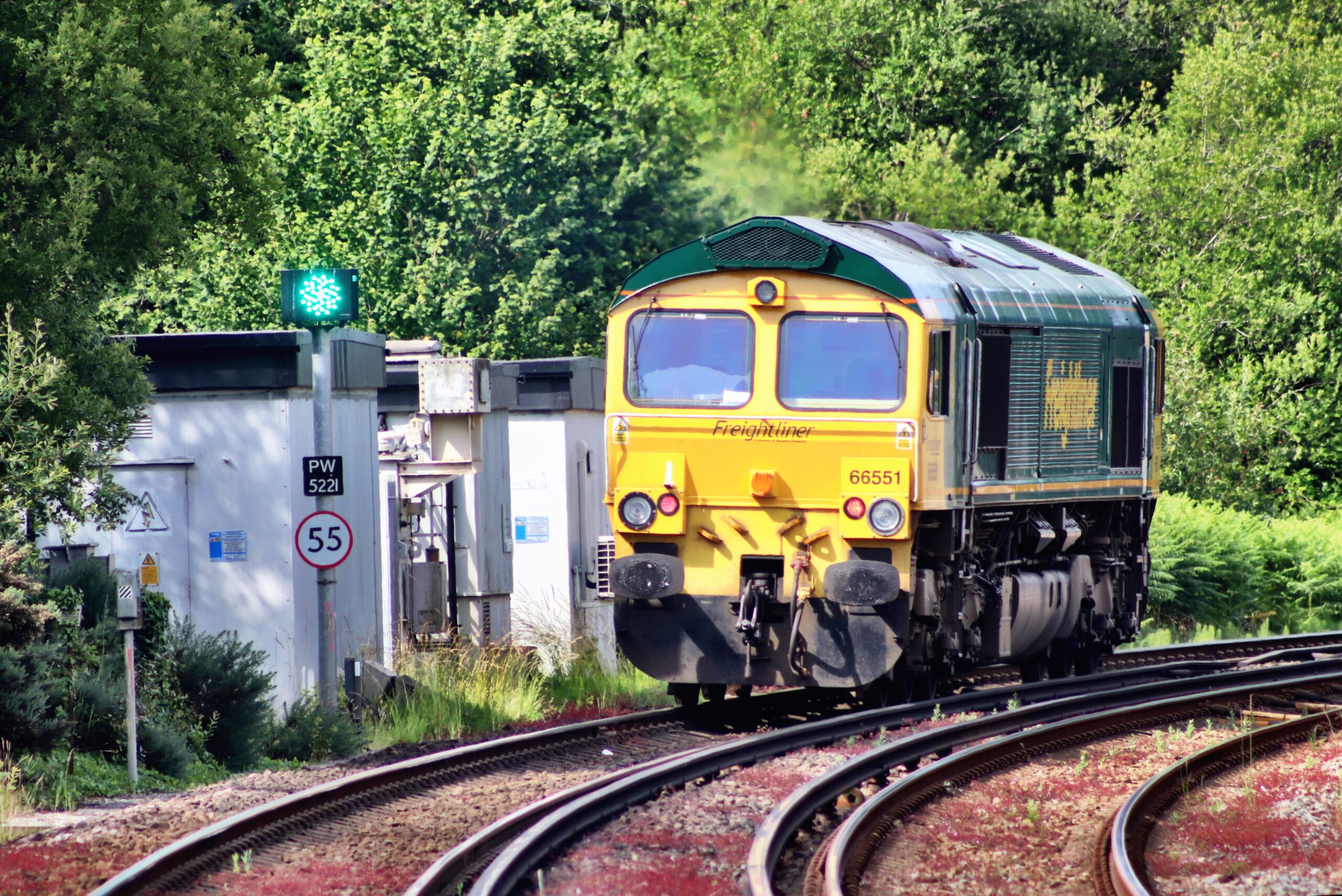
    Freightliner Class 66 No. 66551 passes Hamworthy on a route learner running as 0W45 0902 Southampton MCT to Weymouth – 23/06/2023
    Freightliner Class 66 No. 66551 having passed through Hamworthy station working 0W45 0902 Southampton MCT to Weymouth – 23/06/2023

    On the return trip back to Southampton Maritime, I sought a location I have not used previously. A footbridge across the railway afforded a nice view of the mainline on the approaches west of Hamworthy. I had not, however, taken into the account that the bridge was surrounded by mesh which made photography very difficult. It was also very bouncy when being walked across, so I was very relieved nobody passed at the same time as the light Class 66 trundled by underneath!
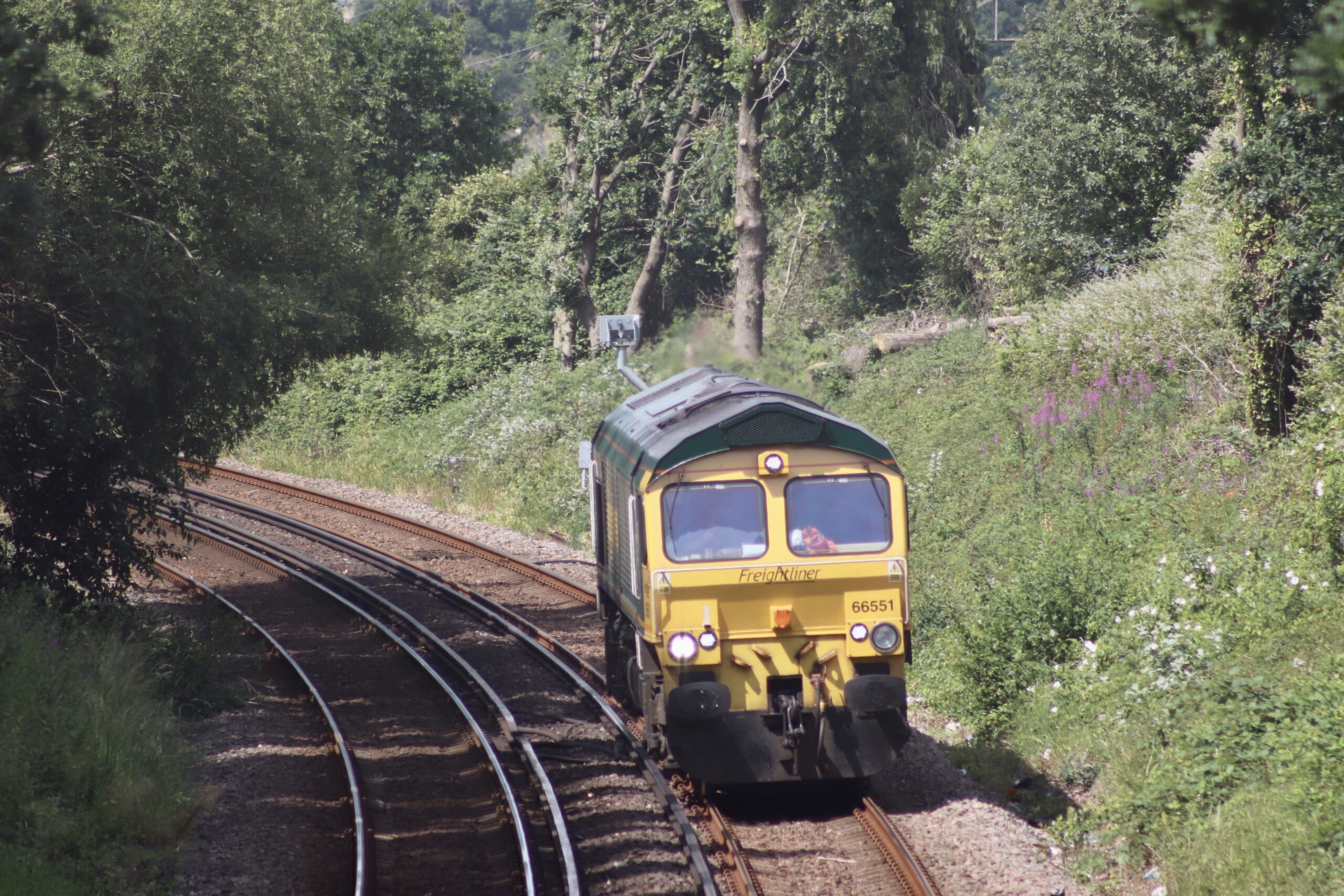
    Freightliner Class 66 No. 66551 passes Hamworthy on the return route learner running as 0W46 1041 Weymouth to Southampton MCT – 23/06/2023
    Class 66 No. 66551 on route learning duties – 23/06/2023

    On Saturday, Yoshi’s mama had planned an all female picnic meet-up with friends, which left the boy and I free to go and see some trains during the day! I’d noted on the rail tour calendar that double-headed Class 69’s were scheduled to run down to Cornwall, so this became my objective of the day. In fact there were four tours scheduled to pass through Taunton that same day, with one changing diesel traction for steam in the station, so this was probably a good choice of location. 
    Cornish Mazey Day Statesman – 1Z64 0522 Solihull to Penzance

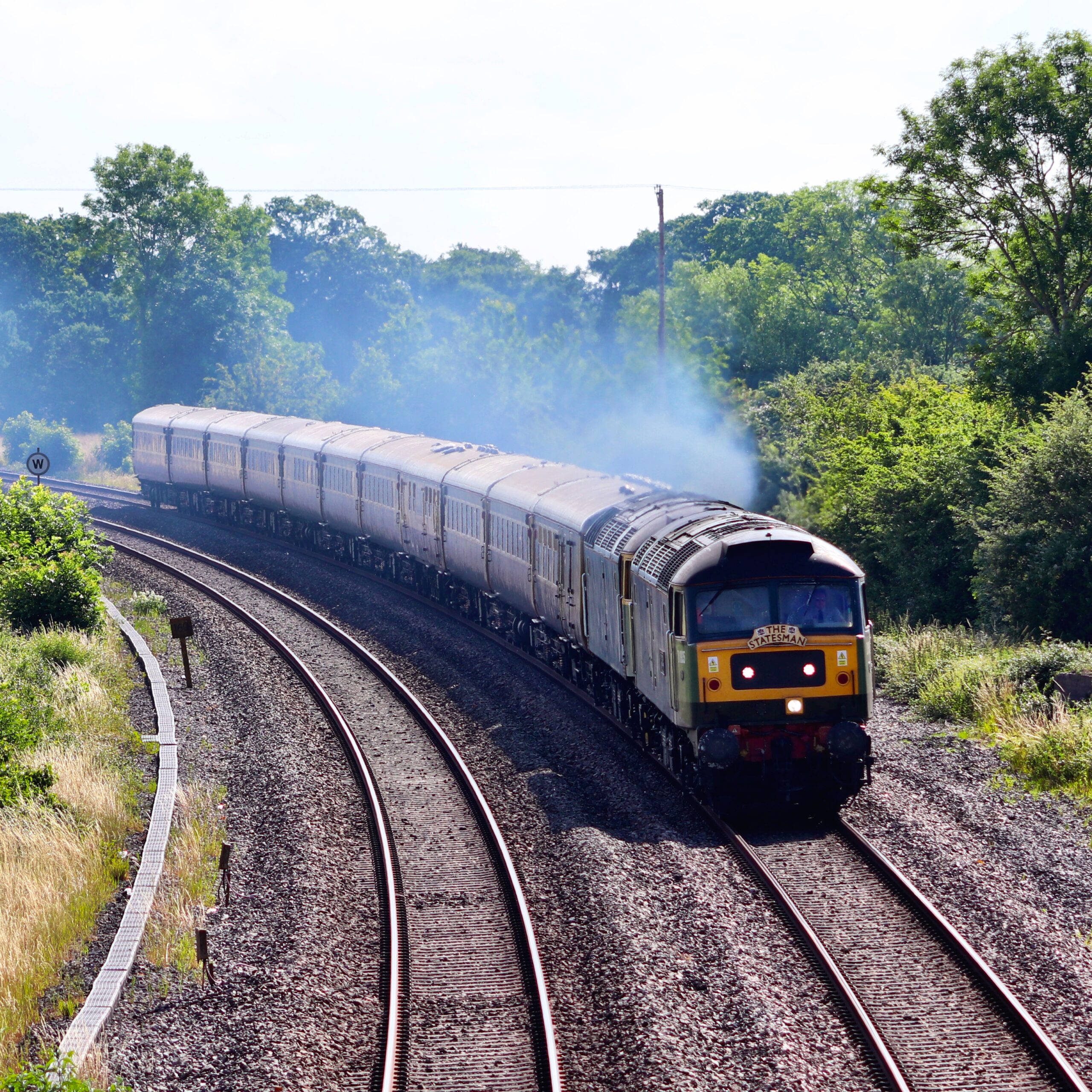
    LSL Class 47 No.’s 47805 and 47614 flying through Creech St. Michael with the “Cornish Mazey Day Statesman” 1Z64 0522 Solihull to Penzance – 24/06/2023

    Operated by: Statesman Rail

    Motive power: 2 x LSL Class 47 No.’s 47805 and 47614

    The Pathfinder Mazey Day Special – 1Z69 0544 Tame Bridge Parkway to Penzance

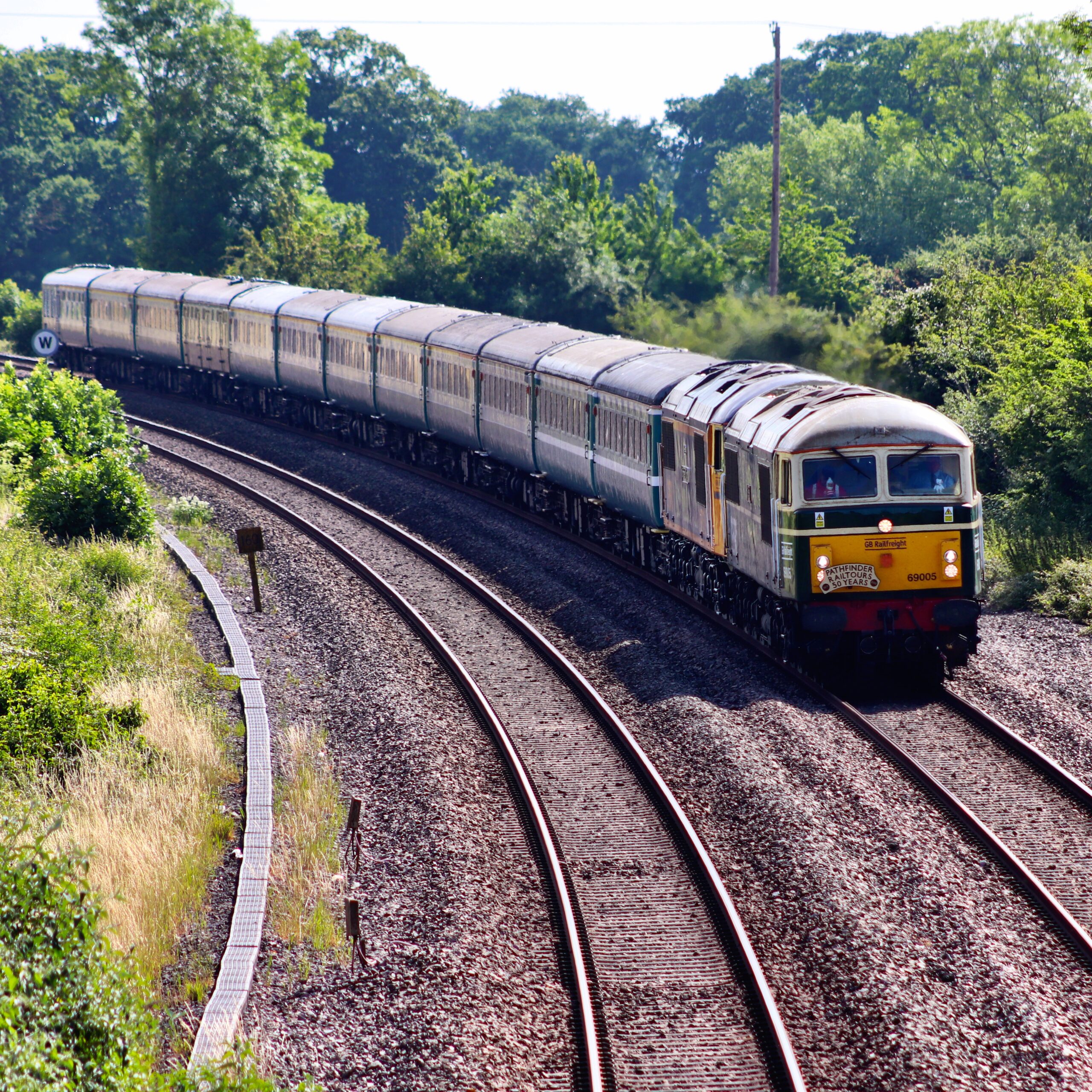
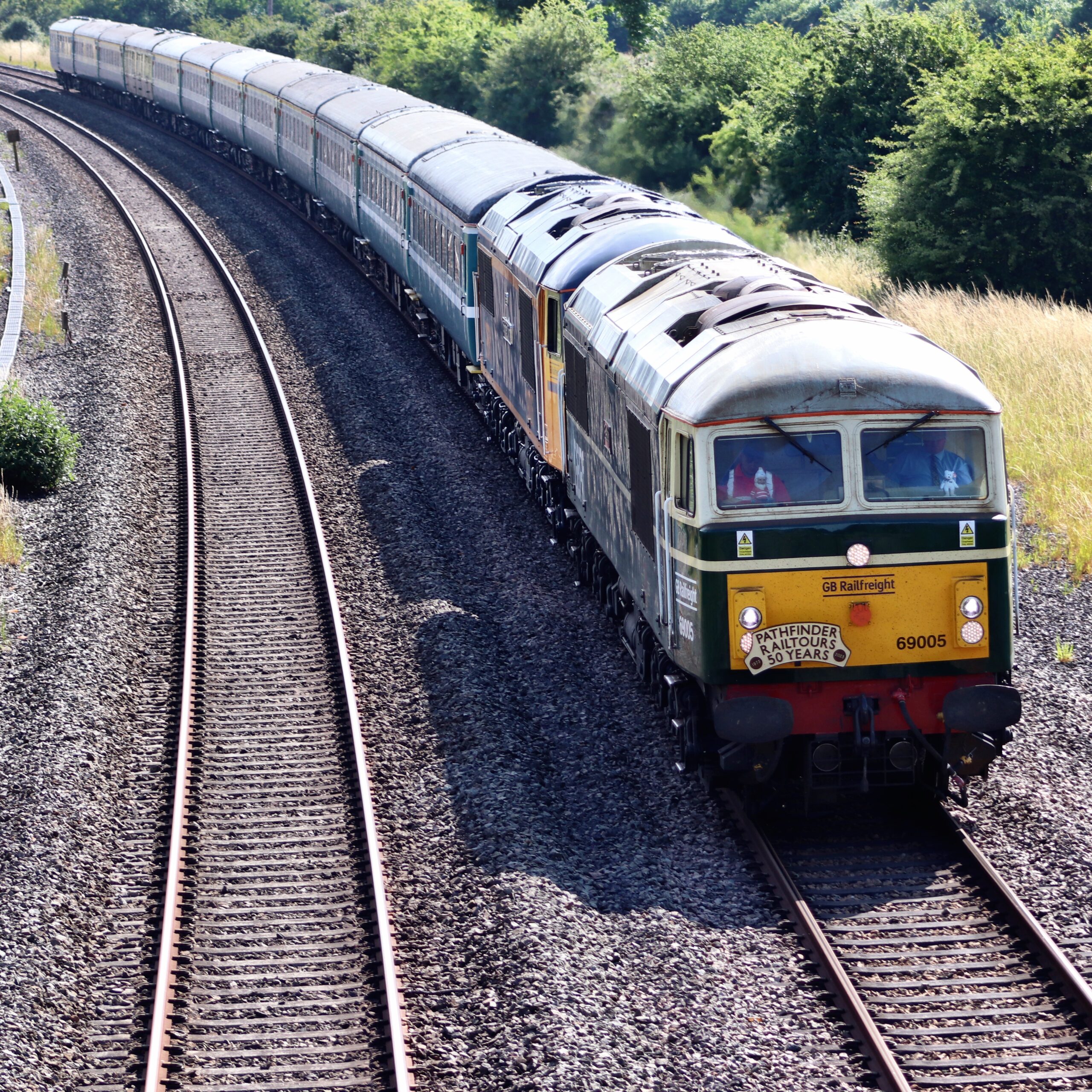
    GBRf Class 69 No.’s 69005 and 69006 on the approach to Creech St. Michael working “The Pathfinder Mazey Day Special” 1Z69 0544 Tame Bridge Parkway to Penzance – 24/06/2023
    GBRf Class 69 No.’s 69005 and 69006 on the approach to Creech St. Michael working “The Pathfinder Mazey Day Special” 1Z69 0544 Tame Bridge Parkway to Penzance – 24/06/2023

    Operated by: Pathfinder Tours

    Motive power: 2 x GBRf Class 69 No.’s 69005 and 69006

    At a ceremony in Gloucester on Friday 23rd June 2023, No. 69006 was named ‘Pathfinder Railtours – Peter Watts 50 Years Service 1973-2023’.  After the naming No.’s 69006 and 69005 ran light engines to Burton to collect the tour stock for the following day.

    English Riviera Express – 1Z27 0550 Shrewbury to Kingswear (For Dartmouth)

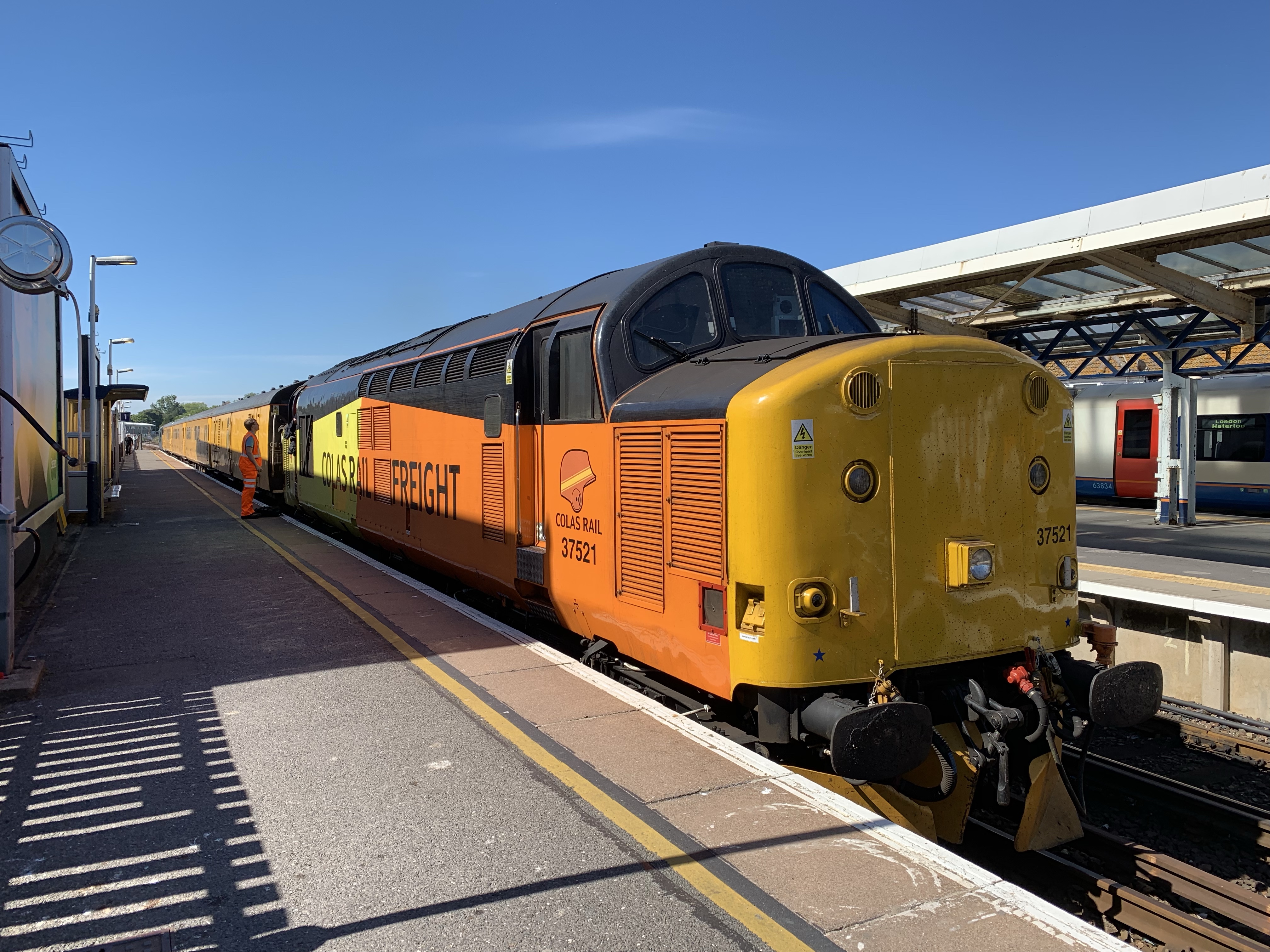
    LSL Class 37 No.’s 37521 and 37688 with Class 47 No. 47828 at the rear hauling the diesel leg of the “English Riviera Express” 1Z27 0550 Shrewbury to Kingswear (For Dartmouth) at Creech St. Michael – 24/06/2023
    LSL Class 47 No. 47828 at the rear of the “English Riviera Express” 1Z27 0550 Shrewbury to Kingswear (For Dartmouth) at Creech St. Michael – 24/06/2023
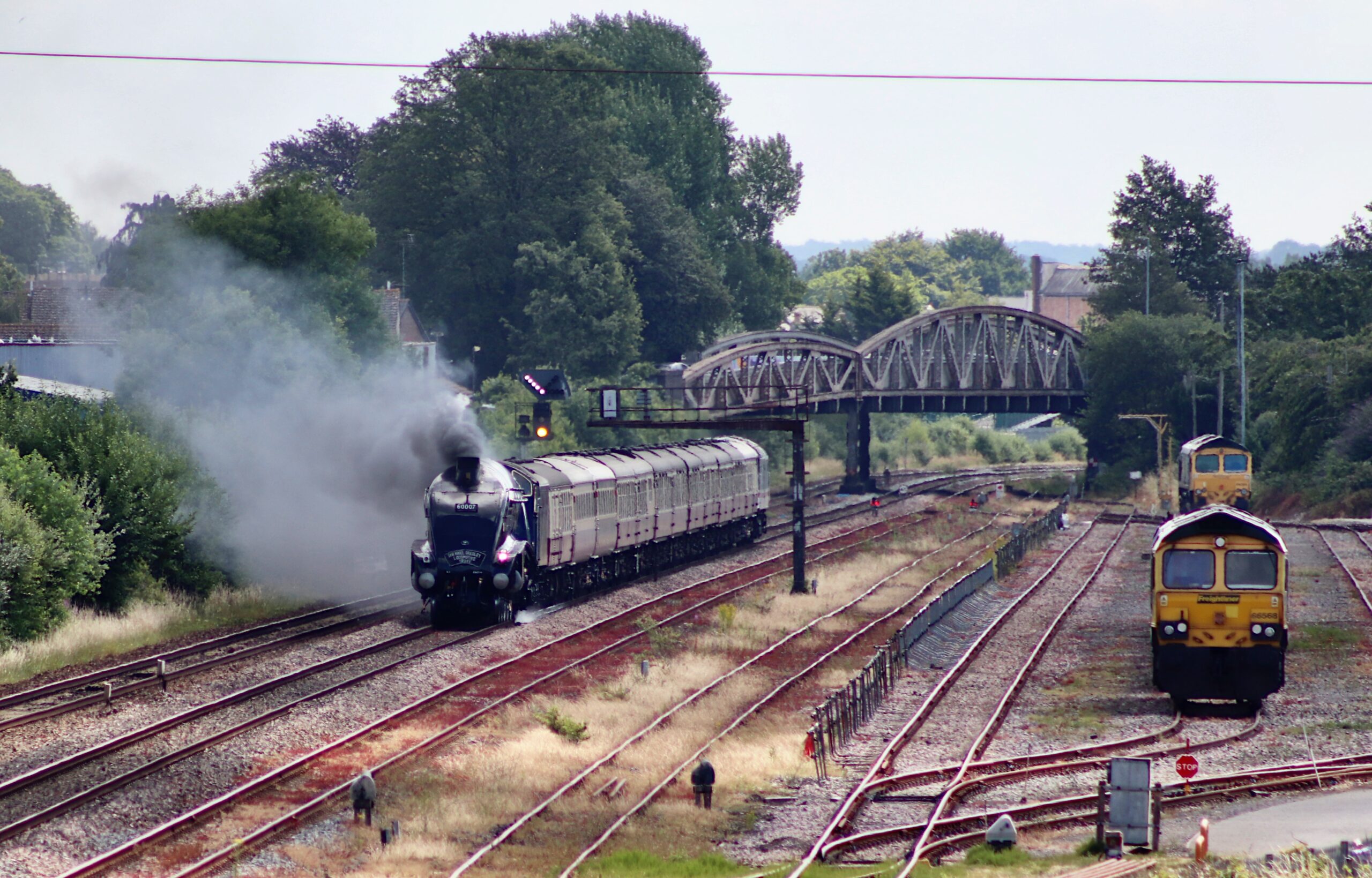
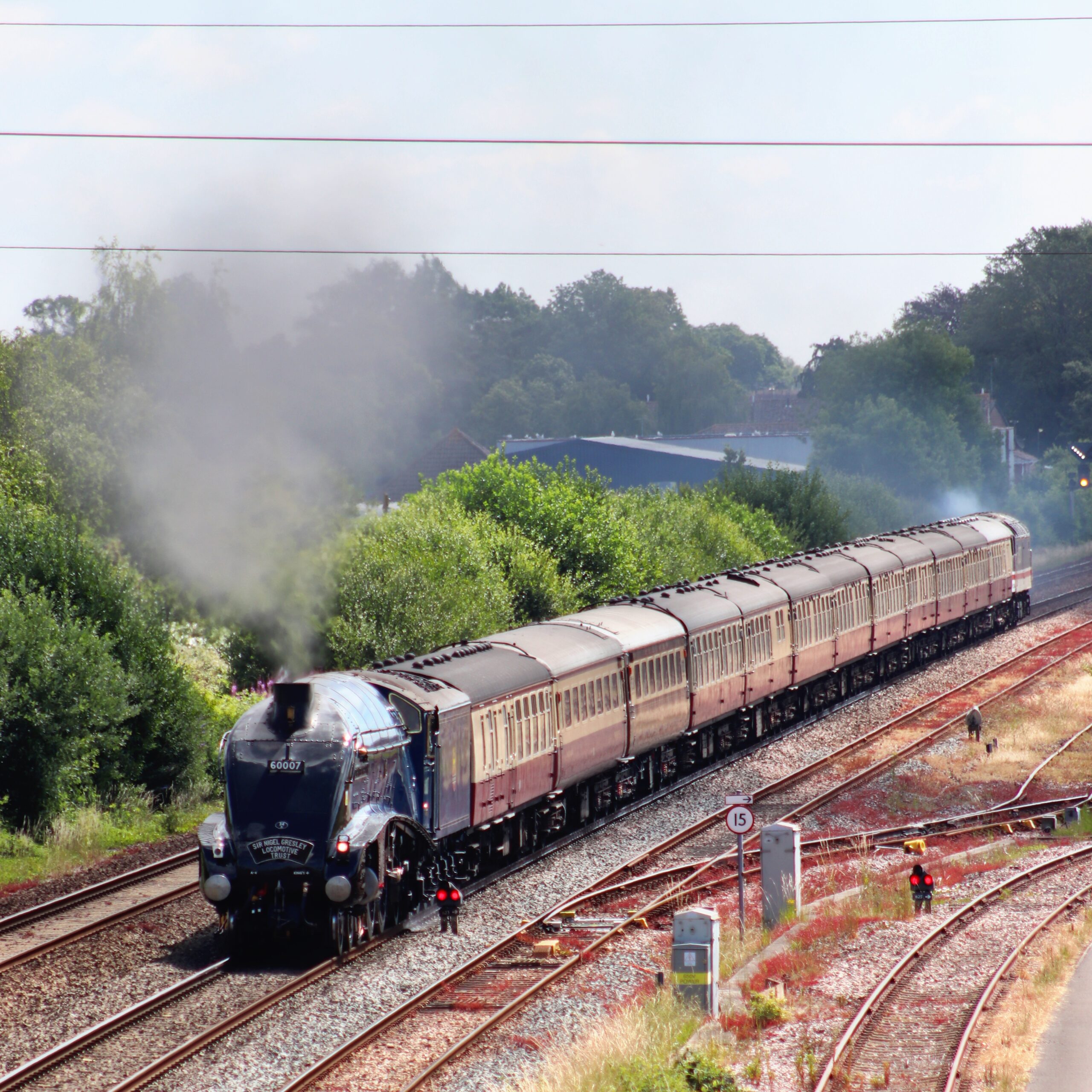
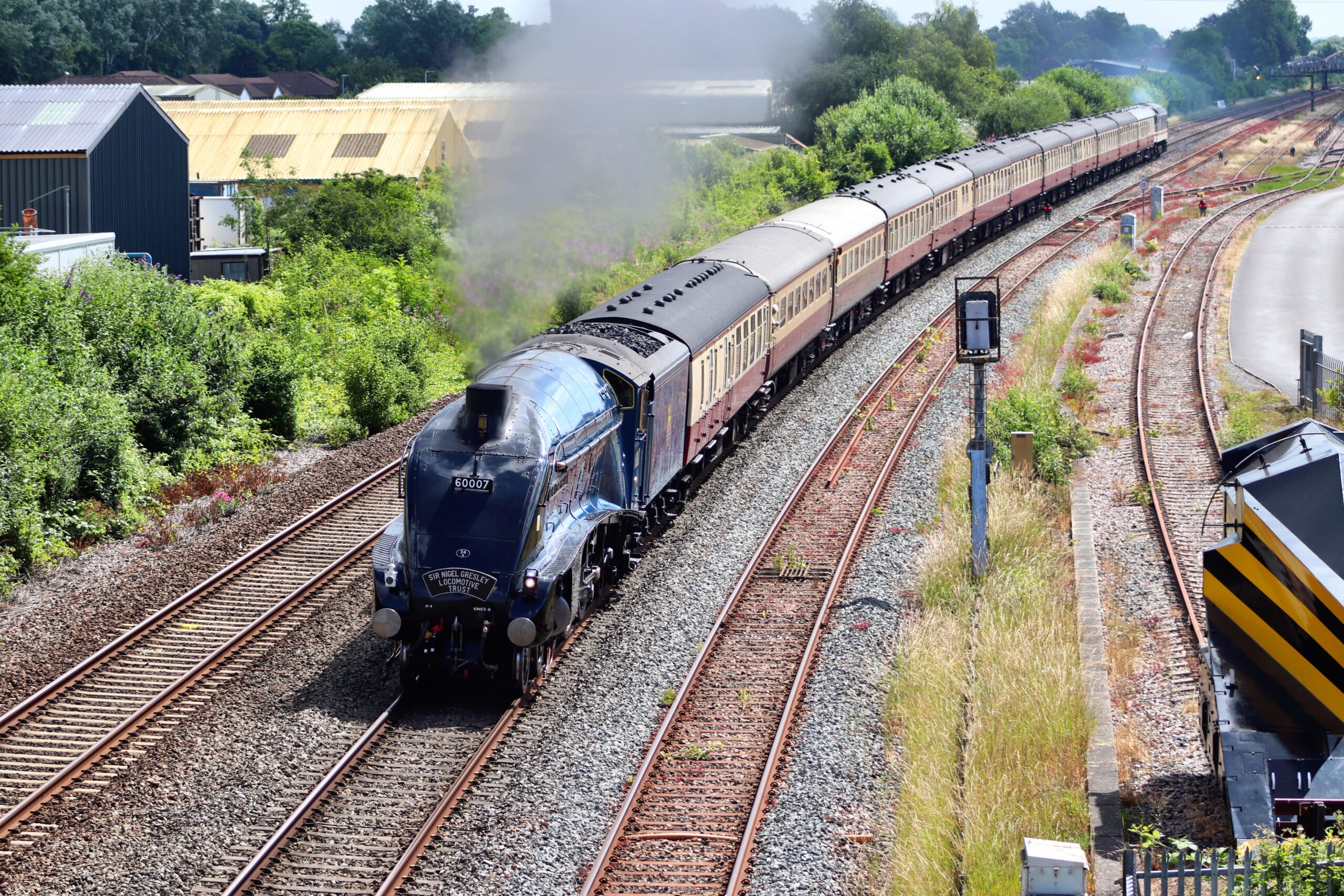
    Having changed locomotives in Taunton railway station and now with LNER A4 4-6-2 No. 60007 ‘Sir Nigel Gresley’ in charge “English Riviera Express” 1Z27 0550 Shrewbury to Kingswear (For Dartmouth) passes Fairwater Yard, Taunton – 24/06/2023
    LNER A4 4-6-2 No. 60007 ‘Sir Nigel Gresley’ heads up the “English Riviera Express” 1Z27 0550 Shrewbury to Kingswear (For Dartmouth) with Class 47 No. 47828 at the rear passing Fairwater Yard, Taunton – 24/06/2023
    LNER A4 4-6-2 No. 60007 ‘Sir Nigel Gresley’ heads up the “English Riviera Express” 1Z27 0550 Shrewbury to Kingswear (For Dartmouth) at Silk Mills, Taunton – 24/06/2023

    Operated by: Saphos Trains

    Motive power: 2 x LSL Class 37 No.’s 37521 and 37688 with Class 47 No. 47828 at the rear. At Taunton the Class 37’s were taken off the train and substituted by LNER A4 4-6-2 No. 60007 ‘Sir Nigel Gresley’. The Class 47 remained to provide assistance at the rear.

    The Whistling Ghost – 1Z10 0608 Birmingham Snow Hill to Bishops Lydeard

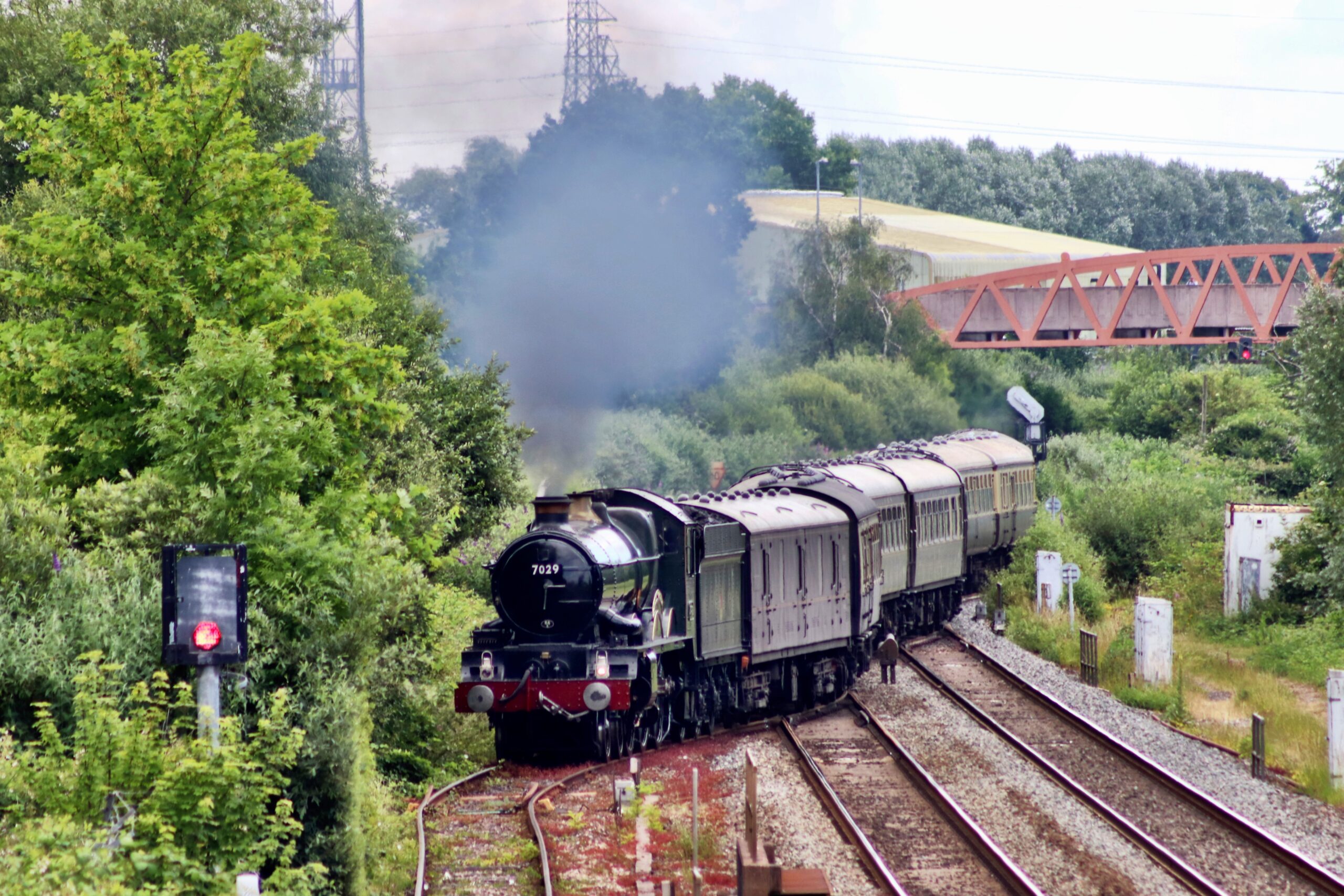
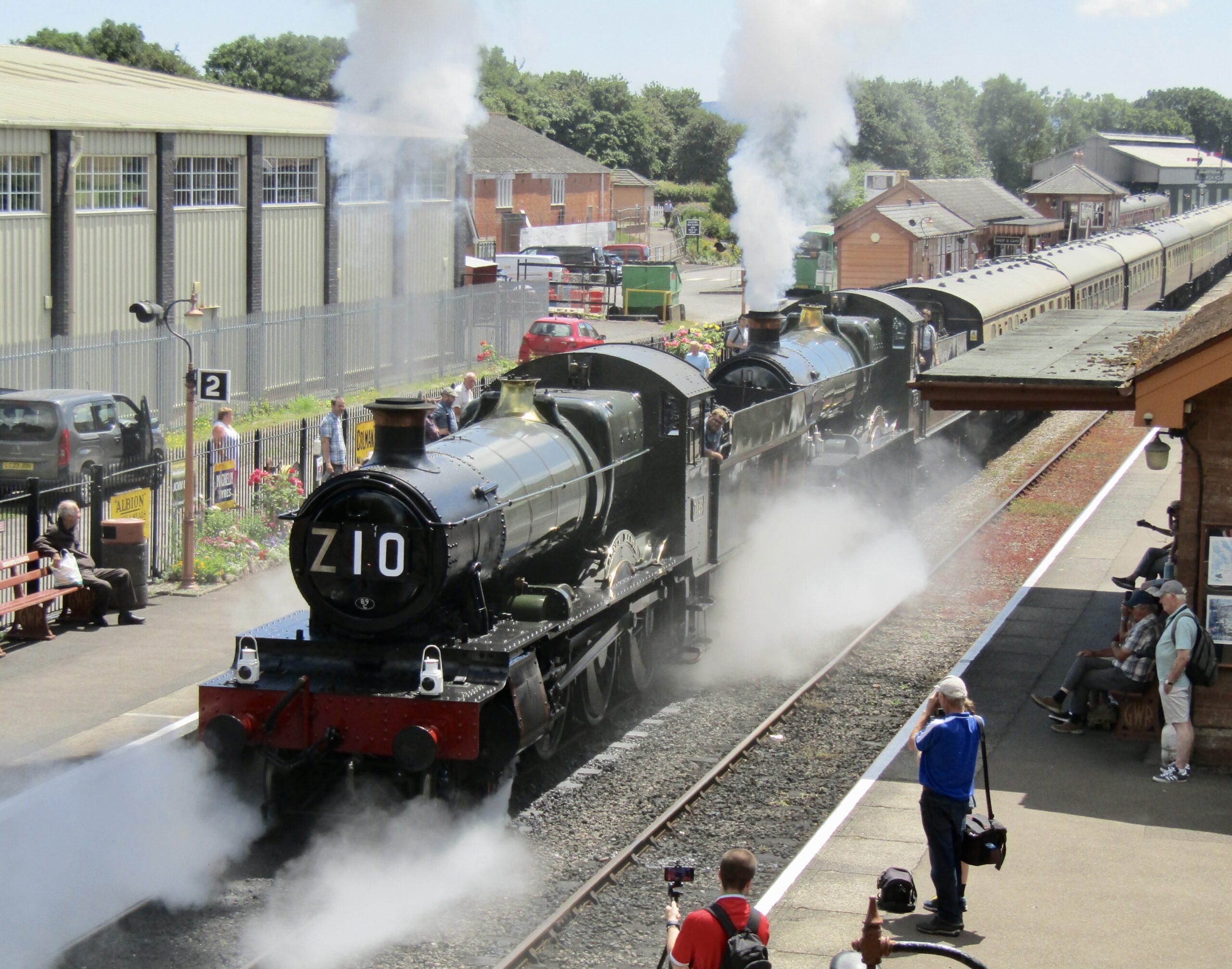
    With Silk Mills bridge in the background, GWR Castle 4-6-0 No. 7029 ‘Clun Castle’ hauling “The Whistling Ghost” 1Z10 0608 Birmingham Snow Hill to Bishops Lydeard wending its way across the GW mainline onto the branch which leads to the West Somerset Railway – 24/06/2023
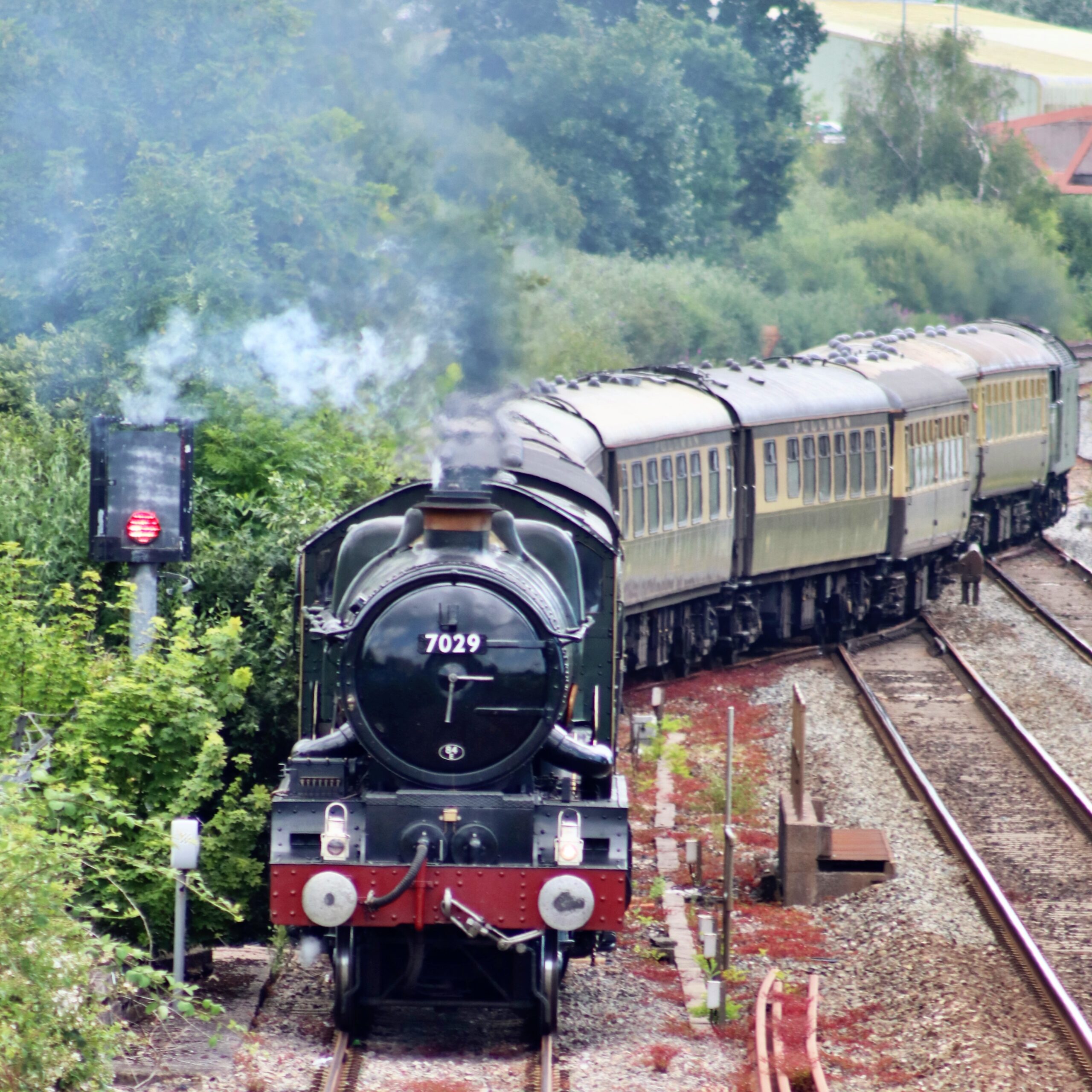
    GWR Castle 4-6-0 No. 7029 ‘Clun Castle’ hauling “The Whistling Ghost” 1Z10 0608 Birmingham Snow Hill to Bishops Lydeard pulls onto the branch which leads to the West Somerset Railway – 24/06/2023
    GWR Castle 4-6-0 No. 7029 ‘Clun Castle’ at the head of “The Whistling Ghost” 1Z10 0608 Birmingham Snow Hill to Bishops Lydeard at Norton Fitzwarren. The Tysley collection’s Class 47 No. 47773 at the rear – 24/06/2023

    Operated by: Vintage Trains

    Motive power: GWR Castle 4-6-0 No. 7029 ‘Clun Castle’ with support from Class 47 No. 47773. Originally planned to run on 20th May 2023, the tour was rescheduled to June. On the WSR the train was taken from Bishops Lydeard to Minehead by 2 x GWR Manor Class 4-6-0 locomotives No.’s 7828 and 7812. Good friend of therailwaydog.co.uk, @smithy.377 kindly allowed us to share the following photos and video from the West Somerset leg of the tour.

    GWR Manor Class 4-6-0 locomotives No.’s 7828 ‘Odney Manor’ and 7812 ‘Erlestoke Manor’ await the arrival of “The Whistling Ghost” tour at Bishops Lydeard (image by kind permission of @smithy.377) – 24/06/2023
    Video from @smithy.377 as No.’s 7828 ‘Odney Manor’ and 7812 ‘Erlestoke Manor’ pass No. 7029 ‘Clun Castle’ at Bishops Lydeard – 24/06/2023
    Having substituted for No. 7029 ‘Clun Castle’, No.’s 7828 ‘Odney Manor’ and 7812 ‘Erlestoke Manor’ await departure from Bishops Lydeard with “The Whistling Ghost” tour (image by kind permission of @smithy.377) – 24/06/2023
    GWR Manor Class 4-6-0 locomotives No.’s 7828 ‘Odney Manor’ and 7812 ‘Erlestoke Manor’ depart Bishops Lydeard with “The Whistling Ghost” bound for Minehead (image by kind permission of @smithy.377) – 24/06/2023

    For more excellent railway images check out their Instagram page: https://www.instagram.com/smithy.377/

    It was another hot day and for the most part Yoshi was able to find shade or at least a cooling breeze. We had toyed with the idea of heading to Bristol as two Class 20 locomotives were reported to be stabled at Bristol Kingsland Road (more on these later). But ultimately, it was far too hot for the boy to be out in the sun for any prolonged period so we waited a little while to see an interesting Class 43 HST power car move from Plymouth to Doncaster and then headed home in good time to pick up Caroline after the picnic. 

    Inter-City liveried Class 43 No. 43184 with No. 43285 at the rear working 5E23 1036 Laira T&RSMD to Doncaster Works Wagon Shops seen passing Norton Fitzwarren – 24/06/2023
    HST Class 43 power car No. 43285 tailing No. 43184 and two MK3 coaches as 5E23 1036 Laira T&RSMD to Doncaster Works Wagon Shops at Norton Fitzwarren – 24/06/2023
    Trains around Taunton the morning of 24th June 2023

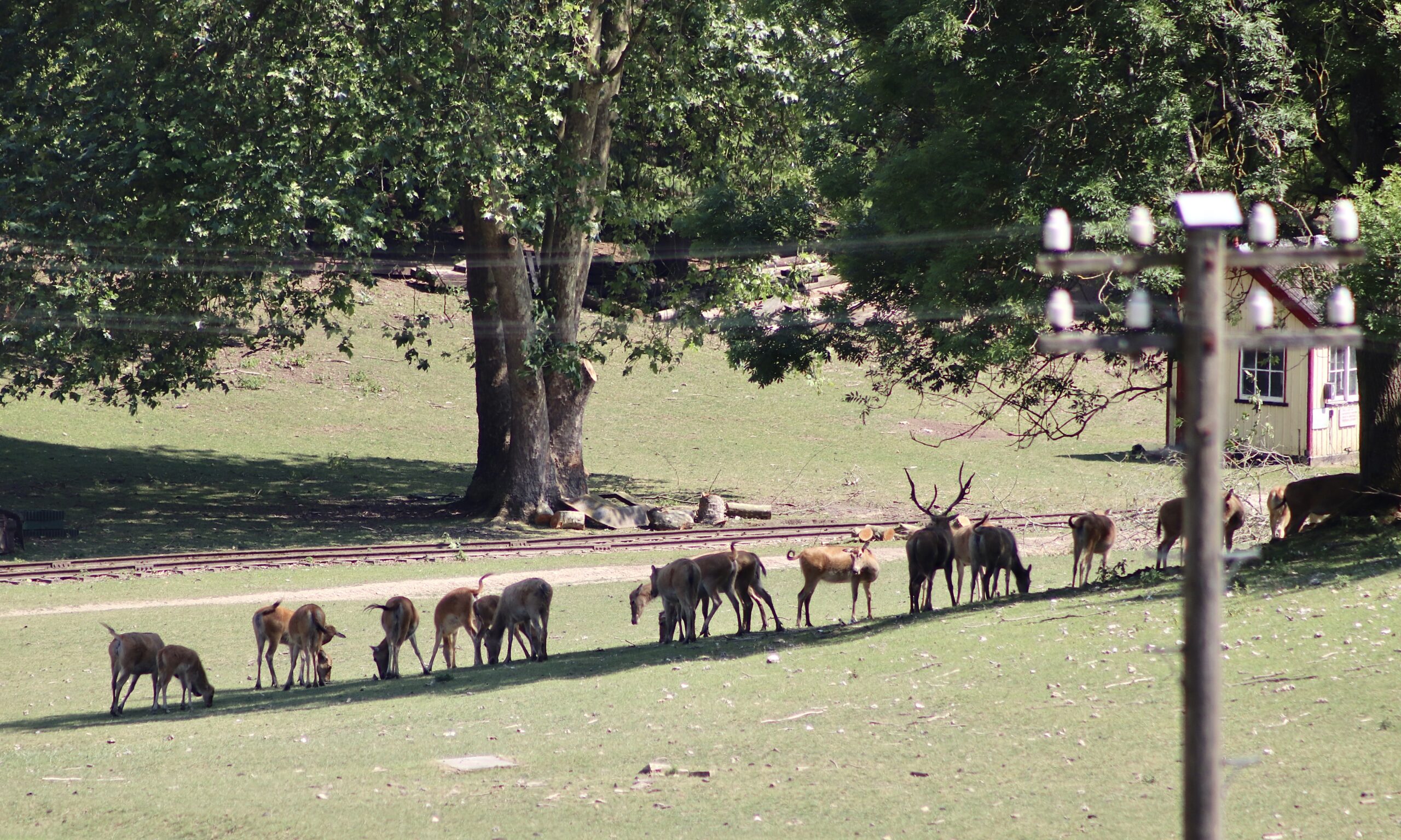
    On Sunday 25th June, Yoshi, Caroline and I had been invited to Fawley Hill Museum and Railway Running Day. It sounds very grand to be invited. In reality, because the museum and railway are open on a limited number of days per year, admission is by prior application and invitation only as space is limited. Fawley Hill is a private museum established in the 1960’s by the late Sir William McAlpine at his estate near Henley on Thames.  It hosts a fine collection of memorabilia and models relating to railways together with a working standard gauge railway operating on the steepest gradient in the country. Since its inception the site has grown steadily with a wide range of interesting artefacts and buildings arriving from all over the country. Many items of architecture have been rescued and reassembled at Fawley Hill to save them from demolition, creating a unique urban landscape in a country estate. The park also contains a variety of animals including many species of deer.

    Deer at Fawley Hill – 25/06/2023

    There is a strict “No Photography” rule on visitors inside the Museum, although in reality we found limited photography was acceptable as long as no images are posted on the internet in any way. Which unfortunately includes blogs about railways.  So, you’re going to have to take my word for it – the museum is fascinating and holds over 6,000 objects. My favourite sections were a display on the artist Terrence Cuneo, and an area dedicated to LNER A3 No. 60103 ‘Flying Scotsman’ which was saved for the nation by Sir William McAlpine, the Museum’s founder. There are some amazing models including a very clever diorama of Swindon Works employing use of reflections to force a longer perspective. 

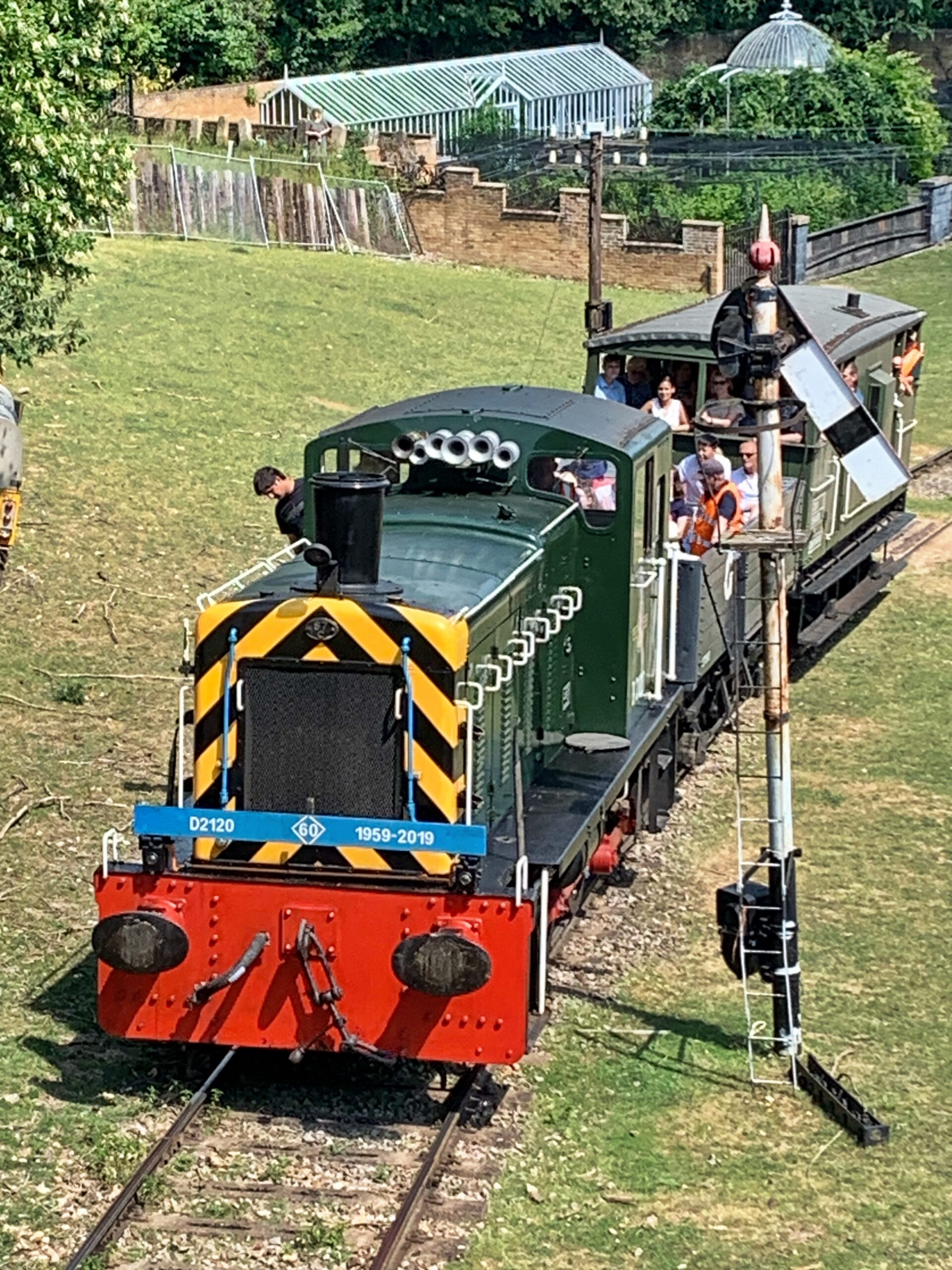
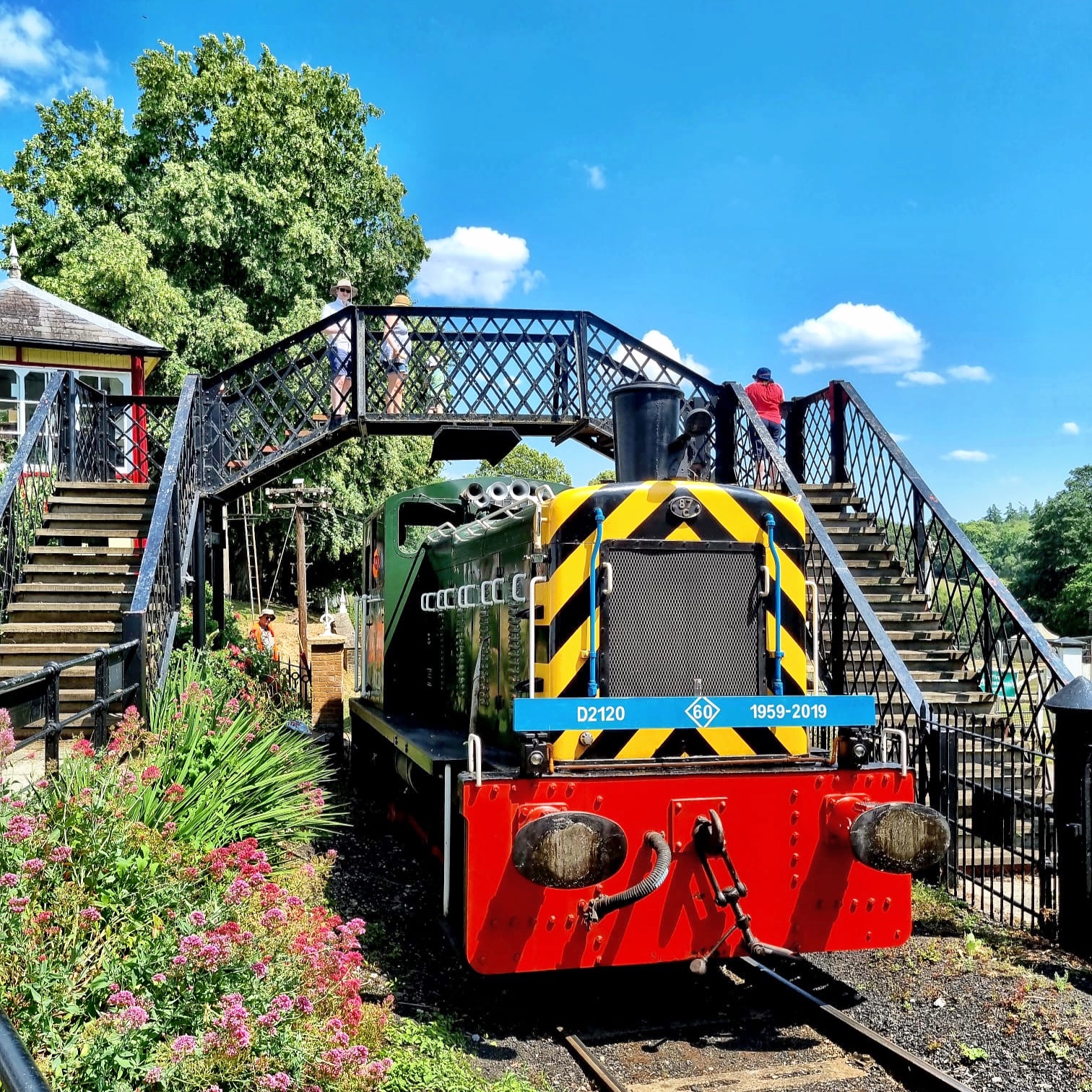
    On the day of our visit, Class 03 No.D2120 was running trains, and we took a ride in Lancashire & Yorkshire Railway half-coach ‘Judy’. Yoshi was allowed to sit with us on the wooden seating and he watched out of the window as we meandered around the estate’s railway system.

    Class 03 0-6-0 Diesel Mechanical Shunter No. D2120 climbs the slope to Somersham Station at Fawley Hill pulling Lancashire & Yorkshire Railway half-coach ‘Judy’ – 25/06/2023

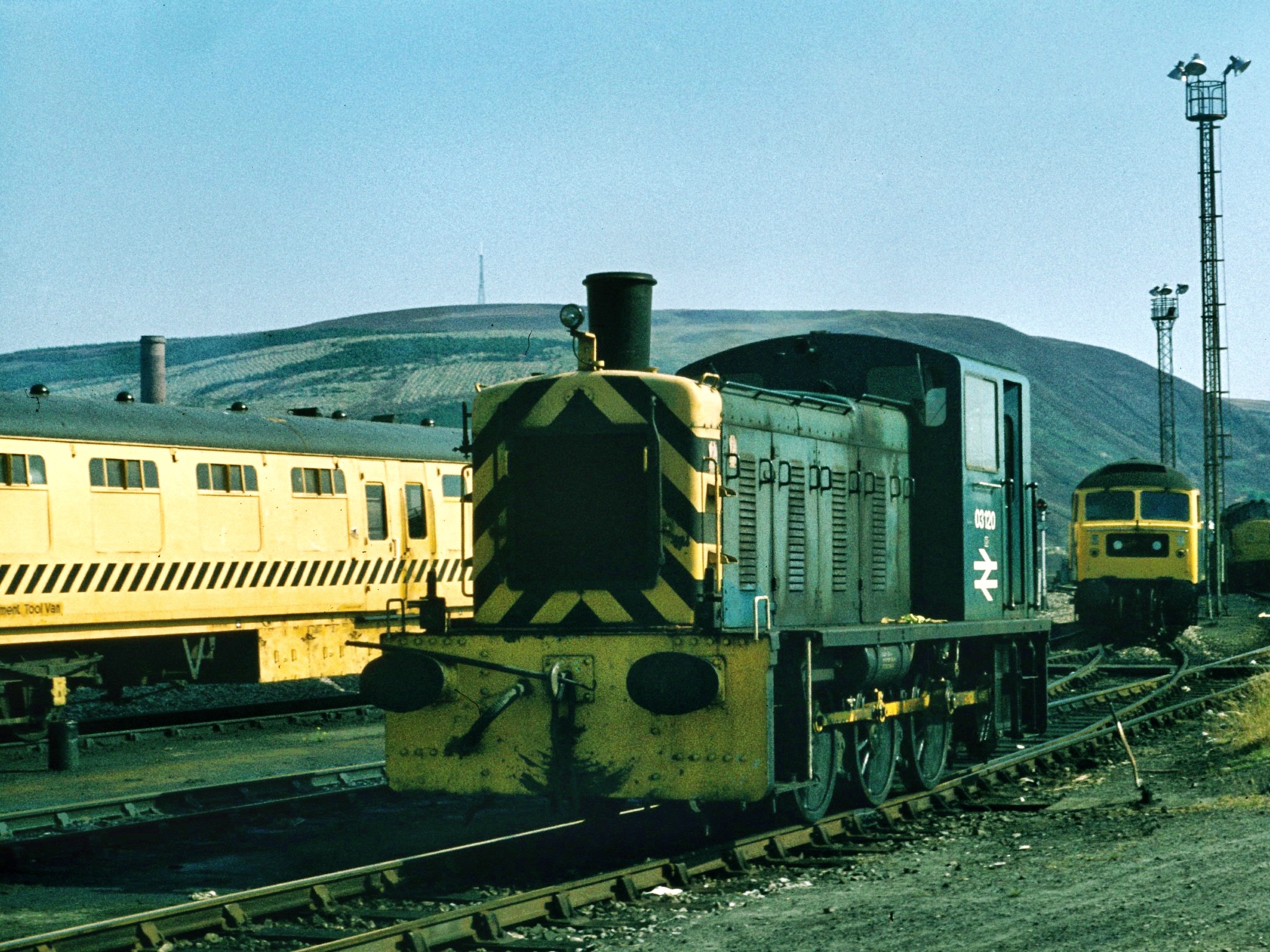
    230 Class 03 diesel shunter locomotives were constructed by BR at Swindon and Doncaster Works between 1957 and 1962. No. D2120 was built at Swindon and entered service in October 1959. She was first allocated to Dangraig Depot and spent her entire career in the Swansea area of South Wales.

    In March 1972 whilst undergoing an overhaul, No. D2120 was converted to Burry Port & Gwendraeth Valley Railway (BPGVR) loading gauge. Eventually a total of 11 Class 03’s were converted in this way. The BPGVR had a severe height restriction and this conversion involved reducing the cab height by 4½ inches, and the fitting of a headlight in front of the exhaust stack, and another at the rear of the cab, for use when locomotives crossed unprotected level crossings. The converted locomotives were also fitted for multiple working with a second locomotive of the same class. During the mid 1970’s British Rail adopted a locomotive five figure computer numbering methodology under the Total Operations Processing System (TOPS) used for managing railway locomotives and rolling stock and No. D2120 was renumbered No. 03120 in March 1974.

    In 1978, No. 03120 spent three months (August – October) in store at Swindon, being re-introduced into service in November. She was given a final general overhaul at Swindon in May 1983 and retained as a standby loco, allocated to Landore Depot, Swansea. She was
    finally withdrawn by BR in February 1986 and released for sale.
    Purchased by Sir William McAlpine, No. 03120 arrived at Fawley in December 1986, wearing the standard fleet livery of BR rail blue with ‘wasp’ yellow and black painted warning ends. Since arriving at Fawley, she has been repainted into early BR Green as No. D2120, the wasp stripes at each end of the locomotive were restored in 2019. D2120 wears loco shed allocation plate 87C (Danygraig).

    Class 03 0-6-0 Diesel Mechanical Shunter No. D2120 backs onto a GWR plank open wagon and a guards van to increase passenger capacity on the train rides at Fawley Hill – 25/06/2023
    Class 03 0-6-0 Diesel Mechanical Shunter No. D2120 working visitor train rides at Fawley Hill – 25/06/2023
    Class 03 0-6-0 Diesel Mechanical Shunter No. D2120 passes under the footbridge which was originally located at Brading Station on the Isle of Wight where it spanned the Ryde to Shanklin line before moving to Fawley Hill in March 2000 (CLS) – 25/06/2023
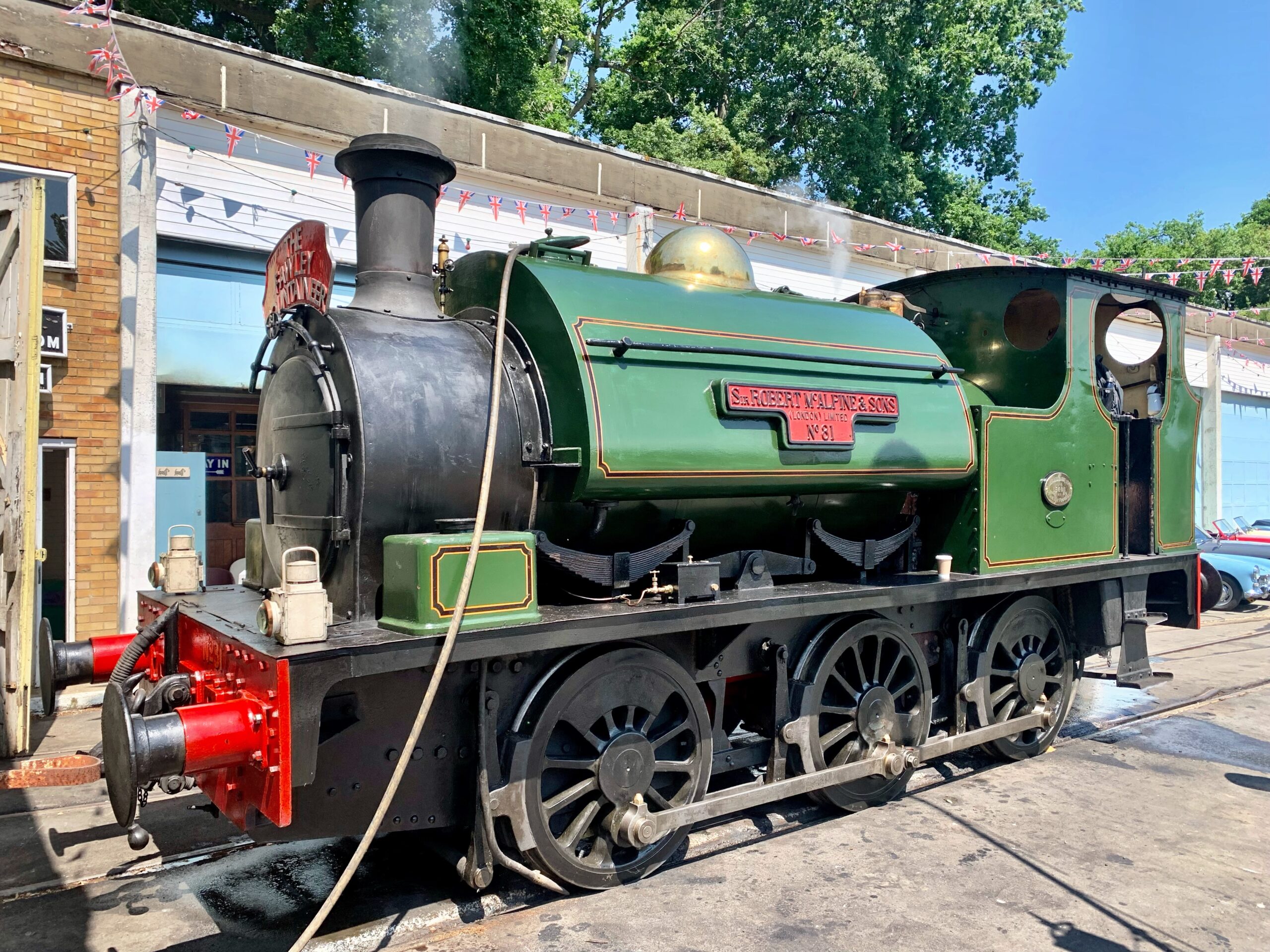
    Hudswell Clarke & Co Ltd 0-6-0 ST No. 31 at Fawley Hill Museum. This locomotive was ordered from Hudswell Clarke & Co Ltd in November 1912 by the Ministry of Fuel and Power, and built at their Hunslet, Leeds works. She was allocated builder’s number 1026, and completed in April 1913, at a total cost of £1485. Delivered new to Robert McAlpine & Sons, Cuffley on 14 April 1913, No 31 was allocated Plant Number 2581 in 1931. She was outshopped in Caledonian Blue, a colour she kept throughout her time at the McAlpine company even though the corporate colour was green.
    No 31 is the only surviving locomotive to have been owned by Sir Robert McAlpine & Sons for the whole of its working life. She worked on a number of building contracts including Wembley Stadium (1923-1924), RAF Boscombe Down (1944) and Llanwern Steelworks (1960-1961). The locomotive was rebuilt by Hudswell Clarke & Co in 1938. No 31 went into storage at McAlpine’s yard at Hayes in 1961 and remained there until she was identified for scrapping in 1965. At this point, Sir William decided to give No 31 a new life in retirement and purchased the locomotive.
    No 31 arrived at Fawley in September 1965 and was subsequently repainted in GWR Brunswick green livery. Above the smokebox door is carried loco shed plate 81M – a code unique to Fawley – 25/06/2023
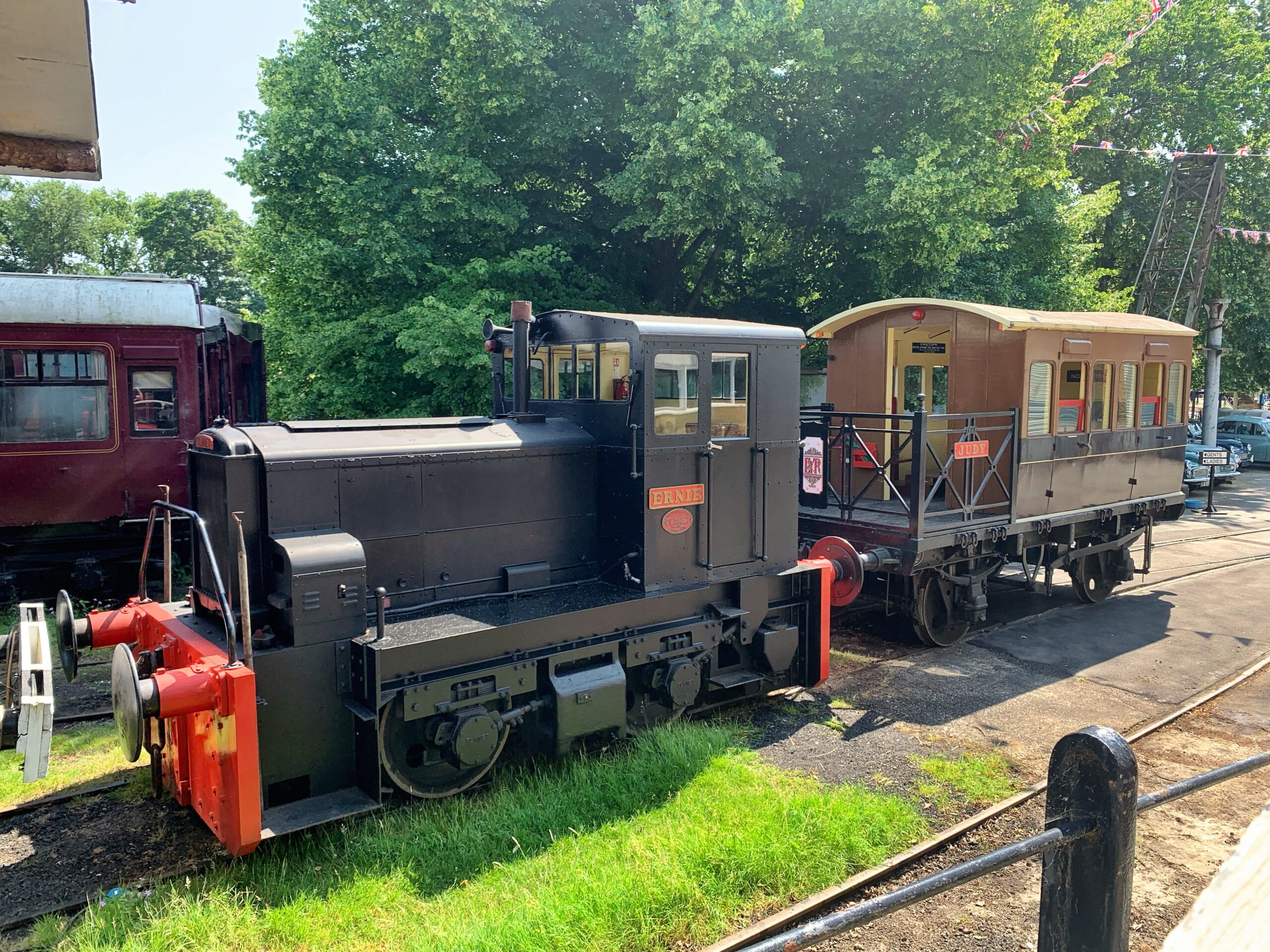
    One of two Planet 0-4-0 Diesel Mechanical locomotives at Fawley, No. 3894 ‘Ernie’ in Fawley station yard with Lancashire & Yorkshire Railway half-coach ‘Judy’ – 25/06/2023
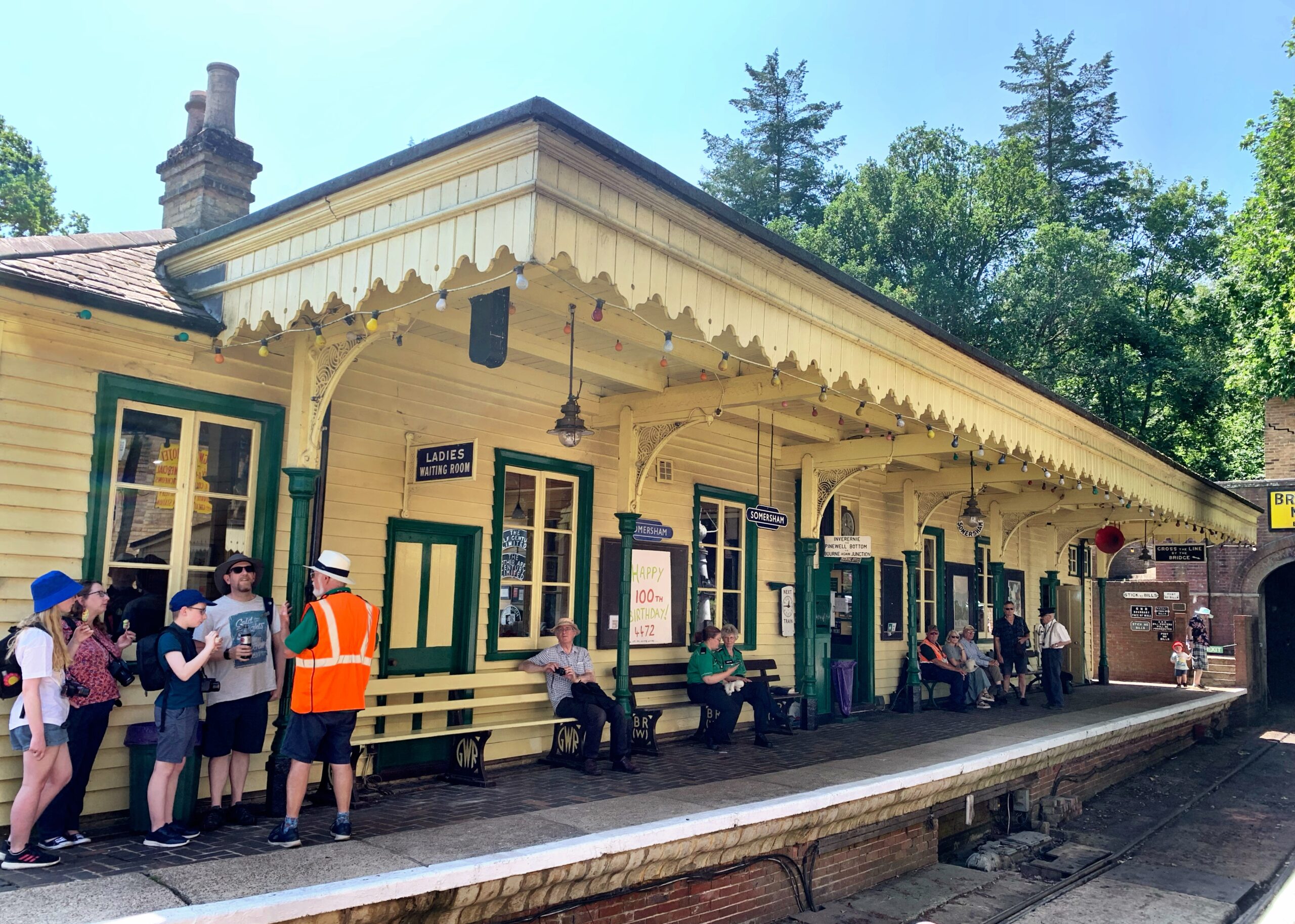
    Somersham Station, previously to be found on the St. Ives to March line. The station was opened by the Eastern Counties Railway (ECR) in 1848. The line was closed to all rail traffic in 1967. The waiting room survived until 1977 when it was moved to Fawley – 25/06/2023
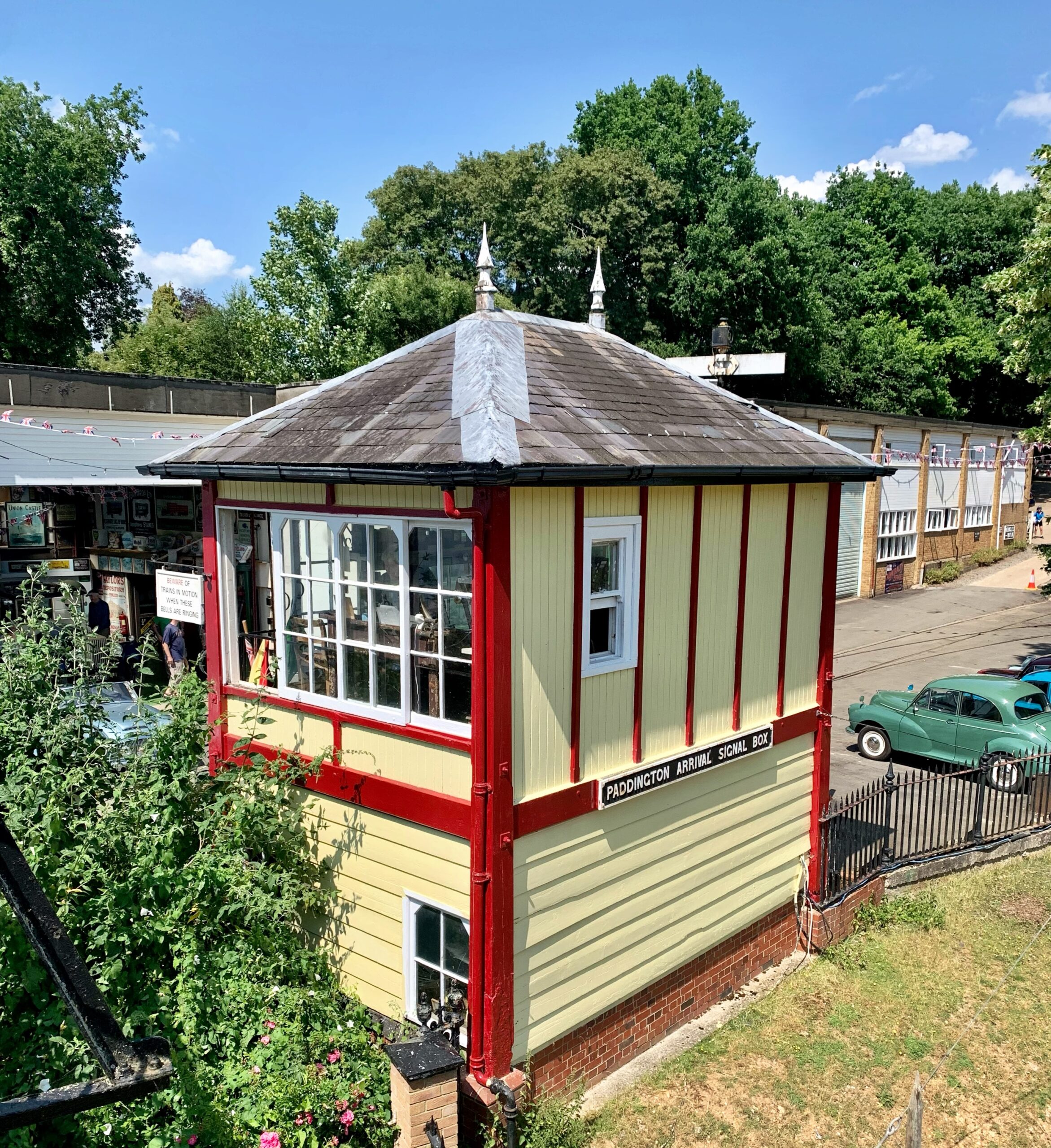
    Shobnall Maltings Signal Box is a Midland Railway (Type 3a) signal box dating from 1905. It was the first building to arrive for use on the Fawley railway in 1969 and was originally built at Swadlincote East near Burton-on-Trent. It was moved to operate at the Bass, Ratcliff & Gretton Ltd brewery and renamed Shobnall Maltings – 25/06/2023
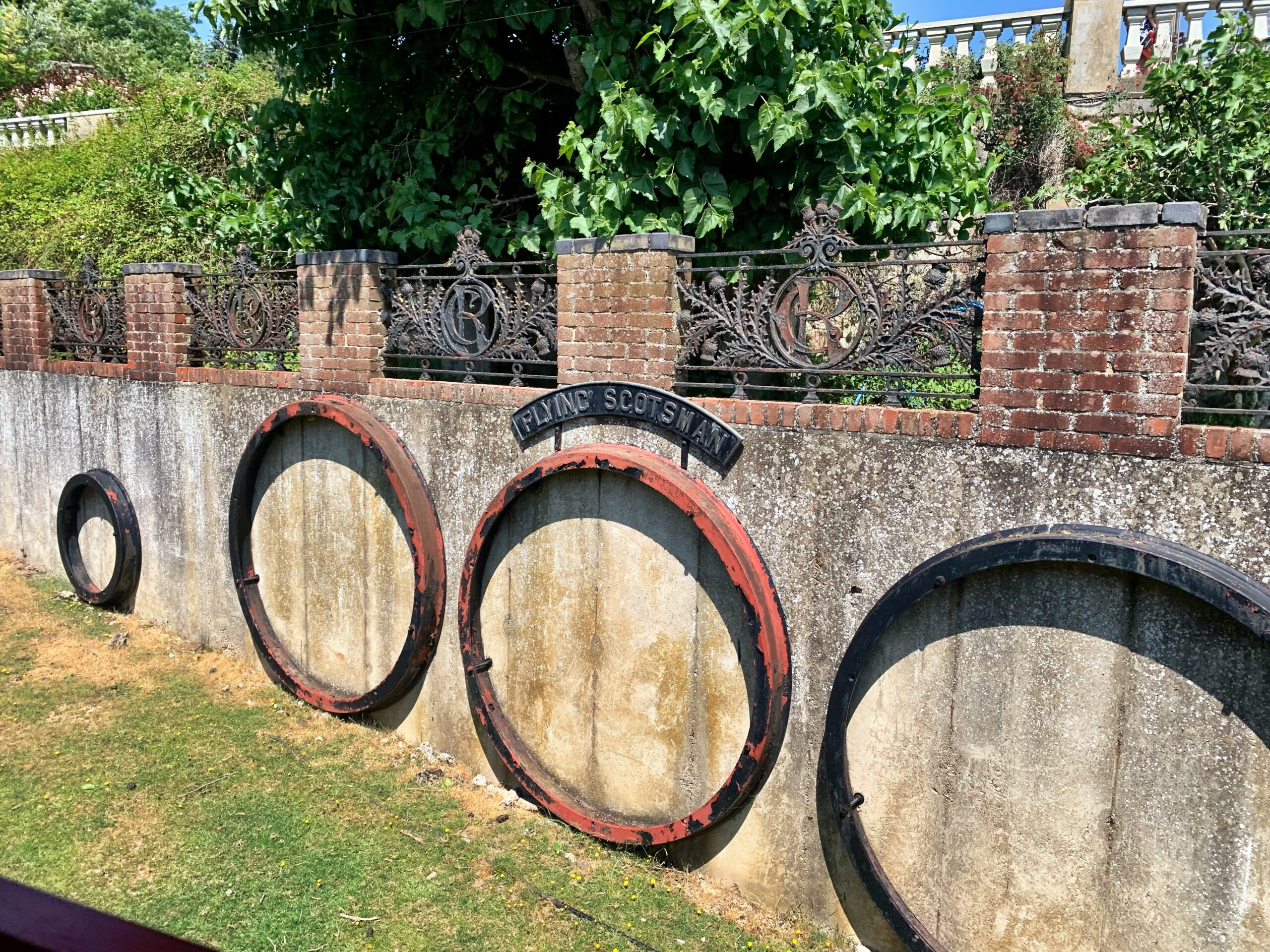
    These tyres from ‘Flying Scotsman’ were removed from the driving wheels of the famous LNER Class A3 4-6-2 prior to her journey to Australia in September 1988 – 25/06/2023
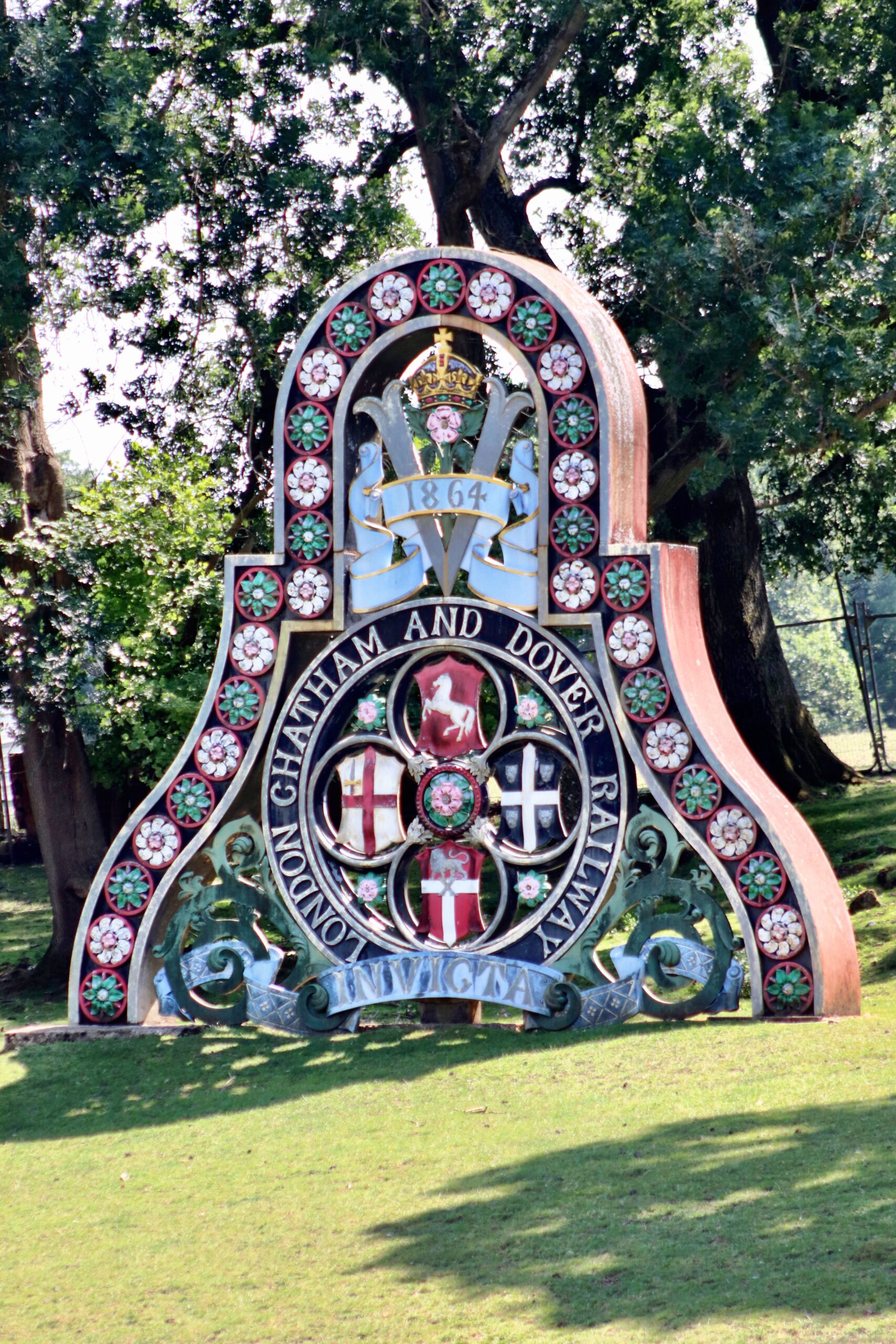
    Blackfriars Bridge Capital taken from the old Blackfriars Bridge across the River Thames in London. The bridge opened in June 1864 and demolished in the 1960’s. The bridge abutments remained until the mid-1980’s when the one on the north side of the river was removed along with its decorative cast iron capital or pediment. This example arrived at Fawley in 1984 whilst the remaining two are still in situ in London – 25/06/2023
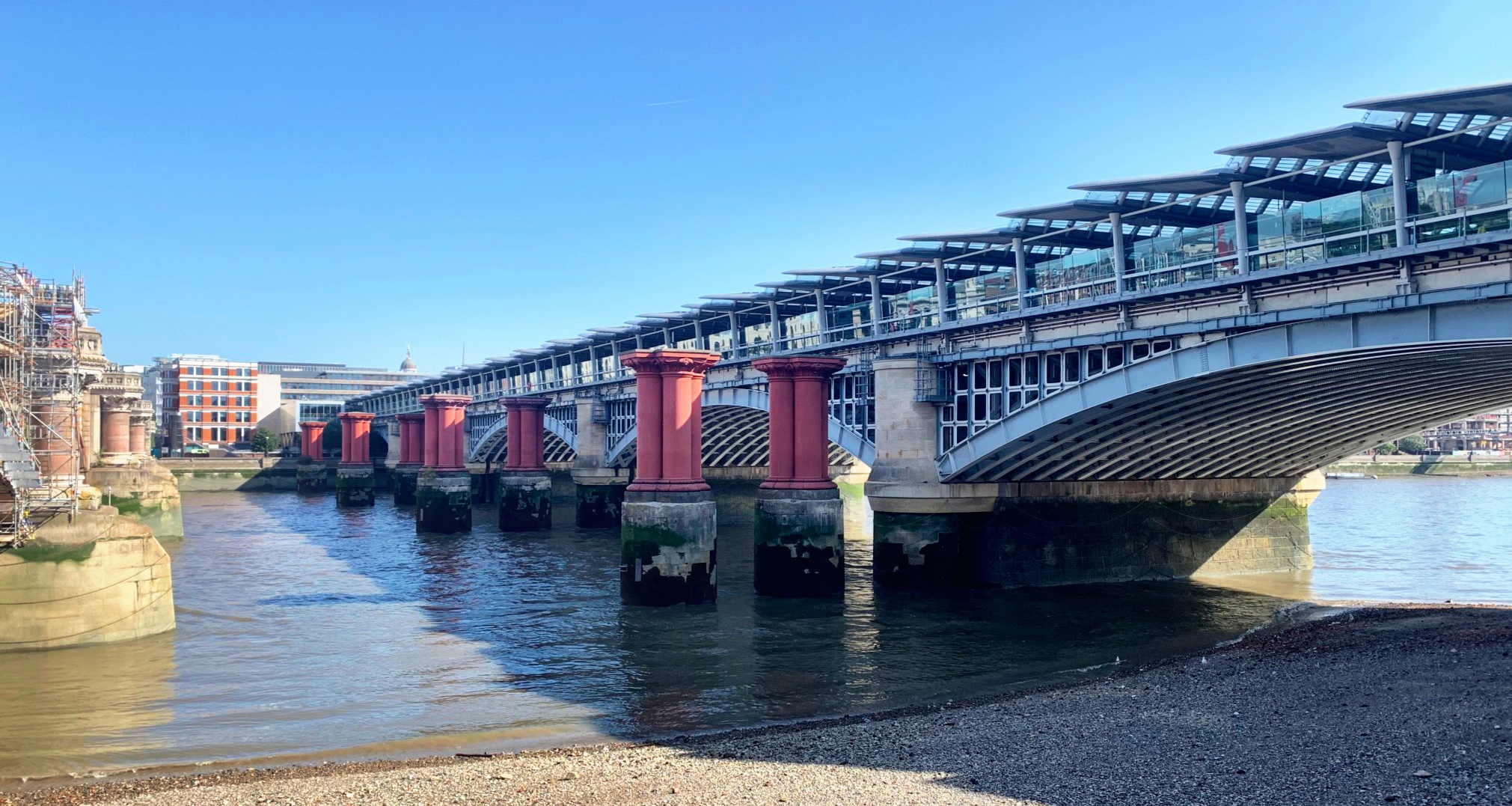
    The columns of the old Blackfriars railway bridge standing next to the current bridge – 26/08/2022
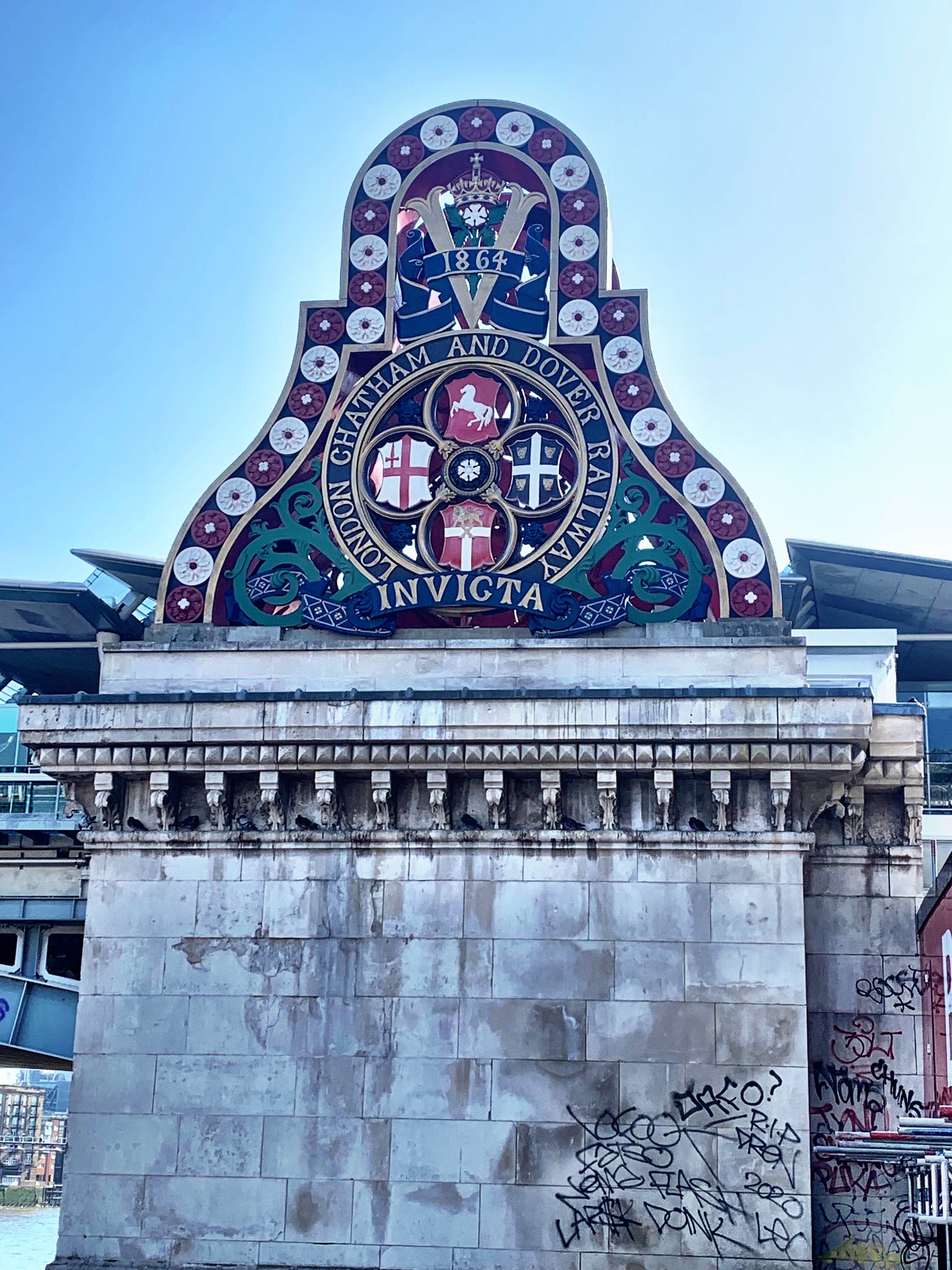
    The southern abutment and LC&DR insignia have been restored – 26/08/2022
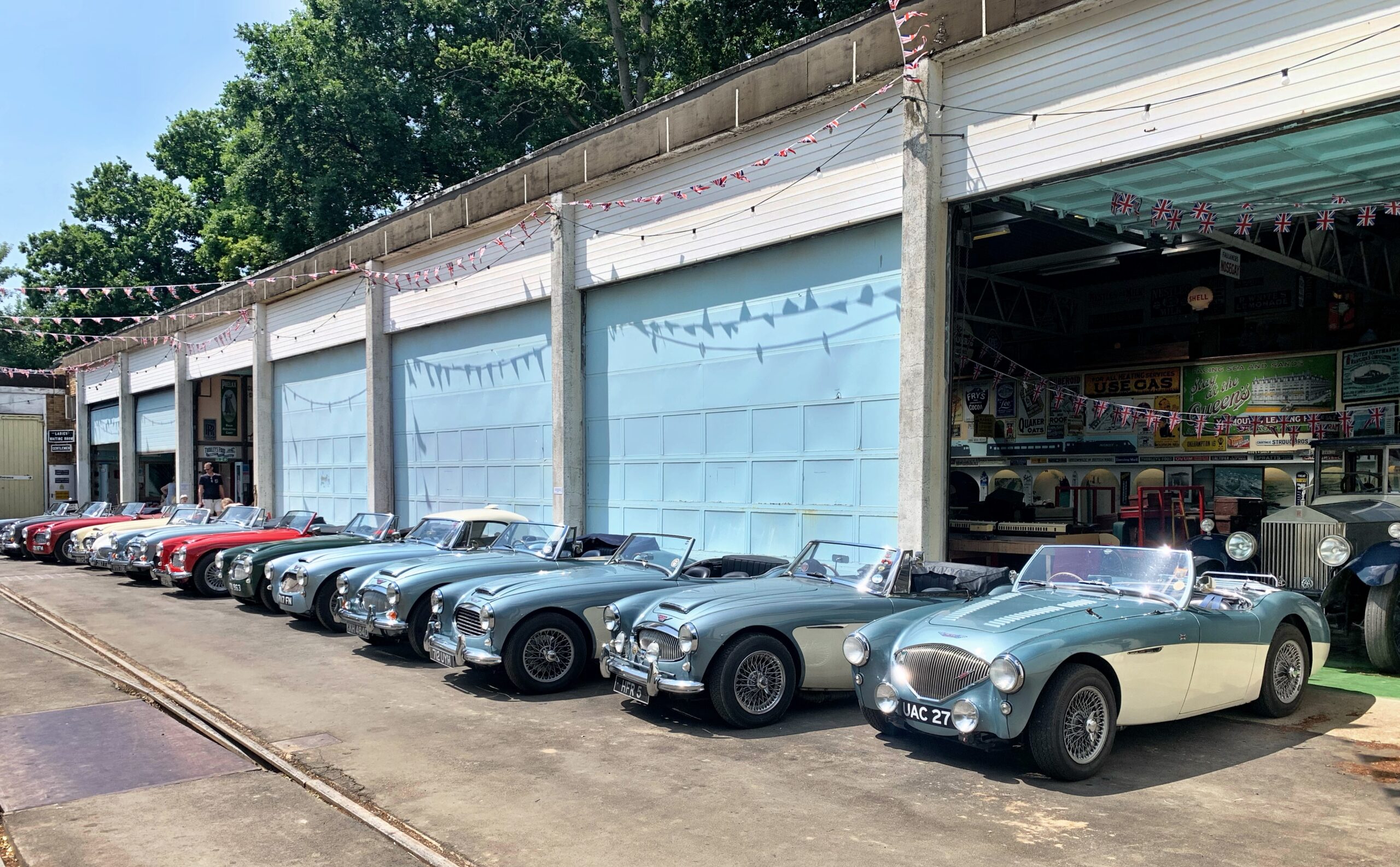
    Our visit coincided with the arrival of some Austin-Healey sports cars… – 25/06/2023
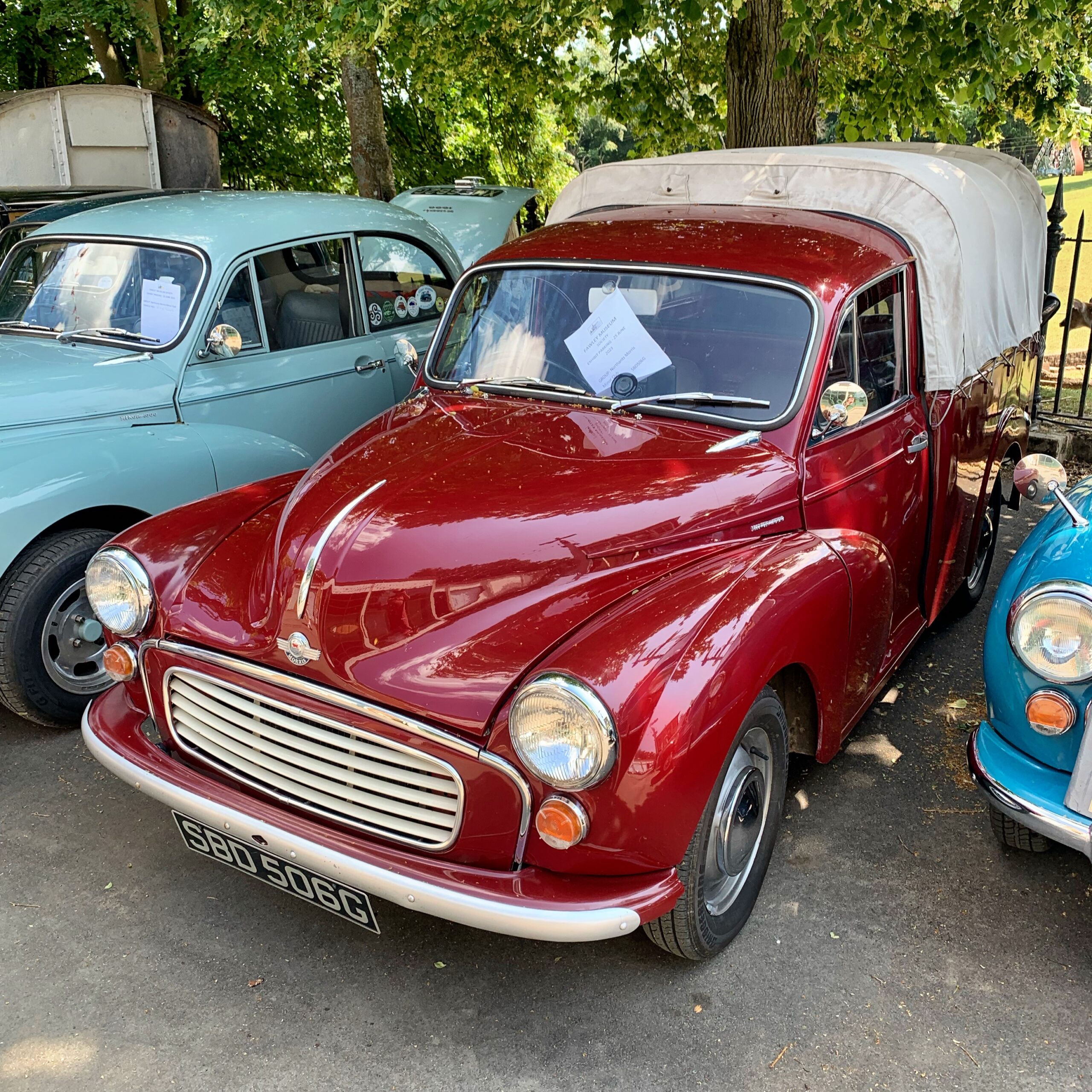
    …and some Morris Minor cars and vans! – 25/06/2023

    If you would like the opportunity to visit Fawley Hill, you can find out how here:  https://www.fawleymuseum.org/events

    ​Doggos are not permitted inside the museum buildings at Fawley Hill, so Caroline and I took it in turns to enjoy the delights on display while the other sat with Yoshi in a cool spot which obviously happened to be situated just by the toilets. It was during my time at this spot that I checked email on my phone and although the 4G coverage was barely existant, I discovered the Class 20’s I mentioned earlier and at that time believed to be in Bristol were in actual fact stabled at Didcot just 18 miles up the road from our current location and more or less in the correct direction for our drive back to Dorset. So after a cup of tea and an excellent piece of raspberry and coconut slice, we took a few final photographs and set off towards home. 

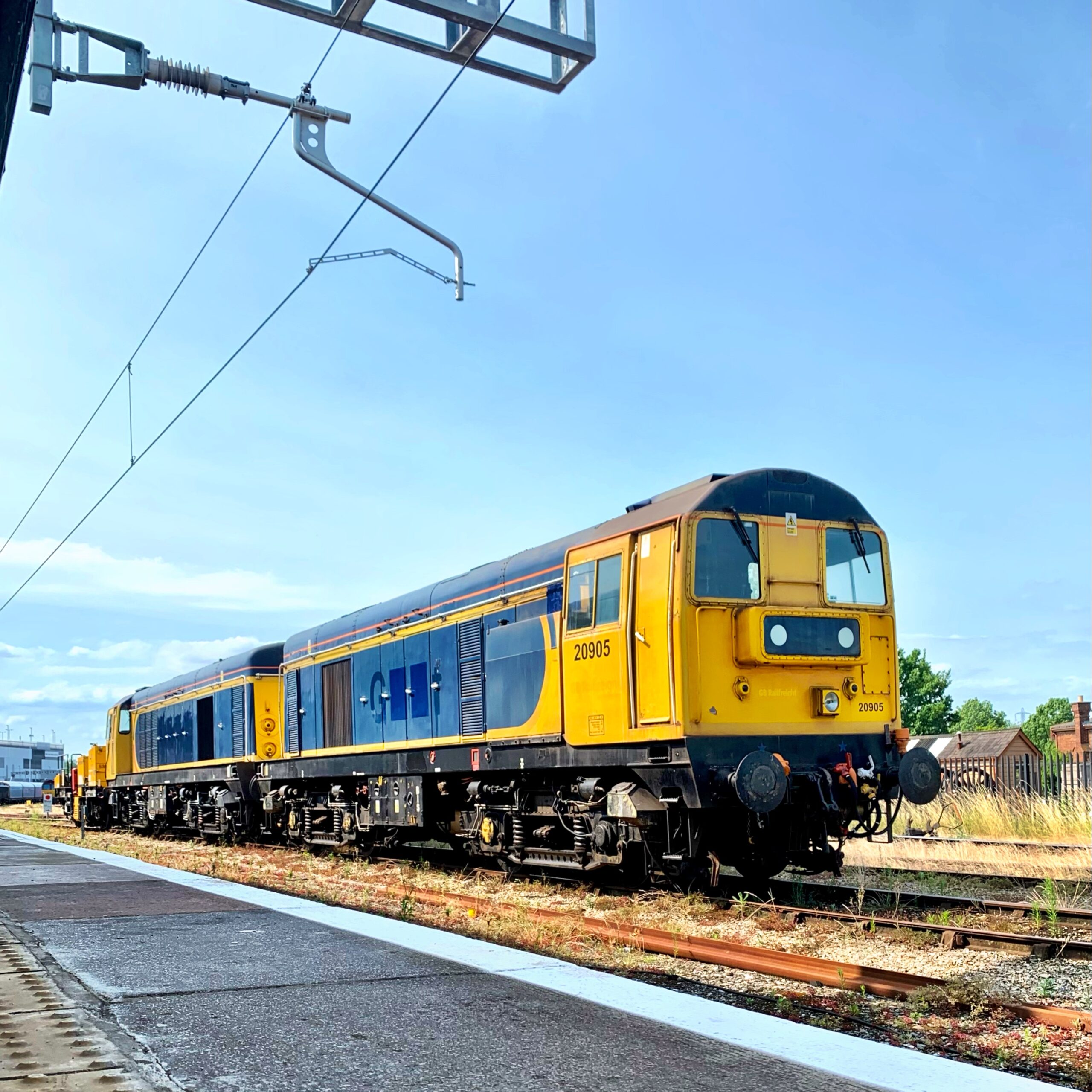
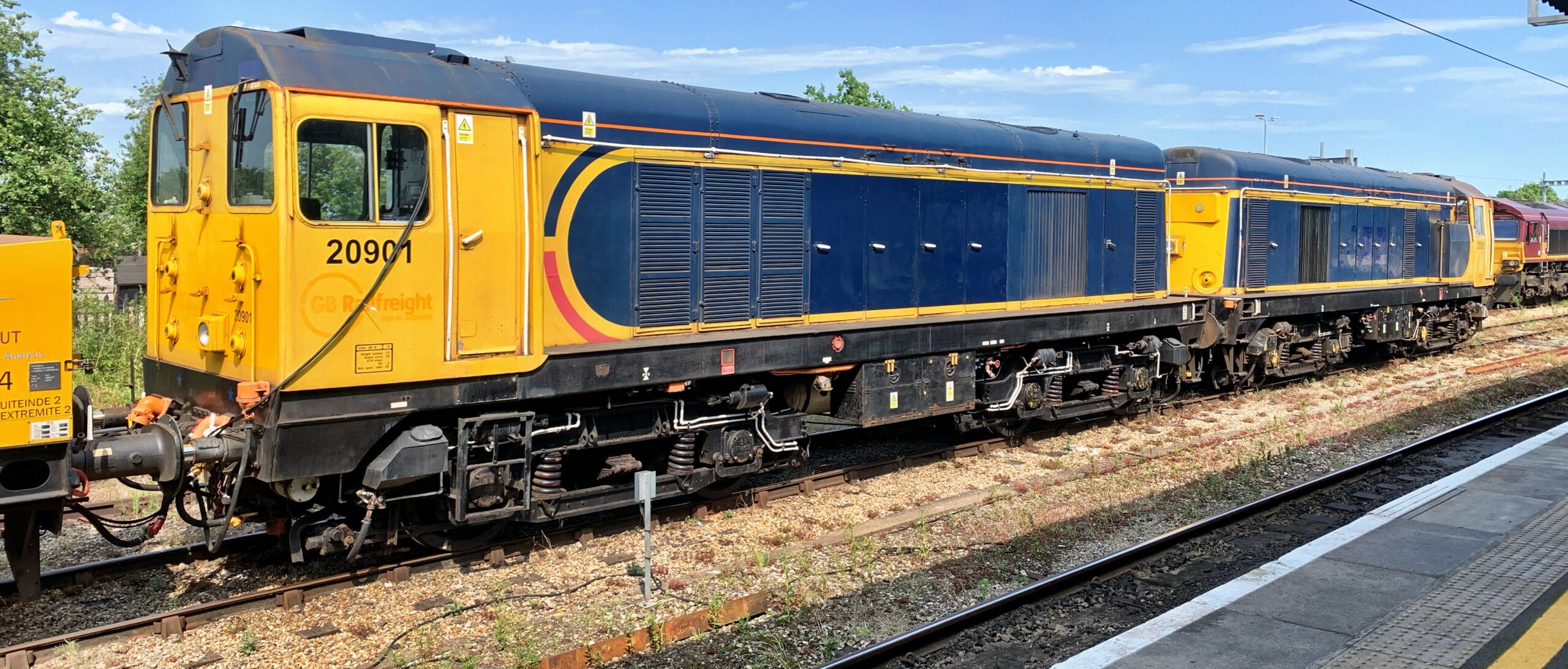
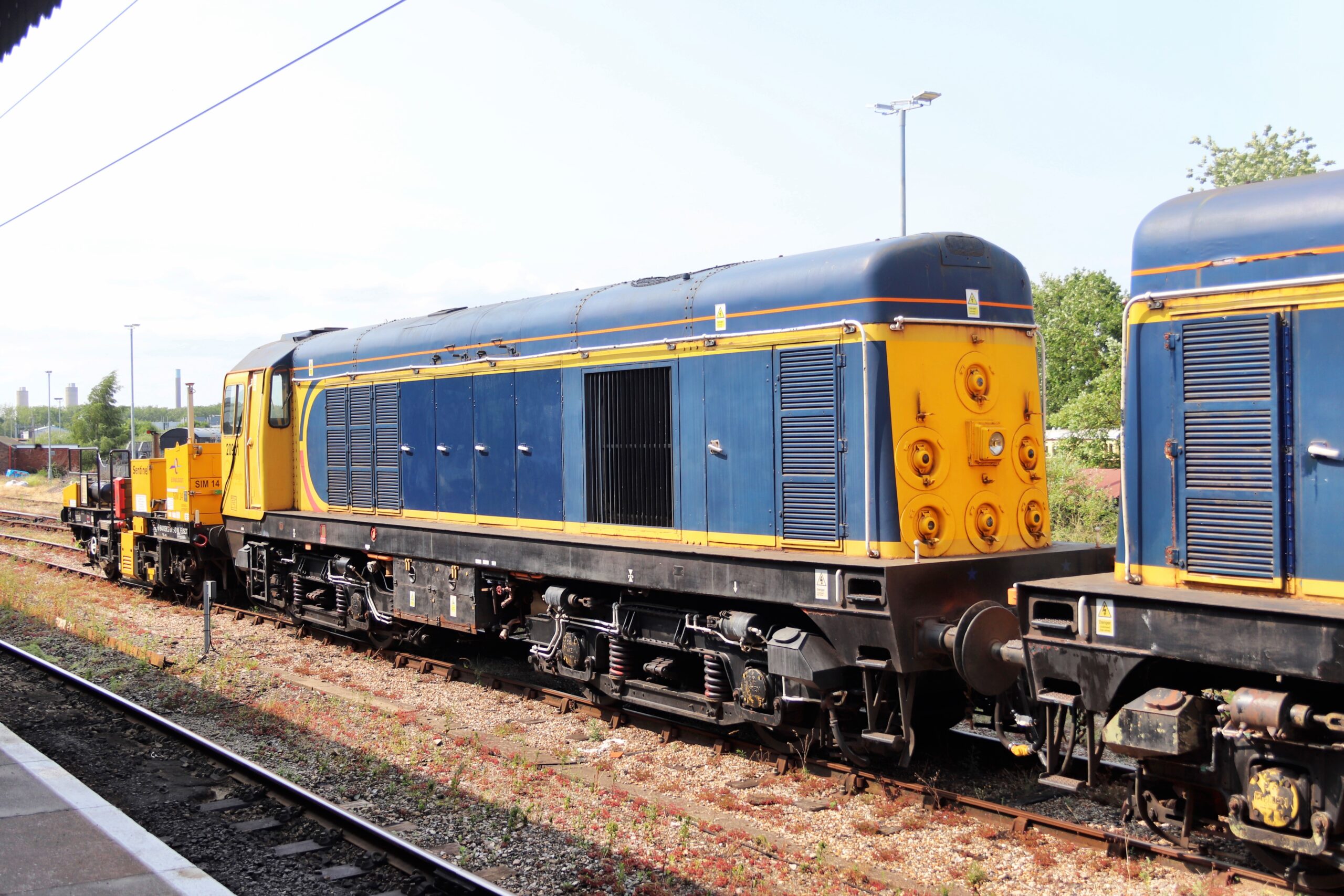
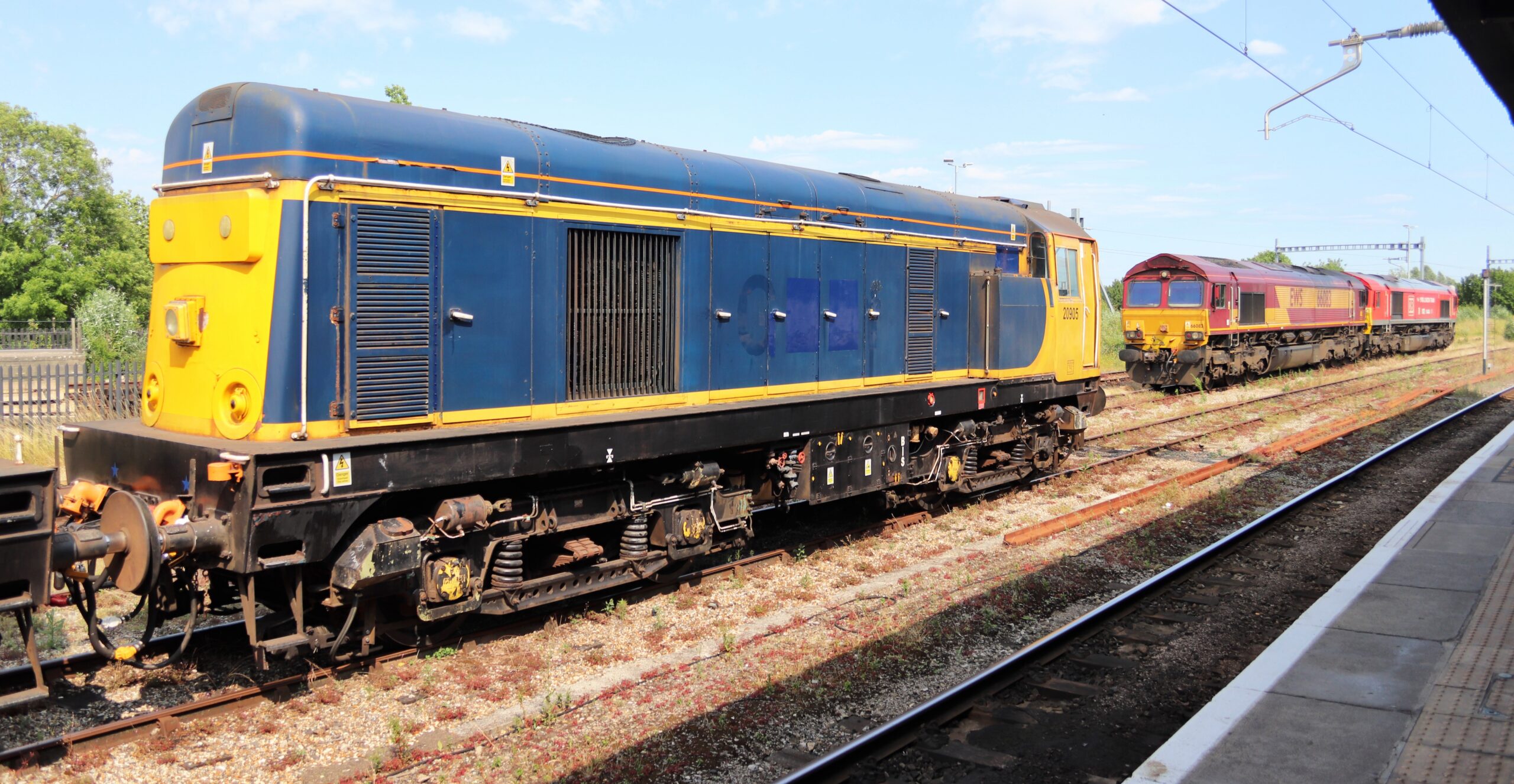
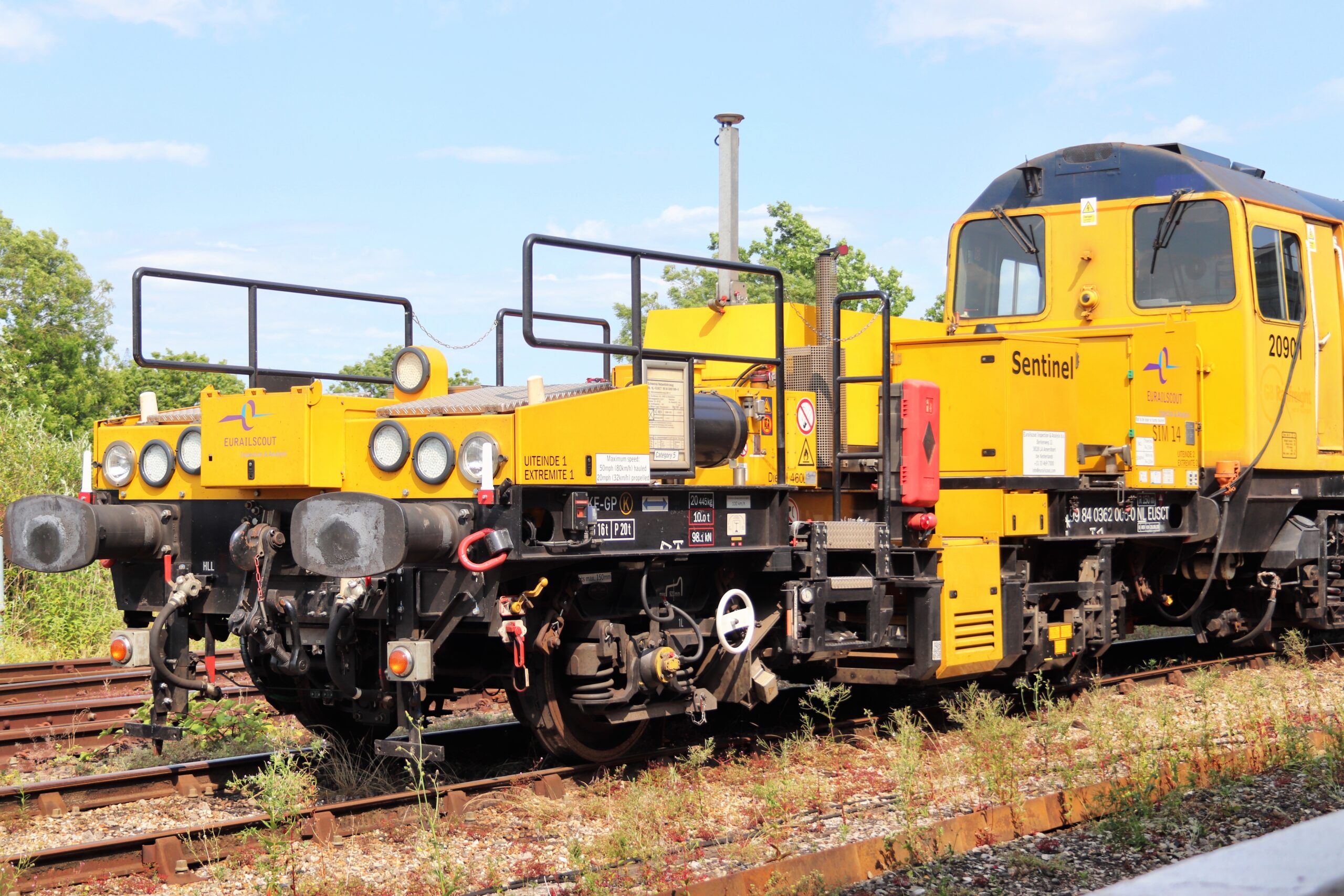
    On arrival in Didcot, we parked up and I took a stroll over to the railway station. The Class 20’s were conveniently parked adjacent to the platforms and were getting a fair bit of attention from other rail enthusiasts, much to the puzzlement of waiting passengers. The locomotives, currently part of the Harry Needle Rail Company (HNRC) fleet but still carrying the remnant livery of their previous owners; GBRf, are on hire to Rail Operations Group (ROG).

    Class 20 No.’s 20905 and 20901 with SIM14 ‘Sentinel’ (No. 99 84 0362 006-0) at Didcot – 25/06/2023
    Class 20 No.’s 20901 and 20905 at Didcot – 25/06/2023
    Class 20 No. 20901 at Didcot. Contrast the differences in nose end detail with the following image of classmate No. 20905 – 25/06/2023
    No. 20905 at Didcot. Contrast and compare with the image above of classmate No. 20901 – 25/06/2023

    The locos, rare visitors to west, are currently working in tandem with one of seven Eurailscout Switch Inspection Machines (SIM). I’m more used to switches being called points, but accept this “Americanism” as it quite an explanatory term. The points are the movable rails which guide the wheels towards either the straight or the diverging track allowing a train to switch tracks if required. They’re quite complex really and require a fair amount of maintenance to ensure they are in a safe and usable condition. SIM14 ‘Sentinel’ (No. 99 84 0362 006-0) arrived at Didcot by road from Holland at the start of June 2023 and was subsequently moved to Bristol Kingsland Road by a single Class 20 locomotive. It spent several nights working in the Bristol area doing exactly what the name suggests – inspecting various switches and junctions in the vicinity of Temple Meads, East Junction and West Junction. After spending the weekend at Didcot again, it was moved to Southall yard on the 12th June for further overnight inspections in the Paddington area. More recently the single Class 20 was joined by its classmate and on the 20th June returned to the Bristol area, moving back to Didcot on the morning of the 23rd despite the TOPS reporting they were still 77 miles further west. 

    Close up of Eurailscout SIM14 ‘Sentinel’ (No. 99 84 0362 006-0) at Didcot – 25/06/2023

    Eurailscout  says the following about the Swith Inspection Machines: “About 50% of all track disruptions are caused by faulty switches, with timely maintenance being needed in order to prevent these disruptions. We use a SIM wagon to measure and inspect the geometry and rail profiles of your switches under day-to-day operating conditions. A single locomotive can push or pull the SIM wagon, which means it can be shunted around quickly between the normal rail traffic. Since we also record high-quality video images during this work, you can make a visual inspection of the switch without having to put it out of service for the inspection and without your staff having to walk on the track themselves.”

    Also stabled at Didcot were Class 66 No.’s 66136 and 66083 – 25/06/2023
    Class 66 No.’s 66051 ‘Maritime Intermodal Four’ and 66129, Didcot Yard – 25/06/2023

    Monday and Tuesday saw some stock movements run around at Poole Storage Sidings as they either went to or from Bournemouth T&RSMD. First up on June 26th was ROG Class 37 No. 37884 ‘Cepheus’ hauling a Class 455 electric multiple unit No. 455863 from Wimbledon to Bournemouth for repair of a failed motor alternator. We saw the Cass 37 and empty coaching stock unit pass through Poole station on the way to the sidings. The locomotive detached from the front of the unit and ran back into Poole station and reversed back out again to attach itself to the other end of the empty stock before passing back through the station on the way to Bournemouth depot. 

    ROG Class 37 No. 37884 ‘Cepheus’ hauling broken Class 455 electric multiple unit No. 455863 through Poole as 5Q86 1246 Wimbledon Park CSD to Bournemouth T&RSMD – 26/06/2023
    Class 455 No. 455863 being towed into Poole Storage Sidings as 5Q86 1246 Wimbledon Park CSD to Bournemouth T&RSMD. Class 37 No. 37884 ‘Cepheus’ will run around the EMU to haul it back to Bournemouth depot – 26/06/2023
    Class 37 No. 37884 ‘Cepheus’ at Poole running around 5Q86 1246 Wimbledon Park CSD to Bournemouth T&RSMD – 26/06/2023
    Class 37 No. 37884 ‘Cepheus’ and No. 455863 work 5Q86 1246 Wimbledon Park CSD to Bournemouth T&RSMD – 26/06/2023
    5Q86 1246 Wimbledon Park CSD to Bournemouth T&RSMD at Poole – 26/06/2023

    The following day it was the turn of Class 47 No. 47727 ‘Edinburgh Castle’ to arrive at Bournemouth T&RSMD to collect a stored ten-car Class 701 unit and take it off to Wimbledon for a further priod of storage. Regular readers may recall that the Class 701’s are yet to enter revenue earning service with South Western Railway and are currently undergoing testing and running in mileage accumulation runs. In fact, if you have a length of track able to accommodate one of these units, I’m sure Network Rail would love to hear from you as sidings all over the country are being filled up with these trains. Scheduled to depart Bournemouth at 1235, I was very much caught out when I discovered that the train had left 66 minutes early. I was very kindly picked up by our friend Jamie who deposited me at Poole station. Unfortunately, there were no free parking spaces available and as Jamie drove off in search of one, the Class 47 and unit hove into view. 

    Class 47 No. 47727 ‘Edinburgh Castle’ powers up at Poole hauling Class 701 EMU No. 701042 working 5Q86 1235 Bournemouth T&RSMD to Wimbledon Park Depot Sidings – 27/06/2023
    Class 701 No. 701042 being hauled to Wimbledon having passed through Poole behind Class 47 No. 47727 ‘Edinburgh Castle’ – 27/06/2023
    5Q86 1235 Bournemouth T&RSMD to Wimbledon Park Depot Sidings departing Poole – 27/06/2023

    Later the same day, Southern Railway West Country Class 4-6-2 No. 34046 ‘Braunton’ visited Weymouth with a Steam Dreams excursion originating from London Victoria. The tour ran to Yeovil Junction where the steam locomotive came off the train for servicing and turning at the Yeovil Railway Centre whilst Class 47 No. 47614 took the train onto Weymouth.

    A lineside fire at Upwey got most of us thinking that the cause was ‘Braunton’, but in fact the steam locomotive hadn’t even passed through the area when the line to Weymouth was closed. Thankfully it wasn’t long until everything was sorted and the track between Upwey and Weymouth reopened at around 1800. This enabled the light steam locomotive to complete its run down to rejoin the stock with no delay to the departure of the tour which was scheduled to return to London via the Bournemouth route.

    Jamie was again kind enough to allow me to join him at Parkstone to see the train pass through. Unfortunately, ‘Braunton’ was running an impressive 8 minutes early as she stormed the bank at Parkstone, just as a London Waterloo to Poole service in the form of SWR Class 444 No. 444004 pulled in on platform 2, obscuring the view for many of those waiting to photograph or video the steam passing through on the Up line. So, my sincere apologies to Jamie who had his view blocked by the service train. I don’t think he’ll be asking me to accompany him on any future outings at this rate!

    Southern Railway West Country Class 4-6-2 No. 34046 ‘Braunton’ storms the bank at Parkstone working 1Z72 1836 Weymouth to London Victoria – 27/06/2023
    Class 47 No. 47614 shrouded in steam at the rear of 1Z72 1836 Weymouth to London Victoria having passed through Parkstone – 27/06/2023
    Steam Dreams “Weymouth” rail tour (Dorchester video by kind permission of GE Barrett)- 27/06/2023

    I was pleased to learn one of my favourite railway stations, Wemyss Bay in Scotland, has won this year’s World Cup of Stations competition following a five day contest across 11 geographical regions in England, Scotland and Wales. Supported by the Rail Delivery Group and the Community Rail Network over 70,000 votes were cast. 48 stations were chosen by TV presenter Tim Dunn and pitched against each other in 16 rounds to whittle down the final few. Wemyss Bay came in at first place with 8,403 votes in the last round, beating second place Denmark Hill on 7,441 votes and third place runner up Leamington Spa with 3,271 votes.

    Wemyss Bay Railway station exterior. The station was designed by James Miller (1860-1947) in 1903 for the Caledonian Railway and is a Category A listed building – 23/06/2021 
    The station is a terminus on the Inverclyde Line, located 26 miles west of Glasgow Central. The station incorporates the Caledonian MacBrayne ferry terminal connecting mainland Scotland to Rothesay on the Isle of Bute and was designed to move passengers from train to ferry in five minutes via a curved covered way while luggage was moved on trolleys by a separate route – 23/06/2021
    The centrepiece of Wemyss Bay Station is a semi-circular ticket office, your eyes drawn upwards… – 23/06/2021
    …. towards curving roofs with a remarkable use of glass and steel curves. Platforms bend in one direction and the ramp down to the pier in another – 23/06/2023 
    ‘MV Argyle’ or ‘Earra-Ghaidheal’ in Gaelic pictured here, alongside her sister ship, ‘MV Bute’, operate sailings between Wemyss Bay and Rothesay on the Isle of Bute – 23/06/2021

    And there we have it! We’ve reached the end of another blog entry. Thank you for your time in visiting us and for your comments, encouragement, corrections and contributions! We’ll be seeing you.

    Postscript

    Fawley Hill’s Cut-down cab Class 03 No. D2120 in BR blue days as No. 03120 at Landore depot, Swansea – 27/08/1981
  • Severn Valley Diesel Gala 2023

    Yoshi took a liking to RailAdventure Class 43 No.’s 43465 and 43484 which only hauled trains on the Friday of the 2023 Severn Valley Diesel Gala and seen here on display the following day at Kidderminster – 20/05/2023

    Last week we were enjoying the sun in Cornwall, so our report on our visit to the 2023 Severn Valley Diesel Gala ( which took place 18th – 21st May) is slightly delayed until now. We hope you found our mini blog about Promenade Plantée in Paris interesting and a bit different last week, but for now let us catch up with events at the Severn Valley.

    Saturday was my chosen day to visit the SVR as I was heading to the West Country the following day. The timetable for the gala was a packed affair with a large roster of resident and visiting locomotives scheduled to run, many of which were provided by freight and passenger operating companies. Indeed, the SVR event was undoubtably the biggest diesel gathering in the UK calendar for 2023, with its planned four-day extravaganza intended as a celebration of 50 years of diesel preservation. An early departure from home was required in the hope of seeing everything running. A few missed turnings and a closed motorway junction delayed our arrival time but in the event we arrived at Highley just in time to see sole-surviving Clayton Class 17 No. D8568 arrive with the first train of the day from Bridgnorth. Unfortunately there were no available parking spaces at the station, so we reversed out and headed up out of the car park to find alternative facilities. Although I later managed to capture a short video clip of the Clayton running light engine within the Highley station area, the locomotive avoided my camera lens for a still photo opportunity. As this particular diesel had been at Swanage the previous weekend, I didn’t mind too much!

    They even made a special badge to celebrate 50 years of Diesel Preservation!

    We had however trooped back down to Highley station in time to see Class 31 No. 31270, quite suiting her Regional Railways livery, arriving with the 0845 departure from Kidderminster. Although the first two trains on the Saturday were spot on for their time-keeping, it didn’t take too long for the timetable to go awry and things became progressively more delayed as the day went on.

    Peak Rail’s Brush Type 2 Class 31 A1A-A1A No. 31270 ‘Athena’ in British Rail (BR) Regional Railways sector livery approaches Highley. No. 31270 was built by Brush Ltd in Loughborough in 1961 and carried the pre-TOPS number D5800. She was withdrawn from traffic on 26th May 2000. She never carried this livery or the nameplate while in BR service – 20/05/2023
    Colas Rail Freight Class 56 No. 56051 ‘Survival’, built in 1978, on the approach to Highley with the Locomotive Service Ltd (LSL) restored ScotRail MK3 carriages that reproduce the push-pull stock used between Glasgow, Edinburgh and Aberdeen in the 1980’s – 20/05/2023
    Scottish Push-Pull Class 47 No. 47712 ‘Lady Diana Spencer’ prepares to depart Highley. This locomotive and rake of air braked push-pull stock was paired with different visiting locomotives throughout the gala, top and tailing between Kidderminster and Highley. I thought it was a shame the loco and stock didn’t perform at least one run a day in push-pull mode as it had reportedly done on the Thursday – 20/05/2023
    Class 47 No. 47712 ‘Lady Diana Spencer’ nameplate – 20/05/2023
    Diesel- Hydraulic Western Class 52 No. D1062 ‘Western Courier’ departs Highley. This locomotive was built at Crewe Works and entered service at London’s Old Oak Common shed on 6 May 1963. She was withdrawn by British Rail on 23 August 1974 after 1,096,000 miles in service. Courier was an early withdrawal but was lucky enough to share “mascot” duties with Class 42 Warship No. D818 ‘Glory’, being placed on the turntable at Swindon works and given a repaint by the apprentices – 20/05/2023
    Class 37 No. 37263 displaying departmental grey livery approaches Highley. No. 37263 was introduced into traffic in 1965 and is visiting from the Telford Steam Railway – 20/05/2023

    The weather was extremely warm and I made the decision to stay on the viewing balcony at Highley as this ensured Yoshi was able to stay in the shade and not get over heated. He also seems to like it there as he gets lots of fuss from passers by and doesn’t seem too bothered by the trains passing below. It’s also close to the cafe, so despite issues with the new coffee machine, what could be better? On the downside, of course, it means that my photographs and video from Highley are from much the same two angles, but I’ll take this provided our boy is comfortable.

    Yoshi takes to the shade at Highley – 20/05/2023
    DB Cargo provided Class 60 No. 60062 ‘Sonia’ in her striking fiery Steel On Steel livery. Class 47 No. 47712 is on the rear – 20/05/2023
    Class 60 No. 60062 ‘Sonia’ approaches Highley – 20/05/2023
    Close up of Class 60 No. 60062 ‘Sonia’. The locomotive carries this special livery to celebrate the important role DB Cargo UK plays in supporting the UK’s metal transportation market. One full train load of steel coil can produce over 1,000 new cars or 60,000 white goods – 20/05/2023
    Class 50 No. 50035 ‘Ark Royal’ departs Highley with a Kidderminster bound train. There are several Class 50’s based on the Severn Valley but only one example was in operation over the gala as the GBRf pair No.’s 50007 and 50035 were undergoing some maintenance between mainline outings, while No.’s 50033 and 50044 were in the Traction Maintenance Depot and No. 50031 is currently minus a fuel tank – 20/05/2023
    Maybach Music as Class 52 No. D1015 ‘Western Champion’ arrives at Highley. No. D1015 is one of seven preserved Western locomotives from the original 74 built by BR at Swindon and Crewe – 20/05/2023
    Push-Pull fitted Class 33 No. 33108 in revised departmental “Dutch” livery (so named because of the similarity to the Dutch State Railway colours later adopted by the BR engineers sector) was in service following an overhaul – 20/05/2023
    Resident Class 31 No. 31466 in English Welsh Scottish (EWS) livery on the approach to Highley. The Class 31 locomotives received a number of derogatory nicknames over their years in mainline operation including Goyles (short for “gargoyles” in reference to the perceived ugliness of the design), Peds (short for “pedal cars” in reference to their speed and pulling power) and Gurglers, after the noise they made. 26 members of the class have been preserved – 23/05/2023
    Yoshi relaxes at Highley – 20/05/2023

    At some point we knew we had to move on from our balcony position, essentially to get photos of locomotives which were not planned to make it to Highley. Our original plan was to journey to Bewdley and then onto Kidderminster. As Bewdley can be somewhat busy on an average day and with this being the busiest I’d ever seen the Severn Valley, I opted instead to head straight for Kidderminster. This would mean we’d miss seeing the visiting Class 20 locomotives (No.’s 20048 and 20189) heading to Bridgnorth, but these were scheduled to return later. Unfortunately, things didn’t go quite to plan and one of the Class 20’s, No. 20048 failed and was removed from the train on reaching Bridgnorth and didn’t make the return outing. Another Class 20, No. 20142 in red London Transport livery was in attendance for the gala, but was not in use, or indeed visible, on the day of our visit.

    Direct Rail Services (DRS) Class 88 No. 88004 ‘Pandora’ awaits her turn while Class 33 No. 33108 prepares for departure form Kidderminster – 20/05/2023
    DRS) Class 88 No. 88004 ‘Pandora’ and Class 33 No. 33108 at Kidderminster – 20/05/2023
    Line up of No.’s 88004, 33108 and 57307 at Kidderminster – 20/05/2023
    Colas Freight Class 56 No. 56051 ‘Survivor’ passes DRS Class 88 No. 88004 ‘Pandora’ at Kidderminster – 20/05/2023
    Direct Rail Services (DRS) Class 57 No. 57307 ‘Lady Penelope’ awaits action in the sidings at Kidderminster – 20/05/2023
    DRS pair Class 88 No. 88004 ‘Pandora’ and Class 57 No. 57307 ‘Lady Penelope’ at Kidderminster – 20/05/2023
    Class 88 No. 88004 ‘Pandora’ at the head of the ScotRail stock in Kidderminster. Ten Class 88 locomotives were built in 2015/16 by Stadler Rail Valencia. They are dual-mode locomotives that are fitted both with a pantograph to collect electricity from overhead wires, and a Caterpillar diesel engine. They are the first dual-mode locomotive in the UK to use the 25 kV AC electrification – 20/05/2023
    Class 50 No. 50035 ‘Ark Royal’ runs light engine out of Kidderminster. No. 50035 was the first BR Class 50 diesel locomotive to enter preservation The locomotive was built at English Electric’s Vulcan Foundry at Newton-le-Willows and entered BR service as No. D435 at Crewe in August 1968, being given the number 50035 in March 1974 under the TOPS scheme. She was withdrawn from service on 5th August 1990 – 20/05/2023
    RailAdventure Class 43 No.’s 43465 and 43484 on static display at Kidderminster. The pairing hauled trains on the Friday only – 20/05/2023
    RailAdventure Class 43 No.’s 43484 and 43465 at Kidderminster. RailAdventure signed a partnership deal with Hanson & Hall Rail Services in April 2021 having purchased eight Class 43 power cars, which will run back to back to operate domestic services. RailAdventure is based in Munich and has been involved in delivering new trains from Europe to the UK, such as the new Merseyrail Class 777 trains – 20/05/2023
    Network Rail Class 73 “Minions” No.’s 73951 ‘Malcom Brided’ and 73952 ‘Janis Kong’ were on display at Kidderminster over the gala. The two locomotives were withdrawn from service in mid-May. The pair were rebuilt by Loram in 2011/2015 with their English Electric engines being replaced by two newer, more powerful and lower emission Cummins QSK19 engines each rated at 750hp. Their acceptance into traffic was heavily delayed until 2016 and endured initial teething problems which were resolved and they became well liked by crews. They were used mostly on infrastructure monitoring trains. They are, however, non-standard locomotives and have limited crews trained to work on them. Network Rail currently lease five MTU-engined Class 73/9’s so the “Minions” are surplus to requirement – 20/05/2023
    Electro-Diesel Class 73 No.’s 73951 and 73952. The locomotives are scheduled to depart for warm storage, possibly at Peak Rail, by road – 20/05/2023

    The new footbridge across the railway line just outside of Kidderminster station has been rebuilt after an absence of a year or two, so following a brief sojourn looking at the static exhibits, sales stands and taking a few photographs of departing trains we marched round to see what the view was like from the bridge and spent most of the rest of our visit here.

    Class 50 No. 50035 ‘Ark Royal’ has lost her central headlight (a later addition to the class in service) and is seen departing Kidderminster – 20/05/2023
    Class 37 No. 37263 catches the afternoon sun at Kidderminster. The locomotive is scheduled for a prolonged stay on the SVR over the summer months – 20/05/2023
    DRS Thunderbird rescue locomotive Class 57 No. 57307 ‘Lady Penelope’ runs out of Kidderminster light engine in readiness to attach to a train bound for Highley – 20/05/2023
    Yoshi watches as Warship No. D821 ‘Greyhound’ starts up on Kidderminster TMD – 20/05/2023
    Class 52 No. D1015 ‘Western Champion’ carried the identity of lost classmate D1039 ‘Western King’ on one side (to celebrate the coronation of King Charles III), seen approaching Kidderminster – 20/05/2023
    Great Western Railway HST Castle set formed of Class 43 power car No.’s 43186 ‘Taunton Castle’ and 43188 ‘Newport Castle’ ran shuttles between Kidderminster and Arley on all four days of the gala – 20/05/2023
    Class 43 No. 43188 ‘Newport Castle’ which also carries decals reading: ‘Y Cymro – The Welshman’ and a Welsh Dragon leads the GWR Castle HST set out of Kidderminster – 20/05/2023
    D821 ‘Greyhound’ makes a fine sight as she runs towards Kidderminster station. D821 is one of two preserved Warship locomotives from the original 38 built by BR at Swindon Works. Sadly none of the 33 built by the North British Locomotive Company in Glasgow were saved for preservation. D821 has returned to service following an extensive overhaul – 20/05/2023
    Class 47 No. 47712 ‘Lady Diana Spencer’ leads into Kidderminster with a shuttle from Highley – 20/05/2023
    Diesel Traction Group’s Warship No. D821 ‘Greyhound’ resplendent in British Rail monastral blue livery to celebrate 50 years in preservation. No. D821 was the first main line diesel to be preserved by a private group having being acquired from BR in May 1973 – 20/05/2023
    Class 52 No. D1015 ‘Western Champion’ as D1039 ‘Western King’ runs to the Traction Maintenance Depot at Kidderminster – 20/05/2023
    Class 52 Western No.’s D1015 ‘Western Champion’ and D1062 ‘Western Courier’ between duties at Kidderminster – 20/05/2023
    Two Western Diesel Hydraulics on to the Kidderminster turntable – 20/05/2023
    SVR Home fleet loco Class 31 No. 31466 on the entry to Kidderminster – 20/05/2023
    A study of Class 40 No. 40106 ‘Atlantic Conveyor’ running light engine into Kidderminster station. The loco was named ‘Atlantic Conveyor’ on 11th August 1984 in memory of the Cunard cargo ship and those on board who lost their lives in the 1982 Falklands war – 20/05/2023
    Class 40 No. 40106 ‘Atlantic Conveyor’ carries “The Caledonian” headboard as she awaits departure form Kidderminster. The locomotive was built at Robert Stephenson and Hawthorns factory in Darlington. The loco features the original four disc headcode system along with interconnecting gangway doors seen on various classes of BR diesels but ultimately under used – 20/05/2023
    Resident Class 40 No. 40106 ‘Atlantic Conveyor’ departs Kidderminster. The locomotive entered into BR service as No. D306, later becoming No. 40106 under the TOPS system in the 1970s. During her last works overhaul at Crewe in September 1978, No. 40106 was repainted into Dark Brunswick green with full yellow ends, thus becoming a firm favourite loco on railtours and other special passenger workings for several years. I fondly remember the cover of the 1979 Locoshed book which featured this loco – 20/05/2023
    20189 Ltd’s Class 20 Bo-Bo diesel-electric No. 20189 worked to Kidderminster solo, nose first, following the failure of classmate 20048 at Bridgnorth. 228 examples of these locomotives were built between 1957 and 1968. Each weighed 73 tonnes and delivered 1,000 hp, they were used to haul mixed freight traffic – often in tandem positioned nose to nose. – 20/05/2023
    Eastfield Scotty Dog depot plaque carried by Class 20 No. 20189 – 20/05/2023
    Last shot of the day; Western Class 52 No. D1062 ‘Western Courier’ prepares to depart Kidderminster. D1062 was bought from BR by the Western Locomotive Association on 4th November 1976, becoming the first Class 52 Western to be preserved  – 20/05/2023

    With 22 locomotives in traffic across the four day event, trains were very busy with the SVR reporting in excess of 4,000 pre-booked tickets sold and with pay on the day passengers a new record was set at over 6,500 visitors across the gala. This will certainly help with the SVR’s current £1.5 million appeal. It was certainly an interesting day, although I have to admit to feeling rather overwhelmed by the number of locomotives involved and my OCD in attempting to catch ’em all! Well done to all involved in the organisation and daily support of the railway.

    Video of our day at the Severn Valley Diesel Gala 2023

    For the record…

    While Yoshi and I were enjoying the delights of the Severn Valley on May 20th, two rail tours visited Dorset. Firstly, Class 47 No.’s 47828 and 47593 headed to Weymouth with the “Dorset Coast Statesman”. Next, LMS Jubilee No. 45596 ‘Bahamas’ journeyed from London Waterloo to Exeter via Sherborne and Yeovil Junction hauling the “Atlantic Coast Express”.

    The Swanage Railway Diesel Multiple Unit service to and from Wareham was cancelled on 23rd May 2023 because of an electrical fault on the unit discovered during a routine inspection. Repairs and testing meant the service resumed the following day.

    Lake Road Bridge on the Hamworthy Branch – 29/05/2023

    The damaged access gate to the Hamworthy Branch at Lake Road Bridge has been repaired. Rumour is that metalwork on the bridge needs further attention before any trains can cross it.

    Warship

    D821 ‘Greyhound’

    D821 ‘Greyhound’ celebrated 50 years in preservation during the Severn Valley Diesel Gala. The locomotive had been procured from British Rail by Colin Massingham, owner of model rail white metal kit company Modern Traction Kits (MTK) and Chris Reid a customer at Colin’s shop in Slough. Along with other financial supporters the pair had hoped to purchase North British Class 22 No. D6319 but a misunderstanding meant this loco was cut up at Swindon. Instead, the pick of the remaining Class 42 “Warship” locomotives which had recently been withdrawn at Plymouth Laira was offered. No. D821 was chosen as she was virtually complete.

    D821 ‘Greyhound’ in Swindon. I was usually very good at keeping a record of dates, but a whole films worth of photos have no details recorded with them – 1980
    D821 ‘Greyhound’ in Swindon – 1980
    D821 ‘Greyhound’ in Kidderminster during the 2021 Severn Valley Railway Diesel Gala – 15/05/2021

    The “Warship” diesel-hydraulic B-B locomotives were based on the West German V200 design, 38 examples being constructed at Swindon between 1958 and 1961. Each locomotive bore a name with all except D800 and D812 being named after Royal Navy vessels, thus the “Warship” moniker used to refer to the class. They were later designated as Class 42’s. The “Warships” took over from “Castle” and “King” Great Western steam locomotives on Top Link work but were deemed non-standard and all were withdrawn by 1972.

    No. D832 ‘Onslaught’ at Bishops Lydeard on the West Somerset Railway – 09/06/2013
    Nameplate of No. D832 ‘Onslaught’ showing the “Warship Class” designation carried under the locomotive name – 09/06/2013
    No. D832 ‘Onslaught’ was guest loco at the 2016 Swanage Diesel Gala and is seen here departing Corfe Castle – 08/05/2016
    No. D832 ‘Onslaught’ at Bishops Lydeard – 09/06/2013

    No. D821 was not the only member of the class to make it to preservation as No. D832 ‘Onslaught’ was also saved after being moved to the Railway Technical Centre (RTC) in Derby following withdrawal from service where it was used for various research purposes. However, a third member of the class, No. D818 ‘Glory’ wasn’t so lucky and, despite being kept at Swindon as a “pet” of the employees and for BR apprentices to work on, was cut up before the works was closed in 1985.

    “The one that got away”; No. D818 ‘Glory’ at Swindon – 06/06/1981

    Thanks for reading and your comments! Next week we’ll tell you all about our trip to Cornwall in search of Sleeper trains, pasties and semaphore signals!

    That 1979 Locoshed Book featuring Class 40 No. 40106 on the cover at a “New Lower Price of 40p!”
  • Sprat & Winkle Week

    Wednesday 8th March 2023 to Tuesday 14th March 2023

    GBRf Class 66 No.’s 66789 ‘British Rail 1948-1997’ and 66750 ‘Bristol Panel Signal Box’ working 3Y88 0905 Totton Yard to Totton Yard passes South Western Railway Class 444 No. 444018 at Poole – 10/03/2022

    The Network Rail Snow & Ice Treatment Train (SITT) graced us with its presence twice this week – firstly on Wednesday and then again on Friday. Both visits were top and tailed by the same pair of GBRf Class 66 locomotives which have also made it to Weymouth in the previous week or so on other SITT runs. Large logo retro British Rail liveried Class 66 No.’s 66789 ‘British Rail 1948-1997’ is a favourite amongst enthusiasts because of its special livery. Here’s a video showing the SITT workings at Hamworthy and Poole:

    GBRf Class 66 No.’s 66750 ‘Bristol Panel Signal Box’ and 66789 ‘British Rail 1948-1997’ having passed through Poole working 3Y88 0900 Totton Yard to Totton Yard – 10/03/2023
    GBRf Class 66 No.’s 66789 ‘British Rail 1948-1997’ and 66750 ‘Bristol Panel Signal Box’ at Hamworthy working 3Y88 0900 Totton Yard to Totton Yard – 08/03/2022
    GBRf Class 66 No.’s 66750 ‘Bristol Panel Signal Box’ at the rear of 3Y88 0905 Totton Yard to Totton Yard with 66789 ‘British Rail 1948-1997’ leading exit Hamworthy – 08/03/2022

    Monday evening the monthly 1Q51 test train made it to Dorset, this time back in the hands of GBRf Class 73 Electro-Diesel locomotives No.’s 73964 ‘Jeanette’ and 73963 ‘Janice’. We popped up to Hamworthy to see this heading towards Weymouth. Although I was planning to head out and see the return pass up to Eastleigh East Yard, the train ran 25 minutes ahead of its timings and I was otherwise avidly engaged in watching “Married At first Sight Australia”.

    Yoshi takes a breather on our visit to National Trust Mottisfont – 12/03/2023

    On Sunday, we went spent an afternoon at National Trust Mottisfont, an 18th-century house with a medieval priory at its heart, which was transformed into a Neo-classical home in the 1930’s.  Understandably Yoshi was not allowed in the house or the on the formal lawns in front and behind of the house, but there was still plenty to see and we had an enjoyable riverside walk. On our way to the National Trust property we drove past Mottisfont & Dunbridge railway station which is the nearest station to Mottisfont. This station opened in March 1847 as Dunbridge but was renamed in 2006 to reflect its close proximity to Mottisfiont and is apparently the second least frequently used station in Hampshire, with Beaulieu Road taking the wooden spoon by having fewer passengers. We could hear the sounds of Class 158 diesel multiple units (DMU’s) passing by on the Wessex main line as we wandered around the grounds at Mottisfont. The station is served by stopping trains run by South Western Railway (SWR) which run from Romsey to Salisbury via Southampton Central. Great Western Railway (GWR) run services which pass through the station but no longer stop. As we left Mottisfont we drove through the village and found ourselves driving down Station Road. This gave away the fact Mottisfont once had a station of its own. Investigations revealed this station had been situated on the now closed ‘Sprat and Winkle Line’ which ran between Andover and Redbridge.

    Yoshi takes shelter in a shepherds caravan at Mottisfont and wonders what it would like to be a sheepdog – 12/03/2023

    It’s not clear how the line earned the ‘Sprat and Winkle’ name. Various suggestions have been put forward; principally that the southernmost part of the line brushes the mudflats of the River Test where winkles might sometimes be found, although there are doubts that the sprat would also be found there.

    The January 1910 edition of “The Railway Magazine” included an article on the origins of the line written by John Moreton. The railway is unique in that it is built over the course of an earlier canal; The Andover and Redbridge which originates from 1792. The London & South Western Railway (LSWR) had been the first to promote a route along the canal in 1847 in an attempt to steal an advance over the Great Western Railway (GWR) and had already agreed to give those behind a Manchester and Southampton railway running powers over the line. Parliamentary assent was given to the Andover and Redbridge, but the LSWR failed to act on this and their proposal came to nothing. Ten years later, in 1858, the GWR were asked to construct a broad gauge line between Andover and Redbridge, again by means of converting the canal. With the addition of a 14 mile stretch of track between Pewsey and Andover, a broad gauge route between Southampton and Bristol / South Wales was proposed. A new terminus at Southampton along the western shore mudflats was going to be built with the broad gauge line crossing over the LSWR line to Dorchester at Redbridge. There followed a “Battle of the Gauges” with the LSWR opposed to the project attempting to secure a clause in the new Parliamentary bill that the line be built to 4ft 8.5 inch gauge. When this failed they moved to ensure the railway would be built to mixed gauge. 

    The first sod on the new railway was cut by Lord Palmerston at Ashfield Bridge, very close to his Broadlands residence near Romsey, on 28th September 1859 accompanied with the sound of a 14 gun salute. Over the next few years, there followed many changes and alterations to the scheme and in a June 1863 Act of Parliament the Andover and Redbridge Railway was amalgamated with the LSWR which meant the line would in fact be built to what we now call standard gauge, finally opening on 6th March 1865. As originally built following the route of the canal and to avoid the cost of building bridges over the rivers Test and Avon, the railway had many tight curves. In his 1910 RM article, John Moreton recalled, “many journeys on the line where sticking to one’s seat was a matter of considerable difficulty, and the luggage placed on the racks frequently provided a minute bombardment to those seated beneath before the end of the journey was reached.” The curves would eventually be straightened out by the LSWR, the exercise being completed by November 1885 and with the opening of the Midland & South Western Junction Railway linking Liverpool, Manchester and Birmingham with Southampton via Cheltenham and Swindon, crossing the Cotswolds and the Wiltshire Downs, the original idea of a railway providing direct passage between the North and the Solent was practically realised.  The railway was an important link during the 1st and 2nd World Wars, carrying troops from Salisbury Plain for embarkation to France via Southampton. 

    The final British Rail timetable issued for the period 15th June to 6th September 1964 shows a more or less hourly weekday service along the line between 0640 and 2200 with Sunday working also maintaining a similar level of service between the hours of 0855 and 2101. Trains would have been worked by Eastleigh built Diesel-Electric Multiple Units (DEMU) ‘Hampshire Units’ first introduced in 1957. Despite this level of service, the Beeching report of 1963 declared that fewer than 5000 passengers used the trains each week and services were therefore withdrawn on 7th September 1964.

    Map of the ‘Sprat and Winkle’ Line from ‘The Railway Magazine’ January 1910

    The closed Mottisfont station is now a private house called, appropriately enough, “The Old Station House”. The old platforms have been incorporated into a garden feature. We didn’t stop to peer over the garden gate, as that would have been rude. Further up the line, and one for our bucket list, is Horsebridge station which boasts the best preserved remaining station building on the former line. It has, at least pre-Covid,  been used as a tea rooms and wedding venue. There is a Southern Railway carriage acquired from Bournemouth which can be rented for holiday accommodation.

    The next station heading North is Stockbridge, which has some resonance to me as two of my uncles worked on the railway here. George Downton was a signalman and Gus Robertson a platelayer. Sadly Gus died from injuries he sustained during the Great War and my mum, at the age of 8 or 9, was asked to spend her summer holiday in Stockbridge with his widow, my Aunty Gertrude, in the early 1940’s to keep her company. This was extended after the holidays and mum eventually ended up attending Stockbridge school. My mother recalls George’s wife, Aunty Bess, preparing a cooked meal for George on Fridays and asking mum to take it up to him in the signal box, a place she was not really allowed to visit. Mum doesn’t recall why this happened most Friday’s but she does remember Chipperfield’s Circus temporarily keeping their animals in the station sidings when their headquarters were at nearby Down Farm and helping to feed the tigers. I’m pleased we no longer allow wild animals to be exploited for a travelling circus.  

    These days, the trackbed between Westdown, near Fullerton, Stockbridge and Mottisfont forms part of the Test Way, a 44 mile footpath along the River Test.

    As we drove home from Mottisfont, I inadvertently turned left at Romsey and somehow found myself in Eastleigh. I took this, most unexpected, opportunity to photograph the first of the Southern Coastway Class 313 electric multiple units (EMU’s), No.’s 313203 313214 & 313217, which have been withdrawn from service and moved to Eastleigh Arlington to be scrapped. The units had arrived on Friday 10th March and indeed, I had been very tempted to pop over the county border to see them being delivered by Rail Operations Group (ROG) Class 37 No. 37800 on a working from Brighton Lovers Walk.

    Class 313 No. 313217 at the rear of fellow classmates 313203 and 313214 awaiting their fate at Eastleigh Arlington – 12/03/2023
    Class 313 No. 313217 at Eastleigh Arlington – 12/03/2023
    Direct Rail Services Class 37 No. 37602 in the yard at Eastleigh Arlington works – 12/03/2023
    Direct Rail Services Class 37 No. 37602 in the yard at Eastleigh Arlington works – 12/03/2023

    Also viewable on the works from the adjacent public road was London Underground’s (LU) 4-TC (Trailer Control) set which had arrived at Eastleigh Arlington in February following its visit to St Leonards for the fitting of retention toilet tanks. The 4-TC’s were unpowered fixed formations of 4 carriages with a driving position at each end of the set, converted by BR’s Colgate Road Carriage Works from locomotive hauled Mark 1 carriages in 1966-1967 and 1974 and were once the mainstay of the Weymouth to Bournemouth line coupled with Class 33/1 push-pull locomotives. At Bournemouth the 4-TC unit would be joined up with one or two 4-REP EMU’s for the onward journey to London Waterloo. Down trains to Weymouth would carry out the same operation in reverse.

    London Underground’s 4-TC set at Eastleigh – 12/03/2023
    Close up of London Underground’s 4-TC set at Eastleigh – 12/03/2023

    Two complete 4-TC units as well as other odd carriages have been preserved. The London Underground unit is notionally numbered 428 but contains coaches from other units making up its four car formation. Another set previously owned by LU and again made up of coaches from several units is being restored at The Swanage Railway and will be numbered 413. I am looking forward to seeing this project come to fruition and paired with a Class 33/1 will bring back memories of old.

    The Swanage Railway 4-TC which is undergoing restoration is seen at Swanage in February 2022 – 12/02/2022
    4-TC No. 405 heading a Weymouth to London Waterloo service stops at Dorchester South – 26/01/1982
    BR&CW Class 33/1 No. 33104 propels the 1533 Weymouth to London Waterloo service which consists of two 4-TC units having passed Syward Crossing, Dorchester – 15/04/1983
    In fading light Class 33/1 No. 33107 at Bournemouth has attached to the 4-TC Weymouth section of a service from London Waterloo – 27/02/1982

    For The Record

    Swanage Railway’s Class 117 DMU at Creech Bottom with a River Frome to Norden service during the February “Behind the Scenes” event – 12/02/2023

    The Swanage Railway have announced they are to operate a trial heritage diesel train service on Tuesdays, Wednesdays, Thursdays and Saturdays from the main line at Wareham between 4th April and 10th September 2023. The first train departs Wareham at 1119 and the last train of the day will depart Swanage at 1620. The trains will be operated and staffed on behalf of Swanage Railway by West Coast Railways utilising restored and upgraded 1950’s Class 117 Diesel Multiple Units (DMU) with the option of adding a single car Class 121 DMU at busy times and is the result of working in partnership with the UK Government’s Coastal Communities Fund, the Department of Transport, the former Purbeck District Council, Dorset Council, British Petroleum, Perenco, Network Rail and South Western Railway (SWR). Tickets for the service will also be available from SWR so passengers can add tickets for Corfe Castle and Swanage to their main line tickets. This will be the first time in 51 years – since the last day of British Rail passenger trains between Wareham, Corfe Castle and Swanage on Saturday 1st January, 1972, before the branch line was controversially closed – that such a main line ticket facility for travel to Swanage has been possible. During the summer of 2017, the Swanage Railway operated a 60 selected day trial train service from Wareham using hired-in diesel locomotives and carriages again operated and staffed by West Coast Railways. Plans to operate a second year 90 selected day trial train service from Wareham during 2018 were delayed and then the Covid pandemic hit which caused further delays because of its practical and economic effects.

    If interested, you still have time to take part in Dorset Council’s survey on proposals to make the main route between the two Dorchester railway stations along Fairfield Road in Dorchester, which has no dedicated footway, safer for pedestrians, cyclists and wheelchair users. The survey is open until 17th March 2023. Funding for any work will come from the Government’s Active Travel Fund which aims to improve walking, wheeling and cycling for all.

    Thanks for joining us, as always your visit is much appreciated! This weeks blog was put together listening to: ‘From Nothing To A Little Bit More’ by The Lathums, ‘Space Oddity’ by David Bowie and ‘The Wall’ by Pink Floyd… “Mother should I trust the government?”

  • Shillingstone

    Shillingstone Railway Station built in the Dorset Central Railway style of red brick with cream decorative brickwork around windows and doors and featuring a Welsh slate roof – 11/02/2023

    Wednesday February 8th to Tuesday February 14th 2023

    South Western Railway Class 444 Electric Multiple Unit No. 444023 departs Weymouth – 07/01/2021

    On Friday, it was announced that South Western Railway had received a two-year extension on its existing contract from the Department of Transport. Scottish parent company FirstGroup PLC said their national rail contract would now run until May 2025. With no sense of irony Chief Executive Officer Graham Sutherland said, “We welcome the contract extension for South Western Railway, which enables us to build on the achievements of the first two years of the contract and continue improving the customer offering.” FTSE 250-listed FirstGroup operates another three rail franchises in the UK: Avanti West Coast, Great Western Railway (GWR), and TransPennine Express (TPE), plus an open access passenger service, Hull Trains. It also has a bus division, which operates around a fifth of local bus services in the UK. 

    In other SWR related news, it is hoped that Network Rail will complete work on the landslip at Hook to allow the full restoration of normal timetabled train services from 24th February 2023.

    Yoshi takes a look at the short section of track representing the Somerset & Dorset Joint Railway which is displayed in Railway Gardens, Sturminster Newton – 11/02/2023

    Saturday 11th February 2023, Yoshi, his mama and I headed to North Dorset to walk a section of the former Somerset & Dorset Joint Railway (S&DJR) trackbed which is now part of the North Dorset Trailway. We decided to walk four miles from Sturminster Newton to beyond Shillingstone and back, so that we could visit the North Dorset Railway and enjoy a refreshing cup of tea and a slice of cake before retracing our footsteps back to our starting point. However, we wish we had asked our North Dorset Correspondent where we could have found a cup of tea on our arrival back in Sturminster!

    Yoshi amongst the snowdrops along the North Dorset Trailway – 11/02/2023
    Abandoned railway furniture on the North Dorset Trailway – 11/02/2023
    Lamb House Bridge, Shillingstone – 11/02/2023

    On arrival at Shillingstone we were able to watch some shunting manoeuvres which were taking place around the station site. The station which opened on the 31st August 1863 and is the last remaining building of the Dorset Central Railway which later formed part of the Somerset & Dorset Joint Railway running from Bournemouth West to Bath Green Park until falling victim to the Beeching cuts in March 1966.

    There are several posters from the age of steam as well as a museum packed with railway artefacts on view at Shillingstone railway station – 11/02/2023

    During World War I Shillingstone saw additional trains in the form of troop and supply workings. One such instance, in February 1915, saw the Naval Battalion based at Blandford Camp march en masse to Shillingstone to board a train bound for Avonmouth and ultimately to take part in the Gallipoli Campaign. Included in their number was the war poet Lt. Rupert Brooke who died of septicaemia en route off Skyros, Greece.

    A few years after the station at Shillingstone closed to rail traffic, the Dorset County Council purchased the trackbed for a proposed road which would by-pass the village. This plan never came to fruition and the council eventually decided to dispose of the station site. Following protracted negotiations, the North Dorset Railway Trust signed a lease in 2005.

    I loved this imaginary painting of what might have been and the S&DJR survived the Beeching cuts which hangs in the station tea rooms (Steve Hiscocks, 2012)

    The North Dorset Railway Trust aim to relay track in the direction of Sturminster Newton over Lamb House Bridge. Maybe one day we may even see a Class 9F or similar working part of the route once again.

    Hudswell Clarke 0-6-0 Diesel Loco Works No. D1186 ‘Ashdown’ passes Shillingstone signal box – 11/02/2023

    ‘Ashdown’ was built by Hudswell Clarke, Leeds in 1959 for use on the Manchester Ship Canal Railway (MSCR), numbered D1 and based at Partington coal basin she was the first of a small fleet of diesel locomotives working on the MSCR. She has had an illustrious career being sold on to Hunslet Engine Co. of Leeds, who leased the locomotive to the National Coal Board (NCB) Crompton colliery in Lancashire, before returning to Hunslets as their works shunter. In 1986 she was subject to a re-build before moving to the NCB Gwent Coal Distribution centre in Newport, South Wales. She was renumbered No. 8526 and named ‘Pride of Gwent’ lasting up to 1991 when she entered preservation firstly at the Butetown Historic Railway Society in Cardiff until 1997 before moving to the Vale of Glamorgan Railway. In 2008, she was purchased by the Pontypool and Blaenavon Railway. In July 2013, she was exchanged for a diesel locomotive located at Peak Rail in Derbyshire and reunited with the ‘Ashdown’ name. The North Dorset Railway purchased ‘Ashdown’ in 2020. She is of a unique design and therefore the only locomotive of this type preserved.

    Ruston & Hornsby Diesel Shunter No. RH305302 (DS1169) ‘Little Eva’, Shillingstone – 11/02/2023

    No. RH305302 (DS1169) ‘Little Eva’ was built by Ruston & Hornsby, at their Boultham Works, Lincoln in 1951, for the Ransome and Marles Bearing Co of Newark, where she was used to move steel casings around the factory site. She retired from service in 1978 and donated to the Market Overton Industrial Railway Trust before moving to the Statfold Barn Railway in Tamworth.  She was purchased in 2015 and moved to Shillingstone and underwent full restoration.

    Yoshi strikes a pose alongside Class 62 Yankee 0-6-0 Tank Locomotive No. 30076, Shillingstone – 11/02/2023

    The Class 62 “Yankee Tank” steam locomotives were built from the US Army Transportation Corps template of S100 Shunters of World War II designed in 1941 by Colonel Howard G Hill. The class was extremely successful, proving powerful, economical to operate and relatively easy to maintain. More than 400 of these locomotives were deployed across Europe after the war, with over 100 ending up in Yugoslavia earning the designation Class 62. A further 90 of the class were built in Yugoslavia by Djuro Djakovic of Slavonski Brod between 1952 and 1961. Four original US built locomotives are preserved in the UK, one at the Bluebell Railway, two at the Kent & Sussex Railway and one at the Keighley and Worth Valley Railway.

    Here in the UK, 14 (plus one for spare parts) of the S100 Class were purchased by the Southern Railway (SR) from the United States Army Transportation Corps in 1946, mainly for shunting in Southampton Docks, between the end of World War II and the end of steam in the 1968. Other examples saw use as industrial locomotives with Austin Motors/BMC at Longbridge, the NCB and on the Longmoor Military Railway.

    There are two examples of these locomotives currently at Shillingstone. Firstly No. 30075, built in 1960 and acquired from Store Steel in Slovenia in 1990 after clocking up only 25,000 miles in service. She was transported to the Swanage Railway, where she was completely overhauled and returned to steam in late 1992. The locomotive suffered a major steam pipe failure in 1998 and was withdrawn from traffic. No. 30075 was then dismantled and moved to the East Somerset Railway in July 2002 and was returned to traffic in July 2004. August 2009 saw her being relocated to the Mid-Hants Railway and later visited the Bodmin & Wenford Railway, the Bristol Docks Railway, Yeovil Junction Steam Centre, the Churnet Valley Railway and the Dartmoor Railway. Following withdrawal due to leaks in the inner firebox, No. 30075 was eventually moved to Shillingstone for repairs in January 2016 where she is undergoing full restoration to operational service. On our visit, No. 30075 was under cover from the elements away from public view.

    The second “Yankee” No. 30076 was built in 1954 with factory No. 62-521. She was purchased by the P62 Group in 2006 from Mittal Steel Zenica in Bosnia & Herzegovina and arrived at Shillingstone in 2016 after spending many years in store at Allelys Heavy Haulage in Studley near Birmingham. She will be a spares donor for her sister locomotive and as such will be on static display.

    Yoshi enjoyed spending time on a sniffari during our walk along the former S&DJR track bed – 11/02/2023

    Over the weekend of 11th / 12th February 2023, the Swanage Railway held a special “Behind the Scenes” event with the aim of encouraging more volunteers to help out maintain and run the railway. Passengers were able to enjoy beautiful Purbeck countryside views not often enjoyed from a train thanks to a special heritage diesel train service employing the Class 117 DMU on the occasionally used four-mile line between Norden and the River Frome, within sight of Wareham. At Swanage railway station, SR West Country Class 4-6-2 No. 34028 ‘Eddystone’ was available for footplate visits and Class 08 diesel shunter No. 08436 ‘Beighton’ was the focus of a “driver for a fiver” experience while SR Battle of Britain Class 4-6-2 No. 34070 ‘Manston’ ran passenger trains between Swanage and Norden.

    Class 08 No. 08436 waits patiently in the bay platform at Swanage – 12/02/2023
    Side detail of Class 08 No. 08436 – 12/02/2023

    I was joined by my brother and @da_buckley967 at Swanage railway station at 0930 on the Sunday morning as we had managed to book the first three available slots of this sell out escapade. Once the doors to the booking hall were unlocked, we made ourselves known and signed our lives away on a safety declaration. We then learned that the driver who was conducting the driver experience was marooned in Eastleigh because of transportation issues and an emergency relief driver had been called in to take their place, necessitating a thirty minute delay. This gave us the opportunity to grab a cuppa and take a look at ‘Eddystone’ parked up in the station and to watch ‘Manston’ depart with the first steam hauled train of the day while I constantly complained about not having any gloves with me because I was finding it cold. Diddums. At 1020 we were ushered over to No. 08436 and I was first to be allowed to climb onboard and take the controls.

    It really was a fun and interesting ten minutes being supervised at the number 2 driver position. I think was a bit harsh on the brake, and I’m amazed at the poor visibility looking out of the windows down the nose of the Class 08 and drivers, past, present and future have my full admiration! Grateful thanks to The Swanage Railway for including the chance for a taste of driving the loco as one of the ‘open weekend’ attractions – you can share our experience in the video below:

    Driver for a Fiver! – 12/02/2023
    Swanage Railway’s Class 117 DMU at Creech Bottom with a River Frome to Norden service – 12/02/2023
    Swanage Railway’s Class 117 DMU on the Norden to the River Frome section, February 2023
    SR West Country Class 4-6-2 No. 34028 ‘Eddystone’ on display in Swanage enabling visitors the opportunity to view the locomotive’s footplate – 12/02/2023

    Monday evening saw a Class 37 top and tailed test train actually find its way to Dorset in 2023 with 1Q51 1115 Derby RTC to Eastleigh East Yard via Weymouth. I decided to see Colas liveried Class 37 No. 37254 ‘Cardiff Canton’ and on hire No. 37610 pass through Poole on the outward run and couldn’t resist a second shot at Hamworthy as they returned on the final leg to Eastleigh East Yard. It was a foggy evening and the sound of the two English Electric built veterans could be heard from several miles away – pure bliss!

    Colas Class 37 No. 37254 ‘Cardiff Canton’ passing through Poole (video screen grab) – 13/02/2023
    Harry Needle Railroad Company owned Class 37 No. 37610 on hire to Colas Rail accelerates through Hamworthy (video screen grab) – 13/02/2023
    1Q51 1115 Derby RTC to Eastleigh East Yard – 11/02/2023

    Thank you, dear reader, for visiting and your comments and corrections which are very much appreciated! We’ll be back next week for a delve into our archives for video of ‘Flying Scotsman’ as we celebrate 100 years of the world’s most famous steam locomotive.

    Sturminster Newton – the start and end point of our walk this week – 11/02/2023

    The Night Journey 

    Rupert Brooke (1887-1915)

    Hands and lit faces eddy to a line;
        The dazed last minutes click; the clamour dies.
    Beyond the great-swung are o’ the roof, divine,
        Night, smoky-scarv’d, with thousand coloured eyes

    Glares the imperious mystery of the way.
        Thirsty for dark, you feel the long-limbed train
    Throb, stretch, thrill motion, slide, pull out and sway,
        Strain for the far, pause, draw to strength again. . . . 

    As a man, caught by some great hour, will rise,
        Slow-limbed, to meet the light or find his love;
    And, breathing long, with staring sightless eyes,
        Hands out, head back, agape and silent, move

    Sure as a flood, smooth as a vast wind blowing;
        And, gathering power and purpose as he goes,
    Unstumbling, unreluctant, strong, unknowing,
        Borne by a will not his, that lifts, that grows,

    Sweep out to darkness, triumphing in his goal,
        Out of the fire, out of the little room. . . .
    —There is an end appointed. O my soul!
        Crimson and green and signals burn; the gloom

    Is hung with steam’s far-blowing livid streamers.
        Lost into God, as lights in light, we fly,
    Grown one with will, end-drunken huddled dreamers.
        The white lights roar. The sounds of the world die.

    And lips and laughter are forgotten things.
        Speed sharpens; grows. Into the night, and on,
    The strength and splendor of our purpose swings.
        The lamps fade; and the stars. We are alone. 

  • Who Nothe?

    30th November to 6th December 2022

    Yoshi at the top of the Fusee Steps at The Nothe, Weymouth – 04/12/2022
    Fusee Steps, The Nothe Weymouth – 04/12/2022
    Broad gauge rail attached to Fusee Steps, The Nothe Weymouth – 04/12/2022

    On Sunday we had a wander around the Nothe in Weymouth where we had a close look at these rails fixed to walls either side of Fusee Steps and wondered what their origin was. Historic England dates the steps and inclined tramway as circa 1860 and describes them as “Three flights of steps with low flanking walls of rendered brick, on which are placed wrought-iron plate rails, forming an inclined tramway for trolleys with double-flange wheels. It was constructed for hauling trolleys transporting ammunition, spares and stores from the quay to Nothe Fort.” We asked the Nothe Fort for any information about the rails, and although there is some dispute about the age and purpose of the them it is believed the tracks themselves are Great Western Railway broad gauge rail, of which large amounts became redundant in the late 19th Century when the GWR converted to standard gauge and much of the track was recycled for use in engineering projects. Many thanks to Geoff Culver from the Nothe Fort Curatorial Team for responding to our questions.

    Yoshi previously visited the Nothe Fort for a silent disco around Luke Jerram’s “Museum of the Moon” – 13/07/2019

    Wednesday 24th November 2022 and it was time for the appearance of the regular 1Z22 0644 Derby Railway Technical Centre to Bristol Kingsland Road via Weymouth test train. This month the train was once again in the charge of two Class 37 locomotives, and we chose to see the train at Maiden Newton as it worked its way down to Weymouth running around eleven minutes late at this point.

    Class 37 No. 37612 approaching Maiden Newton leading 1Z22 0644 Derby Railway Technical Centre to Bristol Kingsland Road – 30/11/2022
    Class 37 No. 37610 having departed Maiden Newton at the rear of 1Z22 0644 Derby Railway Technical Centre to Bristol Kingsland Road – 30/11/2022
    30/11/2022 1Z22 0644 Derby Railway Technical Centre to Bristol Kingsland Road via Weymouth – many thanks for additional video from G E Barrett and @da_buckley967

    We saw both of these locomotives, which are on hire from the Harry Needle Railroad Company at Barrow road earlier in the year:

    Class 37 No. 37612 on static display at Barrow Hill 150+2 – 28/08/2022
    Class 37 No. 37610 Barrow Hill – 28/08/2022
    The same pair of locomotives worked the equivalent test train in December 2020 which originated at that time from Tyseley LMD – 02/12/2020
    Class 37 No. 37610 at Weymouth having worked the 0820 Tyseley TMD to Bristol High Level Siding – 22/05/2019
    Class 37 No. 37521 assisted 37610 on this run of the 0820 Tyseley TMD to Bristol High Level Siding test train, seen here at Weymouth – 22/05/2019

    With Christmas fast approaching, it’s the time of year when many UK heritage railways run steam and lights trains, and the Swanage Railway is no exception. Thursday 1st December 2022 saw festive light adorned Southern Railway (SR) U Class 2-6-0 No. 31806 and SR Bulleid West Country Pacific 4-6-2 No. 34028 ‘Eddystone’ top and tailing a trial run for staff and volunteers. The previous evening saw the train operated empty with resident Class 33 diesel locomotives as the final Christamassy tweaks were made to the service.

    SR U Class 2-6-0 No. 31806 prepares to depart Swanage with a special outing pre-season opener for the 2022 Steam and Lights train for staff and volunteers – 01/12/2022
    Video of the pre-season steam hauled lights train – 01/12/2022

    The Railway Touring Company ran a steam hauled excursion from London Victoria to Yeovil, stopping to drop off passengers at Sherborne for a Christmas carol service held at Sherborne Abbey on Tuesday 6th April 2022. The rail tour, top and tailed by London Midland & Scottish (LMS) Stanier Black Five 4-6-0 No. 44871 and West Coast Railway Company Class 47 No. 47813, continued on to Yeovil Junction for servicing before heading back to Sherborne to pick up passengers for the return to London.

    Ian Riley’s LMS Stanier Black Five 4-6-0 No. 44871 approaches Sherborne working 1Z82 0830 London Victoria to Yeovil JN DN Main Platform – 06/12/2022
    WCRC Class 47 No. 47813 pauses at Sherborne at the rear of “The Sherborne Christmas Carol” 1Z82 0830 London Victoria to Yeovil JN DN Main Platform – 06/12/2022
    “The Sherborne Christmas Carol” rail tour at Sherborne – 06/12/2022 with additional video kindly provided by Caroline Smith
    While we were in Sherborne, we visited the Castle Garden Centre where Yoshi enjoyed watching the trains on the festive themed model railway – 06/12/2022

    While waiting for the Class 37 test train at Maiden Newton last Wednesday, I remembered that previously the equivalent test train in recent years was often top and tailed by Colas Class 67 locomotives. During this period, the test train was often turned around at Dorchester and missed out the section to Weymouth, very frustrating for those of us waiting at the seaside terminus. The two Colas Class 67 locomotives which were repeatedly turned out for the Tyseley TMD to Bristol High Level Siding via Weymouth test train were No.’s 67023 ‘Stella’ and 67027 ‘Charlotte’. Formerly part of the DB Cargo fleet, in January 2017 these two Class 67’s were sold to Colas Rail and they were repainted into Colas orange and black at Toton Traction Maintenance Depot for use on Network Rail (NR) infrastructure monitoring trains. They received their nameplates in June 2017. In December 2018, the pair were included in a sale of 67 France and UK based locomotives to Beacon Rail Leasing. They were subsequently leased back to Colas Rail. More recently they have been acquired by GBRf for use on operations including charter, passenger and stock moves including hauling the Highland section of the Caledonian Sleeper.

    The Bo-Bo Class 67 diesel-electric locomotives were built for DB Cargo forerunner English Welsh & Scottish Railway (EWS) between 1999 and 2000 by Alstom at Meinfesa in Valencia, Spain with the engine, generator and traction motors provided by General Motors Electro-Motive Division. The locomotives are able to supply Electric Train Supply for passenger train heating and air-conditioning. They were at first primarily utilised for mail trains, but with diminishing traffic, the contract finally ceased in March 2004.

    High speed running tests were undertaken with No. 67002 at Alstom’s facility at La Sagra, Toledo, Spain and running on the standard gauge Madrid-Toledo high-speed rail line where a top speed of 143 miles per hour was realised. 

    Colas Class 67 No. 67023 ‘Stella’, Weymouth working 0820 Tyseley TMD to Bristol High Level Siding – 22/04/2020
    Colas Class 67 No. 67023 ‘Stella’ arrives at Weymouth heading 0820 Tyseley TMD to Bristol High Level Siding – 19/06/2019
    Nameplate detail for Colas Class 67 No. 67023 ‘Stella’, Weymouth – 19/06/2019
    Nameplate detail for Colas Class 67 No. 67027 ‘Charlotte’, Weymouth – 19/06/2019
    Colas Class 67 No. 67023 ‘Stella’ at the buffer stops at Weymouth having arrived with 0820 Tyseley TMD to Bristol High Level Siding – 15/07/2020
    Colas Class 67 No. 67027 ‘Charlotte’ ready to depart Weymouth with 0820 Tyseley TMD to Bristol High Level Siding – 15/07/2020
    A dirty Colas Class 67 No. 67027 ‘Charlotte’ at Weymouth working 0820 Tyseley TMD to Bristol High Level Siding – 19/06/2019
    Various visits to Weymouth by Colas Freight Class 67 locomotives all mashed up

    Another blog entry draws to a close. Thank you for reading and for your comments, corrections and contributions. We’ll leave you with this thought; “Dogs have a way of finding the people who need them, filling an emptiness we don’t even know we have.” – Thom Jones (1945-2016)

    Yoshi and I meet for the first time – 16/03/2019
  • See Monster

    Yoshi following his footplate visit to LNER Gresley A3 4-6-2 No. 60103 ‘Flying Scotsman’ – 06/11/2022

    Wednesday 2nd November to Tuesday 8th November 2022

    Hello faithful reader, here we are, back again for another railway dog blog entry. Settle down – quiet at the back there – and let me regale you with this weeks tales. Or should that be tails?

    Saturday November 5th was scheduled to be a rail strike day, so I had arranged a day out to Weston-super-Mare to visit See Monster, a retired offshore platform which once stood in the North Sea and has now been transformed into one of the largest public art installations in the UK. Located on Weston’s seafront within The Tropicana, the former 1937 lido which once contained an outdoor swimming pool, there is a waterfall, kinetic wind sculptures with a cascade of silvery scales wrapping around the structure. In previous times, the lido has hosted Hollywood legends Laurel and Hardy and more recently- in 2015 – street artist Banksy’s DismalLand, which was the last time I visited Weston-suoer-Mare.

    See Monster at Weston-super-Mare – 05/11/2022

    The planned rail strike was, of course, called off at the eleventh hour on Friday November 4th, but this was too late for the railways to gear up and run anything like a full timetable. However, one movement which did catch my eye was a Rail Head Treatment Train (RHTT) from Swindon Transfer Yard which was running a circuit taking in Bristol, Bath and Westbury top and tailed by Class 56 diesel locomotives. In fact Swindon was playing host to two pairs of Class 56’s at the weekend, but only one set was timed to cross my path on Saturday. Returning from Weston-Super-Mare we kept tabs on the how the train was running via Real Time Trains and decided that Trowbridge would be a safe bet to see the train as it was due to pass twice on its way to and from Westbury. We arrived at Trowbridge railway station just in time to see the consist running through on its first pass. Undeterred by the wait we positioned ourselves on the southbound platform and awaited the RHTT’s return. We were rewarded with the fine sight of Colas Class 56 No. 56105 with No. 56096 at the rear working 3S32 1002 Swindon Transfer Yard to Swindon Transfer Yard.

    Colas Class 56 No. 56105 with 56096 at the rear working 3S32 1002 Swindon Transfer Yard to Swindon Transfer Yard RHTT through Trowbridge – 05/11/2022
    Colas Class 56 No. 56096 at the rear of 3S32 1002 Swindon Transfer Yard to Swindon Transfer Yard RHTT passes Trowbridge with No. 56105 at the front – 05/11/2022

    Trowbridge, like Bradford on Avon which we visited a couple of weeks ago, is another station which was originally opened by the Wilts, Somerset and Weymouth Railway in 1848 as part of their Thingley Junction to Westbury line. It gained a link to Bath and Bristol nine years later thanks to the Great Western Railway which is now the main line, as the original route to Chippenham has been singled and reduced to secondary status. The original station buildings have been replaced with a bland brick structure containing a ticket office on the northbound platform.

    Trowbridge railway station – 05/11/2022
    Trowbridge, Wiltshire – additional footage courtesy of @dabuckley967 – 05/11/2022

    We were spoilt with ‘heritage’ diesel traction on the Bristol to Weymouth line this past week when no less than three Colas Rail Freight operated Class 37 diesels visited the Dorset seaside with test trains.

    In glorious sunshine, I headed to Upwey on Thursday 3rd November to see 3Q14 1037 Westbury Down TC to Westbury Down TC via Weymouth hauled by Class 37 No. 37175 in the distinctive orange, yellow and black Colas livery. Because of generous timings in the schedule, I had a bit of a wait at Upwey, but enjoyed watching the passing South Western Railway and Great Western trains.

    Class 37 No. 37175 nears Upwey in the afternoon sun working 3Q14 1037 Westbury Down TC to Westbury Down TC via Weymouth test train – 03/11/2022

    The weather on the previous day, Wednesday 2nd, had been a different story altogether when top and tailed class 37’s No.’s 37421 and 37254 worked the regular Derby Railway Technical Centre to Bristol Kingsland Road via Weymouth New Measurement Train (NMT), which for most of the year has been powered by Class 43 High Speed Train power cars. As heavy rain showers were forecast, I decided to head to Dorchester West where I would be able to take shelter from the elements if need be in order to see the train pass.

    Colas Class 37 No. 37421 heads up 1Z22 0644 Derby RTC to Bristol Kingland Road as it eases through Dorchester West – 03/11/2022
    Colas Class 37 No. 37254 at the rear of 1Z22 0644 Derby RTC to Bristol Kingland Road powers away from Dorchester West – 03/11/2022
    Dorset Class 37 test trains – additional footage courtesy of @dabuckley967 – November 2022
    Earlier in 2022 the New Measurement Train was in the hands of HST Class 43 power car No.’s 43257 and 43251 working as 1Z22 0747 Derby RTC to Bristol Kingland Road seen here at Monkton near Dorchester – 15/06/2022
    Class 67 No. 67023 ‘Stella’ in Colas Rail Freight livery tops the NMT as it arrives at Weymouth. Thirty General Motors Class 67 locomotives were built in Valencia, Spain in 2000 for English, Welsh & Scottish Railway (EWS), now DB Cargo – 19/06/2019
    Class 67 No. 67027 ‘Charlotte’ at the rear of the NMT seen at Weymouth. Both No. 67027 and 67023 are now part of the GBRf fleet having previously been sold by DB Cargo to Colas Rail in 2017 – 19/06/2019
    Class 43 No. 43062 ‘John Armitt’ having arrived at Weymouth with the New Measurement Train in July 2012. The all over yellow livery gave the train the nickname “The Flying Banana”. No. 43062 was built in 1977 at BREL Crewe works and formed part of HST set No. 254004 for use on East Coast Main Line services. Following the East Coast electrification No. 43062 moved to CrossCountry duties in July 1991. In February 2003 No.’s 43013/014 and 062 were all allocated to Network Rail, based at Derby, for use on the then new High Speed National Measurement Train (NMT). No.’s 43013/014 were selected as they were due major exams and could therefore receive all the specialist work whilst being overhauled. No. 43062 was selected as it had been ‘blacked’ by Virgin Trains drivers due to constant vibrations in the cab after a derailment at Coventry. As part of the overhaul she was fitted with a completely new cab and the vibration problem was eliminated. In the summer of 2009 No. 43062 was sent to Brush at Loughborough to be re-engineered and had the original Paxman Valenta engine replaced by an MTU unit, re-entering service with Network Rail in October 2009 and remains active in 2022 as part of the Network Rail Class 43 pool code QCAR – 26/07/2012
    Nameplate detail Class 43 No. 43062 ‘John Armitt’ – 26/07/2012
    Weymouth was host to the 2012 Olympic Sailing events and temporary station information boards pointed passengers arriving at the station in the direction of Portland Harbour – 26/07/2012
    Debranded Network Rail Class 43 No. 43014 prepares to depart Weymouth after the crew have changed ends – 26/07/2012
    Class 43 No. 43014 powers towards Upwey at the head of Network Rail’s NMT – 17/06/2010

    Sunday 6th November dodging the rain once again, we visited the footplate of LNER Gresley A3 Pacific No. 60103 ‘Flying Scotsman’ at Swanage. It was good to see a large turn out on the last day the locomotive was publicly accessable, although this did mean that our visit to the footplate felt a little rushed.

    LNER Gresley A3 4-6-2 No. 60103 ‘Flying Scotsman’ in light steam at Swanage – 06/11/2022
    The tender corridor through which we gained access to the footplate of ‘Flying Scotsman’. This enabled crew changes to take place without the train stopping. Water could be replenished at water troughs set in the railway tracks via a scoop under the locomotives tender – 06/11/2022
    The firebox and some of the controls on the footplate of ‘Flying Scotsman’ – 06/11/2022
    Yoshi and I in the driving seat of ‘Flying Scotsman’ (Photo G E Barrett) – 06/11/2022
    I think everyone was surprised by how small the window through which the driver of ‘Flying Scotsman’ had to view the track ahead at speeds of up to 100mph – photo courtesy of Scott Lewis
    The drivers seat in the cab of ‘Flying Scotsman’ – photo courtesy of Scott Lewis
    The view looking out along the locomotive from the cab side – photo courtesy of Scott Lewis

    A couple of days later and it was time for No. 60103 ‘Flying Scotsman’ to leave Dorset and head north to Bury. I was up early to witness the 0705 departure from Swanage on a blustery and wet Tuesday 8th November.

    With Remembrance Sunday 2022 only a few days away, the following images are from our November 2021 visit to the National Memorial Arboretum at Alrewas (near Lichfield) in East Staffordshire and is the UK’s national site of remembrance.  It was inspired by a visit to the Arlington Cemetery in the USA. 

    The Railway Industry Memorial was unveiled on 22nd May 2012 is situated within sight of the Derby to Birmingham railway line and celebrates the achievements of the railway family, who gave their lives in times of both conflict and peace.

    Sumatra Railway WW2 Memorial is formed of a replica section of the Sumatra railway, including wooden sleepers and railway track, set on an embankment and commemorates the c700 Allied Far East Prisoners of War who died in its construction.

    The Burma Railway Memorial was created to remember those who were forced to construct the infamous ‘Railway of Death’ during the Second World War. The memorial is constructed from 30 metres of the original track. During the construction of the 258-mile railway over 16,000 Prisoners of War and 100,000 labourers died – one life for every sleeper laid.

    In August 1943, Louis Mountbatten became Supreme Allied Commander South East Asia Command and oversaw the recapture of Burma and Singapore from the Japanese by the end of 1945. For his service during the war, in 1946 Mountbatten was made a Knight of the Garter and created Viscount Mountbatten of Burma and in 1947 Earl Mountbatten of Burma. Two BR Southern Region Class 33’s were named in connection with Mountbatten and Burma.

    Class 33 No. 33027 ‘Earl Mountbatten of Burma’ on display at Eastleigh T&RSMD open day on 29/05/1983. This locomotive was one of only five Class 33’s which carried names at the time this photograph was taken. No. 33027 along with No. 33056 ‘Burma Star’ received their respective nameplates at London Waterloo on 02/09/1980 having been chosen to carry names after working Lord Mountbatten’s funeral train from London Waterloo to Romsey the previous year on 05/09/1979. Always immaculately turned out by the home depot, No.33027 is seen sporting an “Eastleigh Railway Preservation Society” headboard and the buffers are still wrapped in plastic to keep them clean prior to a charity “tug of war” involving the locomotive being pulled along a siding. No. 33027 was introduced into traffic in 1961 and withdrawn in 1991 before being cut up at Eastleigh East Yard the following year
    Class 33 No. 33056 nears Dorchester South on 26/09/1981. No. 33056 was built in 1961 and withdrawn and scrapped in 1991. The Burma Star is a military campaign medal awarded to British and Commonwealth forces who served in the 1941 to 1945 Burma Campaign during World War II

    That’s all we have time for this time. All being well, we’ll be back next week with more. Until then, take care and thank you for your comments, suggestions and updates!

  • More Flying Scotsman

    LNER Gresley A3 4-6-2 No. 60103 hauls her last passenger train during her 2022 visit to the Swanage Railway as 1X10 1645 Swanage to Norden crosses Corfe Viaduct – 26/10/2022
    No. 4472 ‘Flying Scotsman’ alongside Stanier Black Five Class 5MT 4-6-0 No. 5407 at Steamtown which occupied the site of the former London Midland & Scottish Railway Carnforth Motive Power Depot (MPD) opened in 1944. It was hoped that the depot would form part of a preservation scheme involving what is now the Lakeside & Haverthwaite Railway but when this could not be realised due to road modernisation it was developed as major visitor attraction. In 1974 Sir William McAlpine became a shareholder in the company for the purposes of stabling ‘Flying Scotsman’ and he eventually took a controlling interest in the company and purchased the complete site including the track from British Rail. In 1990 McAlpine’s controlling stake in Steamtown Railway Museum Ltd was sold to David Smith, who over the following years has bought out the majority of the minority shareholders. The site closed to the public in 1998 and today it is the base for Smith’s West Coast Railways, which operates heritage steam and diesel trains across the national UK railway network – 18/07/1981
    The “Cumbrian Mountain Express” departed Crewe at 0940 behind electric traction to Carlisle where No. 4472 ‘Flying Scotsman’ took over and took the train along Settle & Carlisle to Skipton and Carnforth followed by electric haulage to Crewe. Seen here for a water stop at Garsdale – 22/07/1981
    A feature of CME tours were the run pasts through Appleby where passengers detrained and given the opportunity to photograph the steam locomotive and train in action – 22/07/1981
    The same view 35 years later and delayed because of single line working imposed by a landslip at Eden Brows near Armathwaite, “The Winter Cumbrian Mountain Express” 1Z87 1436 Carlisle to London Euston arrives at approximately 45 minutes late arrives at Appleby. No. 60103 ‘Flying Scotsman’ replaced LMS Princess Coronation No. 46233 ‘Duchess of Sutherland’ and was 60103’s first main line rail tour following her £4.2 million, 10 year major overhaul. She ran in Wartime black livery and carried the numbers 103 and 502 on either cab side – 06/02/2016
    No. 502 ‘Flying Scotsman’ in wartime black livery undergoing overhaul and restoration in the works at the National Railway Museum (NRM), York. ‘Flying Scotsman’ was bought for the nation by the NRM in April 2004 at a cost of £2.3million. She ran intermittently until December 2005 (although she was out of action between September 2004 and May 2005 undergoing a ‘heavy intermediate repair’) when she was withdrawn for overhaul. At the time, the NRM said this would take 12 months and cost around £750,000. In 2012 when the above image was taken, she was still not ready to steam again and the cost of the work undertaken had spiralled to over £2.6million. A report at the time, commissioned for the Trustees of the Science Museum Group (of which the NRM is part) to help understand quite why the overhaul had gone over time and over budget, was prepared by a respected steam engineer from Tyseley Locomotive Works, Bob Meanley, assisted by a professor of engineering and found “It is difficult to analyse drift in the project because there was no real plan against which it could be measured and new tasks were added to the workload as new problems were uncovered.” The report confirmed ‘Flying Scotsman’ was in a very worn out condition when acquired by the NRM. To a large degree this had been well known, although reports commissioned at the time seem to have been overly optimistic. The NRM had been clearly under pressure to secure the locomotive amid fears it may have been sold abroad, but is found not to have properly assessed the state of its new acquisition following purchase or to have drawn up a credible refurbishment plan. New faults are noted as having taken staff by surprise five years after purchase. In 2011, the locomotive had to be dismantled again to correct issues many thought would have been identified back in early 2006. – 03/07/2012
    No. 502 ‘Flying Scotsman’ at the Railway Museum, York. After the release of the 2012 report on the restoration of ‘Flying Scotsman’, the NRM commissioned an independent review to determine the next steps on how to proceed. It was recommended that further work on the locomotives overhaul should be put out to external tender and subsequently it was announced this would be Riley & Son and ‘Flying Scotsman’ was moved to their workshop at Bury. On 8 January 2016, ‘Flying Scotsman’ moved under her own steam for the first time since 2005. The final cost of the restoration was £4.5 million – 03/07/2012
    Following her ten year overhaul and restoration, ‘Flying Scotsman’ undertook running in tests on the East Lancashire Railway (ELR) and can be seen here at Rawtenstall – 17/01/2016
    Rawtenstall – 17/01/2016
    Awaiting the road at Rawtenstall – 17/01/2016
    Approaching Ramsbottom on the ELR – 17/01/2016
    1Z86 0710 London Euston to Carlisle “The Winter Cumbrian Mountain Express” – No. 60103 ‘Flying Scotsman’ is seen here climbing Shap bank – 06/02/2016
    “The Winter Cumbrian Mountain Express” water stop at Appleby – 06/02/2016
    Steam Dreams organised 1Z60 0837 London Paddington to Salisbury “The Cathedrals Express” rail tour hauled by No. 60103 ‘Flying Scotsman’ approaches Dilton Marsh – 21/05/2016
    No. 60103 ‘Flying Scotsman’ working 1Z82 1502 Salisbury to Salisbury “The Cathedrals Express” passing through Romsey – 21/05/2016
    “The Cathedrals Express” 1Z62 1828 Salisbury to London Paddington at Grateley – 21/05/2016
    Delayed by a line side fire in the former British Rail Staff Association building at Salisbury station, “The Cathedrals Express” 1Z62 1856 Salisbury to London Paddington passes Class 450 No. 450007 on the approach Basingstoke – 28/05/2016
    No. 60103 ‘Flying Scotsman’ working 1Z75 1520 Salisbury to Southampton Central alongside the Lower Test Valley – 06/06/2021
    No. 60103 ‘Flying Scotsman’ awaits the road at Salisbury with Steam Dreams 1Z83 1852 Salisbury to London Victoria. Following this main line run, ‘Flying Scotsman’ was withdrawn from operation for an overhaul in preparation for her centenary year celebrations – 24/03/2022

    Yoshi took the opportunity of ‘Flying Scotsman’ being on static display at Swanage railway station to get up close and personal! Last week we shared video of ‘Flying Scotsman’ during her 1994 visit to the Swanage Railway. This week we move forward to 1999 and 2000 when the locomotive could be found in her famous LNER Apple Green guise and numbered No. 4472, as she appeared when she was owned by Alan Peglar on purchase from British Railways in 1963:

    Video of LNER Gresley A3 4-6-2 No. 4472 ‘Flying Scotsman’ on various workings in LNER Apple Green livery: 08/08/1999 Upton Scudamore whilst on a London Paddington – Salisbury – London Paddington rail tour, 27/11/1999 Deputising for GWR 6000 Class King 4-6-0 ‘King Edward I’ No. 6024 on Pathfinder Tours “The Capital King” seen at Bradford Abbas and Sherborne, 06/02/2000 Deputising for SR Merchant Navy 4-6-2 No. 35028 ‘Clan Line’ on a VSOE British Pullman London Victoria to Southampton Docks and return rail tour seen in Southampton Docks, and 16/04/2000 Past Time Rail’s “The Tall Ships” seen in Southampton Docks and light engine turning move passing Eastleigh
    12th September 1965 and No. 4472 ‘Flying Scotsman’ visited Weymouth and is seen here on Weymouth depot. I was told that I was taken to see the special train organised by The Gainsborough Model Railway Society pass through Dorchester, so perhaps inspiring a lifetime love of railways! – John Chappell 12/09/1965

    Wednesday 26th October to Tuesday 1st November

    Returning to present day 2022 and Thursday 27th October which saw Yoshi and I travelling to Yeovil to catch sight of Colas Class 37 No. 37099 ‘Merl Evans 1947 – 2016’ working 3Q07 2053 Exeter Riverside New Yard to Exeter Riverside New Yard. This working consisting of a diesel locomotive on one end and a DBSO on the other usually heads off to Sherborne and Salisbury, but this month (possibly due to the speed restrictions on the line in place until 14th November 2022 because a clay embankment between Tisbury and Gillingham had dried out, causing the ground beneath the tracks to shrink) was scheduled to reverse at Yeovil Pen Mill, a station it usually misses out although is always booked to visit. I was 99% sure the train would make it to Pen Mill this time due to its pathing, but as I didn’t fully trust that the train wouldn’t be reversed before reaching here, I hedged my bets and went straight to Yeovil Junction to witness the test train working straight through. I jumped in the car and made it over to Yeovil Pen Mill just as the service arrived into platform 1. Being a glutton for punishment, we then headed back to Yeovil Junction to see the train arrive on the return leg before departure for Exeter at 0023.

    Yoshi on a late night barking mission with Colas Class 37 No. 37099 ‘Merl Evans 1947 – 2016’ at Yeovil Pen Mill – 27/10/2022
    Nameplate detail of Colas Class 37 No. 37099 ‘Merl Evans 1947 – 2016’ named in memory of Mel’s outstanding contribution to British model railways – 27/10/2022
    Colas Class 37 No. 37099 ‘Merl Evans 1947 – 2016’ awaits the green light on the return path to Exeter at Yeovil Junction – 27/10/2022
    Video of Colas Class 37 No. 37099 ‘Merl Evans 1947 – 2016’ working 3Q07 2053 Exeter Riverside New Yard to Exeter Riverside New Yard – 27/10/2022

    On Sunday 30th October Yoshi and I visited National Trust’s Stourhead Gardens in Wiltshire. After an initial rain shower on arrival, we had a very pleasant few hours drying out whilst walking around the grounds of the estate and enjoying the autumnal colours of the trees as their leaves fluttered to the ground.

    Yoshi enjoys his walks around National Trust Stourhead Gardens – 30/10/2022

    Being so close to Westbury, we took the opportunity to pop in and see the 3S59 1554 Swindon Transfer to Loreton-On-Lugg Rail Head Treatment Train in fading light before tucking into a very tasty Sunday roast at The Three Horseshoes at Chapmanslade. Class 66 No. 66846 has returned to traffic after being temporarily replaced by Class 37 No. 37668 which we saw the previous Sunday on the equivalent working as it passed through Bradford on Avon. No 66850 ‘David Maidment’ was once again in evidence.

    Colas Class 66 No. 66850 ‘David Maidment’ on the rear of 3S59 1554 Swindon Transfer to Loreton-On-Lugg RHTT having arrived at Westbury. The train reverses here – 30/10/2022
    Video of Class 66 No.’s 66846 and 66850 reversing at Westbury with S59 1554 Swindon Transfer to Loreton-On-Lugg RHTT – 30/10/2022
    SR Battle of Britain Class 4-6-2 No. 34070 ‘Manston’ at Swanage Railway’s Herston Works. The locomotive was waiting in readiness to be collected by low loader and taken to Norden by road where she will undertake running in tests. Her place in the works will be taken by classmate No. 34053 ‘Sir Keith Park’. Many thanks to Jamie for getting permission for our visit to Herston – 01/11/2022
    The Swanage DMU stock keeping SR Battle of Britain Class 4-6-2 No. 34053 ‘Sir Keith Park’ company in the sidings at Corfe Castle ahead of her move to Herston Works – 01/11/2022
    BR Class 33 No. 33111 sits at Corfe Castle having removed a consist of wagons from Norden the previous day in readiness for the low loader moves in connection with ‘Manston’, ‘Sir Keith Park’. and ‘257 Squadron’ which is off on holiday to the Spa Valley railway to work Polar Express trains. ‘257 Squadron’ will be back at Swanage in early 2023- 01/11/2022
    SR West Country Class 4-6-2 No. 34028 ‘Eddystone’ departs Swanage with the 1000 service to Norden. SR U Class 2-6-0 No. 31806 sits in front of the ‘Flying Scotsman’ support coach. Note the fence panels which had blown over onto the coach on the extreme right of the picture – 01/11/2022

    We also came across some interesting railwaymania when we visited the Den antiques emporium over the weekend:

    £795 would make you the proud owner of an enamel British Railways Eastleigh station sign

    Next, we found a signed Terrence Cuneo “The Night Express” print, an evocative study of a Great Western King Class 4-6-0 working along the sea wall near Teignmouth, painted by the Master in 1975 and issued by Felix Rosenstiels Widow & Sons Ltd. as a single edition of 850 prints signed by the artist in 1977. Terrence Cuneo (1907-1996) CVO, OBE is one of my favourite railway artists. He was also renowned for his military paintings and was the official artist for the coronation of Queen Elizabeth II in 1953. A bronze memorial statue of Terrence Cuneo, unveiled by Princess Anne in 2004, once stood on the concourse at London Waterloo, but was moved to Brompton Barracks in Kent prior to the development of the disused Eurostar platforms at the station. One of my favourite Cuneo paintings can be found at the Railway Museum in York and is of London Waterloo station:

    Terrence Cuneo’s 20ft x 10ft (6 x 3.6 metres) painting “Waterloo Station” (1967) was commissioned by the Science Museum Group for its Land Transport Gallery and is the largest canvas the artist ever painted. It is on display at The National Railway Museum, York where in June 2014 it was damaged when a prop was accidentally dropped and tore a gash in the painting. You can read the fascinating account of how the painting was repaired and restored here. The painting shares the same view as seen from the first floor British Rail Southern Region boardroom windows as the pair of works by artist Helen McKie of Waterloo at war and at peace created in 1948 which are also in the NRM collection. Cuneo’s painting features the artist, his wife and daughter, his assistant, various staff of the Science Museum and a couple of politicians of the day including Harold Wilson being eyed up by a bulldog. This is undoubtably one painting that the more time you spend looking at it, the more details you see.
    © The Board of Trustees of the Science Museum. This image is used under a Creative Commons Attribution-NonCommercial-ShareAlike 4.0 Licence
    Cuneo’s signature device, which you will find in many of his post 1956 paintings, is a little mouse and sure enough he is perched atop a Johnnie Walker advertisement in his painting of Waterloo Station – 03/07/2012
    South Western Railway (SWR) has published its timetable amendments which starts on11th December 2022. In the last six months, customer numbers have stabilised at @ 69% of pre-covid pandemic levels, with peak travel at 53%. The timetable still doesn’t include any plans for the introduction of the new Derby built Class 701 EMU’s meaning they are now three years late which is mostly attributed to software faults. SWR has not accepted any of the trains as being fit for service. Class 701 No. 701043 arrives wrong line at Poole on test working 5Q51 1115 London Waterloo to Staines Up Loop – 01/11/2022

    That just about wraps up another week and all that remains is for me to thank you, dear reader, for taking the trouble to visit Yoshi’s blog. We’ve enjoyed having you stop by. As always, please feel free to comment or let me know of any typo’s, gobbledygook or misinformation! May your dog (or cat) go with you.