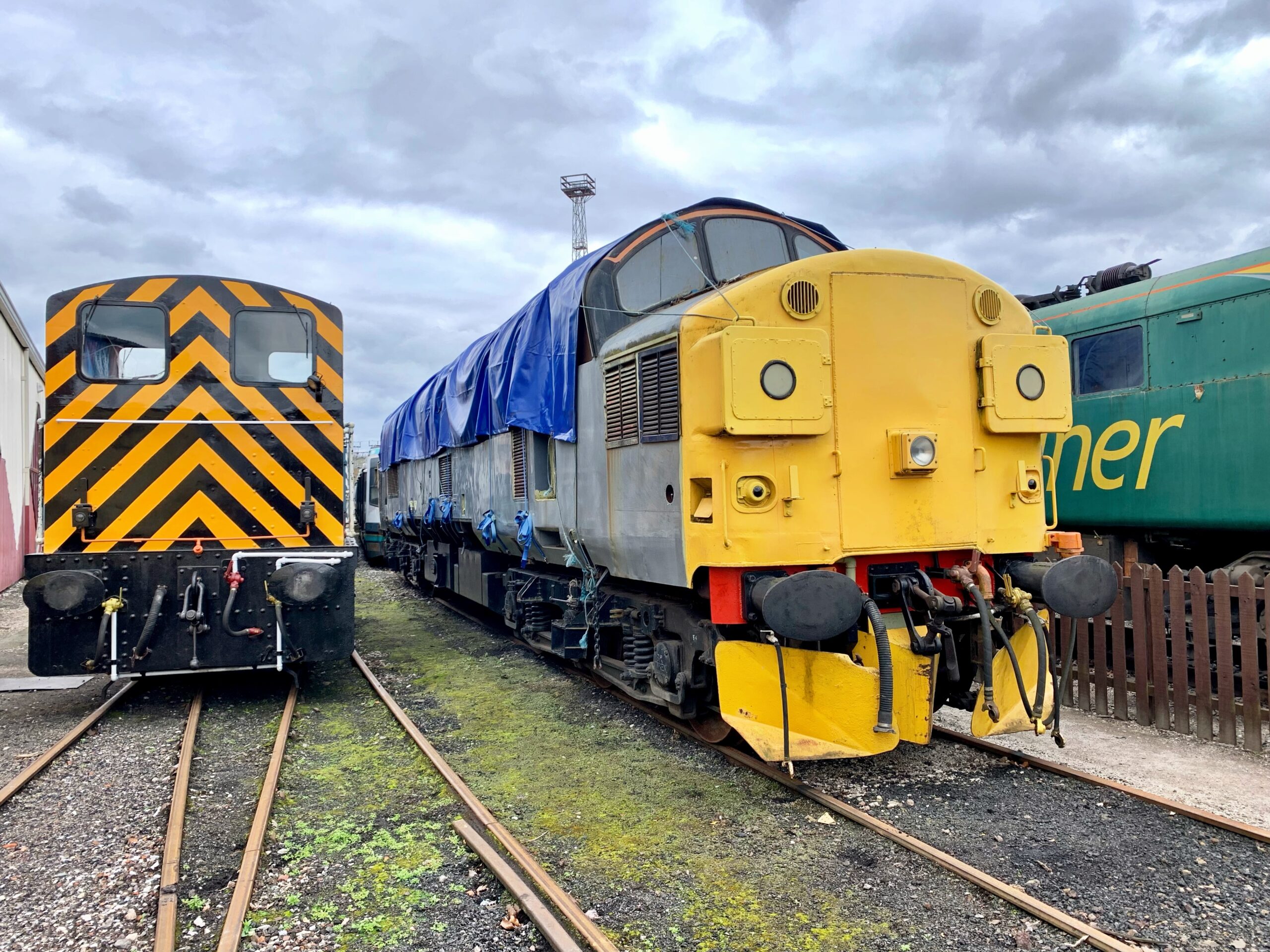
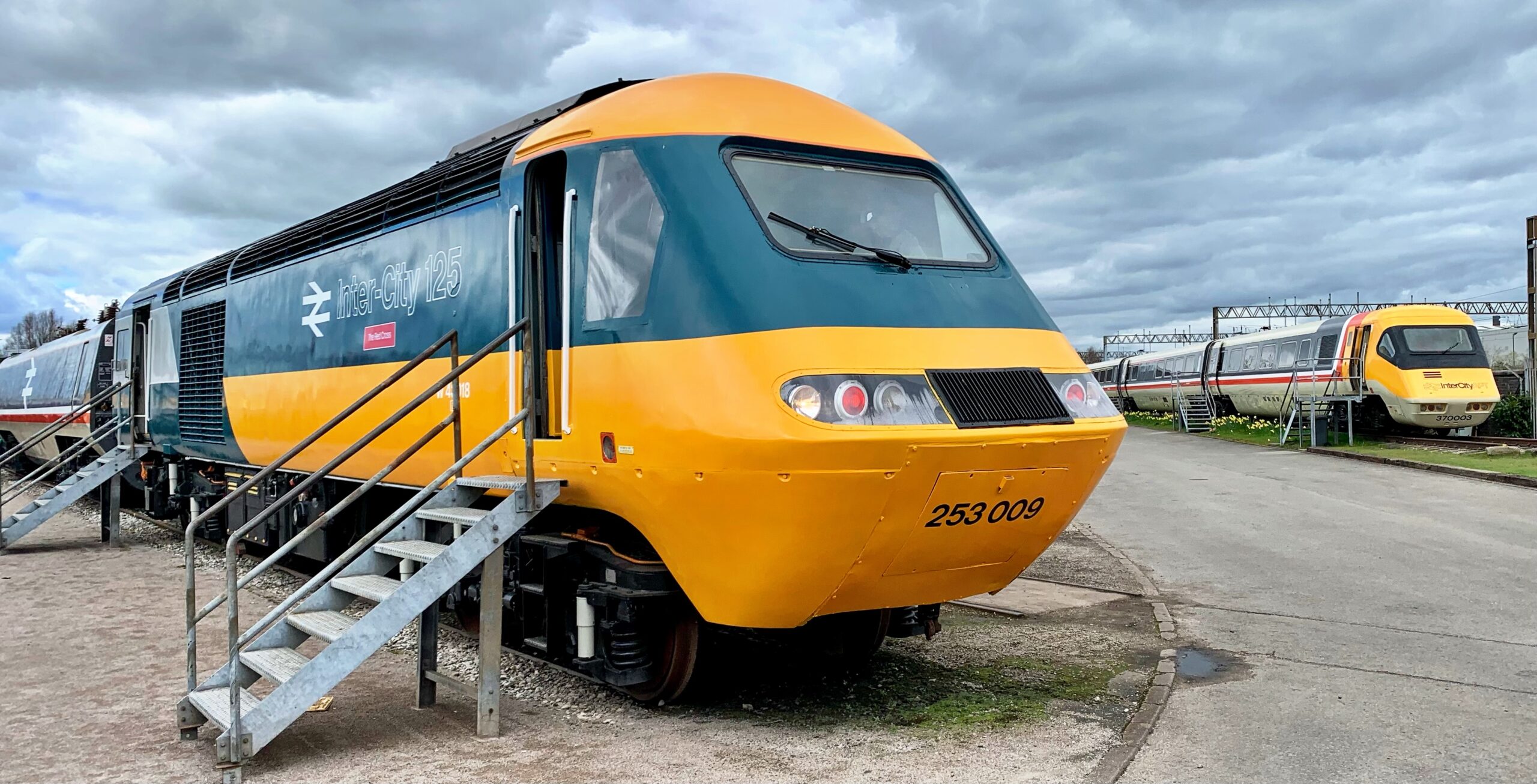
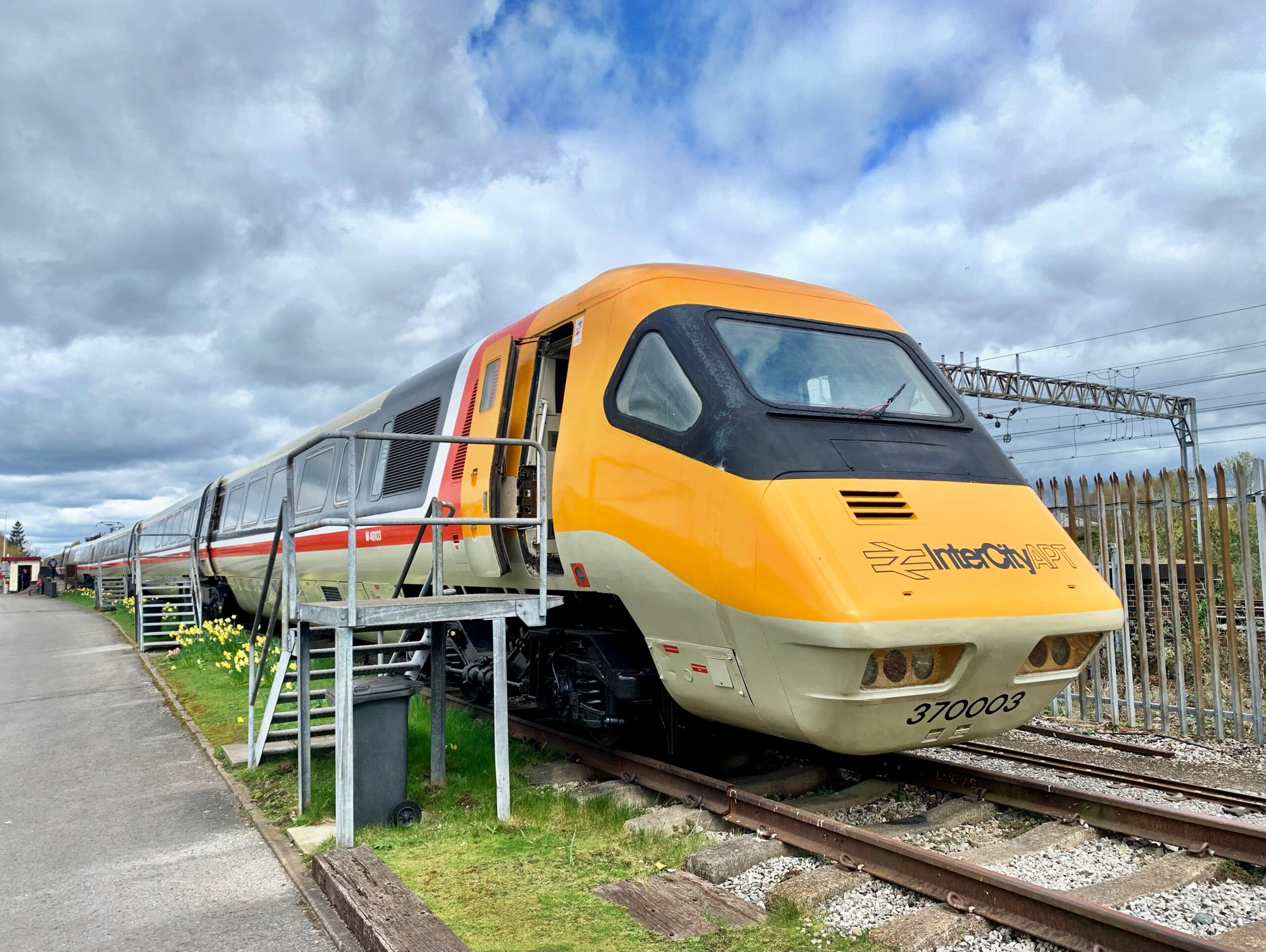
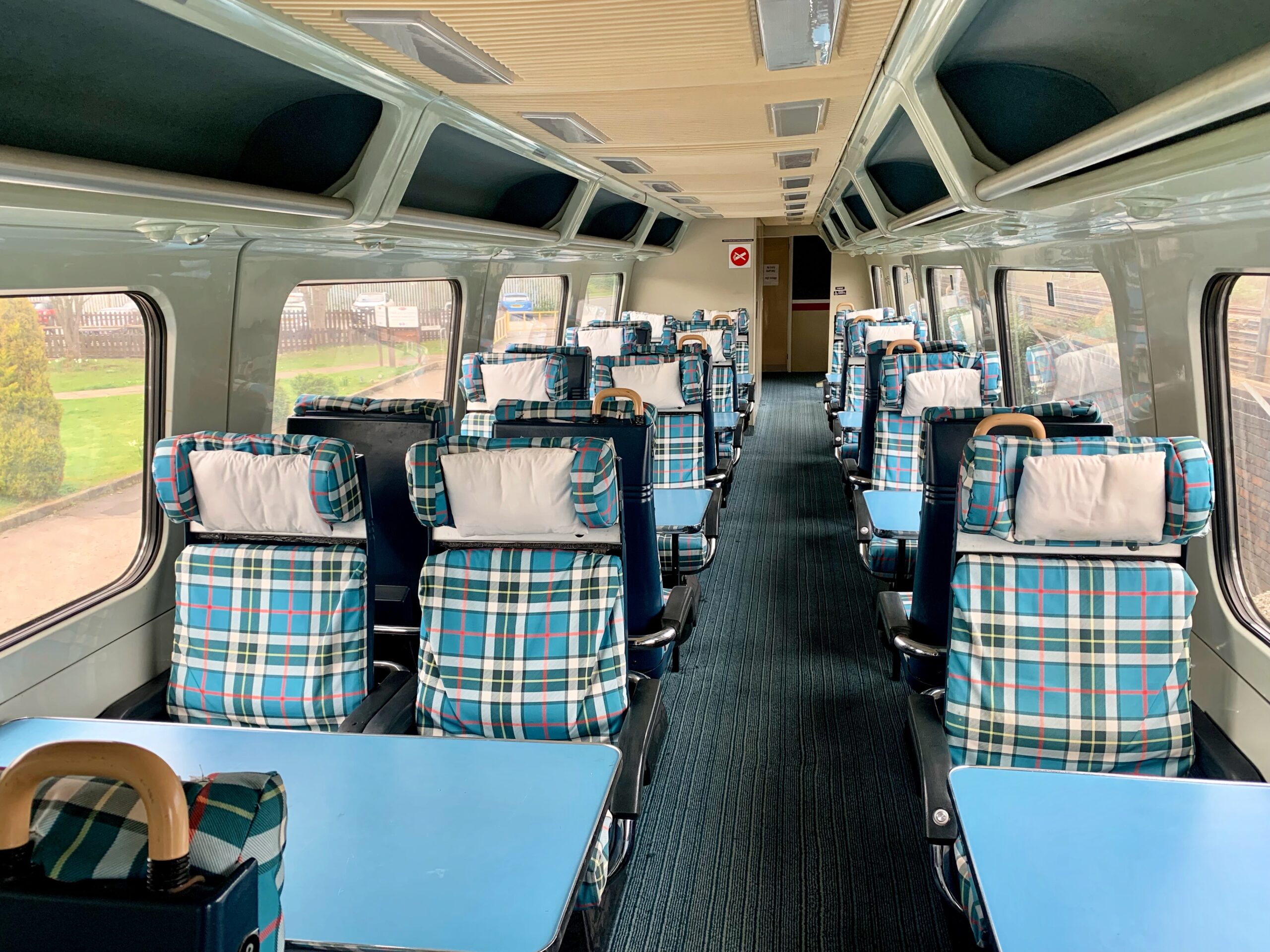
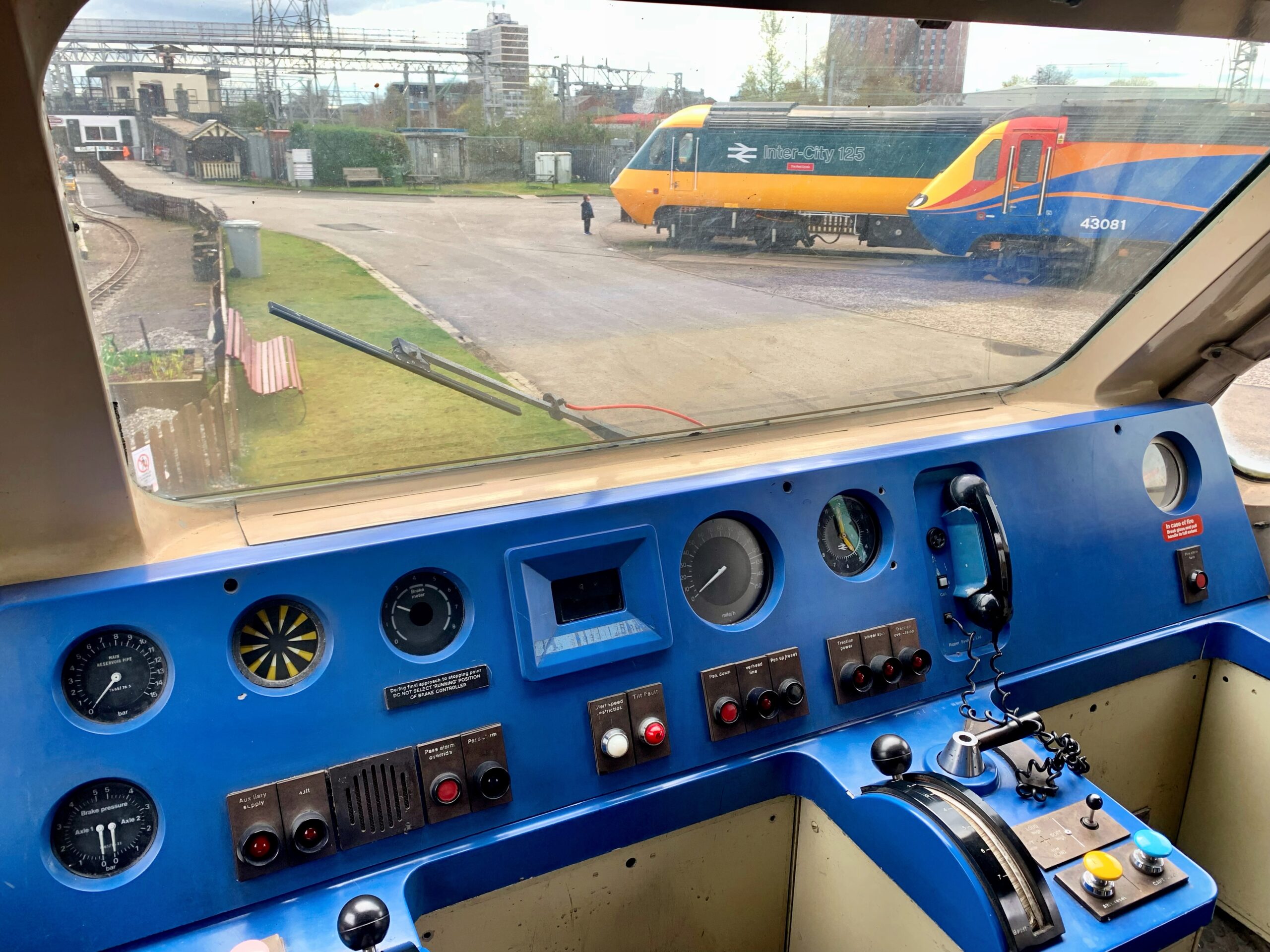
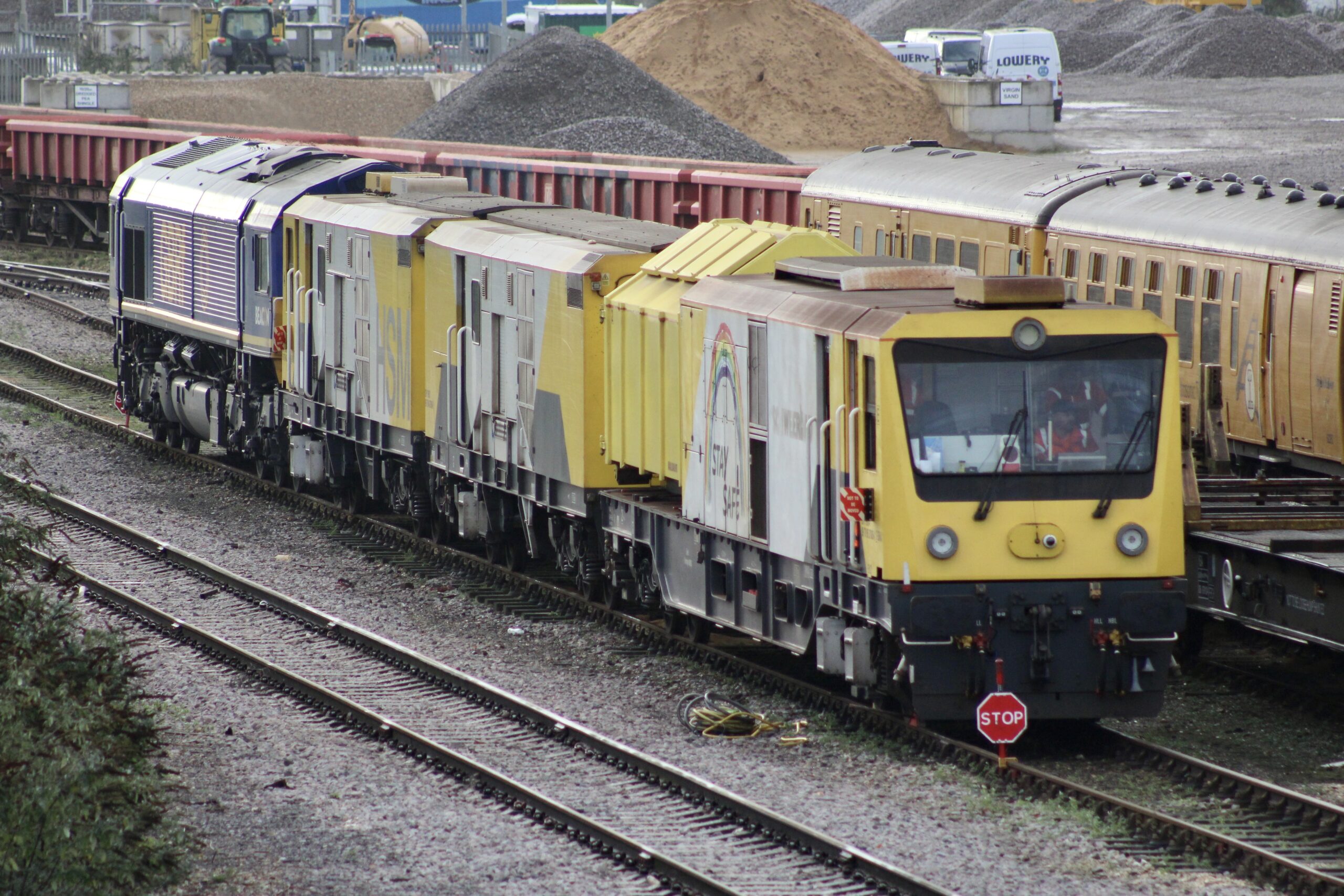
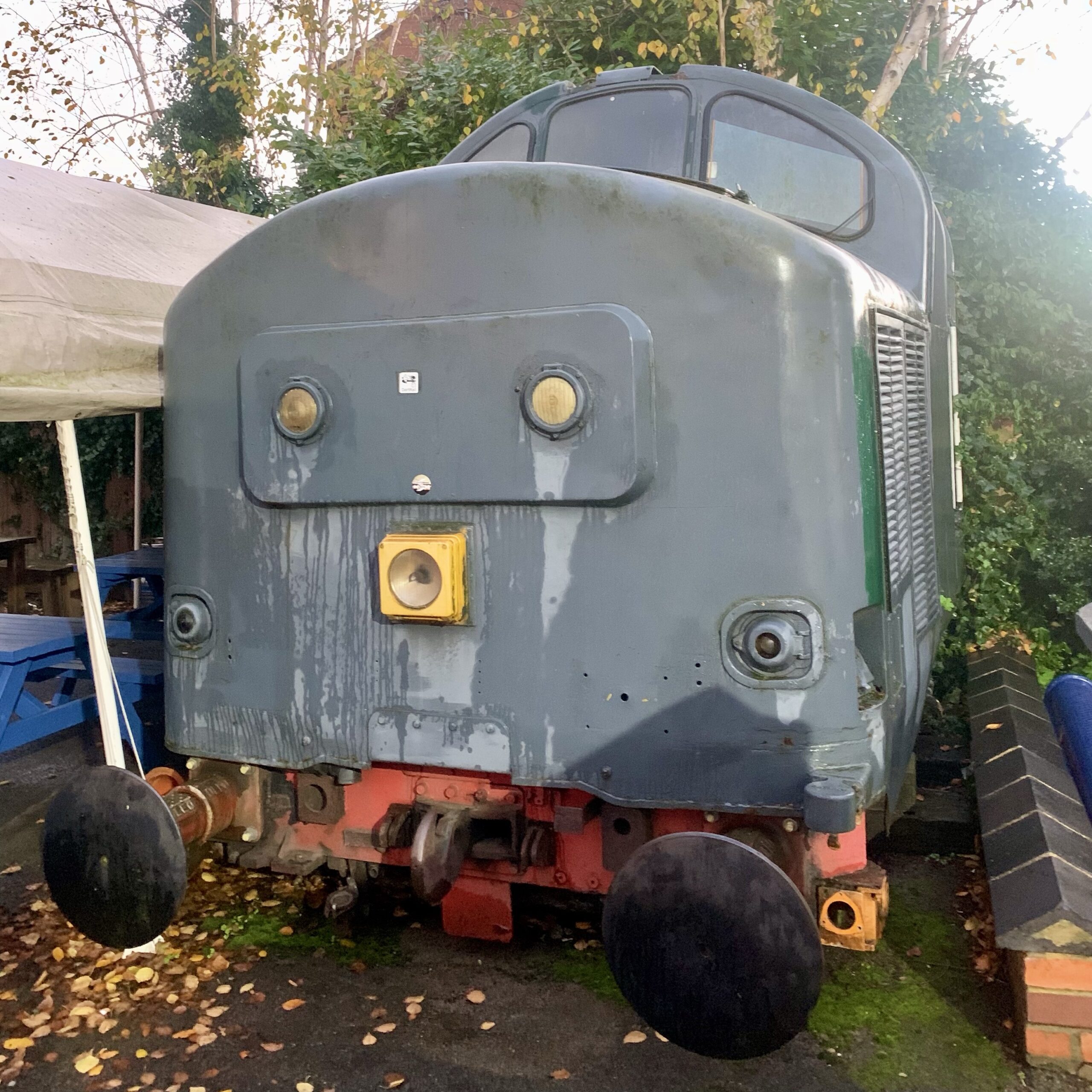
The Inter City APT-P (Advanced Passenger Train Prototype) was donated to the Crewe Heritage Centre by British Rail in 1988, this would become the only APT-P to be preserved and is the first thing visitors see on arrival – 01/04/2023
On Saturday April 1st, Yoshi’s mama had a weekend away planned with friends in Oxford. Organised before the announcement of rail strikes, I had a cunning plan for an adventure of my own when Mick Lynch of the RMT declared “everyone out!” By the time the April strike day was suspended, I’d already committed myself to an overnight stay in Derby. So after a stop at the Oxford Park & Ride, my chum @da_buckley967 and myself headed North to Crewe as we had booked a visit to the Freightliner depot at Crewe Basford Hall. Yoshi was still on his hols with his cousins as obviously he wasn’t going to be allowed to wander around a working railway yard. Our visit was scheduled to last for approximately one hour and kicked off at midday. Looking for some other things to do in the area, a visit to The Crewe Heritage Centre was an obvious choice. I was under the misunderstanding that dogs were not allowed on site, but I am happy to report that dogs are very much welcomed, and indeed, they enjoy free admission and doggy watering stations are spotted about the museum to help keep them hydrated. Owners are catered for in the cafe where tea, coffee, cold drinks and snacks are available.
The former Crewe North Junction Signal Box now contains a cafe, viewing point, model railway and signalling equipment. Constructed in 1938 by the London Midland & Scottish (LMS) Railway Company and built to an ‘ARP’ (Air Raid Precautions) design, with 38cm thick reinforced concrete walls and a 45cm thick concrete roof. The new ‘electric’ Signal Box was constructed directly in front of the previous 1906 building; this was partially demolished in 1940 with only the ground floor being retained and converted into a Linesmans’ hut. In 1985 as part of the Crewe Station remodelling project this Signal Box was closed with control being handed over to the new Signalling Centre on the opposite side of the Crewe to Chester Line.
The Crewe Heritage Centre is nestled between the Crewe to Chester line and West Coast Mainline on part of the site of the original Crewe Locomotive Works. The Heritage Centre was officially opened by Her Majesty Queen Elizabeth II and His Royal Highness the Duke of Edinburgh, on 24th July 1987 to mark the 150th anniversary of the first train to arrive at Crewe Railway Station in 1837. Originally forming part of the Crewe Heritage Festival which was an eight week long event with activities and celebrations taking place all over the town of Crewe, members of the public were also invited to visit the historic Locomotive Works and see first hand how railway locomotives were constructed and maintained by British Rail.
Following a really successful festival, Crewe and Nantwich Borough Council decided to open the Heritage Centre again in 1988, and in 1989 the council handed the running of the museum over to the newly formed Crewe Heritage Trust who continue to operate the museum to this day. We really enjoyed our visit and I hope to return with Yoshi in tow one day soon!
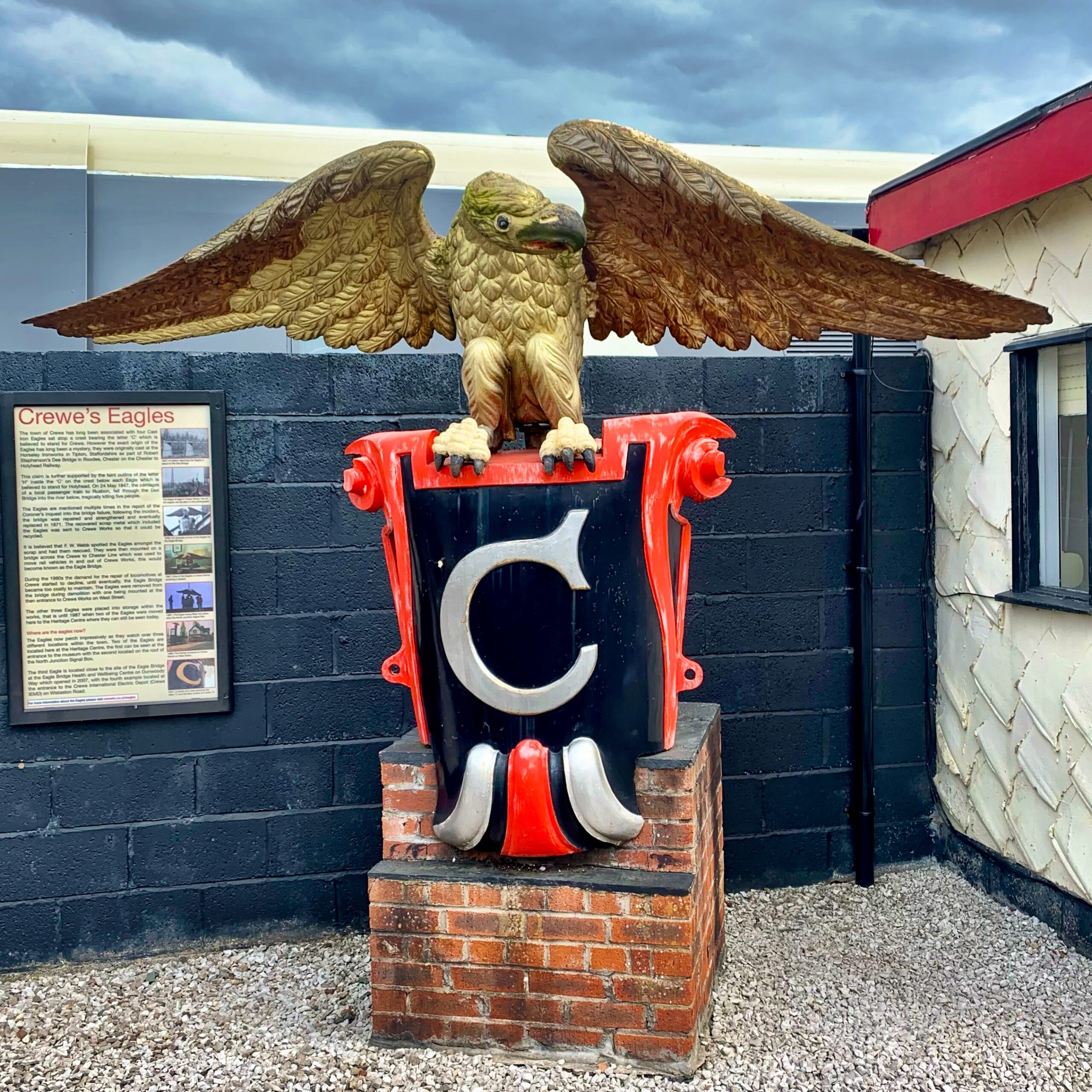
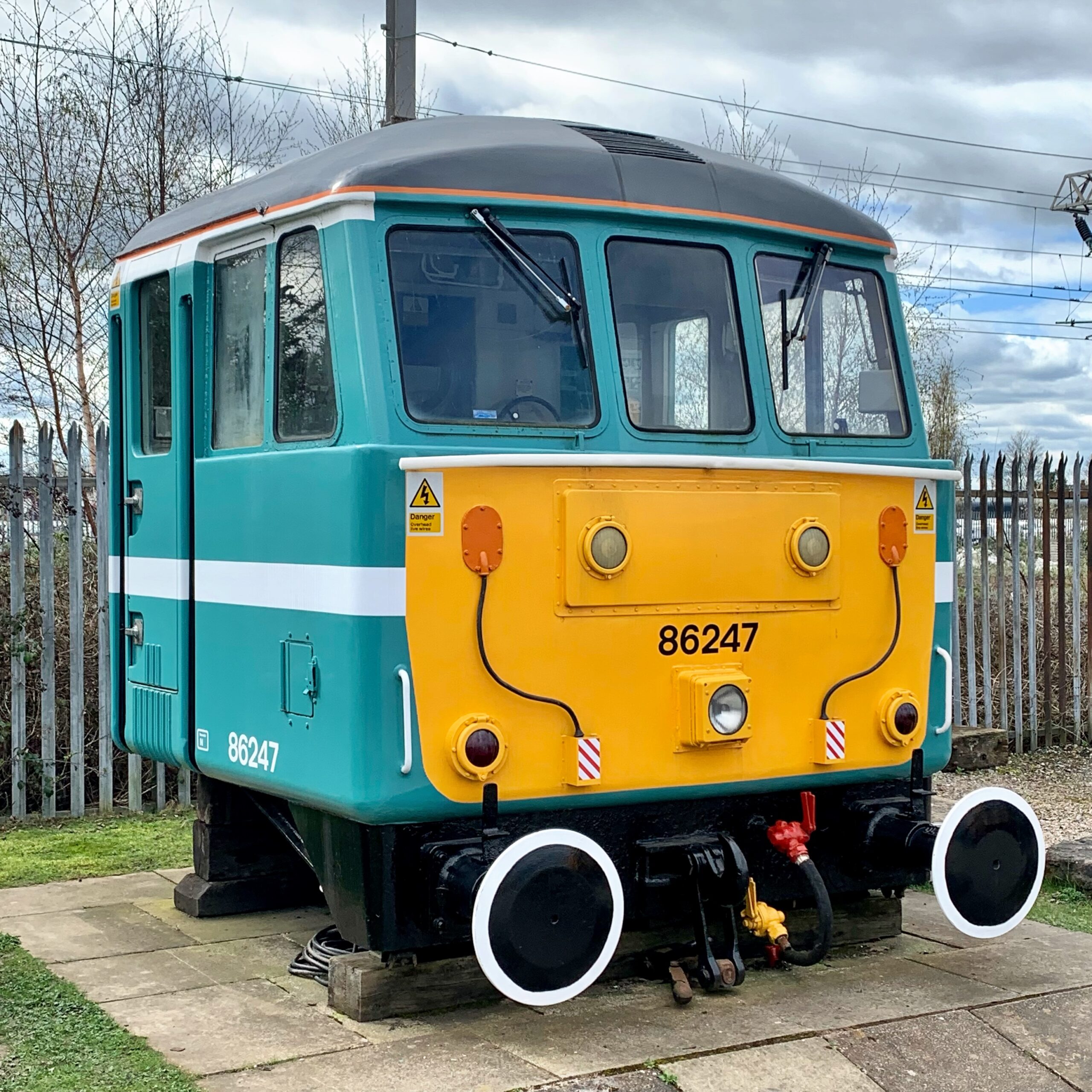
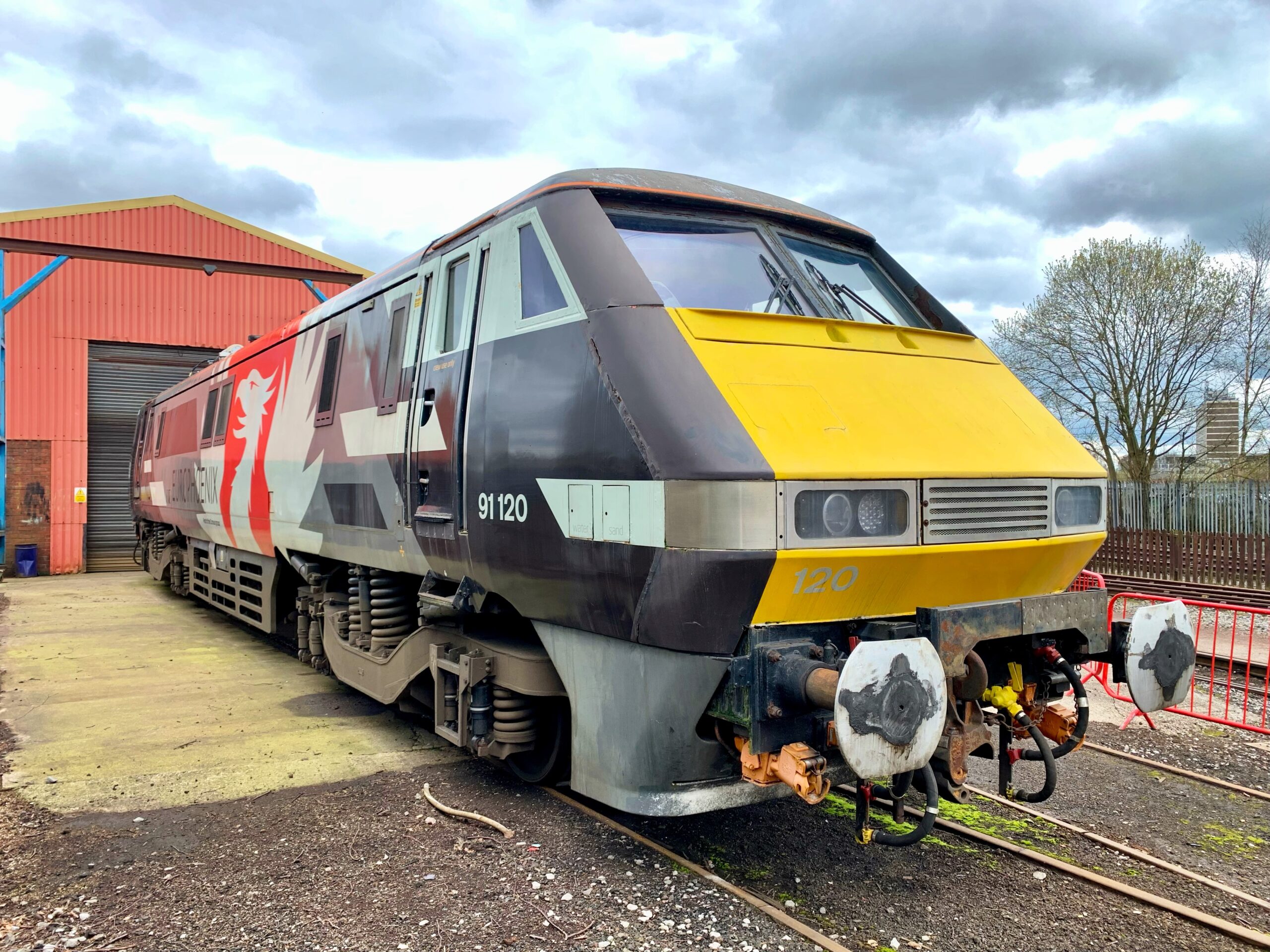
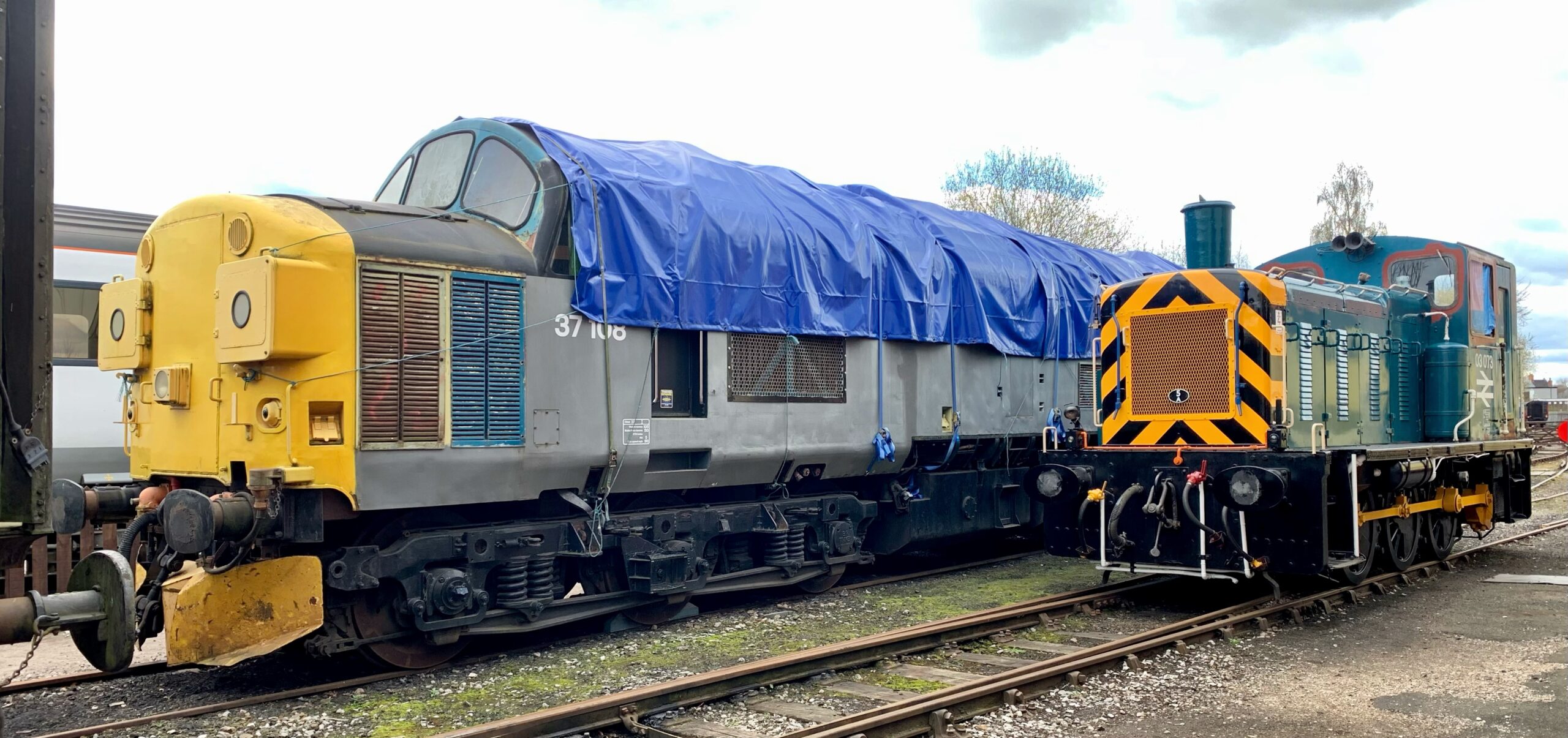
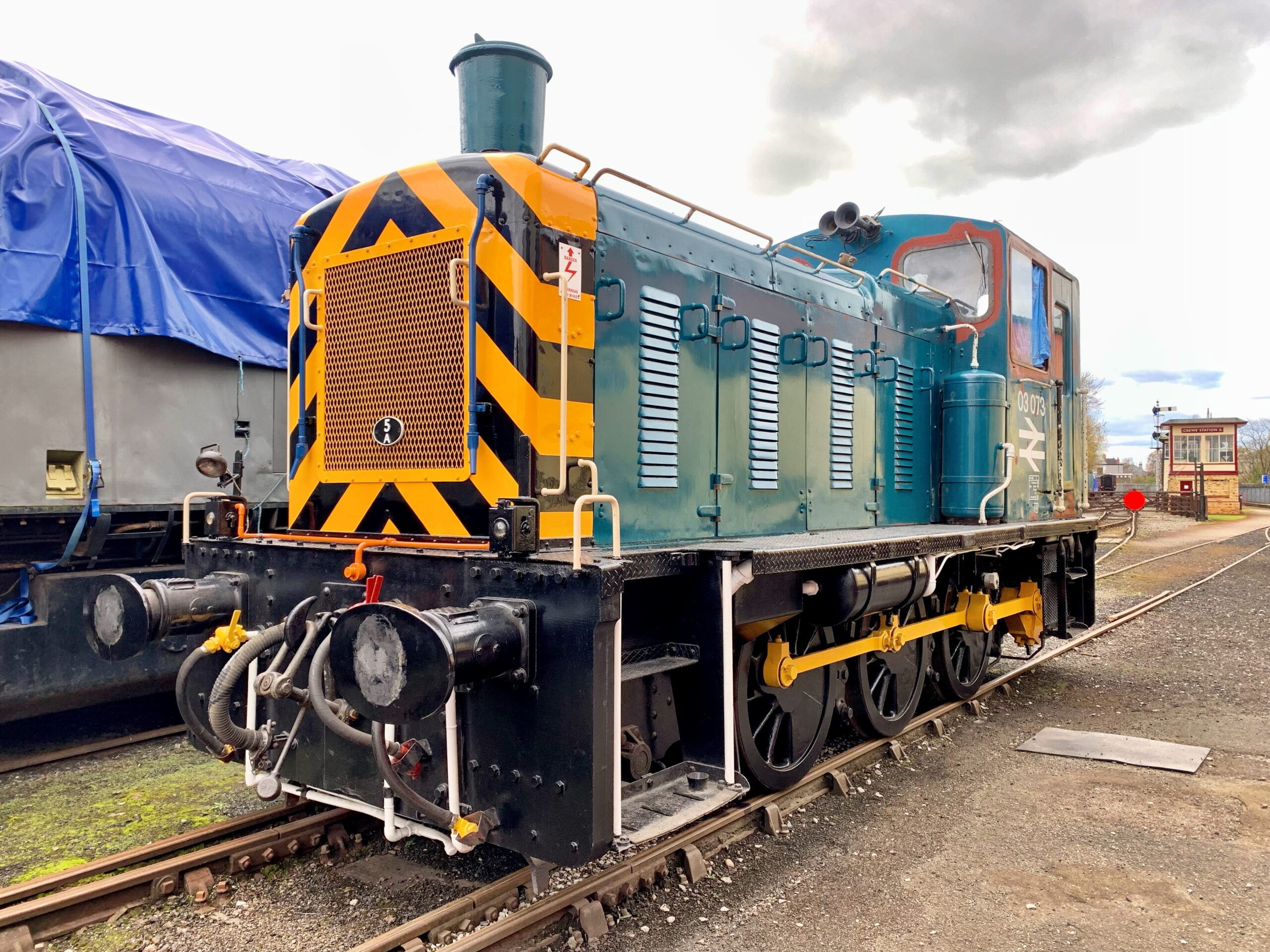
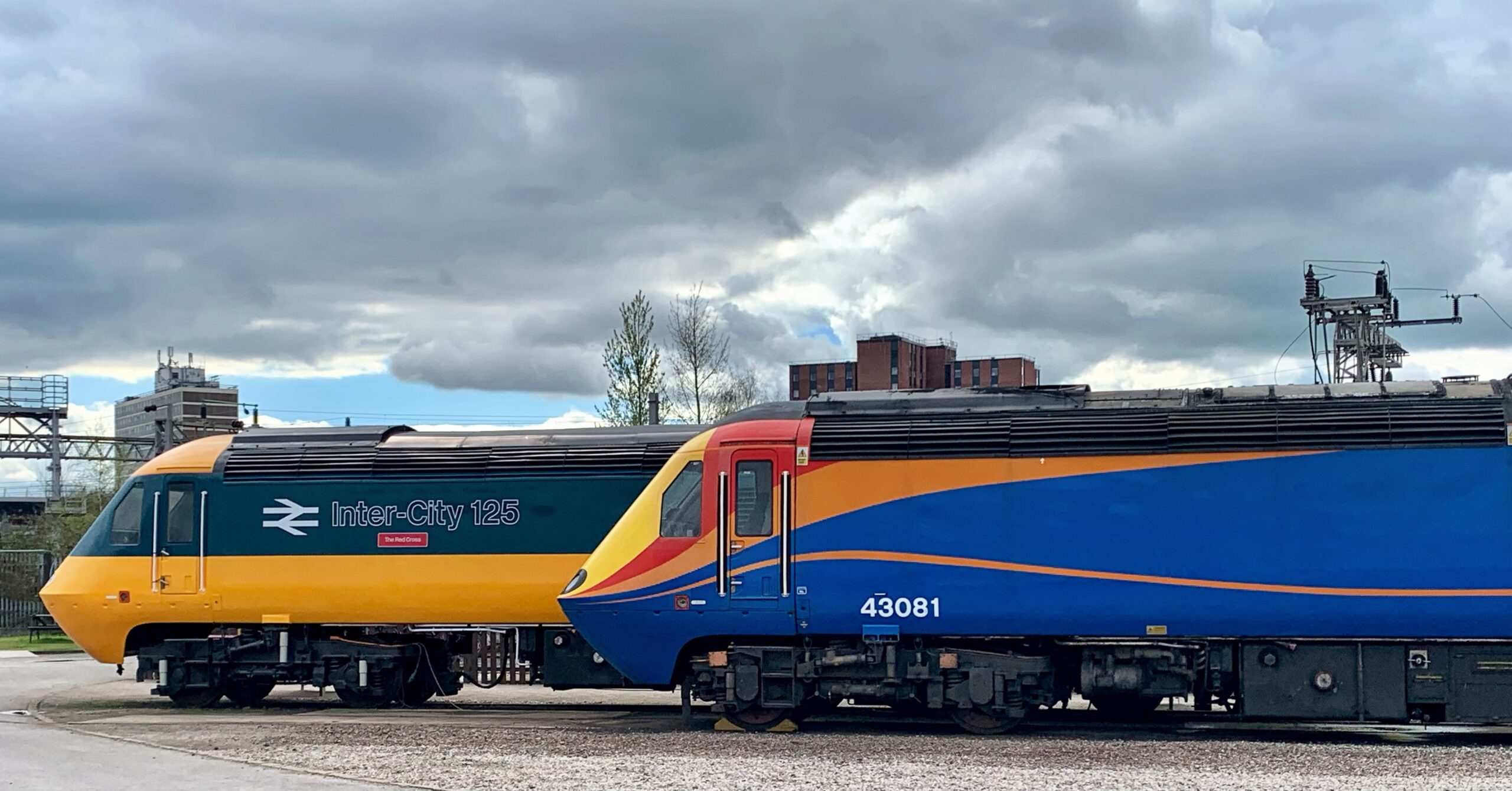
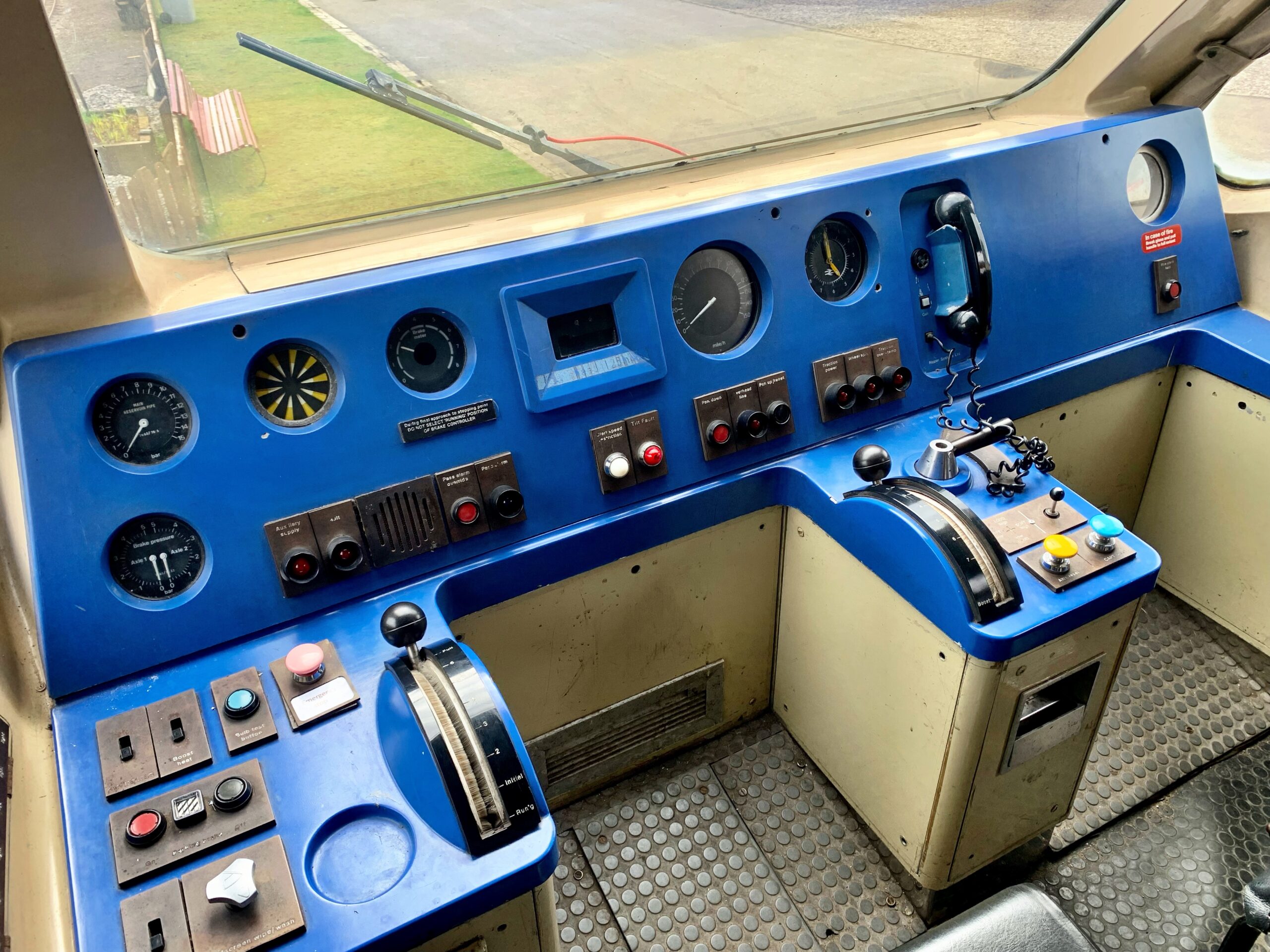
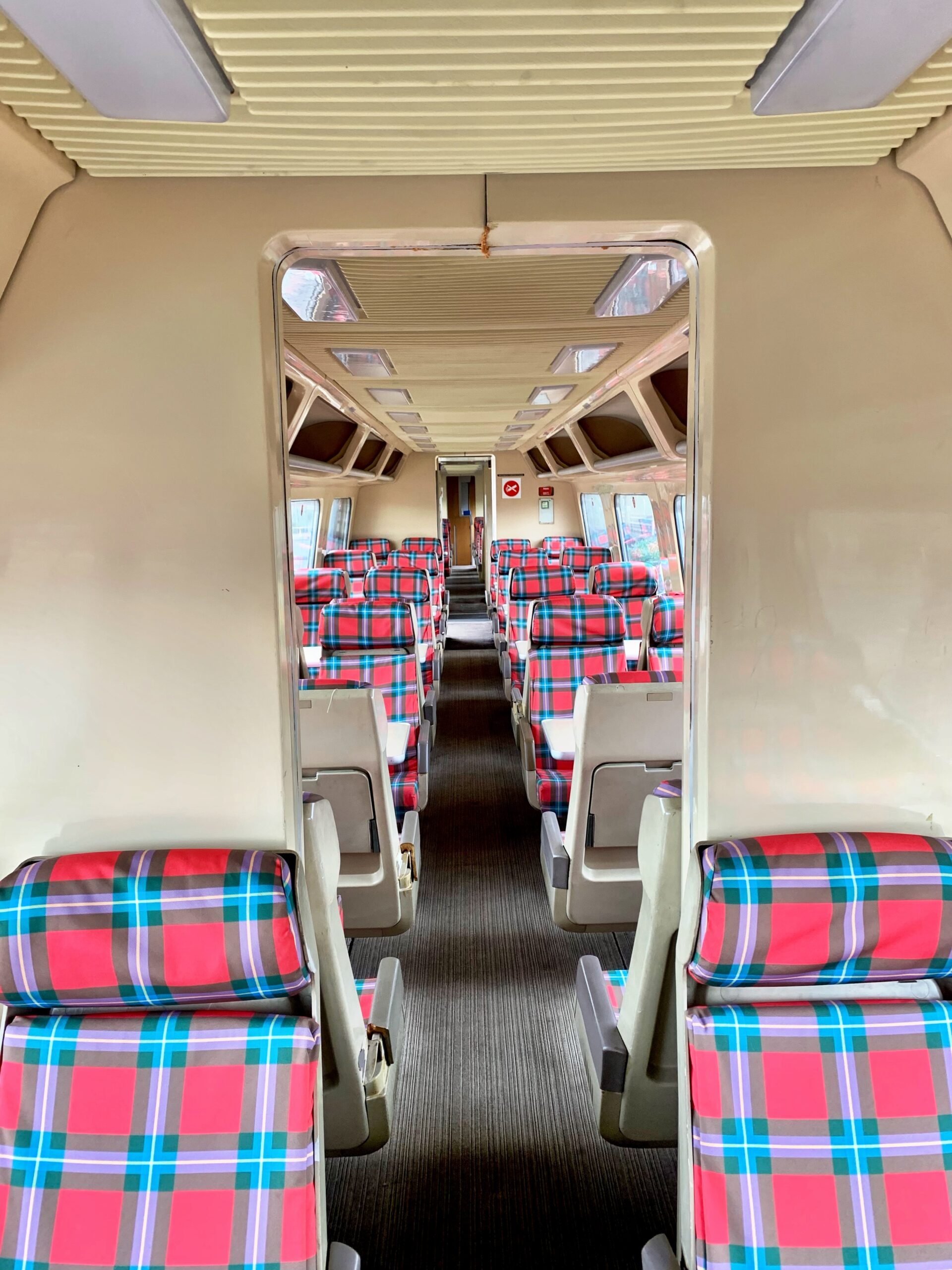
Crewe Station ‘A’ Signal Box with Exeter West Signal Box behind – 01/04/2023In 1991, the dismantled sections of Exeter West Signal Box are transported to the Heritage Centre from storage and the complex task of reconstructing the Signal Box begins in May, construction continued into 1992 with the Signal Box opening as part of the museum on May Day 1993 – 01/04/2023An example of a Crewe Eagle, four of which were mounted on a bridge crossing the Crewe to Chester railway line – 01/04/2023The No. 2 end cab of Class 86 No. 86247 was restored at the Heritage Centre and currently displays the Anglia Railways livery, which whilst in service, the locomotive never actually carried. The locomotive was scrapped in 2015 with both cabs being saved. The No. 1 end cab can be seen at The Cab Yard Project in Bridgend – 01/04/2023 One of two Class 86/6 locomotives to be given the Freightliner Powerhaul green and yellow livery No. 86622 is on long term loan at the Heritage Centre – 01/04/2023Through an agreement between the Crewe Heritage Trust and Europhoenix British Rail Class 91 No. 91120 arrived at the Heritage Centre in 2022 – 01/04/2023Released from English Electric Vulcan Foundry in January 1963 – Works Number EE/VF3237/D762 1962 – and originally numbered No. D6808, Class 37 No. 37108 was moved to the Heritage Centre from Carnforth by road in 2010 – 01/04/2023Class 37 No. 37108 alongside Class 03 No. 03073 – 01/04/2023With the kind support of British Rail, the Heritage Centre was able to acquire Doncaster built Class 03 Diesel Shunter No. 03073 in 1990, this would be the first shunting locomotive to be preserved by the Heritage Centre – 01/04/2023Thanks to a generous donation by Porterbrook the Heritage Centre secured the High Speed Train (HST) Power Car No. 43081, the 8,000th locomotive to be constructed in Crewe Work – 01/04/2023Crewe built HST Power Car No. 43018 on static exhibition was acquired by the Heritage Centre in 2020 – 01/04/2023Visitors to the Heritage Centre can visit the cab of one of the driving trailers from set 370003 – 01/04/2023The very 1970’s high tech cab arrangement of APT-P – 01/04/2023Standard Class (probably still called second class in the 1980’s) seating in APT-P – 01/04/2023The “fully stocked bar” in the buffet car of APT-P – 01/04/2023First class seating on board APT-P – 01/04/2023The view from the cab window of the APT-P driving car – 01/04/2023
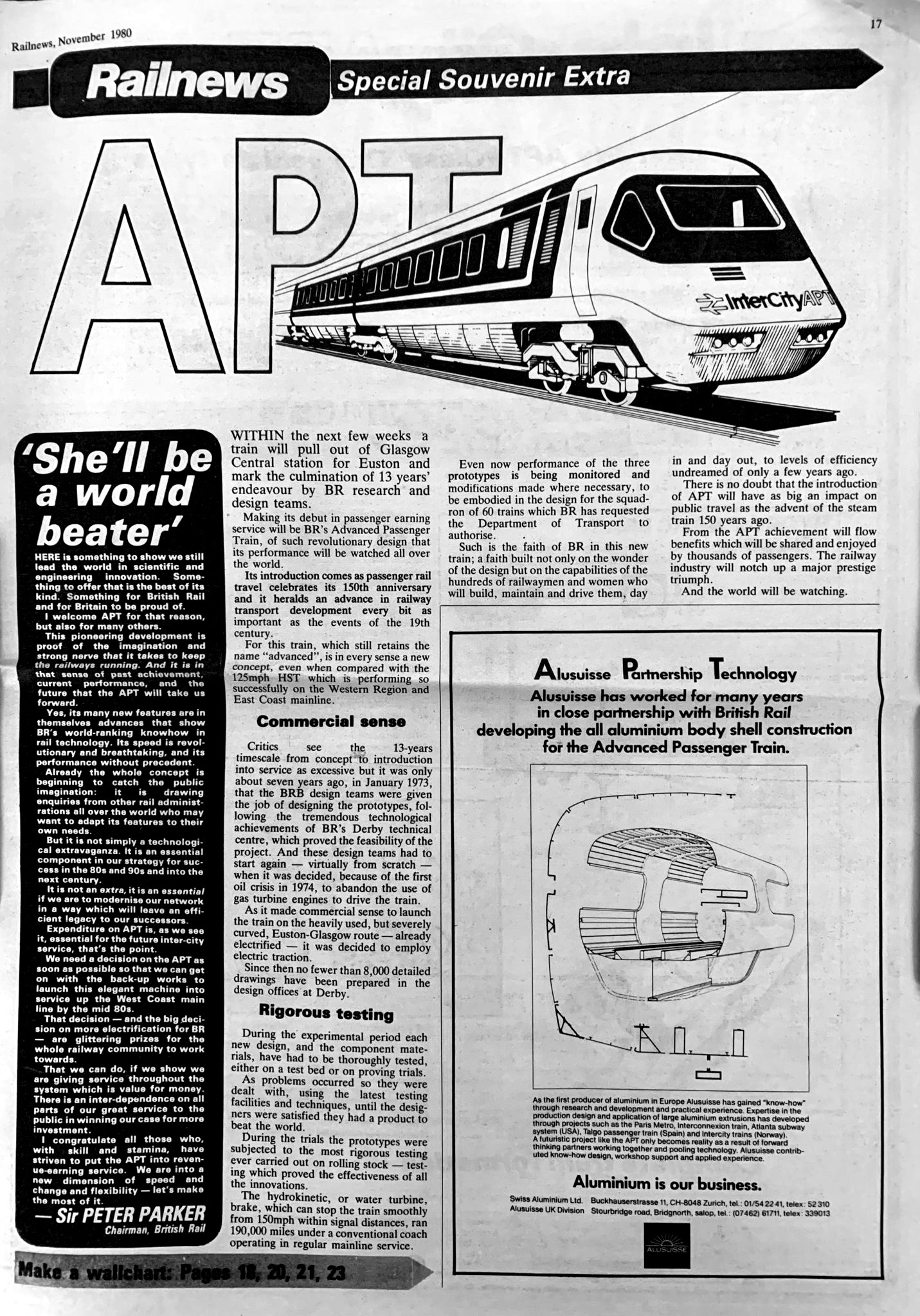
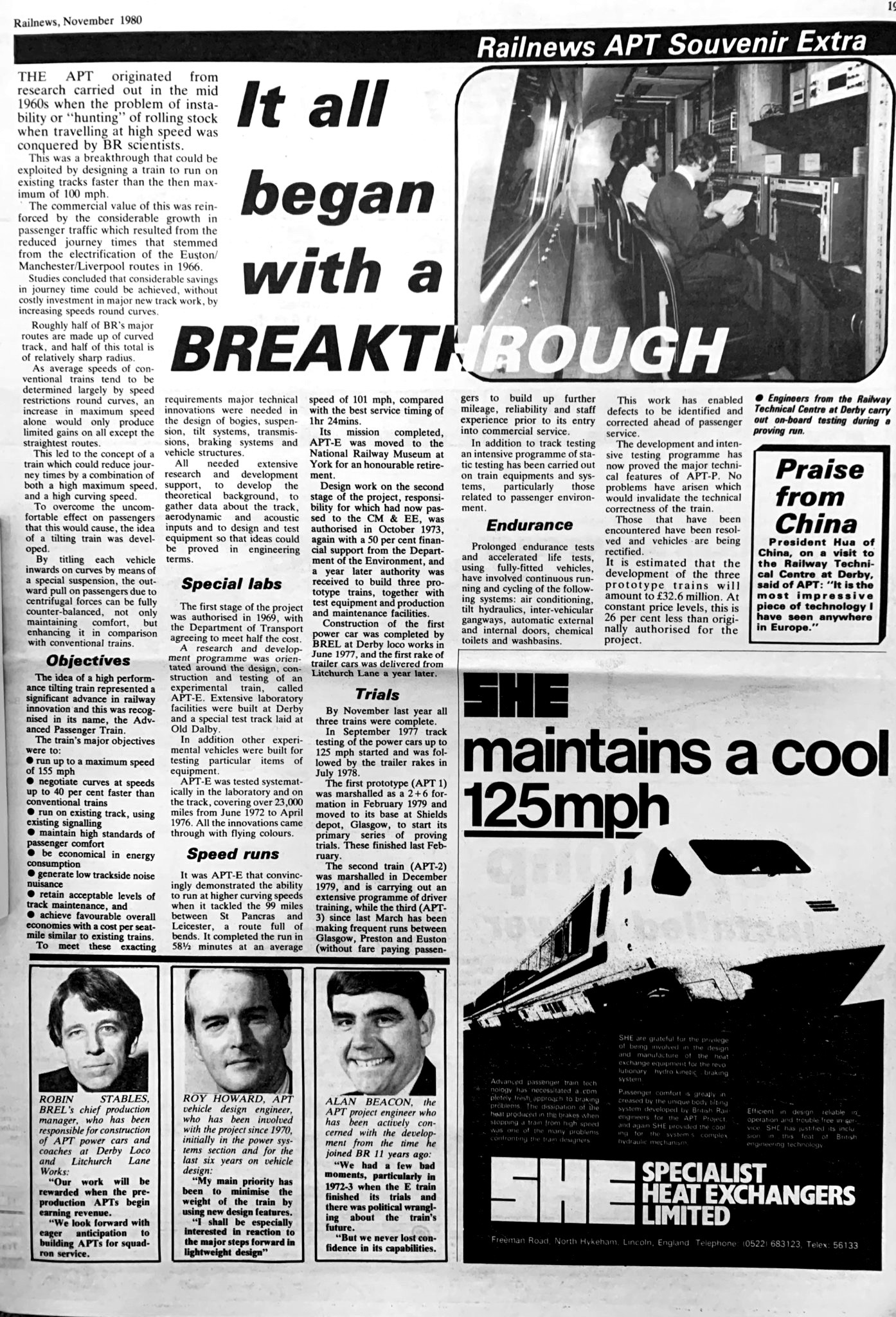
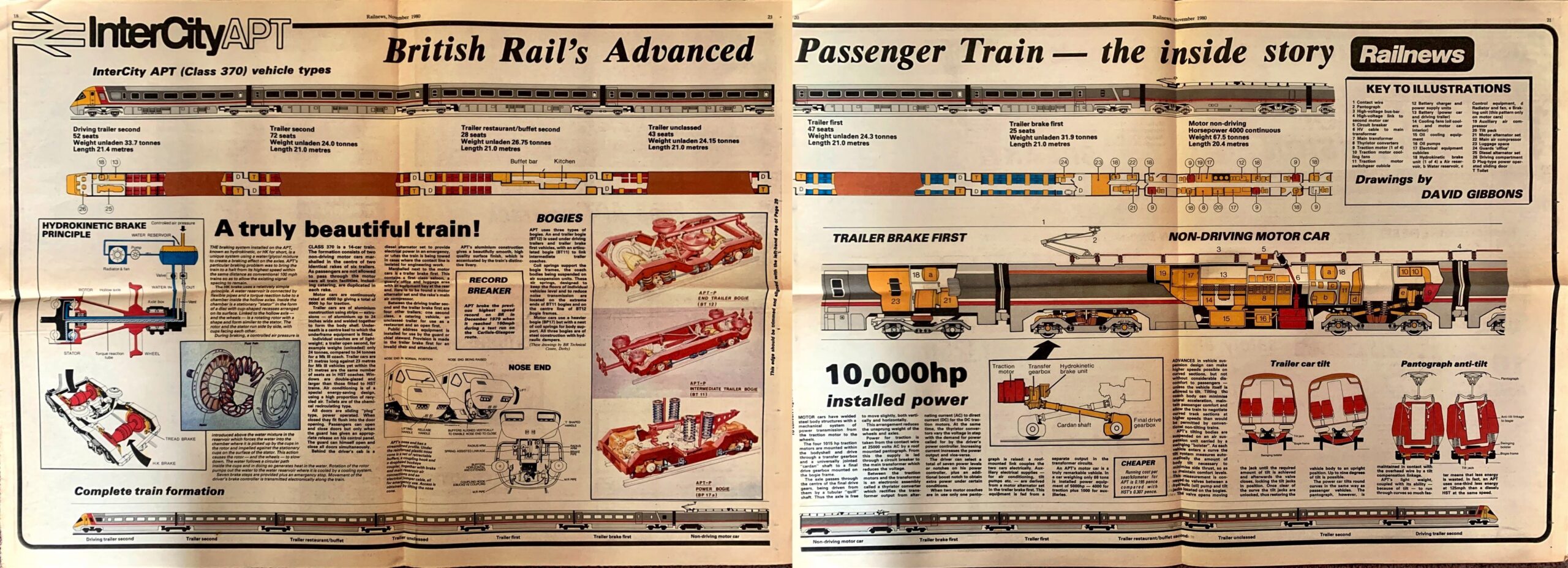
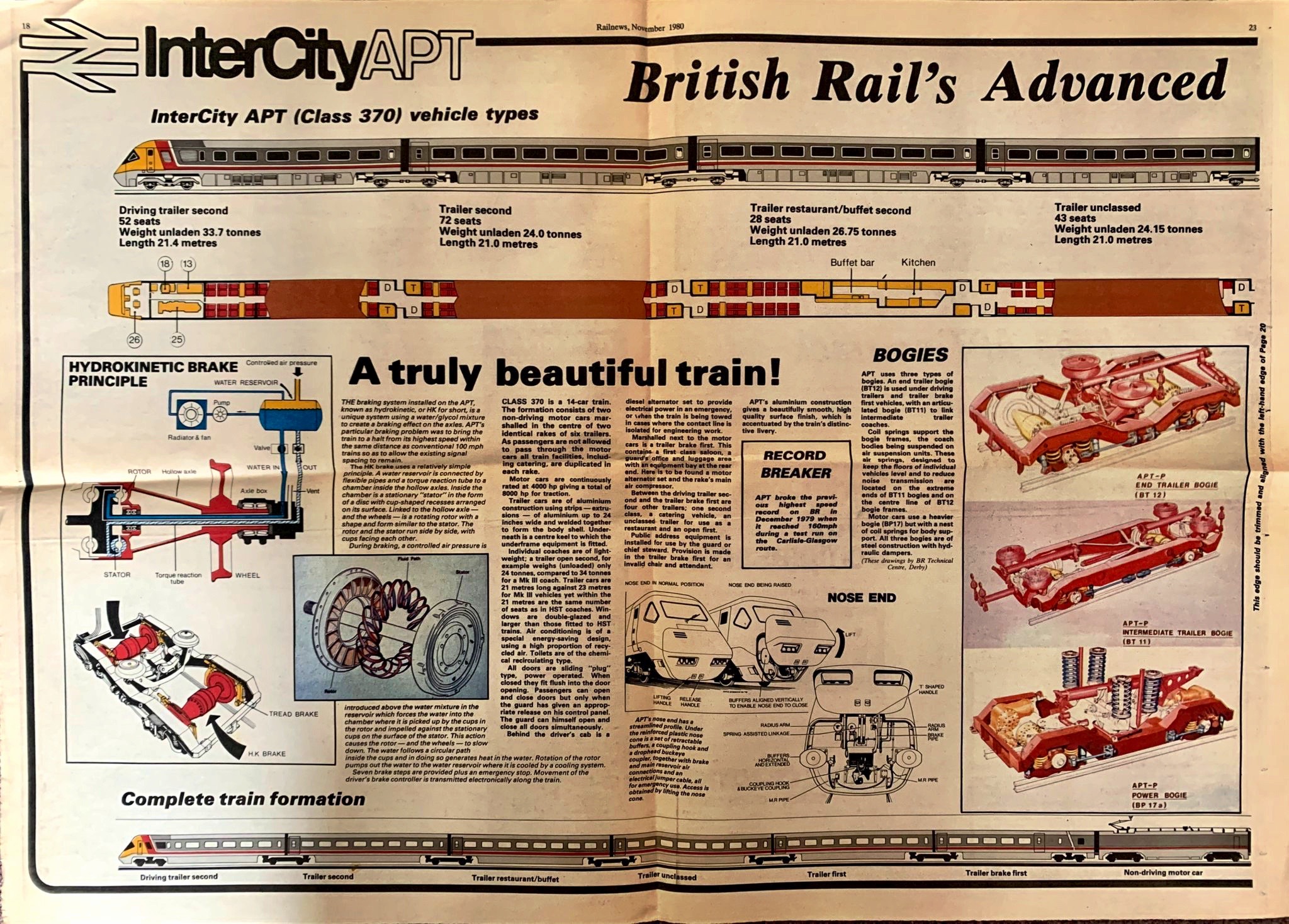
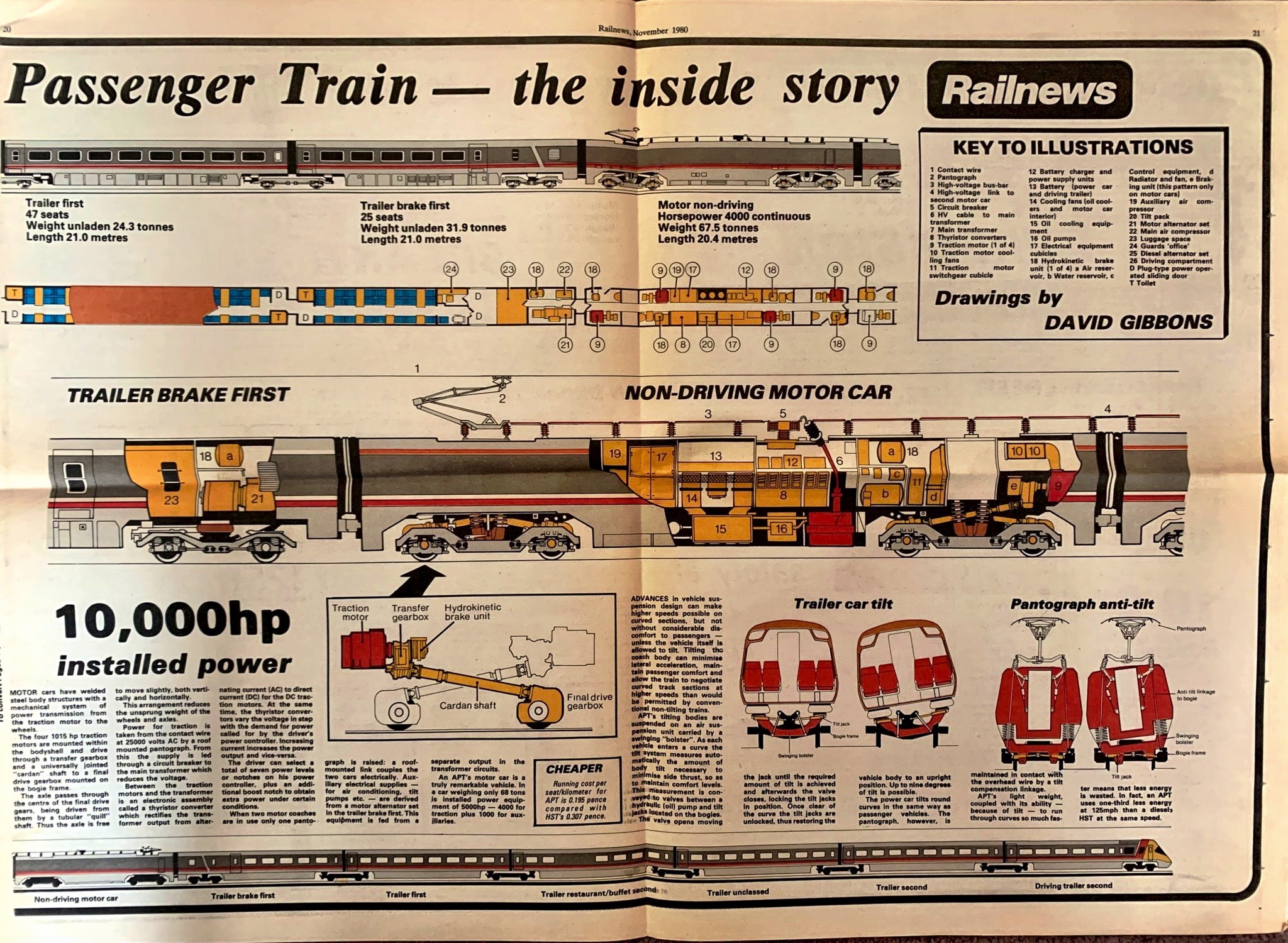
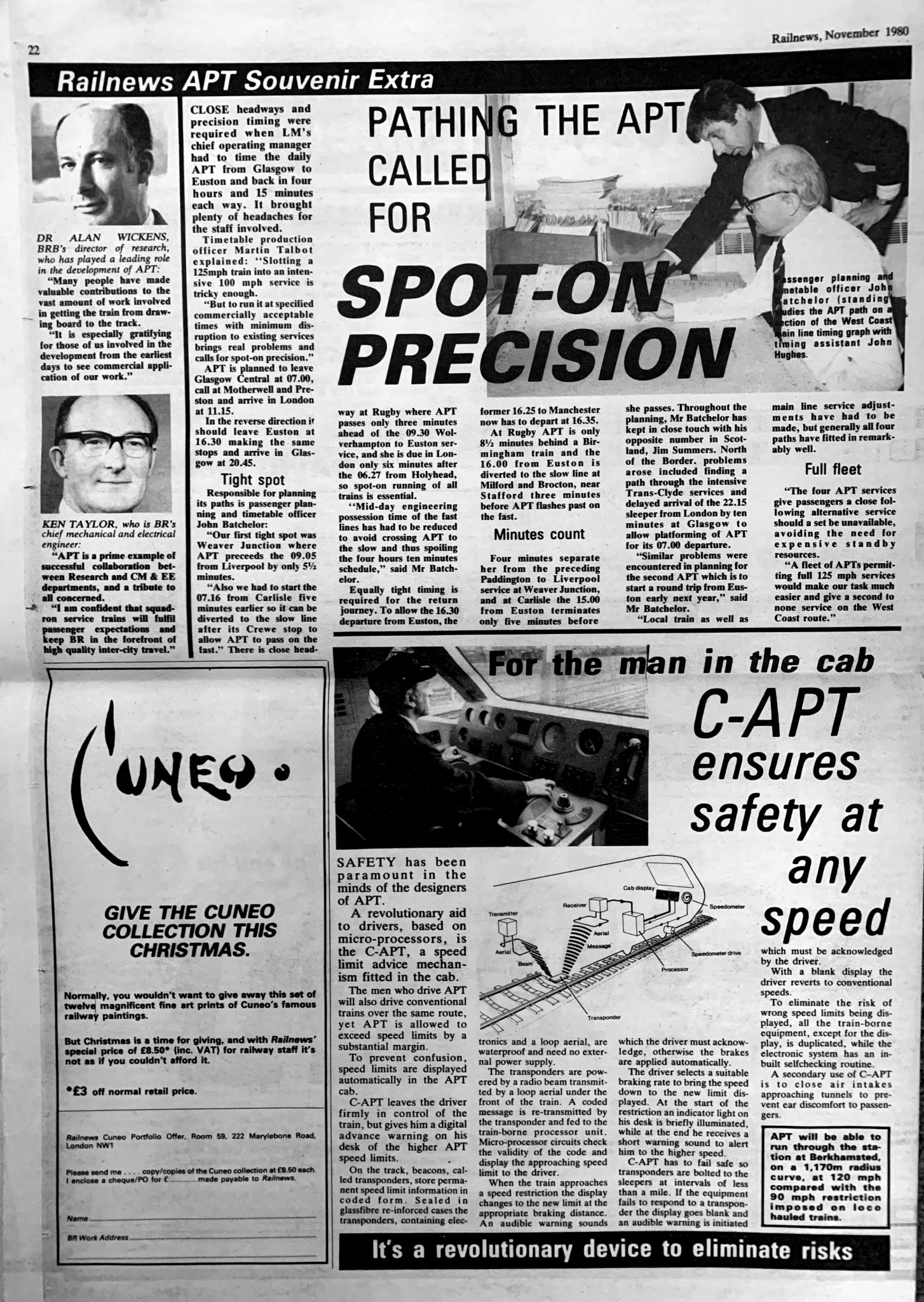
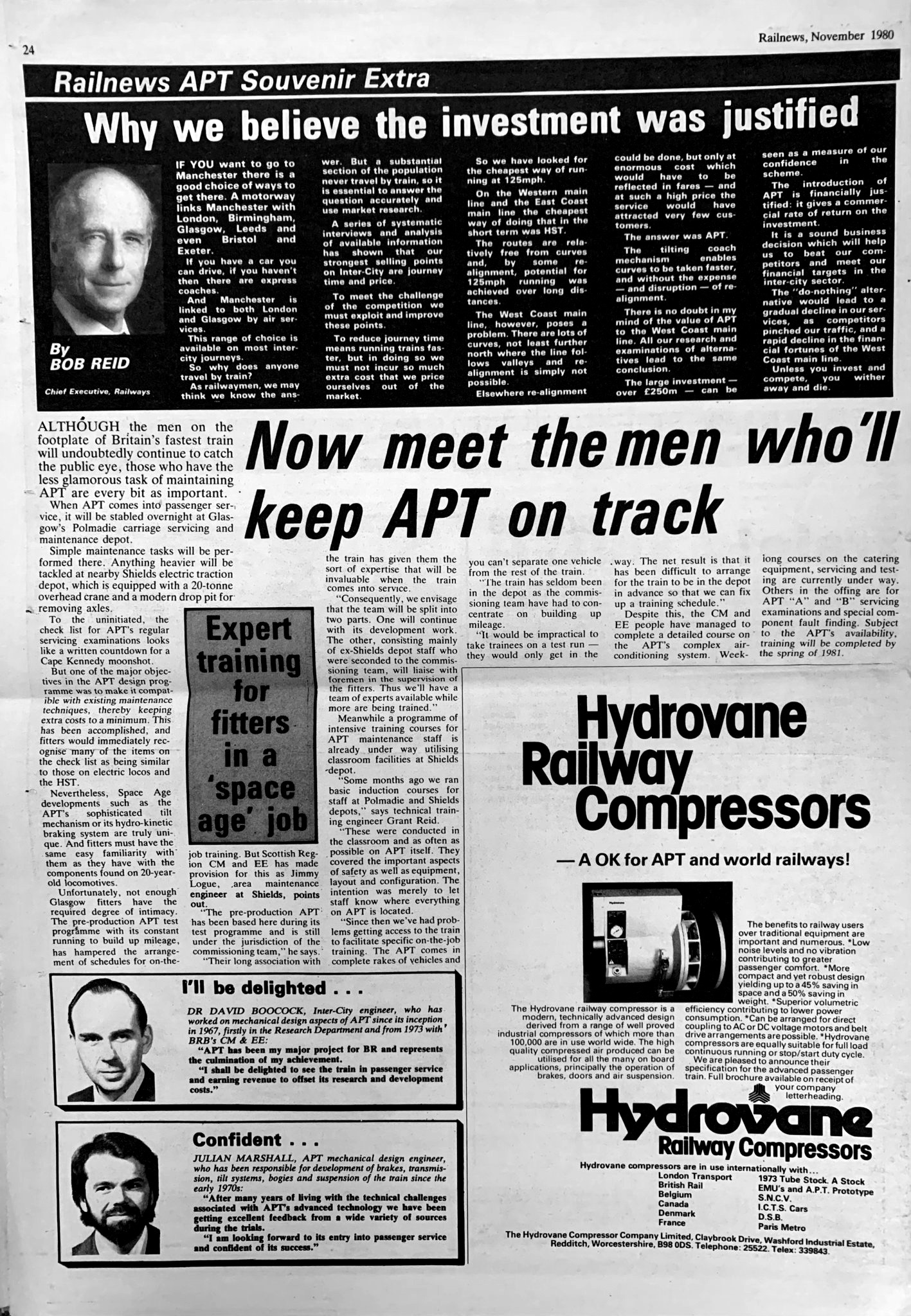
In the November 1980 edition of Railnews, the industry newspaper, there was pullout special souvenir all about the Advanced Passenger Train:
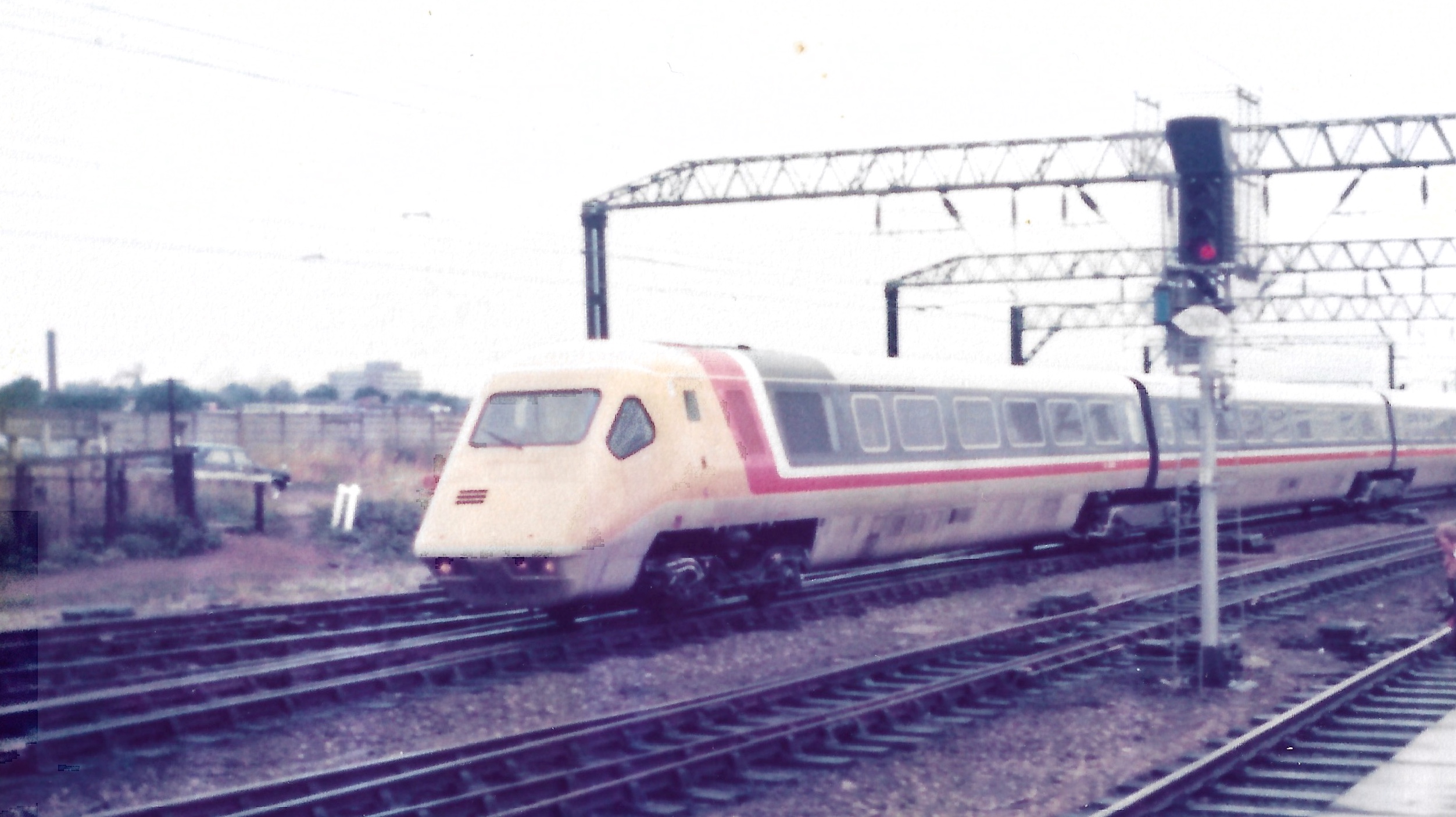
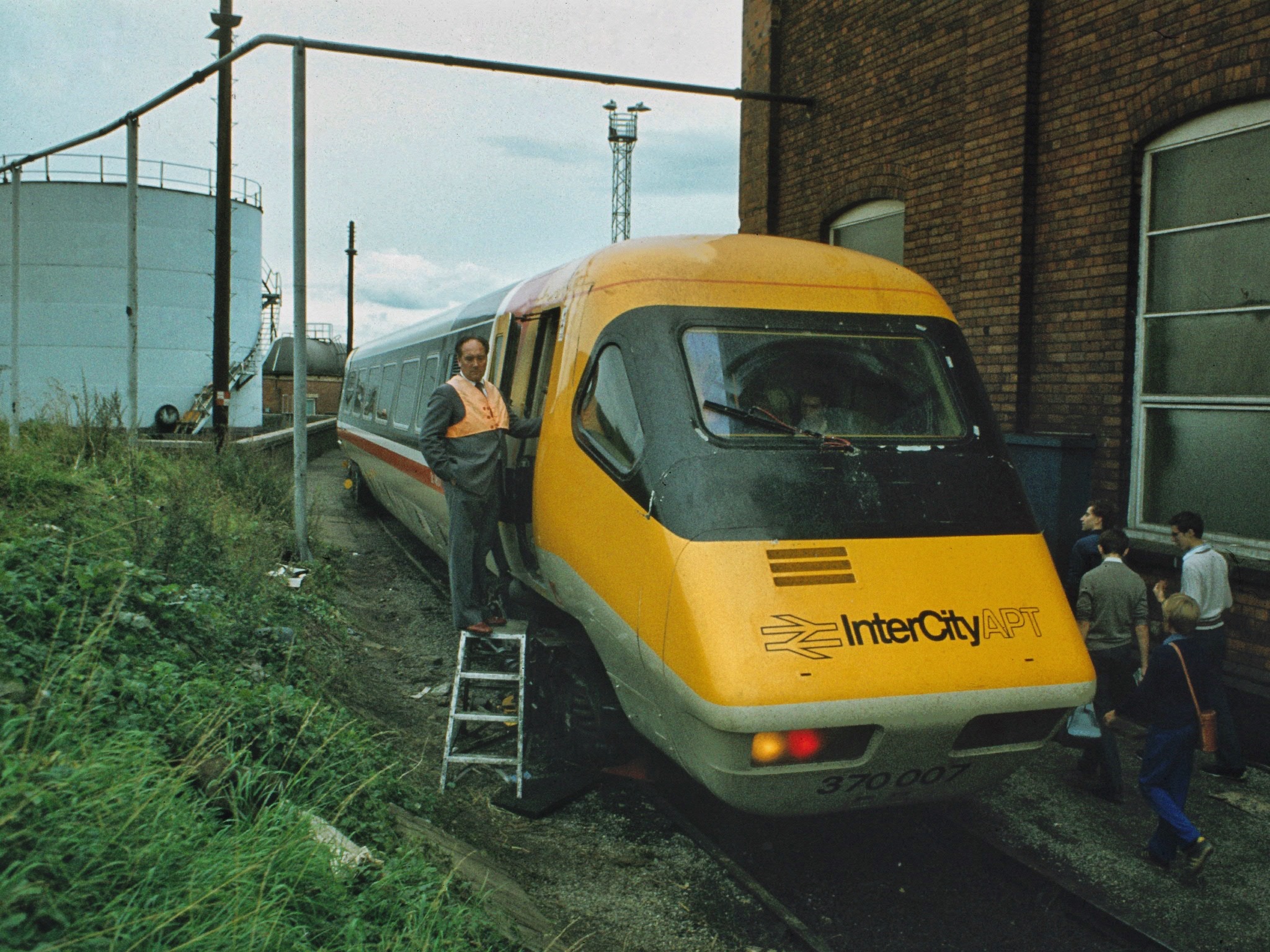
Proof I saw APT-P on the mainline! An unidentified APT at Crewe – 13/08/1978Driving trailer of APT-P set No. 370007 at Old Oak Common. The APT was apparently a late addition to the Open Day at Old Oak Common after lots of discussions over route clearance – 20/09/1981
We’ll tell you more about our weekend next time. I would have included more this week, but I have episodes of “Married At First Sight Australia” to catch up on.
Closer to home, Yoshi, his mama and I made the trip on Swanage Railway’s trial diesel multiple unit (DMU) service which we discussed in our previous blog entry. The trains were well used on Saturday 8th April, the day of our trip, which was good to see. This was despite widespread criticism of the ticket prices.
Swanage Railway’s three car Class 117 DMU stands at Wareham Platform 2 with the 1109 arrival from Swanage – 08/04/2023
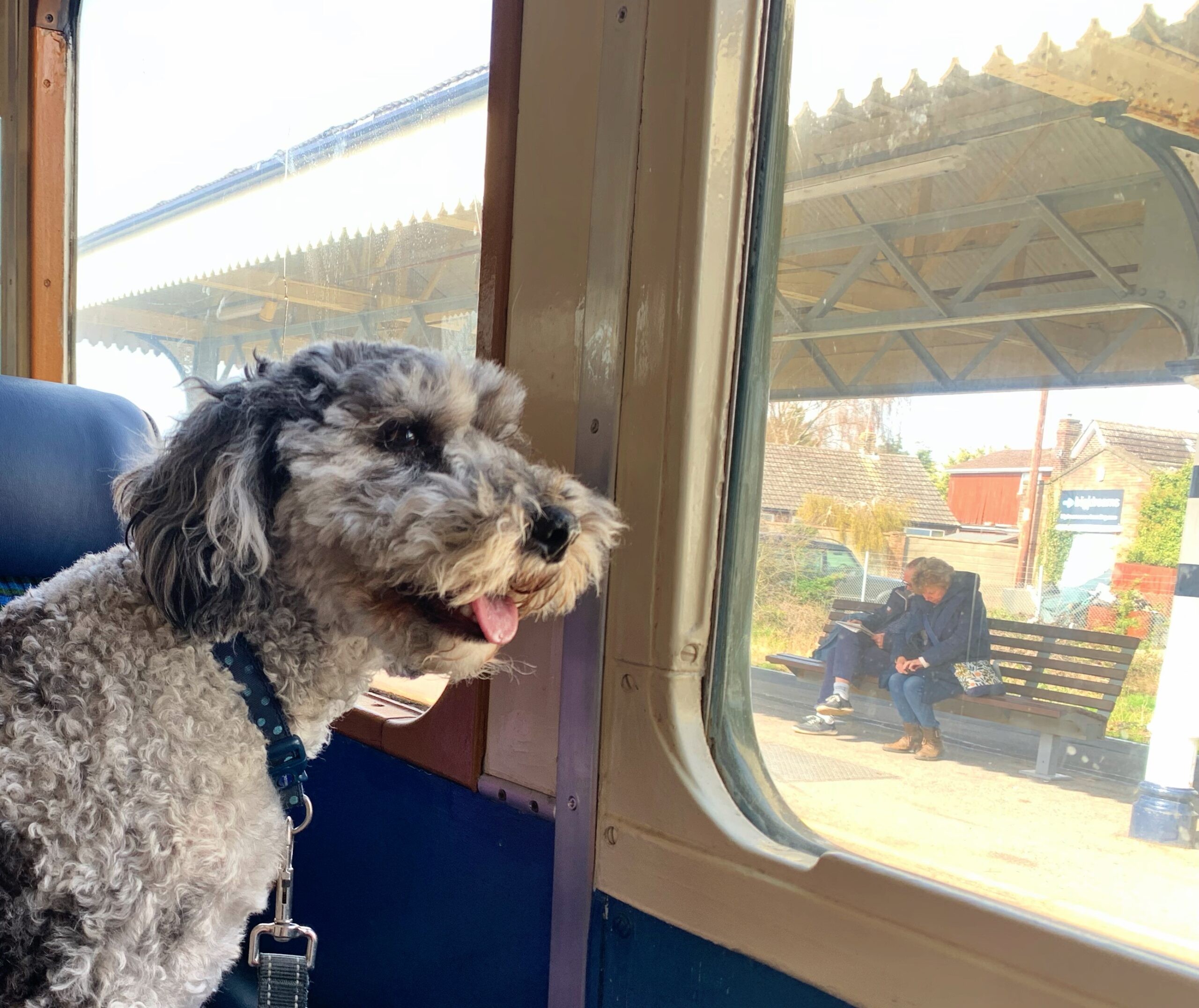
Yoshi had a good view out of the window along the route to Corfe Castle aboard the heritage Class 117 DMU – 08/04/2023Having arrived back in Wareham, Yoshi took a closer look at the Class 117 DMU – 08/04/2023
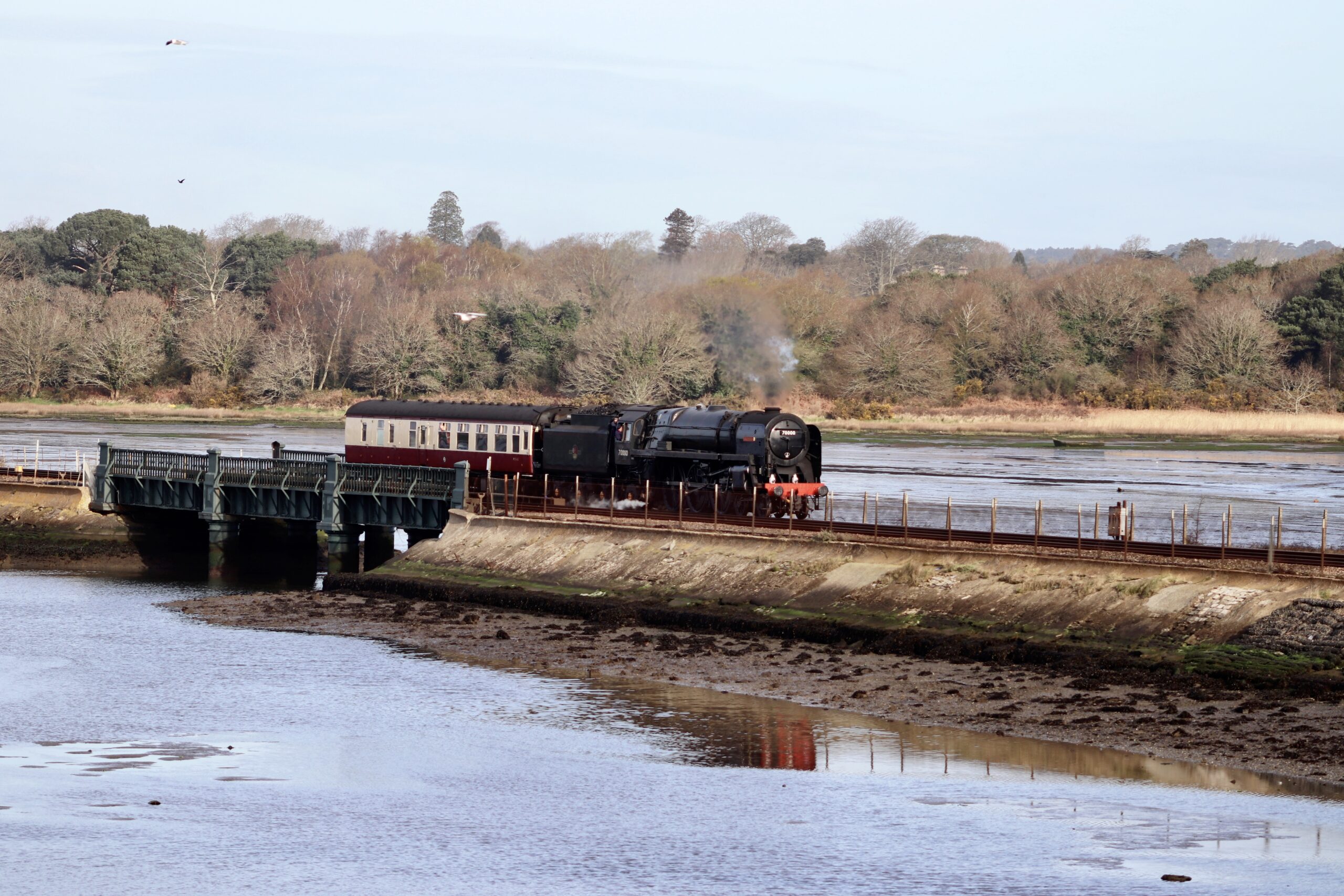
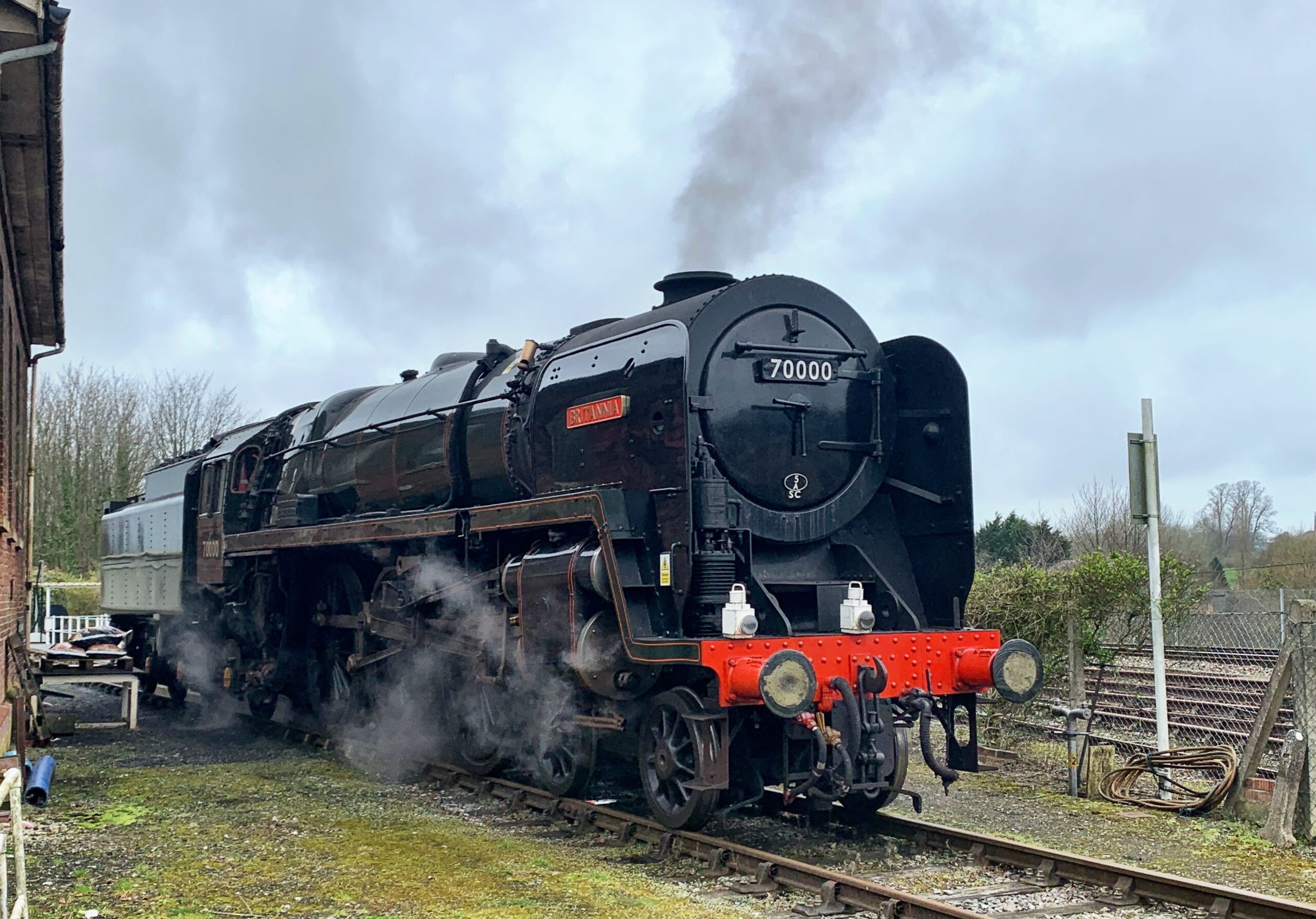
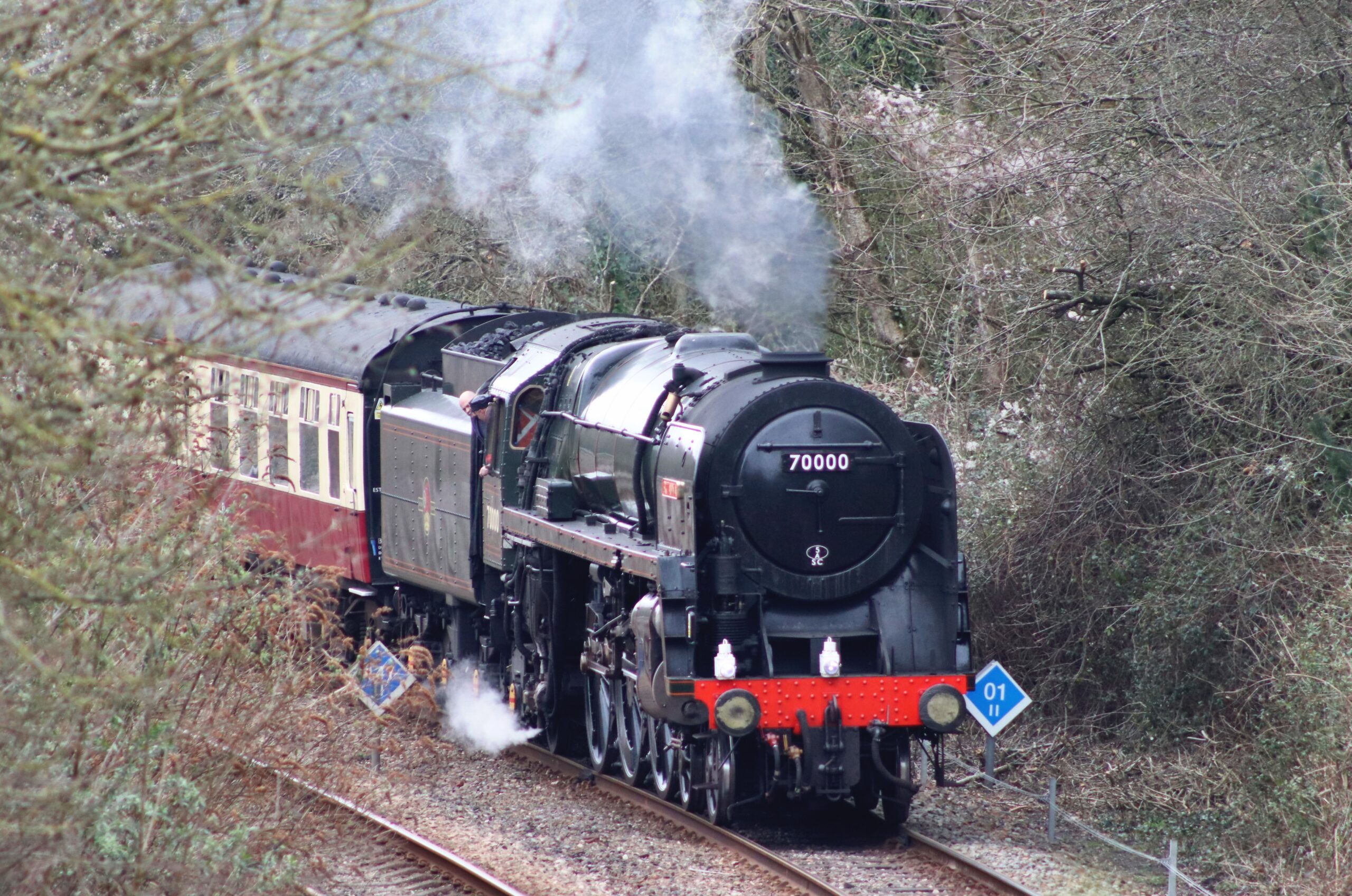
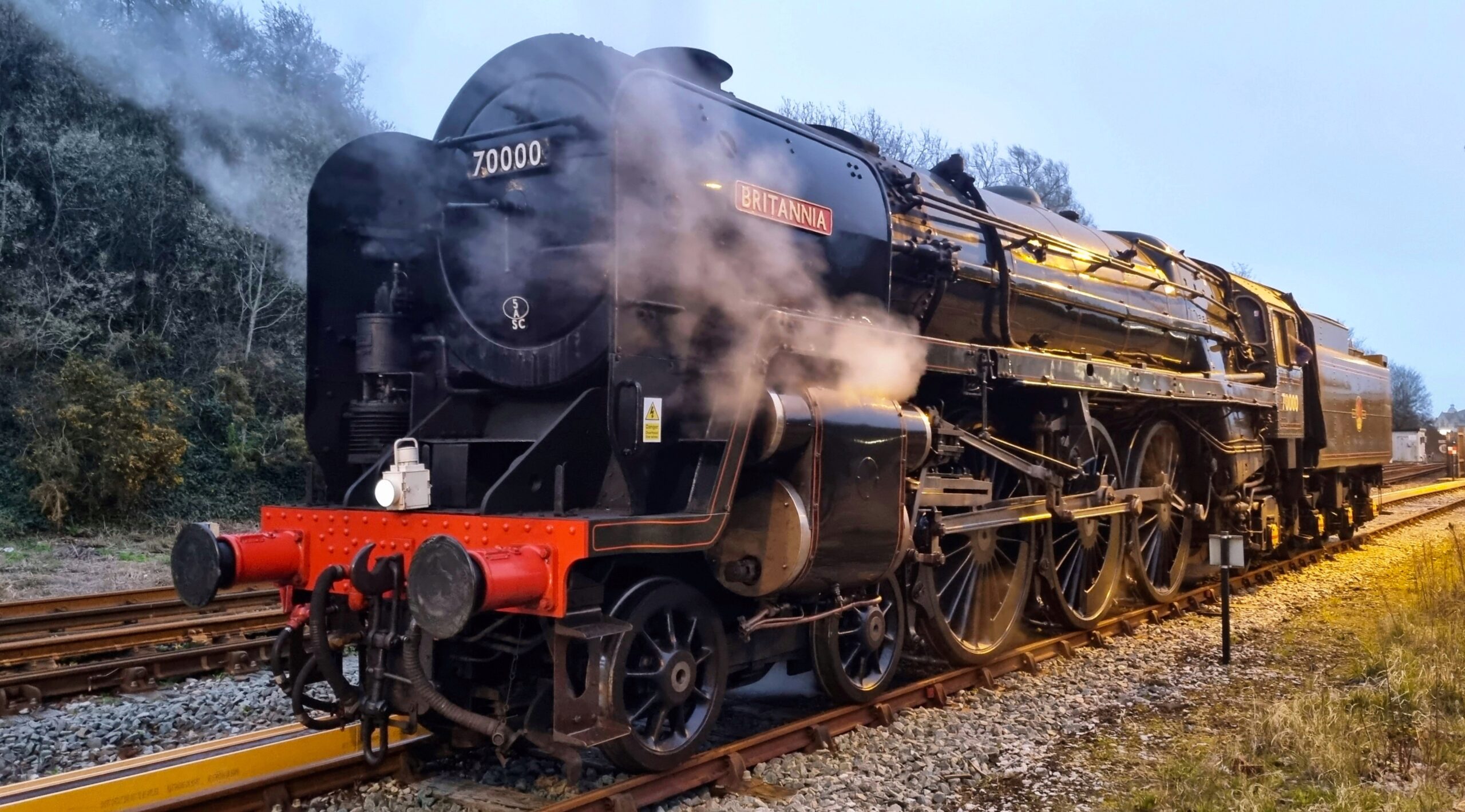
On Tuesday 11th April, the Swanage Railway said good-bye to British Railways Standard Class 7 No. 70000 ‘Britannia’ as she returned to her base at Locomotive Services Limited in Crewe. We caught her crossing the Holes Bay causeway in Poole. During her stay in The Purbeck’s the Brit was star guest at the Swanage Steam Gala and was utilised on sell out driver training events.
British Railways Standard Class 7 No. 70000 ‘Britannia’ crosses Holes Bay working 5Z72 0720 Swanage to Crewe H.S. – 11/04/2023
Video of ‘Britannia’ at Holes Bay – 11/04/2023
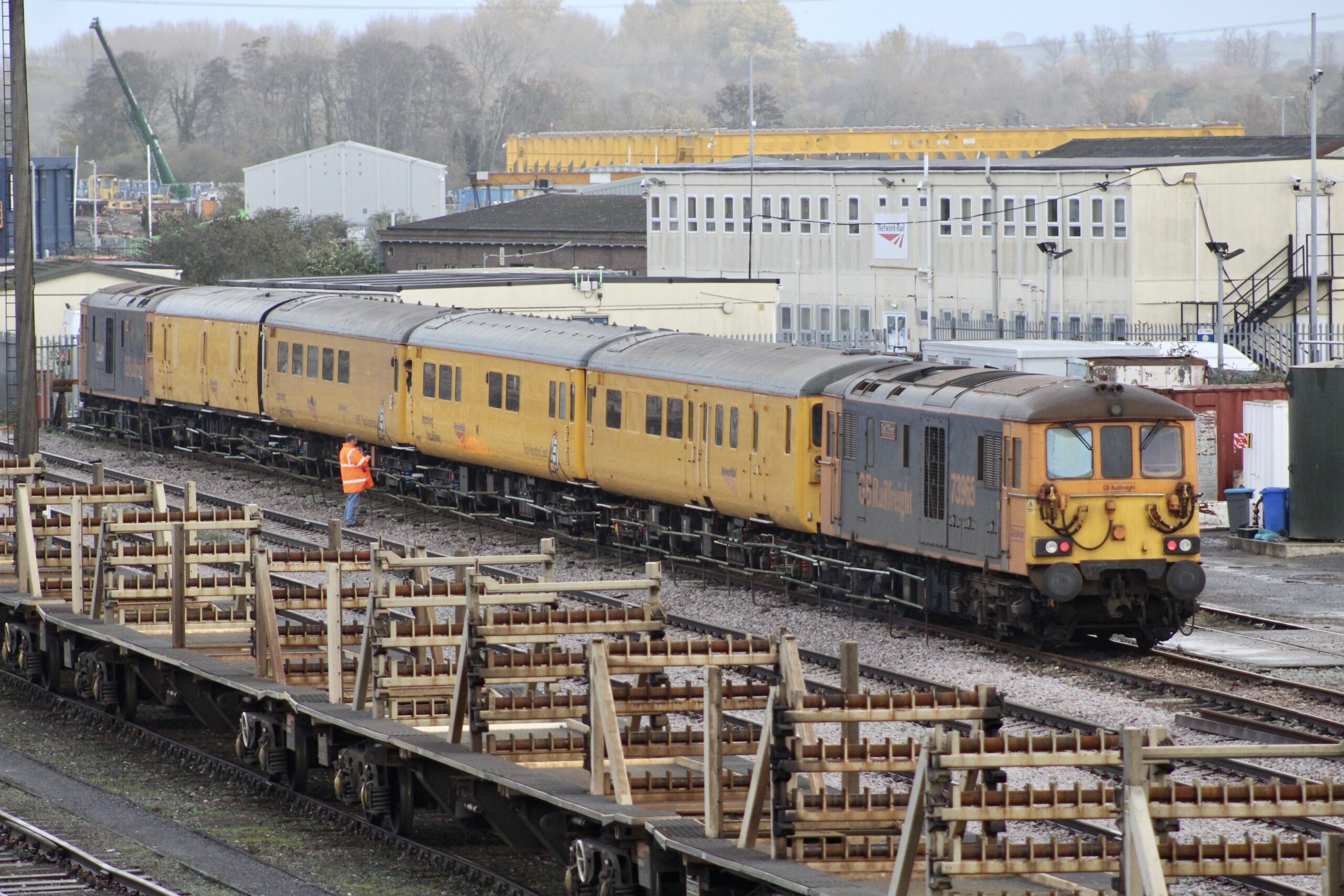
Easter Monday saw the monthly GBRf Class 73 hauled test train originating from Derby Railway Technical Centre visit Weymouth. Because of engineering work in the Basingstoke / Winchester area, this working was diverted via Guildford. Which was a shame as I was visiting friends in Basingstoke. However, I was back in Dorset just in time to see the early running ensemble pass through Poole on the return run from Weymouth heading to Eastleigh East Yard.
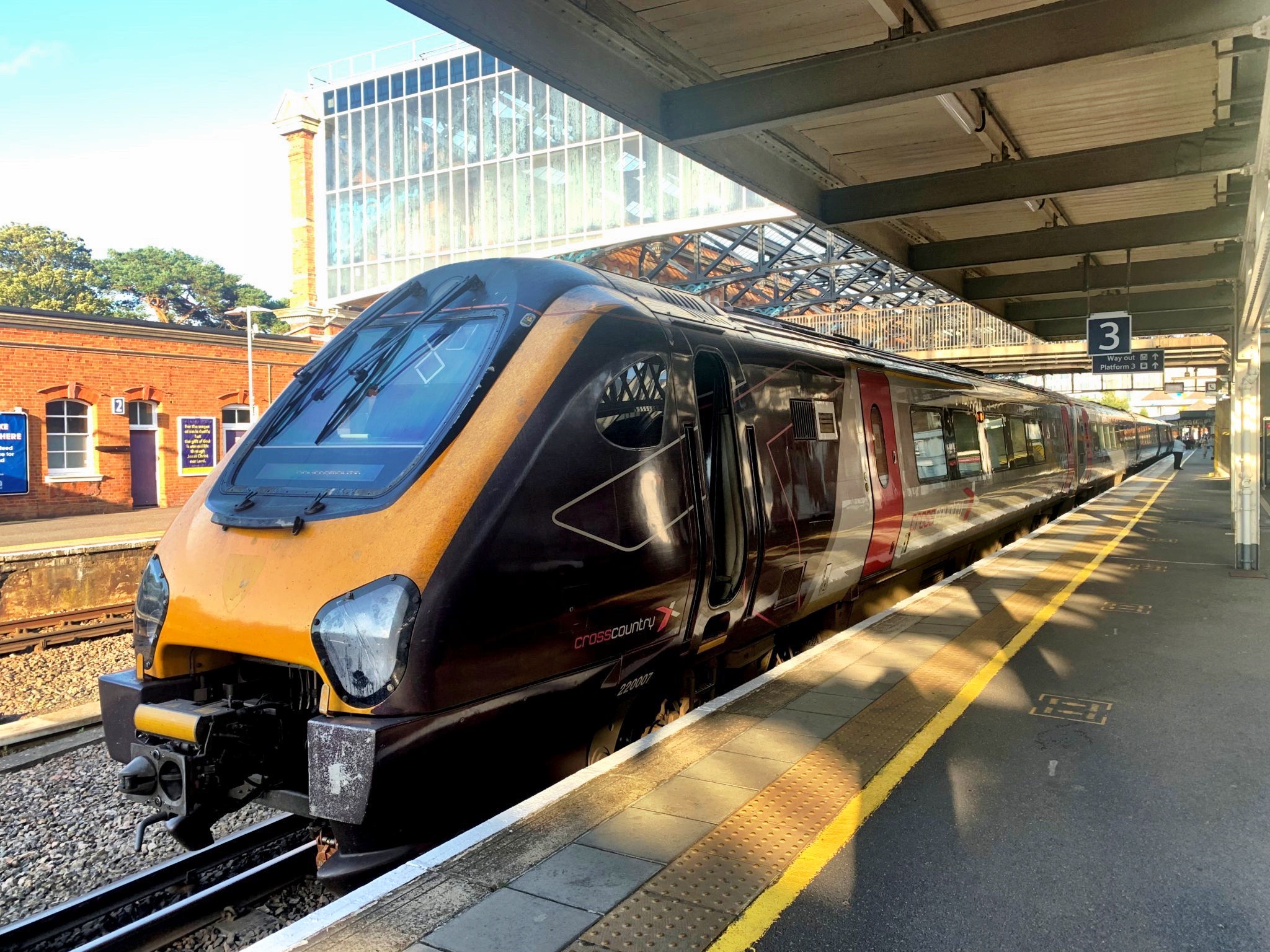
GBRf Class 73 No.’s 73965 ‘Des O’Brien’ and 73963 ‘Janice’ working 1Q51 1115 Derby RTC to Eastleigh East Yard pass Poole – 10/04/2023CrossCountry Voyager Class 220 No. 220007 at Bournemouth – 28/07/2021
CrossCountry train services from Bournemouth to the North as well as freight from Southampton have been affected by the closure of the Nuneham Viaduct near Abingdon in Oxfordshire. Network Rail have been carrying out stabilisation works on the viaduct in recent weeks and monitoring equipment detected significant movement over the weekend of 1st/2nd April with the result that the bridge was temporarily closed on 4th April along with the railway between Didcot Parkway and Oxford to ensure the safety of passengers.
Network Rail advised CrossCountry passengers; “Trains will be revised to run in two portions; between Bournemouth and Didcot Parkway and between Oxford and Manchester Piccadilly. Limited replacement road transport is in operation between Didcot Parkway and Oxford. Customers travelling between Bournemouth/Reading and Banbury/Birmingham/Manchester are advised to travel via London stations or Bristol stations. This is due to limited availability of road transport at Didcot Parkway.”
Network Rail are working around the clock to install a temporary structure to stabilise Nuneham Viaduct, so trains can safely run again by Saturday 10 June. Place your bets….
That’s all we have time for this week. Thanks agin for joining us. We’ve been busy catching up with friends and eating chocolate over the Easter weekend just gone. Mmmhhh, chocolate.
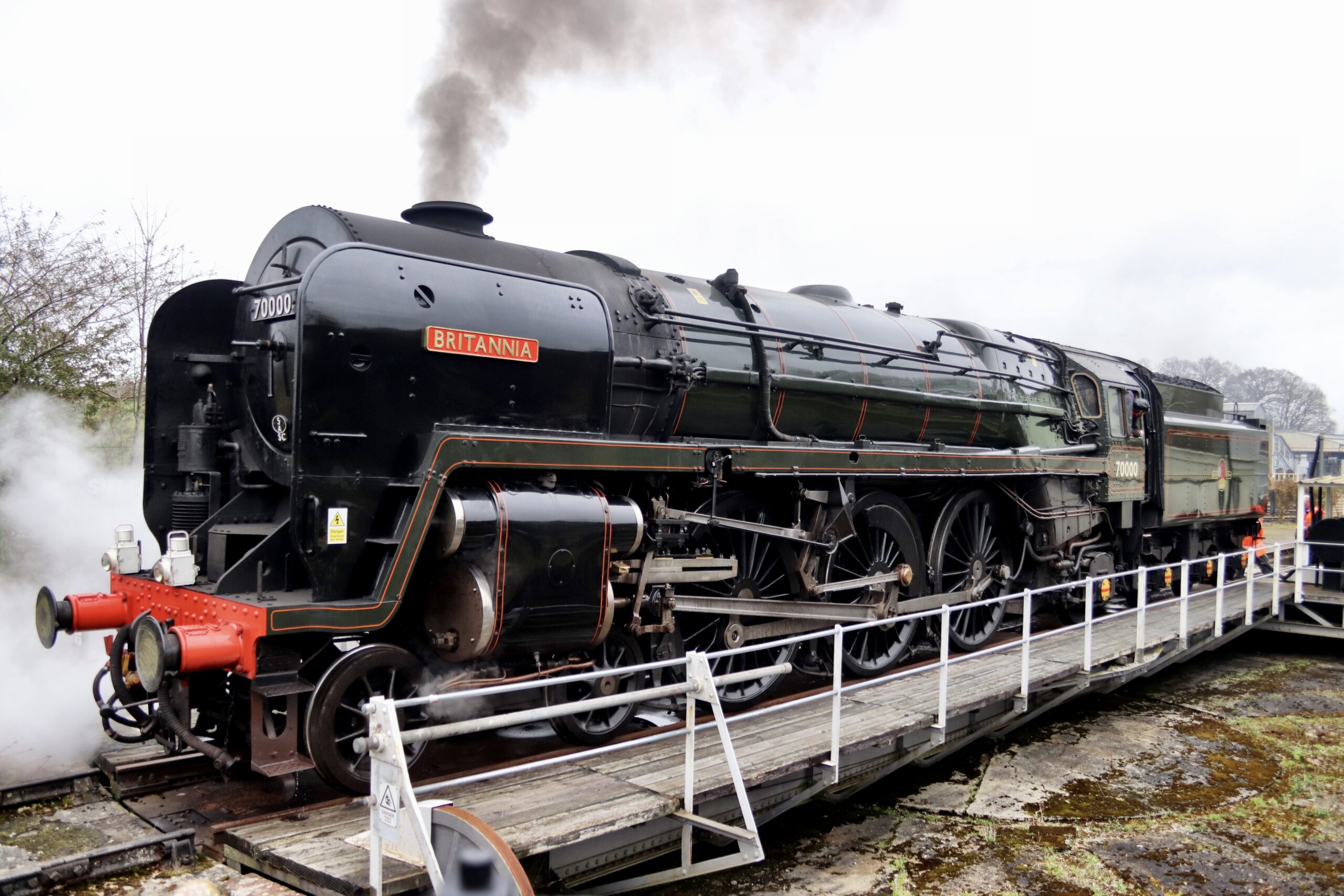
British Railways Standard Class 7 4-6-2 No. 70000 ‘Britannia’ on the turntable at the Yeovil Railway Centre – 22/03/2023
Hello there – after a week away, we are back with a lot to catch up on. We hope you found last times Beeching blog of interest – it’s certainly a period in railway history which incites discussion and reflection. This time we are concentrating on more recent events concerning the Swanage Railway including our visit to their excellent March 2023 Steam Gala – which featured British Rail Standard Class 7 4-6-2 No. 70000 ‘Britannia’ – and the first diesel multiple unit train departing Wareham connecting the Purbeck heritage railway to the main line.
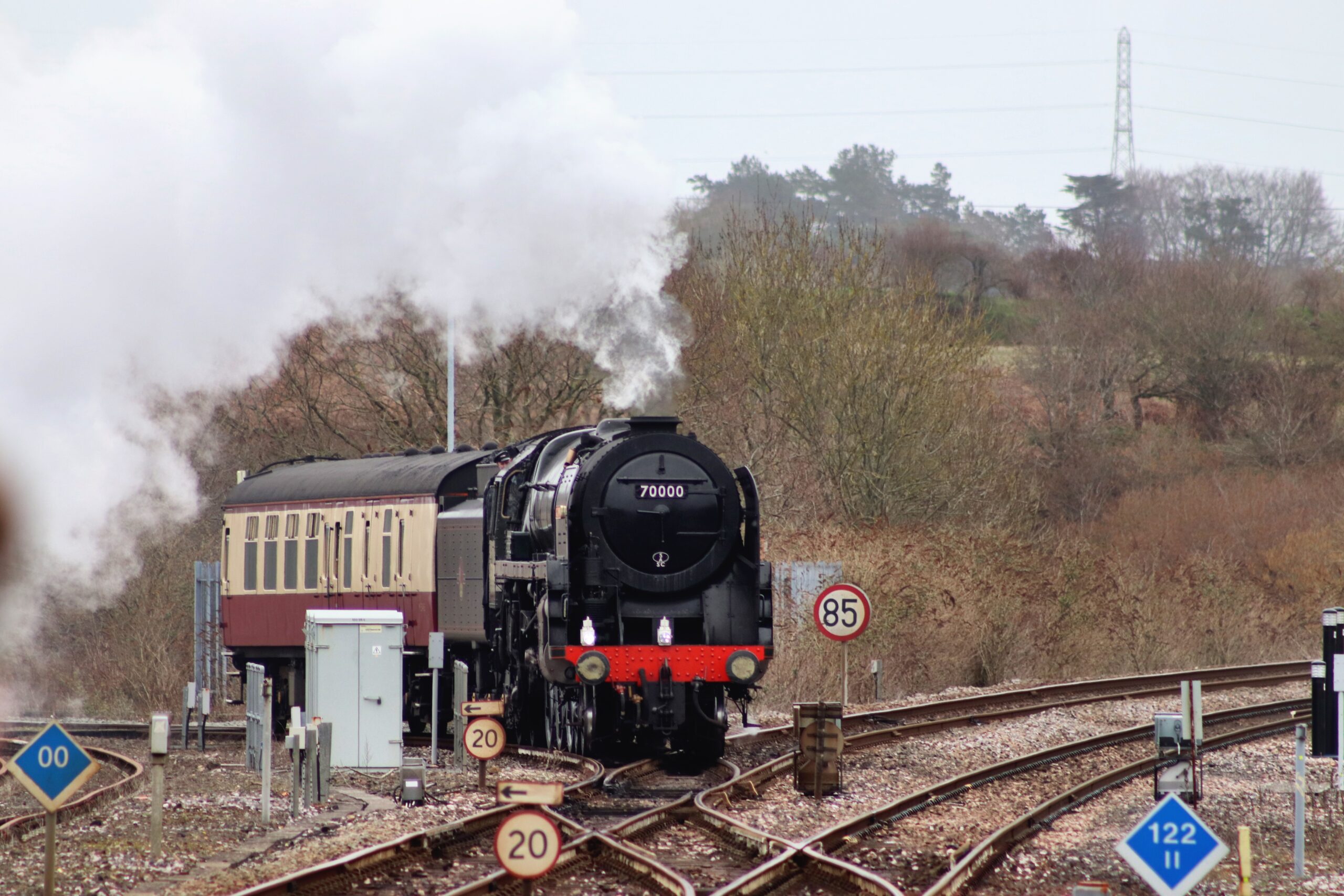
British Railways Standard Class 7 4-6-2 No. 70000 ‘Britannia’ approaches Yeovil Junction working 5Z70 Crewe HS to Swanage having used the connecting curve from Yeovil Pen Mill – 22/03/2023
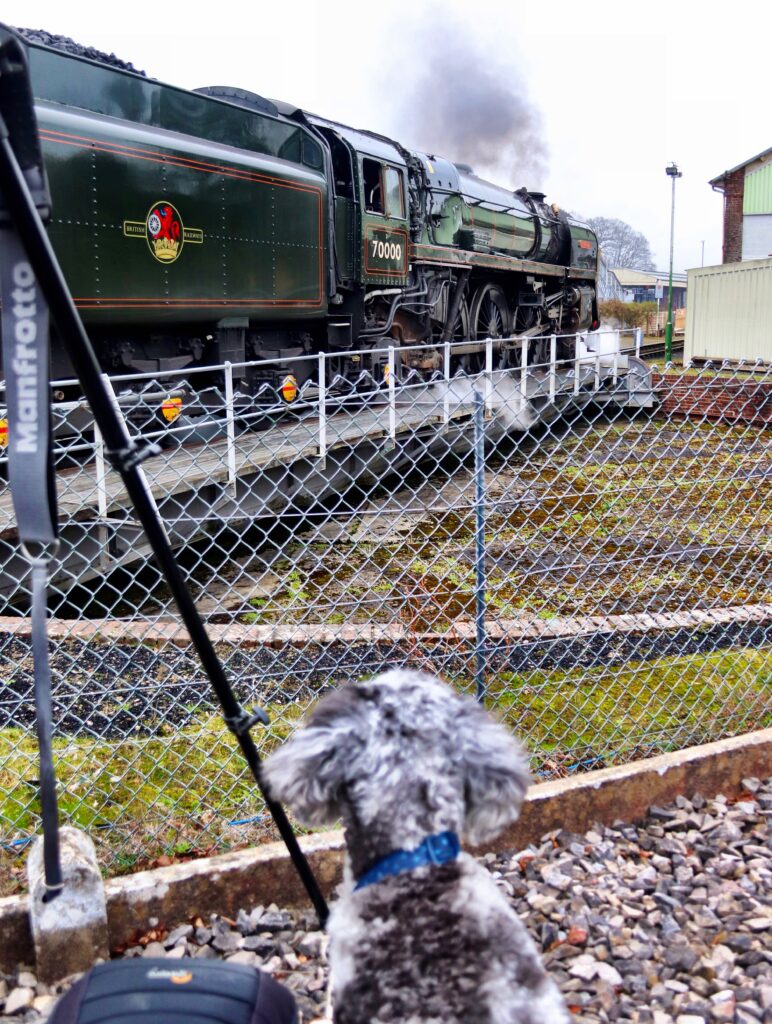
On Wednesday 22nd March 2023, we headed over to Yeovil to see No. 70000 ‘Britannia’ arrive at Yeovil Junction in readiness for her being turned on Yeovil Railway Centre’s turntable. I always enjoy watching locomotives on the turntable, and despite a few initial barks form Yoshi, he mostly watched on with quiet fascination.
British Railways Standard Class 7 4-6-2 No. 70000 ‘Britannia’ is turned on the Yeovil Railway Centre turntable – 22/03/2023British Railways Standard Class 7 4-6-2 No. 70000 ‘Britannia’ after being turned at the Yeovil Railway Centre – 22/03/2023
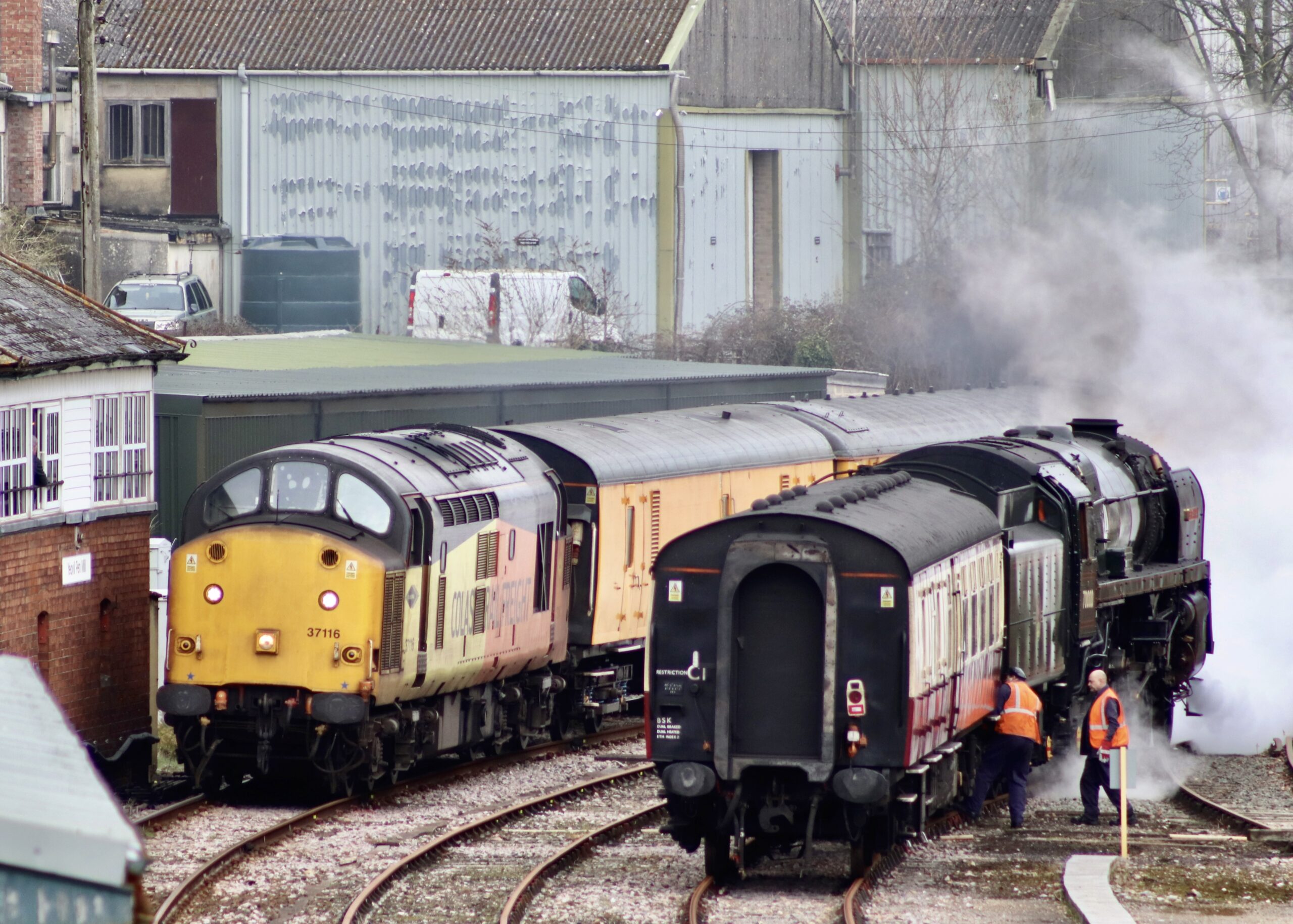
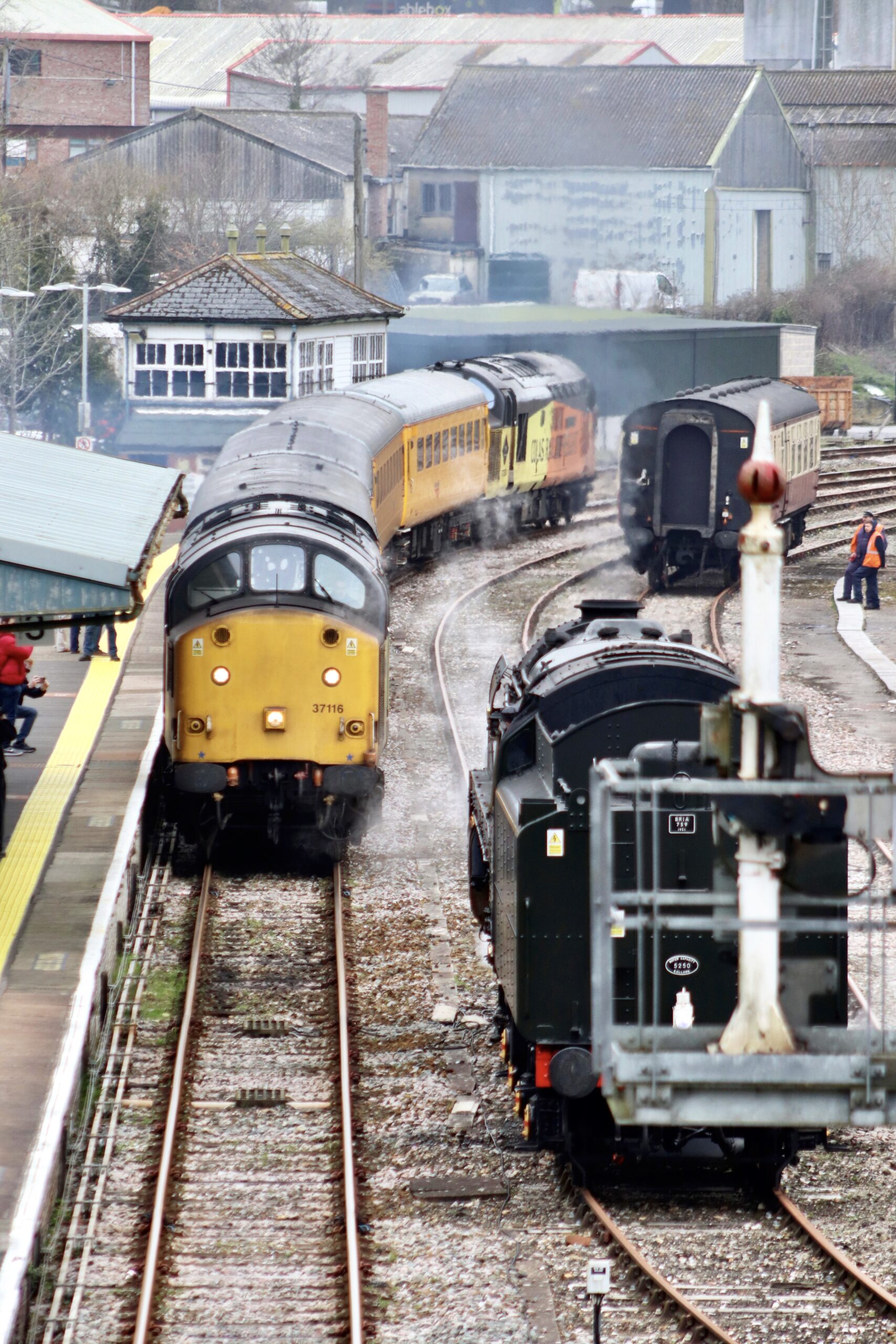
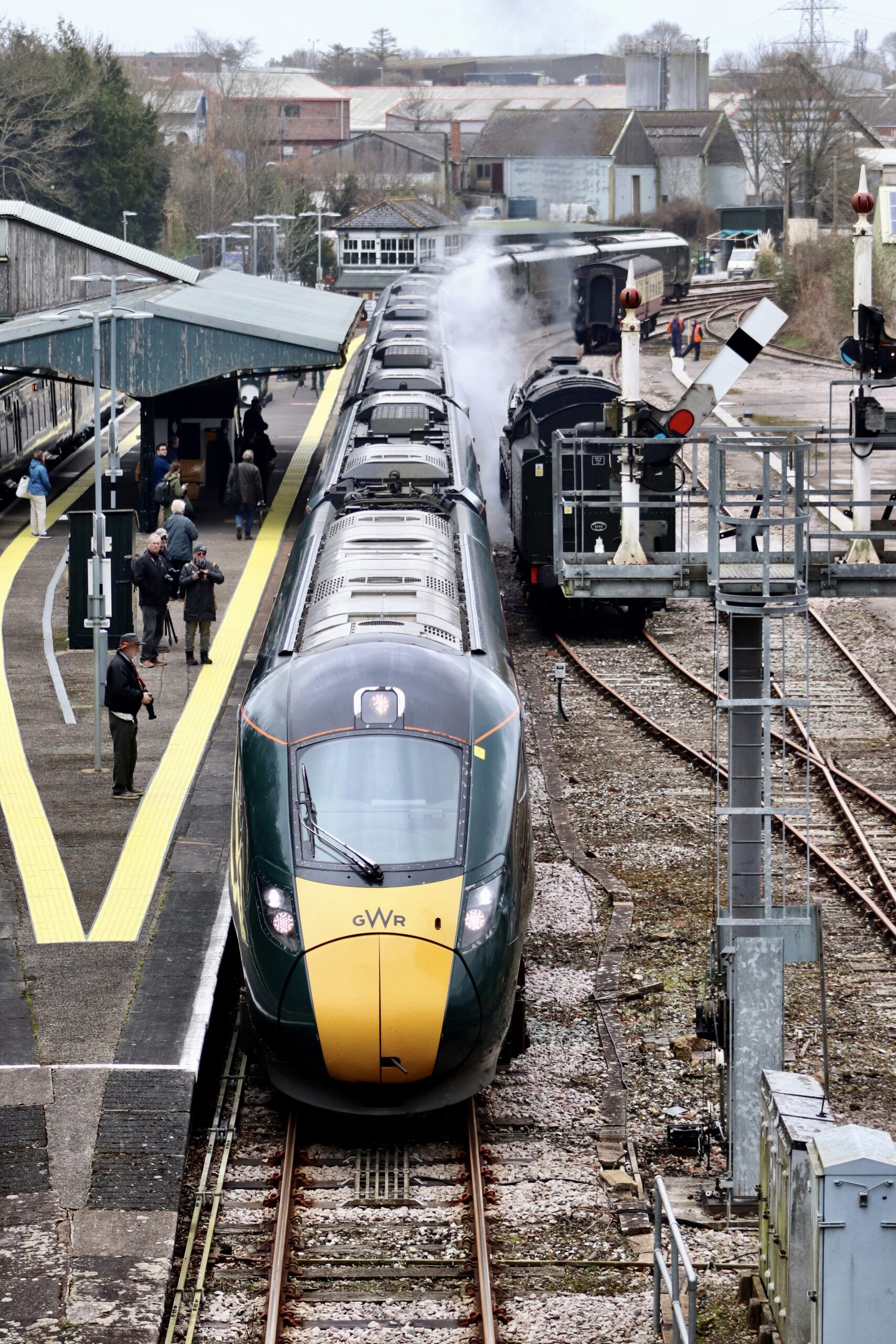
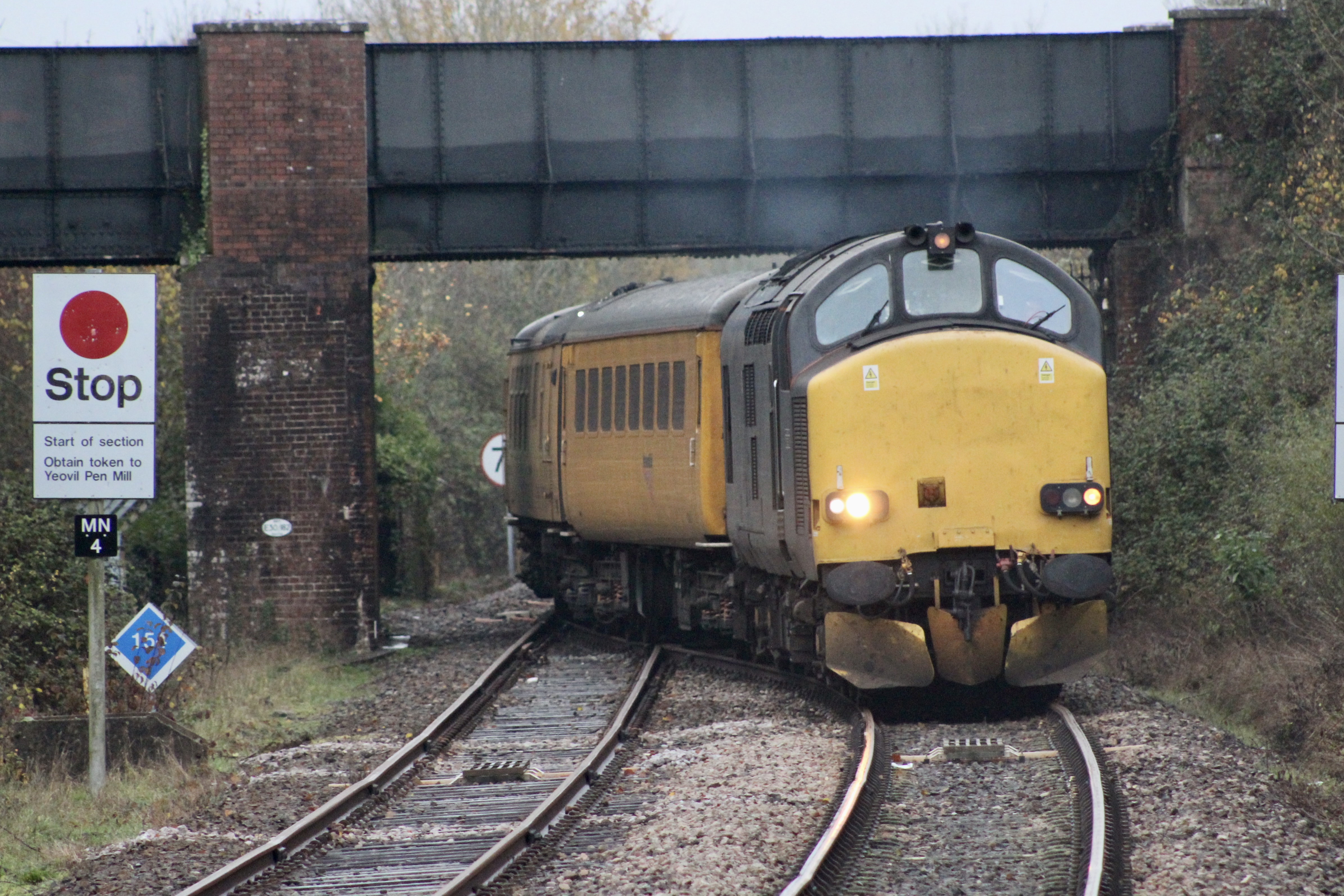
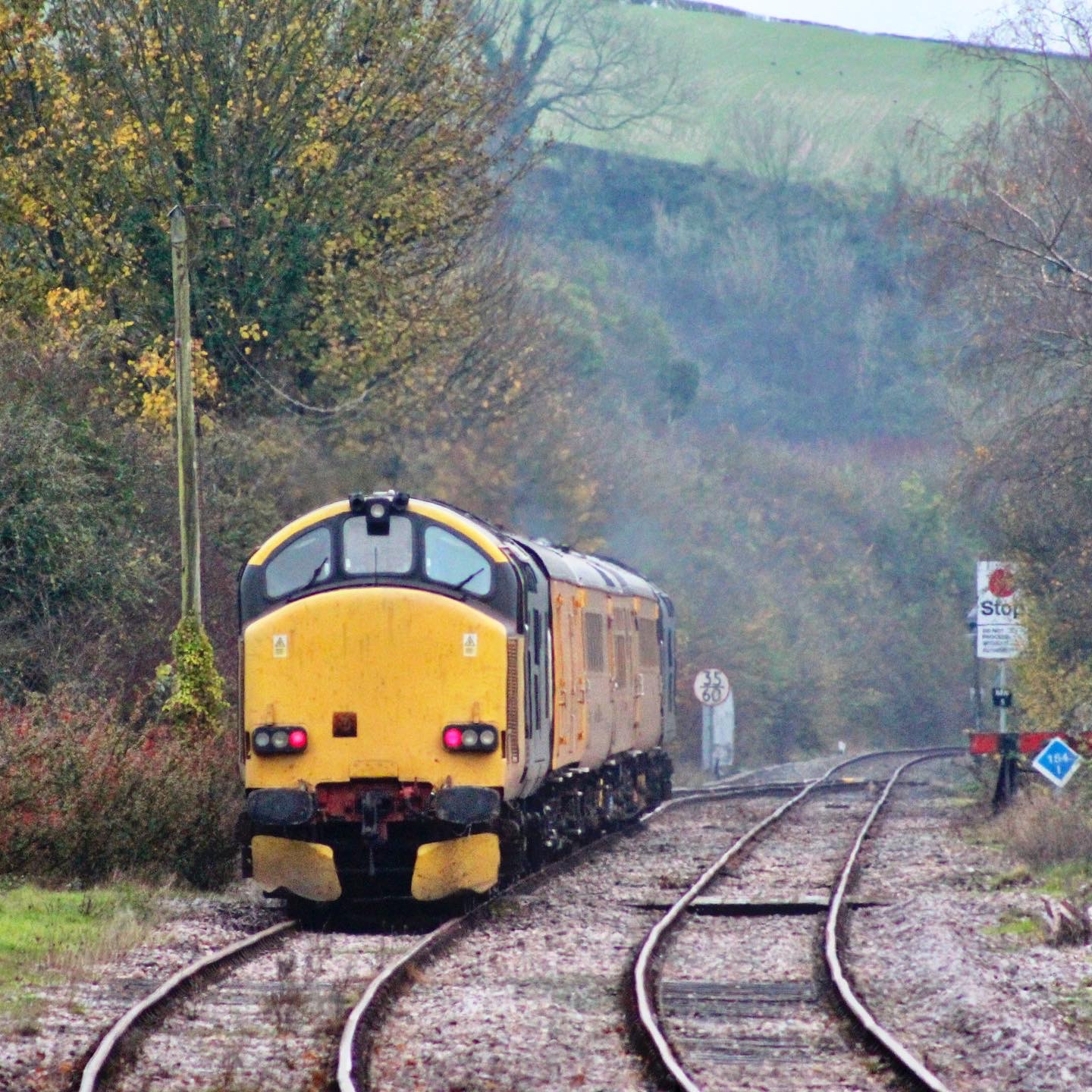
Following her spin on the turntable, ‘Britannia’ backed out onto the main line at Junction station and we drove down to Yeovil Pen Mill so that we could capture a pair of Class 37 diesel locomotives working test train 1Z22 Derby Railway Technical Centre to Bristol Kingsland Road via Weymouth which was scheduled to pass through at around 1500, 20 minutes or so before ‘Britannia’ was due to arrive at Pen Mill prior to a tender first run down to Weymouth. The test train, however, top and tailed by Colas No.’s 37116 and 37254 arrived at Pen Mill almost thirty minutes late and by this time ‘Britannia’ had already made the run down from Junction with her support coach. We were also able to see a Great Western Railway (GWR) Class 800 IET pass through on a divert as engineering work was taking place on the Taunton line and services to Exeter were taking the West of England route.
British Railways Standard Class 7 4-6-2 No. 70000 ‘Britannia’ having turned at Yeovil Junction nears Yeovil Pen Mill where she will run round her support coach before proceeding to Weymouth – 22/03/2023Colas Class 37 No. 37116 arrives at Yeovil Pen Mill with 1Z22 Derby Railway Technical Centre to Bristol Kingsland Road. British Railways Standard Class 7 4-6-2 No. 70000 ‘Britannia’ stands in the sidings waiting to run round her support coach before proceeding to run tender first to Weymouth – 22/03/2022 Colas Class 37 No’s. 37116 and 37254 depart Yeovil Pen Mill top and tailing 1Z22 Derby Railway Technical Centre to Bristol Kingsland Road as No. 70000 ‘Britannia’ waits to reverse out of the station and back on to her support coach – 22/03/2023Great Western Railway Class 800 IET No. 802102 works the diverted 1C84 1404 London Paddington to Plymouth service through Yeovil Pen Mill – 22/03/2023British Railways Standard Class 7 4-6-2 No. 70000 ‘Britannia’ prepares to reverse out of Yeovil Pen Mill and run back in to couple up with her support coach – 22/03/2023British Railways Standard Class 7 4-6-2 No. 70000 ‘Britannia’ at Weymouth here she again ran around her support coach in preparation for the journey to Poole, where she again changes ends on the coach, before working back down to Swanage (Image courtesy of Scott Lewis) – 22/03/2023
Video from Yeovil, Dorchester, Upwey and Hamworthy as British Railways Standard Class 7 4-6-2 No. 70000 ‘Britannia’ makes her way to Dorset having departed Crewe earlier in the day as working 5Z70 Crewe HS to Swanage (additional video courtesy of G E Barrett and Scott Lewis – 22/03/2023
I had an idea that I would pop over to Yeovil Pen Mill at 2am some point during the week to see the Penzance sleeper services cross via the diversionary route, but decided to wait until warmer weather later in the year should the diversions take place again. However, our North Dorset Correspondent was far more intrepid and caught the following exchange as No. 57604 ‘Pendennis Castle’ passed No. 57602 ‘Restormel Castle’:
GWR Sleeper trains on divert pass at Yeovil Pen Mill. Video courtesy of Scott Lewis – 24/03/2023
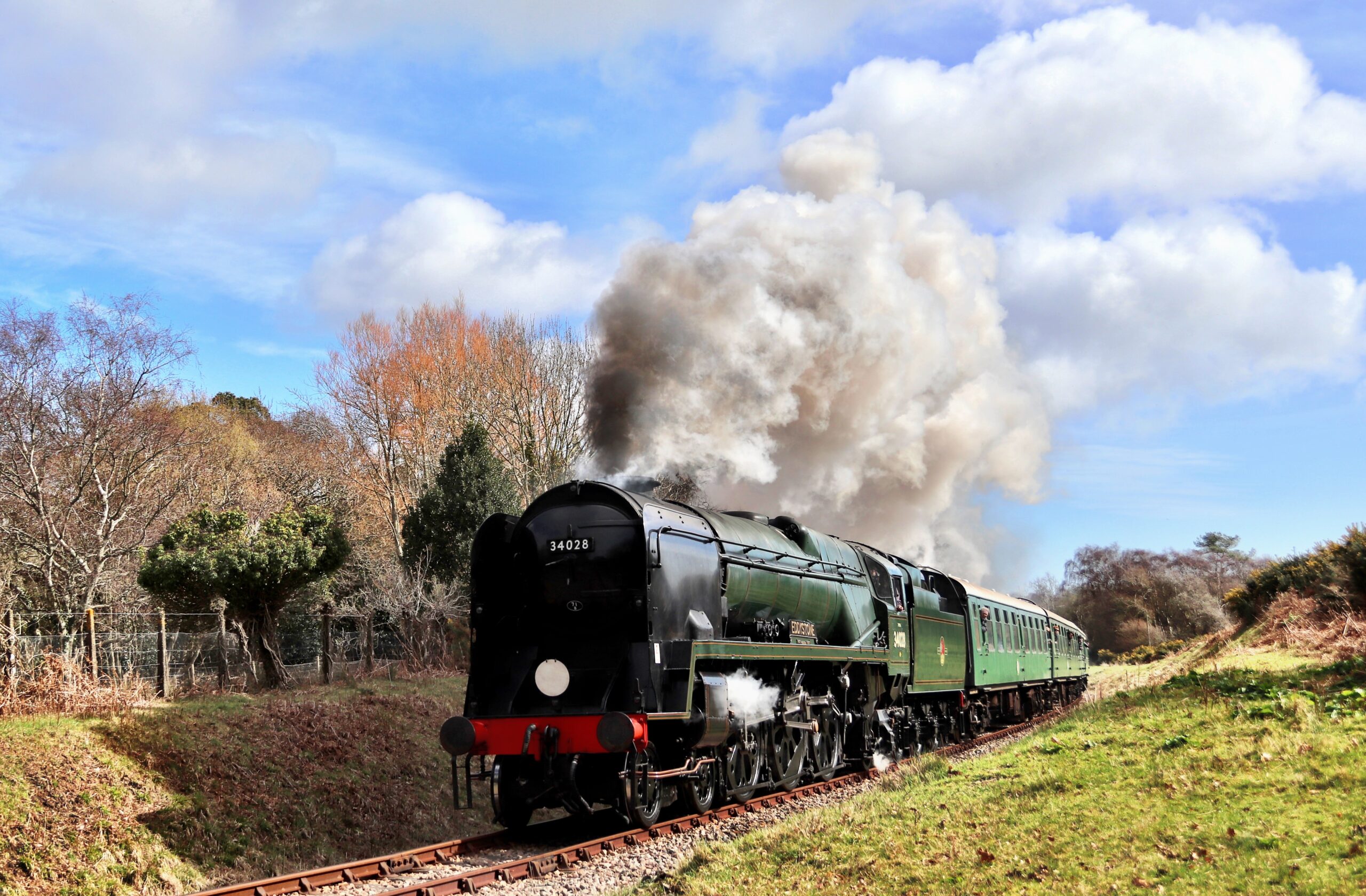
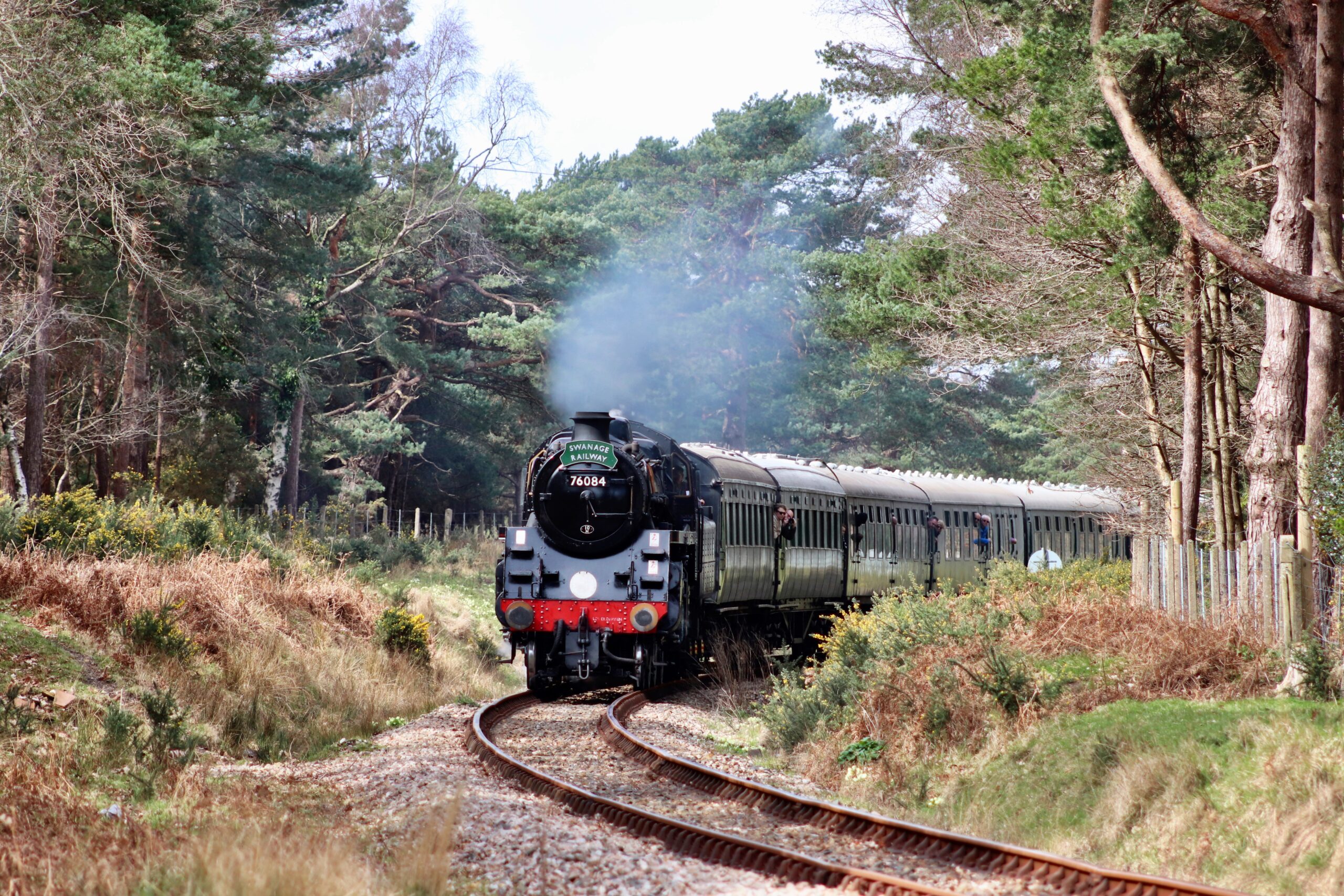
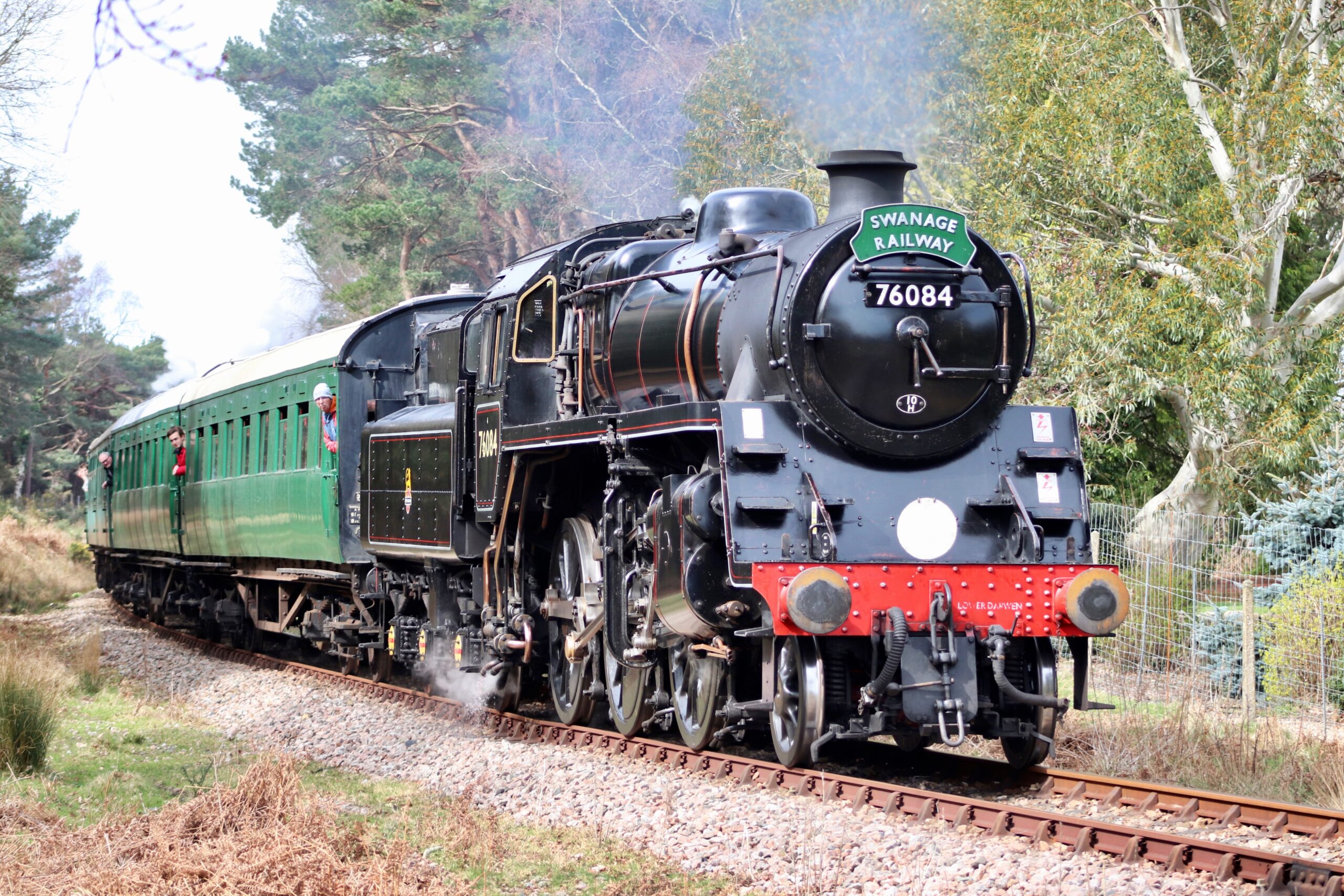
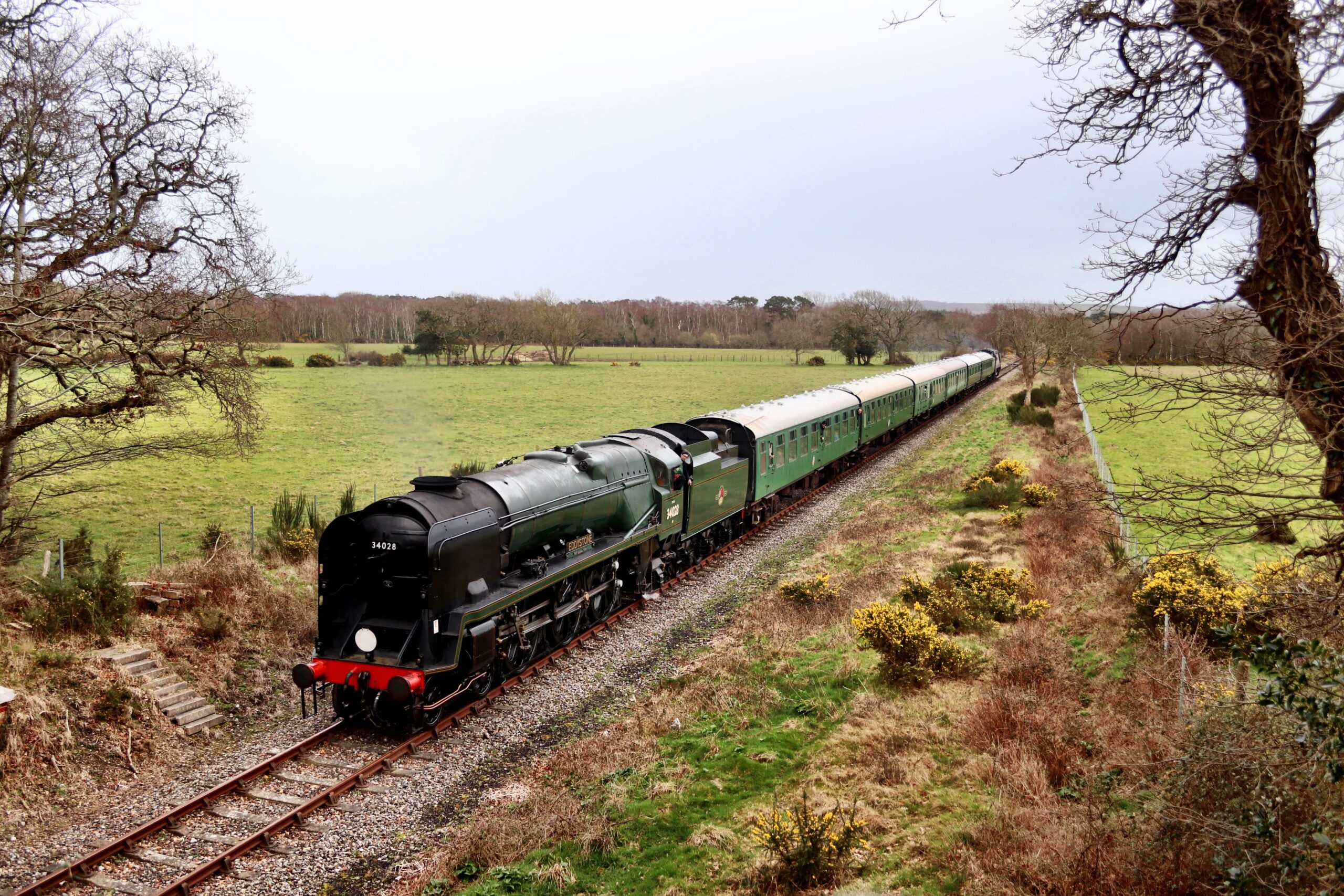
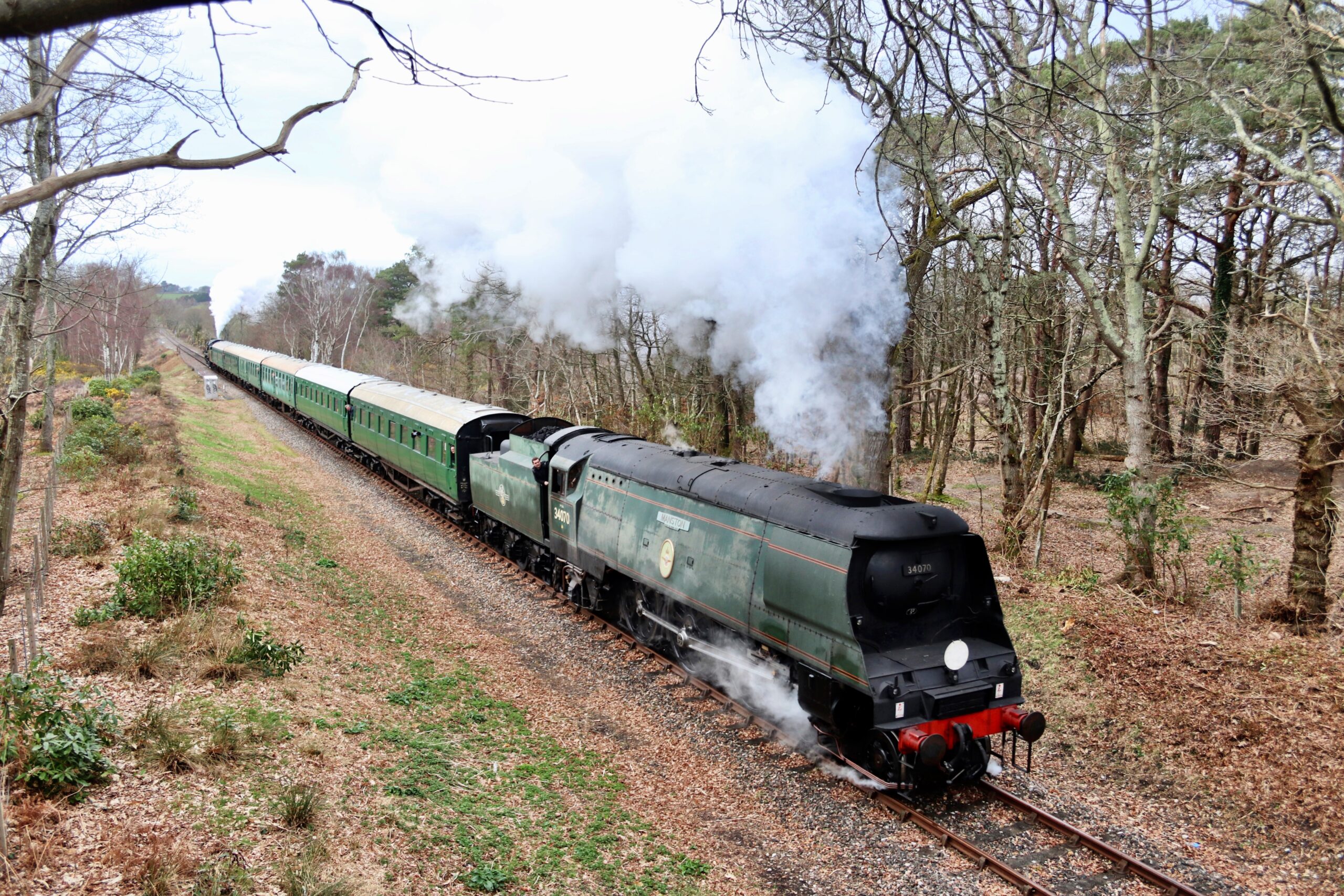
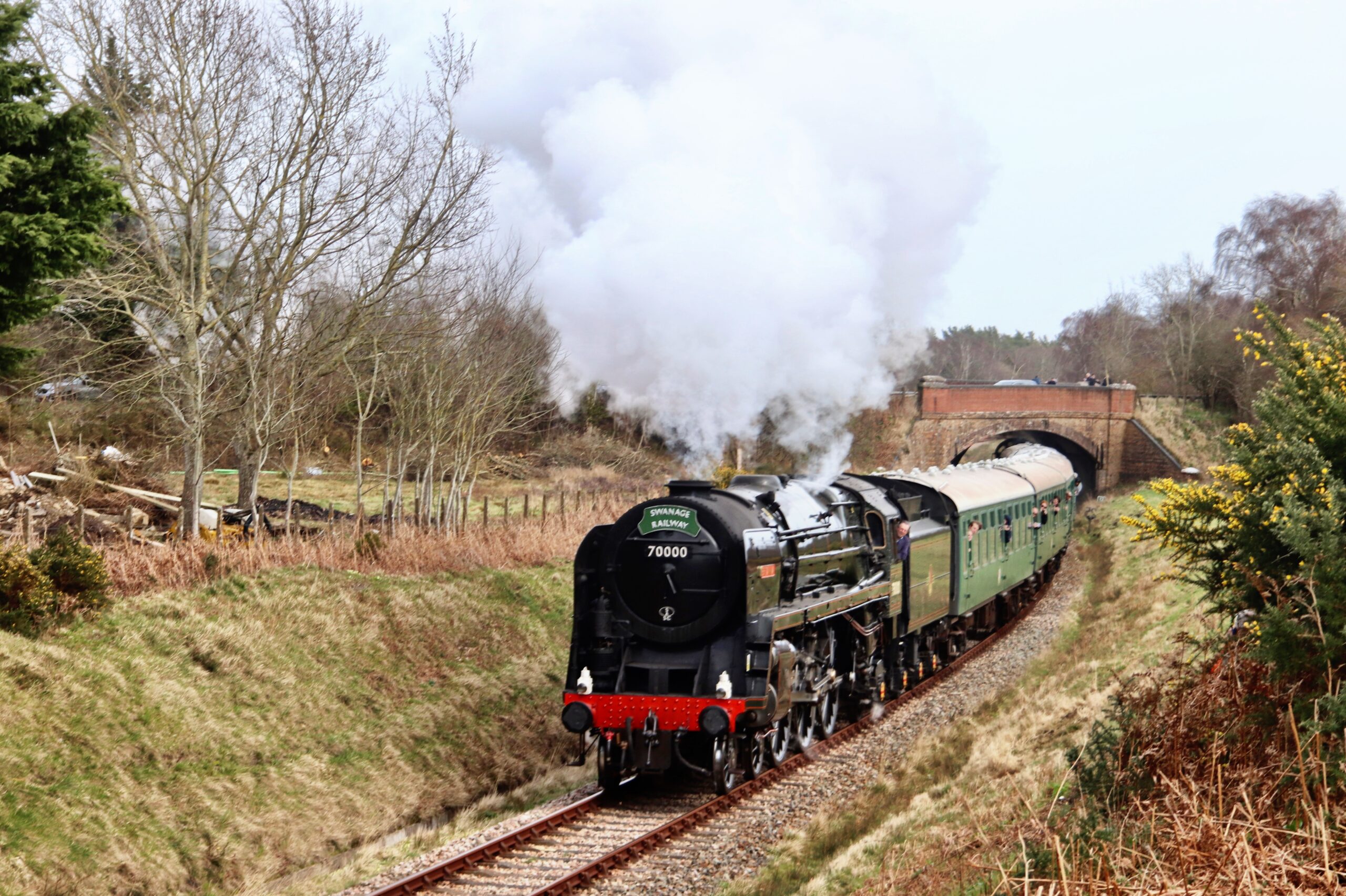
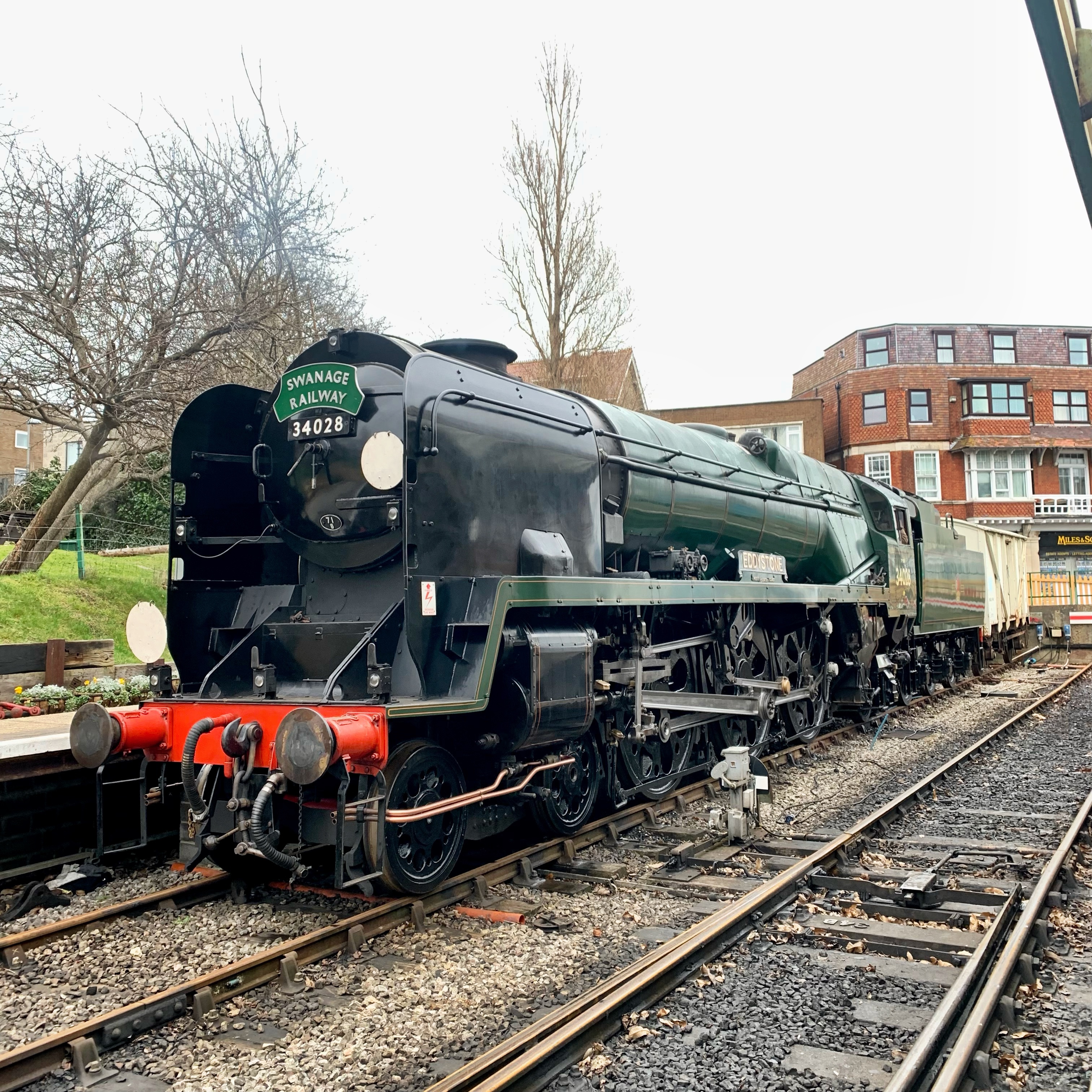
Over the final March weekend, the Swanage Railway ran their popular Spring Steam Gala which featured ‘Britannia’ and BR Standard Class 4MT 2-6-0 No. 76084 as guest locomotives alongside home fleet Southern Railway U Class No. 31806 and Southern Railway Bulleid Pacifics No. 34070 ‘Manston’ and No. 34028 ‘Eddystone’. I headed down to join in the fun on the Saturday leaving Yoshi with his mama. I had planned on seeing the first train of the day which was scheduled to be double headed – but I also needed to pop into Wareham and visit the Post Office – so my arrival at the National Trust car park at Corfe Castle was delayed and I just missed the ensemble pass. To make things worse, the National Trust tea room at the car park was closed, so no breakfast for me as I had left home with the idea of catching refreshment between trains. However, luckily for me, Jamie came to my rescue and very kindly shared his packed lunch so I didn’t waste away through the lack of nourishment.
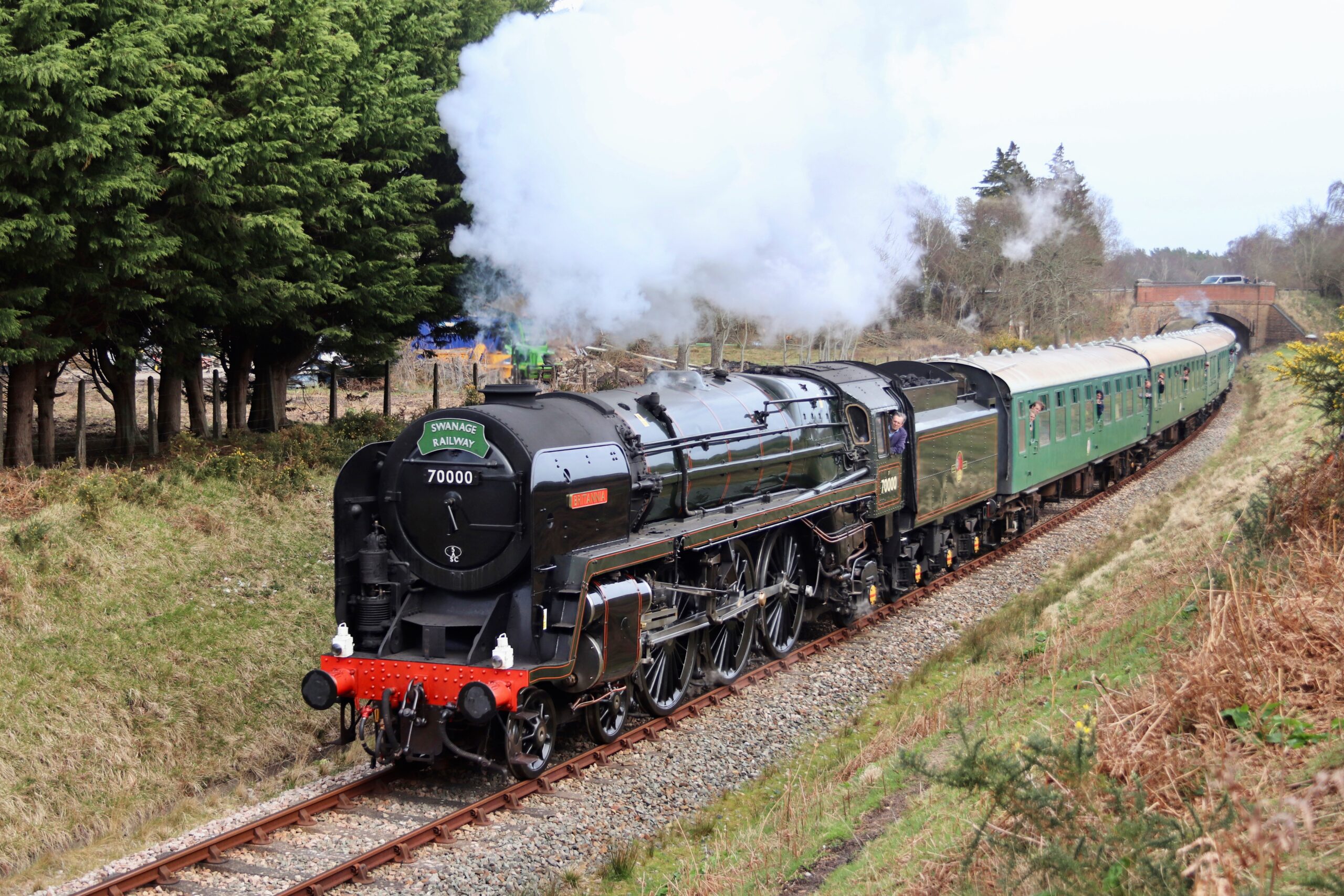
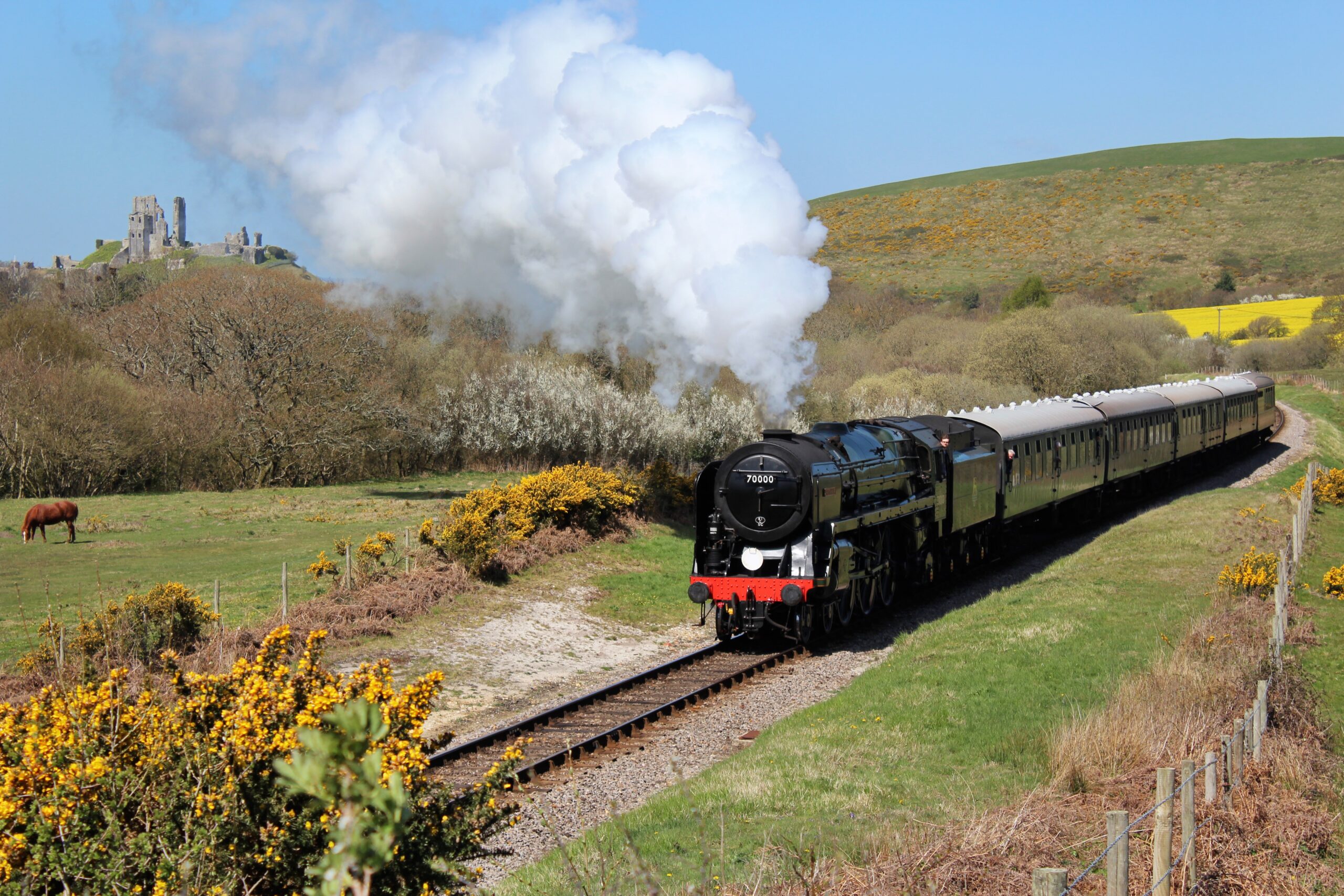
A video snap shot of the 2023 Swanage Steam Gala – 25/03/2023Unrebuilt Battle of Britain Class Bulleid Pacific No. 34070 ‘Manston’ between Norden and Corfe Castle – 25/03/2023Rebuilt West Country Class Bulleid Pacific No. 34028 ‘Eddystone’ nears Cat’s Eye Crossing with a train bound fro the River Frome boundary – 25/03/2023Bulleid Pacific No. 34028 ‘Eddystone’ approaching Cat’s Eye Crossing – 25/03/2023BR Standard Class 4MT 2-6-0 No. 76084 nears Cat’s Eye Crossing – 25/03/2025BR Standard Class 4MT 2-6-0 No. 76084 approaching Cat’s Eye Crossing – 25/03/2023Bulleid Pacific No. 34028 ‘Eddystone’ approaches Holme Lane Bridge on the Swanage Railway – 25/03/2023Bulleid Pacific No. 34070 ‘Manston’ hauls a train away from the River Frome boundary – 25/03/2023British Railways Standard Class 7 4-6-2 No. 70000 ‘Britannia’ with a train heading towards the River Frome boundary passing under Cat’s Eye Bridge – 25/03/2023British Railways Standard Class 7 4-6-2 No. 70000 ‘Britannia’ nears Cat’s Eye Crossing – 25/03/2023
Undoubtably the star of the gala; No. 70000 ‘Britannia’ was built at Crewe Works to a new design and entered servive in January 1951. She was the first British Railways Standard locomotive to be constructed and was the initial locomotive in the Britannia Class which went on to number 55 examples. The design of the ‘Britannias’ was based on best practice from the pre-nationalisation “Big Four” railway companies. The new classes were designed by Ernest Stewart Cox, under Robert Riddles who had previously designed the War Department Austerity 2-8-0 and 2-10-0 locomotives for use during World War 2. No. 70000 was named ‘Britannia’ during a ceremony held at Marylebone station by Minister for Transport Alfred Barnes on the 30th January 1951. ‘Britannia’ had the honour of hauling the funeral train of King George VI from King’s Lynn to London in February 1952, for which she had her cab roof painted white as was the custom for royal locomotives. No. 70000 was withdrawn after only 15 years of service in May 1966 and was initially destined for the National Collection, but was passed over for sister locomotive No. 70013 ‘Oliver Cromwell’. She was saved from the cutter’s torch by the Britannia Locomotive Company Ltd. She is currently operated by Locomotive Services Limited (LSL). One of most memorable main line steam locomotives when I used to enjoy the chase in the mid 1990’s, a video with footage of ‘Britannia’ from this period is below:
No. 70000 ‘Britannia’ also visited the Swanage Railway in 2015 and I’ve dug out a few images of that time to share:
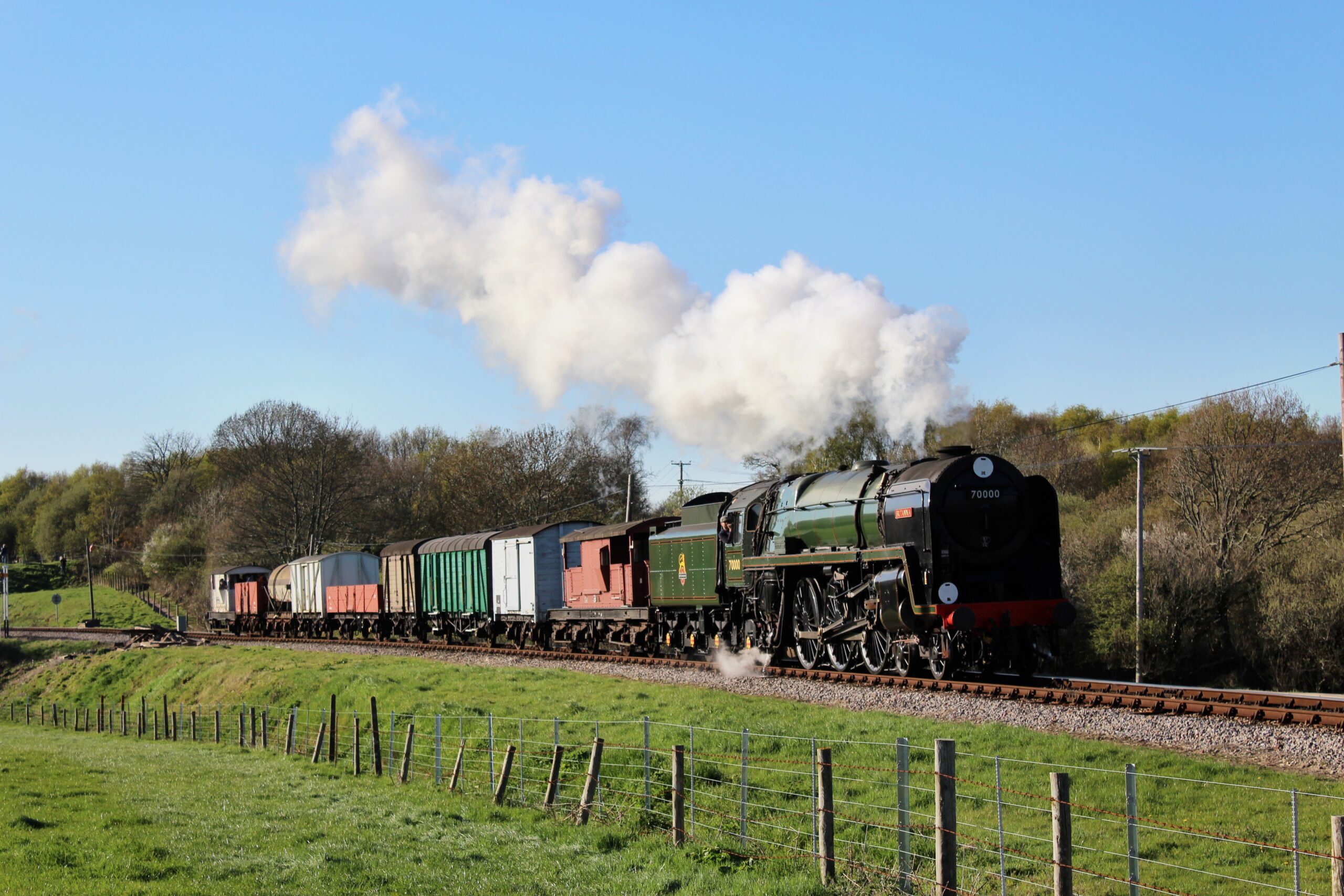
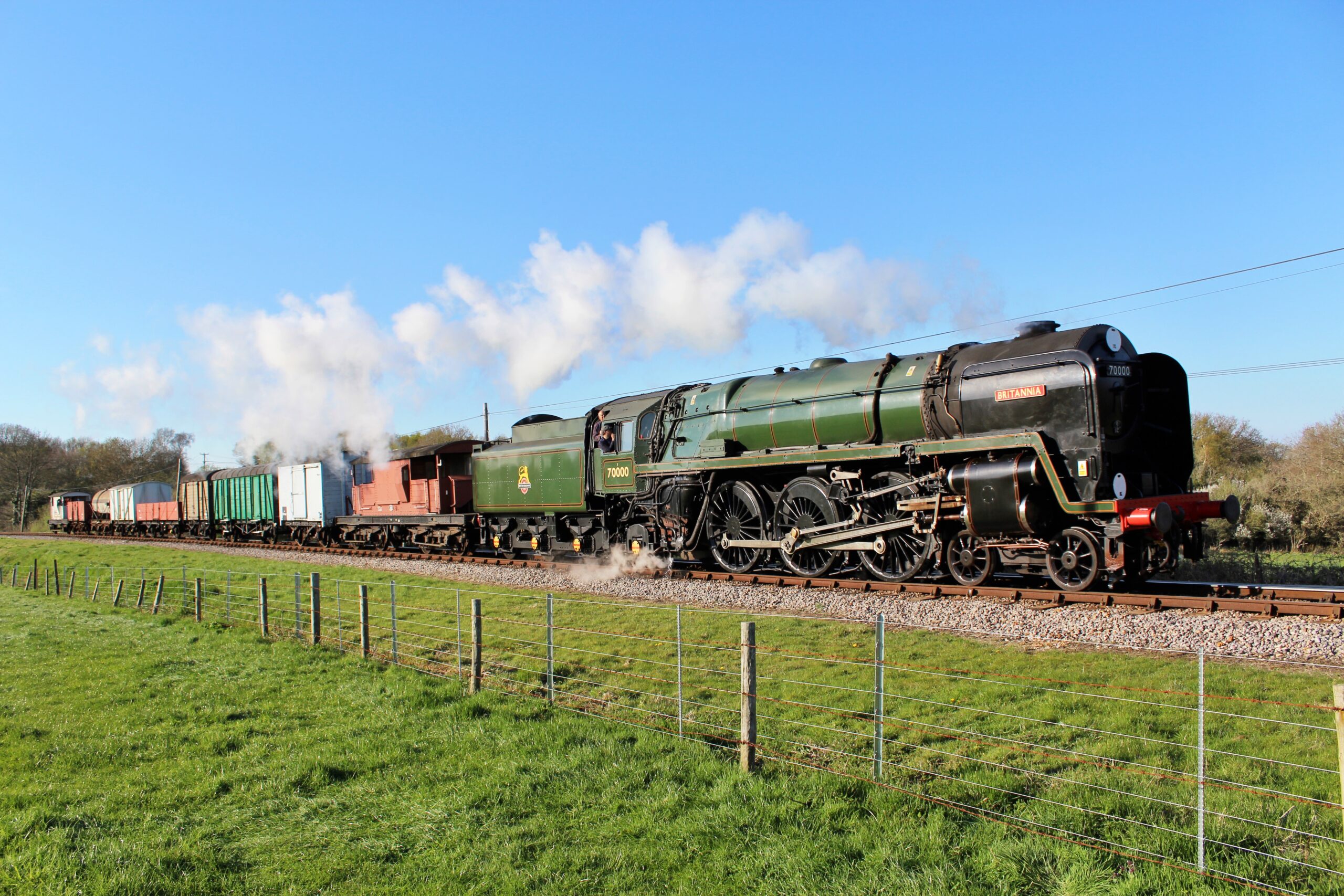
British Railways Standard Class 7 4-6-2 No. 70000 ‘Britannia’ heads a Swanage bound service with Corfe Castle in the background – 18/04/2015British Railways Standard Class 4 2-6-4 No. 80104 double heads with BR Standard Class 7 4-6-2 No. 70000 ‘Britannia’ having just left Norden – 18/04/2015British Railways Standard Class 7 4-6-2 No. 70000 ‘Britannia’ works a demonstration freight nears Corfe Castle – 18/04/2015Another view of British Railways Standard Class 7 4-6-2 No. 70000 ‘Britannia’ working the Swanage Railway demonstration freight – 18/04/2015
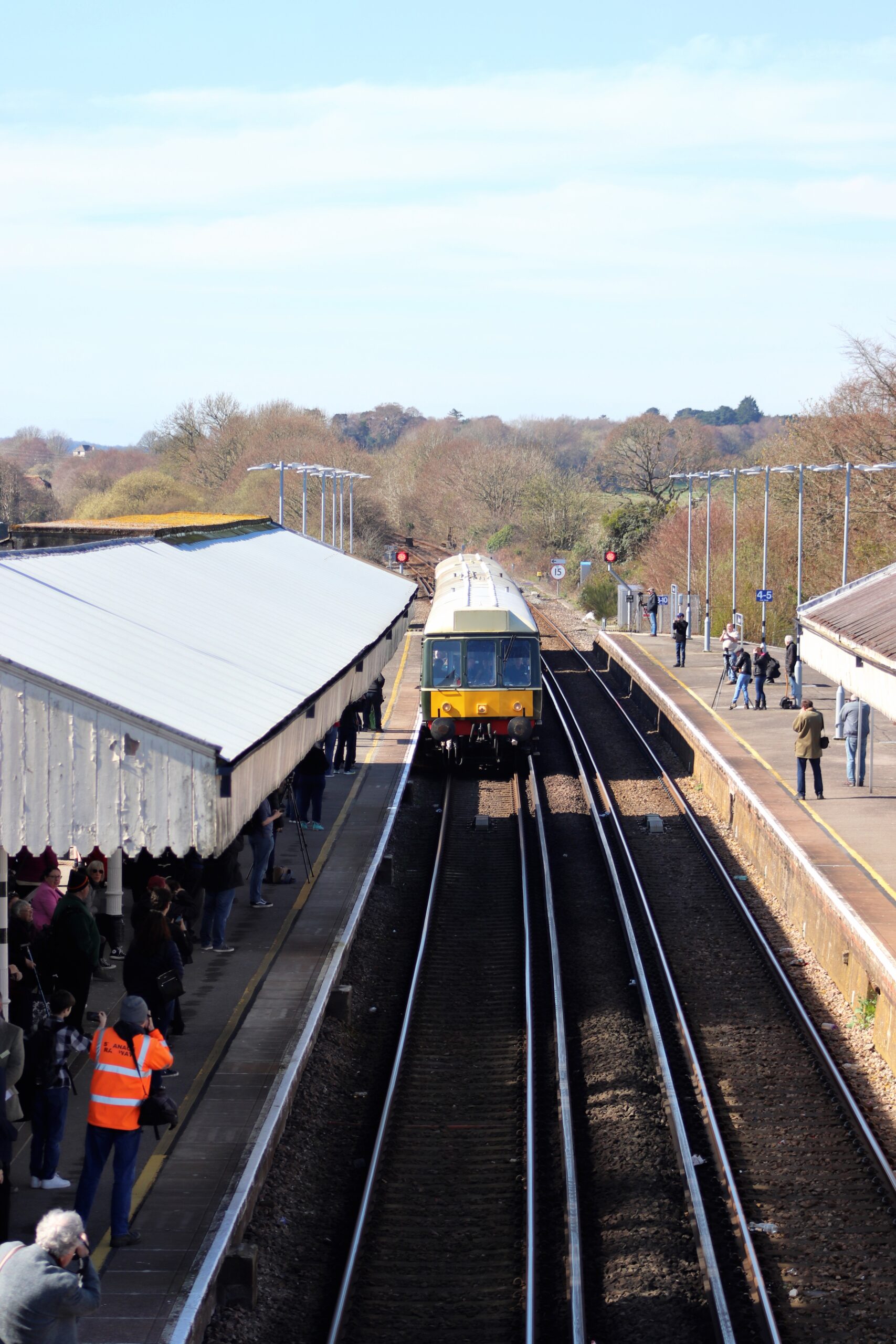
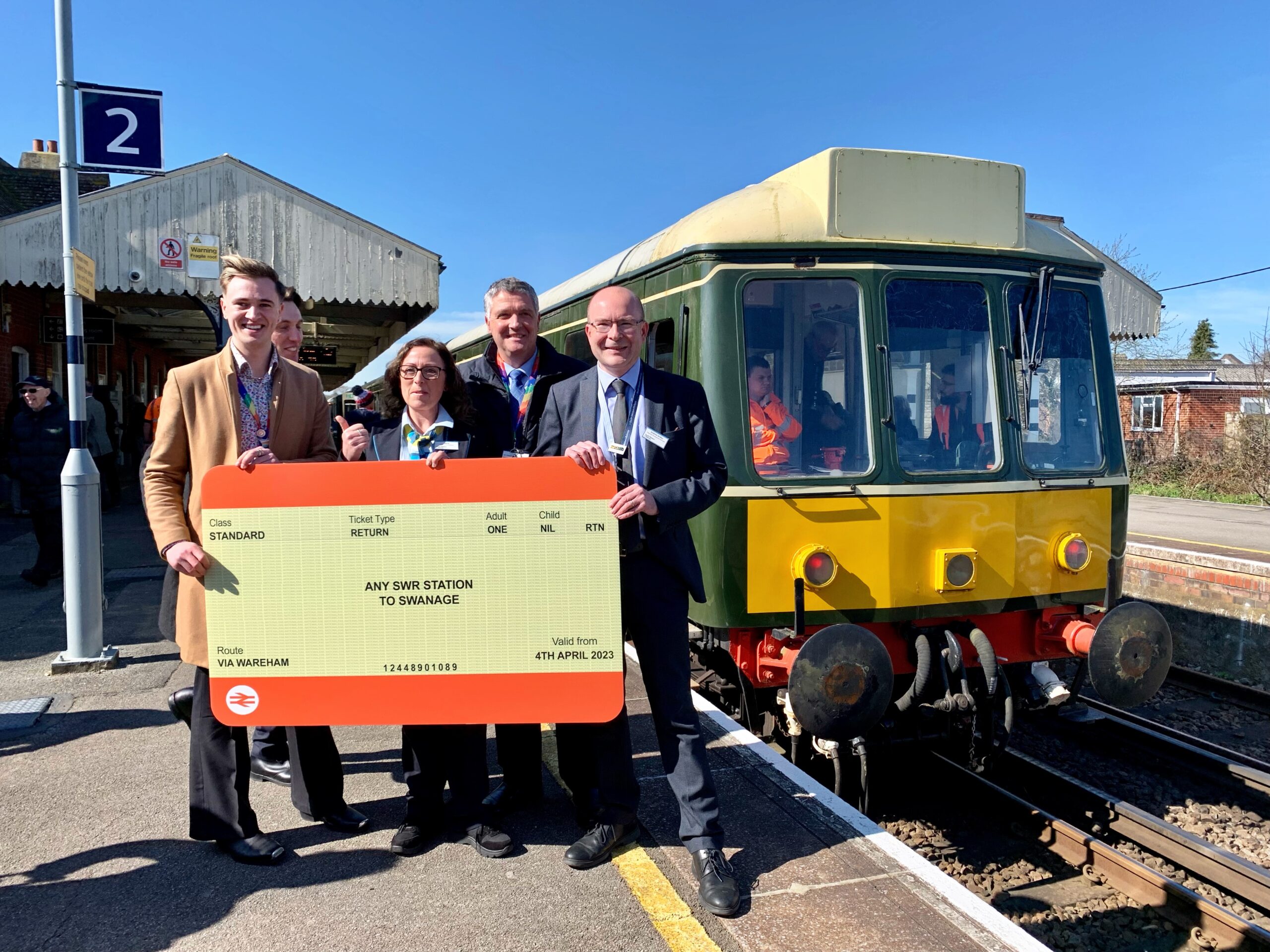
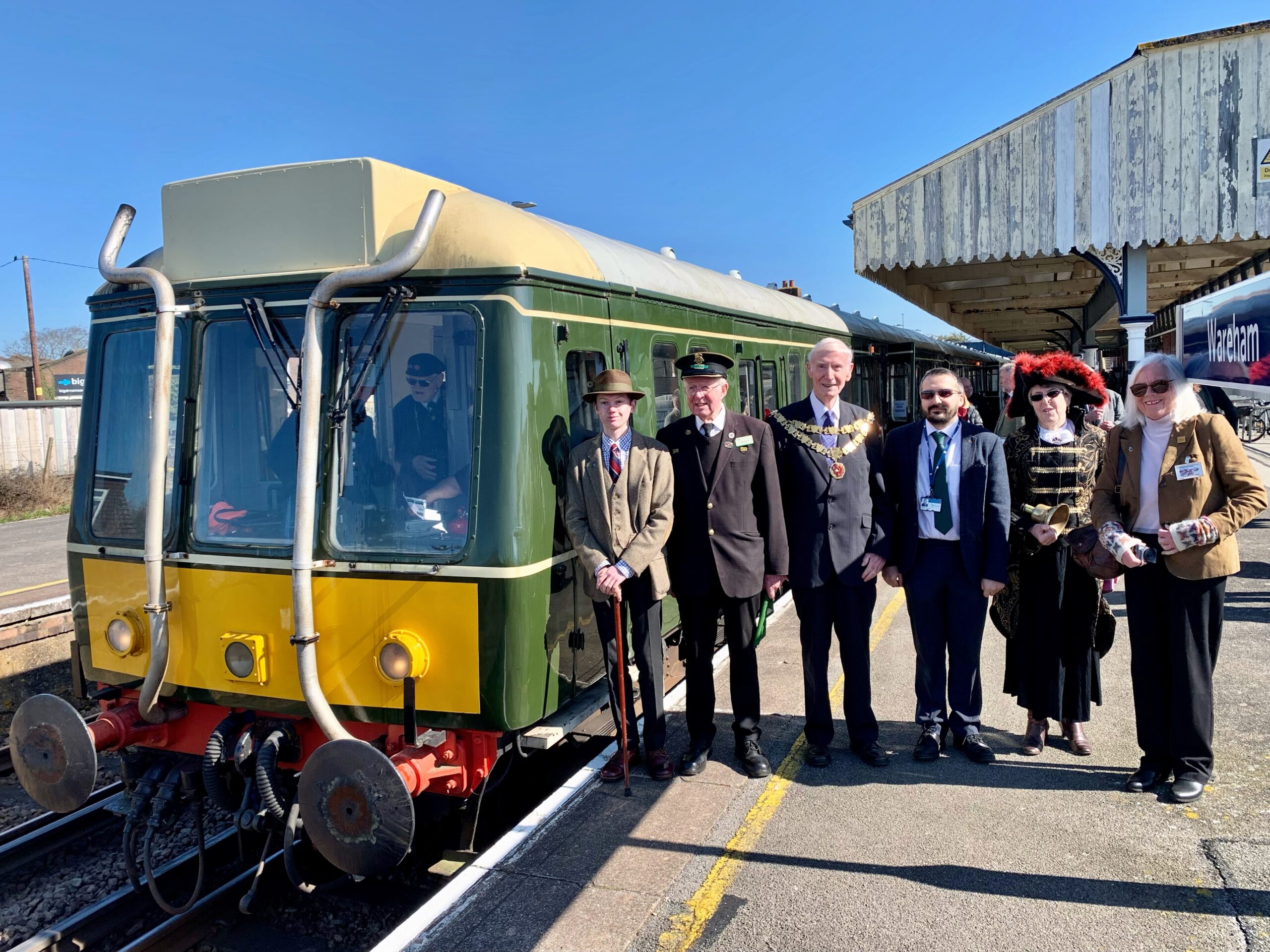
The Swanage Railway has also been in the news following their launch of a trial train service from main line Wareham through to the heritage branch line. Operating from April to September 2023, tickets for the service will also be available from South Western Railway (SWR) from late April so passengers can add tickets for Corfe Castle and Swanage to their main line tickets. This is the first time in 51 years that through ticketing to Corfe and Swanage has been possible. The last day of British Rail passenger services between Wareham, Corfe Castle and Swanage was on Saturday 1st January 1972 when the branch was closed. The eleven mile service, one mile of which running from Worgret Junction into Wareham station will be over main line Network Rail metals, will utilise restored and upgraded 1950’s Class 117 and Class 121 heritage diesel multiple units. The trial service will operate on Tuesdays, Wednesdays, Thursdays and Saturdays from 4th April to 10th September 2023, with the first train departing Wareham at 1119 and the last train leaving Swanage for Wareham at 1620 giving visitors the opportunity to spend four hours in Swanage or Corfe Castle. The timetable is subject to change on special event days. We popped over to Wareham to see the first service arrive and depart from Wareham.
Swanage Railways Class 117 DMU leads into Wareham with the first trail service onto the main line – 04/04/2023South Western Railway staff pose at Wareham with an actual sized ticket to promote through ticketing to Corfe Castle and Swanage – 18/04/2023Dignitaries pose in front of the single car Class 121 DMU at Wareham ahead of the first departure to Swanage – 04/04/2023
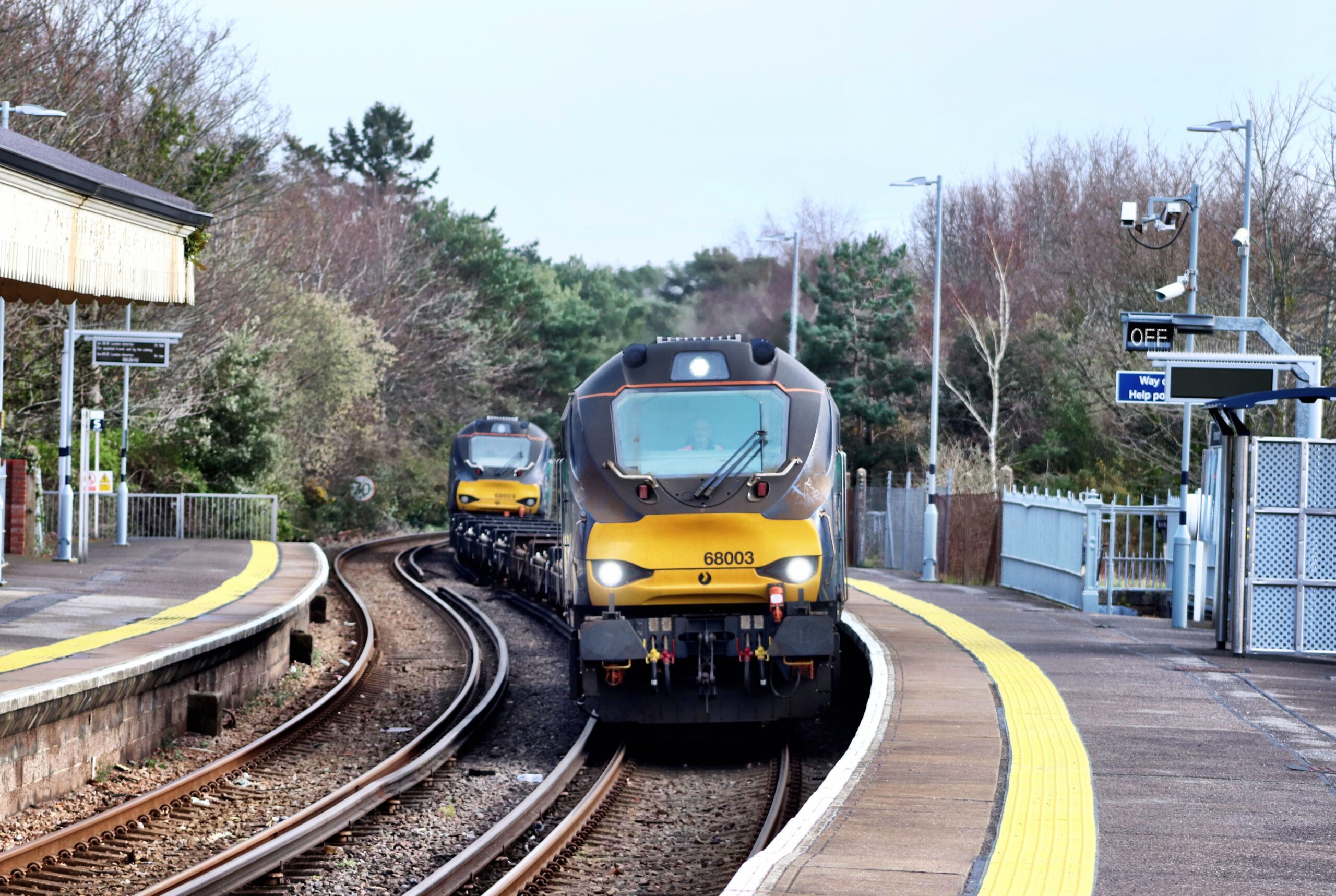
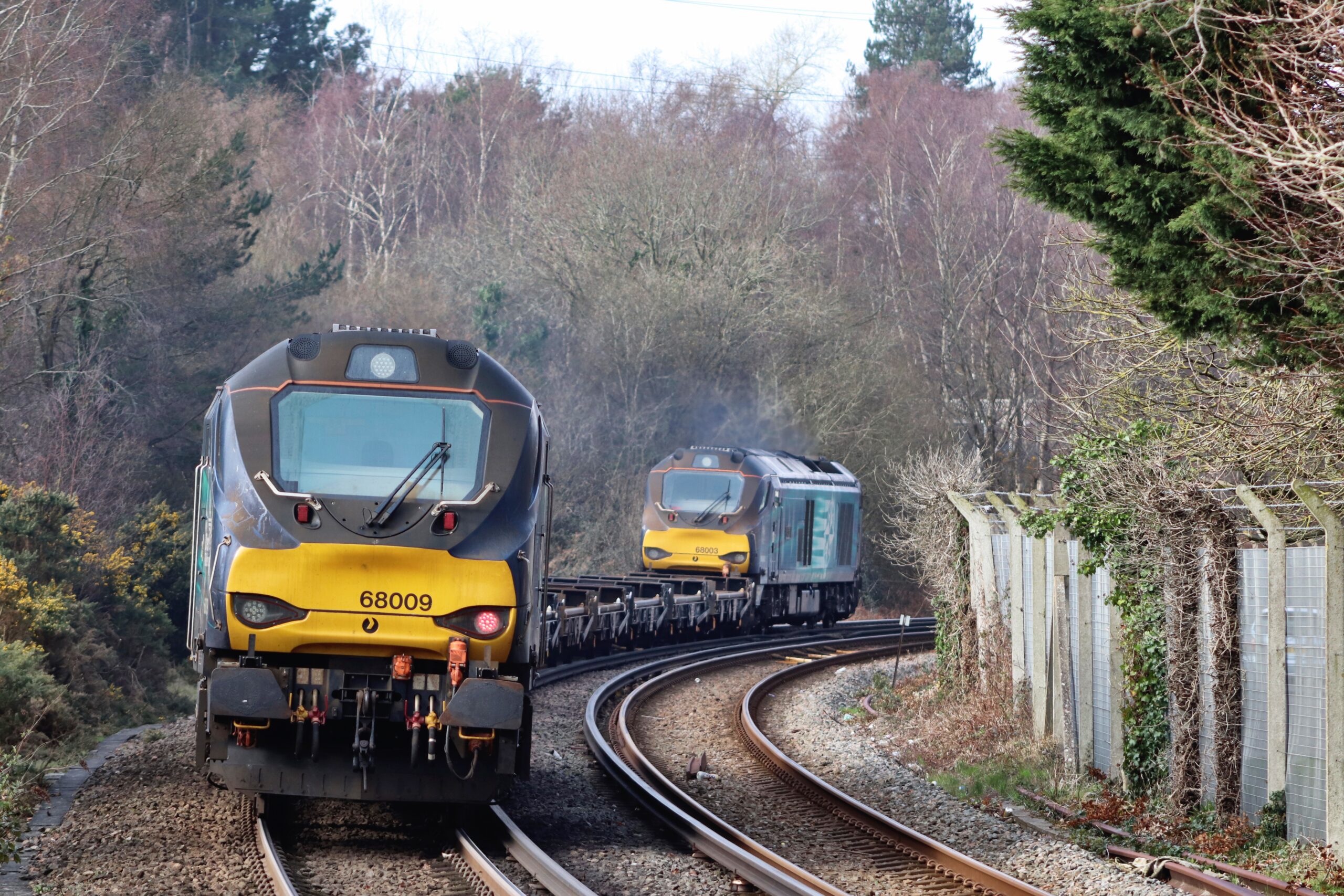
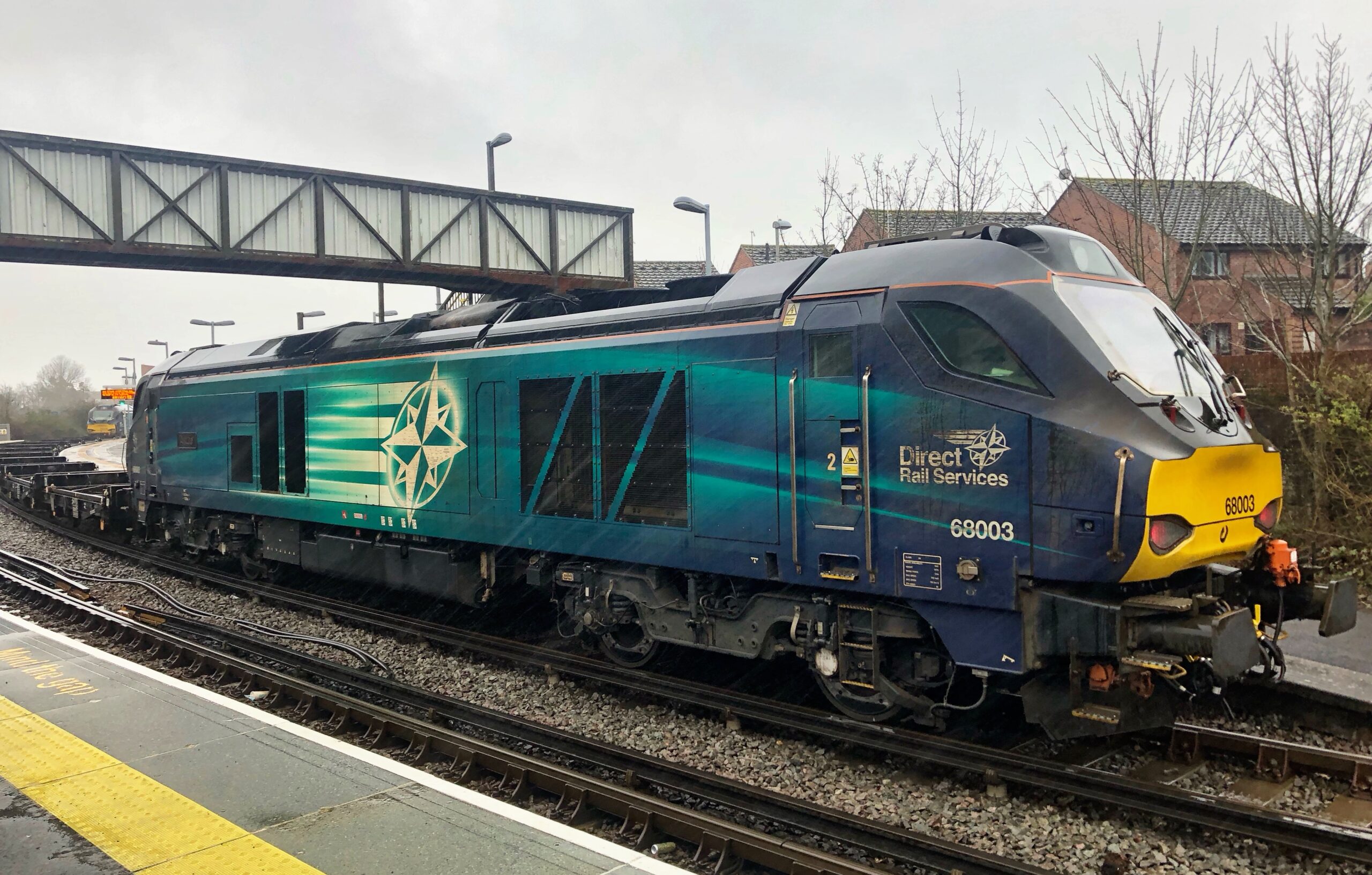
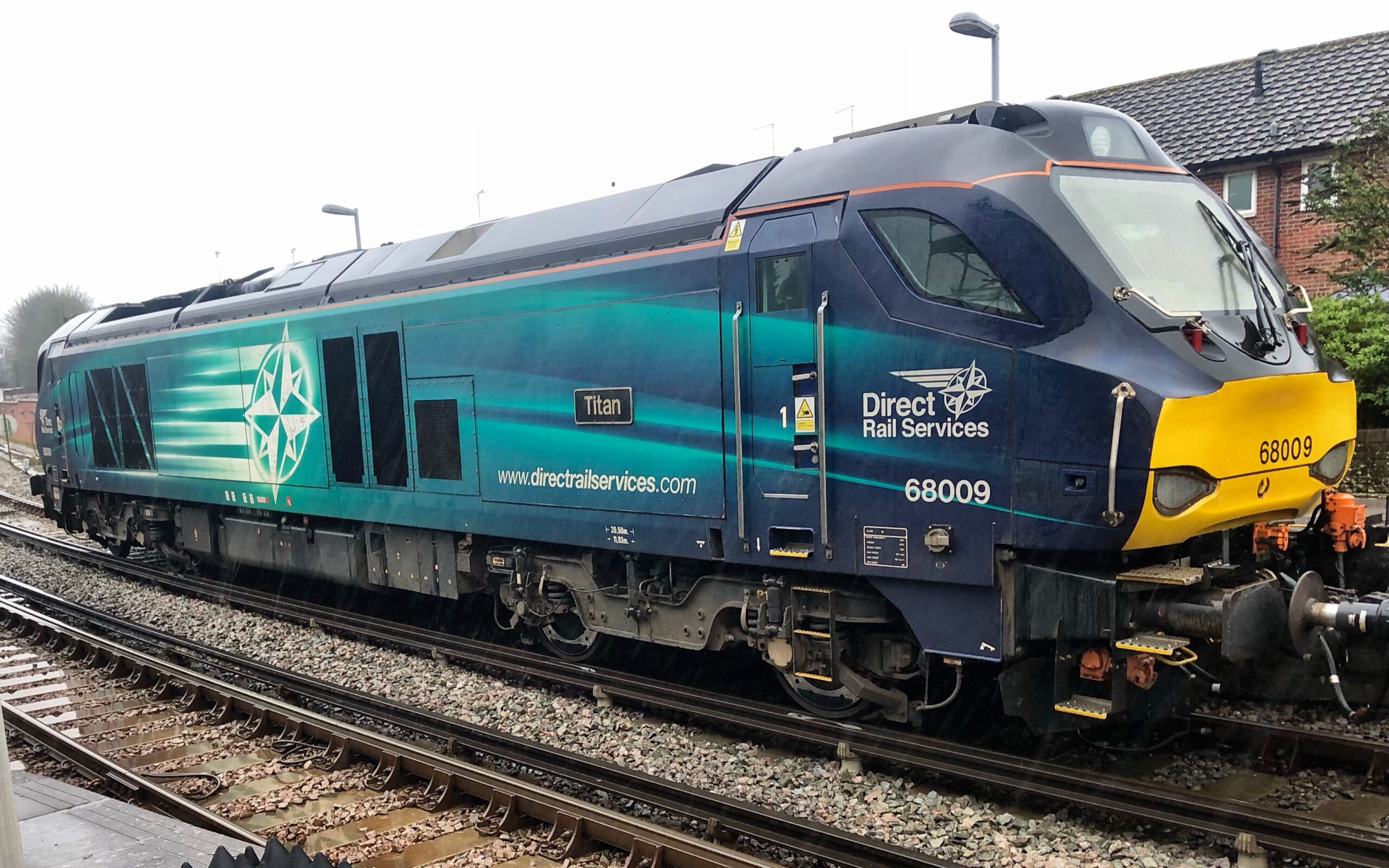
A surprise run to Winfrith occurred on March 23rd 2023, timings only appearing on Real Time Trains late the previous day. Two new to Dorset Direct Rail Services (DRS) Class 68 locomotives top and tailed the train which interestingly returned empty to Crewe. It is thought that the high winds in evidence on the day meant it was unsafe to use the crane at Winfrith employed to load the low level nuclear waste onto the wagons.
DRS Class 68 No. 68003 ‘Astute’ heads up 6Z62 0100 Crewe Coal Sidings DRS to Wool Winfrith Sidings with classmate No. 68009 ‘Titan’ behind passing through Hamworthy – 23/03/2023DRS Class 68 No. No. 68009 ‘Titan’ trails No. 68003 ‘Astute’ having passed through Hamworthy working 6Z62 0100 Crewe Coal Sidings DRS to Wool Winfrith Sidings – 23/03/2023DRS Class 68 No. 68003 ‘Astute’ at Dorchester South working 6Z95 1554 Wool Winfrith Sidings to Crewe Coal Sidings DRS (image courtesy of G E Barrett) – 23/03/2023DRS Class 68 No. No. 68009 ‘Titan’ prepares to lead 6Z95 1554 Wool Winfrith Sidings to Crewe Coal Sidings DRS away from Dorchester South (image courtesy of G E Barrett) – 23/03/2023
Video of the DRS Class 68 No.’s 68003 ‘Astute’ and 68009 ‘Titan’ working a Winfrith train. Additional video courtesy of G E Barrett – 23/03/2023
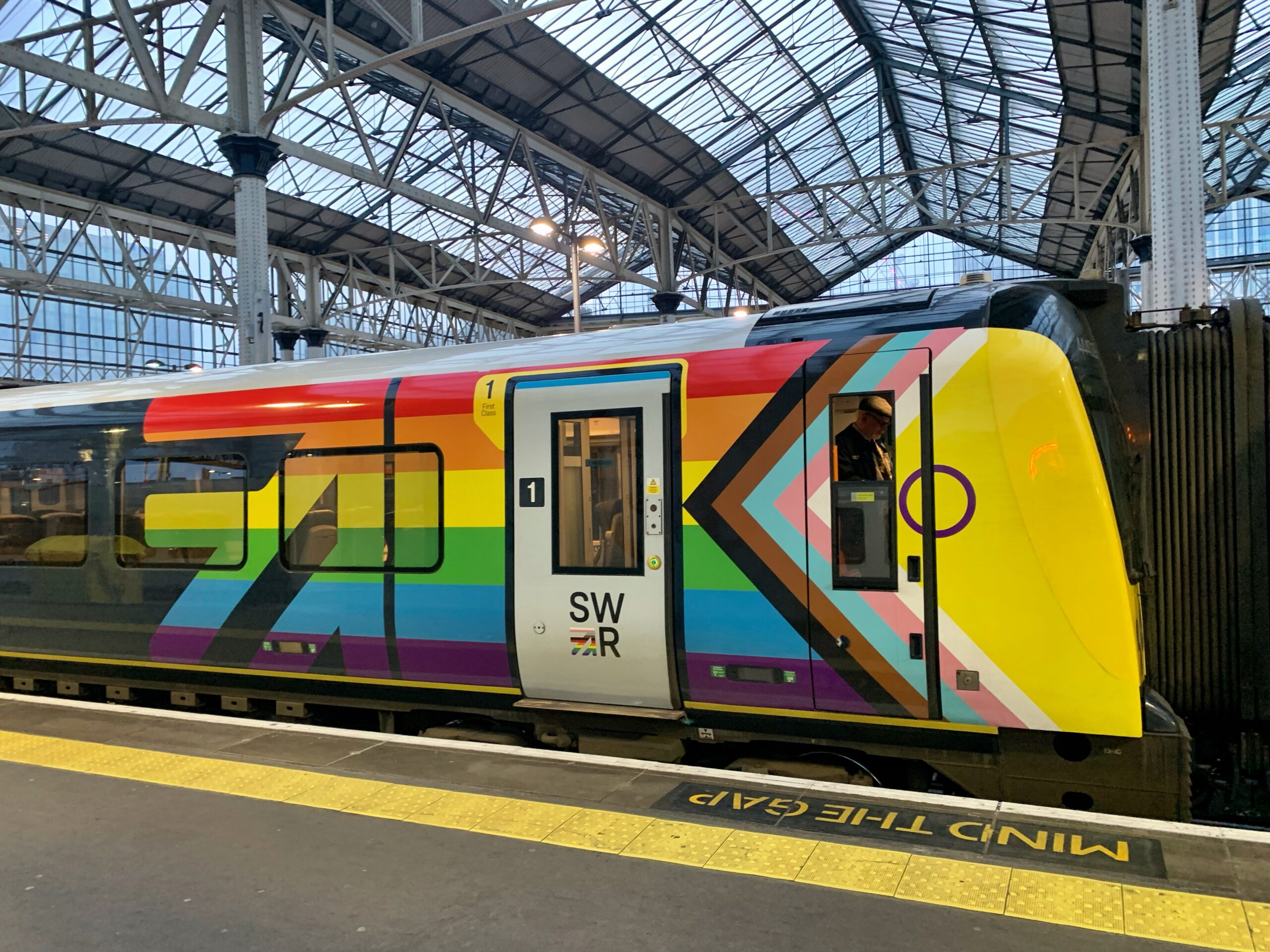
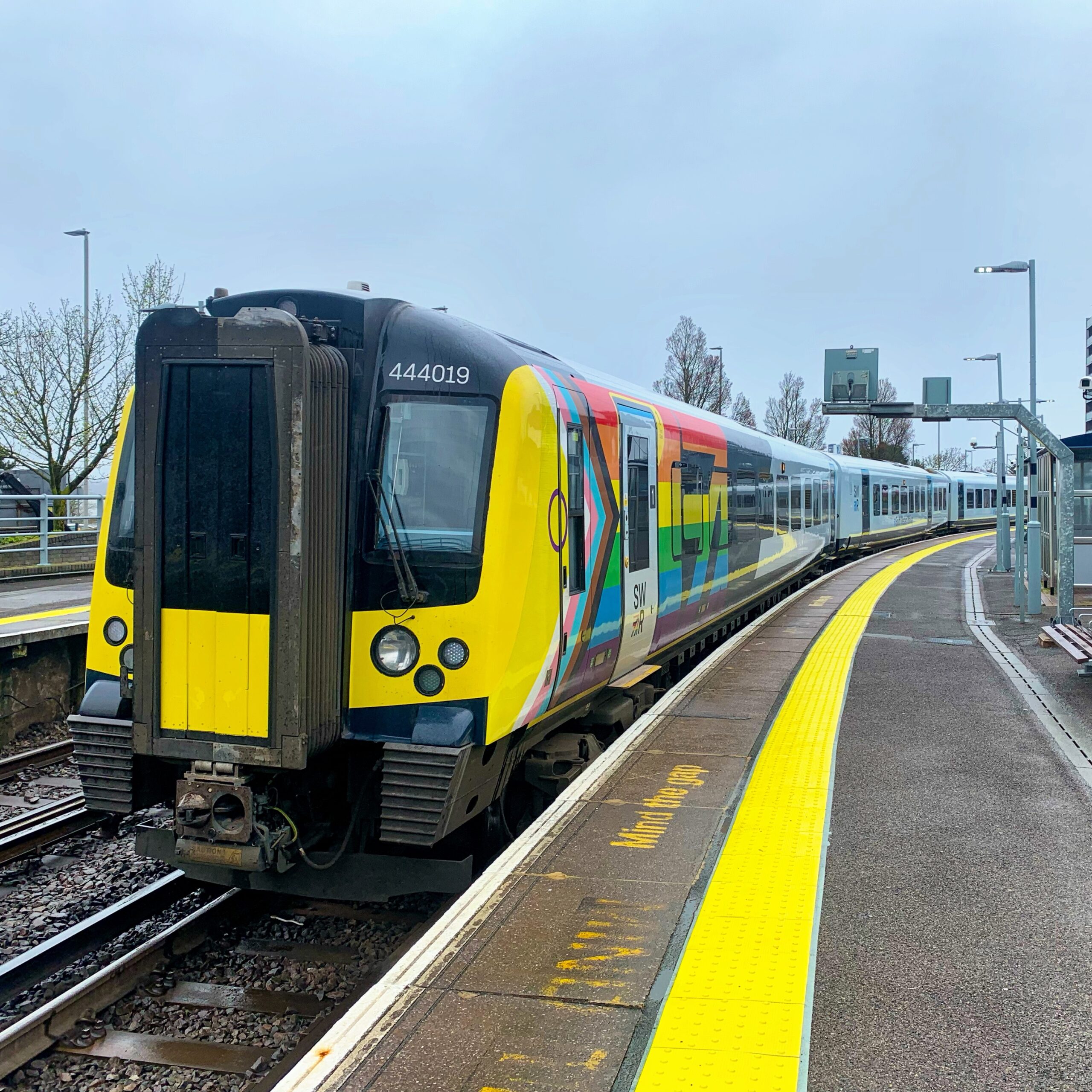
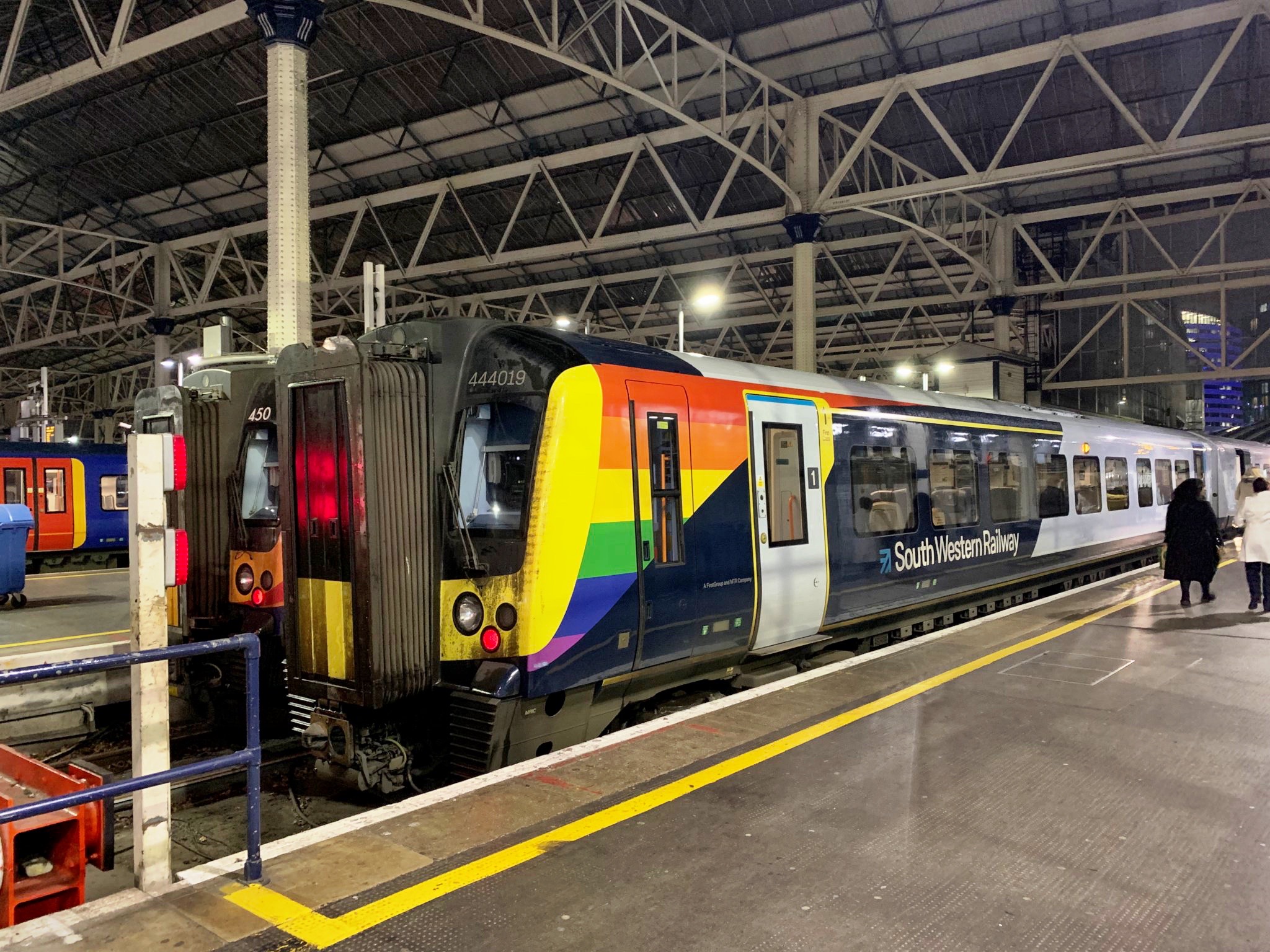
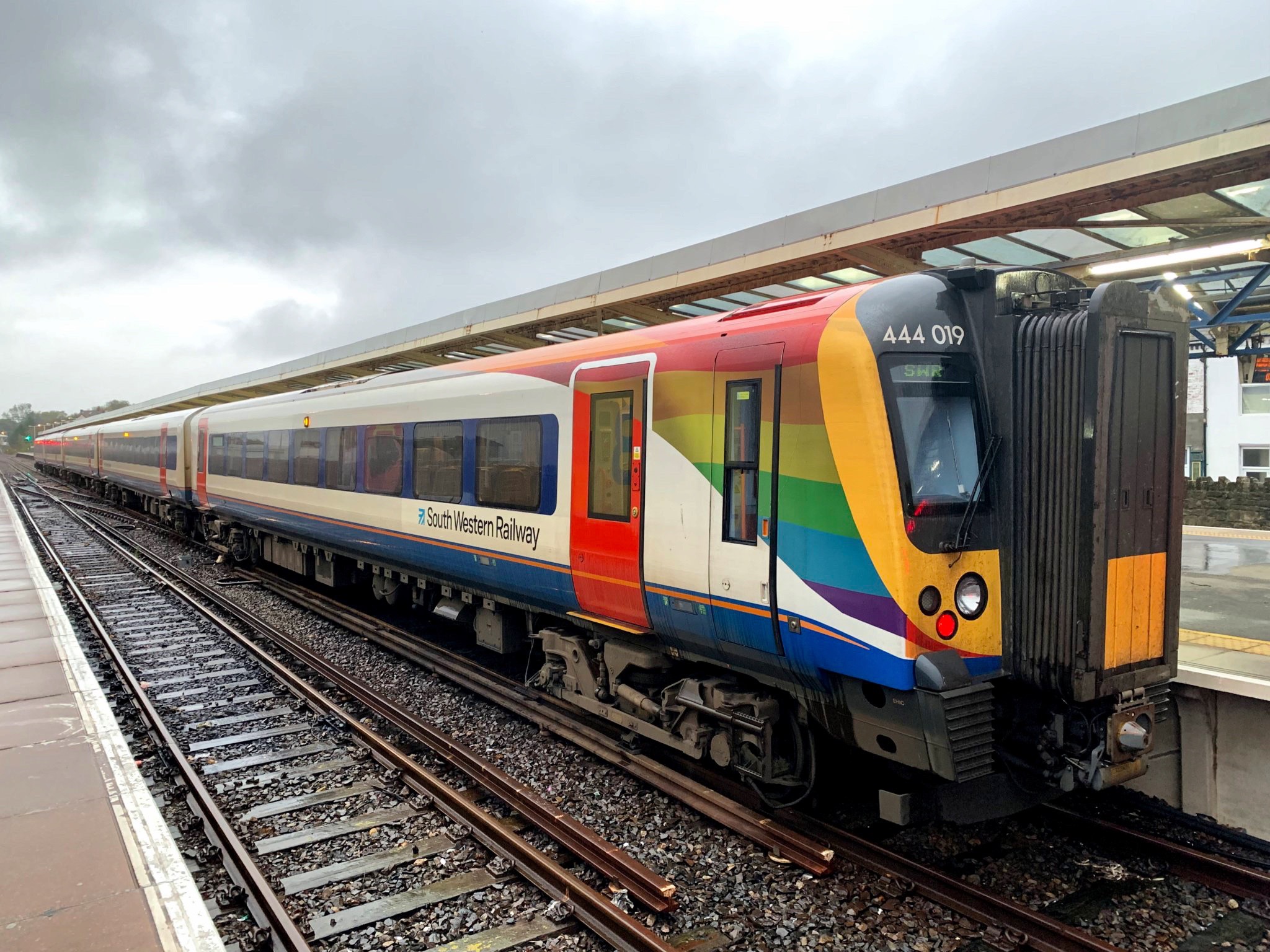
South Western Railway (SWR) have unveiled Class 444 Electric Multiple Unit No. 444019 in a new version of their ‘Pride’ livery. The unit was wrapped at Bournemouth Traction and Rolling Stock Maintenance depot on 25th/26th March 2023 and displays the LGBTQIA+ flag on the driving ends.
SWR Class 444 No. 444019 displays the new ‘Pride’ livery at London Waterloo before working IP65 2000 London Waterloo to Portsmouth & Southsea – 30/03/2023SWR Class 444 No. 444019 awaits departure from Poole with the 2W56 1100 service to London Waterloo – 31/03/2023SWR Class 444 No. 444019 in an earlier ‘Pride’ livery stands at the buffer stops in London Waterloo – 05/03/2022How Class 444 No. 444019 used to look, seen at Weymouth – 12/10/2019
That’s it for this week, thanks for joining us! We’ll be back in seven days or so when we have a look at the Crewe Heritage Centre amongst other things.
Yoshi watches on as British Railways Standard Class 7 4-6-2 No. 70000 ‘Britannia’ turns on the Yeovil Steam Centre turntable – 22/03/2023
Wednesday 15th March 2023 to Tuesday 21st March 2023
Gotcha Day!
On Thursday we celebrated the annual ‘Gotcha Day’ when Yoshi first decided to adopt me as his hooman. He really was a tiny little pup with razor sharp baby teeth. We’ve both got bigger since then and I can hardly believe it’s been four years!
Colas Class 66 No. 66850 ‘David Maidment’ at the head of a rake of autoballasters pauses at Poole to pick up a crew member just after midnight working 6C15 2303 Eastleigh East Yard to Worgret Junction – 15/03/2023
This week I was a bit of a night owl on three consecutive occasions as I stayed up past my bedtime to see three engineers trains and a test train visit our patch, all operated by Colas Rail.
Class 66 No. 66848 at Hamworthy on the rear of the 6C17 2356 Eastleigh East Yard to Hamworthy autoballaster working – 16/03/2023
Colas Trains in Poole and Hamworthy – March 2023
Colas Rail is a subsidiary of Bouygues, a French industrial group headquartered in Paris. Originally a railway construction and maintenance company named Seco Rail, they became a freight operator in the UK market during 2006 acquiring their first locomotives in 2007 after a successful period using leased rolling stock. In 2008, Seco Rail merged with AMEC-Spie and Carillion Rail under the Colas Rail banner and today they are one of the five largest contractors working for Network Rail. Colas Rail were involved with major improvement works at London Waterloo railway station. The current fleet of locomotives include Class 37, Class 43 (HST Power Cars), Class 56, Class 66 and Class 70 as well as a mixed fleet of on-track plant, such as tampers, for maintenance operations which by 2016, was reportedly the largest of its type in the UK. Previously they counted ten Class 60 locomotives amongst their fleet, and for a short while Class 86 No. 86701 which gained the Colas Rail yellow and orange livery in October 2012. The locomotive was withdrawn from mainline use in January 2013 and subsequently transferred to Europhoenix and exported to Bulgaria where she is still in use running as No. 85001.
I quite like the bright Colas Rail livery, and I’ve added some photos from recent years showing some examples:
Class 37 No. 37175 pauses at Dorchester West – 16/07/2015Class 37 No. 37099 speeds through Upwey on a test train – 27/04/2017Class 37 No. 37099 shelters from the rain at Weymouth – 31/10/2020Class 37 No. 37116 at Weymouth – 24/01/2018Class 37 No. 37219 on track data recording duties (with extra, technical equipment mounted on its ends) reverses at Weymouth – 06/05/2020Class 37 No. 37219 on track data recording duties (with extra, technical equipment mounted on its ends) at Weymouth – 06/05/2020Class 37 No. 37421 makes a nocturnal visit to Weymouth on a test train – 03/08/2020Class 47 No. 47749 ‘Demelza’ on the Weymouth Quay branch siding – 24/02/2012Close up detail for Class 47 No. 47749 ‘Demelza’ – 24/02/2012Nameplate for Class 47 No. 47749 ‘Demelza’ – 24/02/201243274 about to depart from Maiden Newton having picked up the token to traverse the single line section to Dorchester West. Dorset Council is currently in talks with the Railway Heritage Trust over renovation plans for Maiden Newton – 23/03/2022Class 43 HST power cars No.’s 43274 and 43251 about to enter Bincombe Tunnel between Weymouth and Dorchester working the New Measurement Train 1Z23 0747 Derby RTC to Bristol Kingsland Road – 26/01/2022Class 56 No. 56105 works through Cardiff Central on a train of logs – 07/05/2013Class 56 No. 56049 at Westbury – 03/09/2022Class 56 No. 56096 hauling a Class 701 delivery through Eastleigh – Class 66 No. 66847 on the Weymouth Quay branch siding – 24/12/2012Class 66 No. 66849 at Weymouth on an engineers train during rail replacement work – 15/12/2015Class 66 No. 66848 on an engineers train at Monkton, Dorchester – 24/04/2016Class 67 No. 67027 working the New Measurement Train at Weymouth – 19/06/2019Class 67 No. 67023 at the platform in Weymouth – 15/07/2020Class 70 No. 70805 at the head of an engineers train at Weymouth – 11/04/2015Class 70 No. 70809 on the approach to Dorchester South – 11/04/2015Class 70 No. 70806 in Weymouth – 15/12/2015Class 70 No. 70807 sits in Weymouth station – 11/04/2015
South Western Railway (SWR) Class 444 EMU No. 444023 has been named ‘The Alex Wardle Foundation’ to celebrate a partnership between SWR and the Alex Wardle Foundation to help raise awareness of sudden arrhythmic death syndrome (SADS), when someone dies suddenly and unexpectedly from a cardiac arrest, particularly young, apparently healthy, people. The railway company is investing more than half a million pounds installing publicly accessible automated external defibrillators at its 154 staffed stations it operates across South West London, Surrey, Hampshire, Berkshire, Dorset, Wilshire, Somerset, and Devon. The installation of the lifesaving defibrillators comes as part of the rail operators’ commitment to support safety and serve local communities. Located in protective cabinets as close as possible to the front of stations, the defibrillators will be available for use day and night in the instance of cardiac issues in the surrounding area.
South Western Railway (SWR) Class 444 EMU No. 444023 ‘The Alex Wardle Foundation’ arrives at Hamworthy working 1W23 0855 London Waterloo to Weymouth – 19/03/2023
The charity was set up in memory of Alex Wardle, a medical student and son of an SWR operations trainer. Alex passed away from SADS in March 2016. His father, Steve Wardle, has worked for SWR for 38 years and, along with other members of Alex’s close family and friends, he set up the charity to help further understanding of SADS and prevent deaths from the condition. The Class 444 was named ‘The Alex Wardle Foundation’ on 15th March 2023. Unit number 23 was chosen as this was Alex’s age when he passed away.
BR Standard Class 4MT No. 76084 having been unloaded at Norden – 17/03/2023
On Friday I slipped out to Norden as visiting British Railways (BR) Standard Class 4MT No. 76084 was delivered by road on the back of two lorries; one for the locomotive and one for the tender. No. 76084 is spending time on the Purbeck Heritage line for the Swanage Railway Spring Steam Gala running between 24th and 26th March 2023. The Gala will also feature BR Standard Class 7 No. 70000 ‘Britannia’, scheduled to arrive at the heritage line on 22nd March. Resident Class 33 diesel locos No.’s 33111 and D6515 (33012) ‘Lt Jenny Lewis RN’ were scheduled to assist the BR Standard down to Swanage once it had been unloaded onto the tracks at Norden. The locomotive was already sitting in the sidings when I arrived and, unfortunately, issues with a wagon meant that her departure was delayed and I was unable to wait for the consist to be formed and depart as Yoshi had an appointment with the dog groomer. I was, however, able to capture some images via the Swanage Railway webcams.
Class 33 diesel locos No.’s D6515 (33012) ‘Lt Jenny Lewis RN’ and 33111 as seen on the Swanage Railway Webcam passing through Corfe Castle – 17/03/2023Class 33 diesel locos No.’s D6515 (33012) ‘Lt Jenny Lewis RN’ and 33111 top and tail BR Standard Class 4MT No. 76084 as seen on the Swanage Railway Webcam passing through Corfe Castle as Jamie Smith Going Loco leans out of the cab door to collect the token giving permission for the consist to move on to Harmans Cross – 17/03/2023Class 33 diesel locos No.’s 33111 and D6515 (33012) ‘Lt Jenny Lewis RN’ top and tail BR Standard Class 4MT No. 76084 as seen on the Swanage Railway Webcam arriving into Swanage – 17/03/2023Yoshi post groom and sporting his Easter Bandana – 17/03/2023
Congratulations to Derby which has been chosen as the headquarters of Great British Railways (GBR HQ), beating five other short listed locations, none of which were in the West Country. There followed lots of bluster about the government going “full steam ahead” with reforms for the railways and promotion for Rolls-Royce.
RMT members working for Network Rail voted to accept the company’s pay offer; 12,047 voted yes and 3,709 voted no which brings to an end to their campaign of strike action. Disputes with 14 rail companies, represented by the Rail Delivery Group – including SWR and Great Western Railway (GWR) – are ongoing with further walk outs planned for 30th March and 1st April.
SWR is investing over £400,000 on improving waiting rooms at ten of its stations, including locations on the London Waterloo to Weymouth line including Basingstoke, Brockenhurst, Southampton Central and Totton. There are no stations on the list to be found in Dorset.
That’s it for another week – thank you for joining us. Please keep your comments and corrections coming, we really appreciate you having taken the time to read our little page.
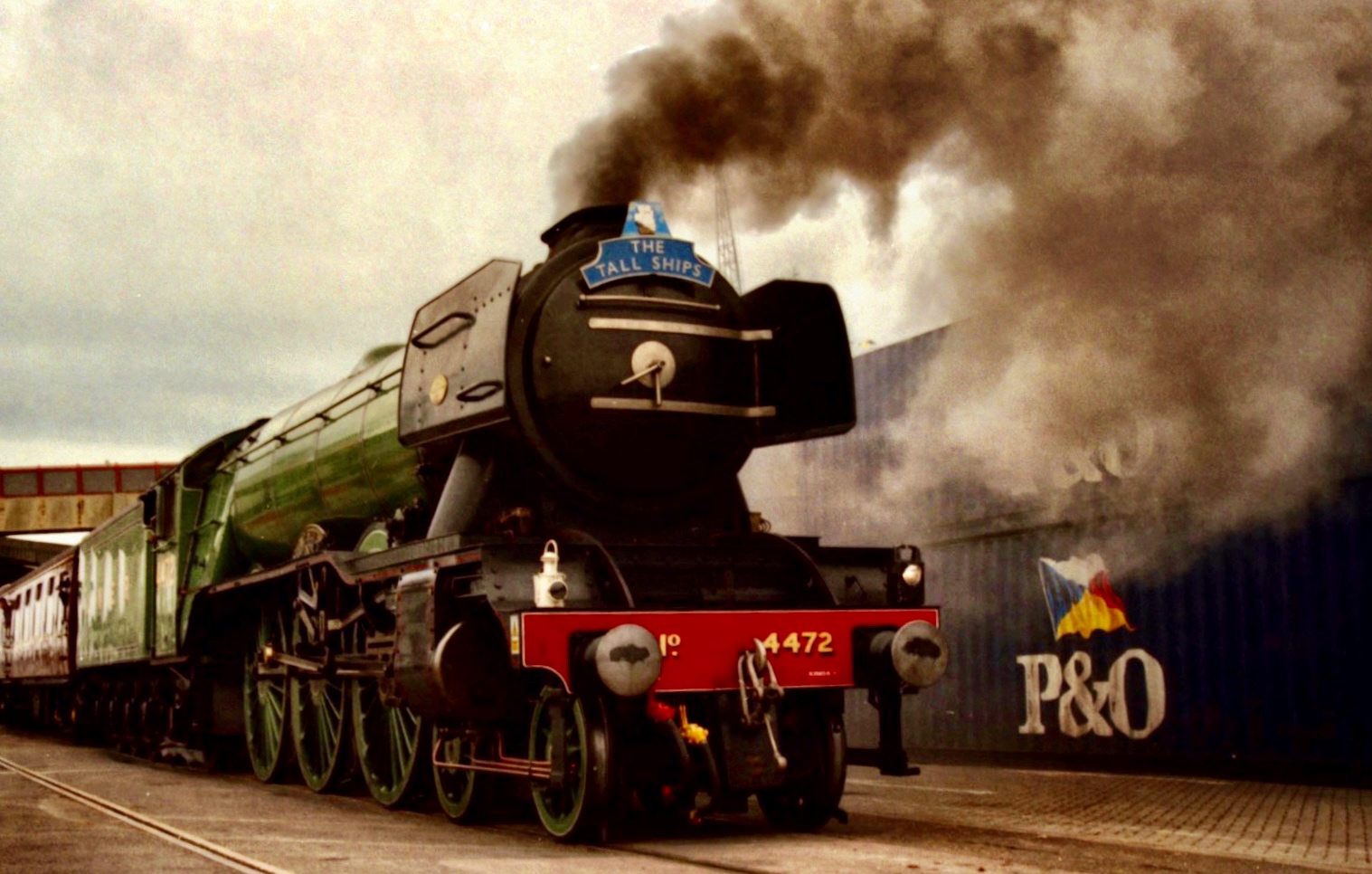
Gresley A3 Pacific No. 4472 ‘Flying Scotsman’ at Southampton Docks in an unauthentic condition in LNER Apple Green but with double chimney and smoke deflectors from BR days – 16/04/2000
Wednesday February 15th to Tuesday February 21st 2023
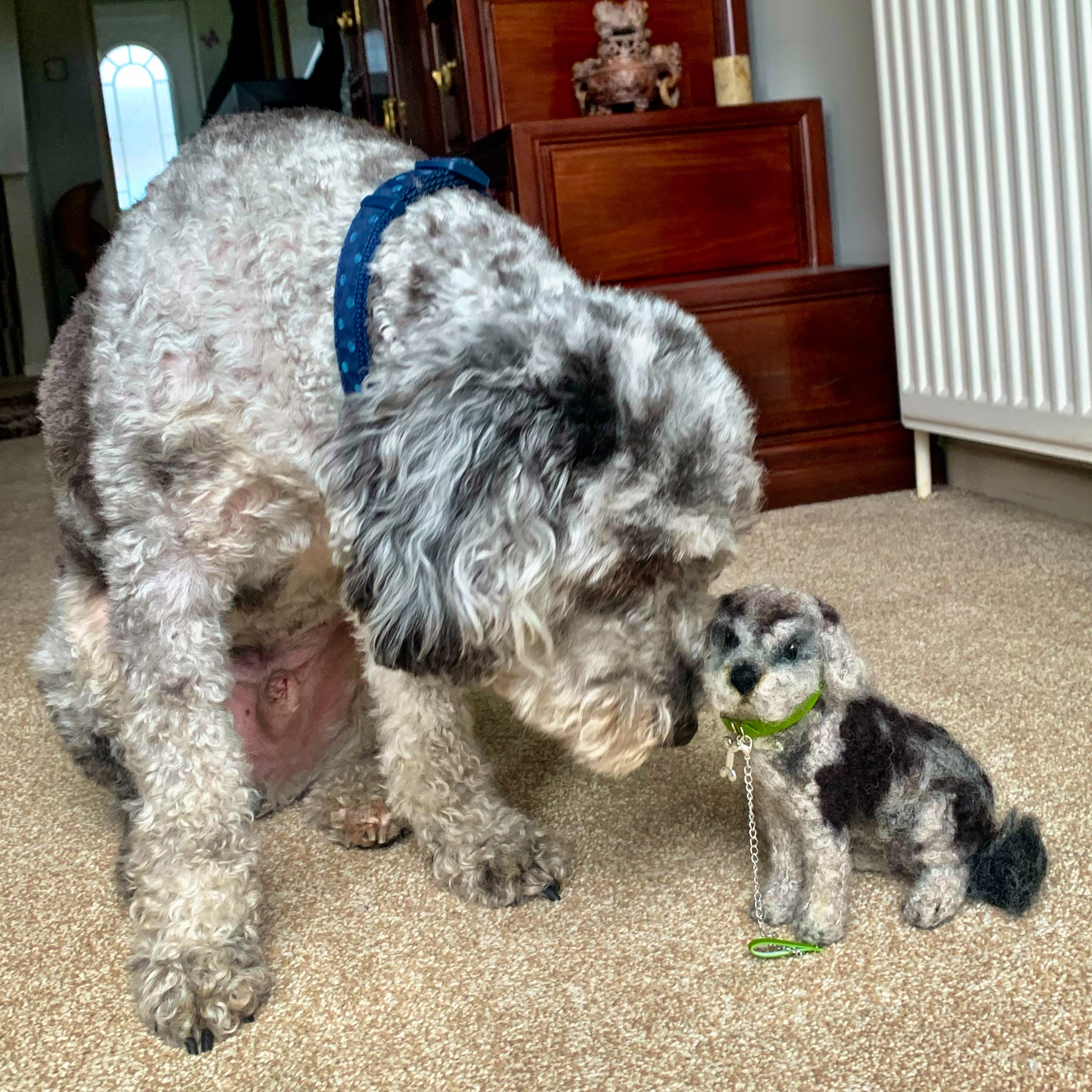
The week kicked off with the delivery of a little Yoshi from ArtemisFibreArt, which the boy himself was rather intrigued about. Thankfully he decided against tearing it apart as is his usual reaction to soft toys. He recognises a handsome boy when he sees one!
Yoshi meets…. Little YoshiYoshi and the fabulous replica Little Yoshi from ArtemisFibreArt
24th February 2023 marks 100 years since the third A1 Class 4-6-2 Pacific locomotive left Doncaster Works for the very first time and entered service with the London & North Eastern Railway. As if we haven’t written enough about this particular loco in previous blog entries, here’s another look at her history. Designed by Sir Nigel Gresley and originally numbered 1472 in a sequence originated by the Great Northern Railway who had placed the order for 51 Class A1’s prior to the “Big Four” Grouping of January 1923. A year later the LNER renumbered her No. 4472 and she gained the name ‘Flying Scotsman’ after the eponymous titled train in readiness for display at the British Empire Exhibition at Wembley.
In 1928, ‘Flying Scotsman’ ran a non-stop passenger service between London King’s Cross and Edinburgh, this was achieved by means of another Gresley innovation; a corridor tender allowing drivers and firemen to pass through to the locomotive footplate from the leading train carriage. Water for the engine was picked up en-route from troughs set between the rails.
1st November 1934 No. 4472 became the first steam locomotive to be officially recorded at travelling at 100 miles per hour as she passed between Little Bytham and Essendale on the East Coast Main Line.
In 1946 the LNER introduced an extensive renumbering scheme with the aim of placing all locomotives of the same type in a numerical sequence. ‘Flying Scotsman’ was renumbered twice this year, firstly in January as No. 502 by Gresley’s successor Edward Thompson and then No. 103 in May. After the Nationalisation of the railways in 1948 60000 was added to LNER engine numbers and consequently No. 103 became No. 60103.
January 1947 ‘Flying Scotsman’ was converted from a Class A1 locomotive to an A3 under a programme initiated by Gresley in 1928 which added a larger boiler with a higher boiler pressure. A double Kylchap chimney was added in 1959 to improve performance with German style smoke deflectors being added in 1961 as the exhaust from the new chimney blocked the drivers view.
Things looked bleak in October 1962 when it was announced ‘Flying Scotsman’ would be withdrawn from service in January 1963 and sent for scrap. Holder of the steam speed record Gresley A4 4-6-2 Pacific No. 60022 ‘Mallard’ was to be saved for the nation and it was deemed that only one locomotive of any given wheel arrangement per designer could be preserved.
After a failed public appeal to “Save Our Scotsman” by raising the £3000 scrap value, businessman Alan Peglar, fresh from selling his Northern Rubber business and with money to burn stepped in and purchased No. 60103 from British Railways in 1963. As part of the deal, Peglar negotiated an agreement for ‘Flying Scotsman’ to run on the main line until 1966 with options to 1971. The locomotive was overhauled at Doncaster emerging in LNER Apple Green and carrying the number 4472 once again. In 1969, the locomotive was heading for USA and Canada on a tour where she travelled 15,400 miles to promote British exports where, after initial success, UK Board of Trade backing was withdrawn and by 1970 money was running out. As a result, in 1972 Peglar was declared bankrupt and ‘Flying Scotsman’ was put into storage in the US Army Sharpe Depot to keep her safe from creditors.
No. 4472 ‘Flying Scotsman’ working the “Cumbrian Mountain Express” over the Settle & Carlisle stops at Garsdale for water – 22/07/1981
Enter Sir William McAlpine, who stepped in and bought the locomotive, shipping her home in 1973. Following restoration at Derby, ‘Flying Scotsman’ embarked on a career running on the UK main line and heritage railways. In October 1988 she made a trip to Australia where over the next year she travelled more than 28,000 miles and set the record for the longest non-stop run by a steam locomotive totalling 422 miles having journeyed between Parkes and Broken Hill in New South Wales. On her return to the UK, ‘Flying Scotsman’ would eventually come under new ownership, that of a new consortium “Flying Scotsman Railways” which included Sir William McAlpine and record producer and railway enthusiast Pete Waterman. In 1993, she was outshopped in BR Brunswick Green, complete with double chimney and smoke deflectors representing how she looked at the end of her working life on BR.
Following restoration to final BR condition, No. 60103 ‘Flying Scotsman’ headed for the Paignton & Dartmouth Railway where her visit lasted from 25th July to 11th September 1993
No. 60103 ‘Flying Scotsman’ visited Llangollen in 1995
April 1995, while working an empty coaching stock movement on the Llangollen Railway, ‘Flying Scotsman’ derailed and suffered a crack between her boiler and cab. She was deemed to be a complete failure and was taken to Southall to face an uncertain future. Experiencing financial difficulties, the consortium sold ‘Flying Scotsman’ to biotech entrepreneur Dr Tony Marchington in 1996 for £1.5m in a deal which included a set of coaches. Over the next three years Dr Marchington spent a further £1m restoring the locomotive which he returned to the main line in 1999. Following a failed attempt to create a “Flying Scotsman Village” in Edinburgh and the collapse of his company Oxford Molecular, Dr Marchington was bankrupted in September 2003. ‘Flying Scotsman’ was put up for sale in 2004 and there was a real fear that the locomotive would be sold abroad. However, to the relief of many, a huge public appeal was launched by the National Railway Museum (NRM) and on 5th April 2004 it was announced that the NRM had been successful with their sealed £2.2m auction bid, which had been boosted by a £1.8m grant from the National Heritage Memorial Fund. ‘Flying Scotsman’, a locomotive which perhaps more than any other represents the people’s engine had finally been saved for the nation. Unfortunately No. 60103 required a great deal of work to return her to steam with an estimated 12 month £750,000 restoration commencing in 2005. In reality, it would take 10 years and £4.2m before a warming fire could be lit in the overhauled firebox of ‘Flying Scotsman’. On her first public runs in January 2016 following restoration, she was seen in a wartime black livery on the East Lancashire Railway.
Still in wartime black livery with No. 60103 on the smokebox and No’s 103 and 502 on opposite cab sides, her first mainline outing following overhaul was on 6th February 2016 at the head of “The Winter Cumbrian Mountain Express” from Carnforth to Carlisle. Myself and @da_buckley967 decided to drive from Dorset to Cumbria to see the spectacle of ‘Flying Scotsman’ climbing Shap on the West Coast Main Line.
“The Winter Cumbrian Mountain Express” – 06/02/2016
Showing just how popular No. 60103 ‘Flying Scotsman’ has become is evident in this scene as she passes through Romsey with “The Cathedrals Express” rail tour on 21st May 2016
Steam Dreams ‘Flying Scotsman’ London to Winchester and Afternoon Tour from Southampton – 06/06/2021
Ahead of her centenary year celebrations, ‘Flying Scotsman’ underwent another overhaul at Riley & Son in Bury, the first event following this being her attendance at London King’s Cross to help celebrate the railway station’s 170th anniversary and launch her own event programme before she arrived in Dorset for a stint on the Swanage Railway.
For more ‘Flying Scotsman’ goodness, you might like to check out these “Railway Dog” blog entries from 2022 which feature more images and video:
From 27th February to 3rd March 2023 no weekday trains will run between Yeovil Pen Mill and Dorchester West to allow Network Rail to lay new track and carry out other maintenance, including station improvements at Maiden Newton. The closure extends to include the Yeovil to Castle Cary section on 6th and 7th March affecting Great Western Railway (GWR) and South Western Railway (SWR) services.
In no way connected to the forthcoming closure “up the West”, Monday 20th and Tuesday 21st February 2023 saw Freightliner Engineering Trains head to Dorchester South. A further train was scheduled to depart Eastleigh East Yard for Upwey on Wednesday 22/02/2023.
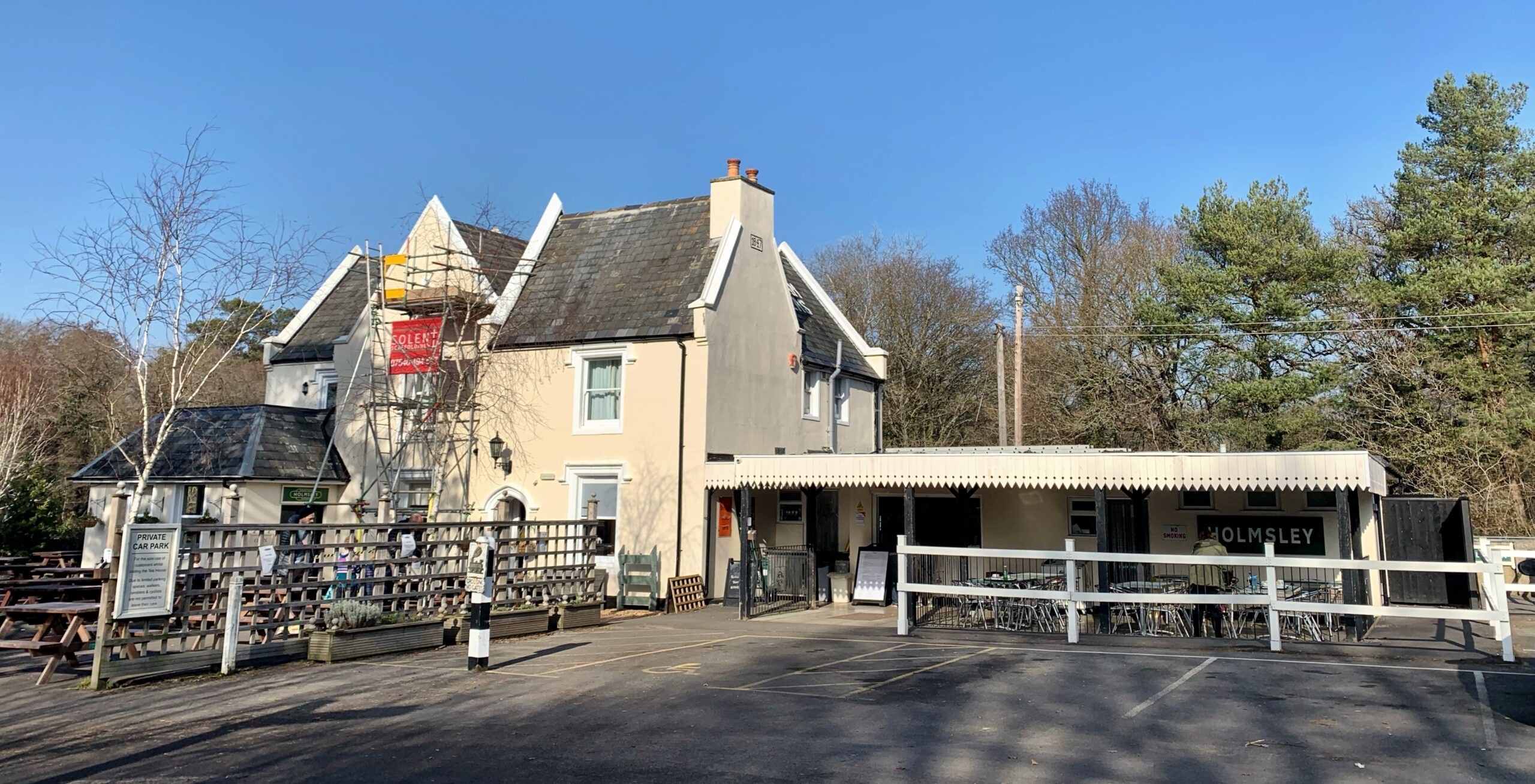
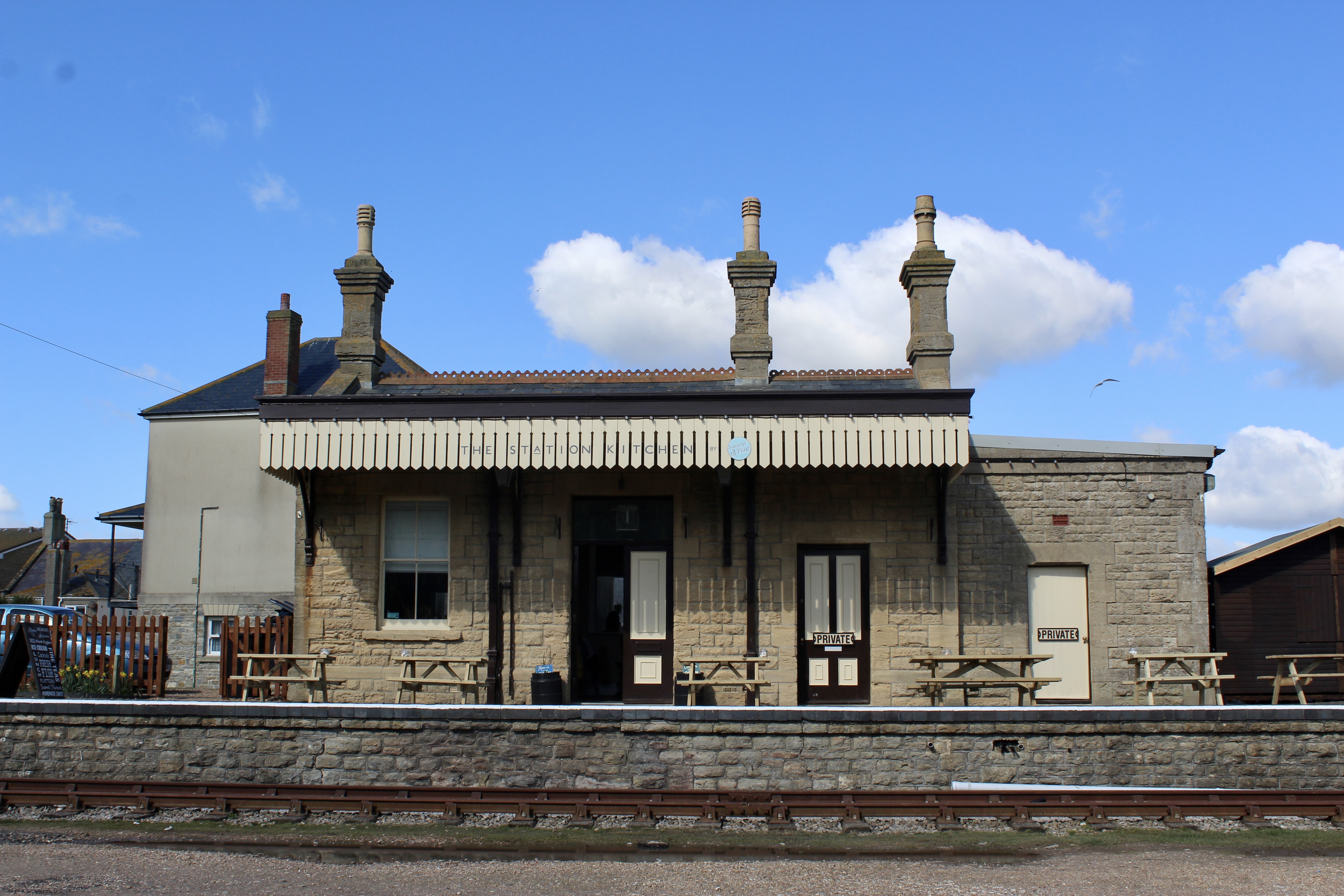
In another of our occasional visits to cafes which happen to be situated in former railway stations, on Wednesday 15th February, we popped over the county border to Hampshire in order to visit The Old Station Tea Rooms at Homsley.
The Old Station Tea Rooms at Homsley – 15/02/2023
Opened in 1874 as Christchurch Road railway station by the Southampton & Dorchester Railway it was, at the time, the closest station to Bournemouth and Christchurch, becoming Holmsley station in 1894. Prince Edward, the eldest son of Queen Victoria was a regular user of the station with his mistress Lillie Langtry as it was here where they would embark on their way to their private residence in Bournemouth. Holmsley was also the inspitration for Browndean station in Robert Louis Stephenson’s novel “The Wrong Box”.
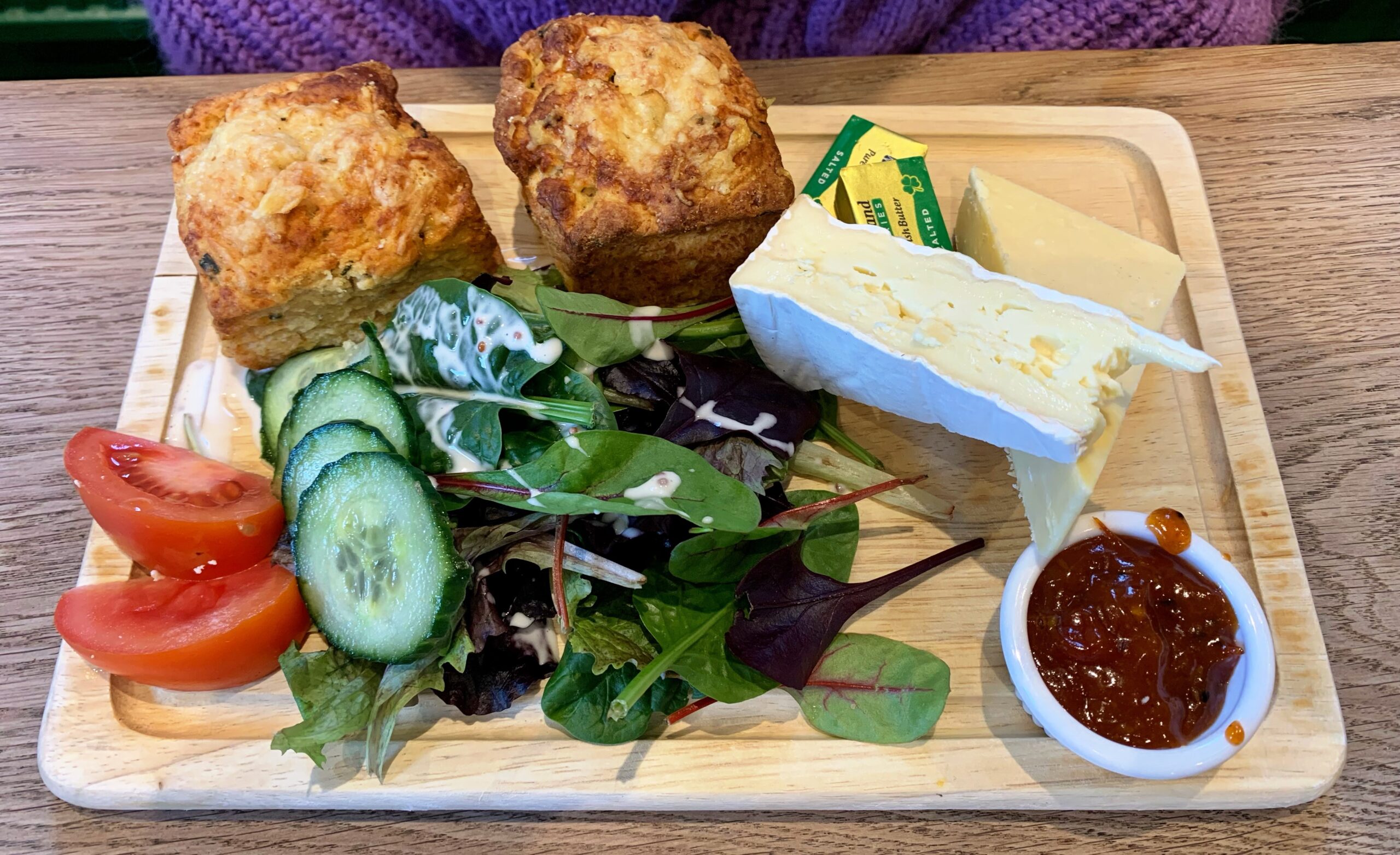
Porters Lunch BoxStation Managers Rarebit
Holmsley station was closed on May 4th 1964 as a result of the Beeching Report. Today the main station building lives on, repurposed as a tea room with several items of railway memorabilia and photographs on display. Dogs are welcome at outside tables, of which there are many, and the food is delicious. Walks along the Castleman Railway utilising the old rail road to Ringwood, Wimborne and Poole can be enjoyed nearby.
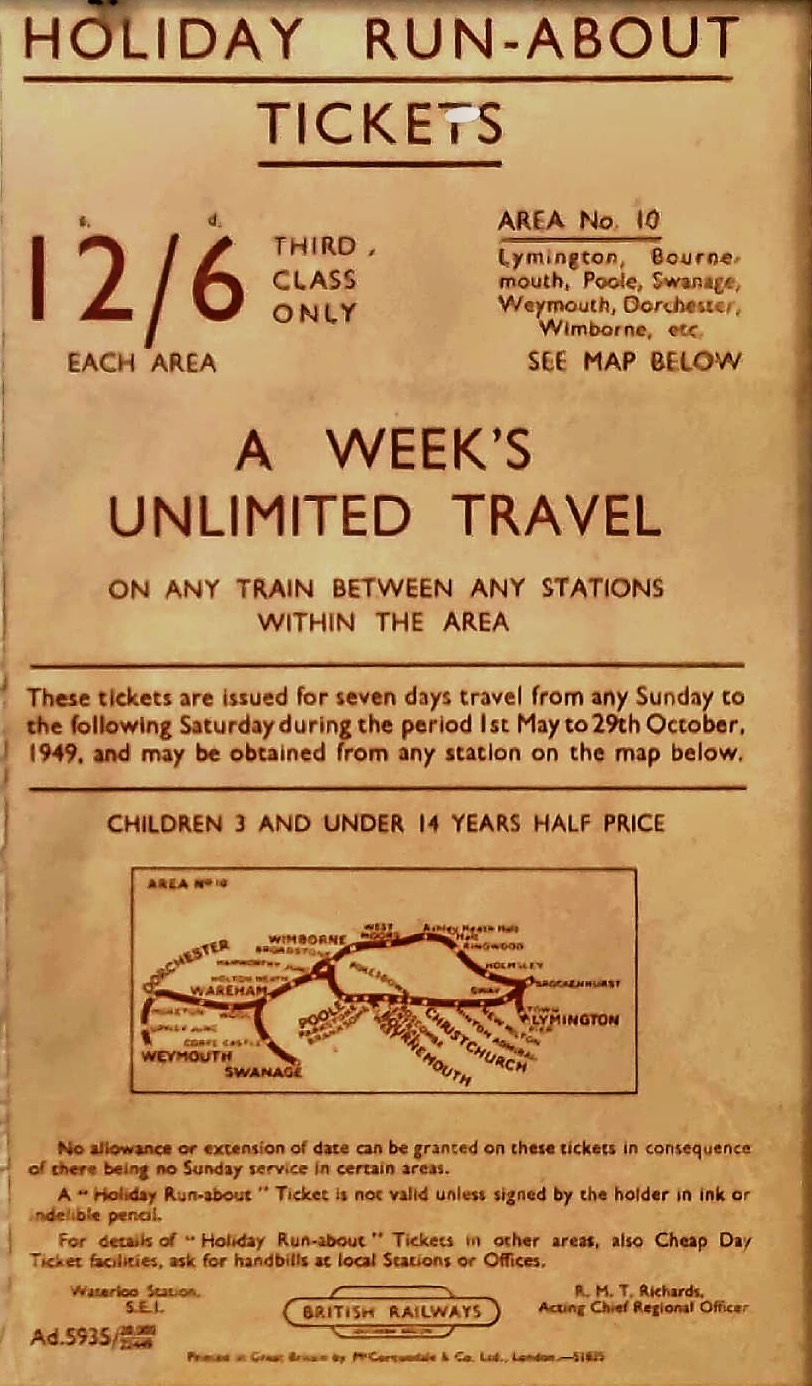
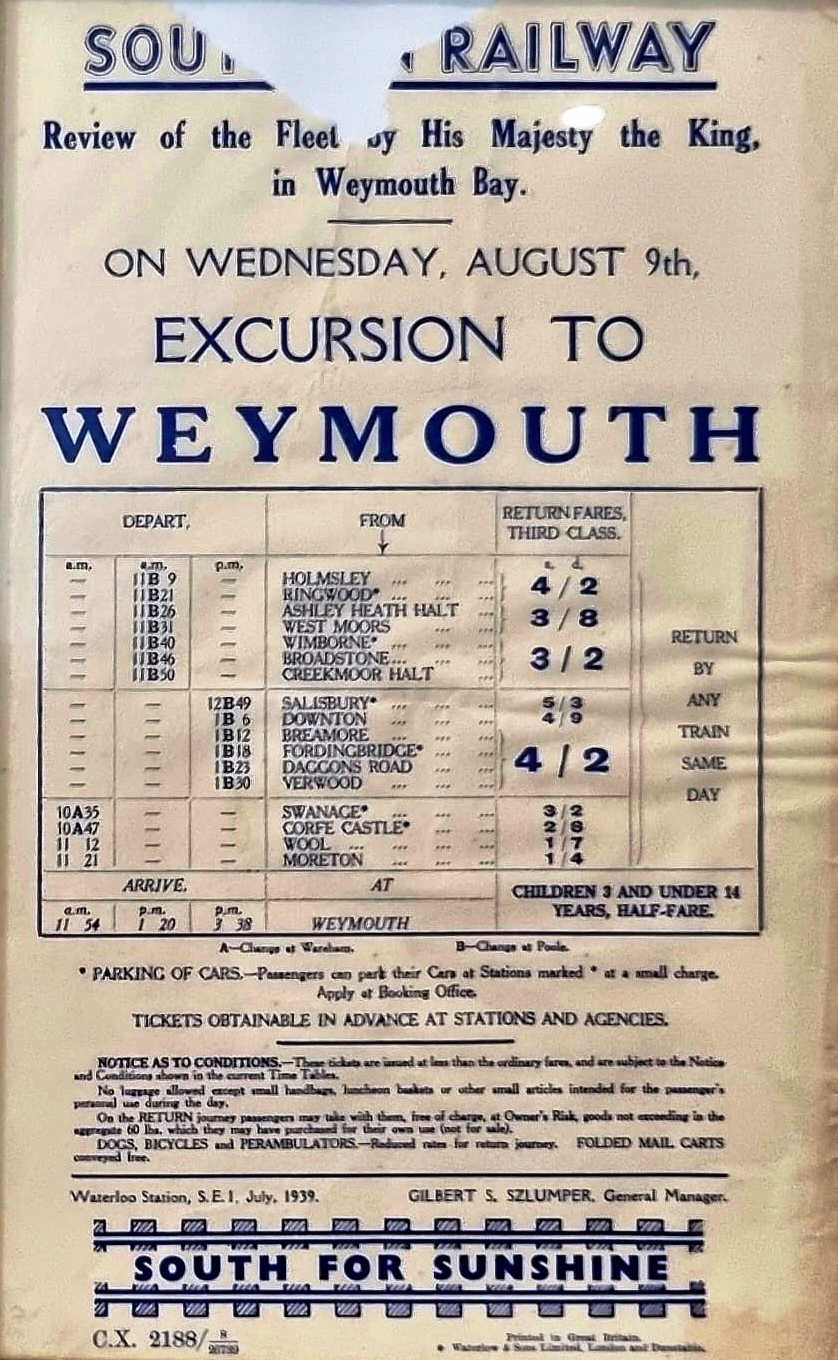
An example of the railway themed memorabilia which can seen at The Old Station Tea Rooms, HomsleyReview the fleet at Weymouth!
That brings us to the end of another entry. Thanks for visiting and we hope to see you again another time. Your comments, corrections and observations are very much appreciated. Recommendations for cafes situated in former railway stations are welcome! This weeks blog was mostly written with the aid of tea, Galaxy Milk Chocolate Digestive biscuits to the accompaniment of Pink Floyd’s “The Dark Side Of The Moon” – which, amazingly, is 50 years old next Wednesday (1st March 2023). Time, eh?
Yoshi has spotted a squirrel, or a possibly Class 444 Electric Multiple Unit. They both deserve being barked at….
Shillingstone Railway Station built in the Dorset Central Railway style of red brick with cream decorative brickwork around windows and doors and featuring a Welsh slate roof – 11/02/2023
Wednesday February 8th to Tuesday February 14th 2023
South Western Railway Class 444 Electric Multiple Unit No. 444023 departs Weymouth – 07/01/2021
On Friday, it was announced that South Western Railway had received a two-year extension on its existing contract from the Department of Transport. Scottish parent company FirstGroup PLC said their national rail contract would now run until May 2025. With no sense of irony Chief Executive Officer Graham Sutherland said, “We welcome the contract extension for South Western Railway, which enables us to build on the achievements of the first two years of the contract and continue improving the customer offering.” FTSE 250-listed FirstGroup operates another three rail franchises in the UK: Avanti West Coast, Great Western Railway (GWR), and TransPennine Express (TPE), plus an open access passenger service, Hull Trains. It also has a bus division, which operates around a fifth of local bus services in the UK.
In other SWR related news, it is hoped that Network Rail will complete work on the landslip at Hook to allow the full restoration of normal timetabled train services from 24th February 2023.
Yoshi takes a look at the short section of track representing the Somerset & Dorset Joint Railway which is displayed in Railway Gardens, Sturminster Newton – 11/02/2023
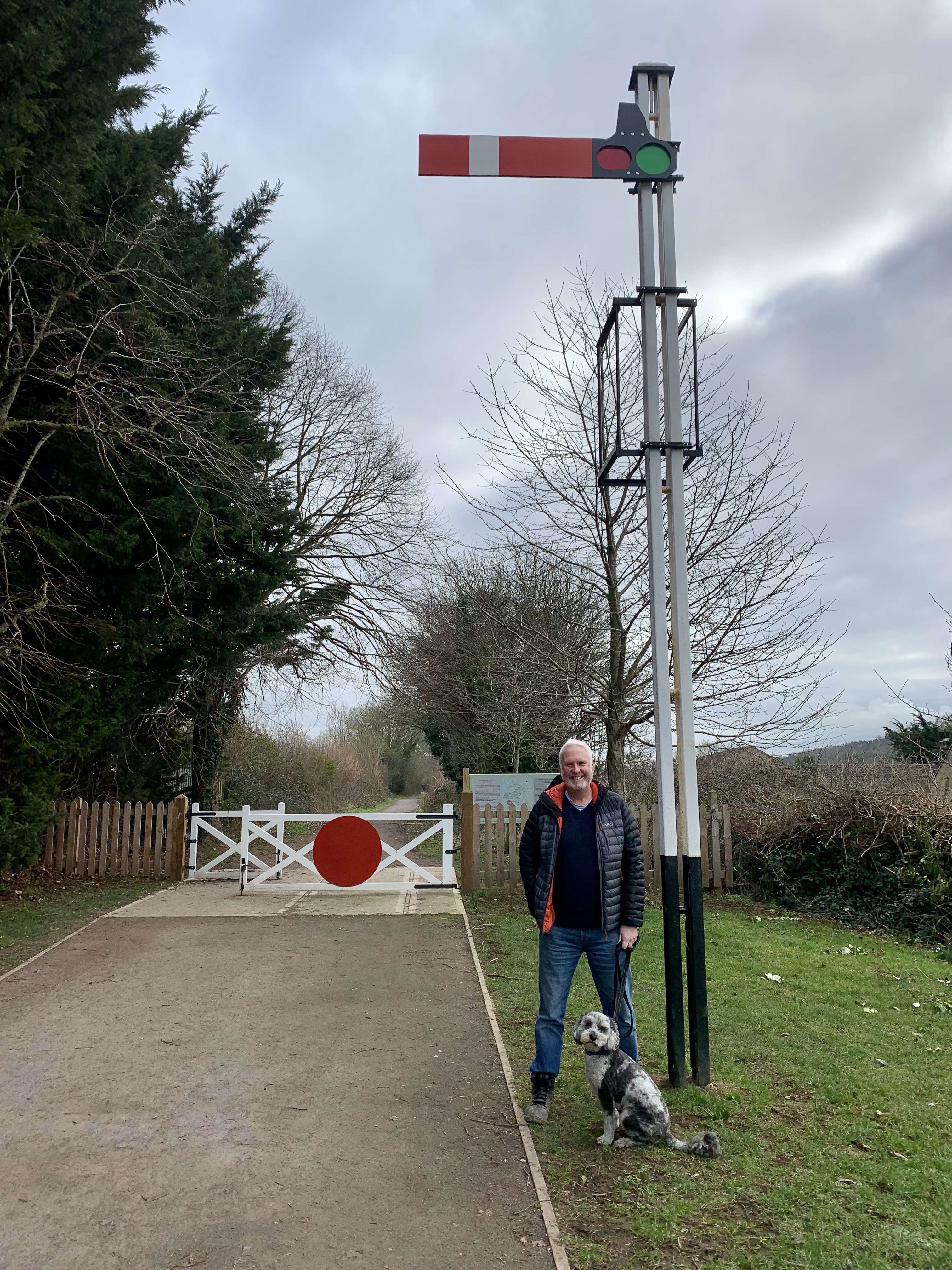
Saturday 11th February 2023, Yoshi, his mama and I headed to North Dorset to walk a section of the former Somerset & Dorset Joint Railway (S&DJR) trackbed which is now part of the North Dorset Trailway. We decided to walk four miles from Sturminster Newton to beyond Shillingstone and back, so that we could visit the North Dorset Railway and enjoy a refreshing cup of tea and a slice of cake before retracing our footsteps back to our starting point. However, we wish we had asked our North Dorset Correspondent where we could have found a cup of tea on our arrival back in Sturminster!
Yoshi amongst the snowdrops along the North Dorset Trailway – 11/02/2023Abandoned railway furniture on the North Dorset Trailway – 11/02/2023Lamb House Bridge, Shillingstone – 11/02/2023
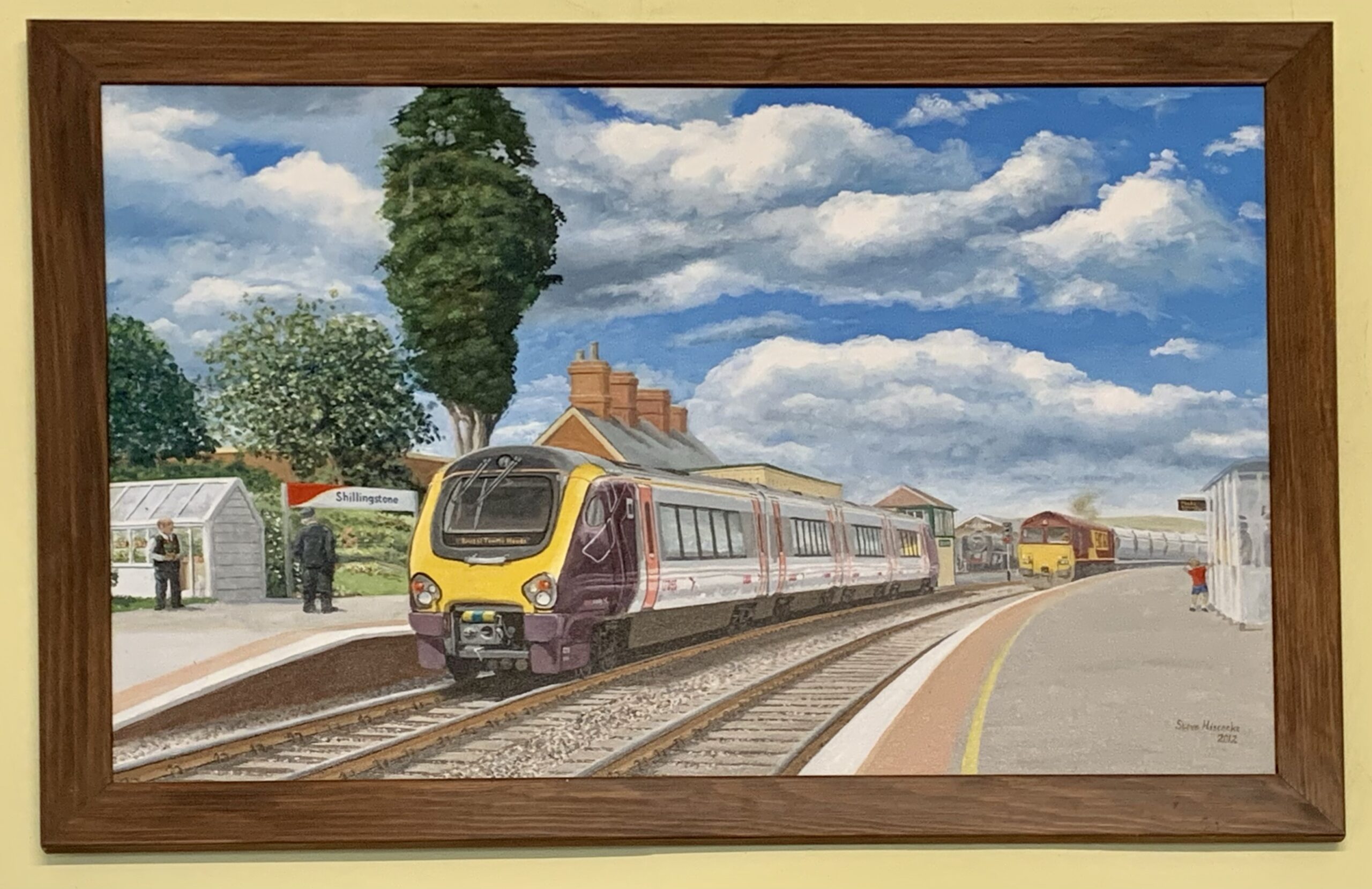
On arrival at Shillingstone we were able to watch some shunting manoeuvres which were taking place around the station site. The station which opened on the 31st August 1863 and is the last remaining building of the Dorset Central Railway which later formed part of the Somerset & Dorset Joint Railway running from Bournemouth West to Bath Green Park until falling victim to the Beeching cuts in March 1966.
There are several posters from the age of steam as well as a museum packed with railway artefacts on view at Shillingstone railway station – 11/02/2023
During World War I Shillingstone saw additional trains in the form of troop and supply workings. One such instance, in February 1915, saw the Naval Battalion based at Blandford Camp march en masse to Shillingstone to board a train bound for Avonmouth and ultimately to take part in the Gallipoli Campaign. Included in their number was the war poet Lt. Rupert Brooke who died of septicaemia en route off Skyros, Greece.
A few years after the station at Shillingstone closed to rail traffic, the Dorset County Council purchased the trackbed for a proposed road which would by-pass the village. This plan never came to fruition and the council eventually decided to dispose of the station site. Following protracted negotiations, the North Dorset Railway Trust signed a lease in 2005.
I loved this imaginary painting of what might have been and the S&DJR survived the Beeching cuts which hangs in the station tea rooms (Steve Hiscocks, 2012)
The North Dorset Railway Trust aim to relay track in the direction of Sturminster Newton over Lamb House Bridge. Maybe one day we may even see a Class 9F or similar working part of the route once again.
Hudswell Clarke 0-6-0 Diesel Loco Works No. D1186 ‘Ashdown’ passes Shillingstone signal box – 11/02/2023
‘Ashdown’ was built by Hudswell Clarke, Leeds in 1959 for use on the Manchester Ship Canal Railway (MSCR), numbered D1 and based at Partington coal basin she was the first of a small fleet of diesel locomotives working on the MSCR. She has had an illustrious career being sold on to Hunslet Engine Co. of Leeds, who leased the locomotive to the National Coal Board (NCB) Crompton colliery in Lancashire, before returning to Hunslets as their works shunter. In 1986 she was subject to a re-build before moving to the NCB Gwent Coal Distribution centre in Newport, South Wales. She was renumbered No. 8526 and named ‘Pride of Gwent’ lasting up to 1991 when she entered preservation firstly at the Butetown Historic Railway Society in Cardiff until 1997 before moving to the Vale of Glamorgan Railway. In 2008, she was purchased by the Pontypool and Blaenavon Railway. In July 2013, she was exchanged for a diesel locomotive located at Peak Rail in Derbyshire and reunited with the ‘Ashdown’ name. The North Dorset Railway purchased ‘Ashdown’ in 2020. She is of a unique design and therefore the only locomotive of this type preserved.
No. RH305302 (DS1169) ‘Little Eva’ was built by Ruston & Hornsby, at their Boultham Works, Lincoln in 1951, for the Ransome and Marles Bearing Co of Newark, where she was used to move steel casings around the factory site. She retired from service in 1978 and donated to the Market Overton Industrial Railway Trust before moving to the Statfold Barn Railway in Tamworth. She was purchased in 2015 and moved to Shillingstone and underwent full restoration.
Yoshi strikes a pose alongside Class 62 Yankee 0-6-0 Tank Locomotive No. 30076, Shillingstone – 11/02/2023
The Class 62 “Yankee Tank” steam locomotives were built from the US Army Transportation Corps template of S100 Shunters of World War II designed in 1941 by Colonel Howard G Hill. The class was extremely successful, proving powerful, economical to operate and relatively easy to maintain. More than 400 of these locomotives were deployed across Europe after the war, with over 100 ending up in Yugoslavia earning the designation Class 62. A further 90 of the class were built in Yugoslavia by Djuro Djakovic of Slavonski Brod between 1952 and 1961. Four original US built locomotives are preserved in the UK, one at the Bluebell Railway, two at the Kent & Sussex Railway and one at the Keighley and Worth Valley Railway.
Here in the UK, 14 (plus one for spare parts) of the S100 Class were purchased by the Southern Railway (SR) from the United States Army Transportation Corps in 1946, mainly for shunting in Southampton Docks, between the end of World War II and the end of steam in the 1968. Other examples saw use as industrial locomotives with Austin Motors/BMC at Longbridge, the NCB and on the Longmoor Military Railway.
There are two examples of these locomotives currently at Shillingstone. Firstly No. 30075, built in 1960 and acquired from Store Steel in Slovenia in 1990 after clocking up only 25,000 miles in service. She was transported to the Swanage Railway, where she was completely overhauled and returned to steam in late 1992. The locomotive suffered a major steam pipe failure in 1998 and was withdrawn from traffic. No. 30075 was then dismantled and moved to the East Somerset Railway in July 2002 and was returned to traffic in July 2004. August 2009 saw her being relocated to the Mid-Hants Railway and later visited the Bodmin & Wenford Railway, the Bristol Docks Railway, Yeovil Junction Steam Centre, the Churnet Valley Railway and the Dartmoor Railway. Following withdrawal due to leaks in the inner firebox, No. 30075 was eventually moved to Shillingstone for repairs in January 2016 where she is undergoing full restoration to operational service. On our visit, No. 30075 was under cover from the elements away from public view.
The second “Yankee” No. 30076 was built in 1954 with factory No. 62-521. She was purchased by the P62 Group in 2006 from Mittal Steel Zenica in Bosnia & Herzegovina and arrived at Shillingstone in 2016 after spending many years in store at Allelys Heavy Haulage in Studley near Birmingham. She will be a spares donor for her sister locomotive and as such will be on static display.
Yoshi enjoyed spending time on a sniffari during our walk along the former S&DJR track bed – 11/02/2023
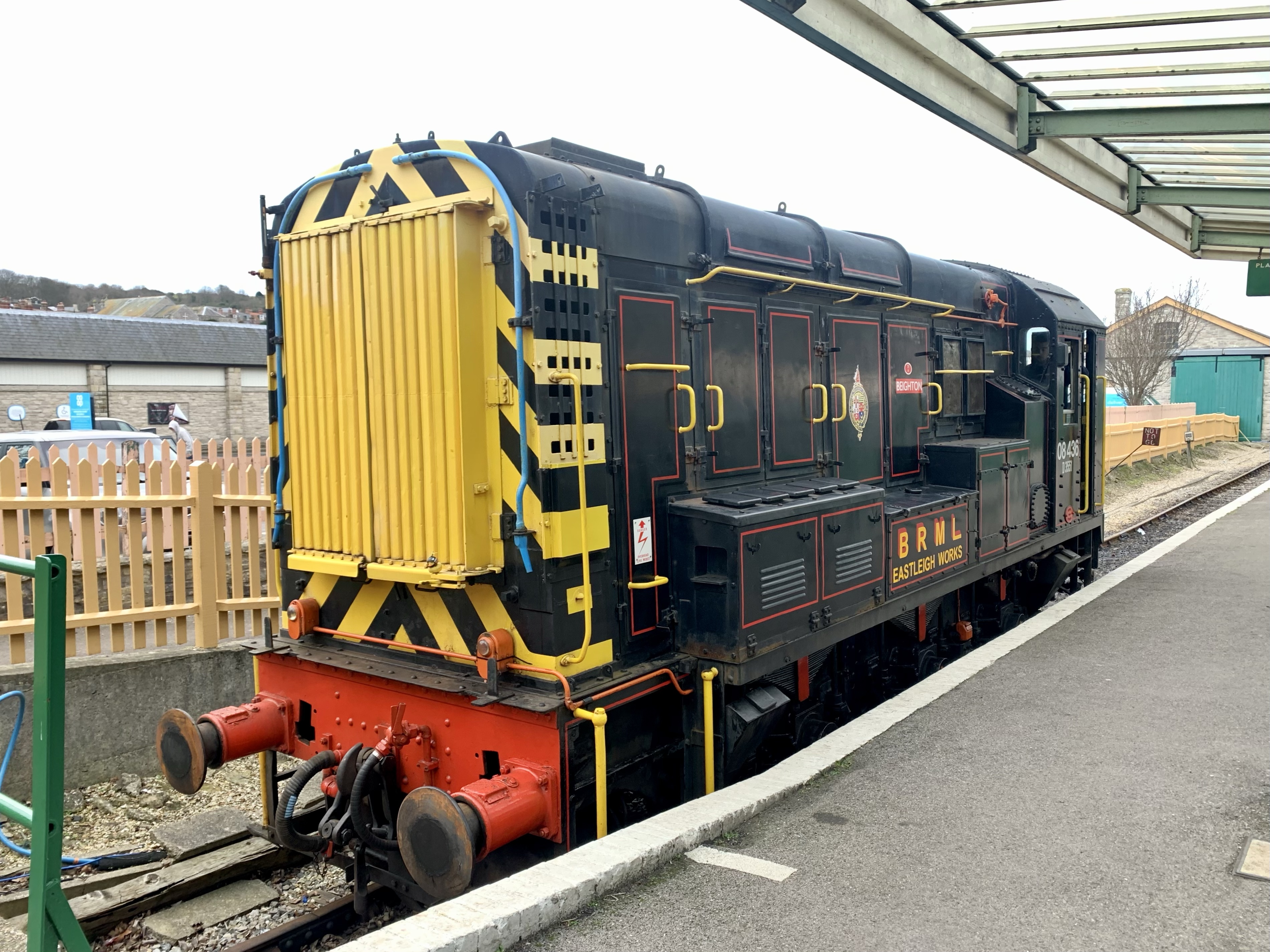
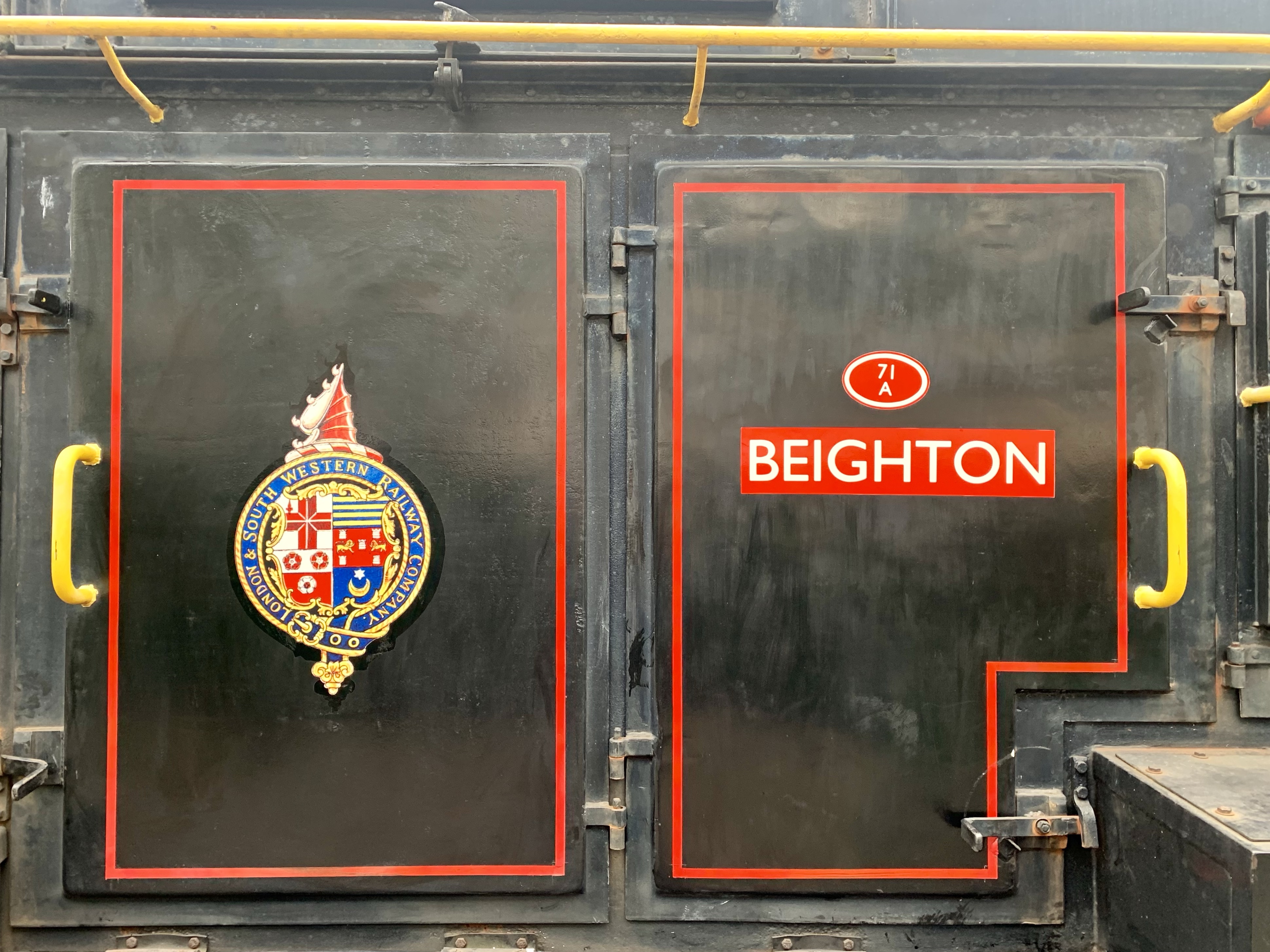
Over the weekend of 11th / 12th February 2023, the Swanage Railway held a special “Behind the Scenes” event with the aim of encouraging more volunteers to help out maintain and run the railway. Passengers were able to enjoy beautiful Purbeck countryside views not often enjoyed from a train thanks to a special heritage diesel train service employing the Class 117 DMU on the occasionally used four-mile line between Norden and the River Frome, within sight of Wareham. At Swanage railway station, SR West Country Class 4-6-2 No. 34028 ‘Eddystone’ was available for footplate visits and Class 08 diesel shunter No. 08436 ‘Beighton’ was the focus of a “driver for a fiver” experience while SR Battle of Britain Class 4-6-2 No. 34070 ‘Manston’ ran passenger trains between Swanage and Norden.
Class 08 No. 08436 waits patiently in the bay platform at Swanage – 12/02/2023Side detail of Class 08 No. 08436 – 12/02/2023
I was joined by my brother and @da_buckley967 at Swanage railway station at 0930 on the Sunday morning as we had managed to book the first three available slots of this sell out escapade. Once the doors to the booking hall were unlocked, we made ourselves known and signed our lives away on a safety declaration. We then learned that the driver who was conducting the driver experience was marooned in Eastleigh because of transportation issues and an emergency relief driver had been called in to take their place, necessitating a thirty minute delay. This gave us the opportunity to grab a cuppa and take a look at ‘Eddystone’ parked up in the station and to watch ‘Manston’ depart with the first steam hauled train of the day while I constantly complained about not having any gloves with me because I was finding it cold. Diddums. At 1020 we were ushered over to No. 08436 and I was first to be allowed to climb onboard and take the controls.
It really was a fun and interesting ten minutes being supervised at the number 2 driver position. I think was a bit harsh on the brake, and I’m amazed at the poor visibility looking out of the windows down the nose of the Class 08 and drivers, past, present and future have my full admiration! Grateful thanks to The Swanage Railway for including the chance for a taste of driving the loco as one of the ‘open weekend’ attractions – you can share our experience in the video below:
Driver for a Fiver! – 12/02/2023Swanage Railway’s Class 117 DMU at Creech Bottom with a River Frome to Norden service – 12/02/2023
Swanage Railway’s Class 117 DMU on the Norden to the River Frome section, February 2023SR West Country Class 4-6-2 No. 34028 ‘Eddystone’ on display in Swanage enabling visitors the opportunity to view the locomotive’s footplate – 12/02/2023
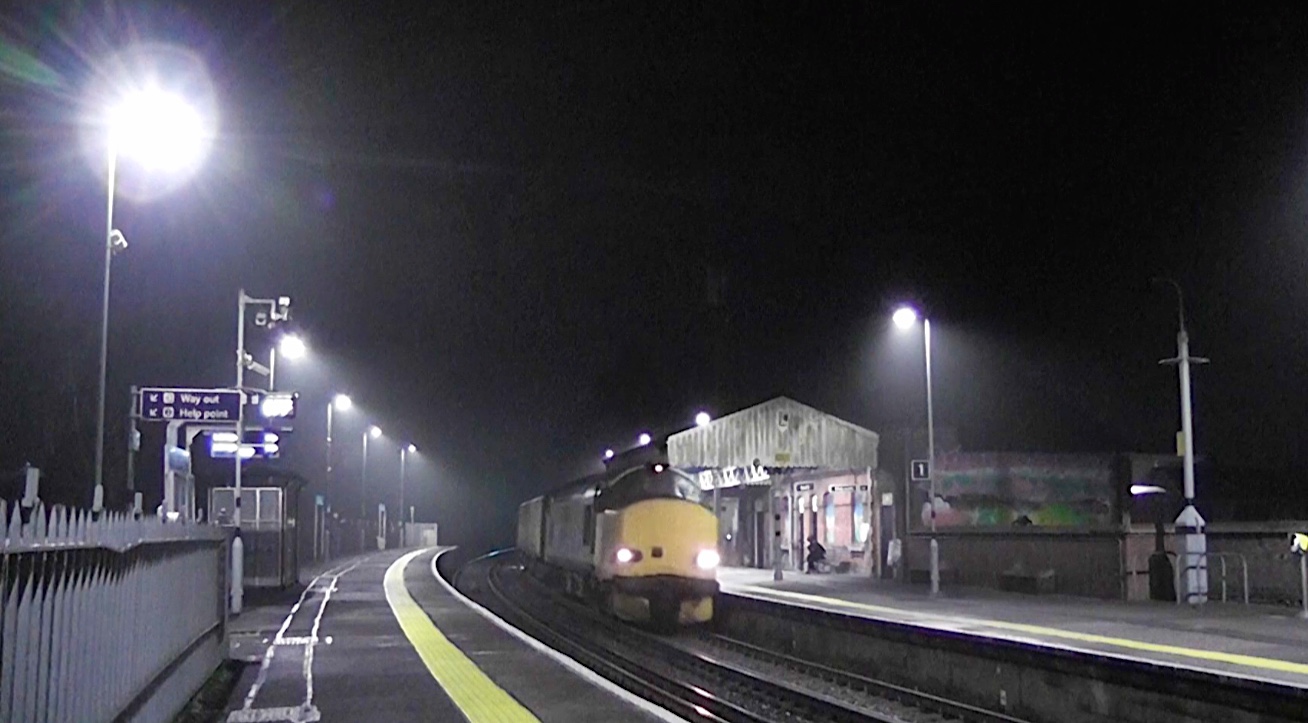
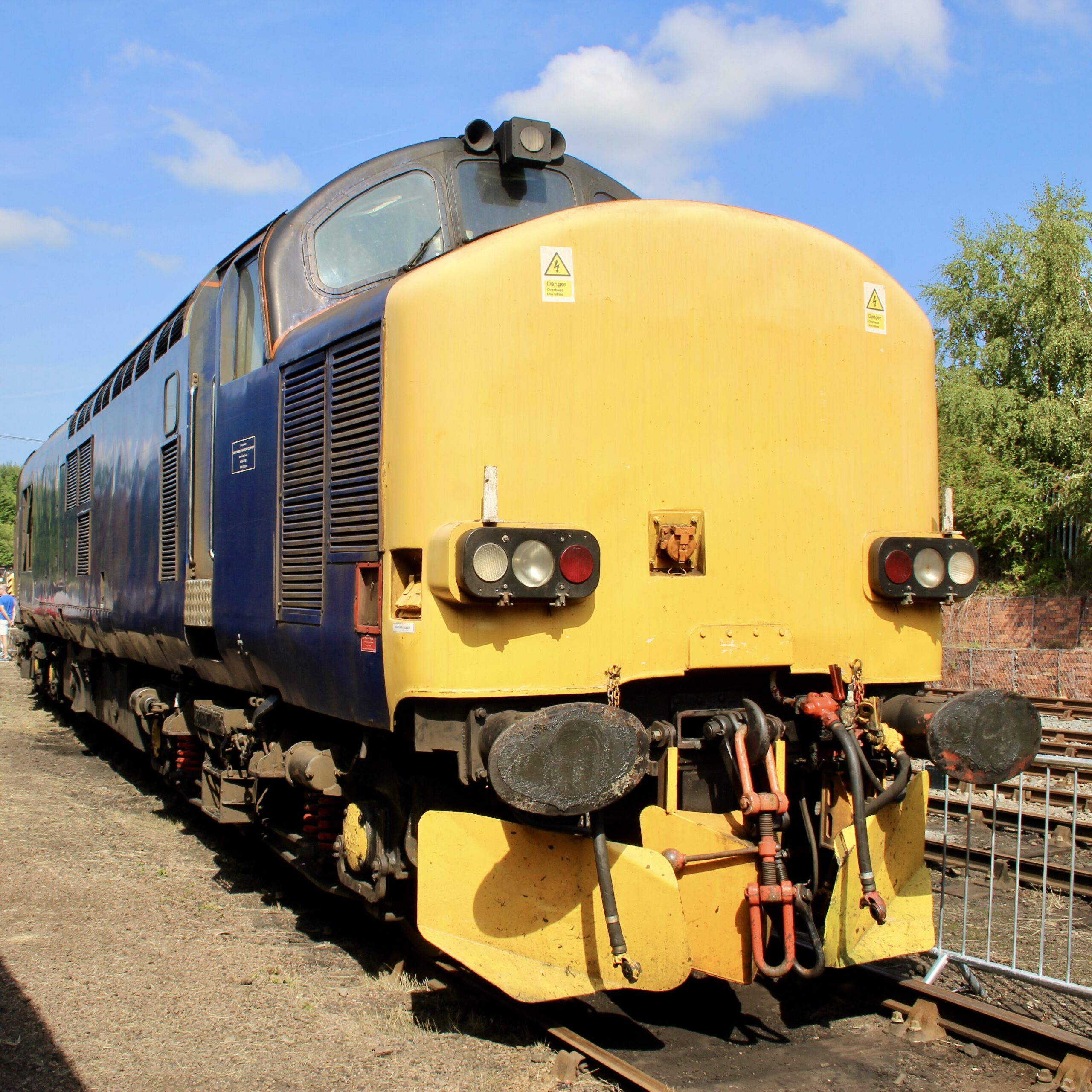
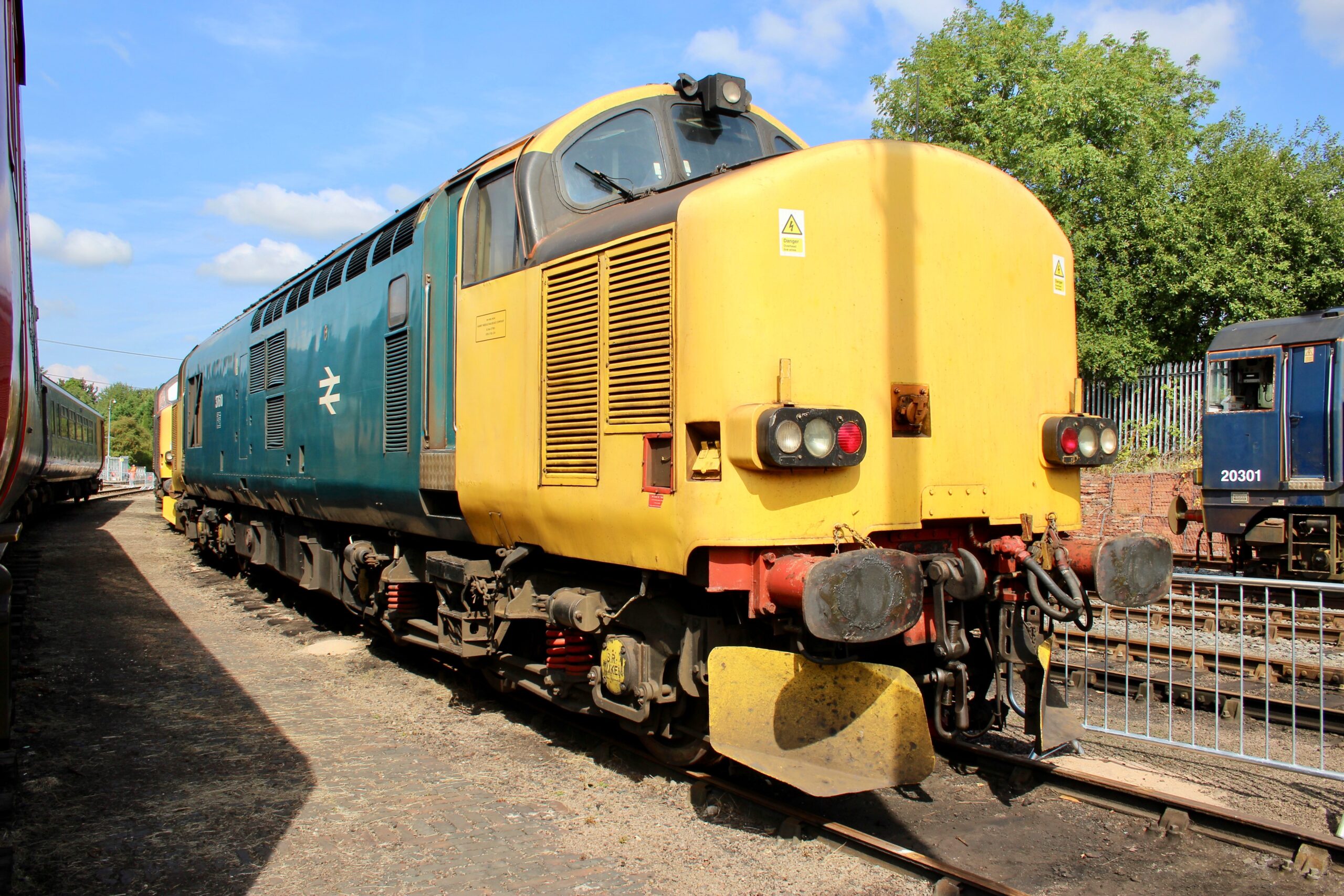
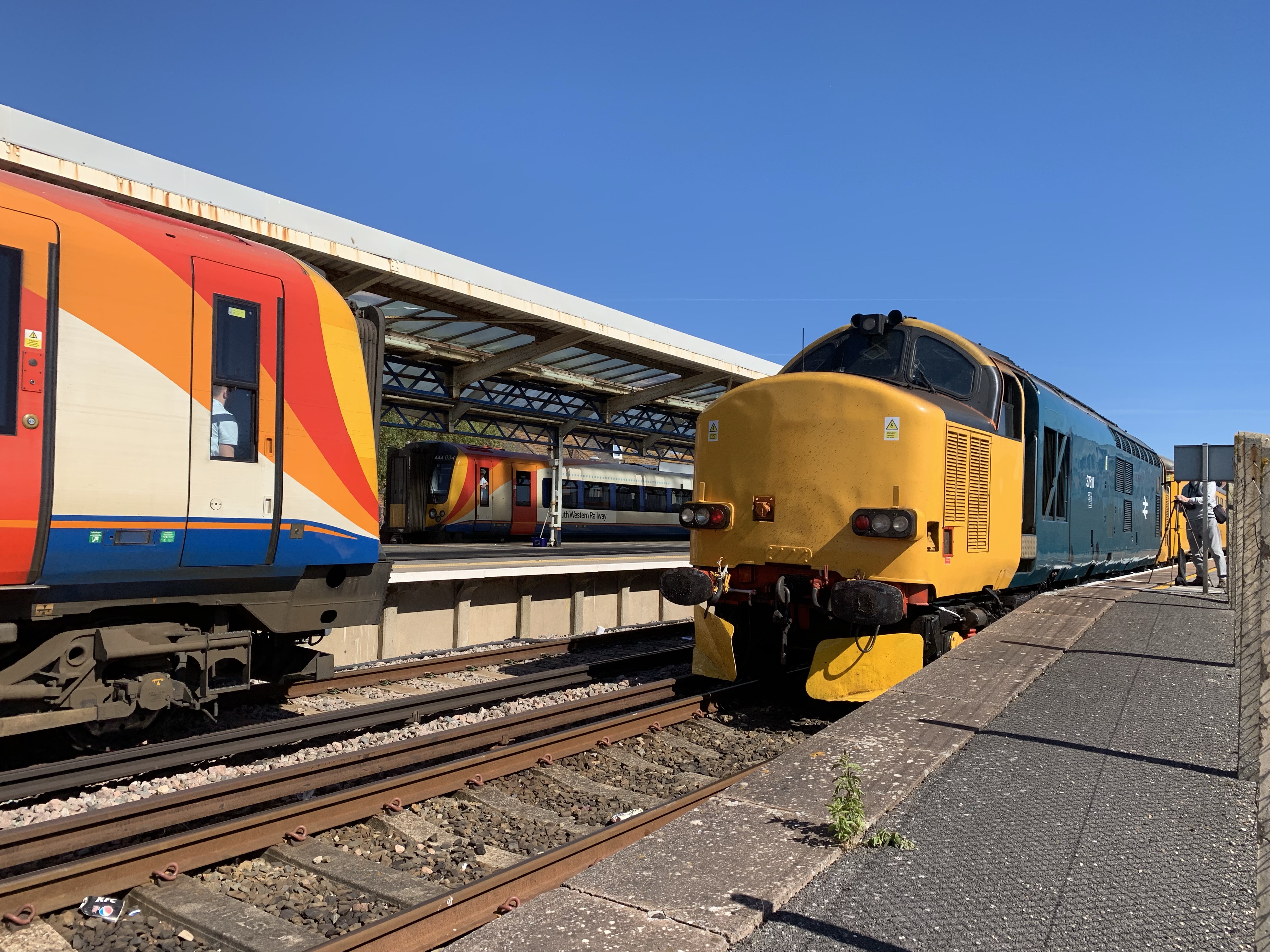
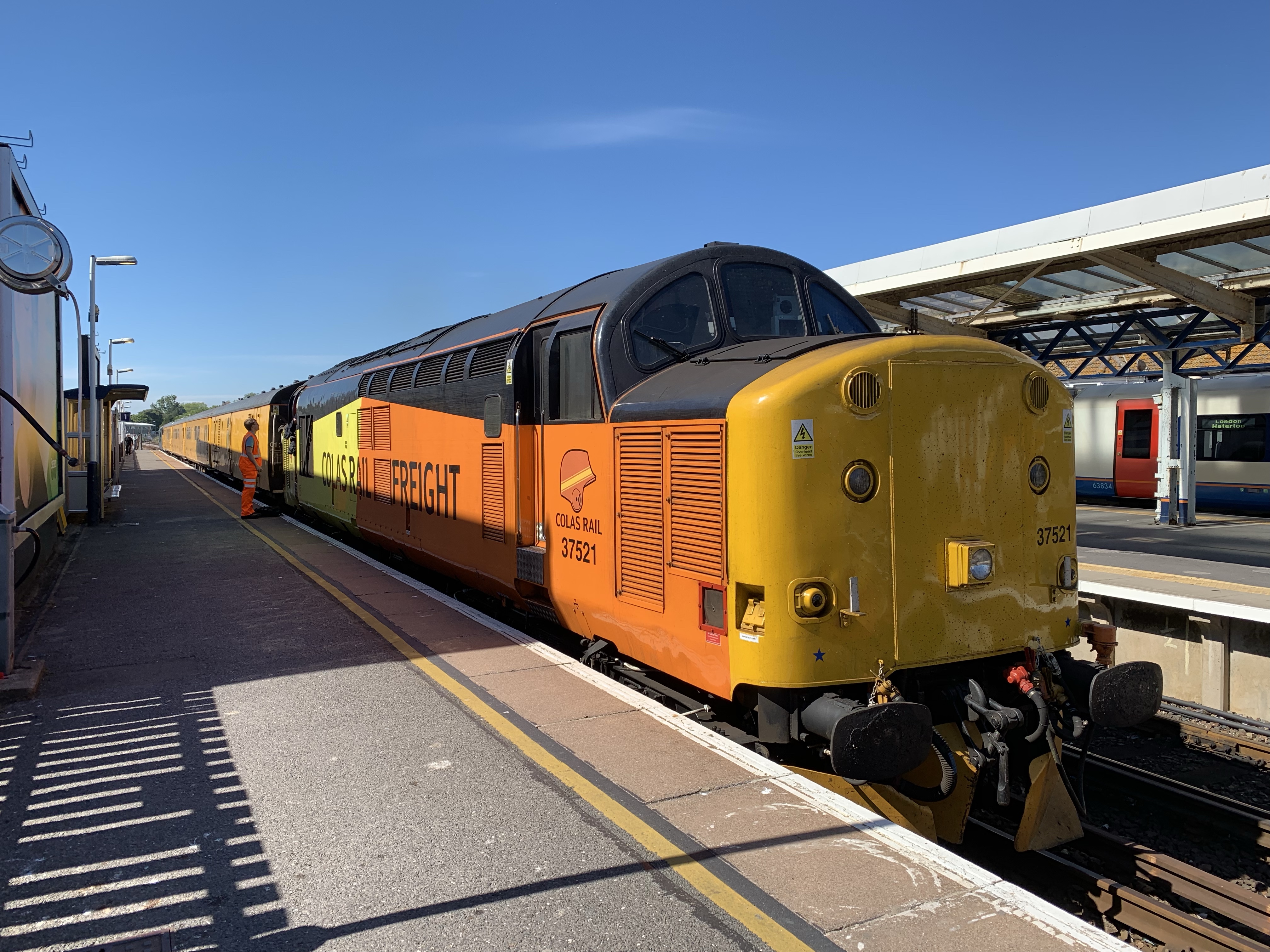
Monday evening saw a Class 37 top and tailed test train actually find its way to Dorset in 2023 with 1Q51 1115 Derby RTC to Eastleigh East Yard via Weymouth. I decided to see Colas liveried Class 37 No. 37254 ‘Cardiff Canton’ and on hire No. 37610 pass through Poole on the outward run and couldn’t resist a second shot at Hamworthy as they returned on the final leg to Eastleigh East Yard. It was a foggy evening and the sound of the two English Electric built veterans could be heard from several miles away – pure bliss!
Colas Class 37 No. 37254 ‘Cardiff Canton’ passing through Poole (video screen grab) – 13/02/2023Harry Needle Railroad Company owned Class 37 No. 37610 on hire to Colas Rail accelerates through Hamworthy (video screen grab) – 13/02/2023
1Q51 1115 Derby RTC to Eastleigh East Yard – 11/02/2023
Thank you, dear reader, for visiting and your comments and corrections which are very much appreciated! We’ll be back next week for a delve into our archives for video of ‘Flying Scotsman’ as we celebrate 100 years of the world’s most famous steam locomotive.
Sturminster Newton – the start and end point of our walk this week – 11/02/2023
The Night Journey
Rupert Brooke (1887-1915)
Hands and lit faces eddy to a line; The dazed last minutes click; the clamour dies. Beyond the great-swung are o’ the roof, divine, Night, smoky-scarv’d, with thousand coloured eyes
Glares the imperious mystery of the way. Thirsty for dark, you feel the long-limbed train Throb, stretch, thrill motion, slide, pull out and sway, Strain for the far, pause, draw to strength again. . . .
As a man, caught by some great hour, will rise, Slow-limbed, to meet the light or find his love; And, breathing long, with staring sightless eyes, Hands out, head back, agape and silent, move
Sure as a flood, smooth as a vast wind blowing; And, gathering power and purpose as he goes, Unstumbling, unreluctant, strong, unknowing, Borne by a will not his, that lifts, that grows,
Sweep out to darkness, triumphing in his goal, Out of the fire, out of the little room. . . . —There is an end appointed. O my soul! Crimson and green and signals burn; the gloom
Is hung with steam’s far-blowing livid streamers. Lost into God, as lights in light, we fly, Grown one with will, end-drunken huddled dreamers. The white lights roar. The sounds of the world die.
And lips and laughter are forgotten things. Speed sharpens; grows. Into the night, and on, The strength and splendor of our purpose swings. The lamps fade; and the stars. We are alone.
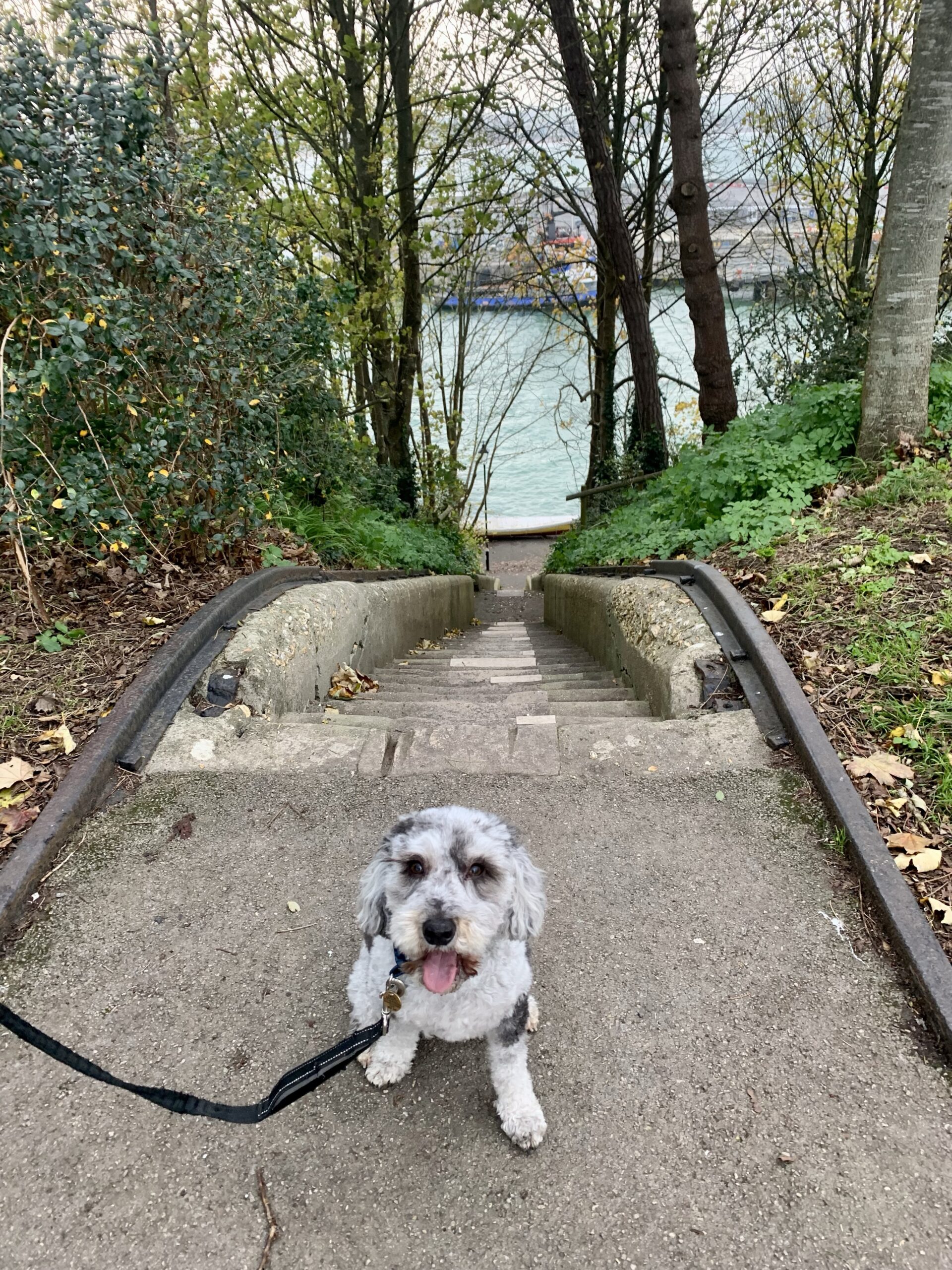
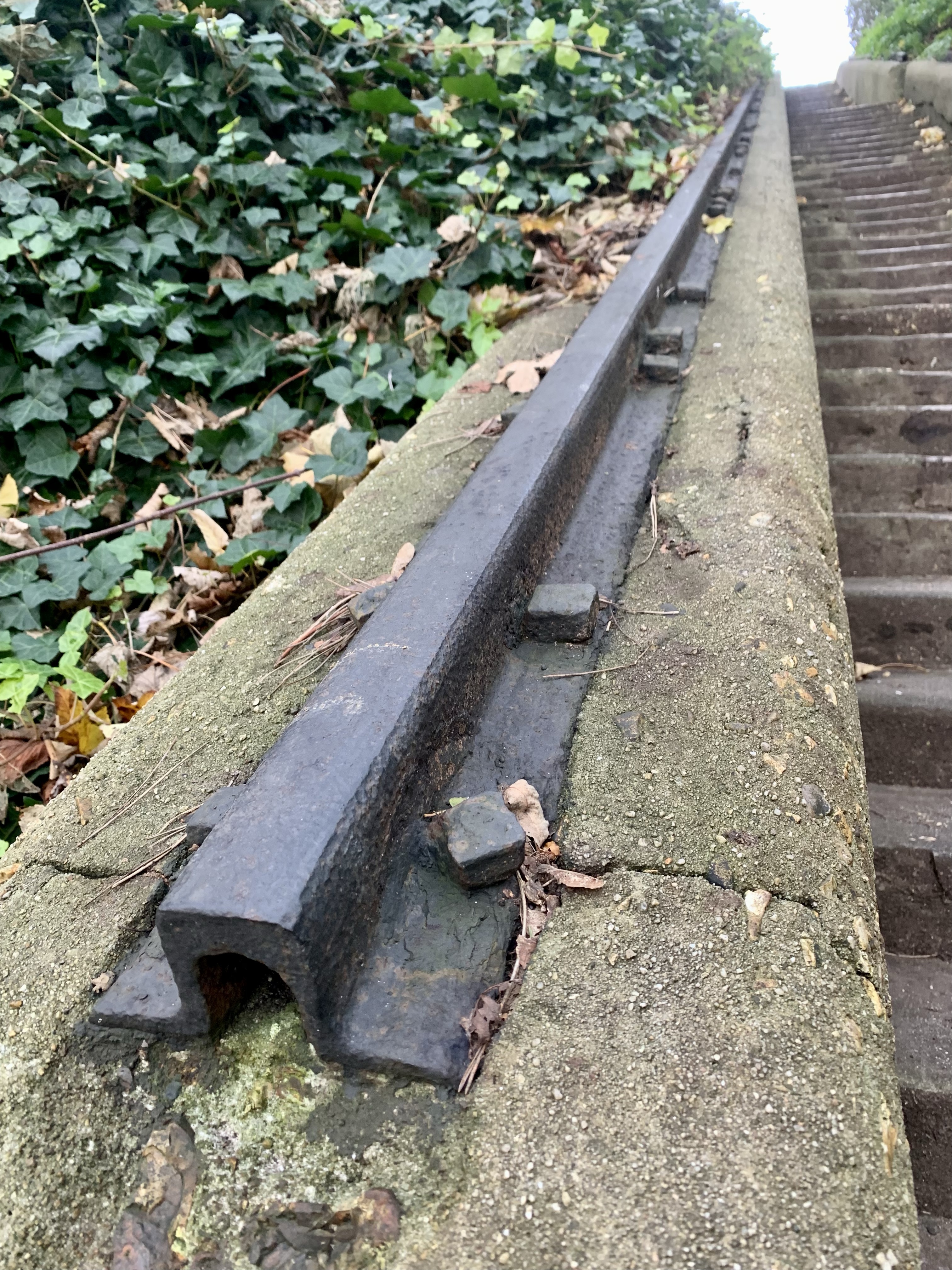
Yoshi at the top of the Fusee Steps at The Nothe, Weymouth – 04/12/2022Fusee Steps, The Nothe Weymouth – 04/12/2022Broad gauge rail attached to Fusee Steps, The Nothe Weymouth – 04/12/2022
On Sunday we had a wander around the Nothe in Weymouth where we had a close look at these rails fixed to walls either side of Fusee Steps and wondered what their origin was. Historic England dates the steps and inclined tramway as circa 1860 and describes them as “Three flights of steps with low flanking walls of rendered brick, on which are placed wrought-iron plate rails, forming an inclined tramway for trolleys with double-flange wheels. It was constructed for hauling trolleys transporting ammunition, spares and stores from the quay to Nothe Fort.” We asked the Nothe Fort for any information about the rails, and although there is some dispute about the age and purpose of the them it is believed the tracks themselves are Great Western Railway broad gauge rail, of which large amounts became redundant in the late 19th Century when the GWR converted to standard gauge and much of the track was recycled for use in engineering projects. Many thanks to Geoff Culver from the Nothe Fort Curatorial Team for responding to our questions.
Yoshi previously visited the Nothe Fort for a silent disco around Luke Jerram’s “Museum of the Moon” – 13/07/2019
Wednesday 24th November 2022 and it was time for the appearance of the regular 1Z22 0644 Derby Railway Technical Centre to Bristol Kingsland Road via Weymouth test train. This month the train was once again in the charge of two Class 37 locomotives, and we chose to see the train at Maiden Newton as it worked its way down to Weymouth running around eleven minutes late at this point.
Class 37 No. 37612 approaching Maiden Newton leading 1Z22 0644 Derby Railway Technical Centre to Bristol Kingsland Road – 30/11/2022Class 37 No. 37610 having departed Maiden Newton at the rear of 1Z22 0644 Derby Railway Technical Centre to Bristol Kingsland Road – 30/11/2022
30/11/2022 1Z22 0644 Derby Railway Technical Centre to Bristol Kingsland Road via Weymouth – many thanks for additional video from G E Barrett and @da_buckley967
We saw both of these locomotives, which are on hire from the Harry Needle Railroad Company at Barrow road earlier in the year:
Class 37 No. 37612 on static display at Barrow Hill 150+2 – 28/08/2022Class 37 No. 37610 Barrow Hill – 28/08/2022
The same pair of locomotives worked the equivalent test train in December 2020 which originated at that time from Tyseley LMD – 02/12/2020Class 37 No. 37610 at Weymouth having worked the 0820 Tyseley TMD to Bristol High Level Siding – 22/05/2019Class 37 No. 37521 assisted 37610 on this run of the 0820 Tyseley TMD to Bristol High Level Siding test train, seen here at Weymouth – 22/05/2019
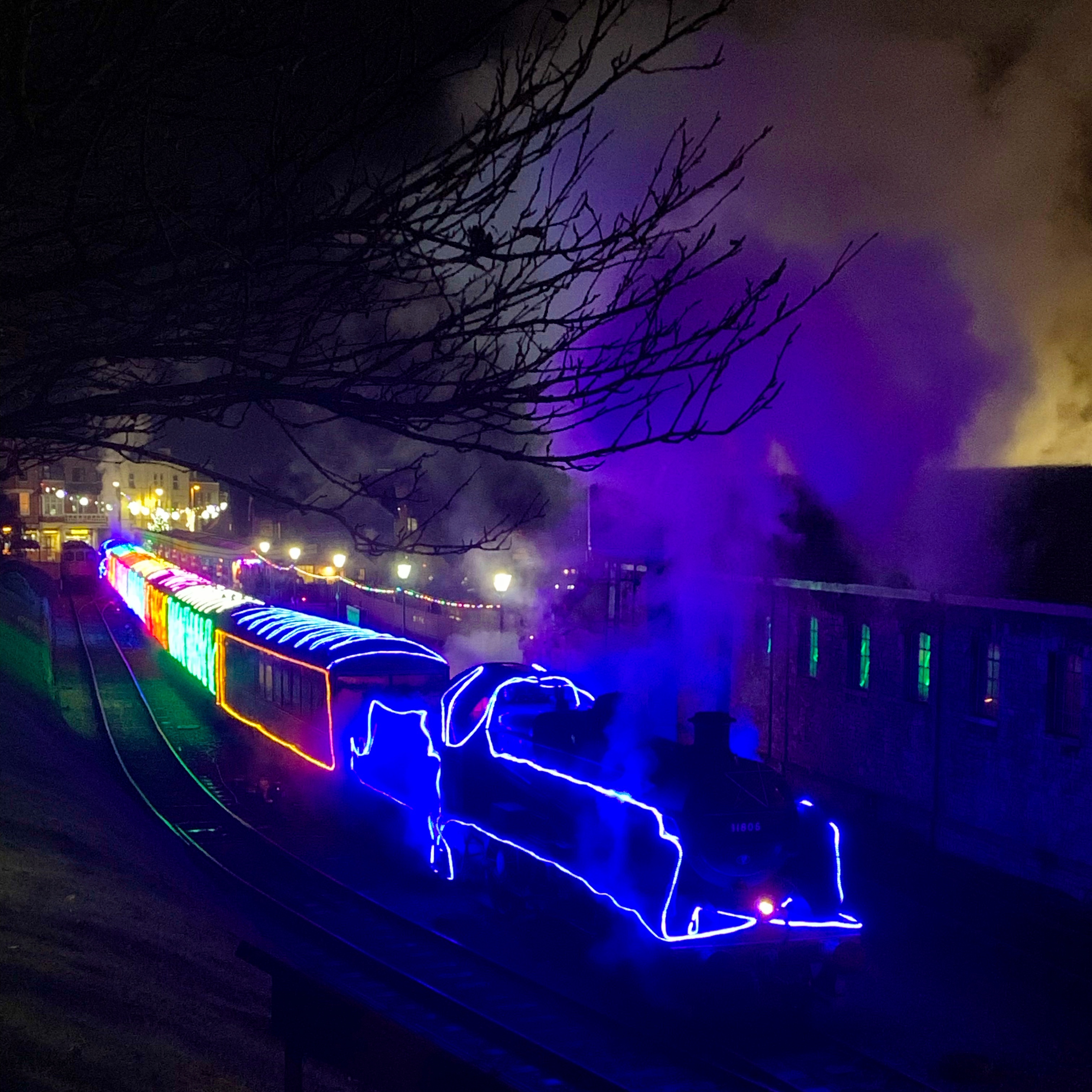
With Christmas fast approaching, it’s the time of year when many UK heritage railways run steam and lights trains, and the Swanage Railway is no exception. Thursday 1st December 2022 saw festive light adorned Southern Railway (SR) U Class 2-6-0 No. 31806 and SR Bulleid West Country Pacific 4-6-2 No. 34028 ‘Eddystone’ top and tailing a trial run for staff and volunteers. The previous evening saw the train operated empty with resident Class 33 diesel locomotives as the final Christamassy tweaks were made to the service.
SR U Class 2-6-0 No. 31806 prepares to depart Swanage with a special outing pre-season opener for the 2022 Steam and Lights train for staff and volunteers – 01/12/2022
Video of the pre-season steam hauled lights train – 01/12/2022
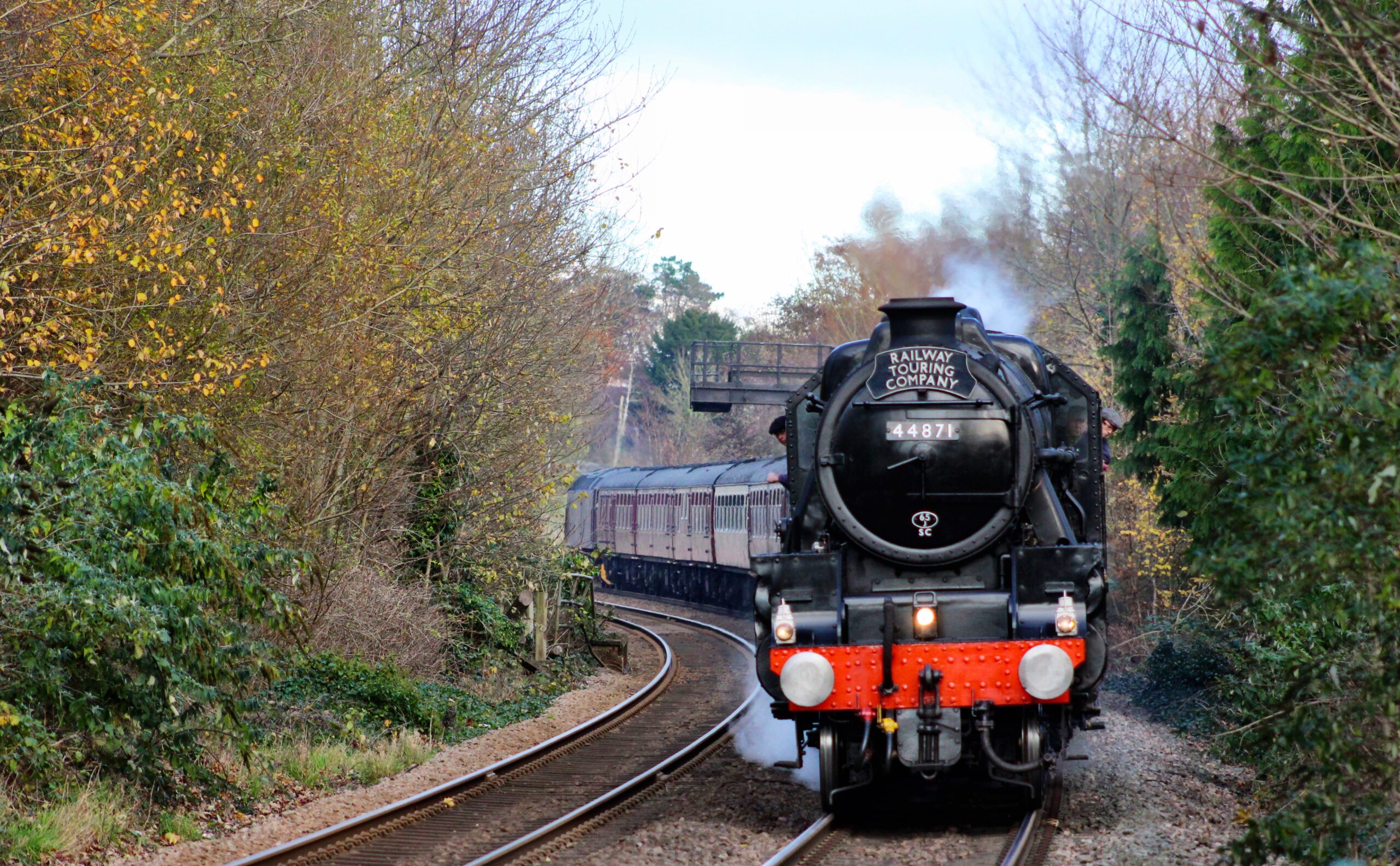
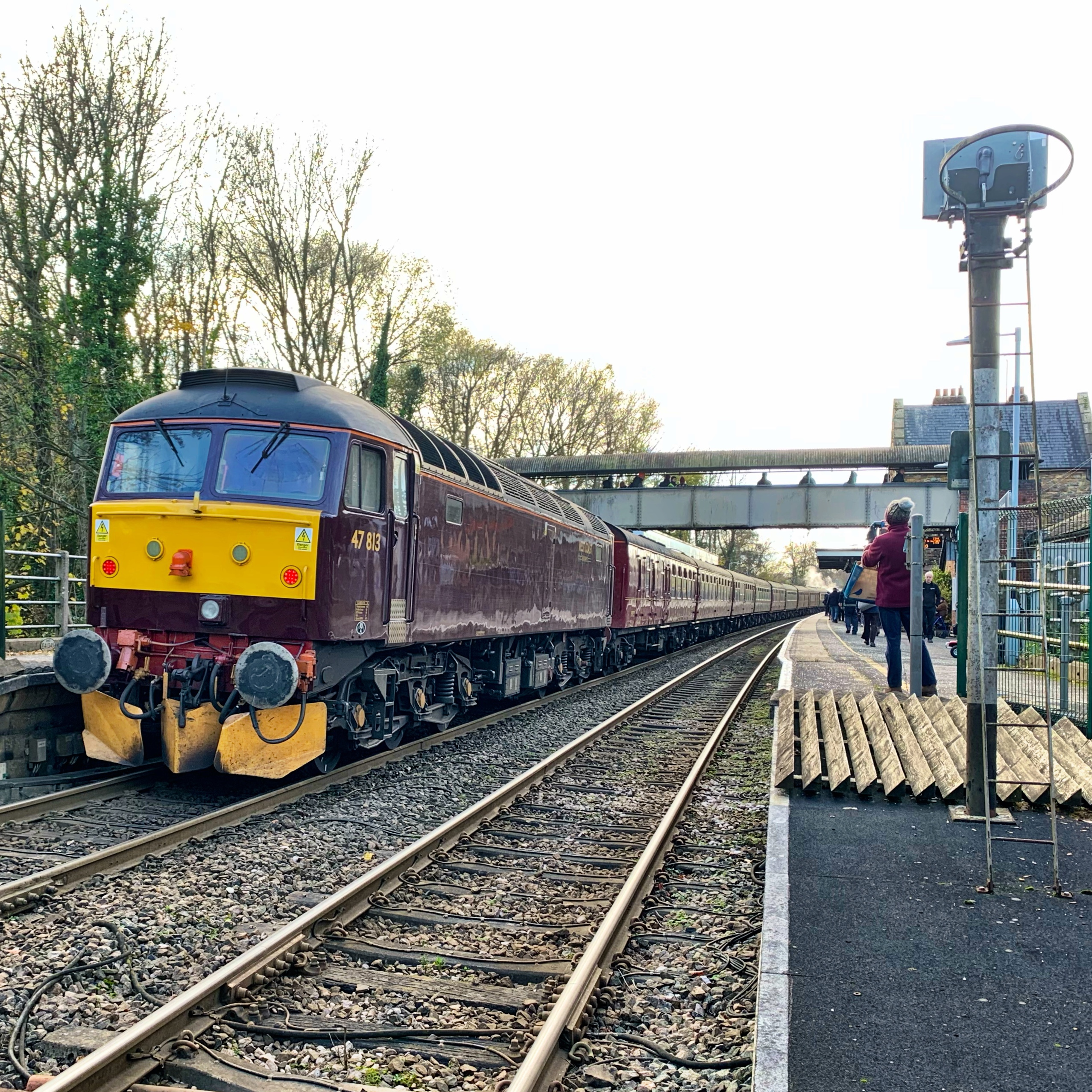
The Railway Touring Company ran a steam hauled excursion from London Victoria to Yeovil, stopping to drop off passengers at Sherborne for a Christmas carol service held at Sherborne Abbey on Tuesday 6th April 2022. The rail tour, top and tailed by London Midland & Scottish (LMS) Stanier Black Five 4-6-0 No. 44871 and West Coast Railway Company Class 47 No. 47813, continued on to Yeovil Junction for servicing before heading back to Sherborne to pick up passengers for the return to London.
Ian Riley’s LMS Stanier Black Five 4-6-0 No. 44871 approaches Sherborne working 1Z82 0830 London Victoria to Yeovil JN DN Main Platform – 06/12/2022WCRC Class 47 No. 47813 pauses at Sherborne at the rear of “The Sherborne Christmas Carol” 1Z82 0830 London Victoria to Yeovil JN DN Main Platform – 06/12/2022
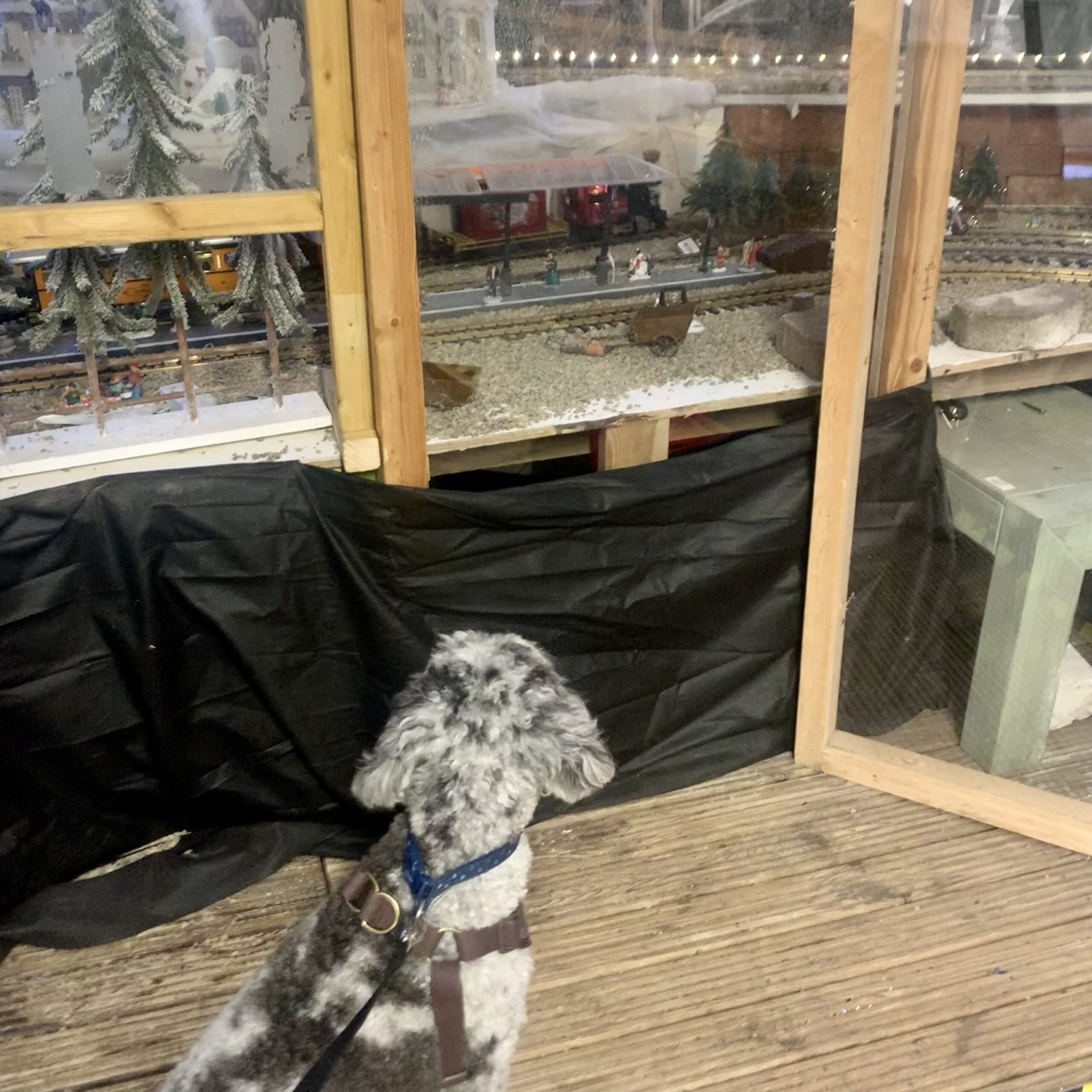
“The Sherborne Christmas Carol” rail tour at Sherborne – 06/12/2022 with additional video kindly provided by Caroline SmithWhile we were in Sherborne, we visited the Castle Garden Centre where Yoshi enjoyed watching the trains on the festive themed model railway – 06/12/2022
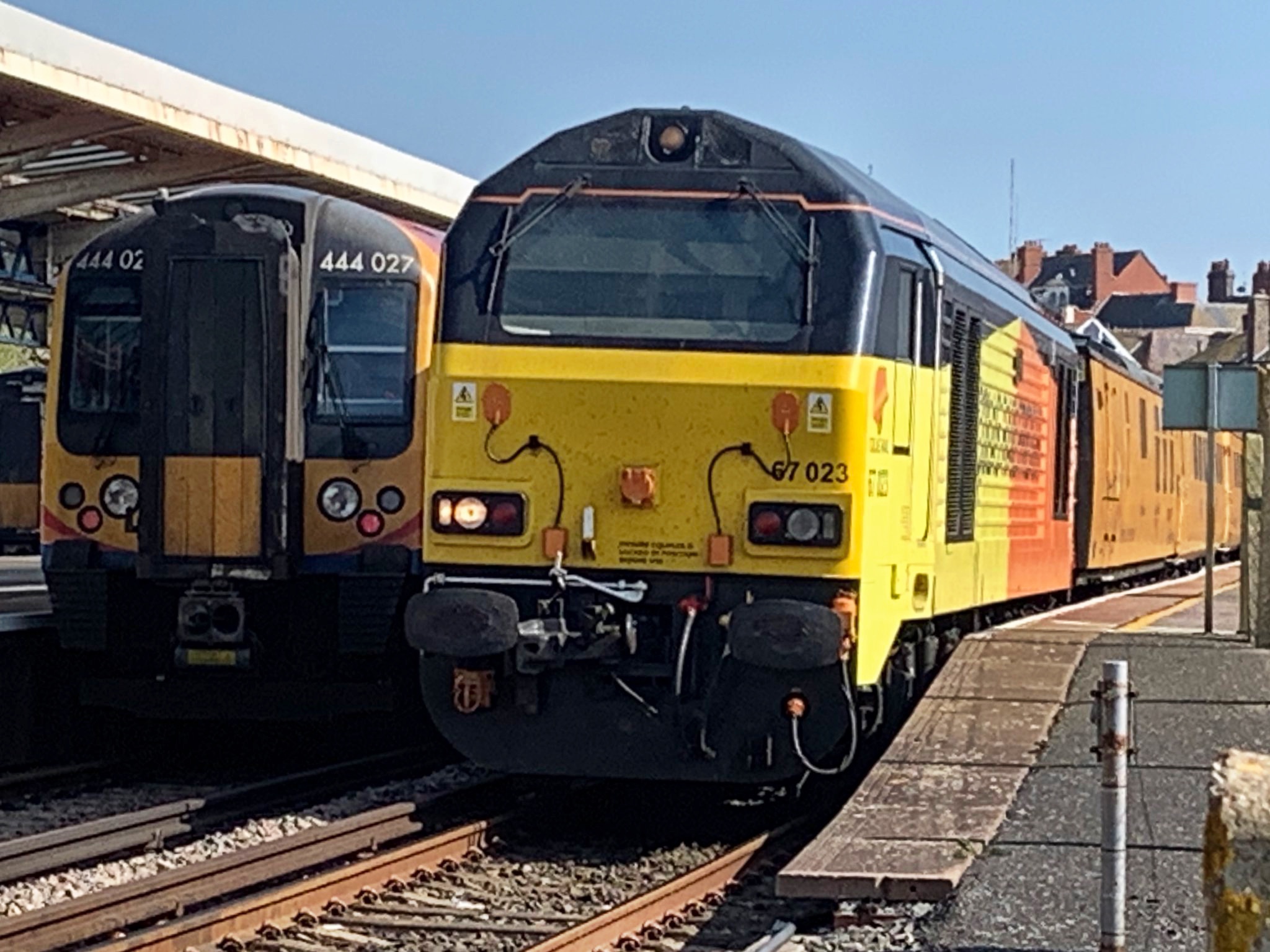
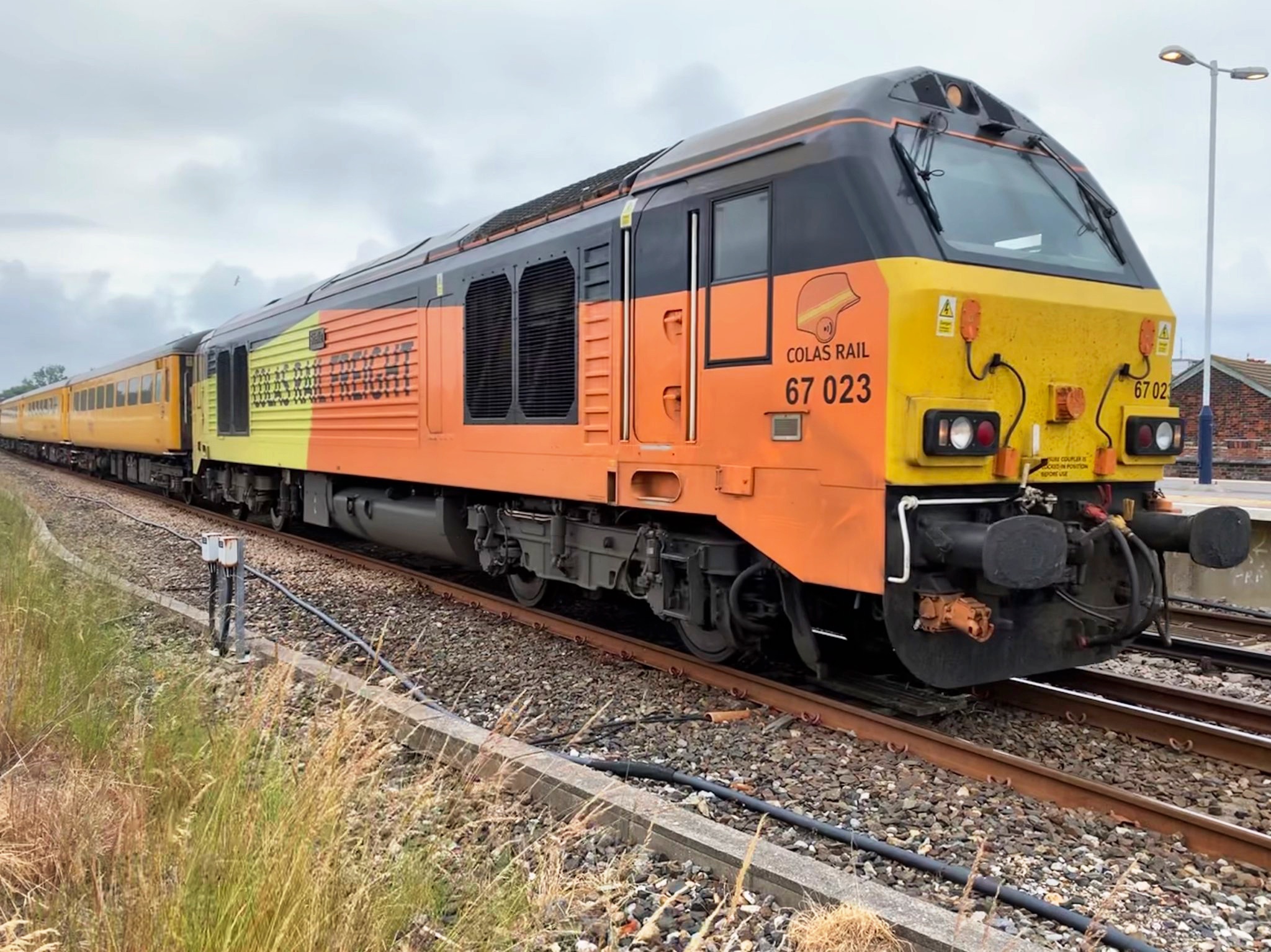
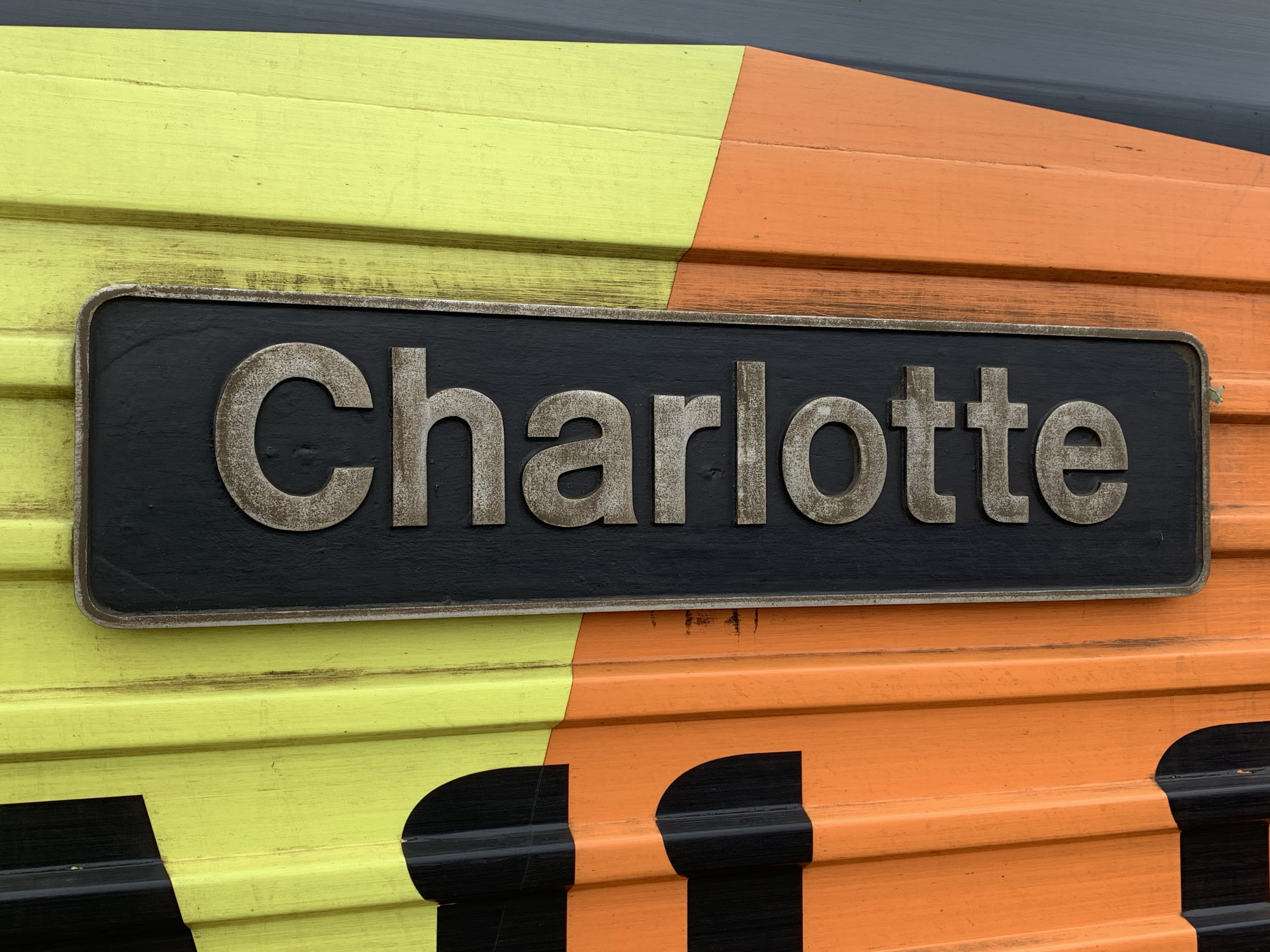
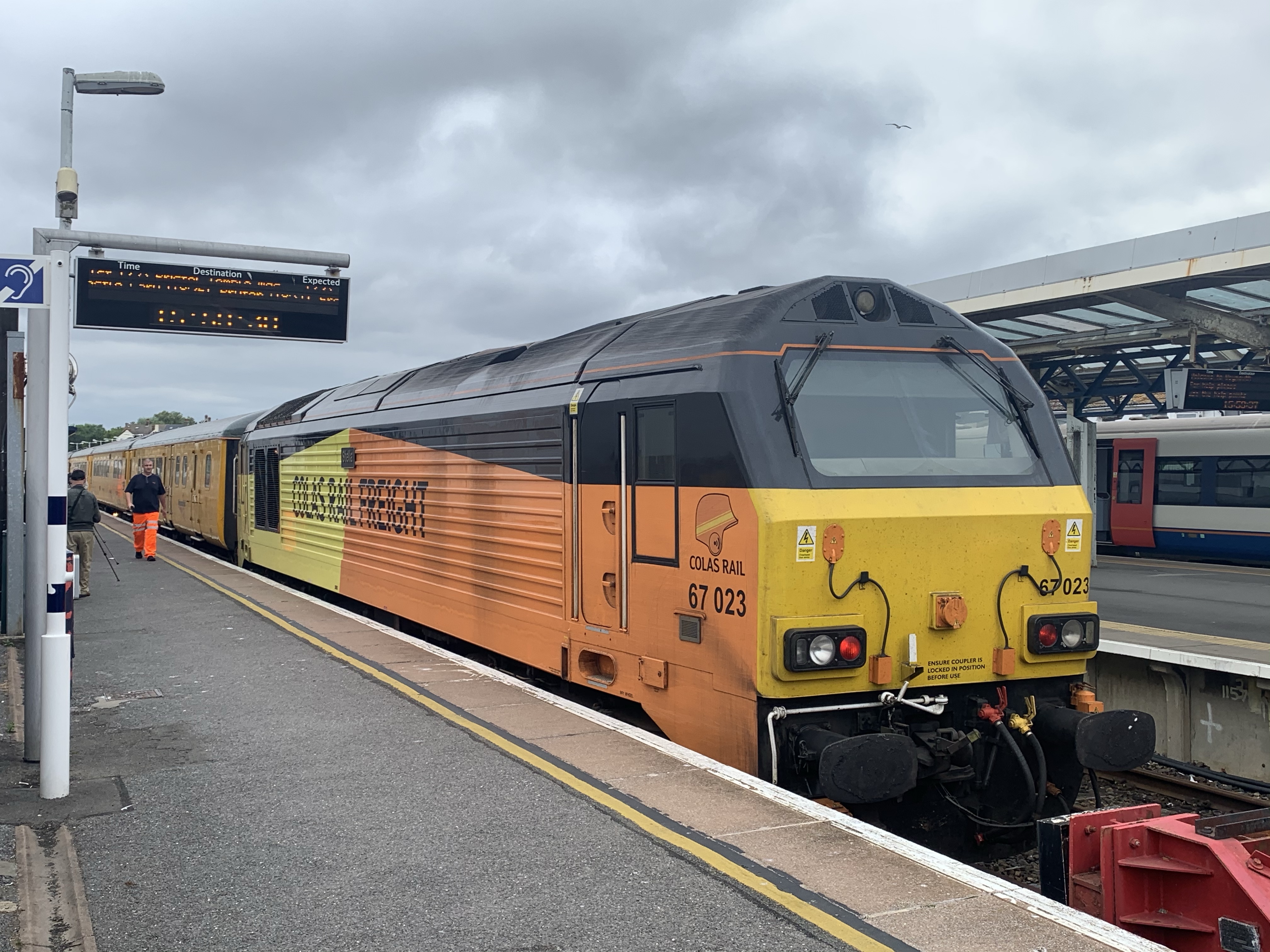
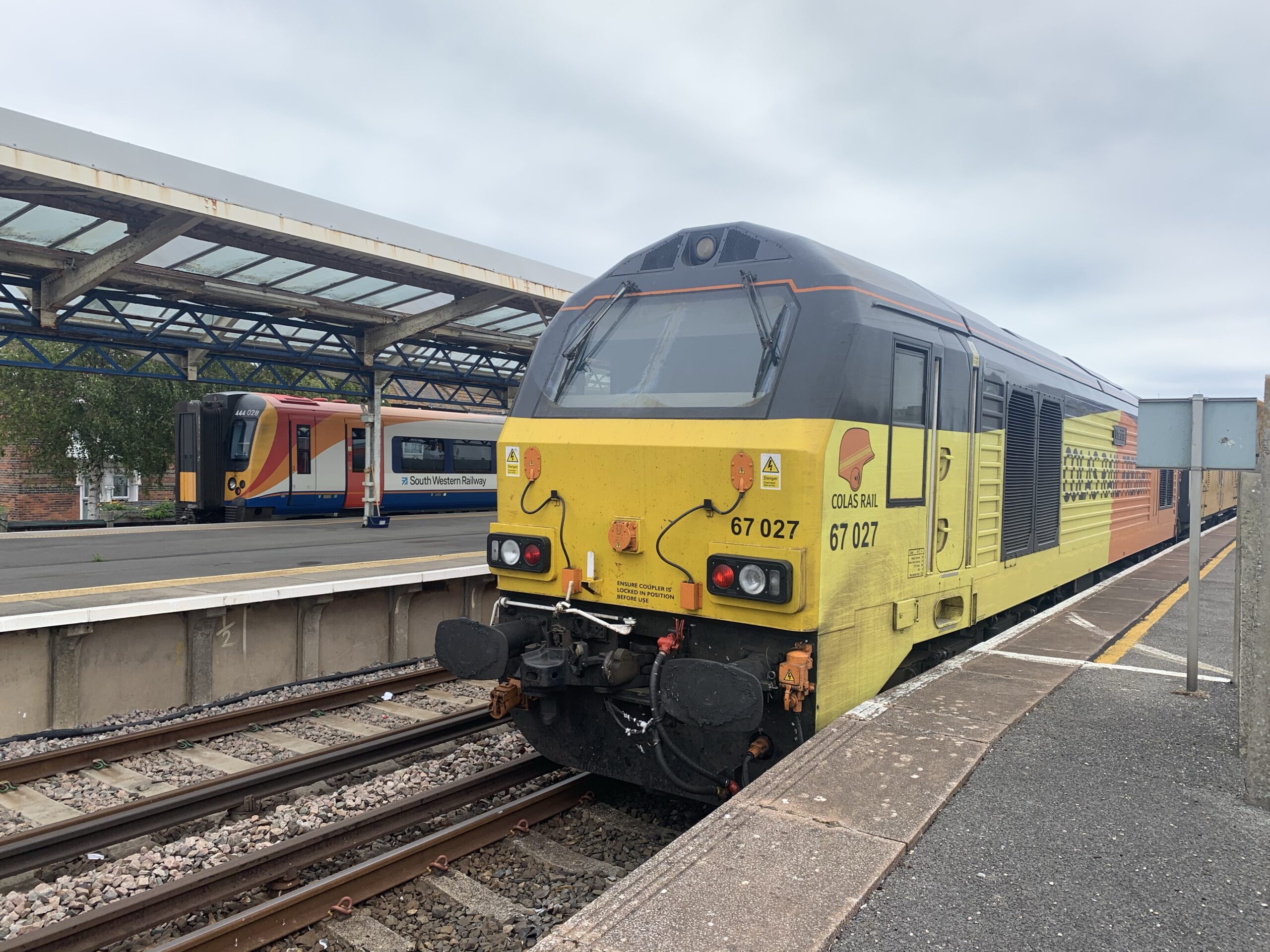
While waiting for the Class 37 test train at Maiden Newton last Wednesday, I remembered that previously the equivalent test train in recent years was often top and tailed by Colas Class 67 locomotives. During this period, the test train was often turned around at Dorchester and missed out the section to Weymouth, very frustrating for those of us waiting at the seaside terminus. The two Colas Class 67 locomotives which were repeatedly turned out for the Tyseley TMD to Bristol High Level Siding via Weymouth test train were No.’s 67023 ‘Stella’ and 67027 ‘Charlotte’. Formerly part of the DB Cargo fleet, in January 2017 these two Class 67’s were sold to Colas Rail and they were repainted into Colas orange and black at Toton Traction Maintenance Depot for use on Network Rail (NR) infrastructure monitoring trains. They received their nameplates in June 2017. In December 2018, the pair were included in a sale of 67 France and UK based locomotives to Beacon Rail Leasing. They were subsequently leased back to Colas Rail. More recently they have been acquired by GBRf for use on operations including charter, passenger and stock moves including hauling the Highland section of the Caledonian Sleeper.
The Bo-Bo Class 67 diesel-electric locomotives were built for DB Cargo forerunner English Welsh & Scottish Railway (EWS) between 1999 and 2000 by Alstom at Meinfesa in Valencia, Spain with the engine, generator and traction motors provided by General Motors Electro-Motive Division. The locomotives are able to supply Electric Train Supply for passenger train heating and air-conditioning. They were at first primarily utilised for mail trains, but with diminishing traffic, the contract finally ceased in March 2004.
High speed running tests were undertaken with No. 67002 at Alstom’s facility at La Sagra, Toledo, Spain and running on the standard gauge Madrid-Toledo high-speed rail line where a top speed of 143 miles per hour was realised.
Colas Class 67 No. 67023 ‘Stella’, Weymouth working 0820 Tyseley TMD to Bristol High Level Siding – 22/04/2020Colas Class 67 No. 67023 ‘Stella’ arrives at Weymouth heading 0820 Tyseley TMD to Bristol High Level Siding – 19/06/2019Nameplate detail for Colas Class 67 No. 67023 ‘Stella’, Weymouth – 19/06/2019Nameplate detail for Colas Class 67 No. 67027 ‘Charlotte’, Weymouth – 19/06/2019Colas Class 67 No. 67023 ‘Stella’ at the buffer stops at Weymouth having arrived with 0820 Tyseley TMD to Bristol High Level Siding – 15/07/2020Colas Class 67 No. 67027 ‘Charlotte’ ready to depart Weymouth with 0820 Tyseley TMD to Bristol High Level Siding – 15/07/2020A dirty Colas Class 67 No. 67027 ‘Charlotte’ at Weymouth working 0820 Tyseley TMD to Bristol High Level Siding – 19/06/2019
Various visits to Weymouth by Colas Freight Class 67 locomotives all mashed up
Another blog entry draws to a close. Thank you for reading and for your comments, corrections and contributions. We’ll leave you with this thought; “Dogs have a way of finding the people who need them, filling an emptiness we don’t even know we have.” – Thom Jones (1945-2016)
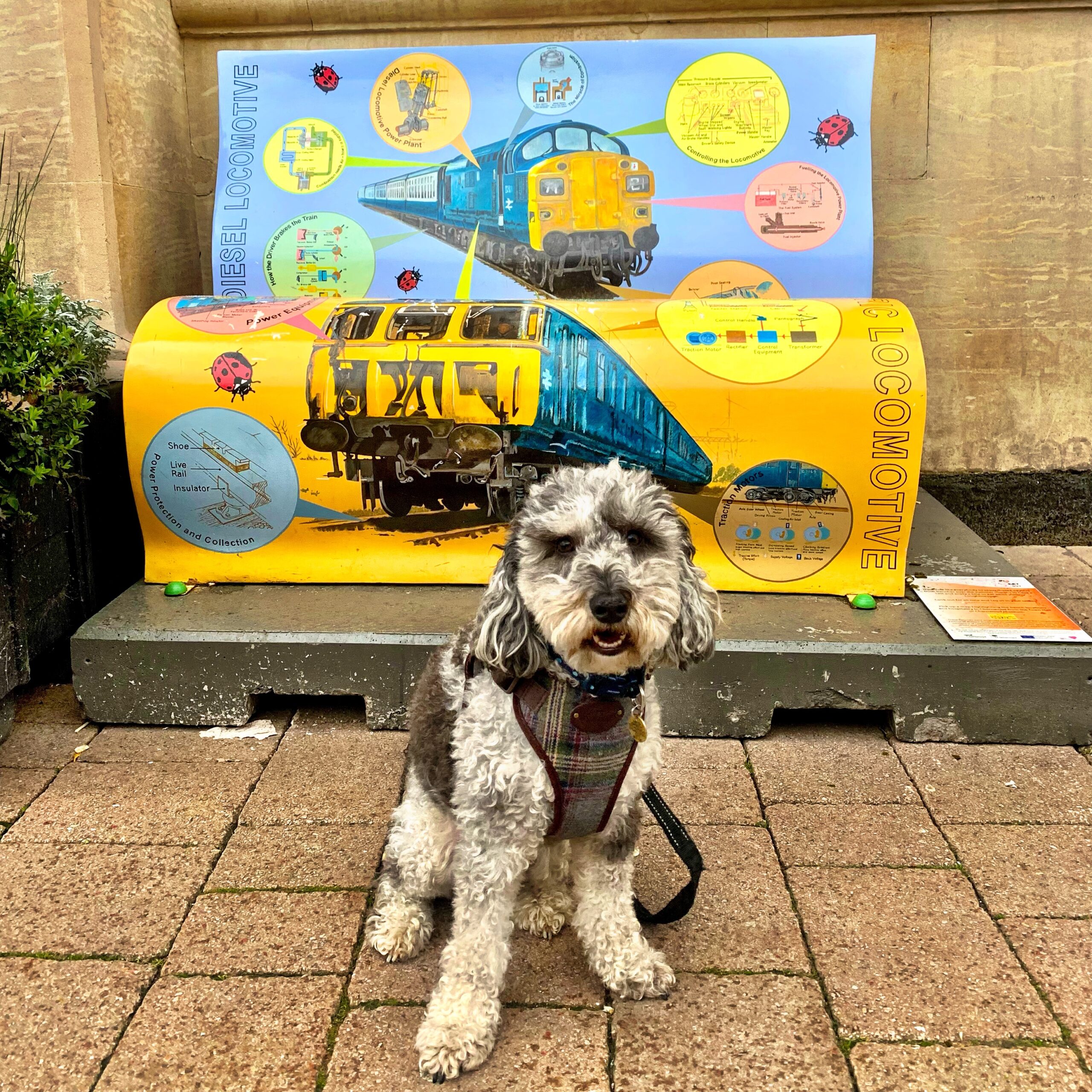
Yoshi in Loughborough with a Ladybird Book seat featuring images from the “How It Works….” series – 24/11/2022
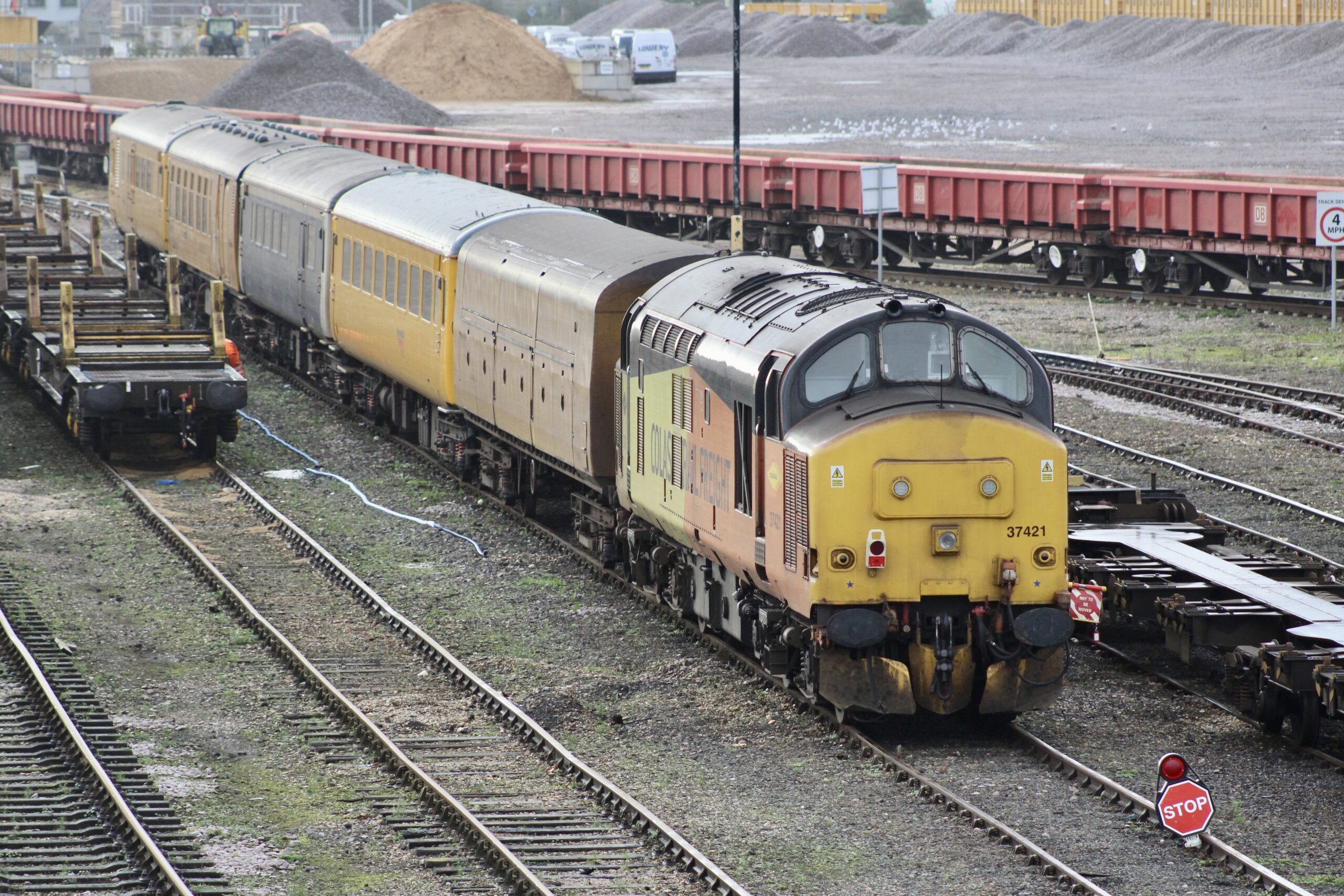
We were lucky enough to enjoy a few days away last week, and as part of our travels, I was able to take in some railway locations. Before that however, Wednesday evening was one of those occasions when an unusual working along the Bournemouth to Weymouth line passed me by and it wasn’t until Thursday morning that I realised I’d missed out on seeing the Colas Ultrasonic Test Unit hauled by vintage Class 37 diesel electric locomotive No. 37421. I consoled myself with the knowledge it would have been raining as it passed through my local station on the outward run, and I was tucked up in bed by the time it returned. However, on our way to Derbyshire on Thursday morning, we popped into Eastleigh to find No. 37421 perfectly parked for a quick photo opportunity adjacent to Eastleigh railway station.
Colas Class 37 No. 37421 parked up having worked 3Q02 Eastleigh East Yard to Eastleigh East Yard via Weymouth and Fratton at Eastleigh – 24/11/2022GBRf Class 66 No. 66797 with a Network Rail National Delivery Service (NDS) track machine at Eastleigh – 24/11/2022GBRf Class 73 Electro-Diesel No.’s 73965 ‘Des O’Brien’ and 73961 ‘Alison’ being readied to work 1Q52 1045 Eastleigh East Yard to Tonbridge West Yard at Eastleigh – 24/11/2022
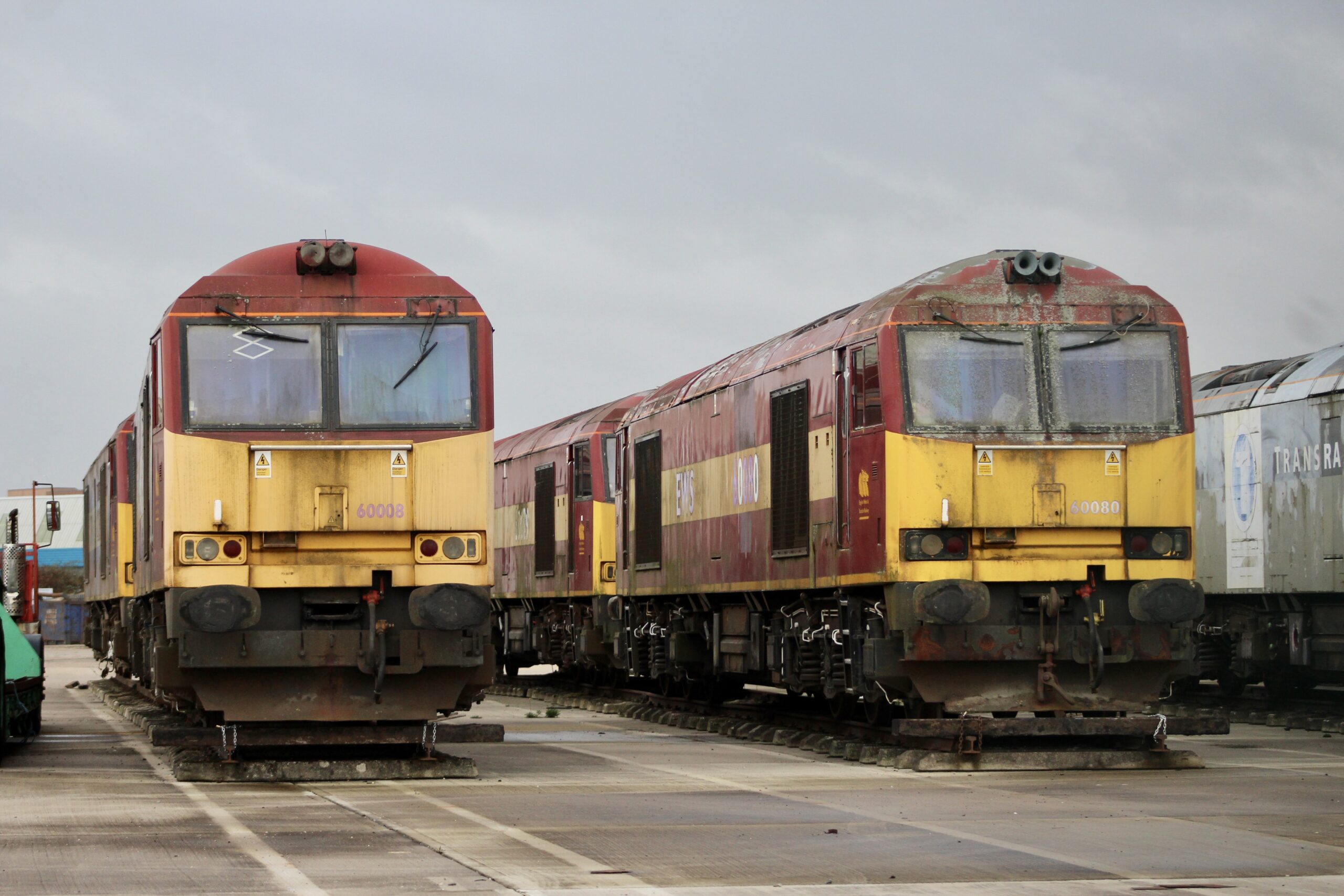
After our Eastleigh pitstop, we drove on to Loughborough, where I was hopeful at seeing some stored Class 60 diesel locomotives at Brush Traction Works. The plant, known locally as the Falcon Works, was established in 1865 to build steam locomotives. American owned Wabtec took charge in 2011 and in April 2021 they announced reduced volumes had made the site “unsustainable” and proposed its closure which would see the end to over 150 years of locomotive building.
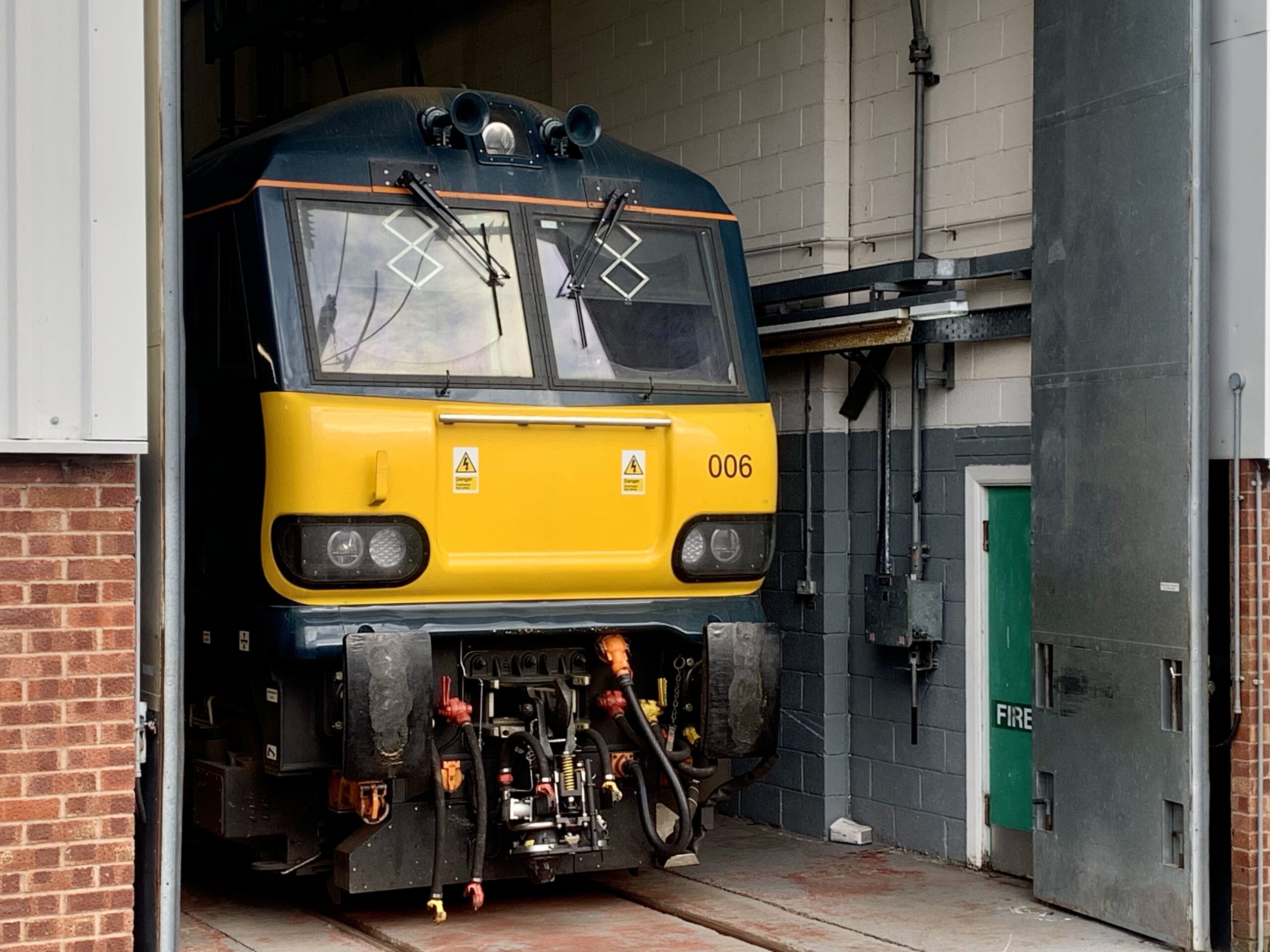
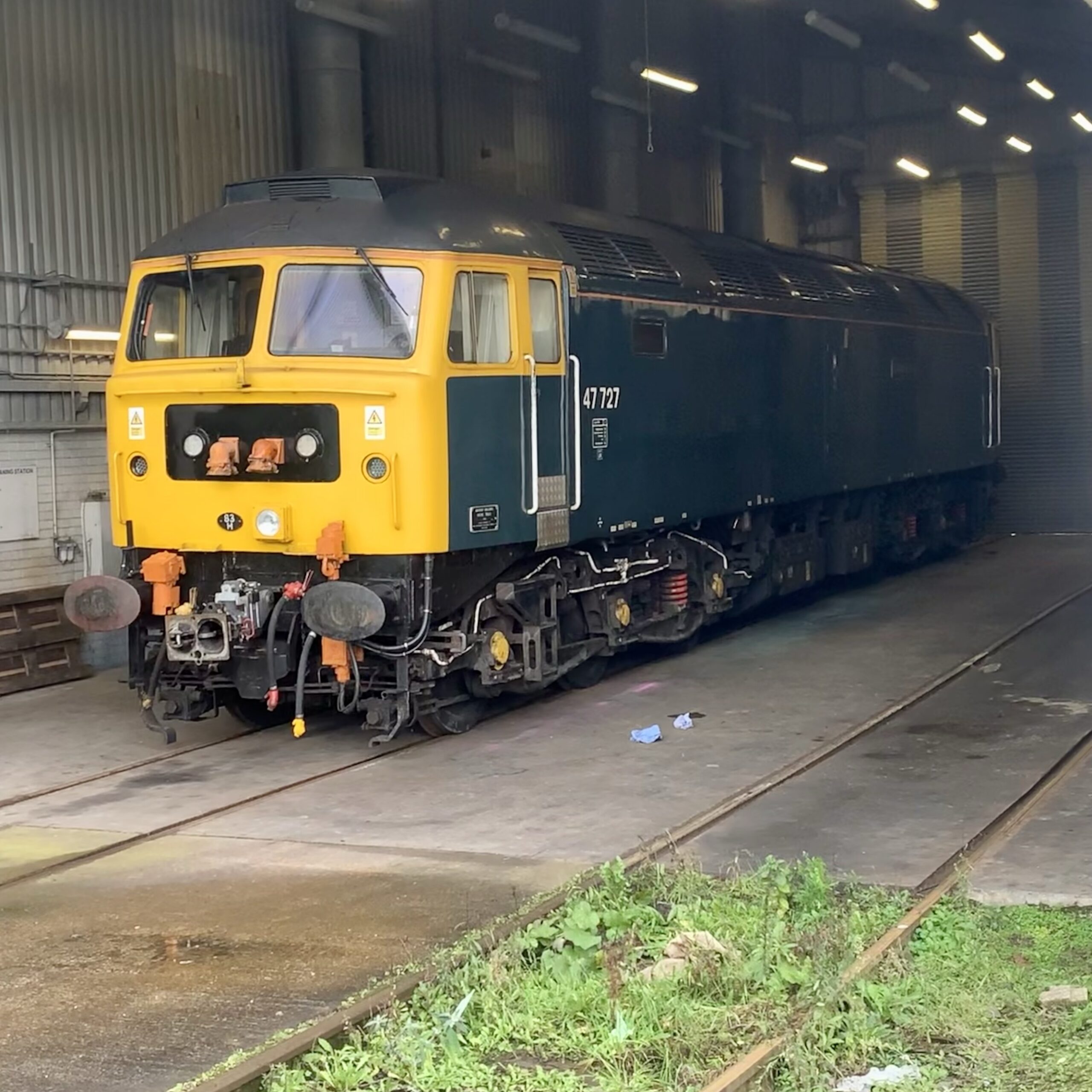
The last time I had attempted to see locomotives at Brush, Loughborough I recall traipsing across water meadows to get a close view through a fence of Channel Tunnel Class 92’s. This time, having studied Google Maps, I drove around the outskirts of the site along access roads which I wasn’t entirely sure were open to the public. I wasn’t stopped by security, even when they drove past me as I snapped away.
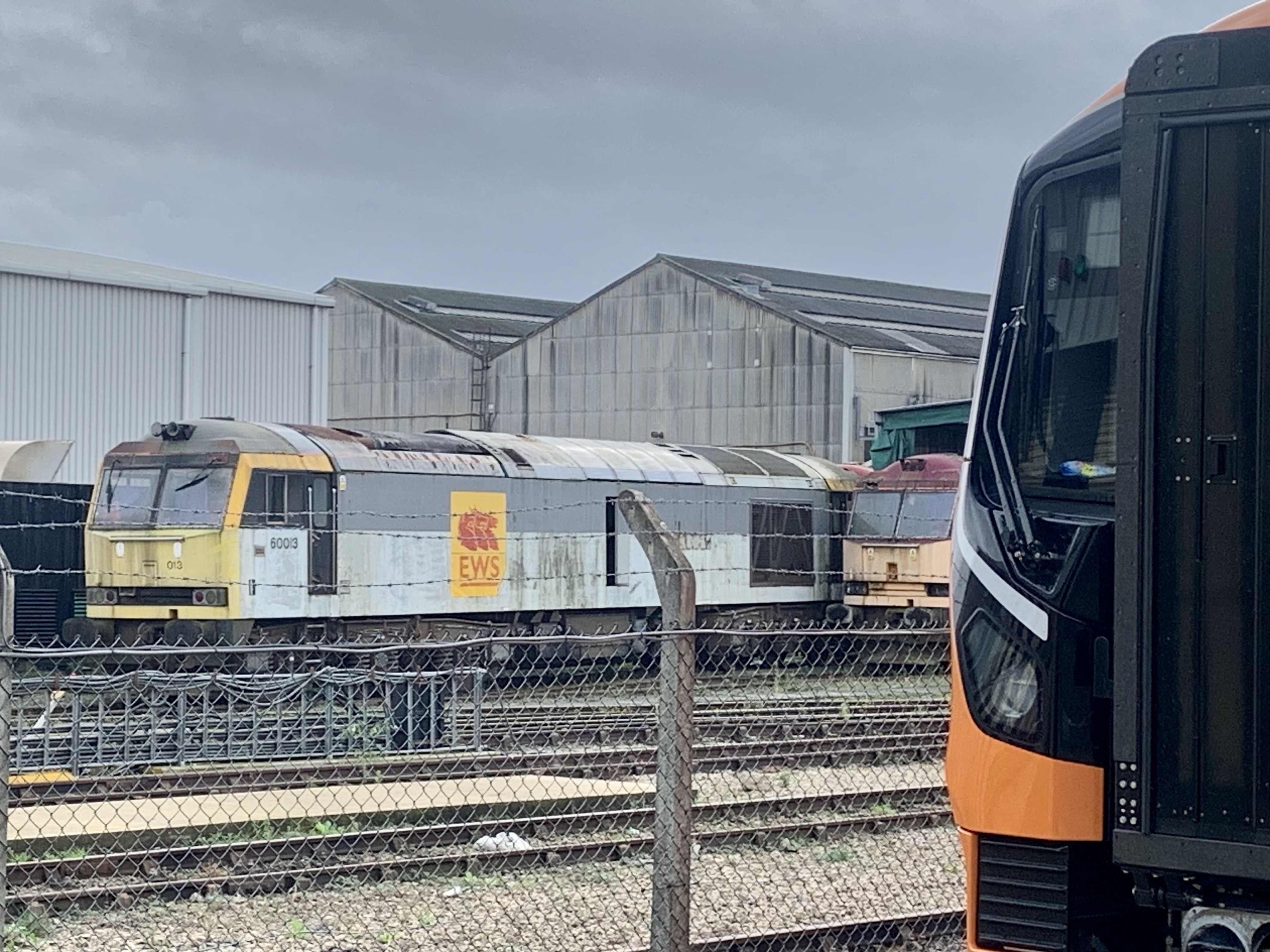
Class 92 No. 92006, Loughborough – 24/11/2022GBRf Class 47 No. 47727 ‘Edinburgh Castle’ at Loughborough. The Class 47 diesel-electric locomotive was one of Brush’s most successful with 512 examples having been built as part of the British Rail Modernisation Plan. This particular example was built at BR Crewe Works as part of Order Lot 400 and entered traffic as D1629 at Toton depot on the 17th October 1964 – 24/11/2022Class 60 No. 60013 at Brush Loughborough – 24/11/2022
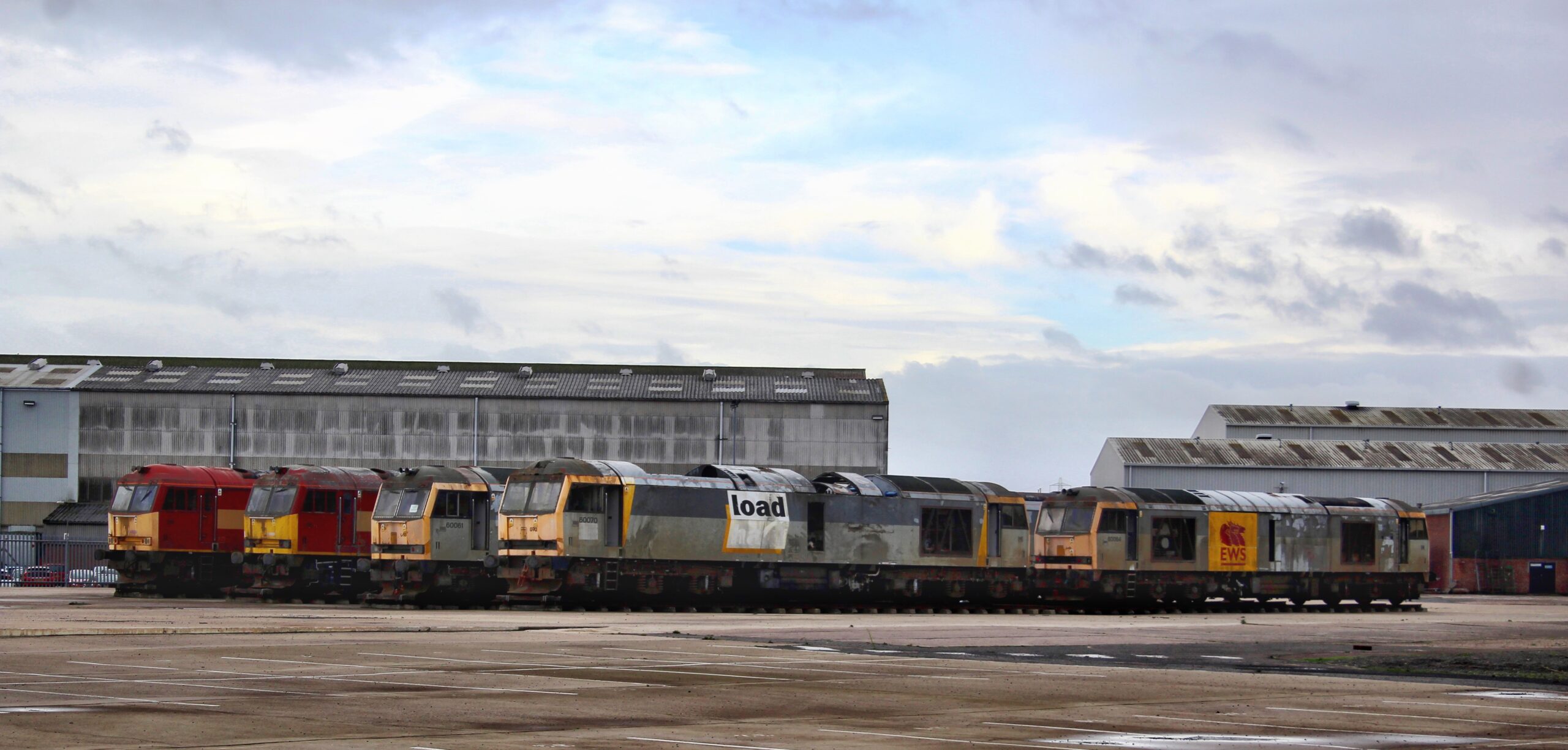
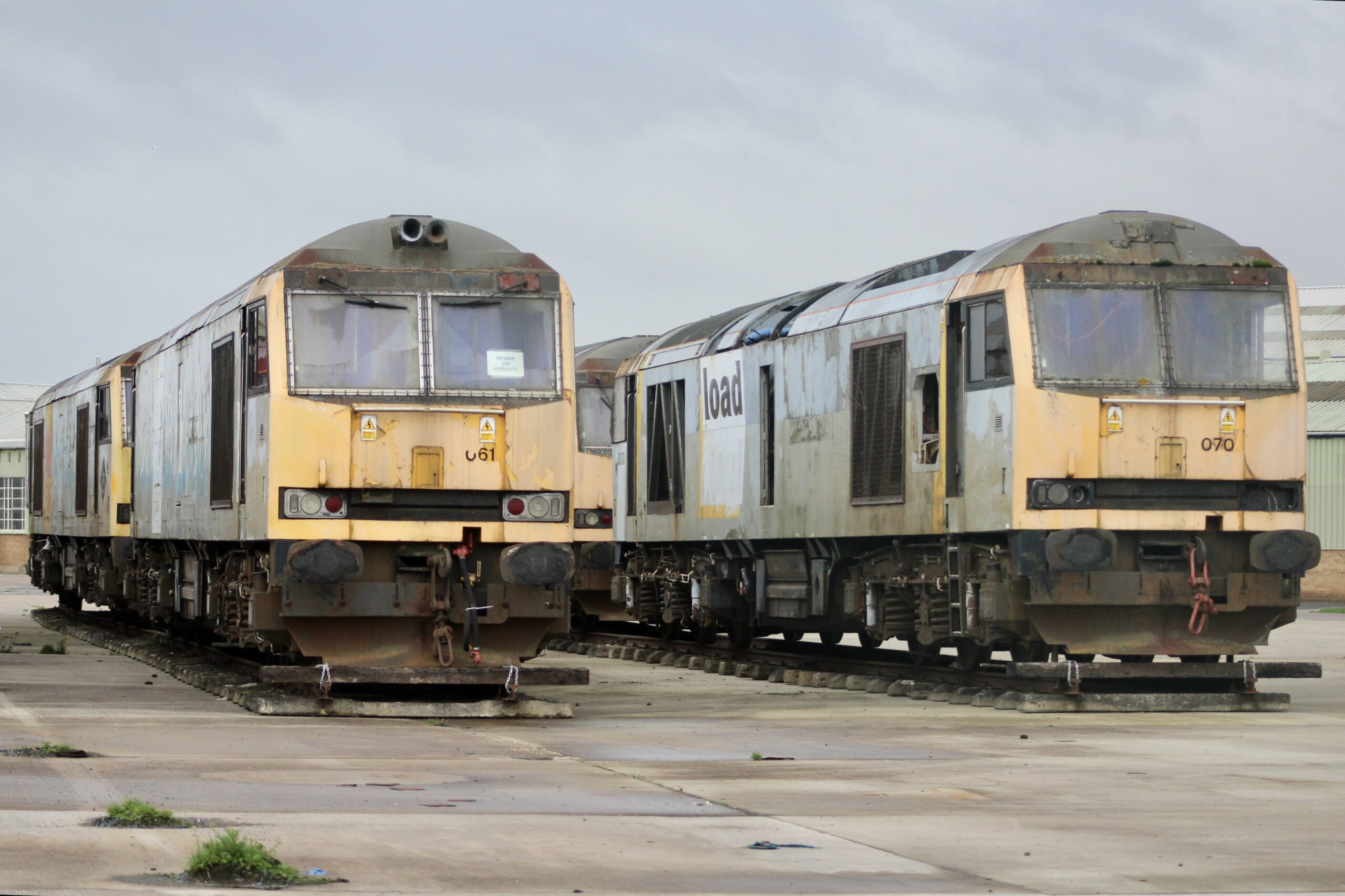
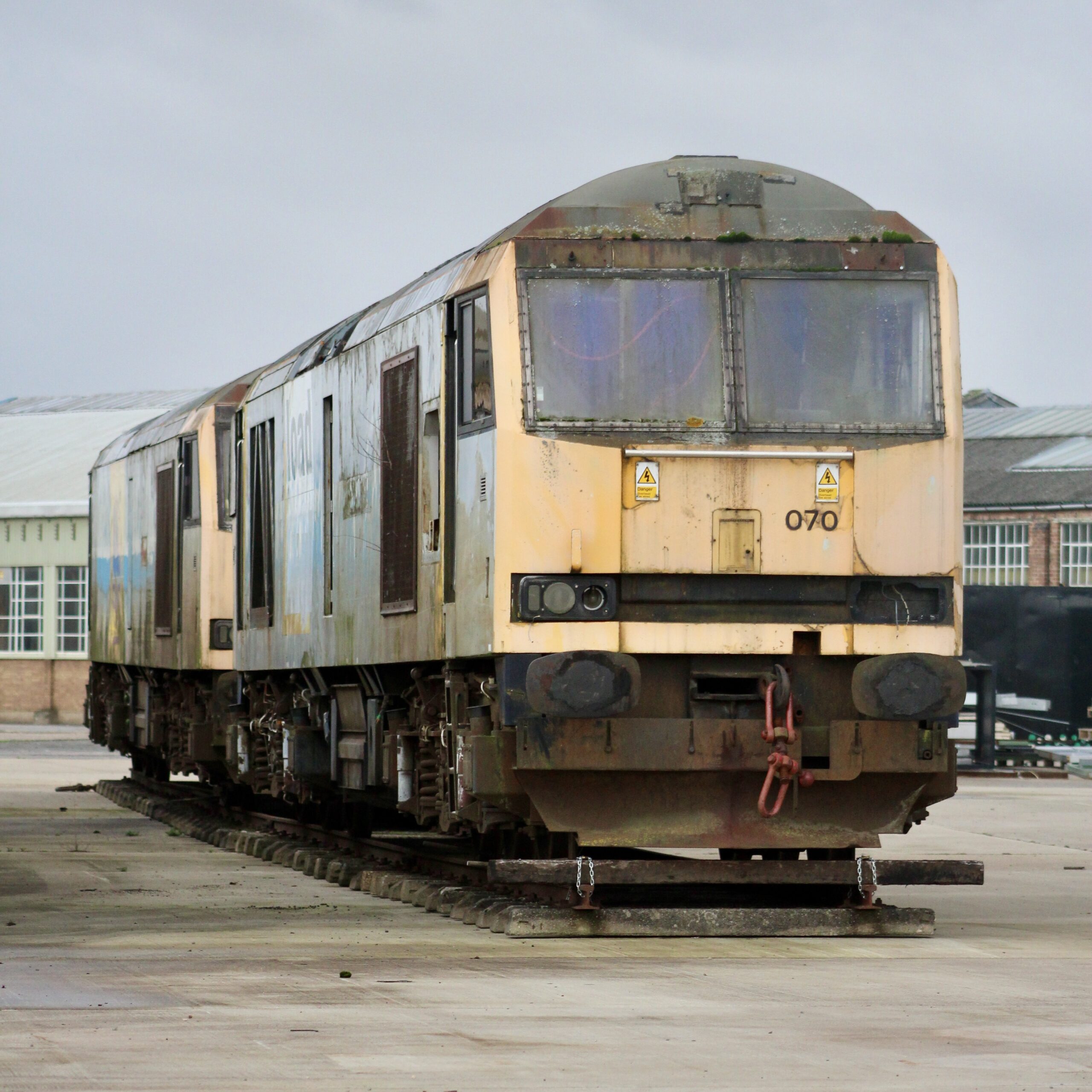
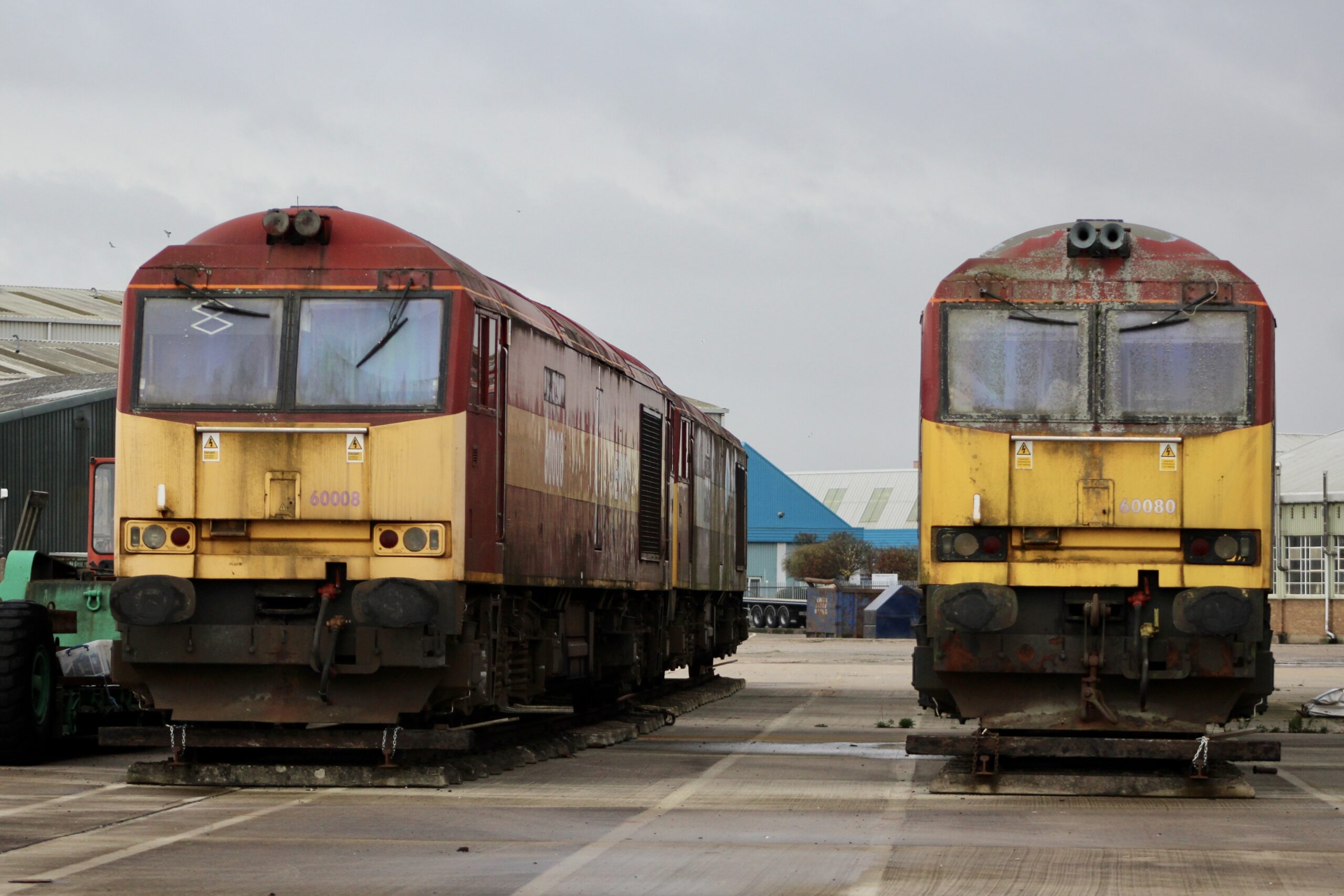
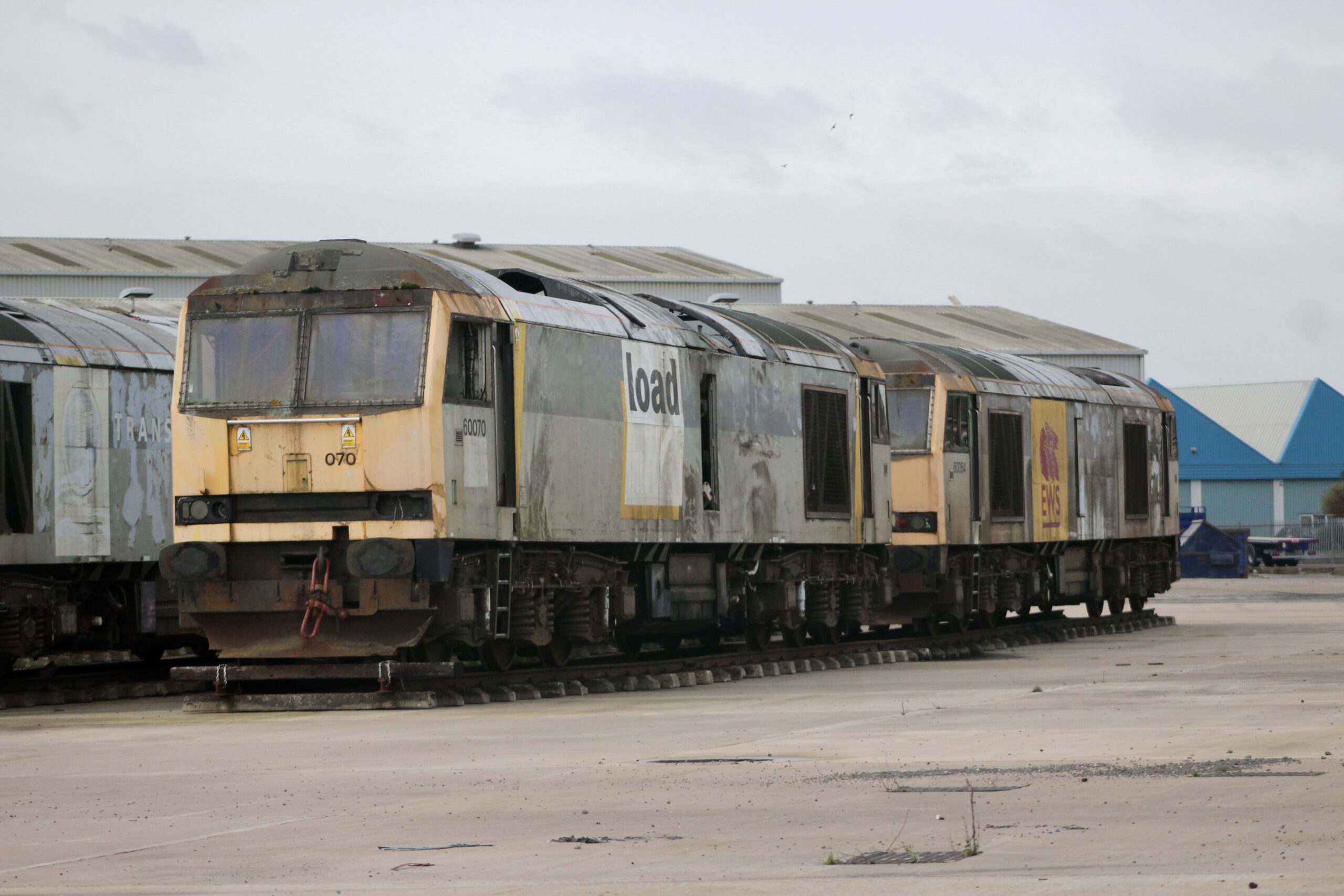
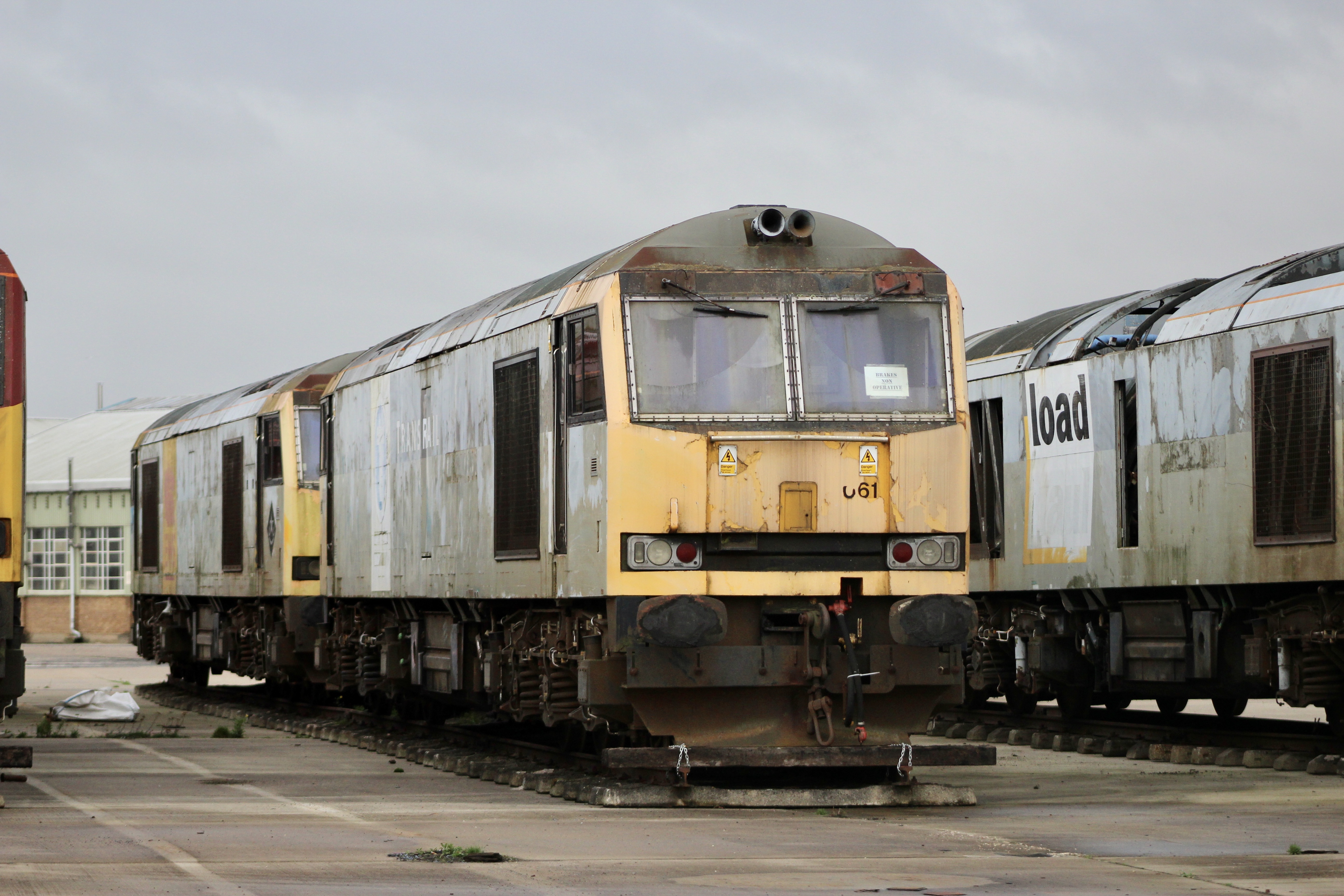
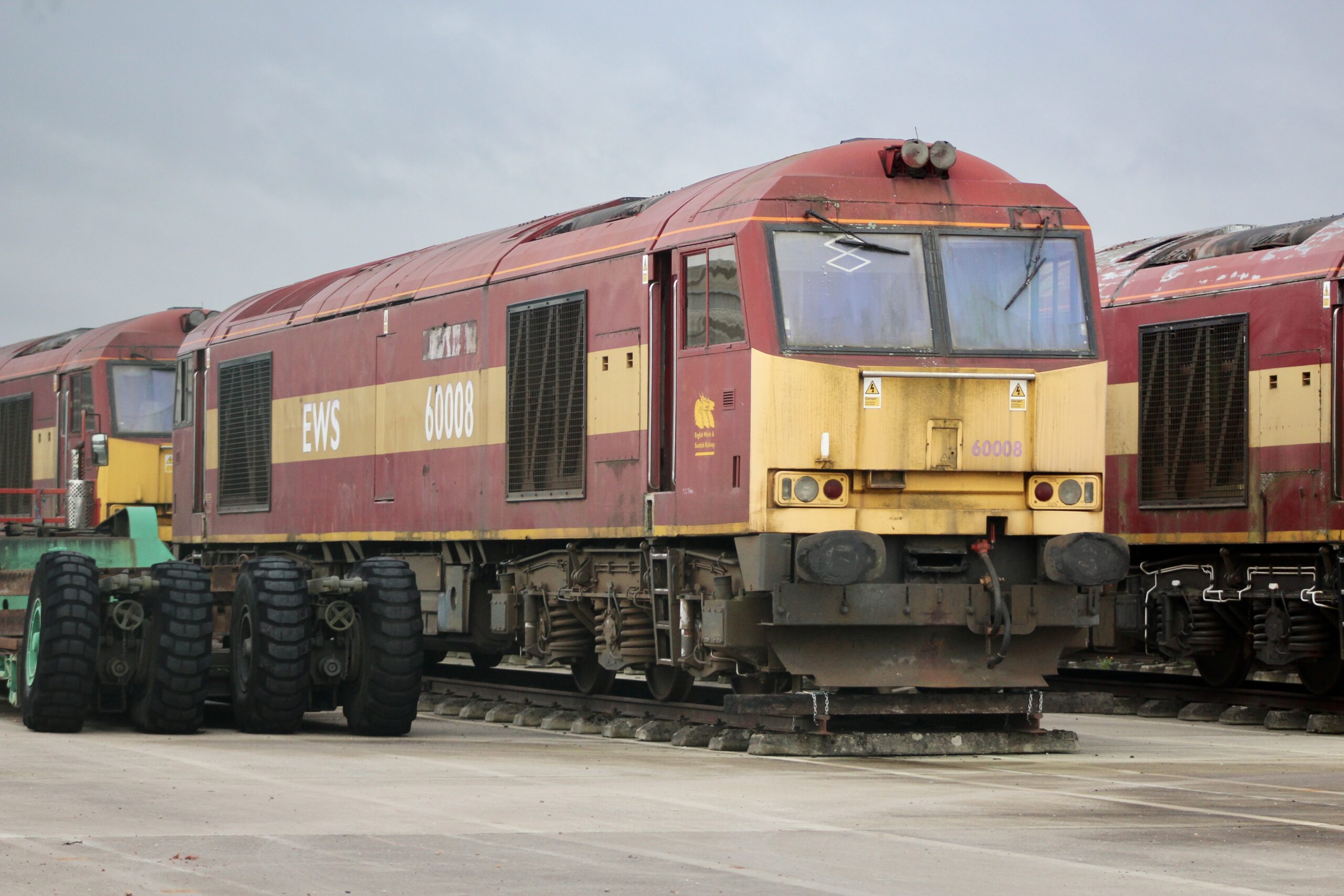
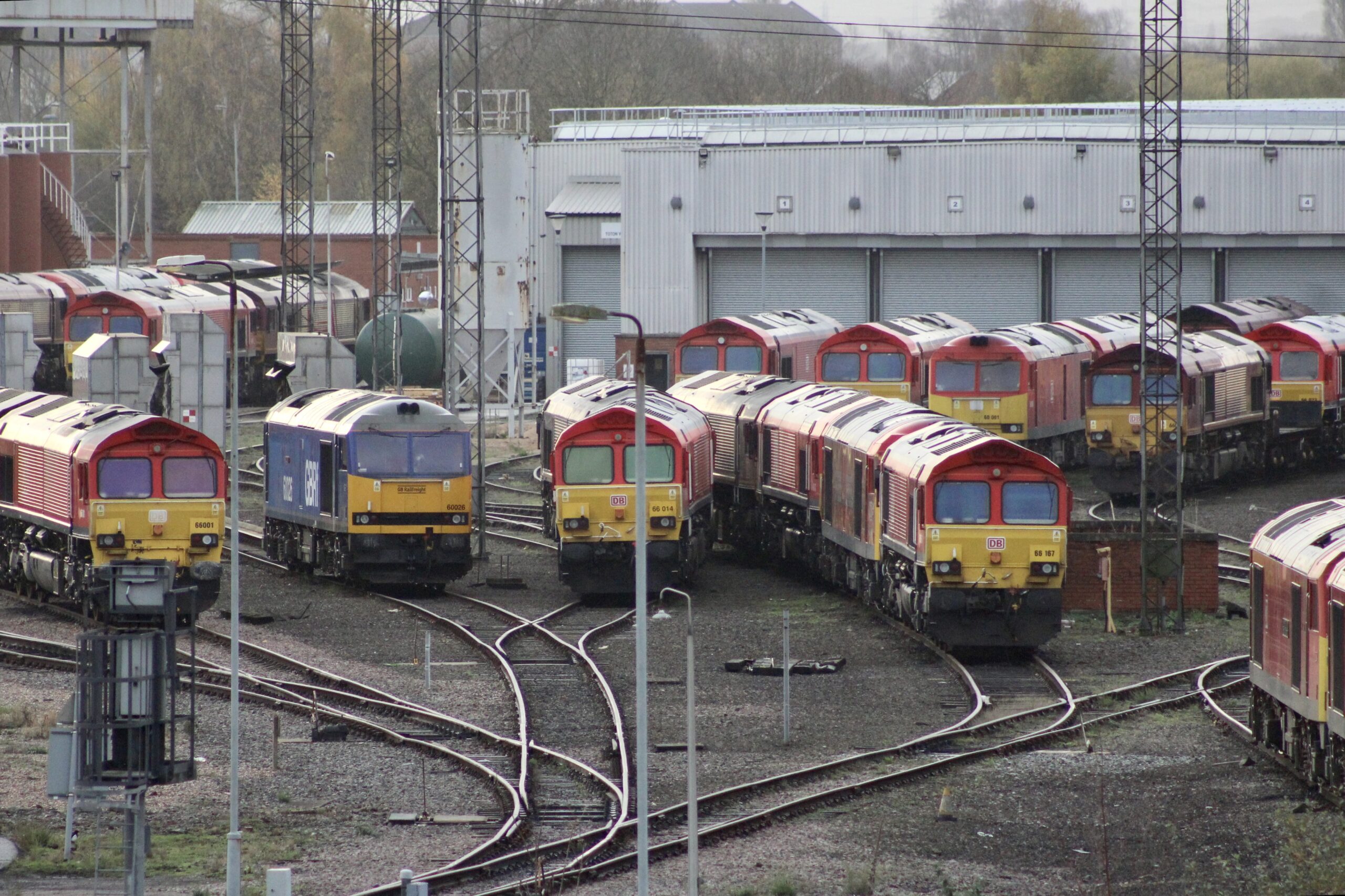
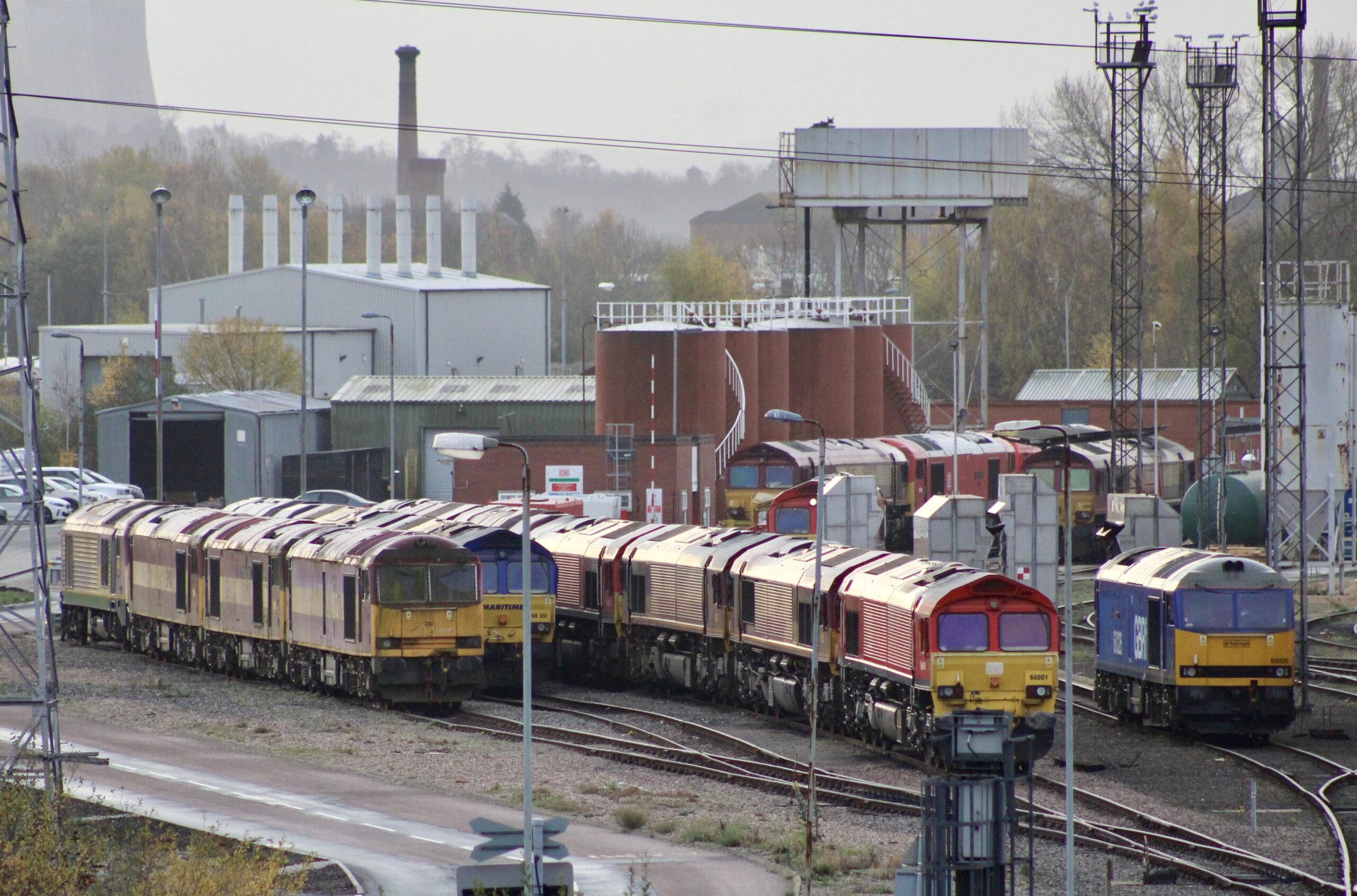
Below are a series of images of nine stored Class 60 locomotives at Brush Works, Loughborough: the locos are No.’s 60057, 60008, 60061, 60070, 60038, 60009, 60090 and 60064. They are owned by Devon Cornwall Rail (DCR) and hopefully some will be returned to main line use.
And here is video of my previous visit in 1995, when Class 92’s, Class 20’s and a Class 47 were amongst the classes of locomotive present:
I very much look forward to learning what is going to happen to the Class 60 locomotives at Loughborough and hope that at least some of them will turn a wheel in revenue earning service in the near future.
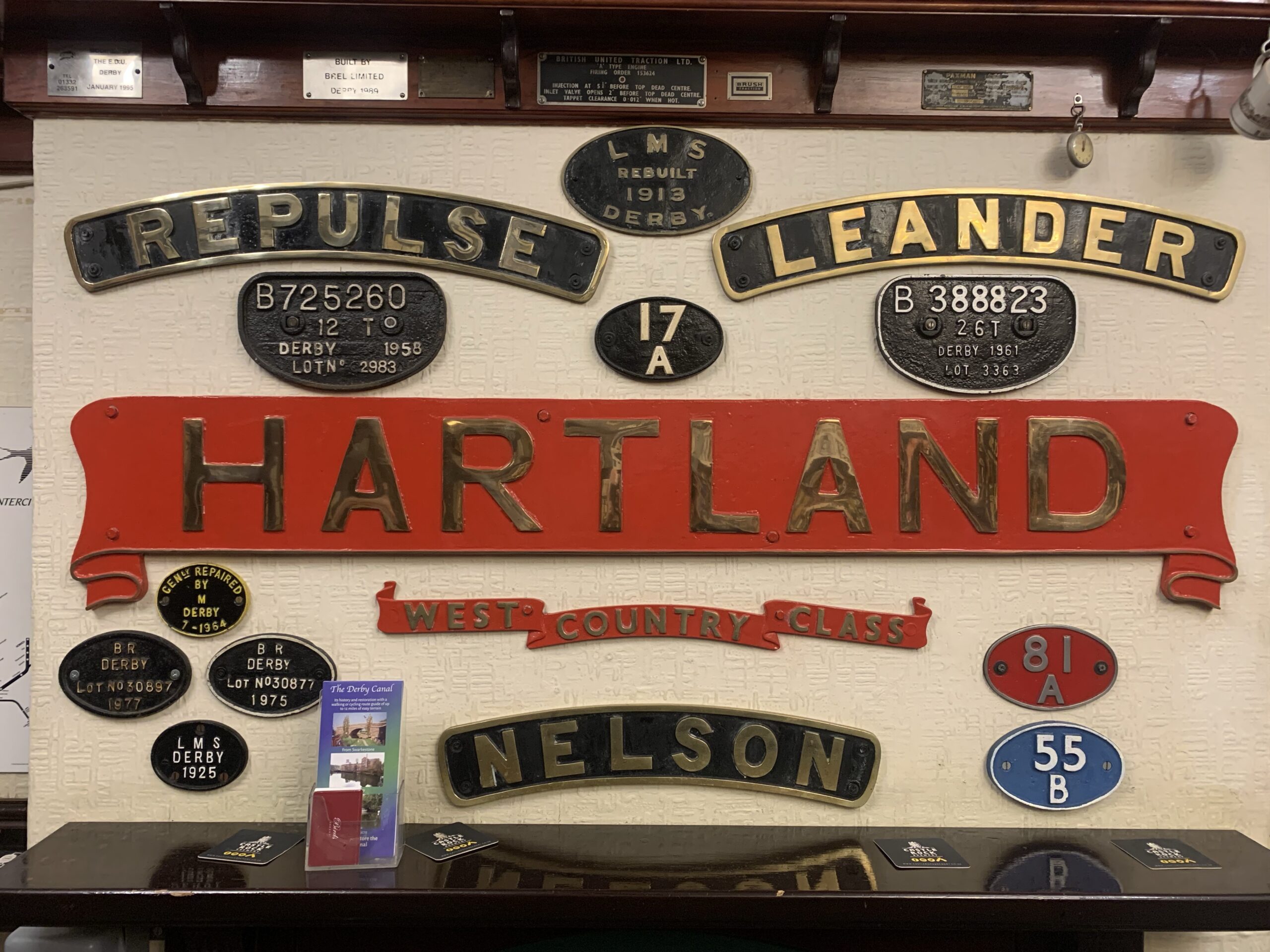
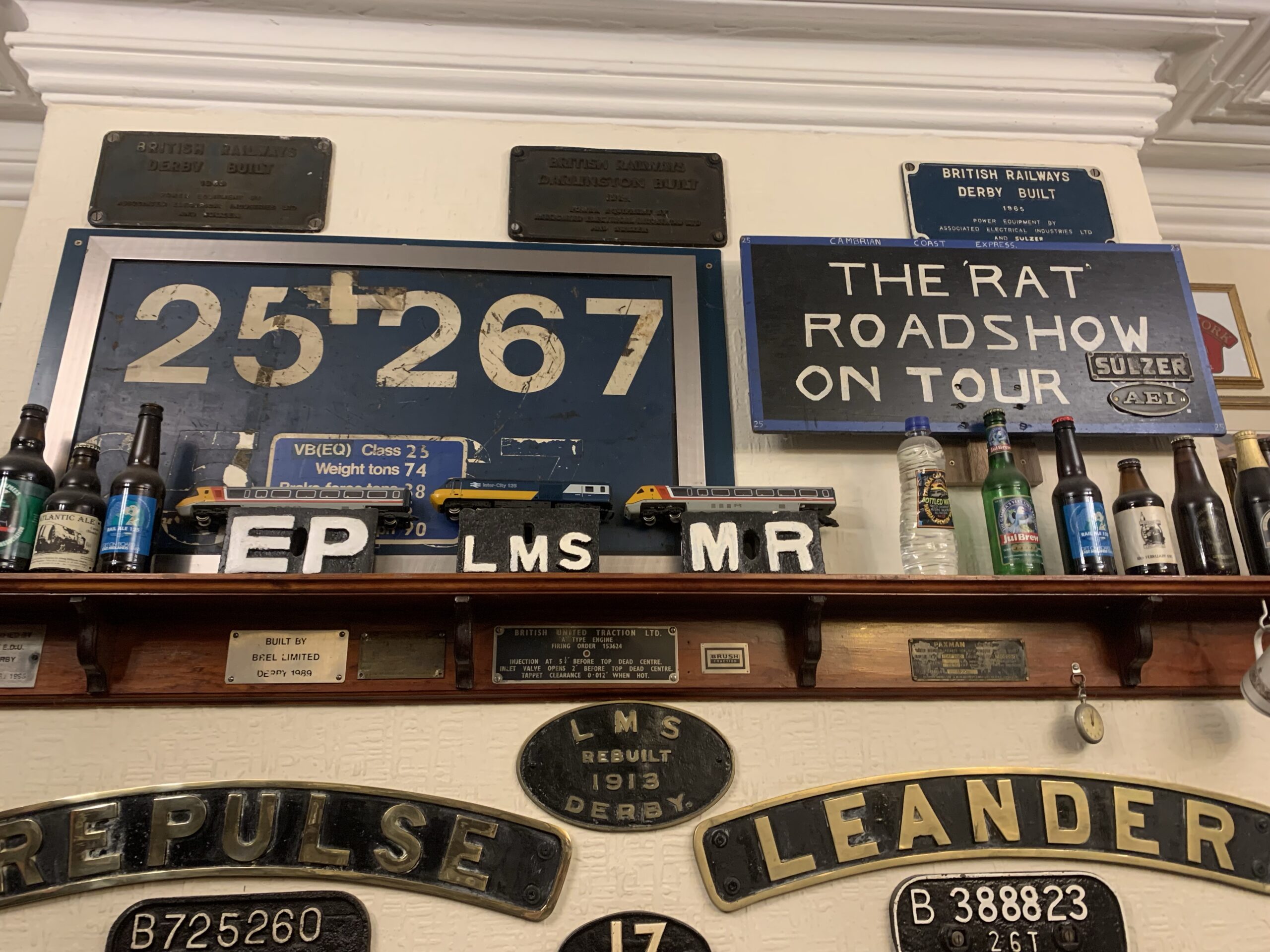
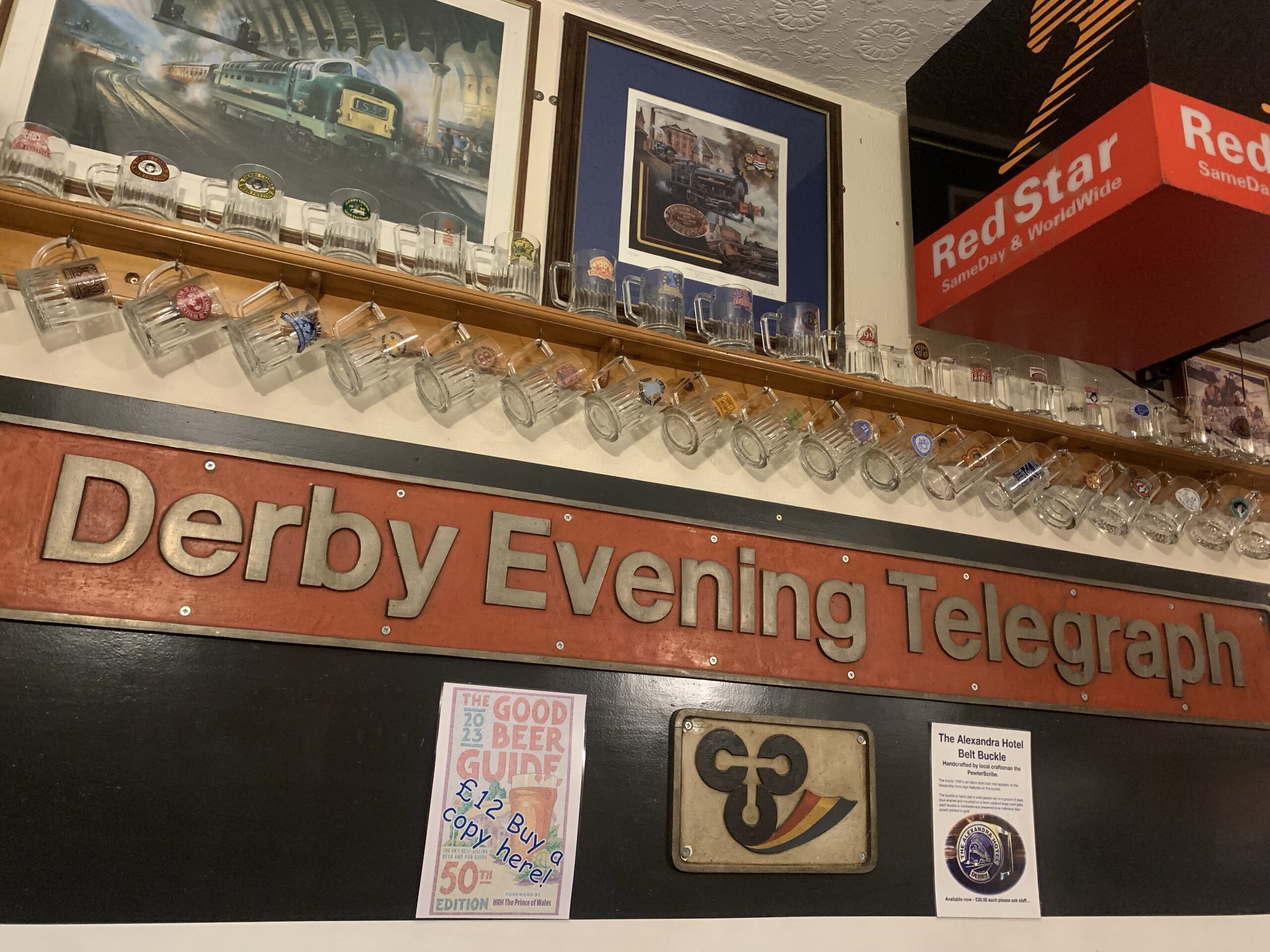
From Loughborough, we drove onto Derby where we stopped for refreshment at The Alexandra Pub on Siddals Road. The pub is well known for it’s railway memorabilia and I enjoyed a Diet Coke and a packet of dried roasted peanuts while I took in the signs and locomotive nameplates which adorned the walls.
The Alexandra Hotel has a strong railway theme and Manager Ralf Edge has collected a range of memorabilia that decorates the walls – 24/11/2022Railway memorabilia at The Alexandra Hotel, Derby – 24/11/2022‘Derby Evening Telegraph’ name plate at The Alexandra Hotel, Derby – 24/11/2022The Alexandra Hotel, Derby has the cab of Class 37 No. 37411 in its garden – 24/11/2022
After a nights rest, we set off on Friday morning for a leisurely drive through the Peak District National Park taking in Peak Forest.
The former Peak Forest Railway Station – 25/11/2022
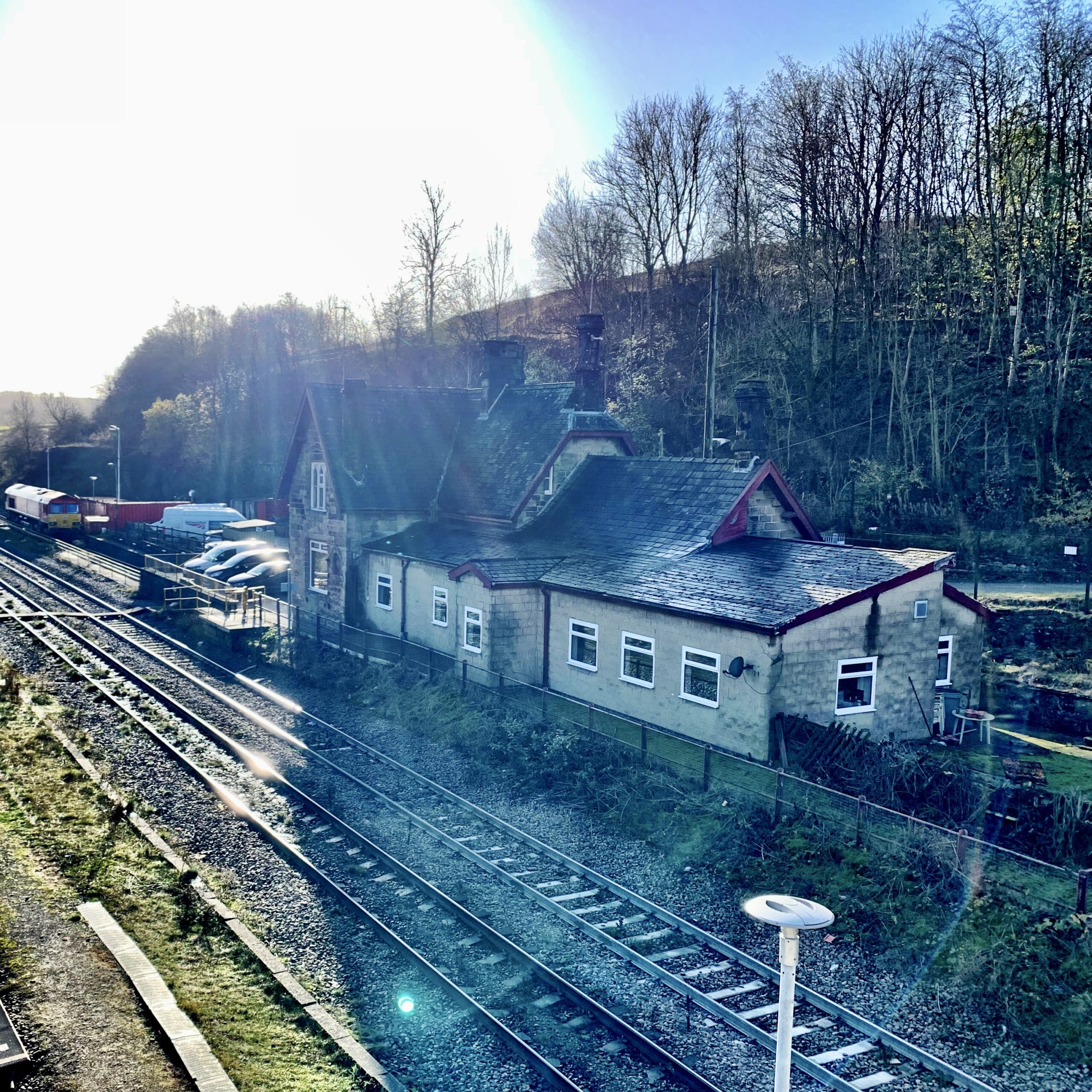
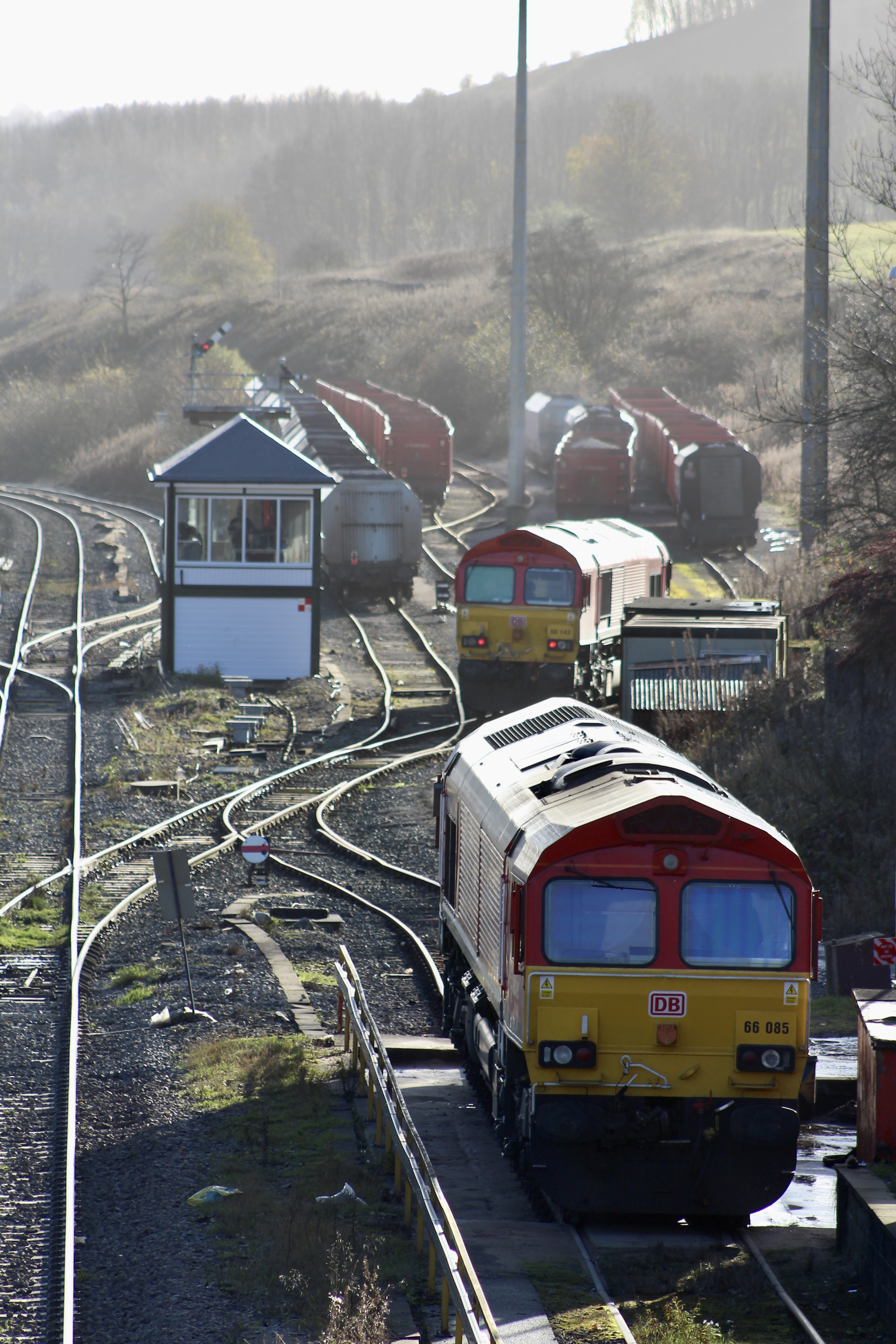
Peak Forest railway station was opened in 1867 by the Midland Railway on its extension of the Manchester, Buxton, Matlock and Midlands Junction Railway from Rowsley, part of the main Midland Line from Manchester to London. It was also the northern junction for the line from Buxton. A section of the line is retained for freight trains. The station closed in 1967 and the platforms were demolished shortly afterwards, although a section has been reinstated for railway staff and the station buildings which can be seen from the road bridge passing over the tracks survive as offices for the nearby quarry terminal.
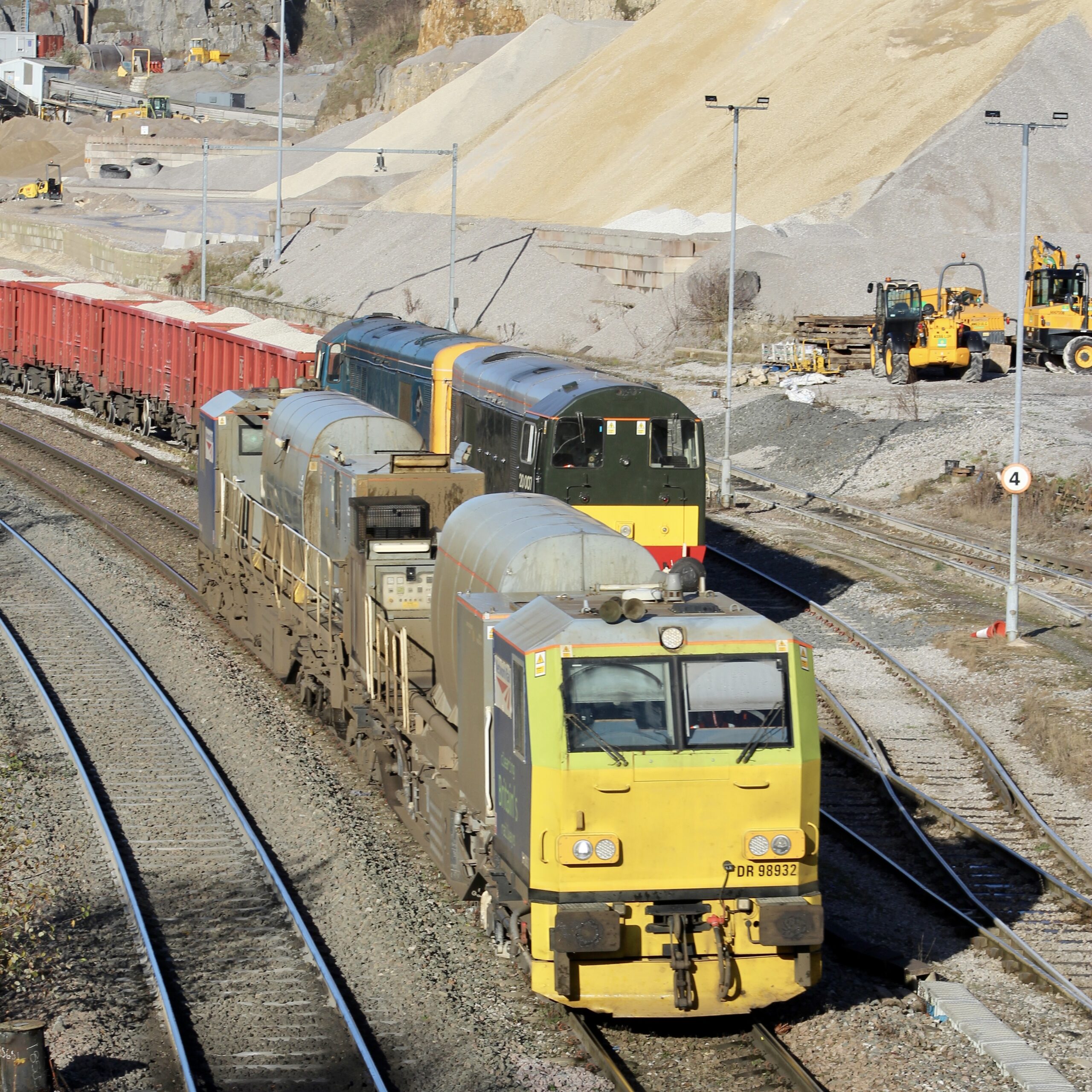
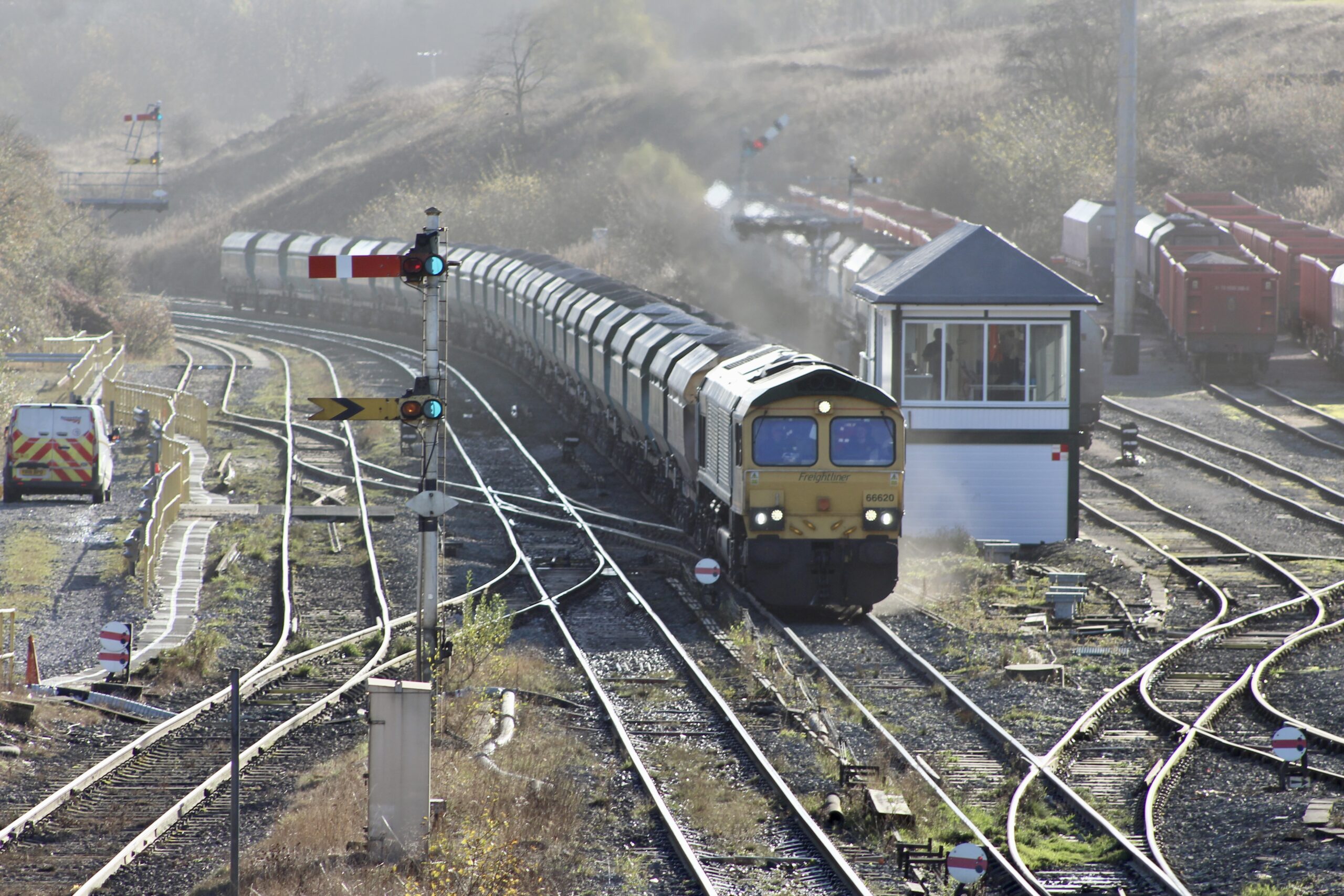
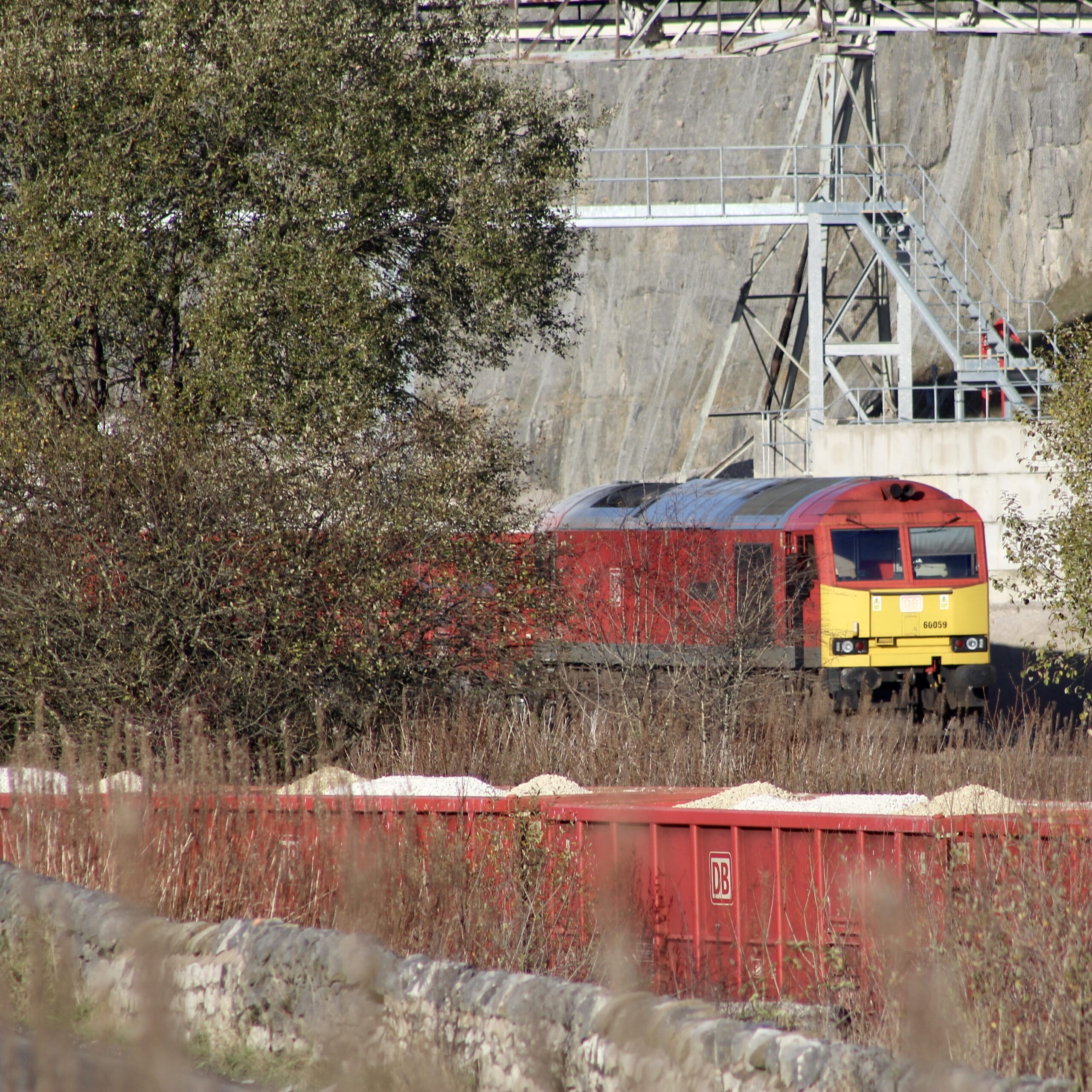
DB Class 66 No.’s 66085 and 66143 at Peak Forest – 25/11/2022I was very happy to see Class 20 No.’s 20007 and 20205 parked up at Peak Forest – 25/11/2022MPV No. DR98982 works 3S50 0554 Wigan Locomotive Inspection Point to Crewe at Peak Forest – 25/11/2022Freightliner Class 66 No. 66620 working 6D17 1148 Tunstead sidings to Radlett Redland Roadstone passes Peak Forest signal box – 25/11/2022Class 60 No. 60059 ‘Swindon Dalesman’ at Peak Forest – 25/11/2022
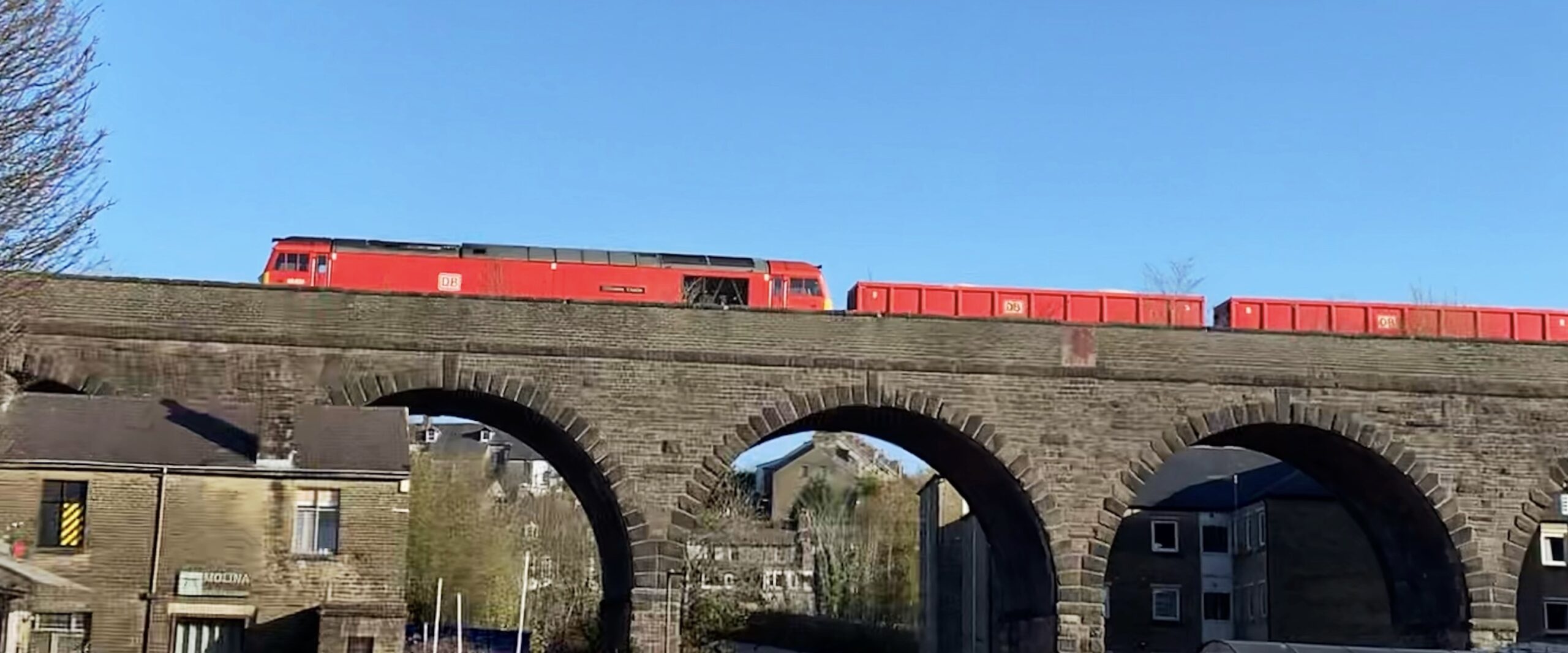
From Peak Forest, we headed into Buxton for lunch in “The Railway @. Buxton” a pub which got its name as it was popular with railway workers after they had finished their shifts. It stands in front of the impressive Buxton Viaduct which carries the freight line from Peak Forest. As we parked up, we saw Class 60 No. 60059 ‘Swindon Dalesman’ pass over working 6E18 1141 Peak Forest RMC Sidings to Attercliffe Sindings EWS
Class 60 No. 60059 ‘Swindon Dalesman’ working 6E18 1141 Peak Forest RMC Sidings to Attercliffe Sindings EWS at Buxton – 25/11/2022
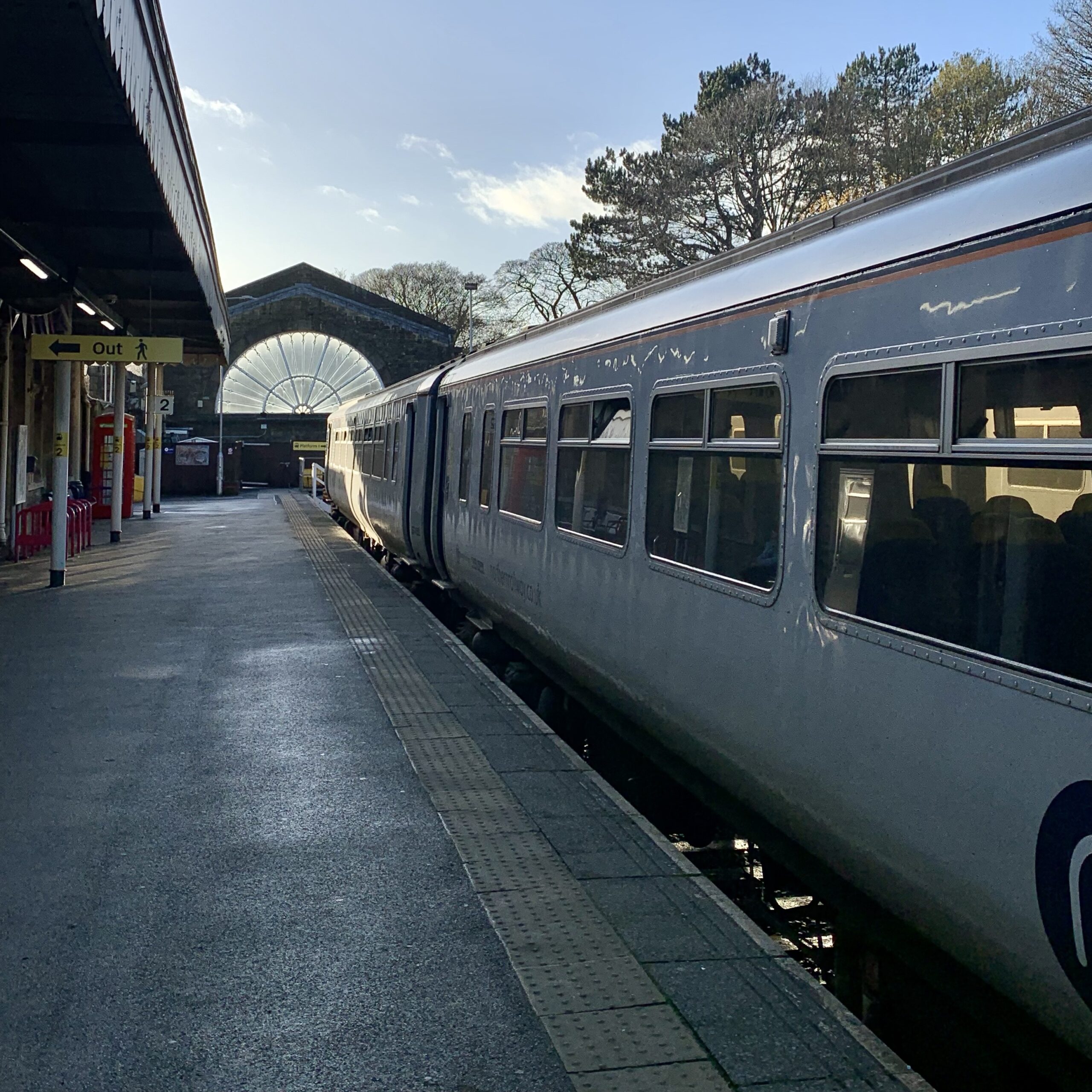
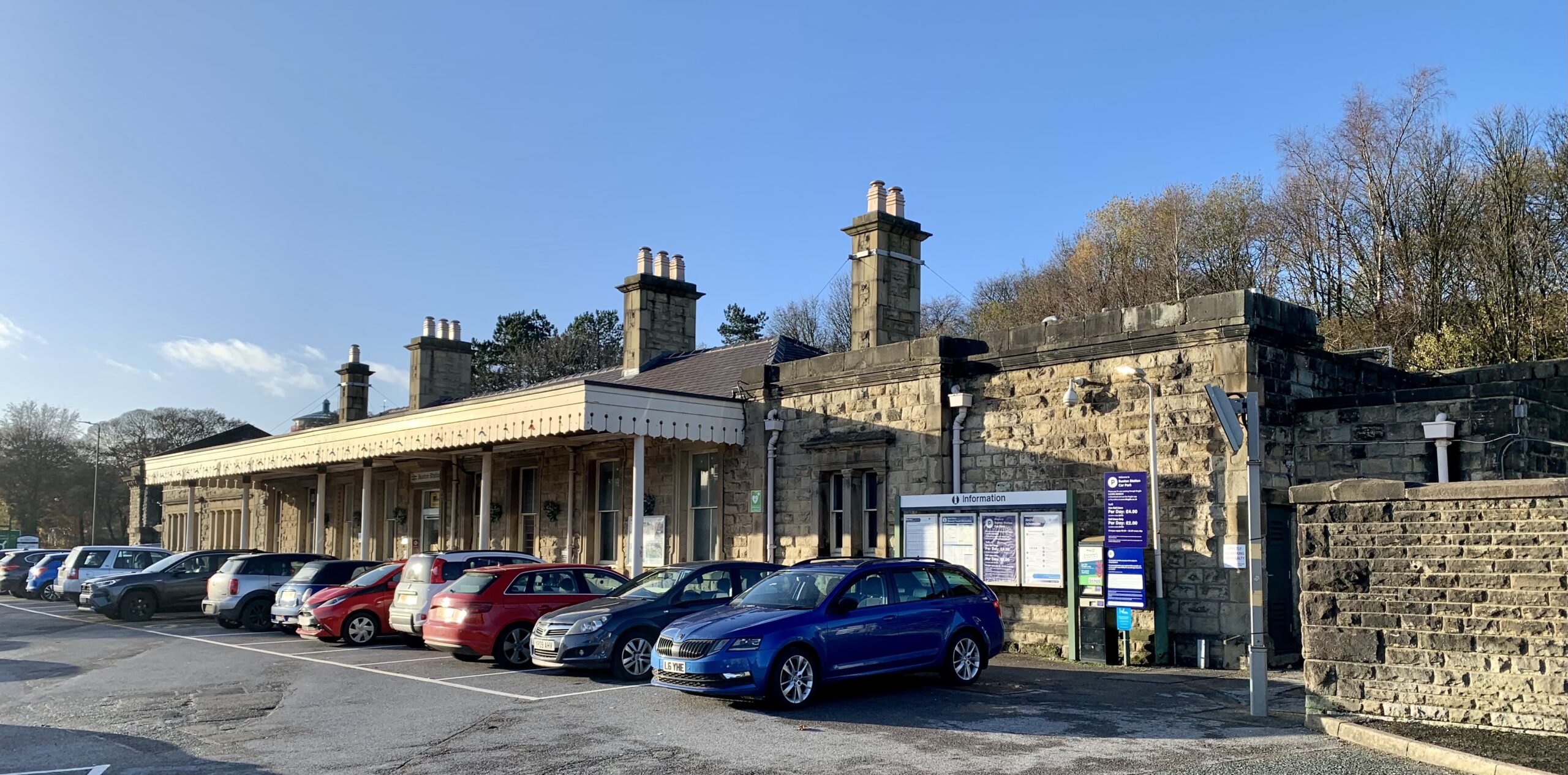
There were once two railway stations in Buxton; the aforementioned Manchester, Buxton, Matlock and Midlands Junction Railway from Rowsley favoured by the Midland Railway (MR) and The Stockport, Disley and Whaley Bridge Railway supported by the London & North Western Railway (LNWR) extended its line to Buxton. The stations were built side by side and given identical frontages designed by Joseph Paxton (best known for designing Crystal Palace and for cultivating the Cavendish banana), and built by John Smith each being built from local stone and having a wrought iron glazed train shed, fronted with half-circle fan widows and the names of the operating companies carved into the supporting stonework. Joseph Paxton was a director of both companies and he attended grand lunches at the opening of both stations which occurred on the same day; 1st June 1863. Can’t say I blame him!
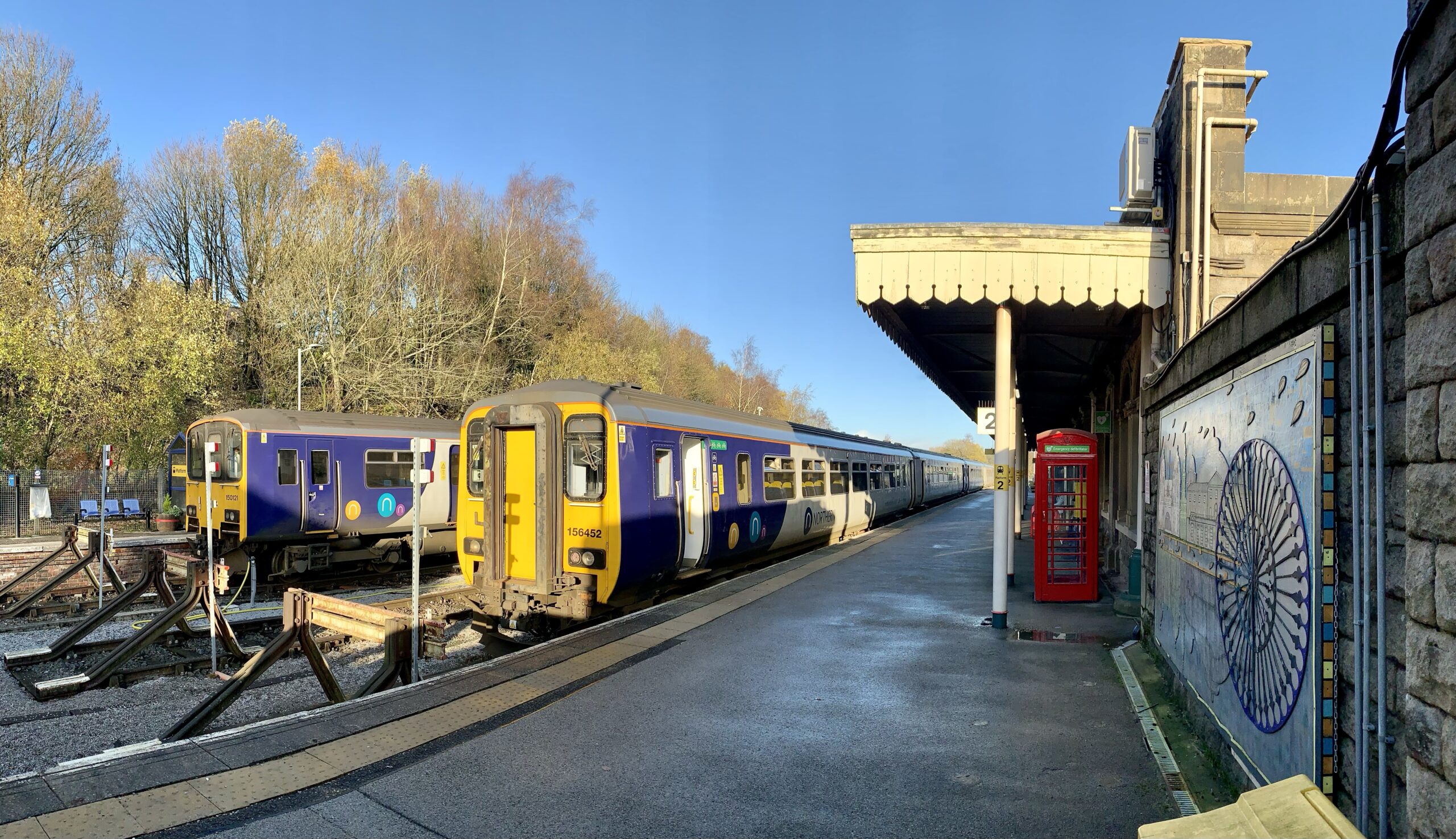
A view along the platform at Buxton showing the half circle fan window and Class 156 No. 156452 – 25/11/2022
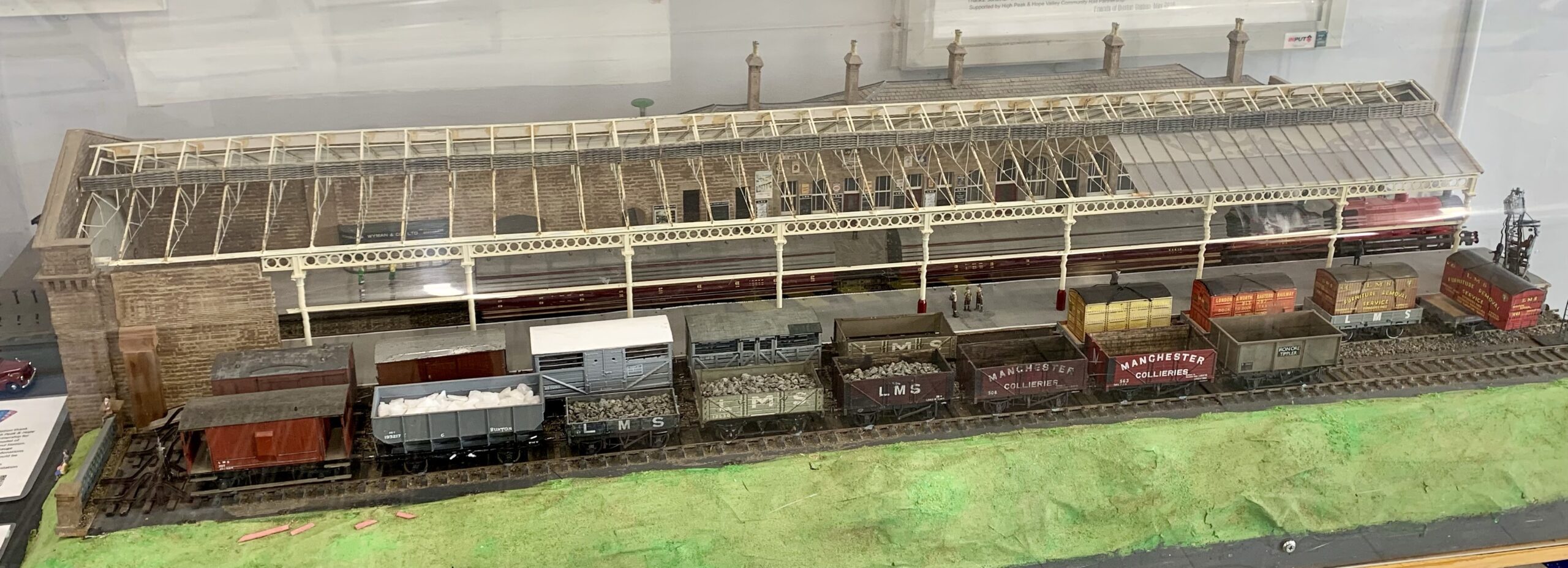
Buxton’s Midland Station fell victim to the Beeching Axe and closed on 6th March 1967 and was demolished in November 1970. There have been numerous attempts since to relay the track as a heritage line, but these have met without success to date. The LNWR station survives and handles all of Buxton’s passenger traffic today. The glazed roof has been removed, but the fanlight window was restored in 2009 and is Grade II listed.
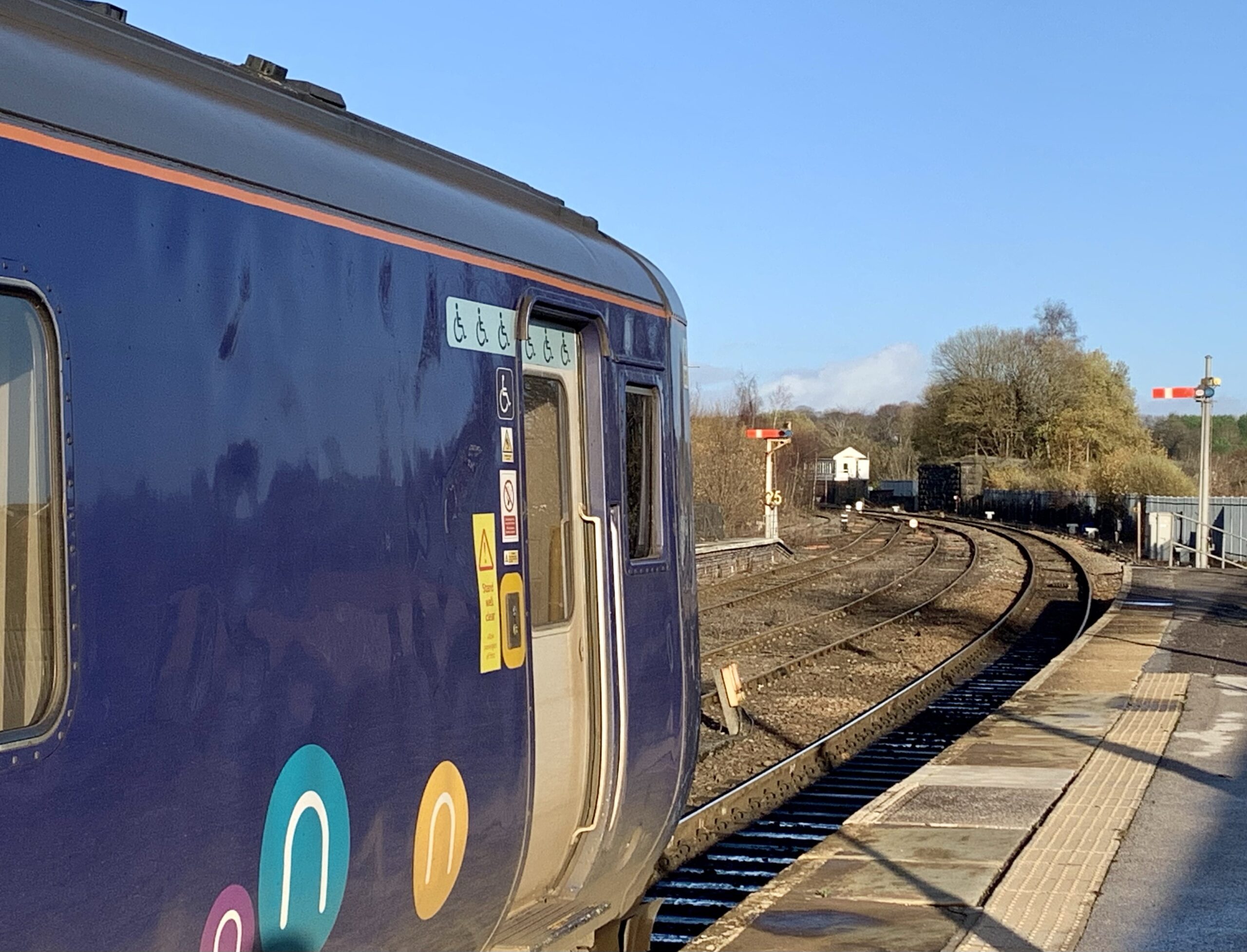
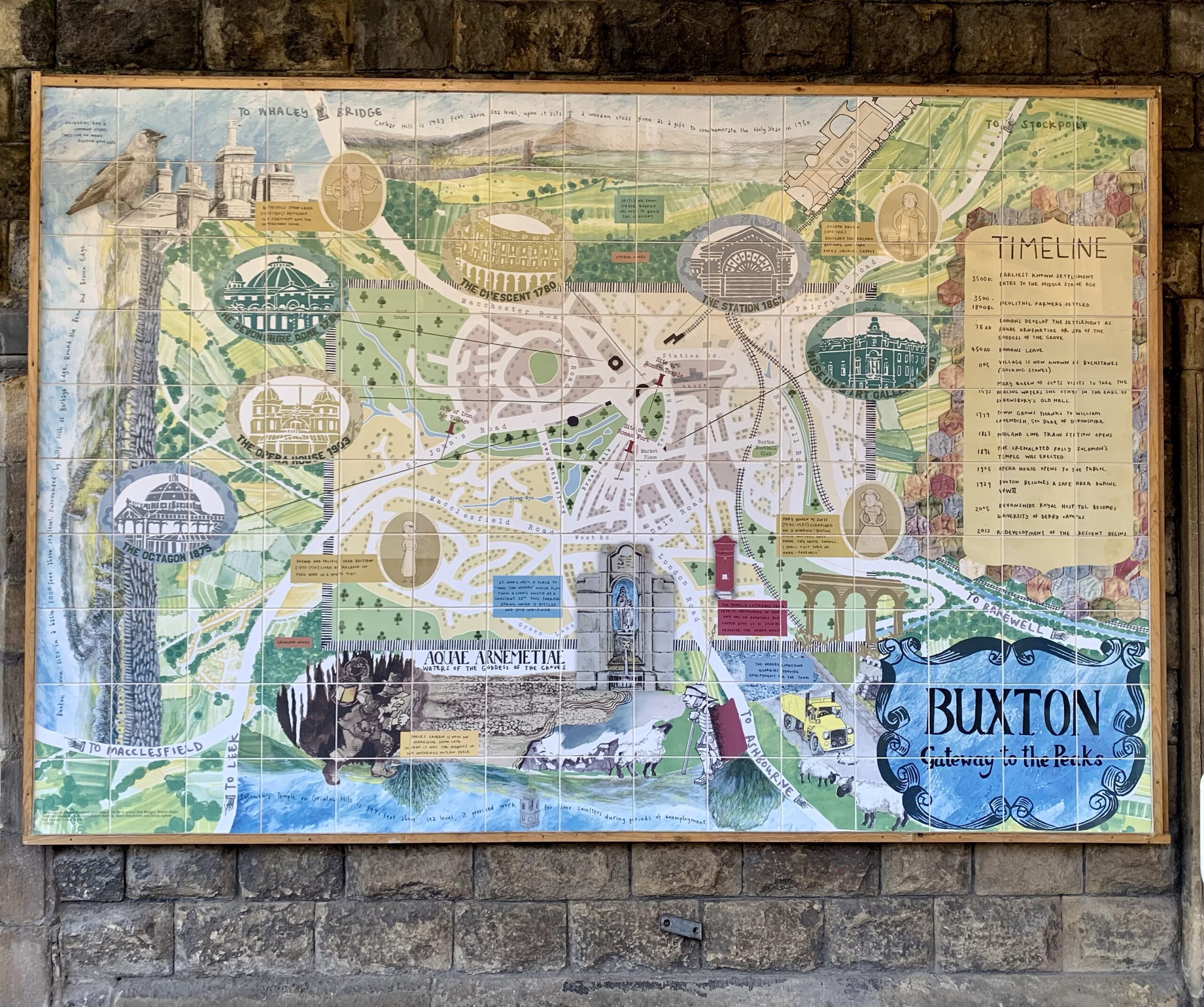
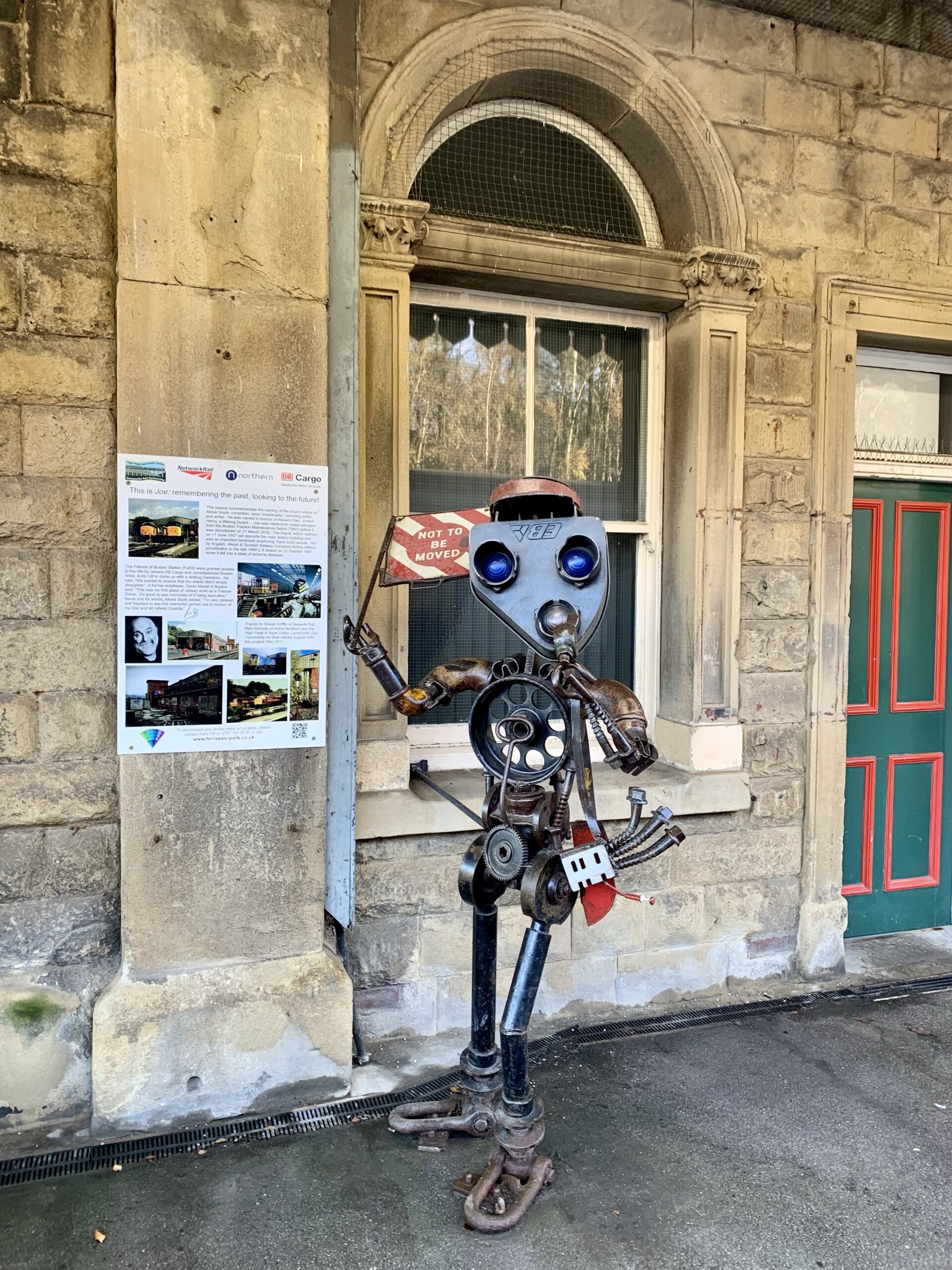
The LNWR station building at Buxton – 25/11/2022An O gauge model of the demolished Midland Station at Buxton constructed by Barry Bryant, Keith Holland and Charlie Schultz which took four years to build using photographs and scale drawings – 25/11/2022Buxton railway station with Northern Rail Class 156 No. 156452 and Class 150 No. 150121 – 25/11/2022Class 156 No. 156460 contemplates the view towards Manchester with signal box and surviving semaphore signalling – 25/11/2022Mural of Buxton at the railway station – 25/11/2022Joe the Guard statue at Buxton railway station. He was named after broadcaster and comedian Alexei Sayle in honour of his father, Joseph Henry Sayle, who was a lifelong guard. Joe was made from metal salvaged from Buxton Traction Maintenance Depot (TMD) before it was demolished in March 2016 – 25/11/2022
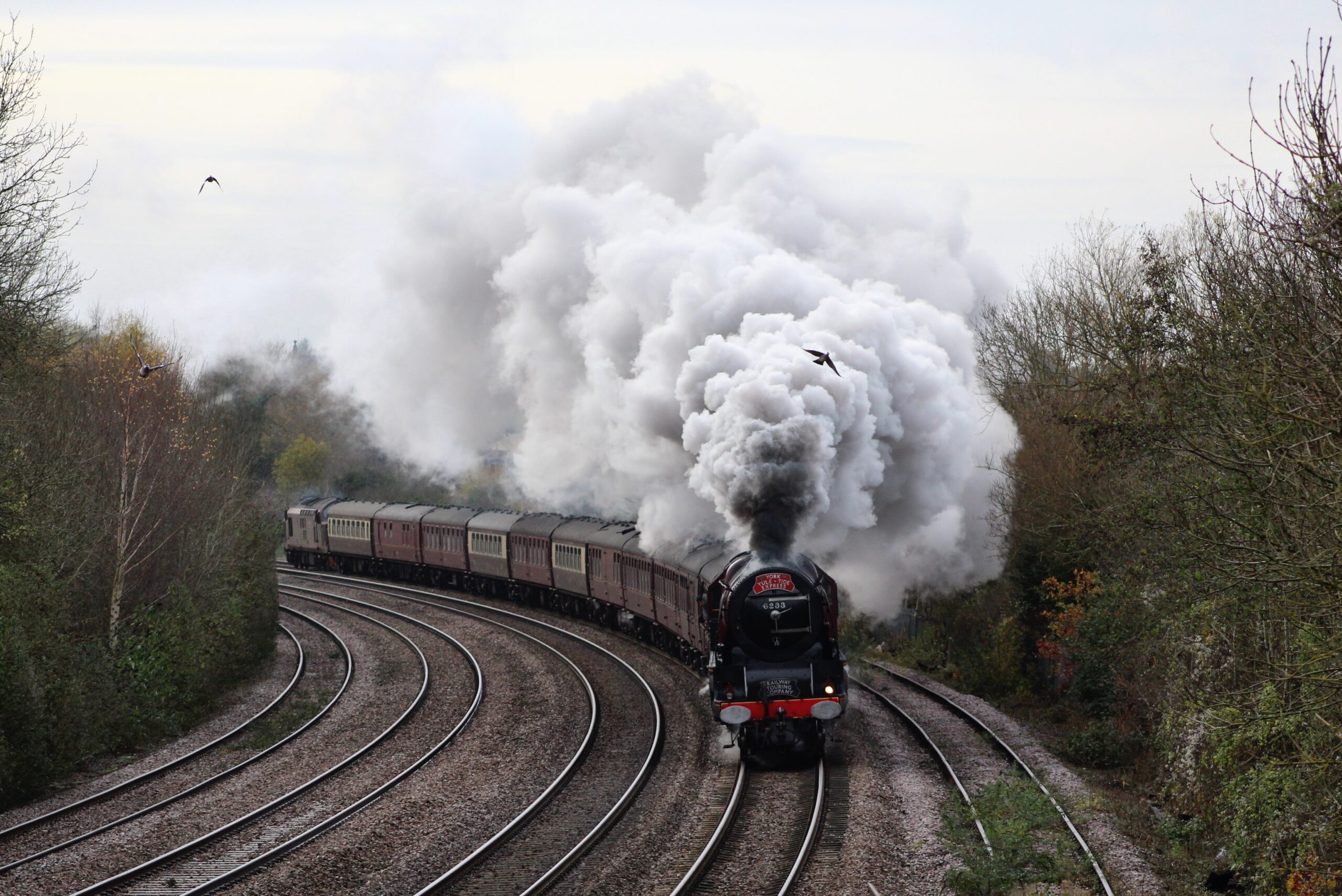
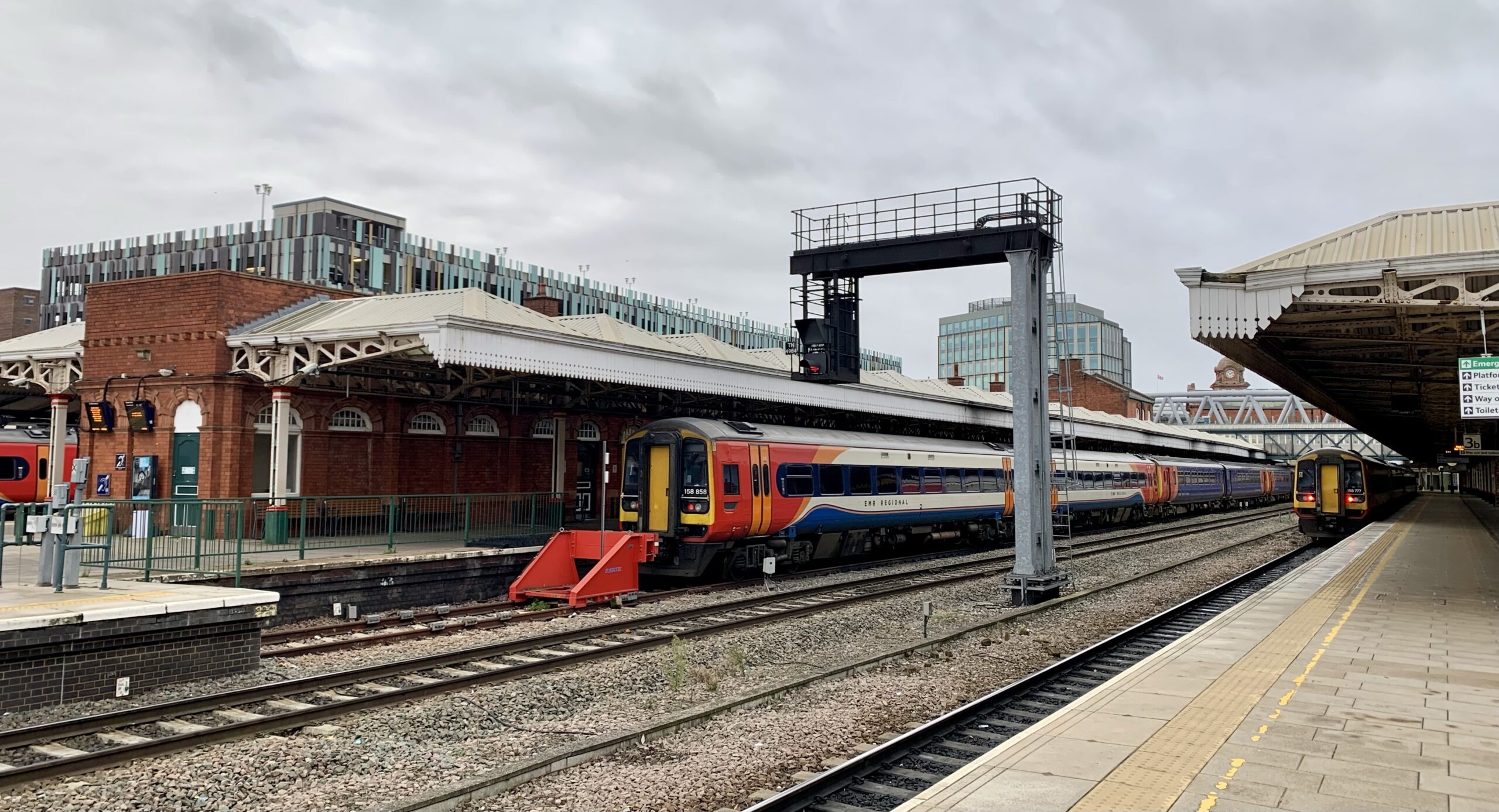
Saturday we had planned to head to Nottingham to meet friends. There was a strike by ASLEF union members which prevented any East Midlands Railway (EMR) trains running through the city. However, a quick look at the rail tour schedule revealed that The Railway Touring Company organised “York Yule-Tide Express” was scheduled to pass very close to Nottingham at around 1030 that morning. So feeling quite pleased that a mainline steam train would be in our sights, we headed off to Toton which is halfway between Derby and Nottingham. After taking some photographs from the A52 looking across to Toton depot, we drove a short distance to Sandiacre and the Iron Giant Walkway which crosses the five track railway line which I though would make a great location to see LMS Coronation Pacific No. 6233 ‘Duchess of Sutherland’ head to York.
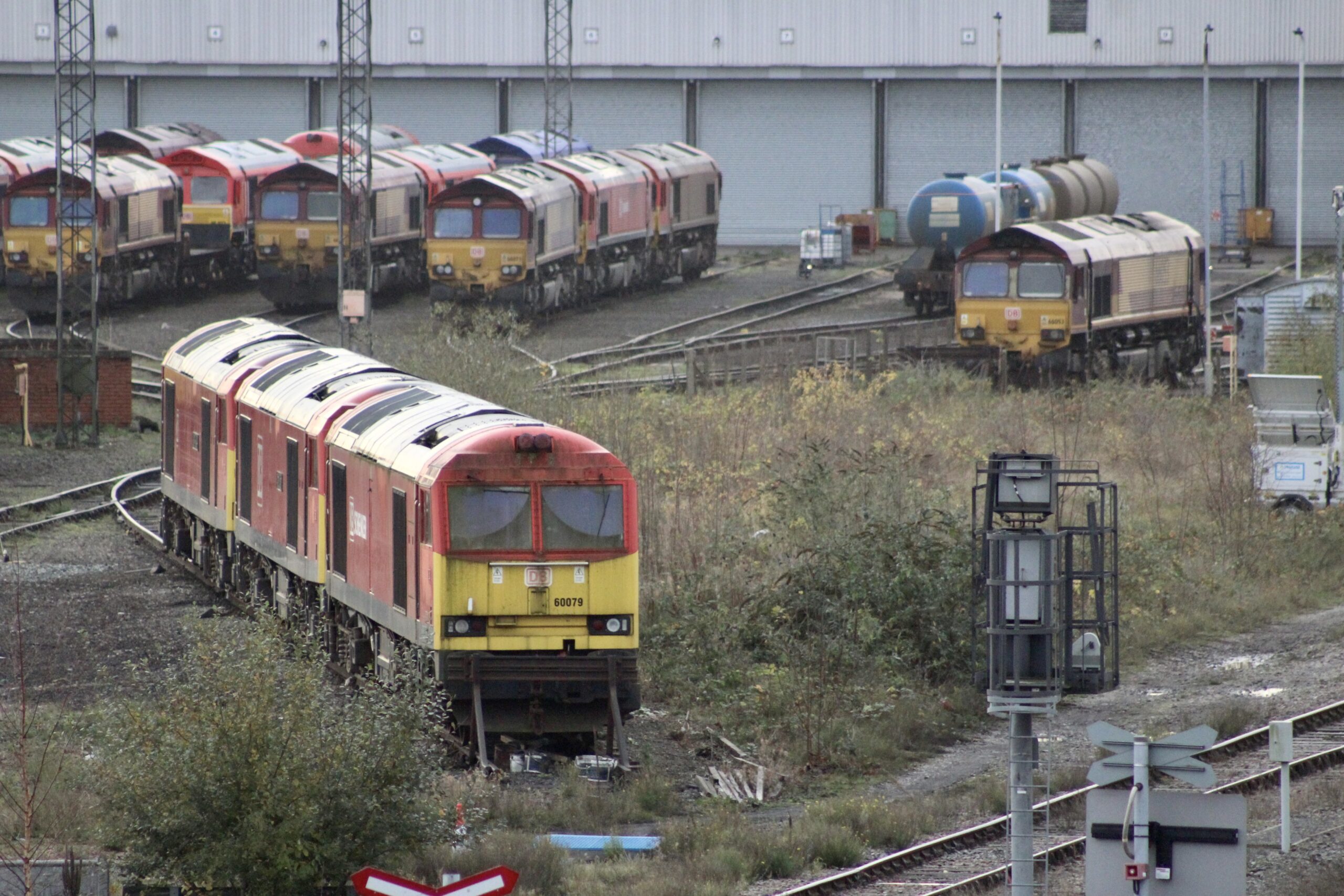
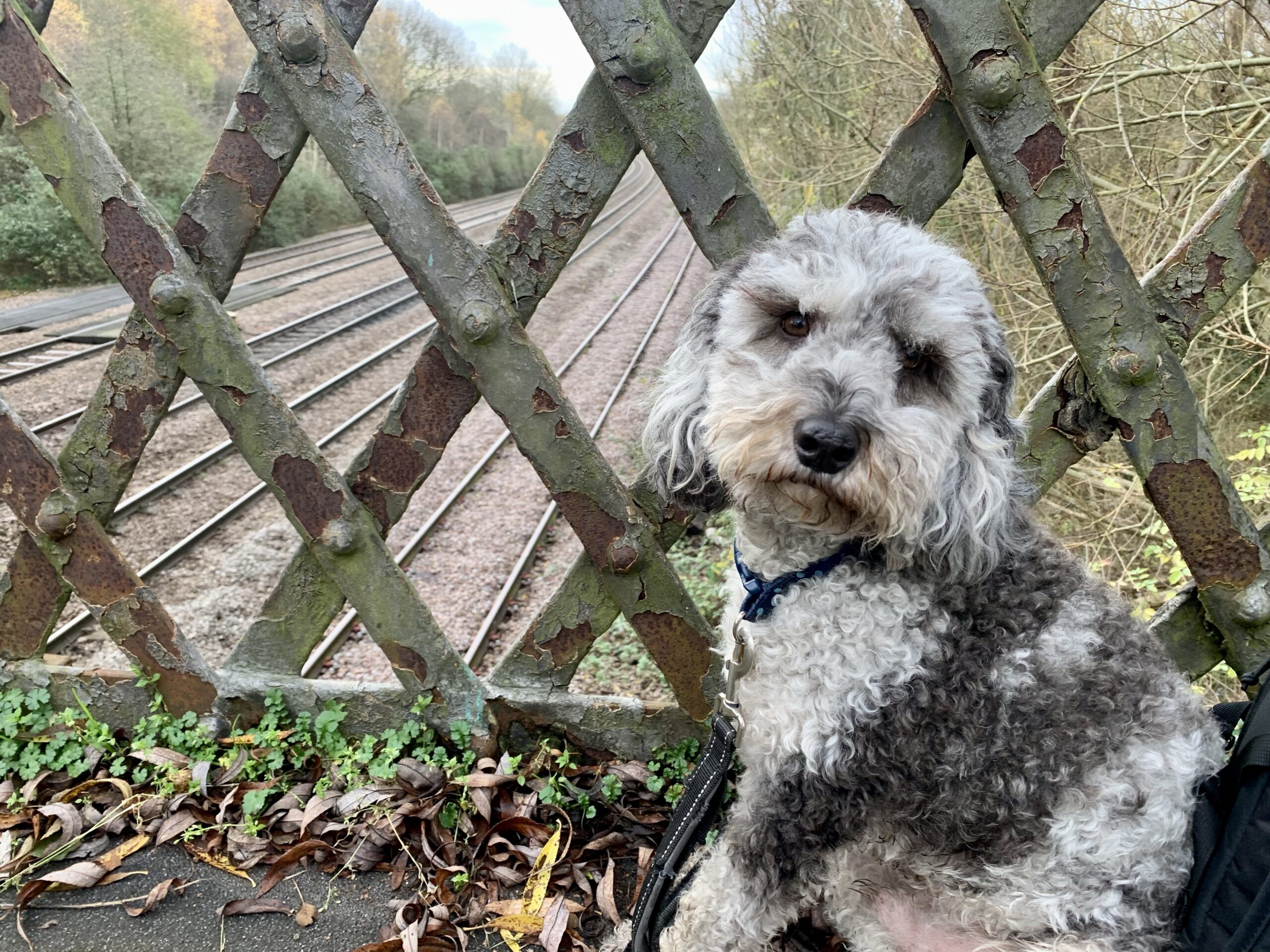
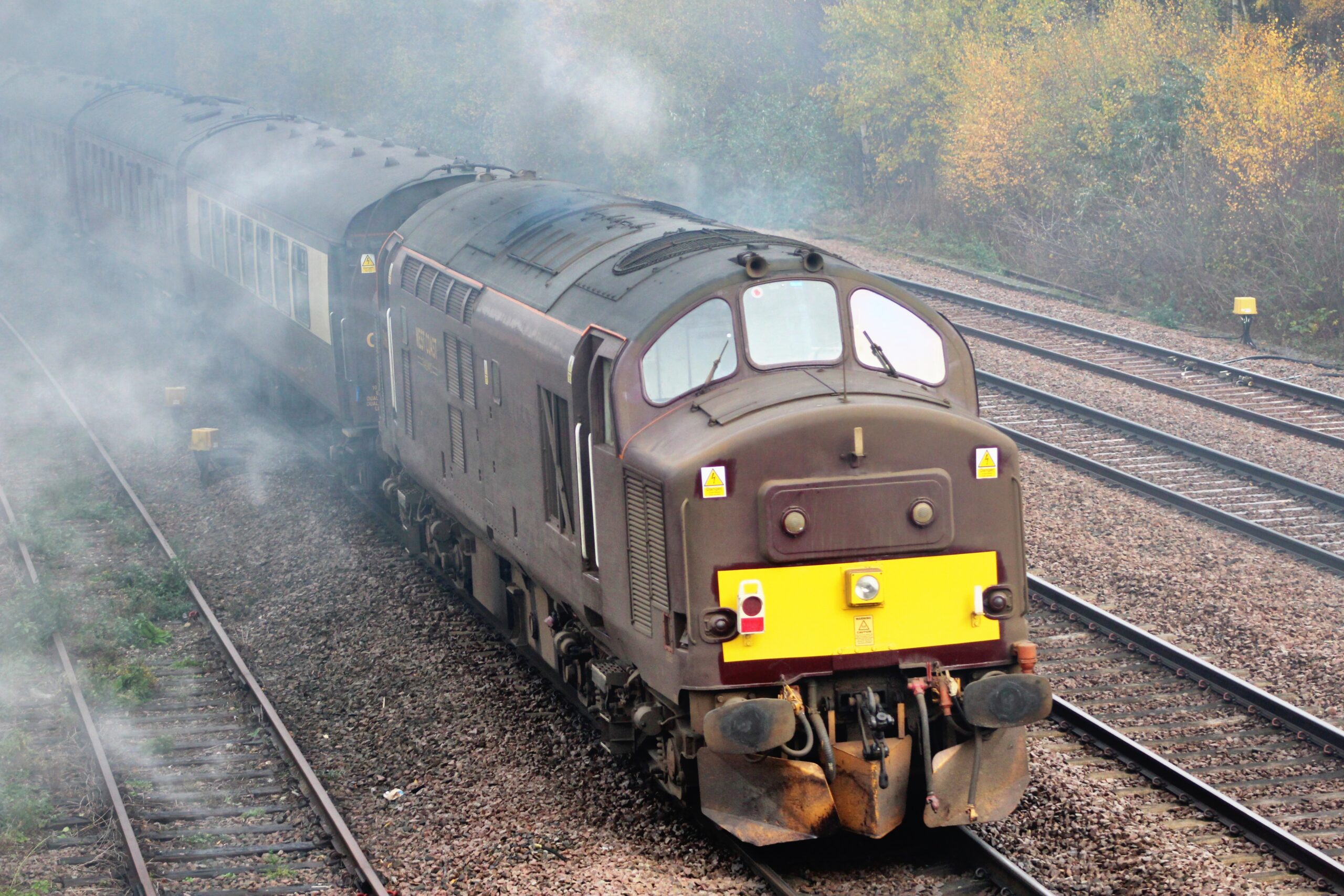
Toton viewed from the A52 rail over bridge – 26/11/2022A collection of Class 60 and Class 66 locomotives at Toton. Spot the Class 67! – 26/11/2022A view across to Toton depot with Class 60 No. 60079 in the foreground – 26/11/2022Class 60 No. 60012 slowly rotting away at Toton – 26/11/2022Some of the stored DB Class 60 locomotives at Toton with No. 60048 closest to the camera – 26/11/2022Yoshi settles down on the Iron Giant Walkway at Sandiacre waiting for the Duchess – 26/11/2022Pigeon bothering LMS Coronation Pacific No. 6233 ‘Duchess of Sutherland’ working 1Z10 0635 Ealing Broadway to York “York Yule-Tide Express” passing Sandiacre – 26/11/2022West Coast Railways Class 37 No. 37668 at the rear of 1Z10 0635 Ealing Broadway to York “York Yule-Tide Express” passes Sandiacre – 26/11/2022
Video of LMS Coronation Pacific No. 6233 ‘Duchess of Sutherland’ working 1Z10 0635 Ealing Broadway to York passes the Iron Giant Walkway at Sandiacre (additional video footage courtesy of Caroline Smith – 26/11/2022
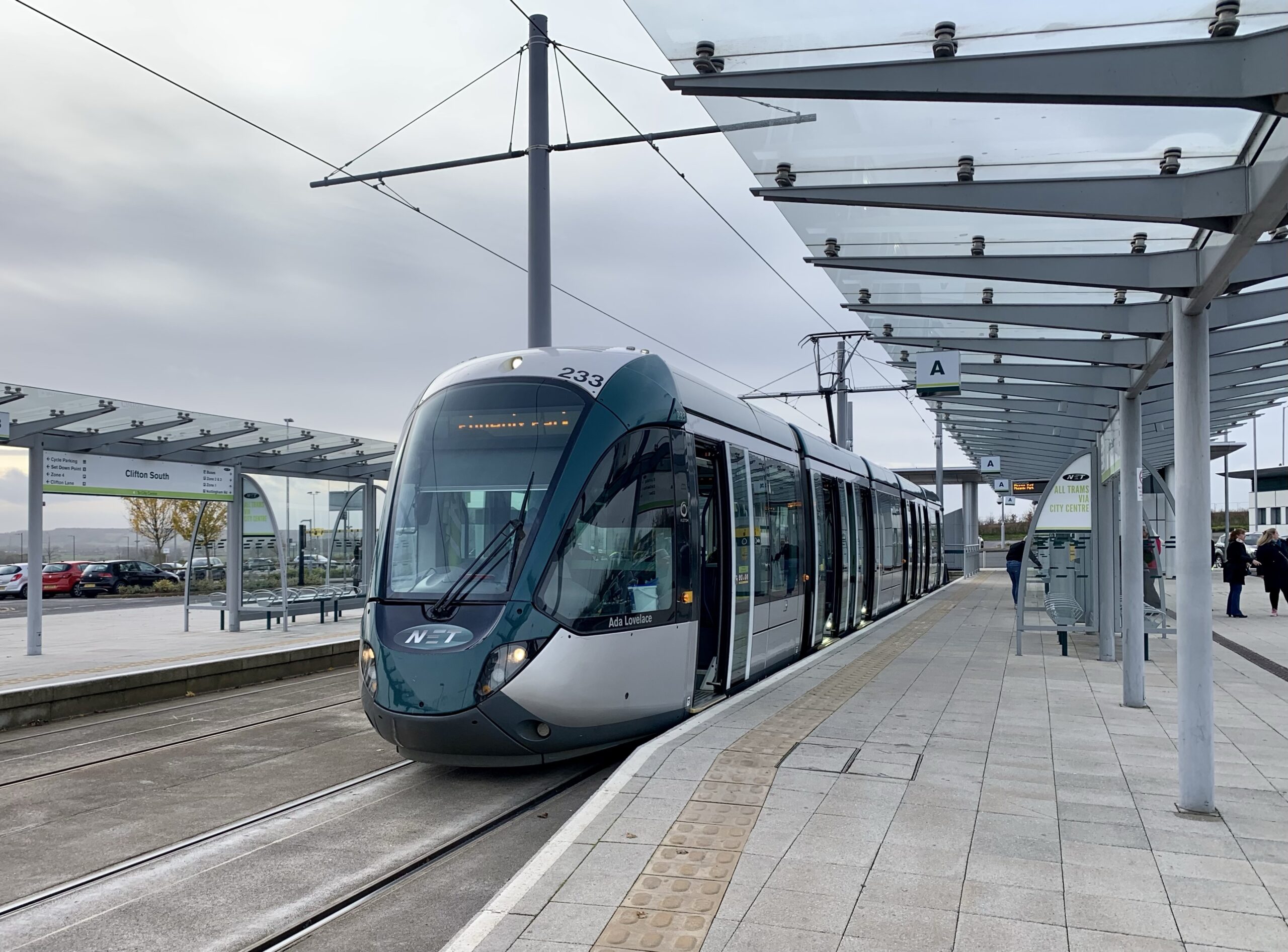
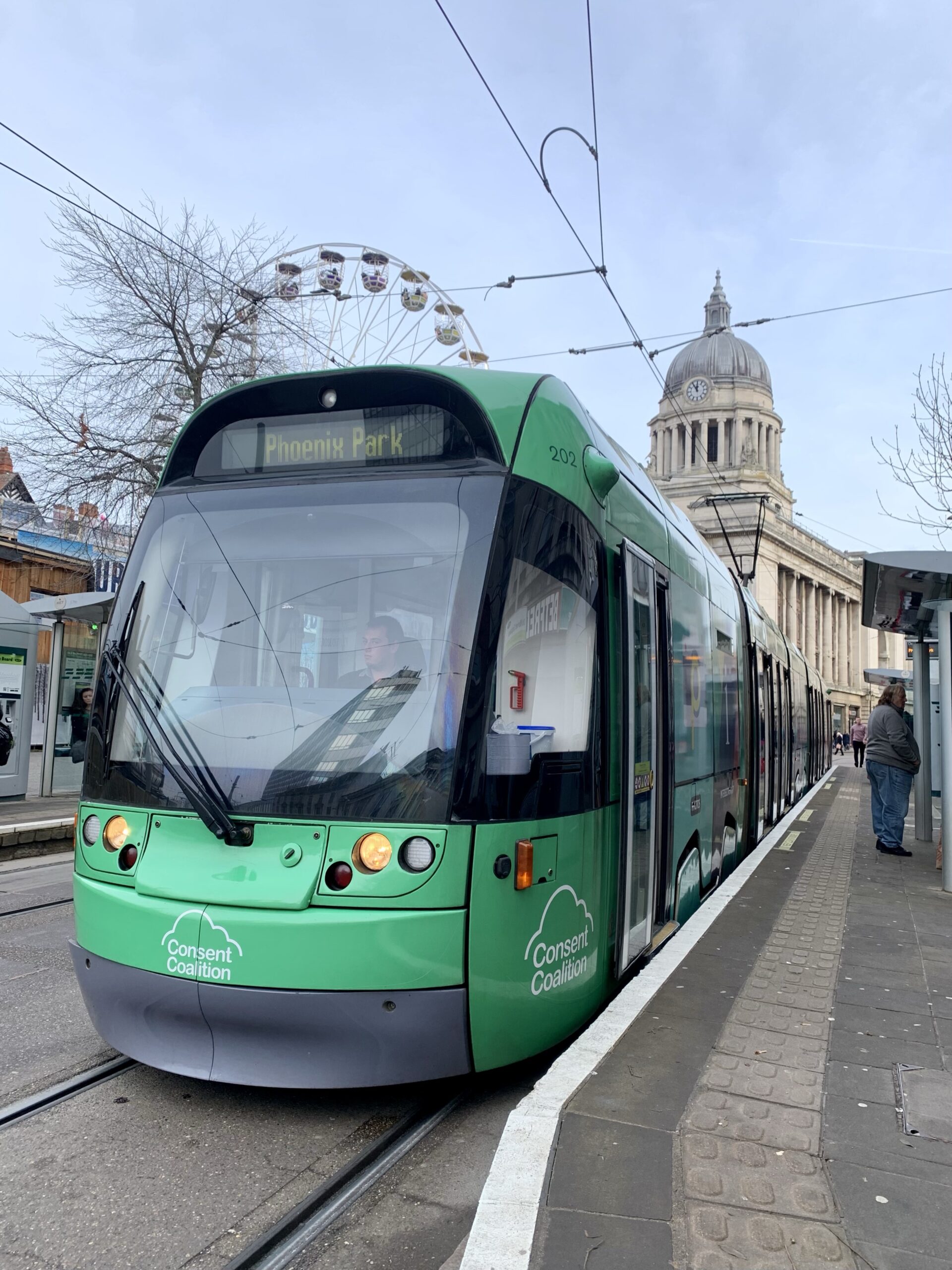
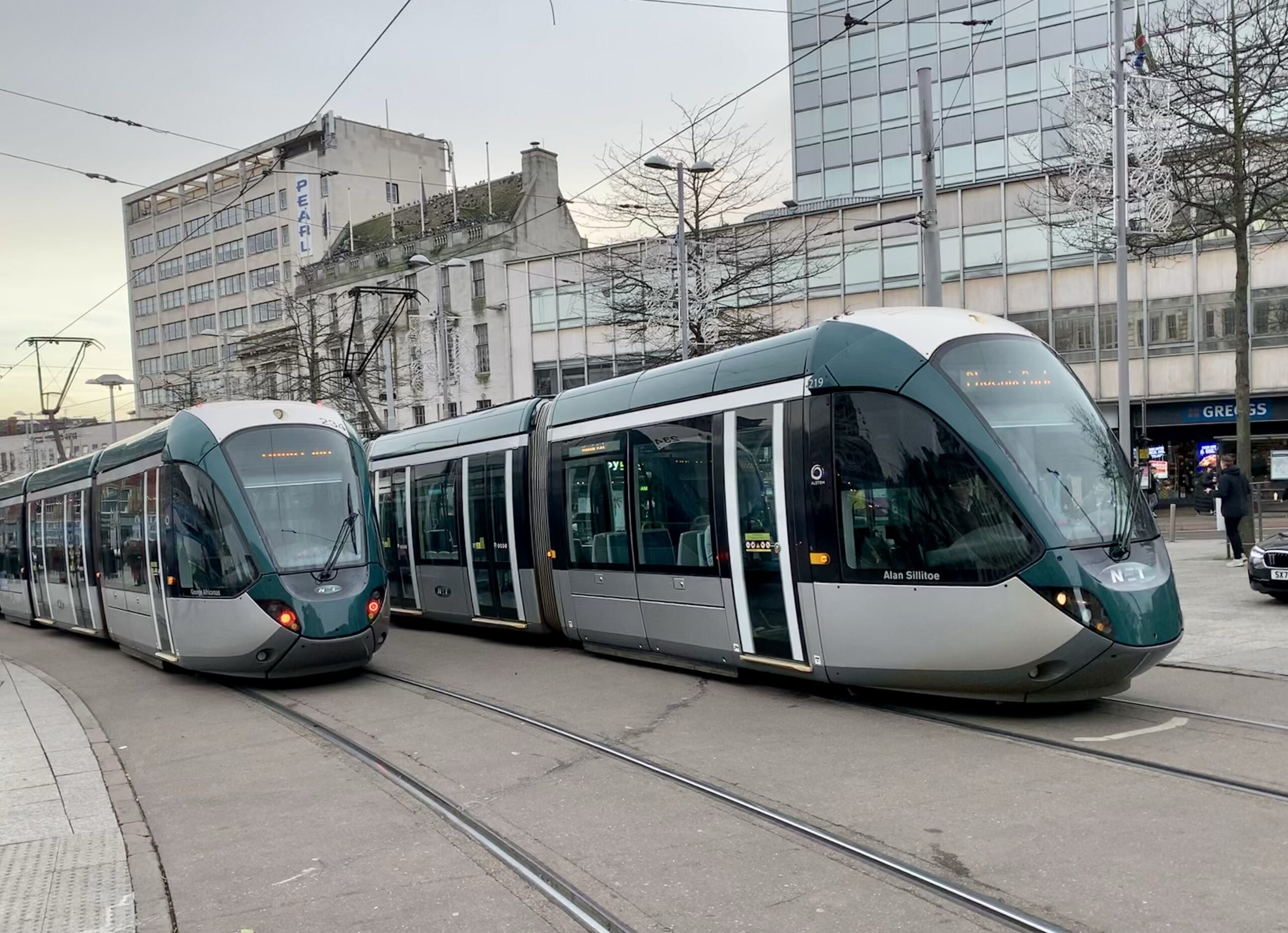
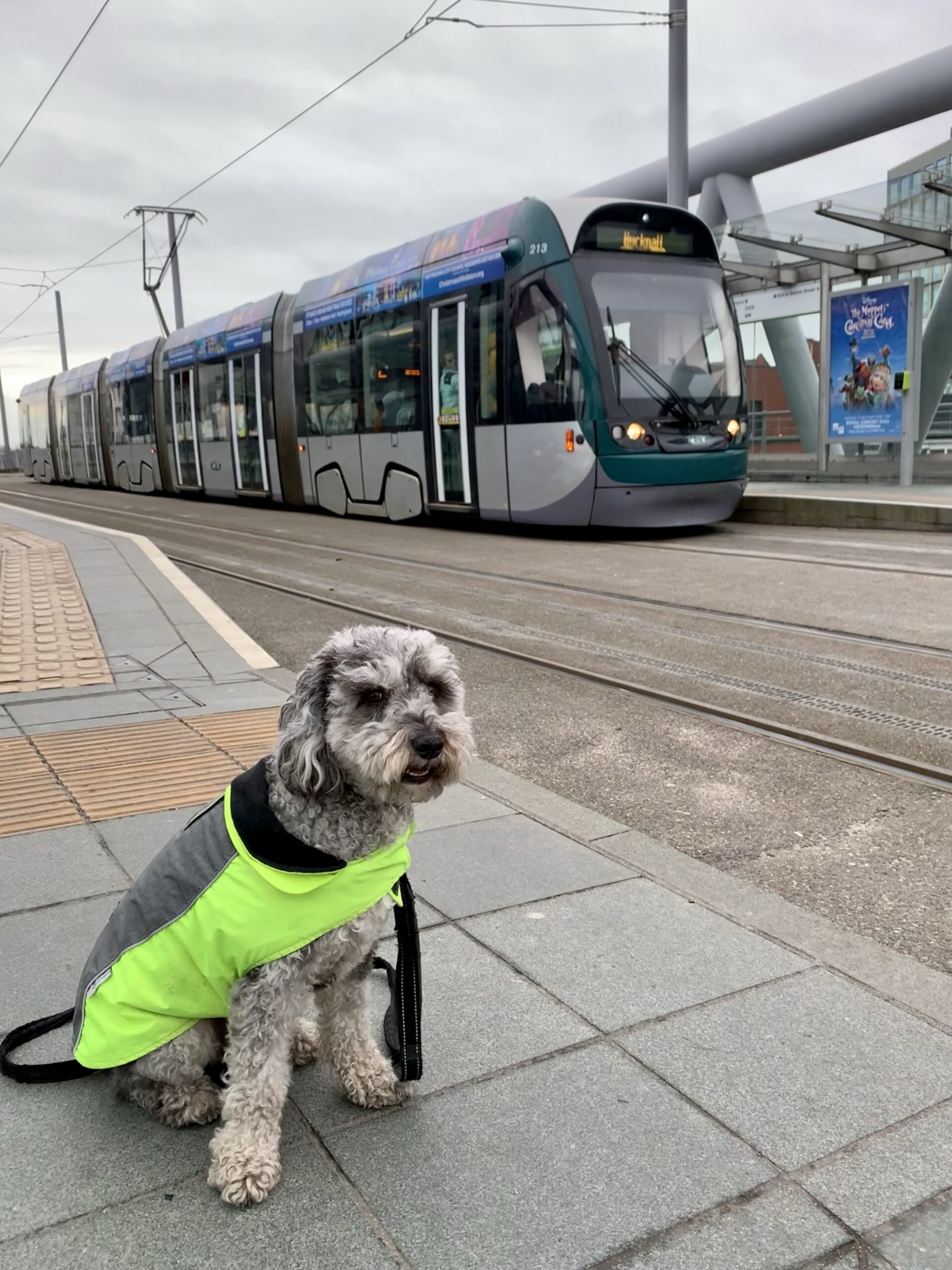
While we were waiting for The Duchess we learned Nottingham Castle had fallen into liquidation and was closed to the public. We were not discouraged by this set back and headed off to the Park and Ride at Clifton South, Nottingham. It was only when we tried to buy tickets for the Nottingham Tram that we discovered that dogs were ‘not allowed’ onboard. The helpful Nottingham Express Transit (NET) representative at at Clifton South suggested asking tram drivers if they minded Yoshi being carried onboard and luckily none of the drivers of the trams we travelled on that day objected. Quite frankly, I was amazed that dogs were not allowed on the trams. A quick look at other tram networks in the UK revealed that NET are not alone in their no dog policy. Surely if local authorities want to get people out of their cars and onto public transport this absurd rule needs to be changed. I spoke to NET who told me dogs are not carried on the Nottingham trams for “health and safety reasons and for passenger and animal safety”. I was however informed that dogs would be allowed if they were carried in a suitable “pet carrier or bag.”
Nottingham Express Transit Tram No.233 at Clifton South Park and Ride – 26/11/2022NET Tram No. 202 awaits departure from Old Market Square bound for Phoenix Park – 26/11/2022Nottingham City Centre trams No. 234 and No. 219 ‘Alan Sillitoe’ – 26/11/2022
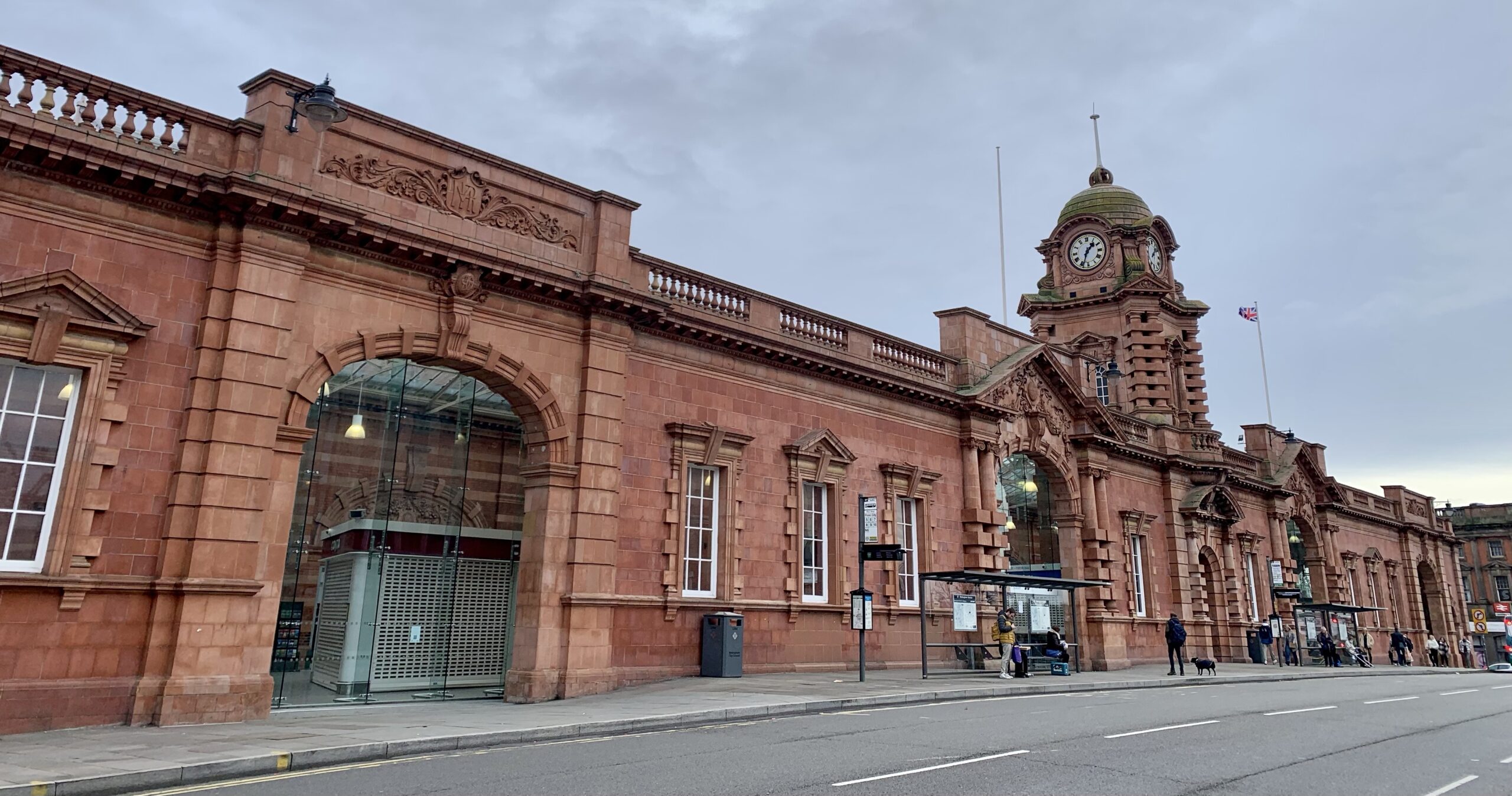
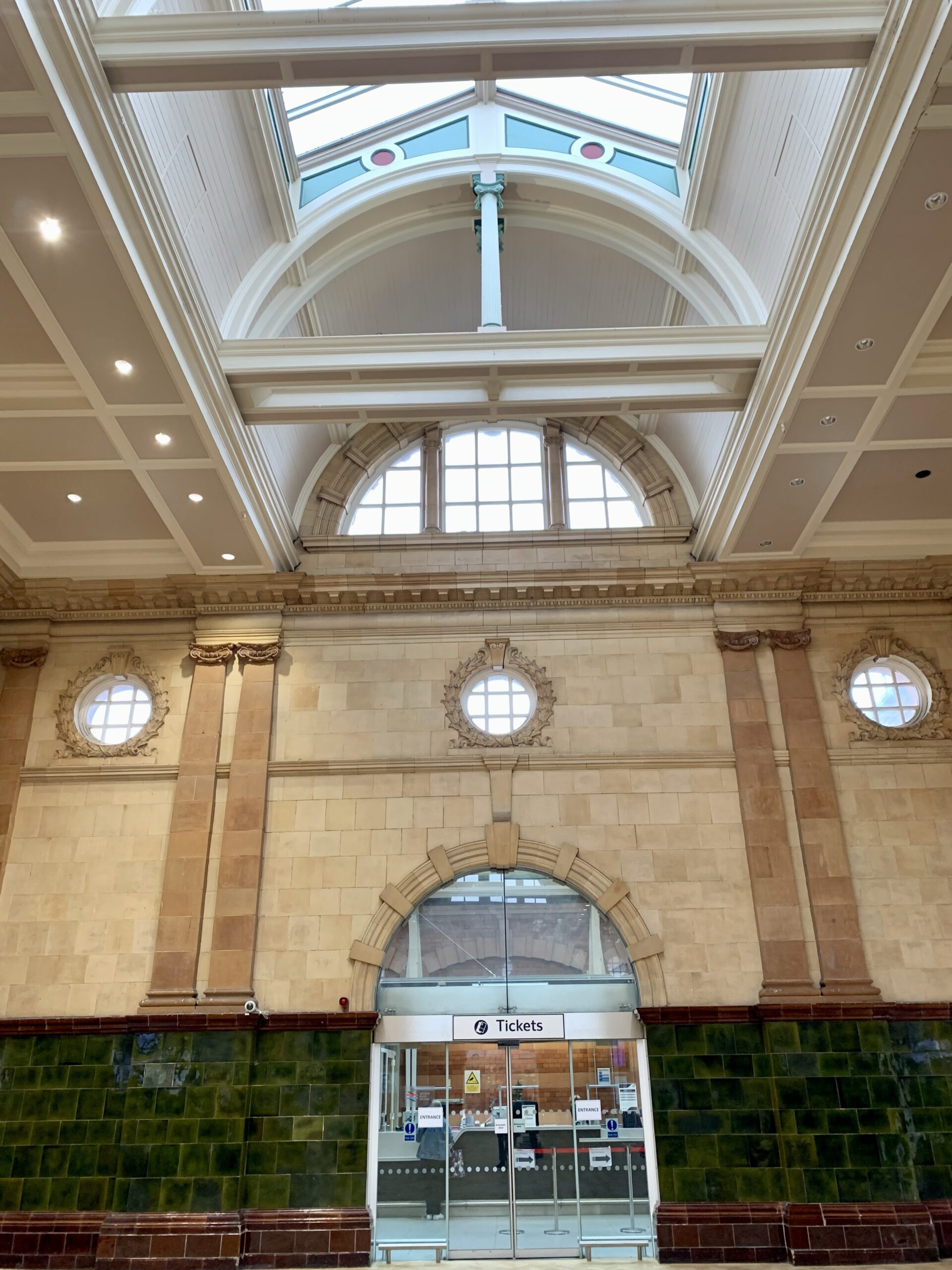
Once in Nottingham, Yoshi and I decided to explore. First stop was Nottingham railway station which is the only surviving city centre station which survives from the four that once served the population of the city of Nottingham. The station was first built by the Midland Railway (MR) in 1848 and later rebuilt in 1904 to design by company architect Charles Trubshaw with external detail by local architect Albert Lambert. It is now owned by Network Rail (NR) and managed by (EMR). The tram network runs above the station on the path of the former Great Central Railway (GCR) viaduct and includes an interchange tram stop. The station was renovated in 2017 but a fire started by a 33 year old female drug addict in January 2018 badly damaged the building.
Nottingham Railway Station exterior – 26/11/2022
The station entrance is itself on a road bridge above the platform level and is of heavy railway baroque style with the frontage consisting of a grand passageway, where road traffic once had access, flanked by a giant arch at each end and five arches along the front. A large domed clock tower dominates the building while the interior ticket hall displays a Renaissance quality
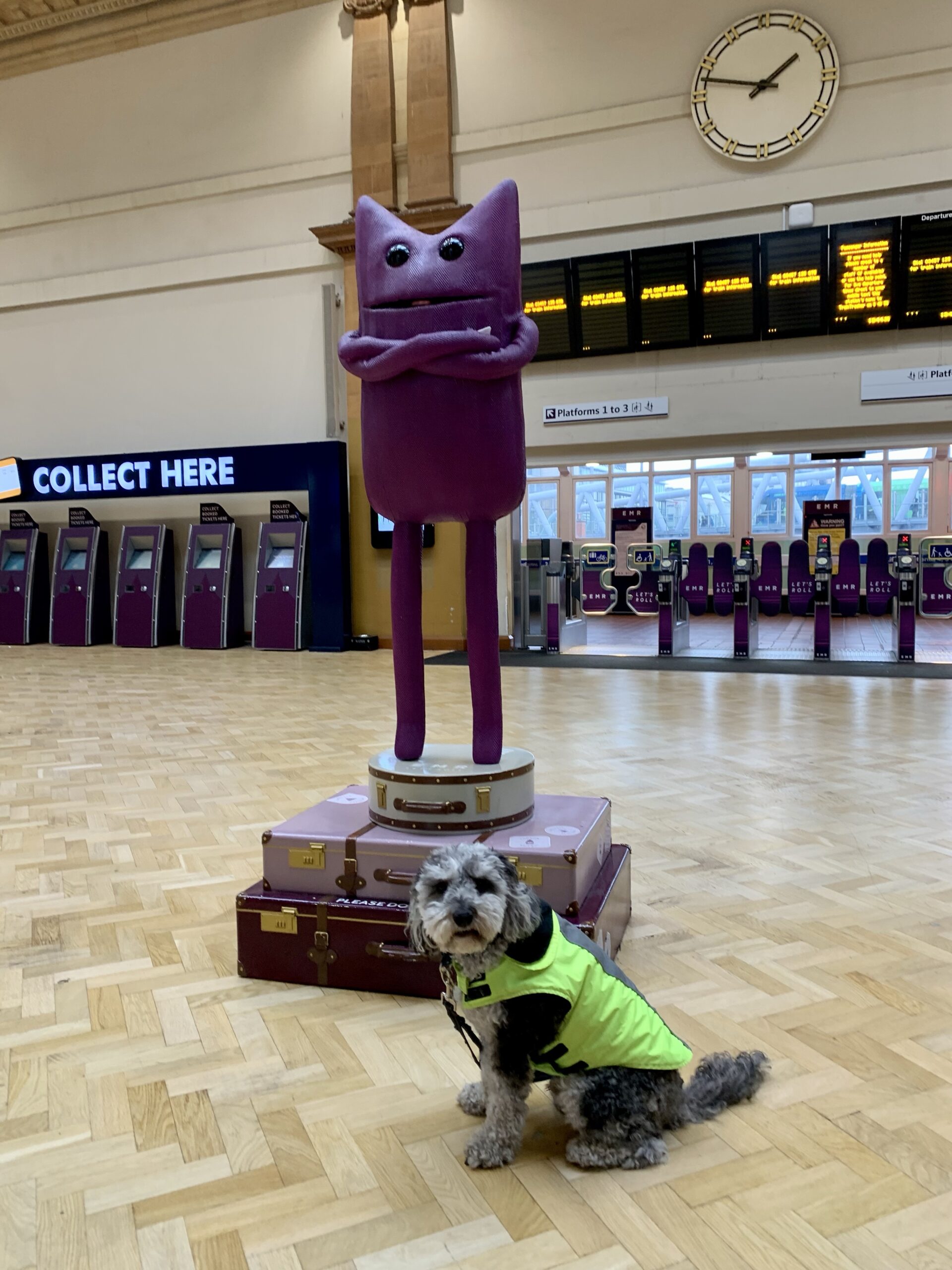
The ticket hall, Nottingham Railway Station – 26/11/2022Yoshi meets East Midland Railway mascot “Miles” at Nottingham Railway Station – 26/11/2022Stationary trains including Class 158 diesel multiple units No.’s 158858 and 158777 in evidence at Nottingham Railway Station during a one day strike by ASLEF members – 26/11/2022Yoshi waits at Nottingham Station Tram Stop while NEC tram No. 213 awaits to depart on a service to Hucknall – 26/11/2022
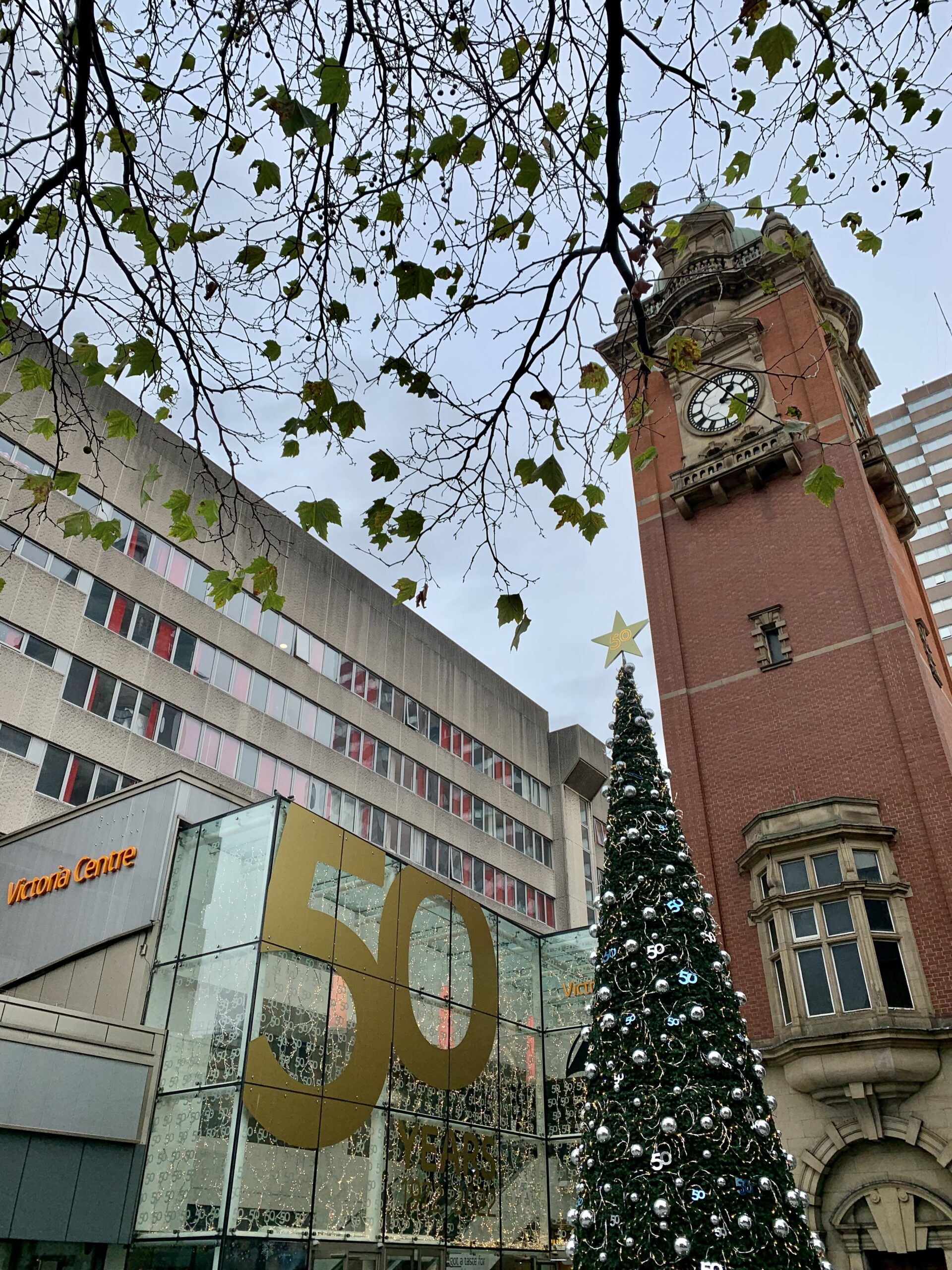
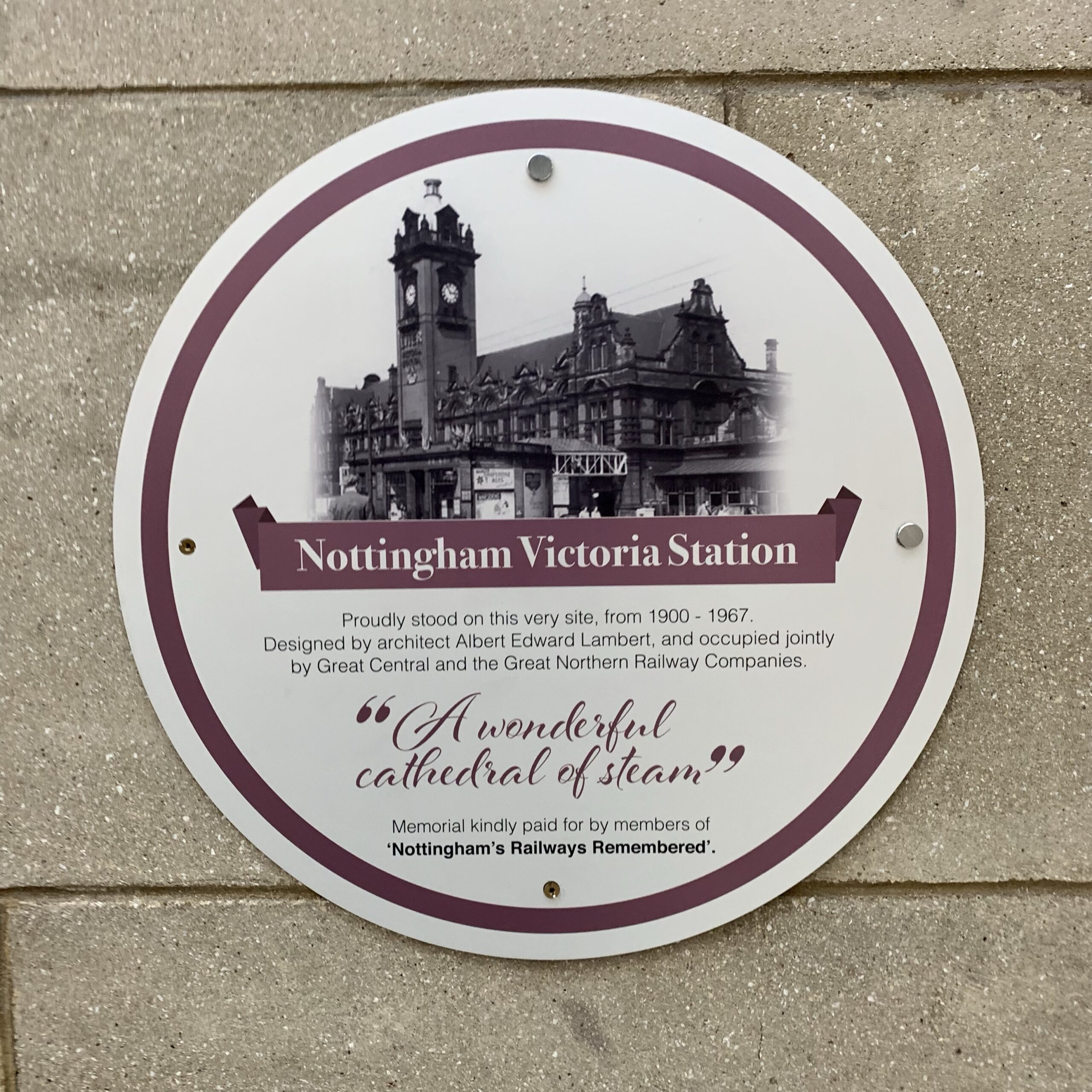
The other city centre railway stations were the GCR’s Nottingham Victoria, which was raised to the ground and replaced by a shopping centre with only the clock tower surviving, and two on London Road opened by the Great Northern Railway (GNR). Of the Nottingham London Road station’s; the High Level station was demolished in 2006 and although severely damaged by fire in 1996, the Low Level station building has been restored and converted to a health and fitness club.
The clock tower survived the demolition of Nottingham Victoria railway station – 26/11/2022Plaque commemorating Nottingham Victoria with the Victoria Shopping Centre, Nottingham – 26/11/2022
That’s it for another week – thank you for joining us. We’ll leave you with the following thought; “In times of joy, all of us wished we possessed a tail we could wag” – W.H. Auden
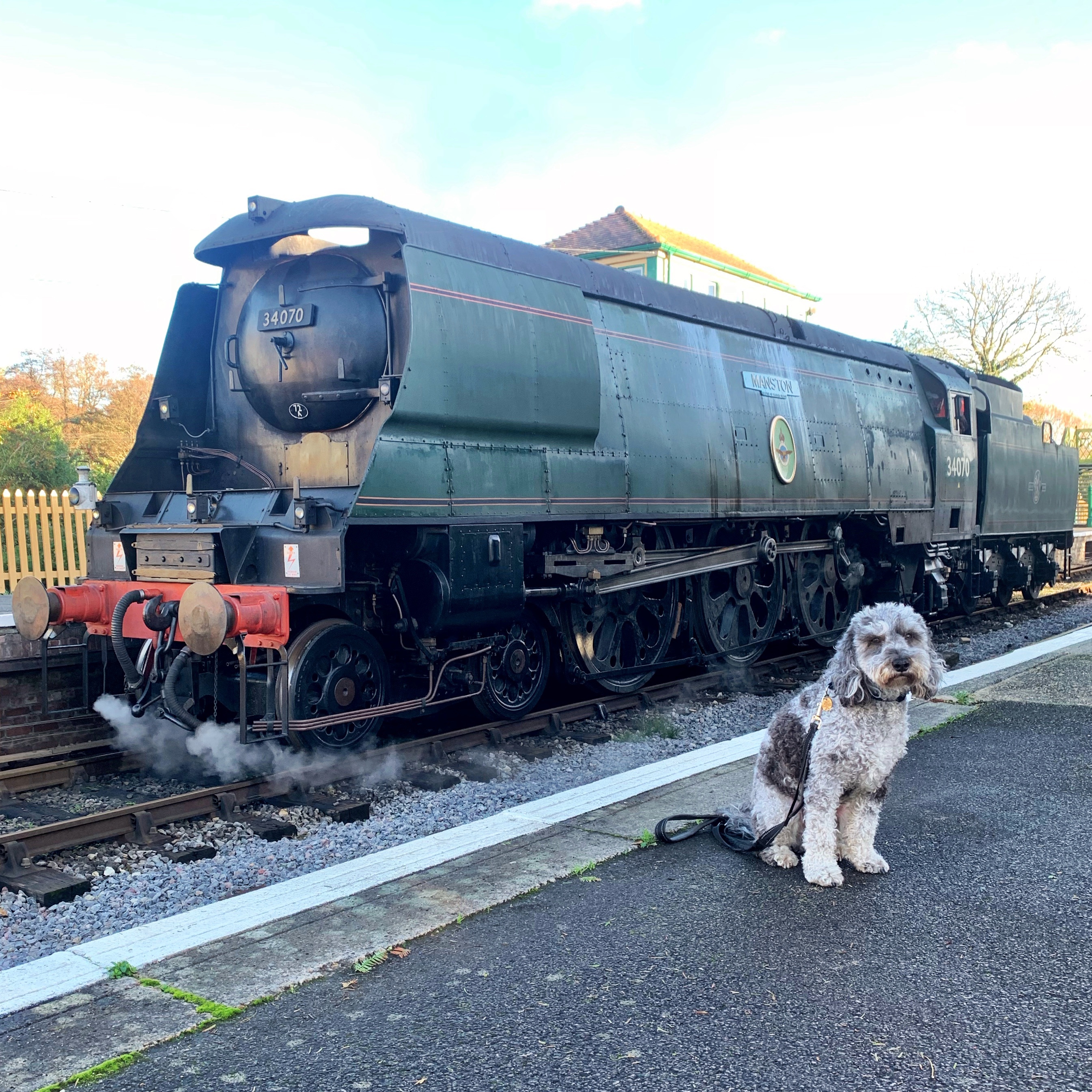
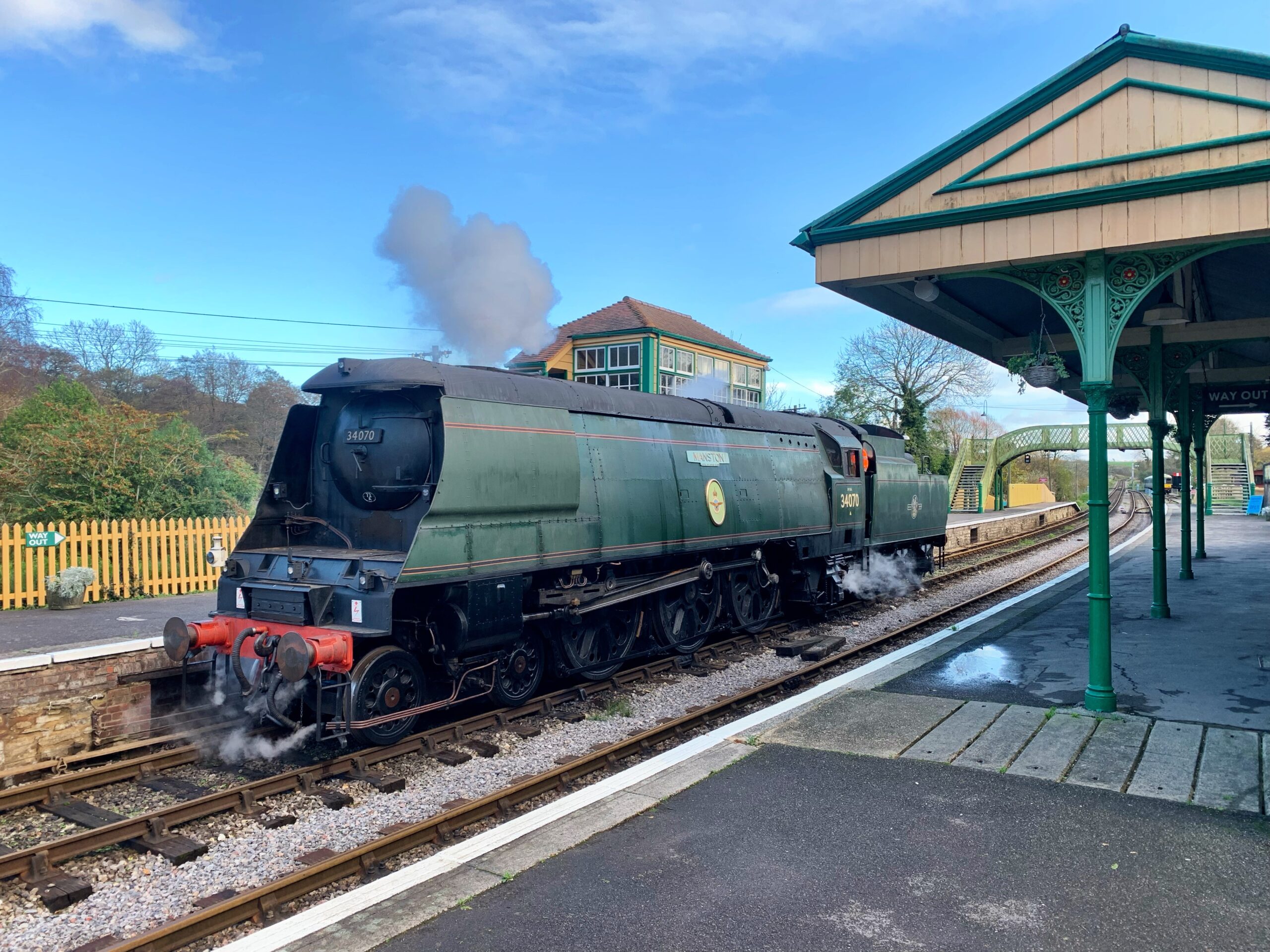
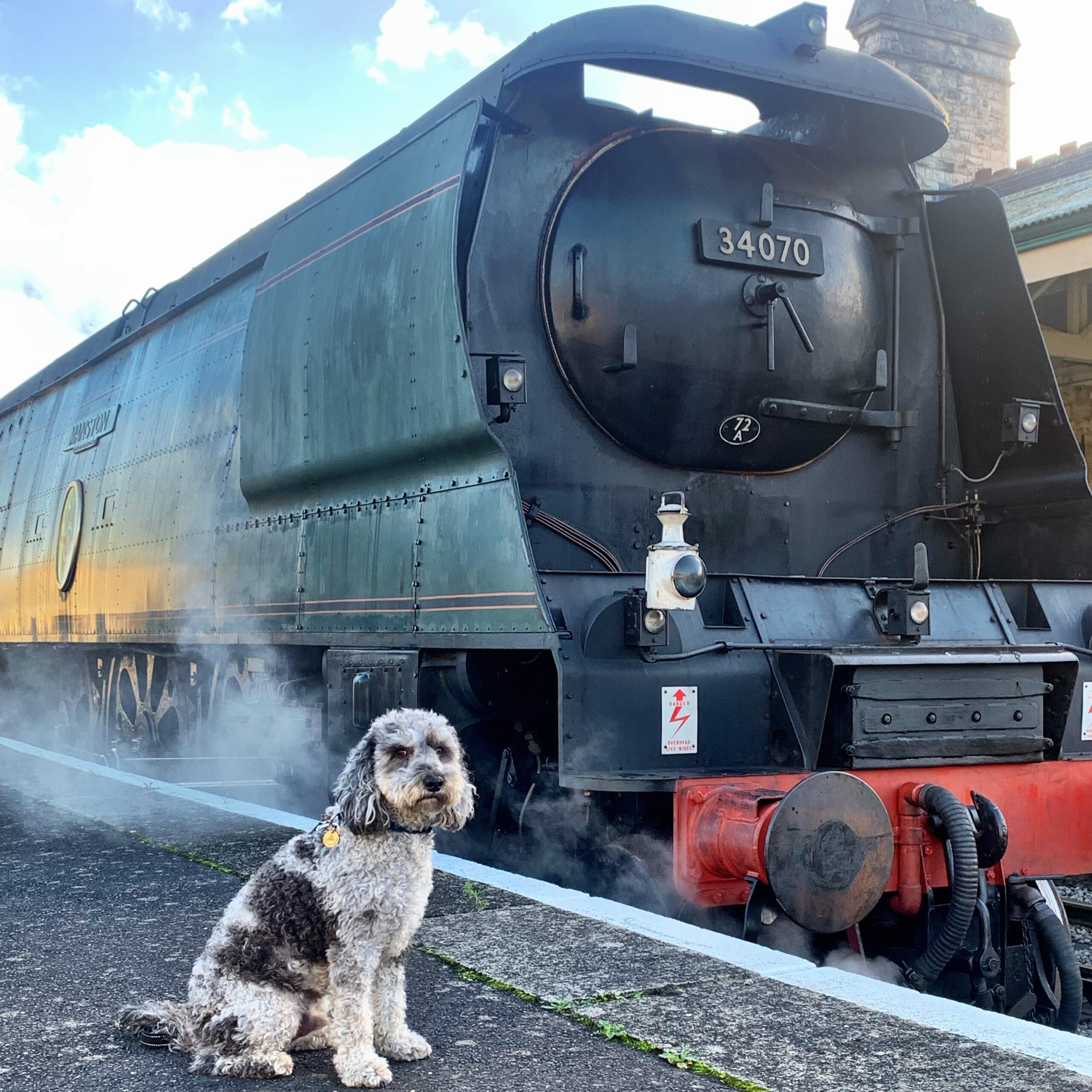
Yoshi with SR Unrebuilt Battle of Britain Class 4-6-2 No. 34070 ‘Manston’ at Corfe Castle railway station on the Swanage Railway – 17/11/2022
We first posted in Yoshi’s blog on 22nd November 2021 so I, for one, am very pleased we have completed a year of entries. Thank you for joining us if this is your first time or your 58th time. We really do appreciate everyone who has taken time out to read our words, look at our pictures or watch our video clips. Thank you for your comments, updates, suggestions and corrections over the past year.
This last week began with a Thursday lunchtime trip to Corfe Castle on the Swanage Railway to see SR Unrebuilt Battle of Britain Class 4-6-2 No. 34070 ‘Manston’ which was out on test running light engine. The locomotive has only recently been returned to traffic and later in the day she also hauled two carriages in a loaded test run from Swanage.
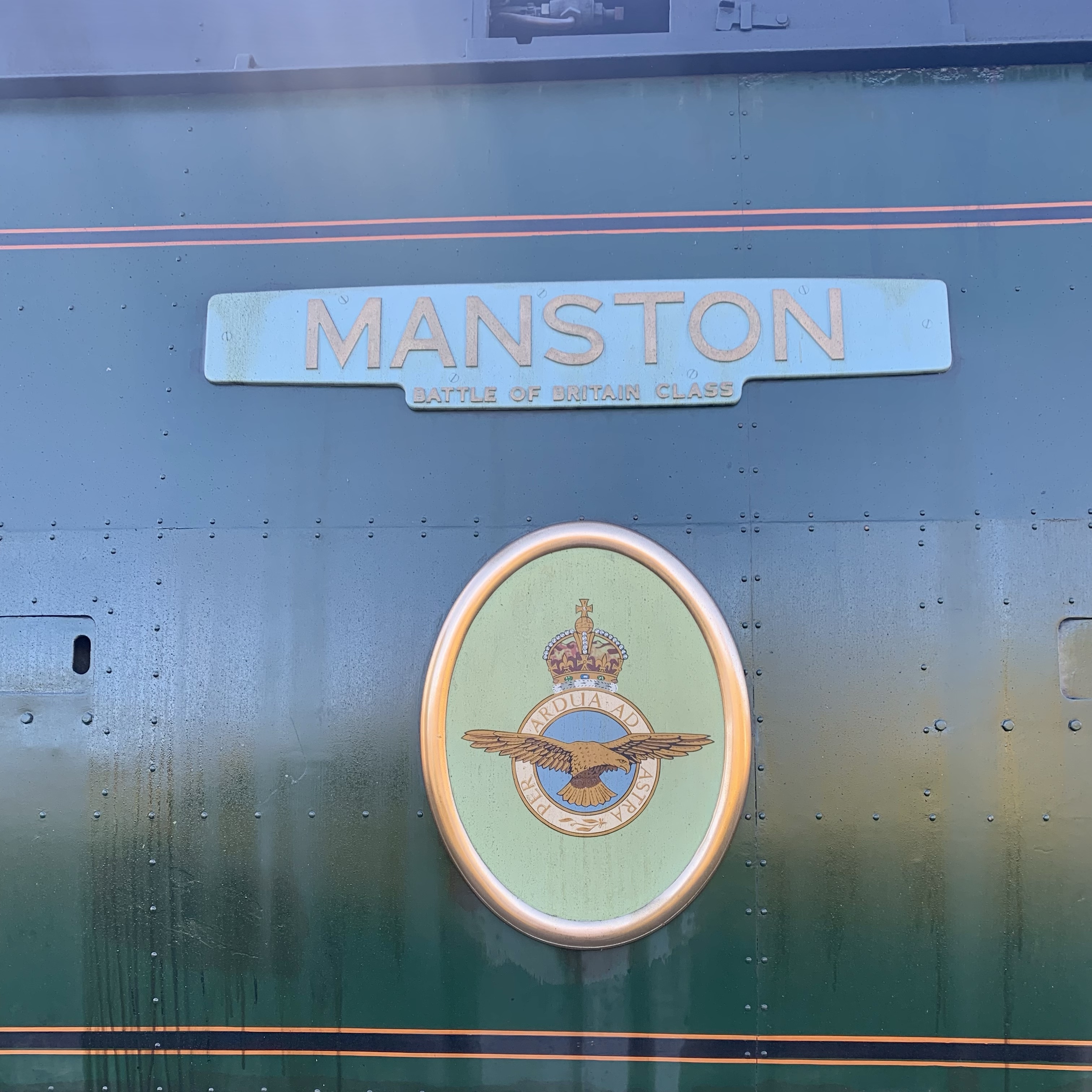
SR Unrebuilt Battle of Britain Class 4-6-2 No. 34070 ‘Manston’ departs Corfe Castle during a running in test run – 17/11/2022SR Unrebuilt Battle of Britain Class 4-6-2 No. 34070 ‘Manston’ at Corfe Castle during a running in test run – 17/11/2022Nameplate and crest detail of SR Unrebuilt Battle of Britain Class 4-6-2 No. 34070 ‘Manston’ – 17/11/2022Yoshi takes a closer look at SR Unrebuilt Battle of Britain Class 4-6-2 No. 34070 ‘Manston’ while at Corfe Castle – 17/11/2022
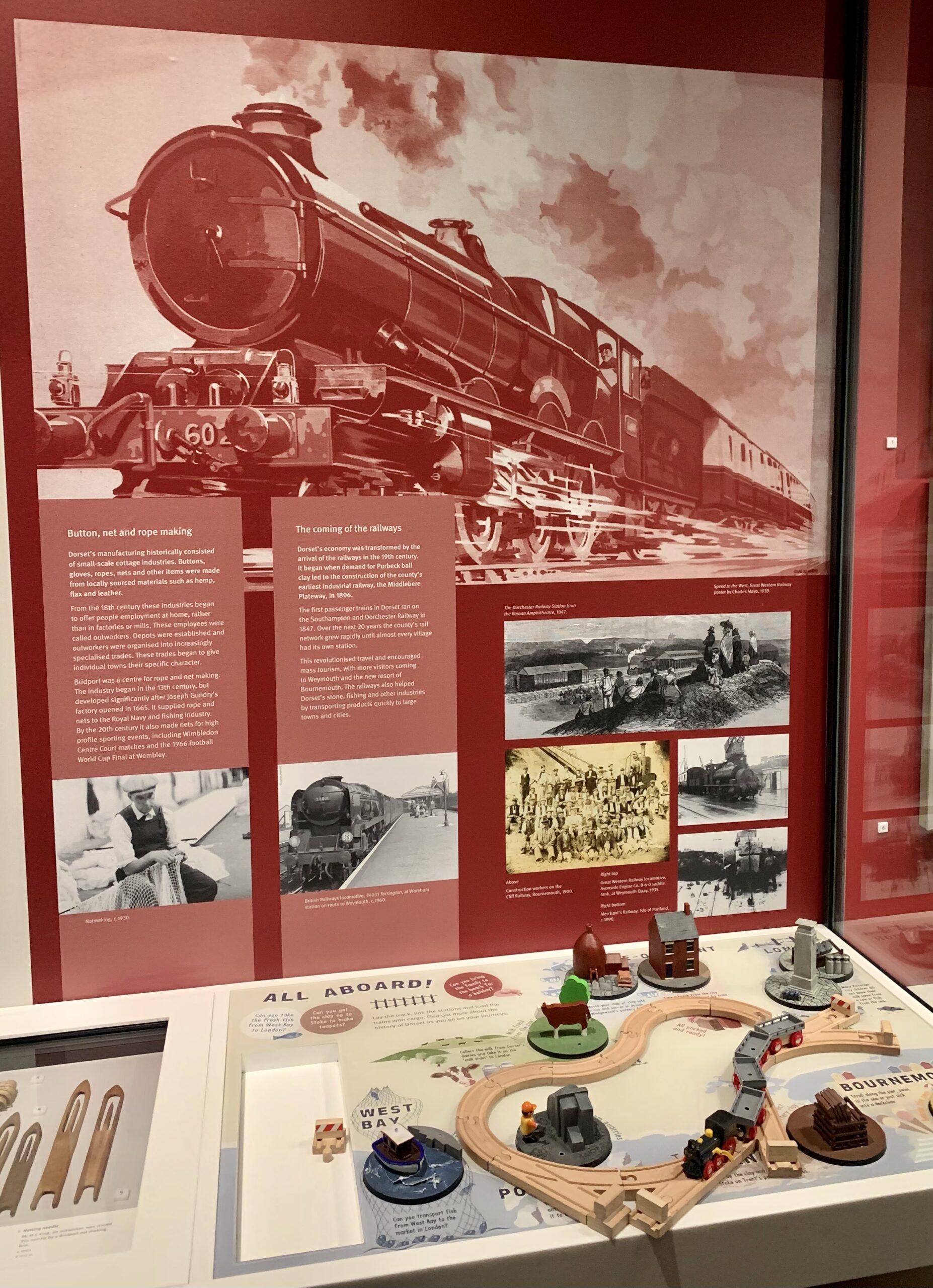
In the evening we went along to the Dorset Museum’s “Museum after Hours” event in Dorchester. It was the first time I had visited the museum since its £16.4m refurbishment and May 2021 re-opening. The new museum galleries are spacious, the displays well thought out with a child friendly leaning. The railways of Dorset are covered by one display panel and a Brio style model track circle as part of the Trade and Industry section within the “People’s Dorset” gallery on the first floor.
Dorset Museum celebrates the railways in Dorset – 17/11/2022
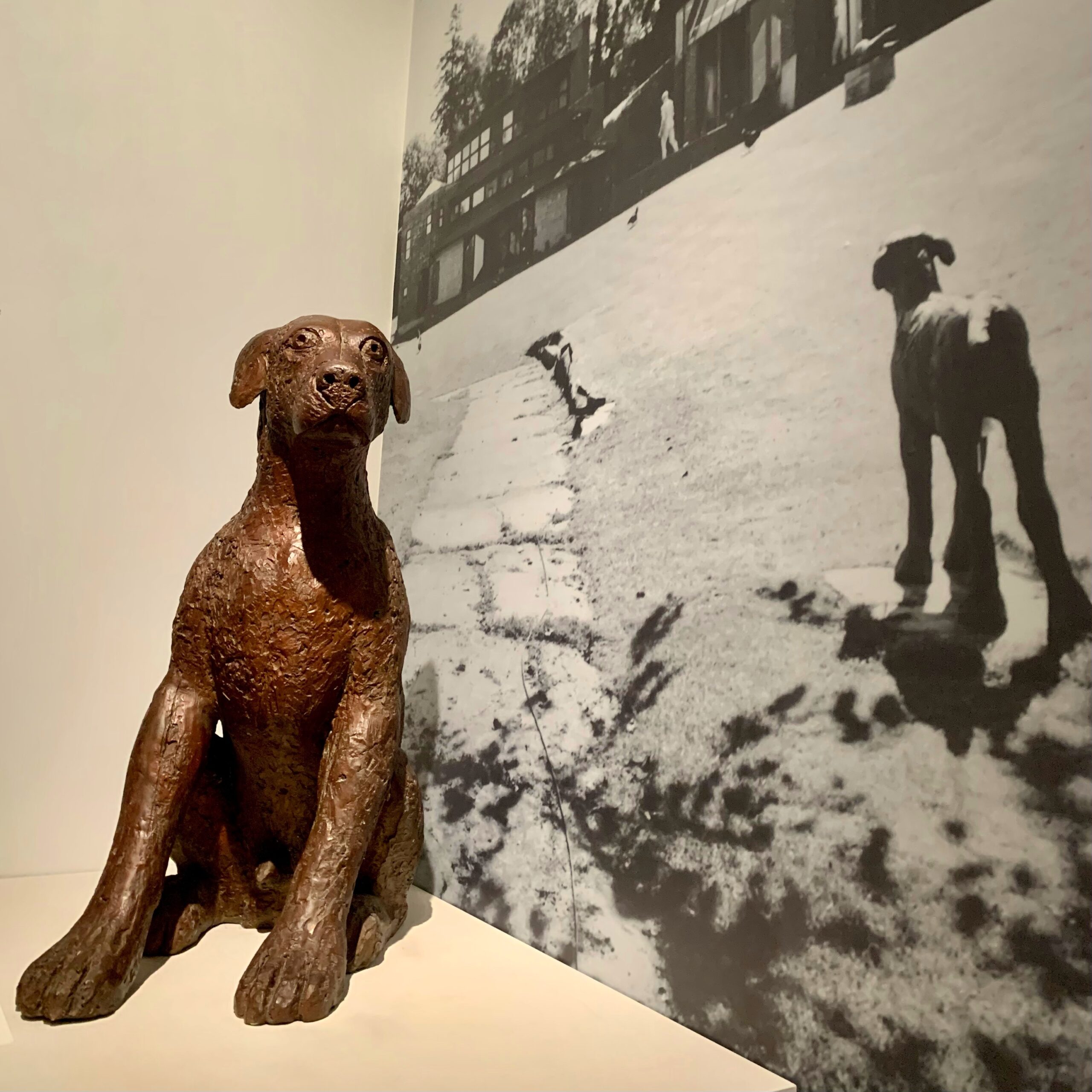
I very much enjoyed seeing a number of sculptures from Dame Elisabeth Frink (1930 – 1993) who I have very fond memories of meeting at the museum many years ago while on a school visit. The “Artists’ Dorset” gallery was perhaps my favourite of what is currently on offer at the museum.
Leonardo’s Dog (Bronze, edition of 6, 1990) – on a visit to the Loire, Dame Elisabeth Frink came across a stone dog at the entrance to Leonardo Da Vinci’s house that inspired her to create this work. Frink admired the traits of loyalty and dignity which she felt were often lacking in humans – 17/11/2022In August 1996 Dame Elisabeth was one of five ‘Women of Achievement’ selected for a set of British stamps
In 2016/17, the Dorset County Museum (as we called it then) held an excellent exhibition of railway posters and station roundels called “Speed to the West” curated by “Antiques Roadshow” expert Paul Atterbury and collector Richard Furness. I was, of course, particularly pleased that some Terrence Cuneo posters were included and I’d be very pleased if the museum did a repeat showing!
Dorset County Museum’s “Speed to the West” curated by Antiques Roadshow expert Paul Atterbury and collector Richard Furness – 19/03/2016Dorset County Museum’s “Speed to the West” curated by Antiques Roadshow expert Paul Atterbury and collector Richard Furness – 19/03/2016Dorset County Museum’s “Speed to the West” curated by Antiques Roadshow expert Paul Atterbury and collector Richard Furness – 19/03/2016
Friday morning was the start of a long weekend with a return trip to the Naval Dockyards at Portsmouth. Our intention this time was to see the Submarine Museum which we didn’t have time for on our previous visit in the summer, but with the special boat which is used to ferry visitors across to Gosport not running, we elected instead to postpone clambering around the submarines and instead visited the ships on show in Portsmouth.
There are still a few remains of the once extensive Portsmouth dockyard railway system still in evidence:
Began in 1843 within the walls of the dockyard, the railway was connected to the national network in 1846 via the “Admiralty Line” between Unicorn Gate and Portsmouth Town station (now Portsmouth & Southsea). By 1952, at its peak, there were around 27 miles of track within the docks used for transporting goods, equipment and personnel. In the 1970’s the railway declined and the link to the main line was closed in 1977 with the dockyard railway closing entirely a year later.
HMS M.33 built in 1915 is not only the sole remaining British veteran of the bloody Dardanelles Campaign of 1915-1916, but also of the Russian Civil War which followed. The ship is one of just three British warships from World War I still in existence. Behind the ship you can see two railway wagons which remain in evidence – 18/11/2022According to a list of crew on board HMS M.33 in 1915, there were two ship’s dogs. Squab belonged to the captain, Preston-Thomas and Nell belonged to the crew. There was also a ship’s cat, Miss Muggins and the wheelhouse had a cat flap – 18/11/2022
I didn’t video many trains on this Portsmouth outing – but this video clip includes DB Class 66 No. 66013 working 4021 0915 Trafford Park Euro Terminal to Southampton Western Docks Berth 109, GWR Class 166 No. 166215 working 1F26 1623 Portsmouth Harbour to Cardiff Central, GWR Class 165 No. 165129 with Class 166 No. 166203 working 1F24 1523 Portsmouth Harbour to Cardiff Central, Southern Class 377 No. 377158 working 1S24 1400 Brighton to Portsmouth Harbour and an RHTT configured MPV working 3S82 0611 Totton Yard to Totton Yard – 18/11/2022
Saturday evening saw Yoshi’s mum and myself in West Bay for dinner at the Station Kitchen which is situated at the former West Bay railway station. Originally called Bridport Harbour, the name was changed by the Great Western Railway to make it sound a more desirable holiday destination. Passenger services between Bridport and West Bay ended in 1930 with goods traffic remaining until closure in 1962. The restaurant comprises the dog-friendly 1884 station building and two railway carriages which have been transported to the site. The first carriage, which we dined in, GWR No. 2370 named ‘Brunel’ is a toplight brake corridor coach built in 1911 and purchased for use by the Station Kitchen in 2015. The carriage has quite a history having been used as a makeshift hospital in France during World War I and a tool coach in Worcester in the 1950’s before its restoration in Oswestry.
The Station Kitchen, West Bay – 19/11/2022Station building interior – The Station Kitchen, West Bay – 19/11/2022‘Brunel’ – The Station Kitchen, West Bay – 19/11/2022‘Brunel’ interior – The Station Kitchen, West Bay – 19/11/2022‘Brunel’ interior – The Station Kitchen, West Bay – 19/11/2022
The second coach at West Bay is BR MK1 corridor second No. 25646 built in Gloucester in 1958 and was being used as a mess coach at Toddington when it was purchased for its new life at West Bay. This carriage has been named ‘Beeching’.
‘Beeching’ – The Station Kitchen, West Bay – 19/11/2022‘Beeching’ interior – The Station Kitchen, West Bay – 19/11/2022
The food was amazing, with perhaps the best cheesecake I’ve tasted. The staff were friendly, professional and attentive. If Yoshi had joined us, he would not have hesitated in giving the Station Kitchen five barks out of five.
Yoshi visited The Station Kitchen, West Bay in April – 15/04/2022The Station Kitchen, West Bay – 15/04/2022The Station Kitchen, West Bay before the addition of the carriages – 31/03/2016The Station Kitchen, West Bay – 31/03/2016The Station Kitchen, West Bay – 31/03/2016
On our Sunday morning walk, Yoshi and I went along to Lake Road in Hamworthy to see work being carried out on the railway bridge. Rotten timbers on which the railway line is carried were replaced and the area re-ballasted involving a team from Sonic Rail Services, who specialise in bridge strengthening and Network Rail. We await news of the first train to make it down the restored Hamworthy Branch with anticipation!
Lake Road bridge works – 20/11/2022 Lake Road bridge works – 20/11/2022The crossing at Ashmore Road looking towards Poole Port was managed by Network Rail staff – 20/11/2022A Network Rail Mercedes-Benz lorry reverses into the compound where the original Poole station was located. This later became Hamworthy Goods. The lorry, from Eastleigh, had arrived to collect the old timbers which had been removed from Lake Road bridge – 20/11/2022
Bridge works at Lake Road – 20/11/2022
Finally, Monday evening once again saw the regular Class 73 hauled track inspection test train heading to Weymouth. We elected to see the train pass through Poole on its outward journey working as 1Q51 1115 Derby RTC to Eastleigh East Yard in the capable charge of GBRf No.’s 73965 ‘Des O’Brien’ and 73961 ‘Alison’.
1Q51 1115 Derby RTC to Eastleigh East Yard – 21/11/2022
That’s it for another week! This entry was brought to you accompanied by the sounds of rainbow frog biscuit, Zeph, Ron Grainer & Delia Derbyshire (happy 59th birthday Doctor Who!). Until next time, remember; “The most affectionate creature in the world is a wet dog” – Ambrose Bierce (1842 – 1914 or thereabouts).
Yoshi visits Tonbridge and barks at all the GBRf Class 69 locomotives introduced to traffic so far – 12/11/2022
On Saturday, Yoshi’s mum was off to London for the weekend to meet up with a friend who had travelled down on the Caledonian sleeper – of which, I was extremely jealous! Travelling on a sleeper train has long been an item on my bucket list. As there are no sleeper services from sleepy Dorset to the big smoke, and as Yoshi’s mum isn’t keen on rail replacement bus services, I volunteered to drive up and drop her off in Greenwich. With this offer accepted, my mind began to formulate a number of plans of things Yoshi and I could do on our way back.
My initial thought was to drive home via Brighton and try and catch Class 313 No. 313201 in its heritage British Rail livery before this particular Class of electric multiple units is withdrawn from service, but planned engineering works meaning no trains running in the area put paid to that idea.
Next up, I thought I could spend the afternoon somewhere on the East Coast Main Line as I was certain London North Eastern Railway (LNER) would roster “celebrity” Class 91 No. 91111 ‘For The Fallen’ in Remembrance Day livery created to mark the contribution of, and the lives lost by regiments along the East Coast route during the First World War. First unveiled in 2014, the special livery depicts soldiers, artefacts, poppies and tributes in honour of those who lost their lives in service to their country. The locomotive had been running turns between London Kings Cross and the North all week, and I was confident it would run over the Remembrance weekend. But on checking the allocations via Real Time Trains on Saturday morning, it was clear that No. 91111 was being rested. It obviously returned to duty the following day.
One locomotive named in commemoration of Remembrance I have managed to capture is DB Class 66 No. 66100 ‘Armistice 100 1918 – 2018’ which I saw at Didcot on 2nd June 2022. In the images below, the loco has one of its wheel sets placed in a wheel skate and had been marooned at Didcot since the middle of May 2022, eventually leaving on the back of an Allelys low loader for repairs at Toton weeks later.
DB Class 66 No. 66100 ‘Armistice 100 1918 – 2018’ at Didcot – 02/06/2022Nameplate detail of DB Class 66 No. 66100 ‘Armistice 100 1918 – 2018’ at Didcot – 02/06/2022DB Class 66 No. 66100 ‘Armistice 100 1918 – 2018’ at Didcot. The wheel skate can be seen clearly – 02/06/2022
Returning to last Saturday and plan number three which involved heading towards Tonbridge to see SR Unrebuilt West Country Class 4-6-2 No. 34067 ‘Tangmere’ in action heading up Bellmond British Pullman’s “Golden Arrow 50th Anniversary” rail tour running from London Victoria to Canterbury and return, commemorating the final run of this iconic named train which occurred on 30th September 1972. ‘Tangmere’ was deputising for SR Rebuilt Merchant Navy 4-6-2 No. 35028 ‘Clan Line’ but, unbeknownst to me (because I had failed to check) the positioning run which would have taken ‘Tangmere’ south from Carnforth to Southall was cancelled on Friday 11th November 2022 which resulted in the steam traction being substituted by top and tailed Class 67 locomotives.
This is ‘Tangmere’ when she made it south a few years ago:
SR Unrebuilt West Country Class 4-6-2 No. 34067 ‘Tangmere’ rests in the EMU compound at Weymouth having worked Railway Touring Company organised “The Royal Wessex”. It was reported that the locomotive hit the buffer stops at Weymouth station – 05/09/2015SR Unrebuilt West Country Class 4-6-2 No. 34067 ‘Tangmere’ puts on quite a display as she nears Dorchester South with “The Dorset Coast Express” – 09/09/2015SR Unrebuilt West Country Class 4-6-2 No. 34067 ‘Tangmere’ climbs Bincombe Bank with the return “Weymouth Seaside Express” – 31/07/2011The wonderful exterior of Greenwich railway station on 12/11/2022 where we deposited Yoshi’s mum. The station was opened in 1840, and the original building still stands, making it one of the oldest surviving station structures in the world. The line that serves Greenwich, the London and Greenwich Railway as it was known when it was built in 1836, was the first steam railway in London and the first to be built specifically for passengers. It began at Tooley Street (now London Bridge) and ran via Deptford to Greenwich on a viaduct of 878 brick arches. It was the first elevated railway in the world. DB Class 67 No. 67007 in Platinum Jubilee livery passing Pluckley hauling Belmond British Pullman’s “Golden Arrow 50th Anniversary” rail tour. The Class 67’s were deputising for SR Unrebuilt West Country Class 4-6-2 No. 34067 ‘Tangmere’ which would have been the first time a Bullied ‘Spam Cam’ had hauled a Pullman train since August 2007 – 12/11/2022DB Class 67 No. 67021 in Belmond Pullman livery at the rear of the “Golden Arrow 50th Anniversary” rail tour. Named in 1929, the “Golden Arrow” was the Southern Railway’s premier connection with Paris, the equivalent train on the French side was “La Flèche d’Or”. The “Golden Arrow” was mainly routed via Dover for the Channel Crossing, although for a number of years the return leg started at Folkestone Harbour – 12/11/2022GBRf Class 69 No. 69004 in traditional RHTT livery passes Tonbridge with No. 69005 ‘Eastleigh’ at the rear working 3W74 0605 Tonbridge West Yard GBRf to Tonbridge West Yard GBRf – 12/11/2022GBRf Class 69 No. 69005 ‘Eastleigh’ at the rear of 3W74 0605 Tonbridge West Yard GBRf to Tonbridge West Yard GBRf. As was pointed out to me by our North Dorset correspondent, there are no tail lights in evidence – 12/11/2022GBRf Class 69 No.’s 69003 ‘The Railway Observer’ / 69002 ‘Bob Tiller CM&REE’ and Class 73 No. 73119 ‘Borough of Eastleigh’ at Tonbridge West Yard – 12/11/2022GBRf Class 69 No. 69003 ‘The Railway Observer’ Tonbridge West Yard – 12/11/2022GBRf Class 69 No. 69001 ‘Mayflower’ with 69006 at the rear at Tonbridge West Yard – 12/11/2022GBRf Class 73 No. 73119 ‘Borough of Eastleigh’ at Tonbridge West Yard – 12/11/2022GBRf Class 73 No. 73964 ‘Jeanette’ rests having worked 1Q85 2356 Tonbridge West Yard to Tonbridge West Yard earlier in the day. Classmate 73962 was on the other end of the test train – 12/11/2022
Our video from 12th November 2022, bark along!
On Sunday 13th November, I visited The Tank Museum at Bovington, near Wool. Unfortunately the museum is not dog friendly, so Yoshi sat this one out. As would be expected, the museum follows the development of the tank from World War One to the modern day and has numerous examples on display. There are a few railway references in the museum:
A display showing how railway’s moved troops about the country for embarkation to Europe – The Tank Museum 13/11/2022Checking supplies arriving by train and the injured awaiting repatriation at a railway station diorama – The Tank Museum 13/11/2022Unlike modern armoured vehicles, the first tanks did not have turrets to carry the main gun. Their weapons were instead mounted in special side units known as “sponsons.” An example of a sponson from a Mark II tank is shown on the trolley in the above image. Specially designed trolleys were used in 1916 to move the sponsons around when taken off the tank. This was necessary because tanks would otherwise not be able to travel by rail. The sponsons jutted out and made the tank too wide to fit through tunnels – they may have also knocked down signal posts or injured passengers on platforms. The solution was to unbolt them which took the crew about fifteen minutes and then load them onto the trolleys to be carried separately. With the appearance of the new Mark IV tank in 1917, the trolley became redundant. Its sponsons were smaller and could slide into the hull to allow the whole tank to travel by rail – The Tank Museum 13/11/2022A Mark IV Tank(Male), built in 1917 by William Foster & Co Ltd as part of a batch of 101 tanks numbered from 2300 to 2400. This is one of seven survivors from the 1,220 Mark IV tanks built and is preserved in operational condition, although it is not run to avoid damage from wear and tear – The Tank Museum 13/11/2022A branch line from Wool to Bovington was built . This image courtesy of The Tank Museum shows Mark IV tanks with sponsons pushed inside to meet railway gauge limitations are being shunted towards Bovington. The branch cost an estimated £2,776 which was met by the War department. At just over 2 miles in length, the single track branch line was constructed by the Royal Engineers assisted by German prisoners of war between October 1918 and August 1919Remains of the Bovington Branch railway in 2022; an embankment near Woolbridge – 13/11/2022We’ve looked at the railway element of The Tank Museum, and now a dog feature: Rifleman Khan was a German Shepherd who won the Dickin medal during the Second World War. He was awarded the medal for saving the life of his handler, Lance Corporal Jimmy Muldoon. Khan was volunteered for Army service by the Railton family and given the number 147. After training as a mine detection dog, he was assigned to Jimmy Muldoon, 6th Battalion, The Cameronians. Khan spent the rest of the war in Europe with Jimmy Muldoon. Due to the bond they had developed, Jimmy appealed to the Railton family to keep him. They initially refused, but after a parade organised by ‘The Star’ newspaper in 1947, the family saw them together and allowed Khan to stay with Jimmy, saying, “He is yours, take him home with you!” Jess Lucas, a sculpture student at Arts University Bournemouth, produced the model of Rifleman Khan seen in the image above for her final year project.There are all sorts of tanks on display at the Tank Museum. Sometimes mutated alien creatures encased in tank like bonded polycarbide armour visit for team build events such as this group in 2015 posing for photographs with their creator Davros – 25/07/2015
In other news, at some “point” during the past week, the Hamworthy Branch has been reconnected to the main line. Hurrah! The track work crossing Lake Road bridge is scheduled to receive attention w/c 21/11/2022
SWR Class 444 No.444038 having departed Hamworthy with 1W64 1420 Weymouth to London Waterloo passes the newly restored point work leading to the Hamworthy Branch – 16/11/2022Closer view of the new point work – 16/11/2022The ‘stop’ sign is still in situ on the Hamworthy Branch – 16/11/2022Maybe a sight we’ll see again? DB Class 60 No. 60054 heads off the Hamworthy Branch – 17/02/2017
If you’ve made it this far dear reader, you have our thanks and gratitude. We really appreciate your comments, observations and corrections. We’ve almost managed a whole year of posts at therailwaydog.co.uk, join us next week for the blogs’ first birthday, There will be cake. Possibly. This week’s post was created to the sounds of Dizzy, John Rutter and Odanata (thanks Milly & Saffy!).
Yoshi following his footplate visit to LNER Gresley A3 4-6-2 No. 60103 ‘Flying Scotsman’ – 06/11/2022
Wednesday 2nd November to Tuesday 8th November 2022
Hello faithful reader, here we are, back again for another railway dog blog entry. Settle down – quiet at the back there – and let me regale you with this weeks tales. Or should that be tails?
Saturday November 5th was scheduled to be a rail strike day, so I had arranged a day out to Weston-super-Mare to visit See Monster, a retired offshore platform which once stood in the North Sea and has now been transformed into one of the largest public art installations in the UK. Located on Weston’s seafront within The Tropicana, the former 1937 lido which once contained an outdoor swimming pool, there is a waterfall, kinetic wind sculptures with a cascade of silvery scales wrapping around the structure. In previous times, the lido has hosted Hollywood legends Laurel and Hardy and more recently- in 2015 – street artist Banksy’s DismalLand, which was the last time I visited Weston-suoer-Mare.
See Monster at Weston-super-Mare – 05/11/2022
The planned rail strike was, of course, called off at the eleventh hour on Friday November 4th, but this was too late for the railways to gear up and run anything like a full timetable. However, one movement which did catch my eye was a Rail Head Treatment Train (RHTT) from Swindon Transfer Yard which was running a circuit taking in Bristol, Bath and Westbury top and tailed by Class 56 diesel locomotives. In fact Swindon was playing host to two pairs of Class 56’s at the weekend, but only one set was timed to cross my path on Saturday. Returning from Weston-Super-Mare we kept tabs on the how the train was running via Real Time Trains and decided that Trowbridge would be a safe bet to see the train as it was due to pass twice on its way to and from Westbury. We arrived at Trowbridge railway station just in time to see the consist running through on its first pass. Undeterred by the wait we positioned ourselves on the southbound platform and awaited the RHTT’s return. We were rewarded with the fine sight of Colas Class 56 No. 56105 with No. 56096 at the rear working 3S32 1002 Swindon Transfer Yard to Swindon Transfer Yard.
Colas Class 56 No. 56105 with 56096 at the rear working 3S32 1002 Swindon Transfer Yard to Swindon Transfer Yard RHTT through Trowbridge – 05/11/2022Colas Class 56 No. 56096 at the rear of 3S32 1002 Swindon Transfer Yard to Swindon Transfer Yard RHTT passes Trowbridge with No. 56105 at the front – 05/11/2022
Trowbridge, like Bradford on Avon which we visited a couple of weeks ago, is another station which was originally opened by the Wilts, Somerset and Weymouth Railway in 1848 as part of their Thingley Junction to Westbury line. It gained a link to Bath and Bristol nine years later thanks to the Great Western Railway which is now the main line, as the original route to Chippenham has been singled and reduced to secondary status. The original station buildings have been replaced with a bland brick structure containing a ticket office on the northbound platform.
Trowbridge railway station – 05/11/2022
Trowbridge, Wiltshire – additional footage courtesy of @dabuckley967 – 05/11/2022
We were spoilt with ‘heritage’ diesel traction on the Bristol to Weymouth line this past week when no less than three Colas Rail Freight operated Class 37 diesels visited the Dorset seaside with test trains.
In glorious sunshine, I headed to Upwey on Thursday 3rd November to see 3Q14 1037 Westbury Down TC to Westbury Down TC via Weymouth hauled by Class 37 No. 37175 in the distinctive orange, yellow and black Colas livery. Because of generous timings in the schedule, I had a bit of a wait at Upwey, but enjoyed watching the passing South Western Railway and Great Western trains.
Class 37 No. 37175 nears Upwey in the afternoon sun working 3Q14 1037 Westbury Down TC to Westbury Down TC via Weymouth test train – 03/11/2022
The weather on the previous day, Wednesday 2nd, had been a different story altogether when top and tailed class 37’s No.’s 37421 and 37254 worked the regular Derby Railway Technical Centre to Bristol Kingsland Road via Weymouth New Measurement Train (NMT), which for most of the year has been powered by Class 43 High Speed Train power cars. As heavy rain showers were forecast, I decided to head to Dorchester West where I would be able to take shelter from the elements if need be in order to see the train pass.
Colas Class 37 No. 37421 heads up 1Z22 0644 Derby RTC to Bristol Kingland Road as it eases through Dorchester West – 03/11/2022Colas Class 37 No. 37254 at the rear of 1Z22 0644 Derby RTC to Bristol Kingland Road powers away from Dorchester West – 03/11/2022
Dorset Class 37 test trains – additional footage courtesy of @dabuckley967 – November 2022Earlier in 2022 the New Measurement Train was in the hands of HST Class 43 power car No.’s 43257 and 43251 working as 1Z22 0747 Derby RTC to Bristol Kingland Road seen here at Monkton near Dorchester – 15/06/2022Class 67 No. 67023 ‘Stella’ in Colas Rail Freight livery tops the NMT as it arrives at Weymouth. Thirty General Motors Class 67 locomotives were built in Valencia, Spain in 2000 for English, Welsh & Scottish Railway (EWS), now DB Cargo – 19/06/2019Class 67 No. 67027 ‘Charlotte’ at the rear of the NMT seen at Weymouth. Both No. 67027 and 67023 are now part of the GBRf fleet having previously been sold by DB Cargo to Colas Rail in 2017 – 19/06/2019Class 43 No. 43062 ‘John Armitt’ having arrived at Weymouth with the New Measurement Train in July 2012. The all over yellow livery gave the train the nickname “The Flying Banana”. No. 43062 was built in 1977 at BREL Crewe works and formed part of HST set No. 254004 for use on East Coast Main Line services. Following the East Coast electrification No. 43062 moved to CrossCountry duties in July 1991. In February 2003 No.’s 43013/014 and 062 were all allocated to Network Rail, based at Derby, for use on the then new High Speed National Measurement Train (NMT). No.’s 43013/014 were selected as they were due major exams and could therefore receive all the specialist work whilst being overhauled. No. 43062 was selected as it had been ‘blacked’ by Virgin Trains drivers due to constant vibrations in the cab after a derailment at Coventry. As part of the overhaul she was fitted with a completely new cab and the vibration problem was eliminated. In the summer of 2009 No. 43062 was sent to Brush at Loughborough to be re-engineered and had the original Paxman Valenta engine replaced by an MTU unit, re-entering service with Network Rail in October 2009 and remains active in 2022 as part of the Network Rail Class 43 pool code QCAR – 26/07/2012Nameplate detail Class 43 No. 43062 ‘John Armitt’ – 26/07/2012Weymouth was host to the 2012 Olympic Sailing events and temporary station information boards pointed passengers arriving at the station in the direction of Portland Harbour – 26/07/2012Debranded Network Rail Class 43 No. 43014 prepares to depart Weymouth after the crew have changed ends – 26/07/2012Class 43 No. 43014 powers towards Upwey at the head of Network Rail’s NMT – 17/06/2010
Sunday 6th November dodging the rain once again, we visited the footplate of LNER Gresley A3 Pacific No. 60103 ‘Flying Scotsman’ at Swanage. It was good to see a large turn out on the last day the locomotive was publicly accessable, although this did mean that our visit to the footplate felt a little rushed.
LNER Gresley A3 4-6-2 No. 60103 ‘Flying Scotsman’ in light steam at Swanage – 06/11/2022The tender corridor through which we gained access to the footplate of ‘Flying Scotsman’. This enabled crew changes to take place without the train stopping. Water could be replenished at water troughs set in the railway tracks via a scoop under the locomotives tender – 06/11/2022The firebox and some of the controls on the footplate of ‘Flying Scotsman’ – 06/11/2022Yoshi and I in the driving seat of ‘Flying Scotsman’ (Photo G E Barrett) – 06/11/2022I think everyone was surprised by how small the window through which the driver of ‘Flying Scotsman’ had to view the track ahead at speeds of up to 100mph – photo courtesy of Scott LewisThe drivers seat in the cab of ‘Flying Scotsman’ – photo courtesy of Scott LewisThe view looking out along the locomotive from the cab side – photo courtesy of Scott Lewis
A couple of days later and it was time for No. 60103 ‘Flying Scotsman’ to leave Dorset and head north to Bury. I was up early to witness the 0705 departure from Swanage on a blustery and wet Tuesday 8th November.
With Remembrance Sunday 2022 only a few days away, the following images are from our November 2021 visit to the National Memorial Arboretum at Alrewas (near Lichfield) in East Staffordshire and is the UK’s national site of remembrance. It was inspired by a visit to the Arlington Cemetery in the USA.
The Railway Industry Memorial was unveiled on 22nd May 2012 is situated within sight of the Derby to Birmingham railway line and celebrates the achievements of the railway family, who gave their lives in times of both conflict and peace.
Sumatra Railway WW2 Memorial is formed of a replica section of the Sumatra railway, including wooden sleepers and railway track, set on an embankment and commemorates the c700 Allied Far East Prisoners of War who died in its construction.
The Burma Railway Memorial was created to remember those who were forced to construct the infamous ‘Railway of Death’ during the Second World War. The memorial is constructed from 30 metres of the original track. During the construction of the 258-mile railway over 16,000 Prisoners of War and 100,000 labourers died – one life for every sleeper laid.
In August 1943, Louis Mountbatten became Supreme Allied Commander South East Asia Command and oversaw the recapture of Burma and Singapore from the Japanese by the end of 1945. For his service during the war, in 1946 Mountbatten was made a Knight of the Garter and created Viscount Mountbatten of Burma and in 1947 Earl Mountbatten of Burma. Two BR Southern Region Class 33’s were named in connection with Mountbatten and Burma.
Class 33 No. 33027 ‘Earl Mountbatten of Burma’ on display at Eastleigh T&RSMD open day on 29/05/1983. This locomotive was one of only five Class 33’s which carried names at the time this photograph was taken. No. 33027 along with No. 33056 ‘Burma Star’ received their respective nameplates at London Waterloo on 02/09/1980 having been chosen to carry names after working Lord Mountbatten’s funeral train from London Waterloo to Romsey the previous year on 05/09/1979. Always immaculately turned out by the home depot, No.33027 is seen sporting an “Eastleigh Railway Preservation Society” headboard and the buffers are still wrapped in plastic to keep them clean prior to a charity “tug of war” involving the locomotive being pulled along a siding. No. 33027 was introduced into traffic in 1961 and withdrawn in 1991 before being cut up at Eastleigh East Yard the following yearClass 33 No. 33056 nears Dorchester South on 26/09/1981. No. 33056 was built in 1961 and withdrawn and scrapped in 1991. The Burma Star is a military campaign medal awarded to British and Commonwealth forces who served in the 1941 to 1945 Burma Campaign during World War II
That’s all we have time for this time. All being well, we’ll be back next week with more. Until then, take care and thank you for your comments, suggestions and updates!