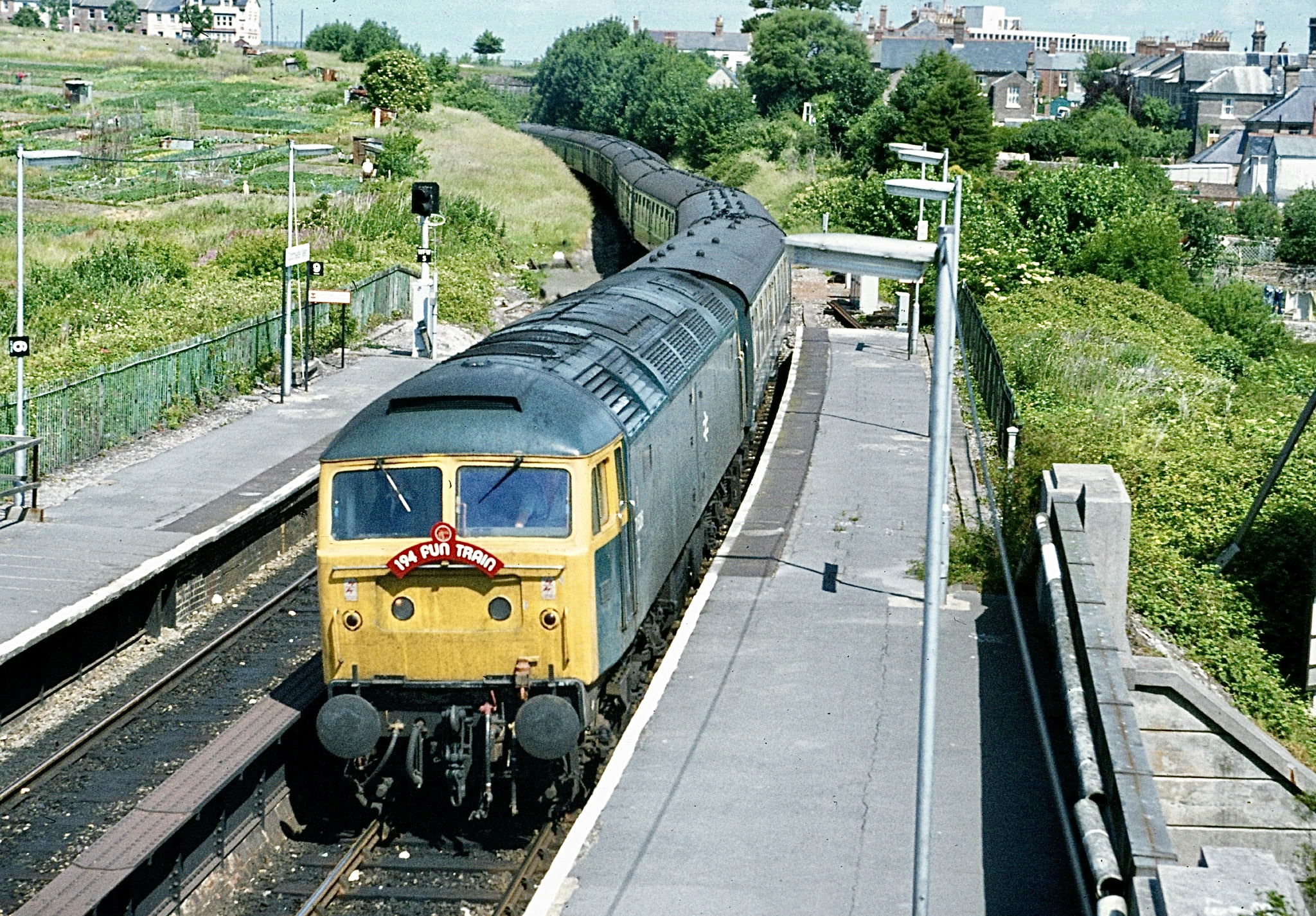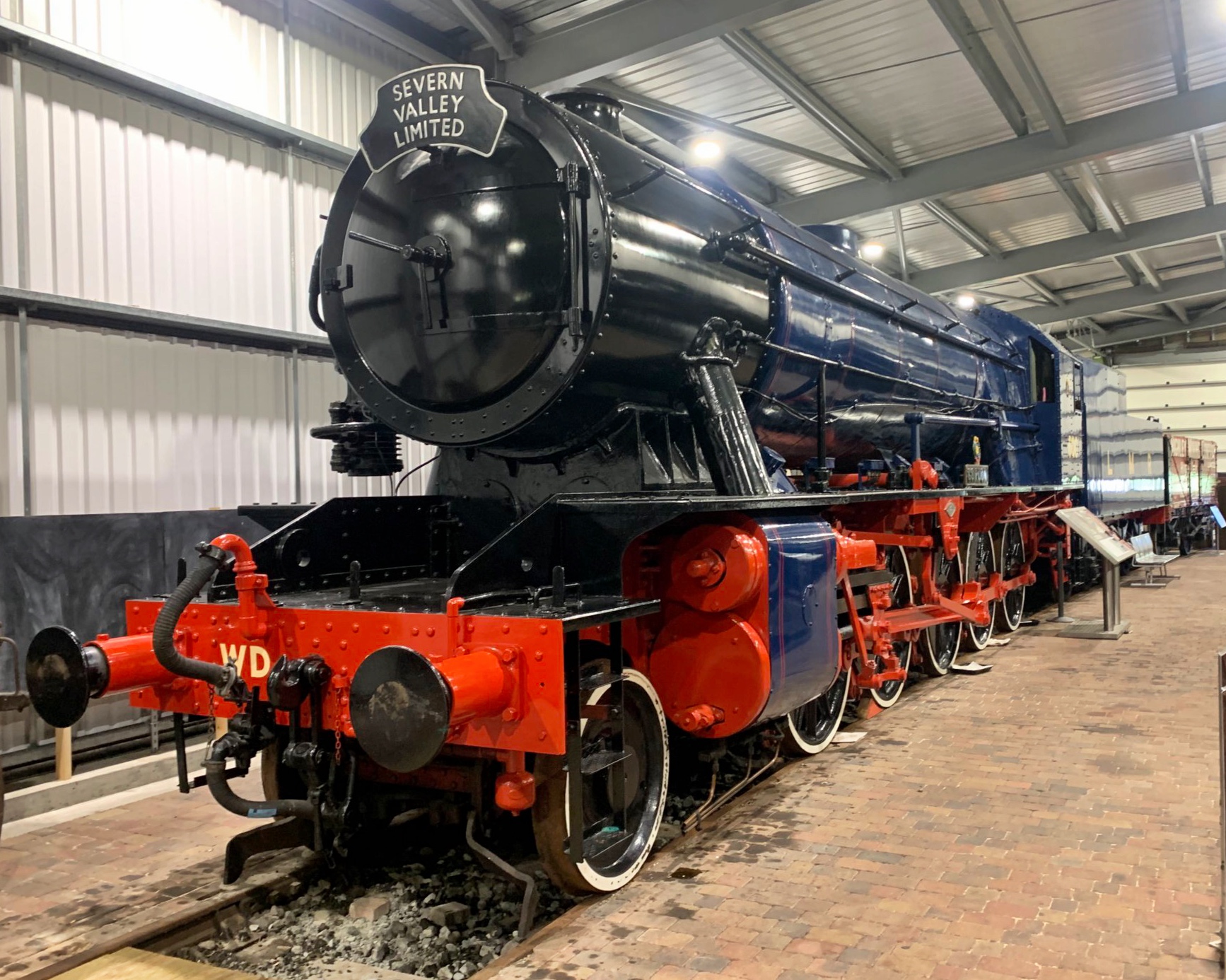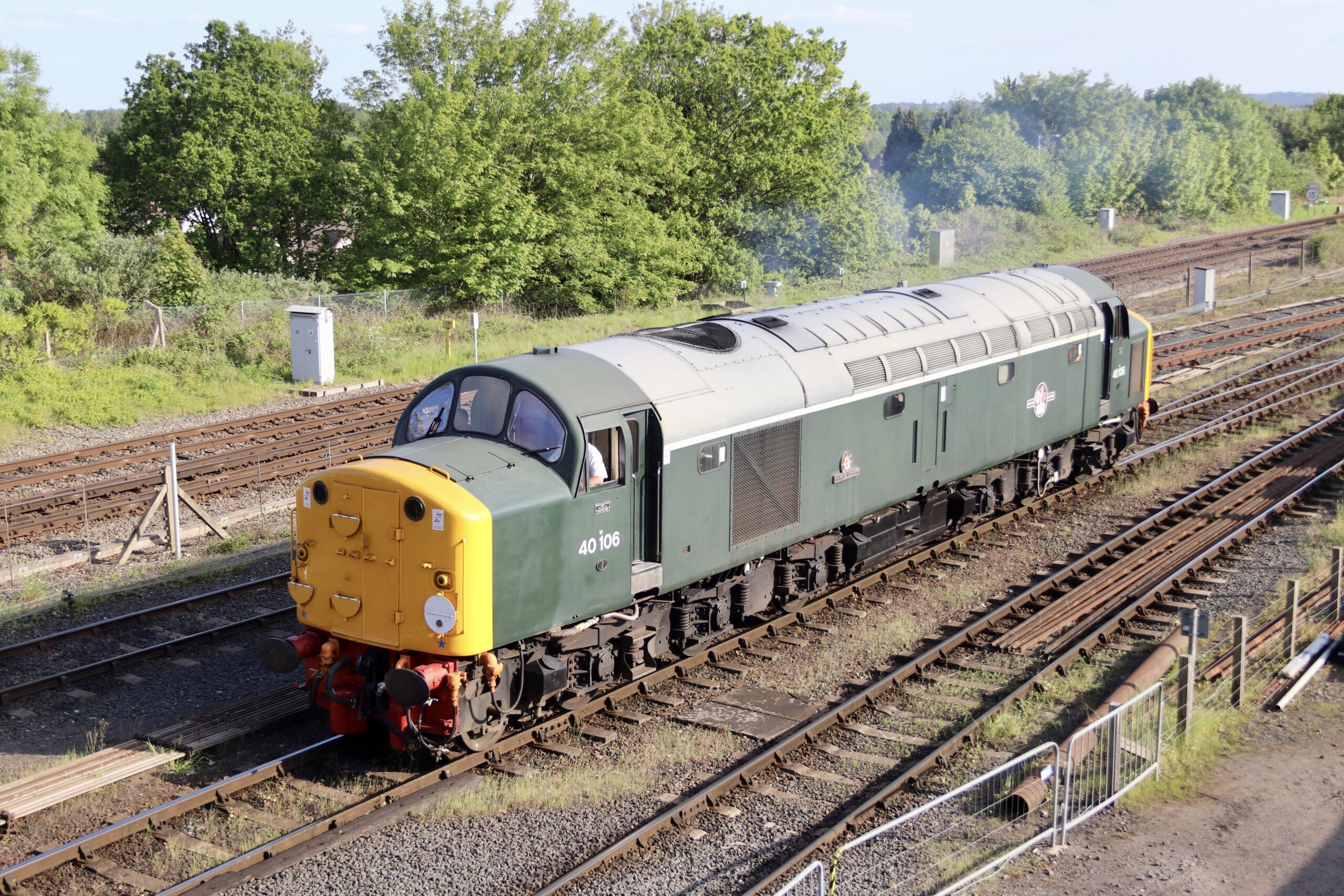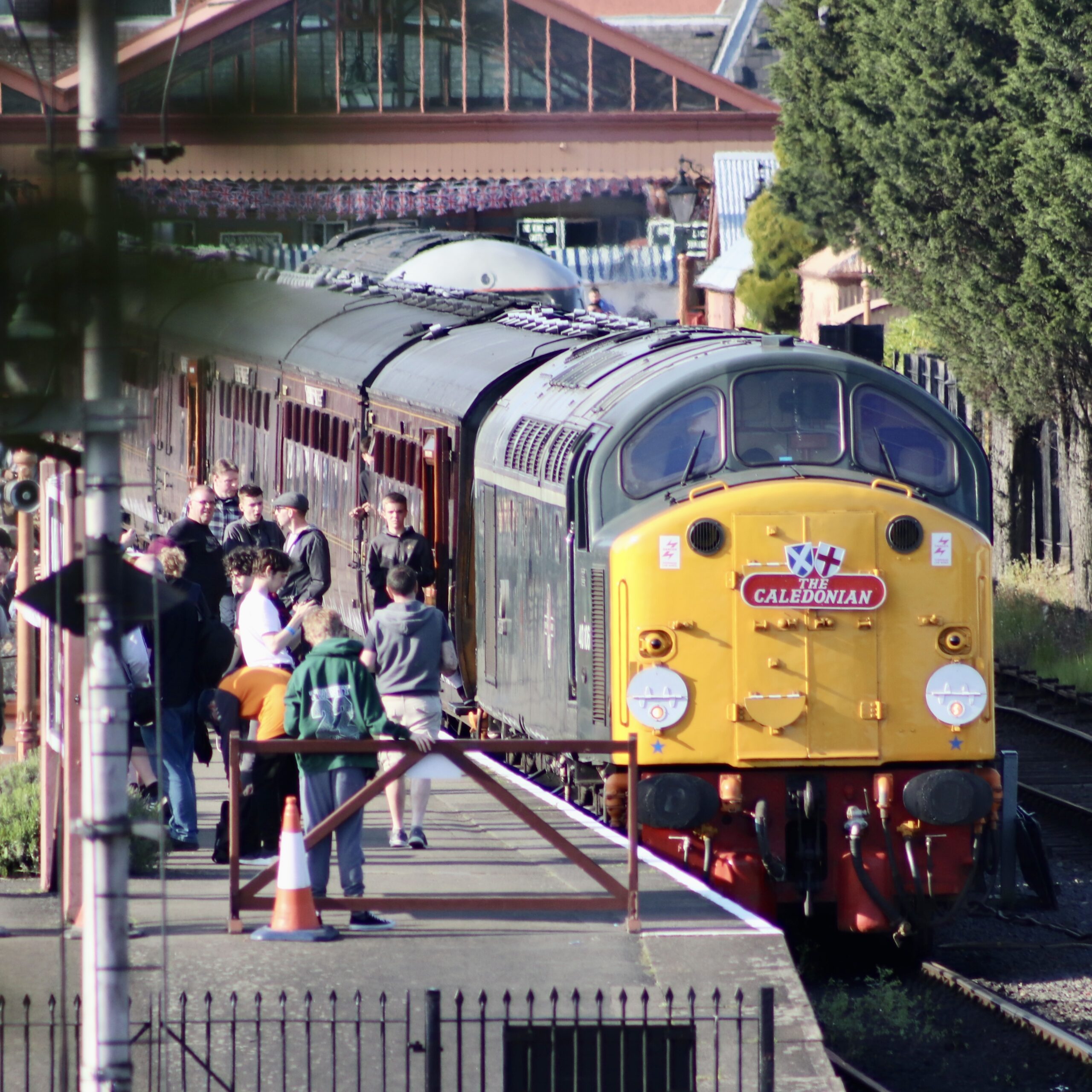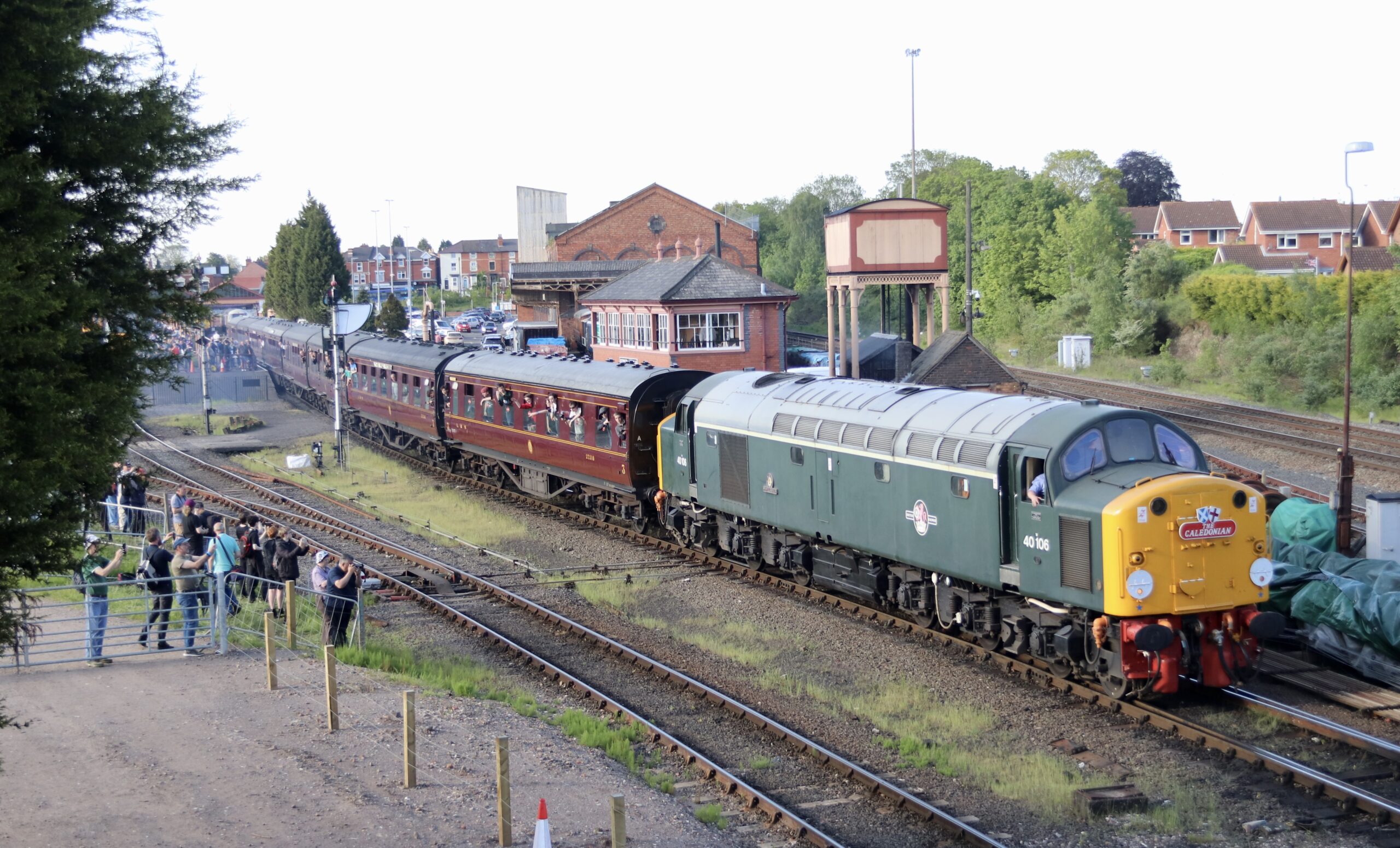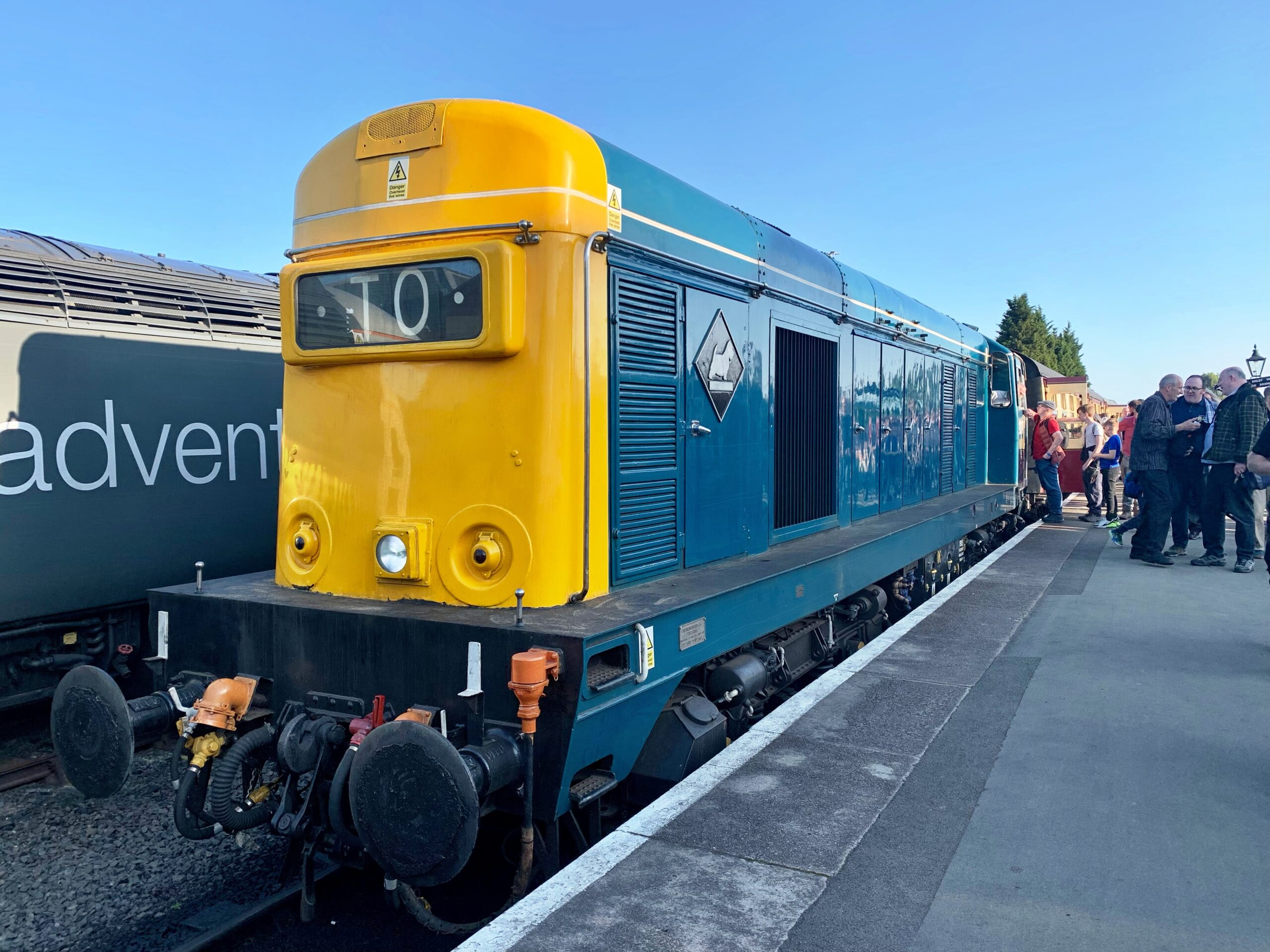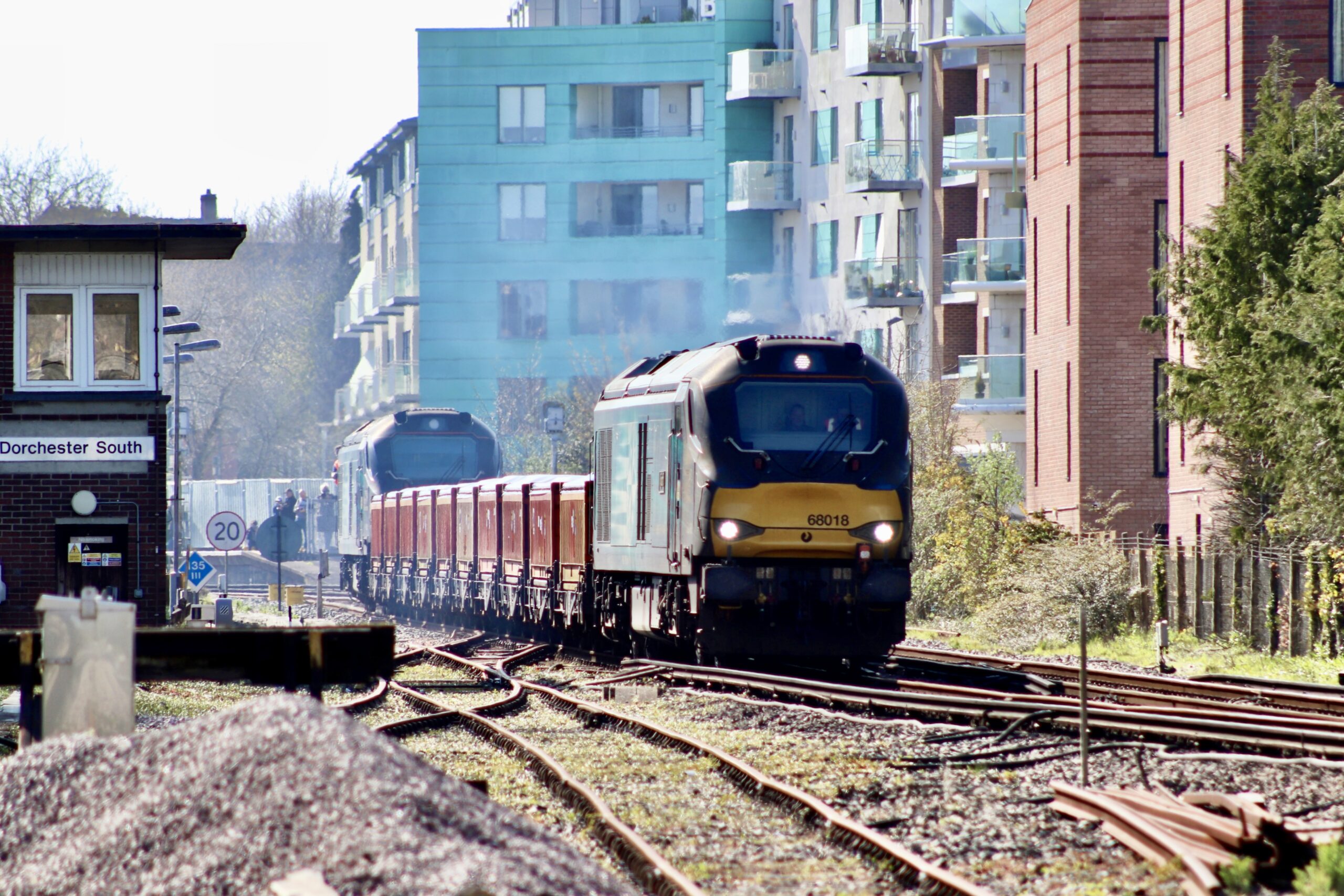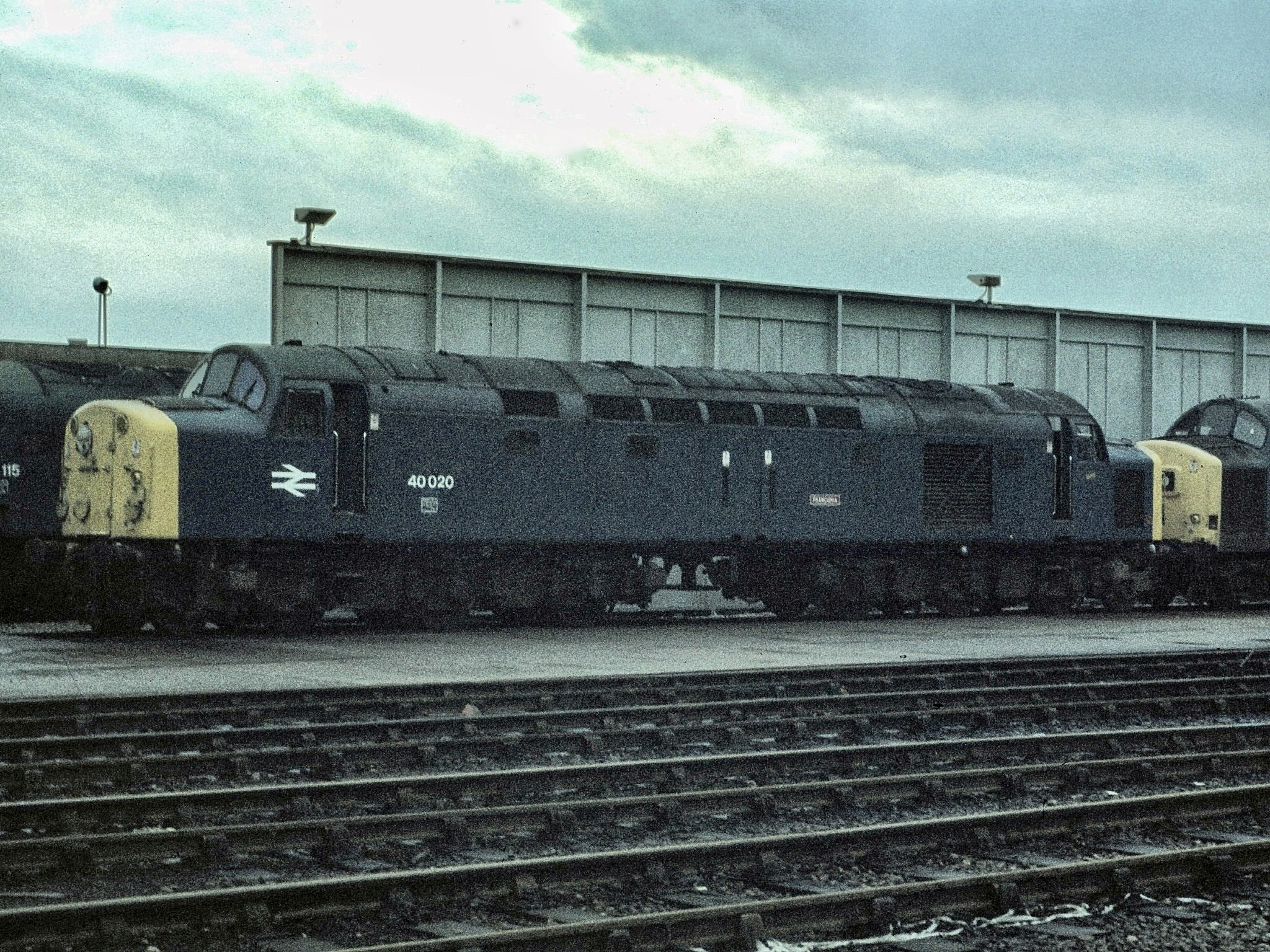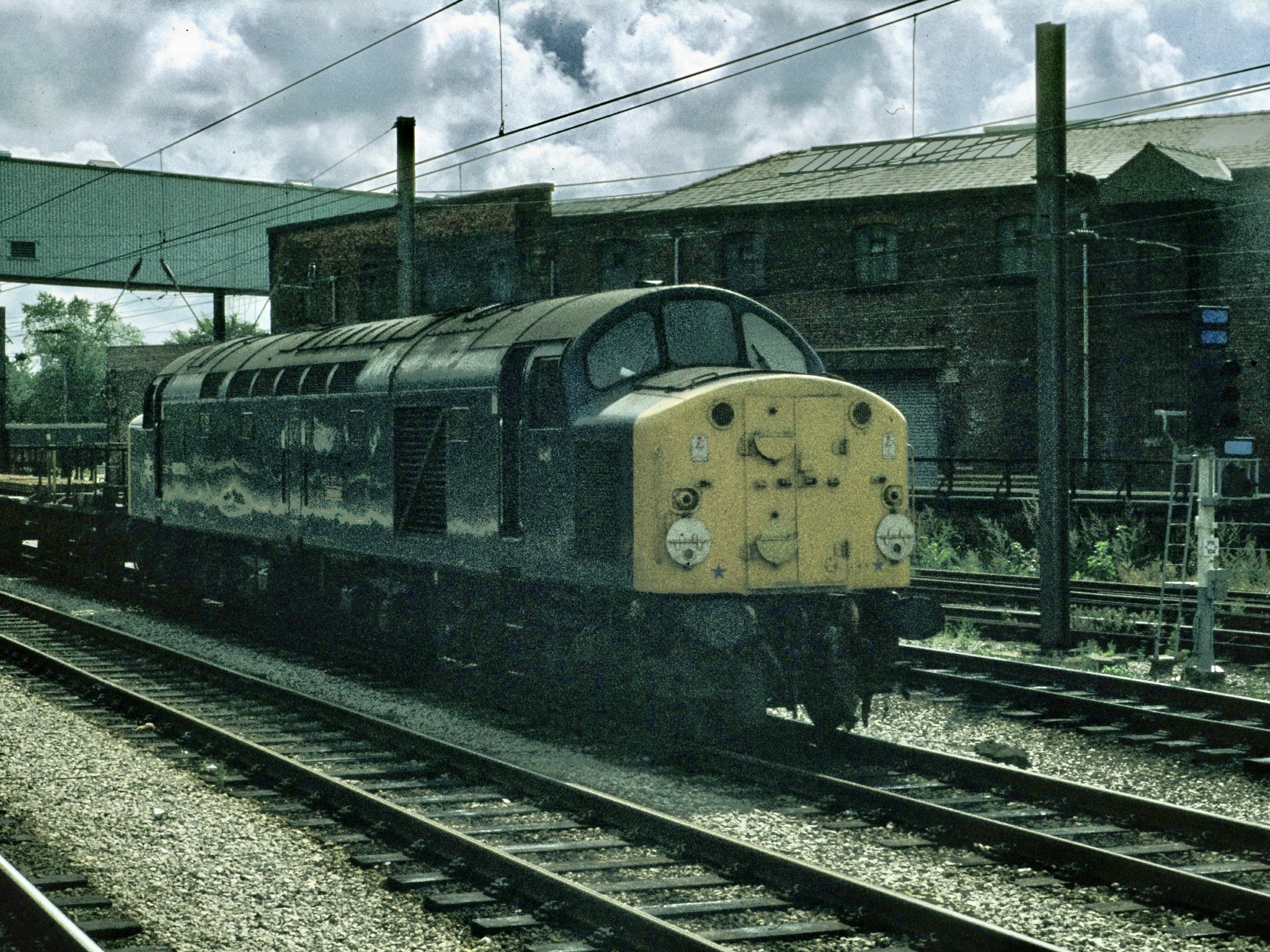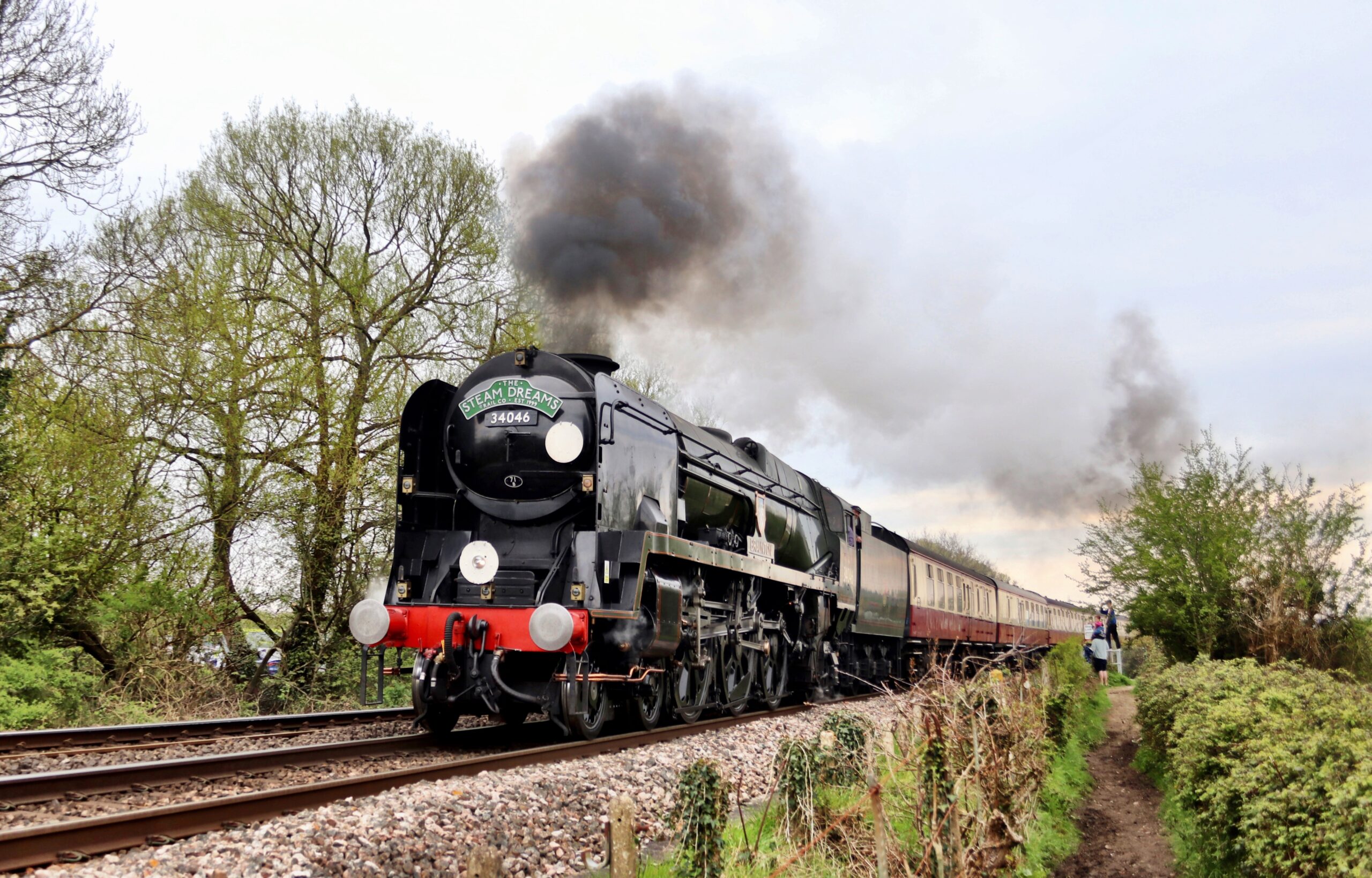
Tag: UK Trains

  • Yoshi Goes To Fawley Hill

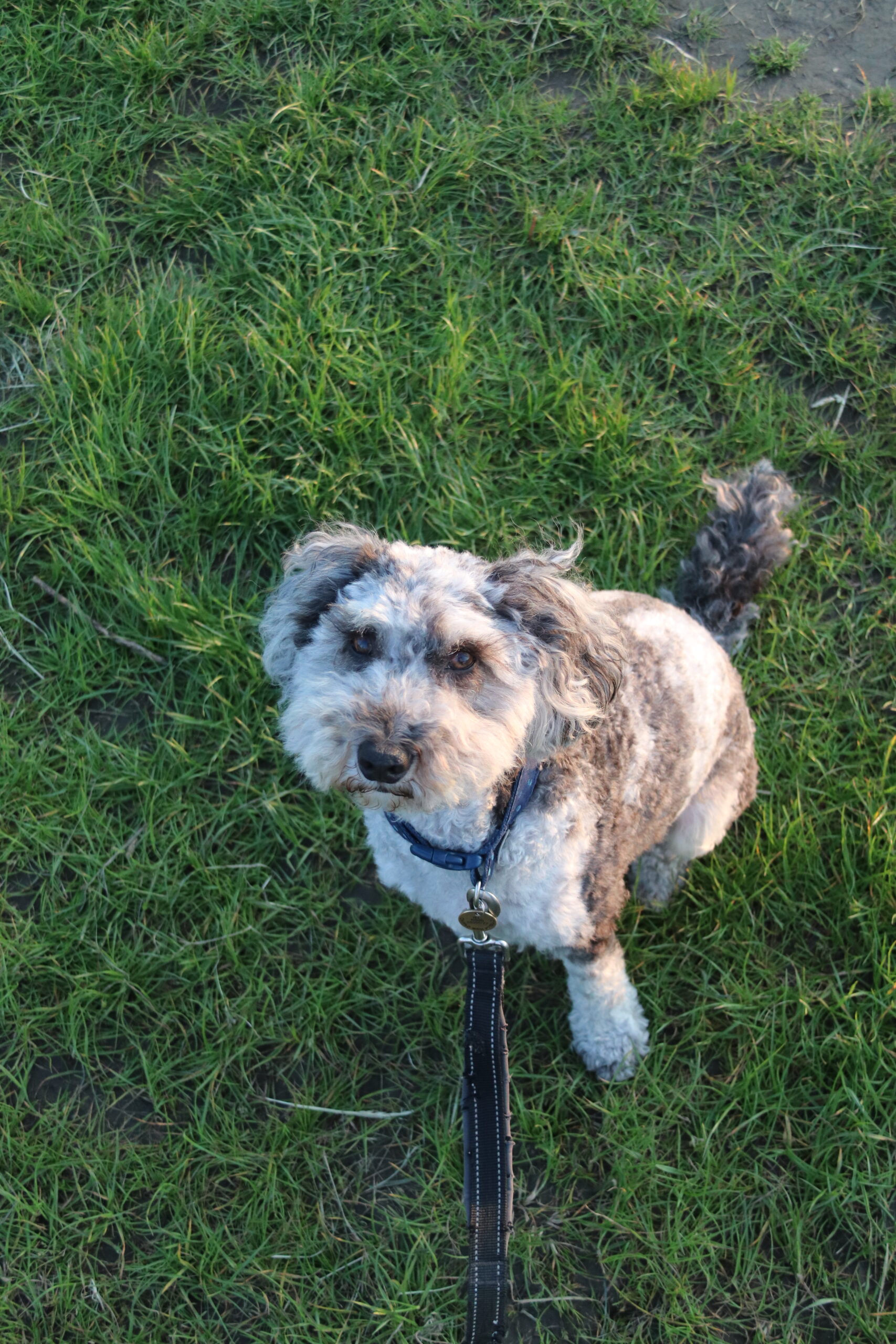
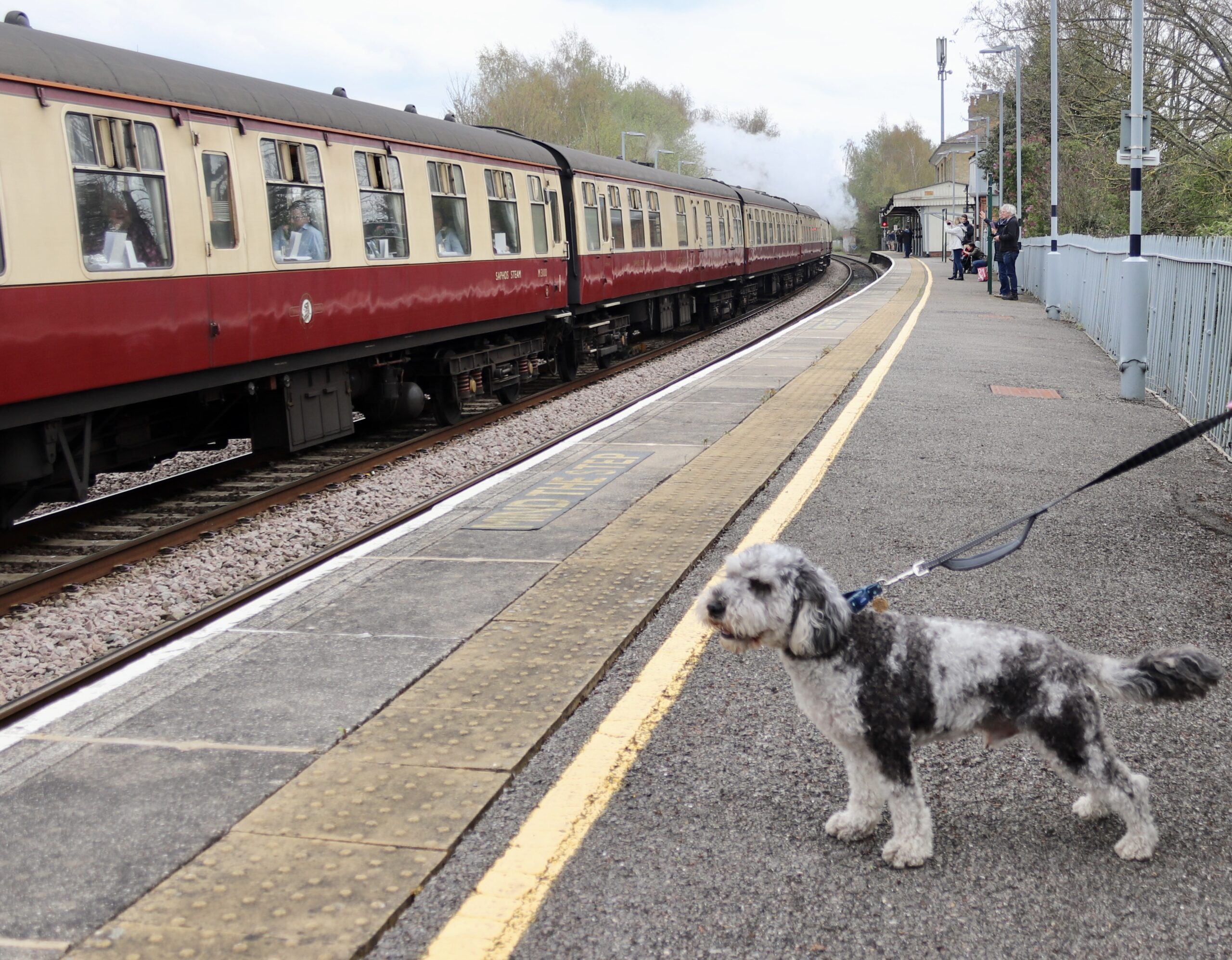
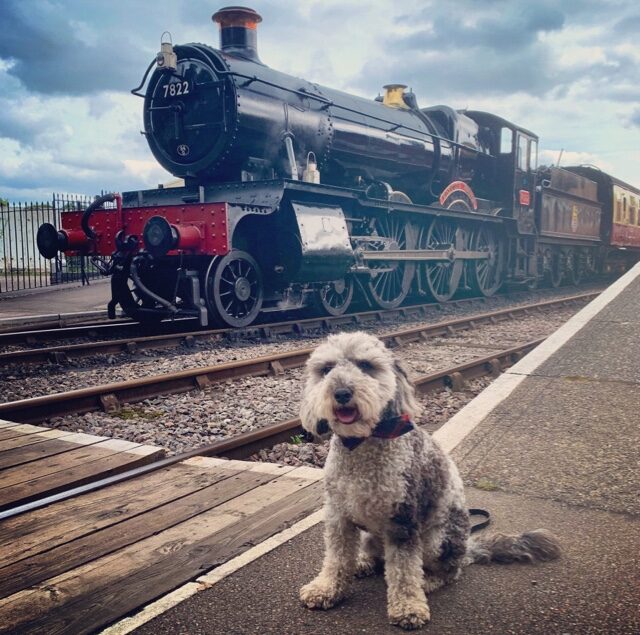
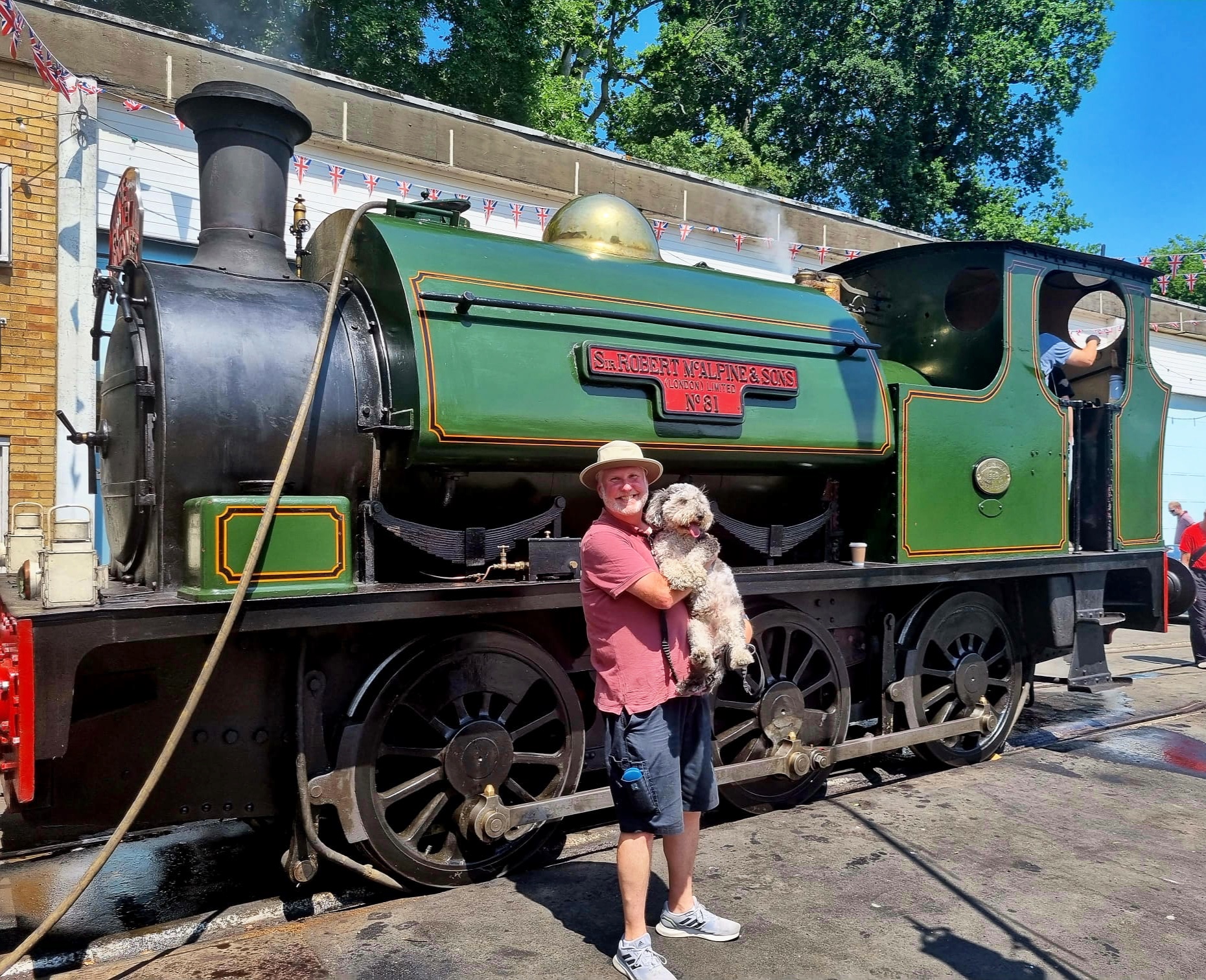
    Yoshi and I in front of Hudswell Clarke & Co Ltd 0-6-0 ST No. 31 at Fawley Hill Museum – 25/06/2023

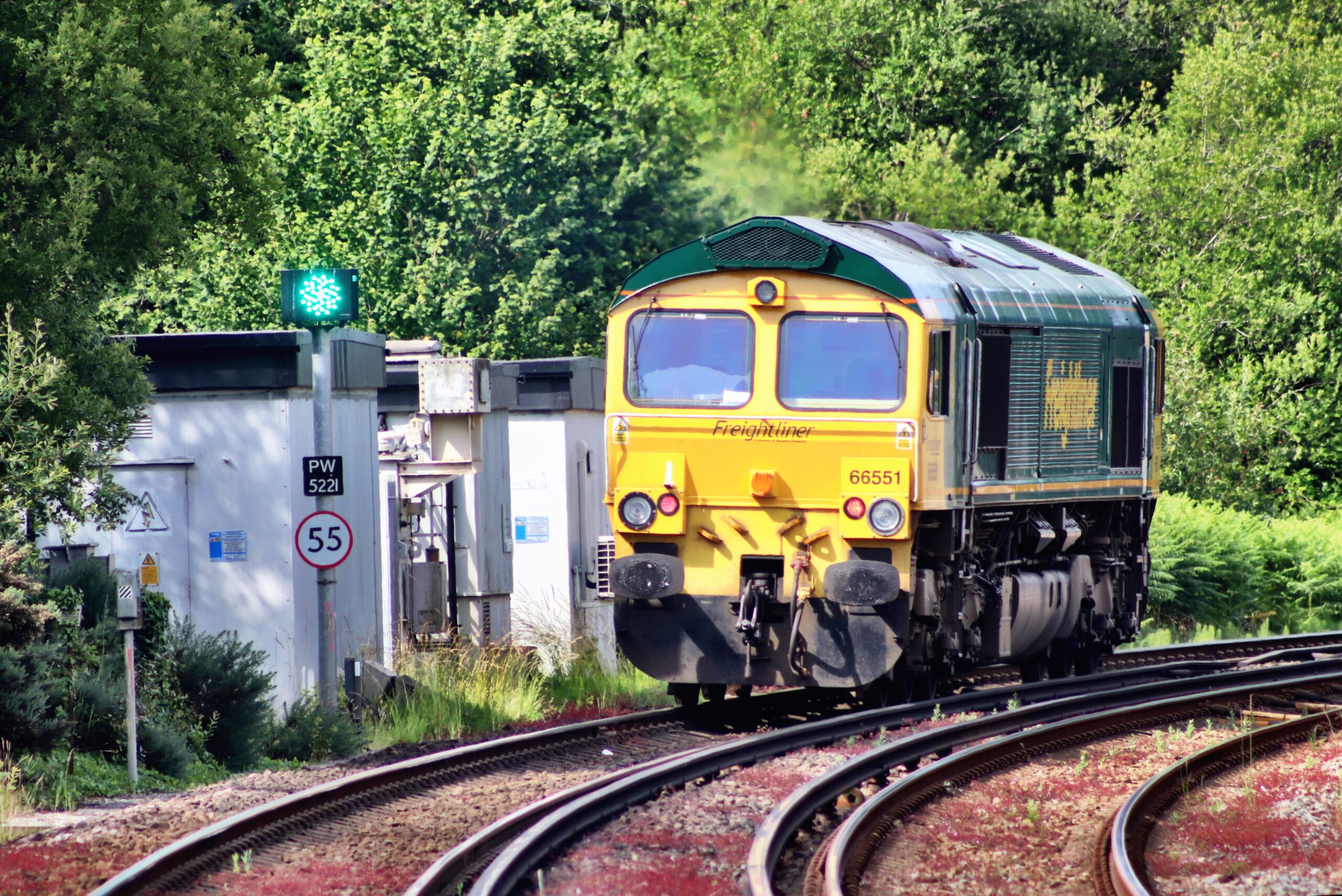
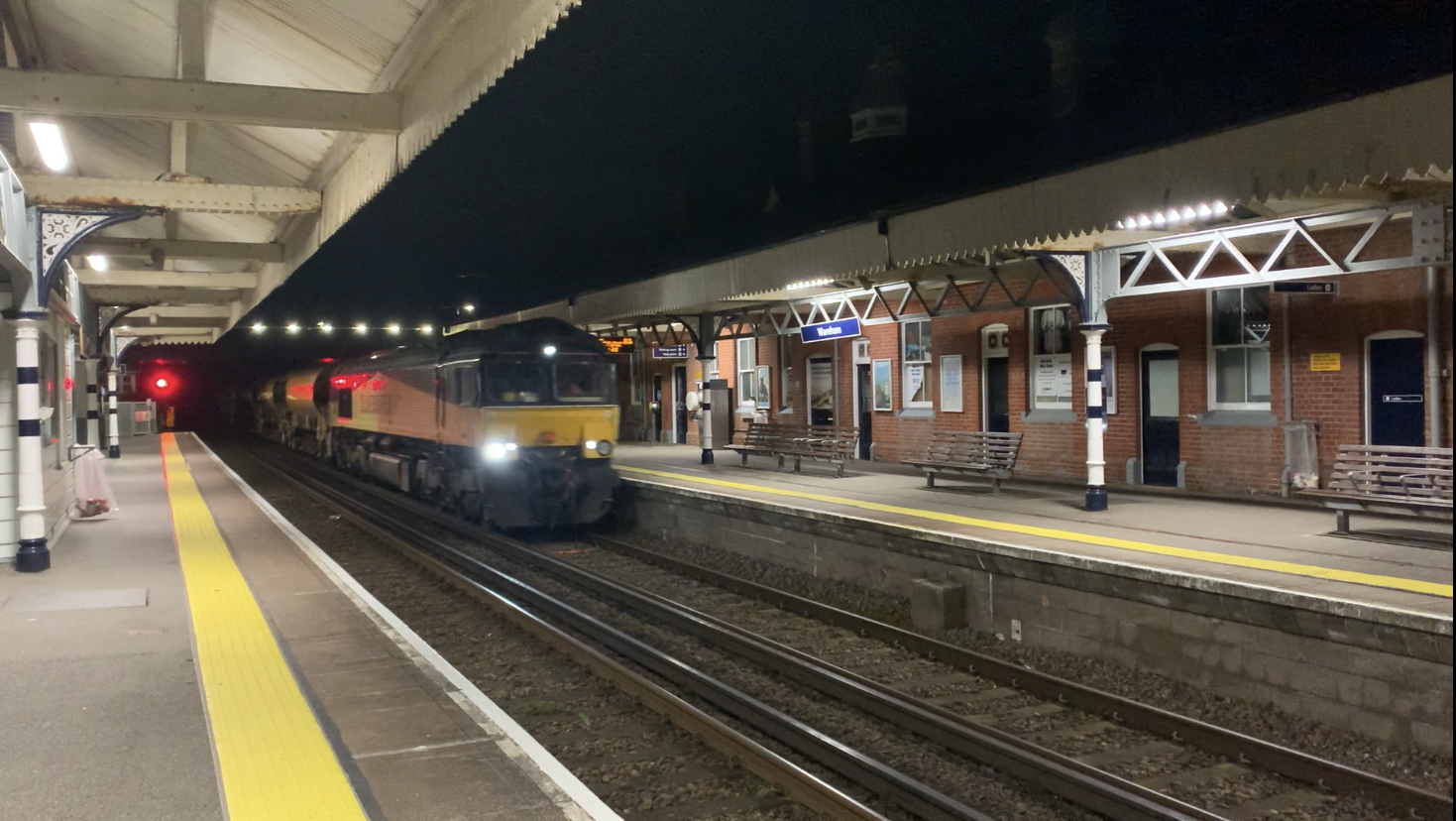
    We eased into a busy few days by popping over to Hamworthy on Friday 23rd June 2023 to see a Freightliner Class 66 locomotive on a route learner from Southampton Maritime to Weymouth and back.  No idea if this means there may be some engineering trains heading our way in the future or just a refresher for the crew. Either way, it was good to see. 
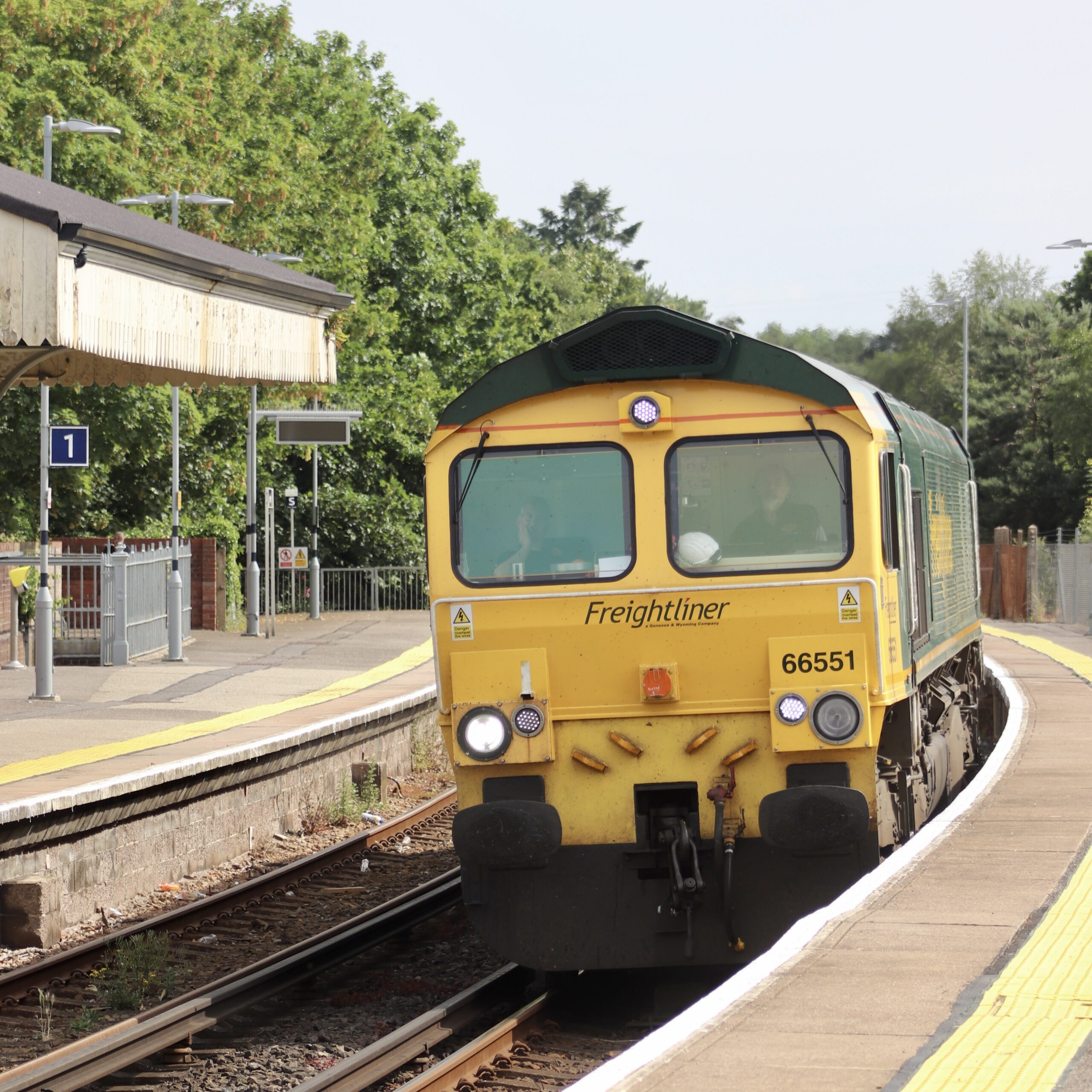
    Freightliner Class 66 No. 66551 passes Hamworthy on a route learner running as 0W45 0902 Southampton MCT to Weymouth – 23/06/2023
    Freightliner Class 66 No. 66551 having passed through Hamworthy station working 0W45 0902 Southampton MCT to Weymouth – 23/06/2023

    On the return trip back to Southampton Maritime, I sought a location I have not used previously. A footbridge across the railway afforded a nice view of the mainline on the approaches west of Hamworthy. I had not, however, taken into the account that the bridge was surrounded by mesh which made photography very difficult. It was also very bouncy when being walked across, so I was very relieved nobody passed at the same time as the light Class 66 trundled by underneath!
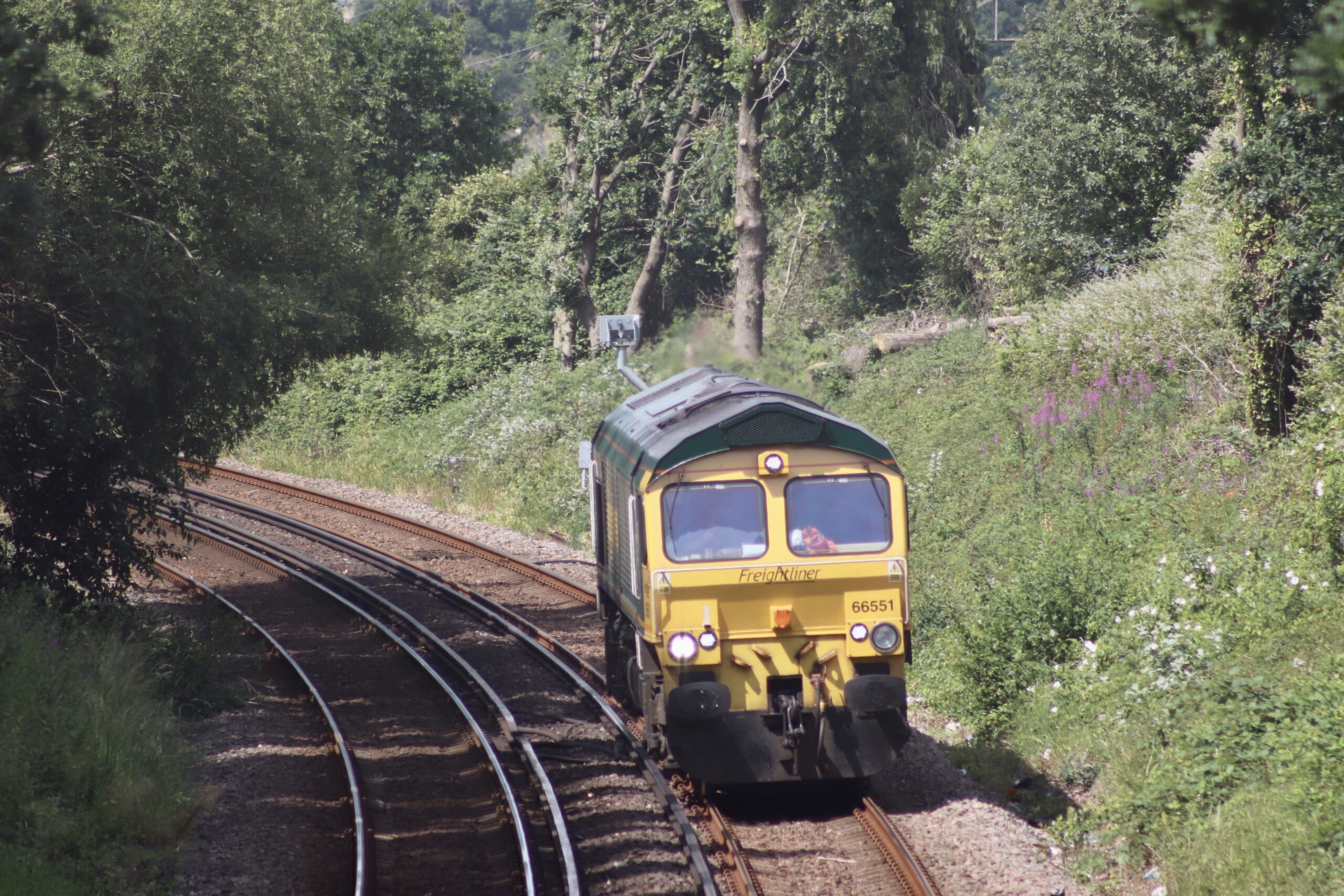
    Freightliner Class 66 No. 66551 passes Hamworthy on the return route learner running as 0W46 1041 Weymouth to Southampton MCT – 23/06/2023
    Class 66 No. 66551 on route learning duties – 23/06/2023

    On Saturday, Yoshi’s mama had planned an all female picnic meet-up with friends, which left the boy and I free to go and see some trains during the day! I’d noted on the rail tour calendar that double-headed Class 69’s were scheduled to run down to Cornwall, so this became my objective of the day. In fact there were four tours scheduled to pass through Taunton that same day, with one changing diesel traction for steam in the station, so this was probably a good choice of location. 

    Cornish Mazey Day Statesman – 1Z64 0522 Solihull to Penzance
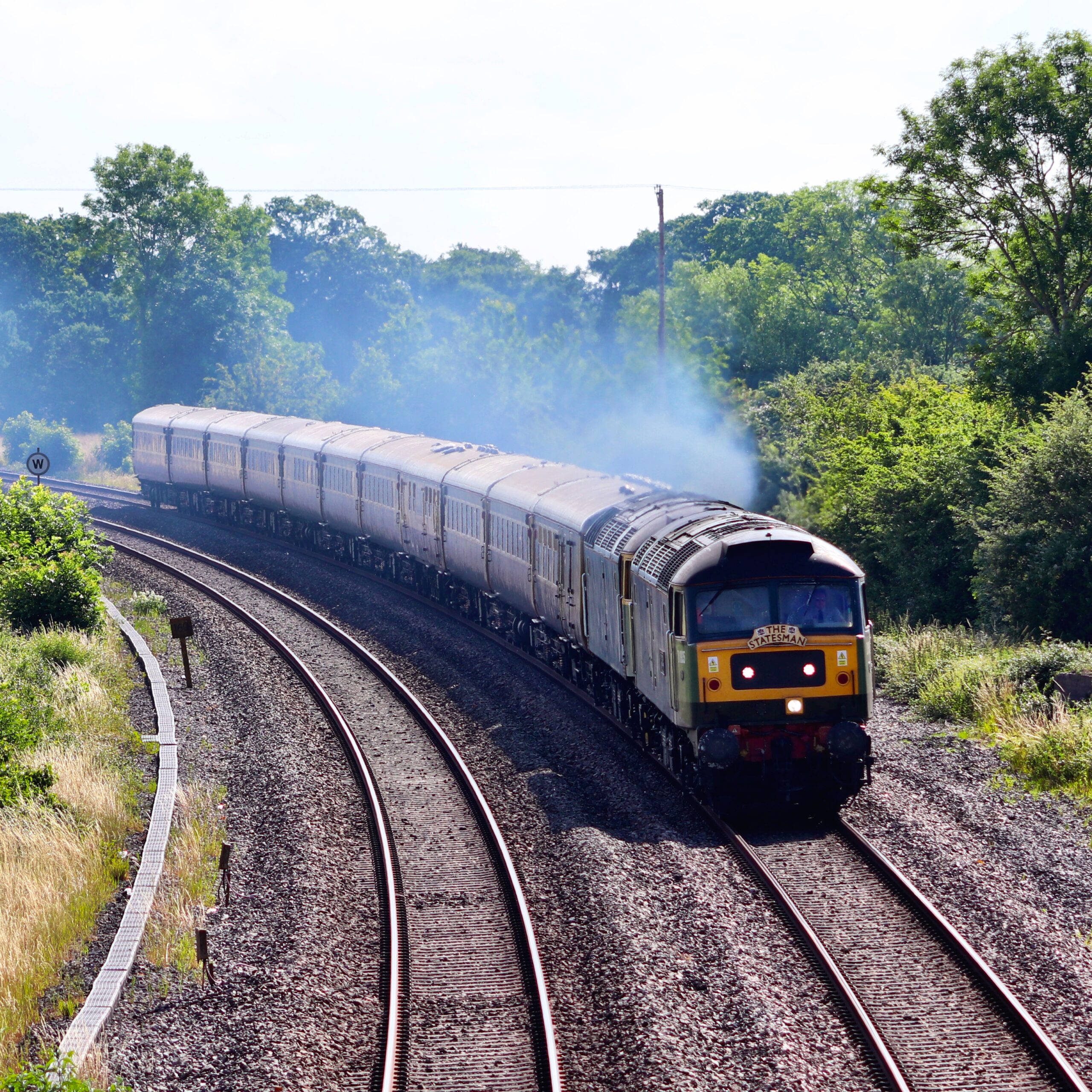
    LSL Class 47 No.’s 47805 and 47614 flying through Creech St. Michael with the “Cornish Mazey Day Statesman” 1Z64 0522 Solihull to Penzance – 24/06/2023

    Operated by: Statesman Rail

    Motive power: 2 x LSL Class 47 No.’s 47805 and 47614

    The Pathfinder Mazey Day Special – 1Z69 0544 Tame Bridge Parkway to Penzance
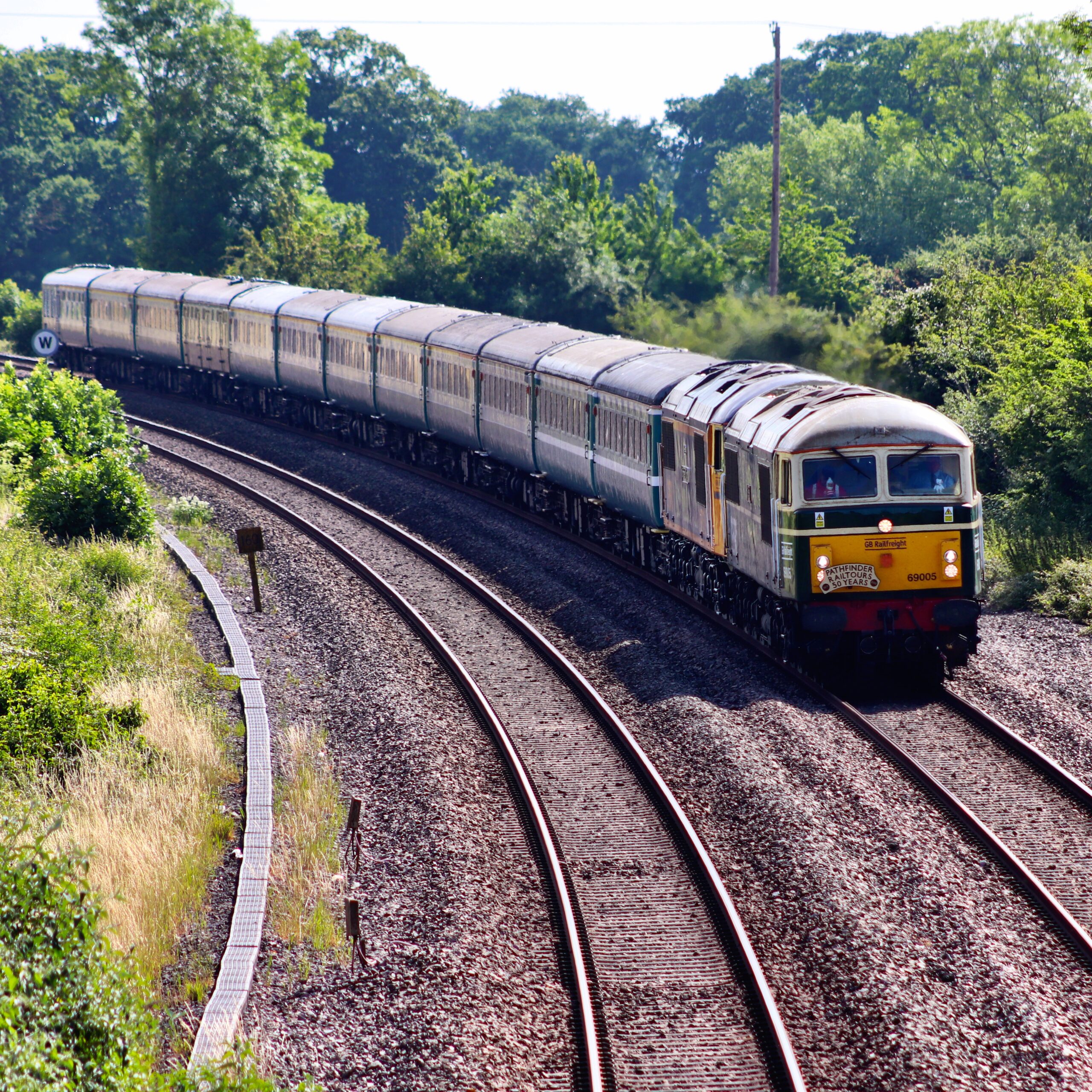
    GBRf Class 69 No.’s 69005 and 69006 on the approach to Creech St. Michael working “The Pathfinder Mazey Day Special” 1Z69 0544 Tame Bridge Parkway to Penzance – 24/06/2023
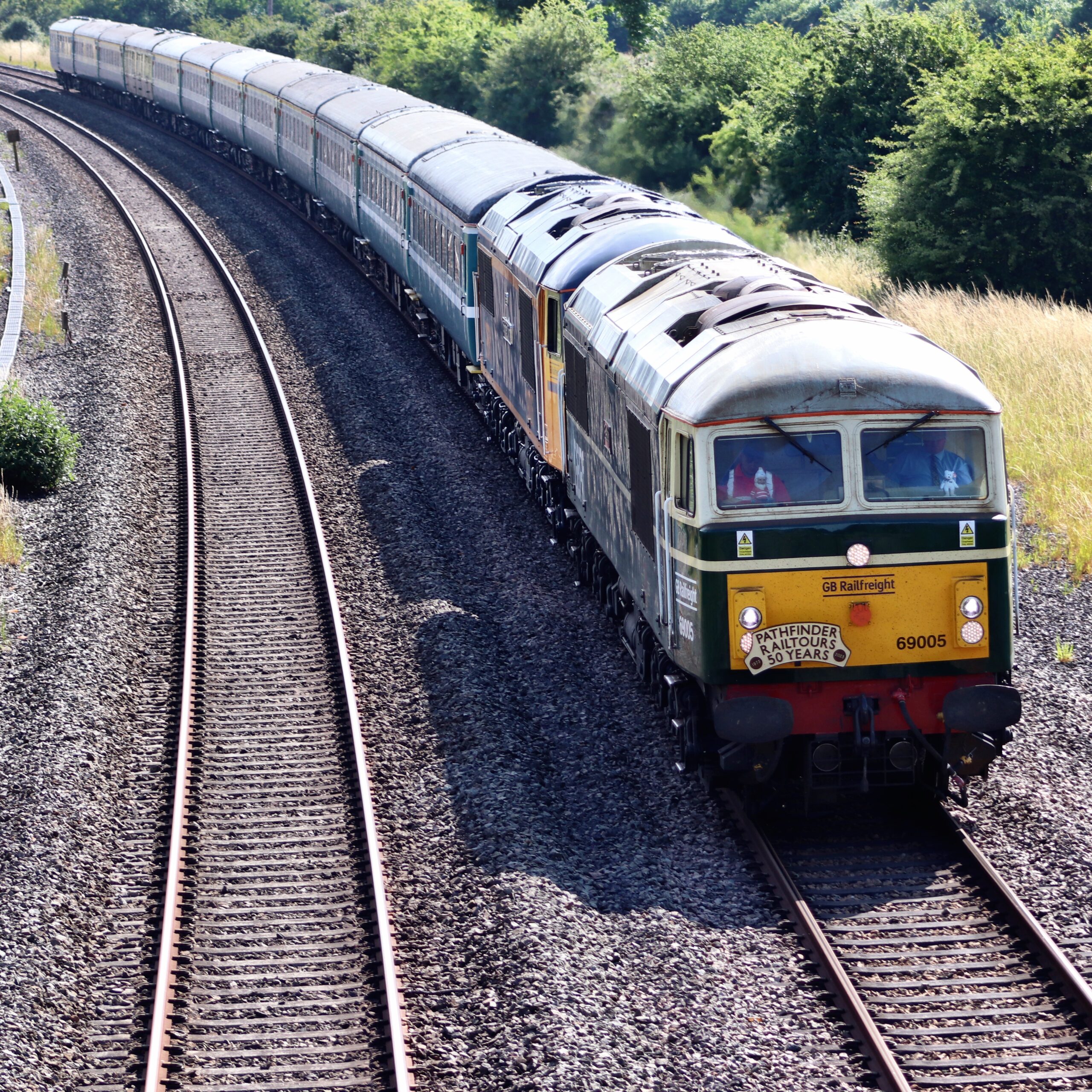
    GBRf Class 69 No.’s 69005 and 69006 on the approach to Creech St. Michael working “The Pathfinder Mazey Day Special” 1Z69 0544 Tame Bridge Parkway to Penzance – 24/06/2023

    Operated by: Pathfinder Tours

    Motive power: 2 x GBRf Class 69 No.’s 69005 and 69006

    At a ceremony in Gloucester on Friday 23rd June 2023, No. 69006 was named ‘Pathfinder Railtours – Peter Watts 50 Years Service 1973-2023’.  After the naming No.’s 69006 and 69005 ran light engines to Burton to collect the tour stock for the following day.

    English Riviera Express – 1Z27 0550 Shrewbury to Kingswear (For Dartmouth)

    LSL Class 37 No.’s 37521 and 37688 with Class 47 No. 47828 at the rear hauling the diesel leg of the “English Riviera Express” 1Z27 0550 Shrewbury to Kingswear (For Dartmouth) at Creech St. Michael – 24/06/2023
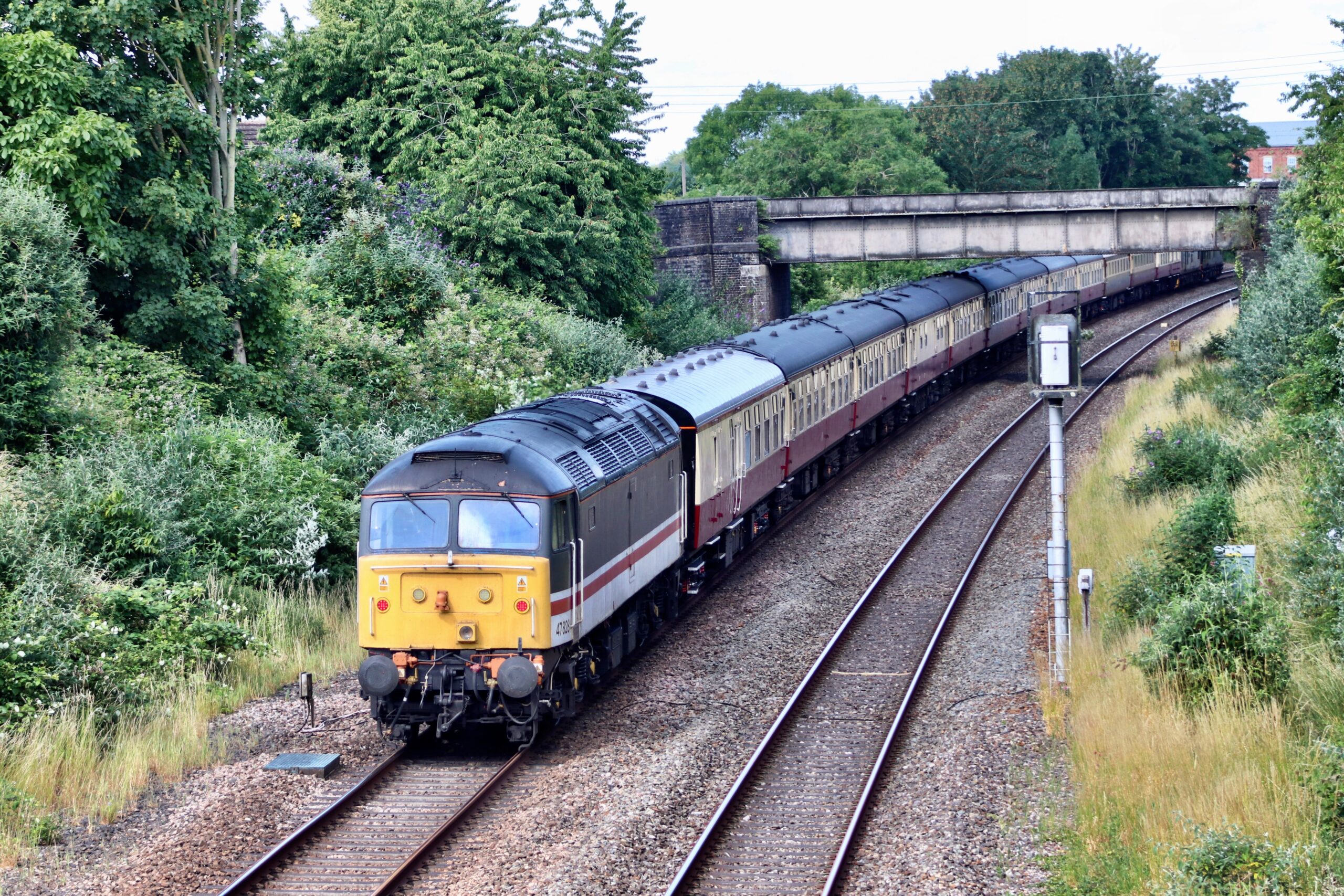
    LSL Class 47 No. 47828 at the rear of the “English Riviera Express” 1Z27 0550 Shrewbury to Kingswear (For Dartmouth) at Creech St. Michael – 24/06/2023
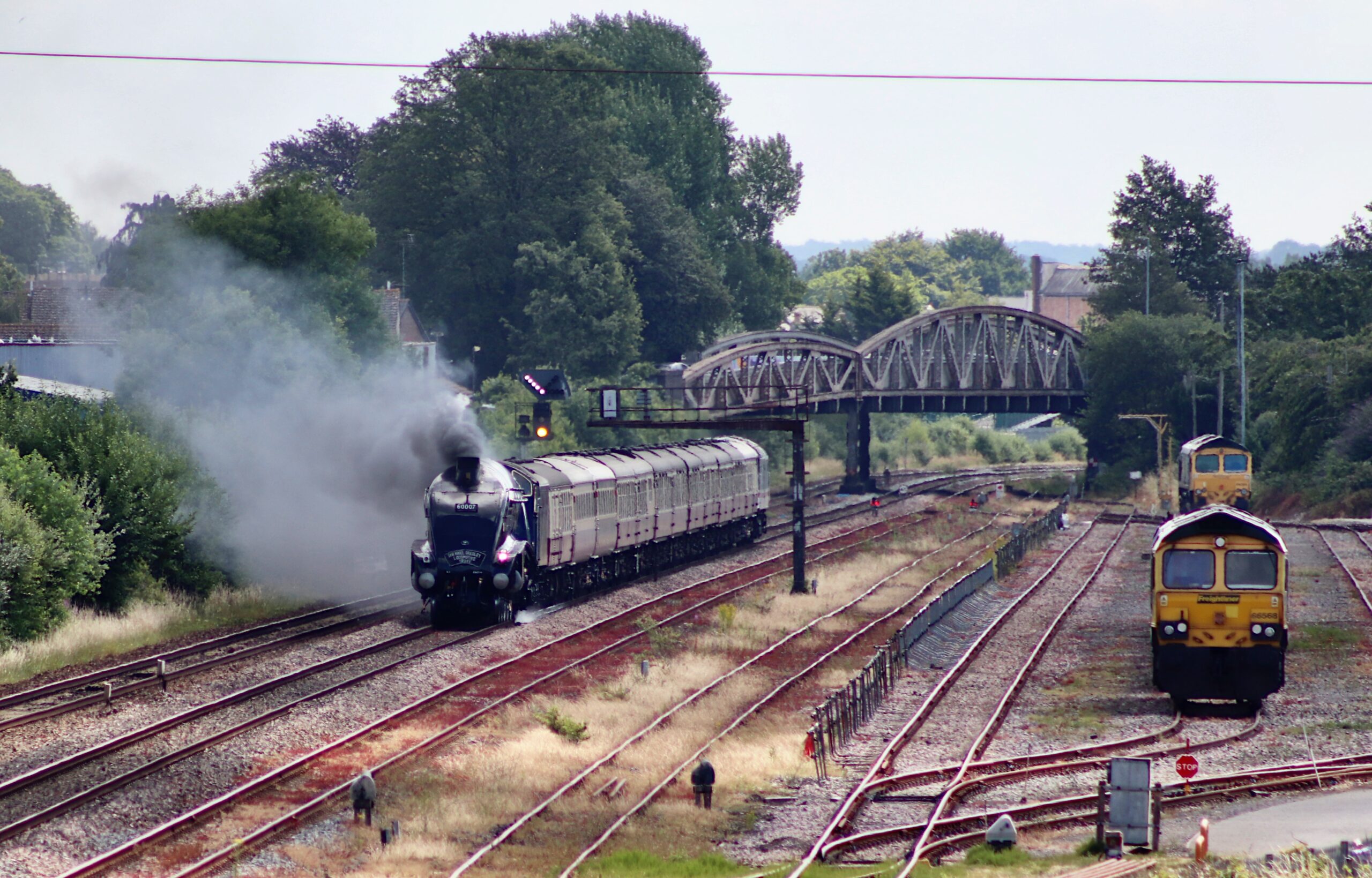
    Having changed locomotives in Taunton railway station and now with LNER A4 4-6-2 No. 60007 ‘Sir Nigel Gresley’ in charge “English Riviera Express” 1Z27 0550 Shrewbury to Kingswear (For Dartmouth) passes Fairwater Yard, Taunton – 24/06/2023
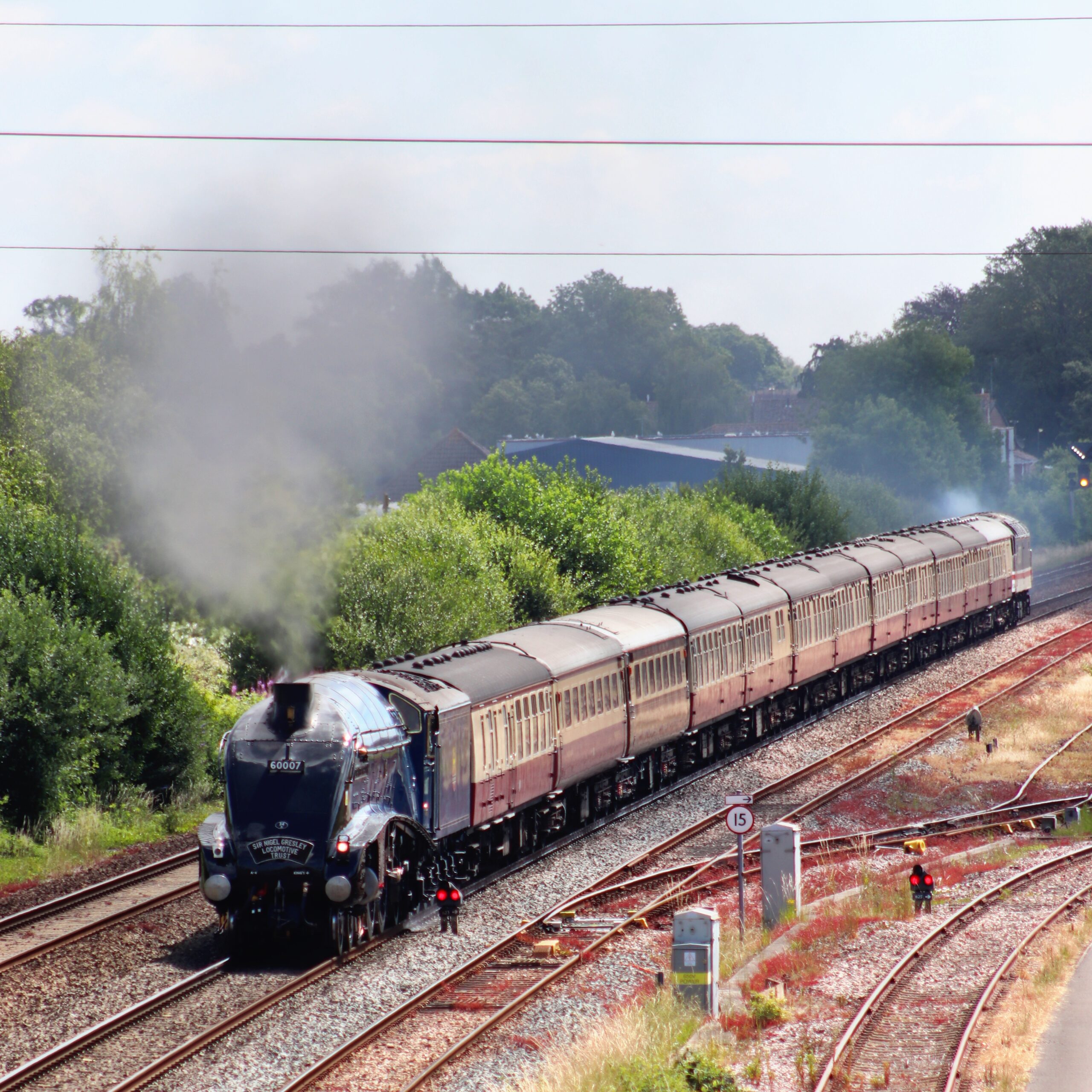
    LNER A4 4-6-2 No. 60007 ‘Sir Nigel Gresley’ heads up the “English Riviera Express” 1Z27 0550 Shrewbury to Kingswear (For Dartmouth) with Class 47 No. 47828 at the rear passing Fairwater Yard, Taunton – 24/06/2023
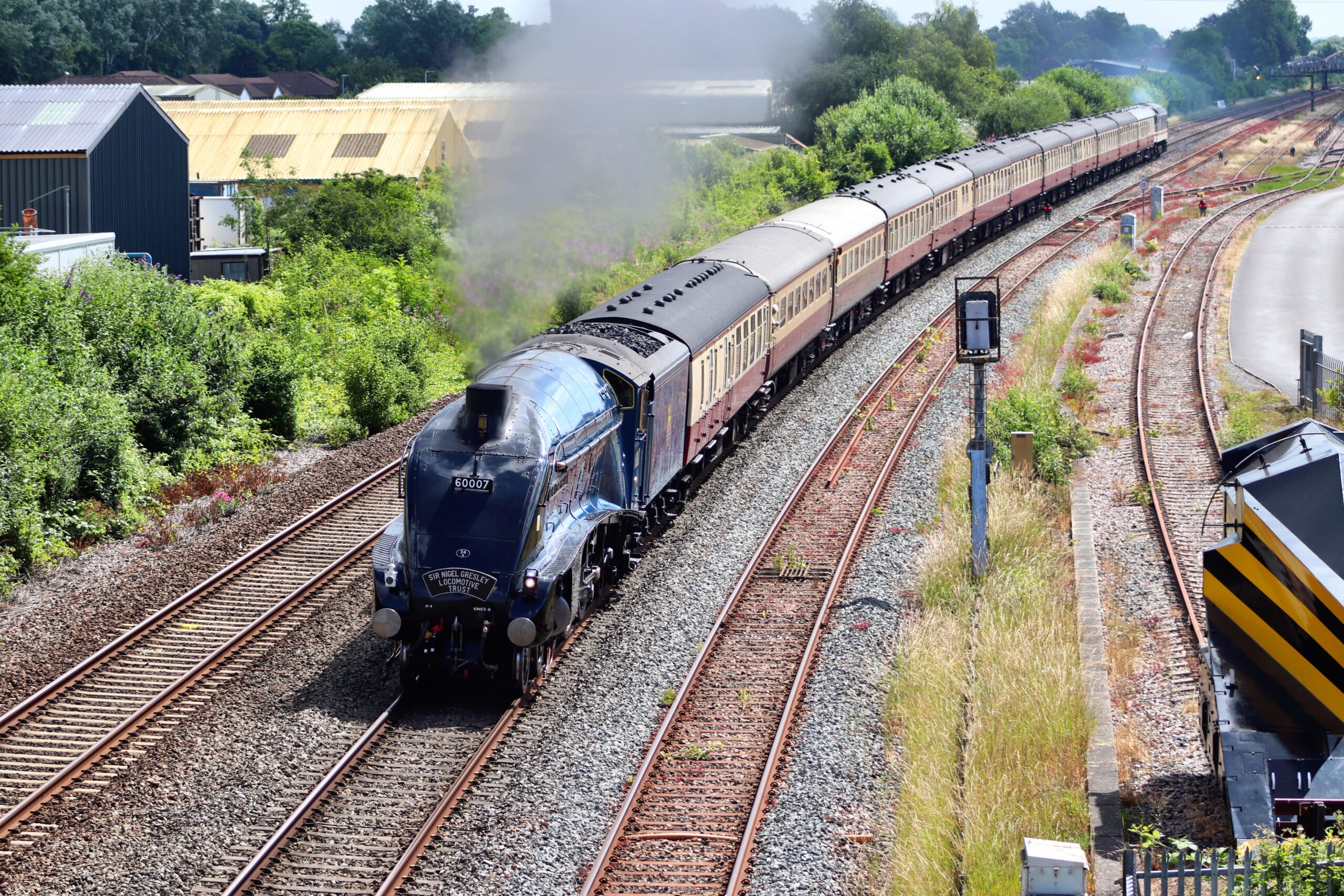
    LNER A4 4-6-2 No. 60007 ‘Sir Nigel Gresley’ heads up the “English Riviera Express” 1Z27 0550 Shrewbury to Kingswear (For Dartmouth) at Silk Mills, Taunton – 24/06/2023

    Operated by: Saphos Trains

    Motive power: 2 x LSL Class 37 No.’s 37521 and 37688 with Class 47 No. 47828 at the rear. At Taunton the Class 37’s were taken off the train and substituted by LNER A4 4-6-2 No. 60007 ‘Sir Nigel Gresley’. The Class 47 remained to provide assistance at the rear.

    The Whistling Ghost – 1Z10 0608 Birmingham Snow Hill to Bishops Lydeard
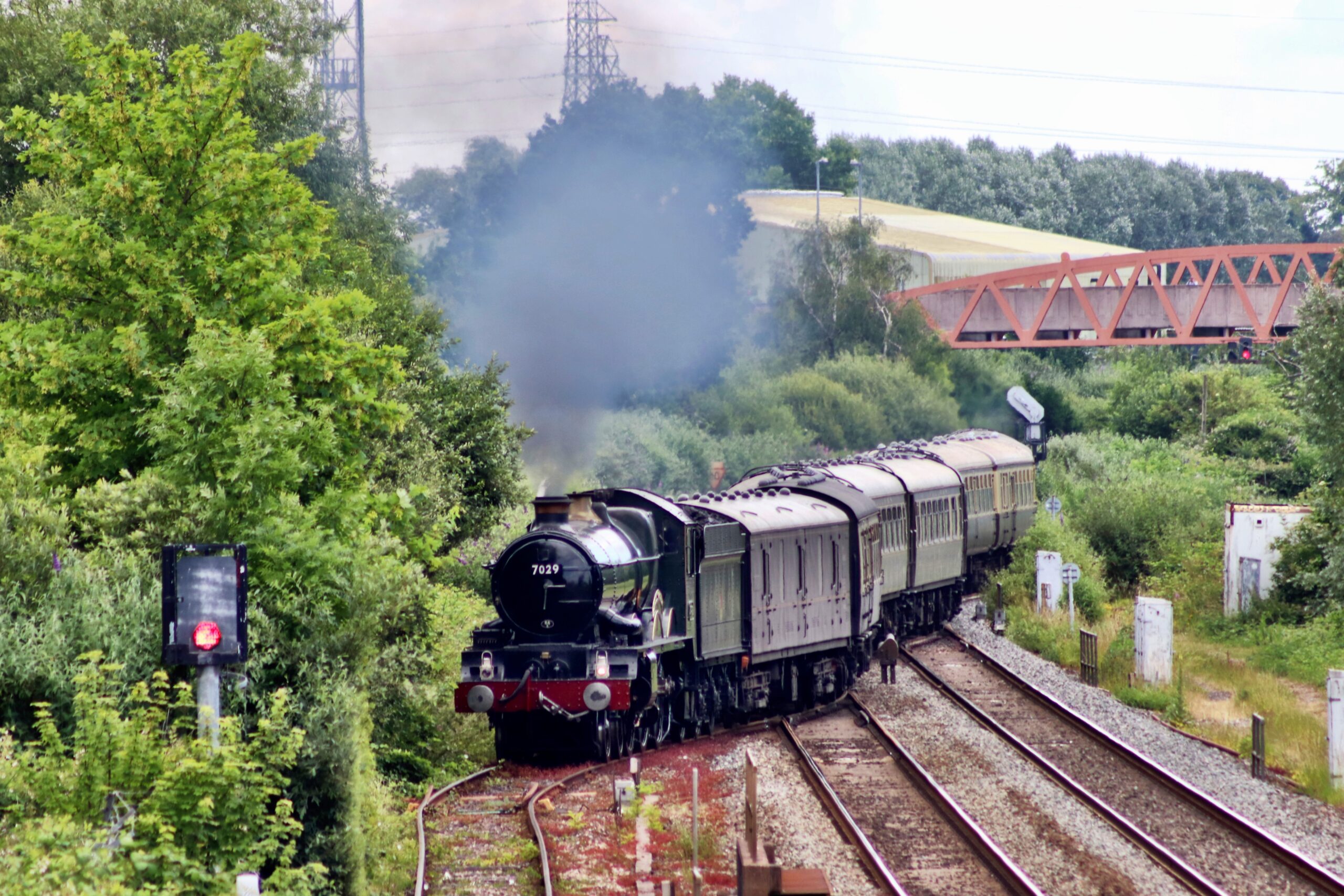
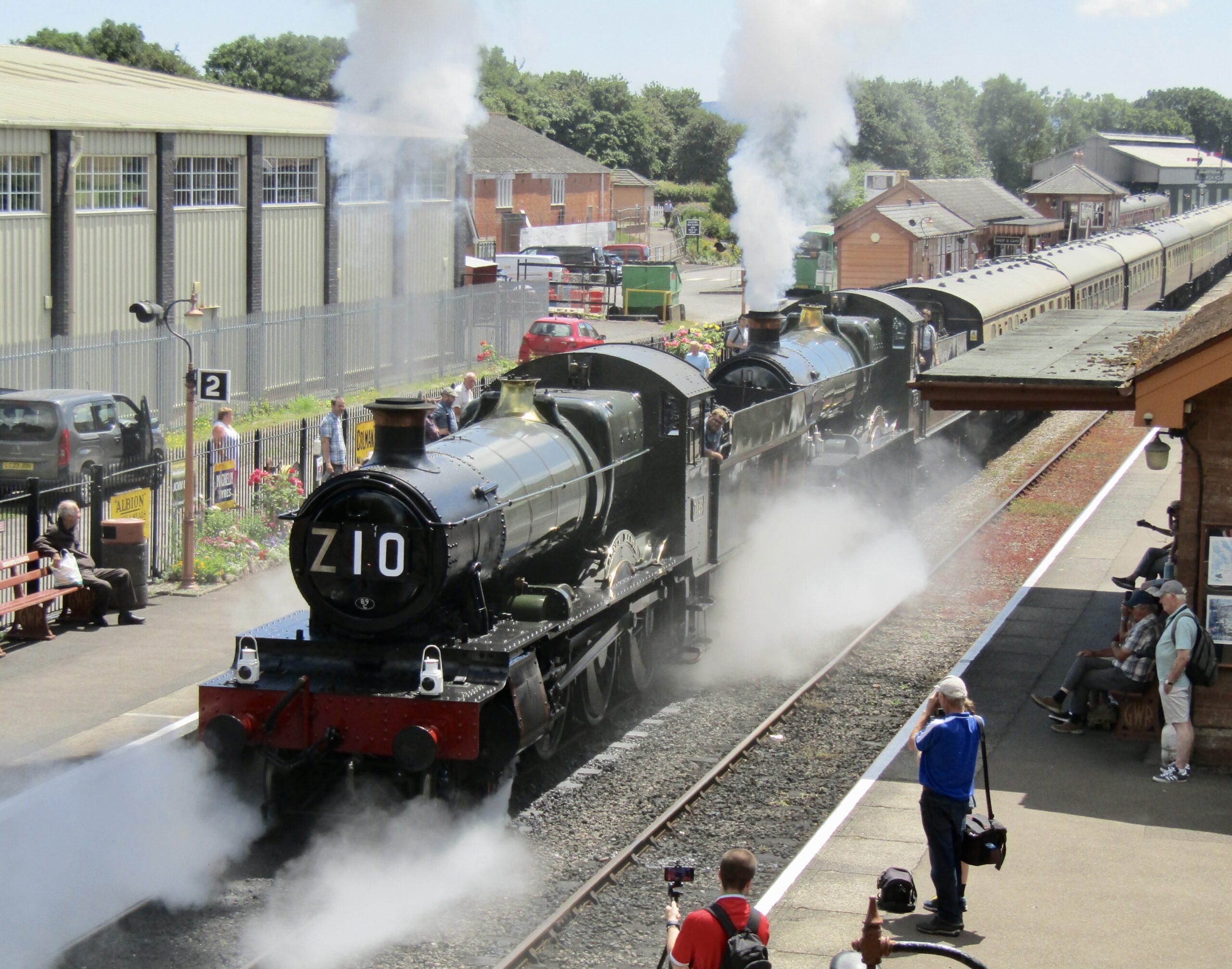
    With Silk Mills bridge in the background, GWR Castle 4-6-0 No. 7029 ‘Clun Castle’ hauling “The Whistling Ghost” 1Z10 0608 Birmingham Snow Hill to Bishops Lydeard wending its way across the GW mainline onto the branch which leads to the West Somerset Railway – 24/06/2023
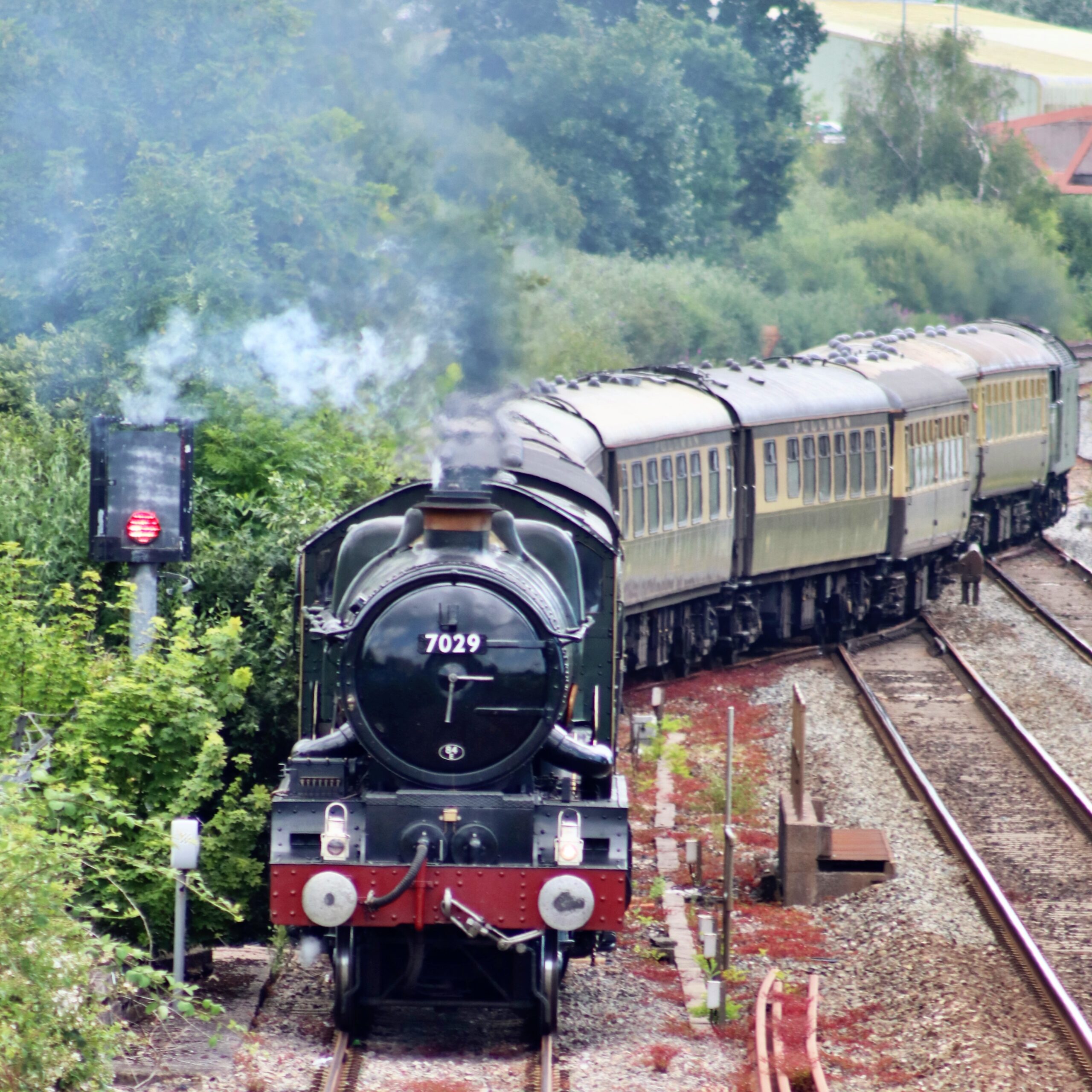
    GWR Castle 4-6-0 No. 7029 ‘Clun Castle’ hauling “The Whistling Ghost” 1Z10 0608 Birmingham Snow Hill to Bishops Lydeard pulls onto the branch which leads to the West Somerset Railway – 24/06/2023
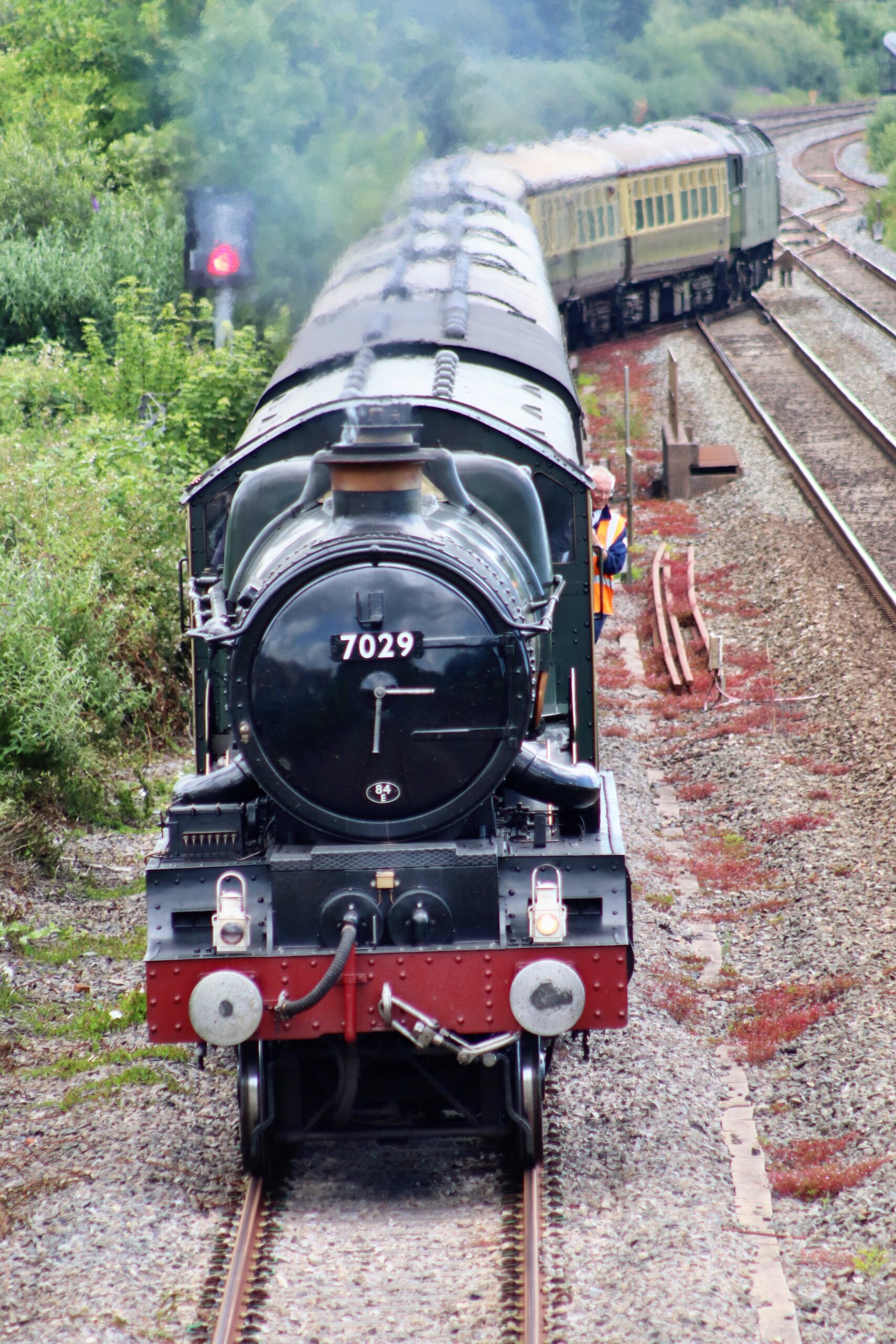
    GWR Castle 4-6-0 No. 7029 ‘Clun Castle’ at the head of “The Whistling Ghost” 1Z10 0608 Birmingham Snow Hill to Bishops Lydeard at Norton Fitzwarren. The Tysley collection’s Class 47 No. 47773 at the rear – 24/06/2023

    Operated by: Vintage Trains

    Motive power: GWR Castle 4-6-0 No. 7029 ‘Clun Castle’ with support from Class 47 No. 47773. Originally planned to run on 20th May 2023, the tour was rescheduled to June. On the WSR the train was taken from Bishops Lydeard to Minehead by 2 x GWR Manor Class 4-6-0 locomotives No.’s 7828 and 7812. Good friend of therailwaydog.co.uk, @smithy.377 kindly allowed us to share the following photos and video from the West Somerset leg of the tour.

    GWR Manor Class 4-6-0 locomotives No.’s 7828 ‘Odney Manor’ and 7812 ‘Erlestoke Manor’ await the arrival of “The Whistling Ghost” tour at Bishops Lydeard (image by kind permission of @smithy.377) – 24/06/2023
    Video from @smithy.377 as No.’s 7828 ‘Odney Manor’ and 7812 ‘Erlestoke Manor’ pass No. 7029 ‘Clun Castle’ at Bishops Lydeard – 24/06/2023
    Having substituted for No. 7029 ‘Clun Castle’, No.’s 7828 ‘Odney Manor’ and 7812 ‘Erlestoke Manor’ await departure from Bishops Lydeard with “The Whistling Ghost” tour (image by kind permission of @smithy.377) – 24/06/2023
    GWR Manor Class 4-6-0 locomotives No.’s 7828 ‘Odney Manor’ and 7812 ‘Erlestoke Manor’ depart Bishops Lydeard with “The Whistling Ghost” bound for Minehead (image by kind permission of @smithy.377) – 24/06/2023

    For more excellent railway images check out their Instagram page: https://www.instagram.com/smithy.377/

    It was another hot day and for the most part Yoshi was able to find shade or at least a cooling breeze. We had toyed with the idea of heading to Bristol as two Class 20 locomotives were reported to be stabled at Bristol Kingsland Road (more on these later). But ultimately, it was far too hot for the boy to be out in the sun for any prolonged period so we waited a little while to see an interesting Class 43 HST power car move from Plymouth to Doncaster and then headed home in good time to pick up Caroline after the picnic. 
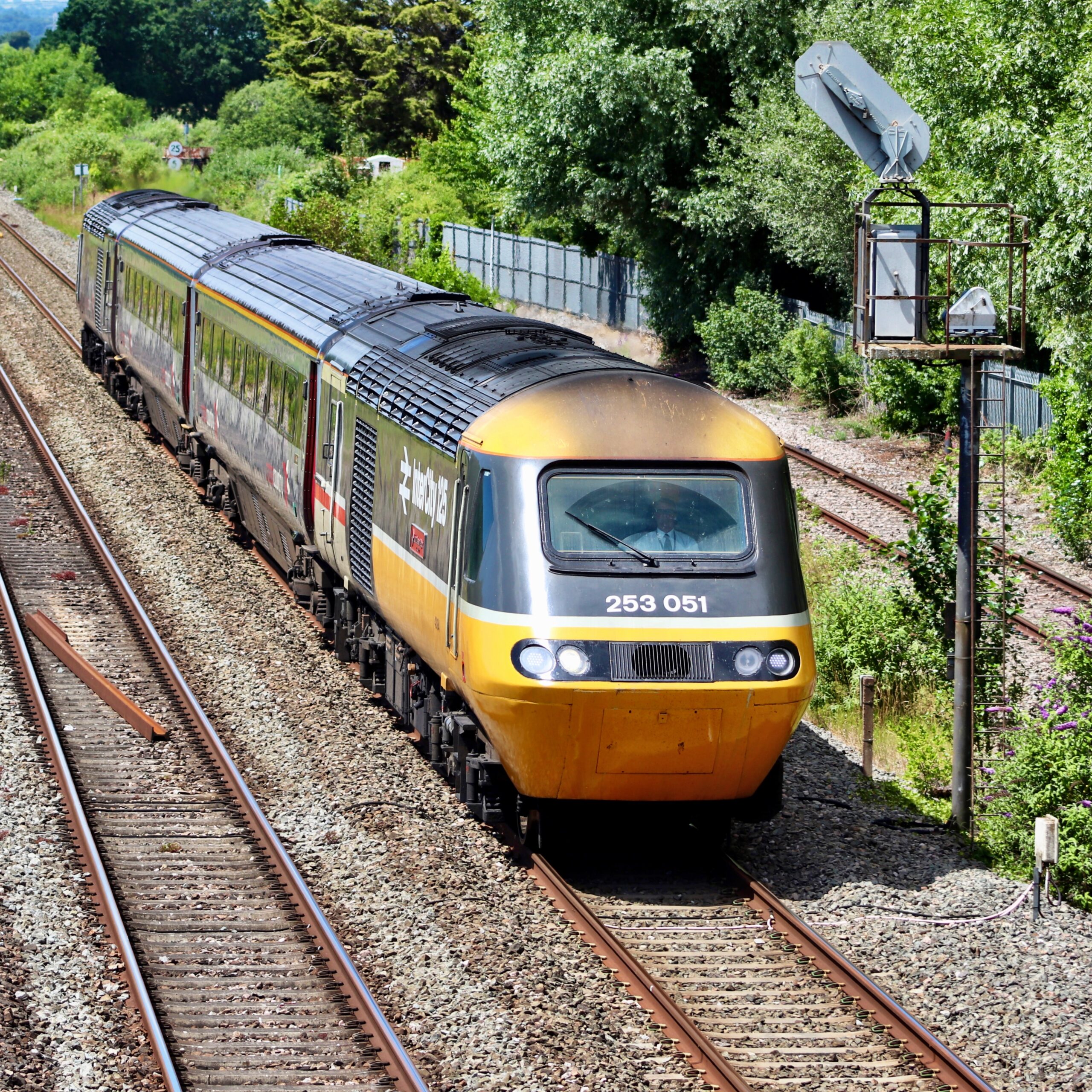
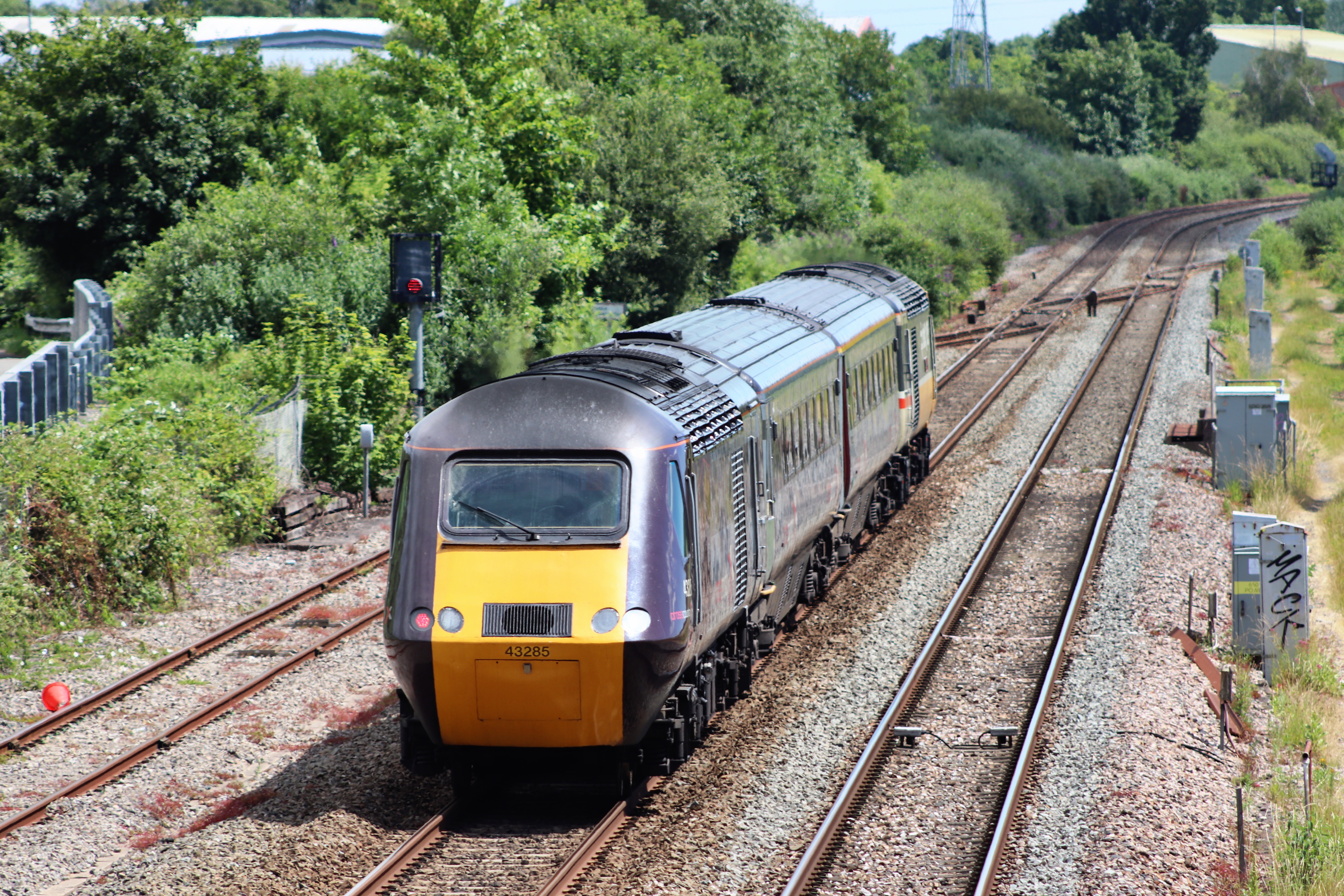
    Inter-City liveried Class 43 No. 43184 with No. 43285 at the rear working 5E23 1036 Laira T&RSMD to Doncaster Works Wagon Shops seen passing Norton Fitzwarren – 24/06/2023
    HST Class 43 power car No. 43285 tailing No. 43184 and two MK3 coaches as 5E23 1036 Laira T&RSMD to Doncaster Works Wagon Shops at Norton Fitzwarren – 24/06/2023
    Trains around Taunton the morning of 24th June 2023

    On Sunday 25th June, Yoshi, Caroline and I had been invited to Fawley Hill Museum and Railway Running Day. It sounds very grand to be invited. In reality, because the museum and railway are open on a limited number of days per year, admission is by prior application and invitation only as space is limited. Fawley Hill is a private museum established in the 1960’s by the late Sir William McAlpine at his estate near Henley on Thames.  It hosts a fine collection of memorabilia and models relating to railways together with a working standard gauge railway operating on the steepest gradient in the country. Since its inception the site has grown steadily with a wide range of interesting artefacts and buildings arriving from all over the country. Many items of architecture have been rescued and reassembled at Fawley Hill to save them from demolition, creating a unique urban landscape in a country estate. The park also contains a variety of animals including many species of deer.
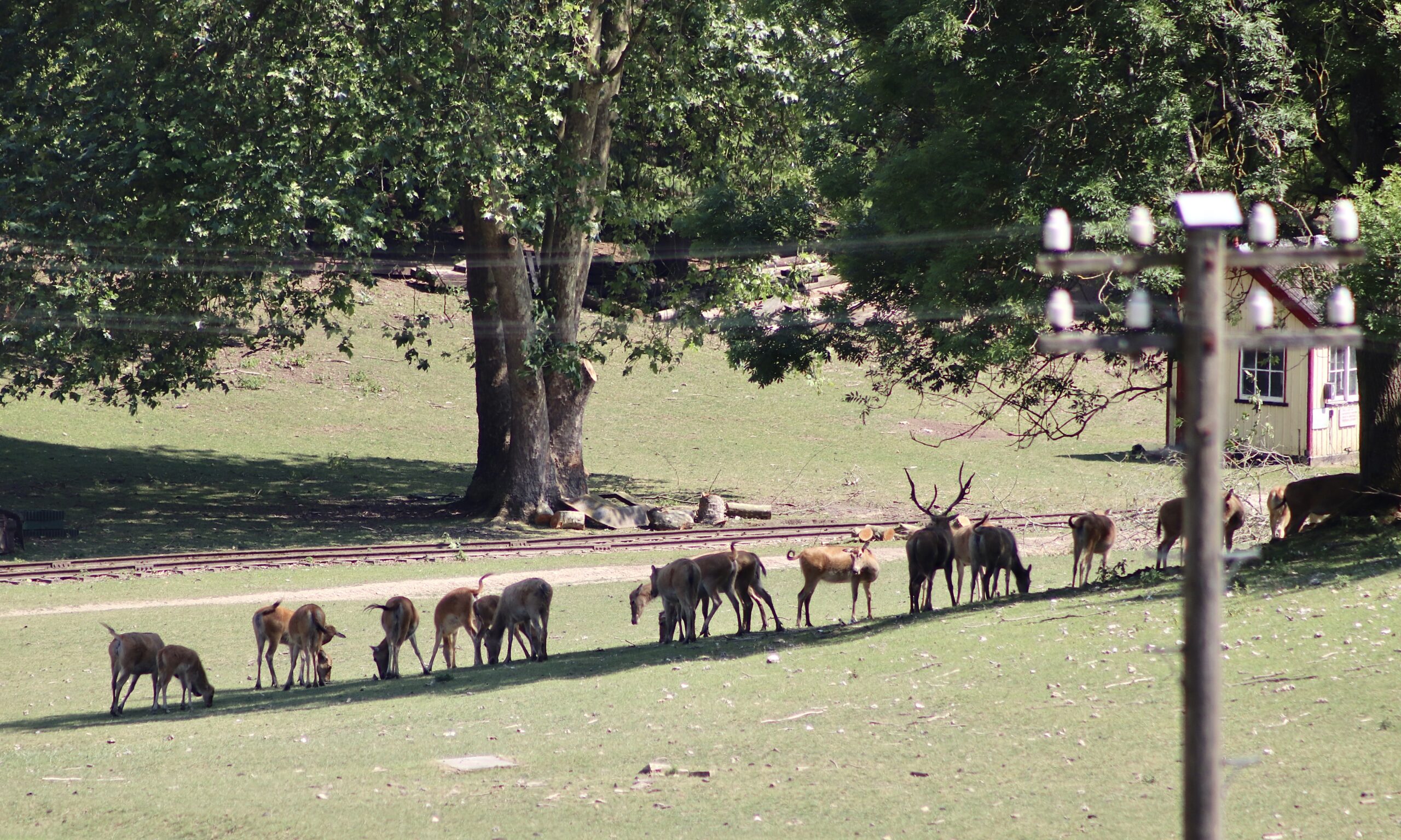
    Deer at Fawley Hill – 25/06/2023

    There is a strict “No Photography” rule on visitors inside the Museum, although in reality we found limited photography was acceptable as long as no images are posted on the internet in any way. Which unfortunately includes blogs about railways.  So, you’re going to have to take my word for it – the museum is fascinating and holds over 6,000 objects. My favourite sections were a display on the artist Terrence Cuneo, and an area dedicated to LNER A3 No. 60103 ‘Flying Scotsman’ which was saved for the nation by Sir William McAlpine, the Museum’s founder. There are some amazing models including a very clever diorama of Swindon Works employing use of reflections to force a longer perspective. 

    On the day of our visit, Class 03 No.D2120 was running trains, and we took a ride in Lancashire & Yorkshire Railway half-coach ‘Judy’. Yoshi was allowed to sit with us on the wooden seating and he watched out of the window as we meandered around the estate’s railway system.

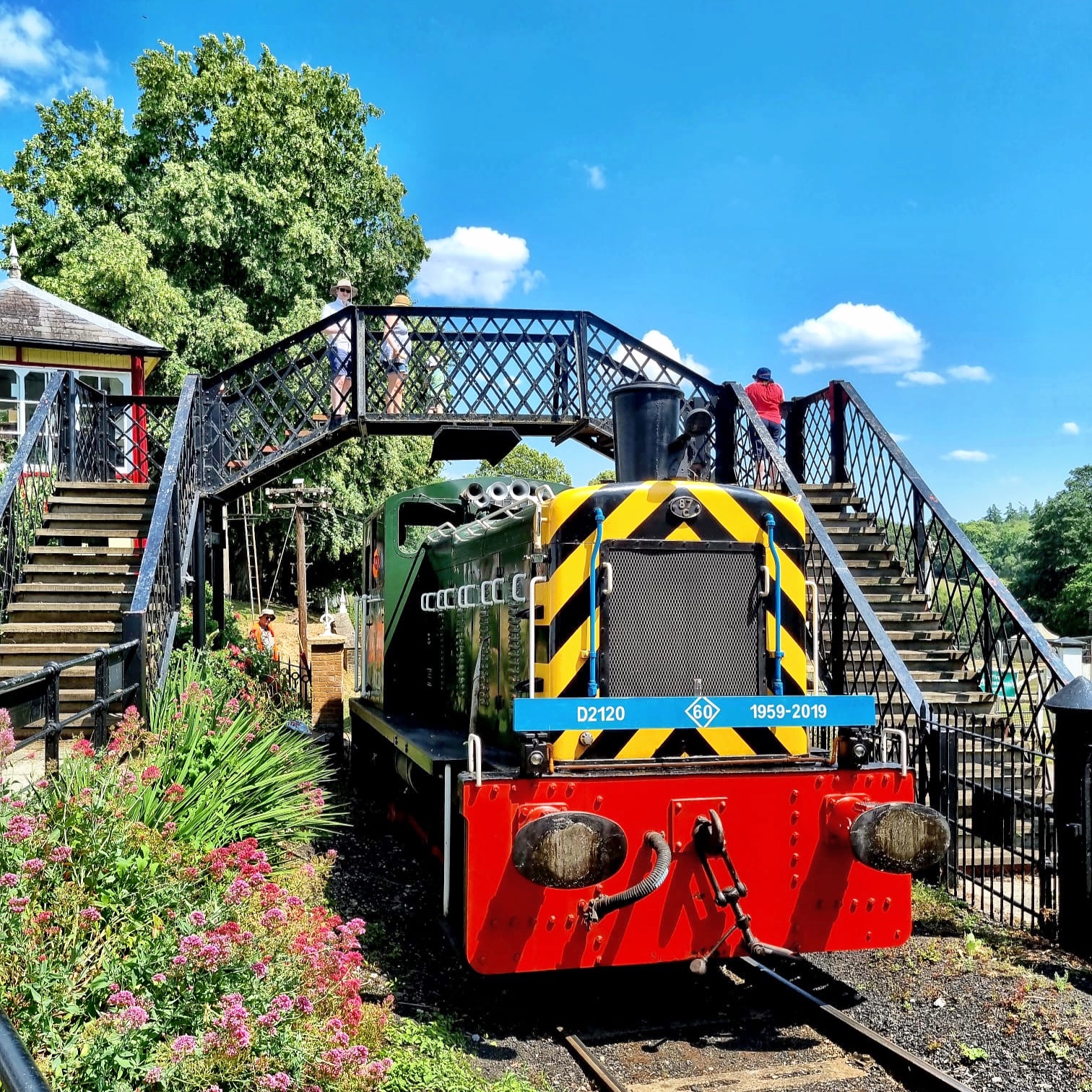
    Class 03 0-6-0 Diesel Mechanical Shunter No. D2120 climbs the slope to Somersham Station at Fawley Hill pulling Lancashire & Yorkshire Railway half-coach ‘Judy’ – 25/06/2023

    230 Class 03 diesel shunter locomotives were constructed by BR at Swindon and Doncaster Works between 1957 and 1962. No. D2120 was built at Swindon and entered service in October 1959. She was first allocated to Dangraig Depot and spent her entire career in the Swansea area of South Wales.

    In March 1972 whilst undergoing an overhaul, No. D2120 was converted to Burry Port & Gwendraeth Valley Railway (BPGVR) loading gauge. Eventually a total of 11 Class 03’s were converted in this way. The BPGVR had a severe height restriction and this conversion involved reducing the cab height by 4½ inches, and the fitting of a headlight in front of the exhaust stack, and another at the rear of the cab, for use when locomotives crossed unprotected level crossings. The converted locomotives were also fitted for multiple working with a second locomotive of the same class. During the mid 1970’s British Rail adopted a locomotive five figure computer numbering methodology under the Total Operations Processing System (TOPS) used for managing railway locomotives and rolling stock and No. D2120 was renumbered No. 03120 in March 1974.

    In 1978, No. 03120 spent three months (August – October) in store at Swindon, being re-introduced into service in November. She was given a final general overhaul at Swindon in May 1983 and retained as a standby loco, allocated to Landore Depot, Swansea. She was
    finally withdrawn by BR in February 1986 and released for sale.
    Purchased by Sir William McAlpine, No. 03120 arrived at Fawley in December 1986, wearing the standard fleet livery of BR rail blue with ‘wasp’ yellow and black painted warning ends. Since arriving at Fawley, she has been repainted into early BR Green as No. D2120, the wasp stripes at each end of the locomotive were restored in 2019. D2120 wears loco shed allocation plate 87C (Danygraig).

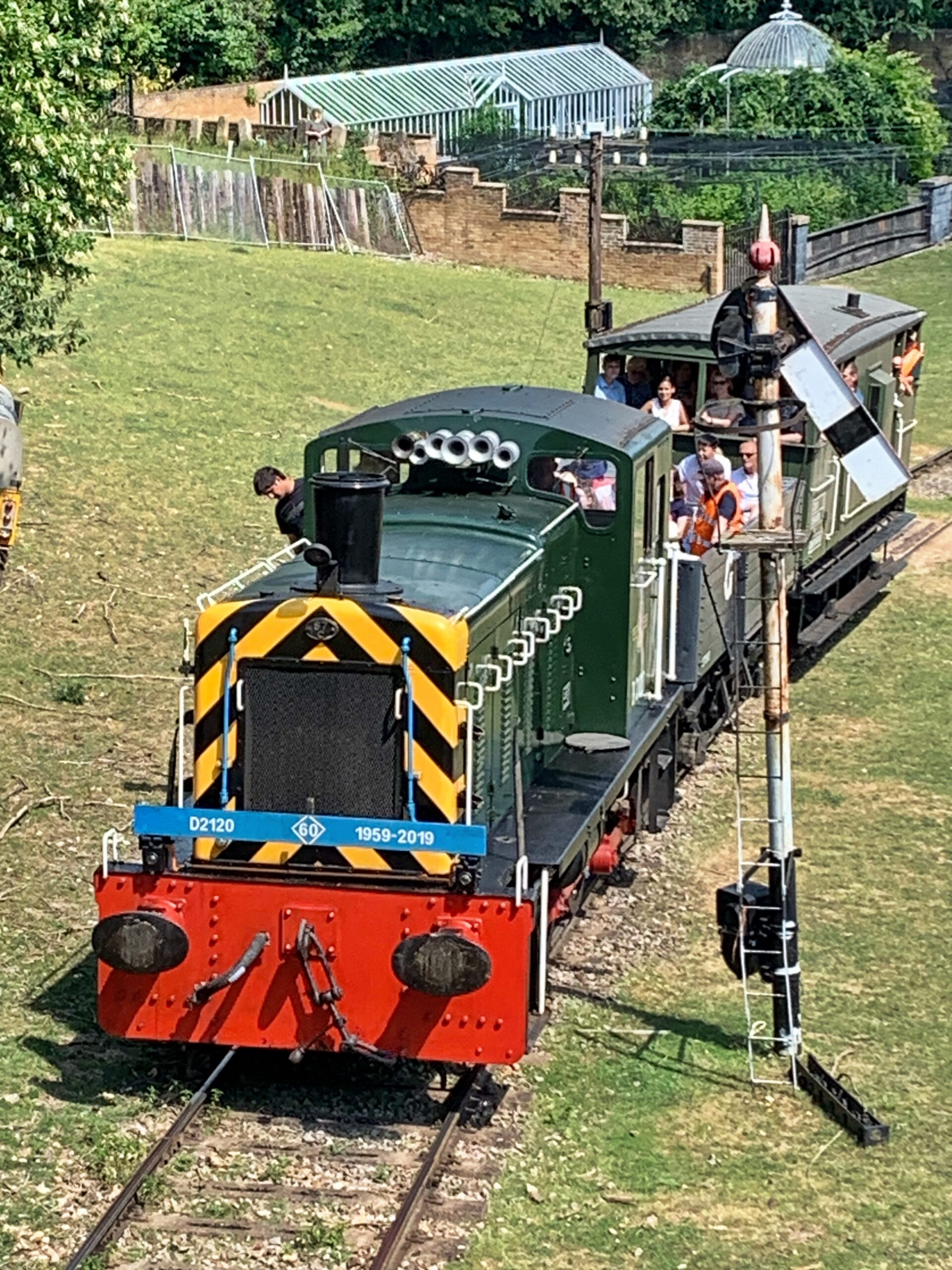
    Class 03 0-6-0 Diesel Mechanical Shunter No. D2120 backs onto a GWR plank open wagon and a guards van to increase passenger capacity on the train rides at Fawley Hill – 25/06/2023
    Class 03 0-6-0 Diesel Mechanical Shunter No. D2120 working visitor train rides at Fawley Hill – 25/06/2023
    Class 03 0-6-0 Diesel Mechanical Shunter No. D2120 passes under the footbridge which was originally located at Brading Station on the Isle of Wight where it spanned the Ryde to Shanklin line before moving to Fawley Hill in March 2000 (CLS) – 25/06/2023
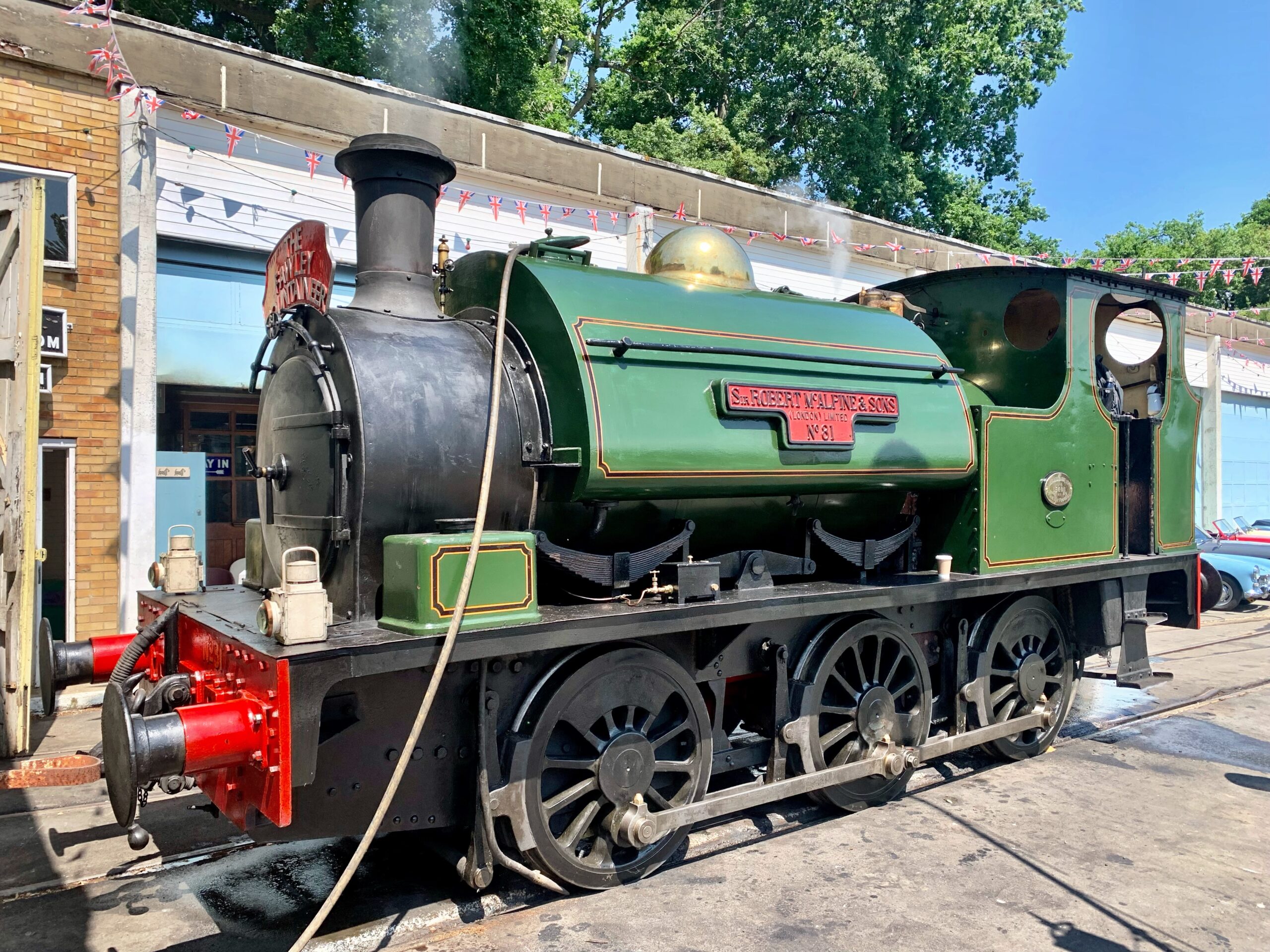
    Hudswell Clarke & Co Ltd 0-6-0 ST No. 31 at Fawley Hill Museum. This locomotive was ordered from Hudswell Clarke & Co Ltd in November 1912 by the Ministry of Fuel and Power, and built at their Hunslet, Leeds works. She was allocated builder’s number 1026, and completed in April 1913, at a total cost of £1485. Delivered new to Robert McAlpine & Sons, Cuffley on 14 April 1913, No 31 was allocated Plant Number 2581 in 1931. She was outshopped in Caledonian Blue, a colour she kept throughout her time at the McAlpine company even though the corporate colour was green.
    No 31 is the only surviving locomotive to have been owned by Sir Robert McAlpine & Sons for the whole of its working life. She worked on a number of building contracts including Wembley Stadium (1923-1924), RAF Boscombe Down (1944) and Llanwern Steelworks (1960-1961). The locomotive was rebuilt by Hudswell Clarke & Co in 1938. No 31 went into storage at McAlpine’s yard at Hayes in 1961 and remained there until she was identified for scrapping in 1965. At this point, Sir William decided to give No 31 a new life in retirement and purchased the locomotive.
    No 31 arrived at Fawley in September 1965 and was subsequently repainted in GWR Brunswick green livery. Above the smokebox door is carried loco shed plate 81M – a code unique to Fawley – 25/06/2023
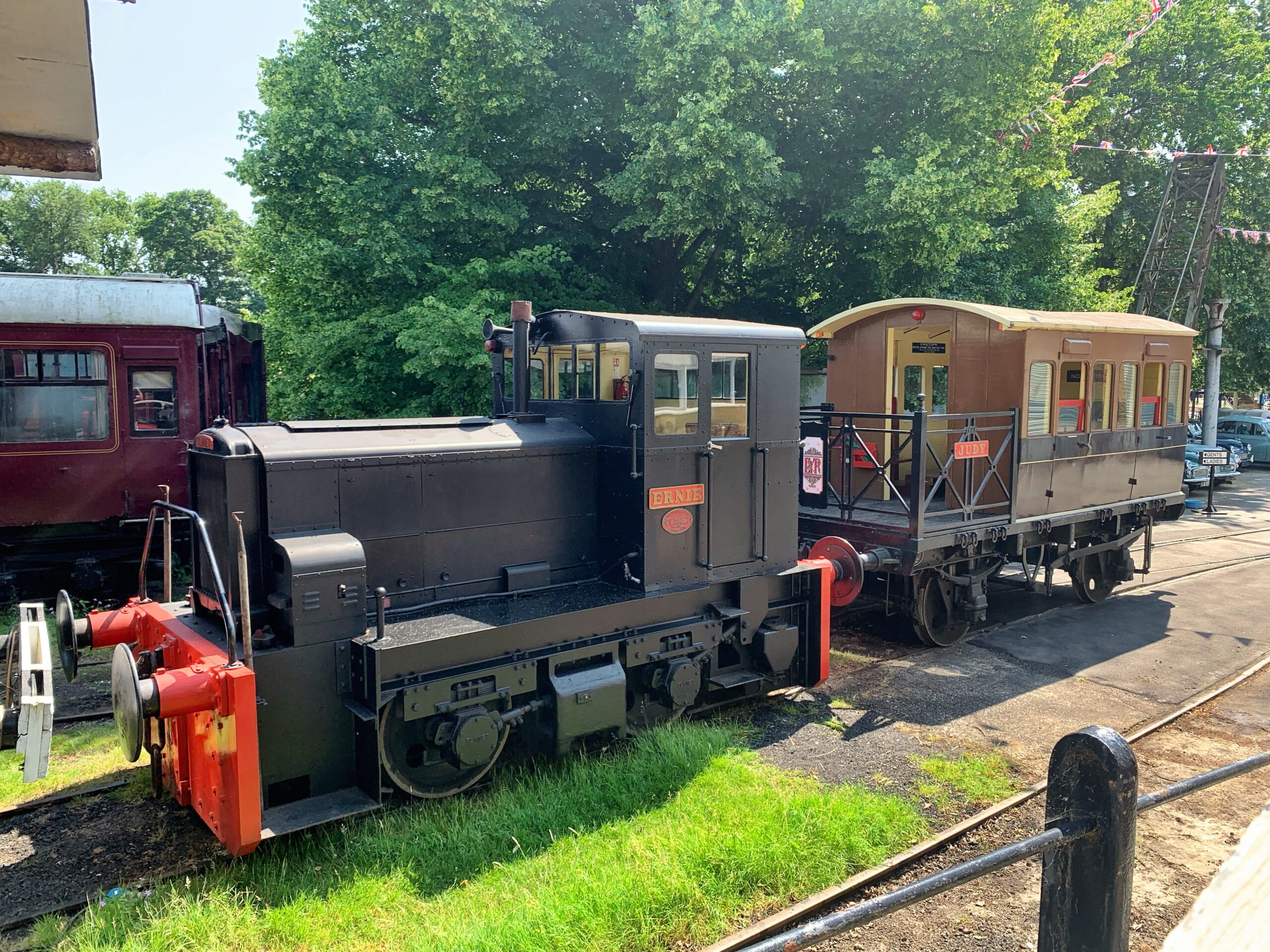
    One of two Planet 0-4-0 Diesel Mechanical locomotives at Fawley, No. 3894 ‘Ernie’ in Fawley station yard with Lancashire & Yorkshire Railway half-coach ‘Judy’ – 25/06/2023
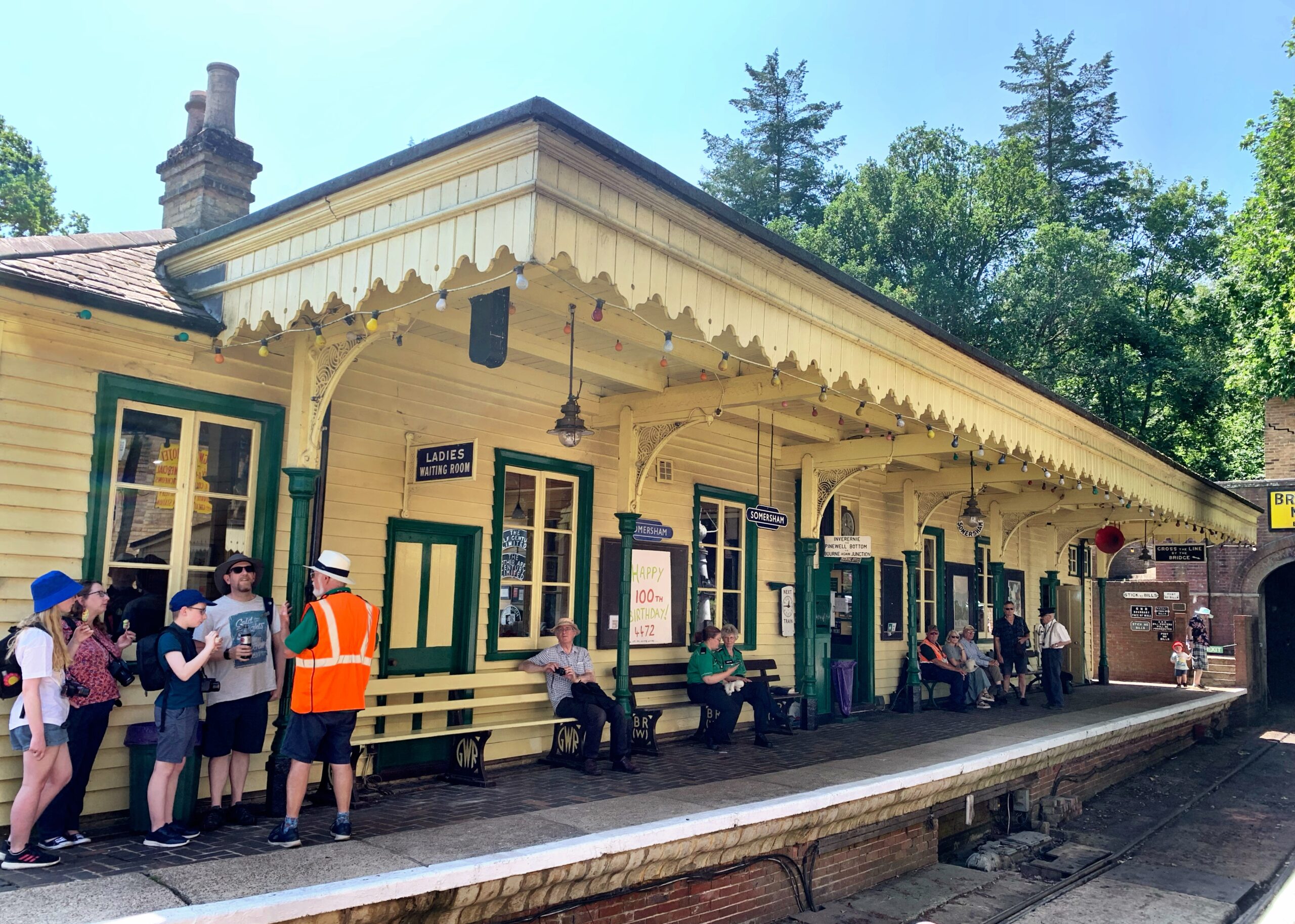
    Somersham Station, previously to be found on the St. Ives to March line. The station was opened by the Eastern Counties Railway (ECR) in 1848. The line was closed to all rail traffic in 1967. The waiting room survived until 1977 when it was moved to Fawley – 25/06/2023
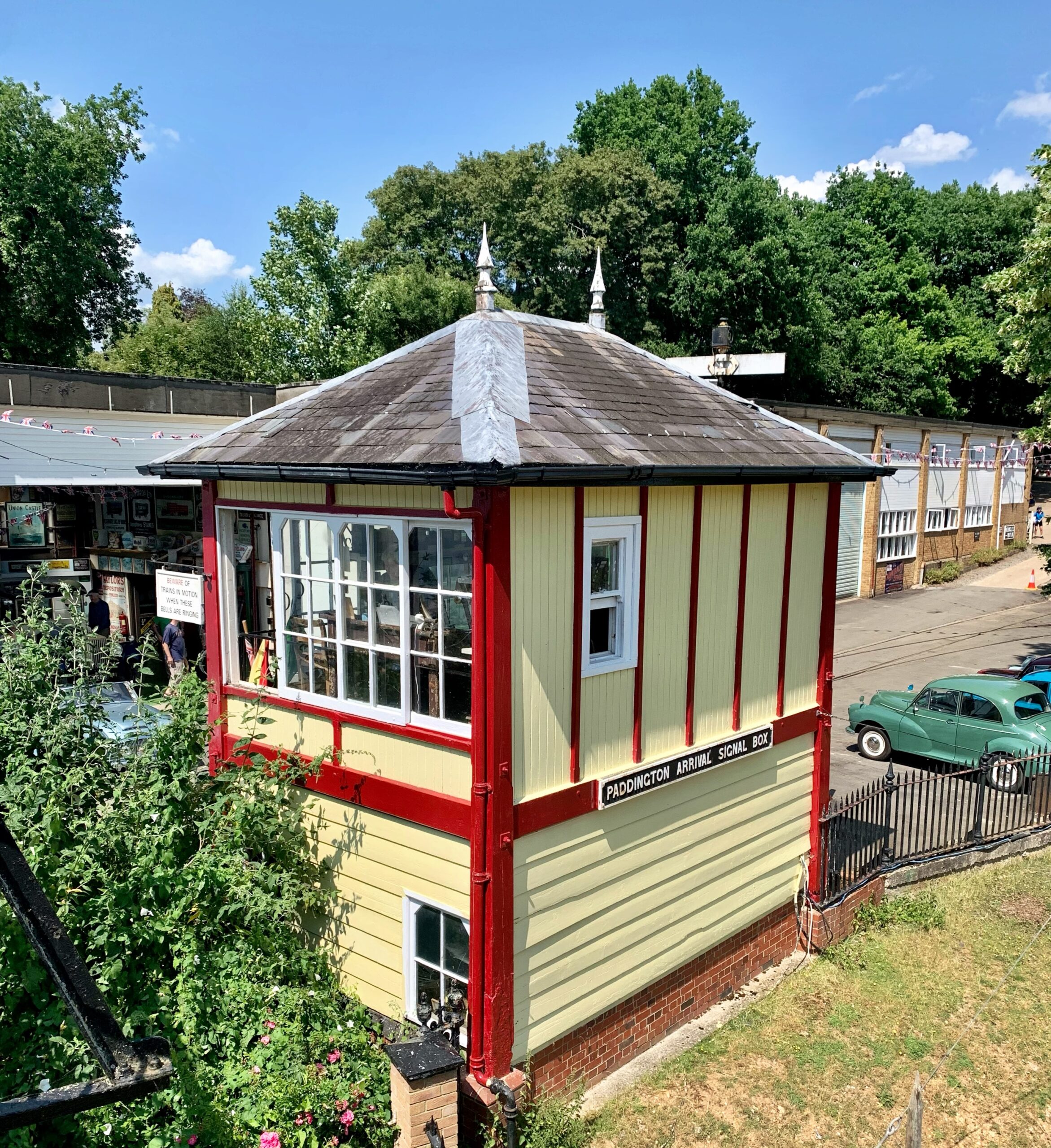
    Shobnall Maltings Signal Box is a Midland Railway (Type 3a) signal box dating from 1905. It was the first building to arrive for use on the Fawley railway in 1969 and was originally built at Swadlincote East near Burton-on-Trent. It was moved to operate at the Bass, Ratcliff & Gretton Ltd brewery and renamed Shobnall Maltings – 25/06/2023
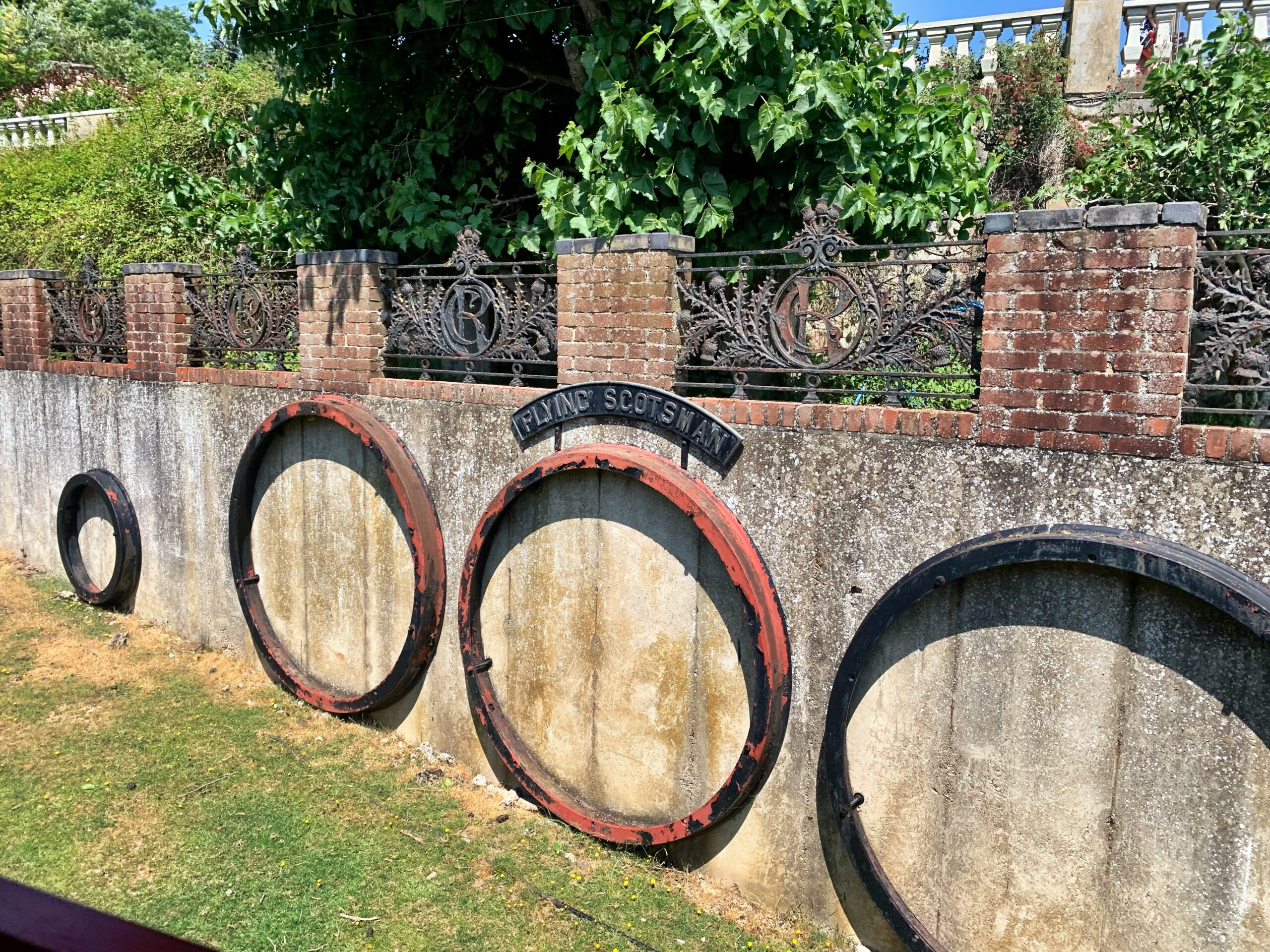
    These tyres from ‘Flying Scotsman’ were removed from the driving wheels of the famous LNER Class A3 4-6-2 prior to her journey to Australia in September 1988 – 25/06/2023
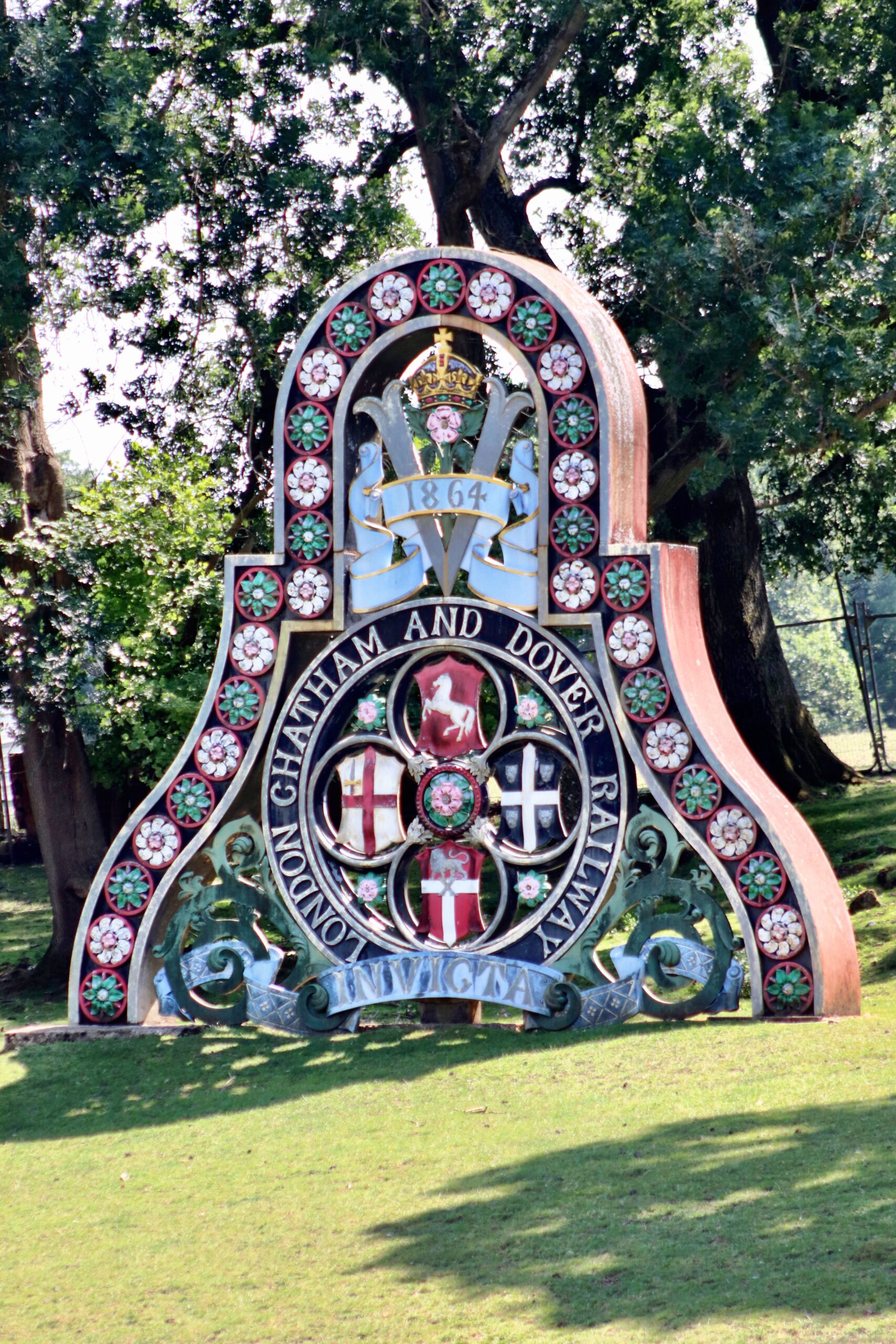
    Blackfriars Bridge Capital taken from the old Blackfriars Bridge across the River Thames in London. The bridge opened in June 1864 and demolished in the 1960’s. The bridge abutments remained until the mid-1980’s when the one on the north side of the river was removed along with its decorative cast iron capital or pediment. This example arrived at Fawley in 1984 whilst the remaining two are still in situ in London – 25/06/2023
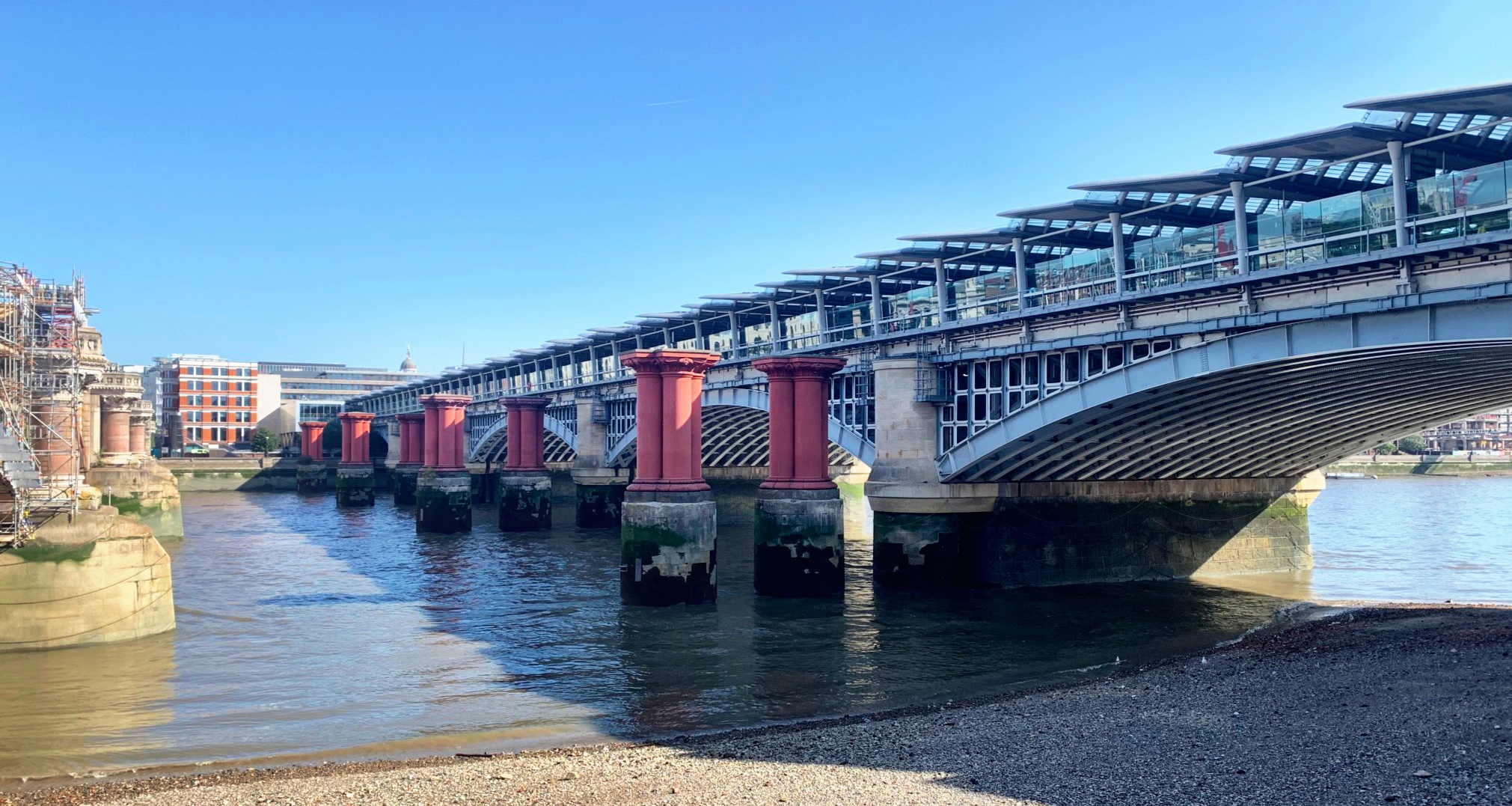
    The columns of the old Blackfriars railway bridge standing next to the current bridge – 26/08/2022
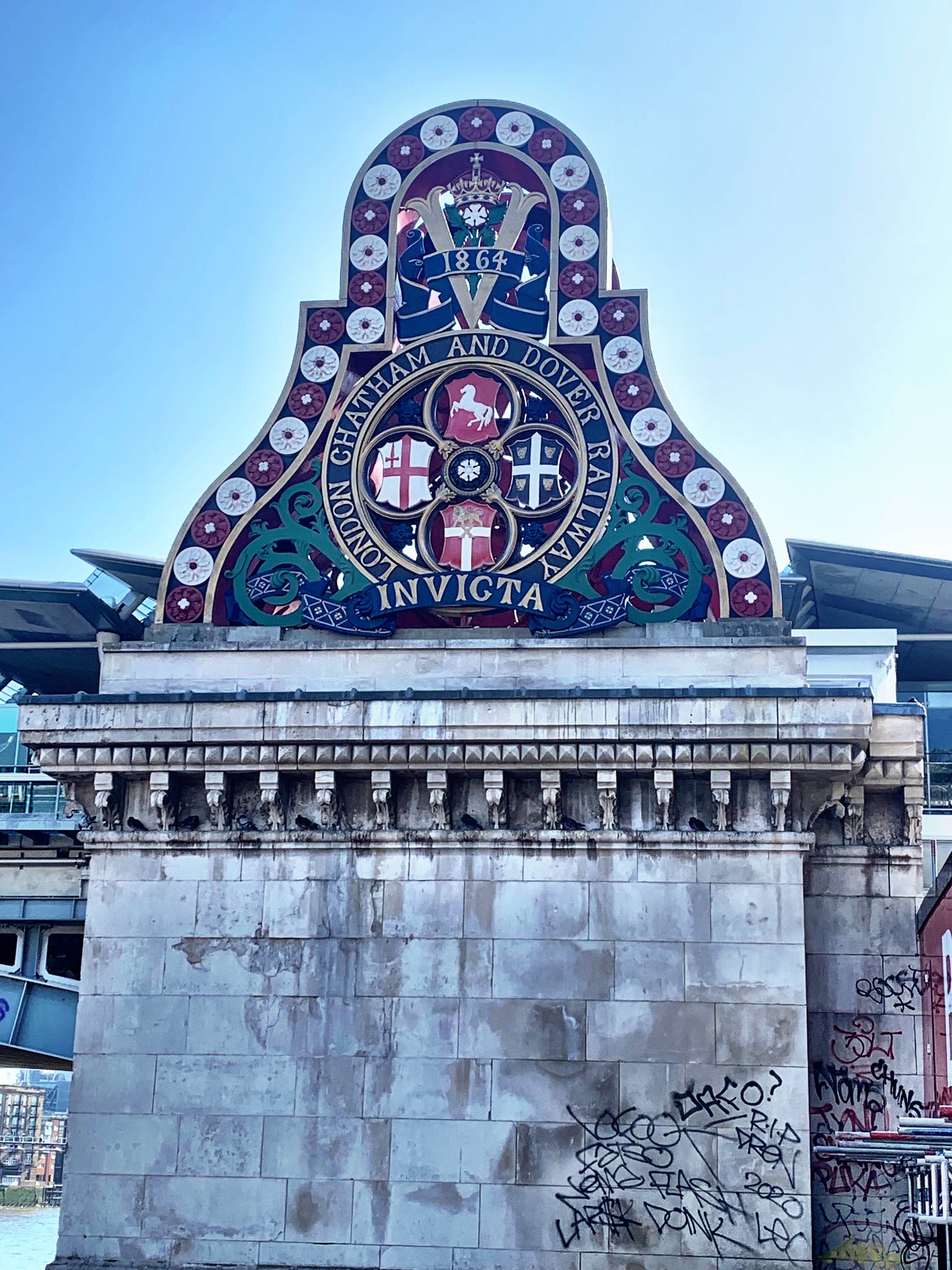
    The southern abutment and LC&DR insignia have been restored – 26/08/2022
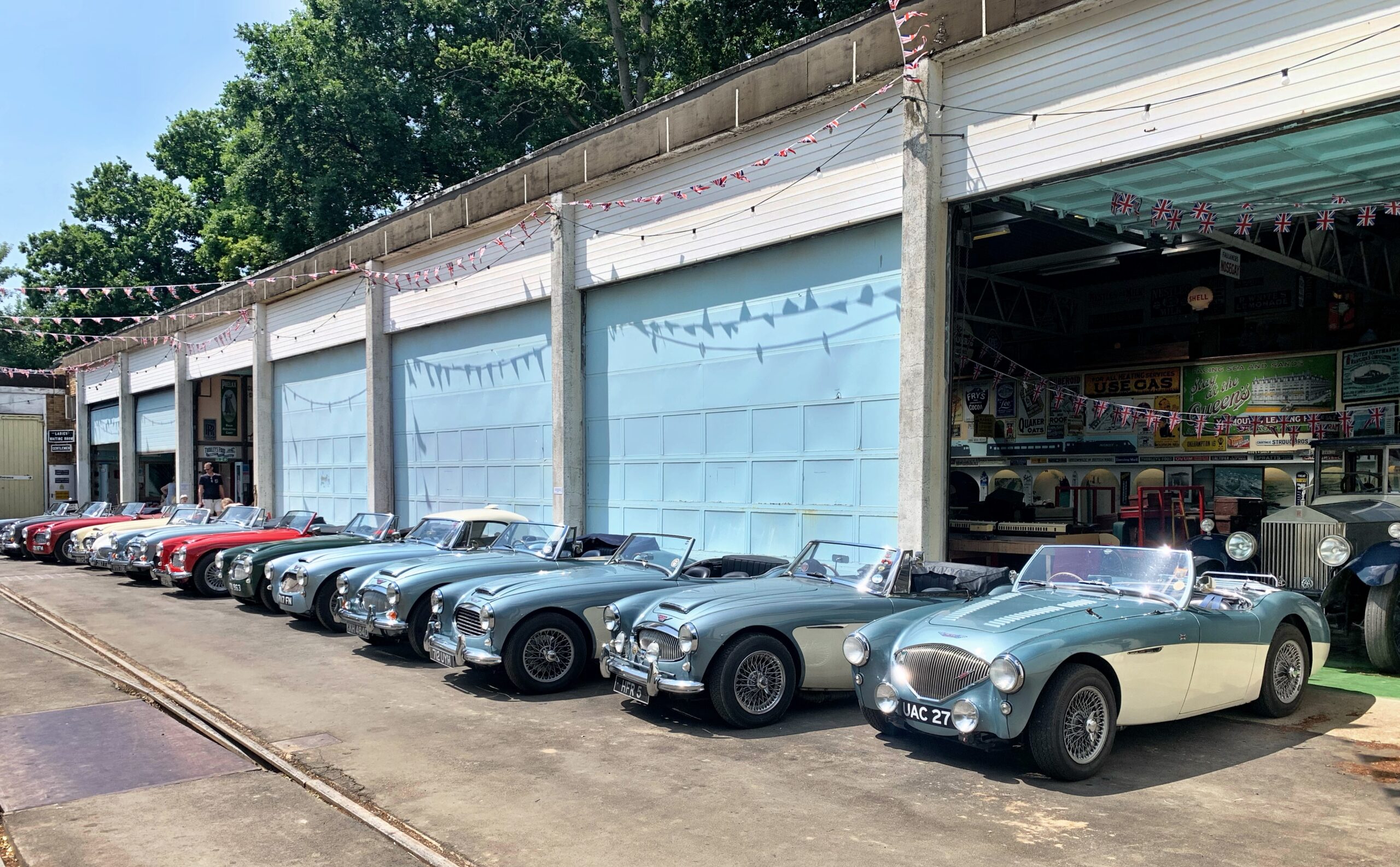
    Our visit coincided with the arrival of some Austin-Healey sports cars… – 25/06/2023
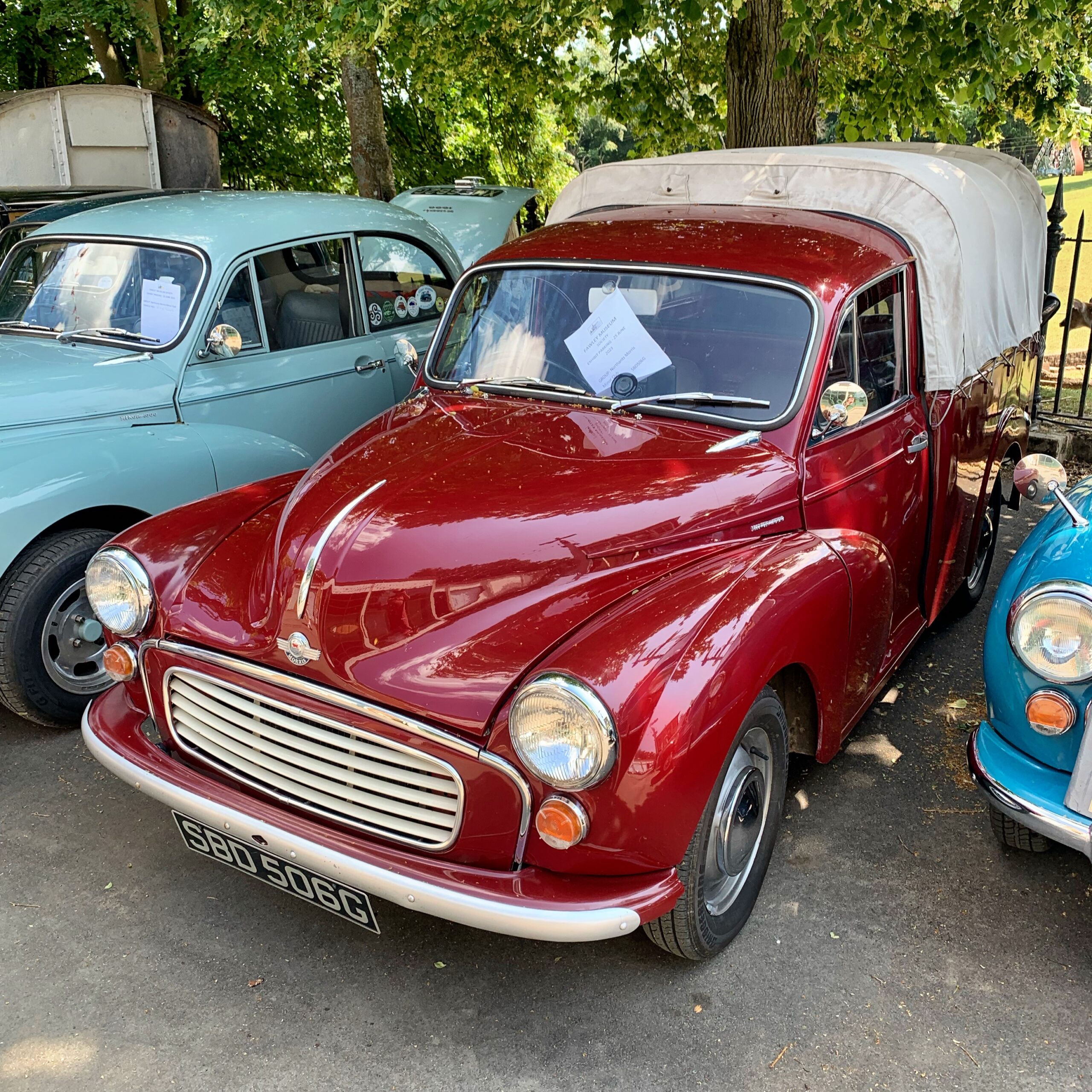
    …and some Morris Minor cars and vans! – 25/06/2023

    If you would like the opportunity to visit Fawley Hill, you can find out how here:  https://www.fawleymuseum.org/events

    ​Doggos are not permitted inside the museum buildings at Fawley Hill, so Caroline and I took it in turns to enjoy the delights on display while the other sat with Yoshi in a cool spot which obviously happened to be situated just by the toilets. It was during my time at this spot that I checked email on my phone and although the 4G coverage was barely existant, I discovered the Class 20’s I mentioned earlier and at that time believed to be in Bristol were in actual fact stabled at Didcot just 18 miles up the road from our current location and more or less in the correct direction for our drive back to Dorset. So after a cup of tea and an excellent piece of raspberry and coconut slice, we took a few final photographs and set off towards home. 

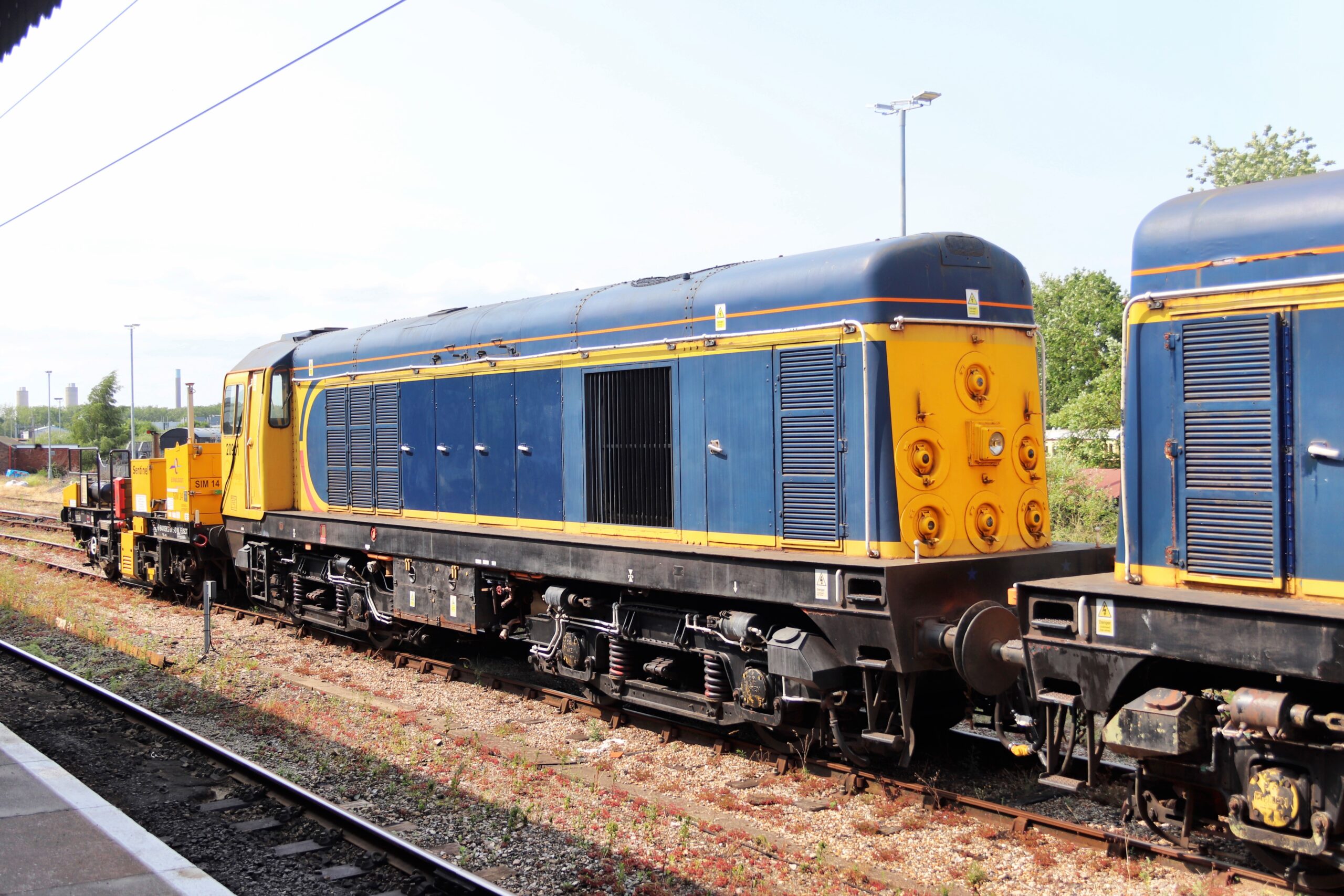
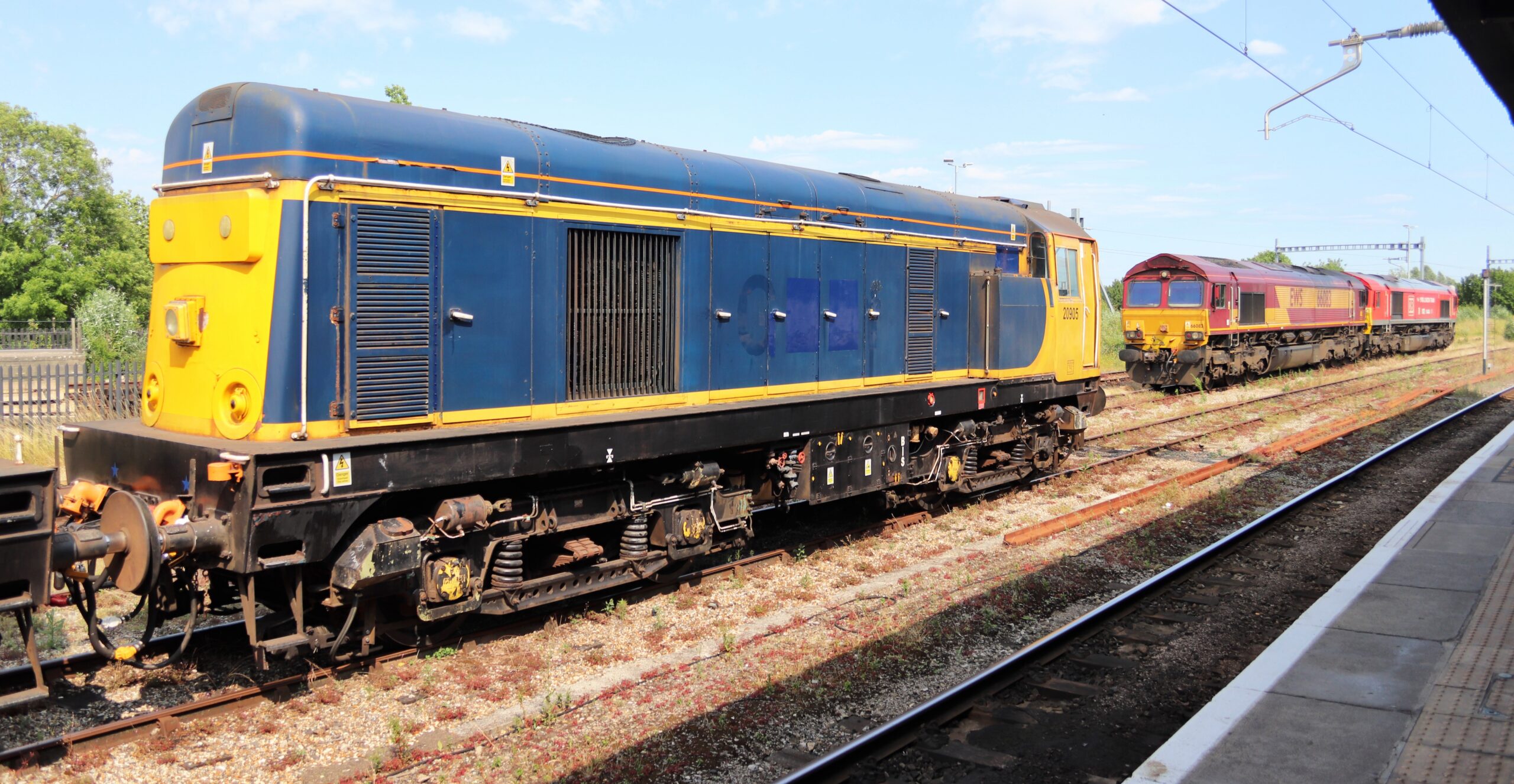
    On arrival in Didcot, we parked up and I took a stroll over to the railway station. The Class 20’s were conveniently parked adjacent to the platforms and were getting a fair bit of attention from other rail enthusiasts, much to the puzzlement of waiting passengers. The locomotives, currently part of the Harry Needle Rail Company (HNRC) fleet but still carrying the remnant livery of their previous owners; GBRf, are on hire to Rail Operations Group (ROG).
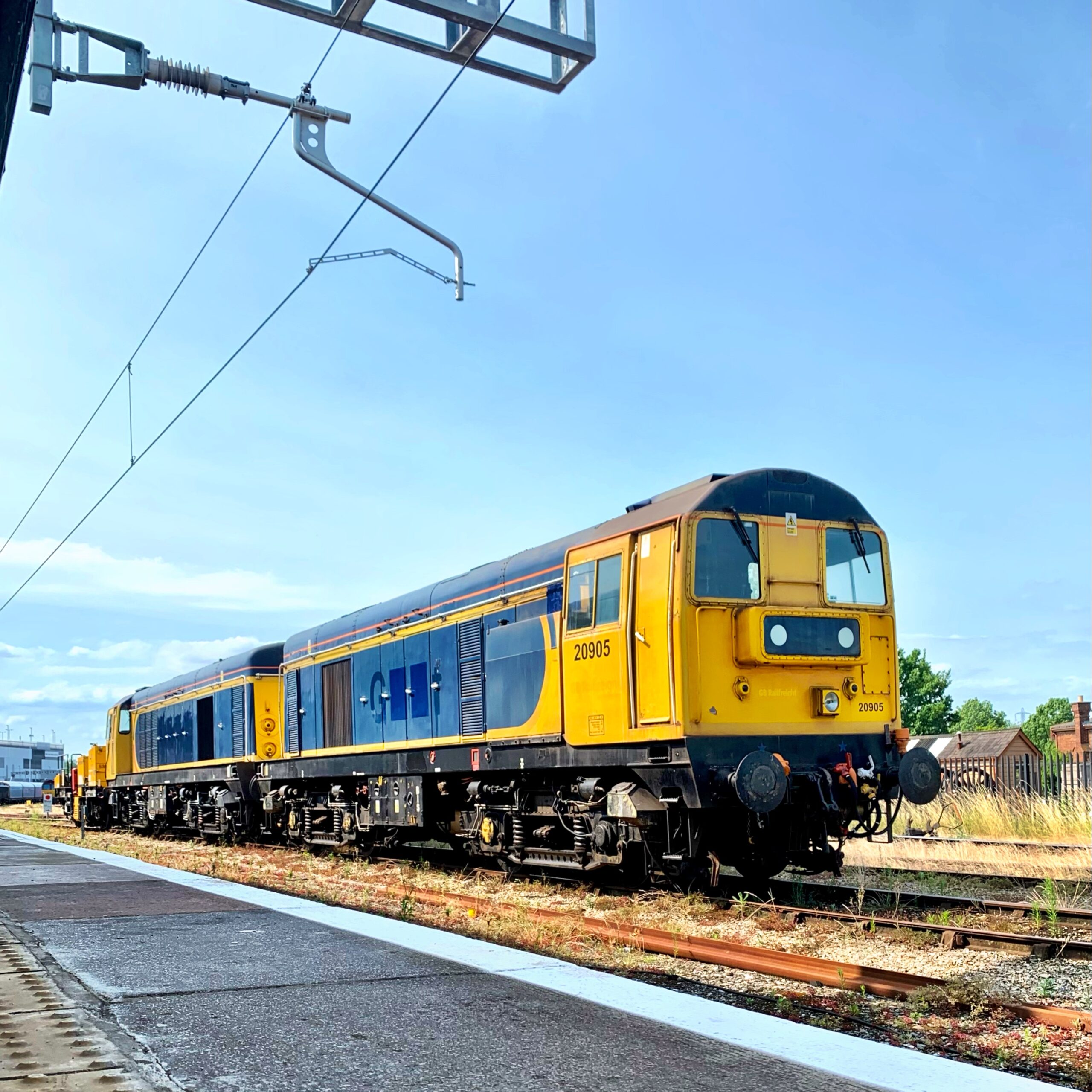
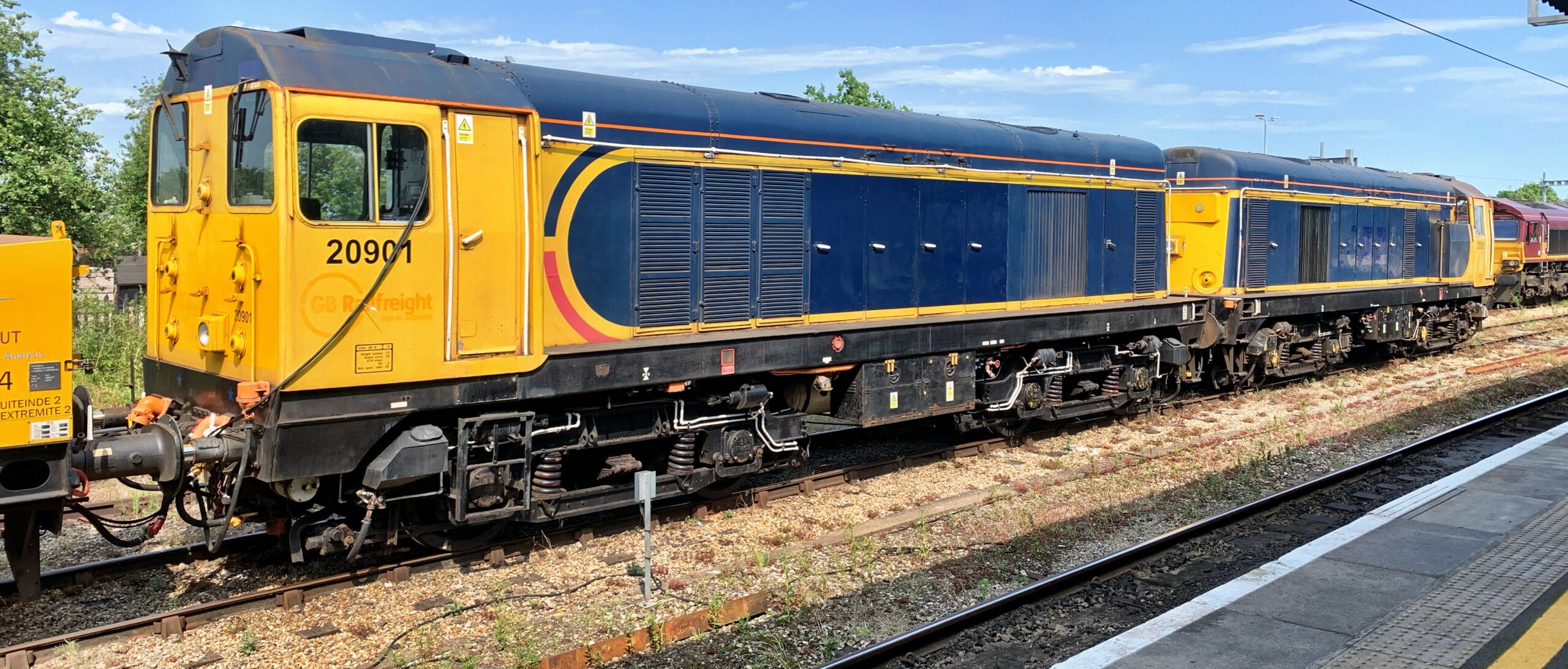
    Class 20 No.’s 20905 and 20901 with SIM14 ‘Sentinel’ (No. 99 84 0362 006-0) at Didcot – 25/06/2023
    Class 20 No.’s 20901 and 20905 at Didcot – 25/06/2023
    Class 20 No. 20901 at Didcot. Contrast the differences in nose end detail with the following image of classmate No. 20905 – 25/06/2023
    No. 20905 at Didcot. Contrast and compare with the image above of classmate No. 20901 – 25/06/2023

    The locos, rare visitors to west, are currently working in tandem with one of seven Eurailscout Switch Inspection Machines (SIM). I’m more used to switches being called points, but accept this “Americanism” as it quite an explanatory term. The points are the movable rails which guide the wheels towards either the straight or the diverging track allowing a train to switch tracks if required. They’re quite complex really and require a fair amount of maintenance to ensure they are in a safe and usable condition. SIM14 ‘Sentinel’ (No. 99 84 0362 006-0) arrived at Didcot by road from Holland at the start of June 2023 and was subsequently moved to Bristol Kingsland Road by a single Class 20 locomotive. It spent several nights working in the Bristol area doing exactly what the name suggests – inspecting various switches and junctions in the vicinity of Temple Meads, East Junction and West Junction. After spending the weekend at Didcot again, it was moved to Southall yard on the 12th June for further overnight inspections in the Paddington area. More recently the single Class 20 was joined by its classmate and on the 20th June returned to the Bristol area, moving back to Didcot on the morning of the 23rd despite the TOPS reporting they were still 77 miles further west. 
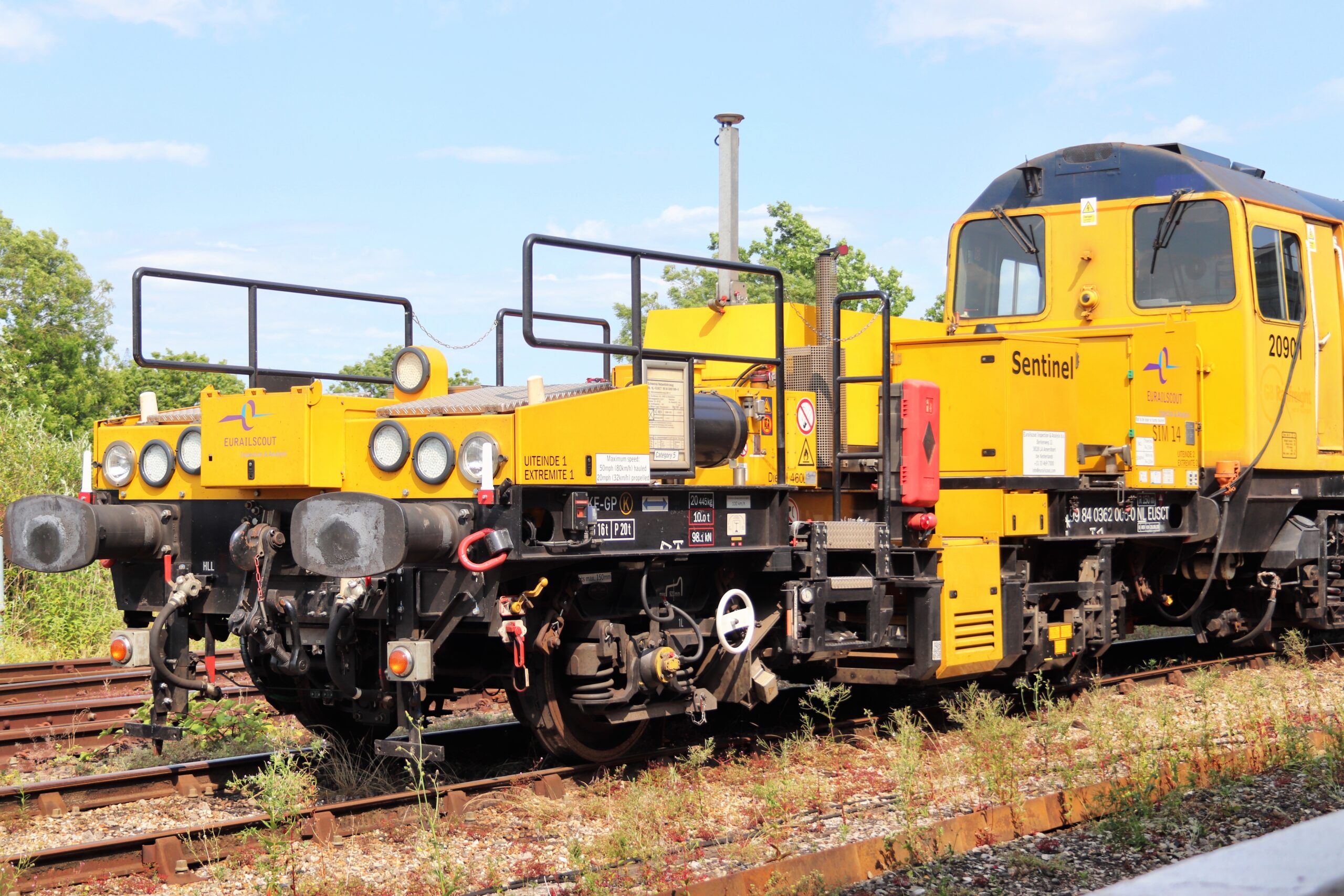
    Close up of Eurailscout SIM14 ‘Sentinel’ (No. 99 84 0362 006-0) at Didcot – 25/06/2023

    Eurailscout  says the following about the Swith Inspection Machines: “About 50% of all track disruptions are caused by faulty switches, with timely maintenance being needed in order to prevent these disruptions. We use a SIM wagon to measure and inspect the geometry and rail profiles of your switches under day-to-day operating conditions. A single locomotive can push or pull the SIM wagon, which means it can be shunted around quickly between the normal rail traffic. Since we also record high-quality video images during this work, you can make a visual inspection of the switch without having to put it out of service for the inspection and without your staff having to walk on the track themselves.”
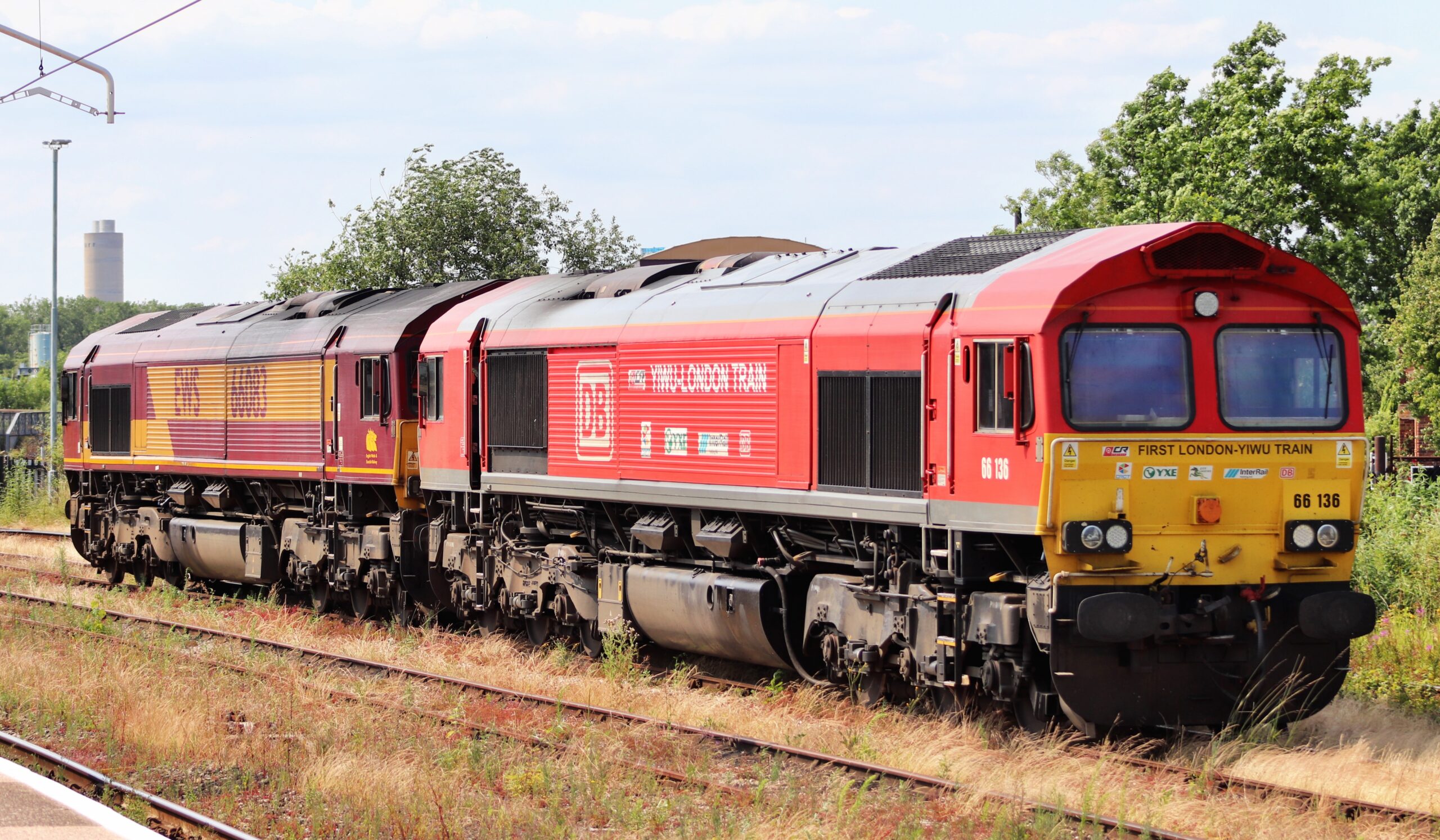
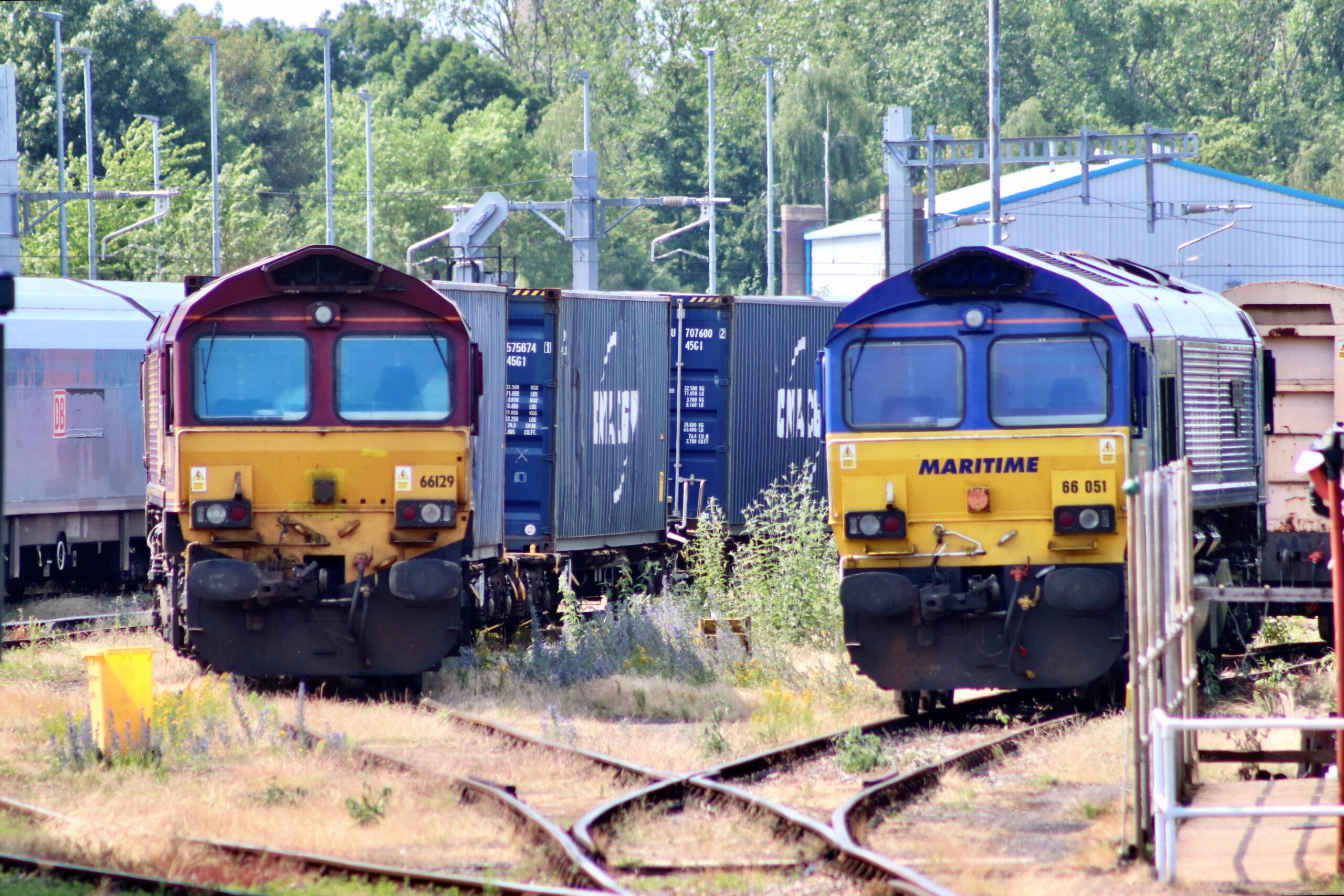
    Also stabled at Didcot were Class 66 No.’s 66136 and 66083 – 25/06/2023
    Class 66 No.’s 66051 ‘Maritime Intermodal Four’ and 66129, Didcot Yard – 25/06/2023

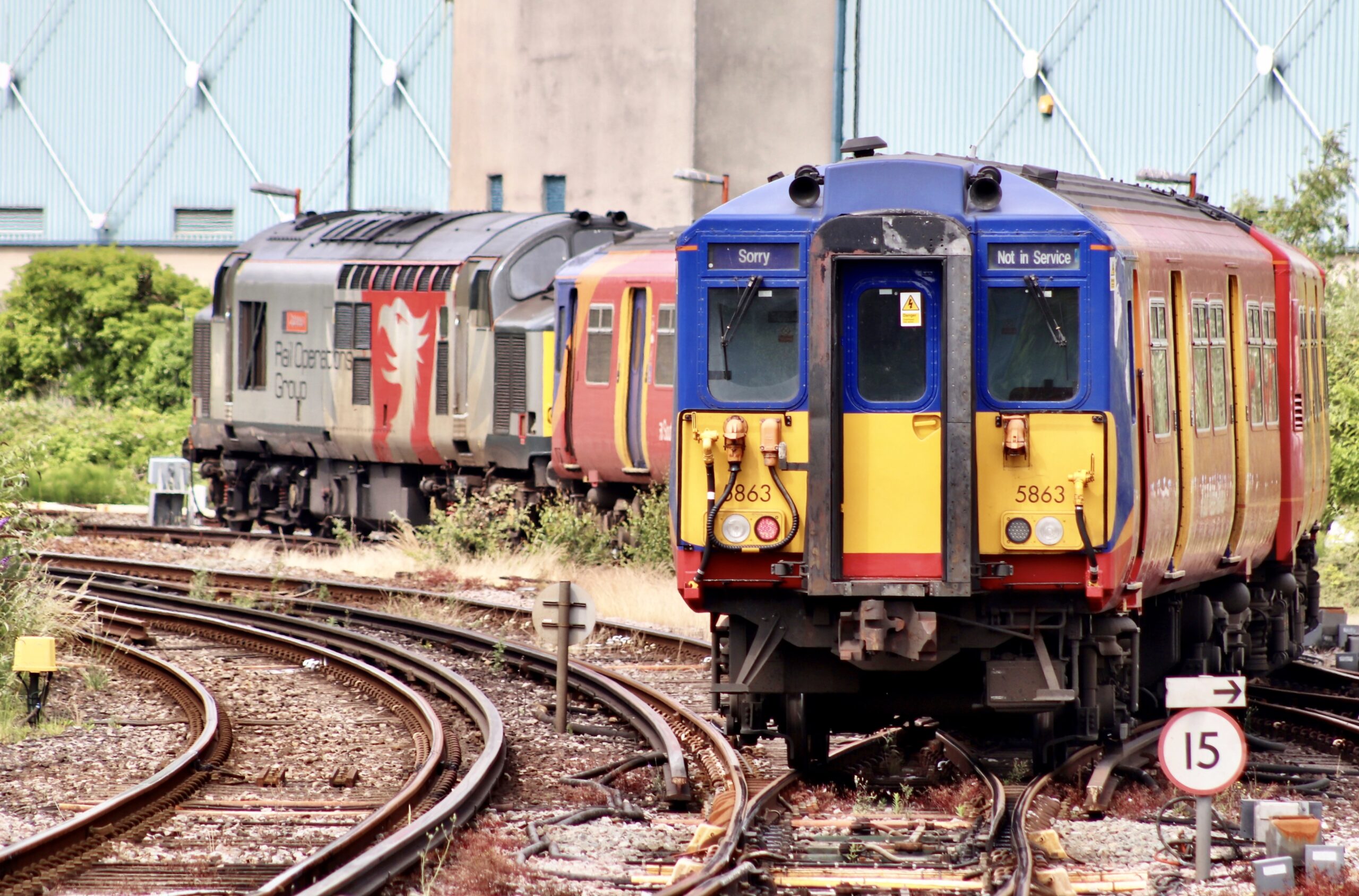
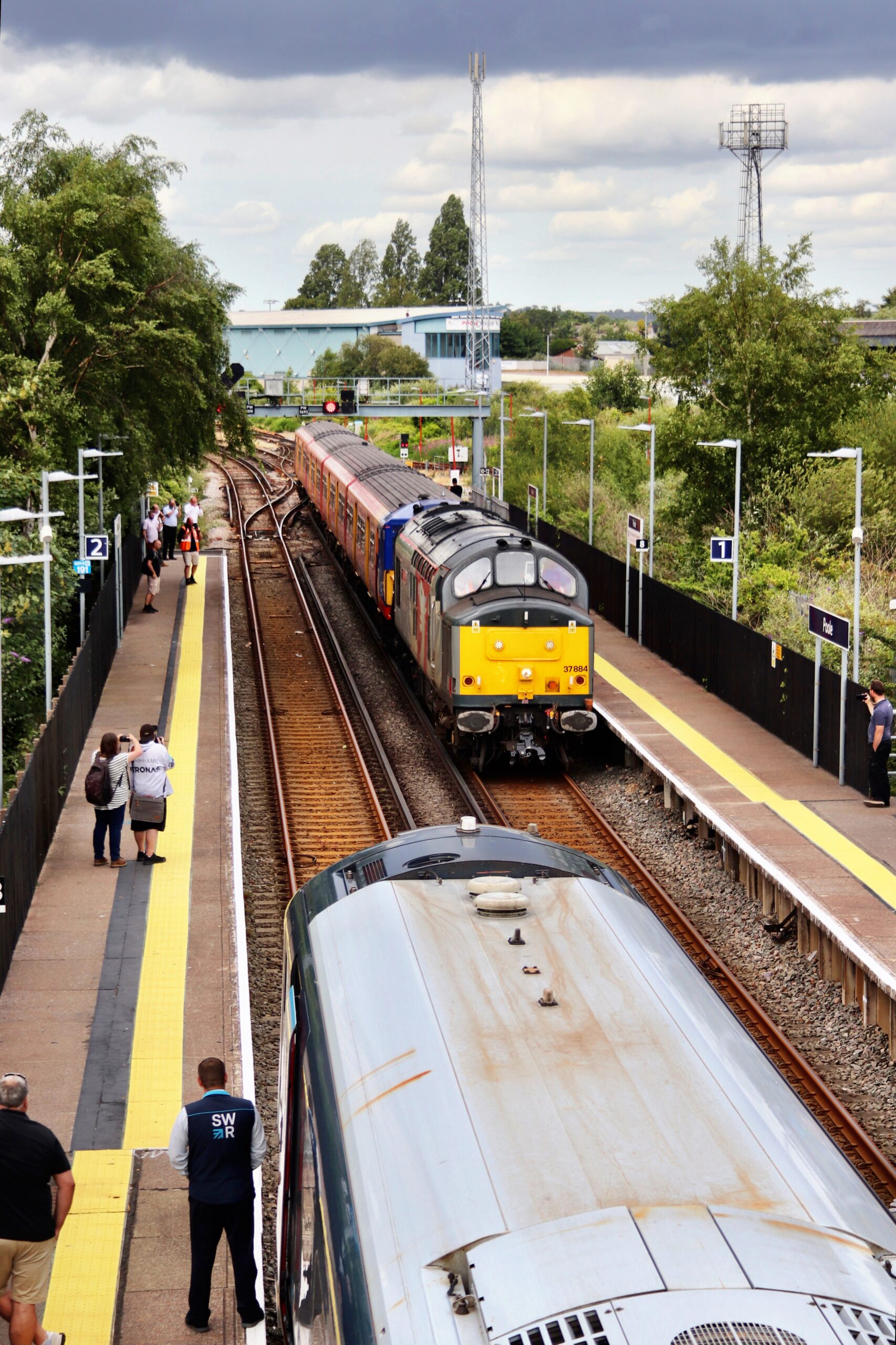
    Monday and Tuesday saw some stock movements run around at Poole Storage Sidings as they either went to or from Bournemouth T&RSMD. First up on June 26th was ROG Class 37 No. 37884 ‘Cepheus’ hauling a Class 455 electric multiple unit No. 455863 from Wimbledon to Bournemouth for repair of a failed motor alternator. We saw the Cass 37 and empty coaching stock unit pass through Poole station on the way to the sidings. The locomotive detached from the front of the unit and ran back into Poole station and reversed back out again to attach itself to the other end of the empty stock before passing back through the station on the way to Bournemouth depot. 
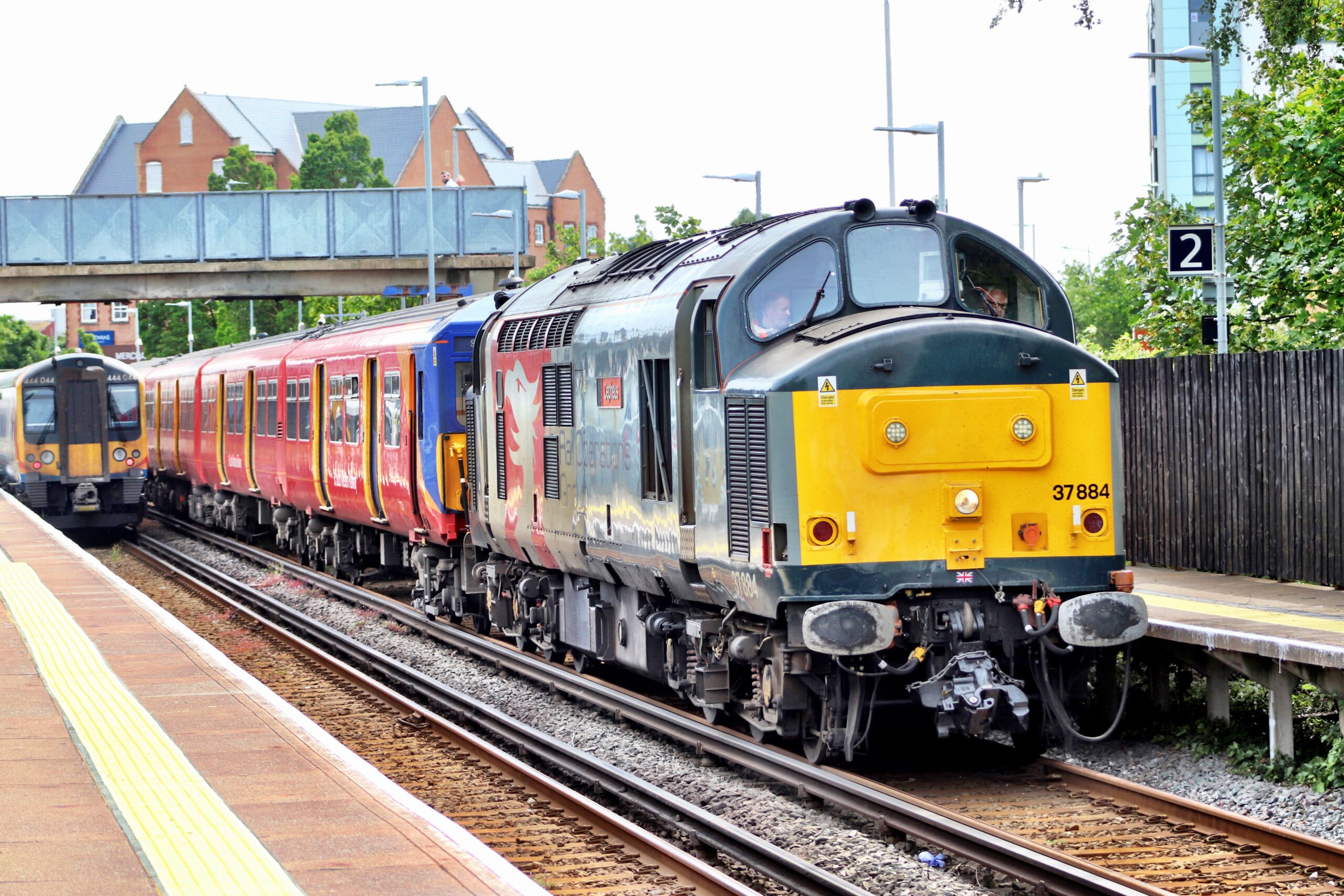
    ROG Class 37 No. 37884 ‘Cepheus’ hauling broken Class 455 electric multiple unit No. 455863 through Poole as 5Q86 1246 Wimbledon Park CSD to Bournemouth T&RSMD – 26/06/2023
    Class 455 No. 455863 being towed into Poole Storage Sidings as 5Q86 1246 Wimbledon Park CSD to Bournemouth T&RSMD. Class 37 No. 37884 ‘Cepheus’ will run around the EMU to haul it back to Bournemouth depot – 26/06/2023
    Class 37 No. 37884 ‘Cepheus’ at Poole running around 5Q86 1246 Wimbledon Park CSD to Bournemouth T&RSMD – 26/06/2023
    Class 37 No. 37884 ‘Cepheus’ and No. 455863 work 5Q86 1246 Wimbledon Park CSD to Bournemouth T&RSMD – 26/06/2023
    5Q86 1246 Wimbledon Park CSD to Bournemouth T&RSMD at Poole – 26/06/2023

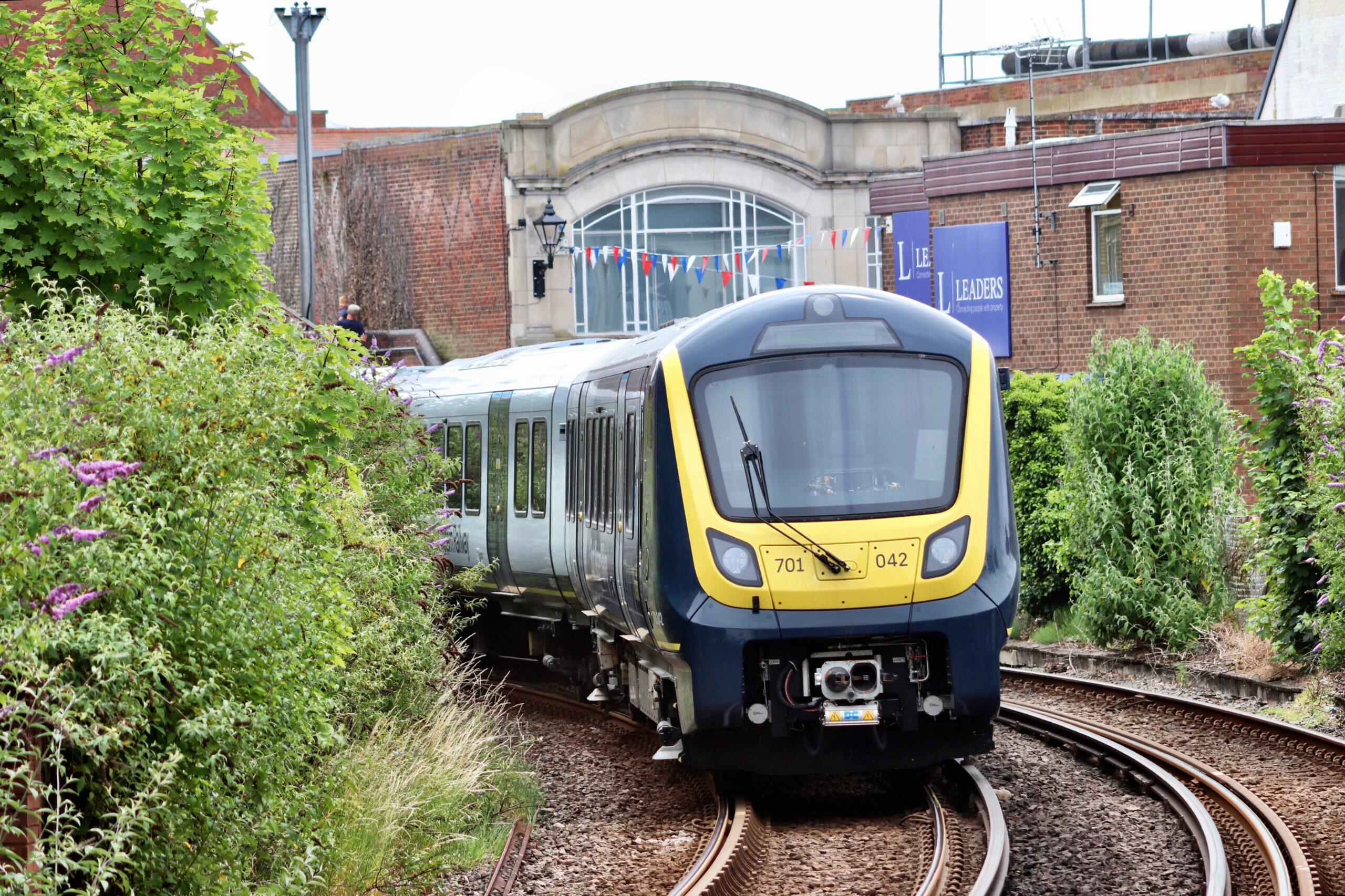
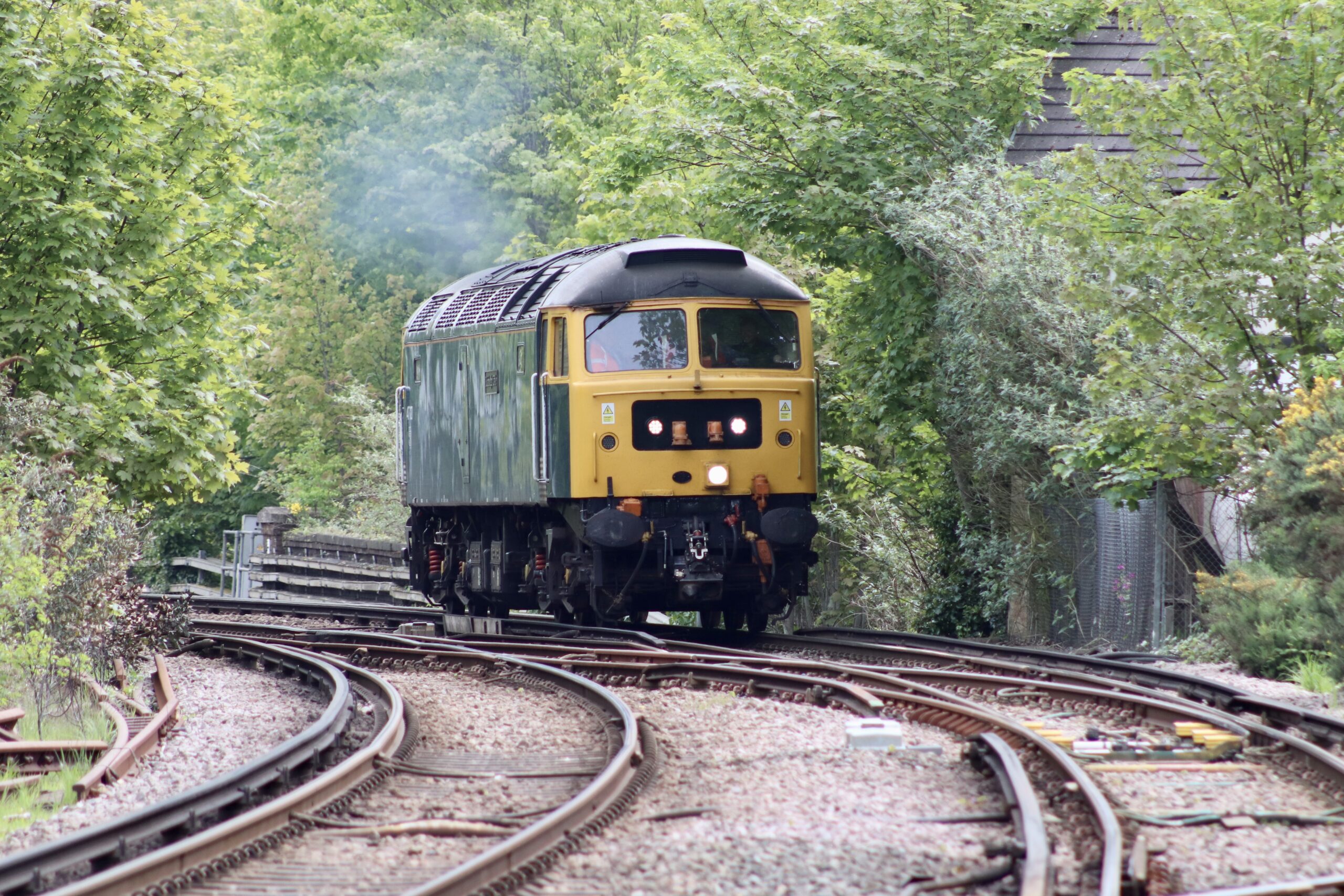
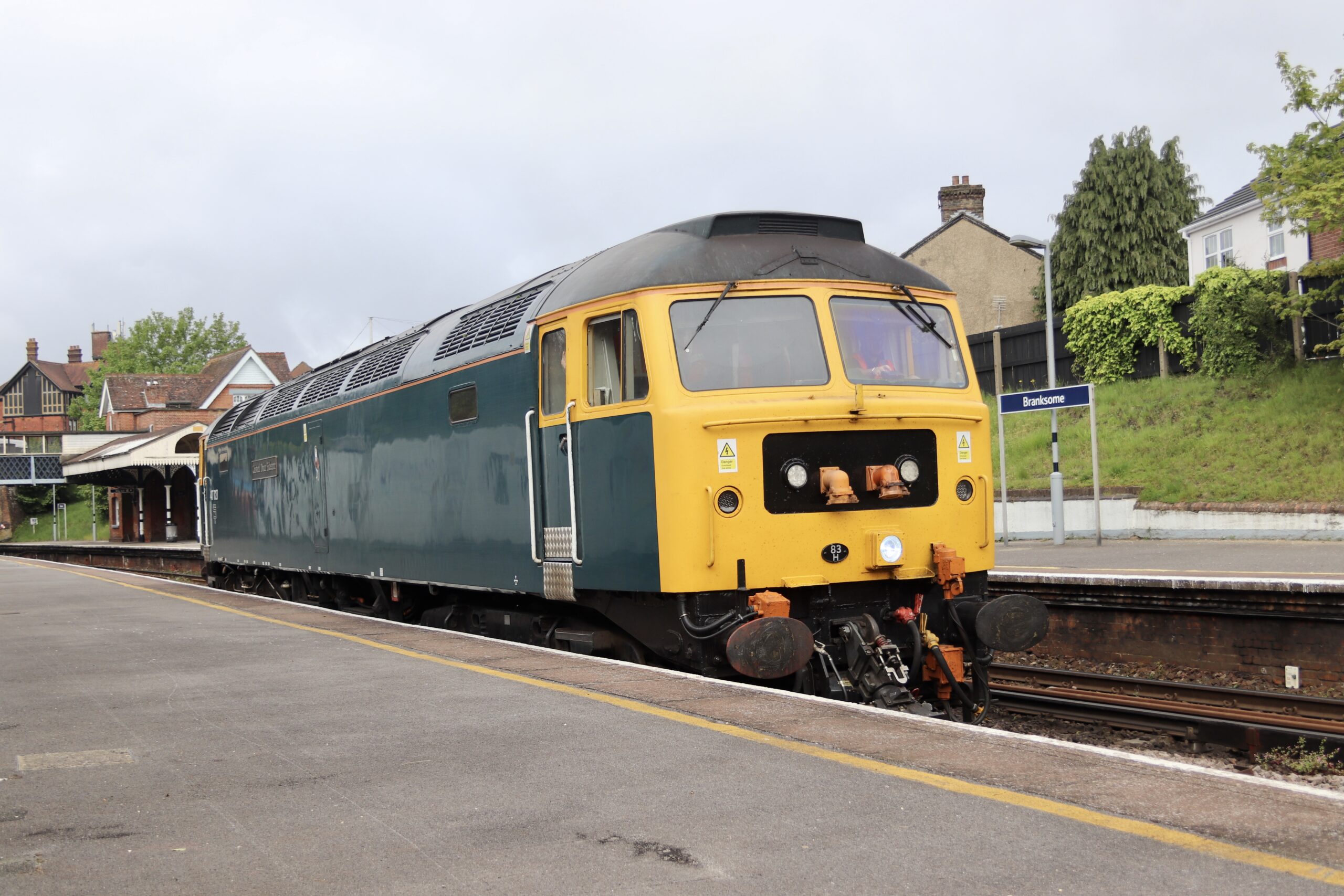
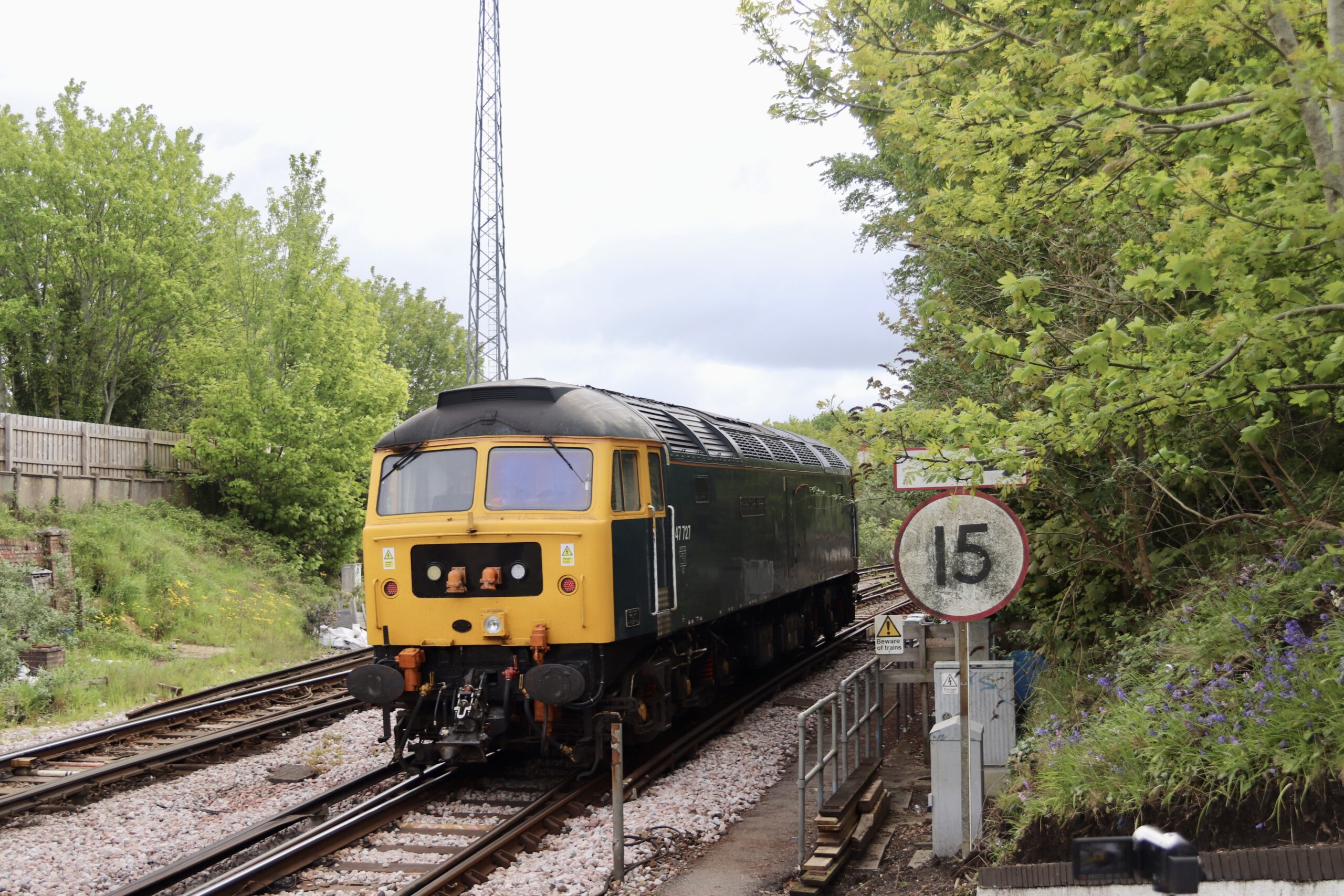
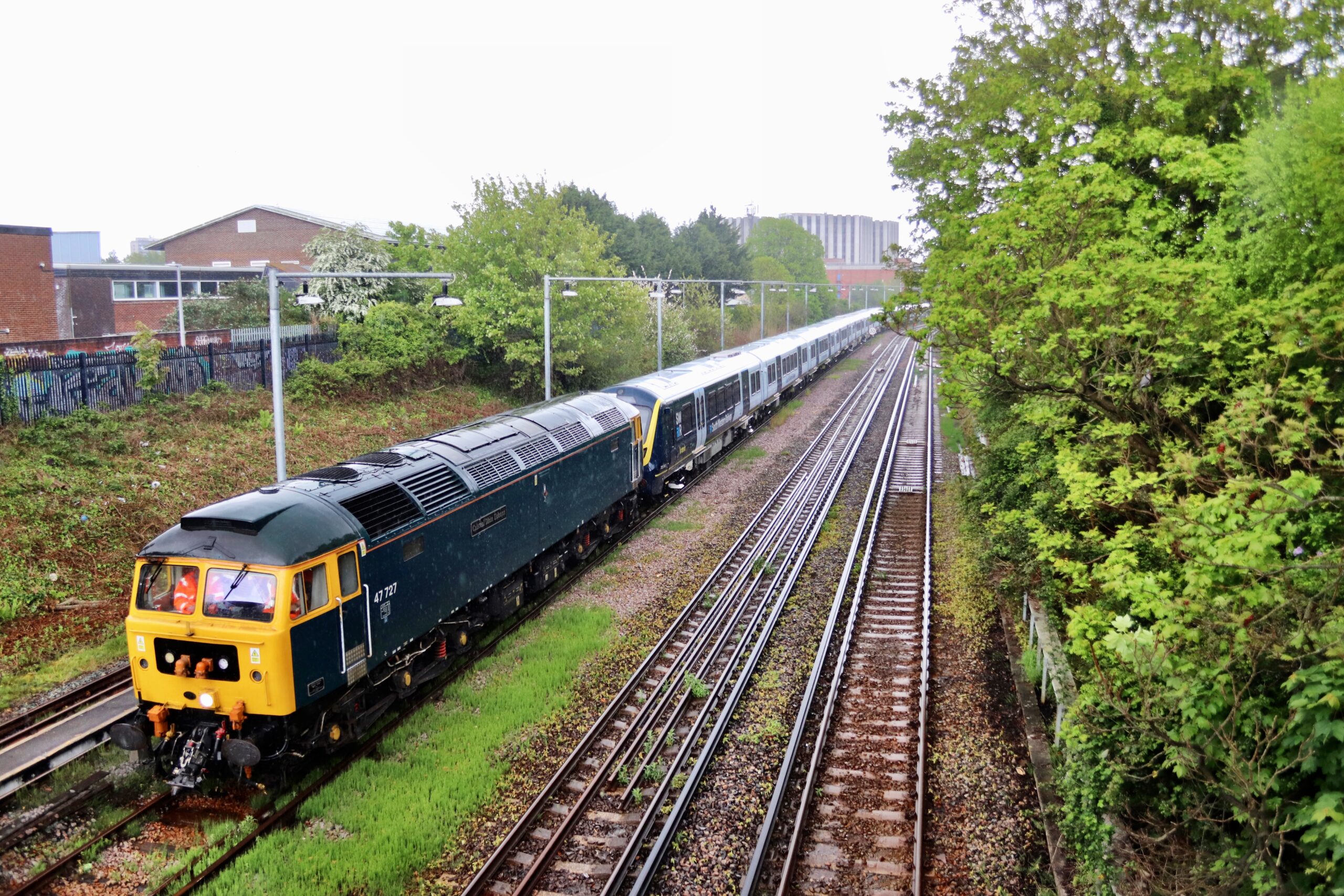
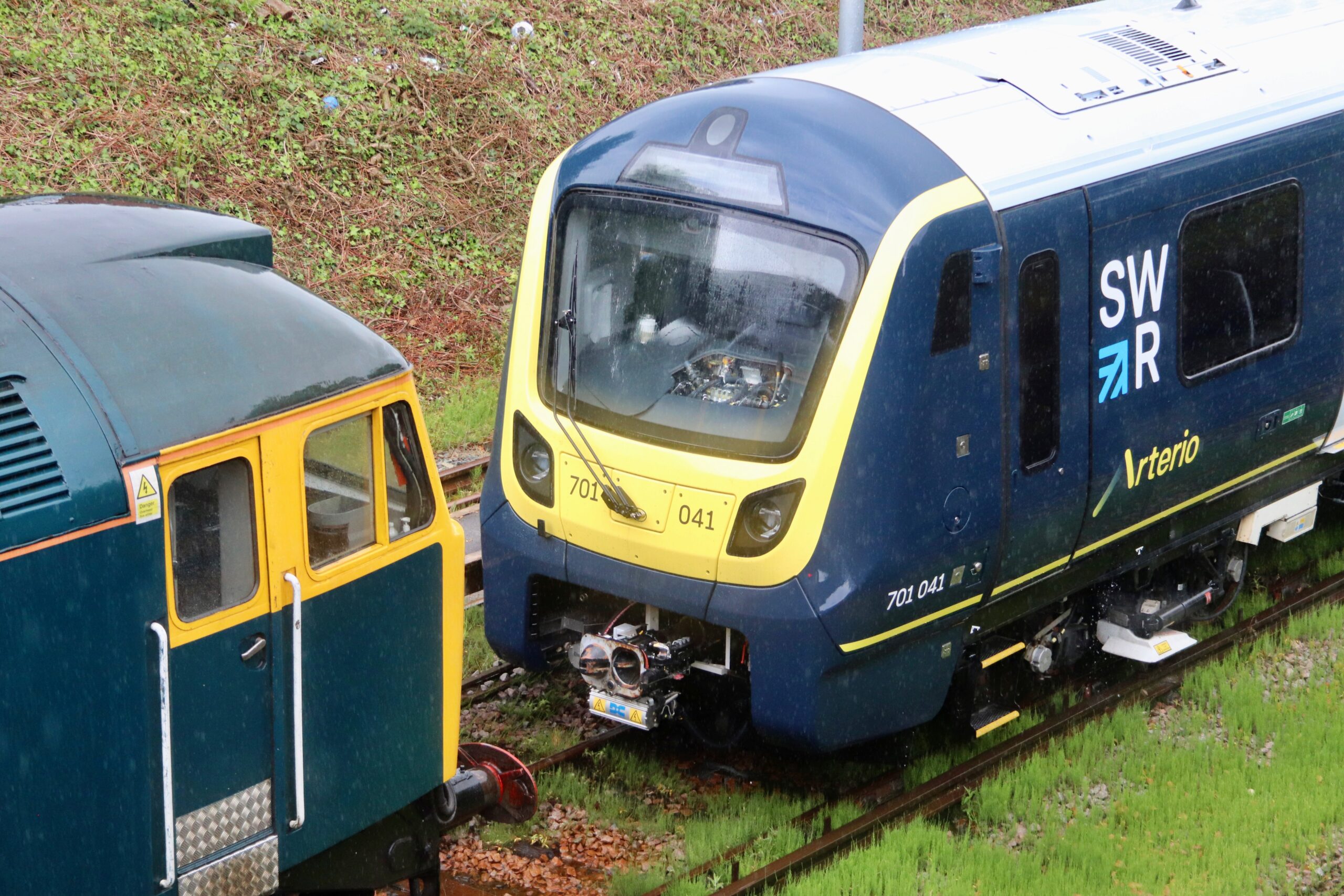
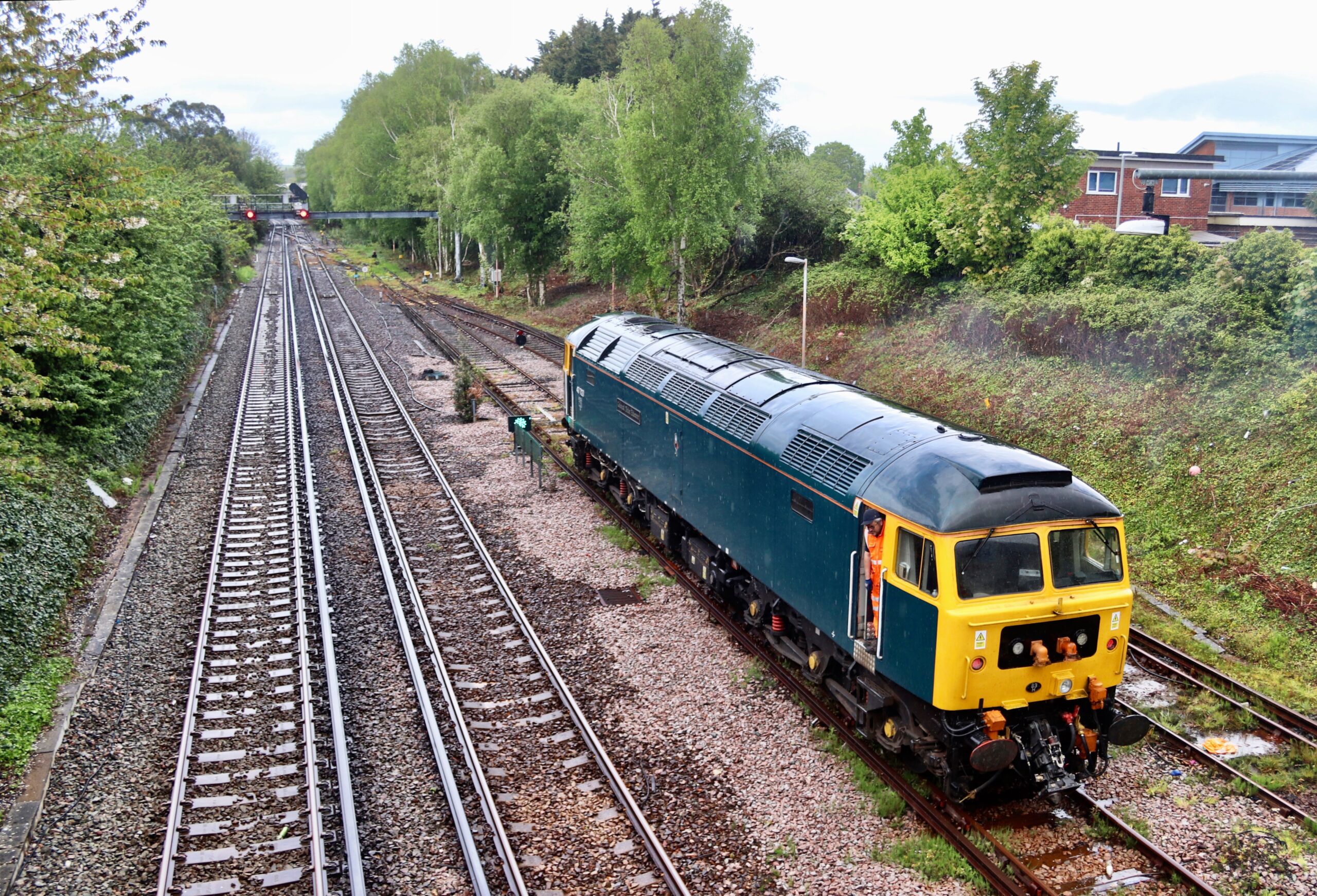
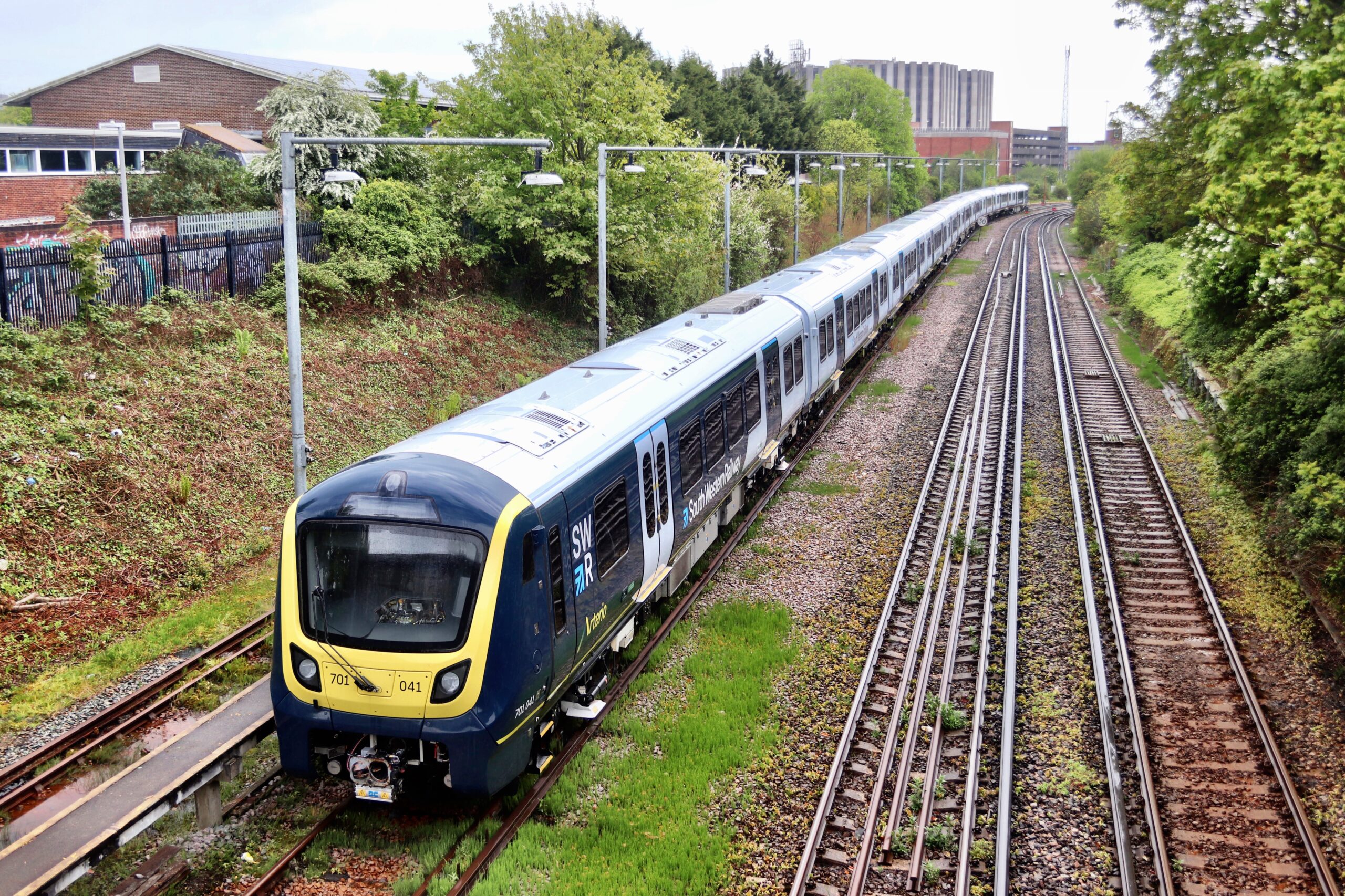
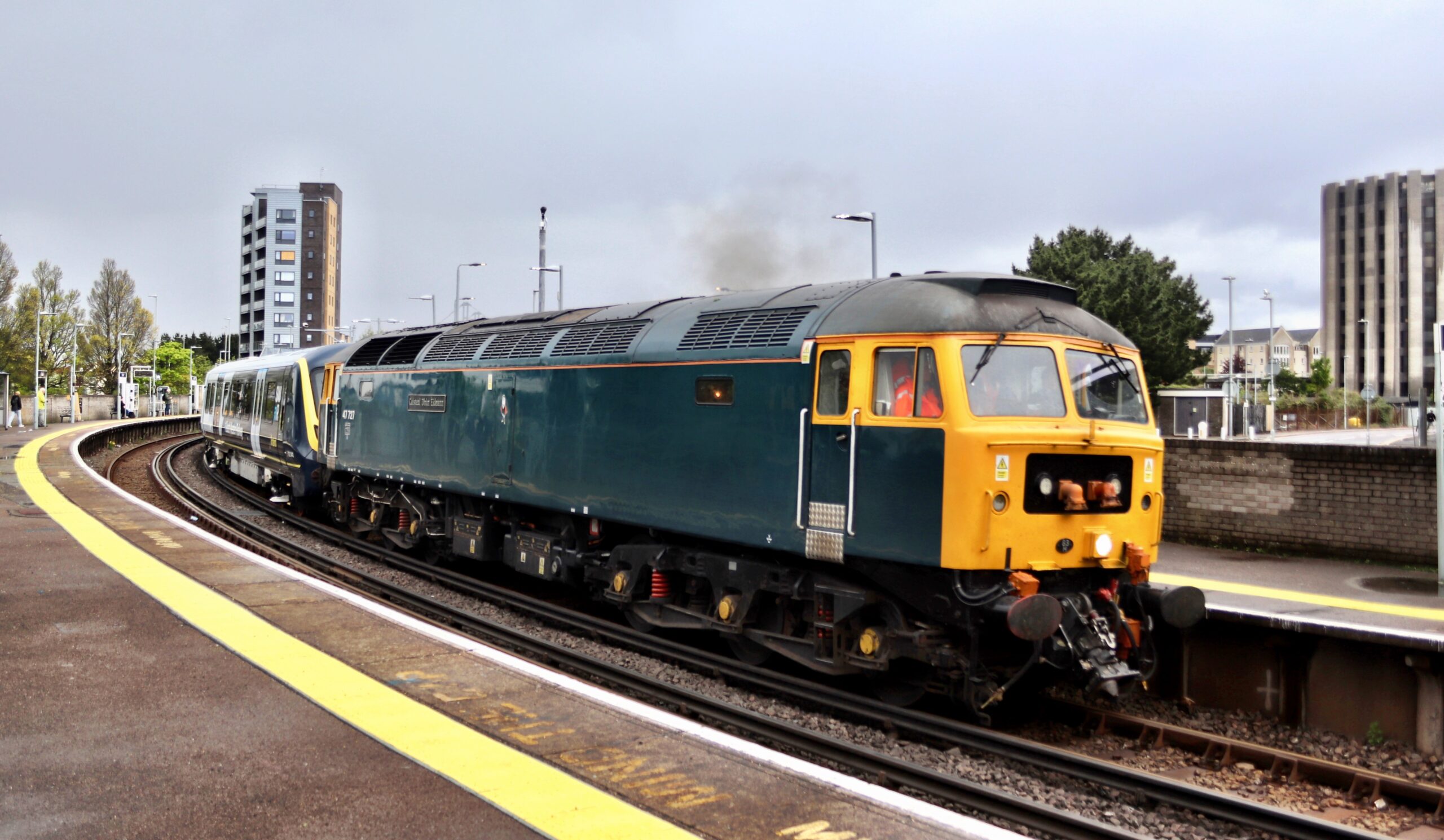
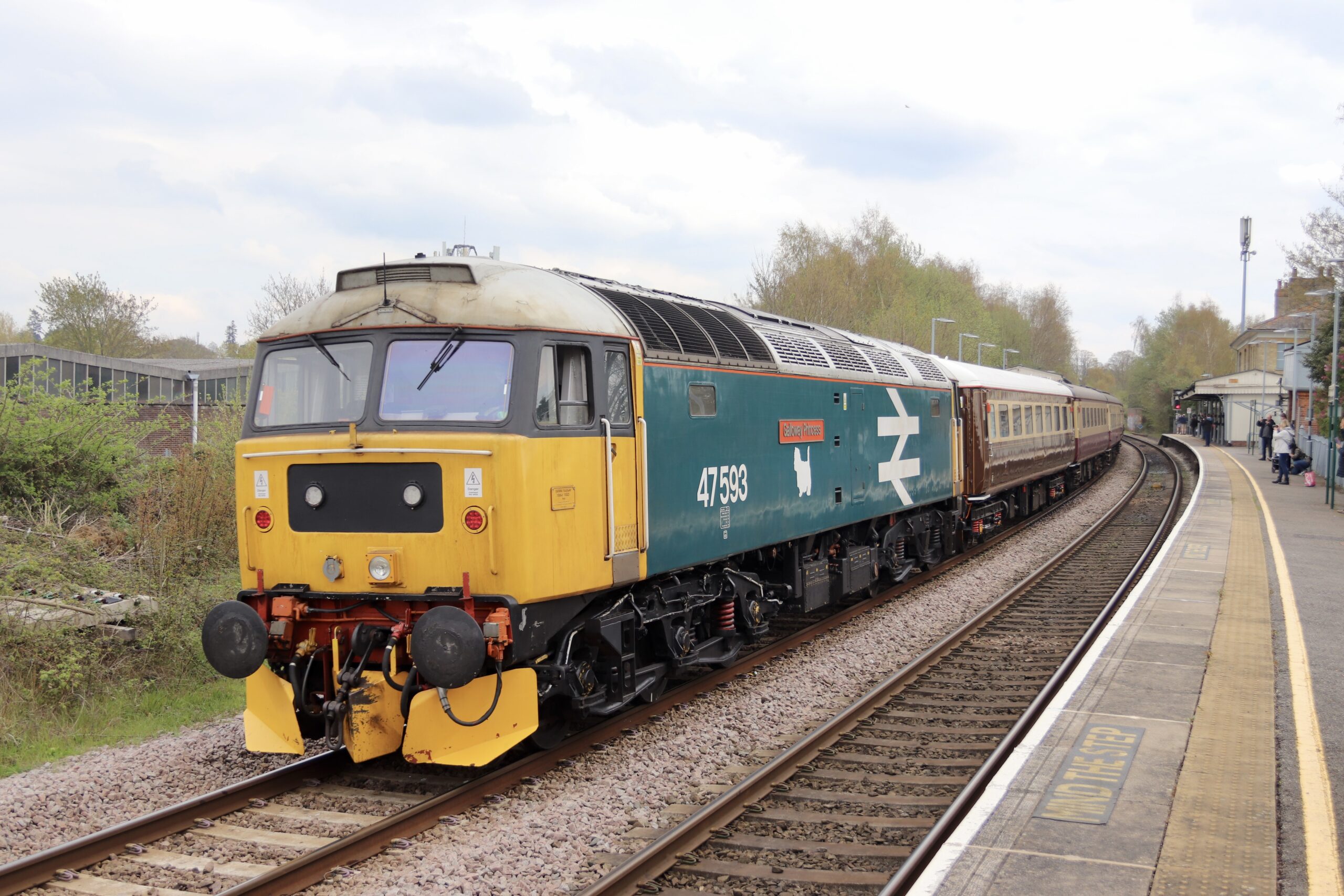
    The following day it was the turn of Class 47 No. 47727 ‘Edinburgh Castle’ to arrive at Bournemouth T&RSMD to collect a stored ten-car Class 701 unit and take it off to Wimbledon for a further priod of storage. Regular readers may recall that the Class 701’s are yet to enter revenue earning service with South Western Railway and are currently undergoing testing and running in mileage accumulation runs. In fact, if you have a length of track able to accommodate one of these units, I’m sure Network Rail would love to hear from you as sidings all over the country are being filled up with these trains. Scheduled to depart Bournemouth at 1235, I was very much caught out when I discovered that the train had left 66 minutes early. I was very kindly picked up by our friend Jamie who deposited me at Poole station. Unfortunately, there were no free parking spaces available and as Jamie drove off in search of one, the Class 47 and unit hove into view. 

    Class 47 No. 47727 ‘Edinburgh Castle’ powers up at Poole hauling Class 701 EMU No. 701042 working 5Q86 1235 Bournemouth T&RSMD to Wimbledon Park Depot Sidings – 27/06/2023
    Class 701 No. 701042 being hauled to Wimbledon having passed through Poole behind Class 47 No. 47727 ‘Edinburgh Castle’ – 27/06/2023
    5Q86 1235 Bournemouth T&RSMD to Wimbledon Park Depot Sidings departing Poole – 27/06/2023

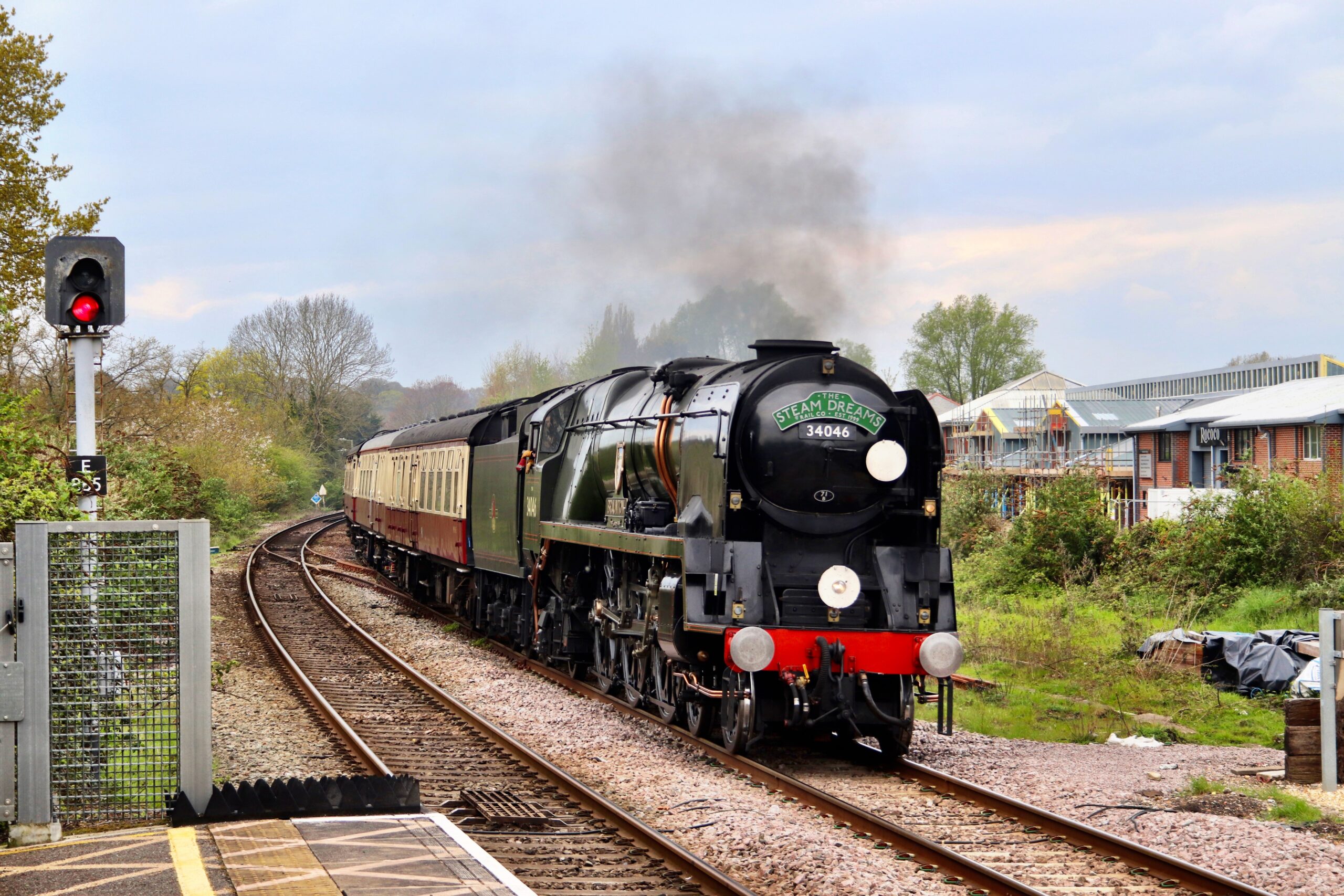
    Later the same day, Southern Railway West Country Class 4-6-2 No. 34046 ‘Braunton’ visited Weymouth with a Steam Dreams excursion originating from London Victoria. The tour ran to Yeovil Junction where the steam locomotive came off the train for servicing and turning at the Yeovil Railway Centre whilst Class 47 No. 47614 took the train onto Weymouth.

    A lineside fire at Upwey got most of us thinking that the cause was ‘Braunton’, but in fact the steam locomotive hadn’t even passed through the area when the line to Weymouth was closed. Thankfully it wasn’t long until everything was sorted and the track between Upwey and Weymouth reopened at around 1800. This enabled the light steam locomotive to complete its run down to rejoin the stock with no delay to the departure of the tour which was scheduled to return to London via the Bournemouth route.

    Jamie was again kind enough to allow me to join him at Parkstone to see the train pass through. Unfortunately, ‘Braunton’ was running an impressive 8 minutes early as she stormed the bank at Parkstone, just as a London Waterloo to Poole service in the form of SWR Class 444 No. 444004 pulled in on platform 2, obscuring the view for many of those waiting to photograph or video the steam passing through on the Up line. So, my sincere apologies to Jamie who had his view blocked by the service train. I don’t think he’ll be asking me to accompany him on any future outings at this rate!
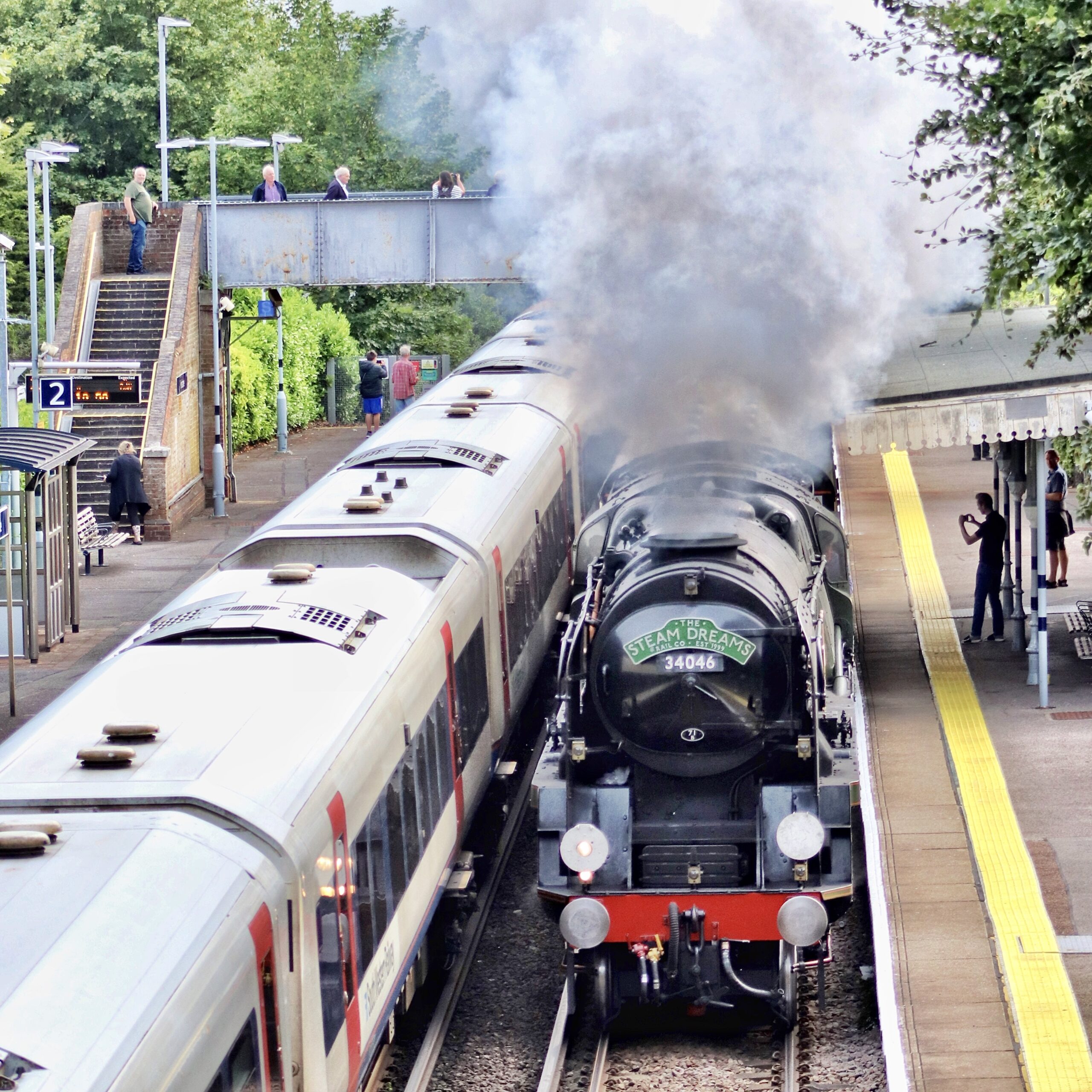
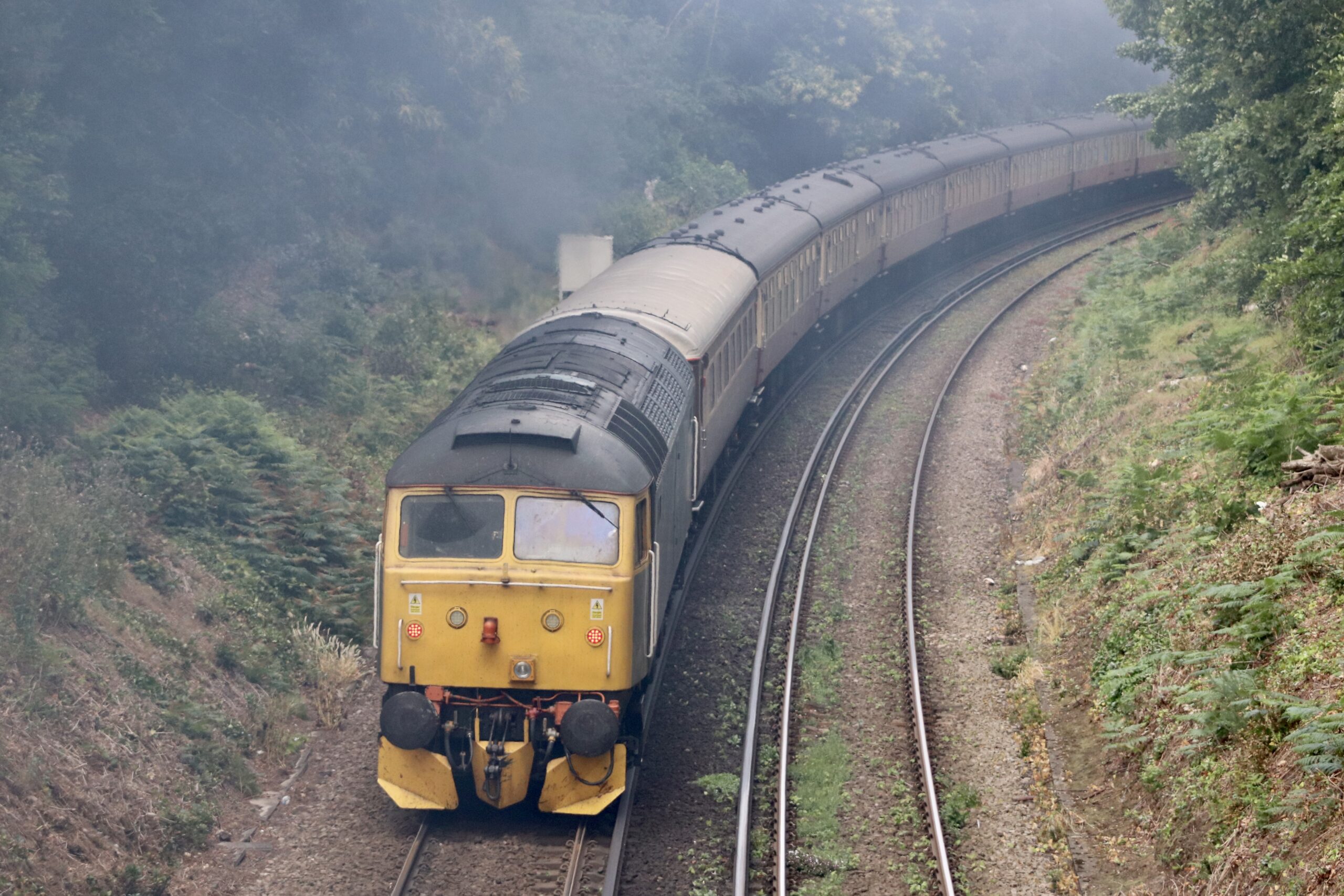
    Southern Railway West Country Class 4-6-2 No. 34046 ‘Braunton’ storms the bank at Parkstone working 1Z72 1836 Weymouth to London Victoria – 27/06/2023
    Class 47 No. 47614 shrouded in steam at the rear of 1Z72 1836 Weymouth to London Victoria having passed through Parkstone – 27/06/2023
    Steam Dreams “Weymouth” rail tour (Dorchester video by kind permission of GE Barrett)- 27/06/2023

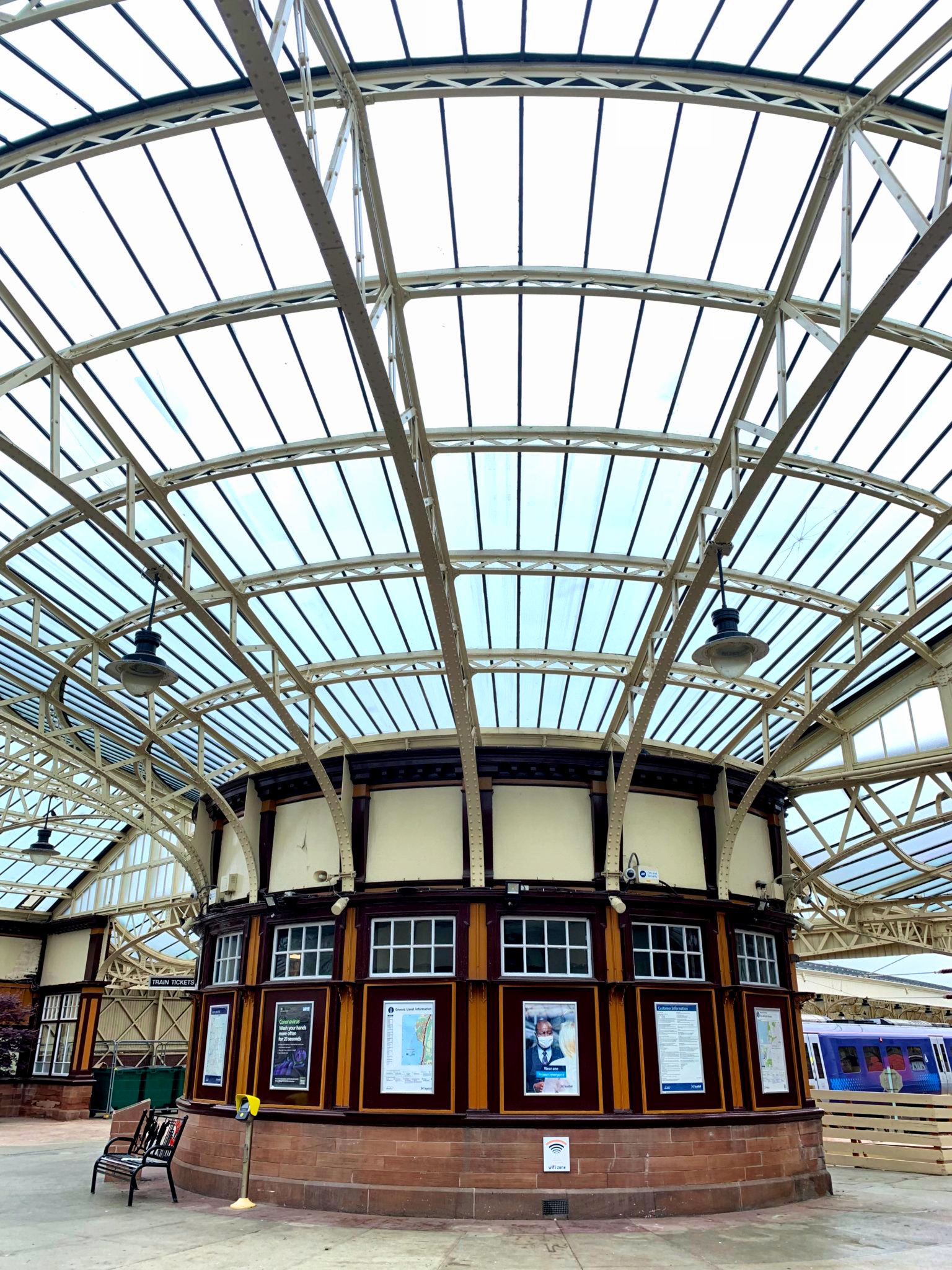
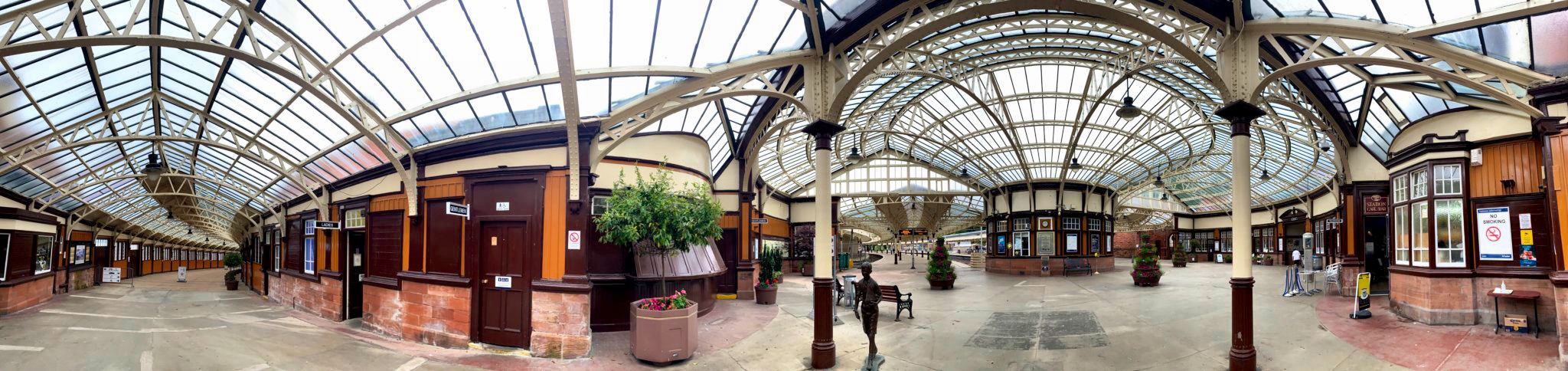
    I was pleased to learn one of my favourite railway stations, Wemyss Bay in Scotland, has won this year’s World Cup of Stations competition following a five day contest across 11 geographical regions in England, Scotland and Wales. Supported by the Rail Delivery Group and the Community Rail Network over 70,000 votes were cast. 48 stations were chosen by TV presenter Tim Dunn and pitched against each other in 16 rounds to whittle down the final few. Wemyss Bay came in at first place with 8,403 votes in the last round, beating second place Denmark Hill on 7,441 votes and third place runner up Leamington Spa with 3,271 votes.
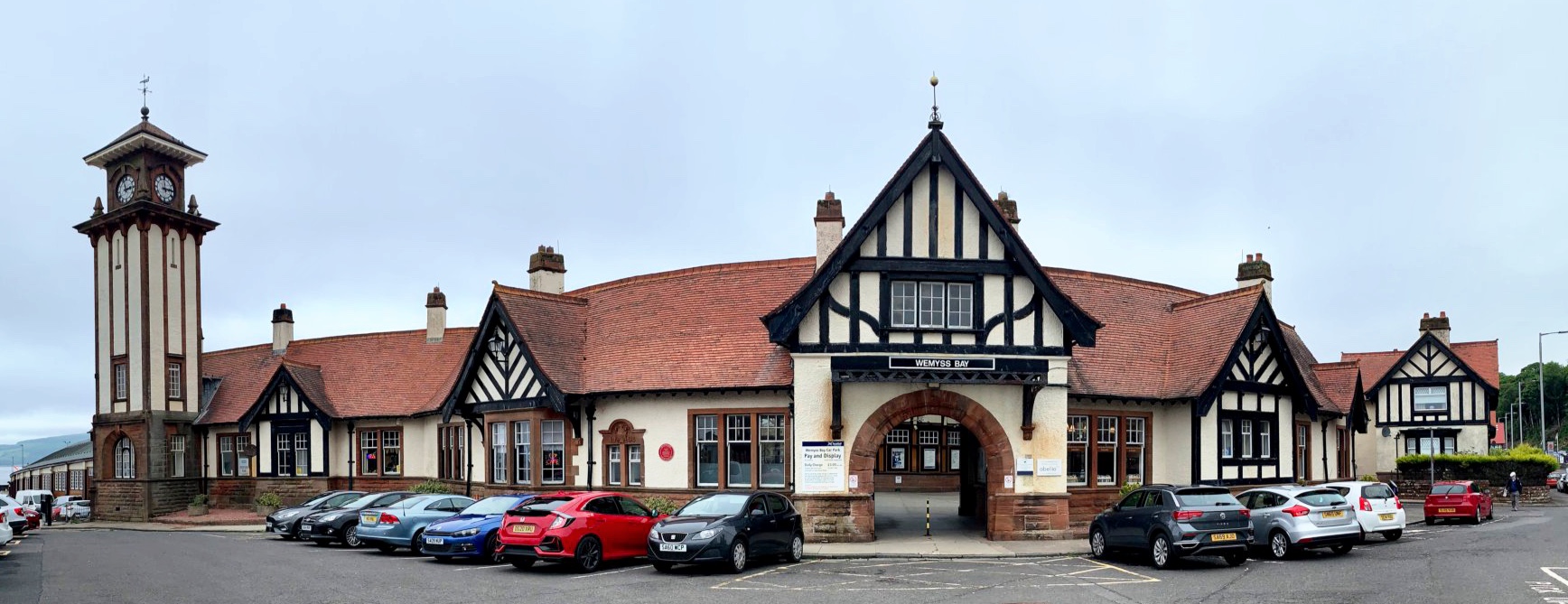
    Wemyss Bay Railway station exterior. The station was designed by James Miller (1860-1947) in 1903 for the Caledonian Railway and is a Category A listed building – 23/06/2021 
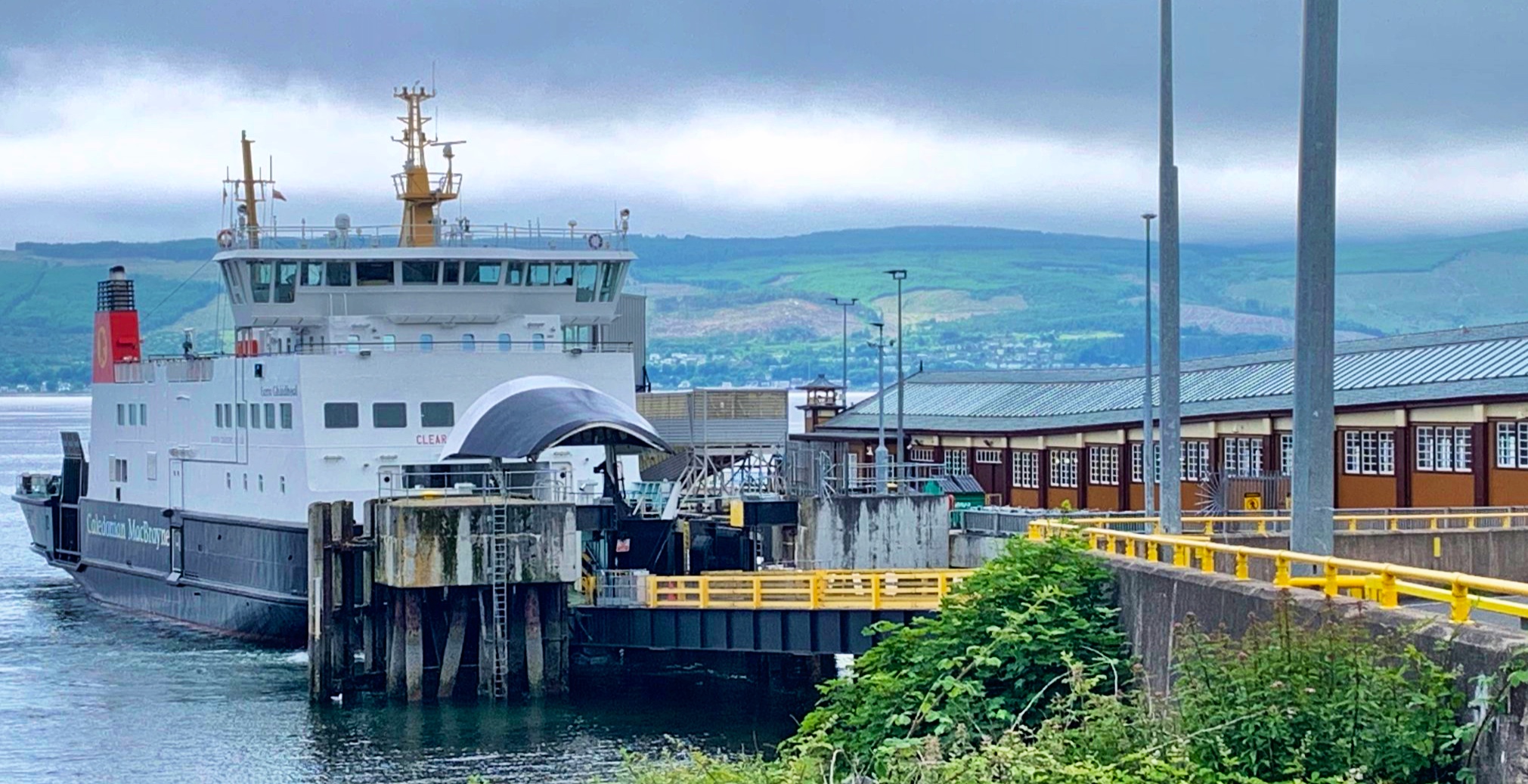
    The station is a terminus on the Inverclyde Line, located 26 miles west of Glasgow Central. The station incorporates the Caledonian MacBrayne ferry terminal connecting mainland Scotland to Rothesay on the Isle of Bute and was designed to move passengers from train to ferry in five minutes via a curved covered way while luggage was moved on trolleys by a separate route – 23/06/2021
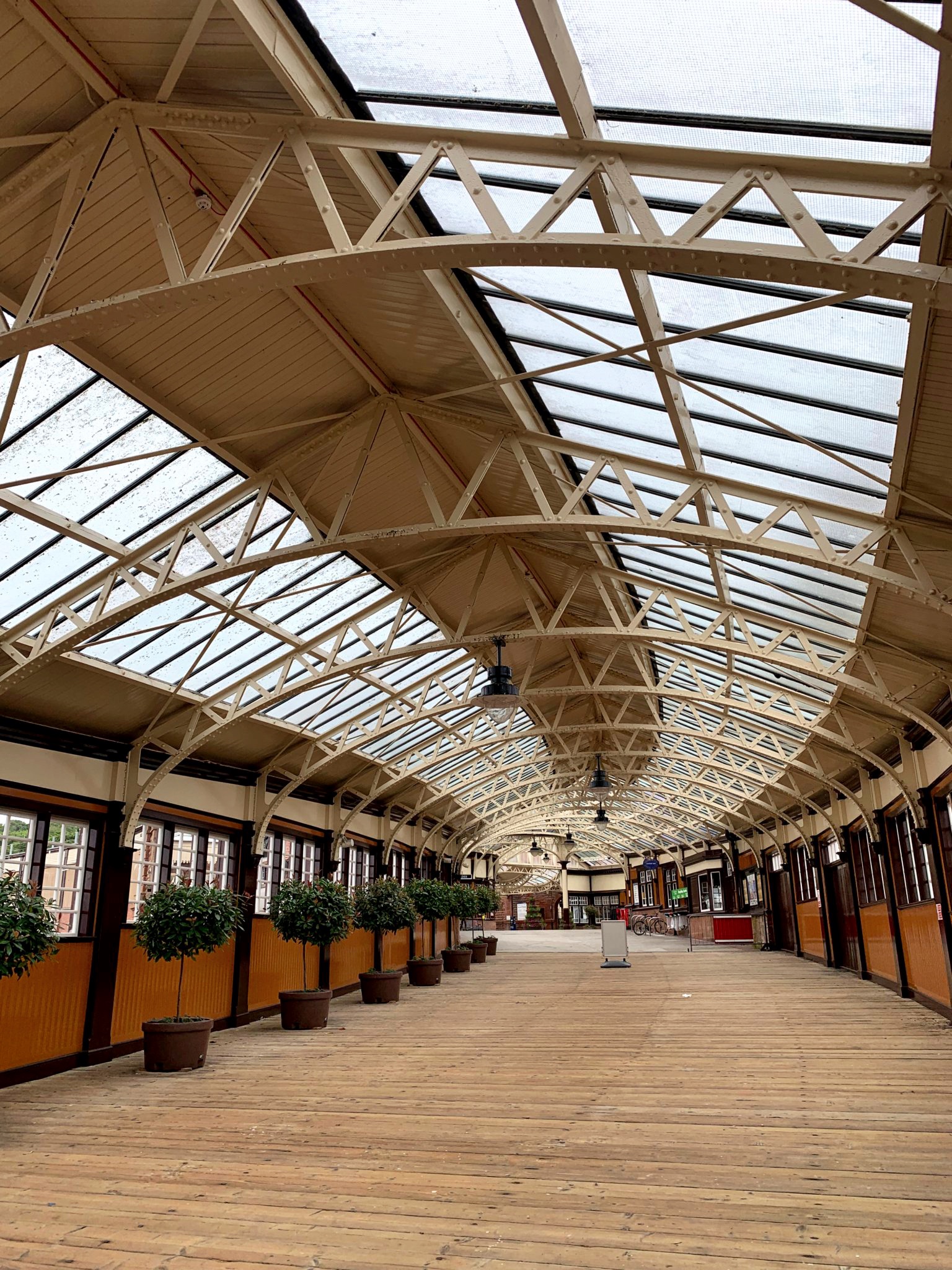
    The centrepiece of Wemyss Bay Station is a semi-circular ticket office, your eyes drawn upwards… – 23/06/2021
    …. towards curving roofs with a remarkable use of glass and steel curves. Platforms bend in one direction and the ramp down to the pier in another – 23/06/2023 
    ‘MV Argyle’ or ‘Earra-Ghaidheal’ in Gaelic pictured here, alongside her sister ship, ‘MV Bute’, operate sailings between Wemyss Bay and Rothesay on the Isle of Bute – 23/06/2021

    And there we have it! We’ve reached the end of another blog entry. Thank you for your time in visiting us and for your comments, encouragement, corrections and contributions! We’ll be seeing you.

    Postscript
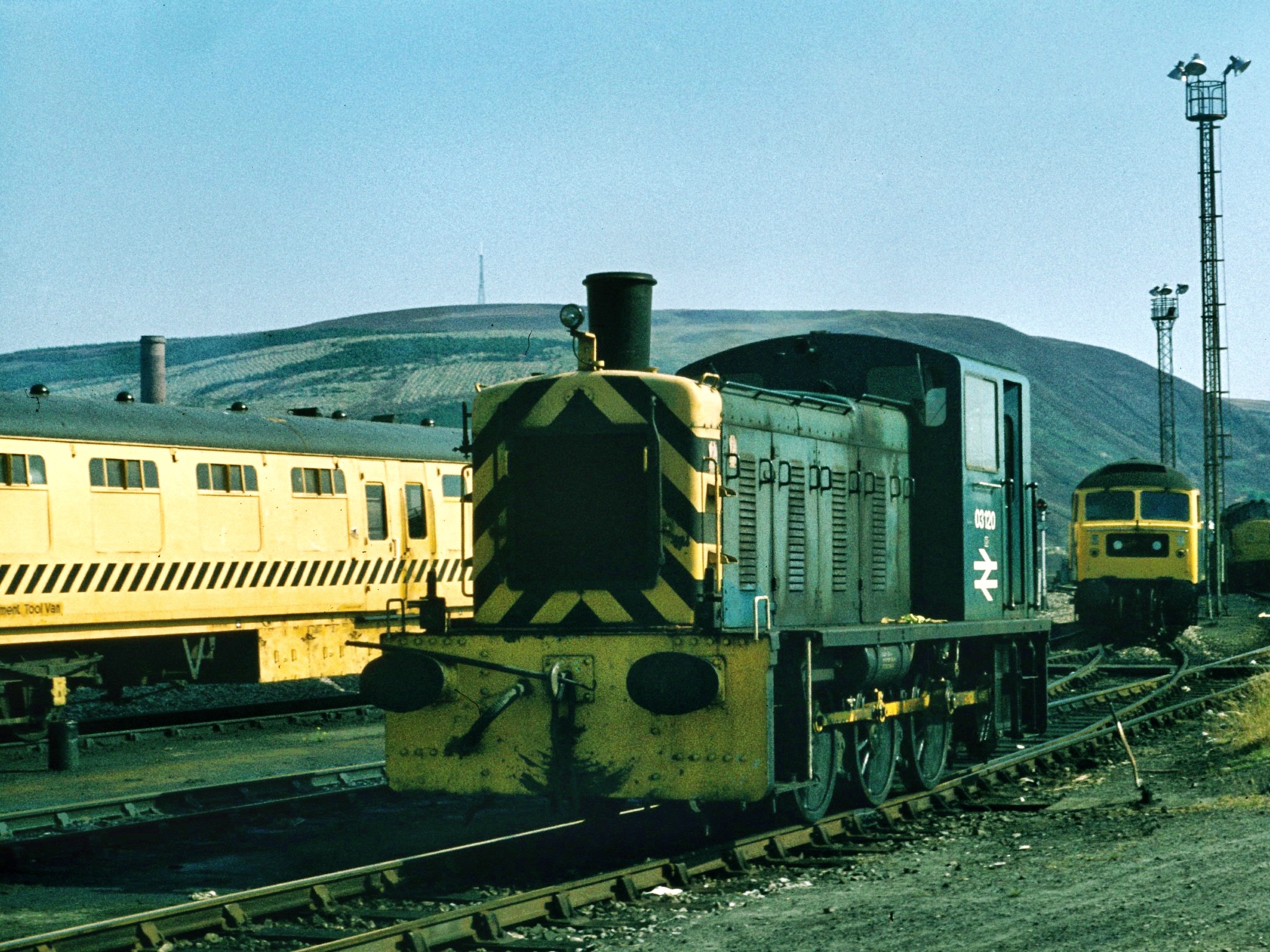
    Fawley Hill’s Cut-down cab Class 03 No. D2120 in BR blue days as No. 03120 at Landore depot, Swansea – 27/08/1981
  • Yoshi Climbs Gold Hill

    14th June 2023 to 20th June 2023

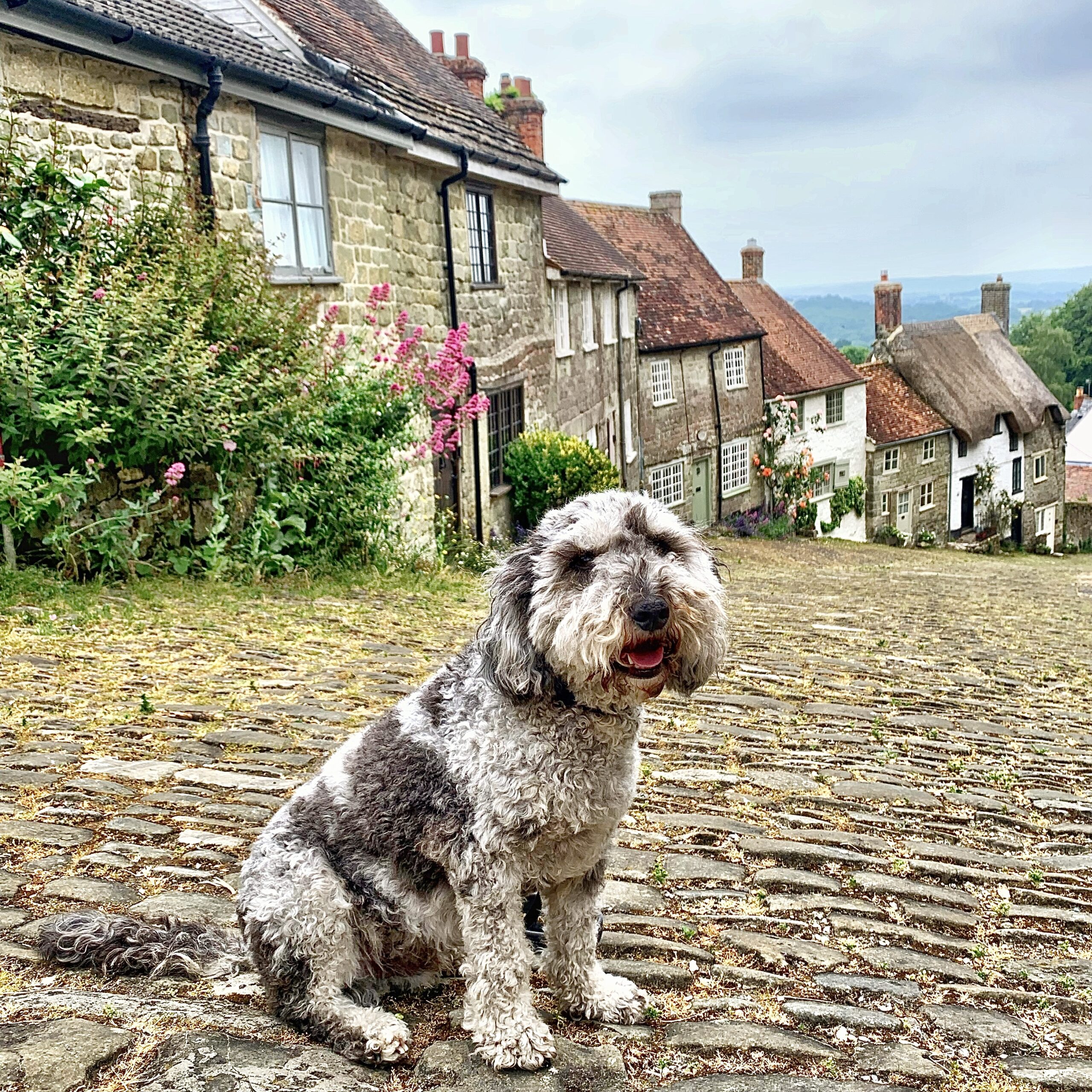
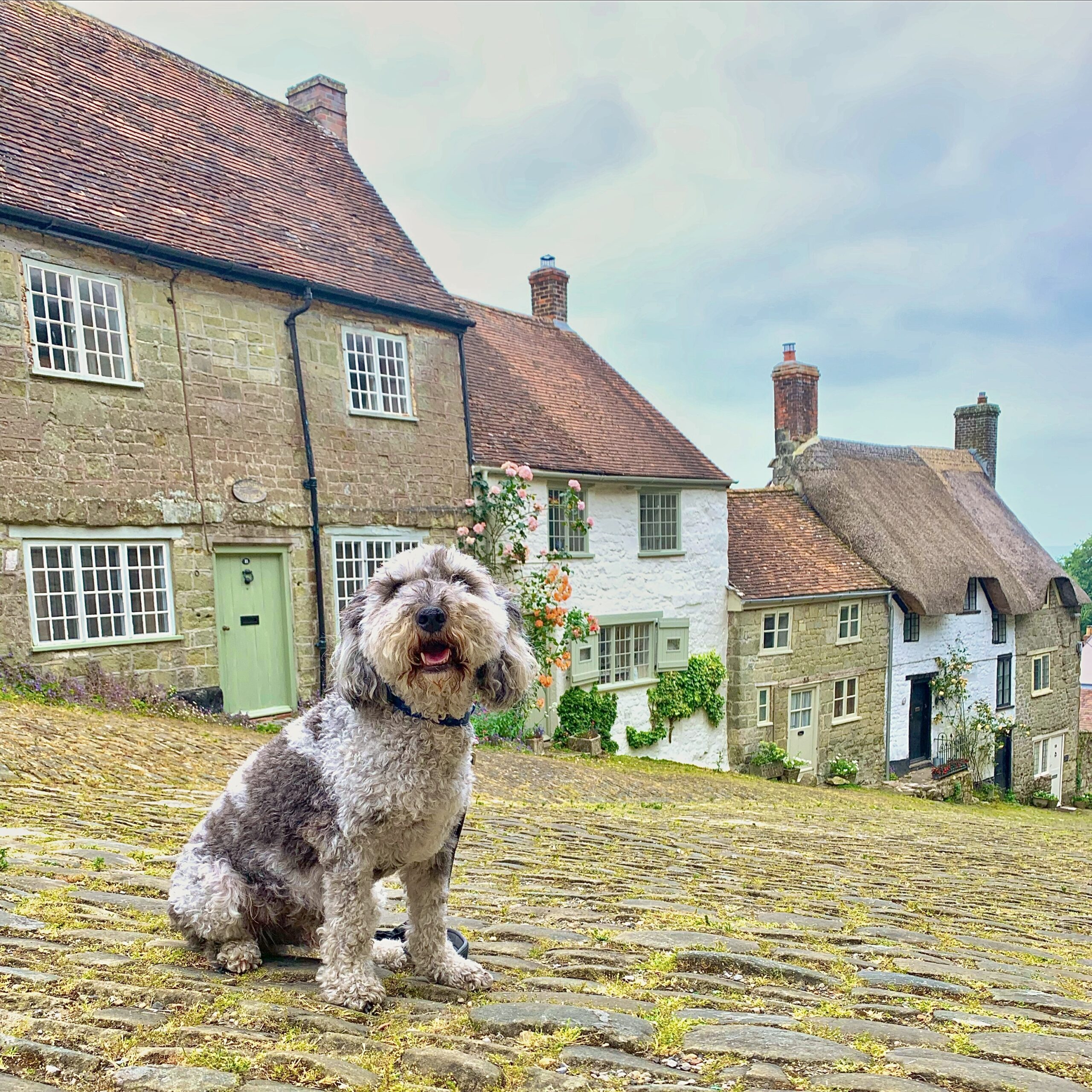
    We went to Shaftesbury on Sunday to see old buses. Caroline and I visited a pub or three and Yoshi took a liking to Gold Hill. Famous as the location for the 1973 Hovis bread TV advert directed by Ridley Scott. Still the same today as its always been – 18/06/2023

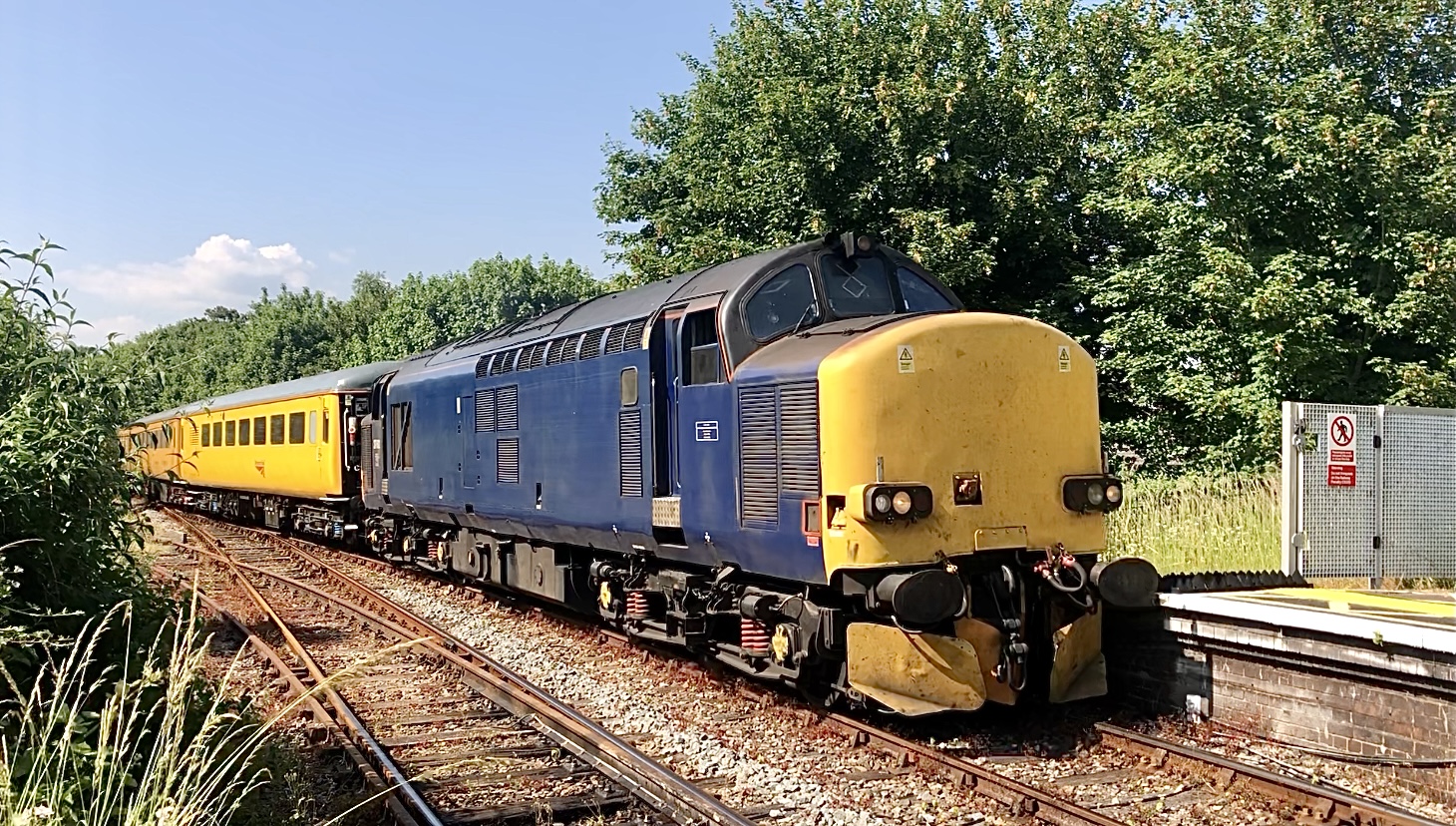
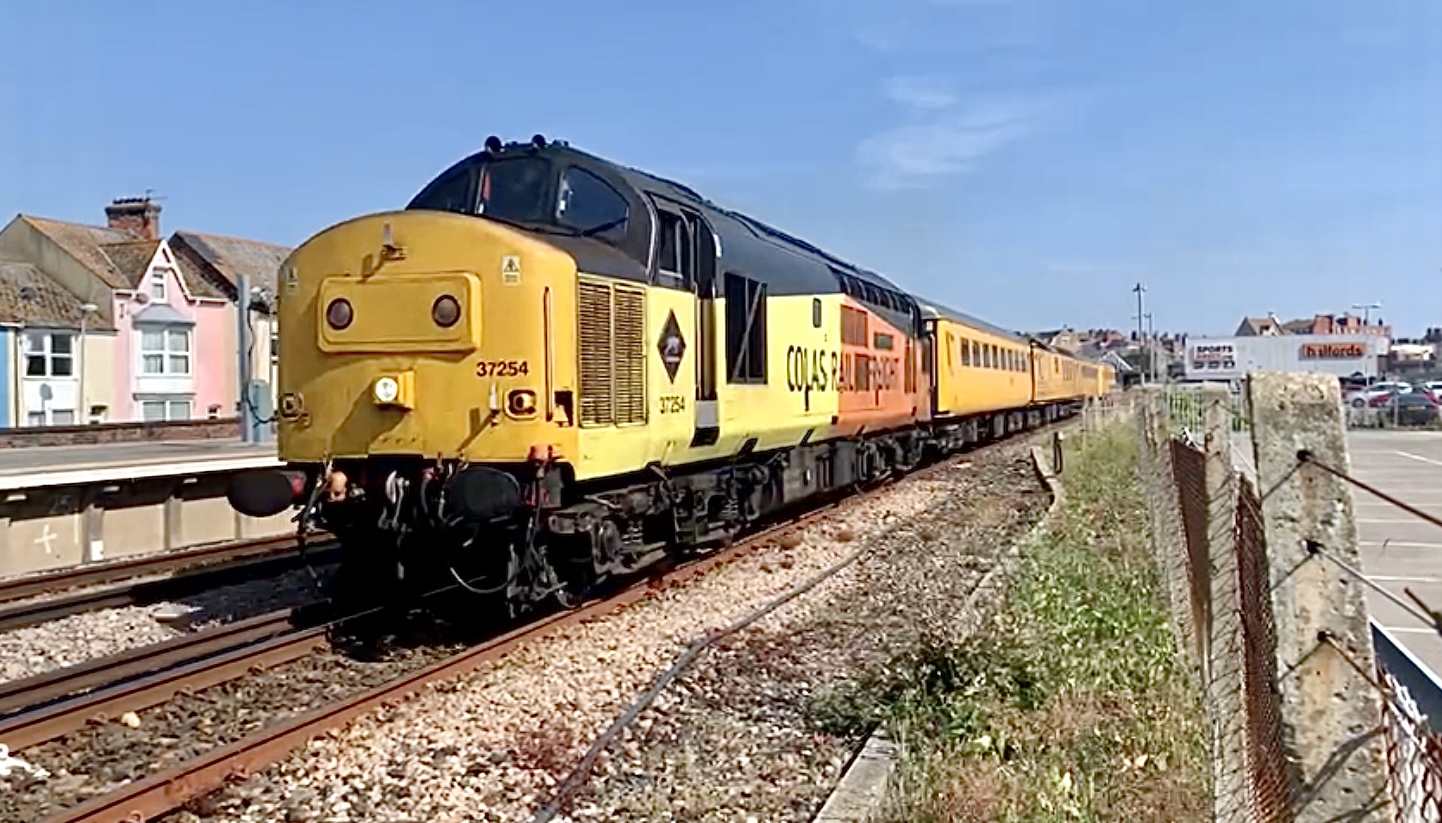
    Wednesday 14th June 2023 saw Colas test train 1Q18 Derby RTC to Bristol Kingsland Road visit Dorset in the capable charge of top and tailed Class 37 locomotives No.’s 37612 and 37254. I was in the east of the county hoping to capture a Class 701 drag from Bournemouth to Eastleigh which didn’t materialise. It’s been quite a month for unusual movements being cancelled here; a Class 69 hauled Weedkiller to Weymouth, a Class 37 test train via the West and a Class 455 drag with a Rail Operations Group (ROG) Class 37 to Bournemouth T&RSMD to mention a few.

    Class 37 No. 37612 leads 1Q18 Derby RTC to Bristol Kingsland Road via Weymouth into Dorchester West (video screen grab courtesy of G E Barrett) – 14/06/2023
    Class 37 No. 37254 leads out of Weymouth where 1Q18 Derby RTC to Bristol Kingsland Road has reversed for the run to Bristol (video screen grab courtesy of @da_buckley967) – 14/06/2023
    Video of Class 37 No.s 37612 and 37254 working 1Q18 Derby RTC to Bristol Kingsland Road courtesy of @da_buckley967 and G E Barrett – 14/06/2023

    On Saturday, I popped over to the Southampton area for a brief evening visit to see LNER A3 4-6-2 Pacific No. 60103 ‘Flying Scotsman’. I don’t understand the scorn poured on this locomotive by a certain section of the railway enthusiast fraternity. I think it’s great Scotsman captures the imagination of the general public and it was delightful to hear a lot of chatter on our local radio station before and after the locomotive visited Portsmouth. I was interested to see if No. 60103 retained her white roof which she had gained the previous week in advance of hauling the Royal Train carrying King Prince Charles over the North Yorkshire Moors Railway on Monday 12th June, and I was very pleased to see she had! I was able to observe the “Portsmouth Flyer” rail tour on its way back to London Victoria from the overbridge leading to Dock Gate 20 at Millbrook. It’s also an excellent vantage point to see the locomotives being stabled at Freightliner Maritime depot. I thought the location would be quite popular with onlookers, but in the event it was just myself and another photographer there to see the “People’s Locomotive” steam by. It was quite pleasant passing the time having a friendly chat about railways of today and years gone. 

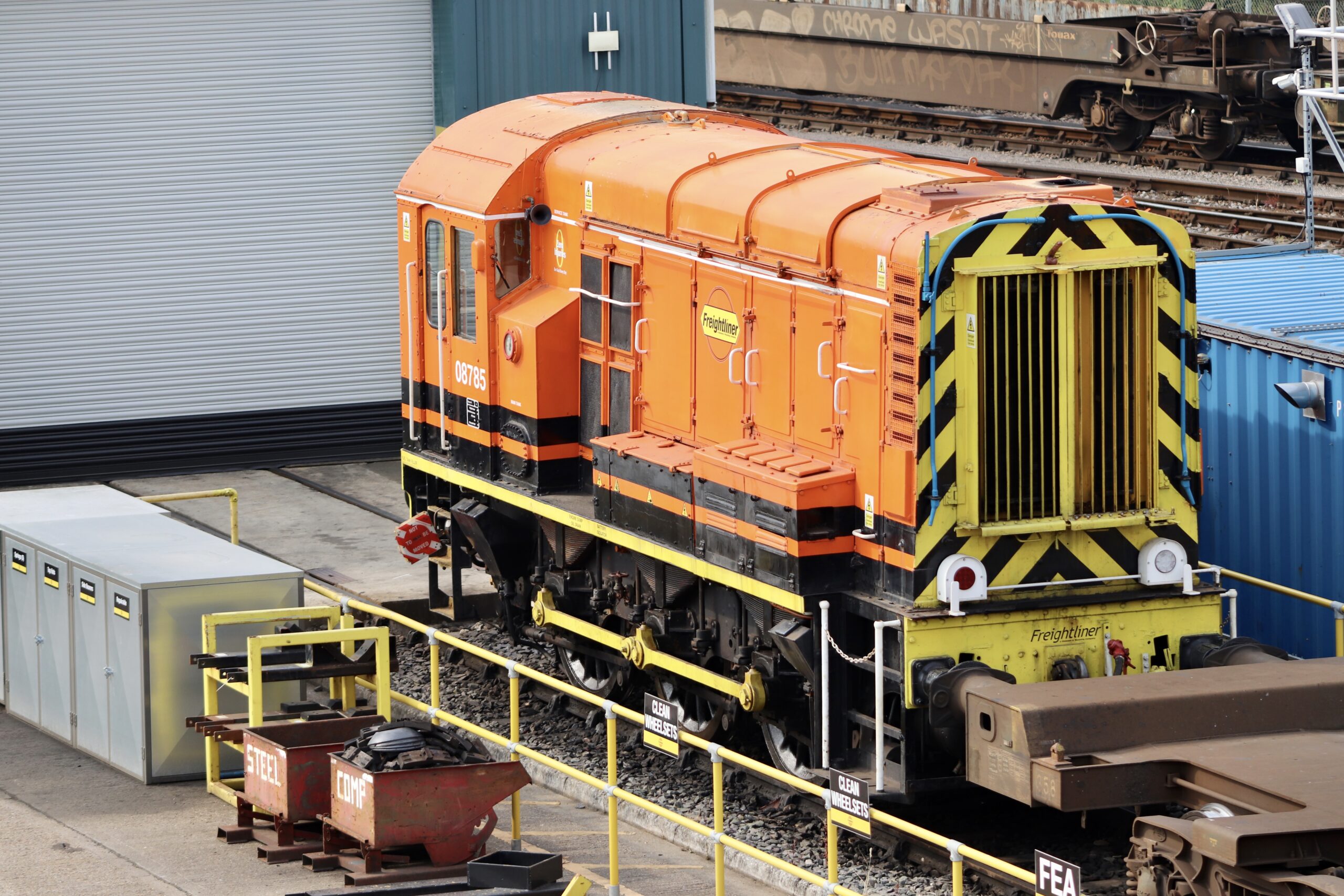
    Freightliner Class 08 shunter No. 08785 at Southampton Maritime – 17/06/2023
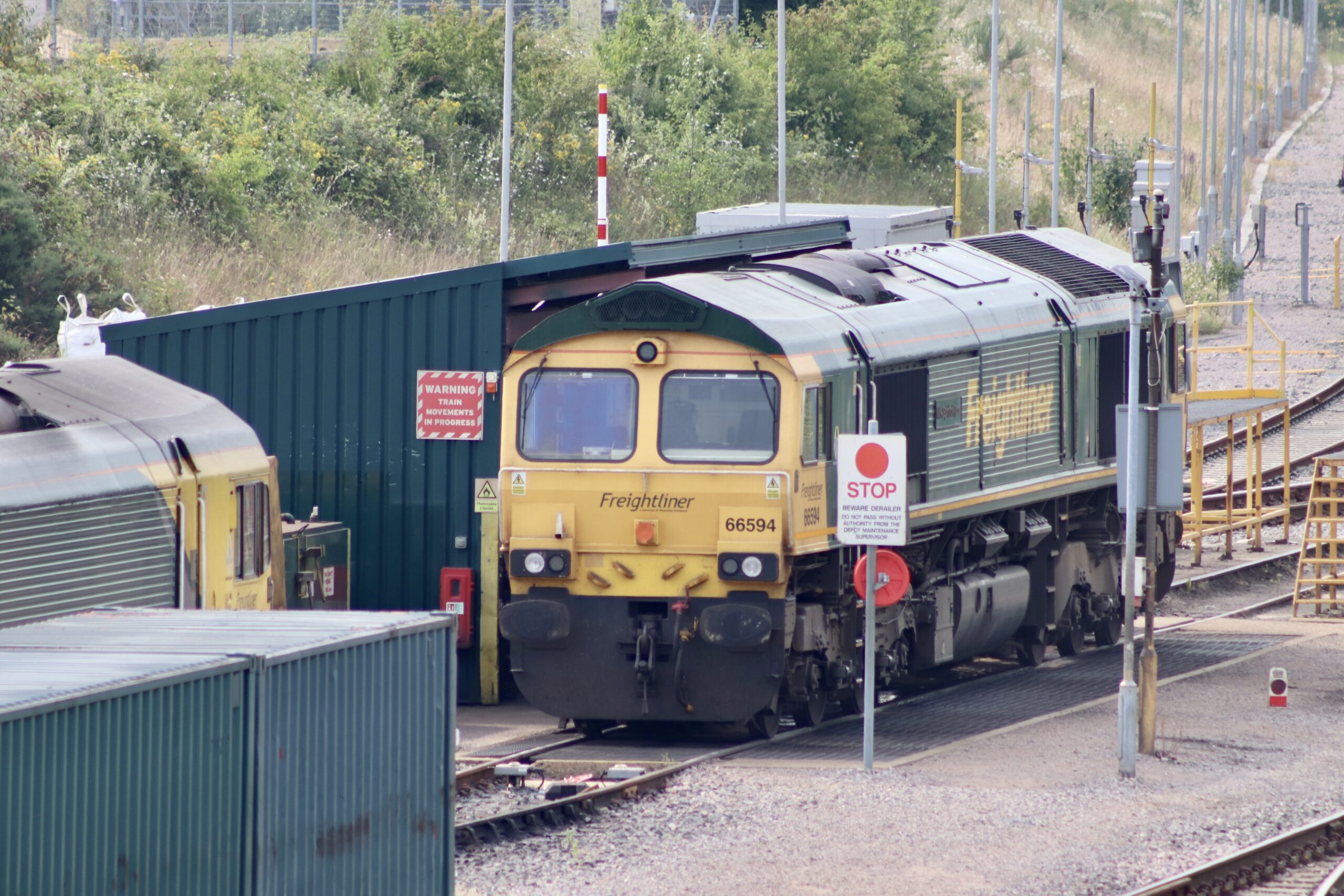
    Class 66 No. 66594 at Southampton Maritime – 17/06/2023
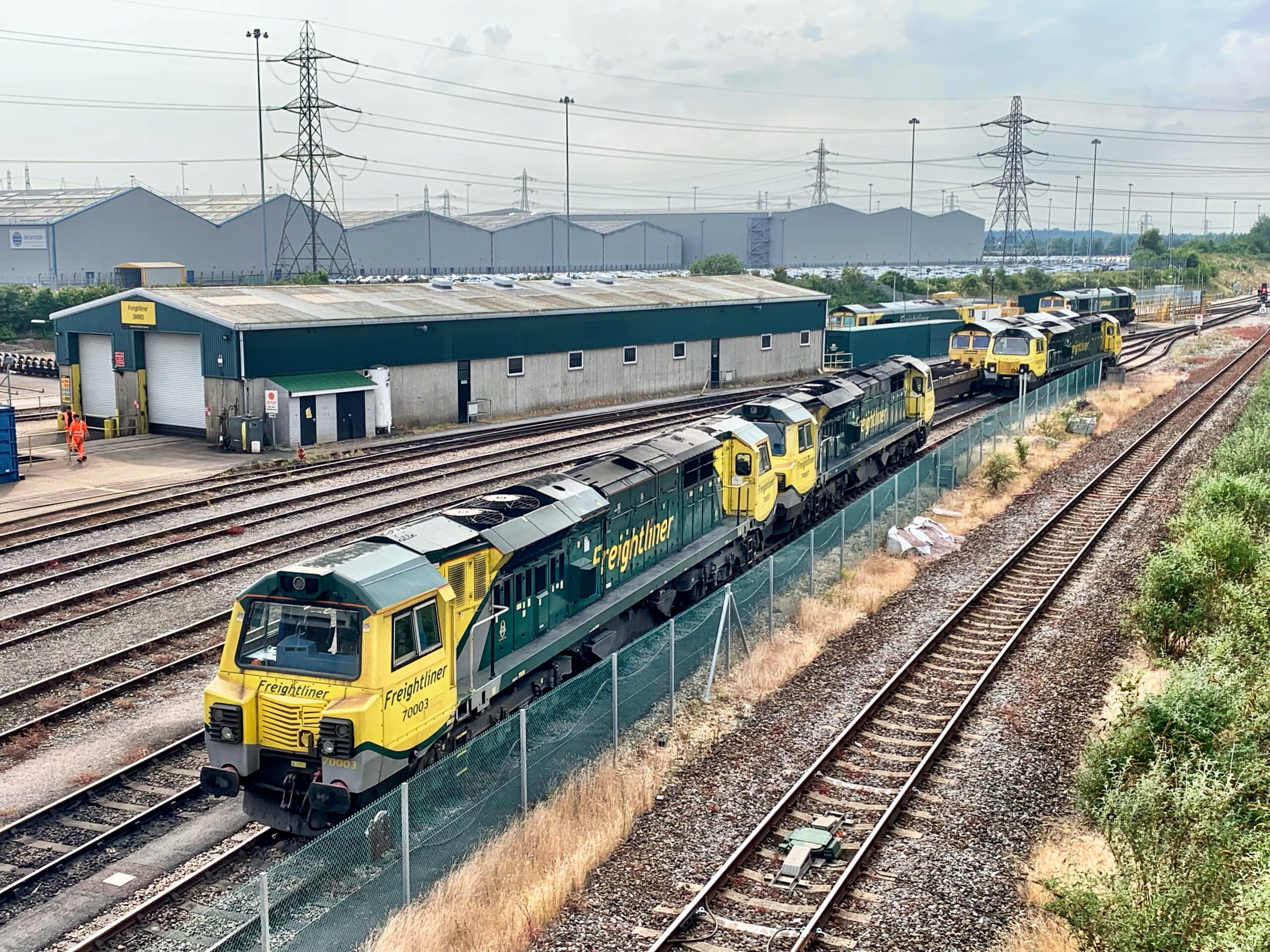
    A line up of Class 70’s at Southampton Maritime, including No.’s 70003,70007 and 70014 with Class 66 No.’s 66565, 66594 and 66504 also visible- 17/06/2023
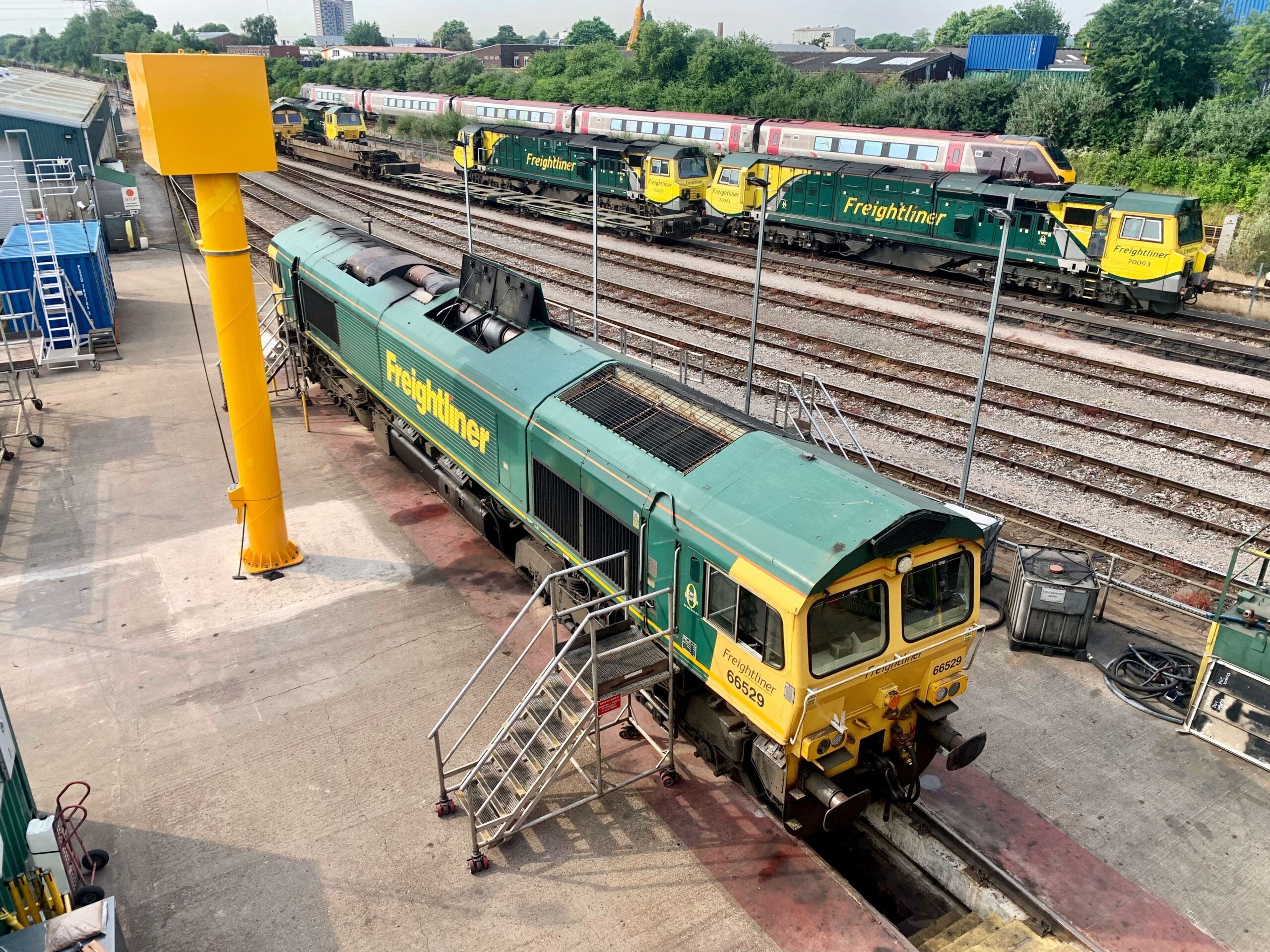
    Class 66 No. 66529 receives attention at Southampton Maritime – 17/06/2023
    CrossCountry Voyager No. 220011 nears Redbridge working 1020 1325 Manchester Piccadilly to Bournemouth – 17/06/2023
    LNER A3 Pacific No. 60103 ‘Flying Scotsman’ at Millbrook working the return “The Portsmouth Flyer” 1Z73 1606 Portsmouth Harbour to London Victoria – 17/06/2023
    The white cab roof applied to LNER A3 Pacific No. 60103 ‘Flying Scotsman’ can be seen clearly in this view of the locomotive as she works the return “The Portsmouth Flyer” 1Z73 1606 Portsmouth Harbour to London Victoria on the approach to Redbridge – 17/06/2023
    West Coast Railway Company Class 47 No. 47802 at the rear of “The Portsmouth Flyer” 1Z73 1606 Portsmouth Harbour to London Victoria approaching Redbridge – 17/06/2023

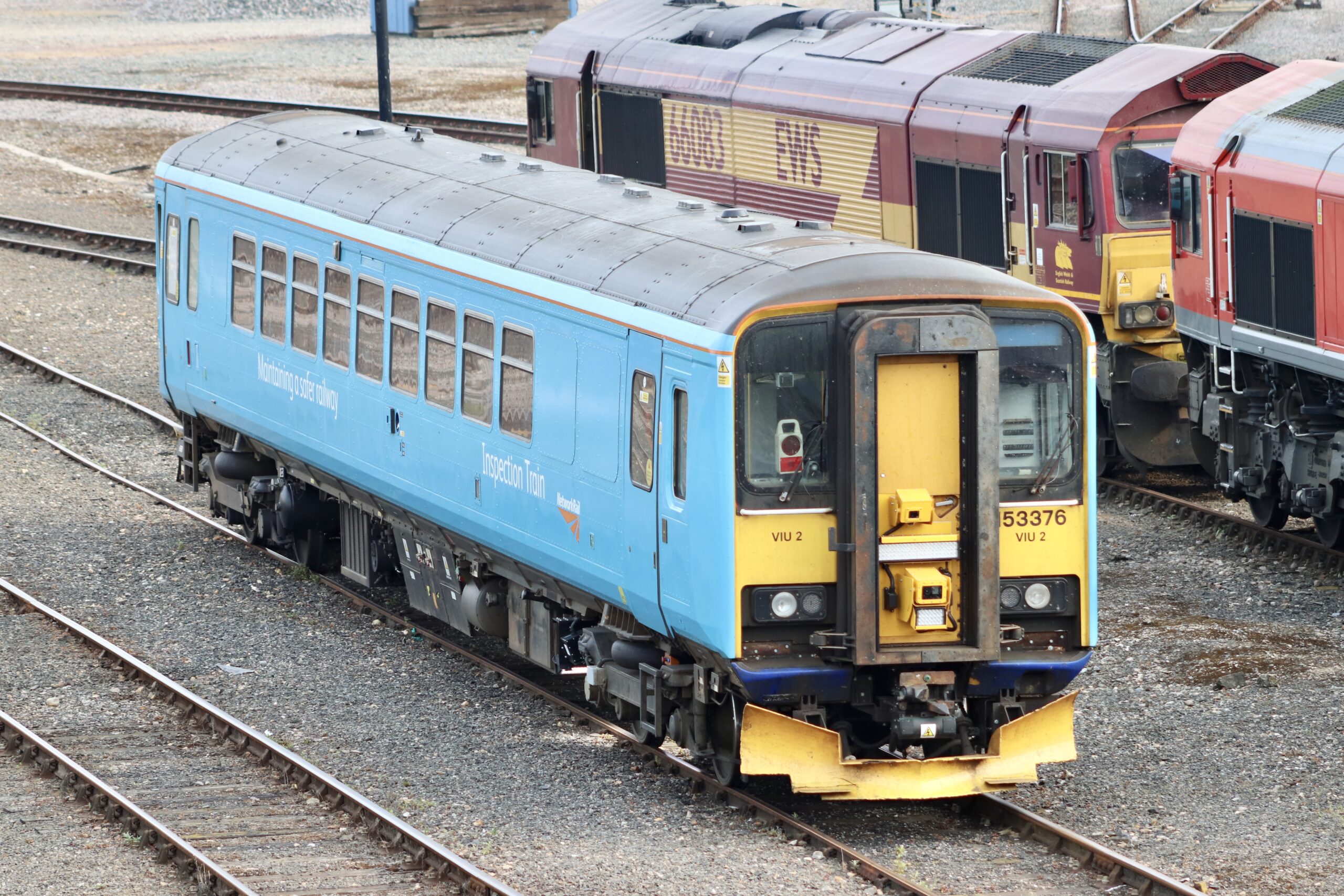
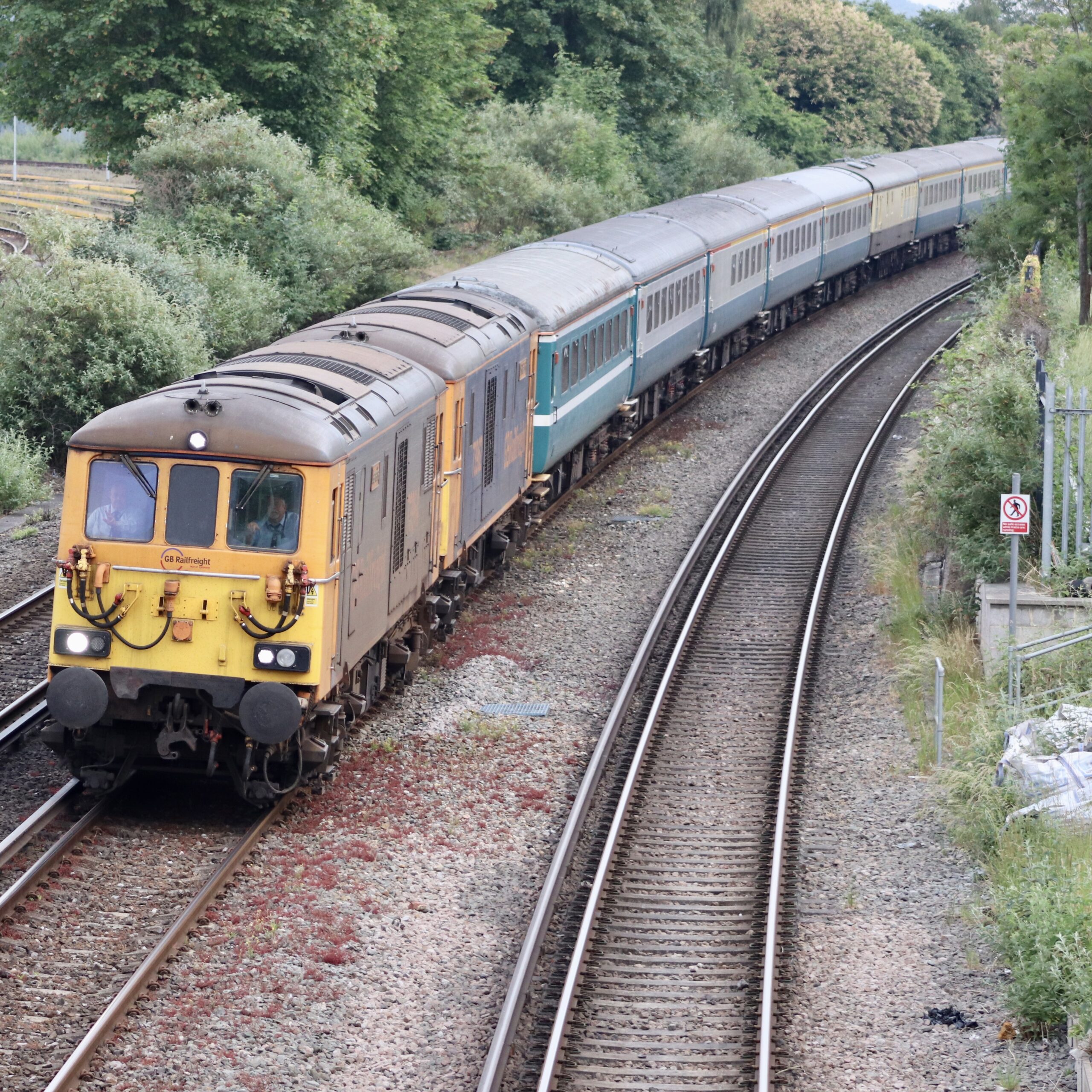
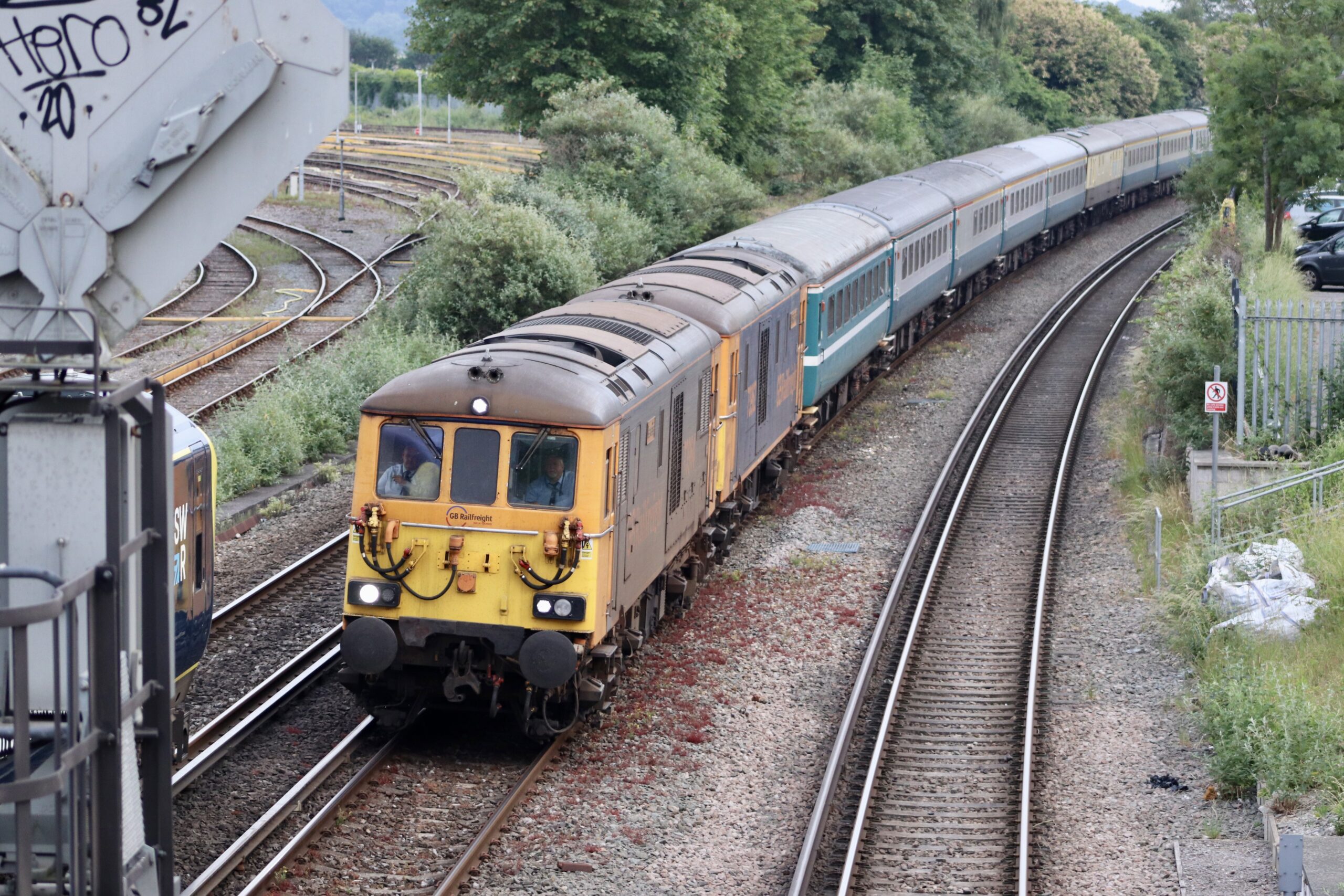
    After seeing ‘Flying Scotsman’ I had just enough time to pop over to Eastleigh to get a photo of the Network Rail Class 153 Inspection Train. I was also able to see UK Railtours “The Magic Carpet” on its way from Exeter to London Victoria. This was hauled by two GBRf Class 73 Electro-diesels of the type we normally get here on a test train the first Monday of every month. 

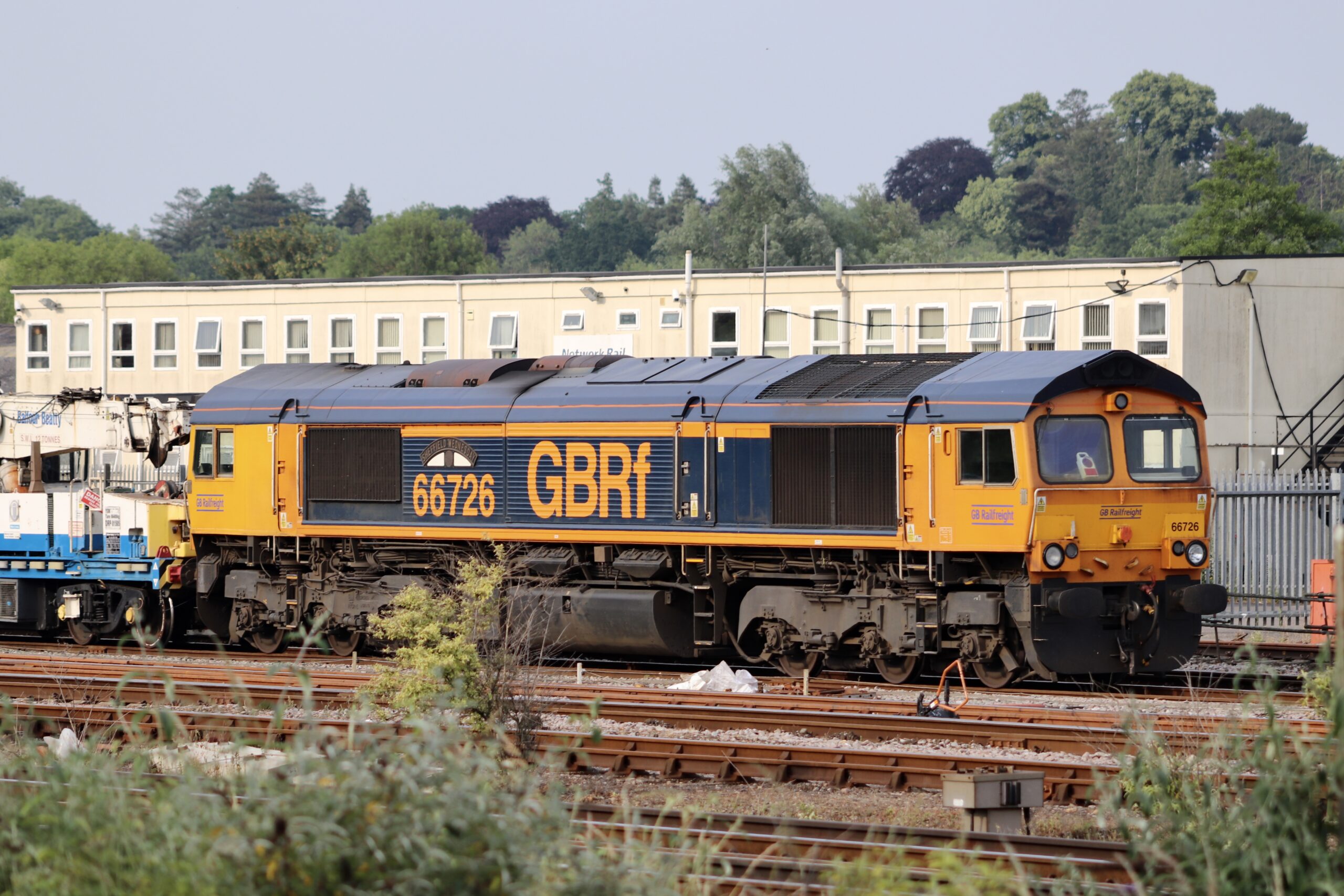
    GBRf Class 66 No. 66726 ‘Sheffield Wednesday’ in Eastleigh East Yard in preparation for working 7C03 2302 to Clapham Junction Windsor Lines civil engineering train later in the day along with No. 66846 – 17/06/2023
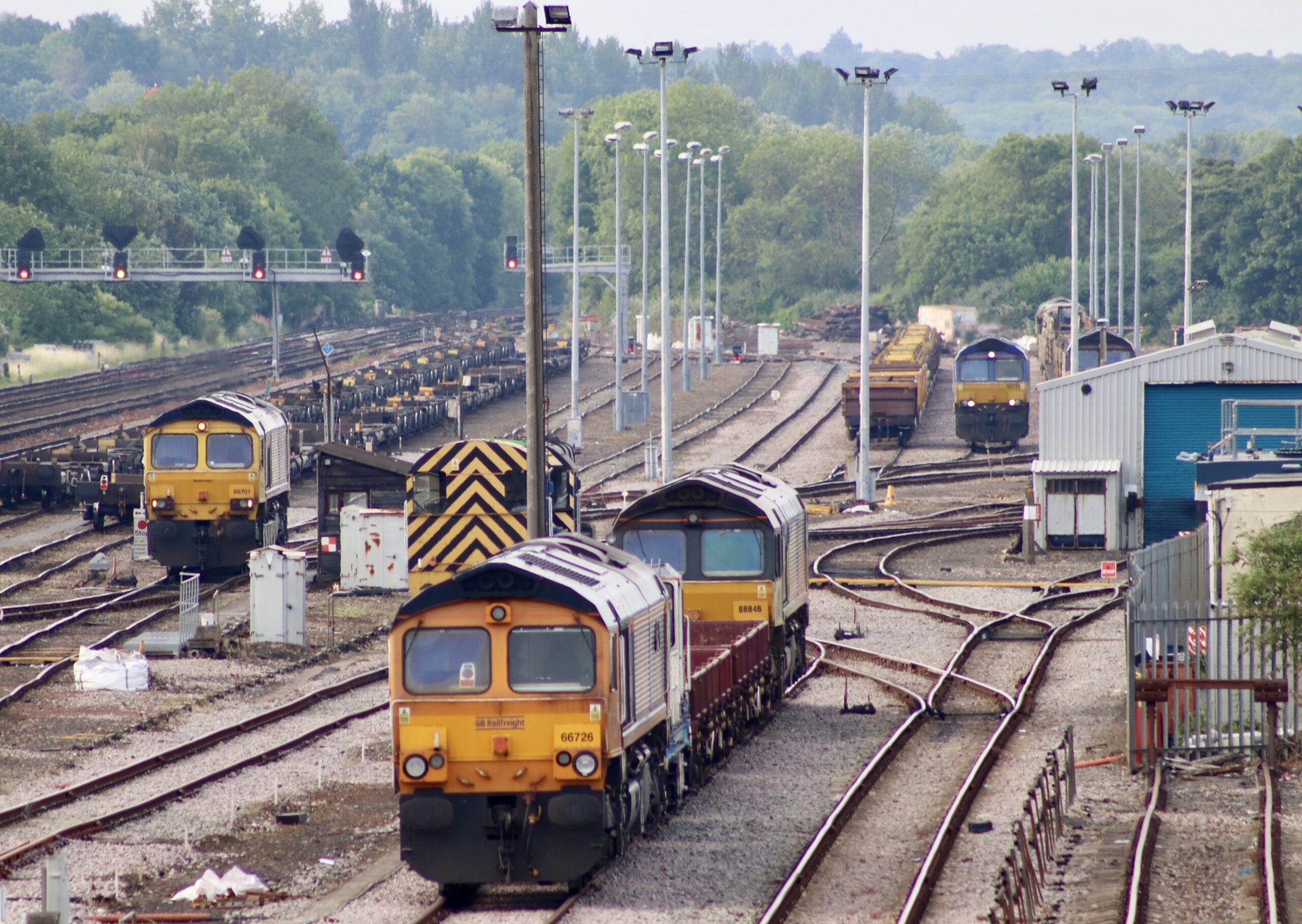
    A view over Eastleigh East Yard with GBRf Class 66 No. 66726 ‘Sheffield Wednesday’ and Colas Rail Class 66 No. 66846 in the foreground – 17/06/2023
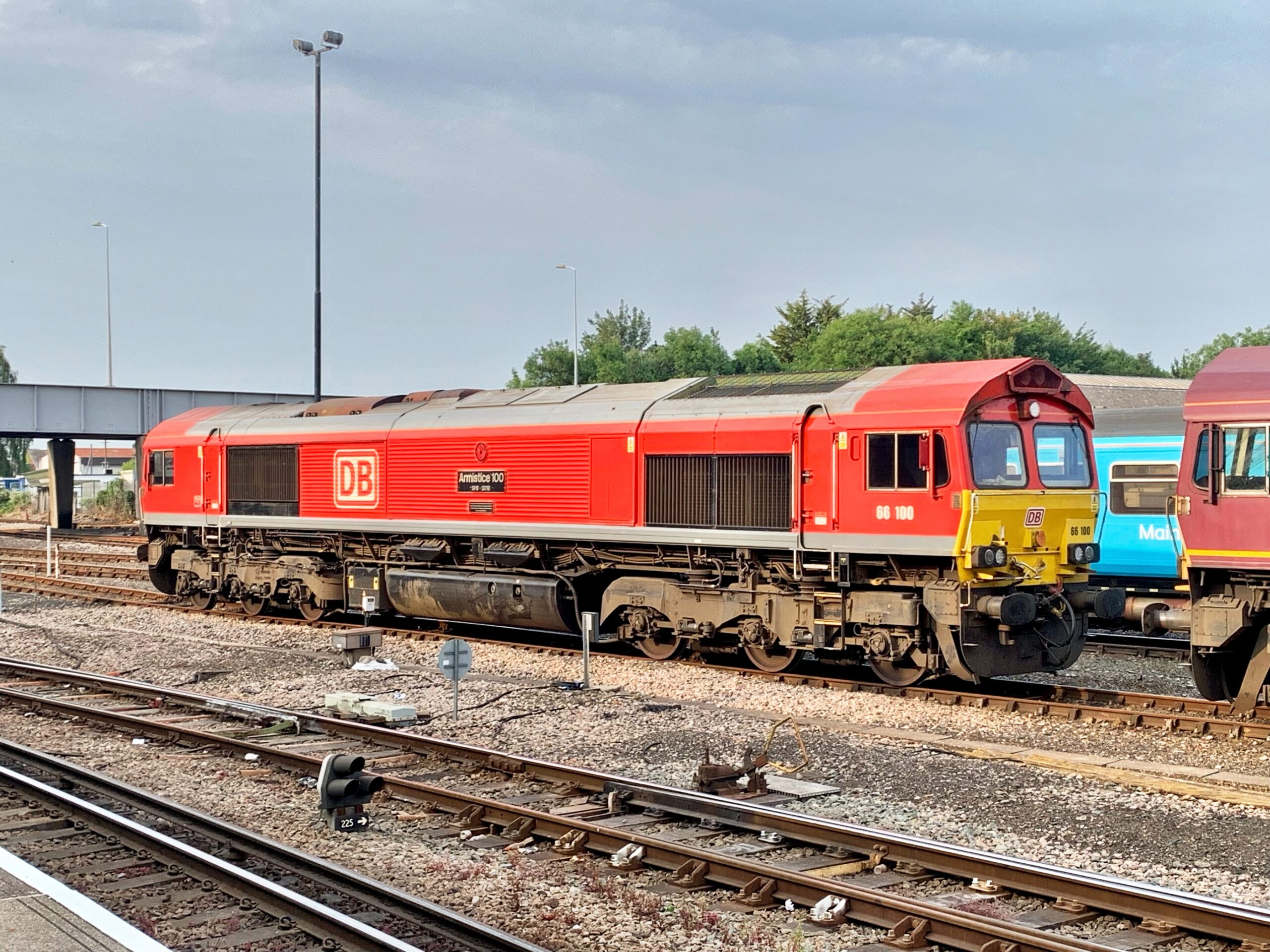
    DB Cargo Class 66 No. 66100 ‘Armistice 100 1918 – 2018’ in the sidings adjacent Eastleigh railway station – 17/06/2023
    Nameplate detail of Class 66 No. 66100 ‘Armistice 100 1918 – 2018’ – 17/06/2023
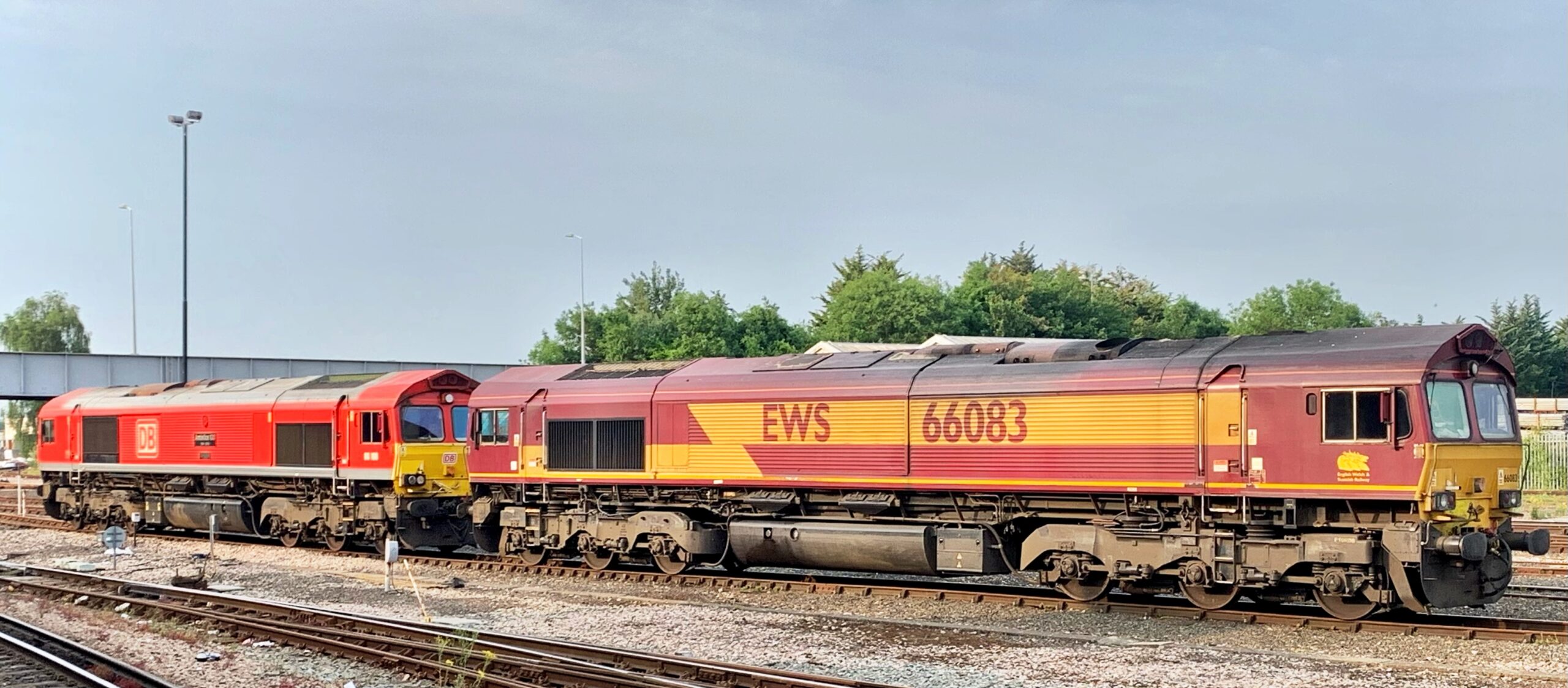
    Still carrying EWS Livery, DB Cargo Class 66 No. 66083 partners No. 66100 ‘Armistice 100 1918 – 2018’ at Eastleigh – 17/06/2023
    Network Rail Video Inspection Unit No. 2 (VIU2) No. 153376 rests at Eastleigh. Network Rail employs three Class 153 DMU’s for video assessment of track and points – 17/06/2023
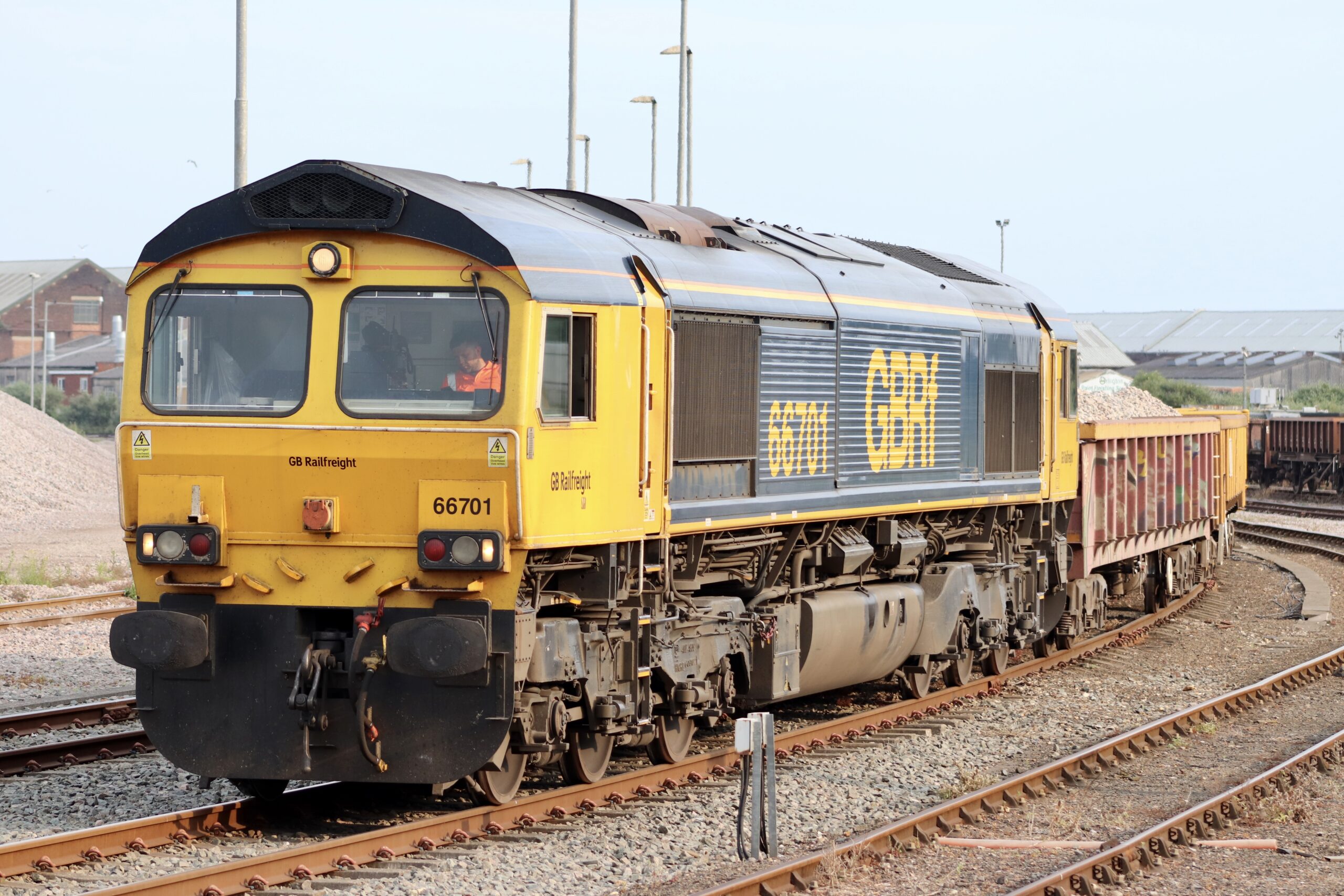
    GBRf Class 66 No. 66701 having just reversed onto wagons ready to form 6G13 1952 Eastleigh East Yard to Cheam engineers train – 17/06/2023
    Maritime Blue liveried Class 66 No. 66051 ‘Maritime Intermodal Four’ passing through Eastleigh heading up 4V44 1824 Southampton Eastern Docks to Morris Cowley MAT – 17/06/2023
    GBRf Class 73/9 No.’s 73964 ‘Jeanette’ and 73962 ‘Dick Mabbutt’ hauling UK Railtours “The Magic Carpet” one the approach to Eastleigh – 17/06/2023
    GBRf Class 73/9 No.’s 73964 ‘Jeanette’ and 73962 ‘Dick Mabbutt’ hauling UK Railtours “The Magic Carpet” 1Z62 1533 Exeter St Davids to London Victoria on the approach to Eastleigh – 17/06/2023
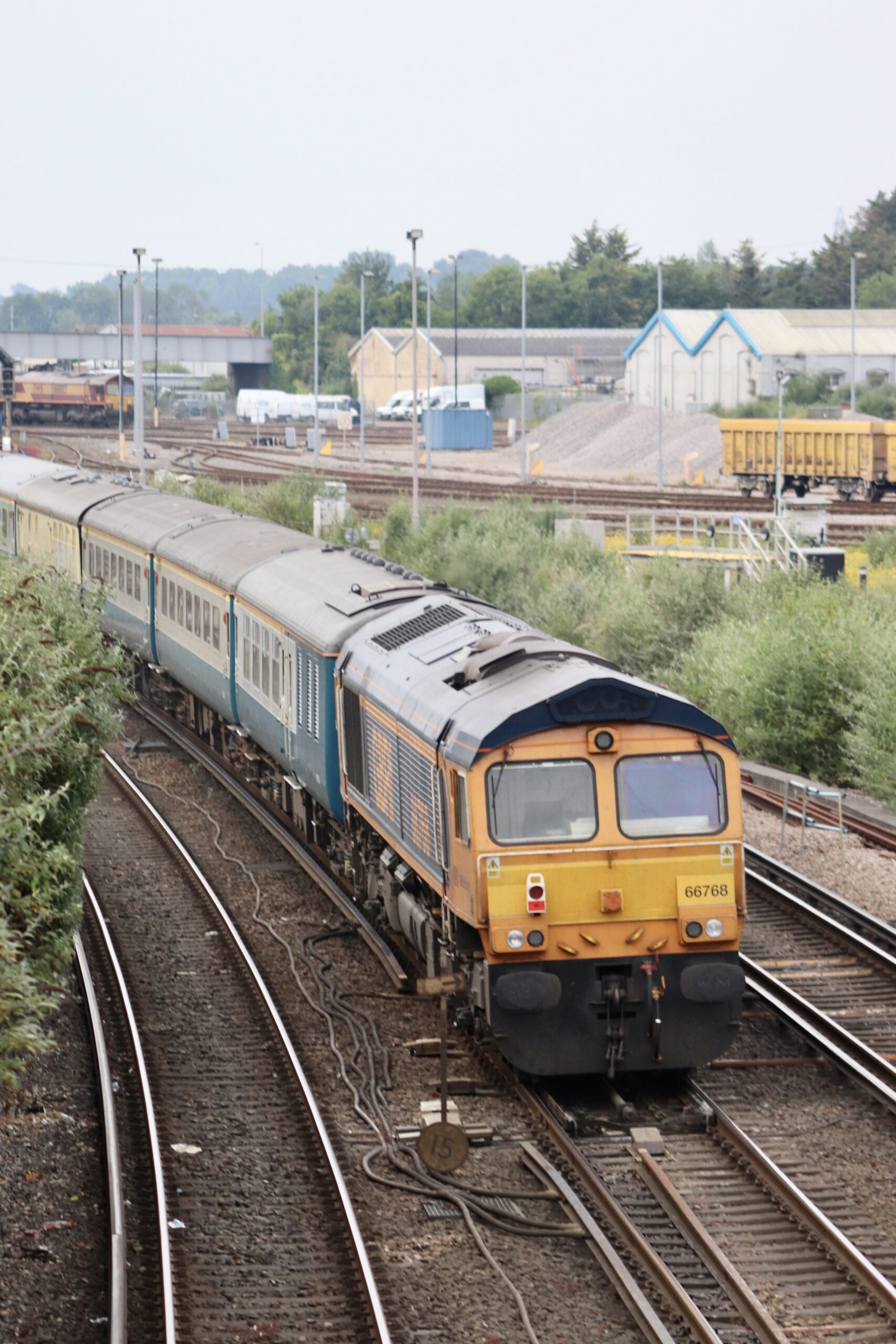
    On the rear of “The Magic Carpet” 1Z62 1533 Exeter St Davids to London Victoria GBRf Class 66 No. 66768 – 17/06/2023
    In 2011, leasing company Akiem acquired seven unused JT42CWRM locomotives, which would originally enter service for Veolia Cargo SAS (77501-77503) as order 20078941 and Crossrail Benelux (77504-77507) as 20078920. On 20 June 2011, all seven locos were delivered with train protection systems for Germany, Belgium and France. After being delivered to Akiem, they were immediately leased to VFLI.
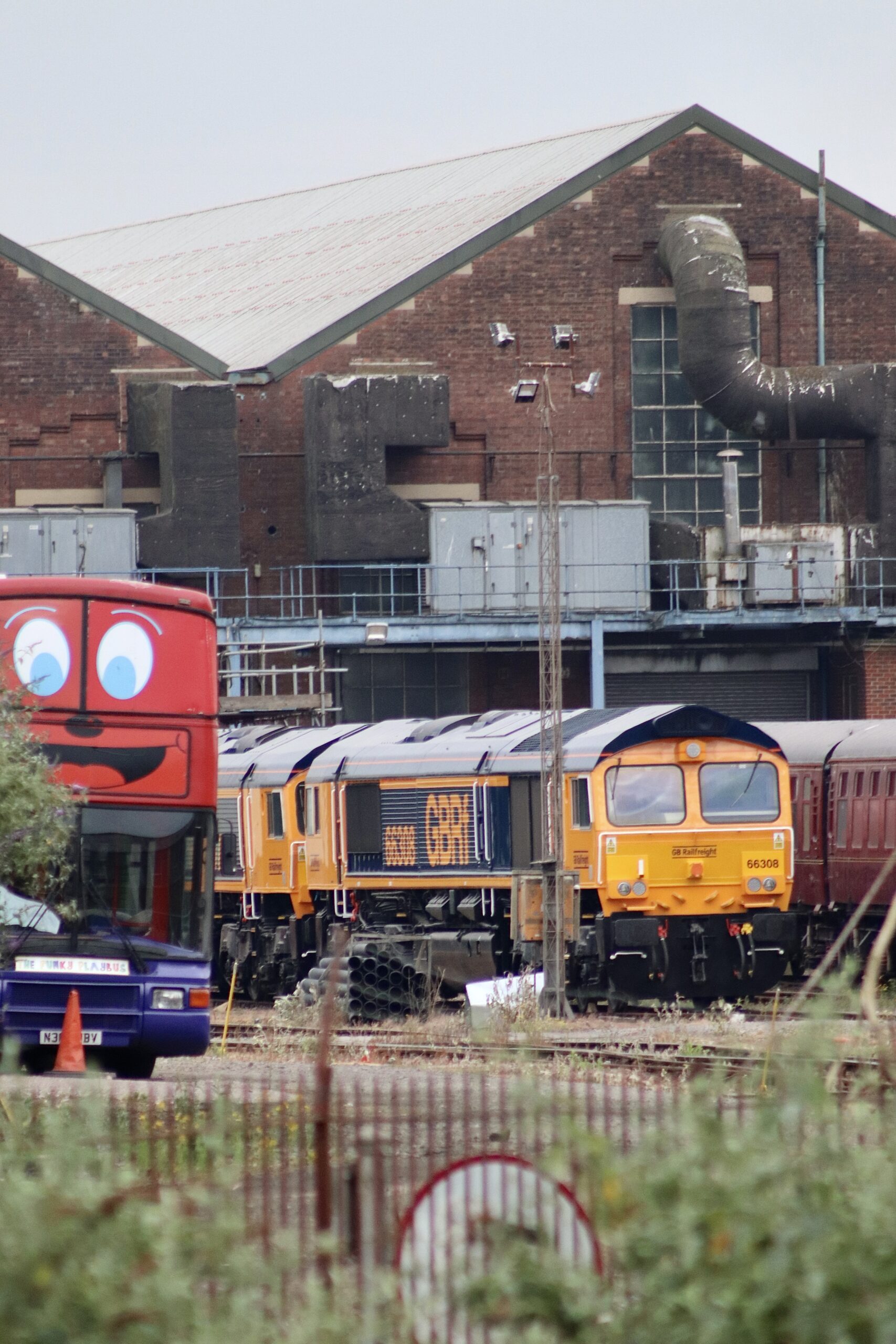
    Purchased and imported by GBRf Class 66 No.’s 66308 (ex-77503) and 66307 (ex-77502) are seen at Eastleigh Arlington Works having been repainted into standard GBRf livery following sizing modifications for the UK rail loading gauge carried out at Doncaster – 17/06/2023
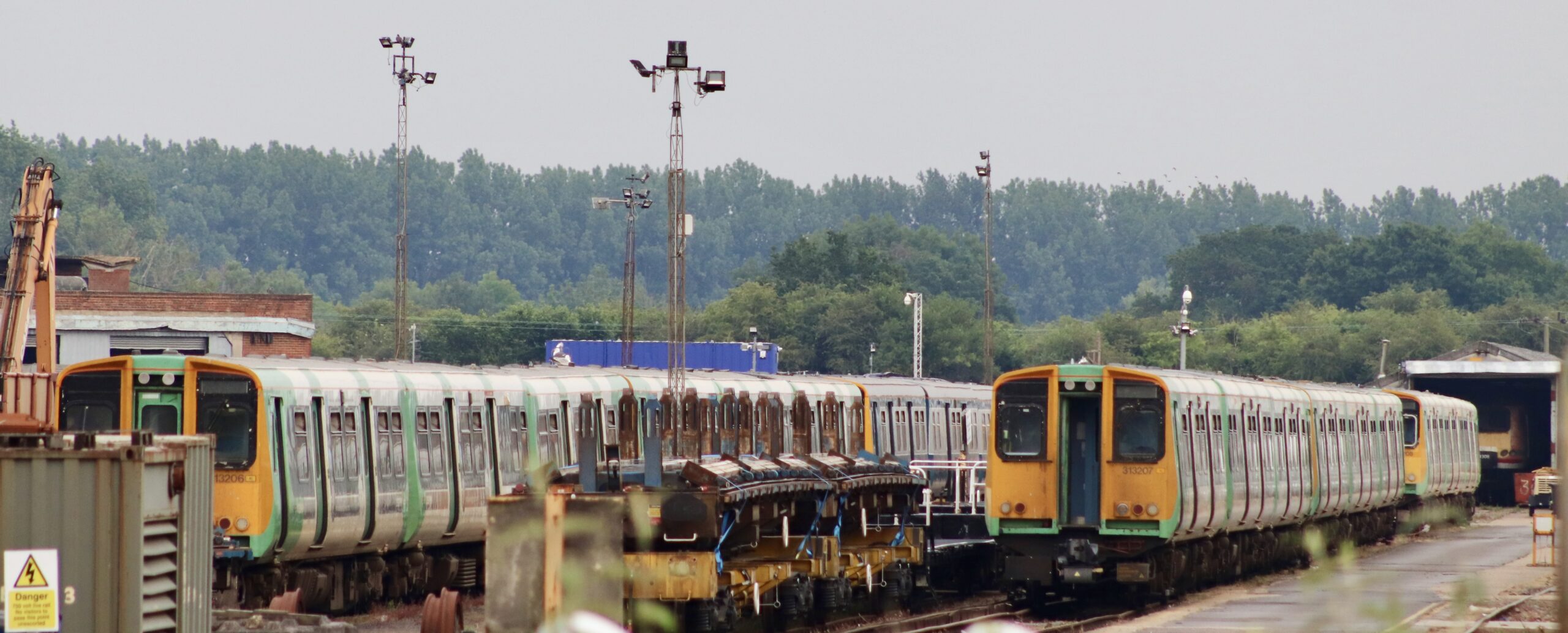
    Class 313’s continue to arrive at Eastleigh Arlington for component recovery and scrapping. No.’s 313206, 313201, 313207 and 313208 can be identified in this view. An appeal to fund maintenance and storage costs of blue liveried No. 313201 has been launched – 17/06/2023
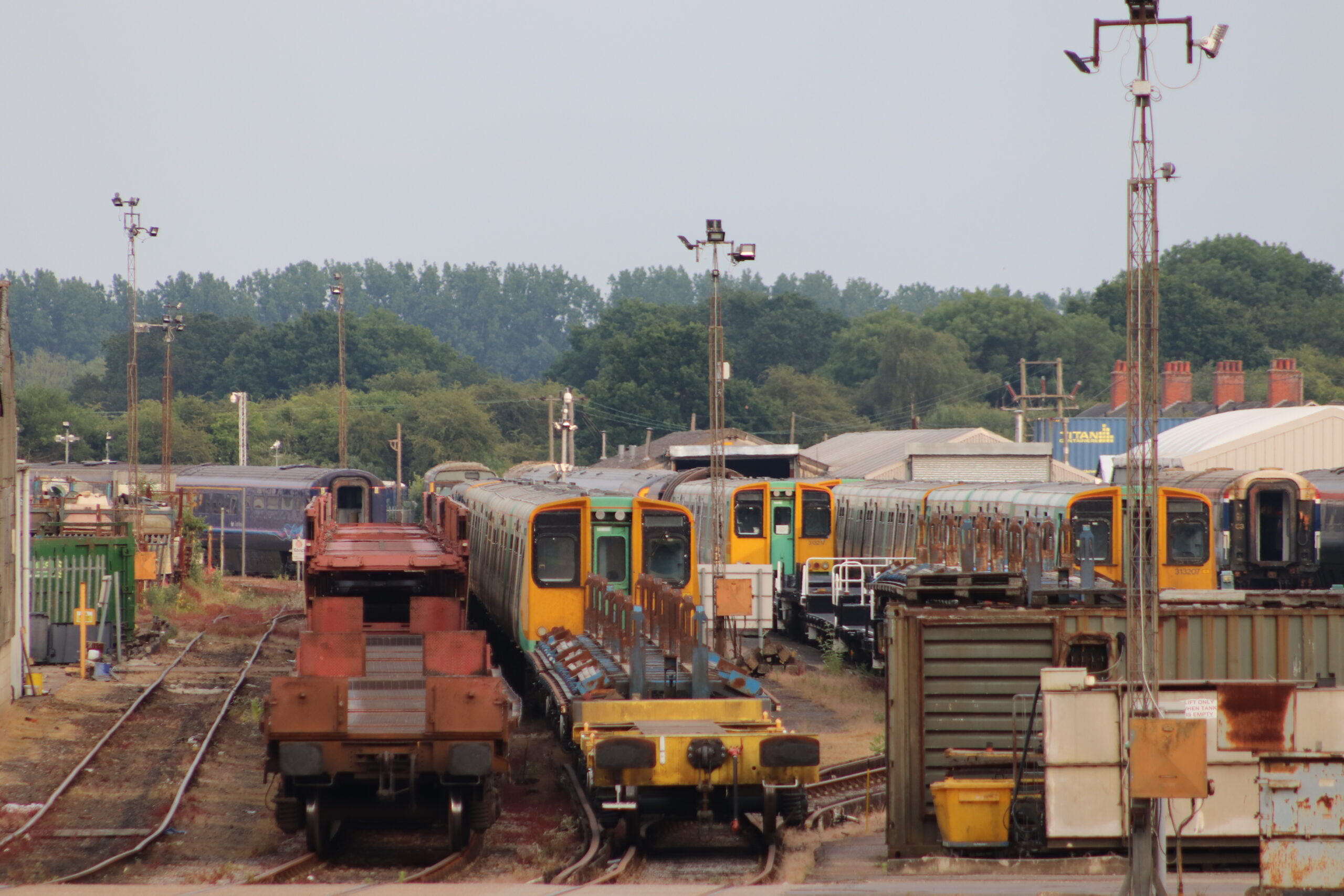
    No.’s 313206, 313201, 313217, 313207 and 313208 await their fate at Eastleigh Arlington – 17/06/2023
    These Class 313 EMU’s at Eastleigh Arlington have had their numbers cut out. We can identify No. 313202, closest to the camera, from the coach number 62530 – 17/06/2023

    “The Magic Carpet” passed through Dorset and our North Dorset correspondent was on hand to capture the train at Gillingham:

    GBRf Class 73/9 No.’s 73964 ‘Jeanette’ and 73962 ‘Dick Mabbutt’ head up UK Railtours “The Magic Carpet” at Gillingham on the return leg (photo courtesy of Scott Lewis) – 17/06/2023

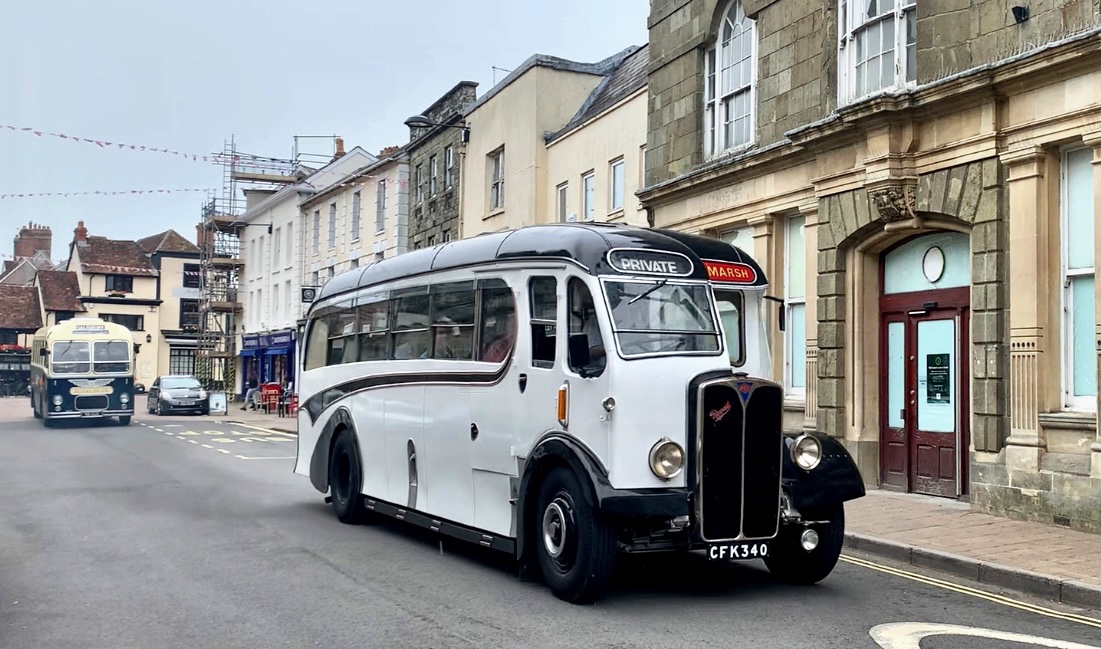
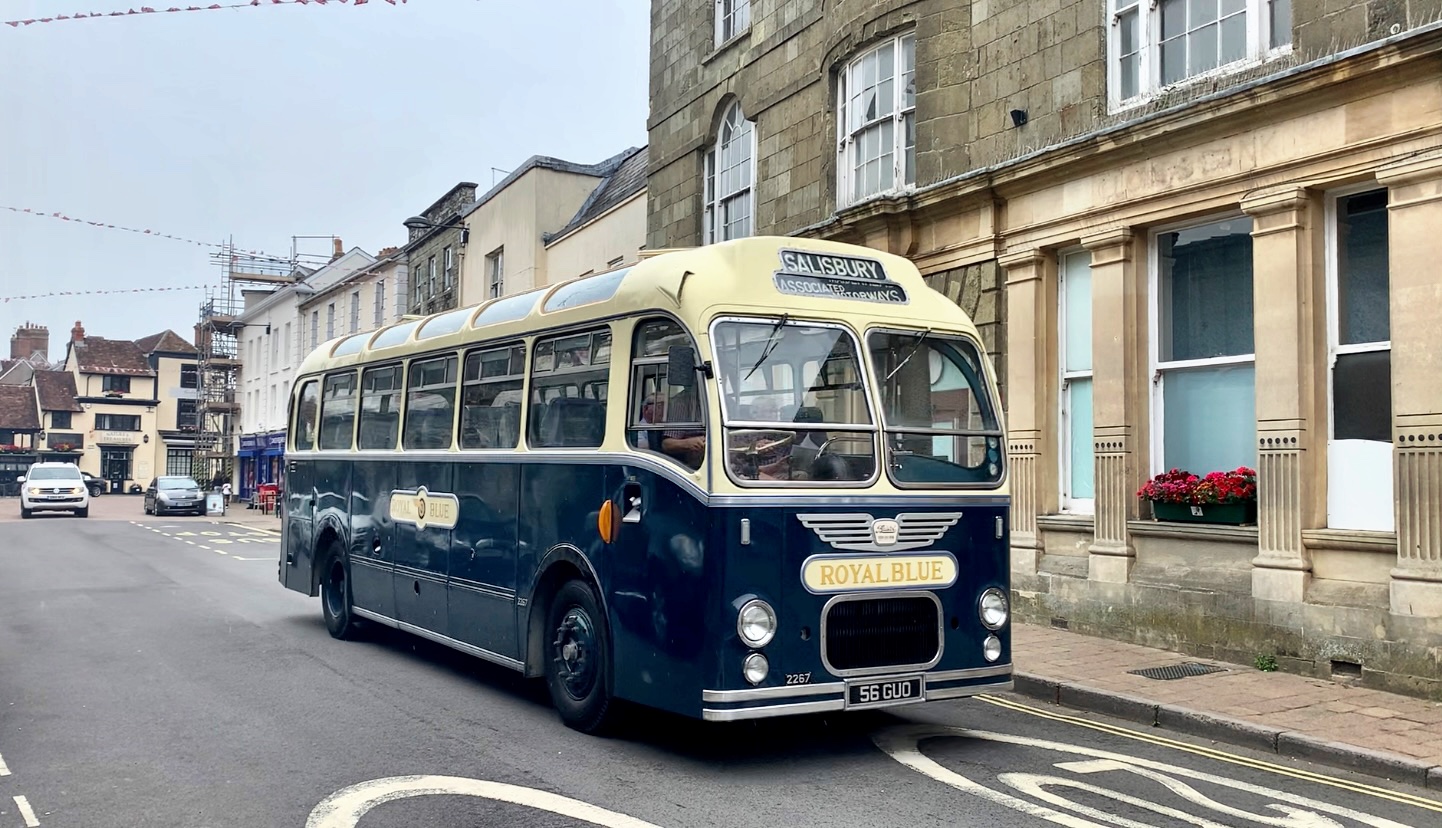
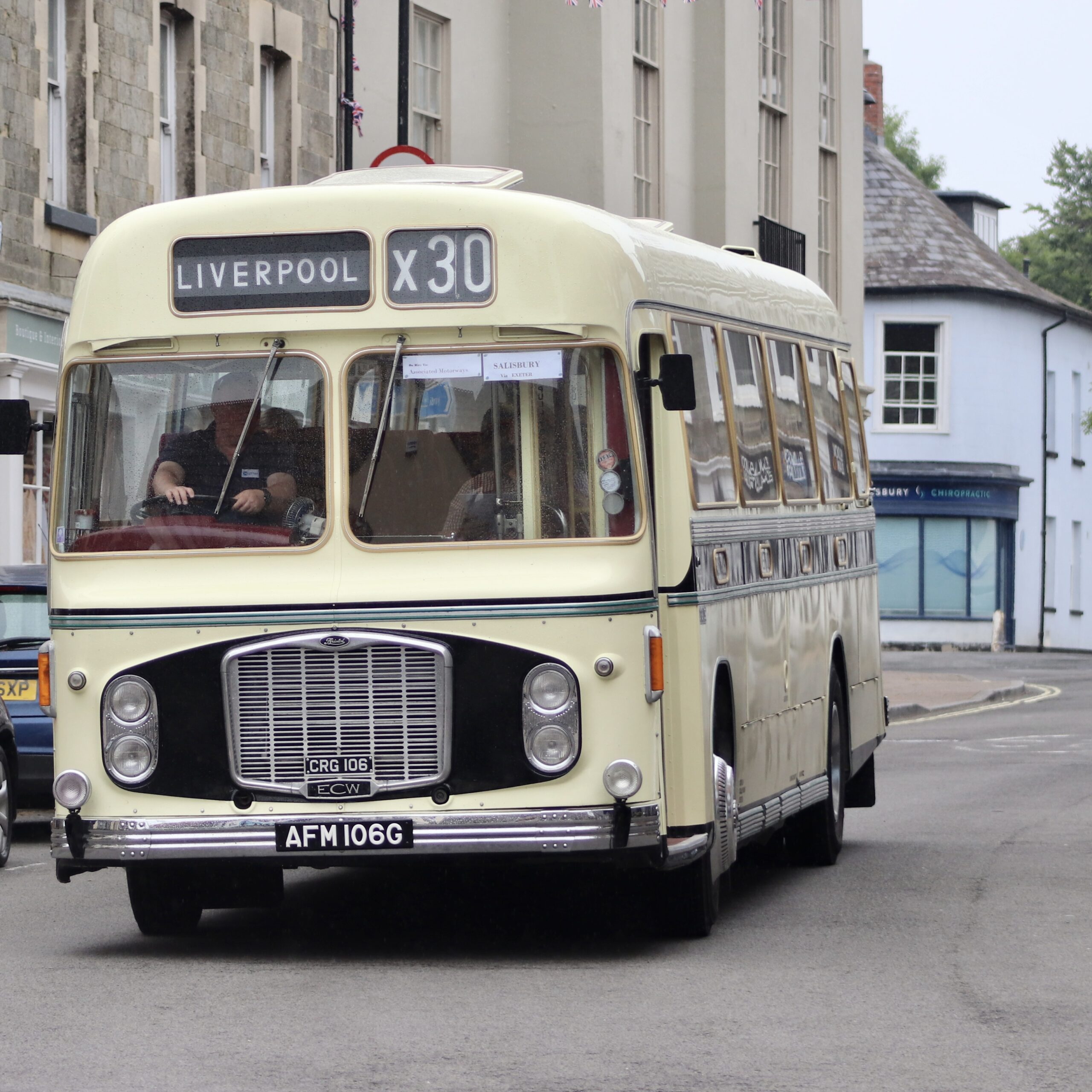
    This past weekend the 2023 “Royal Blue Run” saw the return of preserved and restored coaches to roads across the West Country, showcasing these fine specimens in authentic settings across the country recreating lost scenes. This year the Royal Blue & Associated Motorways run saw the privately owned vehicles recreate an age of bygone travel on the open roads through Wiltshire, Somerset, Devon and Cornwall reaching Penzance in the far south west.  The specific routes chosen were drawn from Royal Blue timetables from different eras. Sometimes segments of express services are followed, or in other cases seasonal variants are used (e.g. summer Saturdays only or winter season routing).  Every stretch has to be pre-driven to ensure the original roads remain suitable for coaches to pass even with modern parking practices or traffic management schemes. The coaches set out from Salisbury bus station on Friday 16th June and we chose to see them passing through Shaftesbury on their return final stage run up the A30, as used by the ‘stopping’ Penzance to London services, to Salisbury.

    Burlingham C33F AEC Regal Reg No. CFK 340 in the livery of operator Burnham built 1948 at Shaftesbury – 18/06/2023
    Royal Blue ECW Bristol MW6G Fleet No. 2267 Reg No. 56 GUO built 1961 at Shaftesbury – 18/06/202
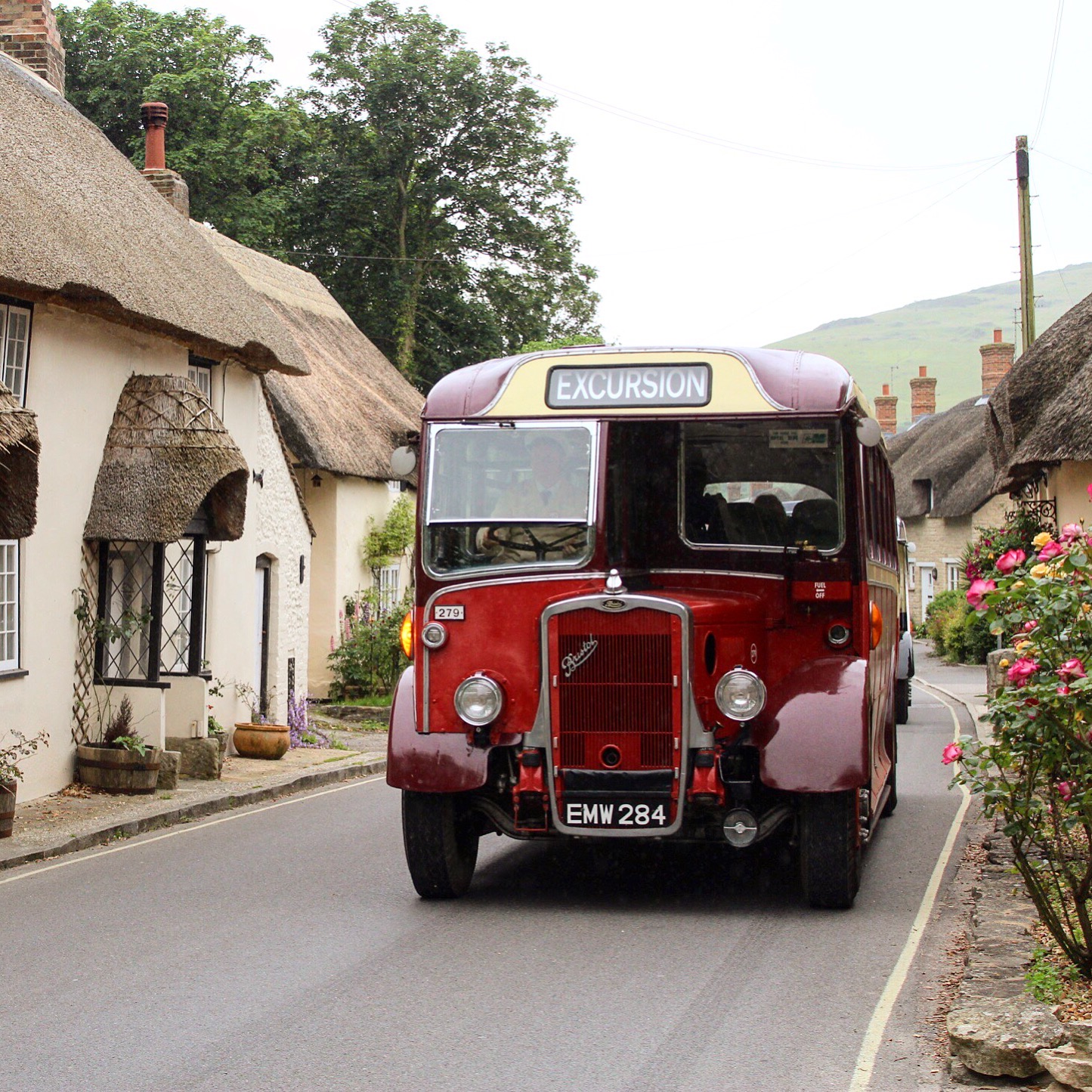
    Wilts & Dorset Beadle C32R Bristol L6B Fleet No. 279 Reg. EMW284, built 1947 at Shaftesbury – 18/06/202

    The Thames Valley & Great Western Omnibus Trust (TV&GWOT) website provides more information on the Royal Blue Runs which “were established in 2002 so that owners and their passengers can relive the pleasures of long distance luxury coach travel for which their carefully preserved vehicles were originally intended. The aim is to follow original Royal Blue routes as closely as possible and to travel at a leisurely pace redolent of the times. The runs also create a wonderful spectacle for innocent bystanders and dedicated photographers alike, thanks to the hard work and resources the owners have devoted to restoring and maintaining their fine coaches.

    A lot of work goes into planning the runs from selecting routes from the extensive Royal Blue network and researching the original drivers’ instructions and passenger timetables, preparing maps and outline routing, driving the routes to develop detailed instructions allowing for modern day features and constraints, organising refreshment stops, obtaining parking permissions, to identifying potential accommodation for a dozen or more coaches and their passengers. Despite all the preparations, final timings are hard to judge whether due to roadworks or things that might pique the interest of crews along the way. The coaches do not travel in close convoy so as not to inconvenience other road users. Some drivers have also been known on occasion to deviate from the intended route (unintentionally!).

    Overall the focus is on education and enjoyment and we hope that however you take part you share in the pleasure.”

    Western National Fleet No. 3307 Reg AFJ 727T Plaxton Supreme DP41F Bristol LH6L built in 1979 at Shaftesbury – 18/06/202
    A long way from home, Crossville Fleet No. CRG106 Reg AFM 106G ECW C49F Bristol RELH built in 1969 at Shaftesbury – 18/06/202
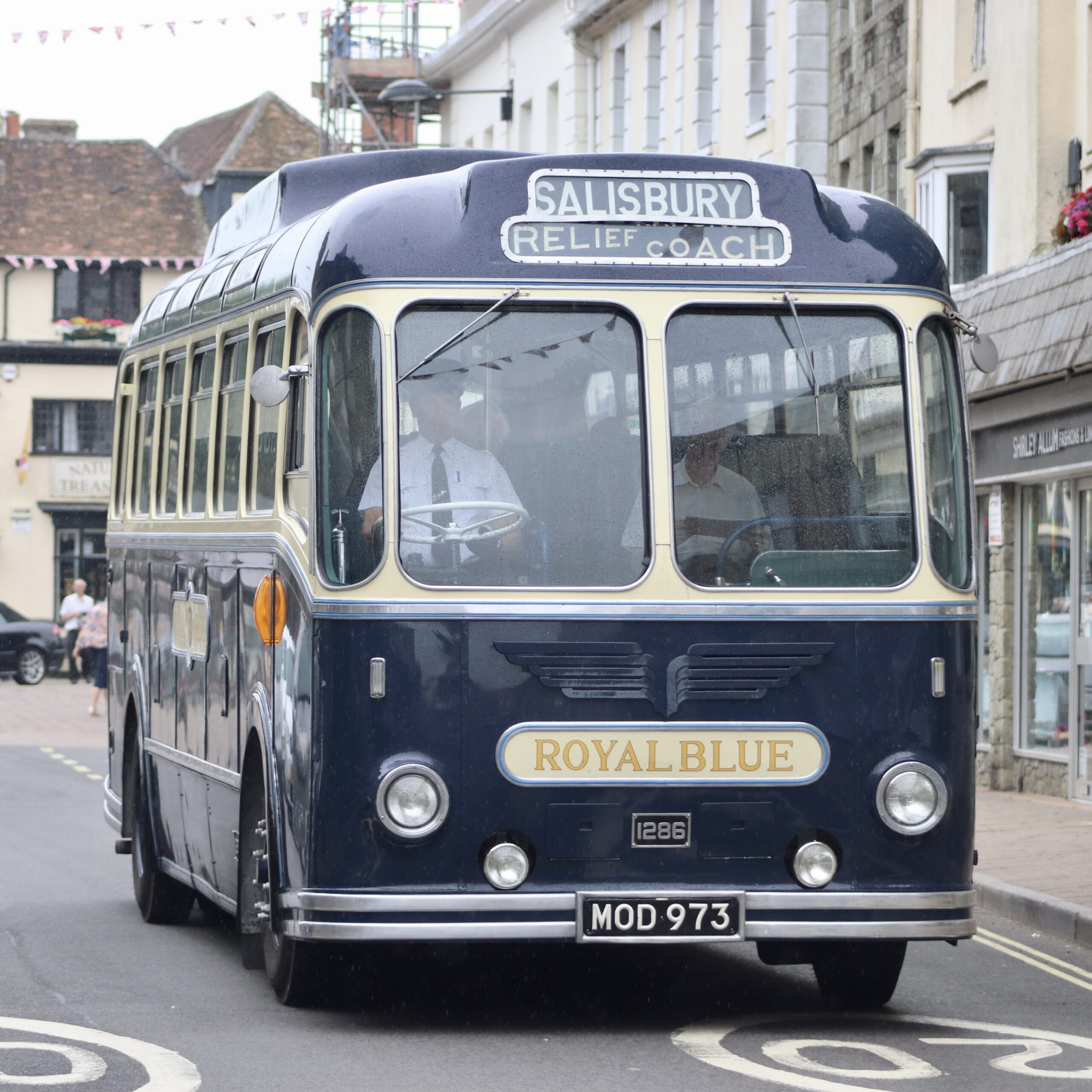
    Royal Blue Fleet No. 1286 Reg MOD 973 ECW Bristol LS6G C39F built in 1952 at Shaftesbury – 18/06/202
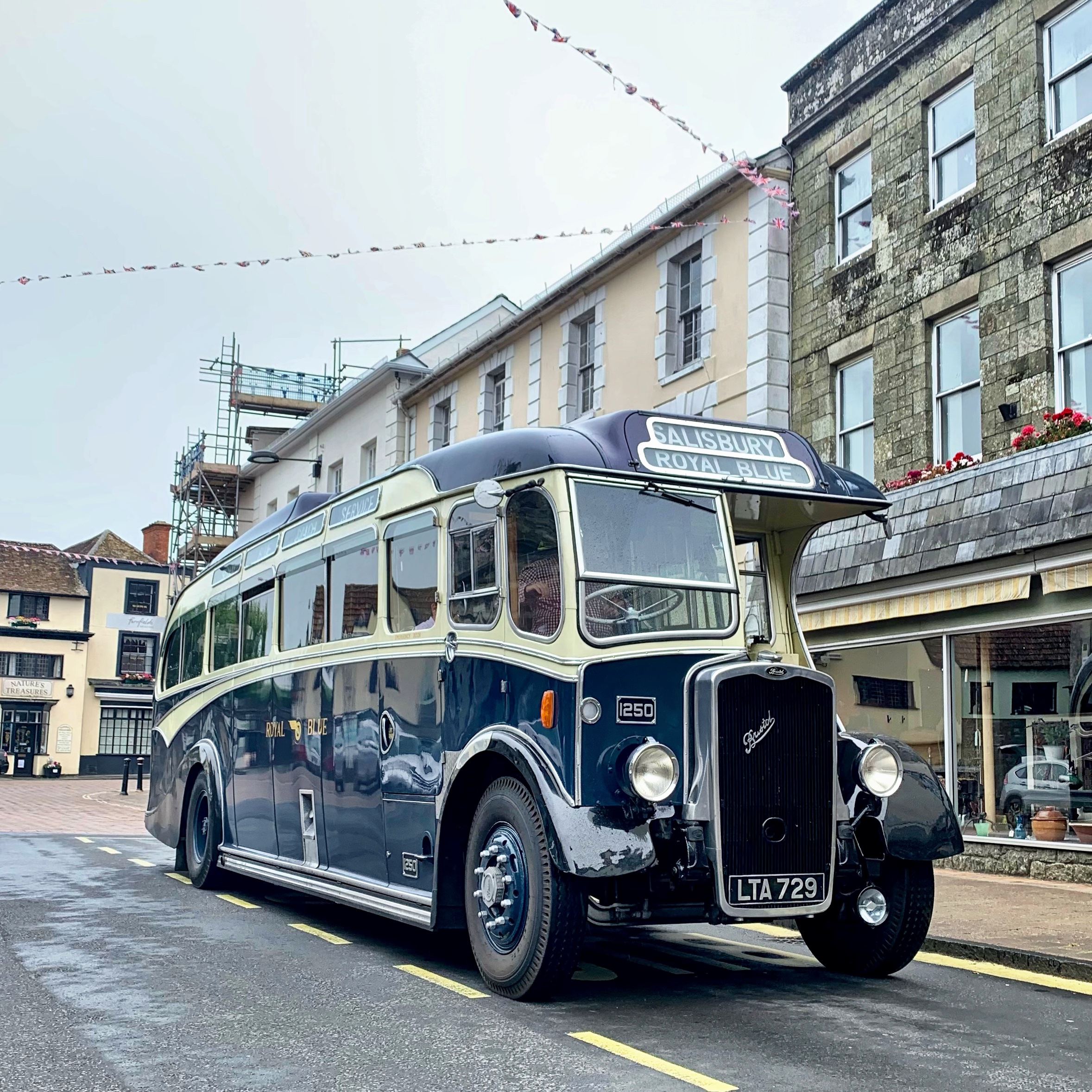
    Royal Blue (Western National) Fleet No. 1250 Reg. LTA 729 Duple Bristol LL6B C37F built in 1951 at Shaftesbury – 18/06/202
    A very short video of Royal Blue Run buses passing through Shaftesbury – 18/06/2023

    I certainly derived much pleasure from seeing the coaches which were running around thirty minutes behind schedule when they passed us. Not bad timing in my humble opinion! I previously saw the 2016 Royal Blue Run which having started at London Victoria Coach Station ran to Bristol on Day One. The following day was designed to commemorate 50 years since the final train on the Somerset & Dorset Railway, a much loved and mourned route that ran through Royal Blue heartland from Bath to Bournemouth. The route intertwined with several famous S&D locations, recreating in part the former rail replacement service that was created when the line closed in 1966. Day Three was an excursion from Bournemouth to Lulworth Cove, followed by a trip across the New Forest to Lyndhurst. It was Lulworth Cove where I decided to see the buses as they grouped together in the car park before once again taking to the open road where I took the opportunity to see them passing through Lulworth village and Wareham.

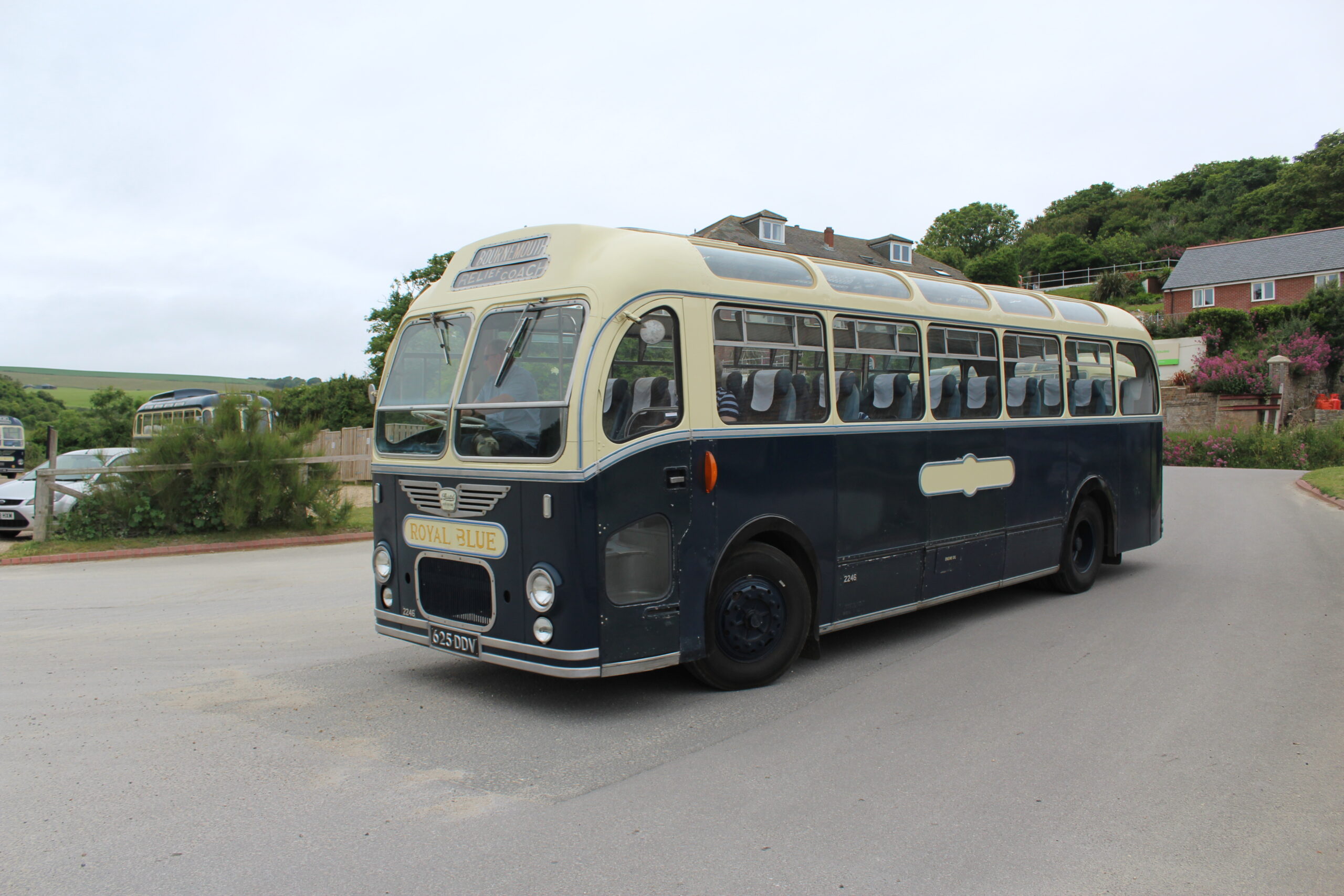
    Royal Blue Bristol MW6G Fleet No. 2246 Reg. 625 DDV built 1960 enters the car park at Lulworth Cove – 19/06/2016
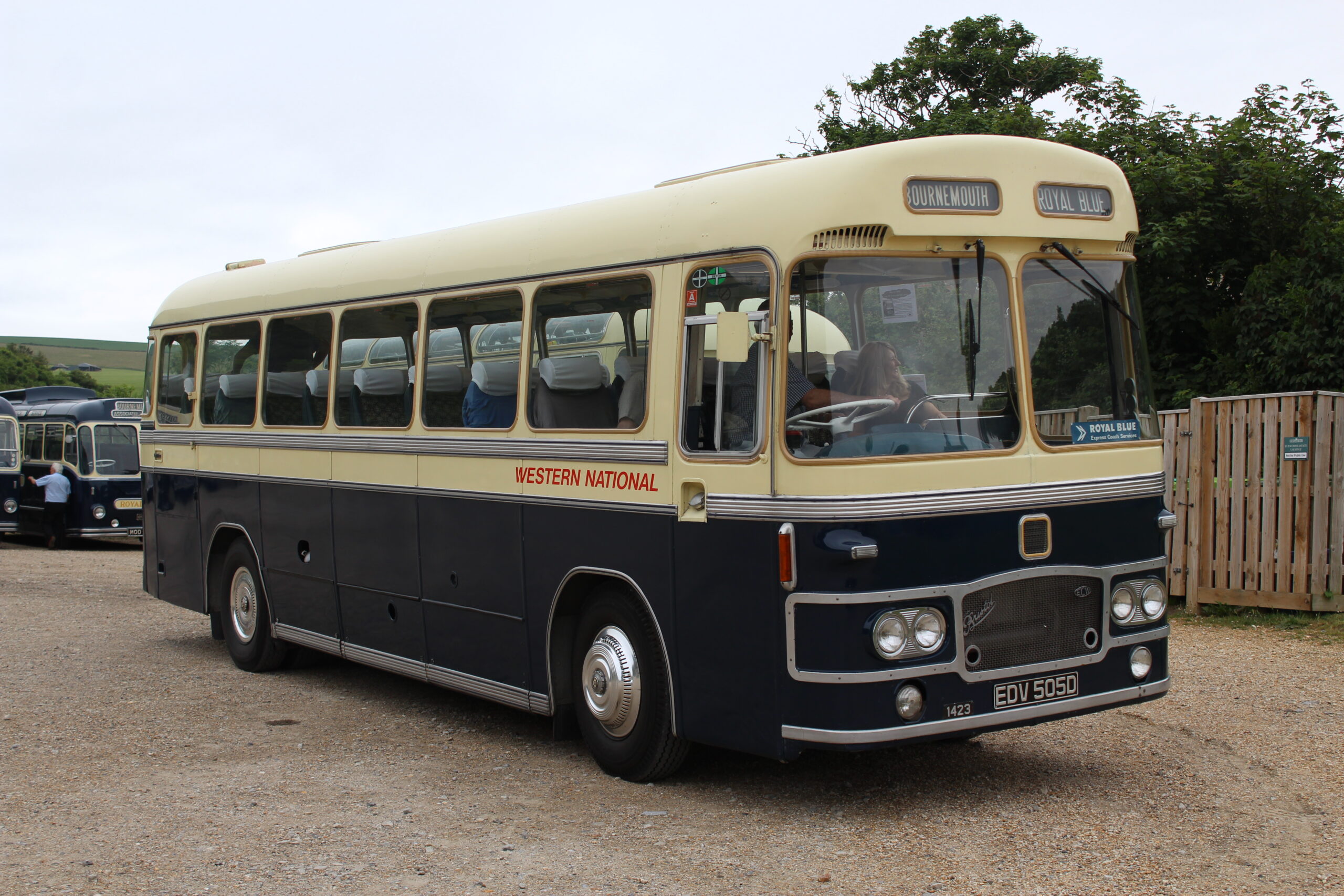
    Western National Bristol MW6G ECW C39F Fleet No. 1423 Reg. EDV 505D built in 1966 and entered service in Plymouth seen at Lulworth Cove – 19/06/2016
    A Royal Blue line up at Lulworth Cove – 19/06/2016
    Royal Blue ECW Bristol MW6G Fleet No. 2267 Reg No. 56 GUO built 1961 passing through Lulworth – 19/06/2016
    Wilts & Dorset Beadle bodied Bristol L6B Fleet No. 279 Reg. EMW284, built 1947 at Lulworth – 19/06/2016
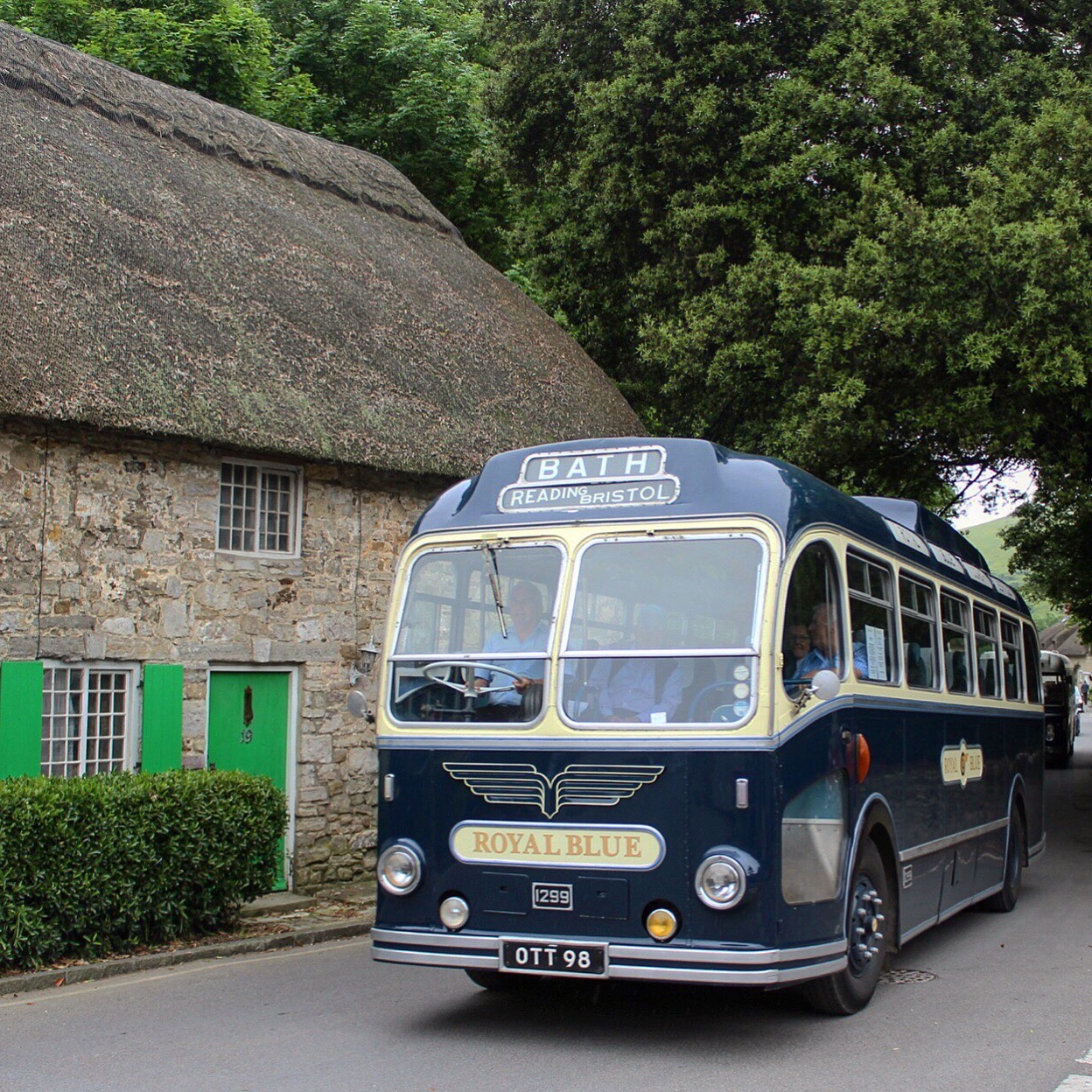
    Royal Blue Fleet No. 1299 Reg. OTT 98 1953 Bristol LS6G with ECW C39F coachwork at Lulworth village – 19/06/2016
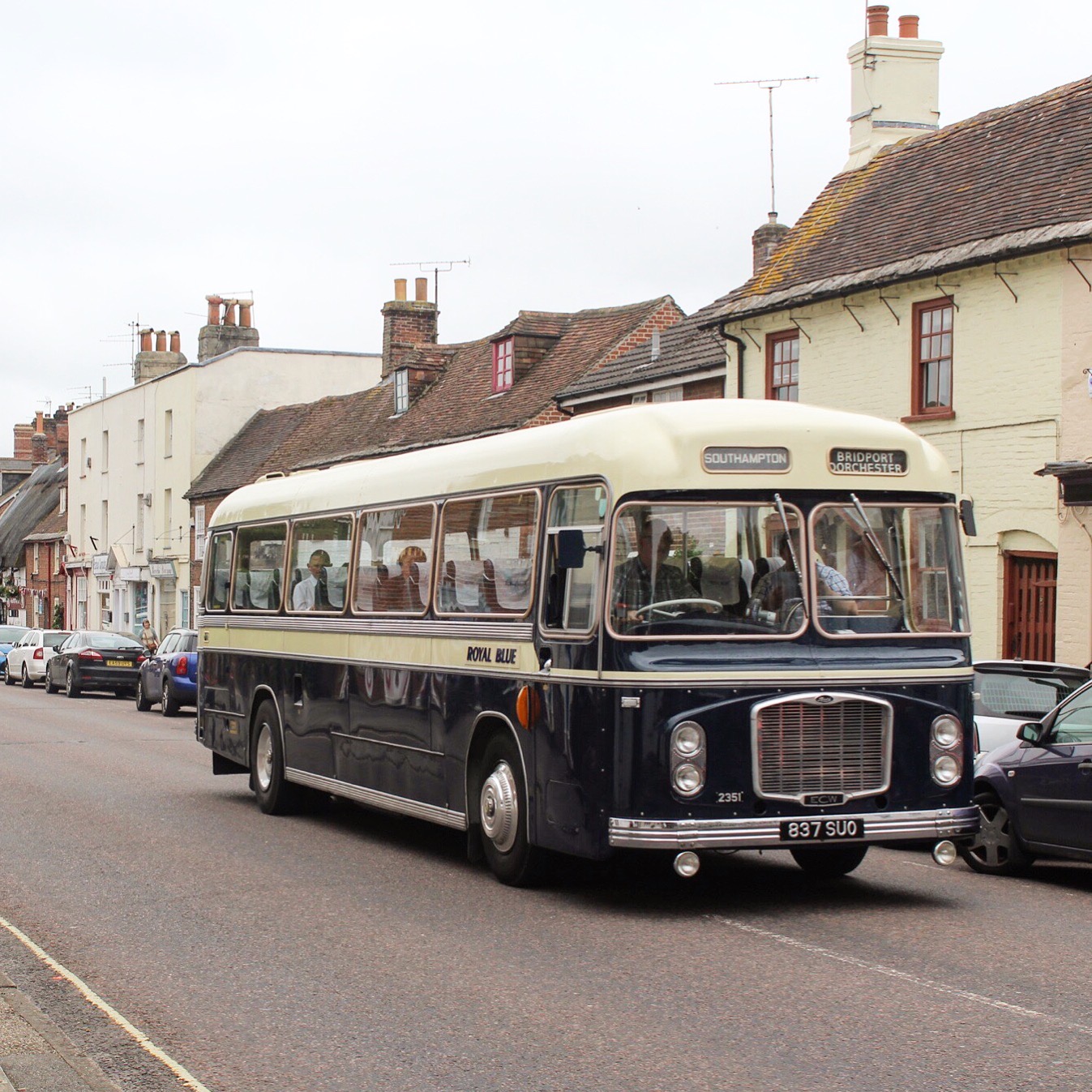
    Royal Blue express services Fleet No. 2351 Reg. 837 SUO Bristol RELH6G ECW passing through Wareham – 19/06/2016

    From The Archives:

    Mention of Penzance as part of the Royal Blue Run this year reminded me that I was going to look for a photograph of the Pullman Camping Coaches which used to stand at Marazion and I mentioned as much in our blog entry “Yoshi Goes To Cornwall”. As luck would have it, I was looking for some paperwork the other day and came across the following images:

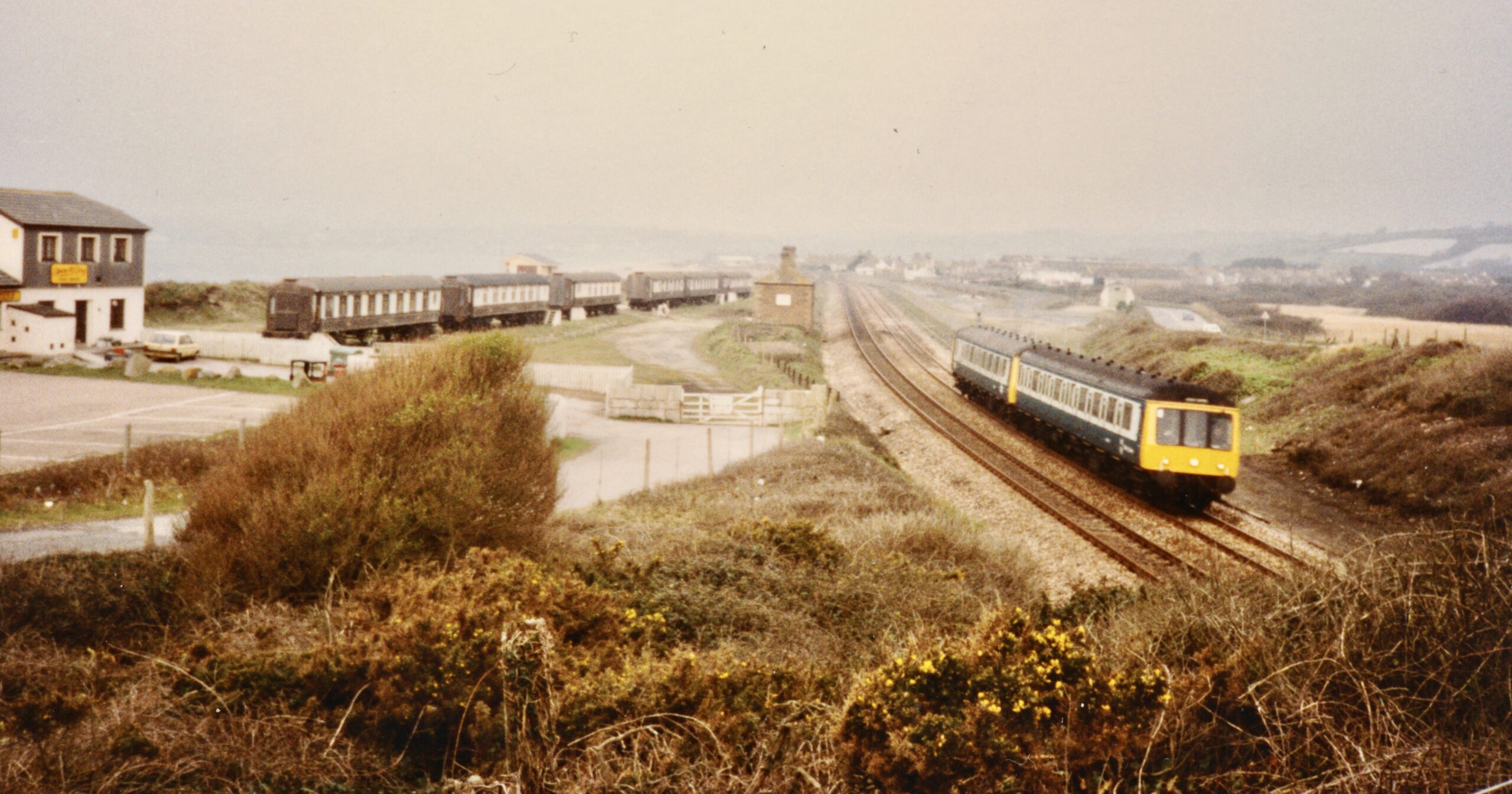
    For many years Marazion was home to six old Pullman coaches that were employed as camping coaches; holiday accommodation offered by the railway containing sleeping and living space designed to encourage people to travel by train to the stations where they were situated – March 1993
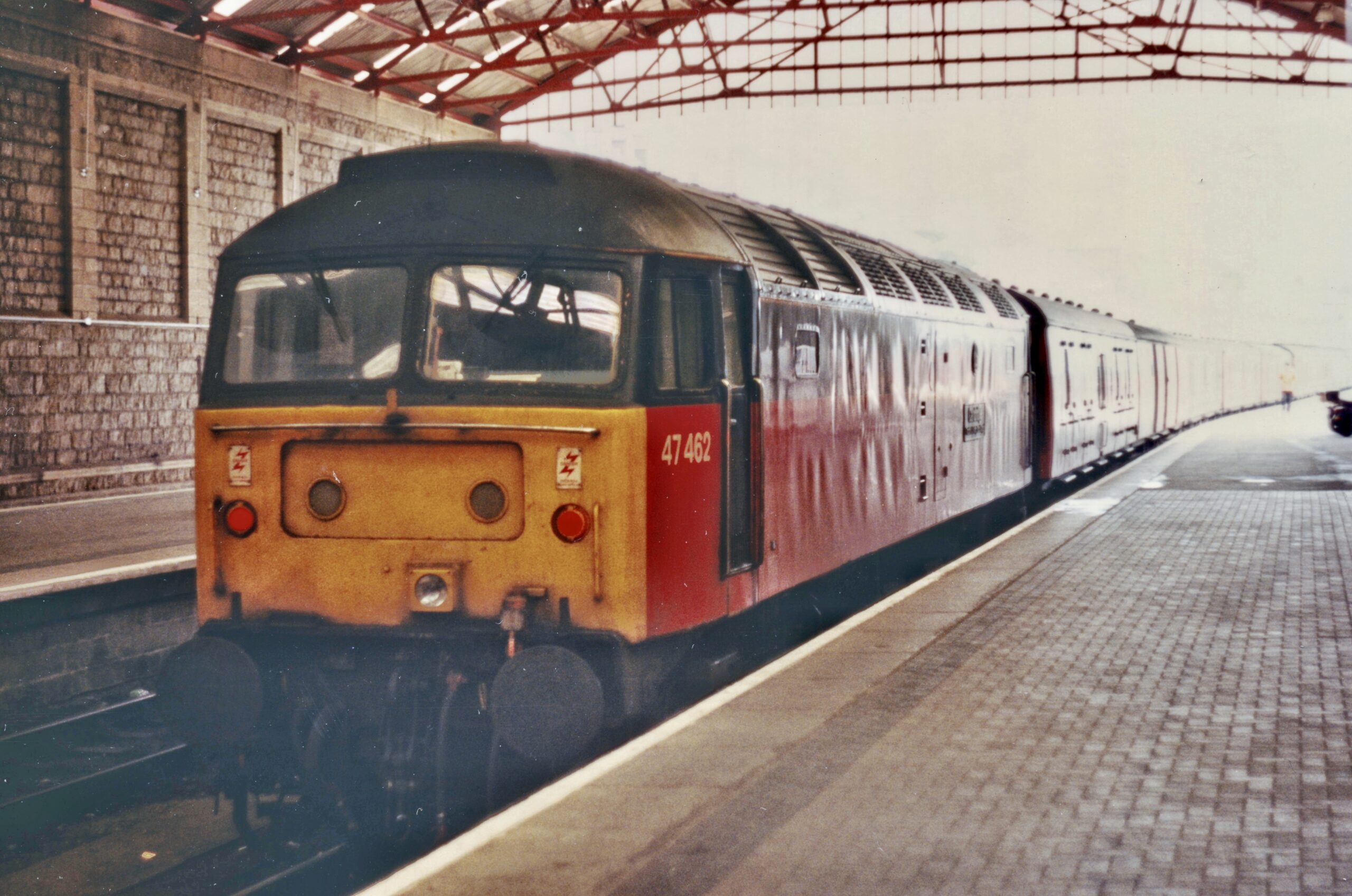
    British Rail Parcels Sector liveried Class 47 No. 47462 ‘Cambridge Traction & Rolling Stock Depot’ at Penzance – March 1993
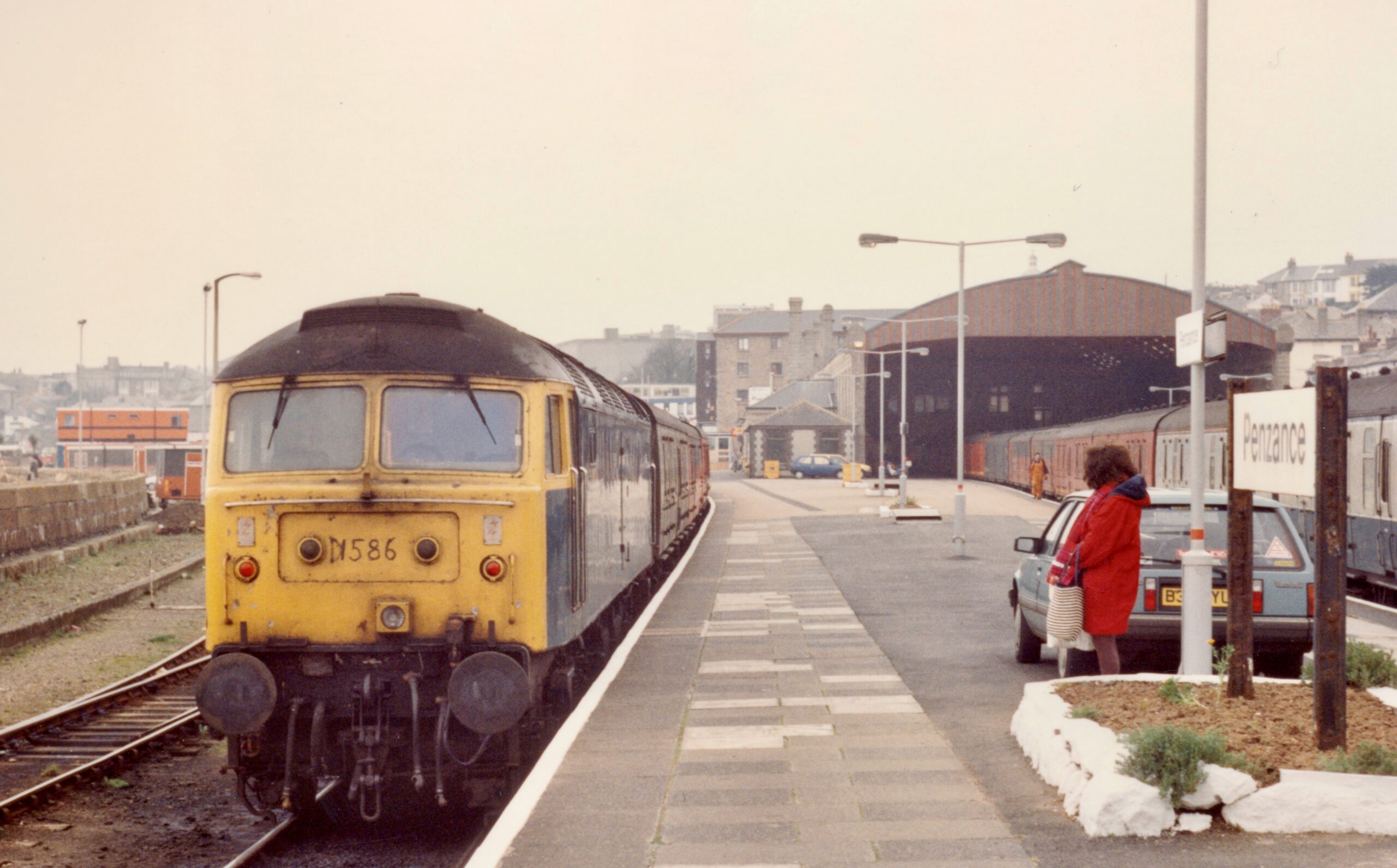
    Class 47 No. 47463 (with her pre-TOPS number D1586 marked between her head code lights) in BR Standard Monastral Blue livery, which she retained to the end, stands at Penzance. The locomotive entered service in May 1964 and was cut up in November 1996 by MRJ Phillips at Crewe Works – March 1993
    Class 47 No. 47462 ‘Cambridge Traction & Rolling Stock Depot’ at Penzance. The locomotive was built at Crewe and entered traffic on May 16th 1964 as D1582. Named at Cambridge Open Day held on 29th September 1990 by Jack Firman a retired workshop supervisor, the nameplates were removed in December 1993 and later transferred to No. 47736 – March 1993
    Class 47 No. 47462 at Penzance. The locomotive was cut up at Toton by Harry Needle Rail Co in March 2003 – March 1993

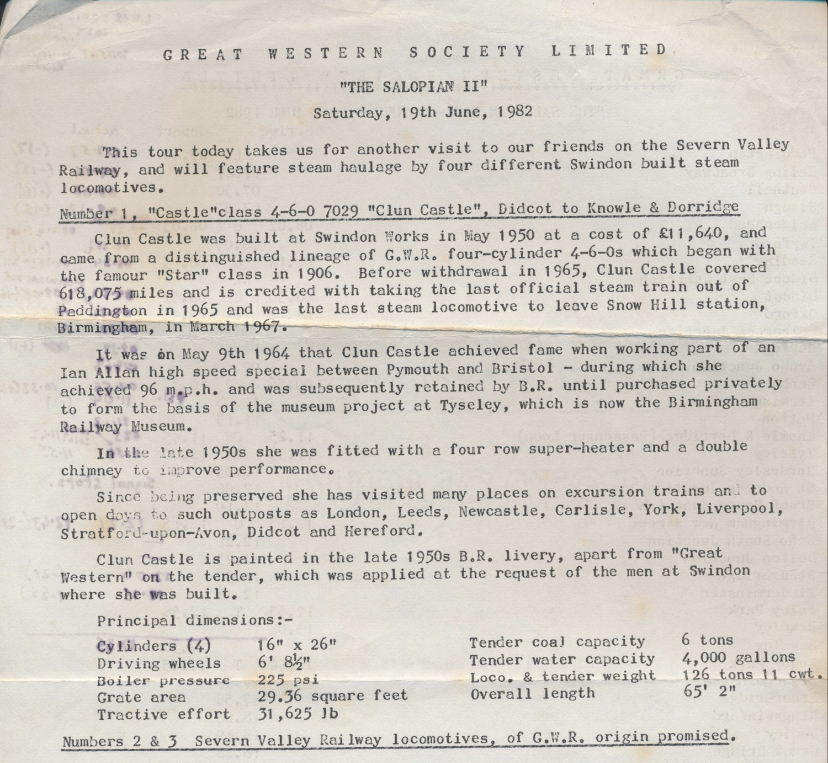
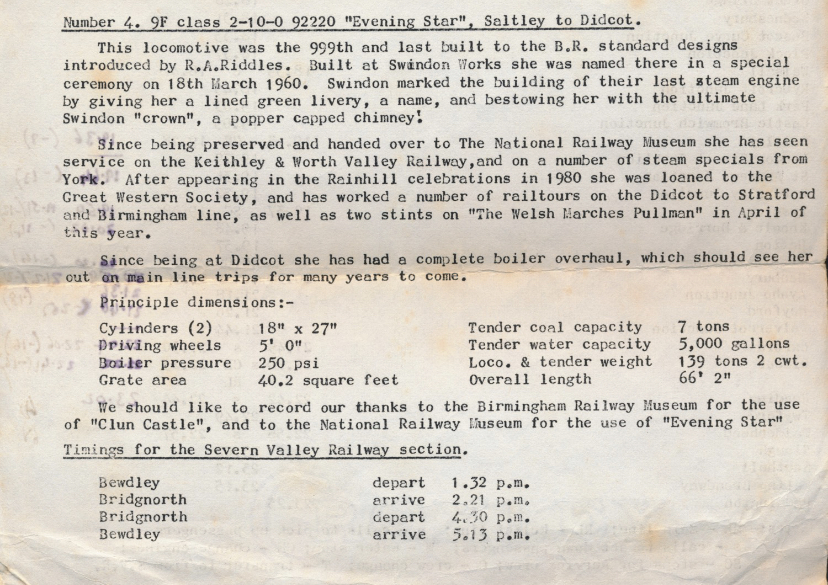
    Alongside the Cornwall photographs above, the same box of documents contained, amongst other things, a Blake’s 7 ‘Liberator’ model and an old diary. I’ve not been one for keeping a diary, but for six months in 1982, I seemed to have managed it. Tucked inside the diary was a piece of paper from a rail tour I took from London Paddington to the Severn Valley Railway on Saturday 19th June 1982.

    Great Western Society Limited “The Salopian II” information sheet – 19/06/1982
    Great Western Society Limited “The Salopian II” information sheet – 19/06/1982

    This must have been my first visit to the SVR, and I don’t really remember much about the day if I’m honest. So from the pages of a diary not opened in years, here, extracted from amongst references to exams, my sister’s wedding, the Falklands War and working part-time at Bere Regis Motors in Dorchester, is my record of the Great Western Society Limited’s “The Salopian II”:

    Thursday June 10th 1982

    Rail tour tickets for the 19th arrived today. Going with Tony S.
    Adam Ant is number one with ‘Goody Two Shoes’

    Friday June 18th 1982

    At 2245 Tony and I boarded the mail train at Dorchester South. Jon H was there as well, but he’s going off somewhere else when we get to London. 

    There was talk about the mail train being taken off soon. If so, we will have problems if we want an overnight jaunt to connect with rail tours departing London in the future. 

    Saturday June 19th 1982

    The locomotive which hauled the mail train from Dorchester, 33118, came off at Eastleigh where it was replaced by 73122. We arrived at London Waterloo right-time and then, together, Jon, Tony and I took a black cab across to Euston. At 0600 we went our separate ways with Jon heading to Kings Cross while Tony and I undertook the two and a half mile stroll to Paddington railway station. The weather was dismal , but at least it didn’t pour down with rain.

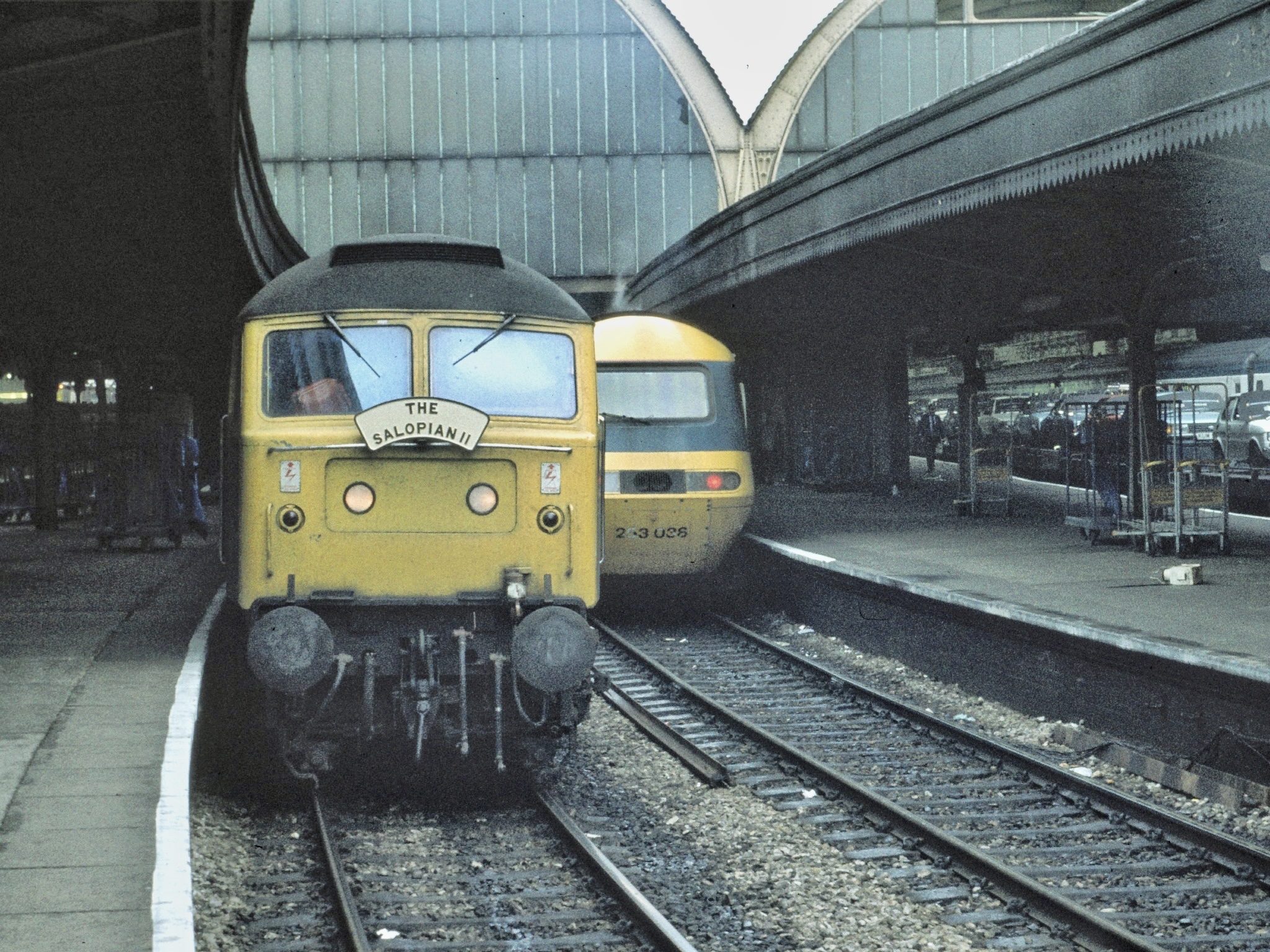
    At Paddington, we were due to depart at 0740 but at the appointed time we were surprised to see our train loco; 47532, being taken off the stock at 0725 and taken away.

    Class 47 No. 47532 at the head of “The Salopian II” rail tour at London Paddington prior to being removed from the train. HST Class 43 Power Car No. 43145 is on the adjacent track – 19/06/1982

    We eventually left at 0757 with the class 47 having been replaced by 50012.

    Class 50 No. 50012 ‘Benbow’ approaches London Paddington to take over “The Salopian II” rail tour. The locomotive would be withdrawn from service in January 1989 and cut up by Vic Berry in Leicester by July of that year – 19/06/1982

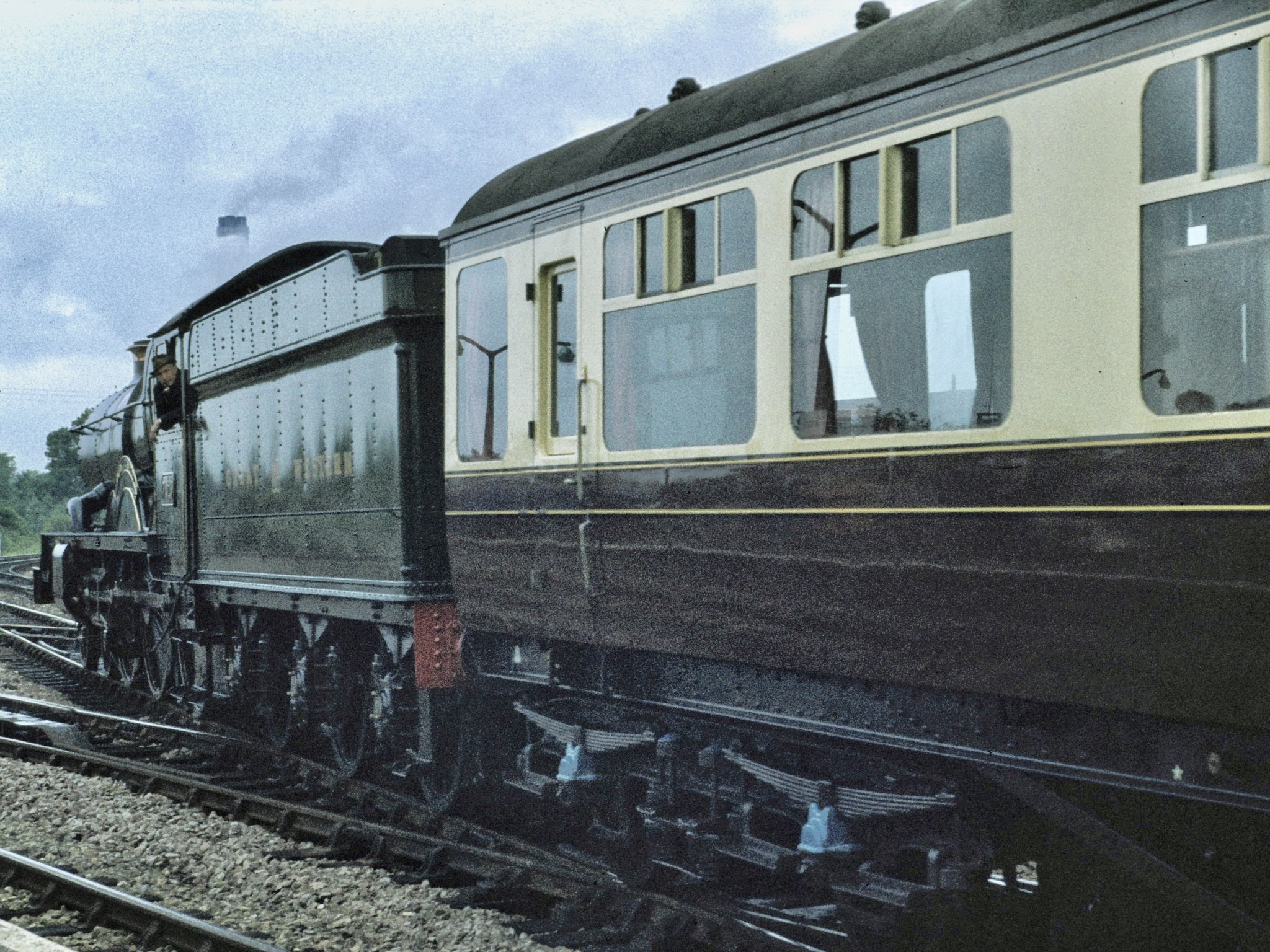
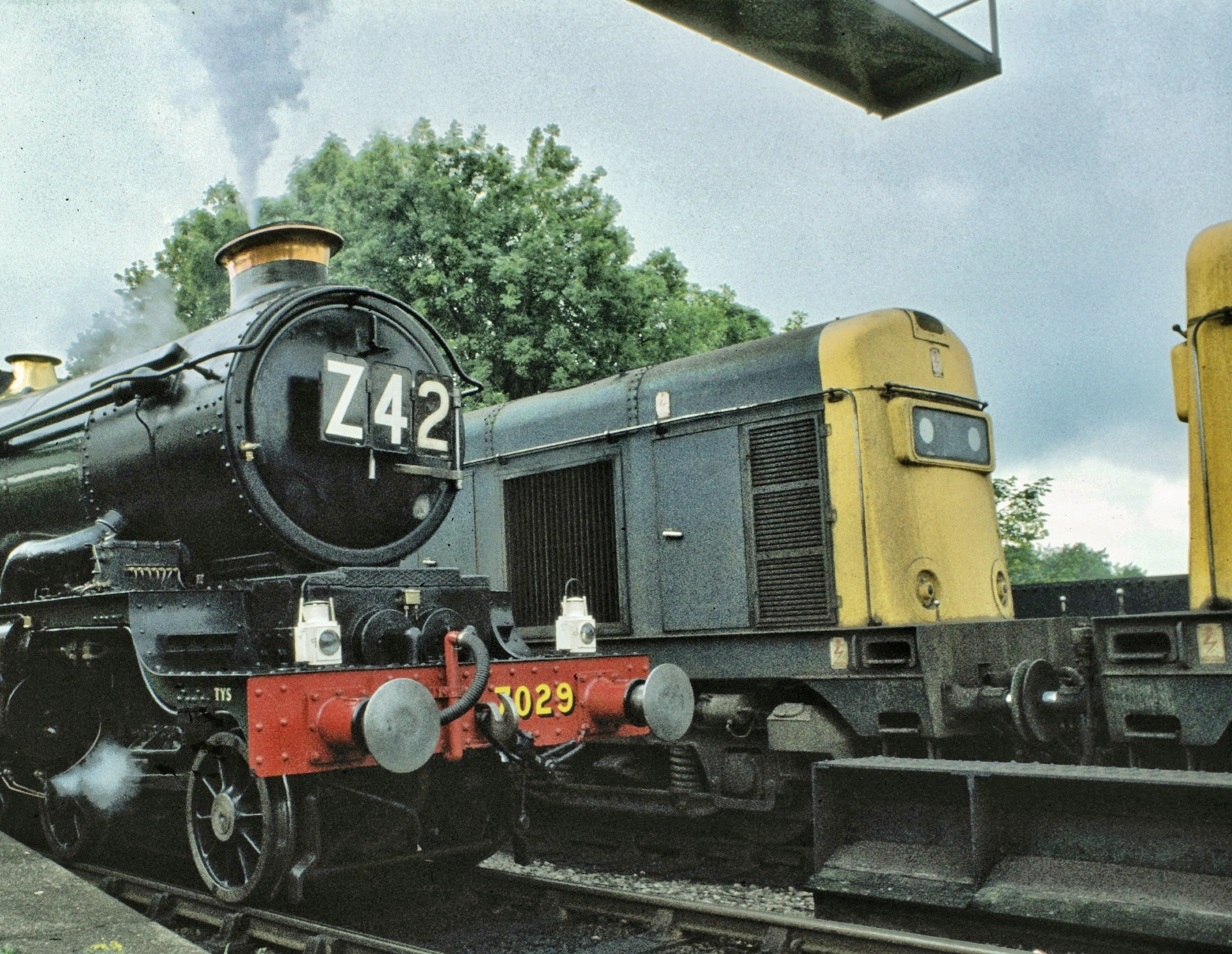
    By the time we arrived at Didcot we were 27 minutes down on schedule. But a quick locomotive changeover meant this was reduced to 16 minutes when we left behind 7029 ‘Clun Castle’.

    GWR 4073 Class 4-6-0 No. 7029 ‘Clun Castle’ backs onto “The Salopian II” at Didcot – 19/06/1982
    GWR 4073 Class 4-6-0 No. 7029 ‘Clun Castle’ at Didcot – 19/06/1982
    GWR 4073 Class 4-6-0 No. 7029 ‘Clun Castle’ at Didcot – 19/06/1982
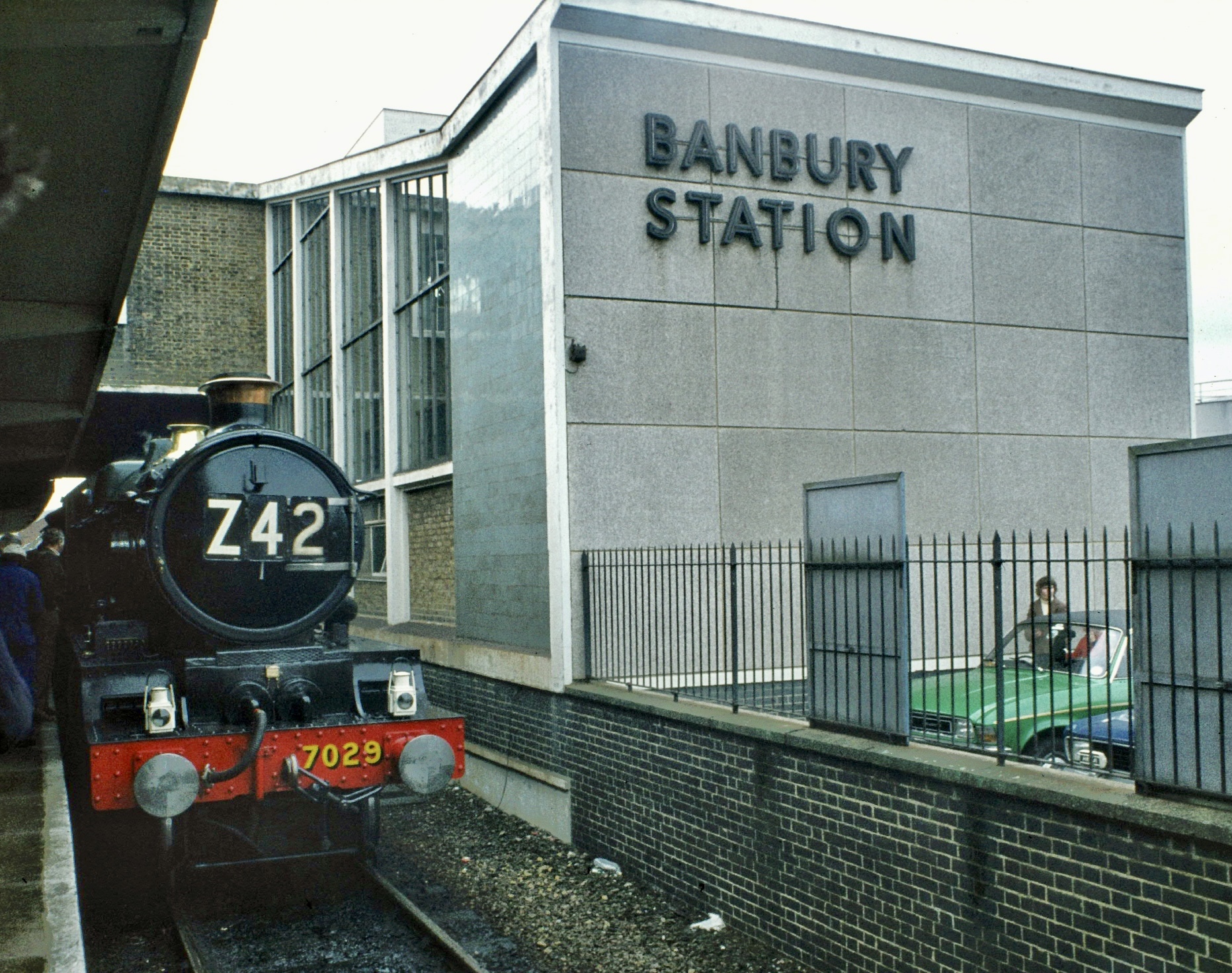
    GWR 4073 Class 4-6-0 No. 7029 ‘Clun Castle’ stopped at Banbury for a water stop – 19/06/1982
    Class 33 No. 33025 ‘Sultan’ in the bay platform at Banbury as No. 7029 ‘Clun Castle’, having drawn forward from the previous image, takes on water – 19/06/1982

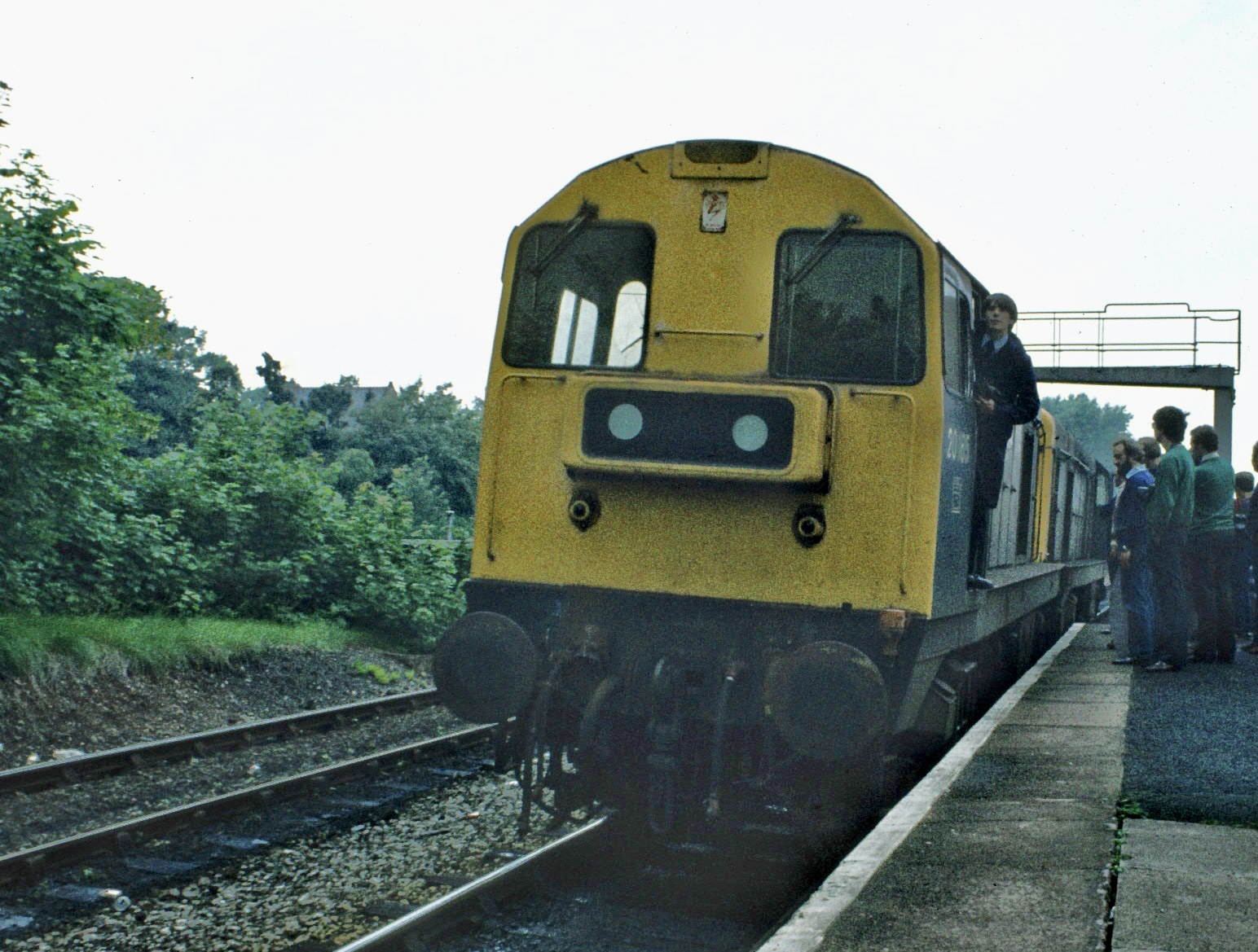
    By the time of our next locomotive changeover the ‘Castle’ had managed to make up the deficit and we arrived bang on time allowing 20165 and 20167 to take us forward to Bewdley on the Severn Valley Railway where we still managed to arrive 20 minutes late!

    GWR 4073 Class 4-6-0 No. 7029 ‘Clun Castle’ alongside Class 20 No.’s 20165 and 20167 which took over “The Salopian II” at Dorridge – 19/06/1982
    Class 20 No.’s 20165 and 20167 backing onto “The Salopian II” at Dorridge – 19/06/1982

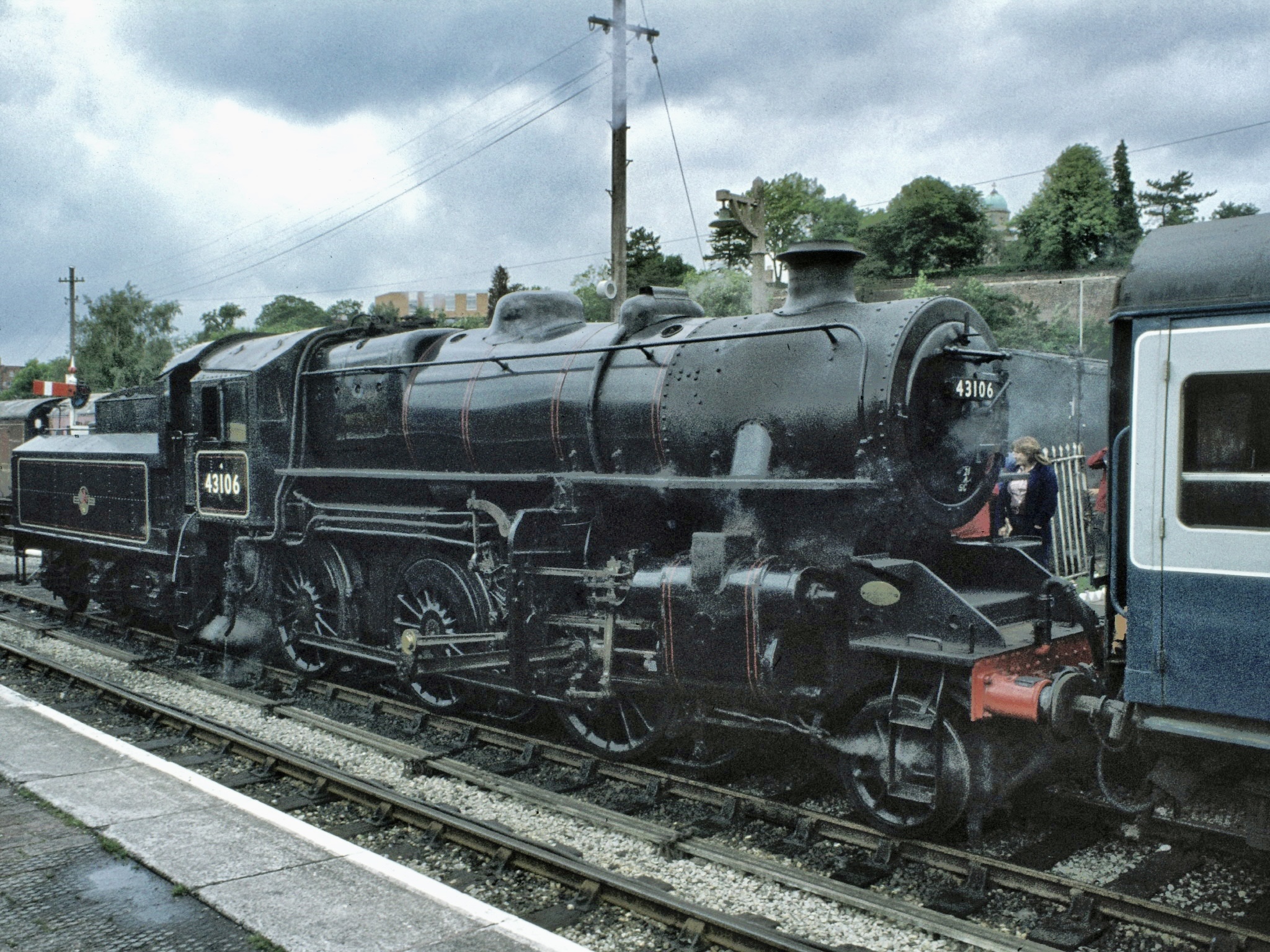
    On the SVR we were hauled by 43106 from Bewdley to Dorridge and return. We had a couple of hours to look around the shed at Bridgnorth and get refreshments.

    While on Severn Valley Railway metals our train was hauled by LMS Ivan Class 4 No. 43106, the only surviving member of the class. Seen here at Bridgnorth – 19/06/1982
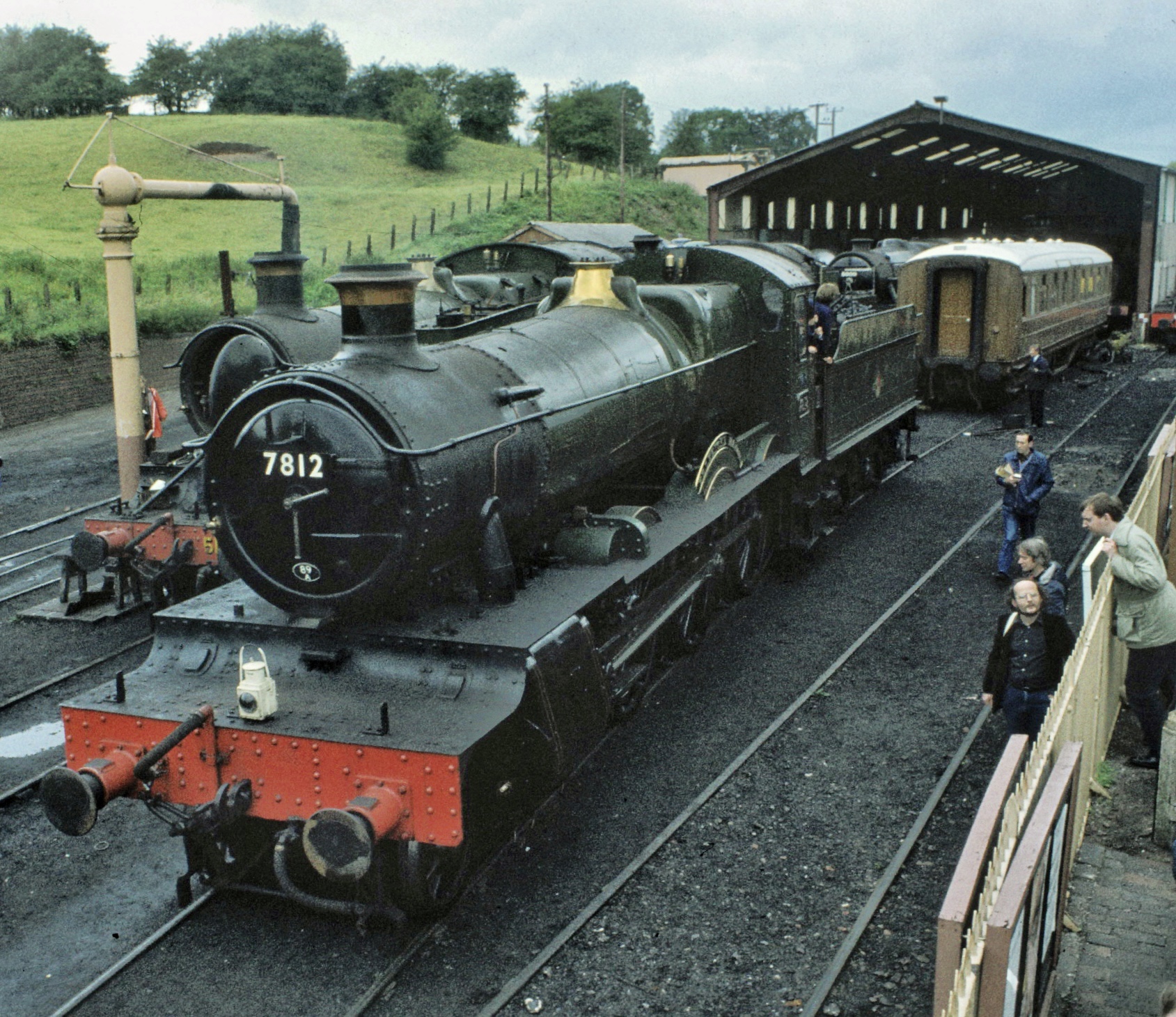
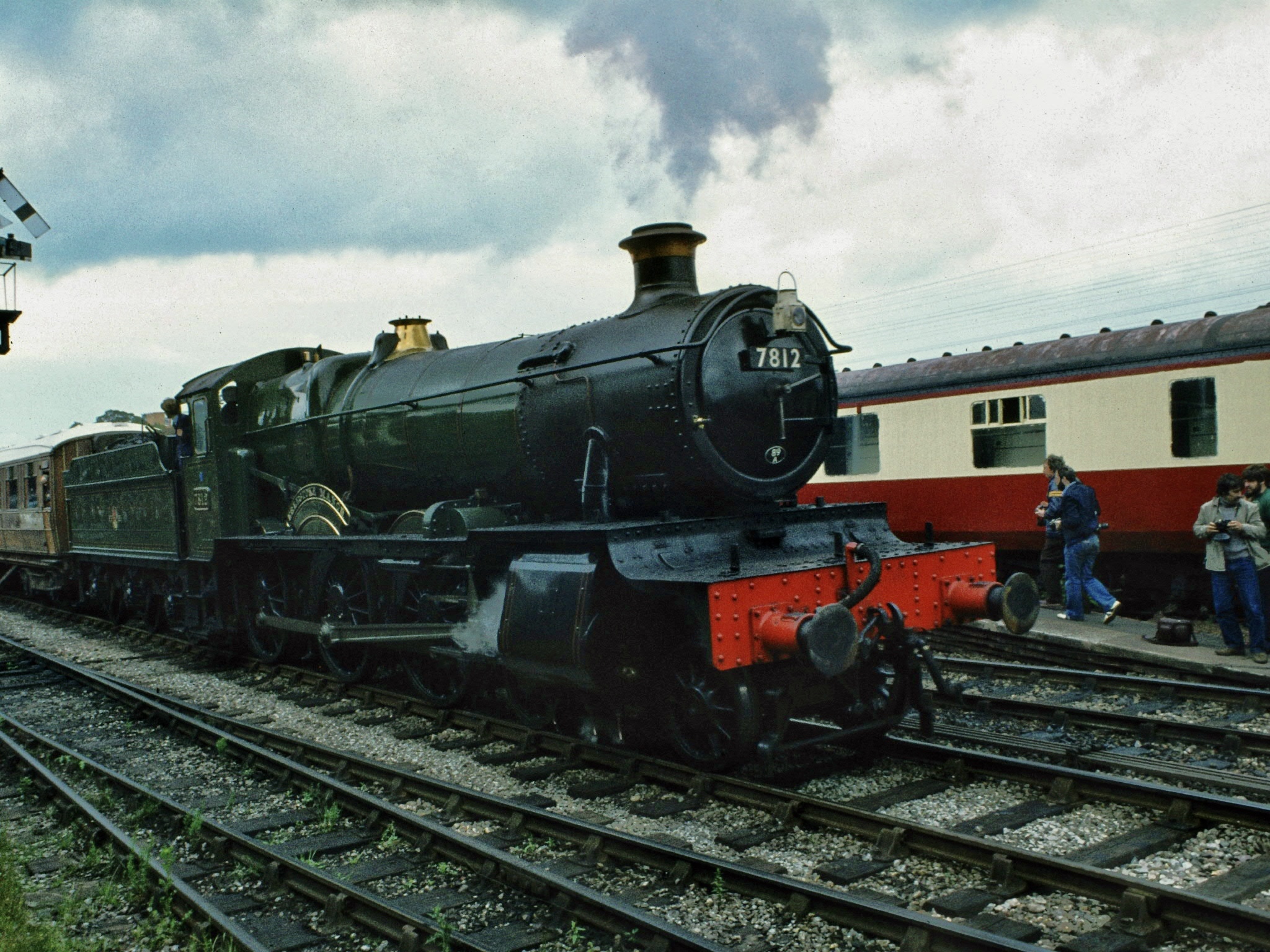
    GWR 7800 Class 4-6-0 No. 7812 ‘Erlestoke Manor’ at Bridgnorth – 19/06/1982
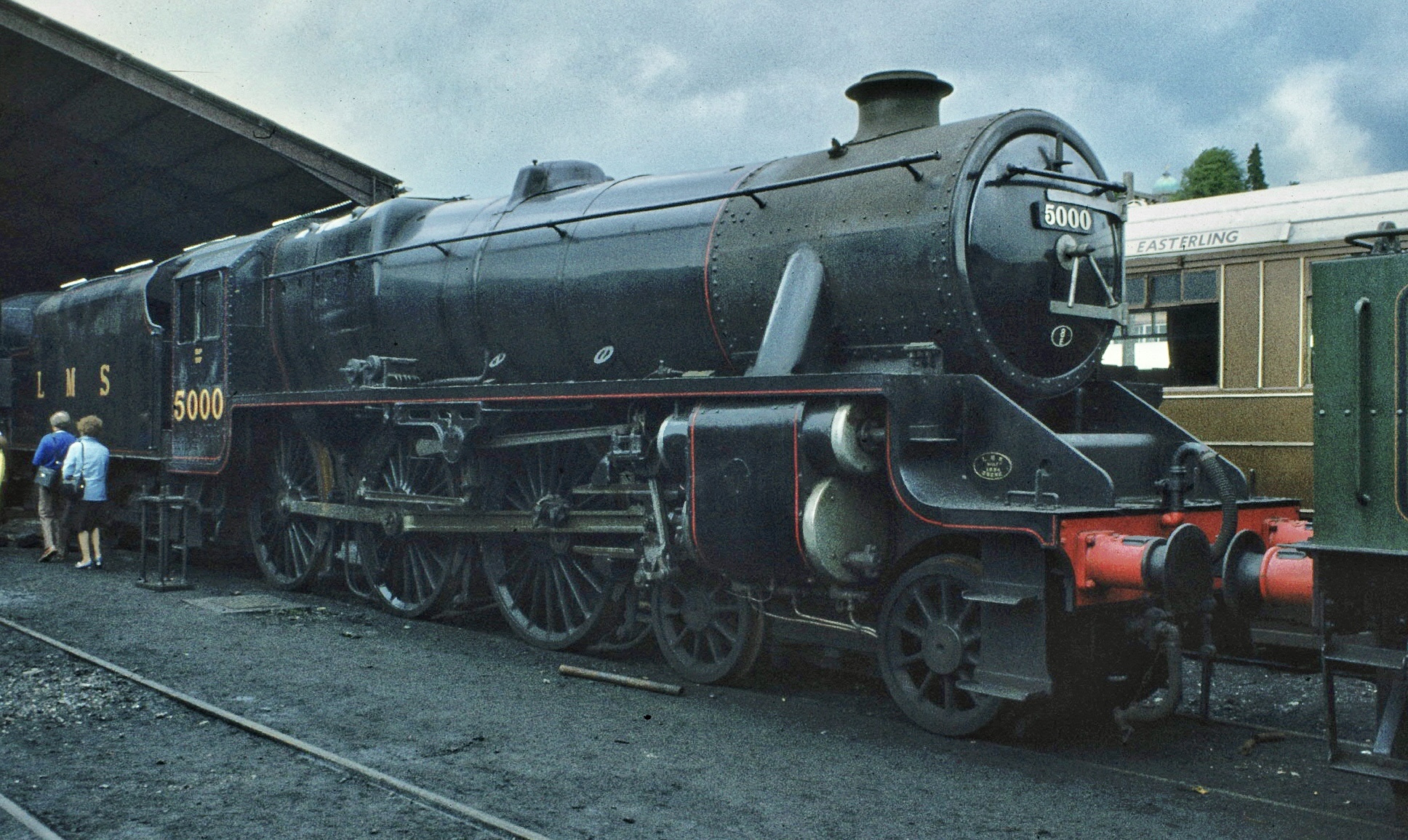
    LMS Stanier Class 5 4-6-0 No. 5000 at Bridgnorth. No. 5000 is part of the National Collection and is currently on static display at the Shildon Locomotion Museum in County Durham – 19/06/1982
    Longmoor Military Railway No. 600 ‘Gordon’ (named after General Gordon of Khartoum) was. built in 1943 for the War Department and is seen here at Bridgnorth. In 1957, during the Suez Crisis, ‘Gordon’ worked highly secretive trains between Longmoor Military Base and Southampton. The locomotive is currently on static display on the SVR at The Engine House, Highley – 19/06/1982
    GWR 7800 Class 4-6-0 No. 7812 ‘Erlestoke Manor’ at Bridgnorth – 19/06/1982
    GWR 7800 Class 4-6-0 No. 7812 ‘Erlestoke Manor’ at Bridgnorth – 19/06/1982

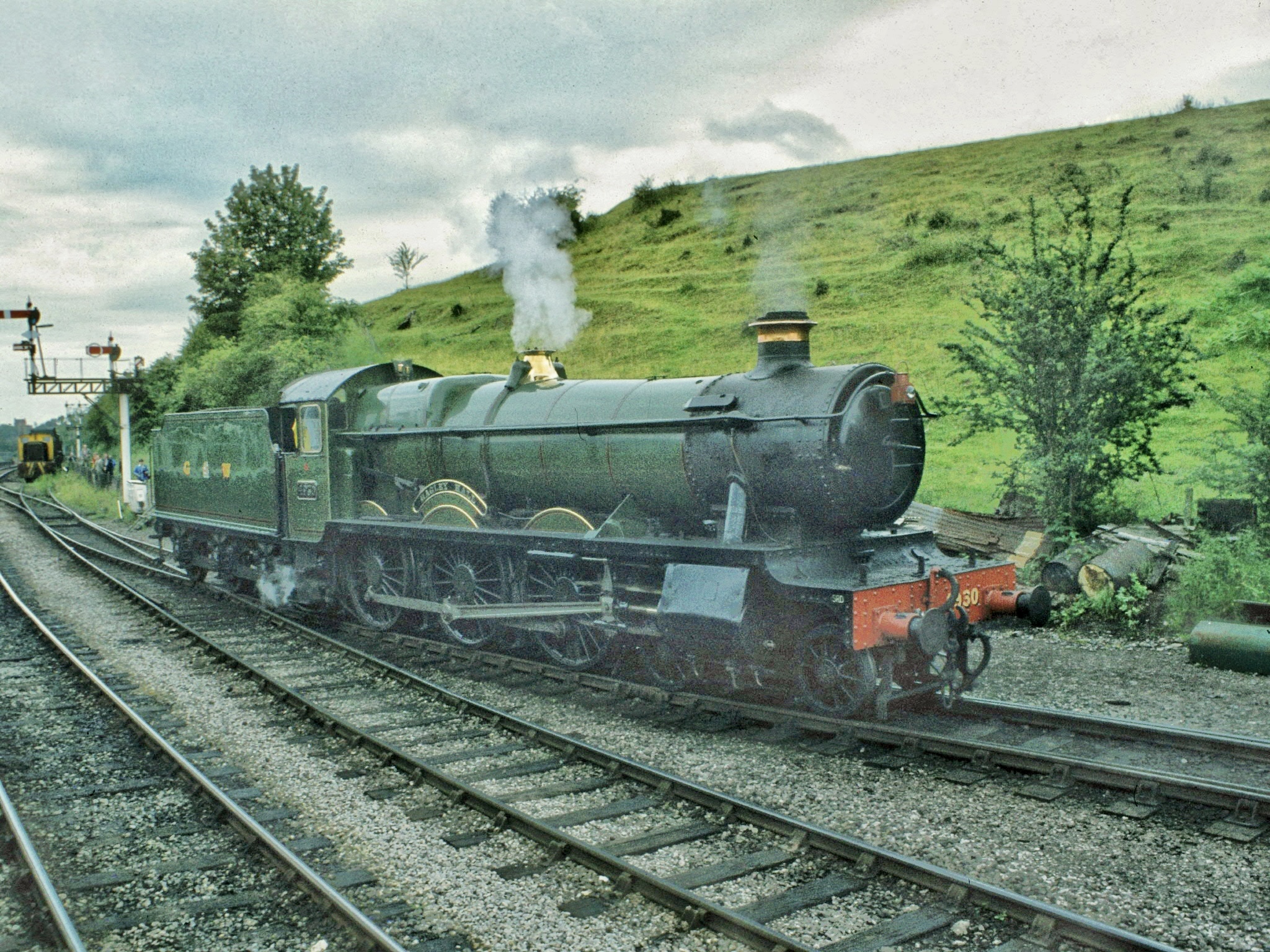
    I managed to get a piece of smut in my in my eye from 4930 ’Hagley Hall’ which I just couldn’t get out. [2023 note: I’m thinking No. 4930 may have hauled us one way on the SVR, but my diary says No. 43106 worked the train in both directions]

    GWR Collett 4-6-0 Hall Class No. 4930 ‘Hagley Hall’ at Bridgnorth. She was built in 1929 at Swindon Works and originally allocated to Wolverhampton Stafford Road – 19/06/1982
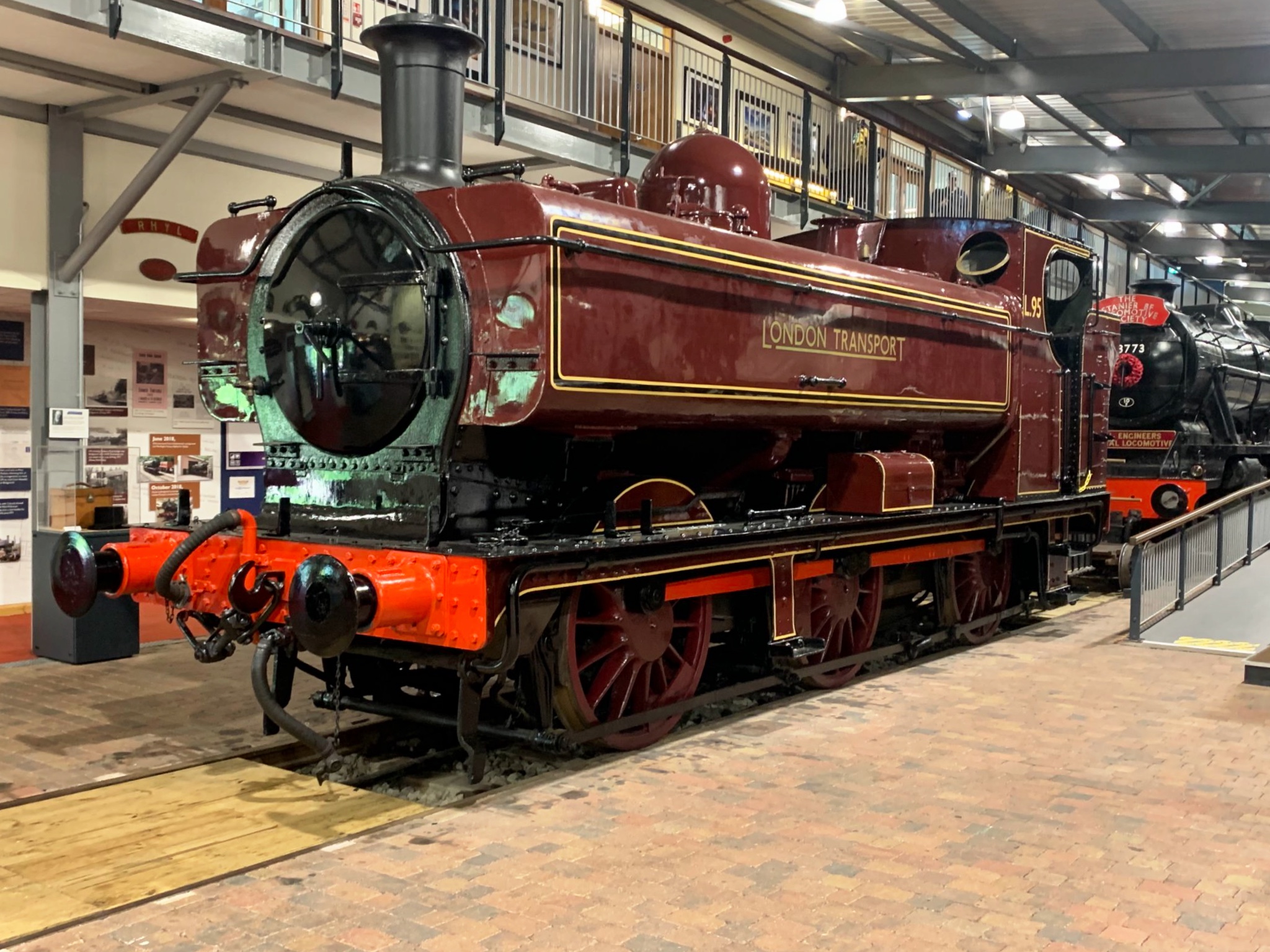
    GWR Collett 5700 Class 0-60PT “Pannier Tank” No. 5764 entered service at London’s Old Oak Common in 1929 and was later one of a number of the class sold to London Transport following withdrawal from British Rail in 1960. She is currently on static display in London Transport guise, numbered L95, at The Engine House, Highley. She is seen here in GWR livery at Bridgnorth – 19/06/1982

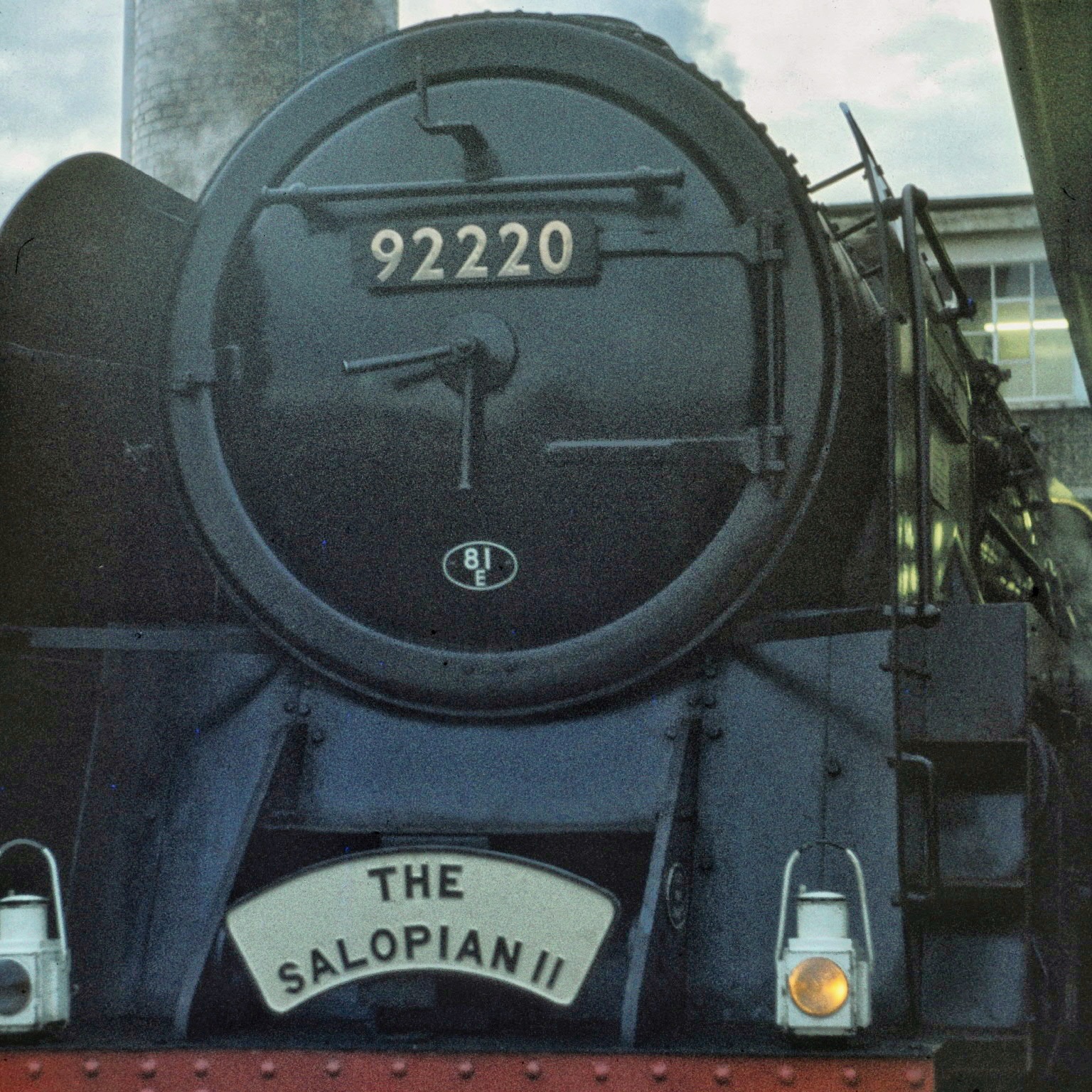
    Returning to Bewdley, the 20’s took control of our train once again and regained all lost time and even gained 15 minutes. But despite these efforts, the quarter hour and more was lost due to a number of signal stops. In my opinion the star of the day; 92220 ‘Evening Star’, to be precise, replaced the diesel power at Saltley and despite working hard we arrived back at Didcot some 16 minutes down.

    BR Standard Class 9F No. 92220 ‘Evening Star’ during a water stop at Banbury. No. 92220 was the last steam locomotive to be built at for British Railways and was earmarked for preservation before she entered service in March 1960. She hauled the last Pines Express on the Somerset & Dorset line on 8th September 1962. ‘Evening Star’ had a working life of five years before being withdrawn from service in March 1965 after sustaining damage in a shunting incident at Cardiff Docks. She was overhauled and restored at Crewe Works following withdrawal working in preservation until the late 1980’s. She is now on static display at the Railway Museum in York and one of nine existing locomotives of a class which numbered 251- 19/06/1982

    50040 took us forward to Reading where Tony and I de-trained for our connection down to Basingstoke and home. 

    Sunday June 20th 1982

    The down Mail arrived into Basingstoke at Midnight. We were extremely lucky to have made it as our connecting service train from Reading should have left at 2300 and “The Salopian II” arrived at 2302. We met Paul E and Mark B, two rail enthusiasts from Charminster who had been part of the group who went to Plymouth Laira with us in April. This time they had been to Calais with Mark’s parents. A class 73 took us from Basingstoke to Eastleigh where 33010 came on to bring us into Dorchester South just after 0300 where we all said our good-byes and headed home to our beds. 

    I was up again at 0900 in order to see some excursion trains.

    Class 33 No. 33029 approaching Dorchester South – 20/06/1982
    Class 47 No. 47526 at Dorchester West – 20/06/1982

    The piece of smut in my eye from ‘Hagley Hall’ was still there, so I called on [my brother], who was out. Anyway, he appeared at half four and spent an hour moving the smut from the blue bit of my eye to the edge and finally relief!

    GBRf Class 73 No.’s 73964 ‘Jeanette’ and 73961 ‘Alison’ were out on a GB Railfreight staff special the “Tonbridge Trailblazer” in June 2016 running from Ashford International to Weston-super-Mare. The ED’s are seen here at Bath Spa on the return leg working 1Z63 1725 Weston-super-Mare to Ashford International – 18/06/2016

    Postscript:

    Longmoor Military Railway No. 600 ‘Gordon’ as seen in 2023 at The Engine House, Highley – 20/05/2023
    London Transport No. L95 (the former GWR Collett 5700 Class 0-60PT “Pannier Tank” No. 5764) as seen in 2023 at The Engine House, Highley – 20/05/2023
    It’s goodbye from me, and a goodbye from Yoshi! Thanks for reading. We appreciate your comments, contributions, updates and corrections. See you soon!
  • Yoshi Goes To The West Somerset Railway

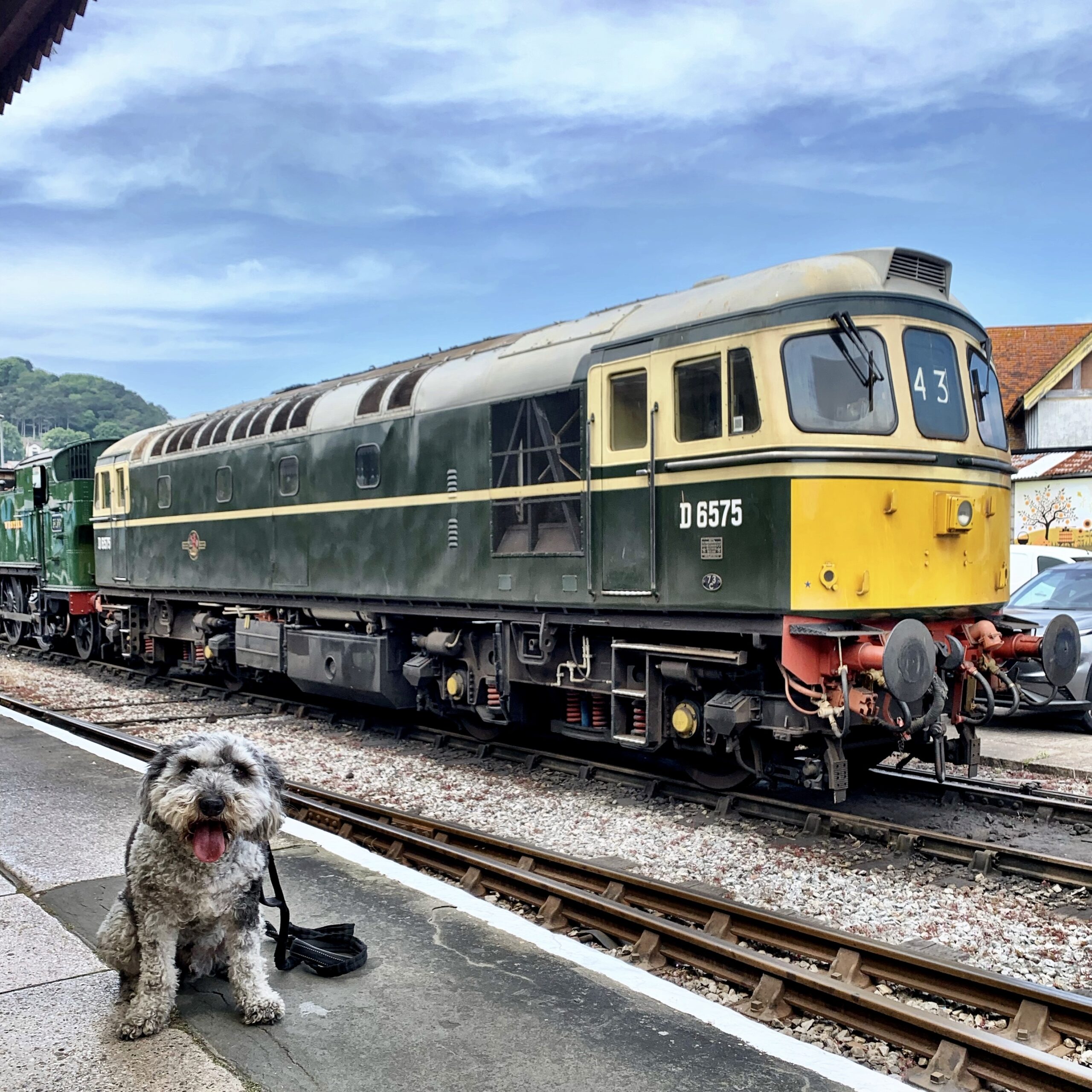
    Yoshi at Minehead on the West Somerset Railway with Class 33 Crompton No. D6575 (33057) – 09/06/2023

    This week we had the first Class 69’s to Dorchester and the second ever Class 40 to visit Weymouth, the first occasion being Forty years ago. So that’s quite appropriate! 

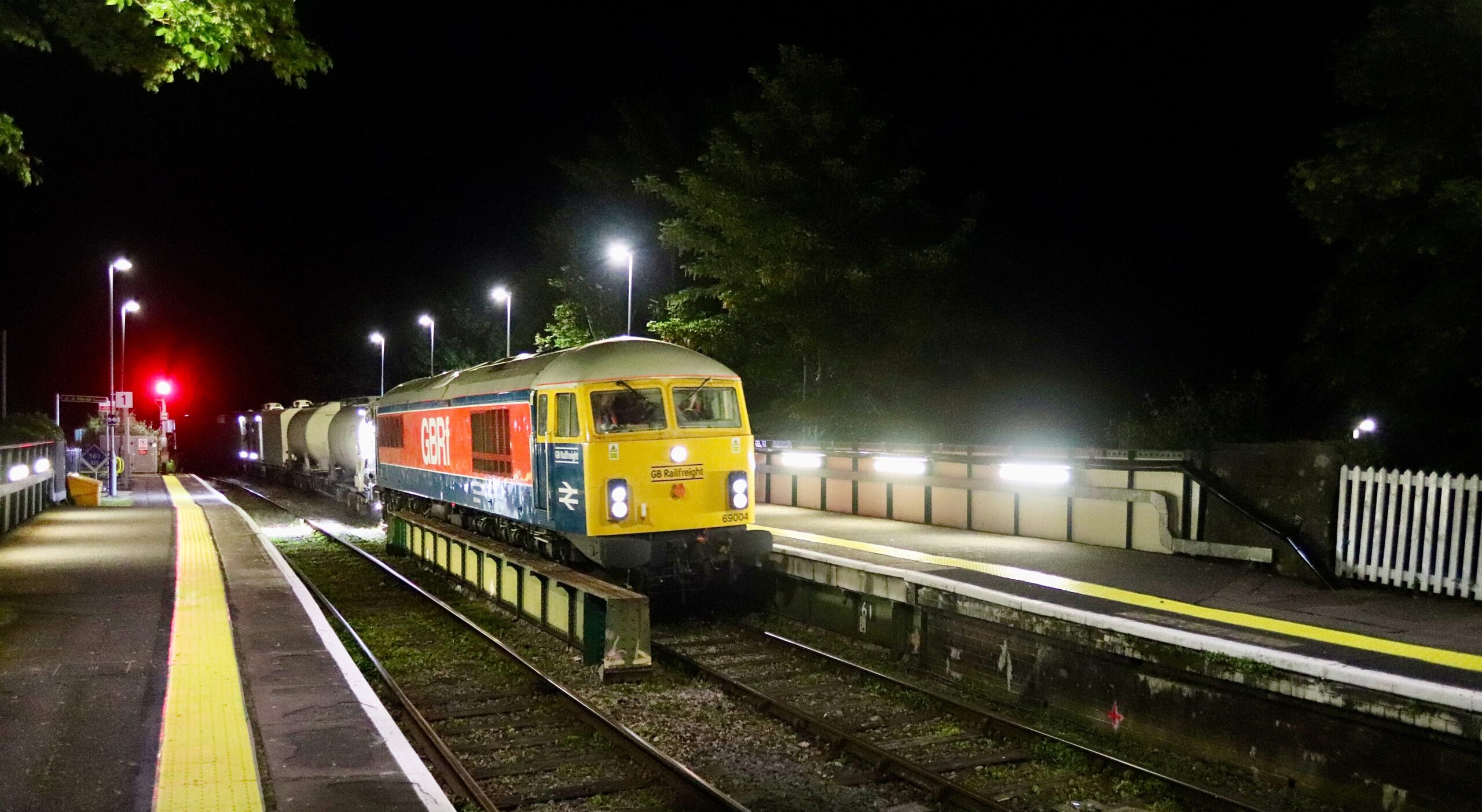
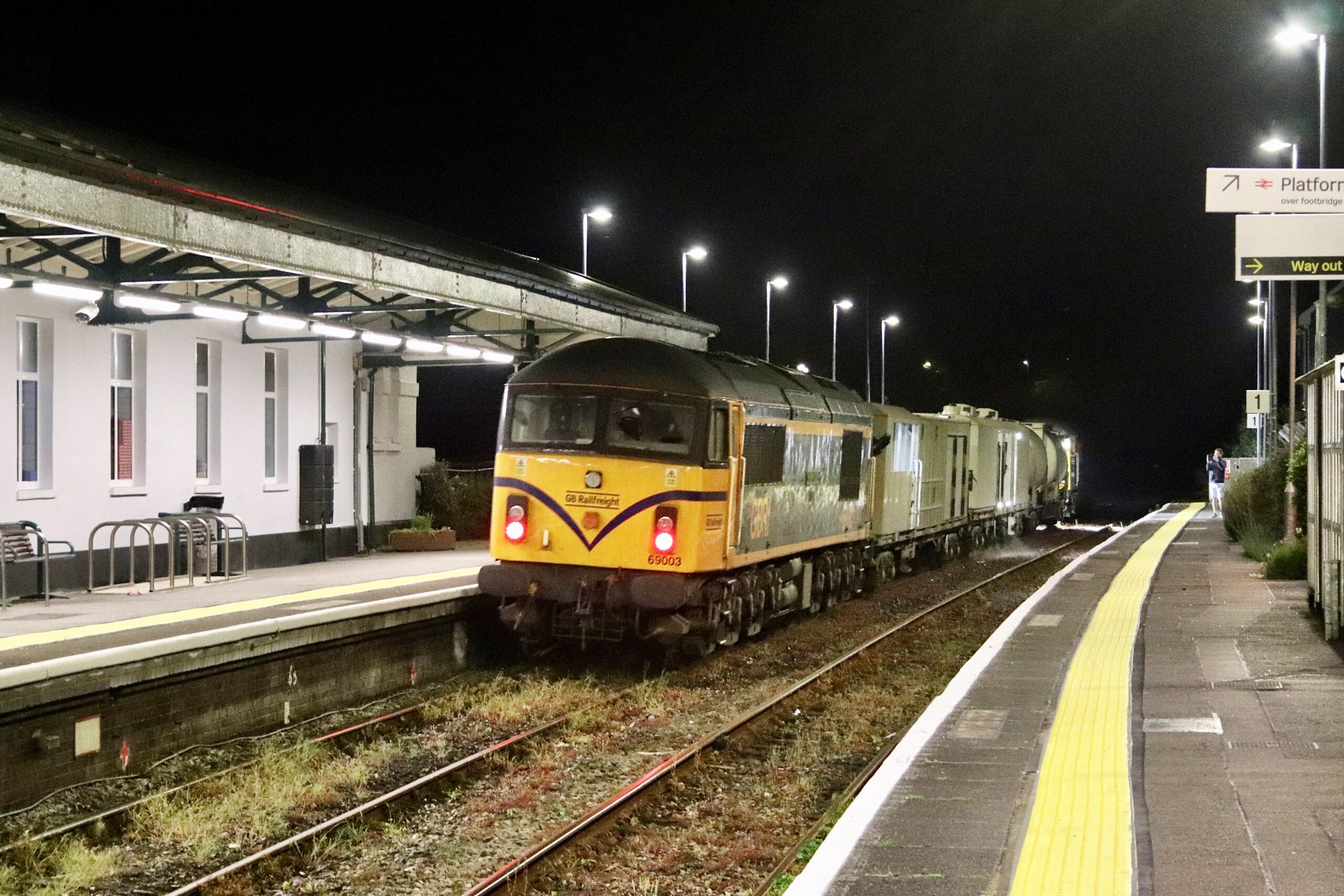
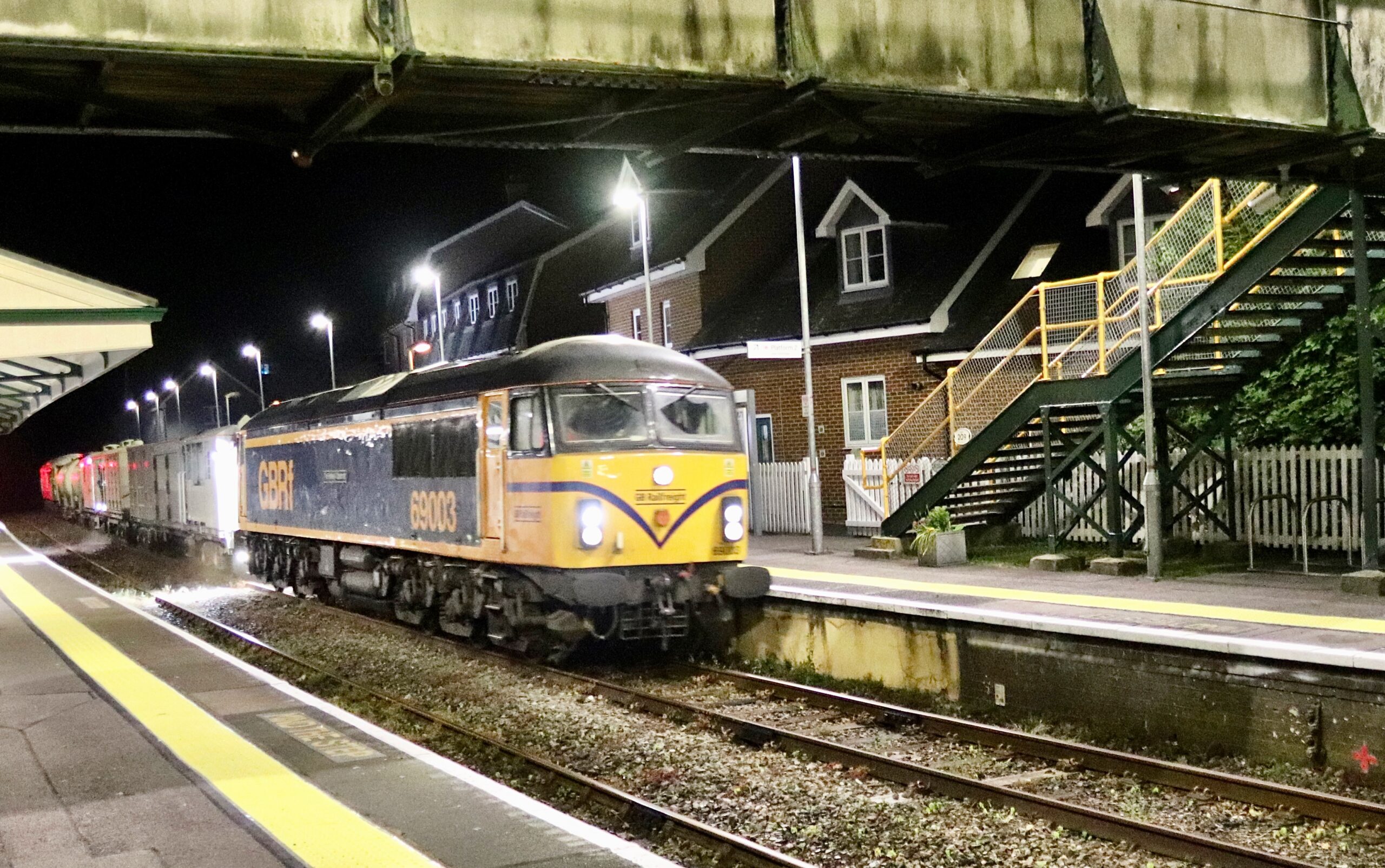
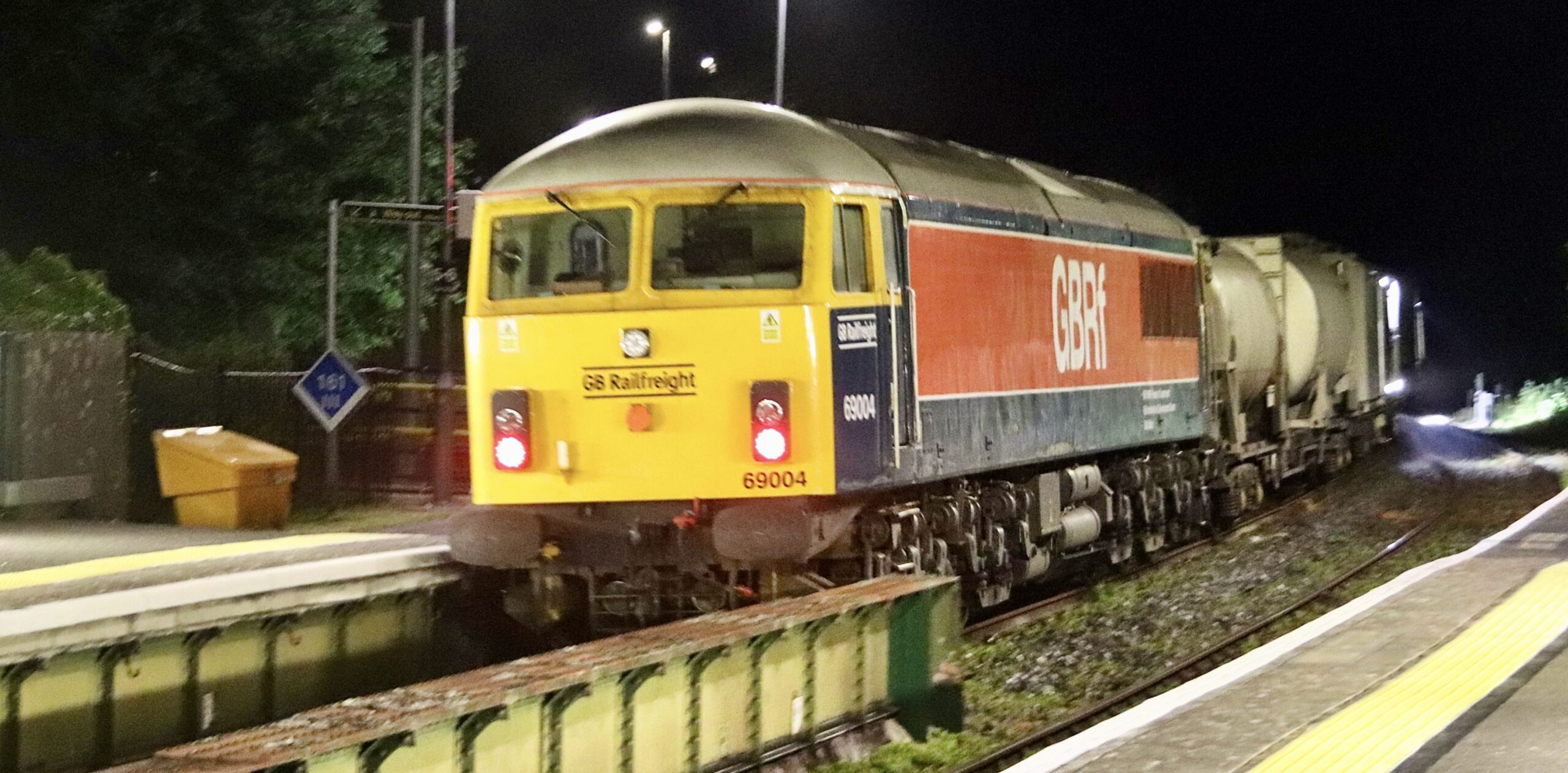
    Setting the alarm for stupid o’clock on Friday morning I was in Dorchester in good time to see GBRf Class 69 No.’s 69004 and 69003 ‘The Railway Observer’ working 3Q00 2355 Exeter Riverside N.Y. to Exeter Riverside N.Y. weedkiller which was scheduled to reverse at Dorchester Junction at 0221 – 0229. I had a bit of a longer wait than planned at Dorchester West as the train arrived 37 minutes down on schedule. The vegetation control set was scheduled to visit Weymouth via Dorchester South on Monday 12th June with the train having moved to Eastleigh over the weekend. Unfortunately a tragic incident between Poole and Bournemouth caused disruption to services and the train was cancelled.

    In its retro Railway Technical Centre livery, GBRf Class 69 No. 69004 crosses the road bridge at Dorchester West working 3Q00 2355 Exeter Riverside New Yard to Exeter Riverside New Yard – 09/06/2023
    Class 69 No. 69003 ‘The Railway Observer’ at the rear of 3Q00 2355 Exeter Riverside New Yard to Exeter Riverside New Yard passing through Dorchester West – 09/06/2023
    The Weedkilling train passed through Dorchester West and reversed at Dorchester Junction. Class 69 No. 69003 ‘The Railway Observer’ now heads up 3Q00 2355 Exeter Riverside New Yard to Exeter Riverside New Yard on the return journey to Devon – 09/06/2023
    GBRf Class 69 No. 69004 at Dorchester West working 3Q00 2355 Exeter Riverside New Yard to Exeter Riverside New Yard – 09/06/2023
    The first Class 69’s to Dorchester – 09/06/2023

    Later the same Friday, Yoshi and I headed over the county border to the West Somerset Railway for the second day of their 2023 diesel gala.

    The West Somerset Railway (WSR) is a 22 miles in length and is the longest standard gauge heritage railway in the UK. It originally opened in 1862 between Taunton and Watchet. In 1874 it was extended from Watchet to Minehead by the Minehead Railway. At first the railway was a single track line with improvements required in the first half of the 20th century to cater for the increase in tourism to the Somerset coast. The line was closed by British Rail in 1971 and reopened in 1976 as a heritage line.

    Interestingly, Wikipedia notes: “In 1845, when the Bristol and Exeter Railway (B&ER) had recently completed its main line, there were proposals for a number of different and competitive railway schemes in west Somerset. A Bristol and English Channels Direct Junction Railway was proposed as a link from Watchet through Stogumber and Bishops Lydeard to Bridport on the south coast, which would be an alternative to ships taking a long and dangerous passage around Land’s End. This prompted the promotion of a connecting line from Williton to Minehead and Porlock, a line designed to attract tourists to Exmoor. Shortly afterwards, a Bristol and English Channels Connection Railway was suggested from Stolford to Bridport which would have passed through the Quantock Hills near Crowcombe. Alternatively, the Bridgwater and Minehead Junction Railway would link with the B&ER at Bridgwater and run through Williton to Minehead with a branch to Watchet and a connecting Minehead and Central Devon Junction Railway would provide a line to Exeter. An alternative link to South Devon was proposed by the Exeter, Tiverton and Minehead Direct Railway through Dunster and offered an extension to Ilfracombe.” Of course, none of these schemes came to fruition, but it is interesting to speculate on the possible developments of Bridport and West Bay. 

    Unfortunately one of the planned 2023 gala highlights, a double headed Class 35 Hymek hauled train, didn’t transpire on the day I visited as both available examples of the class were deemed out of order. We saw the Hymeks on the diesel depot at Williton and it was good to see that the dedicated band of volunteers and engineers were working hard on getting at least one example operational for the following day.

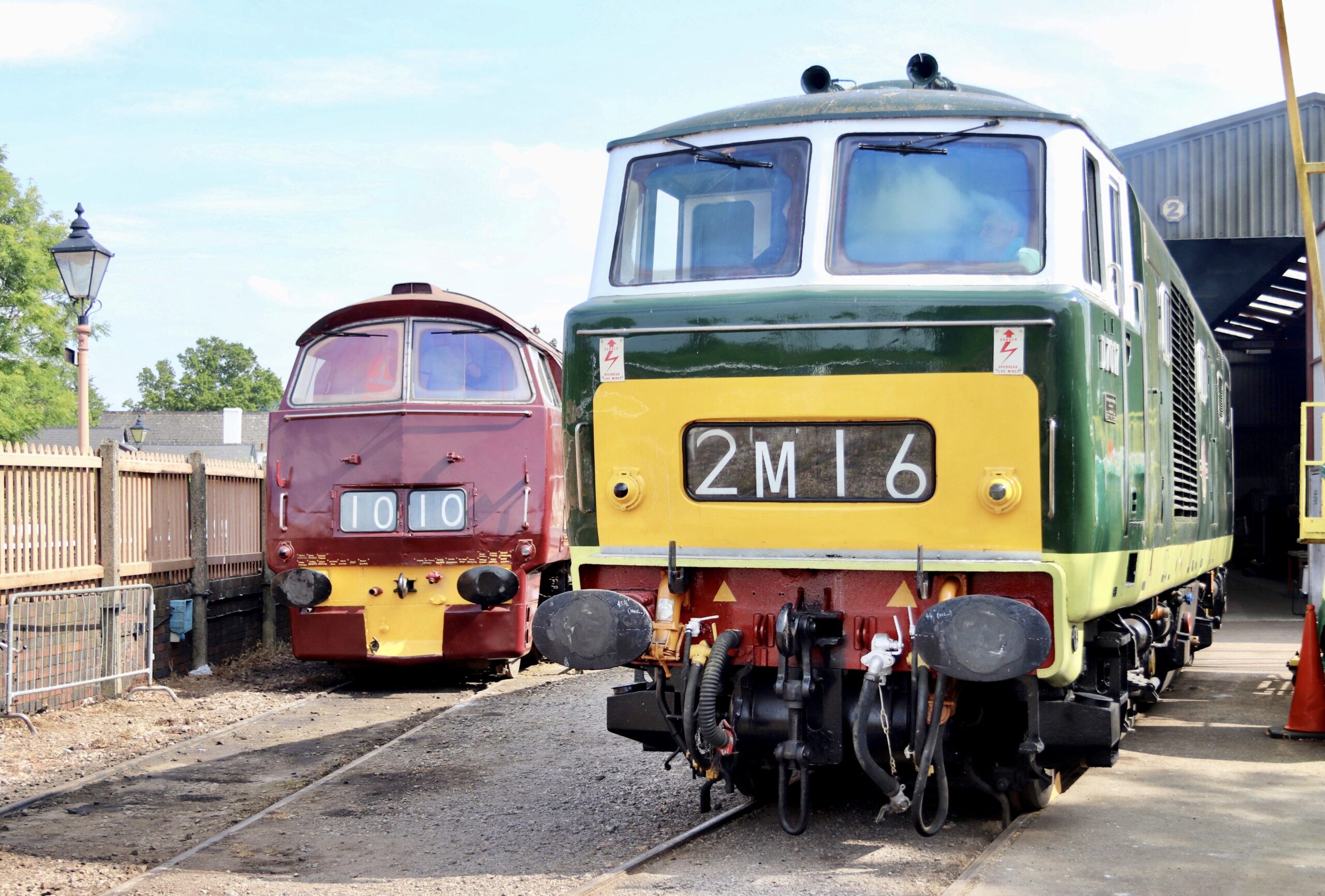
    At Williton depot Class 35 Hymek No. D7017 was being worked on in order to return the locomotive to service. D7017 has been running trains on the West Somerset Railway since 1977. The loco was first moved to Taunton on leaving BR service in 1975, before being moved up to Minehead in 1976 – 09/07/2023

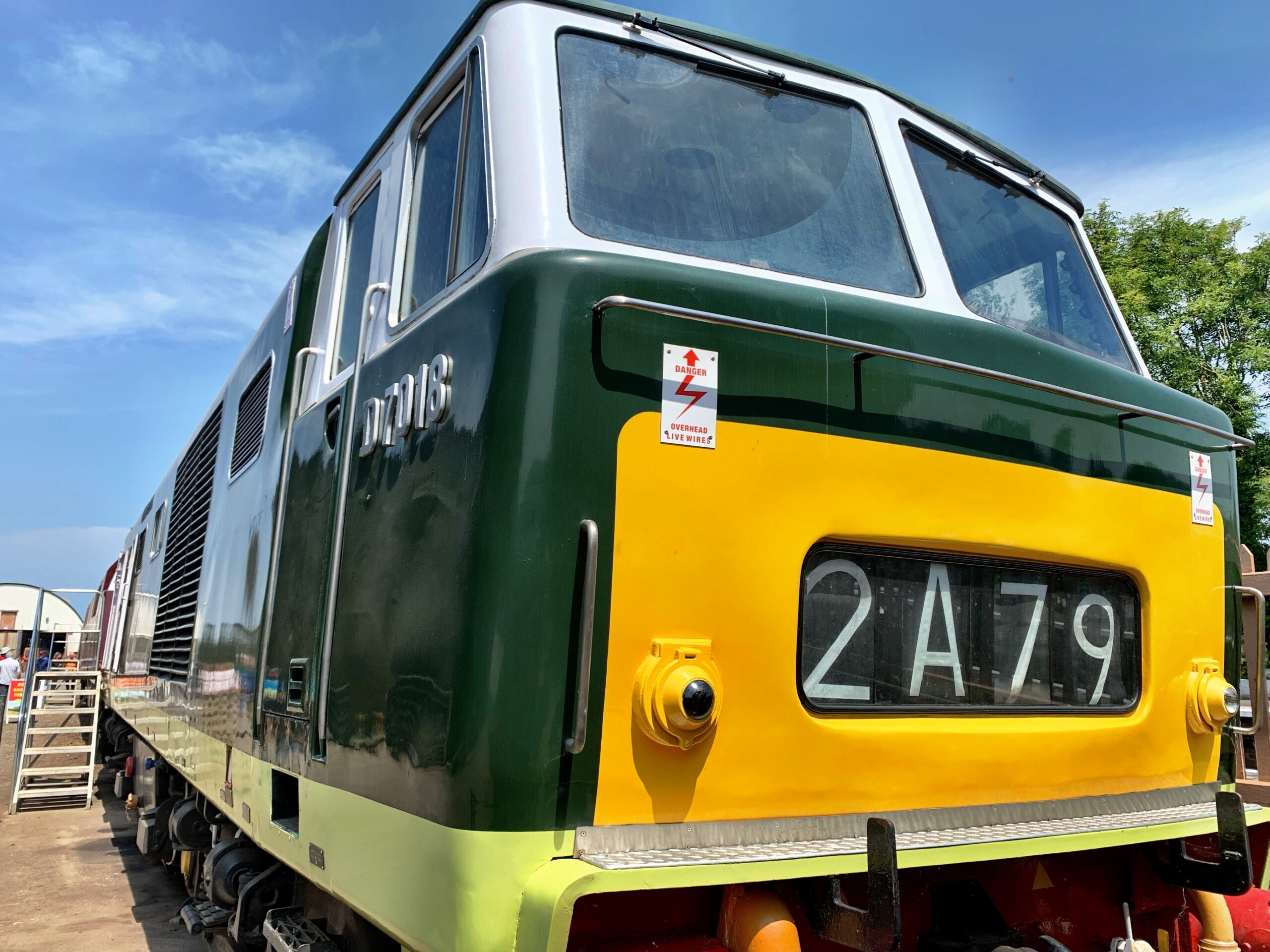
    Introduced into service between 1961 and 1964, the Hymek’s were intended as a medium power mixed traffic locomotive, but were often rostered to deputise for some of BR Western Region’s largest steam locos on 13 and 14-coach trains in their early years. A total of 101 locos were built and were allocated all over the West of England. They settled down to become a successful and capable fleet and weee regular visitors to Weymouth via the route from Yeovil. However the Hymek’s careers were cut short by BR’s standardisation of diesel-electric locomotives. The first withdrawals came in 1971, with some locos scrapped being less than nine years old. Full withdrawal of the fleet was planned for 1973 and a farewell tour, “The Hymek Swansong”, ran in the September of that year. Due to loco shortages, ten Hymek’s lasted until 1975 when they were finally withdrawn. Of these, four examples have survived into preservation; the two WSR based Diesel & Electric Preservation Group (D&EPG) Hymek’s No.’s D7017 and D7018; No. D7029 with the Diesel Traction Group based at the Severn Valley Railway currently undergoing restoration having been out of service since 1987, and No. D7076 with the Bury Hydraulic Group and is set to return to traffic at the East Lancs Railway 2023 Diesel Gala.

    Also not working on the day of our visit was Class 35 No. D7018. Following withdrawal from British Rail in 1975, D7018 was first located at Didcot Railway Centre for a number of years before moving to Williton to join sister locomotive D7017 – 09/06/2023
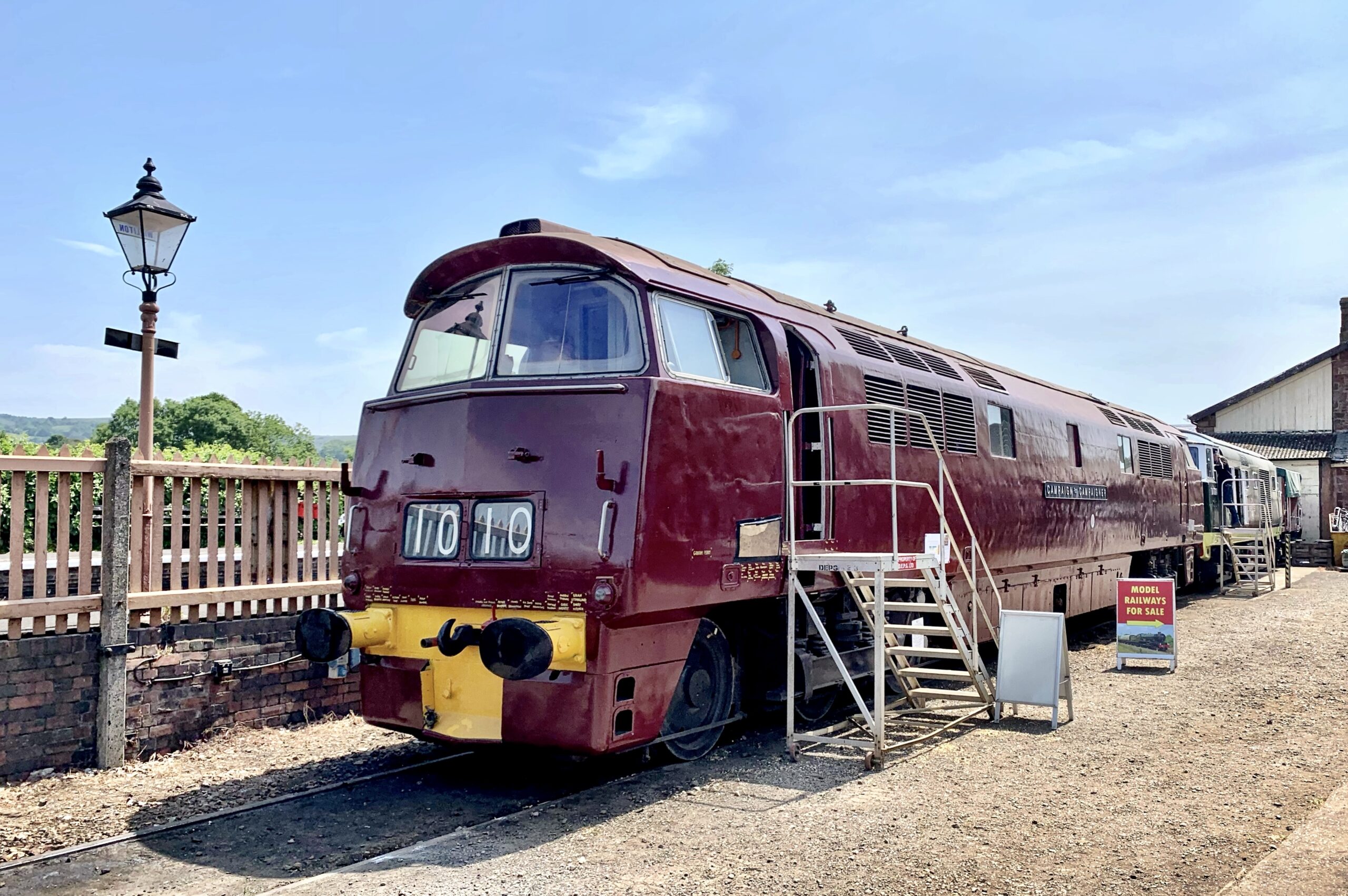
    Class 52 Western Diesel-Hydraulic No. D1010 ‘Western Campaigner’ seen at Williton. She is currently non-operational pending work on transmission and bodywork repair. No. D1010 was stored outside Merehead quarry for a number of years before being preserved by The Diesel & Electric Preservation Group, firstly at Didcot and then moving to the West Somerset Railway. The Western locomotives were the Western Region’s diesel-hydraulic flagship. Designed for express passenger work, they were equally at home on heavy freight. D1010 is one of 74 locos built at either Swindon or Crewe works between 1961 and 1963. All locos were named, each name beginning with the word ‘Western’. They were the last of the Diesel-Hydraulic classes to be withdrawn from service, after being classified as non-standard, the final operational members of the class being withdrawn in 1977 . Seven locomotives of the 74 built were saved for preservation – 09/06/2023

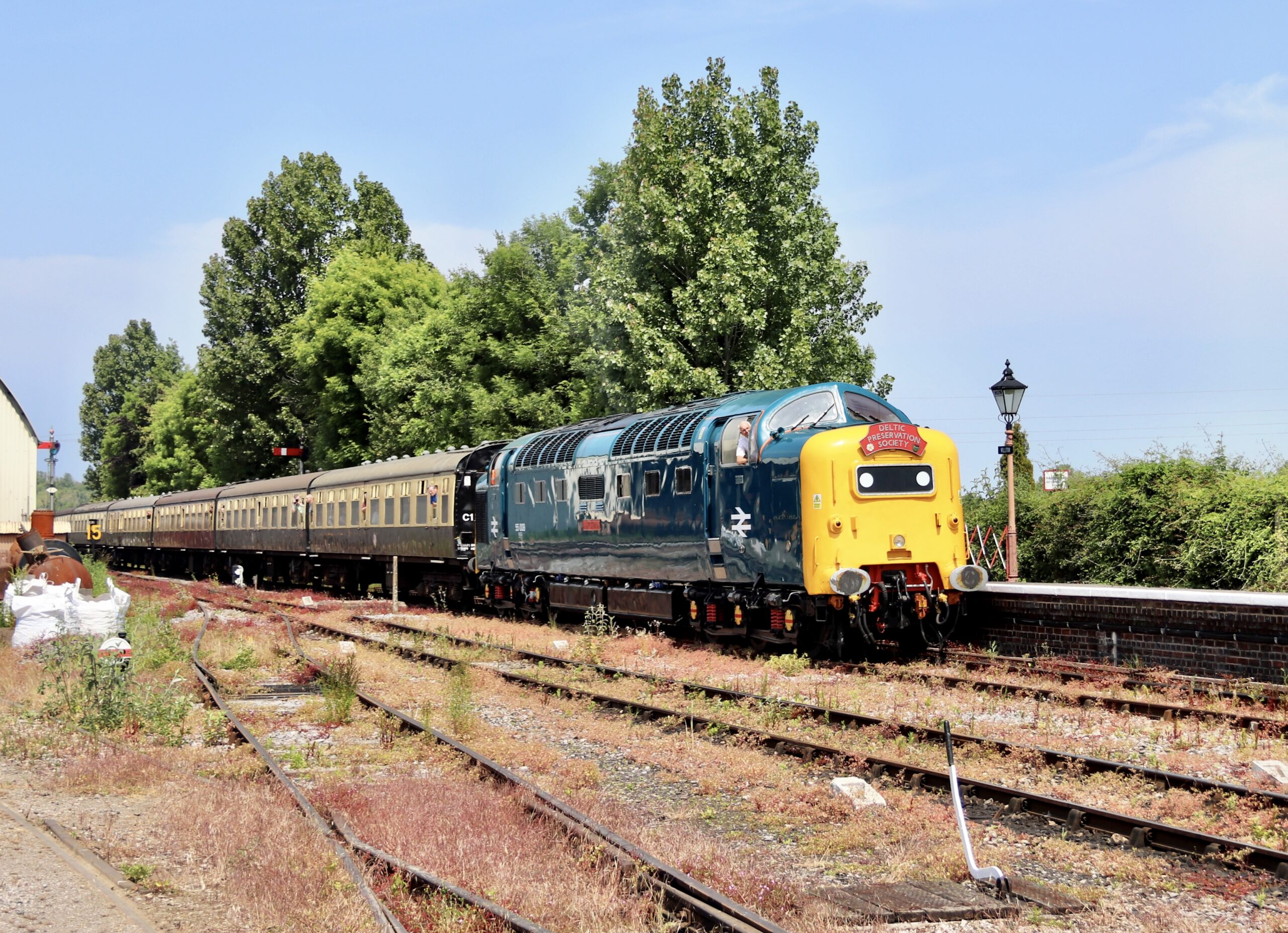
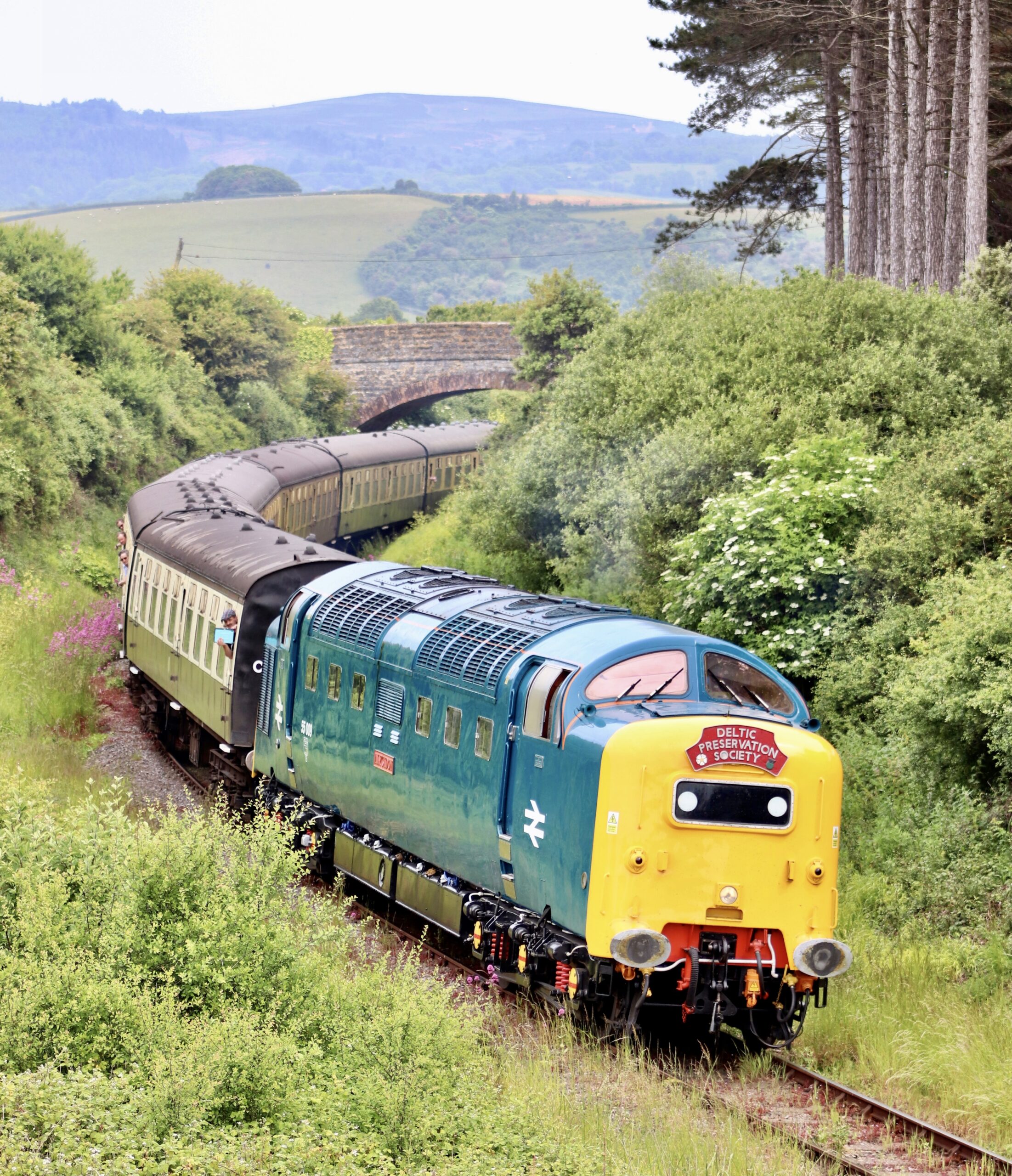
    The other big draw for the WSR 2023 diesel gala was Class 55 Deltic diesel locomotive No. 55009 ‘Alycidon’ which sounded on fine form. Owned by the Deltic Preservation Society (DPS) the loco has been restored as a main line runner, and hopefully we’ll get to see and hear the magnificent Napier engine sound in Dorset at some point. Named at Doncaster Works on July 21st 1961 before introduction to traffic,  the as then No. D9009 maintained the ‘racehorse’ tradition of the London North Eastern Railway (LNER) by commemorating the winner of the 1949 Ascot Gold Cup. In May 1981, she moved to York after the closure of Finsbury Park depot and was one of four Deltics prepared to work a series of farewell railtours during their final six months of operation. Withdrawn on 2nd January 1982 ‘Alycidon’ was sold to the DPS for £16,550.09 in May of the same year. 

    Deltic Preservation Society’s Class 55 No. 55009 ‘Alycidon’ arrives at Wiliton – 09/06/2023
    Class 55 No. 55009 ‘Alycidon’ approaches Watchet – 09/06/2023
    Class 55 No. 55009 ‘Alycidon’ arrives at Wiliton with a service bound for Bishops Lydeard – 09/06/2023

    We made sure that Yoshi had plenty of water to drink and shade was available for him while watching the trains. Other locomotives in action at the West Somerset Railway on the Friday were:

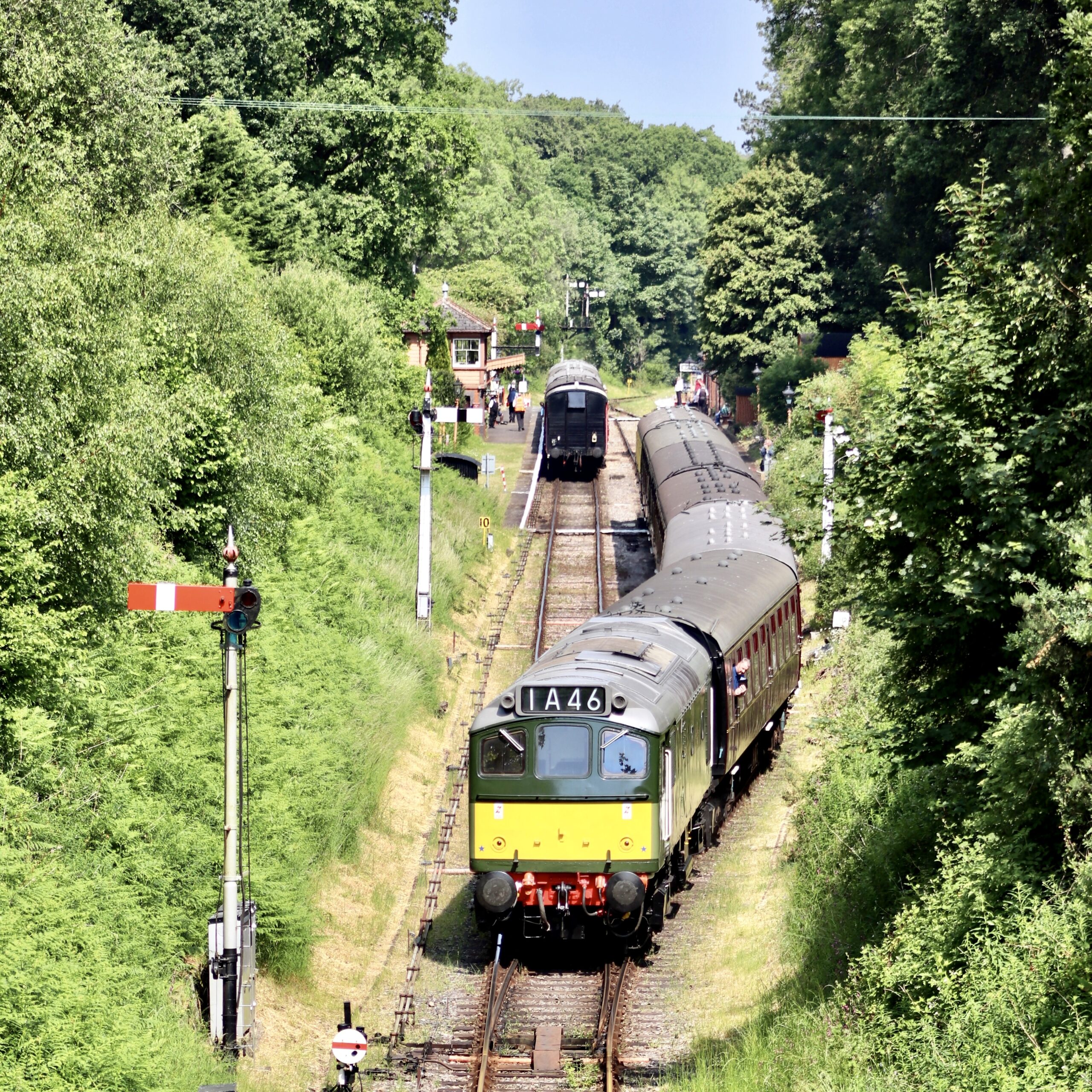
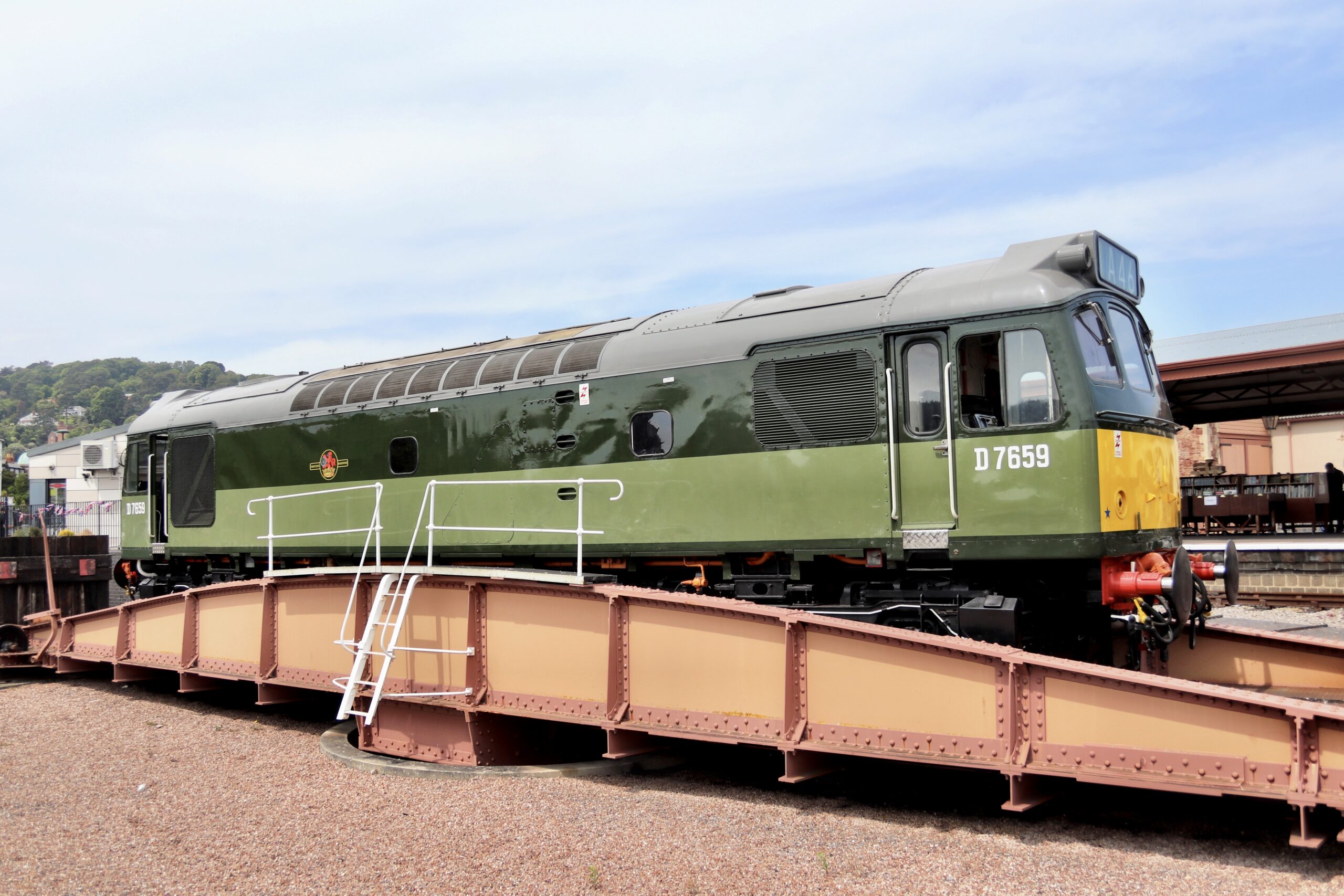
    Waterman Railway Heritage Trust’s Class 25 No. D7659 (25309). The locomotive was delivered new to was new to London Midland (Midland) Lines on July 21st 1966 and was the last member of the batch built by Beyer Peacock at Gorton Works in Manchester and the last new Class 25 to be delivered in green livery. She was withdrawn from BR service on September 13th 1986 – 09/06/2023
    Class 25 No. D7659 (25309) on the turntable at Minehead. This locomotive returned to service during the latter part of 2021 for the first time in more than 23 years following a comprehensive restoration that effectively saw the loco rebuilt – 09/06/2023 
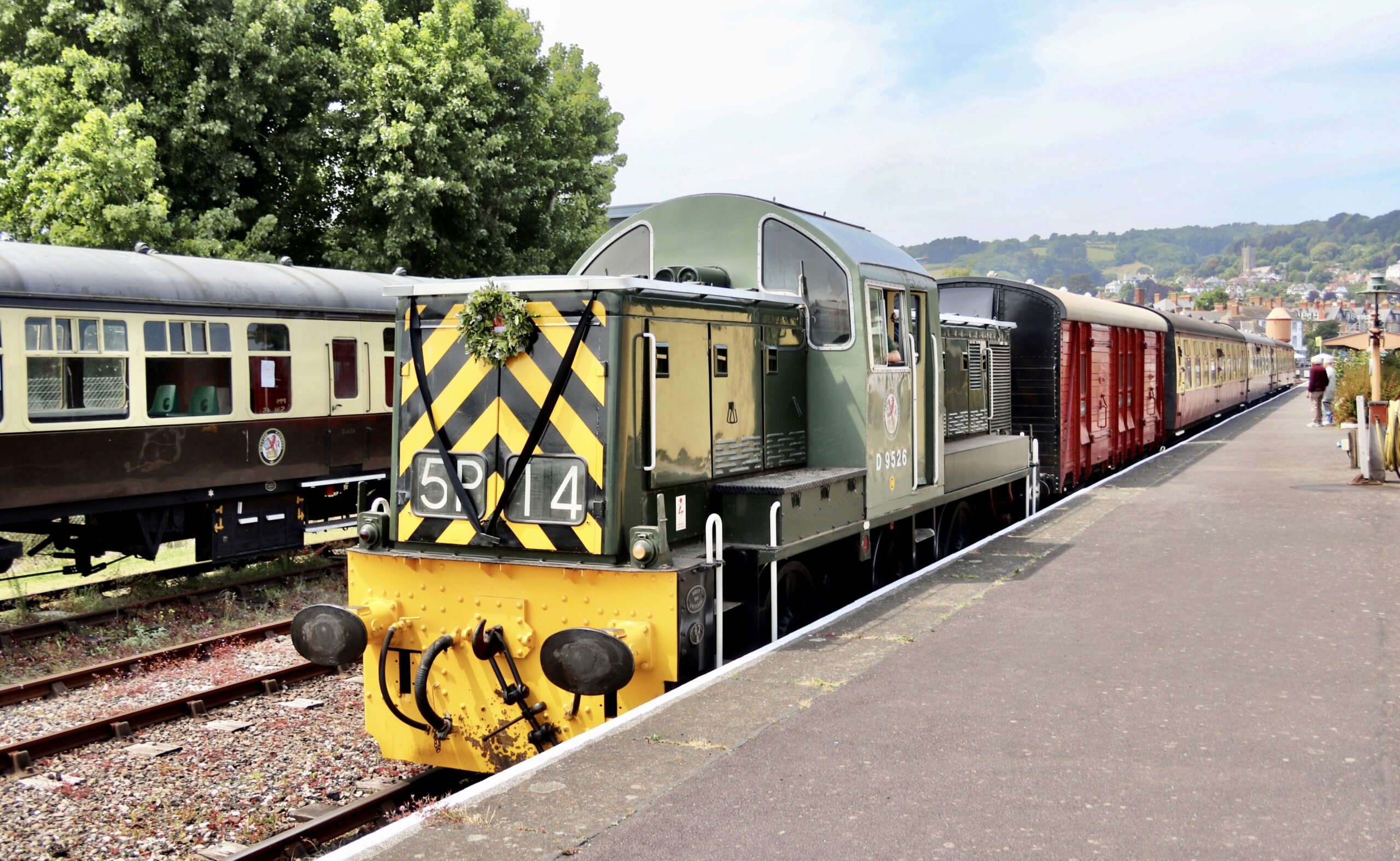
    Class 14 “Teddy Bear” No. D9526 prepares to leave Minehead. No. D9526 was one of 56 locos of this class built by BR at Swindon Works in 1964-5. Intended for pick-up and branch line freights, they were made redundant almost immediately by closure of many secondary lines in the late 1960’s. Almost the entire fleet was sold for use in industry, with 23 going to Stewarts and Lloyds huge iron ore mines railway system around Corby and 19 going to the NCB’s North East Area. No. D9526 was an exception and was sold to Blue Circle Cement at Westbury, where it worked until suffering serious engine problems in 1977. It was donated to the Diesel and Electric Preservation Group (D&EPG) by Blue Circle and moved to Williton in 1980. After repairs and restoration work, D9526 made its preservation debut in 1984 – 09/06/2023
    Class 33 No. 33002 ‘Sea King’ sits on the turntable at Minehead awaiting her next turn. The loco, originally D6501 is the oldest surviving Crompton, having been delivered new to 73C Hither Green Depot in 1959. No. 33002 was stored serviceable on 5th September 1996 at Stewarts Lane. In the privatisation years, the locomotive enjoyed stints with the Harry Needle Railroad Co. and Direct Rail Services. The locomotive was purchased by South Devon Diesel Traction in December 2004 and operates on the South Devon Railway – 09/06/2023
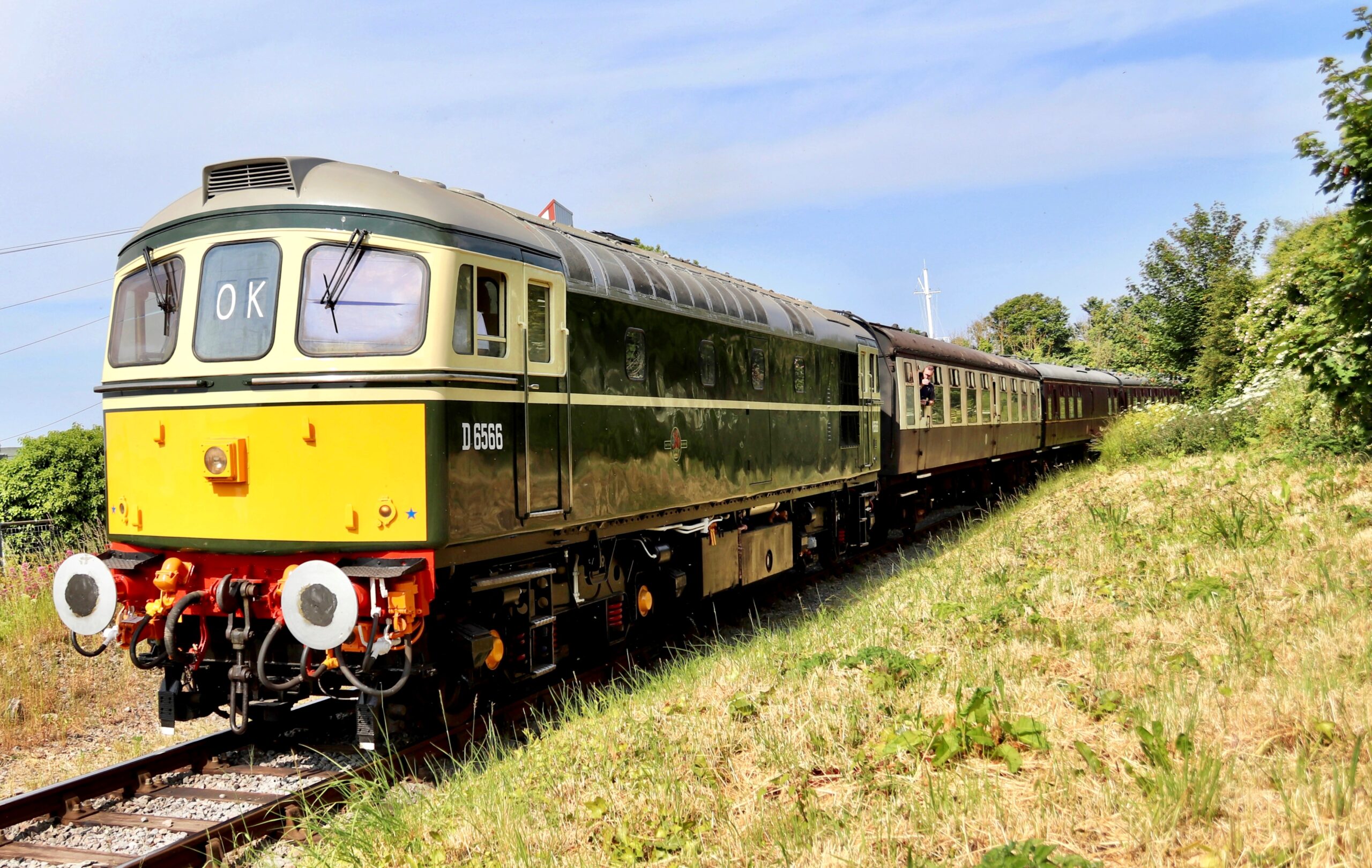
    D6566 (33048) approaches the crossing at Watchet heading towards Minehead. No. D6566 was withdrawn from BR service in 1995 and after a two year period in store, was condemned as surplus to requirements in 1997. Acquired almost immediately by one of the D&EPG founder members, the locomotive arrived at Williton in May 1997 and worked her first train on the WSR in October of that year, marking the first use of a Class 33/0 in preservation. No. D6566 was stopped for overhaul in 2013 after 16 years of service on the WSR. The overhaul included engine work and major bodywork repairs and the locomotive returned to service in 2018 – 09/06/2023
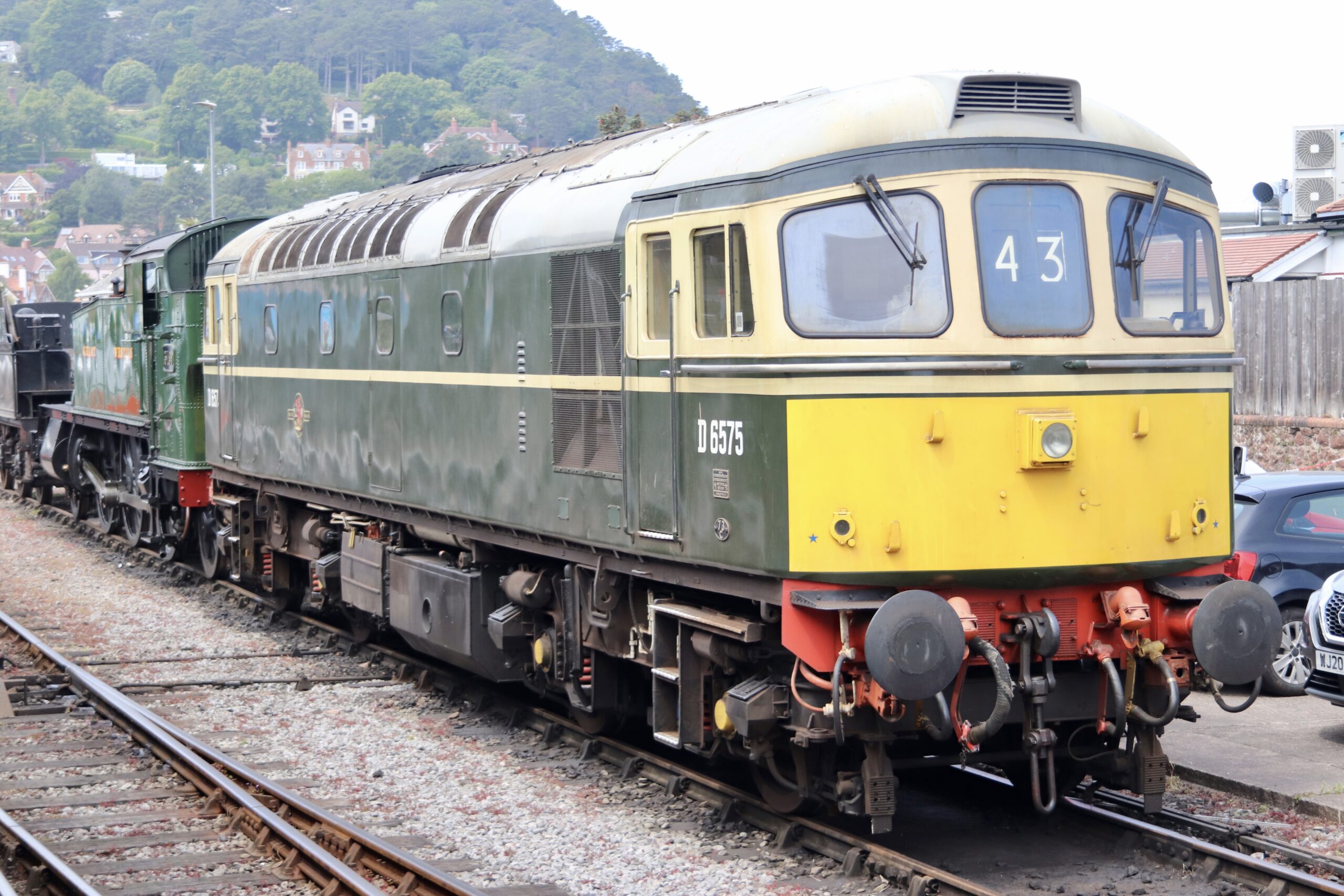
    Type 3 Diesel-Electric Class 33 No. D6575 (33057) is one of two West Somerset Railway resident Crompton’s of which originally 98 were built by the Birmingham Railway Carriage & Wagon Company (BRC&W) in Smethwick, West Midlands between 1960 and 1962. She is seen at Minehead after arriving with a train from Bishops Lydeard. She worked mixed traffic on the Southern Region of BR for 35 years until withdrawal in 1996 following a bogie fire that damaged No. 2 traction motor and the electrical wiring at No.1 cab end. The loco passed through several owners during the following nine years before being acquired by the owner of D6566 (33048) as a source of spares, arriving at Williton in September 2005 in a dilapidated state. However, following appraisal at Williton, the loco was deemed repairable. Following much painstaking work, she returned to action on the WSR in 2012 – 09/06/2023
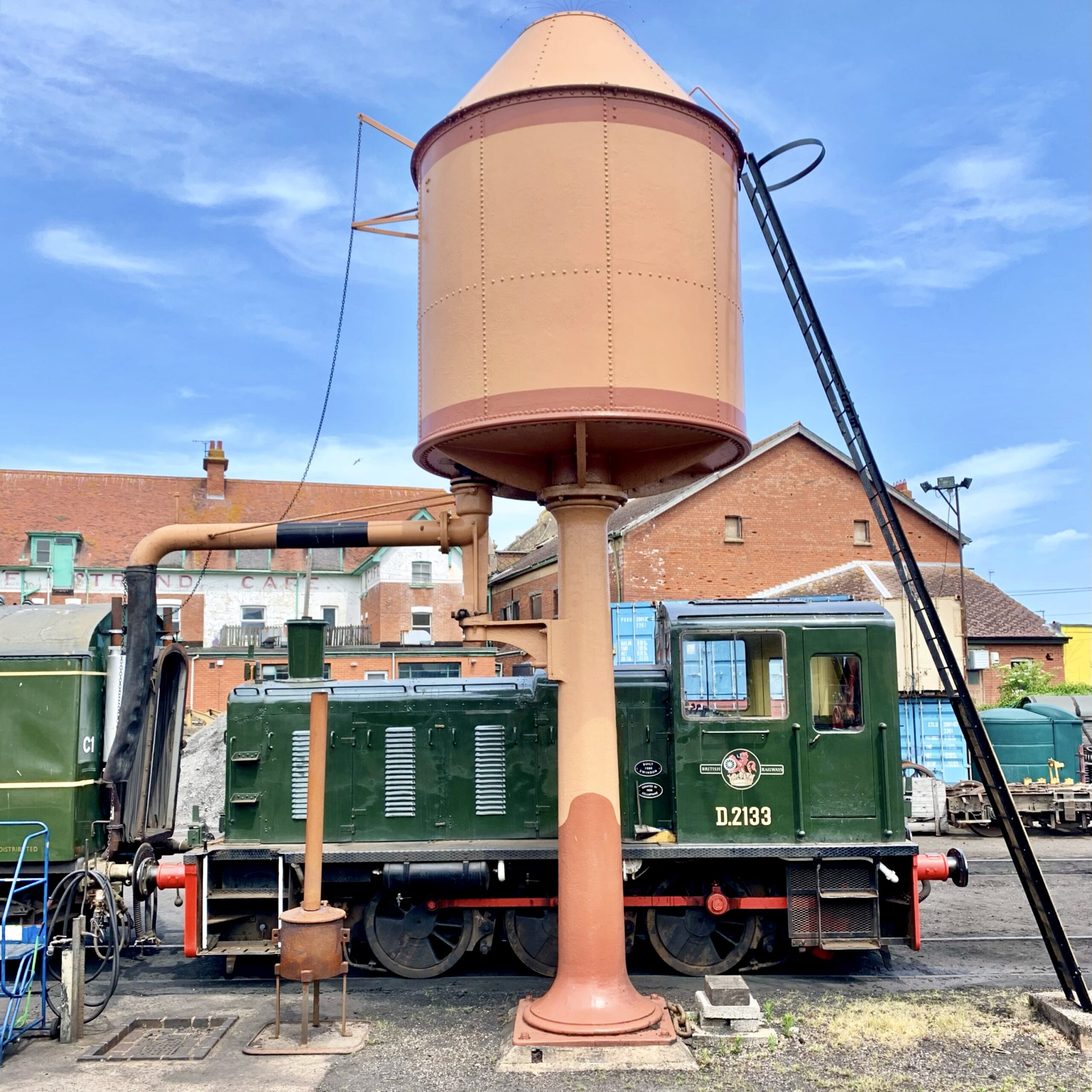
    Class 03 No. D2133 at Minehead. The locomotive wasn’t an active participant of the diesel gala. The Class 03 locomotive was one of British Railways most successful 0-6-0 diesel-mechanical shunters with 230 built at Doncaster and Swindon works between 1957 and 1962. No. D2133 is a Swindon Works example, built in 1960 and withdrawn from BR in July 1969 and therefore was never renumbered under the Total Operations Processing System (TOPS) scheme of the early 1970’s. As was the case with many ex-BR shunters No. D2133 carried on working in private hands at the British Cellophane factory in nearby Taunton until 1994 when she was presented to the WSR – 09/06/2023
    Video of our visit to the West Somerset Railway 2023 Diesel Gala

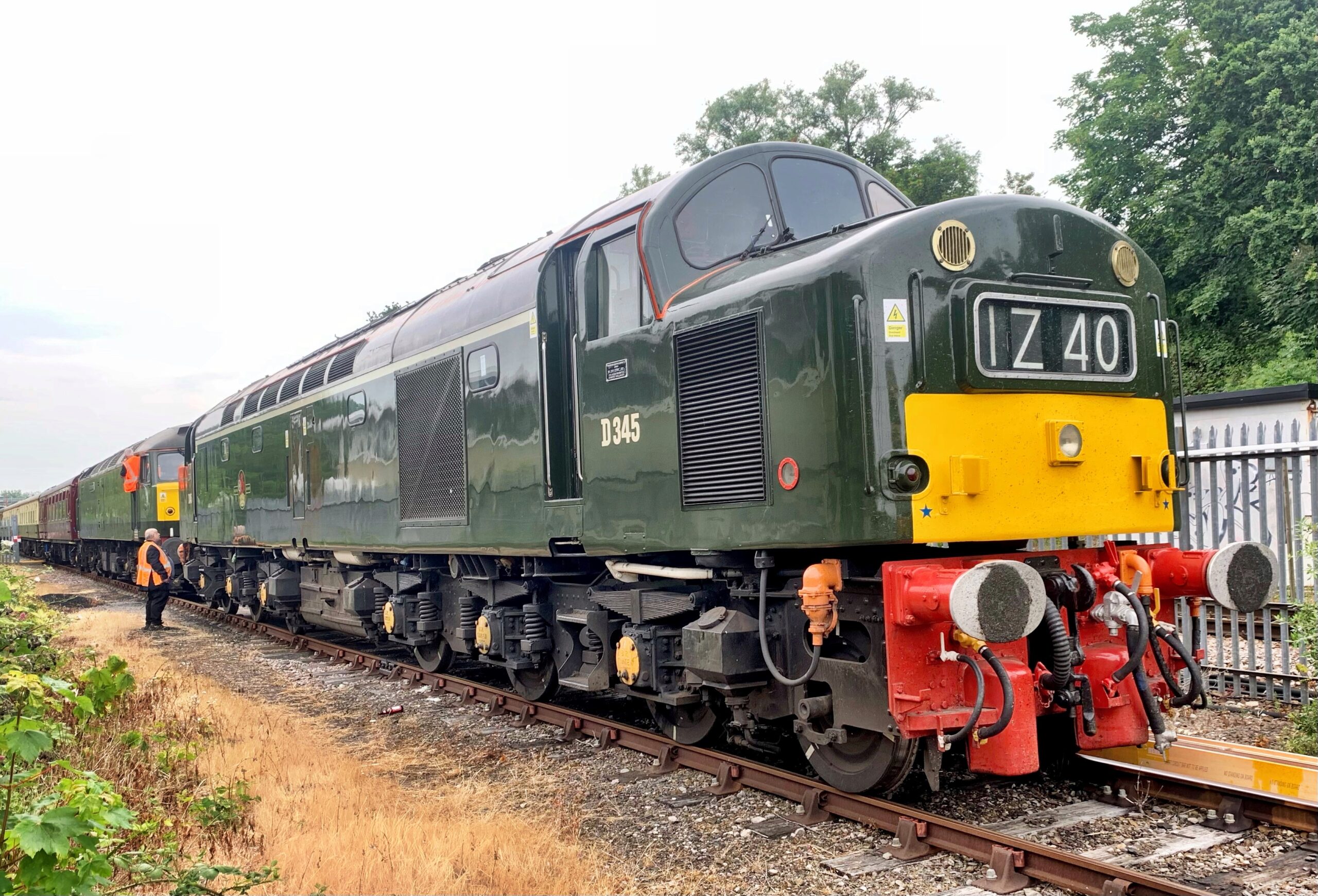
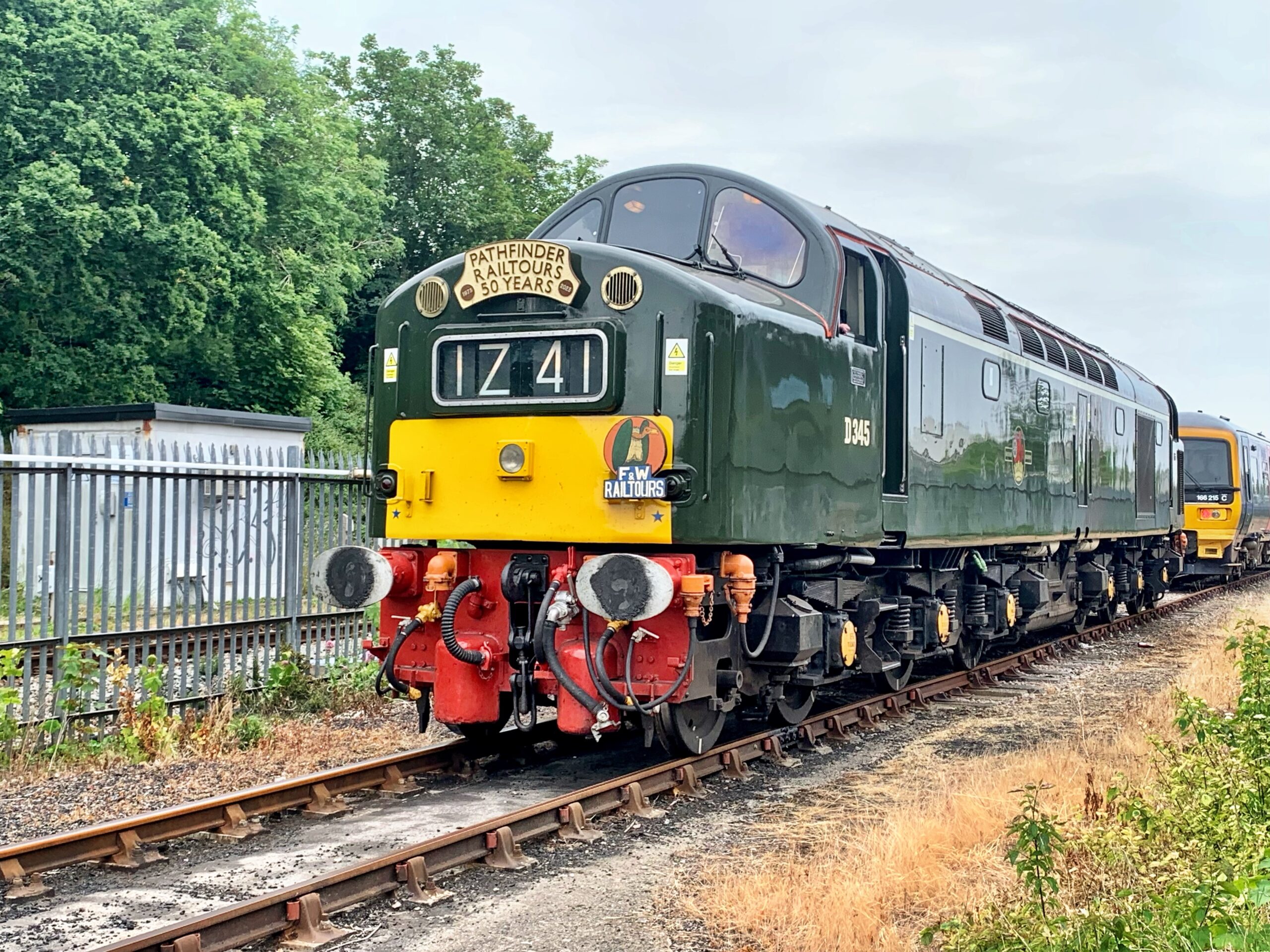
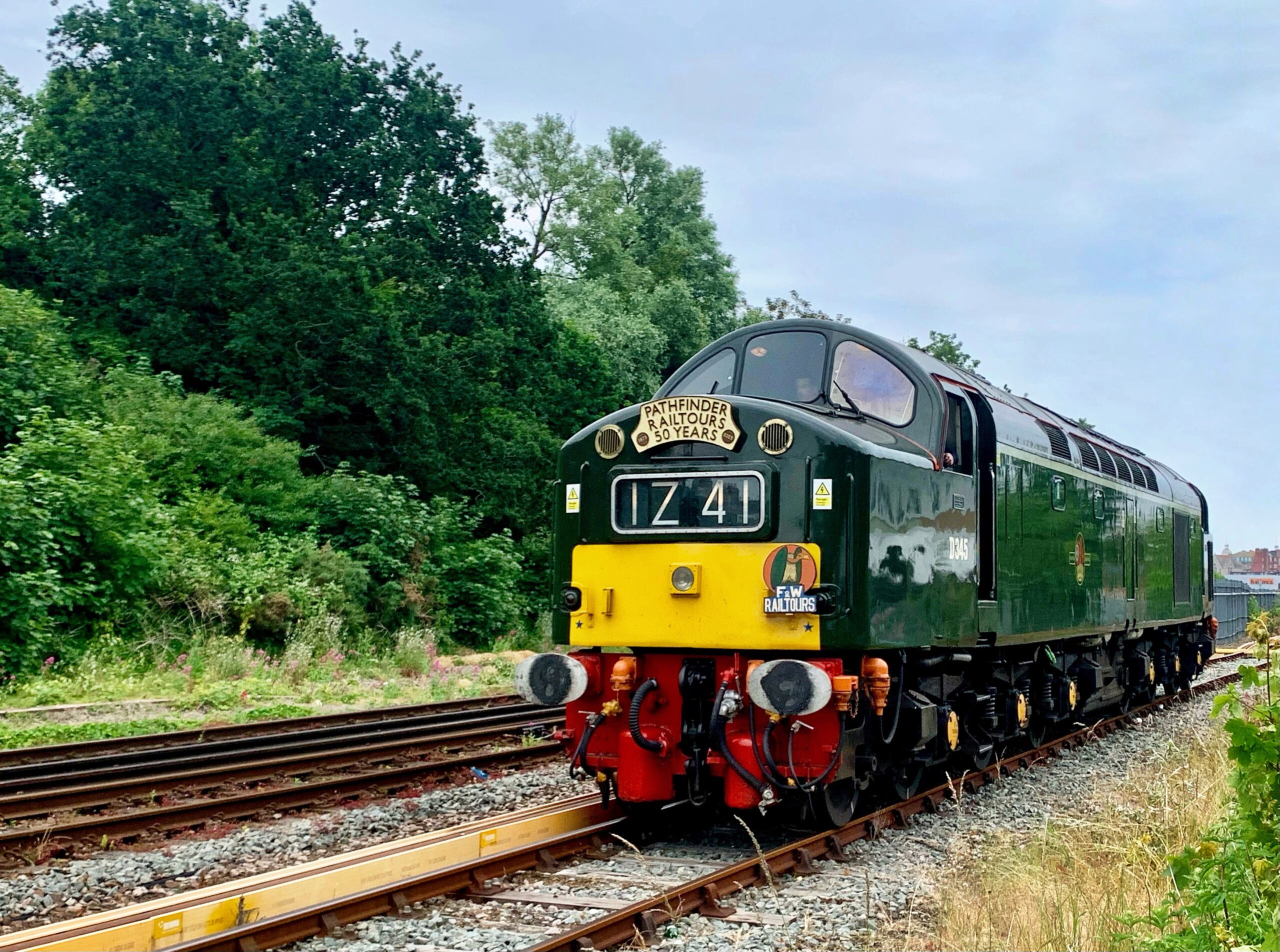
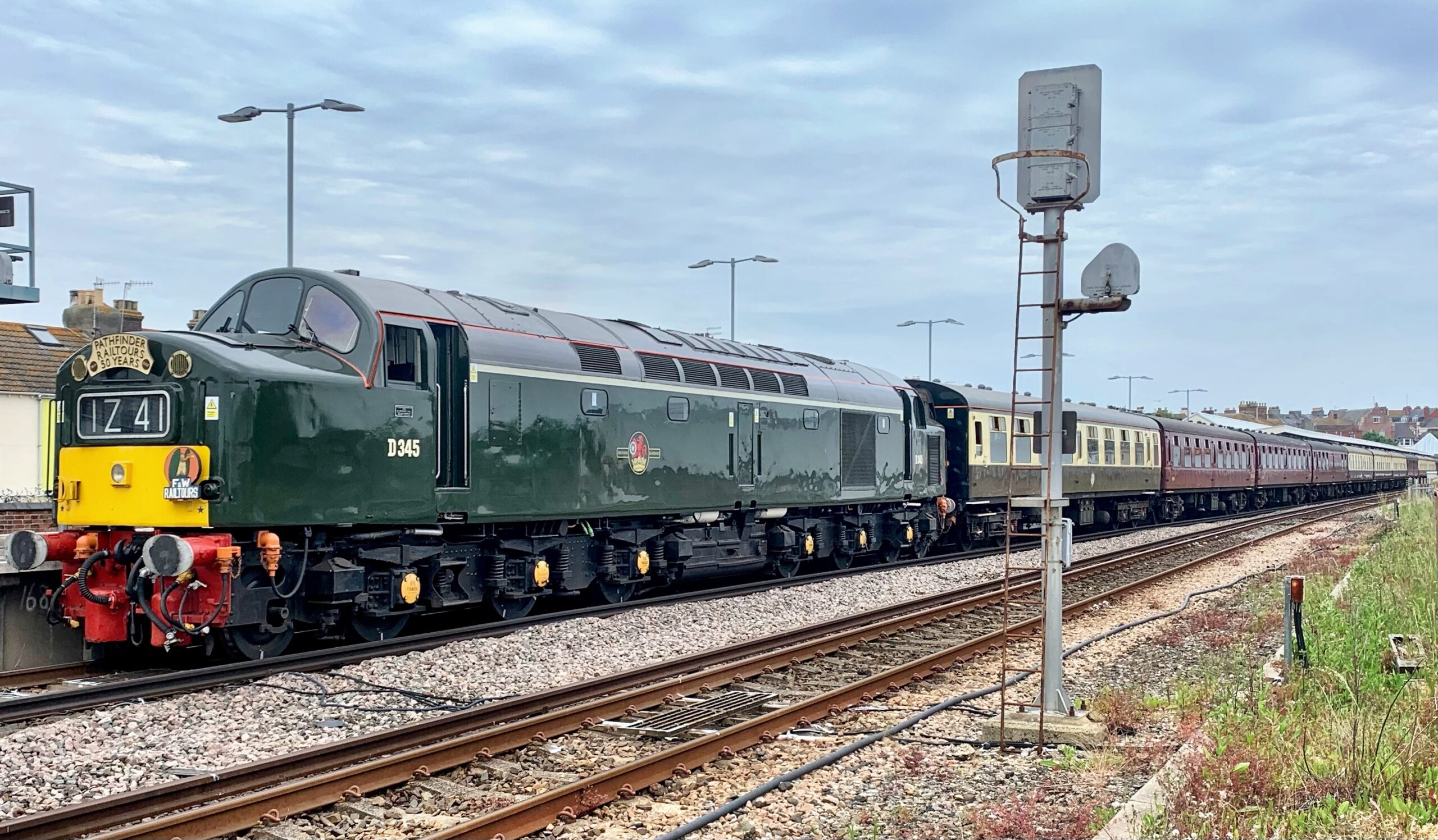
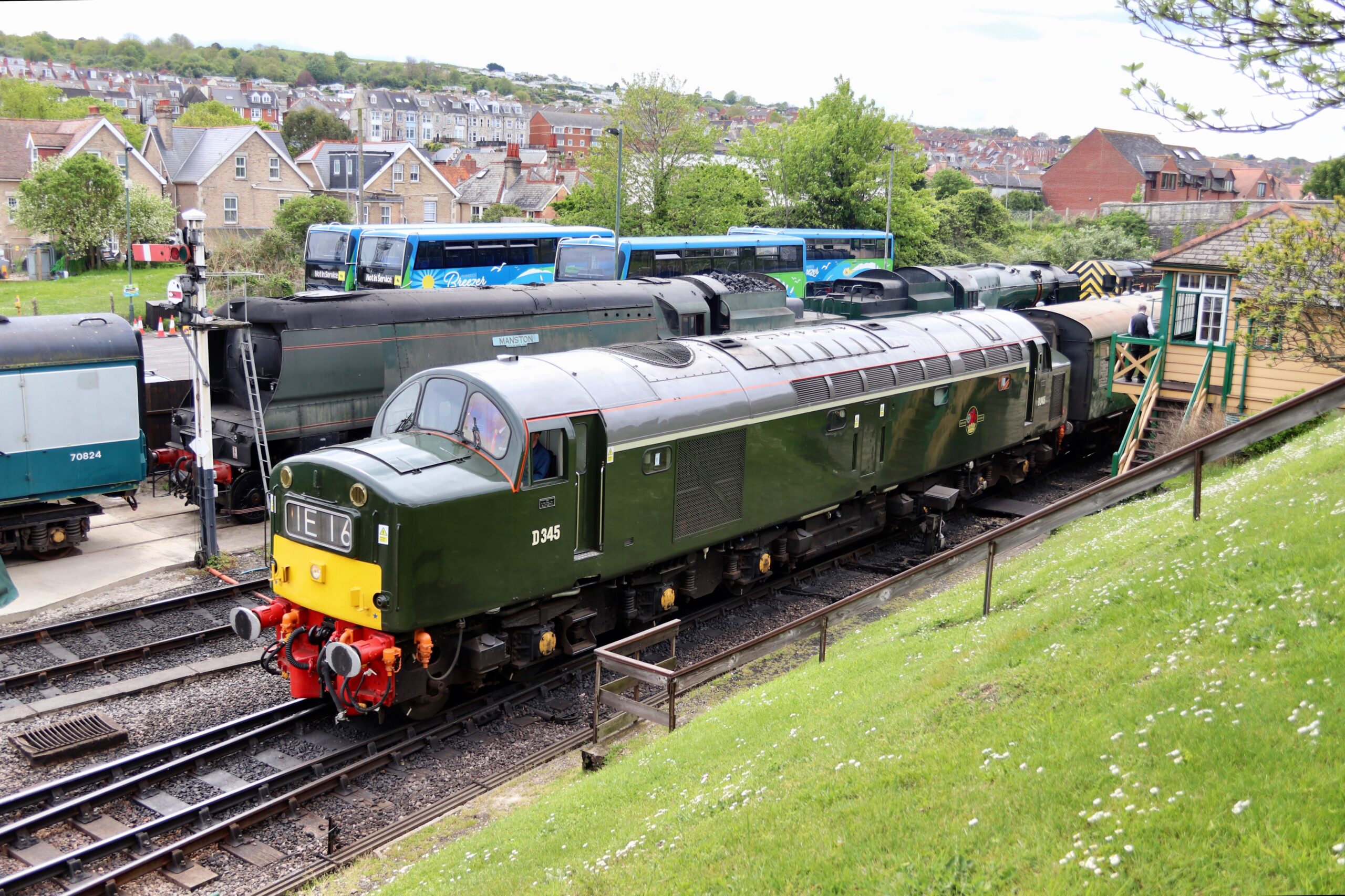
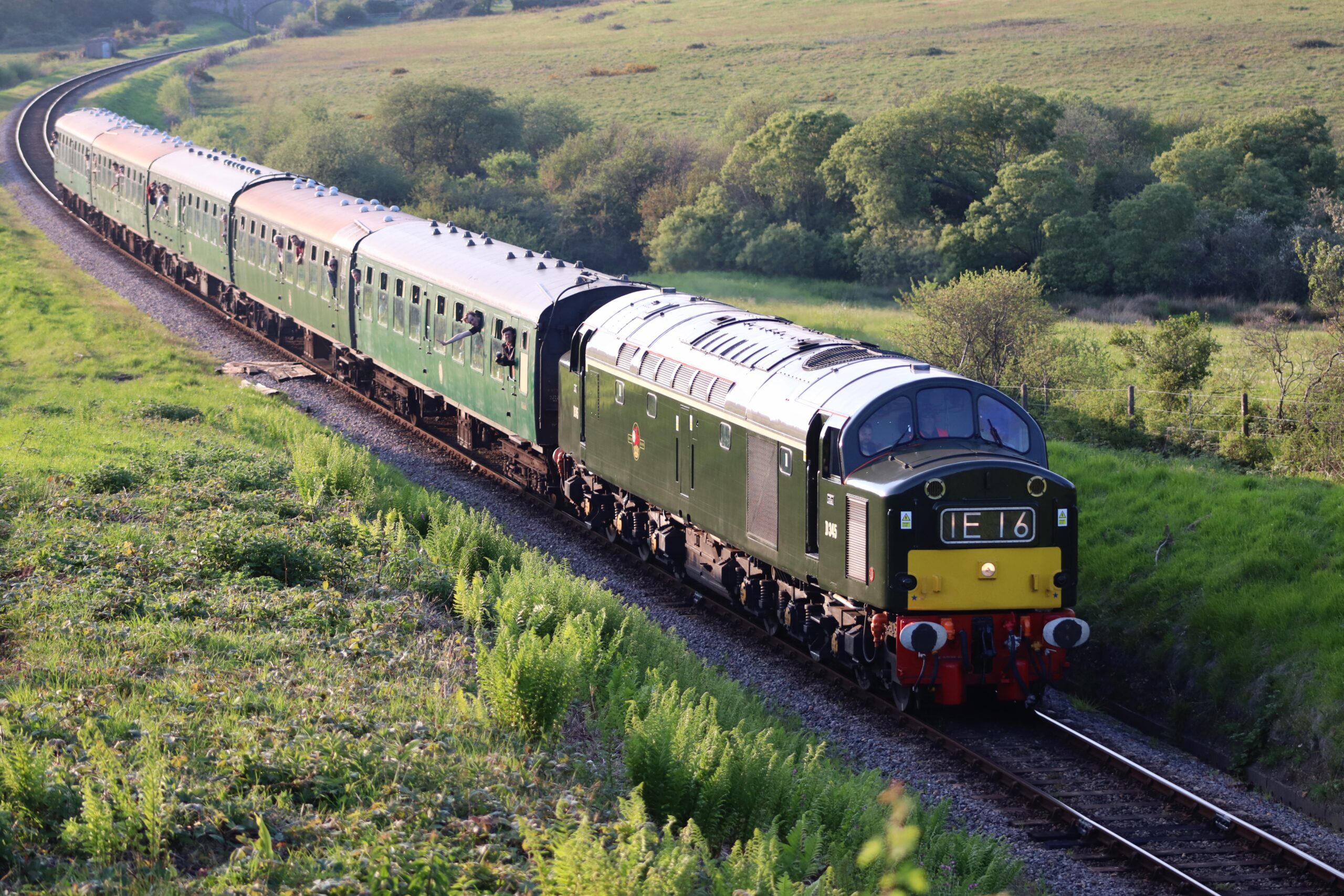
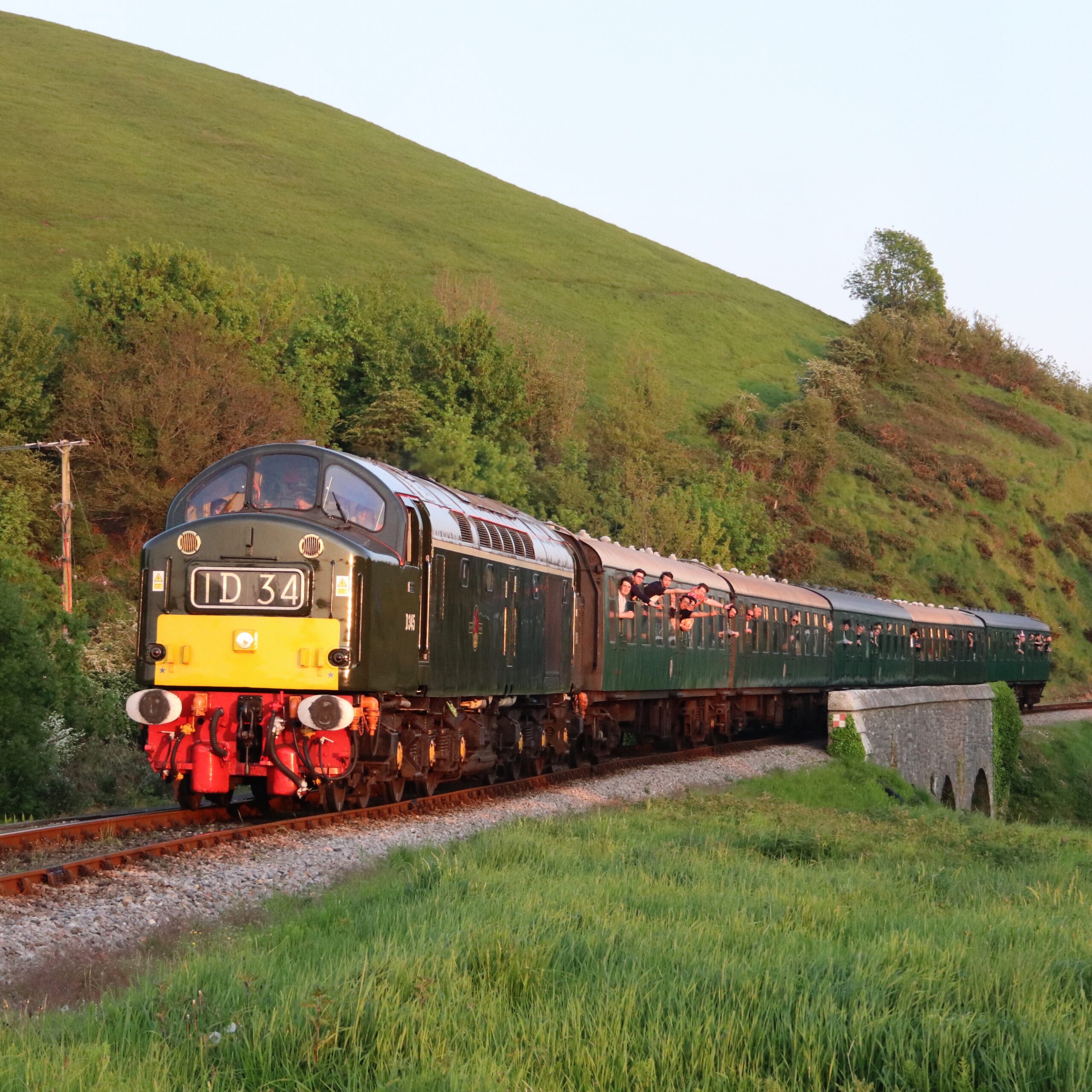
    Saturday saw some preserved diesel action much closer to home as Class Forty Preservation Society owned Class 40 No. D345 (40145) hauled Pathfinder Railtours 50th Anniversary charter train which ran from Burton-on-Trent to Weymouth. The tour celebrated the 10th June 1973 railtour, co-organised by Pathfinder’s Peter Watts, which departed Gloucester Eastgate heading for Pwllheli all those years ago. I have very fond memories of Peter Watts Publishing railway books in the 1970’s and 1980’s. Peter is stepping away from management at Pathfinder tours but was very much involved with the organisation of the 50th Anniversary Tour. An added bonus was the use of MK1 coaches and could well be the last mainline use of such stock.

    Class Forty Preservation Society owned Class 40 No. D345 (40145) nears Parkstone at the head of Pathfinder Railtours 50th Anniversary charter train 1Z40 0701 Burton-on-Trent to Weymouth – 10/06/2023
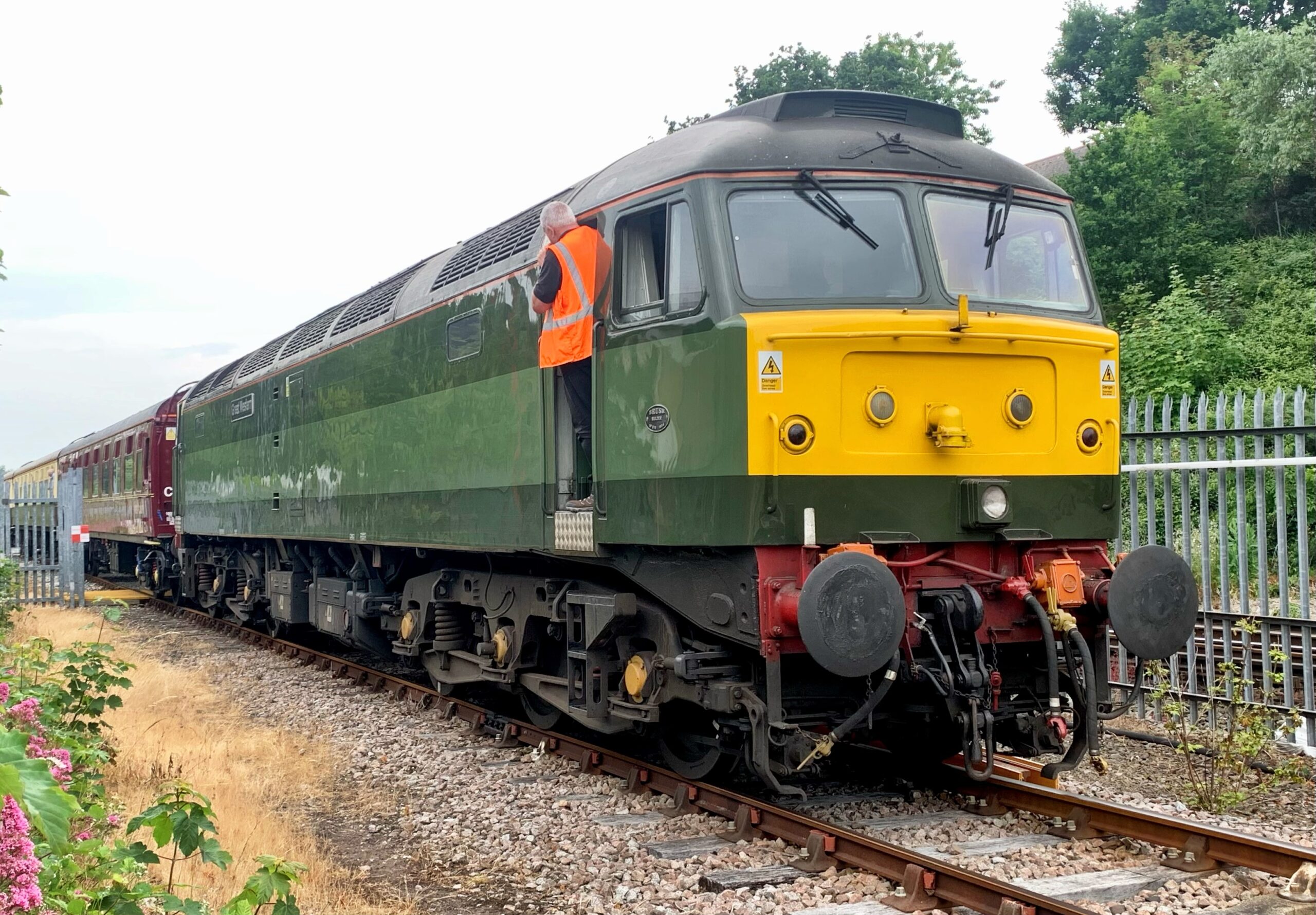
    No. D345 in Jubilee Siding at Weymouth. Class 47 No. 47815 ‘Great Western’ is engaged in empty coaching stock movements behind – 10/06/2023
    Class 47 No. 47815 ‘Great Western’ prepares to move the empty coaching stock from the sidings back into Weymouth station as 5Z41 1346 Weymouth to Weymouth – 10/06/2023
    No. D345 in Jubilee Siding at Weymouth – 10/06/2023
    No. D345 prepares to run light engine into Weymouth station – 10/06/2023
    At the head of the rake of MK1 coaches, No.D345 awaits departure of 1Z41 1636 Weymouth to Burton-on-Trent. The tour returned via Dorchester West and Yeovil – 10/06/2023
    Pathfinder photoshoot at Weymouth ahead of the departure of the 50th Anniversary charter train – 10/06/2023
    No. D345 powers towards the site of the former Radipole Halt with 1Z41 1636 Weymouth to Burton-on-Trent – 10/06/2023
    No. D345 having departed Weymouth with 1Z41 1636 Weymouth to Burton-on-Trent – 10/06/2023
    Our video of D345 hauling Pathfinder Railtours 50th Anniversary charter train 1Z40 0701 Burton-on-Trent to Weymouth (with thanks to my brother for the Dorchester footage) – 10/06/2023

    The Class Forty Preservation Society said this of the climb out of Weymouth: “Those who were on the train to hear 40145 lift the equivalent of 14 coaches unassisted up the 1 in 50 summit of Bincombe bank leaving Weymouth will know what I mean when I say I will take the memory to my grave.  Truly a high point of 20 years of mainline running.  Even the Lickey later in the day was an anti-climax after that!”.  Yoshi’s pal Jamie was at Bincombe to record the ascent.

    No. D345/ 40145 was the first locomotive of the final batch of deliveries of the type and was built with centre-headcode panels. Along with 180 others of the 200-strong fleet, the loco was built by English Electric at Vulcan Foundry, entering service on 17th May 1961. D345 was one of four (D345 to D348) which were allocated to 55H Neville Hill, and used to upgrade the short-lived “Queen of Scots Pullman” running between Leeds and Edinburgh / Glasgow, replacing LNER Pacific steam power. Allocated to numerous depots during her British Rail career, her final allocation was to Longsight in May 1978 where she was based until withdrawal on 10th June 1983 after sustaining derailment damage in Stourton Yard, Leeds. However, she was one of the final Class 40’s to receive a General Overhaul at Crewe Works in November 1980 and was purchased by The Class Forty Preservation Society and delivered to Bury in February 1984, the first of the class to enter preservation.

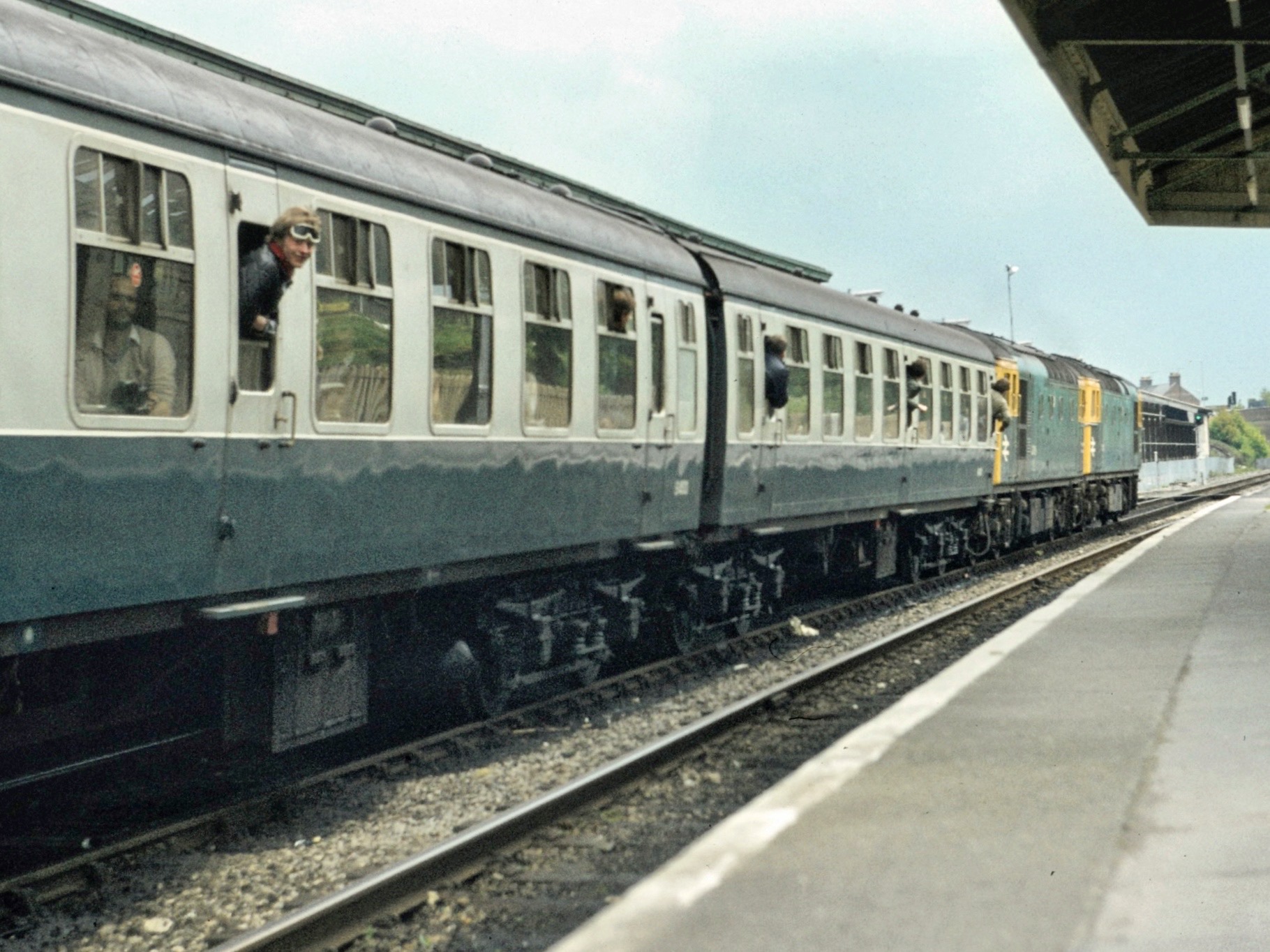
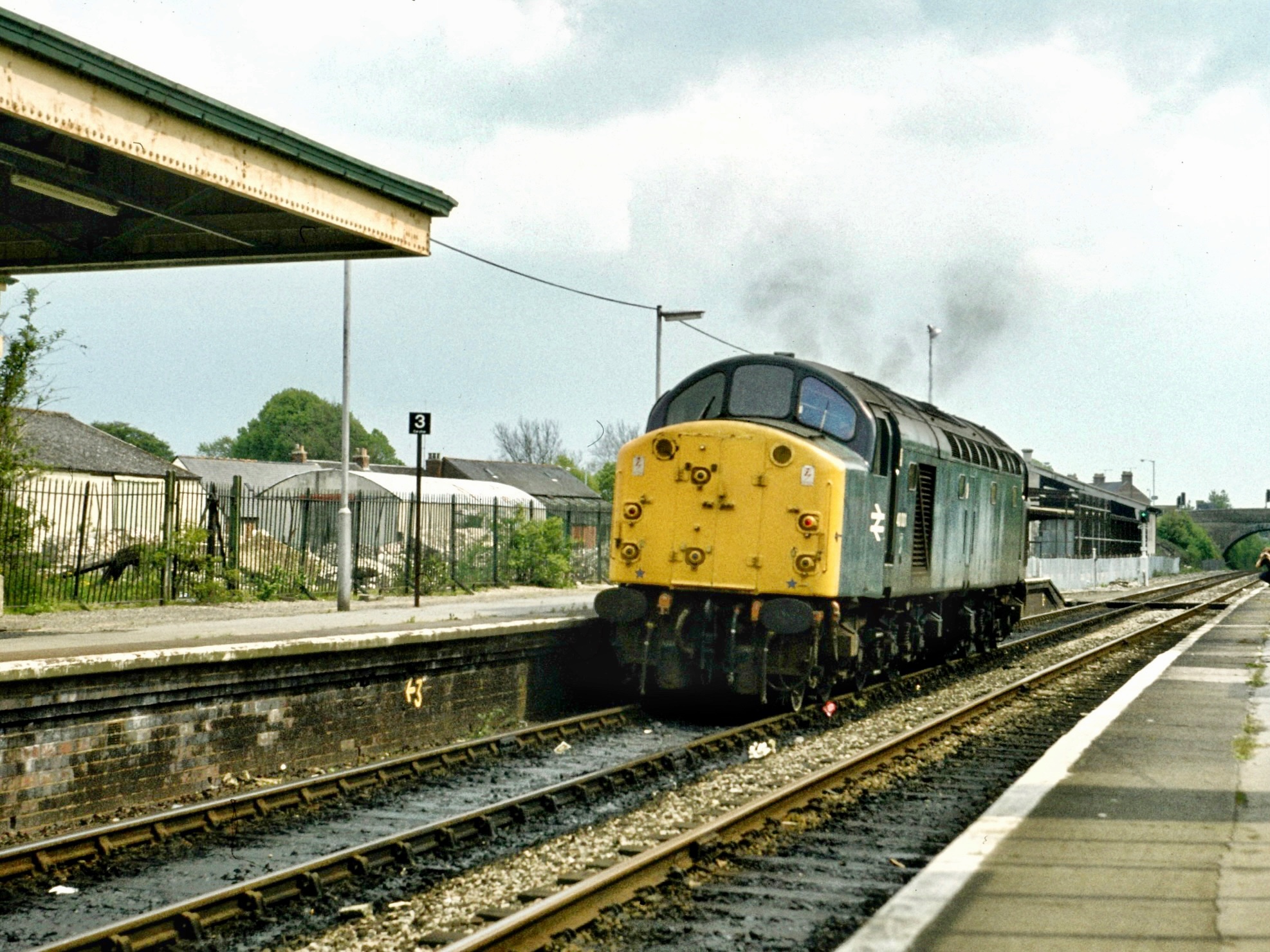
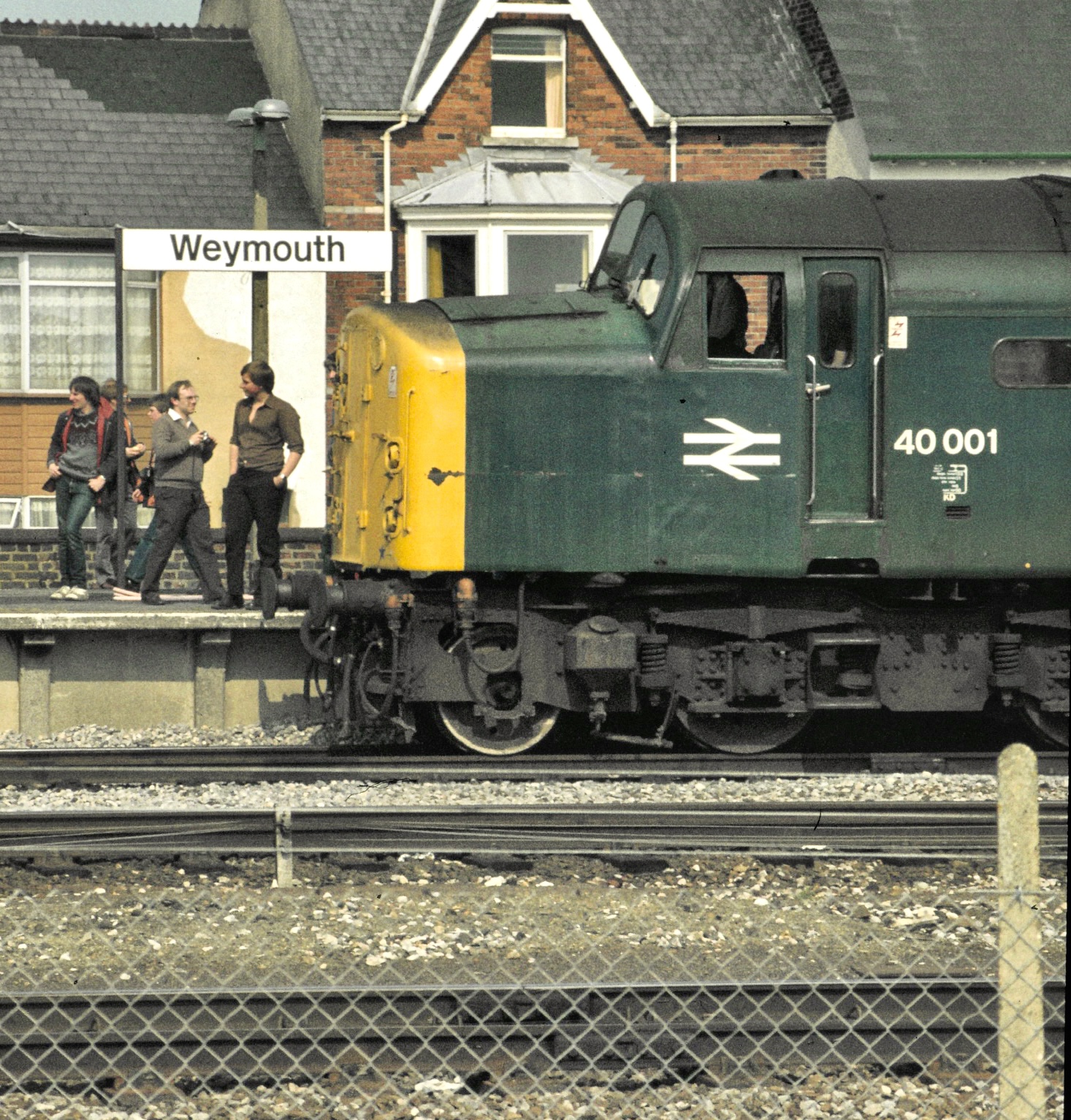
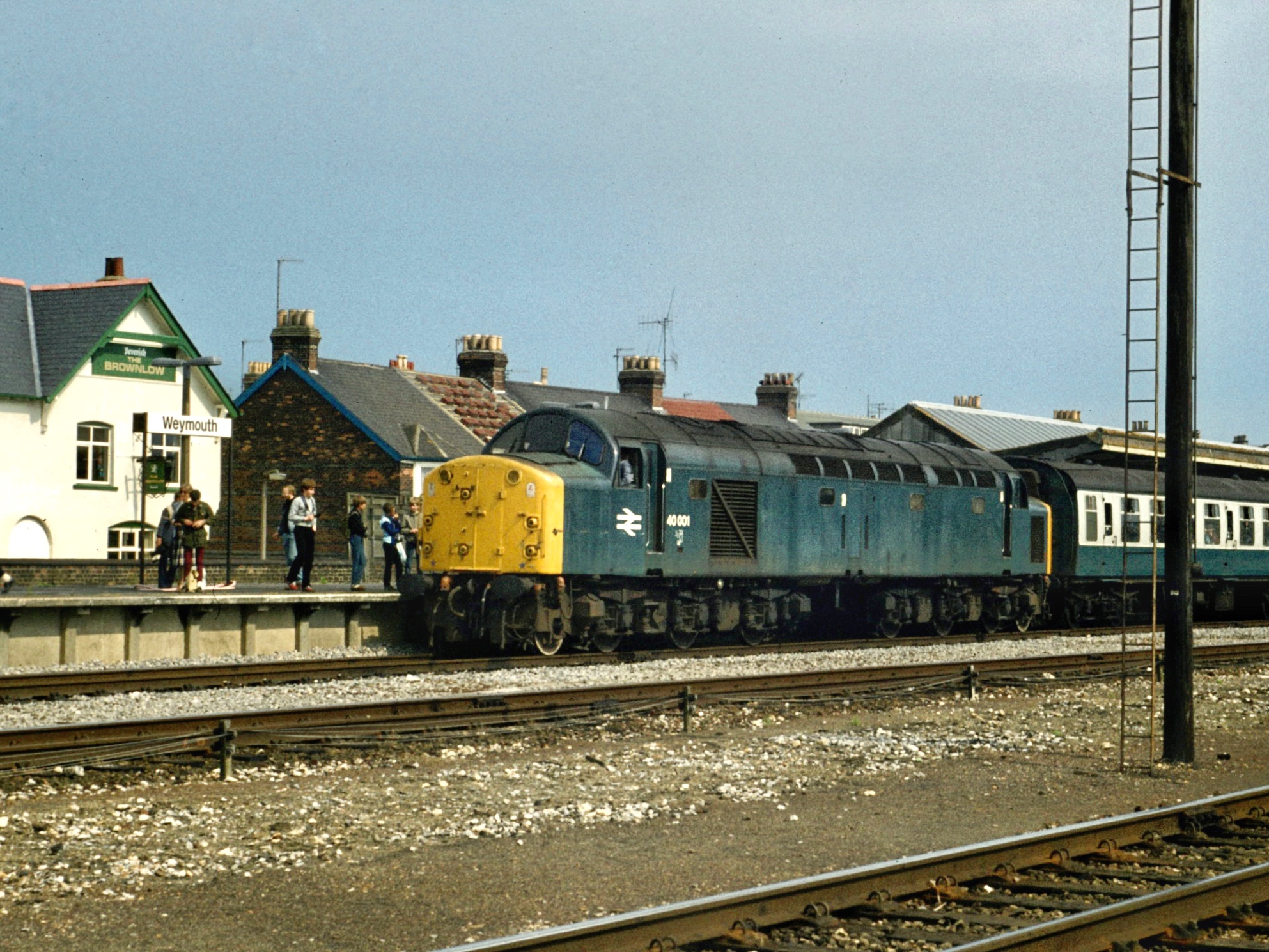
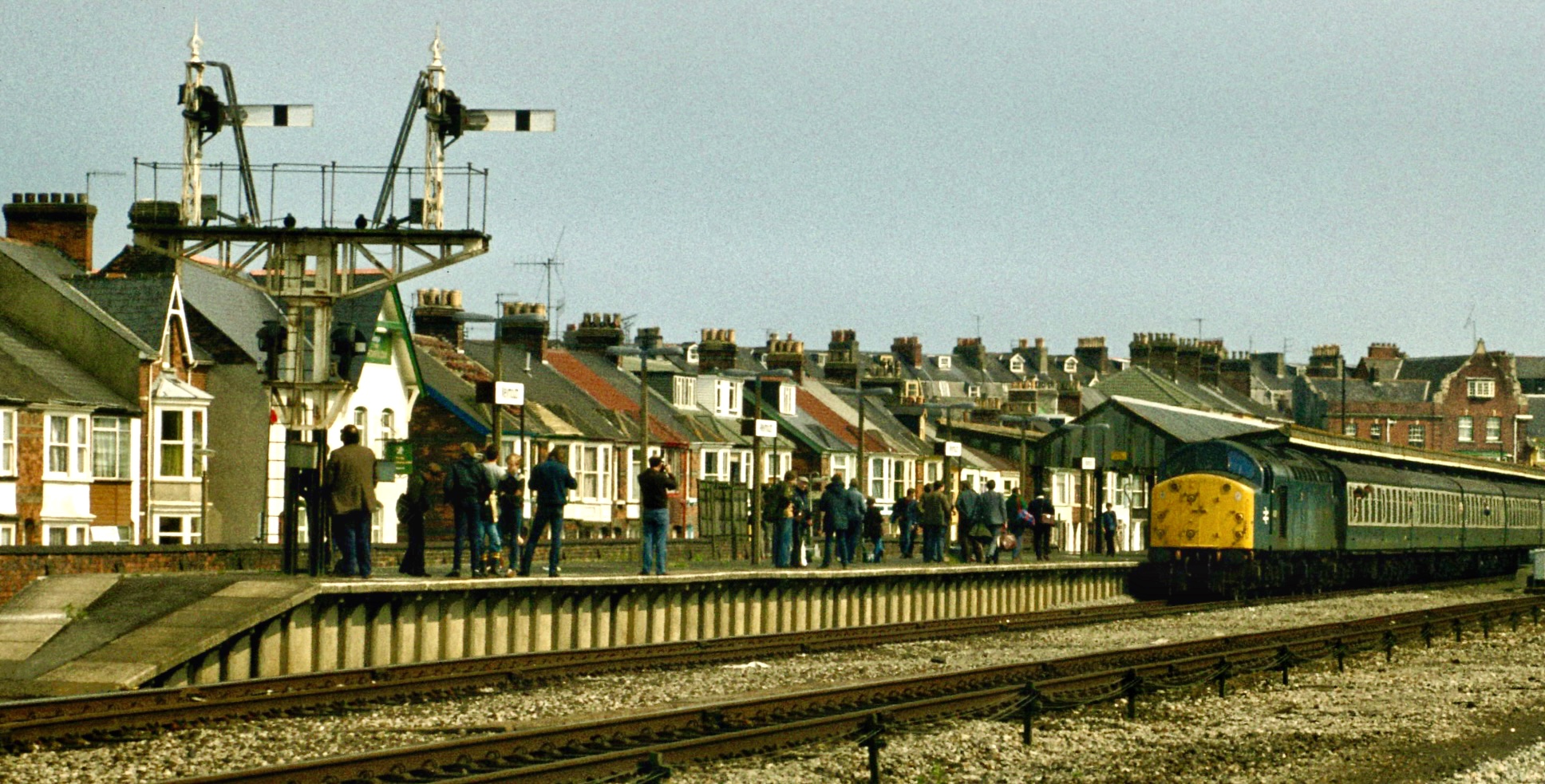
    The last (and only) Class 40 to make it to Weymouth previously was No. 40001 on 21st May 1983 which I remember well!

    The Westbury to Weymouth leg of “The Wessex Whistler” was entrusted to Class 33/1 No.’s 33113 and 33118. The pair are seen passing through Dorchester West – 21/05/1983
    Following light engine No. 40001 opens up as she passes through Dorchester West on the way to Weymouth – 21/05/1983
    Class 40 No. 40001 at Weymouth with the return Severn Valley Railway Association rail tour “The Wessex Whistler” the first time a member of the class had made it to Weymouth. The tour originated in York and ran under the head code 1Z25 throughout – 21/05/1983
    Class 40 No. 40001 at Weymouth with the Severn Valley Railway Association rail tour “The Wessex Whistler” – 21/05/1983
    Class 40 No. 40001 at Weymouth awaits departure from Weymouth with the return Severn Valley Railway Association rail tour “The Wessex Whistler” – 21/05/1983

    Thanks for reading! We’ll see you soon.

    End Piece:

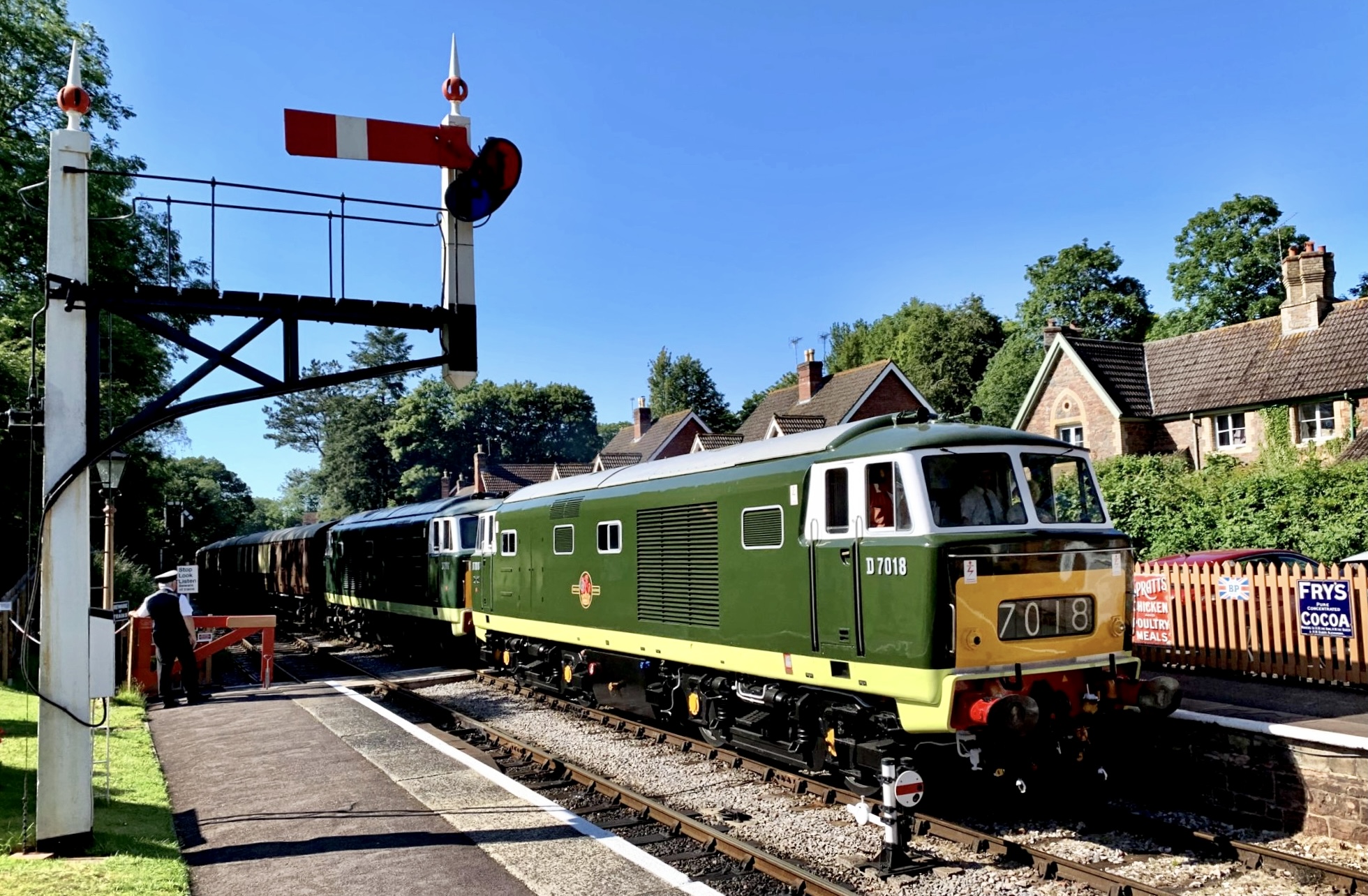
    Back in 2019, both West Somerset Hymeks were working during the diesel gala as evidenced here as No.’s D7018 and D7017 arrive at Crowcombe Heathfield – 21/06/2019
  • Severn Valley Diesel Gala 2023

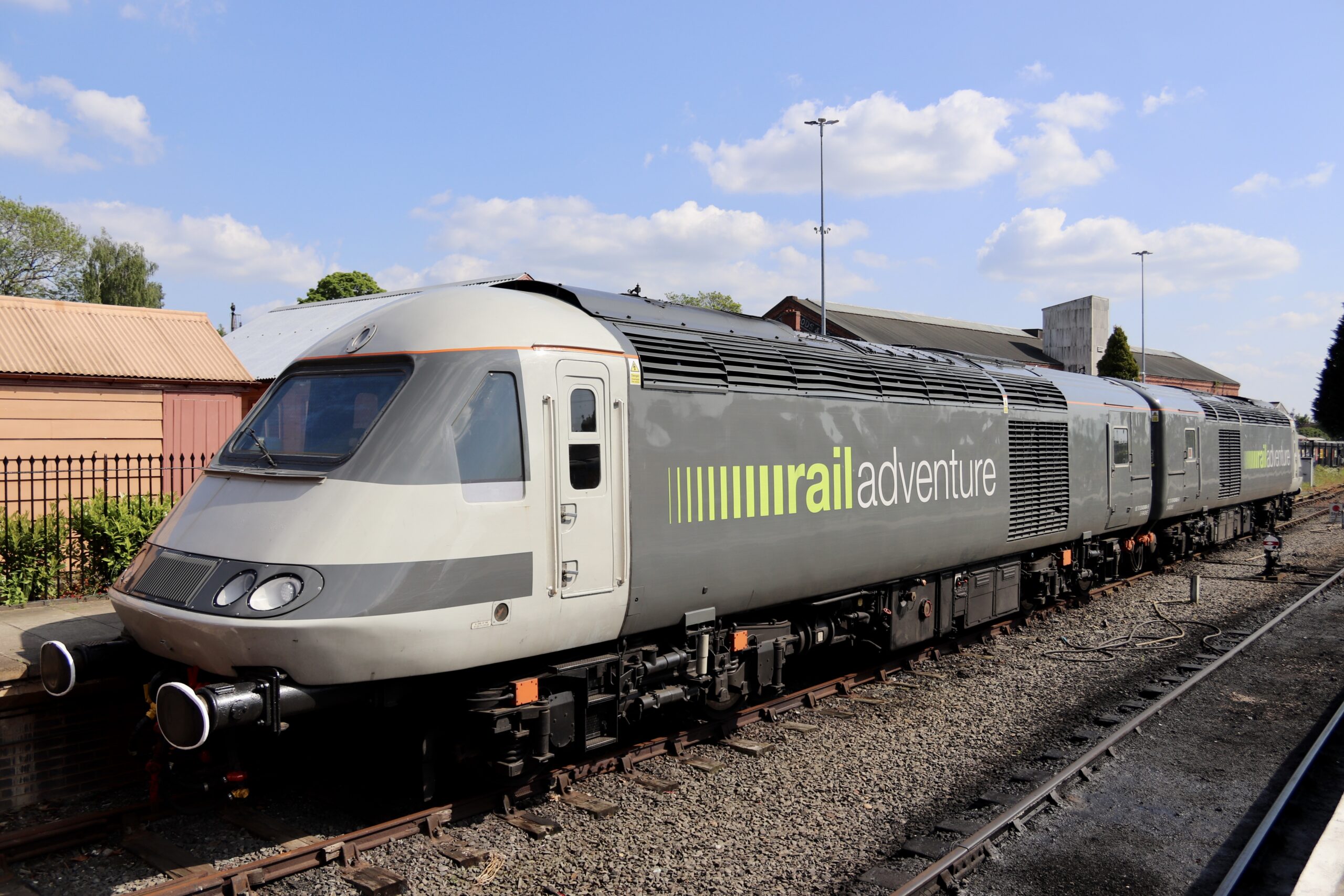
    Yoshi took a liking to RailAdventure Class 43 No.’s 43465 and 43484 which only hauled trains on the Friday of the 2023 Severn Valley Diesel Gala and seen here on display the following day at Kidderminster – 20/05/2023

    Last week we were enjoying the sun in Cornwall, so our report on our visit to the 2023 Severn Valley Diesel Gala ( which took place 18th – 21st May) is slightly delayed until now. We hope you found our mini blog about Promenade Plantée in Paris interesting and a bit different last week, but for now let us catch up with events at the Severn Valley.

    Saturday was my chosen day to visit the SVR as I was heading to the West Country the following day. The timetable for the gala was a packed affair with a large roster of resident and visiting locomotives scheduled to run, many of which were provided by freight and passenger operating companies. Indeed, the SVR event was undoubtably the biggest diesel gathering in the UK calendar for 2023, with its planned four-day extravaganza intended as a celebration of 50 years of diesel preservation. An early departure from home was required in the hope of seeing everything running. A few missed turnings and a closed motorway junction delayed our arrival time but in the event we arrived at Highley just in time to see sole-surviving Clayton Class 17 No. D8568 arrive with the first train of the day from Bridgnorth. Unfortunately there were no available parking spaces at the station, so we reversed out and headed up out of the car park to find alternative facilities. Although I later managed to capture a short video clip of the Clayton running light engine within the Highley station area, the locomotive avoided my camera lens for a still photo opportunity. As this particular diesel had been at Swanage the previous weekend, I didn’t mind too much!

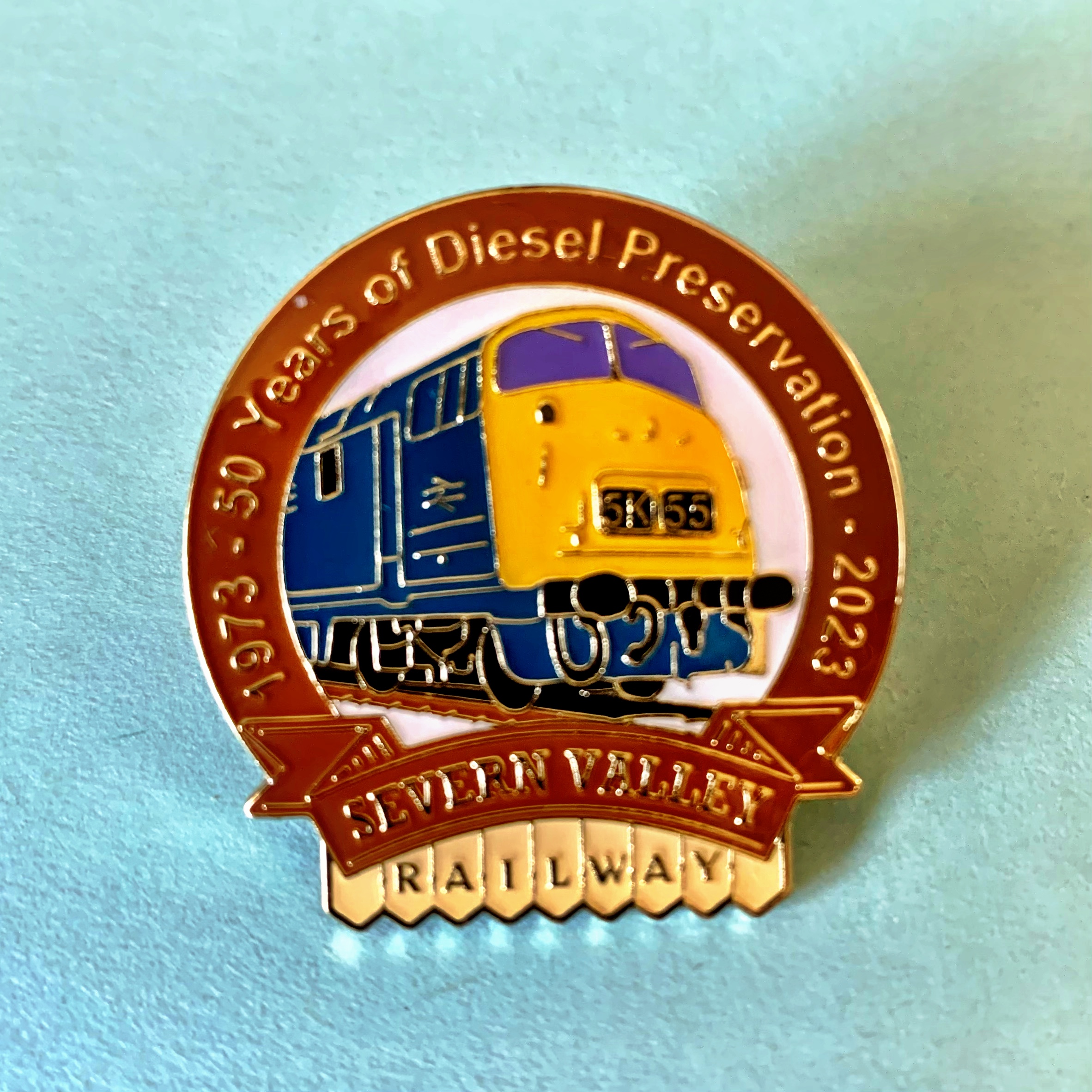
    They even made a special badge to celebrate 50 years of Diesel Preservation!

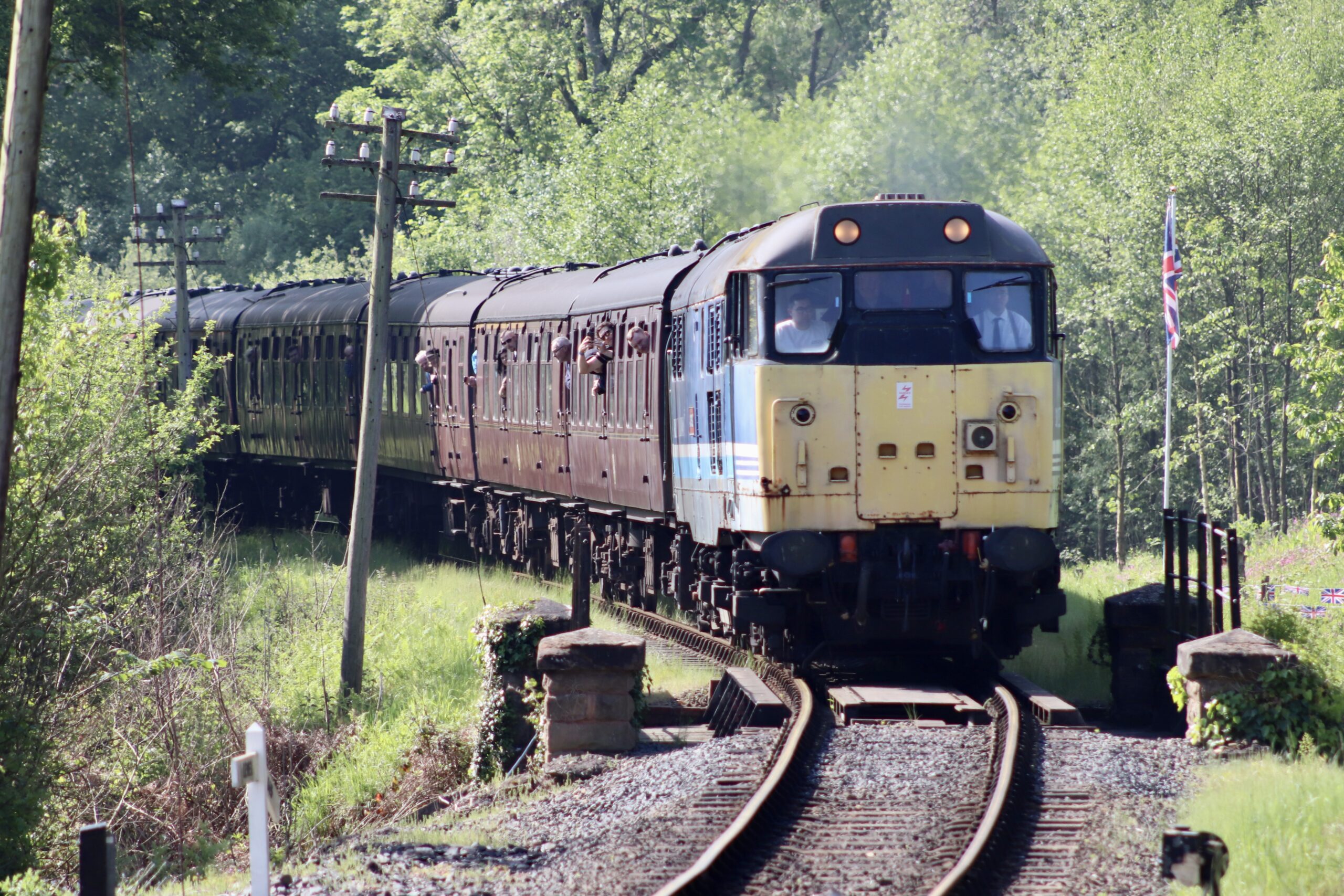
    We had however trooped back down to Highley station in time to see Class 31 No. 31270, quite suiting her Regional Railways livery, arriving with the 0845 departure from Kidderminster. Although the first two trains on the Saturday were spot on for their time-keeping, it didn’t take too long for the timetable to go awry and things became progressively more delayed as the day went on.

    Peak Rail’s Brush Type 2 Class 31 A1A-A1A No. 31270 ‘Athena’ in British Rail (BR) Regional Railways sector livery approaches Highley. No. 31270 was built by Brush Ltd in Loughborough in 1961 and carried the pre-TOPS number D5800. She was withdrawn from traffic on 26th May 2000. She never carried this livery or the nameplate while in BR service – 20/05/2023
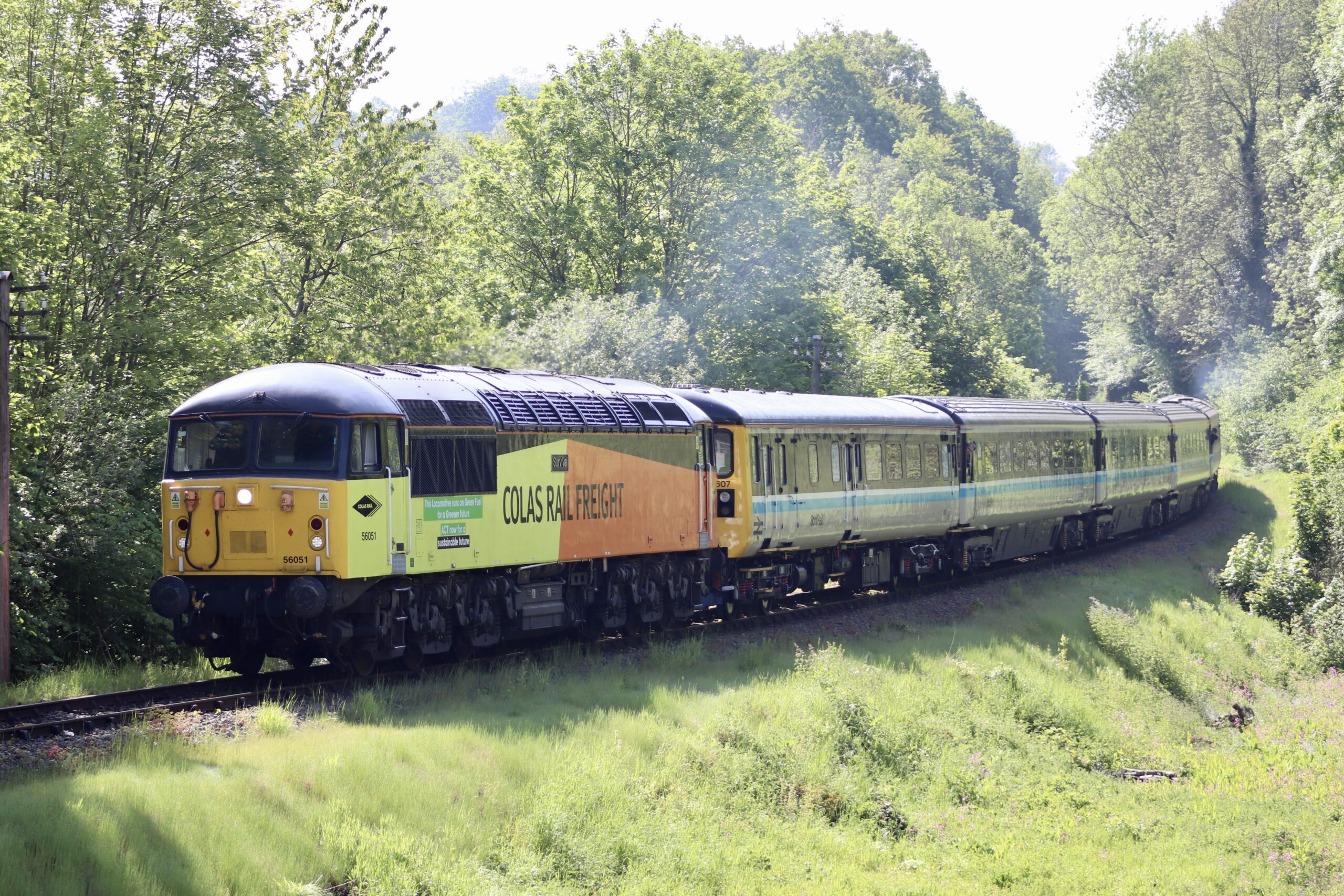
    Colas Rail Freight Class 56 No. 56051 ‘Survival’, built in 1978, on the approach to Highley with the Locomotive Service Ltd (LSL) restored ScotRail MK3 carriages that reproduce the push-pull stock used between Glasgow, Edinburgh and Aberdeen in the 1980’s – 20/05/2023
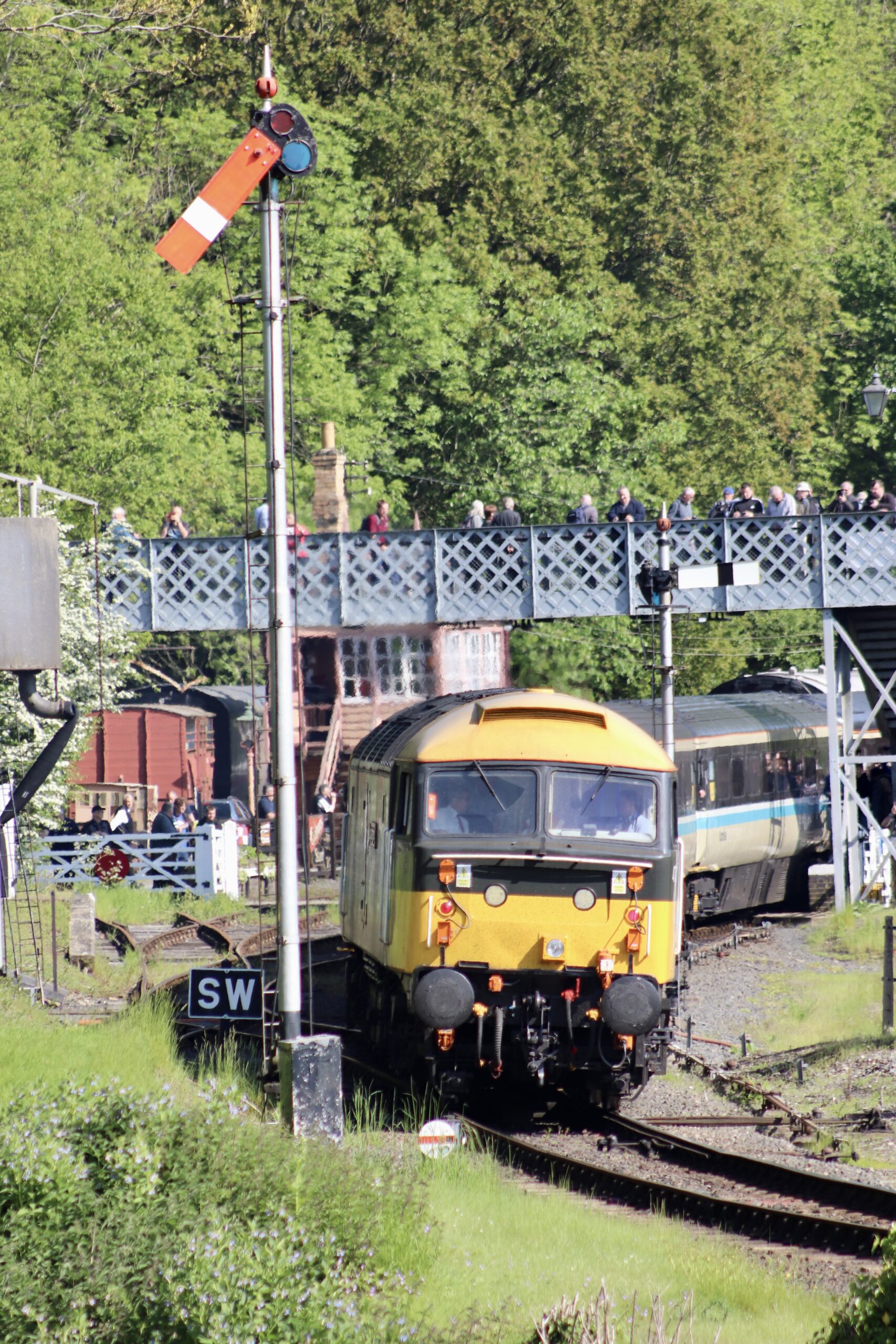
    Scottish Push-Pull Class 47 No. 47712 ‘Lady Diana Spencer’ prepares to depart Highley. This locomotive and rake of air braked push-pull stock was paired with different visiting locomotives throughout the gala, top and tailing between Kidderminster and Highley. I thought it was a shame the loco and stock didn’t perform at least one run a day in push-pull mode as it had reportedly done on the Thursday – 20/05/2023
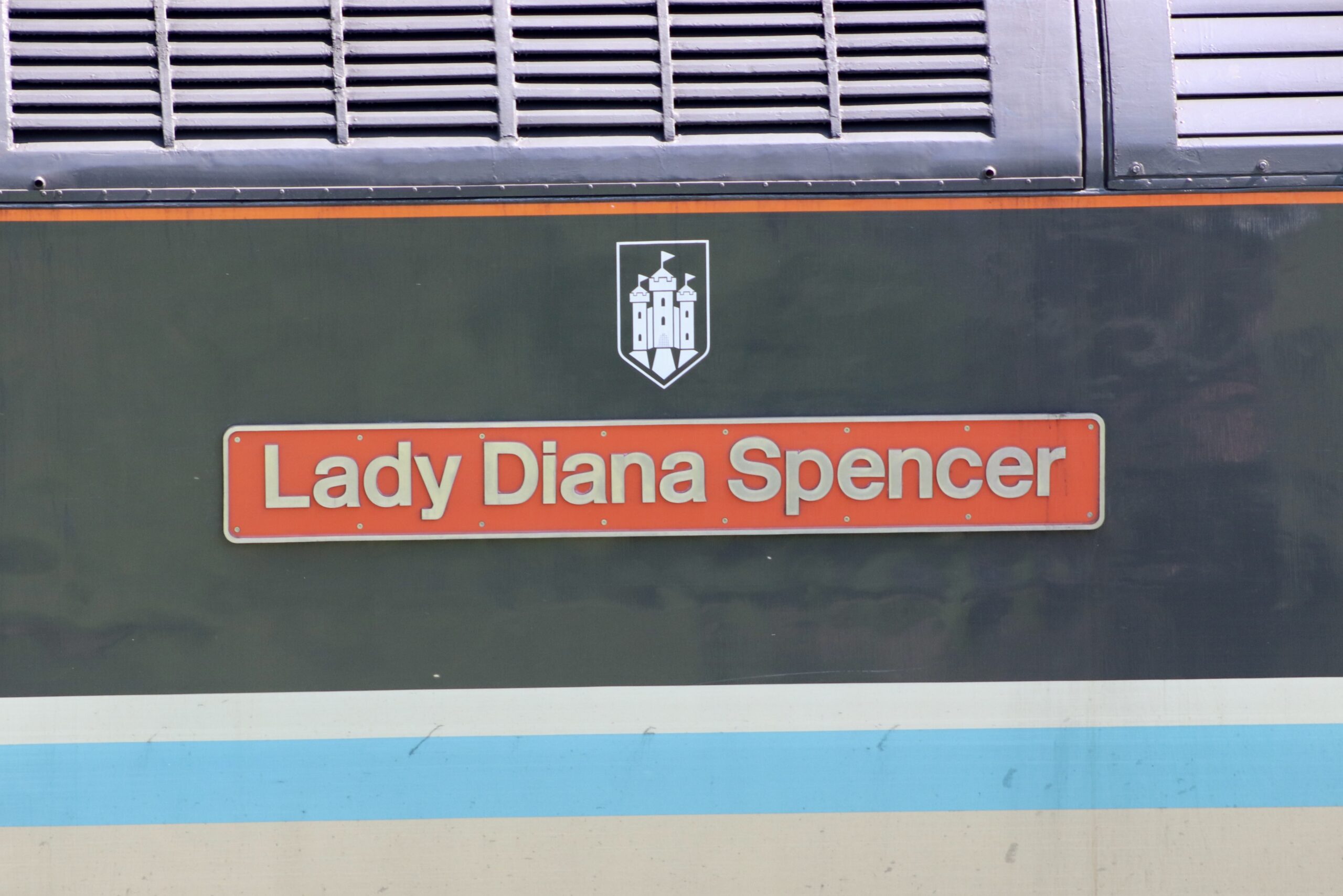
    Class 47 No. 47712 ‘Lady Diana Spencer’ nameplate – 20/05/2023
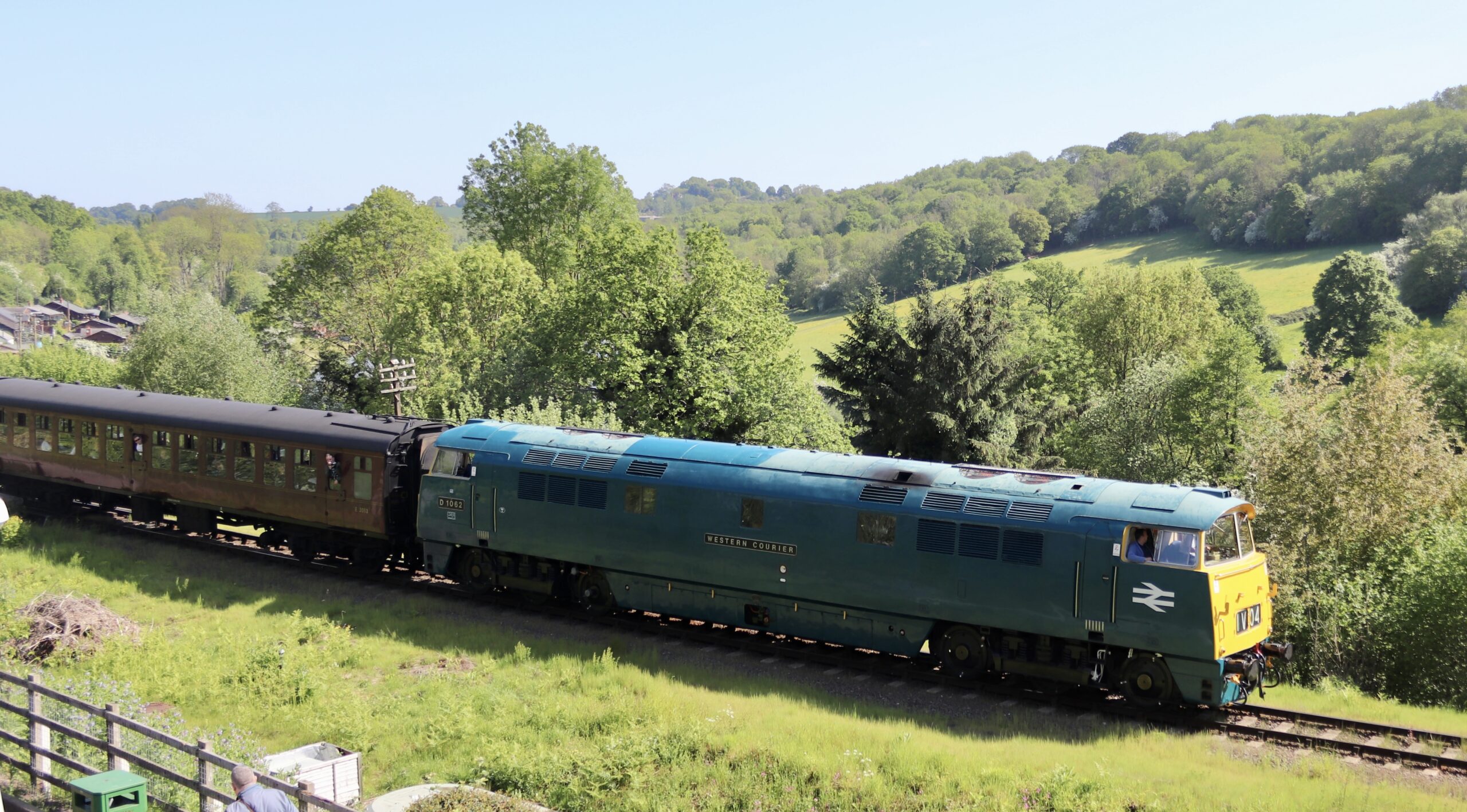
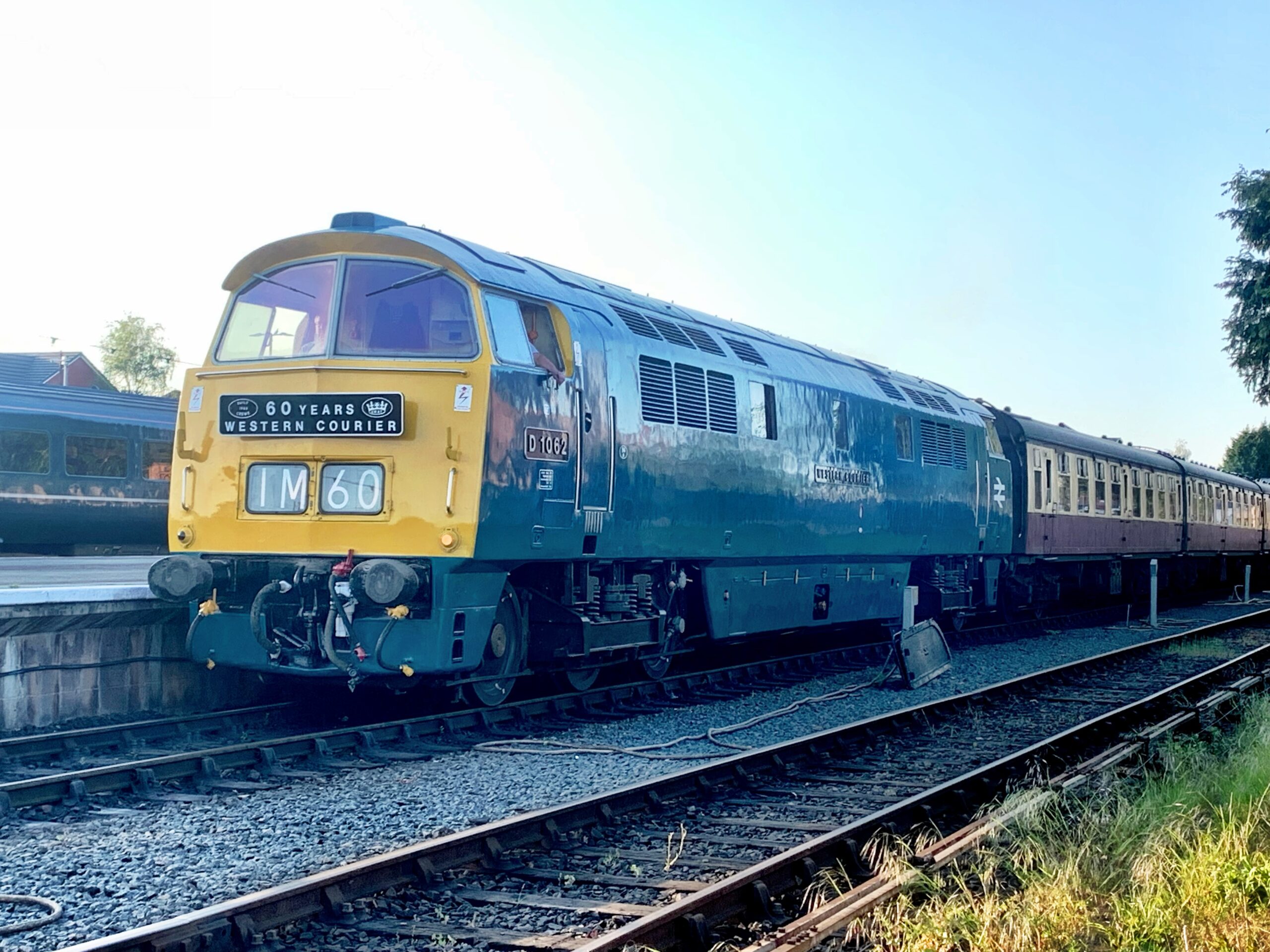
    Diesel- Hydraulic Western Class 52 No. D1062 ‘Western Courier’ departs Highley. This locomotive was built at Crewe Works and entered service at London’s Old Oak Common shed on 6 May 1963. She was withdrawn by British Rail on 23 August 1974 after 1,096,000 miles in service. Courier was an early withdrawal but was lucky enough to share “mascot” duties with Class 42 Warship No. D818 ‘Glory’, being placed on the turntable at Swindon works and given a repaint by the apprentices – 20/05/2023
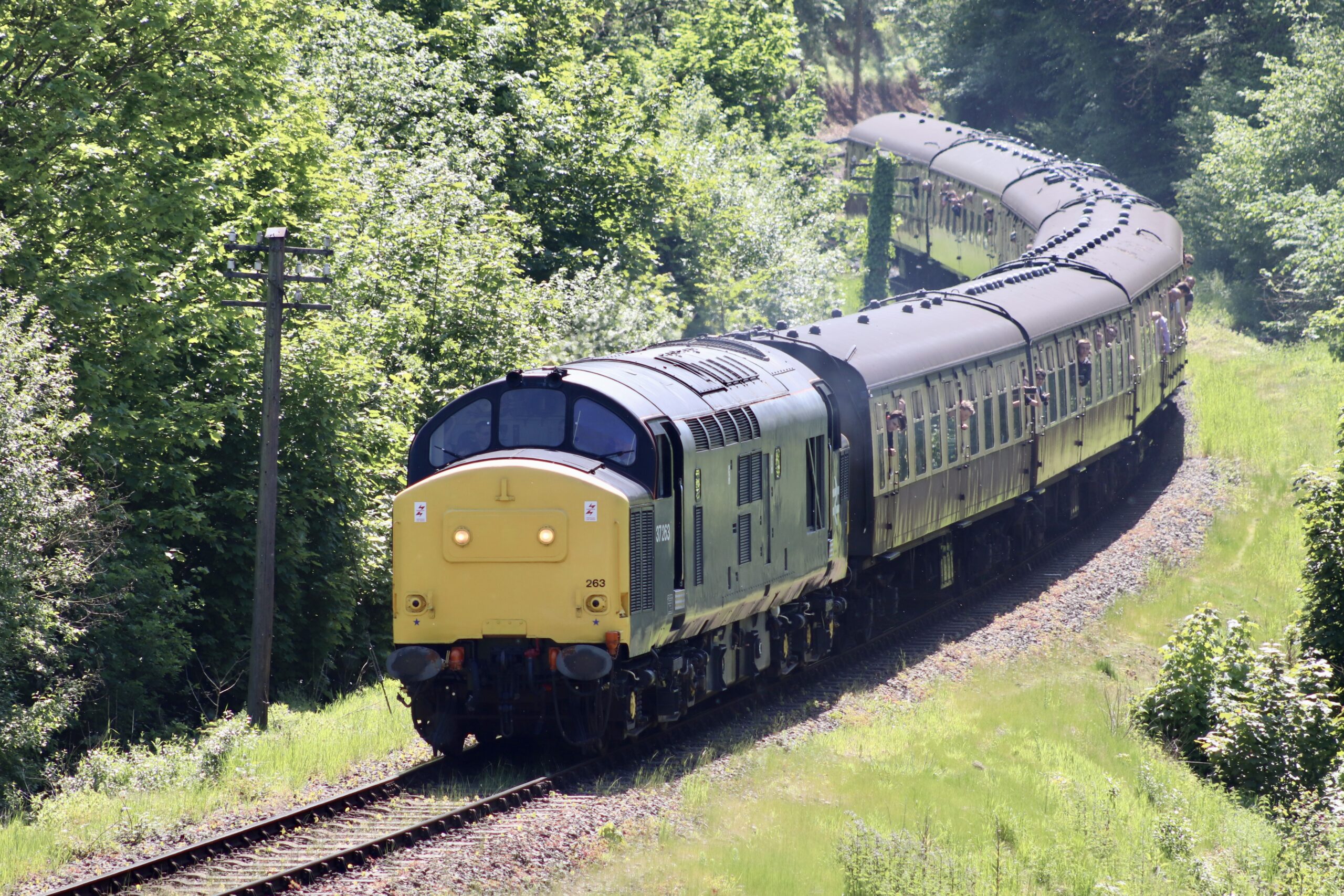
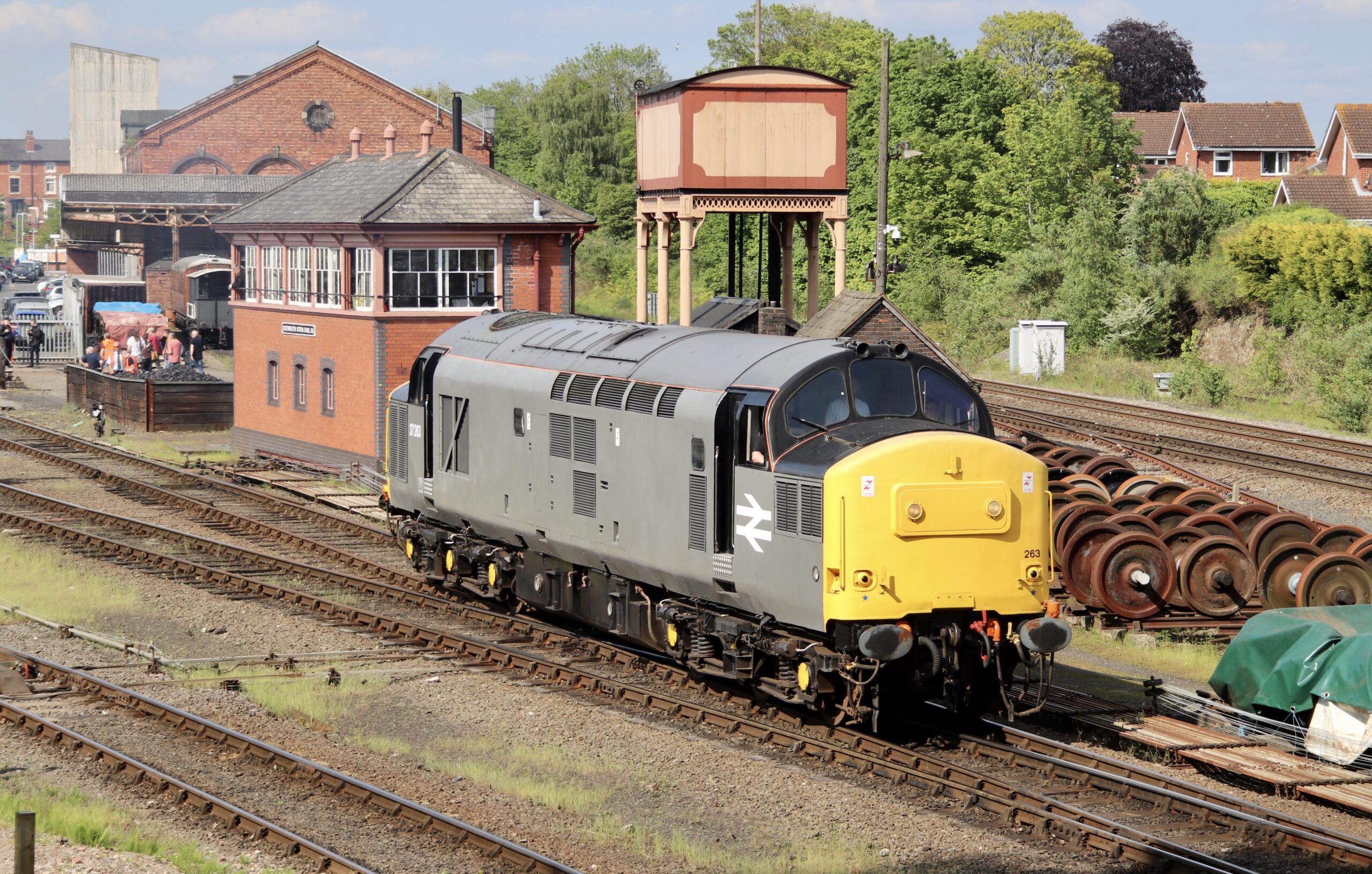
    Class 37 No. 37263 displaying departmental grey livery approaches Highley. No. 37263 was introduced into traffic in 1965 and is visiting from the Telford Steam Railway – 20/05/2023

    The weather was extremely warm and I made the decision to stay on the viewing balcony at Highley as this ensured Yoshi was able to stay in the shade and not get over heated. He also seems to like it there as he gets lots of fuss from passers by and doesn’t seem too bothered by the trains passing below. It’s also close to the cafe, so despite issues with the new coffee machine, what could be better? On the downside, of course, it means that my photographs and video from Highley are from much the same two angles, but I’ll take this provided our boy is comfortable.

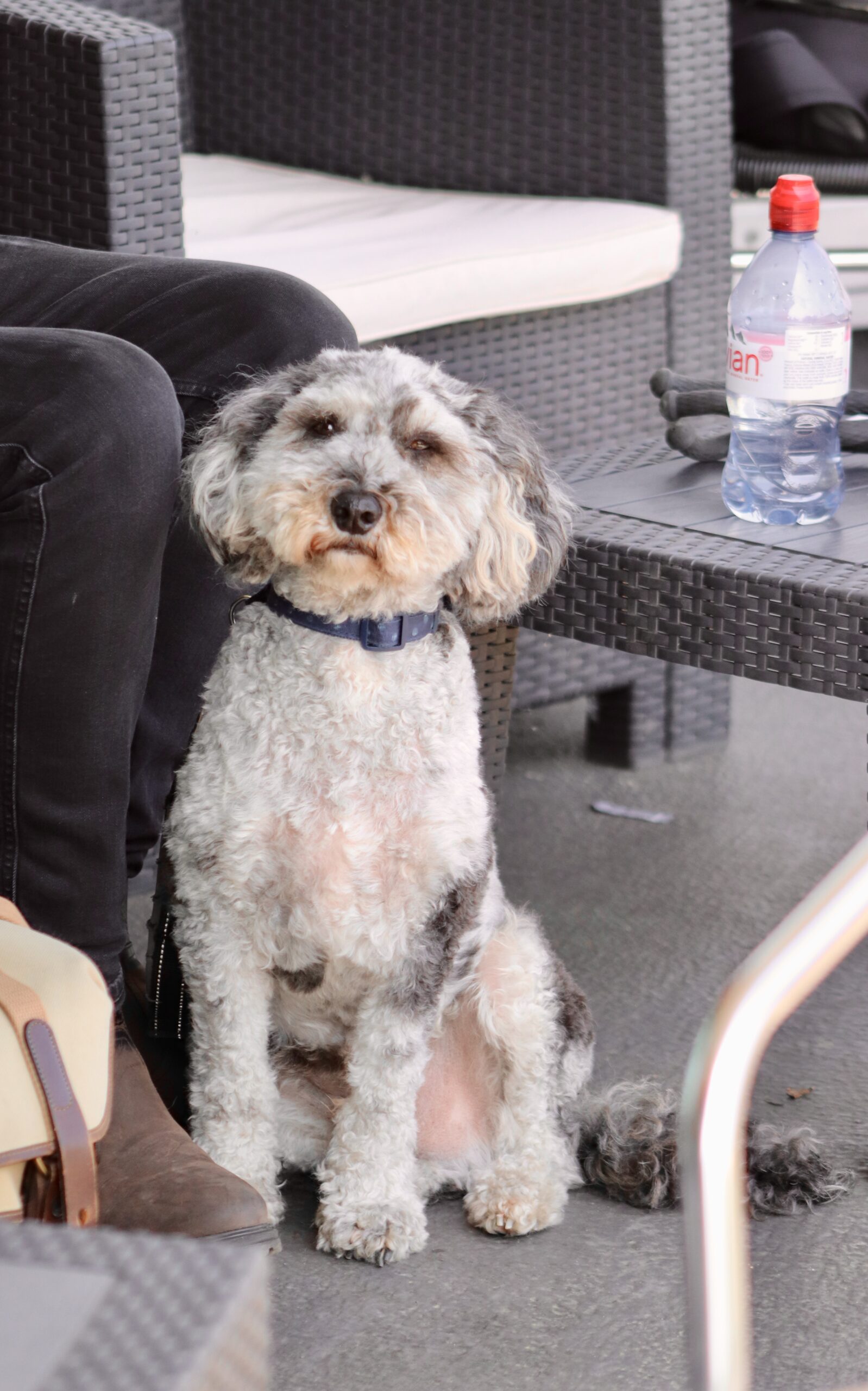
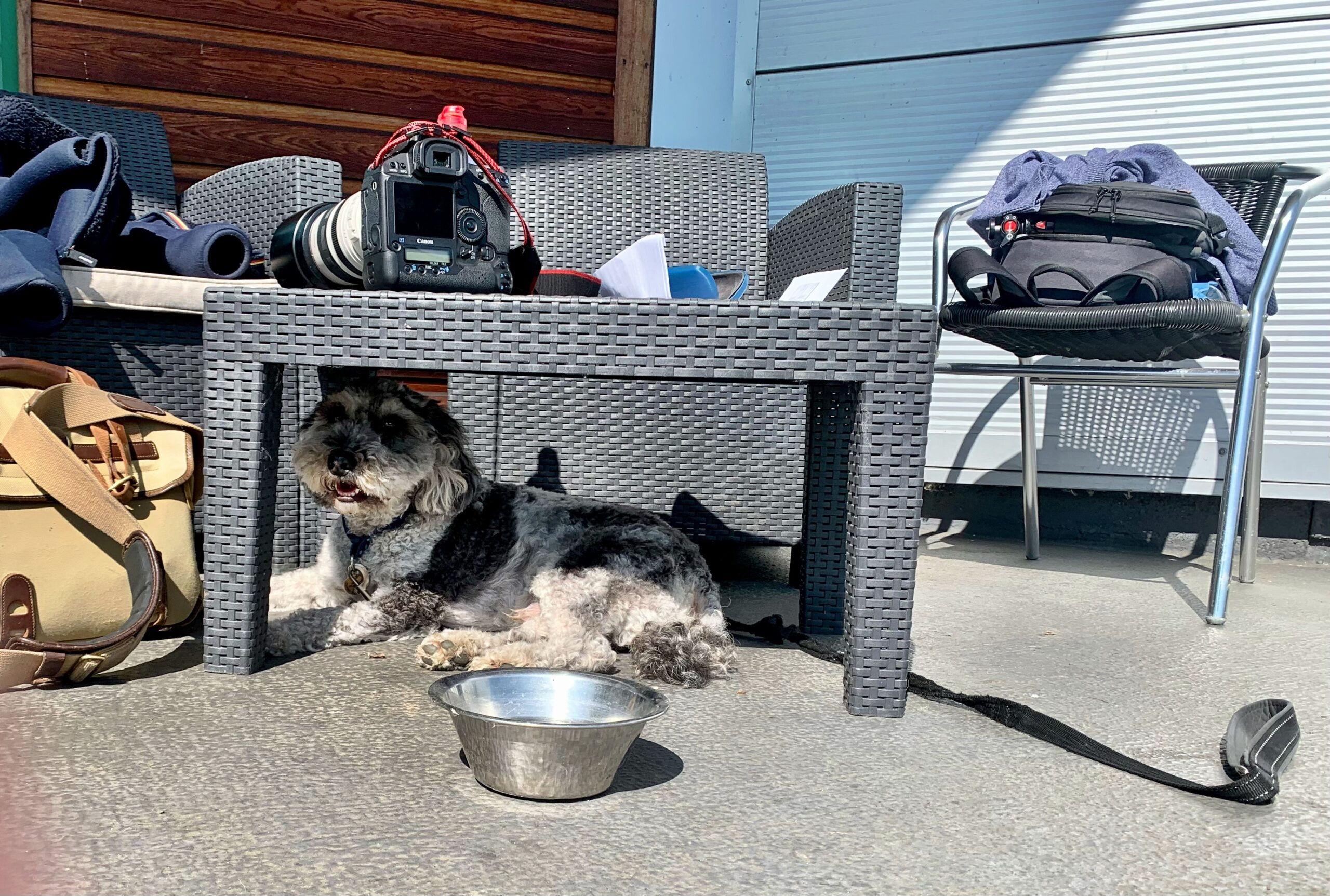
    Yoshi takes to the shade at Highley – 20/05/2023
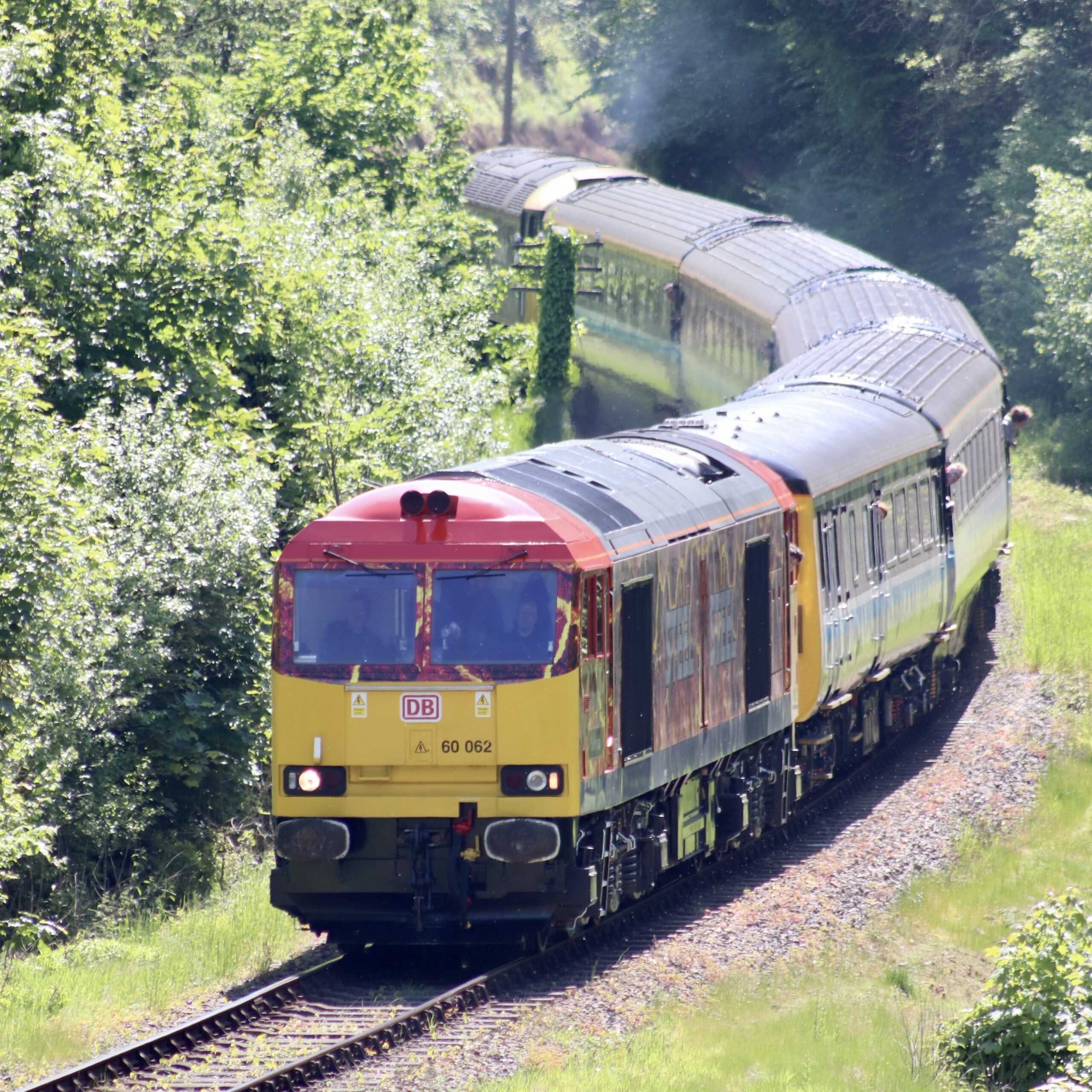
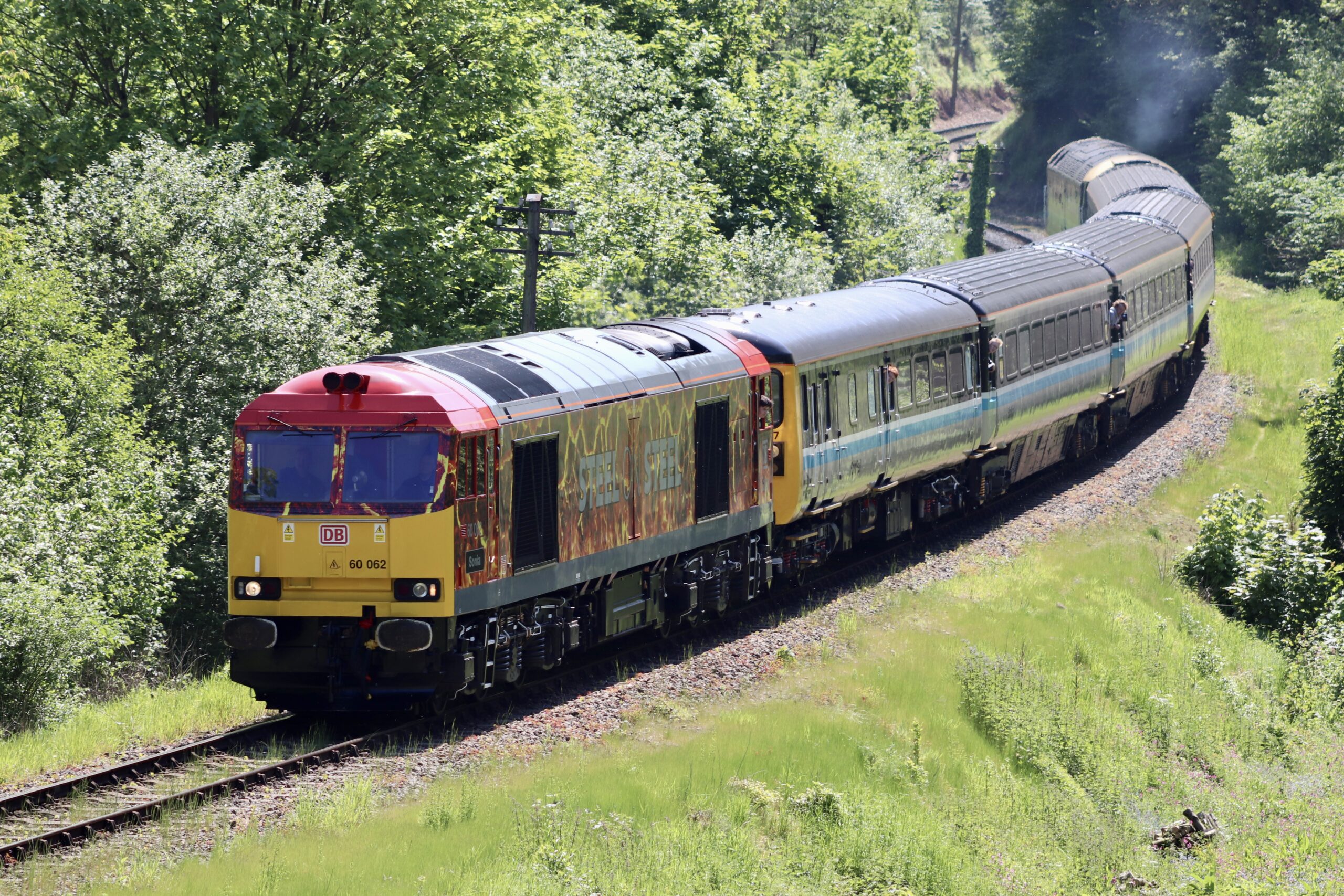
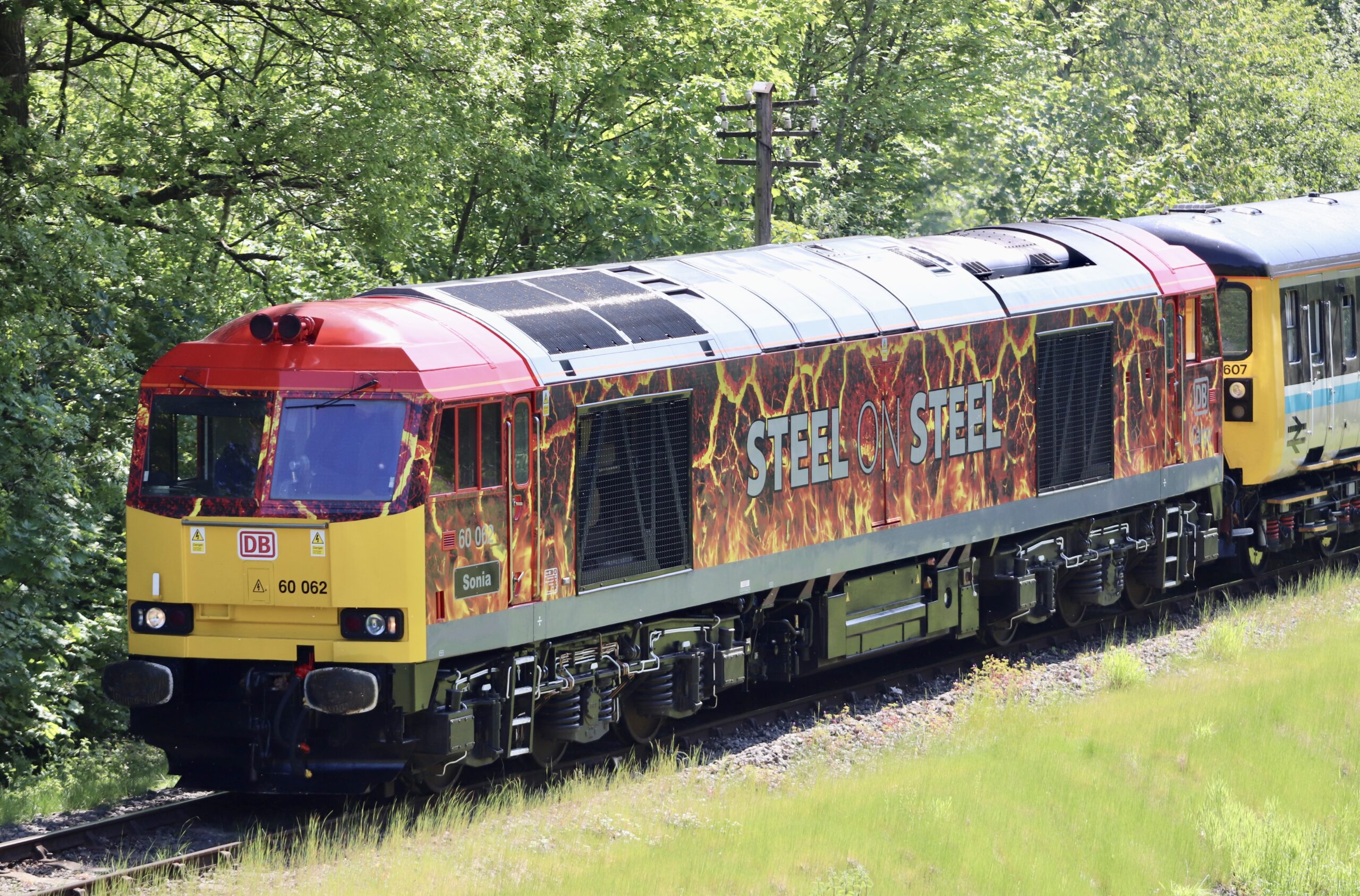
    DB Cargo provided Class 60 No. 60062 ‘Sonia’ in her striking fiery Steel On Steel livery. Class 47 No. 47712 is on the rear – 20/05/2023
    Class 60 No. 60062 ‘Sonia’ approaches Highley – 20/05/2023
    Close up of Class 60 No. 60062 ‘Sonia’. The locomotive carries this special livery to celebrate the important role DB Cargo UK plays in supporting the UK’s metal transportation market. One full train load of steel coil can produce over 1,000 new cars or 60,000 white goods – 20/05/2023
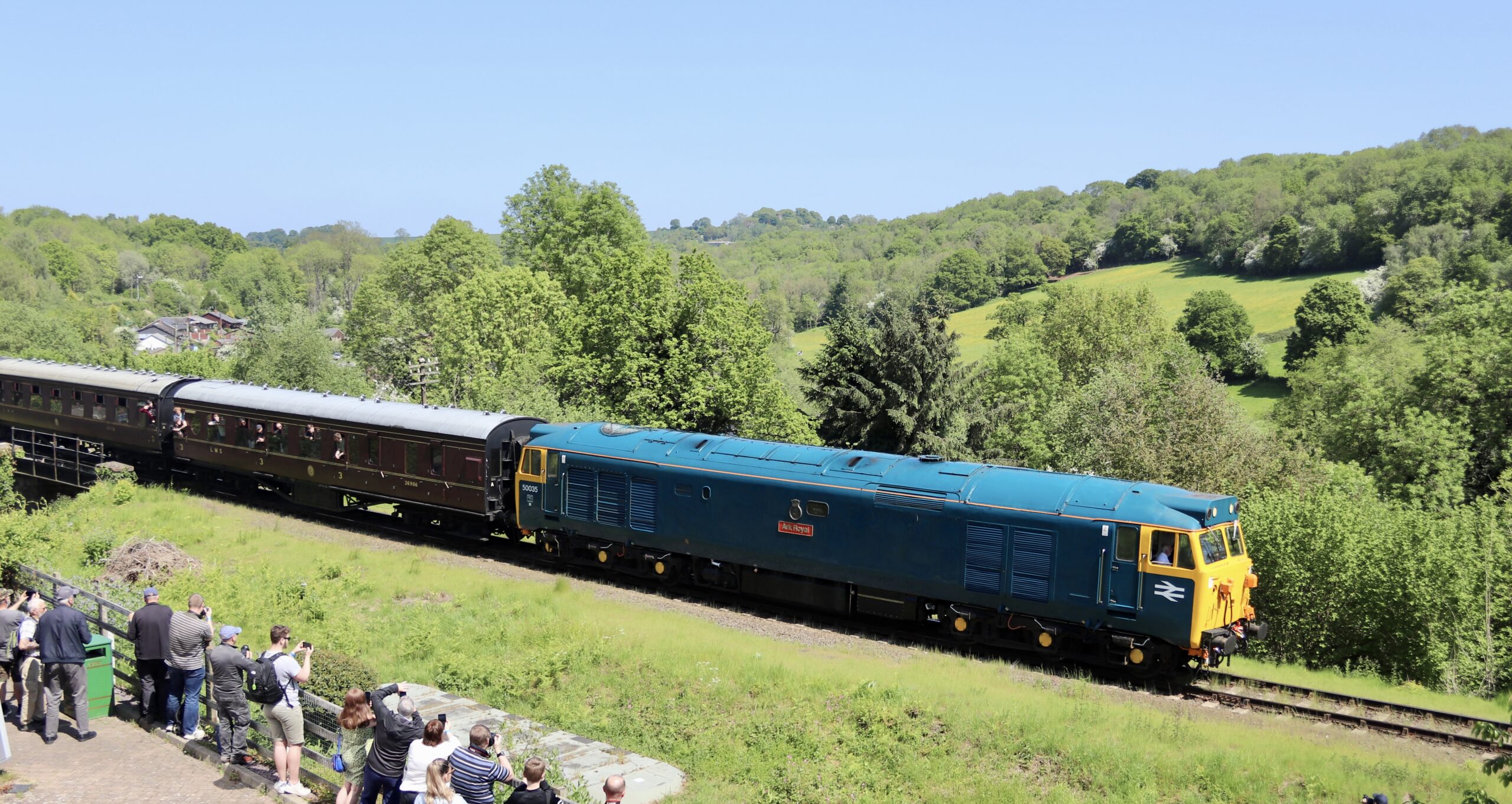
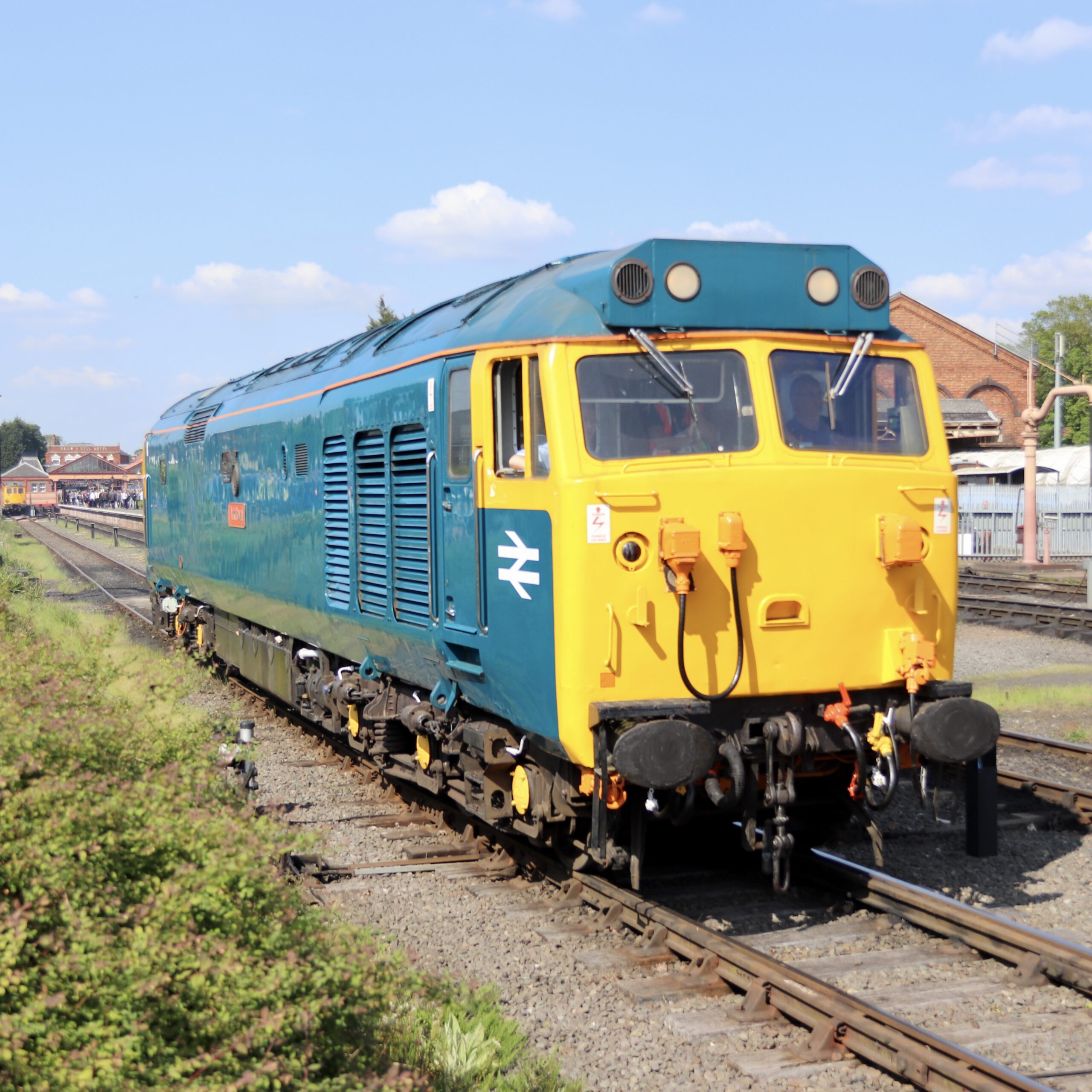
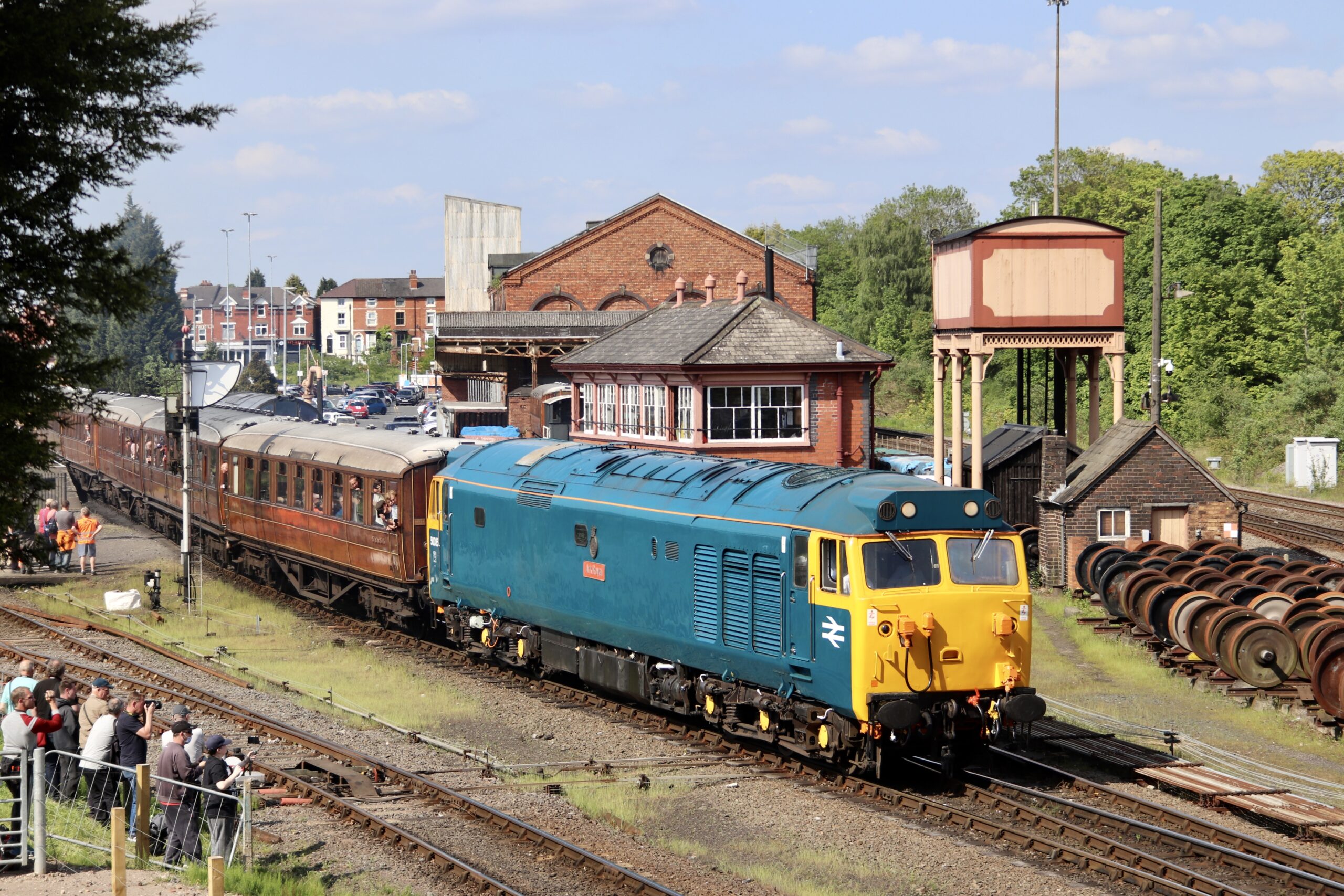
    Class 50 No. 50035 ‘Ark Royal’ departs Highley with a Kidderminster bound train. There are several Class 50’s based on the Severn Valley but only one example was in operation over the gala as the GBRf pair No.’s 50007 and 50035 were undergoing some maintenance between mainline outings, while No.’s 50033 and 50044 were in the Traction Maintenance Depot and No. 50031 is currently minus a fuel tank – 20/05/2023
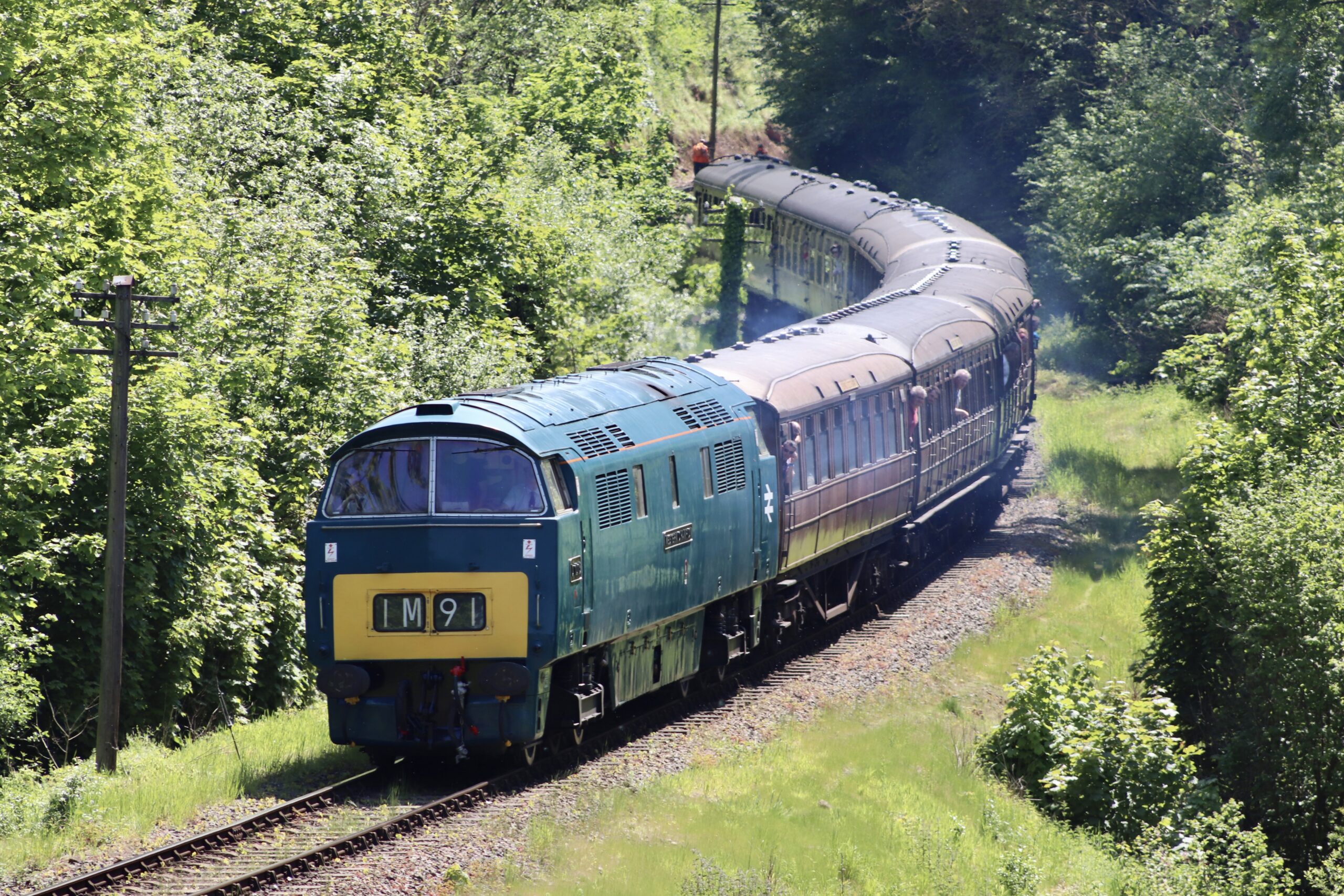
    Maybach Music as Class 52 No. D1015 ‘Western Champion’ arrives at Highley. No. D1015 is one of seven preserved Western locomotives from the original 74 built by BR at Swindon and Crewe – 20/05/2023
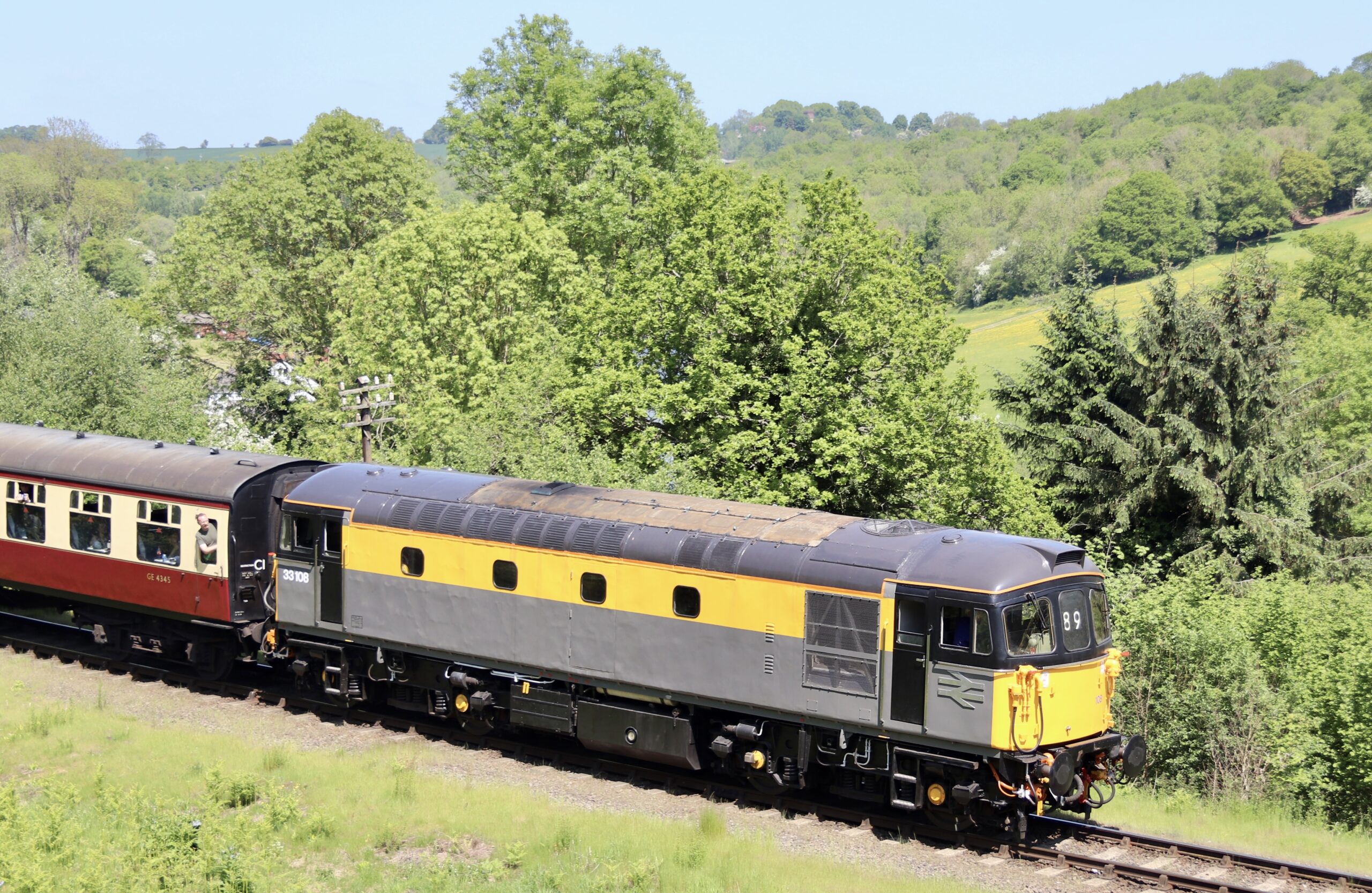
    Push-Pull fitted Class 33 No. 33108 in revised departmental “Dutch” livery (so named because of the similarity to the Dutch State Railway colours later adopted by the BR engineers sector) was in service following an overhaul – 20/05/2023
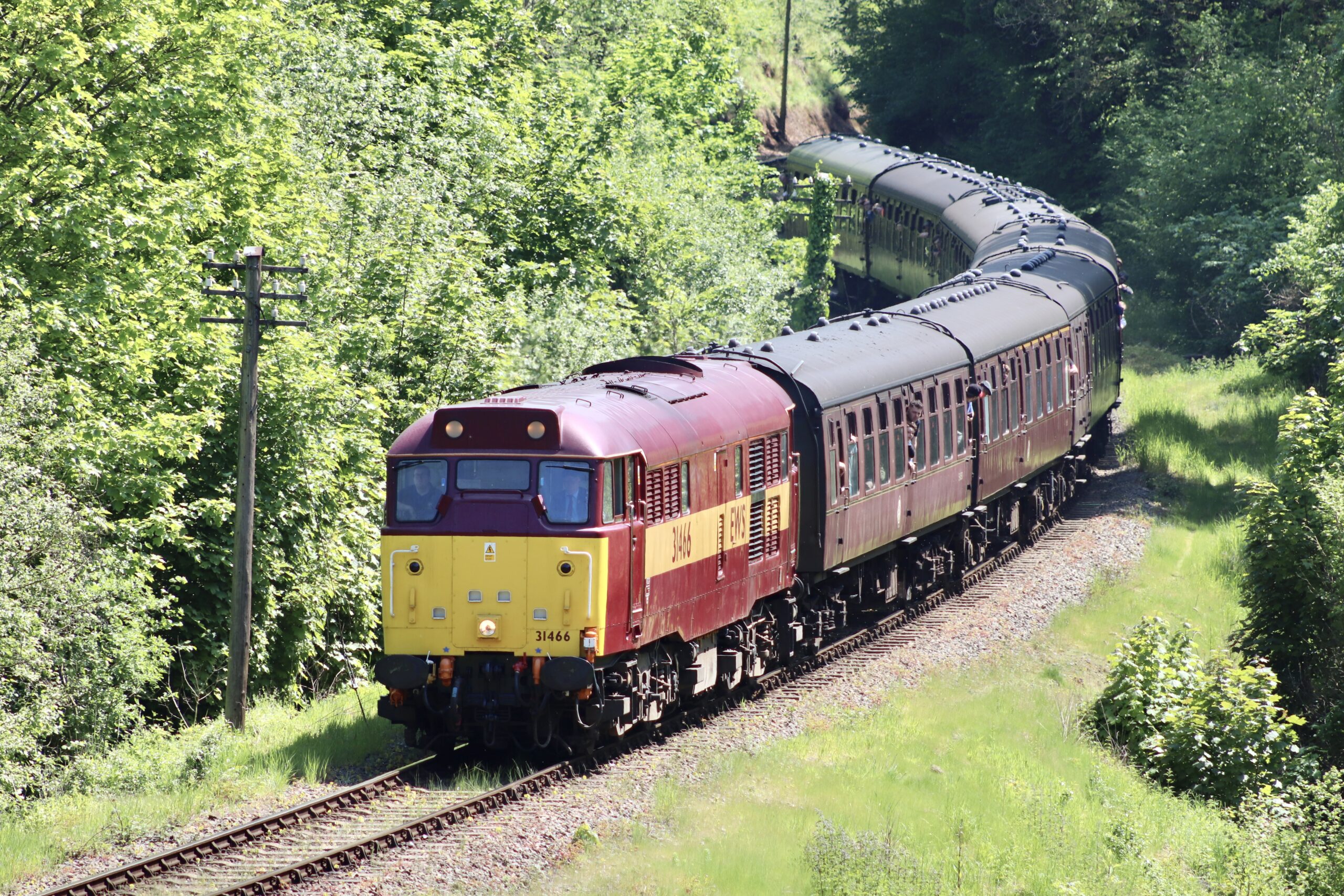
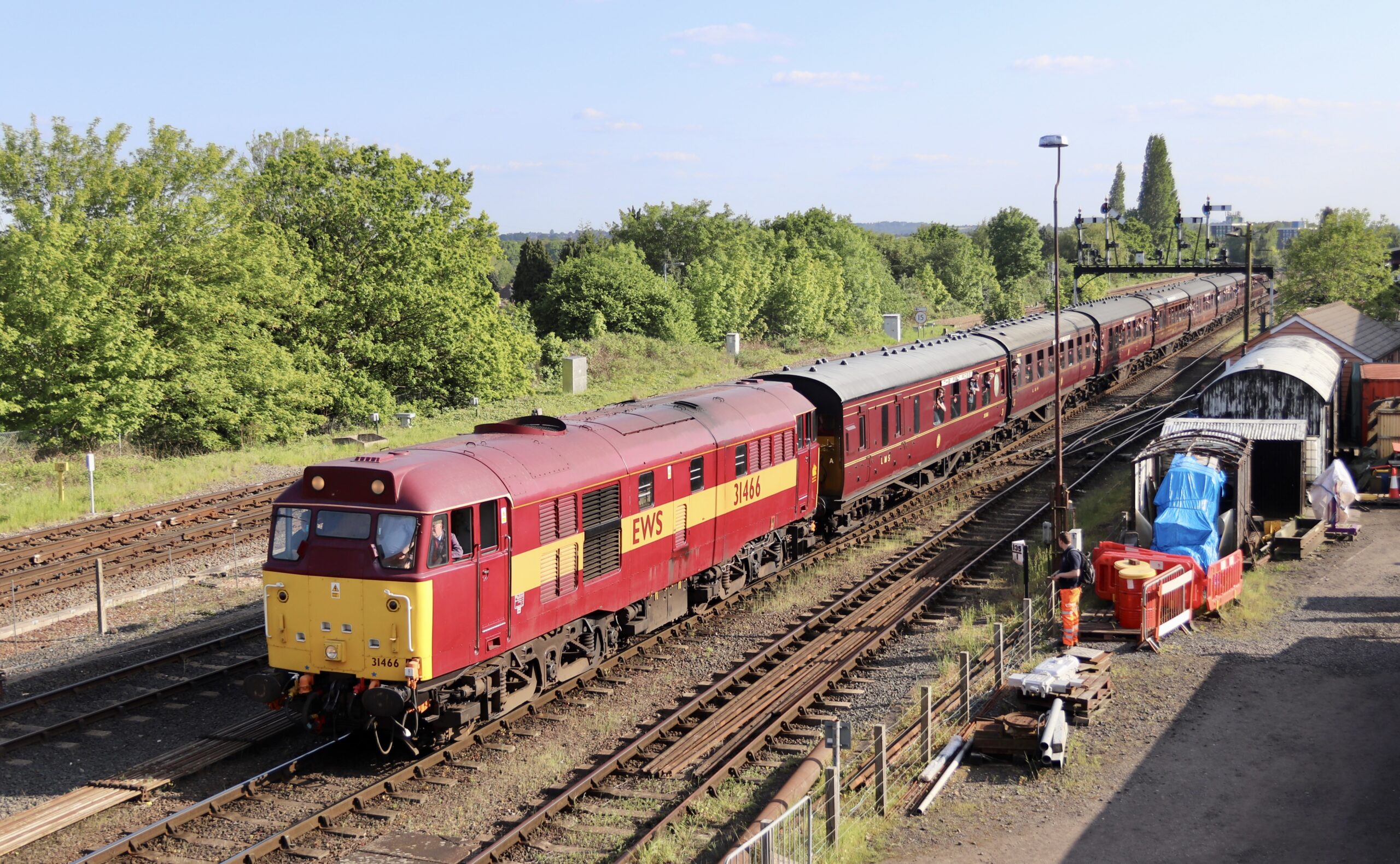
    Resident Class 31 No. 31466 in English Welsh Scottish (EWS) livery on the approach to Highley. The Class 31 locomotives received a number of derogatory nicknames over their years in mainline operation including Goyles (short for “gargoyles” in reference to the perceived ugliness of the design), Peds (short for “pedal cars” in reference to their speed and pulling power) and Gurglers, after the noise they made. 26 members of the class have been preserved – 23/05/2023
    Yoshi relaxes at Highley – 20/05/2023

    At some point we knew we had to move on from our balcony position, essentially to get photos of locomotives which were not planned to make it to Highley. Our original plan was to journey to Bewdley and then onto Kidderminster. As Bewdley can be somewhat busy on an average day and with this being the busiest I’d ever seen the Severn Valley, I opted instead to head straight for Kidderminster. This would mean we’d miss seeing the visiting Class 20 locomotives (No.’s 20048 and 20189) heading to Bridgnorth, but these were scheduled to return later. Unfortunately, things didn’t go quite to plan and one of the Class 20’s, No. 20048 failed and was removed from the train on reaching Bridgnorth and didn’t make the return outing. Another Class 20, No. 20142 in red London Transport livery was in attendance for the gala, but was not in use, or indeed visible, on the day of our visit.

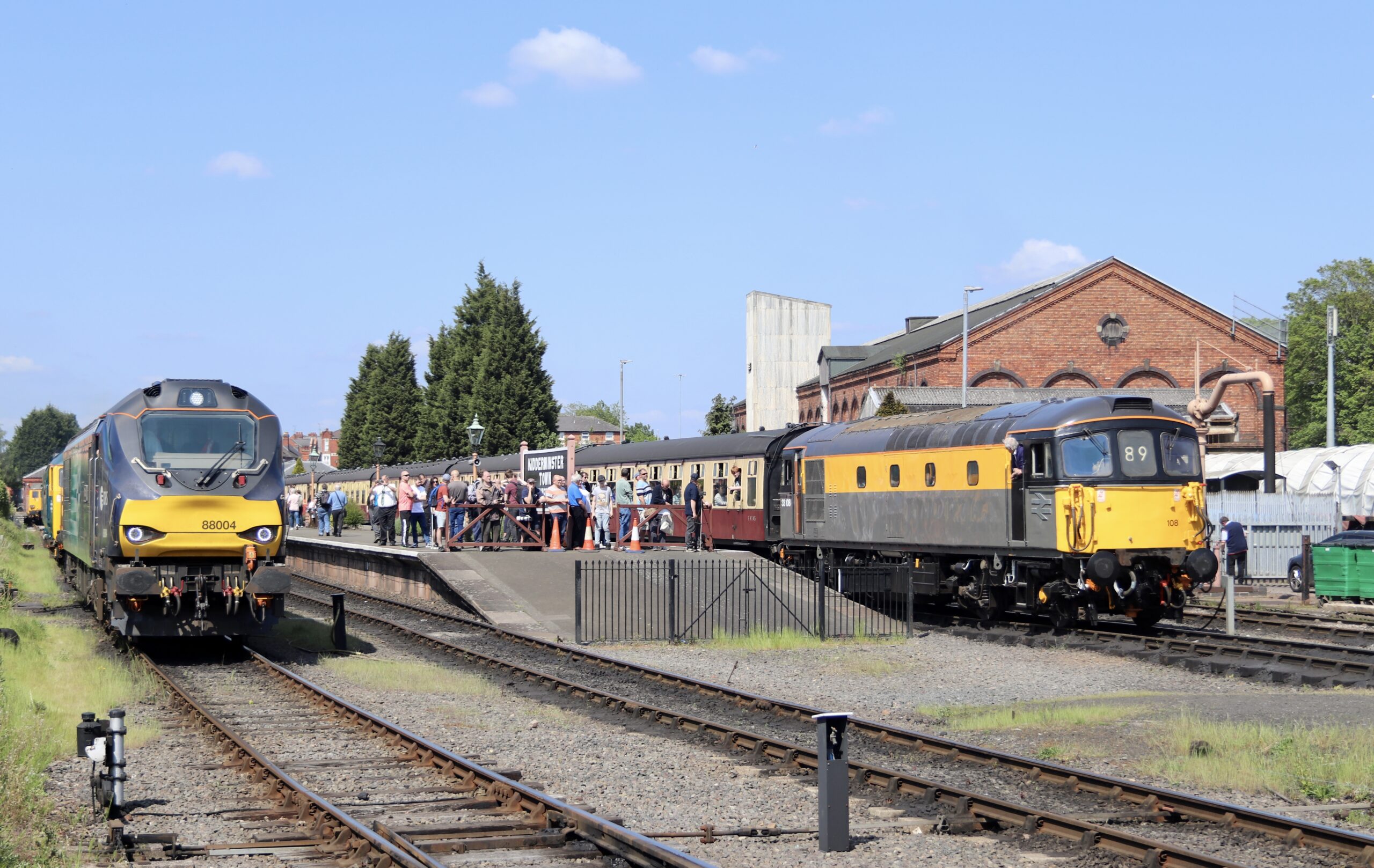
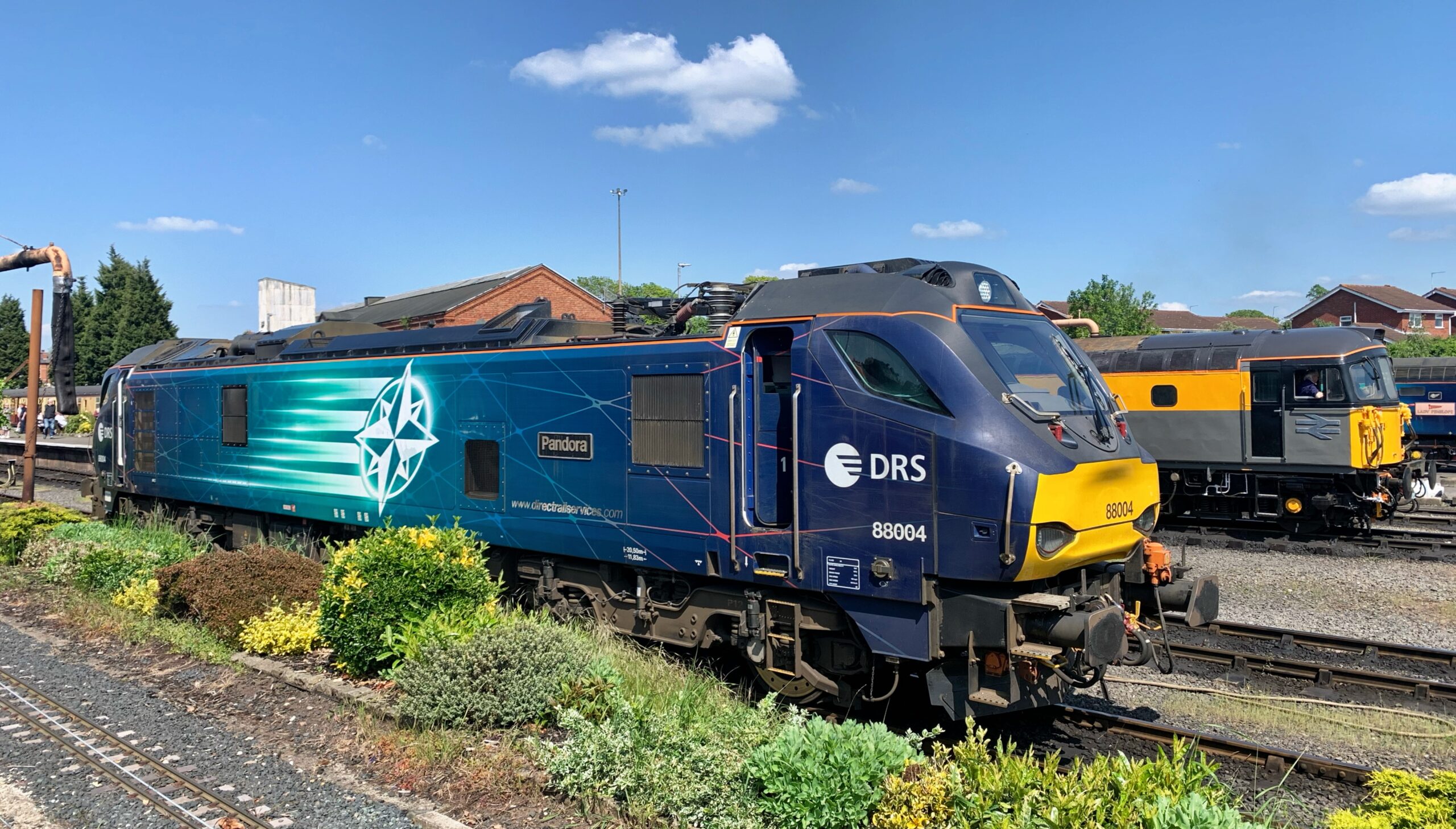
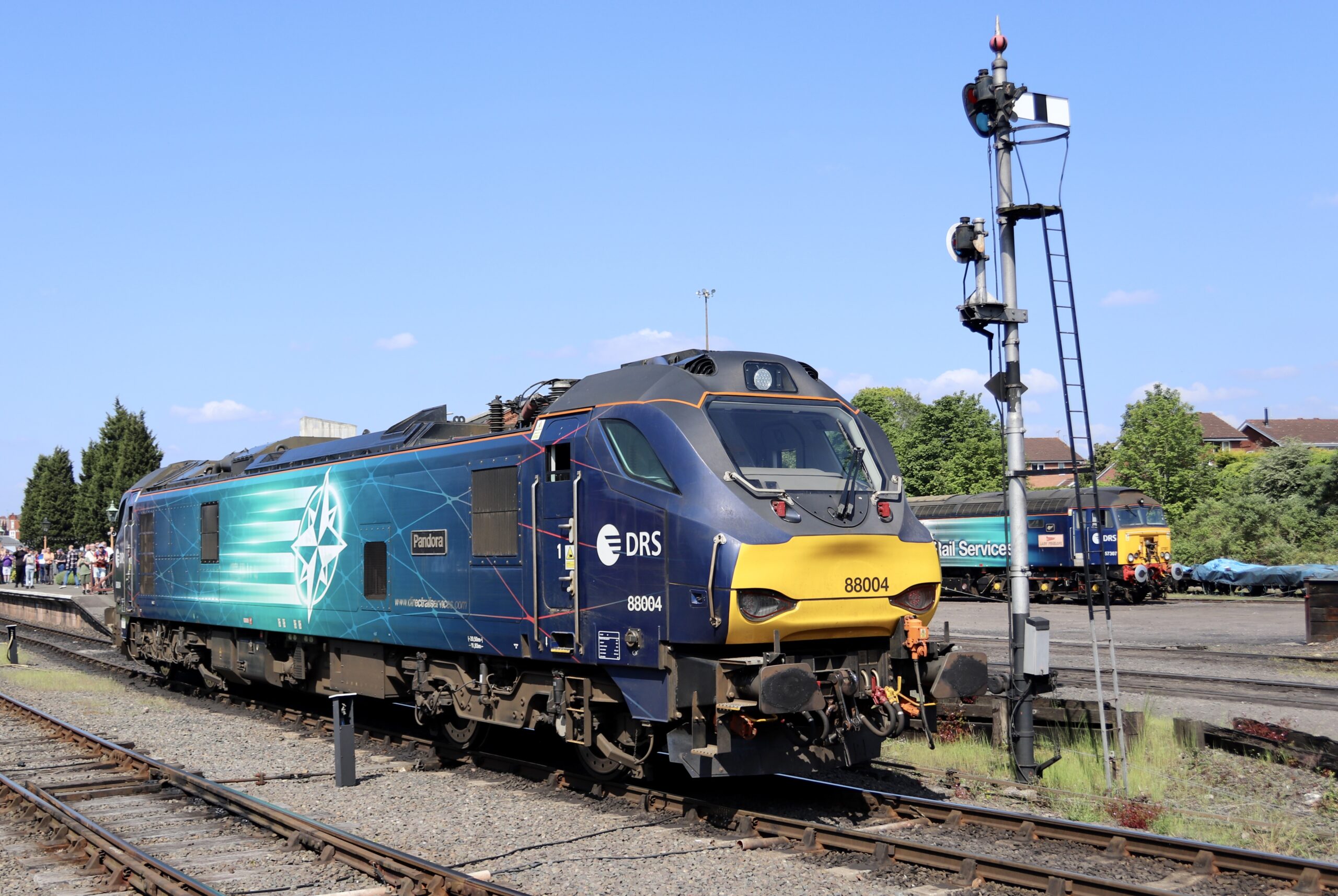
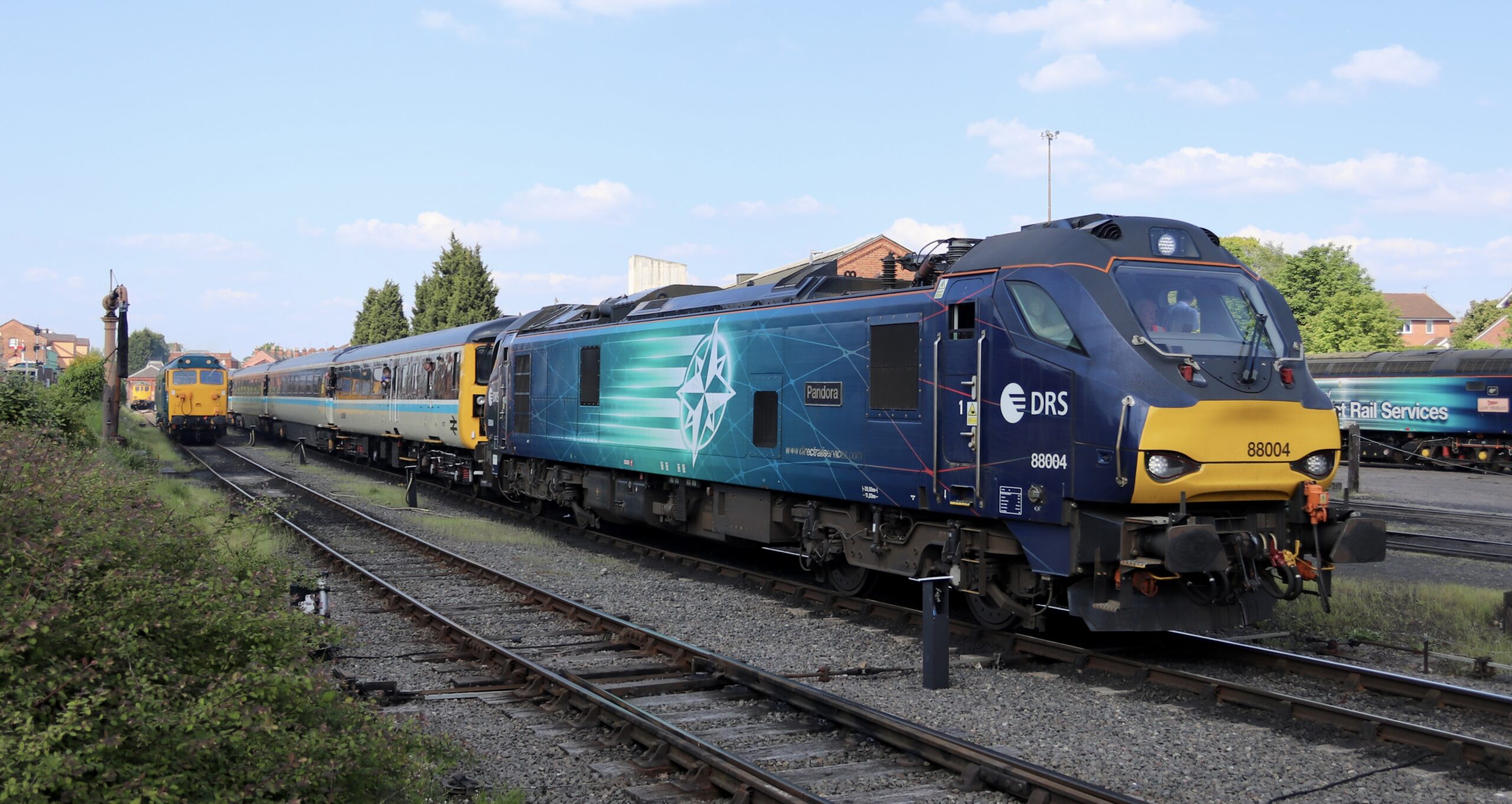
    Direct Rail Services (DRS) Class 88 No. 88004 ‘Pandora’ awaits her turn while Class 33 No. 33108 prepares for departure form Kidderminster – 20/05/2023
    DRS) Class 88 No. 88004 ‘Pandora’ and Class 33 No. 33108 at Kidderminster – 20/05/2023
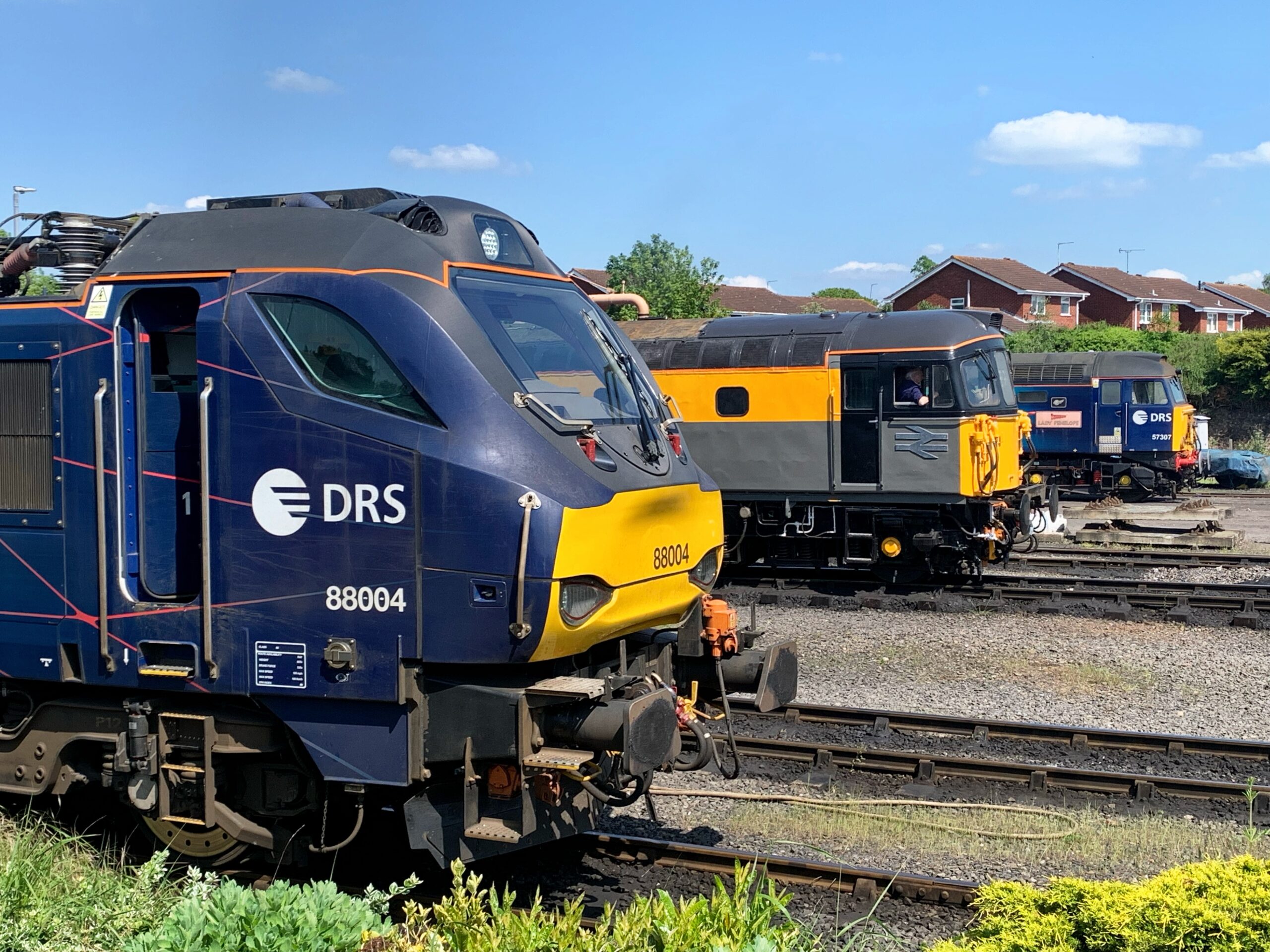
    Line up of No.’s 88004, 33108 and 57307 at Kidderminster – 20/05/2023
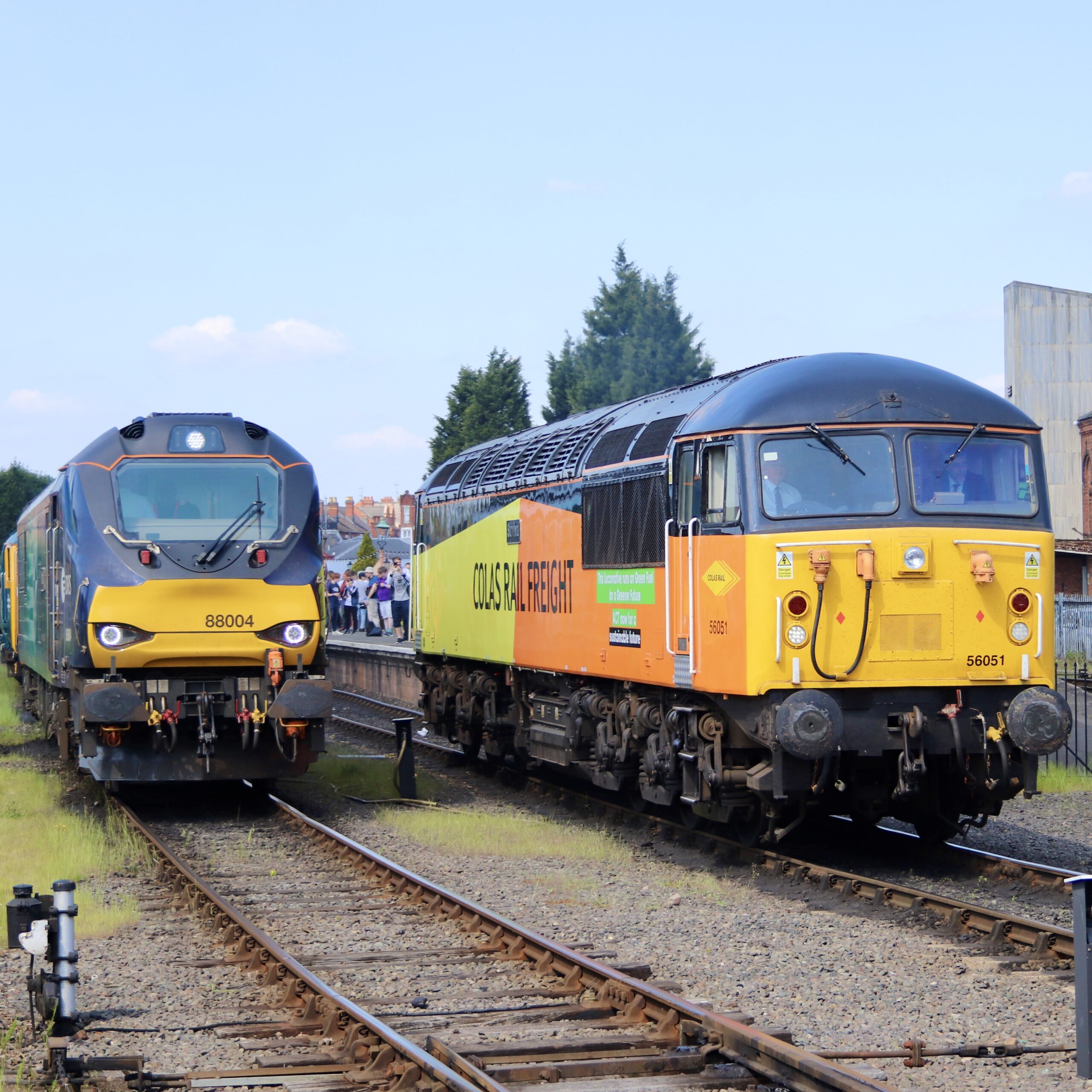
    Colas Freight Class 56 No. 56051 ‘Survivor’ passes DRS Class 88 No. 88004 ‘Pandora’ at Kidderminster – 20/05/2023
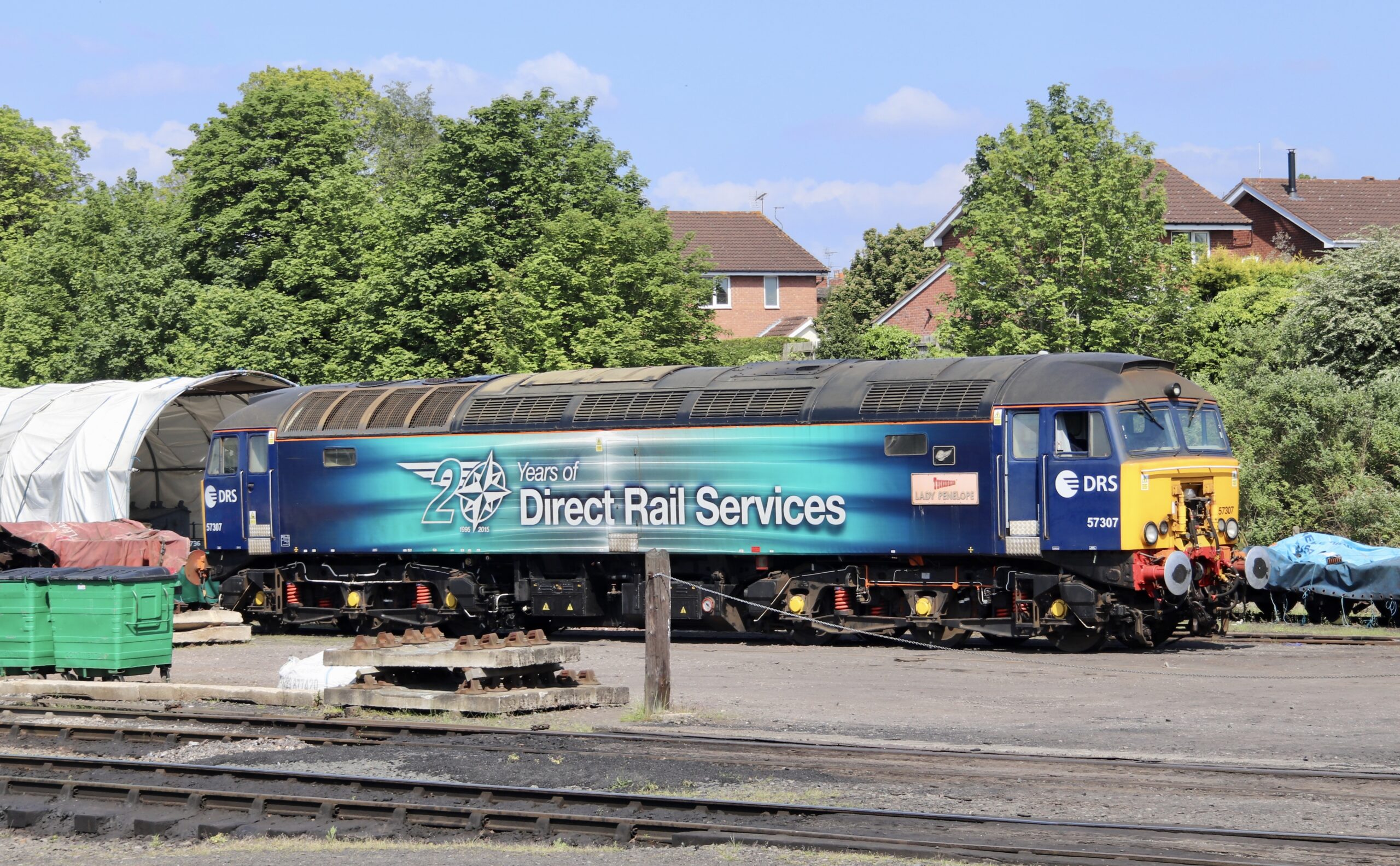
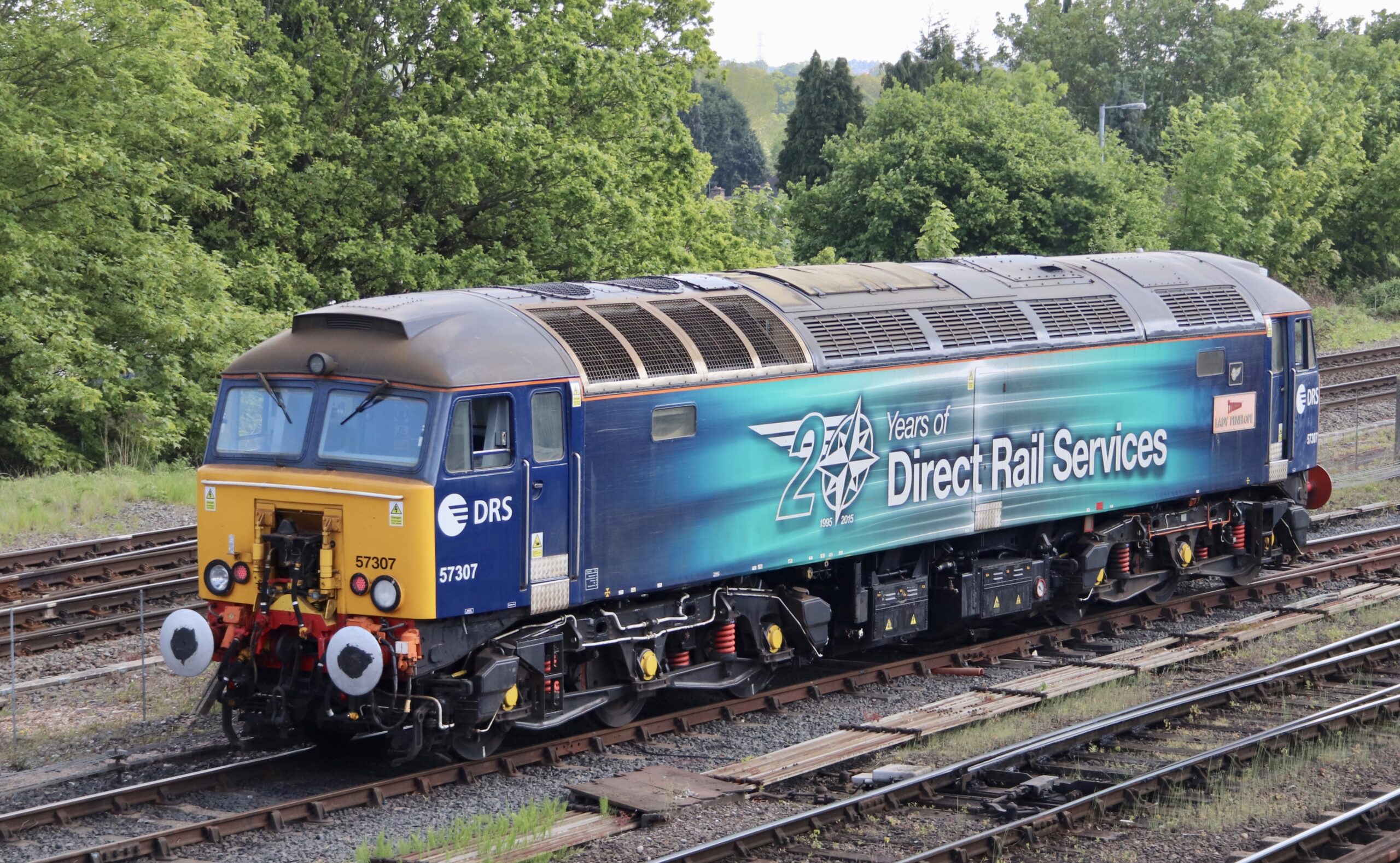
    Direct Rail Services (DRS) Class 57 No. 57307 ‘Lady Penelope’ awaits action in the sidings at Kidderminster – 20/05/2023
    DRS pair Class 88 No. 88004 ‘Pandora’ and Class 57 No. 57307 ‘Lady Penelope’ at Kidderminster – 20/05/2023
    Class 88 No. 88004 ‘Pandora’ at the head of the ScotRail stock in Kidderminster. Ten Class 88 locomotives were built in 2015/16 by Stadler Rail Valencia. They are dual-mode locomotives that are fitted both with a pantograph to collect electricity from overhead wires, and a Caterpillar diesel engine. They are the first dual-mode locomotive in the UK to use the 25 kV AC electrification – 20/05/2023
    Class 50 No. 50035 ‘Ark Royal’ runs light engine out of Kidderminster. No. 50035 was the first BR Class 50 diesel locomotive to enter preservation The locomotive was built at English Electric’s Vulcan Foundry at Newton-le-Willows and entered BR service as No. D435 at Crewe in August 1968, being given the number 50035 in March 1974 under the TOPS scheme. She was withdrawn from service on 5th August 1990 – 20/05/2023
    RailAdventure Class 43 No.’s 43465 and 43484 on static display at Kidderminster. The pairing hauled trains on the Friday only – 20/05/2023
    RailAdventure Class 43 No.’s 43484 and 43465 at Kidderminster. RailAdventure signed a partnership deal with Hanson & Hall Rail Services in April 2021 having purchased eight Class 43 power cars, which will run back to back to operate domestic services. RailAdventure is based in Munich and has been involved in delivering new trains from Europe to the UK, such as the new Merseyrail Class 777 trains – 20/05/2023
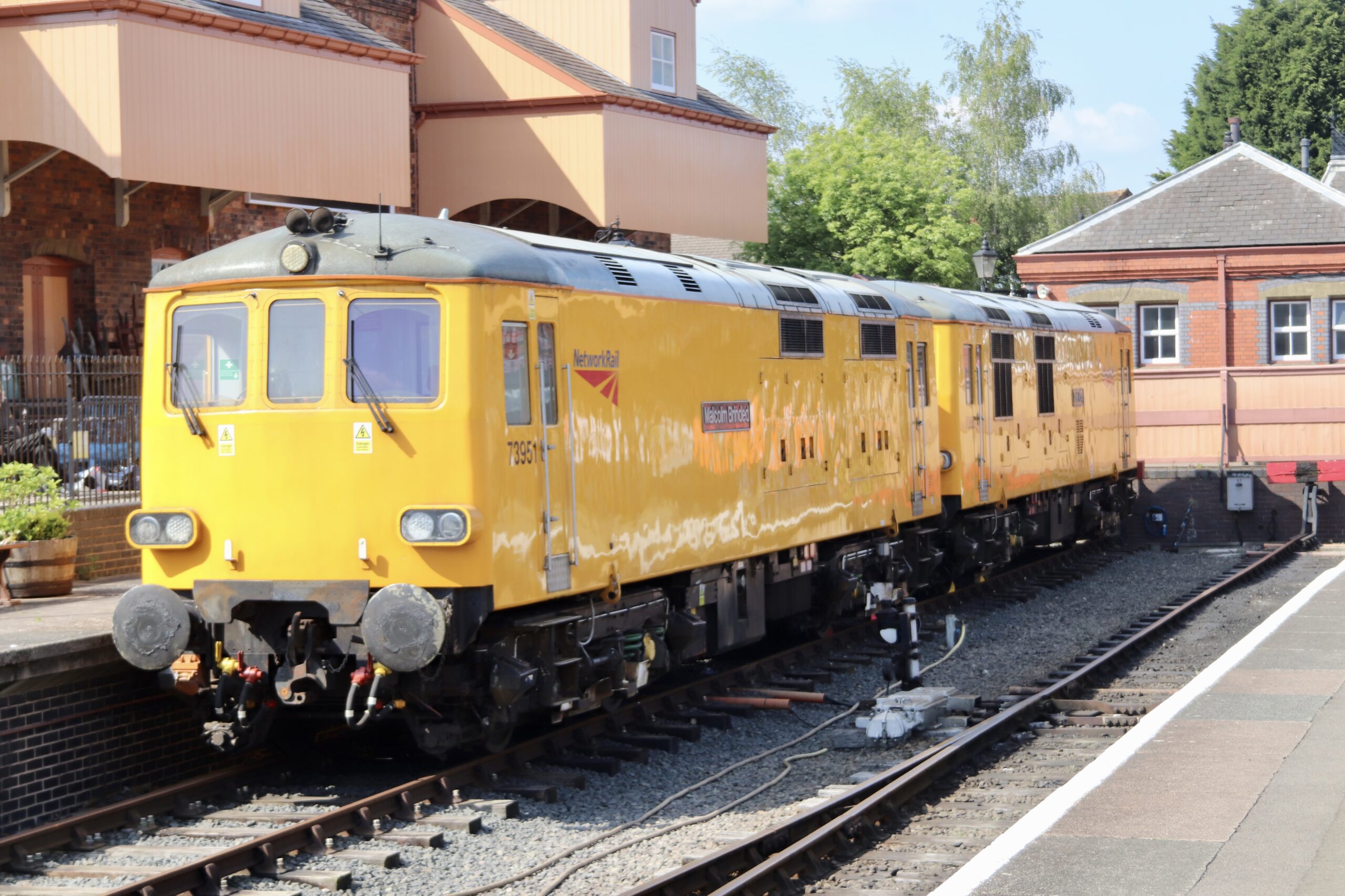
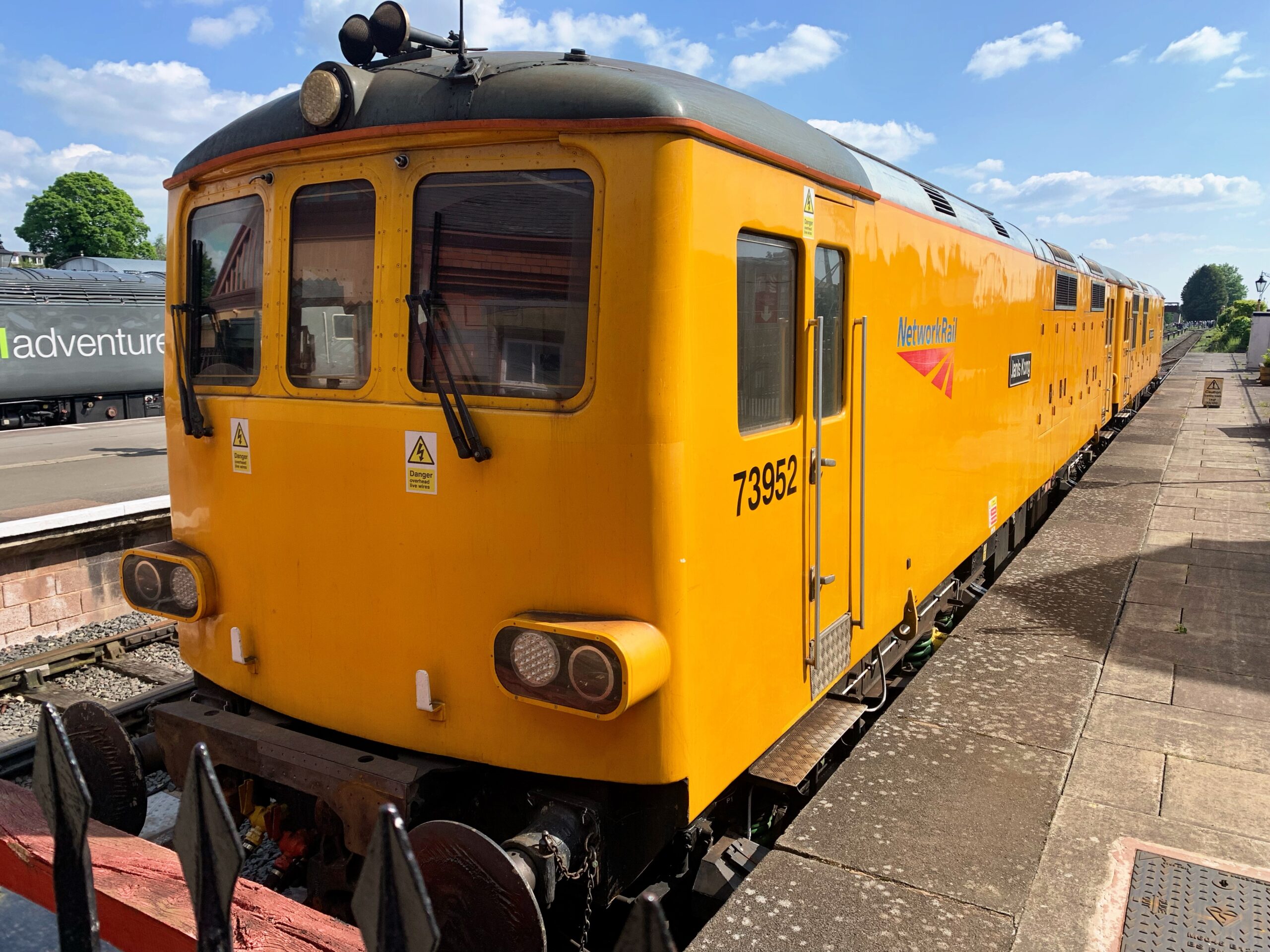
    Network Rail Class 73 “Minions” No.’s 73951 ‘Malcom Brided’ and 73952 ‘Janis Kong’ were on display at Kidderminster over the gala. The two locomotives were withdrawn from service in mid-May. The pair were rebuilt by Loram in 2011/2015 with their English Electric engines being replaced by two newer, more powerful and lower emission Cummins QSK19 engines each rated at 750hp. Their acceptance into traffic was heavily delayed until 2016 and endured initial teething problems which were resolved and they became well liked by crews. They were used mostly on infrastructure monitoring trains. They are, however, non-standard locomotives and have limited crews trained to work on them. Network Rail currently lease five MTU-engined Class 73/9’s so the “Minions” are surplus to requirement – 20/05/2023
    Electro-Diesel Class 73 No.’s 73951 and 73952. The locomotives are scheduled to depart for warm storage, possibly at Peak Rail, by road – 20/05/2023

    The new footbridge across the railway line just outside of Kidderminster station has been rebuilt after an absence of a year or two, so following a brief sojourn looking at the static exhibits, sales stands and taking a few photographs of departing trains we marched round to see what the view was like from the bridge and spent most of the rest of our visit here.

    Class 50 No. 50035 ‘Ark Royal’ has lost her central headlight (a later addition to the class in service) and is seen departing Kidderminster – 20/05/2023
    Class 37 No. 37263 catches the afternoon sun at Kidderminster. The locomotive is scheduled for a prolonged stay on the SVR over the summer months – 20/05/2023
    DRS Thunderbird rescue locomotive Class 57 No. 57307 ‘Lady Penelope’ runs out of Kidderminster light engine in readiness to attach to a train bound for Highley – 20/05/2023
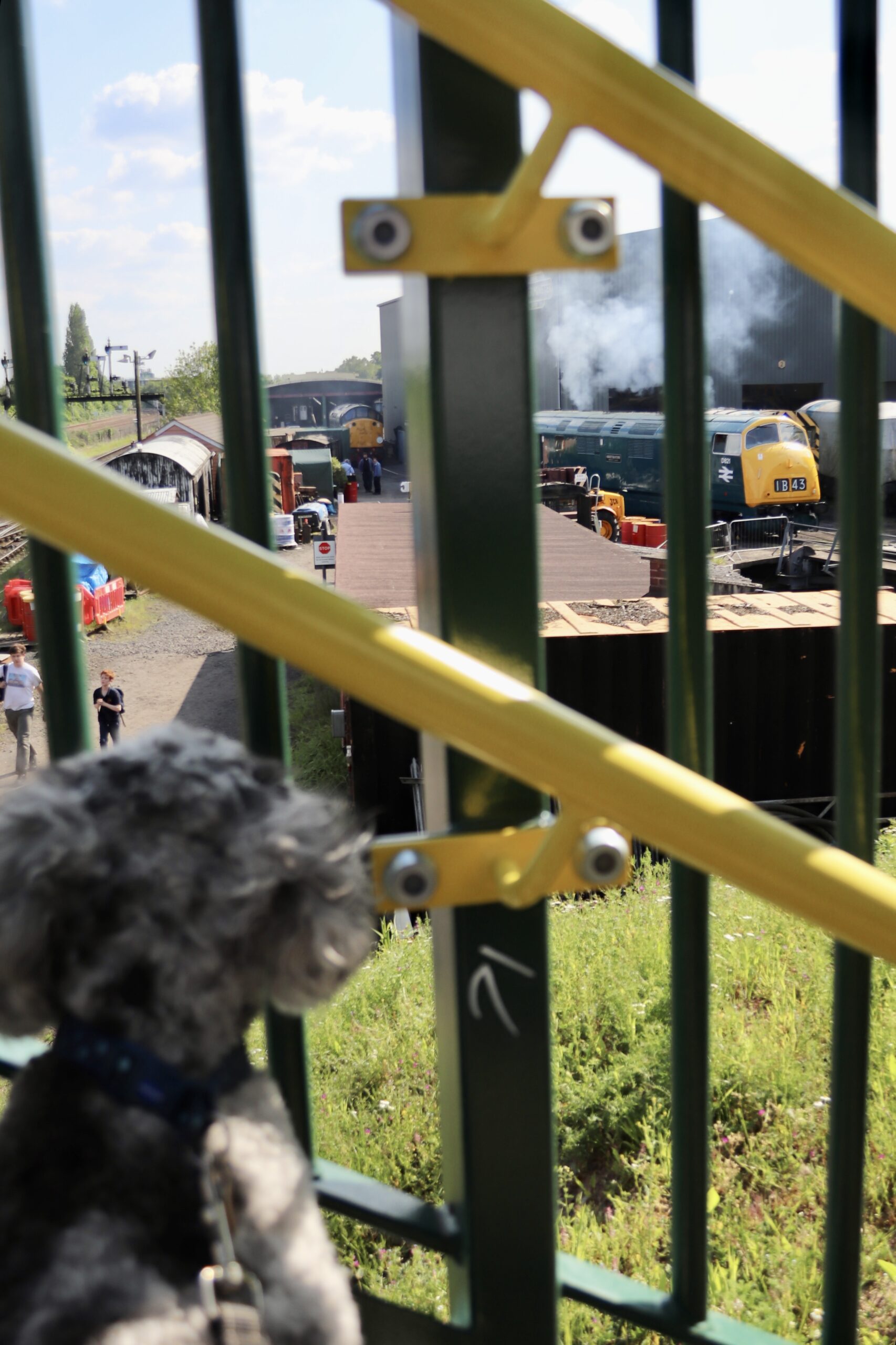
    Yoshi watches as Warship No. D821 ‘Greyhound’ starts up on Kidderminster TMD – 20/05/2023
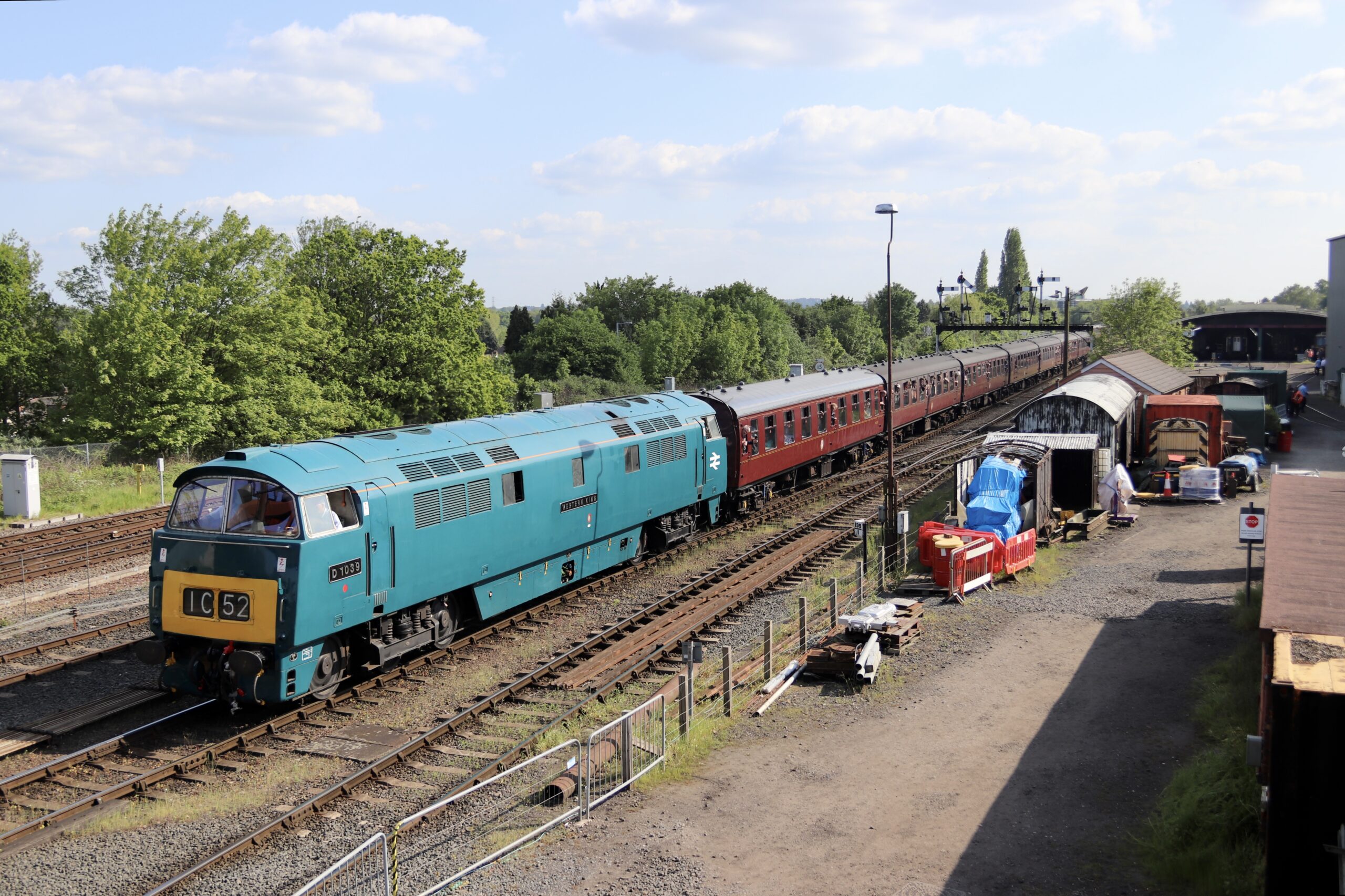
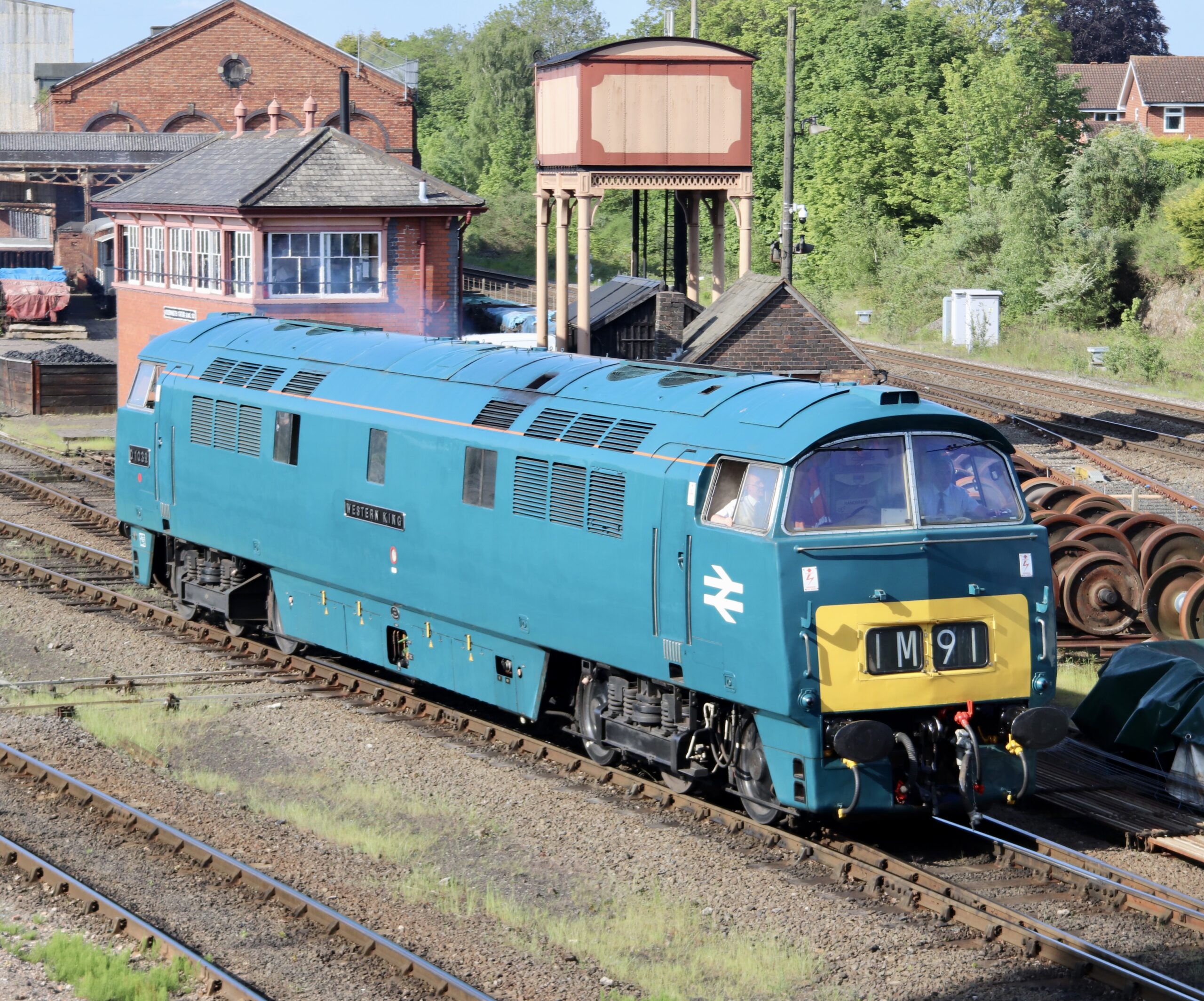
    Class 52 No. D1015 ‘Western Champion’ carried the identity of lost classmate D1039 ‘Western King’ on one side (to celebrate the coronation of King Charles III), seen approaching Kidderminster – 20/05/2023
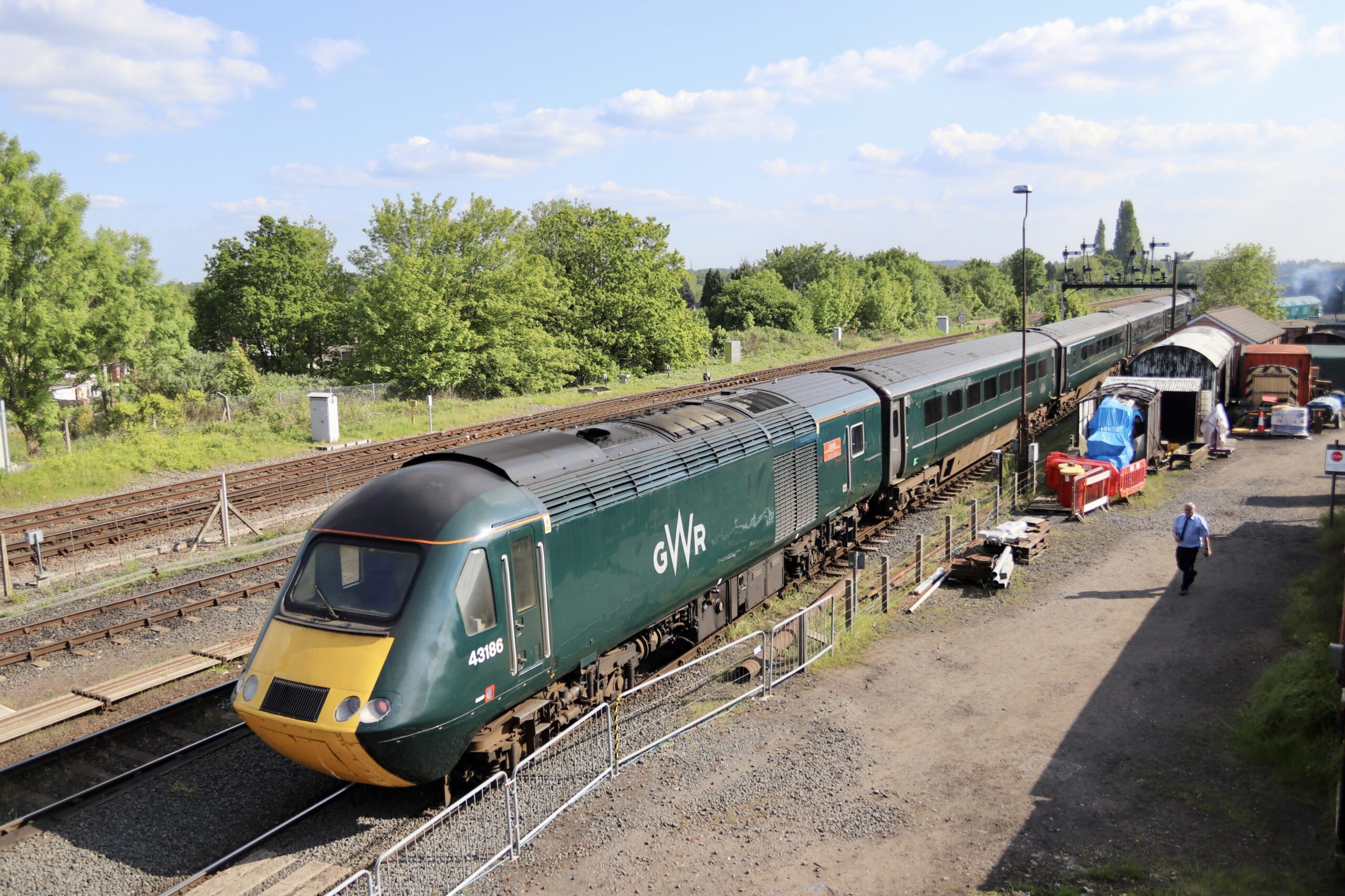
    Great Western Railway HST Castle set formed of Class 43 power car No.’s 43186 ‘Taunton Castle’ and 43188 ‘Newport Castle’ ran shuttles between Kidderminster and Arley on all four days of the gala – 20/05/2023
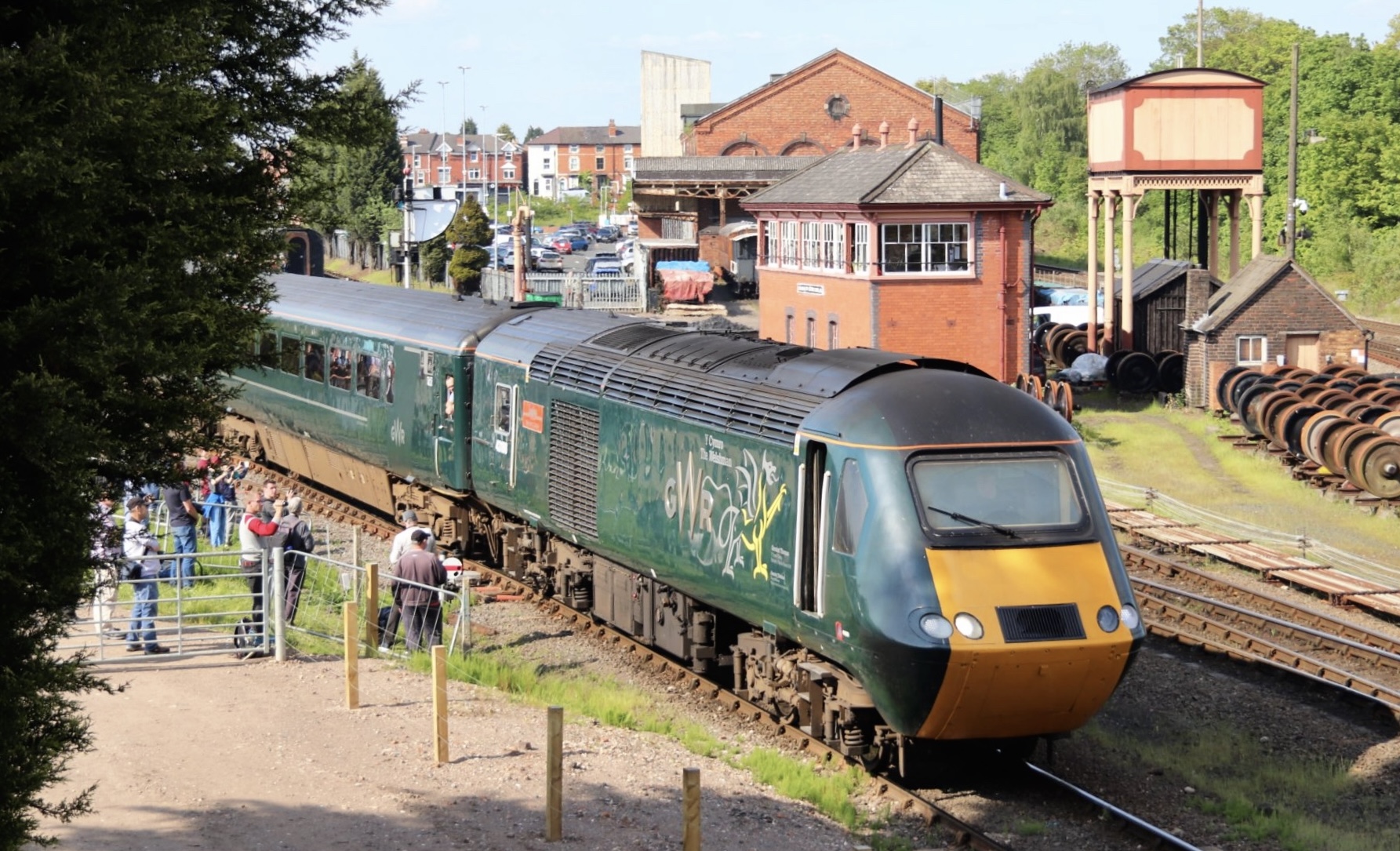
    Class 43 No. 43188 ‘Newport Castle’ which also carries decals reading: ‘Y Cymro – The Welshman’ and a Welsh Dragon leads the GWR Castle HST set out of Kidderminster – 20/05/2023
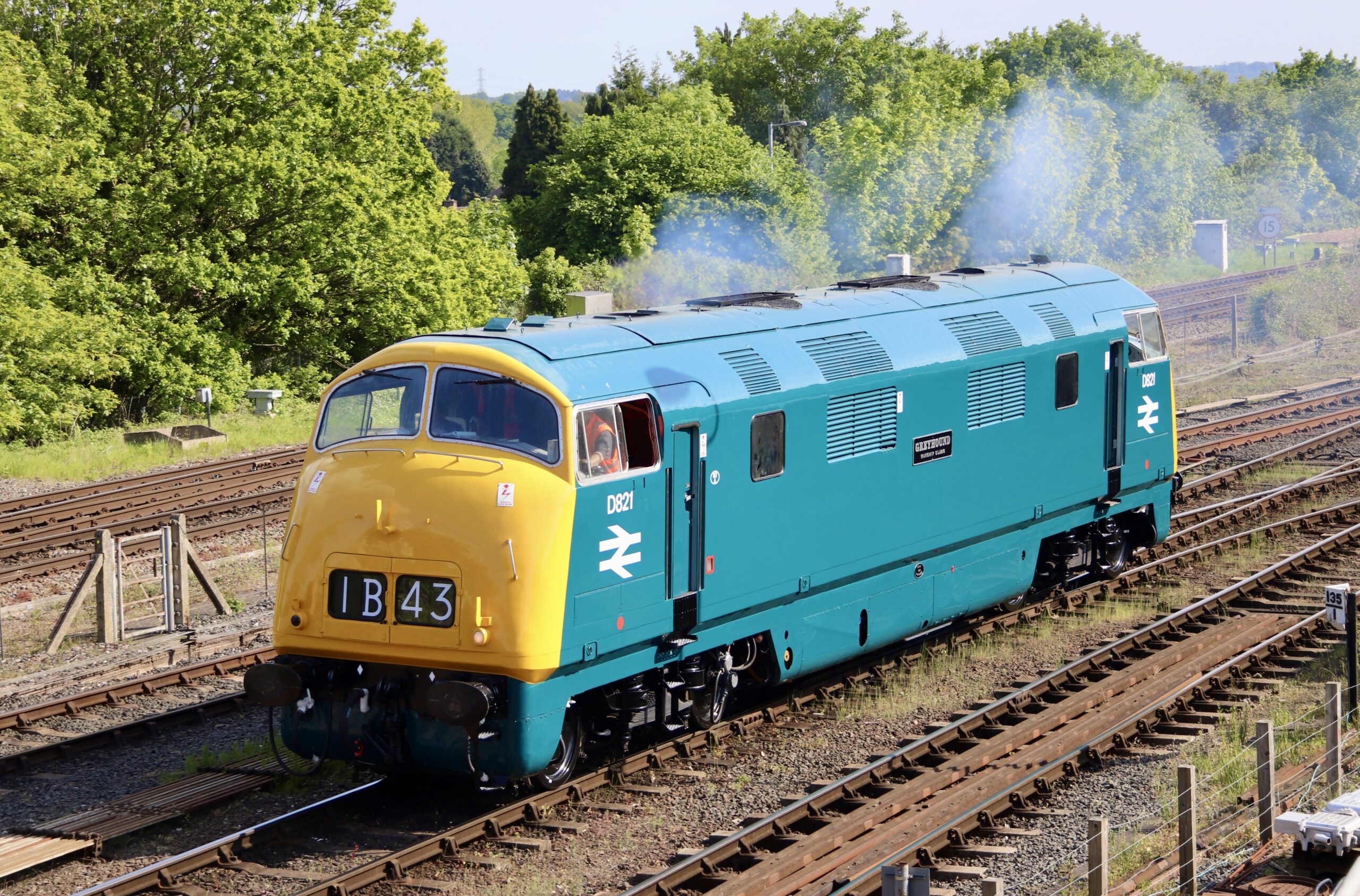
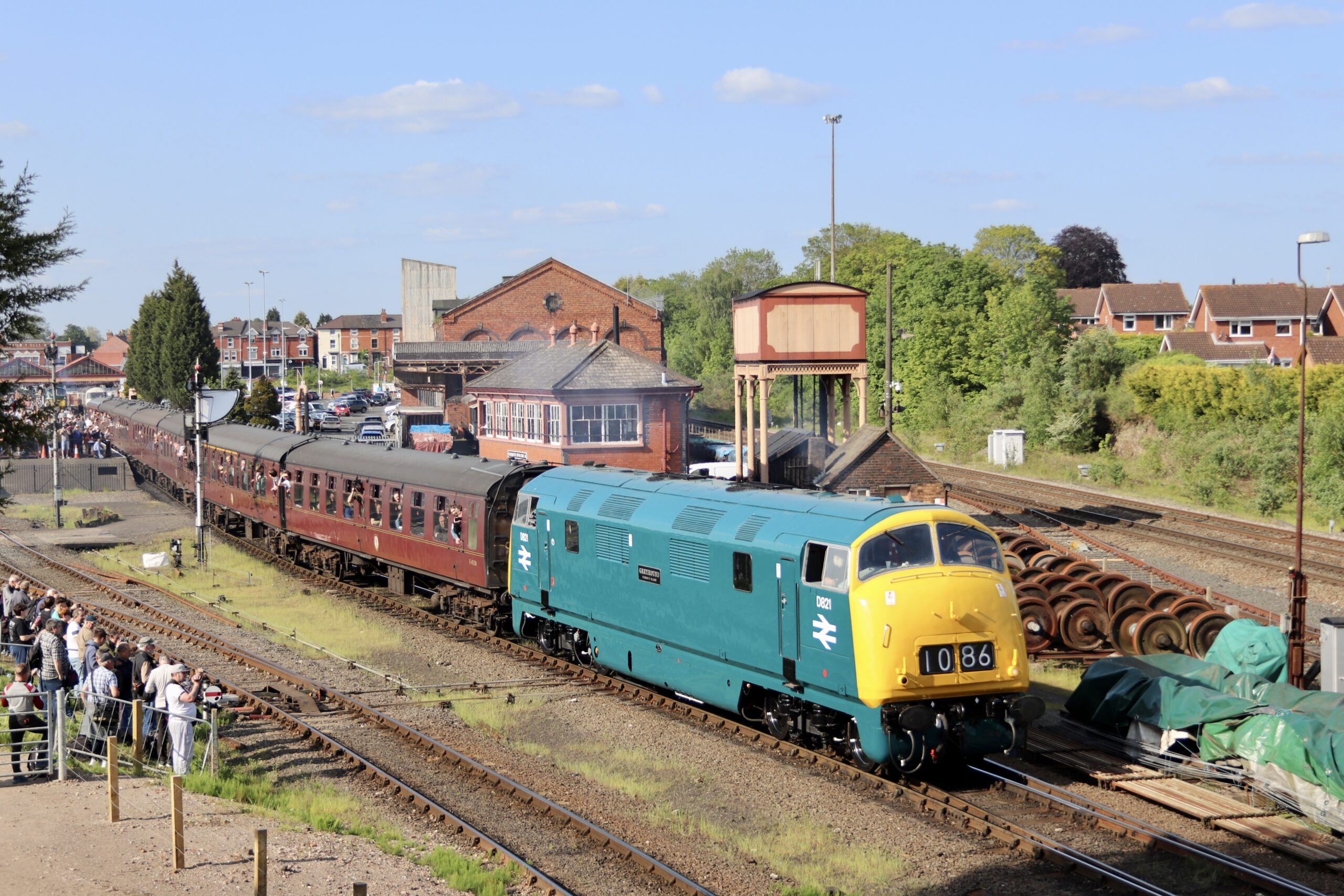
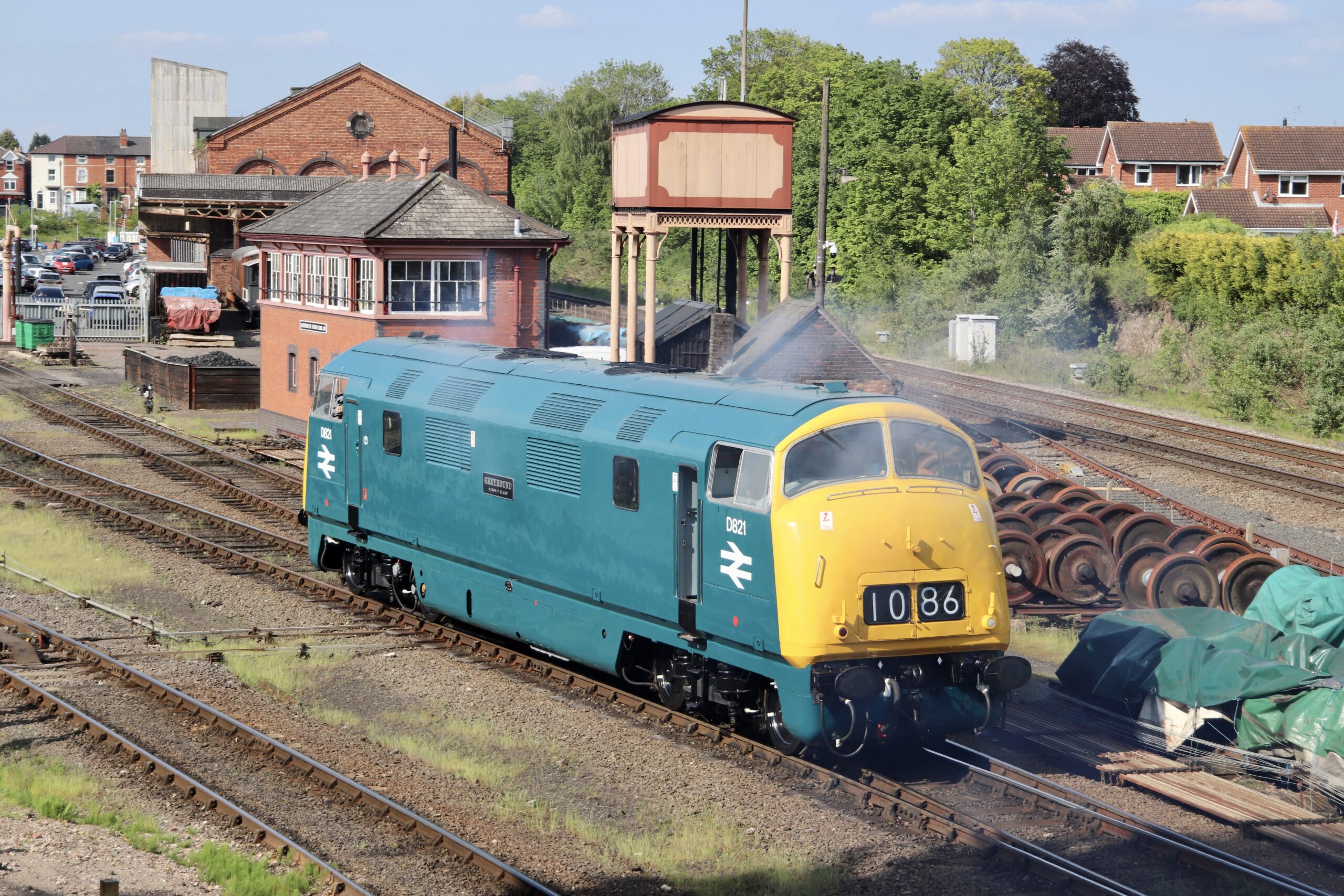
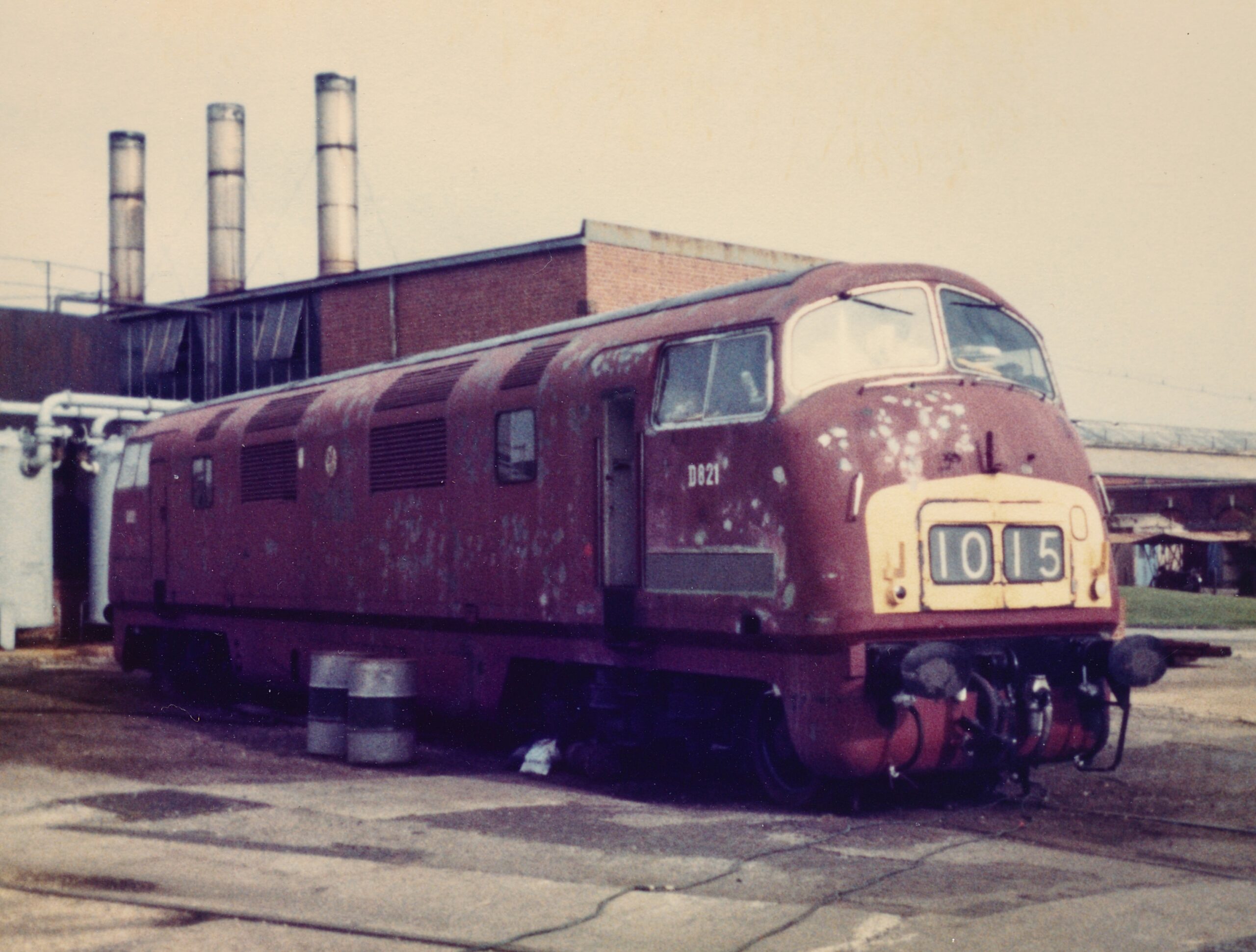
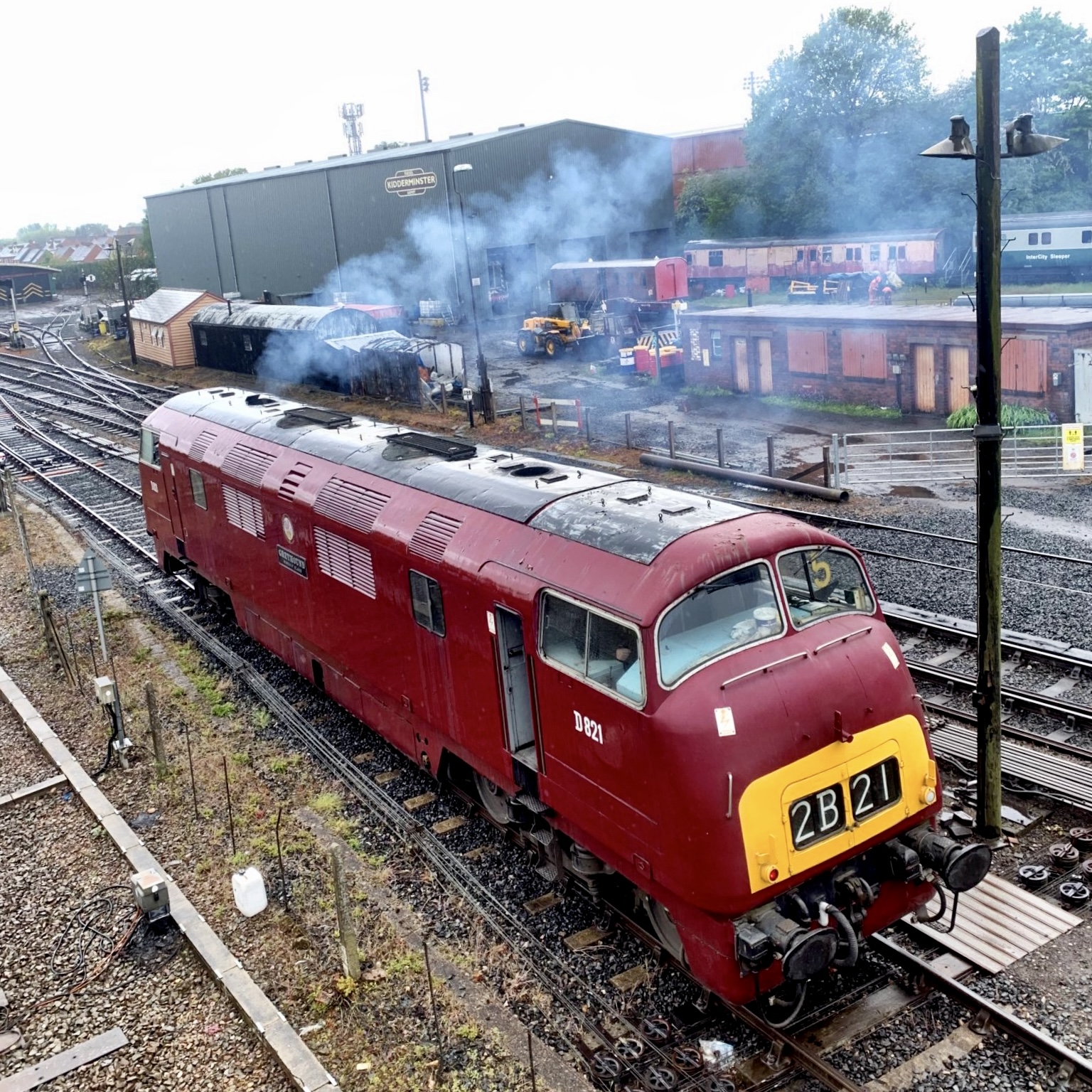
    D821 ‘Greyhound’ makes a fine sight as she runs towards Kidderminster station. D821 is one of two preserved Warship locomotives from the original 38 built by BR at Swindon Works. Sadly none of the 33 built by the North British Locomotive Company in Glasgow were saved for preservation. D821 has returned to service following an extensive overhaul – 20/05/2023
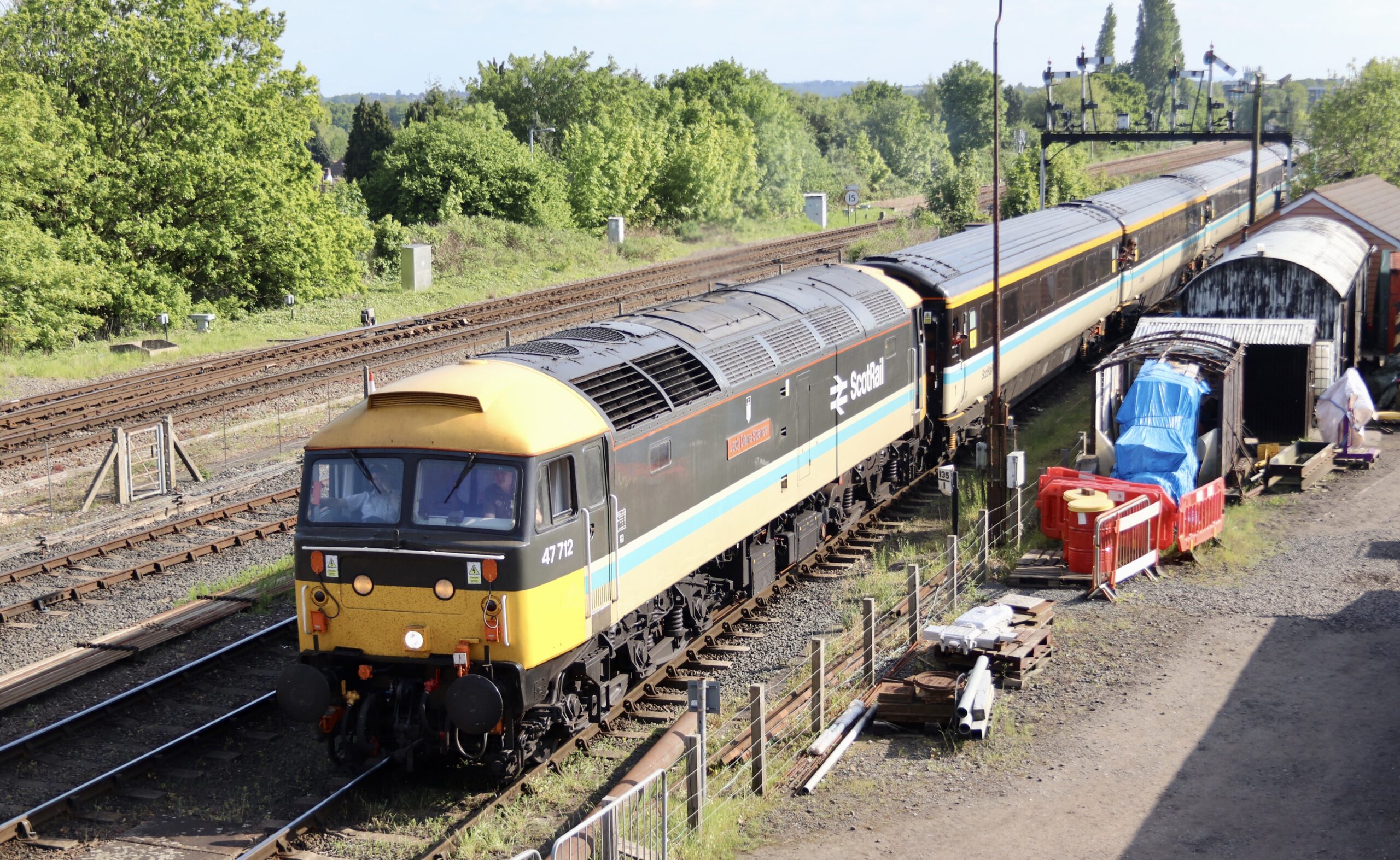
    Class 47 No. 47712 ‘Lady Diana Spencer’ leads into Kidderminster with a shuttle from Highley – 20/05/2023
    Diesel Traction Group’s Warship No. D821 ‘Greyhound’ resplendent in British Rail monastral blue livery to celebrate 50 years in preservation. No. D821 was the first main line diesel to be preserved by a private group having being acquired from BR in May 1973 – 20/05/2023
    Class 52 No. D1015 ‘Western Champion’ as D1039 ‘Western King’ runs to the Traction Maintenance Depot at Kidderminster – 20/05/2023
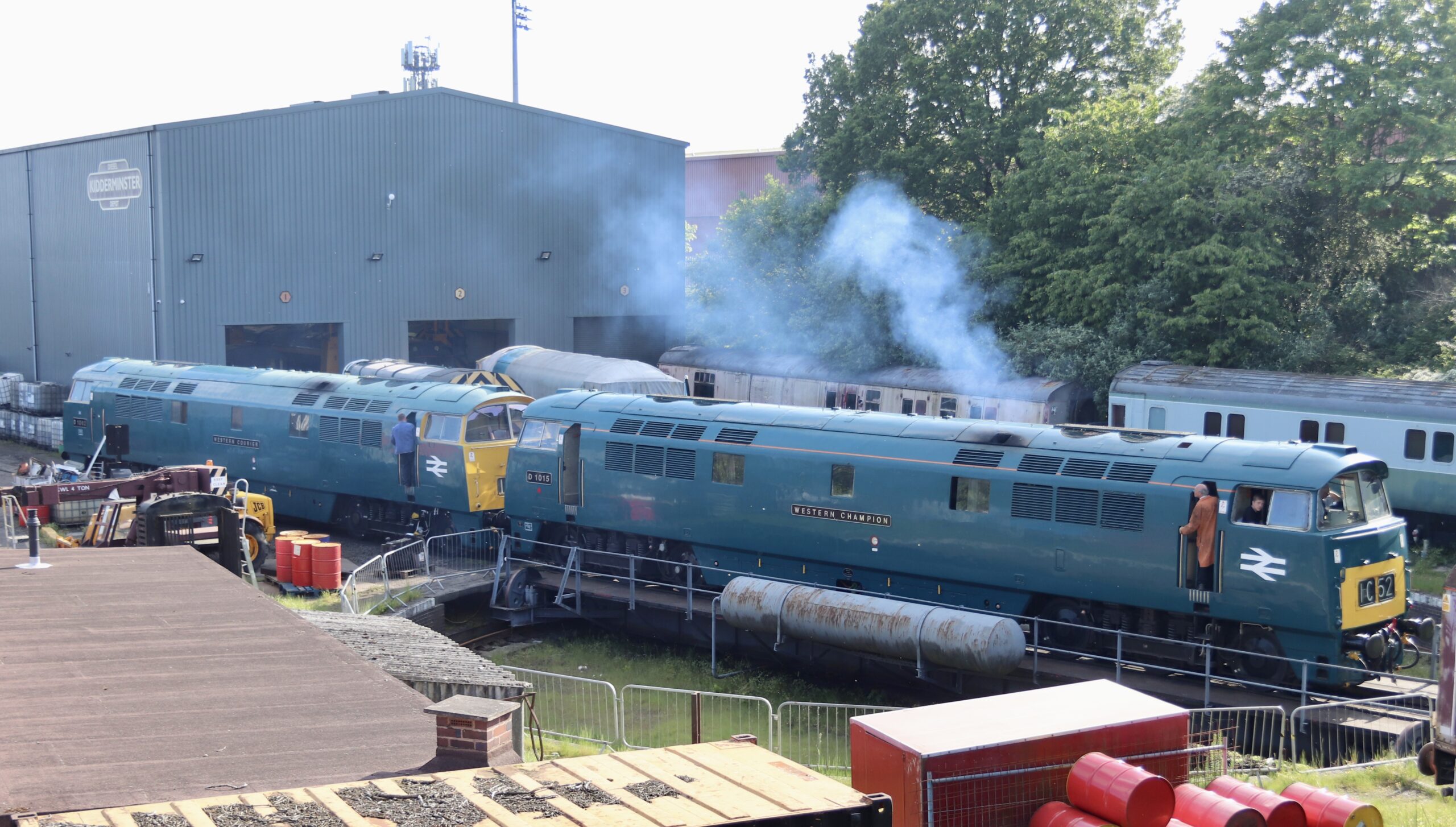
    Class 52 Western No.’s D1015 ‘Western Champion’ and D1062 ‘Western Courier’ between duties at Kidderminster – 20/05/2023
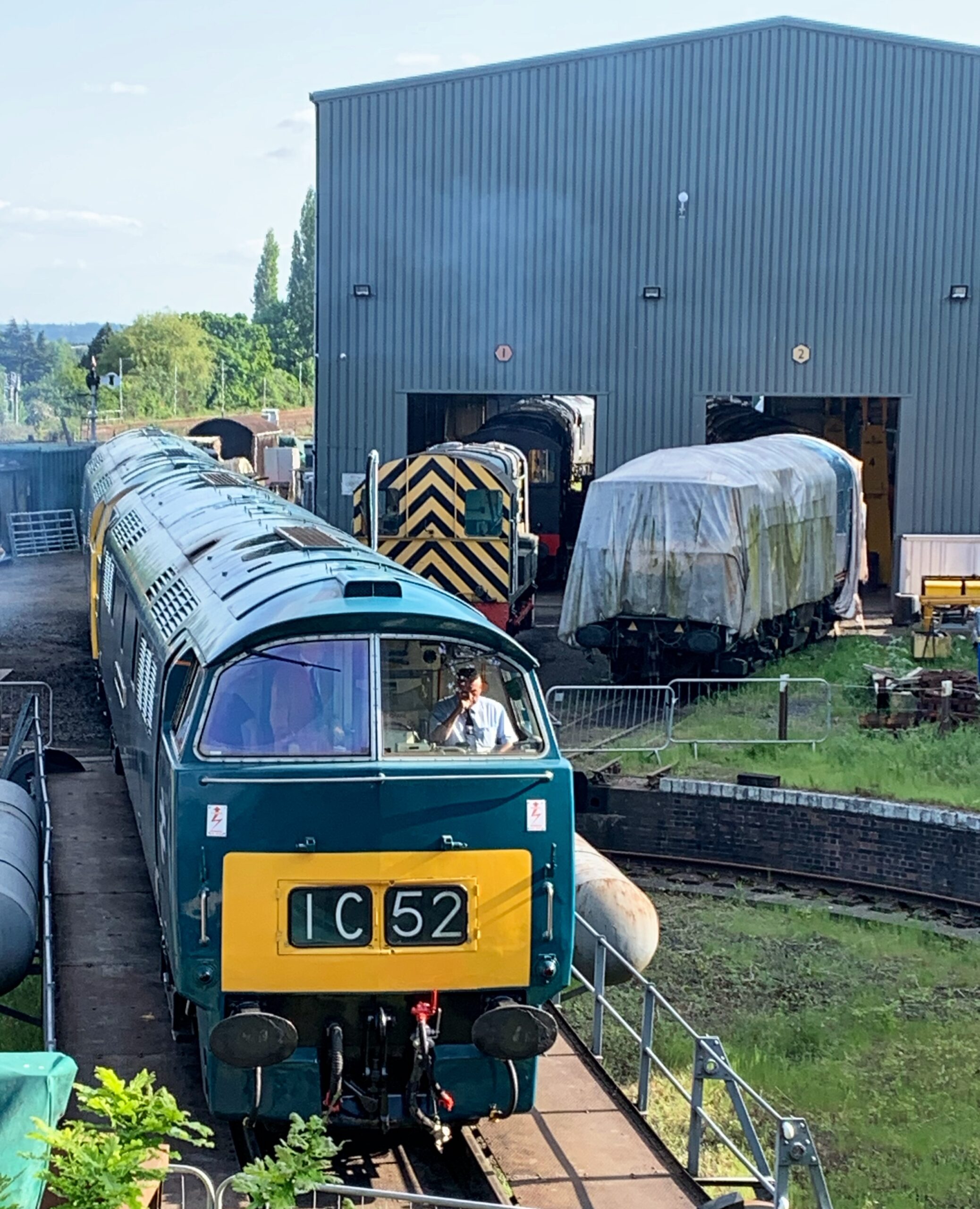
    Two Western Diesel Hydraulics on to the Kidderminster turntable – 20/05/2023
    SVR Home fleet loco Class 31 No. 31466 on the entry to Kidderminster – 20/05/2023
    A study of Class 40 No. 40106 ‘Atlantic Conveyor’ running light engine into Kidderminster station. The loco was named ‘Atlantic Conveyor’ on 11th August 1984 in memory of the Cunard cargo ship and those on board who lost their lives in the 1982 Falklands war – 20/05/2023
    Class 40 No. 40106 ‘Atlantic Conveyor’ carries “The Caledonian” headboard as she awaits departure form Kidderminster. The locomotive was built at Robert Stephenson and Hawthorns factory in Darlington. The loco features the original four disc headcode system along with interconnecting gangway doors seen on various classes of BR diesels but ultimately under used – 20/05/2023
    Resident Class 40 No. 40106 ‘Atlantic Conveyor’ departs Kidderminster. The locomotive entered into BR service as No. D306, later becoming No. 40106 under the TOPS system in the 1970s. During her last works overhaul at Crewe in September 1978, No. 40106 was repainted into Dark Brunswick green with full yellow ends, thus becoming a firm favourite loco on railtours and other special passenger workings for several years. I fondly remember the cover of the 1979 Locoshed book which featured this loco – 20/05/2023
    20189 Ltd’s Class 20 Bo-Bo diesel-electric No. 20189 worked to Kidderminster solo, nose first, following the failure of classmate 20048 at Bridgnorth. 228 examples of these locomotives were built between 1957 and 1968. Each weighed 73 tonnes and delivered 1,000 hp, they were used to haul mixed freight traffic – often in tandem positioned nose to nose. – 20/05/2023
    Eastfield Scotty Dog depot plaque carried by Class 20 No. 20189 – 20/05/2023
    Last shot of the day; Western Class 52 No. D1062 ‘Western Courier’ prepares to depart Kidderminster. D1062 was bought from BR by the Western Locomotive Association on 4th November 1976, becoming the first Class 52 Western to be preserved  – 20/05/2023

    With 22 locomotives in traffic across the four day event, trains were very busy with the SVR reporting in excess of 4,000 pre-booked tickets sold and with pay on the day passengers a new record was set at over 6,500 visitors across the gala. This will certainly help with the SVR’s current £1.5 million appeal. It was certainly an interesting day, although I have to admit to feeling rather overwhelmed by the number of locomotives involved and my OCD in attempting to catch ’em all! Well done to all involved in the organisation and daily support of the railway.

    Video of our day at the Severn Valley Diesel Gala 2023

    For the record…

    While Yoshi and I were enjoying the delights of the Severn Valley on May 20th, two rail tours visited Dorset. Firstly, Class 47 No.’s 47828 and 47593 headed to Weymouth with the “Dorset Coast Statesman”. Next, LMS Jubilee No. 45596 ‘Bahamas’ journeyed from London Waterloo to Exeter via Sherborne and Yeovil Junction hauling the “Atlantic Coast Express”.

    The Swanage Railway Diesel Multiple Unit service to and from Wareham was cancelled on 23rd May 2023 because of an electrical fault on the unit discovered during a routine inspection. Repairs and testing meant the service resumed the following day.

    Lake Road Bridge on the Hamworthy Branch – 29/05/2023

    The damaged access gate to the Hamworthy Branch at Lake Road Bridge has been repaired. Rumour is that metalwork on the bridge needs further attention before any trains can cross it.

    Warship

    D821 ‘Greyhound’

    D821 ‘Greyhound’ celebrated 50 years in preservation during the Severn Valley Diesel Gala. The locomotive had been procured from British Rail by Colin Massingham, owner of model rail white metal kit company Modern Traction Kits (MTK) and Chris Reid a customer at Colin’s shop in Slough. Along with other financial supporters the pair had hoped to purchase North British Class 22 No. D6319 but a misunderstanding meant this loco was cut up at Swindon. Instead, the pick of the remaining Class 42 “Warship” locomotives which had recently been withdrawn at Plymouth Laira was offered. No. D821 was chosen as she was virtually complete.

    D821 ‘Greyhound’ in Swindon. I was usually very good at keeping a record of dates, but a whole films worth of photos have no details recorded with them – 1980
    D821 ‘Greyhound’ in Swindon – 1980
    D821 ‘Greyhound’ in Kidderminster during the 2021 Severn Valley Railway Diesel Gala – 15/05/2021

    The “Warship” diesel-hydraulic B-B locomotives were based on the West German V200 design, 38 examples being constructed at Swindon between 1958 and 1961. Each locomotive bore a name with all except D800 and D812 being named after Royal Navy vessels, thus the “Warship” moniker used to refer to the class. They were later designated as Class 42’s. The “Warships” took over from “Castle” and “King” Great Western steam locomotives on Top Link work but were deemed non-standard and all were withdrawn by 1972.
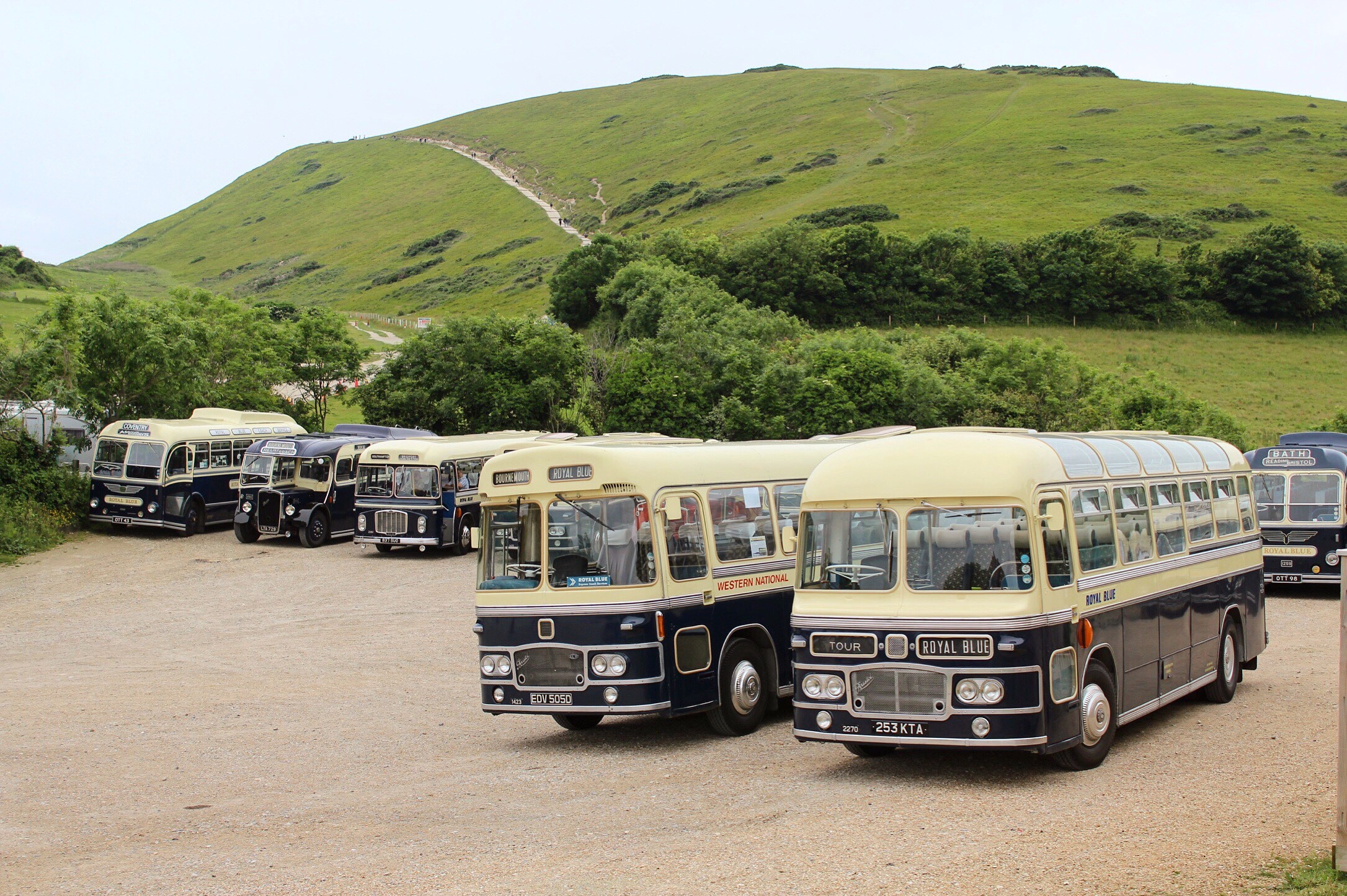
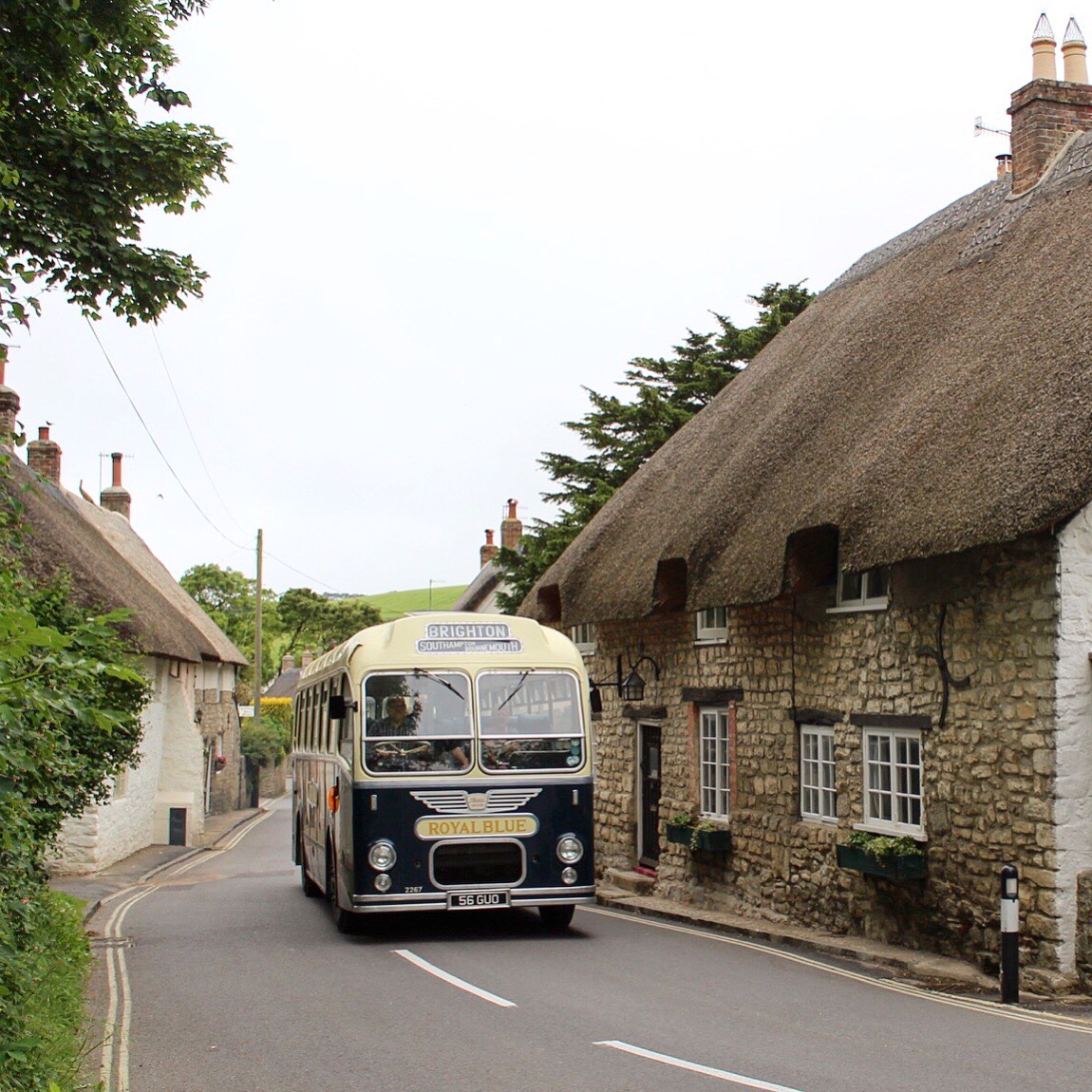
    No. D832 ‘Onslaught’ at Bishops Lydeard on the West Somerset Railway – 09/06/2013
    Nameplate of No. D832 ‘Onslaught’ showing the “Warship Class” designation carried under the locomotive name – 09/06/2013
    No. D832 ‘Onslaught’ was guest loco at the 2016 Swanage Diesel Gala and is seen here departing Corfe Castle – 08/05/2016
    No. D832 ‘Onslaught’ at Bishops Lydeard – 09/06/2013

    No. D821 was not the only member of the class to make it to preservation as No. D832 ‘Onslaught’ was also saved after being moved to the Railway Technical Centre (RTC) in Derby following withdrawal from service where it was used for various research purposes. However, a third member of the class, No. D818 ‘Glory’ wasn’t so lucky and, despite being kept at Swindon as a “pet” of the employees and for BR apprentices to work on, was cut up before the works was closed in 1985.
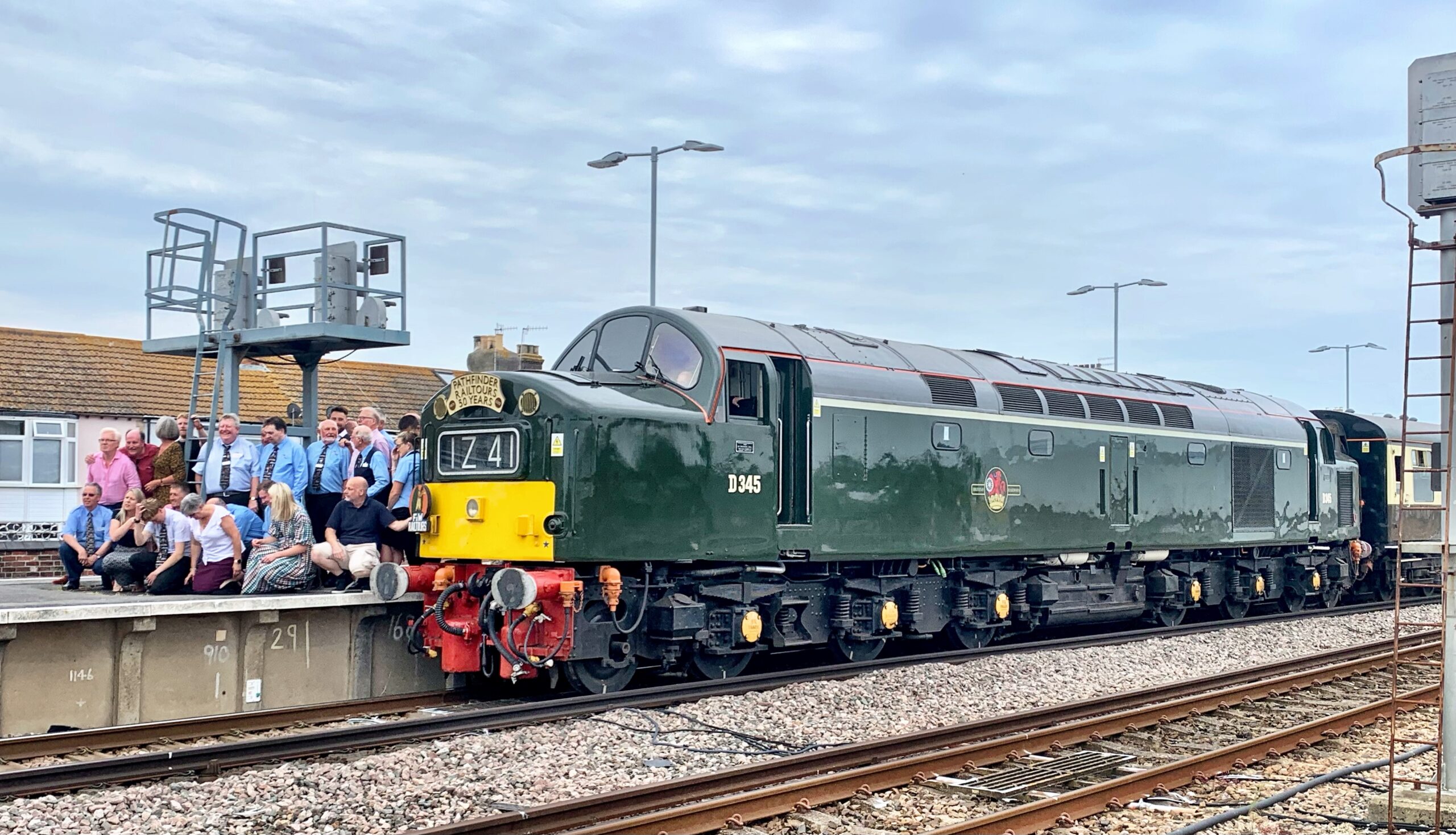
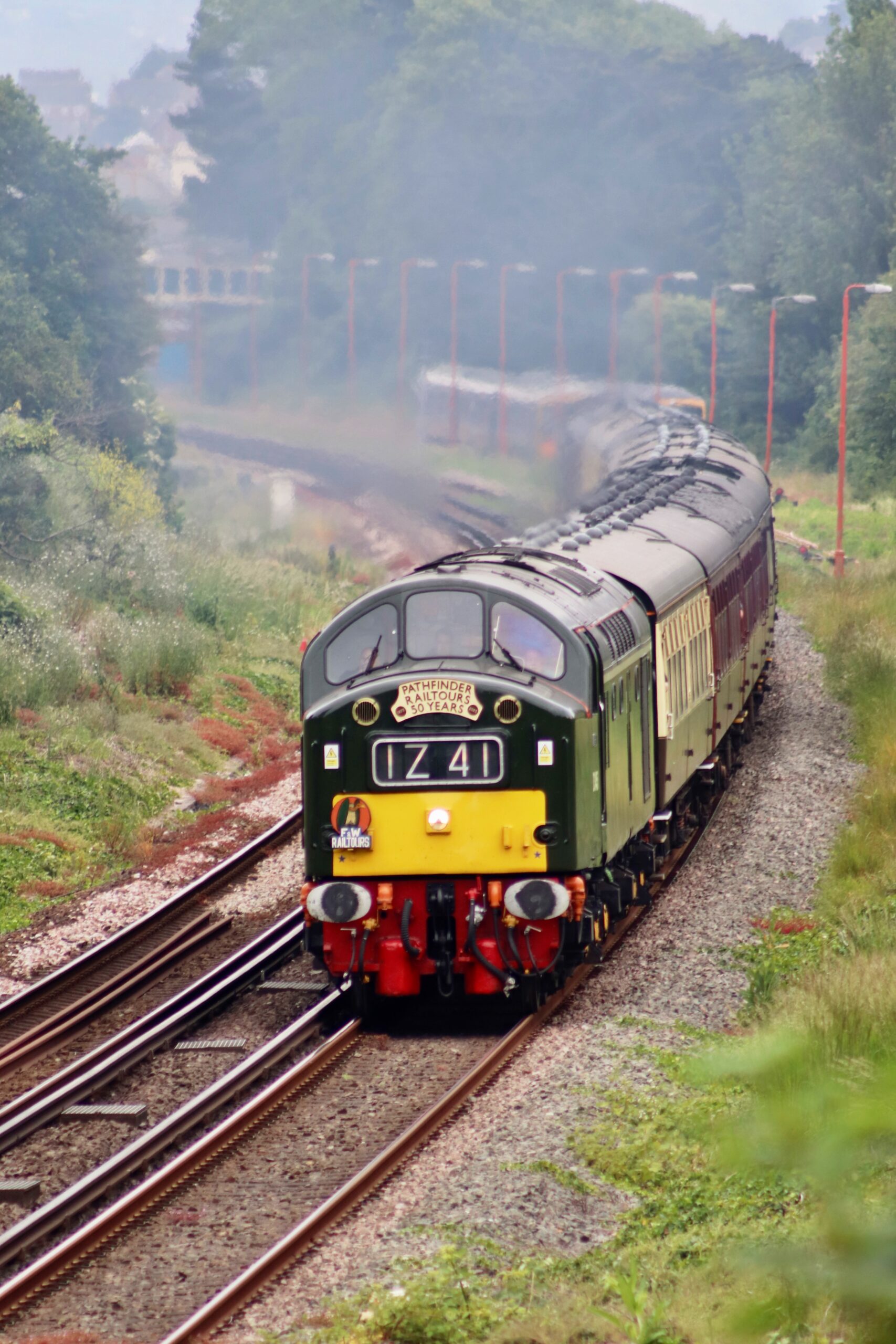
    “The one that got away”; No. D818 ‘Glory’ at Swindon – 06/06/1981

    Thanks for reading and your comments! Next week we’ll tell you all about our trip to Cornwall in search of Sleeper trains, pasties and semaphore signals!

    That 1979 Locoshed Book featuring Class 40 No. 40106 on the cover at a “New Lower Price of 40p!”
  • Promenade Plantée

    Class 373 No. 3222 and Class 374 No. 4033 Eurostar trains at London St. Pancras – 27/03/2023

    At the end of March we had a few days in Paris having travelled by Eurostar from London St. Pancras to Pais Gare du Nord. We did a lot of walking as we took in the sights and sounds of the City during our mini break.

    Paris Gare du Nord is the southern terminus of Eurostar services. Class 374 set No. 4025 rests at the buffer stops having worked 9O18 1026 London St. Pancras International to Paris Nord. Class member No. 4011 sits alongside – 27/03/2023

    On a quiet Tuesday morning, we avoided a demonstration against the raising of the pension age planned for later in the day and took the opportunity to track down the Promenade Plantée. We headed to Gare de Lyon via Metro Line 14 which was operating throughout the strike day as it is fully automated and features driverless Siemens trains.

    Double-deck TGV No. 249 at Gare de Lyon – 28/03/2023
    TGV No.’s 617, 272 & 791 Gare de Lyon – 28/03/2023

    On arriving at Gare de Lyon, we enjoyed a cup of tea and a very expensive macaroon before finding our bearings. We didn’t see any of the piles of uncollected bin bags which the mainstream media would have us believe were on every street corner and soon found a signpost directing us towards our destination; the world’s first elevated park walkway and a well loved part of the French capital City.

    Pointing the way to Promenade Plantée – 28/03/2023

    Promenade Plantée is built on the former Vincennes railway line which once linked Bastille station to Verneuil-l’Étang after passing through Vincennes. It’s now a peaceful, green stroll 10 metres above street level, which begins just east of the Opera Bastille at the crossroads at rue de Lyon and avenue Daumesnil and winds through the 12th arrondissement for three miles, coming out before the Bois de Vincennes. 

    The original railway ceased its operation on December 14th, 1969. A section of the line beyond Vincennes was integrated into Line A of the RER, while the Paris-Vincennes section was completely abandoned. In the 1980’s, the area was renovated with the former Bastille station being demolished in 1984 to make way for the Opéra Bastille. The Reuilly section was designed in 1986 incorporating the old commercial rail depot of Reuilly into a group of park areas. The Promenade Plantée was put into place at the same time in order to reuse the rest of the abandoned line and was designed by architects Jacques Vergely and Philippe Mathieux. It was inaugurated in 1993.

    Promenade Plantée – 28/03/2023
    Promenade Plantée – 28/03/2023
    Promenade Plantée – 28/03/2023
    Promenade Plantée – 28/03/2023
    Promenade Plantée – 28/03/2023
    Promenade Plantée – 28/03/2023
    Promenade Plantée – 28/03/2023

    At its west end near the Bastille the walkway utilises a viaduct, renovated in 1989 by architect Patrick Berger, where its 45 archways have been adapted to house artisan shops displaying the works of florists, violin makers, glass blowers and furniture restorers all creating the Viaduc des Arts. 

    Viaduc des Arts, Promenade Plantée – 28/03/2023
    Viaduc des Arts, Promenade Plantée – 28/03/2023
    Viaduc des Arts, Promenade Plantée – 28/03/2023

    Further along a modern building splits in two with the walkway running inbetween, while a long, wobbly cable footbridge stretches across the Jardin de Reuilly. Then the elevated section heads to street level – becoming accessible to bikers, rollerbladers and skateboarders, too; a tree-lined corridor passes through old railway tunnels before ending at another park, the Jardin Charles Peguy. This is right by the disused train tracks of what was known as La Petite Ceinture and plans are afoot to extend the Promenade Plantée along the old railway line in the future. There are other examples of disused high level railway lines having been converted into parks, notably the High Line in New York. There are plans for a similar venture in Camden, London.

    Later in the day we attempted the most touristy Paris activity; a vast to the Eiffel Tower. Every time I’ve tried to ascend the structure on previous visits to the City, the tower has been closed due to strike action and this time was no exception. We decided instead to visit La Basilique du Sacré Cœur de Montmartre and take a short trip on the funicular located there.

    A line 6 Paris Metro train crosses the Seine with the Eiffel Tower in the background – 28/03/2023

    The closest metro station to the Eiffel Tower is Bir-Hakeim, an elevated station serving line 6 in the Boulevard de Grenelle in the 15th arrondissement. It is situated on the left bank of the Bir-Hakeim bridge over the Seine. The station opened as part of the former Line 2 South on 24 April 1906. The station was called Quai de Grenelle until 1949, when it was renamed. The name of both the bridge over the Seine and the station commemorates the World War II battle of Bir- Hakeim. A commemorative panel is situated at the entrance of the platform for trains traveling towards Nation.

    A line 6 Metro train on an elevated section of railway leading to Bir-Hakeim station – 28/03/2023
    Bir-Hakeim station – 28/03/2023
    Bir-Hakeim station – 28/03/2023
    Bir-Hakeim station – 28/03/2023

    We took the train to Montmartre and enjoyed a evening meal before asking for directions to the funicular railway which turned out to be a brief walk away. On arrival we found the funicular closed because of that days strike action. So we climbed the steps and watched the sun set over Paris.

    The furnicular is closed – 28/03/2023
    The funicular cars at rest – 28/03/2023
    A view of the top station – 28/03/2023
    La Basilique du Sacré Cœur de Montmartre – 28/03/2023

    We returned back home on the Friday, and I was able to get a couple of photographs of locomotives at Gare du Nord as we awaited boarding for our Eurostar service to London St. Pancras.

    The SNCF class BB 15000 is a class of 25 kV 50 Hz electric locomotives built by Alstom and MTE between 1971 and 1978. This is No. 215059 at Gare du Nord – 30/03/2023
    The SNCF BB 22200 is a class of electric locomotives built by Alstom between 1976 and 1986. They are a dual voltage version of the BB 7200 and BB 15000 classes. No. 22243 stands at at Gare du Nord – 30/03/2023
    SNCF BB 22200 No. 22243 alongside TGV Thalys PBA No. 4533 at Gare du Nord – 30/03/2023
    Gare du Nord – 30/03/2023
    Overlooking the Eurostar platforms at Gare du Nord – 30/03/2023
    Arrival on 1703 Paris Gare du Nord to London St. Pancras formed of Class 374 No. 4005 – 30/03/2023

    We’ll hopefully be back with our regular update next week – thanks for reading. Take care and see you next time!

    Southern Railway poster; “I’m Taking and Early Holiday cos I know Summer Comes Soonest in the South”
  • Swanage Diesel Gala 2023

    With Corfe Castle on the horizon Class 40 No. D345 (40145) catches the evening light as she works an evening Norden to Swanage service in connection with the Beer Festival being held at Corfe – 13/05/2023

    Last week proved to be very much the lull before the storm as this week we have enjoyed many rare visitors along our patch of railway line, mostly associated with the 2023 Swanage Diesel Gala which proved to be a resounding success judging by the numbers of enthusiasts who turned out to travel and photograph the trains during the special event weekend. 

    But before any special movements to Swanage took place, another rare locomotive here these days, in the form of GBRf Class 47 No. 47727 ‘Edinburgh Castle,’ turned up on Wednesday 10th May heading for Bournemouth Traction & Rolling Stock Maintenance Depot where it was rostered to collect a Class 701 Electric Multiple Unit (EMU) which was being stored at the depot and move it to Eastleigh Traction TRSMD prior to an onward working taking it to Worksop Down Yard for storage the following day.

    47727 ‘Edinburgh Castle’ works light engine 0Z47 0814 Eastleigh East Yard to Bournemouth T&RSMD approaching Branksome – 10/05/2023
    47727 ‘Edinburgh Castle’ rests briefly in Branksome station while the crew change ends to take the locomotive into the depot – 10/05/2023
    47727 ‘Edinburgh Castle’ runs light into Bournemouth T&RSMD to collect an SWR Class 701 EMU – 10/05/2023

    None of the Class 701 units have yet to turn a wheel in revenue earning service , but they continue to run mileage accumulation and test runs between Eastleigh, London Waterloo, Staines and Poole. It’s believed that SWR are moving any units in store from their facilities until they have accepted the 701’s into service. Despite the rain, I opted to see the Class 47 and 701 drag at Poole as this was the first location I ever saw one of the ubiquitous Brush type 4 locomotives way back in 1977 or thereabouts. 

    Class 47 No. 47727 ‘Edinburgh Castle’ arrives at Poole Storage Sidings with Class 701 No. 701041 in tow forming 5Q47 1240 Bournemouth T&RSMD to Eastleigh TRSMD- 10/05/2023
    47727 ‘Edinburgh Castle’ pauses at Poole Storage Sidings in heavy rain – 10/05/2023
    47727 ‘Edinburgh Castle’ has detached from 701041 prior to the locomotive running around the EMU for onward transit to Eastleigh – 10/05/2023
    47727 ‘Edinburgh Castle’ runs out of Poole Storage Sidings to the main line in order to run round the empty coaching stock formed of a Class 701 unit – 10/05/2023
    SWR Class 701 No. 701041 wait for 47727 to run round and re-attach on the London end of the unit – 10/05/2023
    Having re-attached to her charge, 47727 ‘Edinburgh Castle’ leads 701041 through Poole station working 5Q47 1240 Bournemouth T&RSMD to Eastleigh TRSMD- 10/05/2023
    Video of Class 47 No. 47727 ‘Edinburgh Castle’ working 0Z47 0814 Eastleigh East Yard to Bournemouth T&RSMD / 5Q47 1240 Bournemouth T&RSMD to Eastleigh TRSMD – 10/05/2023

    Later on Wednesday the first of the visiting locomotives destined for the Swanage Diesel Gala arriving via the main line worked through to the branch in the form of GBRf Class 73 Electro-Diesels No.’s 73107 ‘Tracy’ and 73201 ‘Broadlands’. As we reported last week, Clayton Class 17 No. D8568 arrived on the Swanage Railway via road transport in readiness for the Diesel gala being held over the weekend of 12-14th May 2023. The Clayton was also involved in a warm-up day on Thursday 11th and was to scheduled to remain after the gala for driver experience runs before a returning to the Severn Valley Railway, again by road, on 16th May.

    GBRf Class 73 Electro-Diesels No.’s 73107 ‘Tracy’ and 73201 ‘Broadlands’ work 0Y68 Eastleigh East Yard to Swanage through Poole – 10/05/2023
    GBRf Class 73 Electro-Diesels No.’s 73107 ‘Tracy’ and 73201 ‘Broadlands’ work 0Y68 Eastleigh East Yard to Swanage through Poole – 10/05/2023
    GBRf Class 73 Electro-Diesels No.’s 73107 ‘Tracy’ and 73201 ‘Broadlands’ work 0Y68 Eastleigh East Yard to Swanage through Hamworthy – 10/05/2023
    GBRf Class 73 Electro-Diesels No.’s 73107 ‘Tracy’ and 73201 ‘Broadlands’ work 0Y68 Eastleigh East Yard to Swanage through Hamworthy – 10/05/2023

    The 73’s arrival was followed by Swanage resident Class 33/0 No. D6515 (33012) ‘Lt Jenny Lewis RN’ travelling light engine away from Swanage on her way to Eastleigh in order to collect the London Underground Class 438 4TC unit. Originally this combination was to have formed the Branch Line Society organised rail tour “The Jurassic Crompton” which had been designed to take the following pathing on Thursday 11th May: Eastleigh P3 (PU 11.12) – Fareham – Havant P2 – Haslemere P3 – Guildford P8 (PU 12.42) – Wokingham – Reading P14 (PU 13.22) – Dn Feeder Relief – Basingstoke P4 (PU 13.58) – Wallers Ash DPL – Shawford Jn – Dn Slow – Eastleigh – Southampton Central P4 (PU 15.07) – Up Fast – Church Lane Jn – Dn Main – Brockenhurst P1 (photo stop) – Bournemouth P4 (photo stop) – Poole P2 – Wareham – Norden – Swanage (SD 18:41). In the event paperwork associated with the rail tour and the 4TC’s ability to carry passengers on the main line was apparently submitted late and the special train cancelled, although the 33/0 and 4TC still ran to Swanage via the same convoluted route, only without fare paying passengers! 

    Showing as cancelled on Real Time Trains (RTT) but actually running as evidenced by this image, Class 33 No. D6515 (33012) ‘Lt Jenny Lewis RN’ runs light engine through Hamworthy as 0Z12 1750 Norden to Eastleigh Arlington (Zg) – 10/05/2023

    The final special working of the day included a surprise visitor in the form of “Dave”, or to give the correct identification; Class 50 No. 50021 ‘Rodney’, which although previously announced as a visitor to the Swanage Gala had been withdrawn from the guest list as the loco was not going to be ready in time. After some tremendous effort by the team behind ‘Rodders’ the locomotive made the cut and was included in the convoy which was headed by English Electric Class 40 No. D345 (40145) and included Peak Class 45 No. 45108 and another Class 50 No. 50026 ‘Indomitable’. 

    Convoy! In failing light, Class 40 No. D345 (40145) leads 50021, 50026 and 45108 through Holton Heath working as 0Z42 1848 Eastleigh Arlington to Swanage – 10/05/2023

    With two more guests due to arrive on Thursday 11th May it was a busy half hour as I waited at Hamworthy station for Class 33/0 No. D6515 on her return journey to Swanage having collected the LU 4TC unit forming 5Z34 1112 Eastleigh to Swanage closely followed by light engine Freightliner Class 47 No. 47830 ‘Beeching’s Legacy’ working as 0Z47 1635 Southampton Maritime Container Terminal to Swanage. Both these were signal checked at Hamworthy as they were running behind stopping service trains.  

    Class 33 No. D6515 (33012) ‘Lt Jenny Lewis RN’ coming to a stop in Hamworthy station due to a signal check working 1Z33 1112 Eastleigh to Swanage bringing the London Underground 4TC unit for use at the Swanage Diesel Gala – 11/05/2023
    Class 33 No. D6515 (33012) ‘Lt Jenny Lewis RN’ pulls away from Hamworthy with the LU 4TC in tow – 11/05/2023
    Freightliner contributed their last remaining Class 47 No. 47830 ‘Beeching’s Legacy’ to the Swanage celebrations. The locomotive is seen at Hamworthy working light engine with 0Z47 1635 Southampton MCT to Swanage – 11/05/2023
    Class 47 No. 47830 ‘Beeching’s Legacy’ preparing to stop due to a red signal ahead at Hamworthy – 11/05/2023
    Class 47 No. 47830 ‘Beeching’s Legacy’ pulls away from the signal check just outside of Hamworthy railway station working 0Z47 1635 Southampton MCT to Swanage – 11/05/2023
    Swanage guest locomotives on their way to the Purbeck based railway for the May 2023 Diesel Gala. Visiting Class 17 No. D8568 arrived and departed by road transport.

    Yoshi and I spent Friday at the Swanage gala, with a couple of brief visits to the railway on the Saturday.

    Class 40 No. D345 (40145) powers up near Cats Eye Crossing working 1R02 Swanage to River Frome Viaduct – 12/05/2023
    Class 40 No. D345 (40145) arrives at Swanage with a service from River Frome Viaduct – 12/05/2023
    Class 40 No. D345 (40145) at Afflington working evening Beerex train 2N37 1920 Norden to Swanage – 13/05/2023
    Class 40 No. D345 (40145) crosses Corfe Viaduct on the approach to Norden working 2N40 Swanage to Norden – 13/05/2023
    Class 45 No. 45108 arrives at Swanage – 12/05/2023
    Class 45 No. 45108 at Swanage – 12/05/2023
    Class 50 No. 50026 ‘Indomitable’ approaches Cats Eye Crossing with 1R03 1032 River Frome Viaduct to Swanage service. This loco was deputising for sister No. 50021 as a fault was being rectified – 12/05/2023
    Class 50 No. 50026 ‘Indomitable’ at Harman’s Cross – 12/05/2023
    Class 50 No.’s 50026 ‘Indomitable’ and 50021 ‘Rodney’ prepare to drop off their train at Swanage and move to the turntable area – 12/05/2023
    Class 50 No.’s 50026 ‘Indomitable’ and 50021 ‘Rodney’ at rest on the Swanage turntable – 12/05/2023
    Leading her first solo working, Class 50 No. 50021 ‘Rodney’ on the approach to Furzebrook at the head of 1R15 1632 River Frome Viaduct to Swanage – 12/05/2023
    Another view of Class 50 No. 50021 ‘Rodney’ on approaching Furzebrook working 1R15 1632 River Frome Viaduct to Swanage – 12/05/2023
    Class 50 No. 50021 ‘Rodney’ catches the sun as she crosses Corfe Common hauling 1R03 1032 River Frome Viaduct to Swanage – 13/05/2023
    Class 50 No. 50021 ‘Rodney’ awaits her next service in the sidings at Swanage with Class 73’s and sister Class 50 behind – 13/05/2023
    Resident Class 33 No. 33111 passes the pair of Class 50’s and stabled resident locomotives as she is reunited with a 4TC unit. Once a common sight own the Bournemouth to Weymouth line – 12/05/2023
    Class 33 No. 33111 with train formed of the LU 4TC in the bay platform at Swanage – 12/05/2023
    Class 33 No. 33111 runs to the sidings at Swanage – 12/05/2023
    The visiting London Transport liveried 4TC is propelled into Swanage passing a coach from the Swanage based 4TC which is being restored at the railway – 12/05/2023
    Freightliner Class 47 No. 47830 ‘Beeching’s Legacy’ arrives at Harman’s Cross with a shuttle service to Corfe Castle – 12/05/2023
    Class 47 No. 47830 ‘Beeching’s Legacy’ rests in the bay at Swanage station – 12/05/2023
    Class 17 No. D8568 makes a spirited departure from Harman’s Cross bound for Swanage – 12/05/2023
    GBRf owned Class 73 No. 73107 ‘Tracy’ approaches Harman’s Cross – 12/05/2023
    Class 73 No. 73107 ‘Tracy’ at the rear of a River Frome Viaduct bound train at Swanage – 12/05/2023
    Class 73 No. 73107 ‘Tracy’ was the only visiting member of the class in use on the Friday and is seen here at Swanage – 12/05/2023
    Both GBRf Class 73’s appeared in service on Saturday. No.’s 73107 ‘Tracy’ and 73201 ‘Broadlands’ hauling the 4TC set approach Townsend Overbridge with 2C04 1015 Swanage to Corfe Castle – 13/05/2023
    Class 73’s No. 73201 ‘Broadlands’ and 73107 ‘Tracy’ await their next turn in the sidings at Swanage – 13/05/2023
    Class 73’s No. 73201 ‘Broadlands’ and 73107 ‘Tracy’ at Swanage – 13/05/2023
    Our record of Swanage Diesel Gala 2023

    Sunday saw guest attractions moving away from Swanage, the first working being the two GBRf Class 73’s which headed off with the LU Class 4TC for a night being berthed at platform 5 of Southampton Central before onward movement the following day. But for the late paperwork, the 4TC would again have been intended to carry passengers as “The Return Of The Jurassic Crompton” rail tour which would have involved D6515 (33012) and the two GBRf Class 73’s traversing the following route: Swanage (PU 15.30) – Norden – Wareham – Poole – Bournemouth – Brockenhurst – Southampton Central (SD 17.30) – Redbridge – Laverstock Curve – Andover – Basingstoke (SD 18.55) – Woking – Wimbledon – London Waterloo (SD 20.00 / RM) – Wimbeldon – Woking – Basingstoke (SD 20.55) – Andover – Laverstock Curve – Romsey – Southampton Central (PU 22.20) – Eastleigh (SD 22.40).

    73107 ‘Tracy’ tops the 4TC unit through Hamworthy forming 5Z36 1515 Swanage to Southampton Central – 14/05/2023
    Class 73’s No. 73201 ‘Broadlands’ tails the LU 4TC working 5Z36 1515 Swanage to Southampton Central – 14/05/2023

    Later on Sunday the Freightliner Class 47 made her escape heading back to Southampton MCT. 

    The turn of Freightliner Class 47 No. 47830 ‘Beeching’s Legacy’ to head home, seen here climbing Parkstone Bank with 0Z48 1900 Swanage to Southampton MCT – 14/05/2023
    Class 47 No. 47830 ‘Beeching’s Legacy’ passing Parkstone with 0Z48 1900 Swanage to Southampton MCT – 14/05/2023

    The remainder of the visiting locomotives (with the exception of the Class 17 of course) formed a mini convoy on the morning of Tuesday 16th May and made a fine sight as they passed through Hamworthy in full sun where I was able to see them. I would have liked to have found a straight length of track to photograph the four departees, but time constraints meant Hamworthy was far more convenient. I did however, manage to mess up the video settings on my phone. Oh well! 

    In brilliant sunshine, Class 40 No. D345 (40145) leads 45108,50021 and 50026 through Hamworthy as 0Z50 0834 Swanage to Eastleigh Arlington (Zg) where the Class 50’s would be dropped off before the Whistler and Peak worked onwards. I messed up part of the video shot of this, so make the most of this image – 16/05/2023
    Class 50 No. 50026 ‘Indomitable’ at the rear of the returning convoy having passed through Hamworthy – 16/05/2023
    Swanage Diesel Gala visitors work home

    After all the Swanage associated activity, the week was not yet done as on the evening of Tuesday 16th May 2023 there was one last special working as Colas operated an engineers train from Eastleigh to Dorchester West. We went to Wareham to see the train as it was booked to stop here for fifteen minutes. Unsurprisingly, it didn’t stop. I thought maybe I should have travelled to Dorchester after all as Class 66 No’s 66850 ‘David Maidment OBE’ and 66848 sped through the station working 6C15 1946 Eastleigh East Yard to Dorchester West.

    Colas Class 66 No’s 66850 ‘David Maidment OBE’ passes Wareham heading up engineers train 6C15 1946 Eastleigh East Yard to Dorchester West – 16/05/2023

    Looking at RTT this train was to enter engineering possession and work up through Yeovil overnight and arrive at Castle Cary before onward working to Westbury. In fact, the train appears to have reversed via Dorchester Junction and worked back up the South.

    Engineering train 6C15 1946 Eastleigh East Yard to Dorchester West passes Wareham – 16/05/2023

    Time to catch our breath! We’ll be back properly in two weeks, although please check in next week as we’ll hopefully have a petit quelque chose for you. Thank you so much for reading and for your comments and corrections.

    Yoshi wondering just how long we are having to wait until something comes along to bark at whilst at Corfe Castle – 13/05/2023
  • A Brief Ingress

    It’s been a quiet week on the rails here, with only one special rail movement to report on the Bournemouth to Weymouth line. We’ve also been entertaining friends for an extended Coronation weekend, although I was fully behind the suggestion from Yoshi’s Mama of exploring Corfe Castle and Swanage on the Tuesday. I had hoped to see the Class 17 Clayton Type 1 diesel-electric locomotive arrive at Norden on a low loader in the afternoon but I was informed by the Norden crossing signalman that it wasn’t going to arrive that afternoon. I’ve since heard it did – so big sighs all round!

    Instead of watching an old diesel locomotive being unloaded off the back of a lorry, Yoshi enjoyed zoomies in Corfe Castle – 09/05/2023

    On Sunday we took a walk down Poole Quay in order to celebrate the sights, sounds and smells of the age of steam with visiting mini steam traction engines, all lovingly built and maintained by their owners and representing many hours of hard work. The traction engines are recreated from original Victorian drawings or old photographs. It was lovely relaxing on a sunny afternoon with a drink in one of the many pubs along Poole Quay as the smell of steam wafted in through the doors. Yoshi was initially quite happy to see the steam engines but later decided to bark at each one individually. Just like he would their full size cousins.

    Before Yoshi took a dislike to the mini steam traction engines, he happily posed with this example – 07/05/2023
    Mini Steam On The Quay at Poole – 07/05/2023
    Mini Steam On The Quay at Poole – 07/05/2023
    Mini Steam On The Quay at Poole – 07/05/2023
    Mini Steam On The Quay at Poole – 07/05/2023
    Mini Steam On The Quay at Poole – 07/05/2023
    Mini Steam On The Quay at Poole – 07/05/2023
    Mini Steam On The Quay at Poole – 07/05/2023

    The monthly Class 73 Electro-Diesel top and tailed Colas Test Train ran on Monday evening, passing through Hamworthy in a shower of rain on its outward journey to Weymouth. The weather put me off going back out to see the ensemble on the return journey as it headed to Eastleigh East Yard and journeys end. The locomotives utilised on the 1Q51 1115 Derby R.T.C.(Network Rail) to Eastleigh East Yard working this time were GBRf Class 73 No’s 73964 ‘Jeanette’ and 73965 ‘Des O’Brien’. 

    1Q51 1115 Derby R.T.C.(Network Rail) to Eastleigh East Yard – 08/05/2023

    Thanks for reading. As always, thank you for your comments and corrections. With the 2023 Swanage Diesel Gala just days away as I write this, I’ll leave you with some images taken from the 2016 event.

    Class 20 No’s. 20205 and 20142 pass Class 50 No. 50035 ‘Ark Royal’ at Corfe Castle – 07/05/2016
    Swanage resident Class 33 No’s 33012 (D6515) ‘Lt. Jenny Lewis RN’ and 33111 head to Norden – 07/05/2016
    BR Blue liveried Class 31 No. D5580 (31162), owned by A1A Locomotive Limited runs round her train at Swanage – 07/05/2016
    Class 40 No.D213 ‘Andania’ (40013) having departed Corfe Castle. A total of 200 Class 40 locomotives were built by English Electric between 1958 and 1962. Seven examples are preserved – 07/05/2016
    Warship No. D832 ‘Onslaught’, the first member of the class to visit the Swanage Railway, on the approach to Corfe Castle – 07/05/2016
    Class 31 No. D5580 (31162) recreating a Kings Cross service with head code 1N08 – 07/05/2016
    Peak Class 46 No. D182 (46045) catches the sun crossing Corfe Common on her way to Swanage – 07/05/2016
    Class 50 No. 50035 ‘Ark Royal’ heads towards Corfe. The Hoover was a late substitute for 50049 ‘Defiance’ which was unavailable to attend – 07/05/2016
    Class 33 No’s 33012 (D6515) ‘Lt. Jenny Lewis RN’ and 33111 between Harmans Cross and Corfe Castle – 07/05/2016
    Another view of Swanage based Class 33 No’s 33012 (D6515) ‘Lt. Jenny Lewis RN’ and 33111 – 07/05/2016
    Class 40 No.D213 (40013) ‘Andania’ leads Class 46 No. D182 (46045) out of Norden towards Corfe Castle – 07/05/2016
    Unusually coupled cab to cab, English Electric Class 20 No. 20205 leading No. 20142 which was acting as a translator as 205 is air-brake only and the coaching stock is vacuum brake, crossing Corfe viaduct – 07/05/2016
    Hastings gauge “Slim Jim” Class 33 No. 33202 with a Swanage bound train 07/05/2016
    Warship No. D832 ‘Onslaught’ makes a fine sight and sound powering out of Corfe Castle on her way to Norden – 07/05/2016
  • Wales… again

    Yoshi takes a look at Transport for Wales Class 175 No. 175112 stands at platform 0 forming 1W61 1453 Cardiff Central to Manchester Piccadilly – 29/04/2023

    Saturday Yoshi and I had a brief trip to South Wales in the hope of seeing at least one Transport for Wales (TfW) liveried Class 67 working. We also caught up with @smithy.377 (please check out his Instagram account for a fabulous collection of railway images). Our first stop was Newport as what should not have been a diesel-multiple unit working had suddenly been switched to locomotive hauled.

    Newport station was originally opened in 1850 by the South Wales Railway Company and saw expansion in 1928. A new station building was built in 2010 with four full size platforms, to facilitate new 10 car bi-mode Intercity Express Trains (IET).

    Station staff were friendly and allowed us access in time to see DB liveried Class 67 No. 67010 arrive with a service bound for Manchester. Followed shortly after by a Great Western Railway (GWR) Castle set headed up by Class 43 No. 43040 ‘Berry Pomeroy Castle’. This loco was of interest as it carries 40th Anniversary Falkland Island decals on the body side. While I was recording images of this set, I managed to miss seeing a Class 66 on a freight working go through on the centre road. To compound matters, as we left the station we heard a Class 60 approaching, but had no time to get to platform level to take photographs or video. Luckily we were to see the same locomotive later in the day as it worked back through Cardiff, which was our next stop.

    DB Class 67 No. 67010 arrives at Newport working 1W57 Cardiff Central to Manchester Piccadilly – 29/04/2023
    Great Western Railway (GWR) Class 43 No. 43040 ‘Berry Pomeroy Castle’ awaits departure from Newport working 2C73 1100 Cardiff Central to Penzance – 29/04/2023
    40th Anniversary of the Falklands conflict decals on the side of HST power car No. 43040 ‘Berry Pomeroy Castle’ – 29/04/2023

    We arrived in Cardiff just in time to miss a double-headed light engine movement through the station heading to Westbury. But we saw a number of GWR Castle HST sets on Cardiff services to and from the West Country.

    GWR Class 43 43188 ‘Newport Castle’ arrives at its final destination working 2U14 1043 Exeter St Davids to Cardiff Central – 29/04/2023
    Class 43 No. 43194 ‘Okehampton Castle’ awaits departure at the rear of 2C81 1500 Cardiff Central to Penzance – 29/04/2023

    Good news that GWR will be retaining four of its Castle Class HST sets into 2024. The operator had originally planned a phased rundown of the fleet through 2023.

    The four carriage HST’s are used on a variety of regional and inter-urban services in the West of England. While they are gradually being replaced by IET’s on these diagrams, the retention of a small number of HST’s will assist GWR with providing adequate capacity. A planned cascade of Turbo DMU’s to the West of England, released by the introduction of Class 769’s in the Thames Valley, has been abandoned as the 769’s have been sent off lease. GWR will still rid themselves of the HST’s which are owned by Angel Trains, but a small number of sets are either owned by FirstGroup or are franchise assets, and it is these sets which will remain into 2024. It is understood that they are likely to remain in service until December 2024.

    The Class 60 we missed at Newport reappeared much to our relief working Llanwern to Margam train. We saw two Class 60’s during our trip. I have a soft spot for these locos and hope that they find a future. It’s understood that GBRf will be undertaking an evaluation study at EMD Longport with the view of possible Class 60 conversion work in the future.

    Class 60 No. 60024 working the early running 6H26 1325 Llanwern Exchange Sdgs to Margam T.C passing through Cardiff Central.- 29/04/2023
    DB Class 60 No. 60010 works 6F06 1110 Newport Docks to Margam T.C. through Cardiff Central – 29/04/2023

    Having managed to miss out on other Class 66’s earlier I was pleased that I eventually managed to catch a couple of the locomotives, one of which can be seen in images below and the other, No. 66053 can be seen in the accompanying video further down this page.

    66776 ‘Joanne’ works 6V75 0931 Dee Marsh Recp GBRf to Margam TC GBR running 280 minutes early through Cardiff Central – 29/04/2023
    66776 ‘Joanne’ returns light engine through Cardiff Central – 29/04/2023

    Our last train of the day was scheduled to be another Class 67. This, like the first working we saw at Newport, was in DB red livery instead of the hoped for TfW colours. It didn’t really matter, Yoshi still barked at it. On leaving Cardiff Central, gate staff were very enamoured with Yoshi and we swapped cockapoo stories and I was shown photographs of cockapoo’s owned by the TfW staff present.

    DB Class 67 No. 67013 at the rear of the terminating 1V42 1230 Manchester Piccadilly to Cardiff Central – 29/04/2023
    Video from Newport and Cardiff – 29/04/2023

    The following day in inclement weather @da_buckley967, Yoshi and I headed over to Somerset for a fleeting glimpse of LNER A3 Pacific No. 60103 ‘Flying Scotsman’ as she worked the first rail tour of her Centenary year programme, The Railway Touring Company organised “The Royal Duchy”. To avoid trespassers on the railway, timings for this excursion were released a couple of days prior to the train running. But there were still good many people positioned safely on over bridges waiting for the ‘people’s locomotive’ to pass by on her way to Par.

    LNER A3 Pacific No. 60103 ‘Flying Scotsman’ storms past Cogload Junction working The Railway Touring Company “The Royal Duchy” 1Z45 0907 Bristol Temple Meads to Par – 30/04/2023
    Video of LNER A3 Pacific No. 60103 ‘Flying Scotsman’ storming past Cogload Junction working The Railway Touring Company “The Royal Duchy” 1Z45 0907 Bristol Temple Meads to Par – 30/04/2023
    The special stamps issued by the Royal Mail to celebrate 100 years of ‘Flying Scotsman’ in 2023. I rather like them!

    Monday morning I set the alarm for 0350am so I could drive over to Bournemouth to see the Midland Pullman blue HST set which was running an excursion to and from North Wales. On arrival at the Bournemouth station I found everything locked up, but managed to video the arrival through a convenient gate! Thinking I’d be the only one foolish to get up at such an hour for the purpose of seeing a train, I was pleased that this was far from the truth as a number of railway enthusiasts had made the effort. I was doubly pleased that an old colleague and friend, Nick, was at the station to witness the occasion. Slightly late, the station doors were unlocked, and train crew, passengers and railway enthusiasts gained access to the platforms. It really is a stunning train and the onboard staff were very friendly and happy to show off their charge.

    LSL Midland Pullman Class 43 No. 43046 ‘Geoff Drury 1930-1999’ at Bournemouth having arrived empty coaching stock from Eastleigh Arlington – 01/05/2023
    Nameplate of LSL Midland Pullman Class 43 No. 43046 ‘Geoff Drury 1930-1999’ – – 01/05/2023
    LSL Midland Pullman Class 43 No. 43055 awaiting departure from Bournemouth at the head of 1Z43 0516 Bournemouth to Llandudno railtour the “Llandudno Victorian Pullman” – 01/05/2023

    This is the first time the Midland Pullman HST set has visited Bournemouth, and the second time I’d seen the train. Back in October 2020 the set was seen in public for the first time as it departed Eastleigh Arlington Fleet Services. Having always loved the original Blue Pullman train set of the 1960’s Yoshi and I headed over to Eastleigh in good time prior to it’s intended departure. However, as usual in railway moves, things did not go to plan and the HST set last several hours late under cover of darkness. I was caught out by a passing container train and by the time Yoshi and I had made it over the station footbridge to get a clear view the Midland Pullman was already passing through the station. In my rush, I’d also knocked the video setting on my phone to time lapse. You can see the results in the video below. The honking at the beginning is the HST set making its presence known over on the works at the time it should have been well on its way to Crewe.

    Eastleigh on 30/10/2020

    The carriage set, powered by Class 43 no.’s 43046 and 43055 has been fully configured using leather First Class seats from GWR HST trailers, with a Pullman motif on the antimacassars.

    Video screen grab of the Midland Pullman’s first public outing passing through Eastleigh – 30/10/2020
    Prior to be repainted into Midland Pullman blue livery, Class 43 power cars No.’s 43055 and 43046 in East Midlands Railway (EMR) livery await attention at Eastleigh Arlington works – 22/08/2020

    We’ve been beaten by the clock once again, although to be fair any arbitrary deadline is one of my own imposition. But if I didn’t set myself a Wednesday posting date, I’d never edit photos, video or update anything. The bank holiday weekend was very enjoyable and it was good to share it with some lovely folk and the best cockapoo buddy I could wish for. The next week is looking to be a quiet one in Dorset and for Yoshi and I, but all being well, we’ll find something to write about. Thank you for reading and your comments, corrections and observations. As always these are much appreciated.

    I didn’t want to close this week without paying tribute to well known photographer and author, Brian Morrison, who has sadly passed away, at the age of 93. Brian’s name is one I fondly remember from railway magazines of my youth right up to more recent publications. Brian’s images were, and continue to be, an inspiration to all who enjoy railway photography. His was a name that spanned the generations, with his first picture being published in 1951 and across almost every British railway magazine to have been published. 

    The following is from “The Railway Herald”:

    Brian had a railway interest since a young age, and after being ‘demobbed’ from the army in 1951, went and bought a camera, the same day visiting Liverpool Street station in London and taking his first picture, depicting Gresley-designed B17/1 ‘Sandringham’ 4-6-0 No. 61625 ‘Raby Castle’ being serviced in the yard at the end of the platforms. Remarkably, it was published a couple of months later in “The Railway Magazine”! Few photographers can claim to have their first picture, taken on their first camera, published!

    Through the pages of Ian Allan published abc number books and subsequently in almost all printed and digital railway titles that have been published in the UK, Brian’s photographs have been enjoyed by a wide variety of people and have inspired generations into photography of the rail network. In addition, he was also the author, or co-author, of over 50 books.

    Our thoughts and condolences go to Brian’s family and friends.

  • Winfrith Cats Return

    Yoshi watches Steam Dreams afternoon Test Valley rail tour passing through Romsey – 22/04/2023

    The Weymouth line was visited by a rail tour on Wednesday 19th April 2023 when Statesman Rail’s Dorset Coast Statesman, hauled by double-headed Brush Type 4 Class 47 diesel-electric locomotives No.’s 47593 ‘Galloway Princess’ and 47828 ran from Crewe to the Dorset seaside town for an afternoon layover. We saw the train on its outward leg passing over Holes Bay at Poole. If you look very closely in the following video you might be able to work out the train as it crosses the causeway. Thankfully my brother was at Dorchester South and managed to capture a much better clip. On the return journey, I elected to pop up to Hamworthy railway station to see the train passing through, which I only just managed as it was running nine minutes early and I was only just able to grab my phone to video the pass, my stills camera remaining firmly in its bag!

    Class 47 No.’s 47593 ‘Galloway Princess’ and 47828 working the outward leg of Statesman Rail’s Dorset Coast Statesman 1Z67 0614 Crewe to Weymouth – 19/04/2023
    Additional video from Dorchester South courtesy of G E Barrett

    Wednesday also saw the regular monthly New Measurement Test Train working to Weymouth. This month it ran with two former High Speed train power cars and arrived 75 minutes late because of incidents on its journey south from Derby. Thinking the train would be capped enroute, I elected not to go and see this working, so I’m very grateful for the great video kindly provided by both my brother, and Scott our North Dorset correspondent!

    Video courtesy of G E Barrett and Scott Lewis
    Colas Class 43 HST Power Car No. 43274 at Dorchester West working the late running 1Z22 0804 Derby R.T.C.(Network Rail) to Bristol Kingsland Road having reversed at Weymouth. Image courtesy of Scott Lewis – 19/04/2023
    Colas Class 43 HST Power Car No. 43251 runs through Dorchester West working 1Z22 0804 Derby R.T.C.(Network Rail) to Bristol Kingsland Road. Image courtesy of Scott Lewis – 19/04/2023

    The following day saw another out of the norm working as Direct Rail Services (DRS) Class 68’s No.’s 68001 ‘Evolution’ and 68018 ‘Vigilant’ top and tailed ten FNA wagons on their mission to collect low level nuclear waste from Magnox Winfrith. The previous working left empty because of operational difficulties preventing the loading of the train so it was good to see all went smoothly this time around. We were able to have another wander around the perimeter fence at Winfrith to see the train up close. As always, security staff were on hand to politely request that photographs and video refrained from showing buildings or the faces of staff. I was happy to oblige. Although leaving Winfrith more or less right-time, the return working was delayed by some 86 minutes further up the line following an incident at Basingstoke.  

    Direct Rail Services Class 68’s No.’s 68001 ‘Evolution’ and 68018 ‘Vigilant’ on the approach to Poole working 6Z62 0100 Crewe Coal Sidings (DRS) to Winfrith Sidings – 20/04/2023
    DRS Class 68 No. 68001 ‘Evolution’ is seen prior to marshalling the loaded train together at Winfrith. 68018 ‘Vigilant’ is in the background – 20/04/2023
    DRS Class 68 No. 68018 ‘Vigilant’ leads out of Dorchester South with the return 6Z95 1551 Winfrith Sdgs to Crewe Coal Sidings (DRS). No. 68001 ‘Evolution’ at the rear – 20/04/2023

    On Saturday, to tie in with a passing steam hauled excursion train, Yoshi, his Mama and I had a walk along the Test Valley nature reserve. Or that was the plan at least. We encountered a fair bit of flood water so our walk was curtailed and instead, while we waited for the Winchester to Salisbury circular tour to pass by we grabbed a take away tea from a burger van outside of B&Q Nursling and sat awhile at a convenient picnic table located on Franconia Drive, named, we assume, after the Cunard ship of the same name. Or perhaps the road name is inspired by English Electric Class 40 Diesel loco No. D220 (40020) ‘Franconia’ which was of course definitely named after the liner. This is an excuse to share the following two images from 1982:

    EE Class 40 No. 40020 at Crewe, the ‘Franconia’ nameplates long gone having been removed but carrying a stencilled name instead – 24/10/1982
    Class 40 No. 40020 at Preston – 13/08/1982

    Class 40 locomotives in the number range D210–D235 were mostly named after ships operated by the Cunard Line, Elder Dempster Lines and Canadian Pacific Steamships as the diesel locos hauled express trains to and from Liverpool, the home port of these companies. In the early 1970’s, with Class 40’s no longer working these trains, the nameplates were gradually removed, although enthusiasts still remembered the names and as in the images above, replacement versions were often applied.

    Suitably refreshed following our cuppa (Yoshi had water and some snacks), we headed back to the footpath which runs alongside the railway line, only to discover the location had suddenly become very popular with other enthusiasts and observers of steam trains. The two locations I had thought about photographing the train from had ‘been taken’ so I settled for another view which was slightly obscured by lineside vegetation, but turned out to be a reasonable shot after all. Afterwards, we drove the short distance to Romsey to see the train head back to Winchester prior to its onward journey to London.

    Southern Railway West Country Class No. 34046 ‘Braunton’ powers along the Lower Test Valley working Steam Dreams 1Z92 1316 Winchester to Salisbury – 22/04/2023
    Southern Railway West Country Class No. 34046 ‘Braunton’ approaches Romsey working Steam Dreams 1Z93 1444 Salisbury to Winchester – 22/04/2023
    Second viewing for us as Class 47 No. 47593 ‘Galloway Princess’ works Steam Dreams 1Z93 1444 Salisbury to Winchester through Romsey – 22/04/2023

    The following day, Yoshi and I went in search of a pair of Class 47 locomotive cabs which I have seen photographs of, but never quite managed to work out where they are located. Tipped off by our pal Nick, we headed out to Longham near Bournemouth and were able to get the following snaps. Our North Dorset correspondent, Scott, was able to confirm that the cabs came from Brush Type 4 No. 47236 which was retired from service and put into store in February 1999 lasting until November 2017 when it was cut up by Morecambe Metals at Carnforth.

    Cabs from Class 47 No. 47236 as garden decoration near Bournemouth – 23/04/2023
    Cabs from Class 47 No. 47236 – 23/04/2023
    Cabs from Class 47 No. 47236 – 23/04/2023
    Cab from Class 47 No. 47236 – 23/04/2023
    Cab from Class 47 No. 47236 – 23/04/2023

    No. 47236 was involved in an incident at Dorchester West on Sunday 25th August 1974 when she fell foul of trap points having passed a signal at danger in heavy rain whilst working 1Z61 Weymouth to Hereford excursion train. The main damage to the locomotive was at the trailing end where the leading coach had ridden up over the buffers, tearing them off in the process. The cab-end panelling was torn away from the bottom edge and stove in to just above the head code indicator; the side panelling between the corners and cab doors was torn and buckled. Both bogies suffered damage to their brake equipment. The leading coach, a brake second corridor, had its forward bogie displaced by about 7 feet and suffered minor damage to the end of the coach where it had struck the rear of the locomotive. The second coach, an open second, was also damaged. The track survived intact following the derailment and the only damage to the signalling equipment was the slight displacement of one lineside apparatus case. The accident report, published in 1976, was written by Major P. M. Olver who noted:

    “The train was the 2000 Weymouth to Hereford return passenger excursion train, consisting of 12 coaches and hauled by a Class 47 diesel-electric locomotive. Travelling at about 15 mile/h, the head of the train passed Dorchester Junction Up Main Starting signal at Danger, the locomotive and first two coaches being diverted into a sand drag by trap points protecting the single line to Maiden Newton. The locomotive and leading coach ran off the end of the sand drag and were derailed before the train came to a stand.

    I am glad to report that of the 600 passengers, who were railway staff and their families from the Hereford Staff Association and Social Club, only 6 were required to be taken to hospital for the treatment of their minor injuries and a further 12 were given first aid attention on site. A special train was formed from the rear 10 coaches of the train, after they had been examined and found fit to run, and the passengers finally departed for Hereford via Bournemouth and Southampton at 2346.”

    Class 47 No. 47236 in the aftermath of the 25th August 1974 derailment at Dorchester West – Image by John Chappell
    Class 47 No. 47236 in the aftermath of the 25th August 1974 derailment at Dorchester West – Image by John Chappell
    Class 47 No. 47236 in the aftermath of the 25th August 1974 derailment at Dorchester West – Image by John Chappell
    Class 47 No. 47236 in the aftermath of the 25th August 1974 derailment at Dorchester West – Image by John Chappell
    Class 47 No. 47236 in the aftermath of the 25th August 1974 derailment at Dorchester West – Image by John Chappell
    Class 47 No. 47236 in the aftermath of the 25th August 1974 derailment at Dorchester West – Image by John Chappell

    It’s been a family story that my brother spent much of one night following the derailment watching recovery operations, much to the consternation of our mum who wondered where he’d got to!

    For The Record

    An informal event took place on 21st April 2023 to mark the opening of the new look forecourt at Weymouth railway station. Work began on the £1 million redevelopment in November 2021 with most of the work having been completed by September 2022. 

    Network Rail has started a two-year project to refurbish London Waterloo’s roof, which was built in 1922. Around 10,000 new glazed panels will be installed across 12,000 square metres of roof – an area nearly twice the size of the pitch at Wembley Stadium. The panels will be made from a polycarbonate material which is around 50% lighter than the existing panels in order to reduce stress on the structure. Other changes to the station will include the addition of more seating and improved toilet and baby changing facilities. London Waterloo, which celebrates its 175th Anniversary in 2023, was originally opened in 1848 and is now Britain’s busiest train station with 99.4 million journeys a year. 

    South Western Railway (SWR) severely reduced services in the Romsey area and west of Salisbury following reports biofuel was clogging the engine fuel filters of Class 158 and Class 159 diesel multiple units (DMU’s) which reduced their power and performance. The fault was discovered in much of the diesel fleet at depots in Exeter and Salisbury on Wednesday 19th April 2023. The fuel tanks will have to be flushed clean and the filters replaced which is not an insignificant task.  SWR will run one train every two hours on routes connecting Salisbury to Exeter and Southampton. One train an hour will operate between Salisbury and Basingstoke, while services to Westbury and Yeovil Pen Mill will not run. Disruption is expected until the end of the day on 28/04/23.

    Class 158 DMU No.’s 158887 and 158884 working 2R50 1356 Salisbury to Romsey service – 23/04/2023
    Timetable changes meant Class 158 DMU No. 158884 reversed at Romsey to form the 2S43 1507 Romsey to Salisbury service. No. 158887 was the lead unit – 23/04/2023

    Initial Class 444 Desiro Electric Multiple Unit (EMU) No. 444001 has been the latest vehicle to receive the corporate South Western Railway (SWR) livery having been repainted at Bournemouth T&RSMD and released back into traffic on 23rd April 2023. Formerly still carrying South West Trains livery, No. 444001 was the last unit in SWR’s fleet to carry a proper nameplate which it carried since being named ‘Naomi House’ at London Waterloo on 24th May 2007 to mark the 10th anniversary of the Winchester charity of the same name. The unit emerged without the nameplate or a replacement SWR style sticker name.  

    South Western Railway Class 444 No. 444001 ‘Naomi House’ at Weymouth – 26/04/2020
    South West Trains Class 444 No. 444001 at Bournemouth while “slim gauge” Hastings Diesel Electric Multiple Unit (DEMU) No. 1001 passes with the “Dorset Diadem’ Rail tour – 25/06/2011
    Newly re-liveried SWR Class 444 No. 444001 departs Poole working 5B19 1137 Poole to Poole Storage Sidings – 23/04/2023

    The Class 444’s were built by Siemens in Austria between 2002 and 2004, initially on Portsmouth services. They began replacing Class 442 “Wessex Electrics” on the Weymouth line from November 2006. They have five carriages and can operate in multiple, meaning two Class 444’s can run together as a ten-car service or they can work with a four car Class 450 to make a nine-car train.

    That’s all we have time for this week. Thank you for reading and for your corrections and comments – all very much appreciated!

    End Shot

    Class 47/4 No. 47555 ‘The Commonwealth Spirit’ heads up a rake of MK2 Inter-City coaches approaching Dorchester West on 5th September 1981. The locomotive entered traffic on 28th February 1964 as No. D1717. It carried the number 47126 for a short while, before being fitted with Electric Train Heating (ETH) in 1974. She was withdrawn in January 1999 and cut up at EWS Wigan Springs Branch CRDC by January of the following year. This was one of my favourite Class 47 locos. It’s a bit strange to have favourites I suppose, but I liked the name and I saw her many times. Unlike sister loco, No. 47595 ‘Confederation of British Industry’ which I always found a bit toxic.
  • SWR Living Walls

    South Western Railway (SWR) Class 444 No. 444007 arrives into Bournemouth with 5W28 1748 Bournemouth Middle Sidings to Bournemouth empty coaching stock movement – 15/04/2023

    Thursday 13th April was greeted by South Western Railway (SWR) announcing a major fault at @0300 in the cabling that powers the signalling systems at London Waterloo. This knocked out 14 of the platforms. Consequently passengers were advised not to travel on routes into the busiest railway station in Britain with 41.4 million customers travelling through every year. Engineers fixed the problem by 1130, however because of the length of time the lines were blocked SWR was expecting disruption until the end of the day. For some reason, a number of trains between Weymouth and Poole / Bournemouth were cancelled. We asked SWR why and were told it was “due to staff and stock displacement”. There were three Class 444 Electric Multiple Units in Weymouth station so I can only assume SWR have not heard of taxis to get staff to Weymouth. Yet again the Bournemouth to Weymouth line is mostly disregarded when it comes to providing a train service.

    South Western Railway (SWR) Class 444 No. 444007 forms the front section of 1W28 1703 Weymouth to London Waterloo. Class member No. 444017 joined No. 444007 with the section from Weymouth. Class 450 No. 450041 sits in the bay platform with the 2B68 1802 Bournemouth to Winchester service – 15/04/2023

    However, Bournemouth station has been chosen to showcase a new, green addition on the platforms. SWR has introduced new, more energy-efficient vending machines as part of a world-leading, innovative new trial having partnered with Christchurch-based Decorum Vending, who have worked with Regency Design and phs Greenleaf to design the world’s first “living walls” that can be attached to the sides of vending machines.

    Yoshi takes a look at the Living Wall vending machine on platform 3 at Bournemouth railway station. He wanted a Milky Way, but we declined his requests – 15/04/2023

    The living walls – which are small, self-sufficient, vertical gardens – have been developed to thrive in all locations, whether sunlight, shady or covered, and if the trial at Bournemouth is successful, they will be making an appearance on machines at other locations on the SWR network. The living walls are attached to an advanced vending machine which uses 54% less electricity than previous versions and has a smaller environmental impact through the use of upgraded refrigerants. Annually, each wall consumes nearly 5kg of carbon and produces 2.4kg of oxygen while combatting air pollution and increasing biodiversity. The walls’ structures are made from recycled coffee grounds and all removed plants are recycled back into biomass. Living walls have been proven to effectively reduce harmful nitrogen oxides while providing a boost to biodiversity, by providing accessible habitats for insects and other wildlife.

    Class 444 No. 444017 departs Bournemouth at the rear of the 1W28 1703 Weymouth to London Waterloo service. A Living Wall vending machine can be seen on platform 2 in the middle of the image – 15/04/2023

    The new vending machines join other innovations in Bournemouth including station benches made from recycled plastic bottles and a plastic-free dispenser for both still and sparkling water.

    Class 66 No. 66587 ‘As One, We Can’ with Class 47 No. 47830 ‘Beeching’s Legacy’ tucked inside at Crewe Basford Hall. The Class 47 will be a guest at the Swanage Diesel Gala in May – 01/04/2023

    We posted photos of our recent visit to the Crewe Heritage Centre last week. We were in Crewe to take part in an Inter City Railway Society organised visit to Crewe Basford Hall Yard, a railway marshalling yard which since the 1970’s has been the stabling and swapping of intermodal trains operated by the Freightliner Group. The yard is situated just under a mile south of Crew railway station and was originally opened in 1901 by the London & North Western Railway (LNWR). During the 1930’s, Basford Hall was the busiest marshalling yard in Europe, handing between 28,000 and 47,000 wagons every week.

    We arrived in good time at the 1145 meeting point situated at the entrance to Basford Hall. Parking was limited, and we were very grateful that another car shunted forward to allow enough space to squeeze in a Nissan Note. After signing in and handing over our fee, we joined an expectant number of other enthusiasts to await the safety briefing prior to admission into the yard. It was stressed that visitors should be in good health as on a previous visit a member of an enthusiast group had been taking ill through the exertion of walking over uneven surfaces and railway track.

    Freightliner Class 66 No. 66561 runs light engine through Crewe Basford Hall – 01/04/2023
    DB Cargo Class 66 No. 66078 at Crewe Basford Hall – 01/04/2023

    The yard, still one of the busiest in the UK for freight traffic, is a nationally important node on the West Coast Main Line (WCML), with most freight trains routed through the yard in order to avoid congesting the nearby Crewe railway station, which is also an important junction on the WCML for passengers.

    Prior to the privatisation of British Rail (BR), Freightliner trains would run from various locations in the north which were then re-organised at Basford Hall to make whole trains for other locations. In 1992, the destination roster was changed so that all services stopped at Crewe to allow swapping of containers. This meant that any destination or point of origin was possible with only one change. Whilst this process has lessened in the 21st century, Basford Hall is still an important location for the stabling and rearranging of trains for Freightliner’s intermodal network.

    Freightliner also stable non-intermodal freight trains at Basford Hall, and they have a maintenance location on site for wagons and locomotives, with heavier repairs and maintenance is still undertaken at Leeds Midland Road. A fuelling point was opened at Basford Hall in 1998, when the yard experienced an upsurge in traffic, with further remodelling of the down yard taking place in 2000. The traction maintenance depot (TMD) was opened on site in 2016, with the TOPS code of BA.

    From left to right: Class 66 No. 66413 ‘Lest We Forget’, Class 90 No. 90004 and Class 90 No. 90046 inside Crewe Vehicle Maintenance Facility (taken from a window looking into the facility) – 01/04/2023

    Crewe Vehicle Maintenance Facility is comprised of a two-road diesel Loco fuel point and a five-road maintenance shed. The facility operates 24/7 providing maintenance services for both electric and diesel locomotives across six types, Classes 08, 47, 66, 70 86 and 90. Home to Freightliner’s electric fleet, the Crewe VMF team carry out all planned maintenance activities on these locos including wheelset changes, bogie overhauls and transformer changes. In addition the team carry out servicing, maintenance and repair activities on the diesel fleet from the fuel point and also up to C exams on the Class 66’s in the maintenance shed. The team is currently expanding into class 66 engine work as part of their 2020 maintenance development plan.

    Class 66 No. 66419 ‘Lionesses’ Roar’ stands in number 1 road at Basford Hall Crewe Vehicle Maintenance Facility – 01/04/2023
    Class 66 No’s. 66951 and 66419 ‘Lionesses’ Roar’ outside Crewe Vehicle Maintenance Facility – 01/04/2023

    A team of mobile Field Service Engineers, managed from Crewe but strategically located throughout the country undertake planned maintenance and repairs in the field minimising locomotive downtime.

    Class 90’s stabled at Crewe Basford Hall including No’s. 90048 / 90003 / 90007/ 90011 / 90010 / 90006 / 90043 – 01/04/2023
    Another view of Class 90’s at Crewe Basford Hall – 01/04/2023
    Class 90 No. 90006 ‘Modern railways Magazine / Roger Ford’ with Class 90 No. 90043 at Crewe Basford Hall – 01/04/2023
    Class 90 No. 90045 at Crewe Basford Hall – 01/04/2023
    A long line of stored and disused Class 86 locomotives awaiting their fate at Crewe Basford Hall. Rumour is they are being sold to Bulgaria – 01/04/2023
    Class 90 No. 90050 in very poor condition at Crewe Basford Hall Sorting Sidings – 01/04/2023

    Our visit took just over an hour and I found it very enjoyable, although I understand that some in the group were very frustrated as they were unable to wander down every line of wagons in order to collect the numbers.

    Afterwards, we made the short walk over the road to peer through the fence at Direct Rail Services Crewe facility and were able to obtain the following views:

    A modern line up at DRS Crewe Gresty Bridge with Class 68 locomotives No’s. 68027 ‘Splendid’ 68002 ‘Intrepid’ and 68022 ‘Resolution’ – 01/04/2023
    Class 88 No. 88001 ‘Revolution’ and 57305 at DRS Gresty Bridge – 01/04/2023

    At this point we collected the car and drove round to the Crewe Heritage Centre which we chatted about last time.

    Our next port of call was Casey Lane which is situated just south of Crewe Basford Hall yard for an entertaining hour of watching trains go by, the highlight for me being a Class 60 on a sand train.

    Freightliner Class 66 No’s. 66561 and 66590 depart Basford Hall with light engine movement 0Y61 1557 Crewe Basford Hall to Bescot Up Engineers Sidings – 01/04/2023
    Cappagh liveried DCR Class 60 No. 60028 heads north past Casey Lane with 6M89 0901 Middleton Towers to Ravenhead Sidings – 01/04/2023
    DB Cargo Class 66 No. 66074 departs Crewe Basford Hall working 4M25 0628 Mossend Down Yard to Daventry International Rail Freight Terminal Reception RFD as a passing Avanti Class 390 Pendolino heads north- 01/04/2023

    Our intention was then to pop into Longport to have a look through the fences at Electromotive (EMD) before heading onto Derby for an overnight stay. And although we did drive down to Longport and captured the following images, we were soon on our way back to Crewe!

    Class 56 No. 56097 at Longport has been nominated for the Class 69 conversion programme and will become either No. 69015 or 69016 – 01/04/2023
    Class 56 No. 56009, destined to be converted into Class 69 No. 69015 or 69016 in the yard at Longport with Class 69 No. 69001 ‘Mayflower’ behind. No. 69001 was awaiting release back into traffic following the completion of the first of three packages of planned modifications being rolled out for the Class 69’s including a new drivers seat and cab modifications. Part two is connected with air conditioning while part three is for engine tuning to reduce vibrations – 01/04/2023
    69008 (ex-56038) in grey primer at Longport. This conversion is the first to include the additional front connection for stock movements – 01/04/2023

    As we returned to the car at Longport, we heard a rumbling noise coming trough the station which sounded very much like a Class 37, because it was indeed one of the veteran locomotives which soon passed us top and tailing two FNA flask wagons with a Class 57. A quick look at Real Time Trains revealed the working was heading to Crewe Coal Sidings which would require a reversal in Crewe Station. The timings were in our favour so we headed back up the A500 and the barrier staff at the station very kindly allowed us access to the platforms allowing us to see Class 37 No. 37401 ‘Mary Queen Of Scots’ arrive with Class 57 No. 57309 ‘Pride Of Crewe’ bringing up the rear.

    Class 37 No. 37401 ‘Mary Queen Of Scots’ arrives at Crewe with Class 57 No. 57309 ‘Pride Of Crewe’ at the rear of two FNA flask wagons working 6Z52 1325 Leeds Balm Road Loco Freightliner Heavy Haul to Crewe Coal Sidings DRS – 01/04/2023
    Class 57 No. 57309 ‘Pride Of Crewe’ waits to depart Crewe as the driver changes locomotives, the train having been brought into the station by Class 37 No. 37401 ‘Mary Queen Of Scots’ working 6Z52 1325 Leeds Balm Road Loco Freightliner Heavy Haul to Crewe Coal Sidings DRS – 01/04/2023

    Our afternoon at Casey Lane and Crewe railway station has been distilled into the following video:

    DRS Class 57 No. 57304 ‘Pride Of Cheshire’ stabled at Crewe Station for Thunderbird (rescue) duties – 01/04/2023

    Arrival at Derby was slightly later than planned, but feeling chuffed to have captured the flask working at Crewe. To stretch our legs we had a walk over to the East Midlands Railway depot, which might have been a highlight had it not been so dark! On the way we passed a former roundhouse engine shed building now in use by the university. The evening was rounded off with a visit to The Alexandra Hotel to check out the railway memorabilia agai and a bag of surprisingly good chips!

    This is the world’s first railway roundhouse, built by Robert Stephenson in 1839 for the North Midland Railway.
    It was decribed on construction as “A polygon of sixteen sides, and 58m (190 ft) diameter, lighted from a dome-shaped roof, of the height of 15 m (50 ft). It contains sixteen lines of rails, radiating from a single turn-table in the centre: the engines, on their arrival, are taken in there, placed upon the turn-table, and wheeled into any stall that may be vacant. Each of the sixteen stalls will hold two, or perhaps more, engines.”
    Early steam locomotives normally travelled forwards only; although reverse operations capabilities were soon built into locomotive mechanisms, the controls were normally optimized for forward travel, and the locomotives often could not operate as well in reverse. Some passenger cars, such as observation cars, were also designed as late as the 1960s for operations in a particular direction. A turntable therefore allowed a locomotive or other rolling stock to be turned around for the return journey.
    Located next to Derby Railway Station, the buildings were previously part of the East Midlands’ thriving railway business. Attached to and integral with the Roundhouse are two buildings distinct within their own right. Firstly, The Carriage Shop, which as the name suggests, was primarily used for the manufacture and repair of railway carriages. Secondly, there is an office complex which consists of three storeys of accommodation wrapped around the North West quadrant of the Roundhouse. In addition to this complex of three adjoined buildings, there is a fourth building which stands alone to the North. This is known as The Midland Counties Building or Engine Shop.
    Having narrowly escaped demolition after the closure of Derby Railway Works, this Grade II* Listed Building has been sympathetically restored as the main campus of Derby College, catering for more than half of the college’s 25,000 students. Source: https://www.nationaltransporttrust.org.uk/heritage-sites/heritage-detail/derby-roundhouse
    The North Midland Railway and later Midland Railway workshop, Derby – 01/04/2023
    Former railway cottages, Derby – 01/04/2023
    Former railway cottages, Derby – 01/04/2023
    The Alexandra Hotel, Derby. A Class 37 cab can be seen in the car park to the left of the image. You can see more images of the railway memorabilia located at the pub in a previous blog entry here – 01/04/2023

    That’s it for another week – time has defeated us once again! Thank you, as always, for visiting, your comments and encouragement. However, we can’t close without mention of the story first broken by “The Independent” newspaper regarding a leaked Network Rail presentation claiming the condition of railway infrastructure including track, bridges and earthworks is expected to worsen as funding will not cover the rising costs of maintaining a largely Victorian network. We only have to look at the Nuneham Viaduct in Oxfordshire which was closed on 3rd April for safety reasons after cracks appeared in supporting structures. This section of railway, a key artery on the route between the Midlands, London and the South Coast which includes CrossCountry services from / to Bournemouth, will be closed until at least 10th June 2023.

    The leaked presentation states that the funding constrictions will mean:

    • Network Rail will do fewer repairs over the next five years, clearing less of the debris that can cause delays and accidents.
    • Lack of funding will lead to higher costs overall as Network Rail will be expected to repeatedly repair outdated infrastructure instead of replacing it.
    • Network Rail £3bn risk fund, which covers unpredictable events like a pandemic or extreme weather, has been cut because there is “not sufficient headroom”.
    • A “market-led” approach to maintenance will be adopted, with the highest earning services taking priority.

    All this was revealed as the RMT union highlighted Transport Secretary Mark Harper has allowed two rail companies to be paid £82 million in dividends in 2022. FirstRail Holdings Ltd, the holding company for five FirstGroup franchises, and Govia Thameslink Railways, which runs the biggest franchise in Britain, have recently reported dividend payments of £65 million and £16.9 million respectively in their annual accounts for 2022.

    This is the despite the fact both companies are part of a major industrial dispute where hundreds of millions of pounds has been used to indemnify them against lost revenue from strike action. Two of First Rail Holdings Ltd’s franchises, Avanti West Coast and Transpennine Express, have been the subject of public and political controversy after cancelling hundreds of services. In spite of this, the government has renewed or extended contracts for Avanti West Coast and may shortly do the same for Transpennine Express.

    Govia won a contract to carry on running the Thameslink, Southern and Great Northern franchise from the government in October 2022 despite its sister company LSER being stripped of the Southeastern franchise for concealing public money. The Department for Transport allowed Go-Ahead Group to conduct its own internal inquiry into the failings at LSER and renewed Govia’s contract for the Thameslink franchise in spite of the fact that the two companies shared many of the same management personnel.

    All these franchises have benefited from indemnification worth hundreds of millions of pounds in taxpayers’ money by the DfT to cover the costs of lost passenger revenue during the ongoing dispute. The RMT believes this is unnecessarily prolonging the dispute, as the employers do not feel the full impact of stoppages.

    What a way to run a railway…. into the ground.