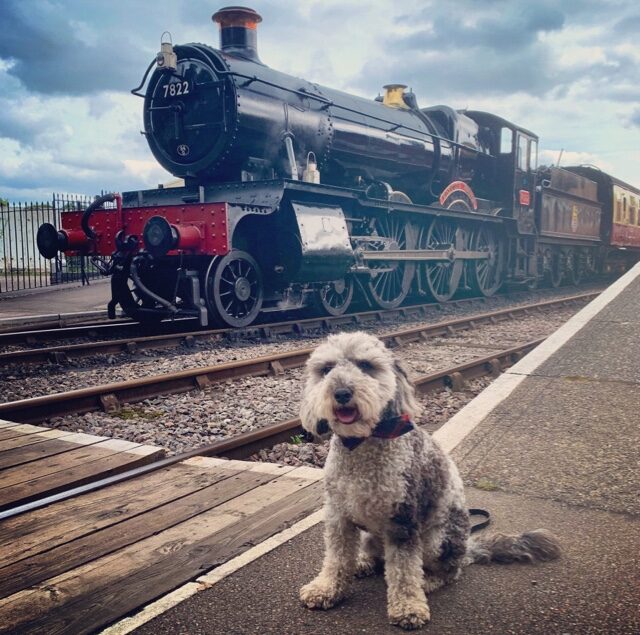
January 1st 2024 to January 11th 2024
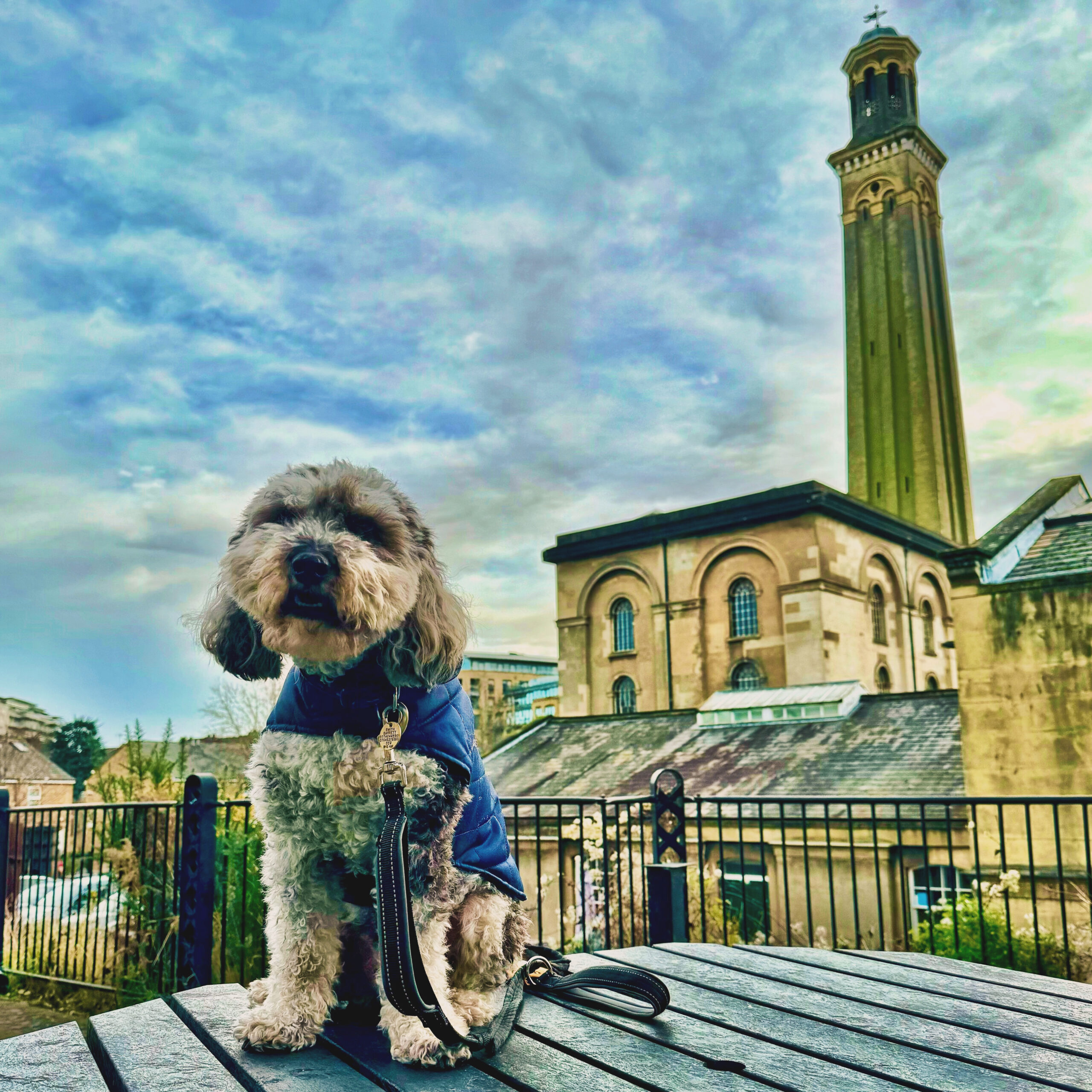
We kicked off 2024 with a visit to the “New Years Steam Up” being held at the London Museum of Water & Steam in Brentford. The Steam Up weekend of celebrations was the first opportunity in two years for people to marvel at the monstrous working steam engines that once provided water to the millions living and working in London. In July 2022, the Museum’s 96 year old Lancashire Boiler failed an inspection when it was discovered one of the seventeen rivets which hold the crown valve mounting flange onto the main boiler shell had lost its heat inside the boiler’s steam space. This meant that the boiler could no longer be used and the steam engines fell silent and still while extensive repairs were carried out. Now, just in time to celebrate the museum’s 50th anniversary the boiler is steaming once again.
Situated on the site of the former Kew Bridge Pumping Station, close to Kew Bridge on the River Thames in West London, the museum is centred on a collection of stationary water pumping steam engines dating from 1820 to 1910. It is the home of the world’s largest collection of working Cornish engines, including the largest working beam engine in the world; the Grand Junction 90 inch.
We arrived early after a good run in the car up from Dorset and luckily found parking on site in the small car park at the museum, although the site is only a 3 minute walk from Kew Bridge railway station if you chose to arrive by train. There were a number of families in evidence with young children during our visit and the museum is a great place to learn and have fun.
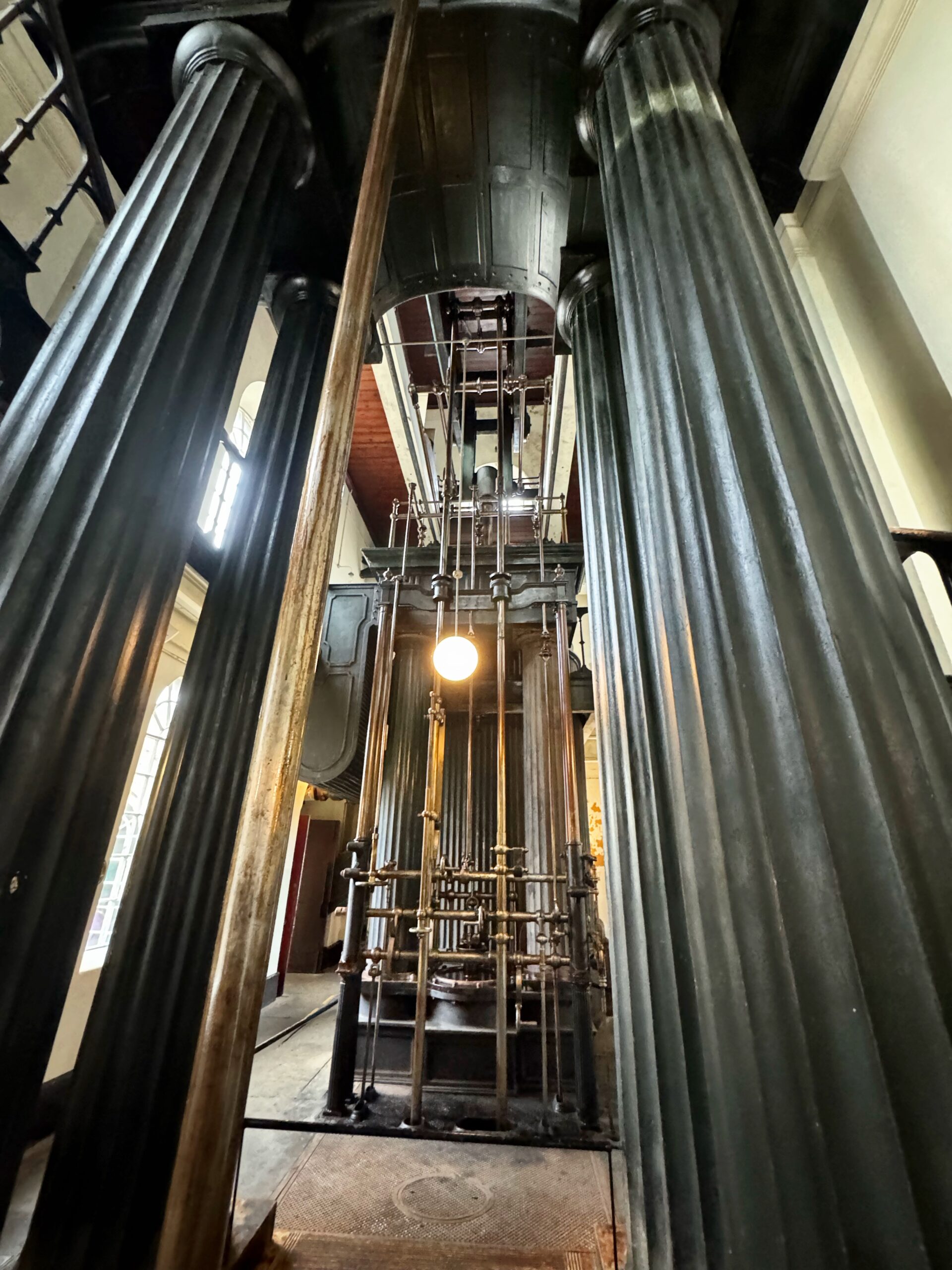
Exhibiting a plethora of steam, diesel and electric powered pumps, the London Museum of Water & Steam tells the story of London’s water supply housed in historic Georgian buildings and they very kindly allowed access to Yoshi, but explained that our boy may not like some of the steam engines when they are working. We duly followed this advice and Yoshi waited with one of his hoomans in the Pump and Grind Coffee Shop or explored the garden area while the machines were being operated. The coffee shop was very busy and served an excellent cuppa. It is run by “Our Barn Community”, a local charity working with young people with learning difficulties enabling a supported work placement.
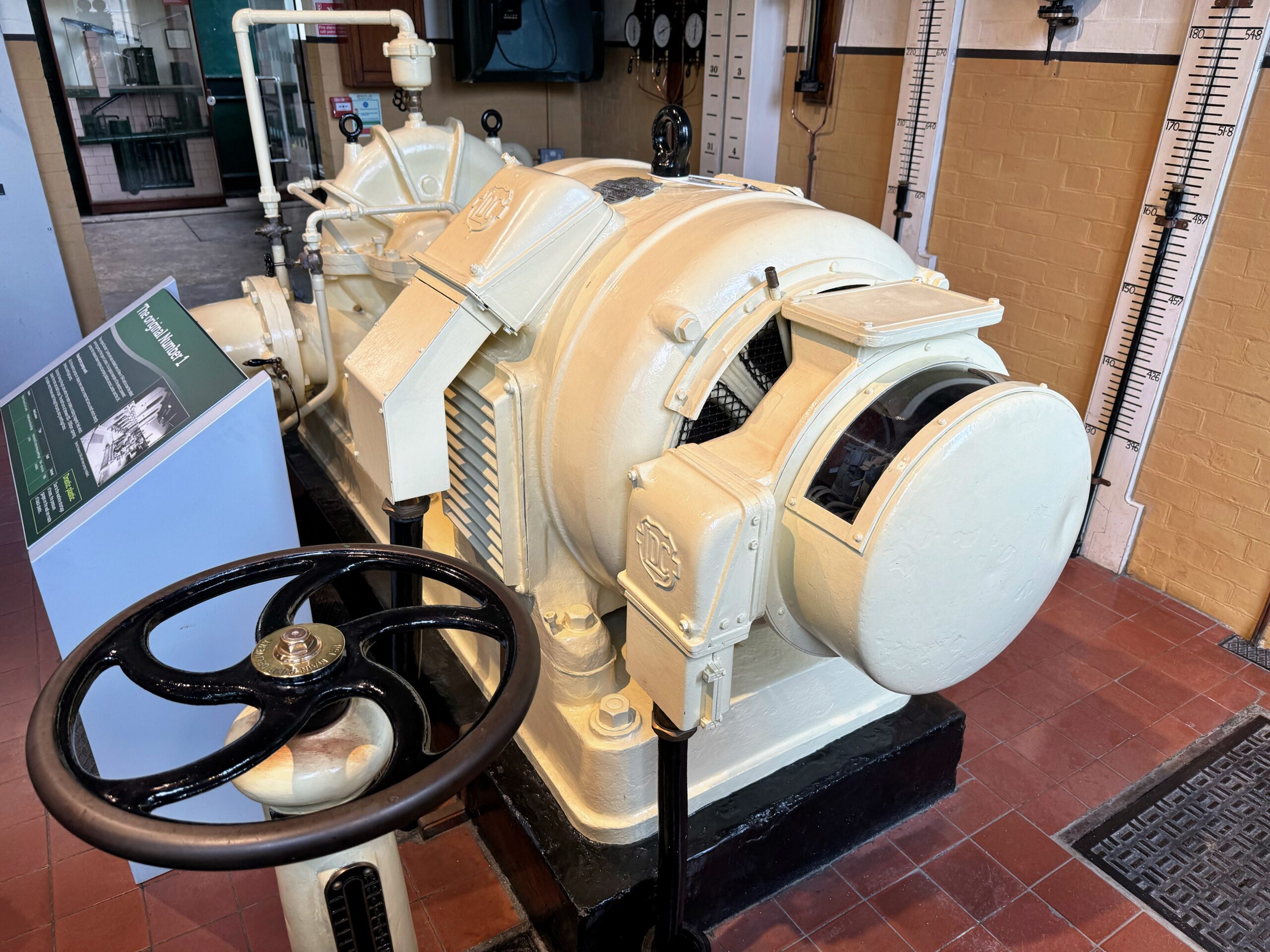
We have shared just a small fraction of the engineering marvels housed at the museum below:
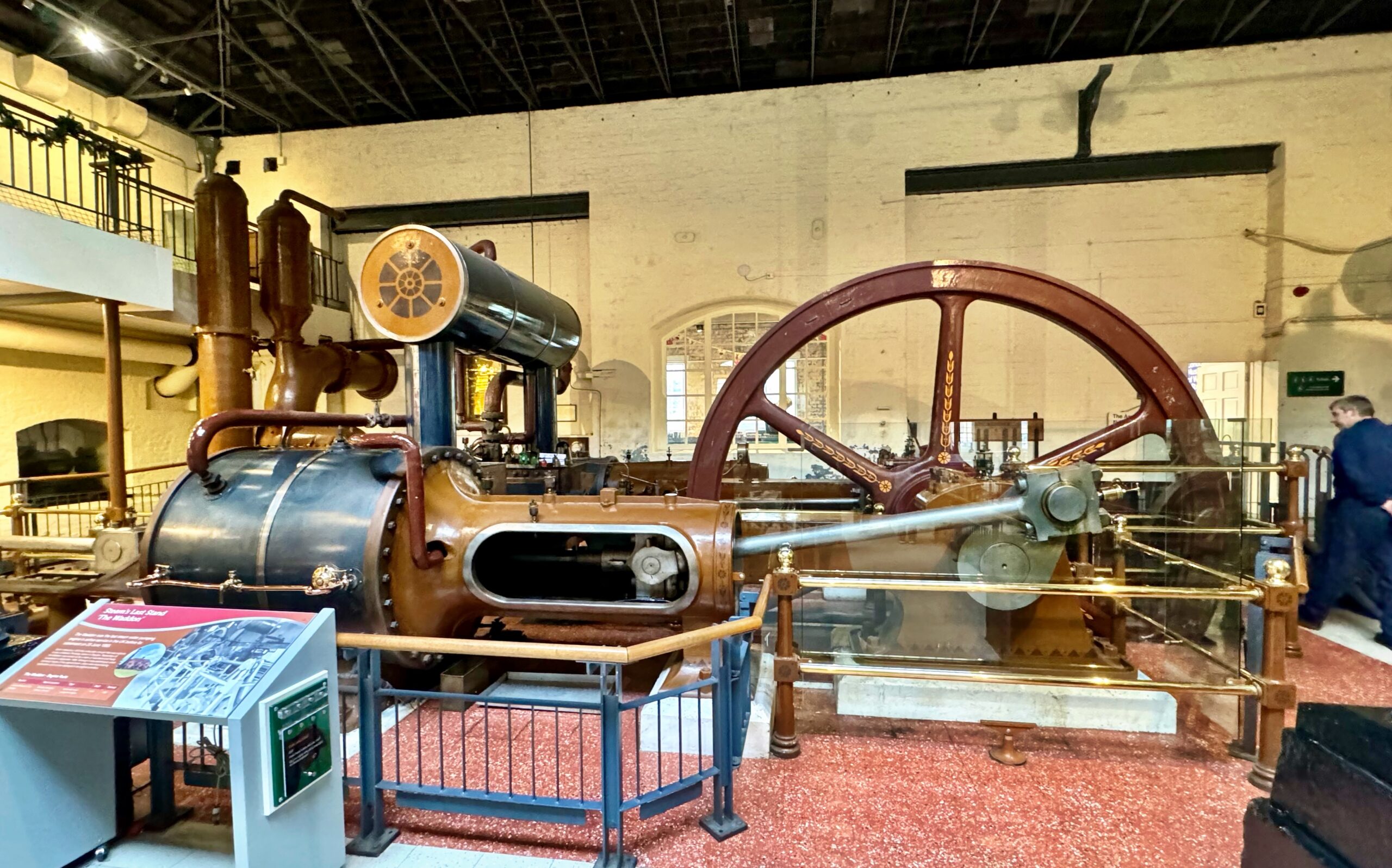
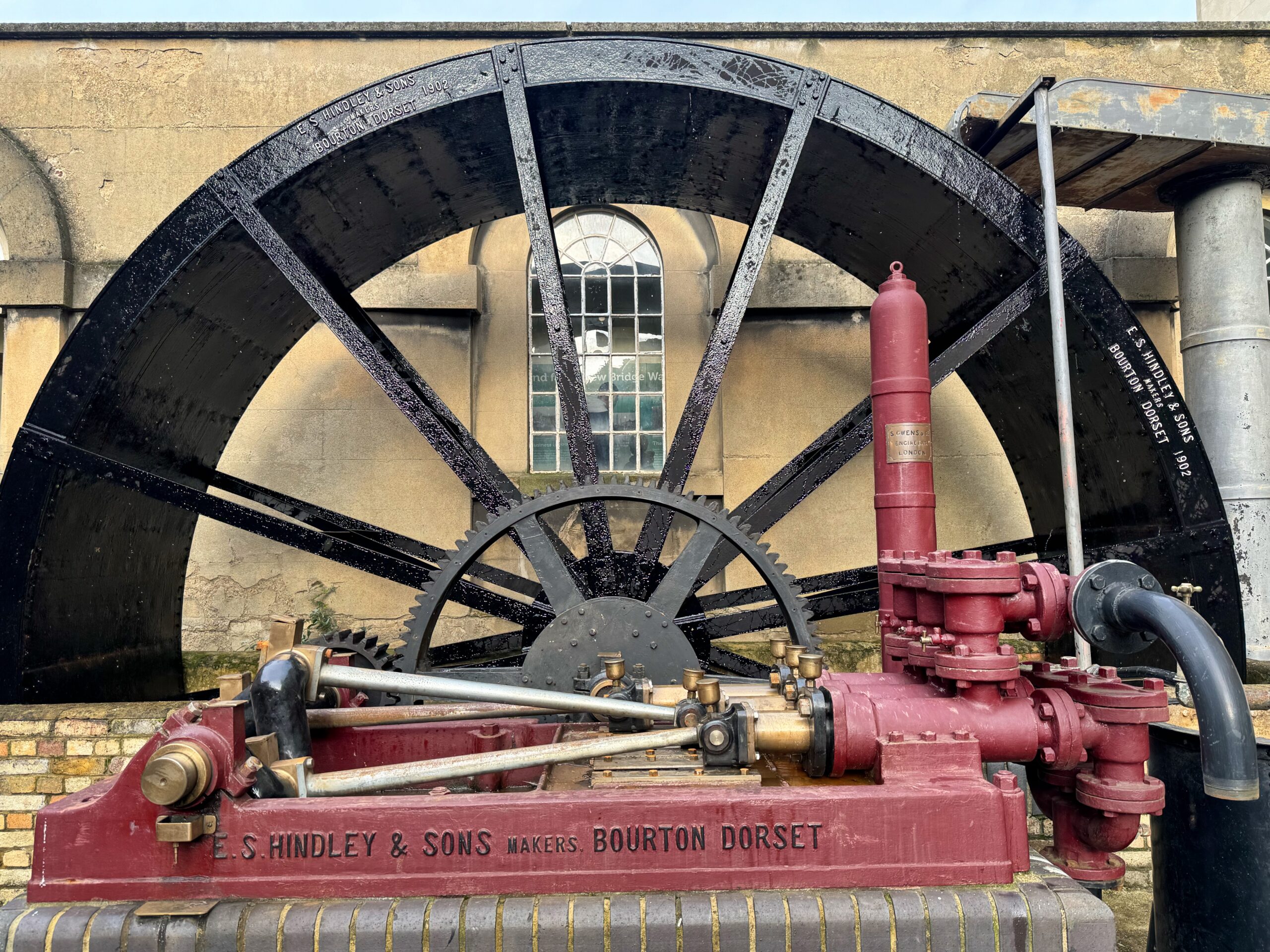
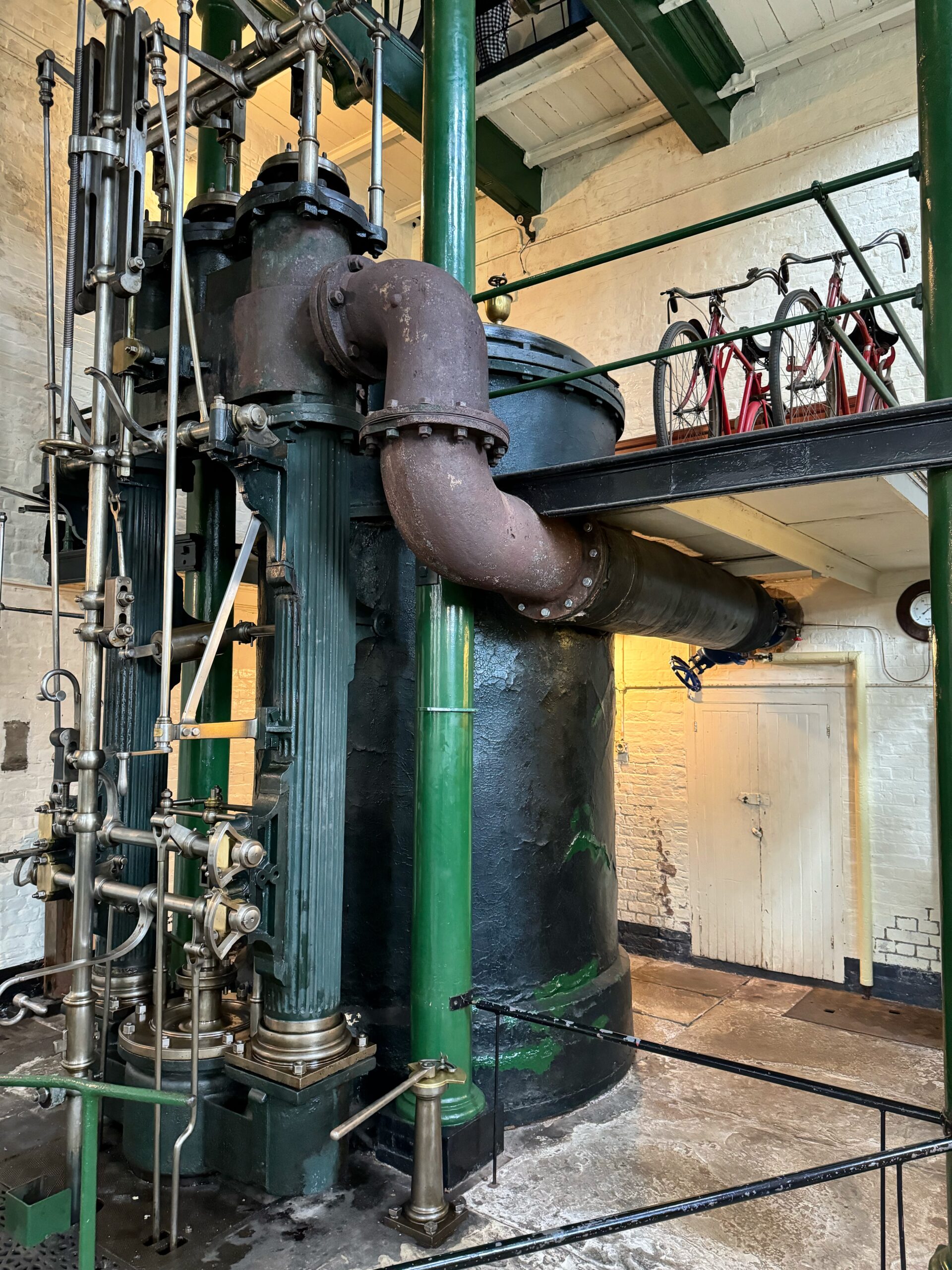
Kew Bridge Pumping Station was originally opened in 1838 by the Grand Junction Waterworks Company, expanding over the ensuing years and ultimately housing six steam pumping engines as well as four Allen diesel pumps and four electric pump sets. The steam engines were retired from service in 1944, although two were kept on standby until 1958. The Metropolitan Water Board thankfully decided not to scrap the resident steam pumping engines and set them aside to form the basis of a museum display at a later date which came to fruition in 1974 with the formation of the Kew Bridge Engines Trust.
The museum also runs a 2 ft narrow gauge railway, which despite being advertised as running over the weekend, was unfortunately not operating during our visit. The museum has been a filming location for many television programmes, including the Doctor Who serial “Remembrance of the Daleks” broadcast in 1988.
After our visit to the London Museum of Water & Steam, we had planned on taking a trip into central London by rail, but in the event decided against this and instead took a drive and a leisurely walk around nearby Richmond, including a visit to the railway station. Of course we did!
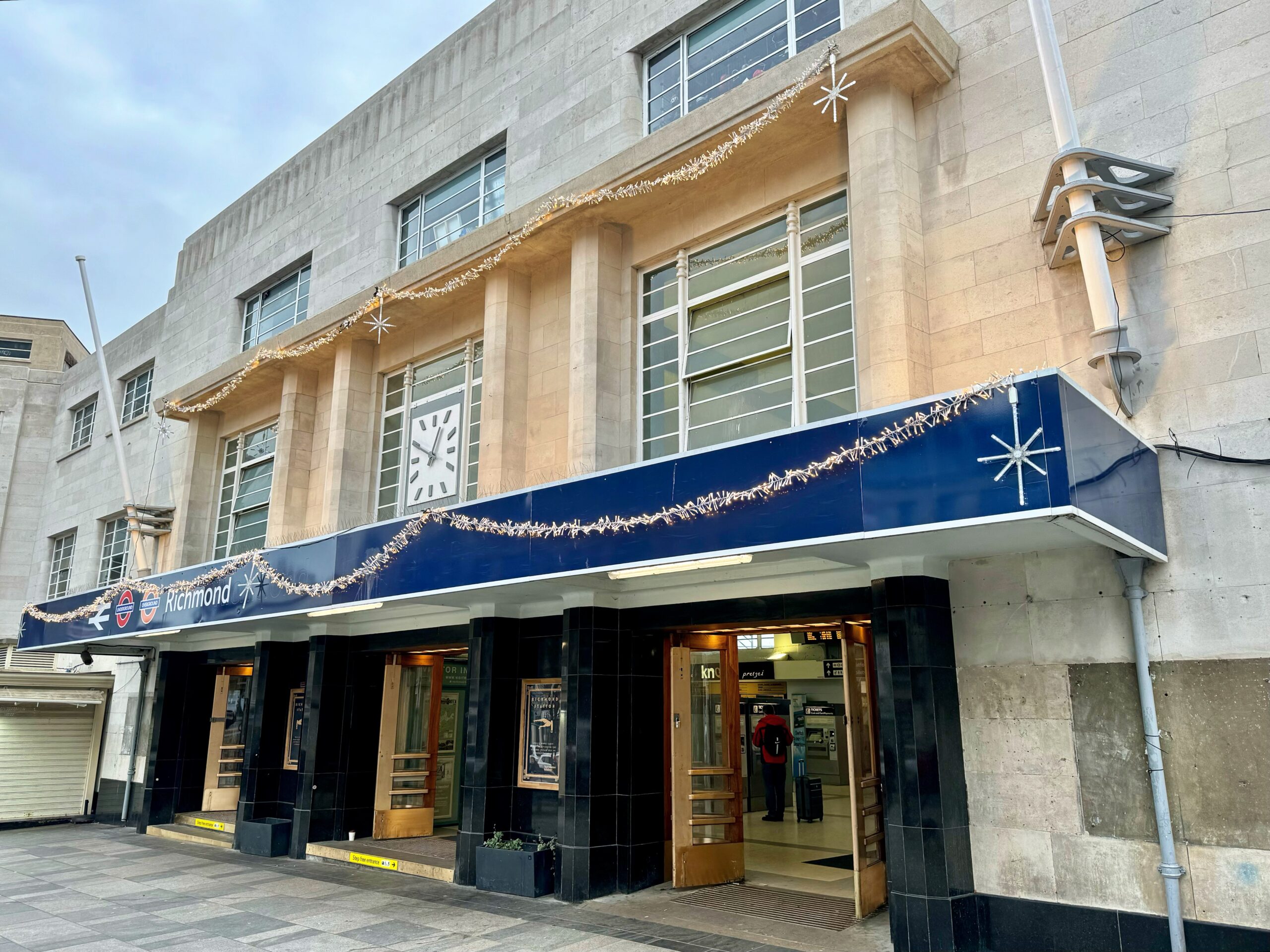
The Art Deco station building in Richmond, designed by James Robb Scott (1882-1965) for the Southern Railway and constructed in Portland stone dates from 1937 and replaced an earlier station on the site. Scottish born Scott became the Chief Architect of the Southern Railway and is perhaps best known for his redesign of London Waterloo between 1910 and 1923 where he was chiefly responsible for the offices, main entrance and war memorial to the fallen employees of the railway known as the Victory Arch. Scott also designed Wimbledon and Surbiton railway stations – now part of the South Western Railway (SWR) network – the latter having recently celebrated 40 years since being bestowed Grade II listed status.
SWR, Network Rail (NR) and the Railway Heritage Trust are jointly funding a £325,000 programme of improvements with hopes of more refurbishment to come in the future, subject to additional funding being made available. Initial work includes cleaning the Portland stone façade, repairing the timber entrance doors and polishing its bronze embellishments, repairing flagpoles and refurbishing customer toilets.
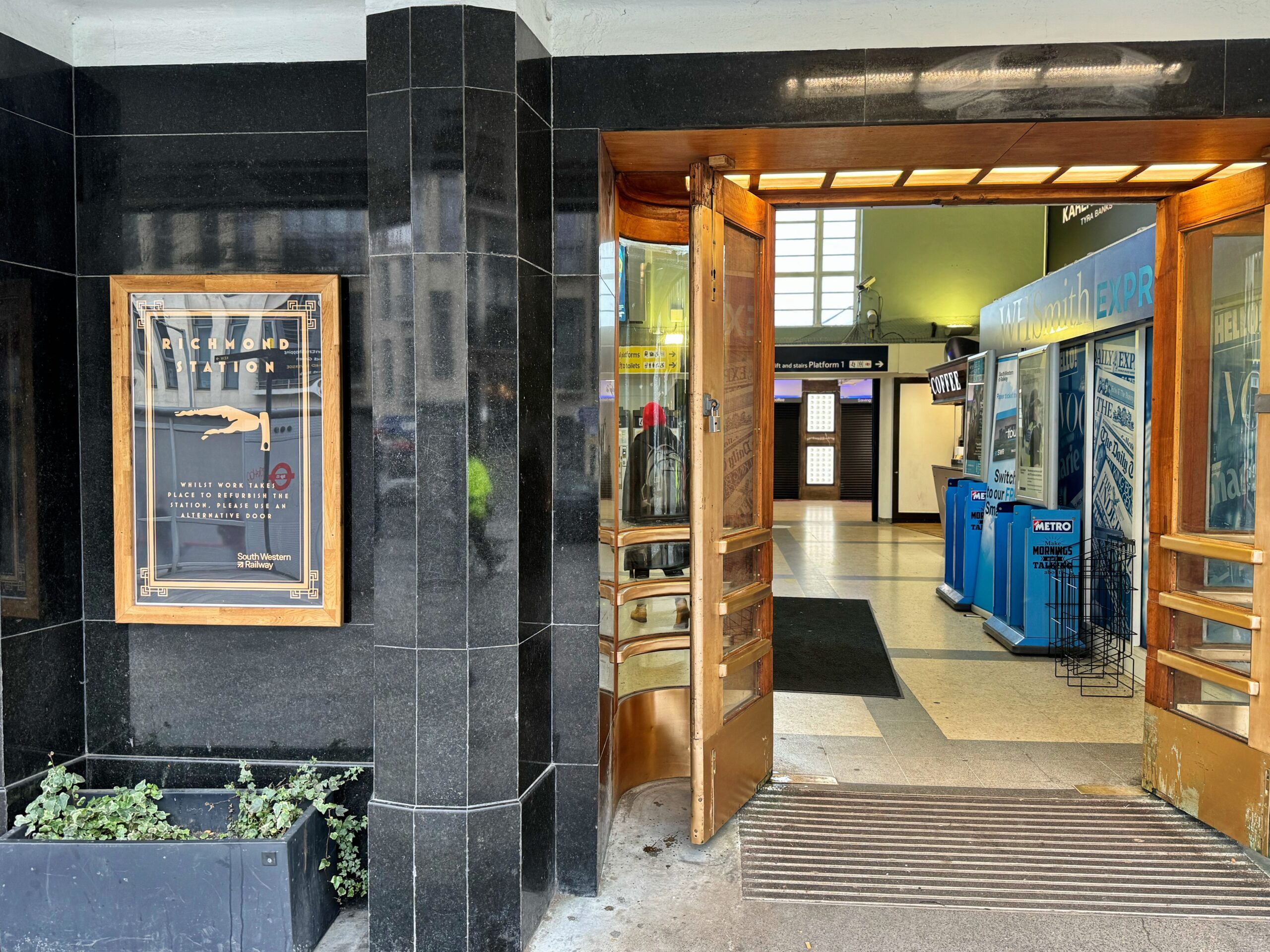
The style of the building at Richmond is suggested as being inspired by the work of Charles Holden (1875-1960), the architect behind London Underground stations including South Wimbledon on the Northern line. Holden’s designs included multi-frame glazing, enamelled signage panels, the use of an iconic typeface for signage and brick and tile detailing. Similar features at Richmond have been lost or covered up over time, including during the station’s last major refurbishment in 1985. SWR, NR and the Railway Heritage Trust have worked with Benedict O’Looney Architects on designs that include restoring or replicating those features, and others, in future improvements. Paying close attention to detail, the station’s original, hand-drawn plans are being used together with promotional photographs from when the station first opened its doors to customers. Samples of the station’s original paint are also being analysed by the University of Lincoln, specialists in the conservation and restoration of the interior and exterior features of listed and historic buildings.
The area in front of Richmond station main entrance was pedestrianised in 2013 and includes a war memorial to soldier Bernard Freyberg, who was born in Richmond. As well as Sir trains, the station is served by the London Overground North London Line and Underground District Line trains.
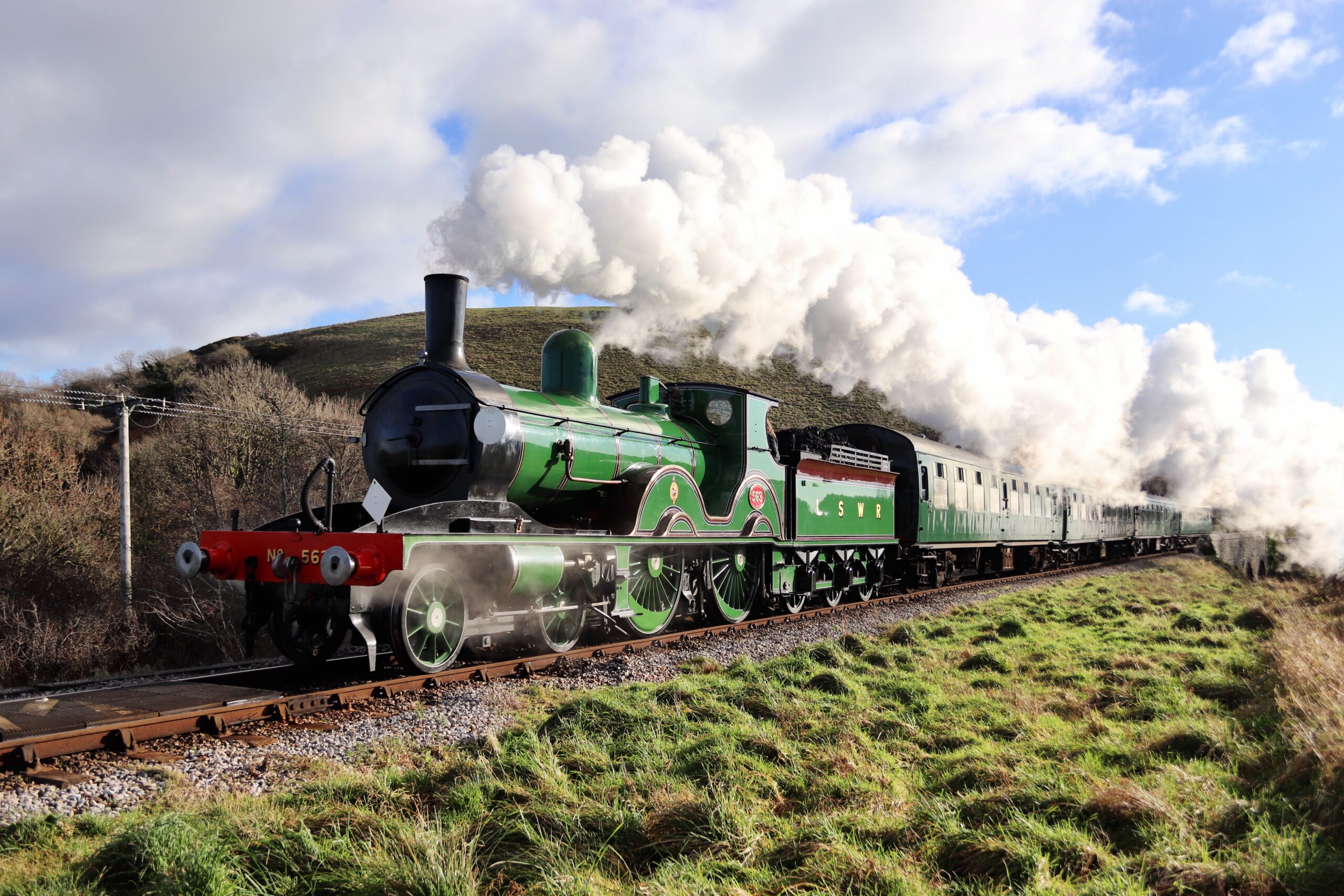
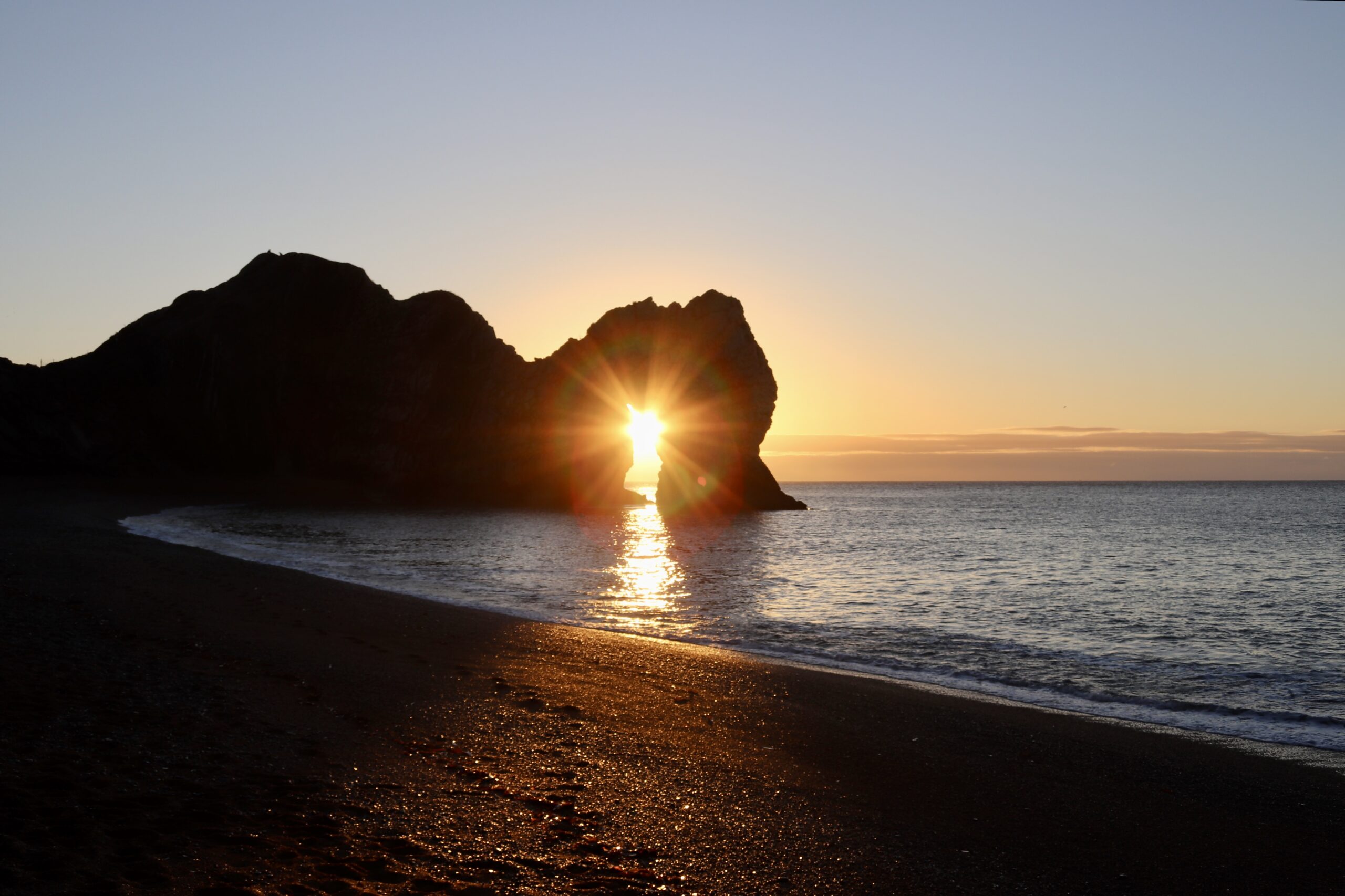
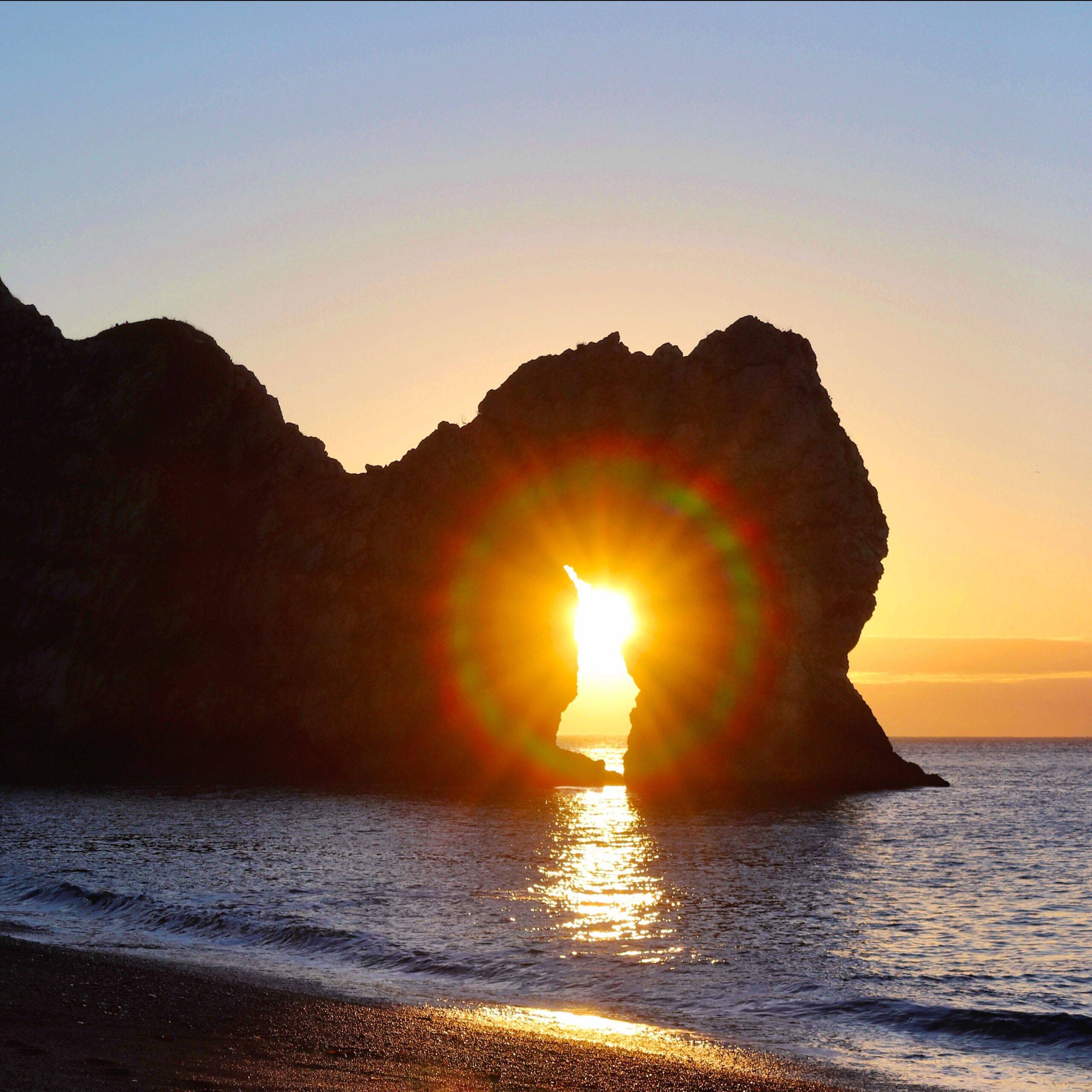
The Swanage Railway’s first event of 2024 was their annual “Winter Warm Up” weekend held on January 6th & 7th. With cold, but clear weather forecast, I decided on heading down to Swanage on the Saturday after taking a chance on a picturesque sunrise at Durdle Door on the way.
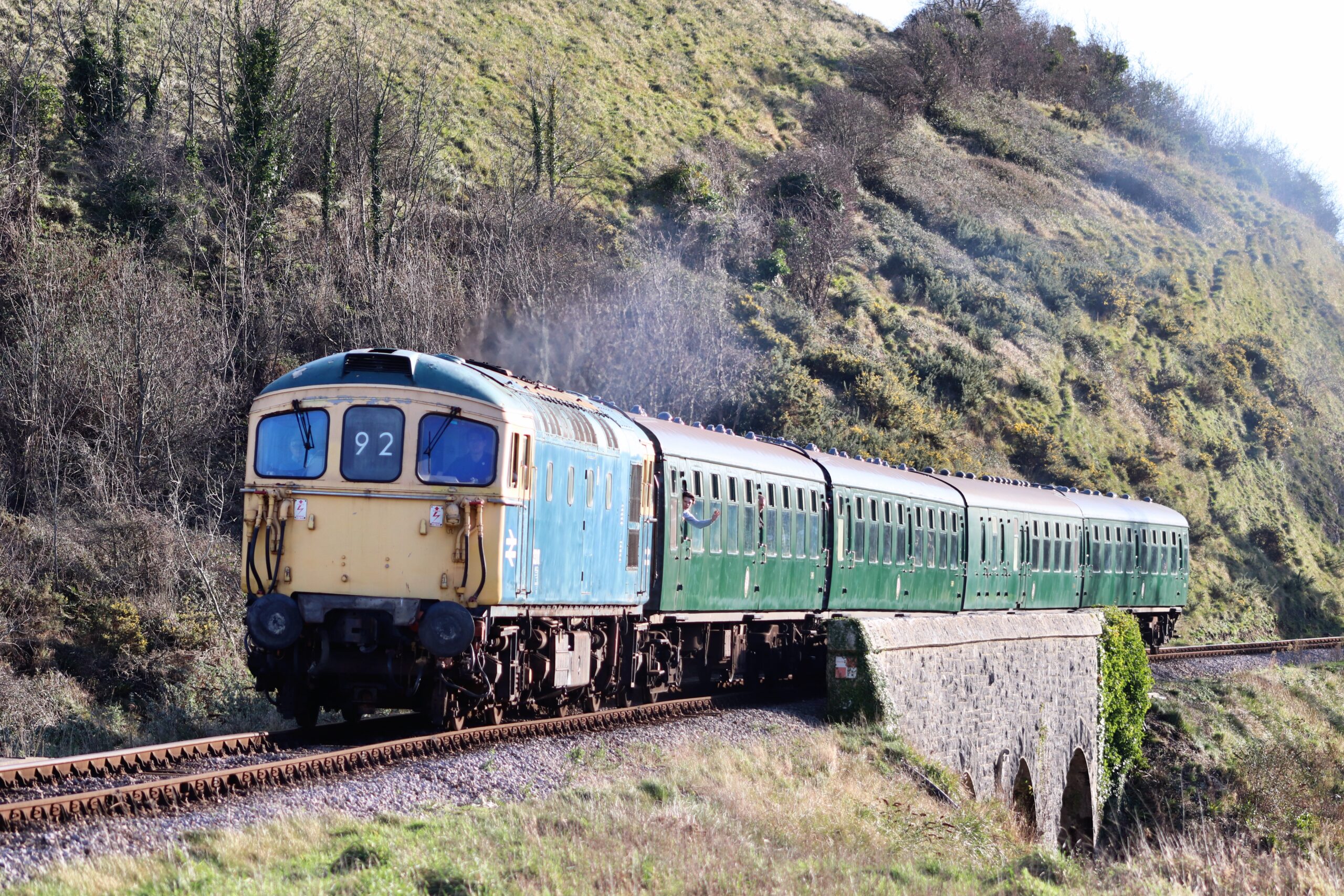
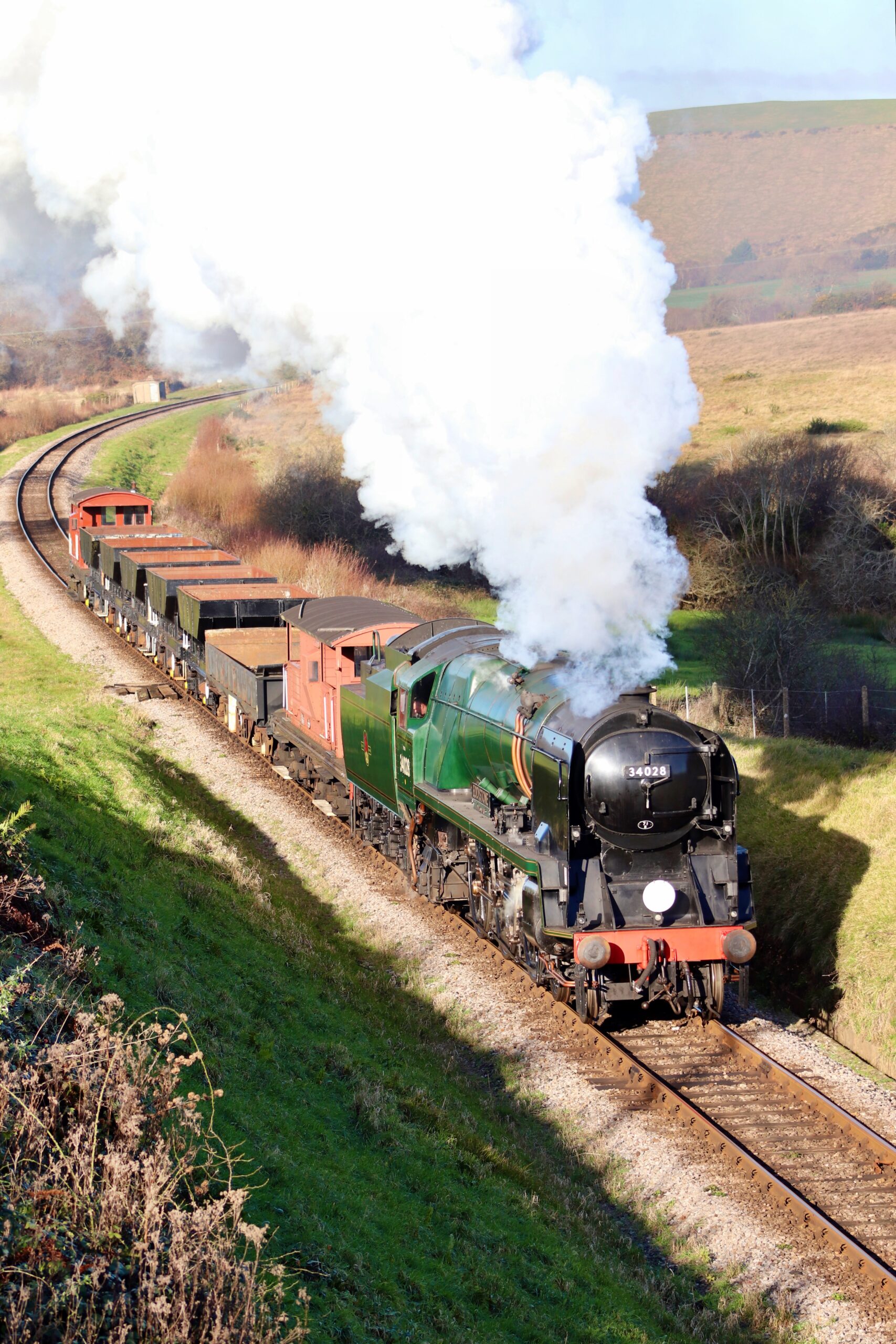
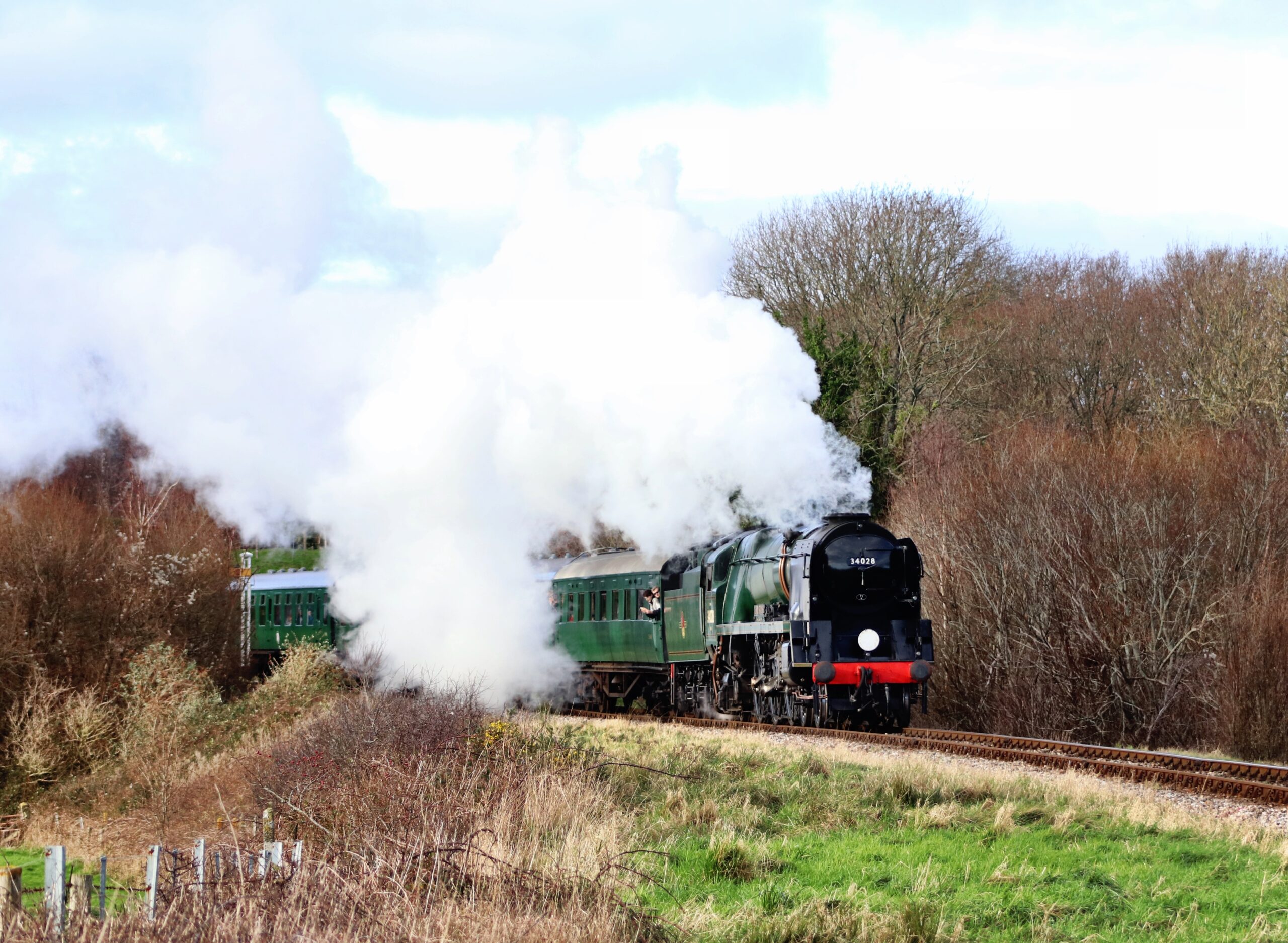
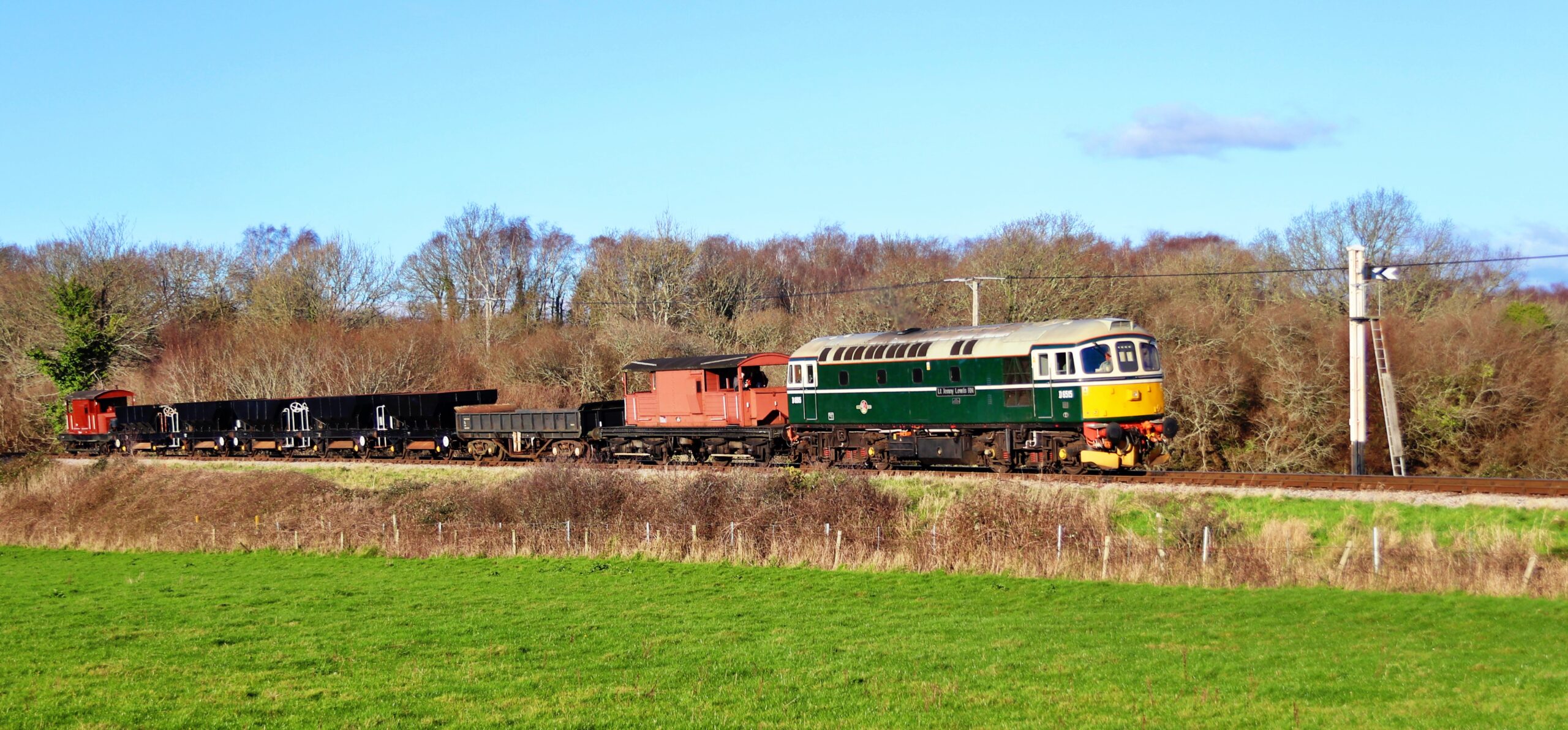
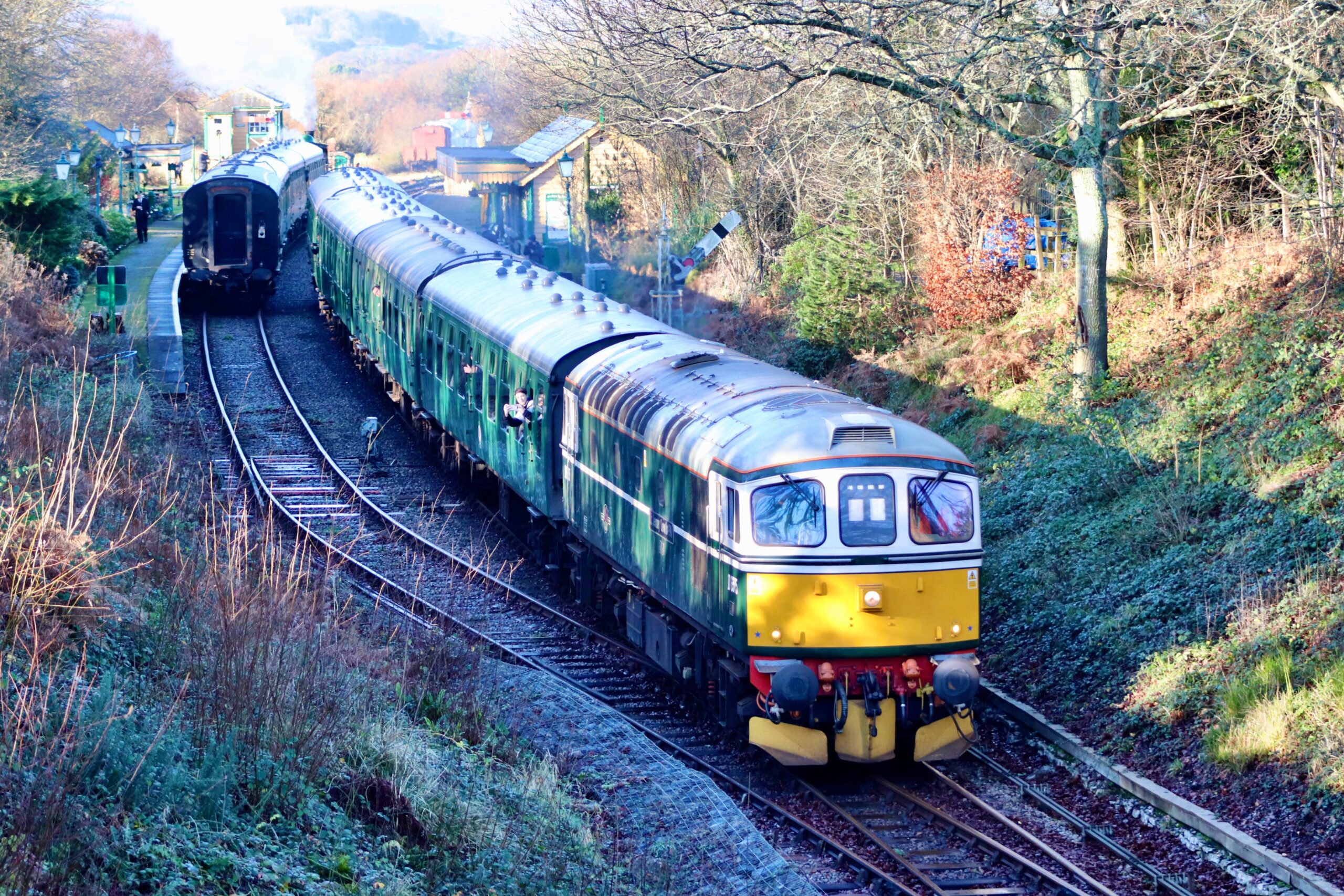
In action this year was the recently restored Adams 4-4-0 T3 No. 563 hauling its first freight train since its return to service, SR West Country 4-6-2 No. 34028 ‘Eddystone’ and the resident Class 33 diesel locomotives no.’s 33111 and D6515 ‘Lt Jenny Lewis RN’

The Swanage Railway Trust 563 Locomotive Group have been nominated for the “Steam Railway Magazine Award”. This award is decided by the public and will be announced at Heritage Railway Association’s annual ceremony on February 10th 2024 and you can now cast your vote online until the 18th January 2024: www.steamrailway.co.uk/read/hra-awards
Scheduled mainline action kicked off the year with a “no-show” as the HST powered New Measurement Train (NMT) failed to reach Weymouth on January 3rd after a points failure at Castle Cary curtailed 1Z22 1211 Derby RTC (Network Rail) to Bristol Kingsland Road – top and tailed by Class 43 power cars No.’s 43274 and 43257 – at Westbury. Interestingly three different paths were put in for this test train on this particular day. The one which finally ran was timed later than the usual working to Dorset, but not as late as one of the options given for the day!
We did, however, get to experience a daylight Snow & Ice treatment Train (SITT) on Sunday 7th January as GBRf Class 66 locomotives No.’s 66764 ‘Major John Poyntz Engineer & Railwayman’ and 66772 ‘Maria’ in top and tail formation worked to Weymouth as 3Y88 1035 Totton Yard to Totton Yard. 66764 replaced No. 66723 ‘Chinook’ and No. 66743 which had both been previously paired up with No. 66772 on the Totton based SITT locomotive diagram.
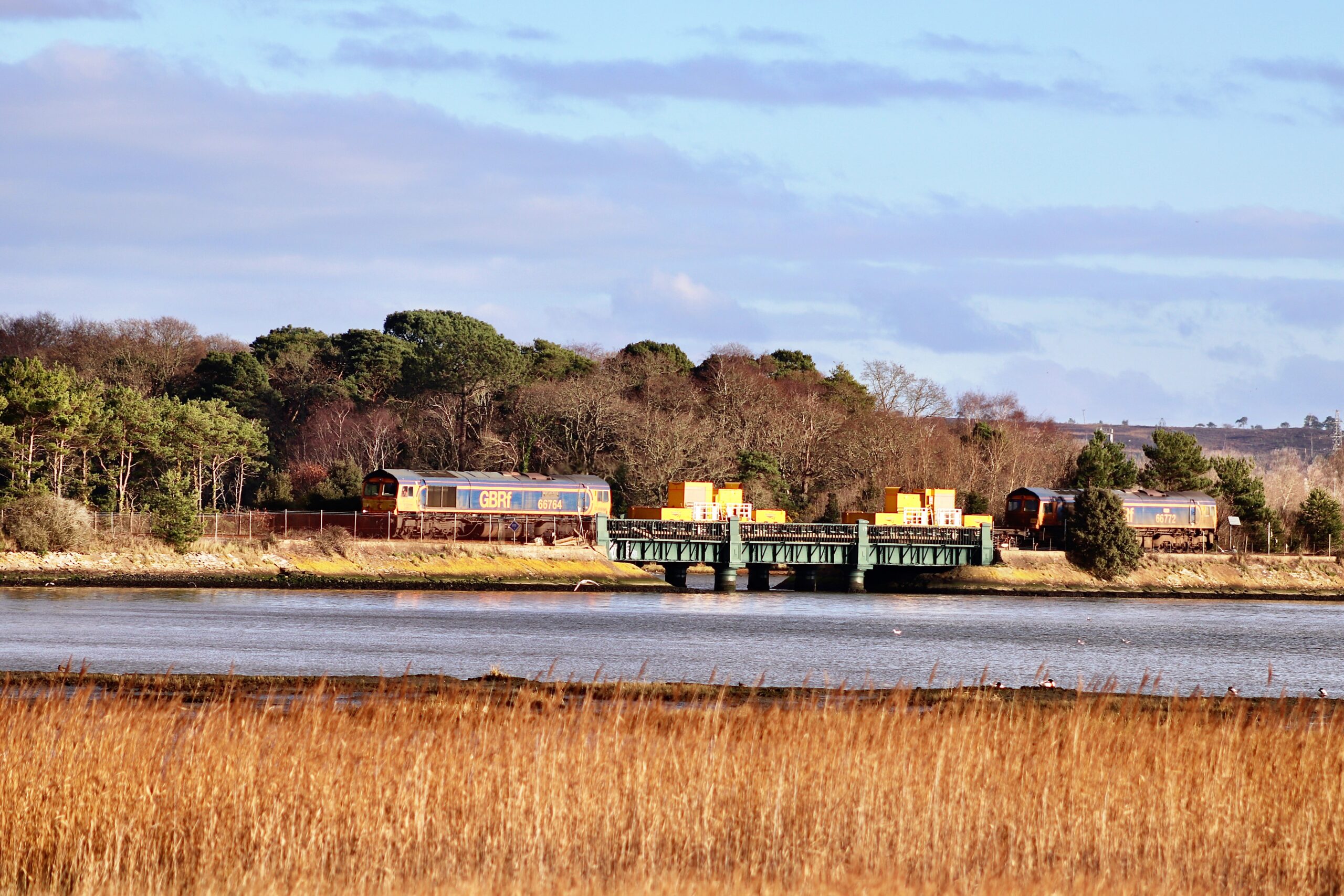
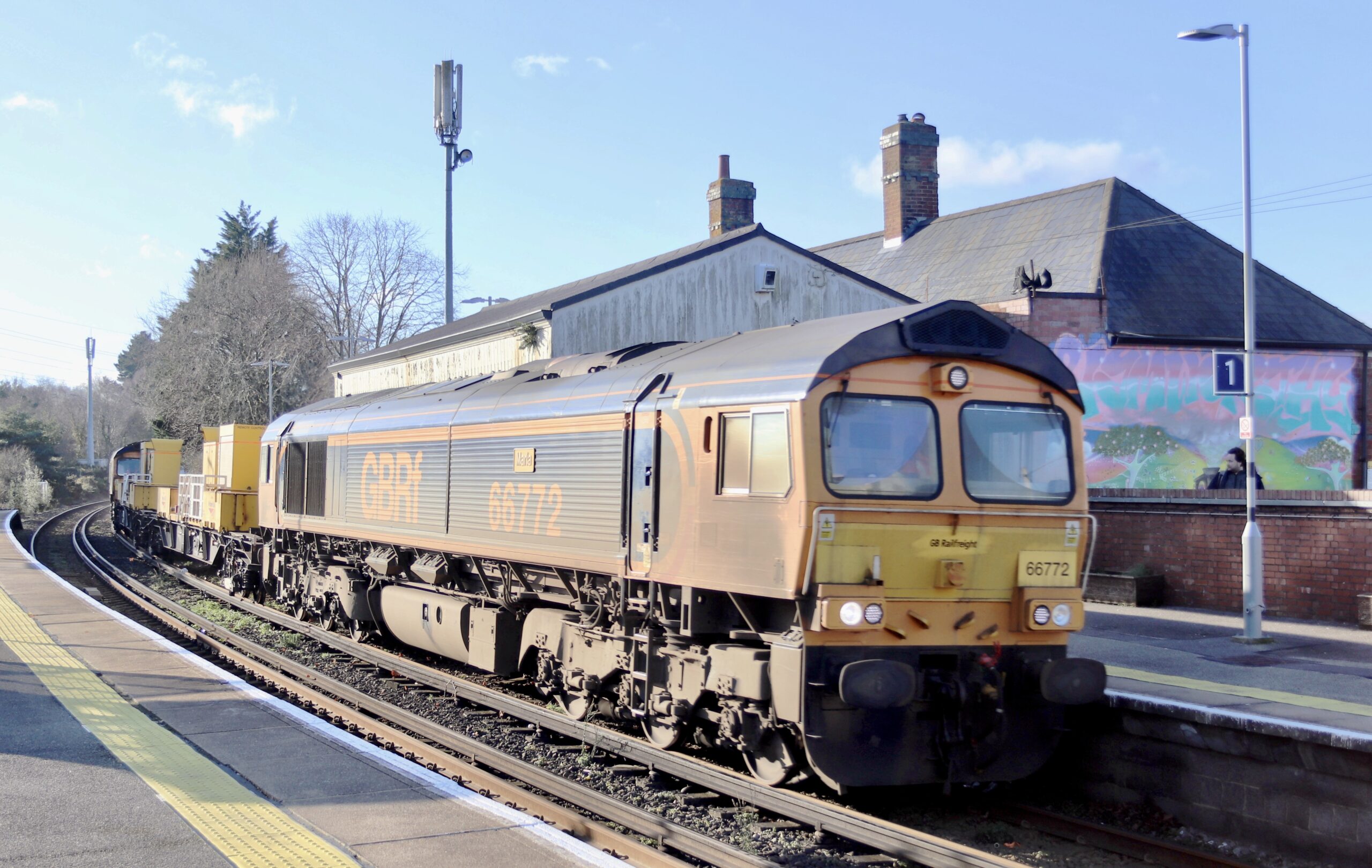

Major John Poyntz served in the British army for 35 years, with the Royal Engineers and later the Royal Corps of Transport. After military service, he joined the Railway Inspectorate, now part of the Office of Rail and Road, and was the last Royal Engineer to take such a route, spending 25 years in the role as a Railway Inspector. His work included inspections of heritage railways and dealing with accidents and incidents such as the Severn Tunnel rail accident and the Cannon Street rail crash, both in 1991.
Overnight on Saturday 6th/Sunday 7th a ballast train headed to Moreton working as 6C03 2312 Eastleigh East Yard to Moreton (Dorset) in the hands of Colas locomotives Class 66 No. 66848 and Class 70 No. 70809. We saw the ensemble pass through Hamworthy on the outward leg and had planned to see the associated return 6C03 0810 Moreton (Dorset) to Eastleigh East Yard crossing Holes Bay, but as the train set off over an hour early and with the sun yet to rise, we played safe and returned once again to Hamworthy railway station to watch the train pass through.
The SITT returned to the Bournemouth to Weymouth line under the cover of darkness on Monday 8th and Wednesday 10th January employing the same pair of Class 66’s as the previous Sunday run.
In between the SITT workings, on Tuesday 9th January, we saw a first for Dorset as Direct Rail Services (DRS) ran a service to Winfrith using a Class 88 locomotive No. 88002 ‘Prometheus’ which had replaced failed Class 68 No. 68004 (which itself had substituted for No. 68005) and No. 68003 ‘Astute’ in top an tail formation. This was the inaugural use a Class 88 on the Bournemouth to Weymouth line.

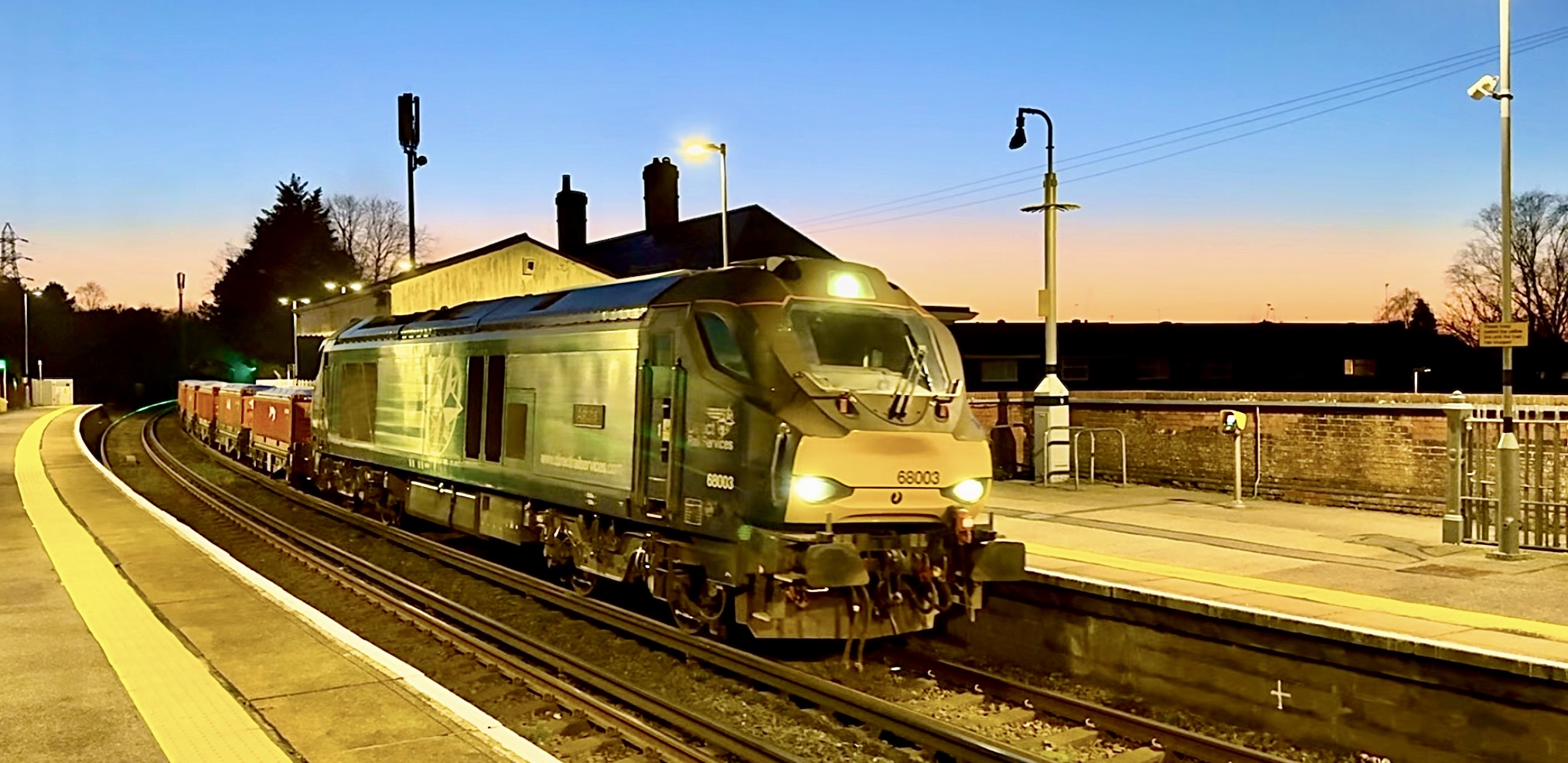

The Class 88 is a mixed traffic electro-diesel locomotive manufactured by Stadler Rail and is part of the Stadler Euro Dual family.
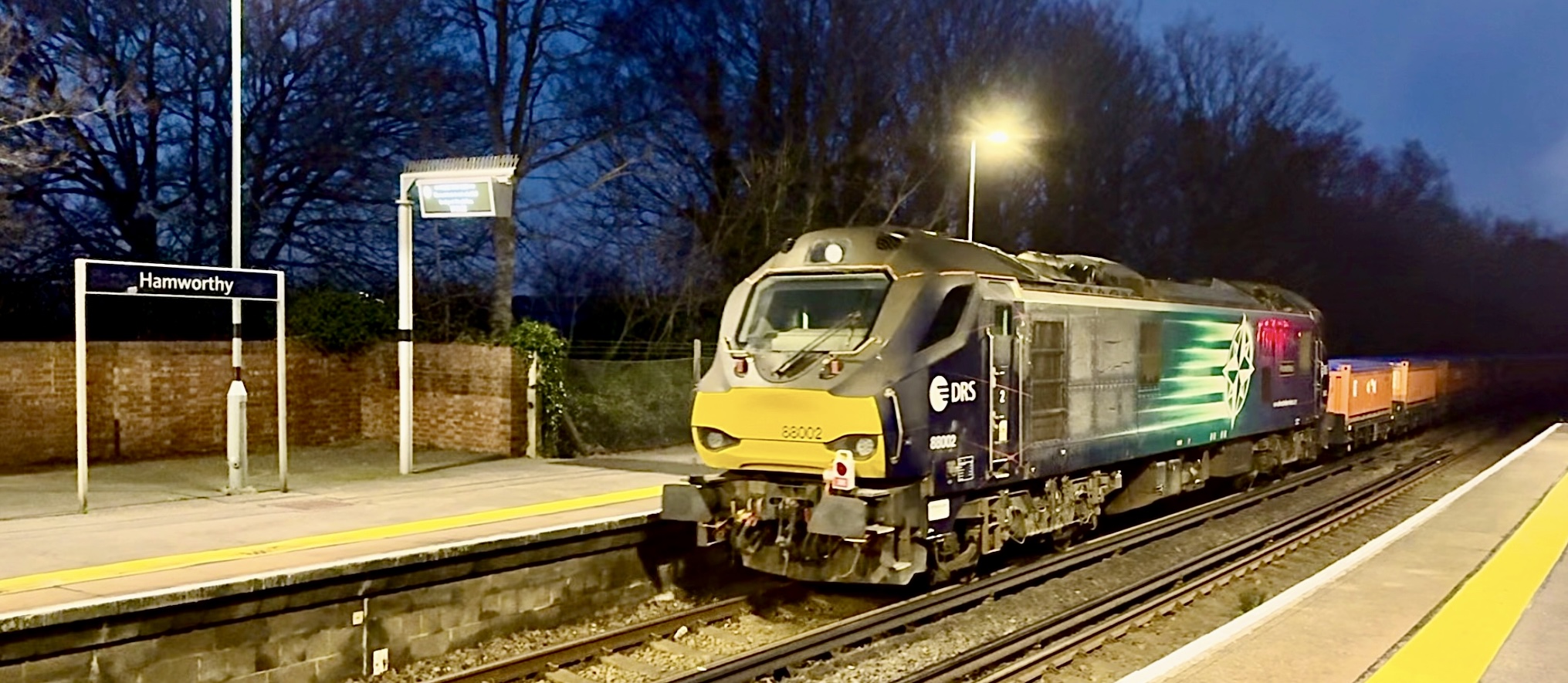
During the development of the Class 68 diesel locomotive for DRS which was first announced in January 2012, the design team at Stadler proposed the concept of a dual-mode locomotive that could be alternatively powered by an onboard diesel engine or via electricity supplied from overhead lines (OHLE). In comparison to conventional diesel locomotives, this arrangement enables operational costs to be significantly reduced when diagrammed on routes partially or entirely under OHLE, under which the diesel engine can be deactivated.In September 2013, DRS placed an order for ten such locomitives which would become the Class 88. Having been developed alongside the Class 68, considerable similarities are shared between the two locomotive types, with an approximate 70% share of components.
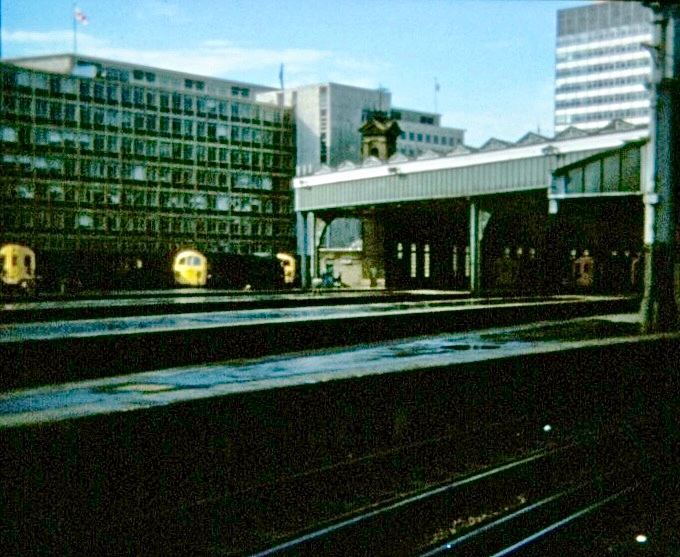
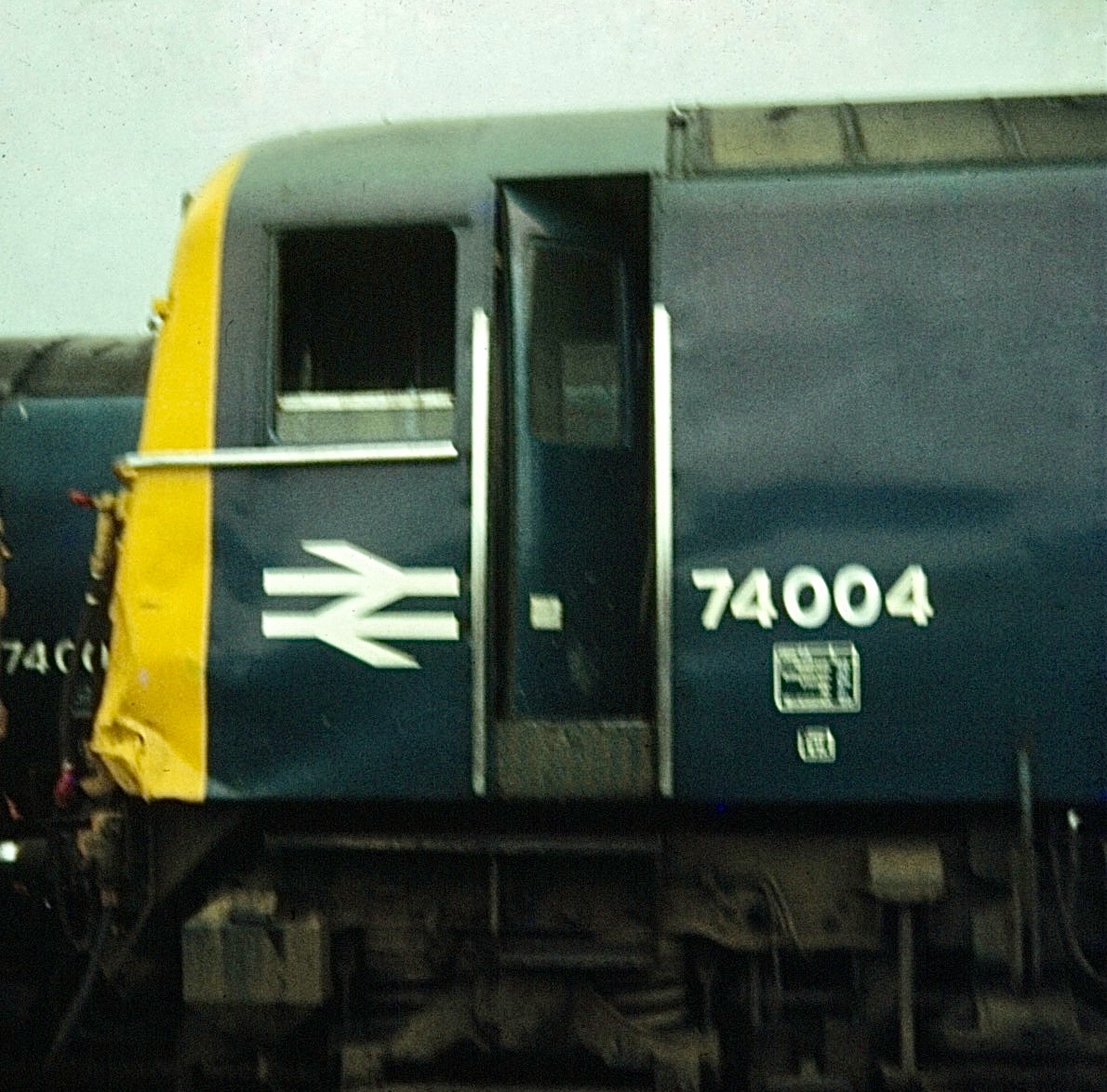
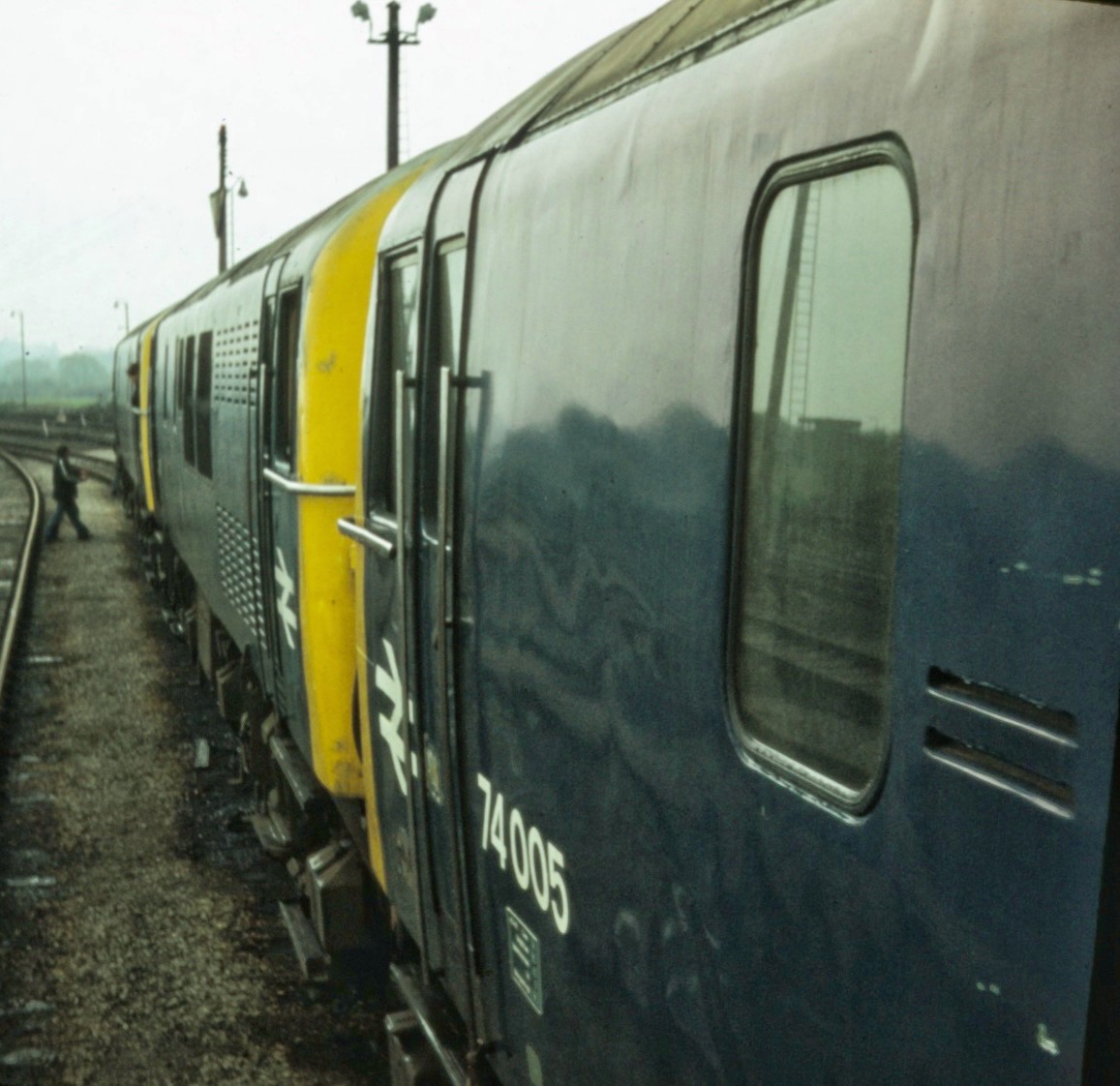
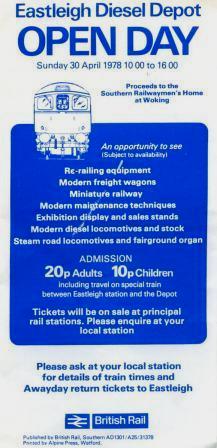
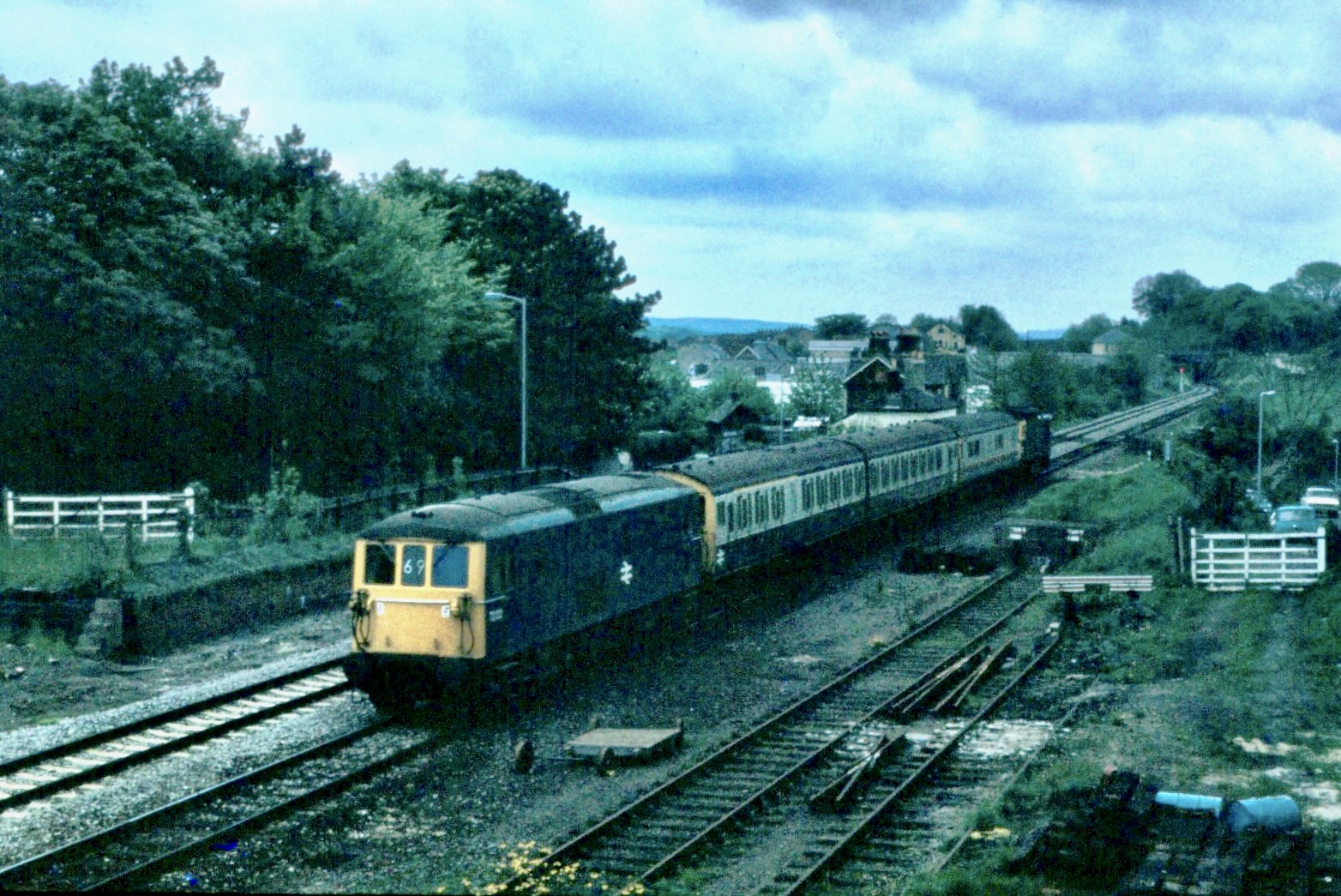
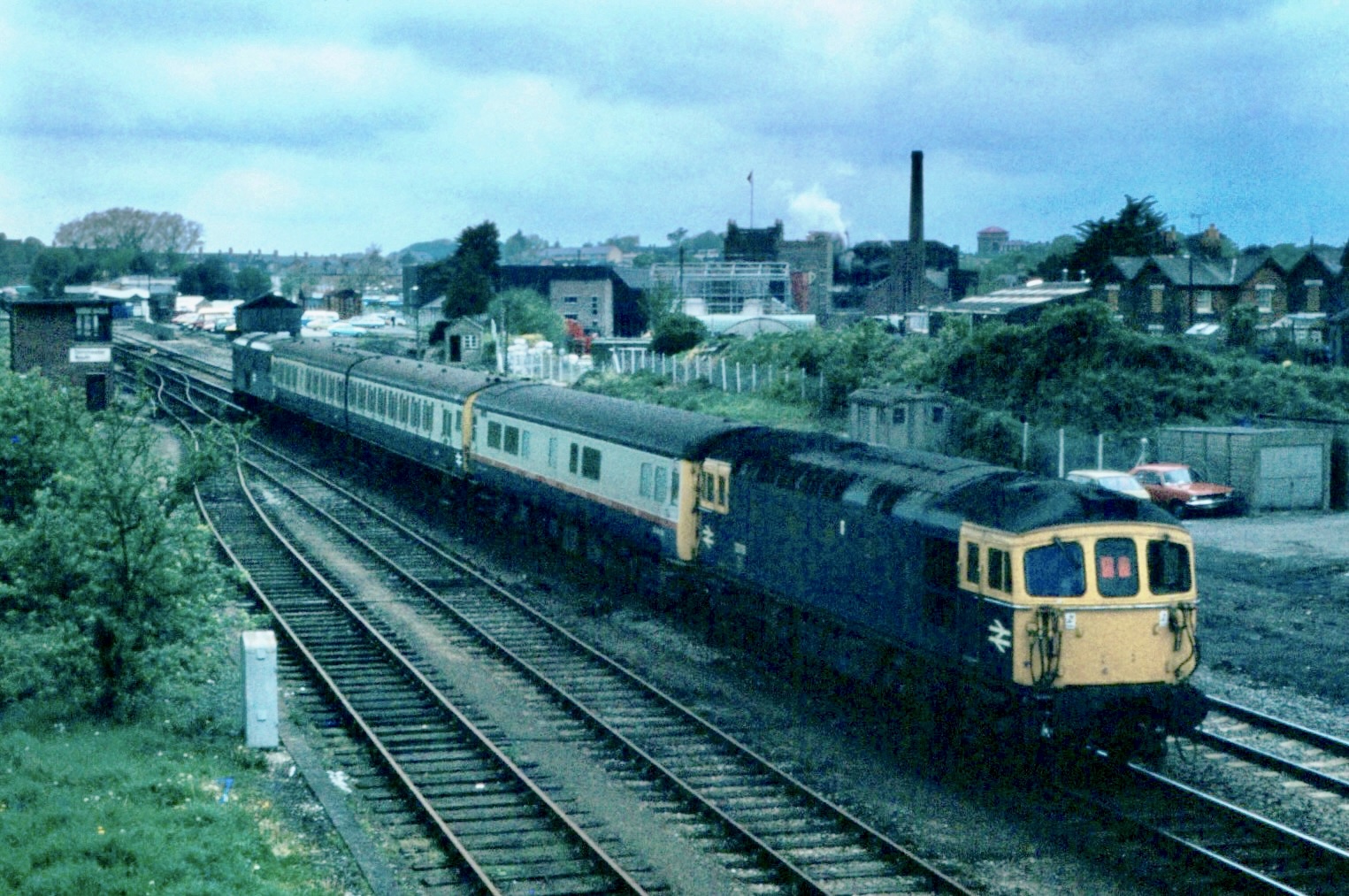
The Class 88 is the first dual-mode locomotive type in the UK to use the 25 kV AC electrification, as the only other electro-diesel locomotives to have entered service with British Railways are the Class 73’s and Class 74’s, which operated on the Southern Region using third rail electrification, and we’ve reached back into the archives to find some images to share:
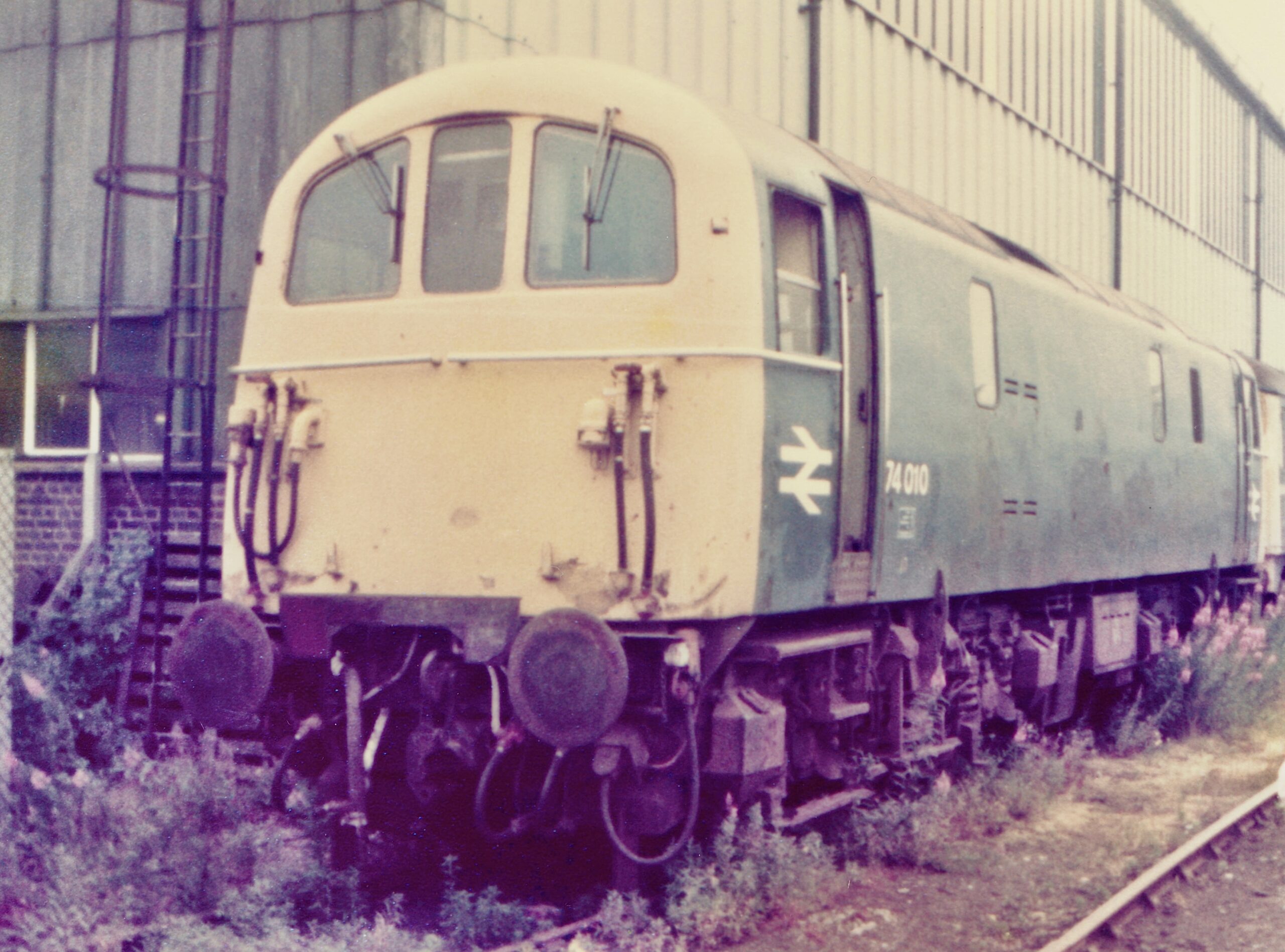
For The Record:
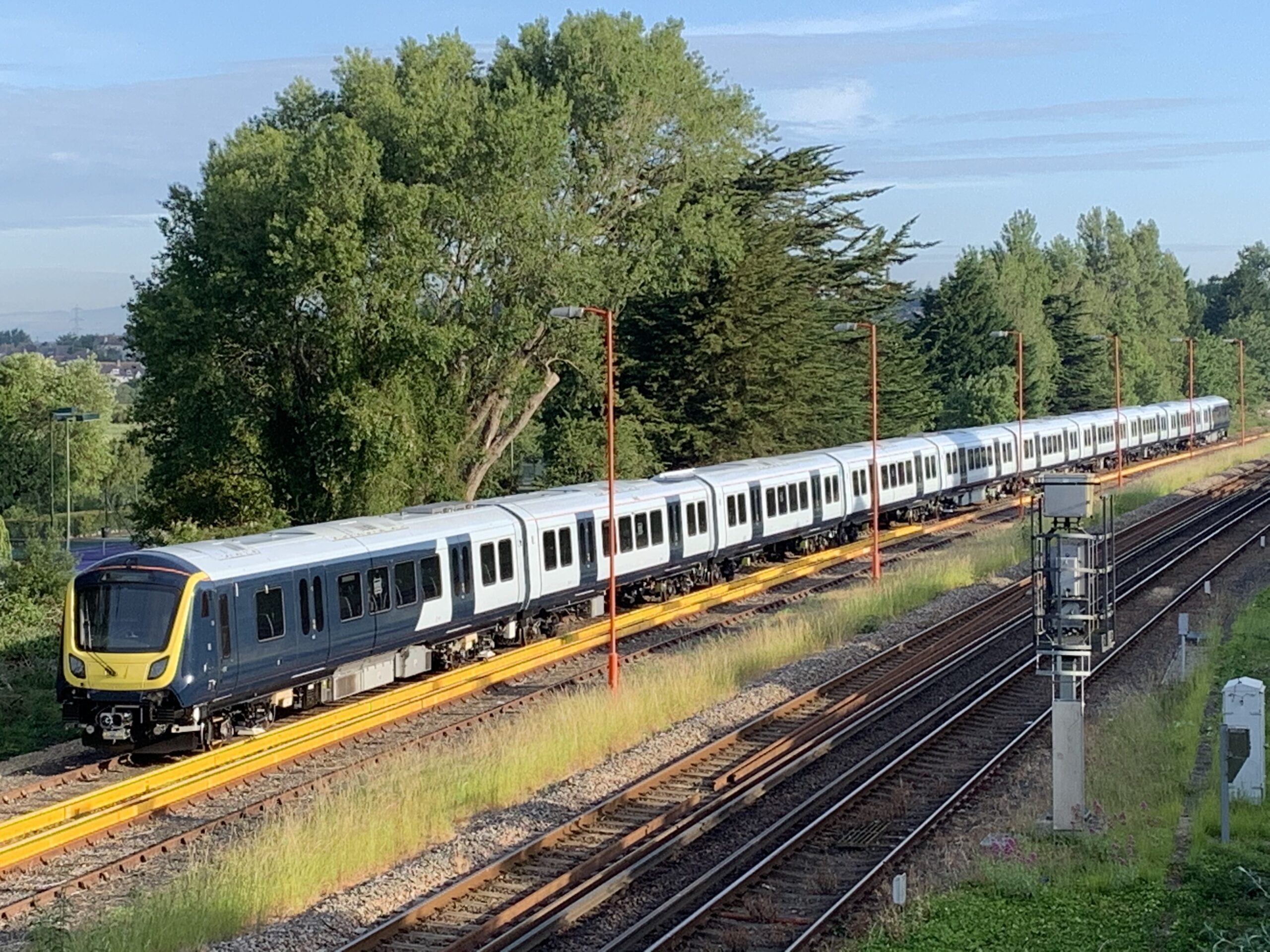
In other news, the SWR Class 701 Electric Multiple Units (EMU’s) finally entered revenue earning service on Tuesday 9th January 2024 when No. 701037 worked a single round trip between Waterloo and Windsor Eton Riverside. The Derby-built trains had been due to enter service in 2019. SWR have since promised the rolling stock would enter passenger service in 2023 – a promise echoed by the Department for Transport (DaFT) in a statement issued in May 2023, which said the trains would run “this calendar year”. It is intended a Class 701 will continue to run off-peak Monday to Friday between London Waterloo and Windsor, in order to fulfil that commitment, making one single round trip each day, or working between 1000 and 1600. The phased entry into service of the Class 701’s – which continue test runs to Poole and Bournemouth – will eventually allow for the withdrawal of SWR’s Class 455 units and the cascade of the Class 458 fleet to longer distance services.
The North Dorset NMT ran on Thursday 11th January 2024 – a week earlier than I expected – in the hands of HST Class 43 power cars No.’s 43013 and 43257.
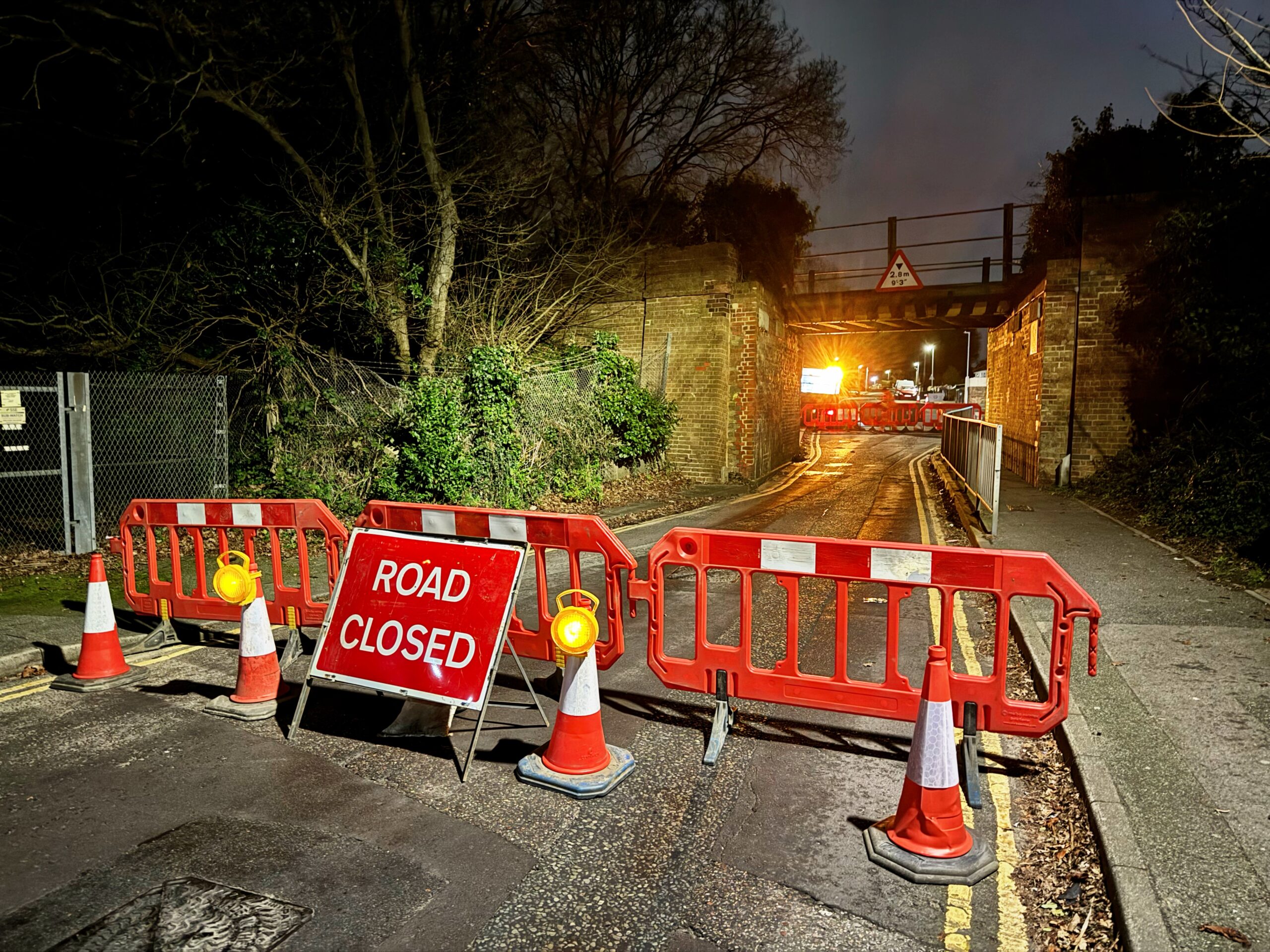
Lake Road was closed to road traffic from its junction with Lake Drive to its junction with Coles Avenue from Monday 8th January up to and including Friday 12th January 2024 – 2200 to 0600 daily to facilitate removal of material from a bridge strike and replace missing signage on Lake Road Bridge situated on the Hamworthy Branch. We popped by a couple of times, and although the road was indeed closed, there didn’t seem to be any activity taking place with regards to bridge repairs, which is disappointing to say the least.

That brings us to the end of another blog entry. Next week, we’ll celebrate Yoshi’s birthday and hopefully have some more Dorset based railway images and video to bring you. Thank you for reading and for your comments, corrections and amendments. All very much appreciated. We’ll leave you with a couple of shots from that early morning trip to Durdle Door! Be seeing you!


Leave a Reply to Yoshi Cancel reply