Category: Class 33

  • Mostly Swanage

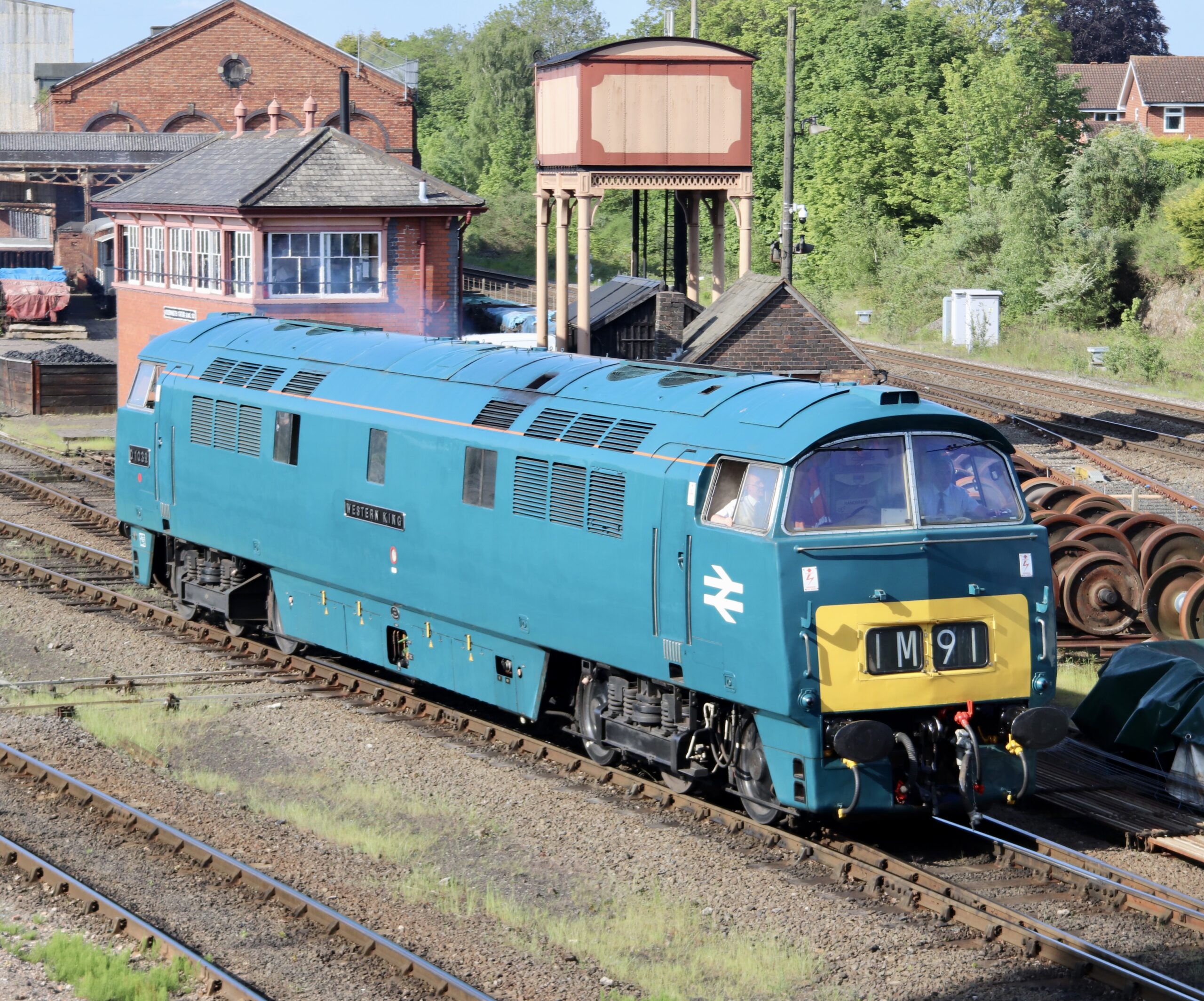
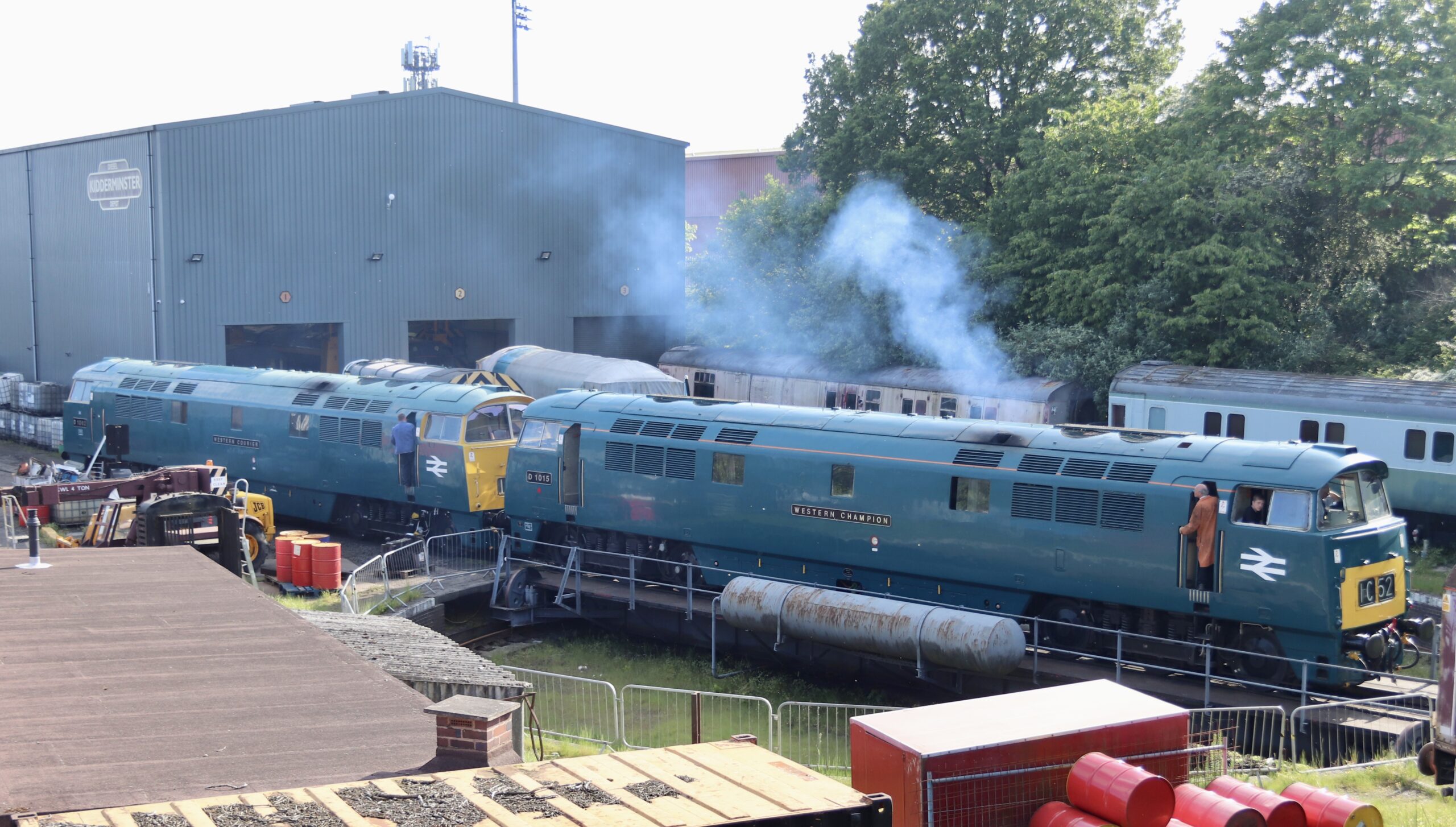
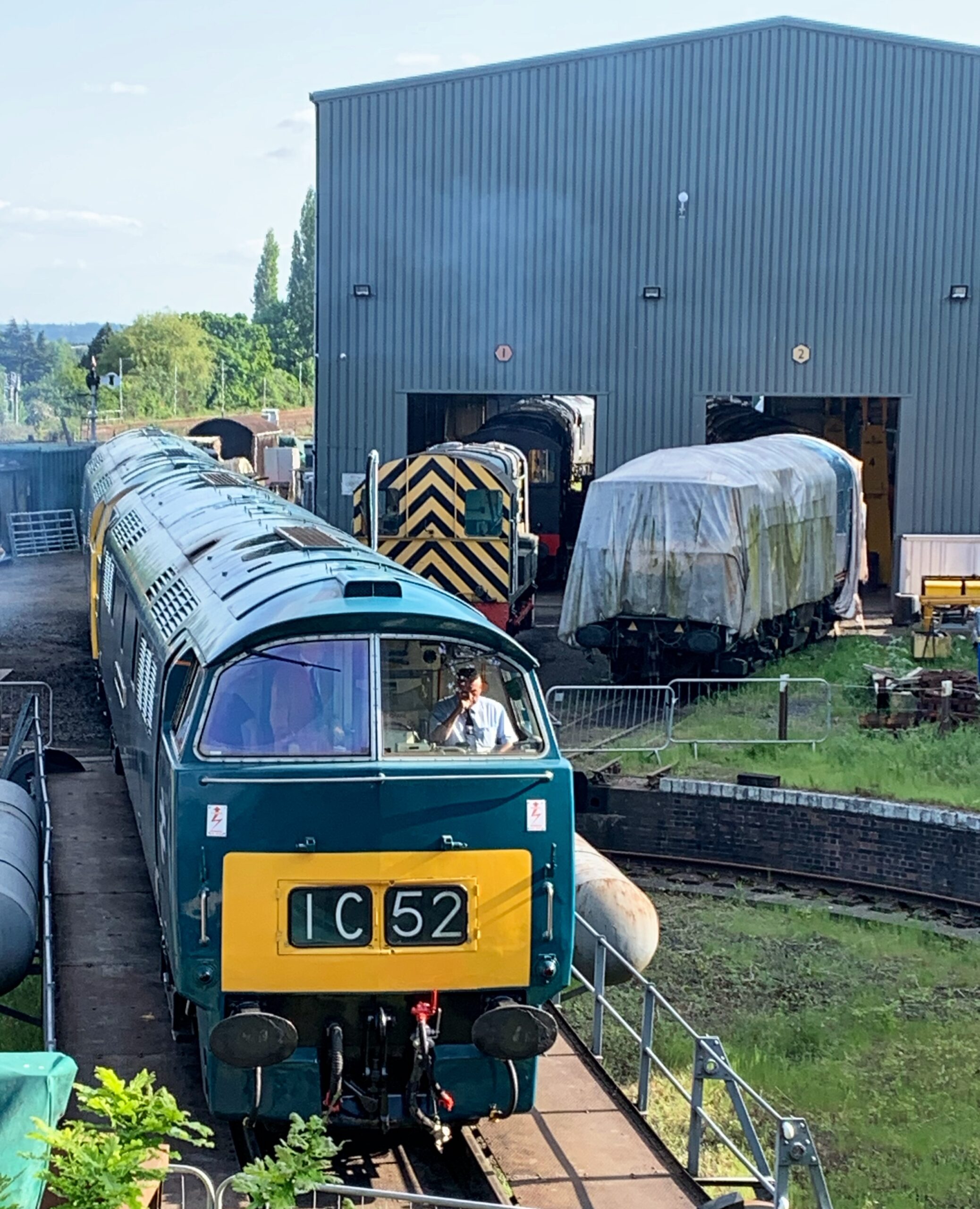
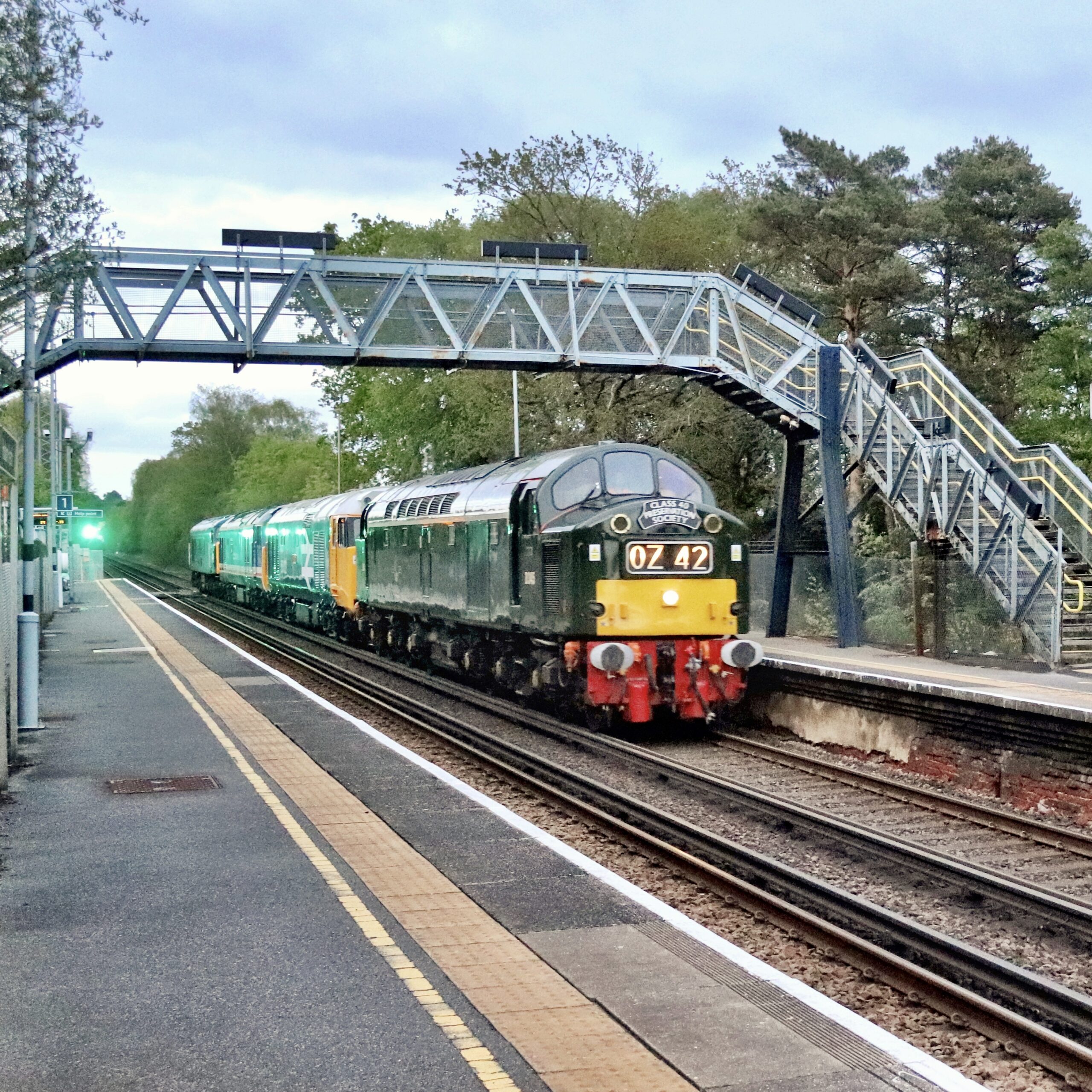
    The Sun sets on Class 52 No. D1015 ‘Western Champion’ as she awaits the start of another day at the Swanage Diesel Gala – 10/05/2024

    April 25th to May 16th 2024

    It’s been a while… where did we get to last time? Ah yes, Class 52 “Western”, the New Measurement Train, engineering trains, Swanage and such like. I think this post may be a case of deja vu as many of these topics appear once again. But first, we had a trip to Derbyshire to attend a wedding via Bridport where we bumped into Ninth Doctor Who actor Christopher Eccleston (outside the toilets, no less). Chris was attending a screening of Ken Loach’s “Kes” (1969) as part of Bridport’s Film Festival 2024 ‘From Page To Screen’ series. It was great to see the film on the “big screen”.

    Christopher Eccleston chats about “Kes” as part of the Bridport Film Festival – 25/04/2024

    Having dropped Yoshi off at his cousins, we headed to Derbyshire for wedding celebrations at the beautiful Buxton Pavilion. We arrived in good time and checked into our hotel which meant we had time for a wander into Buxton before the wedding ceremony.

    I was lucky enough to see a pair of Class 66’s top and tailing across Spring Gardens Viaduct as we looked for a pub to have lunch. I managed to get a shot of No. 66044 operating as tail gunner, but an hour or so later, I was able to see this “Shed” and sister loco No. 66156 continue on their way after reversing at Buxton Up Relief Sidings.

    DB Cargo Class 66 No. 66044 at rest on Spring Gardens Viaduct, Buxton on the rear of 6H52 1305 Download Briggs Sidings to Ashburys SS – 26/04/2024
    Video of DB Cargo Class 66 No.’s 66044 and 66156 working 6H52 1305 Download Briggs Sidings to Ashburys SS at Buxton – 26/04/2024

    Following a wonderful wedding ceremony in the Buxton Spa Botanical Conservatory, as if the day couldn’t have been more fabulous, the bride and groom had arranged for the Buxton Pavilion Gardens Miniature Railway to be in service.

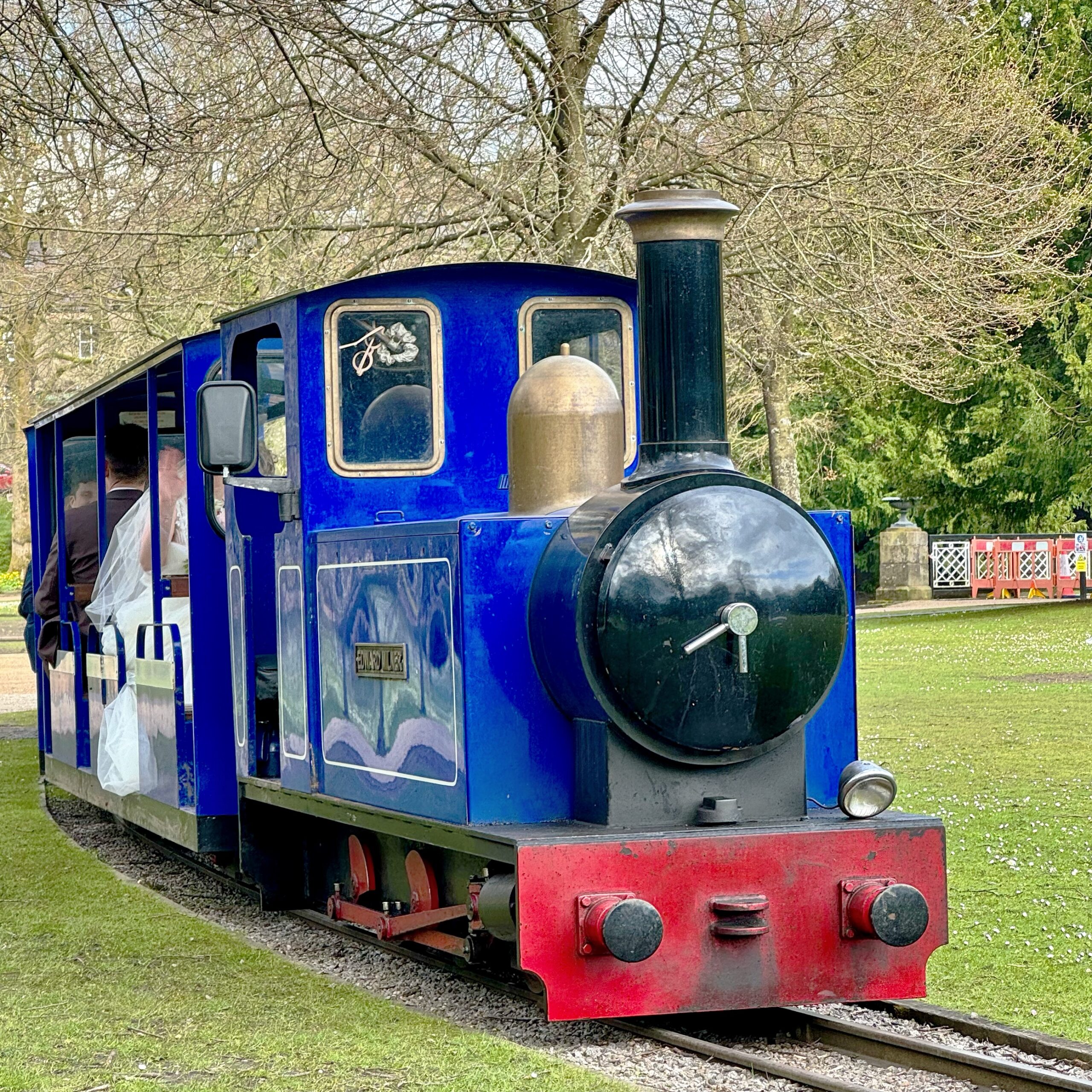
    Steam Outline 0-6-0 diesel-hydraulic No. 2000 ‘Edward Milner’ in Wedding Day Special service on the Buxton Pavilion Gardens Miniature Railway – 26/04/2024
    Steam Outline 0-6-0 diesel-hydraulic No. 2000 ‘Edward Milner’ on the Buxton Pavilion Gardens Miniature Railway – 26/04/2024

    The railway first opened in 1972 as a 10 1/4″ gauge line. Trains were initially hauled by ‘Borough of Buxton’ a Shepperton Metal Products locomotive. In the winter of 1998, the line was regauged to 12.25″ in order to accommodate Alan Keef stock. Steam Outline 0-6-0 diesel-hydraulic No. 2000 ‘Edward Milner’ was built in 2000 and is named after the designer of the park it runs in.

    Video of Steam Outline 0-6-0 diesel-hydraulic No. 2000 ‘Edward Milner’ in Wedding Day Special service on the Buxton Pavilion Gardens Miniature Railway – 26/04/2024

    After an evening of celebration, the following day we travelled north for a stay in Holmfirth via a quick look in at Cemex Peak Forest.
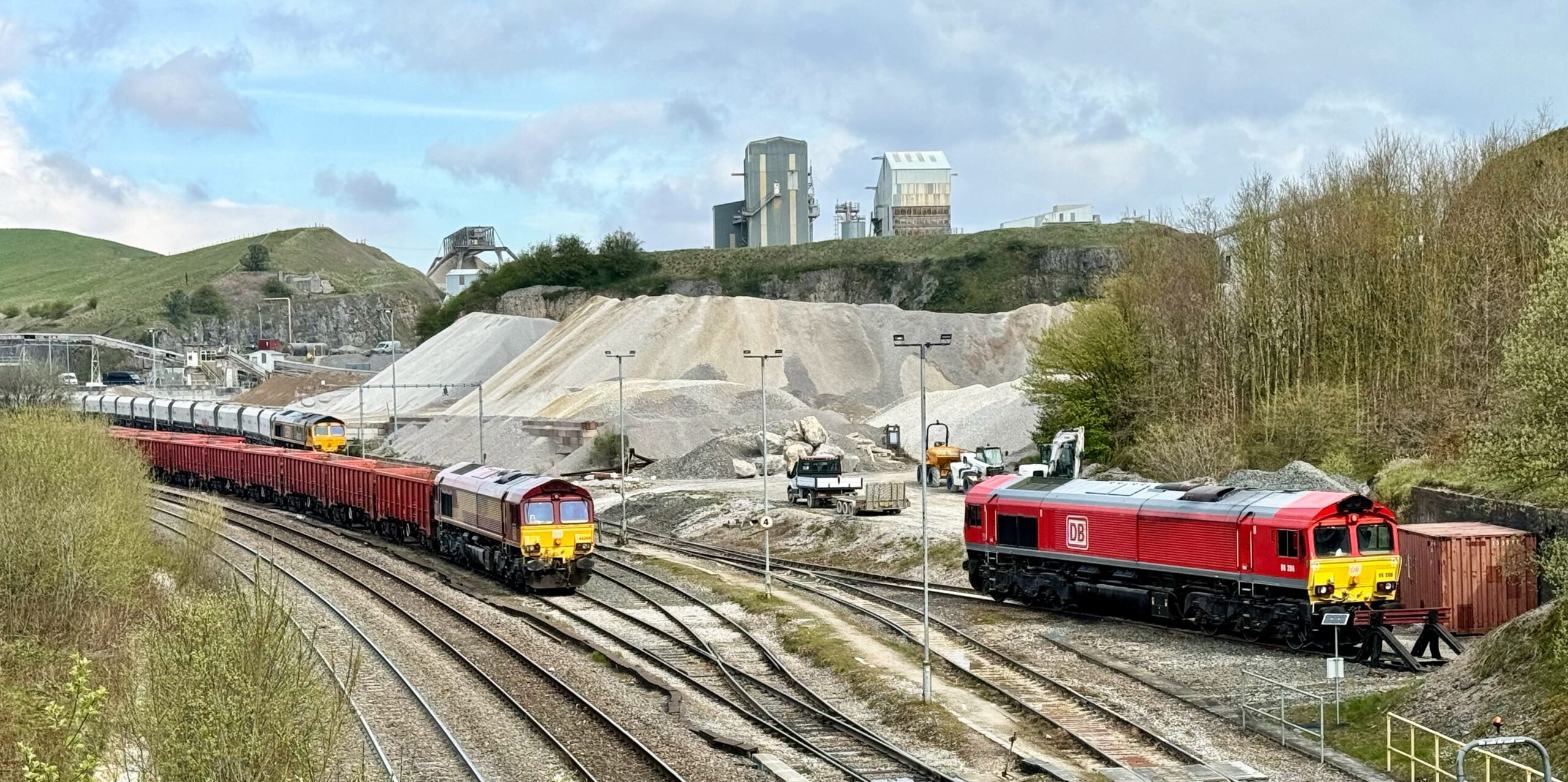
    DB Cargo Class 66 No.’s 66200 (left) and 66206 with GBRf No. 66707 ‘Sir Sam Fay GREAT CENTRAL RAILWAY’ behind at Cemex Peak Forest – 27/04/2024
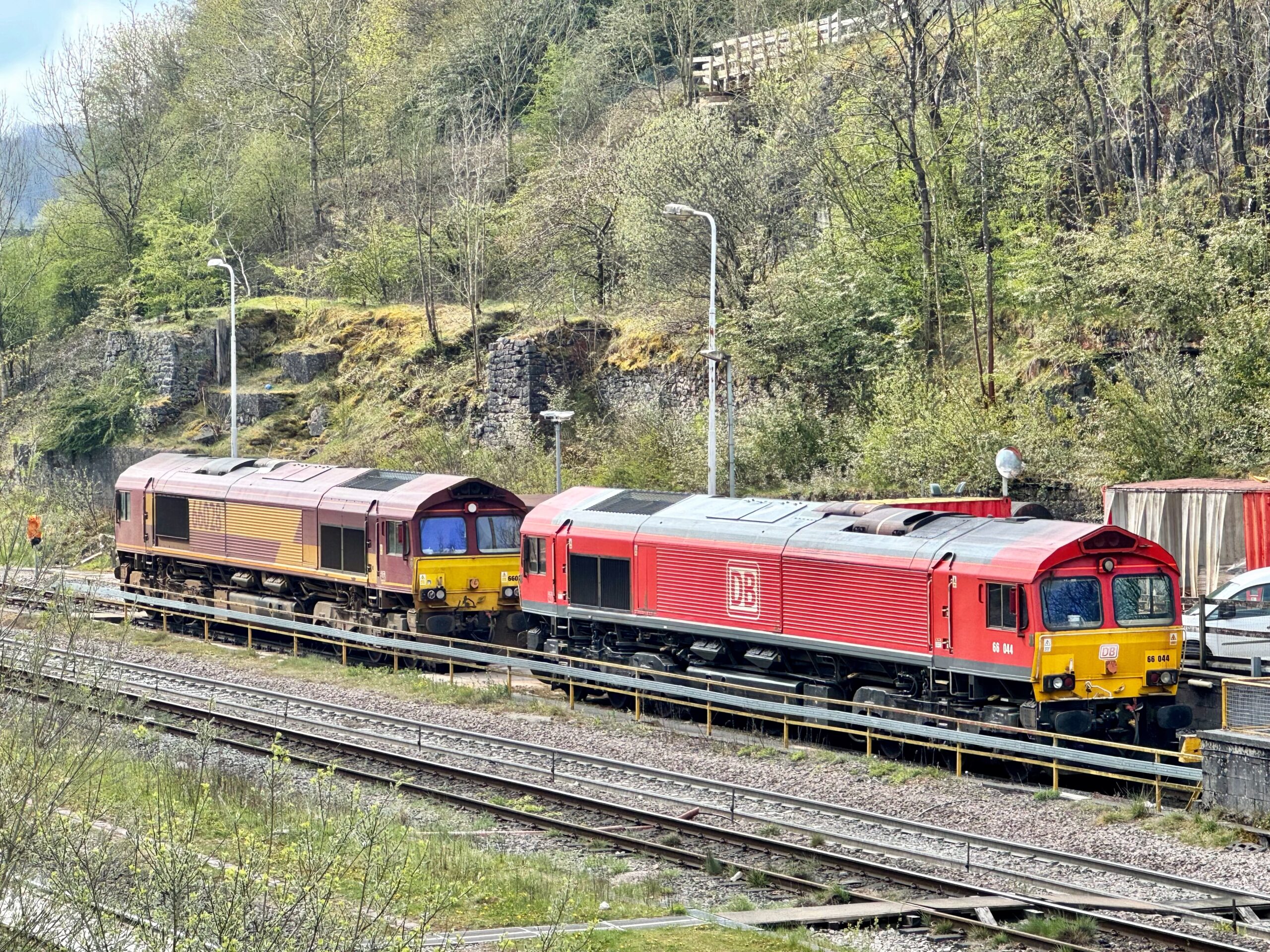
    DB Cargo Class 66 No.’s 66044 and 66028 on the Peak Forest Stabling Point – 27/04/2024
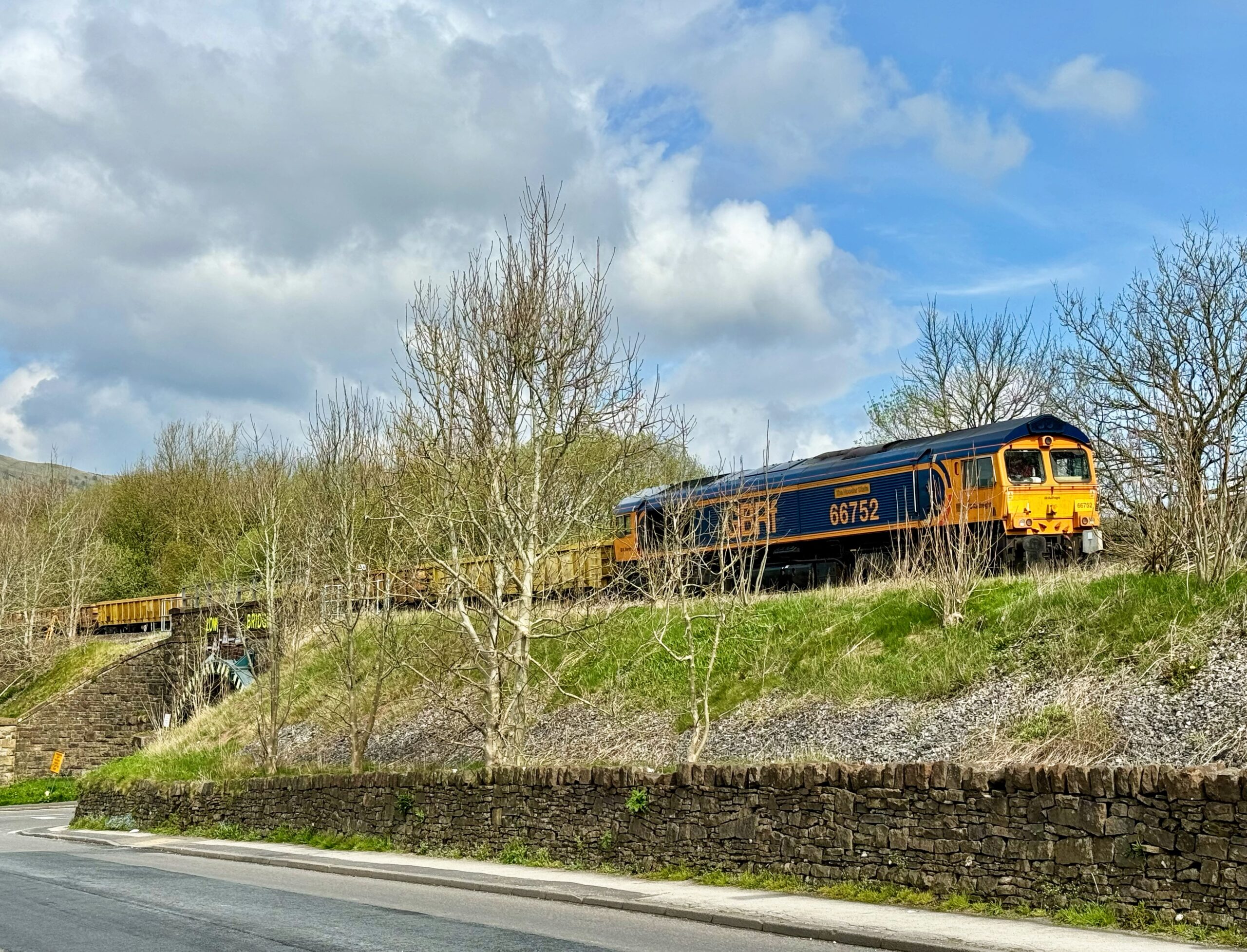
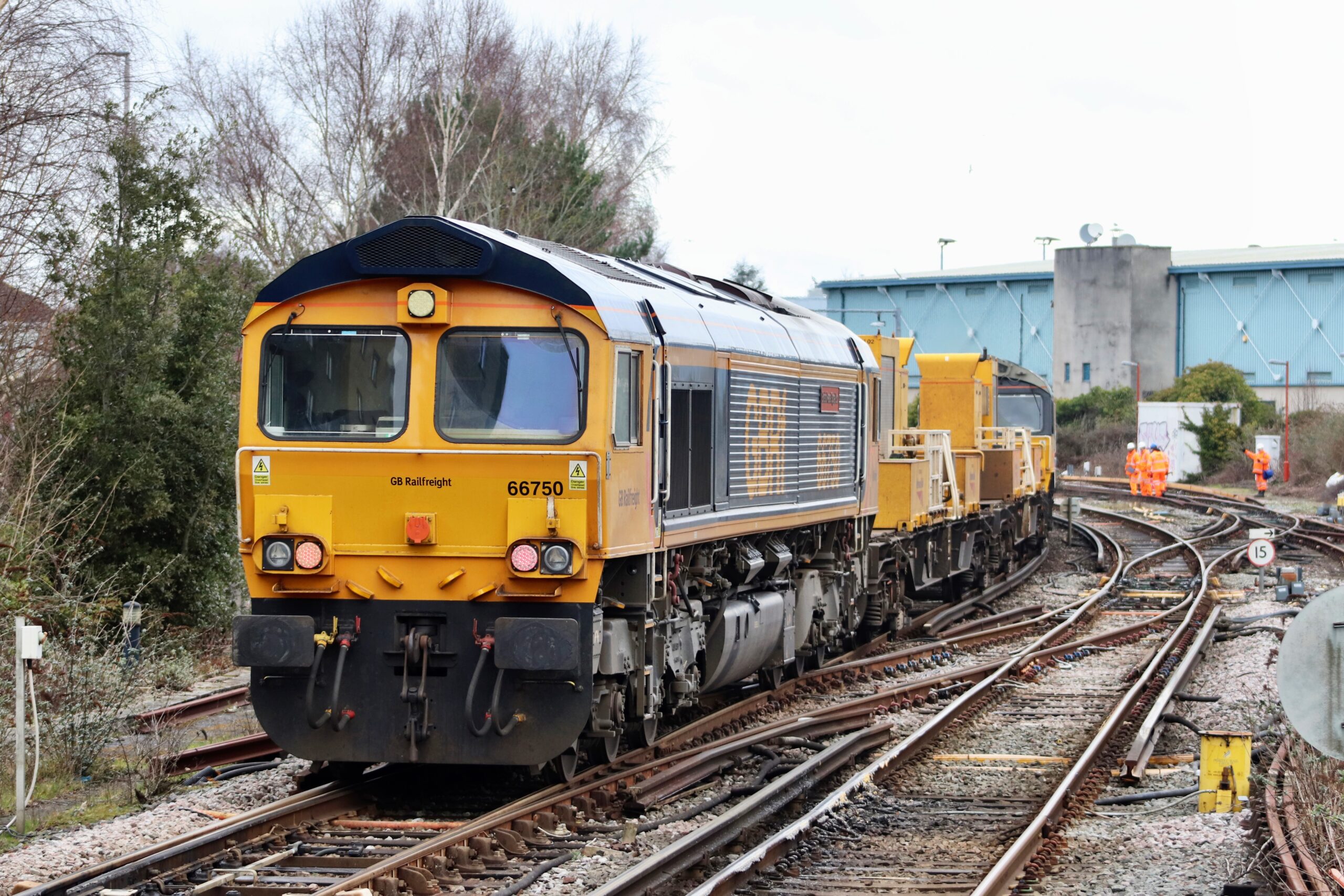
    GBRf Class 66 No. 66752 ‘The Hoosier State’ at the head of an engineers train rests at Chinley – 27/04/2024

    We returned to Dorset, stopping off at National Trust Moseley Old Hall, a Grade II* listed Elizabethan farmhouse situated north of Wolverhampton. The house is notable as one of the hiding places of King Charles II during his escape to France following defeat at the Battle of Worcester in 1651.

    National Trust Moseley Old Hall – 29/04/2024

    Constructed in approximately 1600 by Henry Pitt, few structural changes were made to the hall until around 1870 when the outer walls were replaced by bricks and casements replaced the Elizabethan windows.

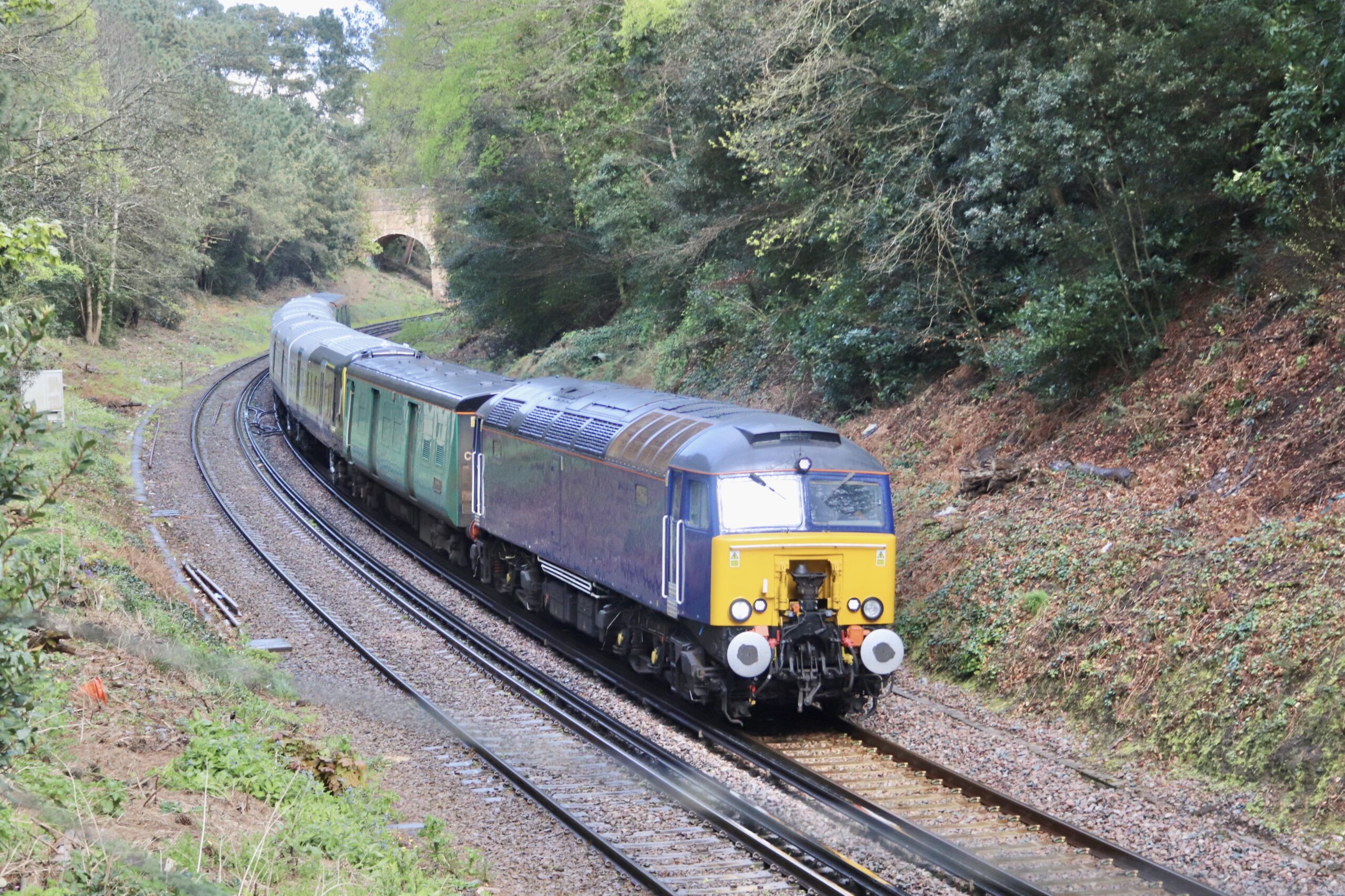
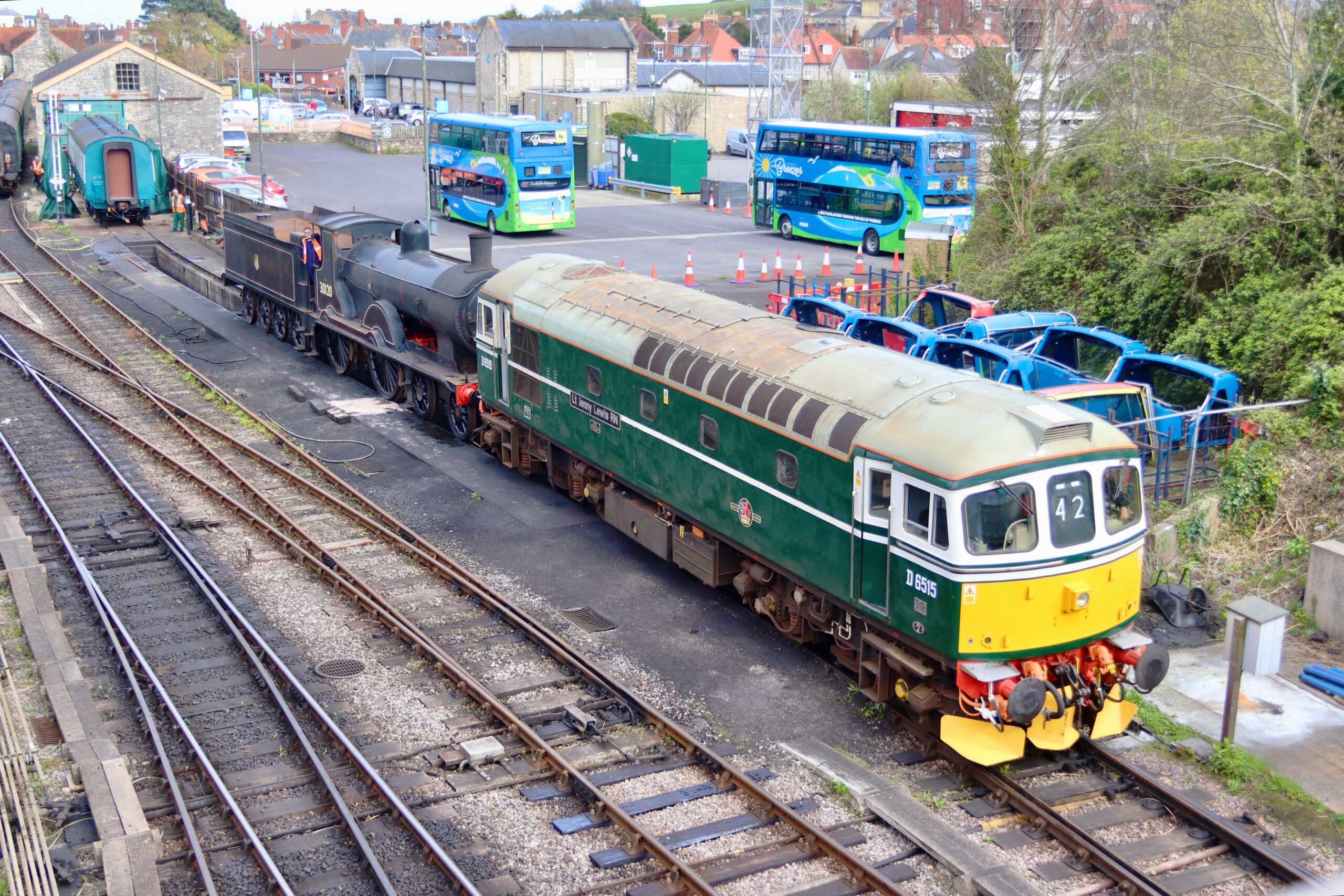
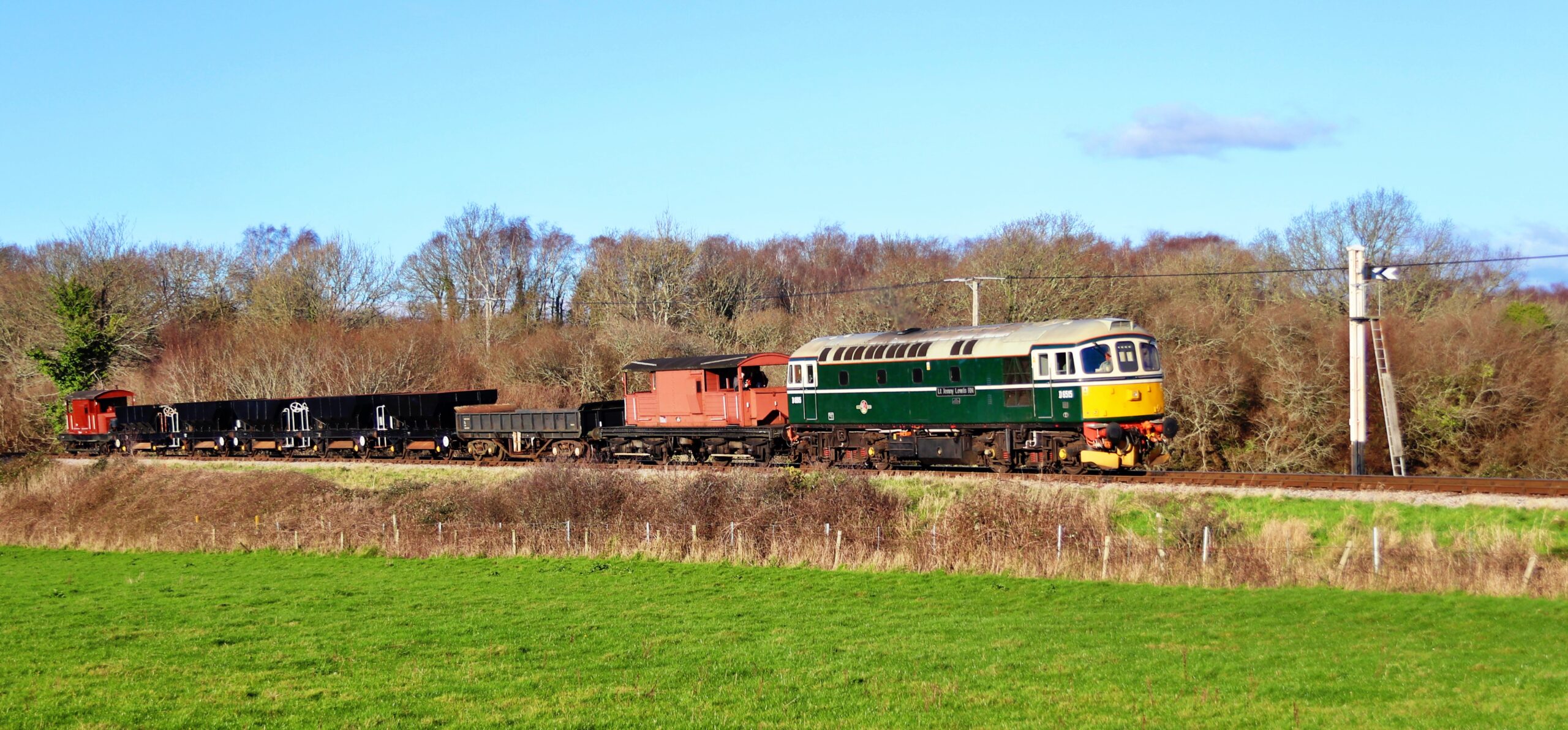
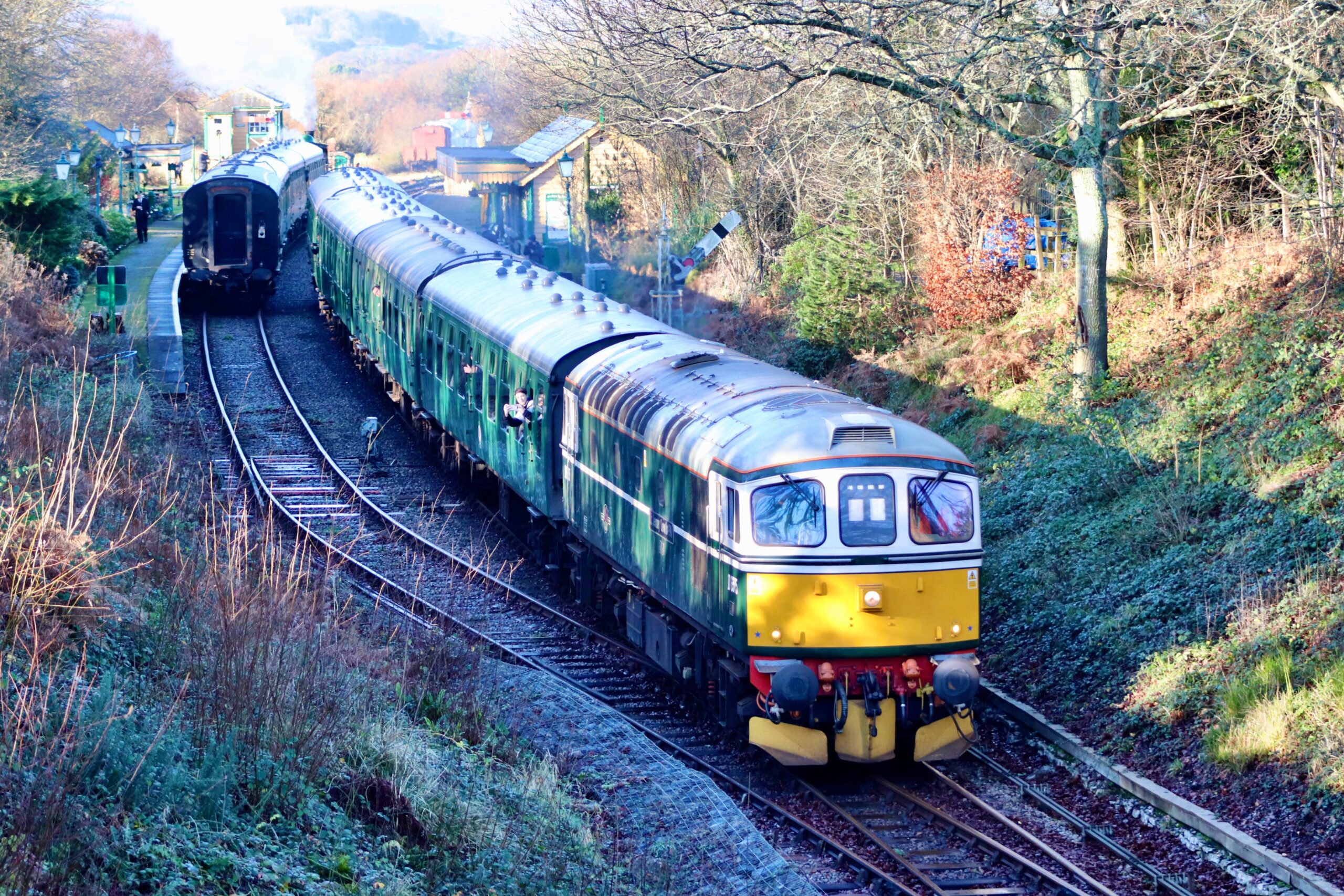
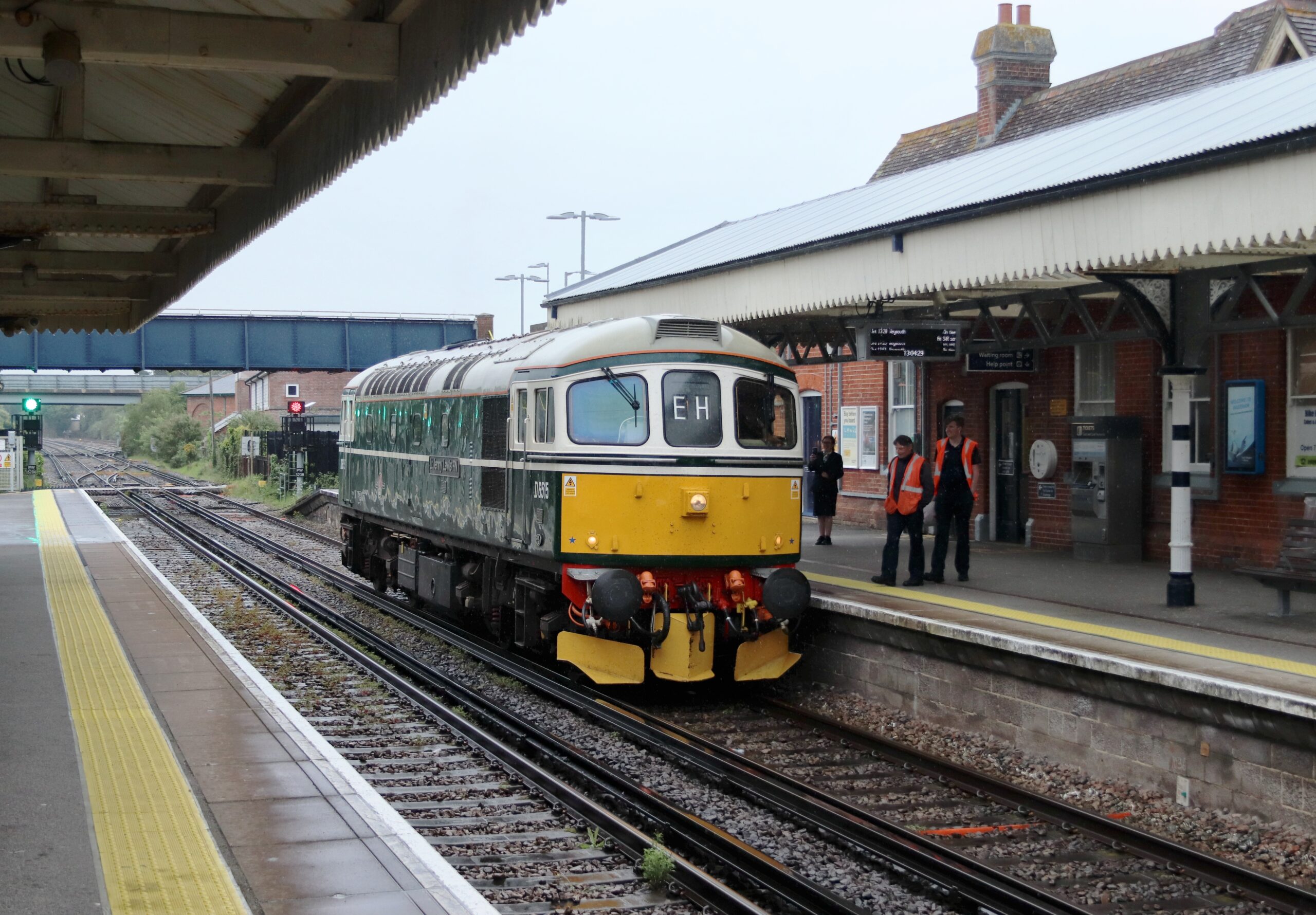
    Tuesday 30th April saw Swanage Railway resident Class 33 No. D6515 (33012) ‘Lt Jenny lewis RN’ working 0Z33 0920 Swanage to Eastleigh Arlington (ZG) in advance of booked railtour duties later in the week for the Branch Line Society (BLS). We saw the “Crompton” working light engine through Hamworthy.
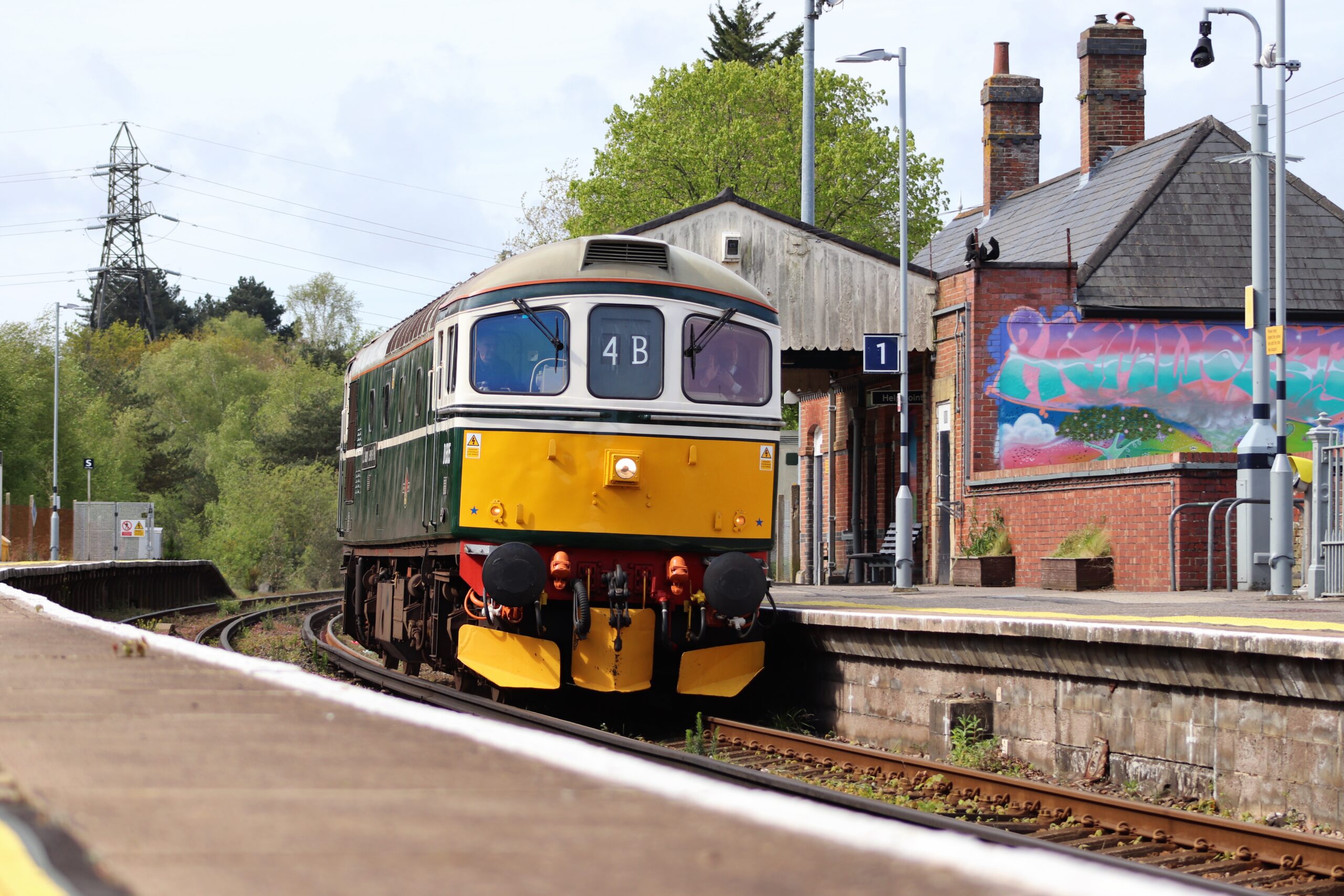
    Class 33 No. D6515 (33012) ‘Lt Jenny lewis RN’ working 0Z33 0920 Swanage to Eastleigh Arlington (ZG) light engine through Hamworthy – 30/04/2024
    Video clip of Class 33 No. D6515 (33012) ‘Lt Jenny lewis RN’ working 0Z33 0920 Swanage to Eastleigh Arlington (ZG)

    Later the same day Bournemouth depot received another newly refurbished South Western Railway (SWR) Class 458 electric multiple unit (EMU) and despatched another to Widnes Transport Tech to enable modification works. Both of these unit drags involved GBRf Class 69 No. 69008 ‘Richard Howe’ running round at Poole.

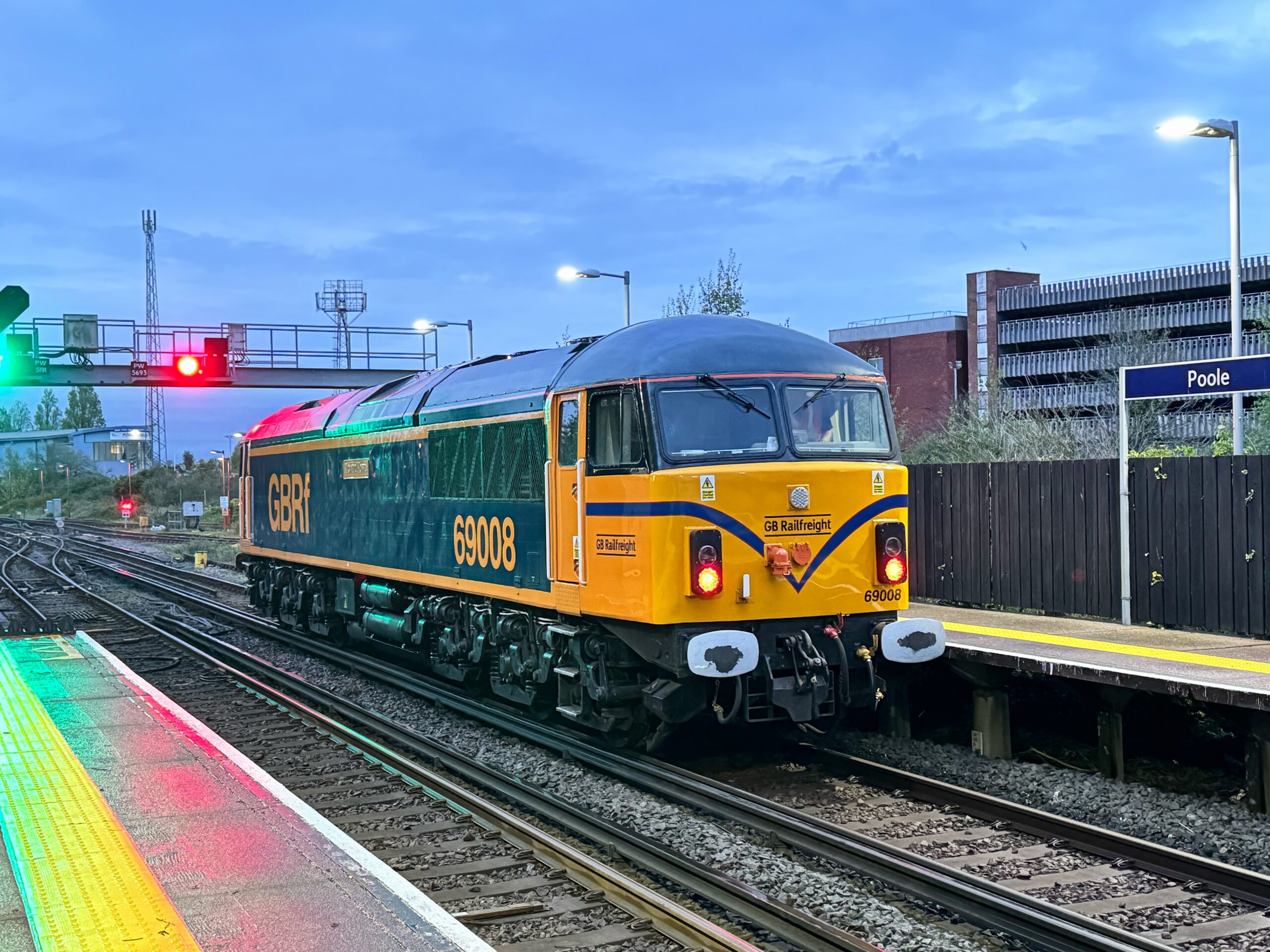
    GBRf Class 69 No. 69008 ‘Richard Howe’ at Poole High Street Level crossing leading SWR Class 458 No. 458401 reporting as 5Q64 1534 Southampton Central to Bournemouth TRSMD – 30/04/2024
    GBRf Class 69 No. 69008 ‘Richard Howe’ at Poole station running round working 5Z66 2018 Bournemouth TRSMD to Eastleigh Yard – 30/04/2024

    458527 5Z66 2018 Bournemouth TRSMD to Eastleigh Yard – 30/04/2024

    Video of GBRf Class 69 No. 69008 ‘Richard Howe’ on Class 458 EMU drags – 30/04/2024

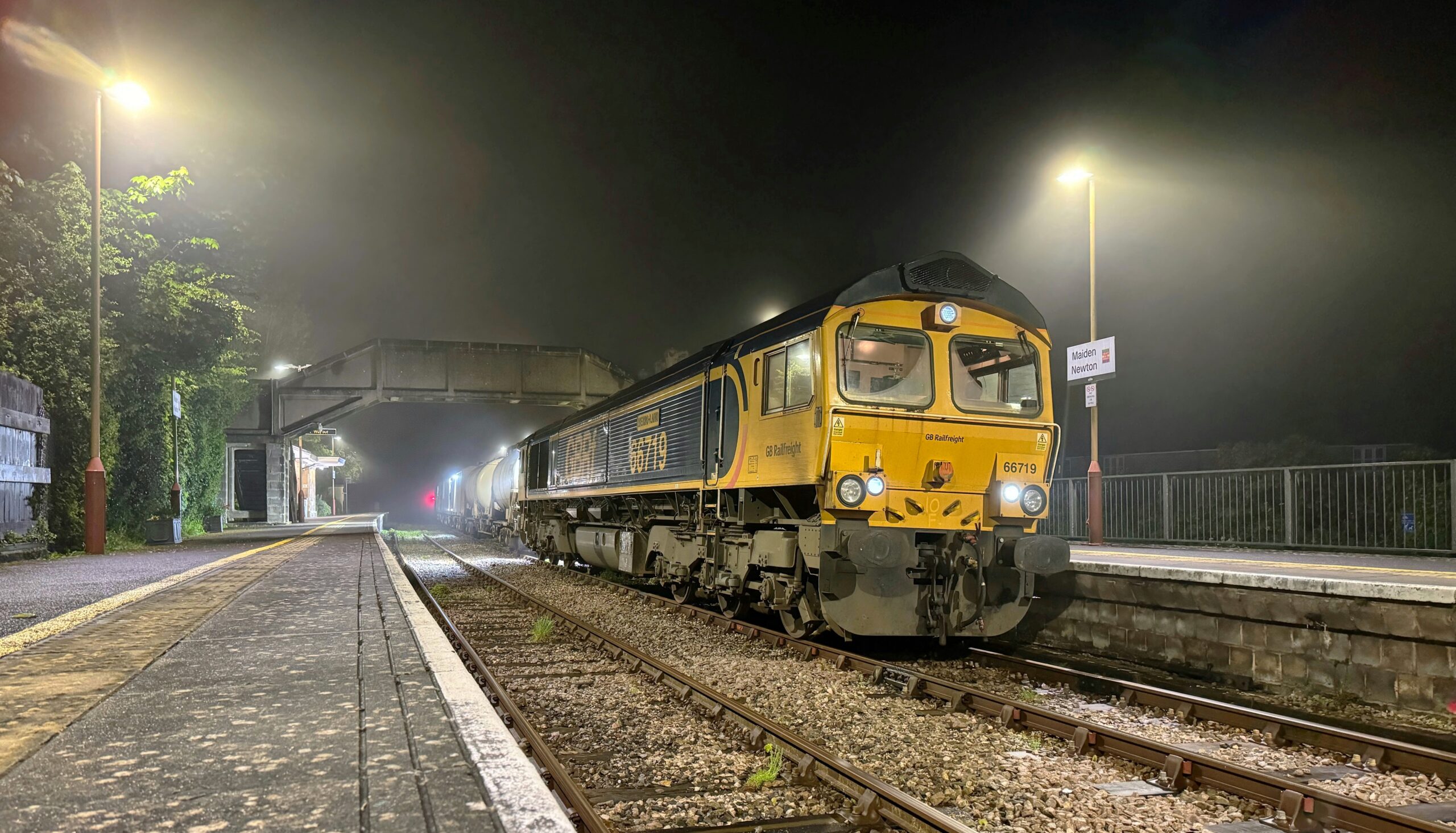
    In the early hours of Wednesday May 1st, I set out for Maiden Newton to see GBRf Class 66 locomotives No.’s 66725 ‘Sunderland’ and 66719 ‘Metro-Land’ working the South West Weedkiller reporting as 3Q98 2309 Exeter Riverside New Yard to Exeter Riverside New Yard. I really enjoyed this little excursion, the train ran more or less on time and as it had to stop at Maiden Newton where the driver needed to pick up a token to allow onward travel through single line sections of track, I had ample opportunity to take photographs as well as recording video.
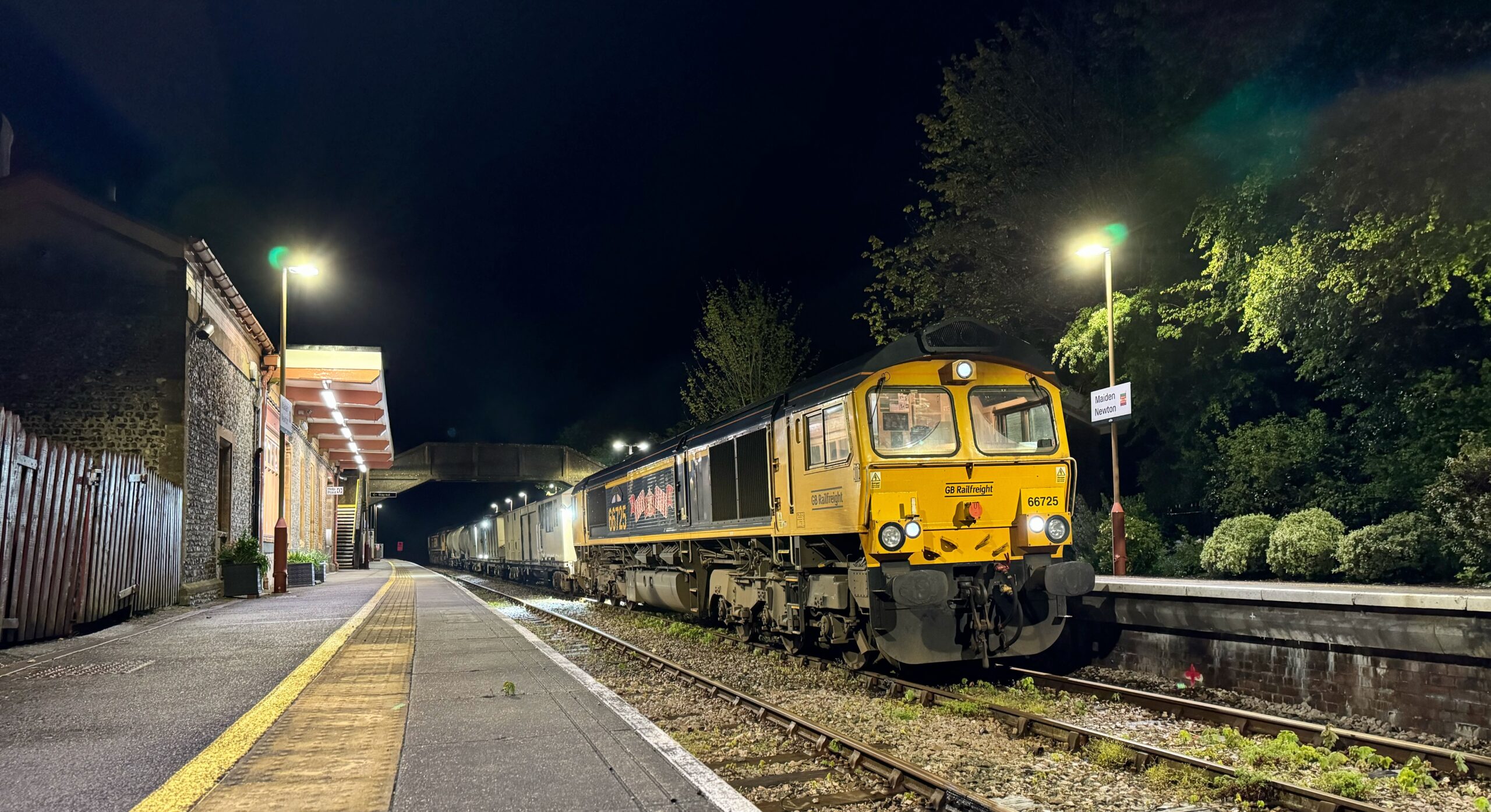
    GBRf Class 66 No. 66725 ‘Sunderland’ at Maiden Newton leading on the outward leg of the South West Weed killer 3Q98 2309 Exeter Riverside NY to Exeter Riverside NY – 01/05/2024
    GBRf Class 66 No. 66719 ‘Metro-Land’ pauses at Maiden Newton during weed killer duties having reversed at Dorchester Junction working 3Q98 2309 Exeter Riverside NY to Exeter Riverside NY – 01/05/2024
    Video of GBRf Class 66 locomotives on the South West Weedkiller at Maiden Newton – 01/05/2024

    As our regular reader will know, we enjoy walking along old railway lines, and on Thursday 2nd May, we revisited the Rodwell Trail in Weymouth, the former trackbed of the line from Weymouth to Portland.

    Yoshi on the Rodwell Trail, with the Isle of Portland in the background – 02/05/2023

    For The Record: the North Dorset New Measurement Train passed through Gillingham and Sherborne with High Speed Train Class 43 power cars No.’s 43062 and 43274 reporting as 1Q23 0556 Reading to Salisbury via Exeter New Yard on 2nd May 2024. As we were walking along the old railway track bed in Weymouth, we missed this working, but friend of this blog, @smithy.377 kindly shared the video of the same consist running through Highbridge working 1Z18 1539 Paignton to Taunton the following day.

    New Measurement Train at Highbridge, courtesy of @smithy.377 – 03/05/2024

    On the weekend, the Saturday involved a drive to Exeter to see one of those BLS tours involving Class 33 No. D6515 we mentioned earlier. The Star Wars themed “May the Fourth be With You” charter originated and finished at Eastleigh running via Portsmouth, Westbury, Exeter, Yeovil, London Waterloo. Advertised as utilising the London Underground Class 438 4TC stock hauled by the preserved 71A Locomotive Group’s Class 33 and a GBRf Class 73/1 the reported addition of two Class 59 freight locomotives to pilot the train between Westbury and Exeter was too good to miss. Add to this the possibility of photographing two other rail tours in the West Country and a grand day out was in store. On the day we were surprised to learn that in fact three Class 59’s were being added to the train, meaning there were more locomotives than coaches!
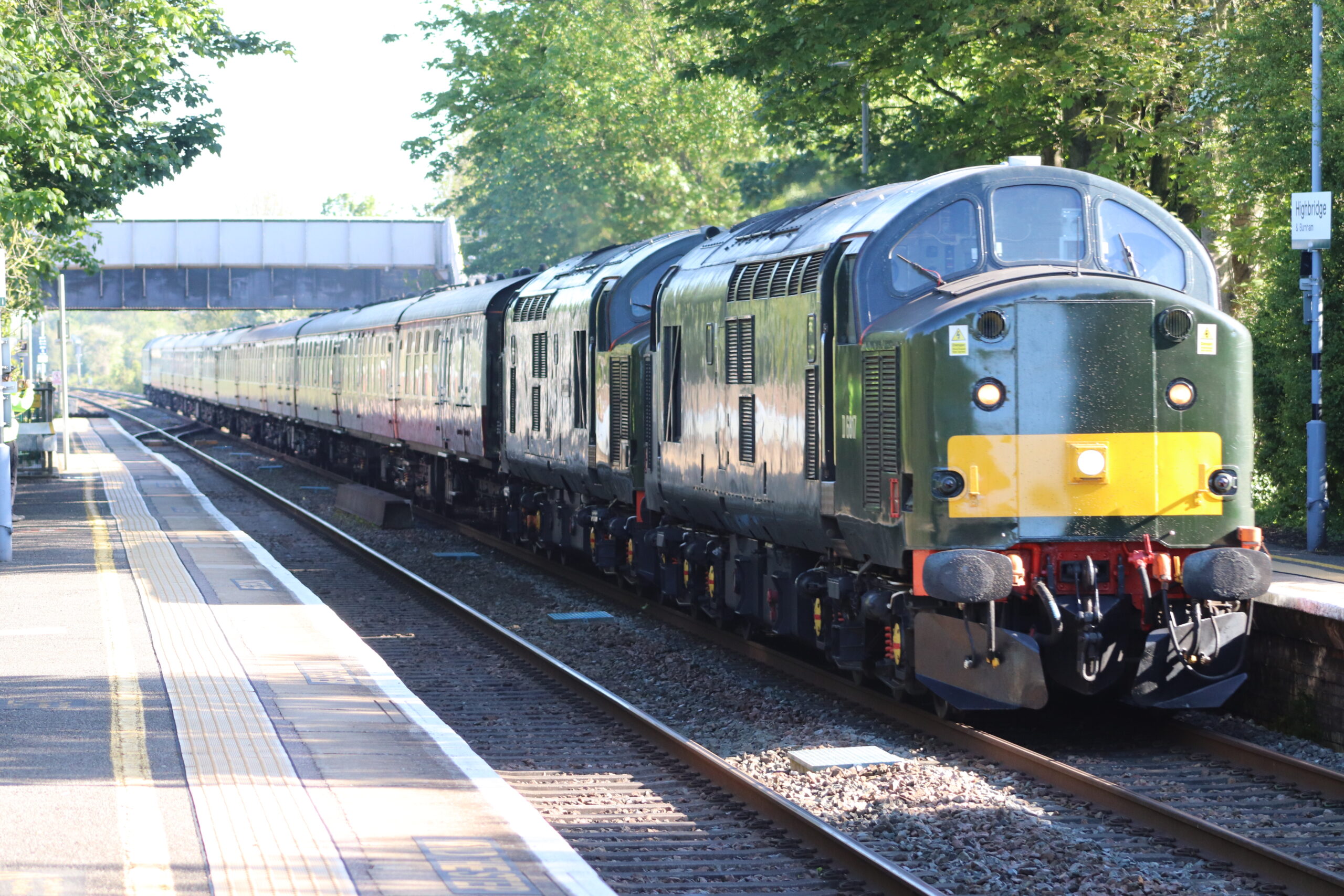
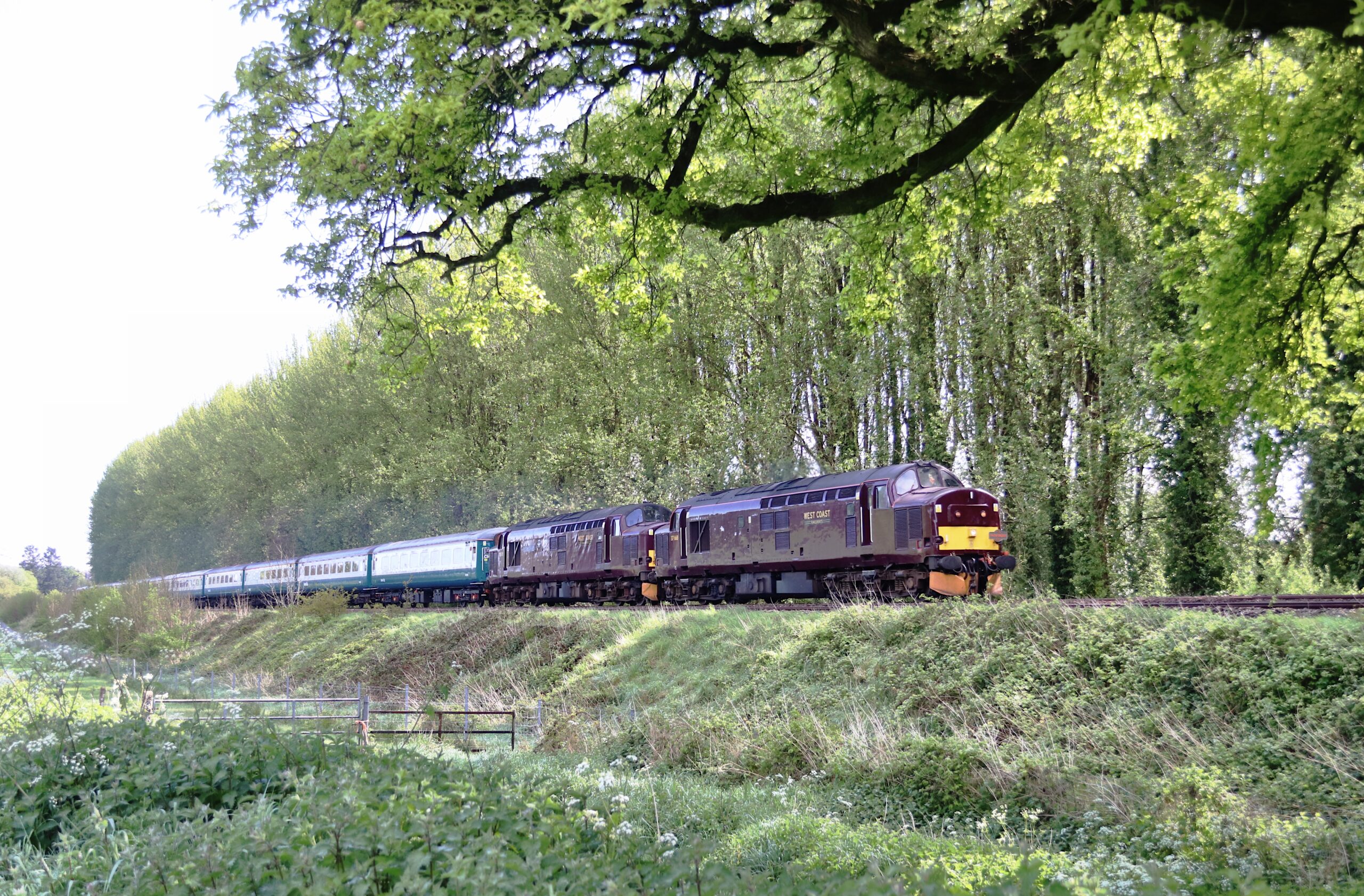
    Class 37 No.’s 37518 and 37668 passing Highbridge with Saphos Trains “English Riviera Express” 1Z36 0424 Nantwich to Kingswear – 04/05/2024
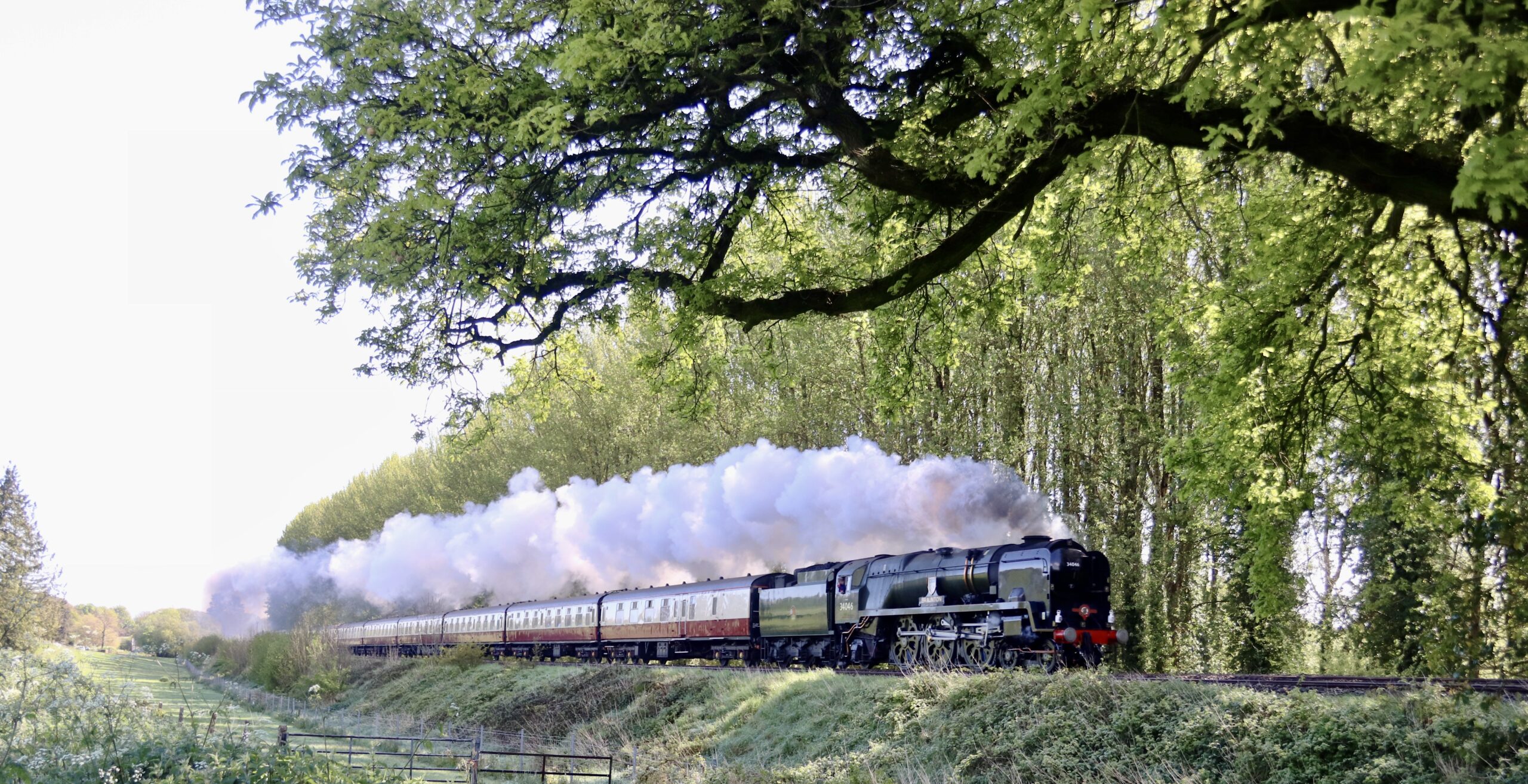
    Steam traction took over the “English Riviera Express” 1Z36 0424 Nantwich to Kingswear at Taunton. Southern Railway West Country Class 4-6-2 No. 34046 ‘Braunton’ prepares to storm Whiteball – 04/05/2024
    LSL owned Class 47 No. 47828 seen at the rear of 1Z36 0424 Nantwich to Kingswear – 04/05/2024
    Class 37 No.’s 37518 and 37668 at Whiteball with Pathfinder Tours “The Spring Cornish Explorer” 1Z65 0553 Dorridge to Penznce – 04/05/2024
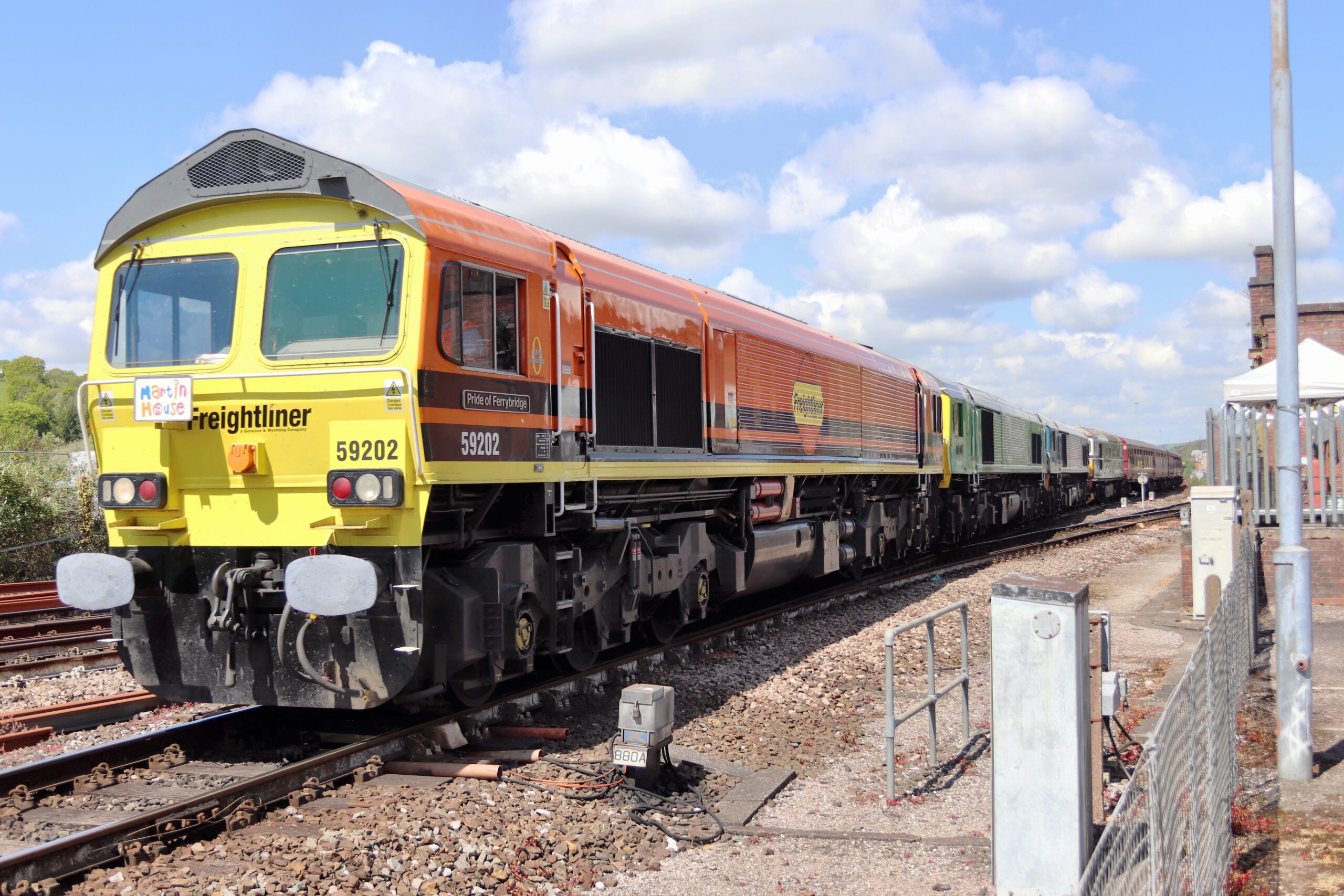
    Featuring five engines, including three different liveried Class 59 Locomotives, the Branch Line Society’s “May the Fourth be With You” charter featured No.’s 59202 ‘Alan Meadows Taylor’, 59101 ‘Village of Whatley’, 59104 ‘Village of Great Elm’ with No. D6515 (33012) ‘Lt Jenny Lewis RN’ on the approach to Exeter St. Davids. No. 73136 ‘Mhairi’ was on the rear of the London Underground 4tc set. The reporting number for this section of the rail tour was 1Z73 0648 Eastleigh to Exeter Central – 04/05/2024
    Freightliner Class 59 No.’s 59202 ‘Alan Meadows Taylor’, 59101 ‘Village of Whatley’, 59104 ‘Village of Great Elm’ with No. D6515 (33012) ‘Lt Jenny Lewis RN’ and No. 73136 ‘Mhairi’ (at the rear) bring the LU 4tc set into Exeter – 04/05/2024
    GB Railfreight Class 73 No. 73136 ‘Mhairi’ on the rear of the BLS “May the Fourth be With You” charter at Exeter St. Davids – 04/05/2024
    After piloting c into Exeter Central the three Class 59’s departed 59104 ‘Village of Great Elm’, 59101 ‘Village of Whatley’, 59202 ‘Alan Meadows Taylor’ worked back to Westbury as 0Z73 1359 Exeter Central to Westbury Tarmac BY – 04/05/2024
    Now sole leading engine on the BLS tour, Class 33 No. No. D6515 (33012) ‘Lt Jenny Lewis RN’ departs Exeter Central on the next leg 1Z33 1440 Exeter Central to London Waterloo – 04/05/2024
    We also caught the Class 33 No. D6515 (33012) ‘Lt Jenny Lewis RN’ hauling the BLS charter “May the Fourth be With You” through Sherborne – 04/05/2024
    Video of BLS charter “May the Fourth be With You” and other trains – 04/05/2024

    The first Dorset Hot Air Balloon & Music Festival caught our attention on Sunday 5th May. Having read about traffic issues getting into the event on the Saturday and other largely negative reviews online, it was with some trepidation that we set off for Dorchester. We sailed into the car park with no problems, save the need for careful driving on a very muddy field. The music was provided by tribute acts to the likes of Neil Diamond, Ed Sheeran and Jess Glynne while a fun fair took up a large part the main arena. Unfortunately for visitors hoping to see a flurry of hot air balloons taking to the skies, weather conditions meant we were only able to witness three balloons lifting off. But they were a fine sight to behold all the same, and a very relaxing mode of transport to watch. I think there were some valid criticisms about the event organisation, but some were also unfairly exaggerated. Nevertheless, if suggestions are taken on board and improvements made, I look forward to this being an annual event in the Dorset calendar. The organisers can not, of course, be held responsible for the weather conditions!
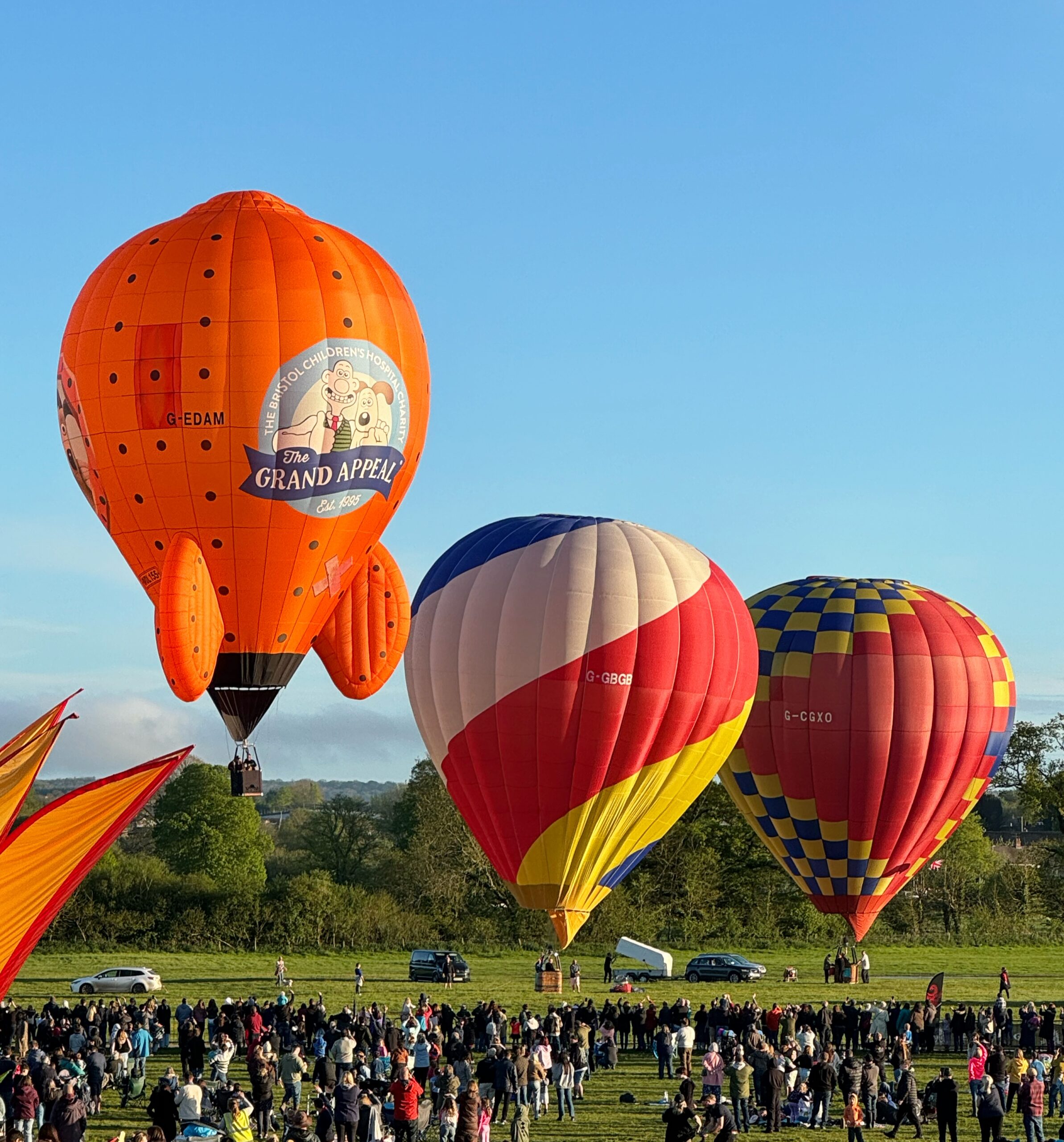
    Weather conditions on the Sunday of the Dorset Hot Air Balloon & Music Festival meant only experienced balloonists could take to the air. The Wallace & Gromit balloon was a favourite! – 05/05/2024
    Wallace & Gromit head up into the skies – 05/05/2024

    The dispute between the ASLEF union and train operating companies continue and the 7th May saw SWR drivers calling a strike day.
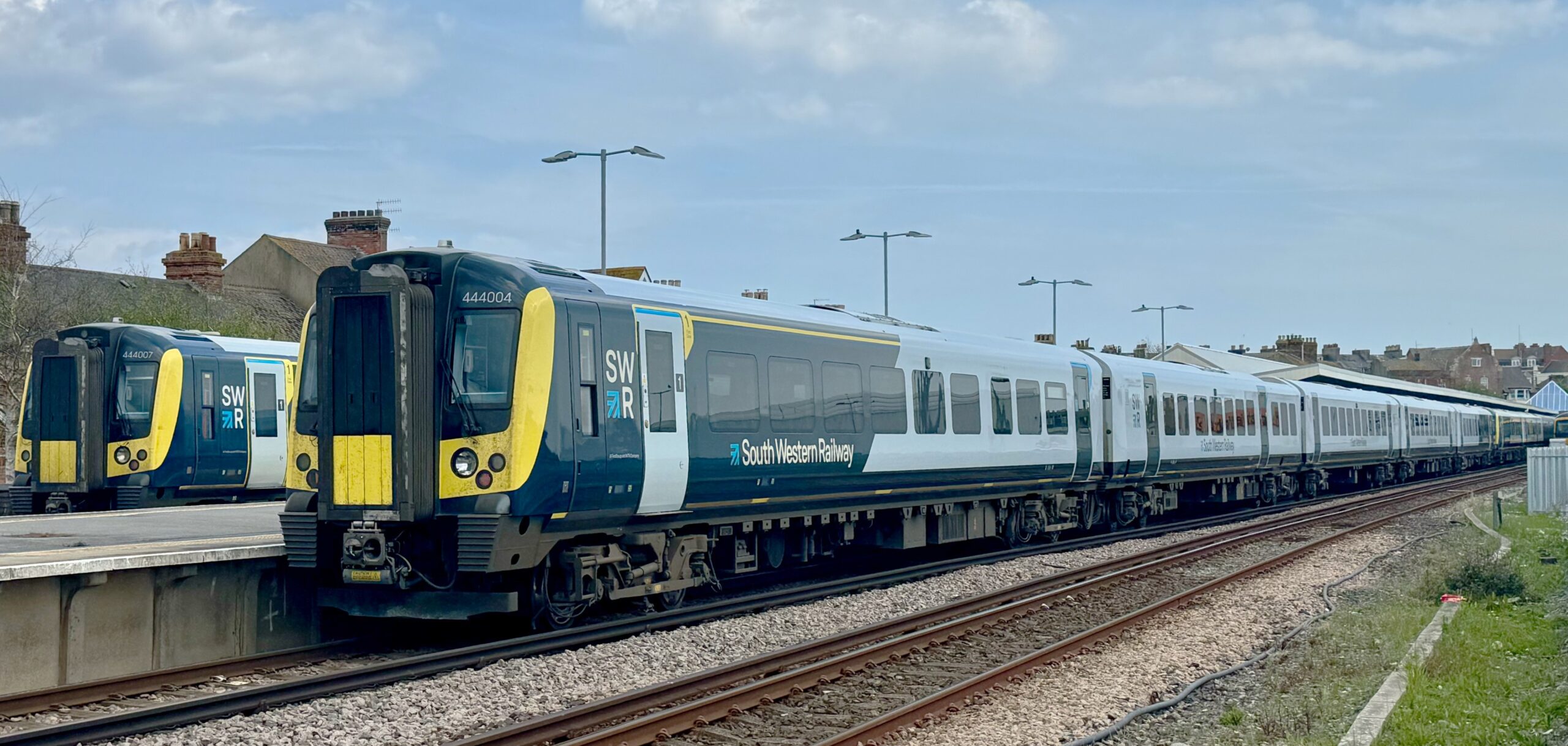
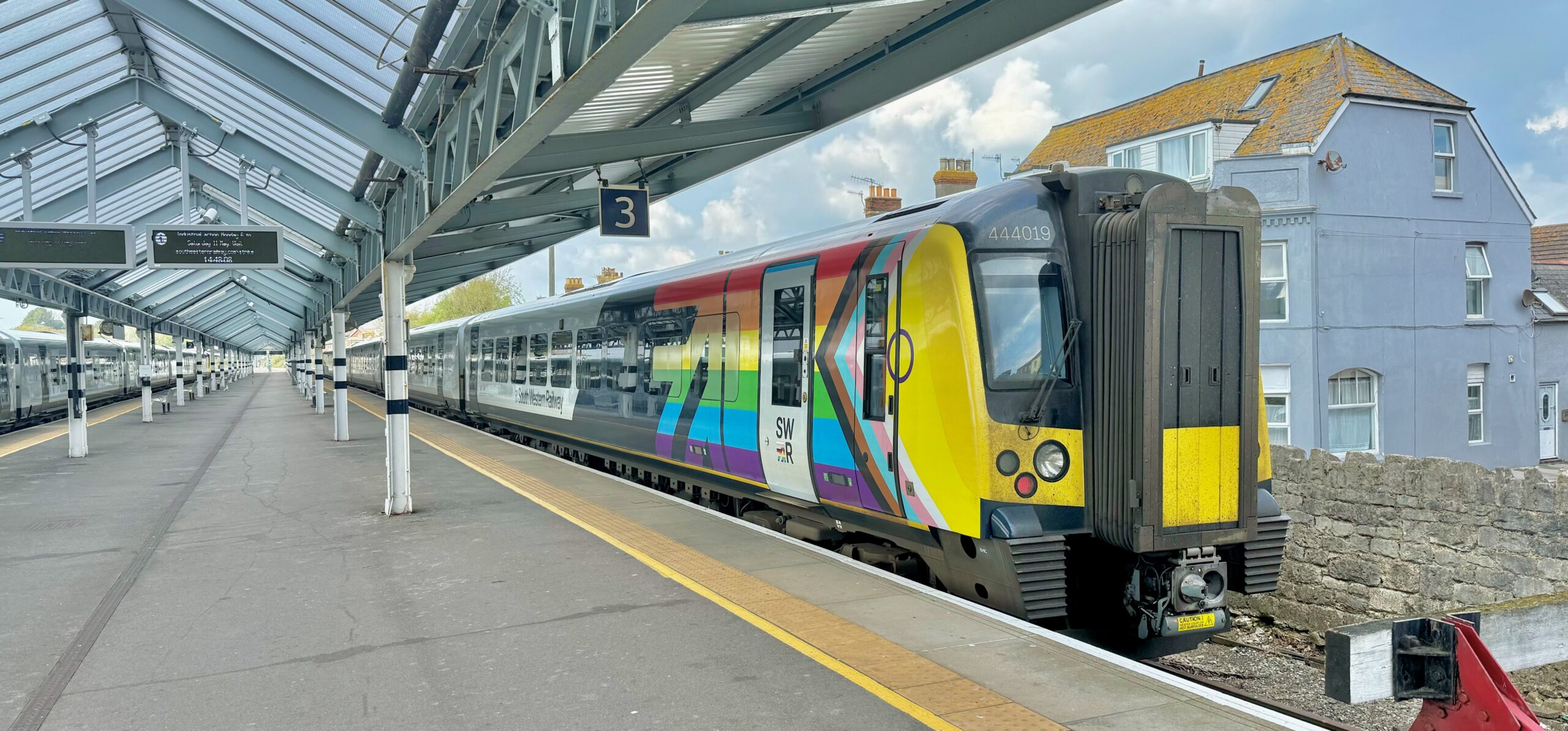
    All stop at Weymouth on the South Western Railway drivers strike day. SWR Class 444 No.’s 444004 and 444007 stand idle in Weymouth – 07/05/2024
    Celebrity Pride liveried SWR Class 444 No. 444019 in platform 3 at Weymouth – 07/05/2024

    Although SWR drivers were on strike, this did not affect drivers from the freight companies working. DB Cargo Class 66 No.’s 66148 ‘Maritime Intermodal Seven’ and 66025 worked engineers train 6N65 2140 Eastleigh East Yard to Moreton. We videoed the train passing through Poole.
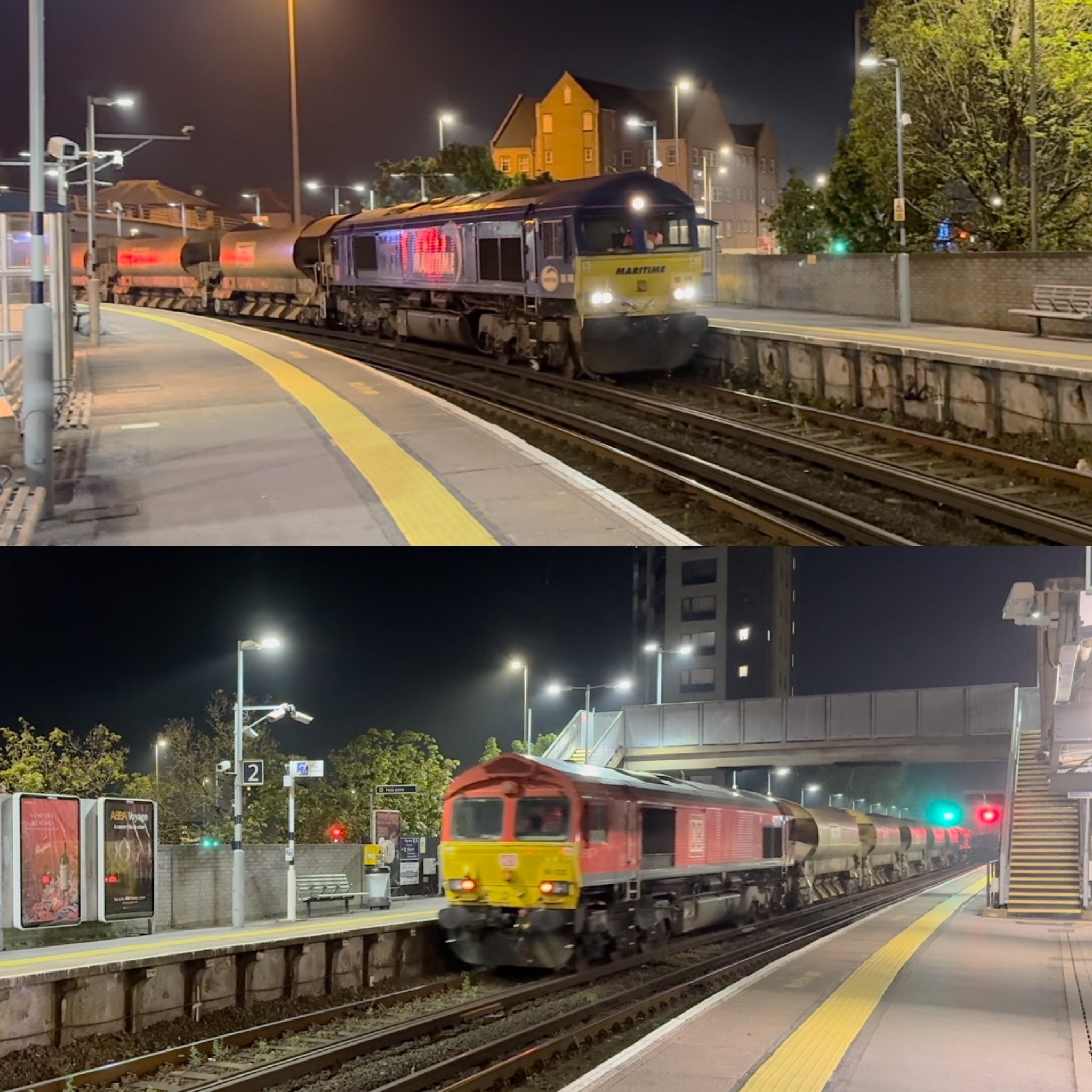
    Video screenshot of DB Cargo Class 66 No.’s 66148 ‘Maritime Intermodal Seven’ and 66025 working 6N65 2140 Eastleigh East Yard to Moreton through Poole – 07/05/2024
    Video of DB Cargo working 6N65 2140 Eastleigh East Yard to Moreton – 07/05/2024

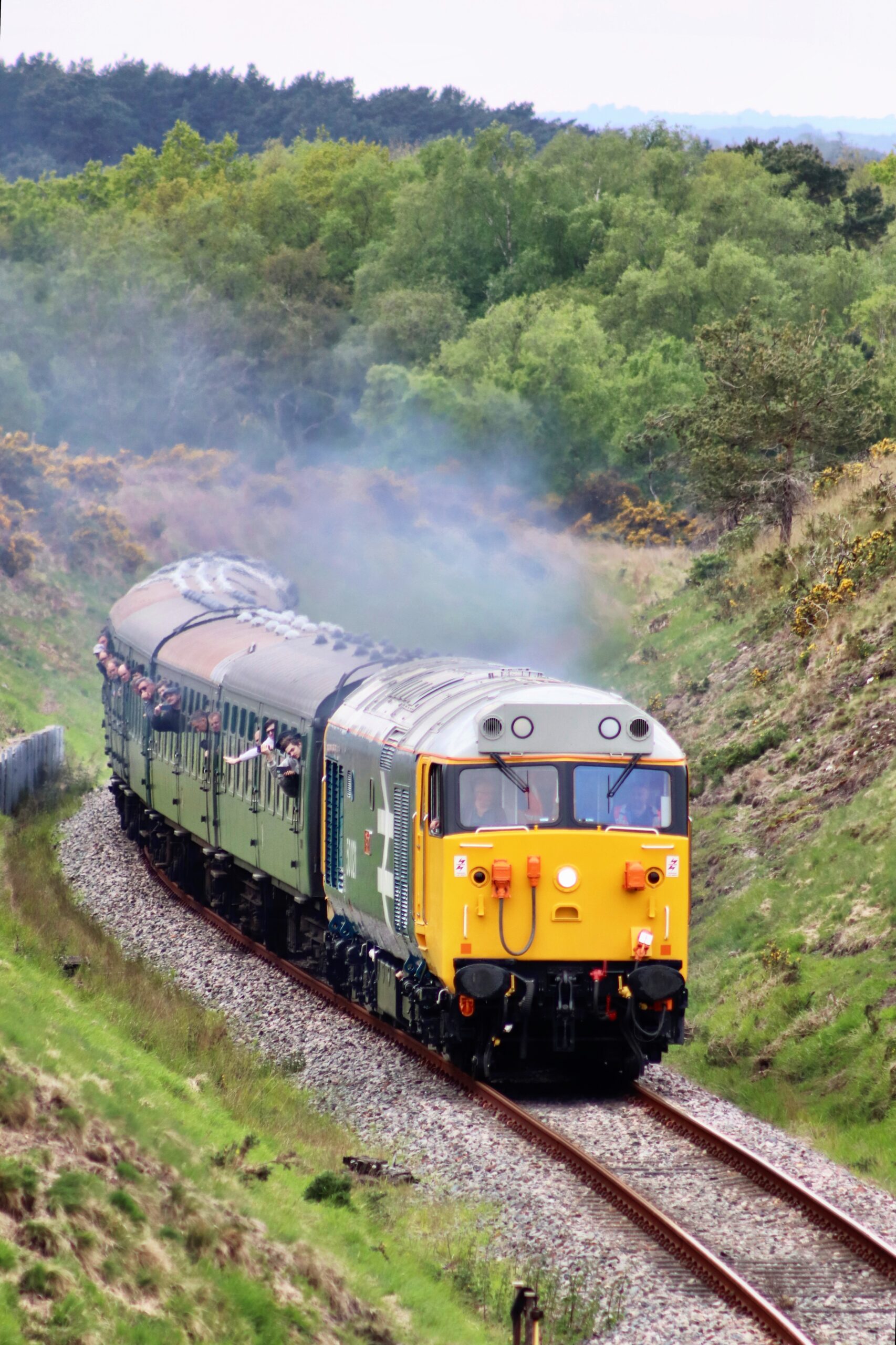
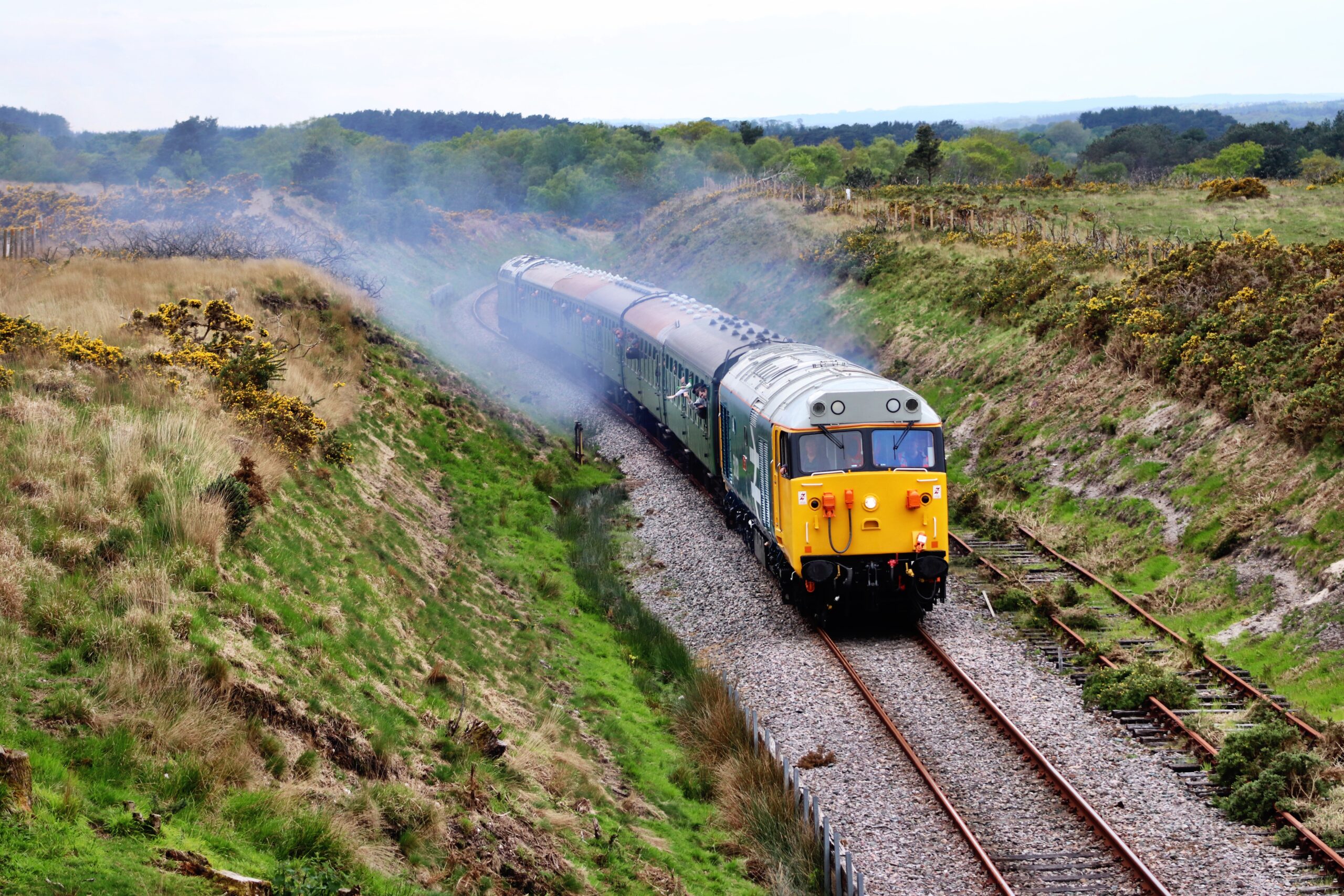
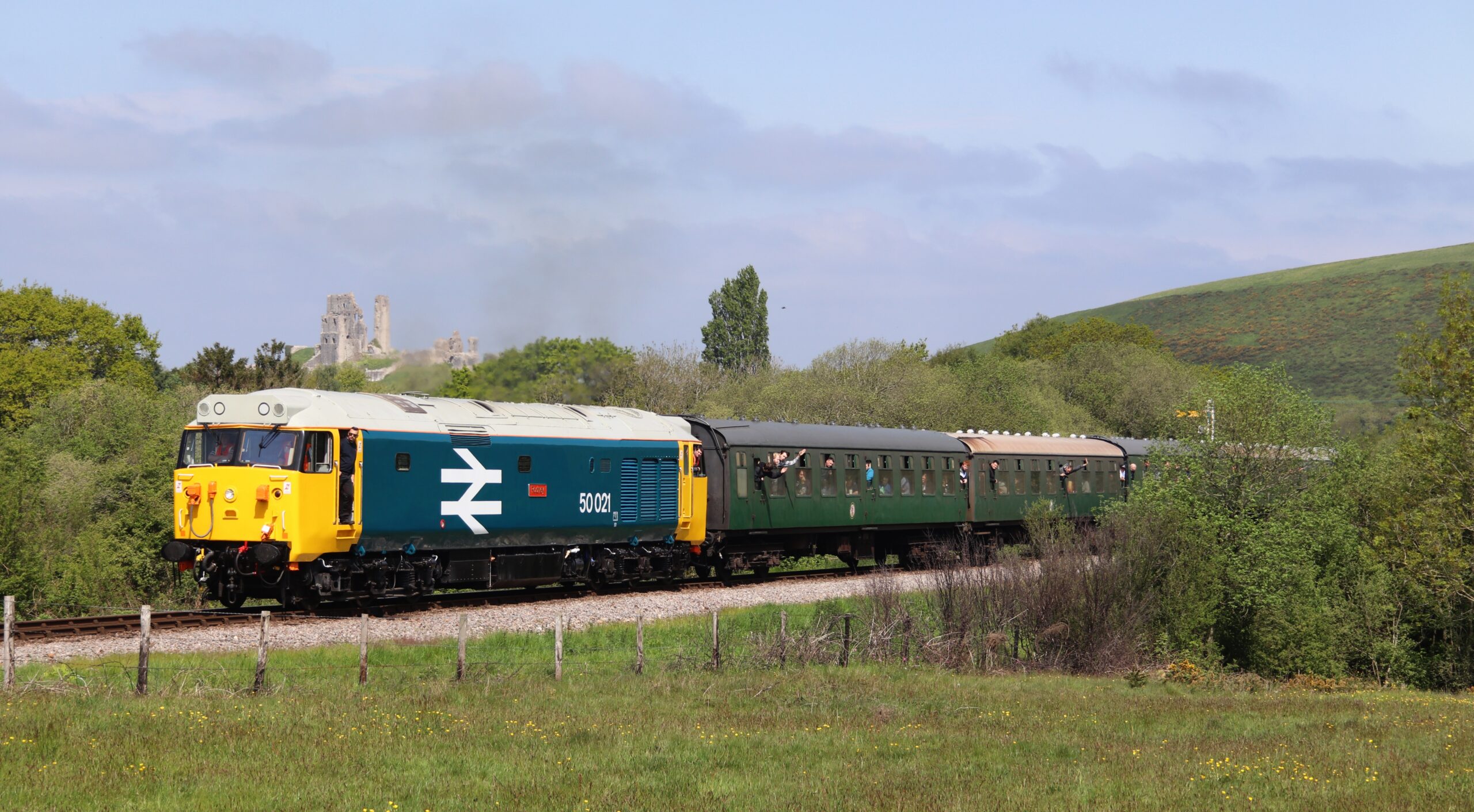
    8th May and time for my favourite railway working of the year; the arrival of the Swanage Railway Diesel Gala convoy of locomotives. This year the positioning move aroused much interest as it was headed up by Class 52 diesel-hydraulic No. D1015 ‘Western Champion’ with Harry Needle Railroad Company (HNRC) Class 20 No.’s 20302 and 20311 along with Class 50 No. 50021 ‘Rodney’ in tow. We saw the consist passing through Hamworthy as it made its way over to the Purbeck heritage line.
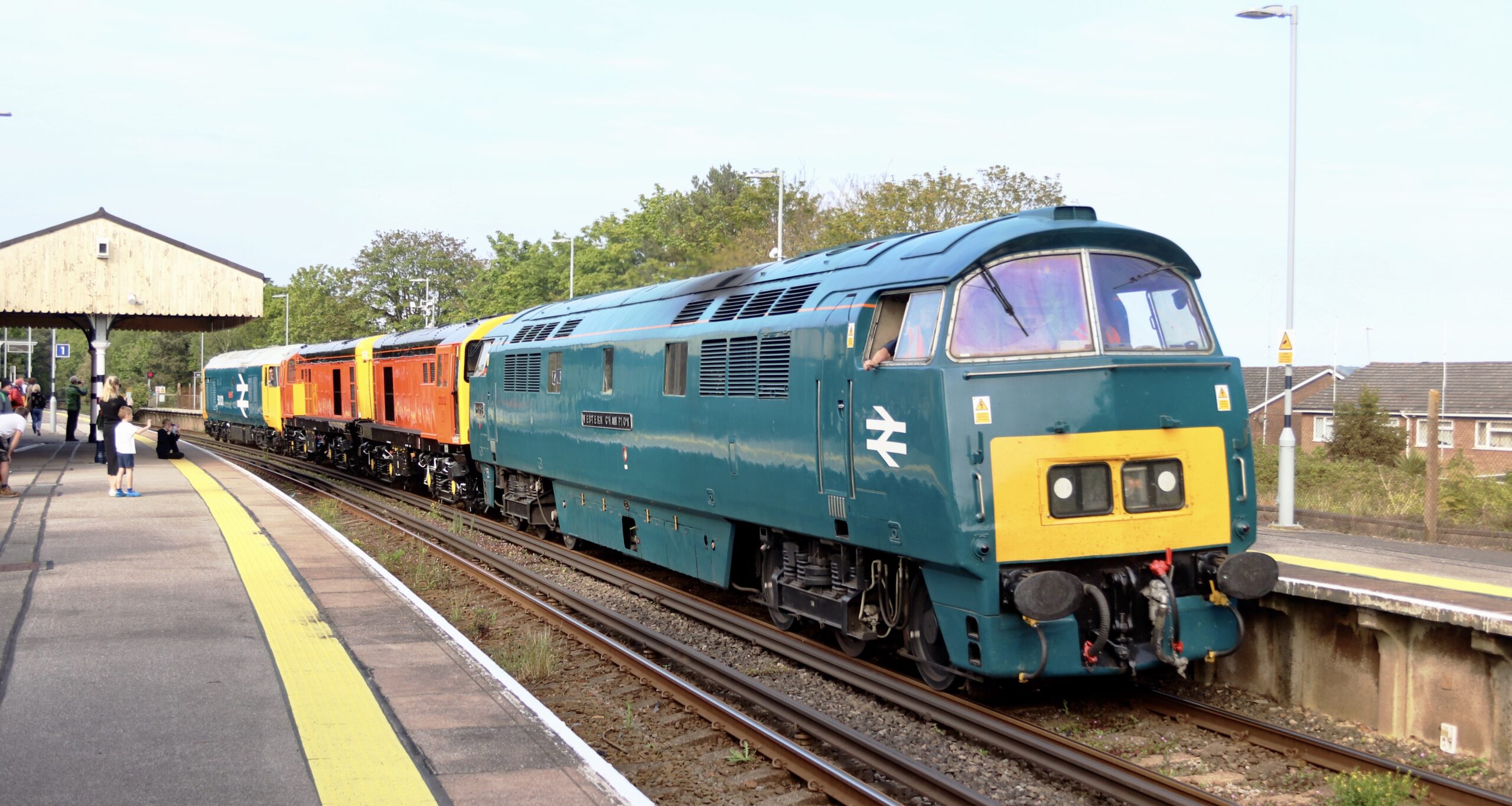
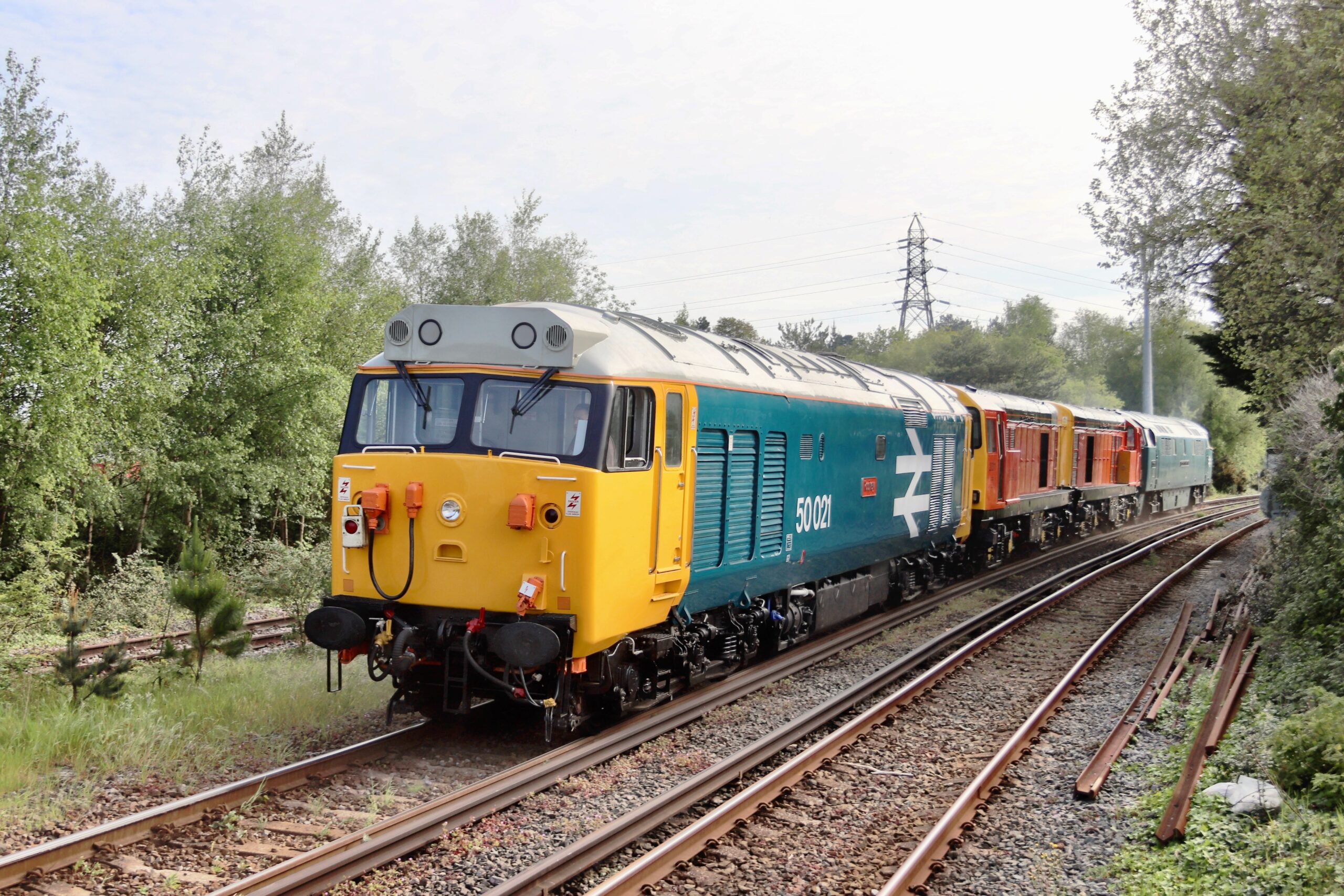
    Convoy! Always a highlight of the year – the Swanage Diesel Gala convoy with visiting guest locomotives passes Hamworthy with Class 52 “Western” No. D1015 ‘Western Champion’, Harry Needle Railroad Compay Class 20 No.’s 20302 and 20311 with Class 50 No. 50021 ‘Rodney’ bringing up the rear reporting as 0Z53 1544 Eastleigh Arlington (ZG) to Swanage – 08/05/2024
    Class 50 No. 50021 on the rear of the Swanage bound locomotive convoy 0Z53 1544 Eastleigh Arlington (ZG) to Swanage – 08/05/2024

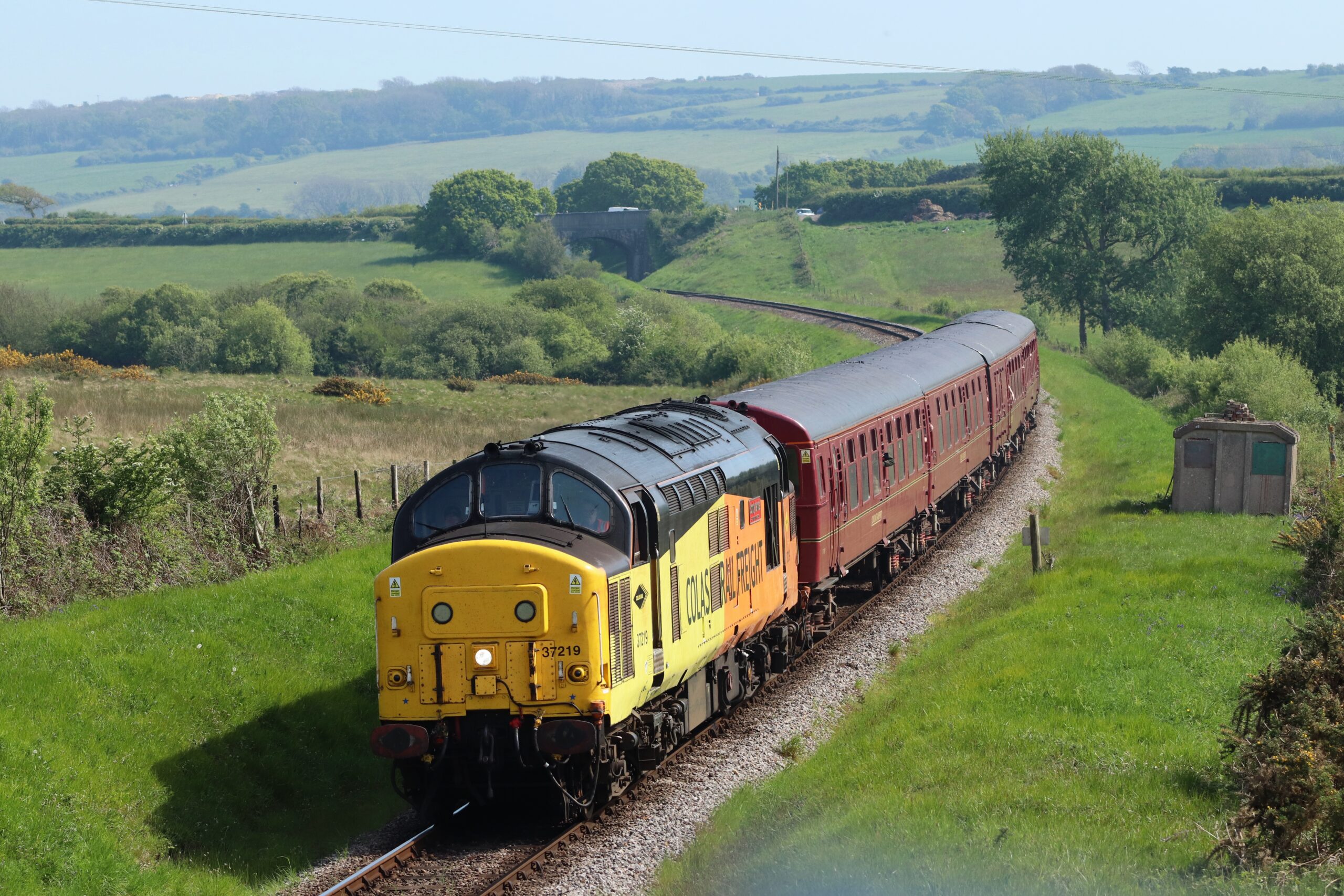
    The following day, May 9th, and further Gala attractions made their way through Dorset in readiness for the annual Diesel Gala and Beer Festival as Colas Class 37 No. 37219 ‘Jonty Jarvis’ ran light engine reporting as 0Z37 0946 Westbury Down TC to Swanage. We saw the locomotive as she ran through Hamworthy

    Colas Class 37 No. 37219 ‘Jonty Jarvis’ running light engine as 0Z37 0946 Westbury Down TC to Swanage passing Hamworthy – 09/05/2024

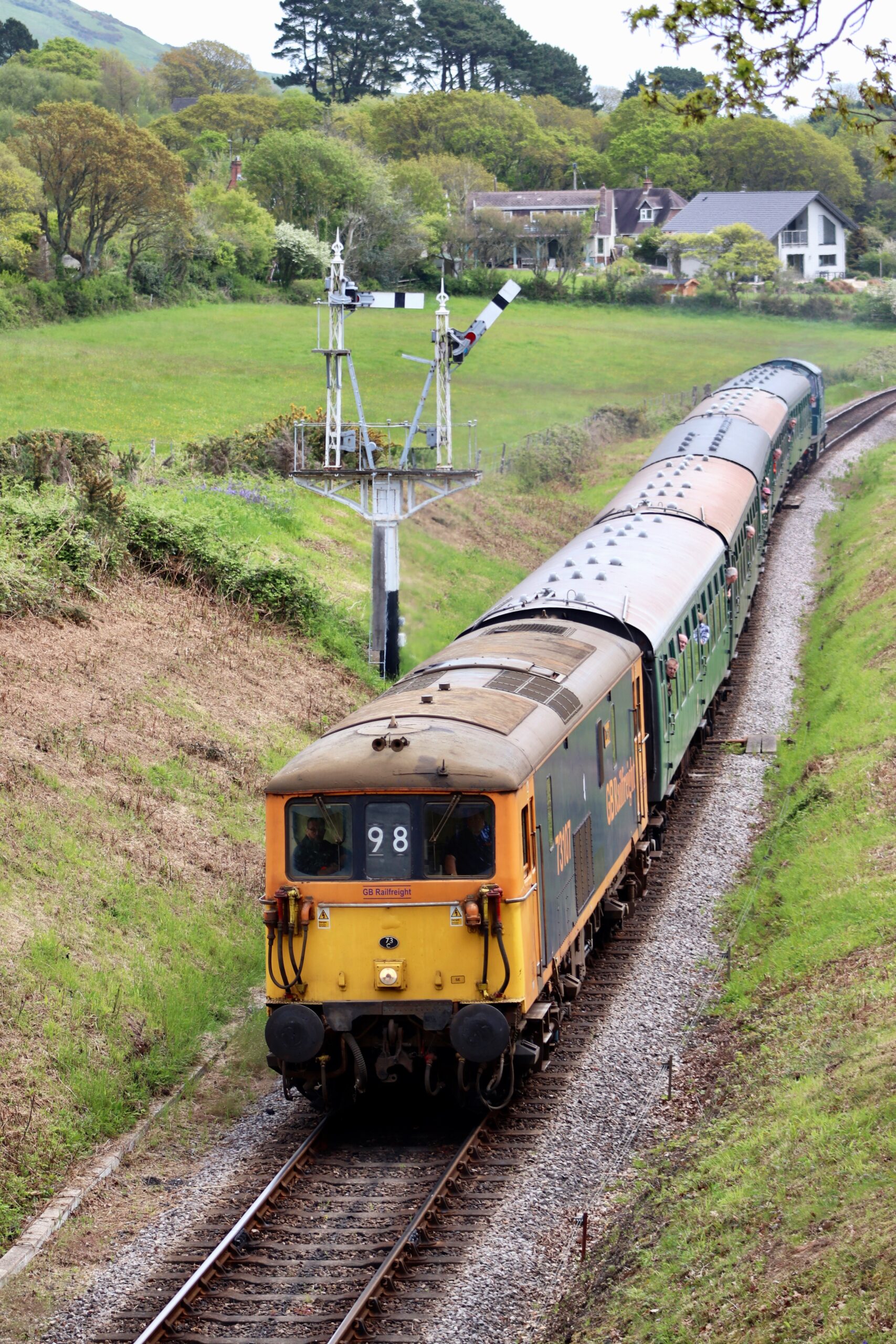
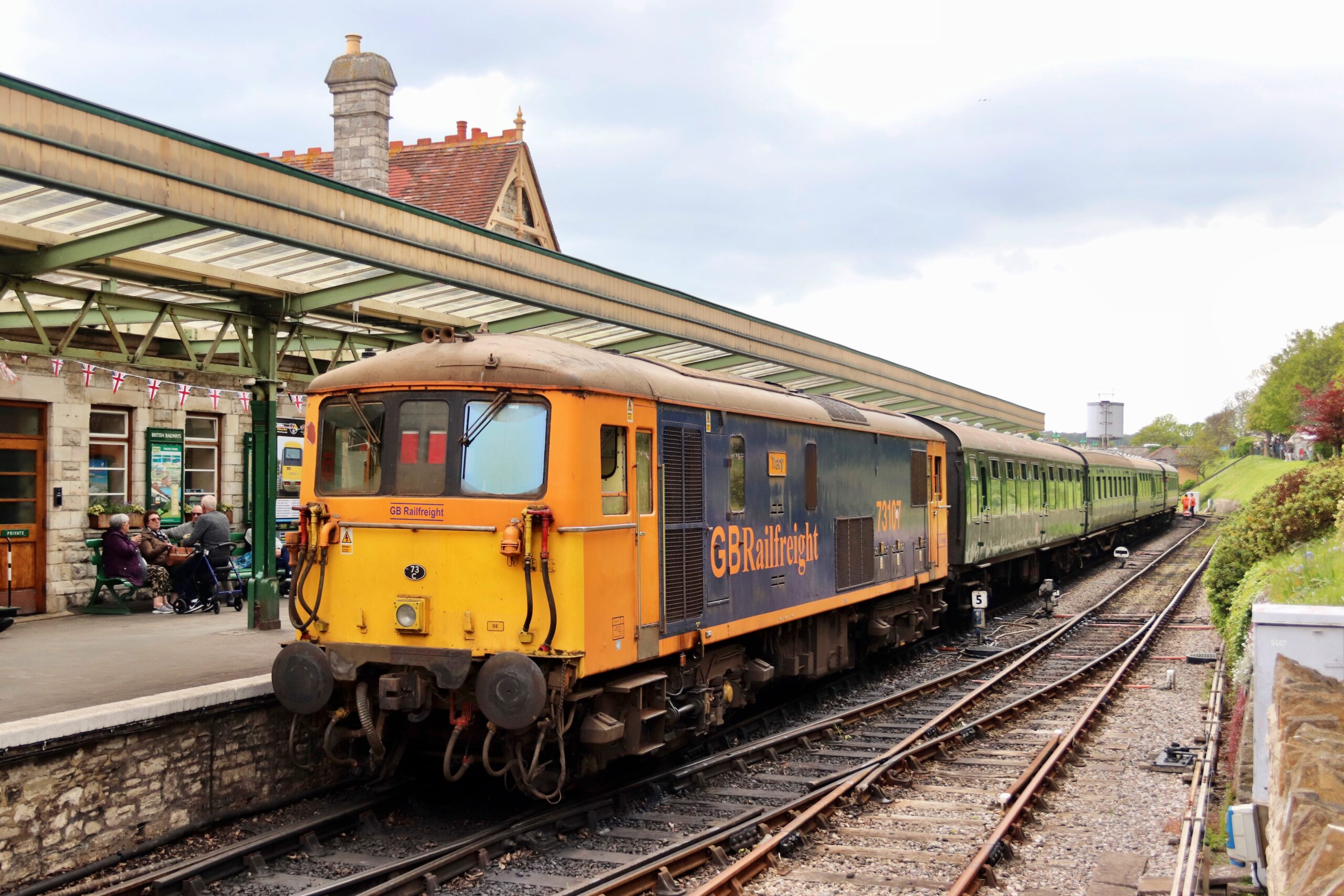
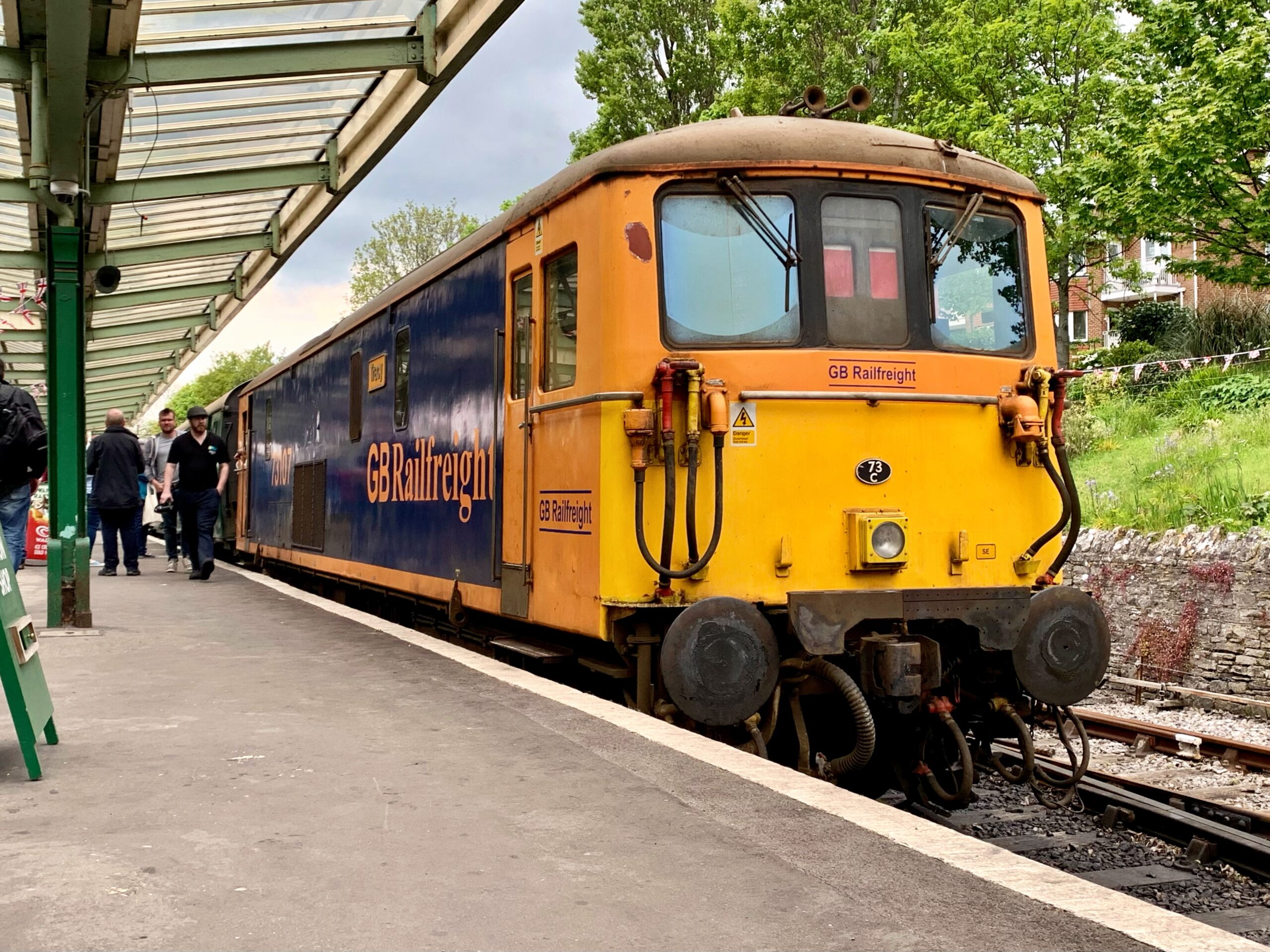
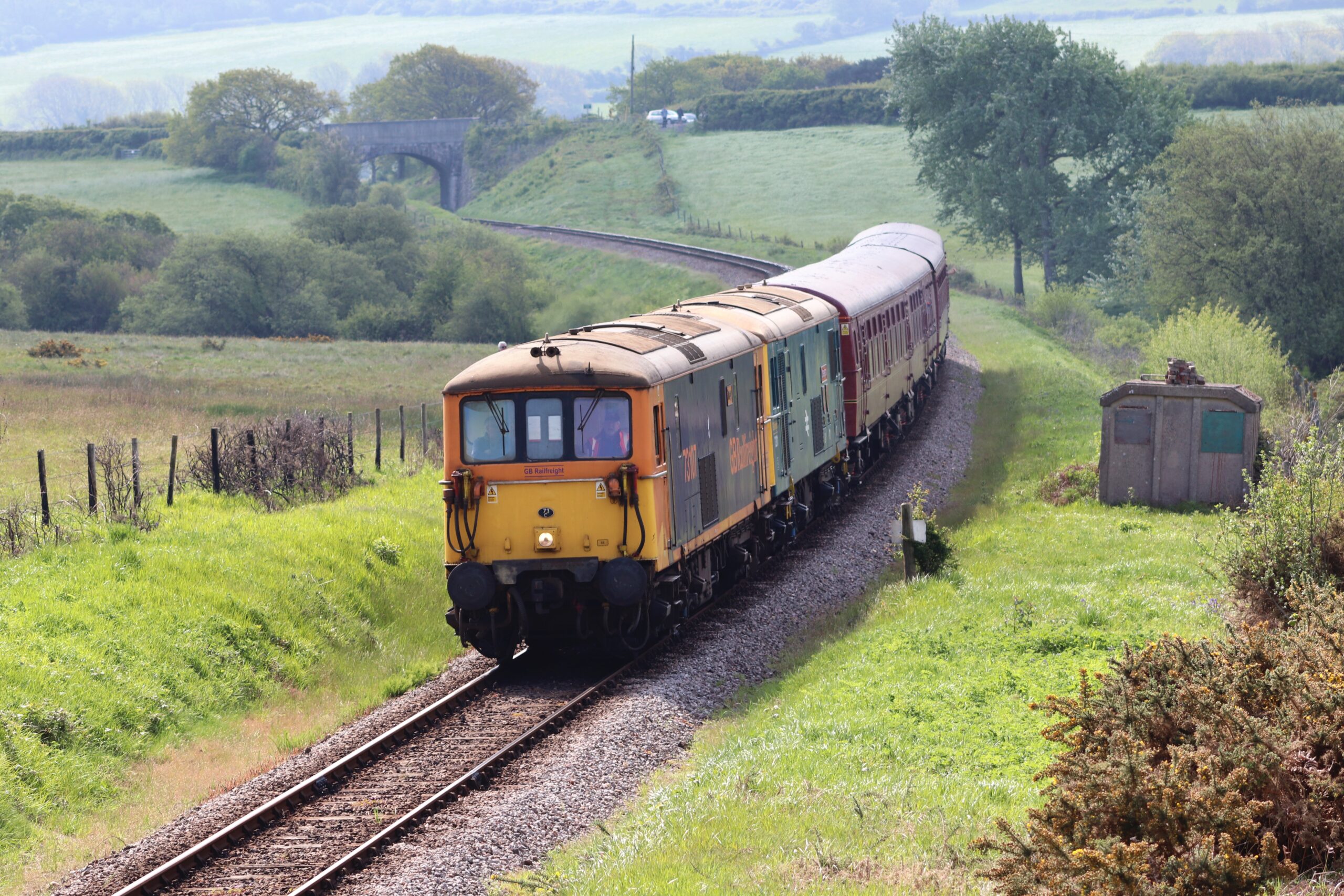
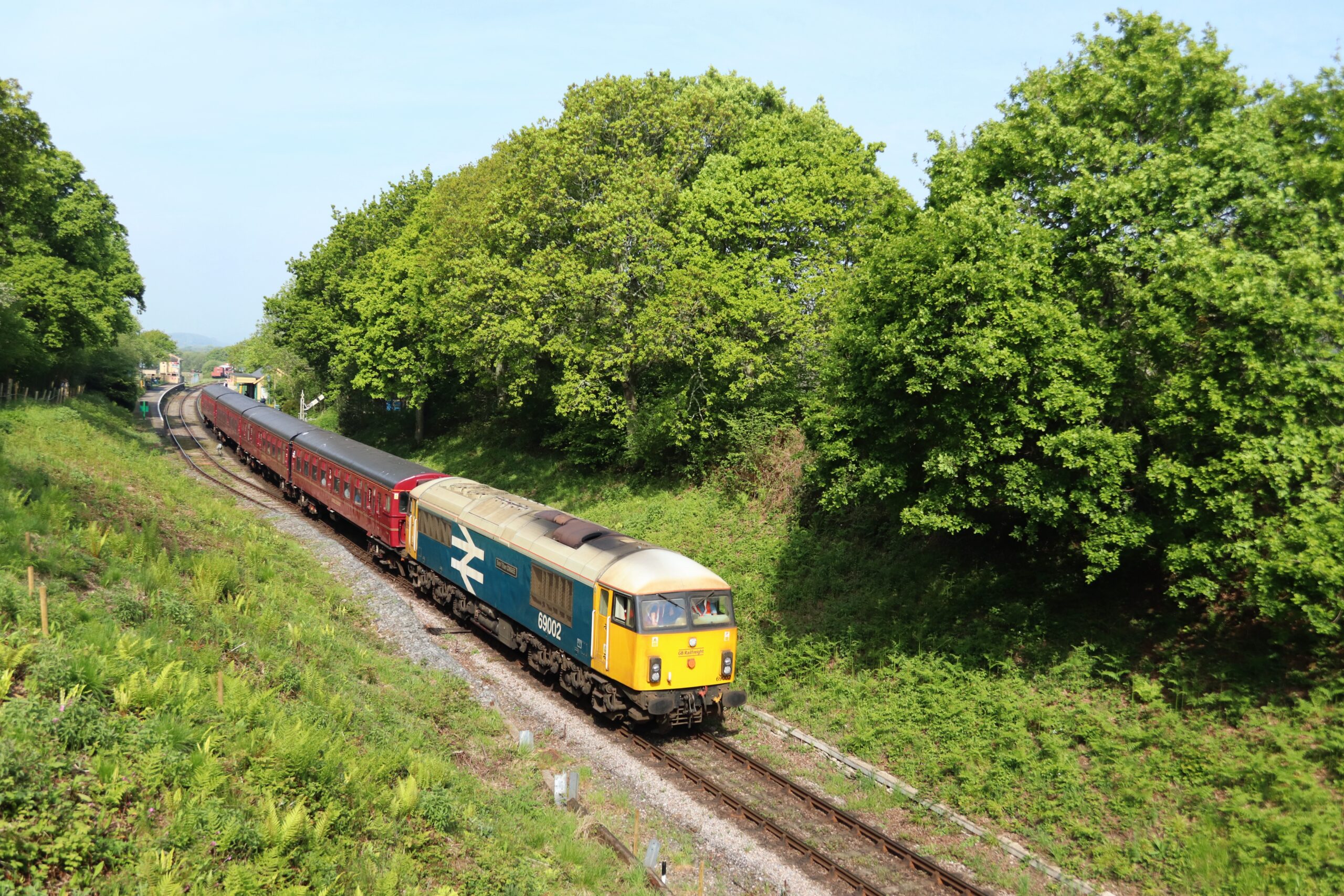
    GBRf had promised to provide a Class 69 locomotive for the Swanage Diesel Gala, with No. 69007 ‘Richard Trevithick’ being the ear marked example. In the event, this locomotive was declared a failure at Eastleigh and was replaced by fellow class member No. 69002 ‘Bob Tiller CM&E’. The Class 69 was scheduled to travel to Swanage as part of the BLS “The Jurassic Crompton” charter, again employing the London Underground Class 438 4TC coaching stock along with “Crompton” diesel Class 33 No. D6515 ‘Lt Jenny Lewis RN’. As a result of a temporary issue with the Electric Train Supply (ETS) on No. D6515, GBRf Class 73 No. 73109 ‘Battle of Britain’ was added to the consist to provide the ETS.
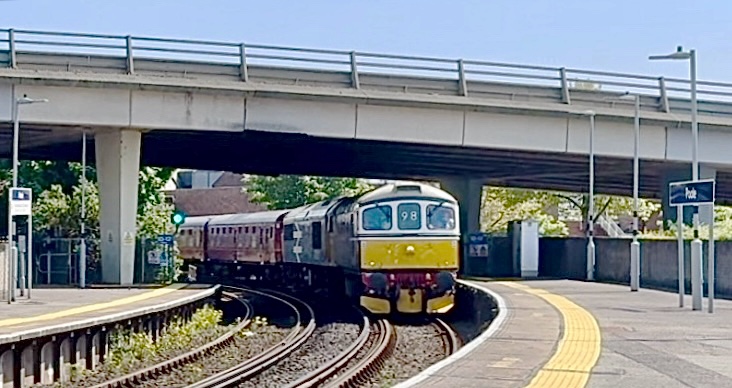
    As my camera “had issues”, here’s a video screenshot of the Branch Line Society promoted “The Jurassic Crompton” charter train with Swanage resident Class 33 No. D6515 (33012) ‘Lt Jenny Lewis RN’ and GBRf Class 69 No. 69002 ‘Bob Tiller CM&EE’ double heading on the London Underground Class 438 4tc set entering Poole – 09/05/2024
    Old and new pass at Poole! Screenshot of BLS “The Jurassic Crompton” special train headed up by Class 33 No. D6515 (33012) ‘Lt Jenny Lewis RN’, passing SWR Class 701 No. 701059 on test / mileage accumulation working. Two members of the 701’s crew can be seen taking an interest in the charter – 09/05/2024
    Screenshot BLS “The Jurassic Crompton” charter with GBRf Class 73 No. 73109 ‘Battle of Britain’ bringing up the rear – 09/05/2024
    Video of Swanage Diesel Gala guest locomotives and BLS charter “The Jurassic Crompton” on their way to the Purbeck Heritage line

    Later that evening, a ballast train worked from Eastleigh to Maiden Newton via Dorchester Junction. GBRf provided the traction in the form of Class 66 No.’s 66725 ‘Sunderland’ and 66795 ‘Bescot LDC’. Yoshi was delighted to be reacquainted with GBRf driver Bessie Matthews who spotted our boy from the cab of the leading locomotive at Dorchester South. We saw also saw the train at Dorchester West, but as it was late, and there was no indication when the ballast train would depart for Maiden Newton, we headed home before it left.

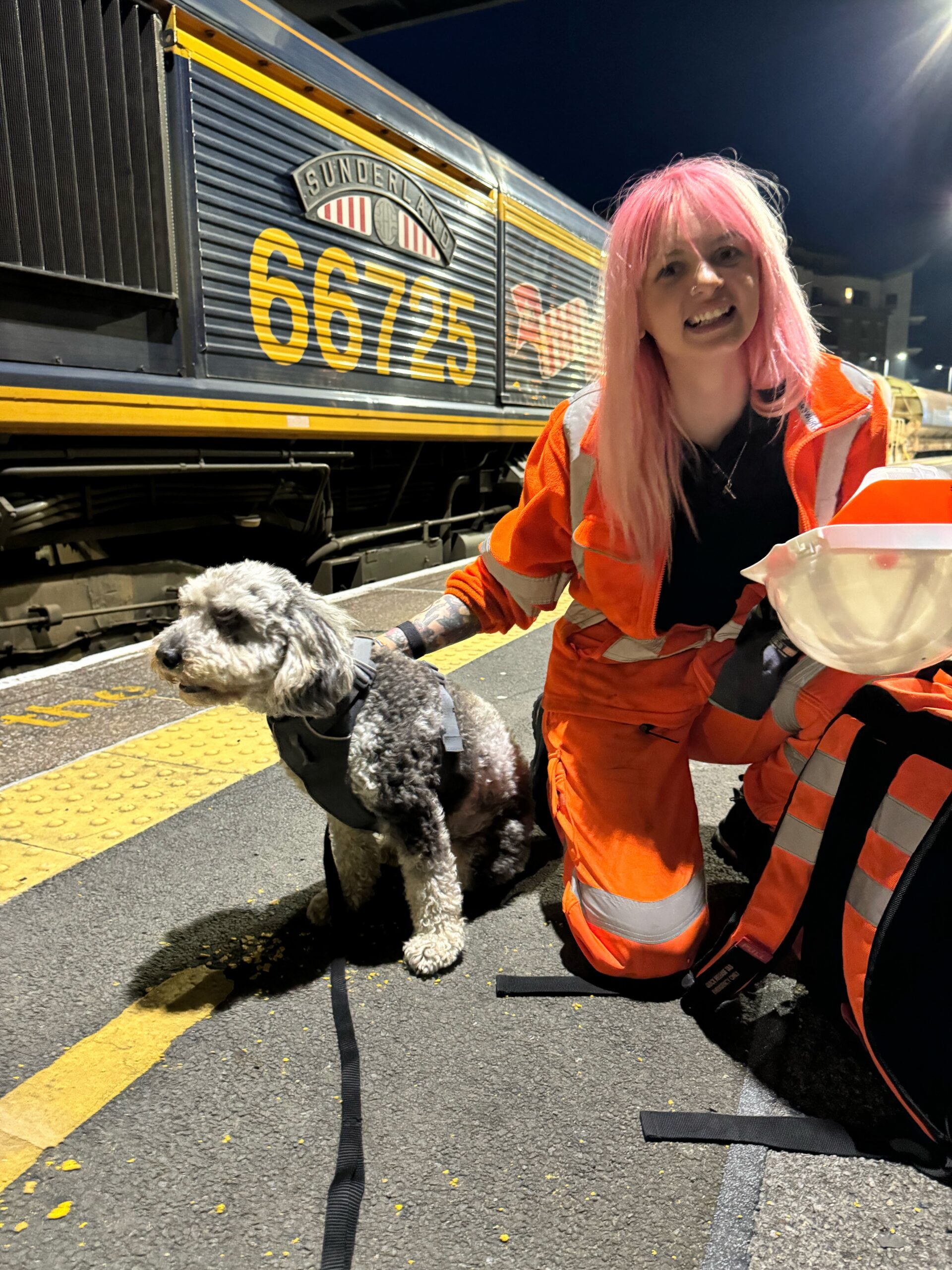
    GBRf Class 66 No. 66725 ‘Sunderland’ on arrival at Dorchester South working 6G28 1939 Eastleigh East Yard to Dorchester West – 09/05/2024
    GBRf driver Bessie Matthews recognises Yoshin and says hello at Dorchester South – 09/05/2024
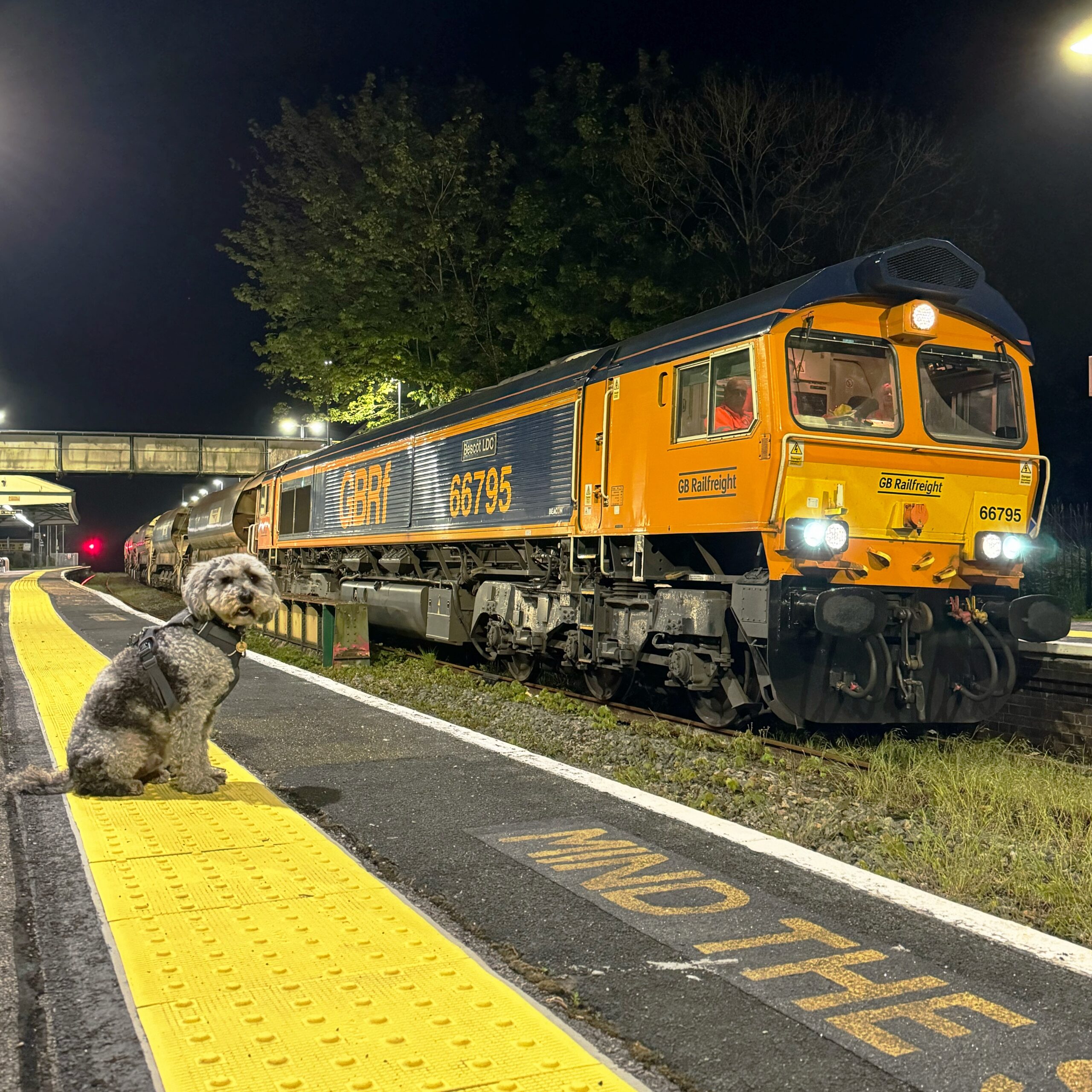
    Yoshi takes a keen interest in GBRf Class 66 No. 66795 ‘Bescot LDC’ as it rests at Dorchester West working 6G28 1939 Eastleigh East Yard to Dorchester West – 09/05/2024
    Yoshi poses with GBRf Class 66 No. 66725 ‘Sunderland’ at Dorchester West. The locomotive was working 6G28 1939 Eastleigh East Yard to Dorchester West – 09/05/2024
    Video of GBRf ballast train 6G28 1939 Eastleigh East Yard to Dorchester West – 09/05/2024

    For The Record: Colas Class 37 No. 37116 worked 3Q07 2031 Exeter Riverside NY to Exeter Riverside NY through North Dorset overnight of 10th May 2024. I had planned on seeing this move at Yeovil in connection with popping out to see the GBRf ballast train, but as the Class 37 ran early, this was not to be. I wasn’t too bothered, I will admit!

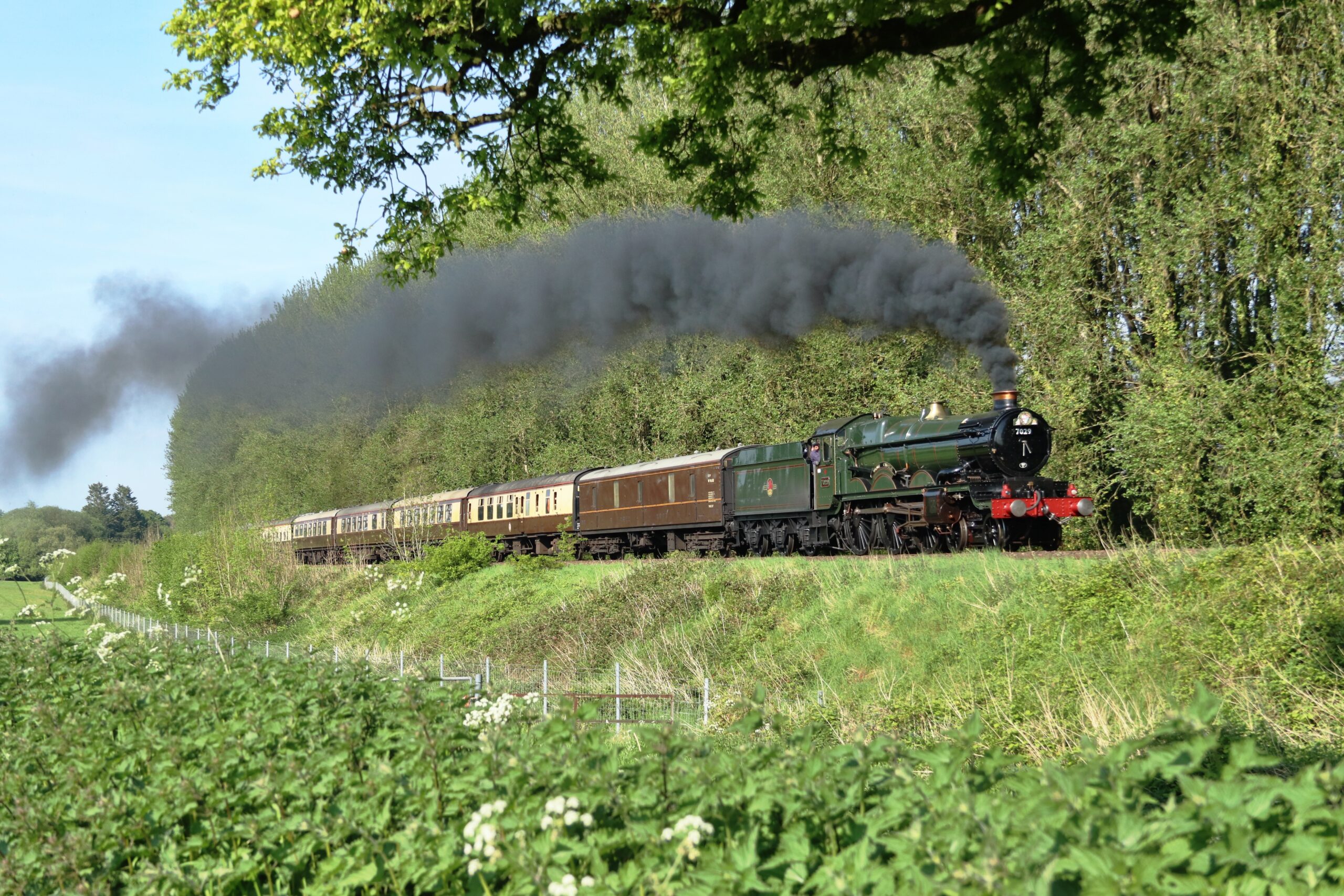
    10th May Great Western Railway (GWR) Castle Class 4-6-0 No. 7029 ‘Clun Castle’ supported by Class 47 No. 47773 operated the first of Vintage Trains two day “The Great Western Railway” tours between Birmingham Snow Hill and Plymouth. This tour marked 60 years when the locomotive achieved, what was then, the fastest ever non-stop run between Plymouth and Bristol completed in 133 minutes and 9 seconds. We saw the train heading West at Filton Abbey Wood and on its climb to Whiteball bank in Somerset. Unfortunately the return trip own the following day did not emulate the non-stop run of 60 years previously as ‘Clun Castle’ stalled on Hemerdon Bank. Tysley’s Class 47 No. 47773 which had been shadowing the train at this point came to the rescue and provided assistance. Part of the attraction for me of seeing this working was the steam locomotive working unassisted over the notorious Devon banks. But later timings on the Friday and my desire to attend the Swanage Diesel Gala on the Saturday meant I had to be content with the two viewings I was able to fit in.

    Great Western Railway (GWR) Castle Class 4-6-0 No. 7029 ‘Clun Castle’ at Filton Abbey Wood working “The Great Western” 1Z46 0830 Birmingham Snow Hill to Bristol Temple Meads – 10/05/2024
    Great Western Railway (GWR) Castle Class 4-6-0 No. 7029 ‘Clun Castle’ approaches Filton Abbey Wood station working the first day of Vintage Trains “The Great Western” charter which would see the steam locomotive tackle the Devon banks solo – 10/05/2024
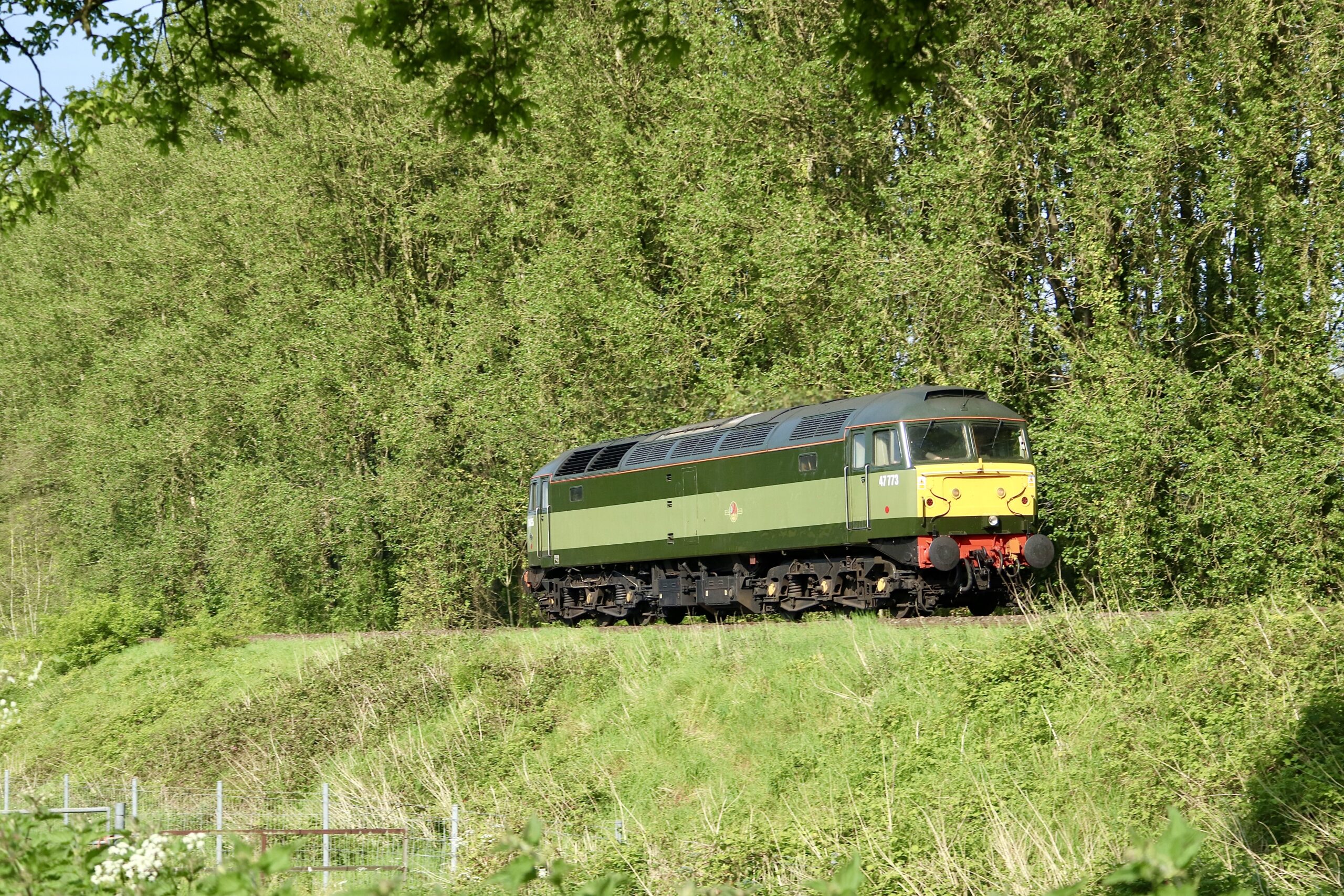
    Support locomotive Class 47 No. 47773 working light engine as 0Z47 1435 Bristol East Depot DBC to Plymouth ahead of the steam hauled charter – 10/05/2024
    Great Western Railway (GWR) Castle Class 4-6-0 No. 7029 ‘Clun Castle’ makes the climb up Whiteball bank near Taunton reporting as 1Z47 1547 Bristol Temple Meads to Plymouth – 10/05/2024
    Video of Great Western Railway (GWR) Castle Class 4-6-0 No. 7029 ‘Clun Castle’on the mainline – 10/05/2024

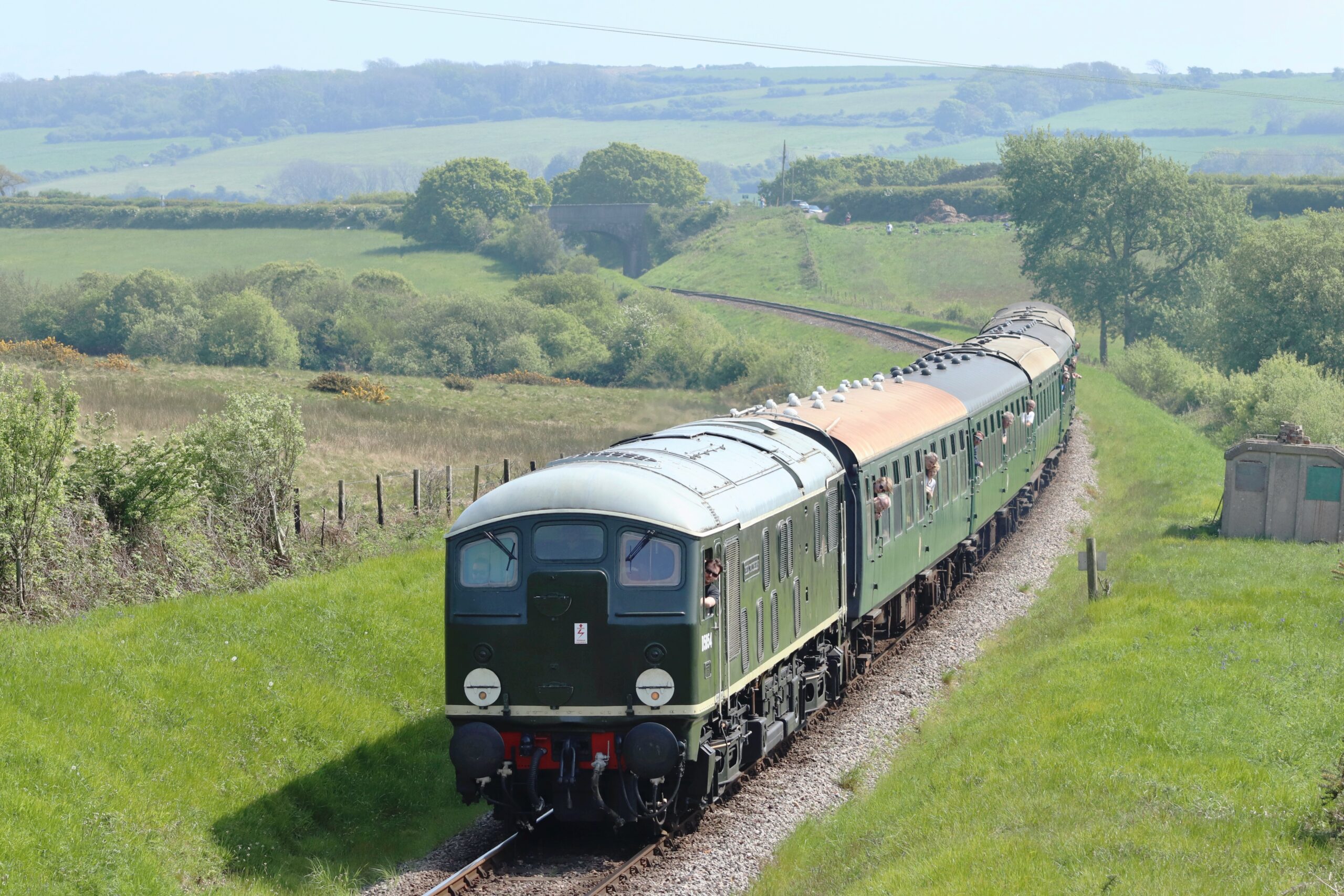
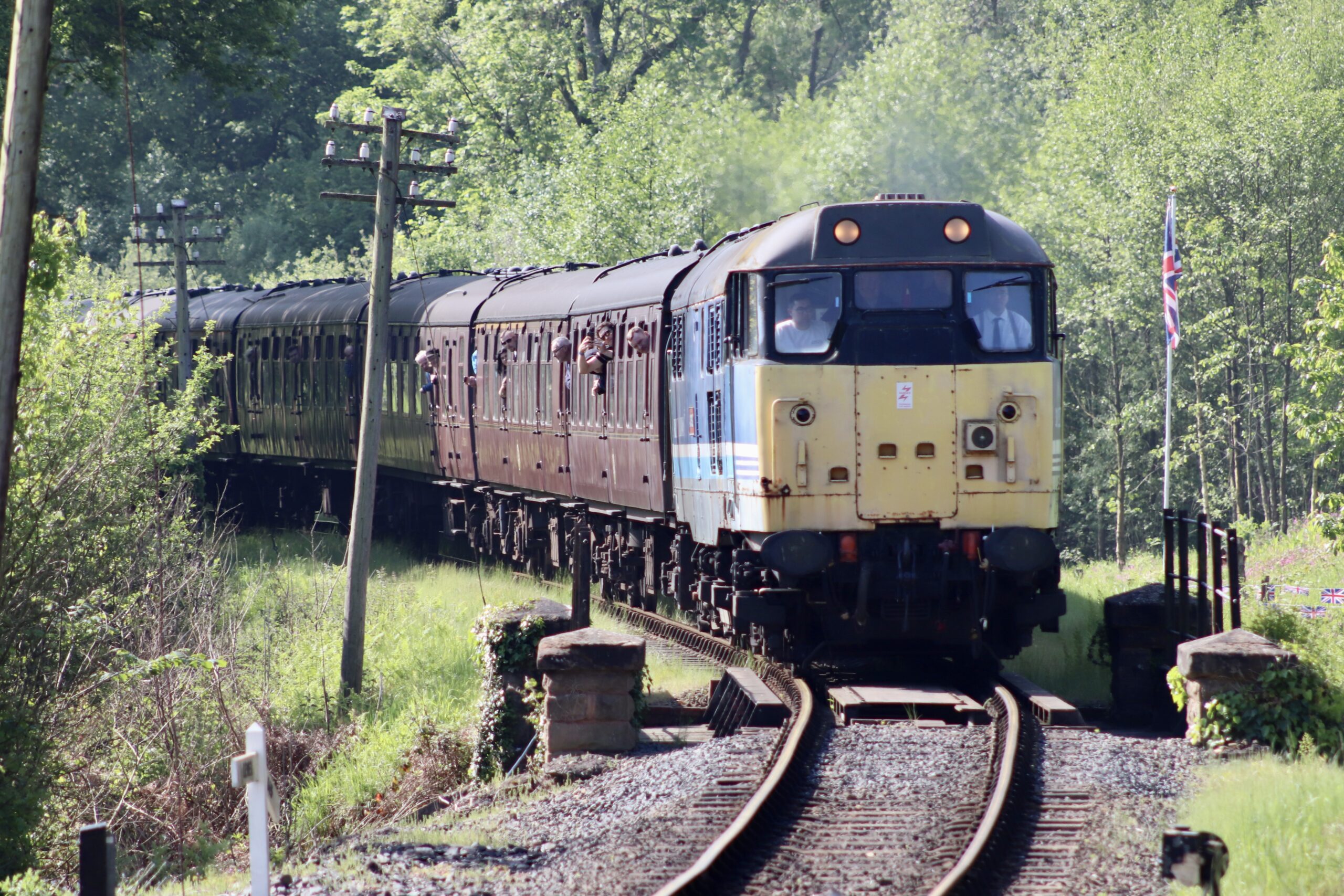
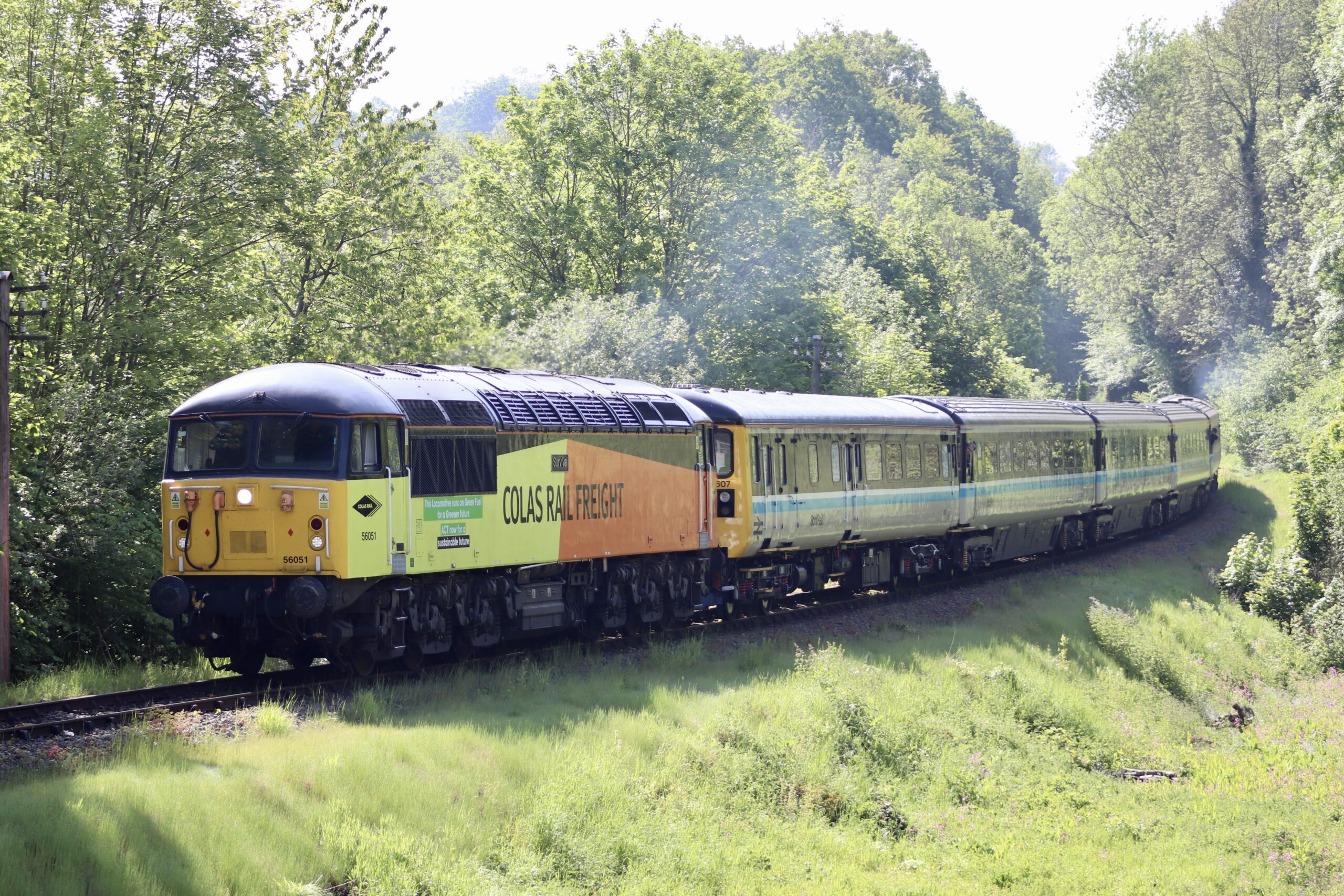
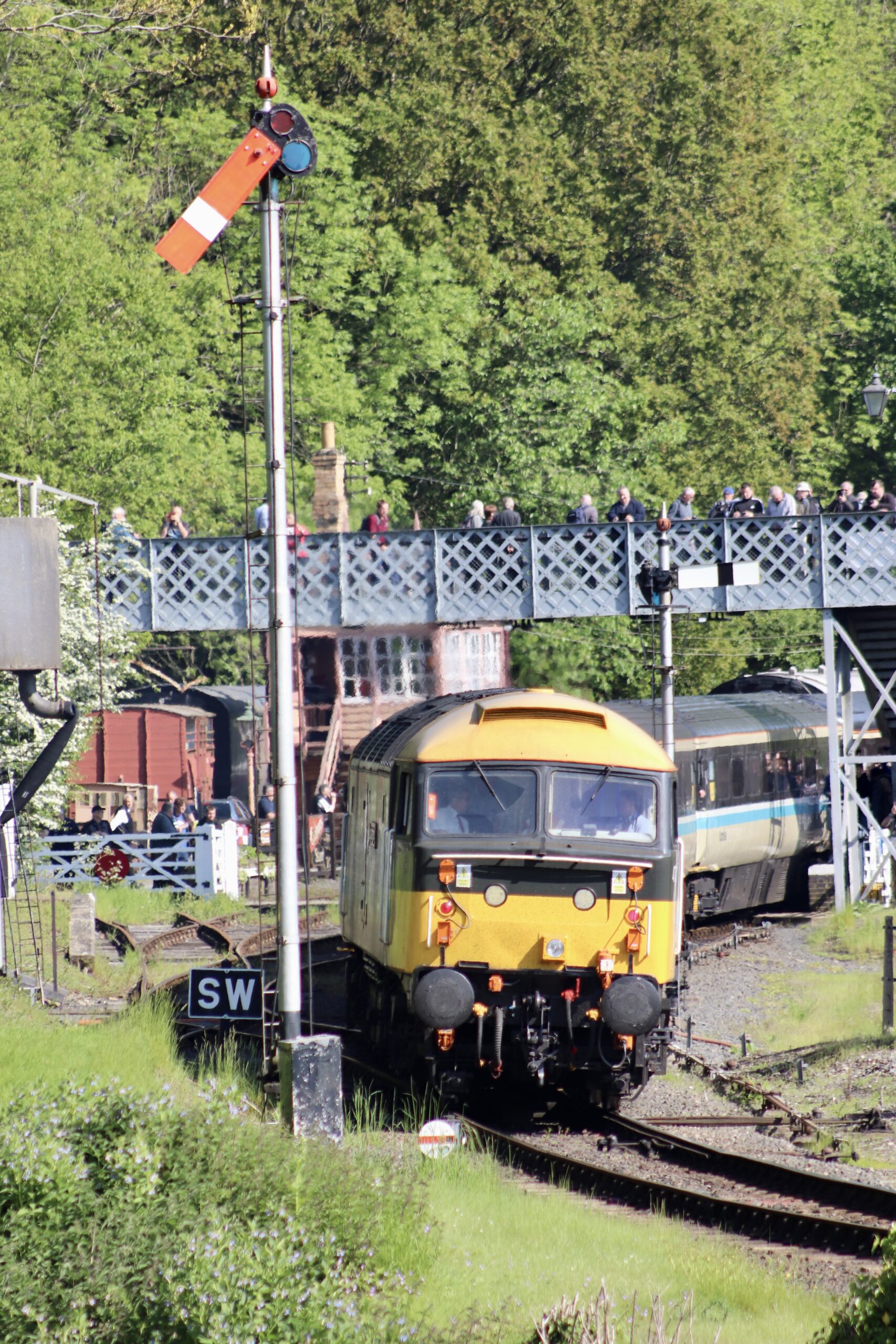
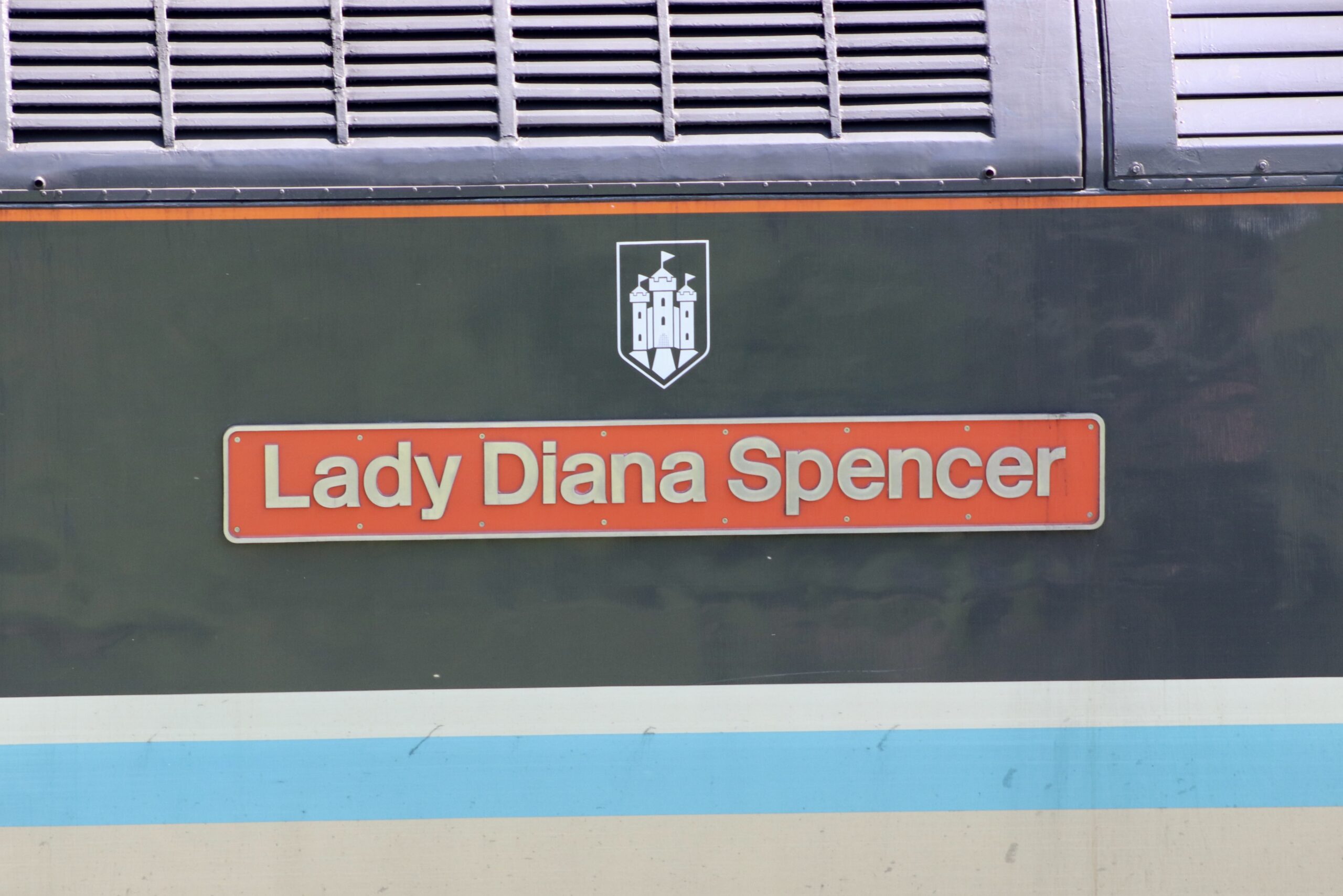
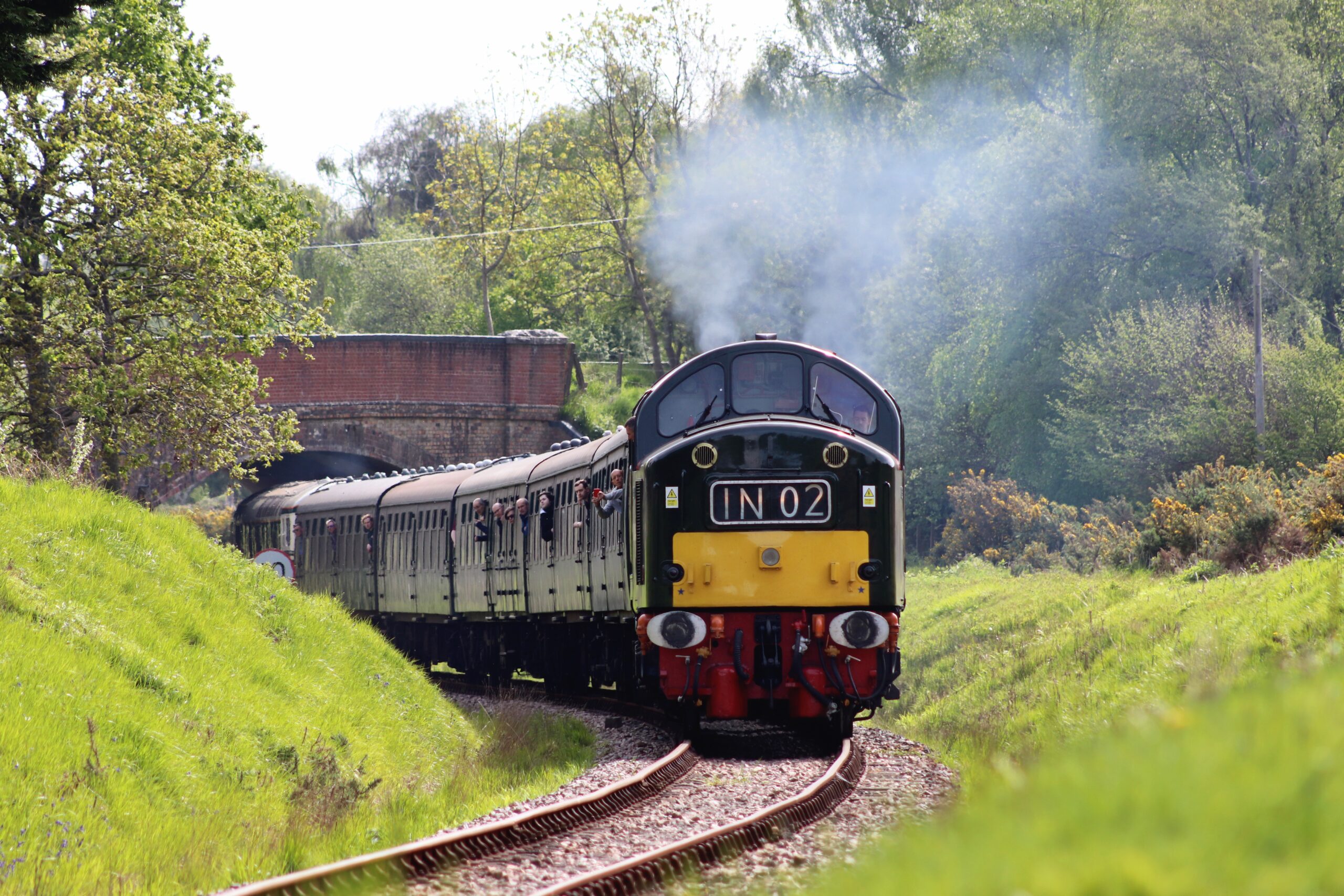
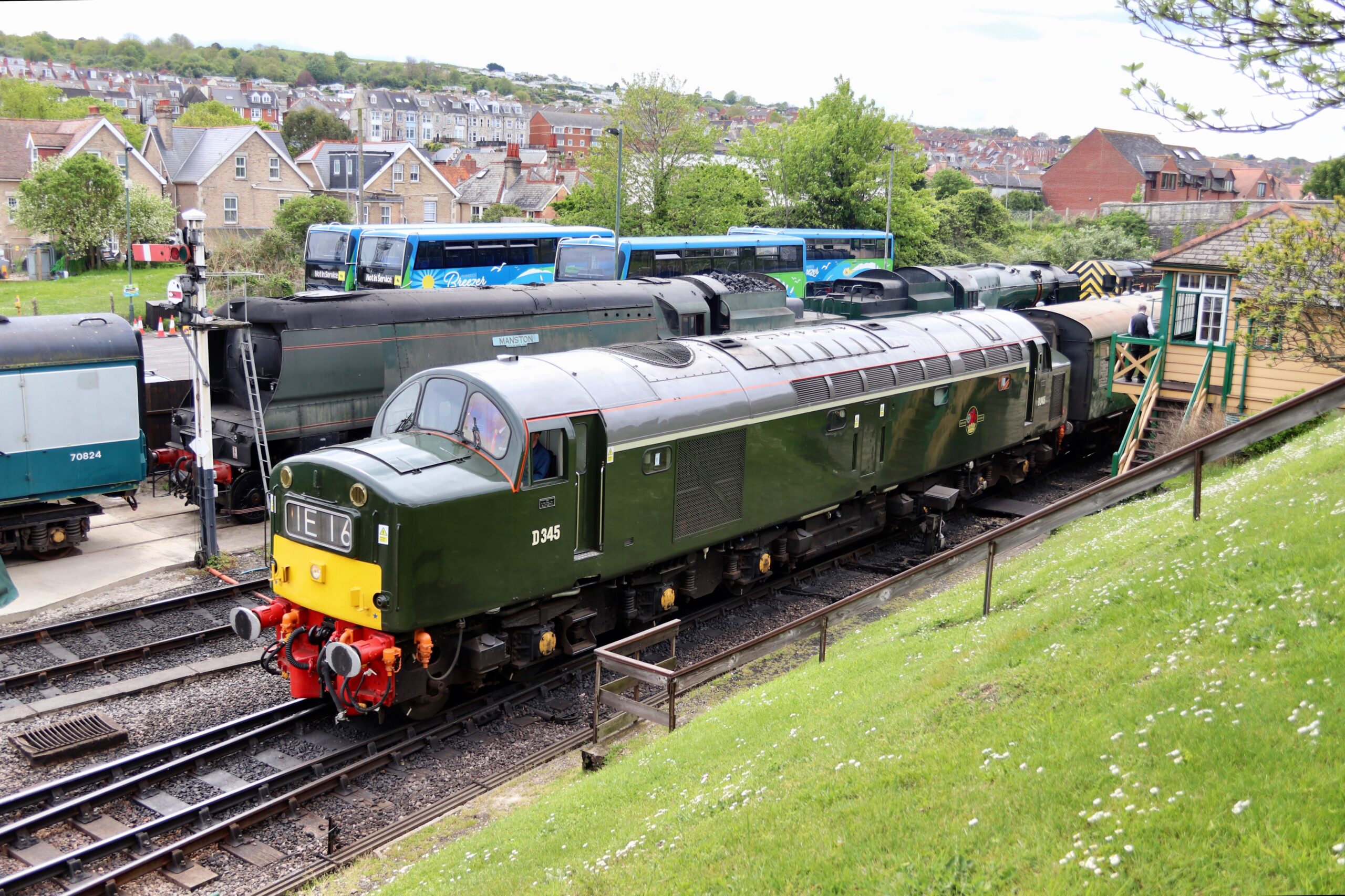
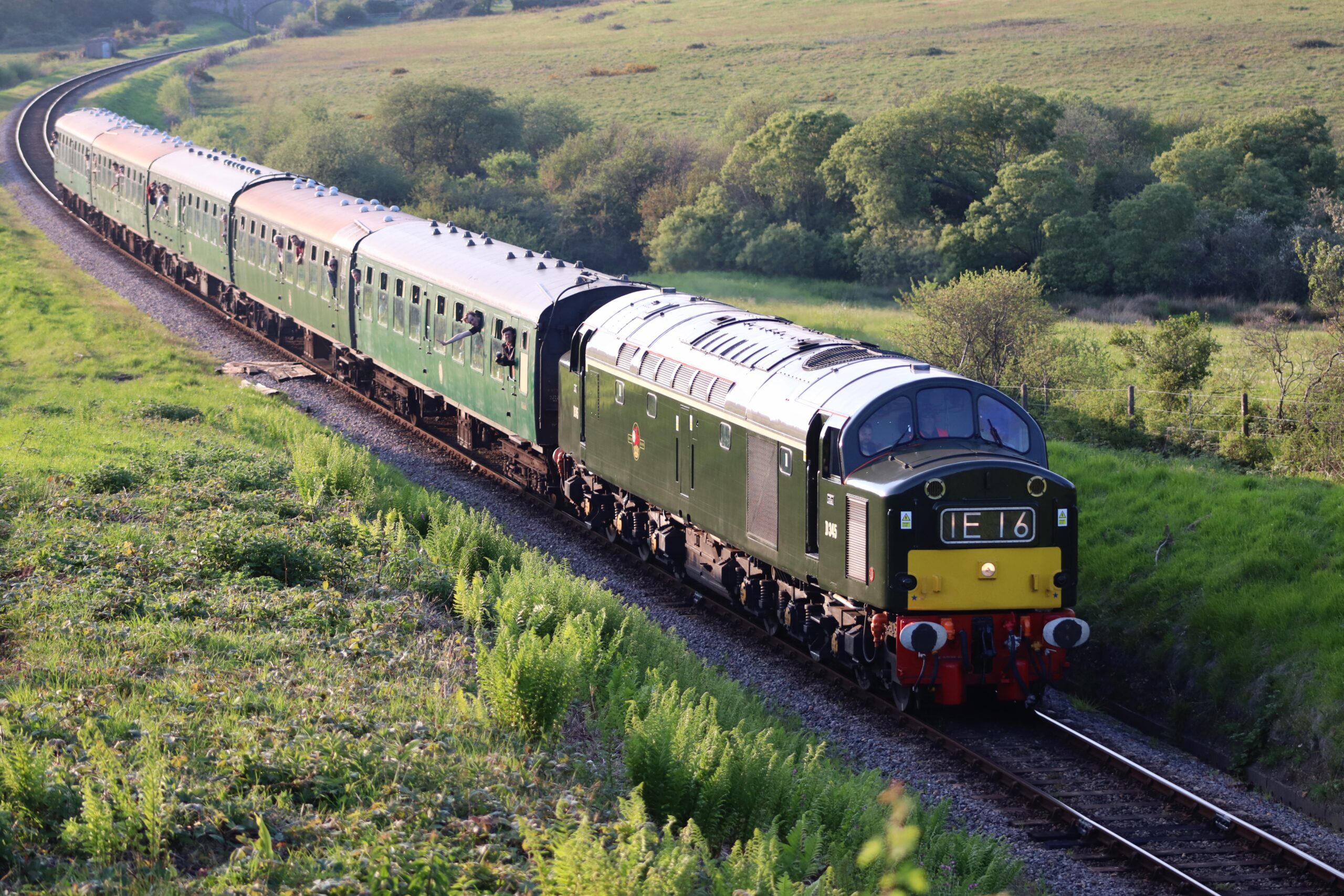
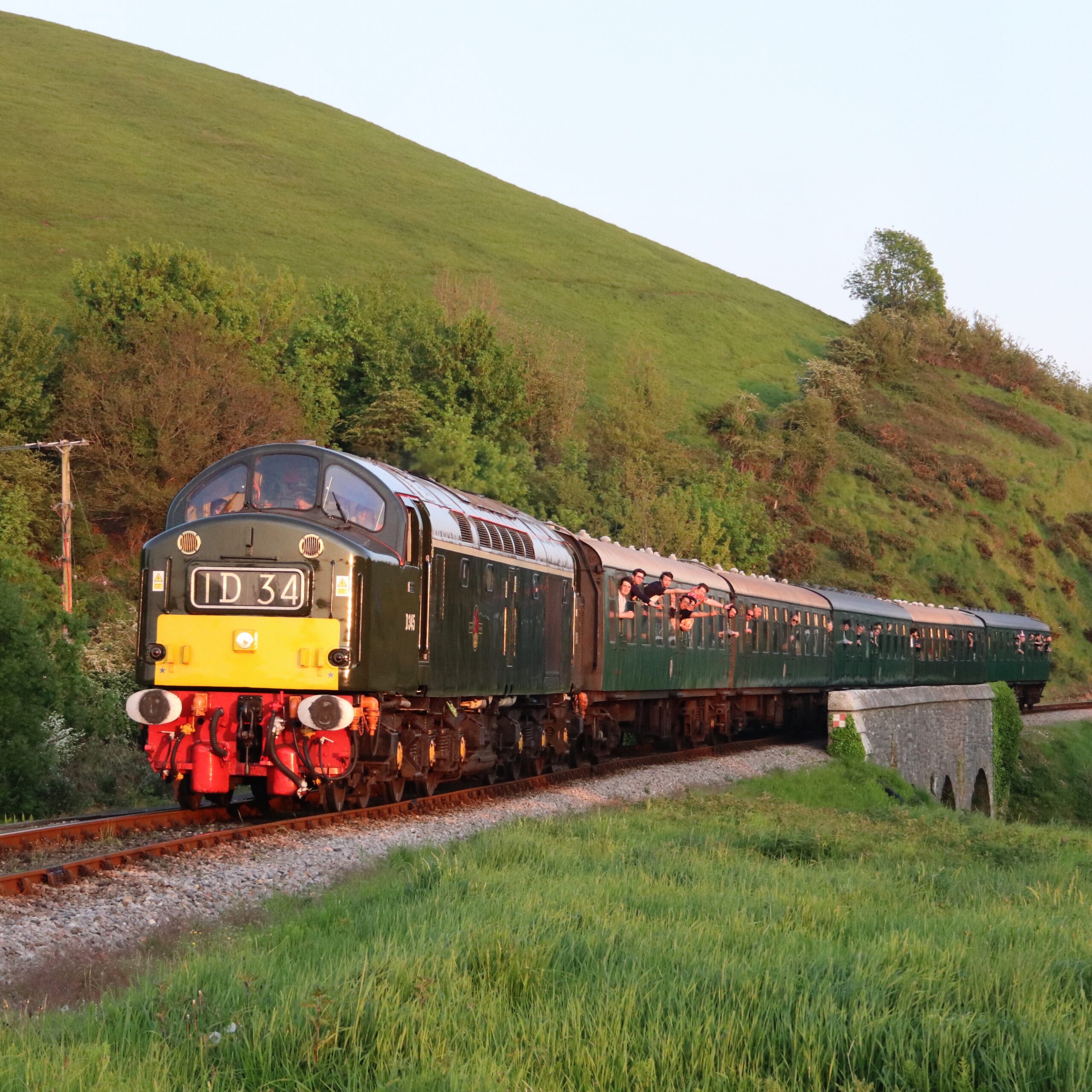
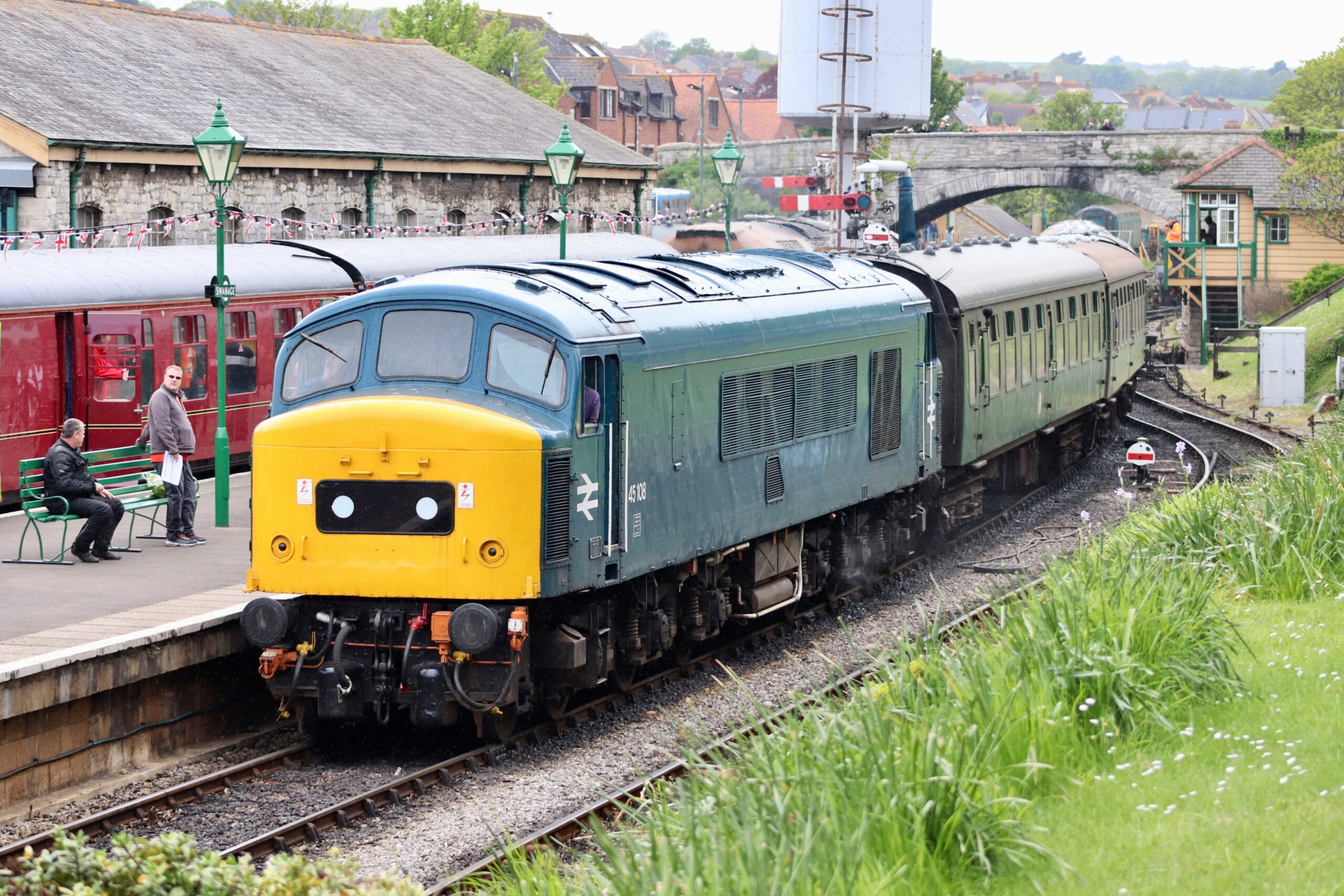
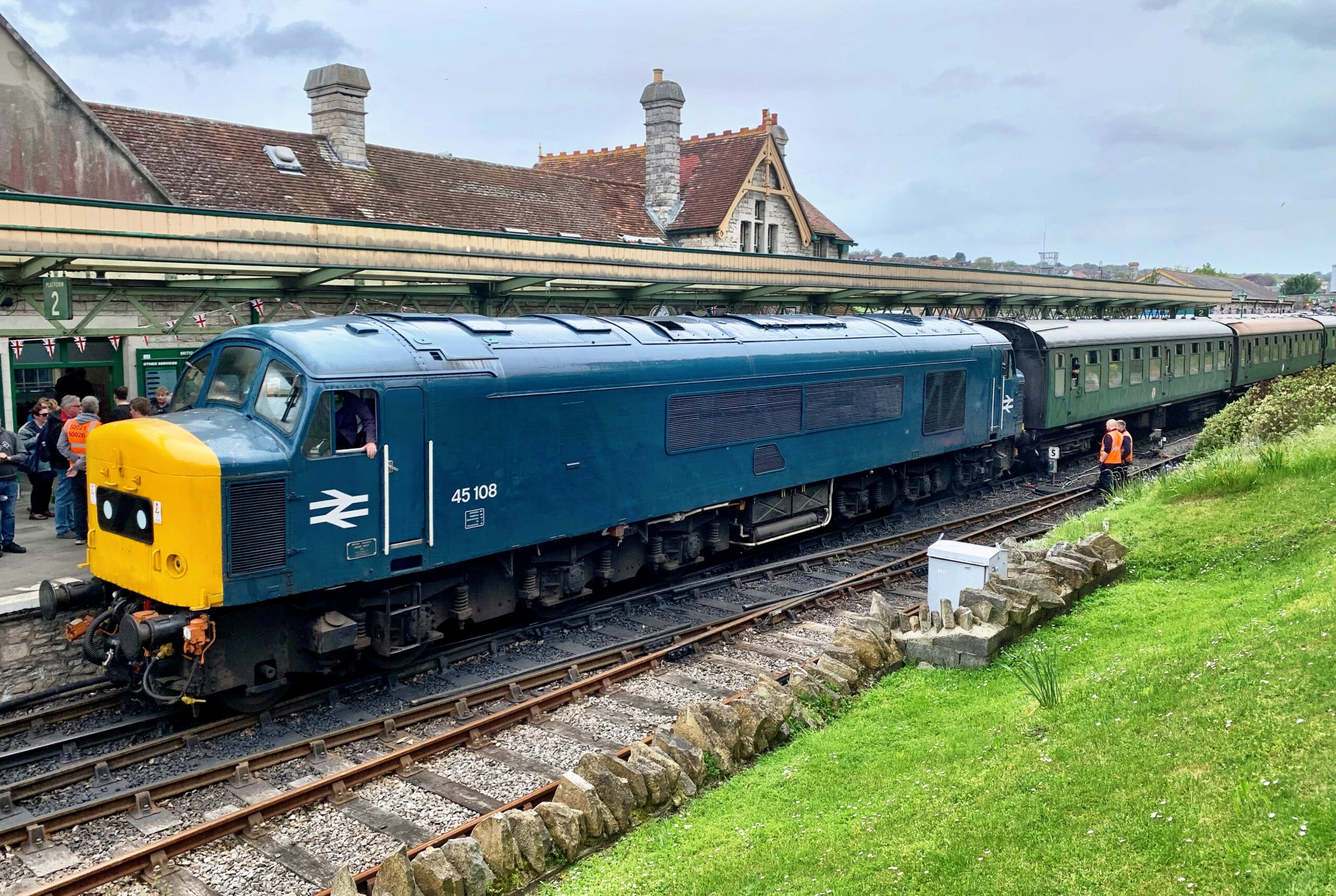
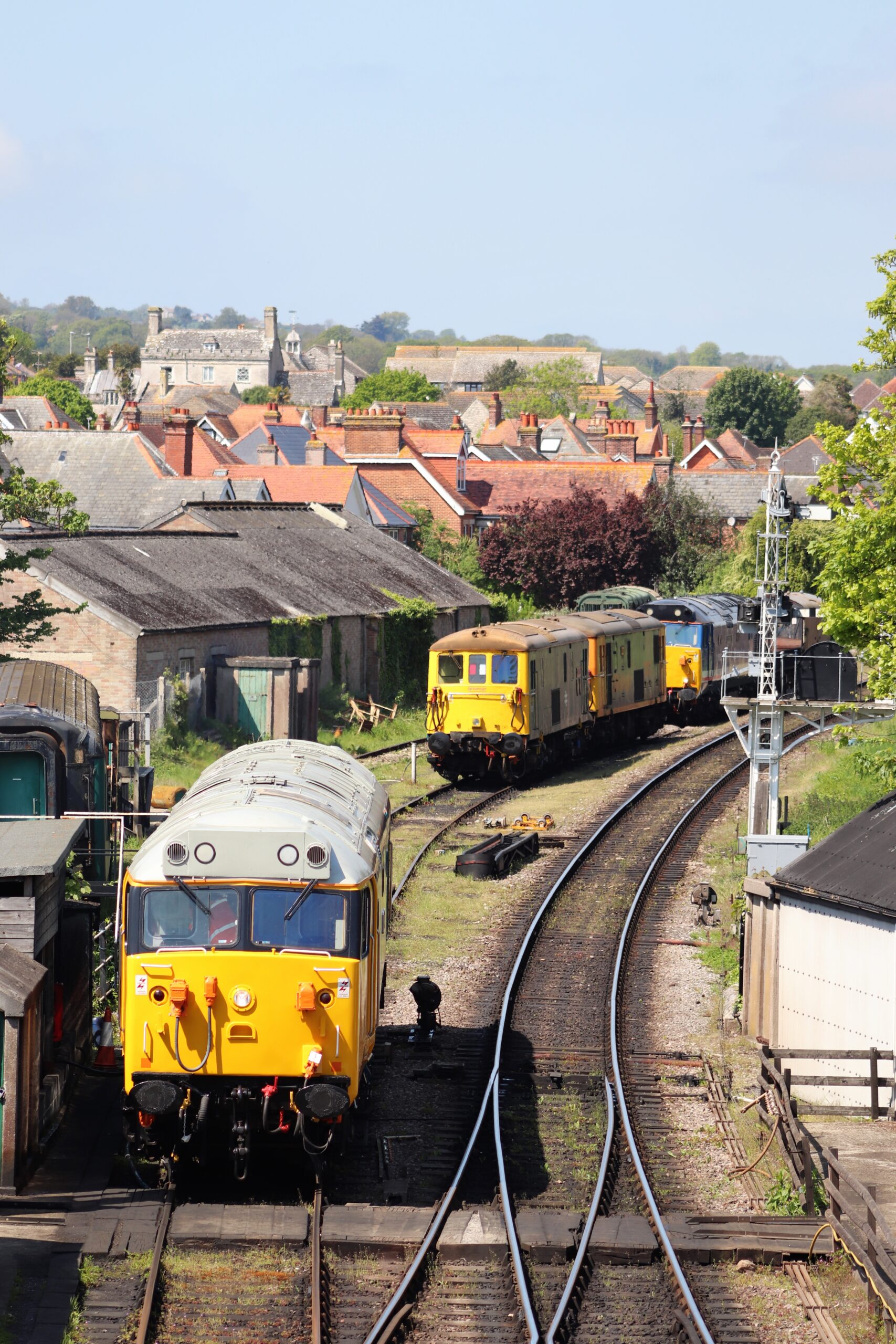
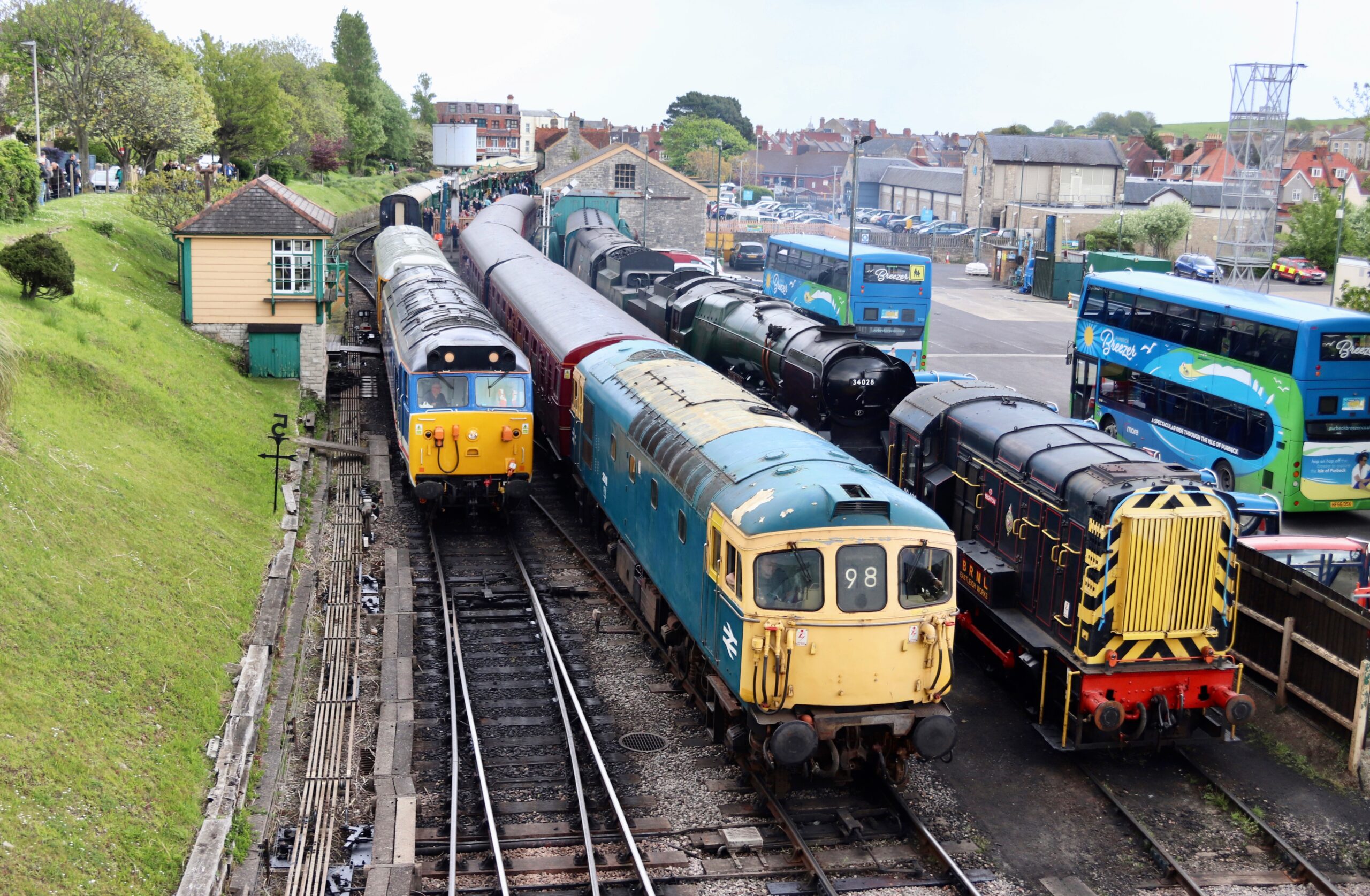
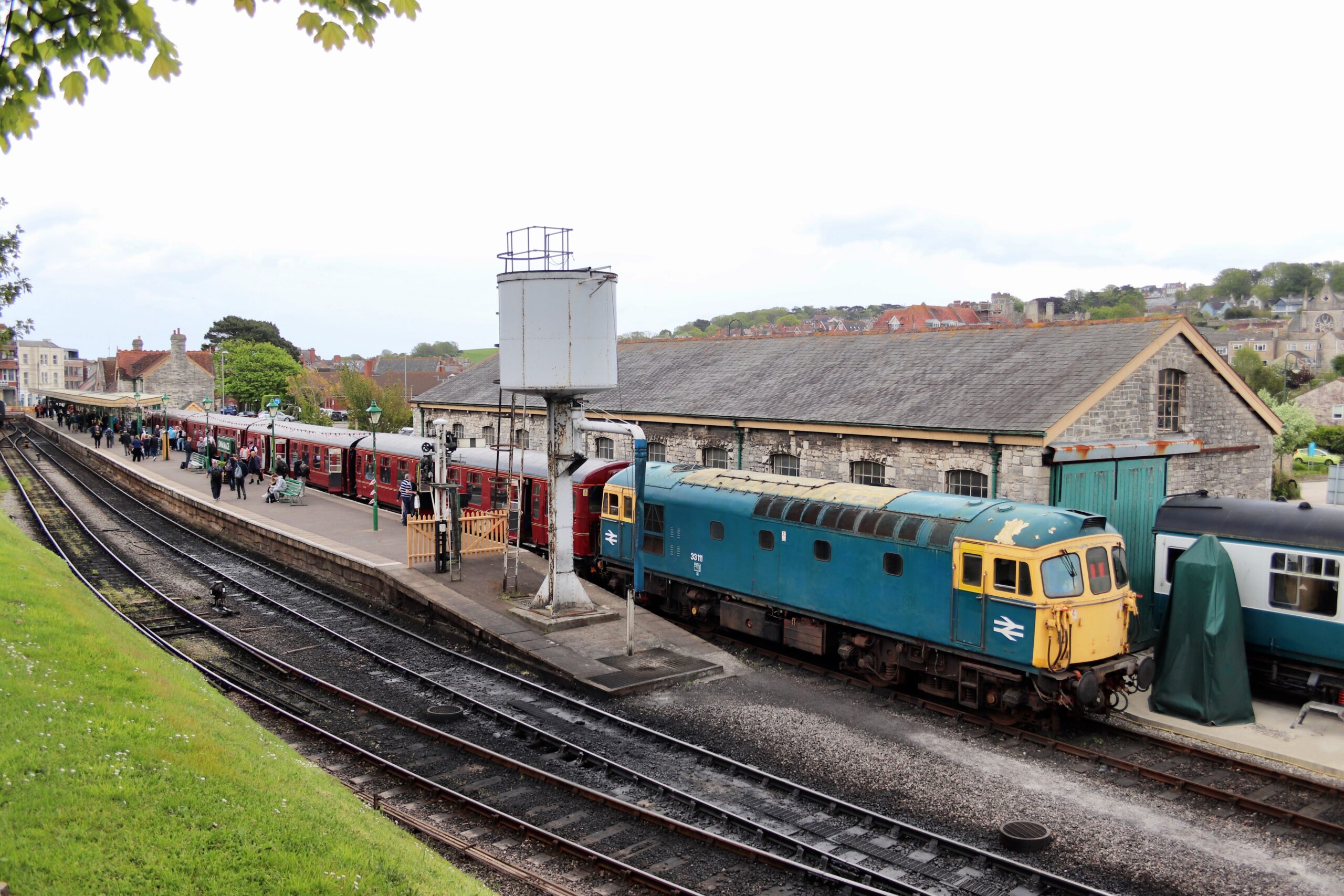
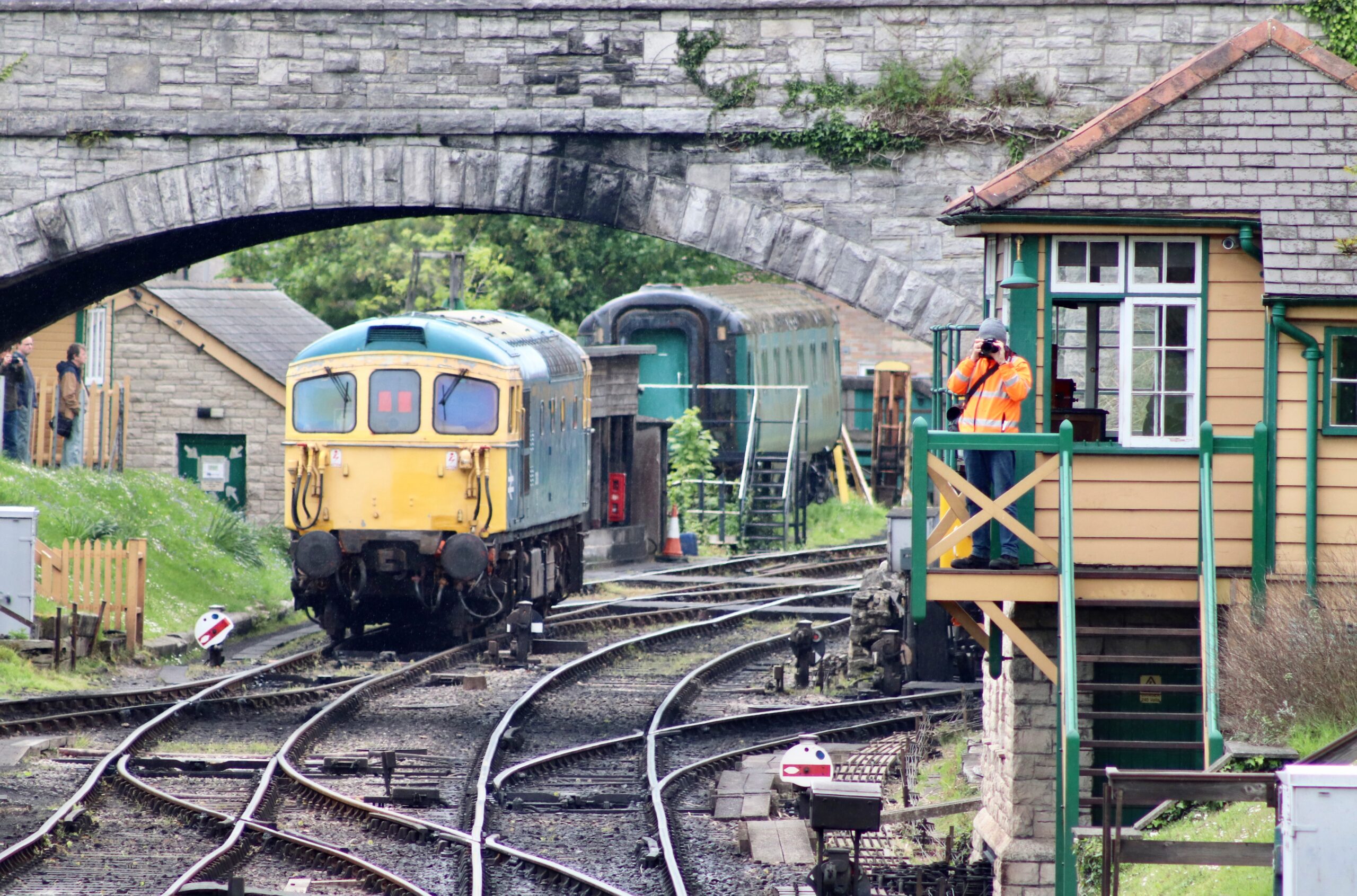
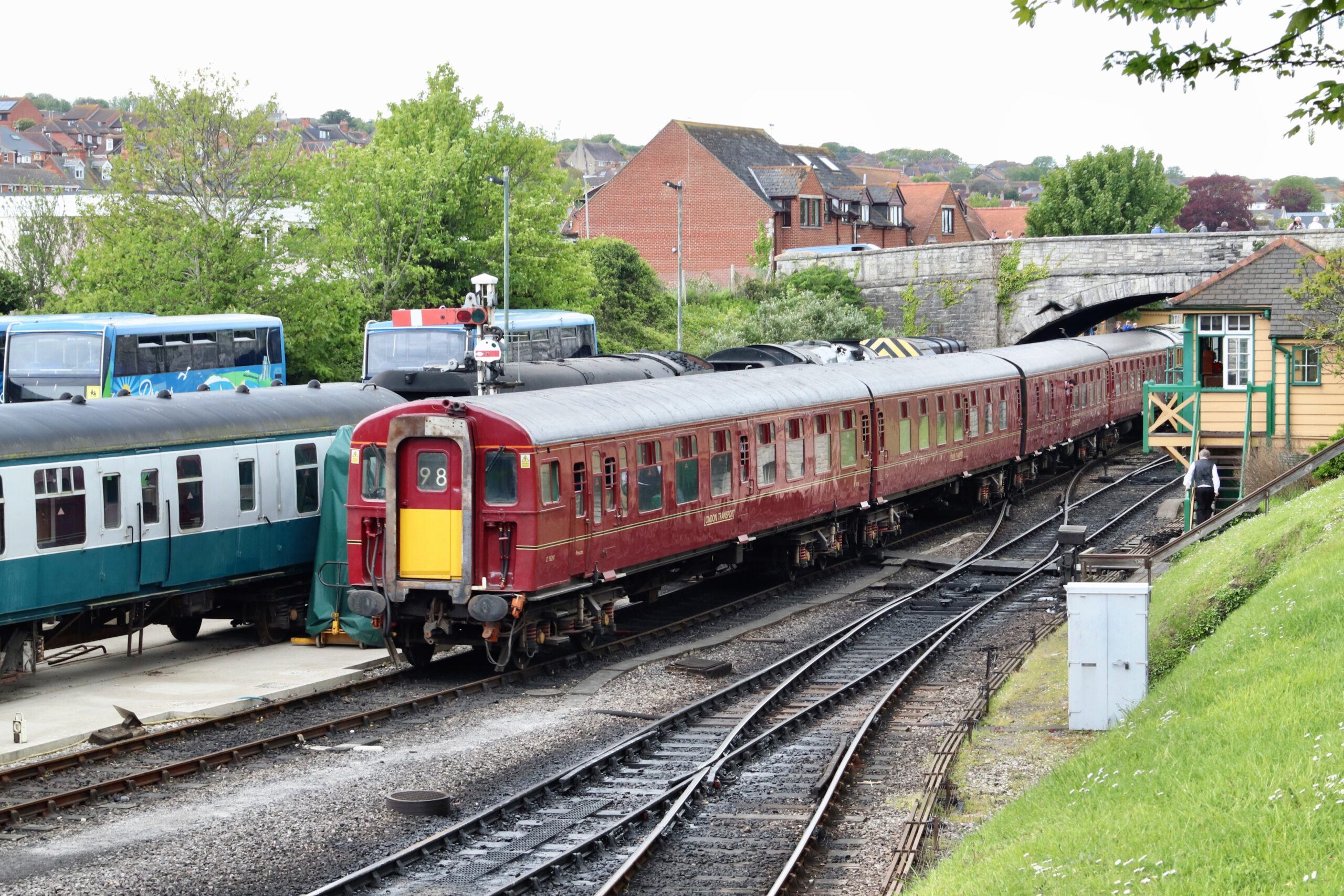
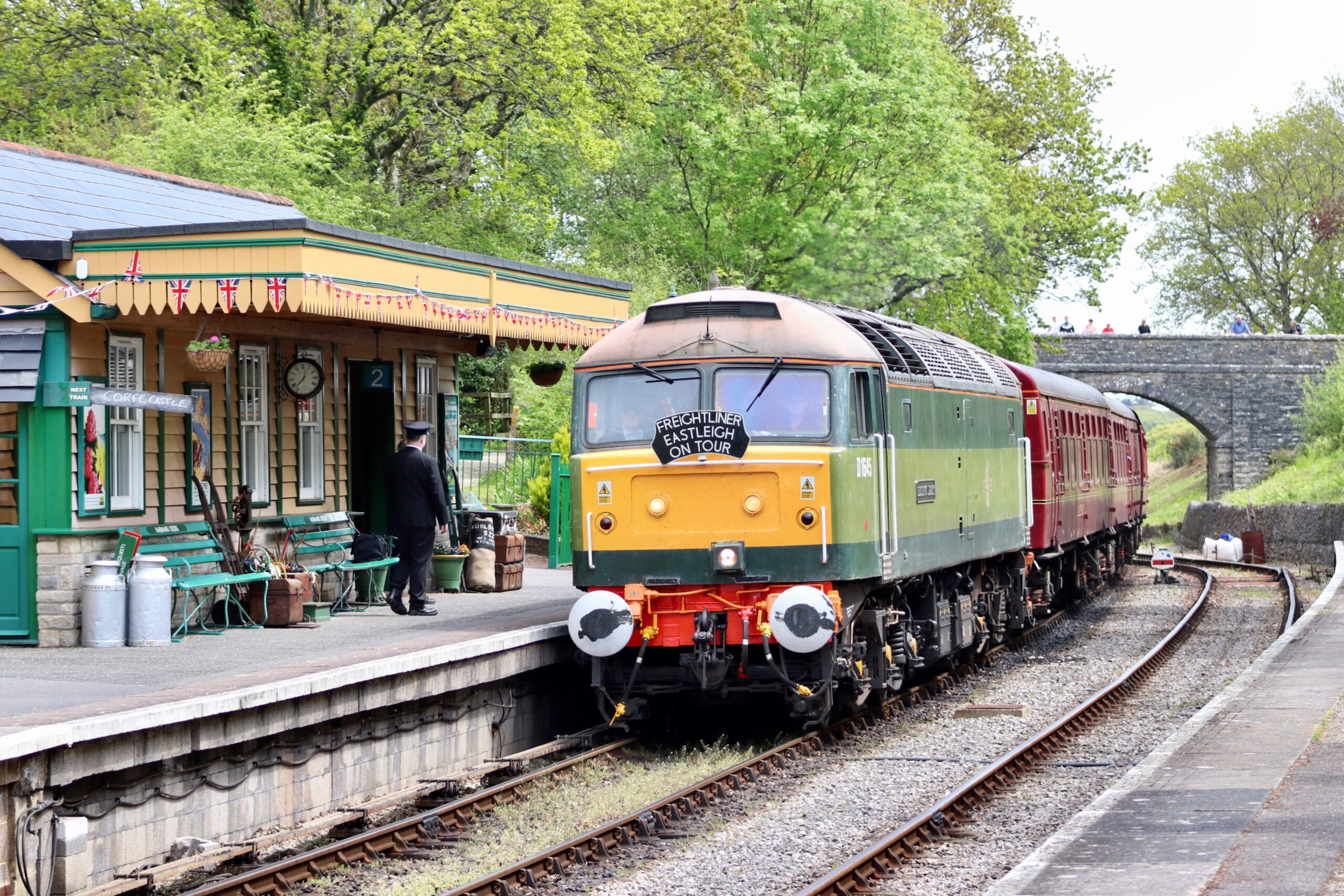
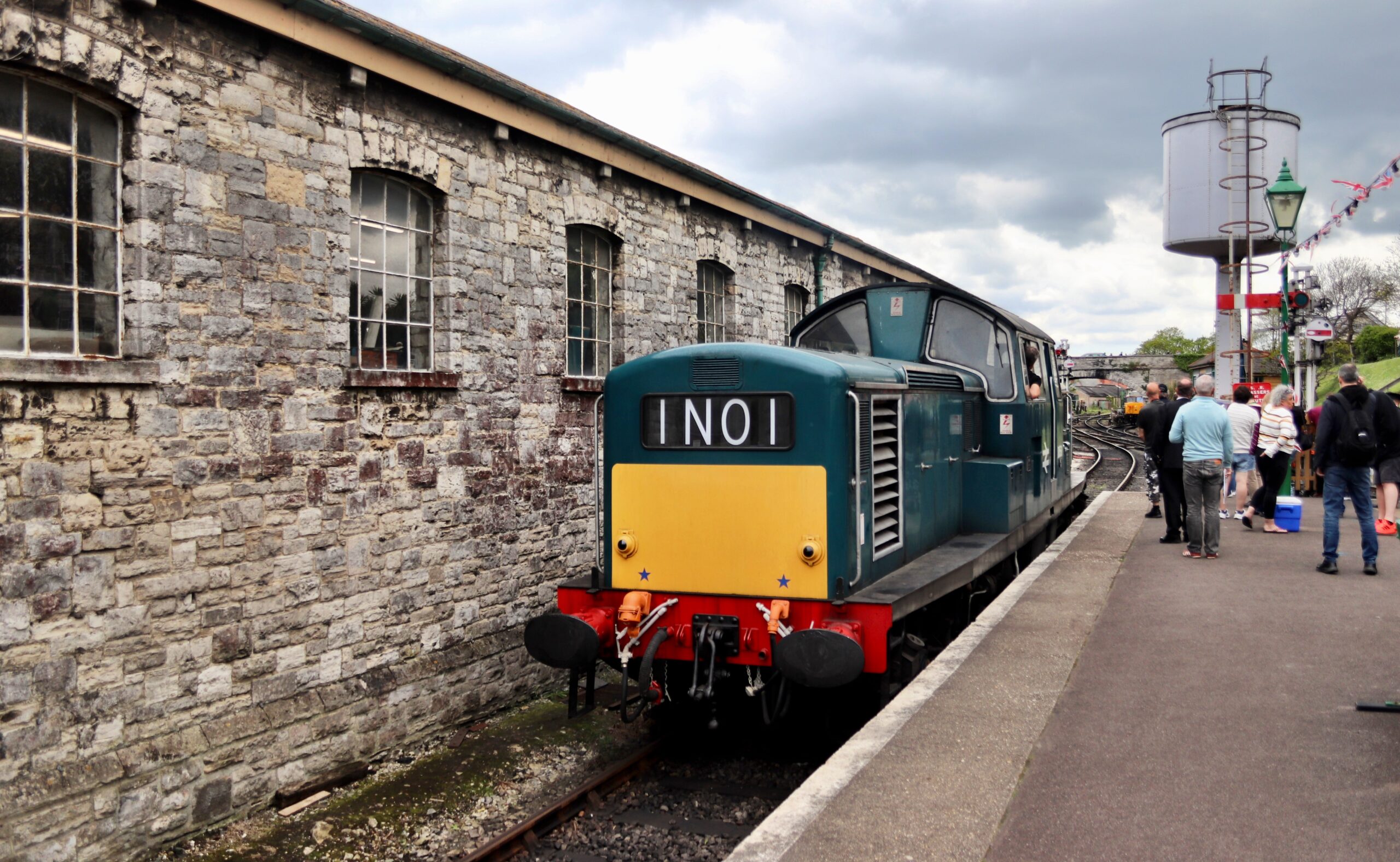
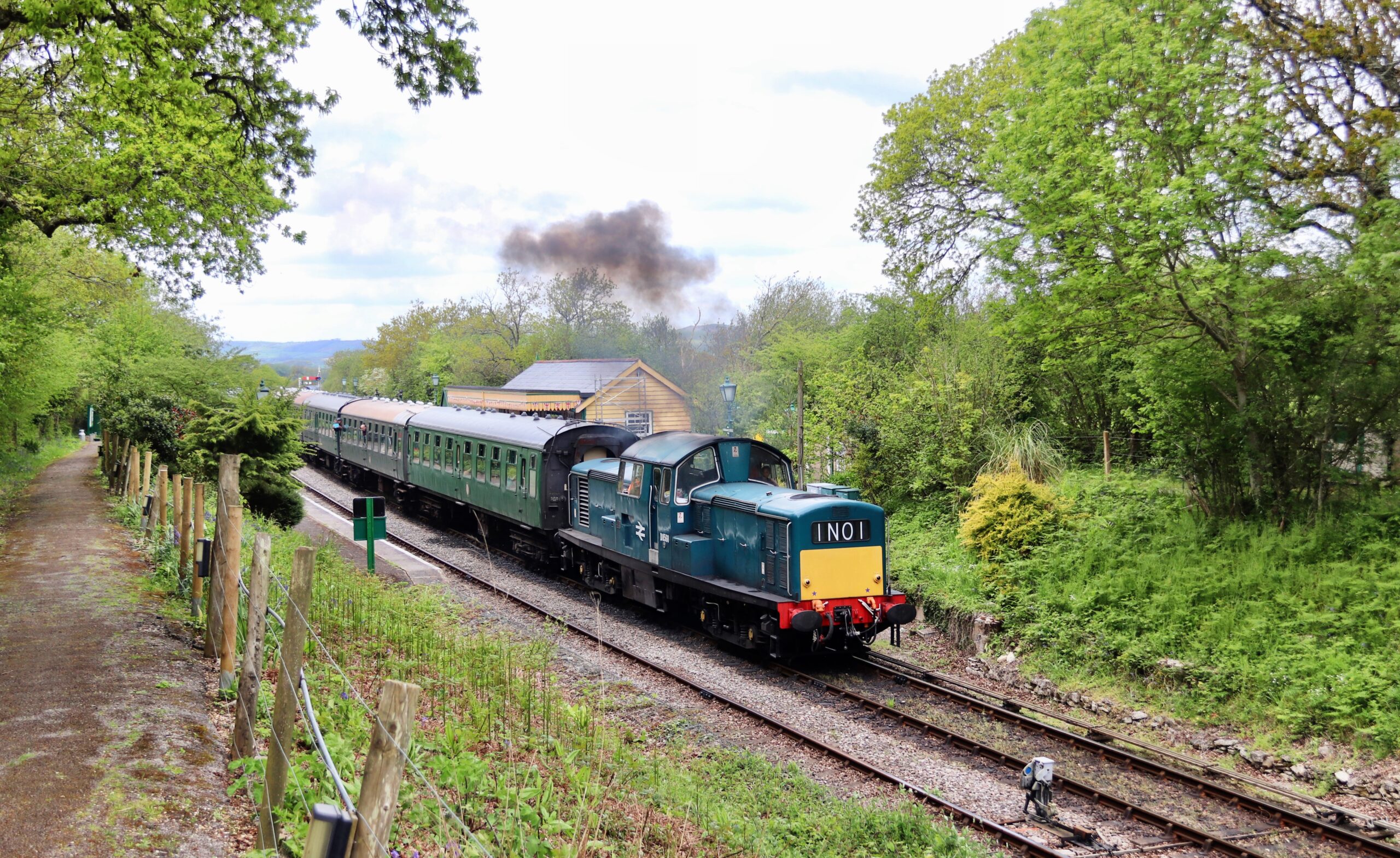
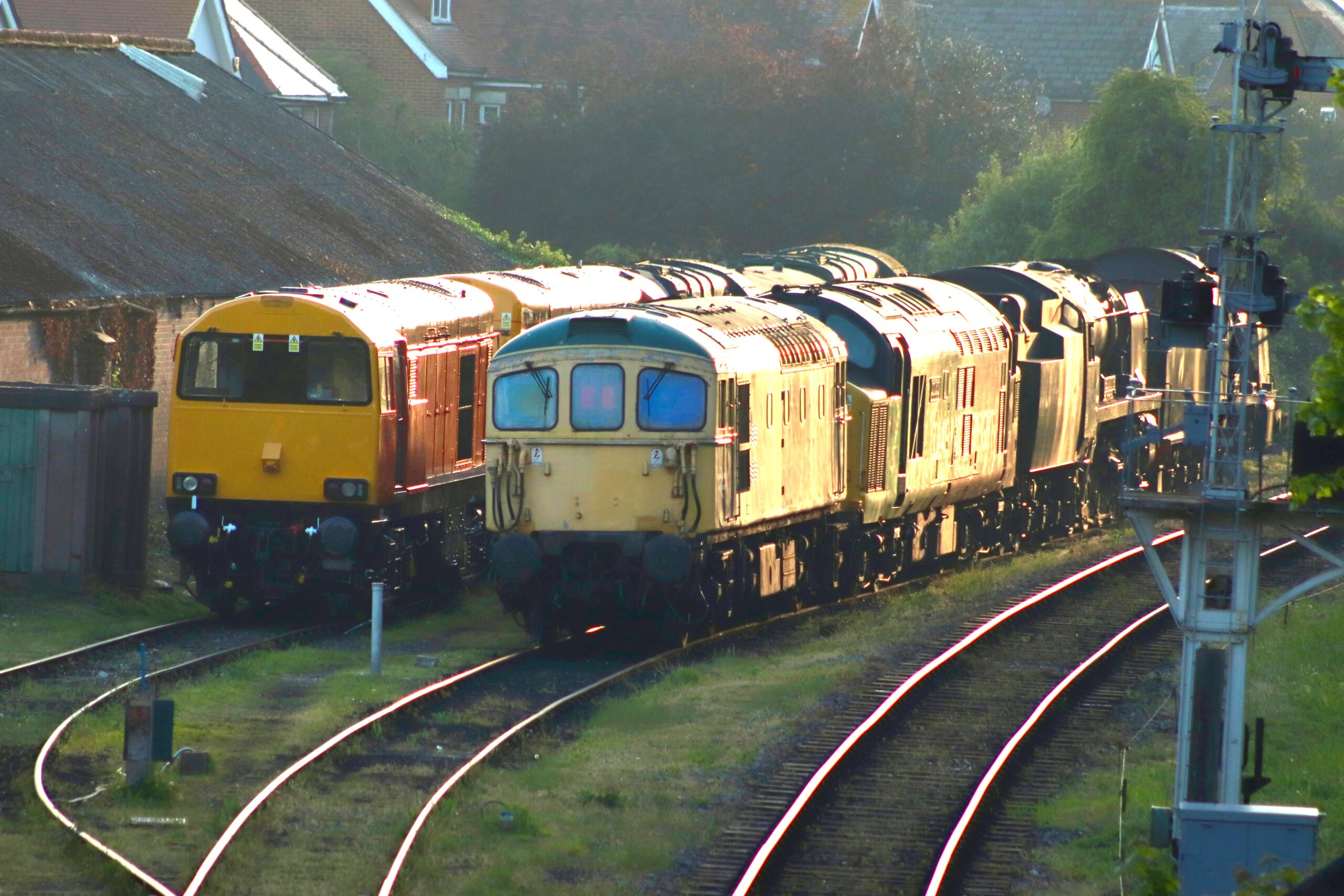
    The 2024 Swanage Railway Diesel Gala and Beer Festival took place from 10th to 12th May. Nine locomotives took part which involved an intensive three train service in operation with several trains running along the the entire length of the nine-mile line route from Swanage to the River Frome at the limit of the heritage line’s operations on the branch from Wareham. Star of the show was very much the Diesel Traction group’s Class 52 ‘Western’ No. D1015 ‘Western Champion’ which visited the Purbeck line for the first time since 2007 and the first time a member of the class which has run on the Swanage Railway since 2011. Alongside the first Class 69 hauling passenger trains on the line, the two Harry Needle Railroad Company (HNRC) Class 20’s, two Class 50’s and the Colas Class 37, the guest gala fleet was bolstered with Class 24 No. D5054 ‘Phil Southern’ which had previously arrived by road. The visiting locomotives were of course joined by Swanage Railway resident Class 33’s No. D6515 and 33111.
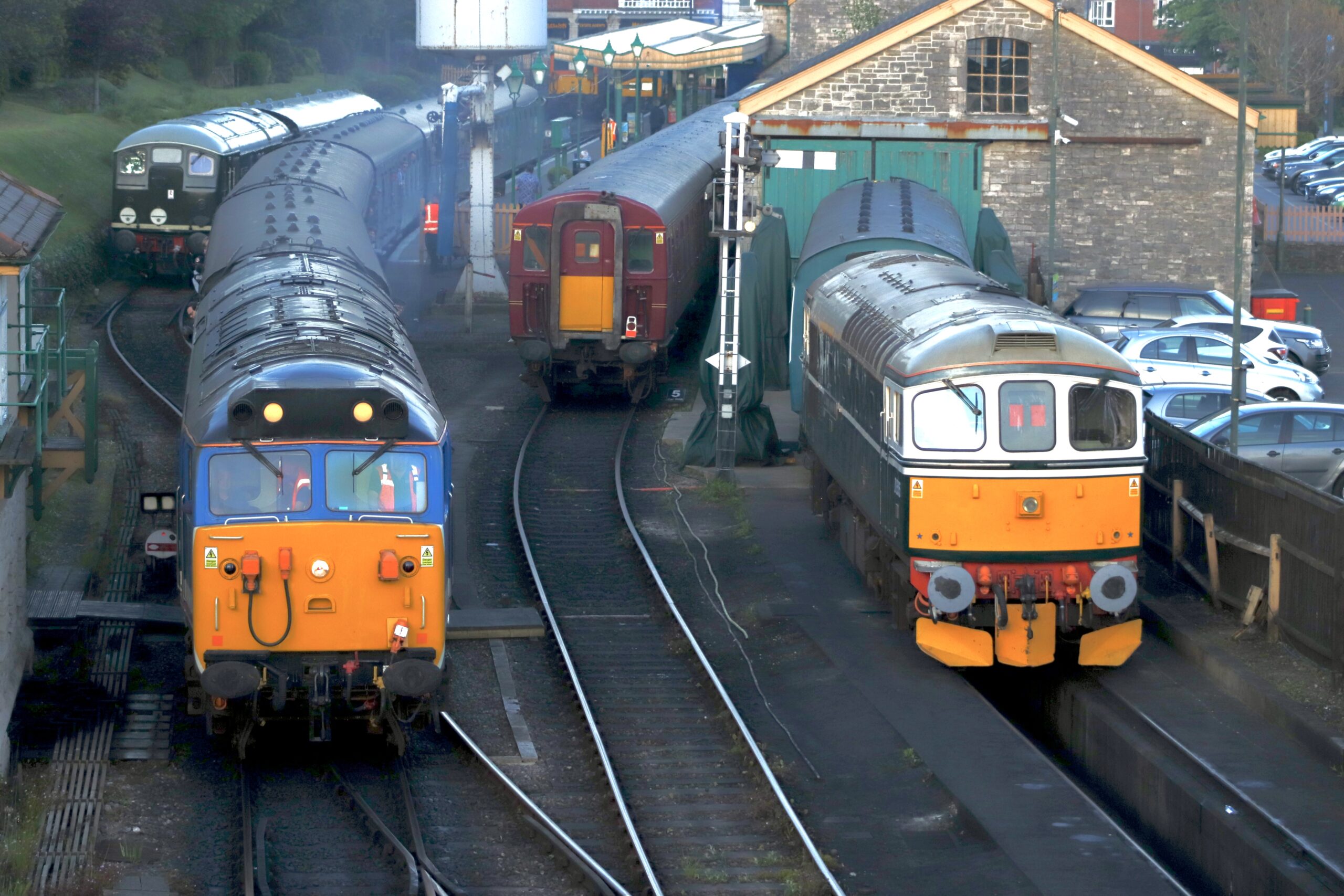
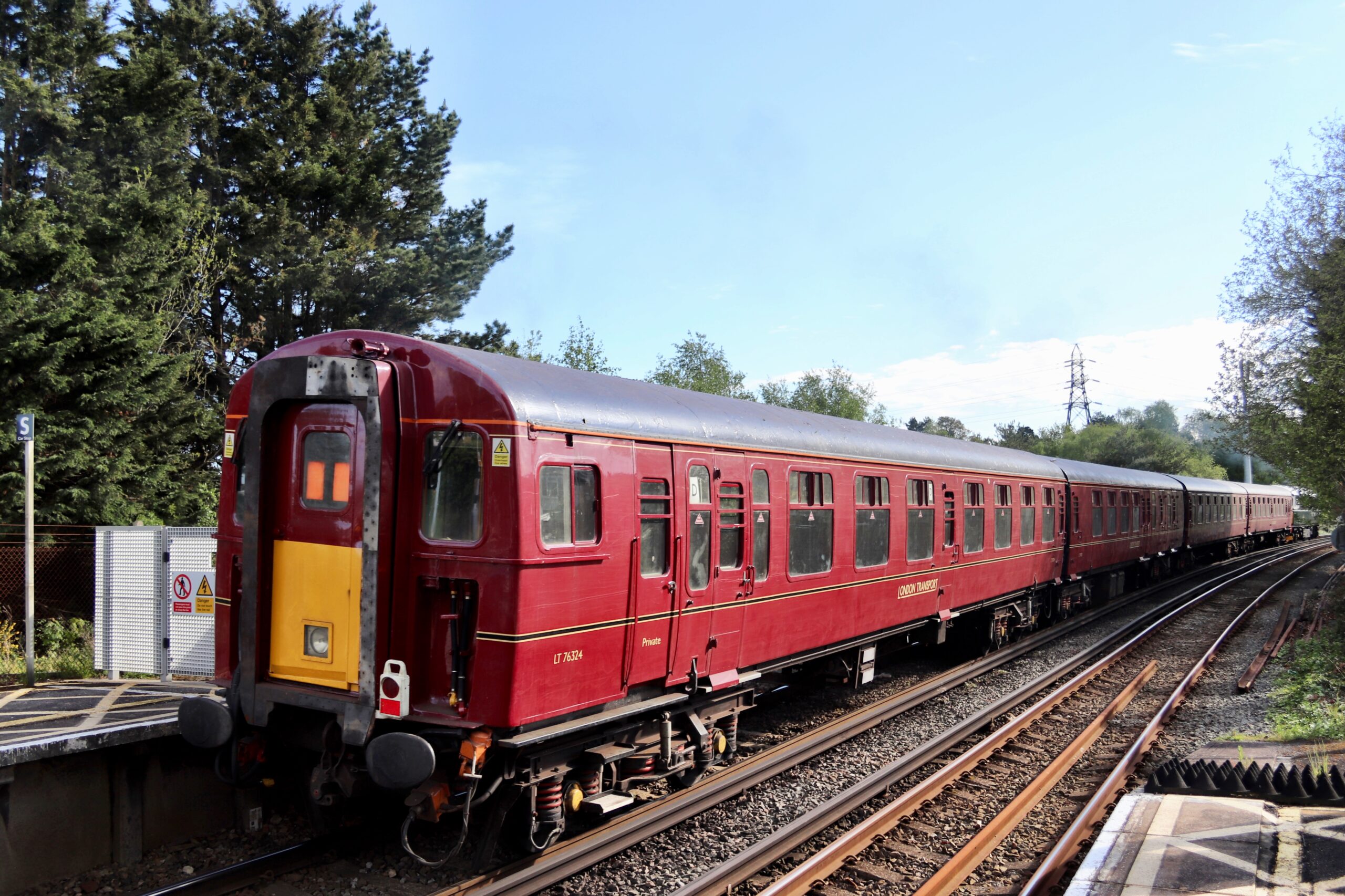
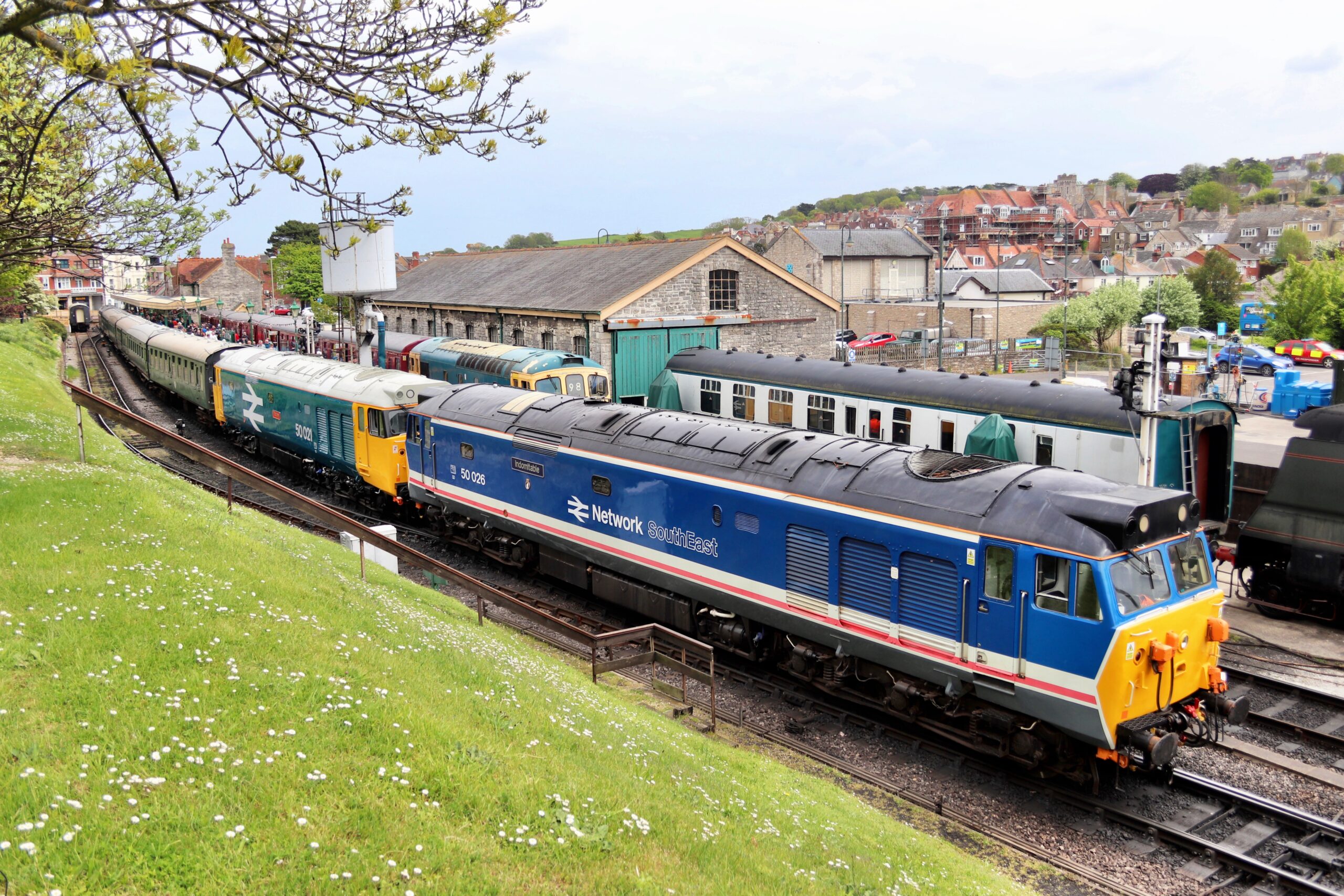
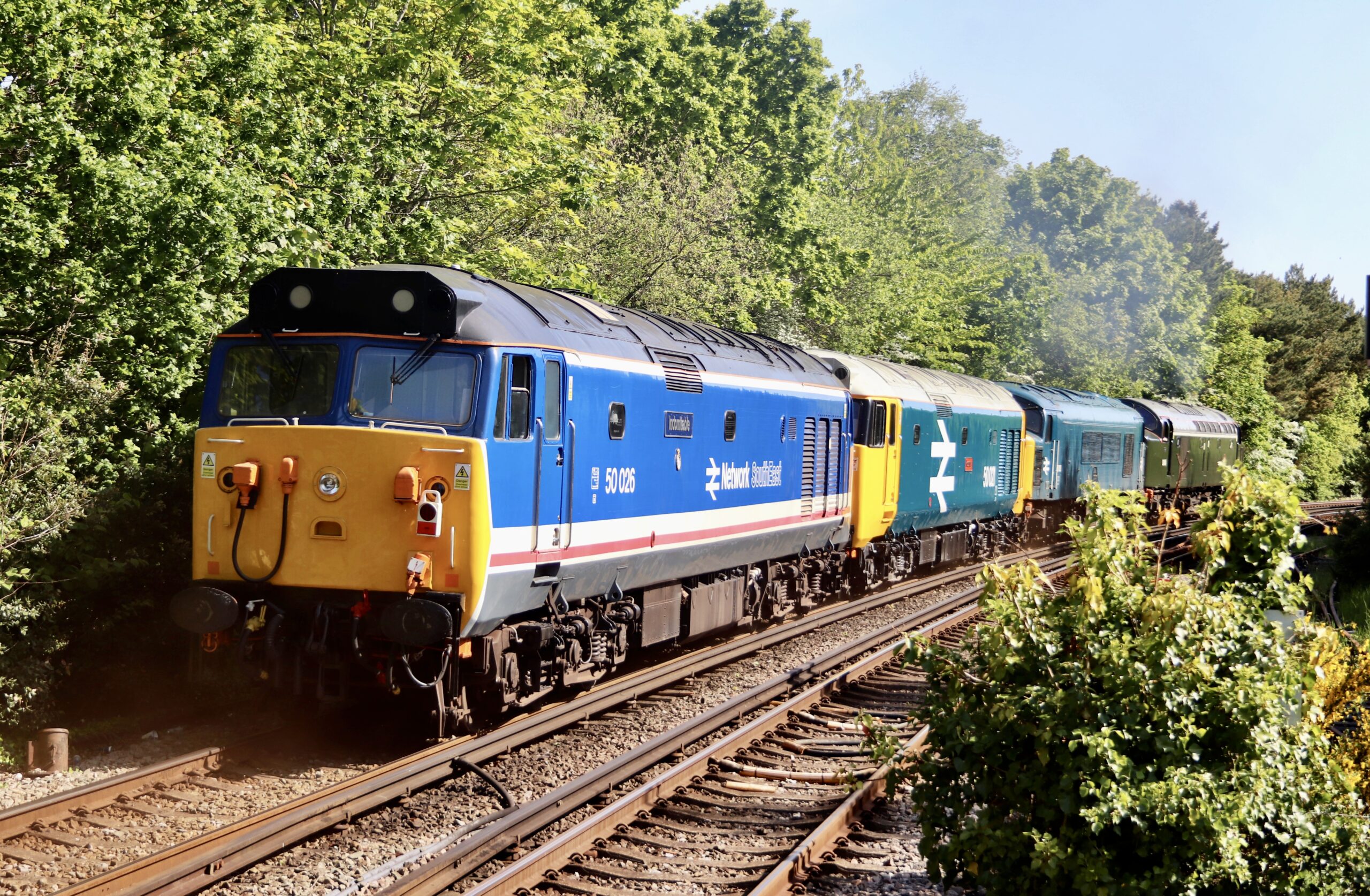
    Class 50 No. 50026 ‘Indomitable’ working a Beerex train to Corfe Castle, passing visiting Class 24 No. D5054 ‘Phil Southern’, the London Underground Class 4tc set and resident Class 33 No. D6515 (33012) ‘Lt Jenny Lewis RN’ – 10/05/2024
    An evening scene in the sidings at Swanage – 10/05/2024
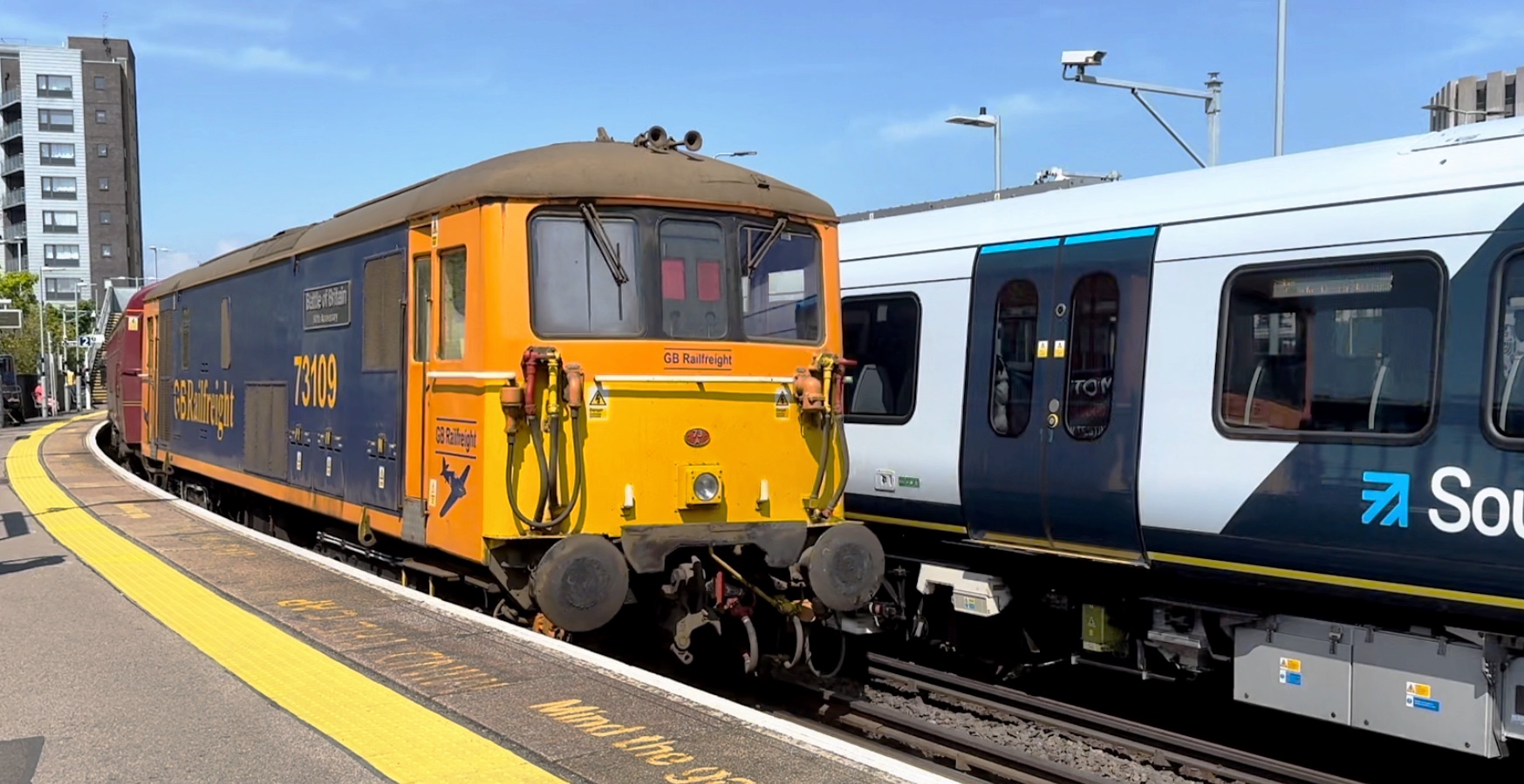
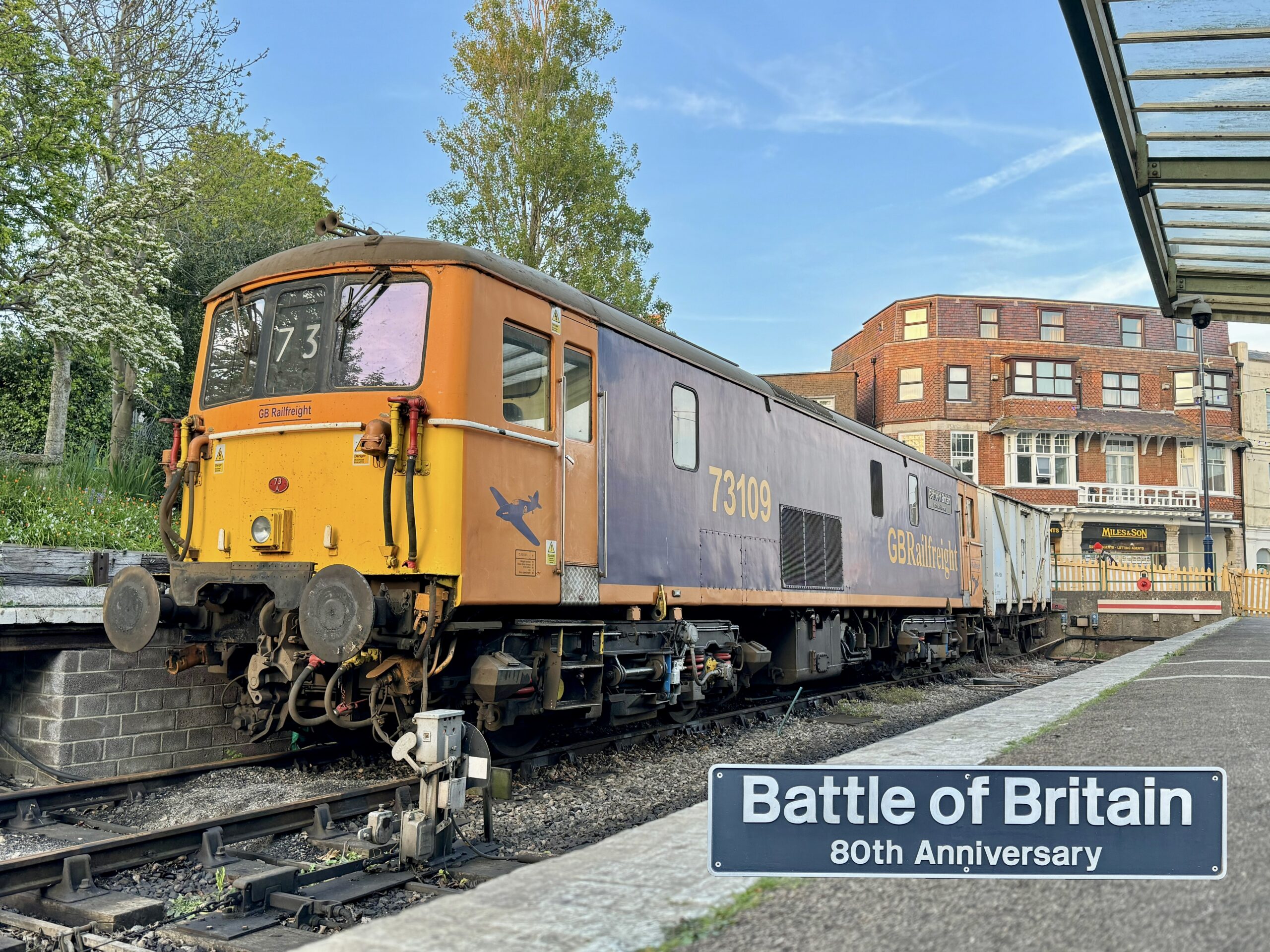
    GBRf Class 73 No. 73109 ‘Battle of Britain’ was on static display at Swanage station. The locomotive was enlisted to assist Class 33 No. D6515 (33012) ‘Lt Jenny Lewis RN’ on mainline railtour duty when the “Crompton” developed a fault – 10/05/2024
    Class 24 No. D5054 ‘Phil Southern’ from the East Lancs Railway. No. D5054 is one of just four preserved examples from the original 151 strong fleet of locomotives and was amongst the first diesel locomotives to be based at Bury. She is seen here at Swanage – 10/05/2024

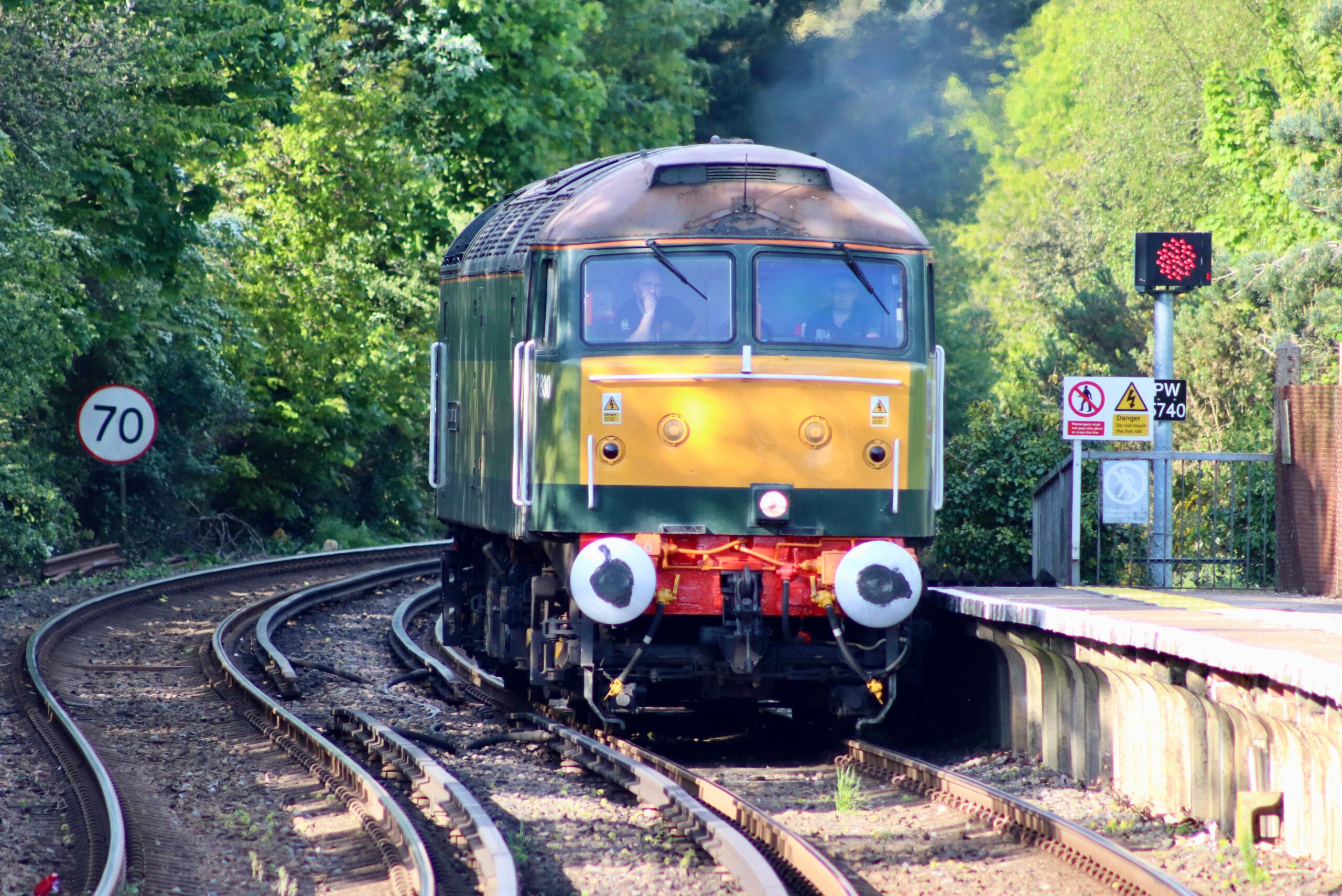
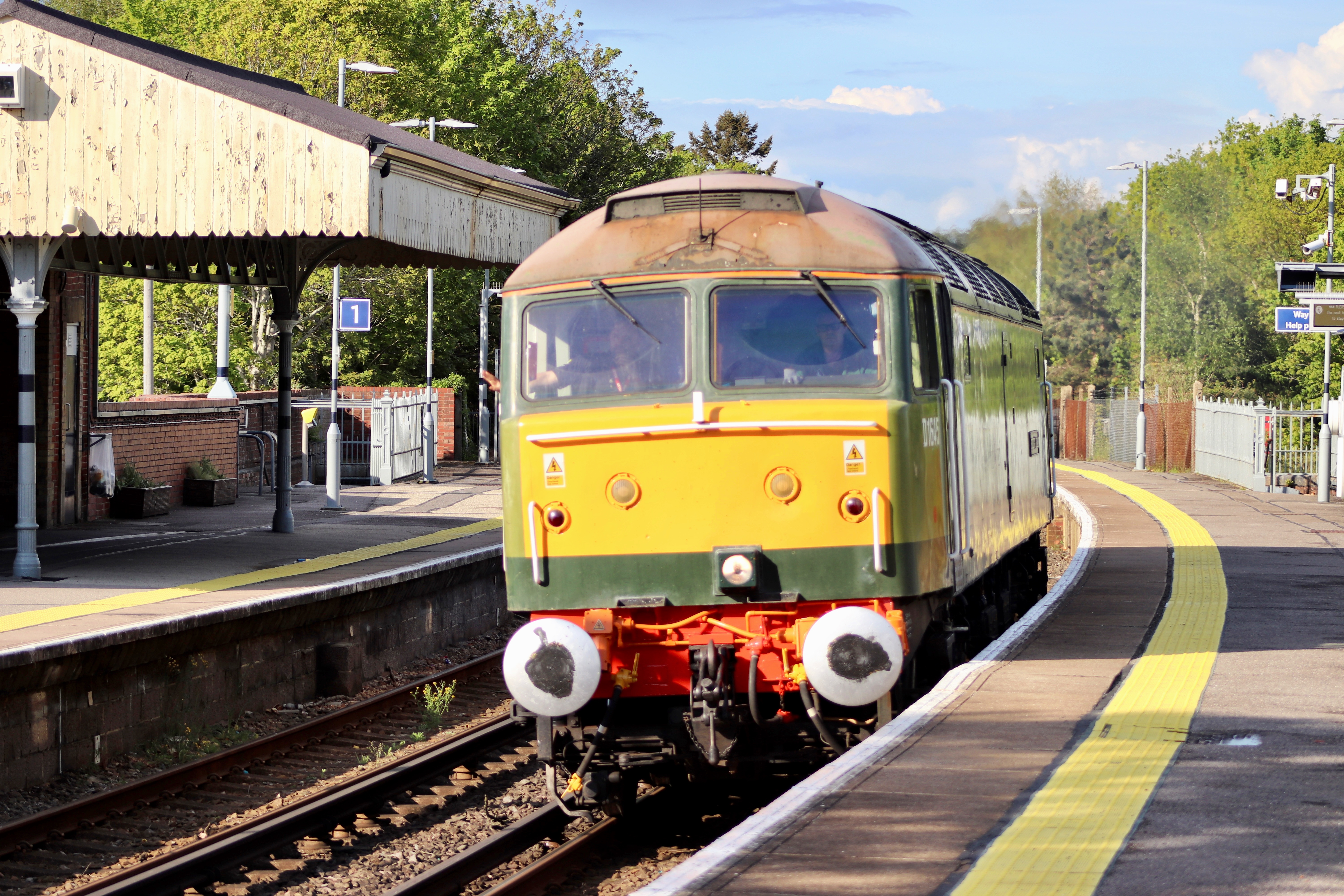
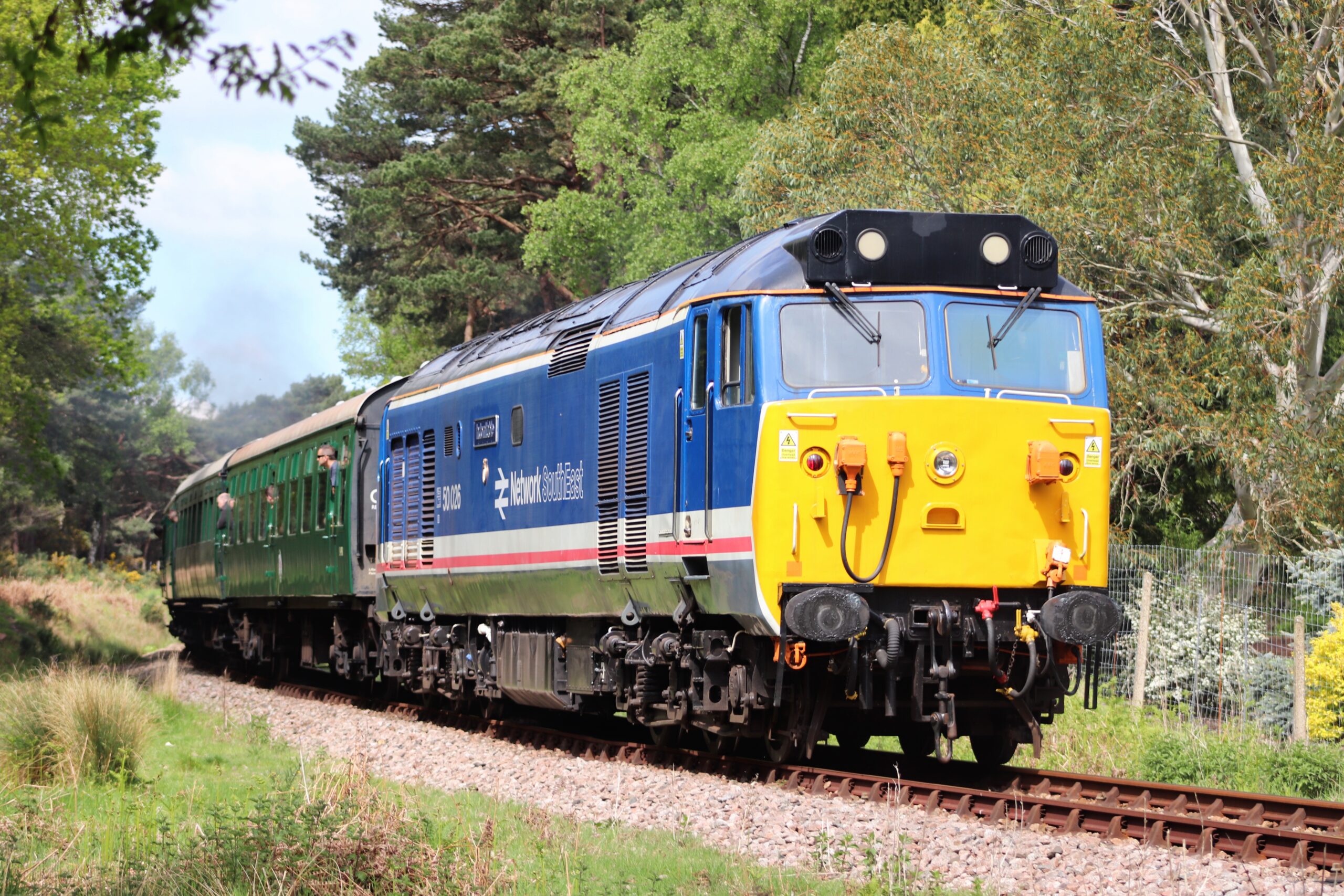
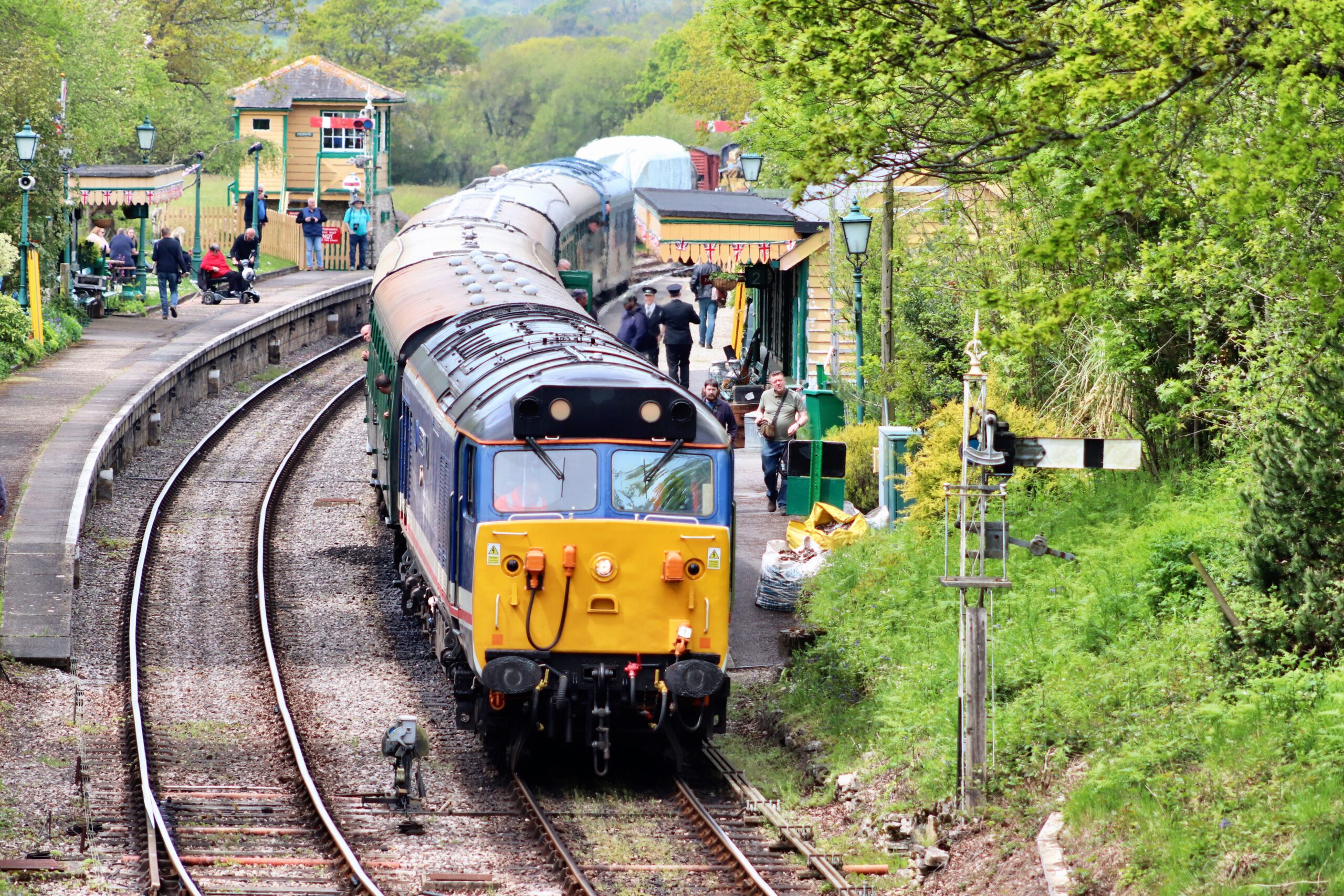
    Class 50 No. 50026 ‘Indomitable’ was only scheduled to haul the Friday evening “Beerex” trains and it wasn’t to take any further part in the gala weekend. However, issues with the electronic field supply for the Electric Train Heat (ETH) generator on No. 50021 ‘Rodney’ meant the locomotive was withdrawn from running and the timetable had to be revised and No. 50026 was pressed into service. On a Class 50, the ETH generator also powers the radiator fan so the fault meant the locomotive had no cooling fan and without which would quickly overheat.

    Visiting Class 24 No. D5054 ‘Phil Southern’ on the approach to Harmans Cross – 11/05/2024
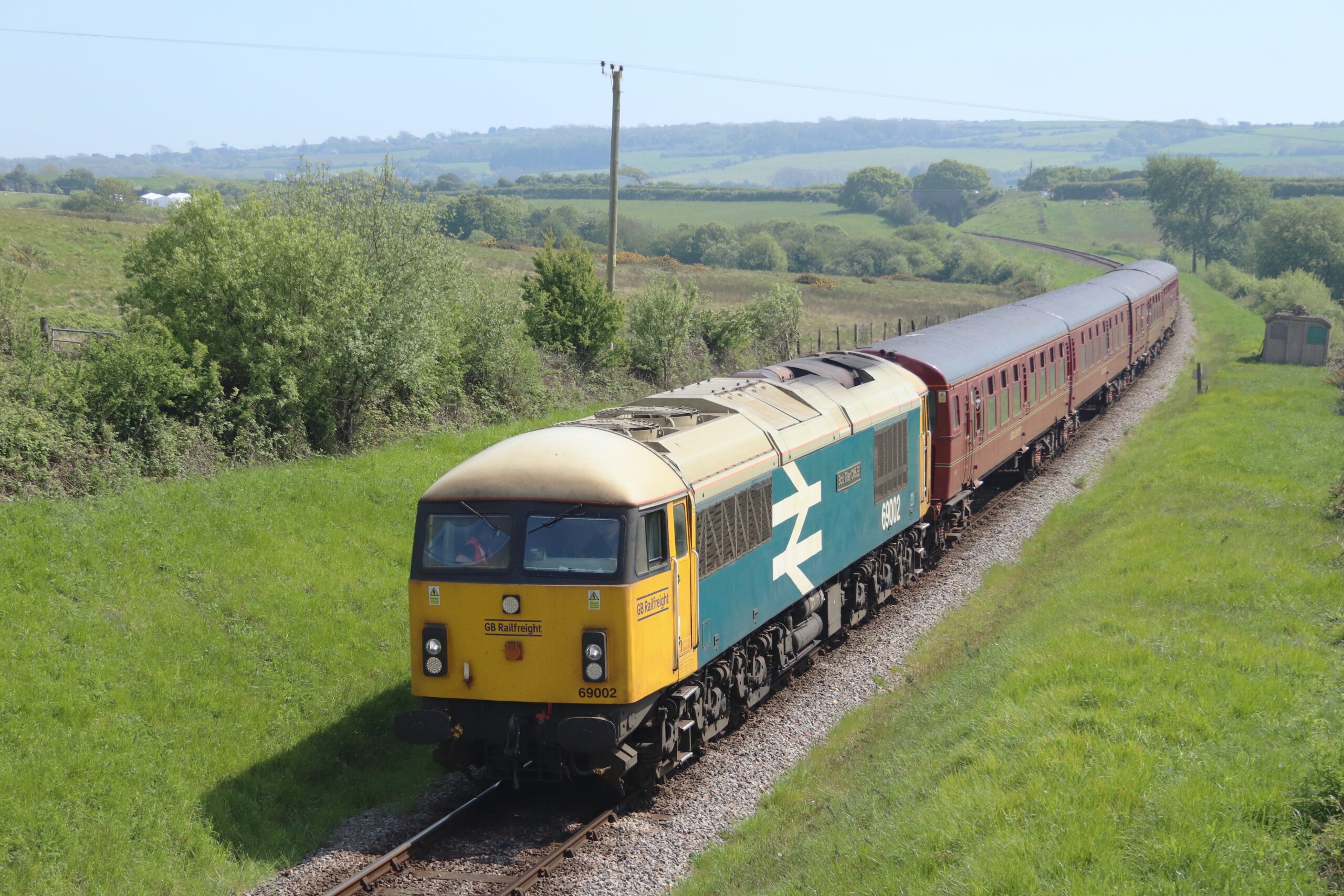
    GBRf Class 69 No. 69002 ‘Bob Tiller CM&EE’ ( a late replacement for failed sister loco No. 690XX) draws away from Harmans Cross – 11/05/2024
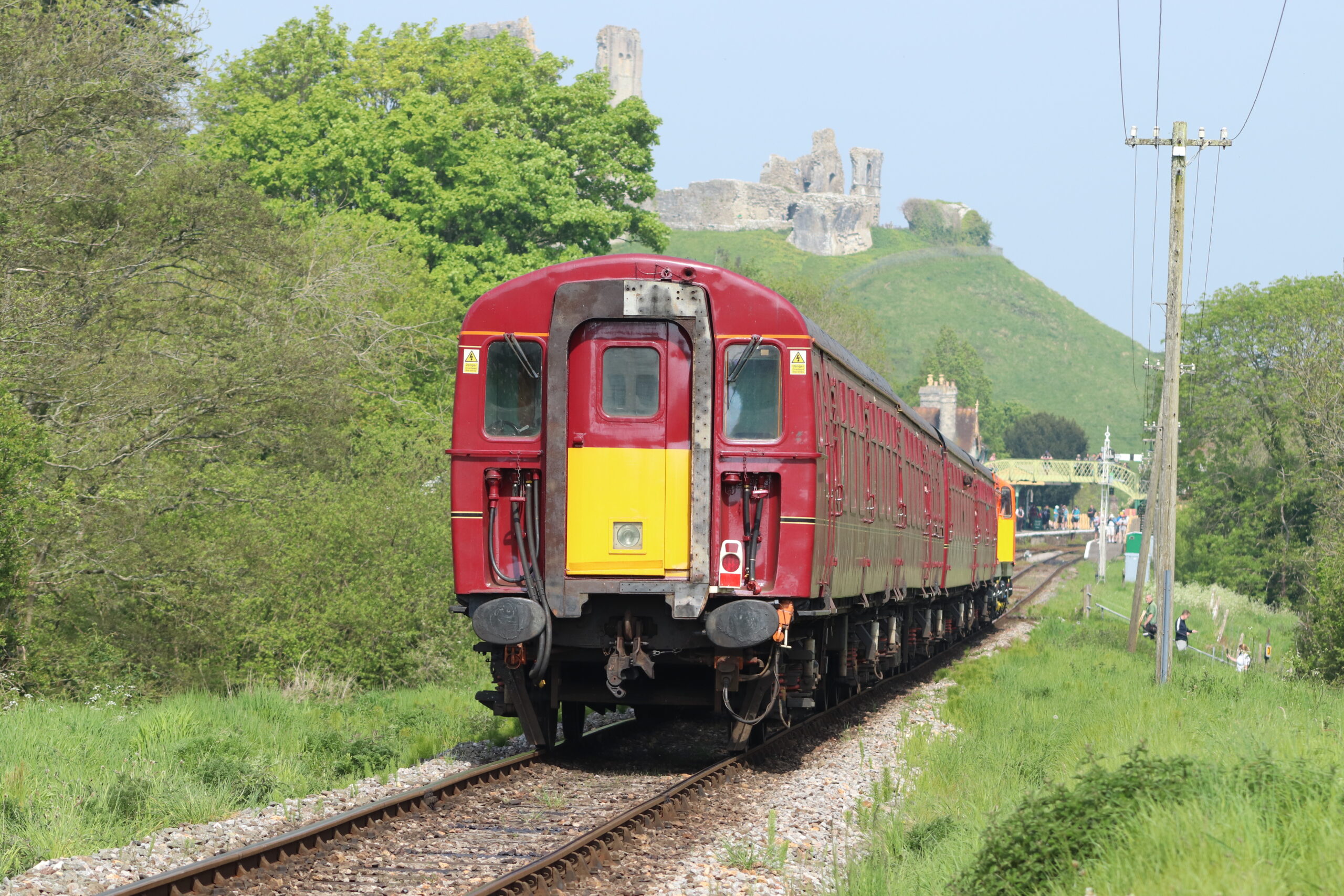
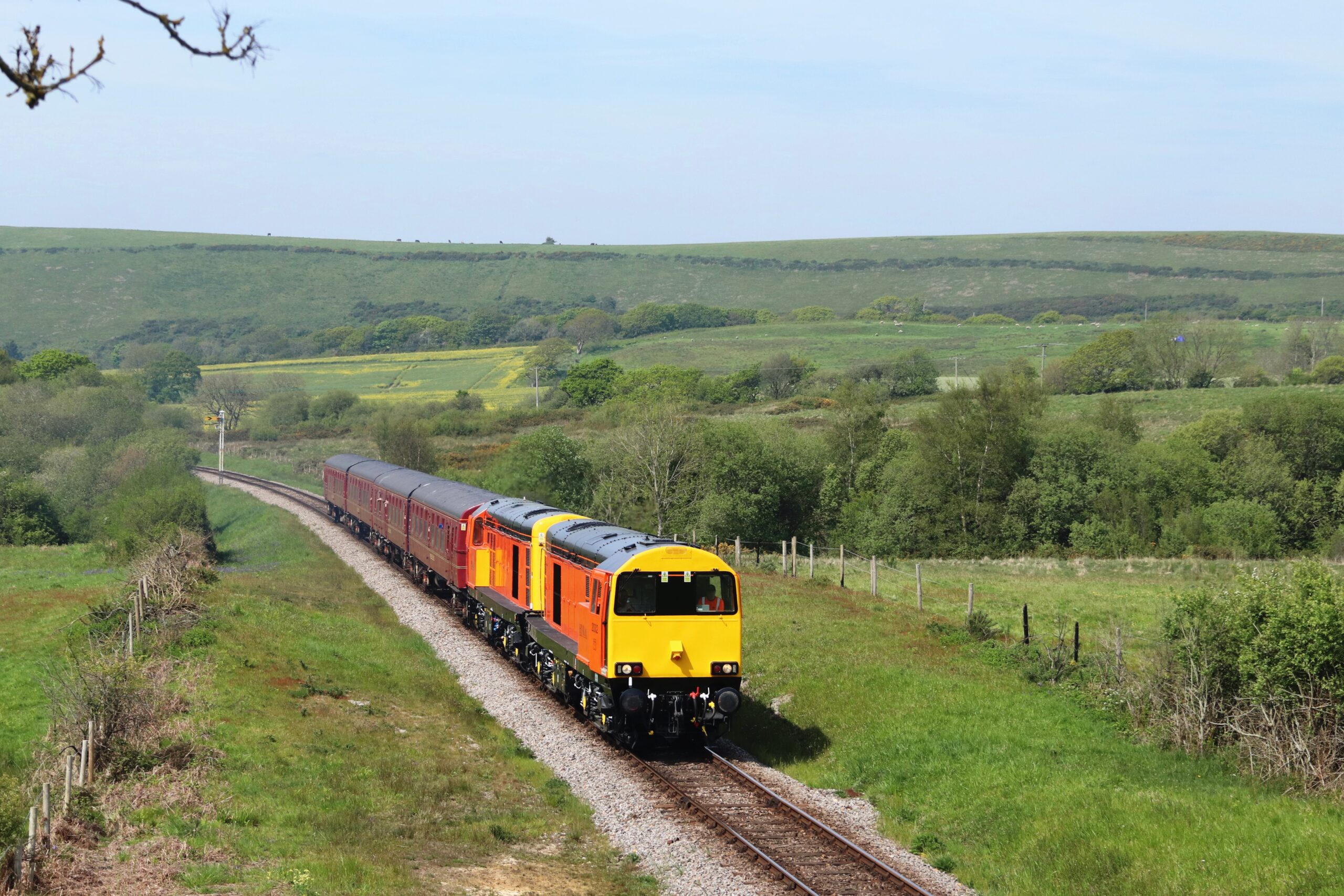
    Harry Needle Railroad Company (HNRC) Class 20 No.’s 20311 and 20302 hauling the London Underground 4tc set on the approach toCorfe Castle – 11/05/2024
    The London Underground Class 438 4tc set being hauled by the HNRC Class 20’s towards Corfe Castle – 11/05/2024
    Class 52 “Western” Diesel-Hydraulic No. D1015 ‘Western Champion’ on the approach to Corfe Castle – 11/05/2024
    Class 33 No. D6515 (33012) ‘Lt Jenny Lewis RN’ makes a fine sight departing Corfe Castle – 11/05/2024
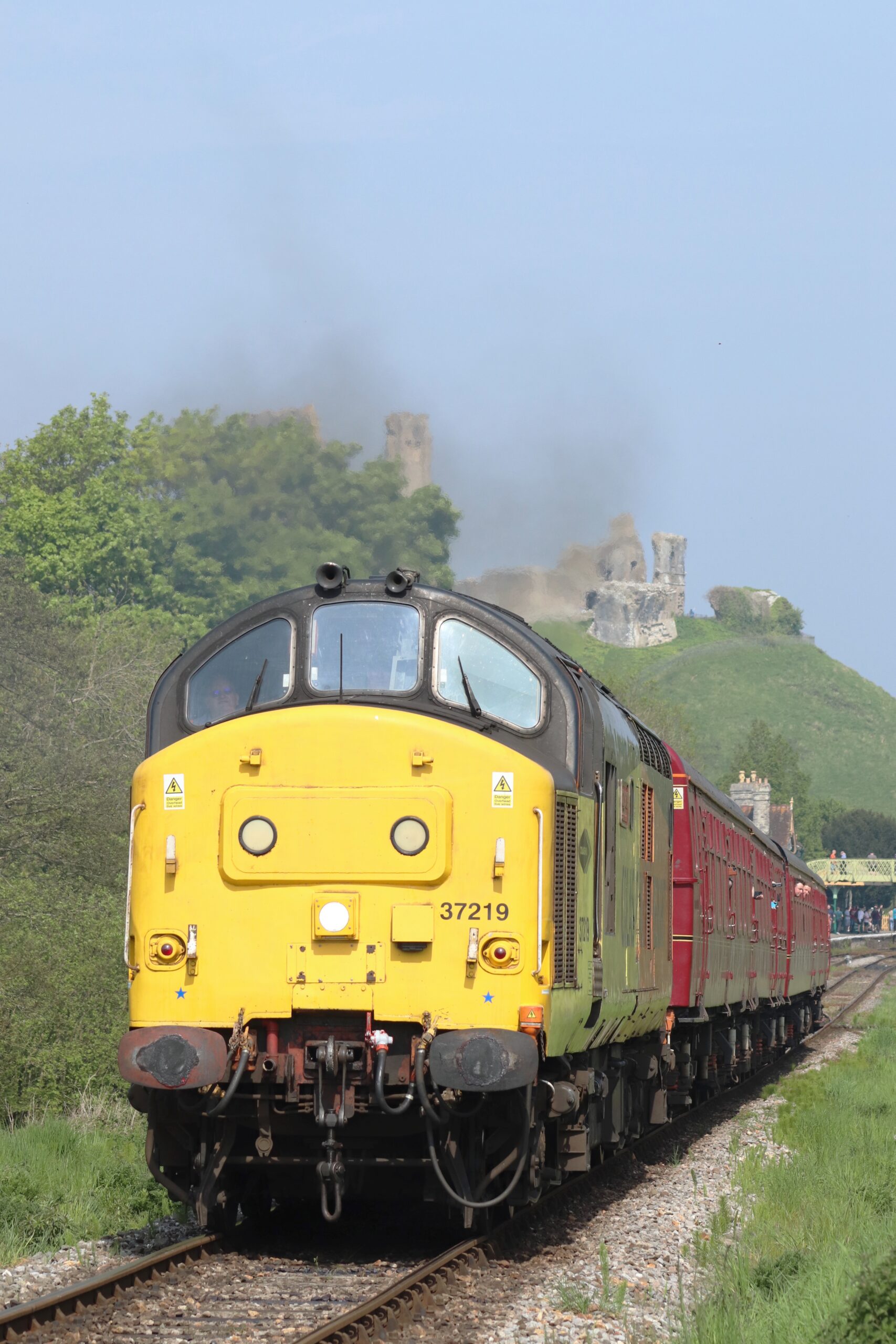
    Colas Railfreight Class 37 No. 37219 ‘Jonty Jarvis’ accelerates up the slight incline from Corfe Castle station – 11/05/2024
    Class 33 No. 33111 having departed Corfe Castle station – 11/05/2024
    Carrying a “Sulzer” headboard, Class 33 No. D6515 (33012) ‘Lt Jenny Lewis RN’ departs Swanage as the driver receives the token for the single line working from the signalman – 11/05/2024
    In its Network South East (NSE) livery, Class 50 No. 50026 ‘Indomitable’ powers towards Swanage – 11/05/2024
    GBRf Class 69 No. 69002 ‘Bob Tiller CM&EE’ having past Afflington. The London Underground 4tc set was made much use of during the gala weekend – 11/05/2024
    Harry Needle Railroad Company (HNRC) Class 20 No.’s 20311 and 20302 hauling the London Underground 4tc set towards Corfe Castle – 11/05/2024
    HNRC Class 20 No.’s 20302 and 20311 double head the London Underground 4tc set across Corfe Common – 11/05/2024
    Swanage resident Class 33 No. 33111 heads a train from Swanage – 11/05/2024
    Class 52 No. D1015 ‘Western Champion’ heads a Swanage bound train – 11/05/2024
    Colas Railfreight Class 37 No. 37219 ‘Jonty Jarvis’ hauls the London Underground 4tc set across Corfe Common – 11/05/2024
    Class 24 No. D5054 ‘Phil Southern’ heads towards Corfe Castle – 11/05/2024
    Colas Railfreight Class 37 No. 37219 ‘Jonty Jarvis’ powers towards Corfe Castle with Afflington Bridge behind – 11/05/2024
    My final shot of the day, GBRf Class 69 No. 69002 ‘Bob Tiller CM&EE’ with Corfe Castle in the distance heads across Corfe Common with a Swanage bound train – 11/05/2024

    Unfortunately there was further disruption on Saturday evening when No. 50026, on the back of a six-carriage passenger train, became partially derailed at Castle Corfe station at approximately 1830 – around the same time I was settling down to watch new ‘Doctor Who’ on BBC 1. The evening gala and Beerex services were suspended following the incident. No passengers were injured and no damage was sustained to the carriages on the train. The government’s Rail Accident Investigation Branch (RAIB) were advised and they carried out an investigation on the cause of the derailment. The Class 50 was re-railed during the night by rail support service Goodman’s and inspections did not reveal any damage to the locomotive.

    Webcam Screenshot from the Corfe Castle camera showing Class 50 No.50026 ‘Indomitable’ being assessed after she came off the rails. The Webcam feed was later turned off at the request of the Rail Accident Investigation Board (RAIB) – 11/05/2024
    Video glimpse of the 2024 Swanage Diesel Gala

    Also of nite, the Saturday saw a surprise run of a pair of SWR Class 450 EMU’s to Weymouth forming an eight coach train. I was too busy on the Swanage Railway or watching new “Doctor Who” to pop out and see them, but good friend of the blog @da_buckley967 was on hand to capture No.’s 450091 and 450038 in Weymouth station having worked in from Portsmouth earlier in the day.

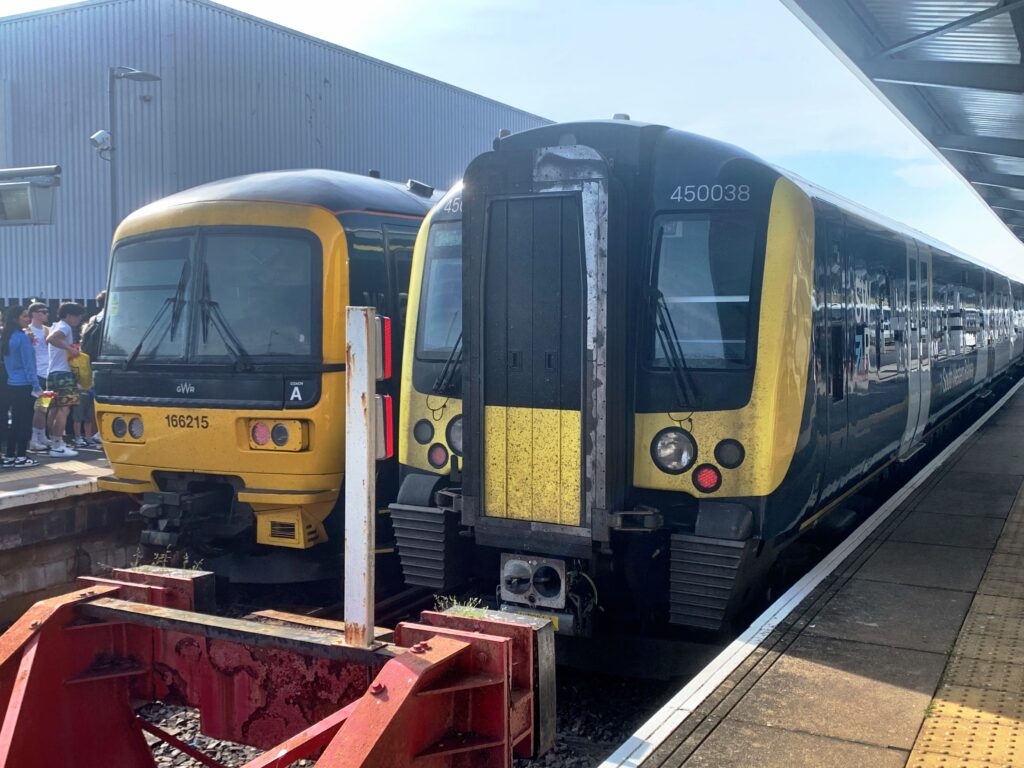
    Unusual visitors for Weymouth; two four car SWR Class 450 EMU No.’s 450091 and 450038 stand at platform having worked in with a VSTP (Very Short Term Plan) working 1K21 1056 Portsmouth Harbour to Weymouth – 11/05/2024 (Image courtesy of da_buckley967)
    SWR Class 450 No. 450038 forming the rear of 1K32 1903 Weymouth to Portsmouth Harbour at the buffer stops in Weymouth alongside GWR Class 166 No. 166215 working 2V96 1845 Weymouth to Bristol Temple Meads – 11/05/2024 (Image courtesy of da_buckley967)

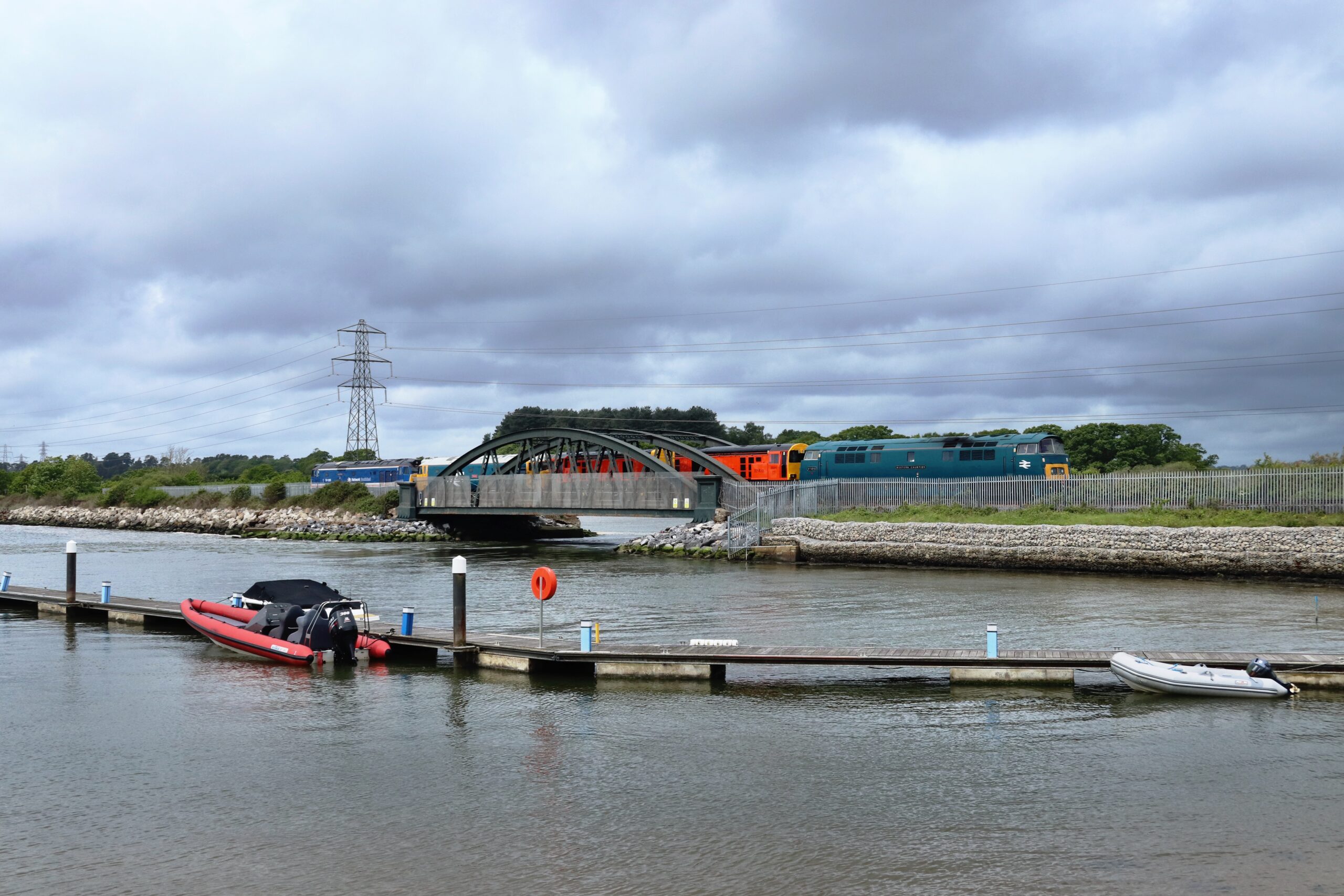
    A heavily revised timetable was implemented at the Swanage Diesel Gala on the Sunday, but the BLS charter the “Return of the Jurassic Crompton” ran as scheduled, departing Swanage at 1430. We saw the charter train crossing the Holes Bay causeway.

    Class 33 No. D6515 (33012) ‘Lt Jenny Lewis RN’ traverses Creekmoor Viaduct with GBRf Class 73 No. 73109 ‘Battle of Britain’, the London Underground 4tc set and GBRf Class 69 No. 69002 ‘Bob Tiller CM&EE’ at the rear working the Branch Line Society railtour “The Return of the Jurassic Crompton” 1Z35 1420 Swanage to London Waterloo across Holes Bay causeway on the approach to Poole – 12/05/2024
    D6515 (33012) ‘Lt Jenny Lewis RN’ entering Wareham working light engine movement 0z36 1105 Eastleigh Arlington (ZG) to Swanage – 13/05/2024
    D6515 (33012) ‘Lt Jenny Lewis RN’ pauses at Wareham to pick up Swanage Railway crew as she returns to the heritage railway after the previous days railtour – 13/05/2024

    The other visiting locomotives mostly departed over the next couple of days, with No. 37219 ‘Jonty Jarvis’ leaving first on Monday 13th and a convoy consisting of the No. D1015, the Class 20’s and both Class 50’s heading to Eastleigh on Tuesday 14th.

    Colas Rail Class 37 No. 37219 ‘Jonty Jarvis’ passes through Hamworthy running as 0F75 1030 Swanage to Westbury Down TC – 13/05/2024
    Homeward bound – the Swanage Diesel Gala guest locomotive convoy crosses Rockley Sands Viaduct with Class 52 D1015 ‘Western Champion’ hauling HNRC Class 20’s 20311 and 20302 with 50021 ‘Rodney’ and 50026 ‘Indomitable’ reporting as 0Z50 1032 Swanage to Eastleigh Arlington (ZG) – 14/05/2024
    Video from of the 2024 associated Swanage Diesel Gala mainline workings

    Tuesday and another Class 458 delivery / departure ran, once again in the hands of GBRf Class 69 No. 69008 heading up 5Q64 1534 Southampton Central to Bournemouth TRSMD with refurb SWR Class 458 No. 458413 and returning later on 5Z66 2018 Bournemouth TRSMD to Eastleigh East Yard which took No. 458512 on its first leg to Widnes for refurbishment. These moves ran early and I missed my chance at taking photographs, however I did manage to capture some quick video of the first working as it passed Poole Park.
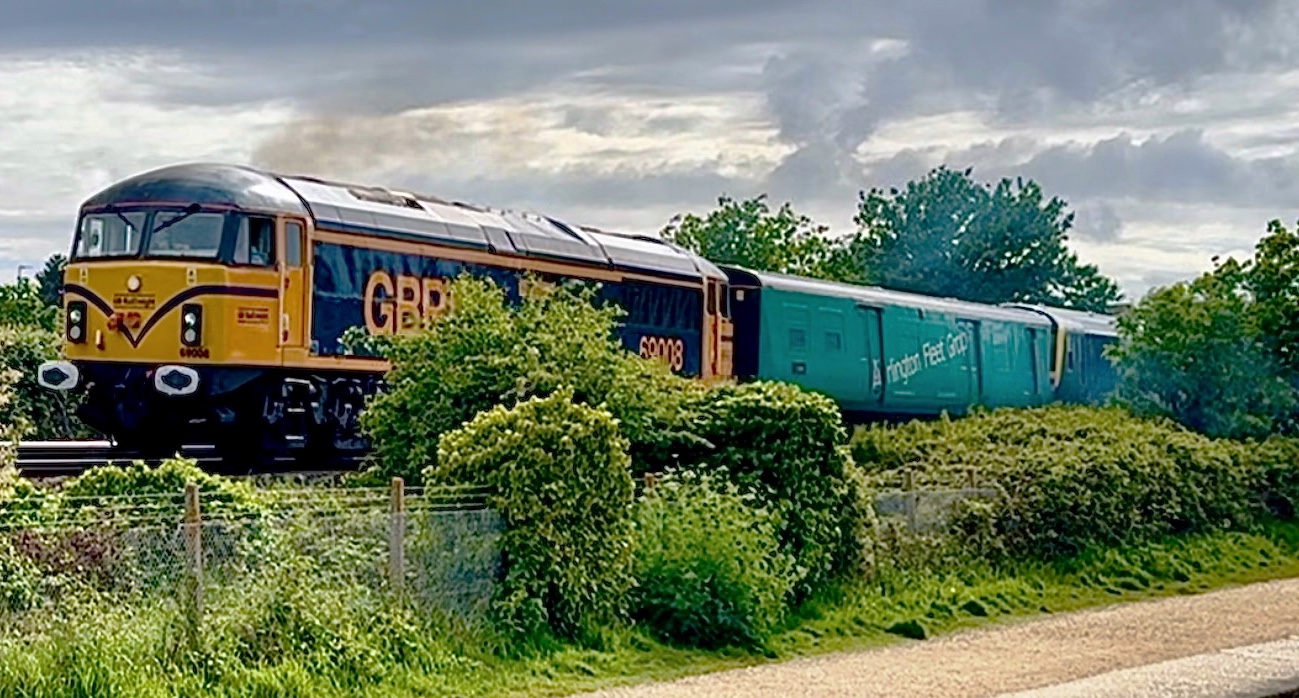
    Screenshot GBRf Class 69 No. 69008 heading up 5Q64 1534 Southampton Central to Bournemouth TRSMD with 458413 – 14/05/2024
    Video of GBRf Class 69 No. 69008 working 5Q64 1534 Southampton Central to Bournemouth TRSMD with SWR Class 458 No. 458413 – 14/05/2024

    And that brings us to the end of another blog instalment. We’ll be back in a week or so with our report from the Severn Valley Railway diesel gala and an update on out of the ordinary railway workings in Dorset. As always, thanks for reading and for your comments which are appreciated. Be seeing you!
  • Yoshi and the One Way Wizzo

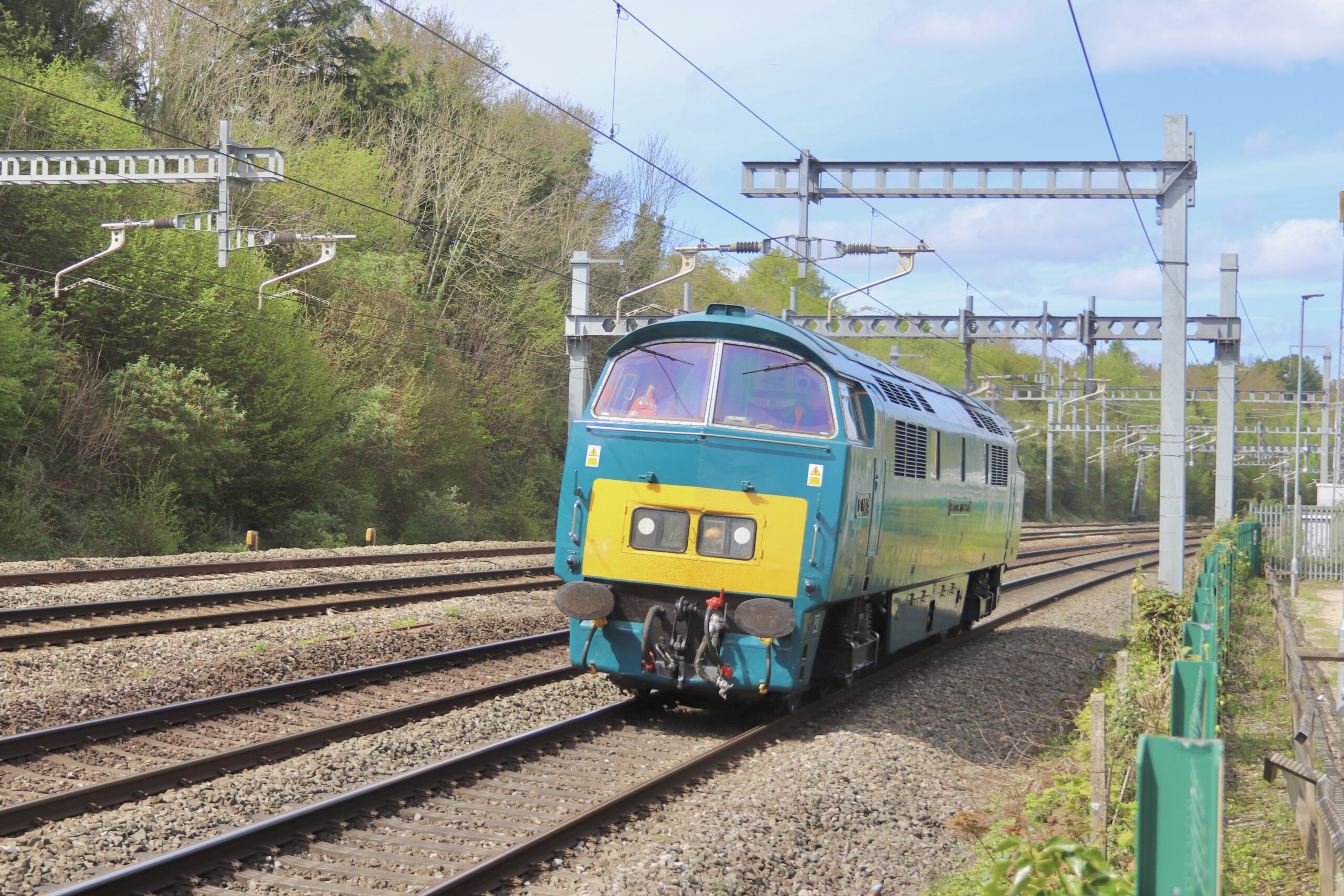
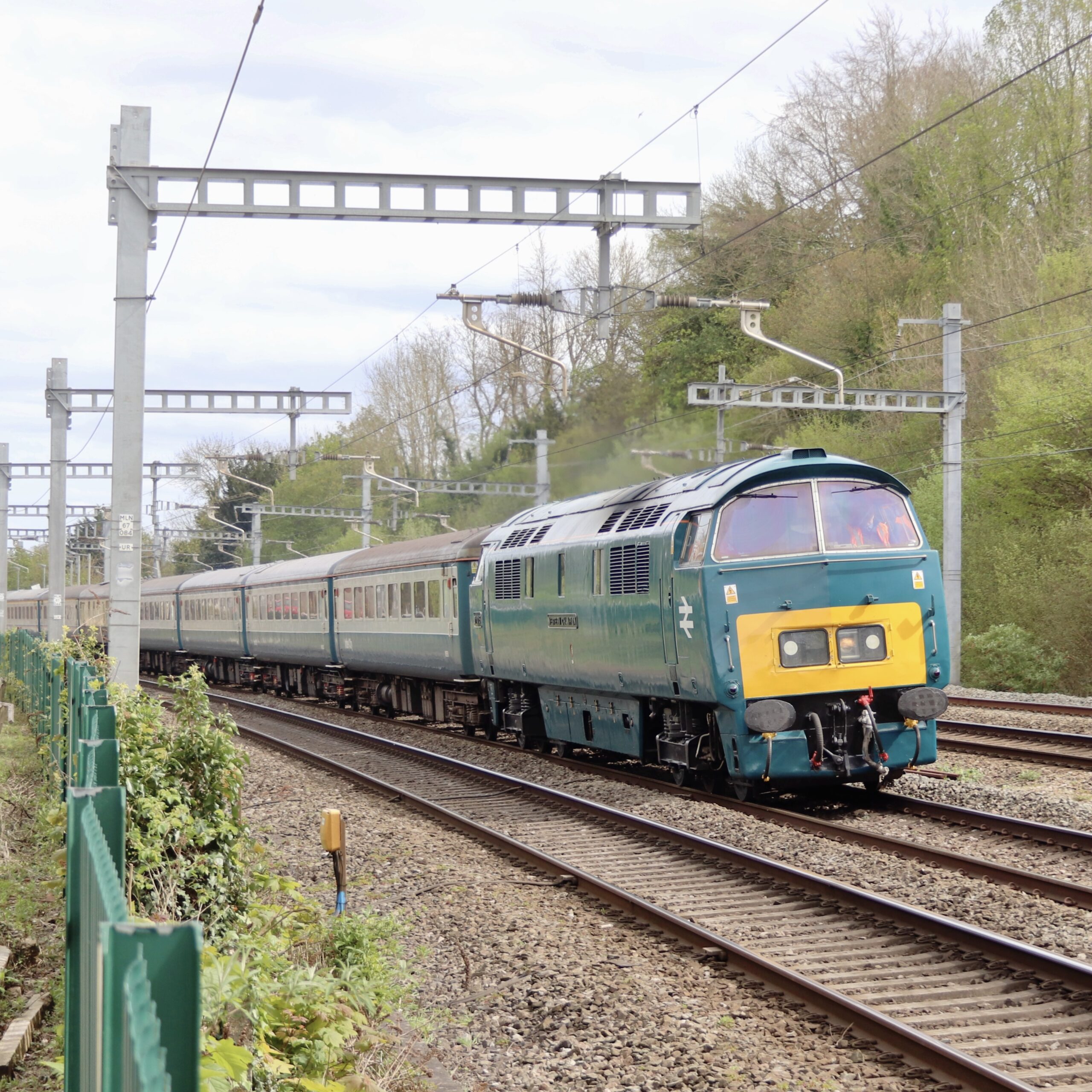
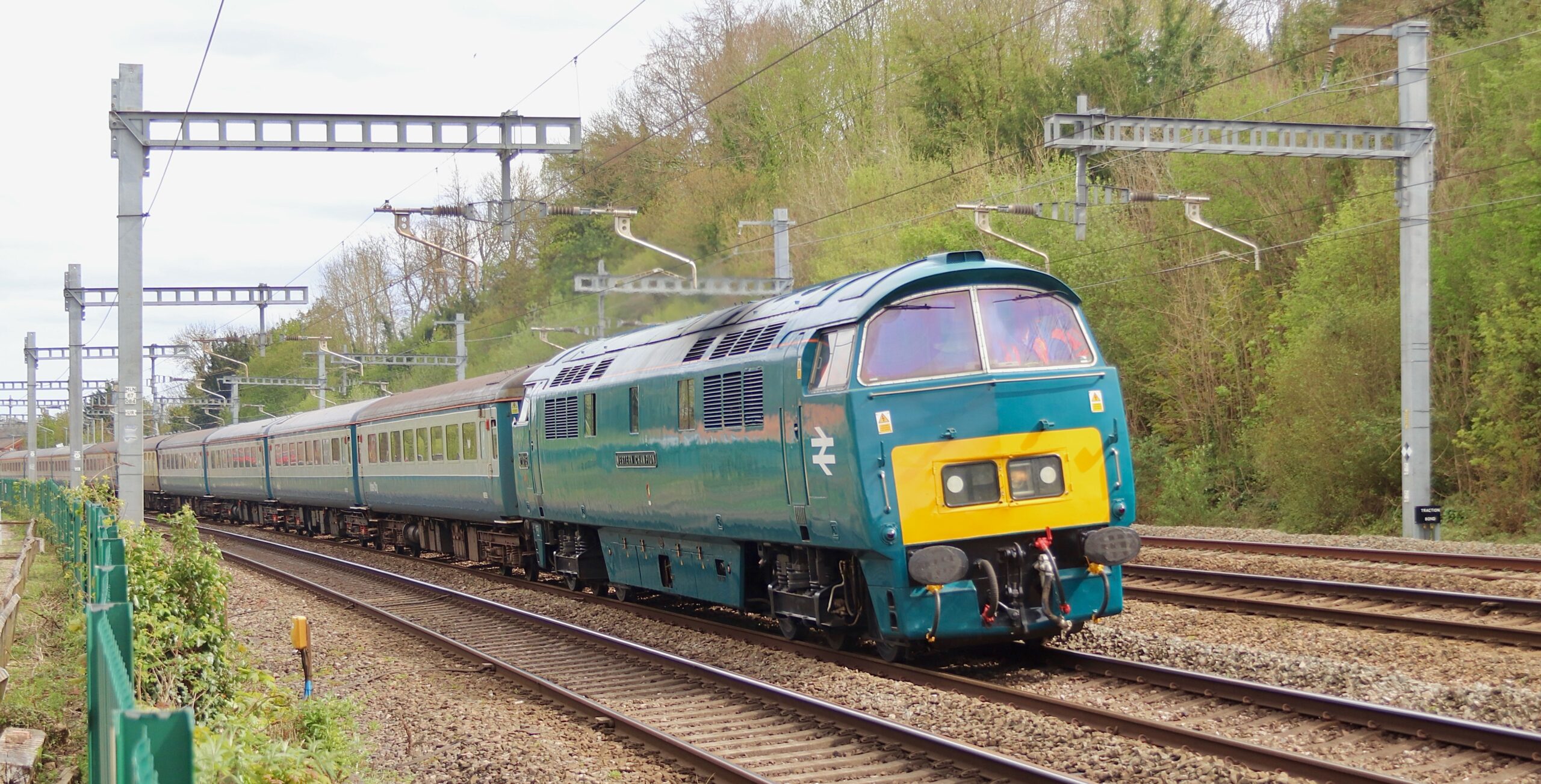
    Having worked up to London Paddington earlier in the day, the Diesel Traction Group owned Class 52 “Western” diesel-hydraulic No. D1015 ‘Western Champion’ passes through Pangbourne at the head of 1Z56 1352 London Paddington to Birmingham New Street charter train. Originally an empty coaching stock movement to Burton, it was instead tuned into a main line test run for No. D1015 and opened up for public use as a joint operation by UK Railtours and Pathfinder Tours named “The One Way Wizzo”. The “Western” worked the tour as far as Bescot Yard, from where Class 57 No. 57303 took over the last into New Street before taking the ECS forward to Burton-on-Trent – 14/04/2024

    April 14th 2024 to April 24th 2024

    On Sunday 14th April 2024, preserved Class 52 “Western” diesel-hydraulic locomotive No. D1015 ‘Western Champion’ worked a loaded test run from London Paddington to Birmingham New Street, supported by GBRf Class 57 No. 57303 which was utilised as a passenger carrying one way rail tour. No. D1015 ran light into Paddington and then headed up the “One Way Wizzo” as far as Bescot Yard, with No. 57303 taking charge for the final leg into New Street. After the tour, ‘Western Champion’ returned to her base on the Severn Valley Railway.

    I was quite intrigued with the idea of trying to photograph both the Western’s light engine move as well as the loaded test run itself, so devised a plan for a visit to a National Trust property as a day-out for Yoshi and Caroline. Checking out the route of the Great Western main line on Google maps, I settled on Basildon Park as our heritage destination as the railway runs very close to the estate. On the day, I checked out potential photographic spots, but discounting these, back-tracked slightly to Pangbourne railway station as the car park is ideally situated for photography as long as you can position yourself above the line-side fencing; remembering to stay safe at all times!

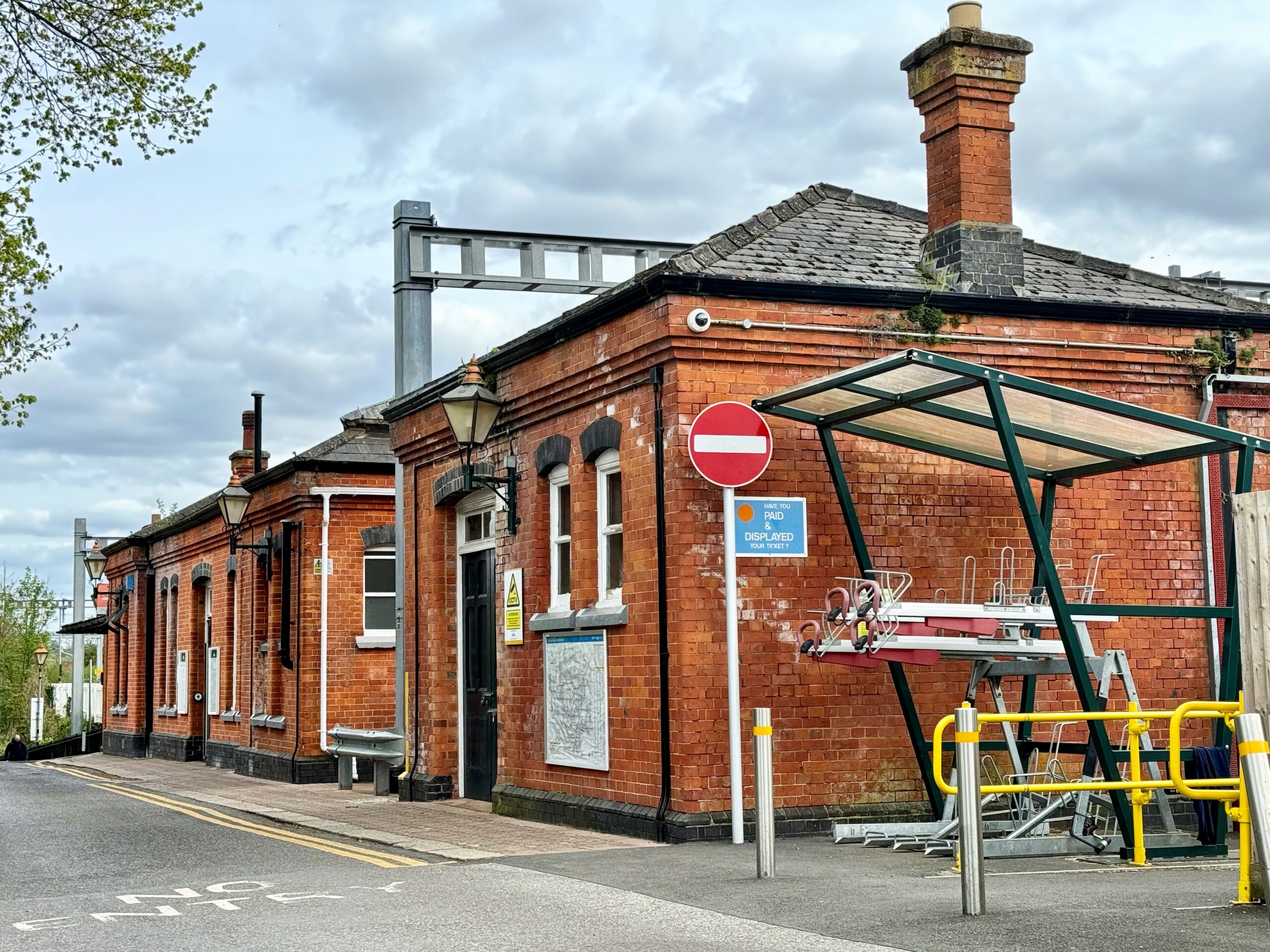
    Pangbourne station is located close to the village centre, with the main station buildings on the opposite side of the railway to the village. It has two platforms, one on each of the relief (slow) lines, whilst the fast lines pass behind the station. The platforms are linked to each other and the station entrance, on the up relief platform, by a pedestrian underpass. The station once had four platforms with those situated on the main fast lines now no longer in situ.

    Exterior of Pangbourne railway station. The station is on the original line of the Great Western Railway, which was opened in stages: the portion between Reading and Steventon opened on 1st June 1840, with Pangbourne being the first station west out of Reading – 14/04/2024
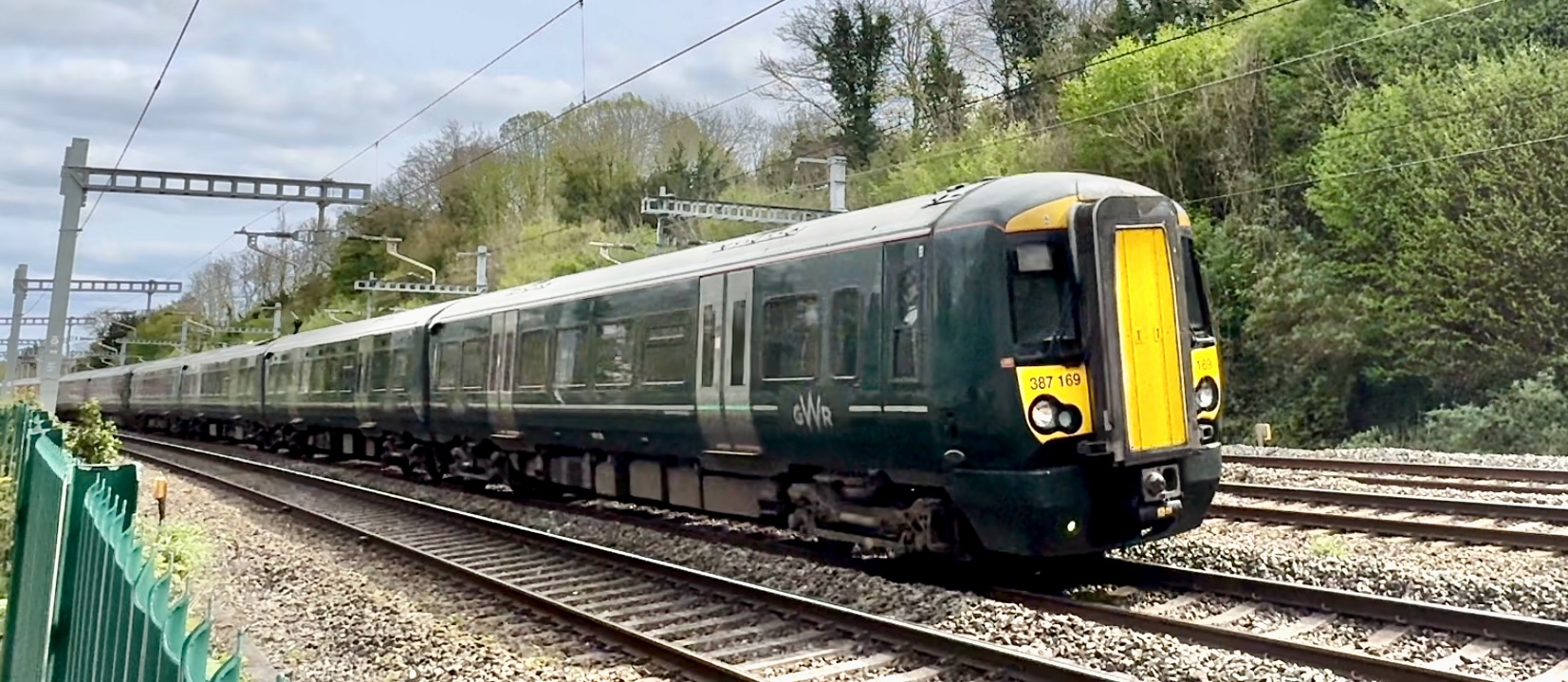
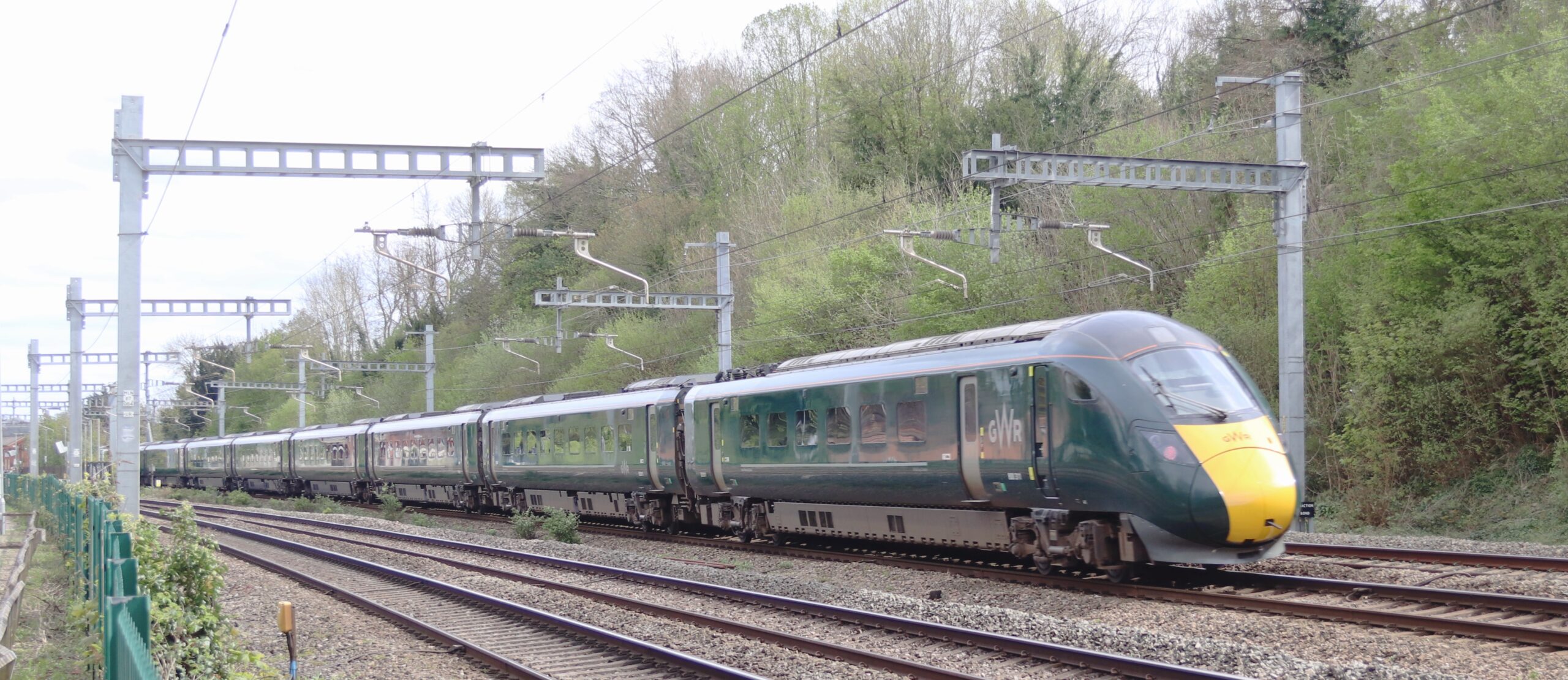
    All services at Pangbourne are operated by Great Western Railway (GWR) using Class 387 EMU’s.
    The typical off-peak is two trains per hour in each direction between London Paddington and Didcot Parkway. On Sundays, the service is reduced to hourly in each direction. Screenshot of Class 387 Electrostar electric multiple unit (EMU) No.’s 387169 & 387170 depart Pangbourne working 2N42 1426 Reading to Didcot Parkway – 14/04/2024
    Great Western Railway Intercity Express Train (IET) pass Pangbourne on the fast lines situated behind the platforms at Pangbourne. Class 800 No. 800311 passes Pangbourne working 1A18 1300 Bristol Temple Meads to London Paddington – 14/04/2024
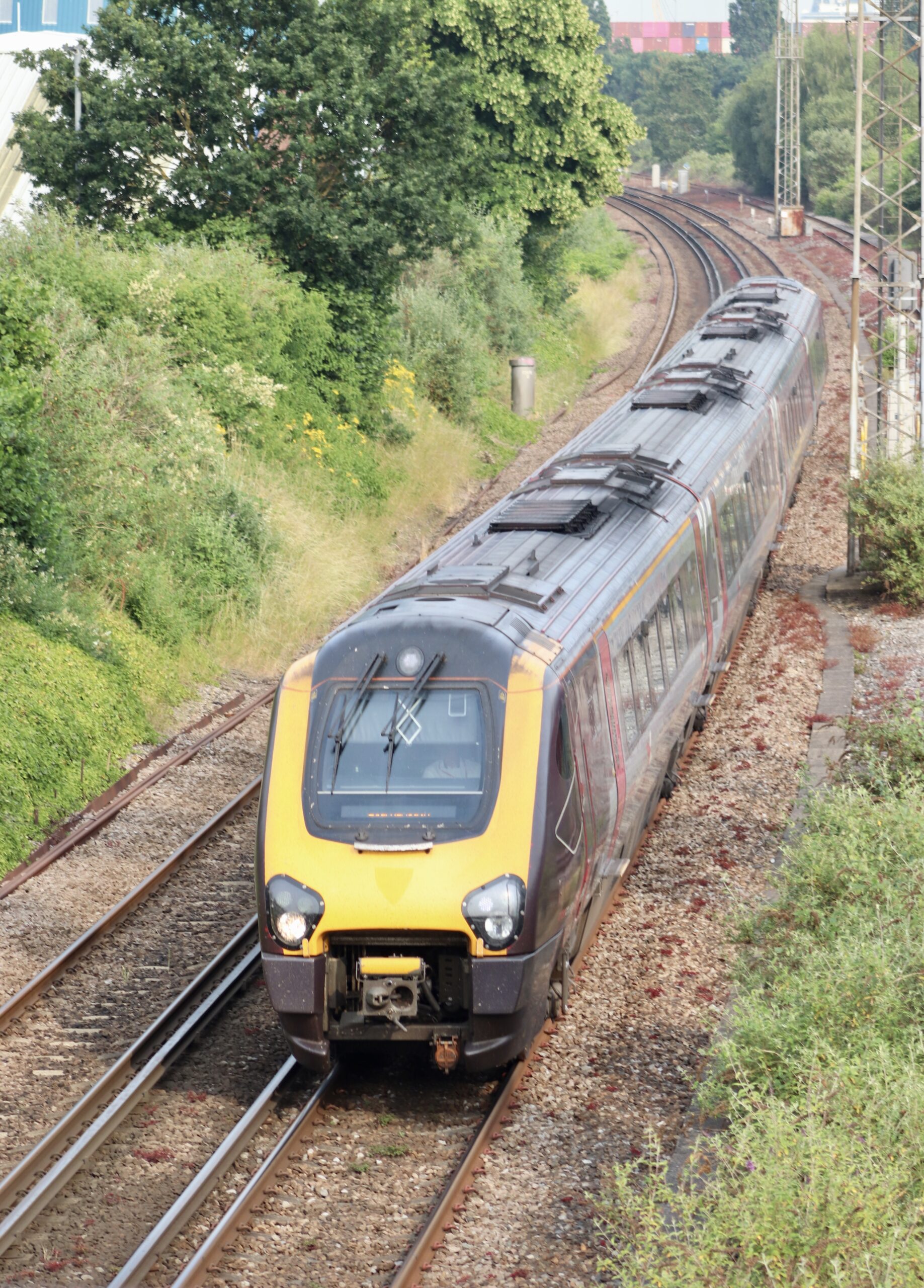
    CrossCountry trains also pass Pangbourne. Screenshot of CrossCountry Class 221 Super Voyager No. 221133 works 1O16 1124 Manchester Piccadilly to Southampton through Pangbourne – 14/04/2024

    While waiting for No. D1015 to pass us on her way to London Paddington, the local security operated by Land Sheriffs Ltd pulled into the car park and parked up casting a weather eye over my activity. As the Western was still a good few minutes off, I strolled over for a chat. The two security guards were really friendly and knew just what I was waiting for. They were, however, surprised to learn that the heritage diesel-hydraulic locomotive was making a solo pass prior to its railtour work as they had been charged with keeping an eye on proceedings further up the line at Didcot when the “One Way Wizzo” was due to pass later that afternoon as the train was sure to attract much attention from railway enthusiasts. Satisfied that I was not a security risk, the Land Sheriffs left me to await the first appearance of No. D1015.

    Class 52 No. D1015 ‘Western Champion’ runs light engine towards Pangbourne railway station working 0Z55 1020 Kidderminster SVR to London Paddington – 14/04/2024

    It was a good couple of hours before ‘Western Champion’ was timed to pass Pangbourne on her way to Bescot, so we decamped to National Trust Basildon Park where we enjoyed a woodland walk taking in the bluebells before Caroline took a tour of the mansion house and Yoshi and I headed back to the railway station car park for another shot at photographing No. D1015, this time at the head of a rake of carriages.

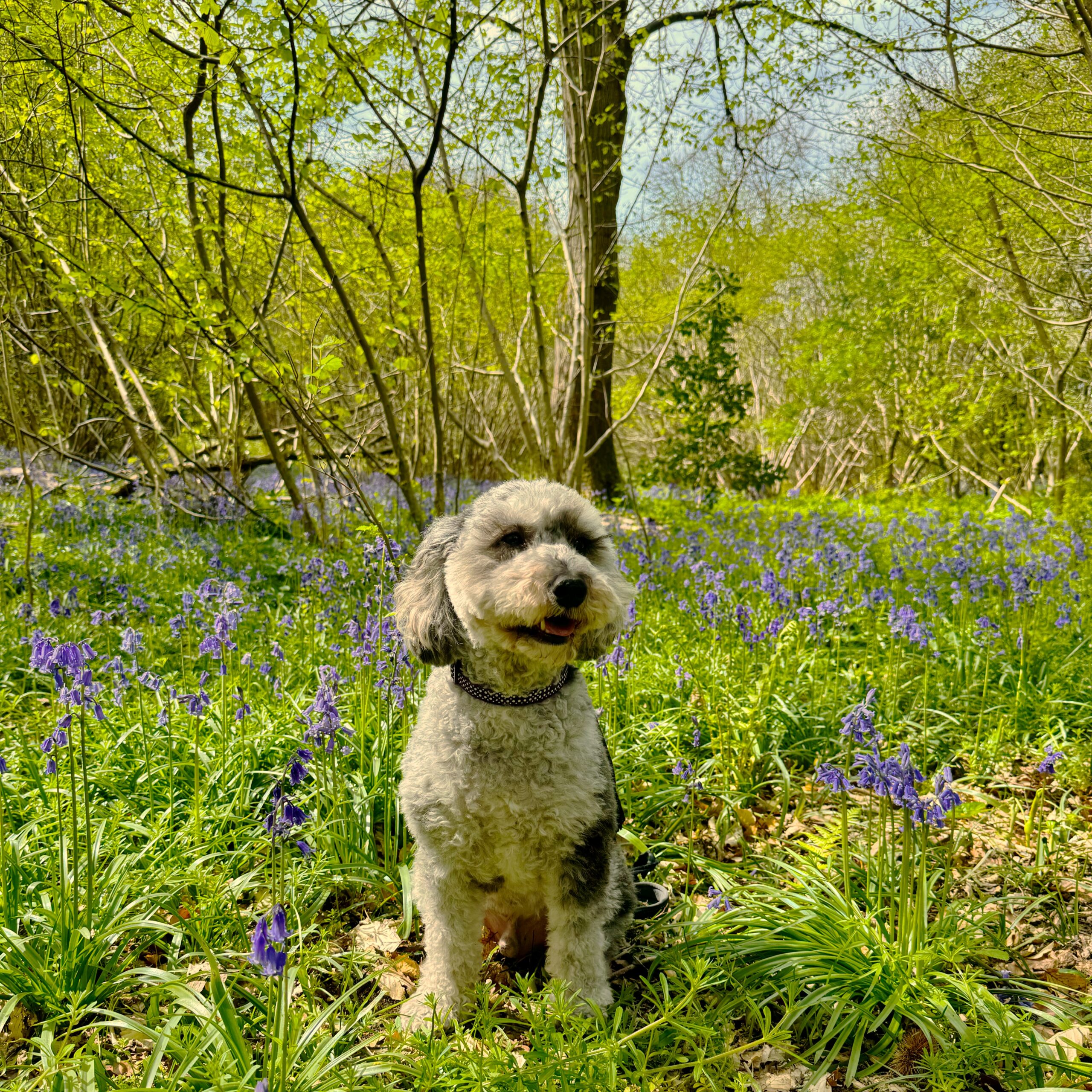
    Yoshi amongst the bluebells in the wooded parkland at Basildon Park – 14/04/2024
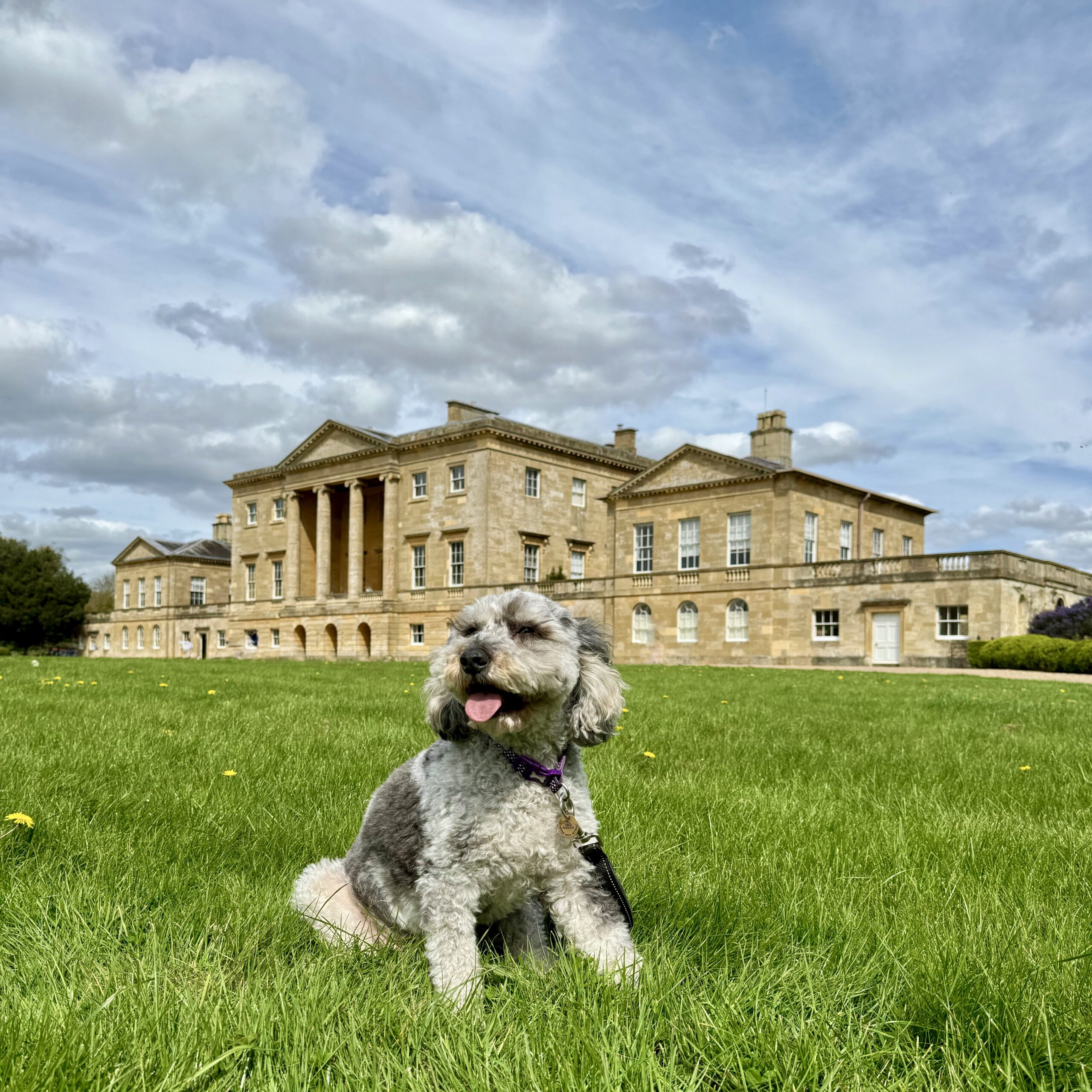
    Yoshi at National Trust Basildon Park. The estate was purchased by Francis Sykes in 1771. Sykes had made his fortune in the East India Company and required a home befitting his status. He demolished the old house and employed architect John Carr to build the Bath-stone mansion which exists today. The property was gifted to the National Trust in 1978 by Lord and Lady Iliffe who had bought Basildon Park in 1952 – 14/04/2024
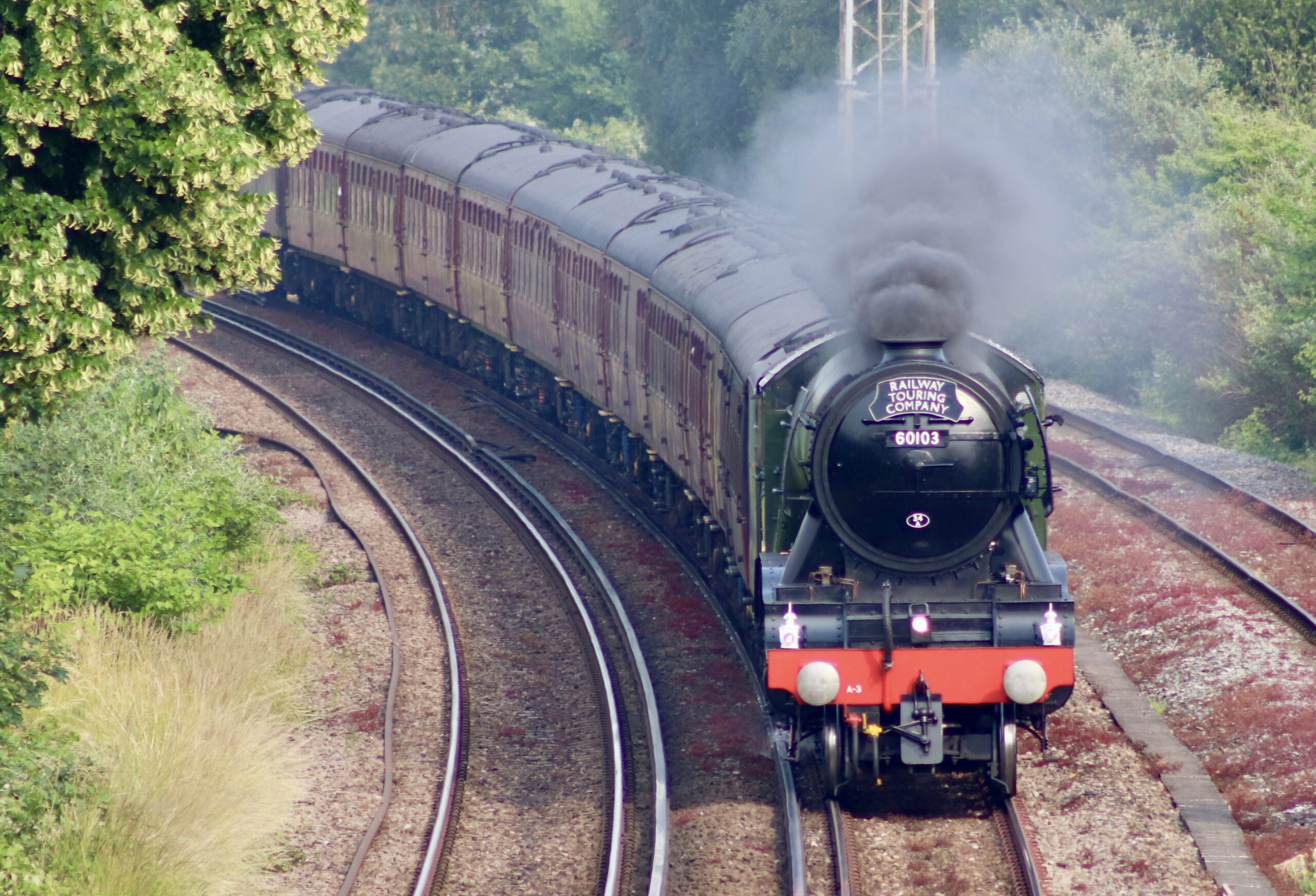
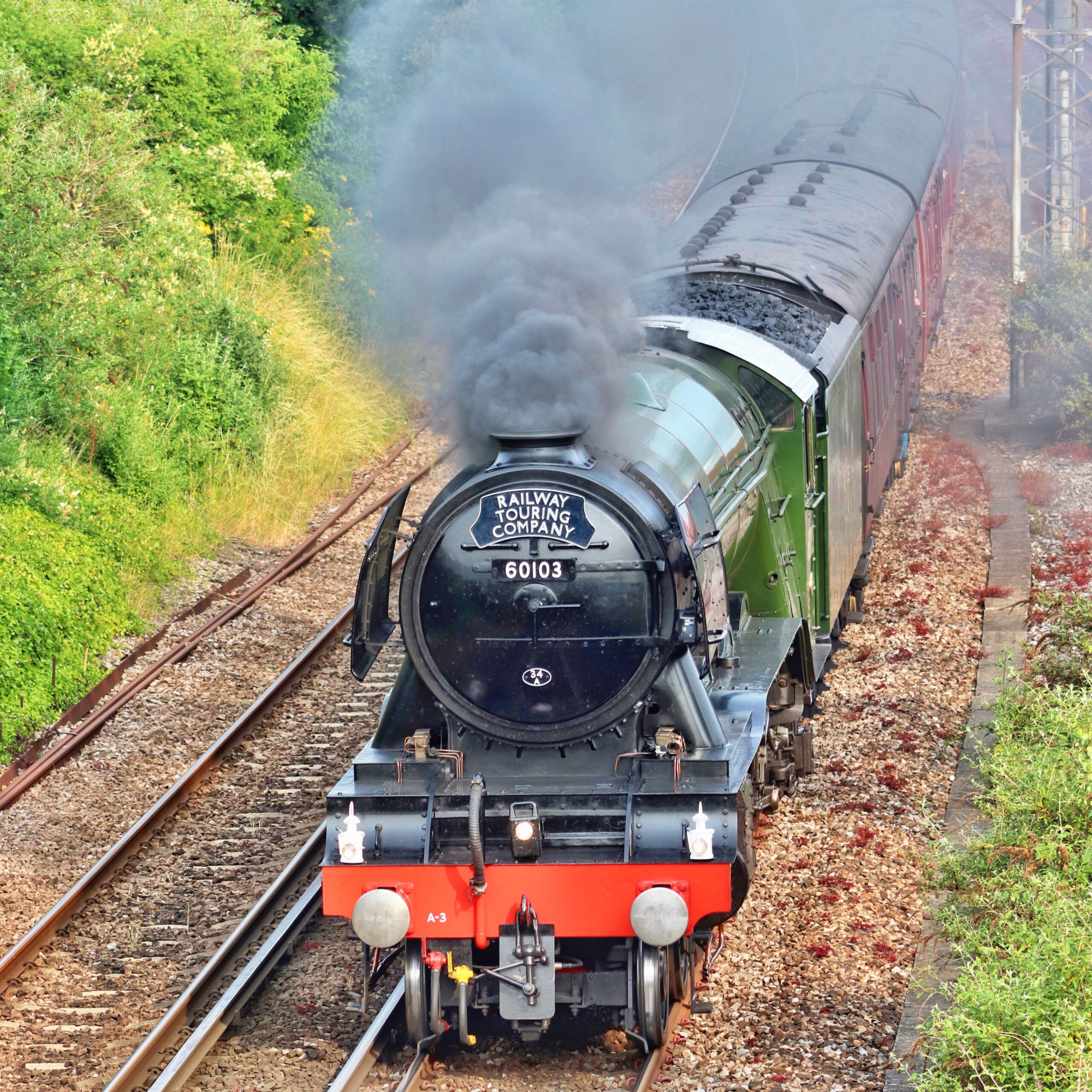
    Class 52 “Western” diesel-hydraulic No. D1015 ‘Western Champion’ passes Pangbourne with “One Way Wizzo” 1Z56 1352 London Paddington to Birmingham New Street – 14/04/2024
    Video of Class 52 “Western” diesel-hydraulic No. D1015 ‘Western Champion’ passing Pangbourne – 14/04/2024

    Monday 15th April we were back at Poole railway station in readiness for GBRf Class 73 No.’s 73962 ‘Dick Mabbutt’ and 73961 ‘Alison’ working the monthly 1Q51 11:15 Derby RTC to Eastleigh Yard via Weymouth test train.

    Video screenshots of GBRf Class 73 No.’s 73962 ‘Dick Mabbutt’ and 73961 ‘Alison’ working 1Q51 11:15 Derby RTC to Eastleigh Yard via Weymouth – 15/04/2024
    Video of 1Q51 11:15 Derby RTC to Eastleigh Yard via Weymouth at Poole – 15/04/2024

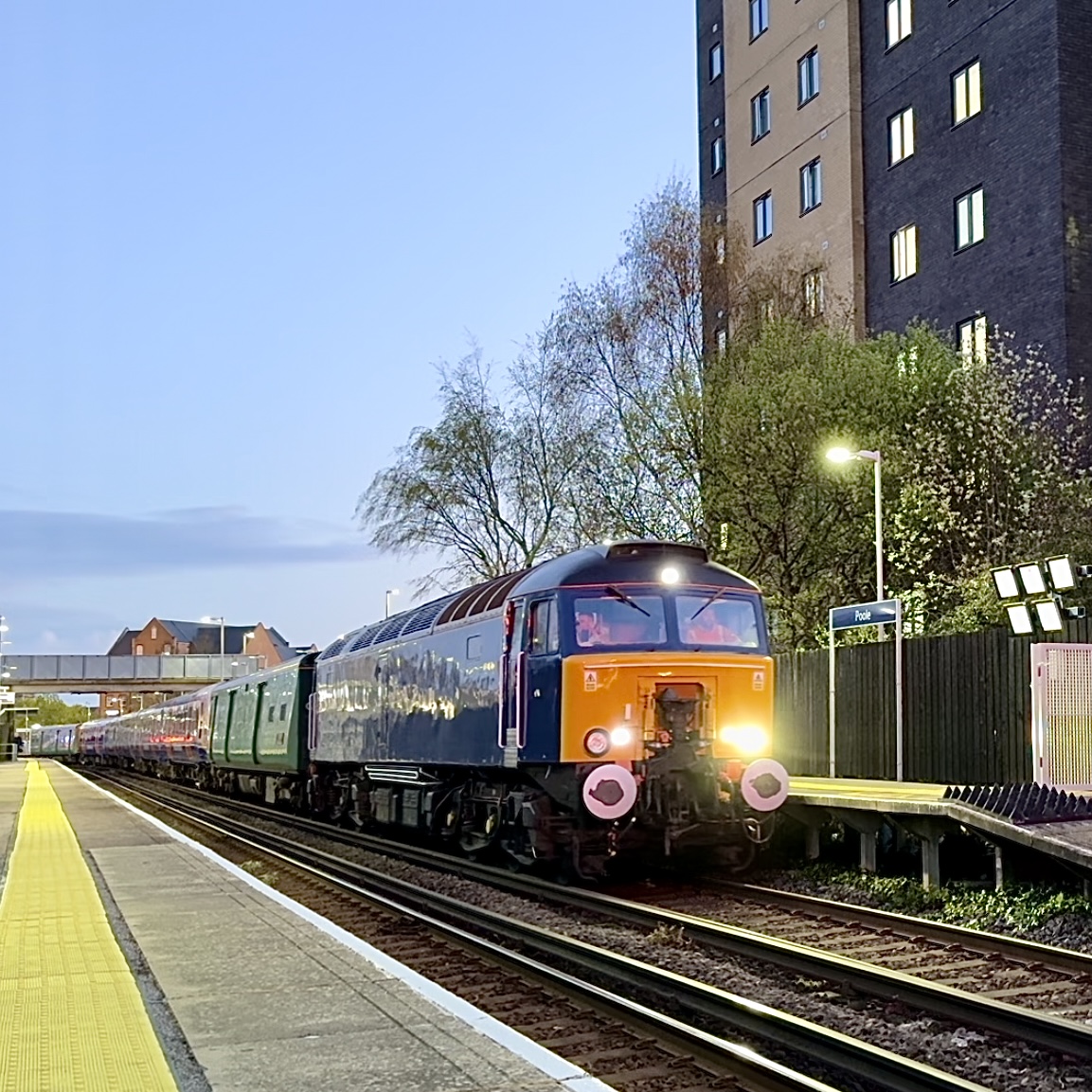
    The following day, Tuesday 16th April, we were out to see GBRf Class 57 No. 57303 once again, this time performing electric multiple unit drag duties, hauling South Western Railway (SWR) refurbished Class 458 No. 458421 and 508 barriers as 5Q64 1534 Southampton Central to Bournemouth T&R.S.M.D. having worked down from Widnes Transport Tech as far as Wembley Receptions 1-7 the previous day before progressing into Dorset.

    GBRf Class 57 No. 57303 leading SWR Class 458 No. 458421 and 508 barriers towards Parkstone railway station as 5Q64 1534 Southampton Central to Bournemouth T&R.S.M.D. – 16/04/2024
    After running round its train, GBRf Class 57 No. 57303 hauls SWR Class 458 No. 458421 up Parkstone Bank working 5Q64 1534 Southampton Central to Bournemouth T&R.S.M.D. – 16/04/2024

    Later the same day, No. 57303 departed Bournemouth depot with un-refurbished Class 458 No. 458513 as 5Z66 2018 Bournemouth T&R.S.M.D to Eastleigh East Yard. The formation was scheduled to stable at Eastleigh overnight before proceeding to Widnes Transport Tech on Wednesday 17th. We saw this formation at Poole on the first leg of its journey.

    Screenshot of GBRf Class 57 No. 57303 with Class 508 barrier coaches and SWR Class 458 No. 458513 arrives at Poole working 5Z66 2018 Bournemouth T&R.S.M.D to Eastleigh East Yard. The train heads out to Poole Storage Sidings – 16/04/2024
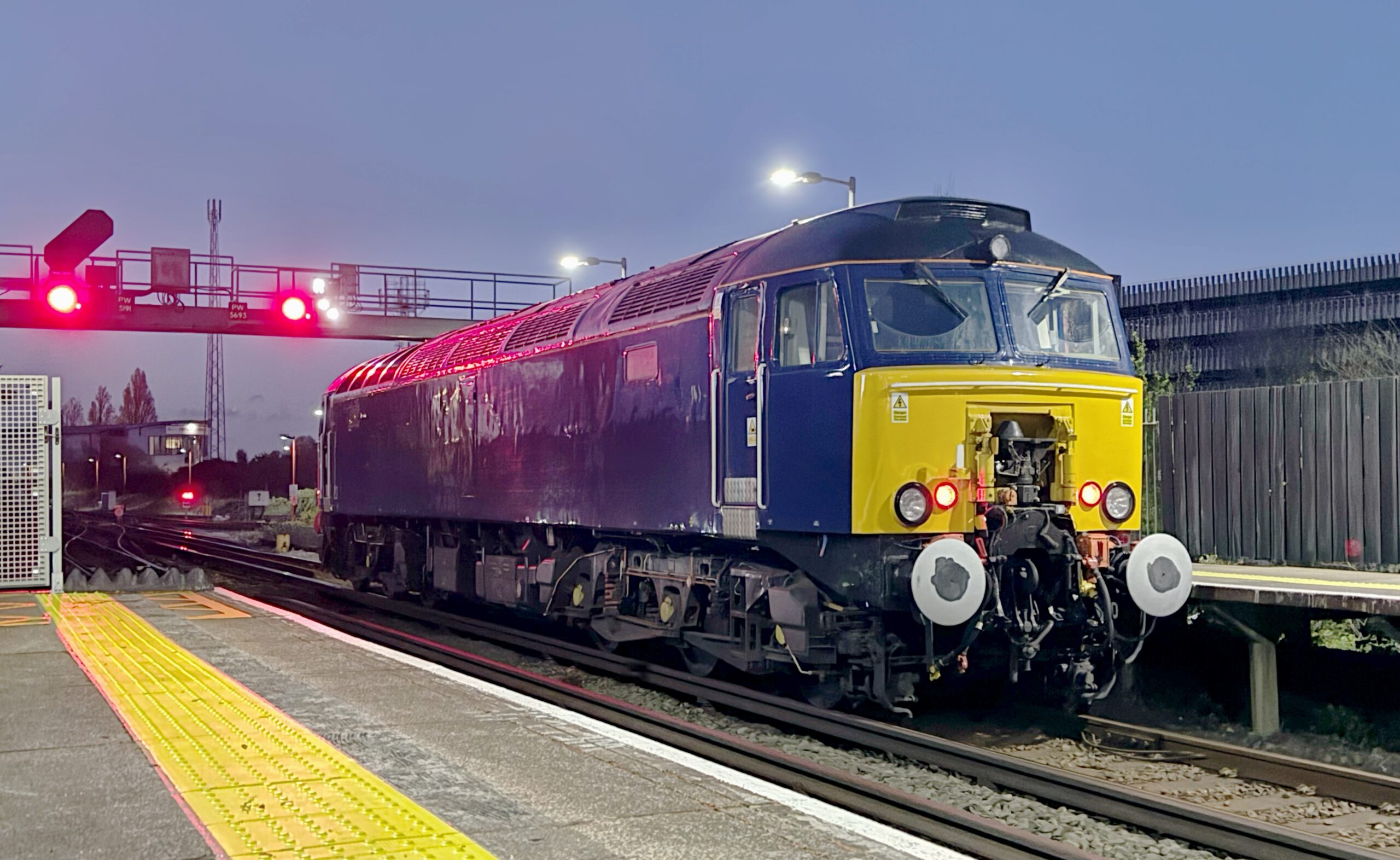
    Having left the Class 458 in Poole Storage Sidings, GBRf Class 57 No. 57303 runs light engine into Poole railway station before heading back to attach to the London end of its train – 16/04/2024
    GBRf Class 57 No. 57303 on SWR Class unit drags – 16/04/2024

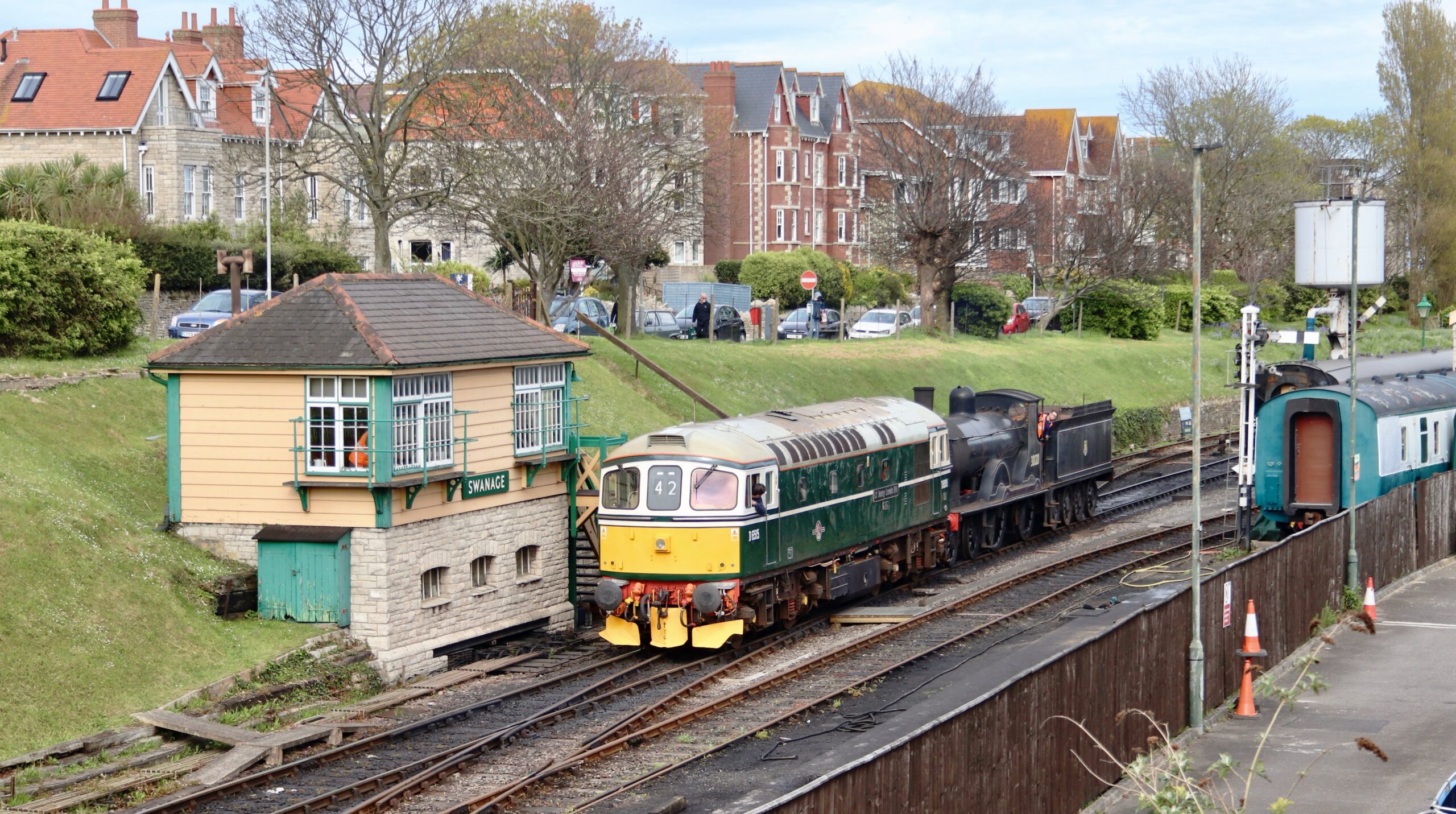
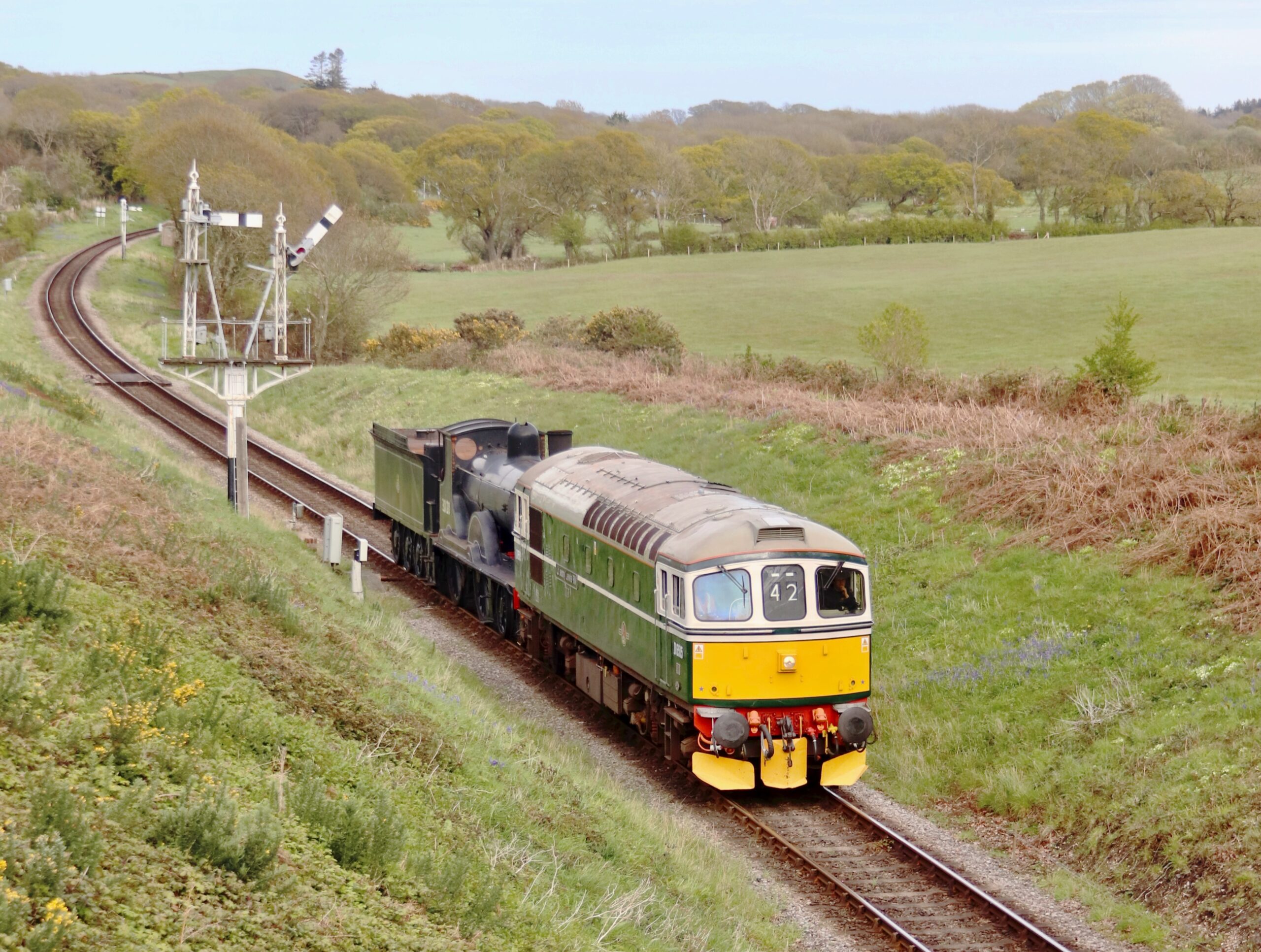
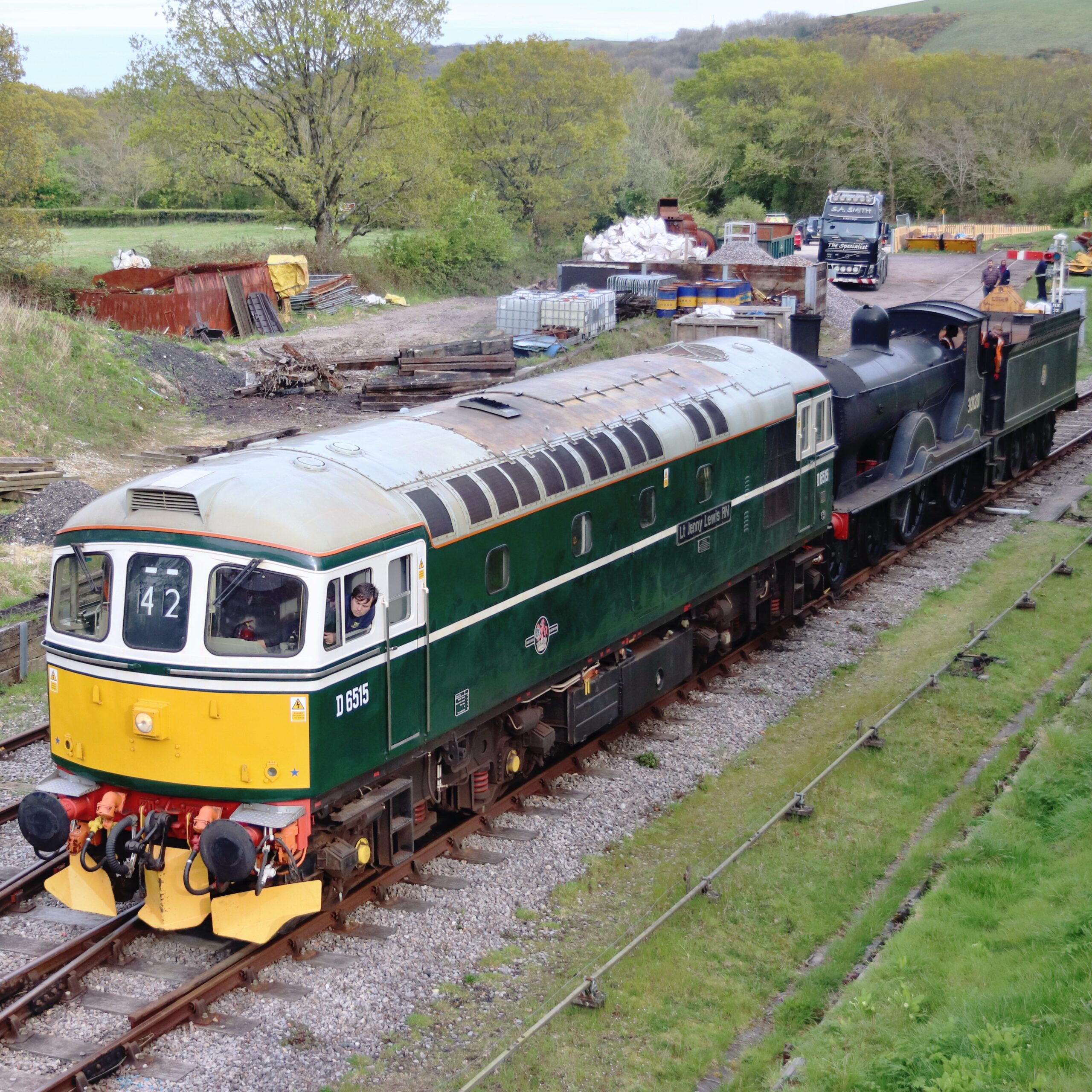
    Following the successful restoration of LSWR Adams T3 Class No. 563, the team at the Swanage Railway are now turning their attention to their next challenge, that of returning LSWR T9 Class No.120 to steam in time for its 130th birthday in 2029 resplendent in Olive green livery. Thursday 18th April was therefore an eventful one for No.120 as she departed the Swanage Railway by road for transit to The Flour Mill Locomotive Repair Workshop in Lydney, Gloucestershire. The Flour Mill is a listed former colliery electricity generating station which was converted to a railway workshop between 1995 and 1996. The Flour Mill Ltd operates the business undertaking work repairing and overhauling steam locomotives. We popped over to the Purbeck line to witness the Victorian locomotive being collected from Swanage by resident diesel Class 33 No. D6515 (33012) ‘Lt. Jenny Lewis RN’. The pairing then travelled up to Arne Road sidings where No.120 was to be placed on a road low-loader.

    The T9 is owned by the National Railway Museum (NRM) and agreement has been reached where the condition of the locomotive will be assessed ahead of a commitment to return her to steam for further service on the Swanage Railway.

    Designed by Dugald Drummond and built in 1899 at Nine Elms works, No.120 was a member of the T9 class of locomotives, affectionately known as the “Greyhounds” for their swift performances on the West of England main lines.

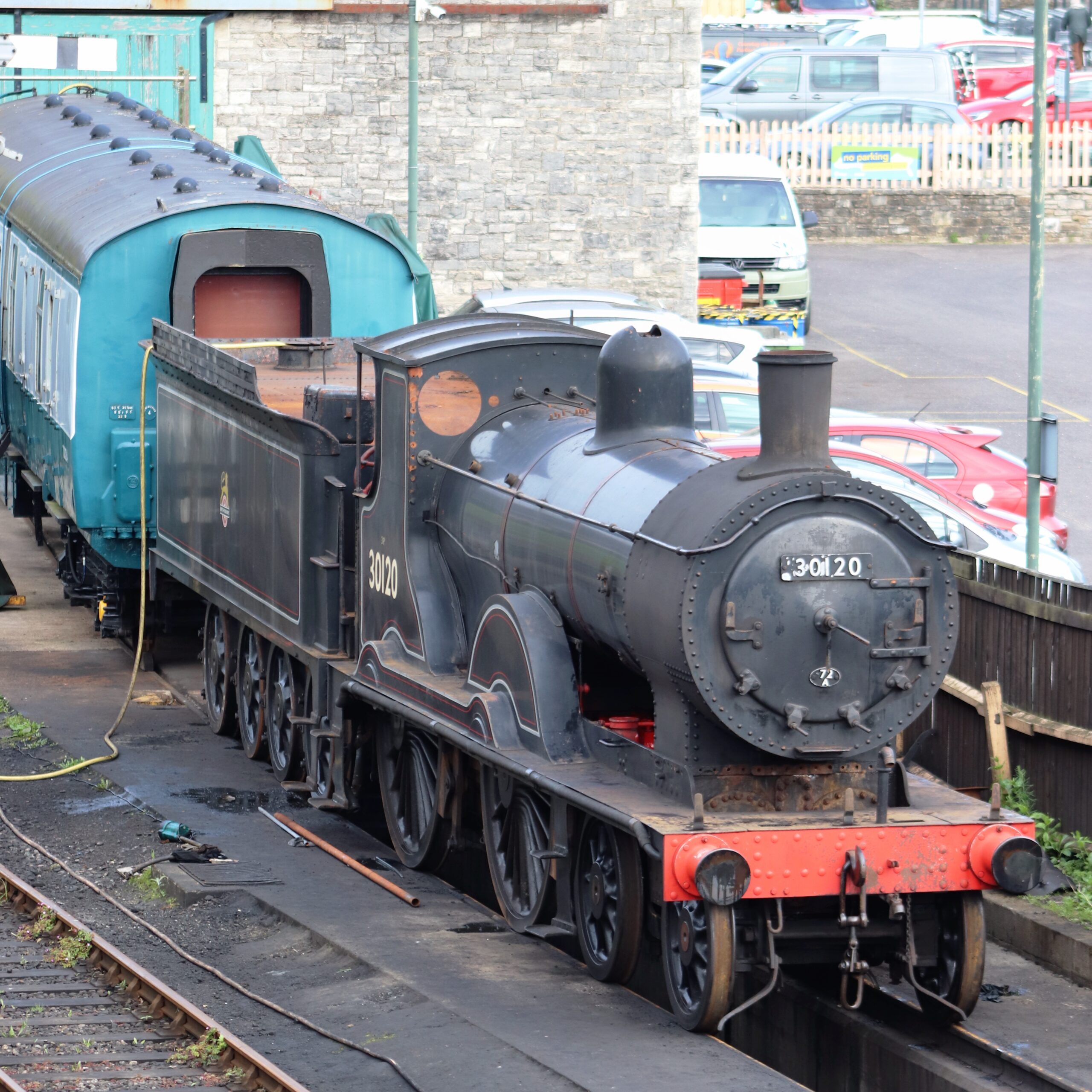
    LSWR 4-4-0 T9 Class No.30120 at Swanage – 18/04/2024

    Altogether, sixty-six T9 locomotives were built, with No.120 being the only survivor. She was withdrawn from regular service in 1961 and painted in London South Western Railway (LSWR) ‘Pea Green’ livery, colours – inappropriate as she was modified with a superheater by Robert Urie and as a consequence her appearance was substantially altered from her early days. However, in this guise she hauled special trains for a few years before becoming part of the National Collection. After spells of service on the Mid-Hants Railway, at Swanage and on the Bodmin & Wenford Railway, No. 120 returned to Swanage in 2017 and became a vital part of the fleet until her boiler certificate expired. During her time at Swanage the locomotive proved a powerful but economic machine, popular with both crews and visitors alike. Her restoration will allow the Swanage railway to develop a more sustainable locomotive fleet into the future as the T9, like the T3, is perfectly sized for the heritage branch.

    Swanage resident Class 33 No.D6515 (33012) ‘Lt. Jenny Lewis RN’ having coupled up to 4-4-0 T9 Class No.30120 in readiness of forming 6Z12 1652 Swanage to Arne Road Siding – 18/04/2024
    Crompton No. D6515 (33012) ‘Lt. Jenny Lewis RN’ is owned by the 71A Loco Group, and returned to Swanage in time for the May 2011 Diesel Gala after undergoing overhaul at Eastleigh works. She is seen here reversing into Swanage railway station with 4-4-0 T9 Class No.30120 – 18/04/2024
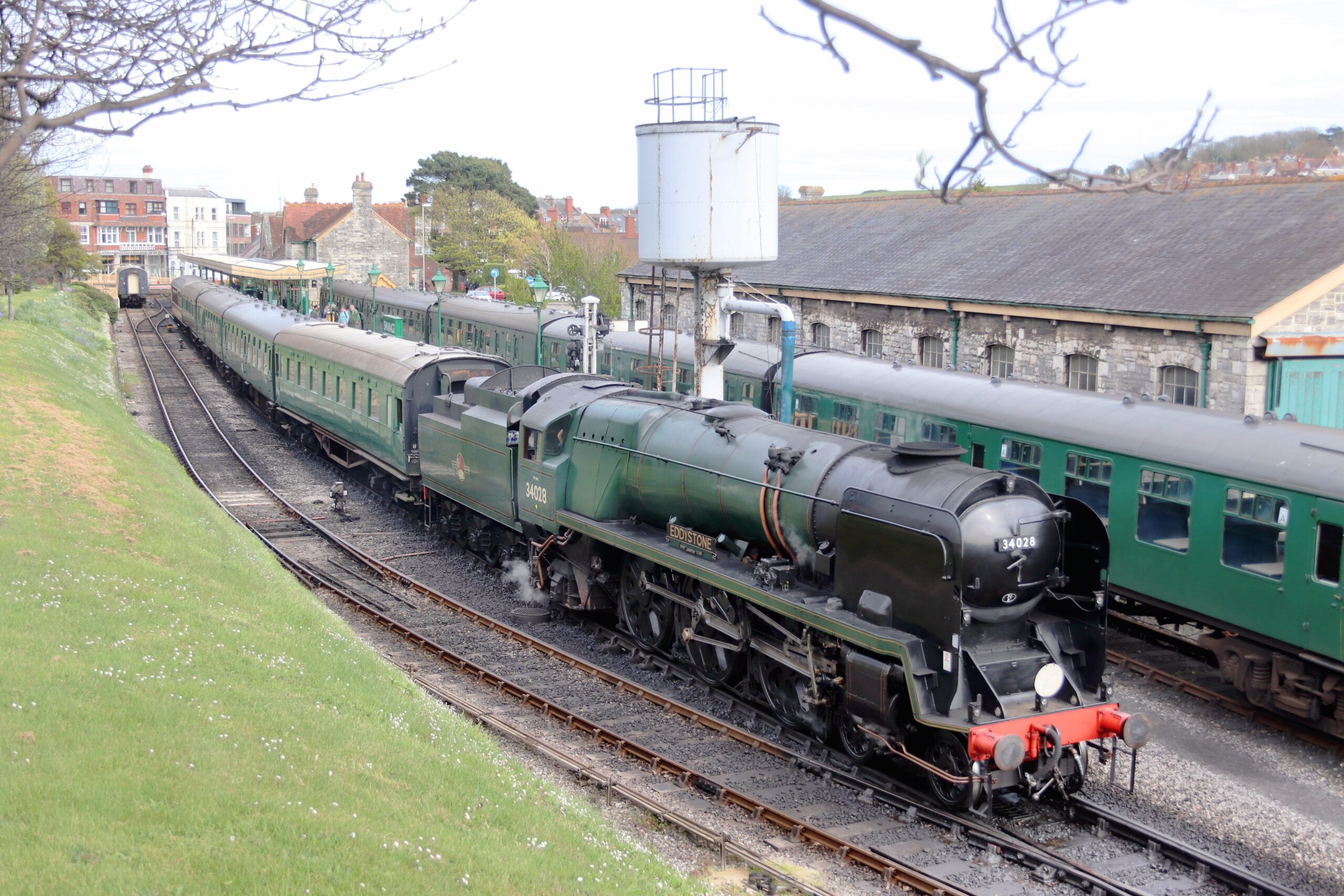
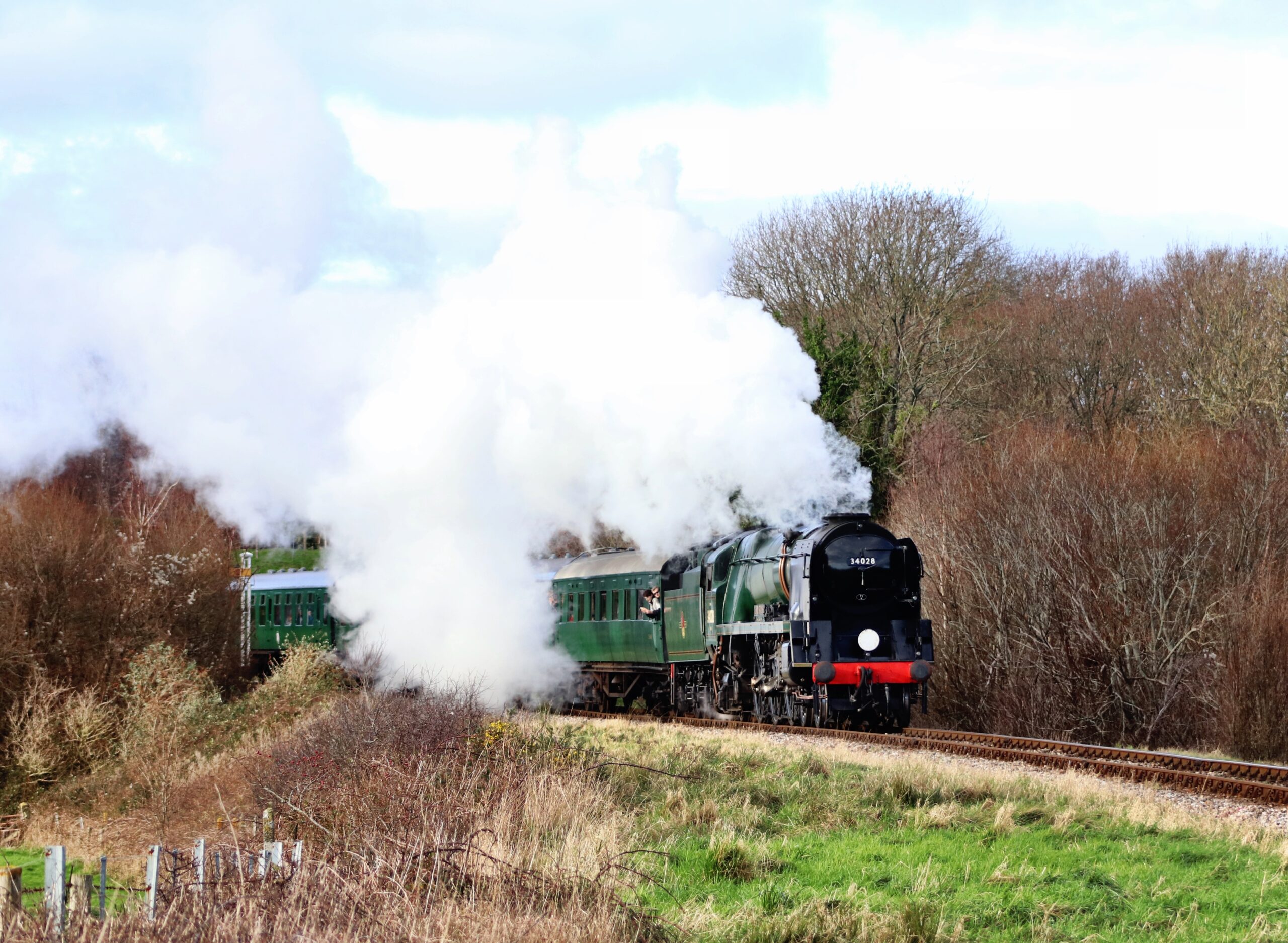
    Southern Railway 4-6-2 “West Country” Class No. 34028 ‘Eddystone’ at Swanage having backed onto the coaching stock of the 2N10 1640 Swanage to Norden service – 18/04/2024
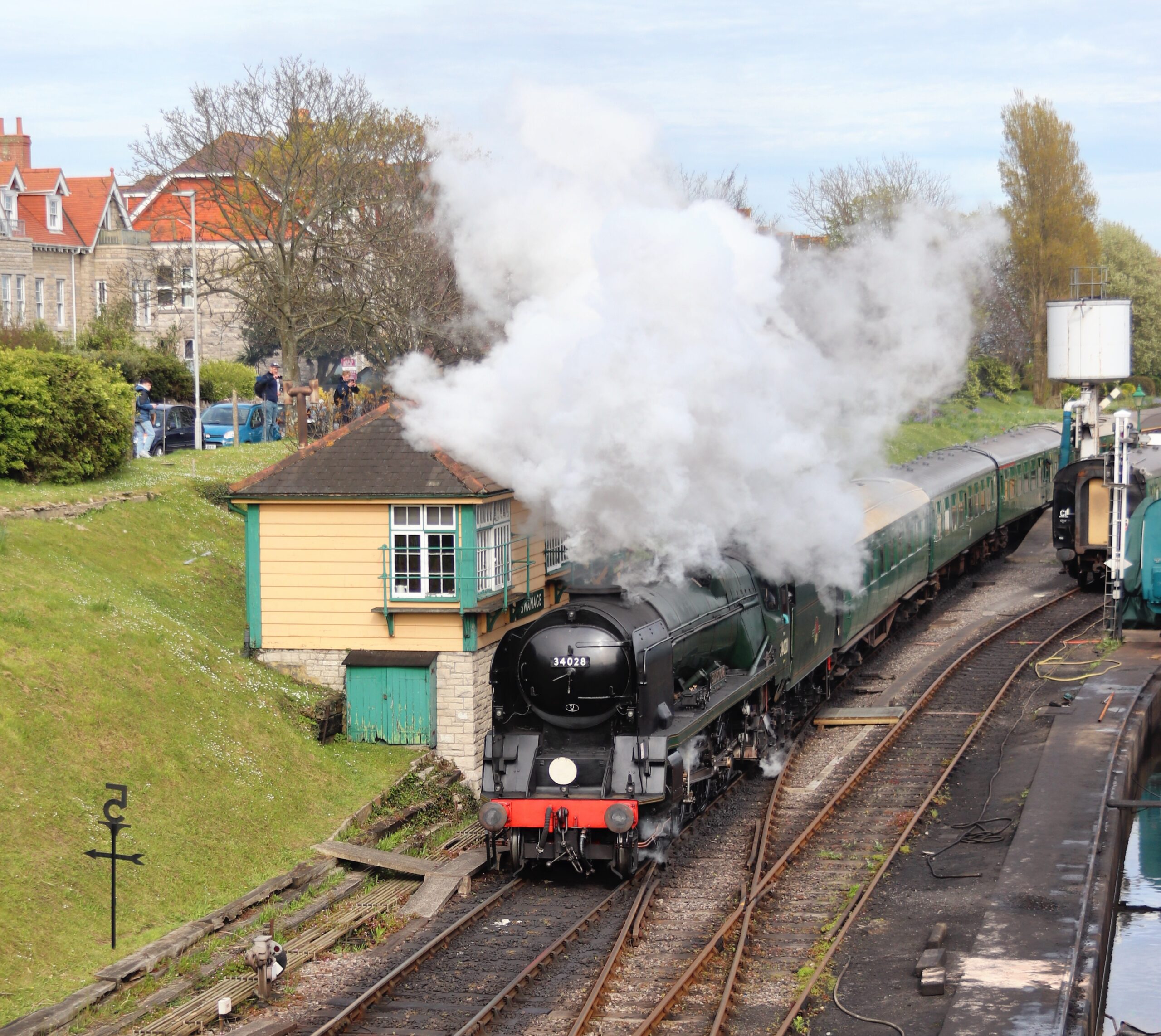
    Southern Railway 4-6-2 “West Country” Class No. 34028 ‘Eddystone’ departs Swanage working 2N10 1640 Swanage to Norden – 18/04/2024
    Class 33 No.D6515 (33012) ‘Lt. Jenny Lewis RN’ hauls 4-4-0 T9 Class No.30120 away from Swanage working as 6Z12 1652 Swanage to Arne Road Siding – 18/04/2024
    Class 33 No.D6515 (33012) ‘Lt. Jenny Lewis RN’ and 4-4-0 T9 Class No.30120 on the approach to Harmans Cross working 6Z12 1652 Swanage to Arne Road Siding – 18/04/2024

    The Swanage Railway Trust are hoping to raise £50,000 for this project, which will enable No. 120 to be dismantled and assessed at the Flour Mill. Following this, a report will be produced detailing the work required to return 120 to service, including an assessment of the cylinder block and whether this needs to be replaced. If the report is favourable, the Trust can proceed to the next stage of the overhaul later in the year. Should it be decided the locomotive is not a suitable contender for restoration, the remainder of the £50,000 will see No. 120 re-assembled and returned to the NRM for further display.

    Class 33 No.D6515 (33012) ‘Lt. Jenny Lewis RN’ arrives at Arne Road with 4-4-0 T9 Class No.30120 in tow working 6Z12 1652 Swanage to Arne Road Siding – 18/04/2024
    Video of T9 Class No.30120 being hauled to Arne Sidings on the Swanage Railway – 18/04/2024

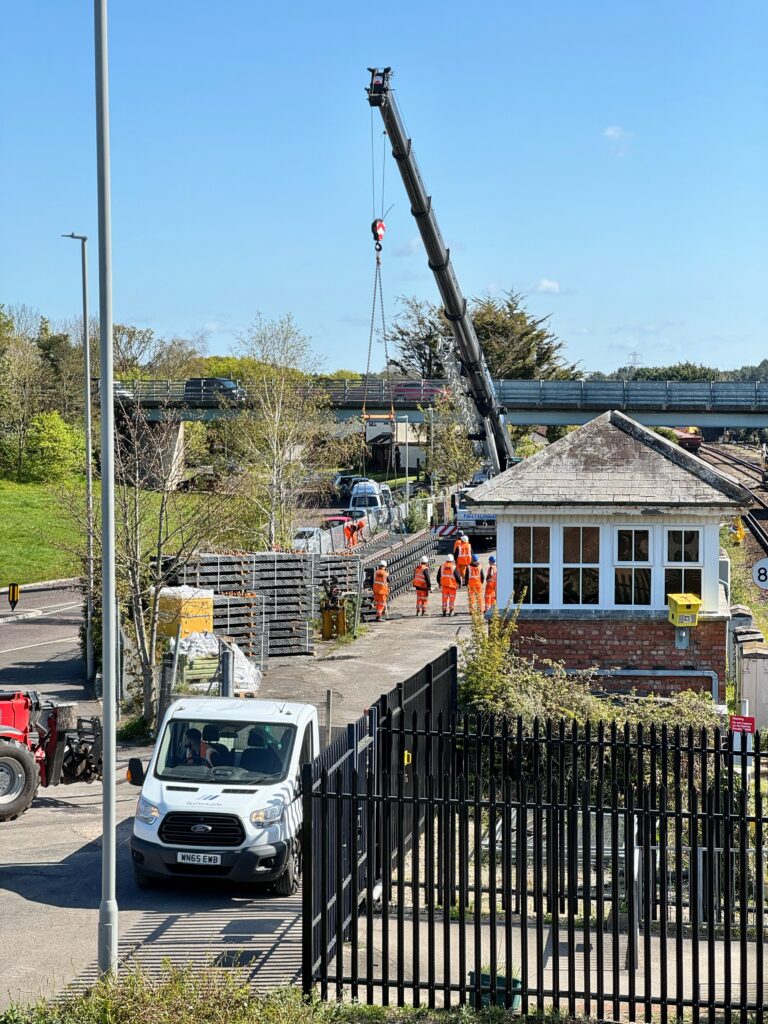
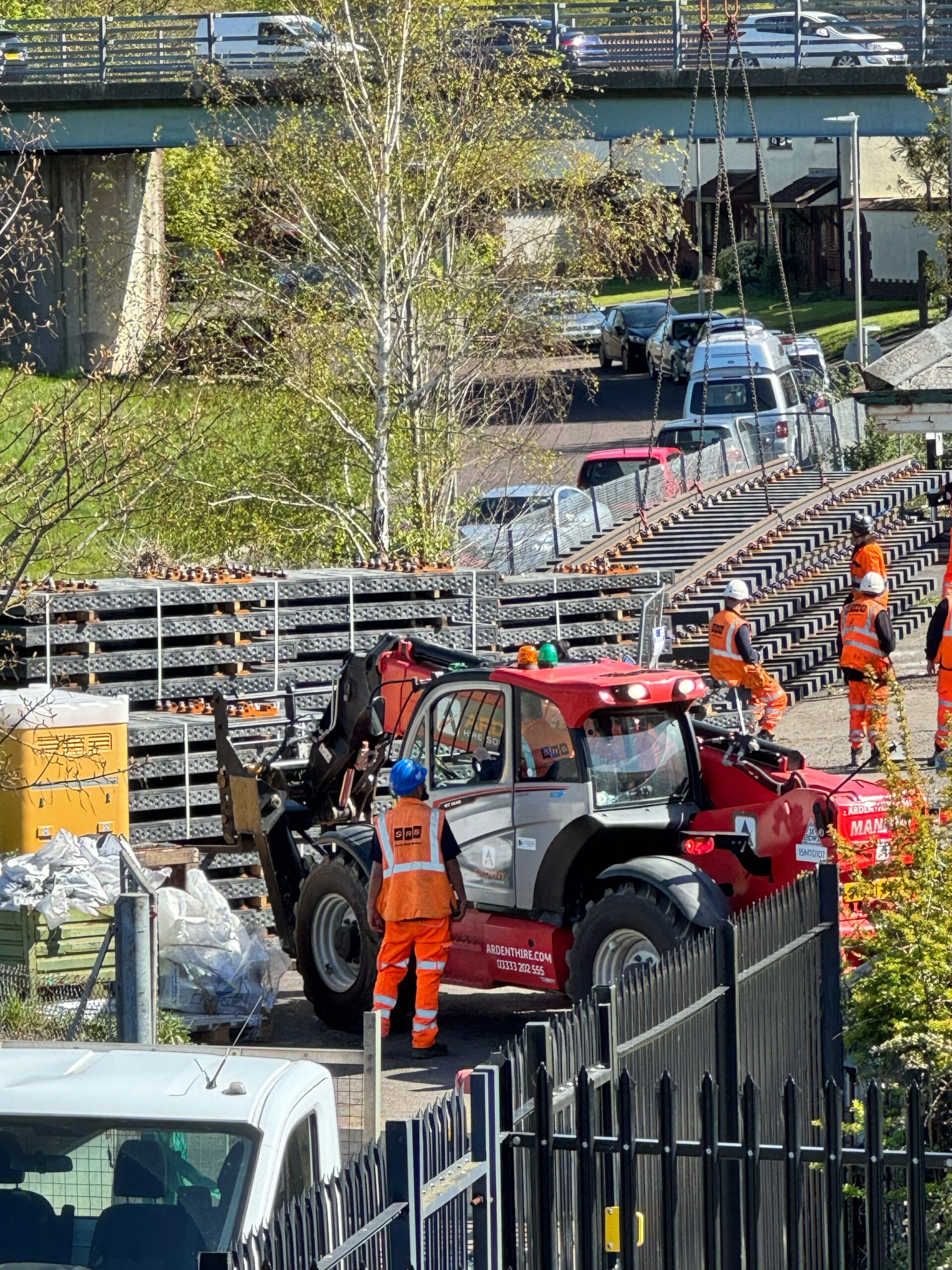
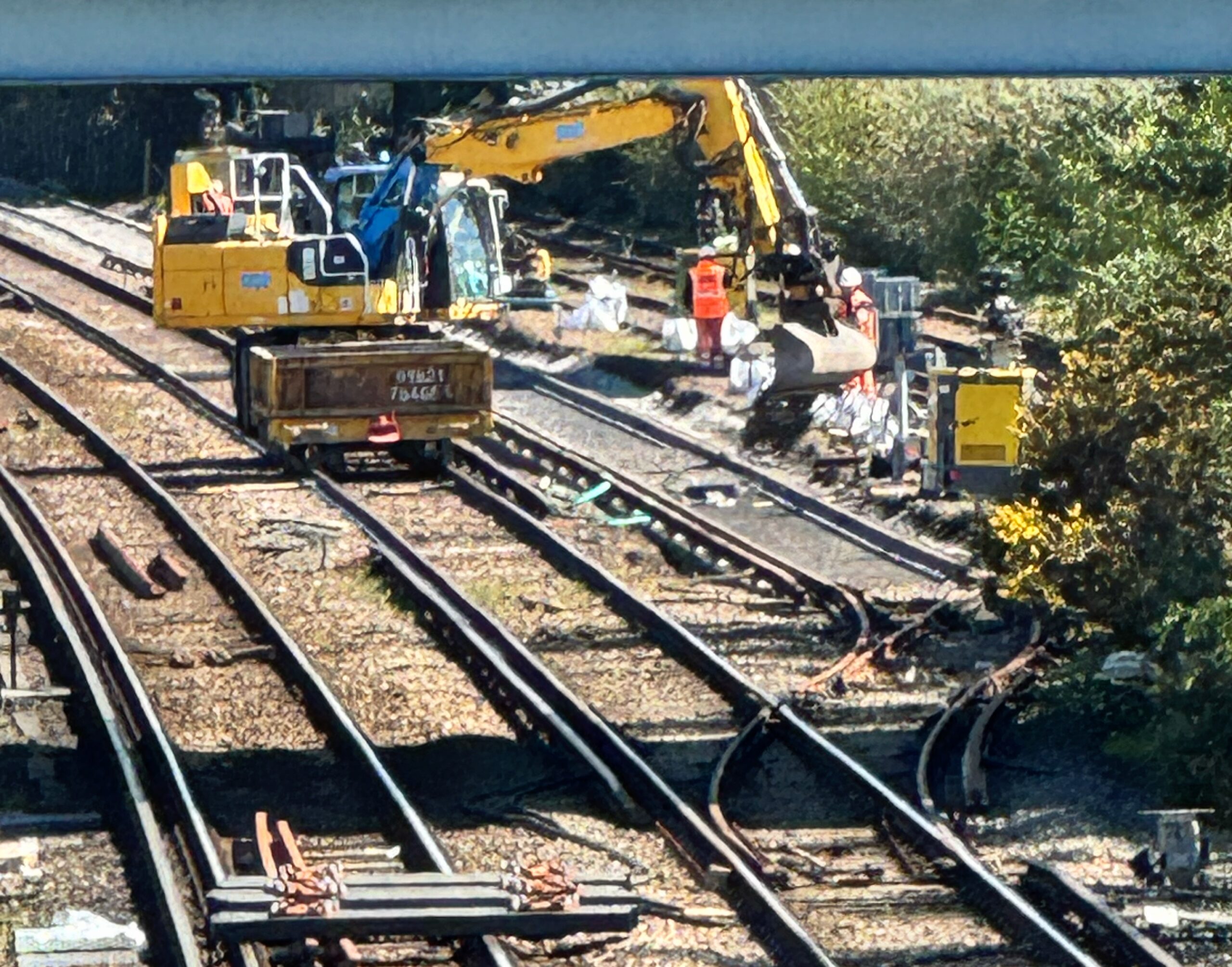
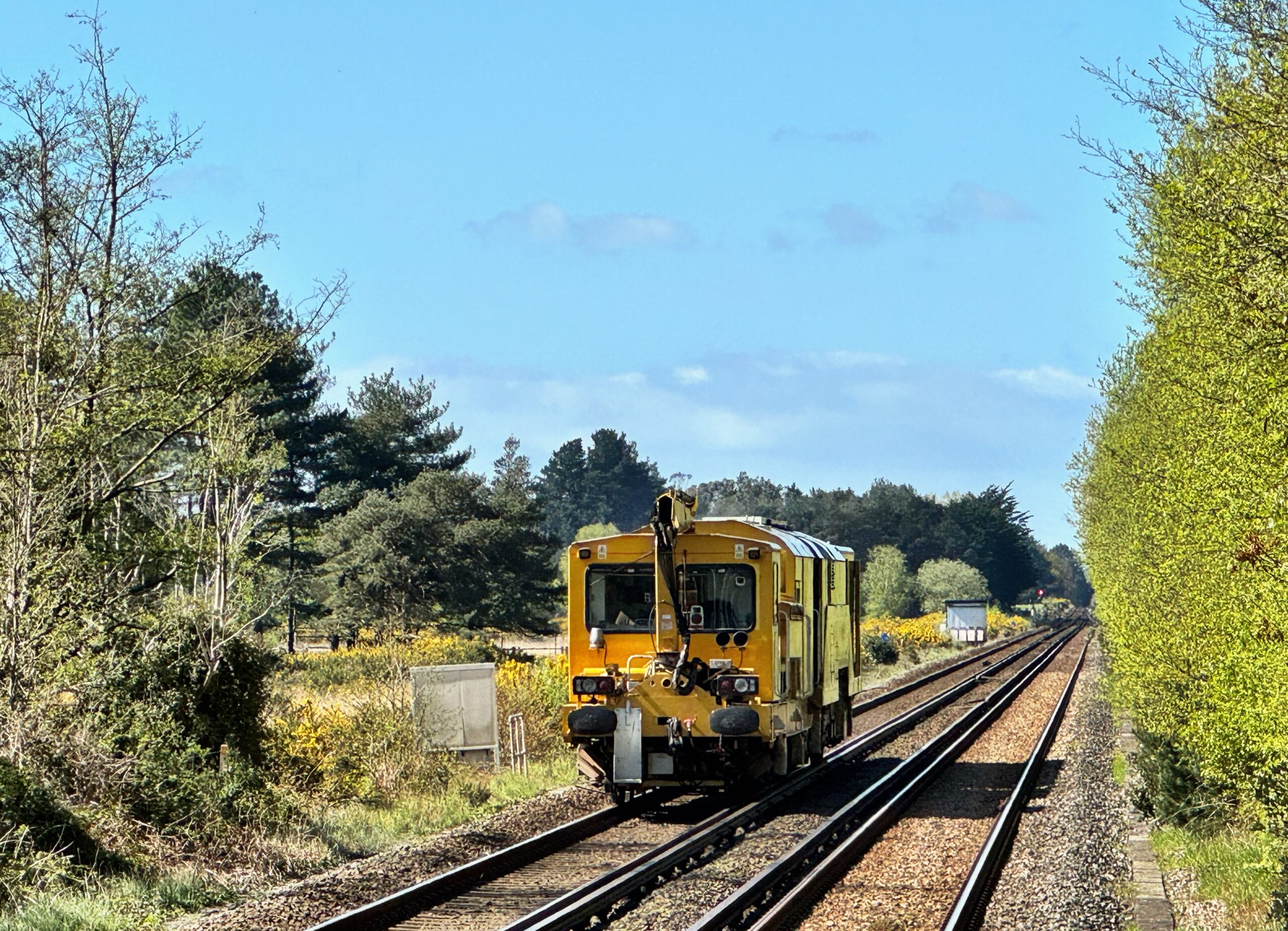
    Engineering Work took place in the Wareham area over the weekend of 20th / 21st April 2024. The sidings to the east of Wareham railway station were renewed, ballast was refreshed at Worgret Junction and the footbridge at Wool railway station received attention. Two engineering trains were engaged for the work; 6G13 2212 Eastleigh East Yard to Wareham top and tailed by GBRf Class 66 No.’s 66795 & 66749 ‘Christopher Hopcroft MBE 60 Years Railway Service’ and 6C03 1939 Eastleigh East Yard to Holton Heath in the sole charge of Colas Class 66 No.66850 ‘David Maidment OBE’. Two other associated workings featured 4-wheeler Track Machine Colas Tamper No. DR73931 forming 6J86 1844 Woking Up Yard Reception to Wool MOD Siding GBRf and Pandrol Jackson Plain Line Stoneblower No. DR80205 working as 6U37 2103½ Horsham Up T.C. to Holton Heath.

    Screenshot of GBRf Class 66 No. 66795 at Poole leading on 6G13 2212 Eastleigh East Yard to Wareham – 20/04/2024
    Screenshot of GBRf Class 66 No. 66749 ‘Christopher Hopcroft MBE 60 Years Railway Service’ passes through Poole at the rear of 6G13 2212 Eastleigh East Yard to Wareham – 20/04/2024
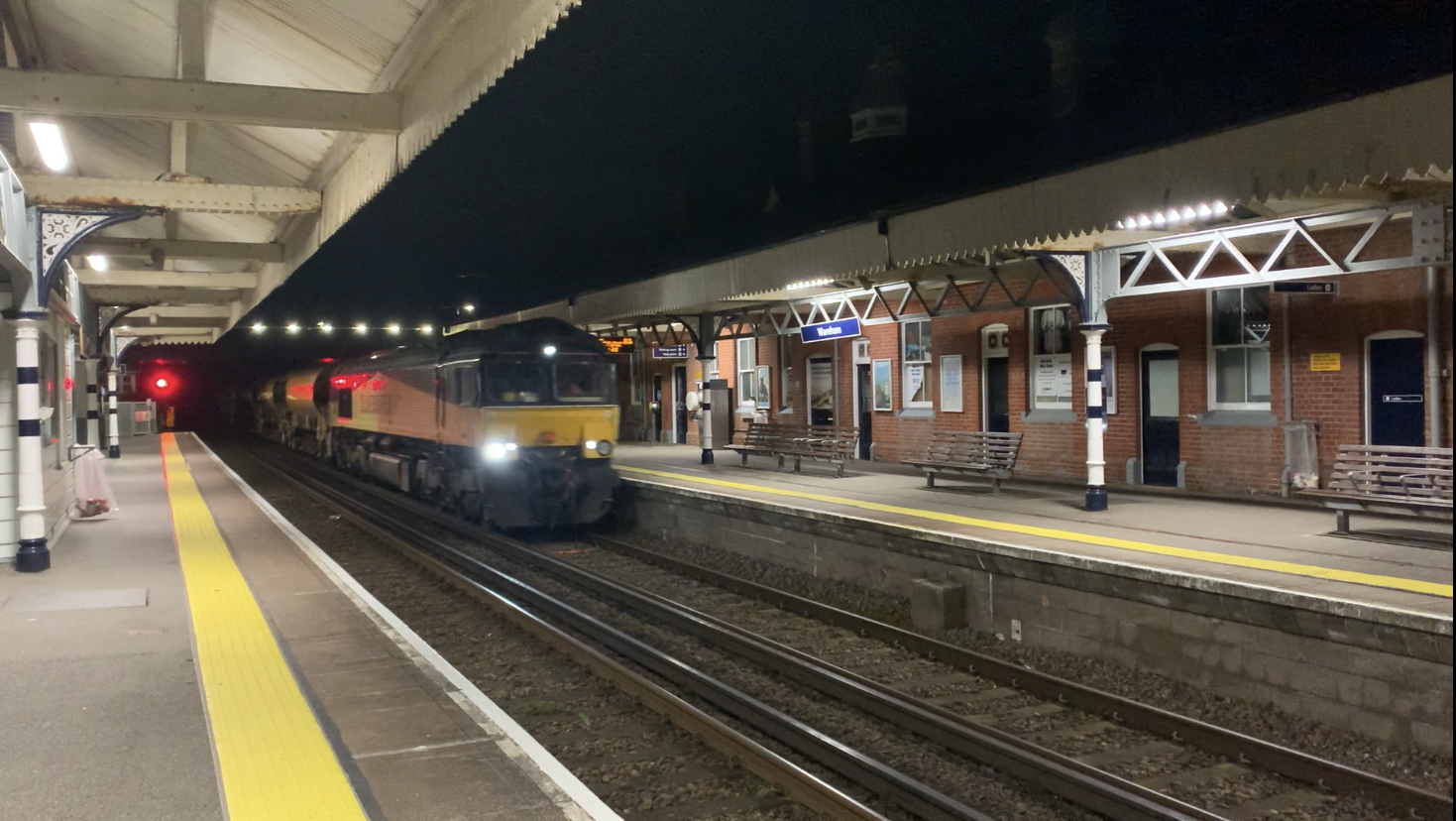
    Screenshot of Colas Class 66 No.66850 ‘David Maidment OBE’ passing Poole working 6C03 1939 Eastleigh East Yard to Holton Heath – 20/04/2024
    Wareham Railway Station – 21/04/2024
    A hand written note informs us that the pedestrian crossing at Wareham railway station is closed due to engineering work – 20/04/2024
    New track panels stacked adjacent the unused signal box at Wareham – 20/04/2024
    Work continues at Wareham – 20/04/2024
    A view up the line towards Wareham sidings which would be partially renewed during the weekend engineering works- 20/04/2024
    A Road Rail Vehicle (RRV) at work in Wareham – 21/04/2024
    Pandrol Jackson Plain Line Stoneblower No. DR80205 used for the initial levelling of track after it has been freshly installed awaits the call of duty at Holton Heath – 21/04/2024

    The Class 66 hauled engineers trains departed the possession area in the early hours of Monday 22nd reporting as 6G13 0230 Bournemouth to Eastleigh East Yard and 6C03 0330 Bournemouth to Eastleigh East Yard.

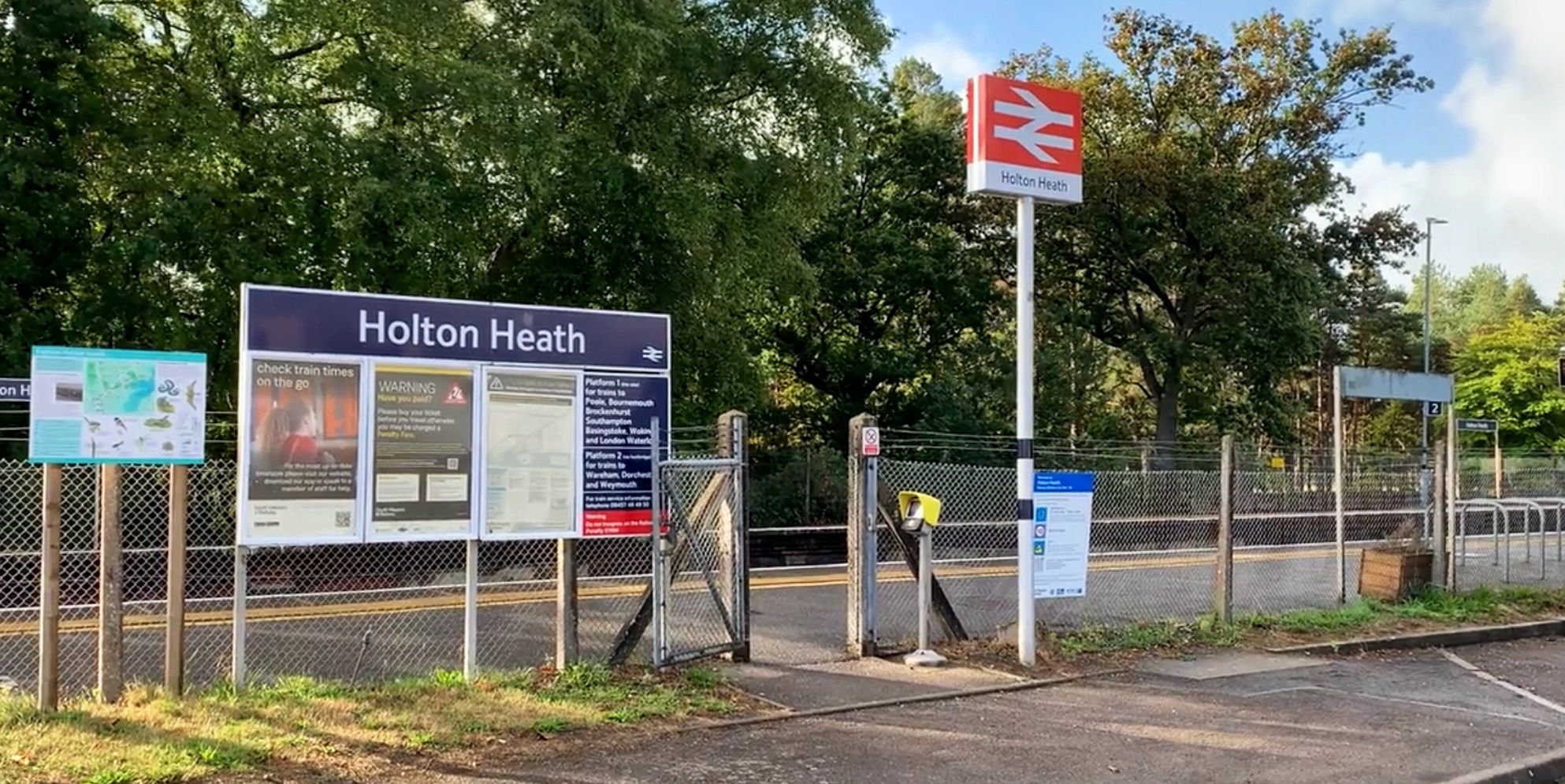
    Holton Heath railway station – September 2022

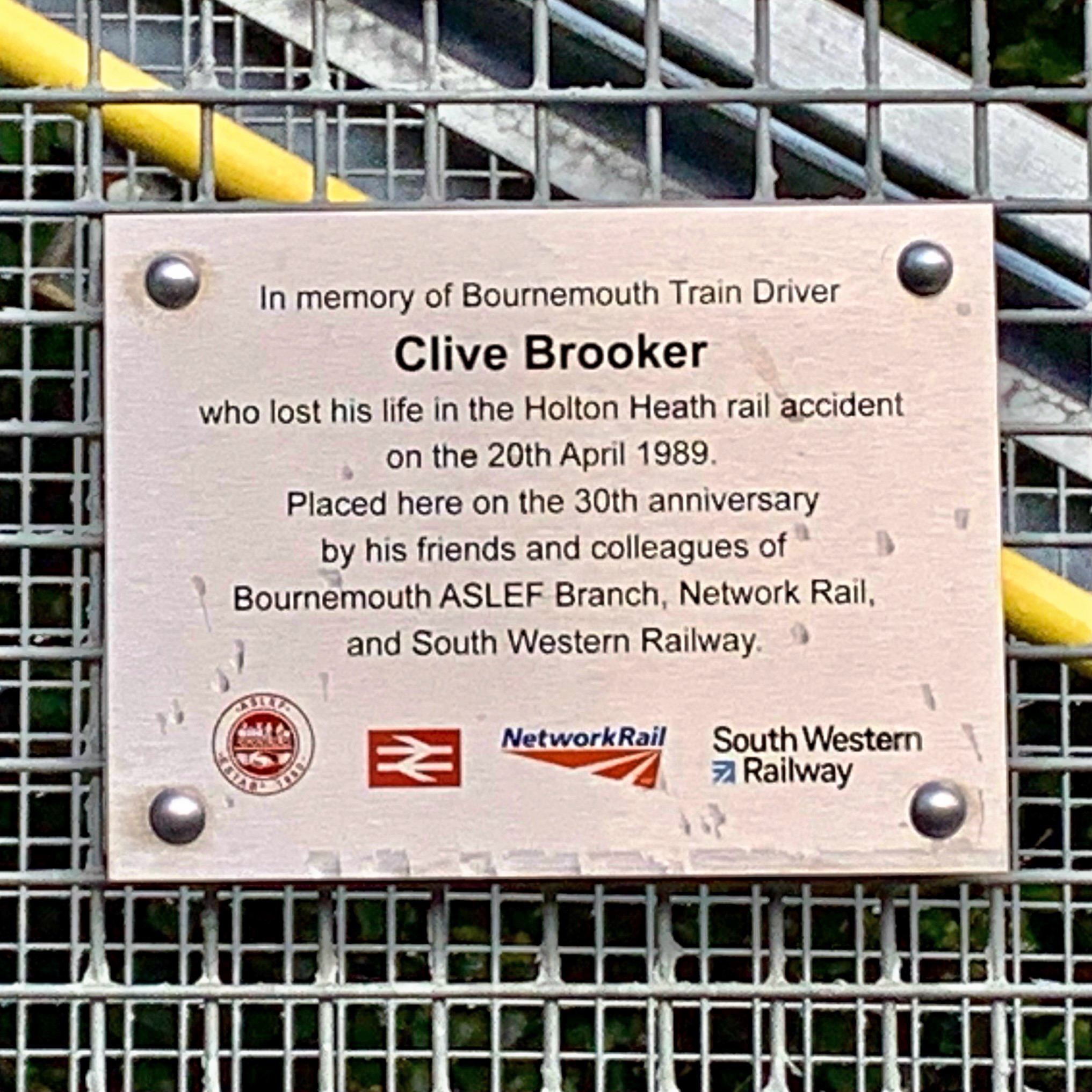
    20th April was the 35th anniversary of a collision which occurred at Holton Heath in 1989. Tragically, Bournemouth train driver Clive Brooker lost his life in the accident. The archived report can be found here.

    Plaque in memory of Driver Clive Brooker situated at Hamworthy railway station; “At about 1202, a light locomotive, that is one travelling without a train, collided with the rear of a freight train at Holton Heath. I regret to report that the driver of the light locomotive… died as a result of the accident. The driver and the guard of the freight train suffered minor injuries.

    On a dry clear day, the diesel locomotive, No. 33107, was travelling at speed under clear signals along the Up line between Wareham and Hamworthy Junction, when it struck the rear of the 1145 Wool to Eastleigh freight train 6W54 as it was accelerating away from a stand after carrying out shunting duties at Holton Heath Siding. The freight train consisted of eight wagons hauled by an electro-diesel locomotive No. 73002; the rearmost wagon being the Type VAA four-wheeled covered van with long sliding doors and loaded with bagged and palletised ballcla.”

    Wednesday April 24th 2024 and it was the turn of Network Rail’s (NR) New Measurement Train (NMT) to visit Weymouth via the western route from Yeovil Pen Mill. Having missed out the Dorset seaside town because of line closures in March the train, which monitors and records track condition information at speeds up to 125mph, was in the hands of former High Speed Train Class 43 power cars No.’s 43274 and 43357 this month. Yoshi and I visited Upwey to see the outward and return legs.

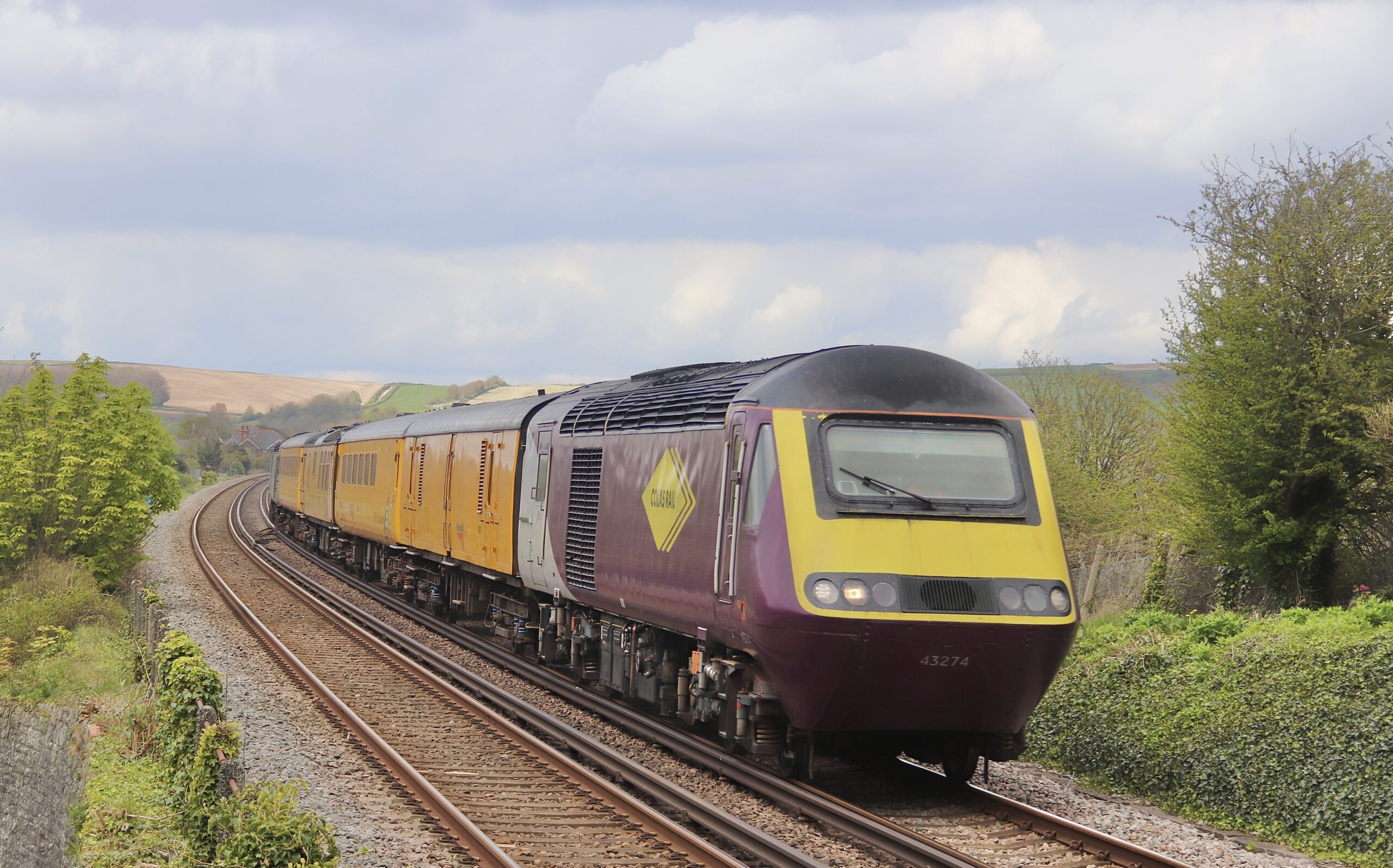
    In its Colas branded East Midlands Railway (EMR) livery, Class 43 High Speed Train power car No. 43274 leads on the approach to Upwey working the New Measurement Train 1Z22 0747 Derby Railway Technical Centre to Bristol Kingsland Road via Weymouth – 24/04/2024
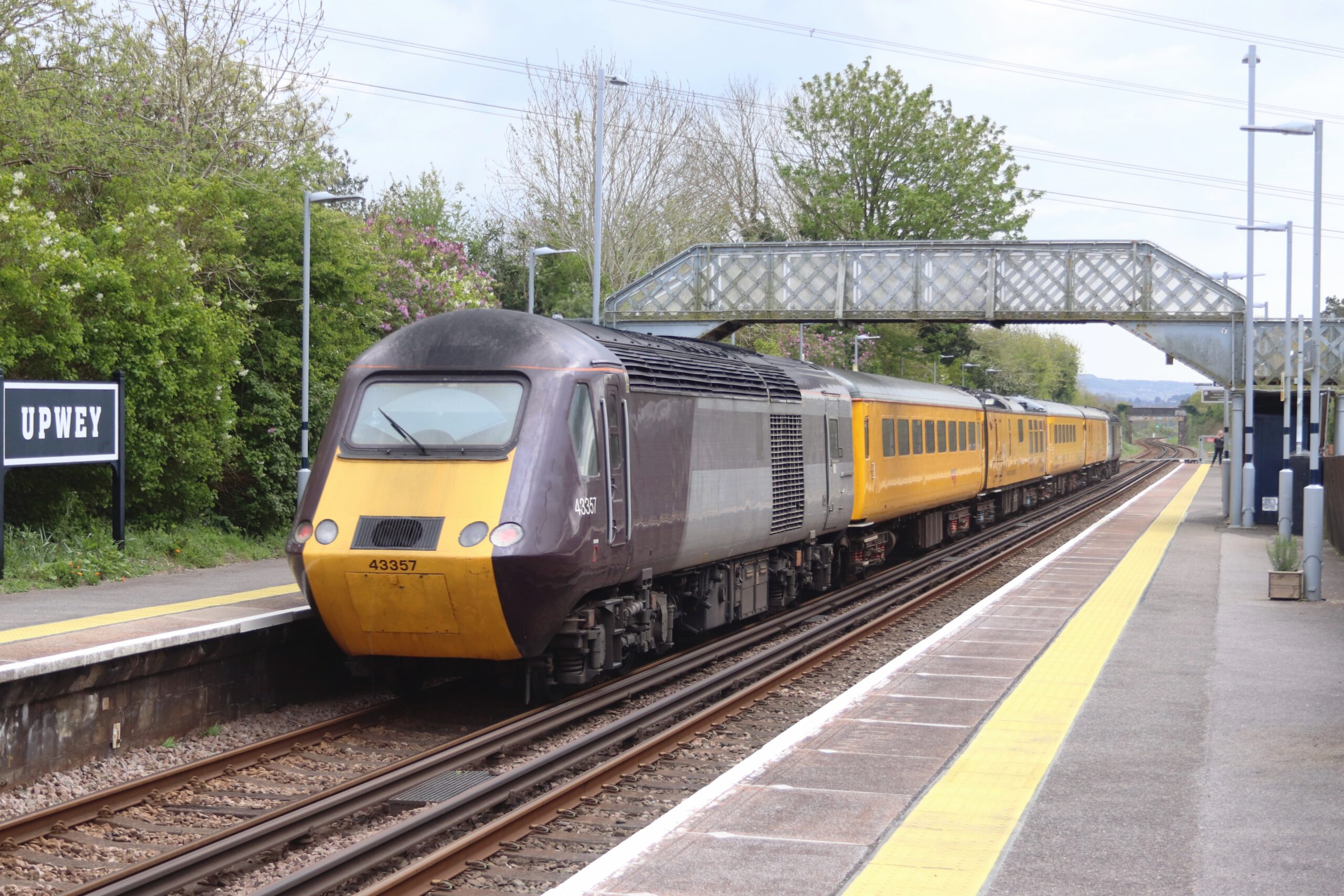
    At the rear of the New Measurement Train – reporting as 1Z22 0747 Derby RTC to Bristol Kingsland Road via Weymouth – in de-branded CrossCountry livery Class 43 High Speed Train power car No. 43357 passes through Upwey on its way to Weymouth – 24/04/2024
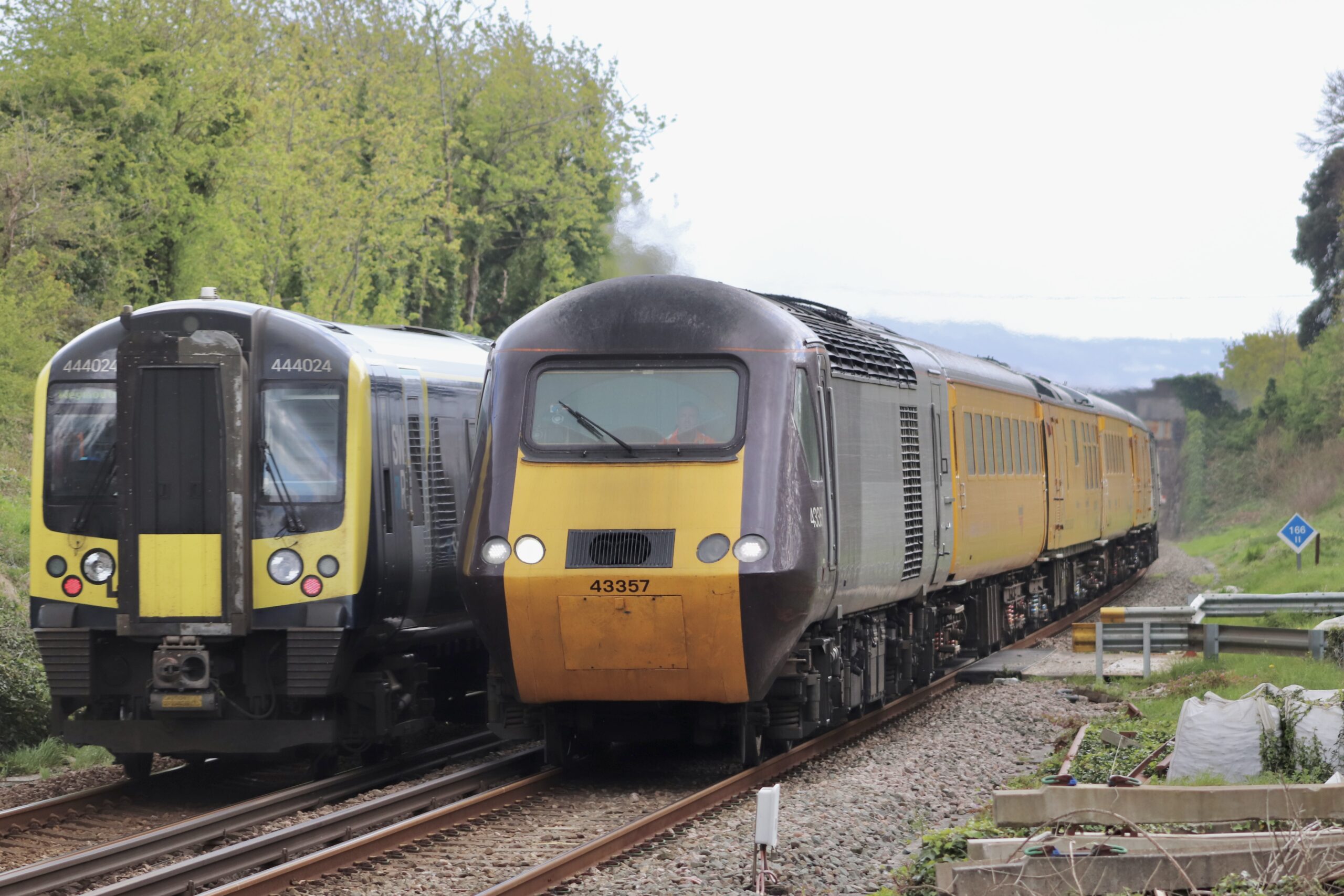
    Class 43 High Speed Train power car No. 43357 forming the New Measurement Train 1Z22 0747 Derby Railway Technical Centre to Bristol Kingsland Road via Weymouth passes South Western Railway Class 444 No. 444024 forming 1W27 1335 London Waterloo to Weymouth at Upwey – 24/04/2024
    Video of the Dorset HST Hew Measurement Train – 24/04/2024 (with thanks to da_bucklet967 and G E Barrett for additional video content)

    Train drivers union, ASLEF, have announced fresh strikes and an overtime ban taking place between Monday 6th May and Saturday 11th May 2024. Train Operating Companies (TOC) in Dorset affected by strike action days are SWR on Tuesday 7th May and GWR on Wednesday 8th May when revised services will run, with short-notice cancellations possible.

    That’s it for another belated blog entry, thanks for joining us looking back on our railway themed adventures! We appreciate your comments, corrections and feedback. We’ll be back with another update soon. Until then, be seeing you!

    Yoshi travels by SWR – 22/04/2024
  • Yoshi’s Castleton Adventure

    Yoshi pauses during a walk along the River Stour in Blandford. The two arches behind our boy are all that remain of the original structure that took the Somerset and Dorset Railway across Langton Meadows. The railway closed in 1966 and the Blandford Railway Arches Trust Limited, in partnership with Blandford Town Council are working to conserve the arches – 08/04/2024

    April 1st 2024 to April 13th 2024

    Yoshi visits the Dolphin Centre in Poole – 02/04/2024

    Yoshi was recently quite perturbed on finding out Barclays Bank have been closing branches across Dorset, with both Weymouth and Poole getting the axe. To replace their High Street presence in Poole, the bank have opened a pod within the town’s Dolphin Shopping Centre. The decline of bank branches in the UK has been attributed to banking consumers’ changing habits and technological changes. Yoshi waited patiently in the ever growing queue at the pod when he wanted to transact business ensuring he had enough pocket money in his account to keep him in Beef & Poultry flavour Mini Tasty treats.

    Yoshi supports Basil Brush and his fund raising for the Royal National Institute of Blind People (RNIB) – 02/04/2024

    Our first railway themed adventure in April 2024 took place during an overnight trip to the Greater Manchester area. The purpose of our trip was to visit friends, but me being me, I was unable to resist the lure of checking out Real Time Trains and seeing what might be seen on the local tracks. I immediately noticed that regular Class 60 hauled freight trains were scheduled to pass through Rochdale, Lancashire where we were staying the night.

    As we drove along the A664, Edinburgh Way, on the outskirts of Rochdale towards our hotel, we passed under a blue railway bridge with a sign welcoming us to “Rochdale – birthplace of co-operation”. The metropolitan borough in north-west England has long boasted of its association with the 28 mill workers, known as the “Rochdale Pioneers”, who opened their Co-Operative shop in the town on Toad Lane in 1844, devising the “principles” which became the model for cooperatives worldwide.

    It conveniently transpired that our hotel was located a few minutes walk from the railway line running through Rochdale and while out walking Yoshi prior to our heading to bed, we took a stroll just in time to see a Class 60 pass over the A664 blue railway bridge with a Drax Power Station to Liverpool Biomass Terminal train of empty wagons.

    The trains supplying Drax use distinctive state of the art biomass wagons – the largest on UK railways – designed specifically to transport and unload wood pellets.

    The UK Central Electricity Generating Board began building Drax in 1967 to utilise coal from the Selby coalfield, and in 1974 it begins generating electricity for the first time. The power station is officially opened in 1975, with three generators and a total electrical capacity of just under 2 gigawatts (GW). It had the capability to power around two million homes but by 1986, Drax had doubled in size and capacity to just under 4 GW, becoming the largest power station in the UK.

    In 1990, Drax Power Station comes under the ownership of National Power, one of three power generation companies created as part of the privatisation of the electricity industry in England and Wales. Nine years later, the power station is acquired by the US-based AES corporation for £1.87 billion but part ways in 2003 after one of the power station’s major customers goes into administration. As creditors, various financial institutions take control of Drax Power Station. 2005 saw the power station undergoing refinancing and Drax Group plc is listed on the London Stock Exchange.

    In 2012, Drax committed to transforming the business into a mainly biomass-fuelled generator using compressed wood pellets in place of coal by upgrading the three generating units that came online in the early 1970’s to run on 100% sustainable biomass, with no use of coal. The first upgraded generating unit came online in 2013 and ten years later in April 2023 Drax announced the official end of coal-fired generation at Drax Power Station.

    As I previously noted above, there are numerous daily paths to and from Drax which pass through Rochdale. So, in order to catch a view of these workings, I elected to get up early on the Thursday morning and drove the five minute journey to Castleton railway station. On arrival at 0530, in good time to witness 6E36 0205 Liverpool Biomass Tml to Drax AES (GBRf) pass through, the station was in darkness. Luckily for me, the lights flickered into life prior to Class 60 No. 60076 ‘Dunbar’ rumbling through the unstaffed station.

    Screenshot of GBRf Class 60 No. 60076 ‘Dunbar’ running through Castleton working 6E36 0205 Liverpool Biomass Tml to Drax AES (GBRf) – 04/04/2024
    Northern Trains Class 150 No.’s 150120 and 150110 stop at Castleton railway station working 2B89 0551 Rochdale to Blackburn – 04/04/2024

    Stopping train services at Castleton are currently provided by Northern Trains utilising Class 195 and Class 150 diesel multiple units. TransPennine Express train services also pass through the station.

    GBRf Class 60 No. 60096 ‘Impetus’ on the approach to Castleton working 6M34 0545 Drax AES (GBRf) to Tuebrook Sidings (GBRf) – 04/04/2024

    The first station to be opened in Castleton was in 1839, situated on the western side of the Rochdale to Manchester Road bridge and was originally called “Blue Pits for Heywood”. The existing station opened on 1st November 1875, on the eastern side of the road bridge. The Liverpool and Bury Railway from Bolton once joined the main line at a triangular junction just south of the station. This was previously a busy passenger and freight route utilised by trains avoiding Manchester, but was closed to passengers on 5th October 1970. Castleton station was formerly part of the Oldham Loop Line which provided through services to Oldham via Rochdale. This route was closed in 2009 and converted for light rail use by Manchester Metrolink.

    The western portion of this line was retained for freight traffic after passenger trains ceased serving the coal depot at Rawtenstall until 1980, and subsequently to the Powell Duffryn wagon works. It now forms the link with the East Lancashire Railway (ELR) at Heywood. Subject to permission being granted by Network Rail (NR, in the future, the heritage line plans to extend its services along and towards a possible new bay platform – given the proposed name “Castleton Village” – which would be adjacent to the main Castleton station. Passengers could then alight from their ELR train and change station sides directly to Northern Rail services on the national network.

    Video from Castleton – April 2024

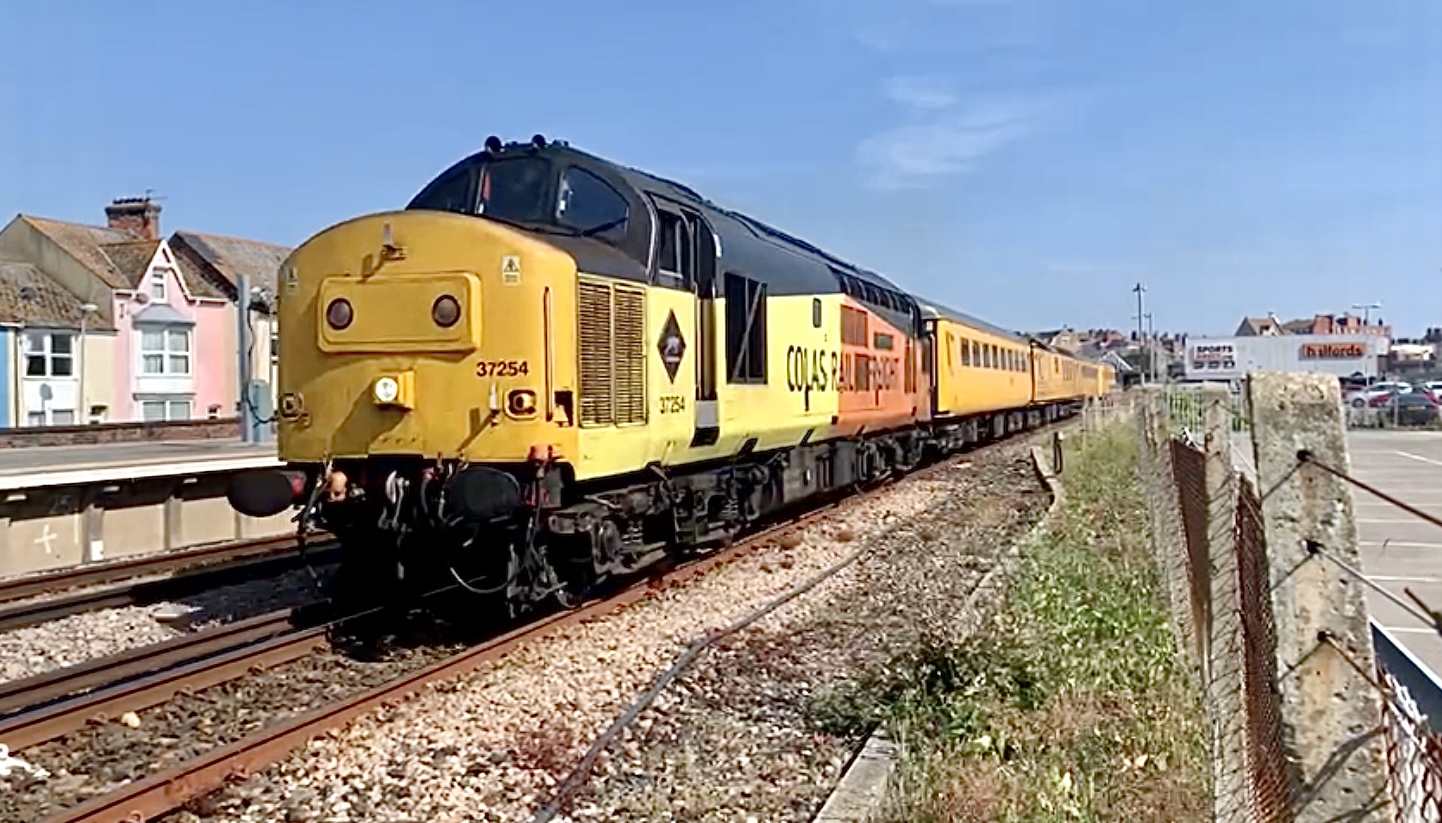
    We arrived back in Dorset on Thursday evening in time to see Colas operated Ultrasonic Test Unit (UTU) head towards Weymouth propelled by Class 37 No. 37254 ‘Cardiff Canton’ with DBSO No. 9714 leading on the outward leg of 3Q45 2103 Woking Up Yard Reception to Reading Triangle Sidings.

    Screenshot of Class 37 No. 37254 ‘Cardiff Canton at the rear of Ultrasonic Test Unit (UTU) passing Hamworthy reporting as 3Q45 2103 Woking Up Yard Reception to Reading Triangle Sidings – 05/04/2024
    Video of UTU 3Q45 2103 Woking Up Yard Reception to Reading Triangle Sidings – 05/04/2024

    The following day, Friday 5th April 2024, and we were back at Hamworthy station as Swanage resident Class 33 No. 33012 (D6515) ‘Lt Jenny Lewis RN’ escaped the heritage railway and ventured out onto the mainline as she headed off to Eastleigh to collect preserved Class 50 No. 50026 ‘Indomitable’. The two locomotives returned later in the day. The Class 50 is visiting the Swanage Railway to undertake power testing to ensure it is fit and ready to earn a mainline running certificate. More news on this is expected from the locomotives owners in the next few weeks.

    Class 33 No. 33012 (D6515) ‘Lt Jenny Lewis RN’ runs light engine into Hamworthy as 0Z33 1130 Swanage to Eastleigh Arlington (Zg) – 05/04/2024
    Class 33 No. 33012 (D6515) ‘Lt Jenny Lewis RN’ running light engine passing Hamworthy as 0Z33 1130 Swanage to Eastleigh Arlington (Zg) – 05/04/2024
    Class 33 No. 33012 (D6515) ‘Lt Jenny Lewis RN’ hauling Class 50 No. 50026 ‘Indomitable’ approaching Hamworthy reporting as 0Z50 1430 Eastleigh Arlington (Zg) to Swanage – 05/04/2024 – 05/04/2024
    Class 50 No. 50026 ‘Indomitable’ being hauled by Swanage resident Class 33 No. 33012 (D6515) ‘Lt Jenny Lewis RN’ at Hamworthy – 05/04/2024
    Video of D6515 & 50026 passing Hamworthy – 05/04/2024
    Yoshi after his date with the groomer. We celebrated by popping into the boys’ favourite pub – 05/04/2024

    Hamworthy Branch update

    The new electrical cabinet at Hamworthy Park crossing on Ashmore Avenue has been installed and the old one removed.

    New cabinet at Hamworthy Park level crossing – 05/04/2024

    For The Record

    The New Measurement Train (NMT) visited North Dorset on Thursday April 4th top and tailed by former High Speed Train (HST) Class 43 power cars No.’s 43274 and 43257 which formed 1Q23 0555 Reading to Salisbury via Exeter.

    Saturday 6th April 2024 and North Dorset witnessed the sight of preserved Hasting’s Unit operating “The Cogload Climber” rail tour run by Hastings Diesels Limited. The train passed through Sherborne and Gillingham on its return leg working as 1Z15 1440 Exeter Central to Hastings. Unfortunately, although I had planned to photograph and video the train as it made its way to and from Devon, this just wasn’t meant to be.

    However, good friend of this blog, @smithy.377 has very kindly allowed us to share the following images and video of the tour in Exeter.

    Diesel-Electric Multiple Unit (DEMU) No. 1001 led by Class 202/6L Power Car 60118 ‘Tunbridge Wells’ at Exeter St Davids prior to departure up to Exeter Central working the “Cogload Climber” railtour reporting as 1Z14 0630 Hastings to Exeter Central – 06/04/2024 (Ashley Smith, @smithy.377)

    No. 1001 is a Diesel-Electric Multiple Unit (DEMU) which once worked on the London Charing Cross to Hastings route in British Rail days between 1957 and 1986. Following withdrawal, the train was subsequently preserved by Hastings Diesels Limited (HDL), restored to its former glory and  returned to main-line operation ten years later, in 1996.

    Unit No. 1001 at Exeter Central having arrived with “The Cogload Climber” 1Z14 0630 Hastings to Exeter Central – 06/04/2024 (Ashley Smith/ @smithy.377)
    Unit No. 1001 at Exeter Central having arrived with “The Cogload Climber” 1Z14 0630 Hastings to Exeter Central – 06/04/2024 (Ashley Smith/ @smithy.377)
    Unit No. 1001 Class 202/6L Power Car No. 60116
    ‘Mount­field’ in the bay platform at Exeter Central having arrived with “The Cogload Climber” 1Z14 0630 Hastings to Exeter Central – 06/04/2024 (Ashley Smith/ @smithy.377)
    Unit No. 1001 at Exeter Central working “The Cogload Climber” 1Z14 0630 Hastings to Exeter Central – 06/04/2024 (Ashley Smith/ @smithy.377)
    Unit No. 1001 at Exeter Central forming “The Cogload Climber” railtour. The train departed reporting as 1Z15 1440 Exeter Central to Hastings – 06/04/2024 (Ashley Smith/ @smithy.377)
    “The Cogload Climber” railtour at Exeter – 06/04/2024. Video courtesy of Ashley Smith / @smithy.377

    In other news, Network Rail (NR), who are responsible for UK railway infrastructure, is to spend approximately £2.8billion on protecting railways from extreme weather events over the next 5 years. The government owned organisation will fund measures such as making embankments more resilient, recruiting almost 400 extra drainage engineers, training operational staff to better interpret weather forecasts and installing CCTV at sites with known flood risks.

    Collapsing embankments are causing major disruption to train services, including those which serve Dorset, and measures to prevent these occurring are required in the face of higher than average rainfall. The spending is part of NR’s £45.4billion investment plan for the next five years.

    Weymouth railway station on 8th April when ASLEF industrial action meant no SWR trains were running. Class 444 EMU’s No.’s 444003 and 444005 stand at platform out of use while GWR Class 165 Turbo DMU No. 165101 forms the 2V60 0930 Weymouth to Gloucester service – 08/04/2024

    The train drivers union, ASLEF, launched a new round of industrial action on Friday 5th April 2024 with the commencement of rolling one day strikes across 14 rail companies. In addition, five days of overtime bans caused further cancellations. The dispute has now entered its 22nd month.

    SWR Class 444 No.’s 444036 and 444045 at Weymouth on the ASLEF strike which meant very few SWR services ran – 08/04/2024

    Yoshi and I visited Blandford on the morning of 8th April and took a walk along the River Stour so we could view the “Blandford Railway Arches”, the only physical remaining evidence the Somerset and Dorset Railway once traversed over the river. You can read more about the rise and demise of Blandford’s railway history here.

    A bridge to nowhere… the decision to close the Somerset and Dorset Railway connecting Bath and Bournemouth is one of the great tragedies of the Beeching Era. Yoshi pauses on a walk along the River Stour – 08/04/2024
    For over 100 years the flood arches on Langton Meadows carried the Somerset and Dorset railway over the biodiversity rich Stour flood plain. When the railway closed, most of the infrastructure was demolished, but the arches were left standing, an unlisted but much-loved asset and memorial to the town’s Victorian industrial heritage. When North Dorset District Council considered demolishing them, public opinion in opposition resulted in Blandford Forum Town Council (BFTC) seeking a long-term lease for the structure so that it could be preserved – 08/04/2024

    That brings us to the end of another blog entry. Thank you for reading, your comments and corrections, which are always welcome. Be seeing you!
    End Piece:

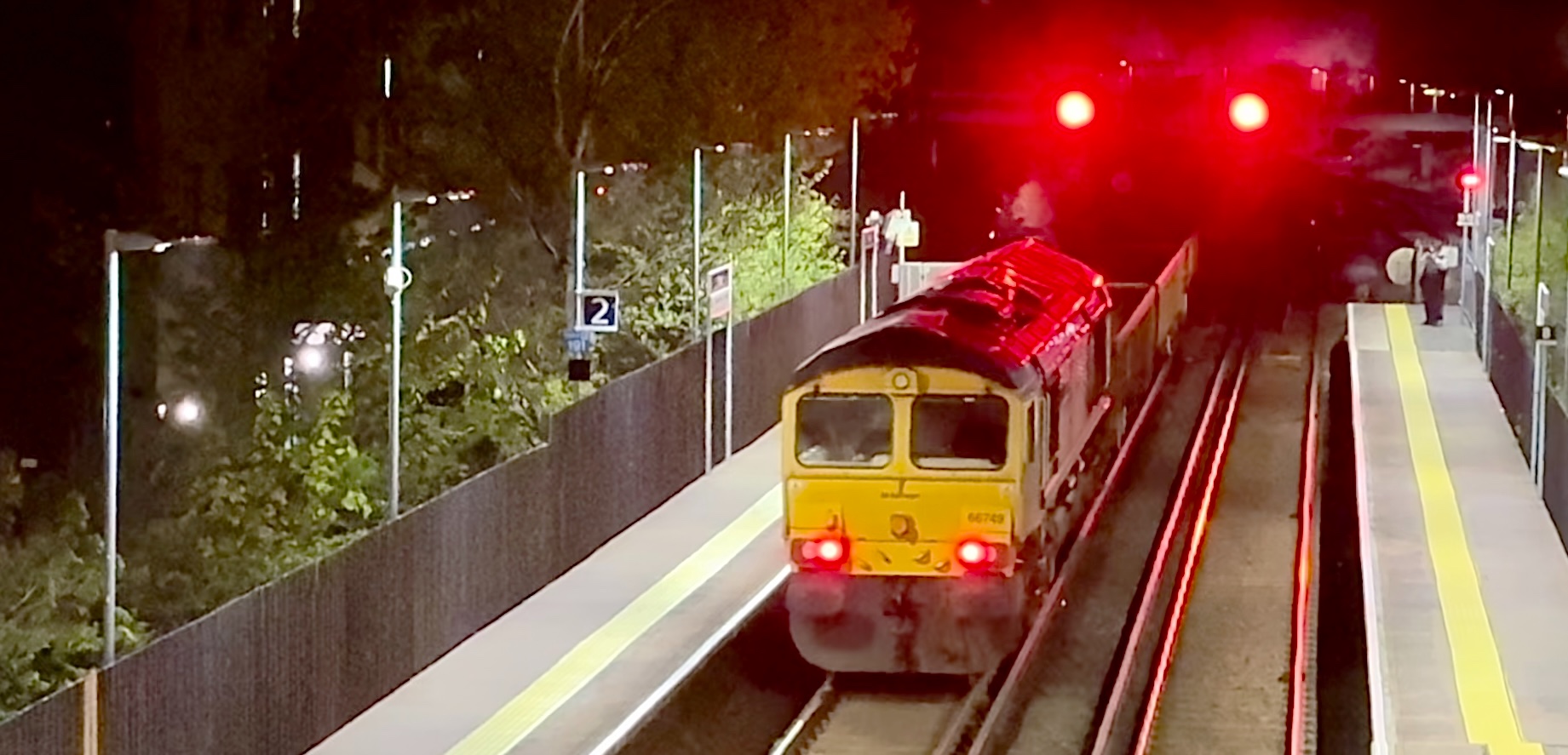
    The British Rail Class 165 Networker Turbo is a fleet of suburban Diesel Multiple Unit (DMU) passenger trains, originally specified by and built for the British Rail Thames and Chiltern Division of Network South East (NSE). They were built by British Rail Engineering Limited (BREL) York Works between 1990 and 1992. GWR Class 165 No. 165101 forming 2V60 0930 Weymouth to Gloucester – 08/04/2024
    The British Rail Class 166 Networker Turbo Express is a fleet of DMU passenger trains, built by ABB Transportation in York between 1992 and 1993. The trains were designed as a faster, air-conditioned variant of the Class 165 Turbo, intended for longer-distance services, and, like the 165’s, belong to the Networker family. GWR Class 166 No.166216 at Weymouth forming 2V72 1528 Weymouth to Gloucester – 11/04/2024
  • Yoshi’s New Year

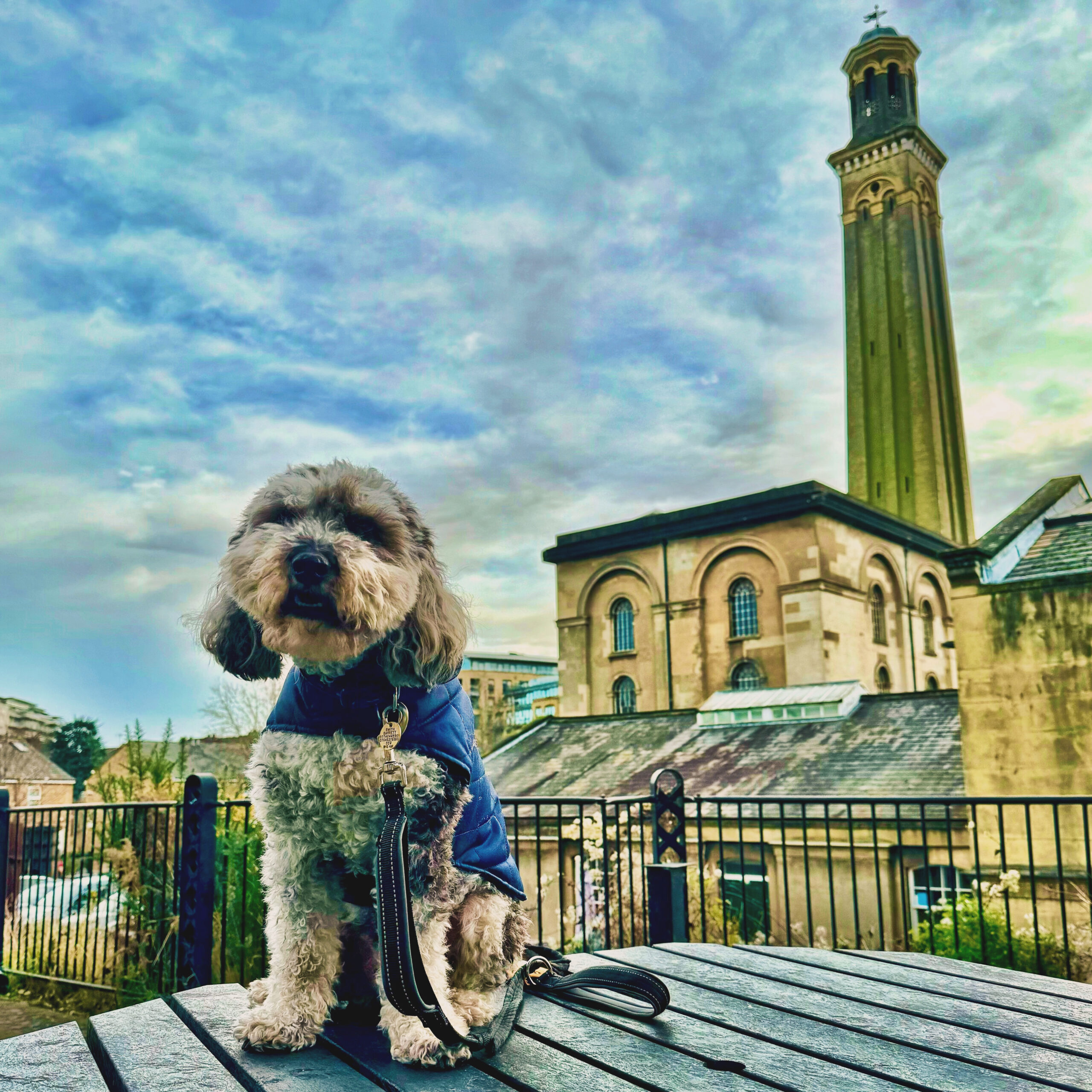
    Yoshi visited The London Museum of Water & Steam to celebrate the New Year. In the background are the museum buildings and the impressive Victorian standpipe tower, which is not, as you might expect, a chimney but a brick winter coat for the two systems of vertical pipes – through which water was pumped before it entered the mains water supply – contained within to prevent freezing and is the museum’s most striking feature standing at 200 ft high. The Grade I brick tower, of Italianate design, was constructed in 1867 to replace an earlier open metal lattice structure – 01/01/2024

    January 1st 2024 to January 11th 2024

    We kicked off 2024 with a visit to the “New Years Steam Up” being held at the London Museum of Water & Steam in Brentford. The Steam Up weekend of celebrations was the first opportunity in two years for people to marvel at the monstrous working steam engines that once provided water to the millions living and working in London.  In July 2022, the Museum’s 96 year old Lancashire Boiler failed an inspection when it was discovered one of the seventeen rivets which hold the crown valve mounting flange onto the main boiler shell had lost its heat inside the boiler’s steam space. This meant that the boiler could no longer be used and the steam engines fell silent and still while extensive repairs were carried out. Now, just in time to celebrate the museum’s 50th anniversary the boiler is steaming once again.

    Situated on the site of the former Kew Bridge Pumping Station, close to Kew Bridge on the River Thames in West London,  the museum is centred on a collection of stationary water pumping steam engines dating from 1820 to 1910. It is the home of the world’s largest collection of working Cornish engines, including the largest working beam engine in the world; the Grand Junction 90 inch.

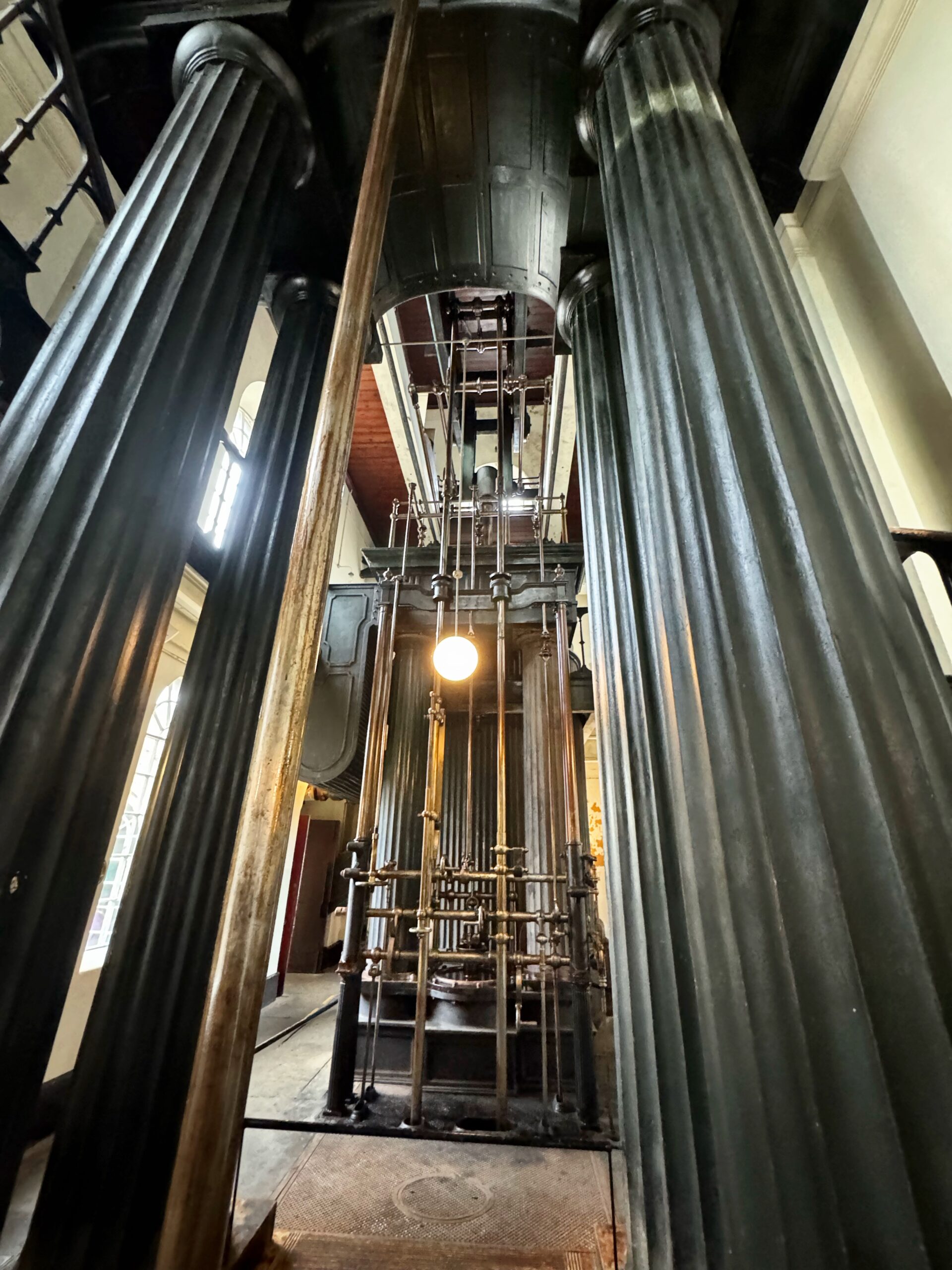
    The Grand Junction 90 inch  has a cylinder diameter of 90 inches (hence its name!) and was used to pump water to London for 98 years. This machine is over 40 feet high and weighs about 250 tons. It was described by Charles Dickens as “a monster”. It was built by Sandys, Carne & Vivian of Hayle in 1846 as the first Cornish beam engine specifically designed for water supplies and was powerful enough to supply water to the upper floors of buildings, allowing direct supply to upstairs bathrooms 01/01/2024

    We arrived early after a good run in the car up from Dorset and luckily found parking on site in the small car park at the museum, although the site is only a 3 minute walk from Kew Bridge railway station if you chose to arrive by train. There were a number of families in evidence with young children during our visit and the museum is a great place to learn and have fun.

    Exhibiting a plethora of steam, diesel and electric powered pumps, the London Museum of Water & Steam tells the story of London’s water supply housed in historic Georgian buildings and they very kindly allowed access to Yoshi, but explained that our boy may not like some of the steam engines when they are working. We duly followed this advice and Yoshi waited with one of his hoomans in the Pump and Grind Coffee Shop or explored the garden area while the machines were being operated. The coffee shop was very busy and served an excellent cuppa. It is run by “Our Barn Community”,  a local charity working with young people with learning difficulties enabling a supported work placement. 

    We have shared just a small fraction of the engineering marvels housed at the museum below:

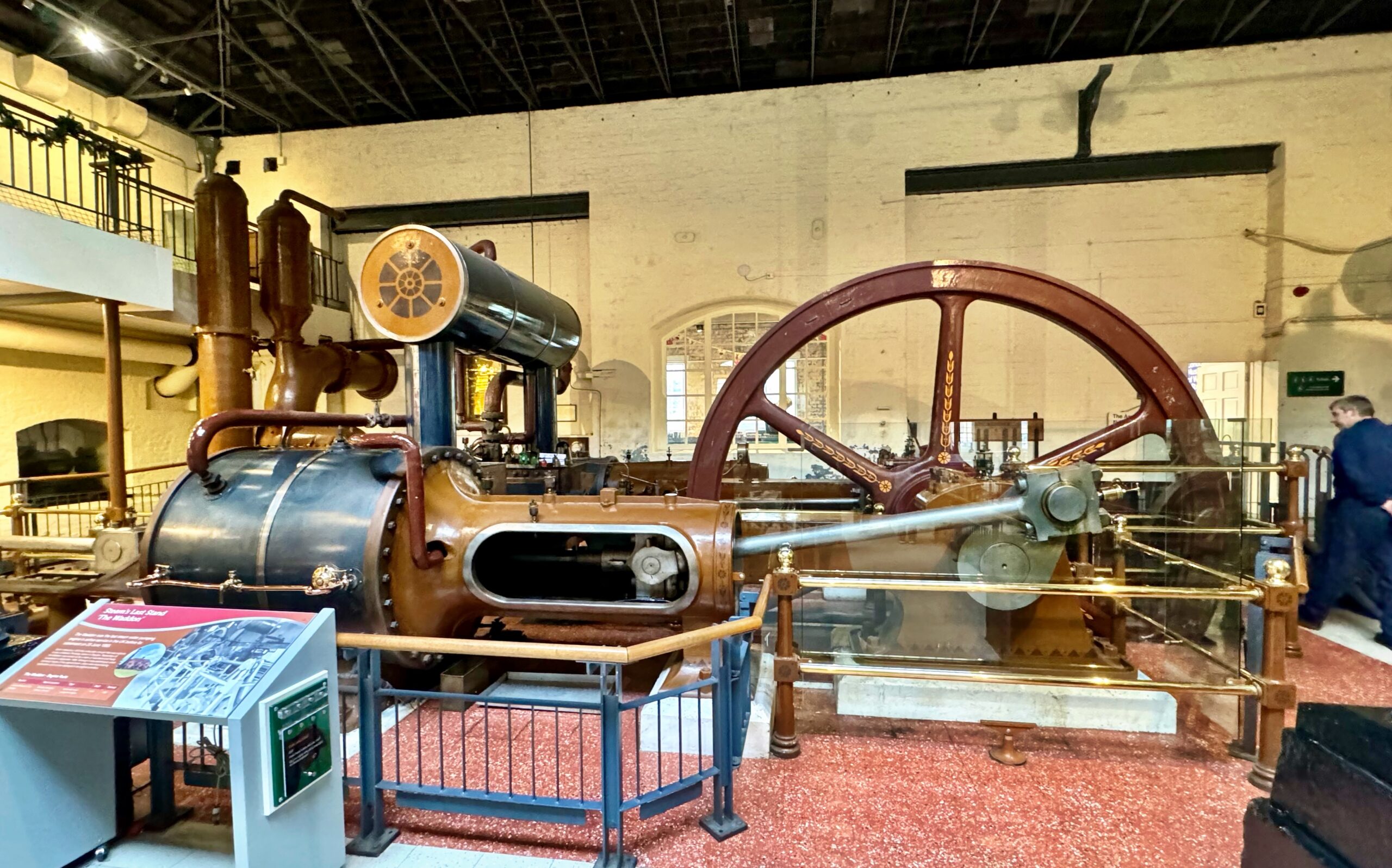
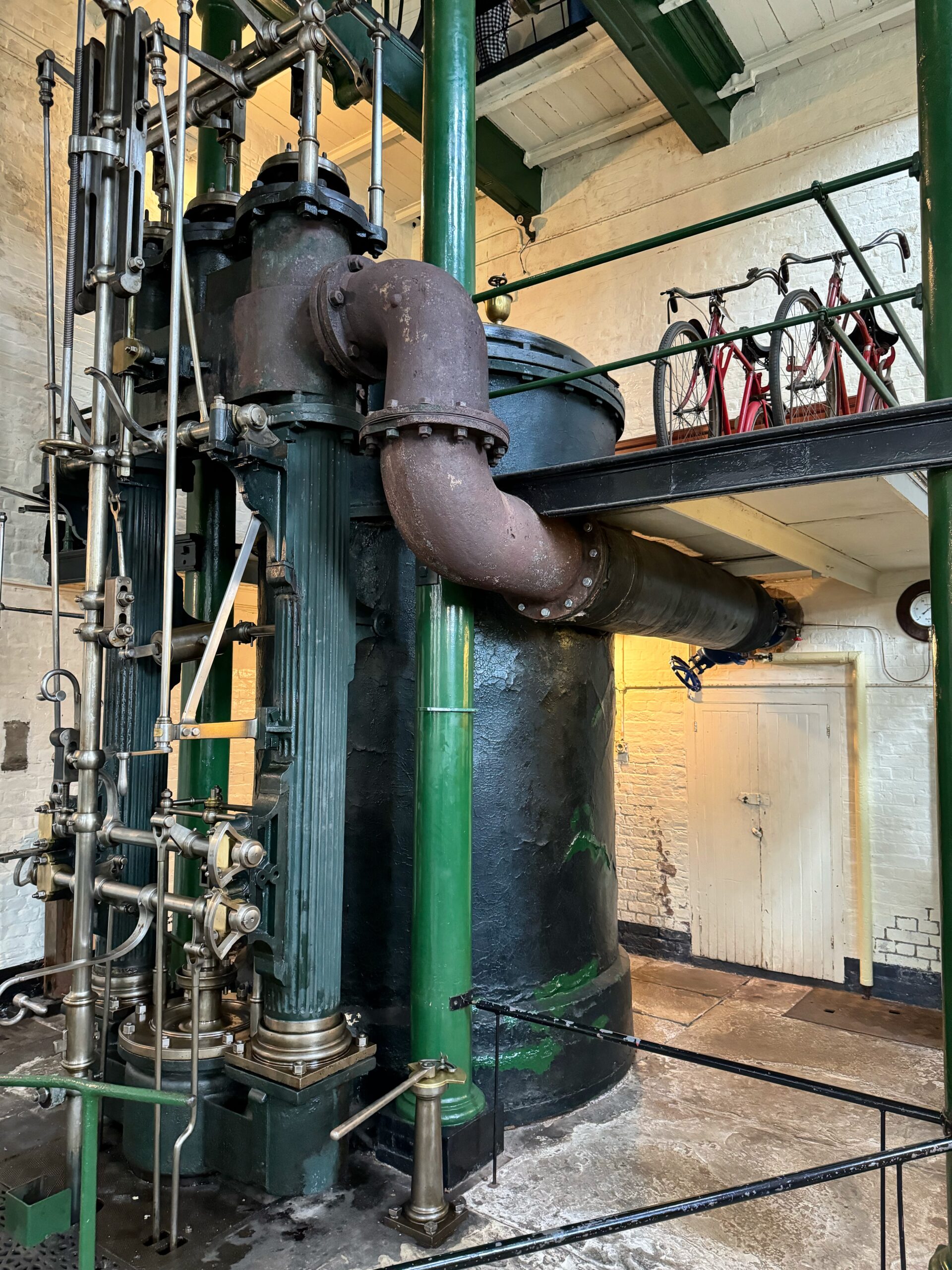
    The Waddon Engine with drove 3 pumps was built by James Simpson & Co of Newarkin 1910 and originally found use at Waddon Pumping Station in Croydon. It was the last steam water-pumping engine in active UK service before being retired in June 1983. It was restored in 1990 and restored to original Edwardian colours for display at the museum – 01/01/2024
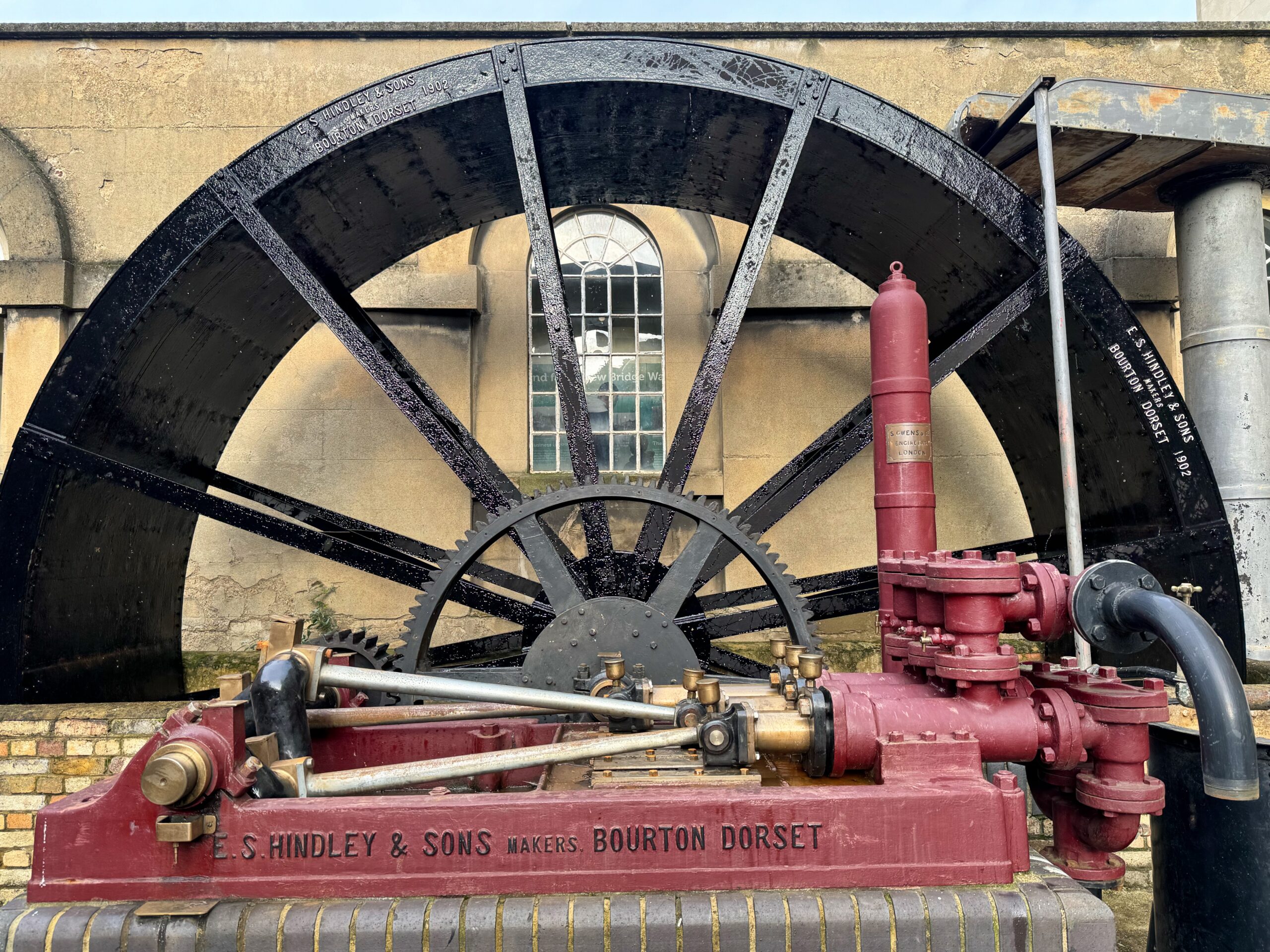
    This waterwheel was built in 1902 by S. Hindley & Sons in Bourton, Dorset for the Duke of Somerset to serve his estate at Maiden Bradley in Wiltshire and was one of the last waterwheels ever built to pump water in the UK – 01/01/2024
    The Boulton & Watt (West engine) is the oldest engine in the London Museum of Water & Steam having been built in Birmingham in 1820.It was one of a pair moved to Kew in 1840 which were then converted into a Cornish type between 1846 and 1848. Retired in 1944, this was the first engine to be returned to working order in 1975 – 01/01/2024

    Kew Bridge Pumping Station was originally opened in 1838 by the Grand Junction Waterworks Company, expanding over the ensuing years and ultimately housing six steam pumping engines as well as four Allen diesel pumps and four electric pump sets. The steam engines were retired from service in 1944, although two were kept on standby until 1958. The Metropolitan Water Board thankfully decided not to scrap the resident steam pumping engines and set them aside to form the basis of a museum display at a later date which came to fruition in 1974 with the formation of the Kew Bridge Engines Trust.

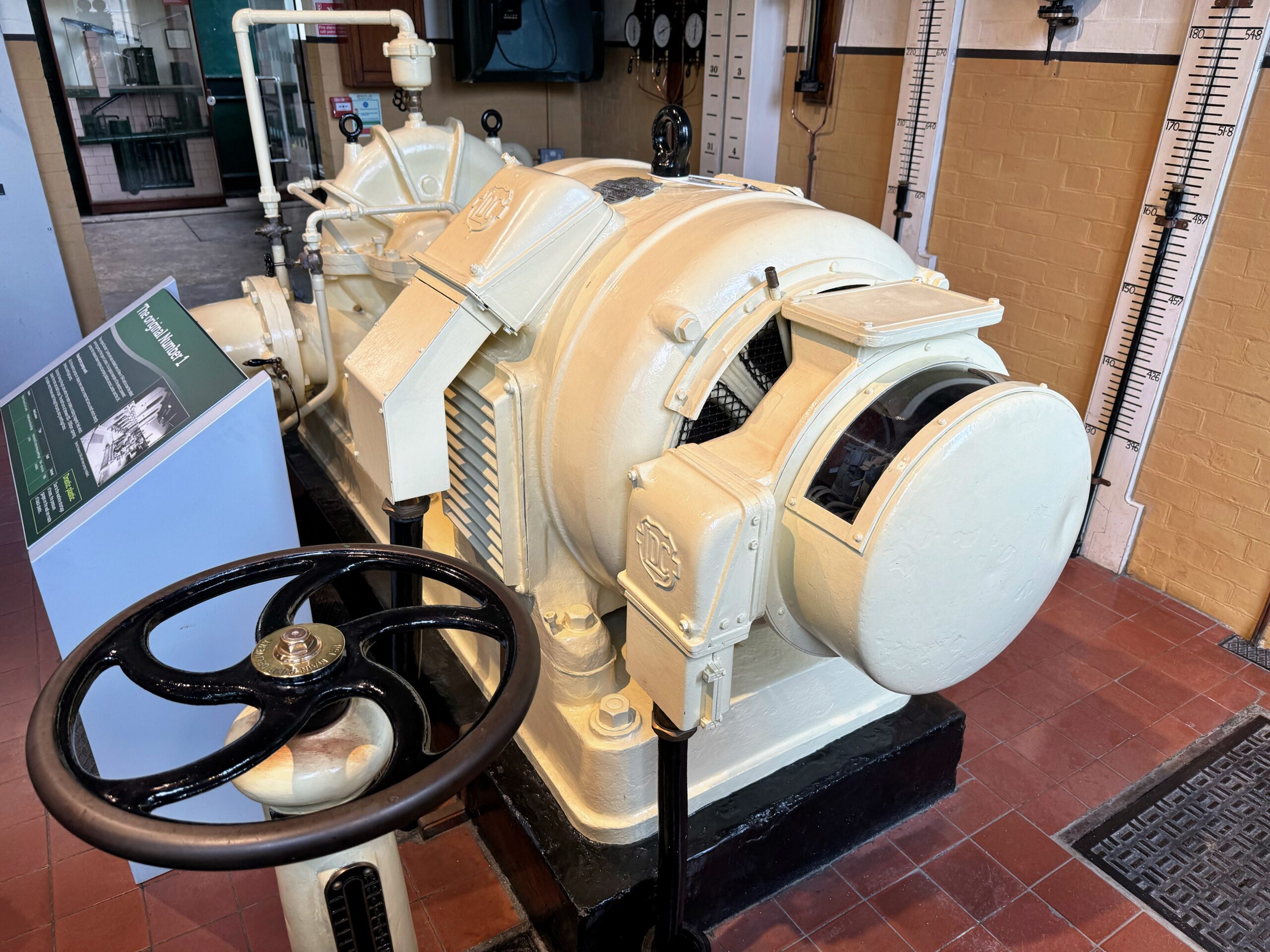
    The original Number 1 horizontal AC motor driving centrifugal pump was built in 1944 by Hawthorn Davey & Co of Leeds. This type of electric pump replaced steam engines at pumping stations across the UK and this example is the oldest surviving pump of its kind. It was retired in the late 1980’s – 01/01/2024

    The museum also runs a 2 ft narrow gauge railway, which despite being advertised as running over the weekend, was unfortunately not operating during our visit. The museum has been a filming location for many television programmes, including the Doctor Who serial “Remembrance of the Daleks” broadcast in 1988.

    After our visit to the London Museum of Water & Steam, we had planned on taking a trip into central London by rail, but in the event decided against this and instead took a drive and a leisurely walk around nearby Richmond, including a visit to the railway station. Of course we did!

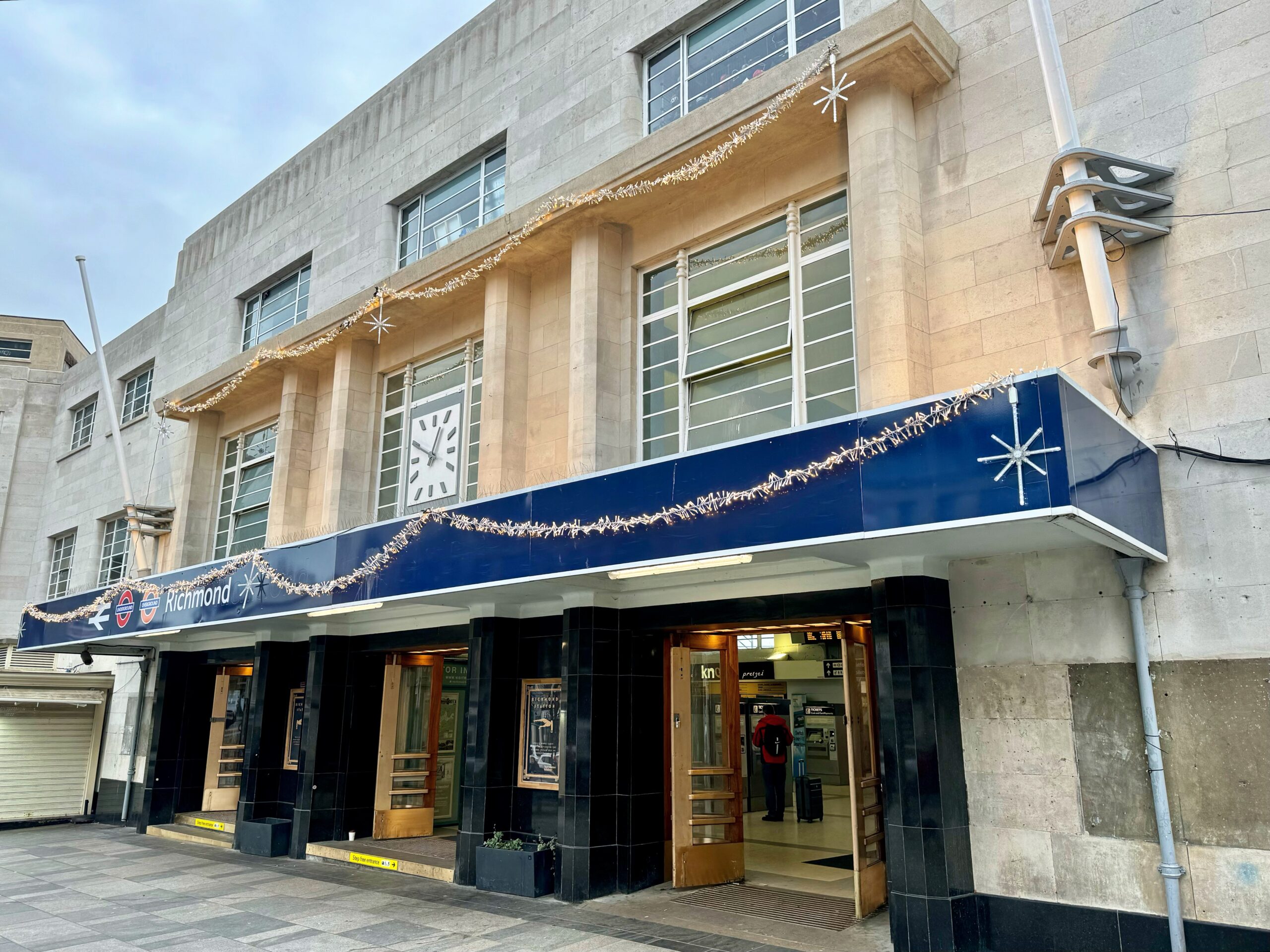
    The Art Deco façade of Richmond railway station complete with its square clock centrepiece – 01/01/2024

    The Art Deco station building in Richmond, designed by James Robb Scott (1882-1965) for the Southern Railway and constructed in Portland stone dates from 1937 and replaced an earlier station on the site. Scottish born Scott became the Chief Architect of the Southern Railway and is perhaps best known for his redesign of London Waterloo between 1910 and 1923 where he was chiefly responsible for the offices, main entrance and war memorial to the fallen employees of the railway known as the Victory Arch. Scott also designed Wimbledon and Surbiton railway stations – now part of the South Western Railway (SWR) network – the latter having recently celebrated 40 years since being bestowed Grade II listed status.

    SWR, Network Rail (NR) and the Railway Heritage Trust are jointly funding a £325,000 programme of improvements with hopes of more refurbishment to come in the future, subject to additional funding being made available. Initial work includes cleaning the Portland stone façade, repairing the timber entrance doors and polishing its bronze embellishments, repairing flagpoles and refurbishing customer toilets.

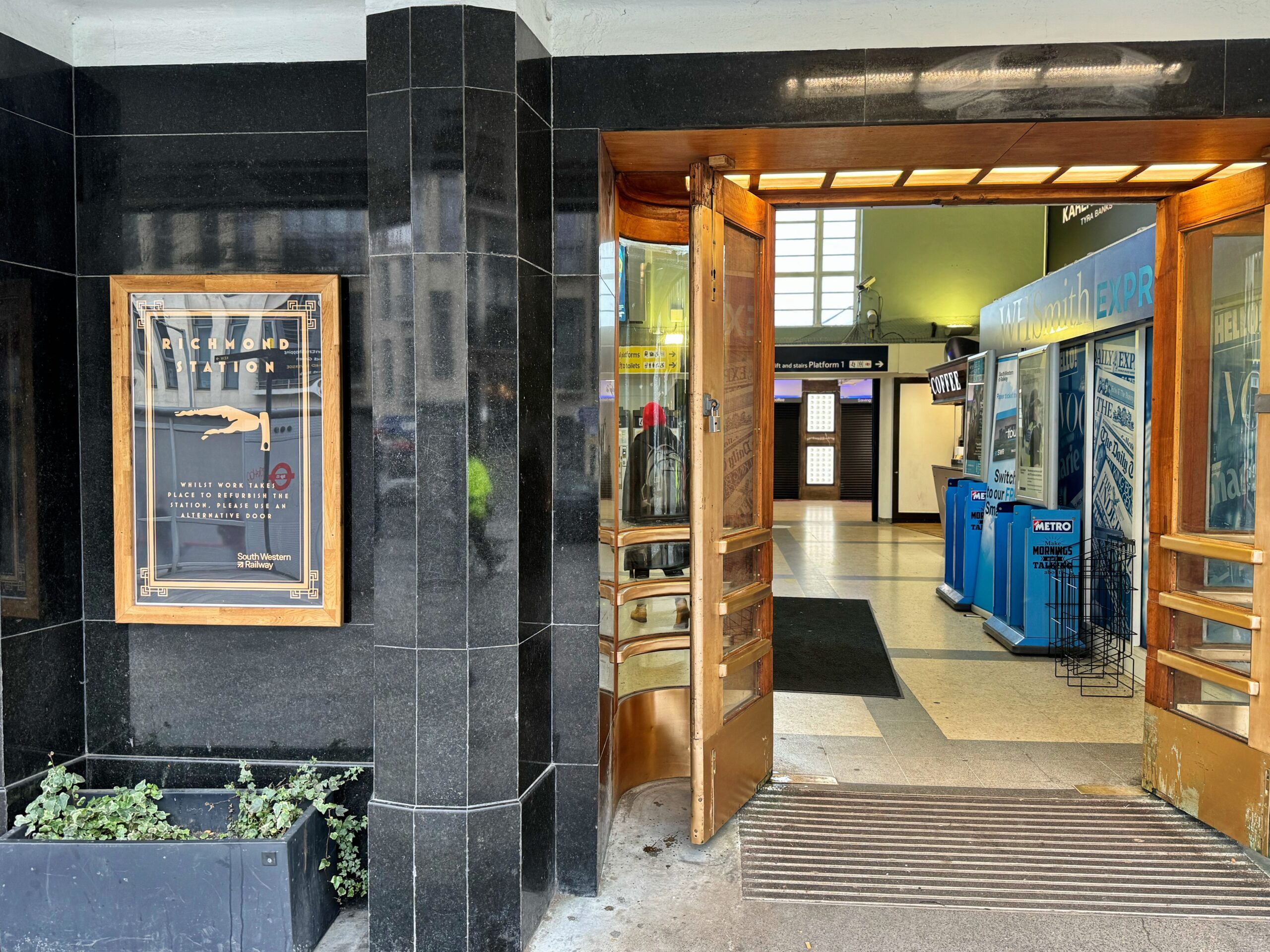
    The restored entrance doors to Richmond railway station which Yoshi unceremoniously christened on our visit…. 01/01/2024

    The style of the building at Richmond is suggested as being inspired by the work of Charles Holden (1875-1960), the architect behind London Underground stations including South Wimbledon on the Northern line. Holden’s designs included multi-frame glazing, enamelled signage panels, the use of an iconic typeface for signage and brick and tile detailing. Similar features at Richmond have been lost or covered up over time, including during the station’s last major refurbishment in 1985. SWR, NR and the Railway Heritage Trust have worked with Benedict O’Looney Architects on designs that include restoring or replicating those features, and others, in future improvements. Paying close attention to detail, the station’s original, hand-drawn plans are being used together with promotional photographs from when the station first opened its doors to customers. Samples of the station’s original paint are also being analysed by the University of Lincoln, specialists in the conservation and restoration of the interior and exterior features of listed and historic buildings.

    The area in front of Richmond station main entrance was pedestrianised in 2013 and includes a war memorial to soldier Bernard Freyberg, who was born in Richmond.  As well as Sir trains, the station is served by the London Overground North London Line and Underground District Line trains.

    Star of the show, Adams 4-4-0 T3 No. 563 working the 1200 Swanage to Norden service approaches Corfe Common – 06/01/2024

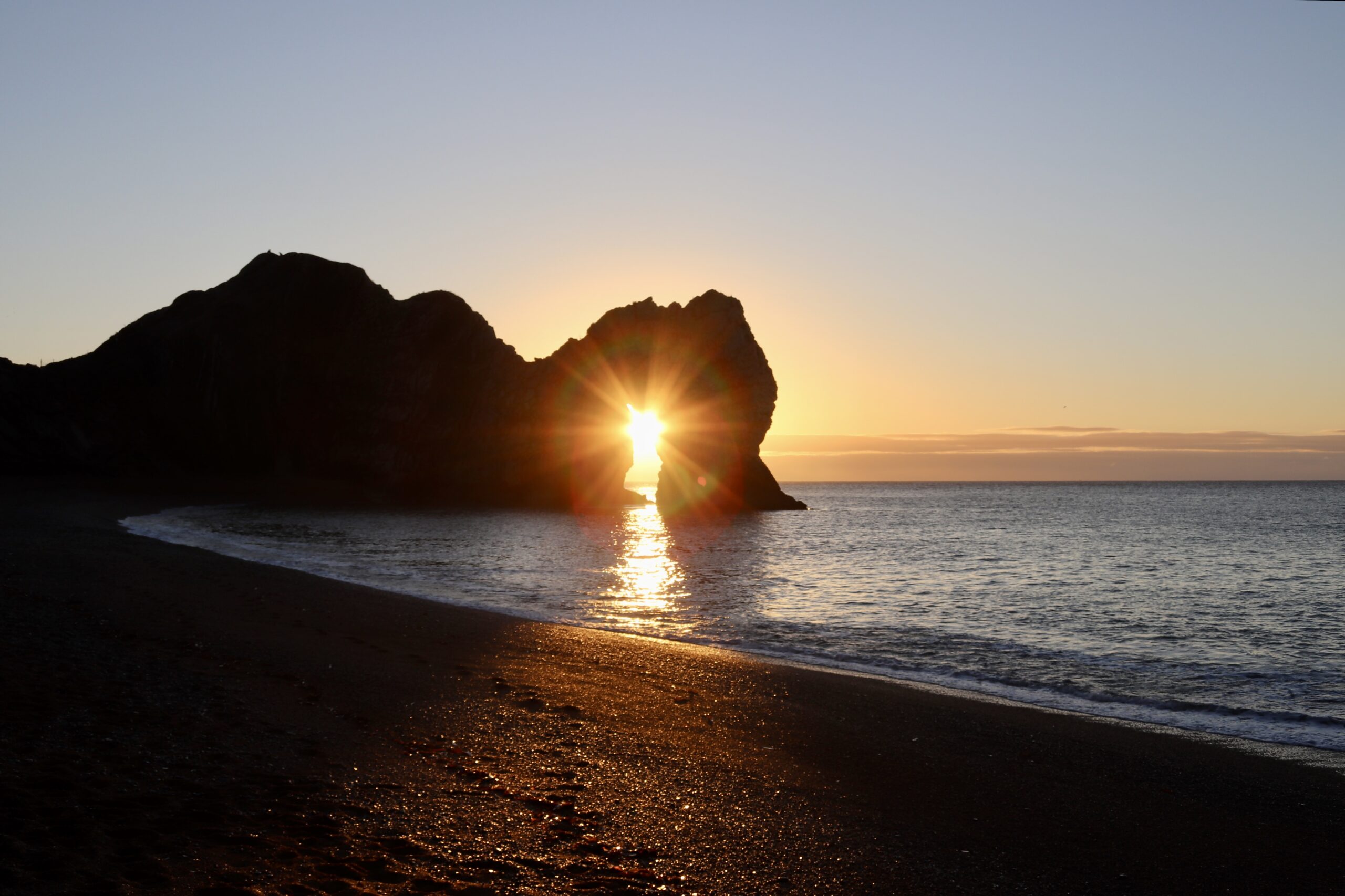
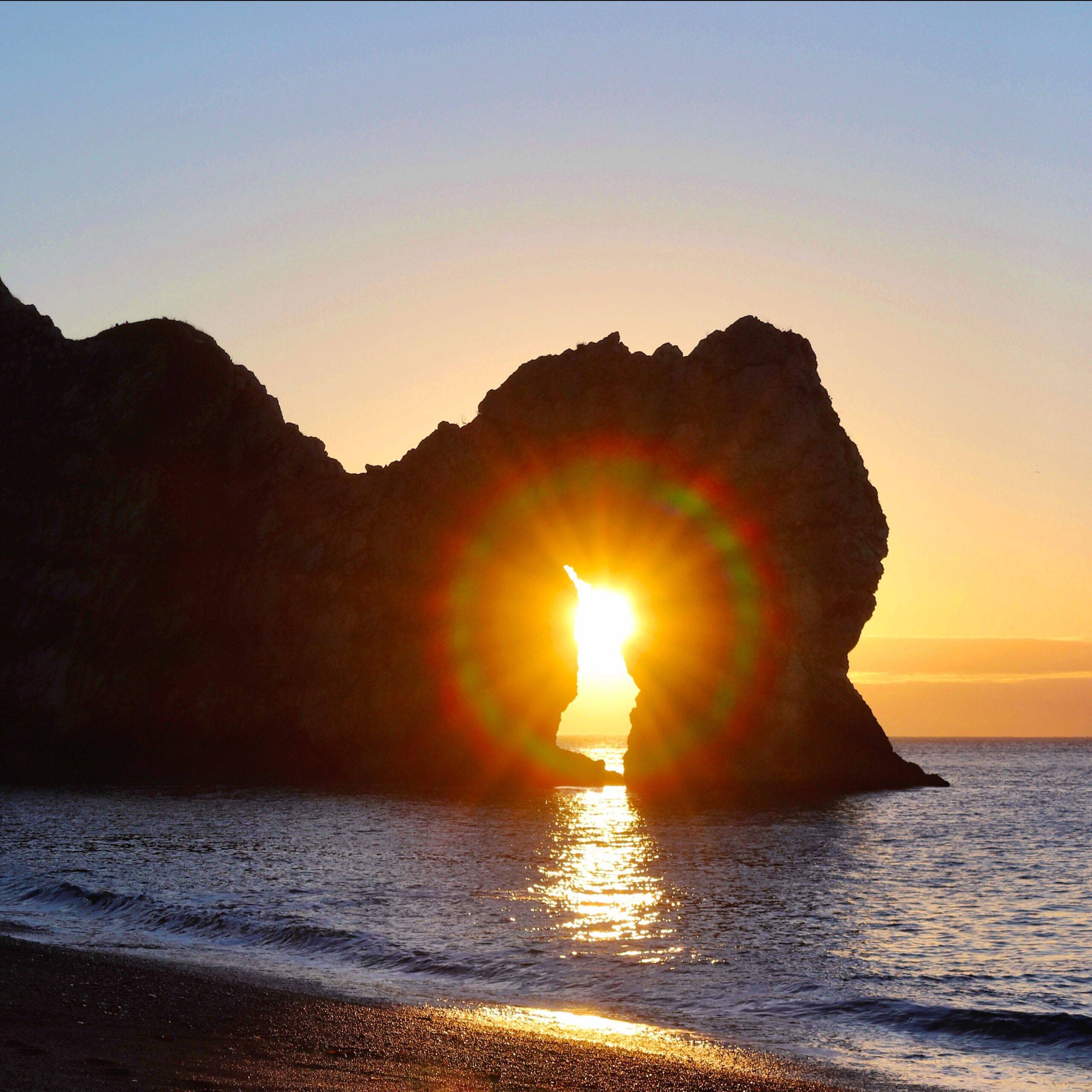
    The Swanage Railway’s first event of 2024 was their annual “Winter Warm Up” weekend held on January 6th & 7th. With cold, but clear weather forecast, I decided on heading down to Swanage on the Saturday after taking a chance on a picturesque sunrise at Durdle Door on the way.

    Resident Class 33 No. 33111 crosses Corfe Viaduct hauling the 1245 Swanage to Norden train – 06/01/2023
    SR West Country 4-6-2 No. 34028 ‘Eddystone’ takes her turn on the demonstration freight working the 1132 Norden to Swanage nearing Afflington. Later during the weekend, brake van rides were offered – 06/01/2024
    This time working a passenger train, SR West Country 4-6-2 No. 34028 ‘Eddystone’ has departed Norden with the 1415 service to Swanage – 06/01/2024
    Class 33 No.D6515 ‘Lt Jenny Lewis RN’ takes her turn on the freight wagons working 1302 Norden to Swanage – 06/01/2024
    Class 33 No.D6515 ‘Lt Jenny Lewis RN’ departs Harman’s Cross with the 1030 Norden to Swanage – 06/01/2024

    In action this year was the recently restored Adams 4-4-0 T3 No. 563 hauling its first freight train since its return to service, SR West Country 4-6-2 No. 34028 ‘Eddystone’ and the resident Class 33 diesel locomotives no.’s 33111 and D6515 ‘Lt Jenny Lewis RN’

    Adams 4-4-0 T3 No. 563 powers away from Corfe Castle at the head of the 1357 Swanage to Norden demonstration freight – 06/01/2024

    The Swanage Railway Trust 563 Locomotive Group have been nominated for the “Steam Railway Magazine Award”. This award is decided by the public and will be announced at Heritage Railway Association’s annual ceremony on February 10th 2024 and you can now cast your vote online until the 18th January 2024: www.steamrailway.co.uk/read/hra-awards

    Video from January 6th 2024 Swanage Winter Warm Up

    Scheduled mainline action kicked off the year with a “no-show” as the HST powered New Measurement Train (NMT) failed to reach Weymouth on January 3rd after a points failure at Castle Cary curtailed 1Z22 1211 Derby RTC (Network Rail) to Bristol Kingsland Road – top and tailed by Class 43 power cars No.’s 43274 and 43257 – at Westbury. Interestingly three different paths were put in for this test train on this particular day. The one which finally ran was timed later than the usual working to Dorset, but not as late as one of the options given for the day!

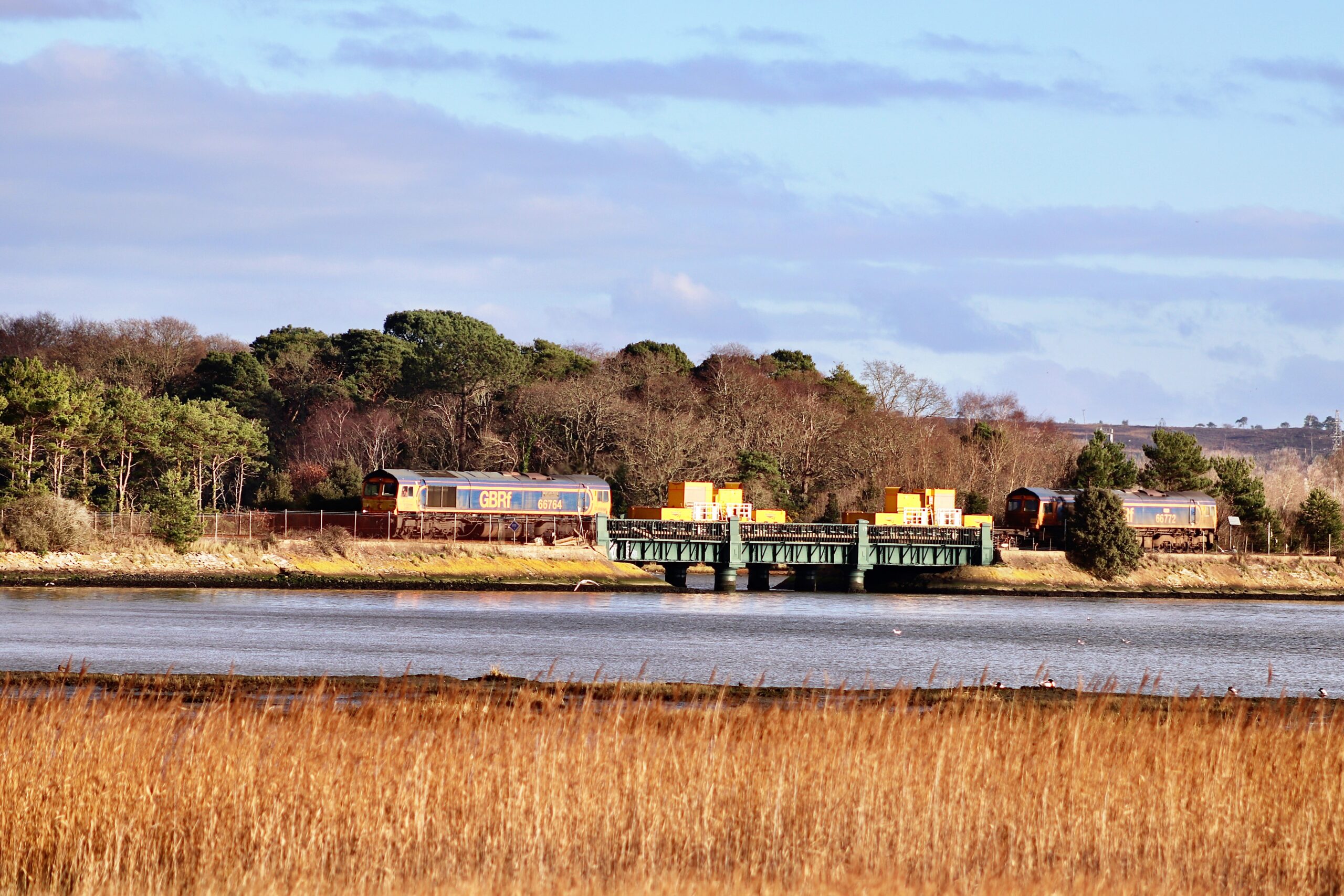
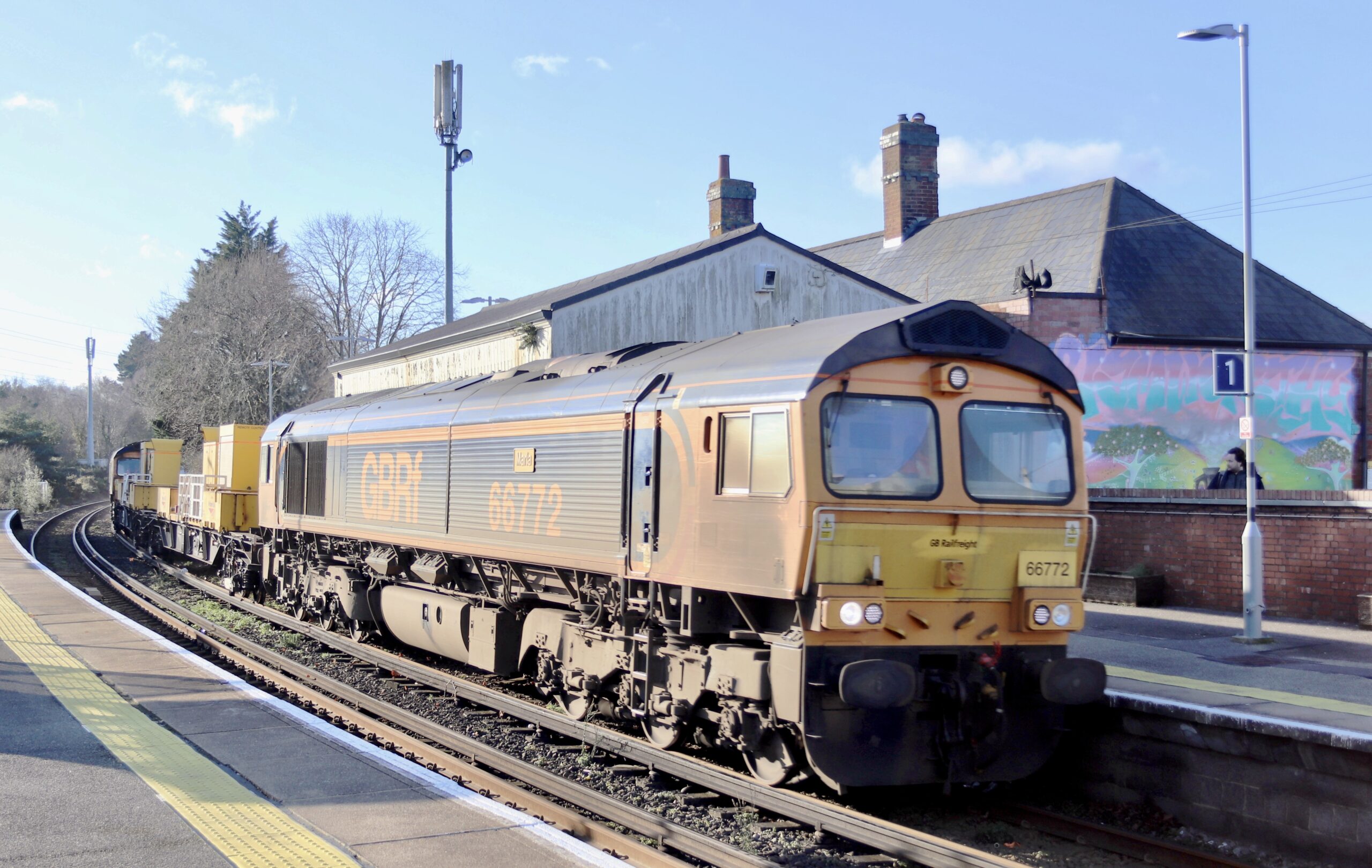
    We did, however, get to experience a daylight Snow & Ice treatment Train (SITT) on Sunday 7th January as GBRf Class 66 locomotives No.’s 66764 ‘Major John Poyntz Engineer & Railwayman’ and 66772 ‘Maria’ in top and tail formation worked to Weymouth as 3Y88 1035 Totton Yard to Totton Yard. 66764 replaced No. 66723 ‘Chinook’ and No. 66743 which had both been previously paired up with No. 66772 on the Totton based SITT locomotive diagram.

    Sunday morning tranquility is disturbed as GBRf Class 66 locomotives No.’s 66764 ‘Major John Poyntz Engineer & Railwayman’ and 66772 ‘Maria’ top and tail SITT 3Y88 1035 Totton Yard to Totton Yard across Upton Viaduct on the Holes Bay causeway – 07/01/2024
    GBRf Class 66 No. 66772 ‘Maria’ leads on the return 3Y88 1035 Totton Yard to Totton Yard Snow & Ice Treatment Train through Hamworthy with No. 66764 ‘Major John Poyntz Engineer & Railwayman’ at the rear – 07/01/2024
    GBRf Class 66 locomotives No.’s 66764 ‘Major John Poyntz Engineer & Railwayman’ and 66772 ‘Maria’ at Hamworthy working 3Y88 1035 Totton Yard to Totton Yard – 07/01/2024

    Major John Poyntz served in the British army for 35 years, with the Royal Engineers and later the Royal Corps of Transport. After military service, he joined the Railway Inspectorate, now part of the Office of Rail and Road, and was the last Royal Engineer to take such a route, spending 25 years in the role as a Railway Inspector. His work included inspections of heritage railways and dealing with accidents and incidents such as the Severn Tunnel rail accident and the Cannon Street rail crash, both in 1991.

    Overnight on Saturday 6th/Sunday 7th a ballast train headed to Moreton working as 6C03 2312 Eastleigh East Yard to Moreton (Dorset) in the hands of Colas locomotives Class 66 No. 66848 and Class 70 No. 70809. We saw the ensemble pass through Hamworthy on the outward leg and had planned to see the associated return 6C03 0810 Moreton (Dorset) to Eastleigh East Yard crossing Holes Bay, but as the train set off over an hour early and with the sun yet to rise, we played safe and returned once again to Hamworthy railway station to watch the train pass through.

    January ballast train with Class 66 No. 66848 and Class 70 No. 70809

    The SITT returned to the Bournemouth to Weymouth line under the cover of darkness on Monday 8th and Wednesday 10th January employing the same pair of Class 66’s as the previous Sunday run.

    January 2024 Dorset Snow & Ice Treatment Train workings (additional video courtesy of G E Barrett)

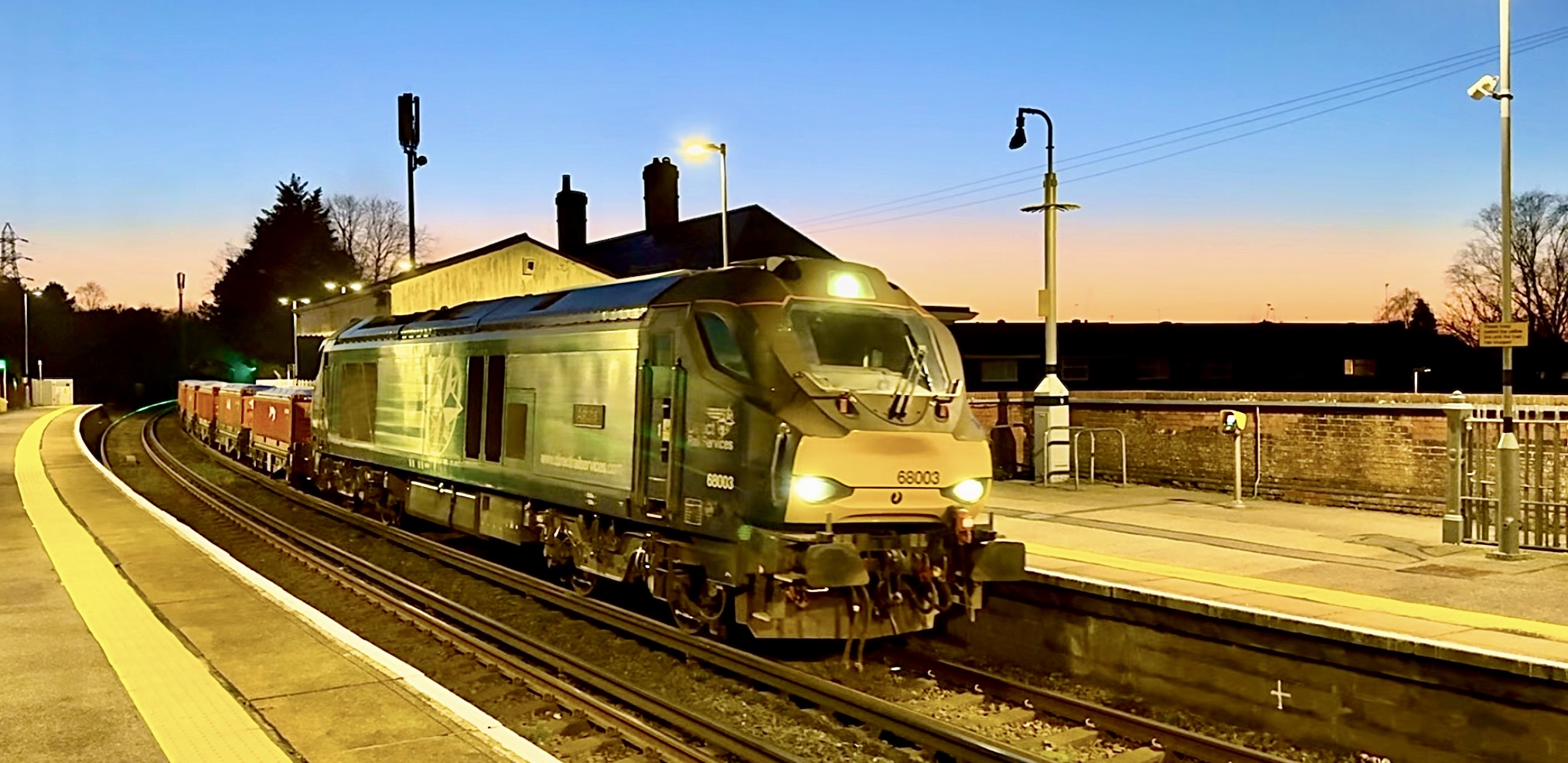
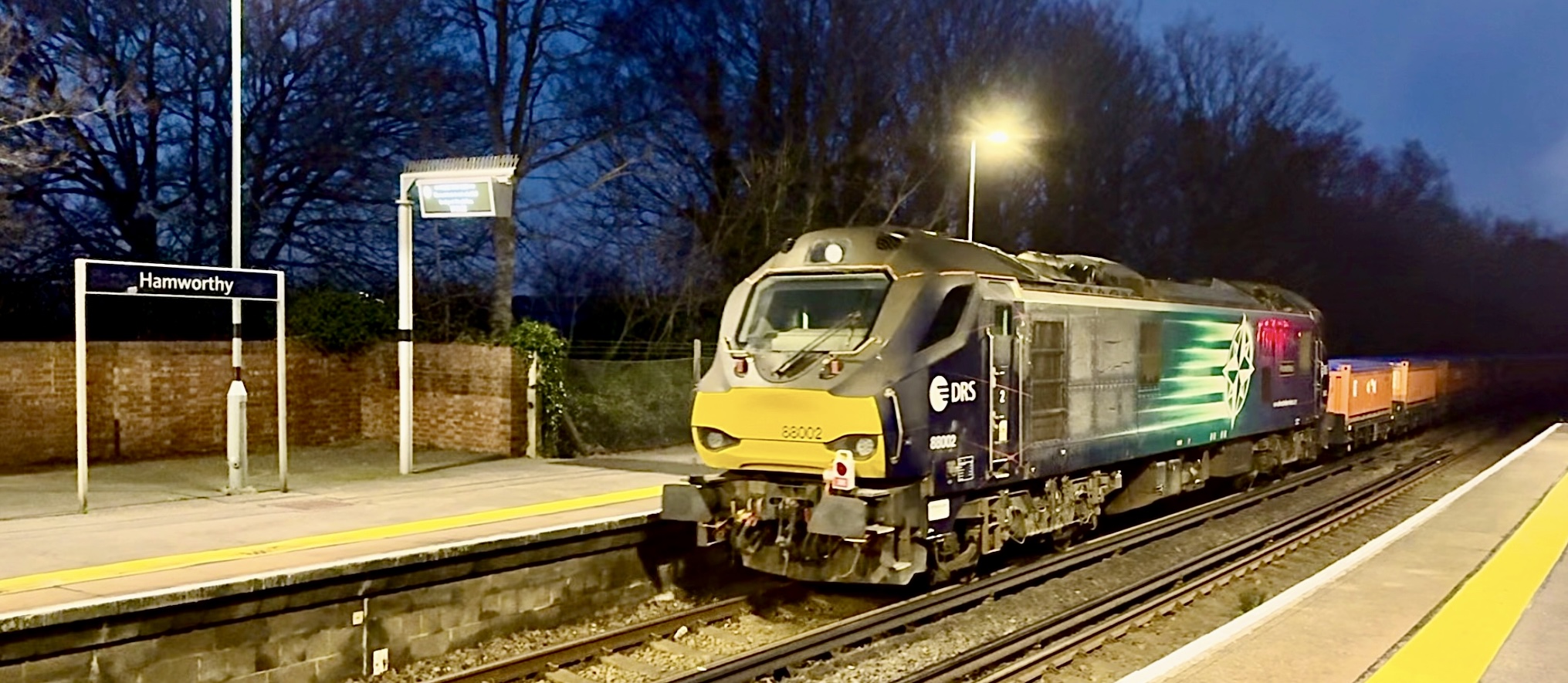
    In between the SITT workings, on Tuesday 9th January, we saw a first for Dorset as Direct Rail Services (DRS) ran a service to Winfrith using a Class 88 locomotive No. 88002 ‘Prometheus’ which had replaced failed Class 68 No. 68004 (which itself had substituted for No. 68005) and No. 68003 ‘Astute’ in top an tail formation. This was the inaugural use a Class 88 on the Bournemouth to Weymouth line.

    DRS Class 68 No. 68003 ‘Astute’ with Class 88 No. 88002 ‘Prometheus’ working the empties to Winfrith as 6Z62 0100 Crewe Coal Sidings (DRS) to Winfrith Sidings through Hamworthy – 09/01/2024
    DRS Class 68 No. 68003 ‘Astute’ leads the return 6Z95 1551 Winfrith Sdgs to Crewe Coal Sidings (DRS) at Hamworthy – 09/01/2024
    Class 88 No. 88002 ‘Prometheus’ at the rear of 6Z62 0100 Crewe Coal Sidings (DRS) to Winfrith Sidings having cleared Hamworthy railway station. Class 68 No. 68003 ‘Astute’ leads – 09/01/2024

    The Class 88 is a mixed traffic electro-diesel locomotive manufactured by Stadler Rail and is part of the Stadler Euro Dual family.

    Class 88 No. 88002 ‘Prometheus’ remained at the rear for the return 6Z95 1551 Winfrith Sidings to Crewe Coal Sidings (DRS) – 09/01/2024

    During the development of the Class 68 diesel locomotive for DRS which was first announced in January 2012, the design team at Stadler proposed the concept of a dual-mode locomotive that could be alternatively powered by an onboard diesel engine or via electricity supplied from overhead lines (OHLE). In comparison to conventional diesel locomotives, this arrangement enables operational costs to be significantly reduced when diagrammed on routes partially or entirely under OHLE, under which the diesel engine can be deactivated.In September 2013, DRS placed an order for ten such locomitives which would become the Class 88. Having been developed alongside the Class 68, considerable similarities are shared between the two locomotive types, with an approximate 70% share of components.

    Video of January 9th 2024 Winfrith run (additional video courtesy of G E Barrett)

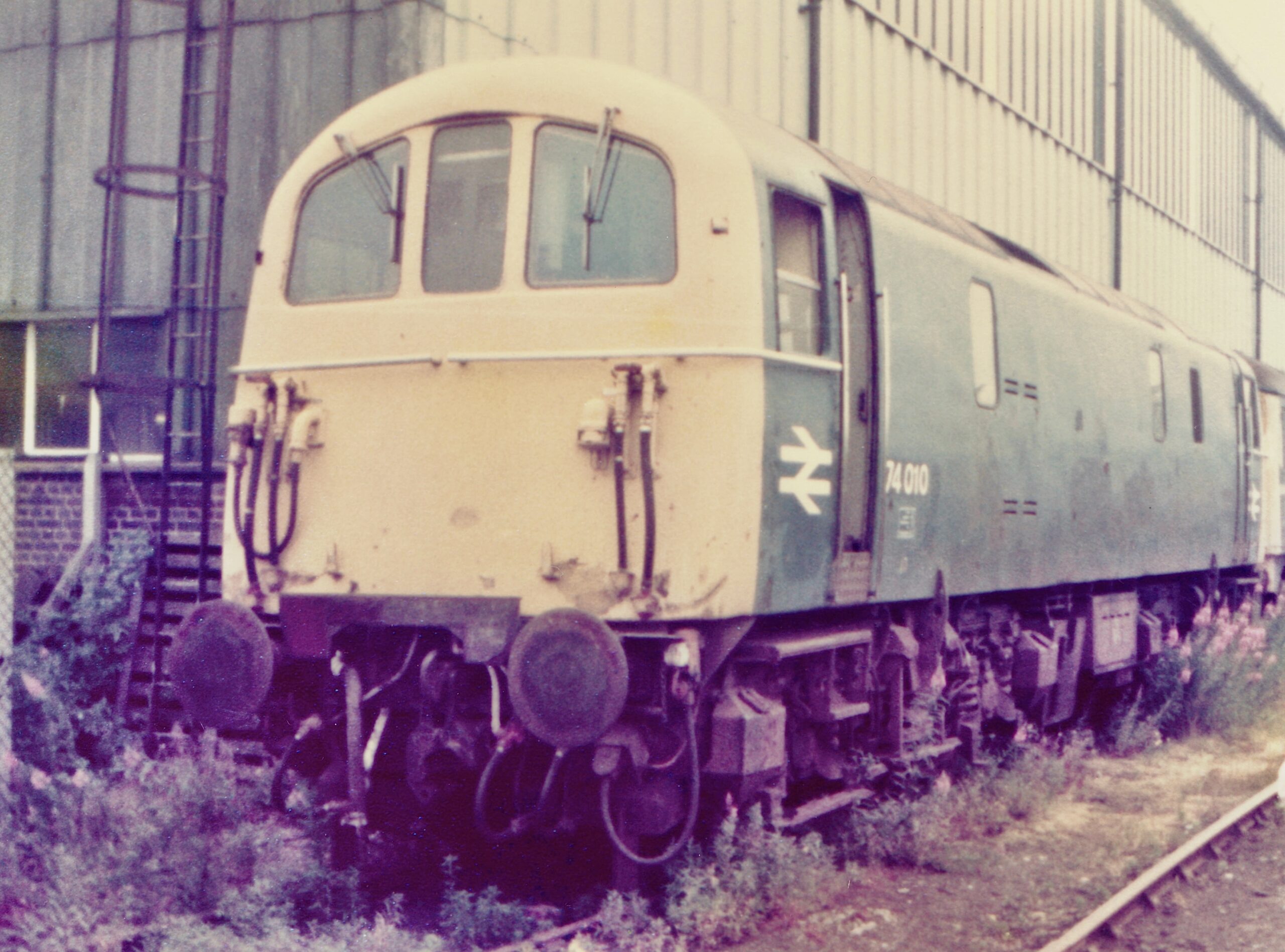
    The Class 88 is the first dual-mode locomotive type in the UK to use the 25 kV AC electrification, as the only other electro-diesel locomotives to have entered service with British Railways are the Class 73’s and Class 74’s, which operated on the Southern Region using third rail electrification, and we’ve reached back into the archives to find some images to share:

    Class 74 No. 74010 at Doncaster Works. Withdrawn from service in December 1977, the locomotive was cut up here in October 1979 after being given a brief reprieve so that it could be for evaluated for departmental use by the Railway Technical Centre (RTC) in Derby. It was given a light overhaul at Eastleigh before being towed to Derby, where it was eventually deemed to be unsuitable and taken to Doncaster for scrapping – 22/07/1979
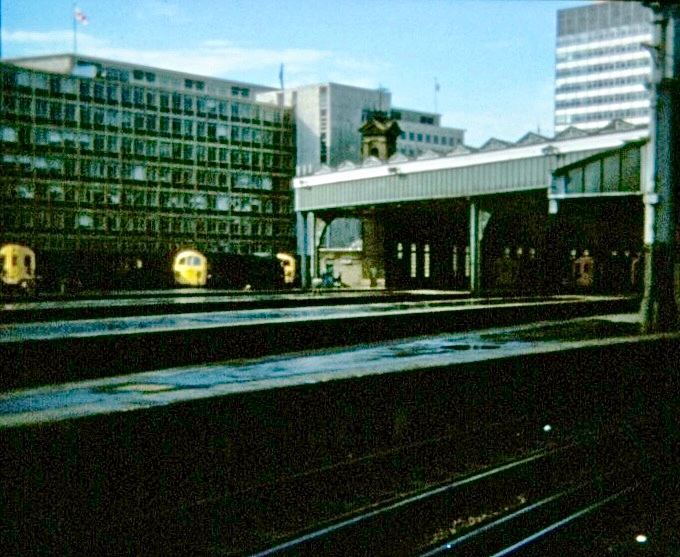
    A hastily taken photo of Class 74’s at London Waterloo taken from a departing train bound for Weymouth. This side of the station later became Waterloo International between 1994 and 2007 – July 1977
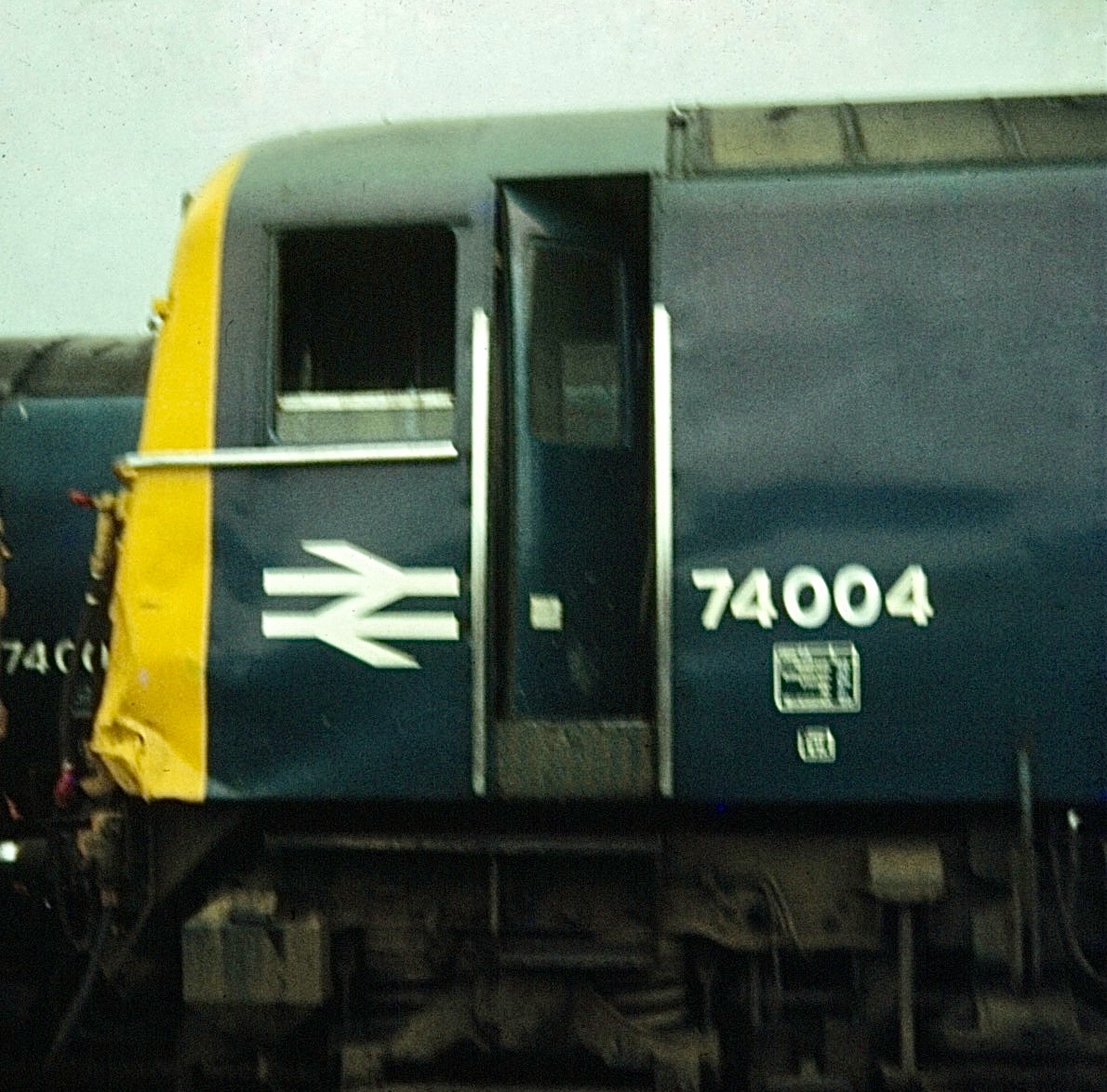
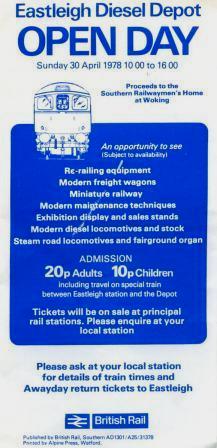
    Class 74 No. 74004 has had a bit of a bump (not helped by my camera shake!) as it stands forlorn at Eastleigh Diesel Depot during the 1978 Open Day. This locomotive was withdrawn from service in December 1977 and cut up at Birds in Long Marston. She was originally built as the pioneer Class 71 and numbered E5000 – 30/04/1978
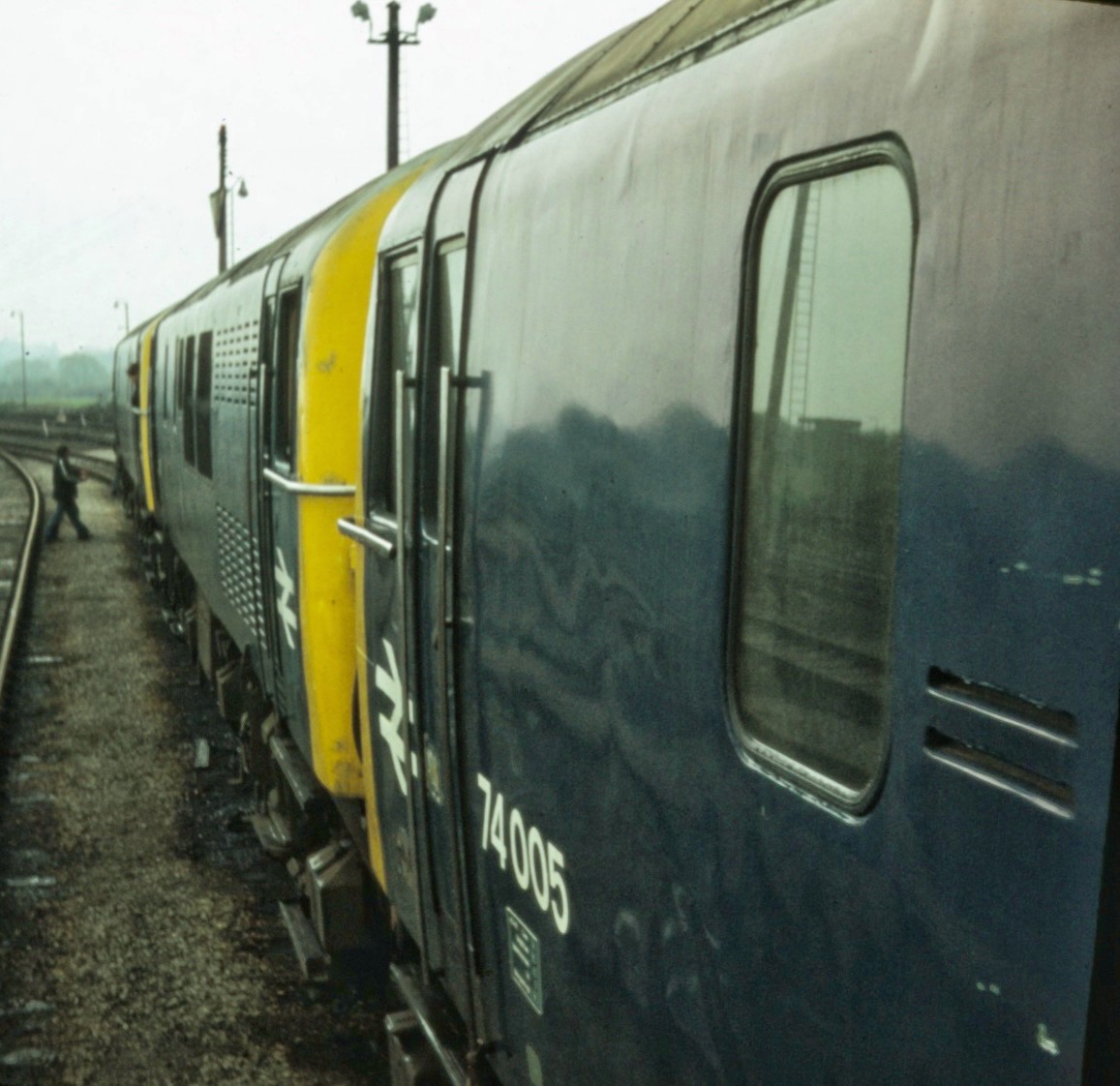
    Withdrawn Class 74’s at Eastleigh Diesel Depot Open Day including No.’s 74005 and 74009 – 30/04/1978
    Eastleigh Open Day 1978 flyer
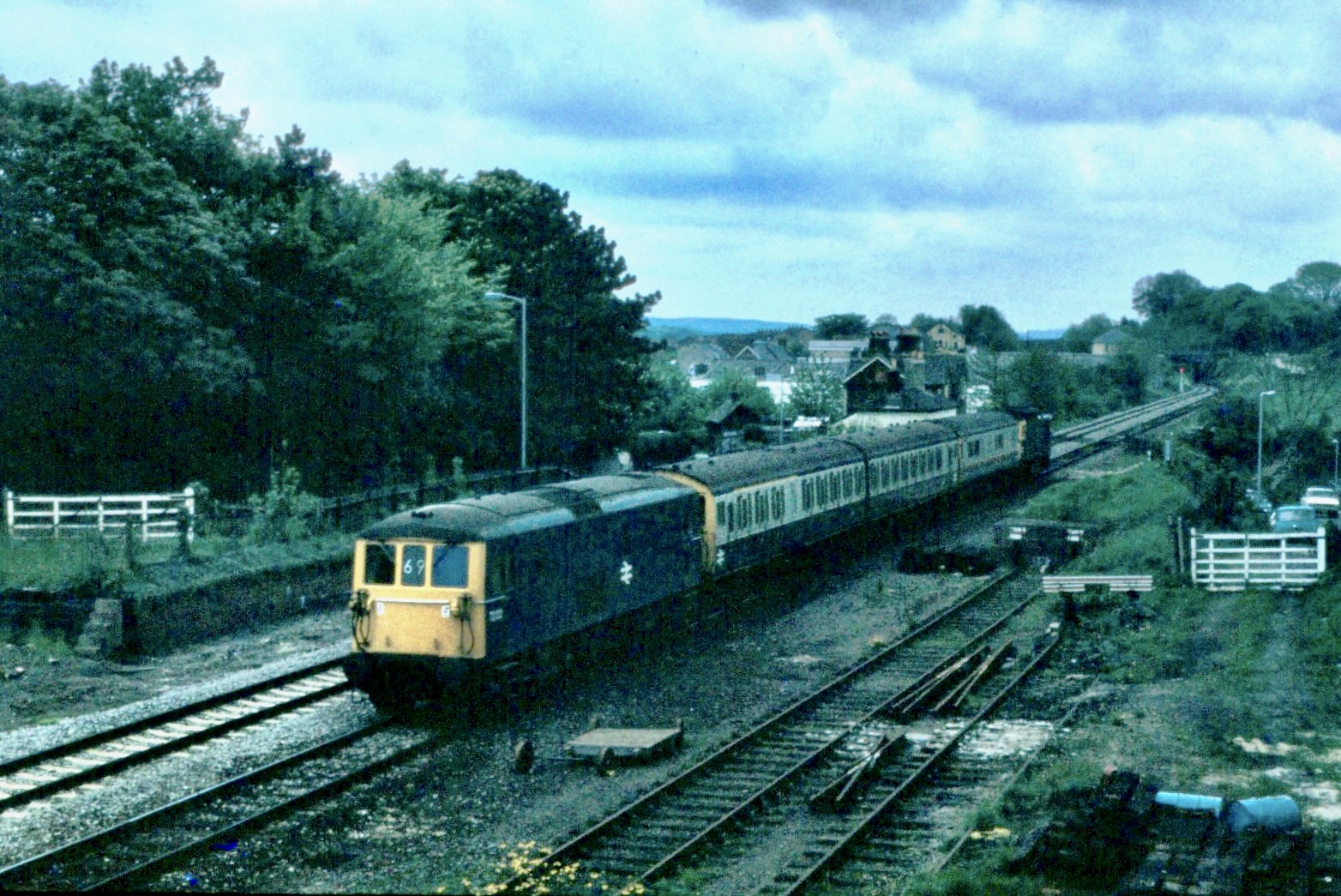
    Class 73 No. 73122 and 2-HAP Unit No. 6103 with a third unidentified carriage and Class 33 No. 33116 working a test train towards Dorchester South – 13/05/1981
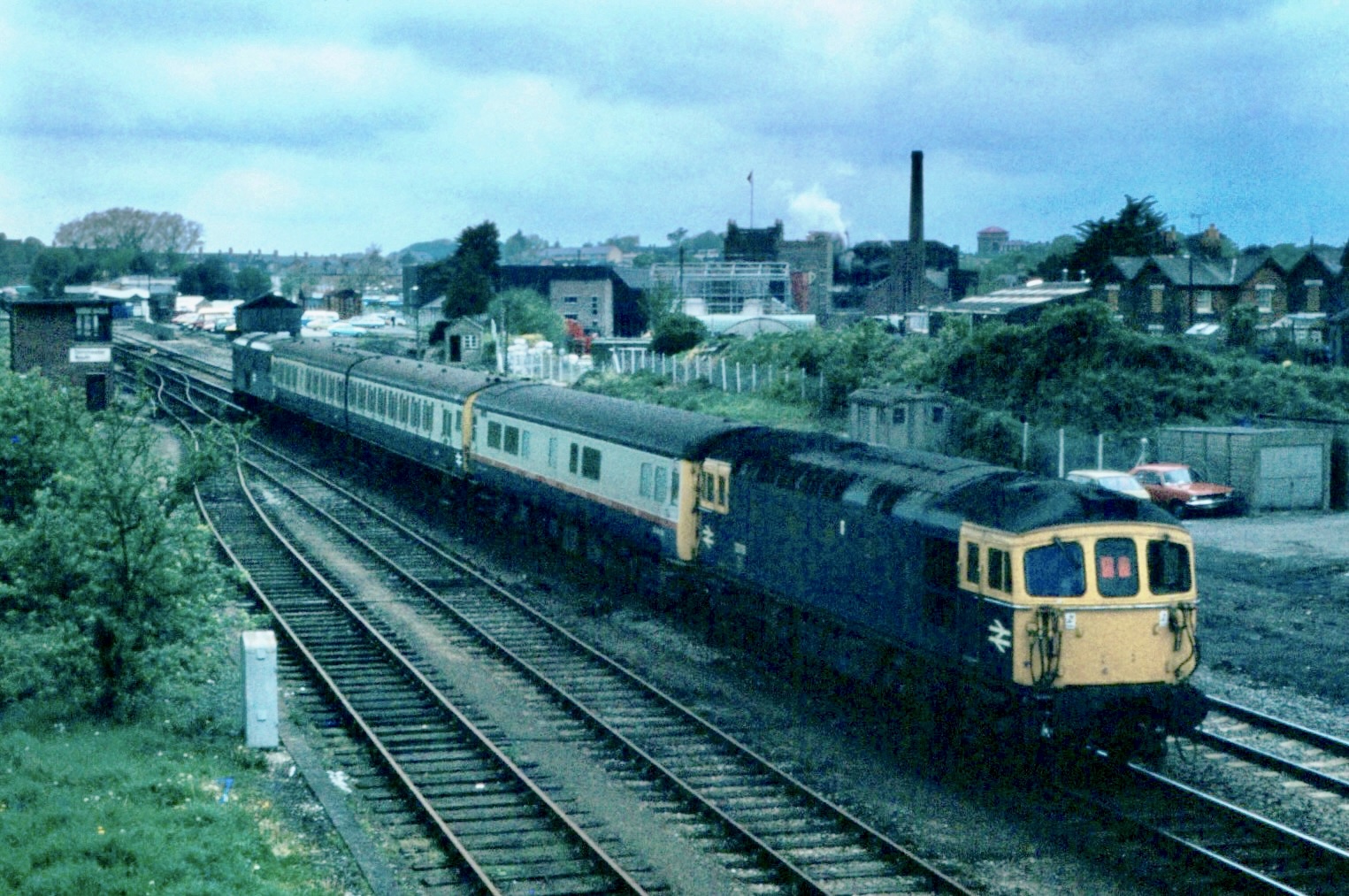
    The same test train as in the image above focussing on Class 33 No. 33116 on the approach to Dorchester South – 13/05/1981

    For The Record:

    In other news, the SWR Class 701 Electric Multiple Units (EMU’s) finally entered revenue earning service on Tuesday 9th January 2024 when No. 701037 worked a single round trip between Waterloo and Windsor Eton Riverside. The Derby-built trains had been due to enter service in 2019. SWR have since promised the rolling stock would enter passenger service in 2023 – a promise echoed by the Department for Transport (DaFT) in a statement issued in May 2023, which said the trains would run “this calendar year”. It is intended a Class 701 will continue to run off-peak Monday to Friday between London Waterloo and Windsor, in order to fulfil that commitment,  making one single round trip each day, or working between 1000 and 1600. The phased entry into service of the Class 701’s – which continue test runs to Poole and Bournemouth – will eventually allow for the withdrawal of SWR’s Class 455 units and the cascade of the Class 458 fleet to longer distance services.

    Back in 2020, the first Class 701 to be delivered, No. 701002, was delivered to South Western Railway and somehow made its way to Weymouth where it is seen here in Jersey Sidings awaiting commissioning tests. Yoshi and I stumbled across it while out for our morning walkies – 16/06/200

    The North Dorset NMT ran on Thursday 11th January 2024 – a week earlier than I expected – in the hands of HST Class 43 power cars No.’s 43013 and 43257.

    Lake Road was closed to road traffic from its junction with Lake Drive to its junction with Coles Avenue from Monday 8th January up to and including Friday 12th January 2024 – 2200 to 0600 daily to facilitate removal of material from a bridge strike and replace missing signage on Lake Road Bridge situated on the Hamworthy Branch. We popped by a couple of times, and although the road was indeed closed, there didn’t seem to be any activity taking place with regards to bridge repairs, which is disappointing to say the least.

    Road closure at Lake Road bridge – but little sign of any repairs taking place – 08/01/2024
    Yoshi had his first grooming session of 2024 on Monday 8th January and couldn’t wait to show off his new cut to his grandmama – 08/01/2024

    That brings us to the end of another blog entry. Next week, we’ll celebrate Yoshi’s birthday and hopefully have some more Dorset based railway images and video to bring you. Thank you for reading and for your comments, corrections and amendments. All very much appreciated. We’ll leave you with a couple of shots from that early morning trip to Durdle Door! Be seeing you!
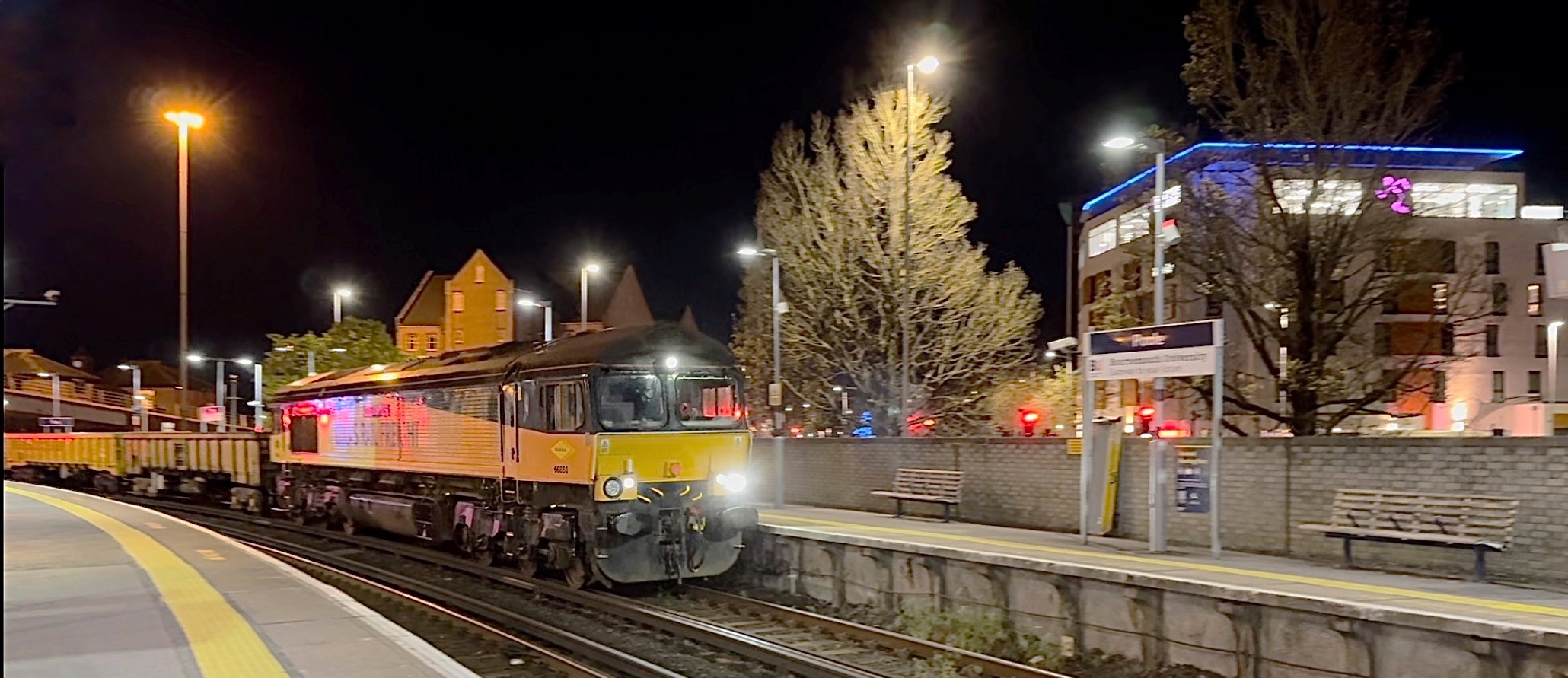
    Sunrise at Durdle Door – 06/01/2024
    Sunrise at Durdle Door – 06/01/2024
  • Yoshi Climbs Gold Hill

    14th June 2023 to 20th June 2023

    We went to Shaftesbury on Sunday to see old buses. Caroline and I visited a pub or three and Yoshi took a liking to Gold Hill. Famous as the location for the 1973 Hovis bread TV advert directed by Ridley Scott. Still the same today as its always been – 18/06/2023

    Wednesday 14th June 2023 saw Colas test train 1Q18 Derby RTC to Bristol Kingsland Road visit Dorset in the capable charge of top and tailed Class 37 locomotives No.’s 37612 and 37254. I was in the east of the county hoping to capture a Class 701 drag from Bournemouth to Eastleigh which didn’t materialise. It’s been quite a month for unusual movements being cancelled here; a Class 69 hauled Weedkiller to Weymouth, a Class 37 test train via the West and a Class 455 drag with a Rail Operations Group (ROG) Class 37 to Bournemouth T&RSMD to mention a few.

    Class 37 No. 37612 leads 1Q18 Derby RTC to Bristol Kingsland Road via Weymouth into Dorchester West (video screen grab courtesy of G E Barrett) – 14/06/2023
    Class 37 No. 37254 leads out of Weymouth where 1Q18 Derby RTC to Bristol Kingsland Road has reversed for the run to Bristol (video screen grab courtesy of @da_buckley967) – 14/06/2023
    Video of Class 37 No.s 37612 and 37254 working 1Q18 Derby RTC to Bristol Kingsland Road courtesy of @da_buckley967 and G E Barrett – 14/06/2023

    On Saturday, I popped over to the Southampton area for a brief evening visit to see LNER A3 4-6-2 Pacific No. 60103 ‘Flying Scotsman’. I don’t understand the scorn poured on this locomotive by a certain section of the railway enthusiast fraternity. I think it’s great Scotsman captures the imagination of the general public and it was delightful to hear a lot of chatter on our local radio station before and after the locomotive visited Portsmouth. I was interested to see if No. 60103 retained her white roof which she had gained the previous week in advance of hauling the Royal Train carrying King Prince Charles over the North Yorkshire Moors Railway on Monday 12th June, and I was very pleased to see she had! I was able to observe the “Portsmouth Flyer” rail tour on its way back to London Victoria from the overbridge leading to Dock Gate 20 at Millbrook. It’s also an excellent vantage point to see the locomotives being stabled at Freightliner Maritime depot. I thought the location would be quite popular with onlookers, but in the event it was just myself and another photographer there to see the “People’s Locomotive” steam by. It was quite pleasant passing the time having a friendly chat about railways of today and years gone. 

    Freightliner Class 08 shunter No. 08785 at Southampton Maritime – 17/06/2023
    Class 66 No. 66594 at Southampton Maritime – 17/06/2023
    A line up of Class 70’s at Southampton Maritime, including No.’s 70003,70007 and 70014 with Class 66 No.’s 66565, 66594 and 66504 also visible- 17/06/2023
    Class 66 No. 66529 receives attention at Southampton Maritime – 17/06/2023
    CrossCountry Voyager No. 220011 nears Redbridge working 1020 1325 Manchester Piccadilly to Bournemouth – 17/06/2023
    LNER A3 Pacific No. 60103 ‘Flying Scotsman’ at Millbrook working the return “The Portsmouth Flyer” 1Z73 1606 Portsmouth Harbour to London Victoria – 17/06/2023
    The white cab roof applied to LNER A3 Pacific No. 60103 ‘Flying Scotsman’ can be seen clearly in this view of the locomotive as she works the return “The Portsmouth Flyer” 1Z73 1606 Portsmouth Harbour to London Victoria on the approach to Redbridge – 17/06/2023
    West Coast Railway Company Class 47 No. 47802 at the rear of “The Portsmouth Flyer” 1Z73 1606 Portsmouth Harbour to London Victoria approaching Redbridge – 17/06/2023

    After seeing ‘Flying Scotsman’ I had just enough time to pop over to Eastleigh to get a photo of the Network Rail Class 153 Inspection Train. I was also able to see UK Railtours “The Magic Carpet” on its way from Exeter to London Victoria. This was hauled by two GBRf Class 73 Electro-diesels of the type we normally get here on a test train the first Monday of every month. 

    GBRf Class 66 No. 66726 ‘Sheffield Wednesday’ in Eastleigh East Yard in preparation for working 7C03 2302 to Clapham Junction Windsor Lines civil engineering train later in the day along with No. 66846 – 17/06/2023
    A view over Eastleigh East Yard with GBRf Class 66 No. 66726 ‘Sheffield Wednesday’ and Colas Rail Class 66 No. 66846 in the foreground – 17/06/2023
    DB Cargo Class 66 No. 66100 ‘Armistice 100 1918 – 2018’ in the sidings adjacent Eastleigh railway station – 17/06/2023
    Nameplate detail of Class 66 No. 66100 ‘Armistice 100 1918 – 2018’ – 17/06/2023
    Still carrying EWS Livery, DB Cargo Class 66 No. 66083 partners No. 66100 ‘Armistice 100 1918 – 2018’ at Eastleigh – 17/06/2023
    Network Rail Video Inspection Unit No. 2 (VIU2) No. 153376 rests at Eastleigh. Network Rail employs three Class 153 DMU’s for video assessment of track and points – 17/06/2023
    GBRf Class 66 No. 66701 having just reversed onto wagons ready to form 6G13 1952 Eastleigh East Yard to Cheam engineers train – 17/06/2023
    Maritime Blue liveried Class 66 No. 66051 ‘Maritime Intermodal Four’ passing through Eastleigh heading up 4V44 1824 Southampton Eastern Docks to Morris Cowley MAT – 17/06/2023
    GBRf Class 73/9 No.’s 73964 ‘Jeanette’ and 73962 ‘Dick Mabbutt’ hauling UK Railtours “The Magic Carpet” one the approach to Eastleigh – 17/06/2023
    GBRf Class 73/9 No.’s 73964 ‘Jeanette’ and 73962 ‘Dick Mabbutt’ hauling UK Railtours “The Magic Carpet” 1Z62 1533 Exeter St Davids to London Victoria on the approach to Eastleigh – 17/06/2023
    On the rear of “The Magic Carpet” 1Z62 1533 Exeter St Davids to London Victoria GBRf Class 66 No. 66768 – 17/06/2023
    In 2011, leasing company Akiem acquired seven unused JT42CWRM locomotives, which would originally enter service for Veolia Cargo SAS (77501-77503) as order 20078941 and Crossrail Benelux (77504-77507) as 20078920. On 20 June 2011, all seven locos were delivered with train protection systems for Germany, Belgium and France. After being delivered to Akiem, they were immediately leased to VFLI.
    Purchased and imported by GBRf Class 66 No.’s 66308 (ex-77503) and 66307 (ex-77502) are seen at Eastleigh Arlington Works having been repainted into standard GBRf livery following sizing modifications for the UK rail loading gauge carried out at Doncaster – 17/06/2023
    Class 313’s continue to arrive at Eastleigh Arlington for component recovery and scrapping. No.’s 313206, 313201, 313207 and 313208 can be identified in this view. An appeal to fund maintenance and storage costs of blue liveried No. 313201 has been launched – 17/06/2023
    No.’s 313206, 313201, 313217, 313207 and 313208 await their fate at Eastleigh Arlington – 17/06/2023
    These Class 313 EMU’s at Eastleigh Arlington have had their numbers cut out. We can identify No. 313202, closest to the camera, from the coach number 62530 – 17/06/2023

    “The Magic Carpet” passed through Dorset and our North Dorset correspondent was on hand to capture the train at Gillingham:

    GBRf Class 73/9 No.’s 73964 ‘Jeanette’ and 73962 ‘Dick Mabbutt’ head up UK Railtours “The Magic Carpet” at Gillingham on the return leg (photo courtesy of Scott Lewis) – 17/06/2023

    This past weekend the 2023 “Royal Blue Run” saw the return of preserved and restored coaches to roads across the West Country, showcasing these fine specimens in authentic settings across the country recreating lost scenes. This year the Royal Blue & Associated Motorways run saw the privately owned vehicles recreate an age of bygone travel on the open roads through Wiltshire, Somerset, Devon and Cornwall reaching Penzance in the far south west.  The specific routes chosen were drawn from Royal Blue timetables from different eras. Sometimes segments of express services are followed, or in other cases seasonal variants are used (e.g. summer Saturdays only or winter season routing).  Every stretch has to be pre-driven to ensure the original roads remain suitable for coaches to pass even with modern parking practices or traffic management schemes. The coaches set out from Salisbury bus station on Friday 16th June and we chose to see them passing through Shaftesbury on their return final stage run up the A30, as used by the ‘stopping’ Penzance to London services, to Salisbury.

    Burlingham C33F AEC Regal Reg No. CFK 340 in the livery of operator Burnham built 1948 at Shaftesbury – 18/06/2023
    Royal Blue ECW Bristol MW6G Fleet No. 2267 Reg No. 56 GUO built 1961 at Shaftesbury – 18/06/202
    Wilts & Dorset Beadle C32R Bristol L6B Fleet No. 279 Reg. EMW284, built 1947 at Shaftesbury – 18/06/202

    The Thames Valley & Great Western Omnibus Trust (TV&GWOT) website provides more information on the Royal Blue Runs which “were established in 2002 so that owners and their passengers can relive the pleasures of long distance luxury coach travel for which their carefully preserved vehicles were originally intended. The aim is to follow original Royal Blue routes as closely as possible and to travel at a leisurely pace redolent of the times. The runs also create a wonderful spectacle for innocent bystanders and dedicated photographers alike, thanks to the hard work and resources the owners have devoted to restoring and maintaining their fine coaches.

    A lot of work goes into planning the runs from selecting routes from the extensive Royal Blue network and researching the original drivers’ instructions and passenger timetables, preparing maps and outline routing, driving the routes to develop detailed instructions allowing for modern day features and constraints, organising refreshment stops, obtaining parking permissions, to identifying potential accommodation for a dozen or more coaches and their passengers. Despite all the preparations, final timings are hard to judge whether due to roadworks or things that might pique the interest of crews along the way. The coaches do not travel in close convoy so as not to inconvenience other road users. Some drivers have also been known on occasion to deviate from the intended route (unintentionally!).

    Overall the focus is on education and enjoyment and we hope that however you take part you share in the pleasure.”

    Western National Fleet No. 3307 Reg AFJ 727T Plaxton Supreme DP41F Bristol LH6L built in 1979 at Shaftesbury – 18/06/202
    A long way from home, Crossville Fleet No. CRG106 Reg AFM 106G ECW C49F Bristol RELH built in 1969 at Shaftesbury – 18/06/202
    Royal Blue Fleet No. 1286 Reg MOD 973 ECW Bristol LS6G C39F built in 1952 at Shaftesbury – 18/06/202
    Royal Blue (Western National) Fleet No. 1250 Reg. LTA 729 Duple Bristol LL6B C37F built in 1951 at Shaftesbury – 18/06/202
    A very short video of Royal Blue Run buses passing through Shaftesbury – 18/06/2023

    I certainly derived much pleasure from seeing the coaches which were running around thirty minutes behind schedule when they passed us. Not bad timing in my humble opinion! I previously saw the 2016 Royal Blue Run which having started at London Victoria Coach Station ran to Bristol on Day One. The following day was designed to commemorate 50 years since the final train on the Somerset & Dorset Railway, a much loved and mourned route that ran through Royal Blue heartland from Bath to Bournemouth. The route intertwined with several famous S&D locations, recreating in part the former rail replacement service that was created when the line closed in 1966. Day Three was an excursion from Bournemouth to Lulworth Cove, followed by a trip across the New Forest to Lyndhurst. It was Lulworth Cove where I decided to see the buses as they grouped together in the car park before once again taking to the open road where I took the opportunity to see them passing through Lulworth village and Wareham.
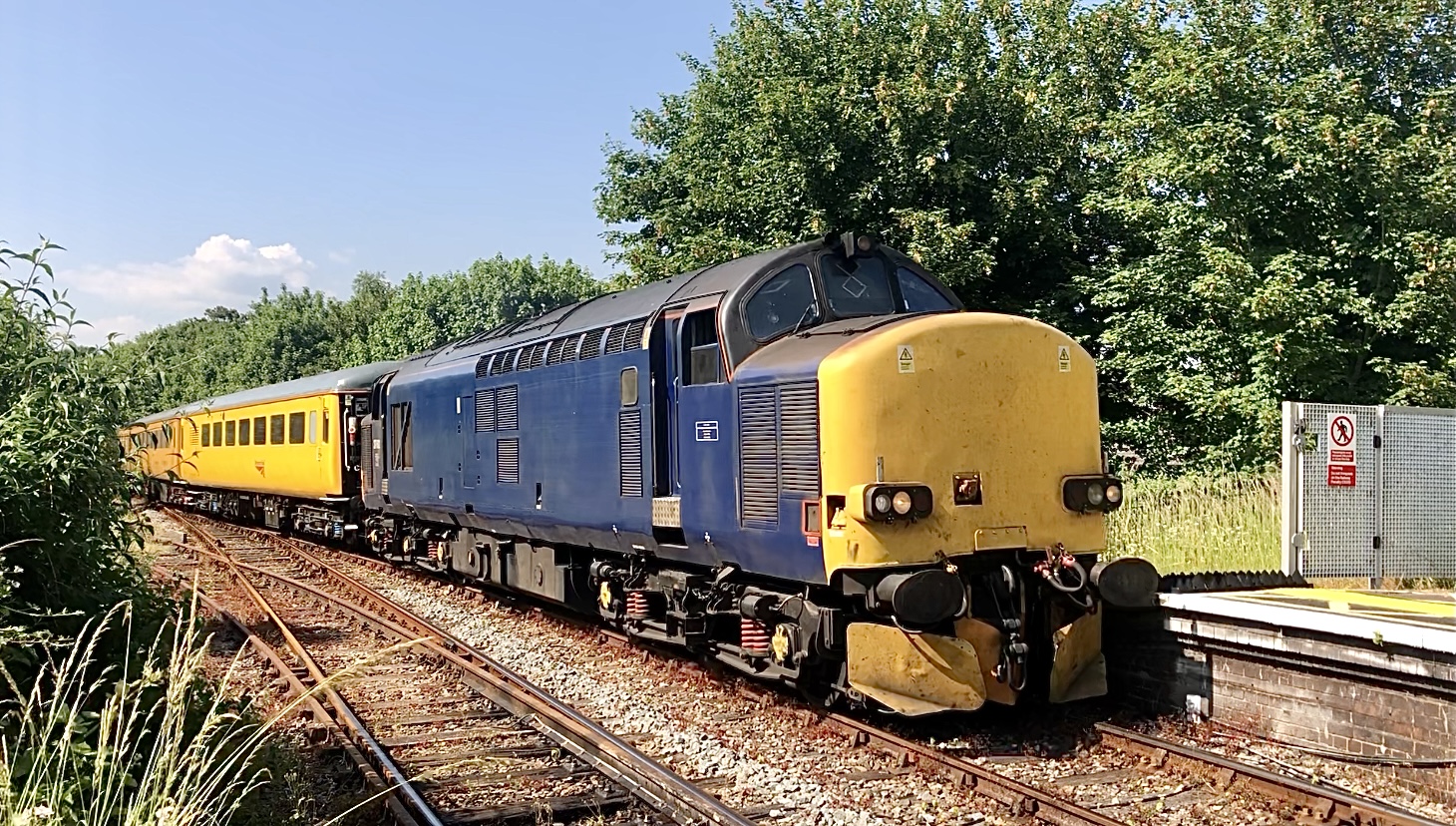
    Royal Blue Bristol MW6G Fleet No. 2246 Reg. 625 DDV built 1960 enters the car park at Lulworth Cove – 19/06/2016
    Western National Bristol MW6G ECW C39F Fleet No. 1423 Reg. EDV 505D built in 1966 and entered service in Plymouth seen at Lulworth Cove – 19/06/2016
    A Royal Blue line up at Lulworth Cove – 19/06/2016
    Royal Blue ECW Bristol MW6G Fleet No. 2267 Reg No. 56 GUO built 1961 passing through Lulworth – 19/06/2016
    Wilts & Dorset Beadle bodied Bristol L6B Fleet No. 279 Reg. EMW284, built 1947 at Lulworth – 19/06/2016
    Royal Blue Fleet No. 1299 Reg. OTT 98 1953 Bristol LS6G with ECW C39F coachwork at Lulworth village – 19/06/2016
    Royal Blue express services Fleet No. 2351 Reg. 837 SUO Bristol RELH6G ECW passing through Wareham – 19/06/2016

    From The Archives:

    Mention of Penzance as part of the Royal Blue Run this year reminded me that I was going to look for a photograph of the Pullman Camping Coaches which used to stand at Marazion and I mentioned as much in our blog entry “Yoshi Goes To Cornwall”. As luck would have it, I was looking for some paperwork the other day and came across the following images:

    For many years Marazion was home to six old Pullman coaches that were employed as camping coaches; holiday accommodation offered by the railway containing sleeping and living space designed to encourage people to travel by train to the stations where they were situated – March 1993
    British Rail Parcels Sector liveried Class 47 No. 47462 ‘Cambridge Traction & Rolling Stock Depot’ at Penzance – March 1993
    Class 47 No. 47463 (with her pre-TOPS number D1586 marked between her head code lights) in BR Standard Monastral Blue livery, which she retained to the end, stands at Penzance. The locomotive entered service in May 1964 and was cut up in November 1996 by MRJ Phillips at Crewe Works – March 1993
    Class 47 No. 47462 ‘Cambridge Traction & Rolling Stock Depot’ at Penzance. The locomotive was built at Crewe and entered traffic on May 16th 1964 as D1582. Named at Cambridge Open Day held on 29th September 1990 by Jack Firman a retired workshop supervisor, the nameplates were removed in December 1993 and later transferred to No. 47736 – March 1993
    Class 47 No. 47462 at Penzance. The locomotive was cut up at Toton by Harry Needle Rail Co in March 2003 – March 1993

    Alongside the Cornwall photographs above, the same box of documents contained, amongst other things, a Blake’s 7 ‘Liberator’ model and an old diary. I’ve not been one for keeping a diary, but for six months in 1982, I seemed to have managed it. Tucked inside the diary was a piece of paper from a rail tour I took from London Paddington to the Severn Valley Railway on Saturday 19th June 1982.

    Great Western Society Limited “The Salopian II” information sheet – 19/06/1982
    Great Western Society Limited “The Salopian II” information sheet – 19/06/1982

    This must have been my first visit to the SVR, and I don’t really remember much about the day if I’m honest. So from the pages of a diary not opened in years, here, extracted from amongst references to exams, my sister’s wedding, the Falklands War and working part-time at Bere Regis Motors in Dorchester, is my record of the Great Western Society Limited’s “The Salopian II”:

    Thursday June 10th 1982

    Rail tour tickets for the 19th arrived today. Going with Tony S.
    Adam Ant is number one with ‘Goody Two Shoes’

    Friday June 18th 1982

    At 2245 Tony and I boarded the mail train at Dorchester South. Jon H was there as well, but he’s going off somewhere else when we get to London. 

    There was talk about the mail train being taken off soon. If so, we will have problems if we want an overnight jaunt to connect with rail tours departing London in the future. 

    Saturday June 19th 1982

    The locomotive which hauled the mail train from Dorchester, 33118, came off at Eastleigh where it was replaced by 73122. We arrived at London Waterloo right-time and then, together, Jon, Tony and I took a black cab across to Euston. At 0600 we went our separate ways with Jon heading to Kings Cross while Tony and I undertook the two and a half mile stroll to Paddington railway station. The weather was dismal , but at least it didn’t pour down with rain.

    At Paddington, we were due to depart at 0740 but at the appointed time we were surprised to see our train loco; 47532, being taken off the stock at 0725 and taken away.

    Class 47 No. 47532 at the head of “The Salopian II” rail tour at London Paddington prior to being removed from the train. HST Class 43 Power Car No. 43145 is on the adjacent track – 19/06/1982

    We eventually left at 0757 with the class 47 having been replaced by 50012.

    Class 50 No. 50012 ‘Benbow’ approaches London Paddington to take over “The Salopian II” rail tour. The locomotive would be withdrawn from service in January 1989 and cut up by Vic Berry in Leicester by July of that year – 19/06/1982

    By the time we arrived at Didcot we were 27 minutes down on schedule. But a quick locomotive changeover meant this was reduced to 16 minutes when we left behind 7029 ‘Clun Castle’.

    GWR 4073 Class 4-6-0 No. 7029 ‘Clun Castle’ backs onto “The Salopian II” at Didcot – 19/06/1982
    GWR 4073 Class 4-6-0 No. 7029 ‘Clun Castle’ at Didcot – 19/06/1982
    GWR 4073 Class 4-6-0 No. 7029 ‘Clun Castle’ at Didcot – 19/06/1982
    GWR 4073 Class 4-6-0 No. 7029 ‘Clun Castle’ stopped at Banbury for a water stop – 19/06/1982
    Class 33 No. 33025 ‘Sultan’ in the bay platform at Banbury as No. 7029 ‘Clun Castle’, having drawn forward from the previous image, takes on water – 19/06/1982

    By the time of our next locomotive changeover the ‘Castle’ had managed to make up the deficit and we arrived bang on time allowing 20165 and 20167 to take us forward to Bewdley on the Severn Valley Railway where we still managed to arrive 20 minutes late!

    GWR 4073 Class 4-6-0 No. 7029 ‘Clun Castle’ alongside Class 20 No.’s 20165 and 20167 which took over “The Salopian II” at Dorridge – 19/06/1982
    Class 20 No.’s 20165 and 20167 backing onto “The Salopian II” at Dorridge – 19/06/1982

    On the SVR we were hauled by 43106 from Bewdley to Dorridge and return. We had a couple of hours to look around the shed at Bridgnorth and get refreshments.

    While on Severn Valley Railway metals our train was hauled by LMS Ivan Class 4 No. 43106, the only surviving member of the class. Seen here at Bridgnorth – 19/06/1982
    GWR 7800 Class 4-6-0 No. 7812 ‘Erlestoke Manor’ at Bridgnorth – 19/06/1982
    LMS Stanier Class 5 4-6-0 No. 5000 at Bridgnorth. No. 5000 is part of the National Collection and is currently on static display at the Shildon Locomotion Museum in County Durham – 19/06/1982
    Longmoor Military Railway No. 600 ‘Gordon’ (named after General Gordon of Khartoum) was. built in 1943 for the War Department and is seen here at Bridgnorth. In 1957, during the Suez Crisis, ‘Gordon’ worked highly secretive trains between Longmoor Military Base and Southampton. The locomotive is currently on static display on the SVR at The Engine House, Highley – 19/06/1982
    GWR 7800 Class 4-6-0 No. 7812 ‘Erlestoke Manor’ at Bridgnorth – 19/06/1982
    GWR 7800 Class 4-6-0 No. 7812 ‘Erlestoke Manor’ at Bridgnorth – 19/06/1982

    I managed to get a piece of smut in my in my eye from 4930 ’Hagley Hall’ which I just couldn’t get out. [2023 note: I’m thinking No. 4930 may have hauled us one way on the SVR, but my diary says No. 43106 worked the train in both directions]

    GWR Collett 4-6-0 Hall Class No. 4930 ‘Hagley Hall’ at Bridgnorth. She was built in 1929 at Swindon Works and originally allocated to Wolverhampton Stafford Road – 19/06/1982
    GWR Collett 5700 Class 0-60PT “Pannier Tank” No. 5764 entered service at London’s Old Oak Common in 1929 and was later one of a number of the class sold to London Transport following withdrawal from British Rail in 1960. She is currently on static display in London Transport guise, numbered L95, at The Engine House, Highley. She is seen here in GWR livery at Bridgnorth – 19/06/1982

    Returning to Bewdley, the 20’s took control of our train once again and regained all lost time and even gained 15 minutes. But despite these efforts, the quarter hour and more was lost due to a number of signal stops. In my opinion the star of the day; 92220 ‘Evening Star’, to be precise, replaced the diesel power at Saltley and despite working hard we arrived back at Didcot some 16 minutes down.

    BR Standard Class 9F No. 92220 ‘Evening Star’ during a water stop at Banbury. No. 92220 was the last steam locomotive to be built at for British Railways and was earmarked for preservation before she entered service in March 1960. She hauled the last Pines Express on the Somerset & Dorset line on 8th September 1962. ‘Evening Star’ had a working life of five years before being withdrawn from service in March 1965 after sustaining damage in a shunting incident at Cardiff Docks. She was overhauled and restored at Crewe Works following withdrawal working in preservation until the late 1980’s. She is now on static display at the Railway Museum in York and one of nine existing locomotives of a class which numbered 251- 19/06/1982

    50040 took us forward to Reading where Tony and I de-trained for our connection down to Basingstoke and home. 

    Sunday June 20th 1982

    The down Mail arrived into Basingstoke at Midnight. We were extremely lucky to have made it as our connecting service train from Reading should have left at 2300 and “The Salopian II” arrived at 2302. We met Paul E and Mark B, two rail enthusiasts from Charminster who had been part of the group who went to Plymouth Laira with us in April. This time they had been to Calais with Mark’s parents. A class 73 took us from Basingstoke to Eastleigh where 33010 came on to bring us into Dorchester South just after 0300 where we all said our good-byes and headed home to our beds. 

    I was up again at 0900 in order to see some excursion trains.

    Class 33 No. 33029 approaching Dorchester South – 20/06/1982
    Class 47 No. 47526 at Dorchester West – 20/06/1982

    The piece of smut in my eye from ‘Hagley Hall’ was still there, so I called on [my brother], who was out. Anyway, he appeared at half four and spent an hour moving the smut from the blue bit of my eye to the edge and finally relief!

    GBRf Class 73 No.’s 73964 ‘Jeanette’ and 73961 ‘Alison’ were out on a GB Railfreight staff special the “Tonbridge Trailblazer” in June 2016 running from Ashford International to Weston-super-Mare. The ED’s are seen here at Bath Spa on the return leg working 1Z63 1725 Weston-super-Mare to Ashford International – 18/06/2016

    Postscript:

    Longmoor Military Railway No. 600 ‘Gordon’ as seen in 2023 at The Engine House, Highley – 20/05/2023
    London Transport No. L95 (the former GWR Collett 5700 Class 0-60PT “Pannier Tank” No. 5764) as seen in 2023 at The Engine House, Highley – 20/05/2023
    It’s goodbye from me, and a goodbye from Yoshi! Thanks for reading. We appreciate your comments, contributions, updates and corrections. See you soon!
  • Yoshi Goes To The West Somerset Railway

    Yoshi at Minehead on the West Somerset Railway with Class 33 Crompton No. D6575 (33057) – 09/06/2023

    This week we had the first Class 69’s to Dorchester and the second ever Class 40 to visit Weymouth, the first occasion being Forty years ago. So that’s quite appropriate! 

    Setting the alarm for stupid o’clock on Friday morning I was in Dorchester in good time to see GBRf Class 69 No.’s 69004 and 69003 ‘The Railway Observer’ working 3Q00 2355 Exeter Riverside N.Y. to Exeter Riverside N.Y. weedkiller which was scheduled to reverse at Dorchester Junction at 0221 – 0229. I had a bit of a longer wait than planned at Dorchester West as the train arrived 37 minutes down on schedule. The vegetation control set was scheduled to visit Weymouth via Dorchester South on Monday 12th June with the train having moved to Eastleigh over the weekend. Unfortunately a tragic incident between Poole and Bournemouth caused disruption to services and the train was cancelled.

    In its retro Railway Technical Centre livery, GBRf Class 69 No. 69004 crosses the road bridge at Dorchester West working 3Q00 2355 Exeter Riverside New Yard to Exeter Riverside New Yard – 09/06/2023
    Class 69 No. 69003 ‘The Railway Observer’ at the rear of 3Q00 2355 Exeter Riverside New Yard to Exeter Riverside New Yard passing through Dorchester West – 09/06/2023
    The Weedkilling train passed through Dorchester West and reversed at Dorchester Junction. Class 69 No. 69003 ‘The Railway Observer’ now heads up 3Q00 2355 Exeter Riverside New Yard to Exeter Riverside New Yard on the return journey to Devon – 09/06/2023
    GBRf Class 69 No. 69004 at Dorchester West working 3Q00 2355 Exeter Riverside New Yard to Exeter Riverside New Yard – 09/06/2023
    The first Class 69’s to Dorchester – 09/06/2023

    Later the same Friday, Yoshi and I headed over the county border to the West Somerset Railway for the second day of their 2023 diesel gala.

    The West Somerset Railway (WSR) is a 22 miles in length and is the longest standard gauge heritage railway in the UK. It originally opened in 1862 between Taunton and Watchet. In 1874 it was extended from Watchet to Minehead by the Minehead Railway. At first the railway was a single track line with improvements required in the first half of the 20th century to cater for the increase in tourism to the Somerset coast. The line was closed by British Rail in 1971 and reopened in 1976 as a heritage line.

    Interestingly, Wikipedia notes: “In 1845, when the Bristol and Exeter Railway (B&ER) had recently completed its main line, there were proposals for a number of different and competitive railway schemes in west Somerset. A Bristol and English Channels Direct Junction Railway was proposed as a link from Watchet through Stogumber and Bishops Lydeard to Bridport on the south coast, which would be an alternative to ships taking a long and dangerous passage around Land’s End. This prompted the promotion of a connecting line from Williton to Minehead and Porlock, a line designed to attract tourists to Exmoor. Shortly afterwards, a Bristol and English Channels Connection Railway was suggested from Stolford to Bridport which would have passed through the Quantock Hills near Crowcombe. Alternatively, the Bridgwater and Minehead Junction Railway would link with the B&ER at Bridgwater and run through Williton to Minehead with a branch to Watchet and a connecting Minehead and Central Devon Junction Railway would provide a line to Exeter. An alternative link to South Devon was proposed by the Exeter, Tiverton and Minehead Direct Railway through Dunster and offered an extension to Ilfracombe.” Of course, none of these schemes came to fruition, but it is interesting to speculate on the possible developments of Bridport and West Bay. 

    Unfortunately one of the planned 2023 gala highlights, a double headed Class 35 Hymek hauled train, didn’t transpire on the day I visited as both available examples of the class were deemed out of order. We saw the Hymeks on the diesel depot at Williton and it was good to see that the dedicated band of volunteers and engineers were working hard on getting at least one example operational for the following day.

    At Williton depot Class 35 Hymek No. D7017 was being worked on in order to return the locomotive to service. D7017 has been running trains on the West Somerset Railway since 1977. The loco was first moved to Taunton on leaving BR service in 1975, before being moved up to Minehead in 1976 – 09/07/2023

    Introduced into service between 1961 and 1964, the Hymek’s were intended as a medium power mixed traffic locomotive, but were often rostered to deputise for some of BR Western Region’s largest steam locos on 13 and 14-coach trains in their early years. A total of 101 locos were built and were allocated all over the West of England. They settled down to become a successful and capable fleet and weee regular visitors to Weymouth via the route from Yeovil. However the Hymek’s careers were cut short by BR’s standardisation of diesel-electric locomotives. The first withdrawals came in 1971, with some locos scrapped being less than nine years old. Full withdrawal of the fleet was planned for 1973 and a farewell tour, “The Hymek Swansong”, ran in the September of that year. Due to loco shortages, ten Hymek’s lasted until 1975 when they were finally withdrawn. Of these, four examples have survived into preservation; the two WSR based Diesel & Electric Preservation Group (D&EPG) Hymek’s No.’s D7017 and D7018; No. D7029 with the Diesel Traction Group based at the Severn Valley Railway currently undergoing restoration having been out of service since 1987, and No. D7076 with the Bury Hydraulic Group and is set to return to traffic at the East Lancs Railway 2023 Diesel Gala.

    Also not working on the day of our visit was Class 35 No. D7018. Following withdrawal from British Rail in 1975, D7018 was first located at Didcot Railway Centre for a number of years before moving to Williton to join sister locomotive D7017 – 09/06/2023
    Class 52 Western Diesel-Hydraulic No. D1010 ‘Western Campaigner’ seen at Williton. She is currently non-operational pending work on transmission and bodywork repair. No. D1010 was stored outside Merehead quarry for a number of years before being preserved by The Diesel & Electric Preservation Group, firstly at Didcot and then moving to the West Somerset Railway. The Western locomotives were the Western Region’s diesel-hydraulic flagship. Designed for express passenger work, they were equally at home on heavy freight. D1010 is one of 74 locos built at either Swindon or Crewe works between 1961 and 1963. All locos were named, each name beginning with the word ‘Western’. They were the last of the Diesel-Hydraulic classes to be withdrawn from service, after being classified as non-standard, the final operational members of the class being withdrawn in 1977 . Seven locomotives of the 74 built were saved for preservation – 09/06/2023

    The other big draw for the WSR 2023 diesel gala was Class 55 Deltic diesel locomotive No. 55009 ‘Alycidon’ which sounded on fine form. Owned by the Deltic Preservation Society (DPS) the loco has been restored as a main line runner, and hopefully we’ll get to see and hear the magnificent Napier engine sound in Dorset at some point. Named at Doncaster Works on July 21st 1961 before introduction to traffic,  the as then No. D9009 maintained the ‘racehorse’ tradition of the London North Eastern Railway (LNER) by commemorating the winner of the 1949 Ascot Gold Cup. In May 1981, she moved to York after the closure of Finsbury Park depot and was one of four Deltics prepared to work a series of farewell railtours during their final six months of operation. Withdrawn on 2nd January 1982 ‘Alycidon’ was sold to the DPS for £16,550.09 in May of the same year. 

    Deltic Preservation Society’s Class 55 No. 55009 ‘Alycidon’ arrives at Wiliton – 09/06/2023
    Class 55 No. 55009 ‘Alycidon’ approaches Watchet – 09/06/2023
    Class 55 No. 55009 ‘Alycidon’ arrives at Wiliton with a service bound for Bishops Lydeard – 09/06/2023

    We made sure that Yoshi had plenty of water to drink and shade was available for him while watching the trains. Other locomotives in action at the West Somerset Railway on the Friday were:

    Waterman Railway Heritage Trust’s Class 25 No. D7659 (25309). The locomotive was delivered new to was new to London Midland (Midland) Lines on July 21st 1966 and was the last member of the batch built by Beyer Peacock at Gorton Works in Manchester and the last new Class 25 to be delivered in green livery. She was withdrawn from BR service on September 13th 1986 – 09/06/2023
    Class 25 No. D7659 (25309) on the turntable at Minehead. This locomotive returned to service during the latter part of 2021 for the first time in more than 23 years following a comprehensive restoration that effectively saw the loco rebuilt – 09/06/2023 
    Class 14 “Teddy Bear” No. D9526 prepares to leave Minehead. No. D9526 was one of 56 locos of this class built by BR at Swindon Works in 1964-5. Intended for pick-up and branch line freights, they were made redundant almost immediately by closure of many secondary lines in the late 1960’s. Almost the entire fleet was sold for use in industry, with 23 going to Stewarts and Lloyds huge iron ore mines railway system around Corby and 19 going to the NCB’s North East Area. No. D9526 was an exception and was sold to Blue Circle Cement at Westbury, where it worked until suffering serious engine problems in 1977. It was donated to the Diesel and Electric Preservation Group (D&EPG) by Blue Circle and moved to Williton in 1980. After repairs and restoration work, D9526 made its preservation debut in 1984 – 09/06/2023
    Class 33 No. 33002 ‘Sea King’ sits on the turntable at Minehead awaiting her next turn. The loco, originally D6501 is the oldest surviving Crompton, having been delivered new to 73C Hither Green Depot in 1959. No. 33002 was stored serviceable on 5th September 1996 at Stewarts Lane. In the privatisation years, the locomotive enjoyed stints with the Harry Needle Railroad Co. and Direct Rail Services. The locomotive was purchased by South Devon Diesel Traction in December 2004 and operates on the South Devon Railway – 09/06/2023
    D6566 (33048) approaches the crossing at Watchet heading towards Minehead. No. D6566 was withdrawn from BR service in 1995 and after a two year period in store, was condemned as surplus to requirements in 1997. Acquired almost immediately by one of the D&EPG founder members, the locomotive arrived at Williton in May 1997 and worked her first train on the WSR in October of that year, marking the first use of a Class 33/0 in preservation. No. D6566 was stopped for overhaul in 2013 after 16 years of service on the WSR. The overhaul included engine work and major bodywork repairs and the locomotive returned to service in 2018 – 09/06/2023
    Type 3 Diesel-Electric Class 33 No. D6575 (33057) is one of two West Somerset Railway resident Crompton’s of which originally 98 were built by the Birmingham Railway Carriage & Wagon Company (BRC&W) in Smethwick, West Midlands between 1960 and 1962. She is seen at Minehead after arriving with a train from Bishops Lydeard. She worked mixed traffic on the Southern Region of BR for 35 years until withdrawal in 1996 following a bogie fire that damaged No. 2 traction motor and the electrical wiring at No.1 cab end. The loco passed through several owners during the following nine years before being acquired by the owner of D6566 (33048) as a source of spares, arriving at Williton in September 2005 in a dilapidated state. However, following appraisal at Williton, the loco was deemed repairable. Following much painstaking work, she returned to action on the WSR in 2012 – 09/06/2023
    Class 03 No. D2133 at Minehead. The locomotive wasn’t an active participant of the diesel gala. The Class 03 locomotive was one of British Railways most successful 0-6-0 diesel-mechanical shunters with 230 built at Doncaster and Swindon works between 1957 and 1962. No. D2133 is a Swindon Works example, built in 1960 and withdrawn from BR in July 1969 and therefore was never renumbered under the Total Operations Processing System (TOPS) scheme of the early 1970’s. As was the case with many ex-BR shunters No. D2133 carried on working in private hands at the British Cellophane factory in nearby Taunton until 1994 when she was presented to the WSR – 09/06/2023
    Video of our visit to the West Somerset Railway 2023 Diesel Gala

    Saturday saw some preserved diesel action much closer to home as Class Forty Preservation Society owned Class 40 No. D345 (40145) hauled Pathfinder Railtours 50th Anniversary charter train which ran from Burton-on-Trent to Weymouth. The tour celebrated the 10th June 1973 railtour, co-organised by Pathfinder’s Peter Watts, which departed Gloucester Eastgate heading for Pwllheli all those years ago. I have very fond memories of Peter Watts Publishing railway books in the 1970’s and 1980’s. Peter is stepping away from management at Pathfinder tours but was very much involved with the organisation of the 50th Anniversary Tour. An added bonus was the use of MK1 coaches and could well be the last mainline use of such stock.

    Class Forty Preservation Society owned Class 40 No. D345 (40145) nears Parkstone at the head of Pathfinder Railtours 50th Anniversary charter train 1Z40 0701 Burton-on-Trent to Weymouth – 10/06/2023
    No. D345 in Jubilee Siding at Weymouth. Class 47 No. 47815 ‘Great Western’ is engaged in empty coaching stock movements behind – 10/06/2023
    Class 47 No. 47815 ‘Great Western’ prepares to move the empty coaching stock from the sidings back into Weymouth station as 5Z41 1346 Weymouth to Weymouth – 10/06/2023
    No. D345 in Jubilee Siding at Weymouth – 10/06/2023
    No. D345 prepares to run light engine into Weymouth station – 10/06/2023
    At the head of the rake of MK1 coaches, No.D345 awaits departure of 1Z41 1636 Weymouth to Burton-on-Trent. The tour returned via Dorchester West and Yeovil – 10/06/2023
    Pathfinder photoshoot at Weymouth ahead of the departure of the 50th Anniversary charter train – 10/06/2023
    No. D345 powers towards the site of the former Radipole Halt with 1Z41 1636 Weymouth to Burton-on-Trent – 10/06/2023
    No. D345 having departed Weymouth with 1Z41 1636 Weymouth to Burton-on-Trent – 10/06/2023
    Our video of D345 hauling Pathfinder Railtours 50th Anniversary charter train 1Z40 0701 Burton-on-Trent to Weymouth (with thanks to my brother for the Dorchester footage) – 10/06/2023

    The Class Forty Preservation Society said this of the climb out of Weymouth: “Those who were on the train to hear 40145 lift the equivalent of 14 coaches unassisted up the 1 in 50 summit of Bincombe bank leaving Weymouth will know what I mean when I say I will take the memory to my grave.  Truly a high point of 20 years of mainline running.  Even the Lickey later in the day was an anti-climax after that!”.  Yoshi’s pal Jamie was at Bincombe to record the ascent.

    No. D345/ 40145 was the first locomotive of the final batch of deliveries of the type and was built with centre-headcode panels. Along with 180 others of the 200-strong fleet, the loco was built by English Electric at Vulcan Foundry, entering service on 17th May 1961. D345 was one of four (D345 to D348) which were allocated to 55H Neville Hill, and used to upgrade the short-lived “Queen of Scots Pullman” running between Leeds and Edinburgh / Glasgow, replacing LNER Pacific steam power. Allocated to numerous depots during her British Rail career, her final allocation was to Longsight in May 1978 where she was based until withdrawal on 10th June 1983 after sustaining derailment damage in Stourton Yard, Leeds. However, she was one of the final Class 40’s to receive a General Overhaul at Crewe Works in November 1980 and was purchased by The Class Forty Preservation Society and delivered to Bury in February 1984, the first of the class to enter preservation.

    The last (and only) Class 40 to make it to Weymouth previously was No. 40001 on 21st May 1983 which I remember well!

    The Westbury to Weymouth leg of “The Wessex Whistler” was entrusted to Class 33/1 No.’s 33113 and 33118. The pair are seen passing through Dorchester West – 21/05/1983
    Following light engine No. 40001 opens up as she passes through Dorchester West on the way to Weymouth – 21/05/1983
    Class 40 No. 40001 at Weymouth with the return Severn Valley Railway Association rail tour “The Wessex Whistler” the first time a member of the class had made it to Weymouth. The tour originated in York and ran under the head code 1Z25 throughout – 21/05/1983
    Class 40 No. 40001 at Weymouth with the Severn Valley Railway Association rail tour “The Wessex Whistler” – 21/05/1983
    Class 40 No. 40001 at Weymouth awaits departure from Weymouth with the return Severn Valley Railway Association rail tour “The Wessex Whistler” – 21/05/1983

    Thanks for reading! We’ll see you soon.

    End Piece:

    Back in 2019, both West Somerset Hymeks were working during the diesel gala as evidenced here as No.’s D7018 and D7017 arrive at Crowcombe Heathfield – 21/06/2019
  • Severn Valley Diesel Gala 2023

    Yoshi took a liking to RailAdventure Class 43 No.’s 43465 and 43484 which only hauled trains on the Friday of the 2023 Severn Valley Diesel Gala and seen here on display the following day at Kidderminster – 20/05/2023

    Last week we were enjoying the sun in Cornwall, so our report on our visit to the 2023 Severn Valley Diesel Gala ( which took place 18th – 21st May) is slightly delayed until now. We hope you found our mini blog about Promenade Plantée in Paris interesting and a bit different last week, but for now let us catch up with events at the Severn Valley.

    Saturday was my chosen day to visit the SVR as I was heading to the West Country the following day. The timetable for the gala was a packed affair with a large roster of resident and visiting locomotives scheduled to run, many of which were provided by freight and passenger operating companies. Indeed, the SVR event was undoubtably the biggest diesel gathering in the UK calendar for 2023, with its planned four-day extravaganza intended as a celebration of 50 years of diesel preservation. An early departure from home was required in the hope of seeing everything running. A few missed turnings and a closed motorway junction delayed our arrival time but in the event we arrived at Highley just in time to see sole-surviving Clayton Class 17 No. D8568 arrive with the first train of the day from Bridgnorth. Unfortunately there were no available parking spaces at the station, so we reversed out and headed up out of the car park to find alternative facilities. Although I later managed to capture a short video clip of the Clayton running light engine within the Highley station area, the locomotive avoided my camera lens for a still photo opportunity. As this particular diesel had been at Swanage the previous weekend, I didn’t mind too much!

    They even made a special badge to celebrate 50 years of Diesel Preservation!

    We had however trooped back down to Highley station in time to see Class 31 No. 31270, quite suiting her Regional Railways livery, arriving with the 0845 departure from Kidderminster. Although the first two trains on the Saturday were spot on for their time-keeping, it didn’t take too long for the timetable to go awry and things became progressively more delayed as the day went on.

    Peak Rail’s Brush Type 2 Class 31 A1A-A1A No. 31270 ‘Athena’ in British Rail (BR) Regional Railways sector livery approaches Highley. No. 31270 was built by Brush Ltd in Loughborough in 1961 and carried the pre-TOPS number D5800. She was withdrawn from traffic on 26th May 2000. She never carried this livery or the nameplate while in BR service – 20/05/2023
    Colas Rail Freight Class 56 No. 56051 ‘Survival’, built in 1978, on the approach to Highley with the Locomotive Service Ltd (LSL) restored ScotRail MK3 carriages that reproduce the push-pull stock used between Glasgow, Edinburgh and Aberdeen in the 1980’s – 20/05/2023
    Scottish Push-Pull Class 47 No. 47712 ‘Lady Diana Spencer’ prepares to depart Highley. This locomotive and rake of air braked push-pull stock was paired with different visiting locomotives throughout the gala, top and tailing between Kidderminster and Highley. I thought it was a shame the loco and stock didn’t perform at least one run a day in push-pull mode as it had reportedly done on the Thursday – 20/05/2023
    Class 47 No. 47712 ‘Lady Diana Spencer’ nameplate – 20/05/2023
    Diesel- Hydraulic Western Class 52 No. D1062 ‘Western Courier’ departs Highley. This locomotive was built at Crewe Works and entered service at London’s Old Oak Common shed on 6 May 1963. She was withdrawn by British Rail on 23 August 1974 after 1,096,000 miles in service. Courier was an early withdrawal but was lucky enough to share “mascot” duties with Class 42 Warship No. D818 ‘Glory’, being placed on the turntable at Swindon works and given a repaint by the apprentices – 20/05/2023
    Class 37 No. 37263 displaying departmental grey livery approaches Highley. No. 37263 was introduced into traffic in 1965 and is visiting from the Telford Steam Railway – 20/05/2023

    The weather was extremely warm and I made the decision to stay on the viewing balcony at Highley as this ensured Yoshi was able to stay in the shade and not get over heated. He also seems to like it there as he gets lots of fuss from passers by and doesn’t seem too bothered by the trains passing below. It’s also close to the cafe, so despite issues with the new coffee machine, what could be better? On the downside, of course, it means that my photographs and video from Highley are from much the same two angles, but I’ll take this provided our boy is comfortable.

    Yoshi takes to the shade at Highley – 20/05/2023
    DB Cargo provided Class 60 No. 60062 ‘Sonia’ in her striking fiery Steel On Steel livery. Class 47 No. 47712 is on the rear – 20/05/2023
    Class 60 No. 60062 ‘Sonia’ approaches Highley – 20/05/2023
    Close up of Class 60 No. 60062 ‘Sonia’. The locomotive carries this special livery to celebrate the important role DB Cargo UK plays in supporting the UK’s metal transportation market. One full train load of steel coil can produce over 1,000 new cars or 60,000 white goods – 20/05/2023
    Class 50 No. 50035 ‘Ark Royal’ departs Highley with a Kidderminster bound train. There are several Class 50’s based on the Severn Valley but only one example was in operation over the gala as the GBRf pair No.’s 50007 and 50035 were undergoing some maintenance between mainline outings, while No.’s 50033 and 50044 were in the Traction Maintenance Depot and No. 50031 is currently minus a fuel tank – 20/05/2023
    Maybach Music as Class 52 No. D1015 ‘Western Champion’ arrives at Highley. No. D1015 is one of seven preserved Western locomotives from the original 74 built by BR at Swindon and Crewe – 20/05/2023
    Push-Pull fitted Class 33 No. 33108 in revised departmental “Dutch” livery (so named because of the similarity to the Dutch State Railway colours later adopted by the BR engineers sector) was in service following an overhaul – 20/05/2023
    Resident Class 31 No. 31466 in English Welsh Scottish (EWS) livery on the approach to Highley. The Class 31 locomotives received a number of derogatory nicknames over their years in mainline operation including Goyles (short for “gargoyles” in reference to the perceived ugliness of the design), Peds (short for “pedal cars” in reference to their speed and pulling power) and Gurglers, after the noise they made. 26 members of the class have been preserved – 23/05/2023
    Yoshi relaxes at Highley – 20/05/2023

    At some point we knew we had to move on from our balcony position, essentially to get photos of locomotives which were not planned to make it to Highley. Our original plan was to journey to Bewdley and then onto Kidderminster. As Bewdley can be somewhat busy on an average day and with this being the busiest I’d ever seen the Severn Valley, I opted instead to head straight for Kidderminster. This would mean we’d miss seeing the visiting Class 20 locomotives (No.’s 20048 and 20189) heading to Bridgnorth, but these were scheduled to return later. Unfortunately, things didn’t go quite to plan and one of the Class 20’s, No. 20048 failed and was removed from the train on reaching Bridgnorth and didn’t make the return outing. Another Class 20, No. 20142 in red London Transport livery was in attendance for the gala, but was not in use, or indeed visible, on the day of our visit.

    Direct Rail Services (DRS) Class 88 No. 88004 ‘Pandora’ awaits her turn while Class 33 No. 33108 prepares for departure form Kidderminster – 20/05/2023
    DRS) Class 88 No. 88004 ‘Pandora’ and Class 33 No. 33108 at Kidderminster – 20/05/2023
    Line up of No.’s 88004, 33108 and 57307 at Kidderminster – 20/05/2023
    Colas Freight Class 56 No. 56051 ‘Survivor’ passes DRS Class 88 No. 88004 ‘Pandora’ at Kidderminster – 20/05/2023
    Direct Rail Services (DRS) Class 57 No. 57307 ‘Lady Penelope’ awaits action in the sidings at Kidderminster – 20/05/2023
    DRS pair Class 88 No. 88004 ‘Pandora’ and Class 57 No. 57307 ‘Lady Penelope’ at Kidderminster – 20/05/2023
    Class 88 No. 88004 ‘Pandora’ at the head of the ScotRail stock in Kidderminster. Ten Class 88 locomotives were built in 2015/16 by Stadler Rail Valencia. They are dual-mode locomotives that are fitted both with a pantograph to collect electricity from overhead wires, and a Caterpillar diesel engine. They are the first dual-mode locomotive in the UK to use the 25 kV AC electrification – 20/05/2023
    Class 50 No. 50035 ‘Ark Royal’ runs light engine out of Kidderminster. No. 50035 was the first BR Class 50 diesel locomotive to enter preservation The locomotive was built at English Electric’s Vulcan Foundry at Newton-le-Willows and entered BR service as No. D435 at Crewe in August 1968, being given the number 50035 in March 1974 under the TOPS scheme. She was withdrawn from service on 5th August 1990 – 20/05/2023
    RailAdventure Class 43 No.’s 43465 and 43484 on static display at Kidderminster. The pairing hauled trains on the Friday only – 20/05/2023
    RailAdventure Class 43 No.’s 43484 and 43465 at Kidderminster. RailAdventure signed a partnership deal with Hanson & Hall Rail Services in April 2021 having purchased eight Class 43 power cars, which will run back to back to operate domestic services. RailAdventure is based in Munich and has been involved in delivering new trains from Europe to the UK, such as the new Merseyrail Class 777 trains – 20/05/2023
    Network Rail Class 73 “Minions” No.’s 73951 ‘Malcom Brided’ and 73952 ‘Janis Kong’ were on display at Kidderminster over the gala. The two locomotives were withdrawn from service in mid-May. The pair were rebuilt by Loram in 2011/2015 with their English Electric engines being replaced by two newer, more powerful and lower emission Cummins QSK19 engines each rated at 750hp. Their acceptance into traffic was heavily delayed until 2016 and endured initial teething problems which were resolved and they became well liked by crews. They were used mostly on infrastructure monitoring trains. They are, however, non-standard locomotives and have limited crews trained to work on them. Network Rail currently lease five MTU-engined Class 73/9’s so the “Minions” are surplus to requirement – 20/05/2023
    Electro-Diesel Class 73 No.’s 73951 and 73952. The locomotives are scheduled to depart for warm storage, possibly at Peak Rail, by road – 20/05/2023

    The new footbridge across the railway line just outside of Kidderminster station has been rebuilt after an absence of a year or two, so following a brief sojourn looking at the static exhibits, sales stands and taking a few photographs of departing trains we marched round to see what the view was like from the bridge and spent most of the rest of our visit here.

    Class 50 No. 50035 ‘Ark Royal’ has lost her central headlight (a later addition to the class in service) and is seen departing Kidderminster – 20/05/2023
    Class 37 No. 37263 catches the afternoon sun at Kidderminster. The locomotive is scheduled for a prolonged stay on the SVR over the summer months – 20/05/2023
    DRS Thunderbird rescue locomotive Class 57 No. 57307 ‘Lady Penelope’ runs out of Kidderminster light engine in readiness to attach to a train bound for Highley – 20/05/2023
    Yoshi watches as Warship No. D821 ‘Greyhound’ starts up on Kidderminster TMD – 20/05/2023
    Class 52 No. D1015 ‘Western Champion’ carried the identity of lost classmate D1039 ‘Western King’ on one side (to celebrate the coronation of King Charles III), seen approaching Kidderminster – 20/05/2023
    Great Western Railway HST Castle set formed of Class 43 power car No.’s 43186 ‘Taunton Castle’ and 43188 ‘Newport Castle’ ran shuttles between Kidderminster and Arley on all four days of the gala – 20/05/2023
    Class 43 No. 43188 ‘Newport Castle’ which also carries decals reading: ‘Y Cymro – The Welshman’ and a Welsh Dragon leads the GWR Castle HST set out of Kidderminster – 20/05/2023
    D821 ‘Greyhound’ makes a fine sight as she runs towards Kidderminster station. D821 is one of two preserved Warship locomotives from the original 38 built by BR at Swindon Works. Sadly none of the 33 built by the North British Locomotive Company in Glasgow were saved for preservation. D821 has returned to service following an extensive overhaul – 20/05/2023
    Class 47 No. 47712 ‘Lady Diana Spencer’ leads into Kidderminster with a shuttle from Highley – 20/05/2023
    Diesel Traction Group’s Warship No. D821 ‘Greyhound’ resplendent in British Rail monastral blue livery to celebrate 50 years in preservation. No. D821 was the first main line diesel to be preserved by a private group having being acquired from BR in May 1973 – 20/05/2023
    Class 52 No. D1015 ‘Western Champion’ as D1039 ‘Western King’ runs to the Traction Maintenance Depot at Kidderminster – 20/05/2023
    Class 52 Western No.’s D1015 ‘Western Champion’ and D1062 ‘Western Courier’ between duties at Kidderminster – 20/05/2023
    Two Western Diesel Hydraulics on to the Kidderminster turntable – 20/05/2023
    SVR Home fleet loco Class 31 No. 31466 on the entry to Kidderminster – 20/05/2023
    A study of Class 40 No. 40106 ‘Atlantic Conveyor’ running light engine into Kidderminster station. The loco was named ‘Atlantic Conveyor’ on 11th August 1984 in memory of the Cunard cargo ship and those on board who lost their lives in the 1982 Falklands war – 20/05/2023
    Class 40 No. 40106 ‘Atlantic Conveyor’ carries “The Caledonian” headboard as she awaits departure form Kidderminster. The locomotive was built at Robert Stephenson and Hawthorns factory in Darlington. The loco features the original four disc headcode system along with interconnecting gangway doors seen on various classes of BR diesels but ultimately under used – 20/05/2023
    Resident Class 40 No. 40106 ‘Atlantic Conveyor’ departs Kidderminster. The locomotive entered into BR service as No. D306, later becoming No. 40106 under the TOPS system in the 1970s. During her last works overhaul at Crewe in September 1978, No. 40106 was repainted into Dark Brunswick green with full yellow ends, thus becoming a firm favourite loco on railtours and other special passenger workings for several years. I fondly remember the cover of the 1979 Locoshed book which featured this loco – 20/05/2023
    20189 Ltd’s Class 20 Bo-Bo diesel-electric No. 20189 worked to Kidderminster solo, nose first, following the failure of classmate 20048 at Bridgnorth. 228 examples of these locomotives were built between 1957 and 1968. Each weighed 73 tonnes and delivered 1,000 hp, they were used to haul mixed freight traffic – often in tandem positioned nose to nose. – 20/05/2023
    Eastfield Scotty Dog depot plaque carried by Class 20 No. 20189 – 20/05/2023
    Last shot of the day; Western Class 52 No. D1062 ‘Western Courier’ prepares to depart Kidderminster. D1062 was bought from BR by the Western Locomotive Association on 4th November 1976, becoming the first Class 52 Western to be preserved  – 20/05/2023

    With 22 locomotives in traffic across the four day event, trains were very busy with the SVR reporting in excess of 4,000 pre-booked tickets sold and with pay on the day passengers a new record was set at over 6,500 visitors across the gala. This will certainly help with the SVR’s current £1.5 million appeal. It was certainly an interesting day, although I have to admit to feeling rather overwhelmed by the number of locomotives involved and my OCD in attempting to catch ’em all! Well done to all involved in the organisation and daily support of the railway.

    Video of our day at the Severn Valley Diesel Gala 2023

    For the record…

    While Yoshi and I were enjoying the delights of the Severn Valley on May 20th, two rail tours visited Dorset. Firstly, Class 47 No.’s 47828 and 47593 headed to Weymouth with the “Dorset Coast Statesman”. Next, LMS Jubilee No. 45596 ‘Bahamas’ journeyed from London Waterloo to Exeter via Sherborne and Yeovil Junction hauling the “Atlantic Coast Express”.

    The Swanage Railway Diesel Multiple Unit service to and from Wareham was cancelled on 23rd May 2023 because of an electrical fault on the unit discovered during a routine inspection. Repairs and testing meant the service resumed the following day.

    Lake Road Bridge on the Hamworthy Branch – 29/05/2023

    The damaged access gate to the Hamworthy Branch at Lake Road Bridge has been repaired. Rumour is that metalwork on the bridge needs further attention before any trains can cross it.

    Warship

    D821 ‘Greyhound’

    D821 ‘Greyhound’ celebrated 50 years in preservation during the Severn Valley Diesel Gala. The locomotive had been procured from British Rail by Colin Massingham, owner of model rail white metal kit company Modern Traction Kits (MTK) and Chris Reid a customer at Colin’s shop in Slough. Along with other financial supporters the pair had hoped to purchase North British Class 22 No. D6319 but a misunderstanding meant this loco was cut up at Swindon. Instead, the pick of the remaining Class 42 “Warship” locomotives which had recently been withdrawn at Plymouth Laira was offered. No. D821 was chosen as she was virtually complete.

    D821 ‘Greyhound’ in Swindon. I was usually very good at keeping a record of dates, but a whole films worth of photos have no details recorded with them – 1980
    D821 ‘Greyhound’ in Swindon – 1980
    D821 ‘Greyhound’ in Kidderminster during the 2021 Severn Valley Railway Diesel Gala – 15/05/2021

    The “Warship” diesel-hydraulic B-B locomotives were based on the West German V200 design, 38 examples being constructed at Swindon between 1958 and 1961. Each locomotive bore a name with all except D800 and D812 being named after Royal Navy vessels, thus the “Warship” moniker used to refer to the class. They were later designated as Class 42’s. The “Warships” took over from “Castle” and “King” Great Western steam locomotives on Top Link work but were deemed non-standard and all were withdrawn by 1972.

    No. D832 ‘Onslaught’ at Bishops Lydeard on the West Somerset Railway – 09/06/2013
    Nameplate of No. D832 ‘Onslaught’ showing the “Warship Class” designation carried under the locomotive name – 09/06/2013
    No. D832 ‘Onslaught’ was guest loco at the 2016 Swanage Diesel Gala and is seen here departing Corfe Castle – 08/05/2016
    No. D832 ‘Onslaught’ at Bishops Lydeard – 09/06/2013

    No. D821 was not the only member of the class to make it to preservation as No. D832 ‘Onslaught’ was also saved after being moved to the Railway Technical Centre (RTC) in Derby following withdrawal from service where it was used for various research purposes. However, a third member of the class, No. D818 ‘Glory’ wasn’t so lucky and, despite being kept at Swindon as a “pet” of the employees and for BR apprentices to work on, was cut up before the works was closed in 1985.

    “The one that got away”; No. D818 ‘Glory’ at Swindon – 06/06/1981

    Thanks for reading and your comments! Next week we’ll tell you all about our trip to Cornwall in search of Sleeper trains, pasties and semaphore signals!

    That 1979 Locoshed Book featuring Class 40 No. 40106 on the cover at a “New Lower Price of 40p!”
  • Swanage Diesel Gala 2023

    With Corfe Castle on the horizon Class 40 No. D345 (40145) catches the evening light as she works an evening Norden to Swanage service in connection with the Beer Festival being held at Corfe – 13/05/2023

    Last week proved to be very much the lull before the storm as this week we have enjoyed many rare visitors along our patch of railway line, mostly associated with the 2023 Swanage Diesel Gala which proved to be a resounding success judging by the numbers of enthusiasts who turned out to travel and photograph the trains during the special event weekend. 

    But before any special movements to Swanage took place, another rare locomotive here these days, in the form of GBRf Class 47 No. 47727 ‘Edinburgh Castle,’ turned up on Wednesday 10th May heading for Bournemouth Traction & Rolling Stock Maintenance Depot where it was rostered to collect a Class 701 Electric Multiple Unit (EMU) which was being stored at the depot and move it to Eastleigh Traction TRSMD prior to an onward working taking it to Worksop Down Yard for storage the following day.

    47727 ‘Edinburgh Castle’ works light engine 0Z47 0814 Eastleigh East Yard to Bournemouth T&RSMD approaching Branksome – 10/05/2023
    47727 ‘Edinburgh Castle’ rests briefly in Branksome station while the crew change ends to take the locomotive into the depot – 10/05/2023
    47727 ‘Edinburgh Castle’ runs light into Bournemouth T&RSMD to collect an SWR Class 701 EMU – 10/05/2023

    None of the Class 701 units have yet to turn a wheel in revenue earning service , but they continue to run mileage accumulation and test runs between Eastleigh, London Waterloo, Staines and Poole. It’s believed that SWR are moving any units in store from their facilities until they have accepted the 701’s into service. Despite the rain, I opted to see the Class 47 and 701 drag at Poole as this was the first location I ever saw one of the ubiquitous Brush type 4 locomotives way back in 1977 or thereabouts. 

    Class 47 No. 47727 ‘Edinburgh Castle’ arrives at Poole Storage Sidings with Class 701 No. 701041 in tow forming 5Q47 1240 Bournemouth T&RSMD to Eastleigh TRSMD- 10/05/2023
    47727 ‘Edinburgh Castle’ pauses at Poole Storage Sidings in heavy rain – 10/05/2023
    47727 ‘Edinburgh Castle’ has detached from 701041 prior to the locomotive running around the EMU for onward transit to Eastleigh – 10/05/2023
    47727 ‘Edinburgh Castle’ runs out of Poole Storage Sidings to the main line in order to run round the empty coaching stock formed of a Class 701 unit – 10/05/2023
    SWR Class 701 No. 701041 wait for 47727 to run round and re-attach on the London end of the unit – 10/05/2023
    Having re-attached to her charge, 47727 ‘Edinburgh Castle’ leads 701041 through Poole station working 5Q47 1240 Bournemouth T&RSMD to Eastleigh TRSMD- 10/05/2023
    Video of Class 47 No. 47727 ‘Edinburgh Castle’ working 0Z47 0814 Eastleigh East Yard to Bournemouth T&RSMD / 5Q47 1240 Bournemouth T&RSMD to Eastleigh TRSMD – 10/05/2023

    Later on Wednesday the first of the visiting locomotives destined for the Swanage Diesel Gala arriving via the main line worked through to the branch in the form of GBRf Class 73 Electro-Diesels No.’s 73107 ‘Tracy’ and 73201 ‘Broadlands’. As we reported last week, Clayton Class 17 No. D8568 arrived on the Swanage Railway via road transport in readiness for the Diesel gala being held over the weekend of 12-14th May 2023. The Clayton was also involved in a warm-up day on Thursday 11th and was to scheduled to remain after the gala for driver experience runs before a returning to the Severn Valley Railway, again by road, on 16th May.

    GBRf Class 73 Electro-Diesels No.’s 73107 ‘Tracy’ and 73201 ‘Broadlands’ work 0Y68 Eastleigh East Yard to Swanage through Poole – 10/05/2023
    GBRf Class 73 Electro-Diesels No.’s 73107 ‘Tracy’ and 73201 ‘Broadlands’ work 0Y68 Eastleigh East Yard to Swanage through Poole – 10/05/2023
    GBRf Class 73 Electro-Diesels No.’s 73107 ‘Tracy’ and 73201 ‘Broadlands’ work 0Y68 Eastleigh East Yard to Swanage through Hamworthy – 10/05/2023
    GBRf Class 73 Electro-Diesels No.’s 73107 ‘Tracy’ and 73201 ‘Broadlands’ work 0Y68 Eastleigh East Yard to Swanage through Hamworthy – 10/05/2023

    The 73’s arrival was followed by Swanage resident Class 33/0 No. D6515 (33012) ‘Lt Jenny Lewis RN’ travelling light engine away from Swanage on her way to Eastleigh in order to collect the London Underground Class 438 4TC unit. Originally this combination was to have formed the Branch Line Society organised rail tour “The Jurassic Crompton” which had been designed to take the following pathing on Thursday 11th May: Eastleigh P3 (PU 11.12) – Fareham – Havant P2 – Haslemere P3 – Guildford P8 (PU 12.42) – Wokingham – Reading P14 (PU 13.22) – Dn Feeder Relief – Basingstoke P4 (PU 13.58) – Wallers Ash DPL – Shawford Jn – Dn Slow – Eastleigh – Southampton Central P4 (PU 15.07) – Up Fast – Church Lane Jn – Dn Main – Brockenhurst P1 (photo stop) – Bournemouth P4 (photo stop) – Poole P2 – Wareham – Norden – Swanage (SD 18:41). In the event paperwork associated with the rail tour and the 4TC’s ability to carry passengers on the main line was apparently submitted late and the special train cancelled, although the 33/0 and 4TC still ran to Swanage via the same convoluted route, only without fare paying passengers! 

    Showing as cancelled on Real Time Trains (RTT) but actually running as evidenced by this image, Class 33 No. D6515 (33012) ‘Lt Jenny Lewis RN’ runs light engine through Hamworthy as 0Z12 1750 Norden to Eastleigh Arlington (Zg) – 10/05/2023

    The final special working of the day included a surprise visitor in the form of “Dave”, or to give the correct identification; Class 50 No. 50021 ‘Rodney’, which although previously announced as a visitor to the Swanage Gala had been withdrawn from the guest list as the loco was not going to be ready in time. After some tremendous effort by the team behind ‘Rodders’ the locomotive made the cut and was included in the convoy which was headed by English Electric Class 40 No. D345 (40145) and included Peak Class 45 No. 45108 and another Class 50 No. 50026 ‘Indomitable’. 

    Convoy! In failing light, Class 40 No. D345 (40145) leads 50021, 50026 and 45108 through Holton Heath working as 0Z42 1848 Eastleigh Arlington to Swanage – 10/05/2023

    With two more guests due to arrive on Thursday 11th May it was a busy half hour as I waited at Hamworthy station for Class 33/0 No. D6515 on her return journey to Swanage having collected the LU 4TC unit forming 5Z34 1112 Eastleigh to Swanage closely followed by light engine Freightliner Class 47 No. 47830 ‘Beeching’s Legacy’ working as 0Z47 1635 Southampton Maritime Container Terminal to Swanage. Both these were signal checked at Hamworthy as they were running behind stopping service trains.  

    Class 33 No. D6515 (33012) ‘Lt Jenny Lewis RN’ coming to a stop in Hamworthy station due to a signal check working 1Z33 1112 Eastleigh to Swanage bringing the London Underground 4TC unit for use at the Swanage Diesel Gala – 11/05/2023
    Class 33 No. D6515 (33012) ‘Lt Jenny Lewis RN’ pulls away from Hamworthy with the LU 4TC in tow – 11/05/2023
    Freightliner contributed their last remaining Class 47 No. 47830 ‘Beeching’s Legacy’ to the Swanage celebrations. The locomotive is seen at Hamworthy working light engine with 0Z47 1635 Southampton MCT to Swanage – 11/05/2023
    Class 47 No. 47830 ‘Beeching’s Legacy’ preparing to stop due to a red signal ahead at Hamworthy – 11/05/2023
    Class 47 No. 47830 ‘Beeching’s Legacy’ pulls away from the signal check just outside of Hamworthy railway station working 0Z47 1635 Southampton MCT to Swanage – 11/05/2023
    Swanage guest locomotives on their way to the Purbeck based railway for the May 2023 Diesel Gala. Visiting Class 17 No. D8568 arrived and departed by road transport.

    Yoshi and I spent Friday at the Swanage gala, with a couple of brief visits to the railway on the Saturday.

    Class 40 No. D345 (40145) powers up near Cats Eye Crossing working 1R02 Swanage to River Frome Viaduct – 12/05/2023
    Class 40 No. D345 (40145) arrives at Swanage with a service from River Frome Viaduct – 12/05/2023
    Class 40 No. D345 (40145) at Afflington working evening Beerex train 2N37 1920 Norden to Swanage – 13/05/2023
    Class 40 No. D345 (40145) crosses Corfe Viaduct on the approach to Norden working 2N40 Swanage to Norden – 13/05/2023
    Class 45 No. 45108 arrives at Swanage – 12/05/2023
    Class 45 No. 45108 at Swanage – 12/05/2023
    Class 50 No. 50026 ‘Indomitable’ approaches Cats Eye Crossing with 1R03 1032 River Frome Viaduct to Swanage service. This loco was deputising for sister No. 50021 as a fault was being rectified – 12/05/2023
    Class 50 No. 50026 ‘Indomitable’ at Harman’s Cross – 12/05/2023
    Class 50 No.’s 50026 ‘Indomitable’ and 50021 ‘Rodney’ prepare to drop off their train at Swanage and move to the turntable area – 12/05/2023
    Class 50 No.’s 50026 ‘Indomitable’ and 50021 ‘Rodney’ at rest on the Swanage turntable – 12/05/2023
    Leading her first solo working, Class 50 No. 50021 ‘Rodney’ on the approach to Furzebrook at the head of 1R15 1632 River Frome Viaduct to Swanage – 12/05/2023
    Another view of Class 50 No. 50021 ‘Rodney’ on approaching Furzebrook working 1R15 1632 River Frome Viaduct to Swanage – 12/05/2023
    Class 50 No. 50021 ‘Rodney’ catches the sun as she crosses Corfe Common hauling 1R03 1032 River Frome Viaduct to Swanage – 13/05/2023
    Class 50 No. 50021 ‘Rodney’ awaits her next service in the sidings at Swanage with Class 73’s and sister Class 50 behind – 13/05/2023
    Resident Class 33 No. 33111 passes the pair of Class 50’s and stabled resident locomotives as she is reunited with a 4TC unit. Once a common sight own the Bournemouth to Weymouth line – 12/05/2023
    Class 33 No. 33111 with train formed of the LU 4TC in the bay platform at Swanage – 12/05/2023
    Class 33 No. 33111 runs to the sidings at Swanage – 12/05/2023
    The visiting London Transport liveried 4TC is propelled into Swanage passing a coach from the Swanage based 4TC which is being restored at the railway – 12/05/2023
    Freightliner Class 47 No. 47830 ‘Beeching’s Legacy’ arrives at Harman’s Cross with a shuttle service to Corfe Castle – 12/05/2023
    Class 47 No. 47830 ‘Beeching’s Legacy’ rests in the bay at Swanage station – 12/05/2023
    Class 17 No. D8568 makes a spirited departure from Harman’s Cross bound for Swanage – 12/05/2023
    GBRf owned Class 73 No. 73107 ‘Tracy’ approaches Harman’s Cross – 12/05/2023
    Class 73 No. 73107 ‘Tracy’ at the rear of a River Frome Viaduct bound train at Swanage – 12/05/2023
    Class 73 No. 73107 ‘Tracy’ was the only visiting member of the class in use on the Friday and is seen here at Swanage – 12/05/2023
    Both GBRf Class 73’s appeared in service on Saturday. No.’s 73107 ‘Tracy’ and 73201 ‘Broadlands’ hauling the 4TC set approach Townsend Overbridge with 2C04 1015 Swanage to Corfe Castle – 13/05/2023
    Class 73’s No. 73201 ‘Broadlands’ and 73107 ‘Tracy’ await their next turn in the sidings at Swanage – 13/05/2023
    Class 73’s No. 73201 ‘Broadlands’ and 73107 ‘Tracy’ at Swanage – 13/05/2023
    Our record of Swanage Diesel Gala 2023

    Sunday saw guest attractions moving away from Swanage, the first working being the two GBRf Class 73’s which headed off with the LU Class 4TC for a night being berthed at platform 5 of Southampton Central before onward movement the following day. But for the late paperwork, the 4TC would again have been intended to carry passengers as “The Return Of The Jurassic Crompton” rail tour which would have involved D6515 (33012) and the two GBRf Class 73’s traversing the following route: Swanage (PU 15.30) – Norden – Wareham – Poole – Bournemouth – Brockenhurst – Southampton Central (SD 17.30) – Redbridge – Laverstock Curve – Andover – Basingstoke (SD 18.55) – Woking – Wimbledon – London Waterloo (SD 20.00 / RM) – Wimbeldon – Woking – Basingstoke (SD 20.55) – Andover – Laverstock Curve – Romsey – Southampton Central (PU 22.20) – Eastleigh (SD 22.40).

    73107 ‘Tracy’ tops the 4TC unit through Hamworthy forming 5Z36 1515 Swanage to Southampton Central – 14/05/2023
    Class 73’s No. 73201 ‘Broadlands’ tails the LU 4TC working 5Z36 1515 Swanage to Southampton Central – 14/05/2023

    Later on Sunday the Freightliner Class 47 made her escape heading back to Southampton MCT. 

    The turn of Freightliner Class 47 No. 47830 ‘Beeching’s Legacy’ to head home, seen here climbing Parkstone Bank with 0Z48 1900 Swanage to Southampton MCT – 14/05/2023
    Class 47 No. 47830 ‘Beeching’s Legacy’ passing Parkstone with 0Z48 1900 Swanage to Southampton MCT – 14/05/2023

    The remainder of the visiting locomotives (with the exception of the Class 17 of course) formed a mini convoy on the morning of Tuesday 16th May and made a fine sight as they passed through Hamworthy in full sun where I was able to see them. I would have liked to have found a straight length of track to photograph the four departees, but time constraints meant Hamworthy was far more convenient. I did however, manage to mess up the video settings on my phone. Oh well! 

    In brilliant sunshine, Class 40 No. D345 (40145) leads 45108,50021 and 50026 through Hamworthy as 0Z50 0834 Swanage to Eastleigh Arlington (Zg) where the Class 50’s would be dropped off before the Whistler and Peak worked onwards. I messed up part of the video shot of this, so make the most of this image – 16/05/2023
    Class 50 No. 50026 ‘Indomitable’ at the rear of the returning convoy having passed through Hamworthy – 16/05/2023
    Swanage Diesel Gala visitors work home

    After all the Swanage associated activity, the week was not yet done as on the evening of Tuesday 16th May 2023 there was one last special working as Colas operated an engineers train from Eastleigh to Dorchester West. We went to Wareham to see the train as it was booked to stop here for fifteen minutes. Unsurprisingly, it didn’t stop. I thought maybe I should have travelled to Dorchester after all as Class 66 No’s 66850 ‘David Maidment OBE’ and 66848 sped through the station working 6C15 1946 Eastleigh East Yard to Dorchester West.

    Colas Class 66 No’s 66850 ‘David Maidment OBE’ passes Wareham heading up engineers train 6C15 1946 Eastleigh East Yard to Dorchester West – 16/05/2023

    Looking at RTT this train was to enter engineering possession and work up through Yeovil overnight and arrive at Castle Cary before onward working to Westbury. In fact, the train appears to have reversed via Dorchester Junction and worked back up the South.

    Engineering train 6C15 1946 Eastleigh East Yard to Dorchester West passes Wareham – 16/05/2023

    Time to catch our breath! We’ll be back properly in two weeks, although please check in next week as we’ll hopefully have a petit quelque chose for you. Thank you so much for reading and for your comments and corrections.

    Yoshi wondering just how long we are having to wait until something comes along to bark at whilst at Corfe Castle – 13/05/2023
  • A Brief Ingress

    It’s been a quiet week on the rails here, with only one special rail movement to report on the Bournemouth to Weymouth line. We’ve also been entertaining friends for an extended Coronation weekend, although I was fully behind the suggestion from Yoshi’s Mama of exploring Corfe Castle and Swanage on the Tuesday. I had hoped to see the Class 17 Clayton Type 1 diesel-electric locomotive arrive at Norden on a low loader in the afternoon but I was informed by the Norden crossing signalman that it wasn’t going to arrive that afternoon. I’ve since heard it did – so big sighs all round!

    Instead of watching an old diesel locomotive being unloaded off the back of a lorry, Yoshi enjoyed zoomies in Corfe Castle – 09/05/2023

    On Sunday we took a walk down Poole Quay in order to celebrate the sights, sounds and smells of the age of steam with visiting mini steam traction engines, all lovingly built and maintained by their owners and representing many hours of hard work. The traction engines are recreated from original Victorian drawings or old photographs. It was lovely relaxing on a sunny afternoon with a drink in one of the many pubs along Poole Quay as the smell of steam wafted in through the doors. Yoshi was initially quite happy to see the steam engines but later decided to bark at each one individually. Just like he would their full size cousins.

    Before Yoshi took a dislike to the mini steam traction engines, he happily posed with this example – 07/05/2023
    Mini Steam On The Quay at Poole – 07/05/2023
    Mini Steam On The Quay at Poole – 07/05/2023
    Mini Steam On The Quay at Poole – 07/05/2023
    Mini Steam On The Quay at Poole – 07/05/2023
    Mini Steam On The Quay at Poole – 07/05/2023
    Mini Steam On The Quay at Poole – 07/05/2023
    Mini Steam On The Quay at Poole – 07/05/2023

    The monthly Class 73 Electro-Diesel top and tailed Colas Test Train ran on Monday evening, passing through Hamworthy in a shower of rain on its outward journey to Weymouth. The weather put me off going back out to see the ensemble on the return journey as it headed to Eastleigh East Yard and journeys end. The locomotives utilised on the 1Q51 1115 Derby R.T.C.(Network Rail) to Eastleigh East Yard working this time were GBRf Class 73 No’s 73964 ‘Jeanette’ and 73965 ‘Des O’Brien’. 

    1Q51 1115 Derby R.T.C.(Network Rail) to Eastleigh East Yard – 08/05/2023

    Thanks for reading. As always, thank you for your comments and corrections. With the 2023 Swanage Diesel Gala just days away as I write this, I’ll leave you with some images taken from the 2016 event.

    Class 20 No’s. 20205 and 20142 pass Class 50 No. 50035 ‘Ark Royal’ at Corfe Castle – 07/05/2016
    Swanage resident Class 33 No’s 33012 (D6515) ‘Lt. Jenny Lewis RN’ and 33111 head to Norden – 07/05/2016
    BR Blue liveried Class 31 No. D5580 (31162), owned by A1A Locomotive Limited runs round her train at Swanage – 07/05/2016
    Class 40 No.D213 ‘Andania’ (40013) having departed Corfe Castle. A total of 200 Class 40 locomotives were built by English Electric between 1958 and 1962. Seven examples are preserved – 07/05/2016
    Warship No. D832 ‘Onslaught’, the first member of the class to visit the Swanage Railway, on the approach to Corfe Castle – 07/05/2016
    Class 31 No. D5580 (31162) recreating a Kings Cross service with head code 1N08 – 07/05/2016
    Peak Class 46 No. D182 (46045) catches the sun crossing Corfe Common on her way to Swanage – 07/05/2016
    Class 50 No. 50035 ‘Ark Royal’ heads towards Corfe. The Hoover was a late substitute for 50049 ‘Defiance’ which was unavailable to attend – 07/05/2016
    Class 33 No’s 33012 (D6515) ‘Lt. Jenny Lewis RN’ and 33111 between Harmans Cross and Corfe Castle – 07/05/2016
    Another view of Swanage based Class 33 No’s 33012 (D6515) ‘Lt. Jenny Lewis RN’ and 33111 – 07/05/2016
    Class 40 No.D213 (40013) ‘Andania’ leads Class 46 No. D182 (46045) out of Norden towards Corfe Castle – 07/05/2016
    Unusually coupled cab to cab, English Electric Class 20 No. 20205 leading No. 20142 which was acting as a translator as 205 is air-brake only and the coaching stock is vacuum brake, crossing Corfe viaduct – 07/05/2016
    Hastings gauge “Slim Jim” Class 33 No. 33202 with a Swanage bound train 07/05/2016
    Warship No. D832 ‘Onslaught’ makes a fine sight and sound powering out of Corfe Castle on her way to Norden – 07/05/2016
  • Sprat & Winkle Week

    Wednesday 8th March 2023 to Tuesday 14th March 2023

    GBRf Class 66 No.’s 66789 ‘British Rail 1948-1997’ and 66750 ‘Bristol Panel Signal Box’ working 3Y88 0905 Totton Yard to Totton Yard passes South Western Railway Class 444 No. 444018 at Poole – 10/03/2022

    The Network Rail Snow & Ice Treatment Train (SITT) graced us with its presence twice this week – firstly on Wednesday and then again on Friday. Both visits were top and tailed by the same pair of GBRf Class 66 locomotives which have also made it to Weymouth in the previous week or so on other SITT runs. Large logo retro British Rail liveried Class 66 No.’s 66789 ‘British Rail 1948-1997’ is a favourite amongst enthusiasts because of its special livery. Here’s a video showing the SITT workings at Hamworthy and Poole:

    GBRf Class 66 No.’s 66750 ‘Bristol Panel Signal Box’ and 66789 ‘British Rail 1948-1997’ having passed through Poole working 3Y88 0900 Totton Yard to Totton Yard – 10/03/2023
    GBRf Class 66 No.’s 66789 ‘British Rail 1948-1997’ and 66750 ‘Bristol Panel Signal Box’ at Hamworthy working 3Y88 0900 Totton Yard to Totton Yard – 08/03/2022
    GBRf Class 66 No.’s 66750 ‘Bristol Panel Signal Box’ at the rear of 3Y88 0905 Totton Yard to Totton Yard with 66789 ‘British Rail 1948-1997’ leading exit Hamworthy – 08/03/2022

    Monday evening the monthly 1Q51 test train made it to Dorset, this time back in the hands of GBRf Class 73 Electro-Diesel locomotives No.’s 73964 ‘Jeanette’ and 73963 ‘Janice’. We popped up to Hamworthy to see this heading towards Weymouth. Although I was planning to head out and see the return pass up to Eastleigh East Yard, the train ran 25 minutes ahead of its timings and I was otherwise avidly engaged in watching “Married At first Sight Australia”.

    Yoshi takes a breather on our visit to National Trust Mottisfont – 12/03/2023

    On Sunday, we went spent an afternoon at National Trust Mottisfont, an 18th-century house with a medieval priory at its heart, which was transformed into a Neo-classical home in the 1930’s.  Understandably Yoshi was not allowed in the house or the on the formal lawns in front and behind of the house, but there was still plenty to see and we had an enjoyable riverside walk. On our way to the National Trust property we drove past Mottisfont & Dunbridge railway station which is the nearest station to Mottisfont. This station opened in March 1847 as Dunbridge but was renamed in 2006 to reflect its close proximity to Mottisfiont and is apparently the second least frequently used station in Hampshire, with Beaulieu Road taking the wooden spoon by having fewer passengers. We could hear the sounds of Class 158 diesel multiple units (DMU’s) passing by on the Wessex main line as we wandered around the grounds at Mottisfont. The station is served by stopping trains run by South Western Railway (SWR) which run from Romsey to Salisbury via Southampton Central. Great Western Railway (GWR) run services which pass through the station but no longer stop. As we left Mottisfont we drove through the village and found ourselves driving down Station Road. This gave away the fact Mottisfont once had a station of its own. Investigations revealed this station had been situated on the now closed ‘Sprat and Winkle Line’ which ran between Andover and Redbridge.

    Yoshi takes shelter in a shepherds caravan at Mottisfont and wonders what it would like to be a sheepdog – 12/03/2023

    It’s not clear how the line earned the ‘Sprat and Winkle’ name. Various suggestions have been put forward; principally that the southernmost part of the line brushes the mudflats of the River Test where winkles might sometimes be found, although there are doubts that the sprat would also be found there.

    The January 1910 edition of “The Railway Magazine” included an article on the origins of the line written by John Moreton. The railway is unique in that it is built over the course of an earlier canal; The Andover and Redbridge which originates from 1792. The London & South Western Railway (LSWR) had been the first to promote a route along the canal in 1847 in an attempt to steal an advance over the Great Western Railway (GWR) and had already agreed to give those behind a Manchester and Southampton railway running powers over the line. Parliamentary assent was given to the Andover and Redbridge, but the LSWR failed to act on this and their proposal came to nothing. Ten years later, in 1858, the GWR were asked to construct a broad gauge line between Andover and Redbridge, again by means of converting the canal. With the addition of a 14 mile stretch of track between Pewsey and Andover, a broad gauge route between Southampton and Bristol / South Wales was proposed. A new terminus at Southampton along the western shore mudflats was going to be built with the broad gauge line crossing over the LSWR line to Dorchester at Redbridge. There followed a “Battle of the Gauges” with the LSWR opposed to the project attempting to secure a clause in the new Parliamentary bill that the line be built to 4ft 8.5 inch gauge. When this failed they moved to ensure the railway would be built to mixed gauge. 

    The first sod on the new railway was cut by Lord Palmerston at Ashfield Bridge, very close to his Broadlands residence near Romsey, on 28th September 1859 accompanied with the sound of a 14 gun salute. Over the next few years, there followed many changes and alterations to the scheme and in a June 1863 Act of Parliament the Andover and Redbridge Railway was amalgamated with the LSWR which meant the line would in fact be built to what we now call standard gauge, finally opening on 6th March 1865. As originally built following the route of the canal and to avoid the cost of building bridges over the rivers Test and Avon, the railway had many tight curves. In his 1910 RM article, John Moreton recalled, “many journeys on the line where sticking to one’s seat was a matter of considerable difficulty, and the luggage placed on the racks frequently provided a minute bombardment to those seated beneath before the end of the journey was reached.” The curves would eventually be straightened out by the LSWR, the exercise being completed by November 1885 and with the opening of the Midland & South Western Junction Railway linking Liverpool, Manchester and Birmingham with Southampton via Cheltenham and Swindon, crossing the Cotswolds and the Wiltshire Downs, the original idea of a railway providing direct passage between the North and the Solent was practically realised.  The railway was an important link during the 1st and 2nd World Wars, carrying troops from Salisbury Plain for embarkation to France via Southampton. 

    The final British Rail timetable issued for the period 15th June to 6th September 1964 shows a more or less hourly weekday service along the line between 0640 and 2200 with Sunday working also maintaining a similar level of service between the hours of 0855 and 2101. Trains would have been worked by Eastleigh built Diesel-Electric Multiple Units (DEMU) ‘Hampshire Units’ first introduced in 1957. Despite this level of service, the Beeching report of 1963 declared that fewer than 5000 passengers used the trains each week and services were therefore withdrawn on 7th September 1964.

    Map of the ‘Sprat and Winkle’ Line from ‘The Railway Magazine’ January 1910

    The closed Mottisfont station is now a private house called, appropriately enough, “The Old Station House”. The old platforms have been incorporated into a garden feature. We didn’t stop to peer over the garden gate, as that would have been rude. Further up the line, and one for our bucket list, is Horsebridge station which boasts the best preserved remaining station building on the former line. It has, at least pre-Covid,  been used as a tea rooms and wedding venue. There is a Southern Railway carriage acquired from Bournemouth which can be rented for holiday accommodation.

    The next station heading North is Stockbridge, which has some resonance to me as two of my uncles worked on the railway here. George Downton was a signalman and Gus Robertson a platelayer. Sadly Gus died from injuries he sustained during the Great War and my mum, at the age of 8 or 9, was asked to spend her summer holiday in Stockbridge with his widow, my Aunty Gertrude, in the early 1940’s to keep her company. This was extended after the holidays and mum eventually ended up attending Stockbridge school. My mother recalls George’s wife, Aunty Bess, preparing a cooked meal for George on Fridays and asking mum to take it up to him in the signal box, a place she was not really allowed to visit. Mum doesn’t recall why this happened most Friday’s but she does remember Chipperfield’s Circus temporarily keeping their animals in the station sidings when their headquarters were at nearby Down Farm and helping to feed the tigers. I’m pleased we no longer allow wild animals to be exploited for a travelling circus.  

    These days, the trackbed between Westdown, near Fullerton, Stockbridge and Mottisfont forms part of the Test Way, a 44 mile footpath along the River Test.

    As we drove home from Mottisfont, I inadvertently turned left at Romsey and somehow found myself in Eastleigh. I took this, most unexpected, opportunity to photograph the first of the Southern Coastway Class 313 electric multiple units (EMU’s), No.’s 313203 313214 & 313217, which have been withdrawn from service and moved to Eastleigh Arlington to be scrapped. The units had arrived on Friday 10th March and indeed, I had been very tempted to pop over the county border to see them being delivered by Rail Operations Group (ROG) Class 37 No. 37800 on a working from Brighton Lovers Walk.

    Class 313 No. 313217 at the rear of fellow classmates 313203 and 313214 awaiting their fate at Eastleigh Arlington – 12/03/2023
    Class 313 No. 313217 at Eastleigh Arlington – 12/03/2023
    Direct Rail Services Class 37 No. 37602 in the yard at Eastleigh Arlington works – 12/03/2023
    Direct Rail Services Class 37 No. 37602 in the yard at Eastleigh Arlington works – 12/03/2023

    Also viewable on the works from the adjacent public road was London Underground’s (LU) 4-TC (Trailer Control) set which had arrived at Eastleigh Arlington in February following its visit to St Leonards for the fitting of retention toilet tanks. The 4-TC’s were unpowered fixed formations of 4 carriages with a driving position at each end of the set, converted by BR’s Colgate Road Carriage Works from locomotive hauled Mark 1 carriages in 1966-1967 and 1974 and were once the mainstay of the Weymouth to Bournemouth line coupled with Class 33/1 push-pull locomotives. At Bournemouth the 4-TC unit would be joined up with one or two 4-REP EMU’s for the onward journey to London Waterloo. Down trains to Weymouth would carry out the same operation in reverse.

    London Underground’s 4-TC set at Eastleigh – 12/03/2023
    Close up of London Underground’s 4-TC set at Eastleigh – 12/03/2023

    Two complete 4-TC units as well as other odd carriages have been preserved. The London Underground unit is notionally numbered 428 but contains coaches from other units making up its four car formation. Another set previously owned by LU and again made up of coaches from several units is being restored at The Swanage Railway and will be numbered 413. I am looking forward to seeing this project come to fruition and paired with a Class 33/1 will bring back memories of old.

    The Swanage Railway 4-TC which is undergoing restoration is seen at Swanage in February 2022 – 12/02/2022
    4-TC No. 405 heading a Weymouth to London Waterloo service stops at Dorchester South – 26/01/1982
    BR&CW Class 33/1 No. 33104 propels the 1533 Weymouth to London Waterloo service which consists of two 4-TC units having passed Syward Crossing, Dorchester – 15/04/1983
    In fading light Class 33/1 No. 33107 at Bournemouth has attached to the 4-TC Weymouth section of a service from London Waterloo – 27/02/1982

    For The Record

    Swanage Railway’s Class 117 DMU at Creech Bottom with a River Frome to Norden service during the February “Behind the Scenes” event – 12/02/2023

    The Swanage Railway have announced they are to operate a trial heritage diesel train service on Tuesdays, Wednesdays, Thursdays and Saturdays from the main line at Wareham between 4th April and 10th September 2023. The first train departs Wareham at 1119 and the last train of the day will depart Swanage at 1620. The trains will be operated and staffed on behalf of Swanage Railway by West Coast Railways utilising restored and upgraded 1950’s Class 117 Diesel Multiple Units (DMU) with the option of adding a single car Class 121 DMU at busy times and is the result of working in partnership with the UK Government’s Coastal Communities Fund, the Department of Transport, the former Purbeck District Council, Dorset Council, British Petroleum, Perenco, Network Rail and South Western Railway (SWR). Tickets for the service will also be available from SWR so passengers can add tickets for Corfe Castle and Swanage to their main line tickets. This will be the first time in 51 years – since the last day of British Rail passenger trains between Wareham, Corfe Castle and Swanage on Saturday 1st January, 1972, before the branch line was controversially closed – that such a main line ticket facility for travel to Swanage has been possible. During the summer of 2017, the Swanage Railway operated a 60 selected day trial train service from Wareham using hired-in diesel locomotives and carriages again operated and staffed by West Coast Railways. Plans to operate a second year 90 selected day trial train service from Wareham during 2018 were delayed and then the Covid pandemic hit which caused further delays because of its practical and economic effects.

    If interested, you still have time to take part in Dorset Council’s survey on proposals to make the main route between the two Dorchester railway stations along Fairfield Road in Dorchester, which has no dedicated footway, safer for pedestrians, cyclists and wheelchair users. The survey is open until 17th March 2023. Funding for any work will come from the Government’s Active Travel Fund which aims to improve walking, wheeling and cycling for all.

    Thanks for joining us, as always your visit is much appreciated! This weeks blog was put together listening to: ‘From Nothing To A Little Bit More’ by The Lathums, ‘Space Oddity’ by David Bowie and ‘The Wall’ by Pink Floyd… “Mother should I trust the government?”