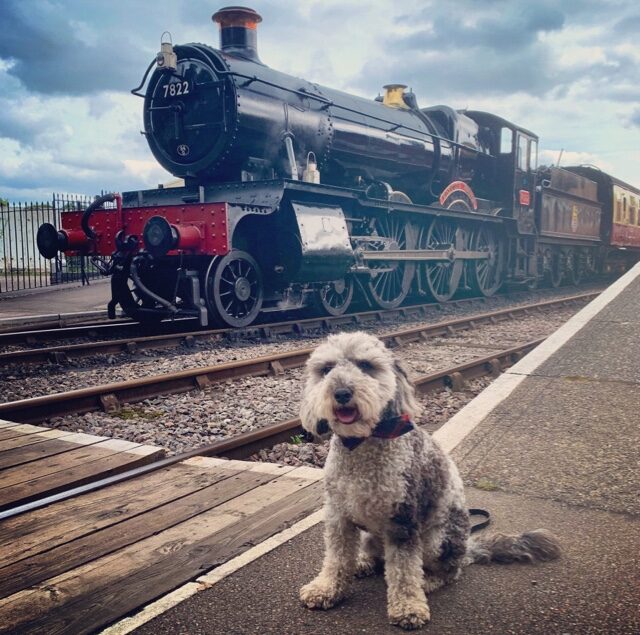
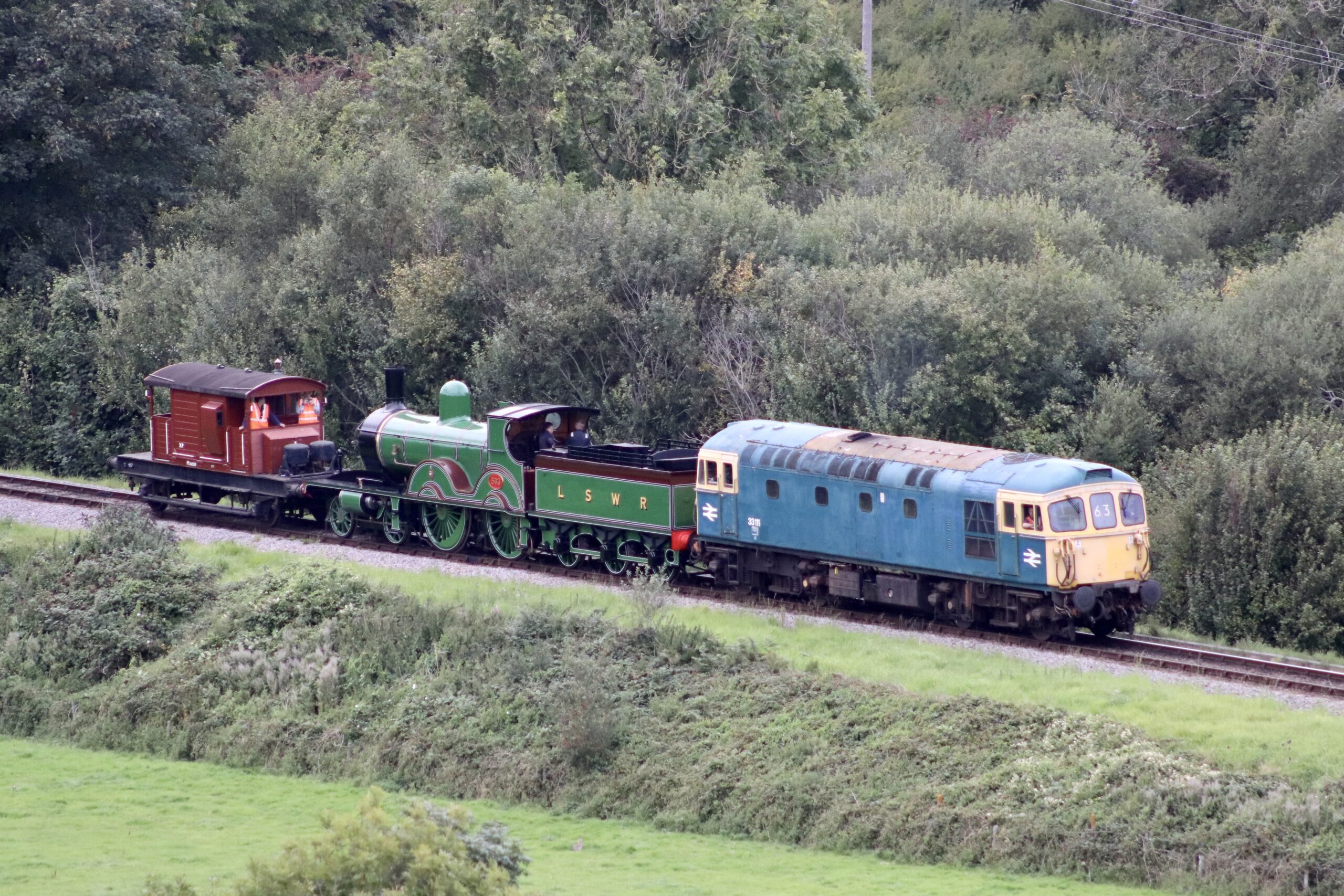
August 30th 2023 to September 5th 2023
Wednesday August 30th was a busy day for local rail activity in our part of Dorset with a Class 458/5 unit drag scheduled from Bournemouth depot and the return of a Victorian era “Top Link” engine in the form of London & South Western Railway (LSWR) Adams T3 4-4-0 No. 563 to the Swanage Railway following her six year overhaul. And with both these things scheduled to happen 17 miles apart at relatively the same time it was time for a plan!
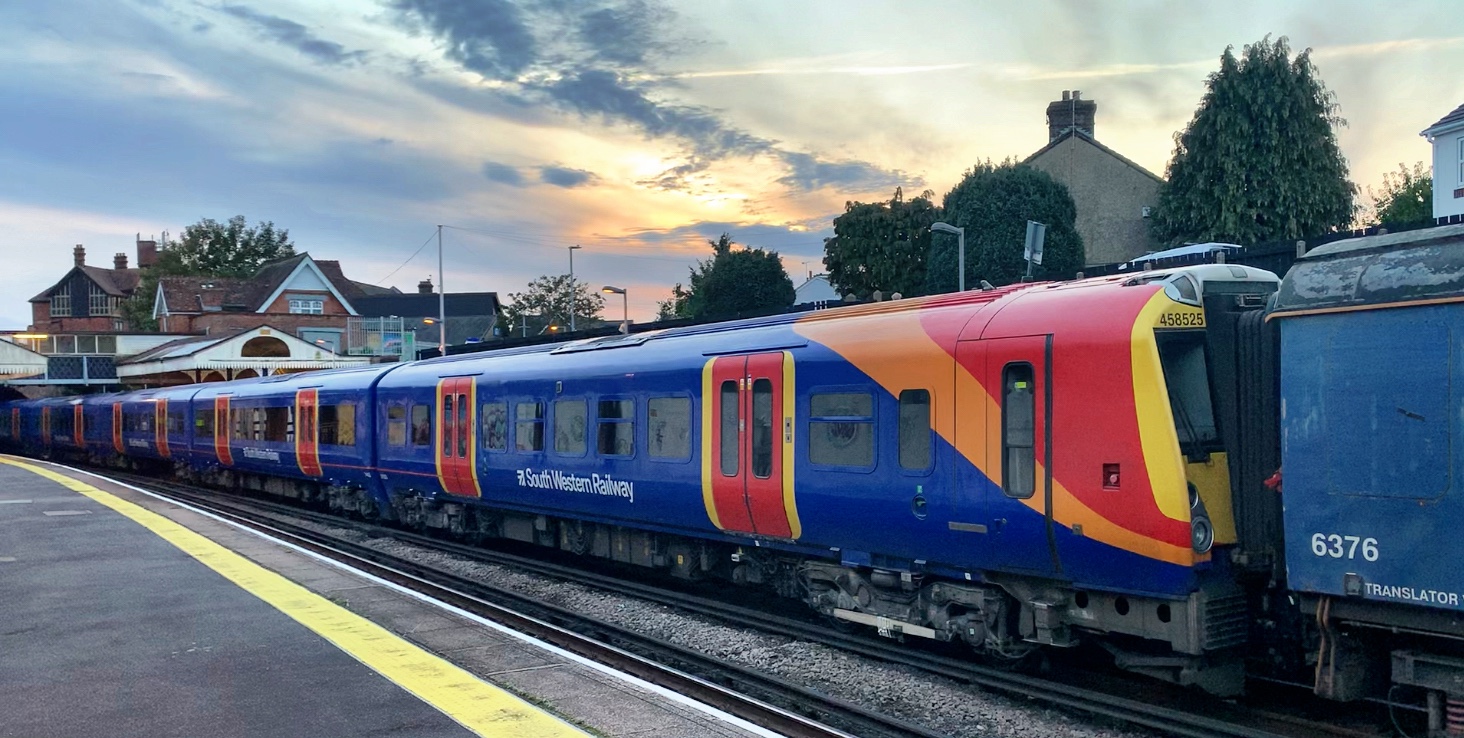
It was my intention to pop over to Branksome railway station around half four to see the arrival of GBRf Class 57 No. 57305 and Class 47 No. 47749 ‘City Of Truro’ arriving with barrier wagons working 5Z72 1548 Eastleigh East Yard to Bournemouth T&R.S.M.D in preparation for another Class 458/5 electric multiple unit move to Widnes Transport Tech where the units are being modified and refurbished for future use by South Western Railway (SWR). Following this, it would be a half hour drive to Norden where T3 No. 563 would be waiting to be towed down to Swanage. Once again, Jamie very kindly provided transport and good company with Yoshi sitting this adventure out at home.
On arrival at Branksome we followed the progress of 5Z72 via Real Time Trains (RTT) and Open Train Times (OTT) which showed the train getting progressively later. This meant that is was likely to arrive at platform 2 the same time as a passenger service was scheduled on platform 1. So careful consideration had to be made in order for the GBRf working to not be blocked from view if I opted for the wrong platform from which to see the train. I played it safe and wandered off to the London end of platform 2 in time to see the Class 57 round the corner just as the service train crept up behind me on the adjacent track. I wasn’t to be so lucky on the return working however!
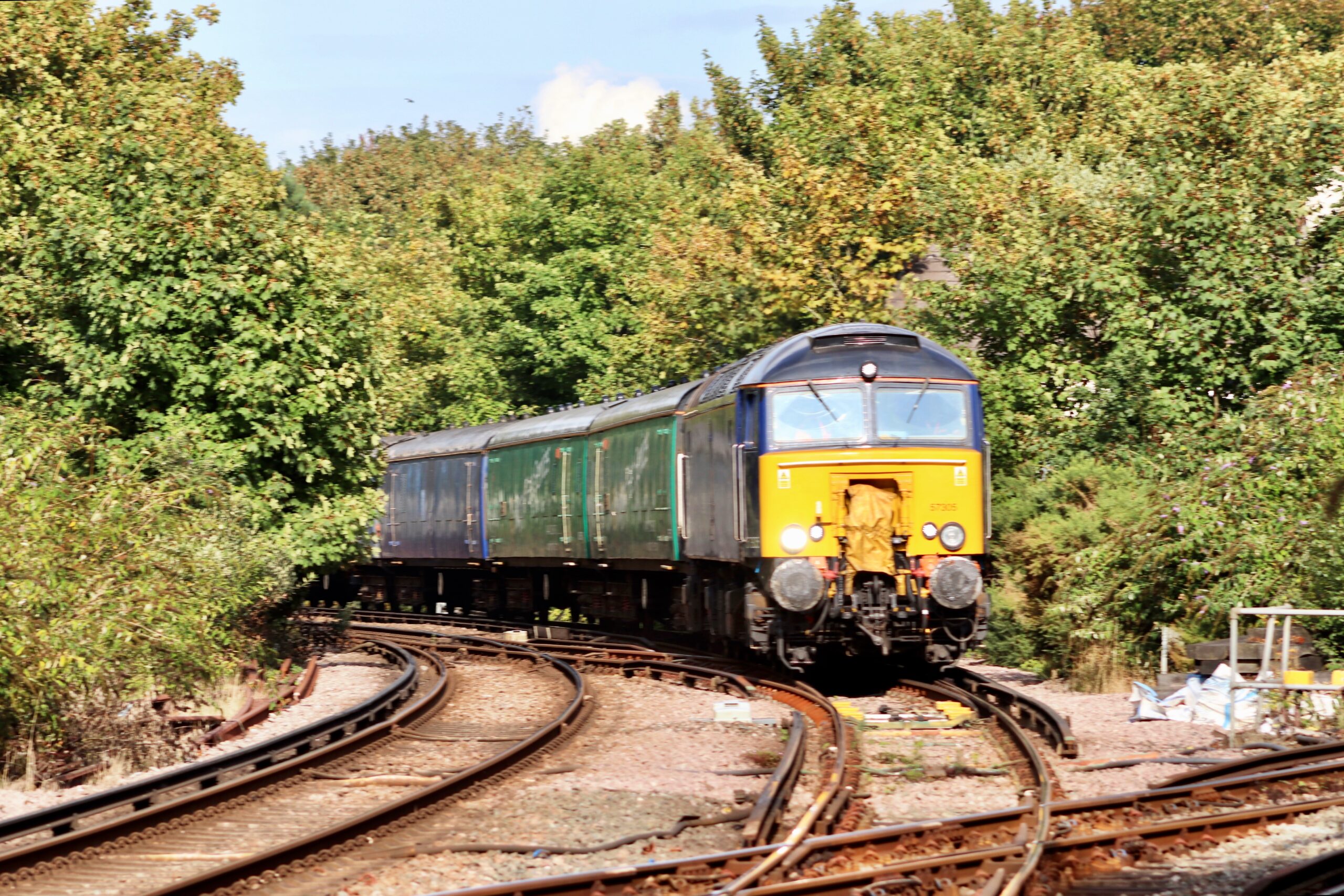
It’s been approximately 20 years since the most recent Class 57 conversions from Class 47’s were out-shopped by Brush Traction at Loughborough and 32 of the 33 rebuilds during the late 1990’s and early 2000’s are still in existence following the scrapping of No. 57004 in July 2023, this being the first and to date, only Class 57 to be broken up.
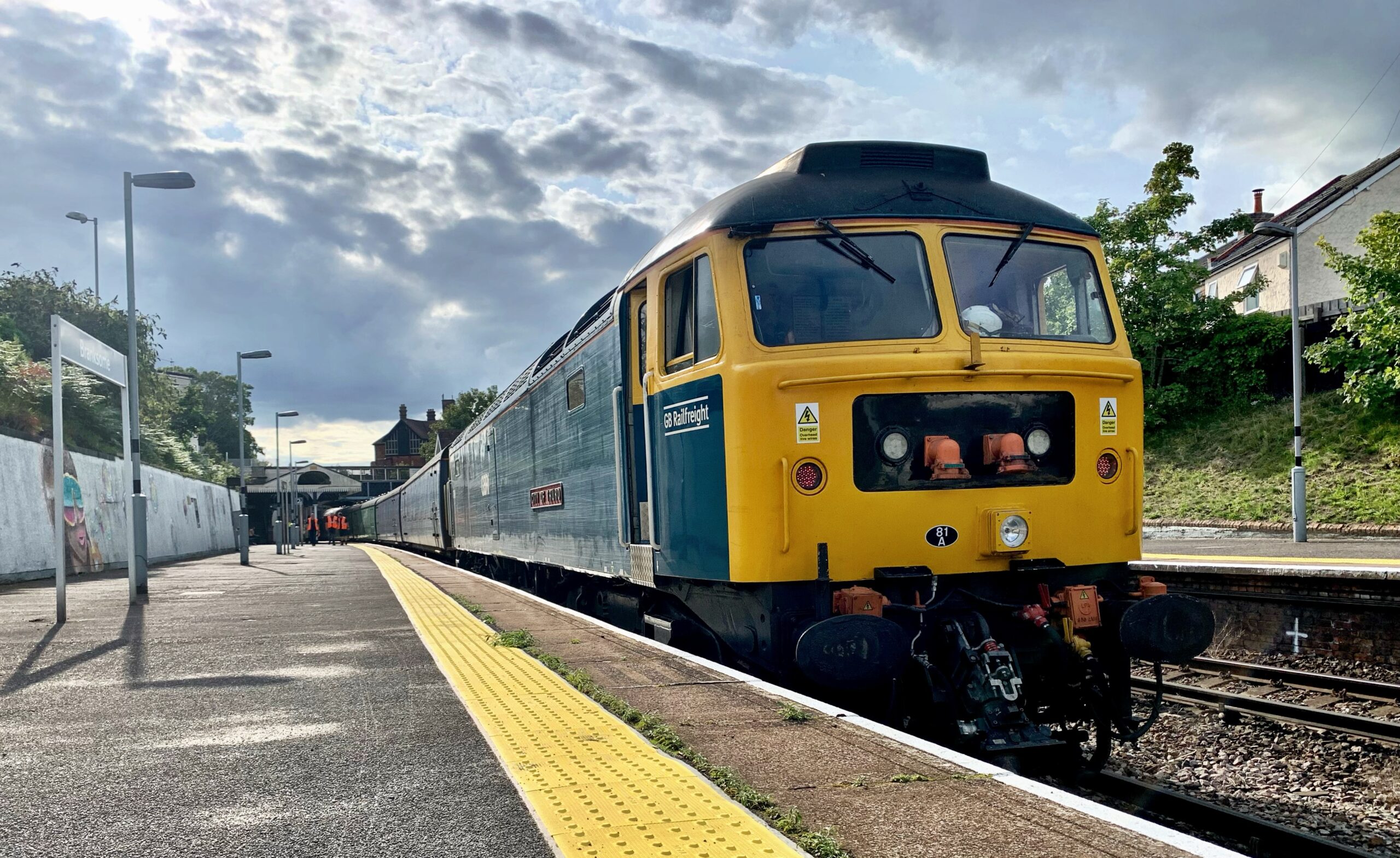
Cameras safely stowed away we drove off through Poole and Wareham, where we were stuck behind slow moving motorhomes and bus services. Narrowly avoiding being further delayed by a herd of cows crossing the road at Stoborough, we arrived at Norden well before Class 33 No. 33111 arrived from Swanage towing a brake van to collect No. 563. The Victorian 4-4-0 looked amazing, even from a distance, as we observed the locomotive from the road bridge looking across to Arne Road siding. The final Diesel Multiple Unit service of the day from Wareham to Corfe castle was waiting clearance at the road crossing into Norden station and once this had passed through the area, we didn’t have too long to wait until the Crompton arrived. In fact the whole operation of reversing into the siding and coupling up to the T3 was done ahead of the proposed timings and once the consist pulled away we moved on to our next vantage point. We had plenty of time as it was planned for the diesel locomotive to run around the T3 and brake van in Norden station so the Class 33 was leading for the onward journey to Swanage. With top speed a sedate 15mph for the 33 and T3 pairing, we took a position overlooking the Grade II listed viaduct in the shadow of Corfe Castle. We didn’t know if we’d be in for a long wait as things were, at that time, around an hour ahead of schedule. As luck would have it, we didn’t have long before the locomotives came into view.
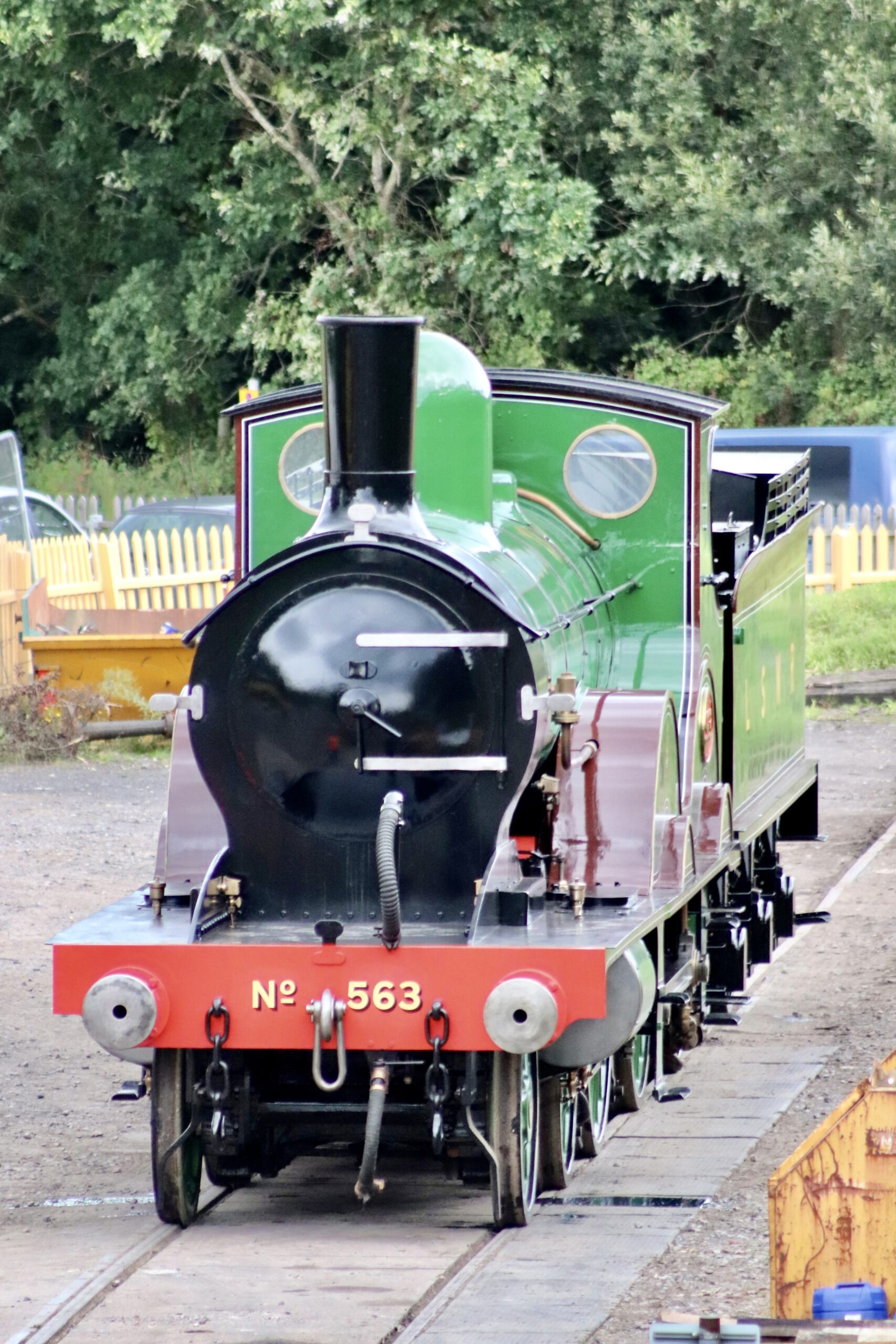
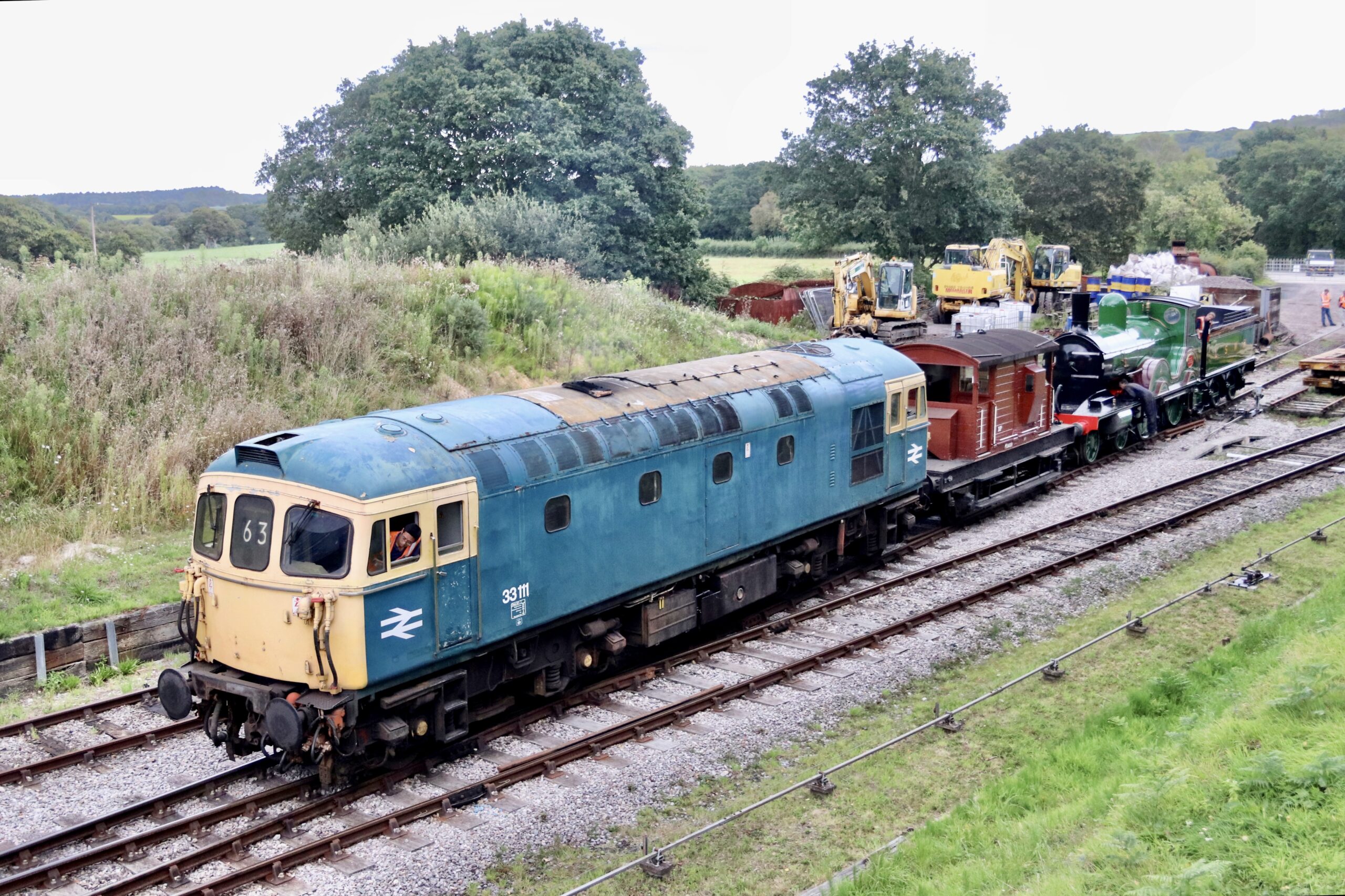

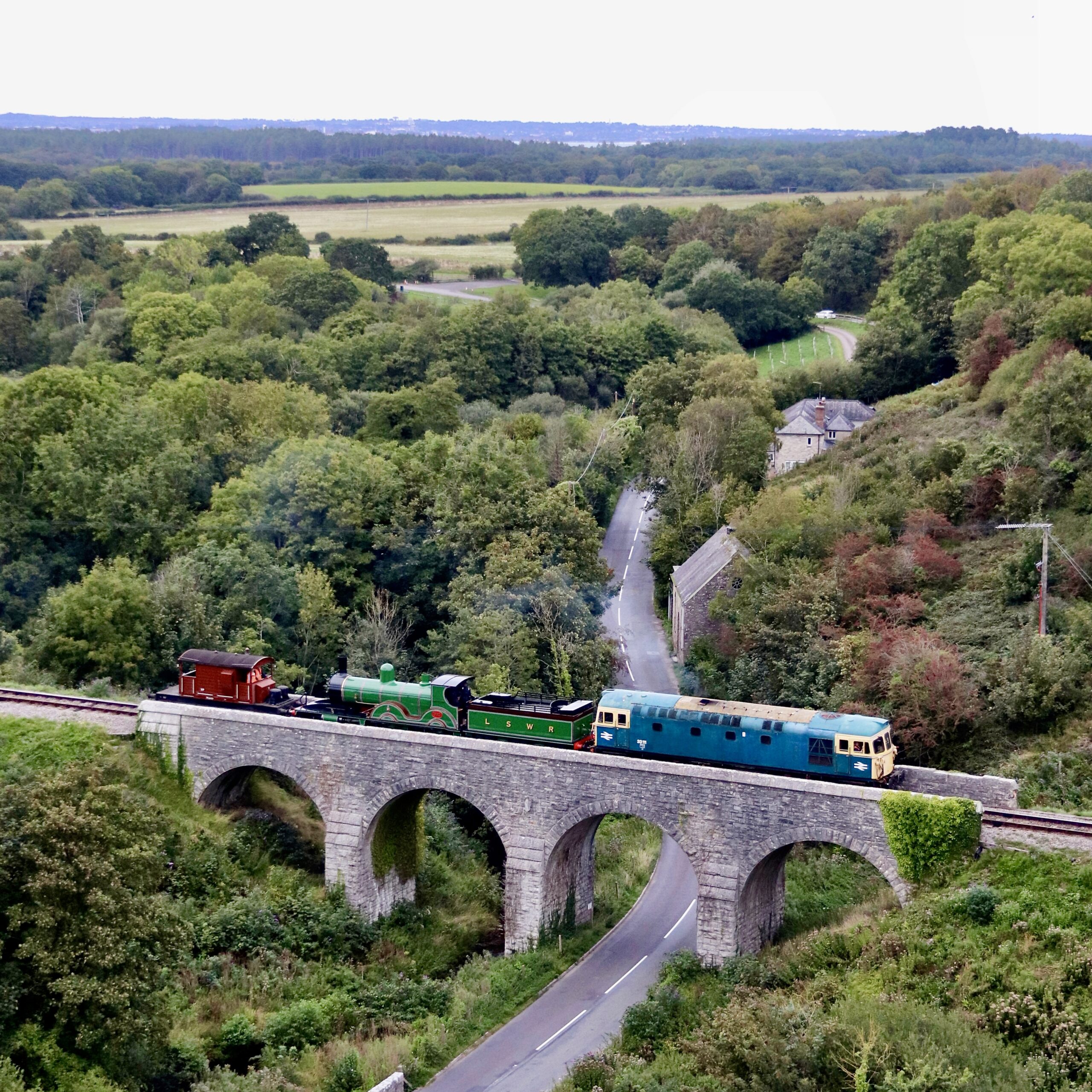
T3 No.563 was completed in March 1893 and was allocated new to Nine Elms shed, with moves to Guildford and Eastleigh over the following years. After an overhaul in 1935, she was transferred to Salisbury where she was looked after by shed staff, performing as station pilot or working slow trains to Bournemouth until being reallocated to Eastleigh in February 1938. She was withdrawn in March 1939 following her failure whilst working a Fawley goods train. However, with the onset of World War II she was reinstated into traffic being allocated to both Basingstoke and Eastleigh before being withdrawn again in 1945 following cessation of hostilities in Europe. She was resurrected yet again three years later in 1948 as an exhibit at London Waterloo’s centenary celebrations where she represented the LSWR. There then followed periods of storage in the electric carriage shed at Farnham, and at Tweedmouth before being restored at Eastleigh prior to moving to the Clapham transport museum in 1961 as part of the National Collection. From 1975, she was subsequently displayed at York and Shildon and took part in theatre productions of “The Railway Children” in London and Toronto before being disposed of by the National Railway Museum in 2017, when following a series of negotiations it was agreed to transfer ownership of No. 563 to the Swanage Railway Trust.
No. 563 has been extensively restored at the Flour Mill near Lydney in the Forest of Dean, Gloucestershire with the tender being restored separately at Herston Works, Swanage. Restoration started in November 2017, at the cost of £650,000. Having passed her boiler exam in July 2023 and moving under her own power for the first time in 75 years, No. 563 was transported by road to Purbeck arriving early morning on Wednesday August 30th. Resplendent in lined-out 1890’s Drummond passenger green livery, the T3 was reunited with her tender prior to making the journey by rail from Arne Road Siding at Norden in the company of “Crompton” Class 33 No. 33111. She will undergo inspections and testing prior to entering operational service. Unfortunately while the locomotive was being moved at low speed to Swanage, both coupling rods started to run warm. Before testing can resume, precautionary checks will be required and the re-machining of the coupling rods bushes. Commissioning work will continue at Herston while this is being done. It is hoped that No. 563 will haul her first passenger train in 75 years on the Swanage Railway to mark the centenary of the Southern Railway and the 185th anniversary of the formation of the London and South Western Railway in 2023, but no date has yet been confirmed.
No. 563 fills a gap in the Swanage Railway fleet as the class hauled trains from London to Swanage from the 1890’s through to the 1930’s and represents an image of what the railways would have been like during the industrial and social development of Dorset during the 19th Century.
As things had happened smoothly and well ahead of schedule, following a quick consult of Google Maps, we decided we had enough time to head back to Branksome and see the Class 458/5 drag departing Bournemouth depot. On our return to Branksome, we checked RTT and OTT once again, but it was to be a good 17 minutes after the allotted time that Class 57 No. 57305 rolled back into the station working as 5Q72 1926 Bournemouth T&R.S.M.D to Wembley Receptions 1-7. Although diagrammed to reverse at platform 2, the train in fact arrived on platform 1. Again decisions had to be made on where to stand in order to get a shot of the GBRf locos and SWR EMU. All went well until departure time when, having returned to the London end of platform 2, a Class 444 working a service train arrived just as the Class 47, now leading the train out, powered up and departed. You win some, you lose some!

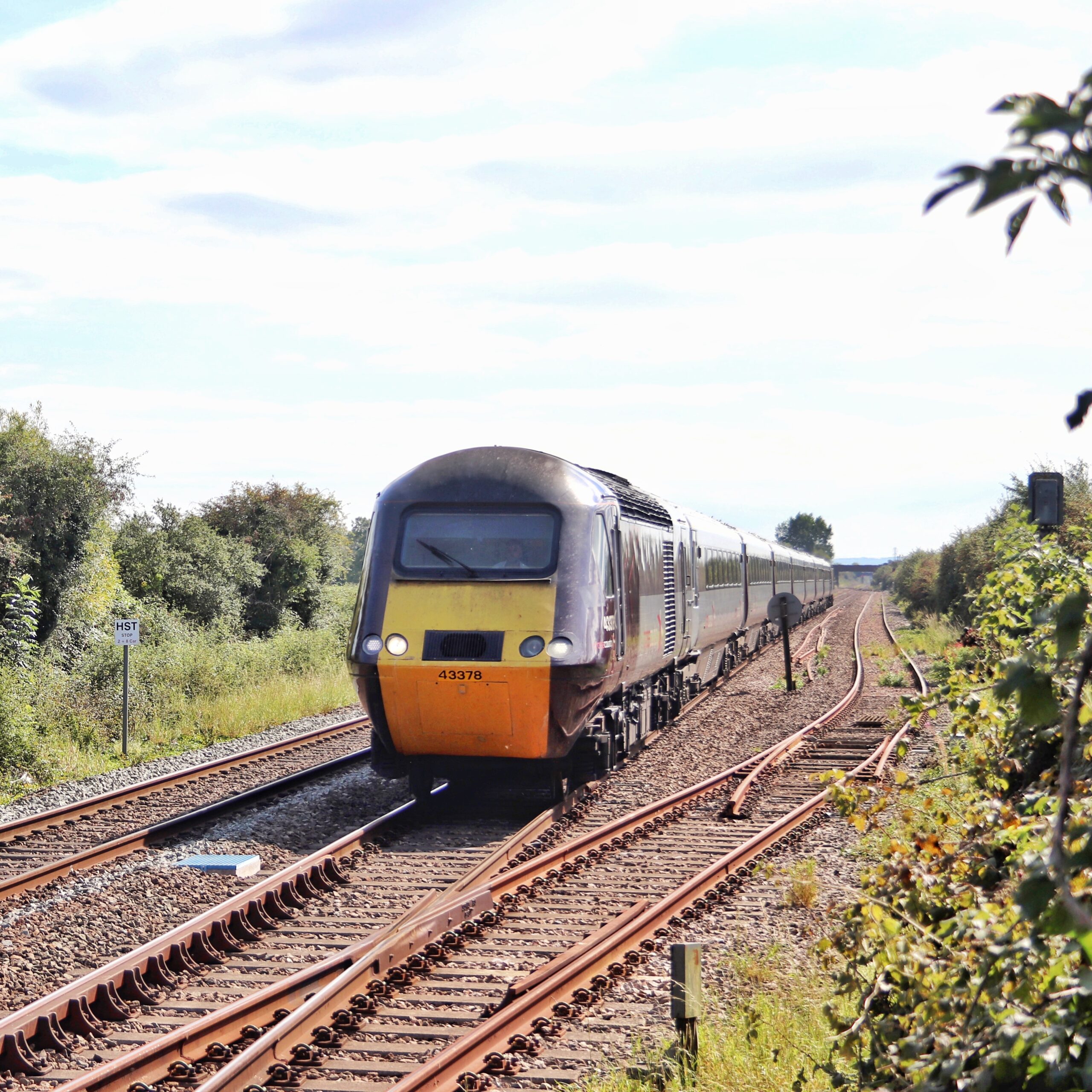
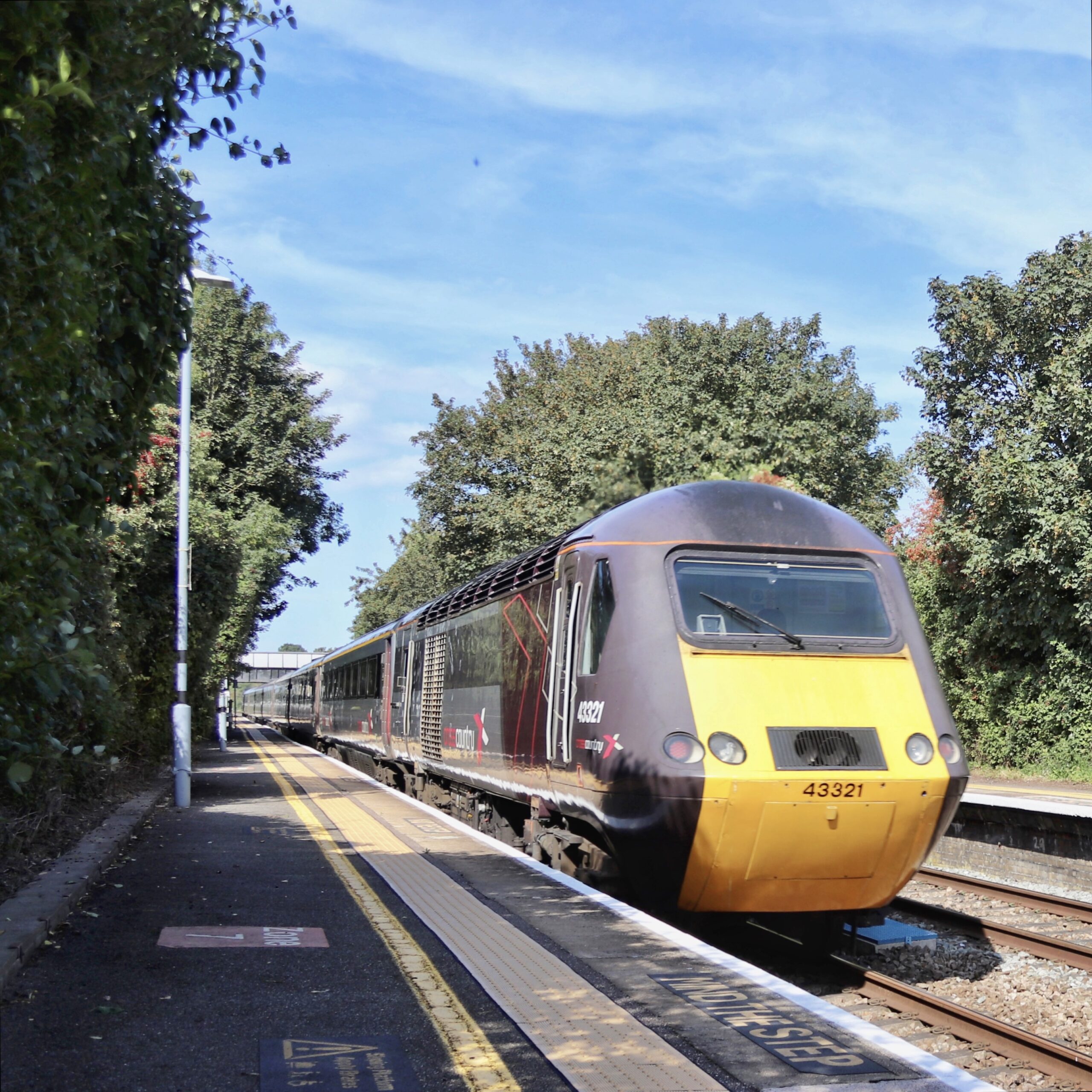
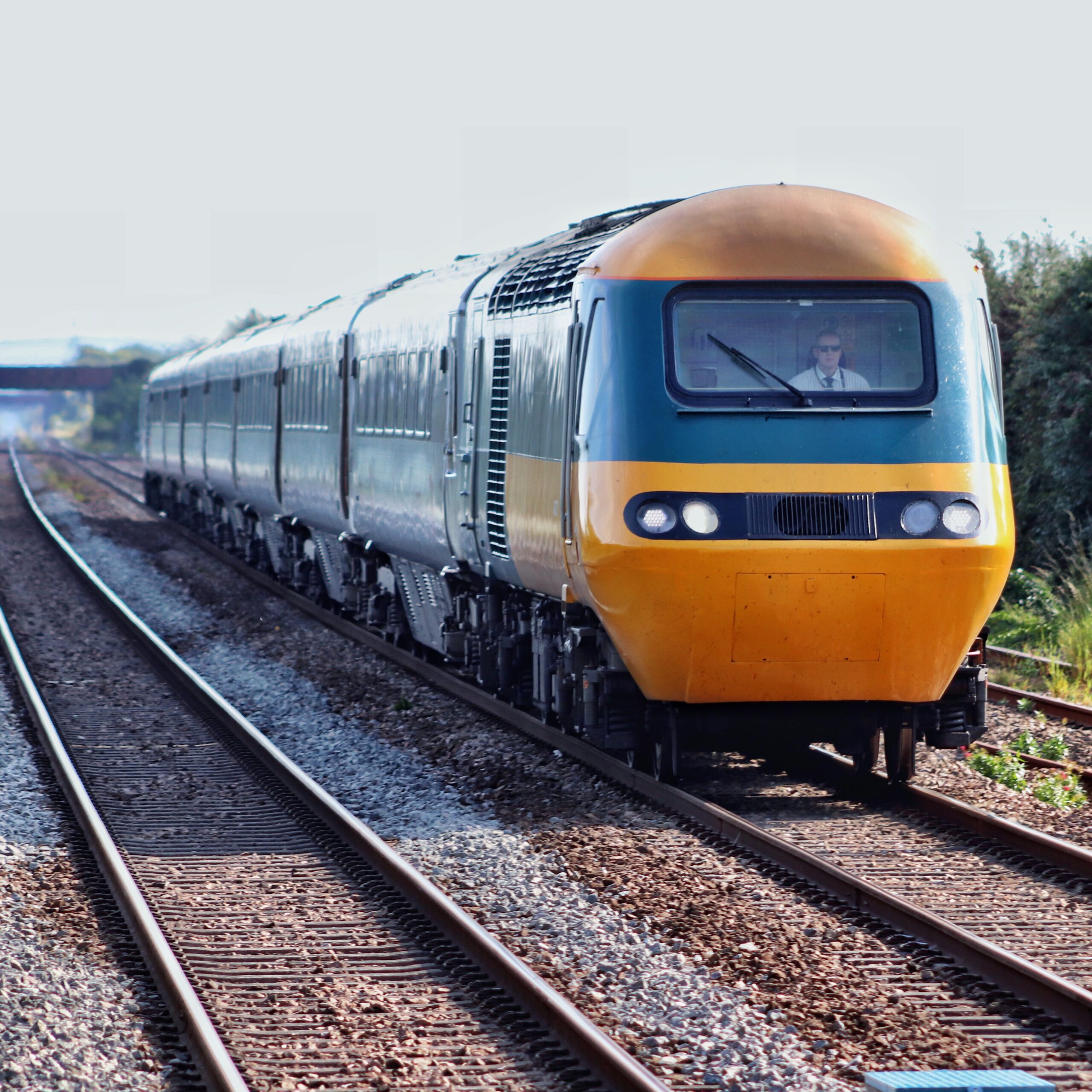
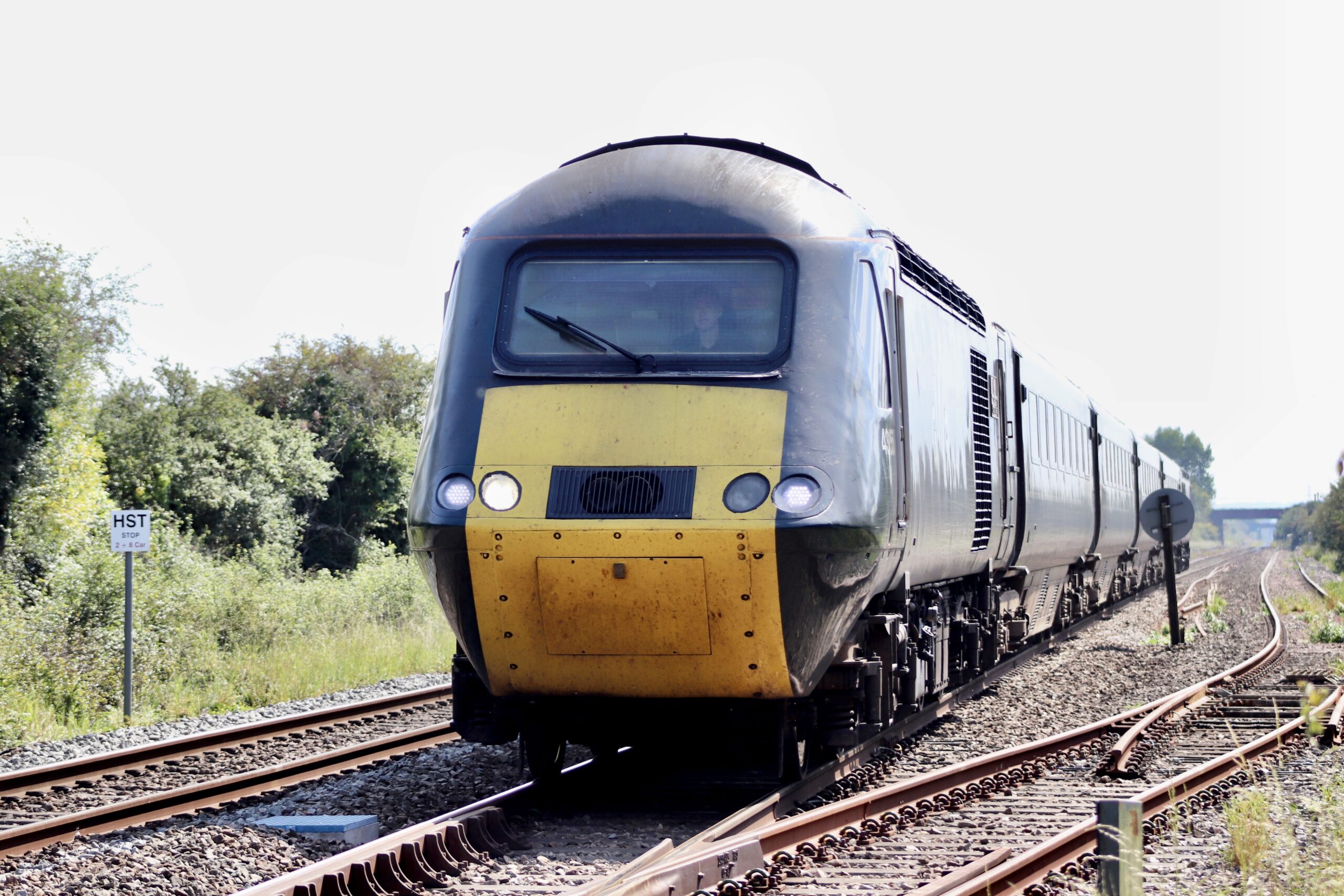
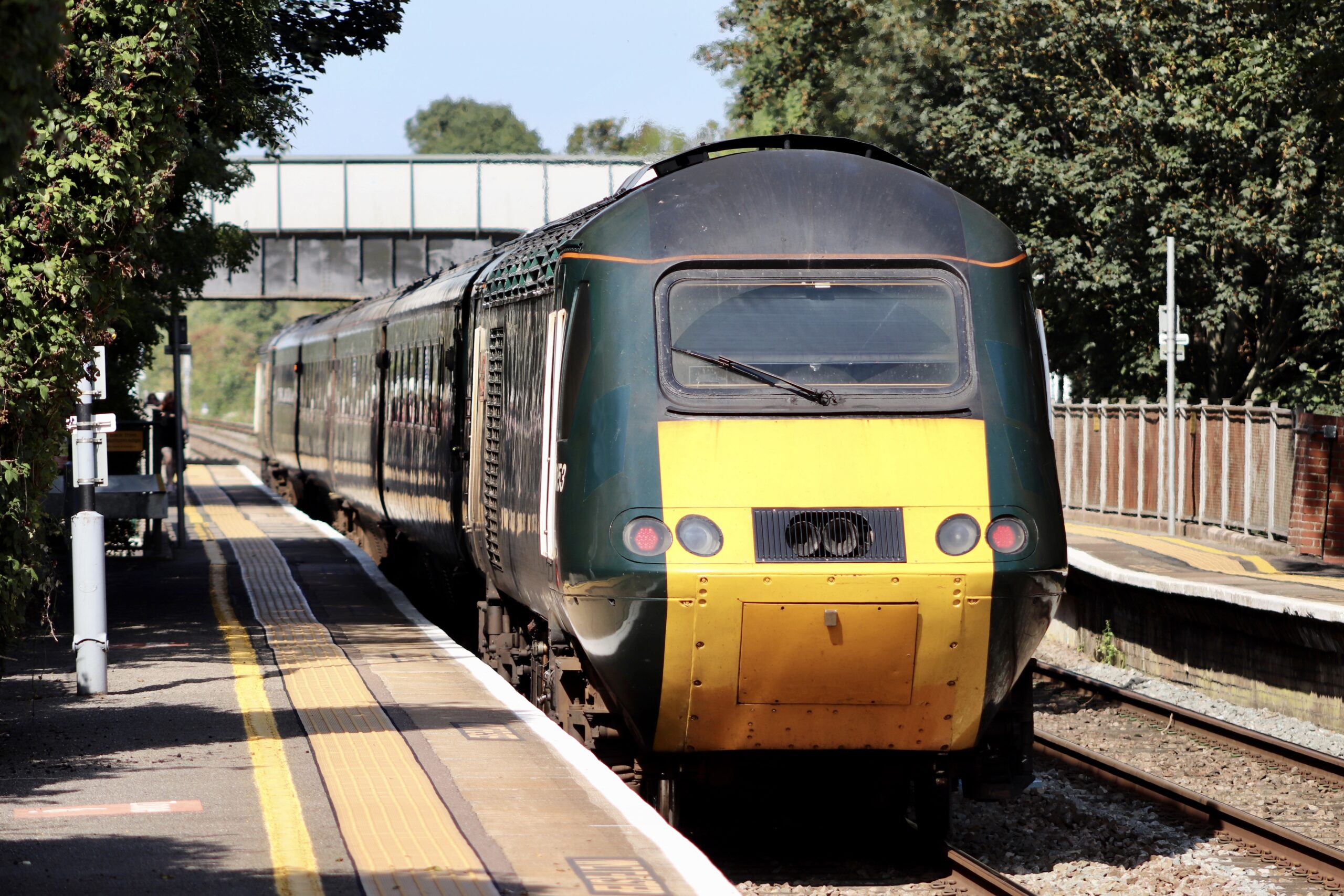
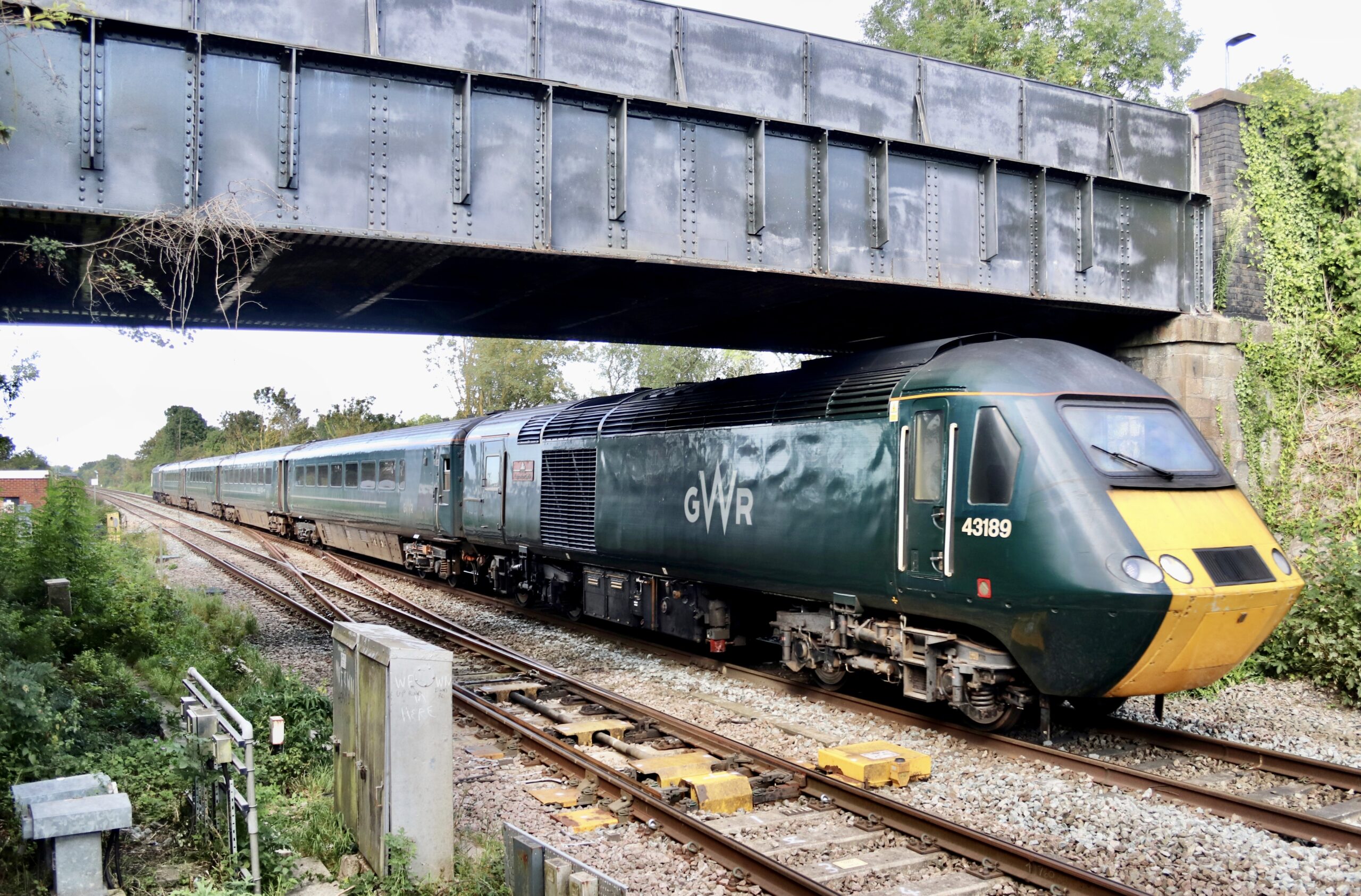
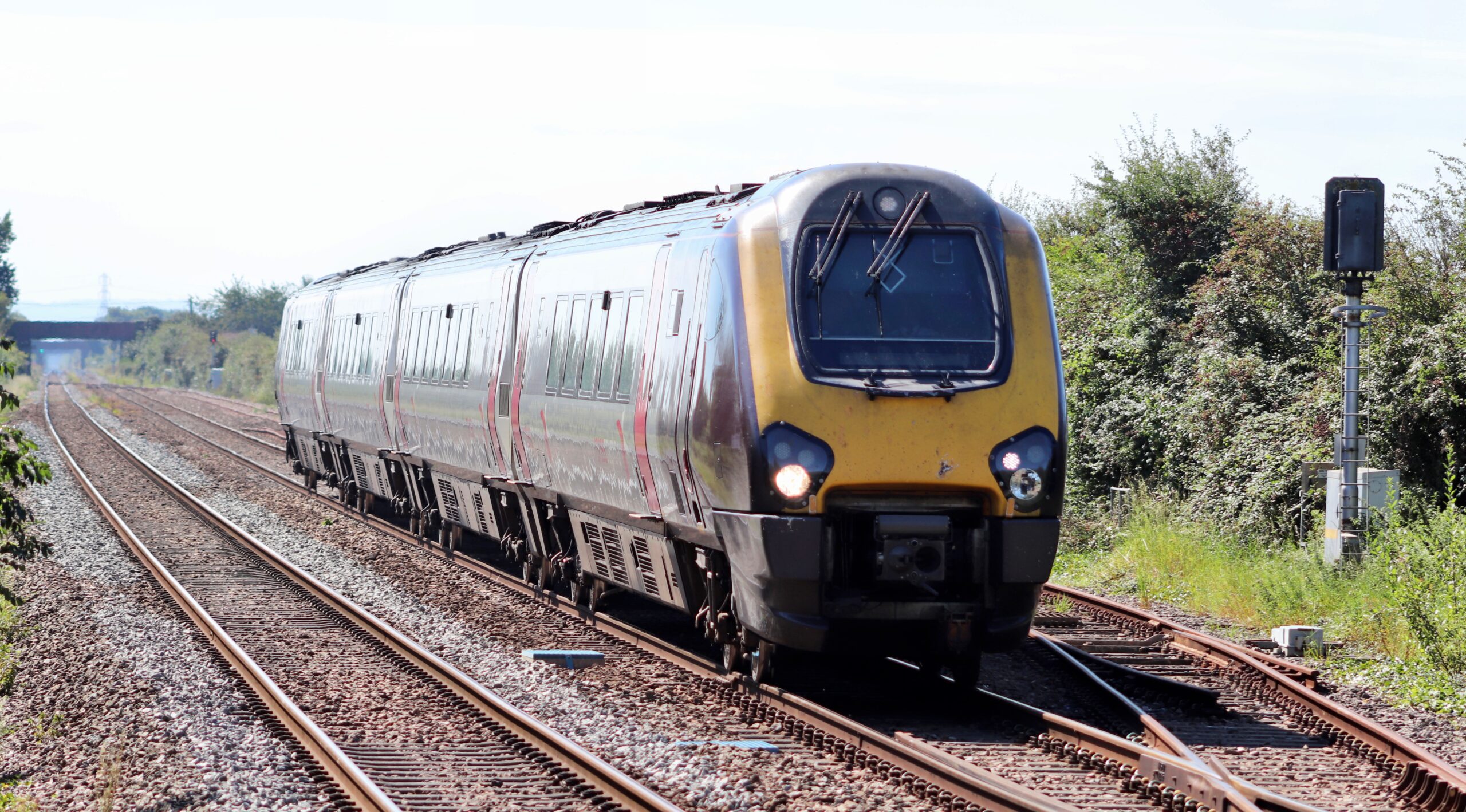
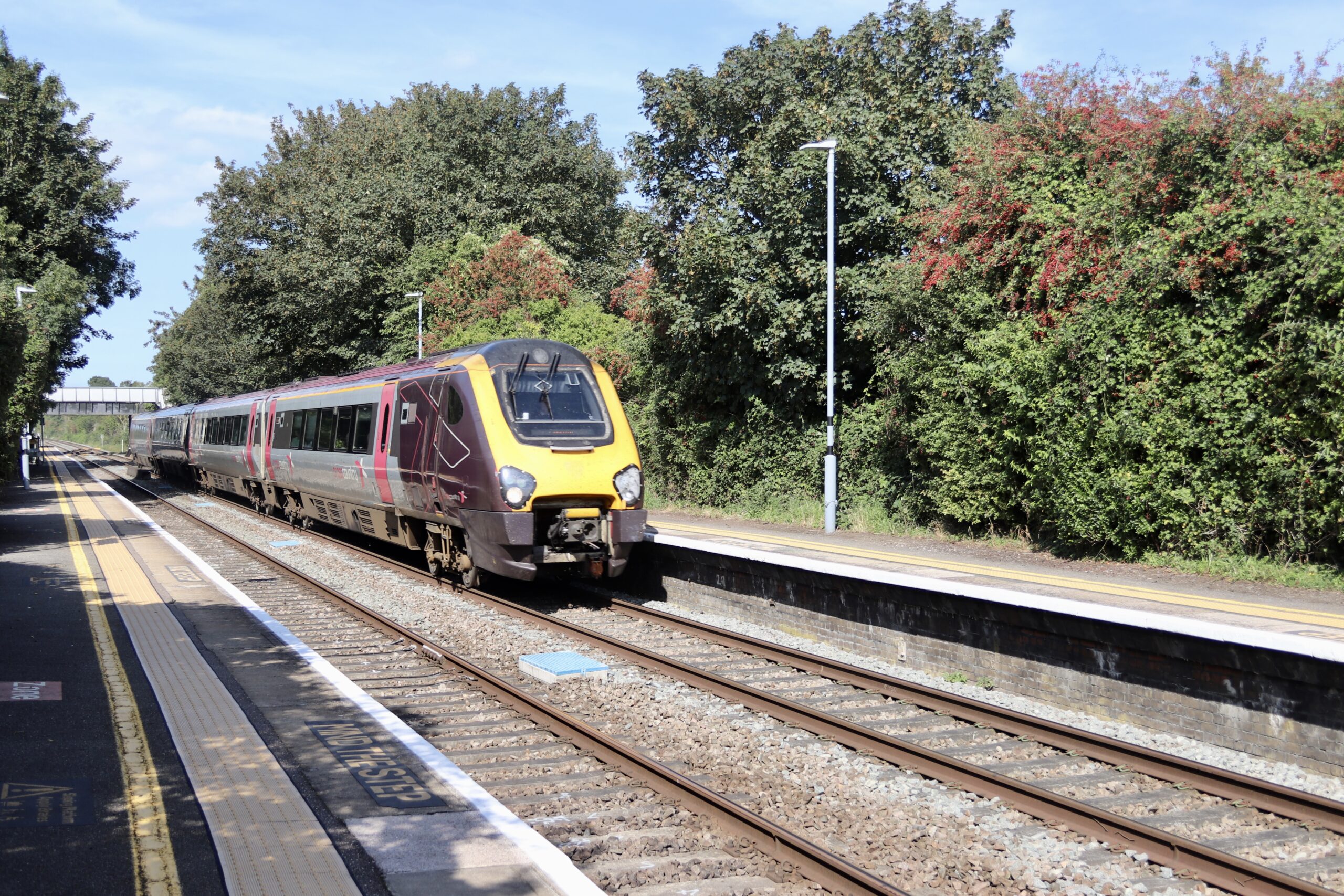
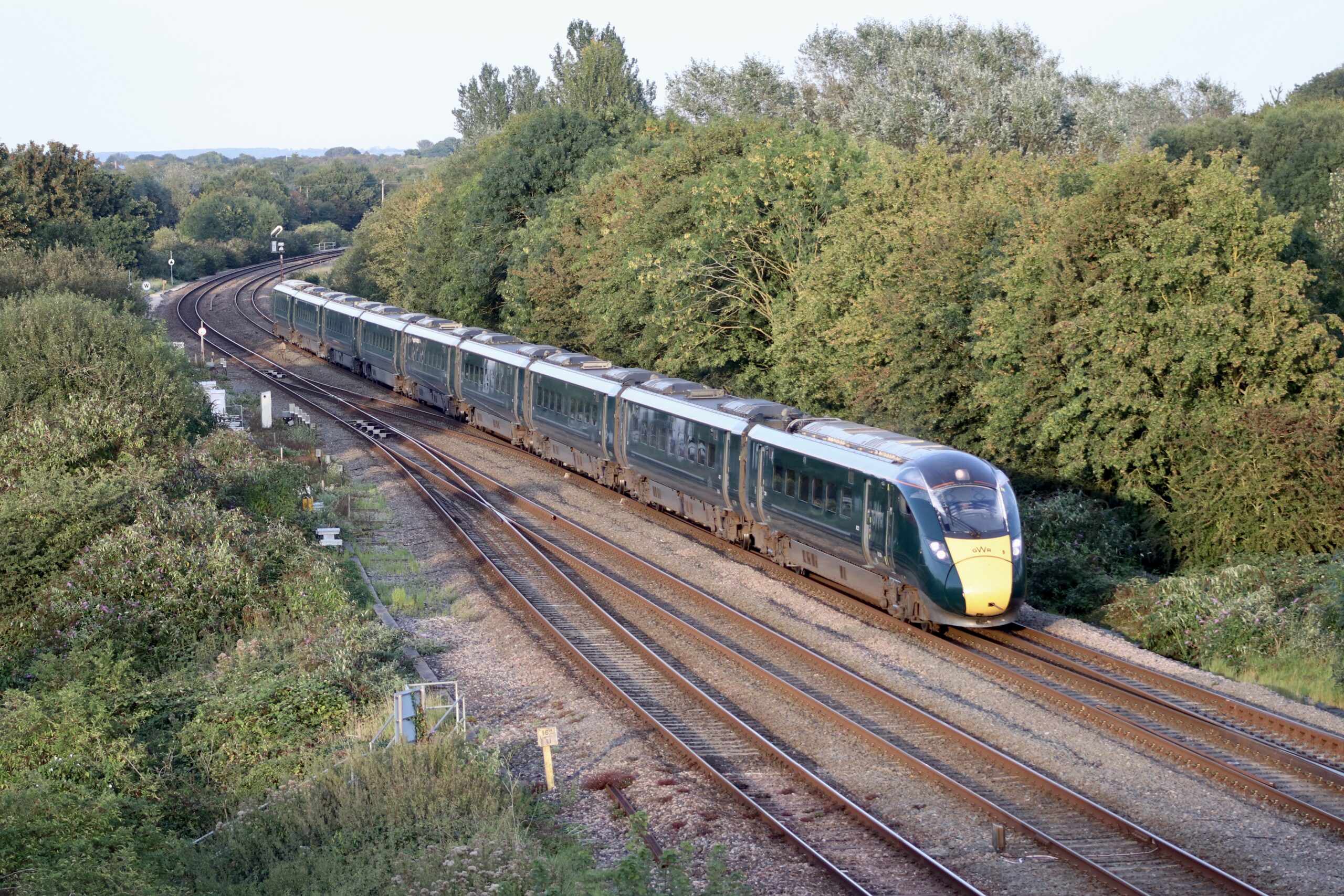
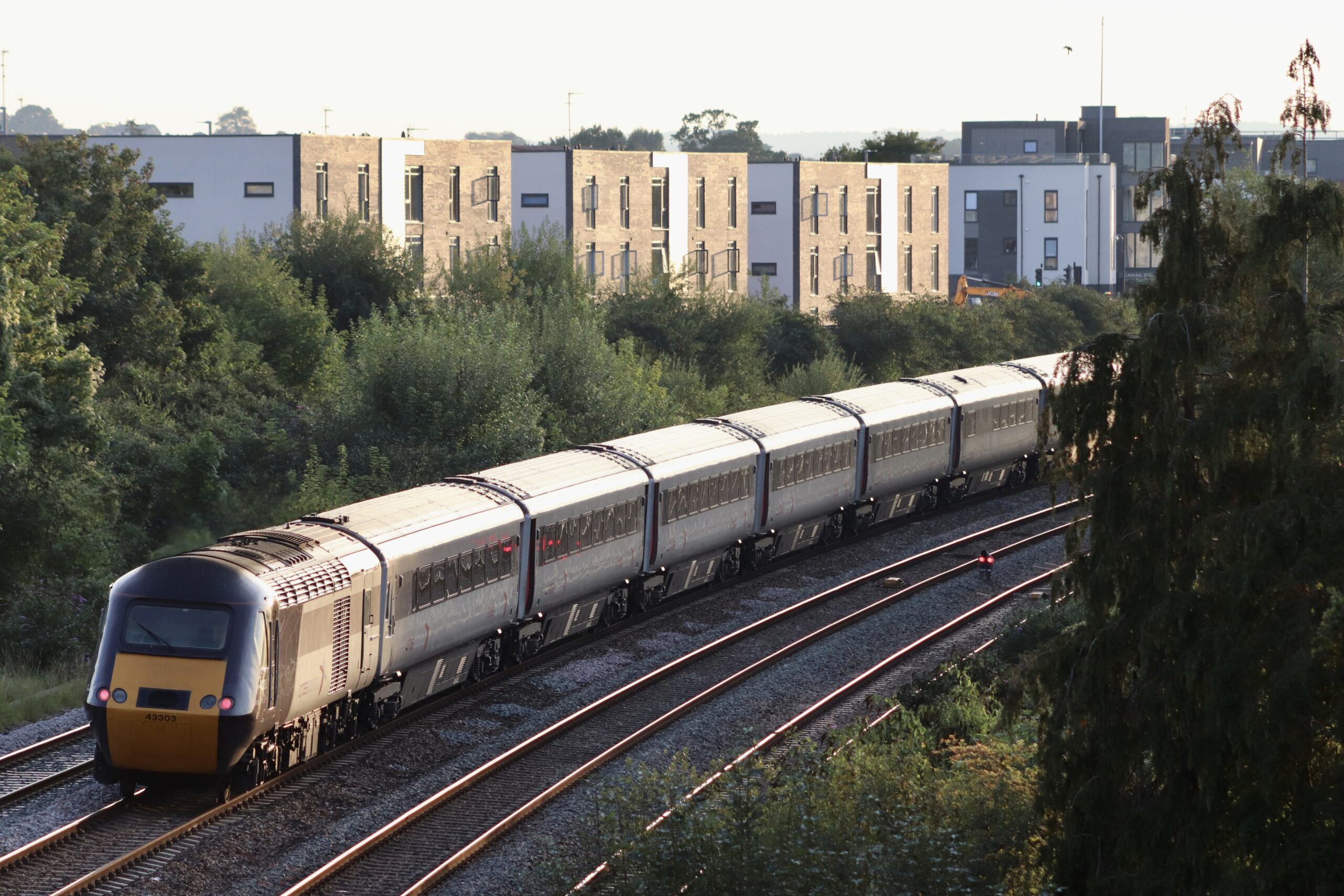
On Sunday September 3rd, we took the opportunity to go and bark at some CrossCountry HST’s in Somerset. With only a few weeks remaining of scheduled XC High Speed Train workings we drove over to Highbridge and met up with @smithy.377 (check out his excellent Instagram account!).
Once an important centre on the Somerset & Dorset Joint Railway (S&DJR) accommodating their locomotive works, Highbridge survives today as a top on the Bristol to Taunton Main Line operated by Great Western Railway (GWR). The original station opened on 14th June 1841, when the Bristol and Exeter Railway (B&ER) opened its broad gauge line to Bridgwater. The B&ER was later amalgamated into the Great Western Railway (GWR) on 1st January 1876.
The Somerset Central Railway (later absorbed into the S&DJR) opened to Glastonbury on 28th August 1854 but was worked by the B&ER for the first few years as it was also originally built to Brunel’s broad gauge. Separate platforms were provided for each railway and a connection between the was two situated in the goods yard. The layout eventually consisted of two terminal platforms and two through platforms to service an extension line that continued via Highbridge Wharf (where most of the S&DJR goods traffic was also handled) and onwards to Burnham On Sea extending the line two or three miles westwards which opened on 3rd May 1858.
To reach the extension, the S&DJR line crossed the B&ER main line on the level just north of the road bridge, by means of a special ‘diamond crossing’ over the main line and a gated level-crossing over the A38. The Burnham line was a key element in the original planning for the Somerset and Dorset line and was built with the expectation of picking up passengers from paddle-steamer ferries from South Wales and transporting them to the south coast of England with Burnham On Sea railway station, essentially a terminus, also including a through platform allowing services to travel on to a 900ft S&DJR built stone pier on the River Severn/River Parrett estuary from where the steamers would sail. Railway operations onto the pier ceased in 1888 although the pier continued in use for shipping until the 1950’s.
Burnham On Sea effectively closed when regular passenger services were curtailed at Highbridge on 28th October 1951. Excursion traffic continued until 1962, and the goods depot remained open until 1963 with all rail traffic ceasing in 1966. The station building, main platform and goods shed were all subsequently demolished. The excursion platform remained on the derelict site for over a decade, until the former track bed eastwards was developed into Marine Drive, a road which has helped ease traffic flowing into the town.
The location of the station itself was on the junction of Old Station Approach and Abingdon Street, and the former goods yard is now a small car park. An adjacent pub on the High Street was renamed the “Somerset & Dorset”. The local RNLI station and yard occupy land to the south and east of the former main station building, adjacent to the site of the former excursion platform. A B&M store occupies the seaward-west side. To remember its railway past, there are various features which have been installed by the local railway Heritage Group, notably a replica semaphore signal on Old Station Approach near the entrance to the High Street Car Park, a buffer stop on the corner of South Esplanade and Pier Street located very near to the site of original railway terminus, a station signboard and replica signal box which stands on what was known as the excursion platform, and a locomotive shaped weathervane on the town green. The original signal box which once stood alongside the platforms has been restored and is now based at Washford on the West Somerset Railway.
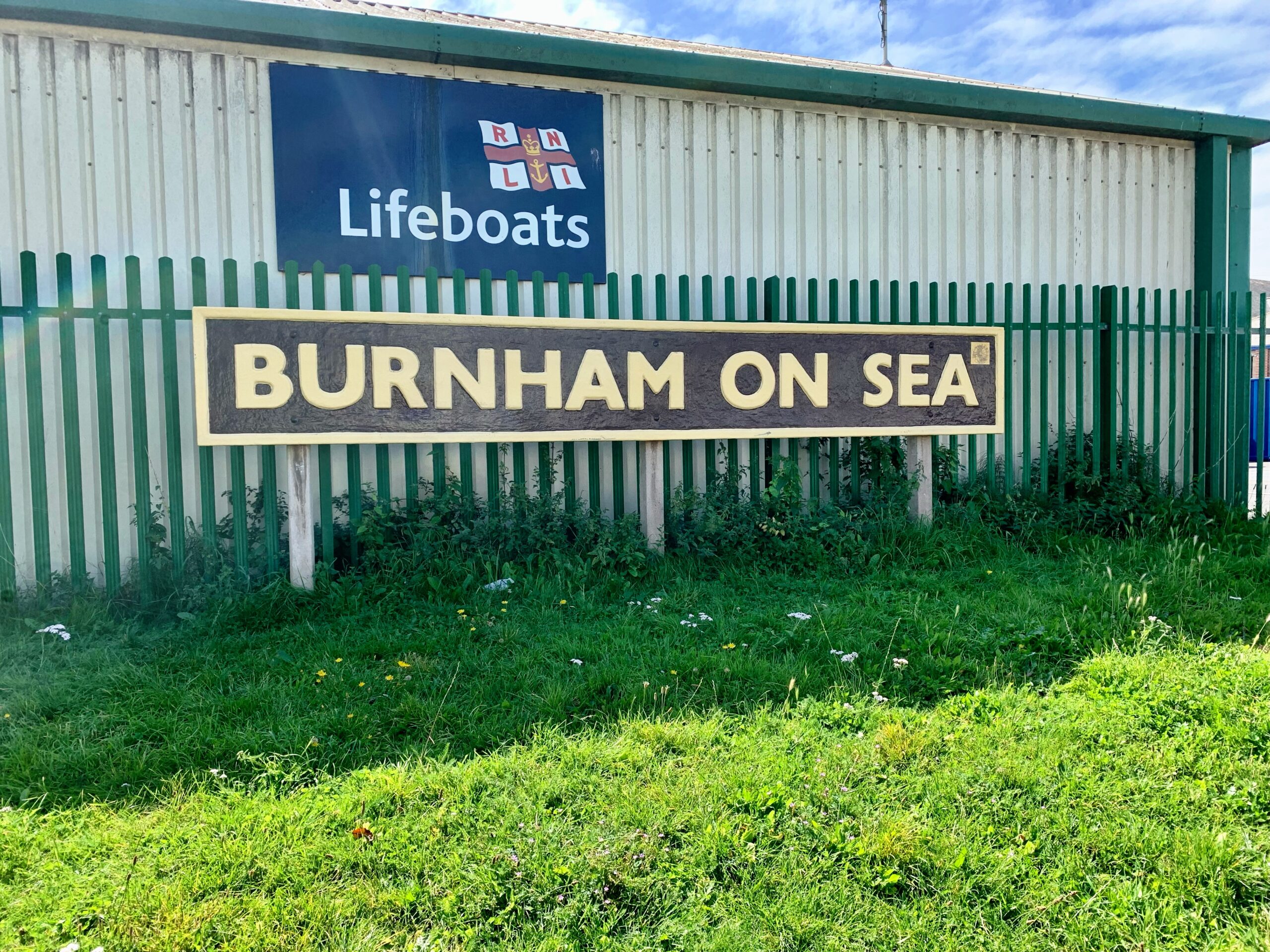
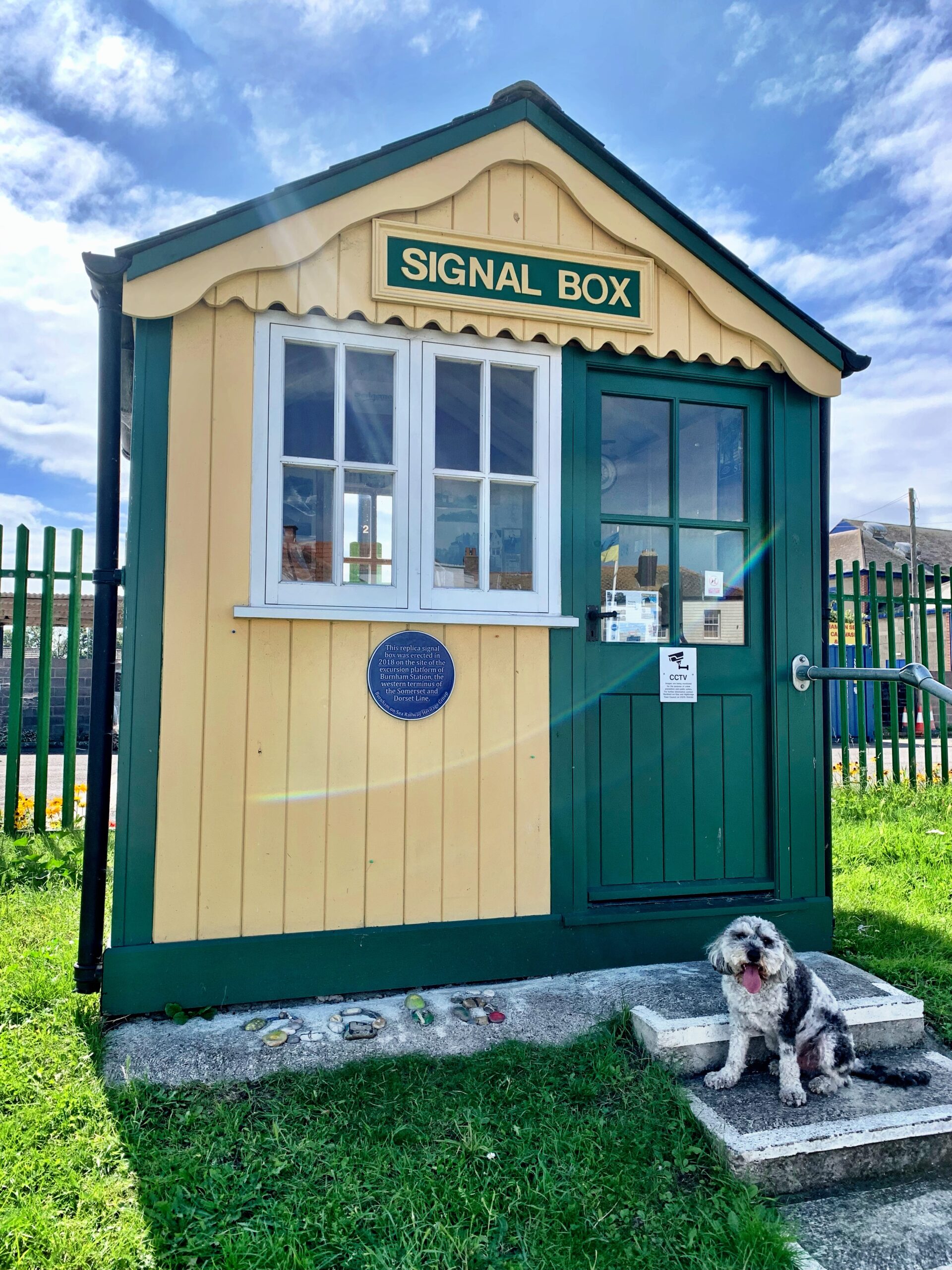

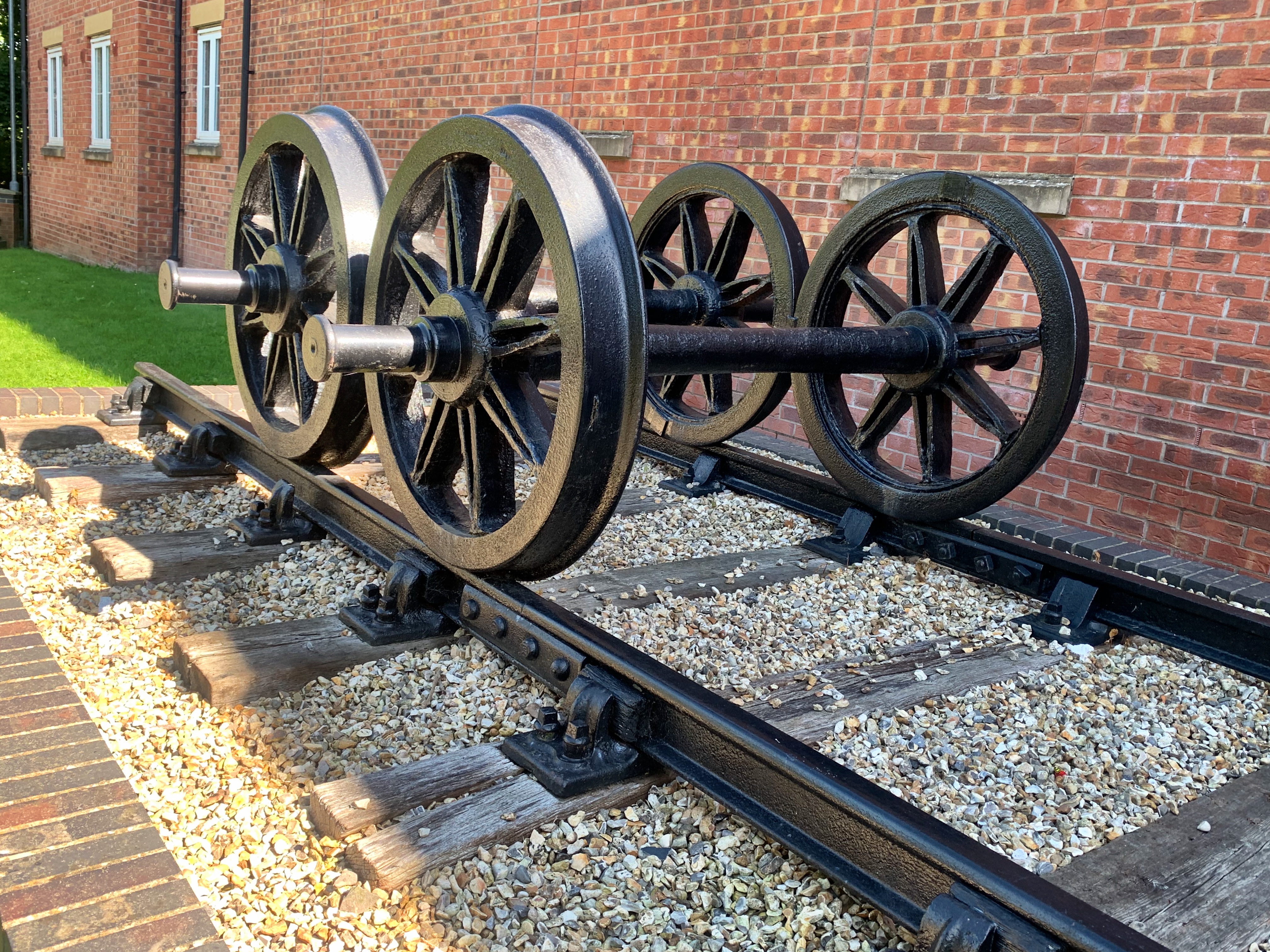
Returning to Highbridge the S&DJR locomotive works closed in 1930 after the motive power of the line was taken over by the London Midland and Scottish Railway (LMS), whilst its joint-venture owning partner the Southern Railway (SR) took over civil engineering and line operations. a small engine shed remained open until the Somerset & Dorset line and platforms finally shut in 1966. All of the original B&ER/GWR and S&DJR station buildings have all since been demolished, replaced on current platforms by metal and glass shelters. There is also no trace of the former S&DJR trackbed, platforms, engine shed or works, all of which are now beneath new housing to the east of platform 1. A couple of old wagon wheels sit on a short length of track on a plinth marking the past history of the site.

To see film of Highbridge and Burnham in the early 1960’s follow this link: https://www.bbc.co.uk/iplayer/episode/b03495yn/lets-imagine-a-branch-line-railway-with-john-betjeman. First transmitted in 1963, John Betjeman looks at the Evercreech Junction to Burnham On Sea railway line, providing a unique profile of a working steam branch line railway as he travels along the original part of the Somerset Central Railway. Examining towns and stations along the way, Betjeman laments the tragic decline of steam railways. The journey culminates with a stroll around Highbridge Wharf.
Twenty odd years ago I visited Burnham On Sea regularly for work based at Highbridge Radio Station (Portishead Radio). The radio station, which operated the world’s largest and busiest maritime radio service, closed in April 2000, having initially operated from a site near Devizes in 1920. At its peak, in the late 1970’s and early 1980’s, over 300 staff were employed at the Highbridge site. The station buildings were demolished in 2007 and the Mulholland Park housing estate was built on the site.
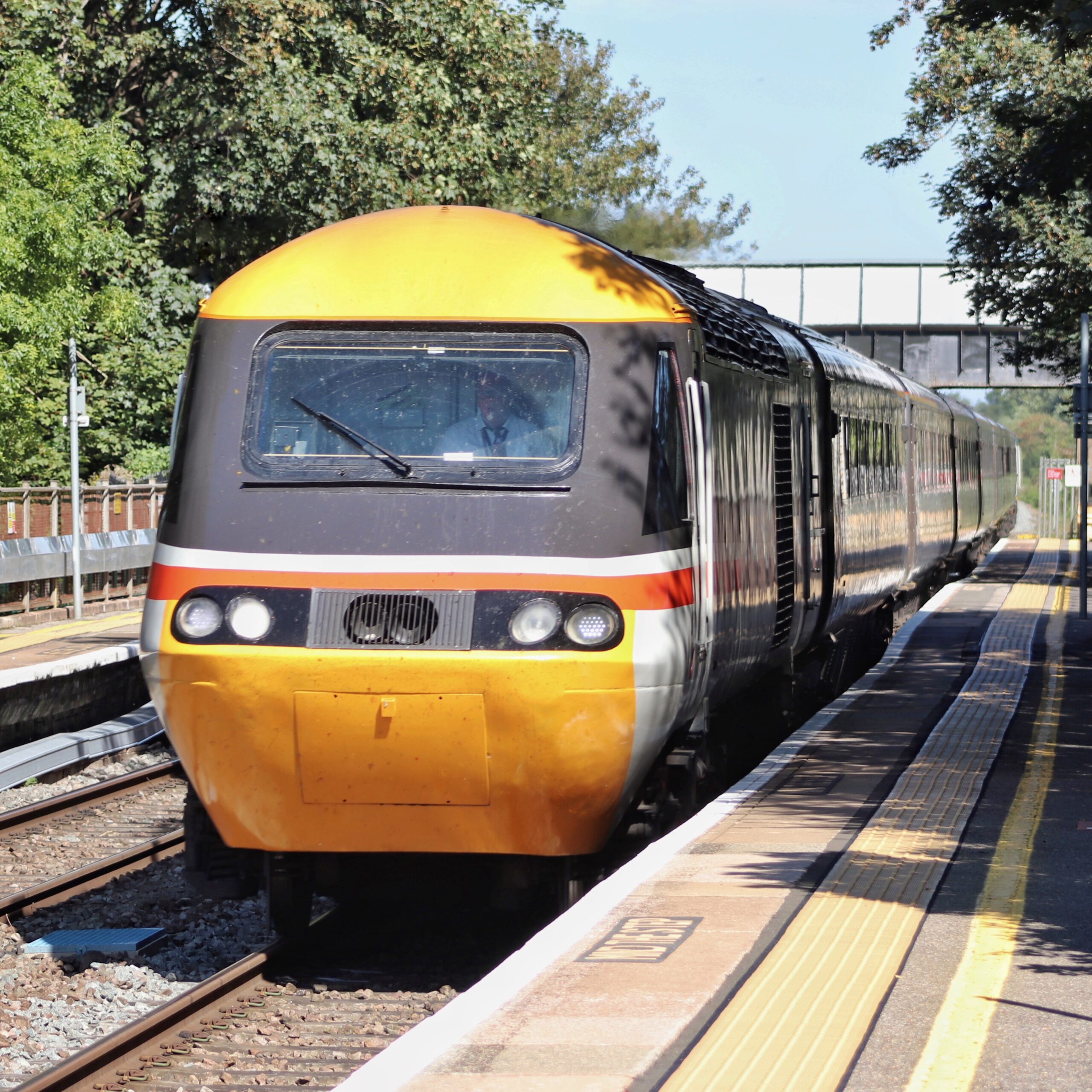
Motive power through Highbridge is currently provided by GWR Intercity Express Trains (IET) and soon to be retired HST Castle Sets with one stopping train in each direction each hour. Passing CrossCountry Voyager sets will continue after the retirement of the XC HST’s.





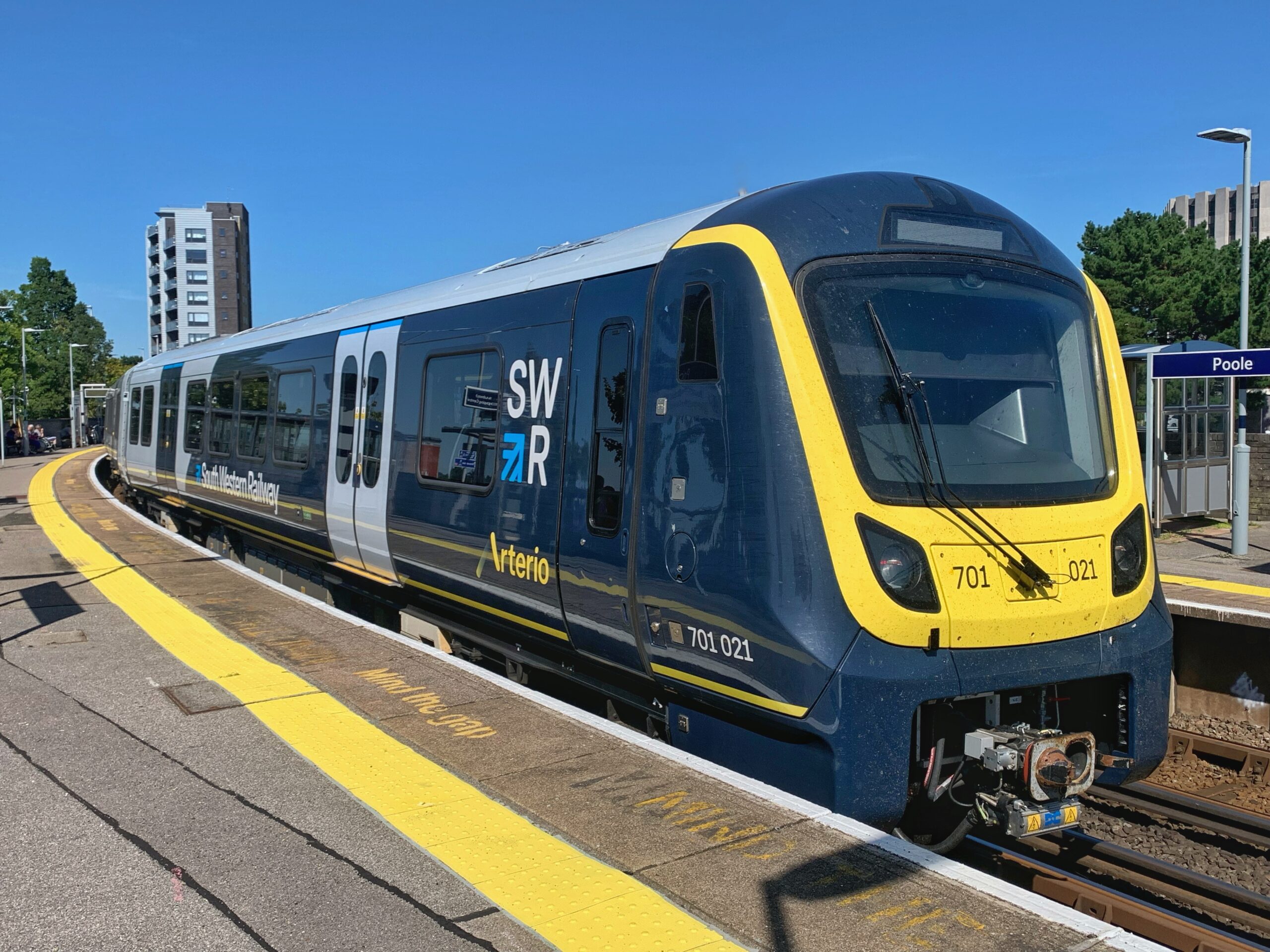
As I was in the Poole area on Monday I took the opportunity of getting a glimpse of one of the Class 701 units; No. 701021, on its latest mileage accumulation run, working as 5Q51 1115 London Waterloo to Staines Up Loop. This service runs to Poole Storage Sidings where the train reverses. The 701’s are still to enter revenue earning service with South Western Railway.
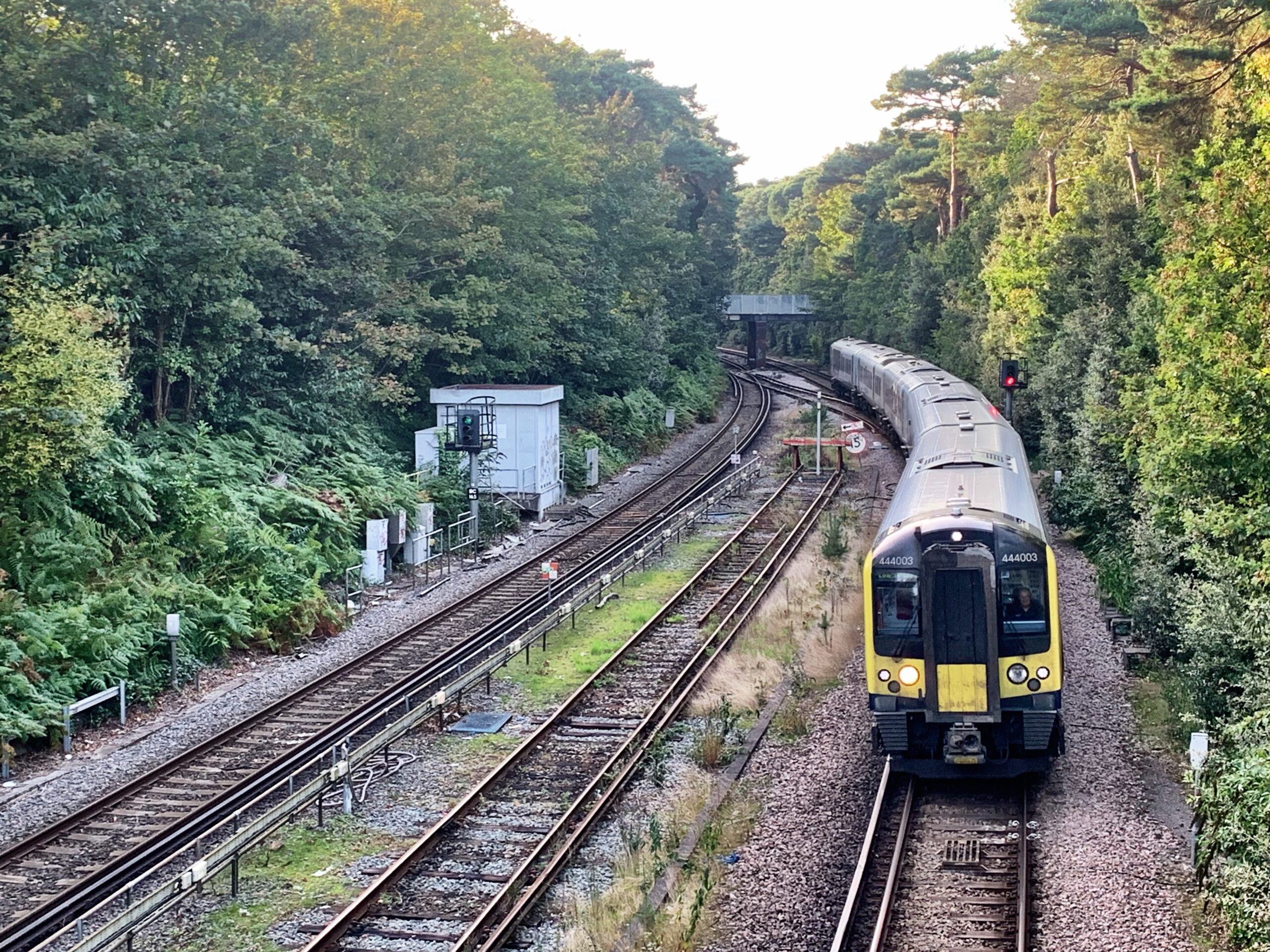
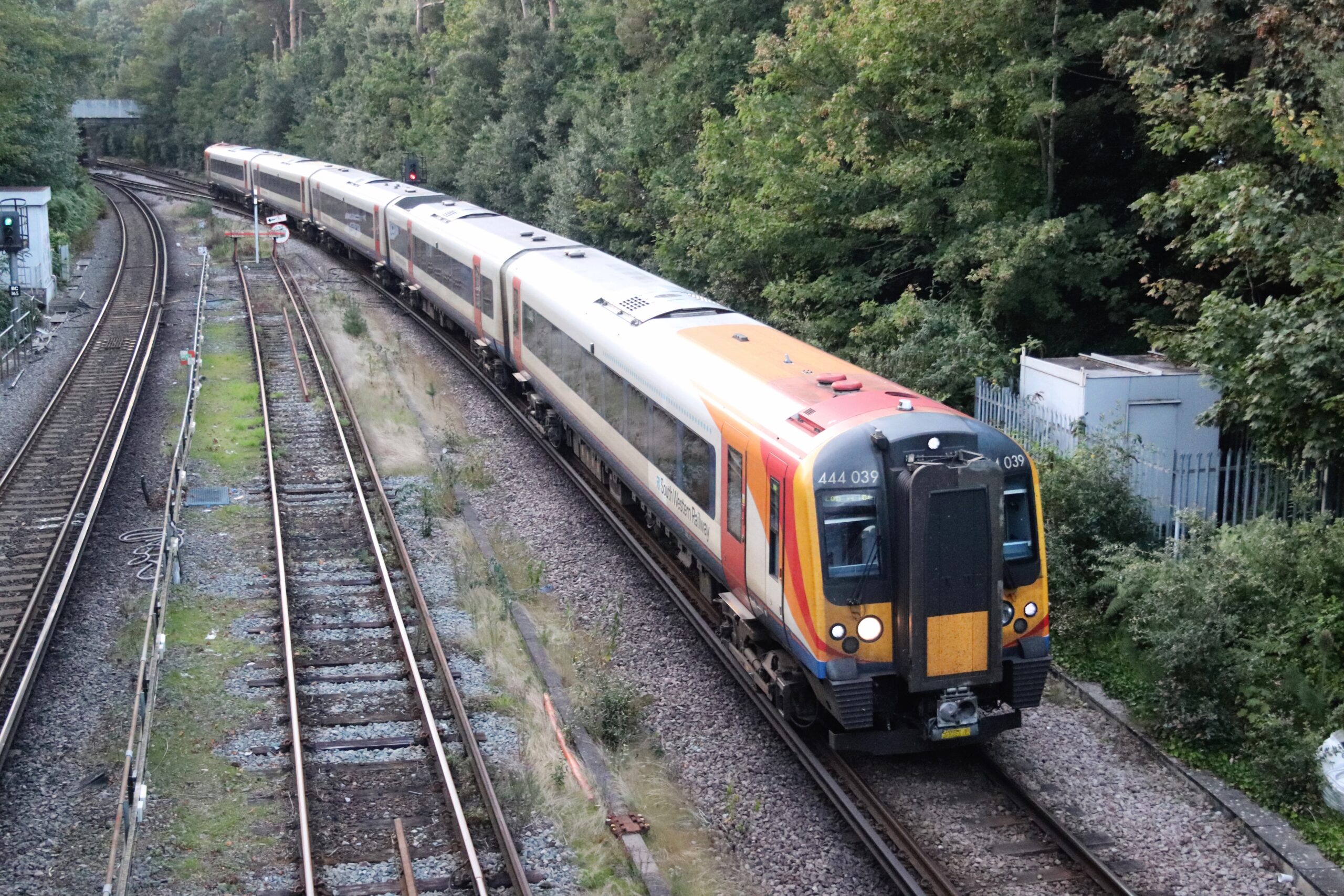
Tuesday evening saw the return of the GBRf pairing of Class 57 No. 57305 and Class 47 No. 47749 ‘City Of Truro’ with another Class 458 EMU drag from Widnes Transport Tech to Bournemouth depot. This time, I elected to see the train passing Bournemouth instead of my usual spot at Branksome. After a coffee from the Pumpkin buffet on platform 2, I walked through the car park which was once the site of Bournemouth steam shed and up to Beechey Road bridge which gives a view back towards the railway station. While I was in Bournemouth, I took the opportunity of photographing regular train movements, including South Western Railway (SWR) Class 444’s, Class 450’s and CrossCountry Voyager DMU’s.
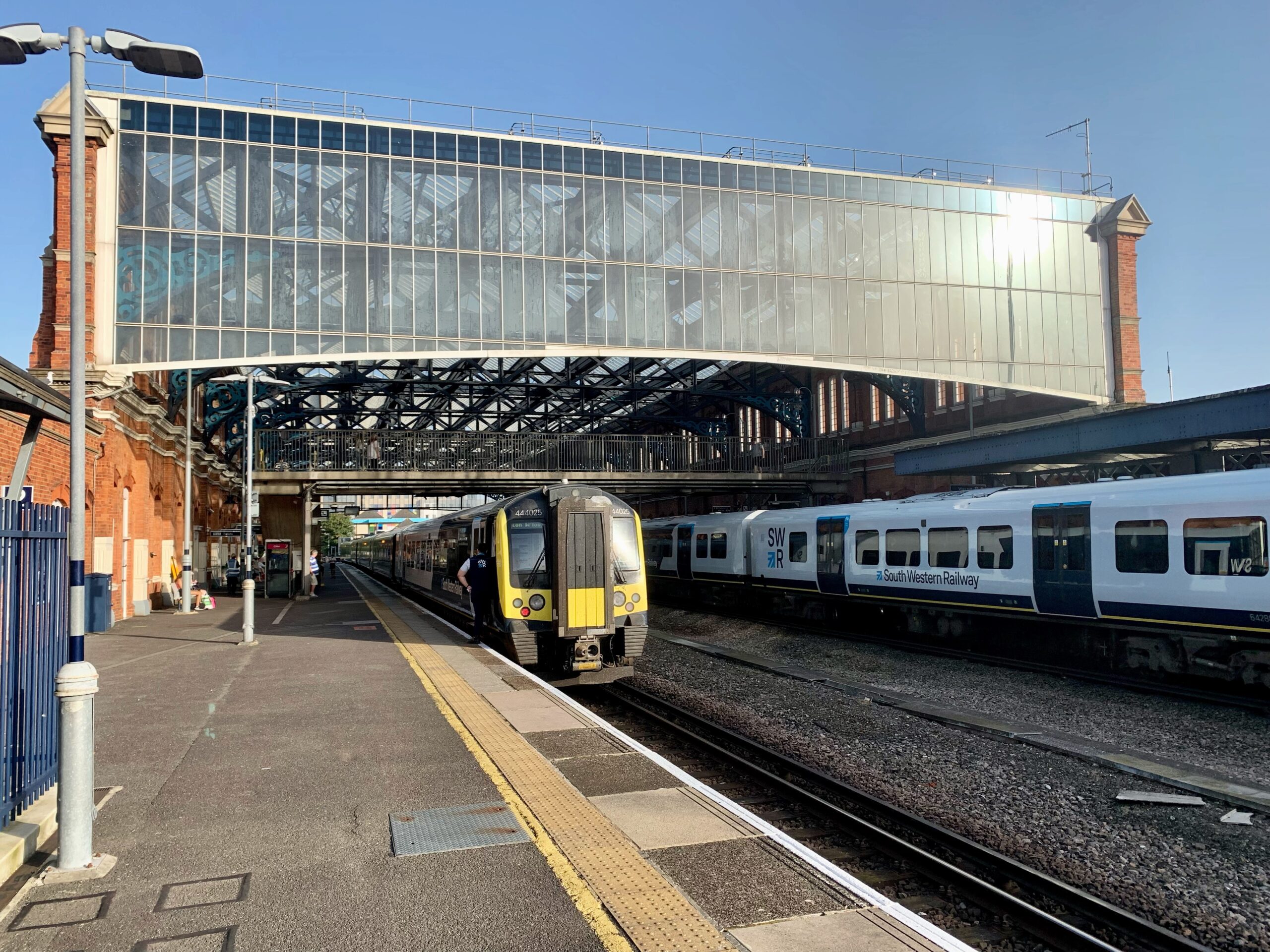
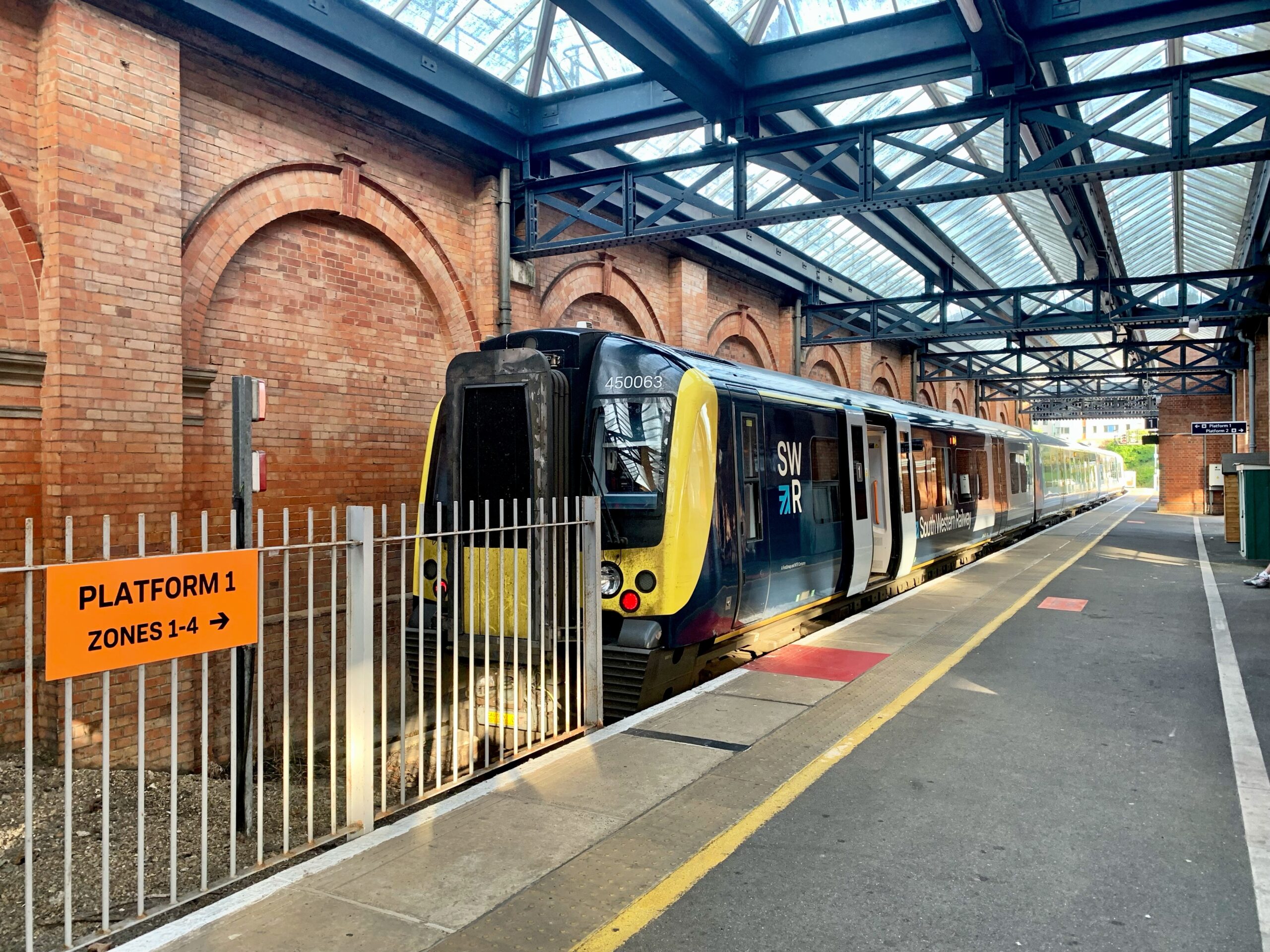
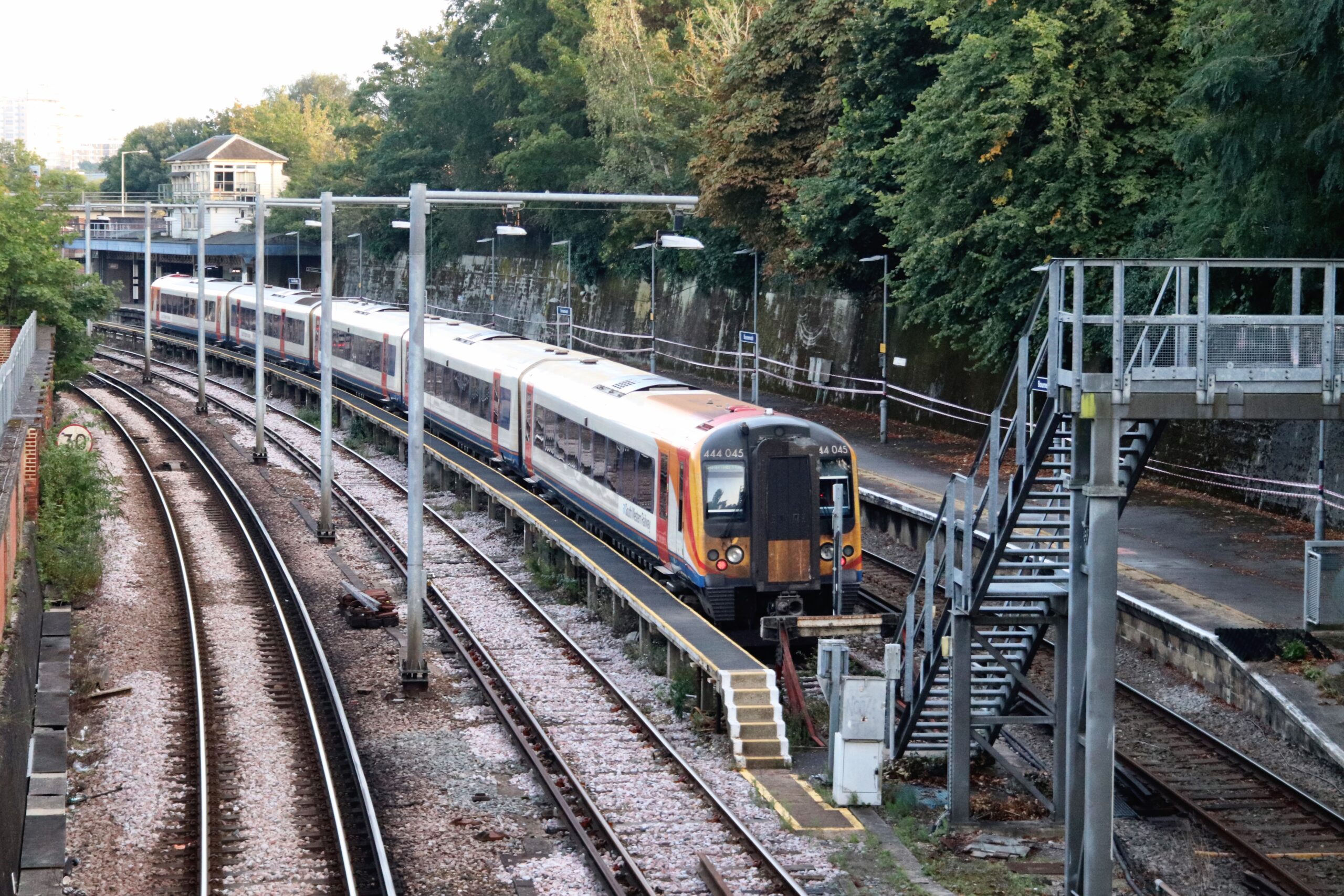
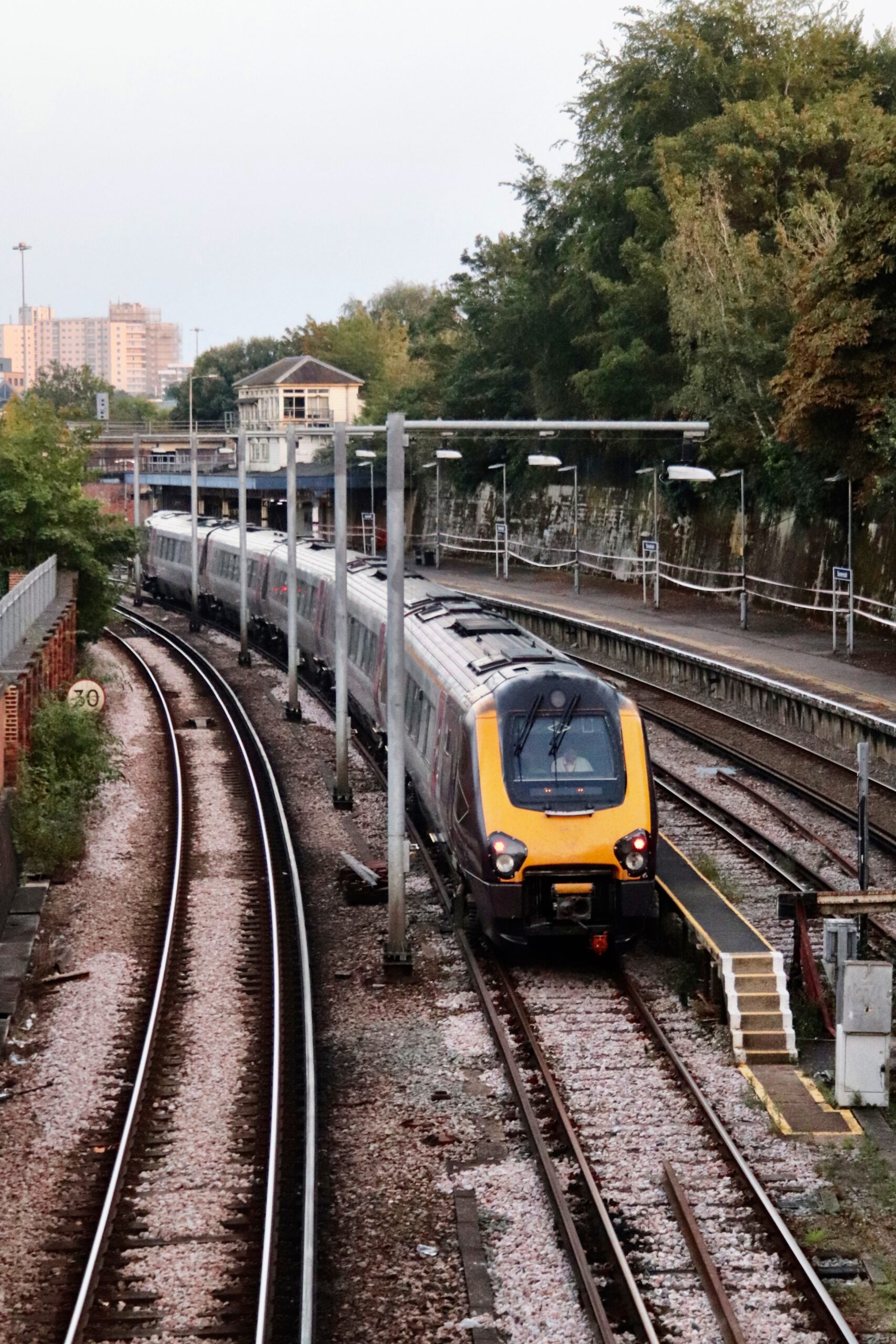

Britain’s busiest railway stations have been identified following the analysis of data for 2,616 locations, and Bournemouth came top in the Dorset with 5616 passengers per day and the 190th station in the UK. Bournemouth has a performance ranking of 1908. The analysis of National Rail data, collated by On Time Trains Stations, is ranked by a performance score, calculated based on service punctuality and cancellation frequency.

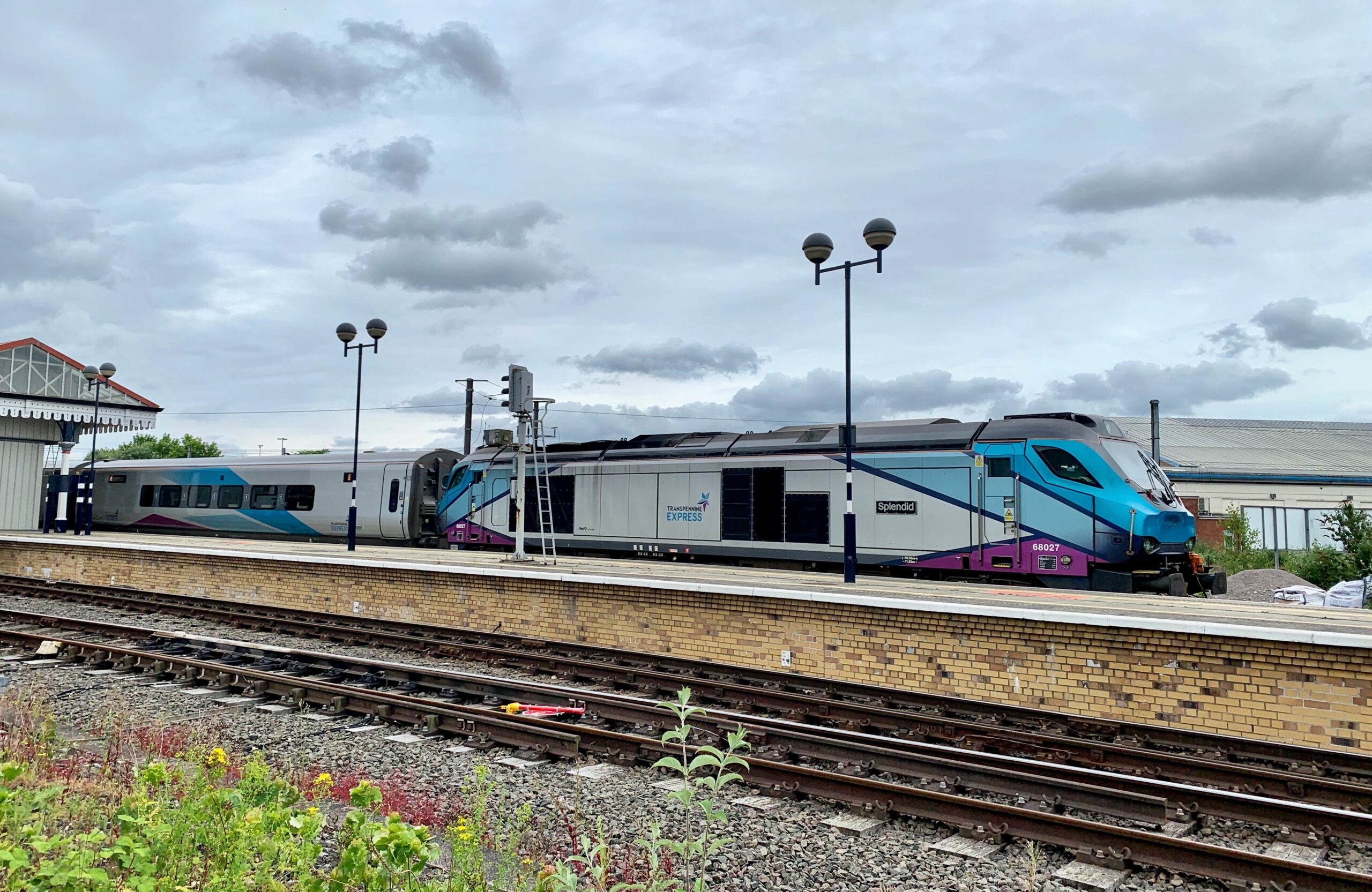
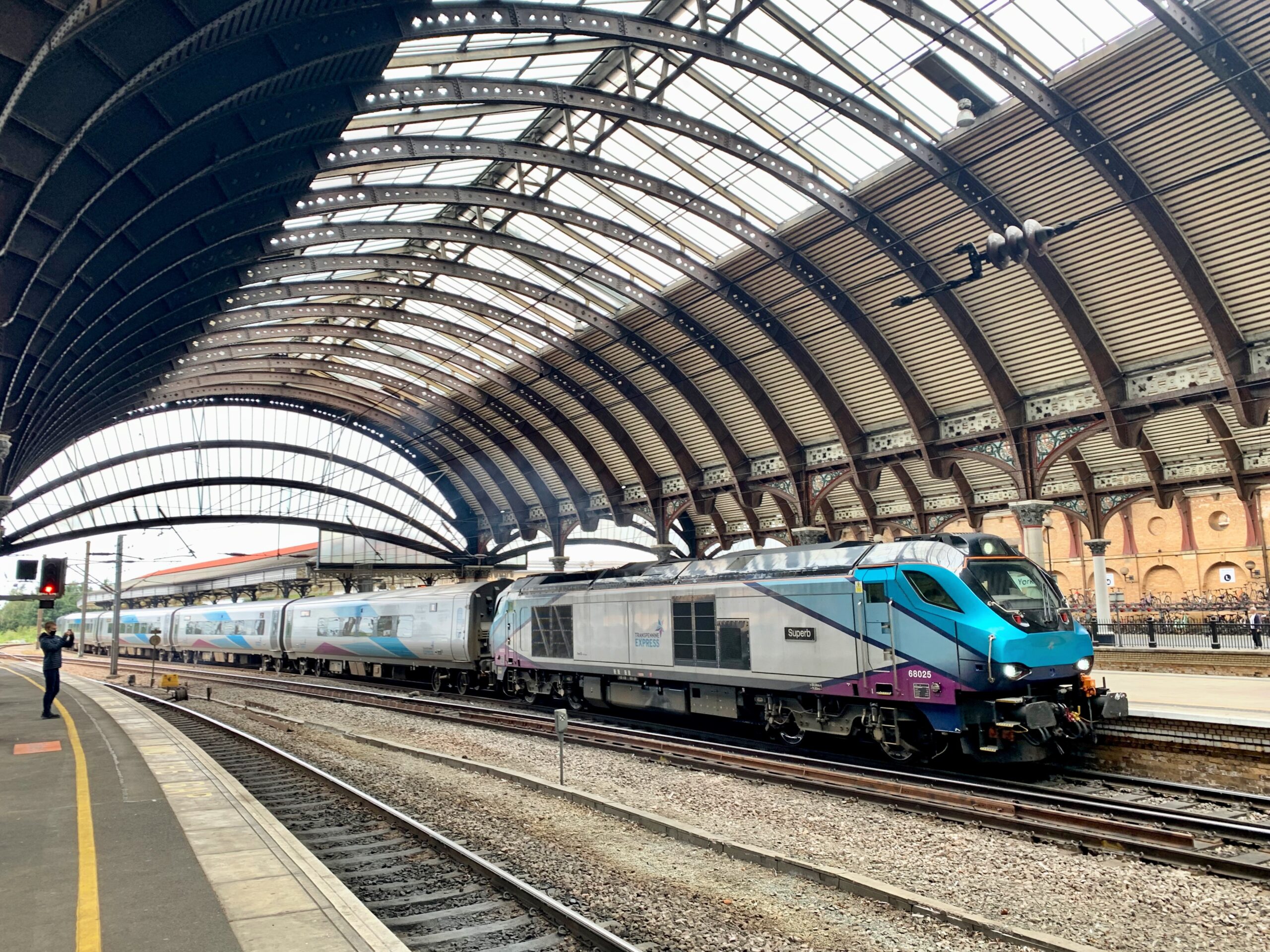
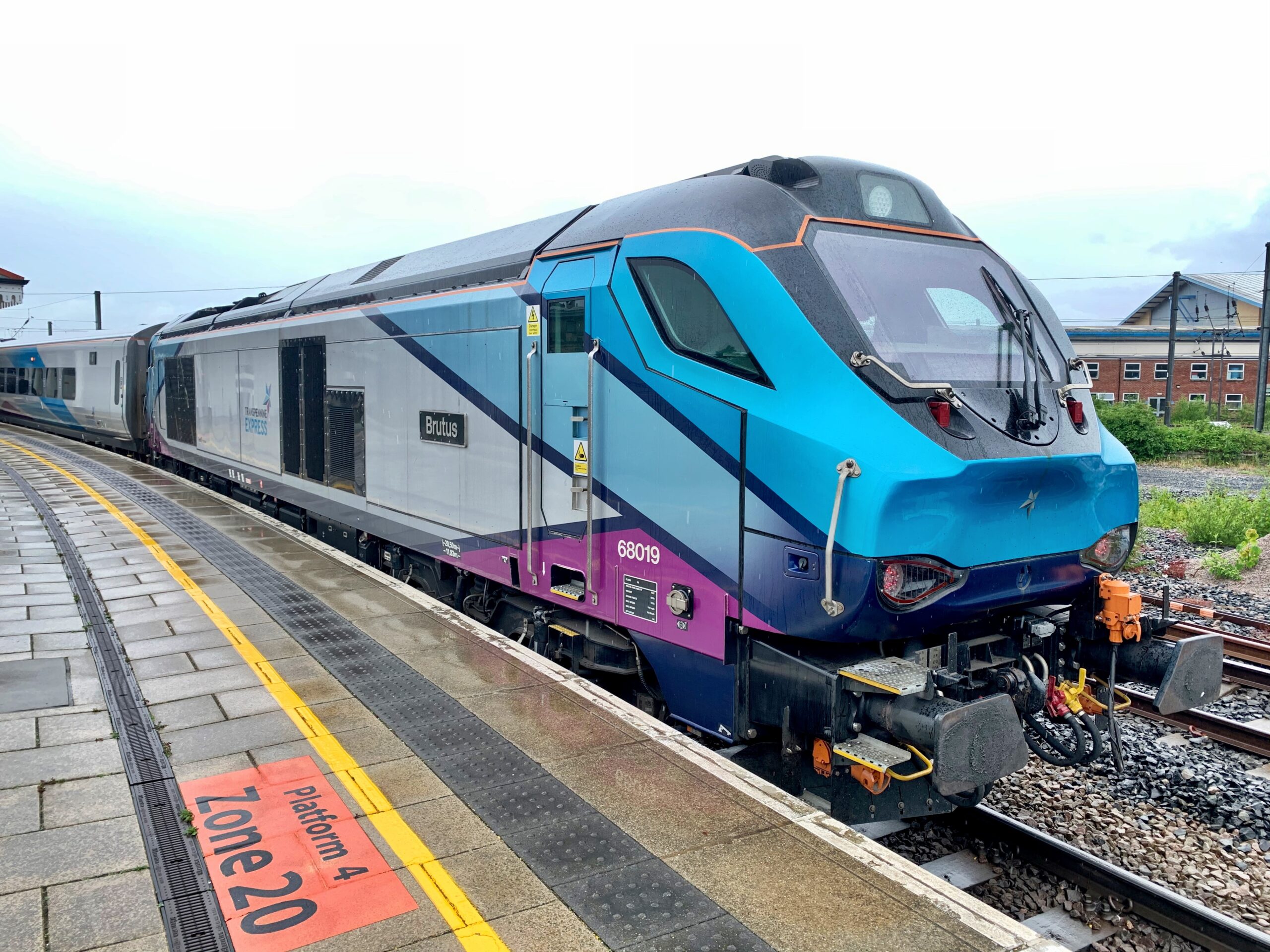
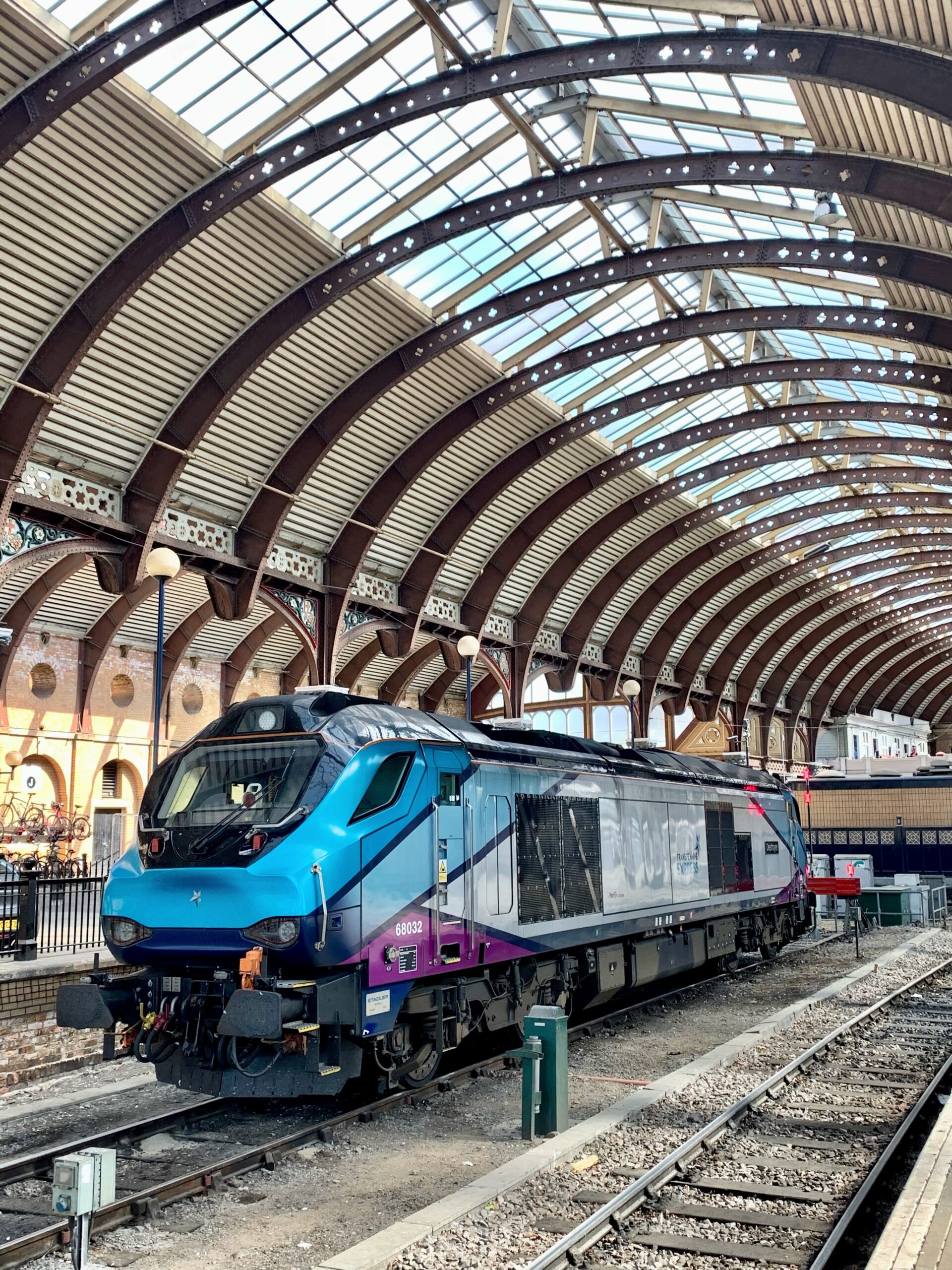
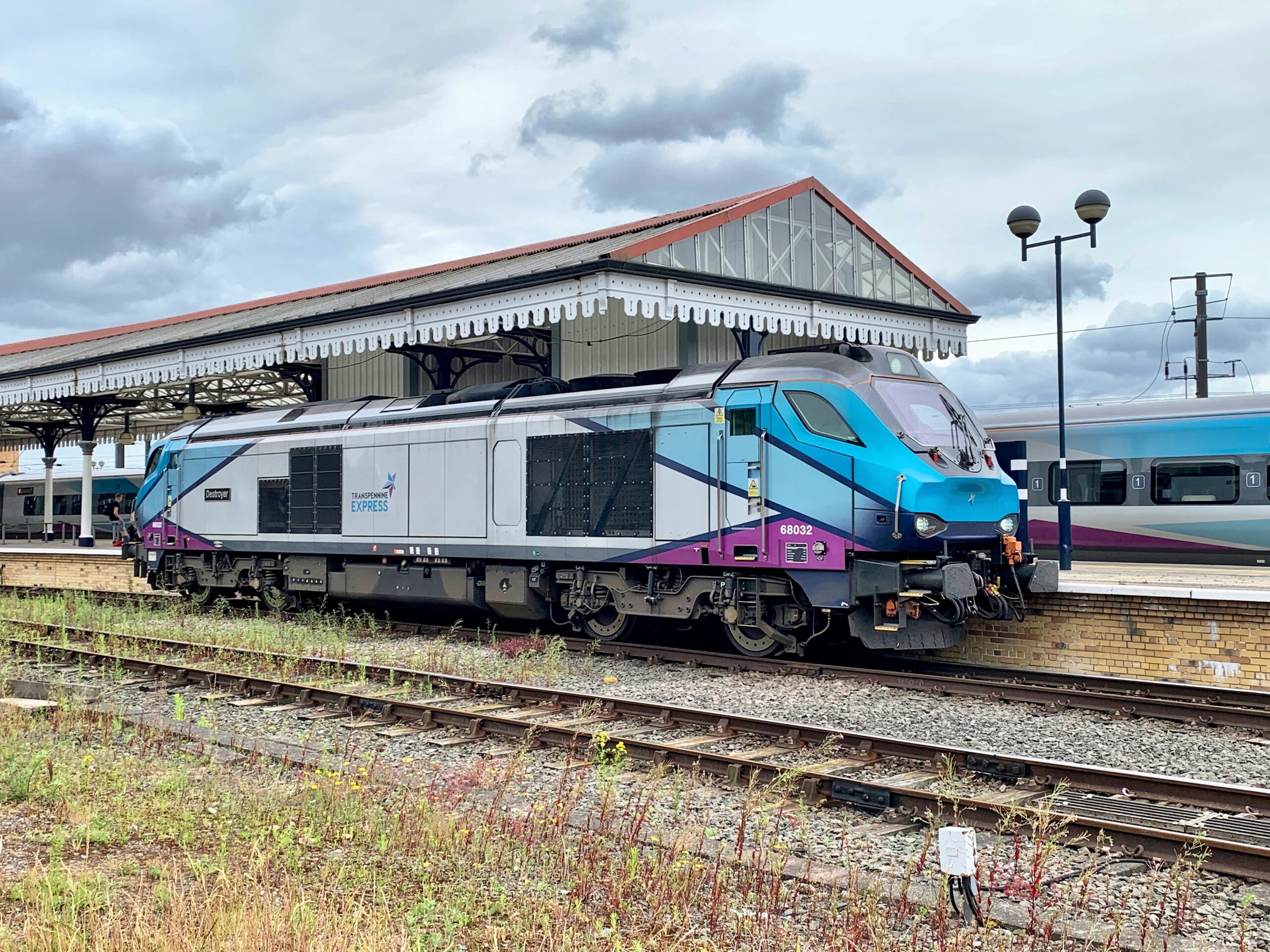
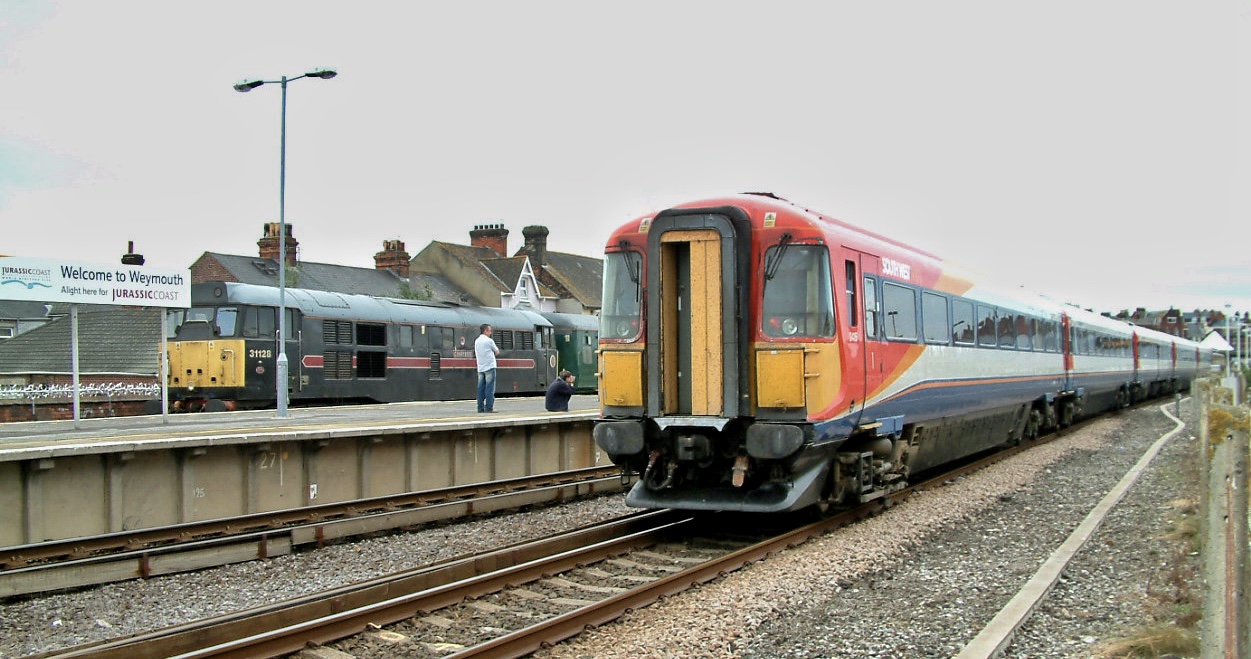
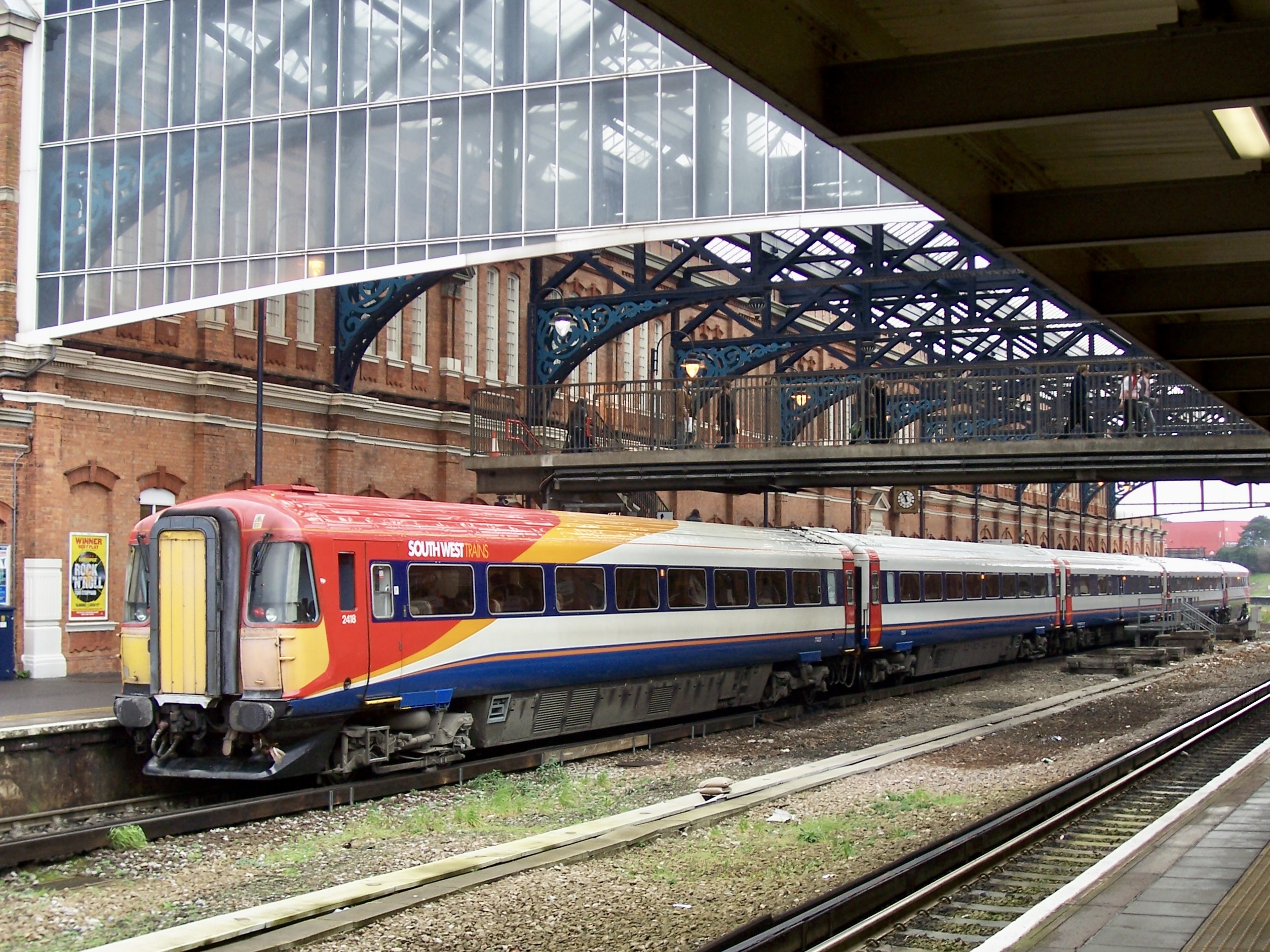
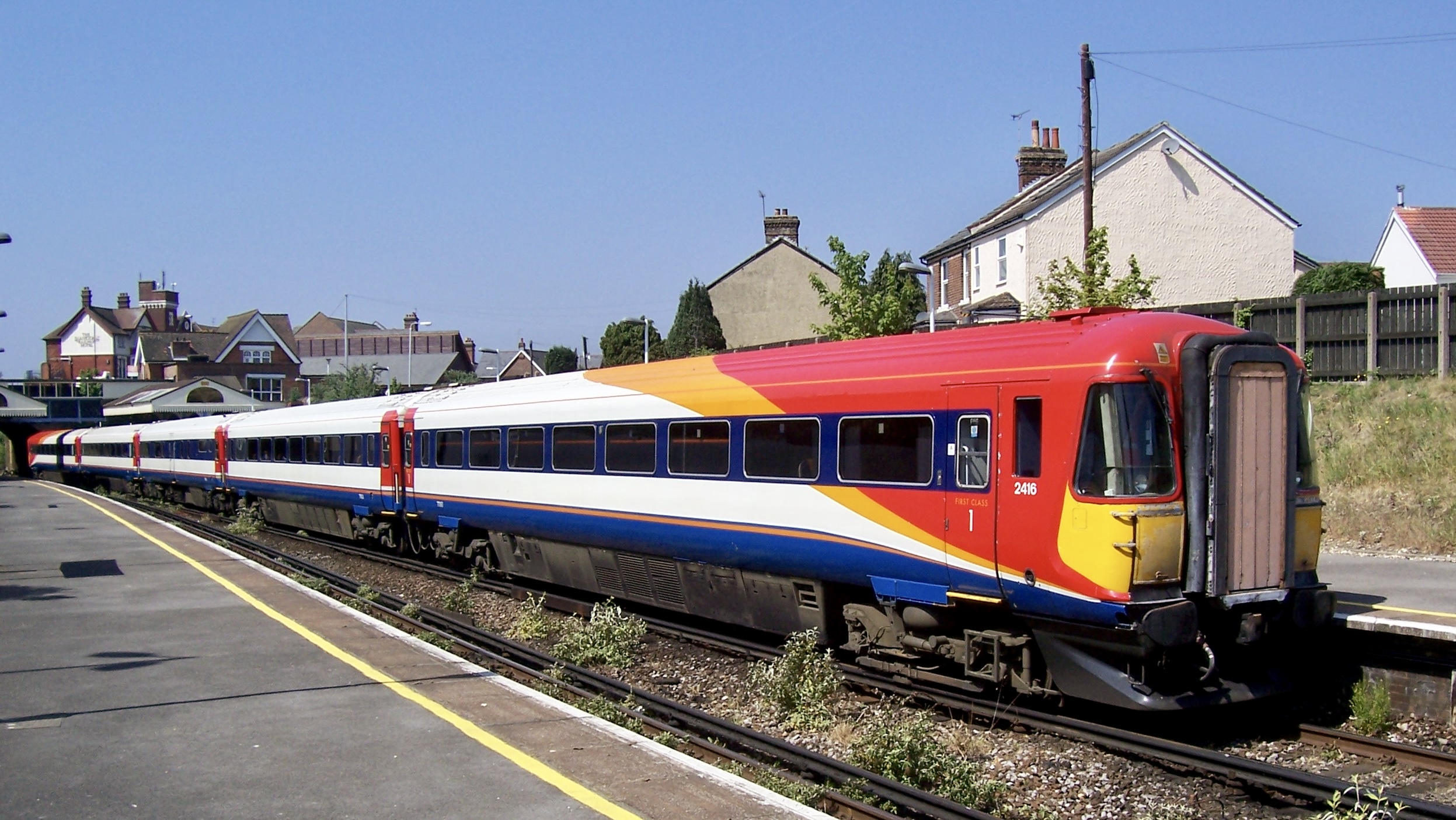
Further afield, it has been announced that TransPennine Express (TPE) will withdraw their troubled Nova 3 Class 68 hauled trains with effect from the December 2023 timetable change. We mention this, as back in 2016 prior to the TPE contract being awarded to FirstGroup, it was widely reported that the Department for Transport (DaFT) was eager to utilise de-motored Class 442 “Wessex Electric” electric multiple units hauled by Class 68 locomotives on Trans Pennine services. This plan, however, developed into an order for 66 new MK 5a carriages. The “Wessex Electrics” were introduced when the Bournemouth to Weymouth route was electrified and imho are amongst the best electric multiple units ever built. All this gives me an excuse to share some images of TPE liveried Class 68’s along with a few local photos of Class 442 EMU’s in South West Trains days.

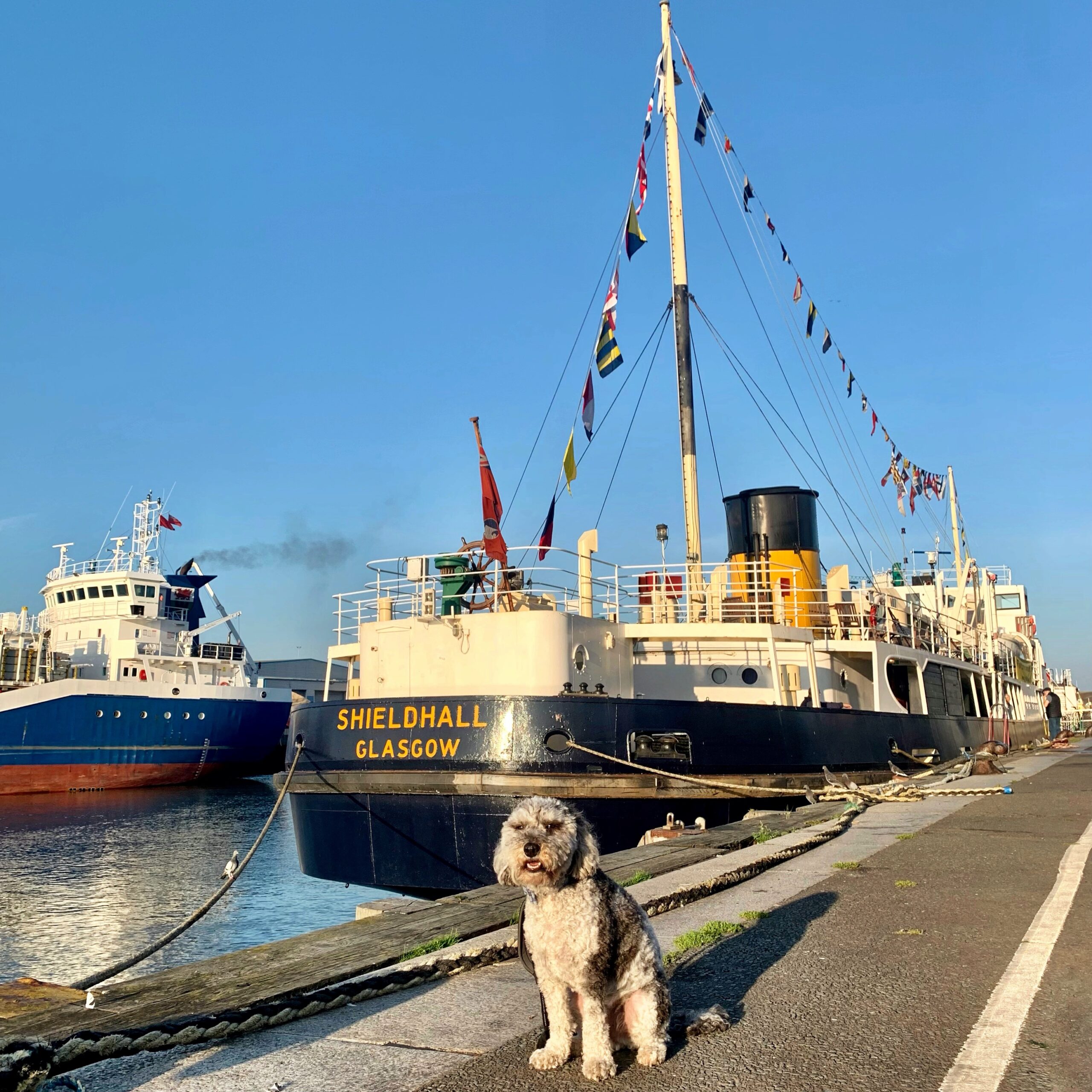
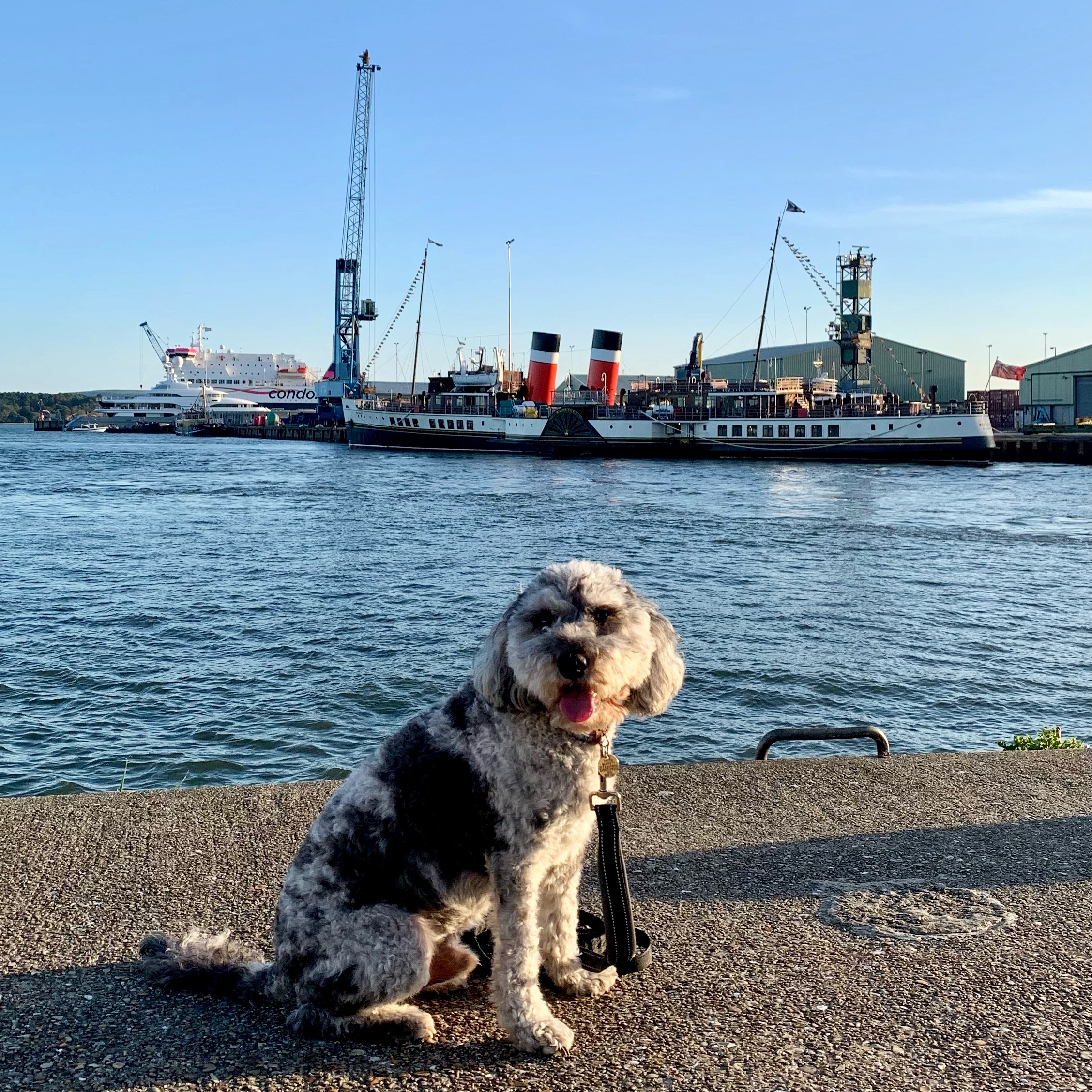
Yoshi has been ship spotting at Poole Quay this week as two steamships, both originally from Glasgow, namely SS Shieldhall and PS Waverley, visited.
Thanks for making it this far! I often say I ignore the Voyager units, but think I’ve more than made up for it this time around. Comments and corrections gratefully received. Be seeing you!


Leave a Reply