Category: Dorset Trains

  • Class 458

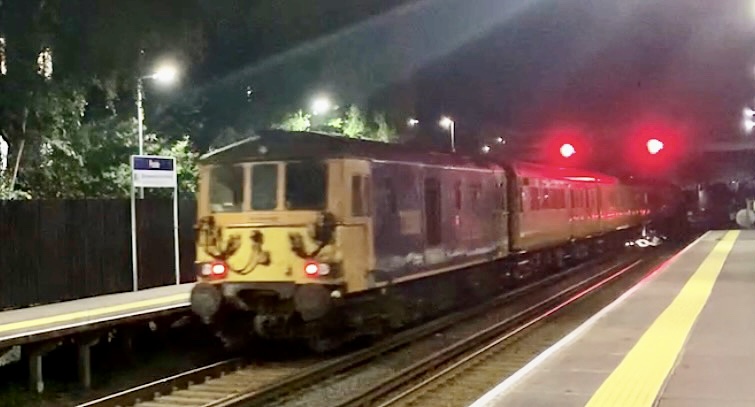
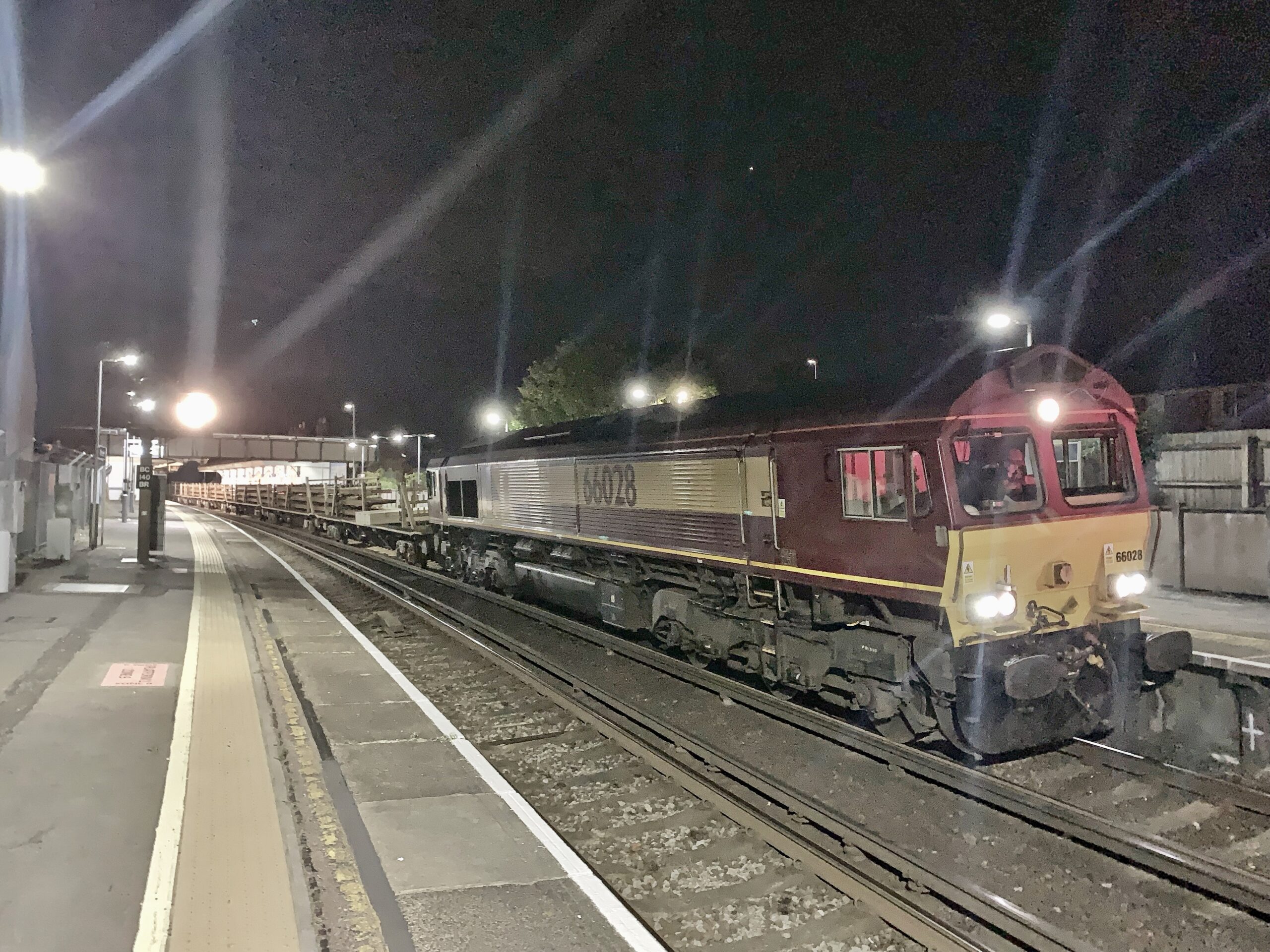
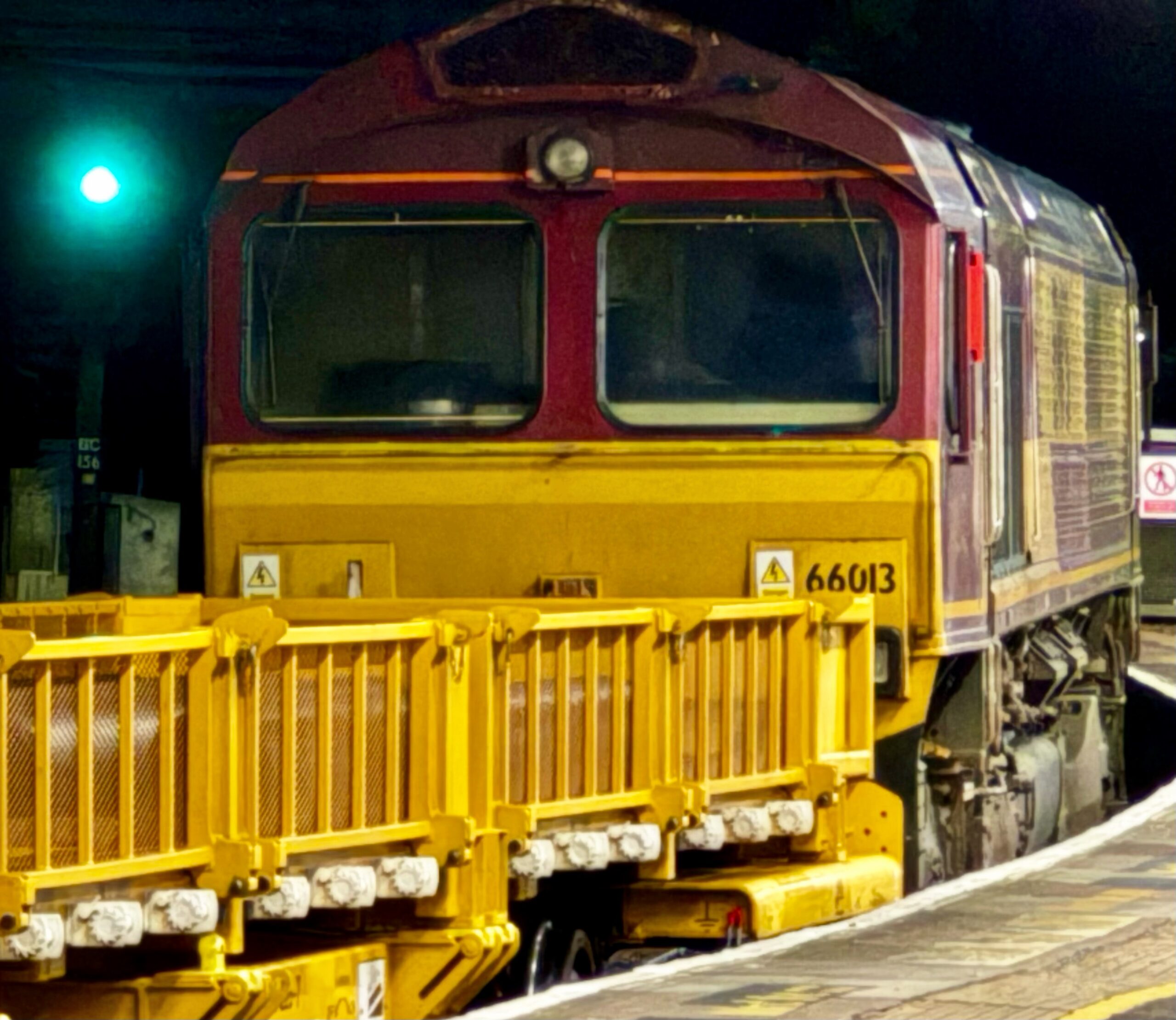
    DB Class 66 No. 66013 awaits departure from Bournemouth in the early hours of Saturday working 6N04 0029 Eastleigh East Yard to Sway – 04/11/2023

    November 3rd 2023 to November 10th 2023

    Engineering work over the weekend in Hampshire meant that a replacement bus service operated between Southampton and Bournemouth with a shuttle train service between Bournemouth and Weymouth. The early hours of Saturday morning saw an engineers train originating from Eastleigh East Yard scheduled to reverse at Bournemouth before working back in the direction it had come towards Sway as 6N04 0029 Eastleigh East Yard to Sway. Despite the last passenger service arriving from London Waterloo yet to arrive, Bournemouth railway station was locked up on my arrival. I had hoped to practice some night photography with the DSLR mounted on a tripod, but had to resort to using the phone camera instead! Thankfully Bournemouth has several gates and fences from which it is possible to see trains arriving and departing and I didn’t have to wait long before Class 66 No. 66034 appeared into view.
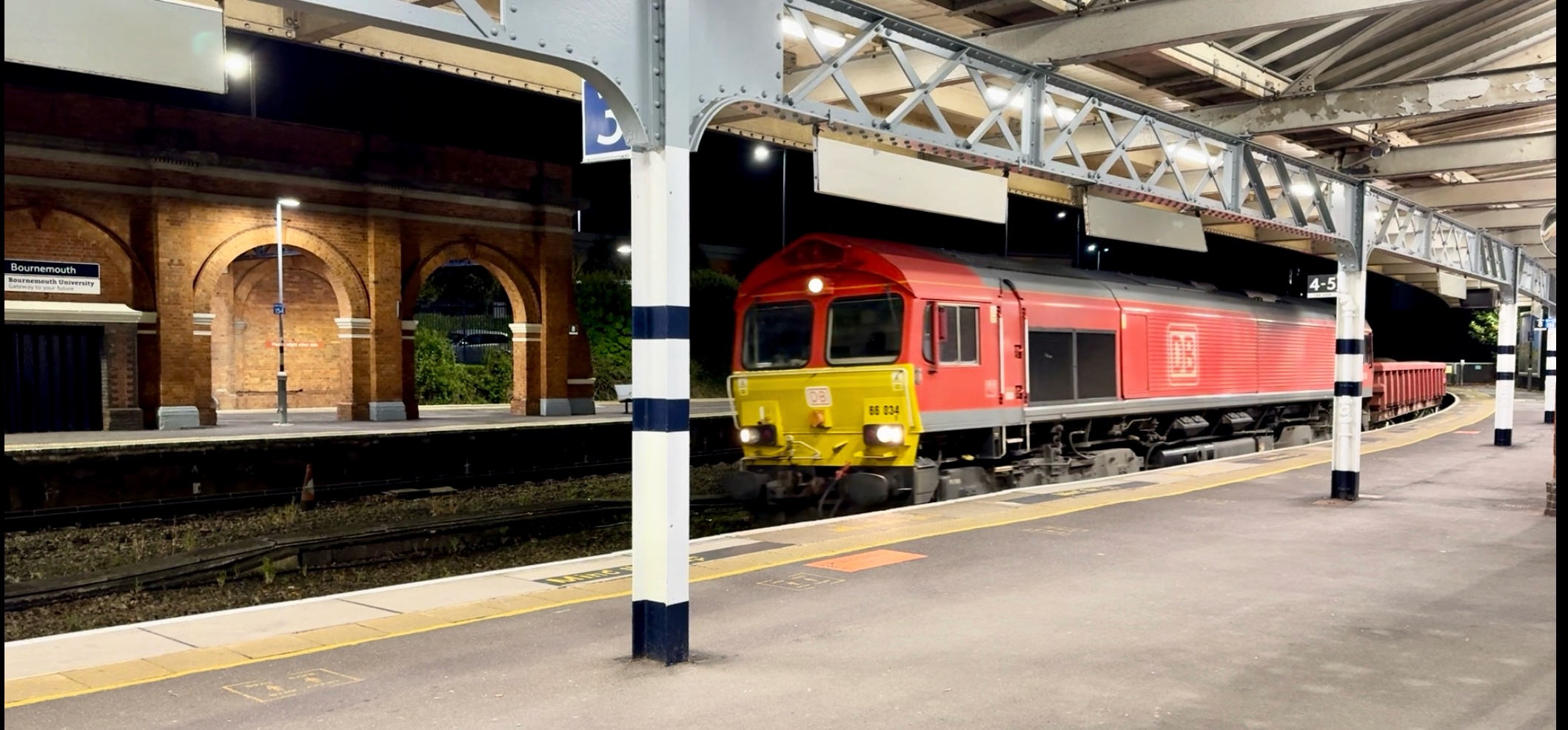
    Video screen grab of DB Class 66 No. 66134 arriving at Bournemouth with 6N04 0029 Eastleigh East Yard to Sway engineers train – 04/11/2023
    DB Class 66 No. 66013 at the London end of 6N04 0029 Eastleigh East Yard to Sway – 04/11/2023
    DB Class 66 No. 66013 which worked into Bournemouth at the rear of 6N04 0029 Eastleigh East Yard to Sway – 04/11/2023
    Video of 6N04 0029 Eastleigh East Yard to Sway at Bournemouth – 04/11/2023

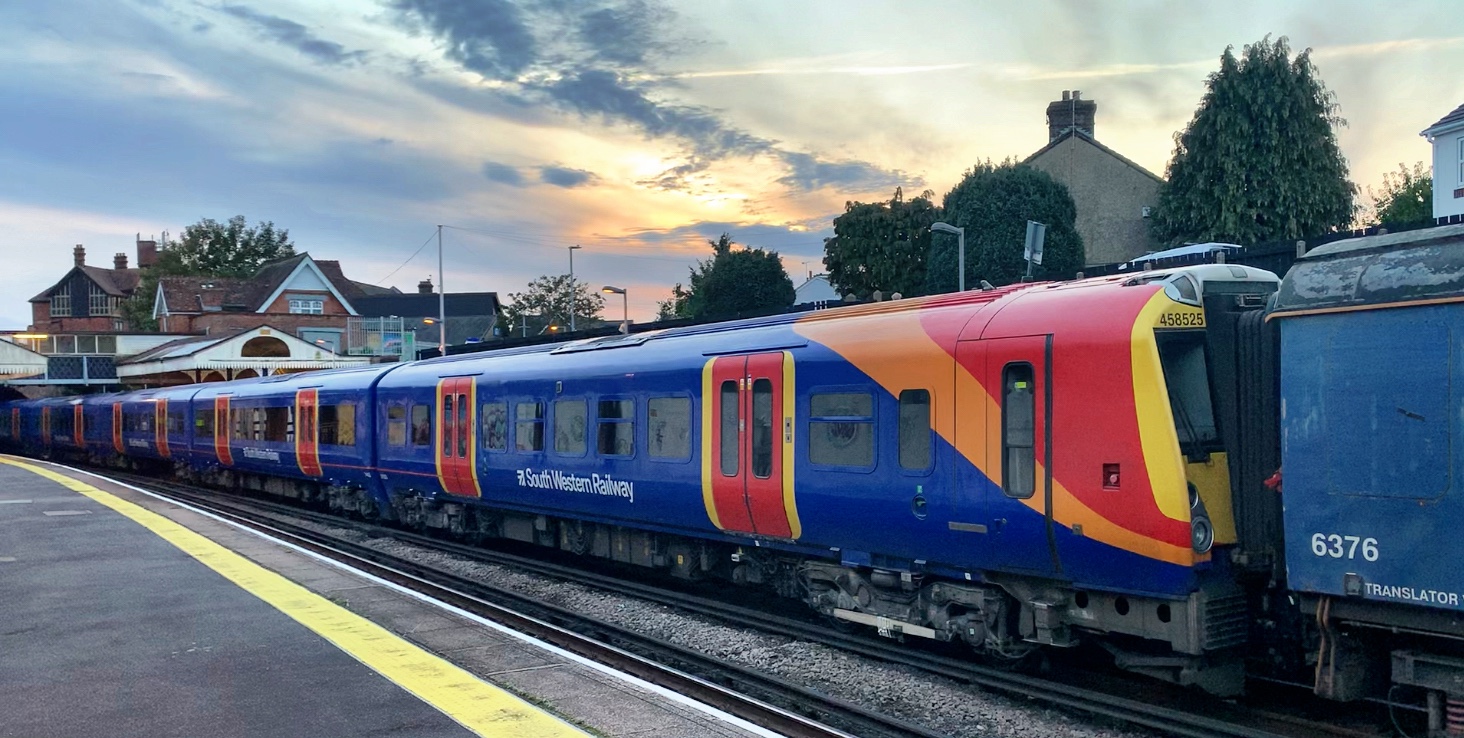
    I thought it was about time that I caught up with one of the South Western Railway (SWR) Class 458’s which have been on test runs from Bournemouth Traction and Rolling Stock Maintenance Depot (T&RSMD) to Basingstoke, Southampton and Havant over the last few weeks. So, on Friday afternoon I found myself back on Branksome railway station awaiting the arrival of No.’s 458405 and 458407 working 5Q91 1320 Basingstoke to Bournemouth T&R.S.M.D, that days return trip for the units.

    SWR Class 458 No. 458405 leads into Branksome with 5Q91 1320 Basingstoke to Bournemouth TRSMD – 03/11/2023
    SWR Class 458 No. 458407 having arrived at Branksome as the rear unit working 5Q91 1320 Basingstoke to Bournemouth TRSMD about to reverse back into the depot – 03/11/2023

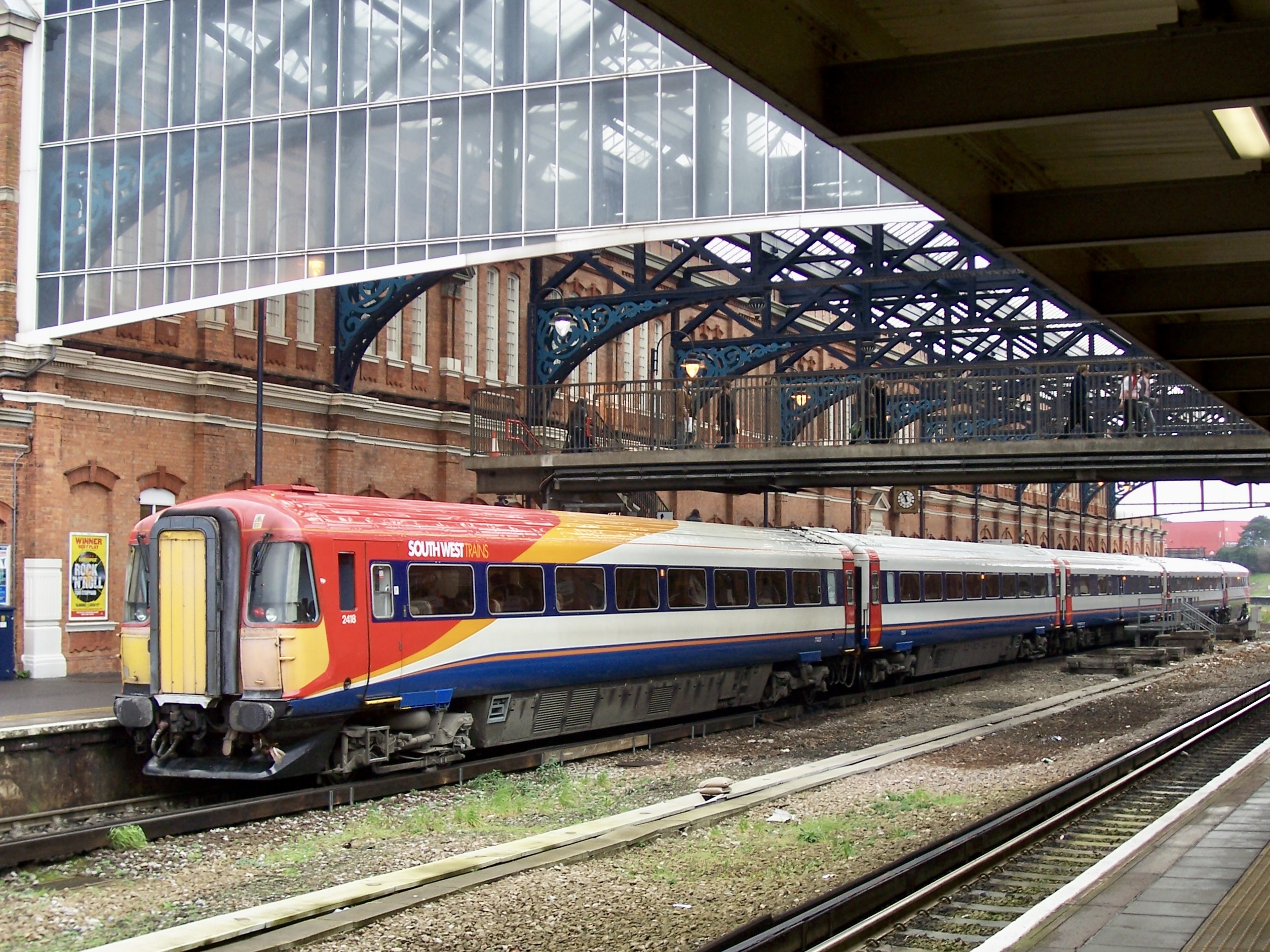
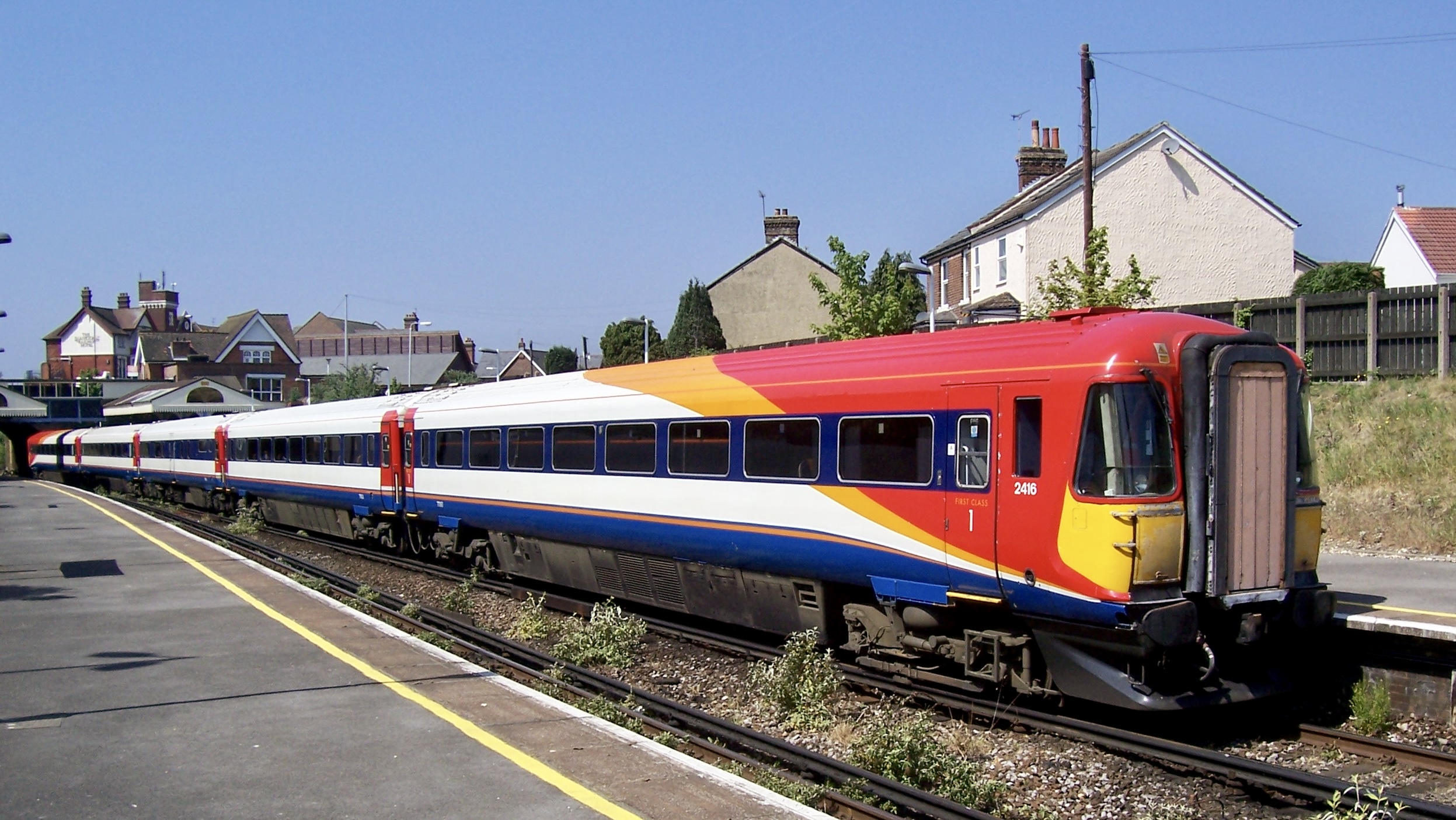
    The Class 458 (5-JUP) third-rail electric multiple unit (EMU) belong to the Alstom Coradia Juniper family, built at Washwood Heath, Birmingham between 1998 and 2002 for South West Trains (SWT). The order for the original fleet of 30 four car trains was placed in 1997, and delivery of the first unit followed in October 1998. On introduction the new trains were troubled by several issues, including leaking roofs with water entering the driver’s cabs and passenger areas. Onboard electronics repeatedly failed, affecting the air-conditioning and traction systems, and the Train Management System (TMS) software also proved to be unreliable.  Unique amongst the Juniper family of trains, the Class 458’s were provided with end gangways on the driving cars allowing passengers and crew to move between coupled units, however, further frustrations were encountered when it came to coupling the units together which could take up to 30 minutes – a great deal longer than the usual few minutes expected across the network. SWT therefore had no choice but to treat the 458’s as being semi-permanently coupled in pairs. The first Class 458 ran in revenue earning service in February 2000, but even then only two units (No.’s 458004 and 458005) were available for use. The protracted and problematical introduction of these units influenced SWT’s decision in April 2001 to replace the rest of its slam door EMU’s with an order of 785 Siemens Desiro Class 444 and 450 vehicles.

    Reliability remained poor and in January 2004 SWT announced that they would withdraw the entire Class 458 fleet at the December 2005 timetable change in readiness to return them to leasing company, Porterbrook, in February 2006. It was later agreed that the Junipers could stay in service on a pay-per-use basis beyond the original end of the lease.  In September 2006 the Department for Transport (DafT) awarded SWT a new ten-year contract to operate the South Western franchise, commencing in February 2007.  SWT therefore implemented a new rolling stock plan that called for the withdrawal of its 24 Class 442 “Wessex Electric” units  with Class 444 and 450 Desiro’s taking over their diagrams, with any short falls in service levels being covered by re-activating the Class 458 fleet. Between 2008 and 2010 the fleet was ‘refreshed’ at Bournemouth Traincare Depot, during which process the units were fitted with CCTV, new seats and tables in first class, and modified Rail Vehicle Accessibility Regulations (RVAR) 1998 compliant lavatories and doorway lights. The interiors were also cleaned and repainted.
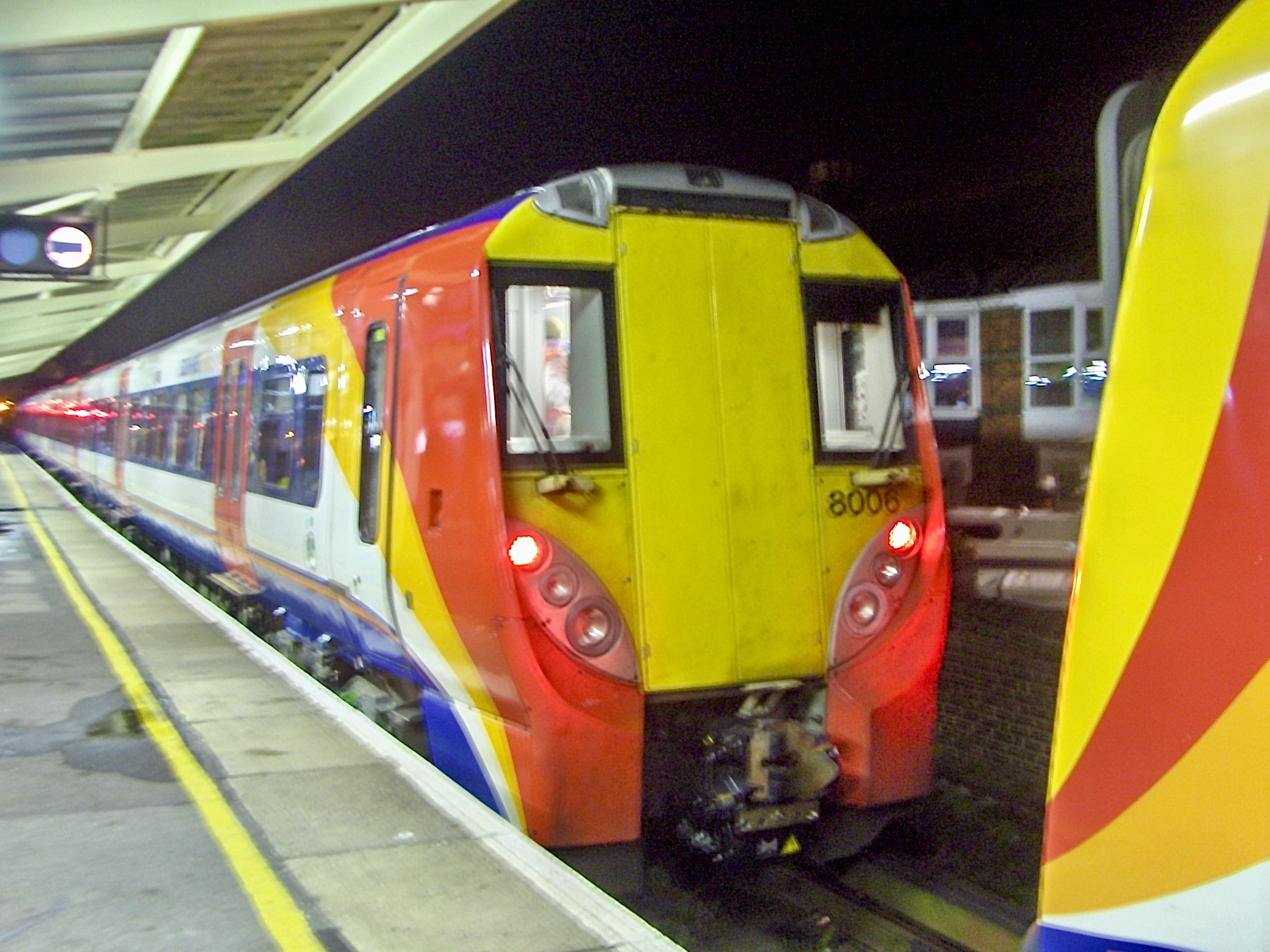
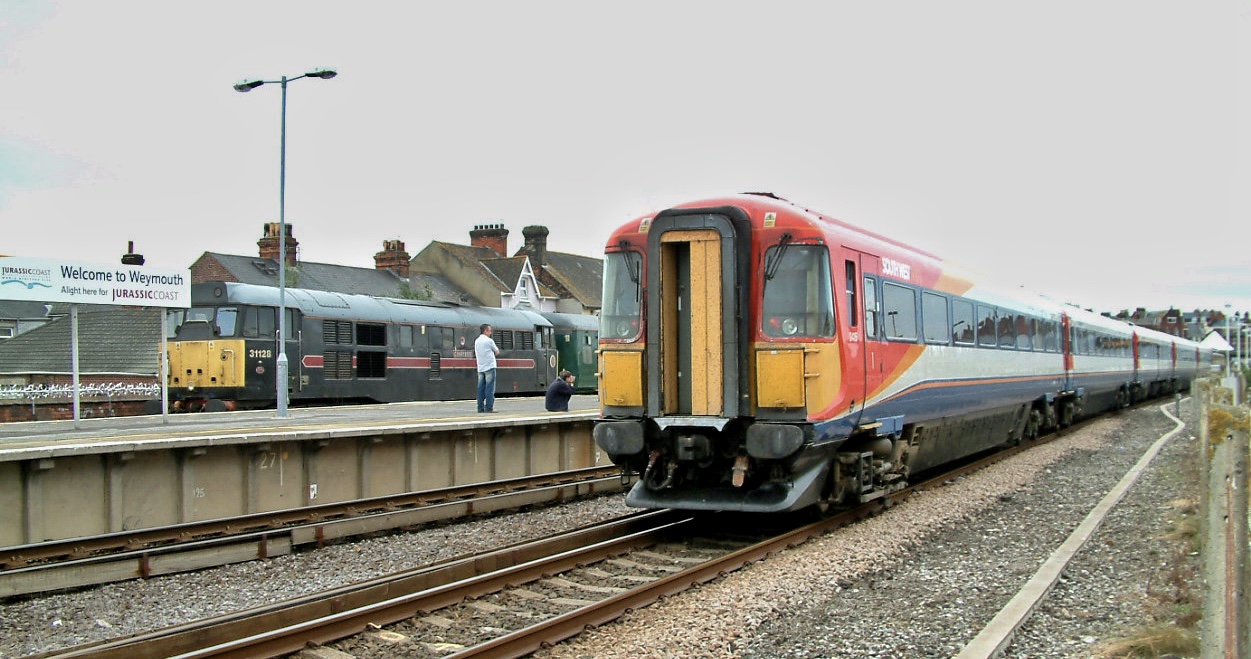
    How the exterior of the Class 458’s originally looked – No. 458006 stands at Weymouth during a test run – 18/08/2008 (John Chappell)

    The first unit to be refreshed No. 458006 was involved in test runs to Weymouth in August 2008. Later the same year trials of regenerative braking were undertaken between Weymouth and Dorchester South and Wareham using No.’s 458027 / 458002 or 458029 as the calibration unit with Gatwick Express Class 460 No. 460001 on passing tests along with slam-door units 3-CIG No. 1497 and 4-VEP No. 3417 as static units. Energy produced by a standard train braking is lost, but a regenerative braking system returns electricity to the third rail system, allowing trains in close proximity to draw on the electrical supply. These and subsequent trials were successful with regenerative braking enabled across all 30 Class 458 units by mid-2011.
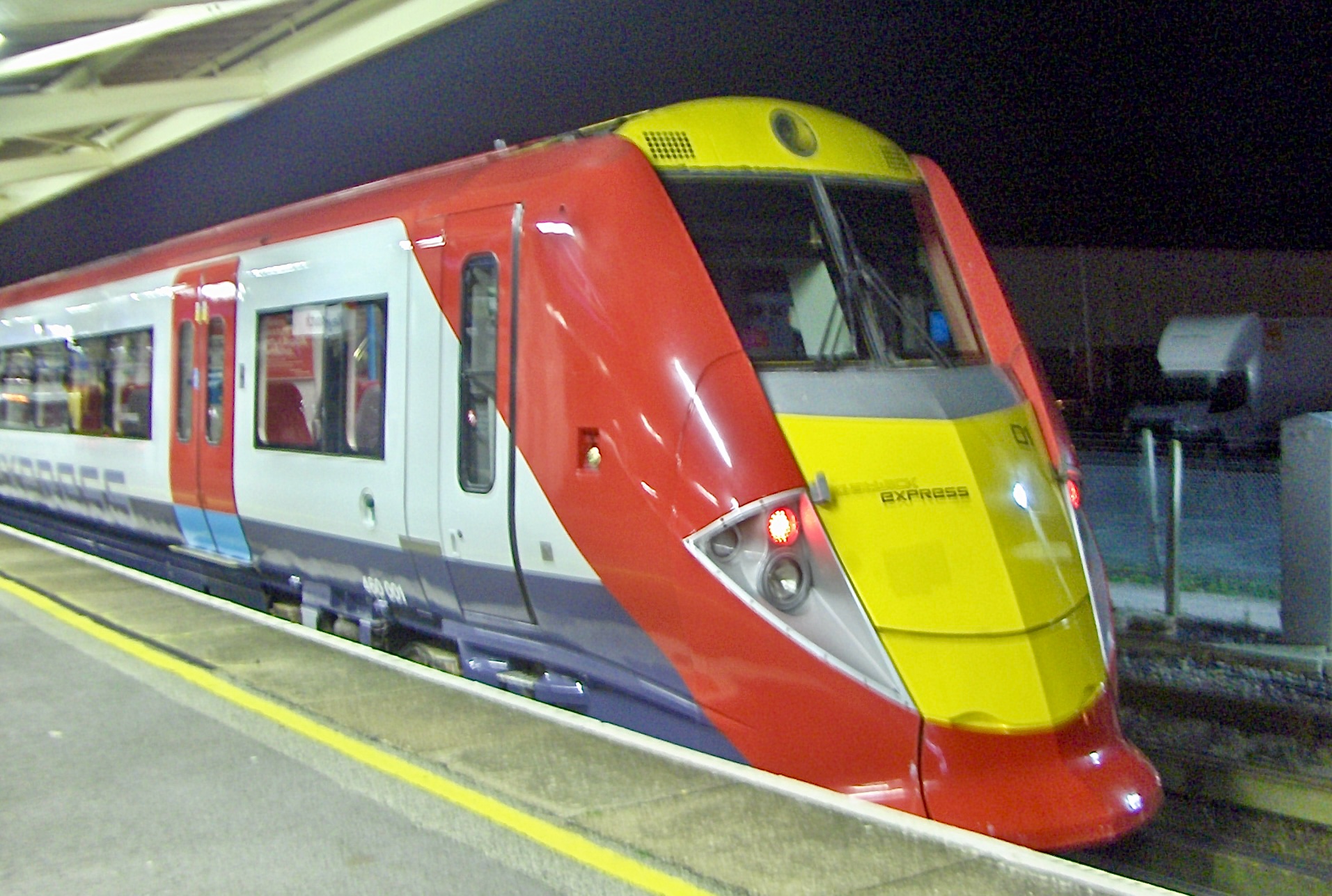
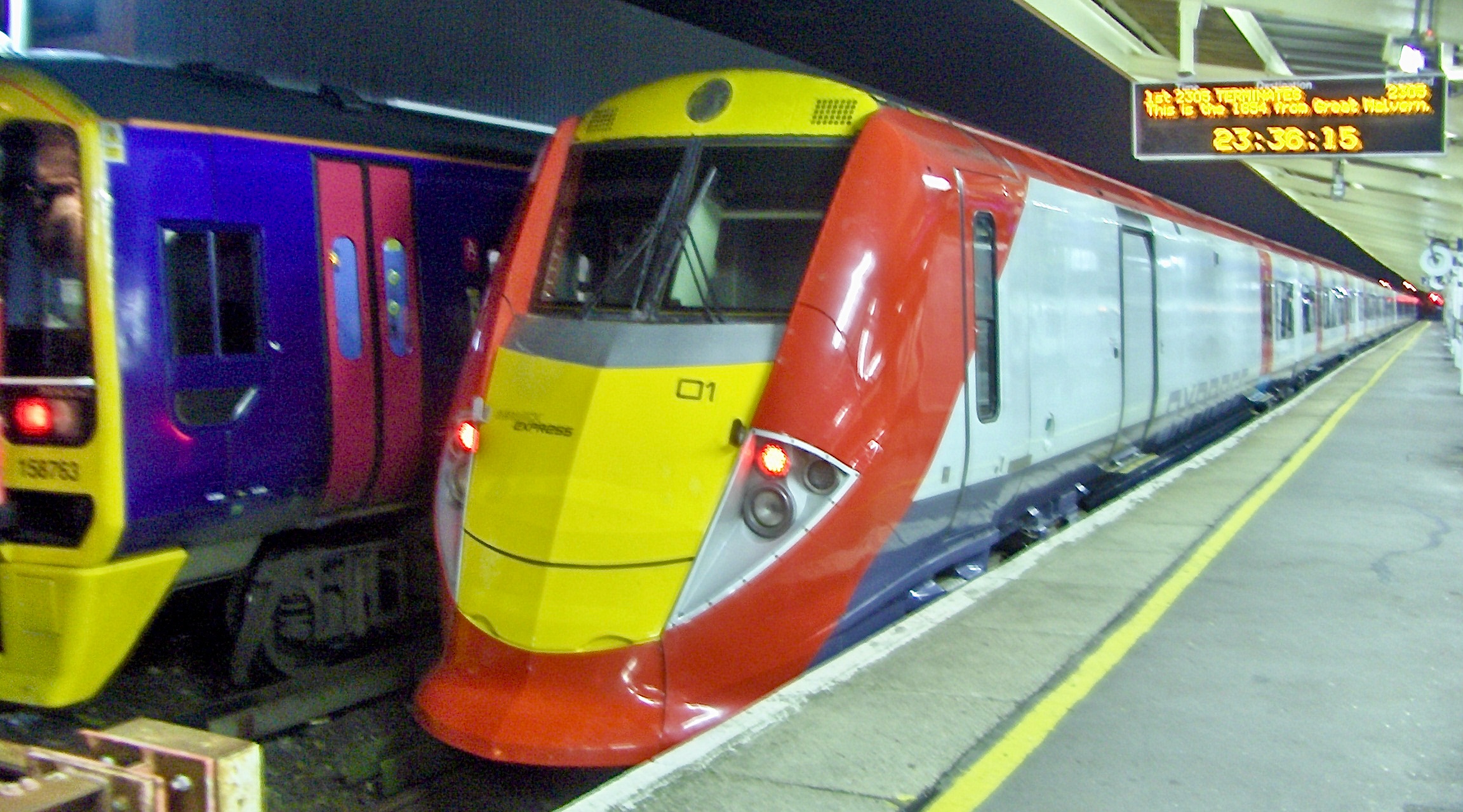
    Class 460 Gatwick Express EMU No. 460001 at Weymouth during regenerative braking test runs. It’s no surprise these units earned the nickname of “Vaders” – 24/10/2008 (John Chappell)
    Class 460 No. 460001 at the buffer stops in Weymouth during regenerative braking test runs – 24/10/2008 (John Chappell)
    Class 458 No. 8029 and Class 460 No. 460001 at Weymouth taking part in regenerative braking tests – 25/10/2008 (John Chappell)

    By the end of 2012 the fleet was achieving an average distance of 106,049 miles between significant failures making them the most reliable fleet in the UK with the first to achieve six figure mileages. It was around this time that SWT looked to supplement their fleet with additional Desiro units, but a request for funding was turned down by DafT.  Instead a £42 million proposal was accepted from Porterbrook whereby the Class 458 fleet would reconfigured into five car trains for use on suburban services by supplementing the original four carriage units with vehicles extracted from the Class 460 fleet, which Porterbrook also owned and was at that time being released from service with Gatwick Express.  The Class 460 cars would be comprehensively rebuilt to match the Class 458 units providing a total fleet of 36 5-car units that would be designated Class 458/5 providing increased capacity on services into London Waterloo. The contract for the conversion work was awarded to Alstom who in turn contracted Westinghouse Air Brake Technologies Corporation (Wabtec) based in Doncaster. The traction motors were re-geared to reduce the train’s maximum speed from 100 mph to 75 mph reducing the likelihood of overheating when making frequent stops and starts, and because the higher speed was deemed unnecessary on suburban services. The first two converted Class 460 units entered into passenger service in March 2014 which enabled SWT to release original Class 458/0 units for rebuilding, the project being completed in March 2016.

    Class 458 No. 458503 stands in the shed at Bournemouth TRSMD – 28/01/2023

    In August 2017, the South Western franchise became a FirstGroup/MTR joint venture named South Western Railway (SWR) who ordered a new fleet of 750 vehicles to be designated Class 701 from Bombardier Transportation intended as replacements for Class 455, 456, 458, and 707 on South Western suburban services from late 2019 onwards. As regular readers will know, continuing delays to the Class 701 program, with these trains yet to enter passenger carrying service, have kept all four older fleets in use into the 2020’s.
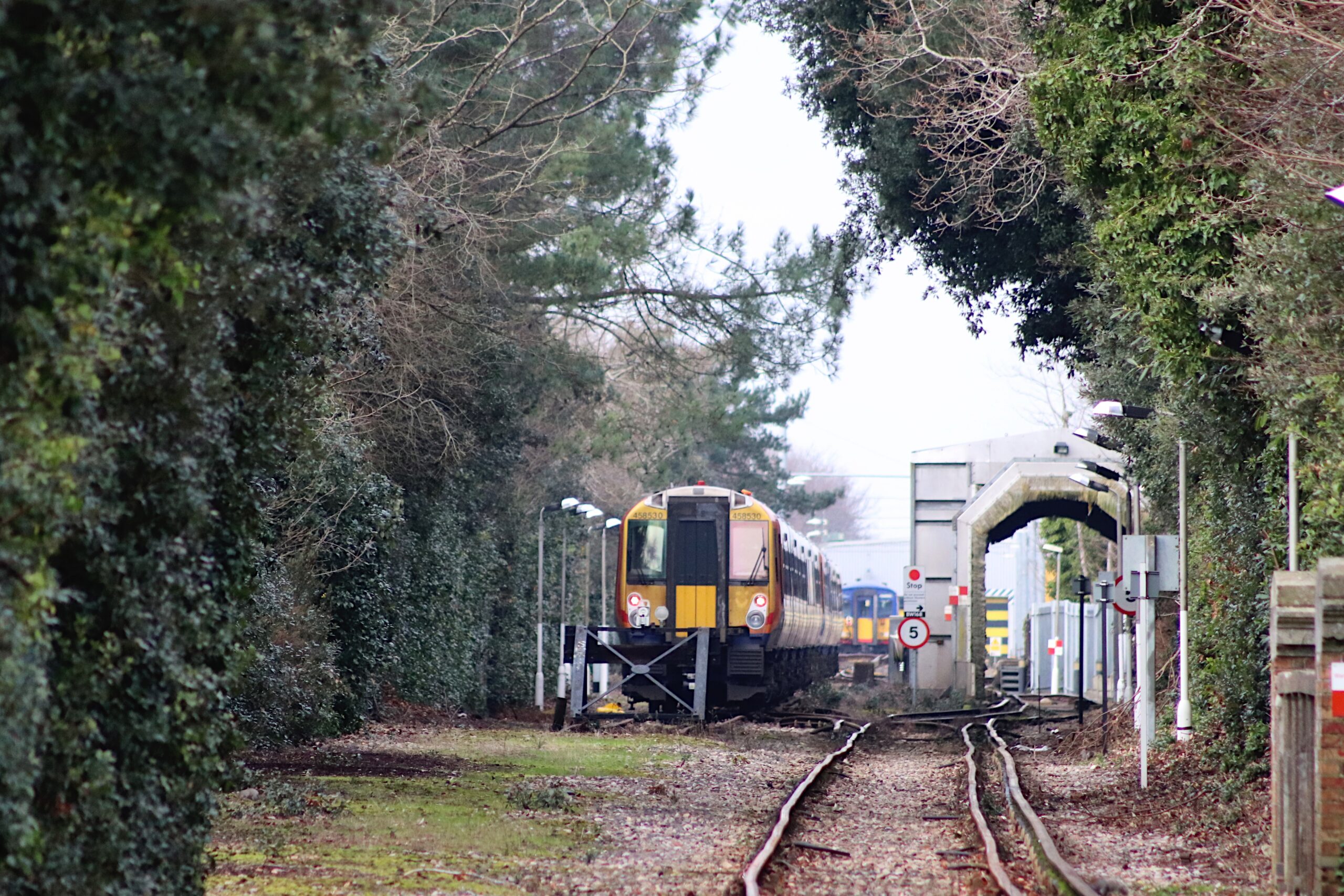
    Class 458 No. 458530 adjacent to the train-wash at Bournemouth Depot, once the line to Somerset & Dorset Railway terminus at Bournemouth West – 28/01/2023

    In March 2021 SWR announced that 28 Class 458/5 units would be refurbished and redeployed on long-distance services along the Portsmouth Direct line. This was as a result of the company deciding to abandon their original plan to use upgraded Class 442 units for this purpose citing continuing technical difficulties and future problems complying with accessibility regulations.  As part of the refurbishment the Class 460 vehicle previously added is being removed and the passenger saloons modified by Alstom at Widnes Transport Tech in Cheshire at a cost of £25 million. The original maximum speed of 100 mph will be restored and the reconfigured units, leased from Porterbrook until 2027 at least, will be based at Bournemouth Traction and Rolling Stock Maintenance Depot. The first two units sent for refurbishment were No.’s 458507 and 458517 which arrived in Widnes during August 2022.

    Video of Class 458 No. 458405 and 458407 on test at Branksome – 03/11/2023

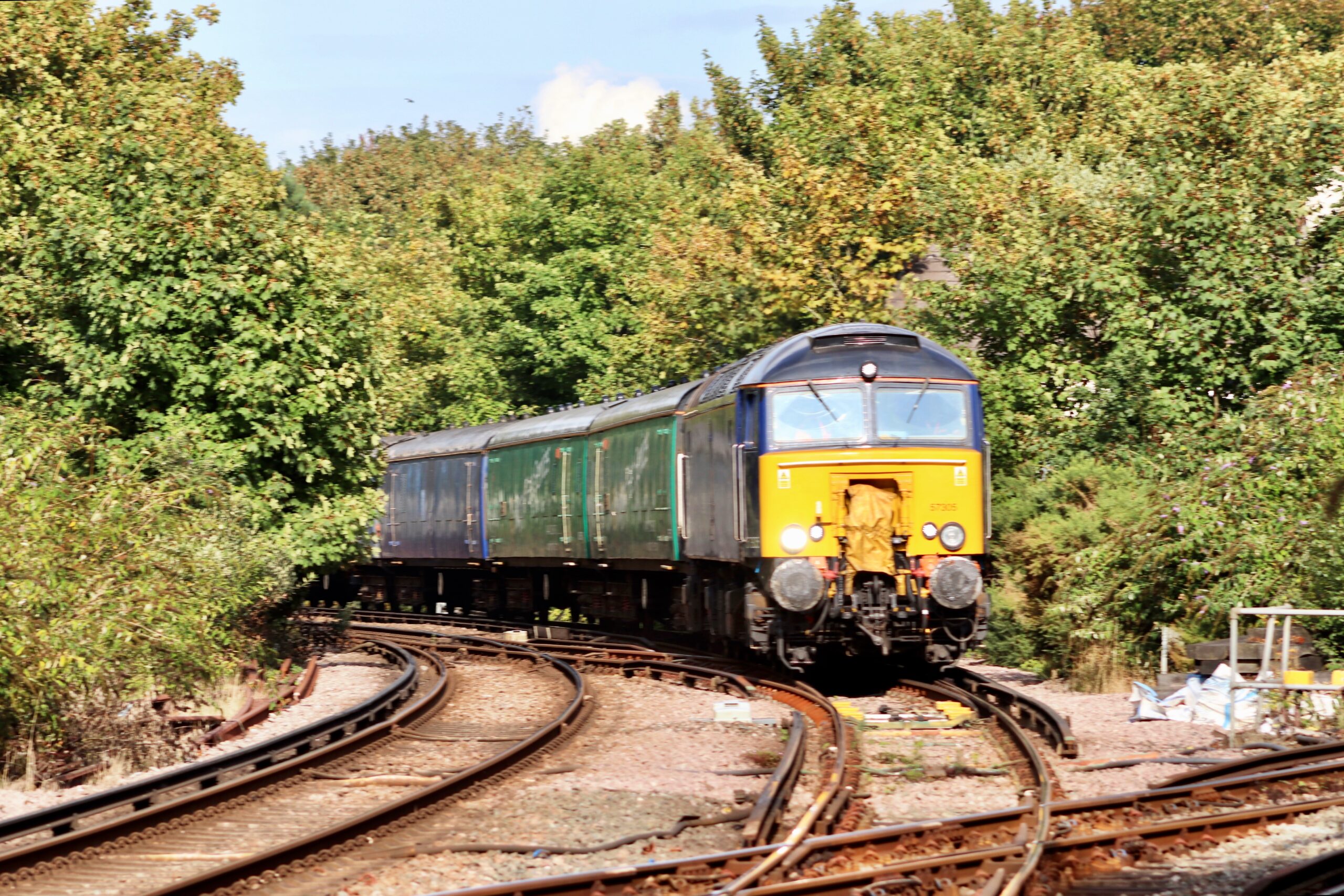
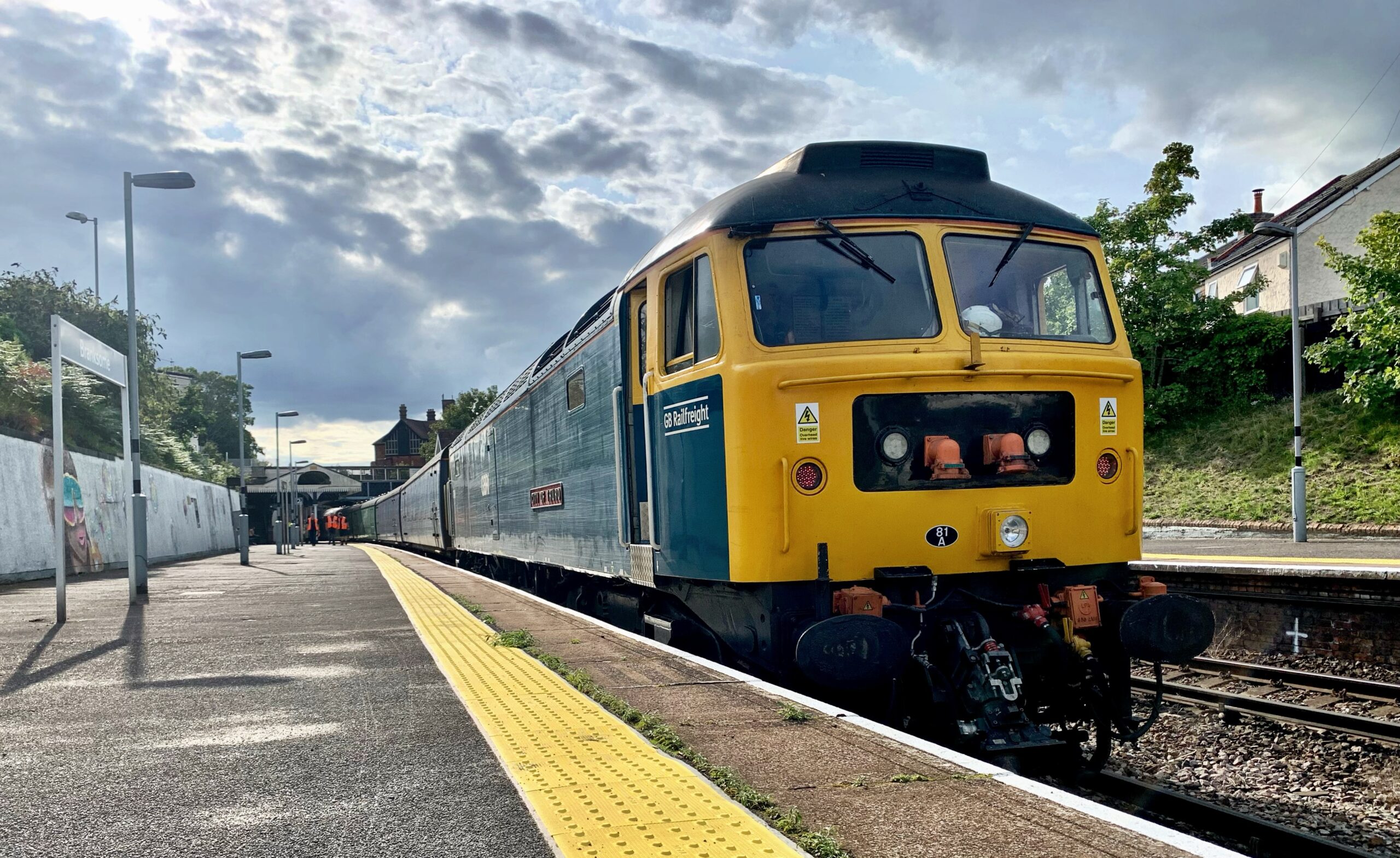
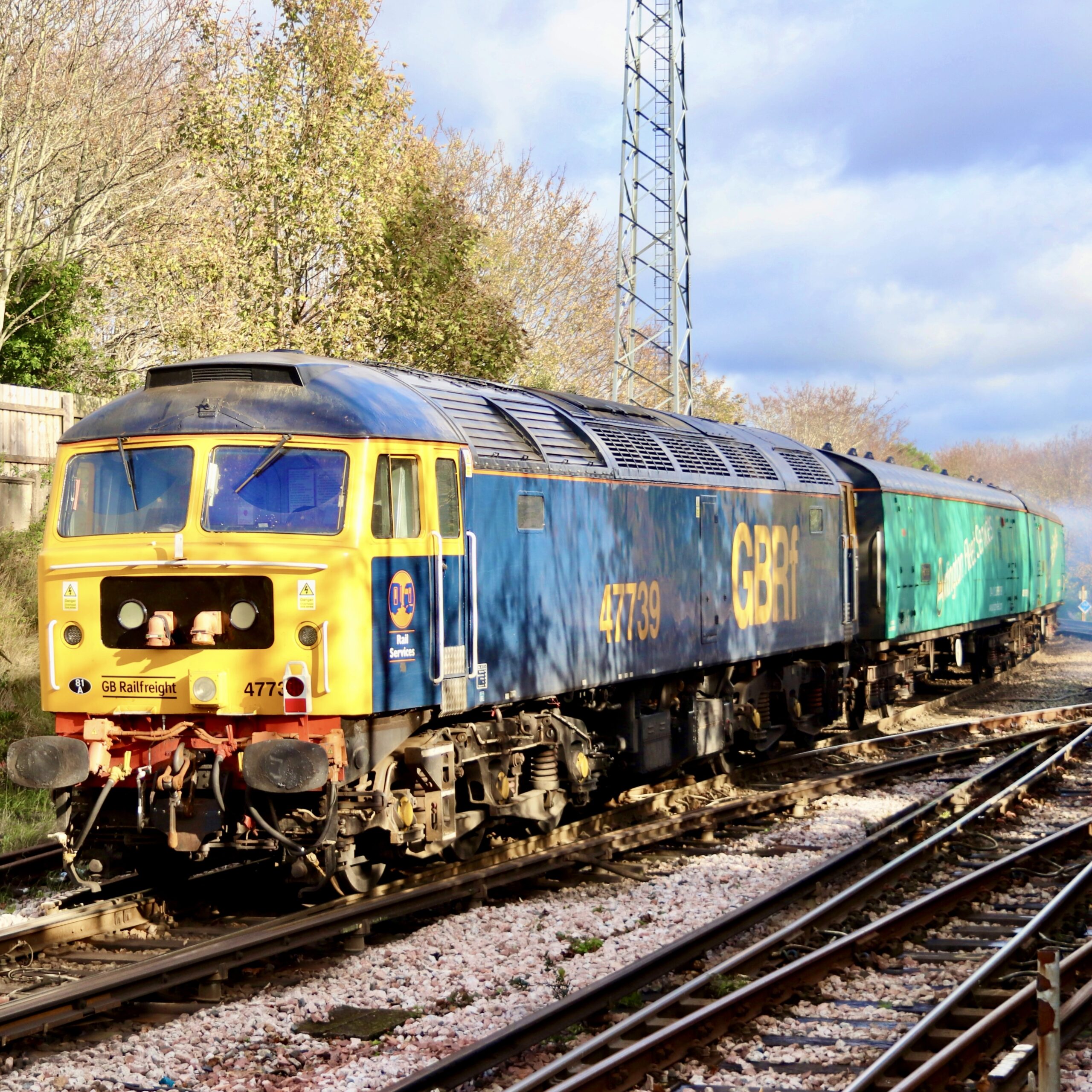
    5X73 0812 Wembley Receptions 1-7 to Bournemouth T&R.S.M.D  ran on Wednesday 8th November consisting of Class 47 No. 47739, Class 56 No. 56081 and refurbished Class 458 No. 458428. I saw the train arriving at Branksome.
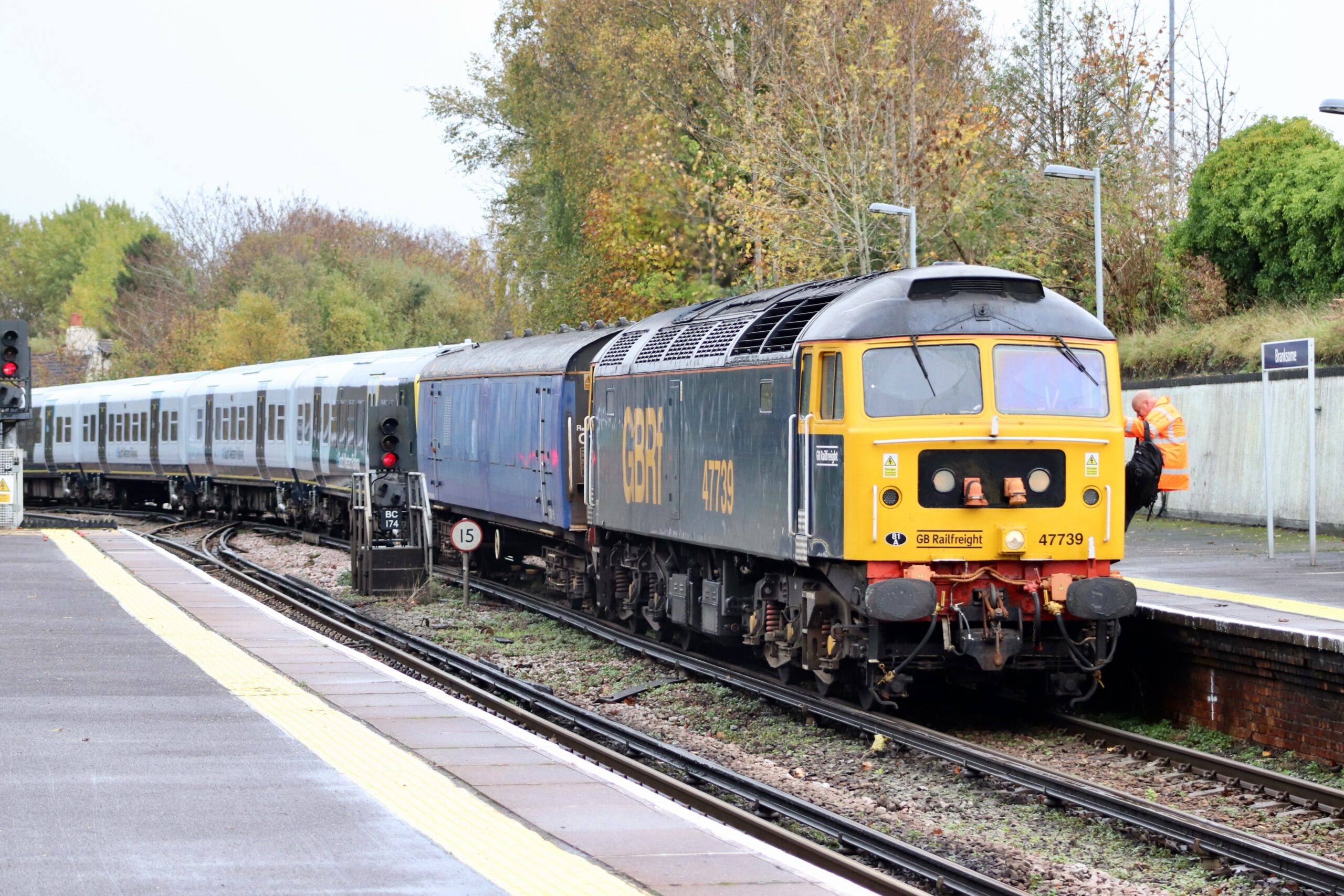
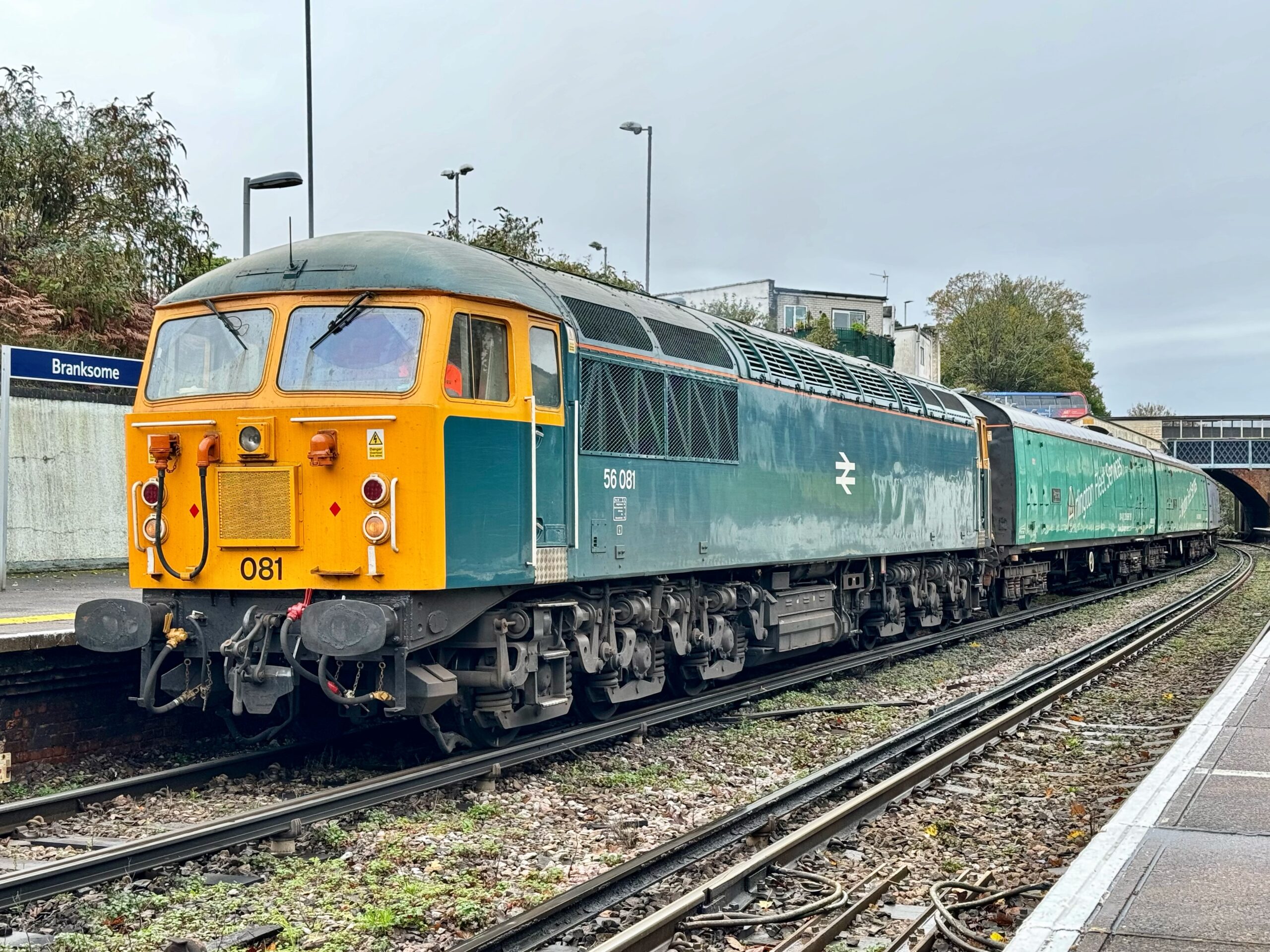
    GBRf Class 47 No. 47739 slows on arrival at Branksome to allow a driver to climb down from the locomotive ready to take control of Class 56 No. 56081 and lead in to Bournemouth Depot with Class 458 No. 458428 – 08/11/2023
    Class 56 No. 56081 at Branksome working 5X73 0812 Wembley Receptions 1-7 to Bournemouth T&R.S.M.D into the depot – 08/11/2023

    The planned return working as 5Q73 1612½ Bournemouth T&R.S.M.D to Widnes Transport Tech this time with the locomotives transporting un-refurbished Class 458/5 No. 458524 was cancelled as route clearance was withheld because of paperwork issues, the consist actually getting away the following evening as 5Q73 1810 Bournemouth TRSMD to Widnes Transport Tech. With only 20 minutes notice from the train movement being added to Real Time Trains, I was unable to get over to Branksome to see it depart. However, things didn’t go quite to plan as the train came to a stand at Christchurch because the brakes on the Class 458 were found to be on! If the brakes developed a fault in transit, or someone forgot to release them prior to departure is a moment of speculation at present. Eventually, after causing much disruption to passenger services as the up line was effectively blocked, the train reversed wrong line to Bournemouth. It then returned to the depot where the unit was removed from the consist and moved to the maintenance side of the yard. Many thanks to Bob for alerting me to the fact the train had been stopped at Christchurch as well as keeping me updated. Thanks also to Jamie and Nick for updates. I was otherwise occupied watching Heaven 17 at the O2 Academy in Boscombe!

    Heaven 17 on stage at the O2 Academy in Bournemouth – 09/11/2023

    Opened in 1895 as the Grand Pavilion Theatre it became The Boscombe Grand Theatre in 1899 and renamed Hippodrome in c.1910.  First used as a circus, the venue was built as part of a development including the spacious Boscombe Arcade and Salisbury Hotel. Throughout its life the building has experienced several changes including being converted into a dance hall, a Royal Ballroom and was a renowned venue for the disco era of the 70’s, club acts of the 80’s and the dance explosion of the 90’s.  It consists basically of three, very tall, mullioned and transomed windows each surmounted by a Flemish gable. The auditorium is beautiful and looks very much like an early music hall. Above the flat main floor is a shallow balcony carried on iron columns with a semi-circular end and straight side arms and an openwork iron balustrade incorporating acanthus leaf decoration. Tall, slender iron columns rise from the front edge of the balcony to support a curved ceiling and lateral arcade, with florid openwork spandrel decoration. A wide promenade runs around the rear of the balcony, above which, carried on a further ring of columns, is a second, shallower balcony set back behind the arcade. The galleries originally ran straight up to the proscenium wall, but in 1910 a range of paired boxes were placed either side, flanked by giant composite columns and decorated with Baroque plasterwork. At the same time the proscenium was reconstructed – a tall plaster frame, straight-headed with rounded corners.  In December 1982 it reopened as The Academy night club with a flat floor but with the stage remaining in place. The main auditorium is still the heart of the Grade II listed hall which became a music venue in 2009 following a major refurbishment in 2006.

    References: 

    O2 Academy Bournemouth (2017) Retrieved from: https://database.theatrestrust.org.uk/resources/theatres/show/584-o2-academy-bournemouth  

    Academy Music Group (2023) Retrieved from: Company: O2 Academy Bournemouth | Academy Music Group)

    The Class 56 and the Class 47 finally left Dorset on Friday 10th November taking the barrier coaches with them, but no Class 458/5 for refurbishment. This time I had almost 30 minutes to drive over to Branksome railway station and just made it as No. 47739 crawled out of Bournemouth TRSMD.
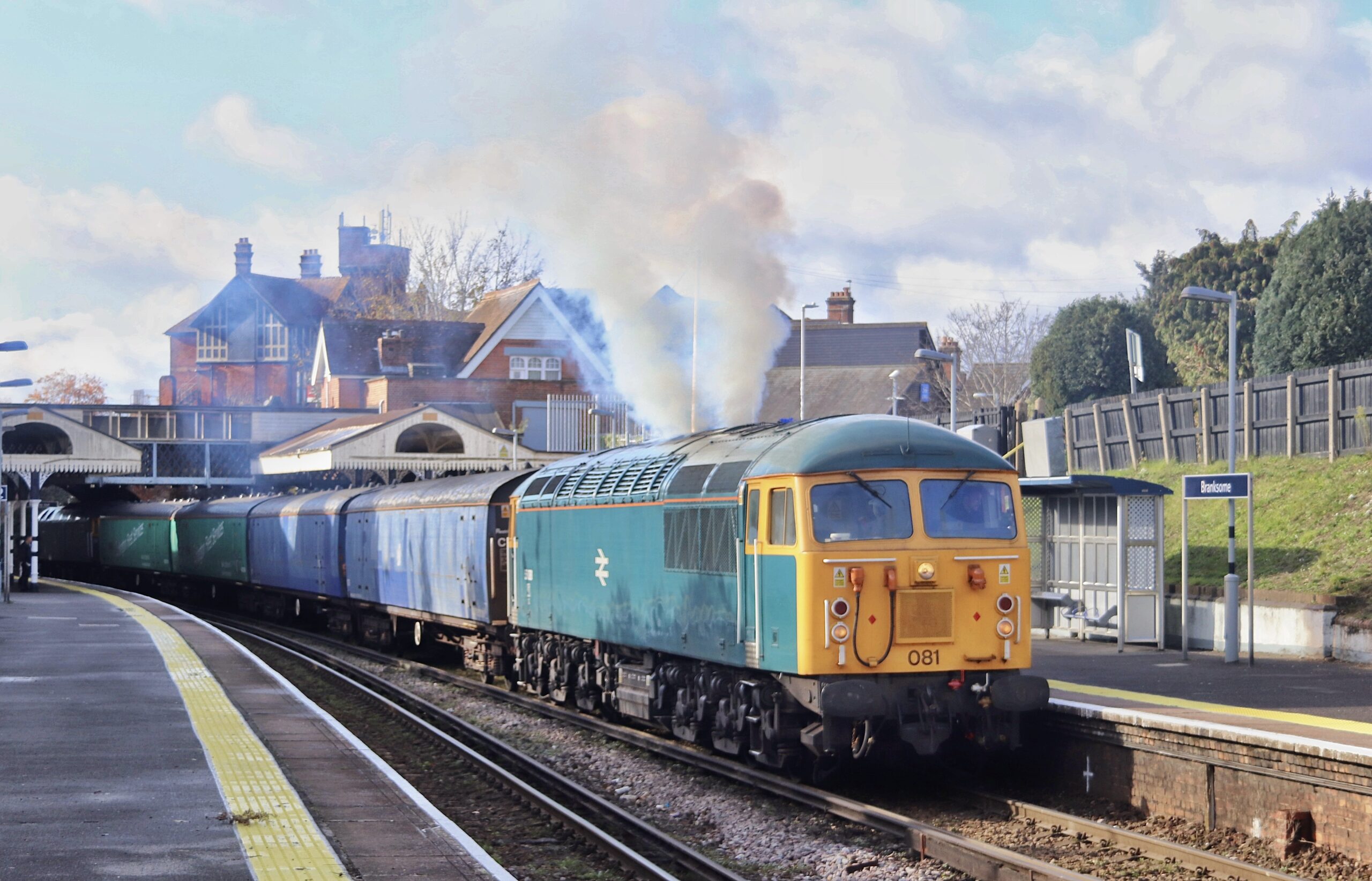
    Class 56 No. 56081 makes a stirring departure from Branksome working 5M55 1232 Bournemouth T&RSMD to Leicester L.I.P. – 10/11/2023
    Class 47 No. 47739 at the rear of 5M55 1232 Bournemouth T&RSMD to Leicester L.I.P. departing Branksome – 10/11/2023
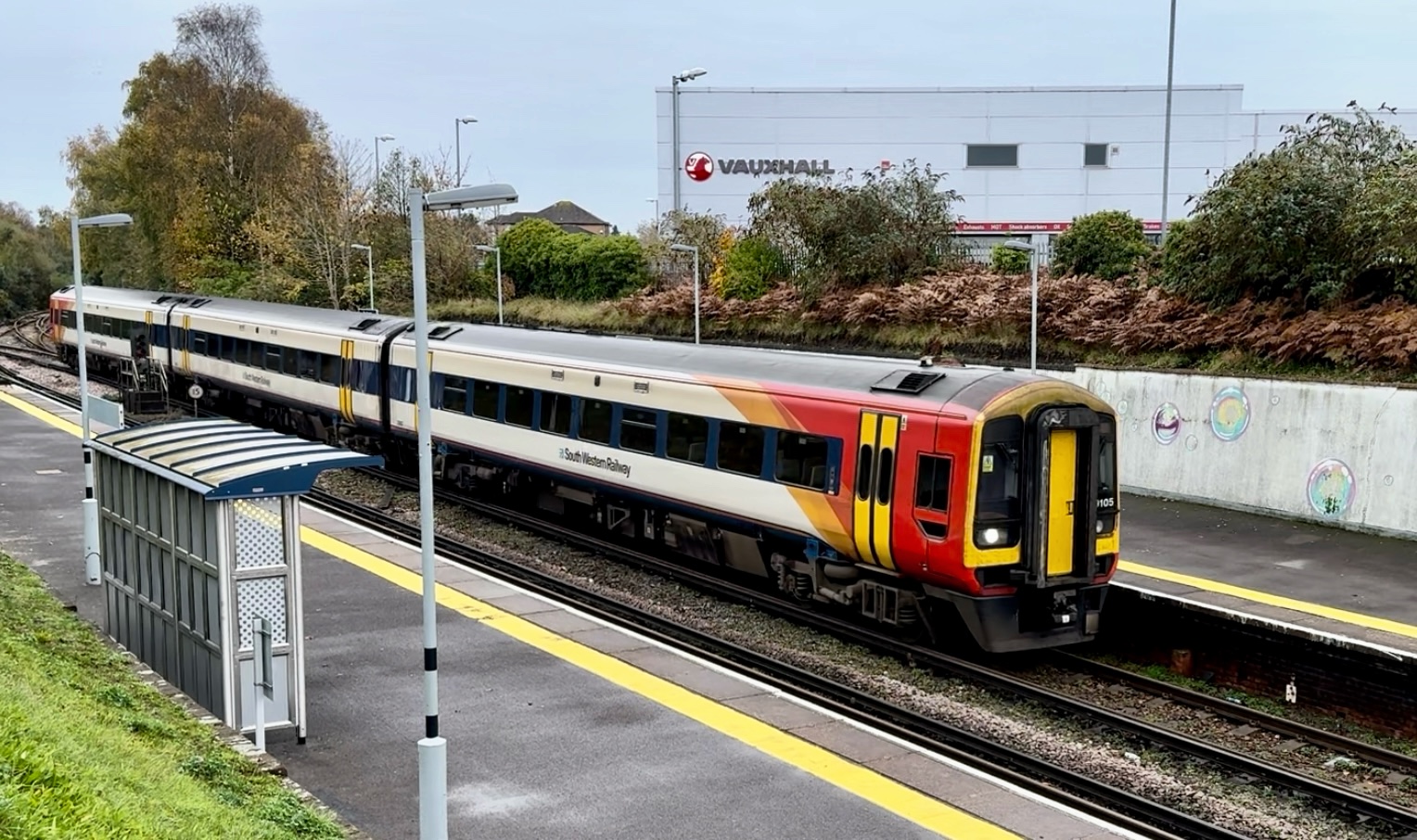
    SWR Class 159 No. 159105 arrives at Branksome forming 5Y14 1141 Salisbury TRSMD to Bournemouth TRSMD – 08/11/2023
    Workings at Branksome on 8th and 10th November 2023

    For The Record:

    In other news, Bournemouth, Christchurch and Poole are to get new dedicated Transport Safety Officers (TSO’s) on public transport to help stamp out anti-social behaviour on buses, trains and trams as part of a £2.5m Department of Transport funded pilot scheme. The TSO’s will patrol targeted routes and locations, working in co-ordination with local police forces and the British Transport Police (BTP). The officers will work to improve safety with an emphasis on engagement and education, however, they will also hold the power to issue fixed penalty notices in response to certain antisocial behaviour. Along with the BCP area, Lancashire, Stoke-on-Trent and Thurrock will also be part of the trial scheme and local authorities will be able to develop and implement approaches that deal with the specific needs of their local area.

    Despite a good summer season and a 19% increase in footfall generally, the Swanage Railway is still experiencing lower visitor numbers than before the pandemic while costs have continued to rise, especially in coal and energy costs due to the war in Ukraine, plus unexpected expenditure such as the repairs to Bridge 11. In an attempt to ease the situation, a “Save Your Railway” appeal has been launched with the aim of raising £450,000 to support the heritage line through to the beginning of the 2024 running season. In the meantime a programme of changes are being implemented designed to make the heritage line more efficient and effective, attracting increasing numbers of passengers. To donate, please click through here.

    The National Union of Rail, Maritime and Transport Workers union (RMT) and Rail Delivery Group (RDG) have both agreed on a Memorandum of Understanding (MoU) in the ongoing rail dispute over pay and conditions. The MoU sets out how the dispute can be developed with a mutually agreed way forward. Some of the agreements include a backdated payrise for 2022 as well as staff and job security guarantees. This will now be put forward to RMT members employed by each of the Train Operating Companies (TOC’s), including SWR and Great Western Railway (GWR) in a referendum vote. If accepted, the MoU will terminate the national dispute mandate and create a pause in industrial action over the Christmas period and into Spring.

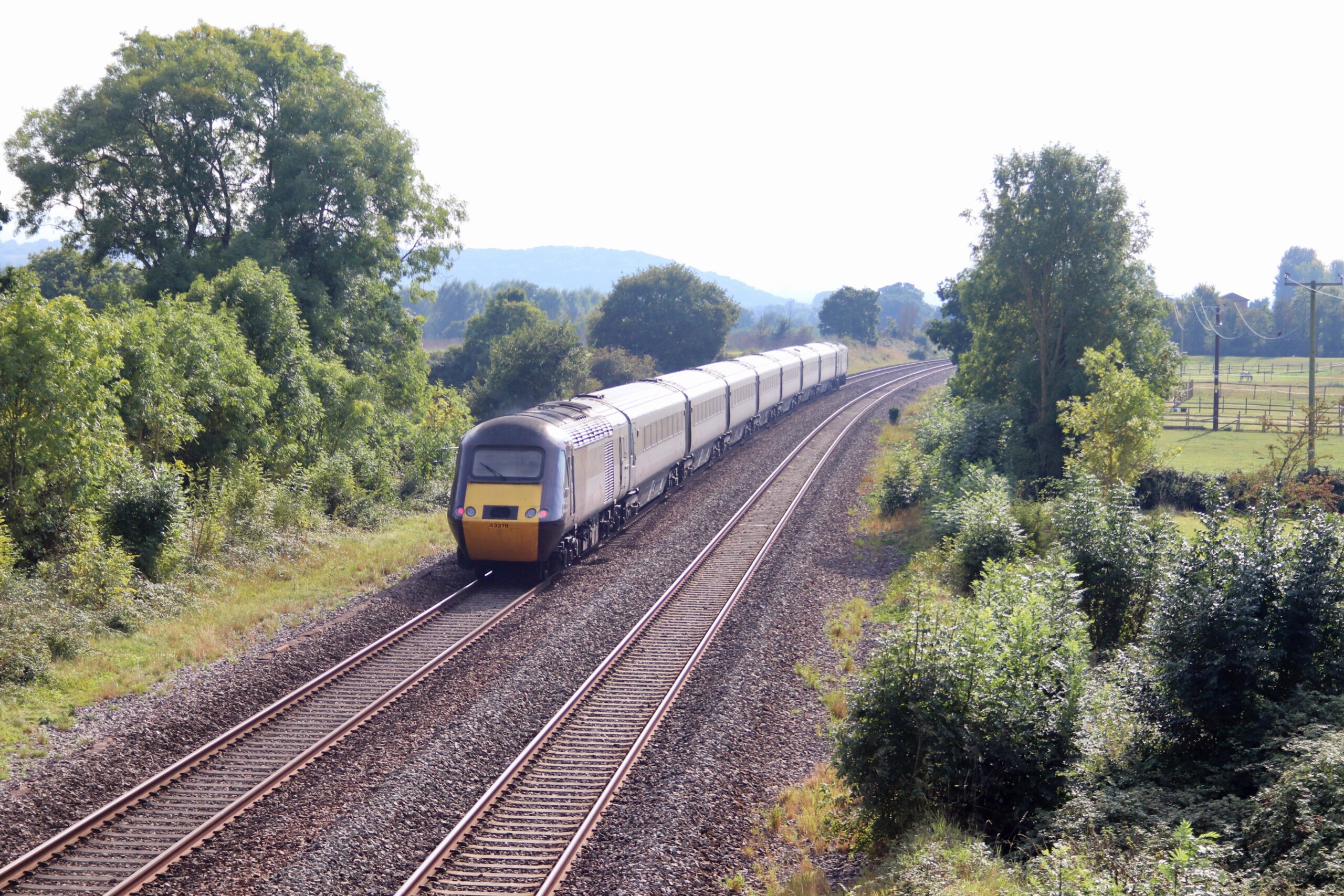
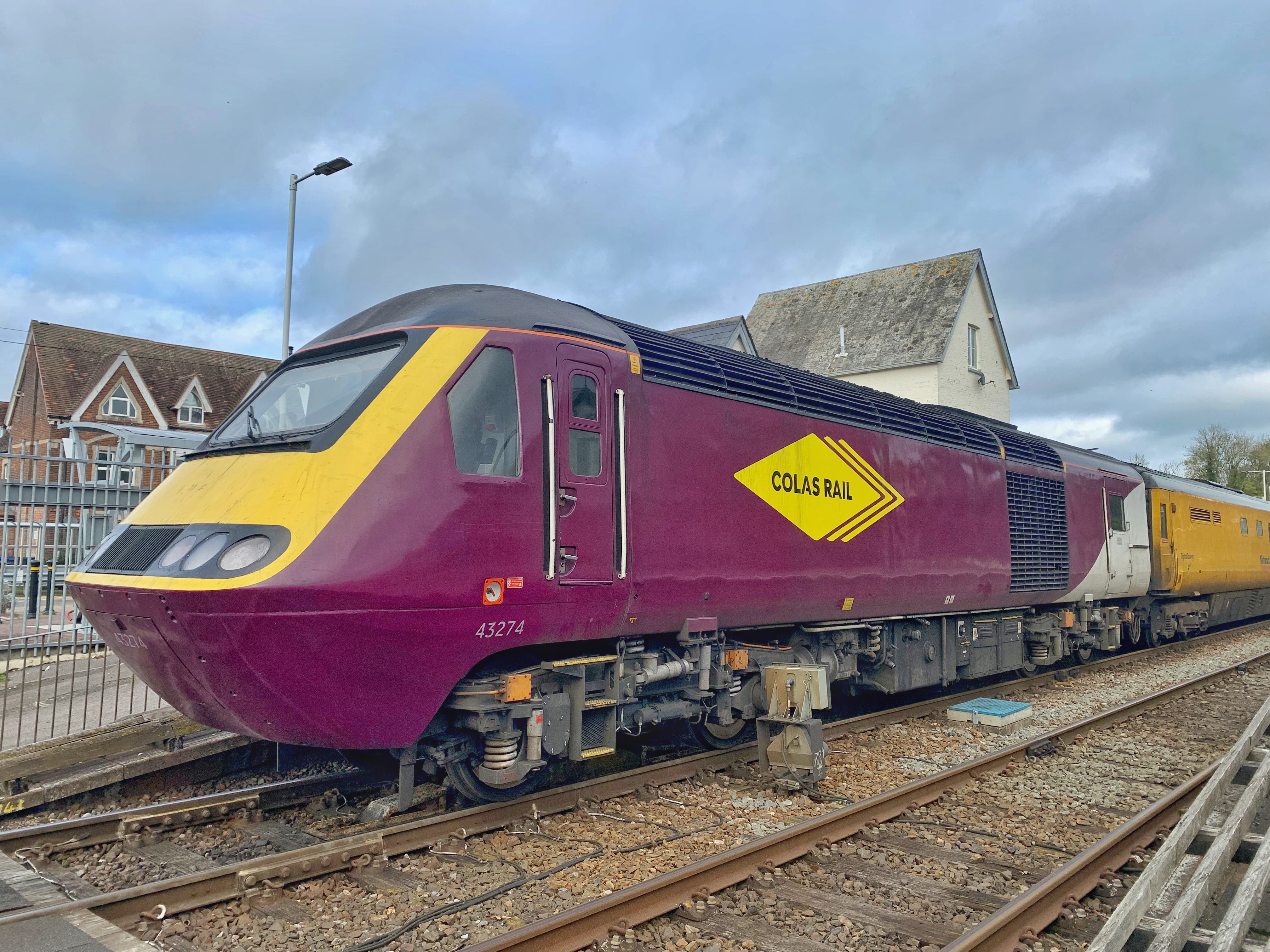
    The monthly 1Z22 Derby RTC to Bristol Kingsland Road test train via Weymouth was turned around at Yeovil Pen Mill (again) without reaching the Dorset seaside town on 8th November 2023. This time Class 43 HST power cars No.’s 43257 and 43274 were deprived of sea, sand and ice-cream.

    That brings us to the end of another blog entry. Thanks for reading! Be seeing you!

    Yoshi enjoyed our morning walk around Holes Bay on 07/11/2023
  • Poppy Fields

    Definitely not coming to a cinema near you anytime soon! A movie poster created using Microsoft Bing Creator Artificial Intelligence.

    October 26th 2023 to November 2nd 2023

    It was very quiet around these parts this last week. Nothing much of note to report on the rails of Dorset as far as I’m aware. Storm Ciarán hit the South West in the early hours of Thursday 2nd November with the BBC reporting train lines ground to a halt, with some rail operators telling commuters to work from home – and drivers in the south and west of UK were told to avoid coastal roads. South Western Railway (SWR) ran a revised service during the day and warned of the weather conditions ability to cause flooding, landslips, low adhesion from increased leaf fall and debris on the tracks. Across the South West of England, there were no Great Western Railway (GWR) services in Cornwall because of flooding and fallen trees. The line was also closed between Exeter and Taunton, Salisbury and Southampton, Reading to Gatwick and a reduced service to Heathrow.  Locally, SWR Weymouth services terminated at Bournemouth with an hourly shuttle service between Bournemouth to Weymouth providing half the normal frequency.  The line between Bournemouth and Hinton Admiral was blocked for a time due to heavy flooding. A pair of two-car SWR Class 158 Diesel Multiple Units No.’s 158884/886 then formed a shuttle service between Bournemouth and Brockenhurst. CrossCountry (XR) services to Bournemouth were also disrupted with several services stopping short at Brockenhurst. Brittany Ferries cancelled most of their services on Wednesday and Thursday, while Condor Ferries suspended all sailings on these two days.

    Tuesday evening I was in Winchester visiting the Cathedral to see “Poppy Fields” an immersive light and sound show by Luxmuralis. Billed as a “spectacular light and sound show which takes you on a mesmerising journey of reflection and hope”, the art installation did not disappoint. Developed from the concept of “son et Lumiere” Luxmuralis is a collaborative team combining artists from different backgrounds and artistic disciplines who create works across multimedia and presentation formats whilst exploring the development of fine art tradition through new media ultimately taking the medium onto the streets and providing access to visual artwork in public as well as unexpected places.

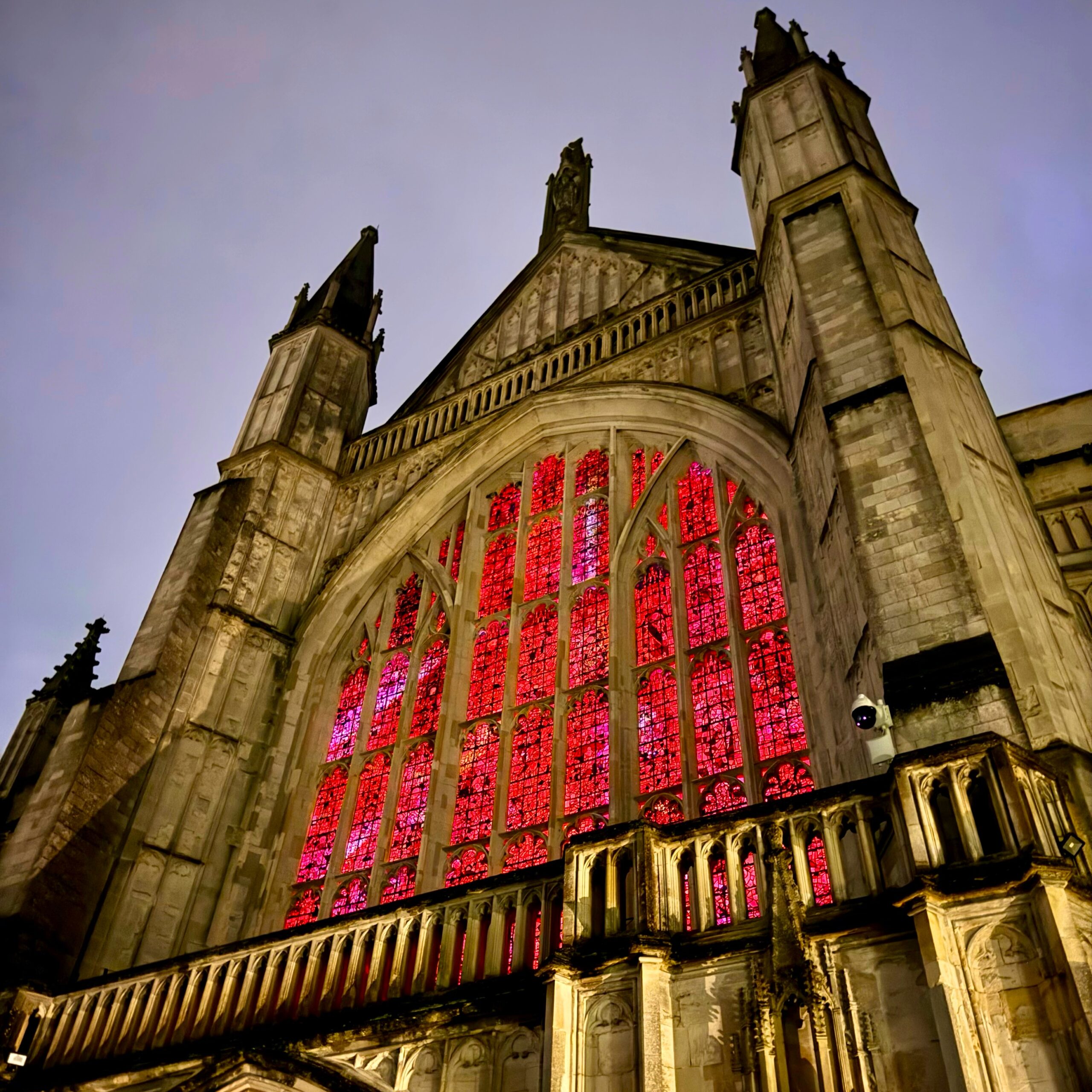
    Winchester Cathedral – 31/10/2023

    “Poppy Fields” was sponsored by South Western Railway and was presented at Winchester Cathedral from 31stOctober to 4th November 2023. Appropriately enough, we took the train for our visit, arriving in the City in good time for our ticketed time of 2000. By good judgement of the stewards in attendance we were allowed early access to the cathedral due to the wet weather and joined a queue of other eager first night attendees.

    “Poppy Fields” at Winchester Cathedral created by Luxmuralis – 31/10/2023
    “Poppy Fields” at Winchester Cathedral created by Luxmuralis – 31/10/2023
    “Poppy Fields” at Winchester Cathedral created by Luxmuralis – 31/10/2023
    “Poppy Fields” at Winchester Cathedral created by Luxmuralis – 31/10/2023

    Unfortunately our usual good time keeping was lacking for our return journey and this, compounded by our SWR service departing Winchester early meant that we were left on the station platform with the last train west of Poole disappearing into the night. Taking a screen grab from Real Time Trains of evidence, one of our party had the foresight to contact the SWR helpline to advise of the situation with the result that within the hour we were heading home in a taxi (which had come all the way from Southampton to collect us!) provided by the railway company. While our transport was on its way, I obviously took the opportunity to see a couple of freight trains passing through Winchester amongst an assortment of SWR Class 450’s, 444’s and a XR Class 221 Voyager.

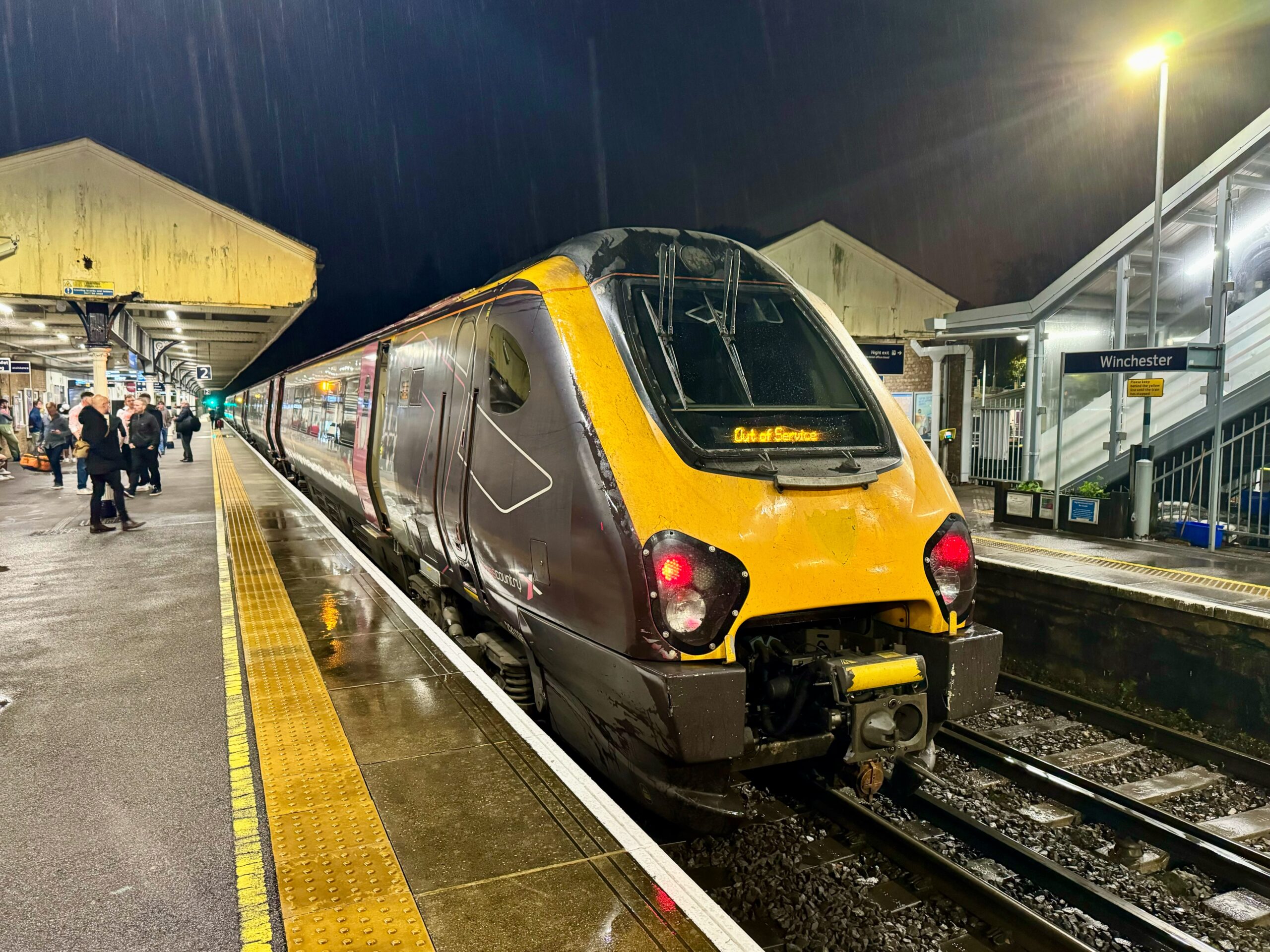
    CrossCountry Voyager Class 221 No. 221135 working 1O30 1825 Manchester Piccadilly to Winchester. This service would normally run to Bournemouth but on this occasion terminated short at Winchester, the unit moving forward as 5Z30 2228 Winchester to Eastleigh TRSMD empty coaching stock – 31/10/2023

    Winchester railway station was opened on 10th June 1839 by the London and Southampton Railway as a temporary terminus for the Winchester to Southampton section. Another station was opened at Basingstoke on the same day, which acted as the temporary terminus of the London to Basingstoke section. The line connecting Winchester and Basingstoke completed in March 1840.

    Another line was constructed to run via Guildford, Farnham and Alton, which joined the main line north of Winchester. The present day line runs via Aldershot instead of Guildford, and the line finishes at Alton. British Rail closed the line from Alton to Winchester in 1973 but a section from Alton to Alresford is preserved as the Watercress Line.

    The Great Western Railway had their own line having absorbed the Didcot, Newbury and Southampton Railway which opened in stages between 1882 and 1885. This used a separate station on the eastern side of Winchester, when opened called Winchester Cheesehill, which I think is an excellent name but this was later changed to Winchester (Chesil). It was renamed again in 1949 when the brackets were dropped and the station became known as Winchester Chesil, whilst Winchester’s main station was renamed Winchester City. When Chesil closed in 1966, British Rail (BR) changed the station name from Winchester City during the following year to Winchester as it is known today.

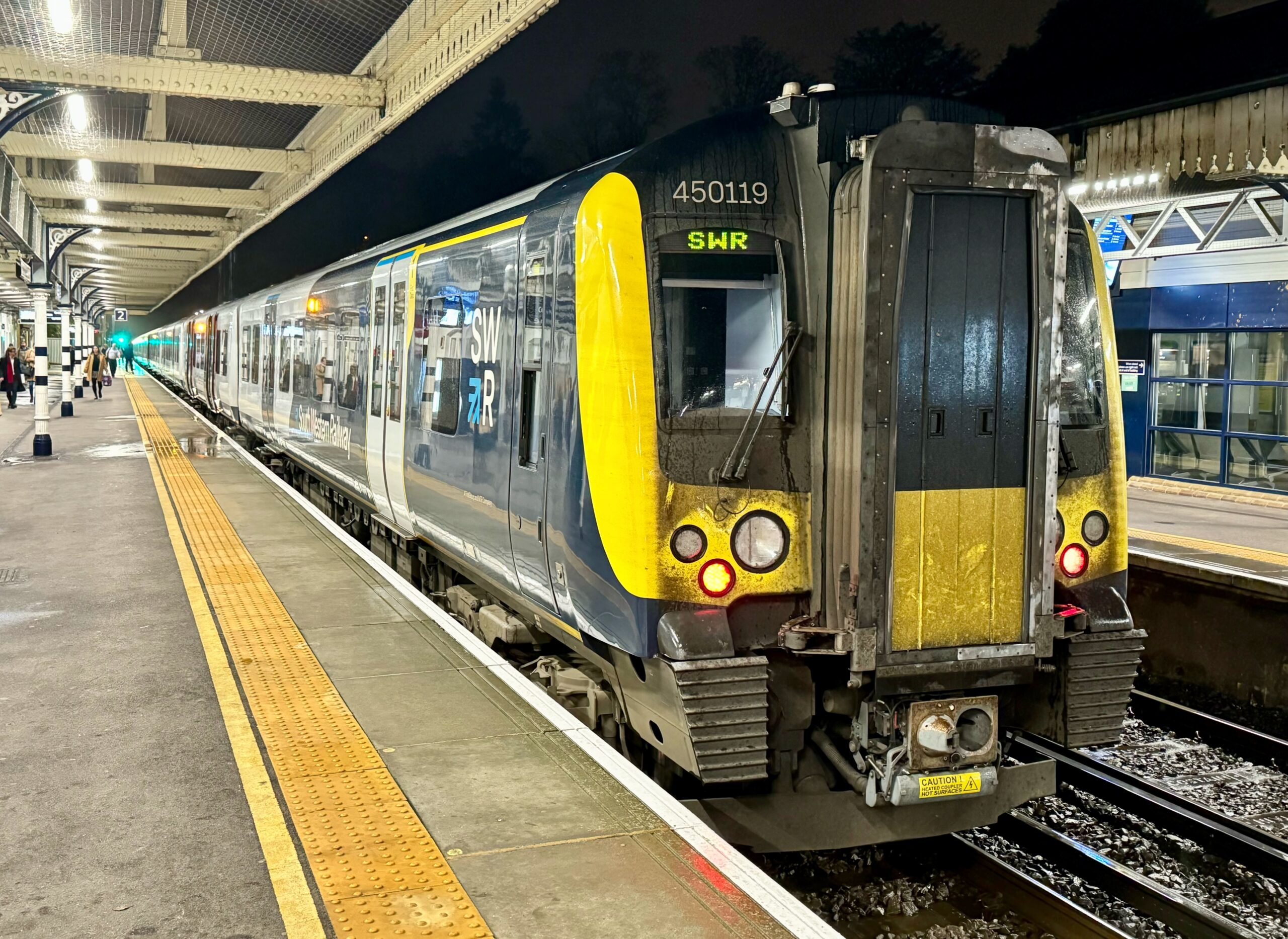
    SWR Class 450 No. 450119 at Winchester working 1B73 2205 London Waterloo to Bournemouth in tandem with Class 444 No. 444012 – 31/10/2023
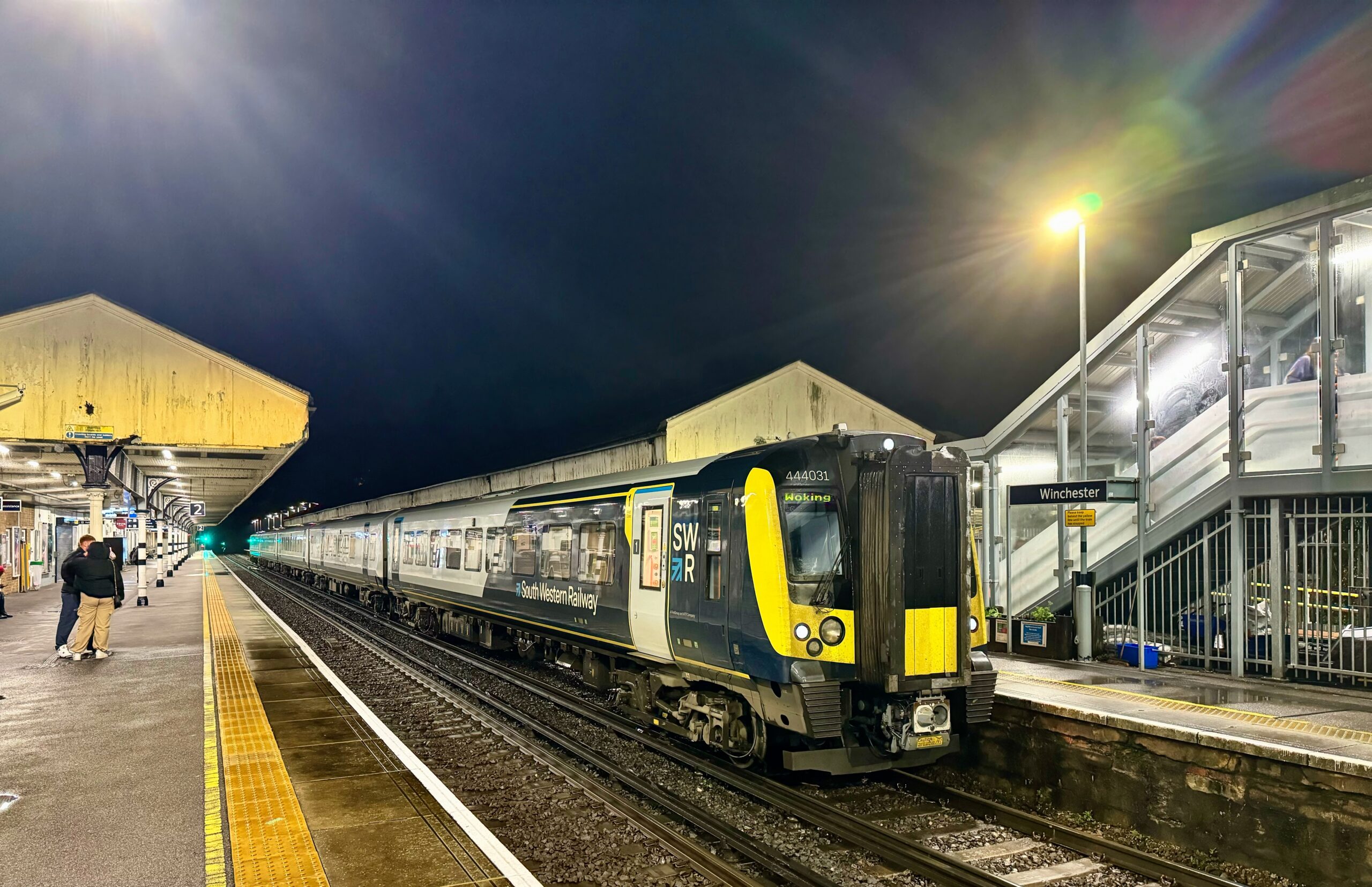
    Class 444 No. 444031 stops at Winchester working 1W82 2100 Weymouth to Woking – 31/10/2023
    Video from an hours sojourn at Winchester railway station – 31/10/2023

    In other news, the government has cancelled rail industry plans for the mass closure of ticket offices in England, saying they failed to reach the “high threshold of serving passengers”. You may recall The Rail Delivery Group (RDG) had announced over the summer that it intended to shut almost all of the nation’s 1,007 train station ticketing outlets in an effort to reduce costs after a ‘post-COVID fall in passenger numbers’. Following a public outcry over the three week public consultation period running from 5th to 26th July as originally proposed, this was hastily extended to 1st September.  Although the cost-cutting proposals were made by the train operators managing the station offices, they were widely understood to have been pushed by a government eager to trim the subsidy for rail. According to the passenger watchdogs managing the survey after receiving over 750,000 responses to the consultation, with what is believed to have been a figure of around 99% of which were objections, the Transport Secretary Mark Harper confirmed he had asked train operators to “withdraw their proposals”.

    The government announcement on Tuesday 31st October came after watchdogs Transport Focus and London TravelWatch said they opposed every single planned closure due to concerns over the impact on passenger accessibility. During the previous week a cross-party transport committee of MP’s also warned the plans went “too far, too fast” and described the consultation as lacking in transparency.  Prime Minister and private jet enthusiast Rishi Sunak said in September that closing ticket offices was “the right thing for the British public and British taxpayers” because “only one in 10 tickets are sold currently in ticket offices”.  However, Mr Harper said in his statement on Tuesday that the government had made clear to the industry throughout the consultation that its proposals “must meet a high threshold of serving passengers”. He added; “We have engaged with accessibility groups throughout this process and listened carefully to passengers as well as my colleagues in parliament. The proposals that have resulted from this process do not meet the high thresholds set by ministers, and so the government has asked train operators to withdraw their proposals. We will continue our work to reform our railways with the expansion of contactless Pay As You Go ticketing, making stations more accessible through our Access for All programme and £350m funding through our Network North plan to improve accessibility at up to 100 stations.”

    Another AI generated image from Bing!

    A lot of words this week, and not many visuals! Thank you for visiting and for your comments. We’ll be back soon, in the meantime take care and….. be seeing you!

  • Home Again

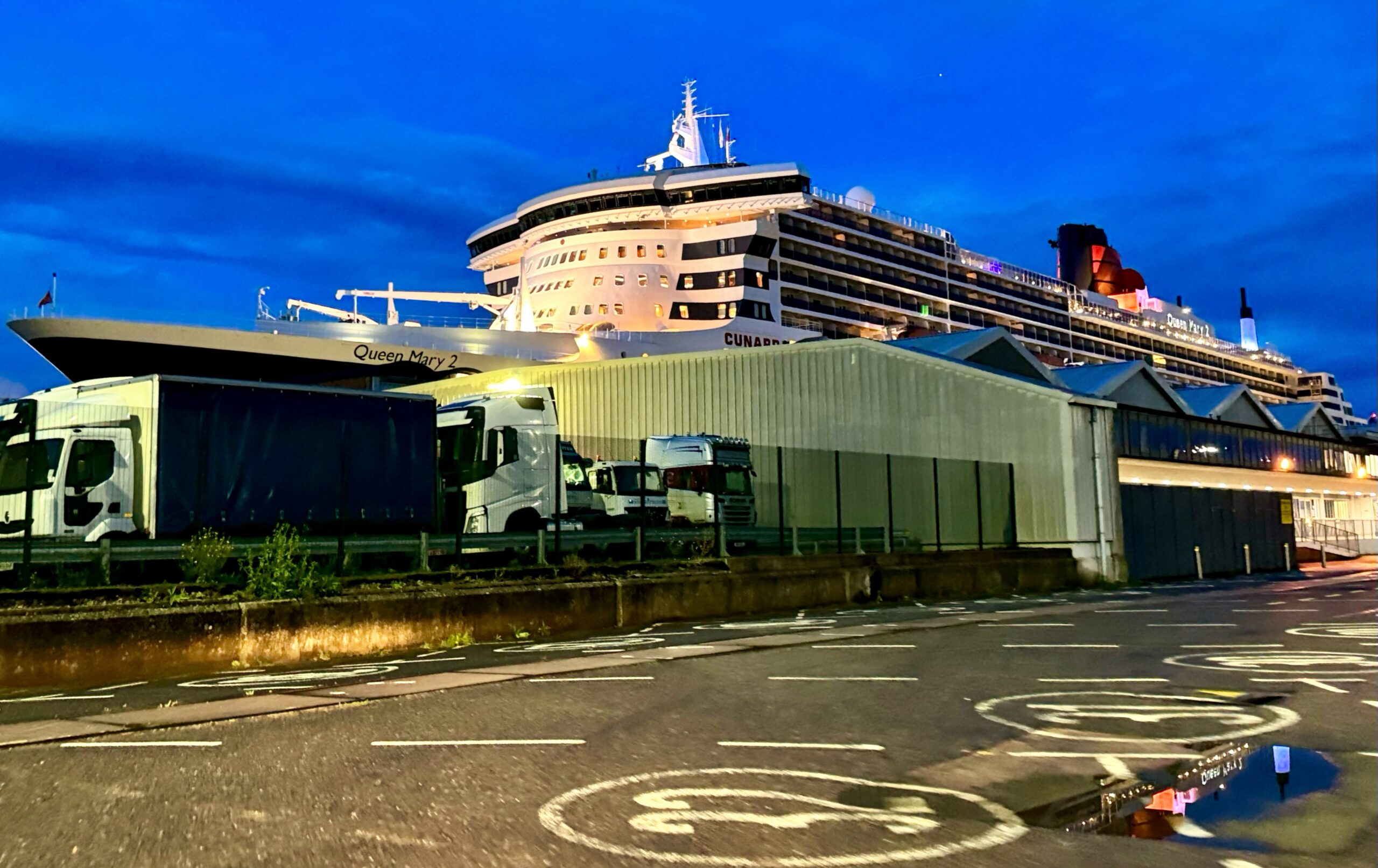
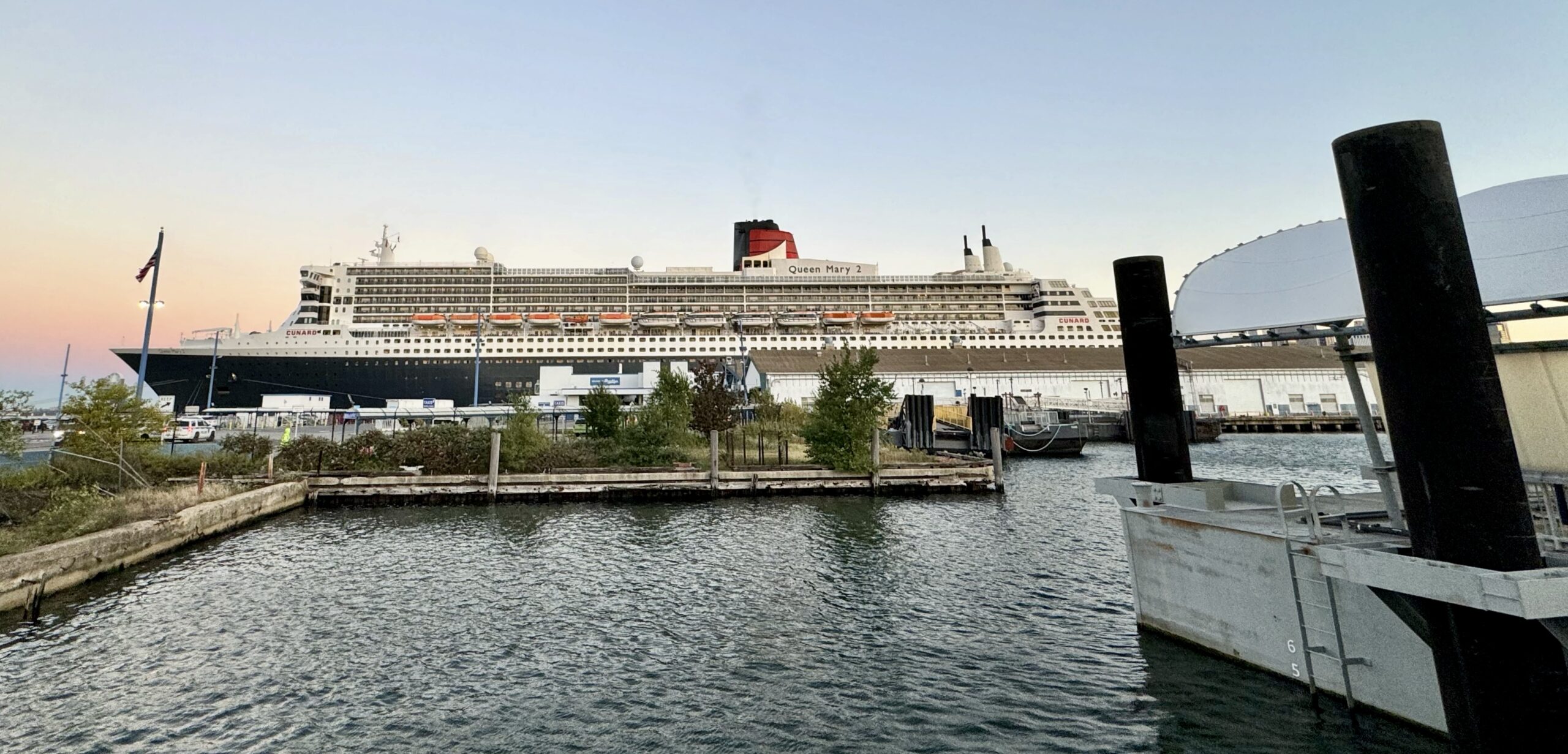
    Queen Mary 2 alongside Southampton Mayflower Cruise Terminal – 20/10/2023

    October 6th 2023 to October 25th 2023

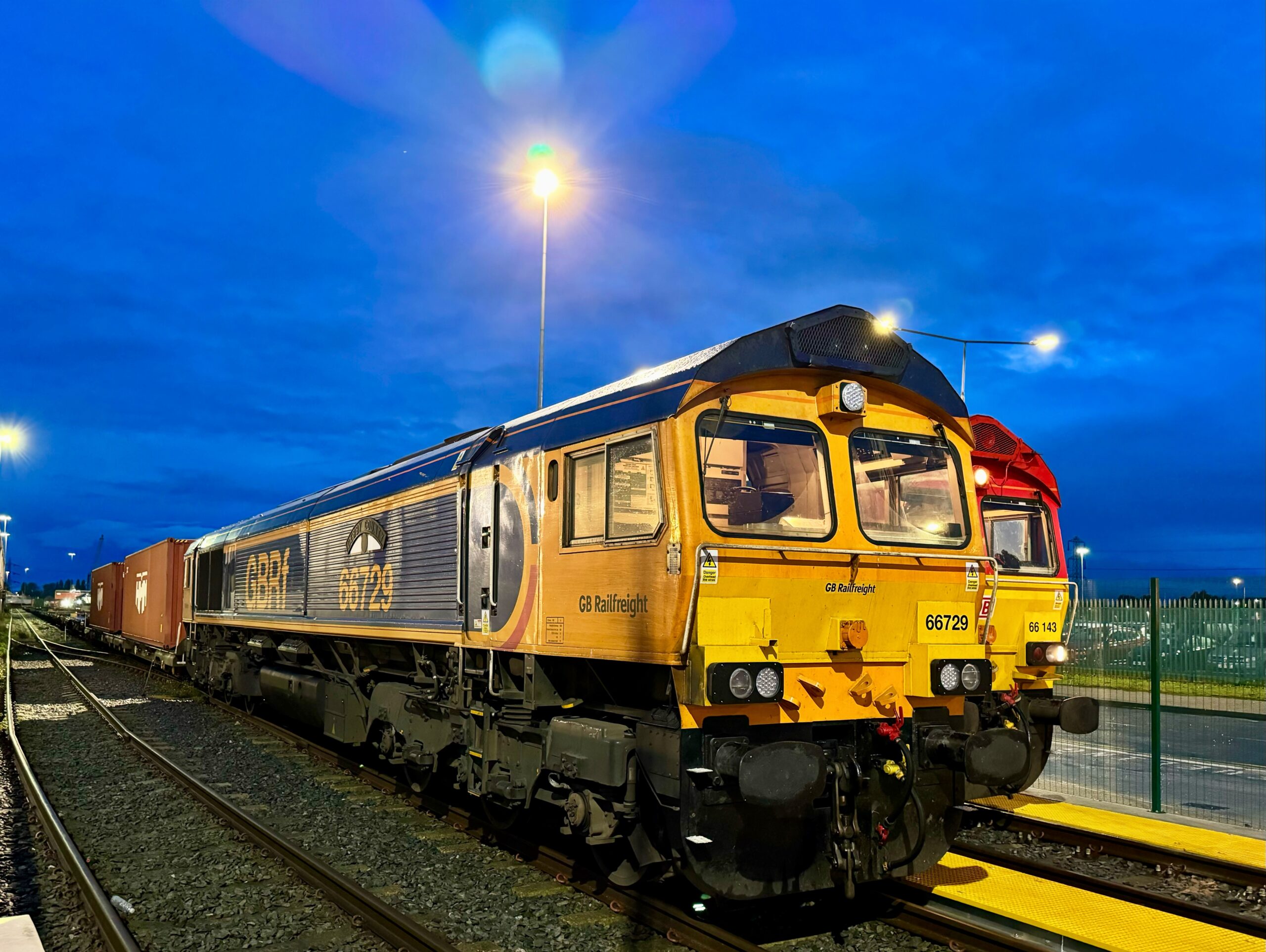
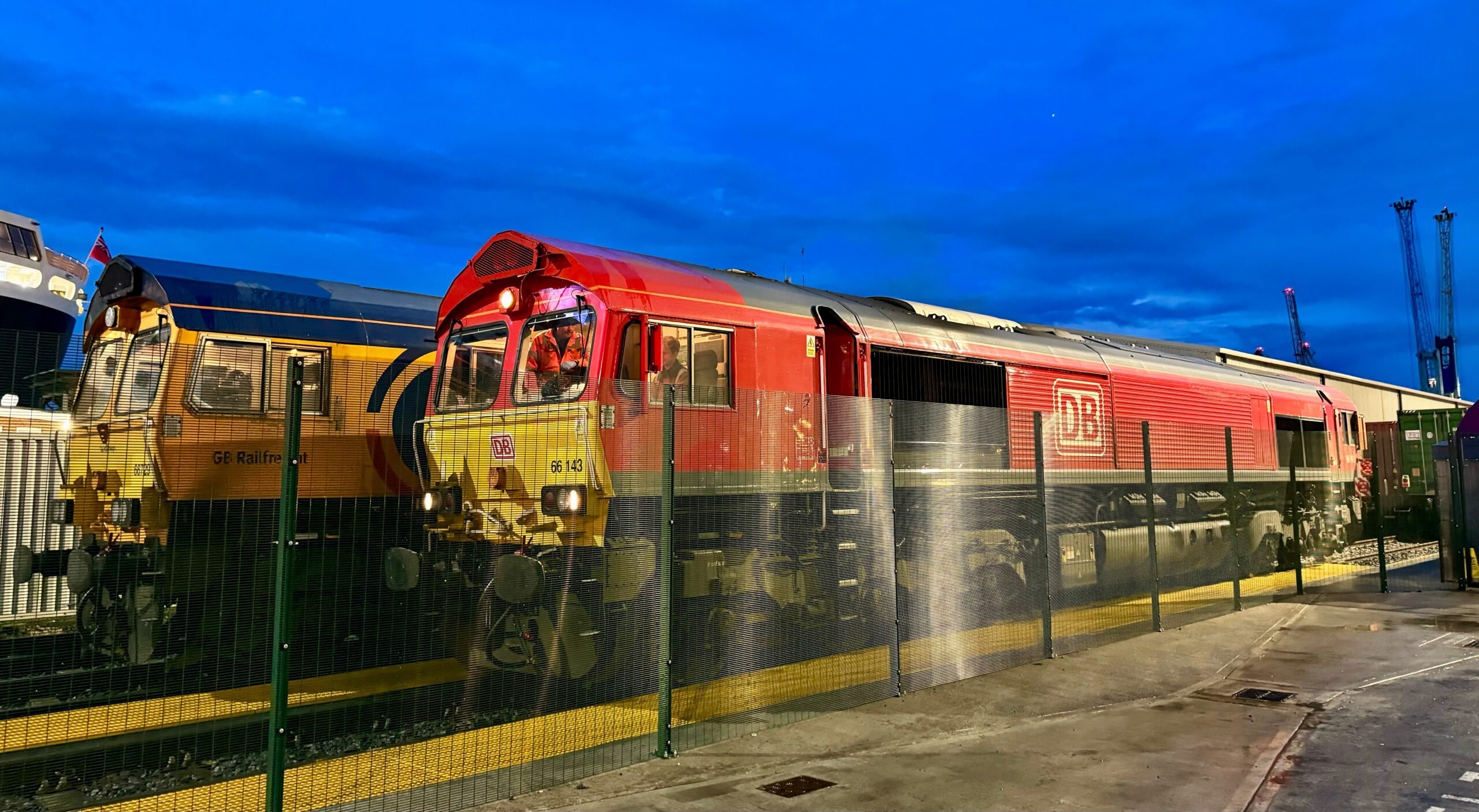
    We had a fabulous couple of weeks away cruising on Cunard’s flagship Queen Mary 2 arriving back in Southampton on 20th October where I was quietly pleased to be shown two class 66 locomotives waiting to have their photo taken alongside the Mayflower Cruise Terminal situated at Western Docks via Dock Gate 10 where our ship had berthed.

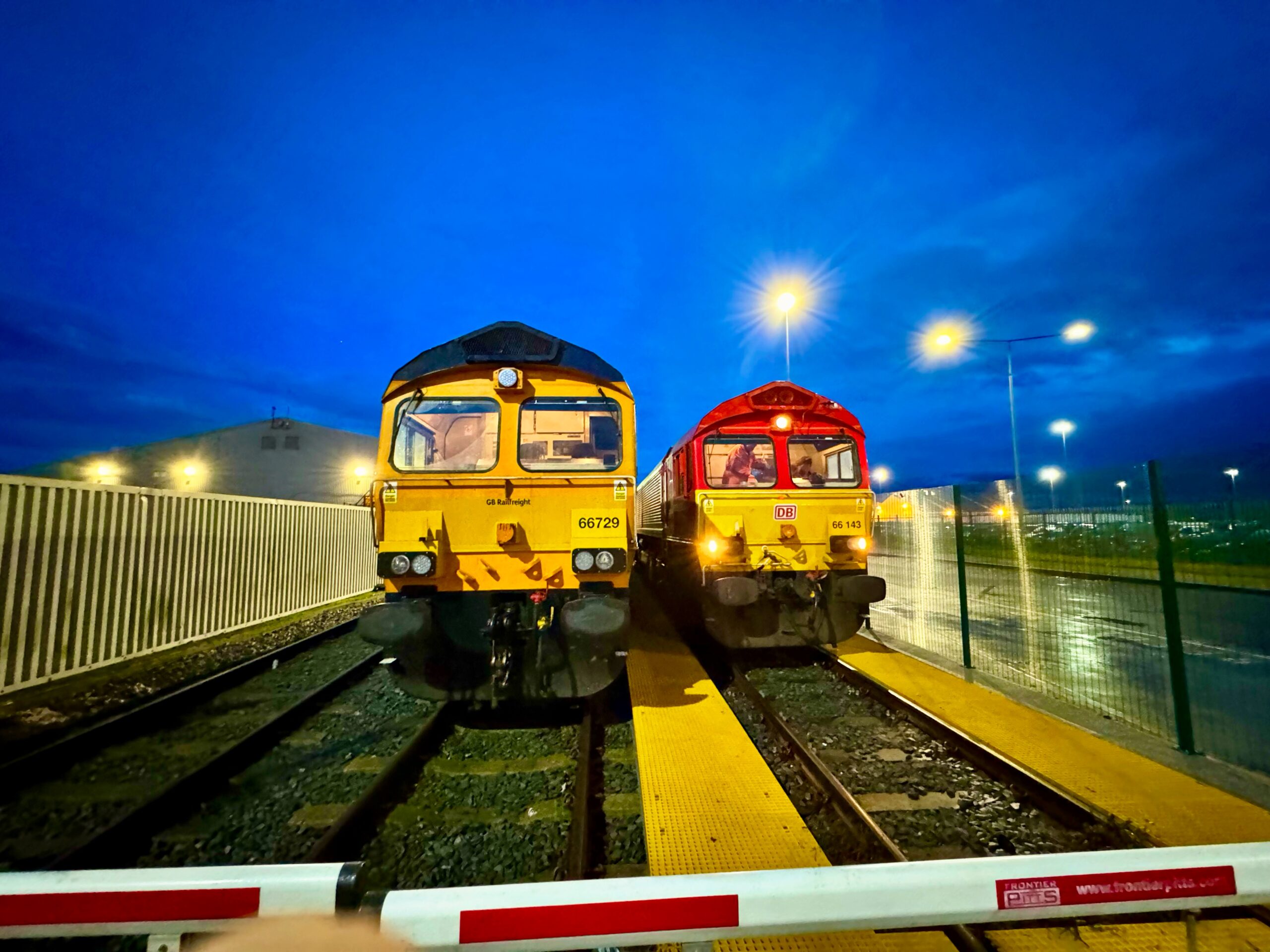
    Class 66’s at Southampton Western Docks – GBRf No. 66729 ‘Derby County’ and DB No. 66143 – 20/10/2023
    GBRf Class 66 No. 66729 .Derby County’ having worked into Southampton Docks with 4O59 2343 Ditton (O’Connor) GBRf to Southampton Western Docks GB Railfreight – 20/10/2023
    DB Class 66 No. 66143 at Southampton Western Docks having arrived working 4O63 Kingsbury Birch Coppice Exchange Sidings to Southampton Western Docks Shed 107 – 20/10/2023

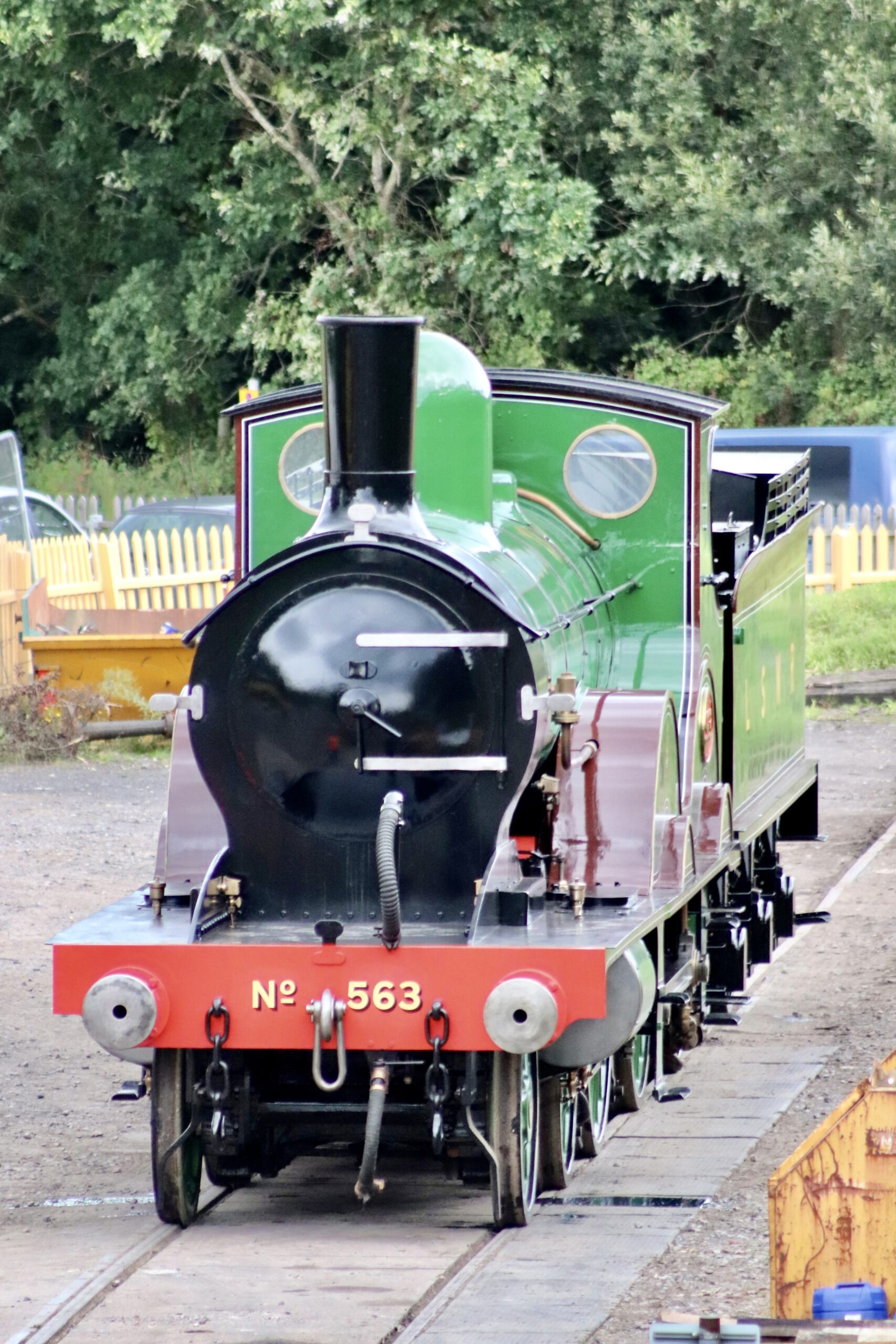
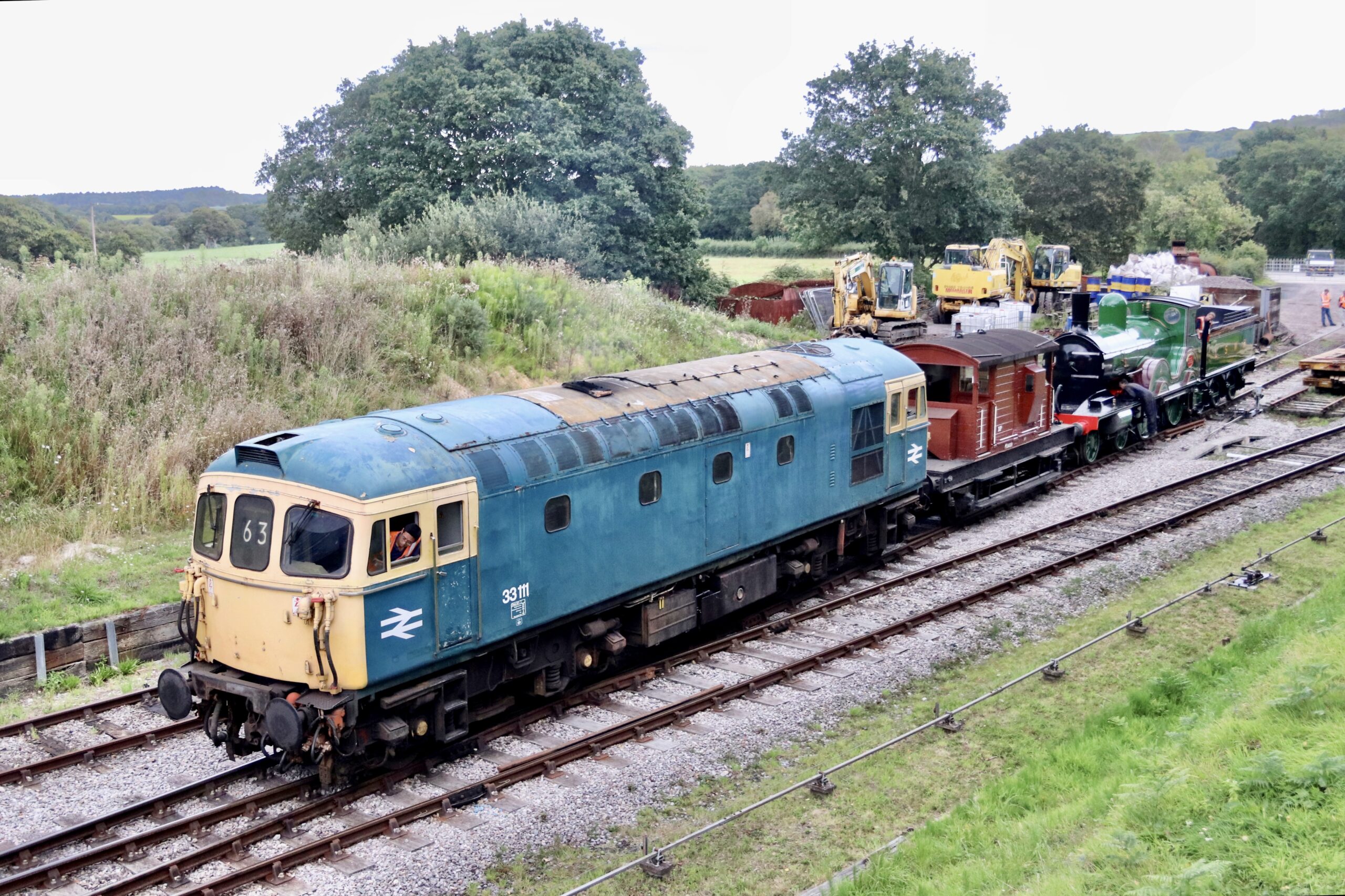
    We had a lot to catch up on (not least two weeks of laundry!) and I was interested to see how many out off the ordinary railway workings to Dorset and other events I had missed. First up was the launch of Adams T3 No. 563 into service at the Swanage Railway following weeks of test runs and remedial work.

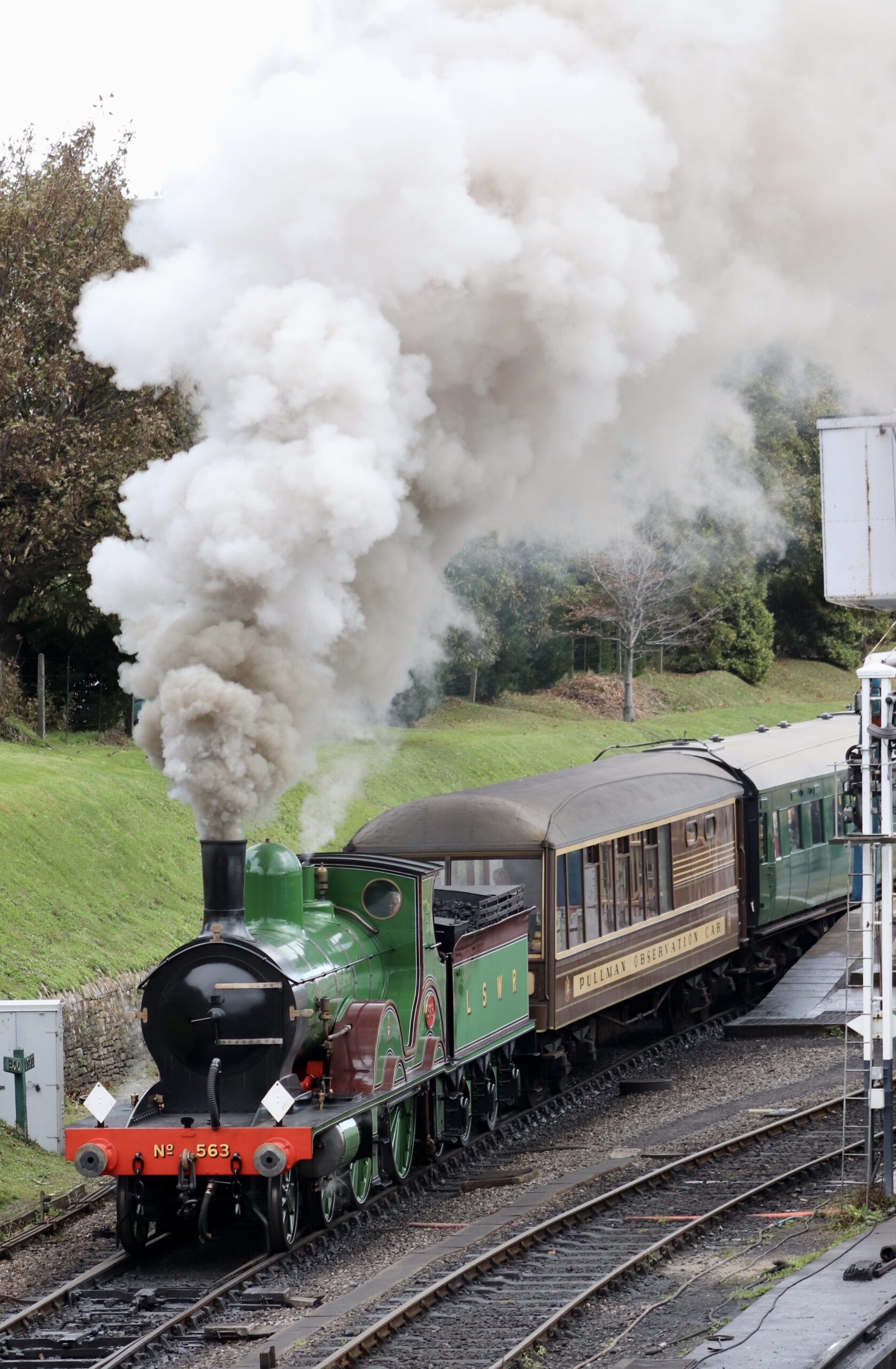
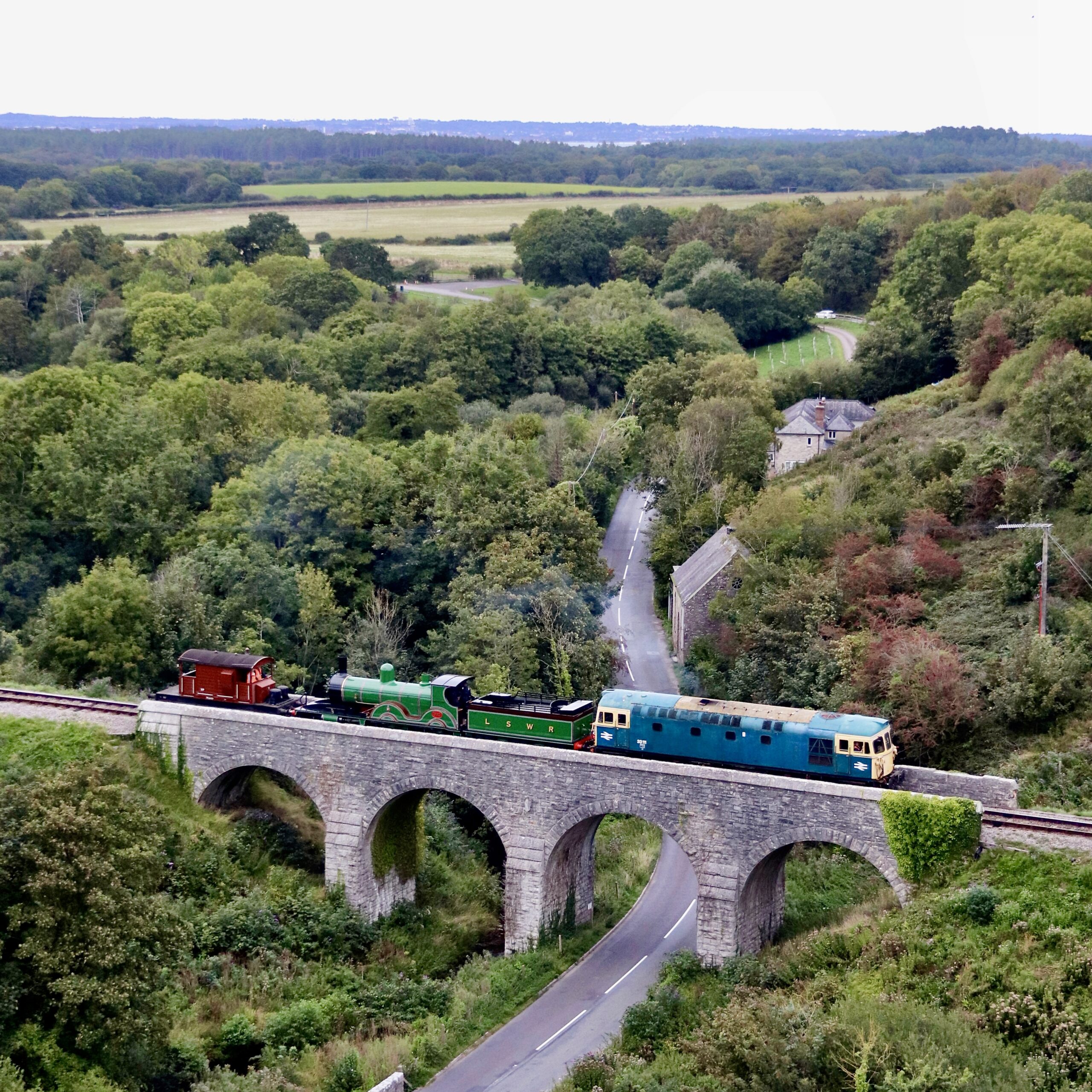
    Railway heritage at its very best! An immaculate 1893 built LSWR T3 No.563 in all its glory crosses the viaduct at Corfe – 21/10/2023

    Built in 1893 by the London and South Western Railway (LSWR) William Adams T3 4-4-0 No. 563 hauled her first passenger trains in 75 years on 7th October 2023 during a special day celebrating supporters who donated to the £650,000, six year restoration of the Victorian steam locomotive. Designed to haul express trains between London Waterloo and the south coast of England, No. 563 was destined for scrap in 1939 but the outbreak of World War Two saw her being saved and pressed into wartime service. She once again escaped the cutters torch when she helped mark the centenary of London Waterloo railway station in 1948. No. 563 was donated to Swanage Railway Trust by the National Railway Museum (NRM) in 2017.

    Guests at the launch ceremony included Swanage Railway Trust patron Sir Philip Williams whose great-grandfather was on the board of the LSWR, the Lord-Lieutenant of Dorset; Angus Campbell, and Anthony Coulls, senior curator of rail transport and technology at the NRM. The relaunch of the locomotive coincided with the centenary of the Southern Railway (SR) and the 185th anniversary of the formation of the LSWR.

    Adams 4-4-0 T3 No.563 departs Swanage with a passenger train bound for Norden – 21/10/2023

    The T3 ran public services on the 8th October as well as half-term week 21st – 29th October 2023. We went to see the locomotive in service on Saturday 21st.

    T3 No. 563 makes a fine scene passing Harman’s Cross – 21/10/2023
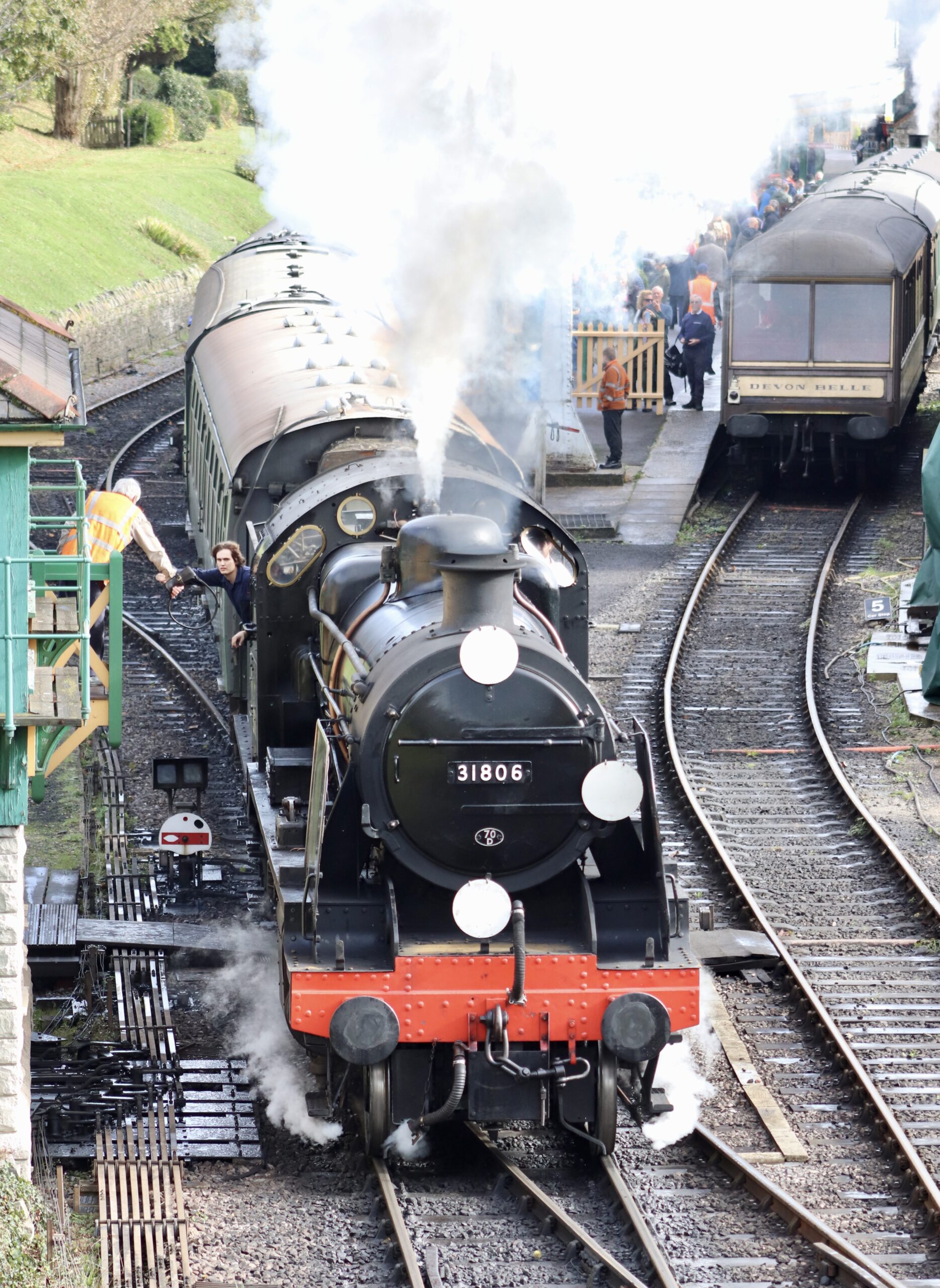
    Also sharing duties with the T3 was SR U Class 2-6-0 No. 31806, seen here departing Swanage with a member of the footplate crew collecting the token from the signalman – 21/10/2023
    Video from the Swanage Railway of T3 No. 563 in action – 21/10/2023

    For The Record:

    Over the last few weeks, a number of interesting workings have taken place in Dorset. Which is typical as I managed to miss most of them!

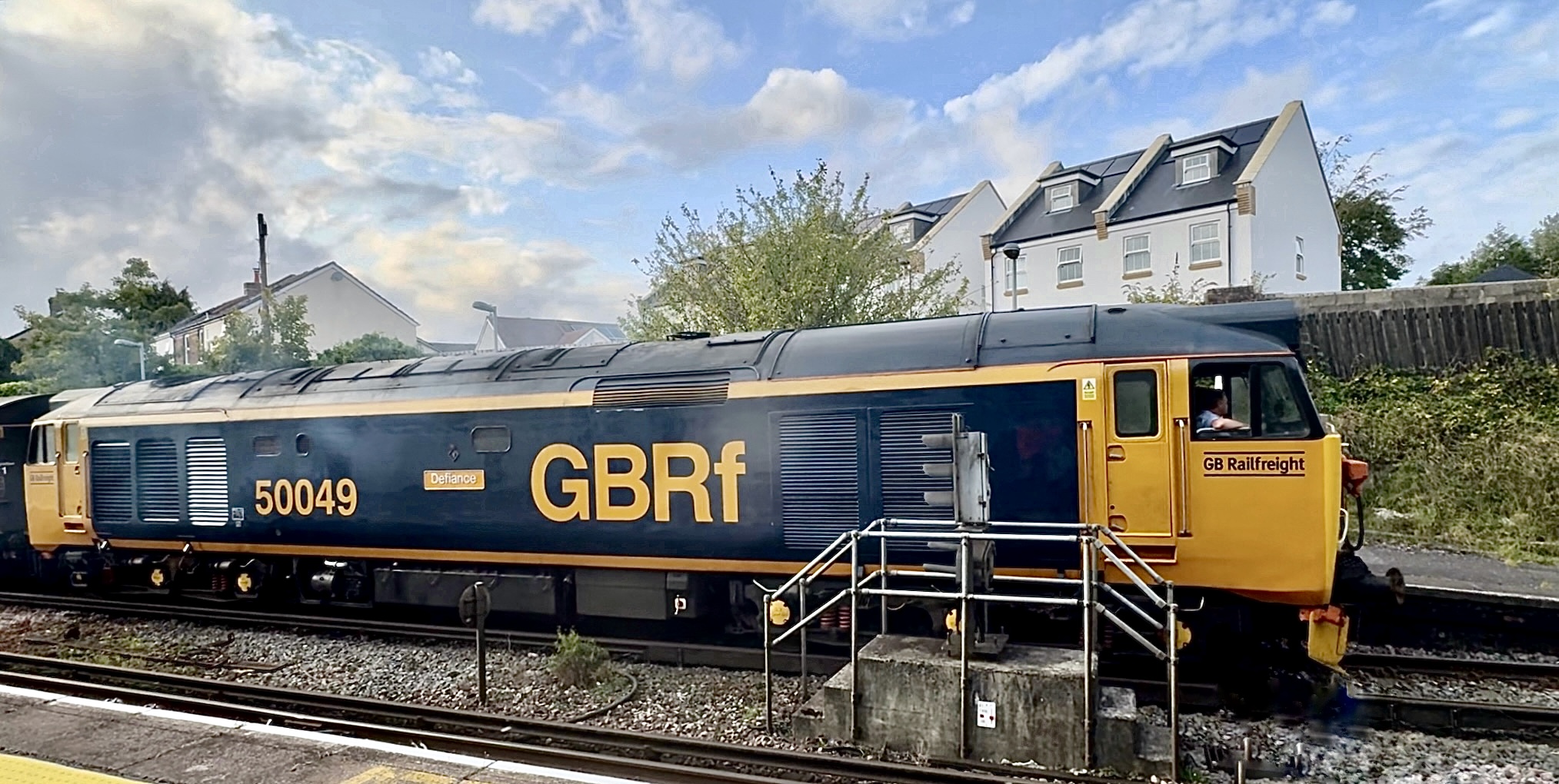
    GBRf liveried Class 50’s returned to Bournemouth employed on South Western Railway (SWR) Class 458 drags on 11th & 12th October 2023 running as 5X72 1044 Wembley Terminal Complex Wheel Lathe to Bournemouth Traction & Rolling Stock Maintenance Depot / 5Q73 1610 Bournemouth Traction & Rolling Stock Maintenance Depot to Widnes Transport Tech. Locomotives involved were No.’s 50007 ‘Hercules’ and 50049 ‘Defiance’ delivering No. 458425 to Bournemouth and taking No. 458416 to Widnes for conversion. The Class 458 units now based at Bournemouth depot have been out on test runs over the last few weeks.

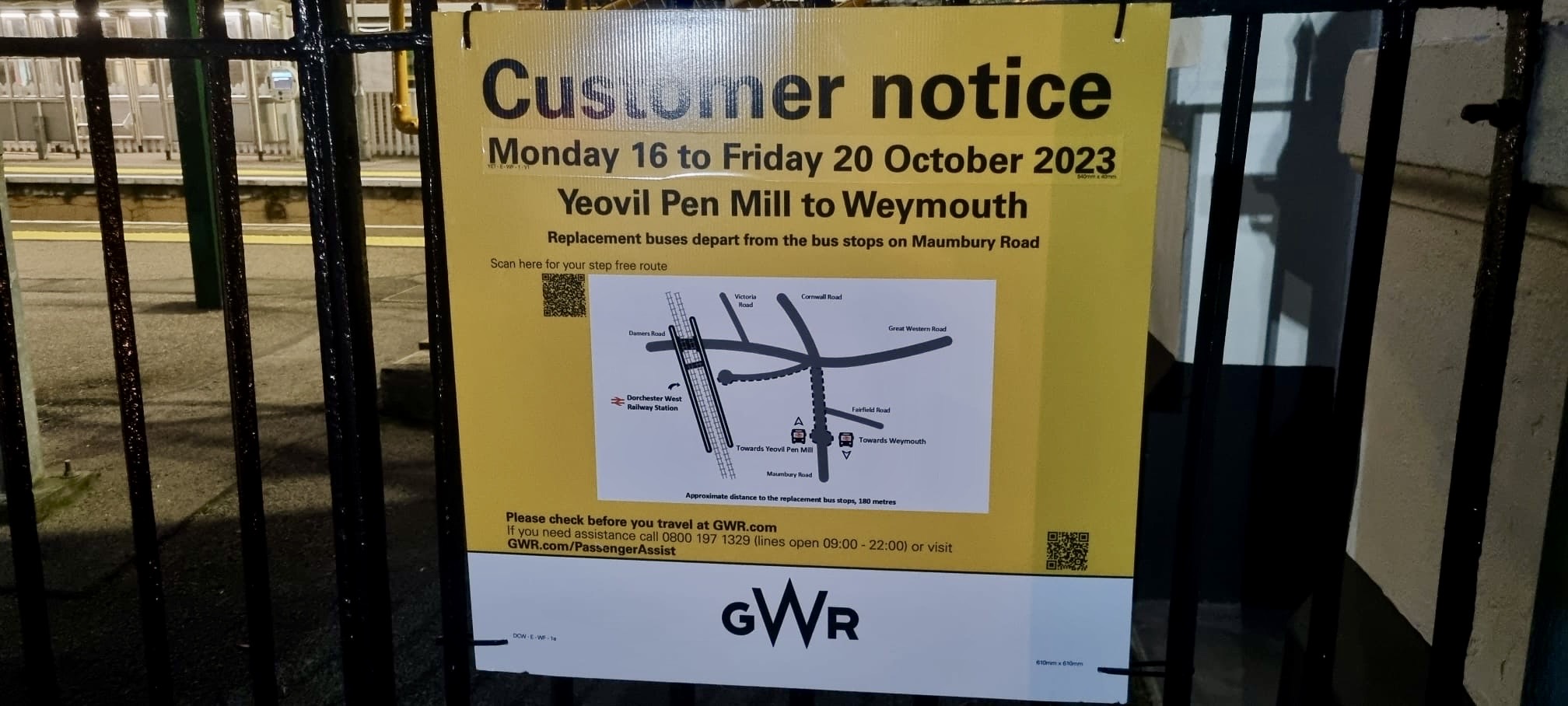
    Engineering work west of Yeovil meant buses replaced trains between Yeovil Pen Mill and Weymouth from Monday 16th to Friday 20th October. Network Rail (NR) engineers renewed just under half a mile of old 1950’s era track between Maiden Newton and Chetnole stations. The track update is said to “help prevent speed restrictions and means smoother passenger journeys”. Work also saw repairs being carried out to brickwork at Evershot tunnel and is part of a long-running programme to improve performance on the Heart of Wessex Line. Network Rail and train operators think it is more efficient to close the route for a whole week rather than to shut it for several weekends.

    Sign explaining rail replacement bus operations at Dorchester West (image courtesy of Scott Lewis)

    Associated engineers trains were as follows; 15th October 2023: 6C04 2349 Westbury Down T.C. to Yeovil Pen Mill – Class 70 No. 70814 17th October 2023: 6C04 02:00 Yeovil Pen Mill to Westbury Down Yard – No. 70814 / 6G22 0202 Westbury Down T.C. to Yeovil Pen Mill – Class 66 No.’s 66709 and 66774 / 6Y88 0921 Westbury Down T.C. to Yeovil Pen Mill – No.’s 66544 and 66556 18th October 2023: 6G22 0837 Yeovil Pen Mill to Westbury Down T.C. – No.’s 66774 and 66709 / 6Y88 11:40 Yeovil Pen Mill to Westbury Down Yard – No.’s 66544 and 66556 / 6Y90 2156 Westbury Down T.C. to Yeovil Pen Mill – No. 66415. 19th October 2023: 6Y90 2334 Yeovil Pen Mill to Westbury Down T.C. – No. 66415

    16th & 17th October 2023: saw a rare visit of inspection saloon ‘Caroline’ to the area working as 5Z01 1102 Derby R.T.C.(Network Rail) to Bournemouth Up Siding / 5Z02 0655 Bournemouth Up Siding to Bournemouth / 2Z02 0735 Bournemouth to Southampton Central via Weymouth all involving Class 37 No. 37418 ‘An Comunn Gaidhealach’ along with No. 975025 ‘Caroline’

    Class 37 No. 37418 ‘An Comunn Gaidhealach’ with 975025 ‘Caroline’ working as 2Z02 0735 Bournemouth to Southampton Central via Weymouth – 17/10/2023 (video courtesy of G E Barrett)

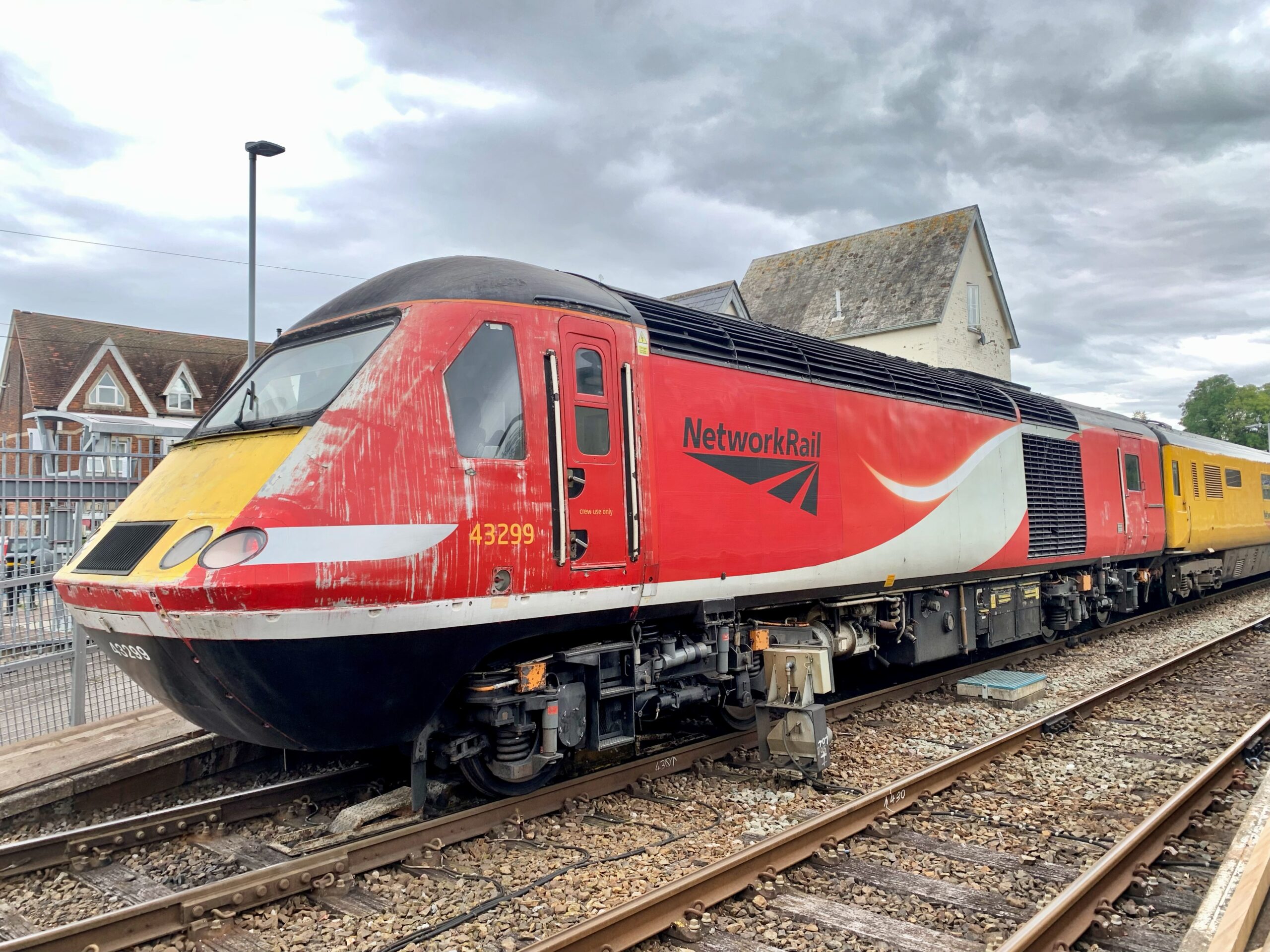
    19th October 2023 1Q23 0556 Reading to Salisbury New Measurement Train in the charge of Class 43 HST power cars No.’s 43251 and 43274 failed when climbing the bank between Exeter St Davids and Exeter Central. The train returned to Exeter St Davids, departing from there at around 1210 and routed towards Taunton, picking up the timetabled path at Westbury some 114 minutes late.

    Two engineers trains also visited the Bournemouth area when the 19th and 20th October 2023 saw 6N70 2254 Eastleigh East Yard to Christchurch /6N70 0502 Bournemouth to Eastleigh East Yard top and tailed by Class 66 No.’s 66007 and 66088 whilst on 21st October 2023 6G17 0032 Eastleigh East Yard to New Milton via Bournemouth operated by No.’s 66755 and 66711

    23rd October 2023 and it was the return of Network Rail’s Plain Line Pattern Recognition Train (PLPR) hauled, as usual by GBRf Class 73 electro-diesel locomotives which this month were No. 73965 ‘Des O’Brien’ and No. 73964 ‘Jeanette’. PLPR trains use a variety of tools to measure and detect defects in the track which may have the potential to cause problems. Equipment include a 4 foot camera used to check on track condition and thermal imaging to check rail temperatures.

    1Q51 1115 Derby R.T.C.(Network Rail) to Eastleigh East Yard at Hamworthy with 73965 ‘Des O’Brien’ and 73964 ‘Jeanette’ – 23/10/2023

    A couple of days later on 25th October 2023 and the Ultrasonic Test Train (UTU) was out and about on our patch as 3Q02 2140 Eastleigh East Yard to Eastleigh East Yard. The UTU is usually comprised of a locomotive at one end and a Driving Brake Standard Open (DBSO) at the other. The DBSO can lead the train and control the locomotive at the other end, which was the case on the outward run of 3Q02 to Weymouth this time around. UTU trains have ground penetrating radar systems to detect voids and deformations up to two metres into the ballast and earth below, and use profile scanners to help identify any issues similar to the PLPR test train.

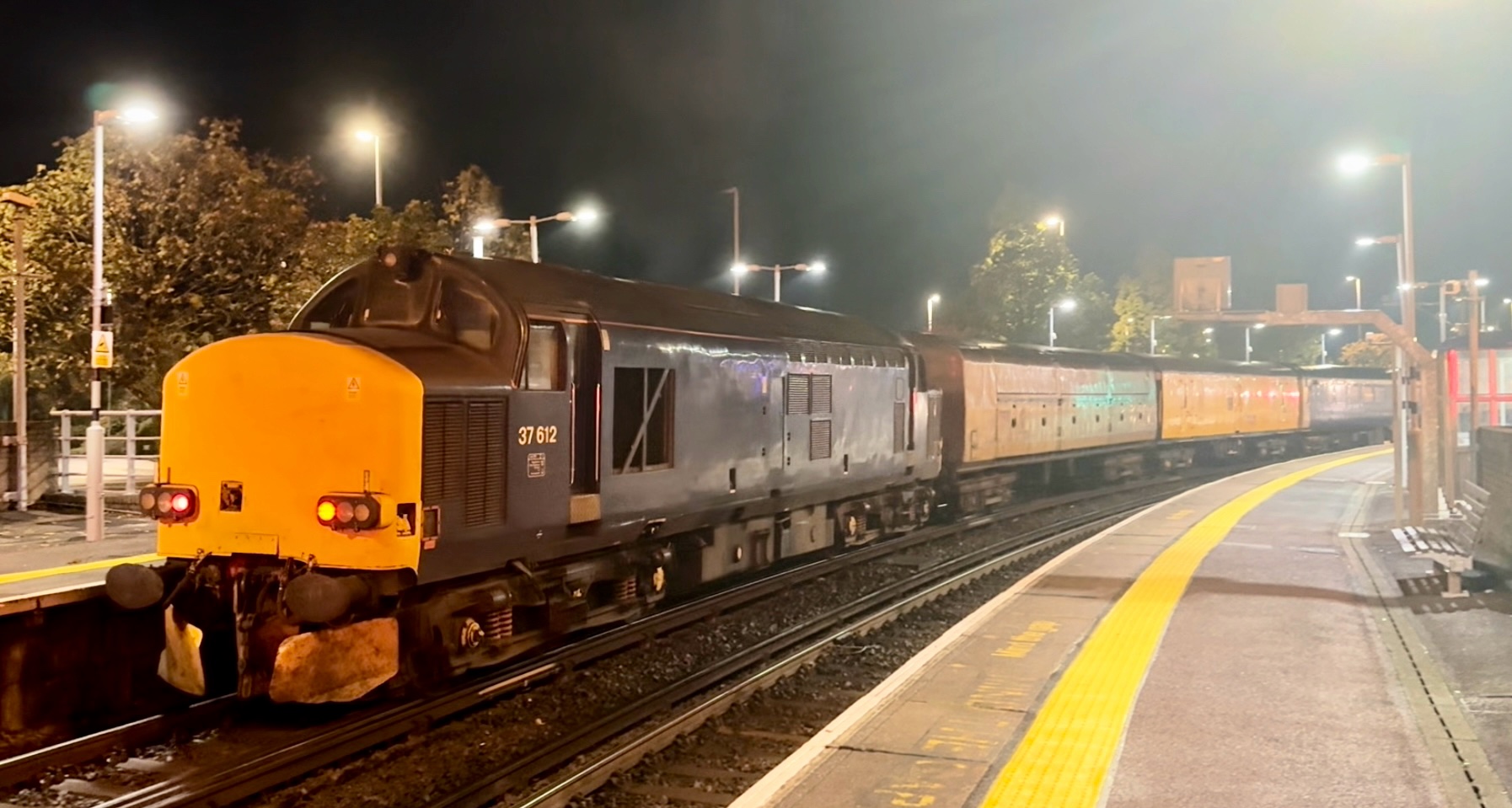
    Colas Class 37 No. 37612 in debranded DRS blue livery at the rear of the Ultrasonic Test Train at Poole – 25/10/2023
    Class 37 No. 37612 and DBSO No. 9703 working 3Q02 2140 Eastleigh East Yard to Eastleigh East Yard at Poole – 25/10/2023

    In the next few weeks, there is more local rail disruption to come affecting trains in North Dorset on the Waterloo – Exeter route as Network Rail will be closing the line between Salisbury and Axminster for 21 days in November and December 2023.

    Firstly, the line between between Yeovil Junction and Axminster will be closed for five days between Monday November 6th to Friday  November 10th. A second closure takes place between Salisbury and Yeovil Junction from Saturday November 25th to Sunday December 10th. Engineers will be working around the clock to complete key upgrades at four different worksites and upgrades are part of a wider half a million-pound investment to improve reliability and performance along the line. Work will also take place at Crewkerne Tunnel where engineers will attempt to stabilise the cutting following a landslip in October 2021. There will be an installation of new drainage to help to reduce the impact of heavy rainfall. Additional work will take place with the replacement of the barriers at the Broom and Axe level crossing, and the Weycroft River Bridge will have protective, anti-corrosion paint work applied. Areas of waterlogged track stones will be removed.   

    The Salisbury-Exeter Rail Users Group (SERUG) accepts the maintenance work to track and earthworks is necessary as it says only 77% of services run on time.

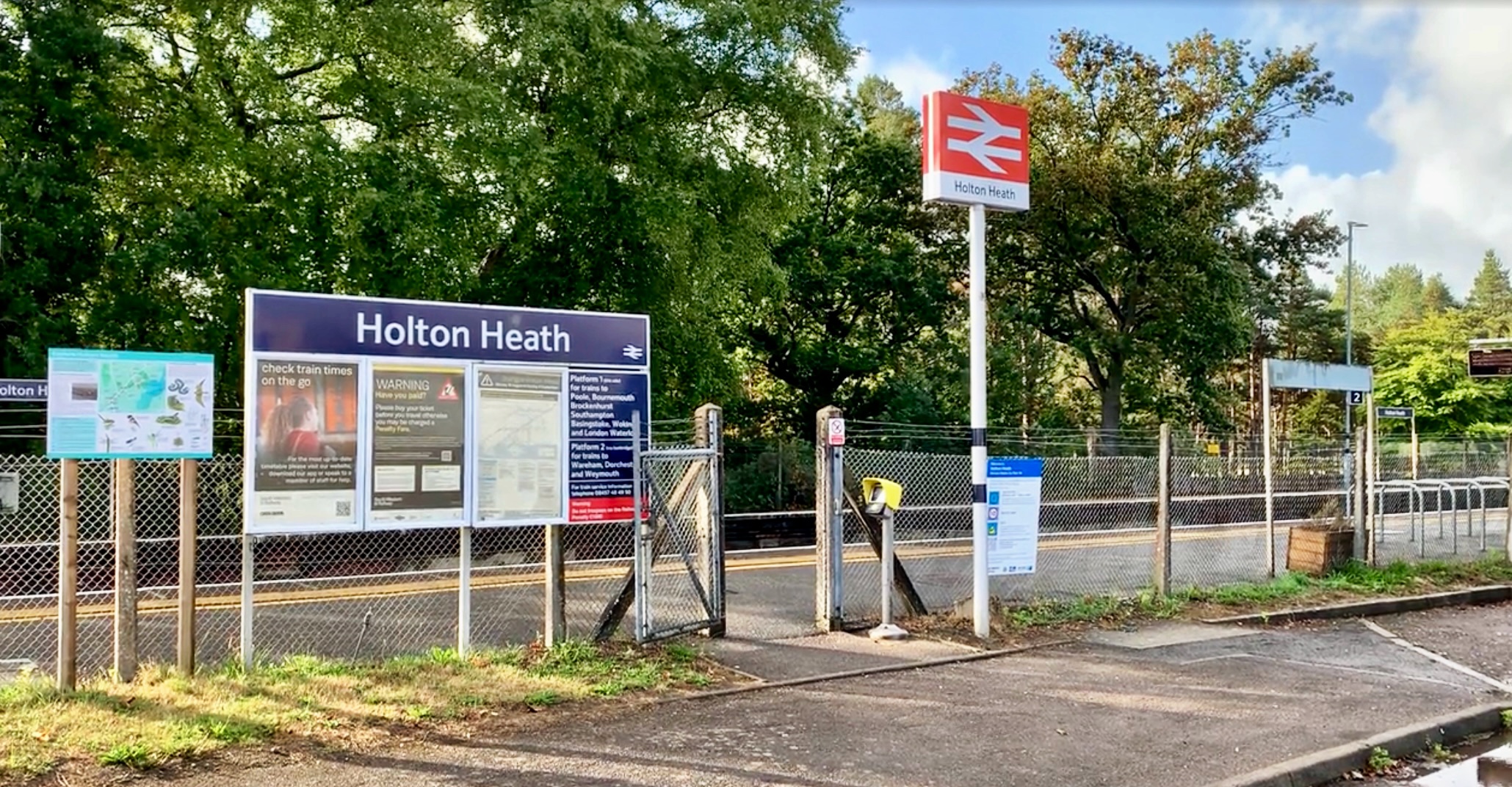
    Holton Heath railway station – 07/09/2022

    In other news, the Poole Harbour Trails community group have successfully registered a disused railway line as a right of way after spending the last 13 years trying to formalise the footpath at Sandford, Poole. The currently overgrown route follows the railway that serviced the Royal Naval Cordite Factory (RNCF) at Holton Heath that closed in the 1950’s and had been used as a path by locals for many years until it became obstructed in 2010. The Friends of the Cordite Way Clearance group received permission earlier this year to start clearance but had to wait for the nesting season to end, beginning work in September on the first section to the viewpoint overlooking Poole Harbour and Arne peninsular. It is hoped to open this first section in the summer of 2024. 

    Recent research by the walking charity Ramblers found that more than 49,000 miles of paths in England and Wales did not feature on official maps and were at risk of being permanently lost with the government setting a deadline in England of 2031 to apply to get these paths re-registered, however Ramblers believe this deadline should be withdrawn.

    Holton Heath railway station – 07/09/2022

    Holton Heath railway station is located near the western shore of Poole Harbour and was opened on 3rd April 1916 for use by workers at the Naval Cordite Works which had been established during the First World War. The station was made available for public use from 14th July 1924. Holton Heath has been unstaffed since 1964, with the signal box being removed on 3rd November 1969.

    On 20th April 1989 a fatal accident occurred just beyond the siding on the London side of the station, when a light locomotive, which had just completed shunting duties at Winfrith nuclear power station, collided with the rear of a freight train. The driver of the light locomotive, Clive Brooker, died in the accident. Holton Heath railway station – 07/09/2022

    Cordite was an explosive component used as a propellant for shells. The factory was built in 1915-16. It was the first purpose-built site for cordite production in the United Kingdom. One of the main ingredients for cordite was acetone. The factory provided its own supply through an acetone plant, which employed novel fermentation technology using maize as a starch source. The RNCF was effectively self-sufficient and had its own internal rail system with about five miles of standard gauge track and 14 miles of narrow gauge, together with its own rolling stock. During the First World War, cordite was dispatched to a jetty in Poole Harbour by rail where it was loaded onto sailing barges for transport to Priddy’s Hard in Gosport. The factory continued to manufacture cordite until 1946. Production at RNCF finally ended in 1957 but many of the buildings still survive.

    SWR Class 444 No. 444002 passes No. 444017 at Holton Heath railway station – 07/09/2022

    Grand Central Terminal

    Sunrise over Manhatten from the deck of Queen Mary 2 – 13/10/2023

    We were able to spend a few hours in New York on Friday 13th October 2023. Having never visited the Big Apple previously, I had a short list of things I was hoping to see and Caroline, who has spent time in the city before, was kind enough to indulge me.

    QM2 Brooklyn Cruise Terminal. She is too large to dock on the West Side Piers which means passengers require transit to Manhattan – 13/10/2023
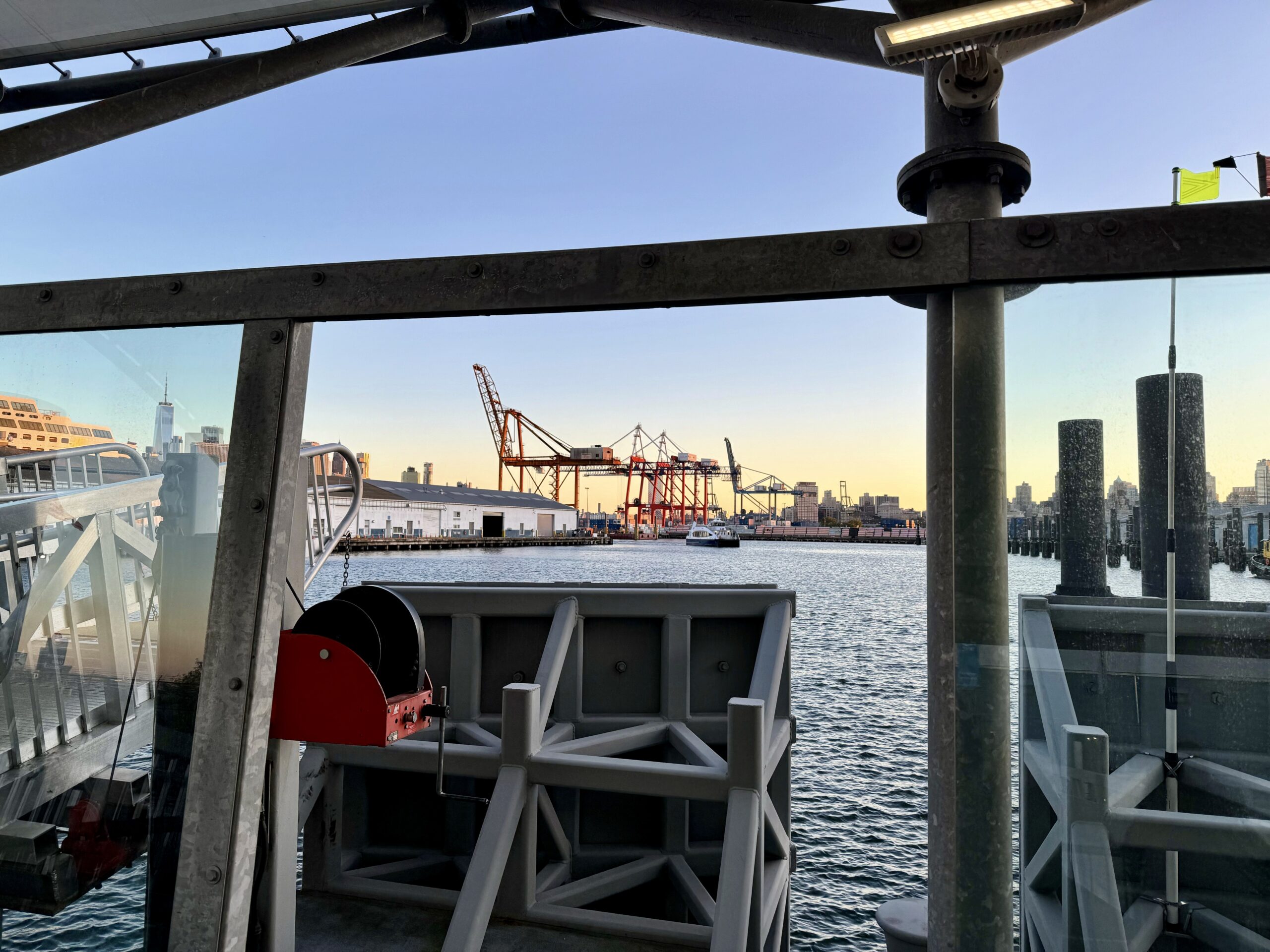
    The NY Water Ferry approaches Red Hook Atlantic Basin, Brooklyn – 13/10/2023

    We disembarked the ship at 0700 and were waved through immigration arriving in good time to catch the first water ferry from Red Hook Atlantic Basin, Brooklyn which was adjacent to QM2’s berth over to Manhattan Island.  

    A NY water Ferry passes QM2, Red Hook, Brooklyn – 13/10/2023

    We needed to change ferries at Wall Street to take us up the East river to East 34th Street and following a 42 minute walk we were able to have “Breakfast outside Tiffany’s” before continuing our journey on foot through Times Square and past the New York Library (which was yet to open, but was on my list for a visit to the Polonsky Exhibition of The New York Public Library’s Treasures) to Grand Central Terminal, located at 42nd Street and Park Avenue in Midtown Manhattan. 

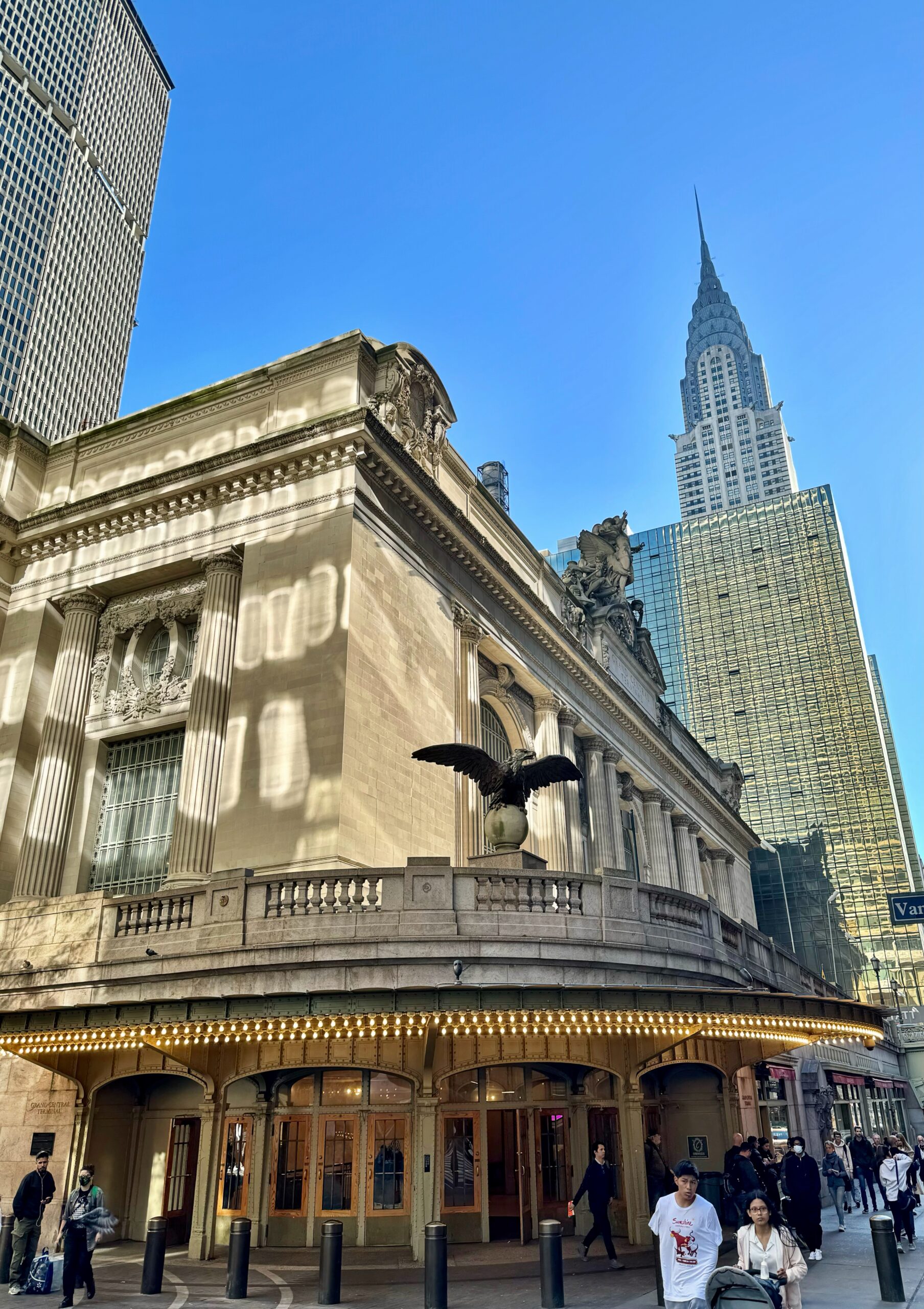
    The Chrysler Building, at 1,046 ft is the tallest brick building in the world with a steel framework, overlooks Grand Central Terminal – 13/10/2023

    Grand Central Terminal was designed in the Beaux-Arts style by Reed and Stem – an American architectural and engineering firm founded in Minnesota in 1891 as a partnership between Charles A. Reed (1858–1911) and Allen H. Stem (1856–1931) – who handled the overall design of the terminal, and Warren and Wetmore –  a New York architecture partnership between Whitney Warren (1864–1943) and Charles Delevan Wetmore (1866–1941) – which mainly made cosmetic alterations to the exterior and interior.

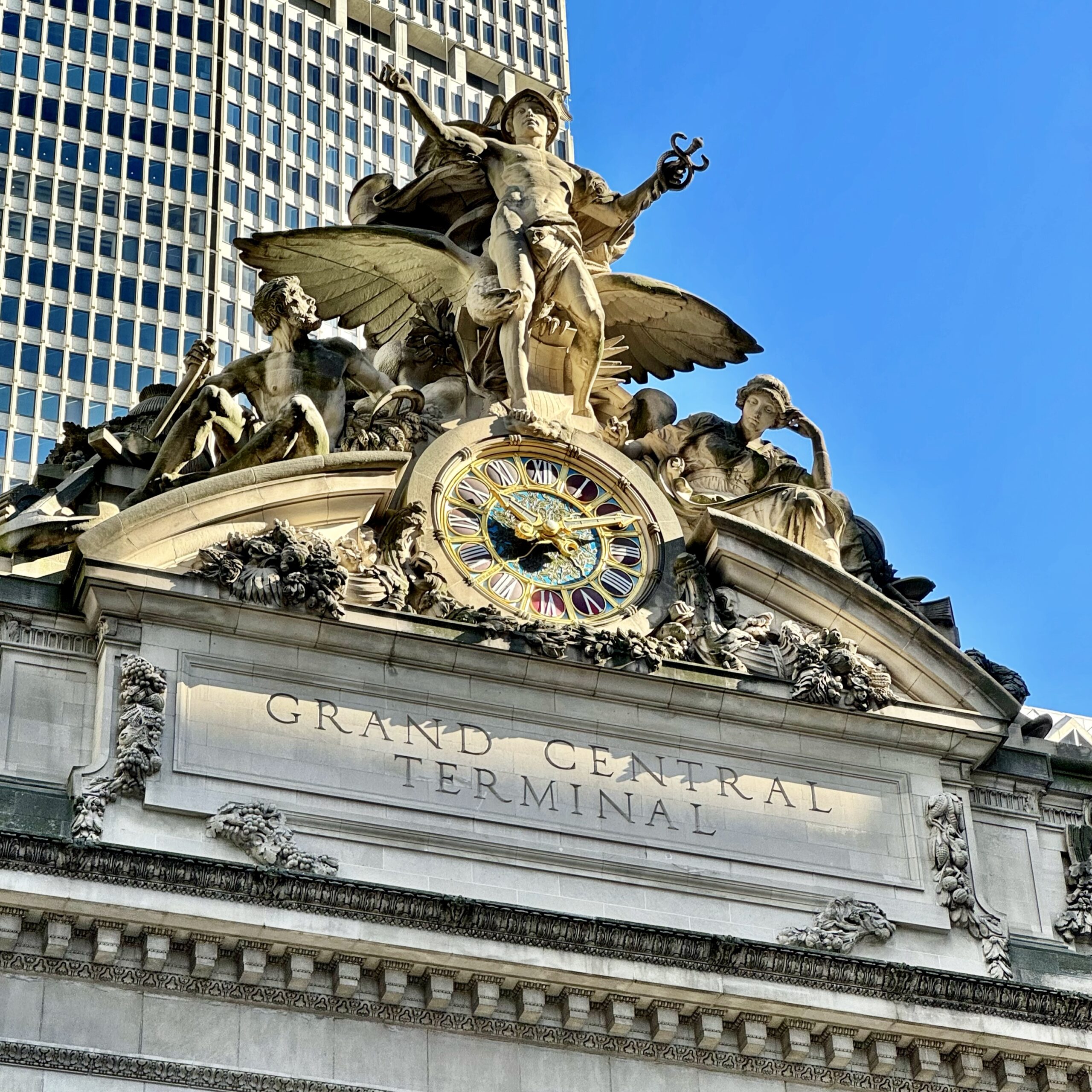
    “Glory of Commerce”, a sculptural group by Jules-Félix Coutan – 13/10/2023

    The Beaux-Arts architecture evolved from the French classicism of the Style Louis XIV, and then French neoclassicism beginning with Style Louis XV and Style Louis XV and was the academic architectural style taught at the École des Beaux-Arts in Paris, particularly from the 1830’s to the end of the 19th century. It drew upon the principles of French neoclassicism, but also incorporated Renaissance and Baroque elements, and used modern materials, such as iron and glass, and later, steel. It was an important style in Europe and the Americas through the end of the 19th century, and into the 20th. Various elements inside the terminal were designed by French architects and artists Jules-Félix Coutan (1848–1939), Sylvain Salières (1865–1920), and Paul César Helleu (1859–1927). Grand Central has monumental spaces as well as meticulously crafted detail, especially on its facade, which is based on an overall exterior design provided by Whitney Warren.

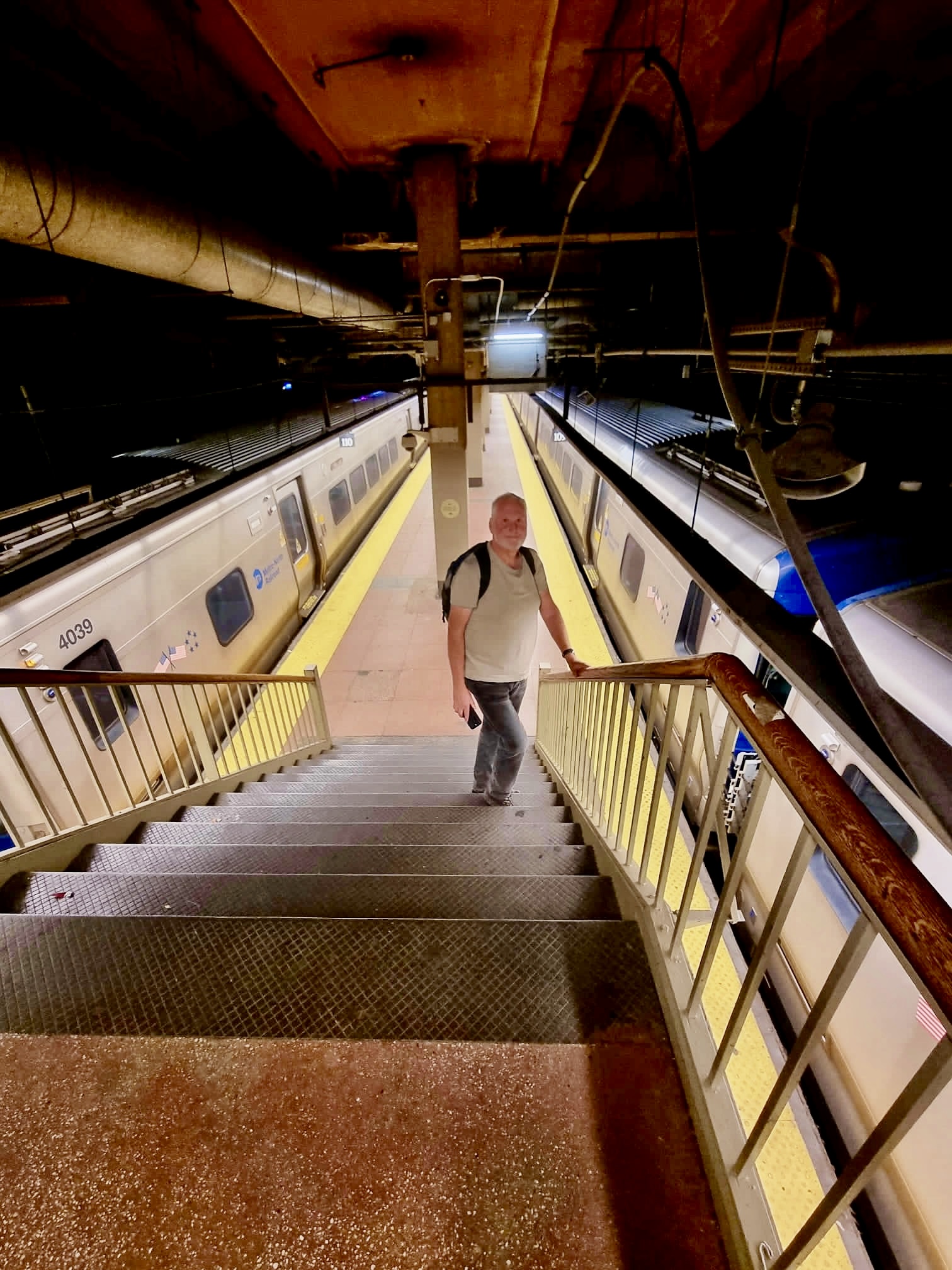
    I made it to the trains! Grand Central Terminal – 13/10/2023 (CLS)

    The Terminal, built on the site of a former railroad depot and phased in over the course of nearly a decade being completed in 1913, covers 48 acres and has over 40 platforms, more than any other railway station in the world. The platforms are all below ground, serving 30 tracks on the upper level and 26 on the lower. In total, there are 67 tracks, including a rail yard and sidings; of these, 43 tracks are in use for passenger services, while the remaining two dozen or so are used to store trains.

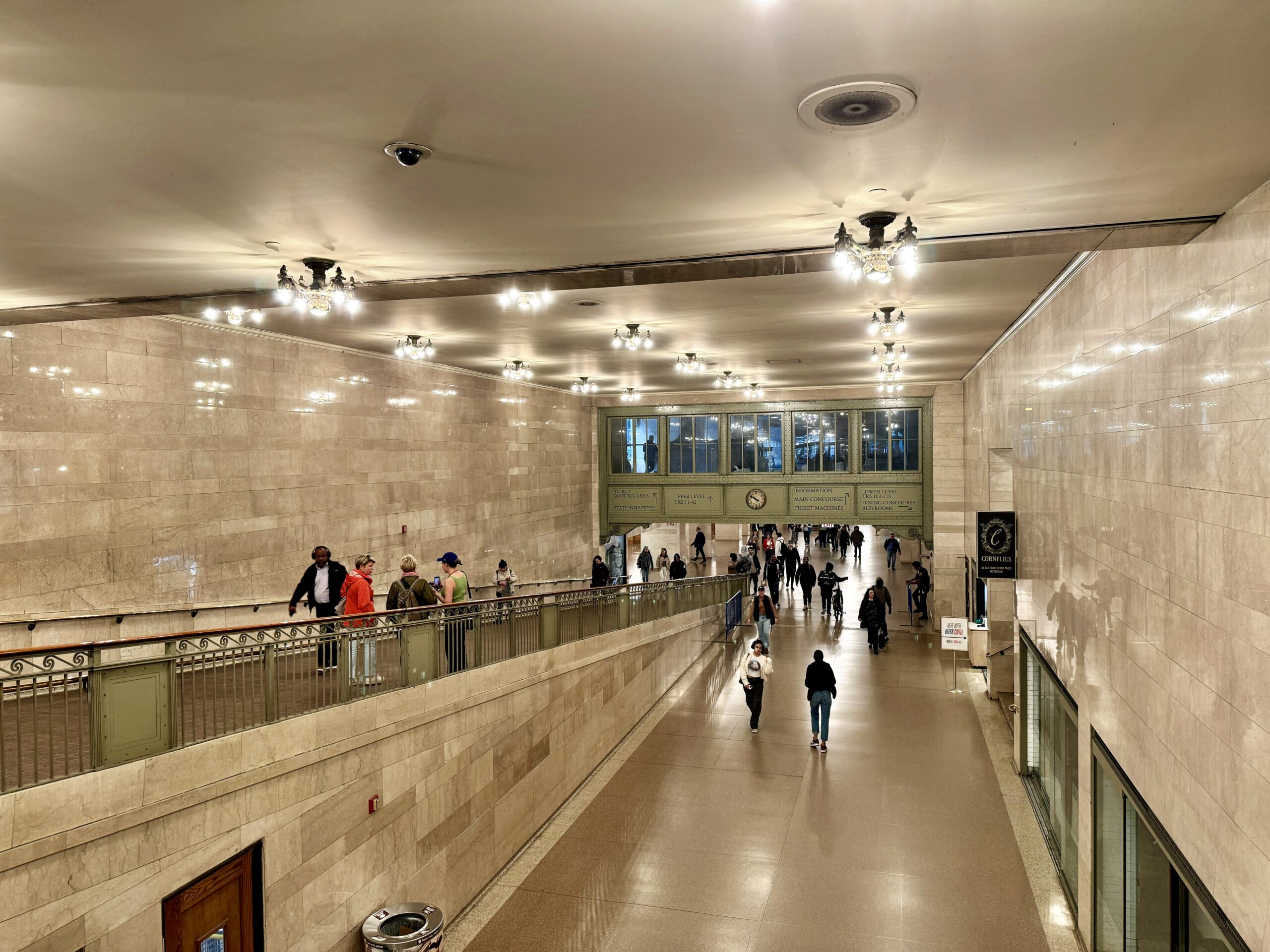
    Ramp to the Main Concourse, Grand Central Terminal – 13/10/2023

    Grand Central Terminal was built and named by the New York Central Railroad which also served the New York, New Haven and Hartford Railroad. The terminal was built on the site of two previous stations, the first of which originated in 1871. Grand Central Terminal served intercity trains until 1991, when Amtrak began routing its trains through nearby New York Penn Station. Grand Central is now the southern terminus of the Metro-North Railroad’s Harlem, Hudson and New Haven Lines, serving the northern parts of the New York metropolitan area. It also contains a connection to the Long Island Rail Road through the Grand Central Madison station as well as connecting to the New York City Subway at Grand Central–42nd Street station. The terminal is the third-busiest railway station in North America.

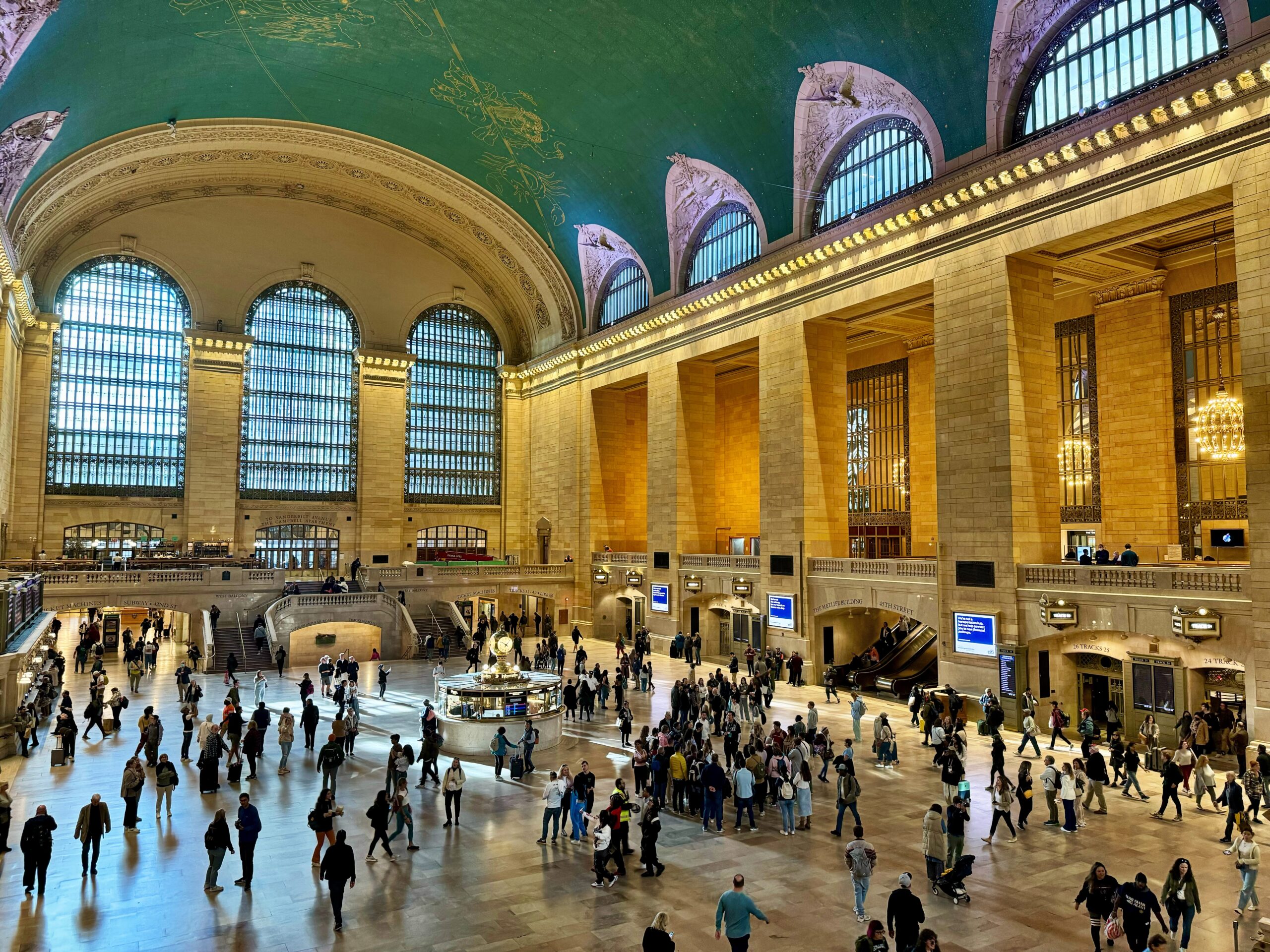
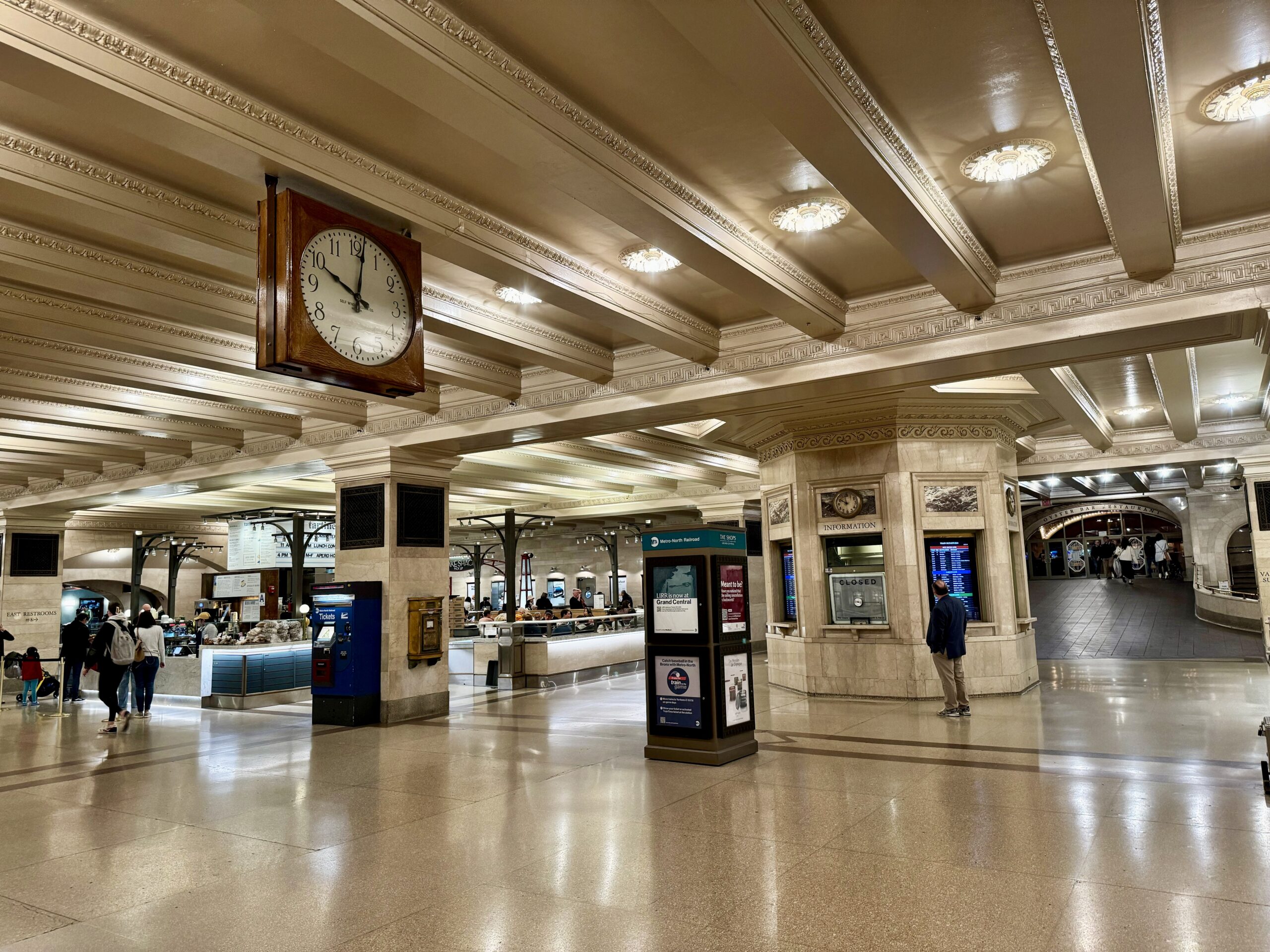
    The Main Concourse at Grand Central – 13/10/2023

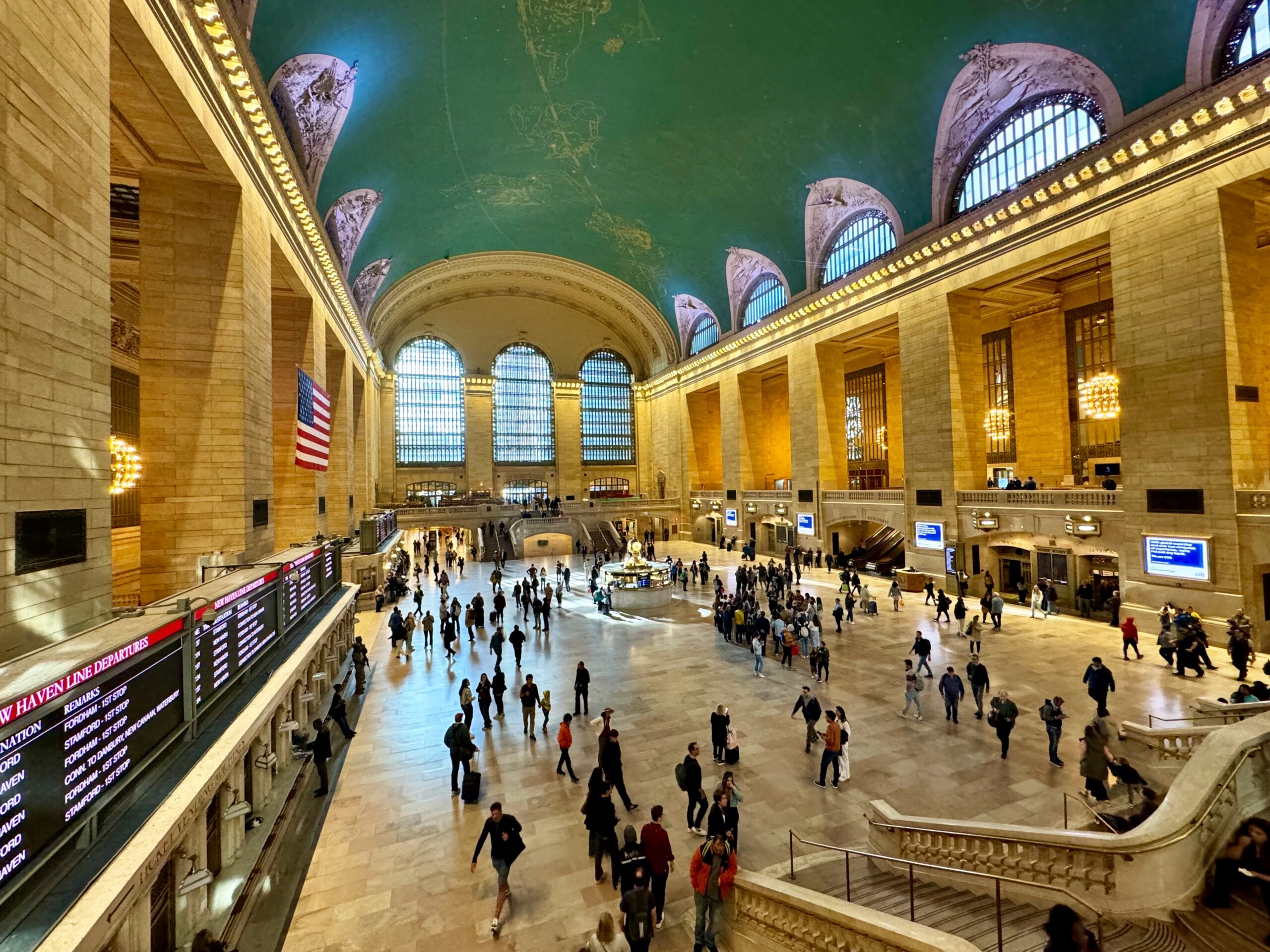
    The Main Concourse is located on the upper platform level of Grand Central, in the centre of the station building. The 35,000 square foot area leads directly to most of the terminal’s upper-level tracks. In their design for the station’s interior, Reed & Stem created a circulation system that allowed passengers alighting from trains to enter the Main Concourse, then leave through various passages that branch from it. The Main Concourse, often featured in films and television, is a busy space filled with people hurrying to their destination or onlookers taking in the grandeur of their location.

    The four-sided brass clock at Grand Central – 13/10/2023 (CLS)

    At the centre of the concourse is an information booth topped with a four sided brass clock, one of Grand Central’s most recognisable icons. The terminal’s main departure boards are located at the south end of the concourse.

    The Main Concourse, Grand Central Terminal with the train information boards on the left hand side of the image – 13/10/2023

    Grand Central Terminal contains a variety of stores and food vendors, including restaurants and bars, a food hall, and a grocery marketplace. The building is also noted for its library, event hall, tennis club, control centre and offices for the railroad, and sub-basement power station.

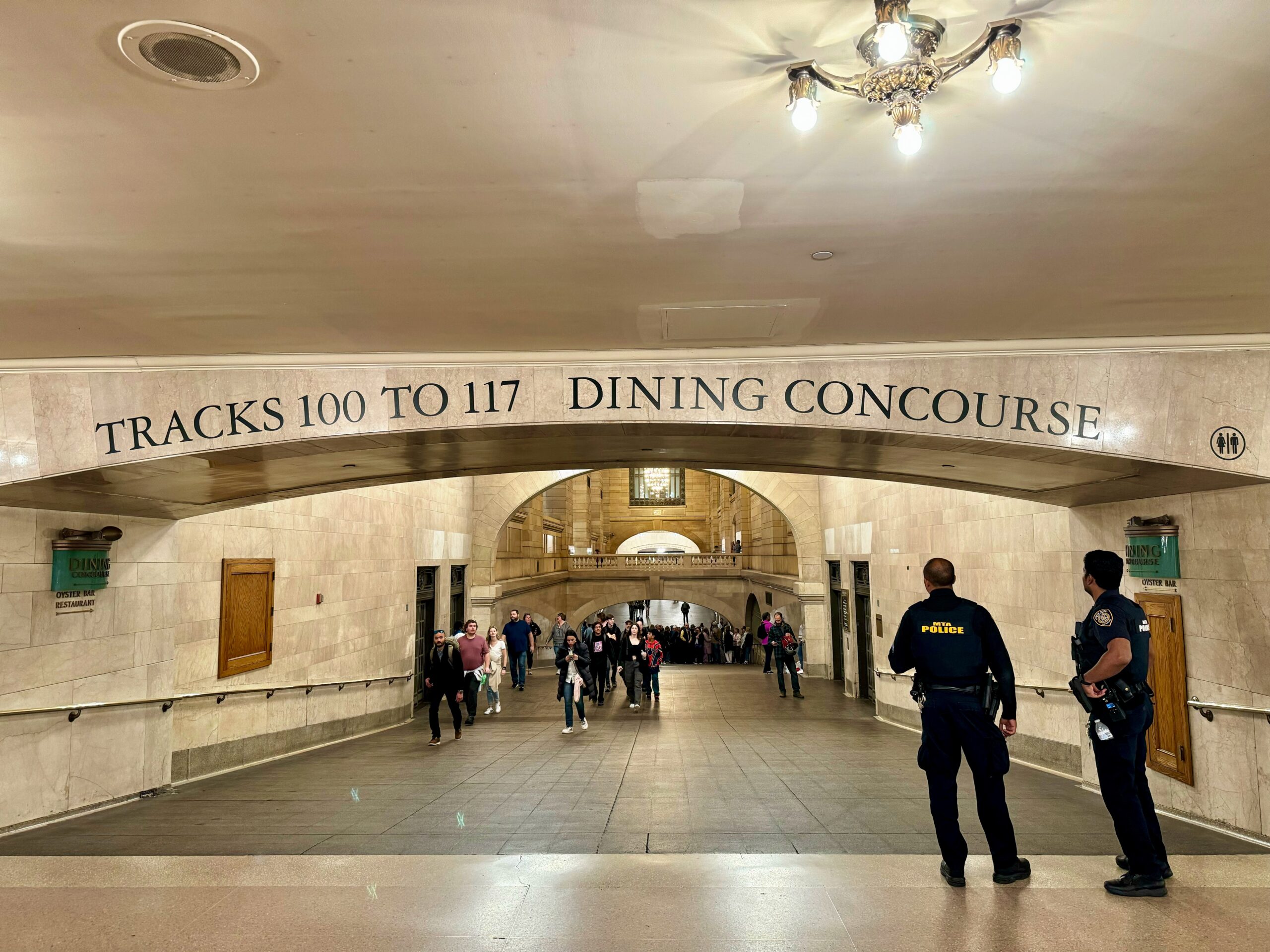
    Ramp to the Dining Concourse, Grand Central – 13/10/2023
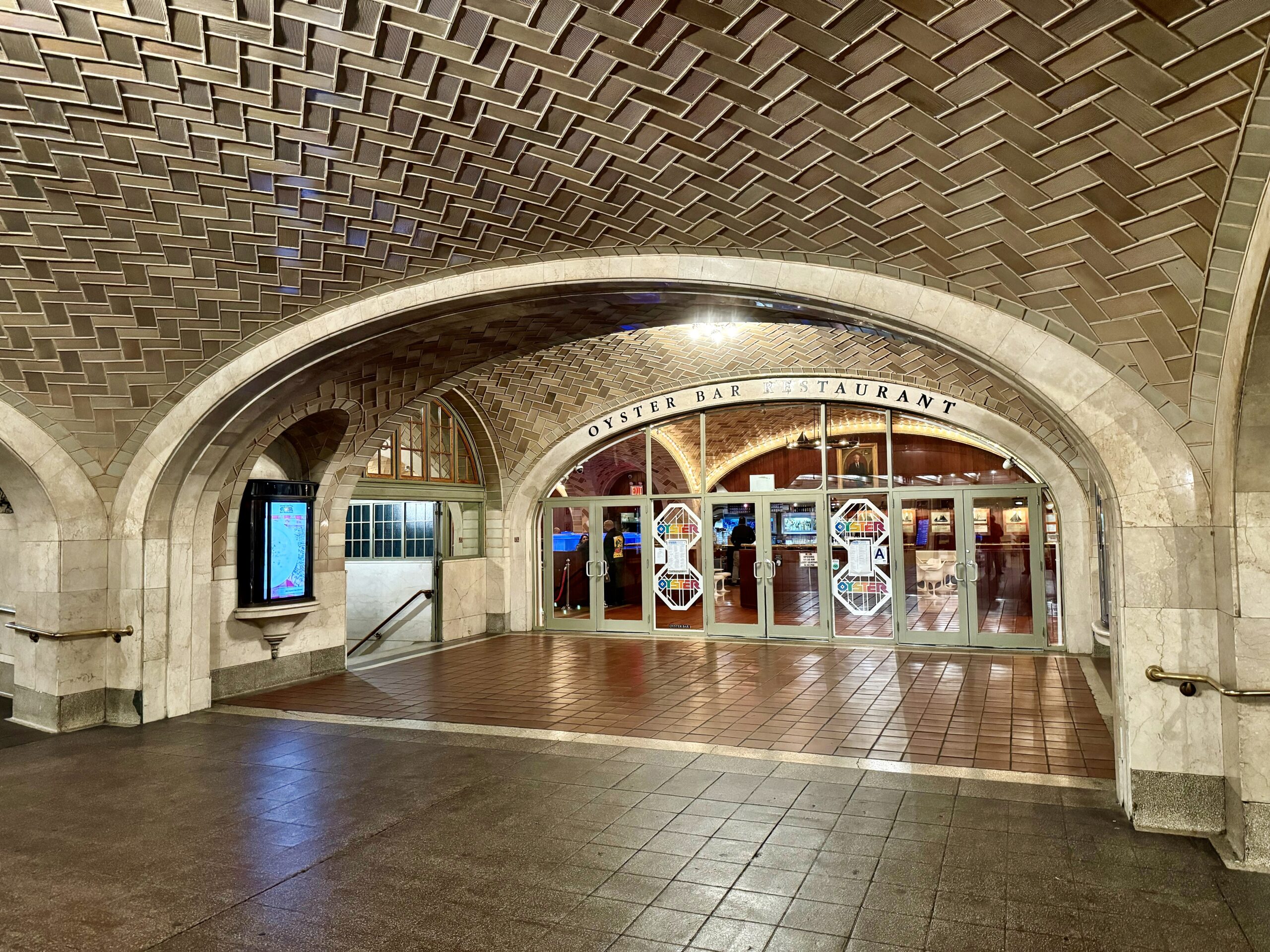
    The Oyster Bar – 13/10/2023
    Dining Concourse, Grand Central Terminal – 13/10/2023

    Ramps include the Vanderbilt Avenue ramp and the Oyster Bar ramps. The Oyster Bar ramps lead down from the Main Concourse to the Oyster Bar and Dining Concourse.

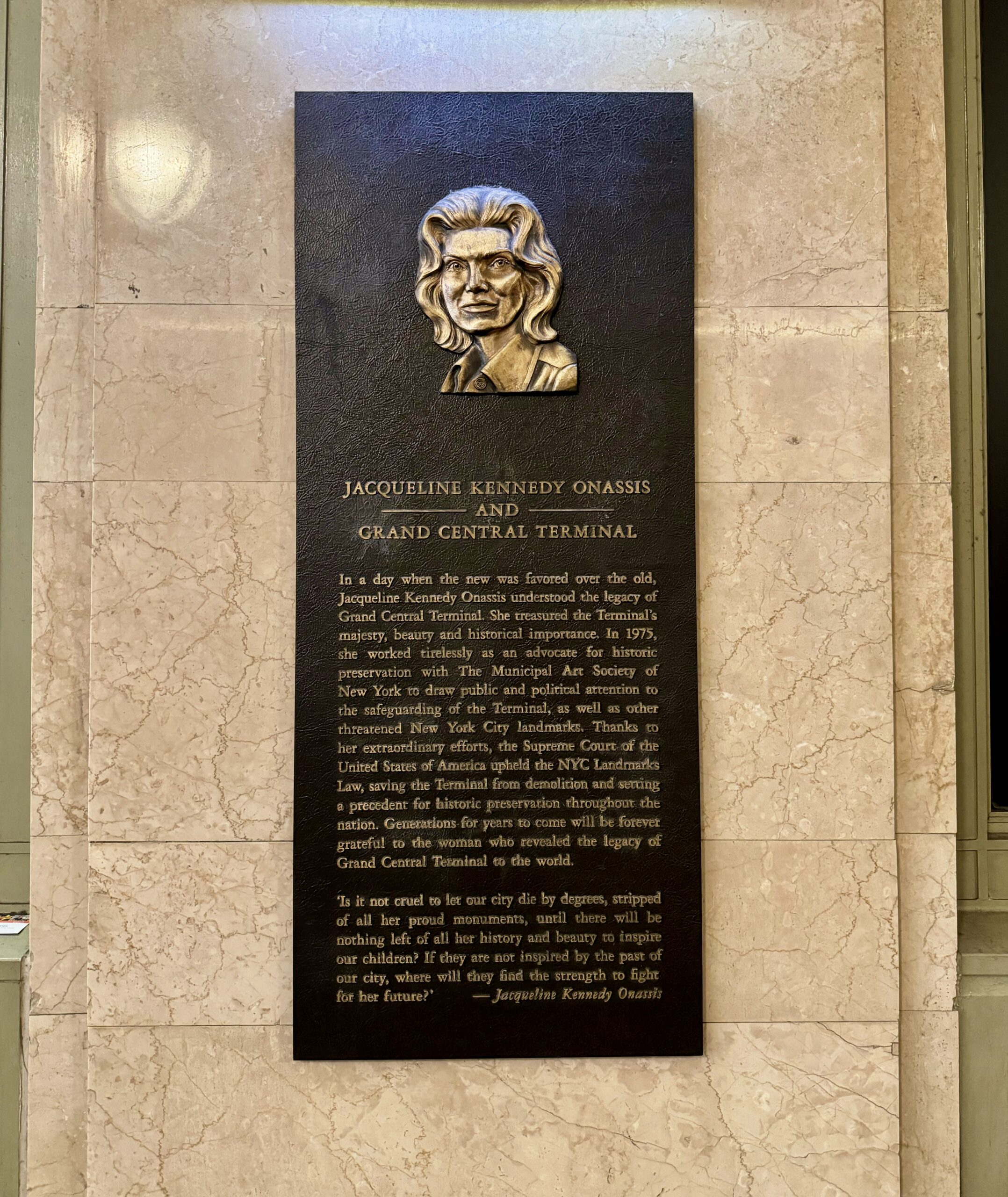
    Jacqueline Kennedy Onassis Foyer – 13/10/2023

    The main entrance into the terminal, underneath the Park Avenue Viaduct, opens into the Jacqueline Kennedy Onassis Foyer, so named in 2014 in honour of the former First Lady of the United States, who in the 1970’s helped prevent the demolition of the Main Concourse and the plan to build Grand Central Tower.  

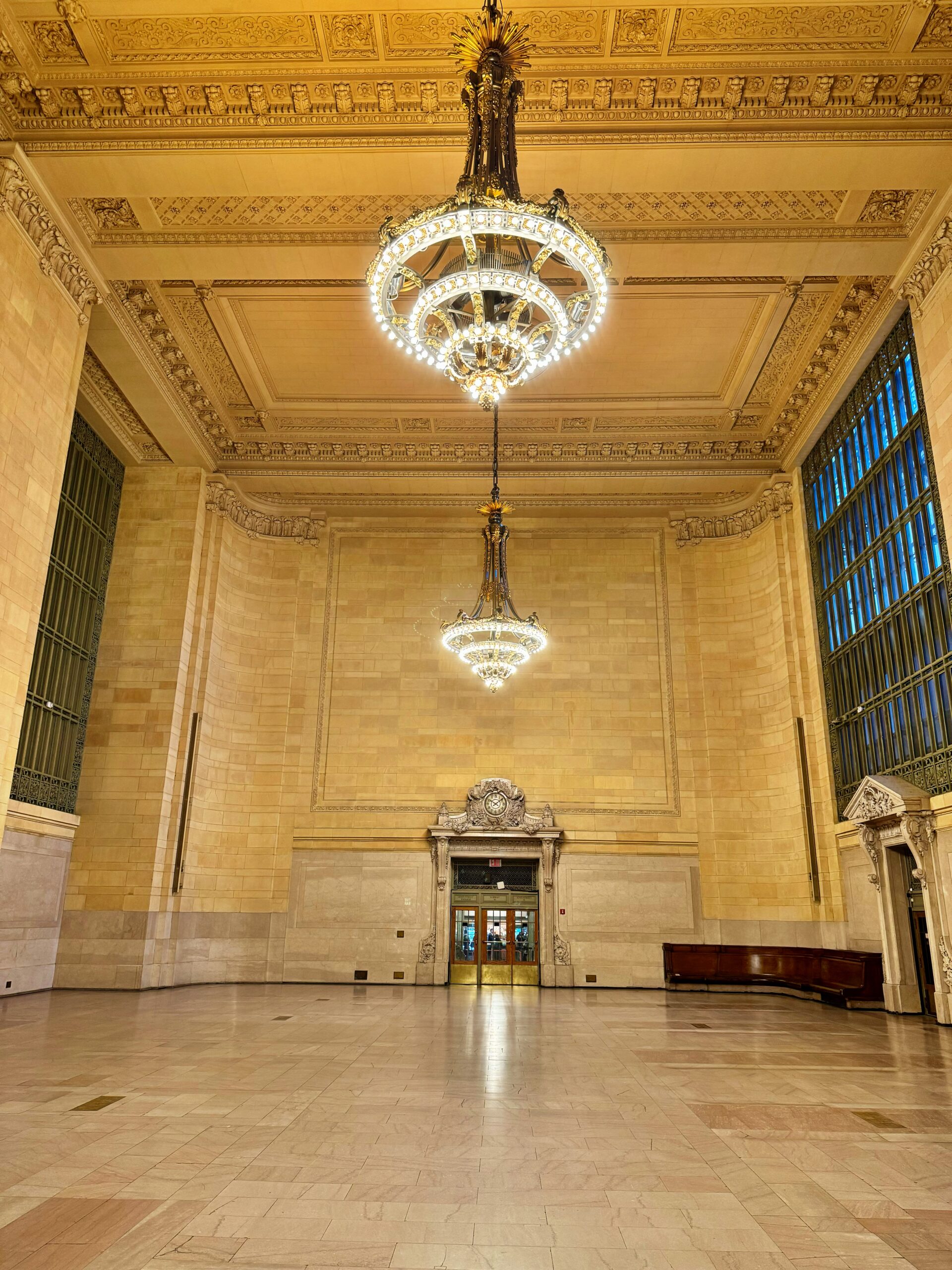
    Vanderbilt Hall , Grand Central Terminus – 13/10/2023

    Vanderbilt Hall is an event space on the south side of the terminal, between the main entrance and the Main Concourse to its north. The north and south walls are divided into five bays, each with large rectangular windows, screened with heavy bronze grills. The room is lit by Beaux-Arts chandeliers, each with 132 bulbs on four tiers. Vanderbilt Hall was formerly the main waiting room for the terminal, used particularly by intercity travellers.

    After exploring this wonderful building we headed back out into the streets and walked back to the NY Library to find the original Winnie The Pooh and friends who had been donated in 1987 having been brought to the United States by A.A Milne’s (1882-1956) US publisher; Elliott Macrae (1901-1968) former President of E.P. Dutton in 1947.

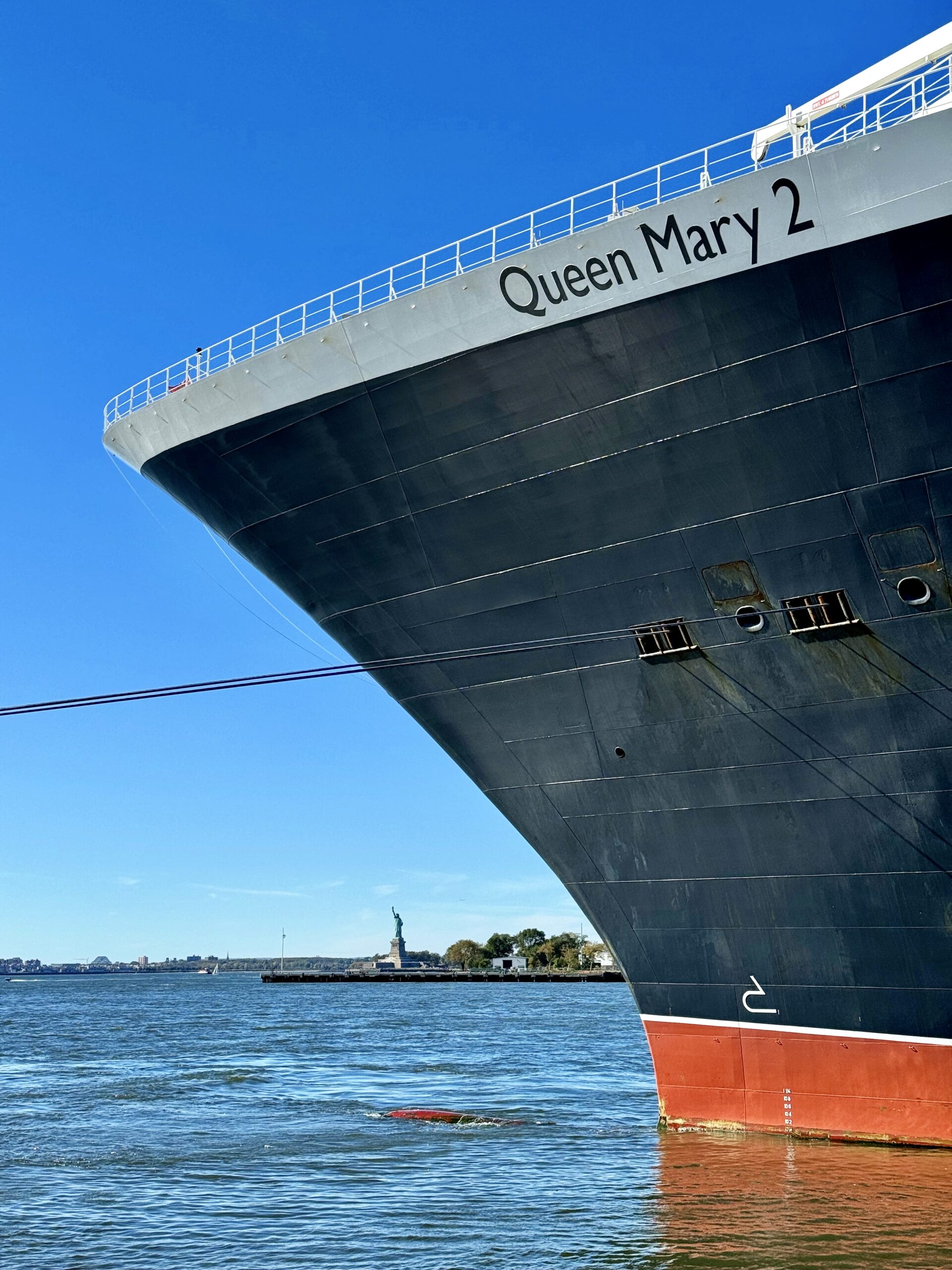
    The Statue of Liberty stands on Liberty Island in New York Harbour seen behind QM2 – 13/10/2023
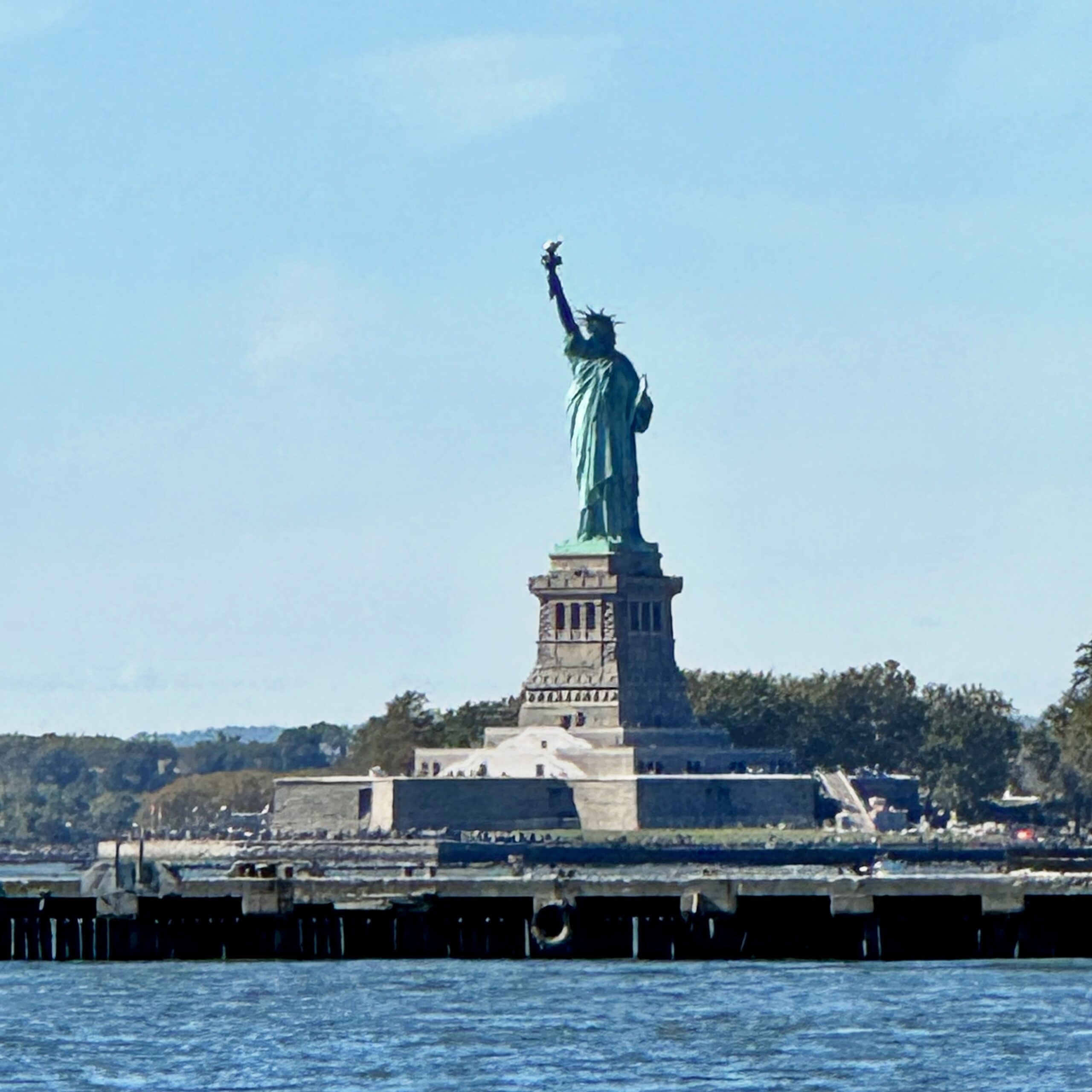
    The Statue of Liberty – 13/10/2023

    From the Archive:

    A few images from 2020, that strange time when we all spent months staying indoors only going outside for an hours exercise a day. During the Covid pandemic, cruise ships were forced out of work and laid up at anchor in various harbours and ports around the UK, Weymouth being no exception.

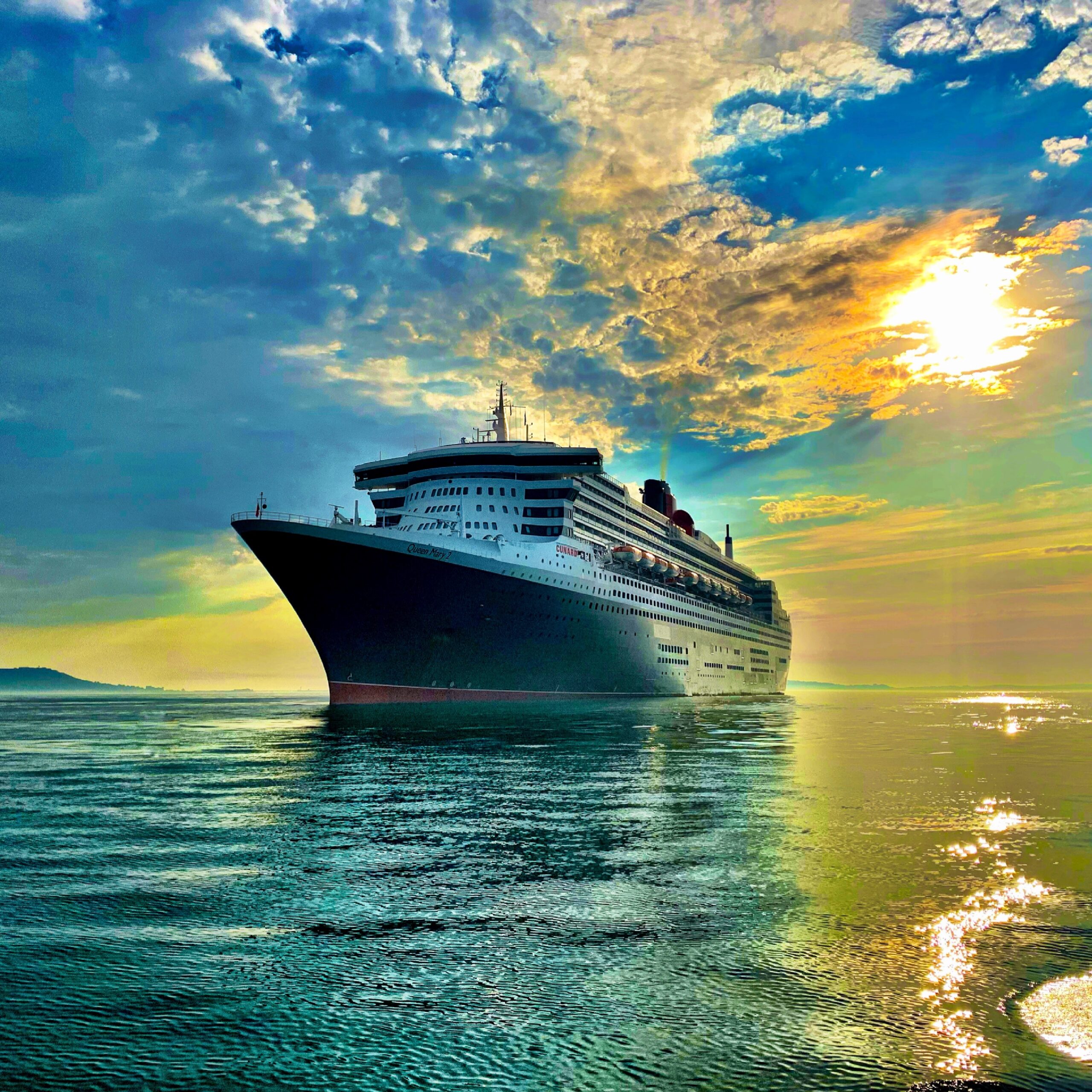
    RMS Queen Mary 2 in Weymouth Bay – 07/08/2020

    RMS Queen Mary 2 introduced in 2003 was, at that time; the largest, longest, widest, tallest grandest and most expensive ocean liner ever built. She replaced the beloved QE2 on the transatlantic run and as flagship of the Cunard line. Queen Mary 2 has a maximum speed of just over 30 knots and a cruising speed of 26 knots which is faster than a contemporary cruise ship. She had the Royal Mail Ship (RMS) prefix conferred on her by the Royal Mail when she entered service in 2004, as a gesture to Cunard’s history. Onboard facilities include fifteen restaurants and bars, five swimming pools, a casino, a ballroom, a theatre, and the first planetarium at sea. Queen Mary 2 is powered primarily by four diesel engines supplemented by two gas turbines which provide extra power as and when required.

    QM2 employs a quadruple podded propeller propulsion system which like giant outboard motors hang under the ship replacing the need for traditional propeller shafts. The forward pair of thrusters is fixed, but the aft pair can swivel through 360°, removing the need for a rudder. Queen Mary 2 carries eight spare blades on her foredeck. The ship is also fitted with three bow thrusters which allow the ship to turn in its own length while in port, to conduct more complex docking manoeuvres. The pods fitted to Queen Mary 2 have been prone to failure despite redesigns. In January 2009, Cunard sued the manufacturers Rolls-Royce in the United States claiming the design of the pods were inherently defective, and that Rolls-Royce knew about the design deficiencies and deliberately conspired to mislead, deceive and defraud in the course of winning the contract. In January 2011, the court awarded Carnival US$24 million.

    During the pandemic the cruise ships would make regular sorties along the south coast and returning to port for supplies and crew changes, Queen Mary 2 is seen here as she departs Weymouth on one such outing – 06/05/2020

    When Covid-19 started to spread across the globe in 2020, Queen Mary 2 was enjoying a world cruise. In early February, Cunard cancelled the Asian leg of the voyage, with the remainder of the journey being cancelled on 15th March. Passengers were disembarked in Fremantle, Western Australia, with the ship returning to Southampton in April.

    QM2 arrives into the bay at Weymouth – 17/12/2020
    A stern view of Queen Mary 2 seen from one of the tourist boats which ran trips around Weymouth Bay for close up encounters with the anchored cruise ships – 07/08/2020
    Yoshi on Weymouth esplanade with cruise ships in the background – 06/09/2020
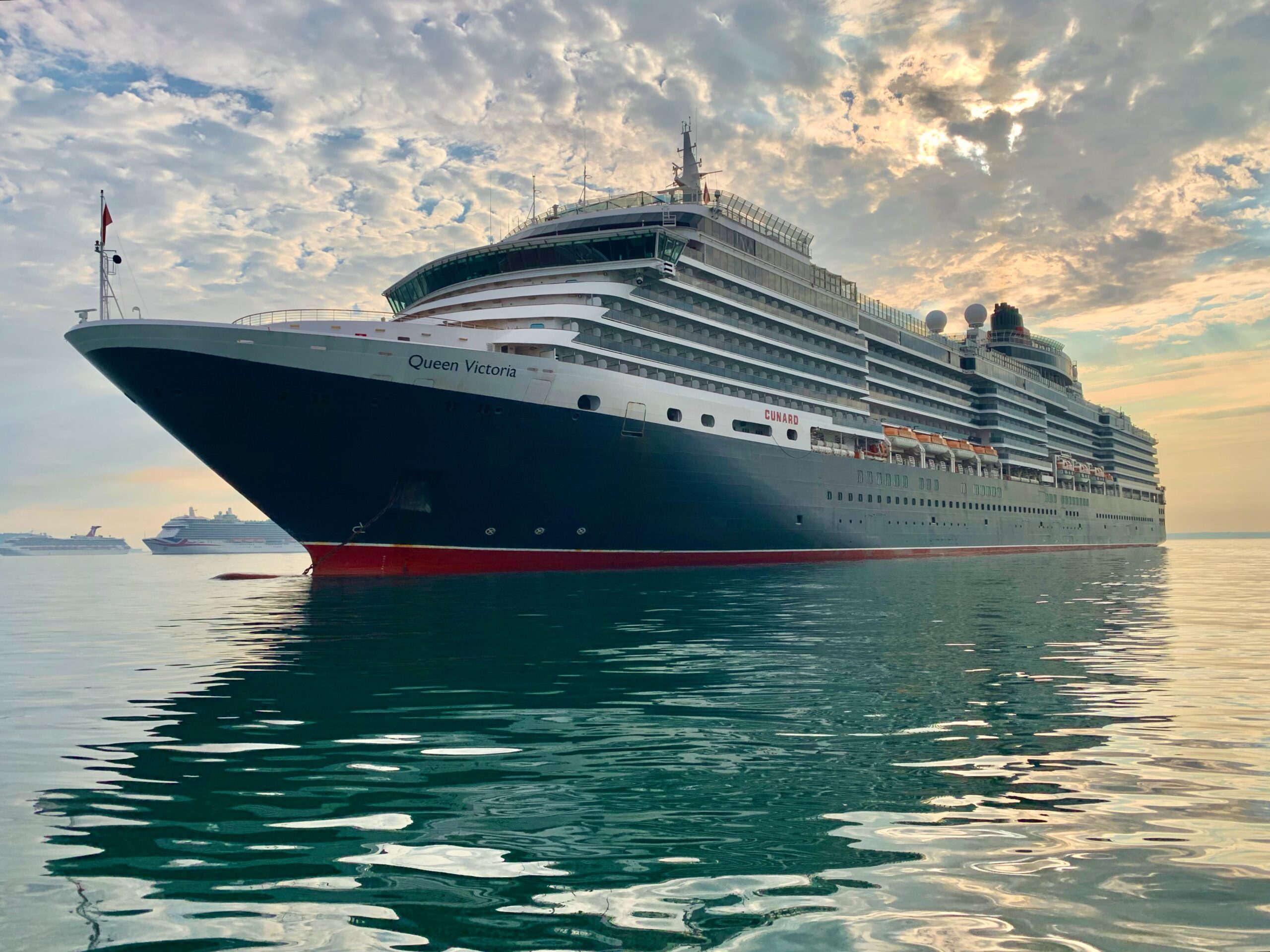
    Cunard’s Queen Victoria, Weymouth Bay – 07/08/2020
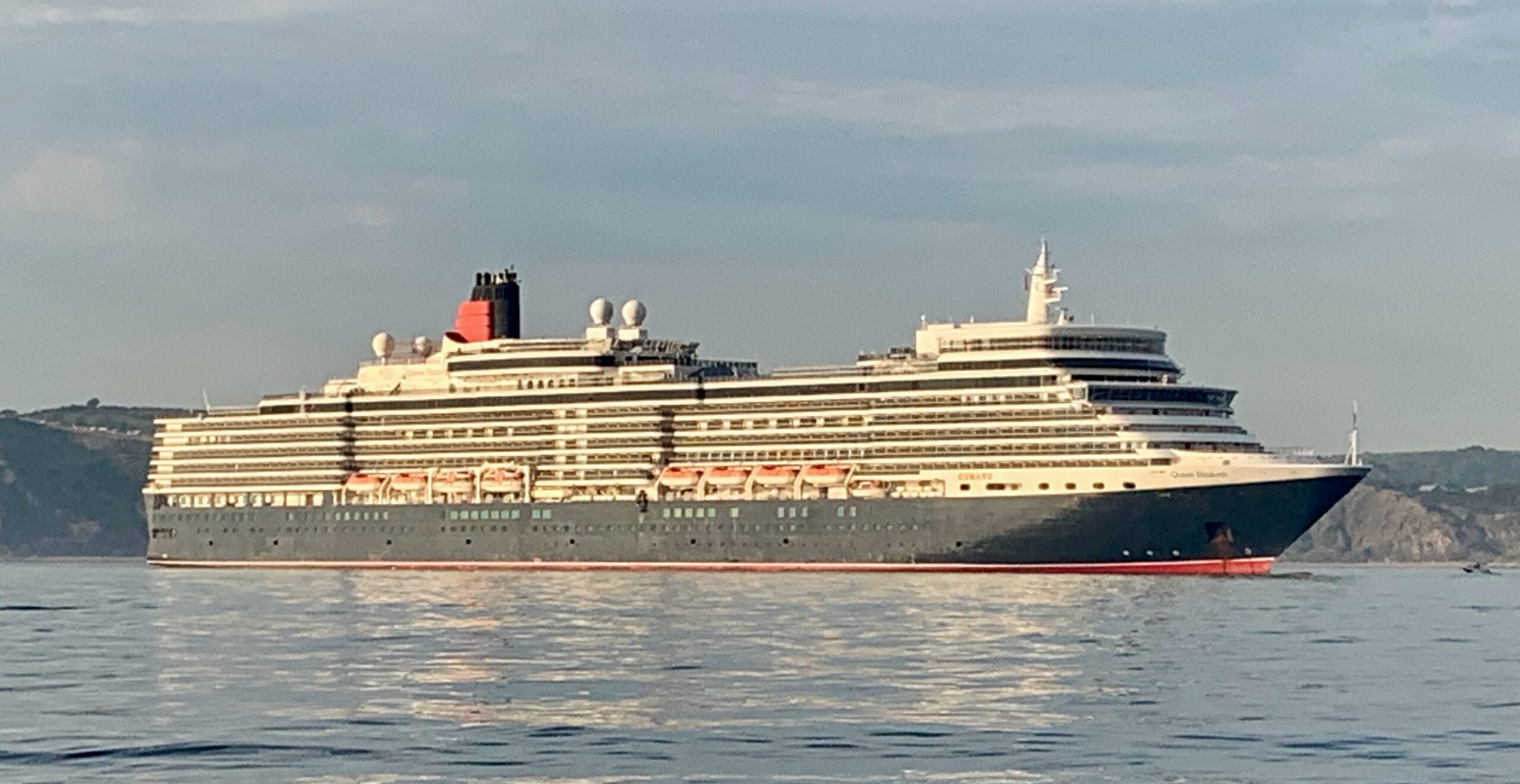
    Queen Elizabeth, Weymouth – 07/08/2020
    Yoshi enjoyed walks along the beach as we watched the cruise ships. Three Cunard Queens along with P&O and TUI’s Marella vessels are behind him in this image – 07/08/2020
    Three Cunard Queen’s lined up together in Weymouth Bay – Queen Victoria, Queen Elizabeth and Queen Mary 2. This was the only time I think I managed to photograph the Cunard fleet without any other interlopers between them – 23/08/2023

    A bit of a mixed bag on this occasion, but that’s all we have time for! Thanks for reading and hopefully we’ll be back with another instalment soon. Until then, take care. Be seeing You!

    It was lovely to be reunited with our boy as we disembarked QM2 last Friday. He was excited to see us again after being separated for over two weeks. A huge thank you to my brother and family for taking such good care of Yoshi xXx

    References used for the Grand Central Terminal section:

    Charles River Editors Grand Central Station: The History of New York City’s Famous Railroad Terminal, (CreateSpace Independent Publishing Platform 2015)

    Metro-North Railroad (2023) Grand Central Retrieved from https://www.grandcentralterminal.com

    Wikipedia (October 24, 2023) Grand Central Terminal Rettrieved from https://en.wikipedia.org/wiki/Grand_Central_Terminal

  • Yoshi’s Peak Rail Adventure

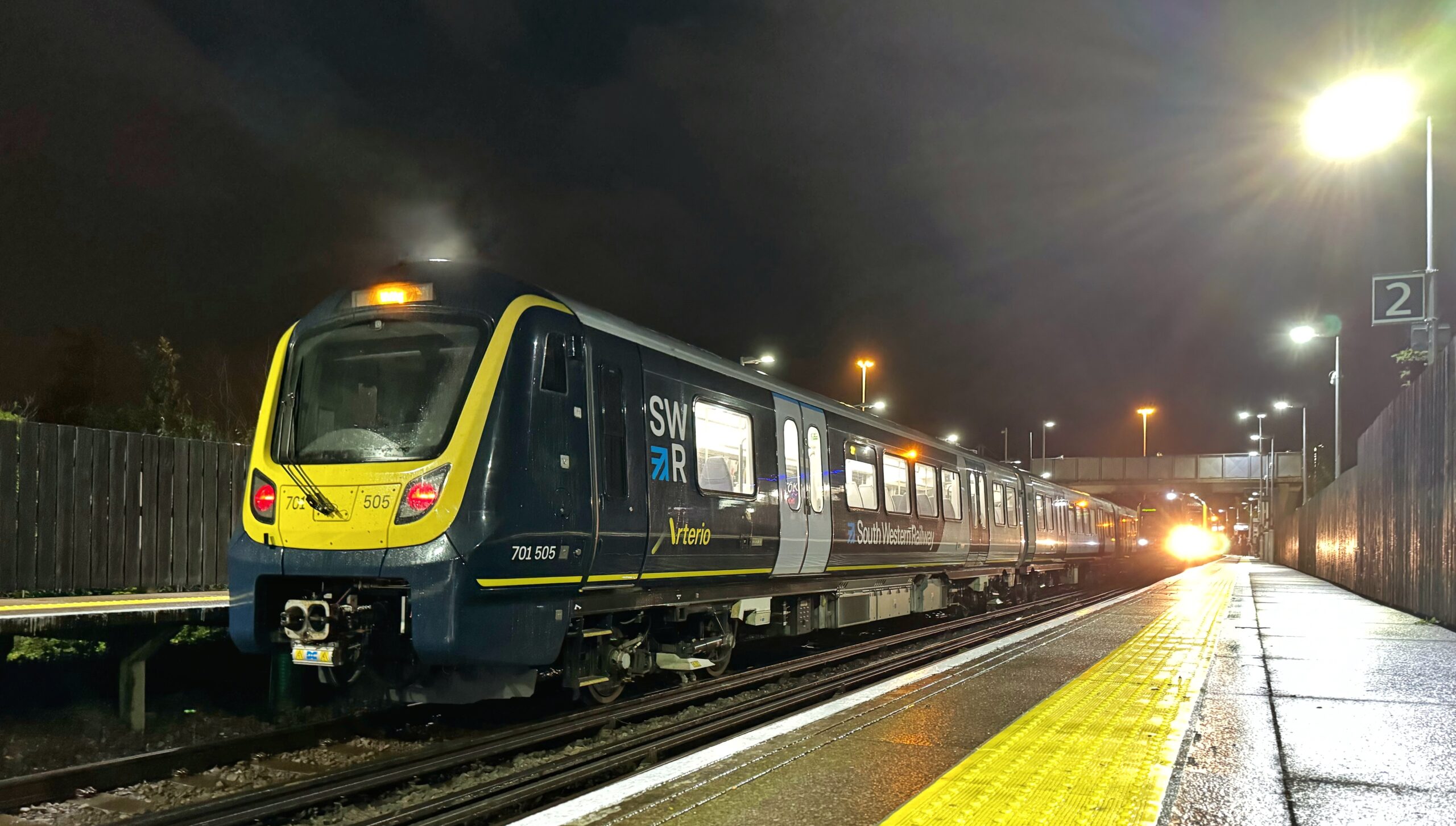
    SWR Class 701 No. 701505 at Poole working 5Q52 1724 Staines Up Loop to Eastleigh TRSMD – 28/09/2023

    September 28th 2023 to October 5th 2023

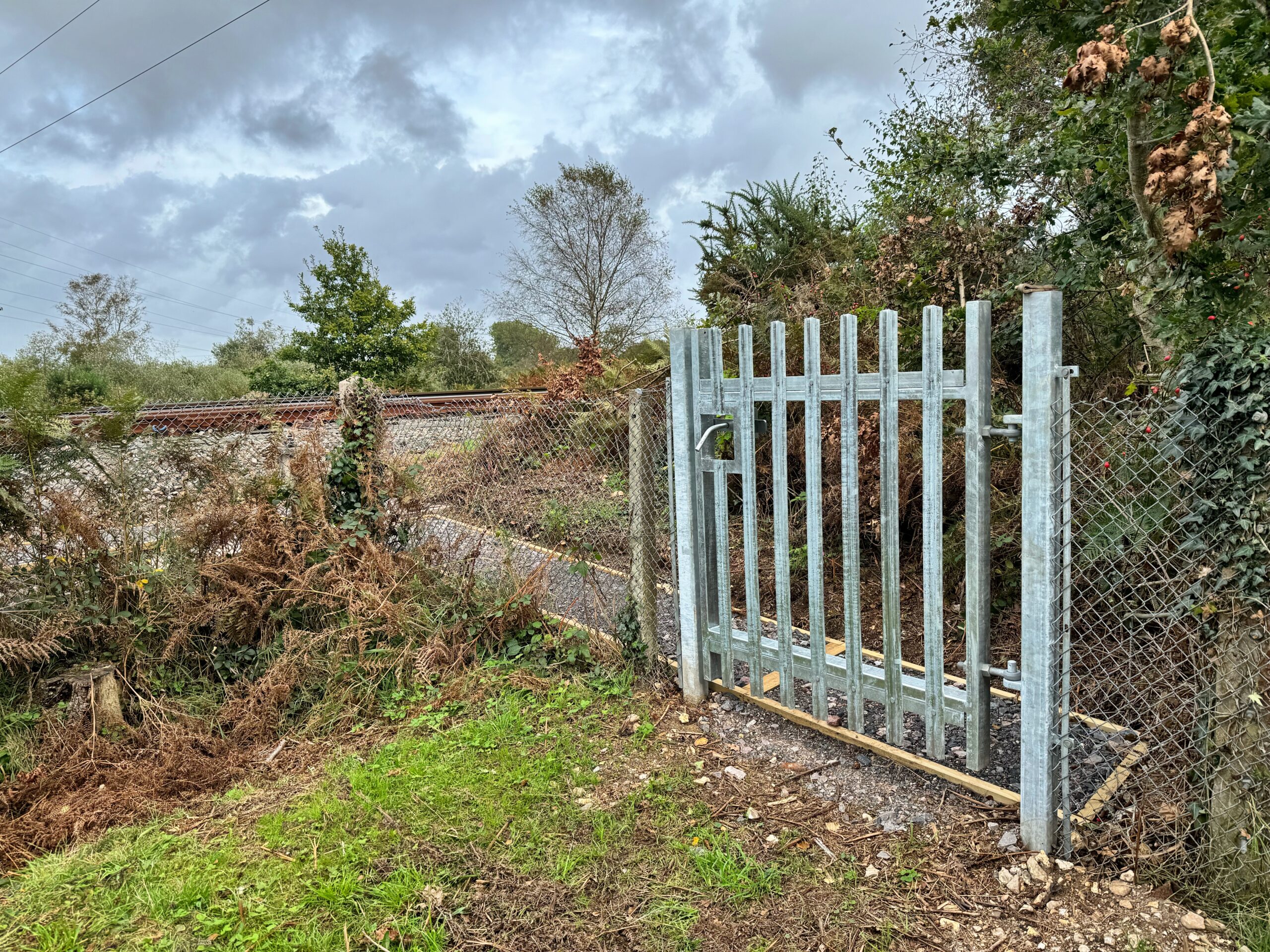
    Thursday September 28th 2023 saw another Direct Rail Services (DRS) run from Crewe to Winfrith for the collection of low level nuclear waste. If estimates are correct there may only be three of these trains left to run. When we took the public footpath alongside the sidings at Winfrith to see the Class 68 locomotives, we were surprised to see a new access gate and path leading to the ground frame which controls the point work to / from the main line into the sidings had been installed. A ground frame is a bank of point levers placed at the trackside to operate nearby points or emergency crossovers and are generally found in remote locations too far away from a signal box to be connected by traditional rodding or wires. The levers on a ground frame look very similar to those found in a signal box and operate in the same way but rarely have a building enclosing them. They are operated either by the train driver or a remote crew that is sent out in a van as and when their operation is required. Because the points at a ground frame are not under the direct control of a signal box, a token or key is required to operate them, this can be in the form of a physical key or in more recent years an electronic token.

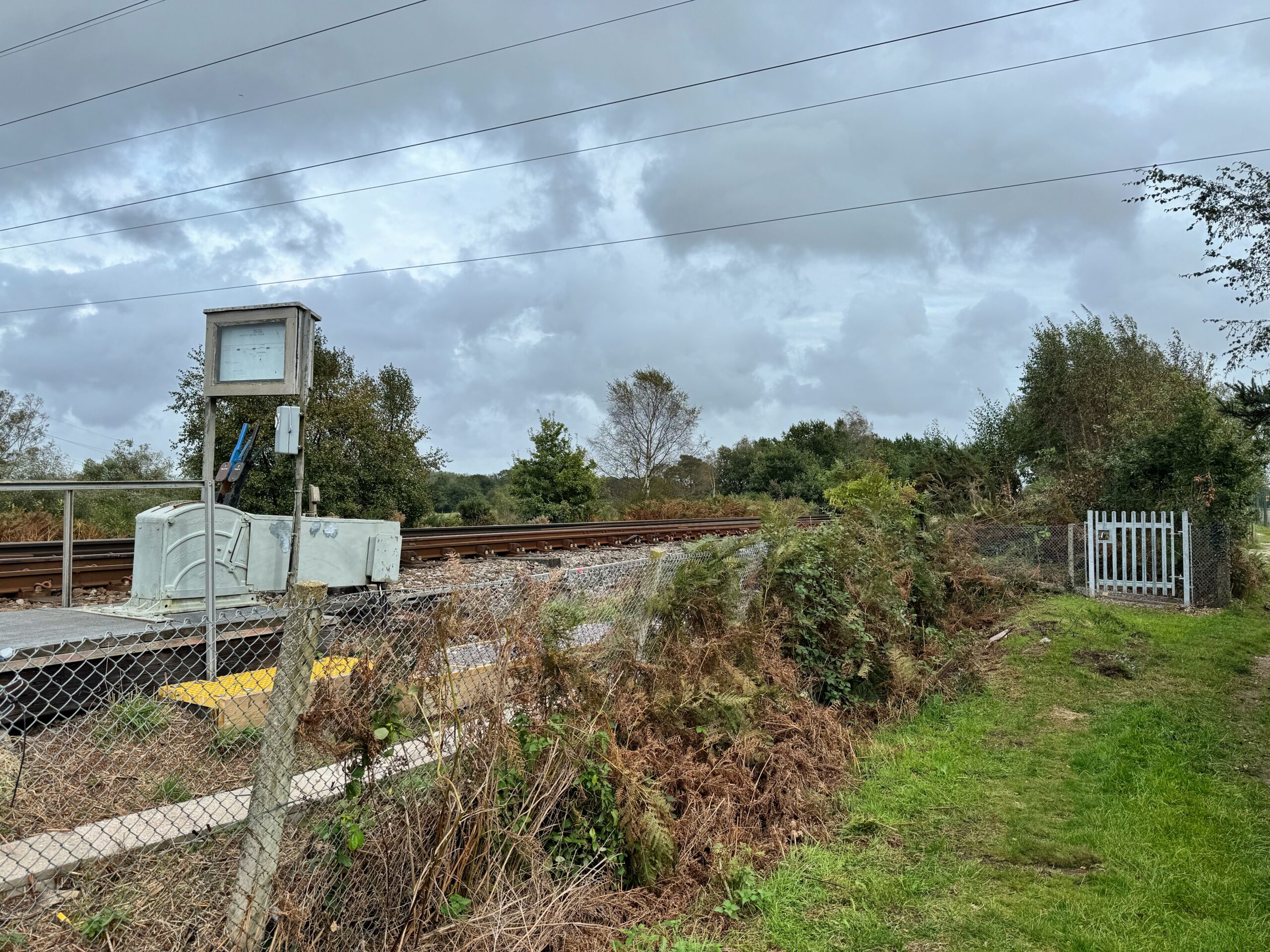
    The Winfrith Ground Frame and new access gate – 28/09/2023
    New access gate and path leading to the Winfrith Ground Frame – 28/09/2023
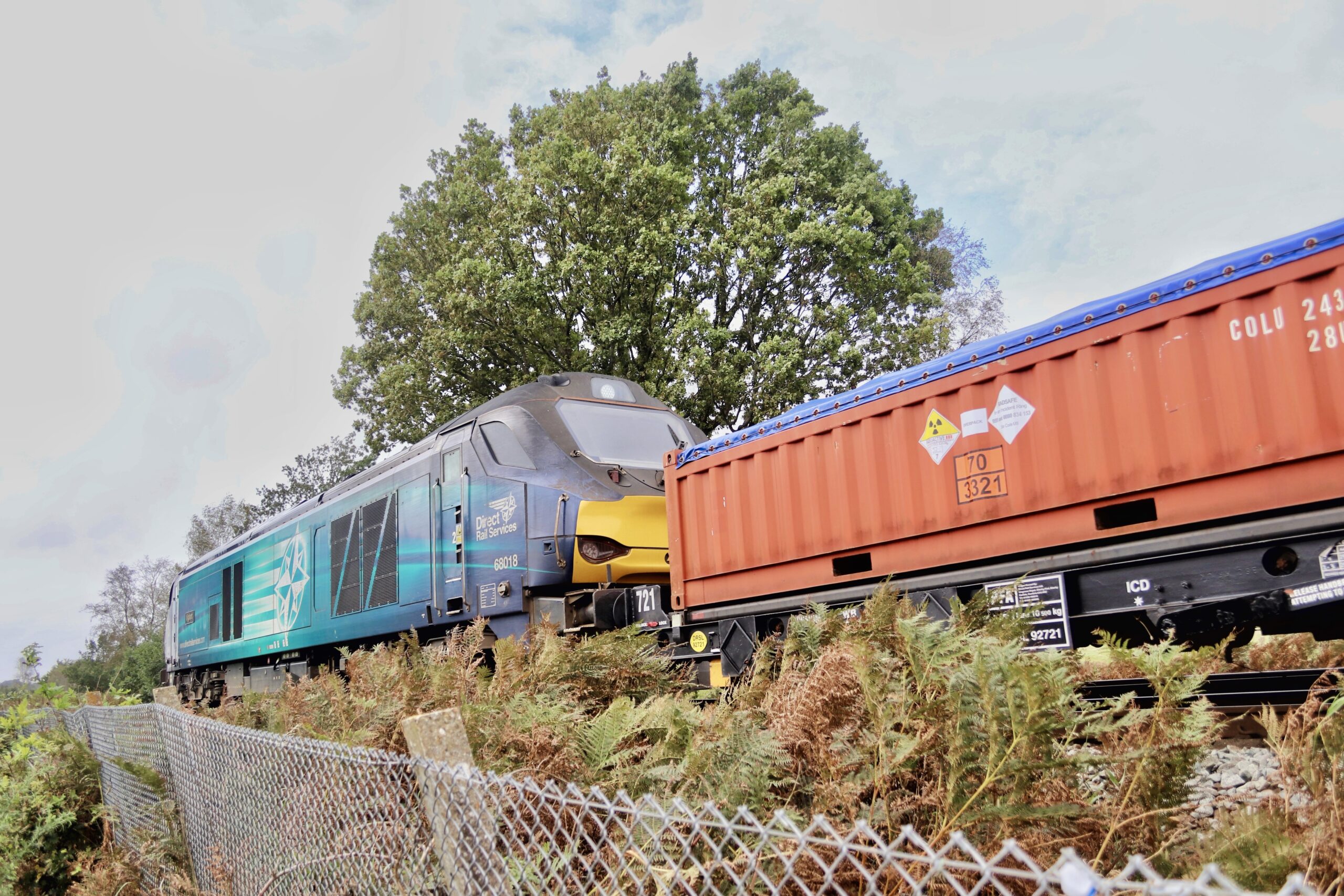
    DRS Class 68 No. 68018 ‘Vigilant’ leads through Hamworthy on 6Z62 0100 Crewe Coal Sidings (DRS) to Winfrith Sidings with fellow class member No. 68033 ‘The Poppy’ at the rear – 28/09/2023
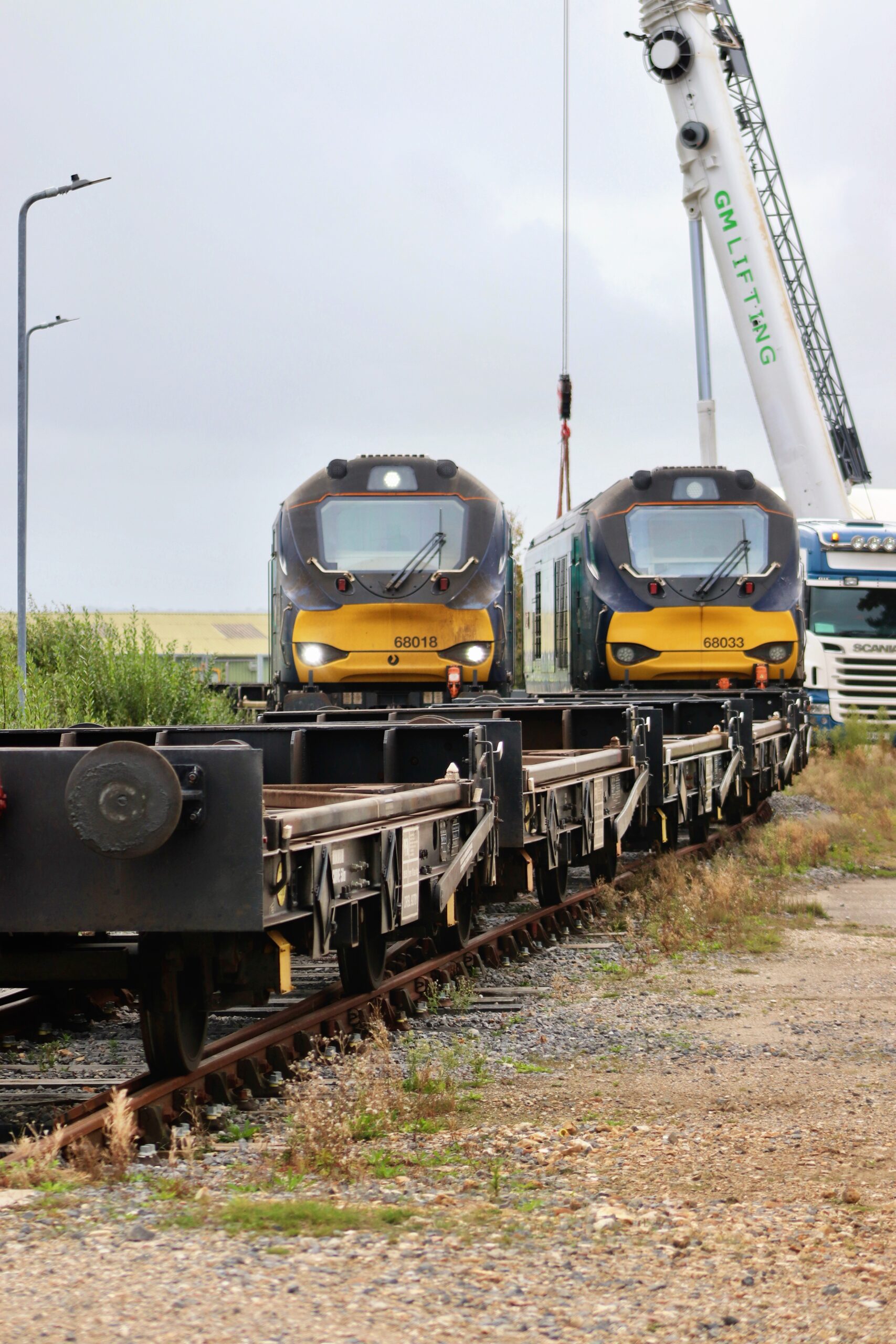
    DRS Class 68 No.’s 68018 ‘Vigilant’ and 68033 ‘The Poppy’ side by side at Winfrith as the PFA wagons are loaded with low level nuclear waste – 28/09/2023
    Class 68 No.’s 68018 ‘Vigilant’ edges out of Winfrith Sidings and onto the main line working 6Z95 1551 Winfrith Sdgs to Crewe Coal Sidings (DRS). The train heads to Dorchester South where it reverses for its onward journey – 28/09/2023
    Class 68 No.’s 68018 ‘Vigilant’ pulls away from Winfrith Sidings working 6Z95 1551 Winfrith Sdgs to Crewe Coal Sidings (DRS) – 28/09/2023
    Class 68 No. 68033 ‘The Poppy’ leading 6Z95 1551 Winfrith Sdgs to Crewe Coal Sidings (DRS) on the approach to Holton Heath – 28/09/2023
    Video of 28/09/2023 Winfrith Run

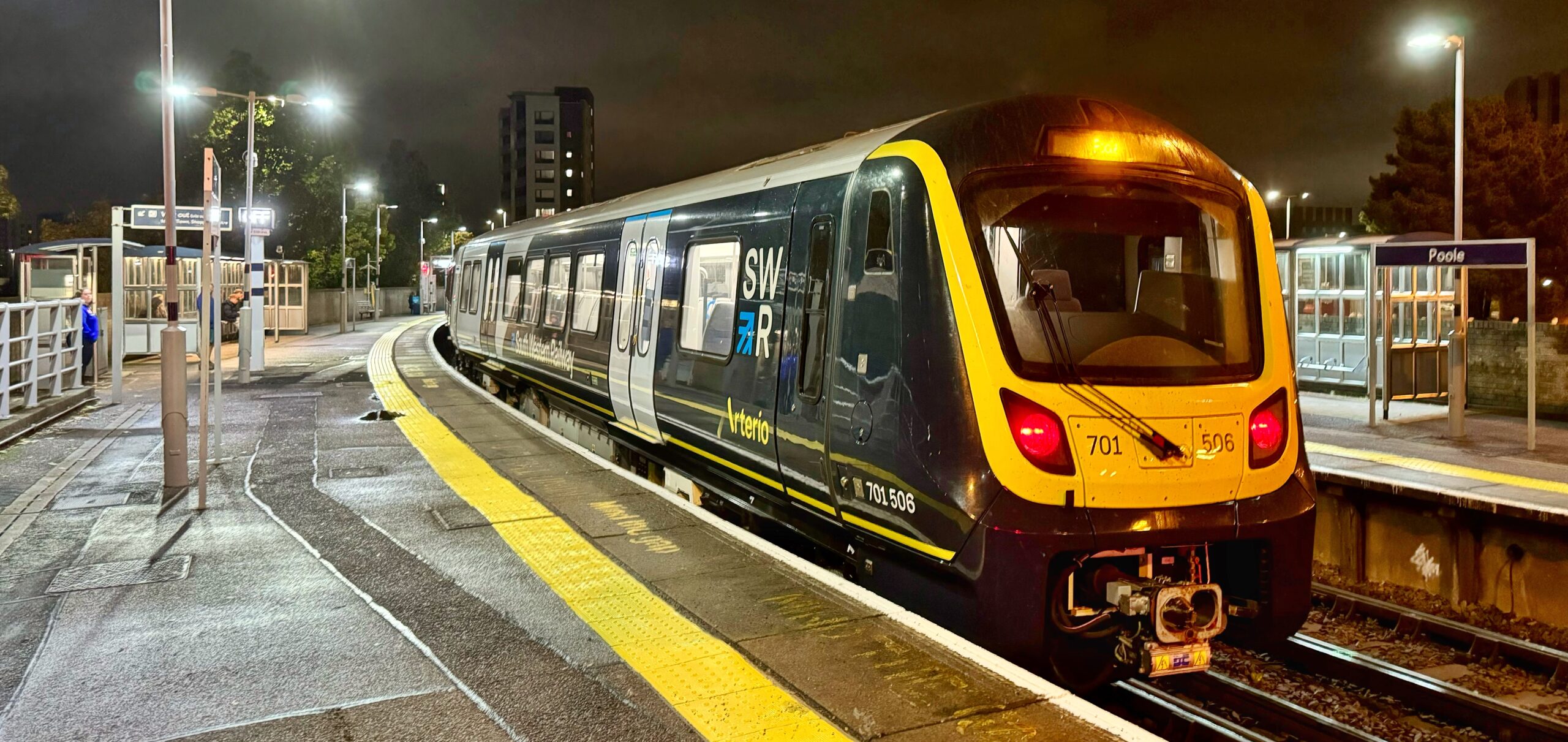
    Thursday evening, I was contacted by Bob from the “Christchurch Mafia” who kindly called to let me know that a pair of SWR Class 701/5’s were on their way to Poole on a mileage accumulation run. Class 701/5 are a five car variant of the ten car Class 701 EMU.

    SWR Class 701 No. 701506 pauses at Poole working 5Q52 1724 Staines Up Loop to Eastleigh TRSMD – 28/09/2023
    Class 701/5’s at Poole – 28/09/2023

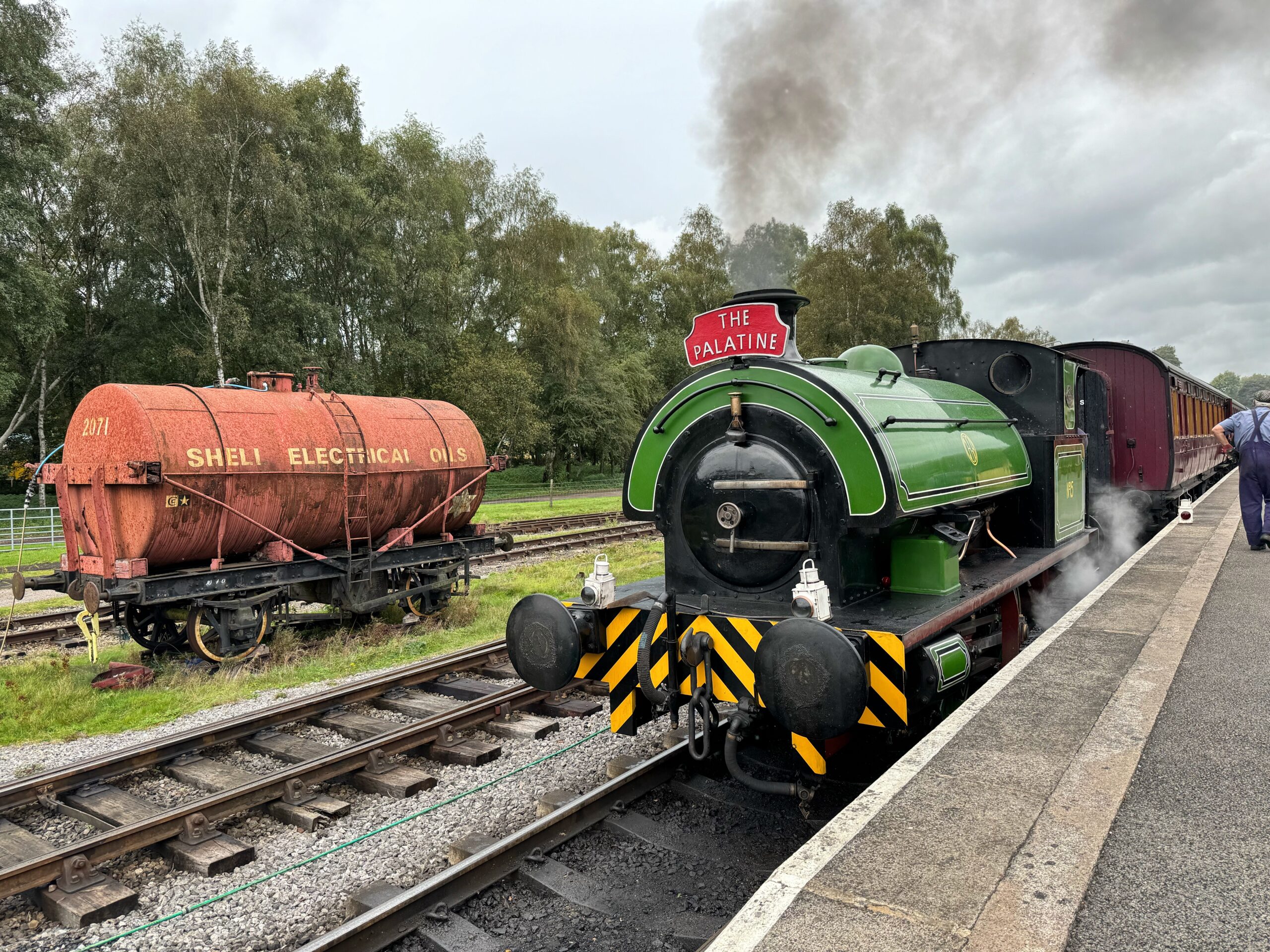
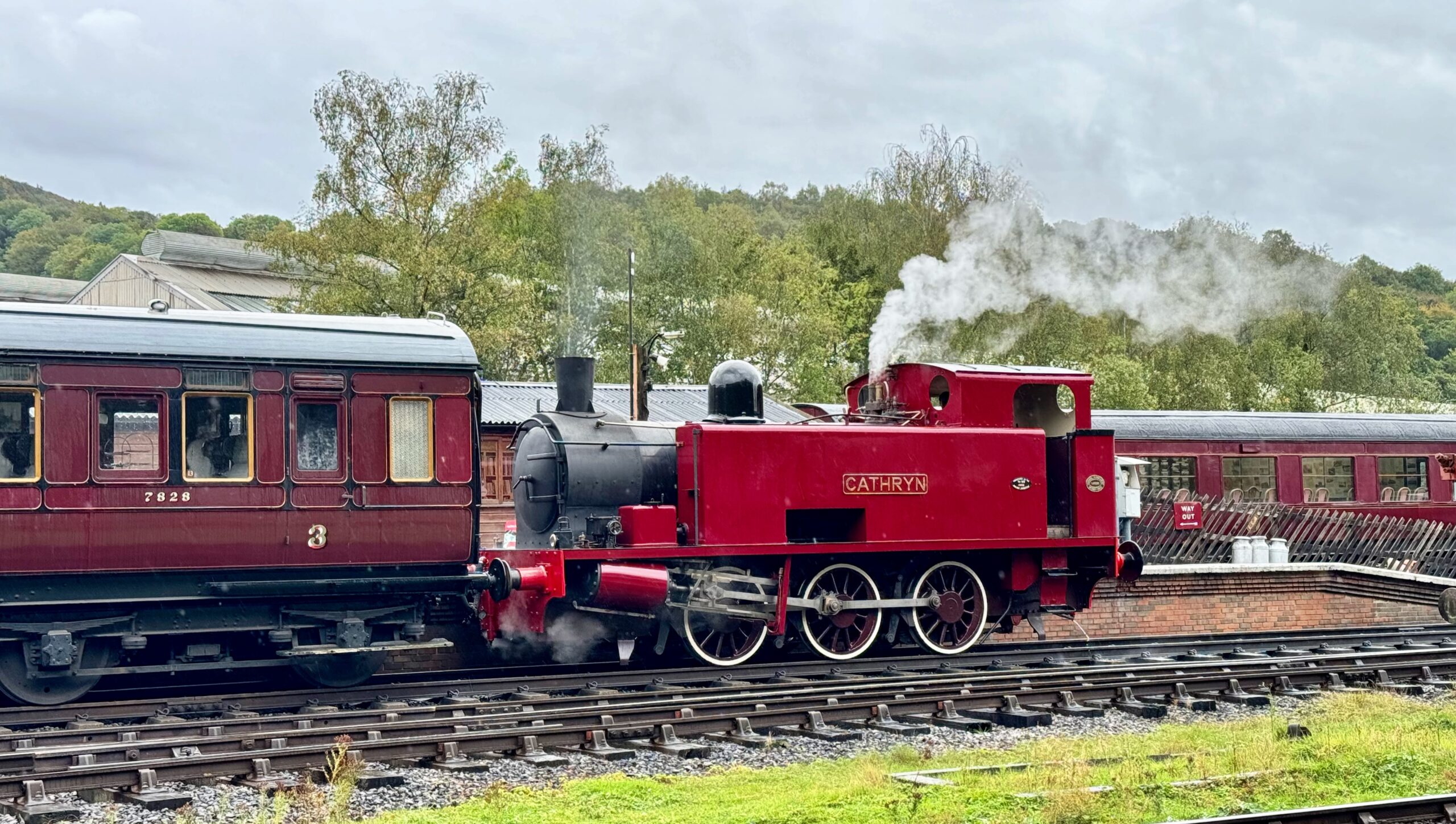
    Over the weekend, Caroline, Yoshi and I had a trip to Derbyshire where we visited Hardwick Hall, the Matlock Bath illuminations and The Heights of Abraham. Despite there being a rail strike on Saturday 30th September, I still managed to find a railway element to indulge in and spent an enjoyable few hours at Peak Rail during the afternoon, the highlight of which was being shown around the shed and storage sidings. Peak Rail covers part of the old Midland Railway line between Manchester Central and London St Pancras which was closed in 1968 and currently operates on approximately 4 miles between Rowsley South Station and Matlock Station Platform 2 with ambitions to extend to Bakewell. Peak Rail operates a number of special events each year and during my visit a Mixed Traffic Gala was in full force with the train I travelled on running a restaurant service; The Palatine, on board two beautifully preserved railway carriages. Neither of which I joined and had to be content with my coffee and a seat in one of the non dining coaches!

    Robert Stephenson & Hawthorne No. 15 “Eustace Forth’ backs on to her train at Rowsley – 30/09/2023
    Class 25 No. D7659 (25309/25909) enters Darley Dale station. The locomotive  is owned by the Waterman Railway Heritage Trust and came back into service during the latter part of 2021 for the first time in more than 23 years following a comprehensive restoration that effectively saw the 1966 loco rebuilt. As the final locomotive built by Beyer Peacock and the noted Gorton Works in Manchester, D7659 saw 20 years of work with British Railways mostly in the Midlands and North West and also with service in Wales and Scotland and some summer holiday specials to Norwich during the 1970’s – 30/09/2023
    Hudswell Clarke S102 ‘Cathryn’ at Rowsley – 30/09/2023

    The Peak Railway Preservation Society was first established in 1975 and opened a site at the now closed Buxton Steam Centre with restoration facilities and a 300-yard operating line. However, the whole site was sold to Buxton Water when Peak Rail relocated its headquarters to Darley Dale in the 1980’s using funds from the sale. 

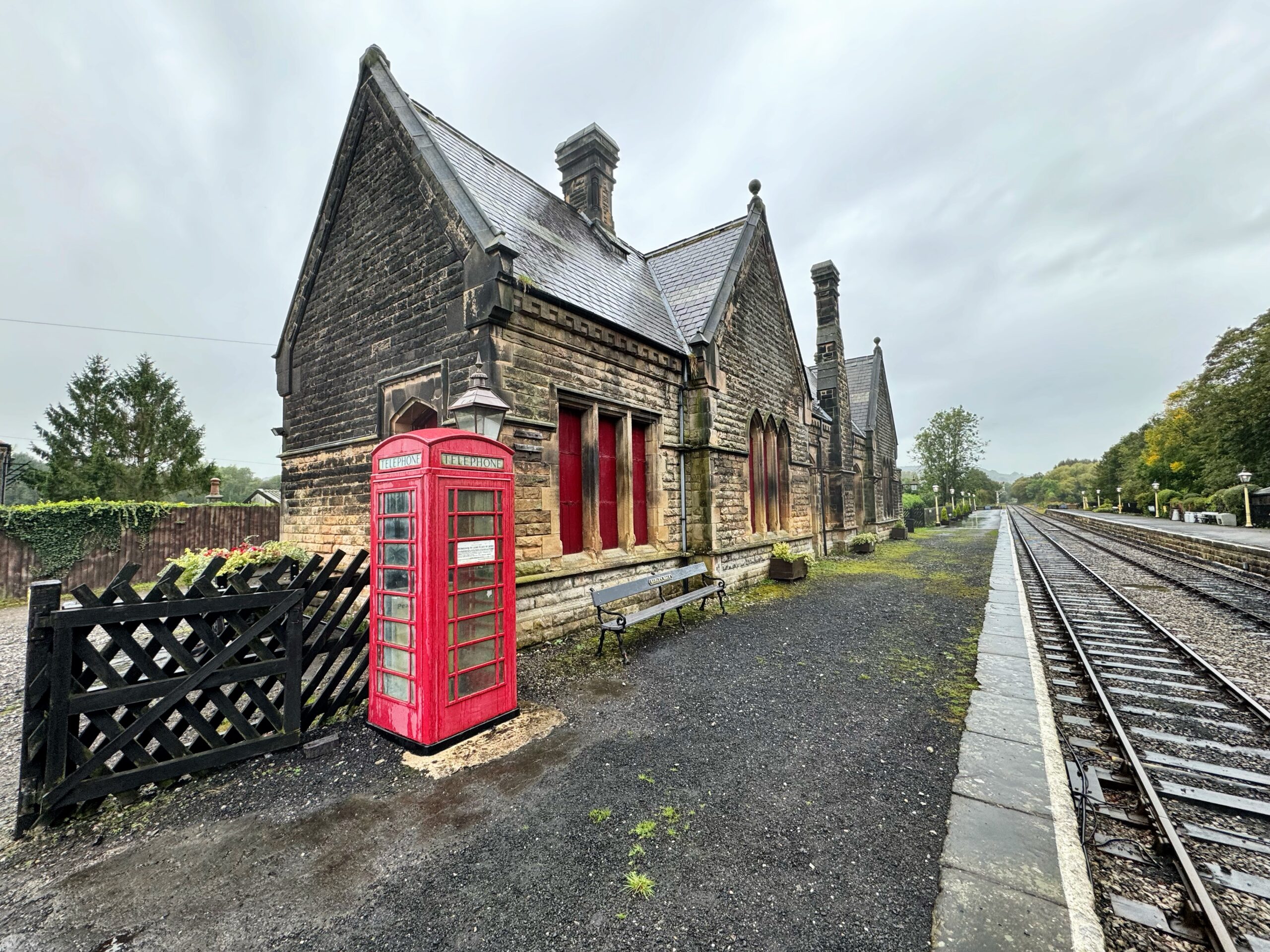
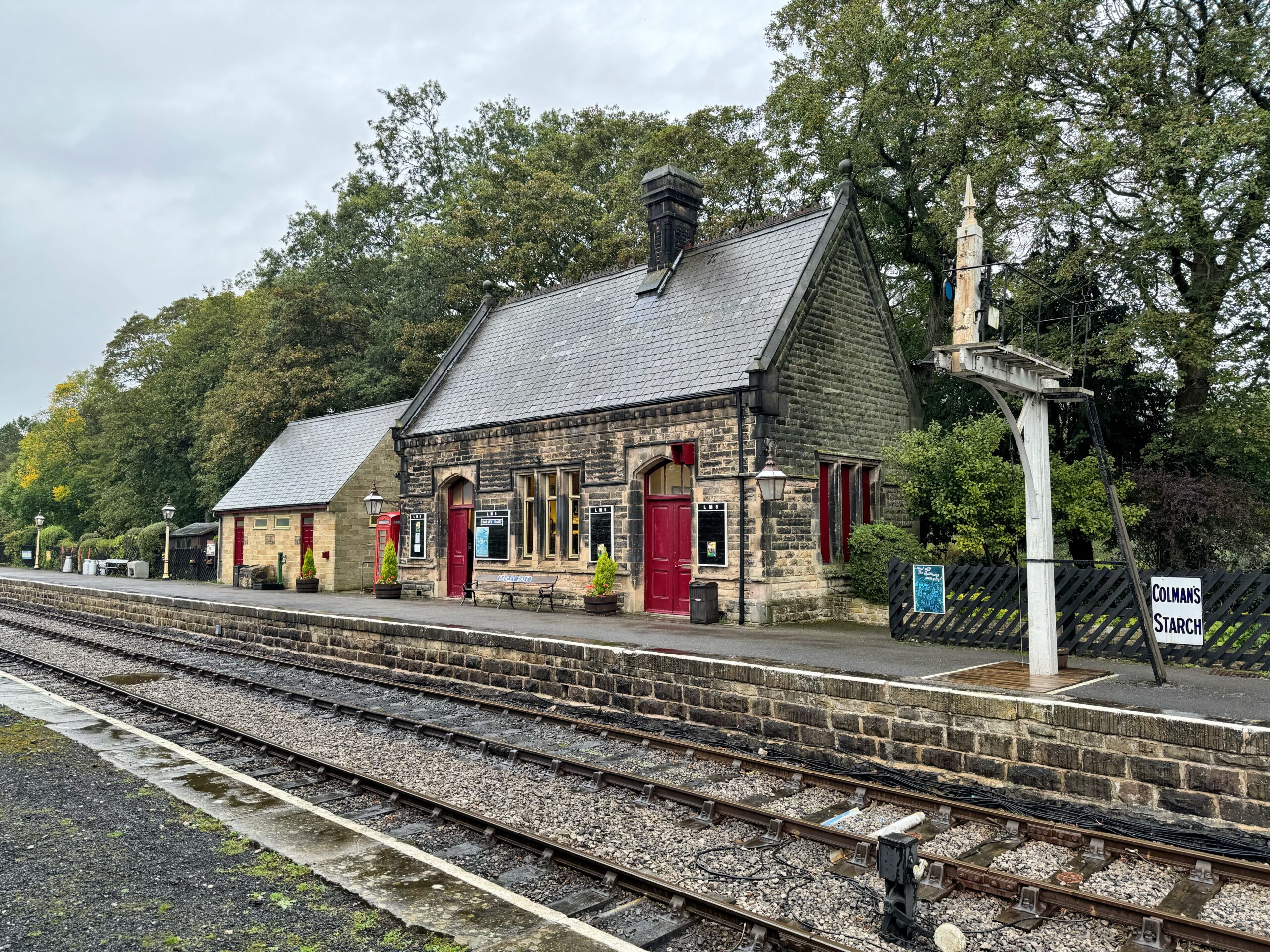
    Darley Dale Station is a Gothic Style building constructed by the Manchester, Buxton, Matlock and Midlands Junction Railway – later to become part of the renowned Midland Railway and later still the London Midland Scottish – 30/09/2023
    The first station at Darley, as it was officially known until October 1890 was south of what is now Station Road. In 1874 this impressive station was built north of the level crossing and the contract for erection of the station was awarded to Joseph Glossop and the final cost was £2,247.17s – 30/09/2023
    Constructed in local stone, in a neo-gothic style, the work consisted of a single main line building on the down platform, and a smaller matching waiting room on the up side. Darley Dale was very much a country station, but traffic increases led to additional infrastructure with loop lines north of the station being opened in 1901 together with additional sidings to the south of the station – 30/09/2023

    By 1991, the railway had reopened the section of line between Matlock Riverside and Darley Dale with an extension to within a half-mile south of the Derbyshire village of Rowsley opening in 1997. A new station was constructed at Rowsley South next to the site of the former loco shed which housed banking engines for the route to Manchester.

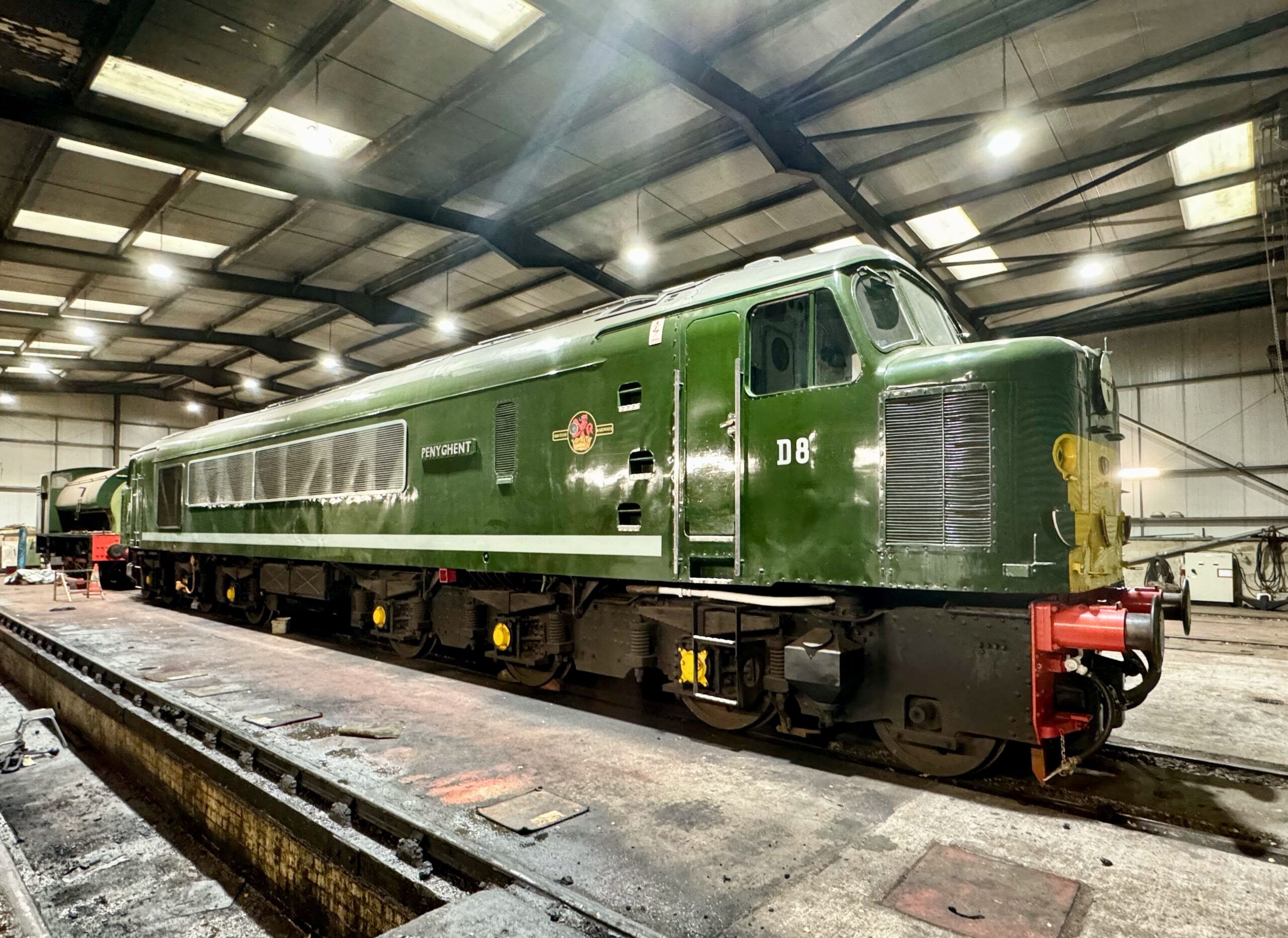
    Owned by The North Notts Loco Group, Class 44 No. D8 (44008) ‘Penyghent’ was built in Derby in 1959 and was one of ten Pilot Scheme Peak class locomotives. She is seen here inside the shed at Rowsley – 30/09/2023
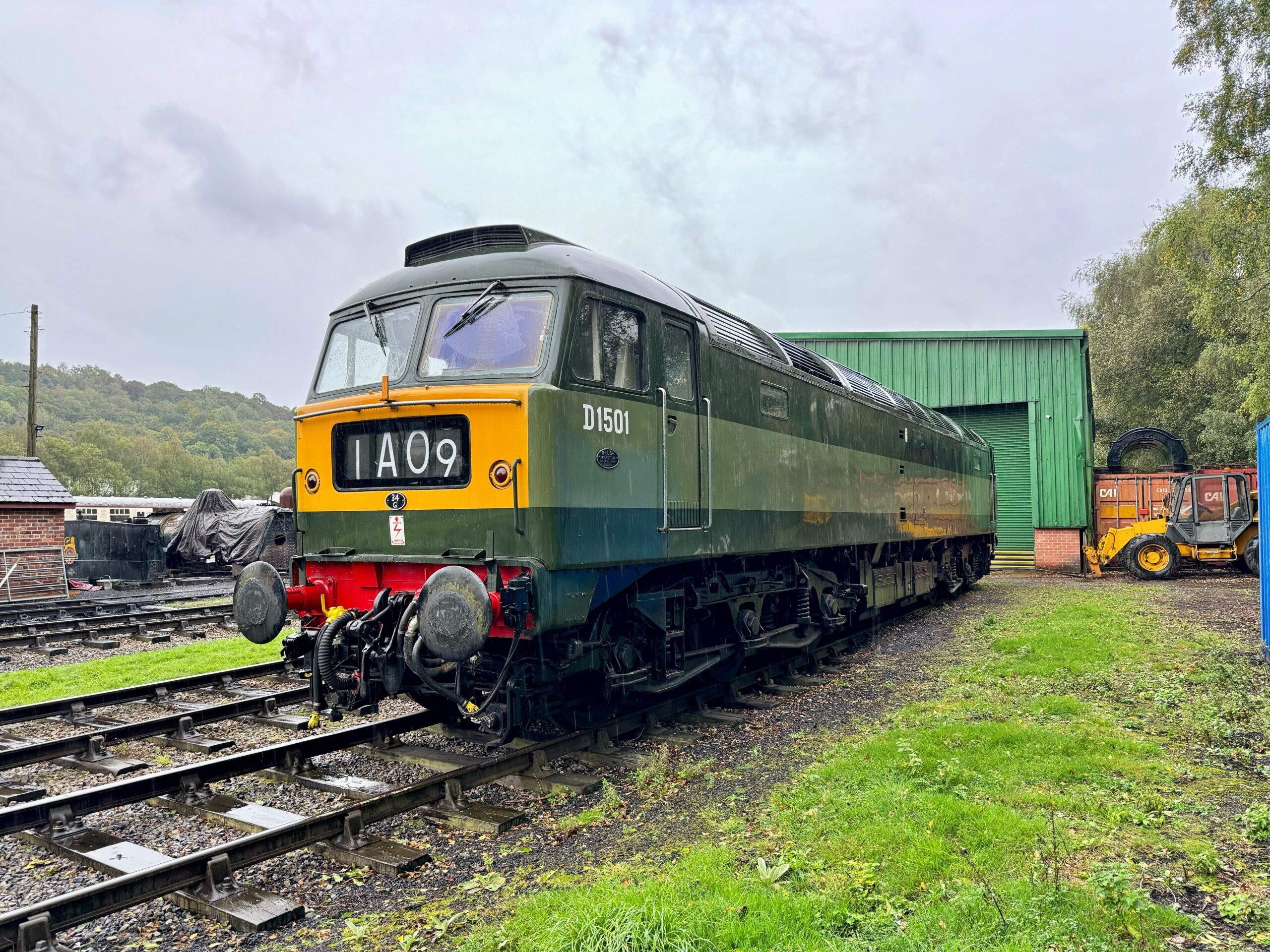
    Waterman Heritage Trust owned Class 47 No. D1501 (47402) has been at Peak Rail since June 2022.
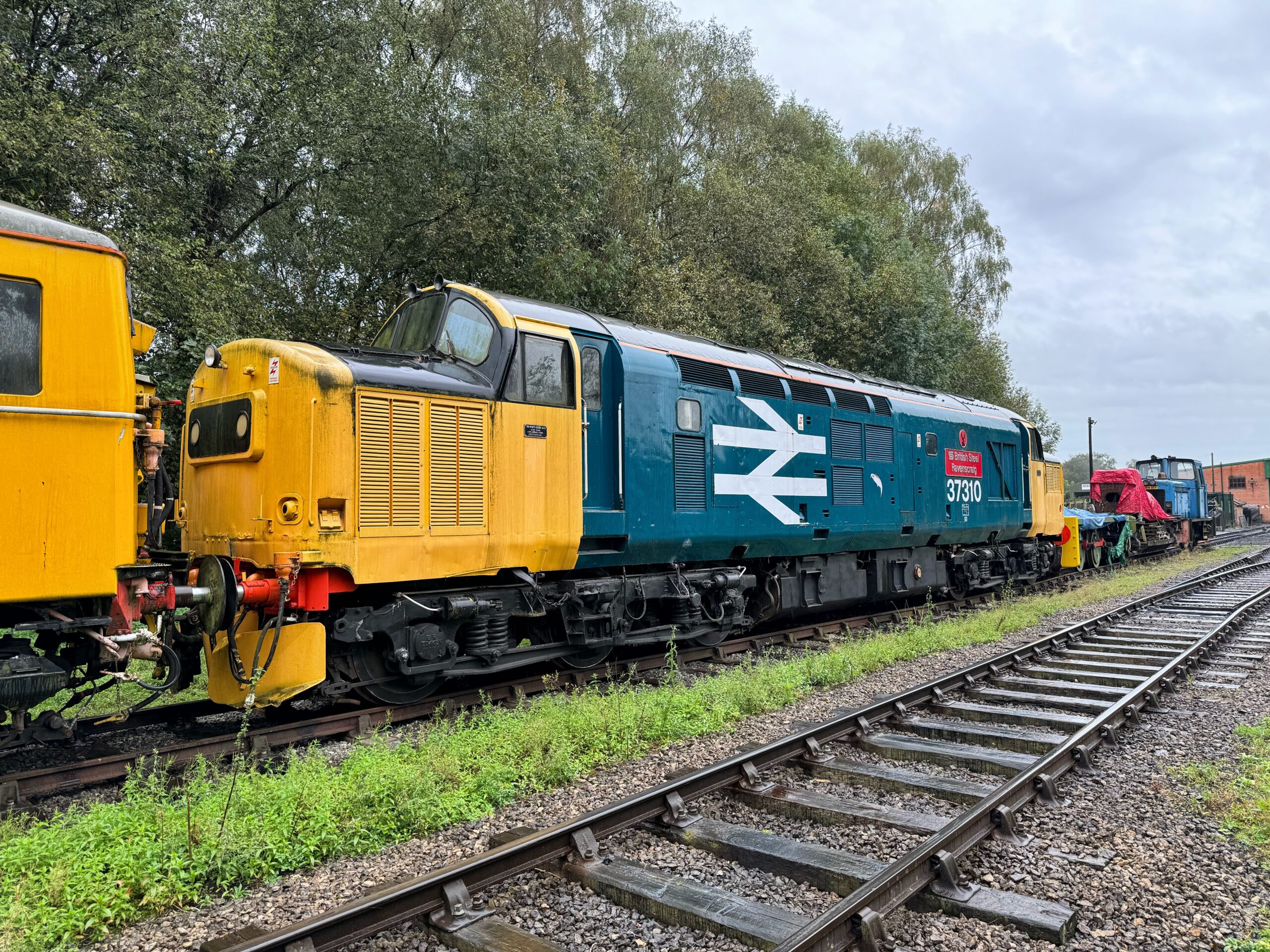
    Class 37 No. 37310 ‘British Steel Ravenscraig’ is preserved at Peak Rail – 30/09/2023
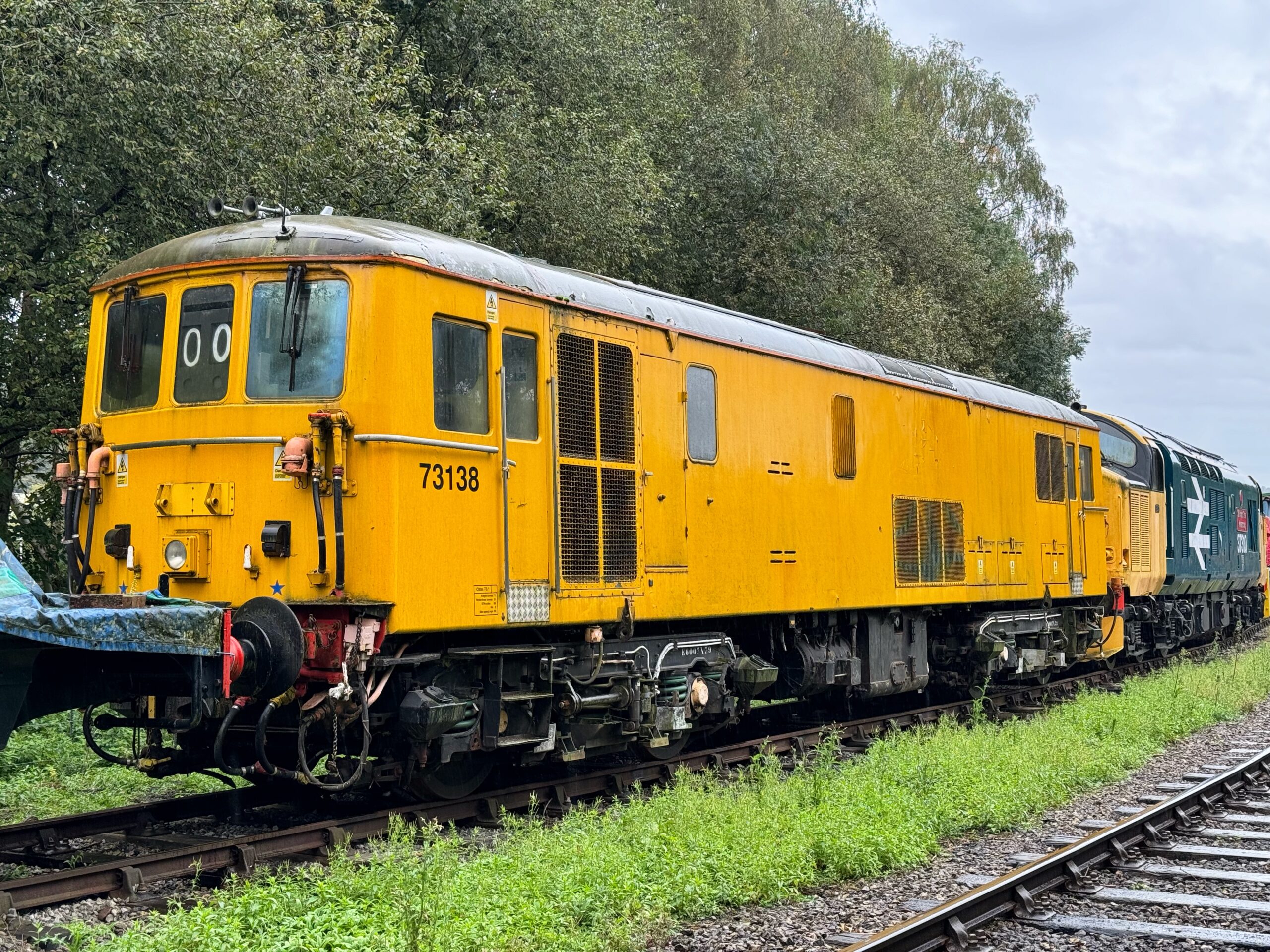
    Network Rail acquired Class 73 No. 73138 in 2010 for use in its infrastructure monitoring fleet. Withdrawn in 2017 it was employed as a yard shunter at Derby Railway Technical Centre (RTC) until 2019 when it was placed in storage at Rowsley – 30/09/2023
    Class 37 No. 97301 (ex D6800 / 37100) was fitted with ERTMS Signalling equipment for use of the Cambrian Lines from Shrewsbury to Aberystwyth and Pwllheli and is being store at Rowsley for Network Rail – 30/09/2023
    The Heritage Shunters Trust are based at Rowsley in an impressive new shed which houses their collection of locomotives. Various examples went for a trip in the yard area during my visit – 30/09/2023

    After the construction of the Matlock by-pass, and a new Sainsburys supermarket in the former Cawdor Quarry, a new track alignment and track layout was installed between Matlock Riverside and Matlock railway station to provide a through connection from Peak Rail to the national network which re-opened on 2nd July 2011 with a 50 year lease for this and the use of platform 2 by the heritage line.

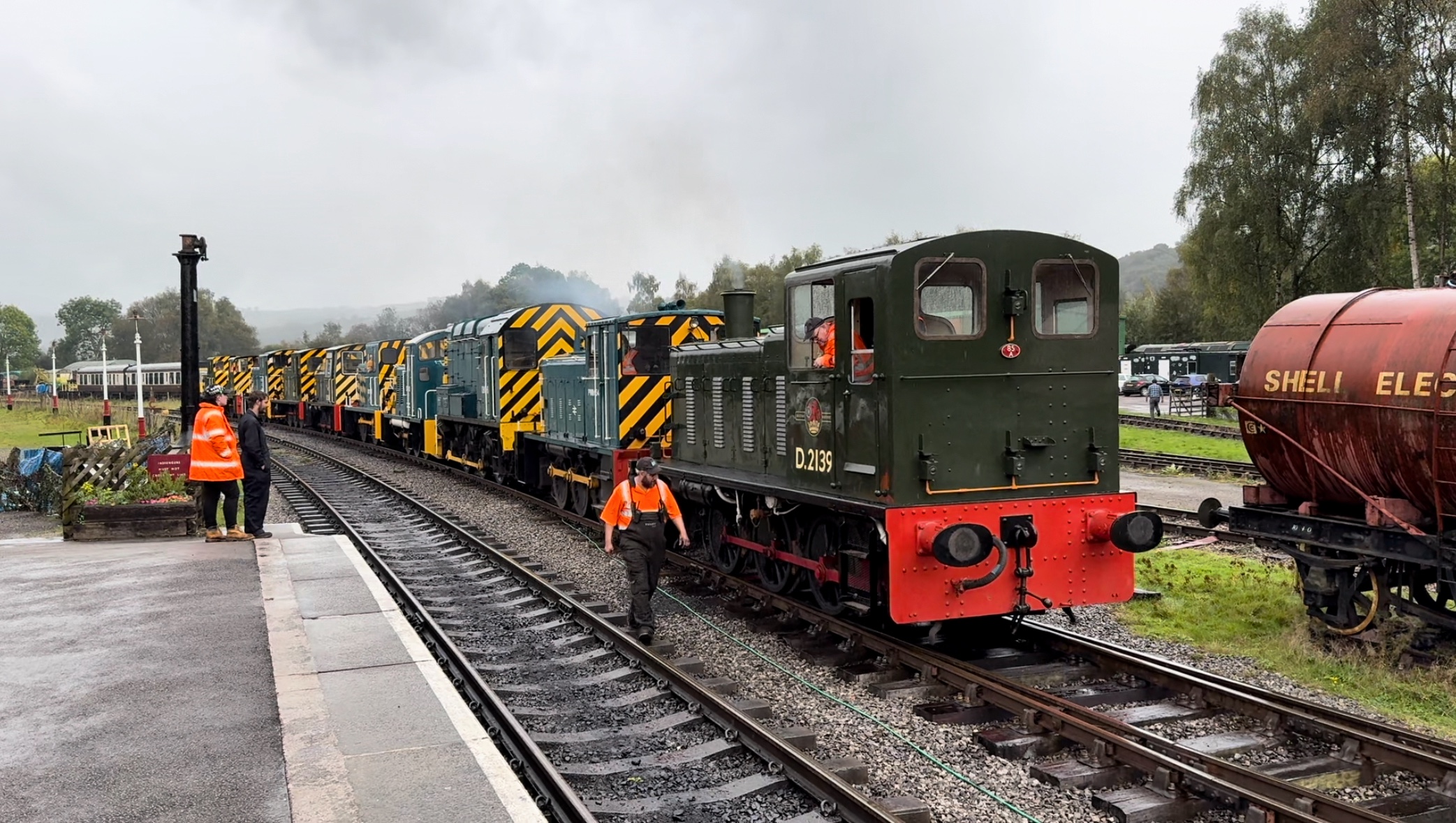
    W G Bagnall No. 2842 in the rain at Matlock Riverside. Class 03 No. D2128, which failed earlier in the day, can be seen in the background – 30/09/2023
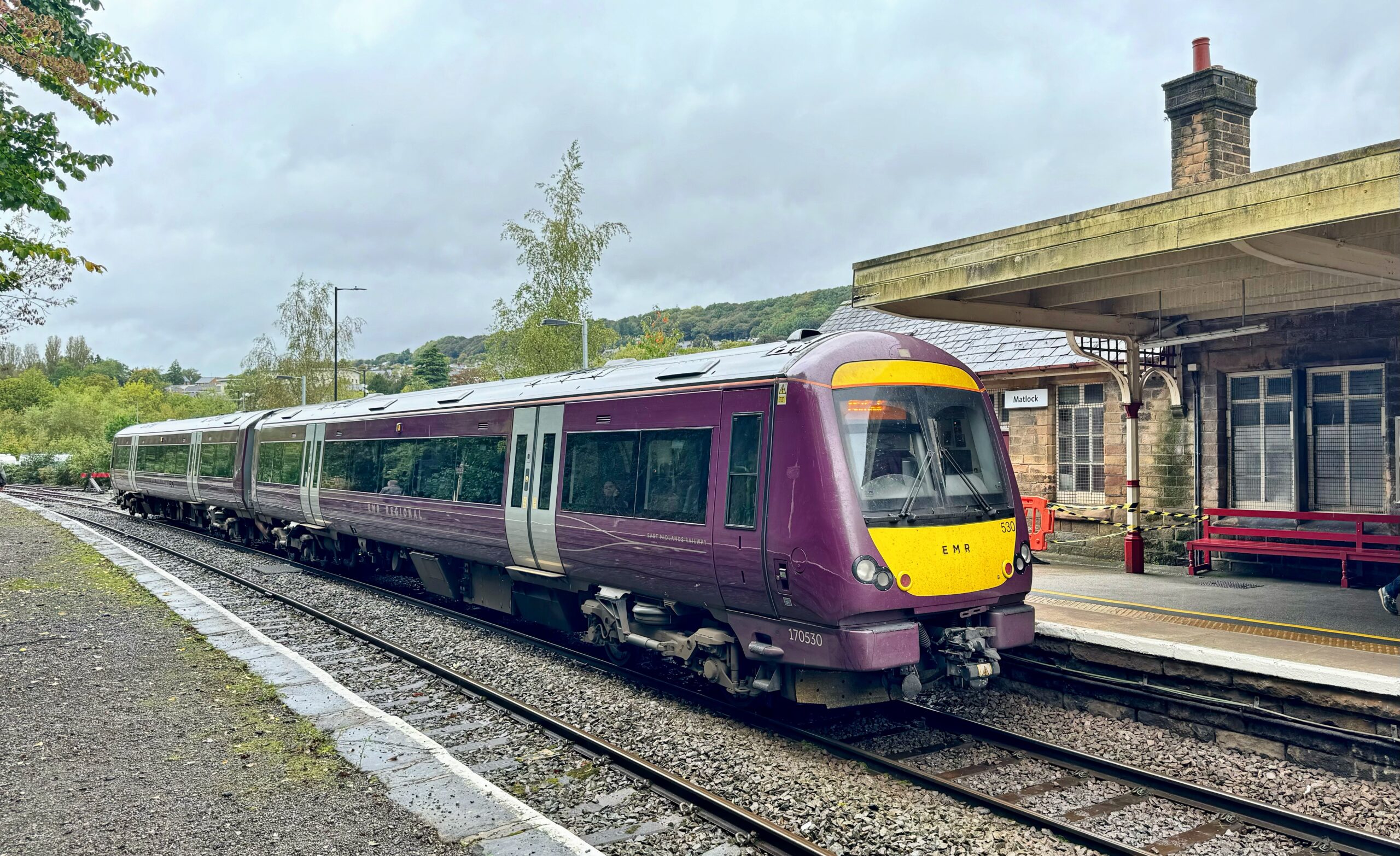
    EMR Class 170 DMU No. 170530 forms 2A39 1237 Matlock to Nottingham service – 01/10/2023
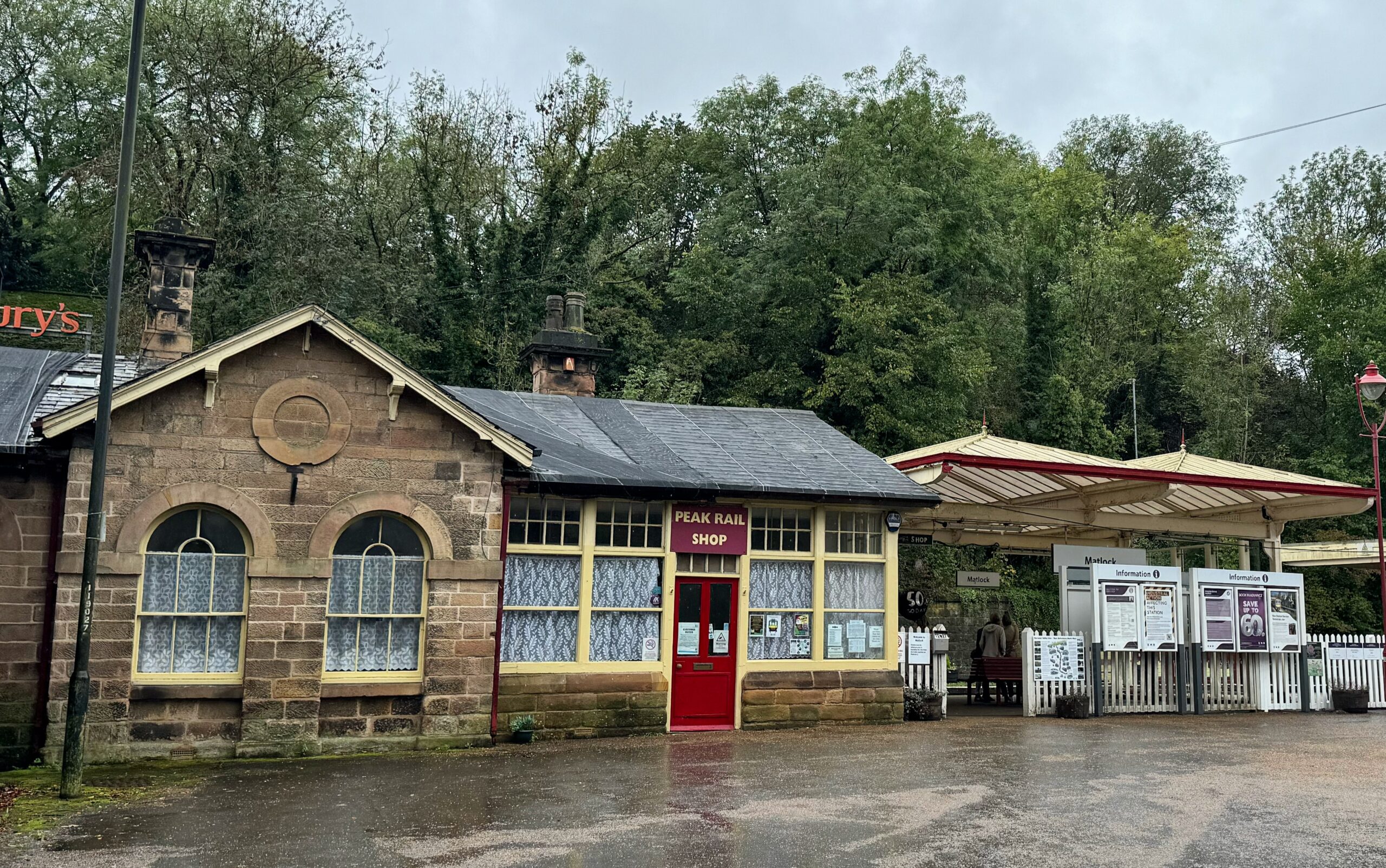
    Matlock Railway Station – 01/10/2023

    Once famed for its hydro and spa treatments, Matlock’s central location, scenic surroundings and public transport links make it a popular base for exploring the Peak District and Derbyshire. Pioneering industrialist John Smedley developed the attractive market town as a fashionable spa in the 19th century, and his legacy lives on in buildings such as Smedley’s Hydro (now the offices of Derbyshire County Council) and Gothic-style Riber Castle. Matlock railway station, originally called Matlock Bridge, was opened by the Manchester, Buxton, Matlock and Midland Junction Railway on 4th June 1849, when the line between Ambergate and Rowsley opened. The station buildings, designed by Sir Joseph Paxton, opened in 1850. The adjacent station master’s house is now Grade II listed.

    Grade II listed Matlock station masters house – 01/10/2023

    Just a mile and a half to the south, Matlock Bath is a lively town that was developed as one of England’s first true tourist destinations. It has been attracting visitors since the late 17th Century, and by the 19th Century it was a place for the finest in society to be seen, including royalty. Lord Byron dubbed it “Little Switzerland” on account of its magnificent views and steep, wooded hillsides. Matlock Bath is just as much fun to visit today. It has a long high street lined with quirky shops, cafés, amusement arcades and visitor attractions, as well as peaceful paths for shady strolls alongside the River Derwent.

    The Matlock Bath Illuminations are a popular annual event running from September to the end of October, when the riverside is decorated and the cliffs floodlit to create a magical scene of colour. At weekends during the Illuminations there are parades of decorated boats, entertainments and, on certain dates, firework displays.

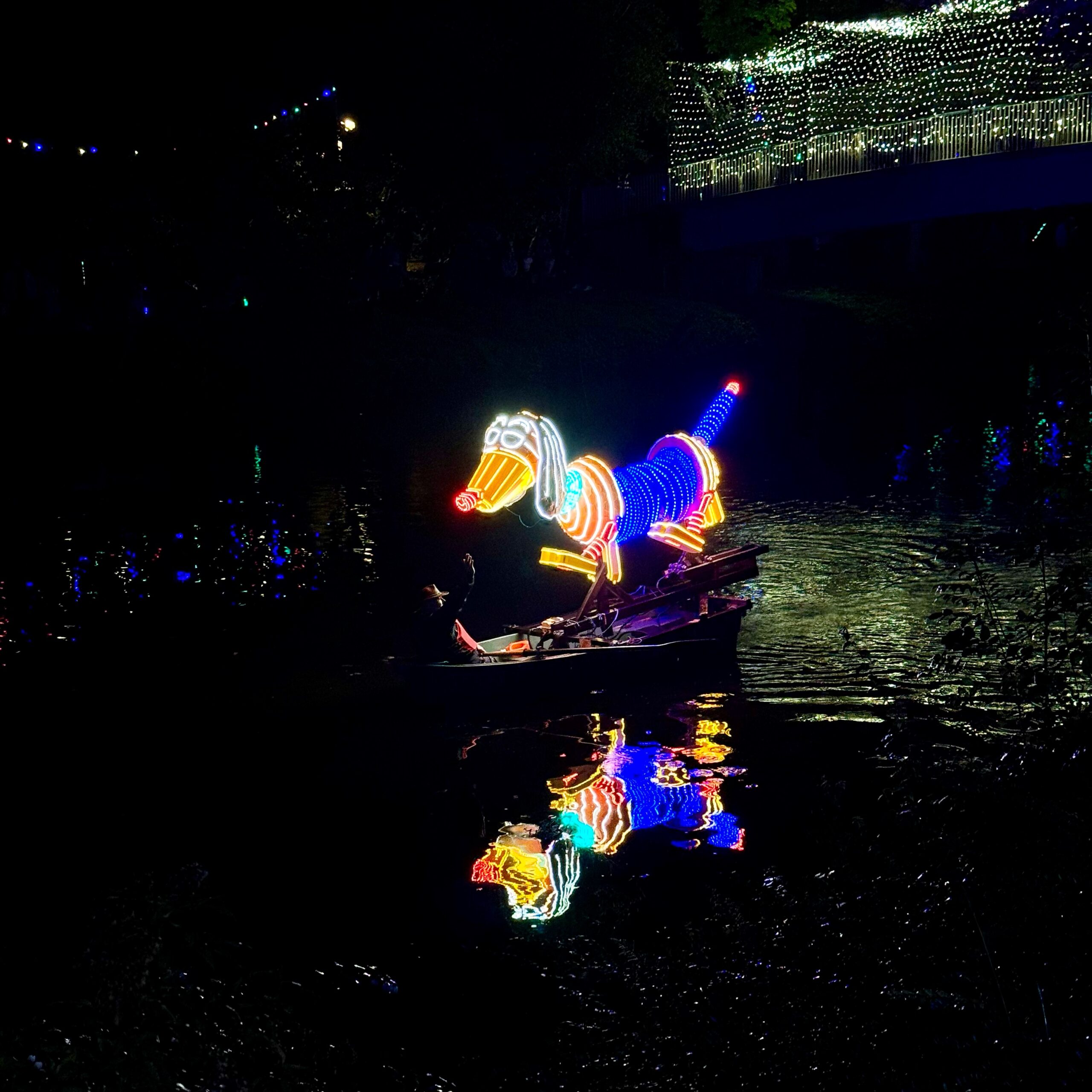
    Slinky Dog at Matlock Bath Illuminations – 30/09/2023
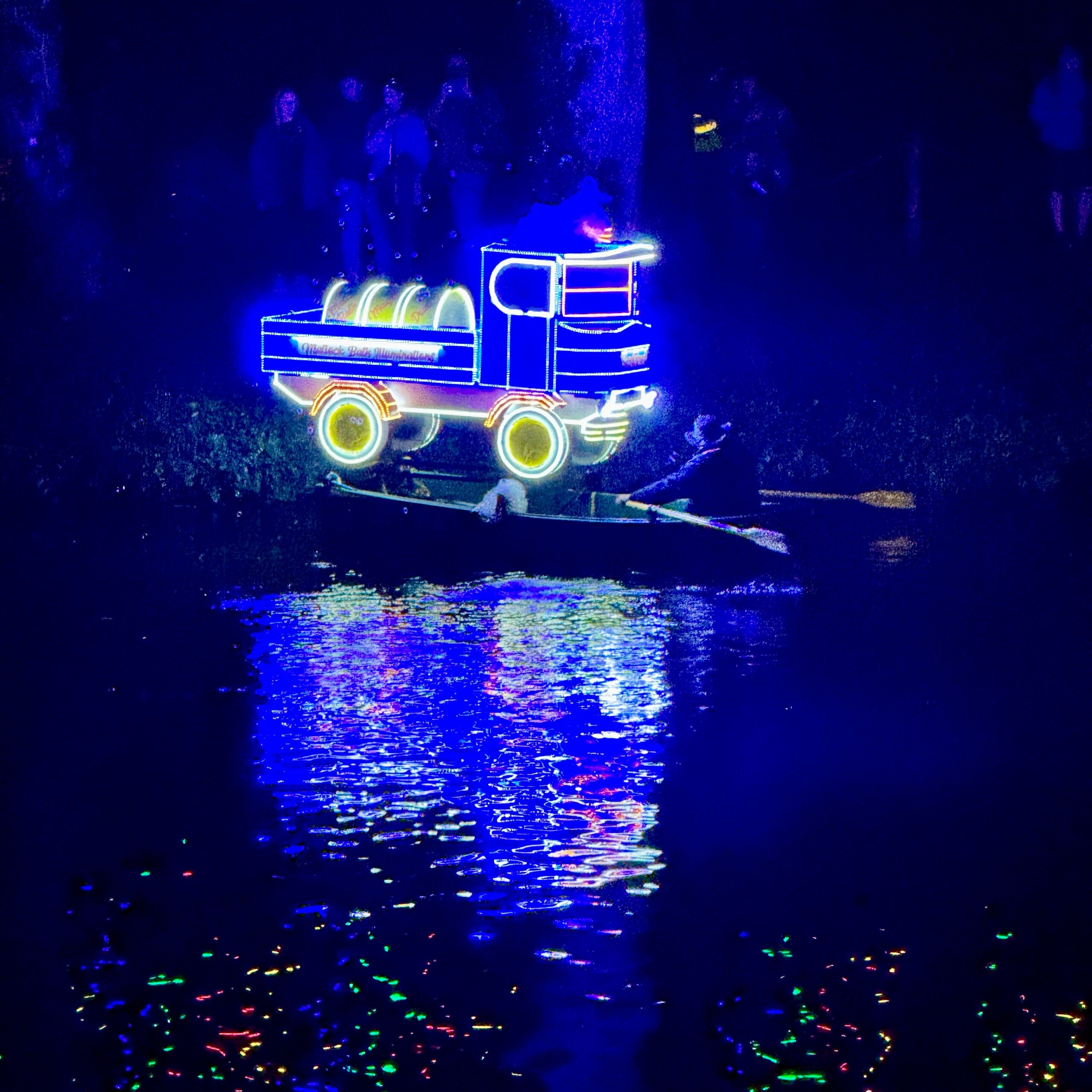
    A well observed Foden steam lorry taking part at Matlock Bath Illuminations – 30/09/2023
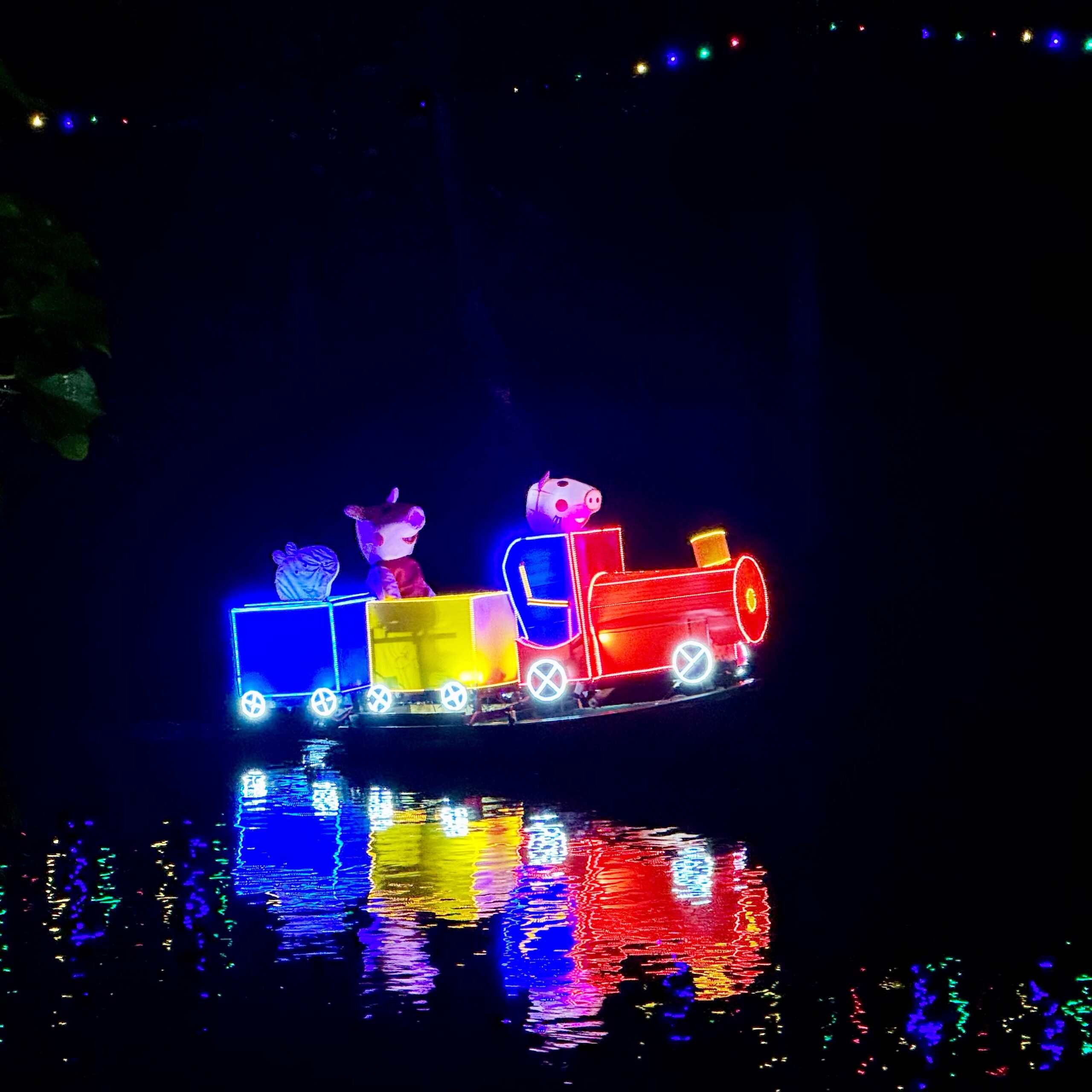
    Peppa Pig’s steam train at Matlock Bath Illuminations – 30/09/2023

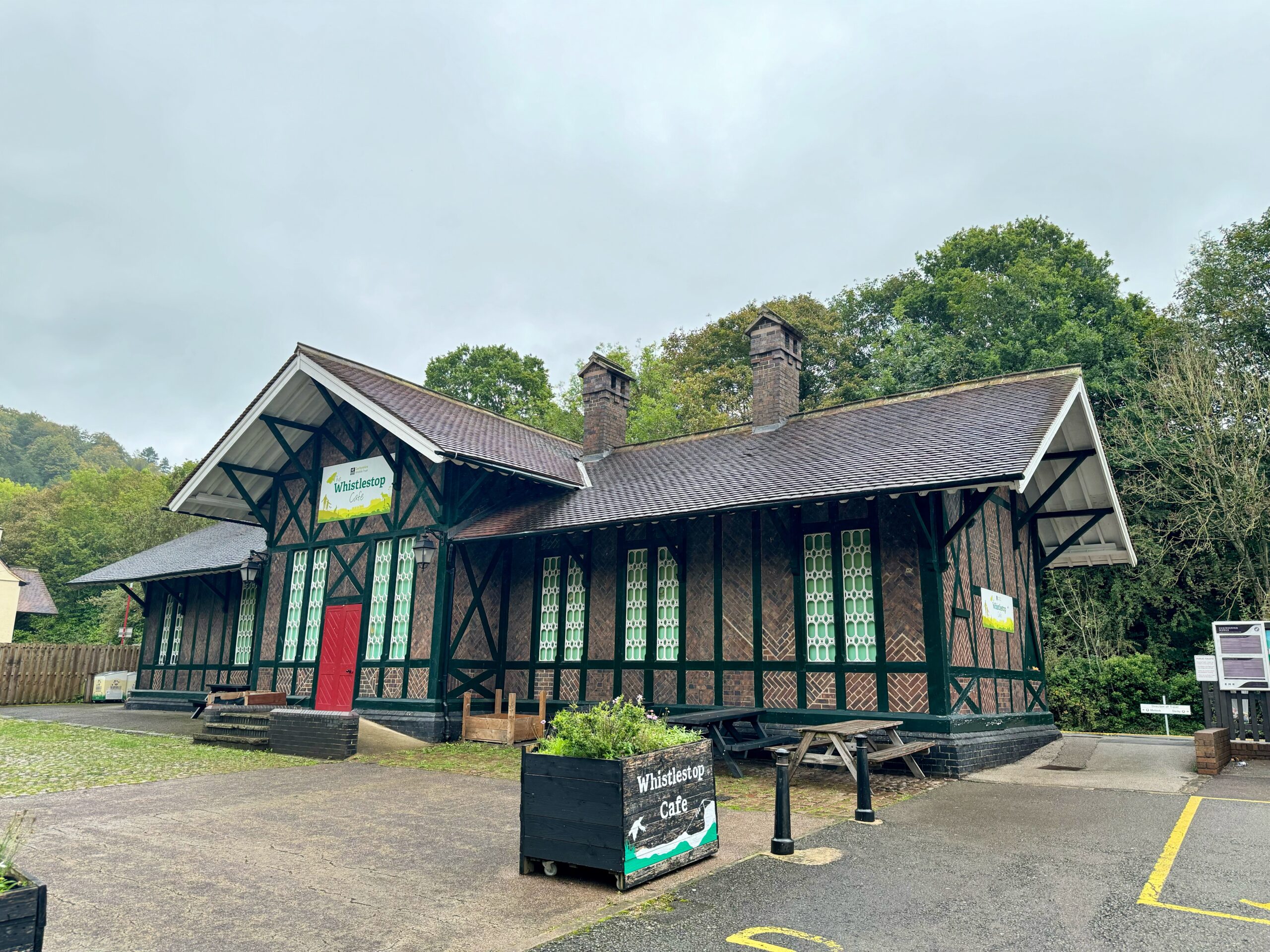
    Matlock Bath railway station is owned by Network Rail and managed by East Midlands Railway is also Grade II listed. Opened by the Manchester, Buxton, Matlock and Midland Junction Railway on 4th June 1849 and closed on 6th March 1967 but reopened on 27 May 1972.

    The station buildings have an unusual ‘chalet’ style, inspired by the romantic notion at the time that the resort was England’s “Little Switzerland”. The station buildings have been occupied by Derbyshire Wildlife Trust since the 1980’s and were restored in period-style and opened as a cafe/visitor centre in 2019 after a grant from the National Lottery Heritage Fund, with additional support from Derbyshire Dales and Derbyshire County councils, and other donations, but were unfortunately closed when we visited.

    The unique chalet style of Matlock Bath Railway station – 01/10/2023

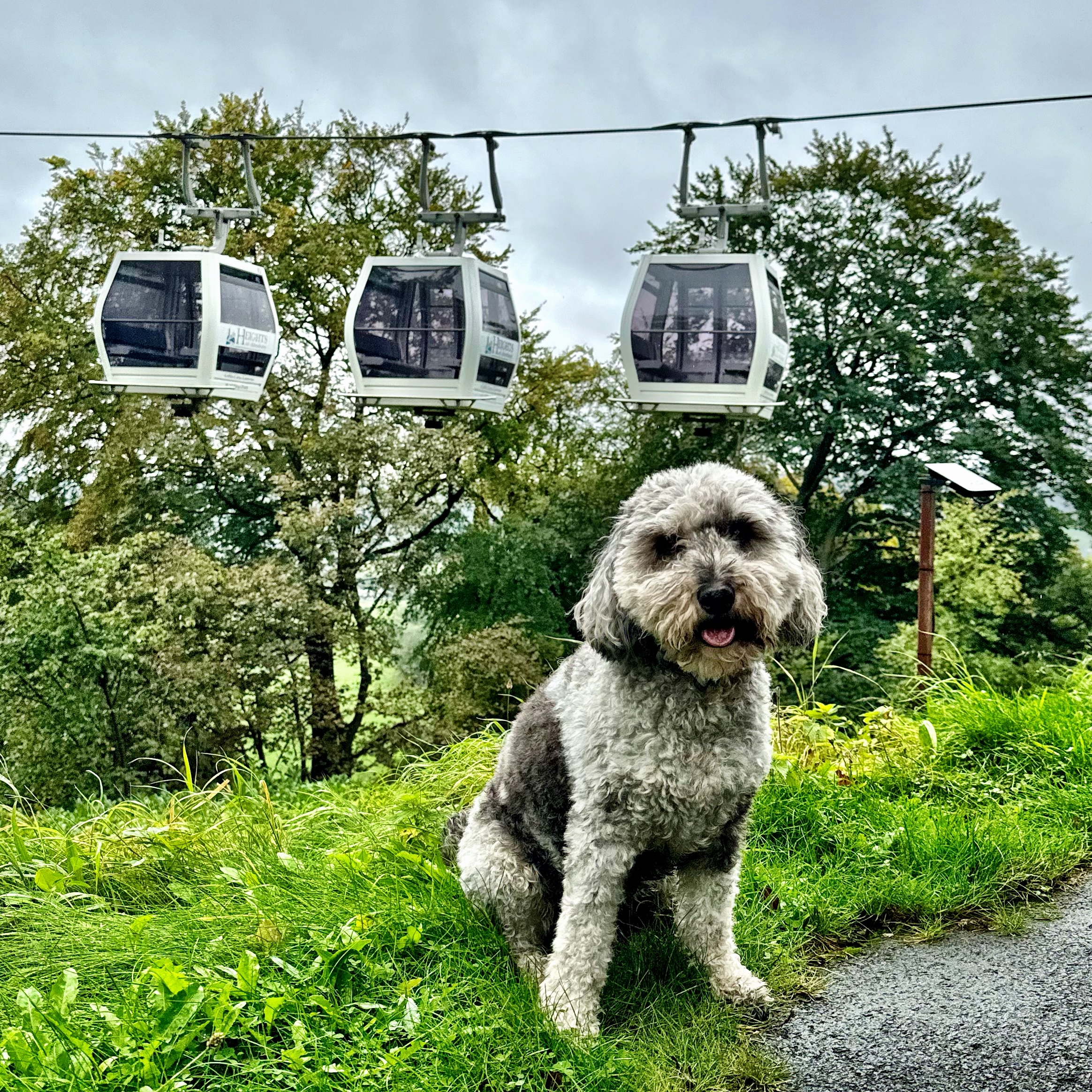
    The Heights of Abraham cable car runs from near the station up to the associated visitor attraction. Originally opened in 1787 as a “Savage Garden”, a popular term for wild and exotic locations first coined by the Georgians in the late 18th Century, the Heights is a unique and special hilltop park with guided underground cavern tours, historical exhibitions and other facilities.

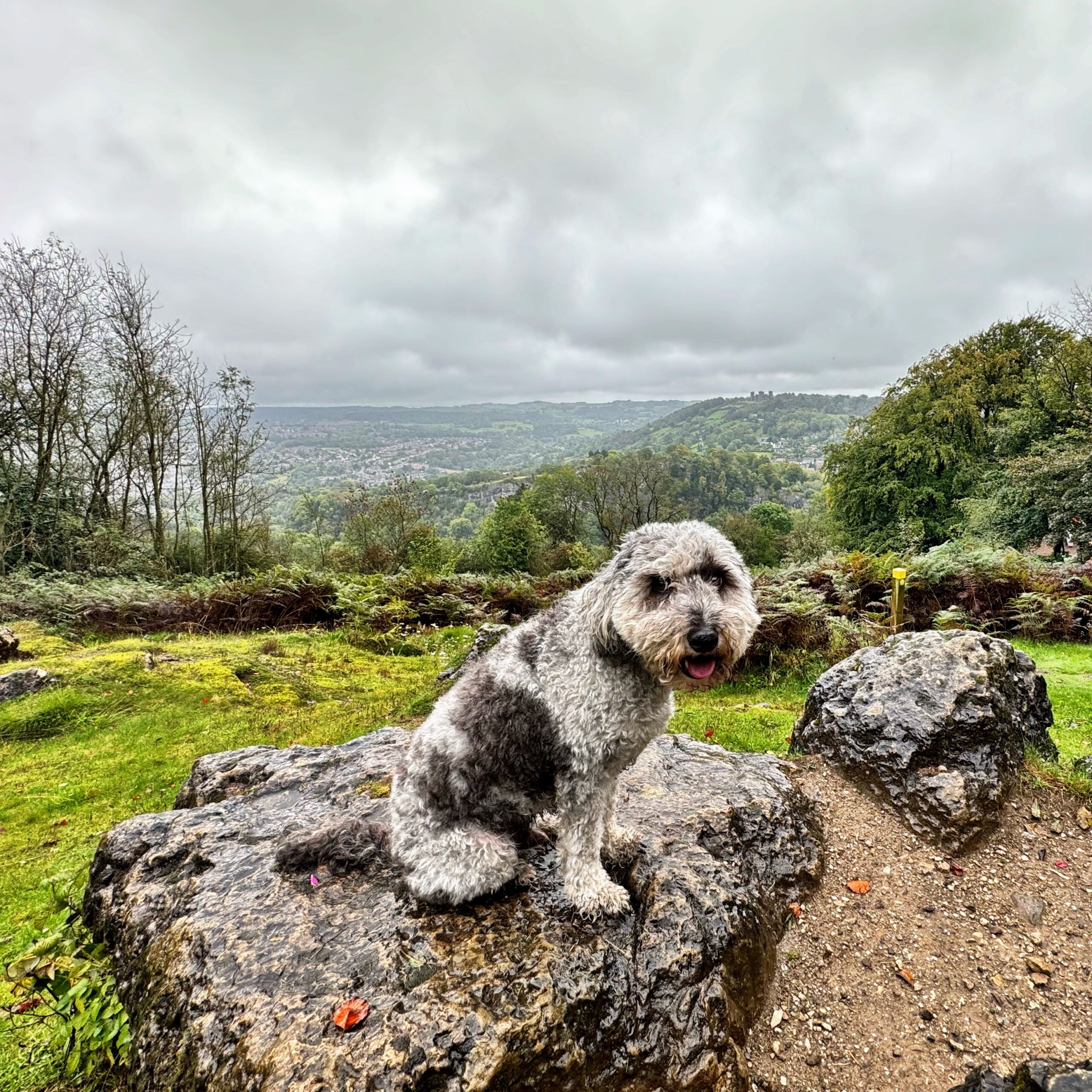
    Yoshi at The Heights of Abraham with cable cars in the background – 01/10/2023
    Yoshi takes in the view from The Heights of Abraham – 01/10/2023

    Caroline took a guided tour of Masson Cavern, formed over 350 million years ago, while Yoshi and I took the quicker route to meet her after her underground experience at Tinker’s Shaft once the main access point when it was a working lead mine in the 17th Century. It is now safely capped and has been transformed into a viewing platform with incredible vistas over the Derbyshire Dales.

    Yoshi waiting apr=tiently for his Mama at Tinker’s Shaft – 01/10/2023

    We also took time to visit the Masson Pavilion which houses a new exhibition entitled “A Mirror on the Past” which features 14 historically accurate life-sized figures dressed in reproduction period costumes as worn by the Georgian, Regency, Victorian and Edwardian guests who visited the Heights of Abraham between 1787 and 1910 created by Arts University Bournemouth Costume and Make-up students.

    Examples of costumes in the “A Mirror on the Past” exhibition at The Heights of Abraham – 01/10/2023

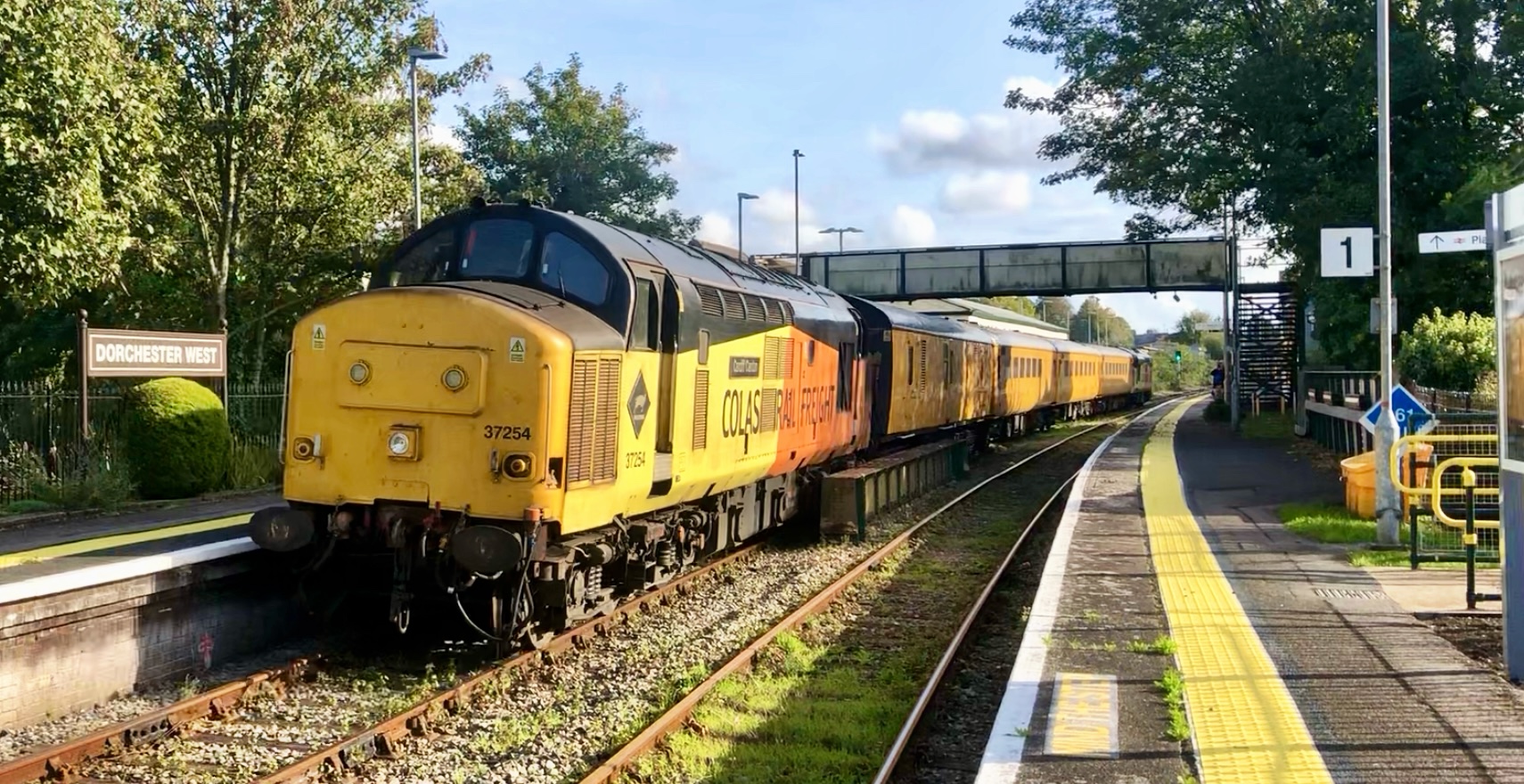
    Wednesday 4th October was another Aslef strike day, but one train which did run in our region was the Network Rail New Measurement Train top and tailed by Colas Class 37 diesel locomotives No.’s 37175 and 37254.

    Class Class 37 No. 37175 enters Dorchester West with the Network Rail NMT 1Z22 0749 Derby R.T.C.(Network Rail) to Bristol Kingsland Road (G E Barrett) – 04/09/2023
    Colas Class 37 No. 37254 at the rear of 1Z22 0749 Derby R.T.C.(Network Rail) to Bristol Kingsland Road at Dorchester West (G E Barrett) – 04/09/2023
    NMT 1Z22 0749 Derby R.T.C.(Network Rail) to Bristol Kingsland Road at Dorchester West (G E Barrett) – 04/09/2023

    For the record, Colas Class 37 No. 37116 was allocated to the Ultrasonic Test Unit with DBSO No. 9701 working 3Q14 1113 Westbury Down Yard to Westbury Down Yard via Weymouth on Thursday 5th October. It would appear this service was turned around at Castle Cary.

    From The Archive:

    Video of Thomas and Friends event at Darley Dale on Peak Rail 08/04/1995:

    That brings us to the end of another blog entry, thanks for reading and for your comments and corrections. We will be taking a break for a few weeks, but hope to be back at the end of October. Be seeing you!

  • Yoshi and the T3

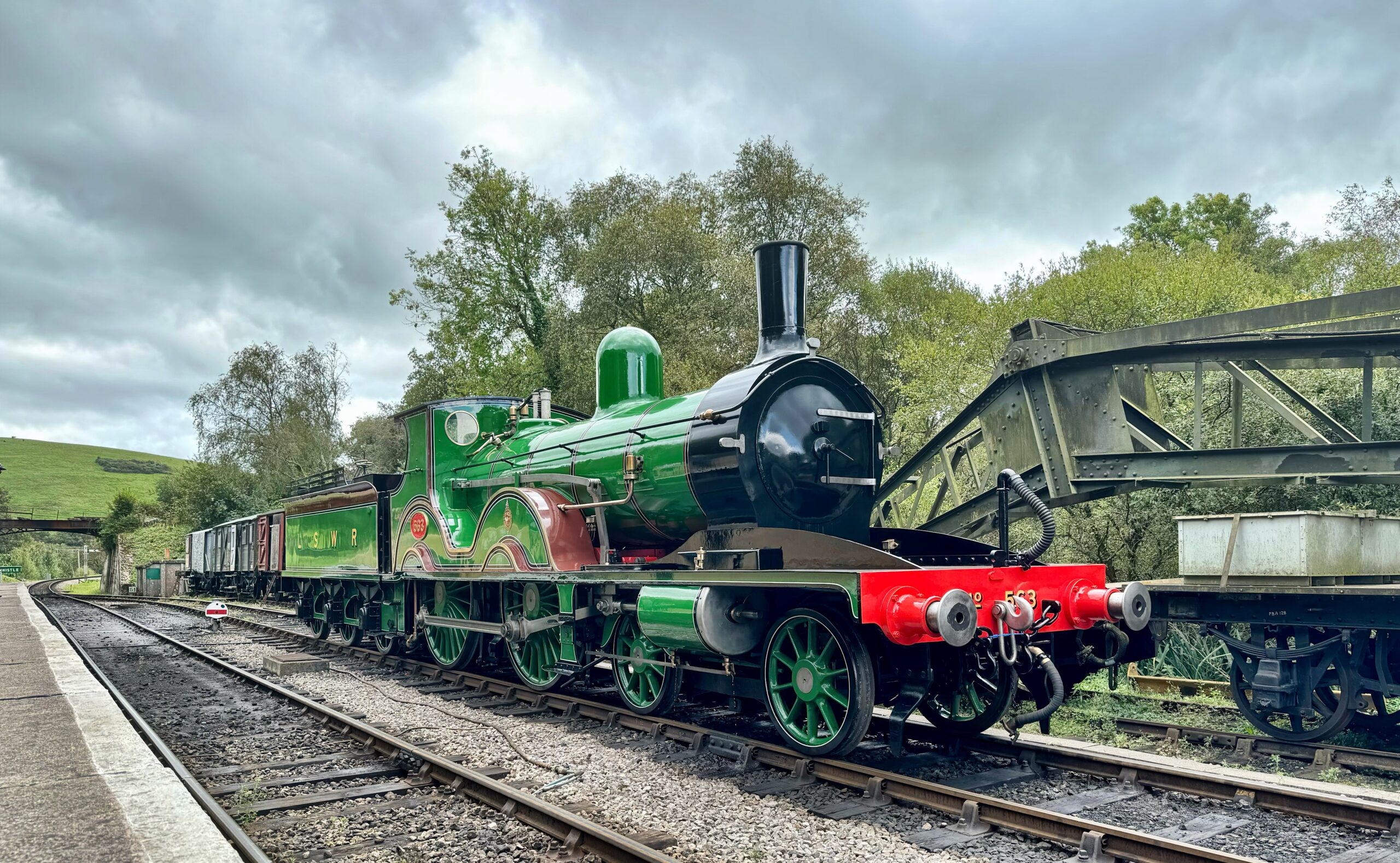
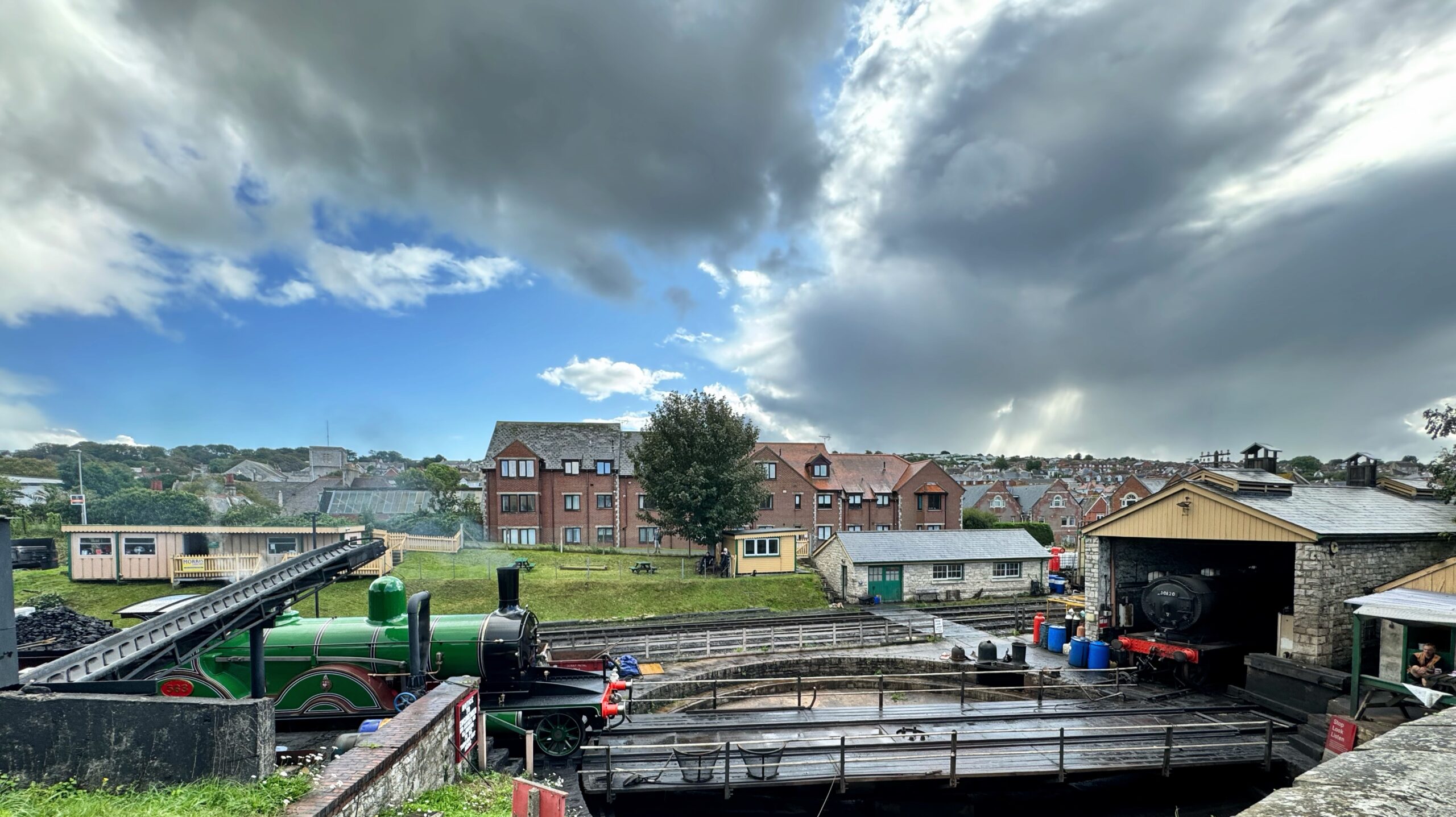
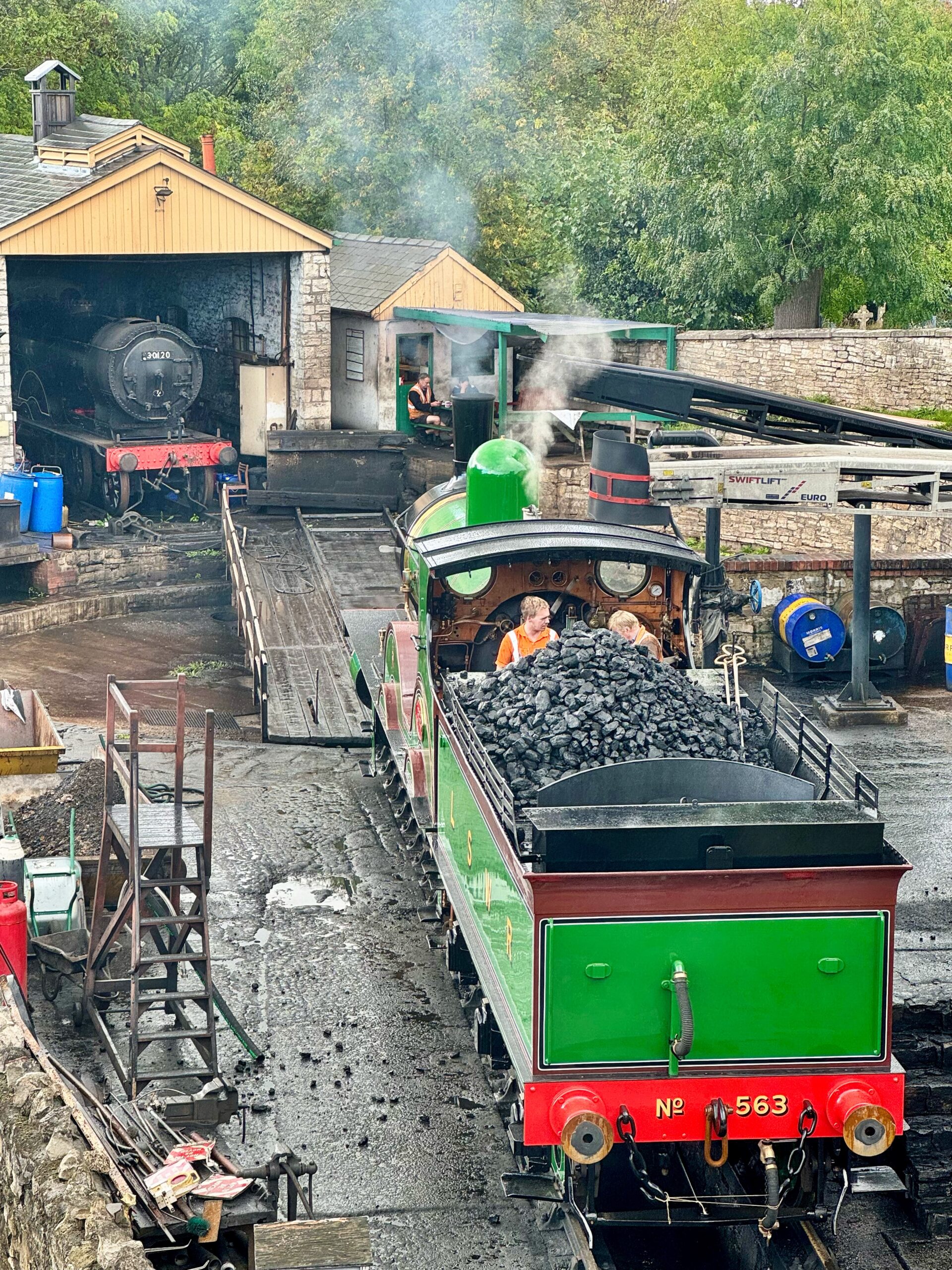
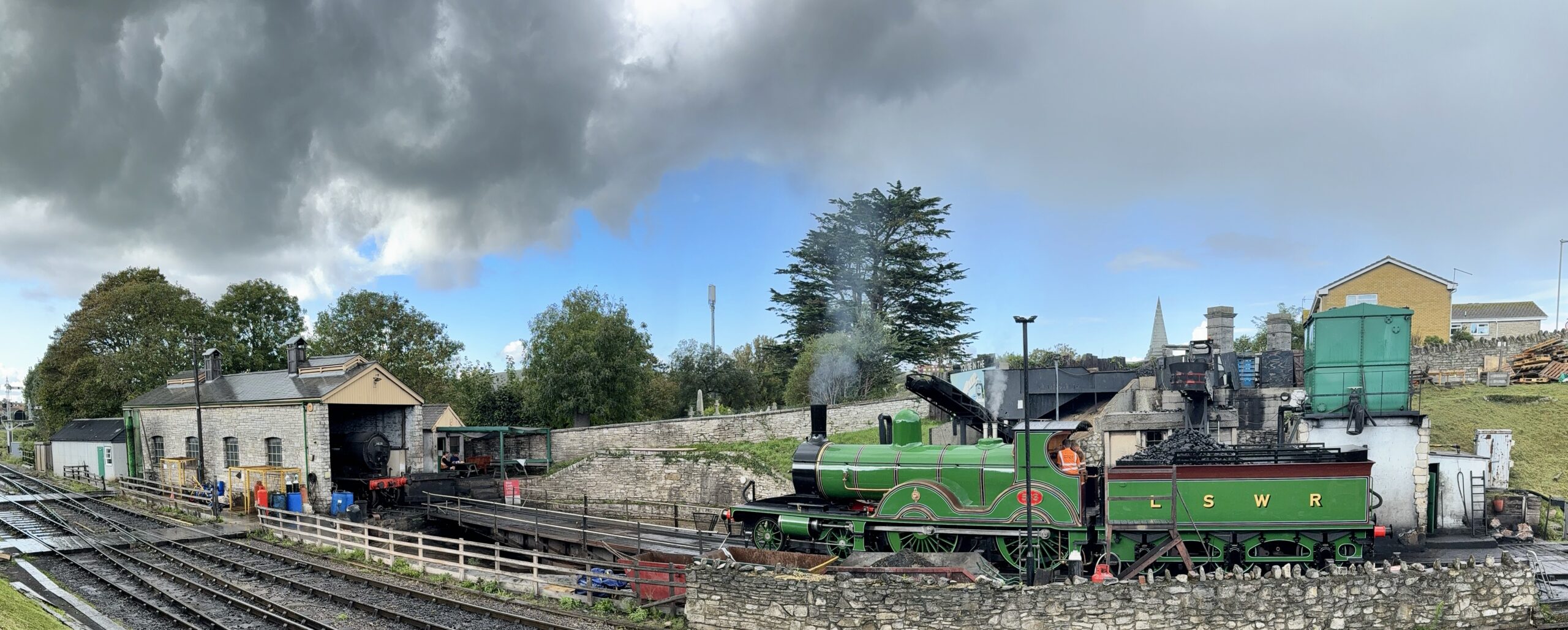
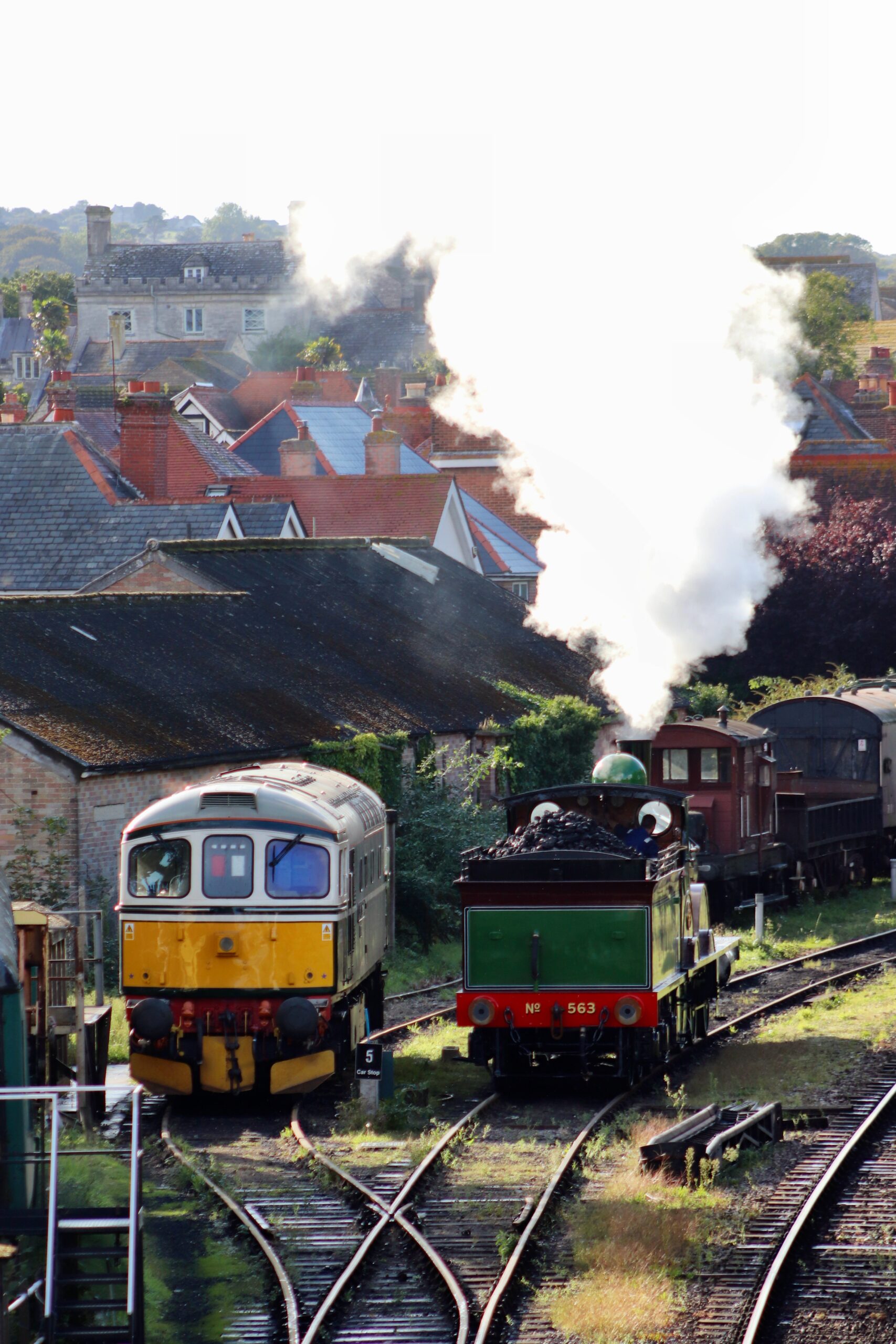
    Yoshi meets Adams T3 4-4-0 No. 563 at Norden as the locomotive, complete with tender, is steamed for the first time in 75 years – 22/09/2023

    September 20th 2023 to September 27th 2023

    The big local news this week was centred on the Swanage Railway as Victorian era Adams T3 Class 4-4-0 locomotive No. 563 was reunited with her tender after remedial tasks were carried out at Herston Works and steamed while complete for the first time in around 75 years. Yoshi and I headed over to Corfe Castle railway station on Friday 22nd September with the objective of capturing her running light engine to Swanage. Road works in Corfe village delayed our arrival at the station and we were not sure if we had missed the action but after waiting a few minutes or so, the signalman at Corfe box told us he was off to have his lunch and there would be nothing running for the foreseeable. With this nugget of information, Yoshi and I jumped back into the car and headed back to Norden where we found the steaming T3 gleaming in the sunshine.

    Beautifully restored Adams T3 4-4-0 No. 563 at Norden – 22/09/2023

    We busied ourselves taking a few photographs and saying hello to Nathan Au from the 563 Locomotive Group who very kindly updated us with the information that the T3 was not likely to move from Norden for quite possibly two hours as various bits and bobs needed fitting to the locomotive and adjustments made. With one eye on the time, Yoshi and I headed home as we had other early afternoon commitments, during which we kept one eye on the Swanage railway webcams. Or rather I did, as Yoshi took time to snooze at my feet.

    Viewing the webcams paid off as I saw the T3’s arrival in Swanage during a brief spell of rain at around 1500. Not knowing if the locomotive was set to run any additional test runs that day we went straight to Swanage to find the T3 simmering on the turntable. After another period of rain, expectations grew as coal was shovelled into the T3’s firebox and eventually the locomotive eased into movement, running into the station mouth and back out up to one of the sidings beyond the engine shed. Although I had missed what turned out to be the solitary the test run that day, I was happy to have at least seen No. 563 move under its own power!

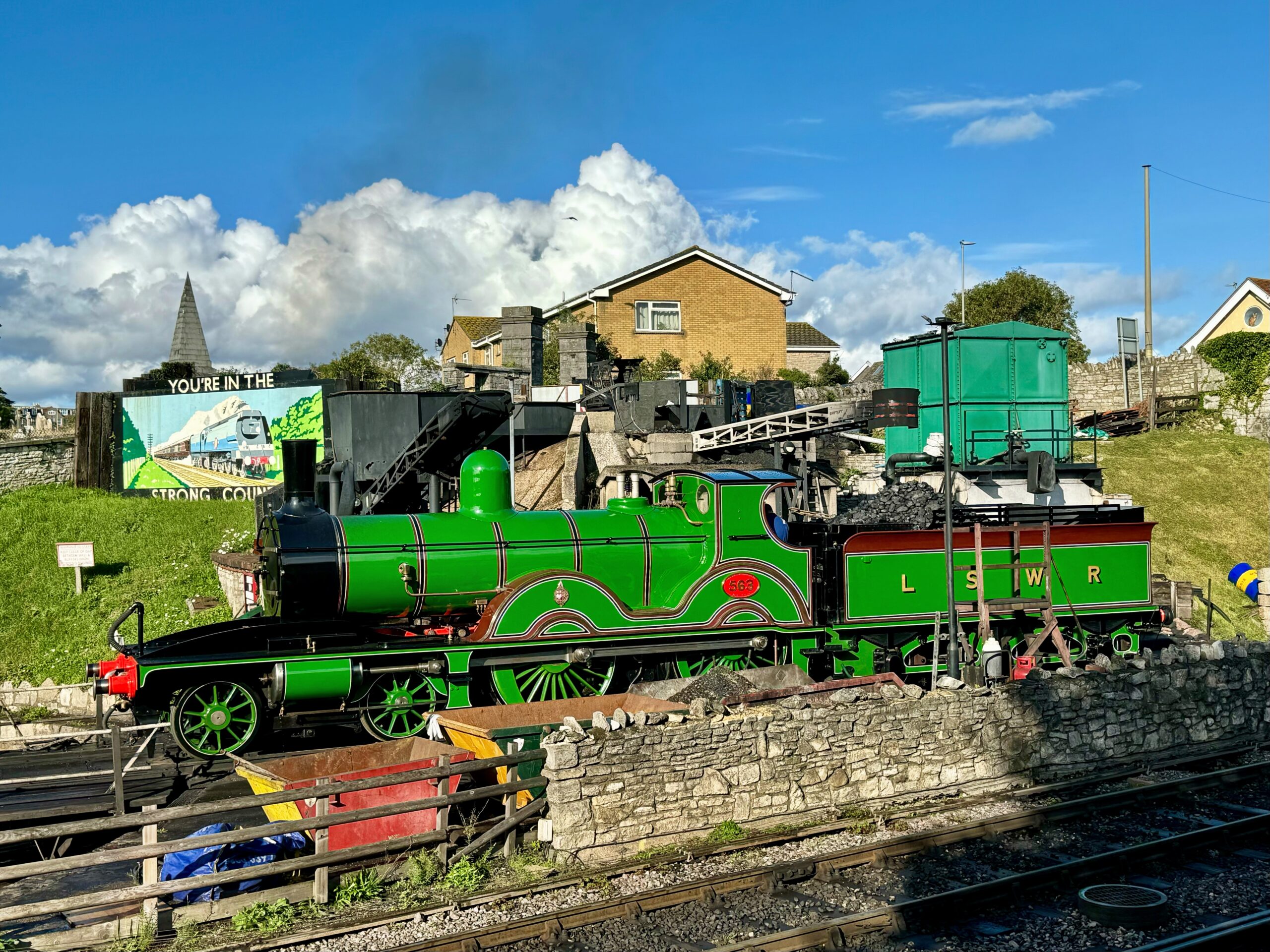
    Adams T3 4-4-0 No. 563 on shed at Swanage – 22/09/2023
    Adams T3 4-4-0 No. 563 beneath the coaling stage at Swanage – 22/09/2023
    Adams T3 4-4-0 No. 563 meets “Greyhound” T9 No. 30120 owned by the National Collection is based on the Swanage Railway after an agreement was reached between the National Railway Museum and the Swanage Railway Trust which will see the 1899 built London & South Western Railway locomotive stored at the Purbeck heritage line following expiry of its boiler certificate in August 2020, which meant the T9 had to be taken out of use. The new agreement includes provision for a limited disassembly of the locomotive – including a boiler lift – so that the Swanage Railway Trust can assess the potential for the locomotive to be returned to steam. Designed by Dugald Drummond (1st January 1840 – 8th November 1912), No. 30120 was built at the Nine Elms Locomotive Works in London. During the Second World War, the T9 was attacked by a German Luftwaffe fighter at Wool station with the locomotive crew having to hide under No. 30120 for cover. The locomotive was withdrawn in 1961 from Exmouth Junction shed in Devon, and joined the National Collection in late 1963 with No.30120 later being put on display at the National Railway Museum in York. In 2010, the locomotive was overhauled at the Flour Mill engineering works, in the Forest of Dean, for service on the Bodmin and Wenford Railway, in Cornwall before moving to the Swanage Railway in 2017. The T9 had previously hauled trains on the Swanage Railway in 1991 when passenger trains only operated on the three miles from Swanage to Harman’s Cross and was the first steam locomotive to run to Corfe Castle since June 1967 after relaid tracks reached Corfe Castle en route to Norden – 22/09/2023
    Two Victorian era locomotives at Swanage; Adams T3 4-4-0 No. 563 and Drummond T9 4-4-0 No. 30120 – 22/09/2023
    Swanage shed and turntable with T9 No. 563 and T9 No. 30120 – 22/09/2023
    Adams T3 4-4-0 No. 563 moving under her own steam chuffs out of Swanage – 22/09/2023
    Passing Class 33/0 No. 33012 / D6515 ‘Lt Jenny Lewis RN’, Adams T3 4-4-0 No. 563 heads to a siding at Swanage following a successful test run under her own steam for the first time in 75 years – 22/09/2023
    Class 33/0 No. 33012 / D6515 ‘Lt Jenny Lewis RN’ at Swanage – 22/09/2023
    A cavalcade of locomotives at Swanage as Class 08 No.08436 ‘Beighton’ shunts steam locomotives around the station area at Swanage – 22/09/2023
    Adams T3 4-4-0 No. 563 at Swanage in steam for the first time in 75 years – 22/09/2023

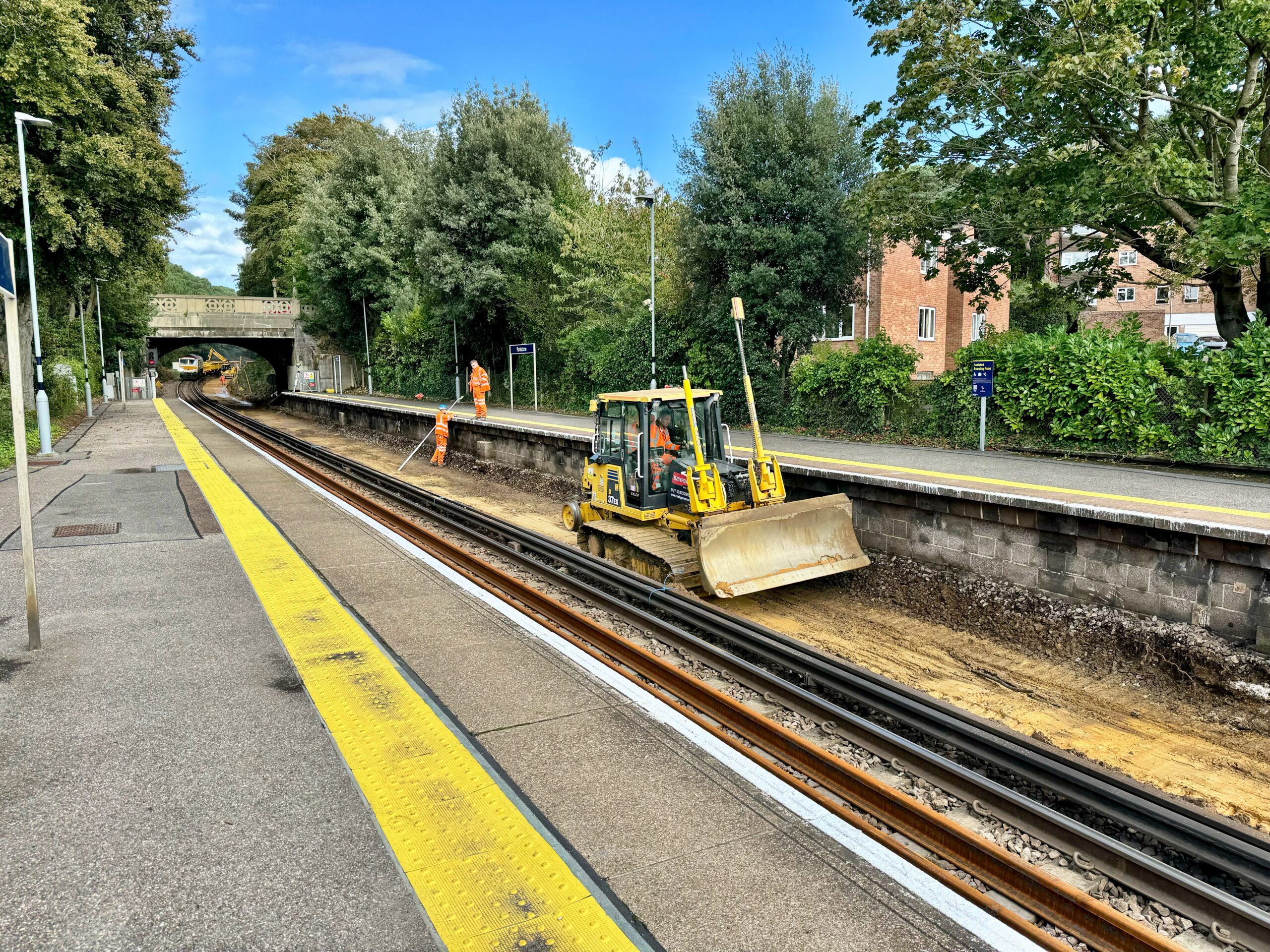
    The weekend of 23/24th September saw another set of engineering work taking place in the Parkstone area on the down line. The work site was a continuation from where last weeks ended and this time continued through to Parkstone railway station itself. The need for the work to be carried out had apparently been identified by one of the monthly plain line pattern recognition (PLPR) trains. Further tamping of the new line is required in the coming weeks. There is no requirement for the up line to be replaced at present.

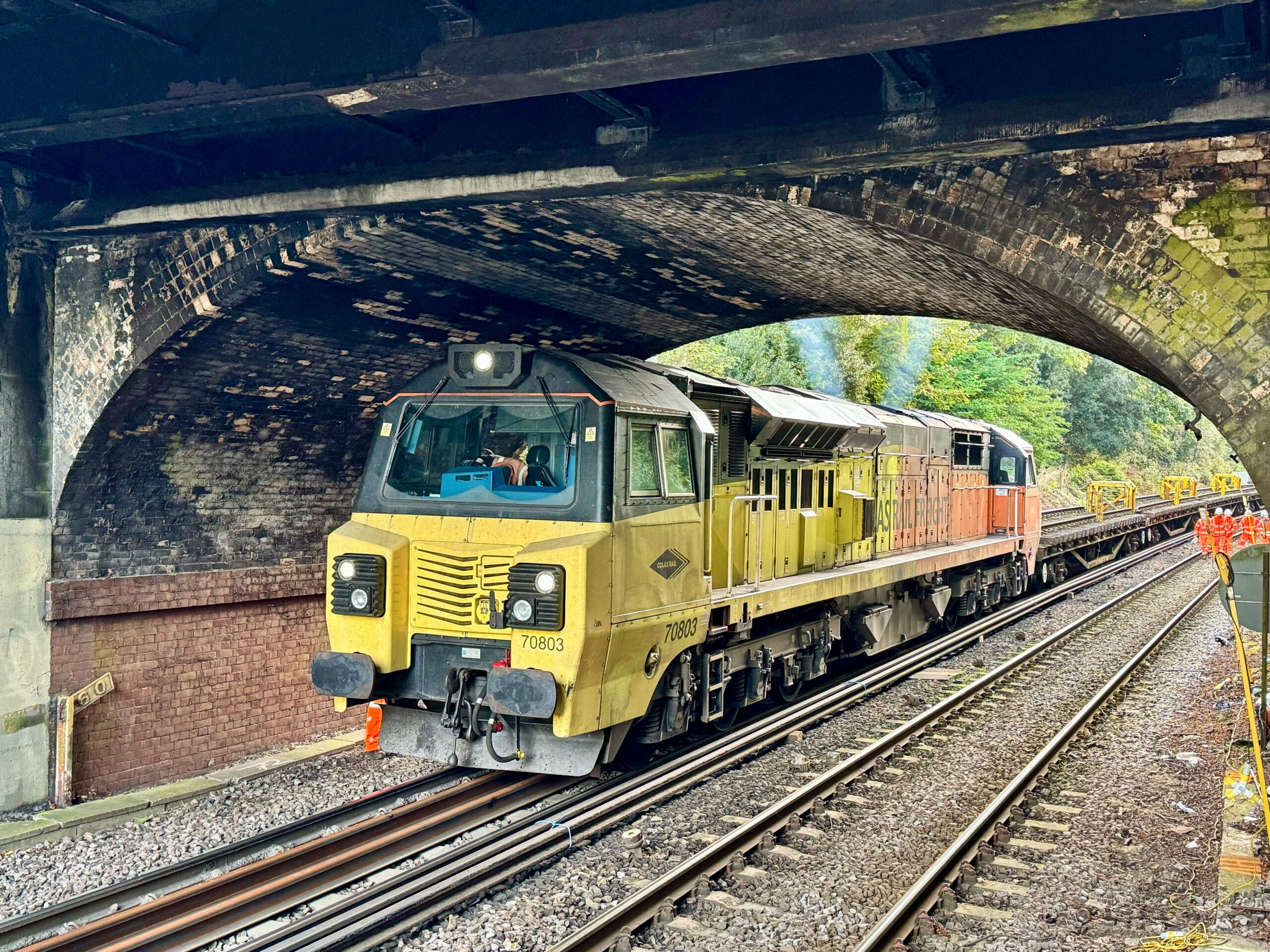
    Colas Class 70 No. 70803 at Parkstone having worked in with 6C03 2356 Eastleigh East Yard to Branksome – 23/09/2023
    Colas Class 70 N0. 70809 on Parkstone bank which arrived as 6C04 0242 Eastleigh East Yard to Bournemouth – 23/09/2023
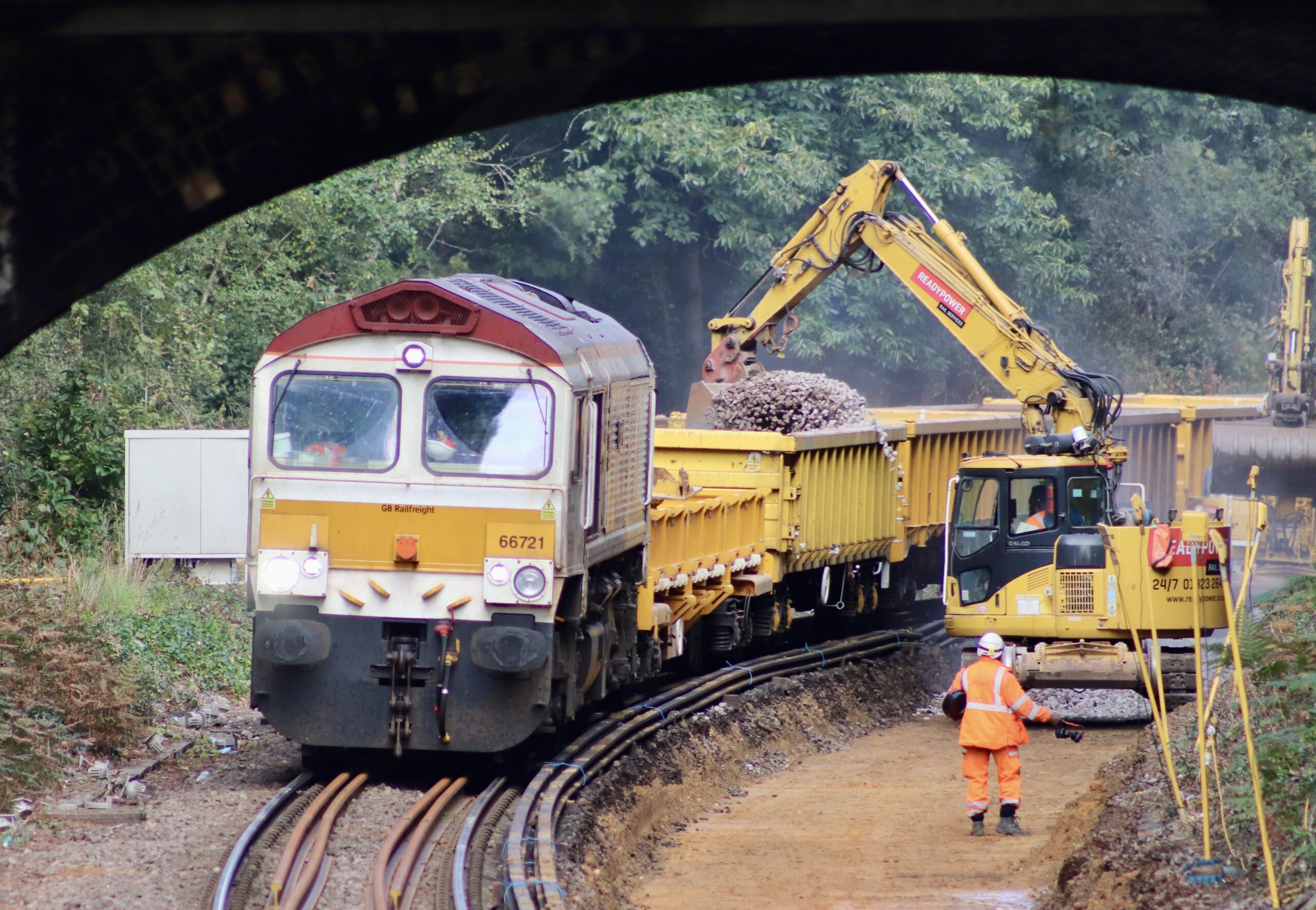
    GBRf Class 66 No. 66760 ‘David Gordon Harris’ arrives at the Parkstone worksite with 6G10 0524 Eastleigh East Yard to Bournemouth – 23/09/2023
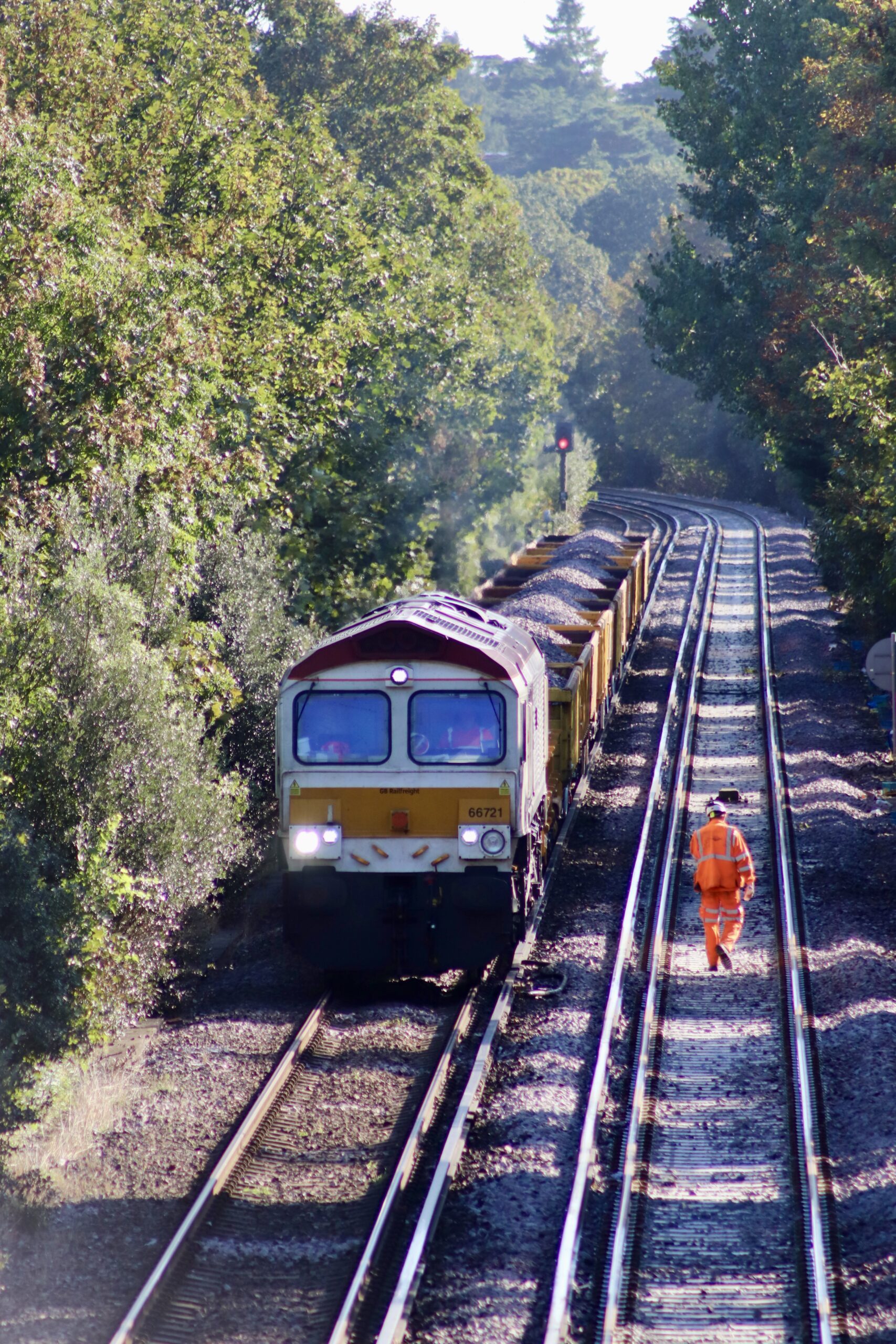
    GBRf Class 66 No. 66721 ‘Harry Beck’ working 6G11 0635 Eastleigh East Yard to Bournemouth moves slowly up to join the Permanent Way works at Parkstone – 23/09/2023
    DB Cargo Class 66 No. 66131 approaches Christchurch appropriately working 6N31 1113½ Eastleigh East Yard to Bournemouth – 23/09/2023
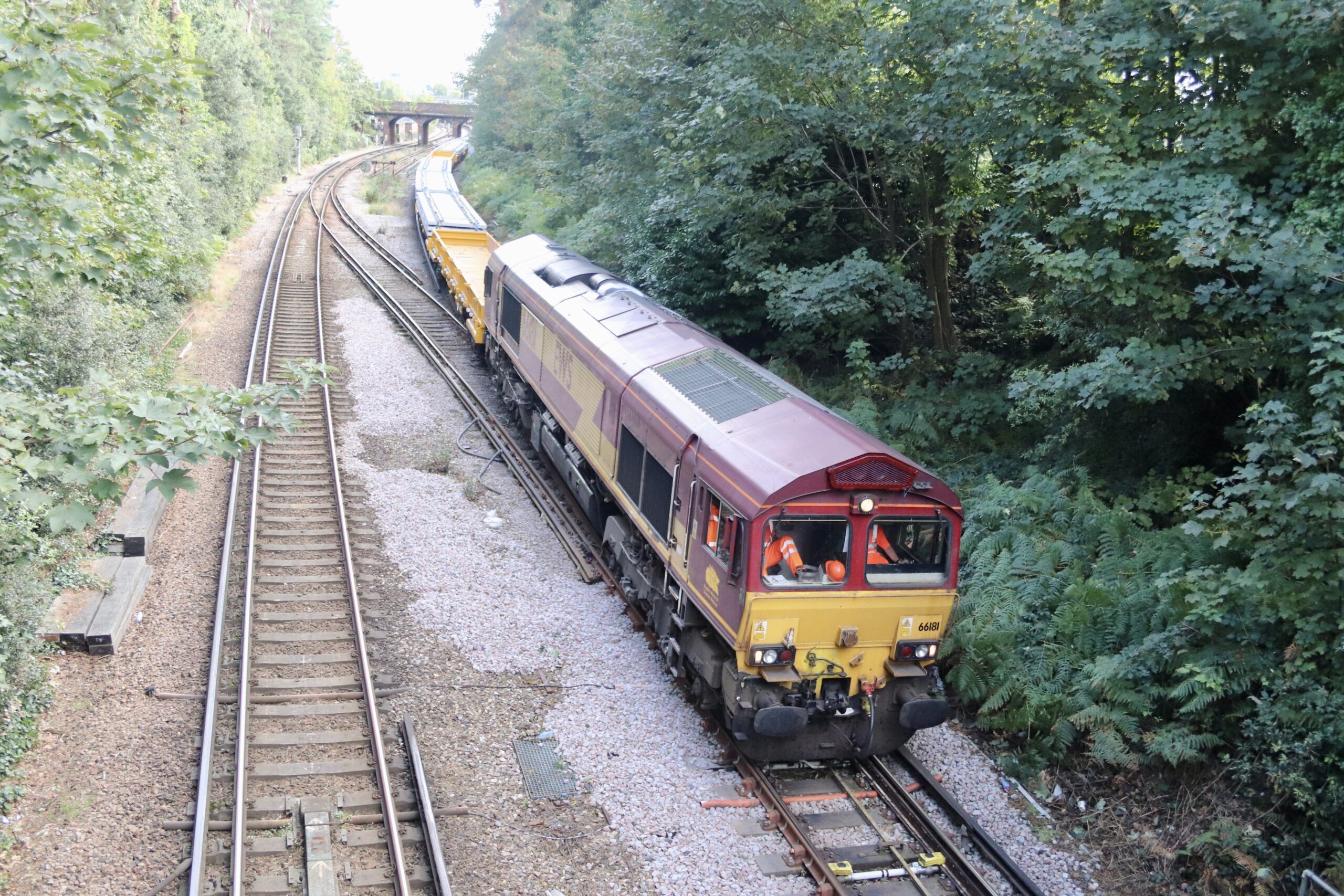
    EWS liveried DB Cargo Class 66 No. 66181 at Milton Road bridge forming 6N32 1313½ Eastleigh East Yard to Bournemouth – 23/09/2023
    GBRf Class 66 No. 66721 named in tribute to ‘Harry Beck’ designer of the London Underground map which has been replicated throughout the World at rest on Parkstone bank – 23/09/2023
    GBRf Class 66 No. 66721 ‘Harry Beck’ with a train of fresh ballast at Parkstone – 23/09/2023
    Work taking place to relay the down tracks through Parkstone railway station – 23/09/2023
    As part of an charity auction, GBRf gave the opportunity to name a locomotive to one lucky winner who donated what has quoted to have been “an extraordinary amount of money” to good causes and chose to name Class 66 No. 66760 after his father, a career train driver celebrating his 60th birthday; ‘David Gordon Harris’. The loco is seen here running through Poole railway station heading for Holes Bay – 23/09/2023
    In Genesee & Wyoming livery, Freightliner Class 66 No. 66509 ‘Josiah’s Wish’ is about to set off from Holes Bay, Poole to form 6N32 1855 Bournemouth to Eastleigh East Yard – 24/09/2023

    Yoshi and I managed to photograph all but one locomotive involved in the engineering possession over the weekend – the loco evading our camera lens being Freightliner Class 66 No. 66420 which worked in with fellow class member No. 66509 ‘Josiah’s Wish’ on 23rd September’s 6Y83 2040 Eastleigh East Yard to Bournemouth – although we did see its exhaust as we drove above the track via Station road bridge on our way to Castlepoint shopping centre on Sunday morning! No. 66420 returned as 6Y83 1755 Bournemouth to Eastleigh East Yard, but again I was unable to see this move.

    Engineering work at Parkstone – 23/09/2023

    Monday evening was the return of the Class 73 top and tailed PLPR train which travelled from Derby Railway Technical Centre down to Weymouth and back to Eastleigh East Yard. Class 73 Electro Diesels No. 73964 ‘Jeanette’ and 73962 ‘Dick Mabbutt’ were picked from the rergular roster of locomotives. We decided on seeing them this time on the outward run through Parkstone so we could admire the new track which was as mentioned above the result of a previous run of this particular test train.

    1Q51 1115 Derby R.T.C.(Network Rail) to Eastleigh East Yard – 25/09/2023

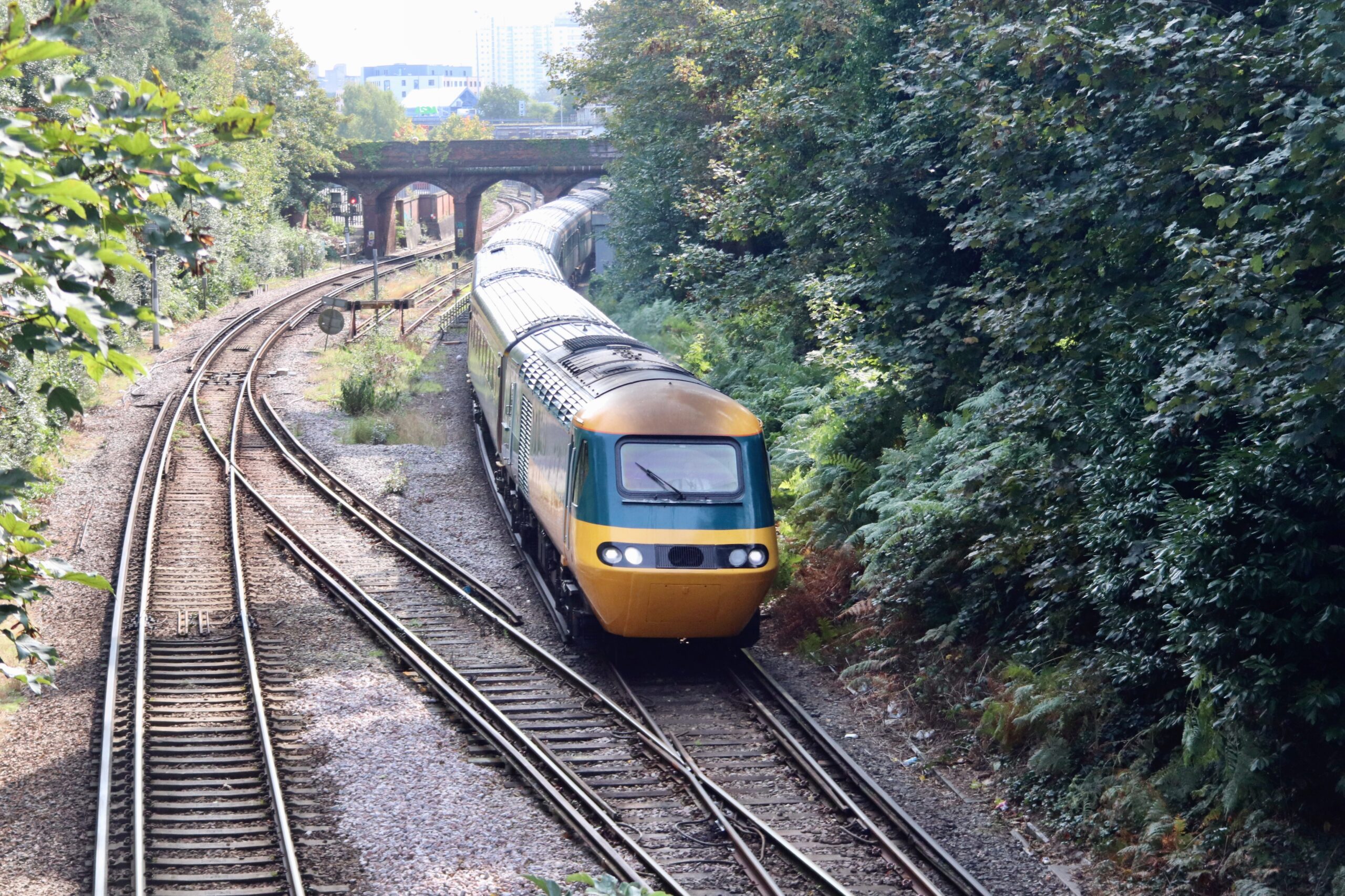
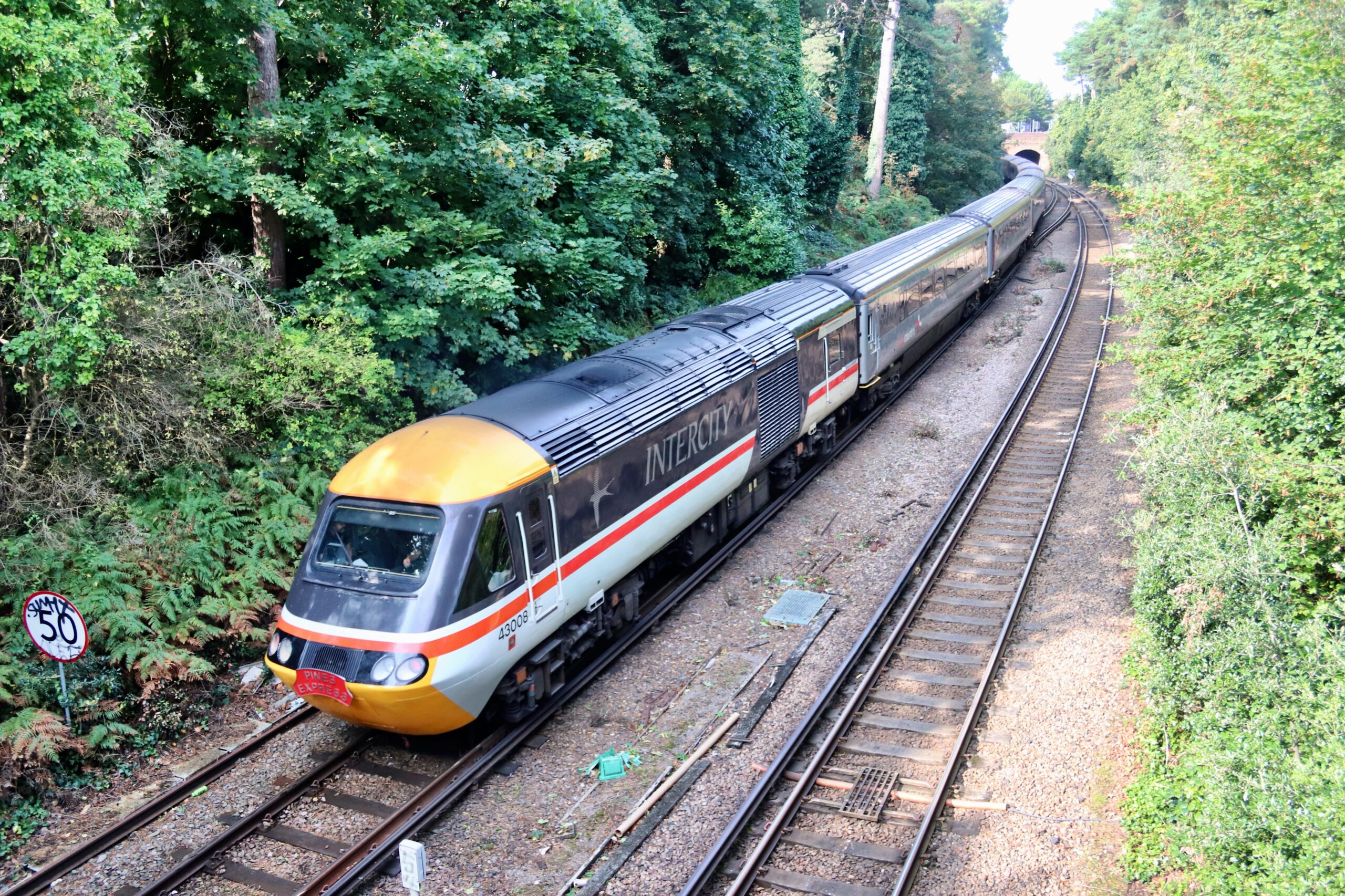
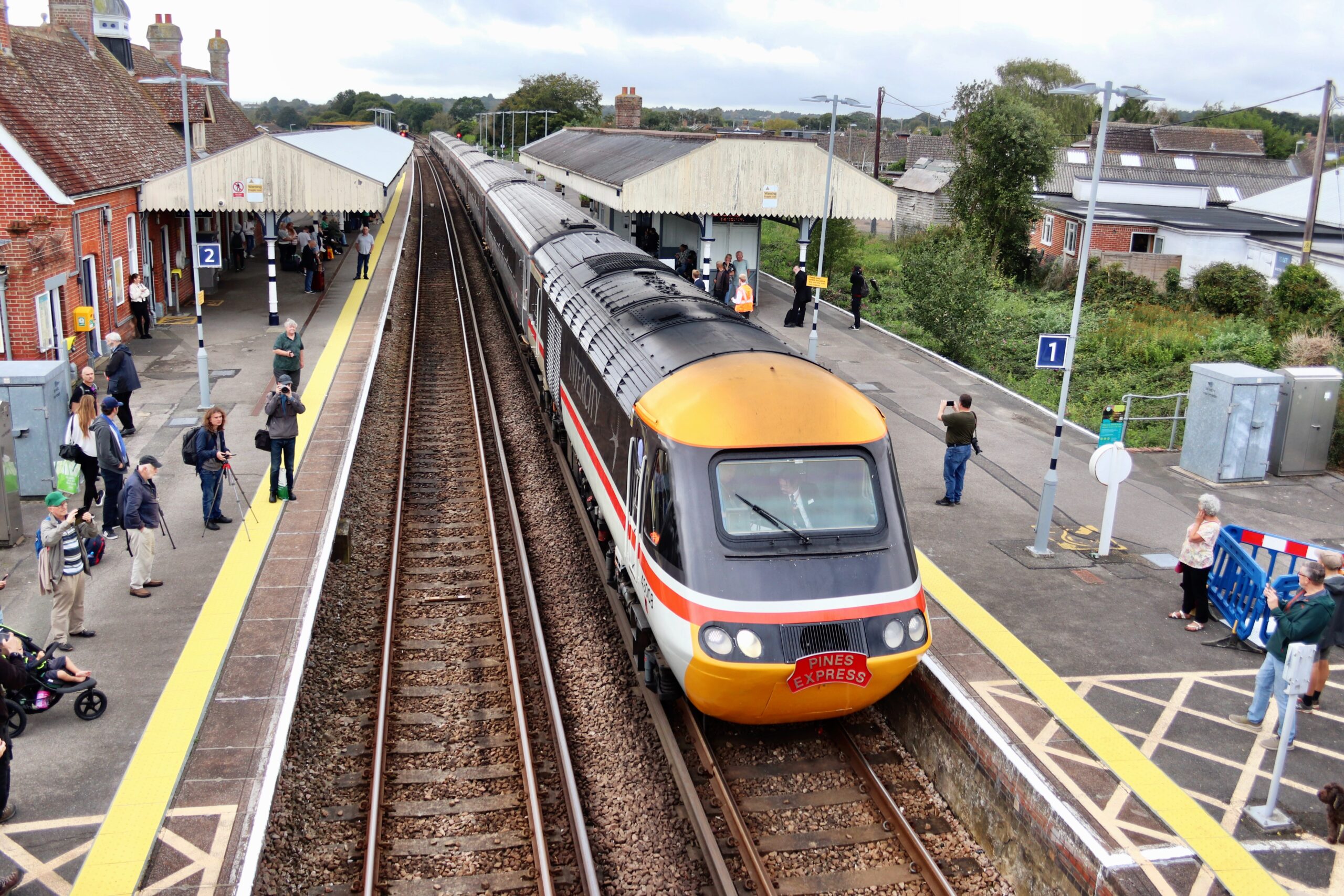
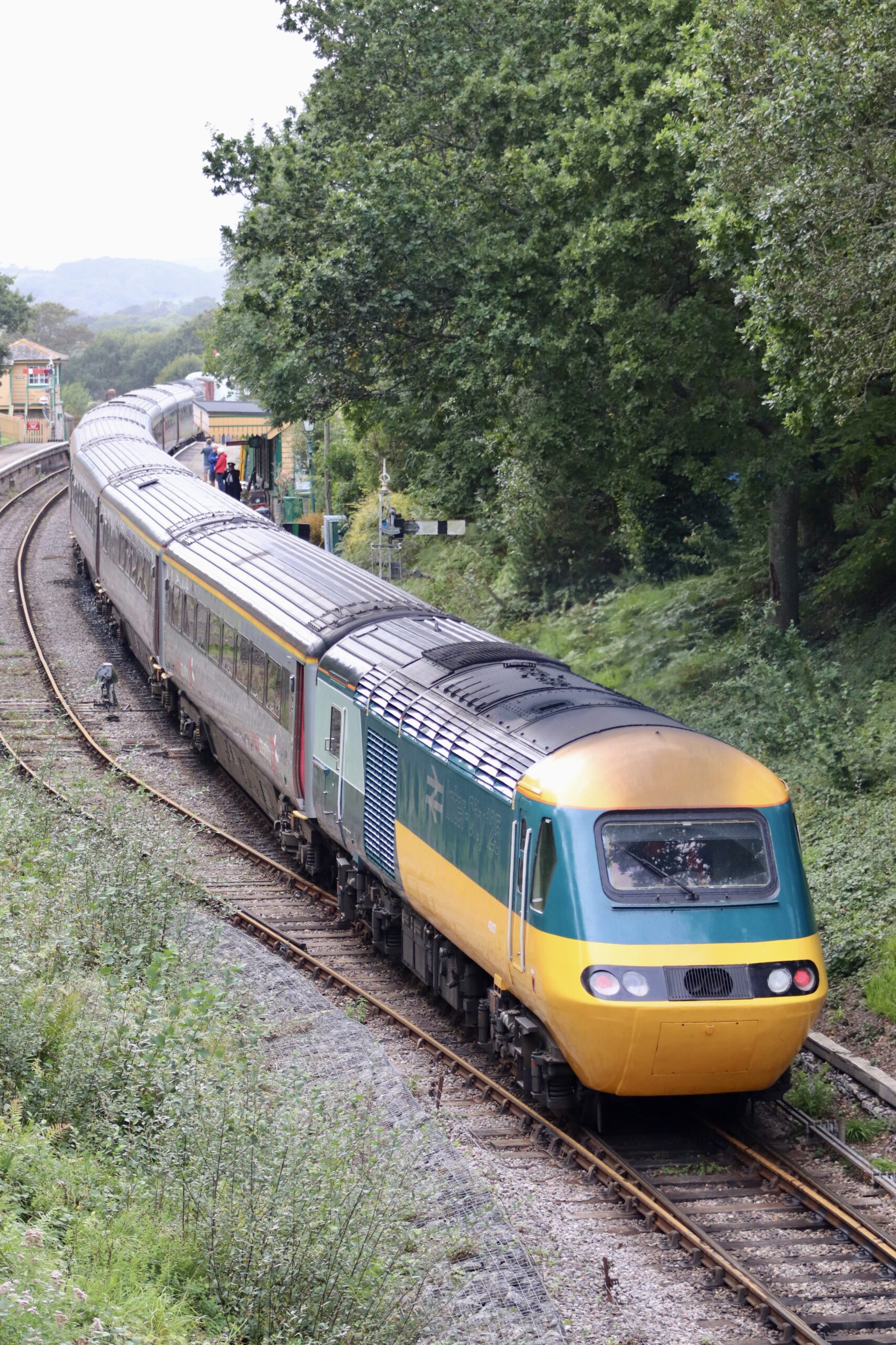
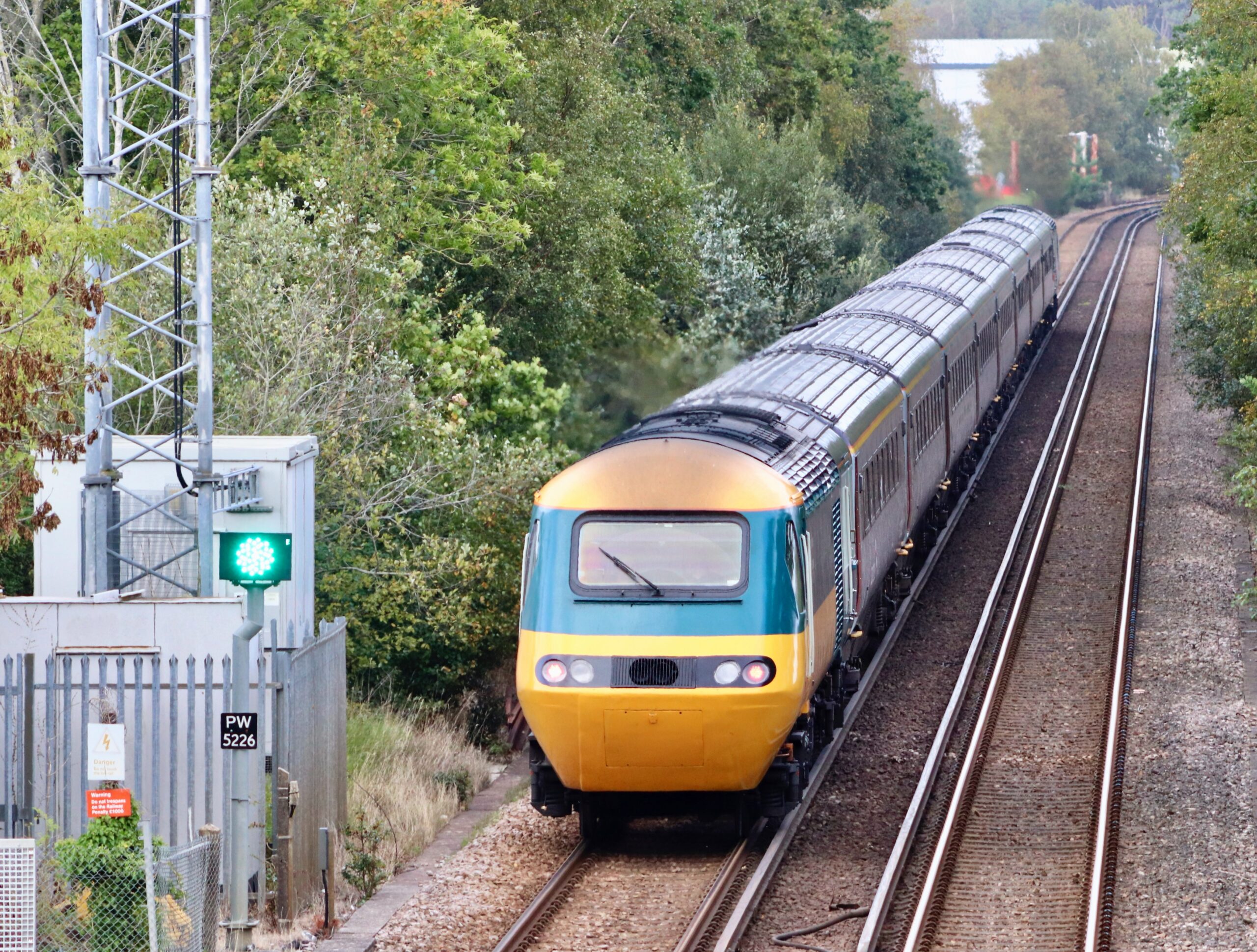
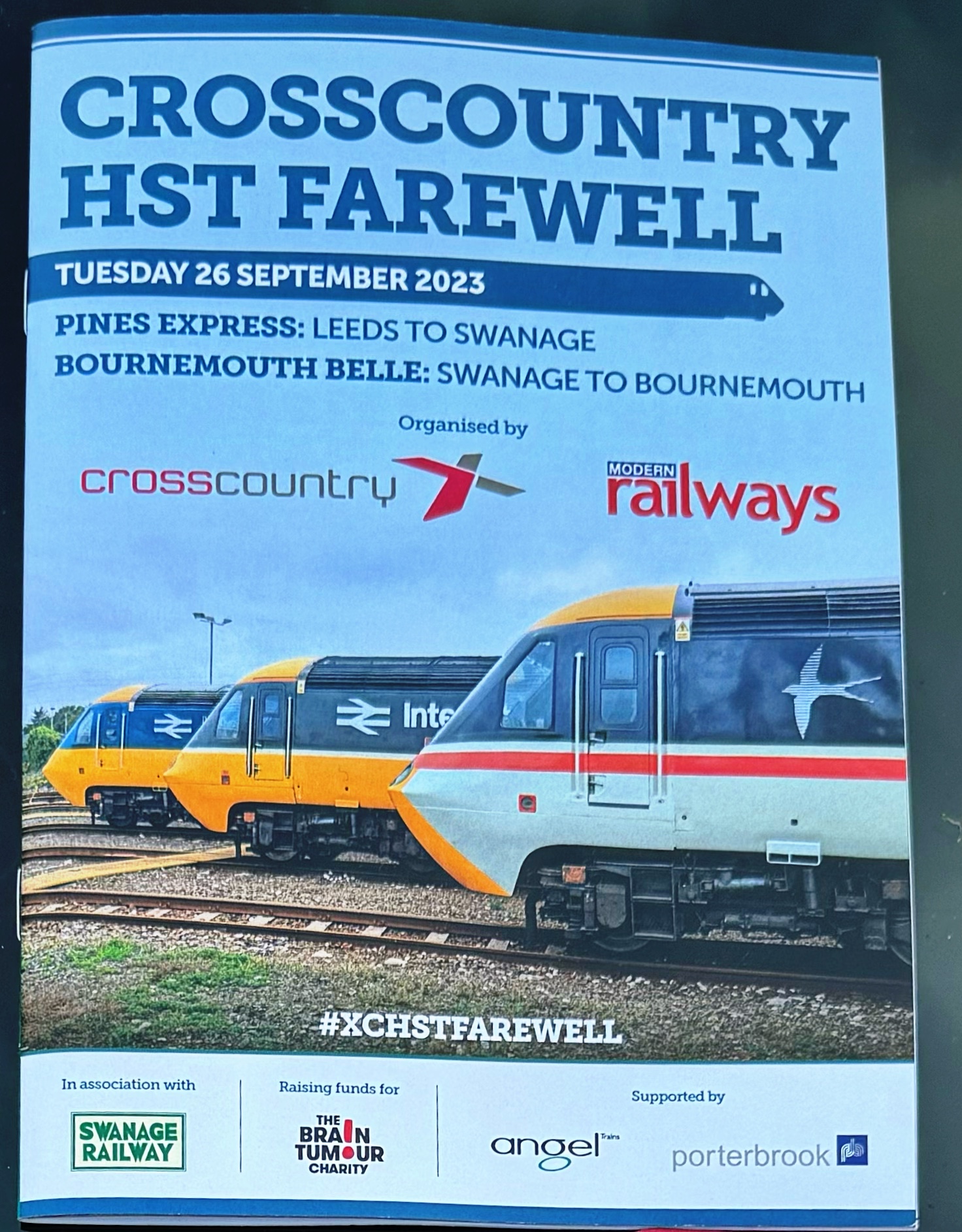
    Tuesday was highly anticipated with the scheduled run of a CrossCountry High Speed Train to Swanage designed as a farewell celebration to the XC HST fleet after more than 40 years of operation on across the UK. Proceeds from the trip were in aid of The Brain Tumour Charity in remembrance of CrossCountry employee Jo Taylor, who passed away in 2021. Jo was a popular member of the CrossCountry family and was a familiar face to many, having worked at both Leeds and Bournemouth over her 14 years with the company. This excursion train actually comprised of two tours with the “Pines Express” section running from Leeds to Swanage and return, and the “Bournemouth Belle” from Swanage to Bournemouth and return making use of the HST set in the afternoon. The train was a joint venture with CrossCountry, Modern Railways magazine and The Branch Line Society in association with the Swanage Railway alongside support from Porterbrook and Angel trains.

    Retro Inter-City 125 liveried Class 43 No. 43007 departs Bournemouth with “The Pines Express” 1Z43 0635 Leeds to Swanage – 26/09/2023
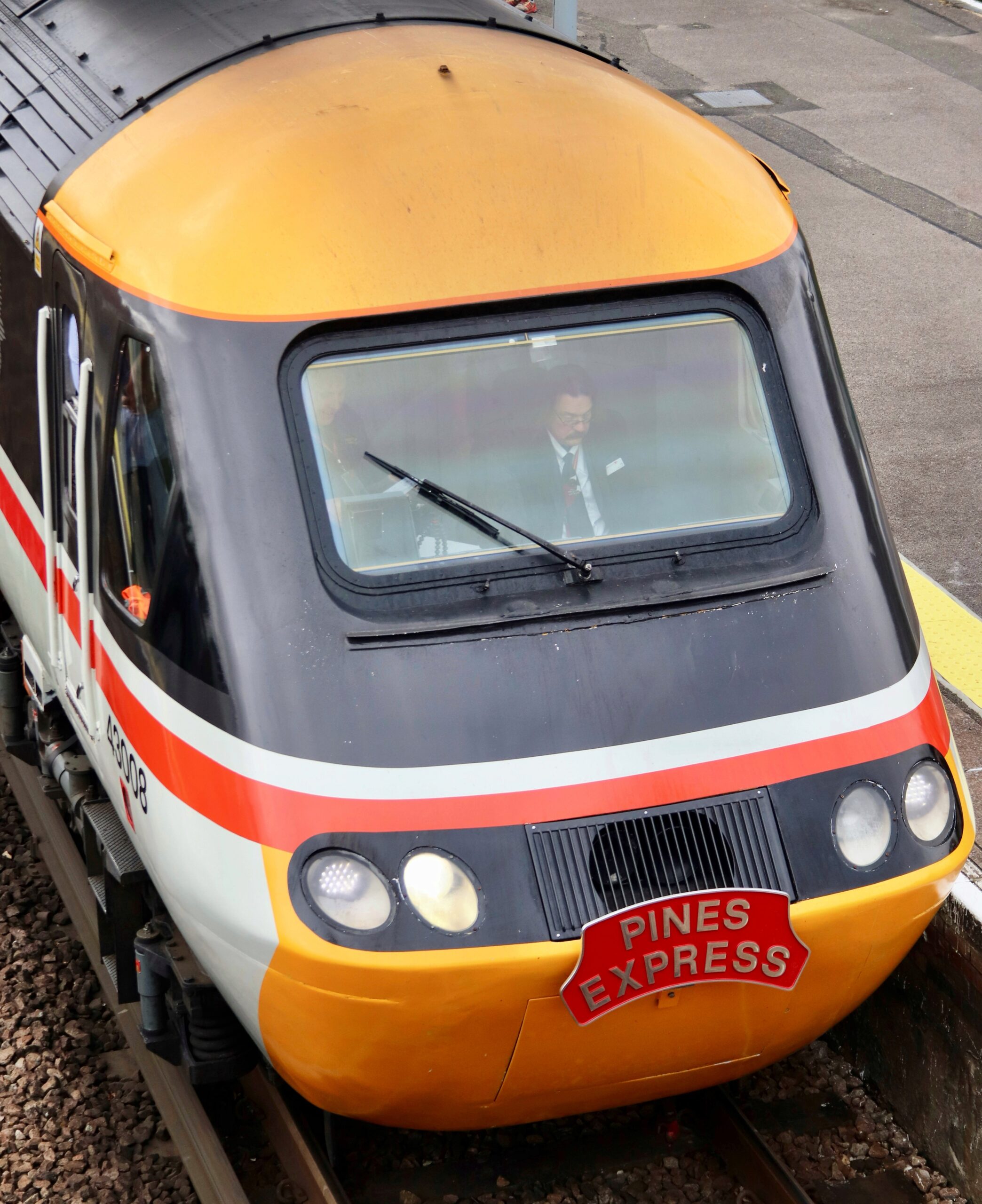
    Inter-City Swallow liveried Class 43 No. 43008 departs Bournemouth at the rear of “The Pines Express” 1Z43 0635 Leeds to Swanage – 26/09/2023
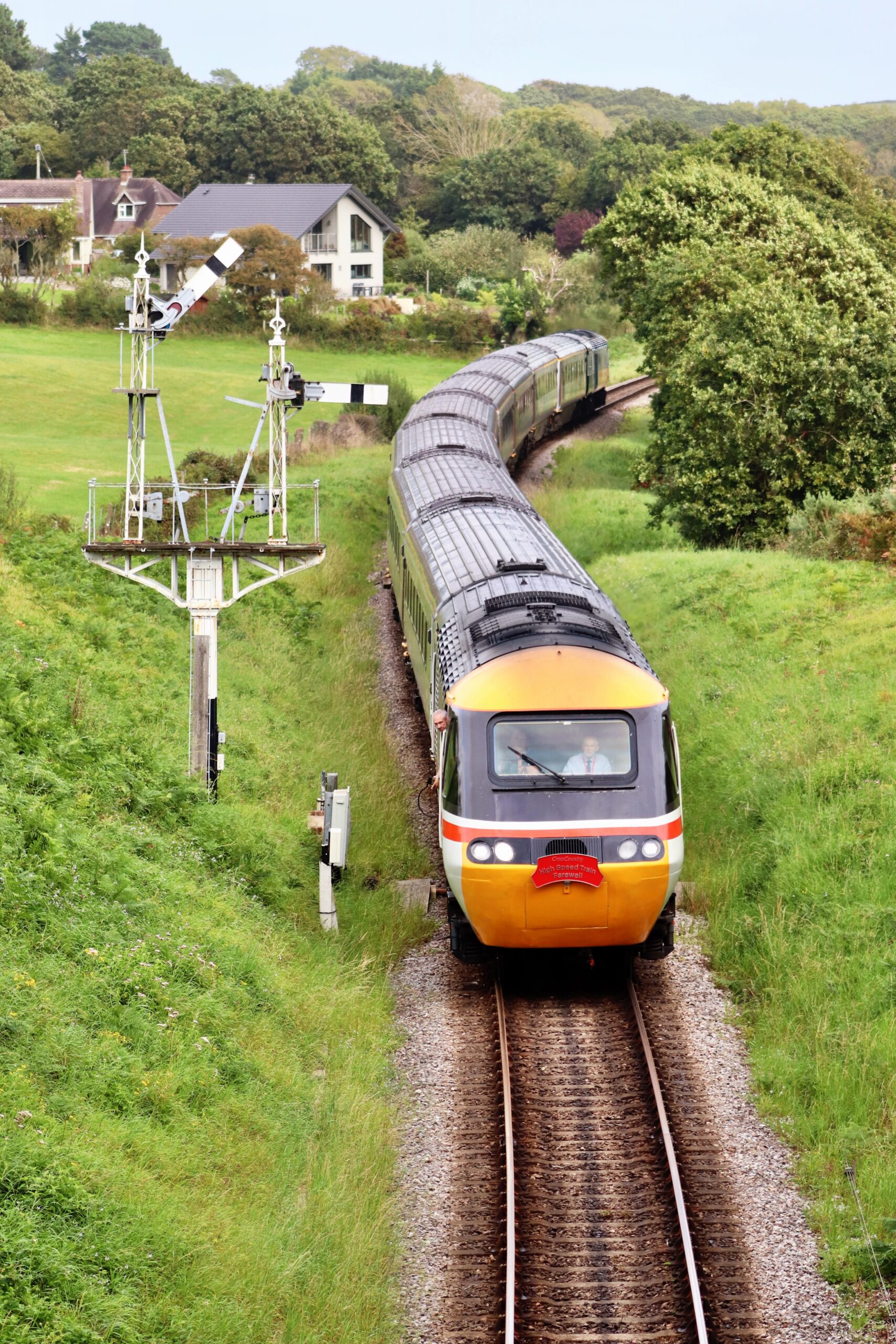
    XC Class 43 No. 43008 crosses Corfe Viaduct working “The Bournemouth Belle” 1Z25 1310 Swanage to Bournemouth – 26/09/2023
    Class 43 No. 43008 awaits departure from Wareham with 1Z25 1310 Swanage to Bournemouth – 26/09/2023
    Class 43 No. 43008 carried the “Pines Express” headboard while working 1Z25 1310 Swanage to Bournemouth – 26/09/2023
    Class 43 No. 43007 passes Wareham signal box at the rear of 1Z25 1310 Swanage to Bournemouth – 26/09/2023
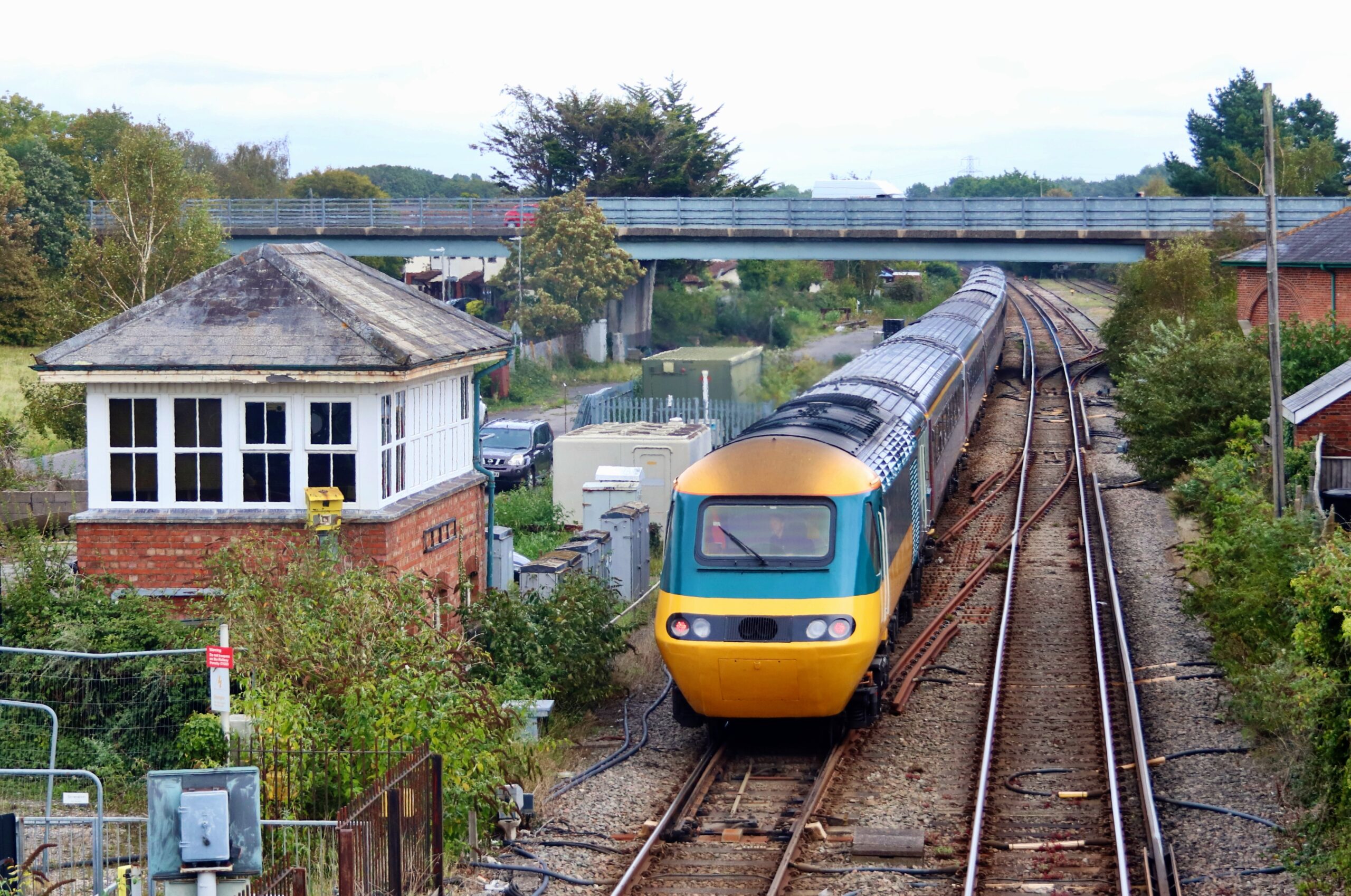
    Class 43 HST power cars No.’s 43007 and 43008 top and tail 1Z26 1452 Bournemouth to Swanage across Holes Bay, Poole – 26/09/2023
    Class 43 No. 43008 leads the return “Bournemouth Belle” 1Z44 1618 Swanage to Leeds nearing Harman’s Cross – 26/09/2023
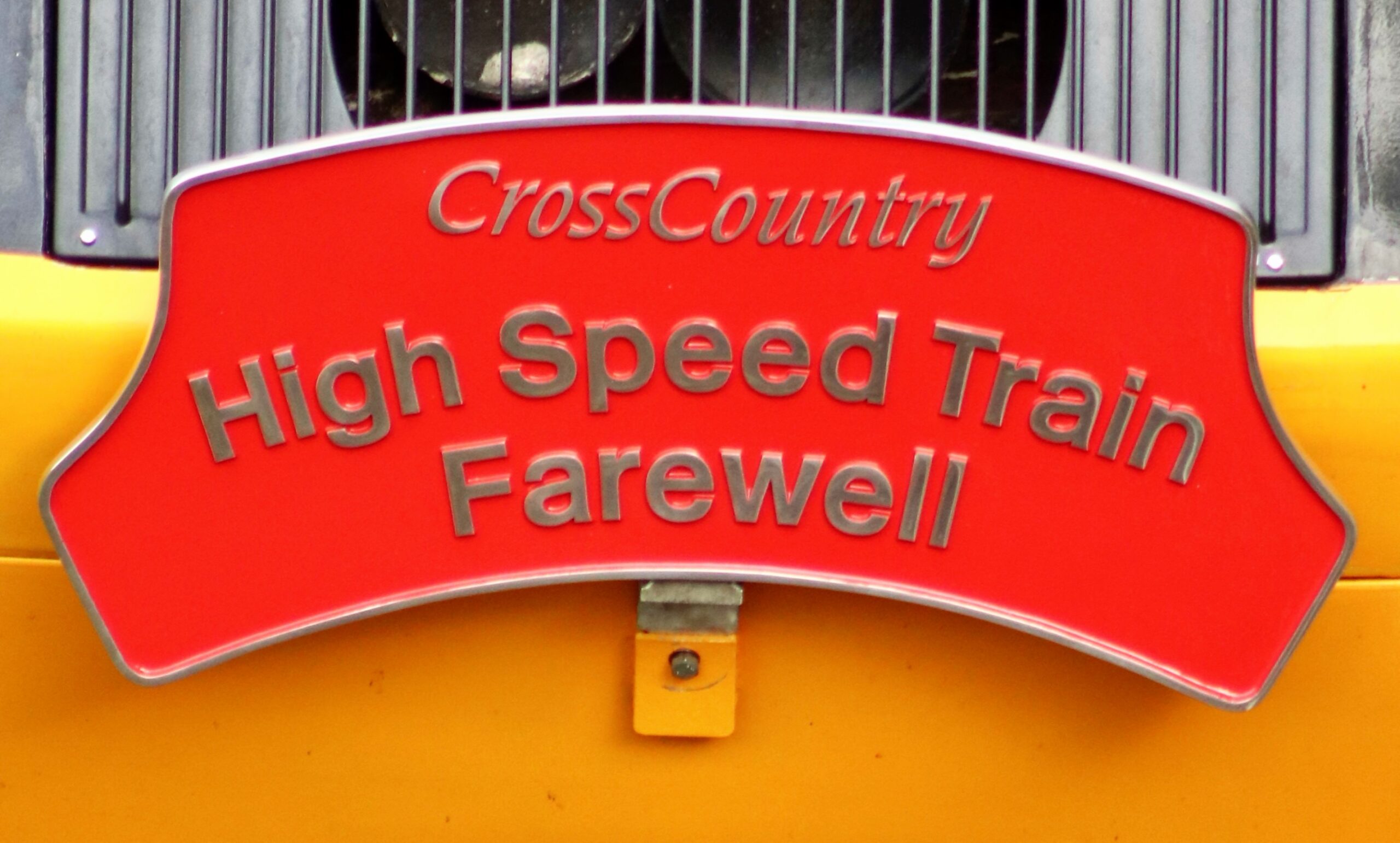
    CrossCountry High Speed Train Farewell headboard – 26/09/2023
    Class 43 No. 43007 at the rear of 1Z44 1618 Swanage to Leeds passing through Harman’s Cross – 26/09/2023
    Captured by the gallery, Class 43 No. 43008 1Z44 1618 Swanage to Leeds at Holton Heath – 26/09/2023
    Class 43 No. 43007 at the rear of 1Z44 1618 Swanage to Leeds having cleared Holton Heath – 26/09/2023
    Retro liveries applied to (TOP) No. 43007 and (BOTTOM) No. 43008 – 26/09/2023
    CrossCountry High Speed Train Farewell – 26/09/2023

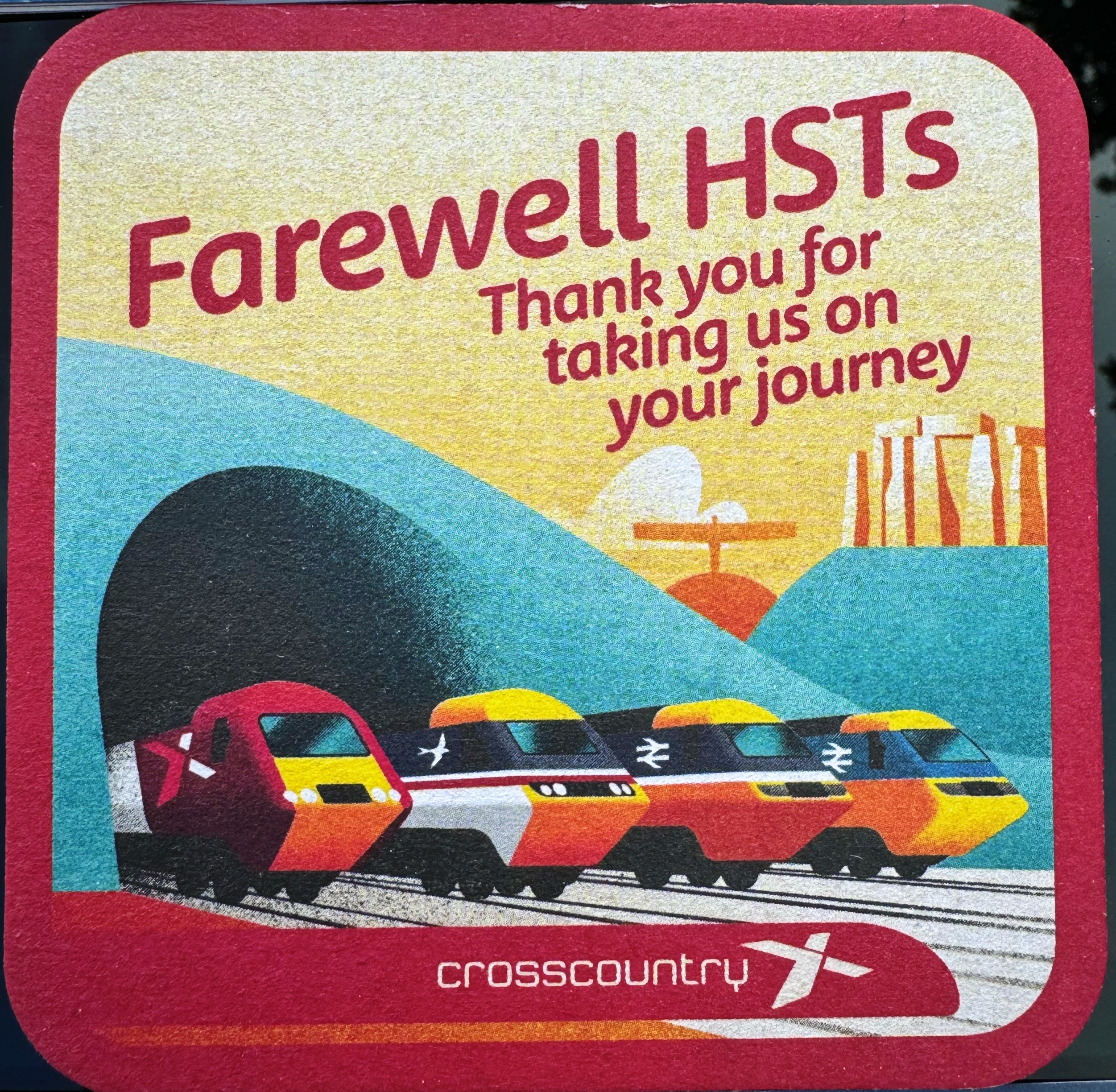
    It was great to see so many friends and fellow enthusiasts out on the day capturing images, video and memories of what is most likely the final scheduled public CrossCountry High Speed Train run. Our North Dorset Correspondent, Scott, travelled on the “Bournemouth Belle” mini-special and was able to kindly share images of the following goodies he picked up onboard:

    Coaster of the CrossCountry Farewell HST publicity poster
    Window stickers available for purchase on the train
    CrossCountry HST Farewell Booklet
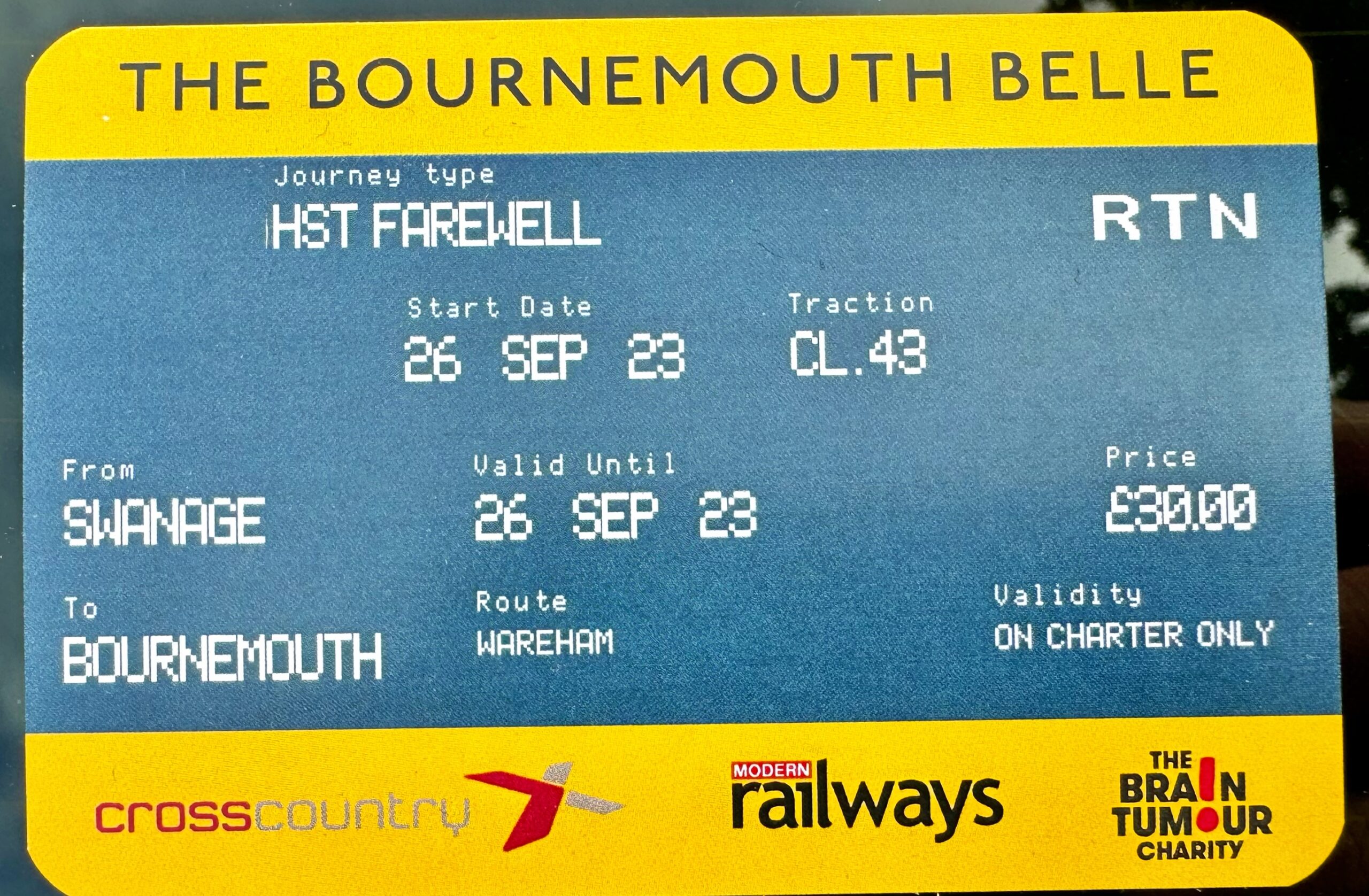
    The special Bournemouth Belle Swanage to Bournemouth souvenir ticket
    A set of CrossCountry themed HST pin badges were available for passengers to buy

    Due to planned industrial action, a CrossCountry staff outing to Blackpool North from Plymouth that had been arranged for the 29th September has been cancelled.

    Tuesday evening after all the HST excitement, a pair of preserved Class 50 locomotives were employed on a GBRf Class 458 EMU drag from Widnes Transport Tech to Bournemouth depot. However, due to slack oversight and ‘schoolboy’ error, I failed to notice the train worked early after it failed to observe a timetabled 40 minute layover at Brockenhurst. Despite a valiant effort from Jamie, we didn’t make it to Branksome in time to see the ensemble manoeuvre into the depot, arriving 53 minutes early as 5X72 1435 Wembley Receptions 1-7 to Bournemouth T&R.S.M.D.

    However, what goes into Bournemouth Depot has to also come out again, and the following day; Wednesday 27th September 2023, saw a return working to Widnes taking an un-refurbished Class 458 unit for conversion. I really thought the train would depart early and kept a weather eye on the Open Time Trains map for movement! In the event the working; 5Q73 1712 Bournemouth T&R.S.M.D to Widnes Transport Tech, left one minute early and by that time we were safely ensconced on the platform at Branksome, just outside the junction to the depot. Unsurprisingly the attraction of such unusual motive power attracted a number of fellow enthusiasts and the station was very busy.

    English Electric Class 50 No. 50007 ‘Hercules’ runs through Branksome with 5Q73 1712 Bournemouth T&R.S.M.D to Widnes Transport Tech – 27/09/2023
    Class 50 No. 50049 ‘Defiance’ in GBRf livery awaits the off at Branksome working 5Q73 1712 Bournemouth T&R.S.M.D to Widnes Transport Tech – 27/09/2023
    Moving slowly away from Branksome, Class 50 No. 50049 ‘Defiance’ leads with 5Q73 1712 Bournemouth T&R.S.M.D to Widnes Transport Tech – 27/09/2023
    5Q73 1712 Bournemouth T&R.S.M.D to Widnes Transport Tech – 27/09/2023

    For The Record

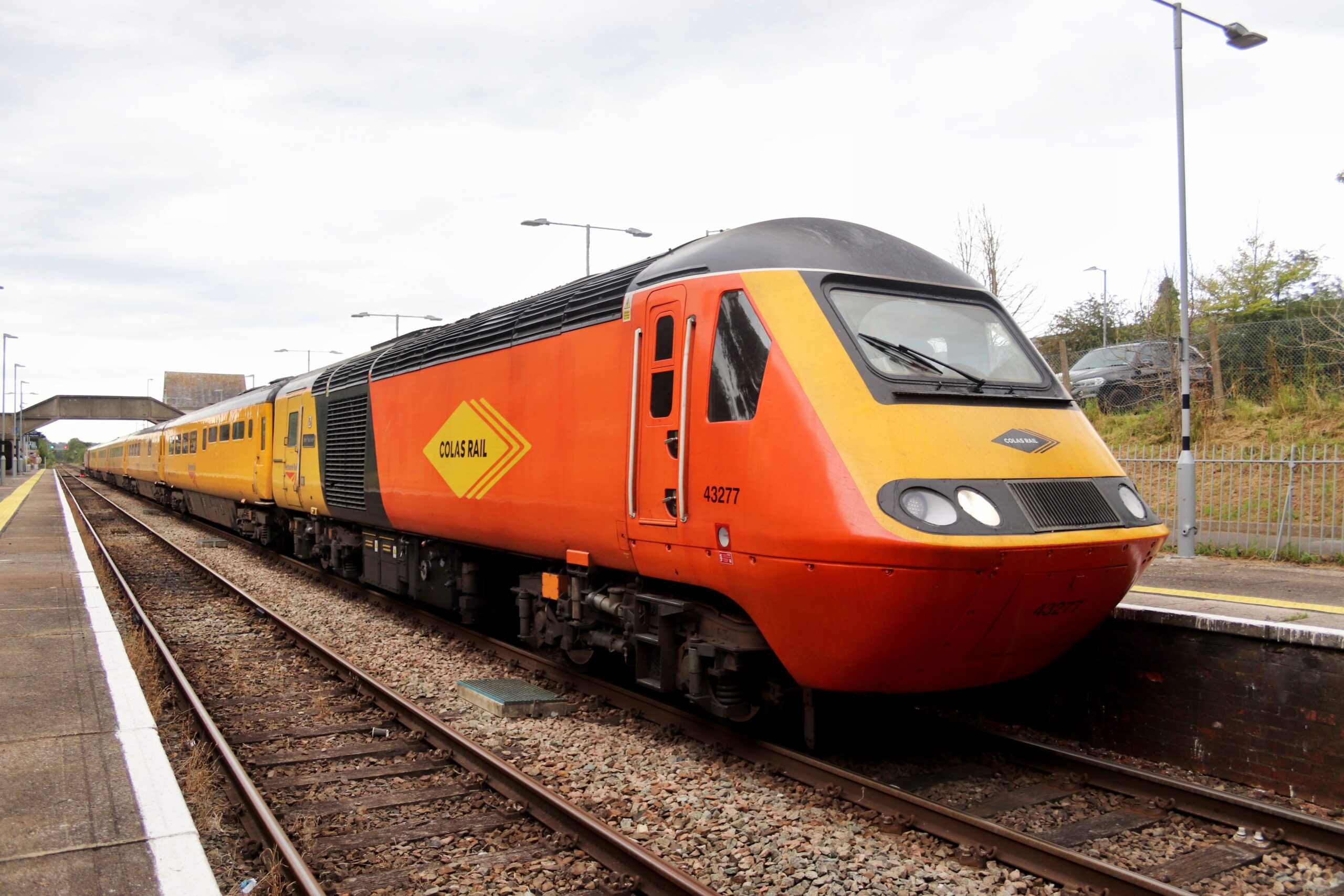
    North Dorset saw the New Measurement Train pass through on Thursday 21st with Colas Class 43 HST Power Cars No’s 43277 and 43274 in charge.

    Preparatory work for the installation of new walking and cycling bridges across the railway line on Glenferness Avenue in Bournemouth started in May this year following public consultation on proposals undertaken 24th February to 31st March 2021. Funded through South East Dorset’s Transforming Cities Fund (TCF), the work forms part of a planned sustainable travel route linking Bournemouth town centre and Ferndown and will see the installation of a four metre wide bridge for pedestrians and cyclists over the railway line on the west side of the road bridge.  The existing footbridge on the eastern side of the road bridge will be demolished on site and replaced with a new four metre wide pedestrian and cycle bridge, the existing road bridge remaining unaltered.

    The installation of the new bridges and removal of the existing pedestrian bridge is programmed to commence during a 26 hour window from Sunday 1st  October to Monday 2nd October 2023. Impressive crane action is promised with the first new bridge being lifted into position on the west side of the road bridge and placed onto the precast concrete foundations. This will be followed by the removal and recycling of the existing footbridge. The installation of the new bridge on the east side of the road bridge will complete the process.

    Following the bridge installation work, bridge ramps and stepped cycle lanes will be built on Glenferness Avenue between Elgin Road and Alyth Road.  This work is anticipated to complete by December. The new bridges will give people a separate, safe, traffic free space to walk, cycle and wheel across the railway line. They form a crucial part of a sustainable travel route between Bournemouth town centre and Talbot Woods, Winton and Wallisdown and future plans for the route all the way out to Ferndown.

    From The Archive

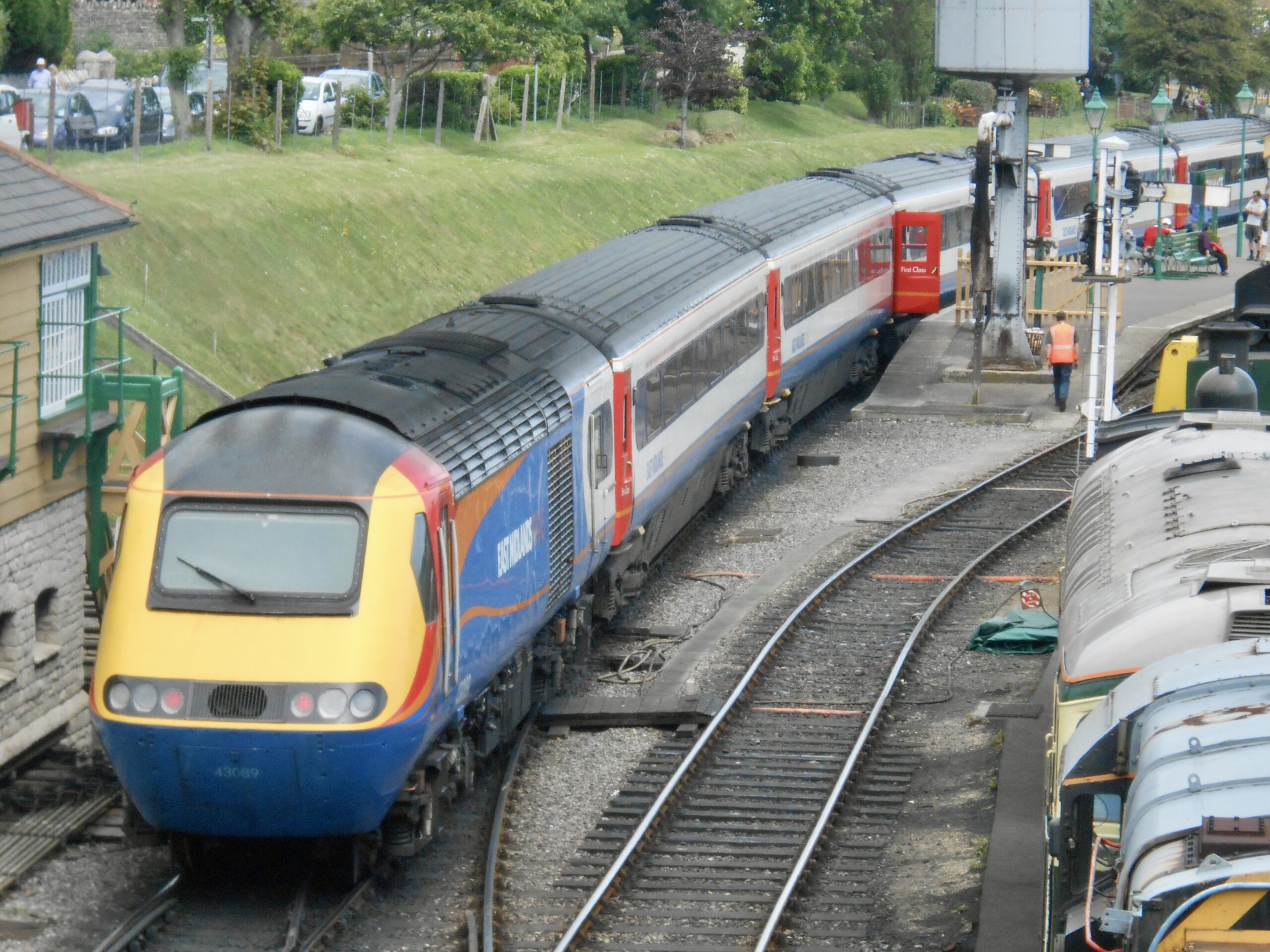
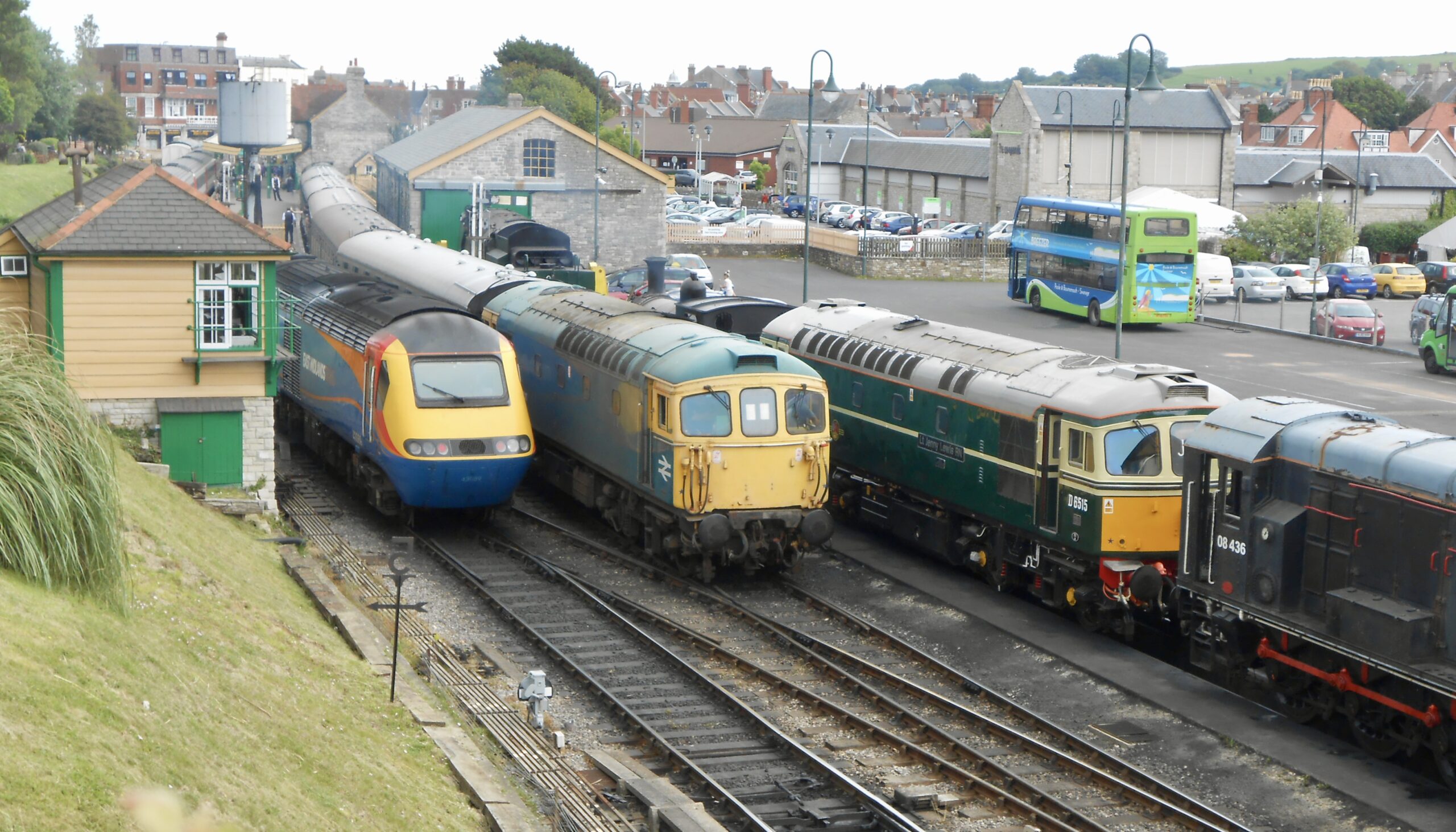
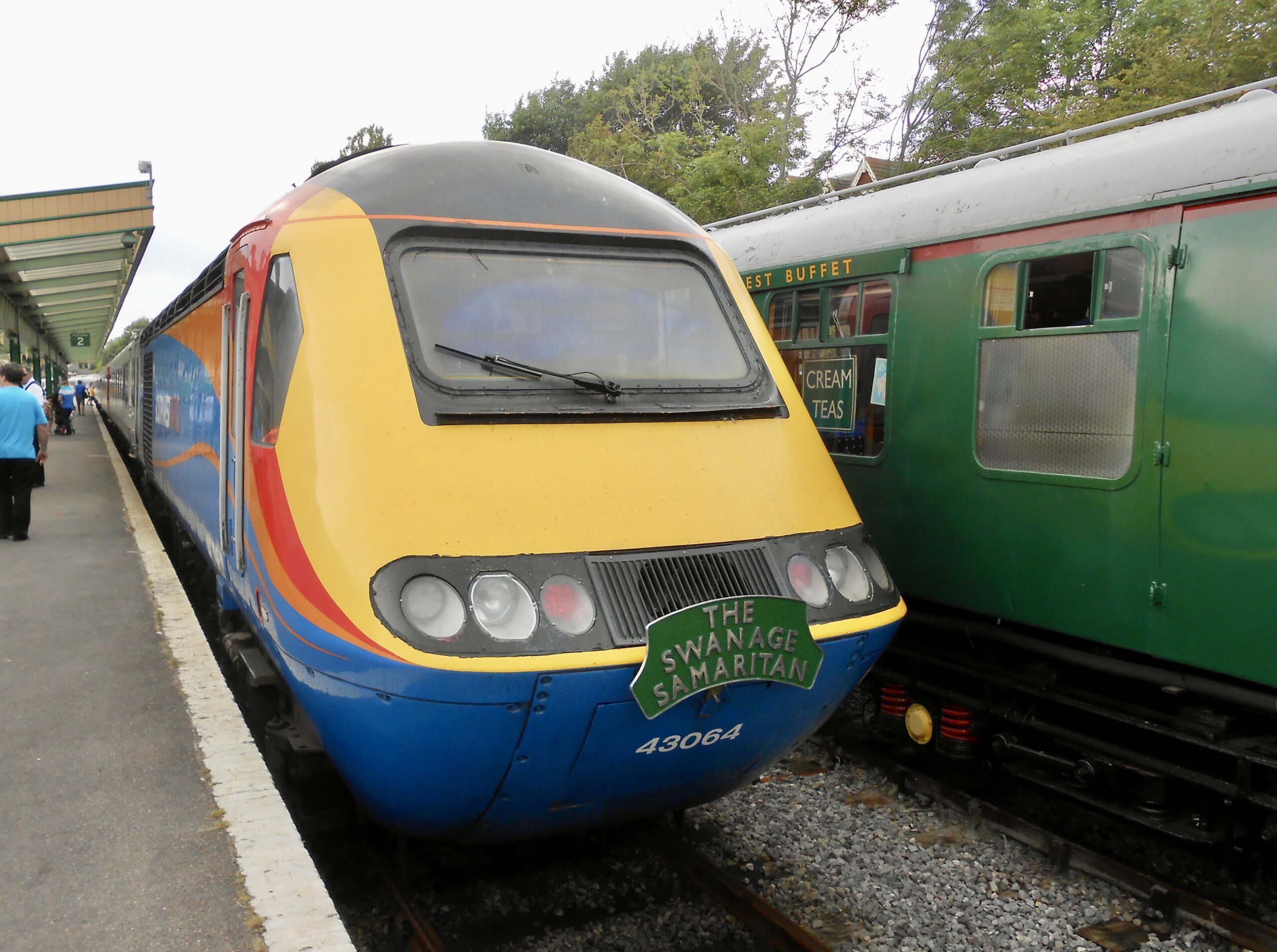
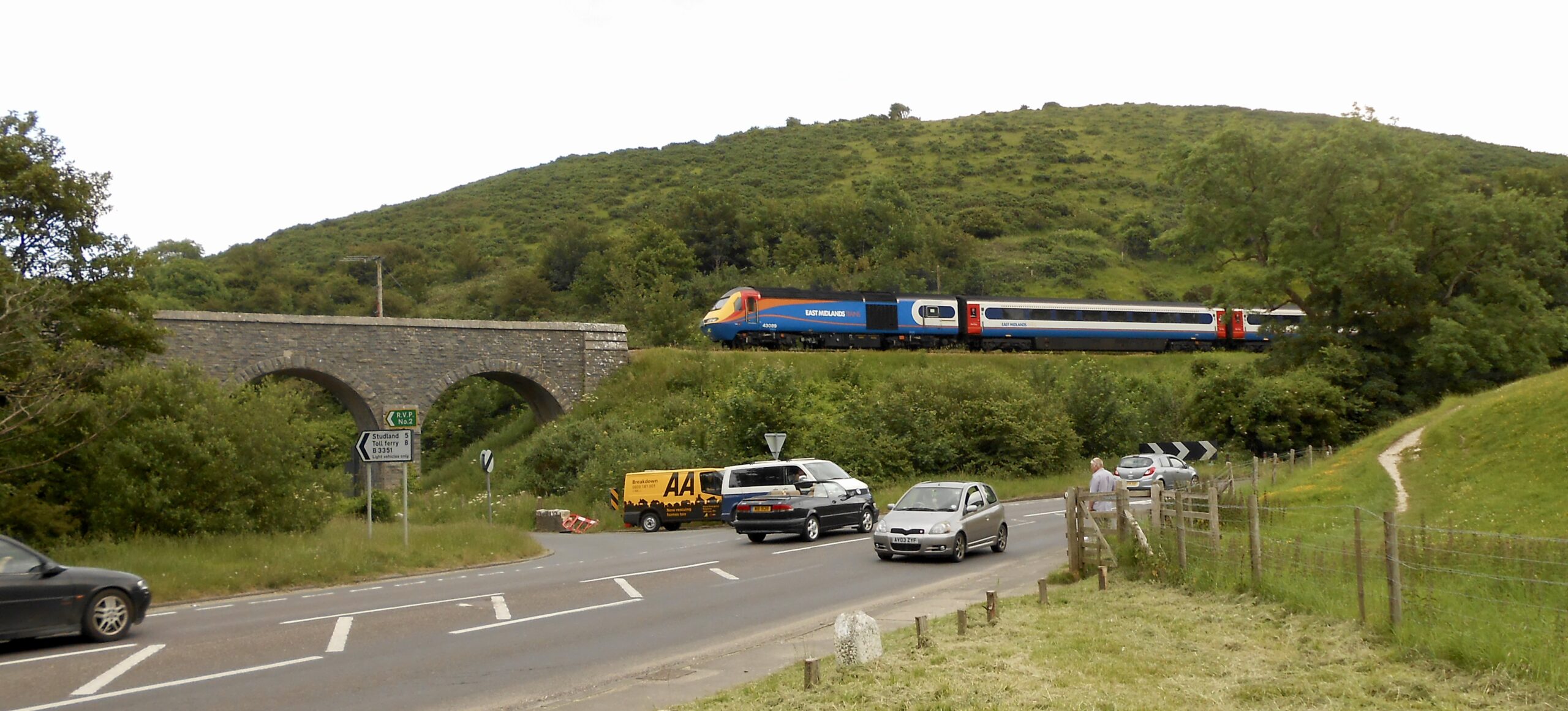
    Taking a look at previous visits of High Speed Trains to the Swanage Railway.

    First Great Western (FGW) High Speed Train at Wareham with Class 43 No. 43028 leading the 1Z12 Cotswold – Purbeck Express to the Swanage Railway having originated from Worcester Shrub Hill departing at 0732. This photograph was taken by a Network Rail staff member from a position of safety for John Chappell who is standing second from the right – 28/09/2013

    Back in September 2013 the first High Speed Train ventured onto the Swanage Railway with the “Cotswold – Purbeck Express” organised by the Cotswold Line Promotion Group. Because of gauging issues, the train terminated at Corfe Castle where a connecting service to Swanage was provided.

    FGW Class 43 power car No. 43078 at Corfe Castle (John Chappell) – 28/09/2013
    FGW Class 43 power car No. 43078 at Corfe Castle (John Chappell) – 28/09/2013
    Close up of FGW Class 43 power car No. 43078 after departing Corfe Castle (John Chappell) – 28/09/2013
    FGW Class 43 power car No. 43078 leading away from Corfe Castle and crossing Corfe Viaduct (John Chappell) – 28/09/2013
    The return Cotswold – Purbeck Express 1Z13 1610 Swanage to Worcester Shrub Hill pauses at Wareham with leading power car FGW Class 43 No. 43078 at the head of the train (John Chappell) – 28/09/2013

    The following year, in June 2014 “The Swanage Samaritan” railtour was a special train organised for East Midlands Trains (EMT), South West Trains (SWT) and their guests. The excursion which originated from Sheffield raised funds for the Samaritans charity and saw the first High Speed Train actually reach Swanage, the gauging issues preventing the previous trip from travelling all the way down the branch obviously having been sorted!

    East Midlands Trains HST Class 43 power car No. 43089 at journeys end in Swanage having arrived working 1Z43 0613 Sheffield to Swanage (John Chappell) – 14/06/2014
    HST, Class 33 and Class 08 line up at Swanage (John Chappell) – 14/06/2014
    Class 43 No. 43064 with “The Swanage Samaritan” headboard at the buffer stops at Swanage Railway station (John Chappell) – 14/06/2014
    Class 43 No. 43064 carried temporary South West Trains branding for the tour (John Chappell) – 14/06/2014
    Class 43 power car No. 43089 about to cross Corfe Viaduct with the return “The Swanage Samaritan” 1Z44 1614 Swanage to Sheffield (John Chappell) – 14/06/2014
    Class 43 No. 43064 brings up the rear of “The Swanage Samaritan” 1Z44 1614 Swanage to Sheffield having departed Corfe Castle (John Chappell) – 14/06/2014
    EMT Class 43 power car No. 43089 pauses at Wareham on its way back to Sheffield (John Chappell) – 14/06/2014

    That’s it for another week. Many thanks to those who kept me company while out watching the T3, HST’s and Class 50’s, I appreciate it. And thank you for comments, suggestions and corrections for Yoshi’s blog. Be seeing you!

  • Yoshi Sees Green

    The sun sets on the final CrossCountry scheduled HST passenger service with Class 43 No. 43008 leading 1E73 1627 Plymouth to Leeds (No. 43007 was at the rear) on the approach to Foal Mead Viaduct – 18/09/2023

    September 13th 2023 to September 19th 2023

    Wednesday 13th September 2023 saw what I believe to be the final steam hauled excursion of the year to pass through our neck of the woods. Once again LMS Jubilee 4-6-0 No. 46995 ‘Bahamas’ headed a Railway Touring Company railtour, this time travelling from London Victoria through to the heritage Swanage Railway. We saw the outward bound leg as the train passed Poole Storage Sidings. As yet, there are no facilities to turn a steam locomotive on the Swanage Railway and on the return the tour was diesel hauled as far as Southampton Central by West Coast Railways Class 47 No. 47746  ‘Chris Fudge’. The loco was named after Chris Fudge who passed away following a long battle with a brain tumour in 2010. Chris garnered an interest in trains from an early age and went on to work for the railways, his final role being a timetable planning manager for Arriva trains. 

    LMS Jubilee 4-6-0 No. 45596 ‘Bahamas’ works “The Swanage Belle” 1Z91 0815 London Victoria to Swanage out of Poole – 13/09/2023
    LMS Jubilee 4-6-0 No. 45596 ‘Bahamas’ heading 1Z91 0815 London Victoria to Swanage passes South Western Railway Class 444 EMU No. 444001 at Poole Storage Sidings – 13/09/2023

    We watched the late afternoon return at Hamworthy (and still home for dinner!) 

    West Coast Railways Class 47 No. 47746  ‘Chris Fudge’ works the return “Swanage Belle” 1Z92 1555 Swanage to London Victoria on the approach to Hamworthy – 13/09/2023
    LMS Jubilee 4-6-0 No. 45596 ‘Bahamas’ at the rear of 1Z92 1555 Swanage to London Victoria passes through Hamworthy – 13/09/2023
    LMS Jubilee 4-6-0 No. 45596 ‘Bahamas’ on “The Swanage Belle” – 13/09/2023

    Wednesday night, I set out for Poole as the second Permanent Way (PW) train of the week was timetabled to pass through the station just after midnight and reverse at Poole Storage Sidings to drop lengths of new rail at Parkstone in readiness for engineering work over the weekends of 16/17th and 23/24th September. The earlier run, reported on in last weeks blog entry, was operated by DB Cargo whereas the Thursday run was in the hands of Colas Rail who sent Class 66 No.’s 66847 ‘Terry Baker’ and 66850 working as 6C17 2240 Eastleigh East Yard to Parkstone (Dorset). Unlike previously, the engineers train did not stop as booked in Poole station and I had to be content with taking photographs of South Western Railway Desiro’s. The associated return working of the PW train ran as 6C17 0507 Bournemouth to Eastleigh East Yard when I was tucked up in bed!

    Class 450 No. 450084 at Poole having arrived with the 2B73 2316 Brockenhurst to Poole service – 13/09/2023
    Colas Class 66 No.’s 66847 ‘Terry Baker’ and 66850 working 6C17 2240 Eastleigh East Yard to Parkstone (Dorset)- 14/09/2023

    On Friday we took the opportunity provided by Heritage Open Days to visit Morgan Carey Architects in Wareham who restored the former Goods Shed for use as their offices.  Originally constructed in red brick with a hipped slate roof in circa 1847 for the Southampton and Dorchester Railway, Morgan Carey have completed a stunning and sensitive restoration using as much original materials as possible. We very much enjoyed our visit and thanks to Mark for showing us around.

    The former Goods Shed at Wareham – 15/09/2023
    A length of track marks the course of the rail line into the former Goods Shed at Wareham which is now the entrance to Morgan Carey Architects – 15/09/2023
    The new roof of the former Goods Shed in Wareham, the original roof having been destroyed by fire prior to the conversion work – 15/09/2023
    Rear of the former Goods Shed at Wareham showing what would have been access to the platform level – 15/09/2023

    As mentioned above, the past weekend saw a number of engineering trains visit the Poole area as work necessitated the closure of the railway line between Bournemouth and Wareham. Buses ran between these two points, connecting passengers with trains running a revised service for onward journeys. Yoshi and I spent most of Saturday shuttling between Christchurch and Hamworthy in our attempts to see and document the work as a section of the down line west of Branksome was relayed. Track lifting started at a point near milepost 111 and extended under St. Osmunds and Sandecotes Road bridges down Parkstone Bank towards the station. The somewhat heavy rain on Sunday morning curtailed our observations and we refrained from going out to see the return workings of the engineers trains. Maybe we’ll do that next Sunday! I hope the following images capture a flavour of the activities being carried out.

    GBRf Class 66 No. 66796 ‘The Green Progressor’ arrives at Bournemouth working 6G13 0709 Eastleigh East Yard to Bournemouth – 16/09/2023
    Colas Rail DR73931 Track Maintenance Tamper in the siding at Bournemouth – 16/09/2023
    DB Cargo Class 66 No. 66176 at Christchurch at the head of 6N01 0809 Eastleigh East Yard to Bournemouth – 16/09/2023
    GBRf Class 66 No. 66707 ‘Sir Sam Fay Great Central Railway’ west of Branksome railway station – 16/09/2023
    Yoshi was pleased to tick off seeing GBRf Class 66 No. 66796 ‘The Green Progressor’ at Branksome – 16/09/2023
    Colas Class 66 No.66847 ‘Terry Baker’ passes through Poole with a train load of lifted track panels – 16/09/2023
    DB Cargo Class 66 No. 66200 6N02 1048 Eastleigh East Yard to Bournemouth – 16/09/2023
    DB Cargo Class 66 No. 66200 in the distance with its train of new ballast at the Parkstone worksite as work continues – 16/09/2023
    GBRf Class 66 No. 66707 ‘Sir Sam Fay Great Central Railway’ at Parkstone prior to running down through Poole and spending the night near Hamworthy – 16/09/2023
    6C04 1348 Eastleigh East Yard to Bournemouth hauled by Colas Rail 66849 ‘Wylam Dilly’ passing Pokesdown – 16/09/2023
    With a train of wagons being filled with old ballast, DB Cargo Class 66 No. 66176 at the western extreme of the worksite – 16/09/2023
    DB Cargo Class 66 No. 66176 on Parkstone Bank – 16/09/2023
    Colas Class 70 No. 70803 speeds through Christchurch at the head of 6C05 1653 Eastleigh East Yard to Bournemouth – 16/09/2023
    DB Cargo Class 66 No. 66007 having worked 6N03 2154 Eastleigh East Yard to Bournemouth – 17/09/2023
    DB Cargo Class 66 No. 66199 at Branksome with a train of fresh ballast – 17/09/2023
    Another view of DB Cargo Class 66 No. 66199 at Branksome – 17/09/2023
    DB Cargo Class 66 No. 66007 at the work site – 17/09/2023
    DB Cargo Class 66 No. 66106 on Parkstone bank – 17/09/2023
    Colas Class 70 No. 70803 adjacent to Poole Storage Sidings in heavy rain. Plastic tents can be seen covering point work beyond where work was being carried out – 17/09/2023
    DB Cargo Class 66 No. 66199 and Colas Rail DR73931 Tamper at Parkstone – 17/09/2023
    DB Cargo Class 66 No. 66007 stands in Poole station – 17/09/2023
    Colas Rail Class 70 No. 70803 seen from Sterte Road Bridge – 17/09/2023

    For the record, the incoming Permanent Way trains began to leave Eastleigh East Yard late on Friday 15th September with the majority arriving in Dorset on the Saturday.

    As each train fulfilled its need, collecting old track panels, empty wagons for the collection of old ballast or wagons full of new stone, most then passed through Poole and were stacked across Holes Bay awaiting their return to Eastleigh which commenced on Sunday evening. 

    Trains were stacked across the Holes Bay causeway while not in use. An early morning view of Colas Class 66 No. 66849 ‘Wylam Dilly’ and DB Cargo No. 66200- 17/09/2023
    The view across Holes Bay – 17/09/2023
    GBRf Class 66 No. 66707 ‘Sir Sam Fay Great Central Railway’ seen amidst the trees of Upton Park – 17/09/2023
    Colas Class 66 No.66847 ‘Terry Baker’ sits above Blandford Road, Hamworthy – 17/09/2023

    The workings and the associated motive power were:

    6C03 2355 Eastleigh East Yard to Branksome – Colas Rail No. 66847 ‘Terry Baker’

    6G12 0315 Eastleigh East Yard to Bournemouth – GB Railfreight No. 66707 ‘Sir Sam Fay Great Central Railway’

    6G13 0709 Eastleigh East Yard to Bournemouth  GB Railfreight No. 66796 ‘The Green Progressor’

    6N01 0809 Eastleigh East Yard to Bournemouth  DB Cargo No. 66176

    6N02 1048 Eastleigh East Yard to Bournemouth  DB Cargo No. 66200

    6C04 1348 Eastleigh East Yard to Bournemouth  Colas Rail No. 66849 ‘Wylam Dilly’

    6C05 1653 Eastleigh East Yard to Bournemouth  Colas Rail No. 70803

    6N03 2154 Eastleigh East Yard to Bournemouth  DB Cargo No. 66007

    6N04 2352 Eastleigh East Yard to Bournemouth  DB Cargo No.’s 66199 and 66106

    Video of Dorset Permanent Way trains over the weekend of 16/17th September 2023

    As an aside, North Dorset also saw engineering work take place on Sunday 17 September 2023 when the West of England main line was closed between Templecombe and Gillingham. As far as I’m aware there were no PW trains allocated to this work.

    Monday 18th September 2023 saw the final chapter for CrossCountry HST’s in use for scheduled passenger trains across the UK network. I was in two minds if to head out and see the last working heading from Plymouth to Leeds as the weather wasn’t particularly good on the day. However, with a few hours respite from the rain forecast and the XC trains on divert via Castle Cary and Westbury because of engineering work in the Worle area, I set off towards Langport as I was hopeful of photographing the train at Foal Mead Viaduct. Located just outside the small town of Langport, the structure consists of two half through girder spans, a truss span and two masonry arch spans. It’s a lovely spot where the main line between Cogload Junction and Castle Cary crosses the River Parrett and I was inspired to seek the location out after seeing recent photos taken by Robin Procter.

    To find out about the recent renovation work on the viaduct carried out by Taziker and the challenges this presented, look here.

    InterCity Swallow liveried CrossCountry HST Class 43 power car No. 43008 leading 1E73 1627 Plymouth to Leeds crossing Foal Mead Viaduct – 18/09/2023
    The final full length timetabled HST CrossCountry working crosses the River Parrett. The iron lattice girder railway bridge built in 1853, was recently totally refurbished as part of a major works to re-stabilise the earth embankment close to its approaches – 18/09/2023
    CrossCountry HST Class 43 power car No. 43007 in retro British Rail livery at the rear of 1E73 1627 Plymouth to Leeds crossing Foal Mead Viaduct, also know as Langport Viaduct or Pool Mead Viaduct, constructed 1900-1906 in RBE brick with 10 spans – 18/09/2023

    Two tours are planned to celebrate the XC farewell to the HST, the first being a public tour between Leeds, Swanage and Bournemouth on the 26th September, followed by a staff jolly between Plymouth and Blackpool North on the 29th.

    A Multi-Purpose Vehicle (MPV) running a rail head treatment working ran from Totton Yard to Swanage on Monday 18th September 2023. I wasn’t able to go and see the Network rail machine on heritage rails, but with the magic of the Swanage Railway webcam, I was able to watch some of its activities.

    Network Rail MPV DB98920 + DB98970 arrives at Corfe Castle as 6Z21 0935 Totton Yard to Swanage – 18/09/2023
    Rail Head Treatment Train Network Rail MPV DB98920 + DB98970 6Z21 0935 Totton Yard to Swanage passes Class 33 No. 33111 at Swanage – 18/09/2023

    Hamworthy Branch Update: Along with the already reported Network Rail work for a bridge inspection which sees the closure of Lake Road from its junctions with Normandy Way/Lake Drive to its junction with Coles Avenue on 21st November 2023 at 2100 until 0500 the following morning,  there is a further planned closure in January 2024. This time the road will be closed for what are described as “Works for Rail Purposes” from 2200 on the 8th January 2024 until 0600 on the 12th January 2024.

    We asked Network Rail for an update on the Hamworthy Branch and they responded: “we are still looking to acquire funding for the Poole Harbour Port works to provide the infrastructure for freight traffic to start, this traffic being largely aggregates traffic. Over the last 6 months or so, the branch line has been put in a state of readiness by our  maintenance teams, this is an ongoing process and includes the bridge inspections that you have referred to.

    We remain hopeful we will see freight traffic return to Poole via the Hamworthy Branch and would predict 2025 for this if everything falls into place although this as you can imagine is always subject to change.”

    Bournemouth, Christchurch and Poole (BCP) Council are reviewing its strategic transport priorities and welcome our input. Recommendations for potential transport improvement schemes have been grouped into five clusters and relate to locations within the BCP Boundary, including local railway stations, Poole Port Expansion and the reopening of the Hamworthy Branch along with two further clusters with wider scope where one of these includes the South West Main Line.

    For more information go here.

    Thanks for reading. It was good to meet up with fellow enthusiasts at the weekend as we all took the opportunity to watch the toing and froing of the engineering works. Be seeing you!

  • Yoshi Travels High Speed

    Yoshi looking out to see if there are any more HST’s following Class 43 No. 43092 ‘Cromwell’s Castle’ into Taunton – 10/09/2023

    September 6th 2023 to September 12th 2023

    Saturday afternoon, I had booked with the Inter-City Railway Society (ICRS) for a visit to Eastleigh Arlington works. An accident involving three cars on the A31 forced the closure of the eastbound dual carriageway between Picket Post and Stoney Cross and created delays of up to two hours. Thankfully, I believe nobody was seriously hurt in the crash and I have Google Maps to thank in navigating me across the New Forest, arriving just before 1400 and the safety briefing which was given to all those in attendance at the new gated entrance to the works.

    The queue at the gates of Eastleigh Works ready for the safety briefing – 09/09/2023
    The safety briefing at Eastleigh Works – 09/09/2023

    Unfortunately part of the terms of entry were that no images taken on site during the visit can be shared, so I’m unable to post any photographs which I took during my time walking around the works. However, pics obtained from outside the fence on the public highway are fair game!

    Taken from a public area, Class 50 No. 50021 ‘Rodney’ and Class 08 No. 08567 ‘John Arlington Stephens 20th May 1925 – 19th July 1984’ were providing cab rides for visitors to Eastleigh Works – 09/09/2023
    Locomotive Services Ltd owned Class 57 No. 57311 looked impressive turned out in a lined black livery – 09/09/2023
    GBRf Class 66 No. 66309 at Eastleigh Works – 09/09/2023
    GBRf Class 59 No. 59003 at Eastleigh Works – 09/09/2023
    Numerous withdrawn Class 313 EMU’s are dotted around the Eastleigh Works site, No. 313208 awaits its fate – 09/09/2023

    Originally a bustling carriage and wagon repair works for the London & South West Railway (L&SWR), Eastleigh Works boasts a history dating back as far as 1874. In January 1910 locomotive building was transferred to the workshops at Eastleigh from Nine Elms in London. Following the 1923 Railways Grouping Act, Eastleigh became the principal works for the new Southern Railway (SR). As with many large engineering locations, Eastleigh Works made a valuable contribution to the Second World War effort, with production resources being diverted, for example, to producing parts enabling Blenheim Bombers to be repurposed as fighters and building Horsa gliders for the D-Day airborne assault.

    Following the 1948 nationalisation of the railways in the UK, new steam locomotive building ceased at Eastleigh, the works concentrating on repair work and the rebuilding of 90 of the Bulleid Pacific classes carried out between 1956 and 1961. In 1962, Eastleigh Works built the first six electro-diesel locomotives which would become later known as the Class 73.  As steam locomotives disappeared from use, focus at the works changed from steam to diesel repairs. 

    As part of the privatisation of British Rail, the plant was acquired from British Rail Engineering Limited (BREL) through a management buyout in June 1995 and rebranded Wessex Traincare. In 1998 the site was sold to Alstom and renamed Alstom Wessex Traincare being used for carriage and multiple unit repairs. In 2004, Alstom announced the works were to close due to a lack of work, and this was realised in March 2006 after the completion of a contract to refurbish Class 455 EMU’s for Southern.

    However, this was not the end of the story and in more recent times, the works has seen something of a steady resurgence in activity with principal tenant Arlington Fleet Services capitalising on the site’s rail infrastructure and vast engineering sheds; with locomotive and carriage renovations and decommissioning projects all being undertaken.

    After spending three very enjoyable hours wandering around the Works, I made my way back to the car. As I walked over Cambell Road bridge, I cast an eye across to Eastleigh T&RSMD where a number of SWR Class 701 EMU’s are still in storage prior to their acceptance into traffic ( has there ever been such a new train fiasco in recent times? Answers on the back of a postage stamp to the usual address). As well as the stored units, I spied the distinct outline of a Class 67 locomotive. As its driver was making his way up the yard, I had a quick look at Real Time Trains (RTT – I really should create a glosary page with all the railway themed acronyms and abbreviations) and noted that the Class 67 was scheduled to depart the depot within the following 20 minutes working the empty coaching stock (ECS – see what I mean?) for the Belmond British Pullman Goodwood Revival railtour which was running that day from London Victoria to (you guessed it) Goodwood and return.

    DB Cargo operated Class 67 No. 67021 sits in Eastleigh depot as the driver of the Belmond British Pullman Goodwood Revival railtour empty coaching stock heads over to pick up his train. Class 701 EMU’s are still being stored on site – 09/09/2023

    I headed to Eastleigh railway station to take a few photographs of the Class 66 locos stabled adjacent the platforms, pick up some water and wait for the ECS to pass.

    Colas Class 66 No. 66846 at rest in Eastleigh – 09/09/2023
    DB cargo ‘Ukraine’ liveried Class 66 No. 66099 between duties at Eastleigh – 09/09/2023
    Class 66 No.’s 66099 and 66846 at Eastleigh – 09/09/2023
    Class 67 No. 67006 ‘Royal Sovereign’ at the head of empty coaching stock move 5Z84 1719 Eastleigh Traction & Rolling Stock Maintenance Depot to Chichester passing through Eastleigh railway station – 09/09/2023
    Class 67 No. 67021 brings up the rear of ECS working 5Z84 1719 Eastleigh Traction & Rolling Stock Maintenance Depot to Chichester as the train manoeuvres into Eastleigh East Yard – 09/09/2023
    5Z84 1719 Eastleigh Traction & Rolling Stock Maintenance Depot to Chichester at Eastleigh – 09/09/2023

    On Sunday we took another opportunity to see some CrossCountry HST services passing through Somerset and Devon as only days of them in scheduled service remain. In fact, Yoshi and I decided to sample the delights of High Speed Train travel and planned a short trip utilising these now classic old girls of British Rail. On checking the timetable, we decided on taking a Great Western Railway (GWR) Castle Class HST set from Highbridge and Burnham to Taunton where, after a two hour wait, we could catch one of the two CrossCountry HST’s diagrammed that day on to Exeter St Davids. Here we would de-train and catch the next GWR Castle back to Highbridge.

    We were joined on our mini-rail adventure by @smithy.377 who, on our arrival at Highbridge and Burnham railway station, alerted us to the fact there was the imminent arrival of two Freightliner Class 66’s working a High Output Ballast Cleaner (HOBC) train on its way to Fairwater Yard, Taunton.

    On the approach to Highbridge, Freightliner Class 66 No. 66548 heads up the Network Rail High Output Ballast Cleaner train working 6X37 0705 Didcot Parkway to Fairwater Yard – 10/09/2023
    Freightliner Class 66 No. 66511 brings up the rear of 6X37 0705 Didcot Parkway to Fairwater Yard passing through Highbridge – 10/09/2023

    I don’t think I’ve seen one of these HOBC trains moving, if at all. Over time, railway ballast wears down and becomes rounded, the pieces of ballast then fit together less easily. Fine pieces of granite, like sand, are also created by attrition – these are known as ‘fines’. These fines stick together when combined with water in the ballast, making the ballast like a lump of concrete. This hinders track drainage and the flexibility of the ballast to constrain the track as it moves under traffic. The HOBC is used to recycle old ballast as much as possible during possessions where the ballast is due for renewal, reducing the quantity of new stones needed as the cleaning removes ballast, screens it and replaces the dirty worn ballast with new angular ballast. When in operation, the half a mile long HOBC consists of locomotives each end (to move the train to and from the work site in traffic at up to 60mph), an impressive sounding RM 900 RT ballast cleaning machine, two power wagons used as traction vehicles to propel the train while in operation, and 44 material conveyor and hopper units (22 empty wagons for ballast waste and 22 wagons full of new ballast). The entire system is designed for a cleaning output of up to 900 m3 per hour or 400 metres of track per hour.

    You can get a sense of how long the Network Rail High Output Ballast Cleaner train is in this view of Freightliner Class 66 No.66511 at the rear of 6X37 0705 Didcot Parkway to Fairwater Yard at Highbridge – 10/09/2023

    Following thunder and a heavy persistent shower of rain our GWR HST rolled into Highbridge and Burnham railway station around five minutes late. Onboard announcements apologising for the delay mentioned unspecific problems with the train which would be checked at Taunton, from where it departed approximately 9 minutes late.

    Yoshi samples the delights of a GWR Castle set MKIII carriage on the journey to Taunton – 10/09/2023
    Class 43 No. 43098 ‘Walton Castle’ readies for departure from Taunton working 2C69 0955 Bristol Temple Meads to Plymouth. No. 43162 was the rear power car – 10/09/2023

    While we waited for our CrossCountry train at Taunton station, we could see the HOBC train emerging and re-entering Fairwater Yard to the west of the station. After watching various CrossCountry and Great Western Railway trains arrive and depart and enjoying a coffee from the station Starbucks, it was over to platform two ready for the arrival of the 1V48 0811 Leeds to Plymouth service which rolled in 13 minutes late.

    GWR IET No. 800010 ‘Paddington Bear’ calls at Taunton working 1C76 0909 Reading to Plymouth. The cab at the other end of the unit is named ‘Michael Bond’ – 10/09/2023
    CrossCountry Class 221 DMU No. 221137 pauses to pick up passengers at Taunton working 1S45 0927 Plymouth to Dundee – 10/09/2023
    GWR Castle HST with Class 43 No. 43092 ‘Cromwell’s Castle’ at the rear of 2U14 0947 Plymouth to Cardiff Central. No. 43154 was the other power car – 10/09/2023
    GWR IET No. 800001 has a layover at Taunton having arrived with the 2C71 1000 Cardiff Central to Taunton working and prior to departing as 2U18 1317 Taunton to Cardiff Central – 10/09/2023
    XC Class 43 No. 43304 on the approach to Taunton as 1V48 0811 Leeds to Plymouth – 10/09/2023
    XC Class 43 No. 43303 at the platform in Taunton on the rear of 1V48 0811 Leeds to Plymouth- 10/09/2023
    XC Class 43 No. 43303 at Taunton working 1V48 0811 Leeds to Plymouth- 10/09/2023

    Once onboard the well loaded HST, we discovered the seats were comfy, if high density, and I could imagine being quite settled for a long journey in the MKIII carriage. Mosreso than the Class 220/221 Voyager DMU’s which work the majority of XC services in the West Country.

    Yoshi finds a comfy space on the CrossCountry HST to Exeter – 10/09/2023
    Me and the boy aboard a CrossCountry HST – 10/09/2023

    The journey to Exeter St Davids took around 25 minutes and although arrival was behind schedule, we had allowed plenty of time in our schedule for catching the return GWR Castle set back to Highbridge. This gave us time to watch a few trains, explore the immediate station vicinity and top up with water. 

    XC Class 43 No. 43304 having arrived at Exeter St Davids with 1V48 0811 Leeds to Plymouth – 10/09/2023
    Yoshi gets a look at the lead power car Class 43 No. 43304 of the 1V48 0811 Leeds to Plymouth service on which we had travelled between Taunton and Exeter – 10/09/2023
    GWR Class 150 DMU No. 150219 with 150266 having worked in as 5F11 1301 Exeter TMD to Exeter St Davids prior to working a service to Exmouth – 10/09/2023
    800306 ‘Harold Day DSC’ is the GWR Remembrance IET, seen here at Exeter St Davids working 1C78 1036 London Paddington to Paignton – 10/09/2023
    In 1934, on his way to London after visiting his friend Agatha Christie, the young publisher Allen Lane stopped at the station bookstall at Exeter St Davids and saw that the books on sale were of a poor quality and overpriced. What was needed, he realised, were good books at a price everyone could afford. Within a year he had founded Penguin Books, creating a paperback revolution that would sweep the world. A plaque recording Sir Allen Lane’s connection with Exeter St Davids is on display at the railway station – 10/09/2023
    Exeter St Davids now boasts a Penguin Books vending machine – 10/09/2023
    The Penguin Books vending machine situated on the concourse at Exeter St Davids – 10/09/2023- 10/09/2023
    Yoshi says hello to one of several Guide Dogs for the Blind collecting points dotted around Exeter St Davids – 10/09/2023
    The GWR Passenger Stationmaster’s House at Exeter is to be demolished to make way for a platform extension. Some of its architectural features will be moved to the Cholsey & Wallingford Railway and other heritage railways along the Western Route. Built around 1900 it is one of two such identical houses, one for the passenger manager and one for freight. The freight version, situated by Exeter St Davids main road entrance, is now used for non railway use – 10/09/2023

    Yoshi took a distinct dislike to a South Western Railway Class 159 in old South West Trains livery which had arrived from London Waterloo just prior to the arrival of our service train becoming quite vexed. So we headed off away from the offending vehicles and waited for our third and final train of the day. 

    The two GWR services we planned to take should have been diagrammed for the same Castle HST set out and back, but because of the problems with set GW16 (operated by power cars No.’s 43098 and 43162) as announced by the guard onboard as we had neared Taunton earlier, it was replaced on the diagrams for the day by another set; GW02 top and tailed by No.’s 43188 and 43186. This was the same unit we had seen on the Severn Valley Railway back in May.

    This, our second GWR HST set was possibly the best of the day as the air conditioning was working, so a cool journey ensued with right time arrival at Highbridge. After this I headed home via Cogload Junction to get a couple more snaps of passing CrossCountry HST’s on their way north and south in quick succession. 

    The relief driver for GWR HST Class 43 No. 43188 ‘Newport Castle / Y Cymru The Welshman’ gets ready to take charge of 2U20 1245 Plymouth to Cardiff Central at Exeter St Davids – 10/09/2023
    Yoshi gets comfy on a GWR Castle set – 10/09/2023
    XC HST Set XC03 with Class 43 Power Car No. 43303 leads the 1S55 1427 Plymouth to Edinburgh working on the approach to Cogload Junction – 10/09/2023
    XC Set XC03 with Class 43 Power Car No. 43304 at the rear of 1S55 1427 Plymouth to Edinburgh nearing Cogload Junction – 10/09/2023
    CrossCountry HST 1S55 working 1427 Plymouth to Edinburgh passing GWR HST Castle set forming 2C79 1400 Cardiff Central to Plymouth at Cogload Junction – 10/09/2023
    GWR Castle HST Set GW09 Class 43 No. 43092 ‘Cromwell’s Castle’ 2C79 1400 Cardiff Central to Plymouth having passed Cogload Junction – 10/09/2023
    Class 43 No. 43154 ‘Compton Castle’ sharing the load on 2C79 1400 Cardiff Central to Plymouth heads towards Creech St Michael – 10/09/2023
    CrossCountry HST Set XC05 with Class 43 No. 43321 leading on 1V56 0908 Edinburgh to Plymouth having passed Cogload Junction – 10/09/2023
    CrossCountry HST Class 43 No. 43378 at the rear of the 1V56 0908 Edinburgh to Plymouth service at Creech St Michael – 10/09/2023
    Video of our day out in the West Country – many thanks to @smithy.377 for allowing us to share his video clip of the HOBC train at Highbridge in the above compilation. Heaven knows how he manages to hold the camera so still – 10/09/2023

    With a couple of weekends worth of scheduled engineering works in the Bournemouth and Poole area coming up in September, the early hours of Tuesday saw something of a curtain raiser as DB Cargo operated 6N60 2240 Eastleigh East Yard to Parkstone (Dorset) and the associated return 6N60 0507 Bournemouth to Eastleigh East Yard.  I went to Poole to see the outward working as the train, top and tailed by Class 66 “sheds” No.’s 66047 ‘Maritime Intermodal Two” and 66176, was scheduled to stop before moving out to Poole Storage Sidings and reversing back to Parkstone. I was pleased the blue liveried No. 66047 was leading as it made a pleasant change from the standard EWS or DB Cargo red liveries.  Although 6N60 arrived into Poole 14 minutes late it was still held at a red light in the station, so I was able to get a reasonable photo of the lead loco standing at the platform as well as the usual phone video. 

    66047 ‘Maritime Intermodal Two’ 6N60 2240 Eastleigh East Yard to Parkstone (Dorset)
    66047 ‘Maritime Intermodal Two’ 6N60 2240 Eastleigh East Yard to Parkstone (Dorset)
    6N60 2240 Eastleigh East Yard to Parkstone (Dorset) engineers train at Poole – 12/09/2023

    For The Record

    Wednesday 6th September 2023

    Colas operated test train 1Z22 0800 Derby R.T.C.(Network Rail) to Bristol Kingsland Road, in the capable hands of top and tailed Class 37 No.’s 37116 and 37610, was scheduled to run to Weymouth via the West route. Because of late running due to a track circuit failure, the train was reversed at Yeovil Pen Mill. 

    Thursday 7th / Fiday 8th September 2023

    Colas engineering train 6C19 1913 Eastleigh East Yard to Maiden Newton was operated by Class 66 locomotives No.’s 66847 and 66849. It’s not clear if the train went all the way to Maiden Newton despite Real Time Trains reporting it arrived on time. It certainly didn’t pass me as I was waiting at Yetminster well past its due time! The associated return working was 6C19 0500 Yeovil Pen Mill to Eastleigh East Yard.

    Two historic viaducts on a route which mostly follows the former Somerset & Dorset Joint Railway (S&DJR) will be a given a new lease of life after Somerset Council have approved plans for a new active travel route with the aim of encouraging people to walk or cycle to work and school. The route starts at the Ham Wood viaduct in Croscombe and runs through the Windsor Hill tunnel before passing over Ham Lane and Forum Lane. People will then cross the Bath Road viaduct, taking them above the B3136 Bath Road, before ending their journey at a new junction with the A37 at Kilver Street Hill. Once permissions and further funding have been secured, campaigners hope that the route intended to form part of the Somerset Circle – a 76 mile traffic free circuit which would link to the north Somerset coast – can be extended. Two new sections of the Strawberry Line – which will also form part of the Somerset Circle – were previously opened in Shepton Mallet during March 2023, with work currently under way on further extensions in Easton and Dulcote.

    PS Waverley on Town Quay, Poole – 11/09/2023
    Rear view of PS Waverley alongside at Poole Quay – 11/09/2023

    Yoshi and I took another opportunity to go see the last seagoing passenger-carrying paddle steamer, PS Waverley, alongside Town Quay in Poole on Monday 11th September. Built in 1946 for sailings from Craigendoran on the Firth of Clyde to Arrochar on Loch Long which she operated until 1973 when she was purchased by the Paddle Steamer Preservation Society (PSPS) for the princely sum of £1 and restored to her 1947 condition. She now operates passenger excursions around the British coast. Most years she visits Dorset, operating tours from Poole and Swanage. 

    Yoshi during his visit to see PS Waverley in Poole – 11/09/2023
    PS Waverley is named after Sir Walter Scott’s first novel. Yoshi is named after the Japanese word for lucky – 11/09/2023

    Thank you once again for visiting and for your comments and corrections. Hopefully we’ll be back next week with photos of the Railway Touring Company organised “Swanage Belle” railtour and the results of our efforts at tracking down local engineers trains! Be seeing you!
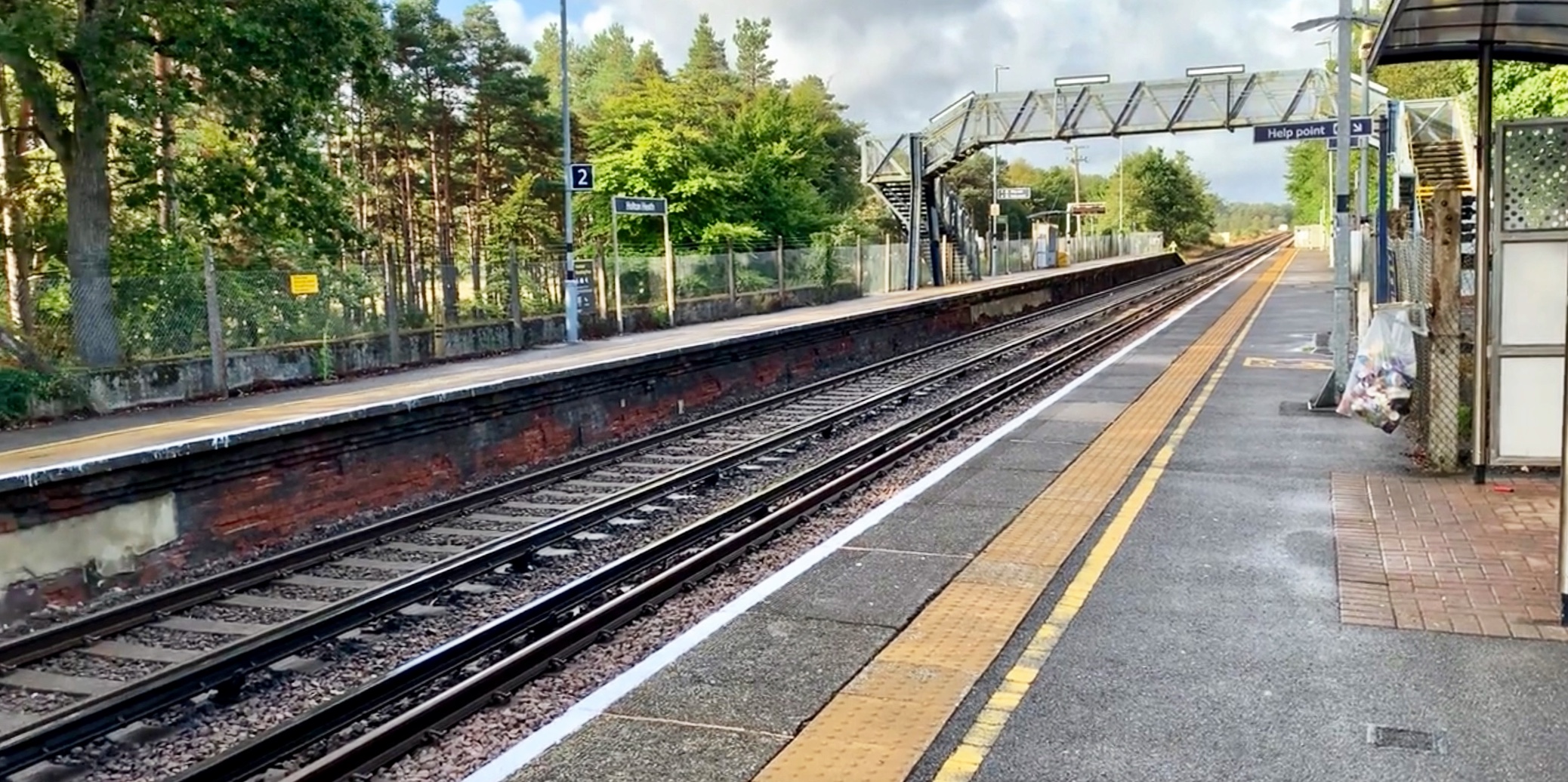
  • Yoshi visits Burnham On Sea

    Swanage resident Class 33 No. 33111 tows Adams T3 4-4-0 No. 563 from Norden to Swanage – 30/08/2023

    August 30th 2023 to September 5th 2023

    Wednesday August 30th was a busy day for local rail activity in our part of Dorset with a Class 458/5 unit drag scheduled from Bournemouth depot and the return of a Victorian era “Top Link” engine in the form of London & South Western Railway (LSWR) Adams T3 4-4-0 No. 563 to the Swanage Railway following her six year overhaul. And with both these things scheduled to happen 17 miles apart at relatively the same time it was time for a plan! 

    It was my intention to pop over to Branksome railway station around half four to see the arrival of GBRf Class 57 No. 57305 and Class 47 No. 47749 ‘City Of Truro’ arriving with barrier wagons working 5Z72 1548 Eastleigh East Yard to Bournemouth T&R.S.M.D in preparation for another Class 458/5 electric multiple unit move to Widnes Transport Tech where the units are being modified and refurbished for future use by South Western Railway (SWR). Following this, it would be a half hour drive to Norden where T3 No. 563 would be waiting to be towed down to Swanage. Once again, Jamie very kindly provided transport and good company with Yoshi sitting this adventure out at home. 

    On arrival at Branksome we followed the progress of 5Z72 via Real Time Trains (RTT) and Open Train Times (OTT) which showed the train getting progressively later. This meant that is was likely to arrive at platform 2 the same time as a passenger service was scheduled on platform 1. So careful consideration had to be made in order for the GBRf working to not be blocked from view if I opted for the wrong platform from which to see the train. I played it safe and wandered off to the London end of platform 2 in time to see the Class 57 round the corner just as the service train crept up behind me on the adjacent track. I wasn’t to be so lucky on the return working however! 

    GBRf Class 57 No. 57305 climbs into Branksome working 5Z72 1548 Eastleigh East Yard to Bournemouth T&RSMD – 30/08/2023

    It’s been approximately 20 years since the most recent Class 57 conversions from Class 47’s were out-shopped by Brush Traction at Loughborough and 32 of the 33 rebuilds during the late 1990’s and early 2000’s are still in existence following the scrapping of No. 57004 in July 2023, this being the first and to date, only Class 57 to be broken up.

    GBRf Class 47 No. 47749 ‘City of Truro’ awaits permission to reverse 5Z72 1548 Eastleigh East Yard to Bournemouth T&RSMD into the depot – 30/08/2023

    Cameras safely stowed away we drove off through Poole and Wareham, where we were stuck behind slow moving motorhomes and bus services. Narrowly avoiding being further delayed by a herd of cows crossing the road at Stoborough, we arrived at Norden well before Class 33 No. 33111 arrived from Swanage towing a brake van to collect No. 563. The Victorian 4-4-0 looked amazing, even from a distance, as we observed the locomotive from the road bridge looking across to Arne Road siding. The final Diesel Multiple Unit service of the day from Wareham to Corfe castle was waiting clearance at the road crossing into Norden station and once this had passed through the area, we didn’t have too long to wait until the Crompton arrived. In fact the whole operation of reversing into the siding and coupling up to the T3 was done ahead of the proposed timings and once the consist pulled away we moved on to our next vantage point. We had plenty of time as it was planned for the diesel locomotive to run around the T3 and brake van in Norden station so the Class 33 was leading for the onward journey to Swanage. With top speed a sedate 15mph for the 33 and T3 pairing, we took a position overlooking the Grade II listed viaduct in the shadow of Corfe Castle. We didn’t know if we’d be in for a long wait as things were, at that time, around an hour ahead of schedule. As luck would have it, we didn’t have long before the locomotives came into view. 

    Looking stunning in her restored Drummond passenger green livery, Adams T9 4-4-0 No. 563 has been reunited with her tender and awaits the arrival of the train to tow her to Swanage – 30/08/2023
    Class 33 No. 33111 slowly draws T3 No. 563 slowly out of Arne Road Siding – 30/08/2023
    Adams T9 4-4-0 No. 563 being moved from Norden to Swanage – 30/08/2023
    Adams T9 4-4-0 No. 563 is towed across the Grade II listed viaduct at Corfe Castle by Class 33 No. 33111 – 30/08/2023

    T3 No.563 was completed in March 1893 and was allocated new to Nine Elms shed, with moves to Guildford and Eastleigh over the following years.  After an overhaul in 1935, she was transferred to Salisbury where she was looked after by shed staff, performing as station pilot or working slow trains to Bournemouth until being reallocated to Eastleigh in February 1938. She was withdrawn in March 1939 following her failure whilst working a Fawley goods train. However, with the onset of World War II she was reinstated into traffic being allocated to both Basingstoke and Eastleigh before being withdrawn again in 1945 following cessation of hostilities in Europe. She was resurrected yet again three years later in 1948 as an exhibit at London Waterloo’s centenary celebrations where she represented the LSWR. There then followed periods of storage in the electric carriage shed at Farnham, and at Tweedmouth before being restored at Eastleigh prior to moving to the Clapham transport museum in 1961 as part of the National Collection. From 1975, she was subsequently displayed at York and Shildon and took part in theatre productions of “The Railway Children” in London and Toronto before being disposed of by the National Railway Museum in 2017, when following a series of negotiations it was agreed to transfer ownership of No. 563 to the Swanage Railway Trust.

    No. 563 has been extensively restored at the Flour Mill near Lydney in the Forest of Dean, Gloucestershire with the tender being restored separately at Herston Works, Swanage.  Restoration started in November 2017, at the cost of £650,000. Having passed her boiler exam in July 2023 and moving under her own power for the first time in 75 years, No. 563 was transported by road to Purbeck arriving early morning on Wednesday August 30th.  Resplendent in lined-out 1890’s Drummond passenger green livery, the T3 was reunited with her tender prior to making the journey by rail from Arne Road Siding at Norden in the company of “Crompton” Class 33 No. 33111. She will undergo inspections and testing prior to entering operational service. Unfortunately while the locomotive was being moved at low speed to Swanage, both coupling rods started to run warm. Before testing can resume, precautionary checks will be required and the re-machining of the coupling rods bushes. Commissioning work will continue at Herston while this is being done.  It is hoped that No. 563 will haul her first passenger train in 75 years on the Swanage Railway to mark the centenary of the Southern Railway and the 185th anniversary of the formation of the London and South Western Railway in 2023, but no date has yet been confirmed.

    No. 563 fills a gap in the Swanage Railway fleet as the class hauled trains from London to Swanage from the 1890’s through to the 1930’s and represents an image of what the railways would have been like during the industrial and social development of Dorset during the 19th Century. 

    Adams T3 4-4-0 No. 563, Swanage Railway – 30/08/2023

    As things had happened smoothly and well ahead of schedule, following a quick consult of Google Maps, we decided we had enough time to head back to Branksome and see the Class 458/5 drag departing Bournemouth depot. On our return to Branksome, we checked RTT and OTT once again, but it was to be a good 17 minutes after the allotted time that Class 57 No. 57305 rolled back into the station working as 5Q72 1926 Bournemouth T&R.S.M.D to Wembley Receptions 1-7. Although diagrammed to reverse at platform 2, the train in fact arrived on platform 1. Again decisions had to be made on where to stand in order to get a shot of the GBRf locos and SWR EMU. All went well until departure time when, having returned to the London end of platform 2, a Class 444 working a service train arrived just as the Class 47, now leading the train out, powered up and departed. You win some, you lose some! 

    GBRf Class 57 no. 57305 emerges from Bournemouth depot working 5Q72 1926 Bournemouth T&R.S.M.D to Wembley Receptions 1-7 – 30/08/2023
    Class 458/5 No. 458525, part of 5Q72 1926 Bournemouth T&R.S.M.D to Wembley Receptions 1-7, stands in the platform at Branksome on the way to Widnes Transport Tech for conversion and refurbishment – 30/08/2023
    Class 458 EMU move from Bournemouth T&RSMD – 30/08/2023

    On Sunday September 3rd, we took the opportunity to go and bark at some CrossCountry HST’s in Somerset. With only a few weeks remaining of scheduled XC High Speed Train workings we drove over to Highbridge and met up with @smithy.377 (check out his excellent Instagram account!).

    Once an important centre on the Somerset & Dorset Joint Railway (S&DJR) accommodating their locomotive works, Highbridge survives today as a top on the Bristol to Taunton Main Line operated by Great Western Railway (GWR). The original station opened on 14th June 1841, when the Bristol and Exeter Railway (B&ER) opened its broad gauge line to Bridgwater. The B&ER was later amalgamated into the Great Western Railway (GWR) on 1st January 1876.

    The Somerset Central Railway (later absorbed into the S&DJR) opened to Glastonbury on 28th August 1854 but was worked by the B&ER for the first few years as it was also originally built to Brunel’s broad gauge. Separate platforms were provided for each railway and a connection between the was two situated in the goods yard. The layout eventually consisted of two terminal platforms and two through platforms to service an extension line that continued via Highbridge Wharf (where most of the S&DJR goods traffic was also handled) and onwards to Burnham On Sea extending the line two or three miles westwards which opened on 3rd May 1858.

    To reach the extension, the S&DJR line crossed the B&ER main line on the level just north of the road bridge, by means of a special ‘diamond crossing’ over the main line and a gated level-crossing over the A38. The Burnham line was a key element in the original planning for the Somerset and Dorset line and was built with the expectation of picking up passengers from paddle-steamer ferries from South Wales and transporting them to the south coast of England with Burnham On Sea railway station, essentially a terminus, also including a through platform allowing services to travel on to a 900ft S&DJR built stone pier on the River Severn/River Parrett estuary from where the steamers would sail. Railway operations onto the pier ceased in 1888 although the pier continued in use for shipping until the 1950’s.

    Burnham On Sea effectively closed when regular passenger services were curtailed at Highbridge on 28th October 1951. Excursion traffic continued until 1962, and the goods depot remained open until 1963 with all rail traffic ceasing in 1966. The station building, main platform and goods shed were all subsequently demolished. The excursion platform remained on the derelict site for over a decade, until the former track bed eastwards was developed into Marine Drive, a road which has helped ease traffic flowing into the town.

    The location of the station itself was on the junction of Old Station Approach and Abingdon Street, and the former goods yard is now a small car park. An adjacent pub on the High Street was renamed the “Somerset & Dorset”. The local RNLI station and yard occupy land to the south and east of the former main station building, adjacent to the site of the former excursion platform. A B&M store occupies the seaward-west side. To remember its railway past, there are various features which have been installed by the local railway Heritage Group, notably a replica semaphore signal on Old Station Approach near the entrance to the High Street Car Park, a buffer stop on the corner of South Esplanade and Pier Street located very near to the site of original railway terminus, a station signboard and replica signal box which stands on what was known as the excursion platform, and a locomotive shaped weathervane on the town green. The original signal box which once stood alongside the platforms has been restored and is now based at Washford on the West Somerset Railway.

    Burnham On Sea station sign marking the site of the former excursion platform – 03/09/2023
    Yoshi enjoys the shade provided by the replica signal box at Burnham On Sea – 30/08/2023
    Plaque explaining the replica signal box at Burnham On Sea – 30/08/2023

    Returning to Highbridge the S&DJR locomotive works closed in 1930 after the motive power of the line was taken over by the London Midland and Scottish Railway (LMS), whilst its joint-venture owning partner the Southern Railway (SR) took over civil engineering and line operations. a small engine shed remained open until the Somerset & Dorset line and platforms finally shut in 1966. All of the original B&ER/GWR and S&DJR station buildings have all since been demolished, replaced on current platforms by metal and glass shelters. There is also no trace of the former S&DJR trackbed, platforms, engine shed or works, all of which are now beneath new housing to the east of platform 1. A couple of old wagon wheels sit on a short length of track on a plinth marking the past history of the site.

    Wheel sets mark the area where the S&DJR yard and works once stood at Highbridge – 03/09/2023
    Old rail at Highbridge – 30/08/2023

    To see film of Highbridge and Burnham in the early 1960’s follow this link: https://www.bbc.co.uk/iplayer/episode/b03495yn/lets-imagine-a-branch-line-railway-with-john-betjeman. First transmitted in 1963, John Betjeman looks at the Evercreech Junction to Burnham On Sea railway line, providing a unique profile of a working steam branch line railway as he travels along the original part of the Somerset Central Railway. Examining towns and stations along the way, Betjeman laments the tragic decline of steam railways. The journey culminates with a stroll around Highbridge Wharf.

    Twenty odd years ago I visited Burnham On Sea regularly for work based at Highbridge Radio Station (Portishead Radio). The radio station, which operated the world’s largest and busiest maritime radio service, closed in April 2000, having initially operated from a site near Devizes in 1920. At its peak, in the late 1970’s and early 1980’s, over 300 staff were employed at the Highbridge site. The station buildings were demolished in 2007 and the Mulholland Park housing estate was built on the site.

    Motive power through Highbridge is currently provided by GWR Intercity Express Trains (IET) and soon to be retired HST Castle Sets with one stopping train in each direction each hour. Passing CrossCountry Voyager sets will continue after the retirement of the XC HST’s.

    CrossCountry Class 43 HST power car No. 43007 leads 1V48 0811 Leeds to Plymouth through Highbridge – 03/09/2023
    CrossCountry Class 43 HST power car No. 43378 at the head of 1S53 1327 Plymouth to Edinburgh approaches Highbridge railway station – 03/09/2023
    CrossCountry Class 43 HST power car No. 43321 at the rear of 1S53 1327 Plymouth to Edinburgh speeds through Highbridge – 03/09/2023
    Celebrity BR liveried CrossCountry Class 43 HST power car No. 43008 working 1S55 1427 Plymouth to Leeds on the approach to Highbridge – 03/09/2023
    GWR Castle Class HST No. 43155 with the stopping 2U20 1050 Penzance to Cardiff Central service approaches Highbridge – 03/09/2023
    GWR Castle Class HST No. 43155 at the rear of 2U20 1050 Penzance to Cardiff Central awaiting departure from Highbridge – 03/09/2023
    GWR Castle Class HST No. 43189 working 2C79 1400 Cardiff Central to Penzance passes under the road bridge on the approach to Highbridge from the Bristol direction – 03/09/2023
    GWR Castle Class HST No. 43016 2C79 1400 Cardiff Central to Penzance sits at the platform in Highbridge – 03/09/2023
    GWR InterCity Express Train (IET) No. 800004 at Highbridge working 2C77 1300 Cardiff Central to Penzance – 03/09/2023
    CrossCountry Voyager Class 220 DMU No. 220003 approaches Highbridge with 1S47 1027 Plymouth to Edinburgh – 03/09/2023
    CrossCountry Voyager Class 220 DMU No. 220003 1S47 1027 Plymouth to Edinburgh passing through Highbridge – 03/09/2023
    CrossCountry Voyager Class 220 DMU No. 220006 1M45 1049 Paignton to Manchester Piccadilly at Highbridge – 03/09/2023
    CrossCountry Voyager Class 220 DMU No. 220021 1V56 1101 Leeds to Plymouth powers through Highbridge – 03/09/2023
    With the leaves on the trees starting to display autumnal colours, CrossCountry Voyager Class 220 DMU No. 220012 forming 1V54 0935 York to Plymouth passes Highbridge – 03/09/2023
    GWR IET No. 800304 forming 1C22 1630 London Paddington to Plymouth at Taunton East Junction – 03/09/2023
    CrossCountry Class 43 HST power car No. 43357 1V62 1105 Edinburgh to Plymouth catches the last rays of sun at Taunton East Junction – 03/09/2023
    CrossCountry Class 43 HST power car No. 43303 at the rear of 1V62 1105 Edinburgh to Plymouth approaching Taunton – 03/09/2023
    XC HST’s in Somerset – 03/09/2023

    As I was in the Poole area on Monday I took the opportunity of getting a glimpse of one of the Class 701 units; No. 701021, on its latest mileage accumulation run, working as 5Q51 1115 London Waterloo to Staines Up Loop. This service runs to Poole Storage Sidings where the train reverses. The 701’s are still to enter revenue earning service with South Western Railway.

    Class 701 No. 701021 stands at Poole working 5Q51 1115 London Waterloo to Staines Up Loop – 04/09/2023
    Video of Class 701 No. 701021 at Parkstone and Poole working 5Q51 1115 London Waterloo to Staines Up Loop – 04/09/2023

    Tuesday evening saw the return of the GBRf pairing of Class 57 No. 57305 and Class 47 No. 47749 ‘City Of Truro’ with another Class 458 EMU drag from Widnes Transport Tech to Bournemouth depot. This time, I elected to see the train passing Bournemouth instead of my usual spot at Branksome. After a coffee from the Pumpkin buffet on platform 2, I walked through the car park which was once the site of Bournemouth steam shed and up to Beechey Road bridge which gives a view back towards the railway station. While I was in Bournemouth, I took the opportunity of photographing regular train movements, including South Western Railway (SWR) Class 444’s, Class 450’s and CrossCountry Voyager DMU’s.

    SWR Class 444 No. 444025 awaiting departure from Bournemouth working 1W28 1703 Weymouth to London Waterloo as Class 450 No. 450088 passes as 1B45 1535 London Waterloo to Poole – 05/09/2023
    Occupying bay platform 1, SWR Class 450 No. 450063 prepares for departure with 1B68 1802 Bournemouth to Basingstoke – 05/09/2023
    SWR Class 444 No. 444003 on the approach to Bournemouth with the 1W70 1720 Weymouth to London Waterloo service – 05/09/2023
    SWR Class 444 No. 444039 works 1W72 1820 Weymouth to London Waterloo at Bournemouth – 05/09/2023
    SWR Class 444 No. 444045 at Bournemouth Middle Sidings – 05/09/2023
    Having arrived from Manchester Piccadilly, CrossCountry Voyager Class 221 No. 221133 worked 5022 1919 Bournemouth to Bournemouth Middle Sidings before forming the 1M78 1945 departure from Bournemouth to Birmingham New Street – 05/09/2023
    GBRf Class 57 No. 57305 hauling refurbished SWR Class 458 No. 458405 with Class 47 No. 47749 ‘City Of Truro’ at the rear passes through Bournemouth as 5X65 1435 Wembley Receptions 1-7 to Bournemouth T&RSMD. The locomotives and barrier coaches retuned to Eastleigh later that evening – 05/09/2023
    X65 1435 Wembley Receptions 1-7 to Bournemouth T&RSMD.- 05/09/2023

    Britain’s busiest railway stations have been identified following the analysis of data for 2,616 locations, and Bournemouth came top in the Dorset with 5616 passengers per day and the 190th station in the UK. Bournemouth has a performance ranking of 1908.  The analysis of National Rail data, collated by On Time Trains Stations, is ranked by a performance score, calculated based on service punctuality and cancellation frequency.

    Further afield, it has been announced that TransPennine Express (TPE) will withdraw their troubled Nova 3 Class 68 hauled trains with effect from the December 2023 timetable change. We mention this, as back in 2016 prior to the TPE contract being awarded to FirstGroup, it was widely reported that the Department for Transport (DaFT) was eager to utilise de-motored Class 442 “Wessex Electric” electric multiple units hauled by Class 68 locomotives on Trans Pennine services. This plan, however, developed into an order for 66 new MK 5a carriages. The “Wessex Electrics” were introduced when the Bournemouth to Weymouth route was electrified and imho are amongst the best electric multiple units ever built. All this gives me an excuse to share some images of TPE liveried Class 68’s along with a few local photos of Class 442 EMU’s in South West Trains days.

    68027 ‘Splendid’ at York – 18/06/2021
    68024 ‘Centaur’ at York -30/08/2020
    68025 ‘Superb’ at York- 30/08/2020
    68019 ‘Brutus’ at York – 18/06/2021
    68032 ‘Destroyer’, York – 17/06/2021
    68032 ‘Destroyer’ at York – 18/06/2021
    South West Trains Class 442 No. 442415 at Weymouth. FM Rail owned Class 31 No. 31128 ‘Charybdis’ waits to depart with a “John Lewis Partnership” private charter back to London Victoria – 29/07/2006
    South West Trains Class 442 No. 442418 at Bournemouth – 28/12/2006
    De-branded Class 442 No. 442416 at Branksome – 03/05/2007

    Yoshi has been ship spotting at Poole Quay this week as two steamships, both originally from Glasgow, namely SS Shieldhall and PS Waverley, visited.

    SS Shieldhall is a preserved steamship that operates from Southampton. She is one of the last reciprocating steam engined ships built, using technology that dated back to the last quarter of the 19th century and which was obsolete at the time of her construction. She spent her working life as one of the “Clyde sludge boats”, making regular trips from Glasgow to dump treated sewage sludge at sea – 04/09/2023 
    PS Waverley is the last seagoing passenger-carrying paddle steamer in the world. Built in 1946, she sailed from Craigendoran on the Firth of Clyde to Arrochar on Loch Long until 1973 – 04/09/2023

    Thanks for making it this far! I often say I ignore the Voyager units, but think I’ve more than made up for it this time around. Comments and corrections gratefully received. Be seeing you!
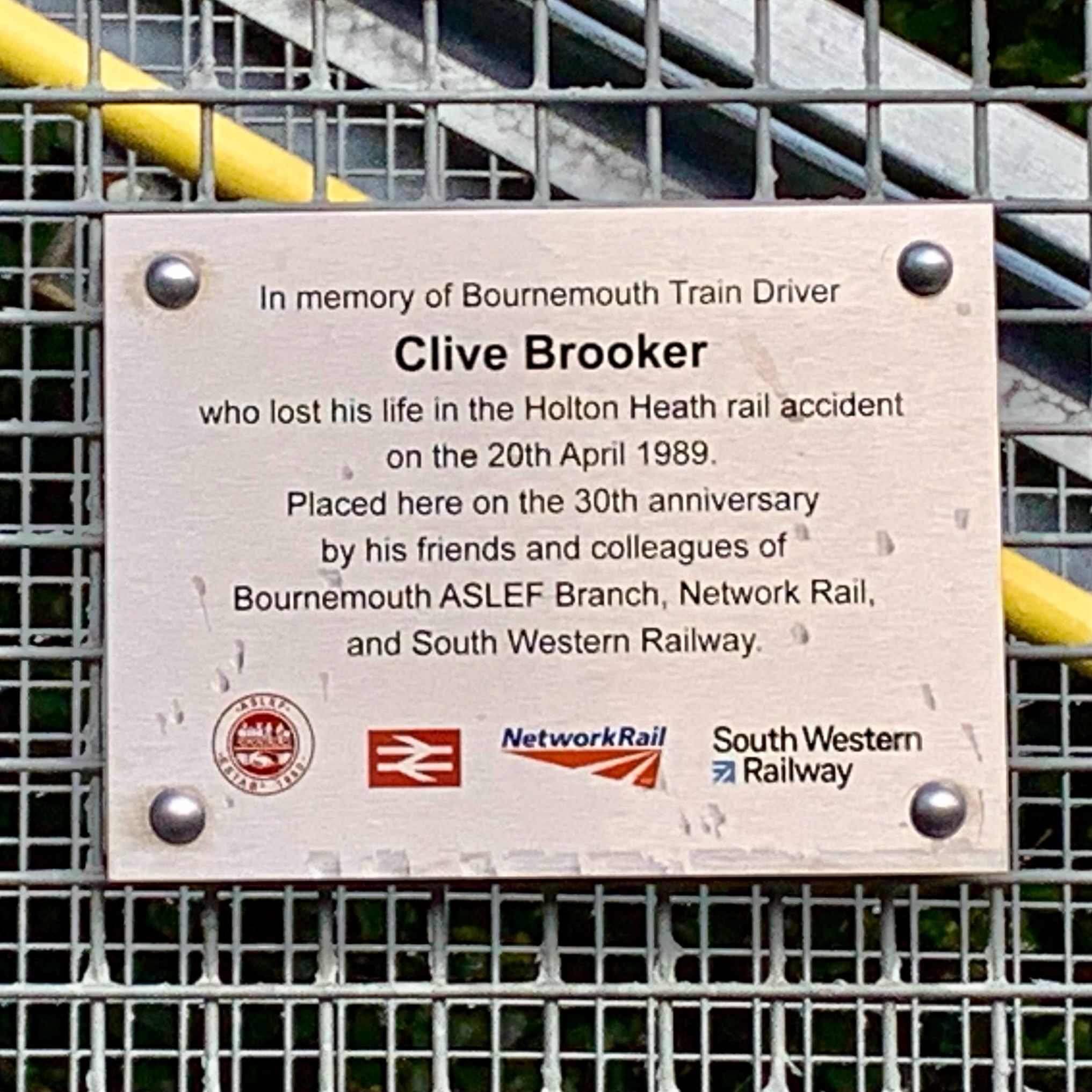
  • Yoshi Visits Lyme Regis

    Yoshi gets Tangoed! The boy meets Colas class 43 High Speed Train power car No. 43277 ‘Safety Task Force’ during its layover at Gillingham – 24/08/2023

    August 24th 2023 to August 29th 2023

    On Thursday 24th August I made a lunchtime jaunt to North Dorset in order to catch a view of Colas Rail Class 43 High Speed Train (HST) power car No. 43277 which has been on my list of locomotives to see for a few months ever since it was outshopped in an attractive hybrid Colas/Network Rail (NR) livery, incorporating Colas’ deep orange paintwork on the majority of the power car, with NR’s bright yellow colours at the rear, separated by a thick black angled band over the radiator grilles. The major repair and repaint was carried out by South Devon Railway Engineering (SDRE), the contract engineering arm of the South Devon Railway over the course of a year and was the first such contract on an HST carried out by SDRE. As well as the full paint job the overhaul comprised bodywork repairs, underframe attention, electrical cubicle component repairs, mechanical and electrical cab equipment repairs.  The power car returned to service with Colas in March 2023 and named ‘Safety Task Force’ by Network Rail’s Safety Task Force director, Nick Millington MBE.

    No. 43277 was previously in service on the East Coast Main Line with LNER until it was withdrawn when the operator stopped using HST’s on its services at the end of 2019. It was one of a number of power cars transferred for use with East Midlands Railway (EMR) on its HST services and was moved to Barrow Hill for storage. However, it was never revived for use with the Midland Main Line operator, and after EMR also ceased using HST’s, it was subsequently one of five Porterbrook-owned Class 43 power cars along with 43251/257/272/ and 274 to be moved to Arley on the Severn Valley Railway (SVR) in July 2021 for temporary storage. Now one of the power cars employed as part of the New Measurement Train (NMT) it’s been a patient wait for the locomotive to be allocated to a working heading to Dorset. I had originally contemplated an early morning excursion to see the train at Yeovil Junction on its way from Reading to Exeter New Yard but opted to see the return leg as No. 43277 would be leading. As the NMT has a scheduled 16 minute wait at Gillingham for pathing reasons, this was where I decided on seeing it – mostly for the opportunity to photograph the unique liveried Class 43 as it stood at the platform. 

    Of the other formerly stored power cars now in operation with Colas No.’s 43251/257/272 all carry former Virgin Trains East Coast red and grey colours with Colas branding, while 43274 carries the unique East Midlands Railway aubergine livery that was applied for its final weeks in service with EMR in 2021. Colas Rail also operates No.’s 43013/014/062/290 and 299 on behalf of Network Rail on the New Measurement Train.

    Class 43 No. 43277 ‘Safety Task Force’ leads the Network Rail New Measurement Train on the approach to Gillingham working as 1Q23 0556 Reading to Salisbury – 24/08/2023

    The first appearance of the Tangoed Class 43 power car in the region working 1Q23 0556 Reading to Salisbury attracted a number of other rail enthusiasts who came out and see her. Consequently, I was one of a number of photographers at Gillingham but I’m pleased to report everyone was thoughtful and courteous of each other and hopefully we all got the shots we wanted. It was also great to see the railway dog’s North Dorset correspondent, Scott, who had also arrived to see the NMT working. Watching the approach of 1Q23 on the Open Train Times (OTT) website map it appeared that the train was being held outside of Gillingham for no apparent reason, but eventually it arrived at platform 1 just three minutes late. After videoing the arrival from the station footbridge, Yoshi and I headed up the platform to get shots of No. 43277 and nameplate.

    Class 43 No. 43277 ‘Safety Task Force’ leads the Network Rail New Measurement Train enters Gillingham working as 1Q23 0556 Reading to Salisbury – 24/08/2023
    Class 43 No. 43277 ‘Safety Task Force’ with the Network Rail New Measurement Train at Gillingham awaiting the arrival of a down passenger working before departing on the single line track towards Salisbury – 24/08/2023
    Class 43 No. 43299 looking in poor external condition at the rear of the Network Rail New Measurement Train at Gillingham working as 1Q23 0556 Reading to Salisbury – 24/08/2023
    Nameplate detail and crest of Class 43 No. 43277 ‘Safety Task Force’ – 24/08/2023

    As I have previously filmed an NMT departure from the platforms of Gillingham station previously I decided this time I’d try the road bridge which carries the B3081 over the railway line east of the station. A footpath adjacent to track provides pedestrian access from platform 1 up to and from the road bridge and takes a minute or two to walk. There’s also grass and posts and other things for doggo’s to sniff on the way, so if you’re with a canine friend, perhaps allow a little longer! 

    Class 43 No. 43277 ‘Safety Task Force’ leads the Network Rail New Measurement Train out of Gillingham working as 1Q23 0556 Reading to Salisbury – 24/08/2023
    Colas Class 43 No. 43299 at the rear of the Network Rail New Measurement Train having departed Gillingham working as 1Q23 0556 Reading to Salisbury – 24/08/2023
    Video of the Network Rail New Measurement Train at Gillingham 1Q23 0556 Reading to Salisbury – 24/08/2023

    On Sunday we had a day trip to Lyme Regis, which was once the terminus of a branch line from Axminster. Once a small but busy harbour, Lyme had fallen into decline by the 17thCentury as ships grew in size, but the town saw its fortunes reversed in the early 19th Century when it became a holiday destination for the wealthy. Early tourism was boosted by a popular interest in geology and palaeontology. Jane Austen was delighted by the town and in her novel ‘Persuasion’ wrote “a very strange stranger it must be who does not see charms in the immediate environs of Lyme, to make him wish to know it better.” In the 1840’s a line running from Bridgwater to Lyme Regis was proposed but it was not until 1899 that the Axminster & Lyme Regis light railway order was made and Arthur C. Pain appointed as engineer. The branch line ran through the picturesque landscape of the Devon and Dorset border with steep gradients and sharp curves.

    Axminster Railway station where the branch for Lyme Regis originated – 01/06/2013
    The bay for the Lyme Regis branch at Axminster was located on the left of the above image. On departure from Axminster the Lyme branch was carried over the main line by a bridge slightly further west – 01/06/2013

    The route opened on 24th August 1903 with the London & South Western Railway (LSWR) receiving 55% of the revenue due to their financial backing. The LSWR eventually took over the branch on 1st January 1907. The line became part of the Southern Railway on 1st January 1923 and in 1948 part of the Southern Region of British Railways, although it later transferred to the Western Region.  Goods services survived until 3rd February 1964 with passenger trains running until complete closure of services on 29th November 1965. There is no trace of where the railway station was once located in Lyme, although the physical timber building survives at Alresford on the Watercress Line.

    The former wooden Lyme Regis station building was dismantled and rebuilt at Alresford on the Watercress Line in Hampshire. It now houses the station tea rooms and can be seen on the right in the above image – 06/03/2022

    The impressive Cannington Viaduct still stands however and on our way into the town, we took a slight diversion to view the structure, one of the earliest examples of a major concrete construction in the South of England and is comparable to those built by ‘Concrete Bob’ McAlpine, notably Glenfinnan (1901), on the West Highland Railway in Scotland. 

    Cannington Viaduct in 2023 – 27/08/2023
    Issues with subsidence during the construction of Cannington Viaduct, and in particular No. 3 arch, was partially remedied by the building of diaphragm walls of brick – 27/08/2023

    Monday evening saw the monthly run of the Plain Line Pattern Recognition (PLPR) test train running from Derby RTC to Eastleigh East Yard via Weymouth with GBRf Class 73 Electro-Diesel No.’s 73961 ‘Alison’ and 73965 ‘Des O’Brien’… again. For a change we popped into Poole to see the outward run.

    Video screen grab of GBRf Class 73 Electro-Diesel No. 73961 ‘Alison’ leading the Plain Line Pattern Recognition (PLPR) test train 1Q51 1115 Derby RTC to Eastleigh East Yard via Weymouth – 28/08/2023
    Video screen grab of GBRf Class 73 Electro-Diesel No. 73965 ‘Des O’Brien’ at the rear of the Plain Line Pattern Recognition (PLPR) test train at Poole heading to Weymouth – 28/08/2023
    Video of the Class 73 hauled Plain Line Pattern Recognition (PLPR) test train at Poole – 28/08/2023

    For the record, the Network Rail Video Inspection Unit VIU2 formed of Class 153 No. 153376 was in operation in North Dorset on Bank Holiday Monday running as 2Q20 0913 Eastleigh to Reading via Yeovil.

    The Minister of State for Rail and HS2, Huw Merriman MP, made an informal visit to the Swanage Railway, visiting the Dorset heritage line via its trial diesel train service from the main line at Wareham. The Minister was accompanied by South Dorset MP Richard Drax and Dorset Council transport portfolio holder Councillor Ray Bryan.

    The cast bronze Paddington Bear statue in its original location by the escalators at Paddington railway station sculpture was created by Marcus Cornish in 2000.  Paddington now stands on Platform 1 under the station clock – 13/01/2013

    Paddington Bear is to appear on 10 special stamps to mark his 65th anniversary.  Released by the Royal Mail, six of the stamps feature images from animator Ivor Wood’s comic strip cartoons first published in the London Evening News in the 1970’s. The other four stamps capture moments from the BBC television series that Wood designed and directed from 1976.

    2023 Royal Mail Paddington Bear stamps and First Day Cover
    2023 Royal Mail Paddington Bear mini-sheet stamps and First Day Cover

    The Peruvian bear first appeared in 1958 in Michael Bond’s book “A Bear Called Paddington”. It is the first time he has been dedicated his own stamp set having previously featured on stamps in 2014 to celebrate 60 years of children’s television, alongside Peppa Pig, Bob the Builder and Shaun the Sheep and in a stamp set released by Royal Mail in 1994. In the story, Paddington is adopted by the Brown family and named after the London railway station where he was found. More than 35m Paddington books have been sold worldwide, spawning toys and TV programmes. He has gone on to star in films in more recent years, with Ben Whishaw voicing the character. The movie version of the bear also appeared with the late Queen Elizabeth II in a sketch marking her Platinum Jubilee in 2022. Paddington will be seen alongside the profile of King Prince Charles on the new stamps which go on general sale on 5th September 2023.

    Paddington has previously appeared on three other UK stamps over the years
    The Royal Mint issued Paddington Bear 50p coins in 2018/19. Designed by David Knapton the coins show Paddington in front of top landmarks, including The Tower of London, Buckingham Palace, St. Paul’s Cathedral and Paddington Station (Image courtesy of G E Barrett)

    For more information on Ivor Wood’s history with everyone’s favourite ursine refugee, visit here

    There are only a few days left to have your say and give feedback on the closure of 974 ticket offices across England by completing the online form at: https://www.transportfocus.org.uk/ticket-office-consultation/  More than 460,000 responses have been submitted to date. 

    The 29th August 2023 Daily Mirror front page covered the closure of railway ticket offices – 29/08/2023

    It has been reported in the national press that South Western Railway (SWR) admitted the “potential of negative impact of [ticket] machines [as] not accessible for wheelchair users due to the height of the screen and card reader. No audio available so not accessible for visually impaired customers and those with reduced literacy. For customers with visual impairments the contrast on the screen is a challenge. There is a risk that some customers may feel like children if staff have to push buttons for them. Concerns have been raised about those who are in a vulnerable state and wish to end their lives.”

    As part of Heritage Open Days, the Grade II listed former railway goods shed in Wareham is open to the public on Friday 15th September 2023 between 1000 and 1600, no booking is required. Now occupied by Morgan Carey Architects, this is a chance to see a working Architects Practice in full swing and visit their converted railway goods shed studio. For more details see here.

    From the archive:

    A look back to Saturday 15th May 2021 which saw the end of an era for the Midland Mainline, when East Midlands Railway (EMR) ran their final High Speed Train passenger services. 

    For 39 years the Class 43 HST’s dominated the Midland Mainline running services from London St Pancras to destinations such as Leicester, Nottingham, Derby, Sheffield and Leeds, plus occasionally making trips to Lincoln Central, Skegness, York and Scarborough.

    To celebrate the retirement of their HST’s, EMR re-liveried two of their Class 43 power cars in special liveries, No. 43102, one of the two fastest diesel locomotives in the world (alongside No. 43159) being painted into InterCity Swallow livery and named ‘The Journey Shrinker’ with its speed record of 148.5mph noted underneath the nameplate, and No. 43274 which was turned out in East Midlands Railway purple livery, making this the only power car to run in these colours.

    Video screen grab of EMR HST No. 43102 ‘The Journey Shrinker’ working 1F70 2001 London St Pancras International to Leeds via Derby on the approach to Bedford while Class 700 EMU No. 700133 runs parallel – 15/05/2021

    On 15th May 2021 Yoshi and I had journeyed to the Severn Valley Railway for the first post-Covid lockdown diesel gala. Unfortunately the weather was mostly awful, with constant drizzle and despite @dabuckley_967 popping to the nearby Tesco and purchasing towels to dry off a soggy cockapoo, by mid-afternoon we’d had enough and the plan of seeing the final two HST workings on the Midland Mainline began to form. Driving across country through some pretty heavy downpours we arrived at Bedford railway station and after waiting for the skies to clear we were very kindly allowed onto the platforms in time to see the final EMR HST services; 1D63 1834 London St. Pancras International to Leeds via Nottingham with No.’s 43309 & 43272 followed later by No.’s 43102 & 43274 working 1F70 2001 London St. Pancras International to Leeds via Derby. No. 43102 carried a special headboard marking the occasion inscribed “1982 – 2021 The Last HST From London”. Unfortunately for us, our view of the train passing through Bedford was partially blocked by the parallel arrival of a local service in the form of Class 700 EMU No. 700133 – as you can see in the video below – and we failed to get a clear view of No. 43274 at the rear of its train. For some, it is still too soon to talk of this diversion to Bedford.

    The final EMR HST passenger services through Bedford with No.’s 43309 & 43272 – 1D63 1834 London St Pancras International to Leeds via Nottingham
    No.’s 43102 & 43274 – 1F70 2001 London St Pancras International to Leeds via Derby – 15/05/2021

    No. 43102 ‘The Journey Shrinker’ is now preserved at Locomotion Shildon.

    The one we missed at Bedford! Still carrying EMR purple applied to commemorate the final Midland Mainline HST workings but with Colas branding, No. 43274 at the rear of an NMT working at Gillingham – 18/11/2021

    Thank you for reading. Be seeing you!
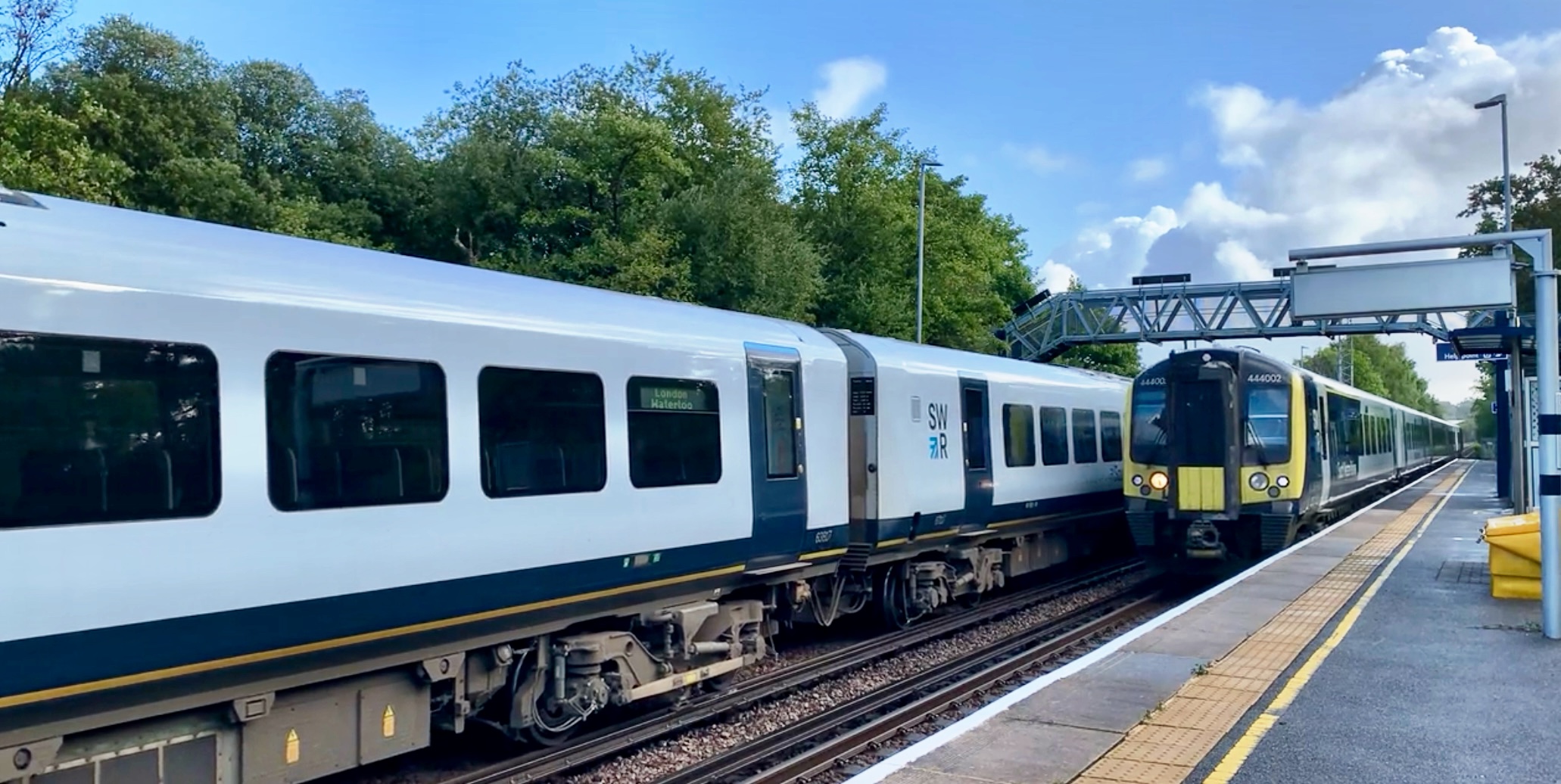
    During our day out to Lyme Regis, Yoshi was very pleased to find a statue of Mary Anning, one of our local heroes. Mary was born in Lyme Regis in 1799 and went on to become a pioneering palaeontologist. Anning’s discoveries in the early 19th Century helped shape scientific understanding of prehistoric life, but her work was never properly recognised as she was widely snubbed by the scientific community and never fully credited for her discoveries because she was a working-class woman with little formal education.

    The installation of the statue in May 2022 was the result of a four year campaign by the Mary Anning Rocks group started by Evie Swire, then aged 11 and her mother Anya Pearson, which raised more than £100,000 for the bronze statue created by Stoke-on-Trent based sculptor Denise Dutton – 27/08/2023
  • Upwey Wishing Well

    LMS Jubilee 4-6-0 No. 45596 ‘Bahamas’ working the final 2023 Railway Touring Company organised “Dorset Coast Express” 1Z92 0845 London Victoria to Weymouth – 17/08/2023

    August 16th 2023 to August 23rd 2023

    For a long while I’ve been meaning to climb up to the railway line accessed from the old main road between Dorchester and Weymouth, just north of Upwey village, with the aim of photographing passing trains. This was once the site of Upwey Wishing Well Halt, and although the steps survive either side of the railway line, nothing now exists of the platforms which once stood here. Opened by the Great Western Railway (GWR) on 28th May 1905 and served by rail motor trains between Weymouth and Dorchester, the station survived until 7th January 1957 when it was closed. Originally the station was a two platform timber built affair with corrugated iron pagoda style shelters. The nearby tourist attraction of Upwey Wishing Well brought many visitors by rail in the early years of the halt’s existence, but increasing competition from road transport and buses which could deposit their passengers closer to the Well itself saw an ever diminishing use by rail passengers. The last remnants were swept away during the 1988 Bournemouth to Weymouth electrification scheme. Locked gates and fences protect observers from the railway, preventing trespass but affording a good view up to Bincombe tunnel. I chose Thursday 17th August to visit as there were two special excursion trains due to pass in relatively quick succession. Grateful thanks to Jamie for the lift down to Upwey. A few days later I returned to Upwey and the actual Wishing Well to celebrate my mum’s 90th birthday. Happy days.

    Still in South Western Trains livery, South Western Railway Class 444 EMU No. 444045 runs past the site of the former Upwey Wishing Well Halt with 1W21 1035 London Waterloo to Weymouth – 17/08/2023
    Class 57 No. 57601 ‘Windsor Castle’ heads up “The Northern Belle: Weymouth Harbour” 1Z79 0711 Coventry to Weymouth – 17/08/2023
    165137 – 2V68 1328 Weymouth to Gloucester
    LMS Jubilee 4-6-0 No. 45596 ‘Bahamas’ works the final 2023 “Dorset Coast Express” 1Z92 0845 London Victoria to Weymouth coasting down Bincombe Bank – 17/08/2023
    West Coast Railways Class 57 No. 57313 ‘Scarborough Castle’ working 5Z80 1333 Weymouth to Yeovil Pen Mill empty coaching stock movement designed to free up space in Weymouth because of the two excursion trains scheduled for the day works up Upwey Bank towards Bincombe Tunnel – 17/08/2023
    Video from 17th August 2023 including the following:
    444034 – 1W61 1005 London Waterloo to Weymouth and Poole
    444029 – 1W20 1303 Weymouth to London Waterloo
    444045 – 1W21 1035 London Waterloo to Weymouth
    57601/57313 – 1Z79 0711 Coventry to Weymouth
    444034 – 1W62 1320 Weymouth and Poole to London Waterloo
    165137 – 2V68 1328 Weymouth to Gloucester
    45596/ 47802 – 1Z92 0845 London Victoria to Weymouth
    57313/57601 – 5Z80 1333 Weymouth to Yeovil Pen Mill
    47802/45596 – 1Z93 1636 Weymouth to London Victoria
    57601/57313 – 5Z82 1641 Yeovil Pen Mill to Weymouth
    – with thanks to G E Barrett for video clips at Dorchester

    Later on the 17th I headed off to Branksome to see an engineers train pass through bound for Poole. On this occasion the train was worked by GBRf and was top and tailed by class 66 locomotives. On my way home, I popped in at Poole to see the locos and ballast hoppers awaiting deployment.

    GBRf Class 66 No. 66791 6G28 2304 Eastleigh East Yard to Poole – 18/08/2023
    GBRf Class 66 No. 66749 ‘Christopher Hopcroft MBE 60 Years Railway Service’ at the rear of 6G28 2304 Eastleigh East Yard to Poole – 18/08/2023

    The following Tuesday and I was once again setting off for more midnight engineering train shenanigans, this time with DB Cargo class 66’s in charge of a train of new rail which was destined for the Christchurch – Pokesdown area.

    DB Cargo Class 66 No. 66028 at the head of 6N65 2349 Eastleigh East Yard to Christchurch – 23/08/2023
    DB Cargo Class 66 No. 66067 at the rear of 6N65 2349 Eastleigh East Yard to Christchurch having run through the station – 23/08/2023
    Video of Dorset engineers train amongst every day railway movements – August 2023

    Hamworthy Branch Update:

    Out walking Yoshi around Hamworthy and I noticed a planning application notice fastened to the fence close to where the original Poole station once stood. What caught my eye was a variation of conditions quoted within the notice allowing for a “National Rail parking area” as part of a new development on the former James Brothers Site on Station Road.

    Planning application notice – August 2023
    Diagram of redevelopment plans of the former James Brothers Site on Station Road, Hamworthy varied to align with new plan numbers, including a revised drainage strategy, wording changed with amended parking space numbering to allow for a dedicated Network Rail parking area which includes a set of gates to allow access to railway land to the south of the site. As shown by the plans, these will be flood-gates at a minimum height of 3.6m – August 2023

    From The Archive:

    I have to admit to being partial to an engineering train. Every night I lie in bed, the brightest colours fill my head, a million dreams are keeping me awake, I think of what the world could be. No, hang on, that’s from “The Greatest Showman”. Anyway, back in April 2015 there was no need to dream of engineers trains as eleven of them found their way to Upwey on Saturday 11th, following an earlier light engine visit on the 9th which ran as a crew route refresher for Colas. The purpose of this engineering possession was for the relaying of the up line between Upwey station and Bincombe Tunnel. Trains ran in order as follows; No. 66050 top and tailed with No. 66101, No. 70805, No. 66016, No. 70807, No. 70808, No. 66014, No. 66177, No. 66705, No. 70809, No. 66204 and finally train eleven with No.’s 66074 and 66174.

    EWS Class 66 No. 66016 at Upwey – 11/04/2015
    Class 66 Np. 66050 and Class 70 No. 70805 at Weymouth – 11/04/2015
    Class 70 No. 70805 in Weymouth station – 11/04/2015
    Class 66 No. 66016 on the approach to Weymouth – 11/04/2015
    Class 66 No. 66050 departs Weymouth with a train of track panels – 11/04/2015
    GBRf Class 66 No. 66705 arrives at Dorchester South with a train of new ballast – 11/04/2015
    A view over to Upwey railway station with Class 66 No. 66101 in DB red livery – 11/04/2015
    Class 66 No. 66204 near Upwey – 11/04/2015
    Class 70 No. 70809 arrives into Dorchester – 11/04/2015
    A view towards Weymouth looking down to the site of Upwey Wishing Well Halt – 11/04/2015
    Class 70 No. 70807 at rest in Weymouth station – 11/04/2015
    Class 70 No. 70808 between to trains in Weymouth – 11/04/2015
    GBRf Class 60 No. 66705 pokes out of Bincombe Tunnel – 11/04/2015
    Road/rail machines watched by Class 66 No. 66014 near Upwey – 11/04/2015
    Class 66 No. 66177 at Upwey – 11/04/2015
    DB liveried Class 66 No. 66101 at Upwey – 11/04/2015
    Class 66 No. 66174 at a stand on Bincombe Bank- 12/04/2015
    Another view looking towards Weymouth with a track machine where Upwey Wishing Well Halt was once located – 12/04/2015
    Class 66 No. 66074 near to the location of Monkton and Came Halt railway station which opened in 1905 as Came Bridge and closed in 1957 – 12/04/2015

    Starting with No. 66174 which departed Dorchester South mid-afternoon most of the trains returned to Eastleigh on Sunday 12th in reverse order with the last running early on Monday 13th.

    Class 66 No. 66074 at Dorchester South departs for Eastleigh. The Brewery Square development is being built in the background – 12/04/2015

    A continuation of the work was carried out over three successive evenings on 13th, 14th and 15th April, with two engineers trains allocated to this. On the evening of Monday 13th No. 66050 worked train No. 1 followed by top and tail Class 70 No.’s 70808 and 70809, the same loco’s repeated the moves the following day. However on Wednesday 15th No. 66170 turned up with the same Class 70’s remaining on the second train (With thanks to “The Corkscrew” the newsletter of The Wimborne Railway Society for the meticulous notes!)

    That’s us for this week. Thanks, as ever, for reading and for your comments and corrections which are always welcome, except the ones with links to dubious websites obviously (these can, however, be obtained by writing to me on the back of a ten pound note). Be seeing you!
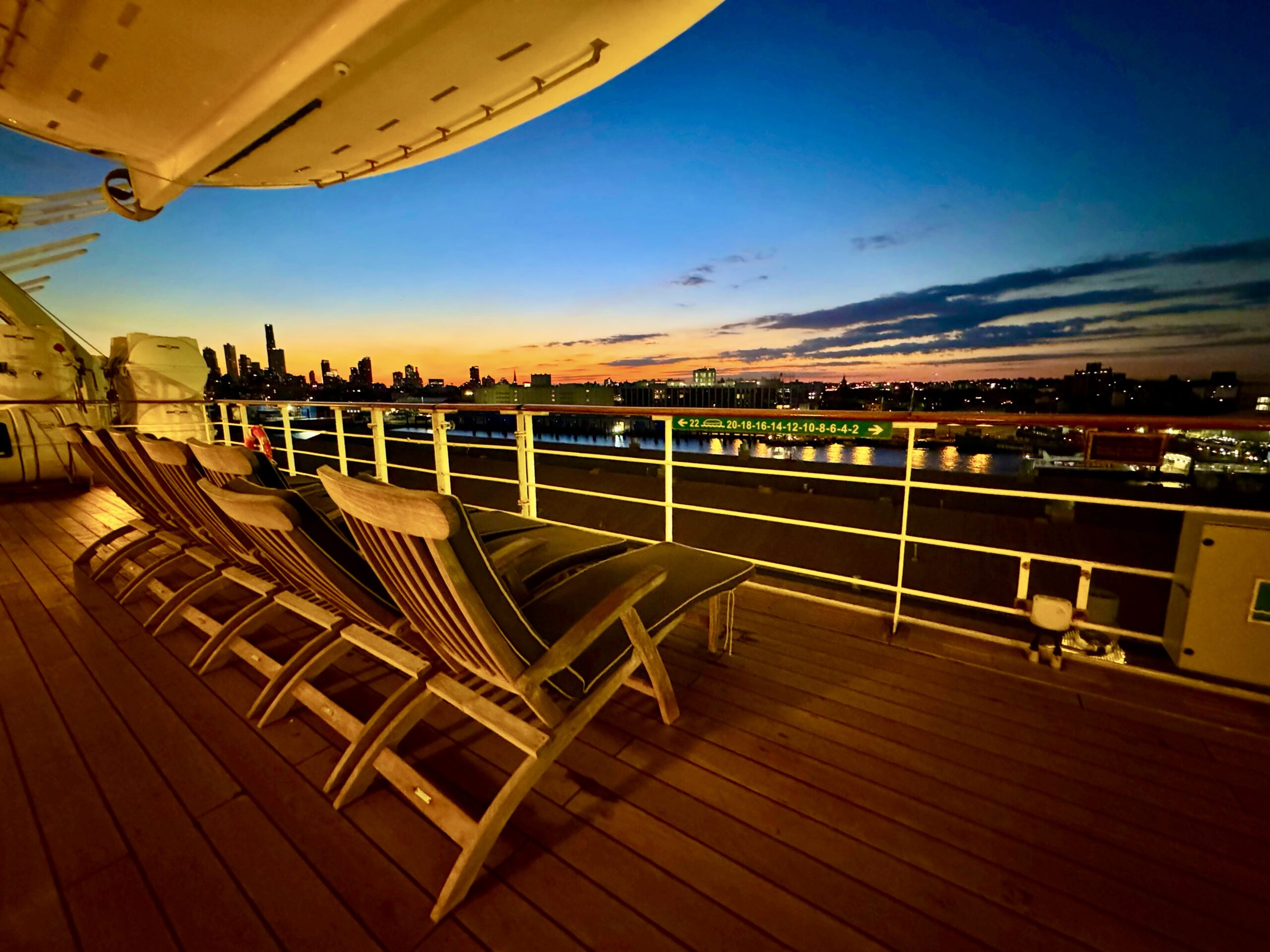
    Yoshi wanting to play ball rather than help compile this weeks blog!