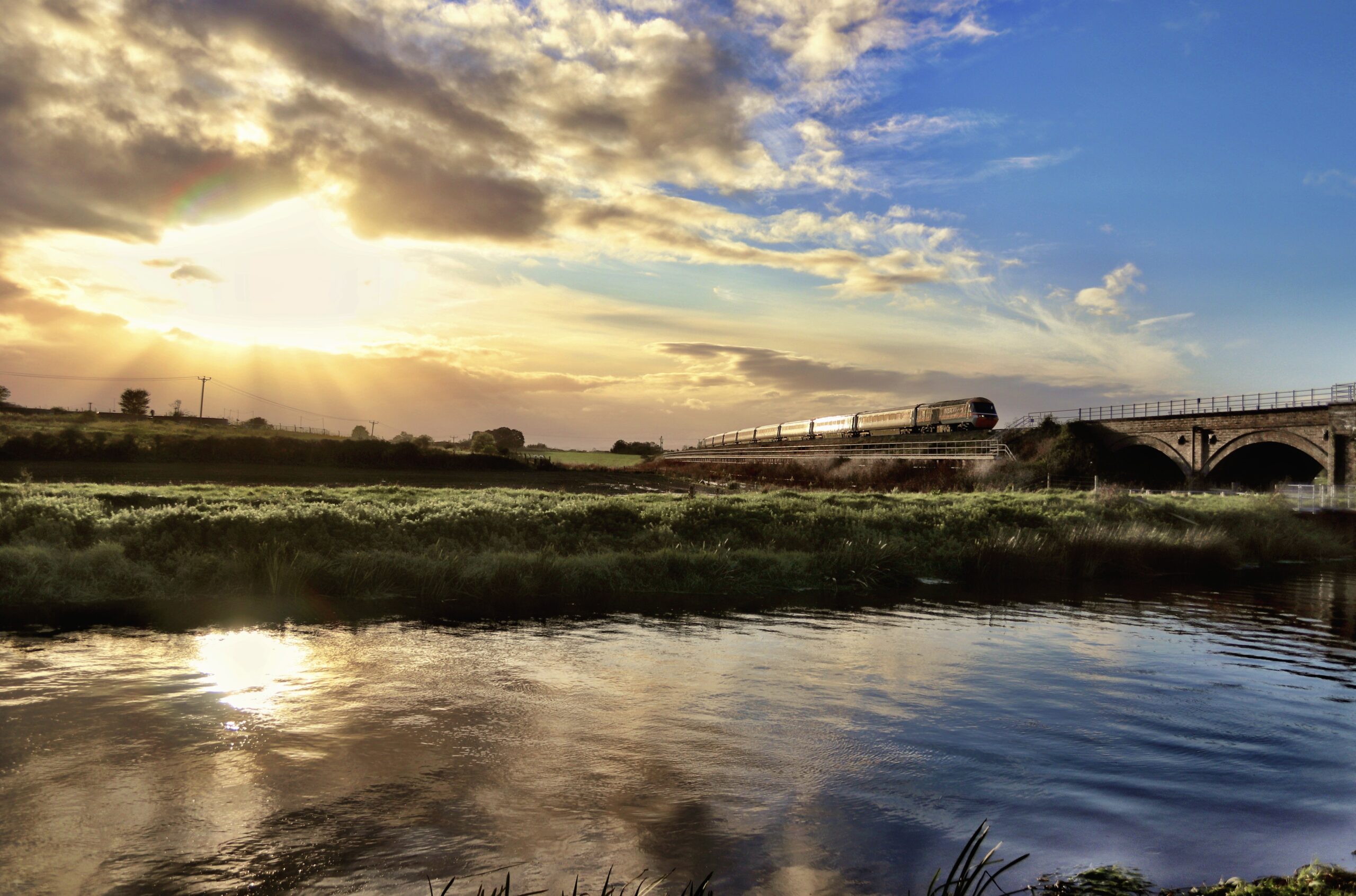
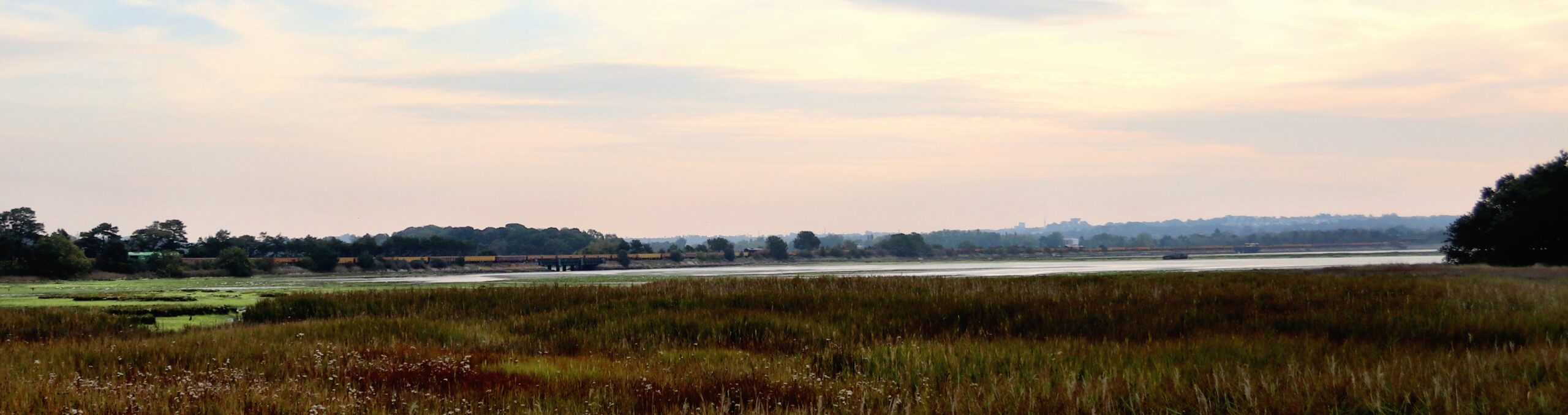
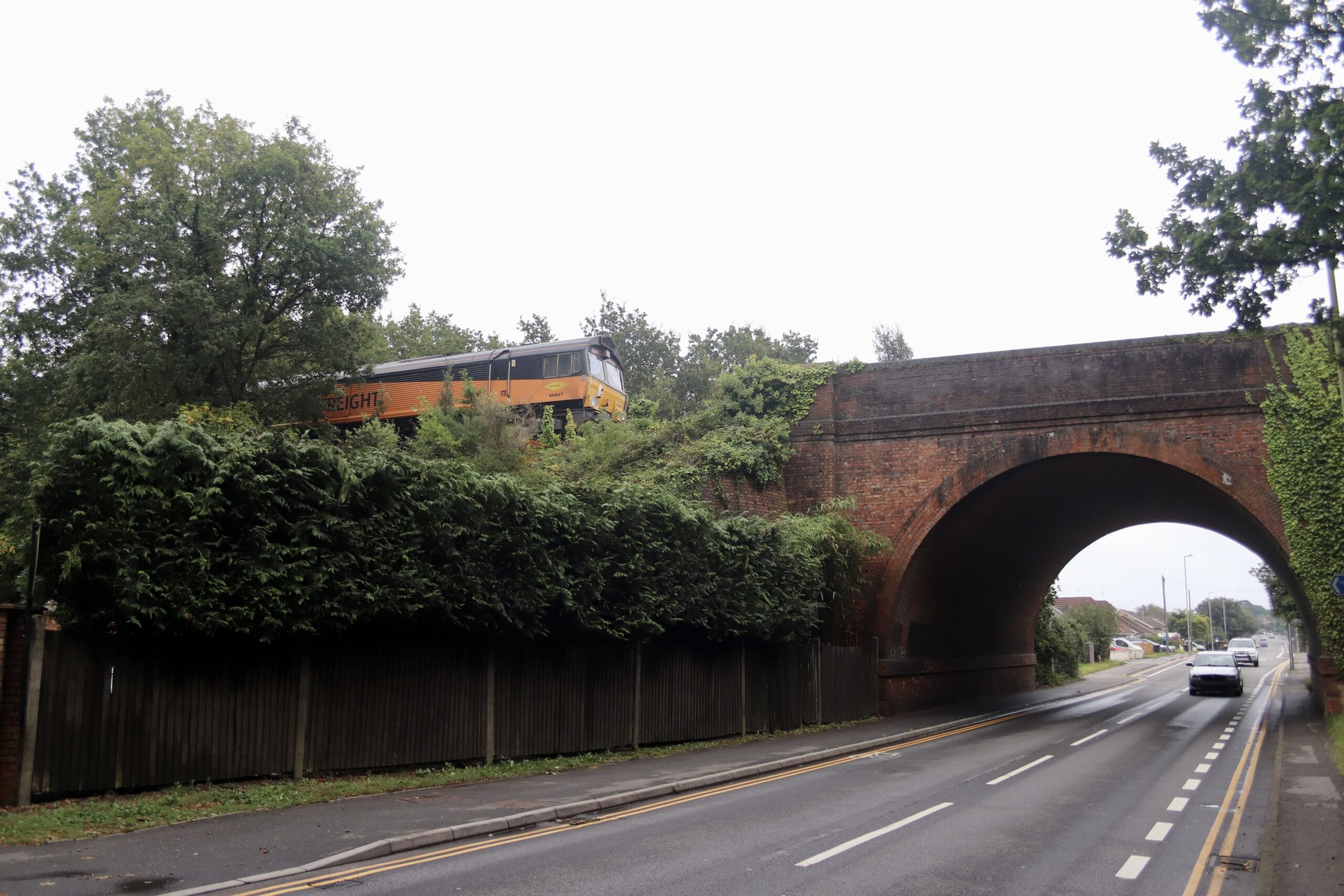
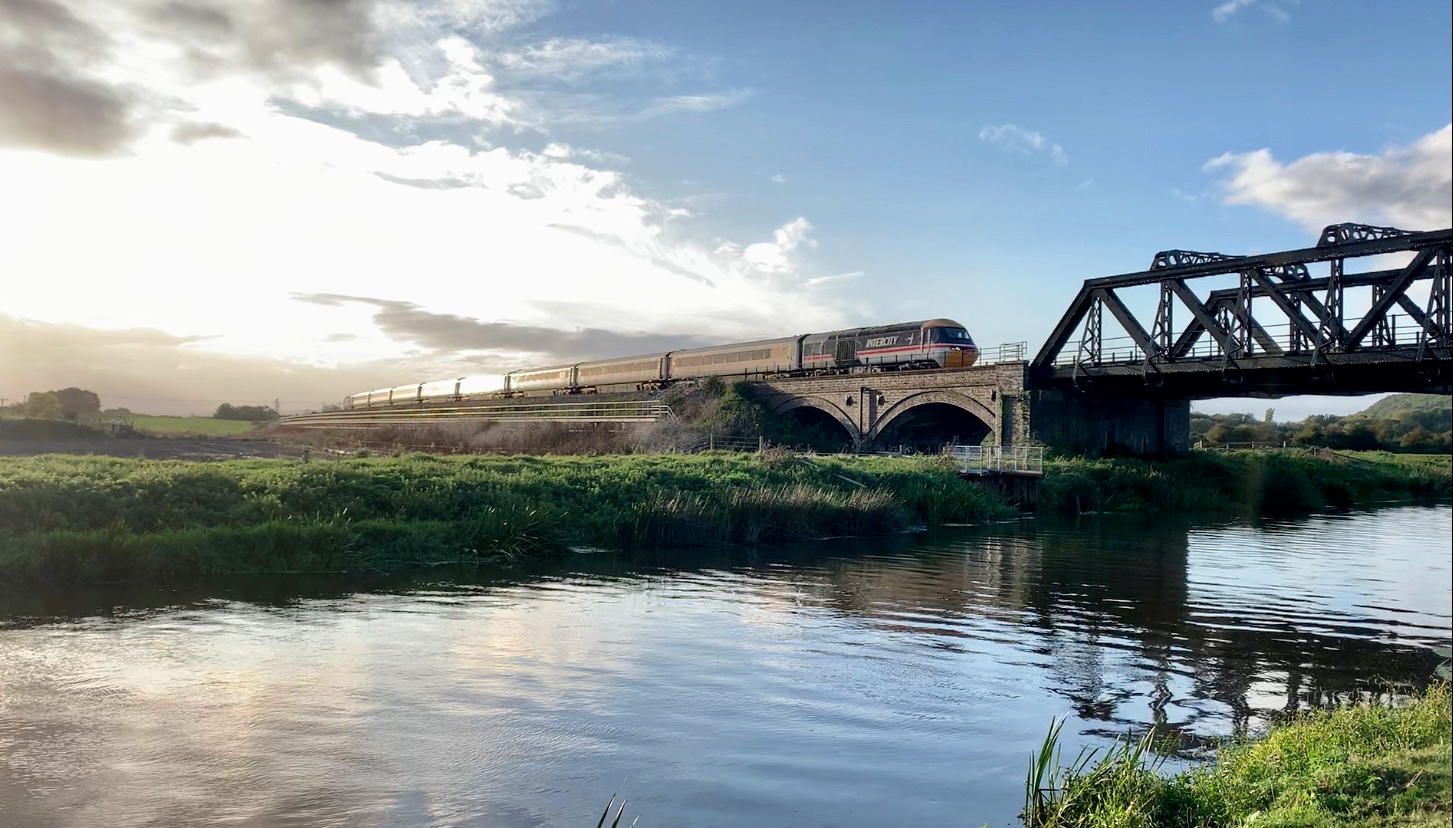
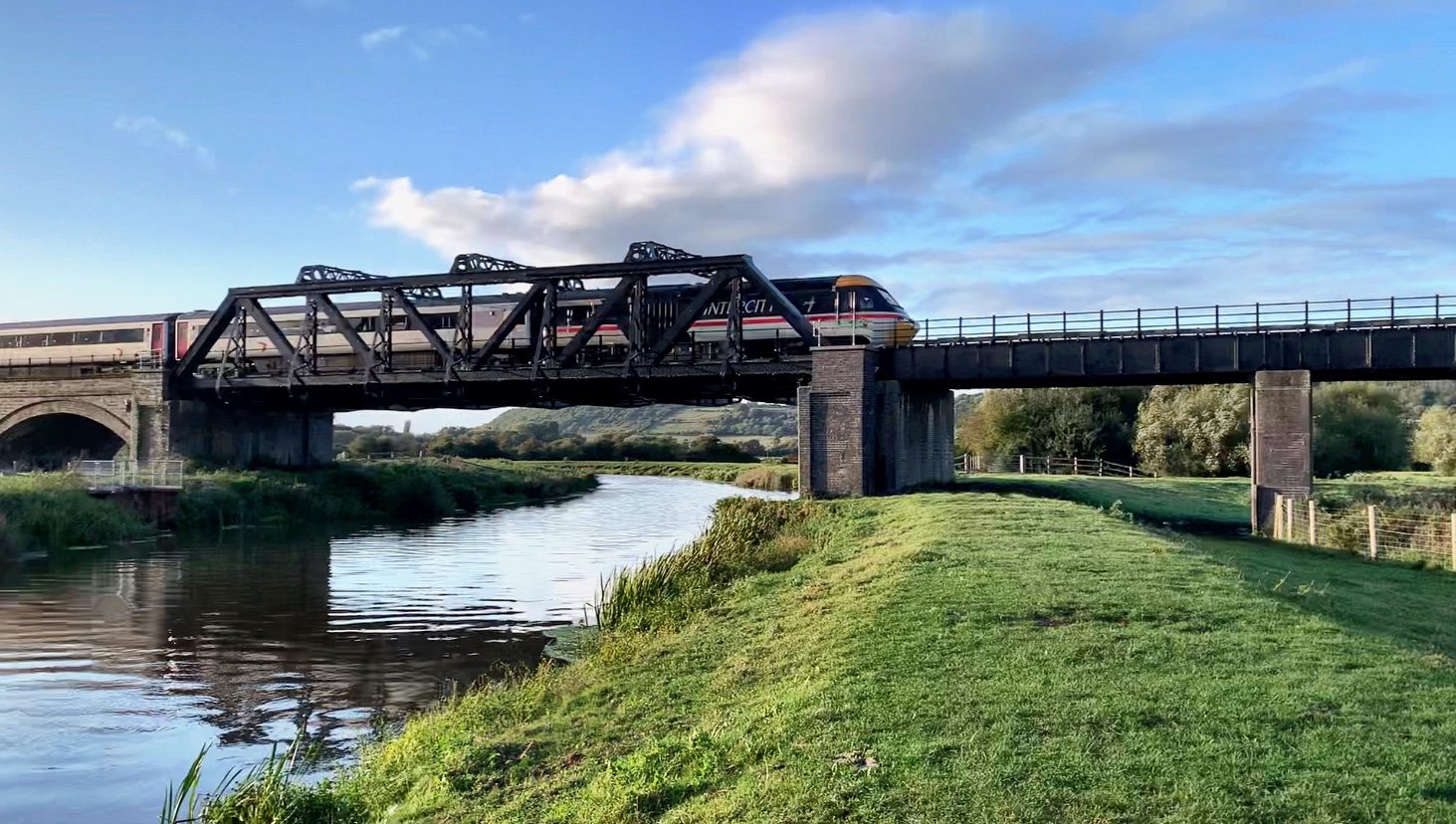
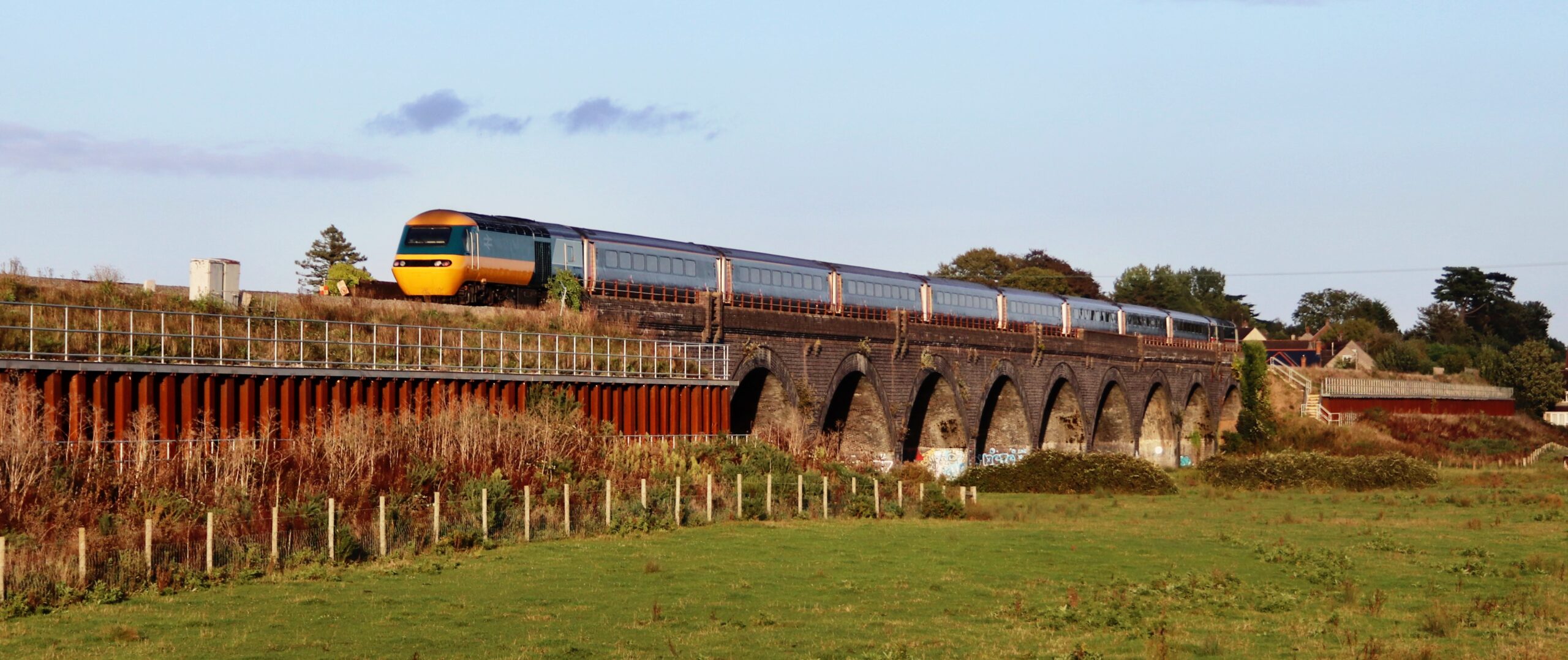
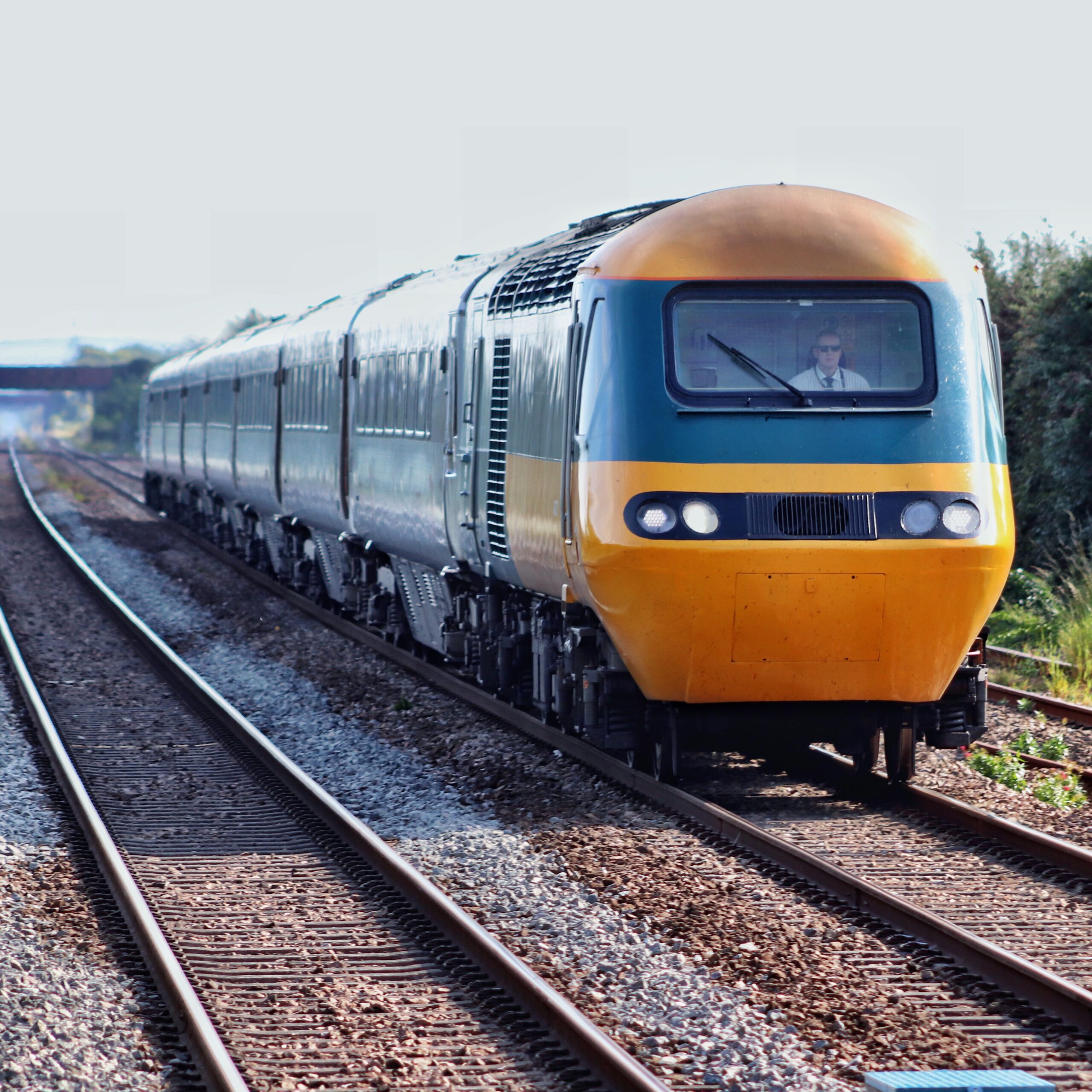
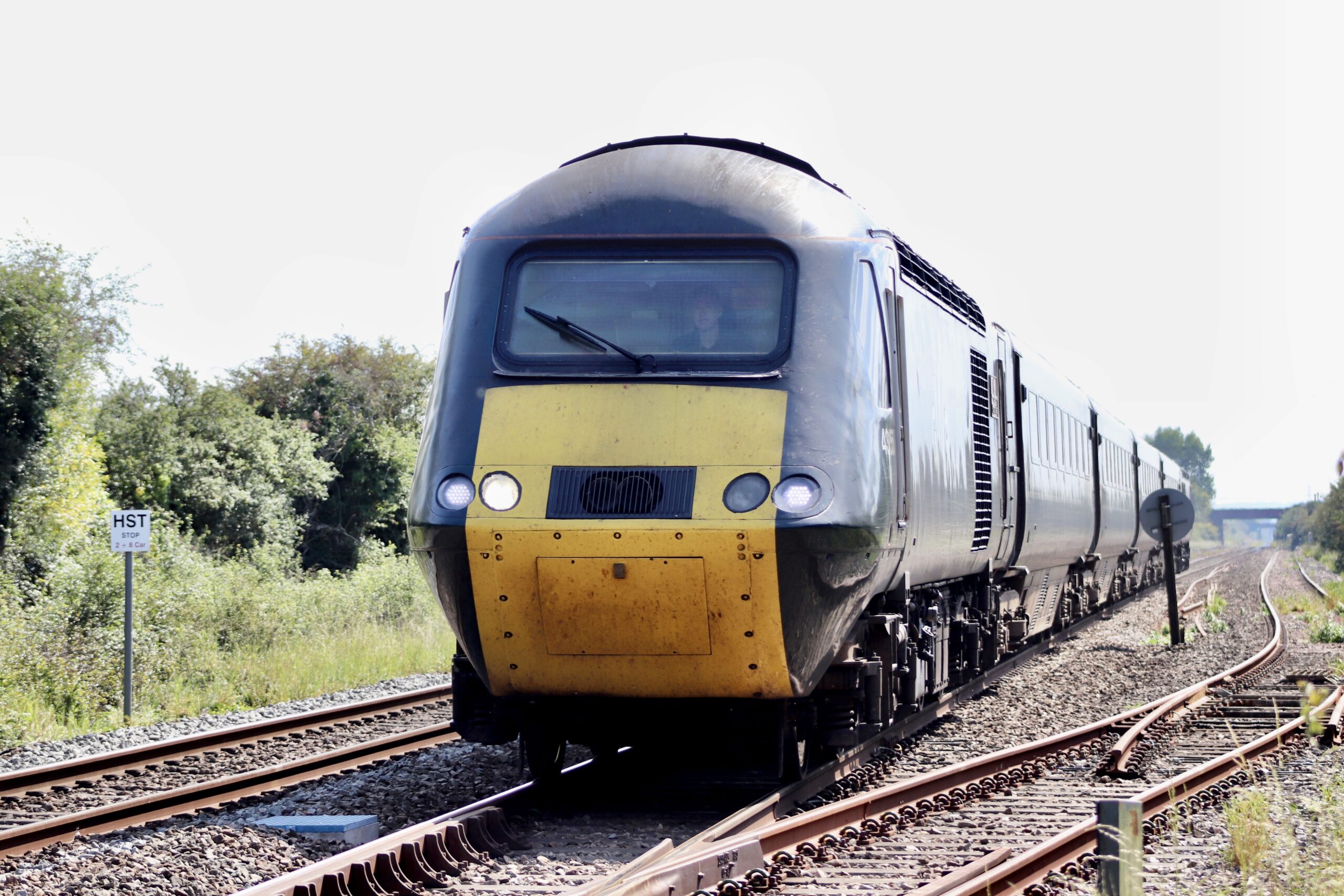
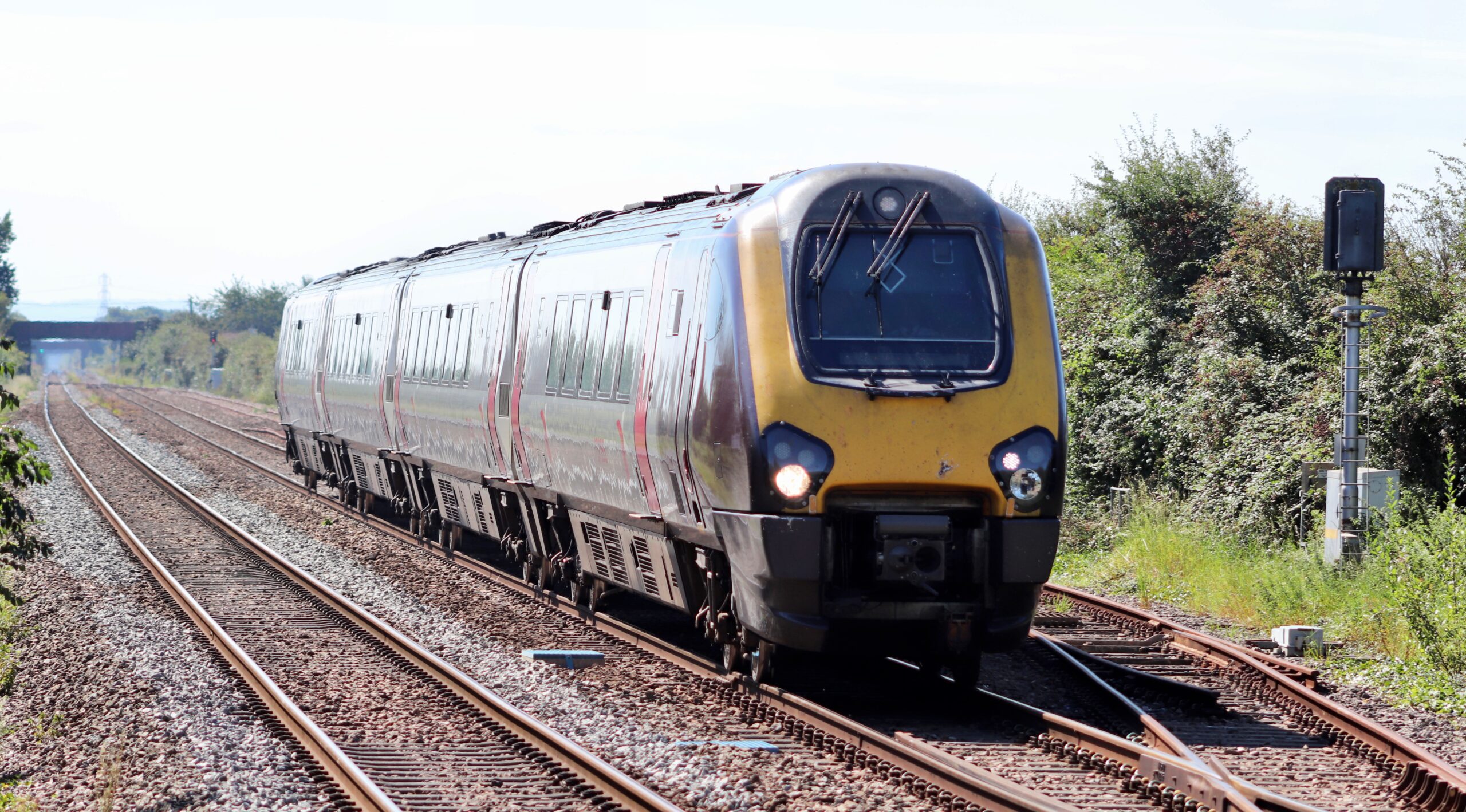
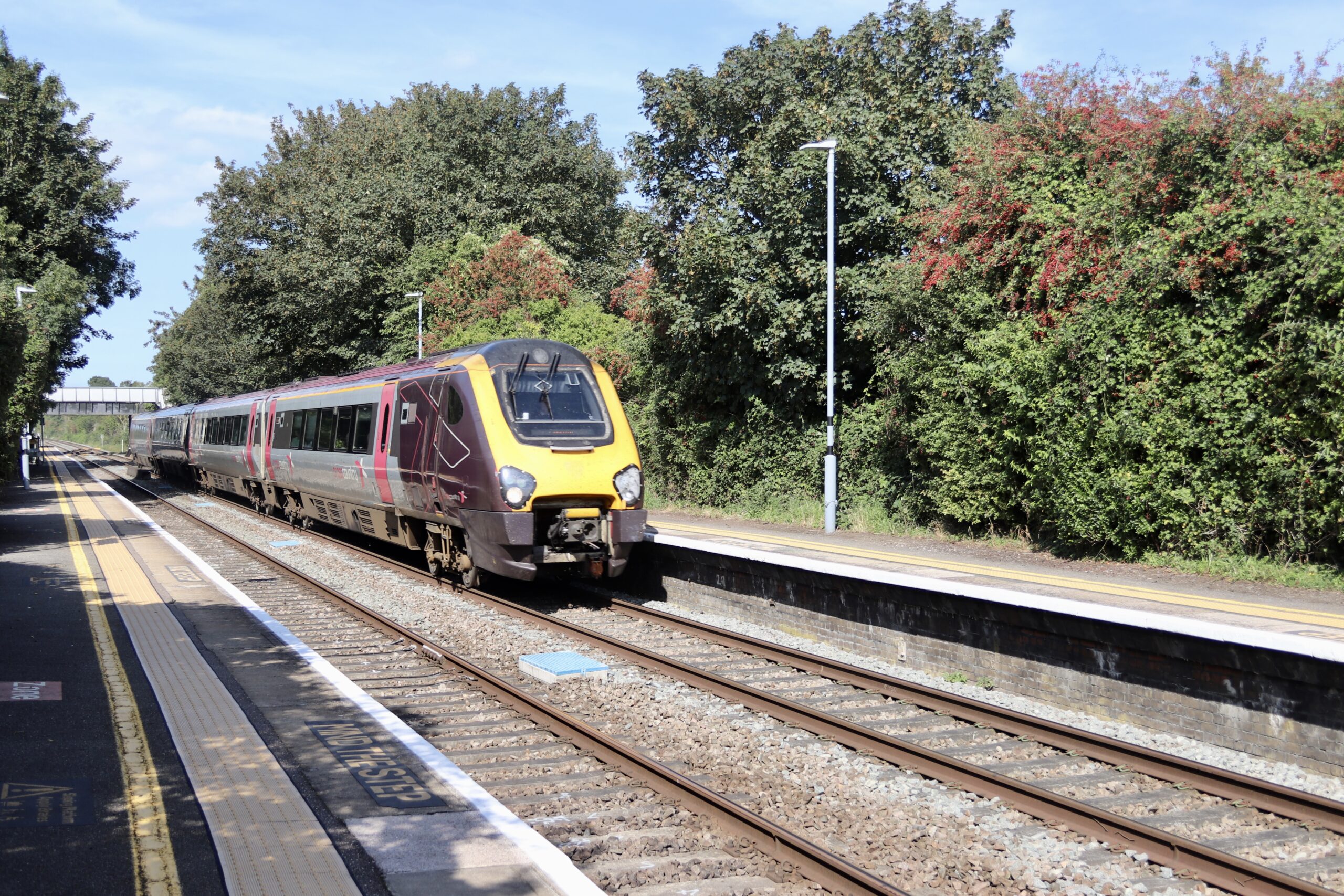
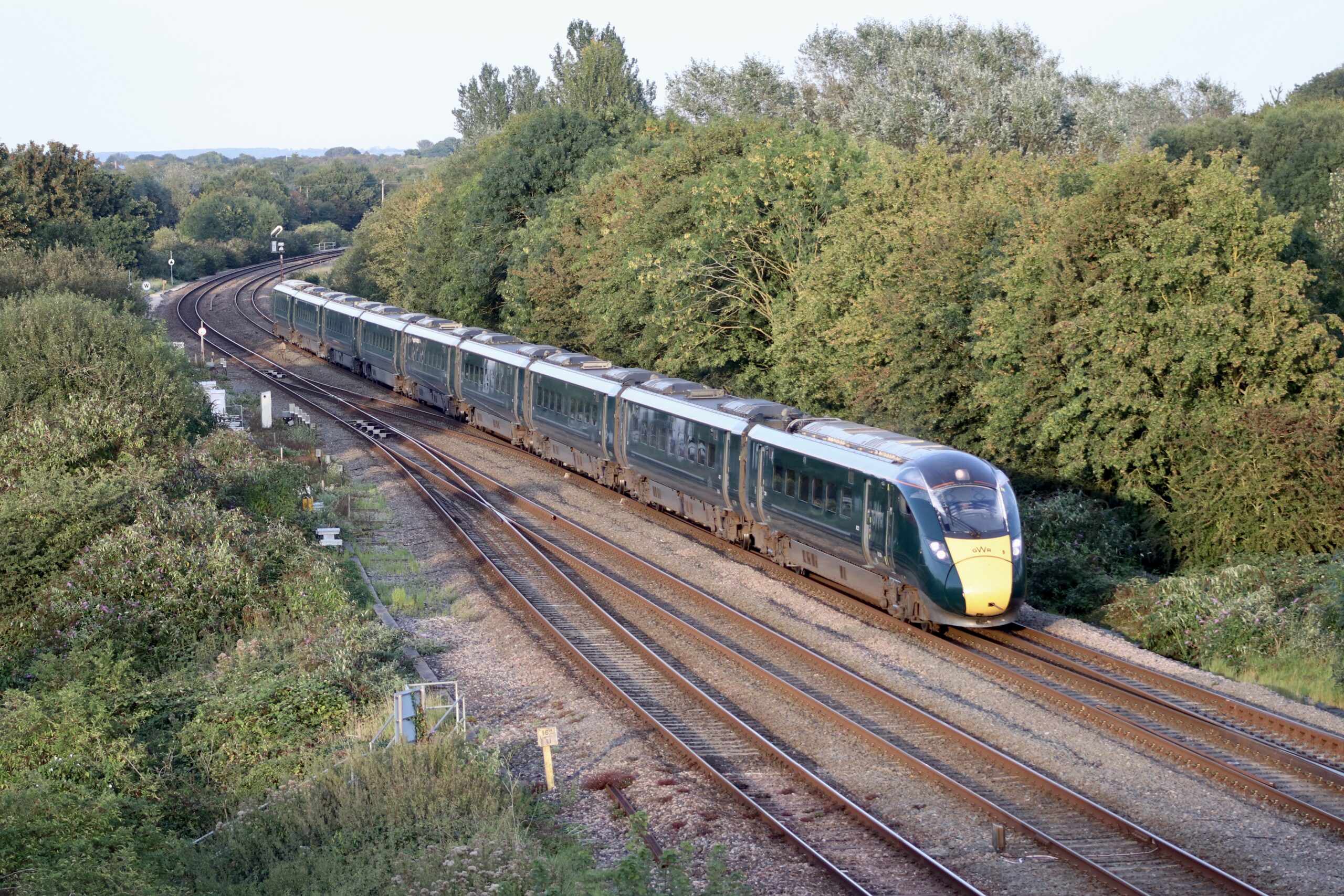
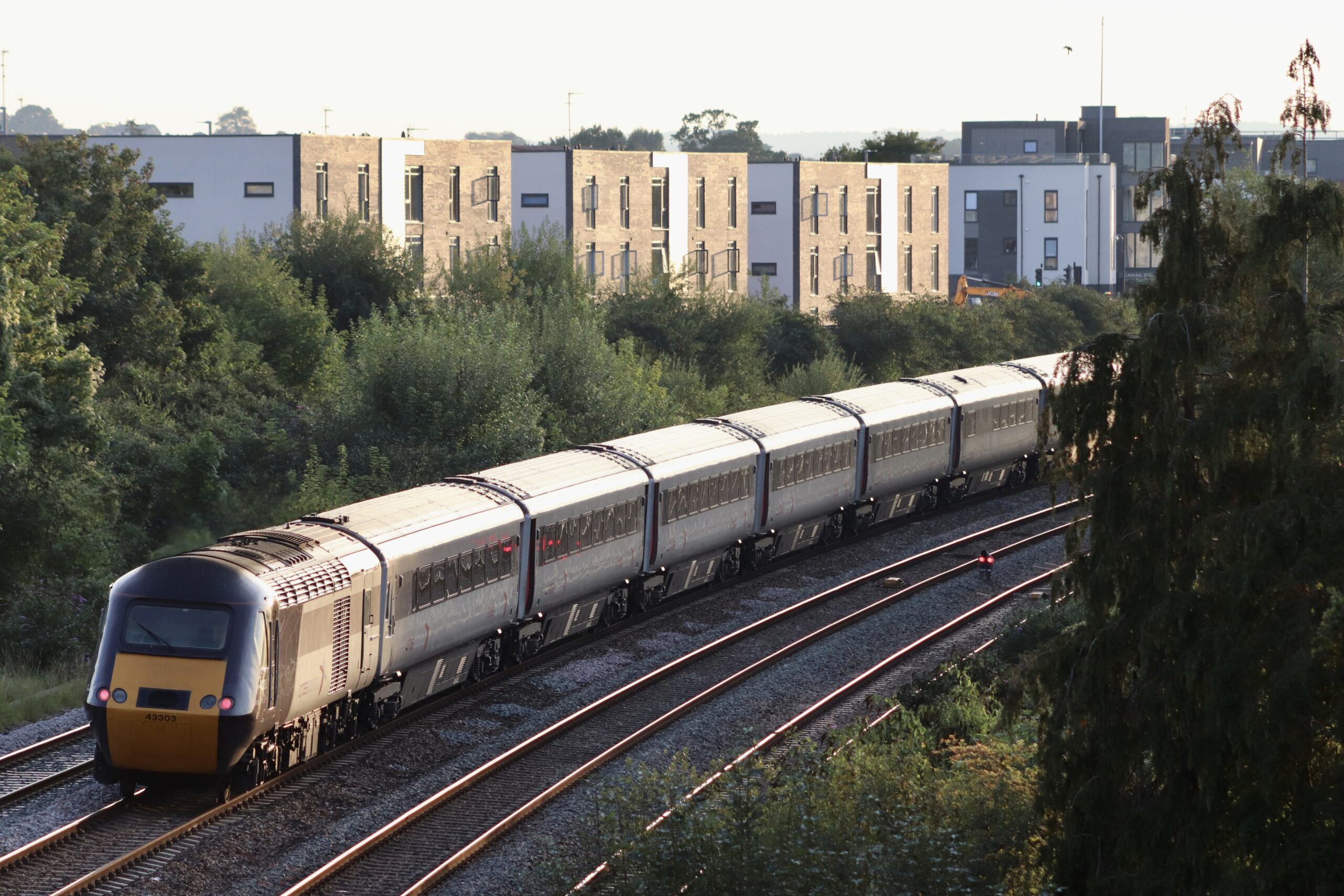
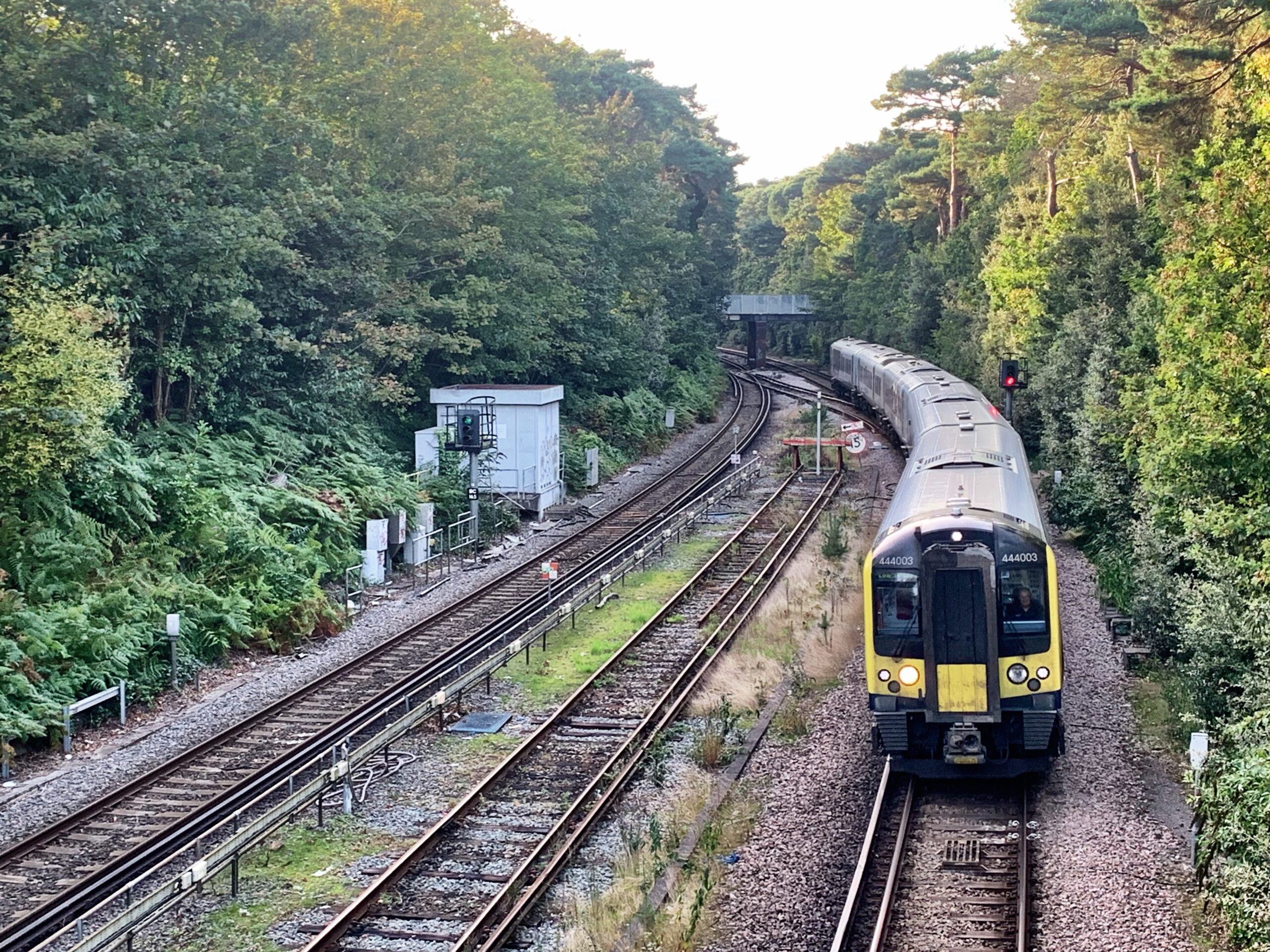
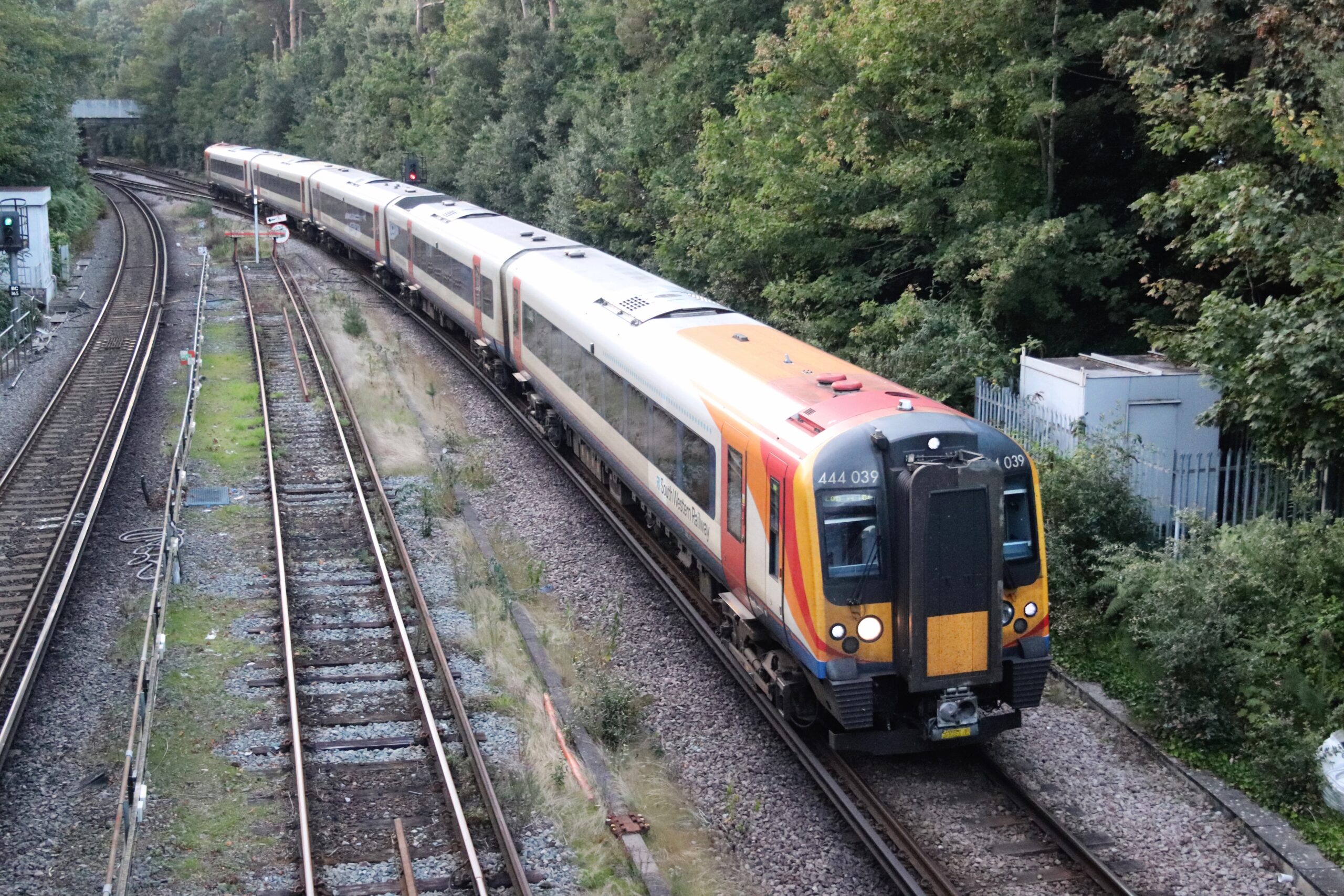
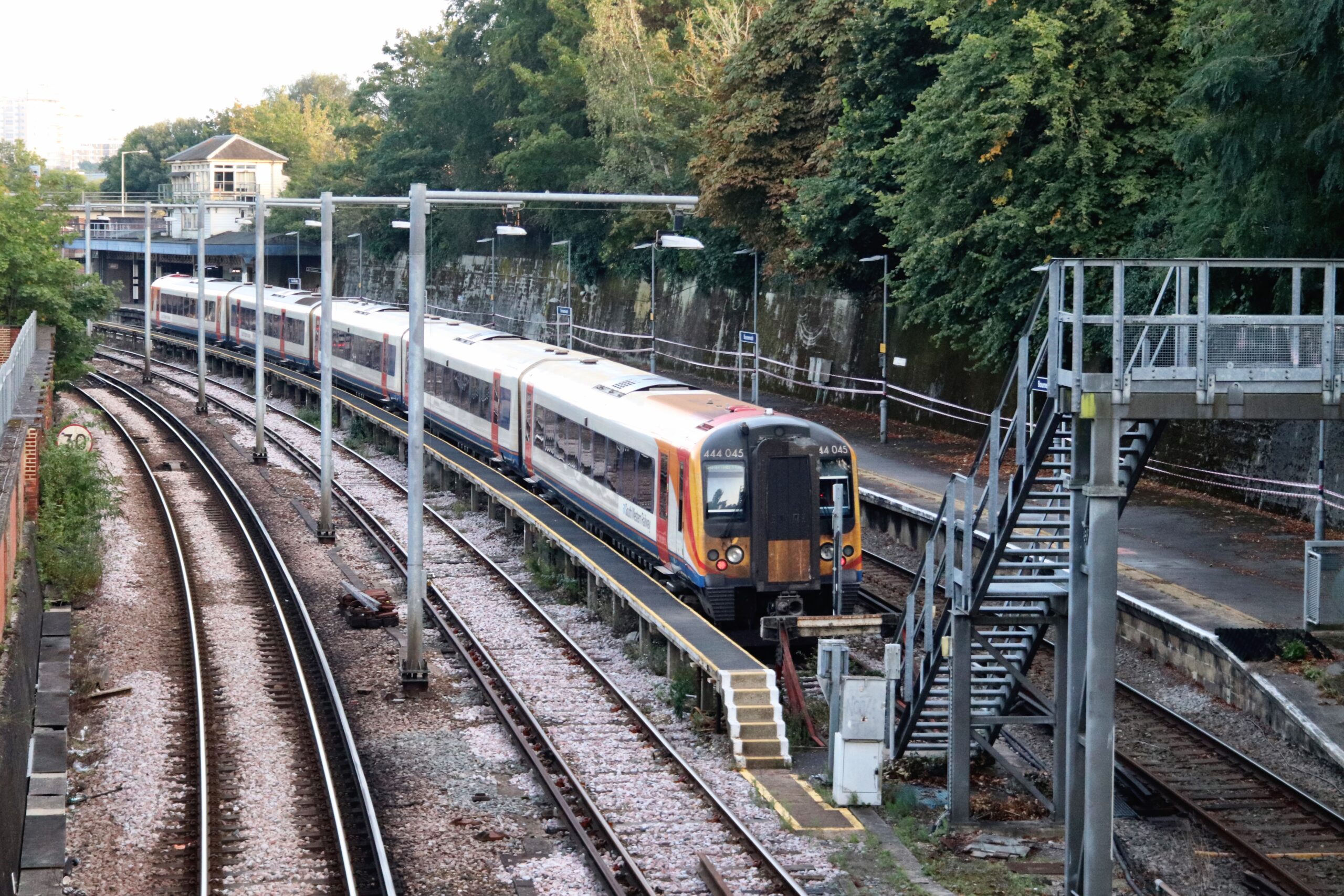
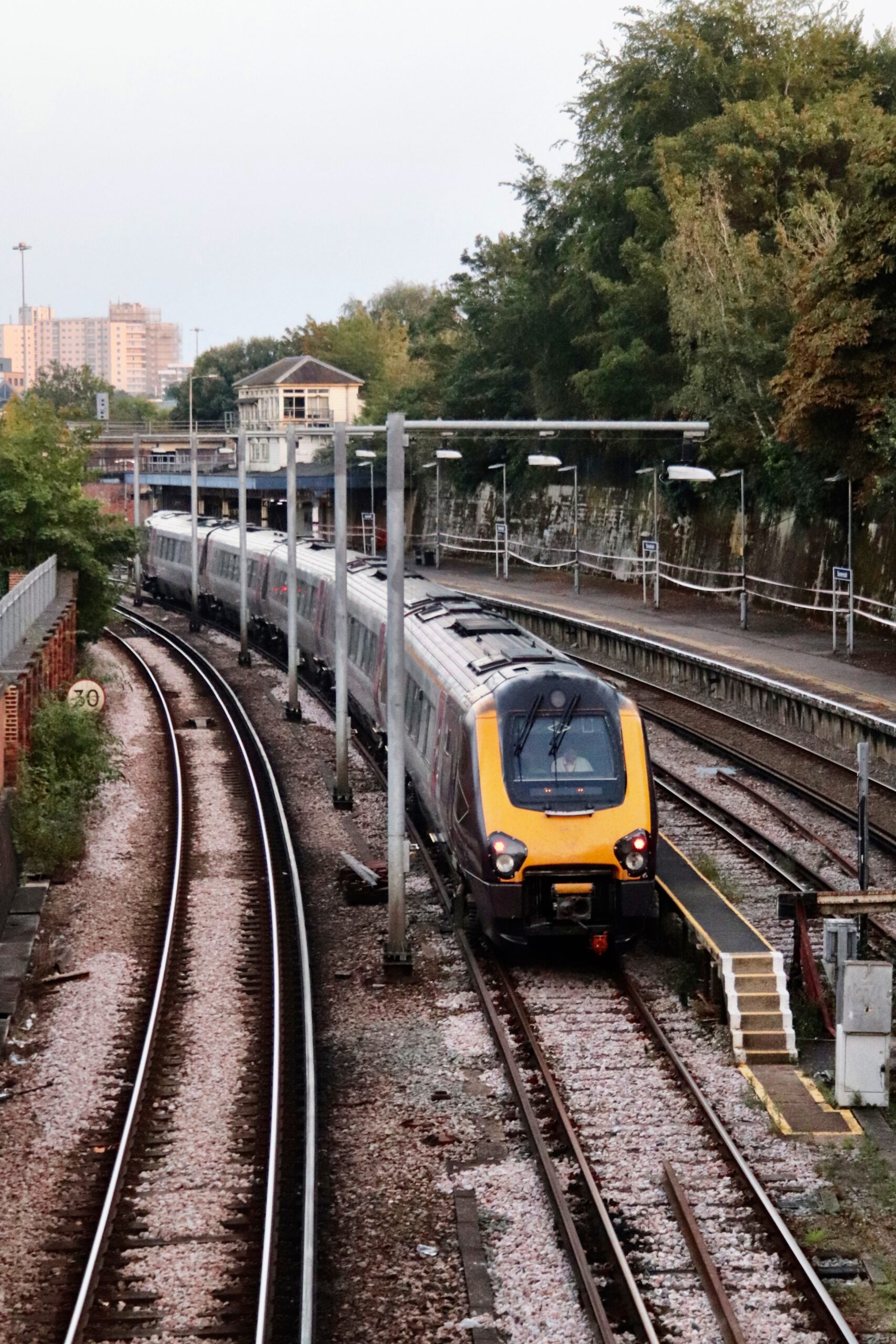
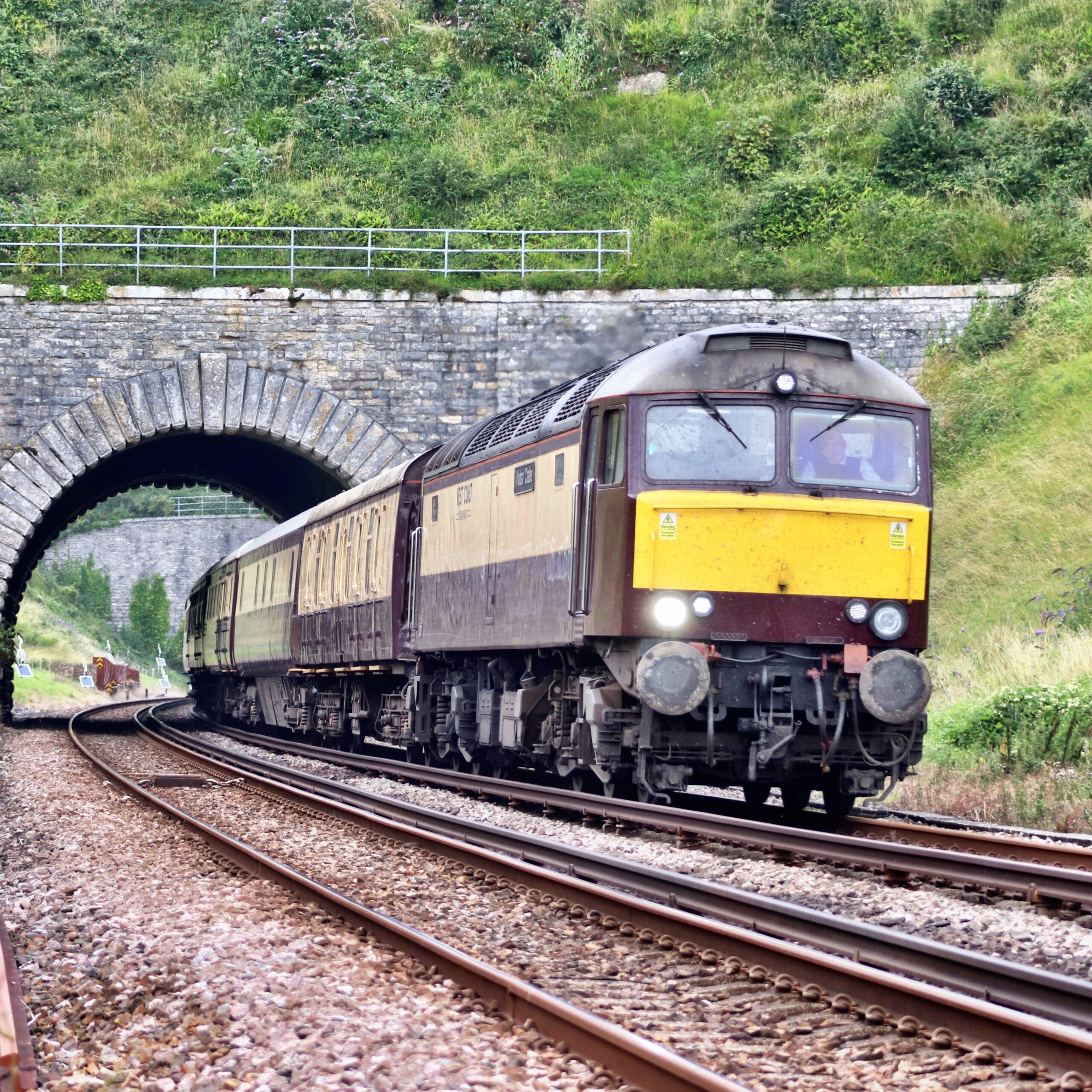
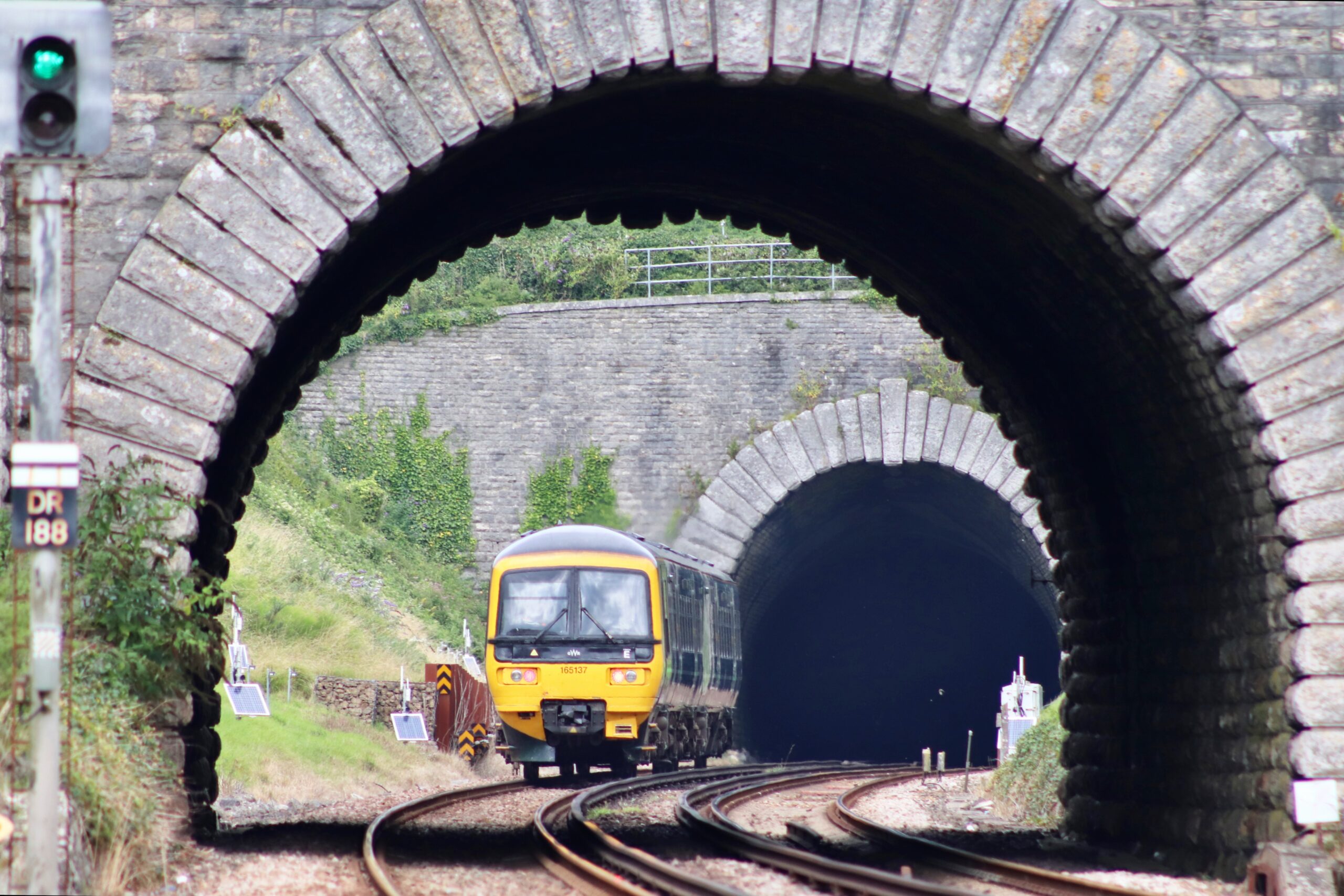
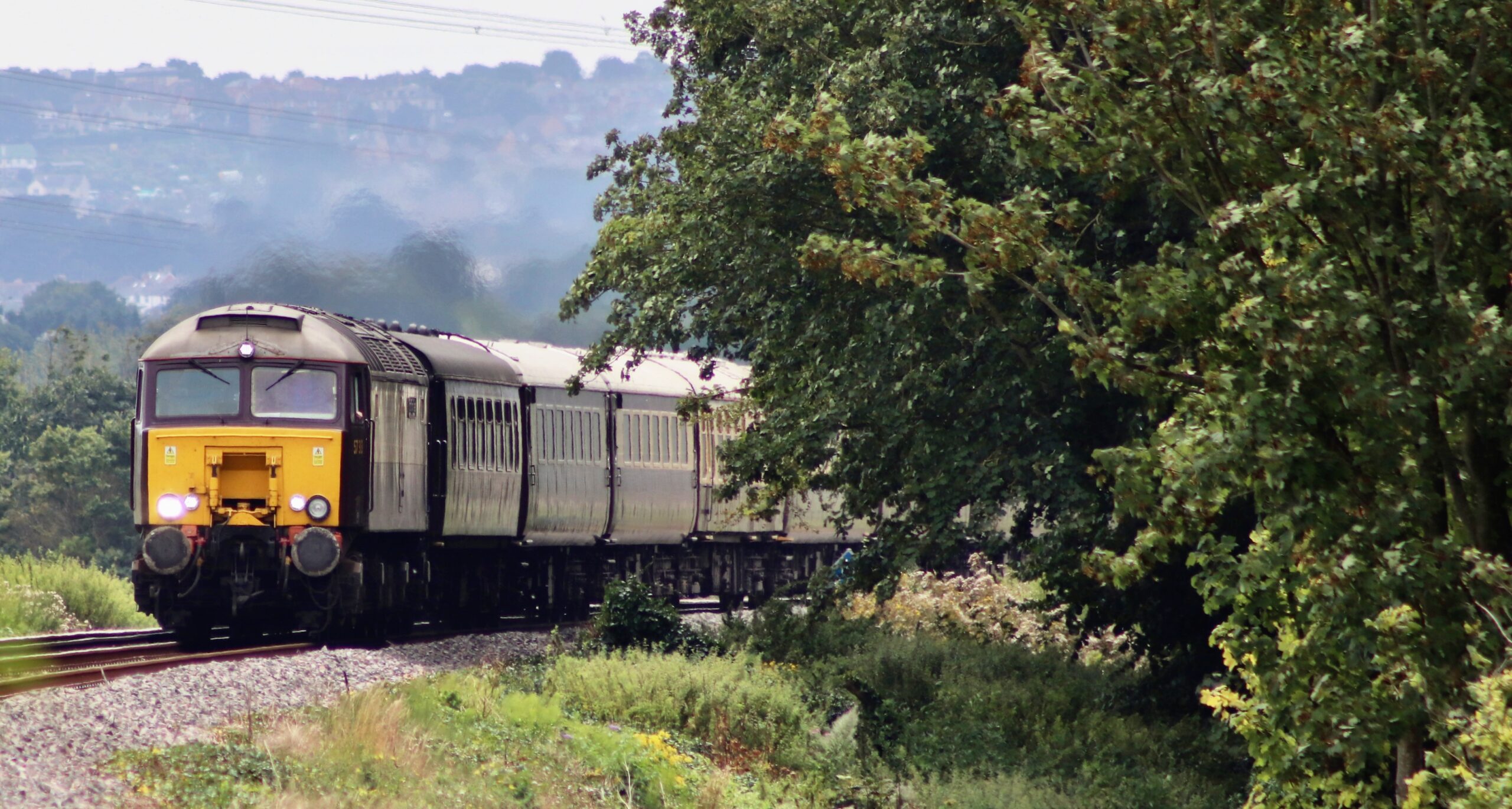
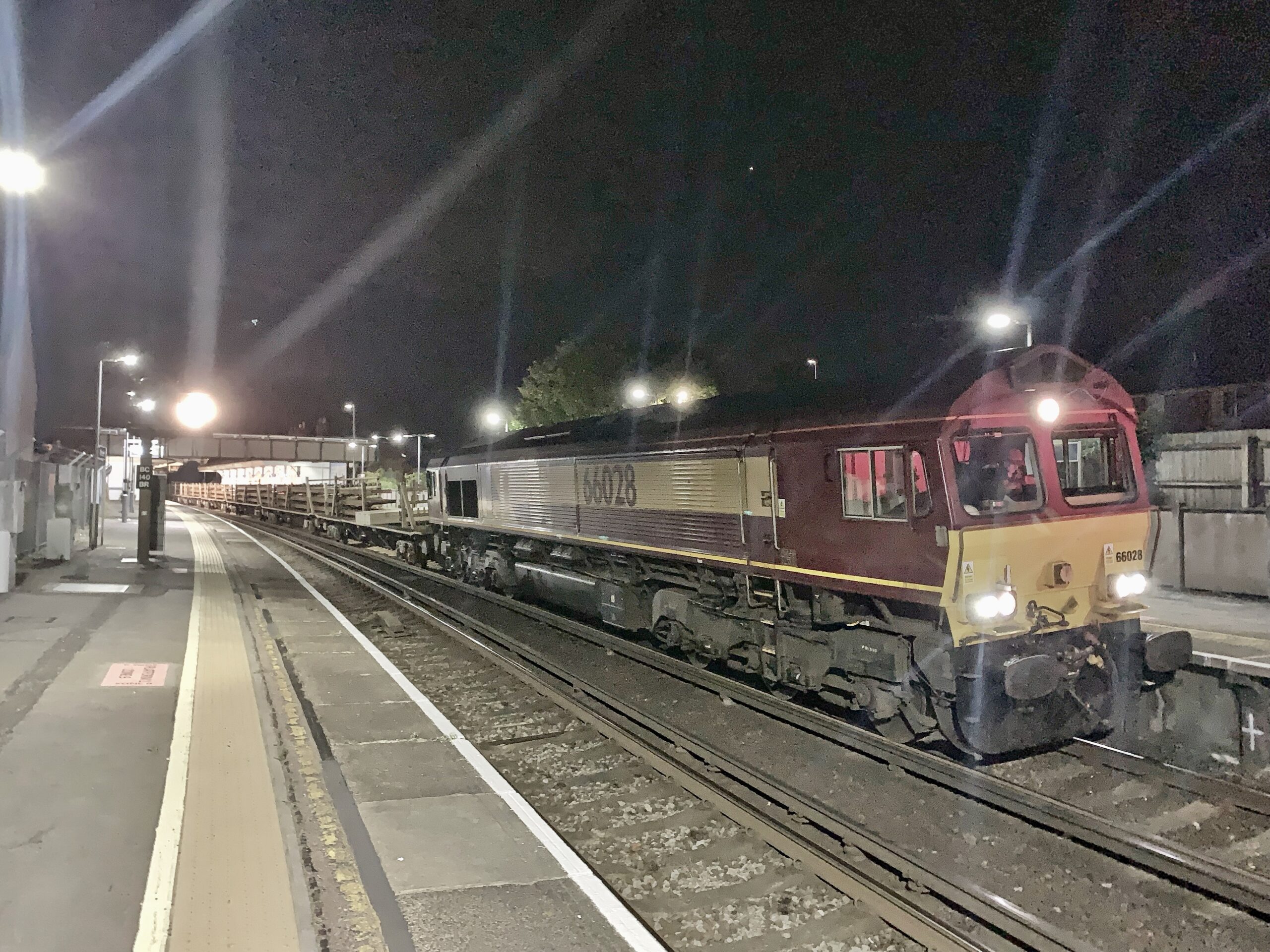
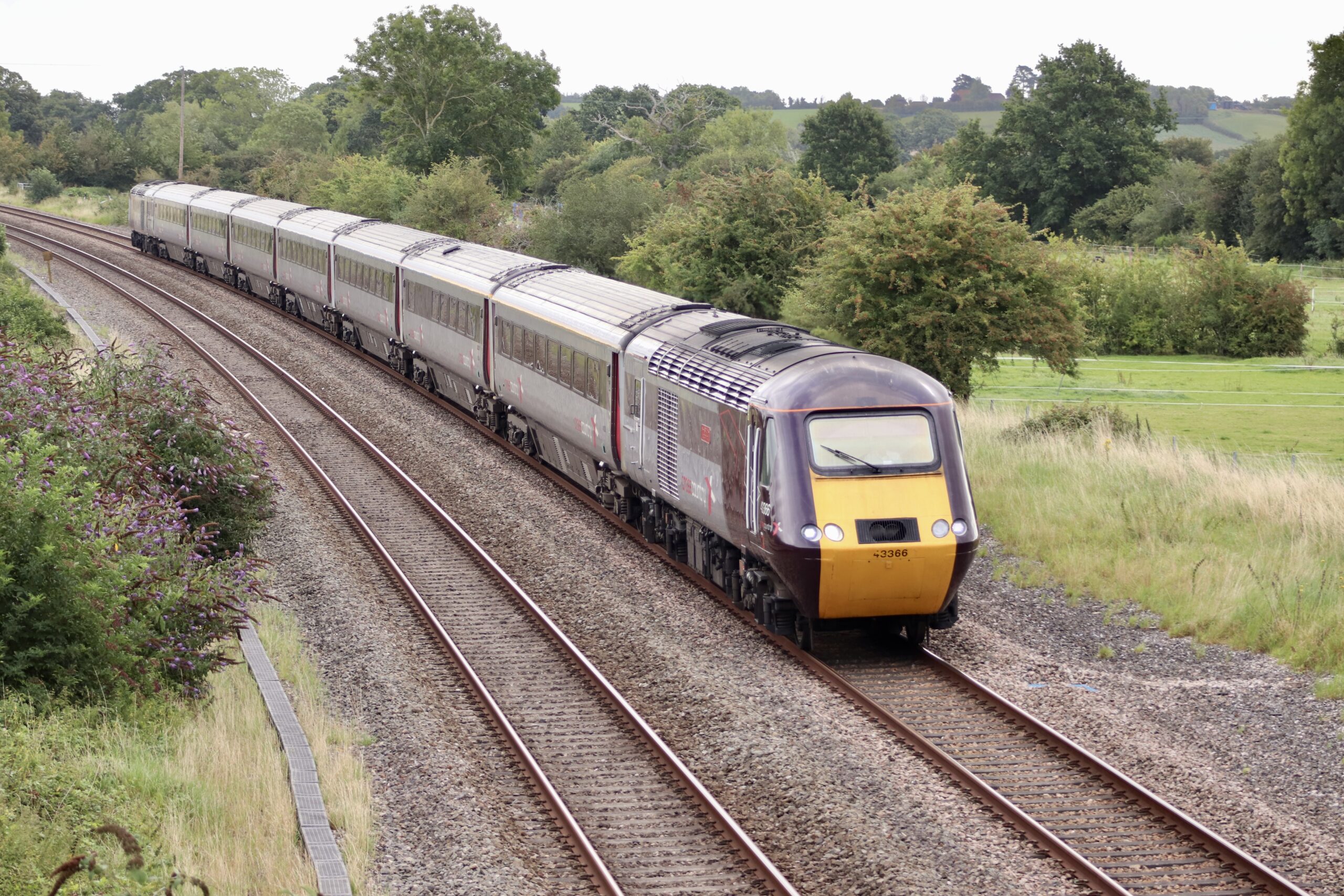
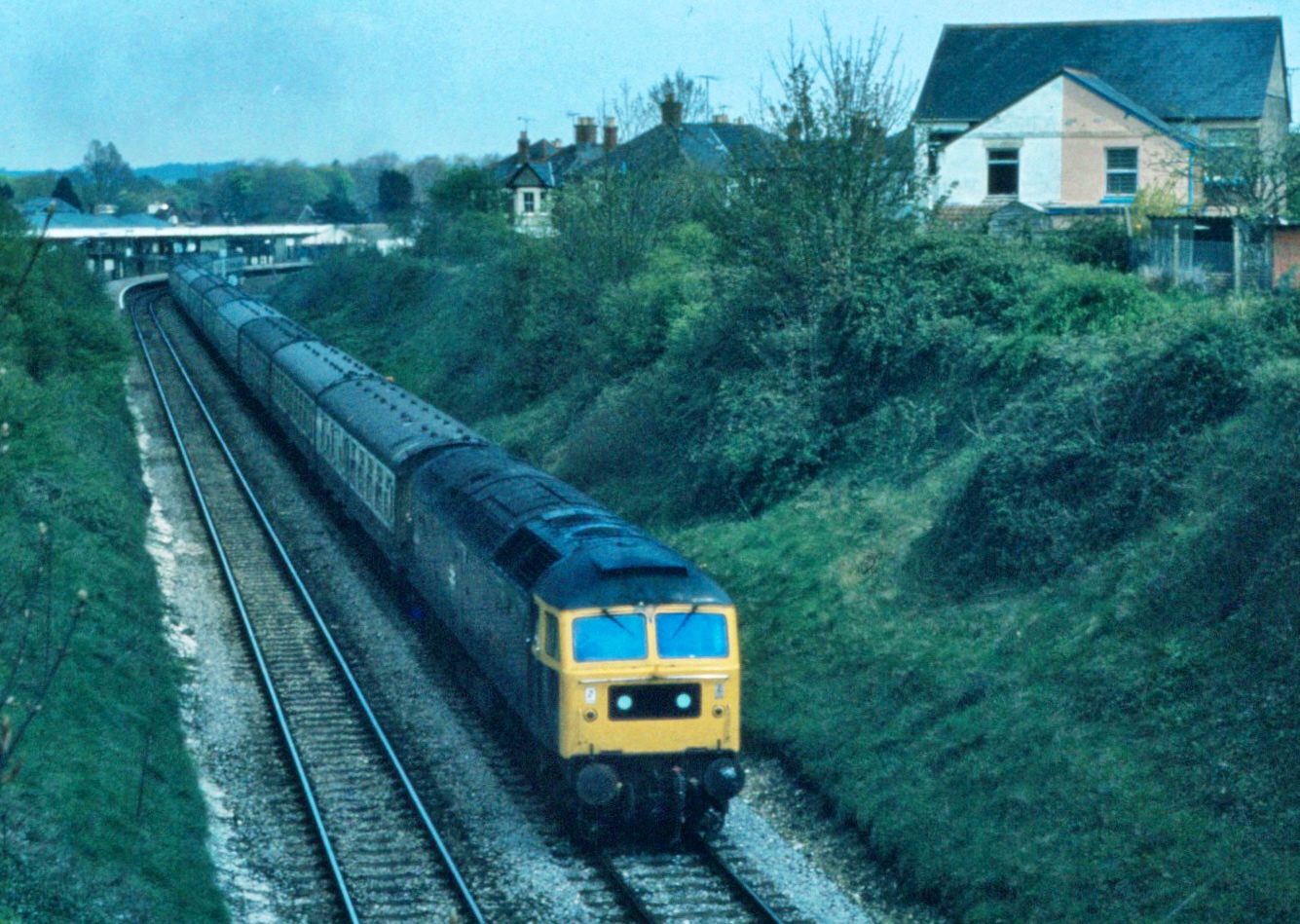
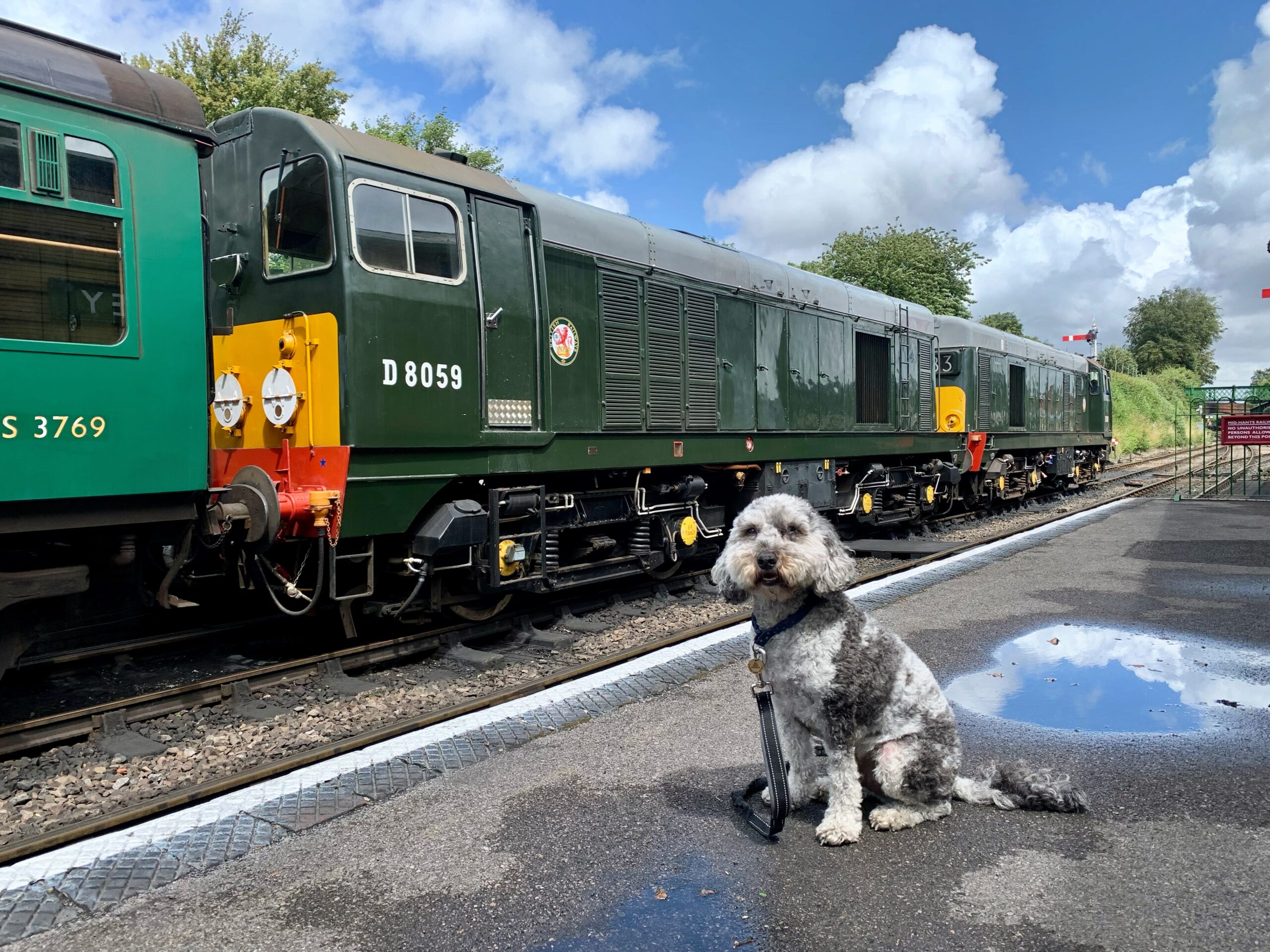
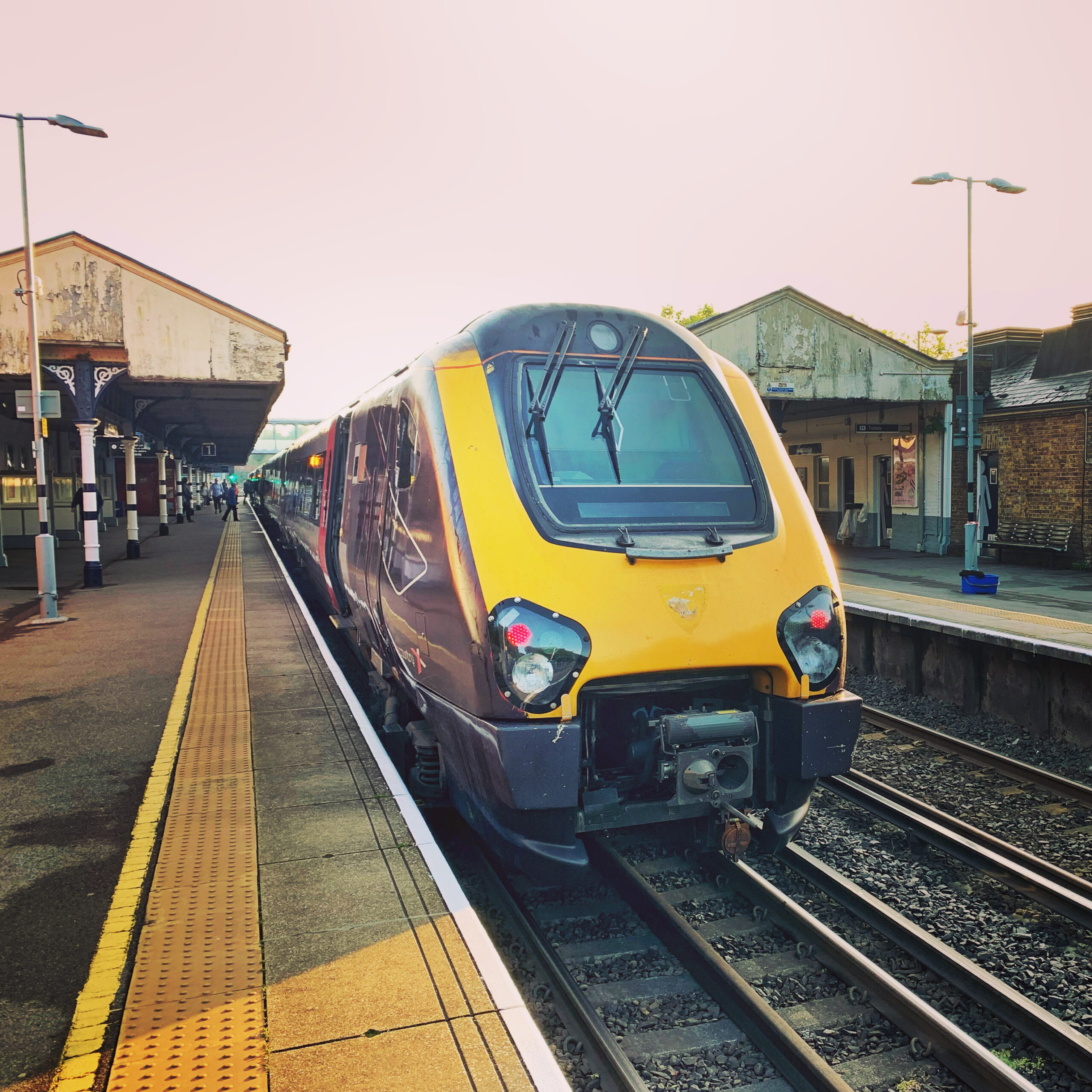
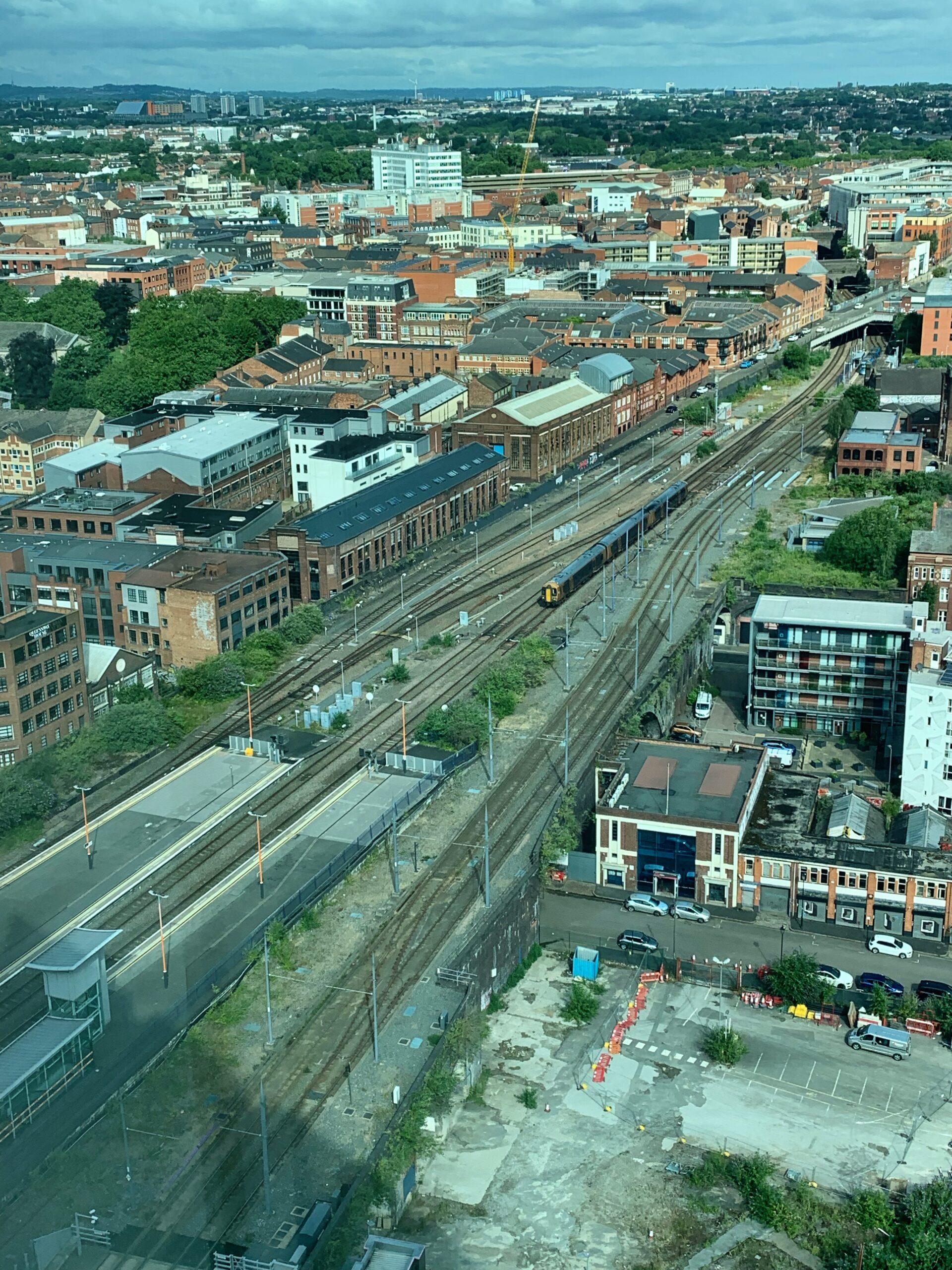
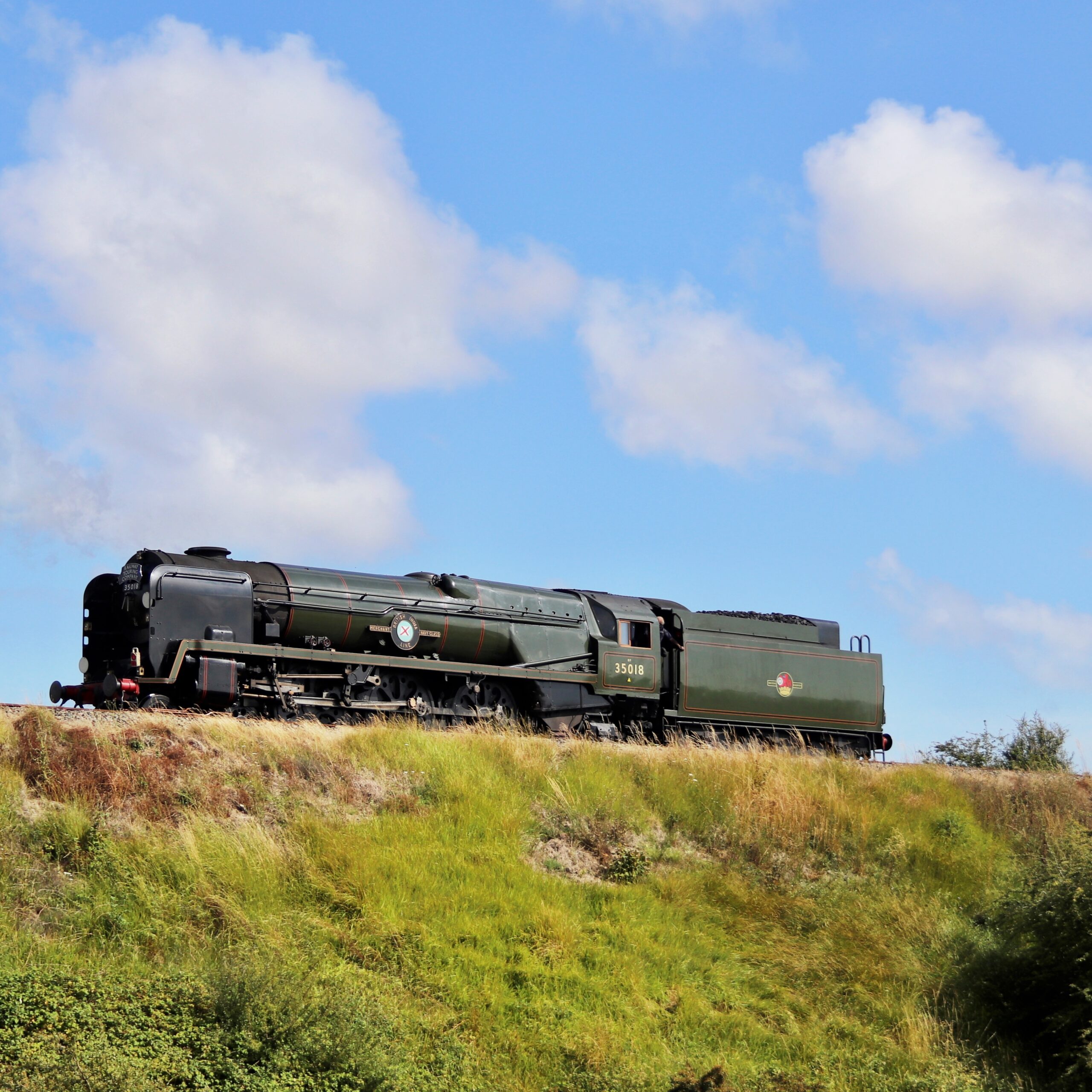
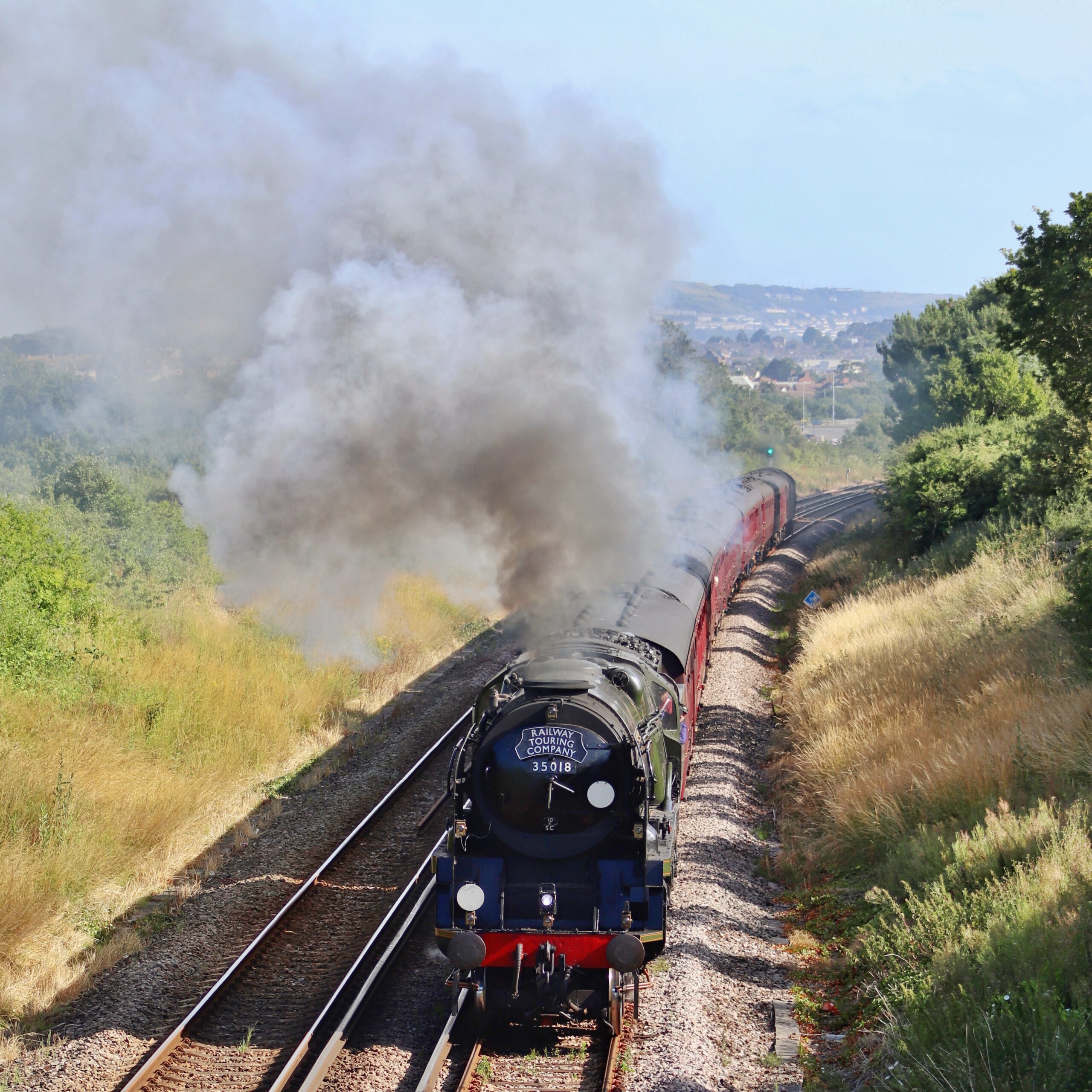
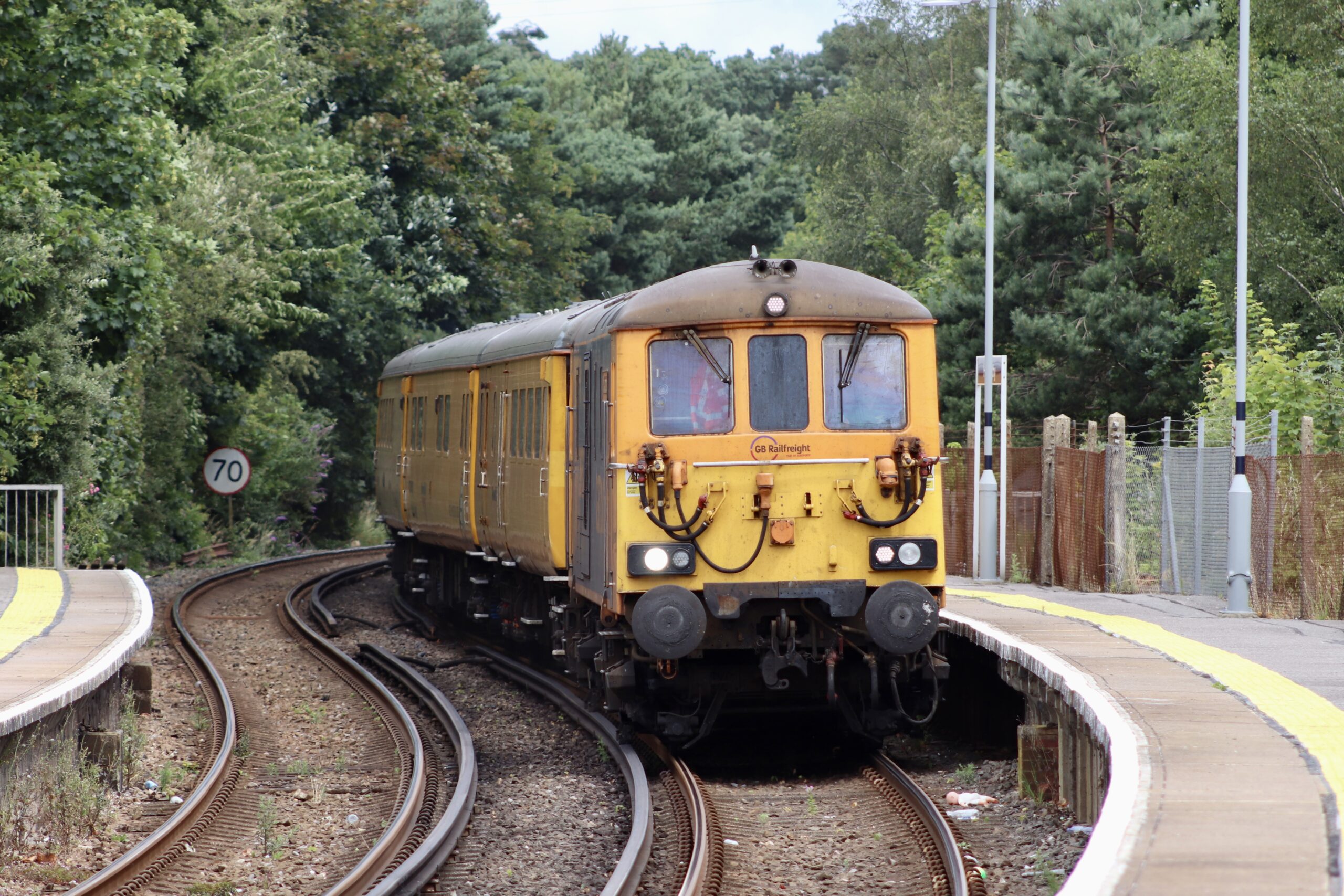
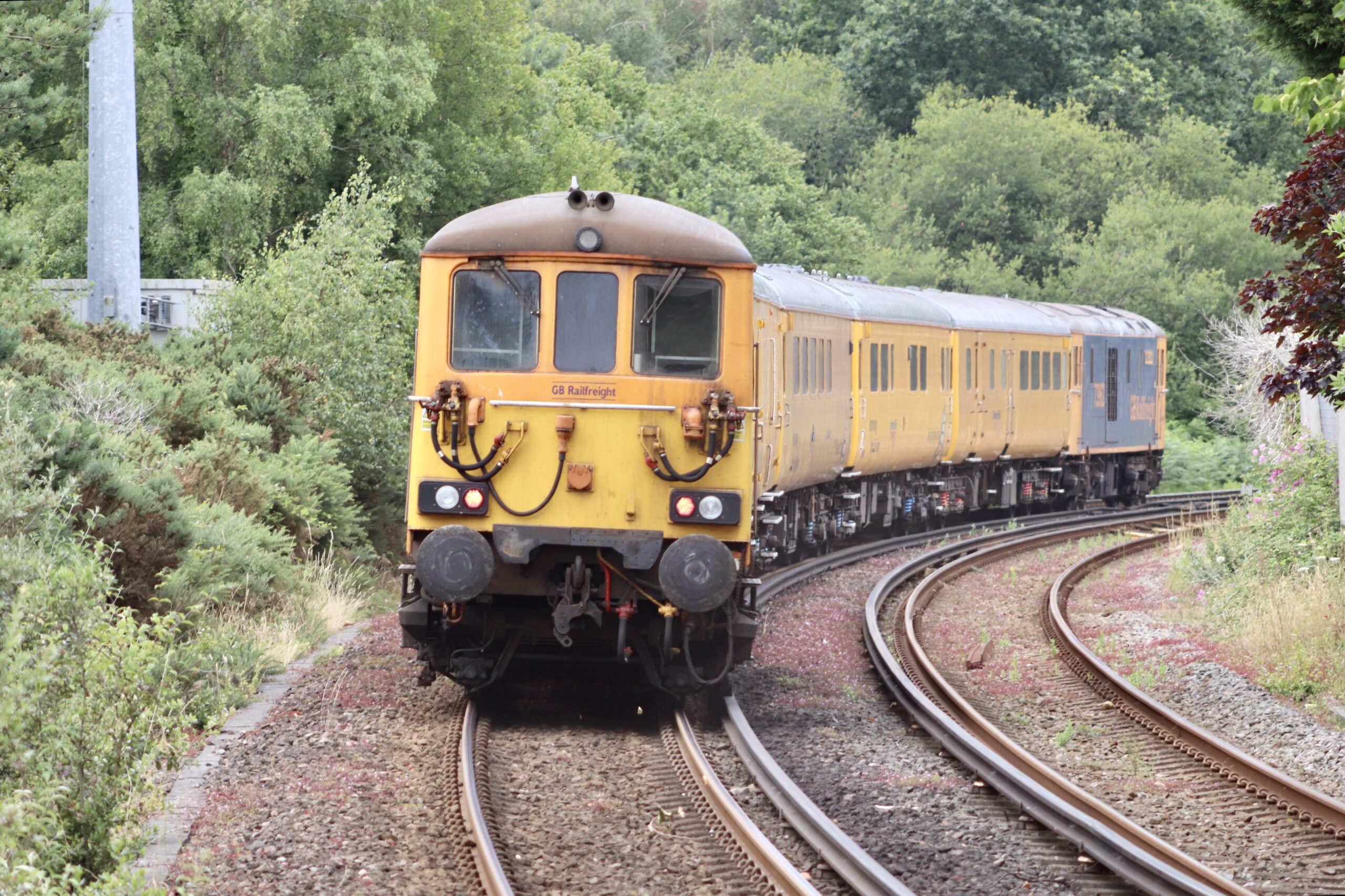
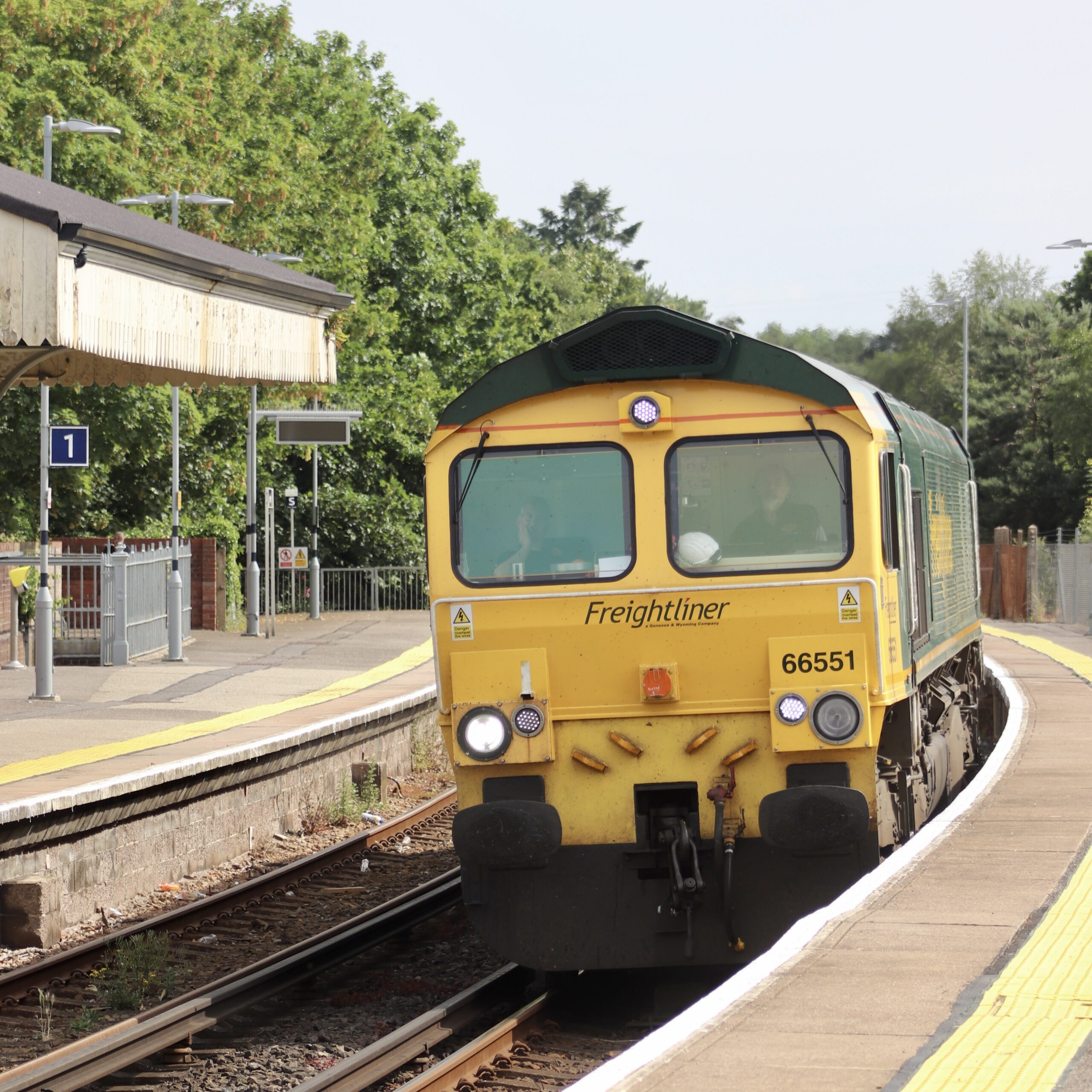
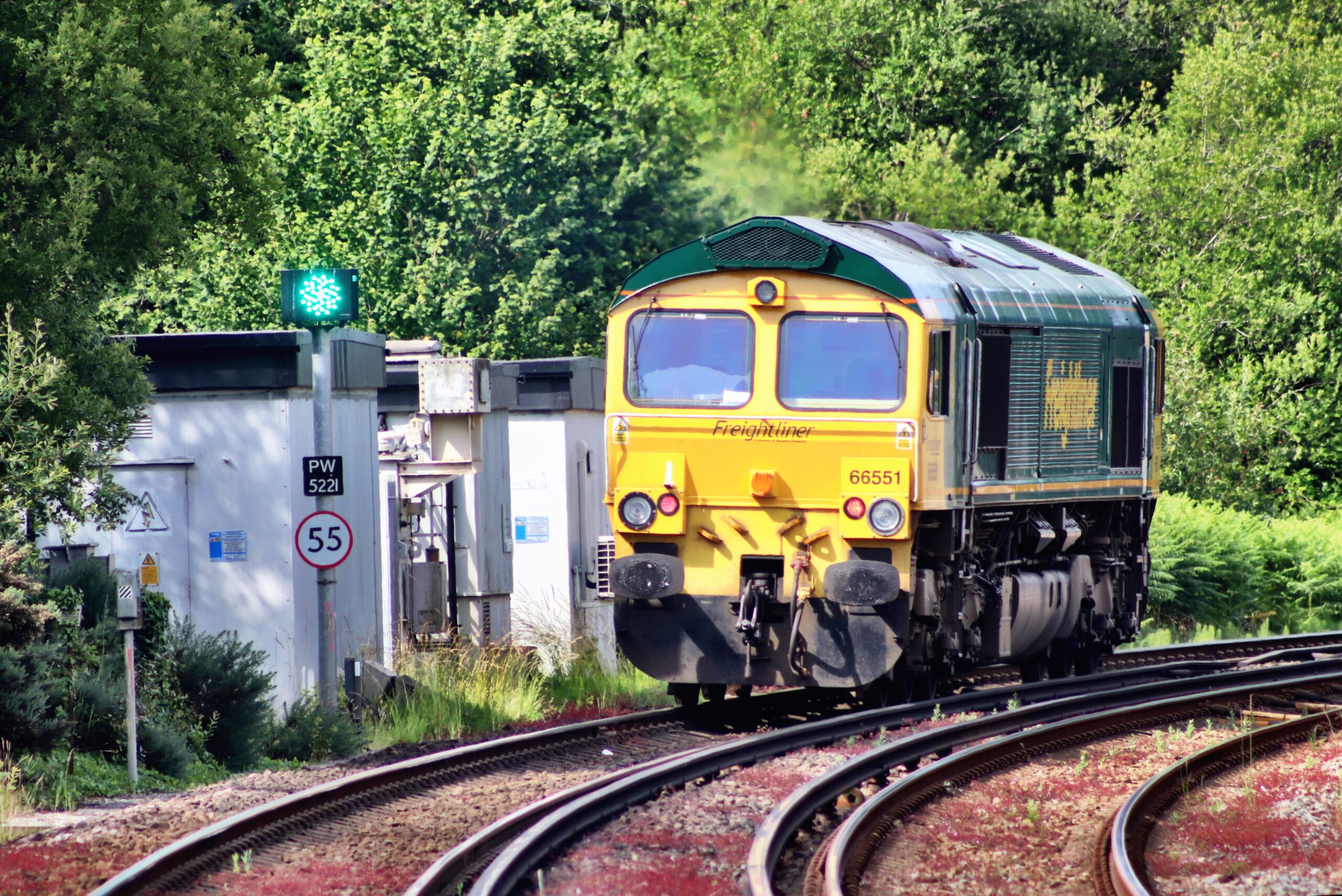
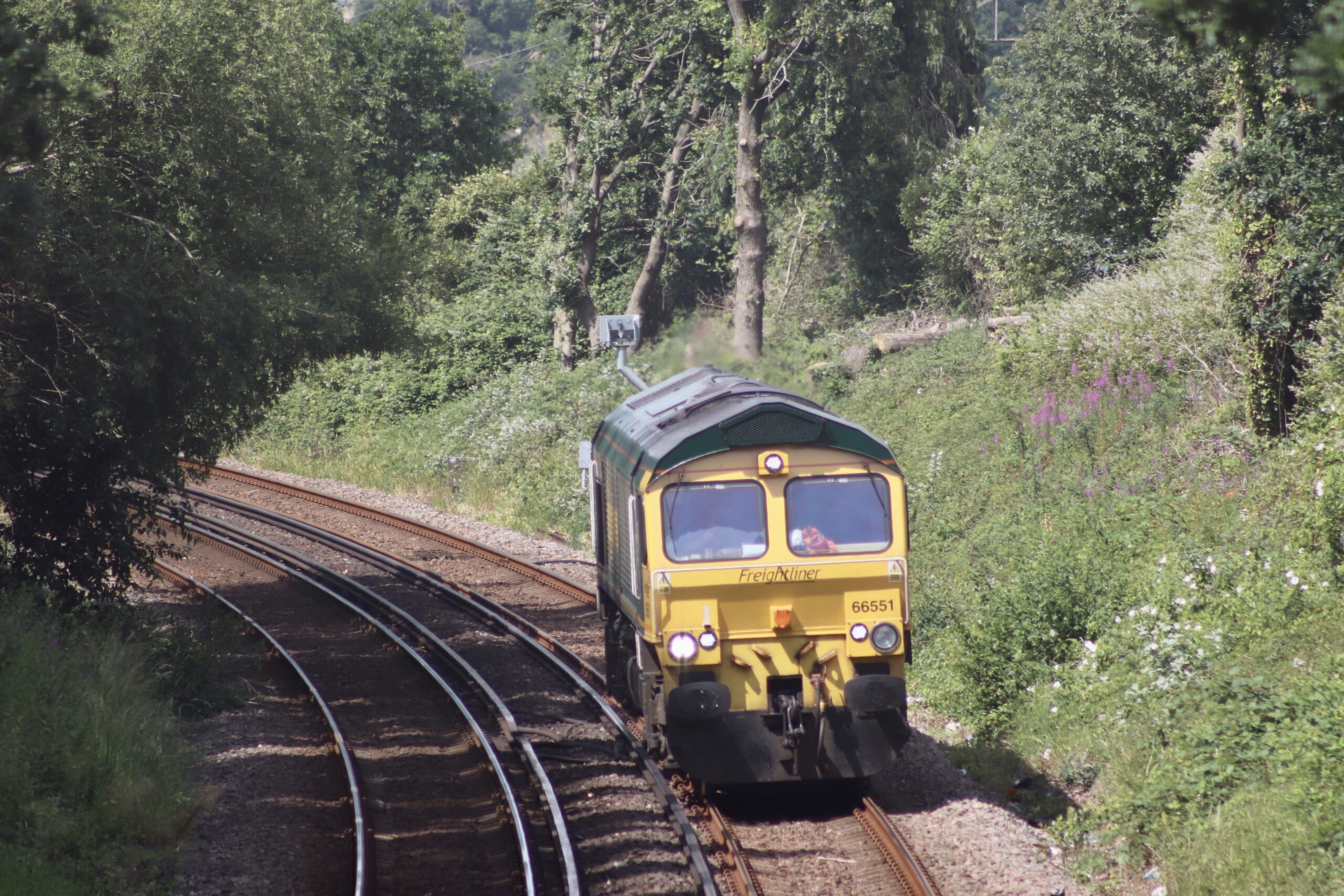
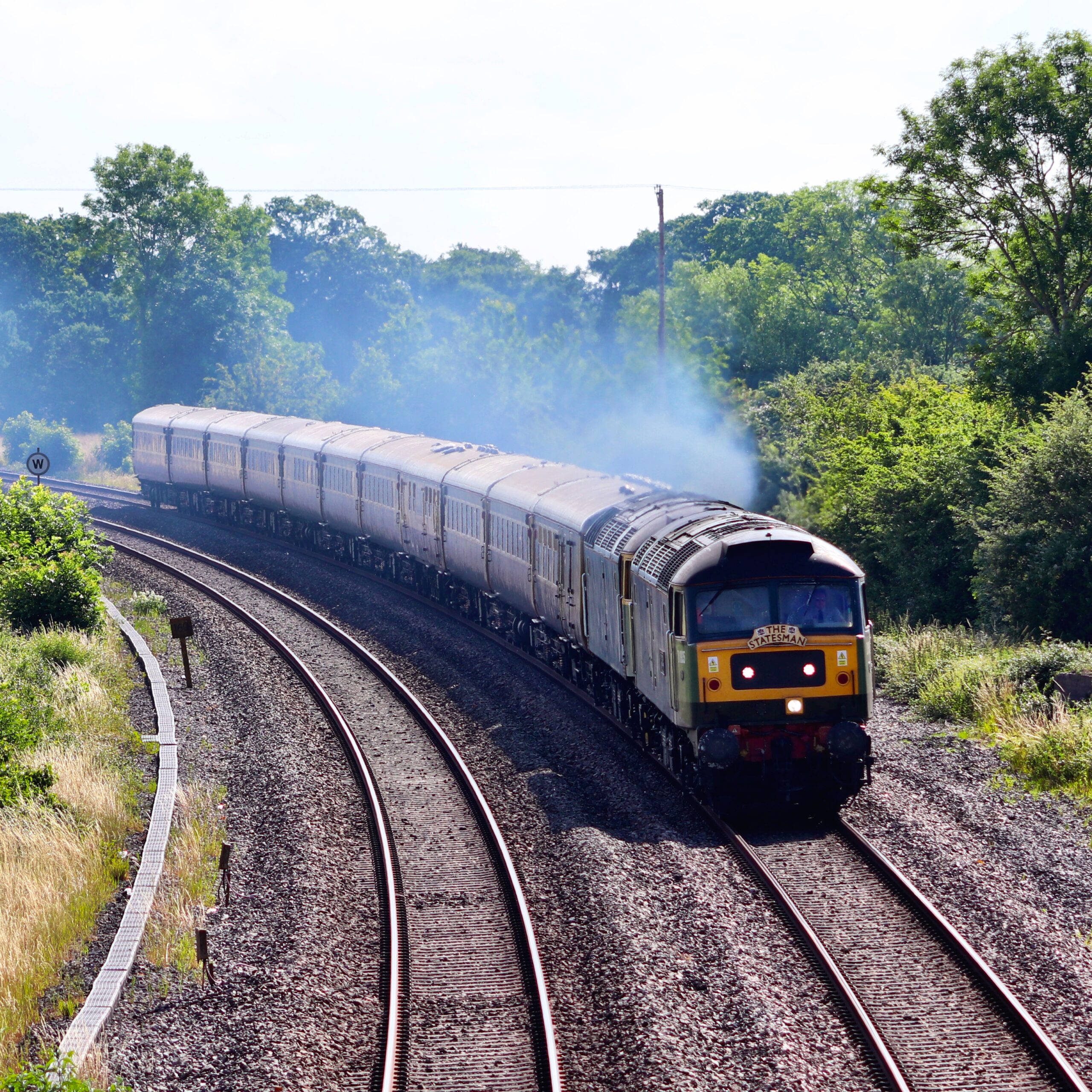
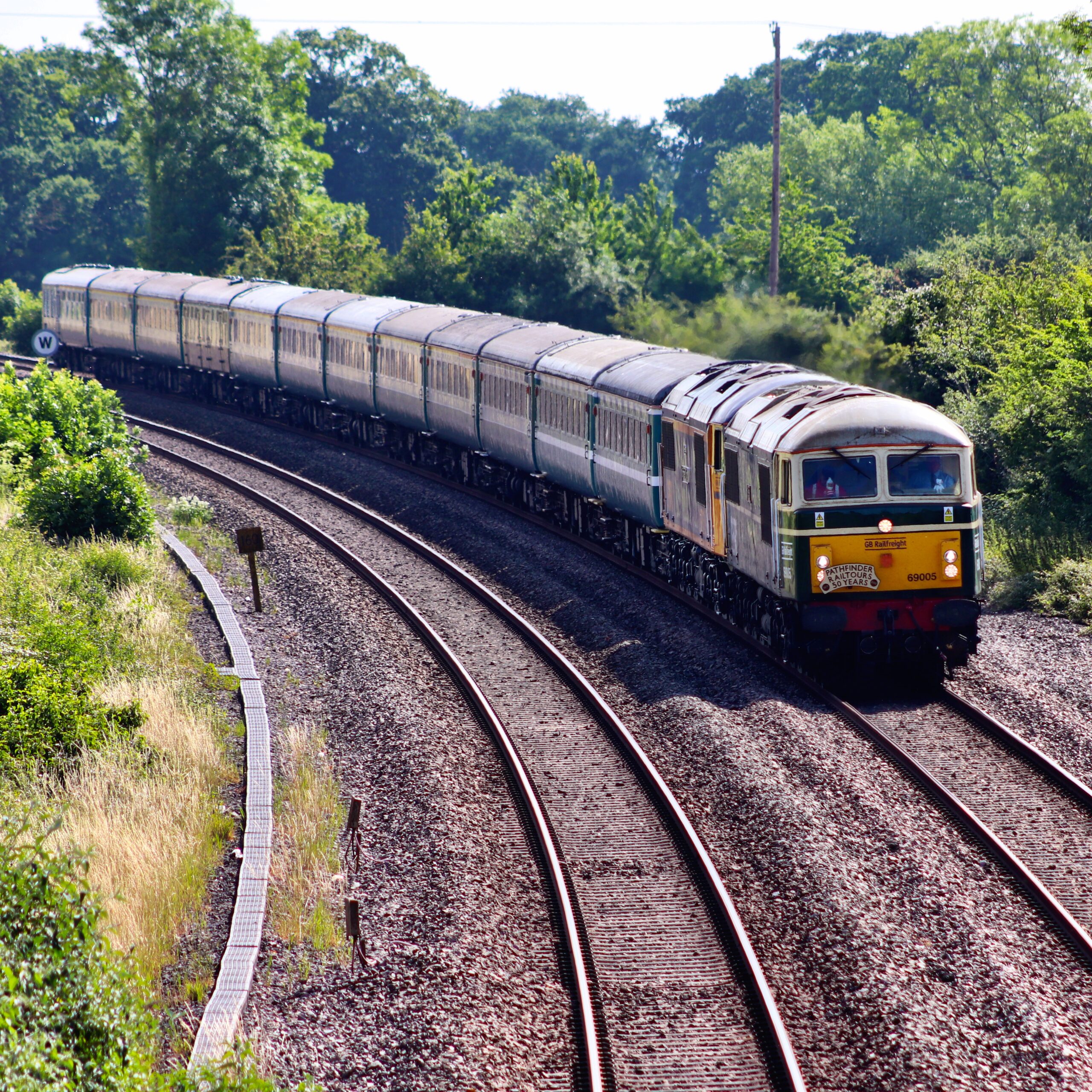
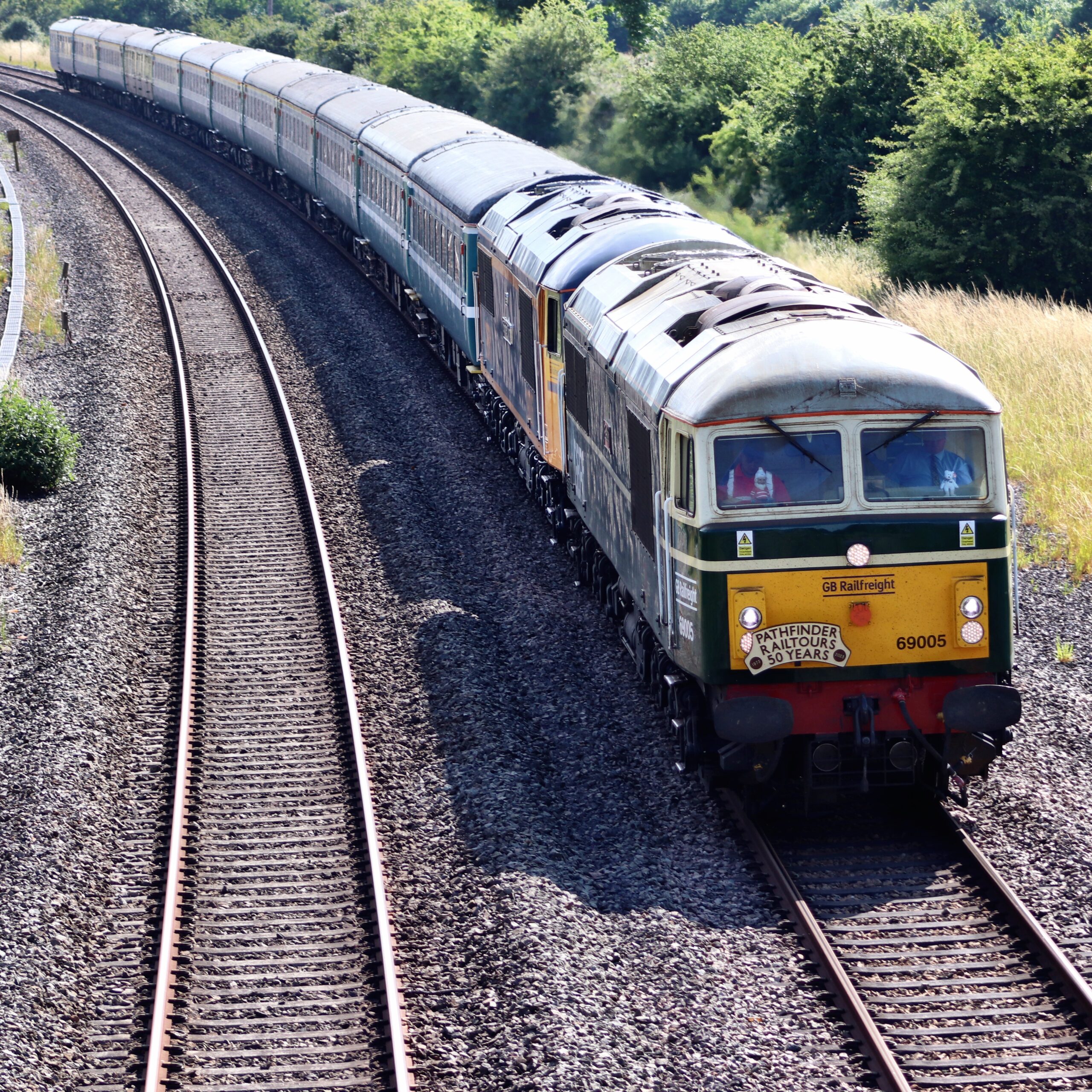
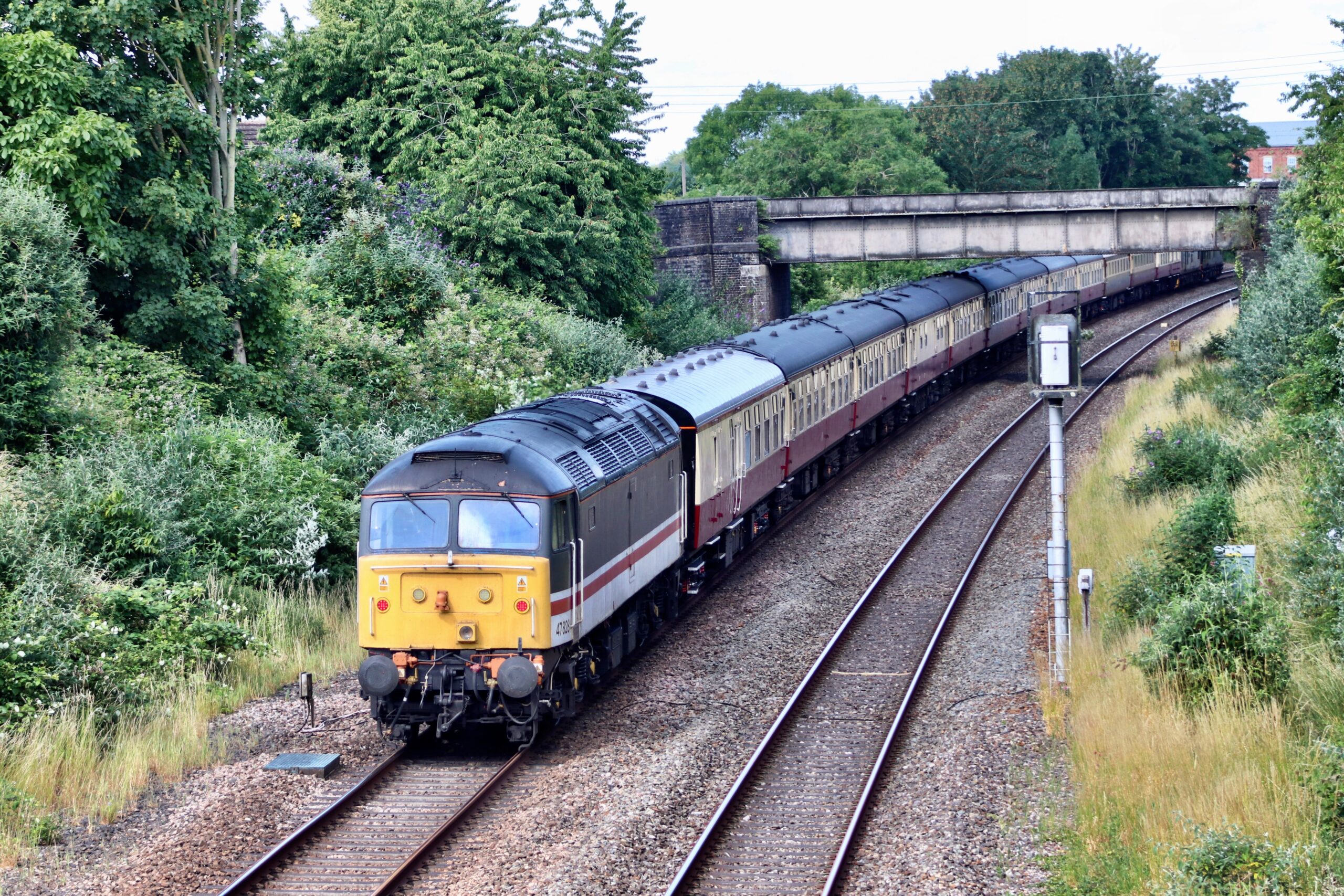
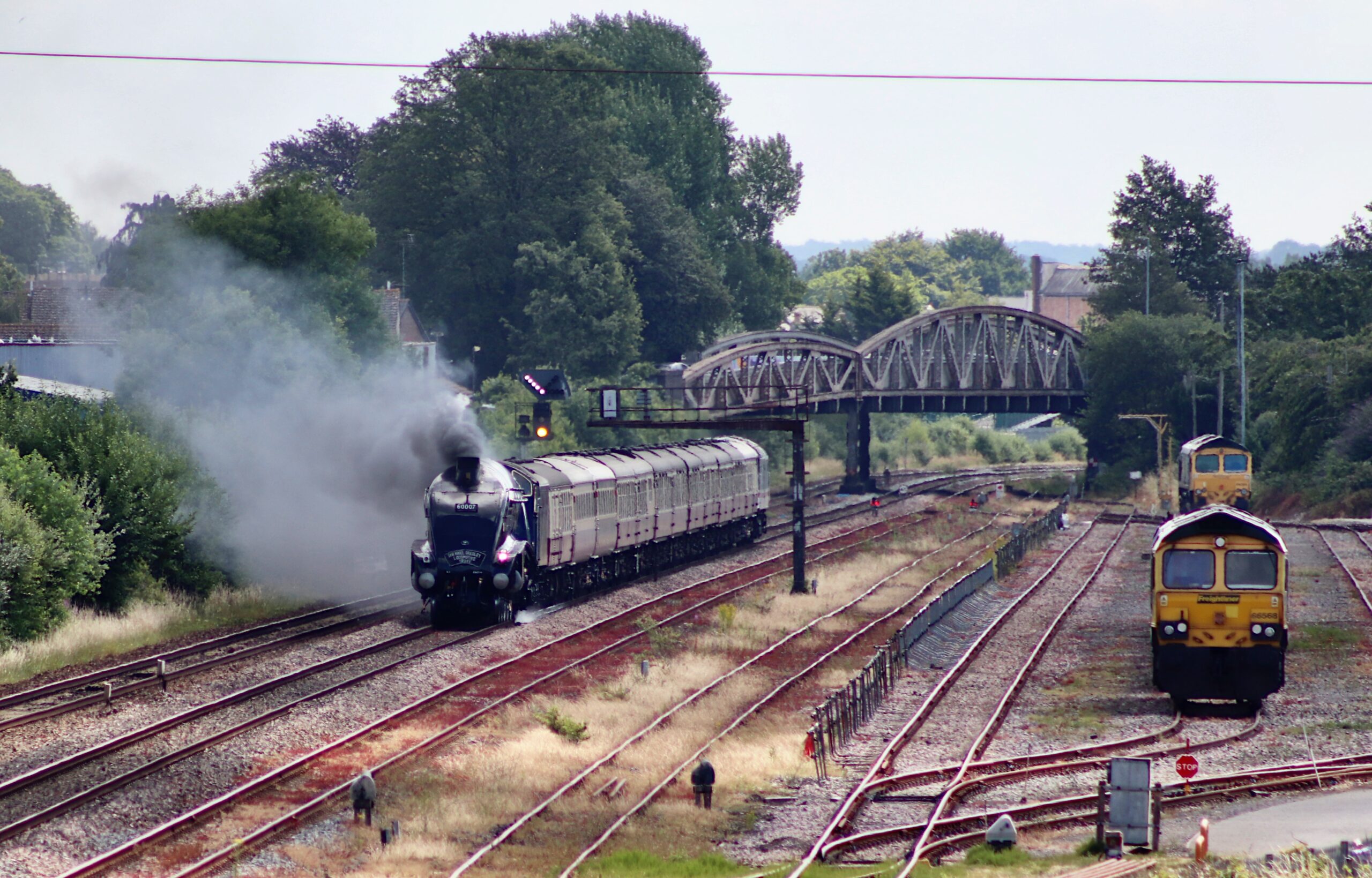
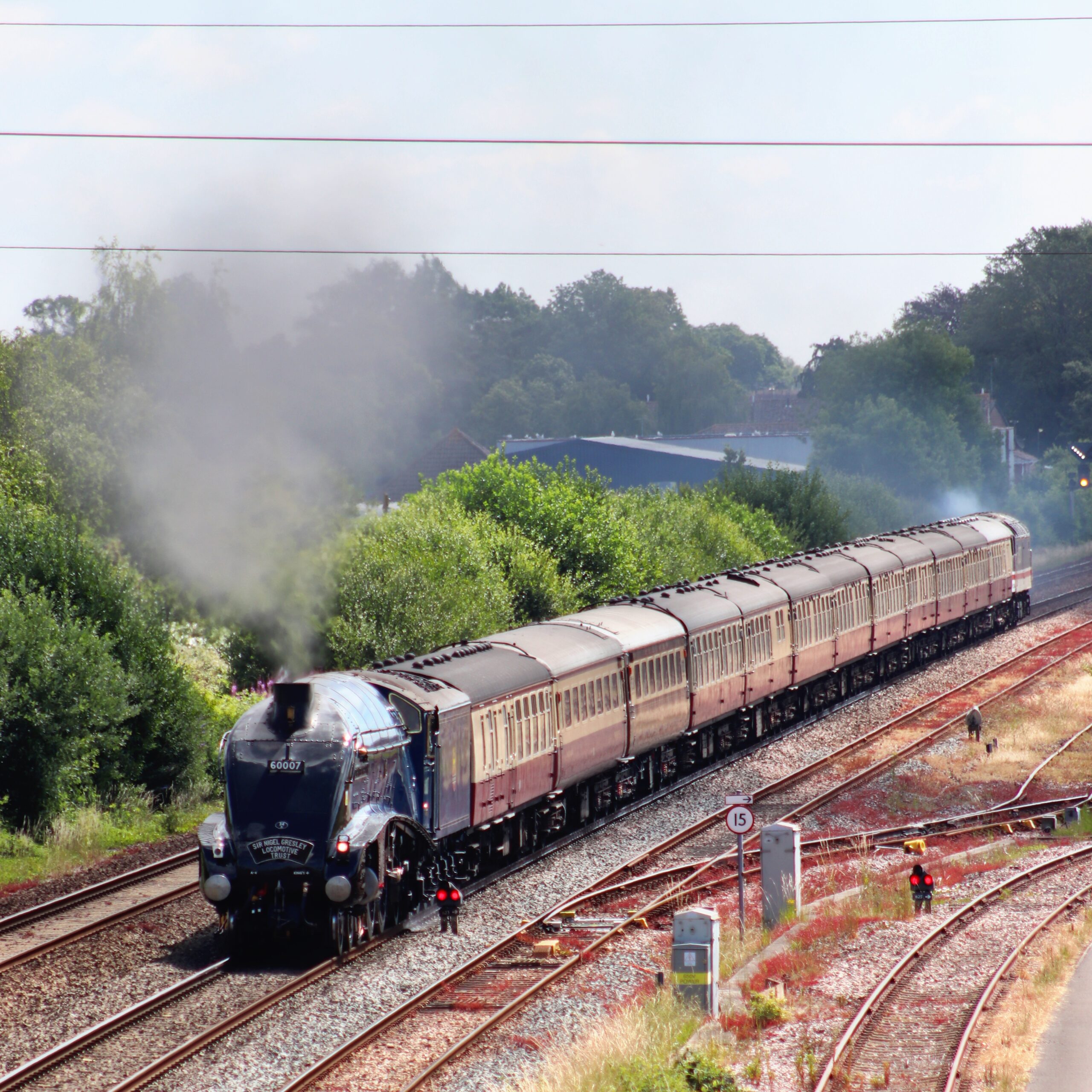
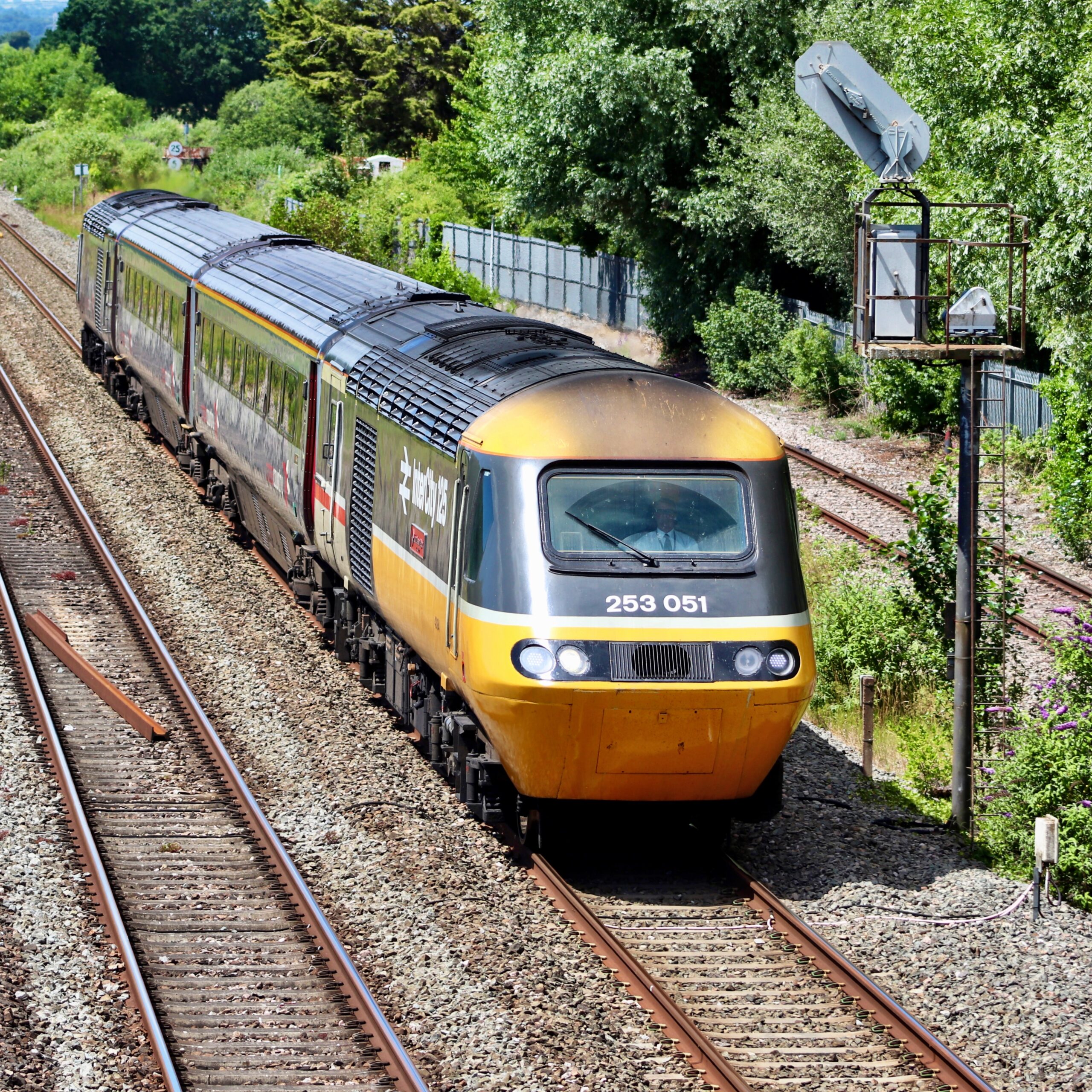
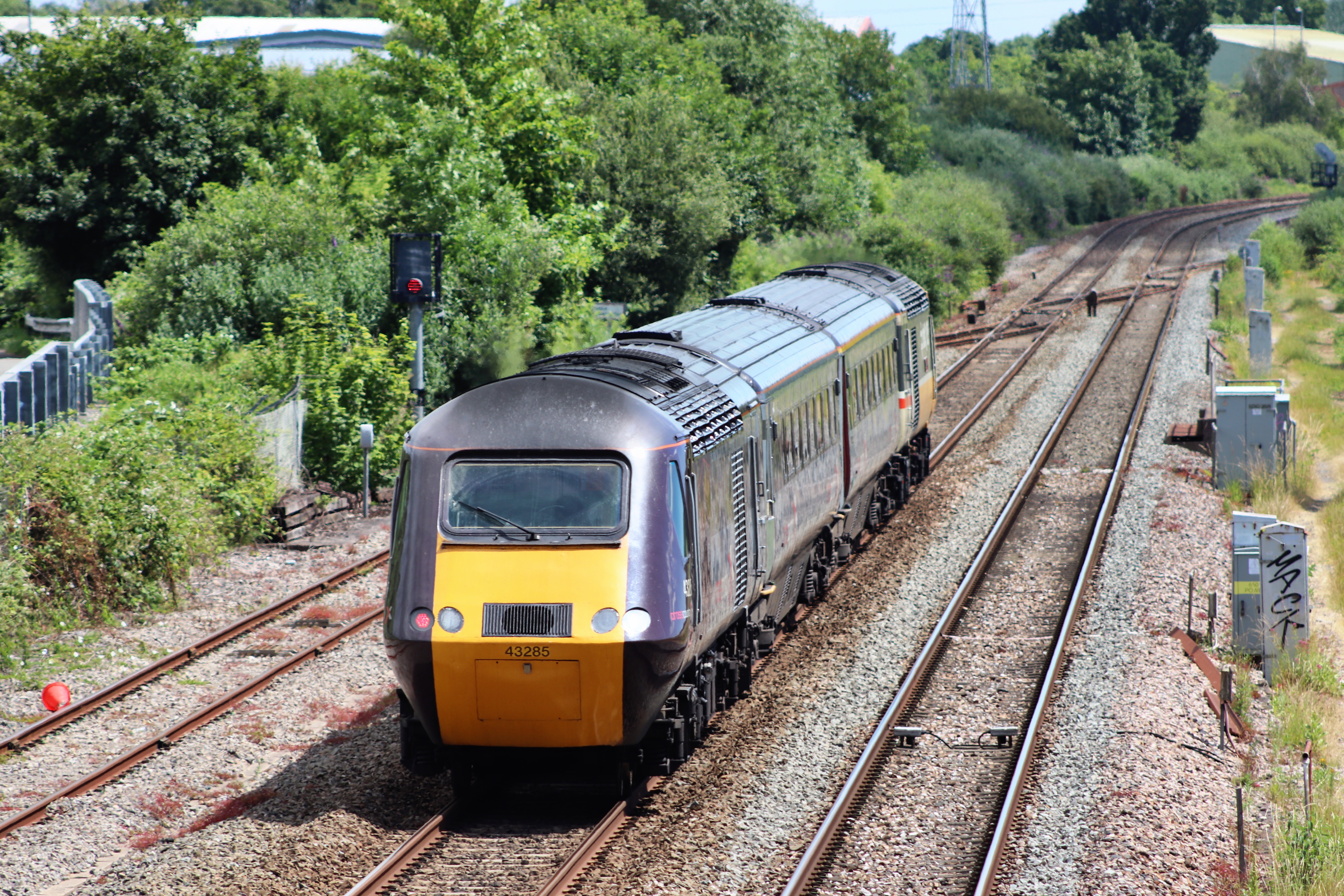
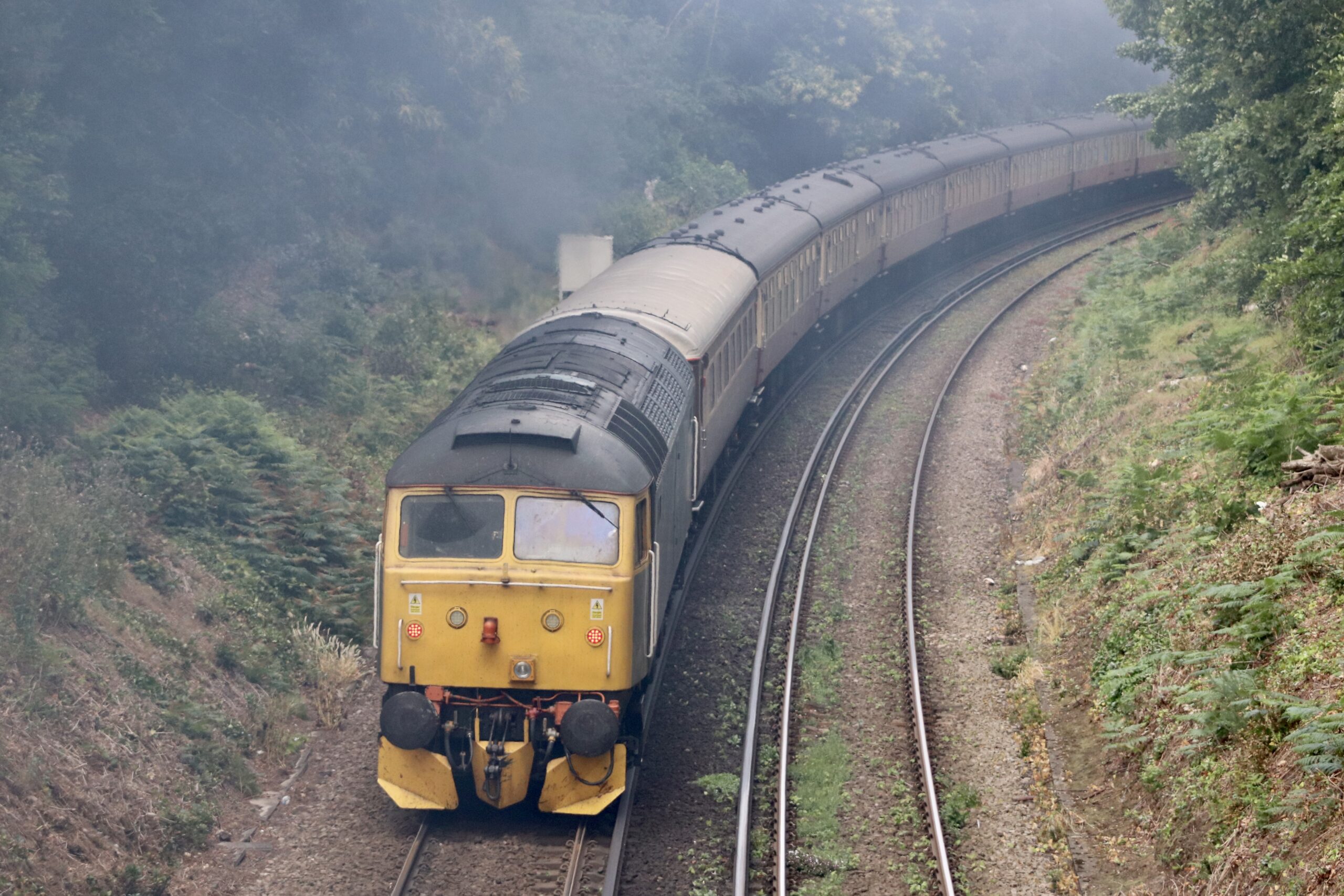
The sun sets on the final CrossCountry scheduled HST passenger service with Class 43 No. 43008 leading 1E73 1627 Plymouth to Leeds (No. 43007 was at the rear) on the approach to Foal Mead Viaduct – 18/09/2023
September 13th 2023 to September 19th 2023
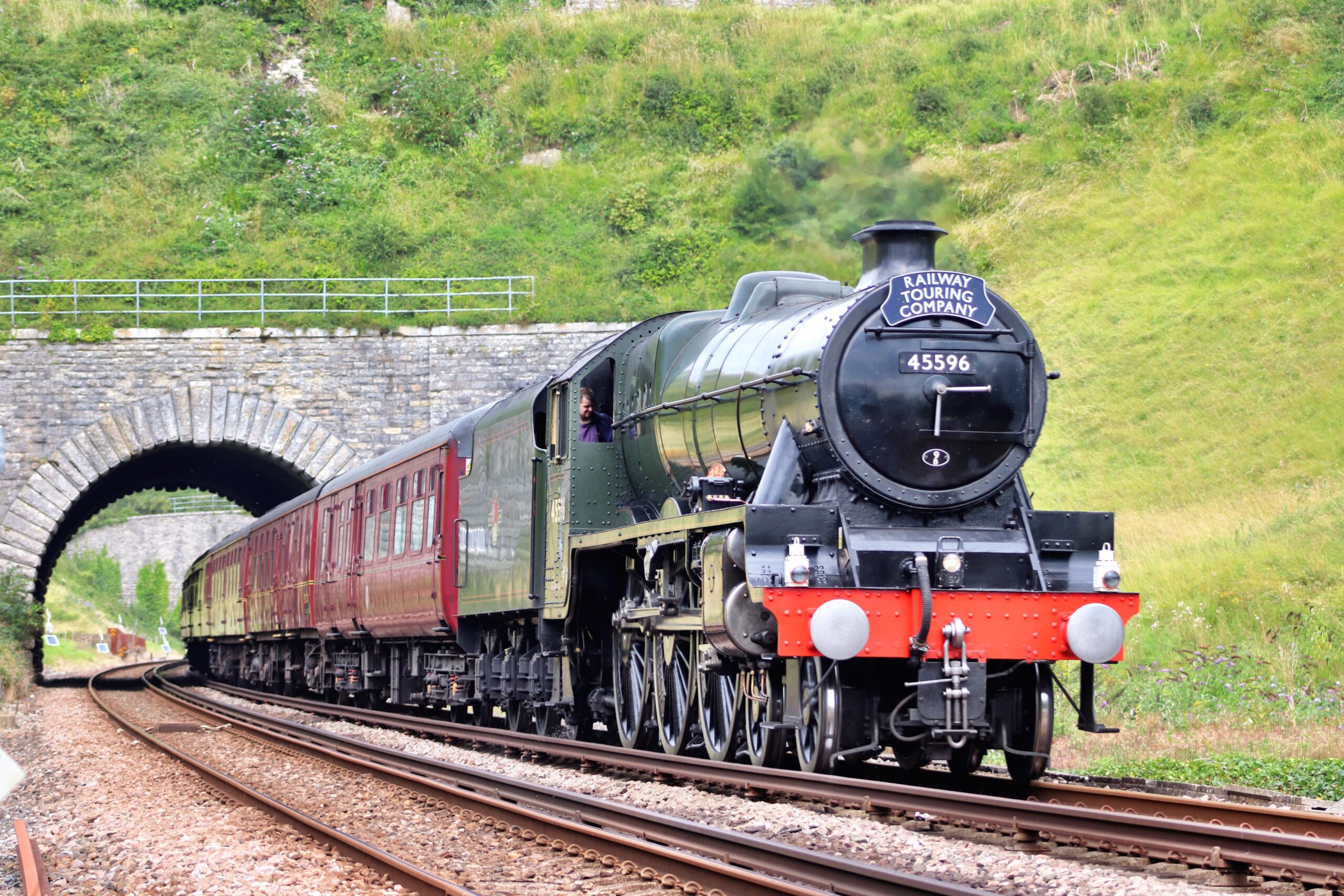
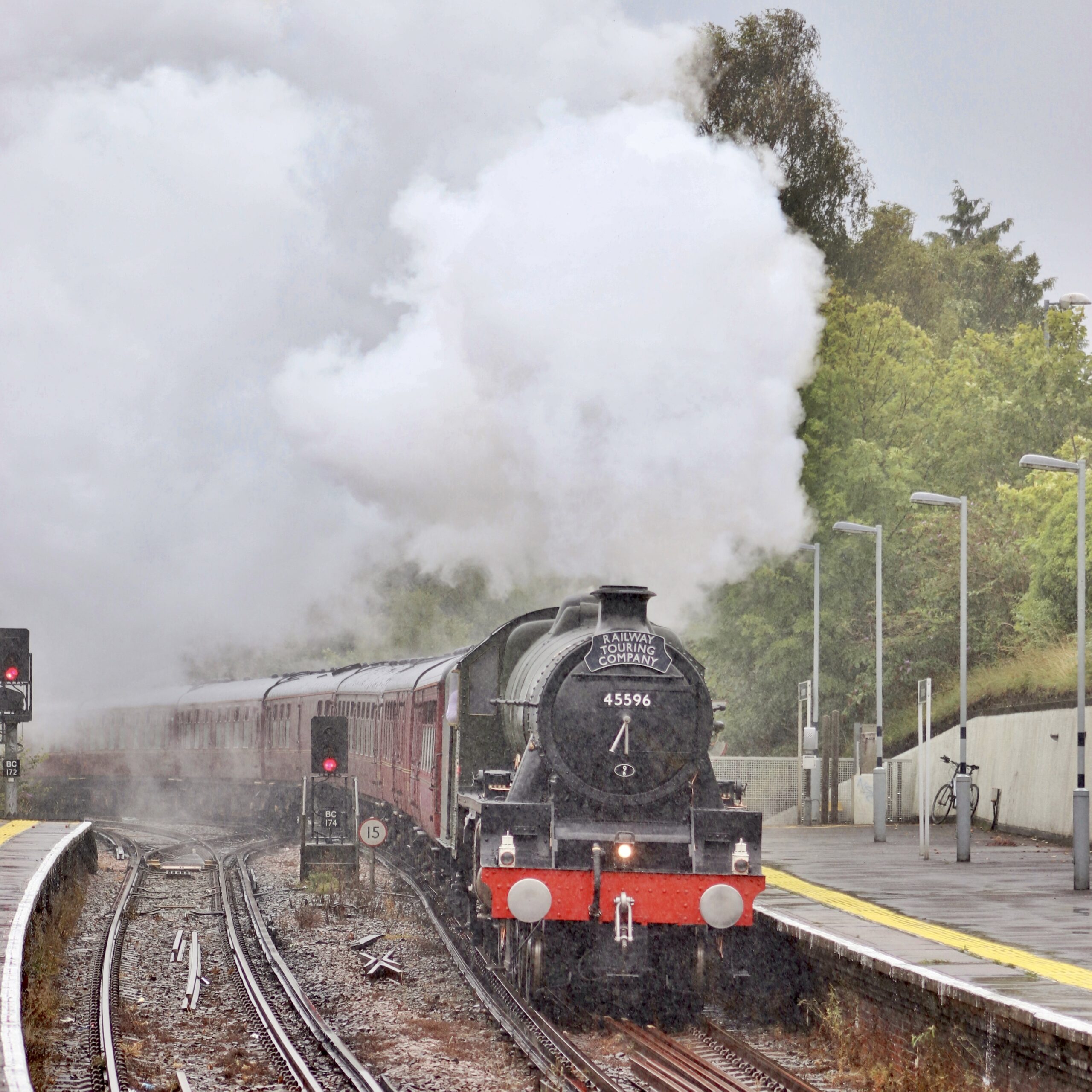
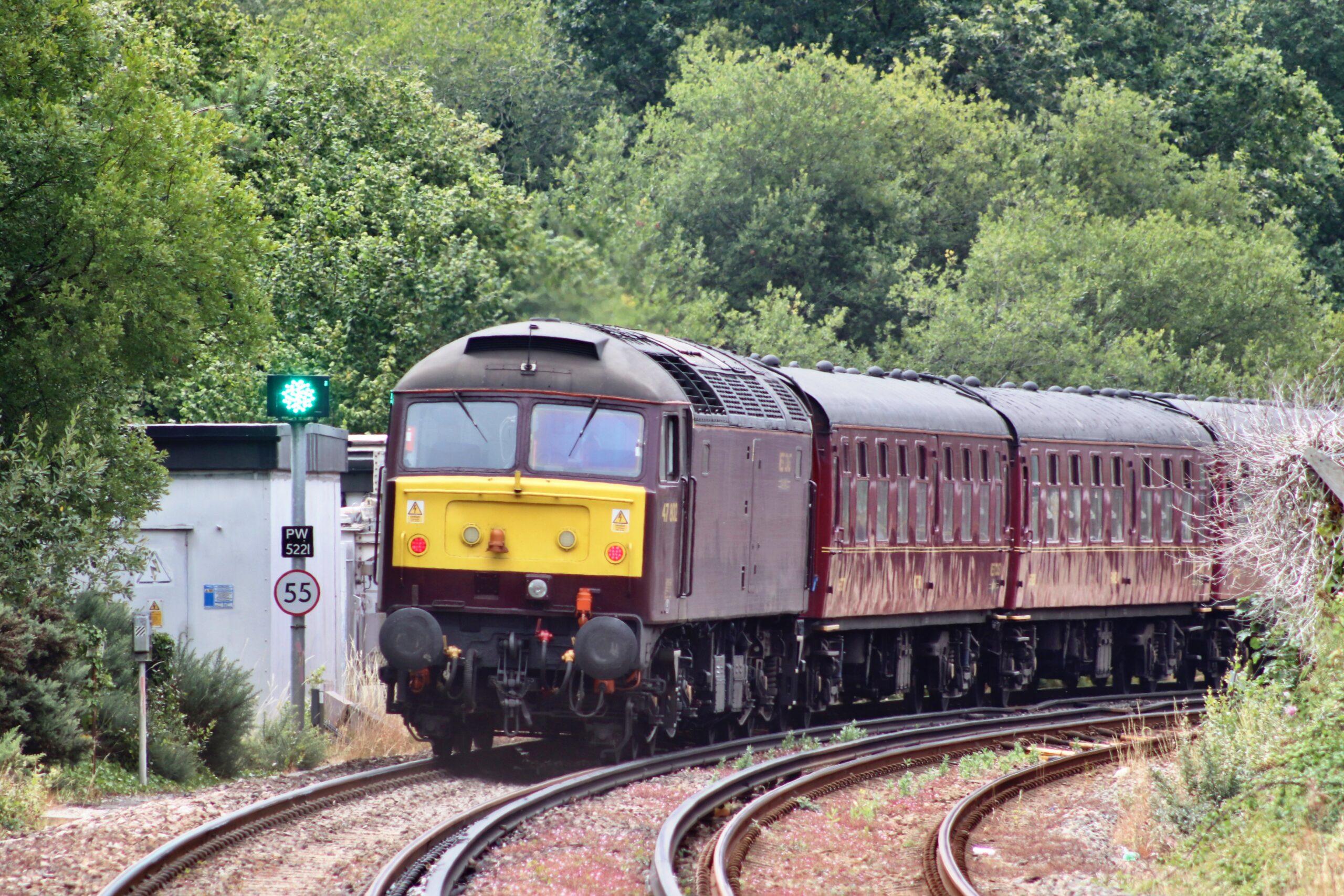
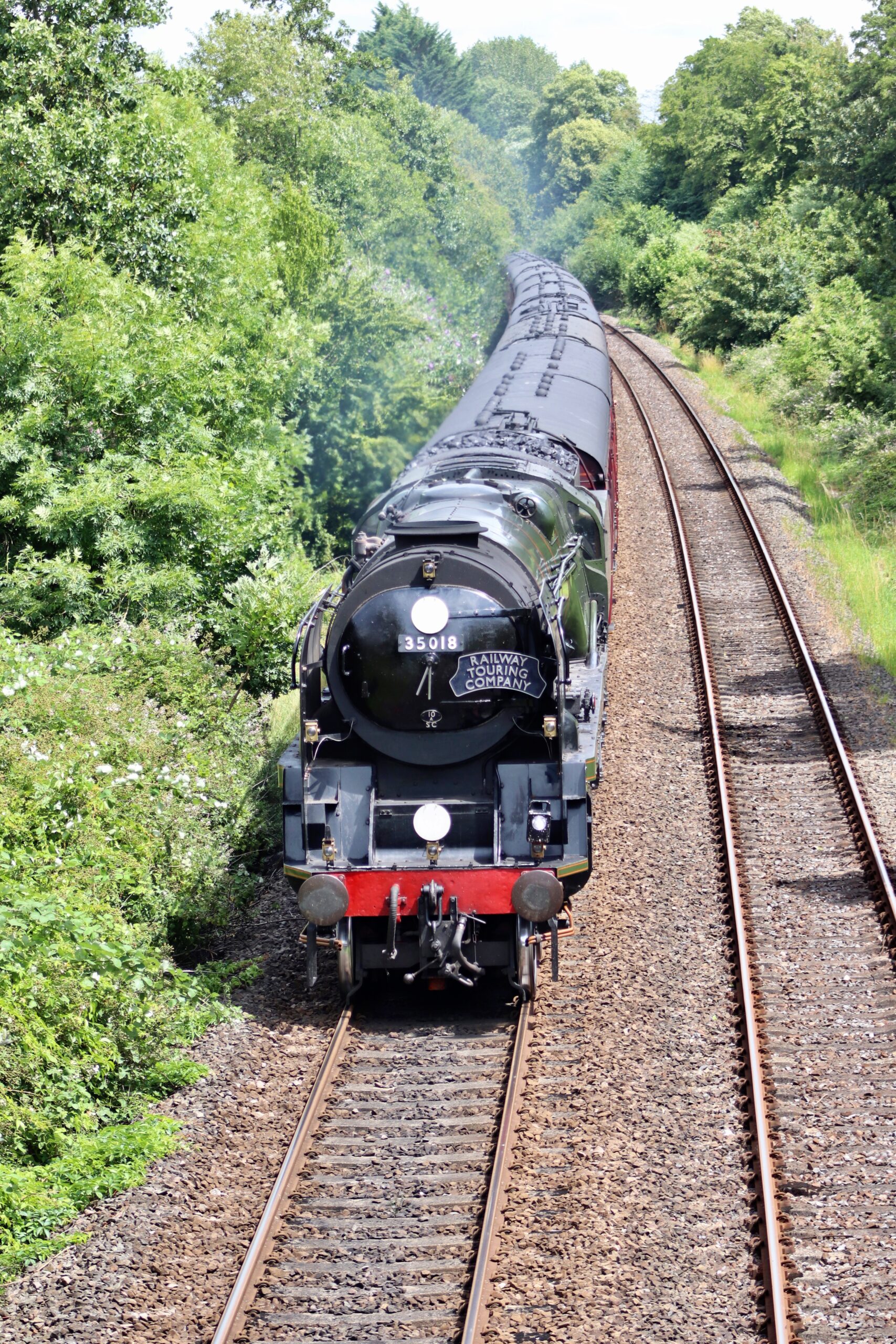
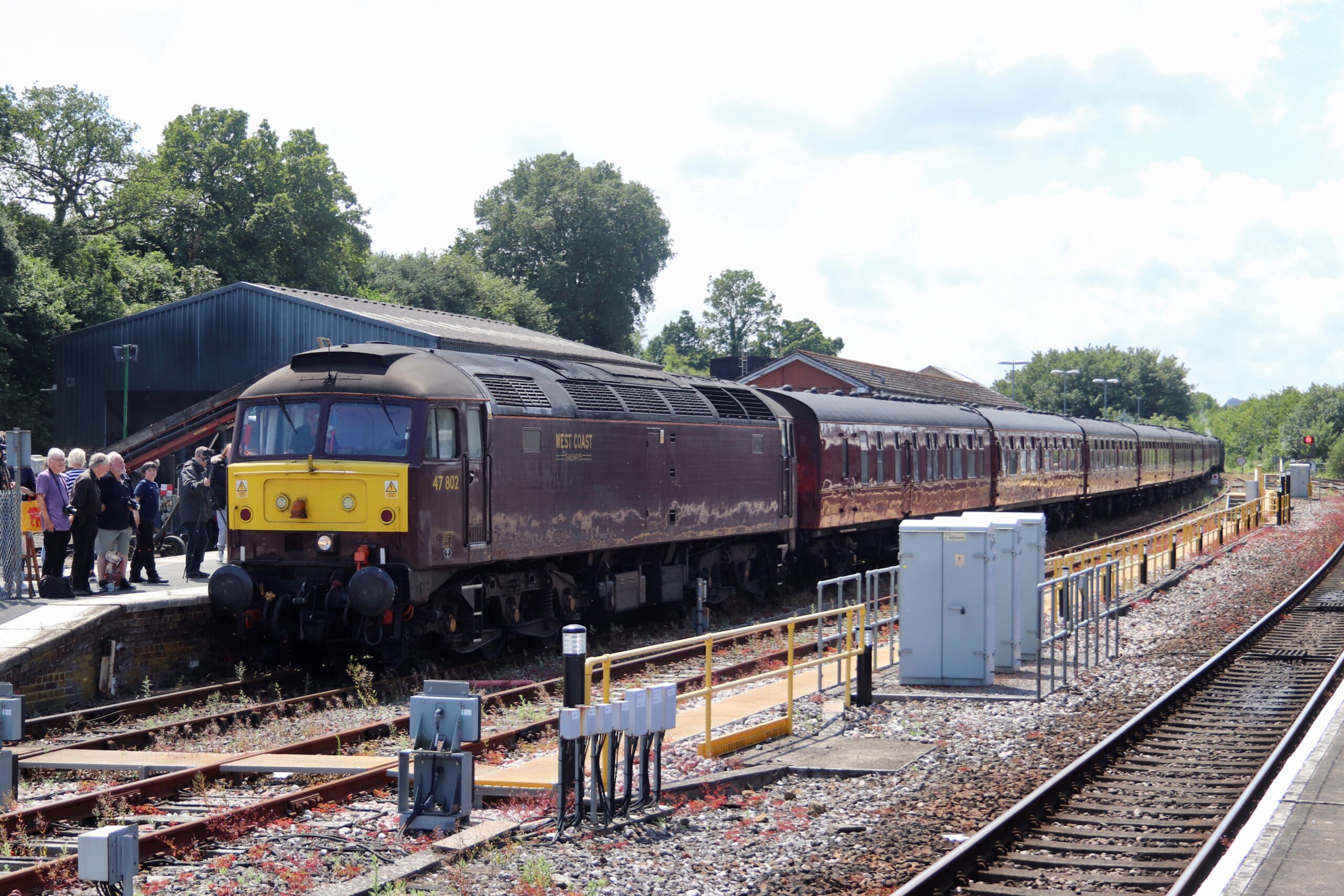
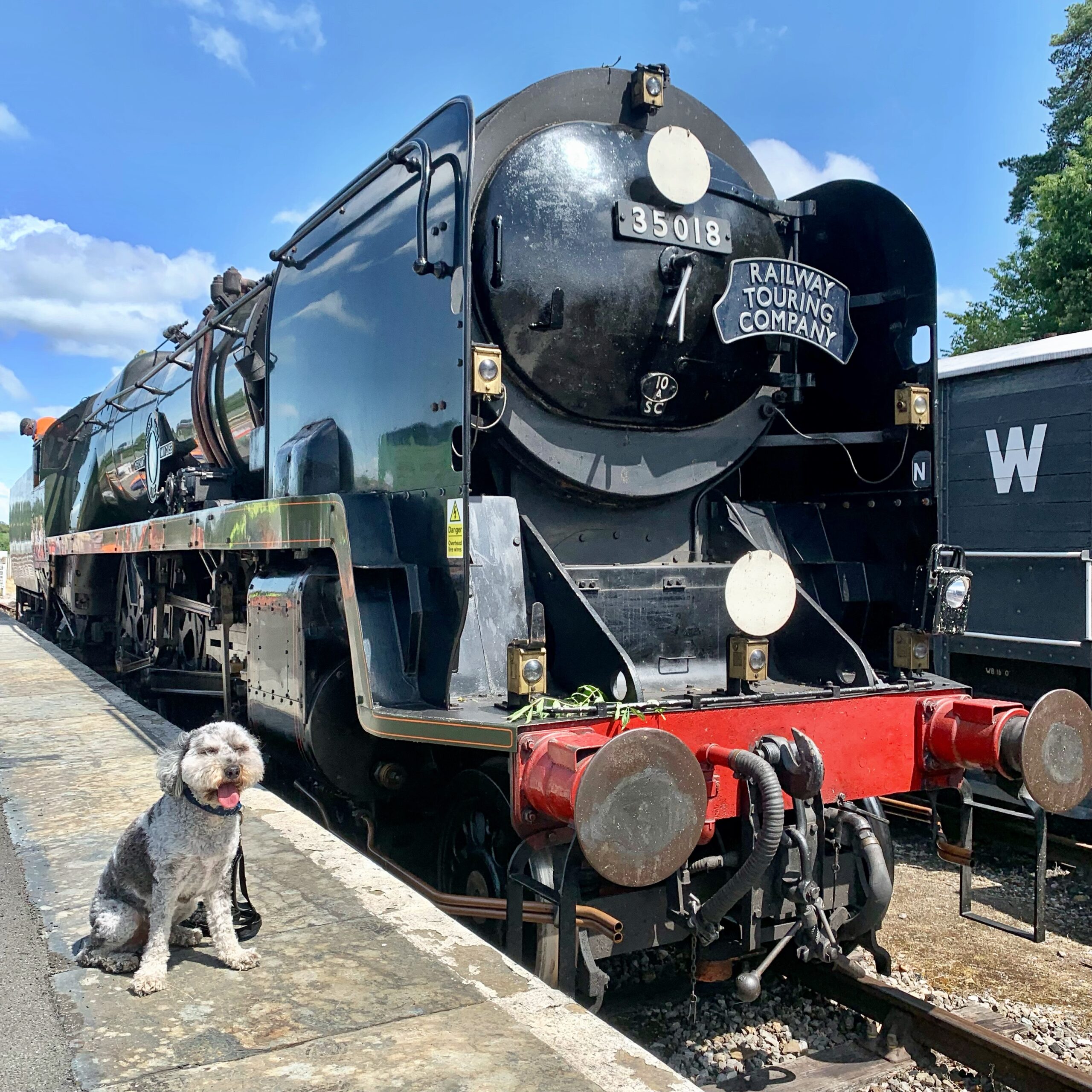
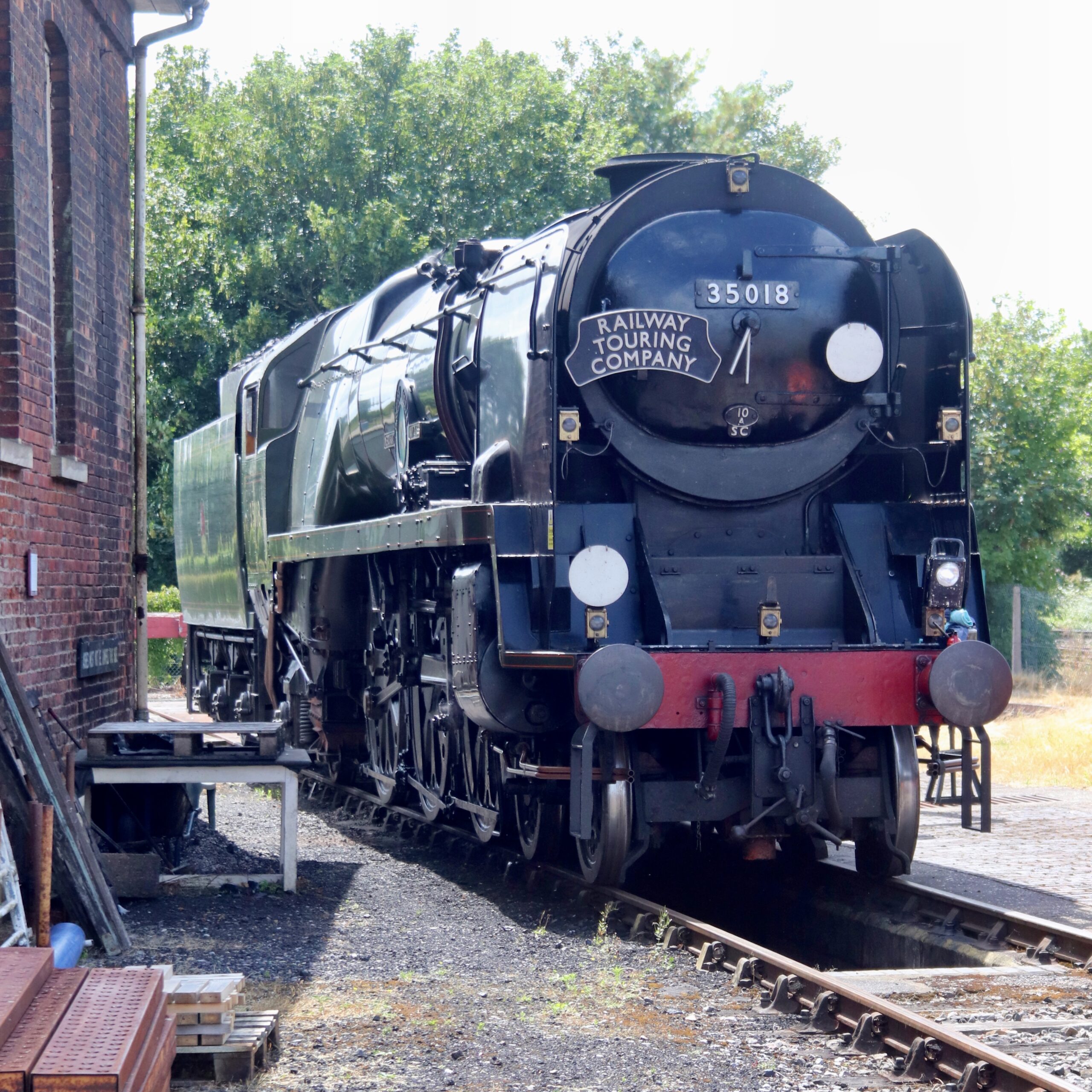
Wednesday 13th September 2023 saw what I believe to be the final steam hauled excursion of the year to pass through our neck of the woods. Once again LMS Jubilee 4-6-0 No. 46995 ‘Bahamas’ headed a Railway Touring Company railtour, this time travelling from London Victoria through to the heritage Swanage Railway. We saw the outward bound leg as the train passed Poole Storage Sidings. As yet, there are no facilities to turn a steam locomotive on the Swanage Railway and on the return the tour was diesel hauled as far as Southampton Central by West Coast Railways Class 47 No. 47746 ‘Chris Fudge’. The loco was named after Chris Fudge who passed away following a long battle with a brain tumour in 2010. Chris garnered an interest in trains from an early age and went on to work for the railways, his final role being a timetable planning manager for Arriva trains.
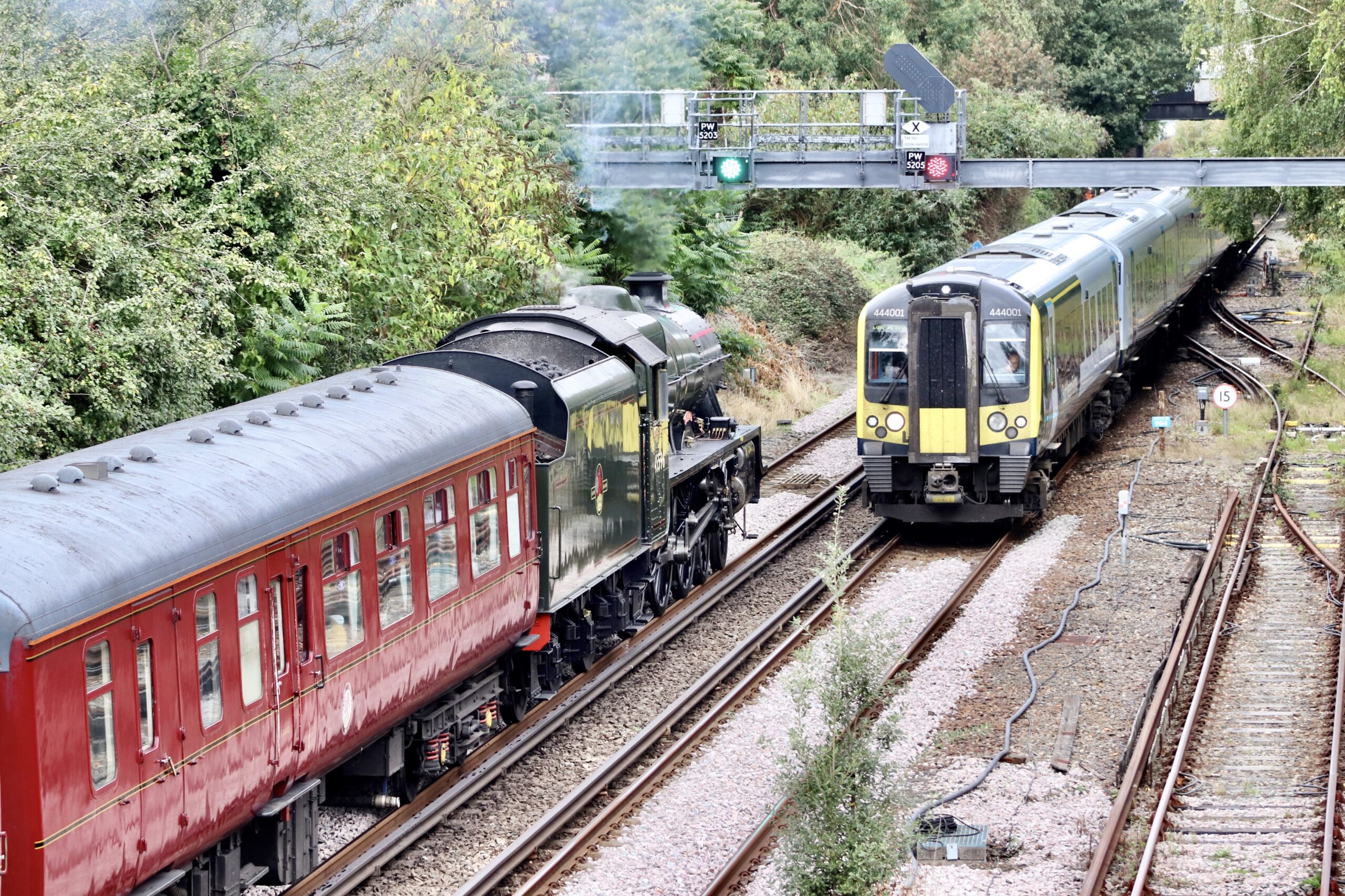
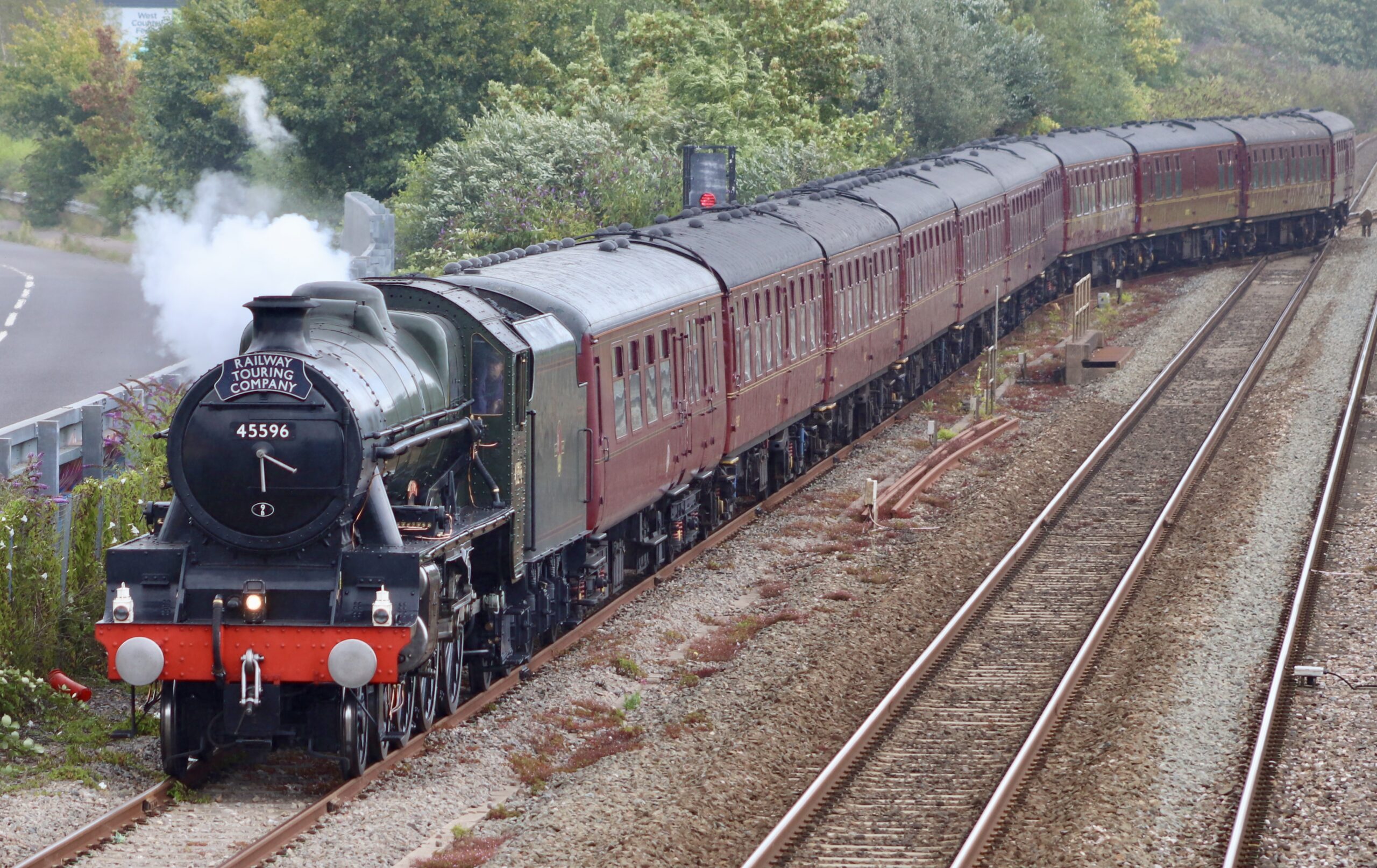
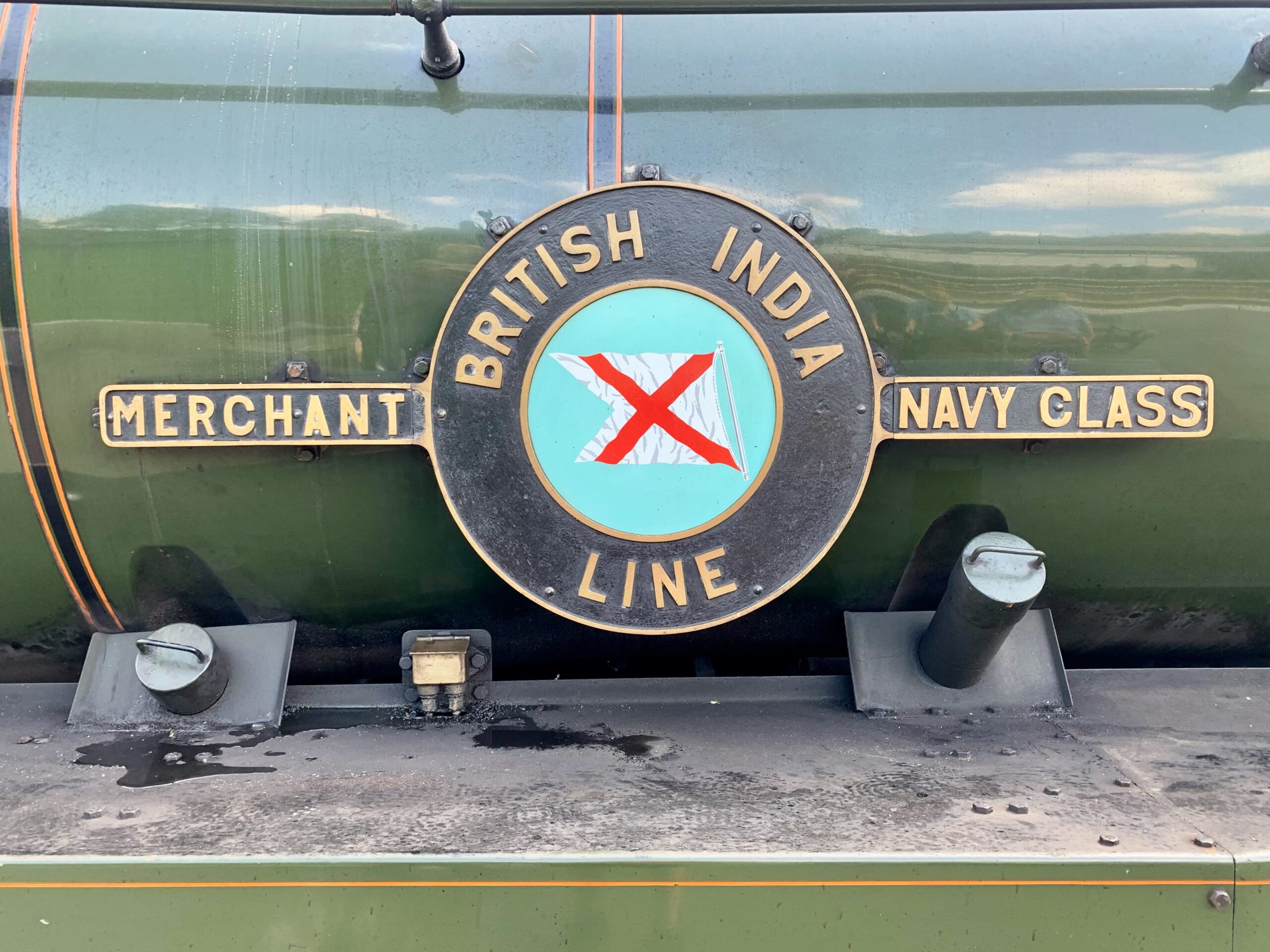
LMS Jubilee 4-6-0 No. 45596 ‘Bahamas’ works “The Swanage Belle” 1Z91 0815 London Victoria to Swanage out of Poole – 13/09/2023LMS Jubilee 4-6-0 No. 45596 ‘Bahamas’ heading 1Z91 0815 London Victoria to Swanage passes South Western Railway Class 444 EMU No. 444001 at Poole Storage Sidings – 13/09/2023
We watched the late afternoon return at Hamworthy (and still home for dinner!)
West Coast Railways Class 47 No. 47746 ‘Chris Fudge’ works the return “Swanage Belle” 1Z92 1555 Swanage to London Victoria on the approach to Hamworthy – 13/09/2023LMS Jubilee 4-6-0 No. 45596 ‘Bahamas’ at the rear of 1Z92 1555 Swanage to London Victoria passes through Hamworthy – 13/09/2023
LMS Jubilee 4-6-0 No. 45596 ‘Bahamas’ on “The Swanage Belle” – 13/09/2023
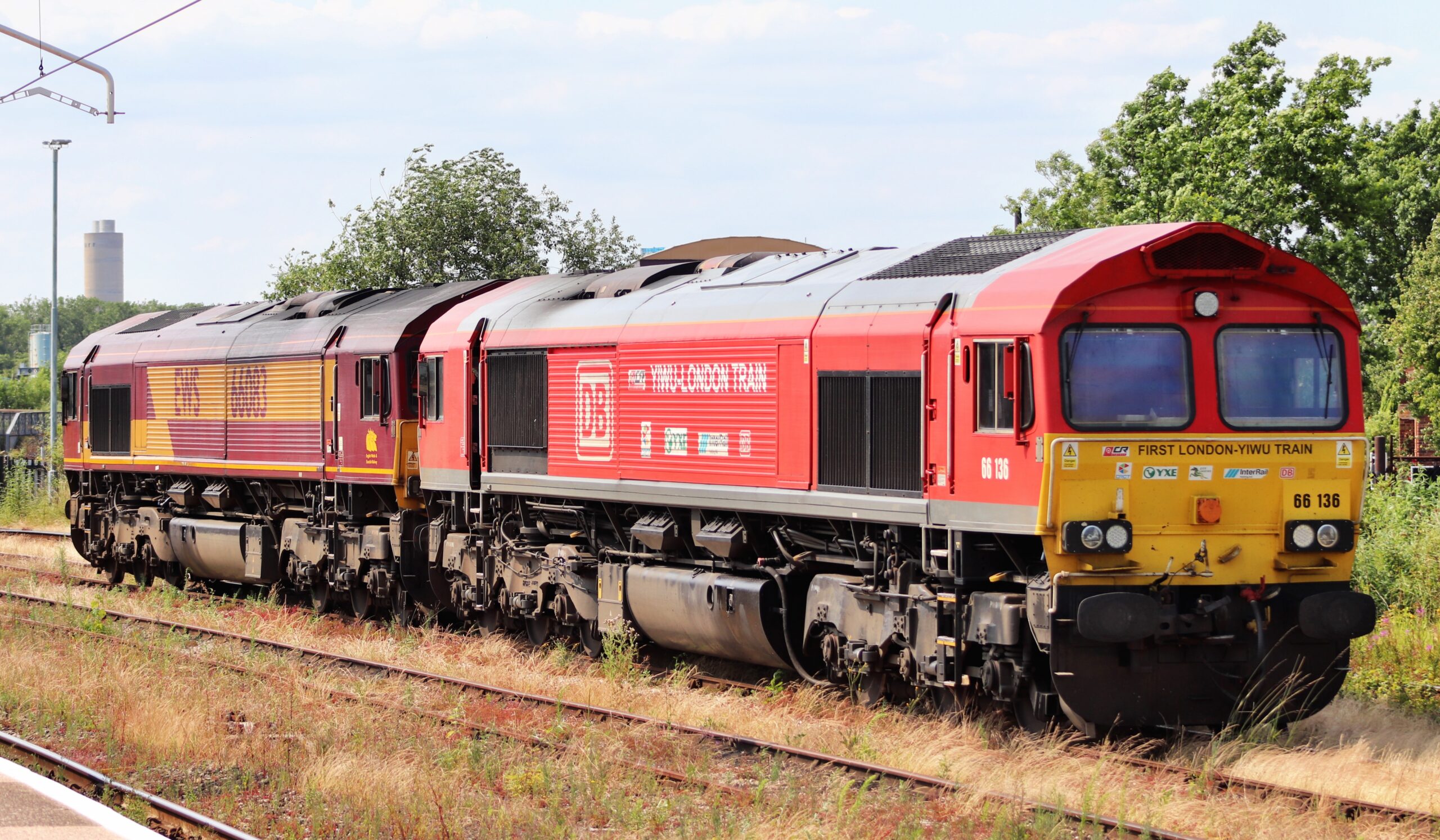
Wednesday night, I set out for Poole as the second Permanent Way (PW) train of the week was timetabled to pass through the station just after midnight and reverse at Poole Storage Sidings to drop lengths of new rail at Parkstone in readiness for engineering work over the weekends of 16/17th and 23/24th September. The earlier run, reported on in last weeks blog entry, was operated by DB Cargo whereas the Thursday run was in the hands of Colas Rail who sent Class 66 No.’s 66847 ‘Terry Baker’ and 66850 working as 6C17 2240 Eastleigh East Yard to Parkstone (Dorset). Unlike previously, the engineers train did not stop as booked in Poole station and I had to be content with taking photographs of South Western Railway Desiro’s. The associated return working of the PW train ran as 6C17 0507 Bournemouth to Eastleigh East Yard when I was tucked up in bed!
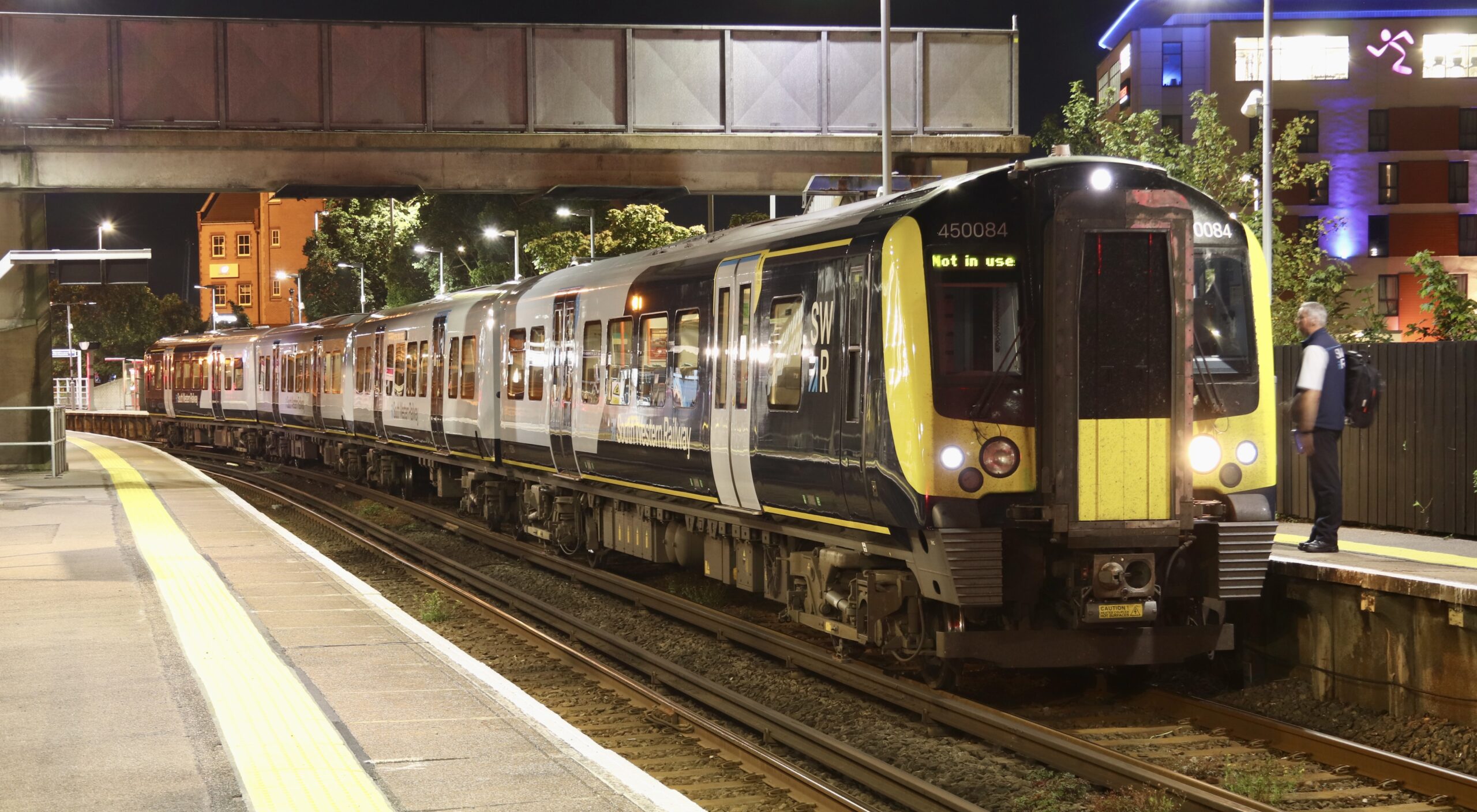
Class 450 No. 450084 at Poole having arrived with the 2B73 2316 Brockenhurst to Poole service – 13/09/2023
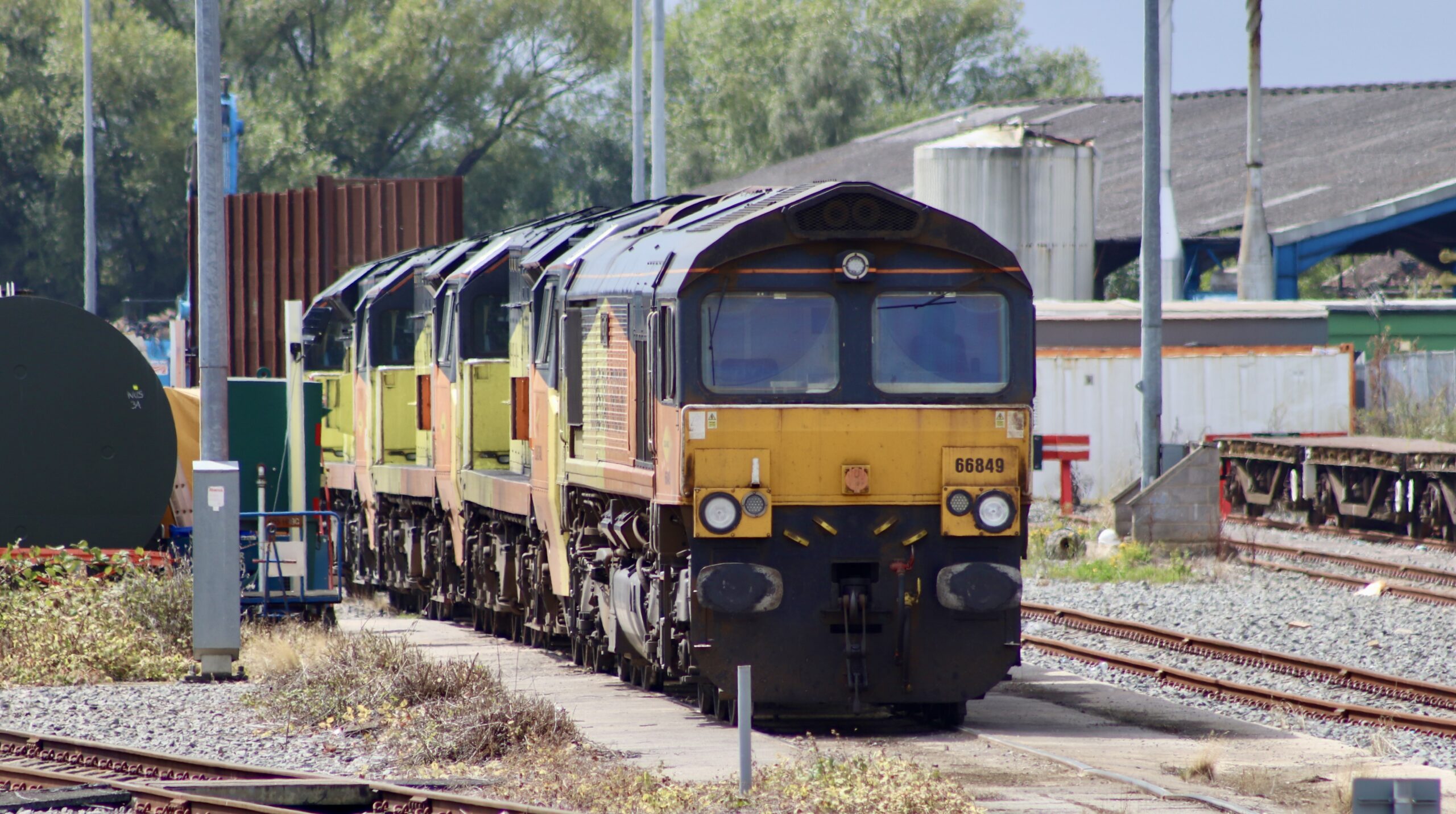
Colas Class 66 No.’s 66847 ‘Terry Baker’ and 66850 working 6C17 2240 Eastleigh East Yard to Parkstone (Dorset)- 14/09/2023
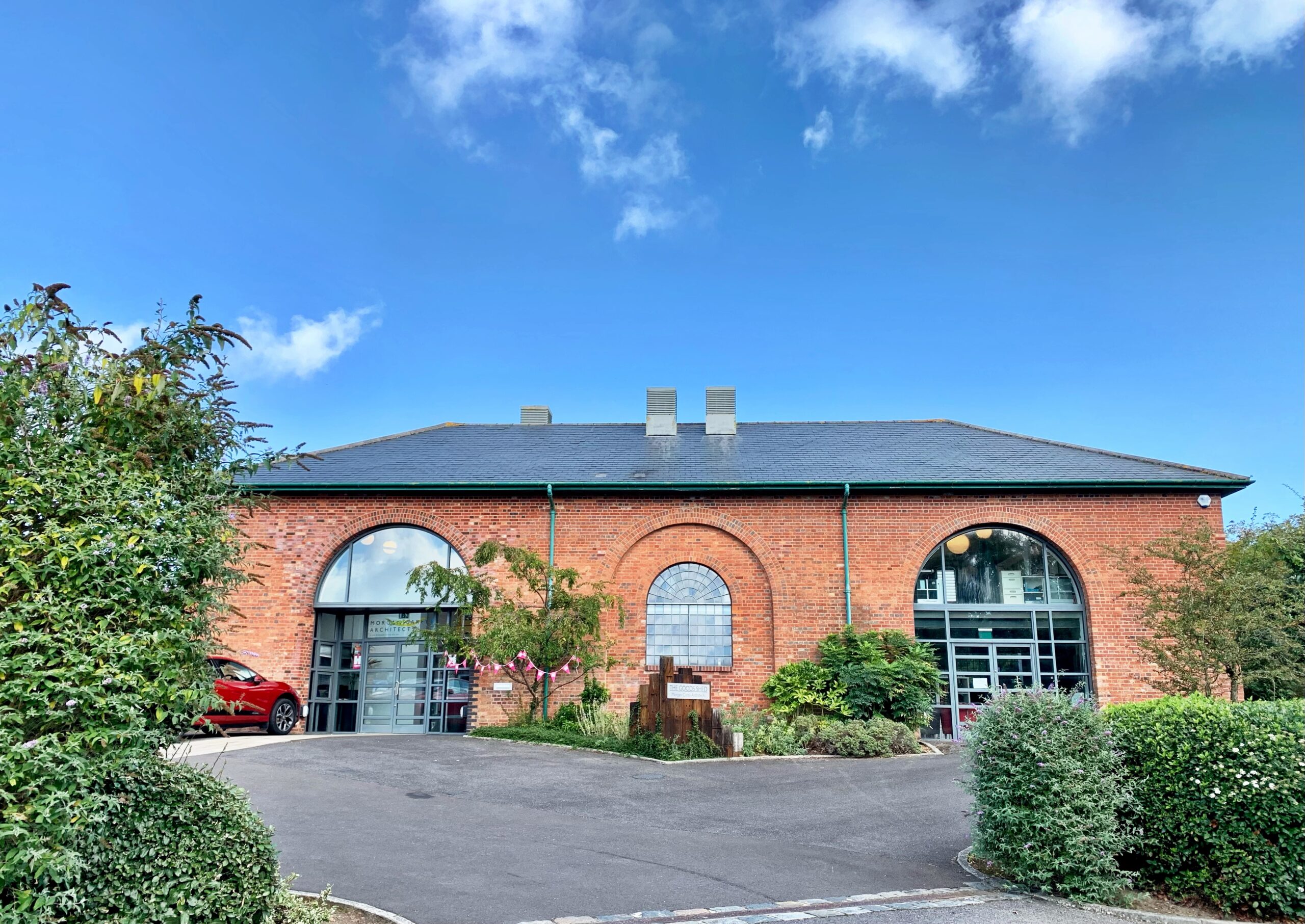
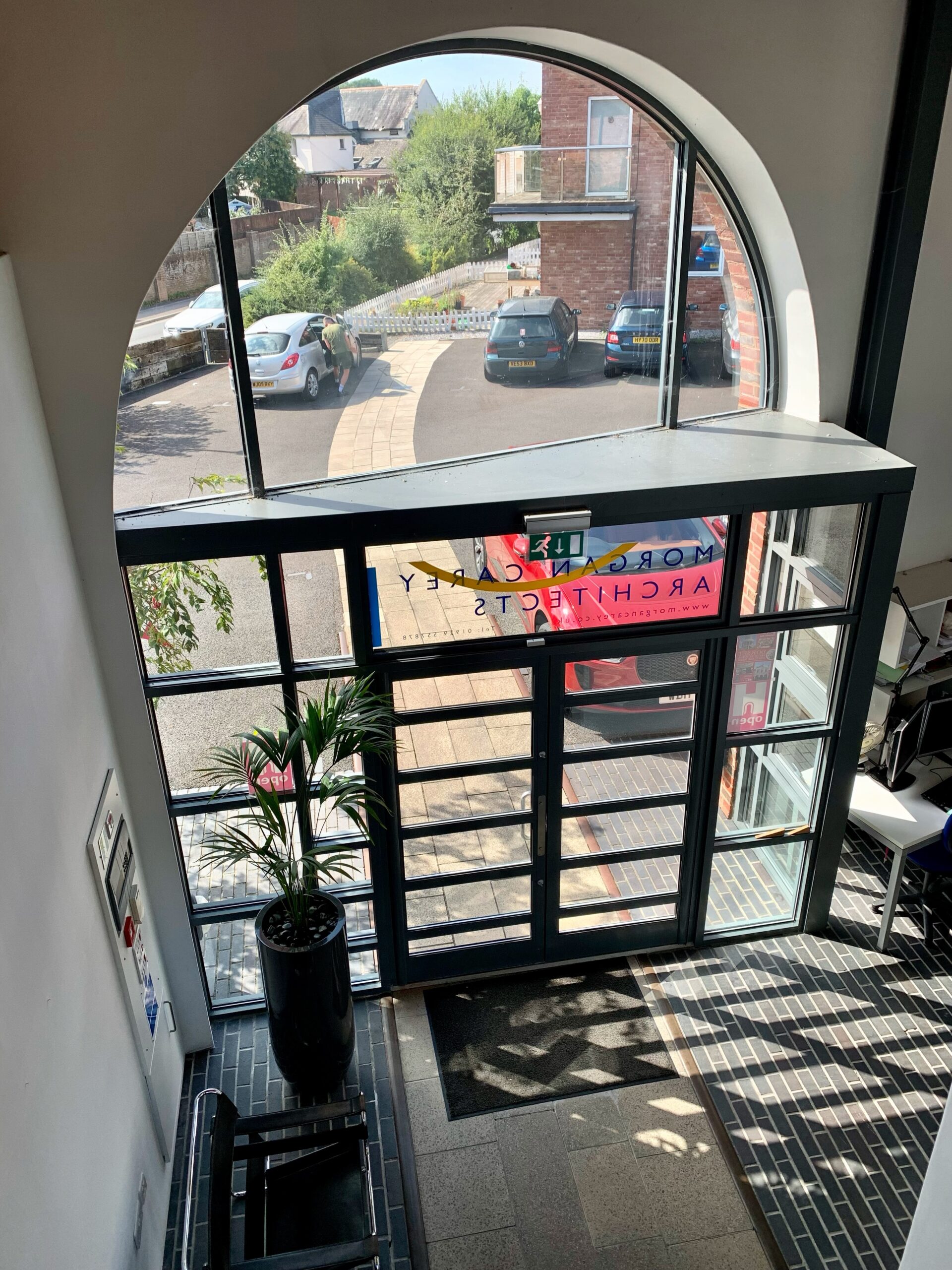
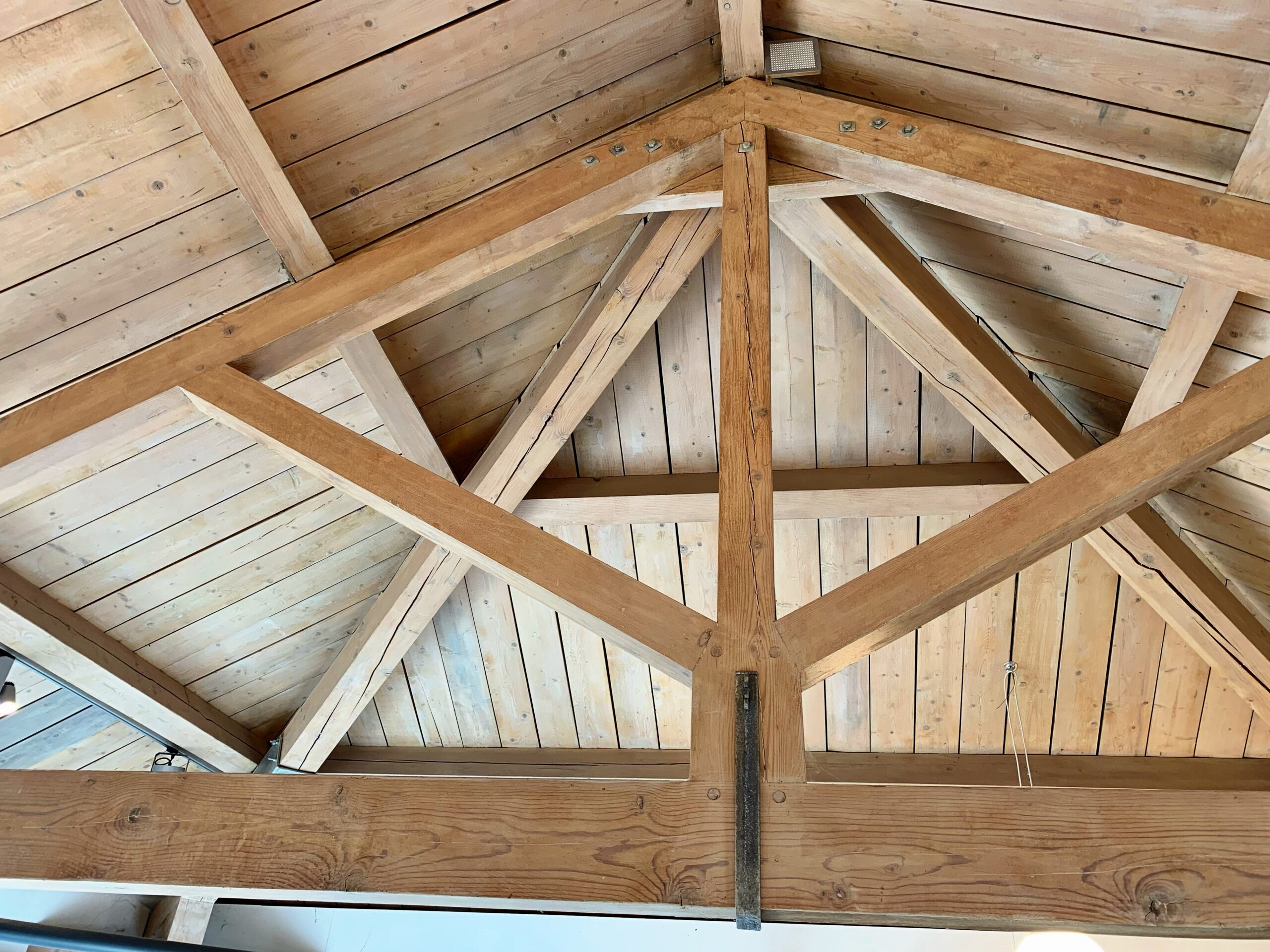
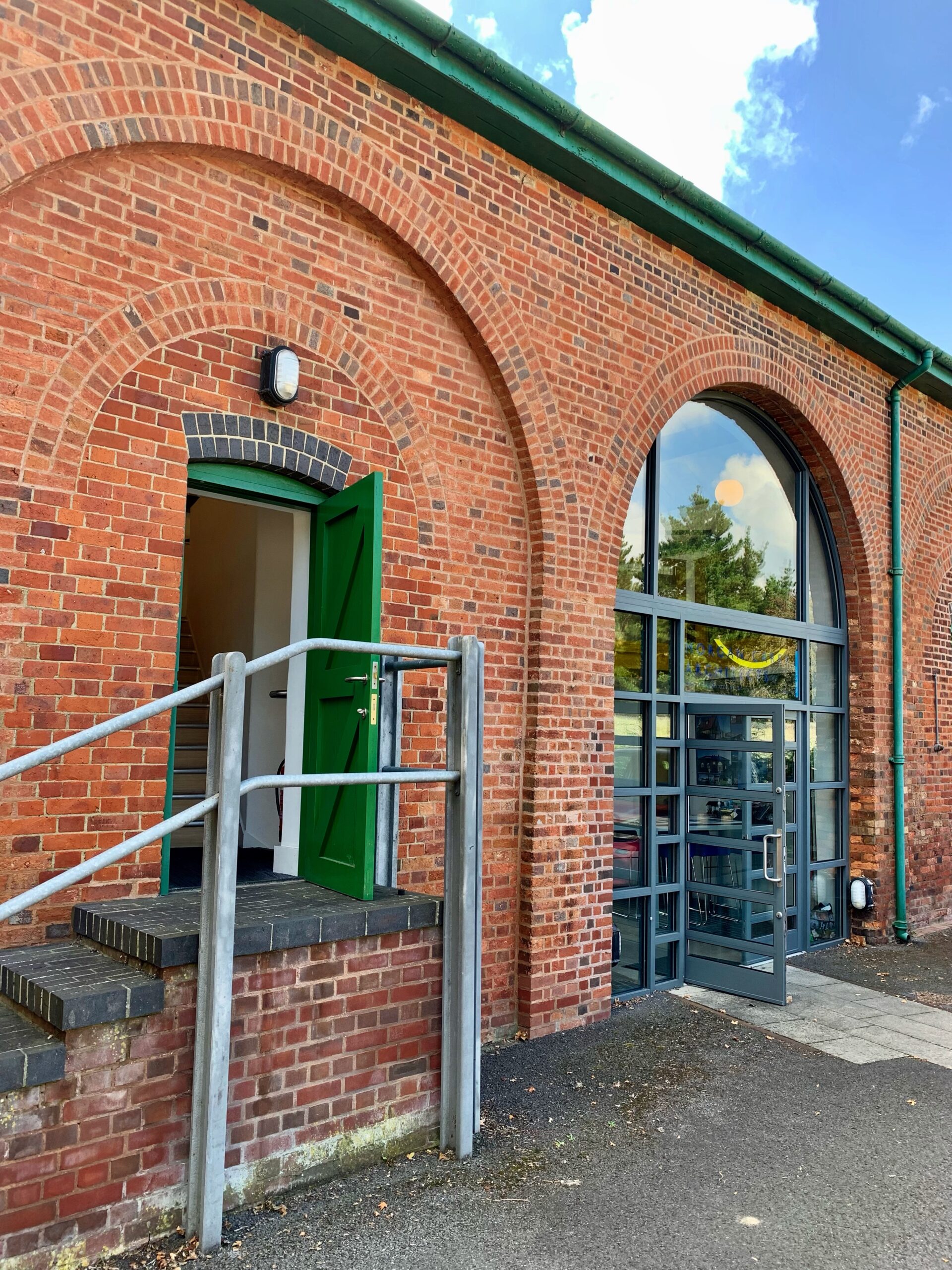
On Friday we took the opportunity provided by Heritage Open Days to visit Morgan Carey Architects in Wareham who restored the former Goods Shed for use as their offices. Originally constructed in red brick with a hipped slate roof in circa 1847 for the Southampton and Dorchester Railway, Morgan Carey have completed a stunning and sensitive restoration using as much original materials as possible. We very much enjoyed our visit and thanks to Mark for showing us around.
The former Goods Shed at Wareham – 15/09/2023A length of track marks the course of the rail line into the former Goods Shed at Wareham which is now the entrance to Morgan Carey Architects – 15/09/2023The new roof of the former Goods Shed in Wareham, the original roof having been destroyed by fire prior to the conversion work – 15/09/2023Rear of the former Goods Shed at Wareham showing what would have been access to the platform level – 15/09/2023
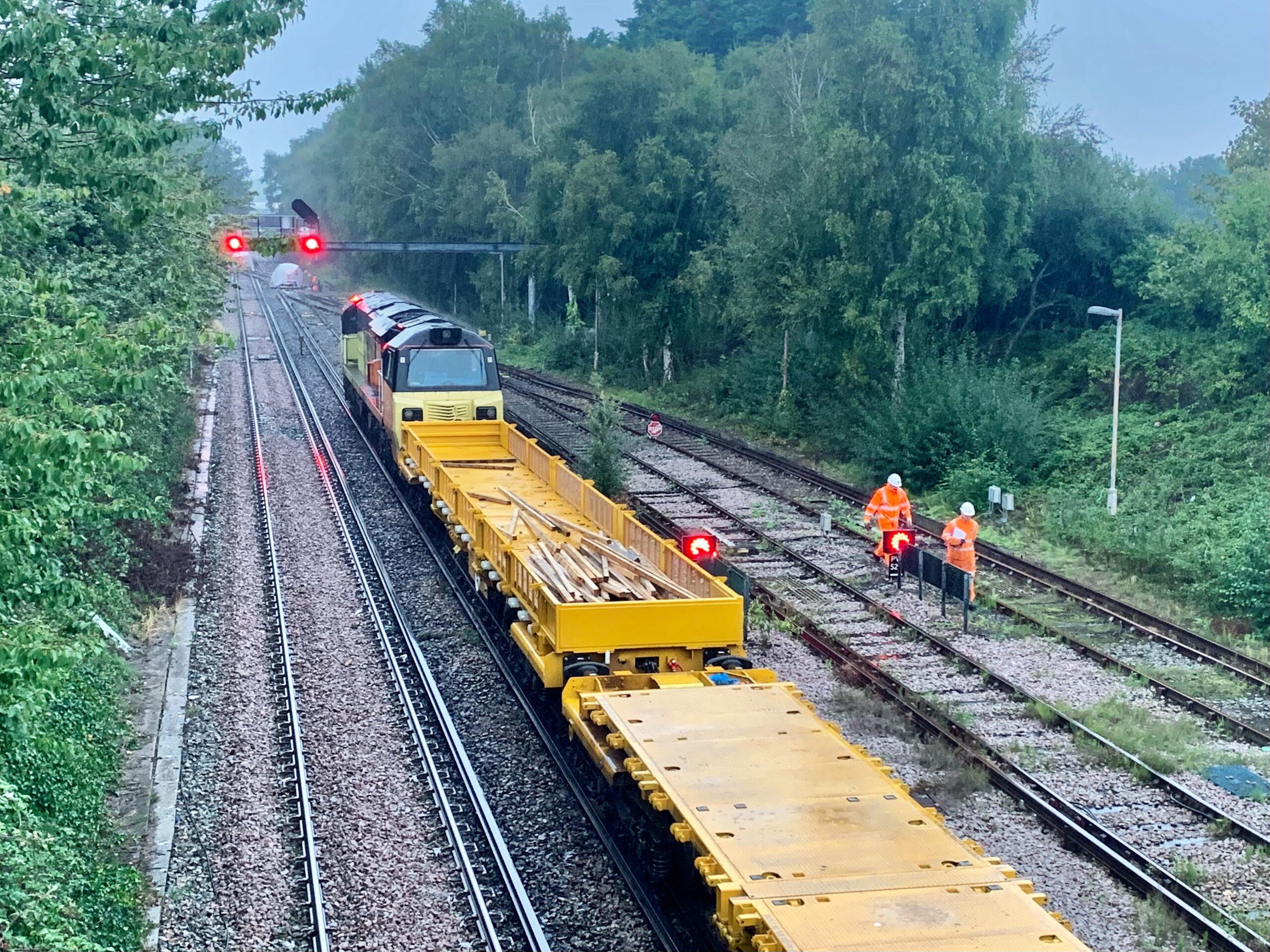
As mentioned above, the past weekend saw a number of engineering trains visit the Poole area as work necessitated the closure of the railway line between Bournemouth and Wareham. Buses ran between these two points, connecting passengers with trains running a revised service for onward journeys. Yoshi and I spent most of Saturday shuttling between Christchurch and Hamworthy in our attempts to see and document the work as a section of the down line west of Branksome was relayed. Track lifting started at a point near milepost 111 and extended under St. Osmunds and Sandecotes Road bridges down Parkstone Bank towards the station. The somewhat heavy rain on Sunday morning curtailed our observations and we refrained from going out to see the return workings of the engineers trains. Maybe we’ll do that next Sunday! I hope the following images capture a flavour of the activities being carried out.
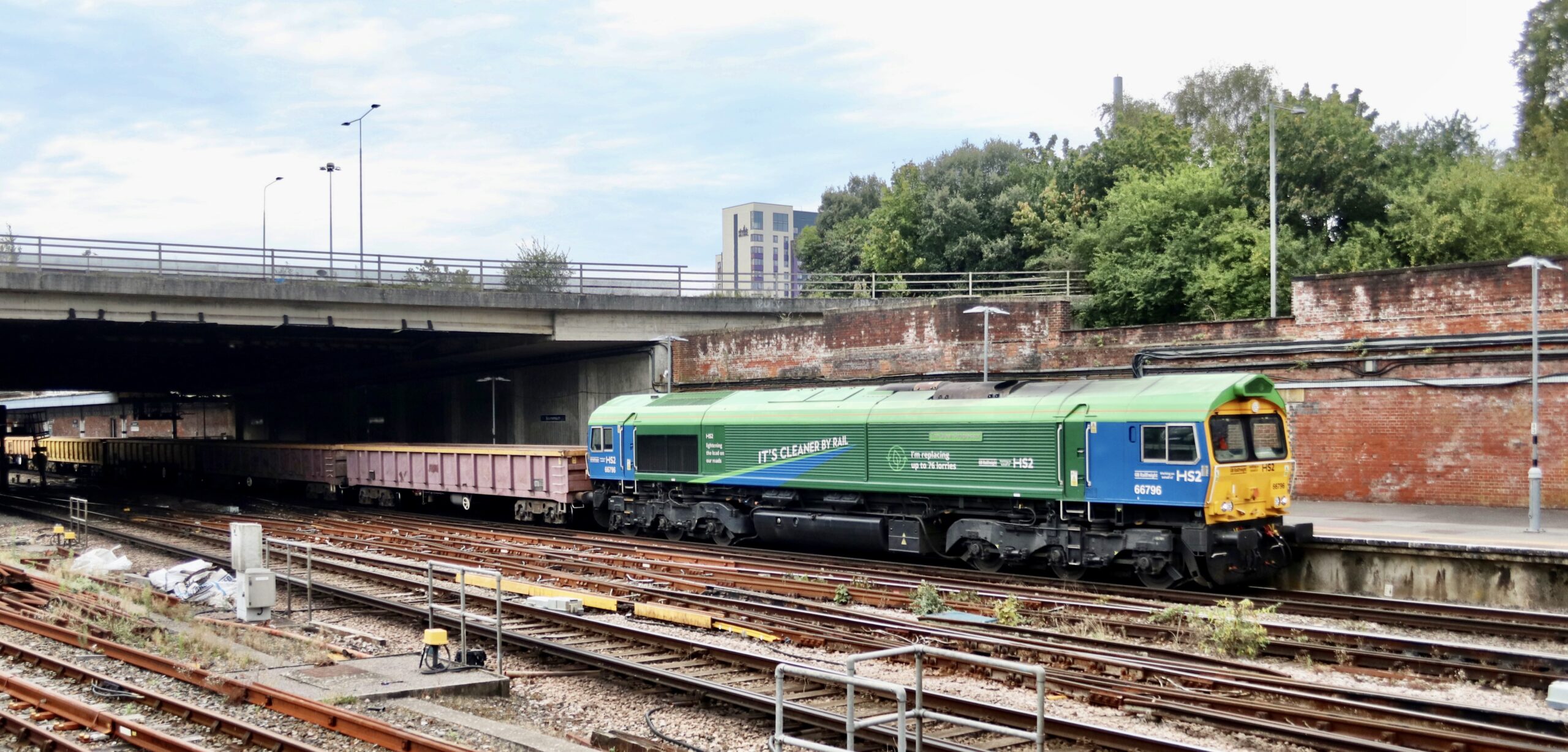
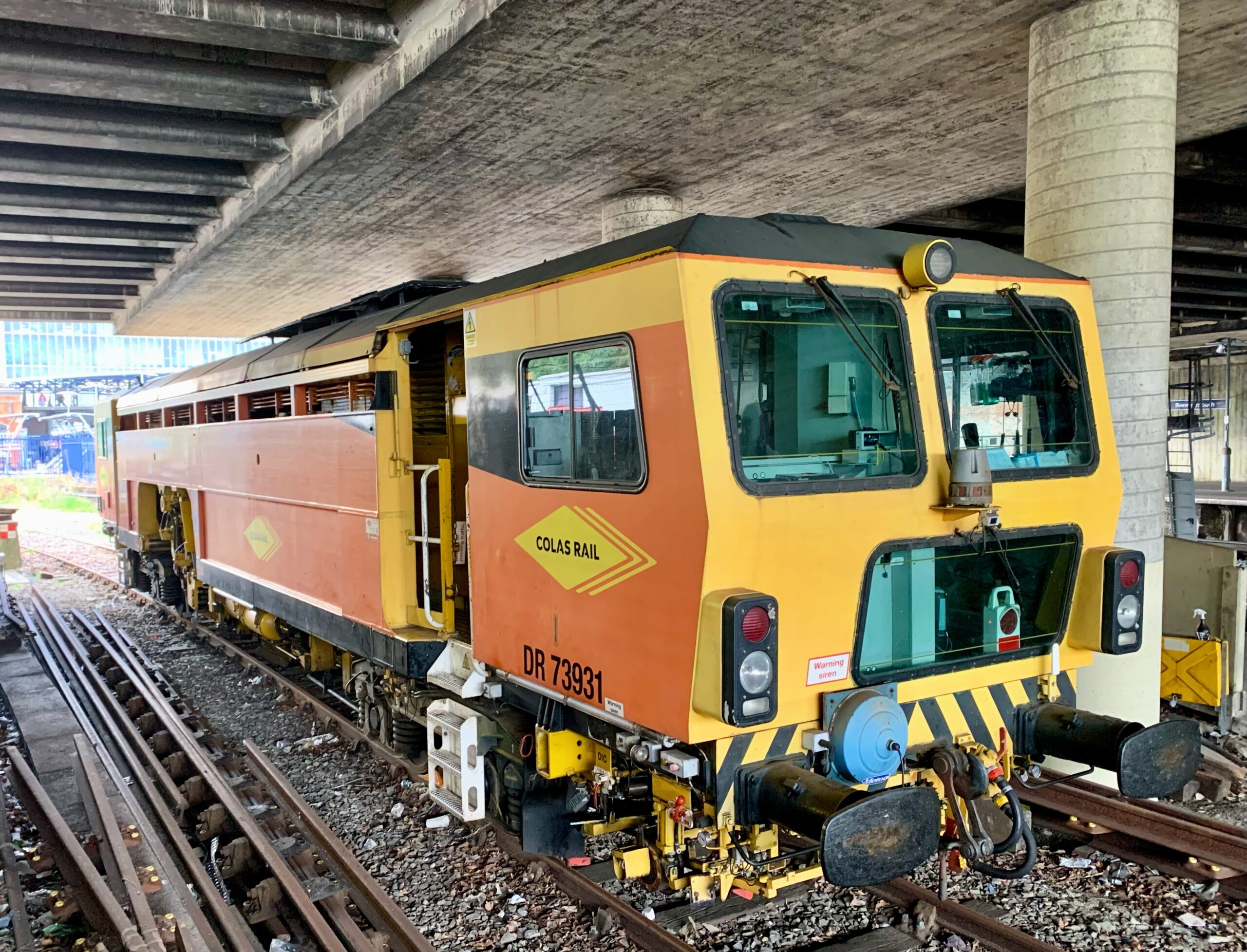
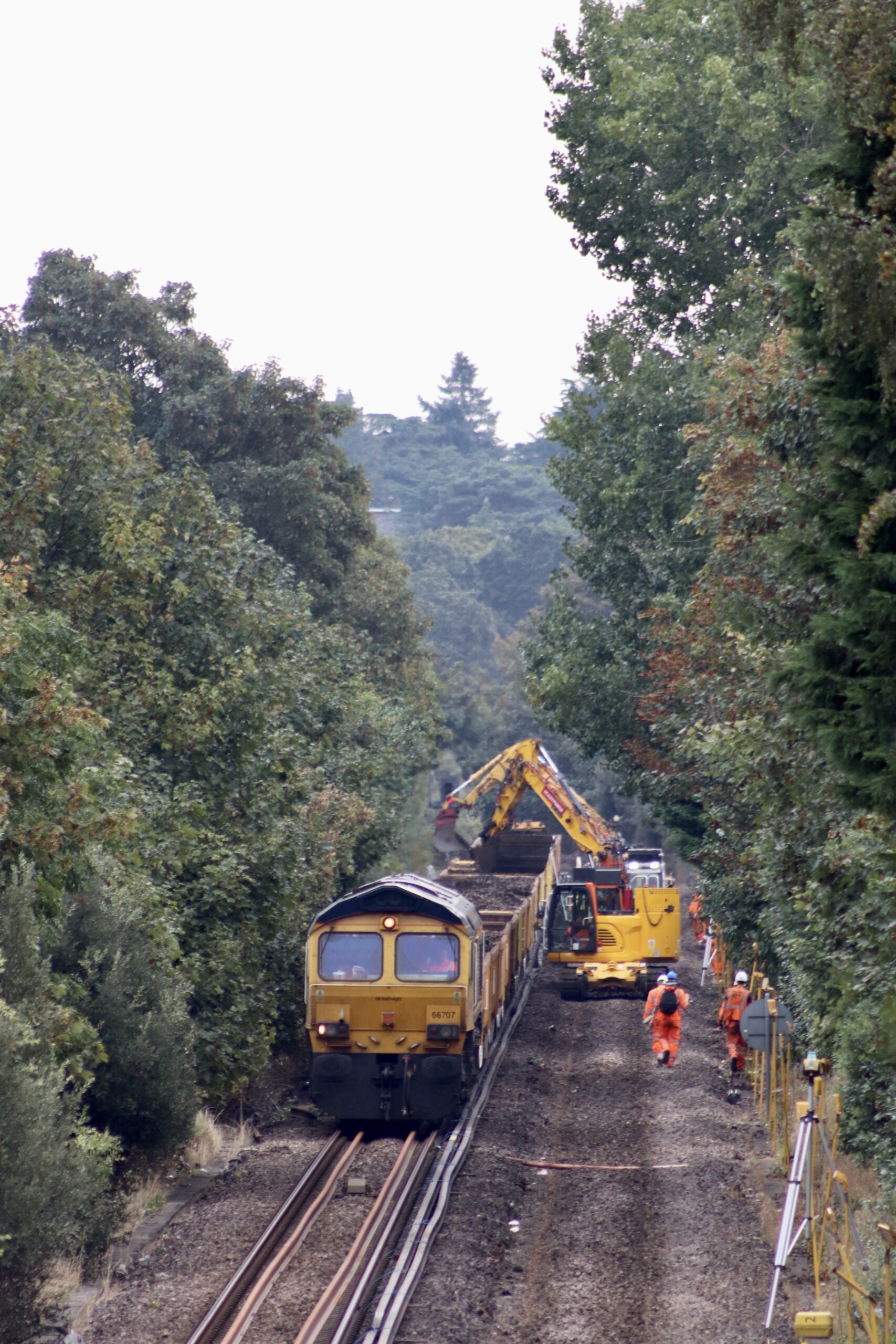
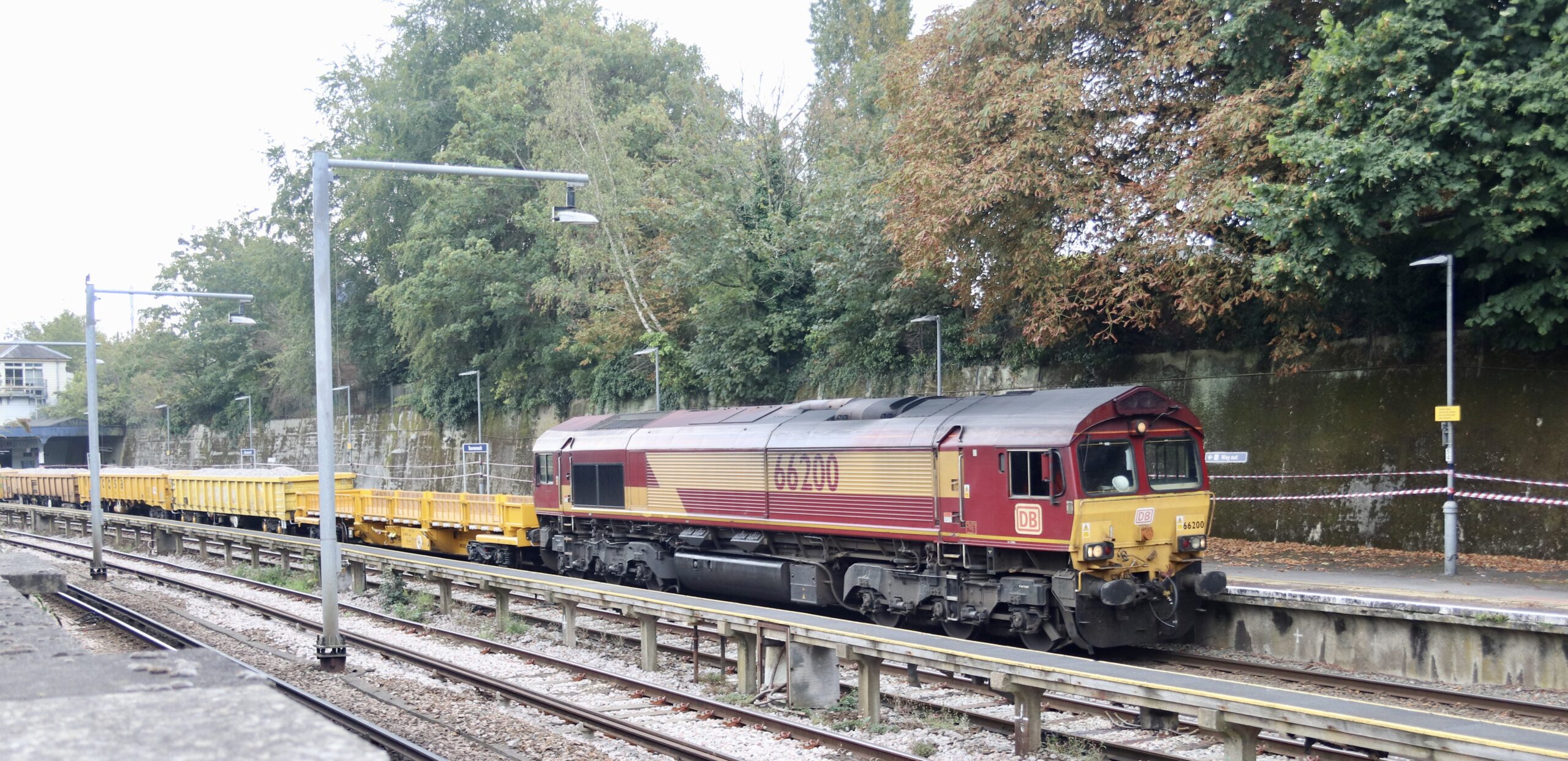
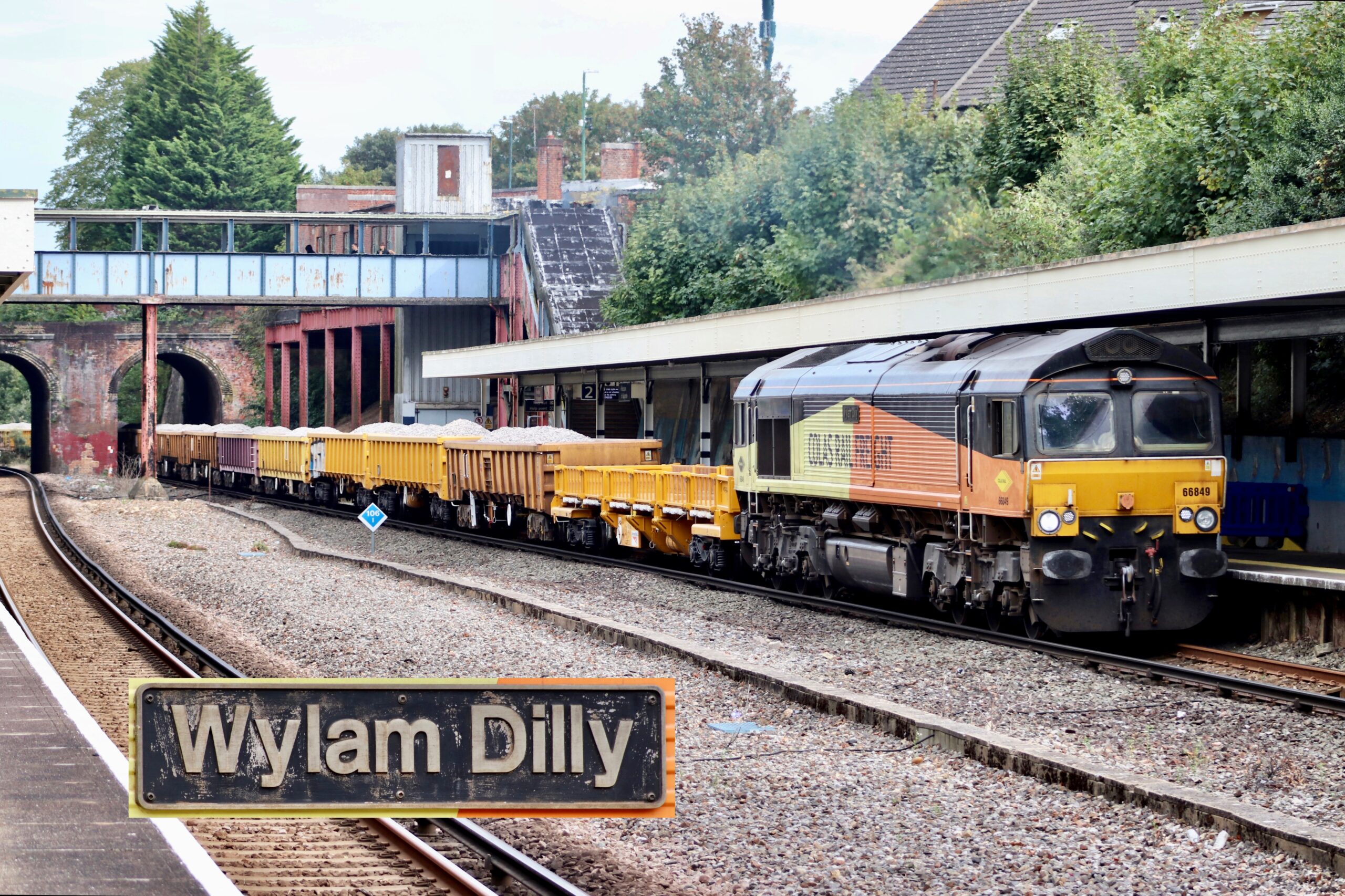
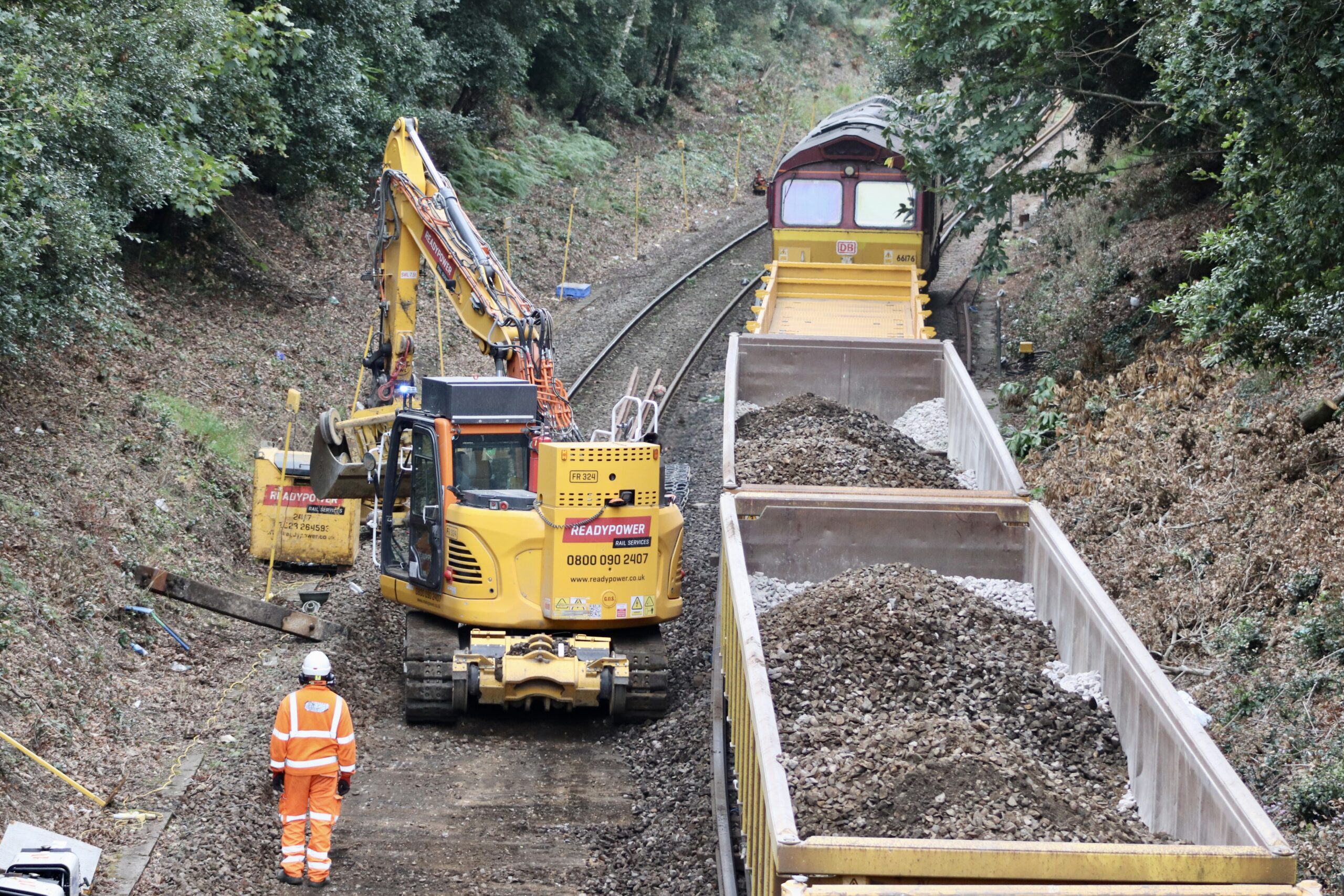
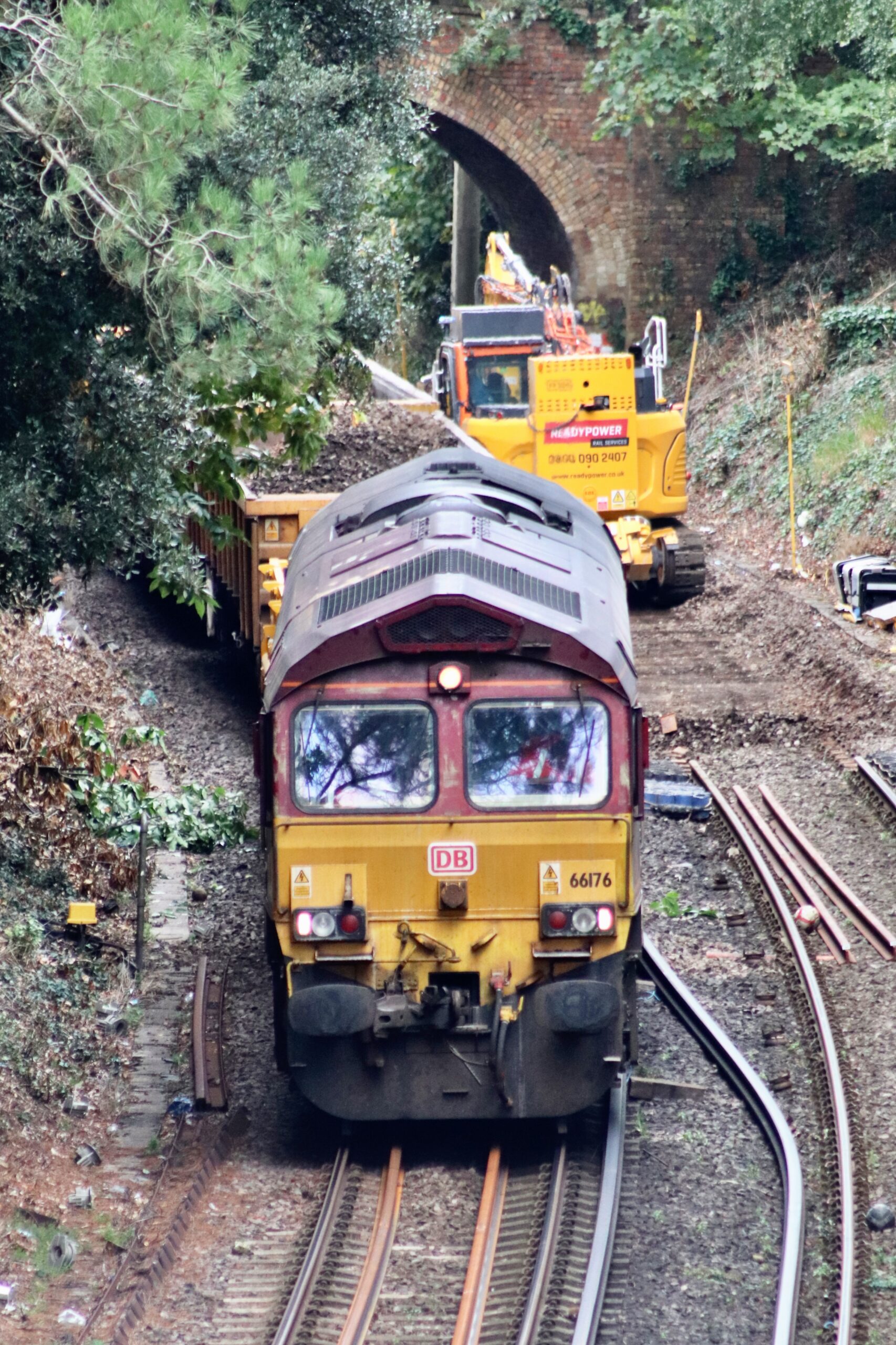
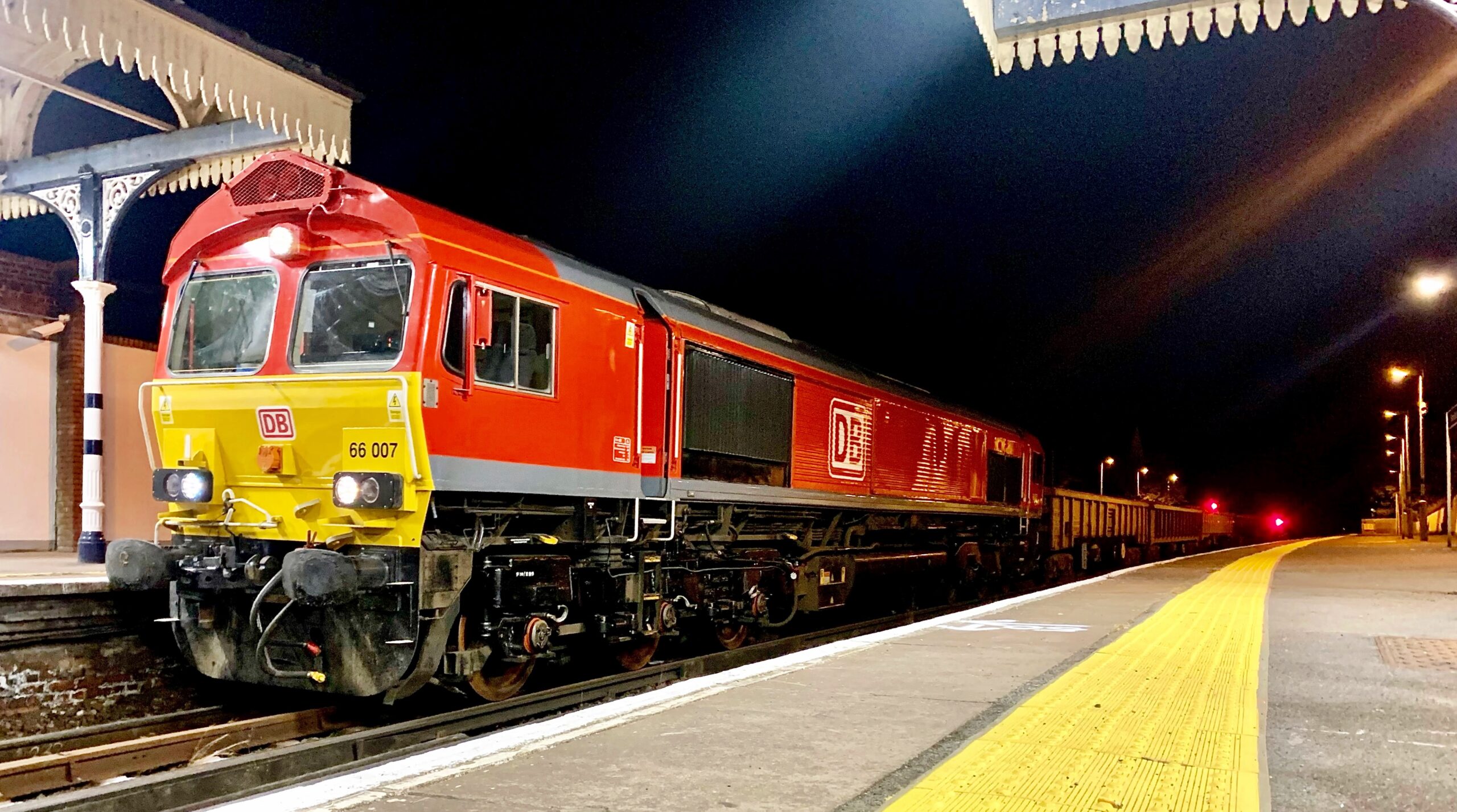
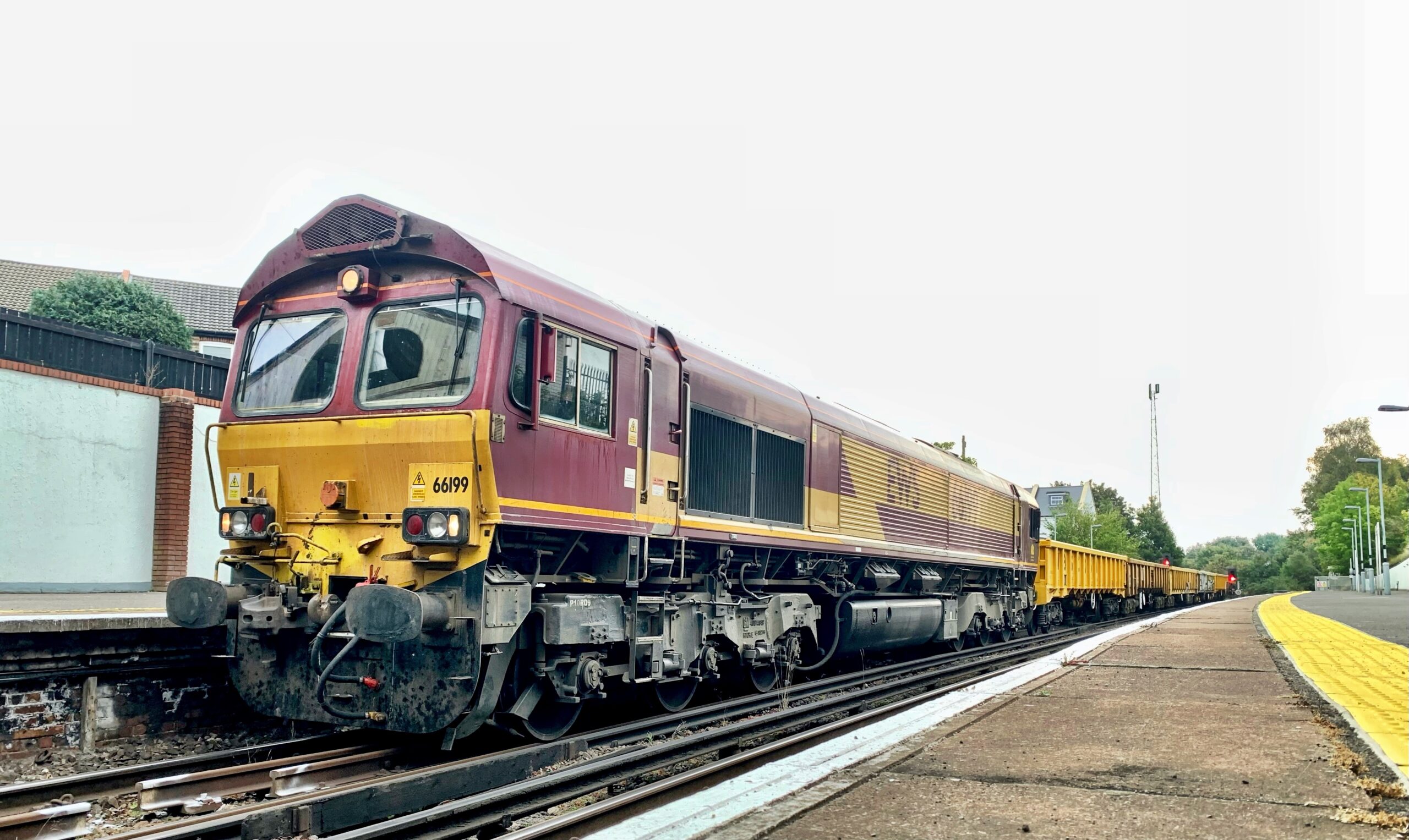
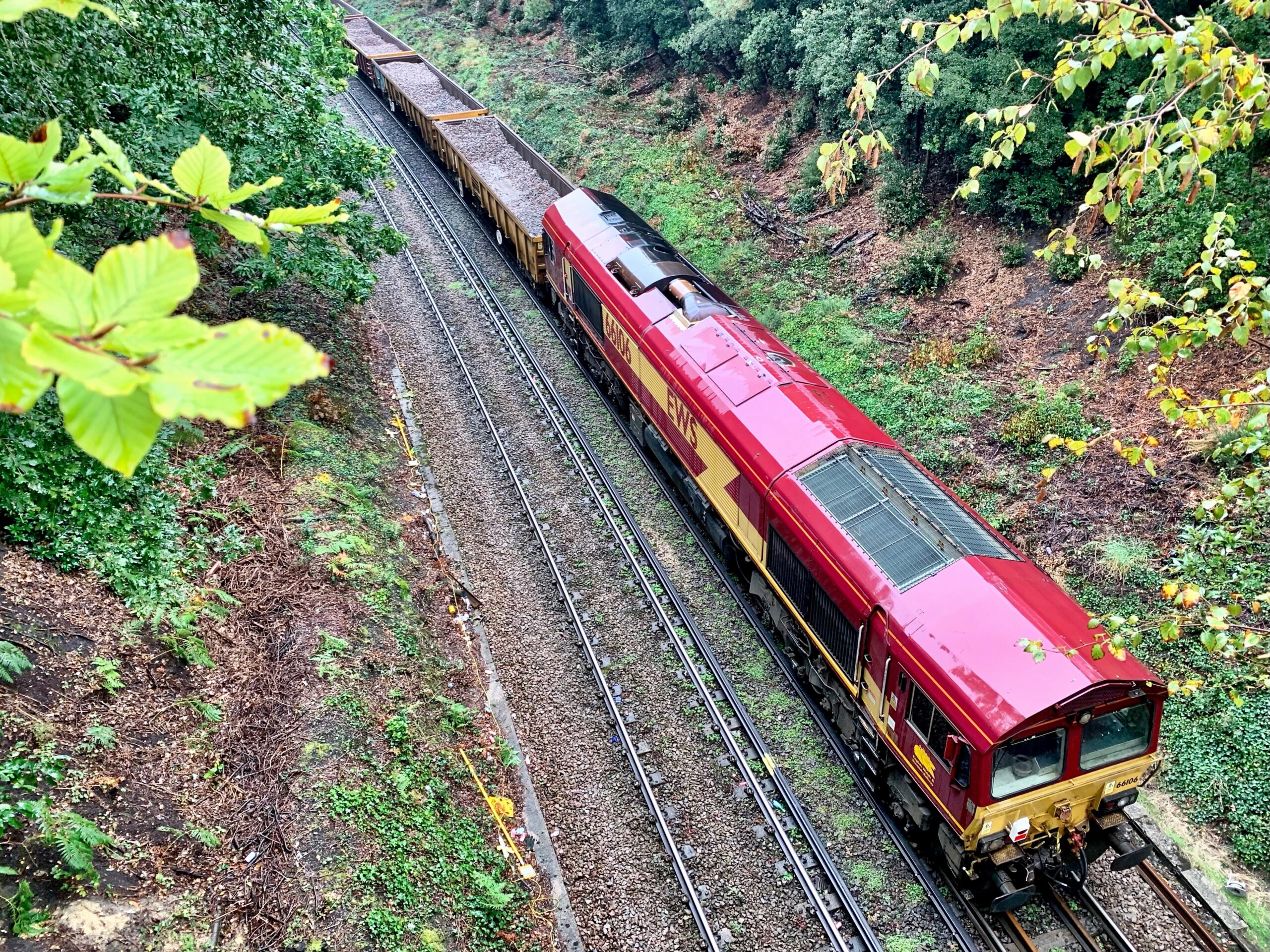
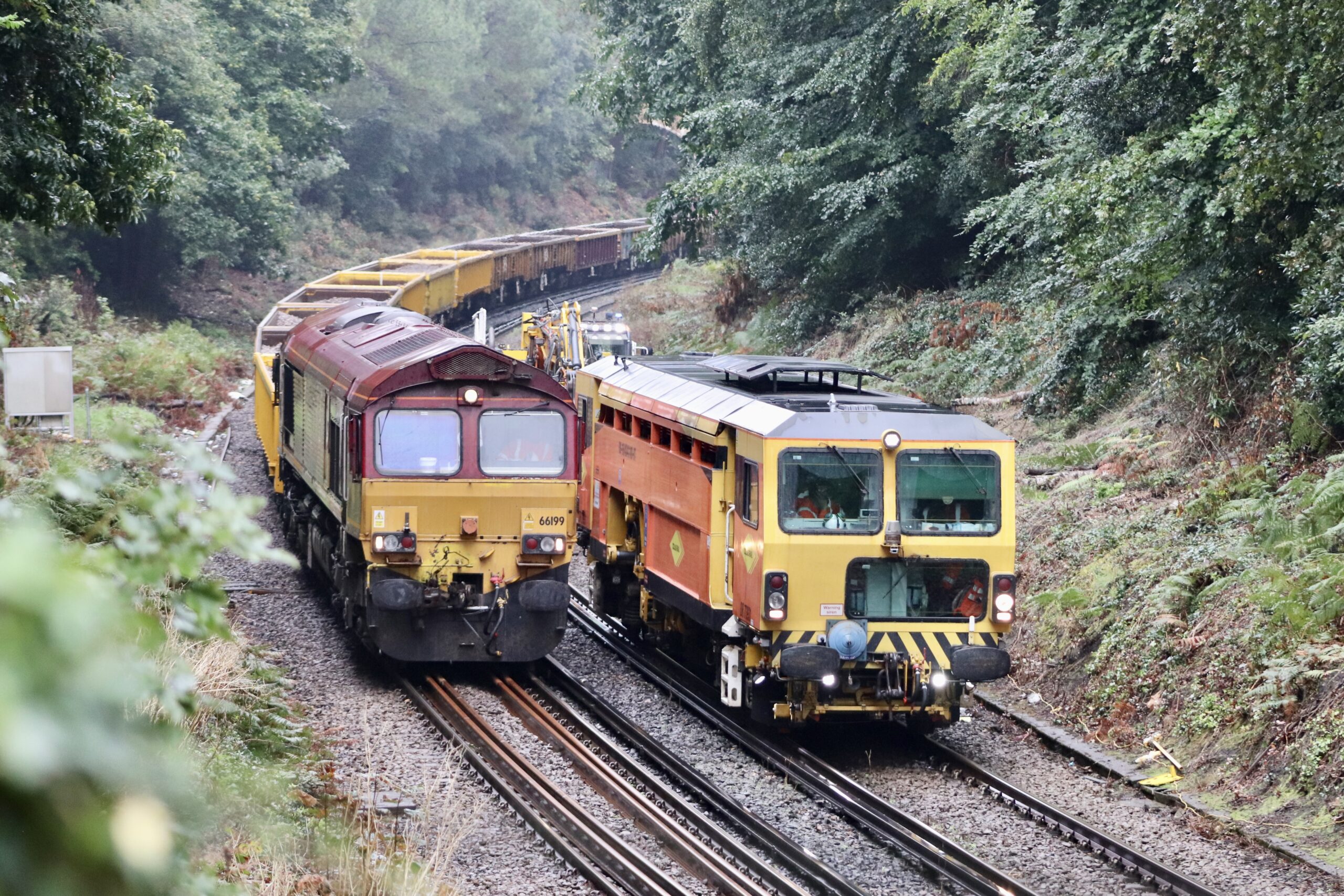
GBRf Class 66 No. 66796 ‘The Green Progressor’ arrives at Bournemouth working 6G13 0709 Eastleigh East Yard to Bournemouth – 16/09/2023Colas Rail DR73931 Track Maintenance Tamper in the siding at Bournemouth – 16/09/2023DB Cargo Class 66 No. 66176 at Christchurch at the head of 6N01 0809 Eastleigh East Yard to Bournemouth – 16/09/2023GBRf Class 66 No. 66707 ‘Sir Sam Fay Great Central Railway’ west of Branksome railway station – 16/09/2023Yoshi was pleased to tick off seeing GBRf Class 66 No. 66796 ‘The Green Progressor’ at Branksome – 16/09/2023Colas Class 66 No.66847 ‘Terry Baker’ passes through Poole with a train load of lifted track panels – 16/09/2023DB Cargo Class 66 No. 66200 6N02 1048 Eastleigh East Yard to Bournemouth – 16/09/2023DB Cargo Class 66 No. 66200 in the distance with its train of new ballast at the Parkstone worksite as work continues – 16/09/2023GBRf Class 66 No. 66707 ‘Sir Sam Fay Great Central Railway’ at Parkstone prior to running down through Poole and spending the night near Hamworthy – 16/09/20236C04 1348 Eastleigh East Yard to Bournemouth hauled by Colas Rail 66849 ‘Wylam Dilly’ passing Pokesdown – 16/09/2023With a train of wagons being filled with old ballast, DB Cargo Class 66 No. 66176 at the western extreme of the worksite – 16/09/2023DB Cargo Class 66 No. 66176 on Parkstone Bank – 16/09/2023Colas Class 70 No. 70803 speeds through Christchurch at the head of 6C05 1653 Eastleigh East Yard to Bournemouth – 16/09/2023DB Cargo Class 66 No. 66007 having worked 6N03 2154 Eastleigh East Yard to Bournemouth – 17/09/2023DB Cargo Class 66 No. 66199 at Branksome with a train of fresh ballast – 17/09/2023Another view of DB Cargo Class 66 No. 66199 at Branksome – 17/09/2023DB Cargo Class 66 No. 66007 at the work site – 17/09/2023DB Cargo Class 66 No. 66106 on Parkstone bank – 17/09/2023Colas Class 70 No. 70803 adjacent to Poole Storage Sidings in heavy rain. Plastic tents can be seen covering point work beyond where work was being carried out – 17/09/2023DB Cargo Class 66 No. 66199 and Colas Rail DR73931 Tamper at Parkstone – 17/09/2023DB Cargo Class 66 No. 66007 stands in Poole station – 17/09/2023Colas Rail Class 70 No. 70803 seen from Sterte Road Bridge – 17/09/2023
For the record, the incoming Permanent Way trains began to leave Eastleigh East Yard late on Friday 15th September with the majority arriving in Dorset on the Saturday.
As each train fulfilled its need, collecting old track panels, empty wagons for the collection of old ballast or wagons full of new stone, most then passed through Poole and were stacked across Holes Bay awaiting their return to Eastleigh which commenced on Sunday evening.
Trains were stacked across the Holes Bay causeway while not in use. An early morning view of Colas Class 66 No. 66849 ‘Wylam Dilly’ and DB Cargo No. 66200- 17/09/2023The view across Holes Bay – 17/09/2023GBRf Class 66 No. 66707 ‘Sir Sam Fay Great Central Railway’ seen amidst the trees of Upton Park – 17/09/2023Colas Class 66 No.66847 ‘Terry Baker’ sits above Blandford Road, Hamworthy – 17/09/2023
The workings and the associated motive power were:
6C03 2355 Eastleigh East Yard to Branksome – Colas Rail No. 66847 ‘Terry Baker’
6G12 0315 Eastleigh East Yard to Bournemouth – GB Railfreight No. 66707 ‘Sir Sam Fay Great Central Railway’
6G13 0709 Eastleigh East Yard to Bournemouth GB Railfreight No. 66796 ‘The Green Progressor’
6N01 0809 Eastleigh East Yard to Bournemouth DB Cargo No. 66176
6N02 1048 Eastleigh East Yard to Bournemouth DB Cargo No. 66200
6C04 1348 Eastleigh East Yard to Bournemouth Colas Rail No. 66849 ‘Wylam Dilly’
6C05 1653 Eastleigh East Yard to Bournemouth Colas Rail No. 70803
6N03 2154 Eastleigh East Yard to Bournemouth DB Cargo No. 66007
6N04 2352 Eastleigh East Yard to Bournemouth DB Cargo No.’s 66199 and 66106
Video of Dorset Permanent Way trains over the weekend of 16/17th September 2023
As an aside, North Dorset also saw engineering work take place on Sunday 17 September 2023 when the West of England main line was closed between Templecombe and Gillingham. As far as I’m aware there were no PW trains allocated to this work.
Monday 18th September 2023 saw the final chapter for CrossCountry HST’s in use for scheduled passenger trains across the UK network. I was in two minds if to head out and see the last working heading from Plymouth to Leeds as the weather wasn’t particularly good on the day. However, with a few hours respite from the rain forecast and the XC trains on divert via Castle Cary and Westbury because of engineering work in the Worle area, I set off towards Langport as I was hopeful of photographing the train at Foal Mead Viaduct. Located just outside the small town of Langport, the structure consists of two half through girder spans, a truss span and two masonry arch spans. It’s a lovely spot where the main line between Cogload Junction and Castle Cary crosses the River Parrett and I was inspired to seek the location out after seeing recent photos taken by Robin Procter.
To find out about the recent renovation work on the viaduct carried out by Taziker and the challenges this presented, look here.
InterCity Swallow liveried CrossCountry HST Class 43 power car No. 43008 leading 1E73 1627 Plymouth to Leeds crossing Foal Mead Viaduct – 18/09/2023The final full length timetabled HST CrossCountry working crosses the River Parrett. The iron lattice girder railway bridge built in 1853, was recently totally refurbished as part of a major works to re-stabilise the earth embankment close to its approaches – 18/09/2023CrossCountry HST Class 43 power car No. 43007 in retro British Rail livery at the rear of 1E73 1627 Plymouth to Leeds crossing Foal Mead Viaduct, also know as Langport Viaduct or Pool Mead Viaduct, constructed 1900-1906 in RBE brick with 10 spans – 18/09/2023
Two tours are planned to celebrate the XC farewell to the HST, the first being a public tour between Leeds, Swanage and Bournemouth on the 26th September, followed by a staff jolly between Plymouth and Blackpool North on the 29th.
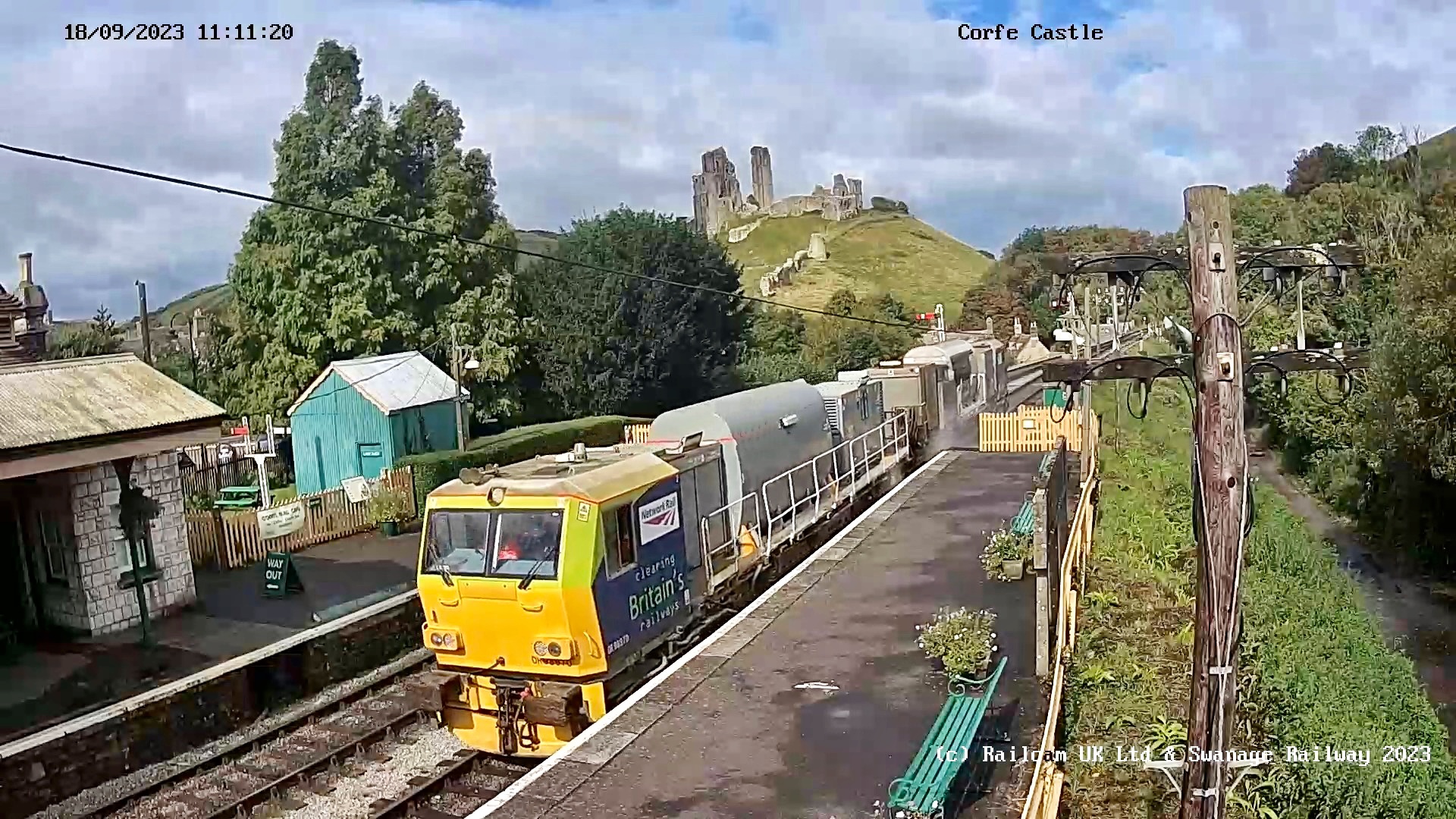
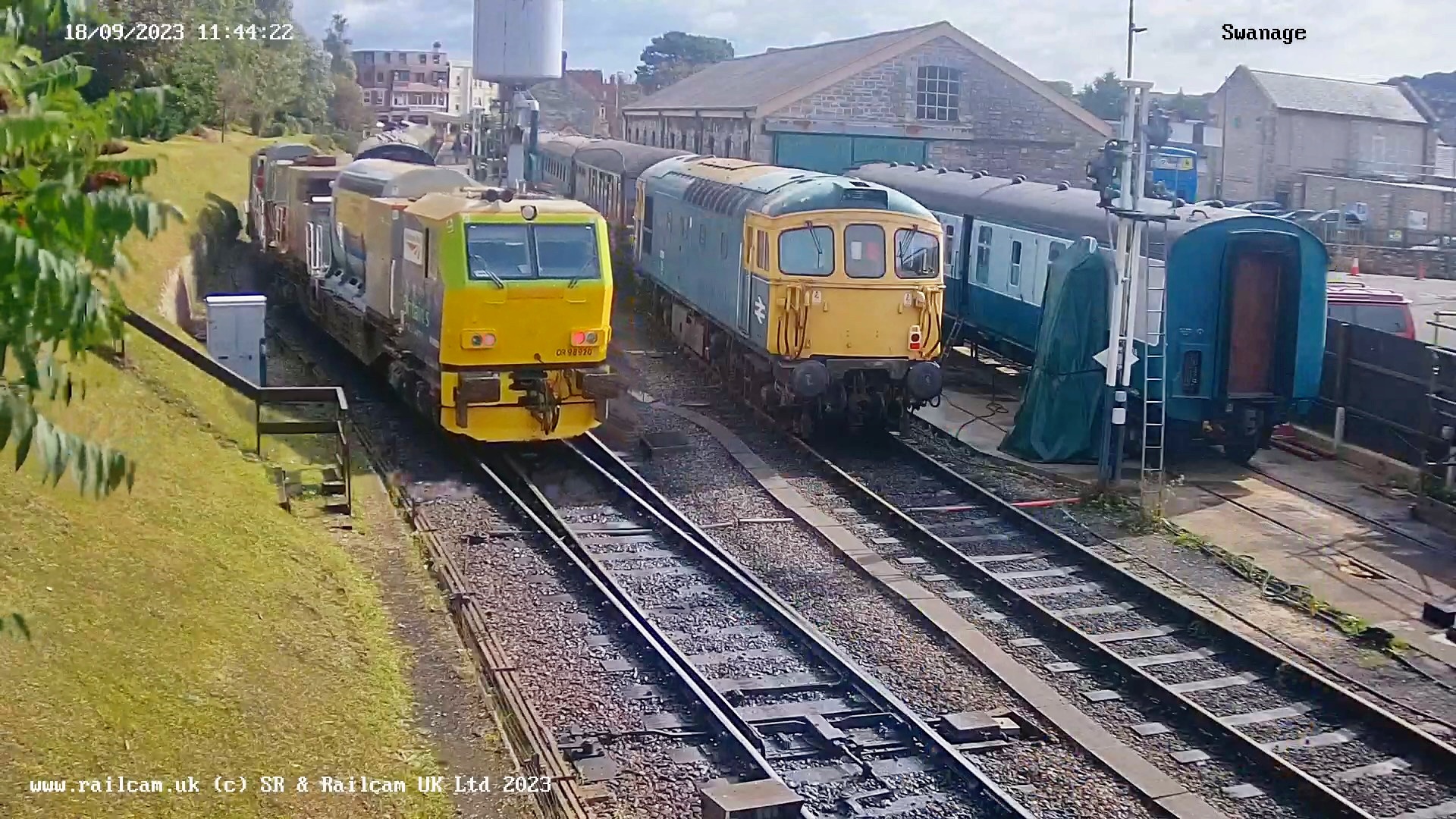
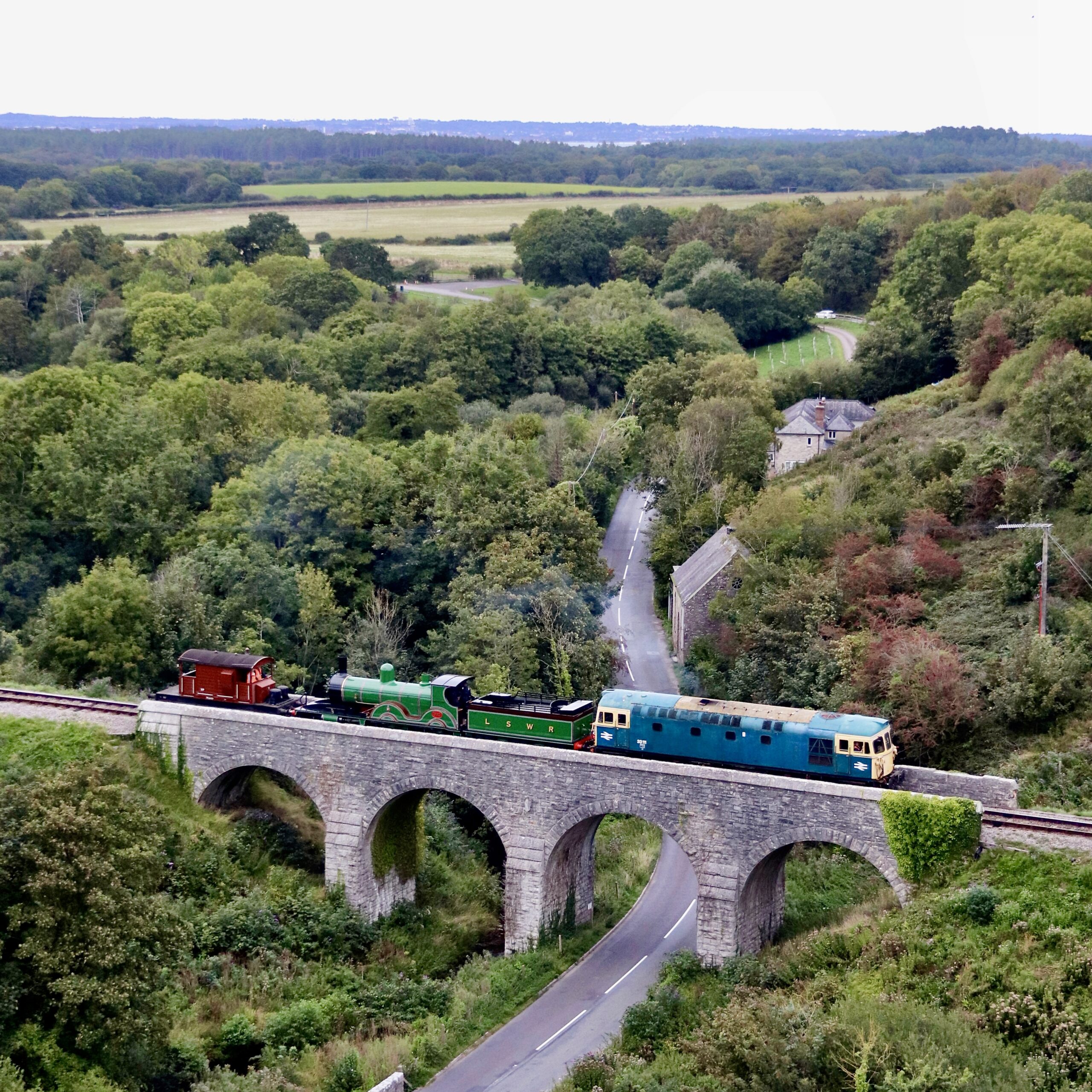
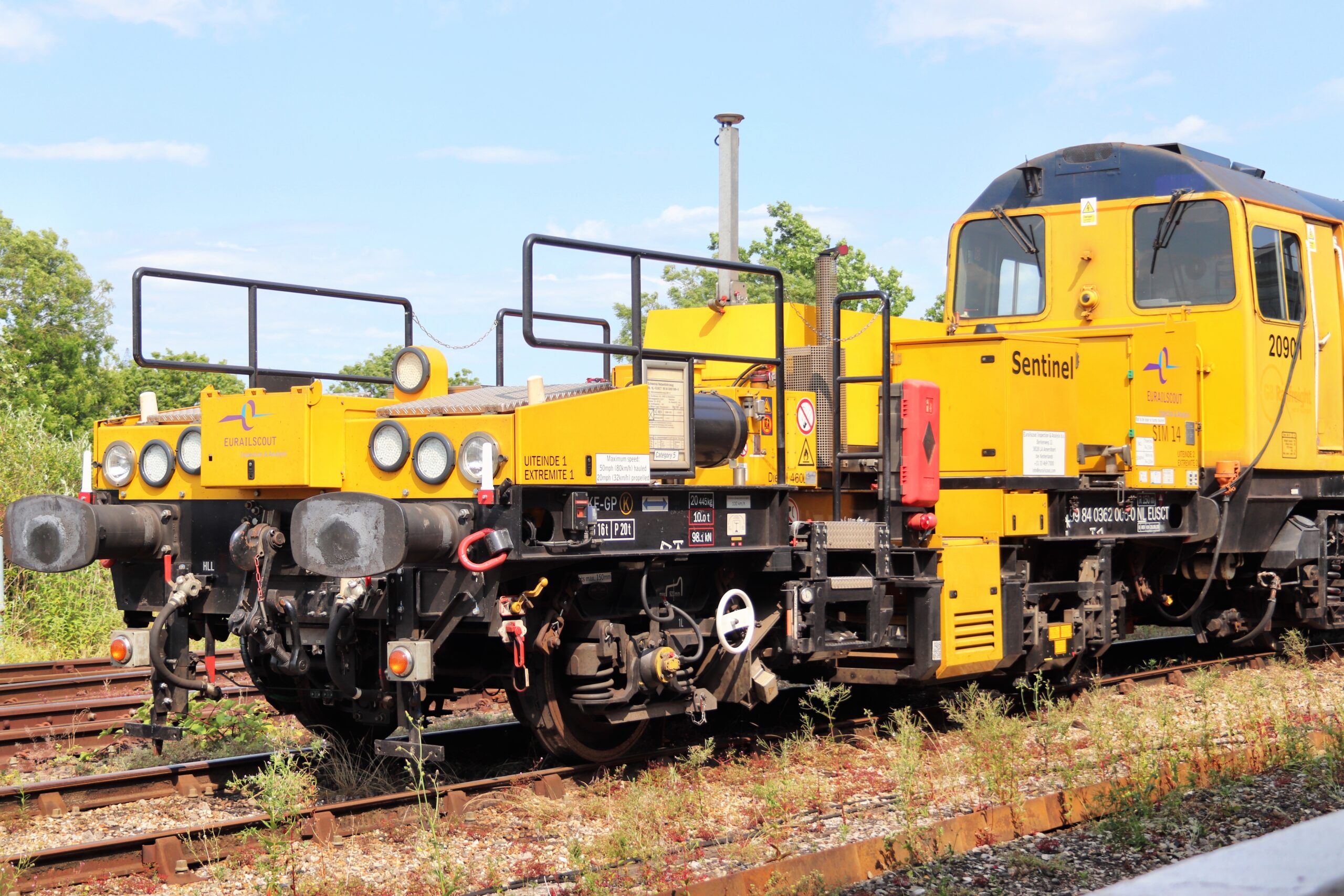
A Multi-Purpose Vehicle (MPV) running a rail head treatment working ran from Totton Yard to Swanage on Monday 18th September 2023. I wasn’t able to go and see the Network rail machine on heritage rails, but with the magic of the Swanage Railway webcam, I was able to watch some of its activities.
Network Rail MPV DB98920 + DB98970 arrives at Corfe Castle as 6Z21 0935 Totton Yard to Swanage – 18/09/2023Rail Head Treatment Train Network Rail MPV DB98920 + DB98970 6Z21 0935 Totton Yard to Swanage passes Class 33 No. 33111 at Swanage – 18/09/2023
Hamworthy Branch Update: Along with the already reported Network Rail work for a bridge inspection which sees the closure of Lake Road from its junctions with Normandy Way/Lake Drive to its junction with Coles Avenue on 21st November 2023 at 2100 until 0500 the following morning, there is a further planned closure in January 2024. This time the road will be closed for what are described as “Works for Rail Purposes” from 2200 on the 8th January 2024 until 0600 on the 12th January 2024.
We asked Network Rail for an update on the Hamworthy Branch and they responded: “we are still looking to acquire funding for the Poole Harbour Port works to provide the infrastructure for freight traffic to start, this traffic being largely aggregates traffic. Over the last 6 months or so, the branch line has been put in a state of readiness by our maintenance teams, this is an ongoing process and includes the bridge inspections that you have referred to.
We remain hopeful we will see freight traffic return to Poole via the Hamworthy Branch and would predict 2025 for this if everything falls into place although this as you can imagine is always subject to change.”
Bournemouth, Christchurch and Poole (BCP) Council are reviewing its strategic transport priorities and welcome our input. Recommendations for potential transport improvement schemes have been grouped into five clusters and relate to locations within the BCP Boundary, including local railway stations, Poole Port Expansion and the reopening of the Hamworthy Branch along with two further clusters with wider scope where one of these includes the South West Main Line.
Thanks for reading. It was good to meet up with fellow enthusiasts at the weekend as we all took the opportunity to watch the toing and froing of the engineering works. Be seeing you!
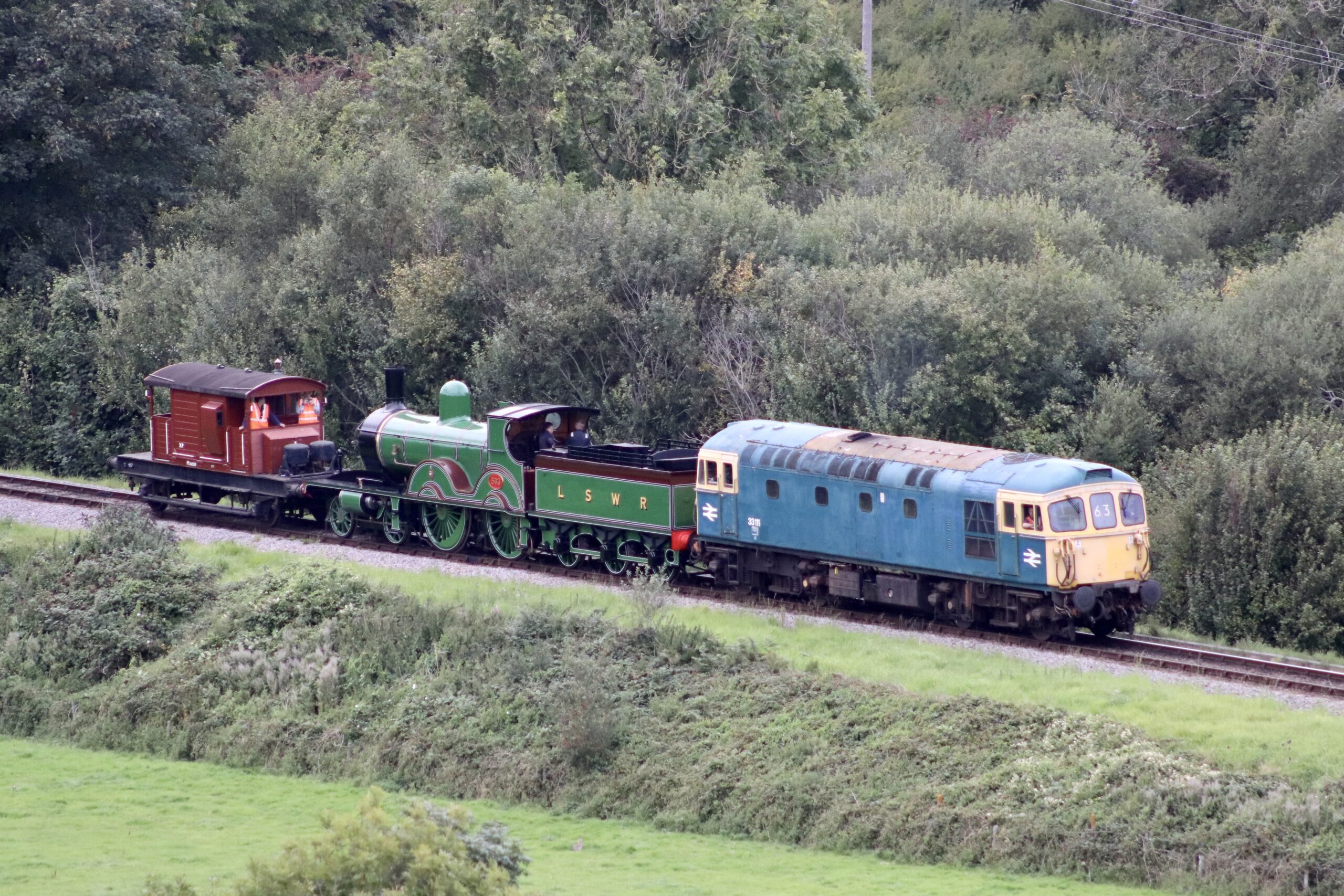
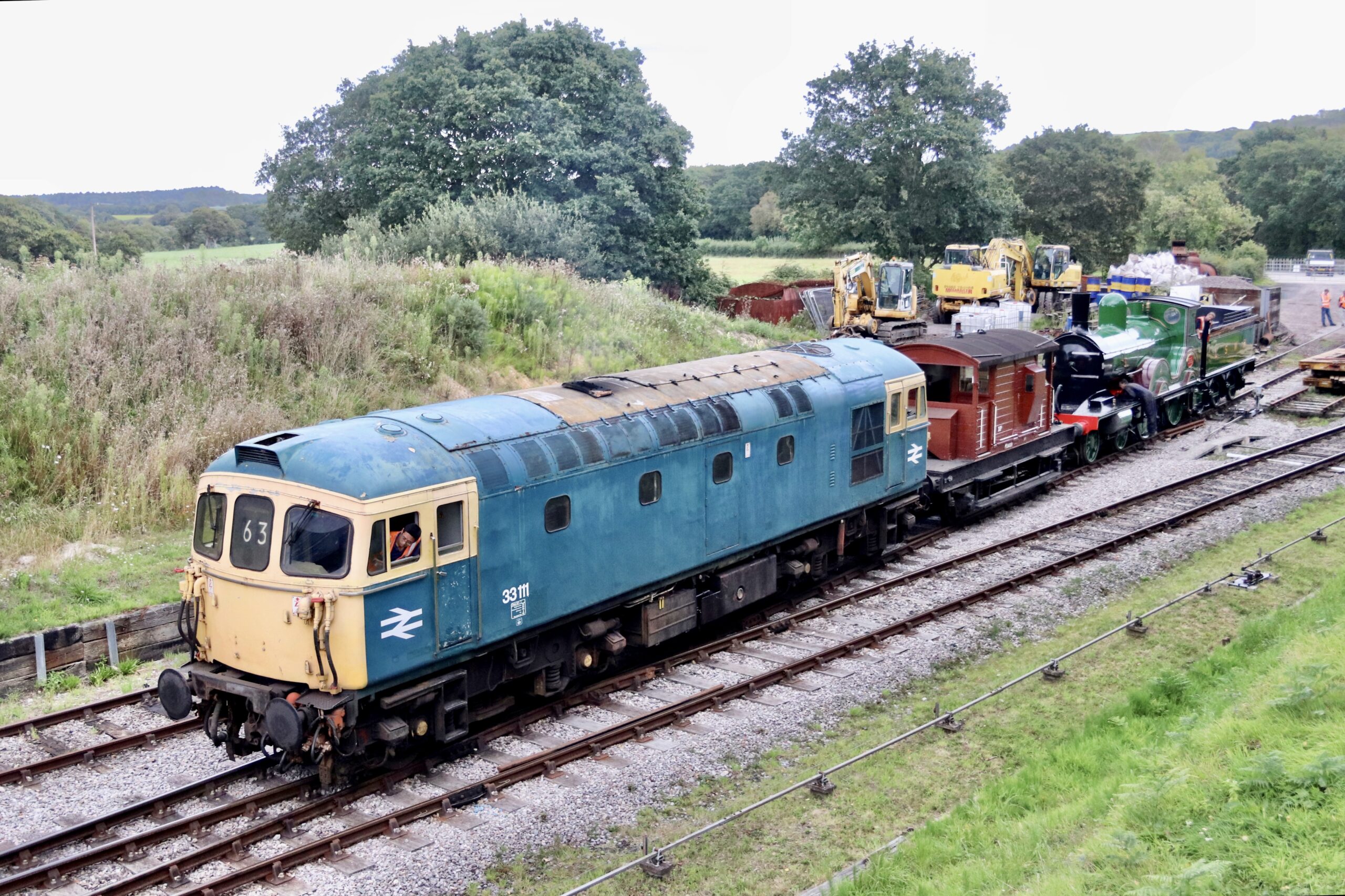
Swanage resident Class 33 No. 33111 tows Adams T3 4-4-0 No. 563 from Norden to Swanage – 30/08/2023
August 30th 2023 to September 5th 2023
Wednesday August 30th was a busy day for local rail activity in our part of Dorset with a Class 458/5 unit drag scheduled from Bournemouth depot and the return of a Victorian era “Top Link” engine in the form of London & South Western Railway (LSWR) Adams T3 4-4-0 No. 563 to the Swanage Railway following her six year overhaul. And with both these things scheduled to happen 17 miles apart at relatively the same time it was time for a plan!
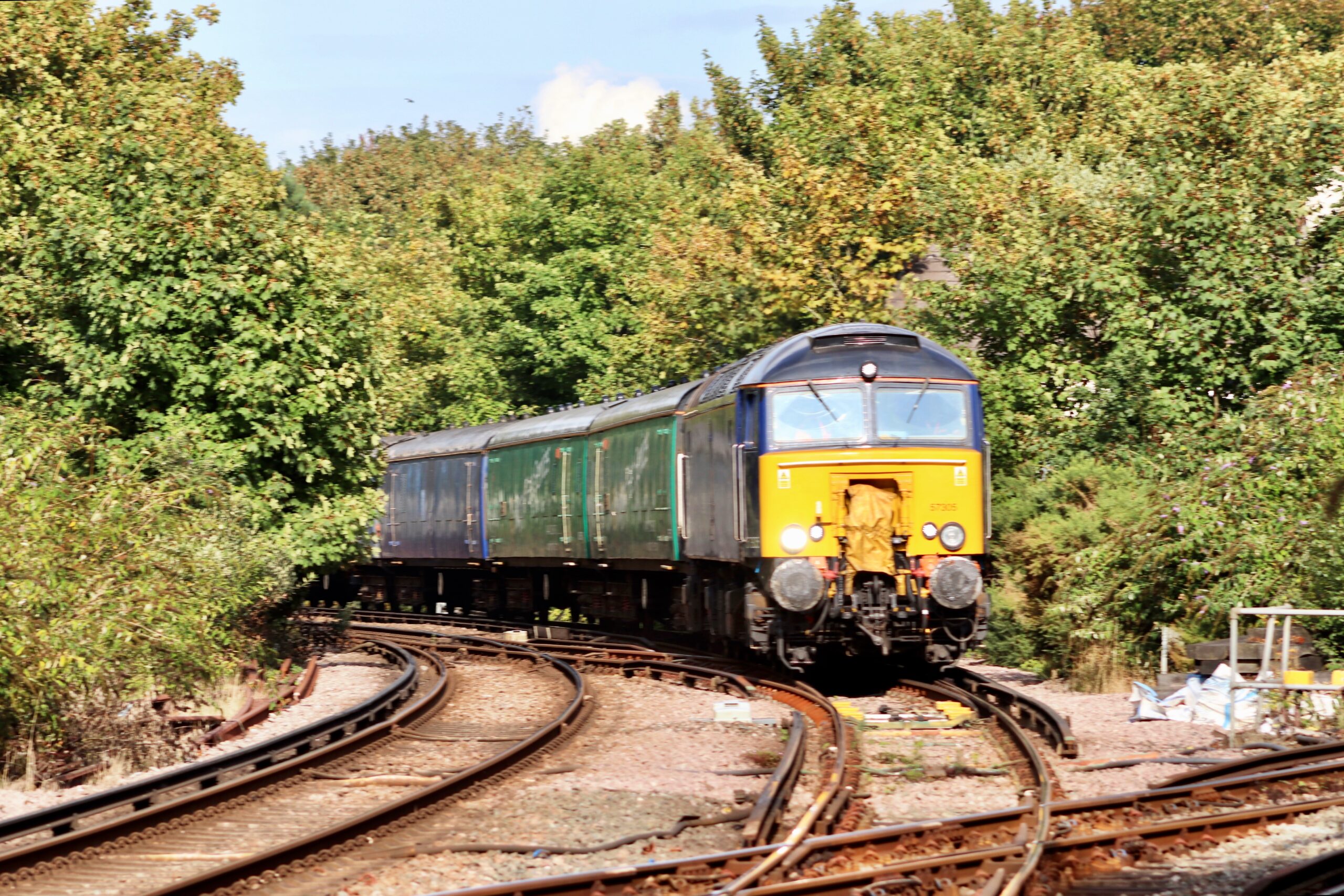
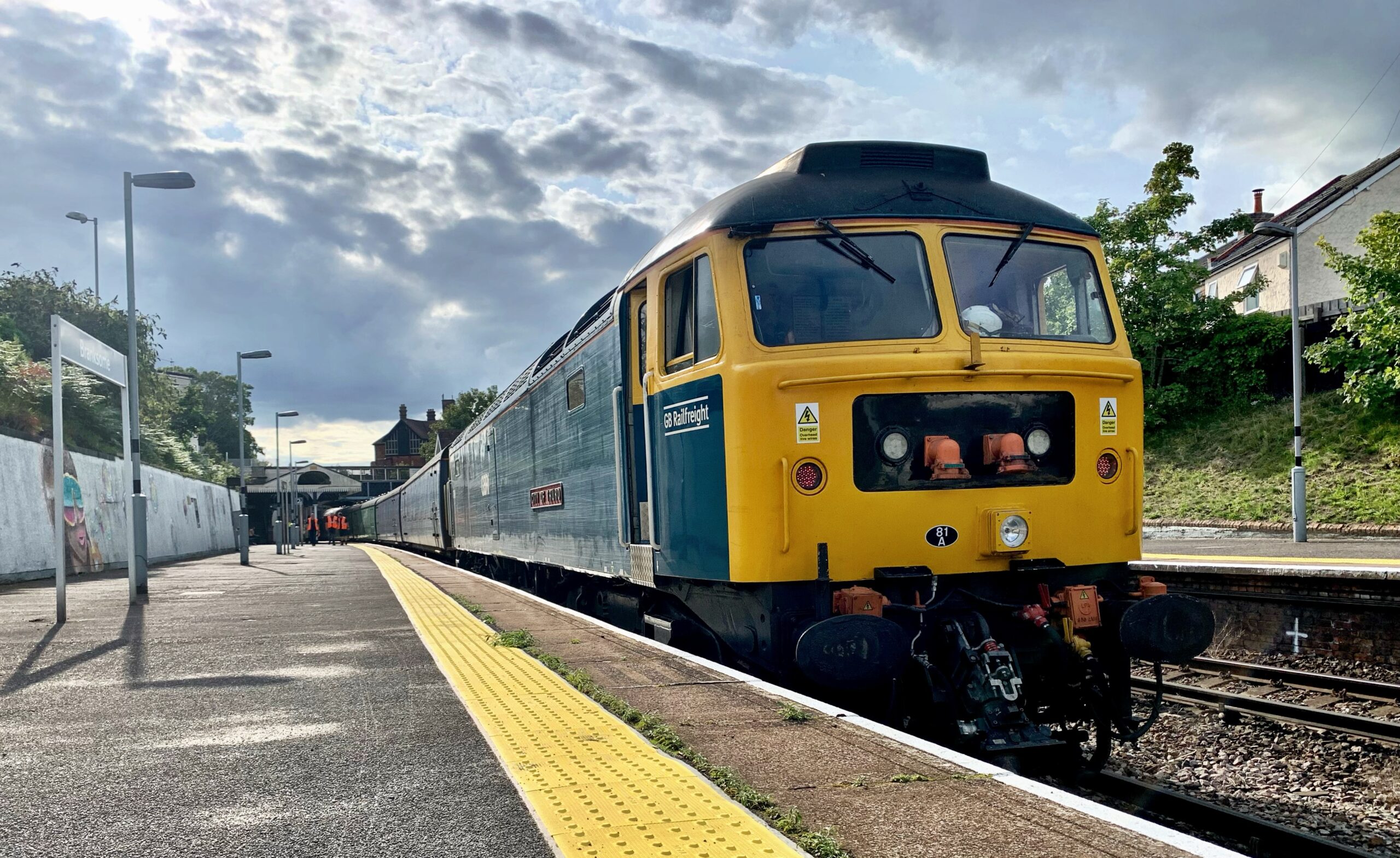
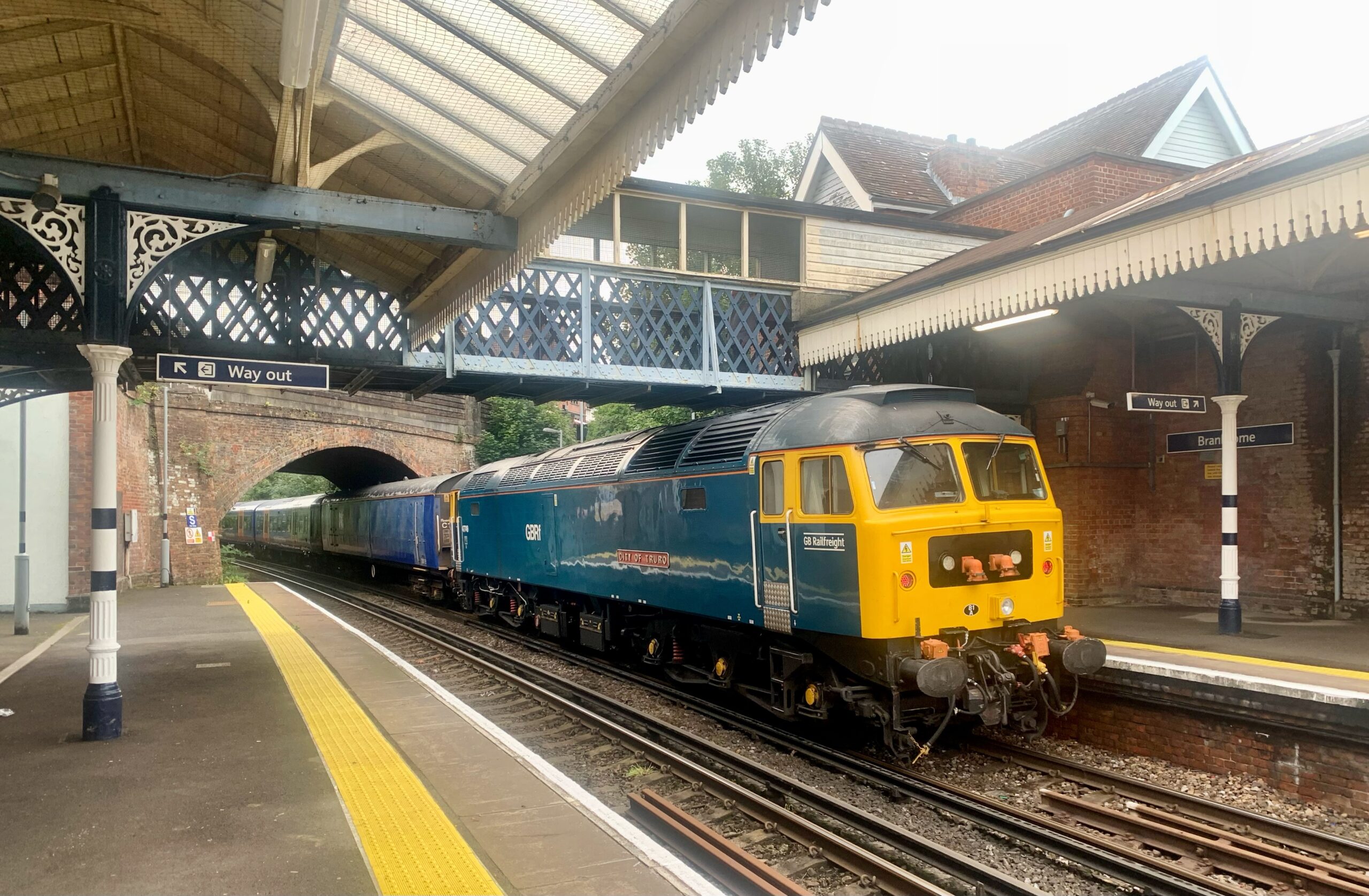
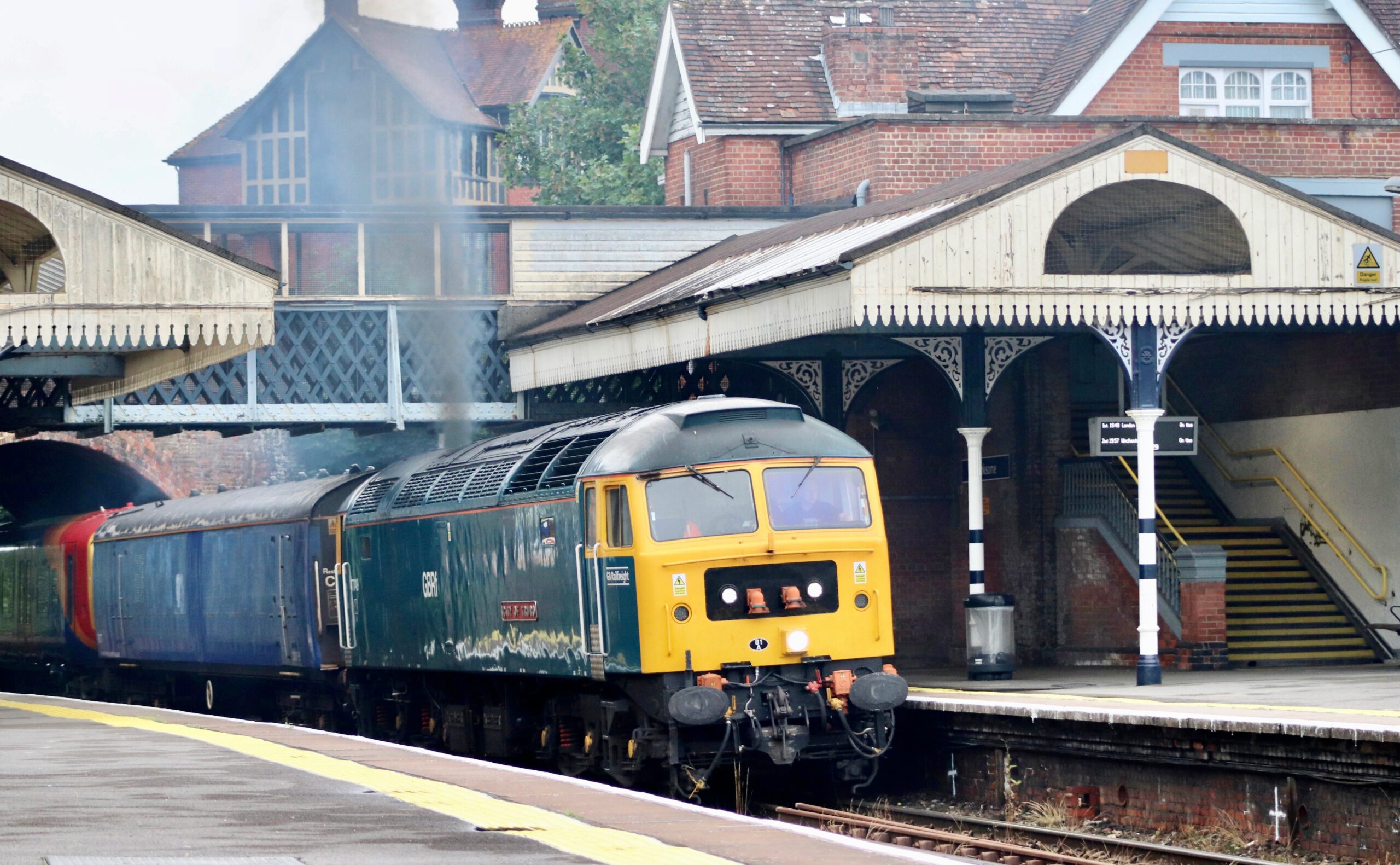
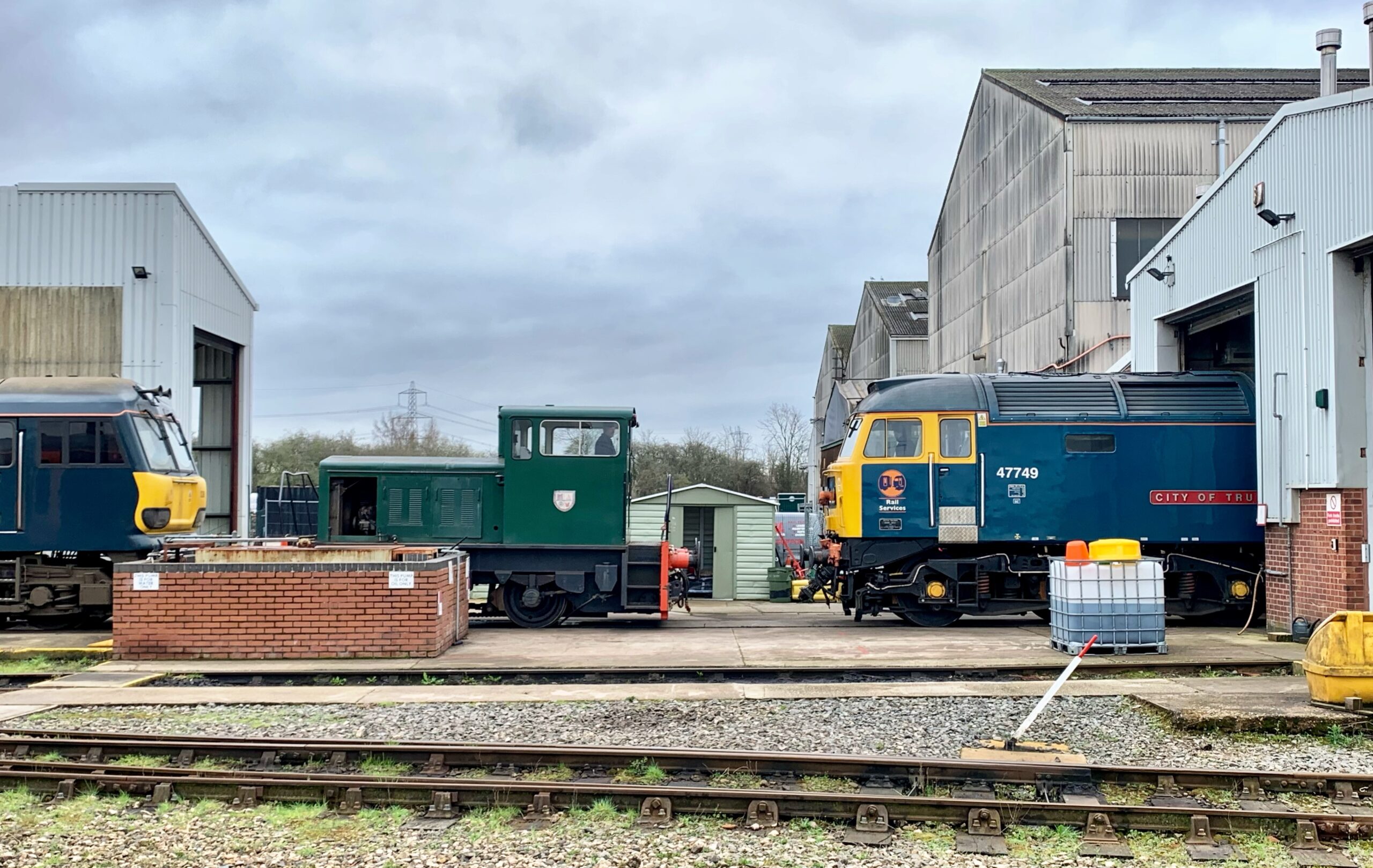
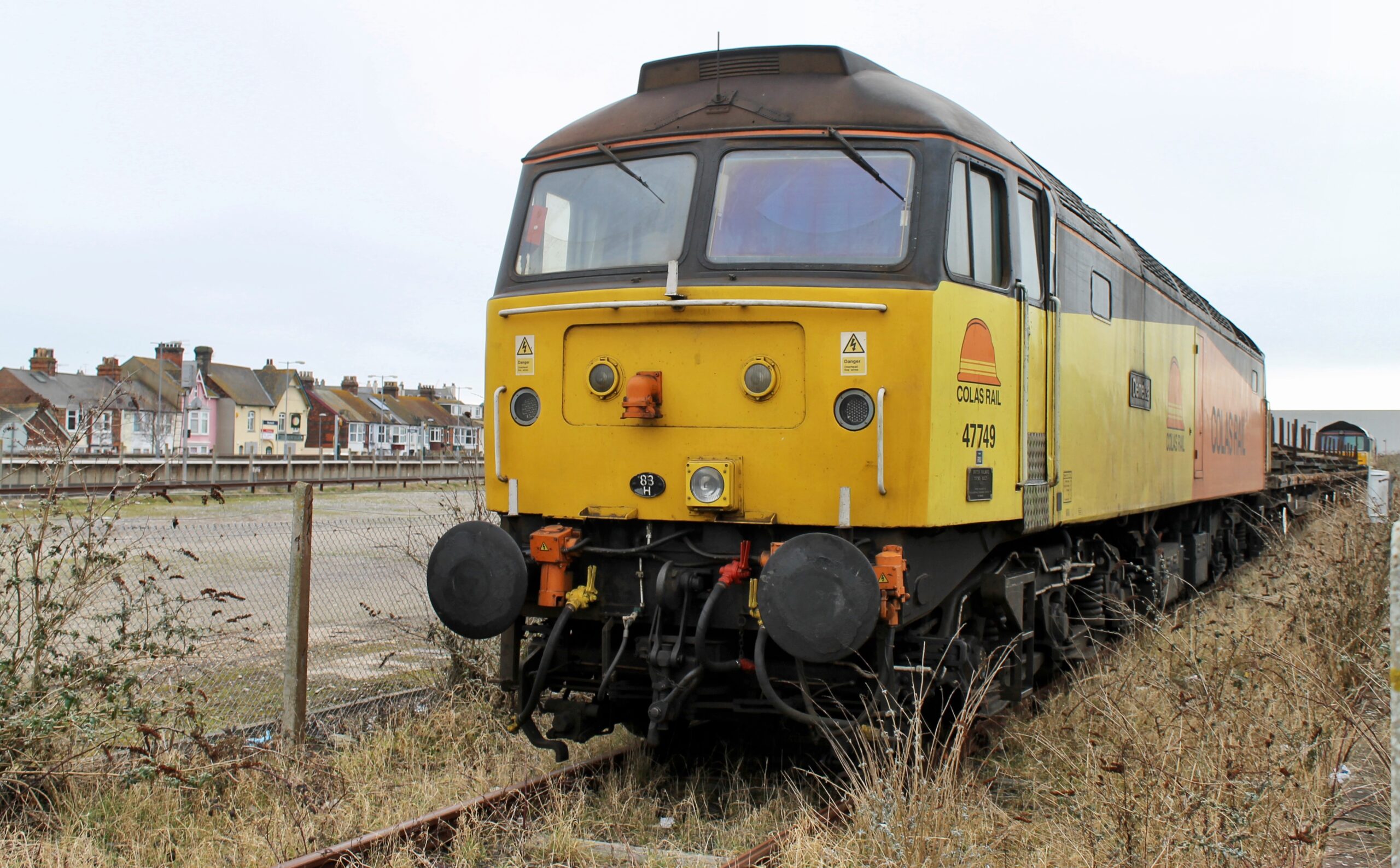
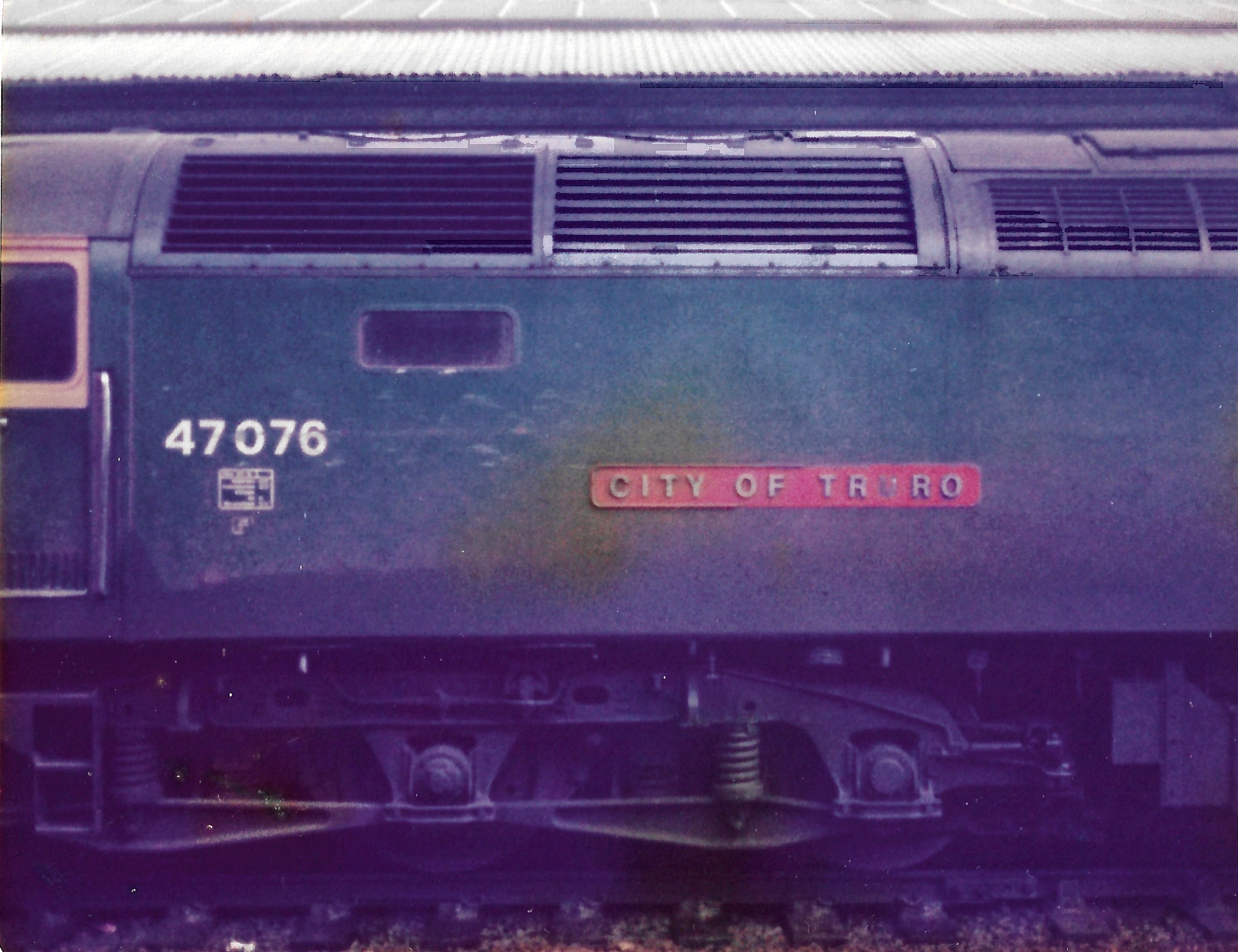
It was my intention to pop over to Branksome railway station around half four to see the arrival of GBRf Class 57 No. 57305 and Class 47 No. 47749 ‘City Of Truro’ arriving with barrier wagons working 5Z72 1548 Eastleigh East Yard to Bournemouth T&R.S.M.D in preparation for another Class 458/5 electric multiple unit move to Widnes Transport Tech where the units are being modified and refurbished for future use by South Western Railway (SWR). Following this, it would be a half hour drive to Norden where T3 No. 563 would be waiting to be towed down to Swanage. Once again, Jamie very kindly provided transport and good company with Yoshi sitting this adventure out at home.
On arrival at Branksome we followed the progress of 5Z72 via Real Time Trains (RTT) and Open Train Times (OTT) which showed the train getting progressively later. This meant that is was likely to arrive at platform 2 the same time as a passenger service was scheduled on platform 1. So careful consideration had to be made in order for the GBRf working to not be blocked from view if I opted for the wrong platform from which to see the train. I played it safe and wandered off to the London end of platform 2 in time to see the Class 57 round the corner just as the service train crept up behind me on the adjacent track. I wasn’t to be so lucky on the return working however!
GBRf Class 57 No. 57305 climbs into Branksome working 5Z72 1548 Eastleigh East Yard to Bournemouth T&RSMD – 30/08/2023
It’s been approximately 20 years since the most recent Class 57 conversions from Class 47’s were out-shopped by Brush Traction at Loughborough and 32 of the 33 rebuilds during the late 1990’s and early 2000’s are still in existence following the scrapping of No. 57004 in July 2023, this being the first and to date, only Class 57 to be broken up.
GBRf Class 47 No. 47749 ‘City of Truro’ awaits permission to reverse 5Z72 1548 Eastleigh East Yard to Bournemouth T&RSMD into the depot – 30/08/2023
Cameras safely stowed away we drove off through Poole and Wareham, where we were stuck behind slow moving motorhomes and bus services. Narrowly avoiding being further delayed by a herd of cows crossing the road at Stoborough, we arrived at Norden well before Class 33 No. 33111 arrived from Swanage towing a brake van to collect No. 563. The Victorian 4-4-0 looked amazing, even from a distance, as we observed the locomotive from the road bridge looking across to Arne Road siding. The final Diesel Multiple Unit service of the day from Wareham to Corfe castle was waiting clearance at the road crossing into Norden station and once this had passed through the area, we didn’t have too long to wait until the Crompton arrived. In fact the whole operation of reversing into the siding and coupling up to the T3 was done ahead of the proposed timings and once the consist pulled away we moved on to our next vantage point. We had plenty of time as it was planned for the diesel locomotive to run around the T3 and brake van in Norden station so the Class 33 was leading for the onward journey to Swanage. With top speed a sedate 15mph for the 33 and T3 pairing, we took a position overlooking the Grade II listed viaduct in the shadow of Corfe Castle. We didn’t know if we’d be in for a long wait as things were, at that time, around an hour ahead of schedule. As luck would have it, we didn’t have long before the locomotives came into view.
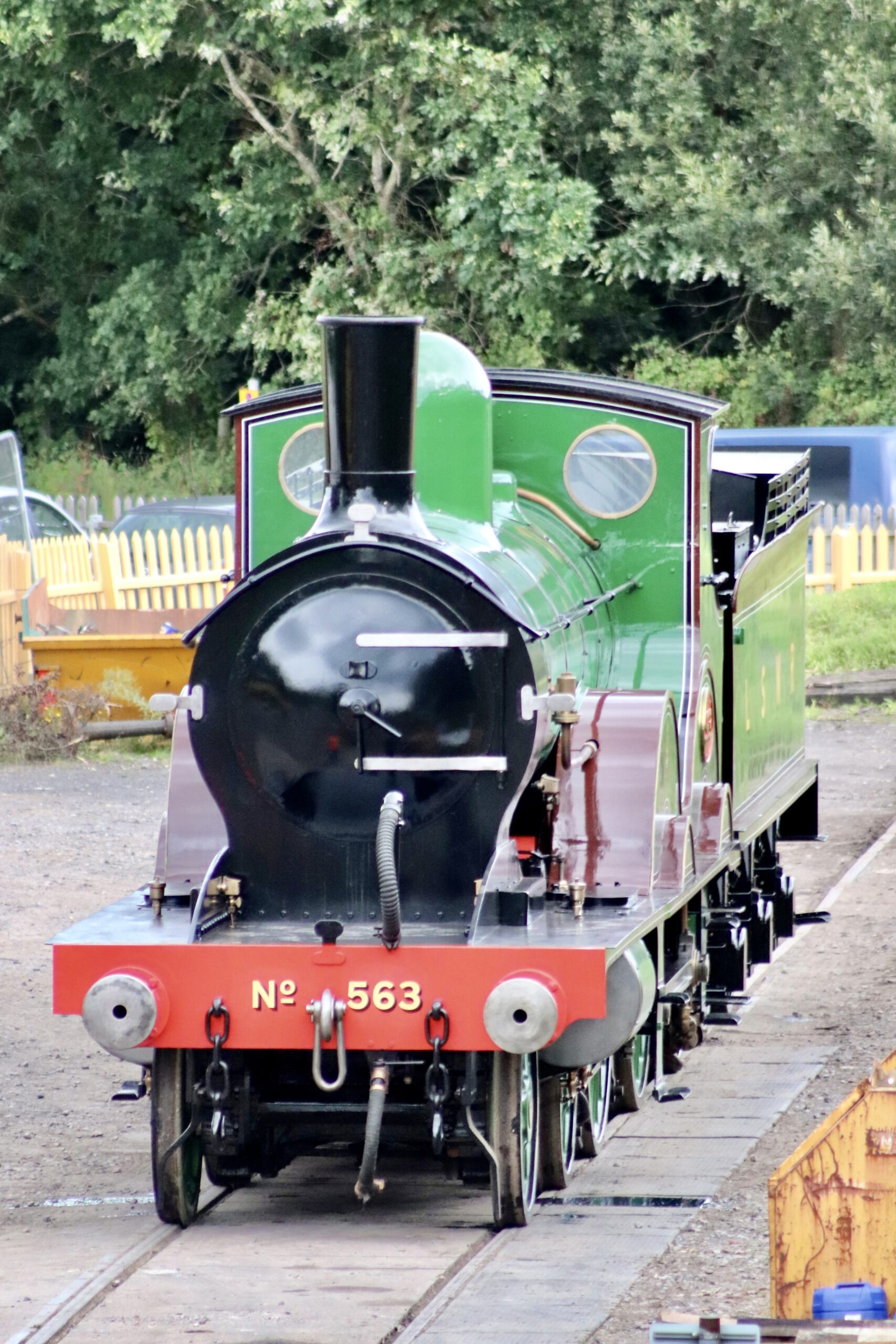
Looking stunning in her restored Drummond passenger green livery, Adams T9 4-4-0 No. 563 has been reunited with her tender and awaits the arrival of the train to tow her to Swanage – 30/08/2023Class 33 No. 33111 slowly draws T3 No. 563 slowly out of Arne Road Siding – 30/08/2023Adams T9 4-4-0 No. 563 being moved from Norden to Swanage – 30/08/2023Adams T9 4-4-0 No. 563 is towed across the Grade II listed viaduct at Corfe Castle by Class 33 No. 33111 – 30/08/2023
T3 No.563 was completed in March 1893 and was allocated new to Nine Elms shed, with moves to Guildford and Eastleigh over the following years. After an overhaul in 1935, she was transferred to Salisbury where she was looked after by shed staff, performing as station pilot or working slow trains to Bournemouth until being reallocated to Eastleigh in February 1938. She was withdrawn in March 1939 following her failure whilst working a Fawley goods train. However, with the onset of World War II she was reinstated into traffic being allocated to both Basingstoke and Eastleigh before being withdrawn again in 1945 following cessation of hostilities in Europe. She was resurrected yet again three years later in 1948 as an exhibit at London Waterloo’s centenary celebrations where she represented the LSWR. There then followed periods of storage in the electric carriage shed at Farnham, and at Tweedmouth before being restored at Eastleigh prior to moving to the Clapham transport museum in 1961 as part of the National Collection. From 1975, she was subsequently displayed at York and Shildon and took part in theatre productions of “The Railway Children” in London and Toronto before being disposed of by the National Railway Museum in 2017, when following a series of negotiations it was agreed to transfer ownership of No. 563 to the Swanage Railway Trust.
No. 563 has been extensively restored at the Flour Mill near Lydney in the Forest of Dean, Gloucestershire with the tender being restored separately at Herston Works, Swanage. Restoration started in November 2017, at the cost of £650,000. Having passed her boiler exam in July 2023 and moving under her own power for the first time in 75 years, No. 563 was transported by road to Purbeck arriving early morning on Wednesday August 30th. Resplendent in lined-out 1890’s Drummond passenger green livery, the T3 was reunited with her tender prior to making the journey by rail from Arne Road Siding at Norden in the company of “Crompton” Class 33 No. 33111. She will undergo inspections and testing prior to entering operational service. Unfortunately while the locomotive was being moved at low speed to Swanage, both coupling rods started to run warm. Before testing can resume, precautionary checks will be required and the re-machining of the coupling rods bushes. Commissioning work will continue at Herston while this is being done. It is hoped that No. 563 will haul her first passenger train in 75 years on the Swanage Railway to mark the centenary of the Southern Railway and the 185th anniversary of the formation of the London and South Western Railway in 2023, but no date has yet been confirmed.
No. 563 fills a gap in the Swanage Railway fleet as the class hauled trains from London to Swanage from the 1890’s through to the 1930’s and represents an image of what the railways would have been like during the industrial and social development of Dorset during the 19th Century.
Adams T3 4-4-0 No. 563, Swanage Railway – 30/08/2023
As things had happened smoothly and well ahead of schedule, following a quick consult of Google Maps, we decided we had enough time to head back to Branksome and see the Class 458/5 drag departing Bournemouth depot. On our return to Branksome, we checked RTT and OTT once again, but it was to be a good 17 minutes after the allotted time that Class 57 No. 57305 rolled back into the station working as 5Q72 1926 Bournemouth T&R.S.M.D to Wembley Receptions 1-7. Although diagrammed to reverse at platform 2, the train in fact arrived on platform 1. Again decisions had to be made on where to stand in order to get a shot of the GBRf locos and SWR EMU. All went well until departure time when, having returned to the London end of platform 2, a Class 444 working a service train arrived just as the Class 47, now leading the train out, powered up and departed. You win some, you lose some!
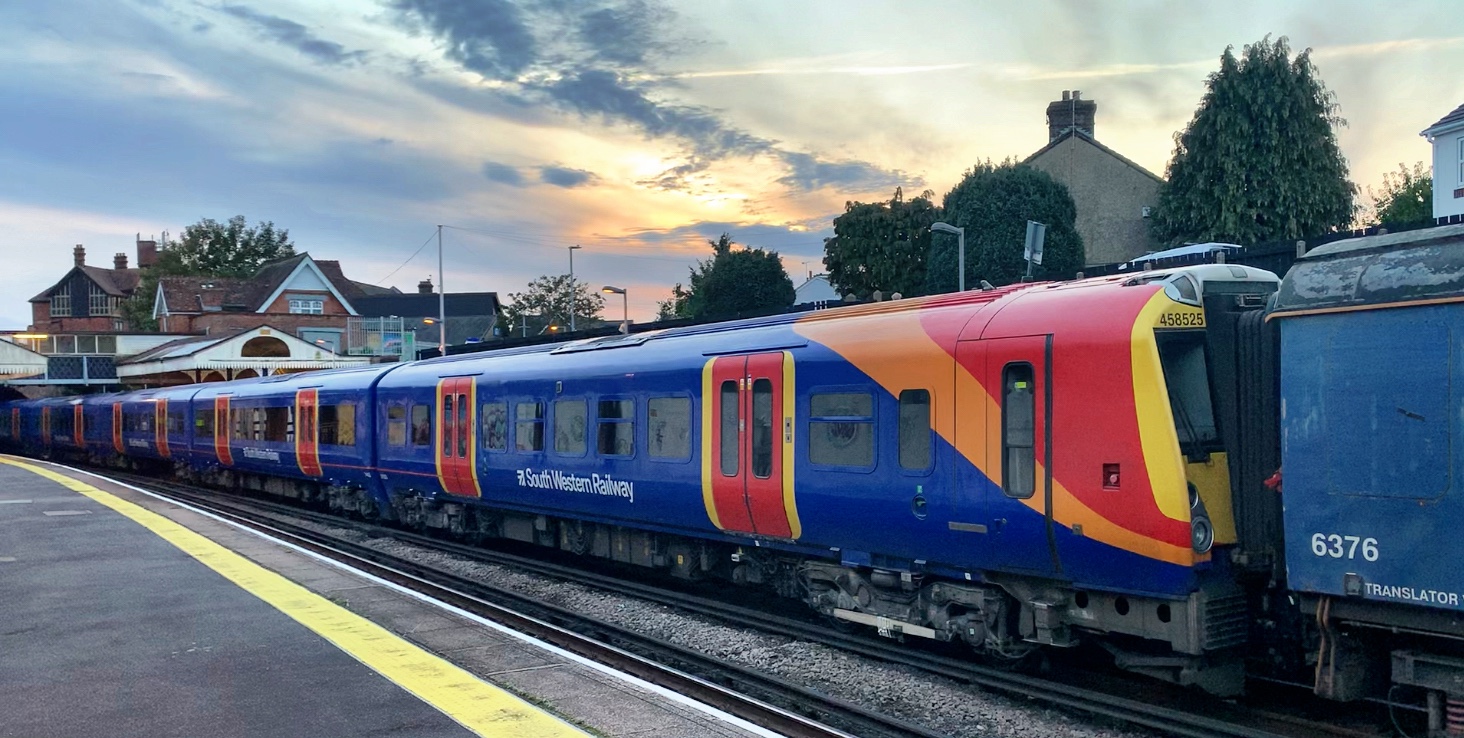
GBRf Class 57 no. 57305 emerges from Bournemouth depot working 5Q72 1926 Bournemouth T&R.S.M.D to Wembley Receptions 1-7 – 30/08/2023Class 458/5 No. 458525, part of 5Q72 1926 Bournemouth T&R.S.M.D to Wembley Receptions 1-7, stands in the platform at Branksome on the way to Widnes Transport Tech for conversion and refurbishment – 30/08/2023
Class 458 EMU move from Bournemouth T&RSMD – 30/08/2023
On Sunday September 3rd, we took the opportunity to go and bark at some CrossCountry HST’s in Somerset. With only a few weeks remaining of scheduled XC High Speed Train workings we drove over to Highbridge and met up with @smithy.377 (check out his excellent Instagram account!).
Once an important centre on the Somerset & Dorset Joint Railway (S&DJR) accommodating their locomotive works, Highbridge survives today as a top on the Bristol to Taunton Main Line operated by Great Western Railway (GWR). The original station opened on 14th June 1841, when the Bristol and Exeter Railway (B&ER) opened its broad gauge line to Bridgwater. The B&ER was later amalgamated into the Great Western Railway (GWR) on 1st January 1876.
The Somerset Central Railway (later absorbed into the S&DJR) opened to Glastonbury on 28th August 1854 but was worked by the B&ER for the first few years as it was also originally built to Brunel’s broad gauge. Separate platforms were provided for each railway and a connection between the was two situated in the goods yard. The layout eventually consisted of two terminal platforms and two through platforms to service an extension line that continued via Highbridge Wharf (where most of the S&DJR goods traffic was also handled) and onwards to Burnham On Sea extending the line two or three miles westwards which opened on 3rd May 1858.
To reach the extension, the S&DJR line crossed the B&ER main line on the level just north of the road bridge, by means of a special ‘diamond crossing’ over the main line and a gated level-crossing over the A38. The Burnham line was a key element in the original planning for the Somerset and Dorset line and was built with the expectation of picking up passengers from paddle-steamer ferries from South Wales and transporting them to the south coast of England with Burnham On Sea railway station, essentially a terminus, also including a through platform allowing services to travel on to a 900ft S&DJR built stone pier on the River Severn/River Parrett estuary from where the steamers would sail. Railway operations onto the pier ceased in 1888 although the pier continued in use for shipping until the 1950’s.
Burnham On Sea effectively closed when regular passenger services were curtailed at Highbridge on 28th October 1951. Excursion traffic continued until 1962, and the goods depot remained open until 1963 with all rail traffic ceasing in 1966. The station building, main platform and goods shed were all subsequently demolished. The excursion platform remained on the derelict site for over a decade, until the former track bed eastwards was developed into Marine Drive, a road which has helped ease traffic flowing into the town.
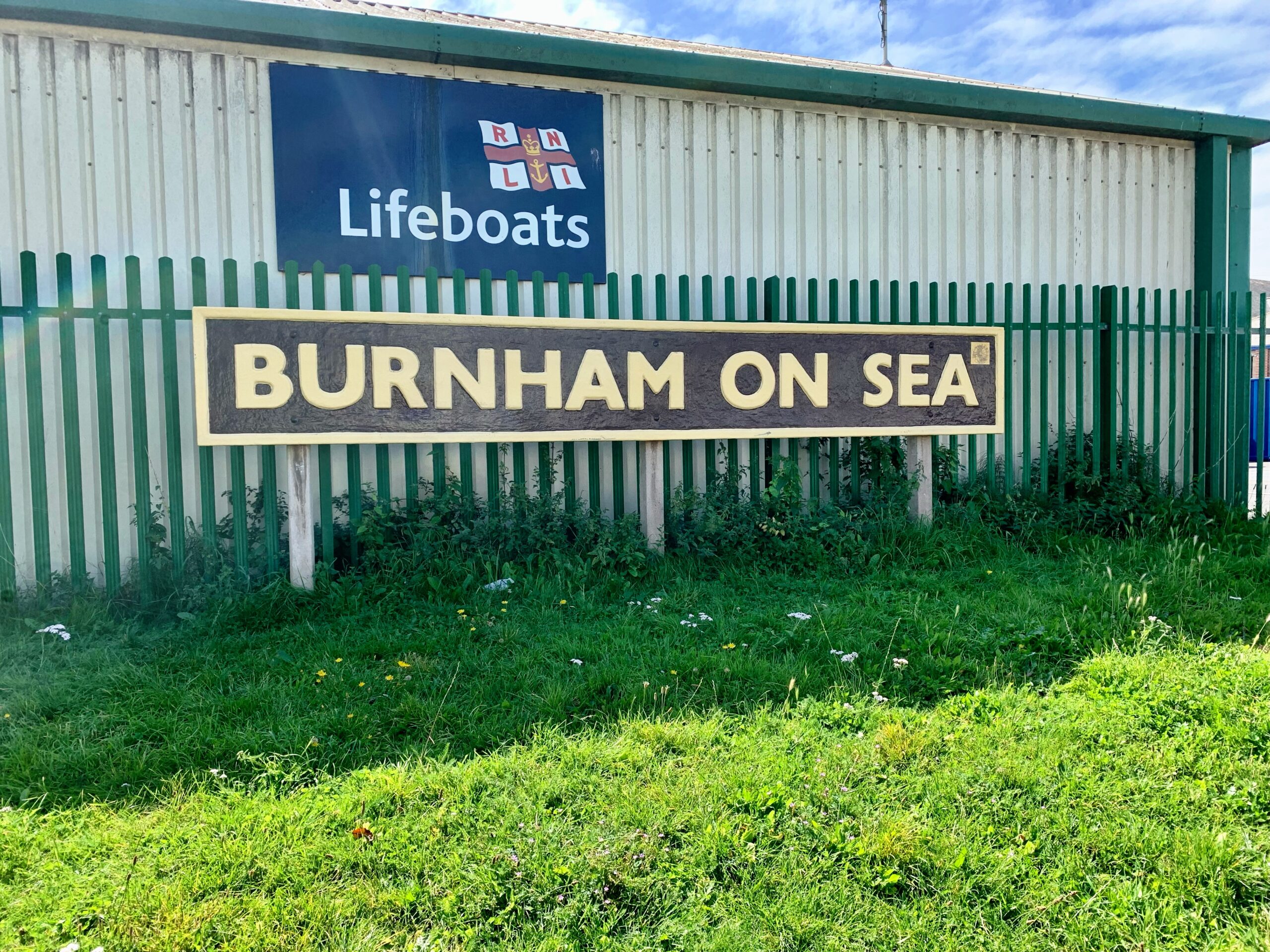
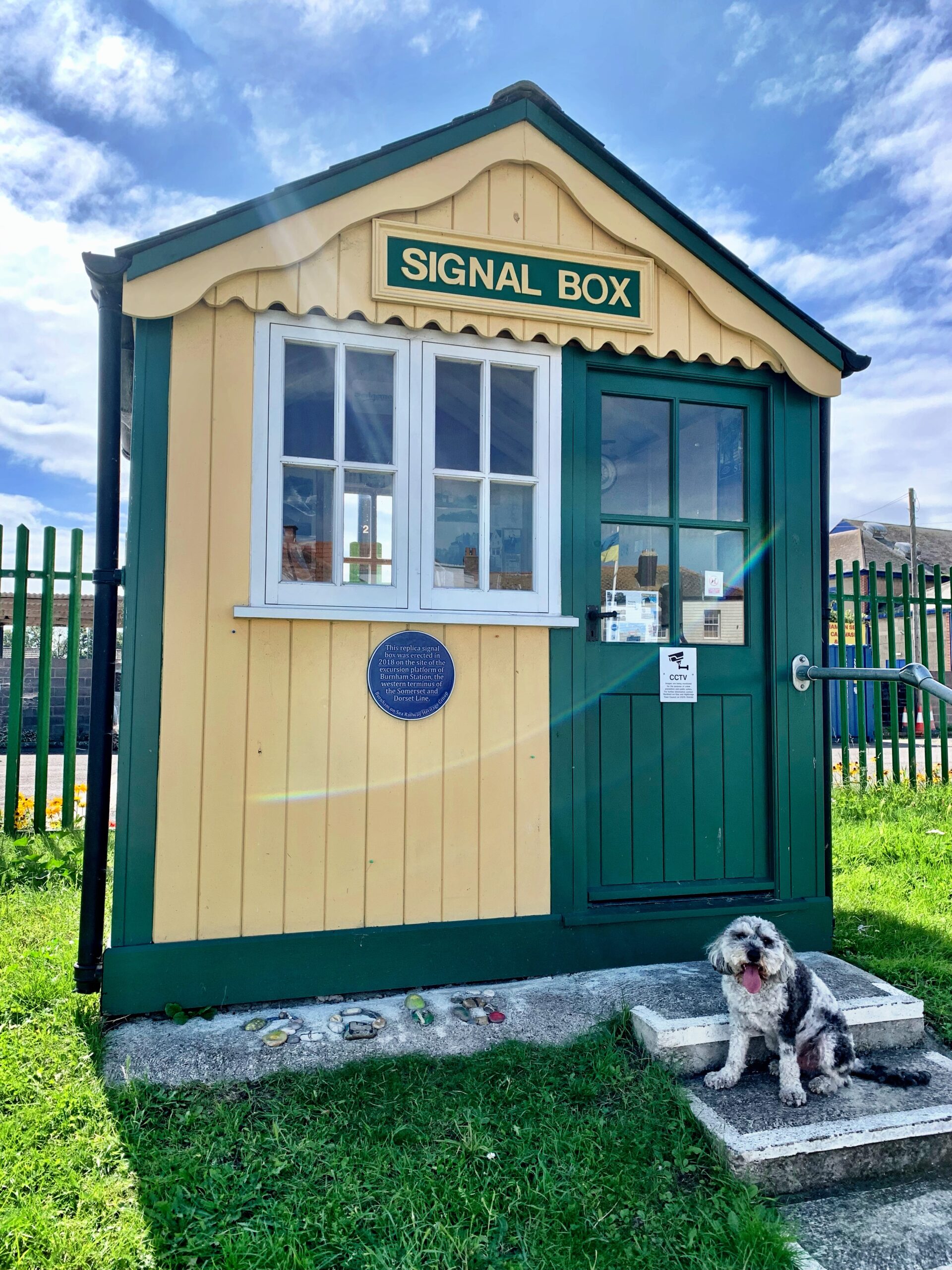
The location of the station itself was on the junction of Old Station Approach and Abingdon Street, and the former goods yard is now a small car park. An adjacent pub on the High Street was renamed the “Somerset & Dorset”. The local RNLI station and yard occupy land to the south and east of the former main station building, adjacent to the site of the former excursion platform. A B&M store occupies the seaward-west side. To remember its railway past, there are various features which have been installed by the local railway Heritage Group, notably a replica semaphore signal on Old Station Approach near the entrance to the High Street Car Park, a buffer stop on the corner of South Esplanade and Pier Street located very near to the site of original railway terminus, a station signboard and replica signal box which stands on what was known as the excursion platform, and a locomotive shaped weathervane on the town green. The original signal box which once stood alongside the platforms has been restored and is now based at Washford on the West Somerset Railway.
Burnham On Sea station sign marking the site of the former excursion platform – 03/09/2023Yoshi enjoys the shade provided by the replica signal box at Burnham On Sea – 30/08/2023Plaque explaining the replica signal box at Burnham On Sea – 30/08/2023
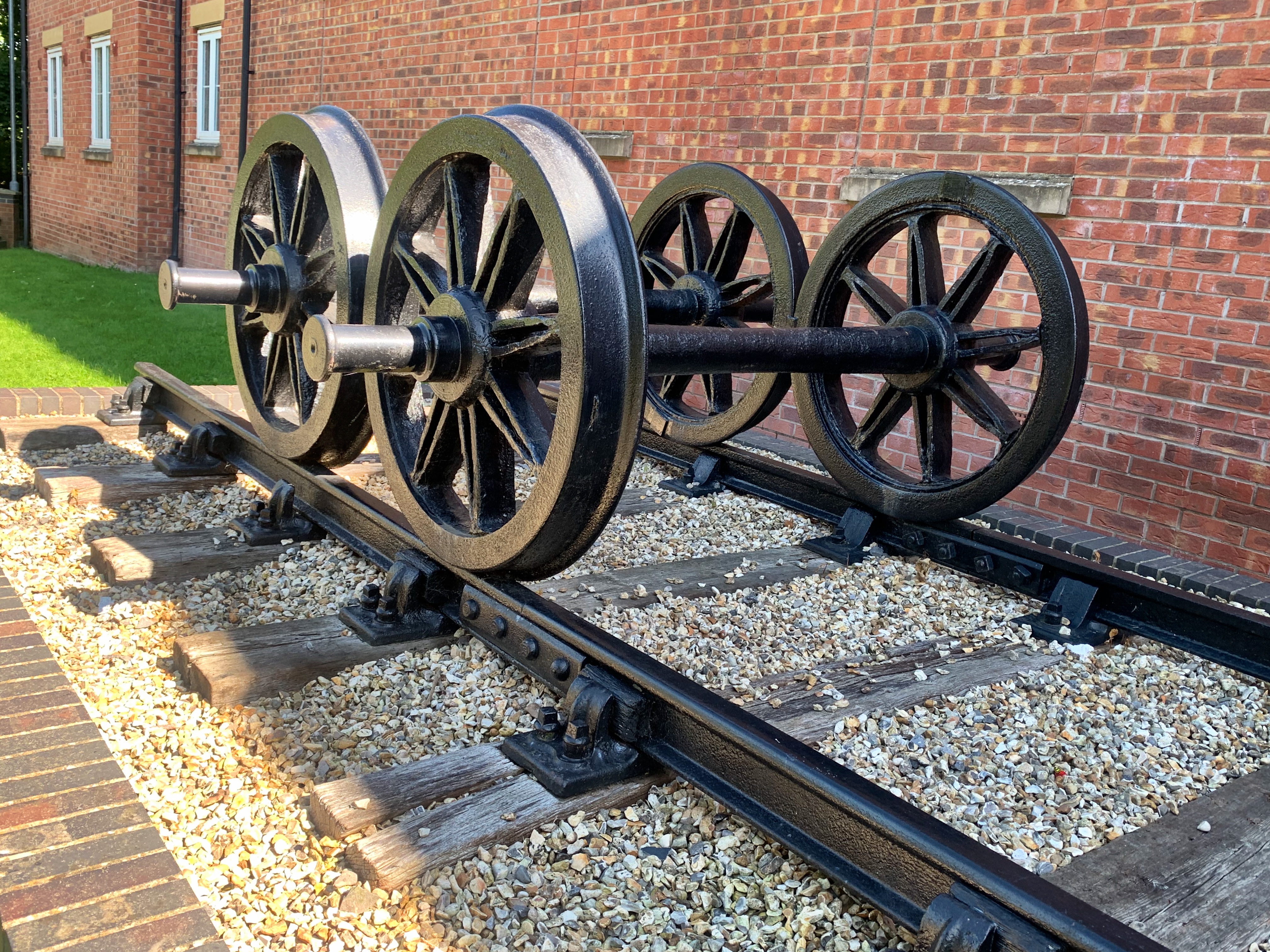
Returning to Highbridge the S&DJR locomotive works closed in 1930 after the motive power of the line was taken over by the London Midland and Scottish Railway (LMS), whilst its joint-venture owning partner the Southern Railway (SR) took over civil engineering and line operations. a small engine shed remained open until the Somerset & Dorset line and platforms finally shut in 1966. All of the original B&ER/GWR and S&DJR station buildings have all since been demolished, replaced on current platforms by metal and glass shelters. There is also no trace of the former S&DJR trackbed, platforms, engine shed or works, all of which are now beneath new housing to the east of platform 1. A couple of old wagon wheels sit on a short length of track on a plinth marking the past history of the site.
Wheel sets mark the area where the S&DJR yard and works once stood at Highbridge – 03/09/2023Old rail at Highbridge – 30/08/2023
To see film of Highbridge and Burnham in the early 1960’s follow this link: https://www.bbc.co.uk/iplayer/episode/b03495yn/lets-imagine-a-branch-line-railway-with-john-betjeman. First transmitted in 1963, John Betjeman looks at the Evercreech Junction to Burnham On Sea railway line, providing a unique profile of a working steam branch line railway as he travels along the original part of the Somerset Central Railway. Examining towns and stations along the way, Betjeman laments the tragic decline of steam railways. The journey culminates with a stroll around Highbridge Wharf.
Twenty odd years ago I visited Burnham On Sea regularly for work based at Highbridge Radio Station (Portishead Radio). The radio station, which operated the world’s largest and busiest maritime radio service, closed in April 2000, having initially operated from a site near Devizes in 1920. At its peak, in the late 1970’s and early 1980’s, over 300 staff were employed at the Highbridge site. The station buildings were demolished in 2007 and the Mulholland Park housing estate was built on the site.
Motive power through Highbridge is currently provided by GWR Intercity Express Trains (IET) and soon to be retired HST Castle Sets with one stopping train in each direction each hour. Passing CrossCountry Voyager sets will continue after the retirement of the XC HST’s.
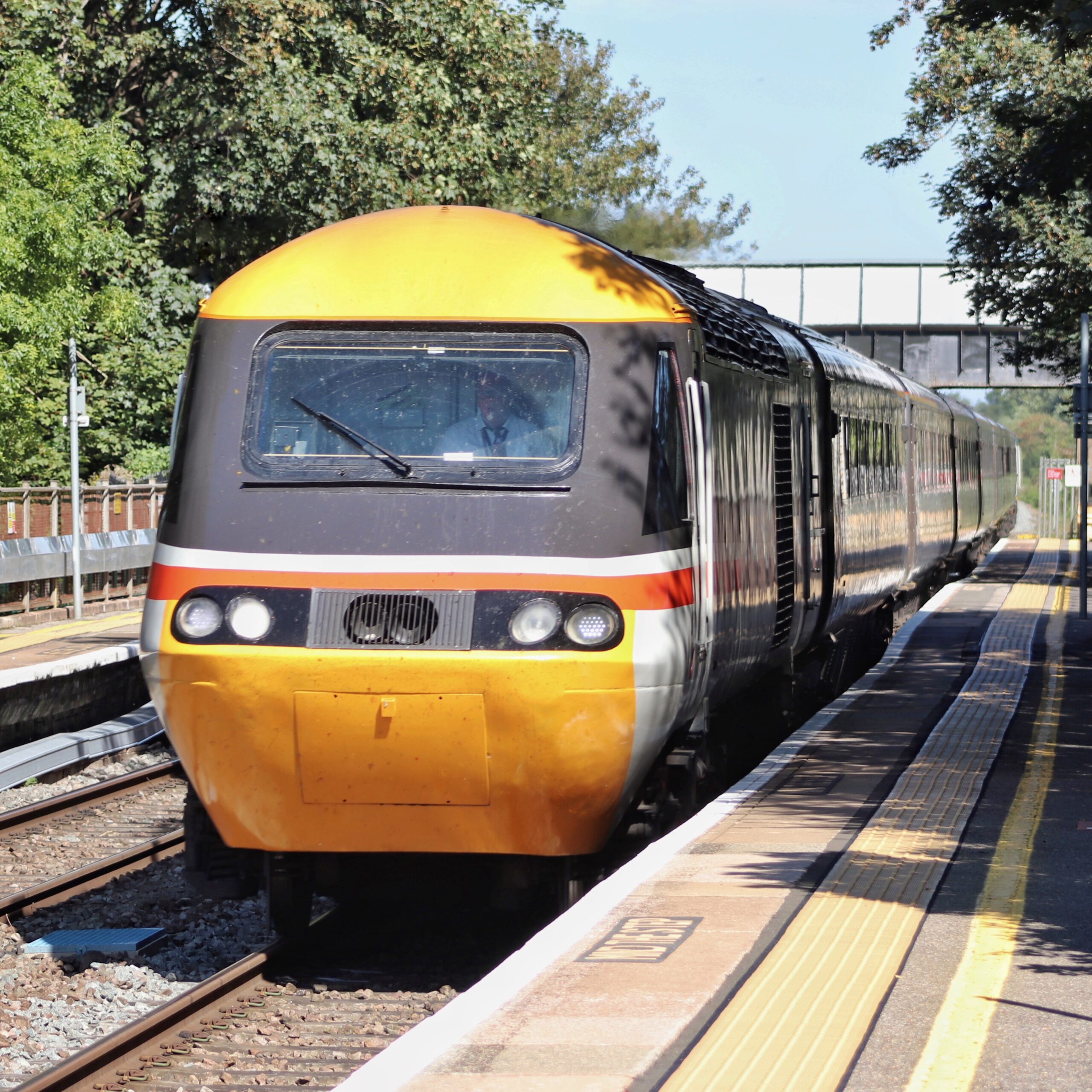
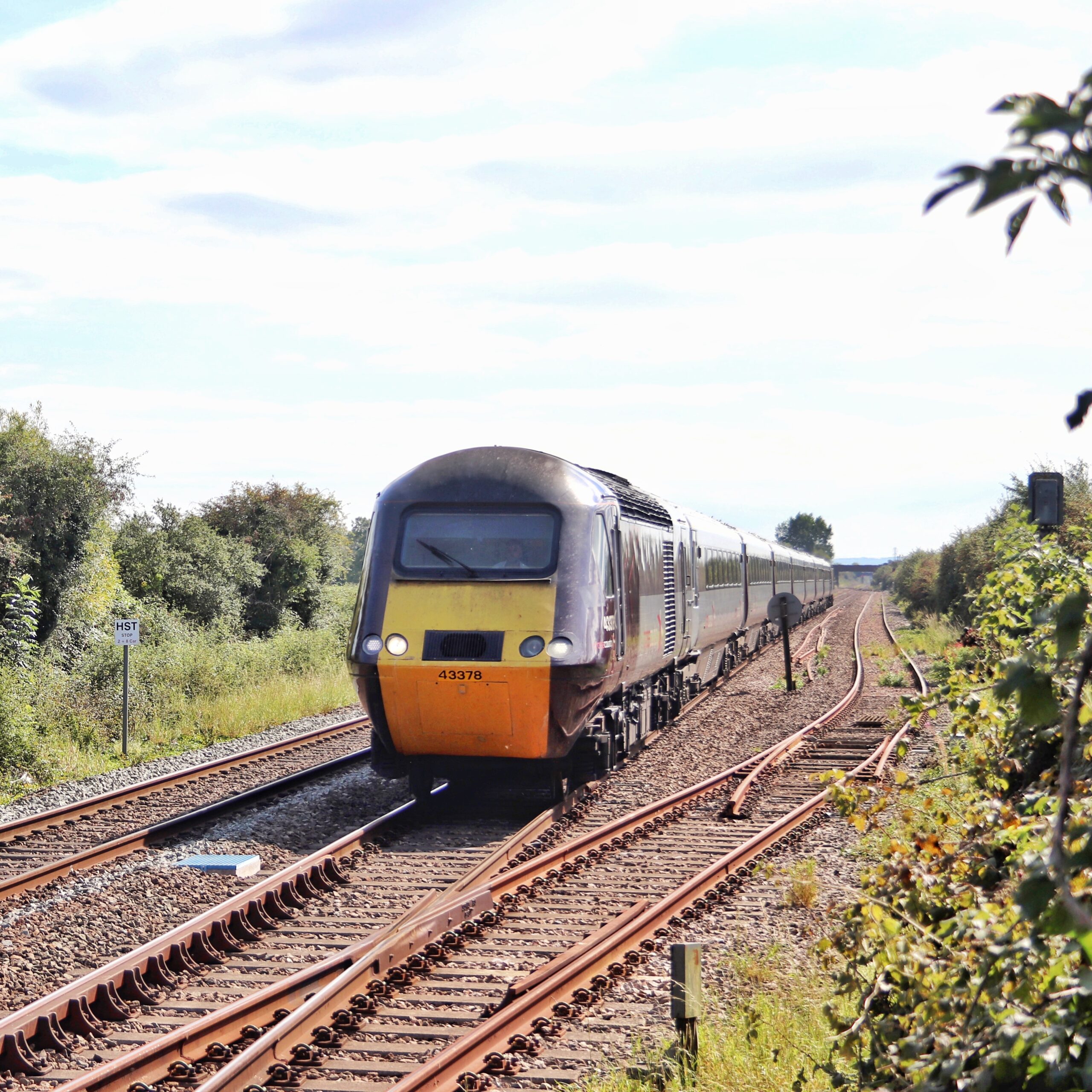
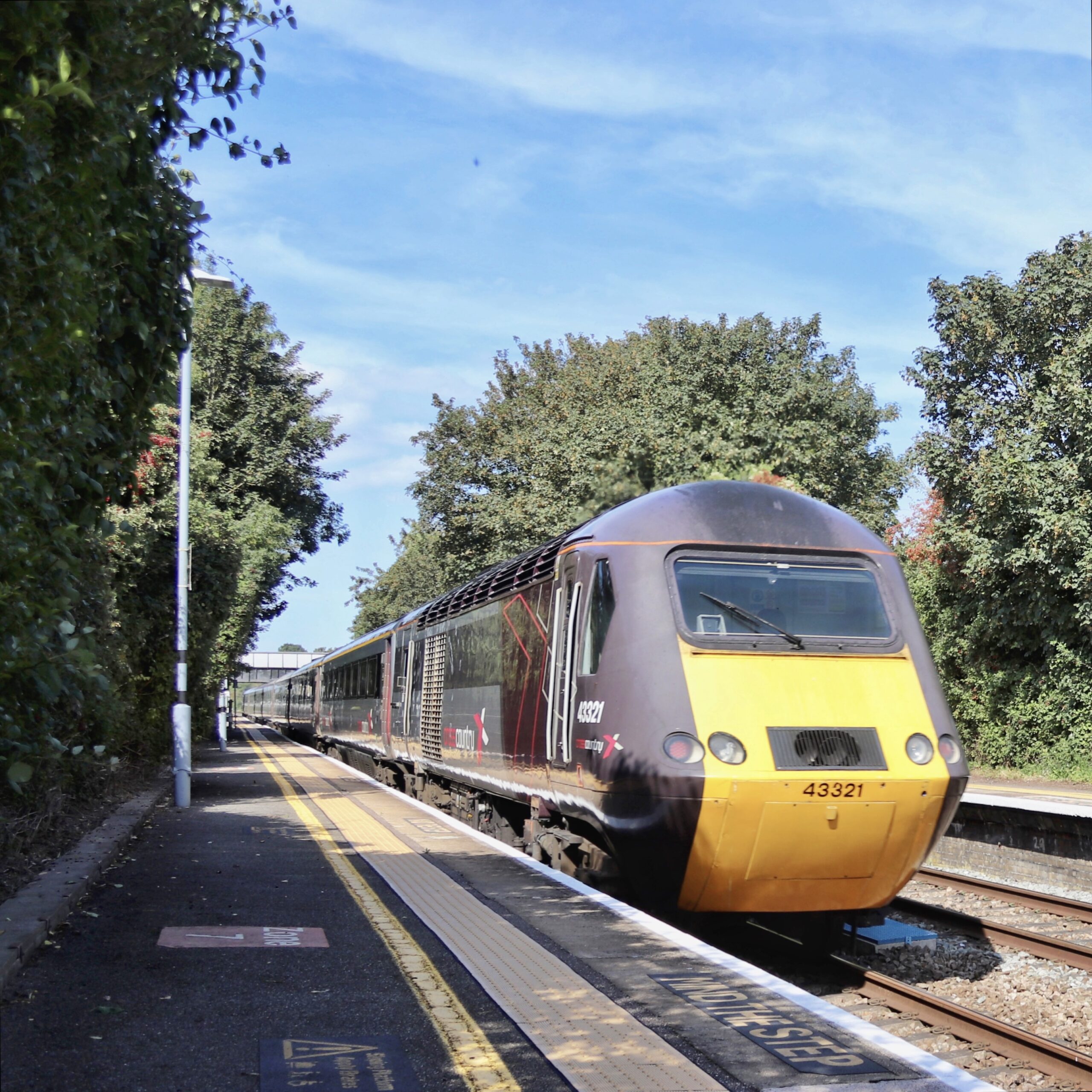
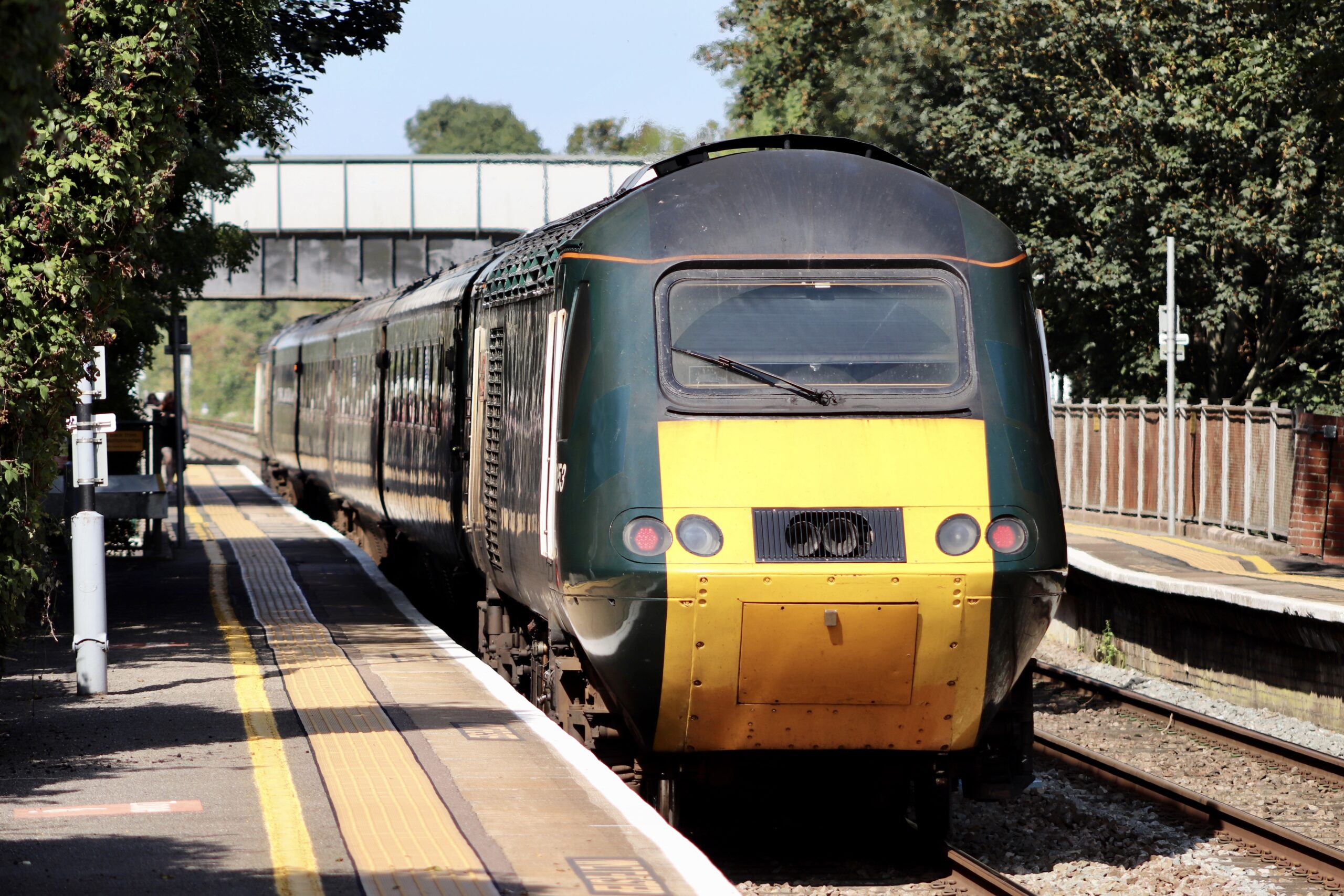
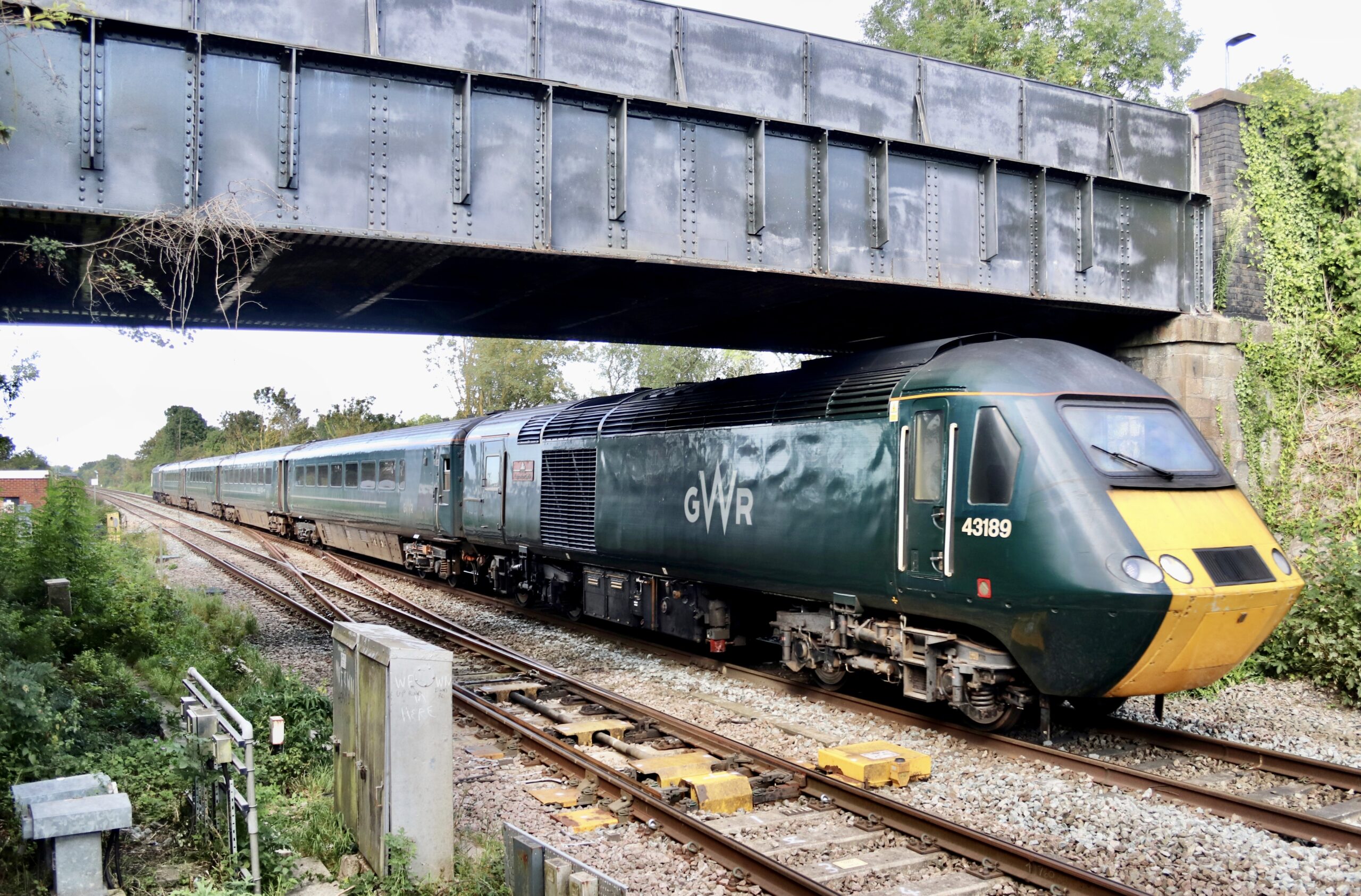
CrossCountry Class 43 HST power car No. 43007 leads 1V48 0811 Leeds to Plymouth through Highbridge – 03/09/2023CrossCountry Class 43 HST power car No. 43378 at the head of 1S53 1327 Plymouth to Edinburgh approaches Highbridge railway station – 03/09/2023CrossCountry Class 43 HST power car No. 43321 at the rear of 1S53 1327 Plymouth to Edinburgh speeds through Highbridge – 03/09/2023Celebrity BR liveried CrossCountry Class 43 HST power car No. 43008 working 1S55 1427 Plymouth to Leeds on the approach to Highbridge – 03/09/2023GWR Castle Class HST No. 43155 with the stopping 2U20 1050 Penzance to Cardiff Central service approaches Highbridge – 03/09/2023GWR Castle Class HST No. 43155 at the rear of 2U20 1050 Penzance to Cardiff Central awaiting departure from Highbridge – 03/09/2023GWR Castle Class HST No. 43189 working 2C79 1400 Cardiff Central to Penzance passes under the road bridge on the approach to Highbridge from the Bristol direction – 03/09/2023GWR Castle Class HST No. 43016 2C79 1400 Cardiff Central to Penzance sits at the platform in Highbridge – 03/09/2023GWR InterCity Express Train (IET) No. 800004 at Highbridge working 2C77 1300 Cardiff Central to Penzance – 03/09/2023CrossCountry Voyager Class 220 DMU No. 220003 approaches Highbridge with 1S47 1027 Plymouth to Edinburgh – 03/09/2023CrossCountry Voyager Class 220 DMU No. 220003 1S47 1027 Plymouth to Edinburgh passing through Highbridge – 03/09/2023CrossCountry Voyager Class 220 DMU No. 220006 1M45 1049 Paignton to Manchester Piccadilly at Highbridge – 03/09/2023CrossCountry Voyager Class 220 DMU No. 220021 1V56 1101 Leeds to Plymouth powers through Highbridge – 03/09/2023With the leaves on the trees starting to display autumnal colours, CrossCountry Voyager Class 220 DMU No. 220012 forming 1V54 0935 York to Plymouth passes Highbridge – 03/09/2023GWR IET No. 800304 forming 1C22 1630 London Paddington to Plymouth at Taunton East Junction – 03/09/2023CrossCountry Class 43 HST power car No. 43357 1V62 1105 Edinburgh to Plymouth catches the last rays of sun at Taunton East Junction – 03/09/2023CrossCountry Class 43 HST power car No. 43303 at the rear of 1V62 1105 Edinburgh to Plymouth approaching Taunton – 03/09/2023
XC HST’s in Somerset – 03/09/2023
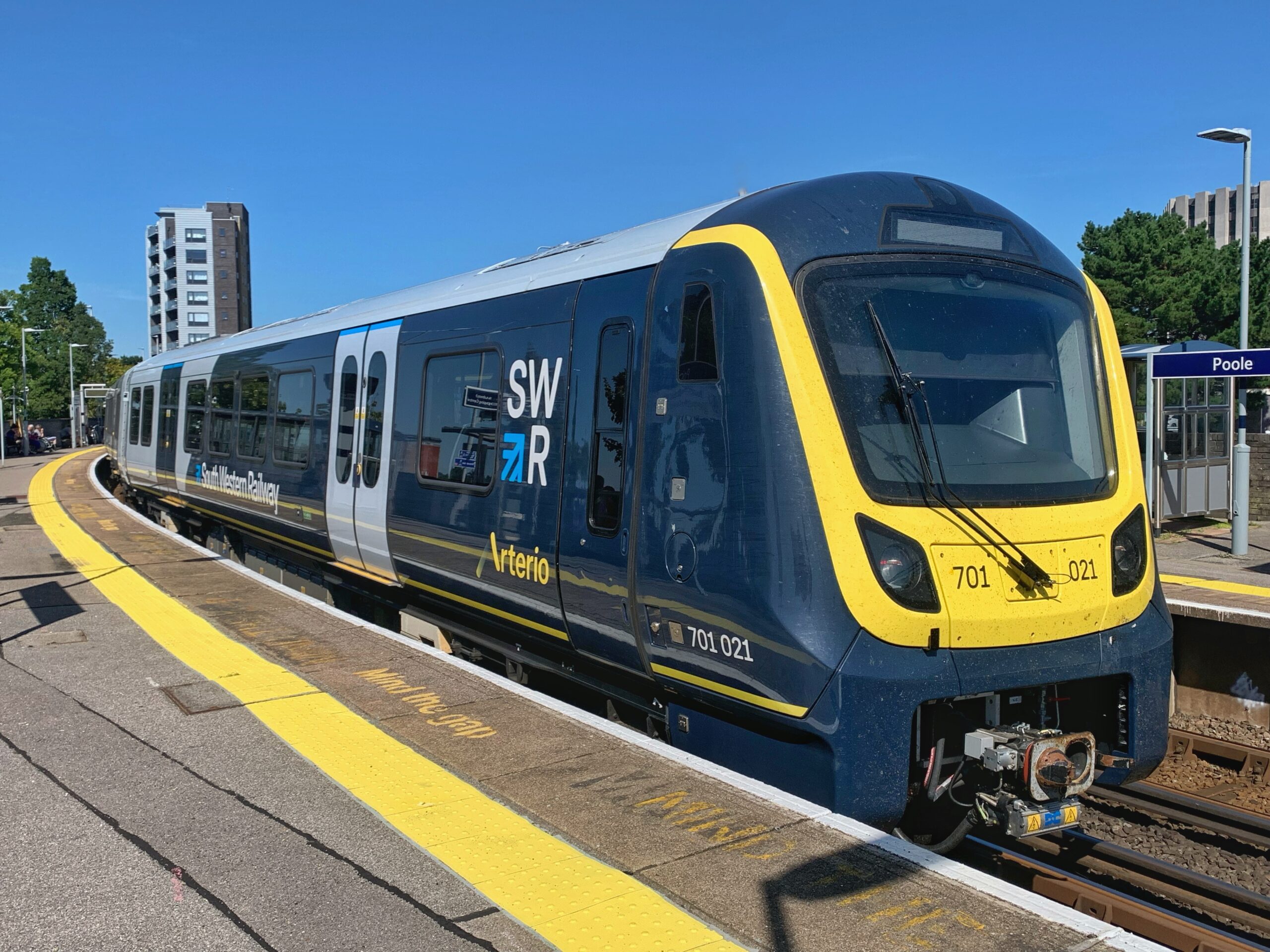
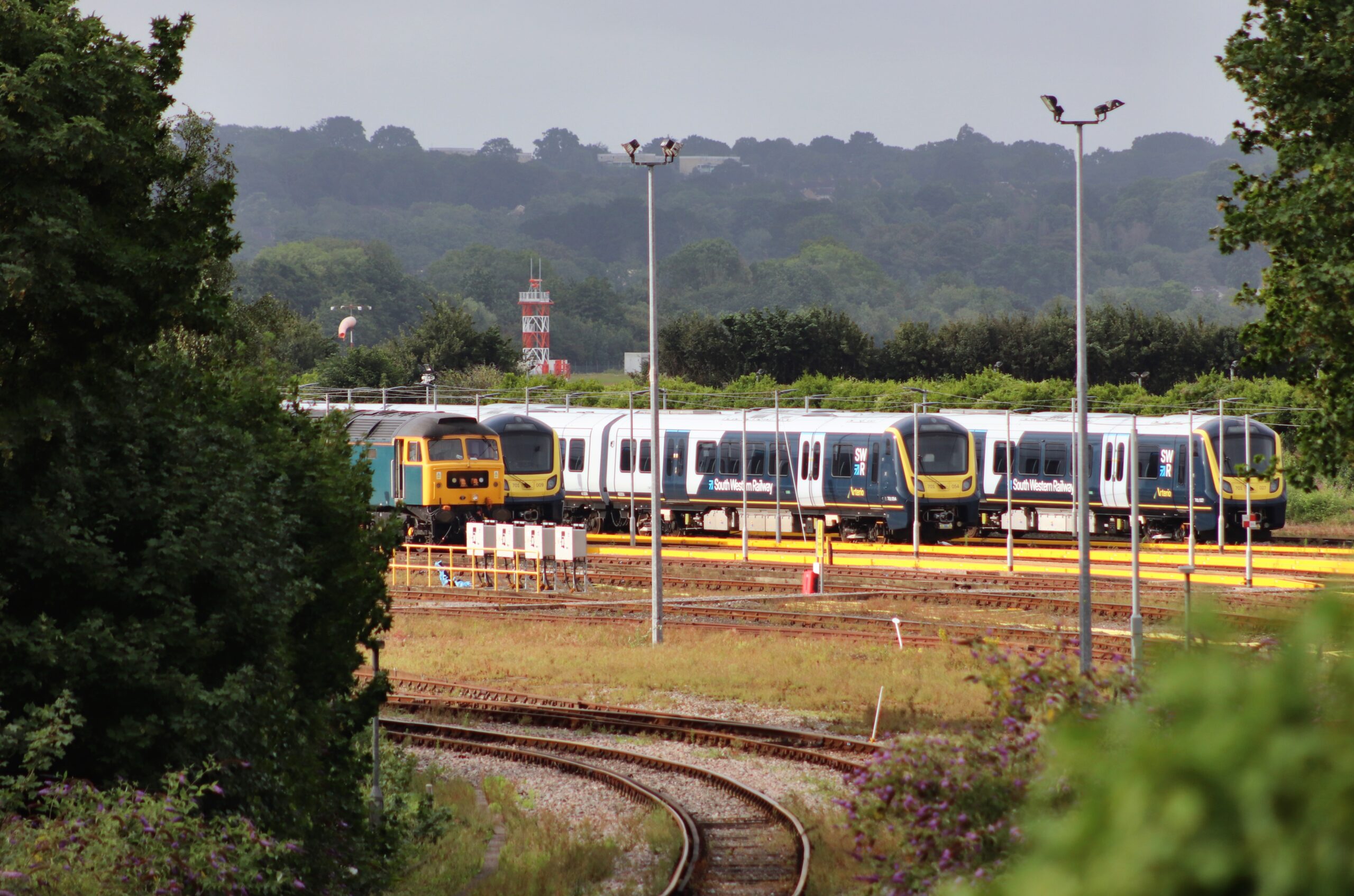
As I was in the Poole area on Monday I took the opportunity of getting a glimpse of one of the Class 701 units; No. 701021, on its latest mileage accumulation run, working as 5Q51 1115 London Waterloo to Staines Up Loop. This service runs to Poole Storage Sidings where the train reverses. The 701’s are still to enter revenue earning service with South Western Railway.
Class 701 No. 701021 stands at Poole working 5Q51 1115 London Waterloo to Staines Up Loop – 04/09/2023
Video of Class 701 No. 701021 at Parkstone and Poole working 5Q51 1115 London Waterloo to Staines Up Loop – 04/09/2023
Tuesday evening saw the return of the GBRf pairing of Class 57 No. 57305 and Class 47 No. 47749 ‘City Of Truro’ with another Class 458 EMU drag from Widnes Transport Tech to Bournemouth depot. This time, I elected to see the train passing Bournemouth instead of my usual spot at Branksome. After a coffee from the Pumpkin buffet on platform 2, I walked through the car park which was once the site of Bournemouth steam shed and up to Beechey Road bridge which gives a view back towards the railway station. While I was in Bournemouth, I took the opportunity of photographing regular train movements, including South Western Railway (SWR) Class 444’s, Class 450’s and CrossCountry Voyager DMU’s.
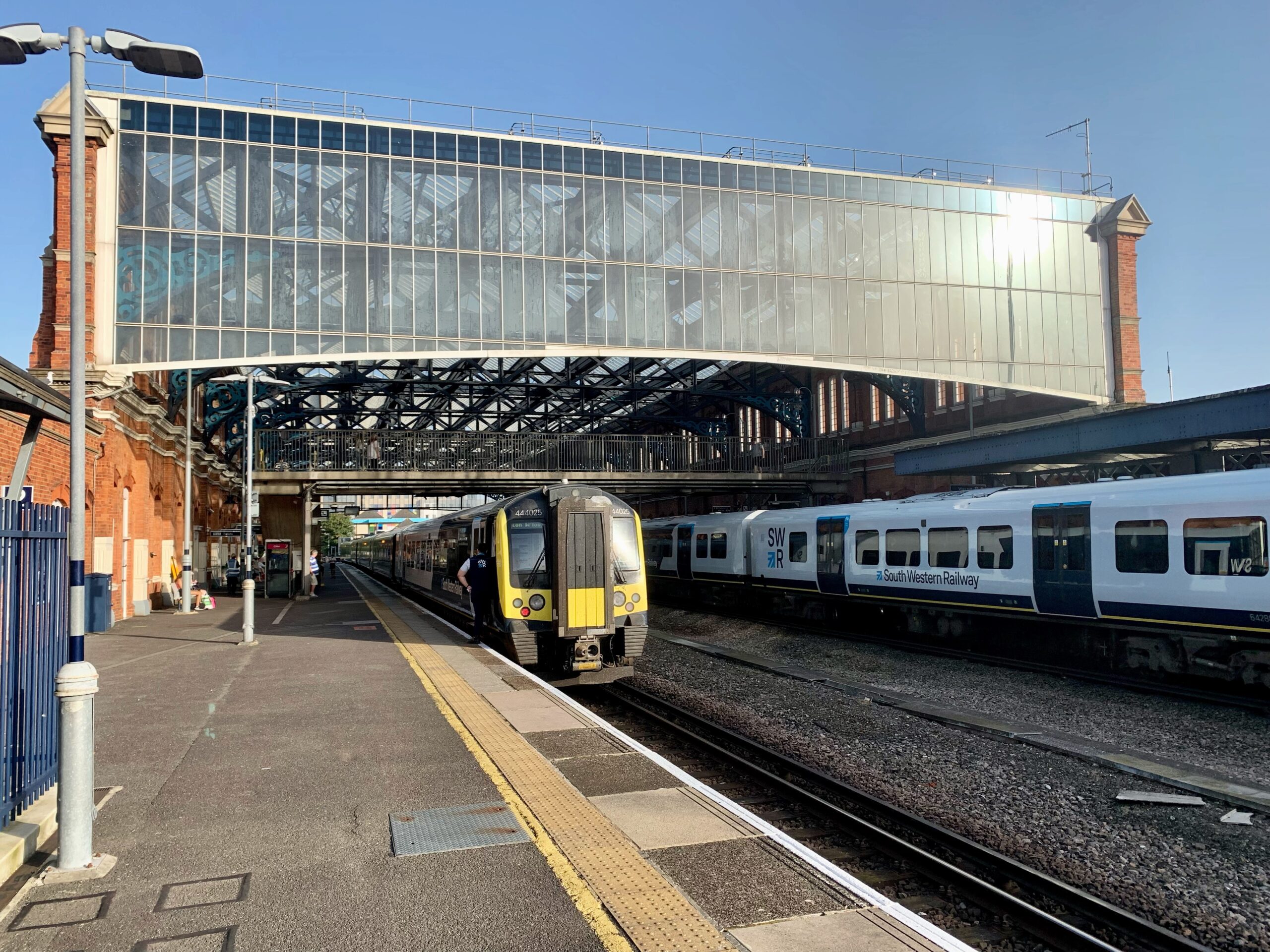
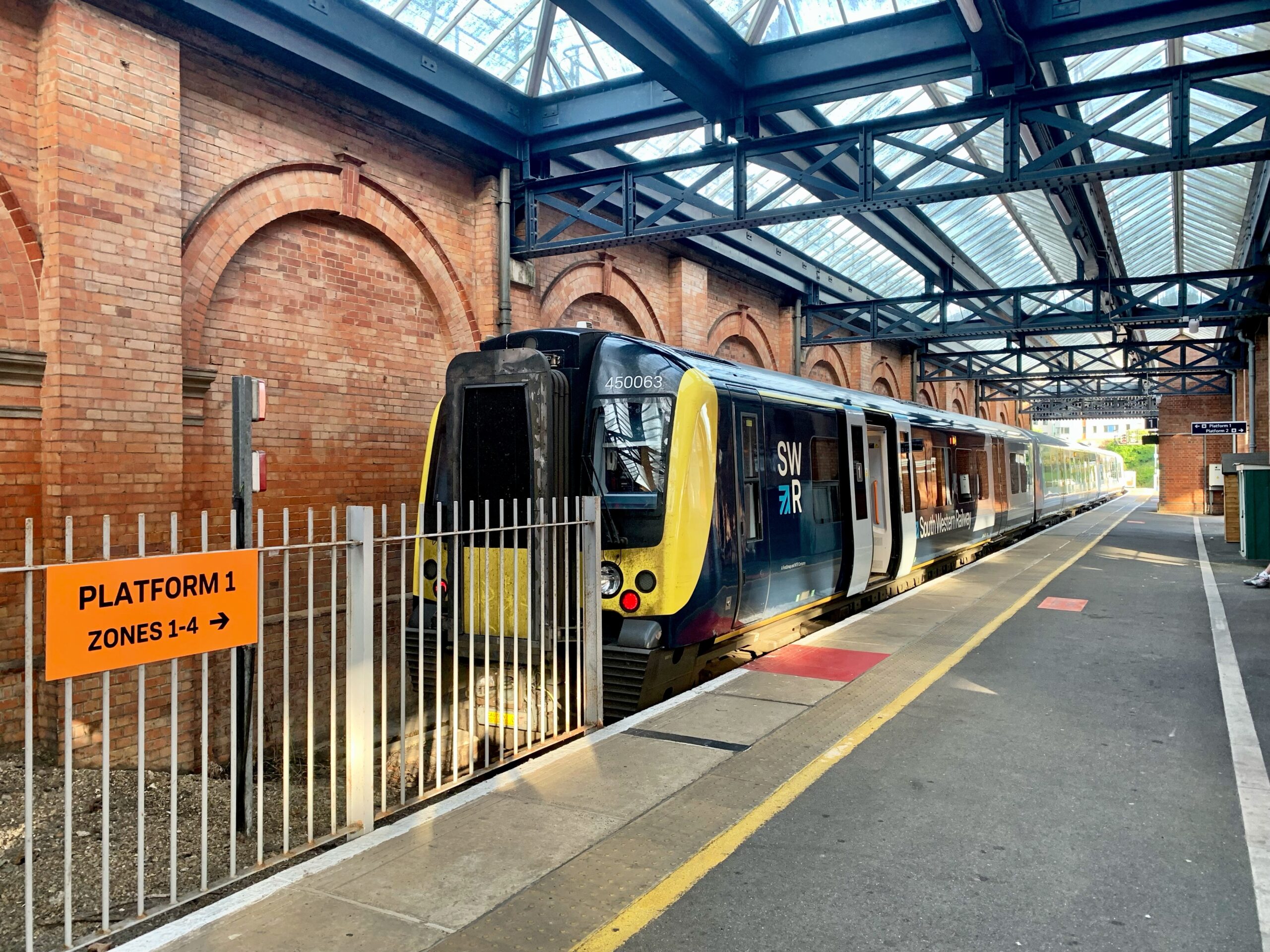
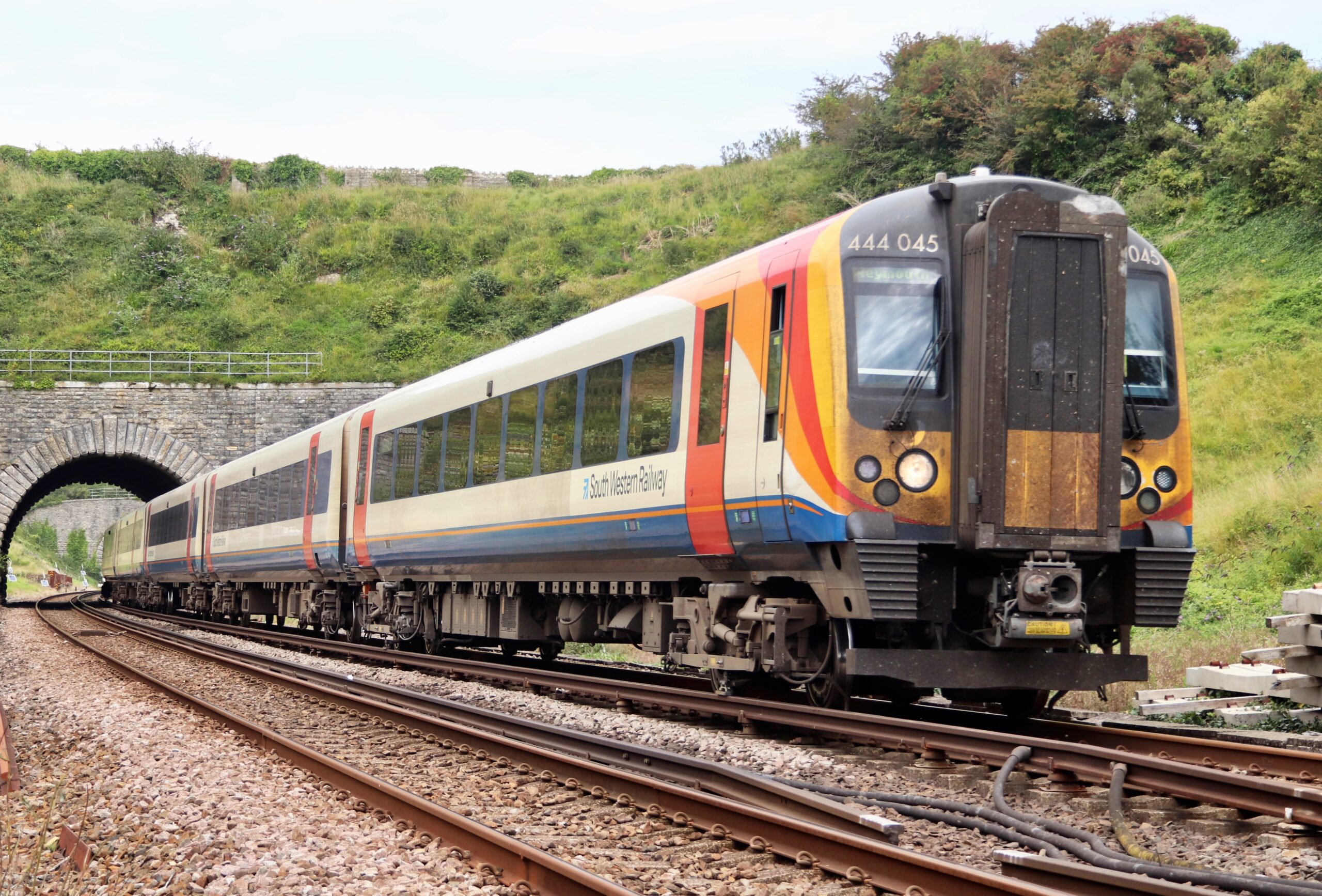
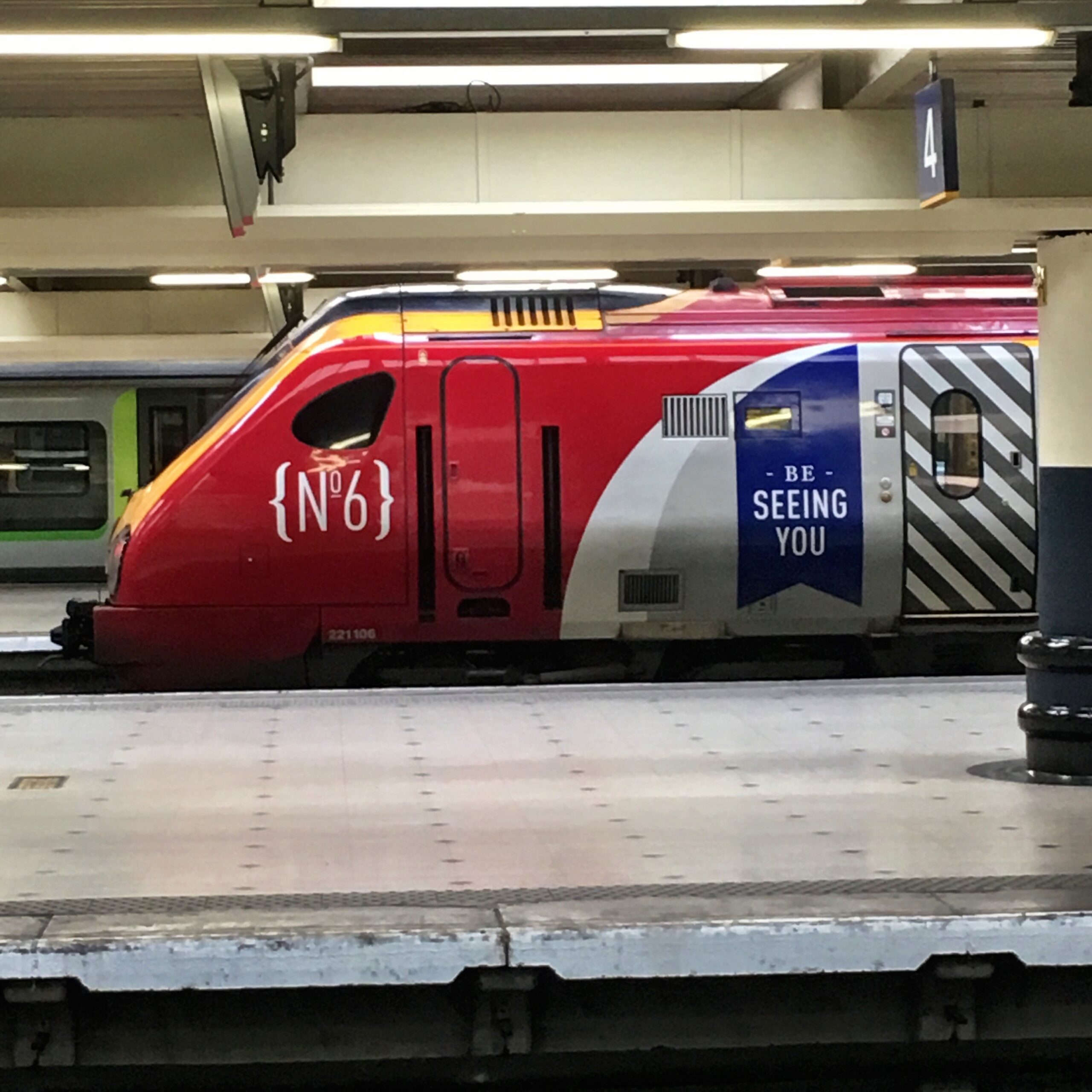
SWR Class 444 No. 444025 awaiting departure from Bournemouth working 1W28 1703 Weymouth to London Waterloo as Class 450 No. 450088 passes as 1B45 1535 London Waterloo to Poole – 05/09/2023Occupying bay platform 1, SWR Class 450 No. 450063 prepares for departure with 1B68 1802 Bournemouth to Basingstoke – 05/09/2023SWR Class 444 No. 444003 on the approach to Bournemouth with the 1W70 1720 Weymouth to London Waterloo service – 05/09/2023SWR Class 444 No. 444039 works 1W72 1820 Weymouth to London Waterloo at Bournemouth – 05/09/2023SWR Class 444 No. 444045 at Bournemouth Middle Sidings – 05/09/2023Having arrived from Manchester Piccadilly, CrossCountry Voyager Class 221 No. 221133 worked 5022 1919 Bournemouth to Bournemouth Middle Sidings before forming the 1M78 1945 departure from Bournemouth to Birmingham New Street – 05/09/2023GBRf Class 57 No. 57305 hauling refurbished SWR Class 458 No. 458405 with Class 47 No. 47749 ‘City Of Truro’ at the rear passes through Bournemouth as 5X65 1435 Wembley Receptions 1-7 to Bournemouth T&RSMD. The locomotives and barrier coaches retuned to Eastleigh later that evening – 05/09/2023
X65 1435 Wembley Receptions 1-7 to Bournemouth T&RSMD.- 05/09/2023
Britain’s busiest railway stations have been identified following the analysis of data for 2,616 locations, and Bournemouth came top in the Dorset with 5616 passengers per day and the 190th station in the UK. Bournemouth has a performance ranking of 1908. The analysis of National Rail data, collated by On Time Trains Stations, is ranked by a performance score, calculated based on service punctuality and cancellation frequency.
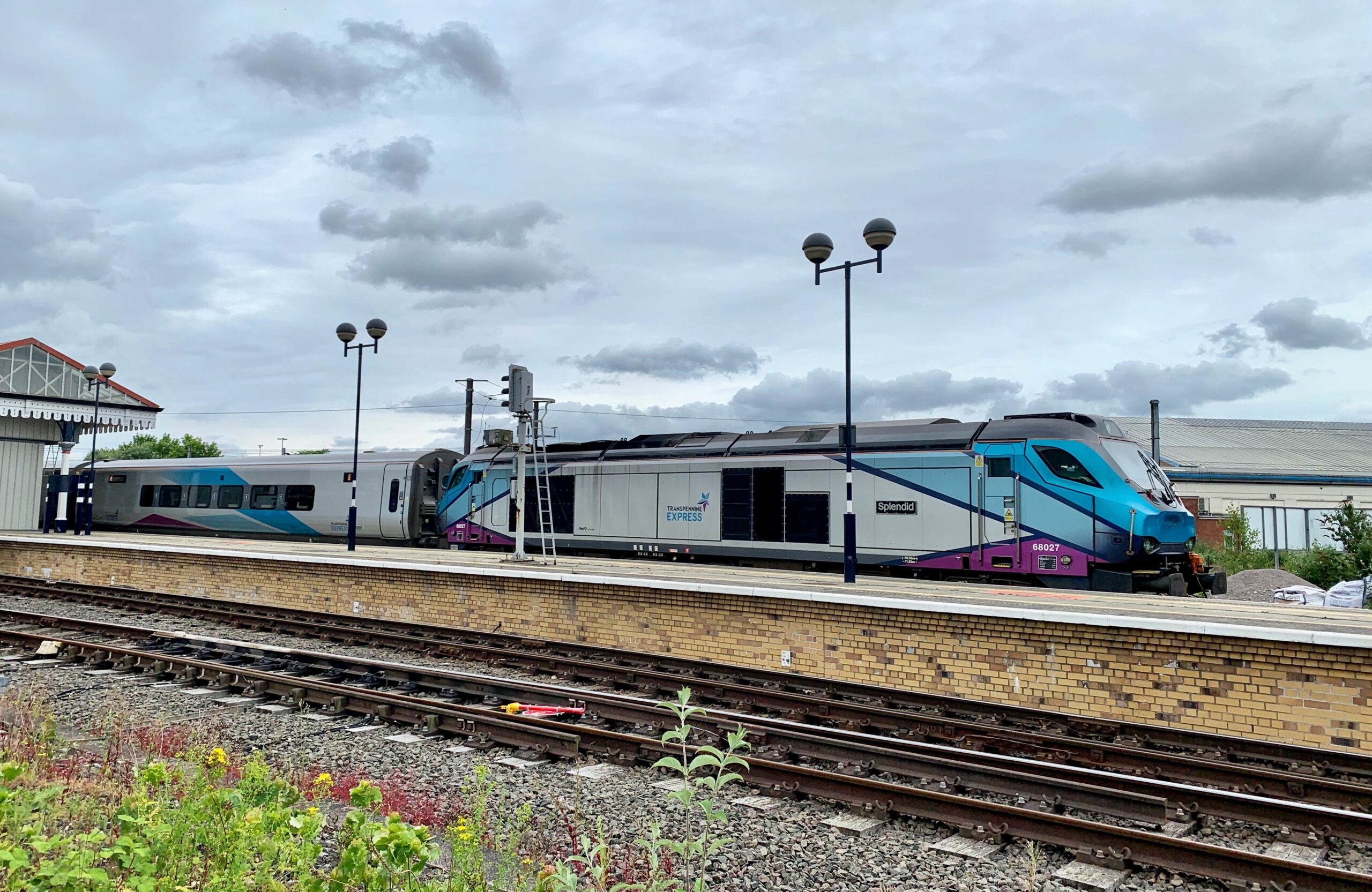
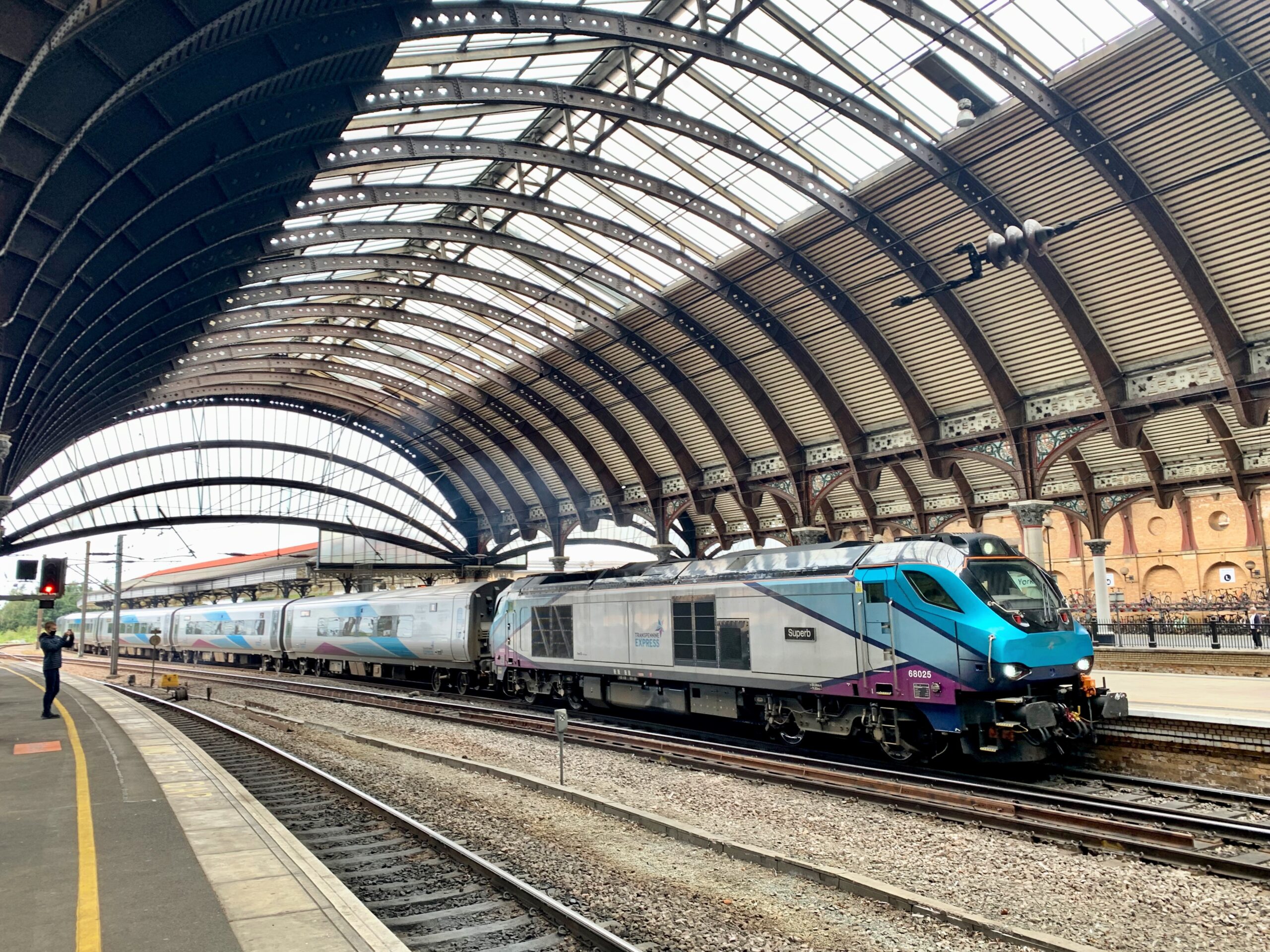
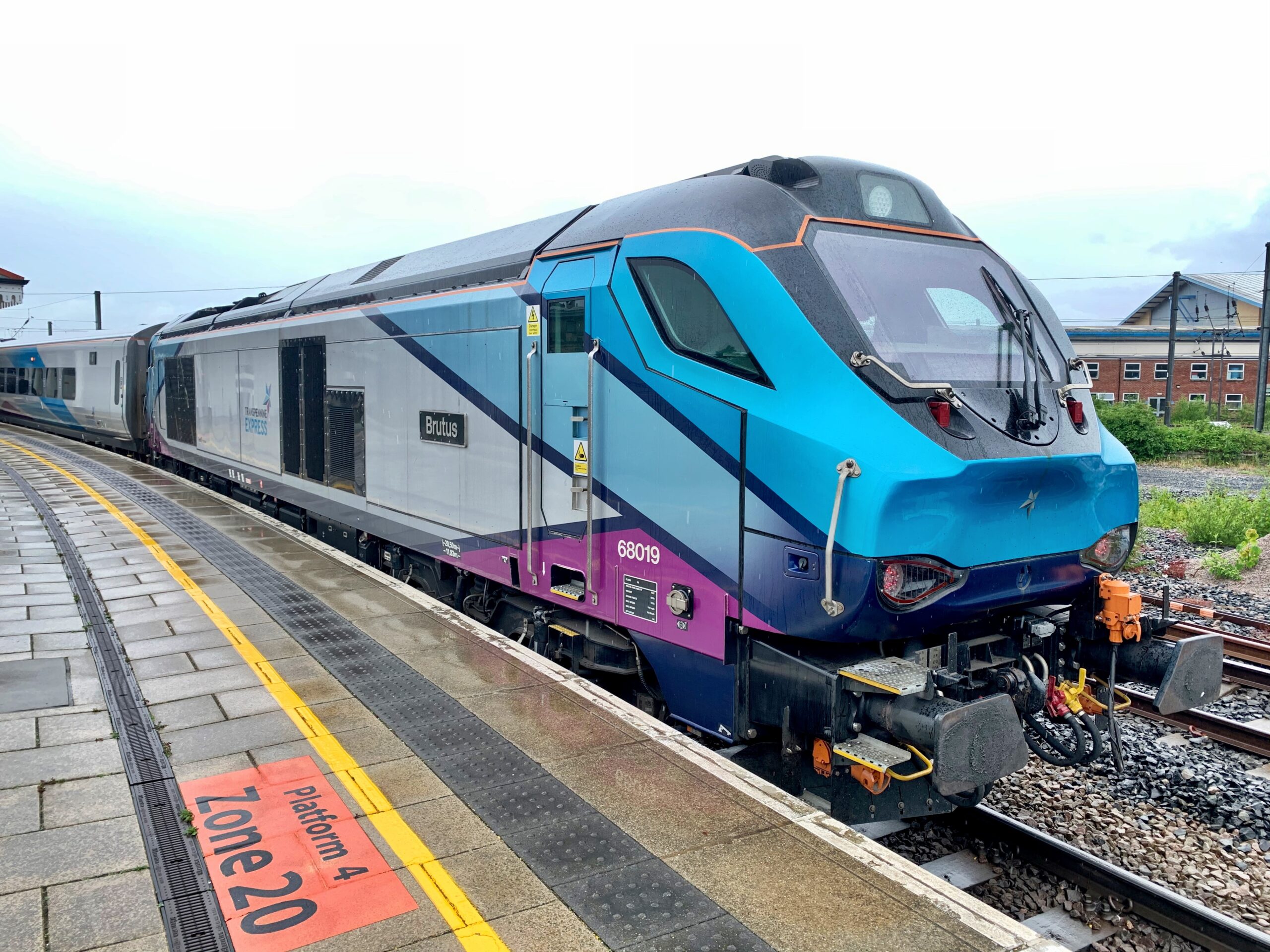
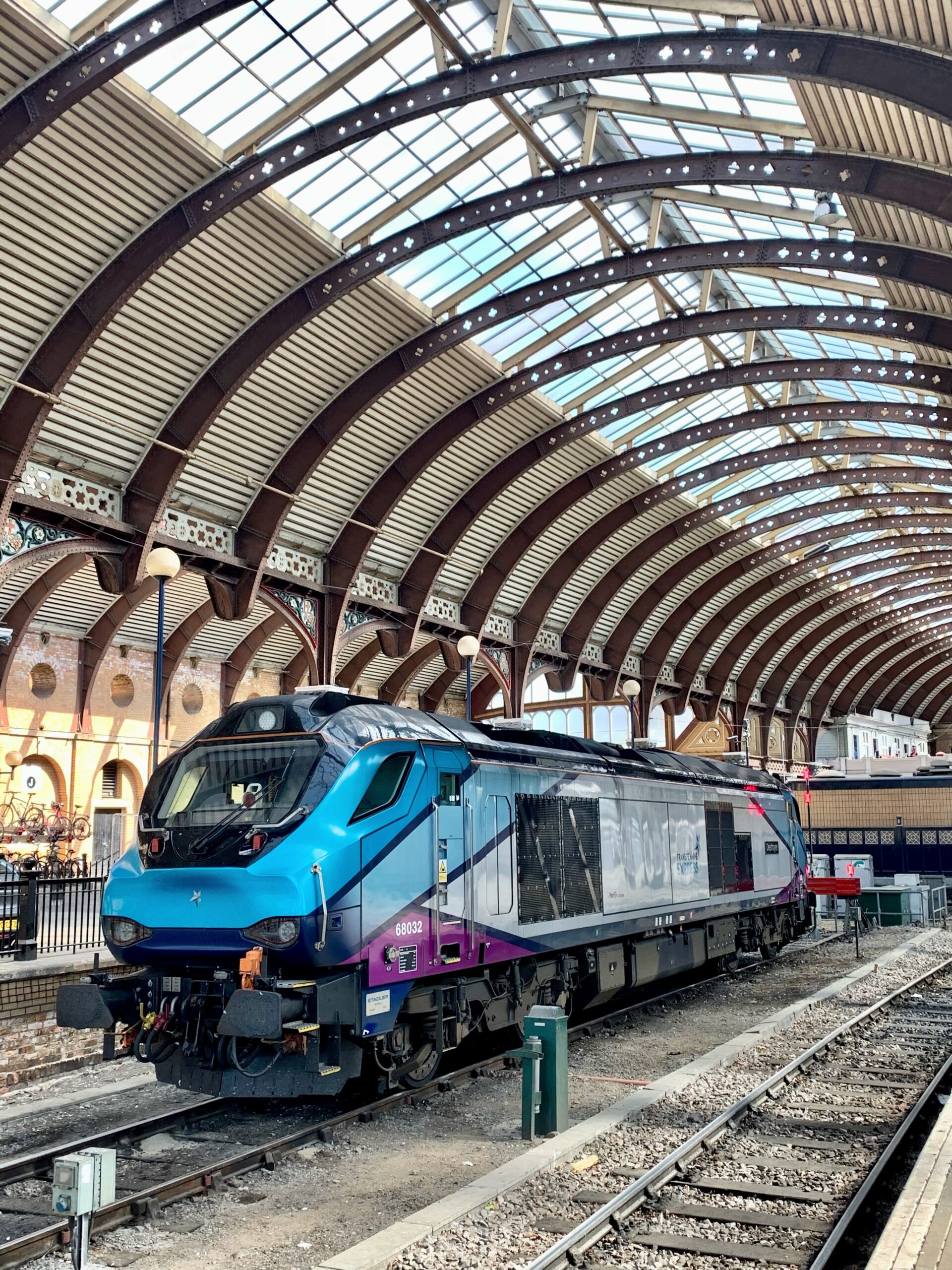
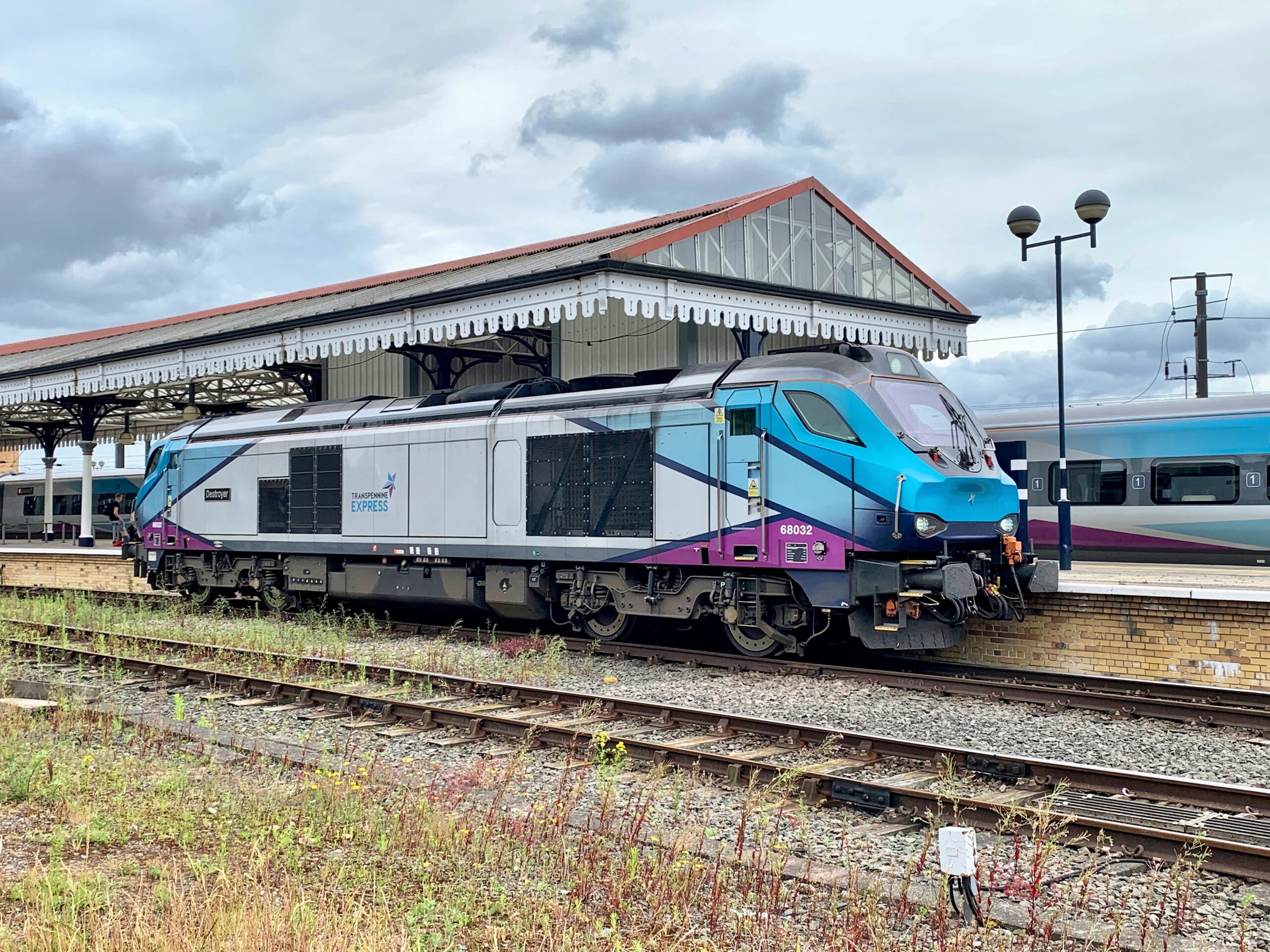
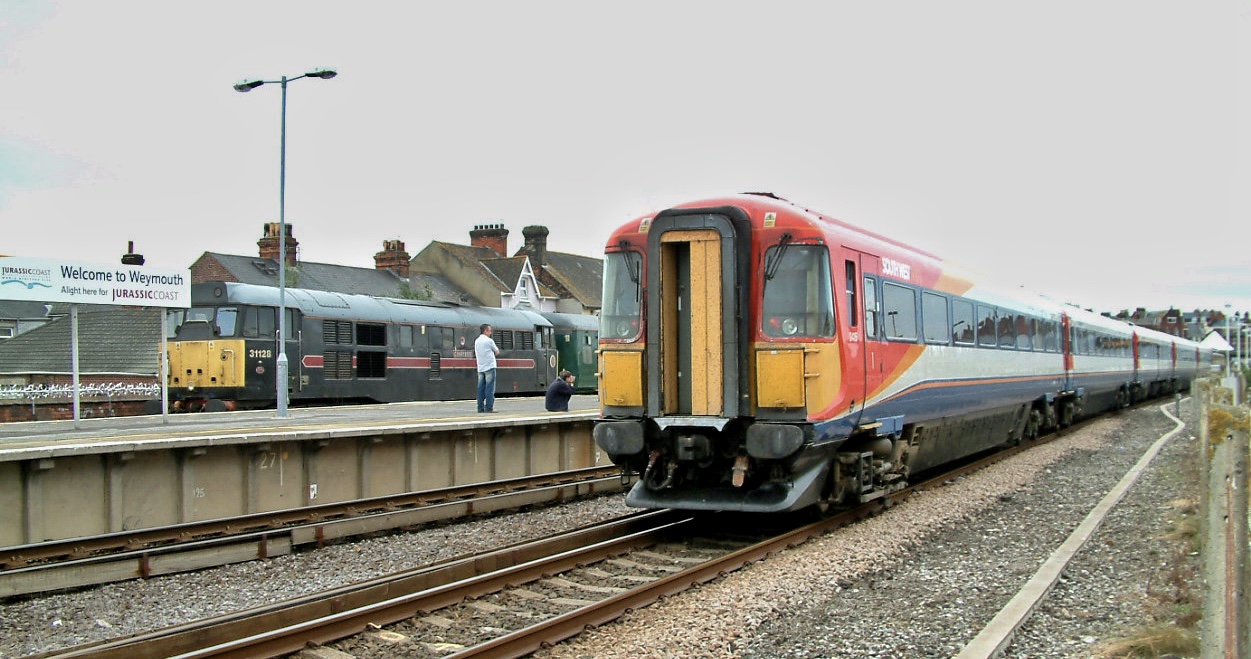
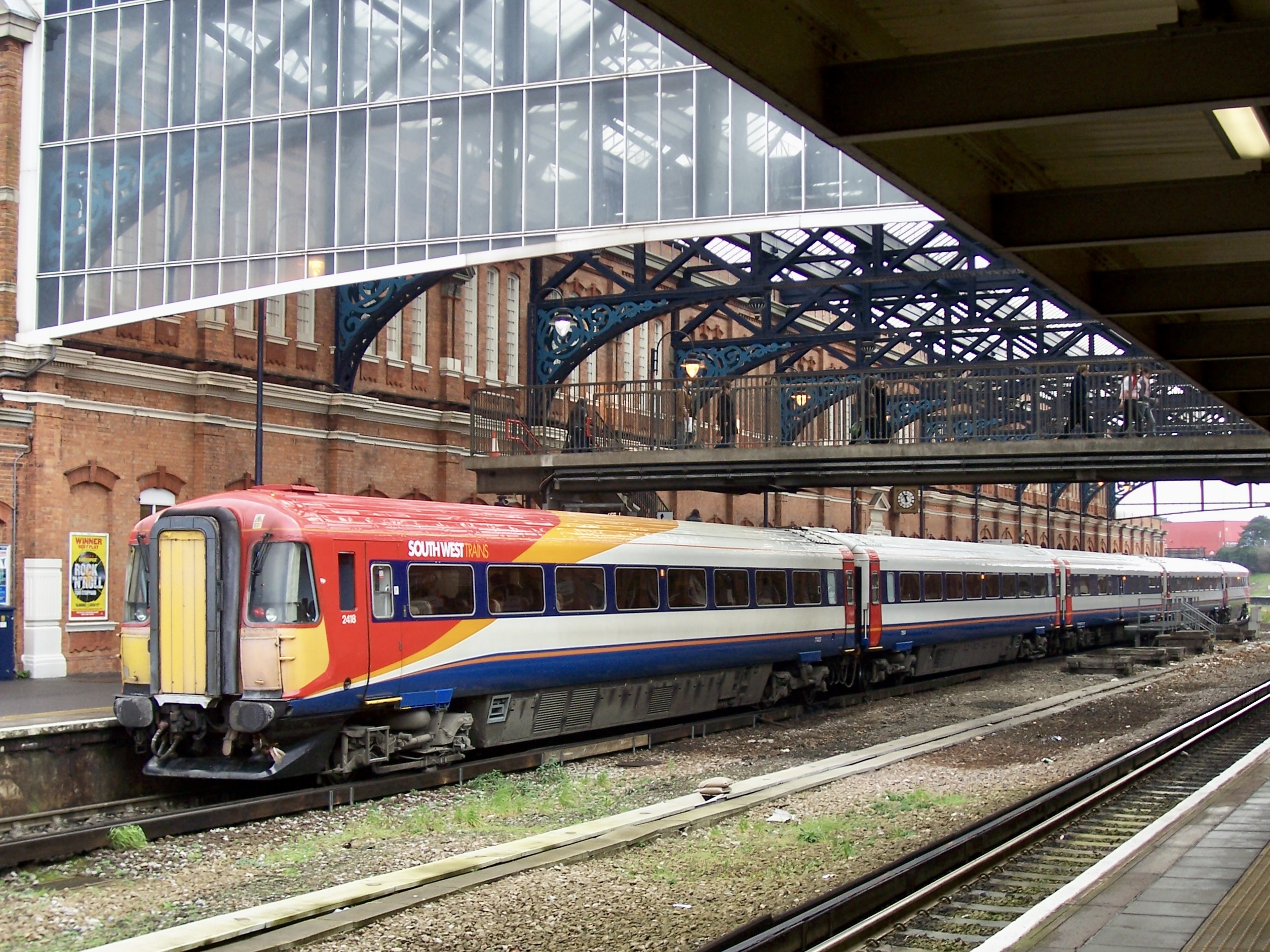
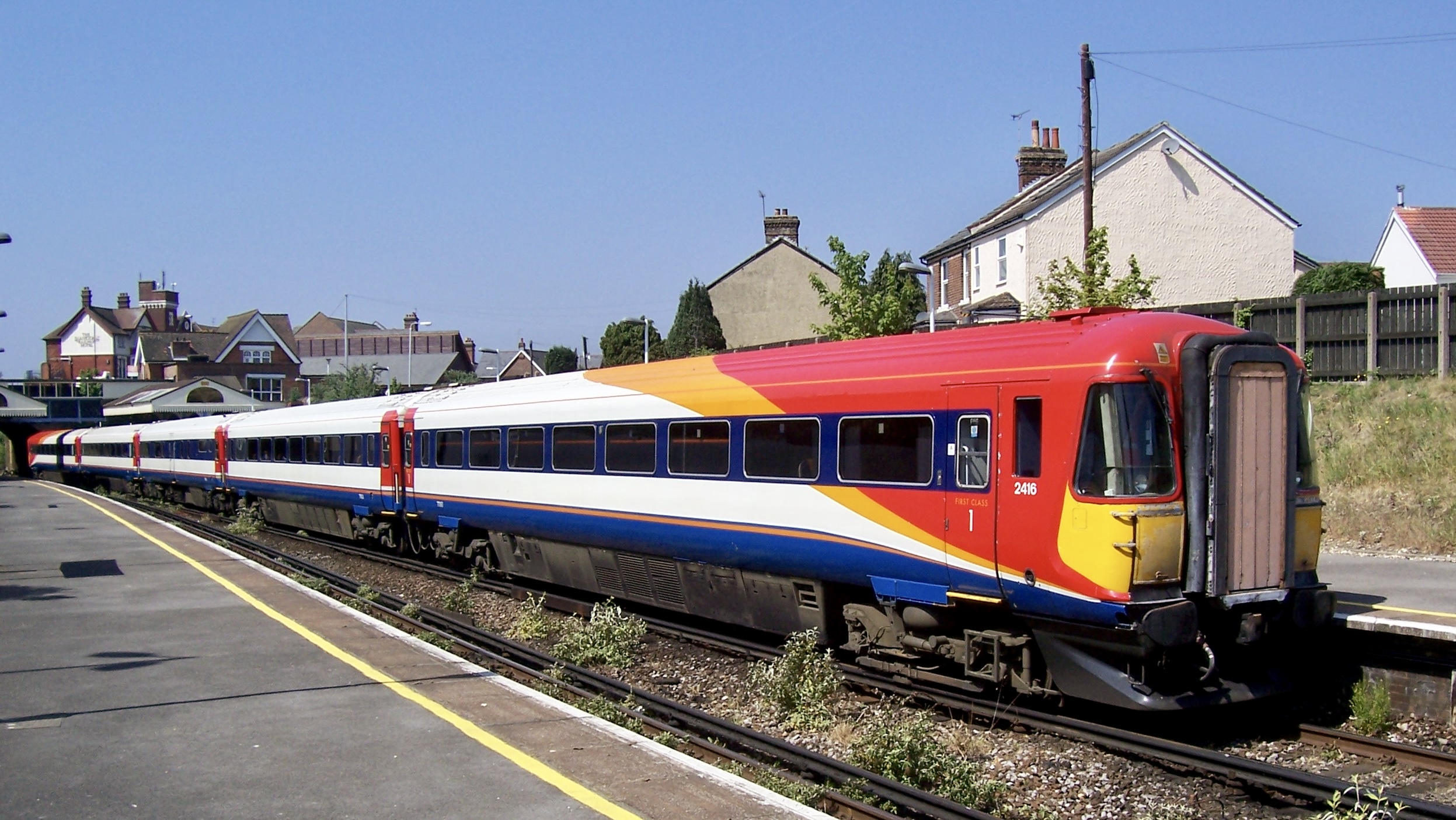
Further afield, it has been announced that TransPennine Express (TPE) will withdraw their troubled Nova 3 Class 68 hauled trains with effect from the December 2023 timetable change. We mention this, as back in 2016 prior to the TPE contract being awarded to FirstGroup, it was widely reported that the Department for Transport (DaFT) was eager to utilise de-motored Class 442 “Wessex Electric” electric multiple units hauled by Class 68 locomotives on Trans Pennine services. This plan, however, developed into an order for 66 new MK 5a carriages. The “Wessex Electrics” were introduced when the Bournemouth to Weymouth route was electrified and imho are amongst the best electric multiple units ever built. All this gives me an excuse to share some images of TPE liveried Class 68’s along with a few local photos of Class 442 EMU’s in South West Trains days.
68027 ‘Splendid’ at York – 18/06/202168024 ‘Centaur’ at York -30/08/202068025 ‘Superb’ at York- 30/08/202068019 ‘Brutus’ at York – 18/06/202168032 ‘Destroyer’, York – 17/06/202168032 ‘Destroyer’ at York – 18/06/2021South West Trains Class 442 No. 442415 at Weymouth. FM Rail owned Class 31 No. 31128 ‘Charybdis’ waits to depart with a “John Lewis Partnership” private charter back to London Victoria – 29/07/2006South West Trains Class 442 No. 442418 at Bournemouth – 28/12/2006De-branded Class 442 No. 442416 at Branksome – 03/05/2007
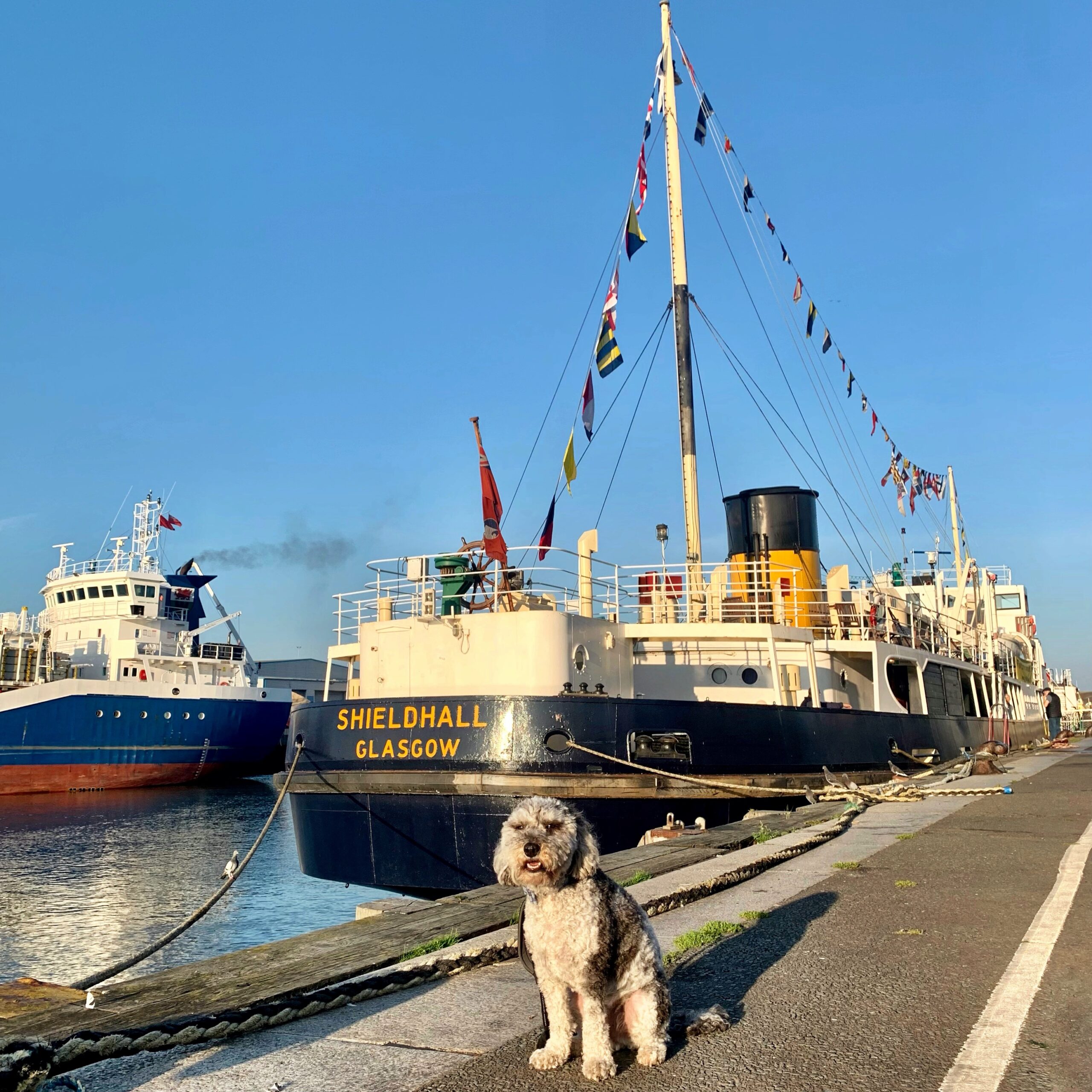
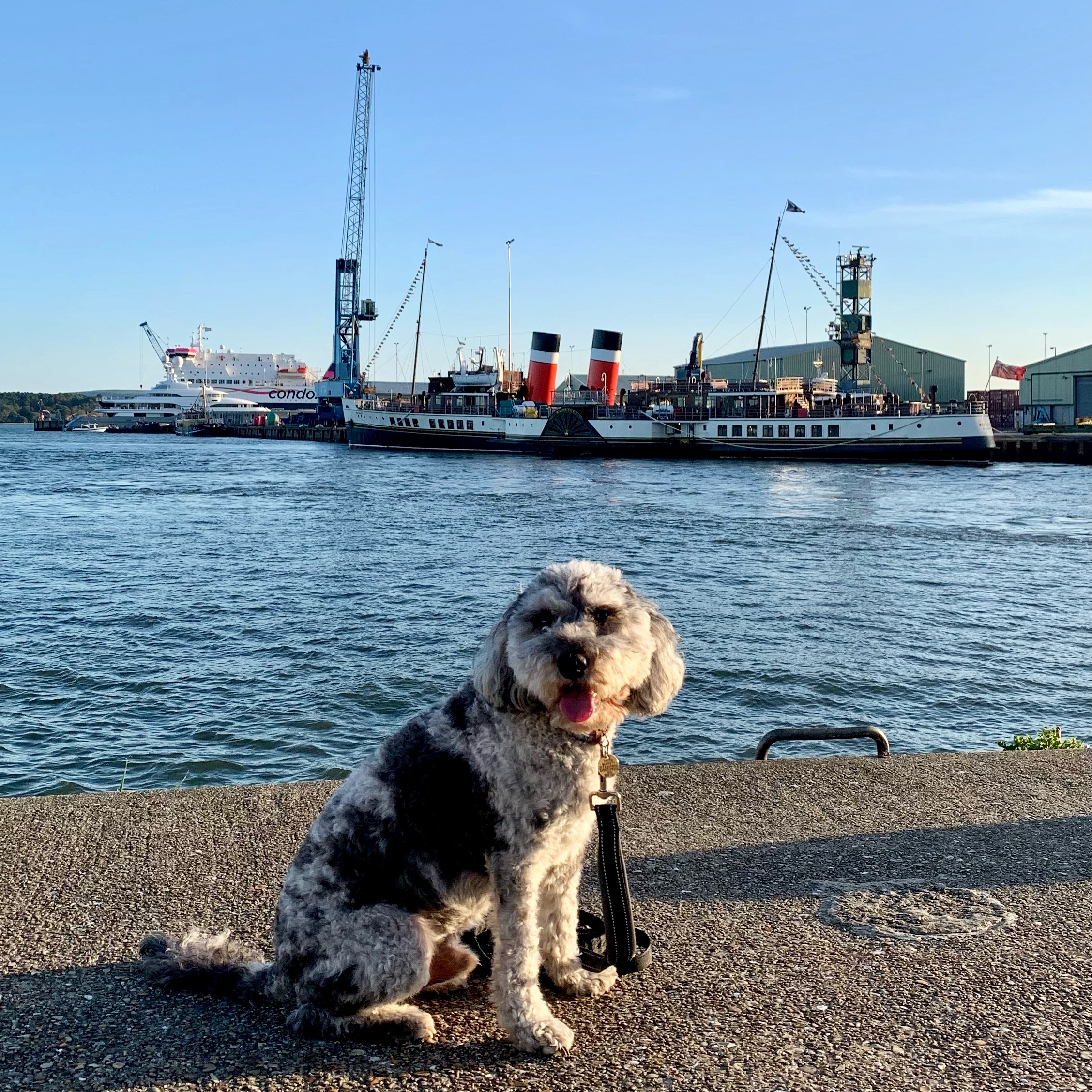
Yoshi has been ship spotting at Poole Quay this week as two steamships, both originally from Glasgow, namely SS Shieldhall and PS Waverley, visited.
SS Shieldhall is a preserved steamship that operates from Southampton. She is one of the last reciprocating steam engined ships built, using technology that dated back to the last quarter of the 19th century and which was obsolete at the time of her construction. She spent her working life as one of the “Clyde sludge boats”, making regular trips from Glasgow to dump treated sewage sludge at sea – 04/09/2023 PS Waverley is the last seagoing passenger-carrying paddle steamer in the world. Built in 1946, she sailed from Craigendoran on the Firth of Clyde to Arrochar on Loch Long until 1973 – 04/09/2023
Thanks for making it this far! I often say I ignore the Voyager units, but think I’ve more than made up for it this time around. Comments and corrections gratefully received. Be seeing you!
LMS Jubilee 4-6-0 No. 45596 ‘Bahamas’ working the final 2023 Railway Touring Company organised “Dorset Coast Express” 1Z92 0845 London Victoria to Weymouth – 17/08/2023
August 16th 2023 to August 23rd 2023
For a long while I’ve been meaning to climb up to the railway line accessed from the old main road between Dorchester and Weymouth, just north of Upwey village, with the aim of photographing passing trains. This was once the site of Upwey Wishing Well Halt, and although the steps survive either side of the railway line, nothing now exists of the platforms which once stood here. Opened by the Great Western Railway (GWR) on 28th May 1905 and served by rail motor trains between Weymouth and Dorchester, the station survived until 7th January 1957 when it was closed. Originally the station was a two platform timber built affair with corrugated iron pagoda style shelters. The nearby tourist attraction of Upwey Wishing Well brought many visitors by rail in the early years of the halt’s existence, but increasing competition from road transport and buses which could deposit their passengers closer to the Well itself saw an ever diminishing use by rail passengers. The last remnants were swept away during the 1988 Bournemouth to Weymouth electrification scheme. Locked gates and fences protect observers from the railway, preventing trespass but affording a good view up to Bincombe tunnel. I chose Thursday 17th August to visit as there were two special excursion trains due to pass in relatively quick succession. Grateful thanks to Jamie for the lift down to Upwey. A few days later I returned to Upwey and the actual Wishing Well to celebrate my mum’s 90th birthday. Happy days.
Still in South Western Trains livery, South Western Railway Class 444 EMU No. 444045 runs past the site of the former Upwey Wishing Well Halt with 1W21 1035 London Waterloo to Weymouth – 17/08/2023Class 57 No. 57601 ‘Windsor Castle’ heads up “The Northern Belle: Weymouth Harbour” 1Z79 0711 Coventry to Weymouth – 17/08/2023165137 – 2V68 1328 Weymouth to GloucesterLMS Jubilee 4-6-0 No. 45596 ‘Bahamas’ works the final 2023 “Dorset Coast Express” 1Z92 0845 London Victoria to Weymouth coasting down Bincombe Bank – 17/08/2023West Coast Railways Class 57 No. 57313 ‘Scarborough Castle’ working 5Z80 1333 Weymouth to Yeovil Pen Mill empty coaching stock movement designed to free up space in Weymouth because of the two excursion trains scheduled for the day works up Upwey Bank towards Bincombe Tunnel – 17/08/2023
Video from 17th August 2023 including the following: 444034 – 1W61 1005 London Waterloo to Weymouth and Poole 444029 – 1W20 1303 Weymouth to London Waterloo 444045 – 1W21 1035 London Waterloo to Weymouth 57601/57313 – 1Z79 0711 Coventry to Weymouth 444034 – 1W62 1320 Weymouth and Poole to London Waterloo 165137 – 2V68 1328 Weymouth to Gloucester 45596/ 47802 – 1Z92 0845 London Victoria to Weymouth 57313/57601 – 5Z80 1333 Weymouth to Yeovil Pen Mill 47802/45596 – 1Z93 1636 Weymouth to London Victoria 57601/57313 – 5Z82 1641 Yeovil Pen Mill to Weymouth – with thanks to G E Barrett for video clips at Dorchester
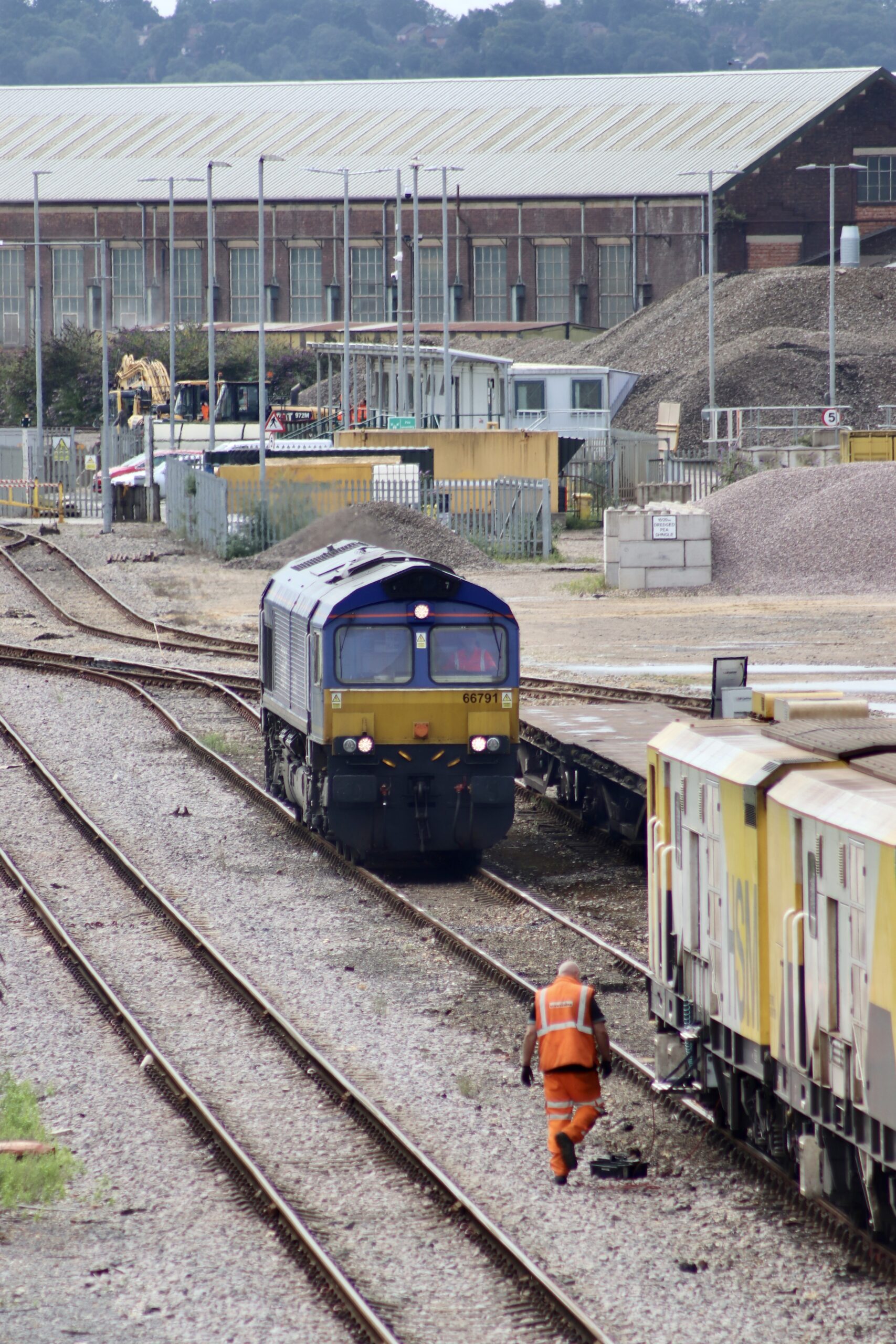
Later on the 17th I headed off to Branksome to see an engineers train pass through bound for Poole. On this occasion the train was worked by GBRf and was top and tailed by class 66 locomotives. On my way home, I popped in at Poole to see the locos and ballast hoppers awaiting deployment.
GBRf Class 66 No. 66791 6G28 2304 Eastleigh East Yard to Poole – 18/08/2023GBRf Class 66 No. 66749 ‘Christopher Hopcroft MBE 60 Years Railway Service’ at the rear of 6G28 2304 Eastleigh East Yard to Poole – 18/08/2023
The following Tuesday and I was once again setting off for more midnight engineering train shenanigans, this time with DB Cargo class 66’s in charge of a train of new rail which was destined for the Christchurch – Pokesdown area.
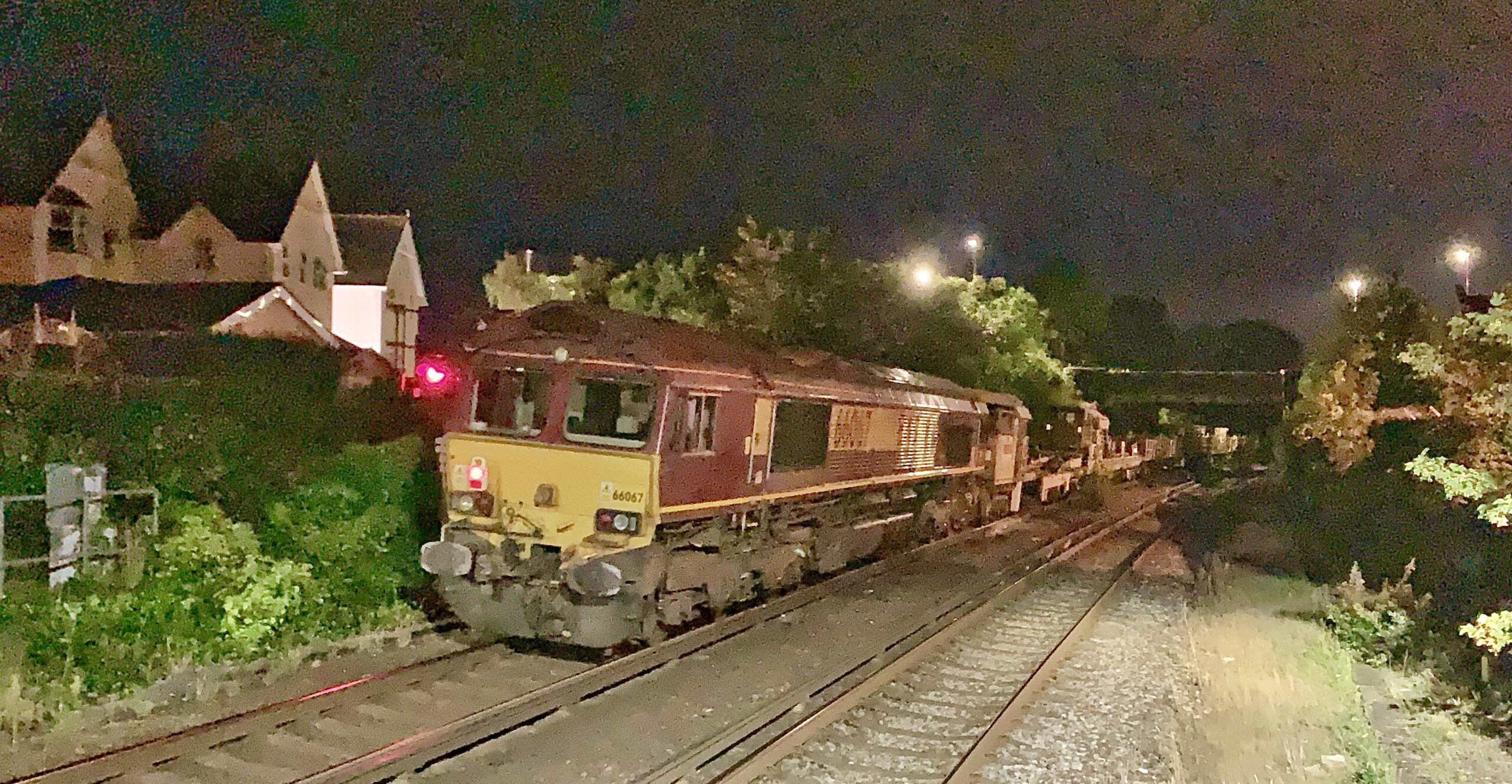
DB Cargo Class 66 No. 66028 at the head of 6N65 2349 Eastleigh East Yard to Christchurch – 23/08/2023DB Cargo Class 66 No. 66067 at the rear of 6N65 2349 Eastleigh East Yard to Christchurch having run through the station – 23/08/2023
Video of Dorset engineers train amongst every day railway movements – August 2023
Hamworthy Branch Update:
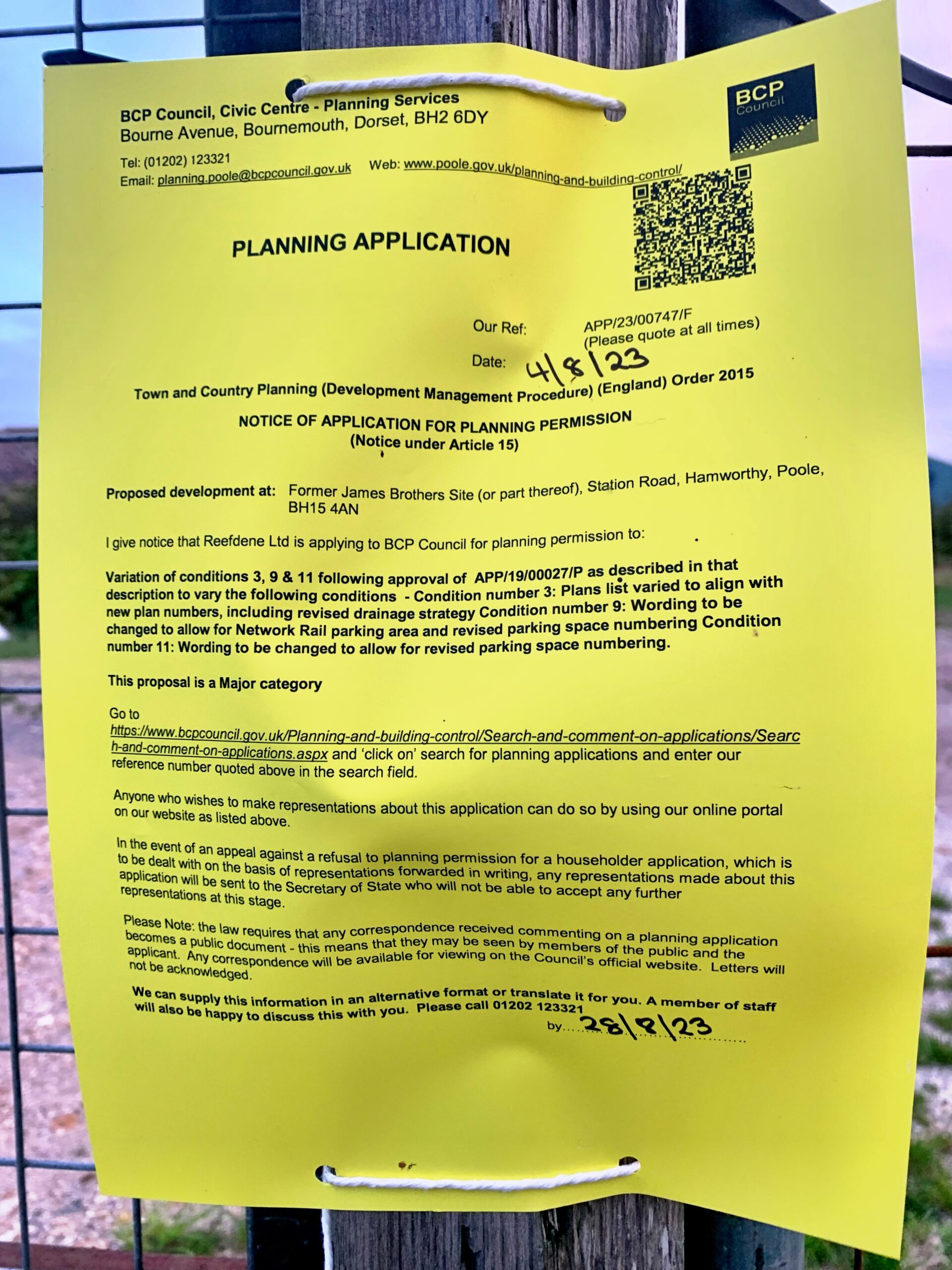
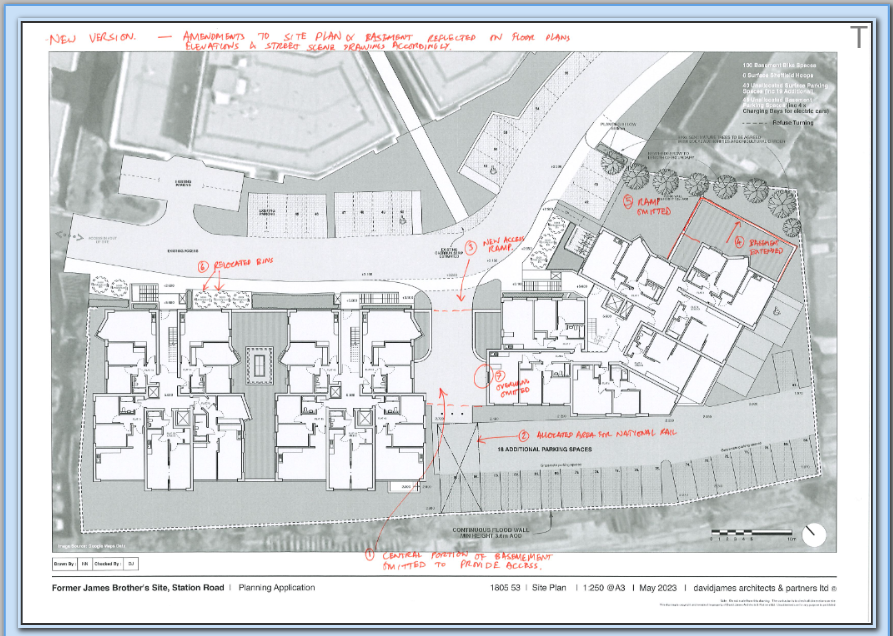
Out walking Yoshi around Hamworthy and I noticed a planning application notice fastened to the fence close to where the original Poole station once stood. What caught my eye was a variation of conditions quoted within the notice allowing for a “National Rail parking area” as part of a new development on the former James Brothers Site on Station Road.
Planning application notice – August 2023Diagram of redevelopment plans of the former James Brothers Site on Station Road, Hamworthy varied to align with new plan numbers, including a revised drainage strategy, wording changed with amended parking space numbering to allow for a dedicated Network Rail parking area which includes a set of gates to allow access to railway land to the south of the site. As shown by the plans, these will be flood-gates at a minimum height of 3.6m – August 2023
From The Archive:
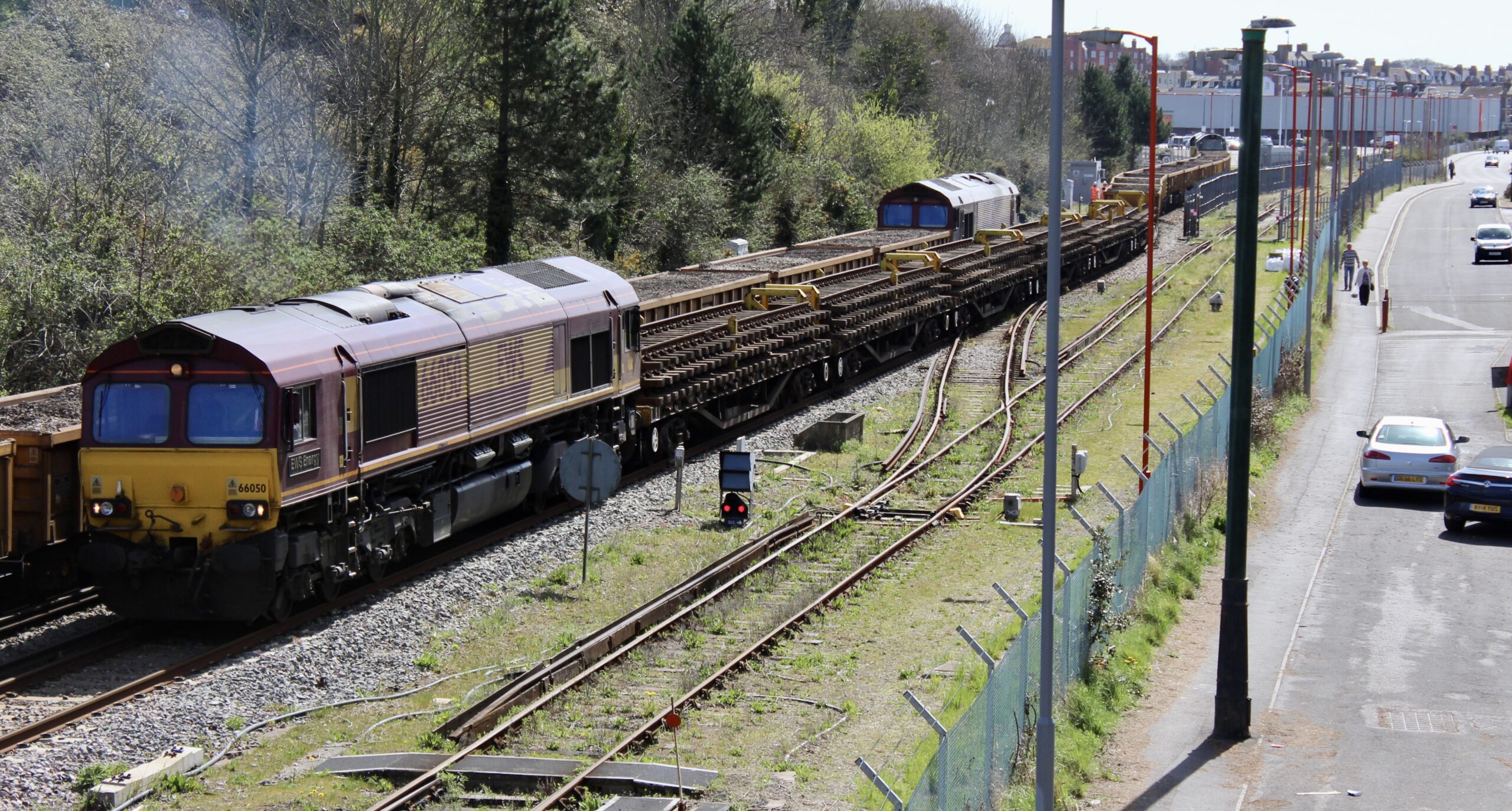
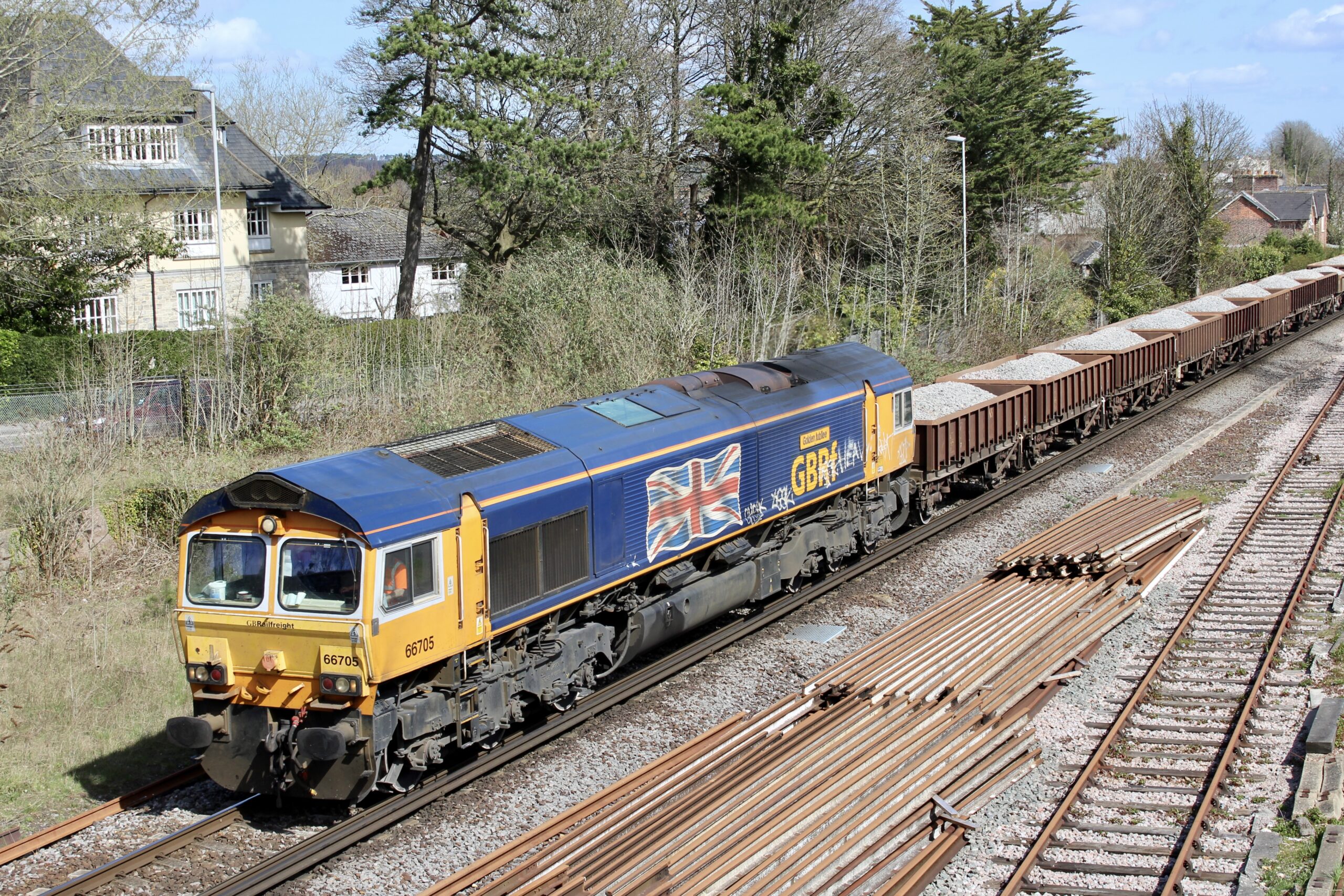
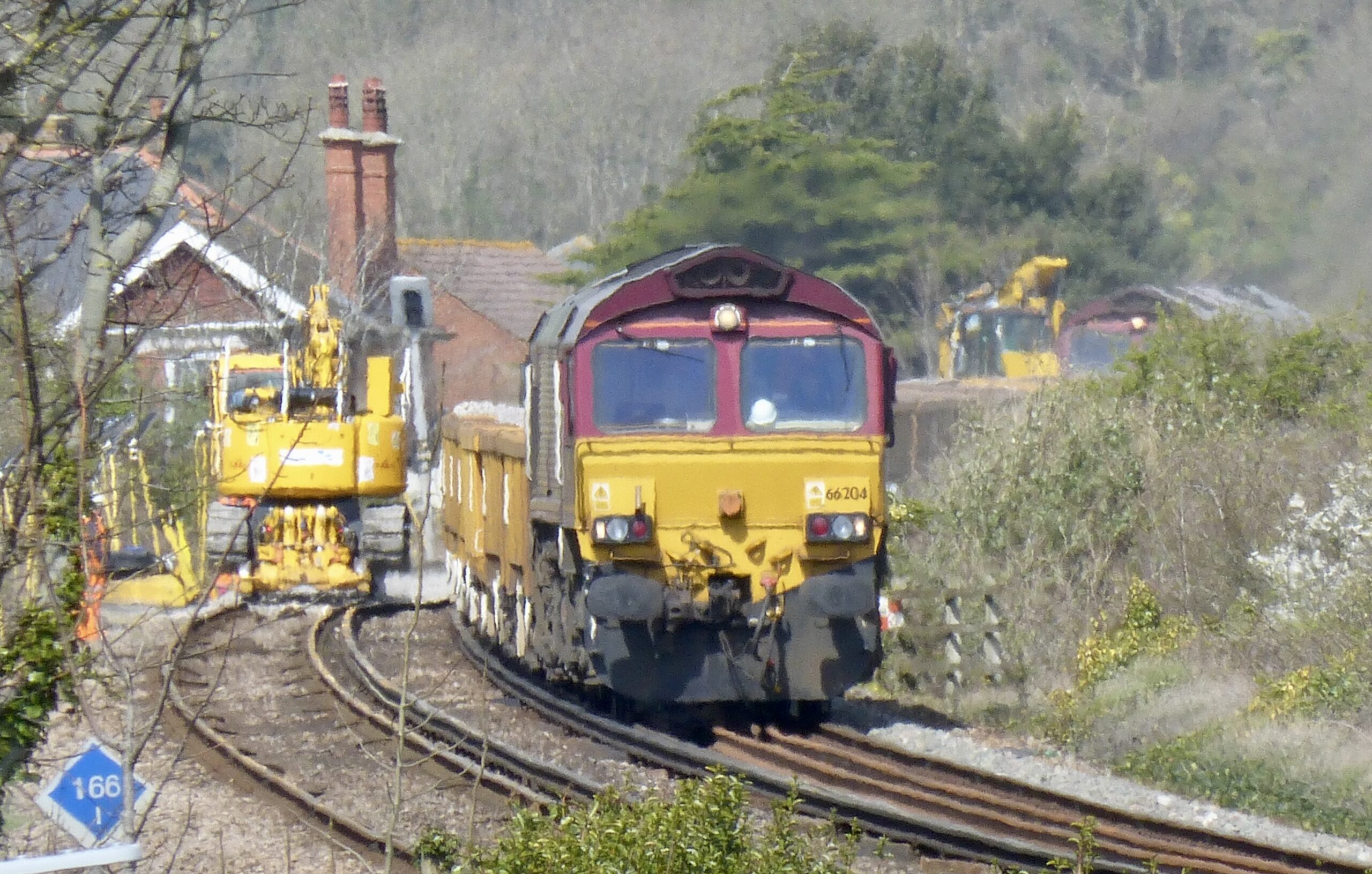
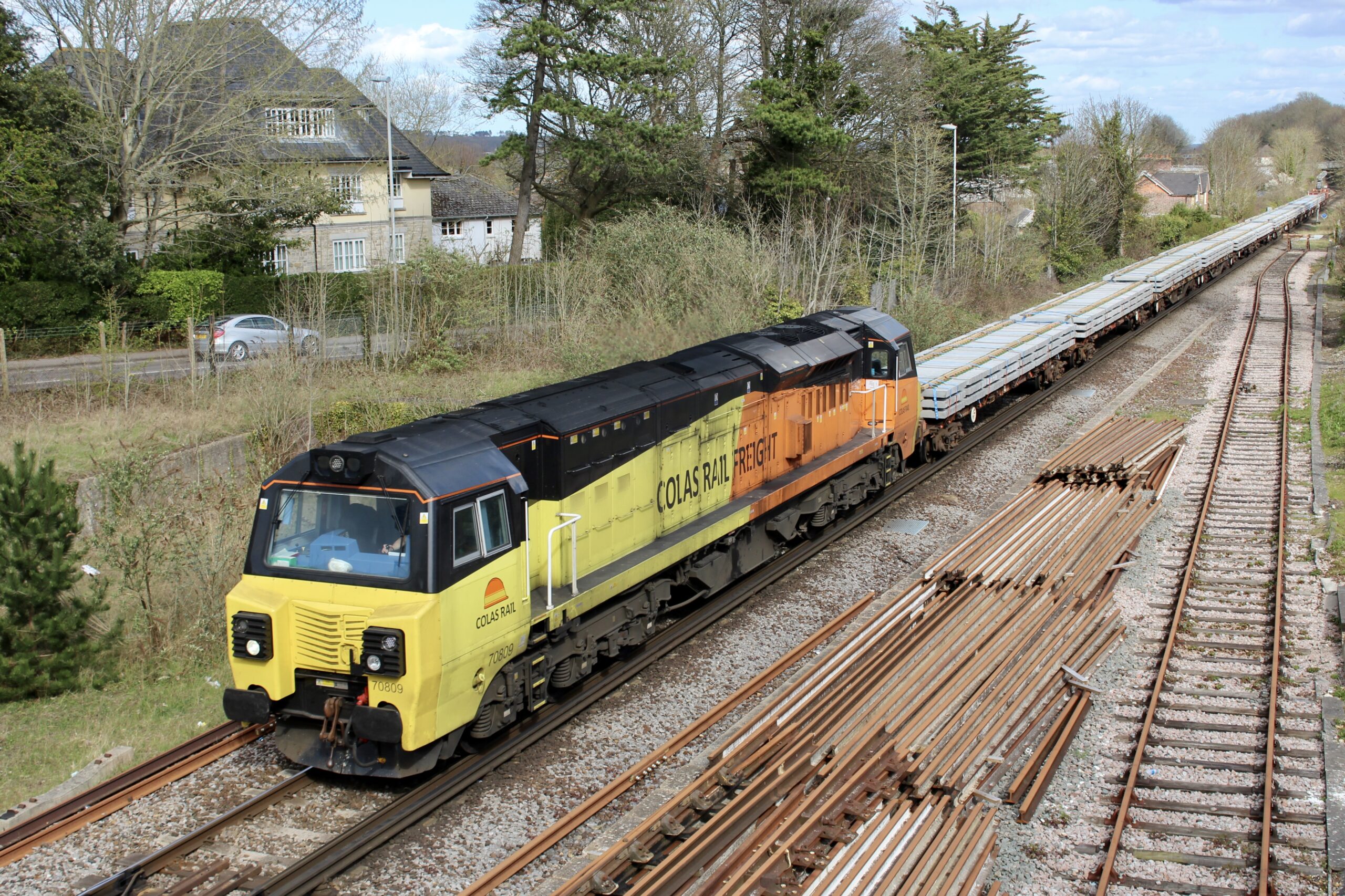
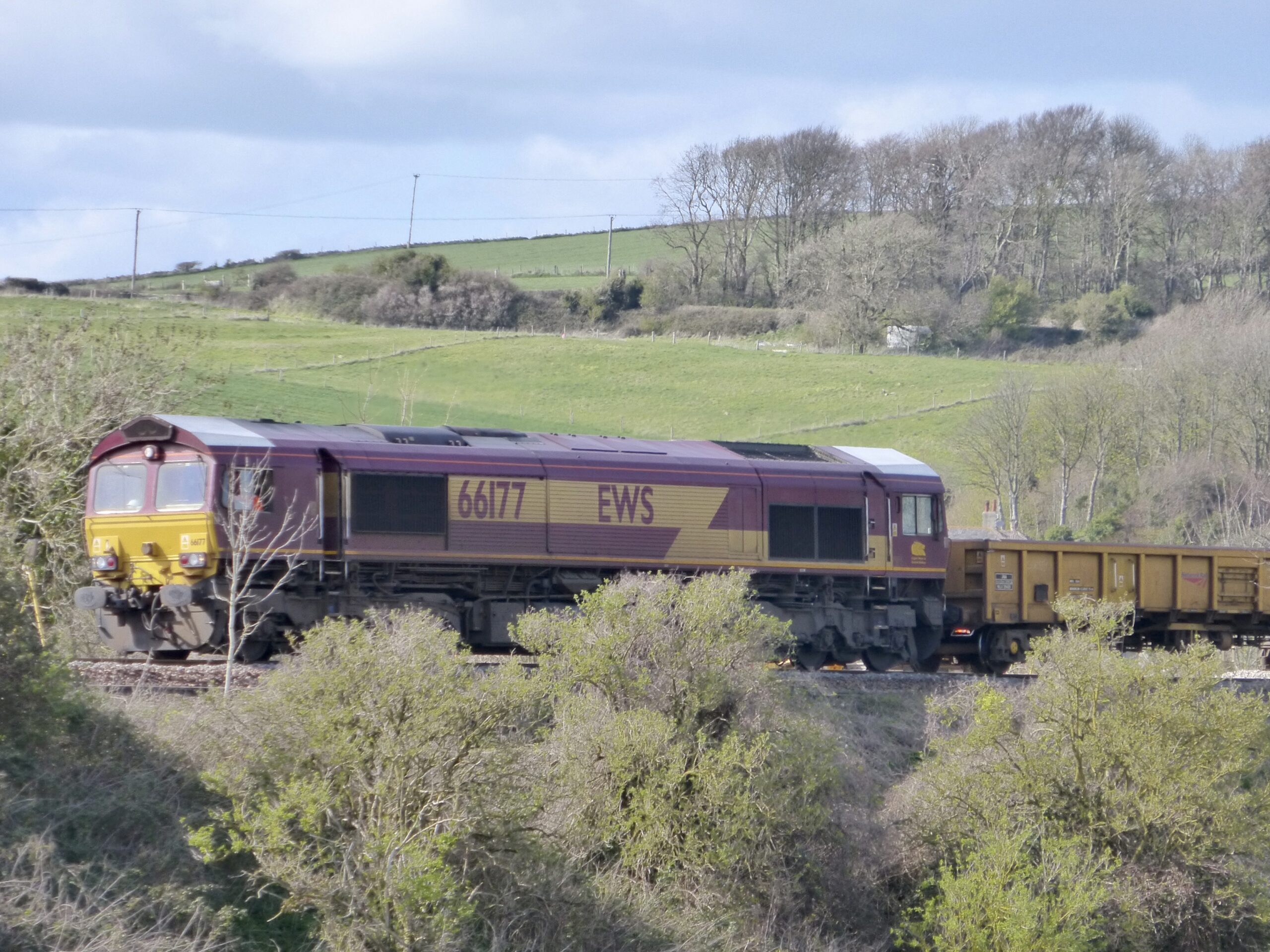
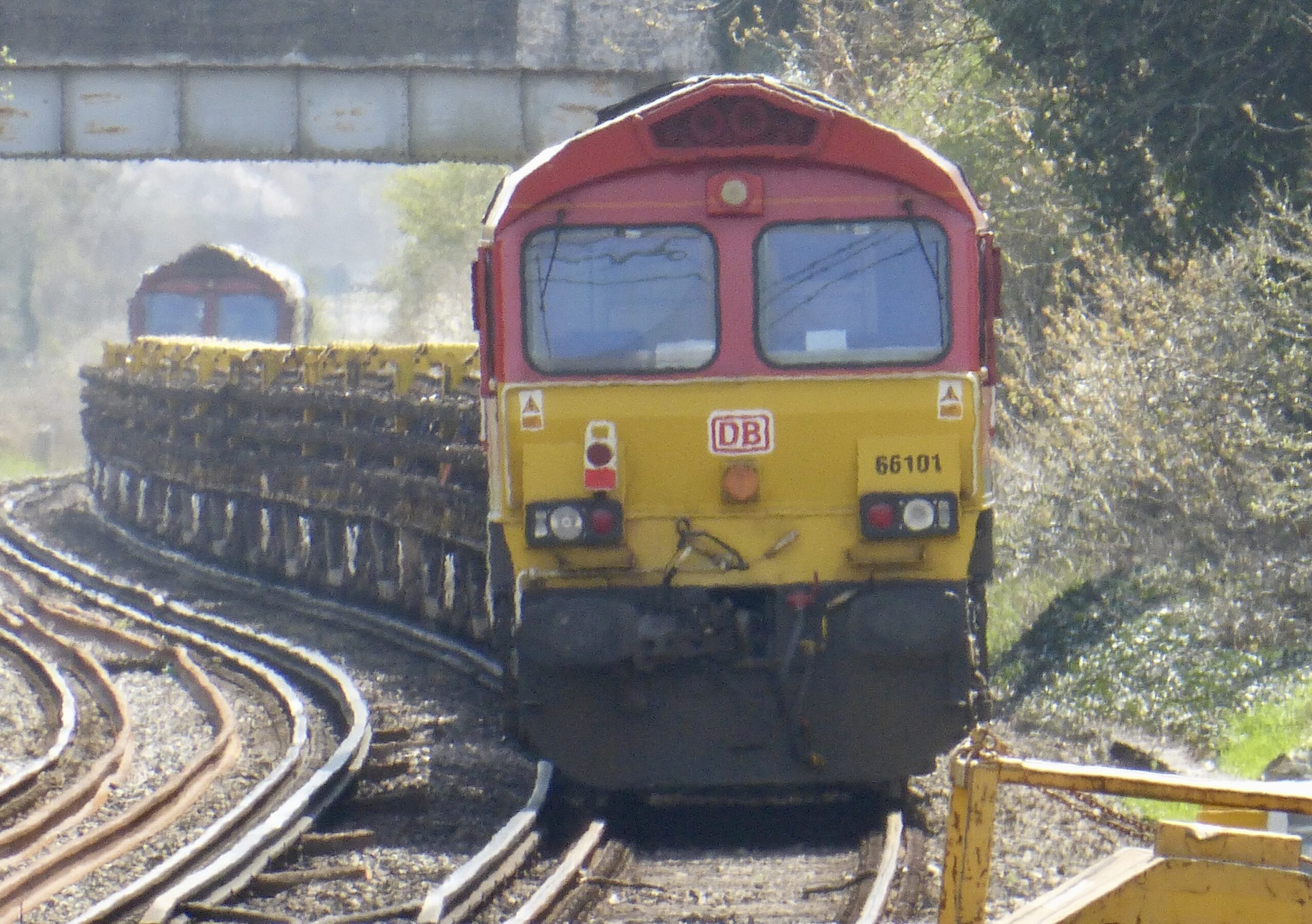
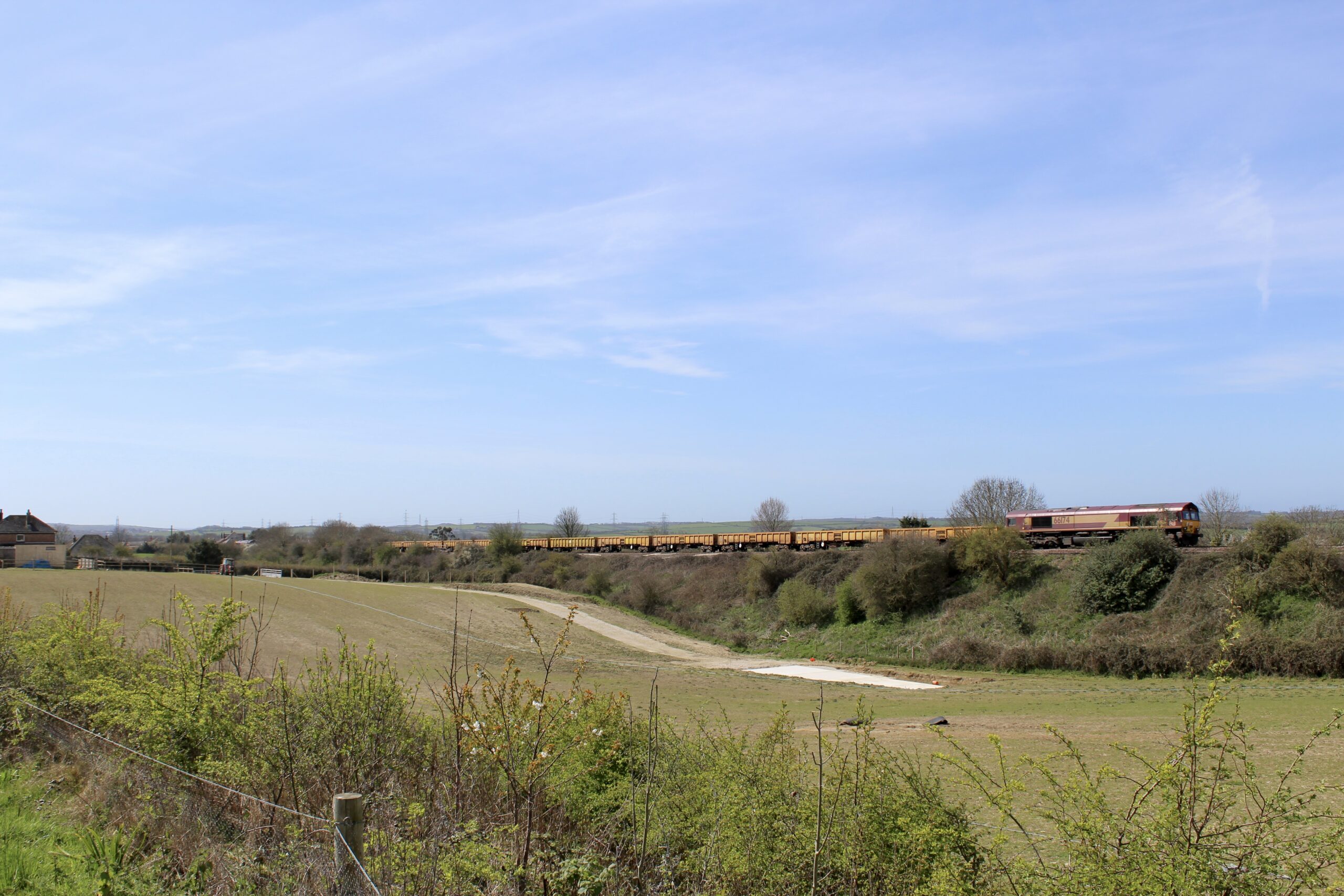
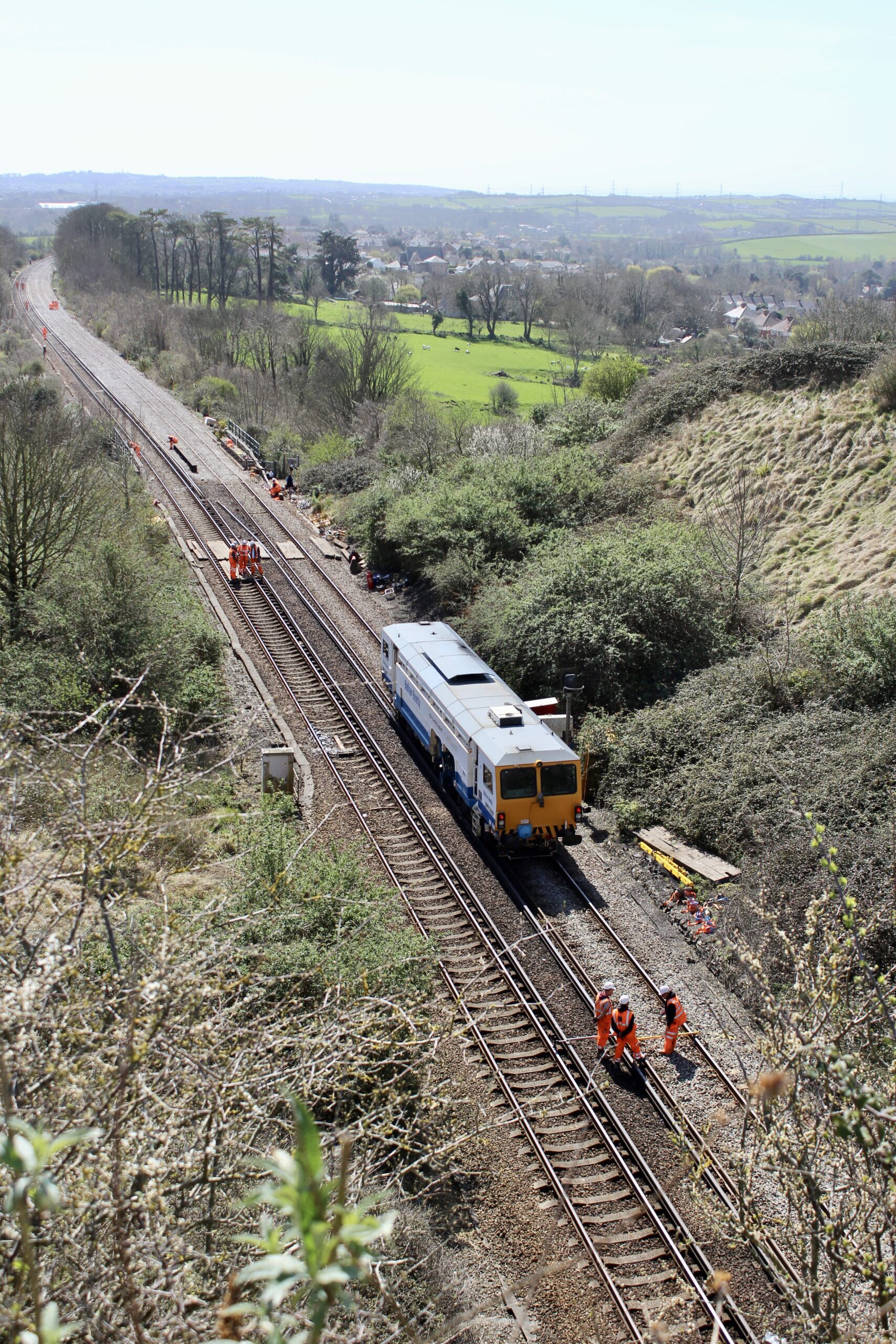
I have to admit to being partial to an engineering train. Every night I lie in bed, the brightest colours fill my head, a million dreams are keeping me awake, I think of what the world could be. No, hang on, that’s from “The Greatest Showman”. Anyway, back in April 2015 there was no need to dream of engineers trains as eleven of them found their way to Upwey on Saturday 11th, following an earlier light engine visit on the 9th which ran as a crew route refresher for Colas. The purpose of this engineering possession was for the relaying of the up line between Upwey station and Bincombe Tunnel. Trains ran in order as follows; No. 66050 top and tailed with No. 66101, No. 70805, No. 66016, No. 70807, No. 70808, No. 66014, No. 66177, No. 66705, No. 70809, No. 66204 and finally train eleven with No.’s 66074 and 66174.
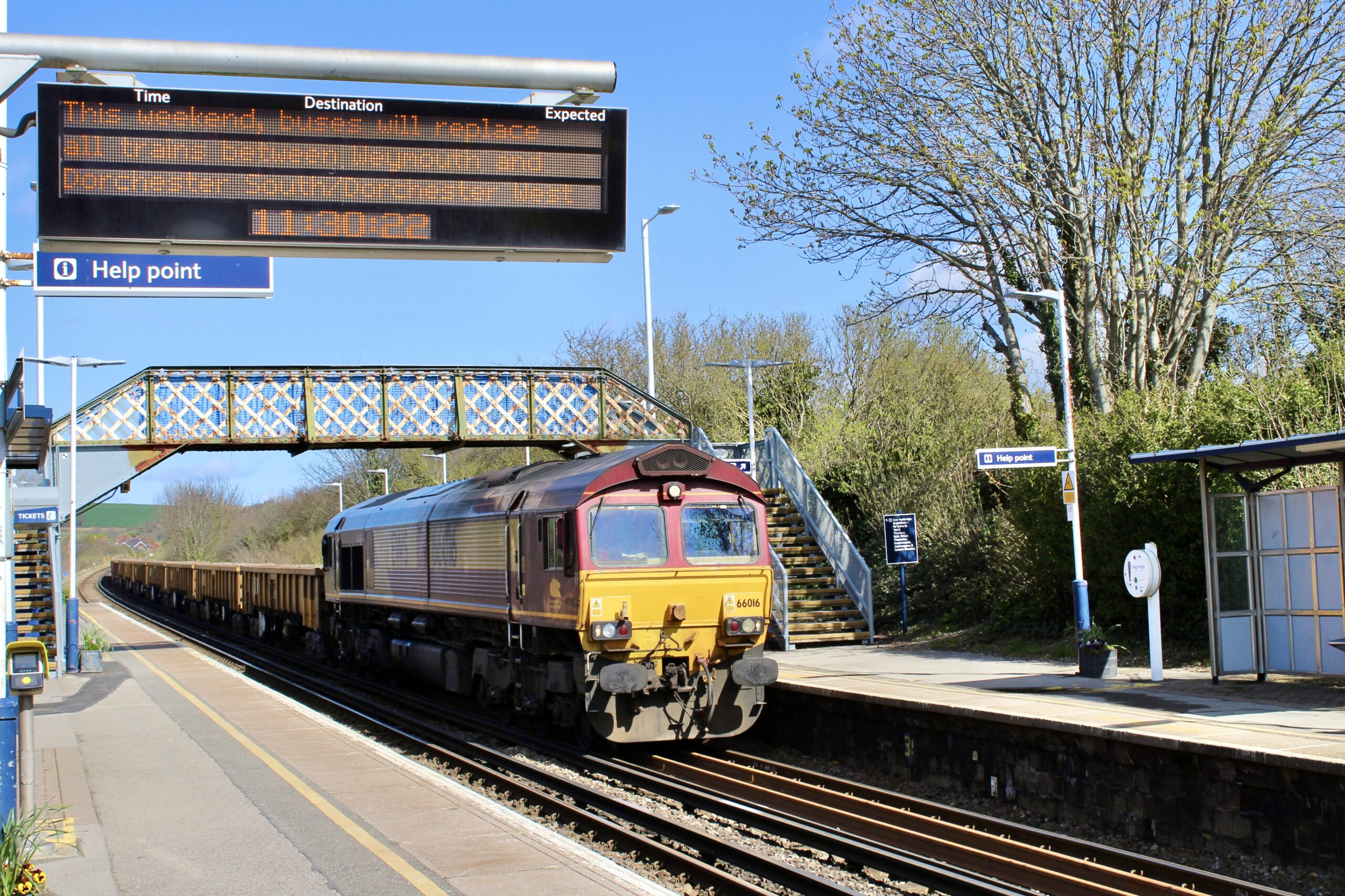
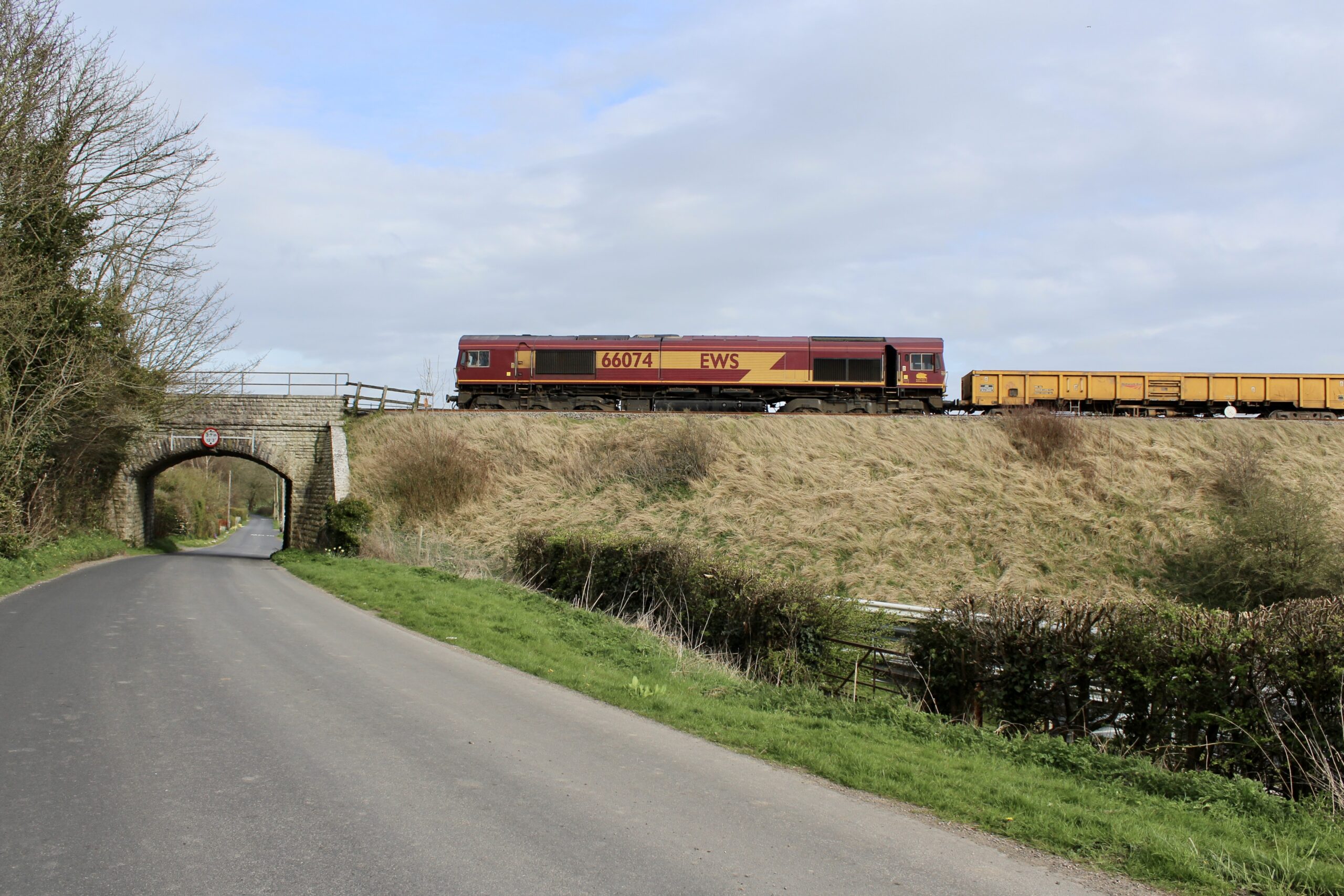
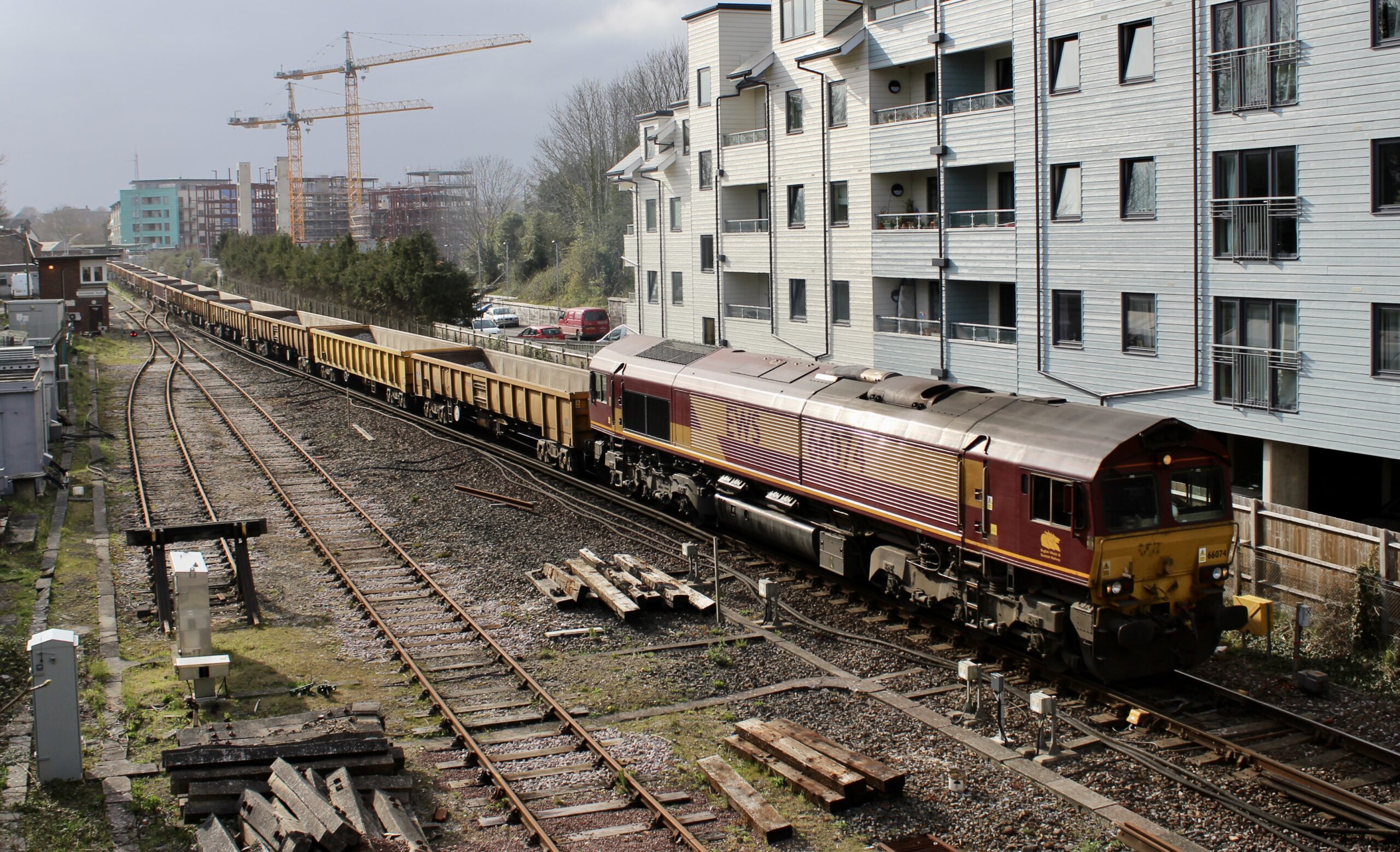
EWS Class 66 No. 66016 at Upwey – 11/04/2015Class 66 Np. 66050 and Class 70 No. 70805 at Weymouth – 11/04/2015Class 70 No. 70805 in Weymouth station – 11/04/2015Class 66 No. 66016 on the approach to Weymouth – 11/04/2015Class 66 No. 66050 departs Weymouth with a train of track panels – 11/04/2015GBRf Class 66 No. 66705 arrives at Dorchester South with a train of new ballast – 11/04/2015A view over to Upwey railway station with Class 66 No. 66101 in DB red livery – 11/04/2015Class 66 No. 66204 near Upwey – 11/04/2015Class 70 No. 70809 arrives into Dorchester – 11/04/2015A view towards Weymouth looking down to the site of Upwey Wishing Well Halt – 11/04/2015Class 70 No. 70807 at rest in Weymouth station – 11/04/2015Class 70 No. 70808 between to trains in Weymouth – 11/04/2015GBRf Class 60 No. 66705 pokes out of Bincombe Tunnel – 11/04/2015Road/rail machines watched by Class 66 No. 66014 near Upwey – 11/04/2015Class 66 No. 66177 at Upwey – 11/04/2015DB liveried Class 66 No. 66101 at Upwey – 11/04/2015Class 66 No. 66174 at a stand on Bincombe Bank- 12/04/2015Another view looking towards Weymouth with a track machine where Upwey Wishing Well Halt was once located – 12/04/2015Class 66 No. 66074 near to the location of Monkton and Came Halt railway station which opened in 1905 as Came Bridge and closed in 1957 – 12/04/2015
Starting with No. 66174 which departed Dorchester South mid-afternoon most of the trains returned to Eastleigh on Sunday 12th in reverse order with the last running early on Monday 13th.
Class 66 No. 66074 at Dorchester South departs for Eastleigh. The Brewery Square development is being built in the background – 12/04/2015
A continuation of the work was carried out over three successive evenings on 13th, 14th and 15th April, with two engineers trains allocated to this. On the evening of Monday 13th No. 66050 worked train No. 1 followed by top and tail Class 70 No.’s 70808 and 70809, the same loco’s repeated the moves the following day. However on Wednesday 15th No. 66170 turned up with the same Class 70’s remaining on the second train (With thanks to “The Corkscrew” the newsletter of The Wimborne Railway Society for the meticulous notes!)
That’s us for this week. Thanks, as ever, for reading and for your comments and corrections which are always welcome, except the ones with links to dubious websites obviously (these can, however, be obtained by writing to me on the back of a ten pound note). Be seeing you!
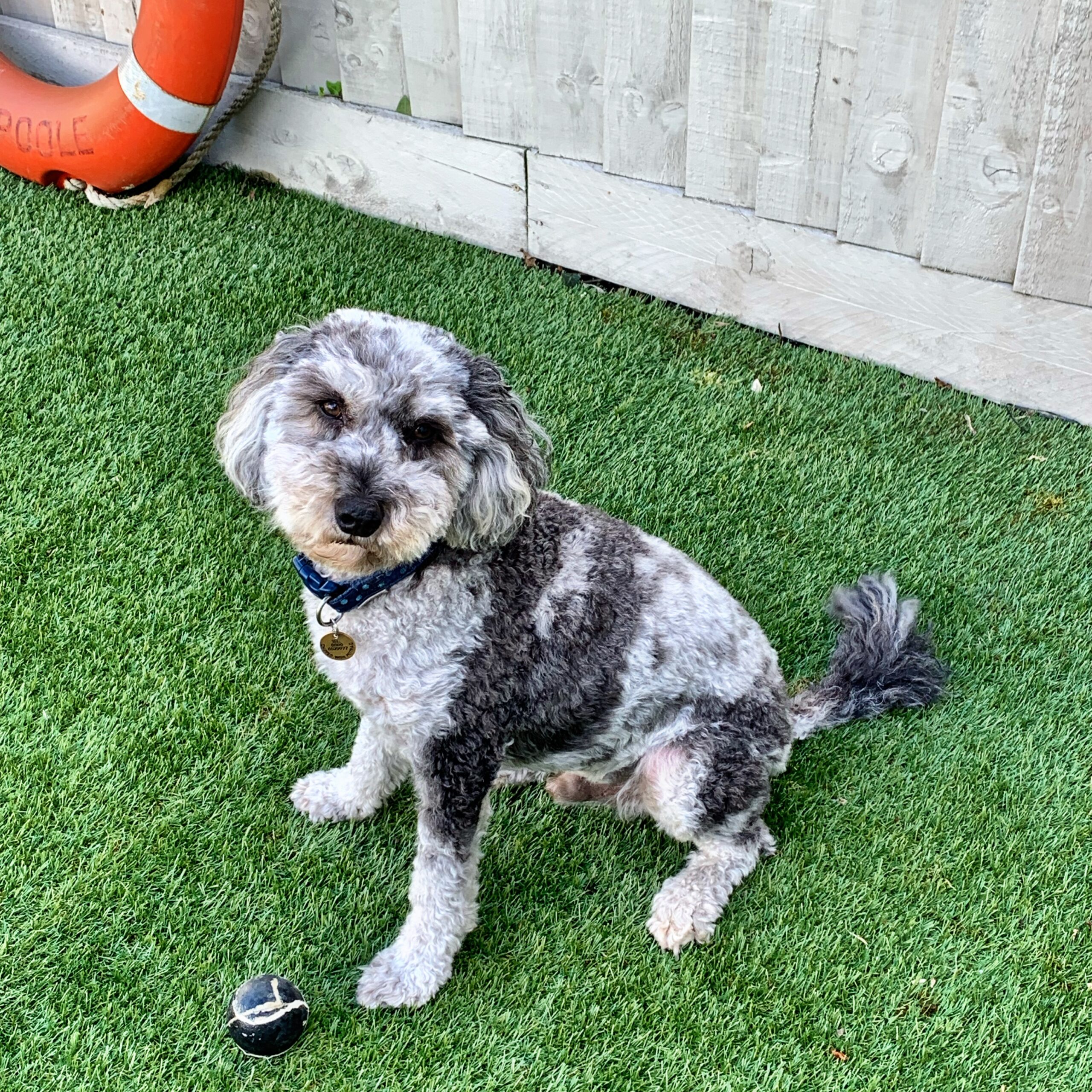
Yoshi wanting to play ball rather than help compile this weeks blog!
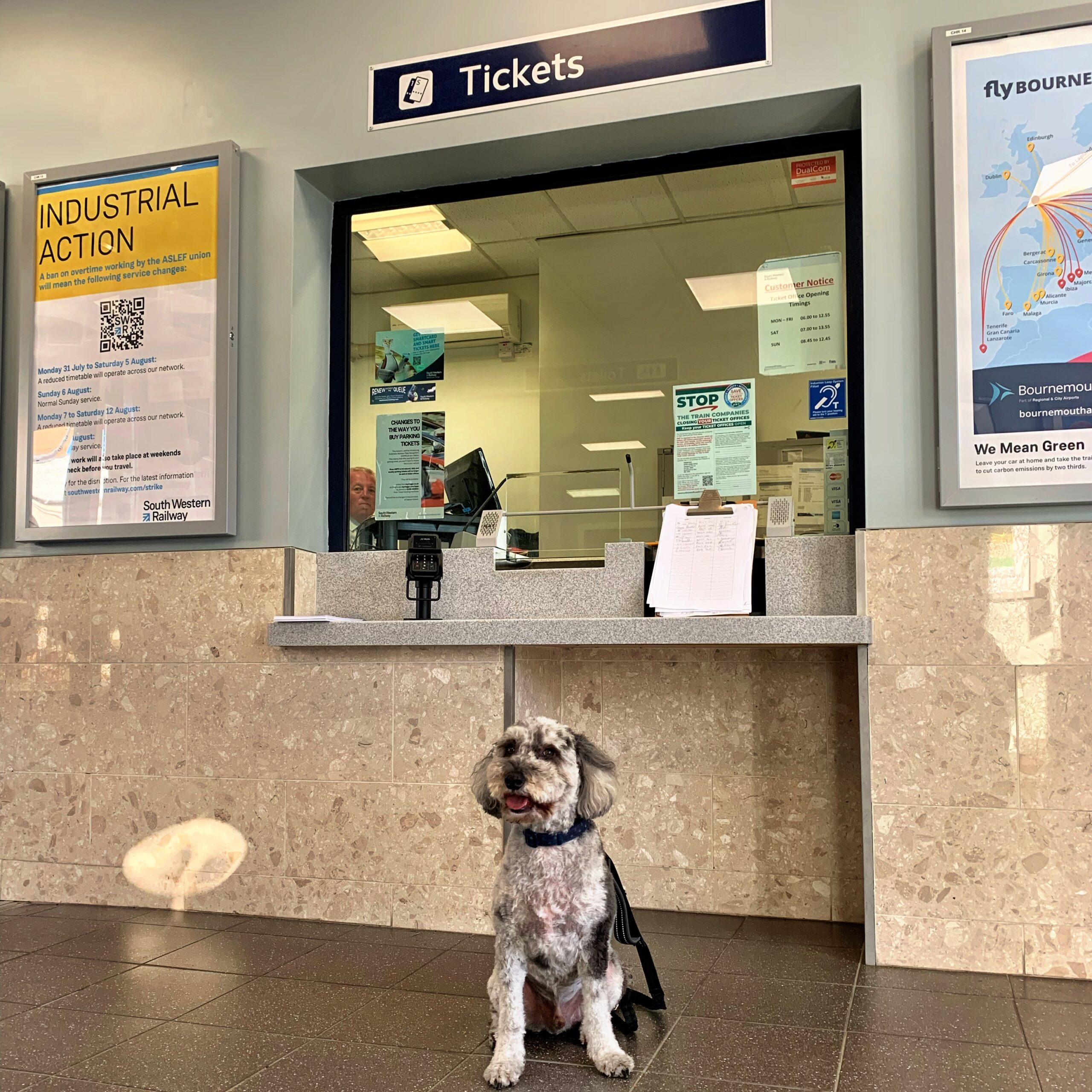
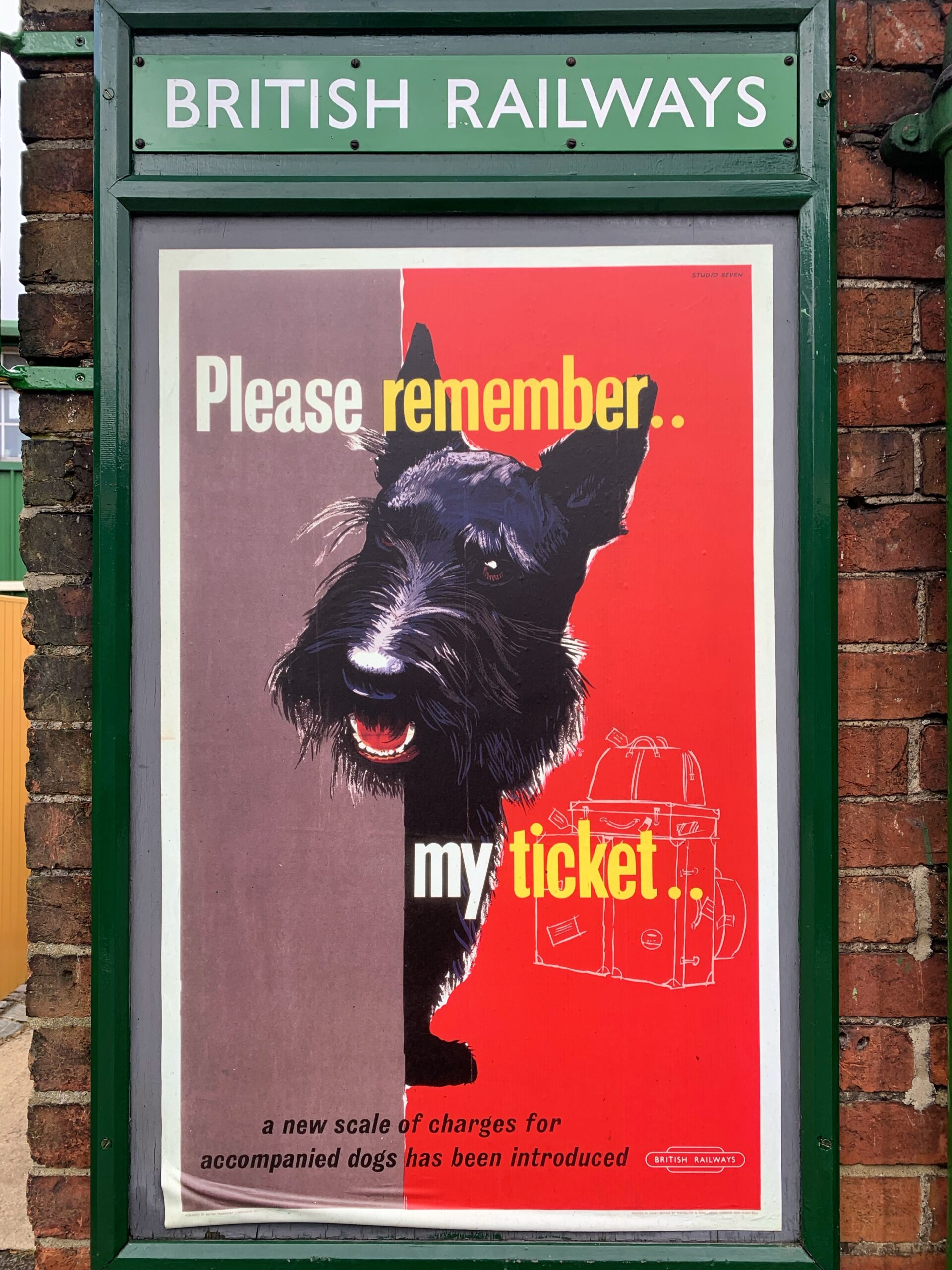
A freshly groomed Yoshi checks in at Christchurch railway station ticket office – 10/08/2023
August 9th 2023 to August 15th 2023
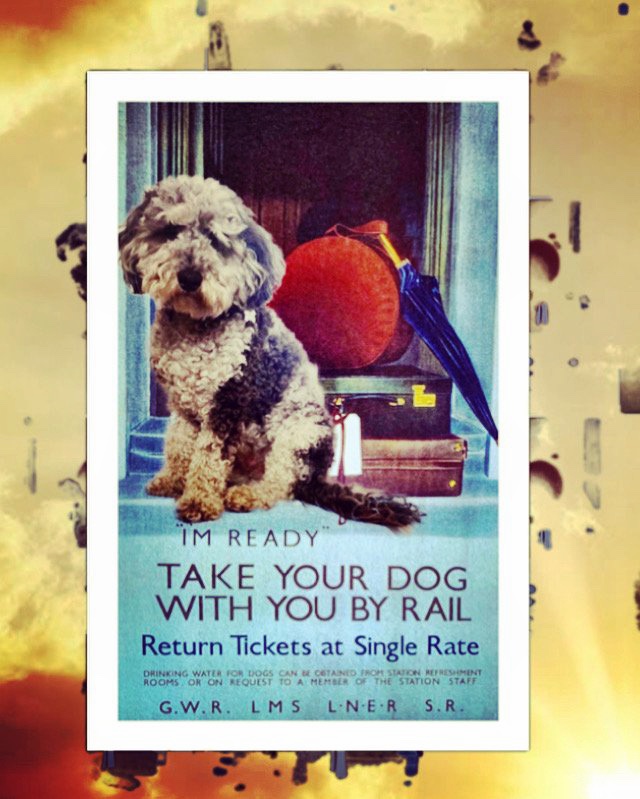
Yoshi is supporting the campaign to keep railway ticket offices open following the train companies proposals to begin closing 974 booking halls across England. The passenger watchdogs Transport Focus and London Travelwatch are overseeing a public consultation which closes on 1st September 2023. Have your say by completing the online form at: https://www.transportfocus.org.uk/ticket-office-consultation/
You could also write to your MP. I did. I’ll let you know if I get a response.
The plan represents the complete depersonalisation of the ticket retail process and another piece in the jigsaw to deter people from using the railways along with, but not limited to, scrapping Wi-Fi on trains and impossible to understand ticket machines. I also miss onboard buffets and / or tea trolleys on South Western Railway.
We are told that 10% of travellers buy their tickets at a booking office, compared with 80% in the 1990’s when, as I’m sure you will recall, there was no other way in doing so (with the exception of season ticket purchases, granted). 13% of revenue still comes via ticket offices which shows, on average, high-value transactions which may well be too complex for a ticket machine to deal with.
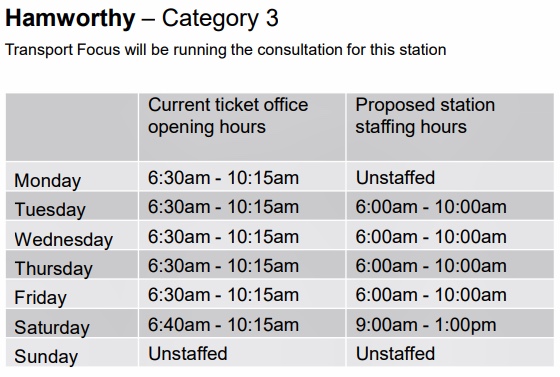
Hamworthy ticket office current and proposed opening hours
Take Hamworthy as an example which has been designated as Category 3 by South Western Railway with the proposed new staffing hours showing the station unstaffed on a Monday, which just seems a deliberate ploy to discourage users. When I commuted daily by rail I always purchased my weekly season ticket on a Monday. On visits to the ticket machine at Hamworthy over the last six months has found it not working or the touch screen smashed.
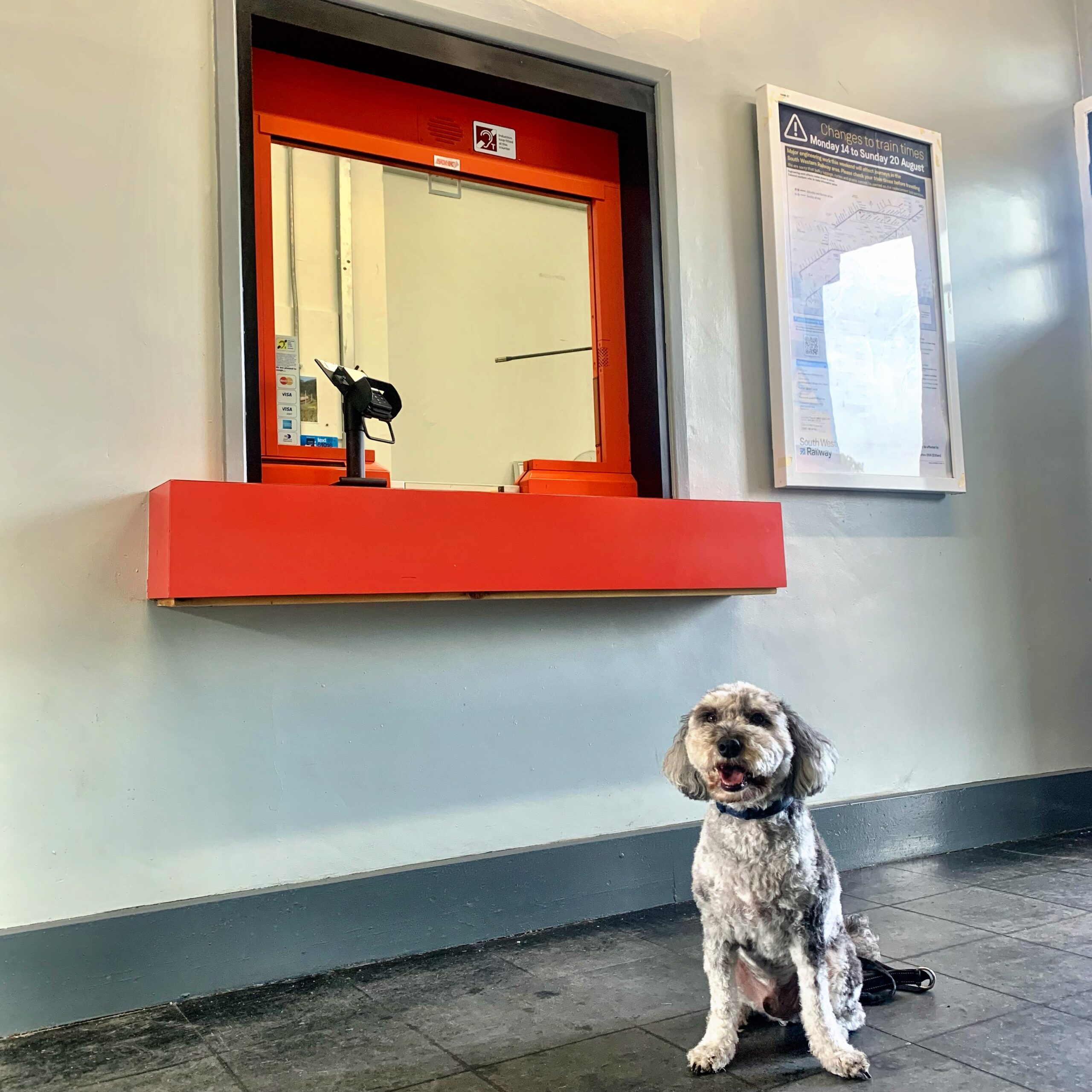
Yoshi at Hamworthy ticket office – 11/08/2023
I also believe the proposals to close ticket offices will have a severe detrimental effect on the disabled and elderly. Staffed ticket offices effect everything from the ability to buy tickets, receive assistance, access site facilities, navigate the station, plan routes, and feeling confident in making journeys. They are one of the most vital accessibility features of railway stations and their closure would only serve to isolate people further.
The closures would also have negative implications more broadly speaking. Ticket office staff provide assistance not only to disabled and elderly people, but to tourists, passengers with luggage, the unbanked, parents with buggies, and everyone who needs advice or assistance. By potentially stopping so many people from travelling by rail, the closures will also negatively impact spending in local economies, slow economic growth, and prevent people from getting to work.
Although these reforms are being flown under the banner of ‘modernisation’, they are anything but. A modern railway is one that works for everybody – one that is accessible, safe, and easy to navigate. To remove ticket offices would therefore be an actively regressive step, making vital infrastructure unusable for millions.
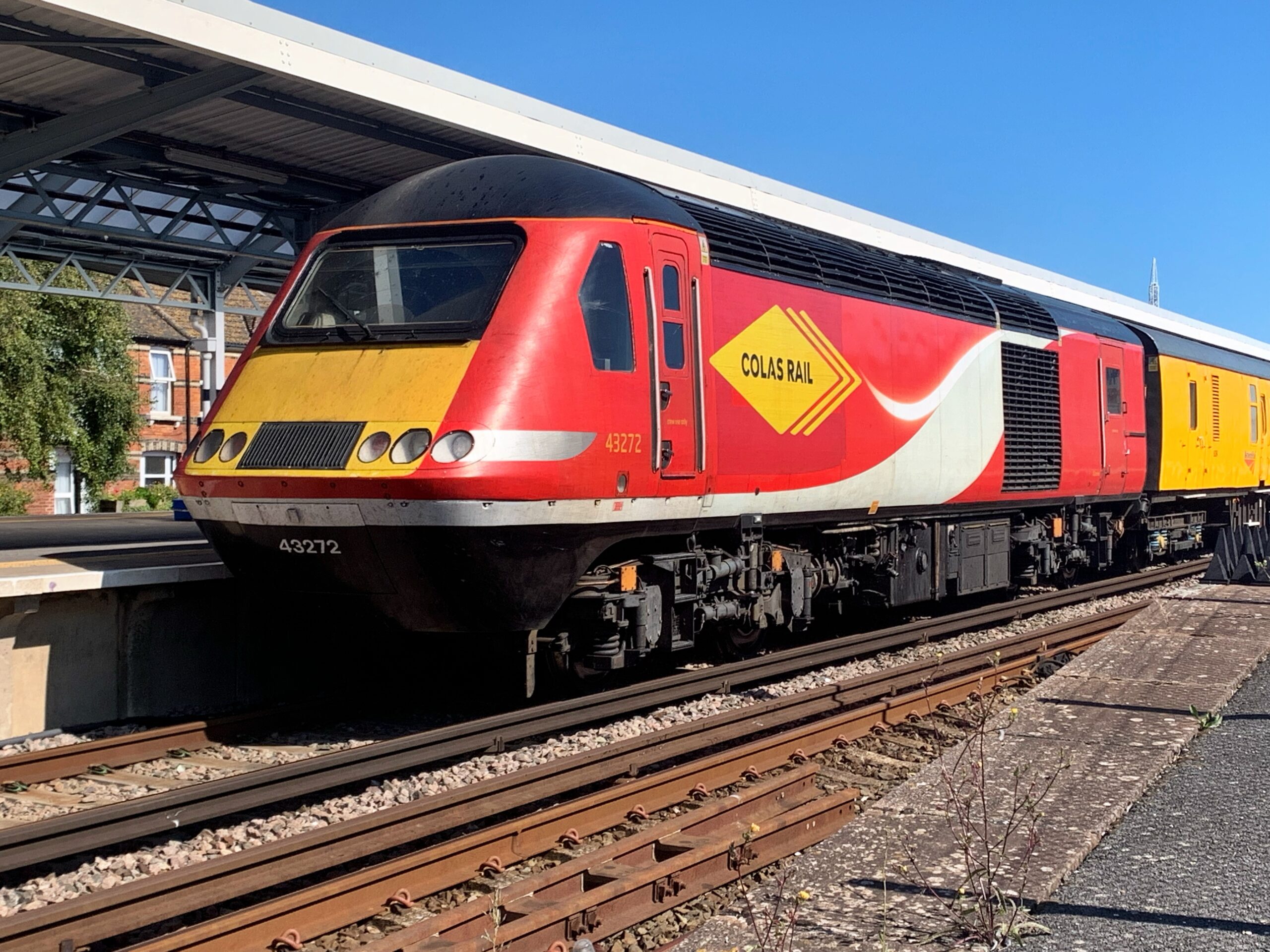
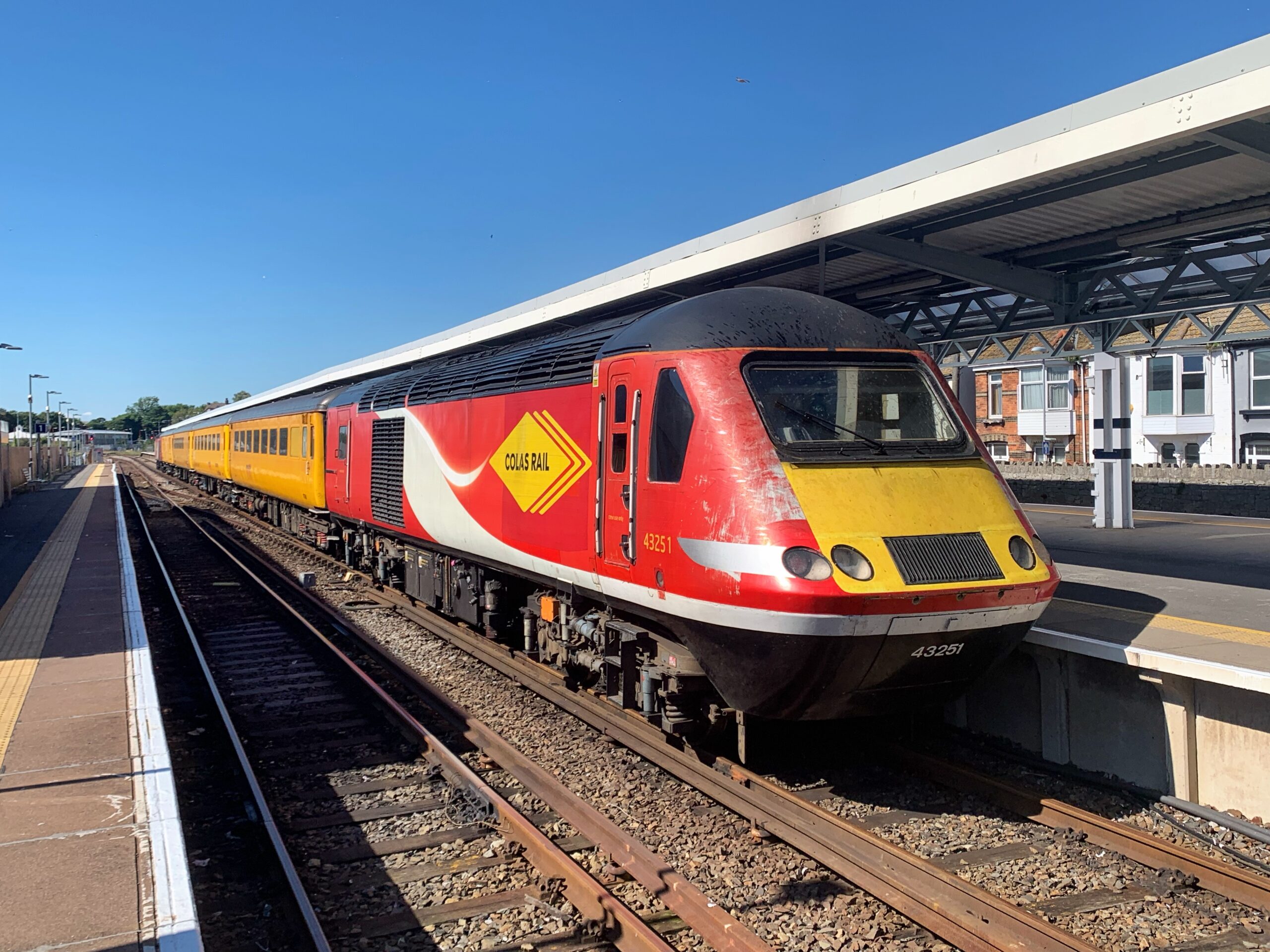
A visit of the Network Rail New Measurement Train to Weymouth which arrived via Yeovil and Dorchester West took place on Wednesday 9th August. This time the train was sandwiched between a pair of Colas Class 43 High Speed Train power cars No.’s 43251 and 43272 running as 1Z22 0757 Derby RTC (Network Rail) to Bristol Kingland Road. Yoshi had an appointment with the groomer in Broadstone at the same time, so I was unable to see this test train, but happily we can share the following video and photographs:
Colas Class 43 HST Power Car No. 43272 at Weymouth (@da_bukley967) – 09/08/2023Looking in need of some TLC, Colas Class 43 HST Power Car No. 43251 at Weymouth (@da_bukley967) – 09/08/2023
1Z22 0757 Derby RTC (Network Rail) to Bristol Kingland Road on 9th August 2023 (video courtesy of G E Barrett & @da_buckly967)
Thursday was an early start for us as Yoshi’s mama was off to Guernsey for the day. After dropping Caroline off at Poole Port for the “vomit comet” ferry service to the Channel Islands, the boy and I headed towards the East of the county to Christchurch in search of a different (for me) photographic location in order to catch the latest Crewe to Winfrith Sidings train. With only a handful of these left to run I’m enjoying seeking out different locations from where to view them. On arrival in Christchurch we had a little time to wander and after visiting the railway station I settled on Barrack Road bridge as my vantage point overlooking the rails. This location, although quite busy from motor traffic affords a view back down to the station for trains heading west. The pavement is also quite wide meaning Yoshi and I wouldn’t be a hindrance to passers by.
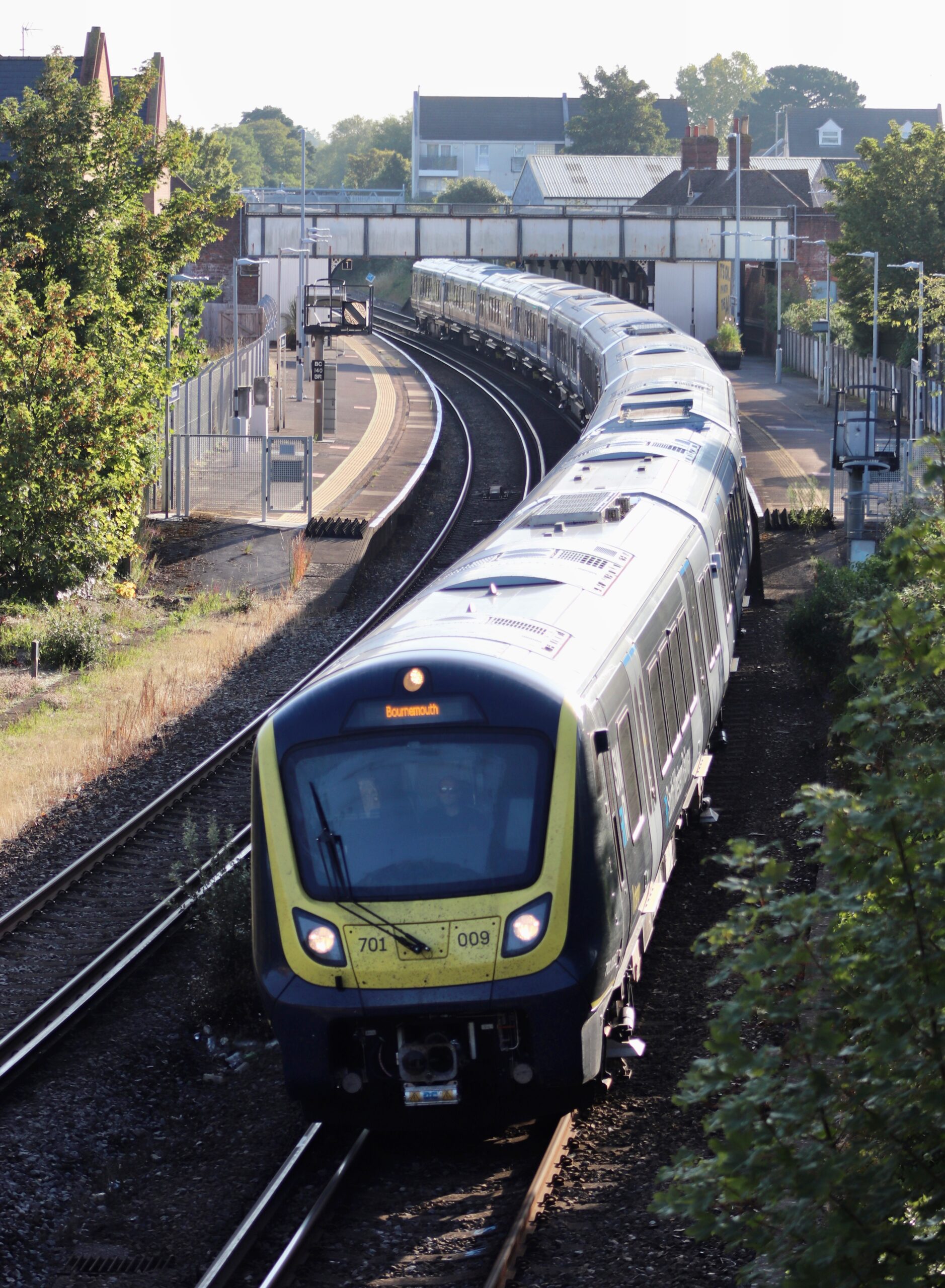
While we were waiting for the Winfrith, we also managed a glimpse of a SWR Class 701 on a mileage accumulation run as No. 701009 paused briefly in the platforms of Christchurch railway station waiting for the service train ahead of it to clear the section.
SWR Class 701 No. 701009 passes through Christchurch on a mileage accumulation run working as 5Q50 0612 Eastleigh Trsmd to London Waterloo – 10/08/2023
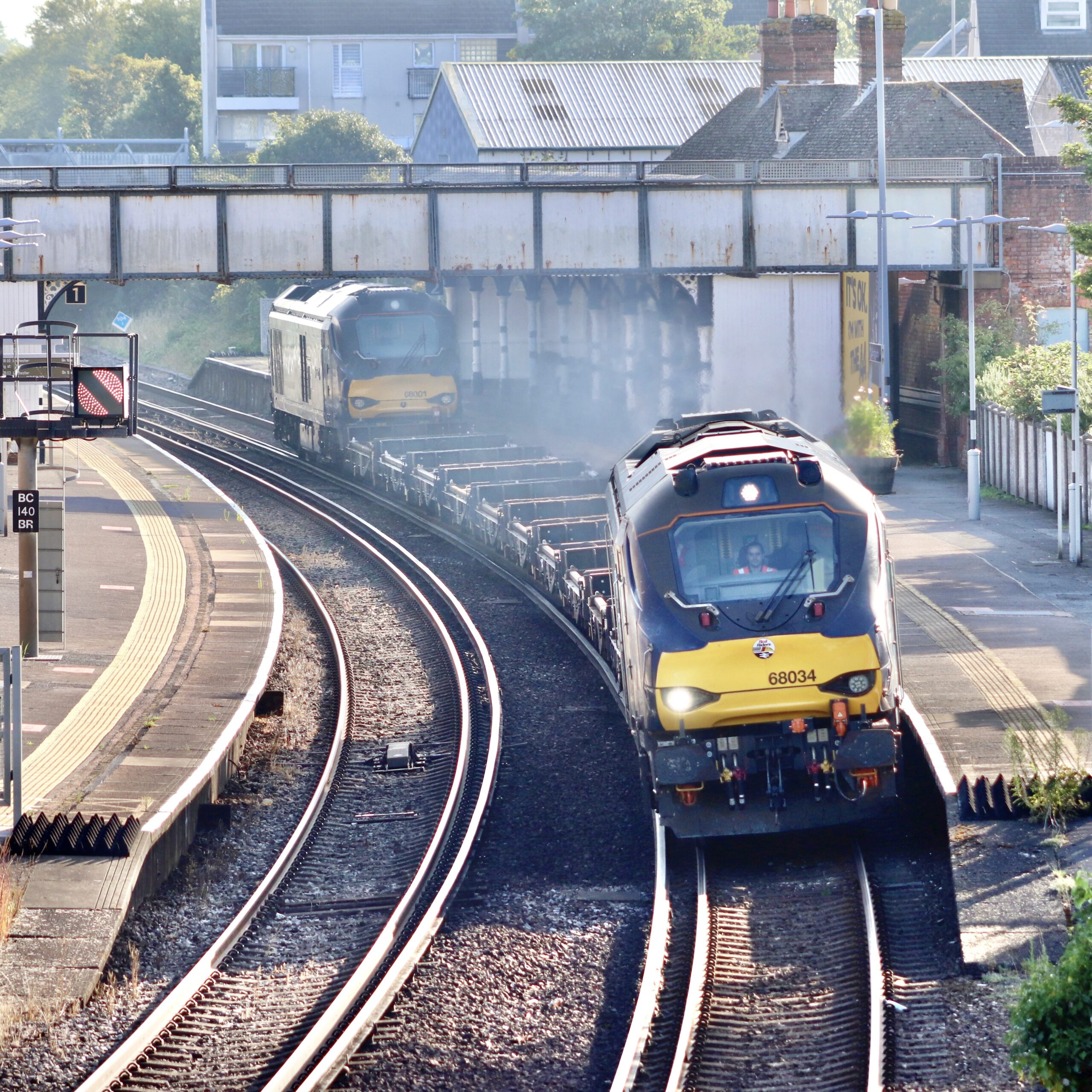
This run from Crewe to Winfrith turned up Direct Rail Services Class 68 No.’s 68034 ‘Rail Riders 2020’ and 68001 ‘Evolution’, both of which had visited Dorset previously, although No. 68034 was un-named at the time. There had been a moment the previous day when it looked like a bi-mode Class 88 had been allocated to the empty wagons scheduled to run from Sellafield to Crewe, but this turned out to be a false hope and as yet a member of the class is yet to visit Dorset. The Class 88 has a pantograph for the collection of electricity from overhead wires, and a Caterpillar diesel engine which provides 500 miles of working when no electric source is available.
Direct Rail Services Class 68’s No.’s 68034 ‘Rail Riders 2020’ and 68001 ‘Evolution’ with empty PFA wagons bound for Winfrith passing Christchurch – 10/08/2023
For the return working I opted for a visit to Poole High Street and planted myself on the footbridge by the level crossing which provided a good view from which to see the now loaded train of PFA wagons. Footfall across the bridge was a little busier than I expected but I have to admit to deriving some small pleasure in answering the usual “Is there a special train coming?” question from passers by with imparting the information that a train carrying nuclear waste was imminent.
DRS Class 68 No. 68001 ‘Evolution’ leads the return Winfrith working across Poole High Street Level Crossing – 10/08/2023DRS Class 68 No. 68034 ‘Rail Riders 2020’ at the rear of 6Z95 1551 Winfrith Sdgs to Crewe Coal Sidings (DRS) powers away from Poole – 10/08/2023
Video from 10th August including: 1M30 0730 Bournemouth to Manchester Piccadilly – 221129 1B24 0734 Bournemouth and Weymouth to London Waterloo – 444029 1W51 0530 London Waterloo to Weymouth – 444024 5Q50 0612 Eastleigh Trsmd to London Waterloo – 701009 6Z62 0100 Crewe Coal Sidings (Drs) to Winfrith Sdgs – 68034 / 68001 1W26 1555 Weymouth to London Waterloo – 444024 1W29 1430 London Waterloo to Weymouth – 444031 6Z95 1551 Winfrith Sdgs to Crewe Coal Sidings (Drs) – 68001 / 68034
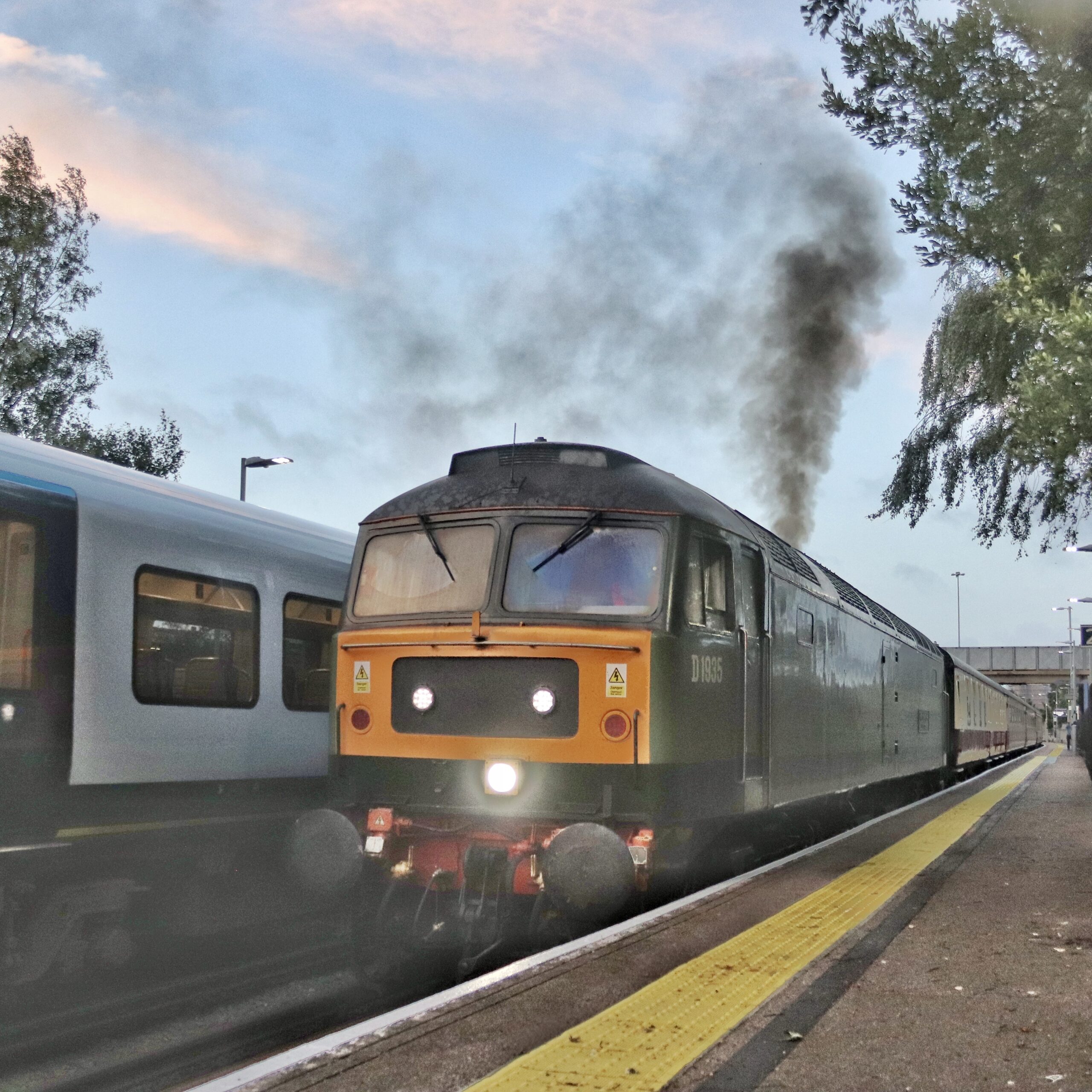
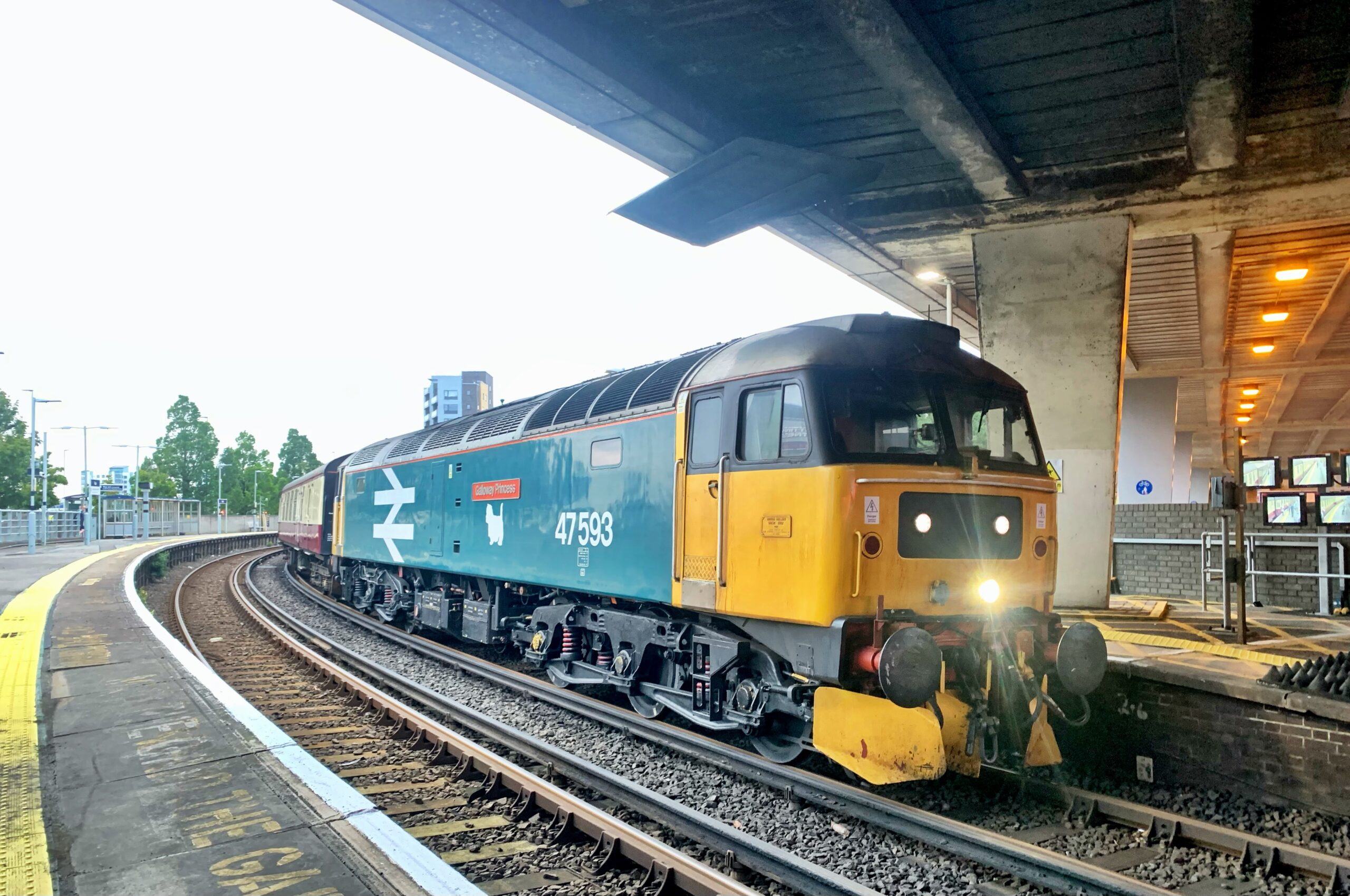
Early doors Saturday morning found me and several other enthusiasts waiting on Poole railway station for the empty coaching stock (ecs) which would form the “English Riviera Express” excursion to Kingswear. This was top and tailed by Locomotive Services Limited’s class 47 locomotives No. 47805 assisted by No. 47593 deputising for No. 47828 which had developed a fault and remained at Eastleigh. The ecs ran through Poole out to the storage sidings before heading back into the station to pick up passengers.
LSL Class 47 No. 47805 erupts working 5Z27 Eastleigh Arlington (ZG) to Poole – 12/08/2023LSL Class 47 No. 47593 bringing the ECS in from Poole Storage Sidings into Poole station – 12/08/2023Now working as 1Z27 0635 Poole to Kingswear (For Dartmouth) LSL Class 47 No. 47593 prepares for departure – 12/08/2023
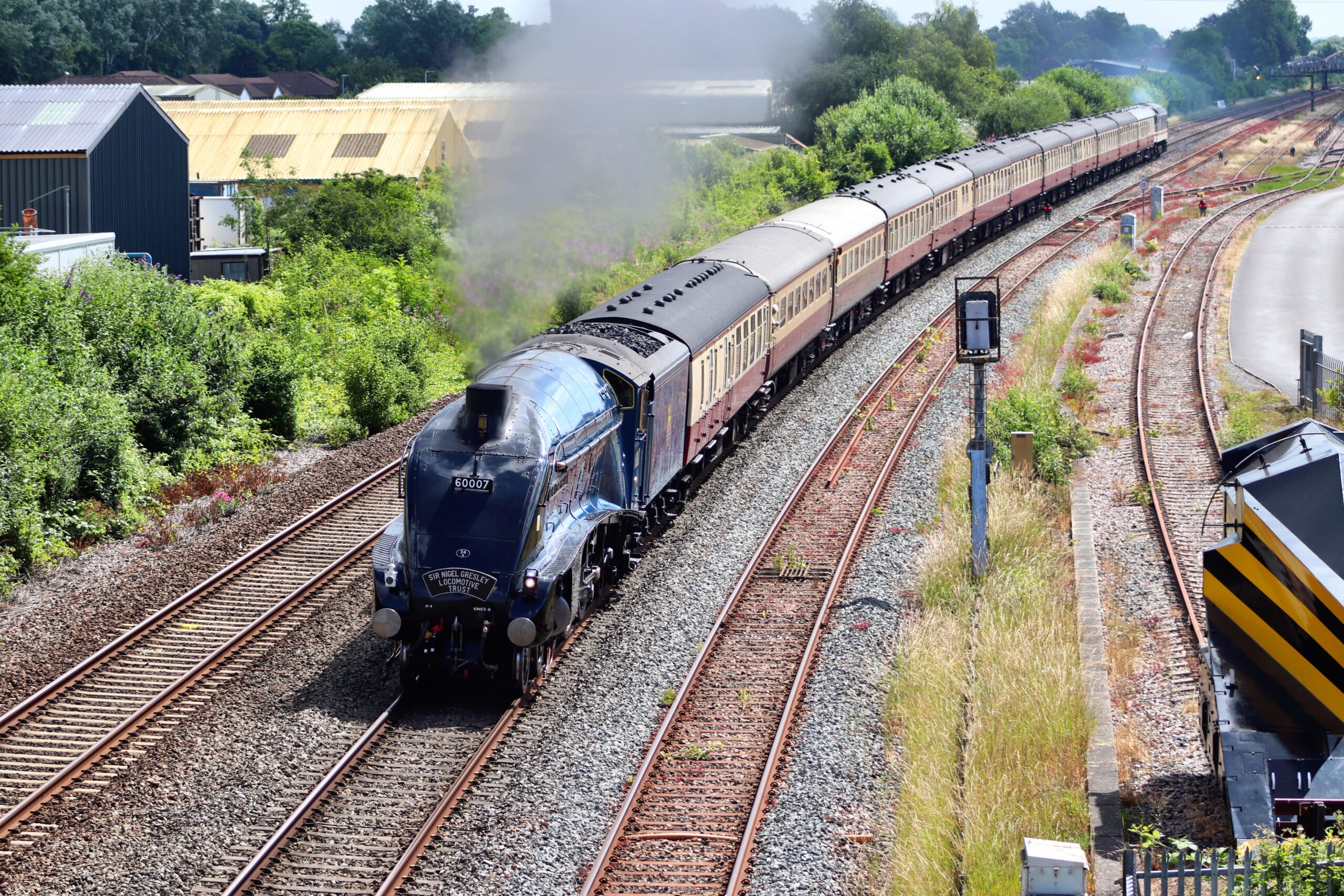
With Yoshi now in tow, we headed off to Somerset to see the same train at Creech St Michael before the planned locomotive changeover to steam traction in the form of LNER A4 4-6-2 No. 60007 ‘Sir Nigel Gresley’ which took place in Taunton.
Having reversed at Westbury LSL Class 47 No. 47805 is back as the leading locomotive passing Creech St Michael 1Z27 0635 Poole to Kingswear (For Dartmouth) – 12/08/2023With only a matter of weeks left in service, CrossCountry HST set with Class 43 power cars No.’s 43366 and 43378 top and tail 1V44 0609 Leeds to Plymouth past Creech St Michael – 12/08/2023
As there was a good 30 minutes or so in the schedule to enable the changeover from diesel to steam, we drove to the other side of Taunton to see ‘Sir Nigel’ passing Norton Fitzwarren at the head of the Poole to Kingswear excursion train. A location chosen as not long afterwards, LMS Jubilee 4-6-0 No. 45596 ‘Bahamas’ was also due to pass on her way to the West Somerset Railway.
With Class 47 No. 47805 having been replaced at Taunton by LNER A4 4-6-2 No. 60007 ‘Sir Nigel Gresley’ the English Riviera Express – 1Z27 0635 Poole to Kingswear (For Dartmouth) – passes Norton Fitzwarren. Class 47 No. 47593 remained at the rear of the train for support – 12/08/2023The second rail tour of the day through Taunton saw stalwart LMS Jubilee 4-6-0 No. 45596 ‘Bahamas’ hauling “The West Somerset Steam Express” heading off the mainline for the branch leading to the West Somerset Railway – 12/08/2023
Video from Poole and the Taunton area on 12th August 2023
After all the steam hauled rail tour excitement which afforded a few barks of approval from Yoshi, we headed for home with a slight diversion via Westbury, which, if I’m honest took far longer than expected! Although ultimately worthwhile as we were lucky enough to see a diverted container train on its way to Southampton as well as Class 67 No. 67027 which has recently reverted to Colas after being briefly part of the GBRf fleet, the intention being for it to be employed on sleeper services in the Scottish Highlands.
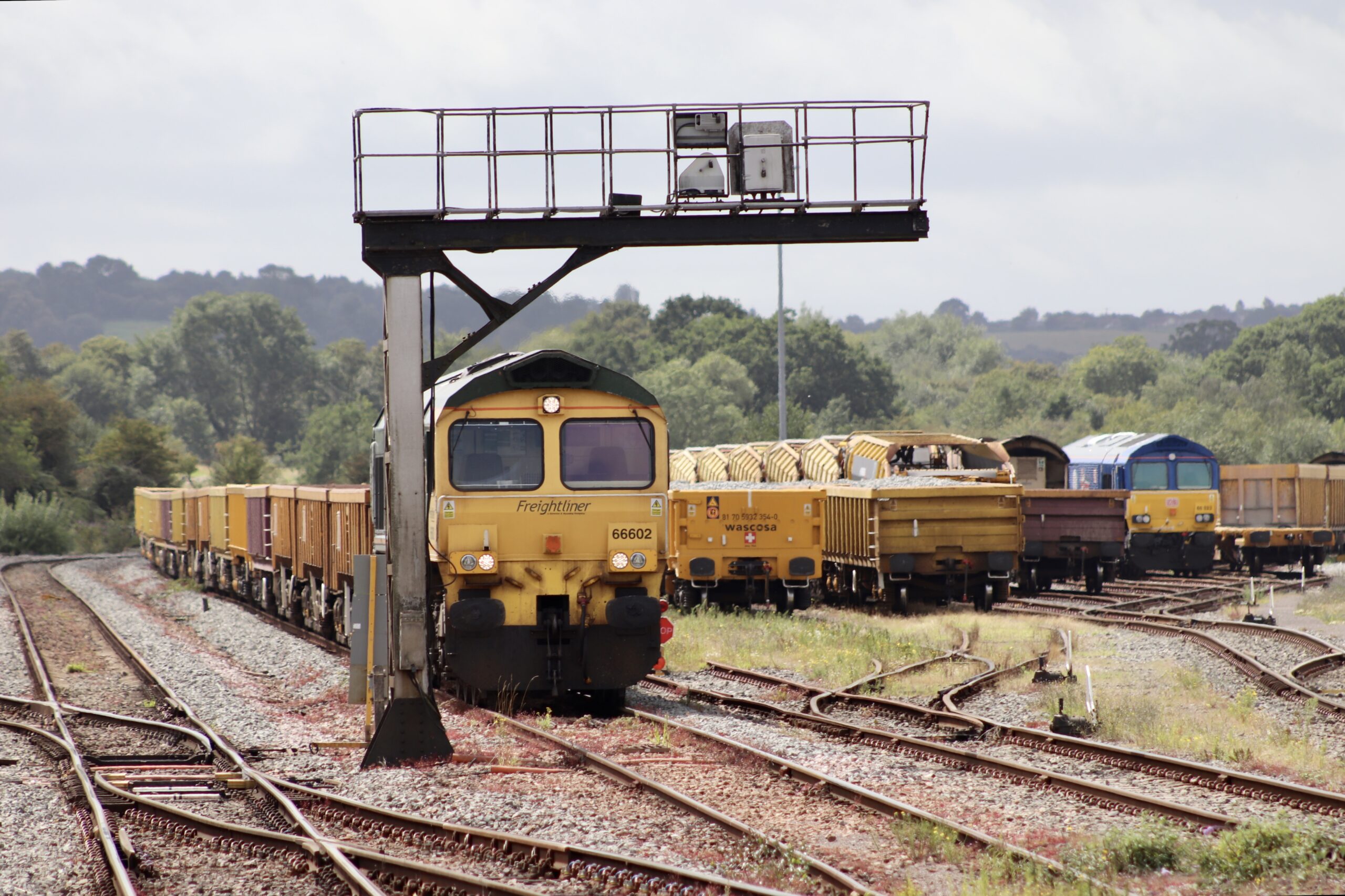
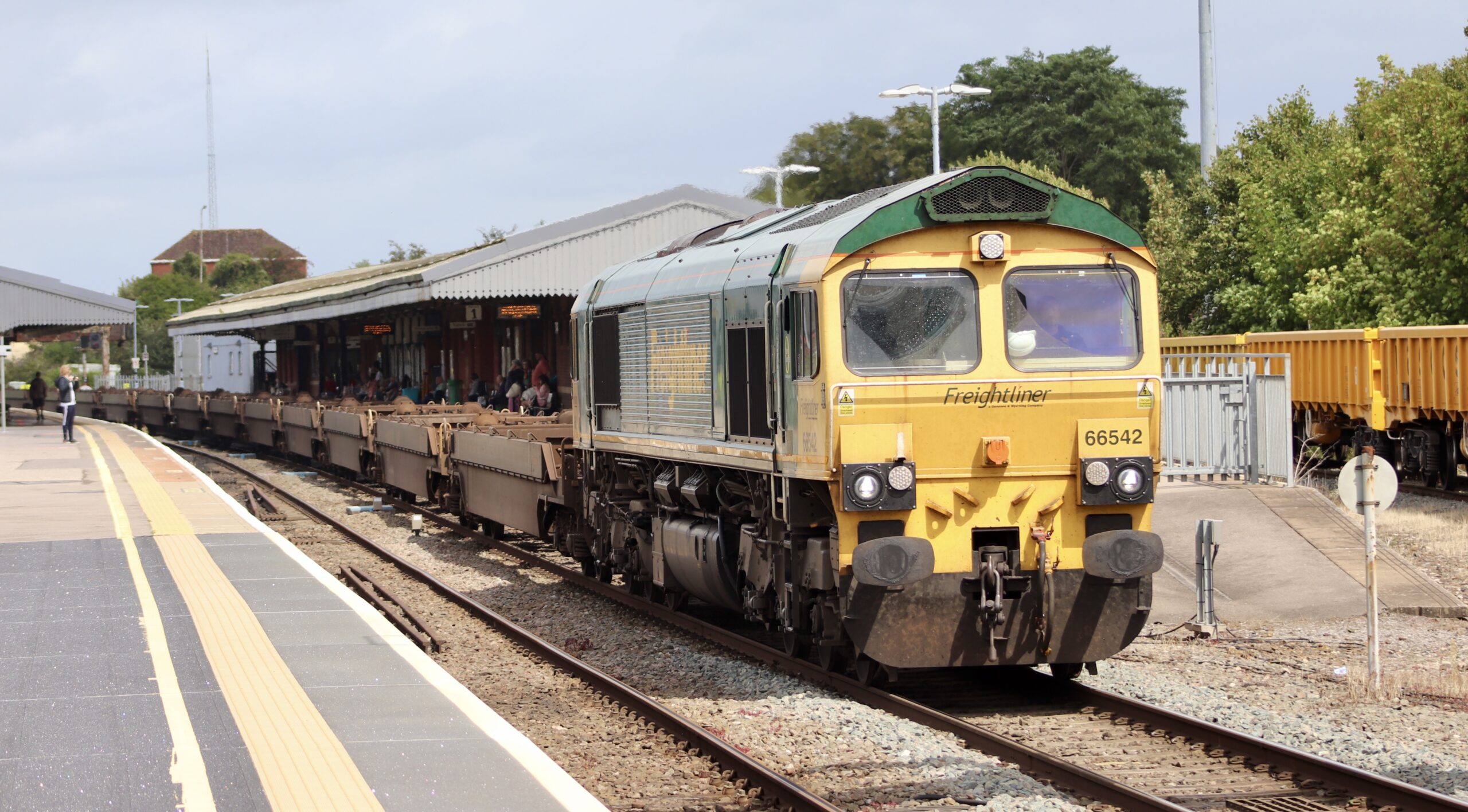
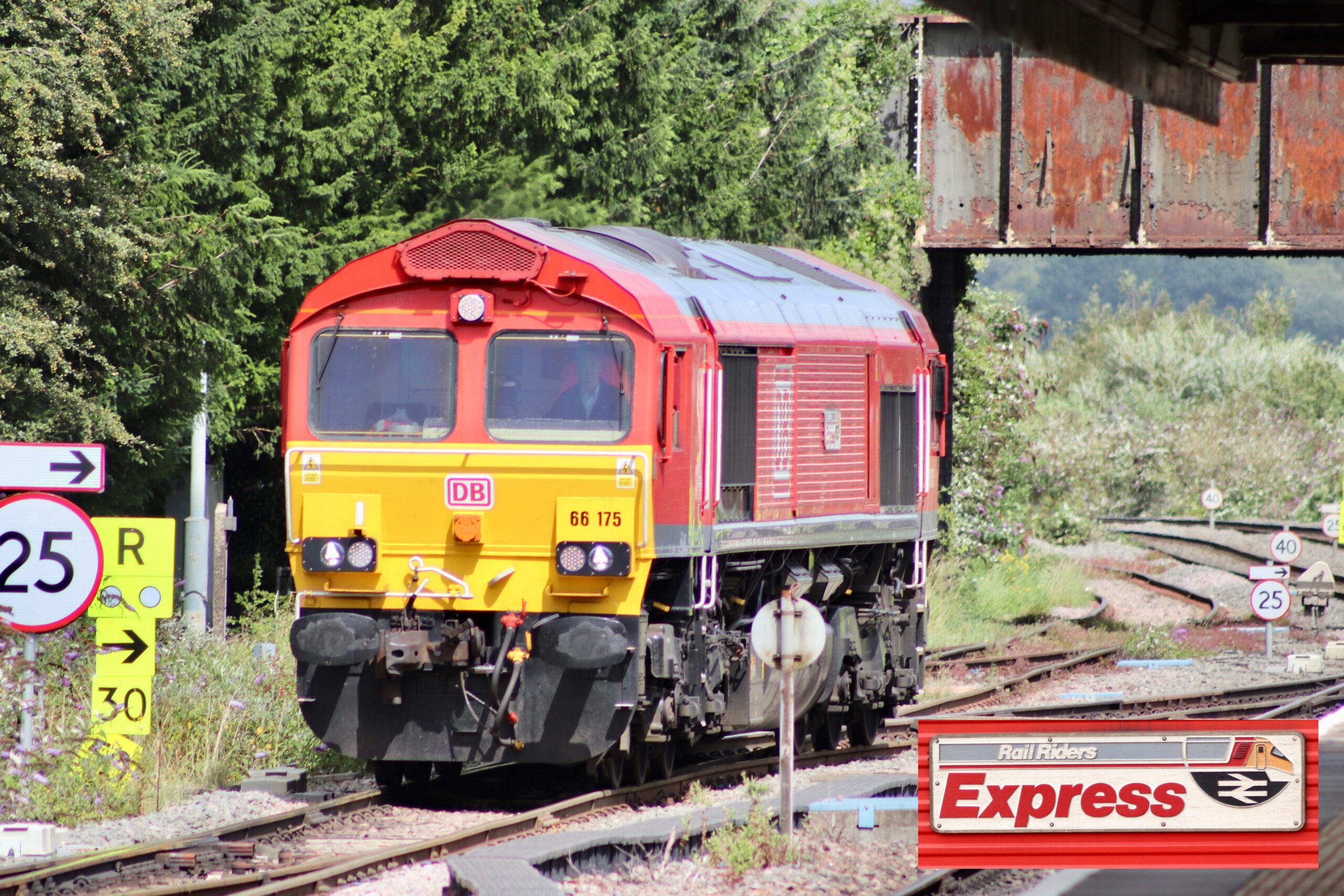
A line up of Colas locos! Class 66 No. 66849 with Class 70’s 70811, 70809 and 70803 await their next turns at Westbury – 12/08/2023Freightliner Class 66 No. 66602 and DB Cargo No. 66023 with its special King Prince Charles Coronation livery mostly hidden by wagons at Westbury – 12/08/2023Freightliner Class 66 No. 66542 passes through Westbury working the diverted 4O51 1040 Wentloog Freight Terminal Freightliner to Southampton Maritime Container Terminal – 12/08/202366175 ‘Rail Riders Express’ arrives light engine working as 0012 1106 Margam TC to Westbury Down TC – 12/08/2023Unique liveried GBRf Class 66 No. 66797 at Westbury – 12/08/2023Class 67 No. 67027 outside the Colas Maintenance Facility, also known as The Elephant House for some reason which has, as yet, escaped me – 12/08/2023
On Monday I found myself once again in Southampton and obviously couldn’t resist a quick look in on Eastleigh!
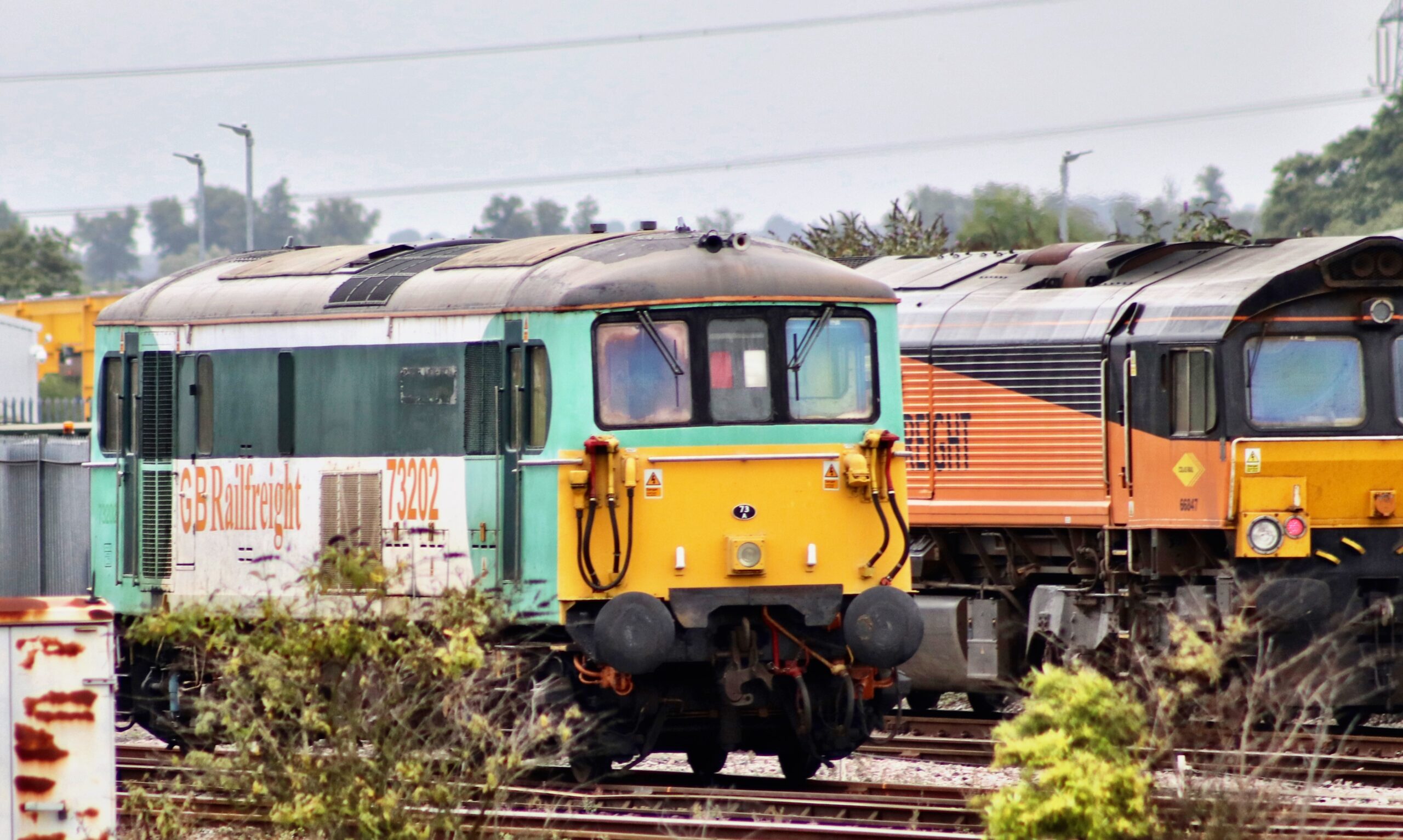
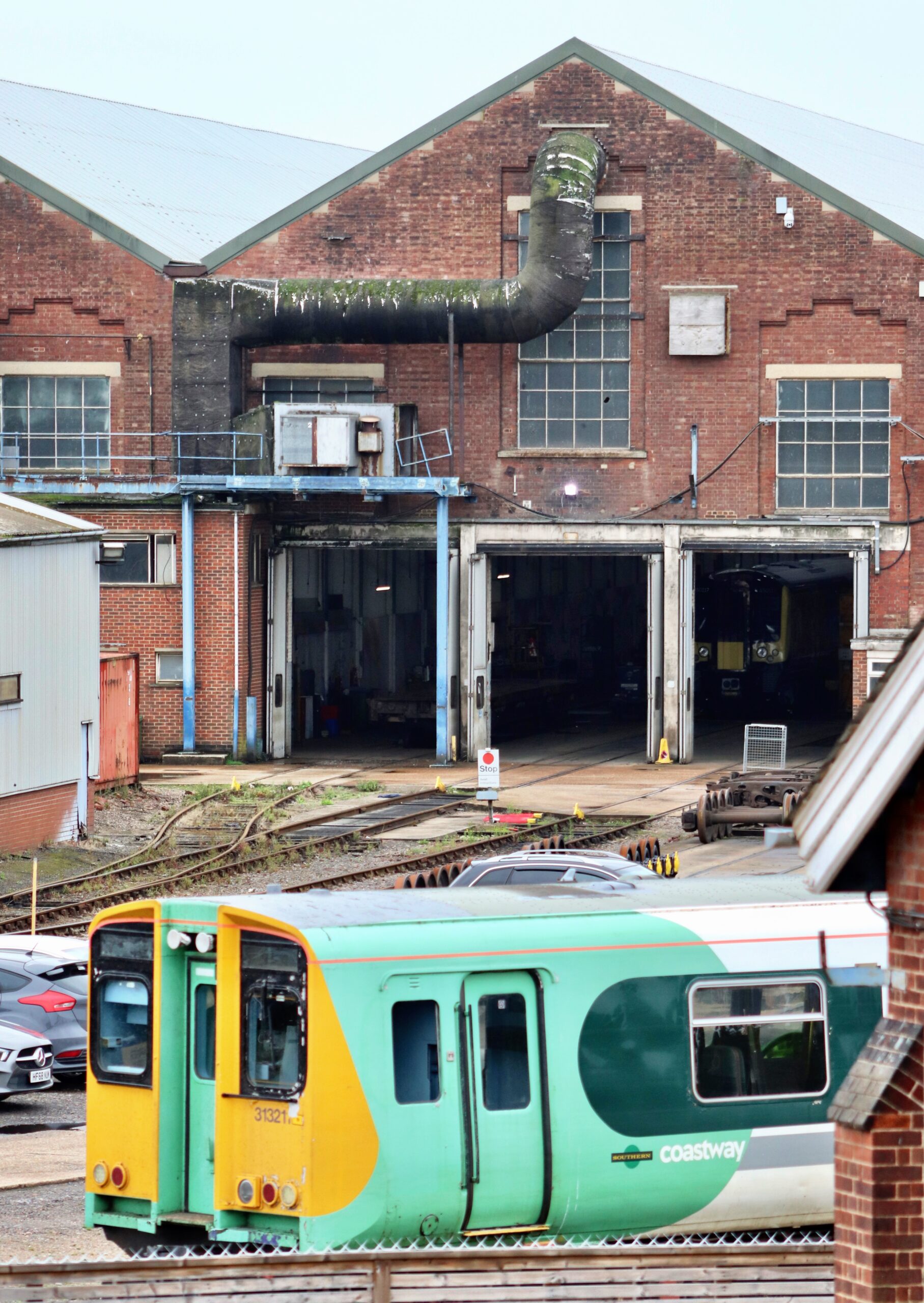
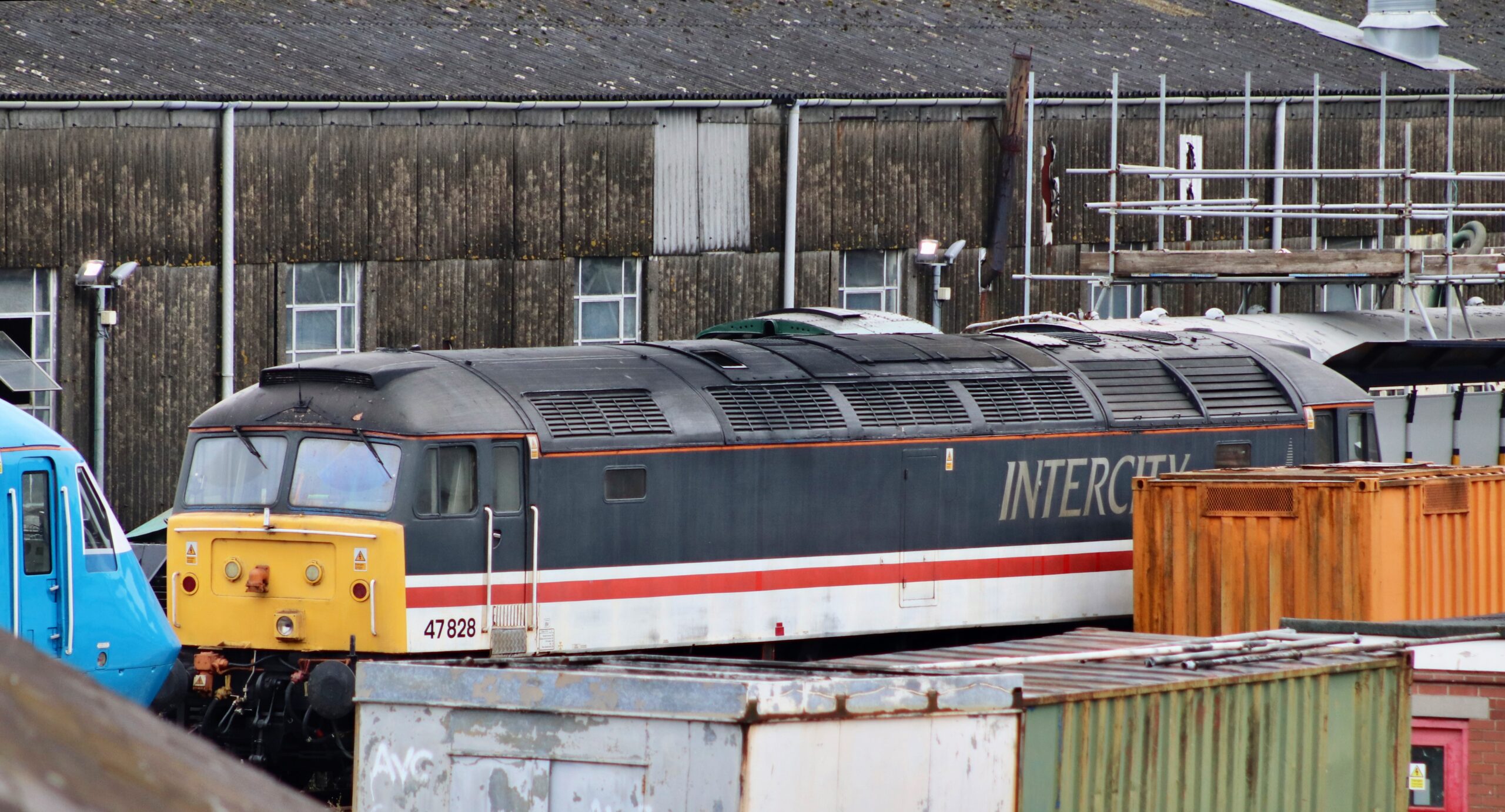
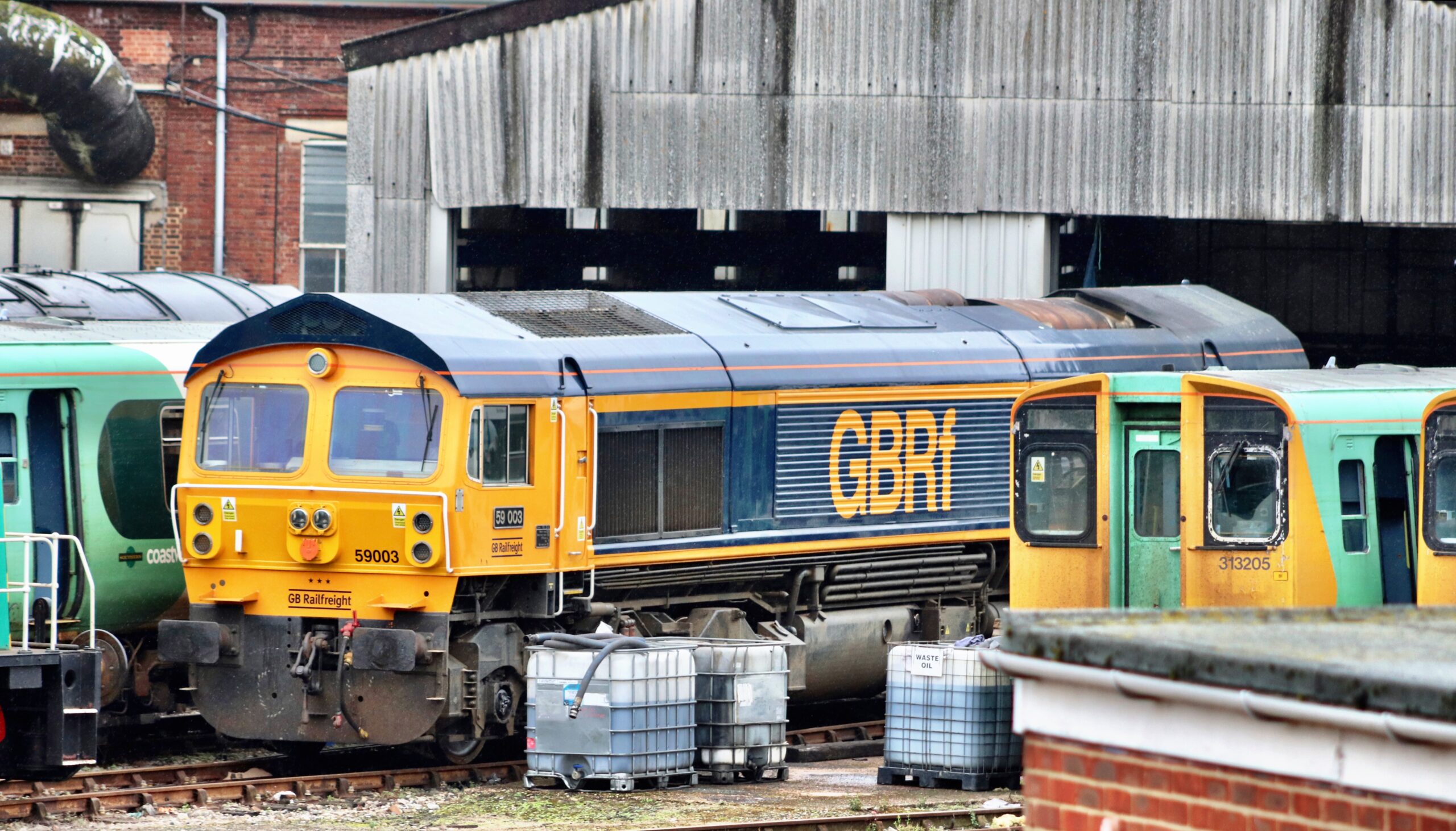
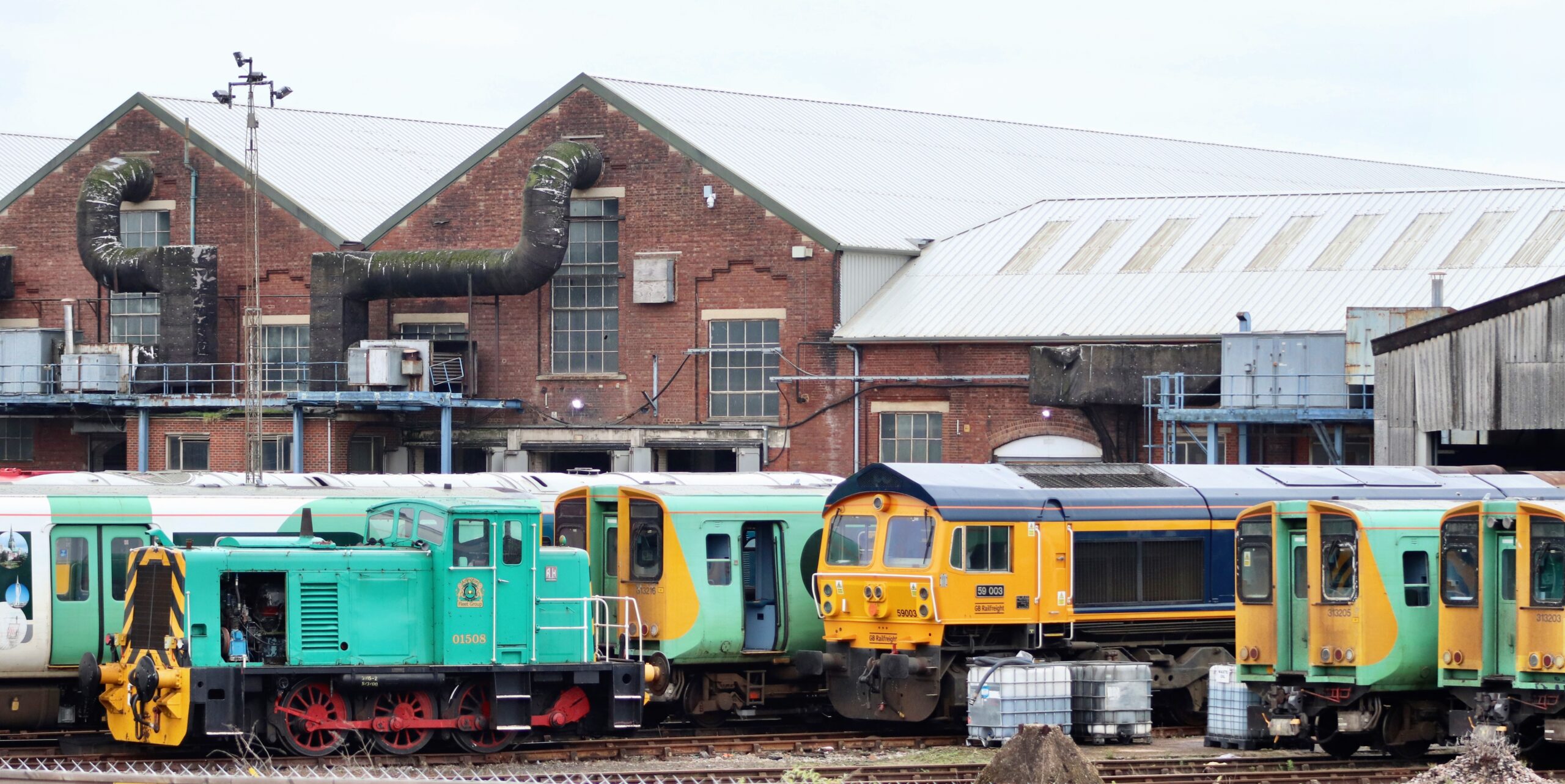
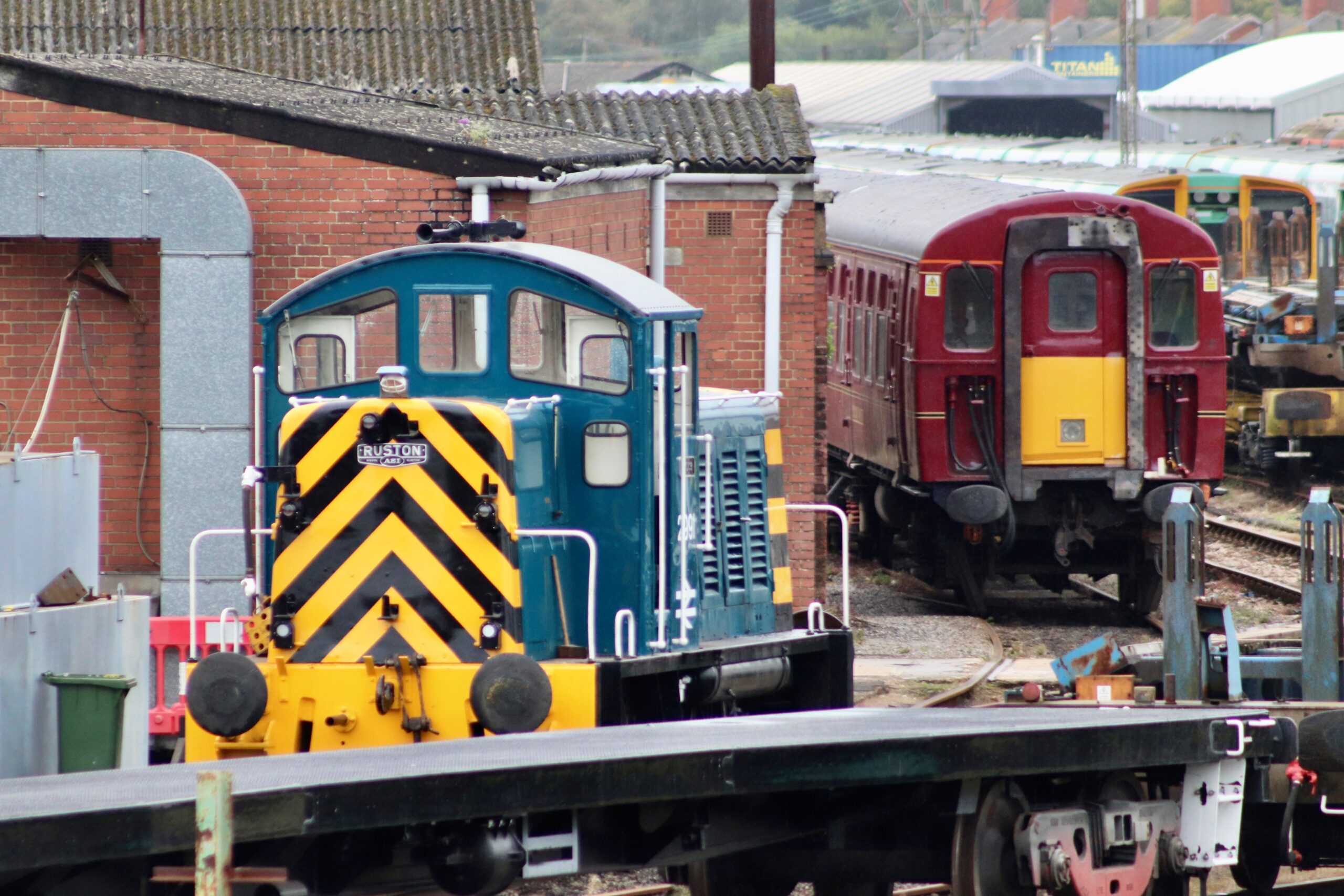
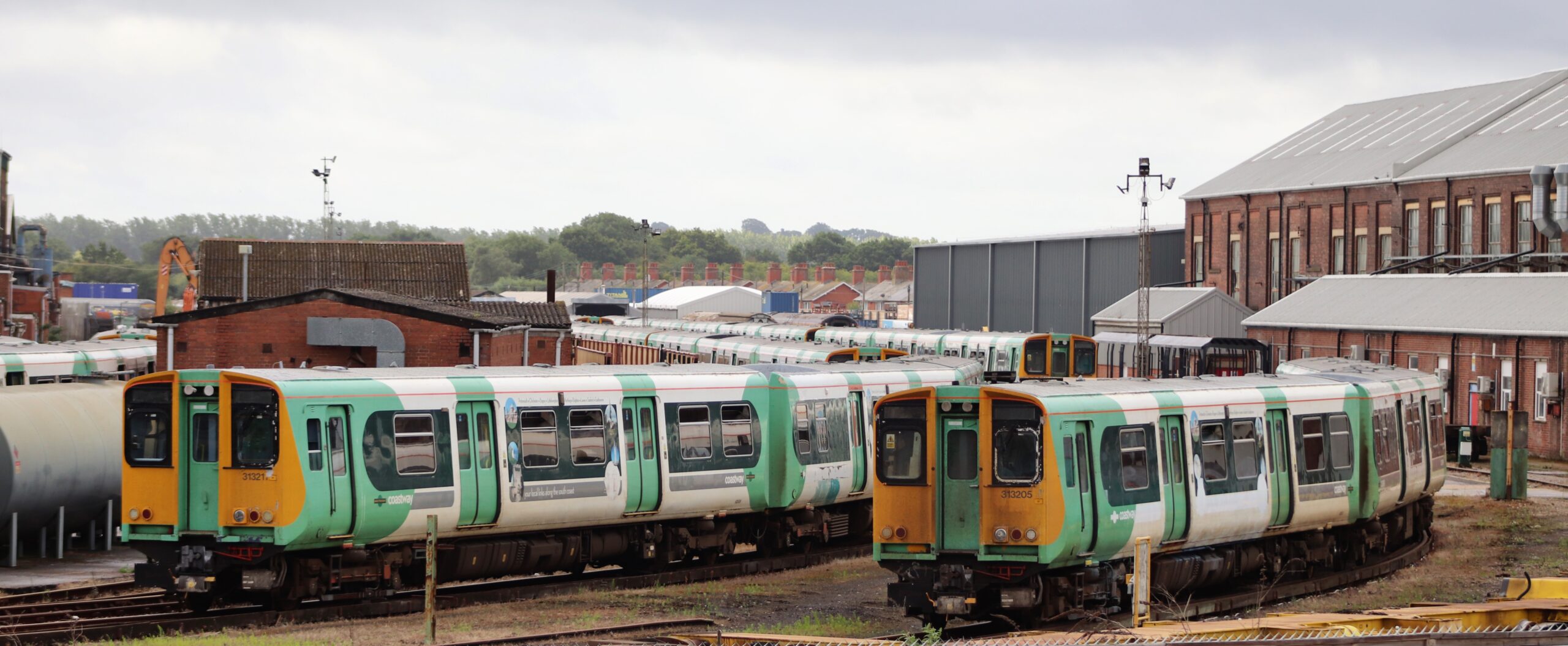
GBRf Class 73 No. 73202 still in its unique rebranded Southern livery at Eastleigh East Yard – 14/08/2023GBRf Class 73 No. 73107 ‘Tracy’ at Eastleigh Works – 14/08/2023Ex-Southern Coastway Class 313 No. 313211 with SWR Class 450 No. 450117 in the shed behind at Eastleigh – 14/08/2023LSL Class 47 No. 47828 in retro Inter-City livery at Eastleigh. This loco should have been on the “English Riviera Express” from Poole to Kingswear on Saturday 12th August, but was prevented from doing so after developing a fault – 14/08/2023Damaged in recovery attempts of the diesel-multiple units involved in the Salisbury tunnel incident in October 2021, GBRf Class 59 No. 59003 ‘Yeoman Highlander’ looks to be nearing a return to mainline service. Seen here at Eastleigh Arlington. A test run to Westbury scheduled later in the day did not materialise – 14/08/2023Arlington Fleet Group Ruston & Hornsby 0-6-0DH shunter No. 01508 built in 1961 with GBRf Class 59 No. 59003 ‘Yeoman Highlander’ and numerous Class 313 EMU’s at Eastleigh Works – 14/08/2023GBRf Class 59 No. 59003 ‘Yeoman Highlander’ surrounded by withdrawn Class 313 EMU’s at Eastleigh Works – 14/08/2023Eastleigh Class 07 shunter No. 07007 with the London Underground 4TC in the background – 14/08/2023
Apologies for lateness and brevity of this weeks entry. I’ve been playing with 3D printing, to varied degrees of success! Please do make your thoughts known about the railway ticket office closures. As of 3rd August 315,000 responses had been received as part of the consultation, which shows just how much public interest there is to the Government’s proposals. We’ll be back again soon – be seeing you!
LMS Jubilee Class 4-6-0 No. 45596 ‘Bahamas’ supported by WCRC Class 47 No. 47802 (out of shot at the rear of the train) working 1Z82 0845 Victoria to Weymouth powers through the rain at Branksome with “The Dorset Coast Express” – 02/08/2023
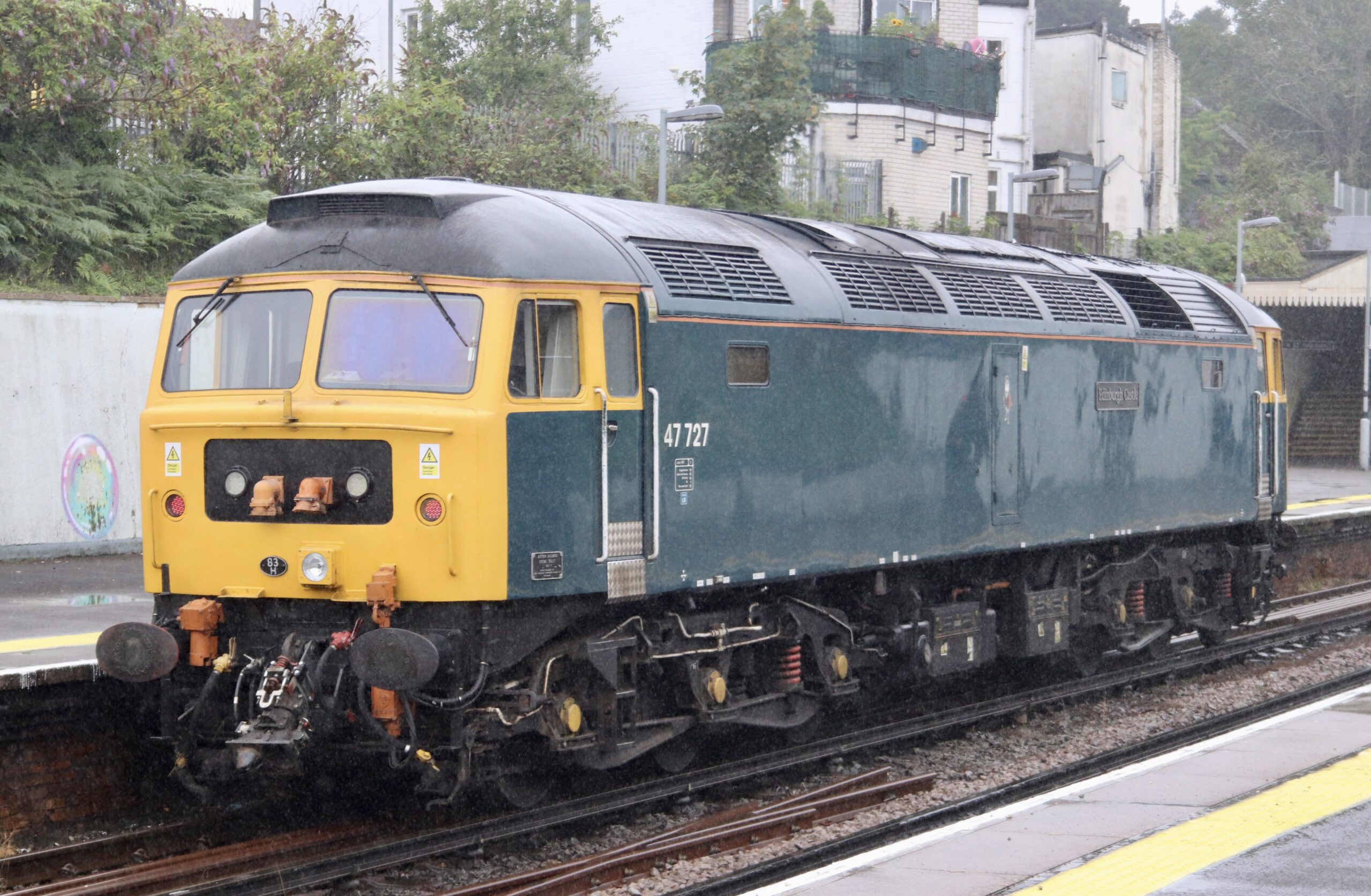
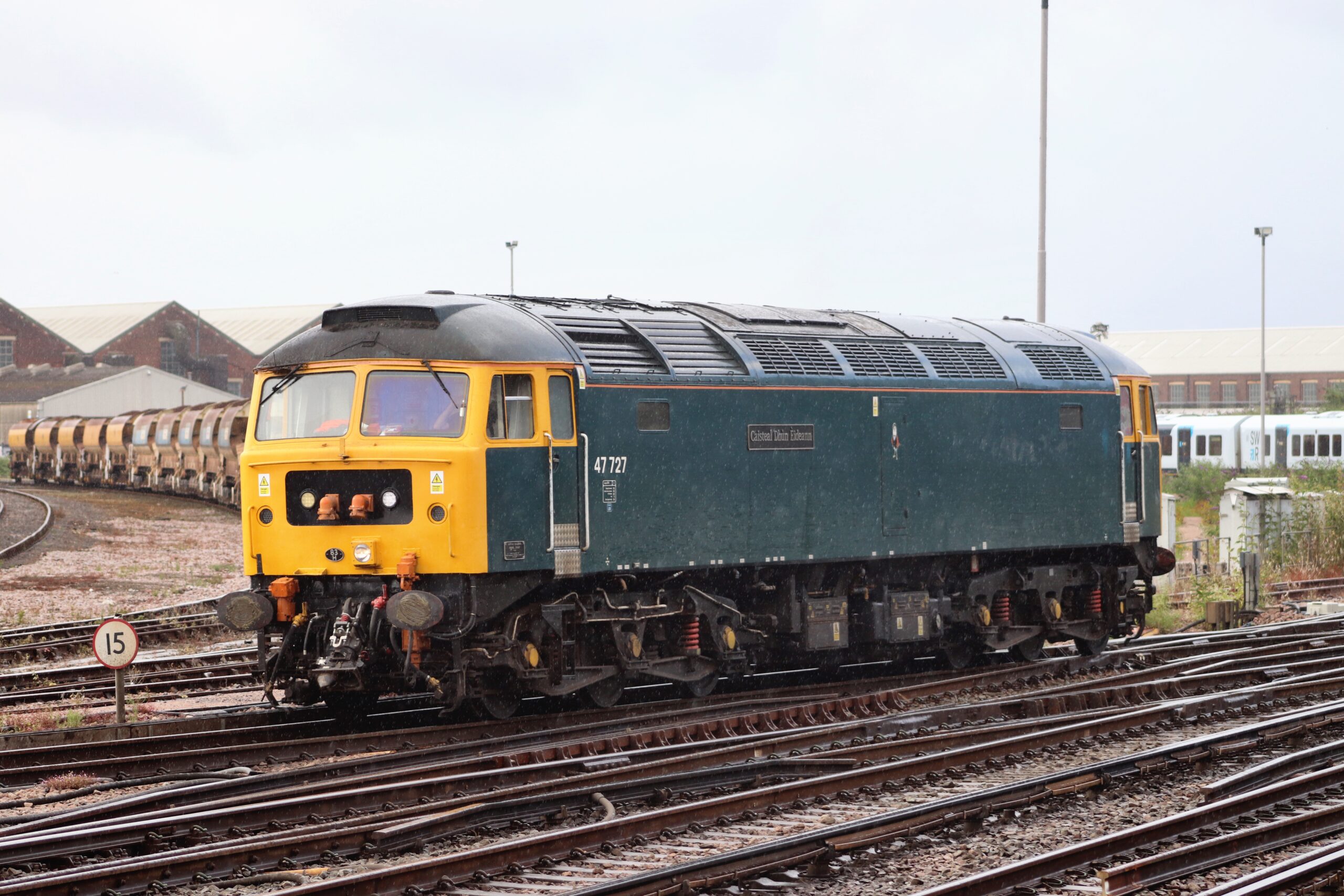
The dreadful weather on Wednesday August 2nd did not fully deter me from heading out to see the couple of special workings on the Dorset Coastway. With a light engine movement from Eastleigh to Bournemouth depot closely followed by the second “Dorset Coast Express” meant an early lunch as I decided to catch the train over to Branksome. I’d calculated that I would have at least ten minutes from getting to Branksome on the train which arrived at 1149 before the GBRf Class 47 running as 0Z48 1046 Eastleigh TRSMD to Bournemouth T&RSMD would arrive, so I was a little frustrated to learn that my train was running 16 minutes late because of problems with the doors. A quick check on Real Time Trains revealed that the light engine was also running late – 15 minutes at that point, and looking at the maps on Open Time Trains I saw that it had also been put into Totton Yard to allow a down passenger train to pass. So, in the event, I still managed to arrive at Branksome before No. 47727 ‘Edinburgh Castle’, although I hadn’t banked on the next service from Weymouth running on time and blocking out the duff’s arrival into platform 2.
GBRf Class 47 No. 47727 ‘Edinburgh Castle’ running light engine from Eastleigh to Bournemouth depot reverses in Branksome railway station – 02/08/2023
Having observed ‘Edinburgh Castle’ retiring into the depot area, it was a 45 minute wait before LMS Jubilee Class 4-6-0 No. 45596 ‘Bahamas’ made her second visit to Dorset this year with The railway Touring Company run special from London Victoria to Weymouth. The rain didn’t ease and more and more people hoping to get a glimpse of the steam hauled train pass began to shelter under the platform awnings. A last minute decision on my part meant a switch of platforms, which I’m pleased I did, as I was really happy with the resulting photographs and video of the train has it rushed through in the rain. Once again the planned use of a second steam locomotive, Swanage Railway’s U-Class 2-6-0 No. 31806, did not materialise. There’s one more DCE running this season, so I hope the issues preventing the U running can be resolved and she can make an appearance climbing the Dorset banks. As the rain was becoming increasingly heavy, I declined to go and see both the light Class 47 return working as 0Z49 1618 Bournemouth T&R.S.M.D to Eastleigh East Yard and the West Coast Railways Class 47 No. 47802 heading up the return “Dorset Coast Express”, although I’m pleased to report my brother did see this pass Dorchester South and his video is included below.
LMS Jubilee Class 4-6-0 No. 45596 ‘Bahamas’ top and tailed with WCRC Class 47 No. 47802 work 1Z82 0845 Victoria to Weymouth – 02/08/2023
Video from 2nd August 2023 (with thanks to GE Barrett for the Dorchester South material of the return “Dorset Coast Express”)
On Thursday it was an early start as I needed to be in Southampton and once again I took the opportunity for a quick look over at Eastleigh.
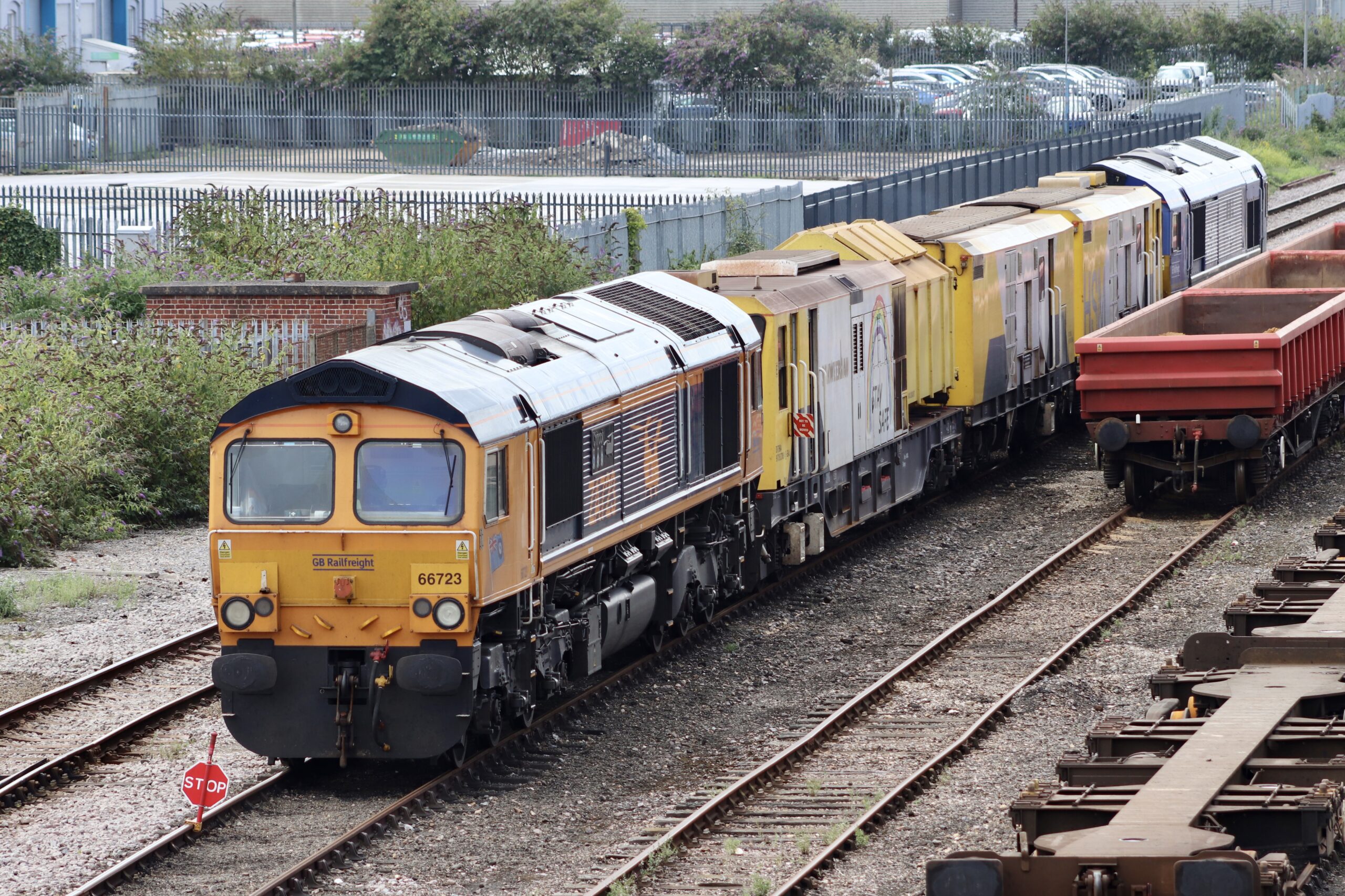
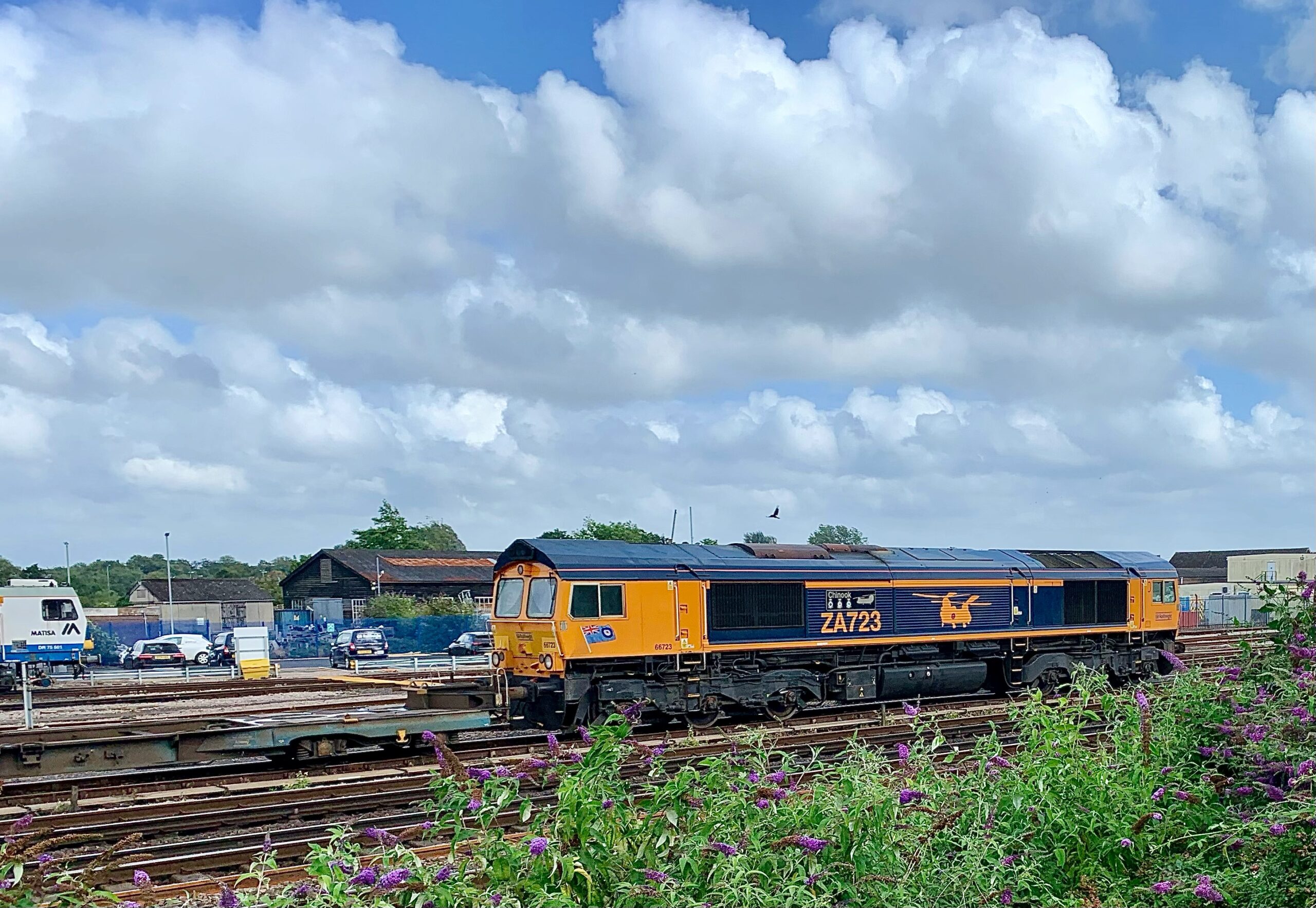
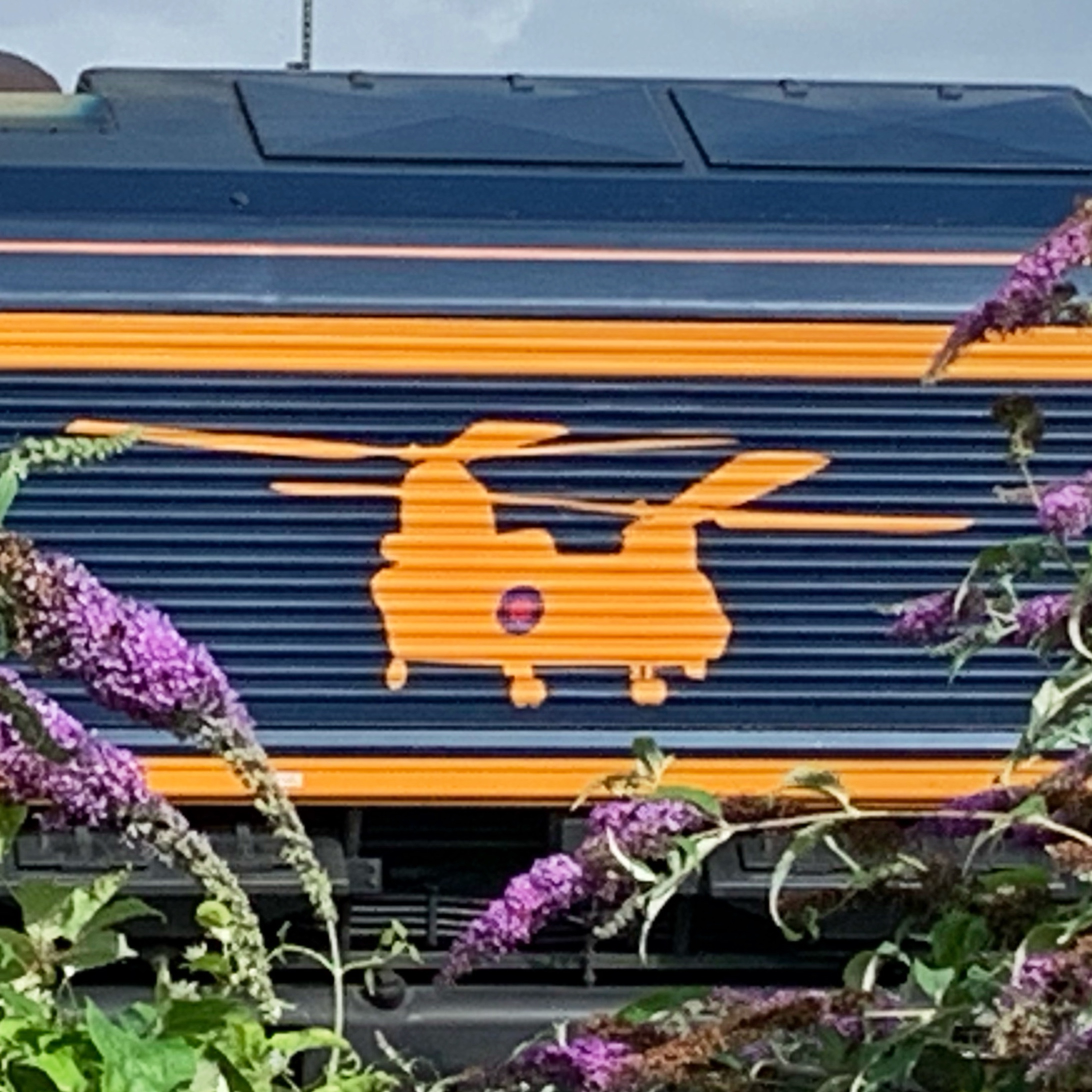
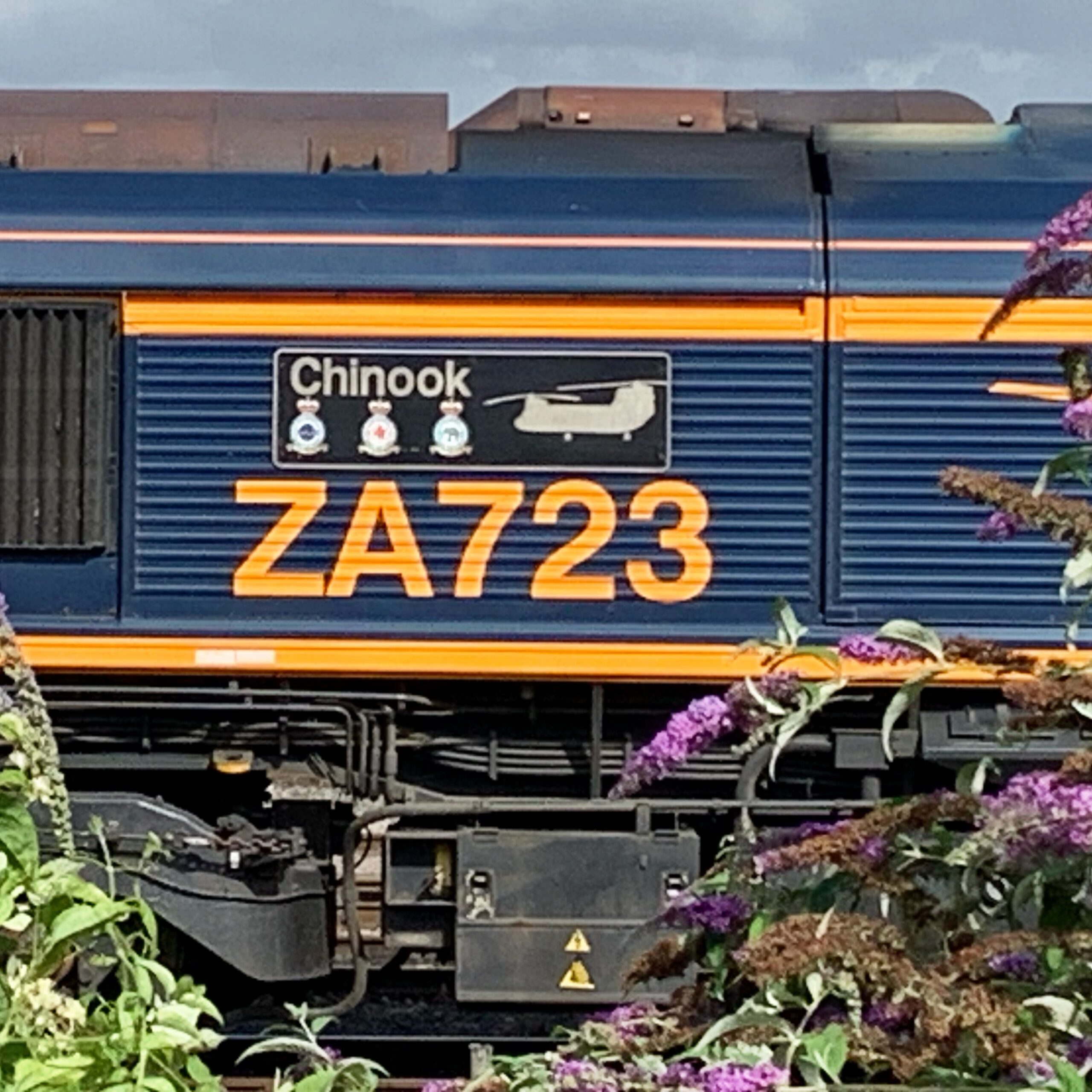
Class 66 No. 66791 backs onto the milling machine at Eastleigh – 03/08/2023GBRf’s Class 66 No. 66723 ‘Chinook’ with class mate No. 66791 at the rear top and tail the milling machine at Eastleigh – 03/08/2023GBRf Class 73 No.’s 73961 ‘Alison’ and 73965 ‘Des O’Brien’ prepare to work 1Q54 1255 Eastleigh Yard to Tonbridge Yard via Ascot, Aldershot, Guildford and Reading – 03/08/2023Three class 73 electro-diesels No.’s 73213, 73136 and 73119 stand at Eastleigh East Yard with Class 08 shunter No. 08810. Class 47 No. 47727 ‘Edinburgh Castle’ in the background later worked 0M10 1400 Eastleigh TRSMD to Leicester LIP – 03/08/2023
Thursday evening and it was the turn of Scott, our North Dorset Correspondent, to venture out to catch Colas liveried Class 37 No. 37116 on test train 3Q07 2031 Exeter Riverside to Exeter Riverside via Yeovil Pen Mill and Salisbury. The test train with a Class 37 and DBSO crossed through North Dorset as part of this working.
Colas Class 37 No. 37116 working 3Q07 2031 Exeter Riverside to Exeter Riverside via Yeovil Pen Mill and Salisbury at Yeovil Pen Mill – 03/08/2023 (Photo courtesy of Scott Lewis)Colas Class 37 No. 37116 working 3Q07 2031 Exeter Riverside to Exeter Riverside via Yeovil Pen Mill and Salisbury at Yeovil Pen Mill – 03/08/2023 (Photo courtesy of Scott Lewis)
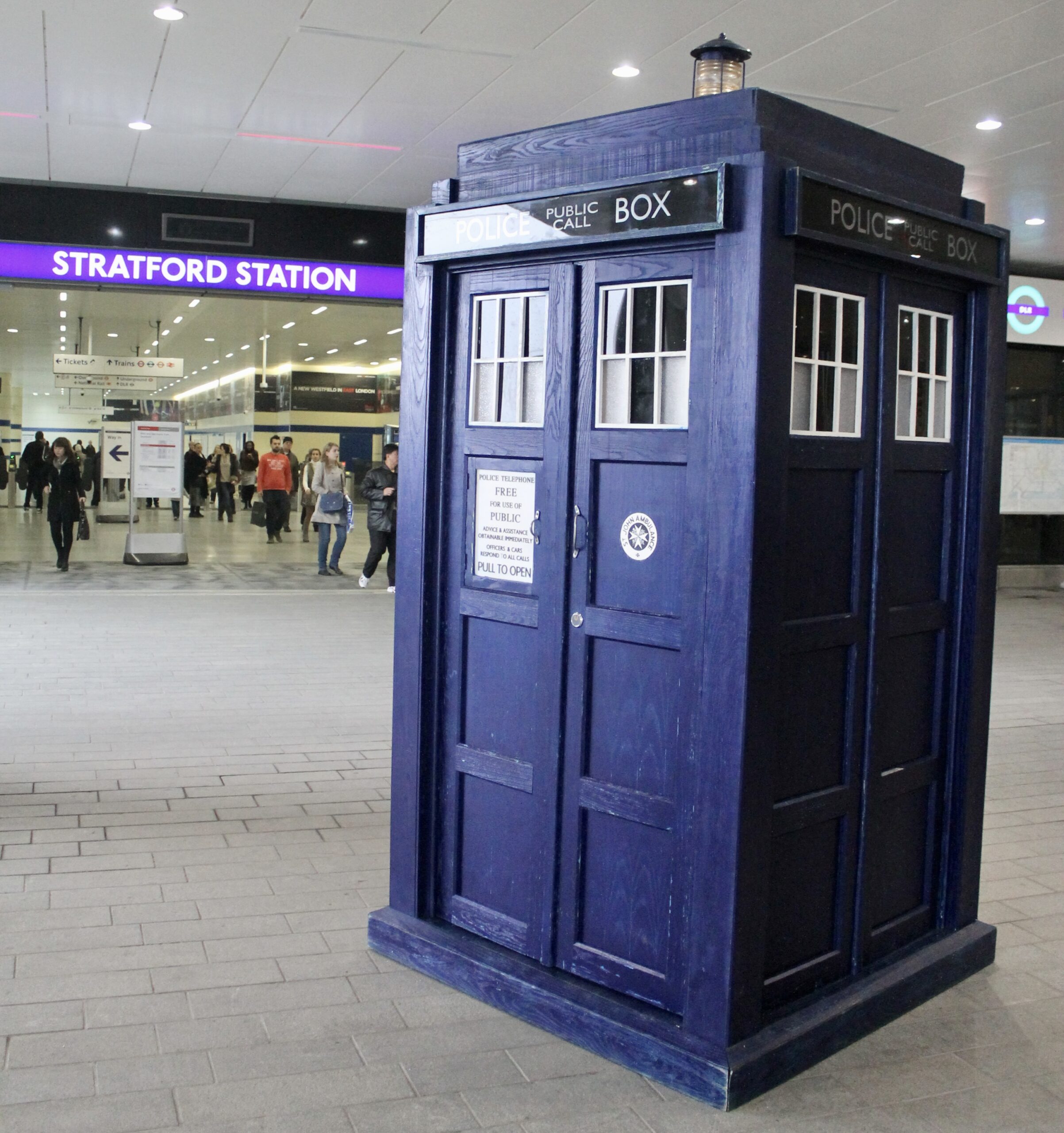
On Saturday, Yoshi enjoyed a mini break with his cousins as Caroline and I had a day in London, primarily to see “Abba Voyage” at the purpose built venue adjacent to the Pudding Mill Lane Docklands Light Railway (DLR) station. It was a phenomenal 90 minutes and well recommended. On our way back to Waterloo station for our train home, we made a brief diversion to the Westfield shopping centre which now inhabits much of the land which had been occupied by Stratford railway depot and works. For no apparent reason, other than it being a railway locomotive, Avonside Engine Co 0-6-0ST works No. 2068 ‘Robert’ stands on a section of track outside the entrance to Stratford railway station.
‘Robert’ was built by the Avonside Engine Company in 1933 for the Staveley Coal and Iron Ltd for use at their Lamport Calcine Sidings, Hanging Houghton, near Brixworth, Northamptonshire where it spent all of its working life as Lamport No3 until September 1969 when it was sold privately. Since then the locomotive has had many homes, including Buckinghamshire Railway Centre at Quainton, Foxfield Railway at Dilhorne in Staffordshire, Peak Rail at Matlock before going to the Midland Railway Centre at Butterley where the locomotive gained its name. In 1993 the locomotive was bought by the Dockland Development Corporation for the Kew Bridge Steam Museum where it was cosmetically restored to make it look like a Beckton Gas Works engine. The following year, 1994, the locomotive was displayed on the tracks of Winsor Terrace in Beckton close to the Beckton Gas Works and close to the then new extension of the DLR. Ownership passed to Newham Borough Council in 1999 and as ‘Robert’ had been vandalised it was decided to move the locomotive to a plinth in front of Stratford station. In 2008 due to bridge construction work in the area the locomotive was moved again to the East Anglia Railway Museum at Colchester and repainted at the expense of the Olympic Delivery Authority before returning to Stratford and placed in its current position during 2011 as a new community landmark – 05/08/2023
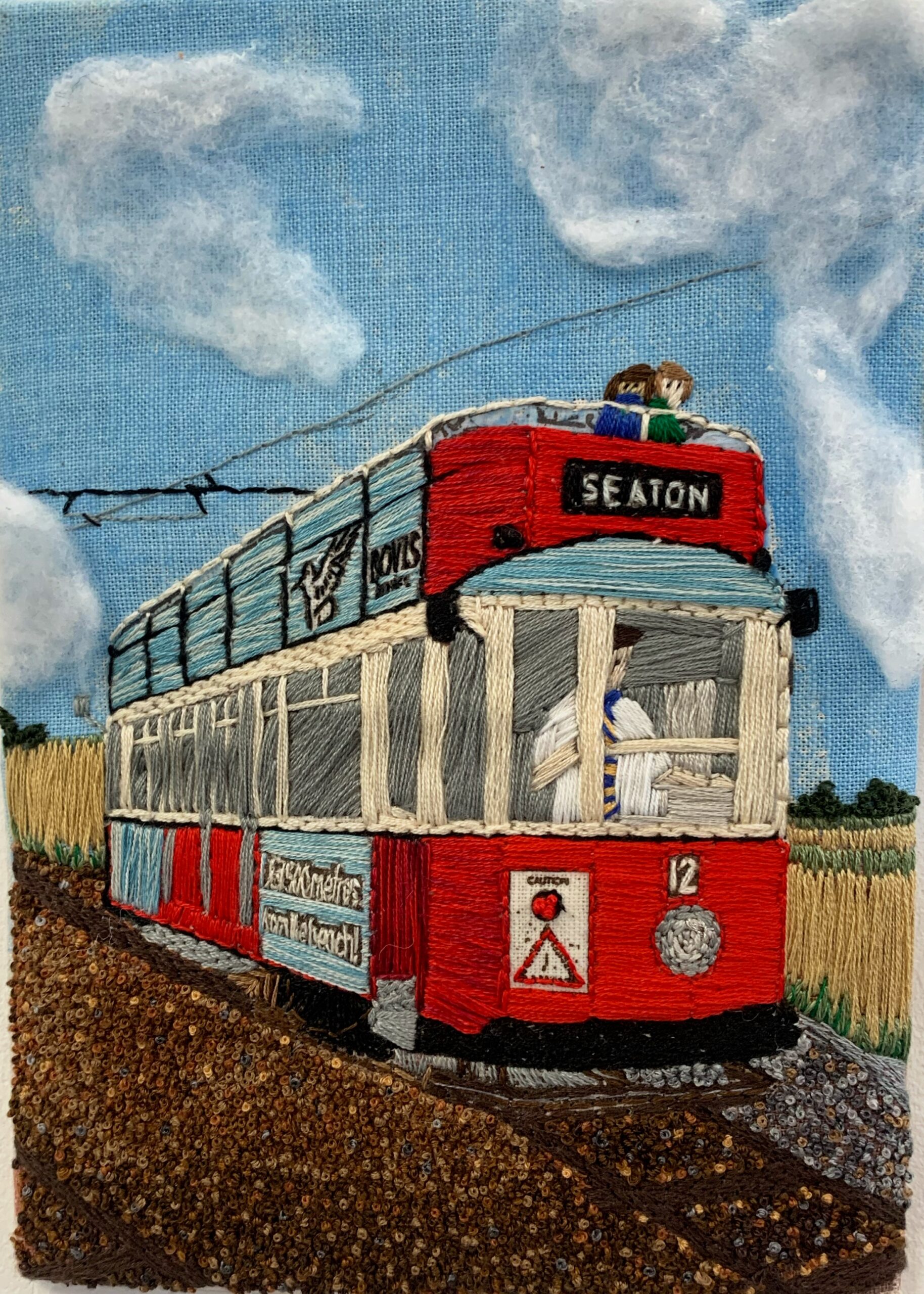
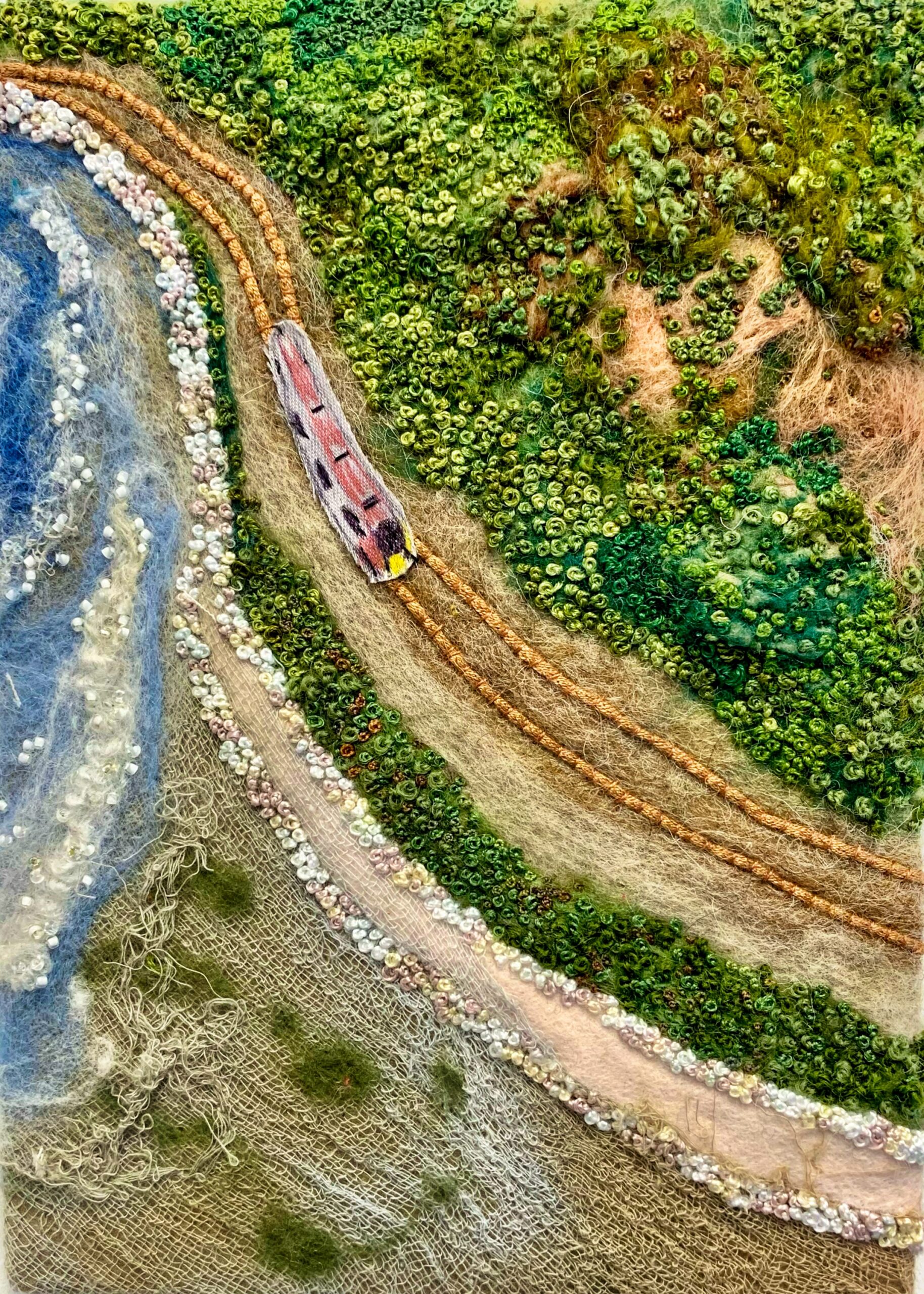
On Sunday we took Yoshi’s grandmama to The Purbeck School in Wareham as they were hosting the Dorset Arts & Crafts Association 2023 Showcase. Ever on the lookout for items of railway themed interest, I was pleased to find the following panels included as part of “The South West Coast Path” exhibition created by West Country Embroiderers as a celebration of its 50th Anniversary and to showcase the skills of its members. This special exhibition features 166 individual stitched panels, along with county markers and a map of the South West coast displayed consecutively so that the viewer has a ‘visual walk’ along the coast path from Studland in Dorset, through South Devon, Cornwall and finishing on the border of North Devon and Somerset. For another opportunity to see “The South West Coast Path” exhibition it will be displayed at The Gallery Upstairs in Upton Country Park, Poole from 5th to 9th October 2023, or you can view a slideshow here.
Seaton Tramway by Michaela Pohl, Ottery St Mary Sky and ground areas painted with fabric paint. Reverse printed a photo of a Tram onto the fabric. Outlined in back stitch. Various colours and stitches such as stem and long stitch used to fill in detail and people. French knots for the gravel areas. More long and stem stitches complete the cornfield and the trees. Needle felted clouds.Dawlish by Gillian Strong, Torbay Inspired by memories of family walks along the sea wall and watching the trains pass. Materials & amp; stitches: Calico painted background, cliff walls, beach and sea slightly felted. Embellished with French knots using embroidery silk threads, perle cotton No 8. A little scrim used on the beach, together with net, beads and French knots. Felt used for the path and railway and narrow cord for the railway track.Babbacombe Cliff Railway by Lynne Weston, Paignton Calico background. Worked entirely by hand using long and short stitch with a few French knots. Different shades of blue dominate the sky and sea, and shades of green for the surrounding wood and area.
From The Archive
I visited Stratford Depot a few times in the BR Blue days of the 70’s and 80’s – usually on an official Open Day, but at least once on a shed visit with the National Railway Enthusiasts Association (NREA) who ran coach tours for enthusiasts with permits to visit railway depots and sibling points. I recall there was a long access tunnel which led to the depot, so I dug out my copy of the Ian Allan ABC British Rail Locoshed Directory which gave geographical locations and information on all BR motive power depots to find the entry on Stratford:
The listing for Stratford Depot included in the 1978 edition of Ian Allan’s Locoshed Directory, the cover of which depicted locomotives at Stratford TMD
Stratford Depot was built by the Northern and Eastern Railway (NER) which operated a line between Stratford and Broxbourne opened in 1840. By 1843, the main building was a 16 track roundhouse which was known as The Polygon, with outbuildings including workshops, a blacksmith and saw pits all contained within the shed complex. In February 1846 additional accommodation was authorised, which included the Erecting Shop. In 1847 the Eastern Counties Railway (ECR) works in Romford were closed and moved to Stratford. By 1867 the carriage department which later became Stratford Works was installed in a 370 ft X 80 ft building attached to the north side of the Polygon. From this point, the development of Stratford Depot and Stratford Works were closely linked and as the site evolved, new sections of the works were opened away from the original shared site that lay between the Great Eastern Main Line and the Lea Valley line.
As part of the 1955 Modernisation Scheme Class 40 diesel-locomotives were delivered brand new to Stratford and allocated to main line express duties. These were replaced in the 1960’s by Class 37’s which in turn were replaced by Class 47’s with the Class 37’s transferring to freight duties. In 1977 two Stratford Class 47’s were famously turned out with silver roofs and “Union Jack” flags on their bodysides to celebrate the silver jubilee of Queen Elizabeth II. This was in contradiction of strict BR guidelines but proved so popular that soon other Stratford based Class 47 locomotives were adorned with silver roofs and became instantly identifiable to the delight of railway enthusiasts. The 1980’s saw a further addition of a small Cockney Sparrow symbol.
The Class 47’s were themselves displaced by the electrification of the main lines to Cambridge and Norwich in the mid 1980’s, when Class 86 locomotives allocated to Norwich Crown Point took over operation of express services on the Great Eastern Main Line. The Cambridge line was served by Electric Multiple Units.
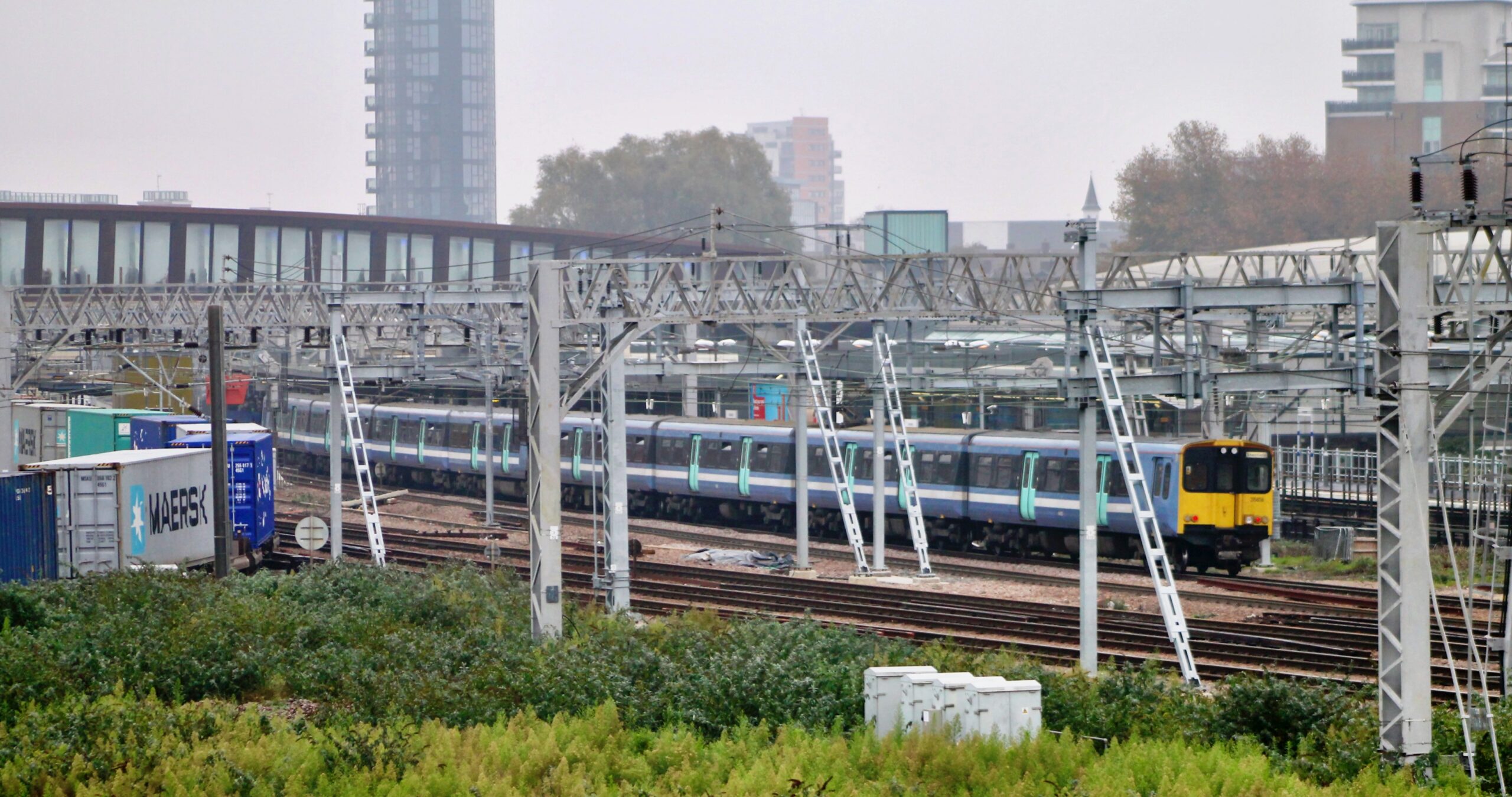
The privatisation of the railways in April 1994 saw Stratford depot taken over by English Welsh & Scottish (EWS) and remained as such until closure in 2001 with the site being used for the construction of the new international station on High Speed One. A new diesel depot was opened at nearby Temple Mills but this only lasted a few years as changes to the freight market saw the depot closed.
Today the site is occupied by Stratford International station and a shopping centre called Westfield Stratford City. A commemorative plaque was unveiled on the site on 10 July 2012 featuring a 30A shedplate and Stratford cockney sparrow in its design and acknowledging the history of the site.
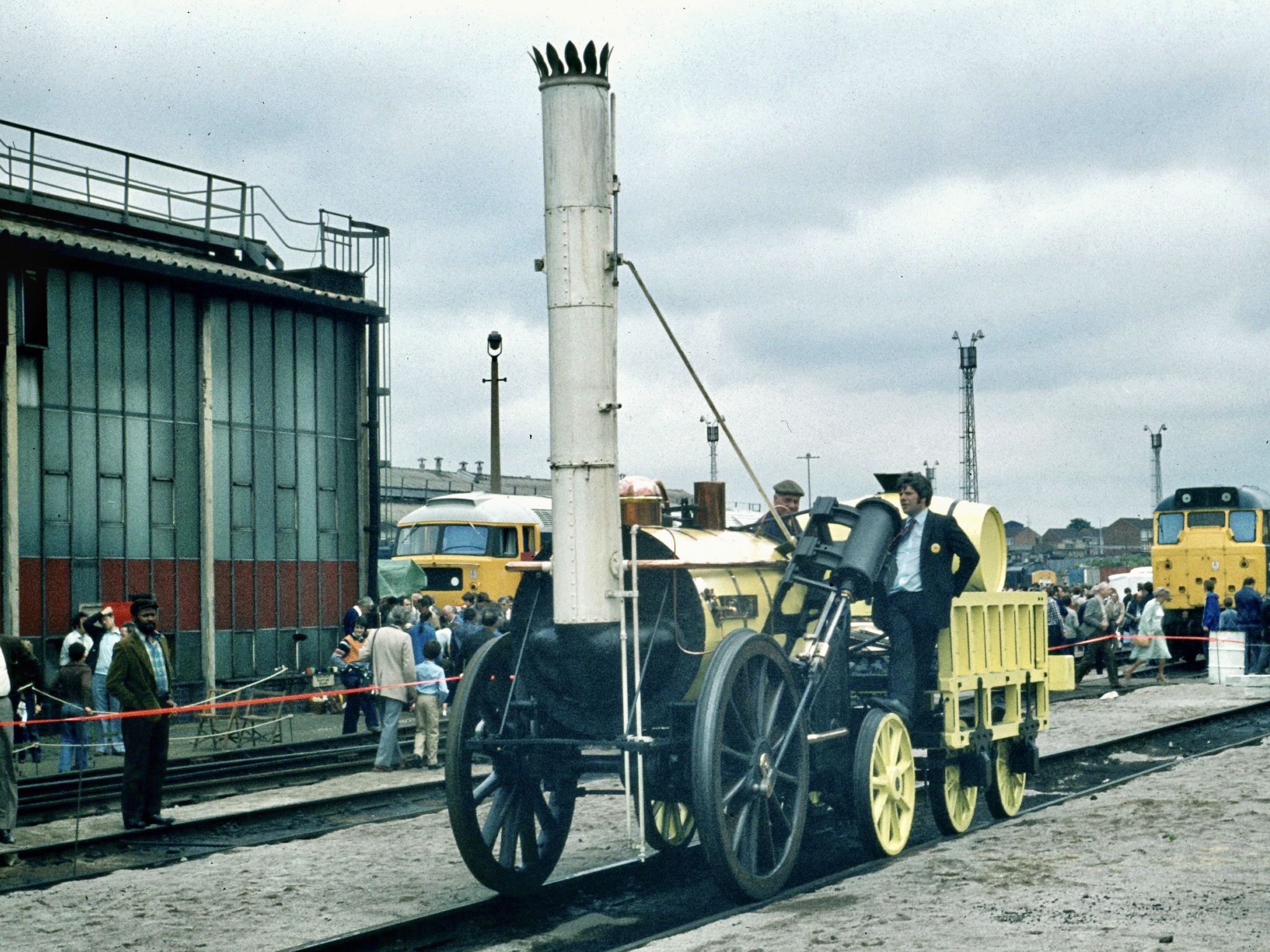
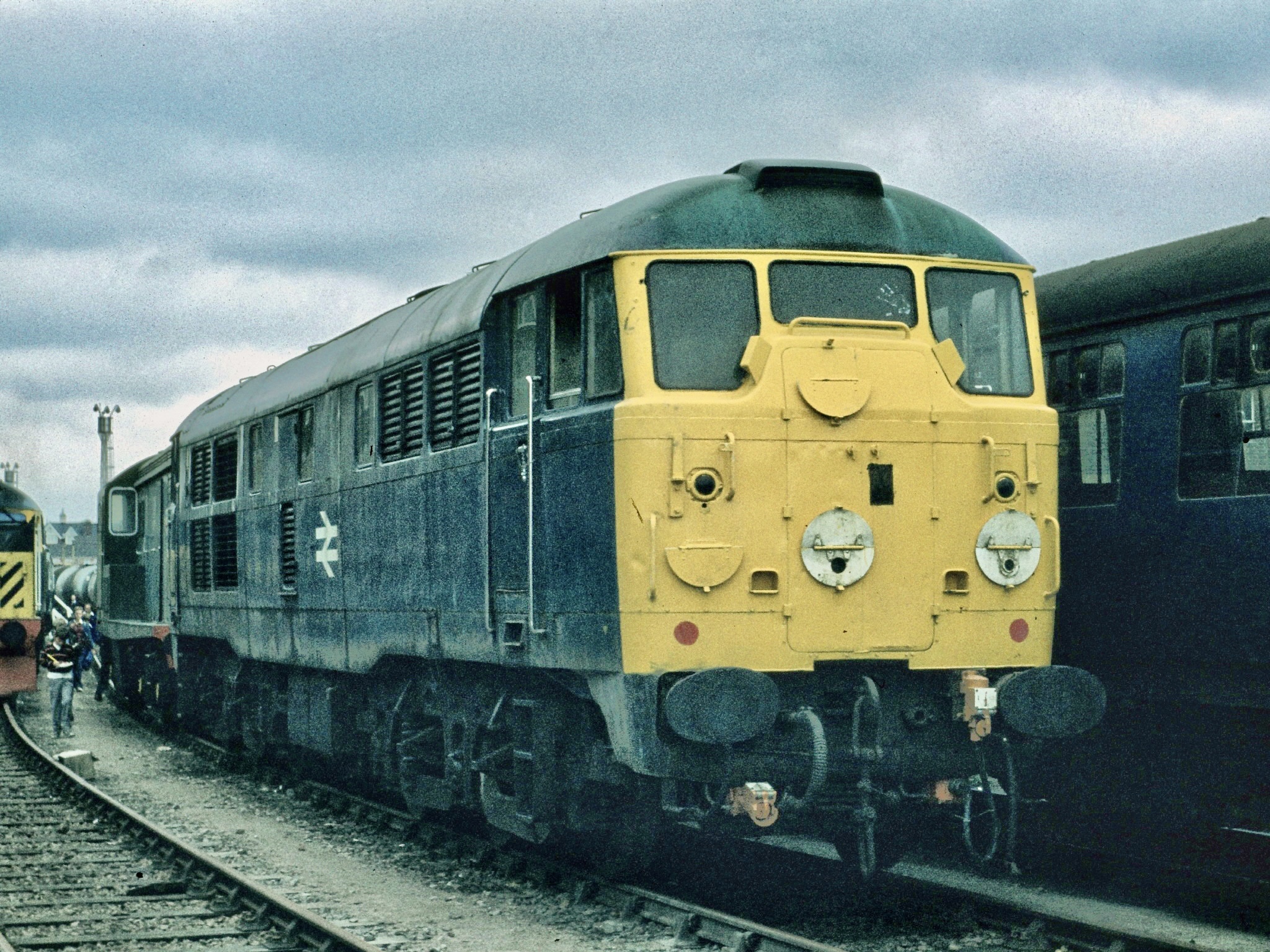
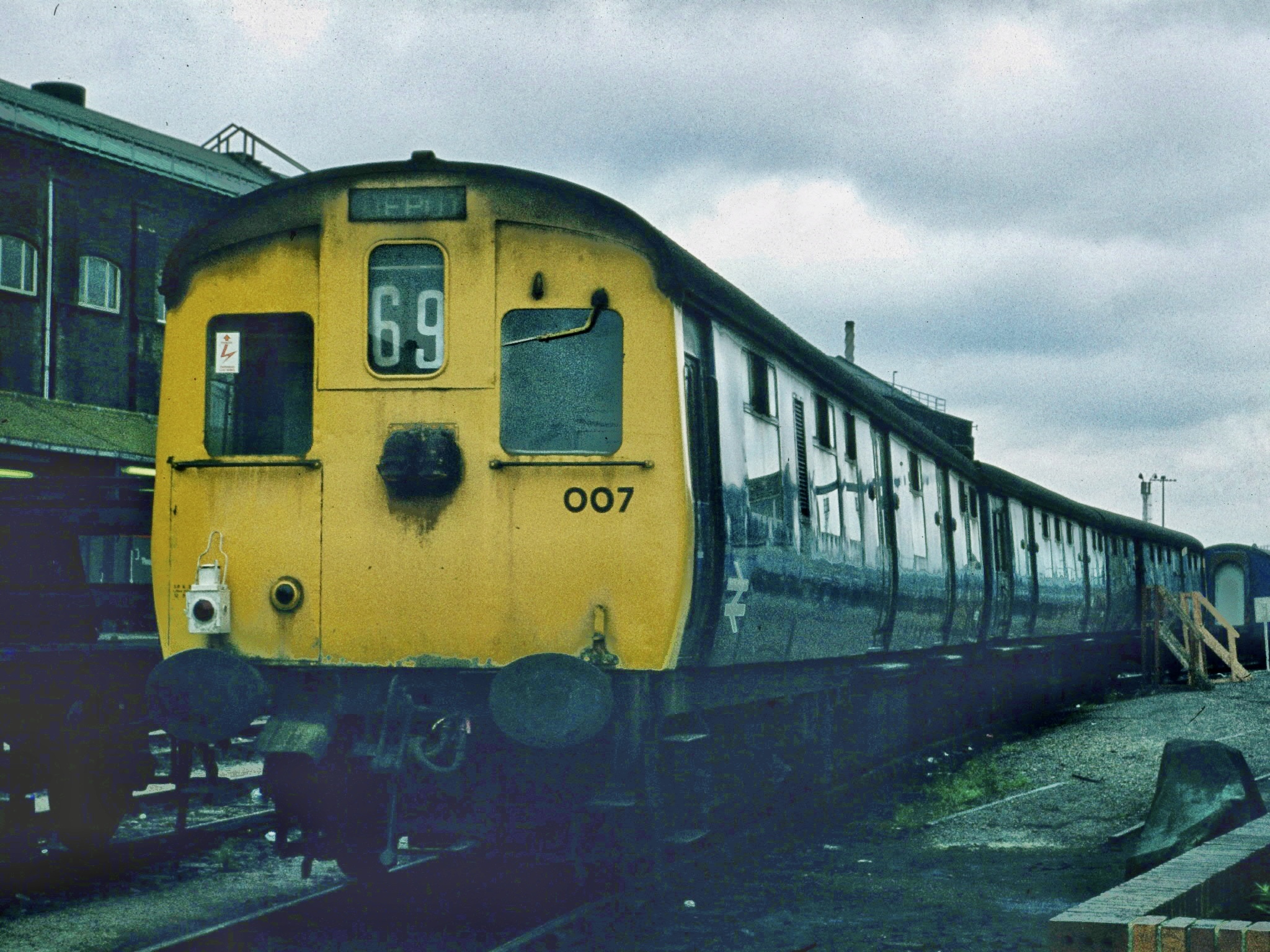
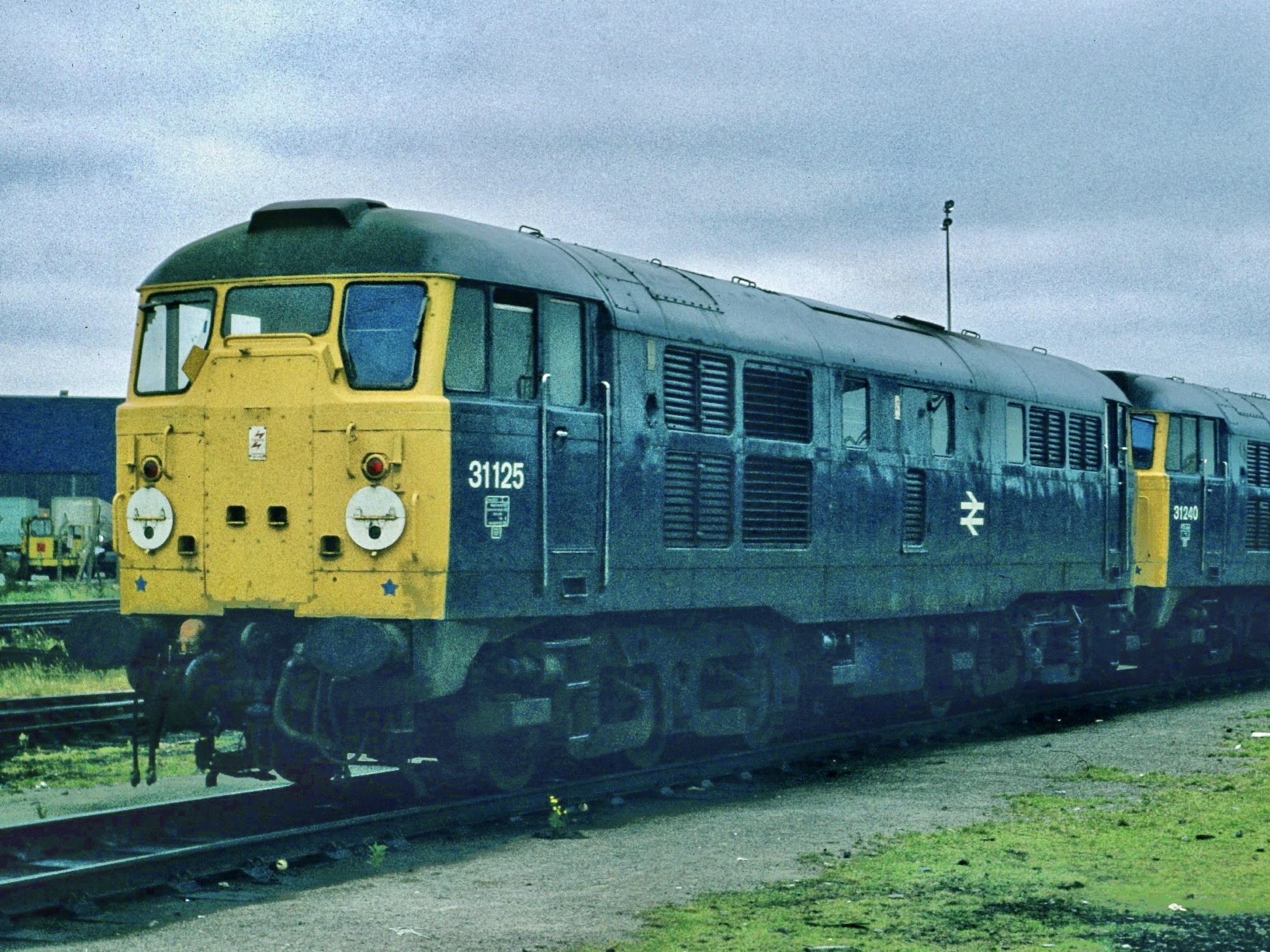
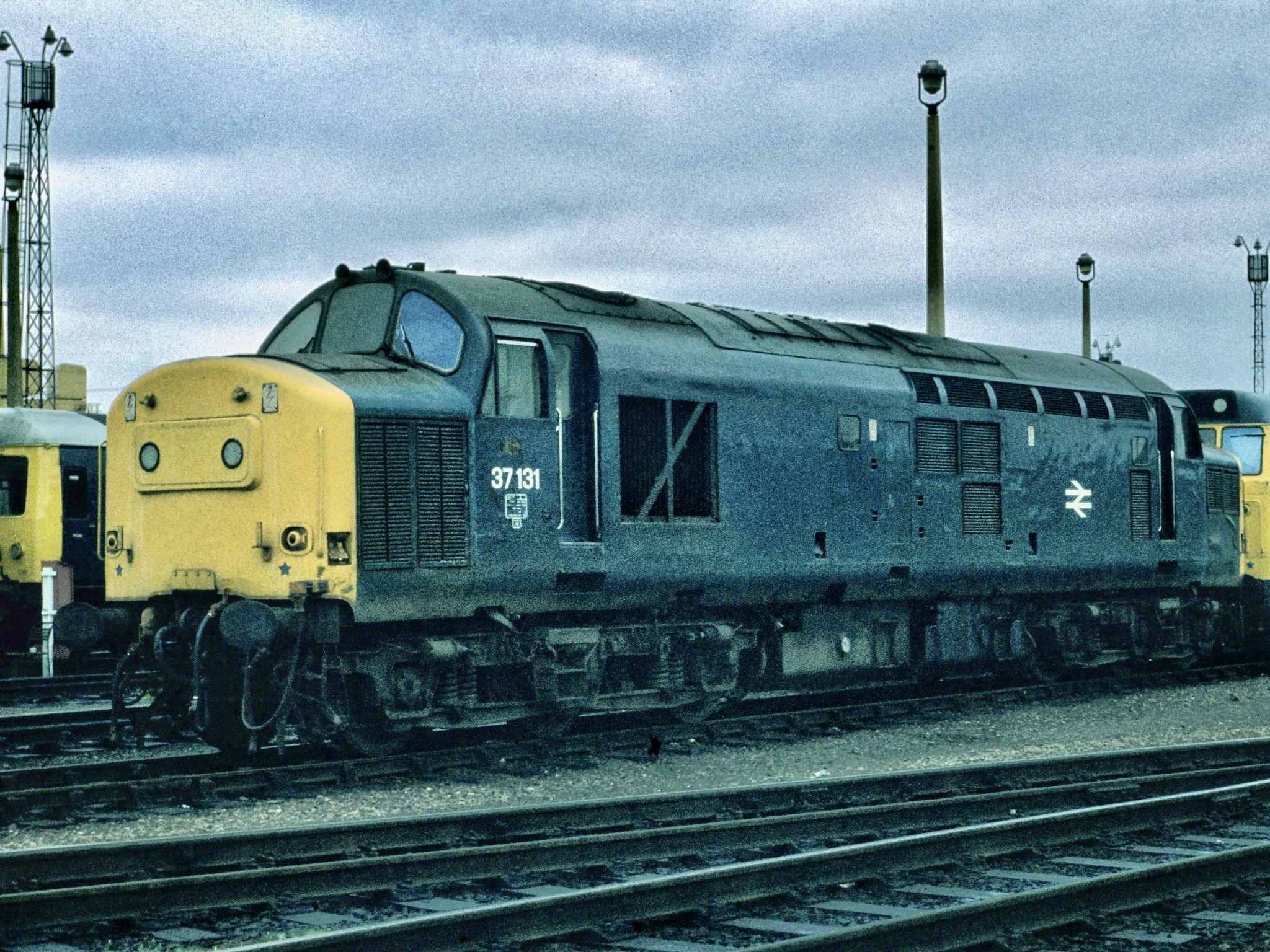
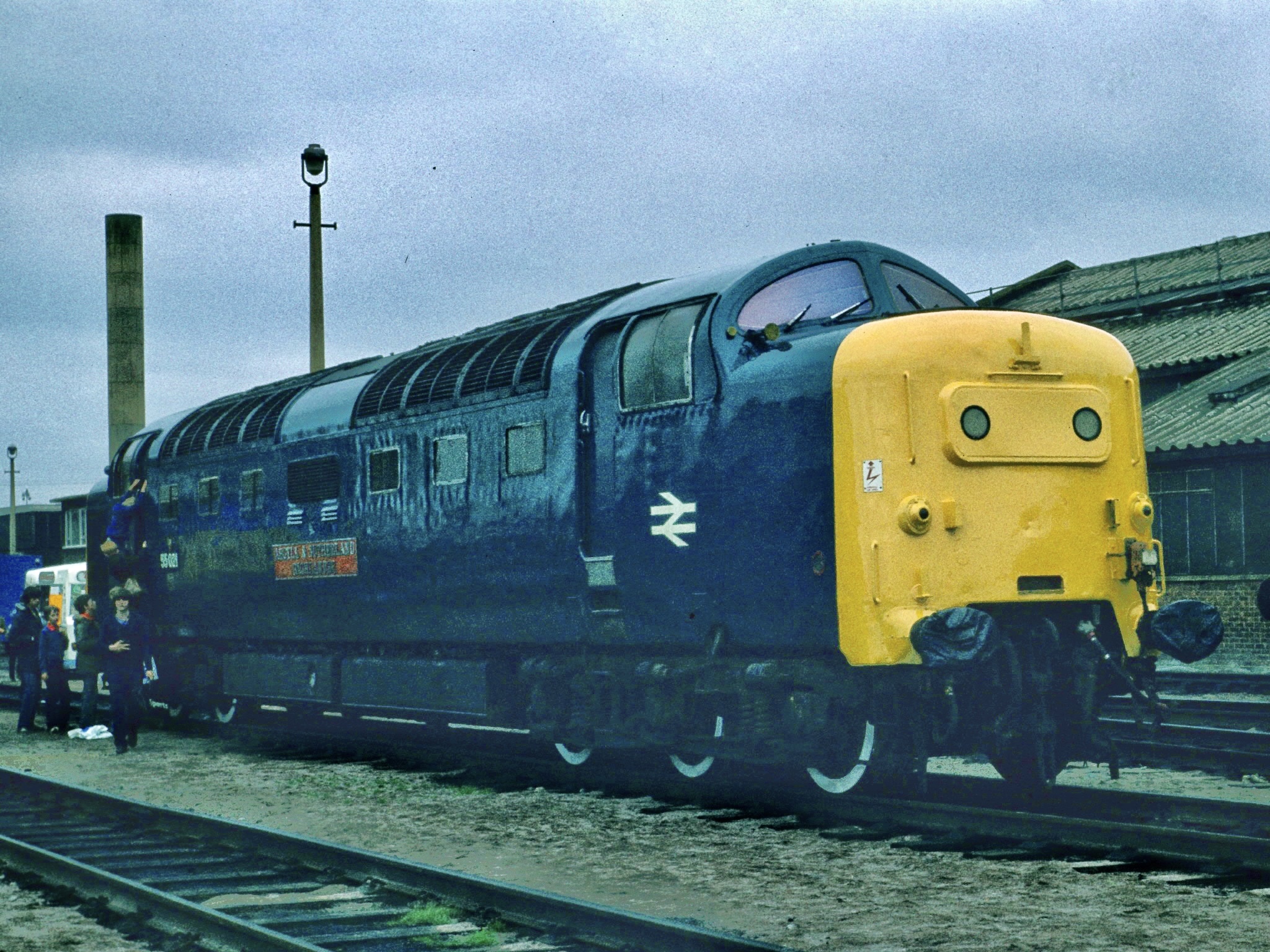
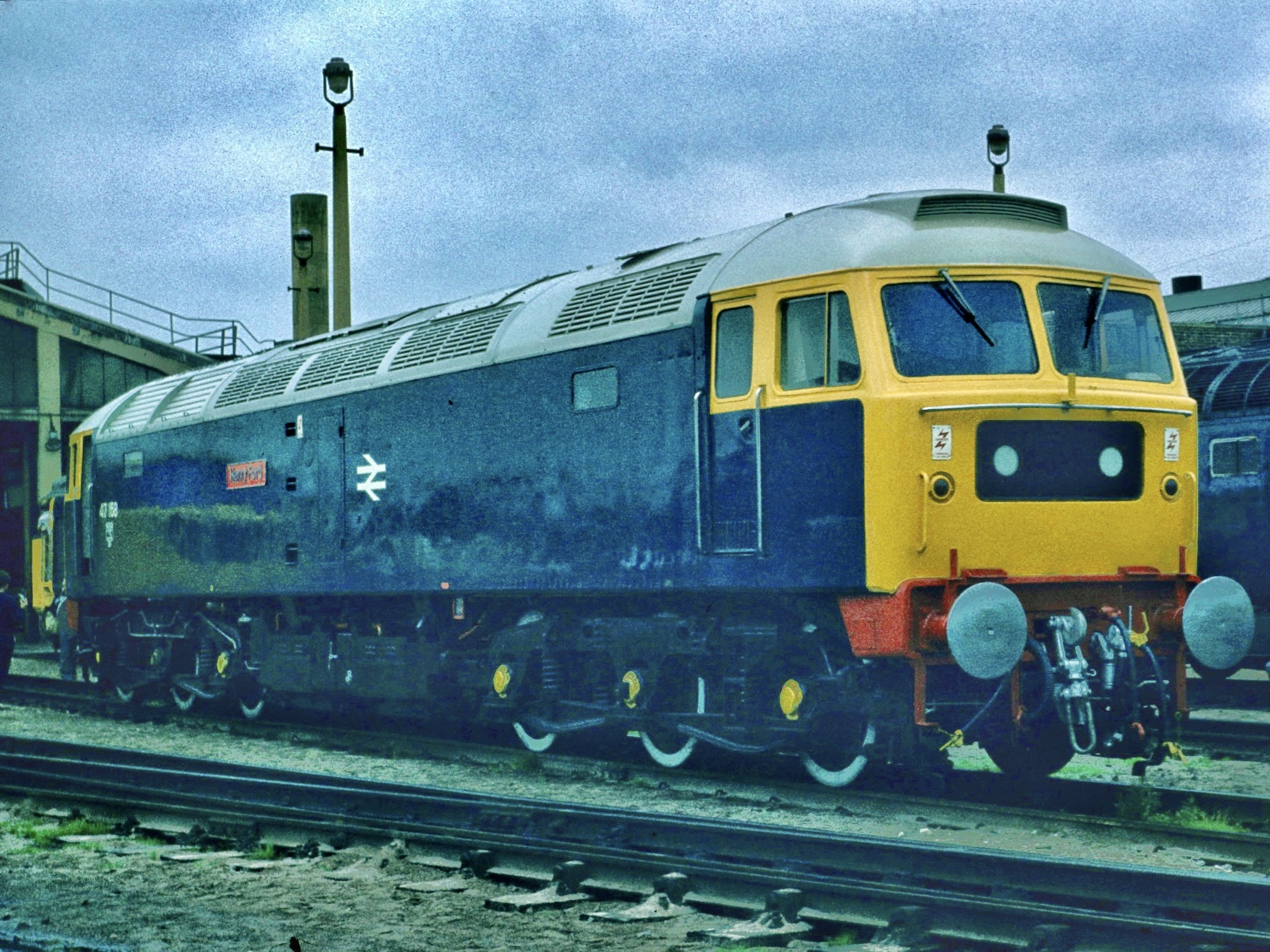
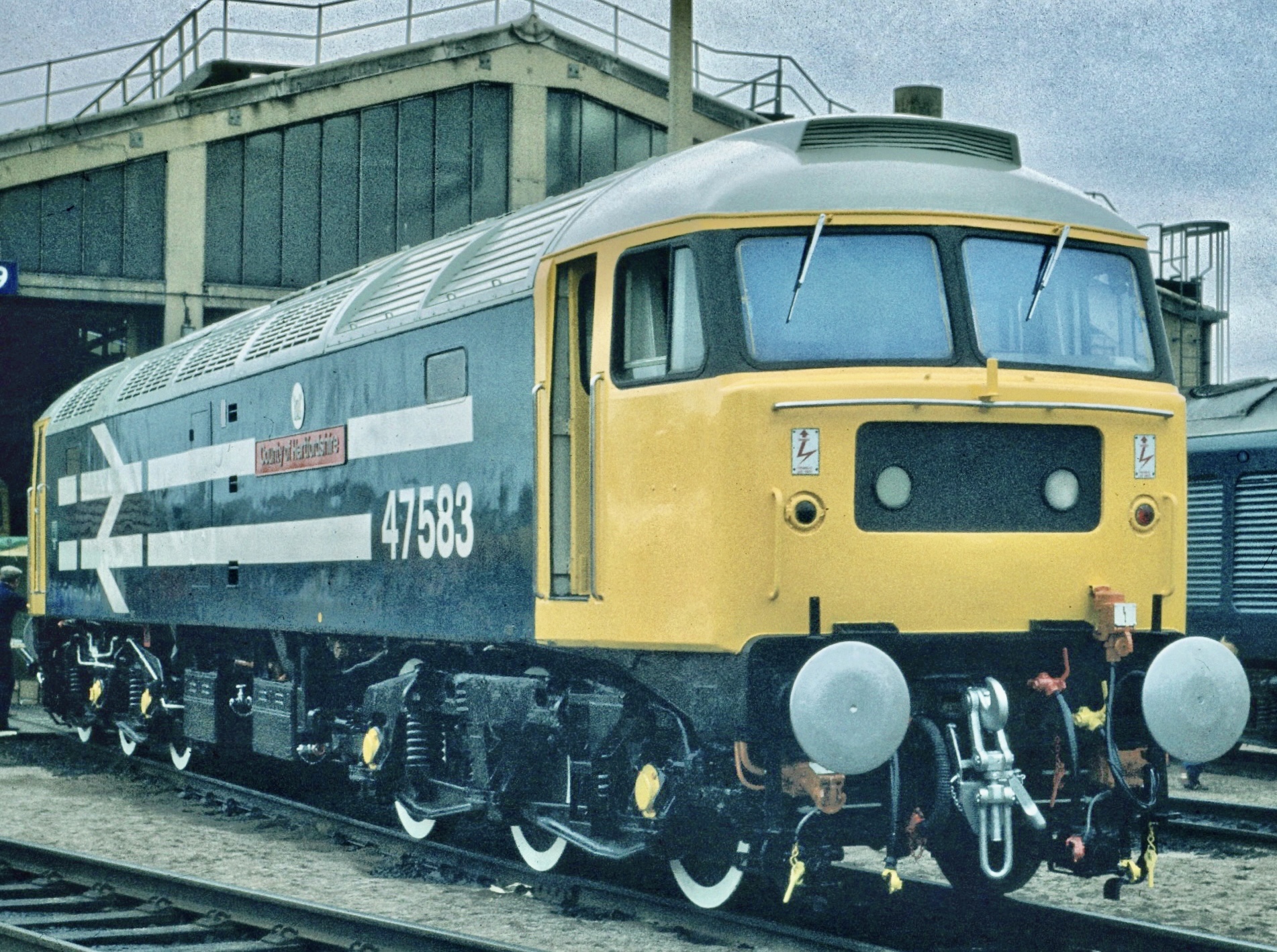
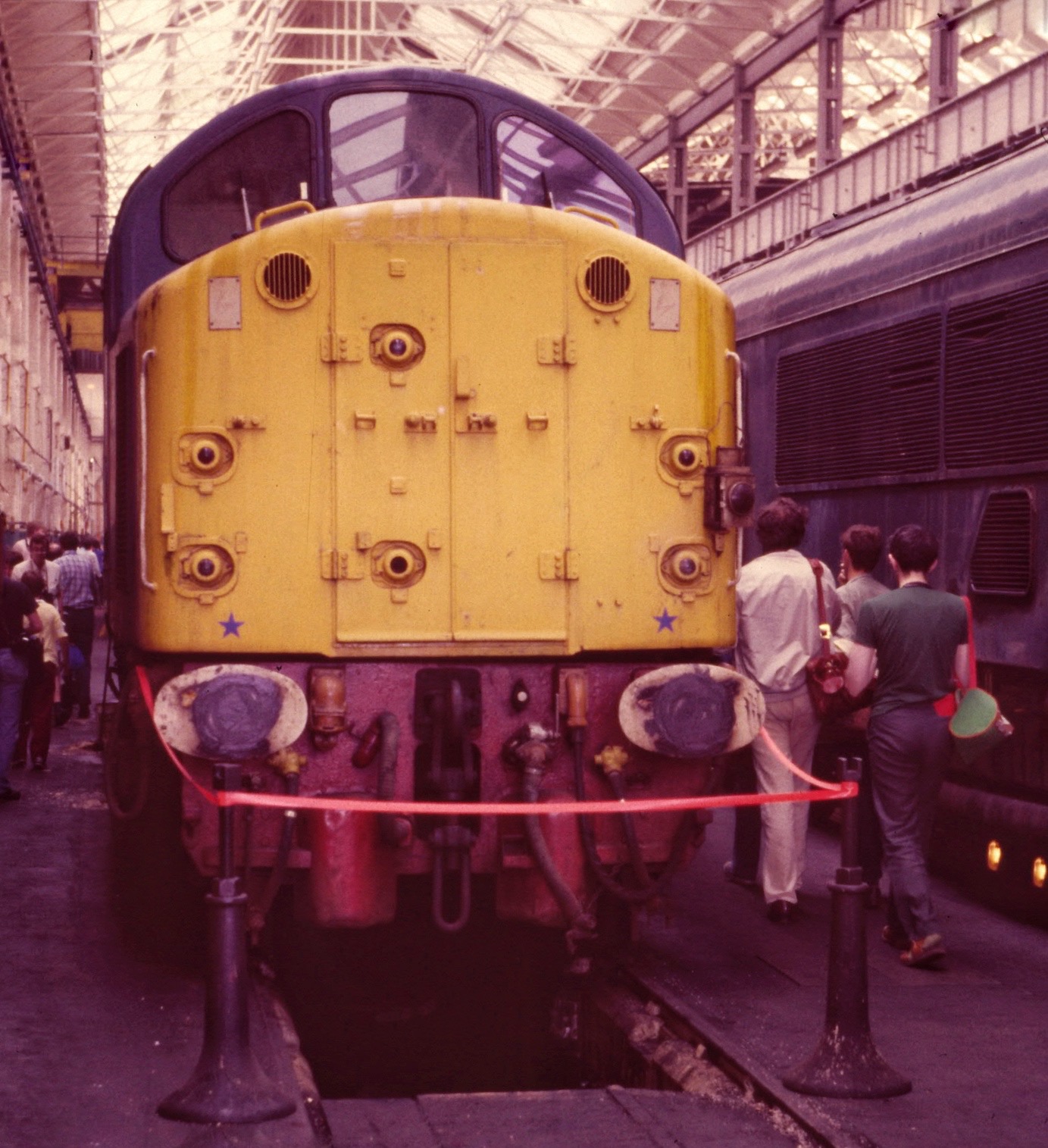
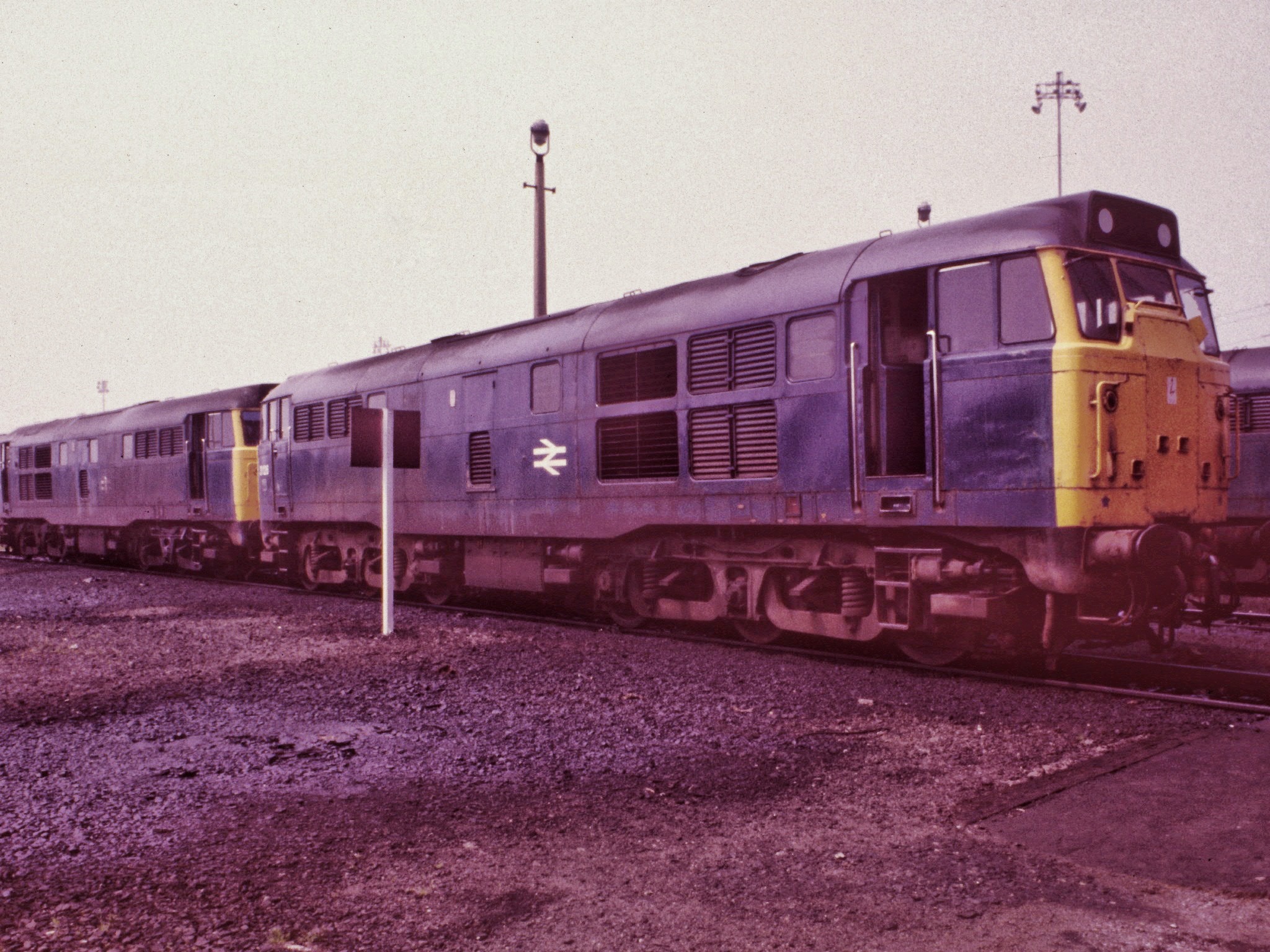
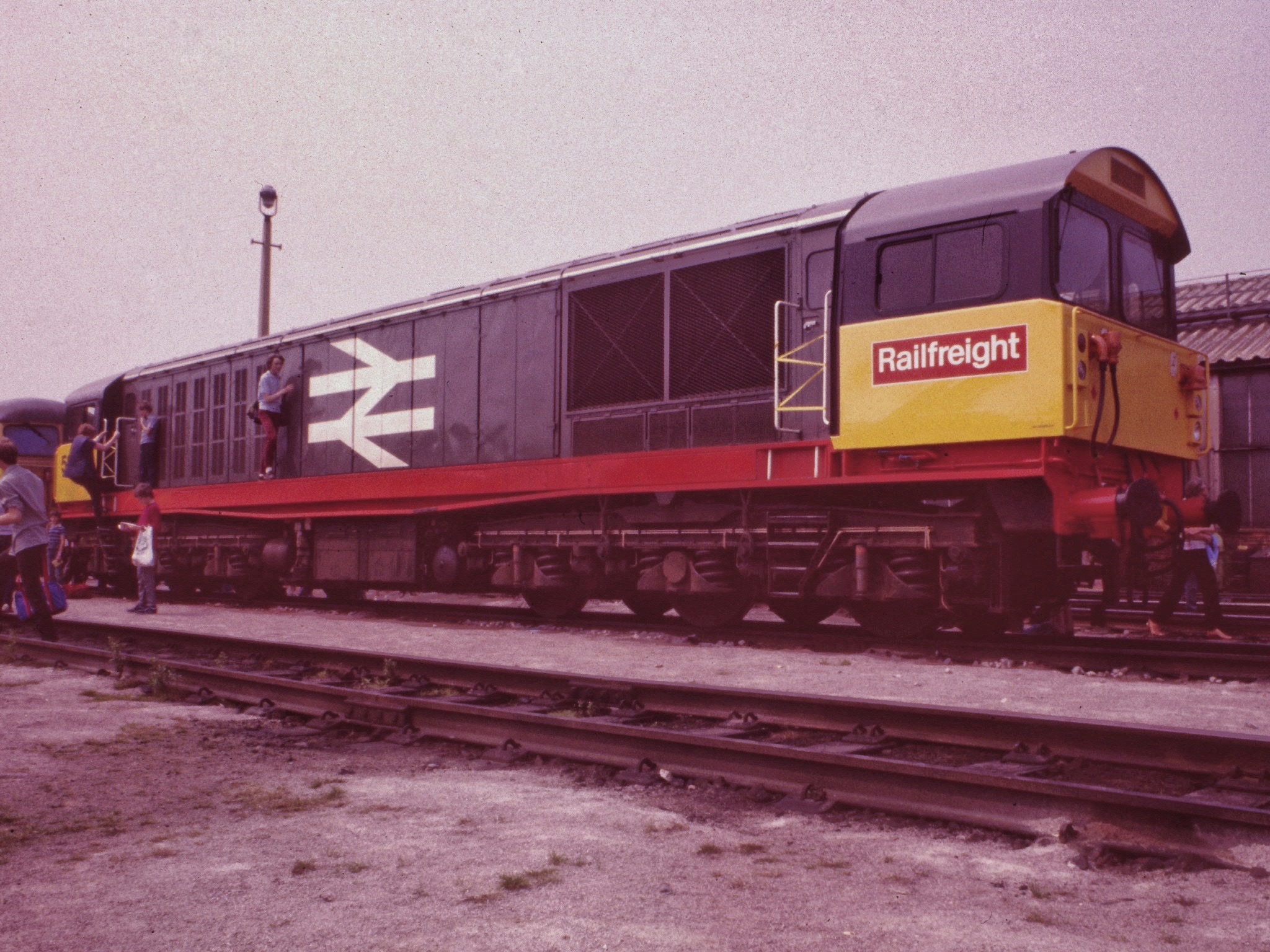
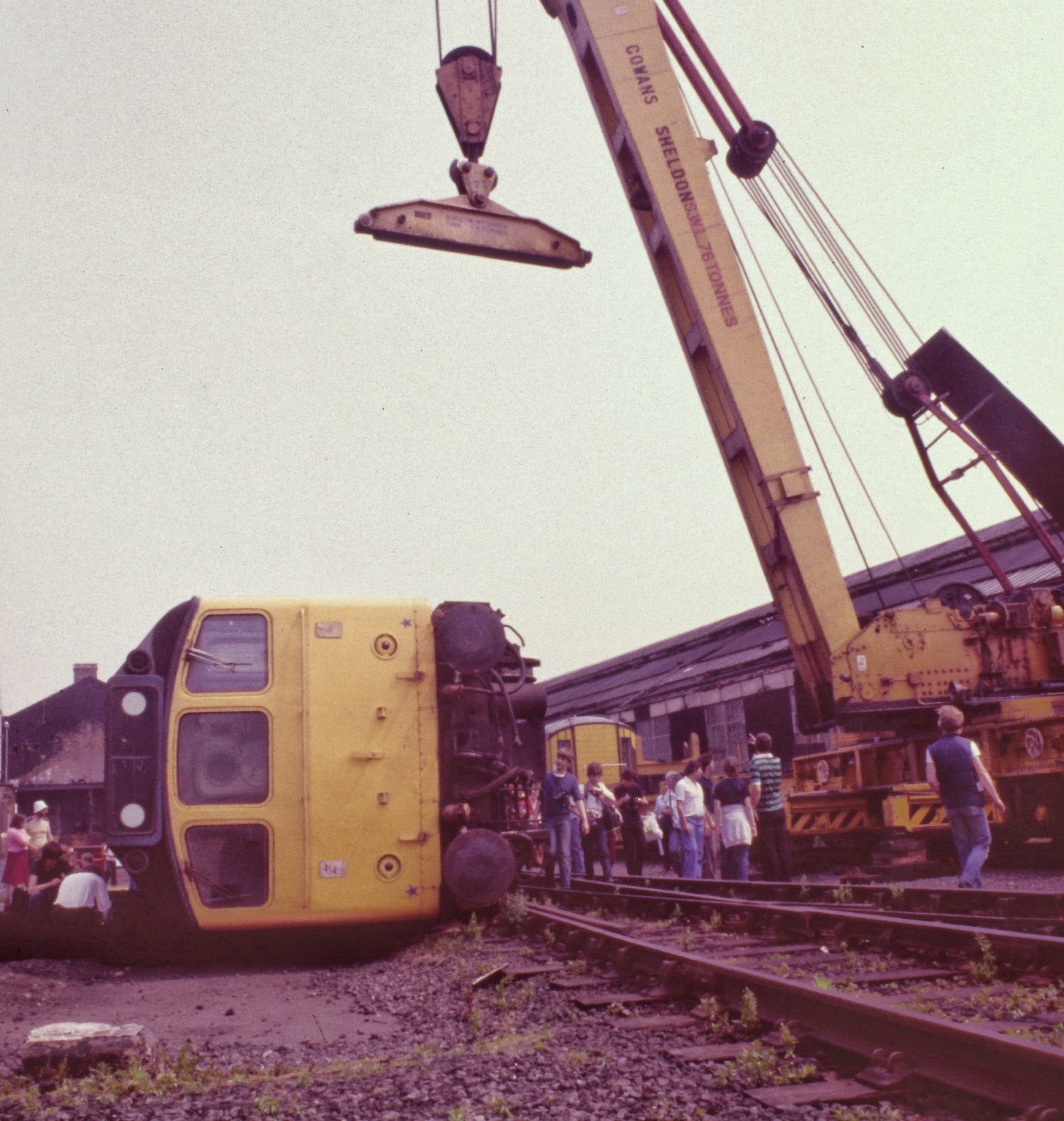
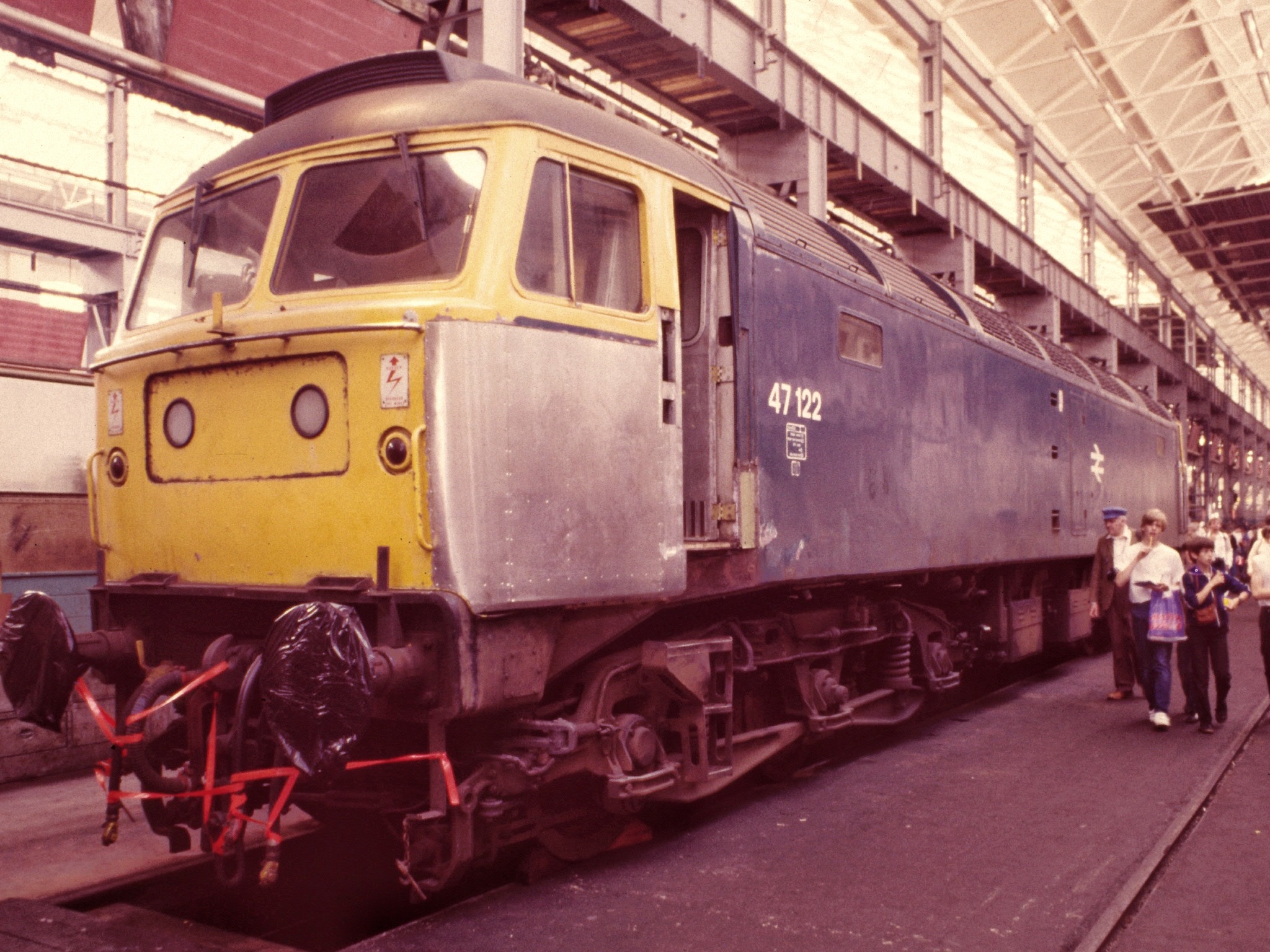
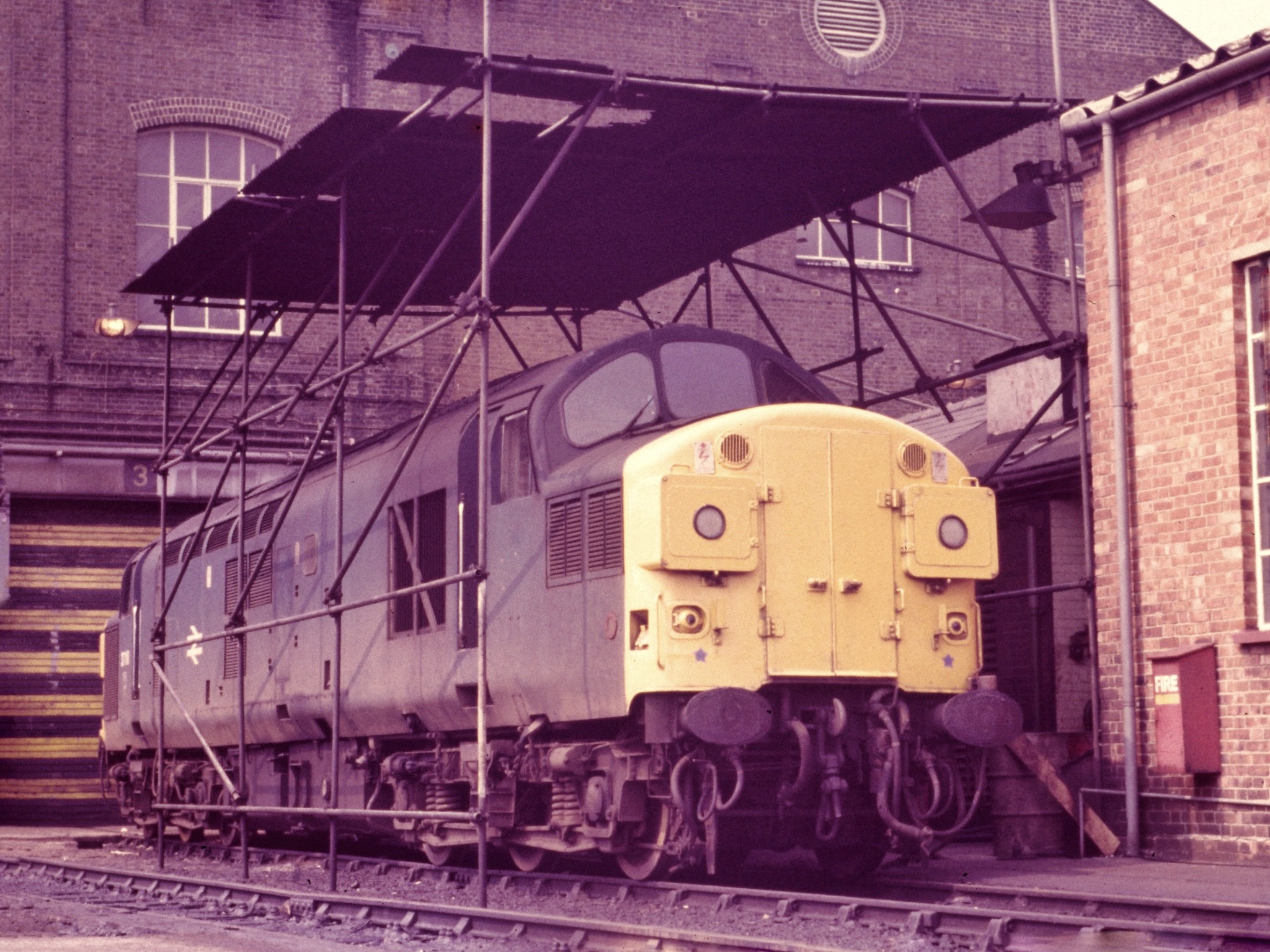
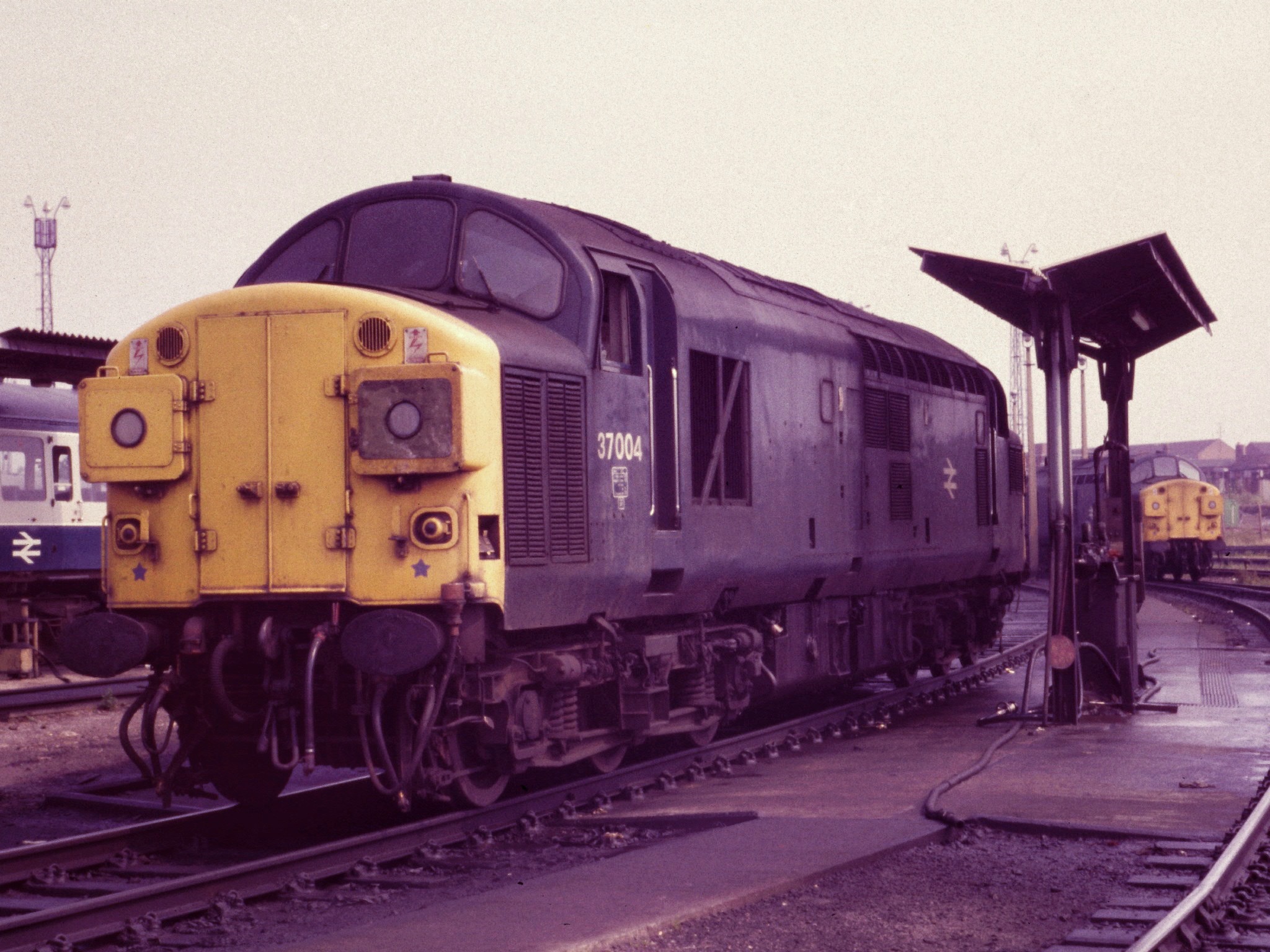
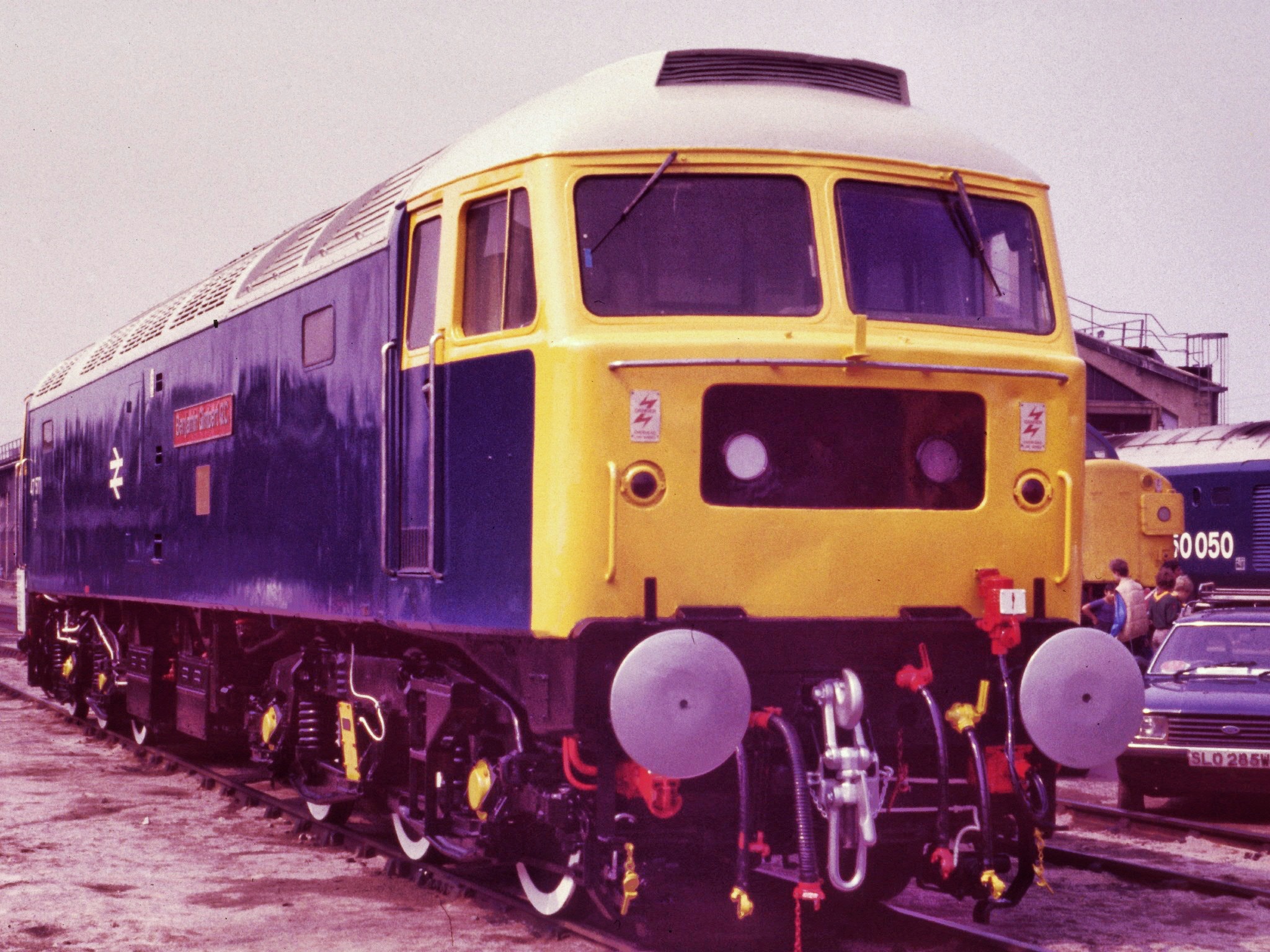
Replica of Stephenson’s ‘Rocket’ at Stratford Depot Open Day – 11/07/1981Class 31 No. 31008 at Stratford. Built at Brush Falcon works, Loughborough as No. D5508 this locomotive entered service in April 1958 as one of the twenty Brush Type 2 Pilot Scheme locomotives ordered by British Railways to replace steam traction and initially designated Class 30. These twenty locomotives did not have the headcode box mounted on the roof above the cab as did later members of the class and were “non-standard” in having Electro-Magnetic Multiple-Working control equipment (denoted by the orange circle clearly visible above each buffer) and limited to 80mph. They were allocated to East Anglian sheds throughout their service, ending their days allocated to Stratford. They were built with Mirrlees JVS12T 1250bhp engines and Brush electrical equipment, but the engines were not a success and in 1964 a programme of works commenced to re-engine the fleet with the 1470bhp English Electric 12SVT engines with No. D5504 receiving her new engine during a classified repair at Doncaster works in October 1968. The re-engined locomotives became Class 31/0 and being non standard with the rest of the class 31 fleet these twenty locomotives were early casualties with the nine (31001/07/09/10/11/12/14/16/18) being placed into storage in May 1976. However No. 31008 was one of the more fortunate of the sub-class and would survive in traffic until October 1980 when the last three (31004/08/19) were withdrawn. This was not the end for No. 31008 however as she was transferred for departmental use and converted into a non-powered carriage heating unit, re-numbered ADB968016 being used in the Stratford area before being condemned in 1982. She was eventually broken up at Crewe works in June 1985 – 11/07/1981Class 306 (AM6) three car electrical multiple unit (Shenfield Unit) No. 007 at Stratford. The Class 306’s were introduced in 1949 for the Liverpool Street to Shenfield services. They were originally built to run on DC power but as part of an exercise to standardise systems over the BR network all 92 sets were rebuilt in 1960 to utilise the new AC system. The Class 306’s remained on the lines out of London Liverpool Street for all of their lives and were withdrawn during 1980 and 1981 with all except one unit being scrapped. Unit No. 017 survives as part of the National Collection – 11/07/1981Class 31 No. 31125 at Stratford. Note the absence of the over-window headcode box which were introduced on later members of the class. This locomotive was cut up in May 2001 by Harry Needle Railroad Co. – 11/07/1981Class 37 No. 37131 at Stratford. This loco entered service in March 1963 and was withdrawn in June 2005. She was cut up at C F Booth in Rotherham in April 2007 – 11/07/1981English Electric Class 37 No.’s 37044 and 37267 on shed at Stratford. 37044 was renumbered in 1988 survived until 2021 as No.37710 with WCRC. No. 37267 lives in with Colas as No. 37421 – 11/07/1981Class 55 Deltic and megabeast No. 55021 ”Argyll and Sutherland Highlander’ on display at Stratford Open Day. The cab of this locomotive survives and is owned by The South Wales Loco Cab Preservation Group – 11/07/1981Class 47 No. 47158 ‘Henry Ford’ was named at Stratford Open Day. This locomotive was withdrawn from service in 2001 and cut up at Kingsbury by the Harry Needle Railroad Company in October 2004 – 11/07/1981Class 47 No. 47583 was painted in large logo livery with two white horizontal stripes extending from the double BR arrow along the bodyside. For the week of Prince Charles and Lady Diana Spencer’s wedding, red and blue stripes were added to the arrow emblem – 11/07/1981Class 40 No. 40092 at Stratford. This loco was disposed of at BREL Swindon in March 1986 – 09/07/1983Class 31 No.’s 31126 and 31179 at Stratford – 09/07/1983Only two months old Class 58 No. 58002 on display at Stratford. This locomotive was cut up at Eastleigh in December 2013 – 09/07/1983Peak Class 46 No. 46010 in Stratford Works. The locomotive is currently privately preserved – 09/07/1983Class 25 No. 25177 took part in re-railing demonstrations during the 1983 Stratford Open Day. The locomotive lasted another three years before being cut up at Swindon Works – 09/07/1983Class 47 No. 47122 at Stratford. This locomotive was introduced into service in January 1964 and scrapped at Springburn in October 1989 – 09/07/1983Class 37 No. 37118 at Stratford. The loco was broken up at Carnforth in 2005 – 09/07/1983Class 37 No. 37004 on the fuelling point at Stratford. Lasting in service for over 35 years, No. 37004 was introduced into traffic in January 1961 and cut up at MC Metals in Springburn June 1996 – 09/07/1983With its distinctive silver roof denoting a Stratford based loco Class 47 No. 47577 ‘Benjamin Gimbert GC’ on display at the 1983 depot open day – 09/07/1983
Benjamin Gimbert GC (6th February 1903 – 6th May 1976) was an engine driver with the LNER who was awarded the George Cross and the Order of Industrial Heroism along with his fireman James Nightall (whose award was posthumous) for saving an ammunition train from a fire on 2nd June 1944 during the Soham rail disaster when the leading wagon on a fifty-one cart ammunition train caught fire. Gimbert and Nightall uncoupled the burning wagon from the rest of the train in order to allow Gimbert to tow the burning wagon away from the rest of the ammunition train. The wagon exploded after being towed a distance 140 yards, killing Nightall instantly, but preventing a chain reaction in the other wagons. The explosion blew a twenty-foot crater in the track, destroying Soham railway station and damaged 600 buildings in the nearby village. Gimbert miraculously survived.
The citation for the George Cross awards reads: “As an ammunition train was pulling into a station in Cambridgeshire, the driver, Gimbert, discovered that the wagon next to the engine was on fire. He immediately drew Nightall’s attention to the fire and brought the train to a standstill. By the time the train had stopped the whole of the truck was enveloped in flames and, realising the danger, the driver instructed the fireman to try to uncouple the truck immediately behind the blazing vehicle. Without the slightest hesitation Nightall, although he knew that the truck contained explosives, uncoupled the vehicle and rejoined his driver on the footplate. The blazing van was close to the station buildings and was obviously liable to endanger life in the village. The driver and fireman realised that it was essential to separate the truck from the remainder of the train and run it into the open. Driver Gimbert set the engine in motion and as he approached a signal box he warned the signalman to stop any trains which were likely to be involved and indicated what he intended to do. Almost immediately the vehicle blew up. Nightall was killed and Gimbert was very severely injured. Gimbert and Nightall were fully aware of the contents of the wagon which was on fire and displayed outstanding courage and resource in endeavouring to isolate it. When they discovered that the wagon was on fire they could easily have left the train and sought shelter, but realising that if they did not remove the burning vehicle the whole of the train, which consisted of 51 wagons of explosives, would have blown up, they risked their lives in order to minimise the effect of the fire. There is no doubt that if the whole train had been involved, as it would have been but for the gallant action of the men concerned, there would have been serious loss of life and property”
On 28th September 1981 two Class 47 locomotives were named in honour of the two railwaymen: No. 47577 was named ‘Benjamin Gimbert, GC’ and No. 47579 ‘James Nightall, GC. The names are now carried by DB Cargo Class 66 locomotive No.’s 66077 and 66079 respectively
Today the site of Stratford Depot is occupied by Stratford International station and the Westfield Stratford City shopping centre. A commemorative plaque was unveiled on the site on 10 July 2012 featuring a 30A shedplate and Stratford cockney sparrow in its design and acknowledging the history of the site.
EWS Class 66 No. 66137 on a container train at Stratford – 21/11/201166064 leads on a Rail Head Treatment Train towards Stratford – 21/11/2011Class 90 No. 90003 ‘Raedwald of East Anglia’ passes a Dockland Light Railway train at Stratford. The Class 90 25kV AC overhead electric locomotives, built for mixed-traffic duties, were introduced to service during the closing years of BR – 21/11/2011Class 90 No. 90012 ‘Royal Anglian Regiment’ at Stratford. A total of 50 Class 90 locomotives were manufactured by BREL at Crewe Works between 1985 and 1990. The design of the Class 90 is heavily derived from the Class 87, but incorporates many improvements and new features and were intended as replacements for the Class 81-85 locomotives, all of which dated from the early 1960’s and had become quite unreliable due to their advanced age – 21/11/2011Class 90 No. 90013 ‘The Evening Star’ passes Stratford. As part of its East Anglia franchise bid, National Express provided a fleet plan to replace the ageing Class 86 locomotives in use on the Great Eastern Main Line with the more powerful and newer Class 90 locomotives, hoping this would improve performance and reduce operating costs. The Class 90’s were to become available due to Virgin Trains plan to replace all loco hauled passenger trains with Class 390 Pendolino units, freeing up their 15 class 90 locomotives. No.’s 90001 – 90015 were progressively delivered to Crown Point Traction Maintenance Depot to replace the Class 86’s. The National Express franchise came to an end in February 2012, with the replacement franchisee Greater Anglia taking over and continuing to operate the Class 90’s. In January 2020, the Class 745 FLIRT emu sets began entering service to replace the Class 90 sets. Following the introduction of these units, the loco-hauled sets were all withdrawn from service, with the final set running its last services on 24th March 2020. Thirteen Class 90’s moved to Freightliner to replace their class 86’s, while two went to Locomotive Services Limited (LSL) to operate their excursion trains – 21/11/2011Class 317 No. 317881. The British Rail Class 317 is an electric multiple unit (EMU) passenger train constructed by British Rail Engineering Limited in two batches, 48 sets being produced in 1981–82 and 24 sets in 1985–87. They were the first of several classes of British Rail EMU to be based on the all-steel Mark 3 bodyshell, departing from the “PEP”-aluminium design which had spawned the earlier Class 313 to Class 315, Class 507 and Class 508. The Mark 3 bodyshell was also the basis of Class 318, Class 455, and the diesel Class 150. The Class 317 uses overhead alternating current electrification. All were withdrawn in July 2022. – 21/11/2011Freightliner Class 66 No. 66956 heads through Stratford – 21/11/2011Class 315 No. 315856 runs through Stratford. The BR Class 315 was a fleet of alternating current (AC) electric multiple unit (EMU) trains, built by British Rail Engineering Limited at Holgate Road Carriage Works in York between 1980 and 1981; they replaced the Class 306 units. It was the fifth and final variant of unit derived from British Rail’s 1971 prototype suburban EMU design which, as the BREL 1972 family, eventually encompassed 755 vehicles across Classes 313, 314, 315, 507 and 508. Revenue services with Class 315 units commenced in 1980 and continued until December 2022 – 21/11/2011An unusual form of transportation materialised at Stratford in November 2011 – 21/11/2011Celebrating the release of the Sixth Series of the regenerated Doctor Who at Westfield, Stratford with 11th Doctor actor, Matt Smith and his companions Arthur Darvill – who played Rory, and Karen Gillan who was Amy Pond – 21/11/2011
Short video from a visit to Stratford in March 2001A footnote to the Class 90 info above – DB Cargo have announced recently that because of the increased costs for electricity, it is no longer commercially viable to run their Class 90 25kV electric locomotives and have put their last five active members of the class into storage. Class 66 diesel locomotives will replace them on West Coast Main Line intermodal trains. The video screenshot above shows DB Class 90 No.’s 90035 and 90034 heading out of Crewe Basford Hall yard – 14/07/2022
And with that, we reach the end of another blog entry. I’ll leave you with a pic of Yoshi. Thanks for reading and for your comments and corrections. Be seeing you!
Yoshi was rather taken with the pavement art sunflowers in South Street, Dorchester and demanded he had his photo taken with one – 06/08/2023
One highlight from this week was GBRf Class 47 No. 47749 ‘City Of Truro’ on a unit drag from Bournemouth depot – 31/07/2023
Steam returned on the Bournemouth to Weymouth line this week, when The Railway Touring Company ran one of their summer day trips from London to Weymouth. The steam traction was in the form of LMS Jubilee Class 4-6-0 No. 45596 ‘Bahamas’ with support at the rear of the train from West Coast Railway Class 47 Brush Type 4 diesel locomotive No. 47802.
LMS Jubilee Class 4-6-0 No. 45596 ‘Bahamas’ runs through Hamworthy with “The Dorset Coast Express” – 26/07/2023WCRC Class 47 No. 47802 assisted ‘Bahamas’ at the rear of “The Dorset Coast Express” 1Z82 0845 London Victoria to Weymouth – 26/07/2023
The departure from Weymouth was planned to have been hauled by Swanage based Southern Railway U Class 2-6-0 No.31806 but a combination of gauging concerns and politics meant the return leg was instead in the hands of WCRC Class 47 No. 47802. The train reverses at Southampton Central with ‘Bahamas’ once again taking charge for the run to London.
Video of “The Dorset Coast Express” from 26th July 2023; 1Z82 0845 London Victoria to Weymouth / 1Z83 1636 Weymouth to London Victoria. With thanks to G E Barrett and @da_buckley967 for additional video!
‘Bahamas’ was built in 1935 by the North British Locomotive Company at Queens Park, Glasgow and entered into traffic with the London Midland and Scottish Railway (LMS) as No. 5596 being allocated to Crewe North depot. The “Jubilee” class of locomotives, so called after the first of the class was named ‘Silver Jubilee’ to coincide with celebrations to mark King George V’s 25th anniversary on the throne, was designed by Sir William Stanier on his arrival at the LMS following a review of locomotive requirements. Stanier discovered a requirement for a locomotive capable of hauling fast secondary express passenger services between major cities where his newly built 4-6-2 Pacific Princess Royal class engines were excluded by loading gauge restrictions. The “Jubilees” were derived from an older type of engine known as the “Patriots” which had been designed by his predecessor, Henry Fowler. On introduction to service, they failed to impress the LMS workforce and they initially gained a reputation for being poor steamers. However, after tests and modifications to improve the boiler design they eventually became efficient locomotives and the class survived until within 12 months of the end of steam on British Railways (BR), the last example being withdrawn from traffic in October 1967.
One interesting ‘Bahamas’ fact to note is as steam was drawing to a close, BR made one last attempt to improve the performance of its steam locomotives and in 1961 No. 45596 was fitted with a double blastpipe and chimney as an experiment. This was the last modification to a steam locomotive undertaken by BR. ‘Bahamas’ was withdrawn in July 1966 and was put into storage at the back of Stockport Edgeley shed, under cover and forgotten until she was bought directly from BR in January 1967 by the newly formed Bahamas Locomotive Society. The rest, as they say, is history with the loco in great demand for mainline tours.
Class 59 No. 59205 rubbed down ready for repainting into Freightliner colours at Eastleigh Arlington Works – 27/07/2023Repainted and awaiting collection and preparation for UK use; GBRf Class 66 No. 66309 on Eastleigh Works. No. 73964 stands behind the Class 66 – 27/07/2023Network Rail Video Inspection Unit VIU2 formed of Class 153 No. 153376 is out and about in the South East and seen here in the sidings adjacent to Eastleigh railway station – 27/07/2023GBRf Class 66 No. 66781 ‘Darius Cheskin’ crawls out of Eastleigh East Yard working 4046 0310 Trafford Park Euro TML GBRf to Southampton Western Docks GBRf as South Western Railway Class 444 No.’s 444022 and 444034 pass forming 1T30 0859 Portsmouth harbour to London Waterloo – 27/07/2023
Saturday was a strike day on South Western Railway, but we saw another run to Weymouth of “The Dorset Coast Statesman”. On the outward run, the train was double-headed by two Class 47 locomotives, but on the return the locos were in top ‘n tail formation. I was enjoying the delights of the Poole Harbour Festival but did manage to watch the return working as it passed Baiter Park during an excellent set by Punk On Your Hits.
LSL owned Class 47 No.’s 47805 and 47593 double head the outward leg of “The Dorset Coast Statesman” through Holton Heath – 29/07/2023
LSL Class 47 No.’s 47805 and 47593 work “The Dorset Coast Statesman”; 1Z93 0550 Shrewsbury to Weymouth / 1Z95 1514 Weymouth to Shrewsbury. With thanks to G E Barrett and @da_buckley967 for additional video!
Another attempt at taking Class 458 No. 458523 up to Widnes for refurbishment was scheduled for Monday 31st July and this time the unit was successfully hauled out of Bournemouth depot as GBRf Class 69 No. 69008 returned to complete the job, this time with Class 47 No. 47749 ‘City Of Truro’ assisting. The locos and barrier coaches ran as 5Z51 0928 Leicester L.I.P. to Bournemouth T&R.S.M.D, but I didn’t pop out to see this arrive and elected instead to watch the later departure with the EMU.
GBRF’s Class 69 No. 69008 leads out of Bournemouth depot into Branksome railway station with Class 458 No. 458523 on its way to Widnes Transport Tech for refurbishment – 31/07/2023GBRf Class 47 No. 47749 ‘City Of Truro’ at Branksome working 5Q66 1916 Bournemouth T&R.S.M.D to Wembley Receptions 1-7, the first stage of taking the Class 458 to Widnes for refurbishment. The train ran through Branksome station to avoid potential passengers attempting to board the coaching stock – 31/07/2023GBRf Class 47 No. 47749 ‘City Of Truro’ at Branksome working 5Q66 1916 Bournemouth T&R.S.M.D to Wembley Receptions 1-7 departing Branksome – 31/07/2023
Video of 5Q66 1916 Bournemouth T&R.S.M.D to Wembley Receptions 1-7 at Branksome – 31/07/2023
The same evening Yoshi and I went to see the monthly Plain Line Pattern Recognition (PLPR) test train passing Hamworthy on its way to Weymouth with GBRf Class 73 Electro-Diesel No.’s 73961 ‘Alison’ and 73965 ‘Des O’Brien’ provided from amongst the usual suspects
Video of 1Q51 1115 Derby R.T.C.(Network Rail) to Eastleigh East Yard. Can you hear Yoshi barking? – 31/07/2023
From The Archive
I very much enjoyed seeing No. 47749 ‘City Of Truro’ in Dorset this week. Currently part of the GB Railfreight fleet, this Brush Type 4 locomotive, one of 512 examples built at Brush’s Falcon Works in Loughborough and at BR’s Crewe Works between 1962 and 1968, entered service in February 1965 and numbered D1660. She was initially allocated to Landore shed in Swansea. Named ‘City Of Truro’ by Dr Mabel Andrews the Mayor of Truro at Truro station on 8th June 1965 she carried the then standard livery of two tone green with small yellow warning panels. As part of the TOPS renumbering scheme she became No. 47076 – the number I am most familiar with – in February 1974 and she would have gained her BR Blue livery around the same time.
In 1984 she was modified to the 47/4 sub-class and renumbered as No. 47625. During the period October 1991 to October 1995 she carried the name ‘Resplendent’ and carried the red Rail Express Systems livery. Further modifications to conform to the 47/7b sub-class meant another renumbering in November 1995 to No. 47749. At the same time came another change of name came as she became ‘Atlantic College’, and she carried these plates until 1999. Under Colas ownership No. 47749 was named ‘Demelza’ and she carried this name from September 2007 through to April 2016 when she was reunited with the ‘City Of Truro’ nameplates.
No. 47749 ‘City Of Truro’ receives attention at the former Brush Works in Loughborough – 02/04/2023
In March 2021 Yoshi and I saw GBRf Class 47 No. 47749 ‘City Of Truro’ hauling Class 66 No. 66798 working as 0O66 1353 Doncaster Down Decoy to Eastleigh East Yard passing through Romsey. I had initially driven to Shawford to see this pairing, but due to a fatality between Reading and Basingstoke, the locomotives were diverted through Newbury, Westbury, Romsey and Southampton arriving at their final destination over 90 minutes late.No. 47749 in Colas livery and named ‘Demelza’ in Weymouth with an engineers train – 24/12/2012Showing she was built by BR at Crewe, 47749 ‘Demelza’ builders plate – 24/12/201247749 ‘Demelza’with an engineers train on the Weymouth Quay branch at town station with Class 66 No. 66847 at the country end – 24/12/2012Nameplate detail of No. 47076 ‘City Of Truro’ Reading – 16/06/1979Brush Type 4 No. 47076 ‘City Of Truro’ having departed Dorchester South with a summer inter-regional service bound for Weymouth – 18/04/1981
That’s all from us this week. Thanks for reading and for your kind comments and corrections. We’ll leave you with a photo of Yoshi. Be seeing you!
Yoshi visited his favourite pub on Monday. The Yachtsman is situated very close to Lake Road Bridge on the Hamworthy Branch – 31/07/2023
Yoshi on the platform at Ropley on the Mid-Hants Railway with Class 20 No.’s D8059 (20059) and D8188 (20188) awaiting departure with a train bound for Alton – 15/07/2023
July 12th 2023 to July 19th 2023
I have a not so long list of locomotives or trains which I would like to photograph. This is distinct from my train spotting days when I wanted to see everything! This past week has been a good one in my efforts at ticking off a few items from the list, starting on Wednesday 12th July as I took the train to Birmingham for a work meeting.
South Western Railway Class 444 No. 444028 having arrived as an empty coaching stock movement from Bournemouth T&RSMD before forming the 1B14 0500 departure from Poole to London Waterloo – 12/07/2023
My journey began at 0430 when I left home for Poole Railway Station in order to catch the 0500 train towards London. Reports of over-running engineering work in the Solent area gave me unnecessary cause for concern as we were not substantially delayed by these. I was scheduled to change at Southampton Parkway onto a CrossCountry service, but on checking the train providers website I found that due to a shortage of train drivers, my scheduled train would instead start from Winchester further up the line. This was not a bad thing as it meant I had time to grab a caramel latte at Winchester (although they forgot to add the caramel syrup – bah!) before the allotted Class 221 Voyager diesel-multiple unit arrived to pick up passengers, despite being announced and signed as “not stopping” at this station. This announcement left many on the platform bemused and confused and there was no follow up advice via the station tannoy in an attempt to rectify things. This could have been a bad thing.
CrossCountry Voyager Class 221 DMU No. 221124 stands at Winchester platform 1 working the 1M22 0633 service to Manchester Piccadilly – 12/07/2023
The train was quite lightly loaded from Winchester, and after taking a quick snap of the train, on boarding I discovered there was only one other passenger in my coach. Frustratingly they had decided to sit in my reserved seat. To be fair the seat reservations took a few minutes to show up on the little electronic display panels, and things were soon resolved and we both set off in our allocated seats.
CrossCountry Voyager Class 221 DMU No. 221124 having deposited me at Birmingham New Street – 12/07/2023
On arrival at Birmingham it was a quick seven minute walk to Snow Hill where the work office is located. The meeting room situated on the 17th floor provides a panoramic view over the city and a vantage point looking down upon Birmingham Snow Hill railway station.
An unidentified West Midlands Trains Class 172/3 Turbostar DMU working 2S29 0854 Kidderminster to Stratford-Upon-Avon into Birmingham Snow Hill – 12/07/2023
The meeting over, I scurried back to Birmingham New Street as there was a train on my list I was hoping to see which was diagrammed to work through the station, stopping only to grab few pics of a passing tram.
West Midlands Metro was launched on 30th May 1999 as Midland Metro partly utilising the disused Birmingham Snow Hill to Wolverhampton low level route. CAF Urbos 3 Tram No. 38 passes Snow Hill – 12/07/2023 The same tram as in the previous image, No. 38, just beat me down the hill to the Grand Central stop just outside New Street station – 12/07/2023Another tick as in Regional Railways retro livery Class 323 No. 323221 stands at Birmingham New Street with the 2P37 1436 service to Lichfield. No. 323215 is the second unit in standard West Midlands Trains colours – 12/07/2023
Regional Railways retro livery Class 323 No. 323221 working 2P37 1436 Birmingham New Street to Lichfield at Birmingham New Street – 12/07/2023CrossCountry Voyager Class 221 DMU No. 221119 works through Birmingham New Street with 1O20 1325 Manchester Piccadilly to Bournemouth which I eschewed for a Pendolino service to London Euston – 12/07/2023My Avanti West Coast Pendo Class 390 No. 390135 ‘City of Lancaster’ sits amidst the hustle and bustle at Birmingham New Street. 53 of these train sets were ordered by Virgin West Coast in 1999. They were built by Alstom in Italy and fitted out in Washwood Heath near Birmingham – 12/07/2023Nameplate detail of Class 390 No. 390135 ‘City of Lancaster’ – 12/07/2023
My return journey to Dorset was via London which gave me the opportunity to travel on an Avanti West Coast Pendolino train. I wish I hadn’t bothered to be honest, as my reserved seat didn’t match up with a window and my view was quite a slight one but required looking towards the window in the seating in front of me, but at least it provided some sort of view as we sped down the west Coast Main Line (WCML). The preceding service to London Euston ahead of my departure had been cancelled which meant increased numbers of customers travelling on my train. Because the Class 390 Pendolino trains have a tilting capability they have to be quite snug to fit into the UK loading gauge but I found this did not make for comfortable seating arrangements. But I found it fascinating to see the masts for the overhead catenary seemingly at 45 degree angles as we passed by on sections of curved track as otherwise I don’t think you’d know the train was tilting in order to smooth out the bends.
My journey’s end with Class 390 No. 390135 ‘City of Lancaster’ at the buffer stops of platform 7 of London Euston having worked the 1B50 1547 service from Birmingham New Street – 12/07/2023
On arrival in London I took the opportunity to pop into King’s Cross station as Class 91 No. 91111 ‘For The Fallen’ was scheduled to arrive with empty coaching stock forming a later service to Leeds which gave me time to take a few mobile phone photographs before I needed to get the tube over to London Waterloo and my final train home.
While waiting at London Kings Cross I made use of the pub located in the original Great Northern Railway parcels office dating back to 1852 with a view overlooking the platforms – 12/07/2023One from my list; much hoped for Class 91 No. 91111 ‘For The Fallen’ rests at platform 4 having arrived with empty coaching stock movement 5D29 Ferme Park Reception Sidings to London Kings Cross – 12/07/2023LNER Azuma Class 801 No. 801105 arrives at its final destination with 1Y88 1602 York to London Kings Cross – 12/07/2023Another study of LNER InterCity 225 Class 91 No. 91111 ‘For The Fallen’ which will haul 1D29 1903 London Kings Cross to Leeds – 12/07/2023Homeward bound courtesy of the South Western Railway 1W79 1903 London Waterloo to Weymouth service formed of Class 444 No.’s 444035 at the rear and 444041 out of sight at the head of platform 15. The train split at Southampton Central, the front five coaches running a fast service to Weymouth whilst the rear section performs a stopping service to Poole – 12/07/2023
The weekend of 14th to 16th July saw the Watercress Line / Mid-Hants Railway holding their diesel gala. Yoshi and I took the opportunity to visit on the Saturday. As usual, we purchased a gala day ticket and because of the wet weather forecast quite intended to use it! In the event, the rain held off for the most part, but I decided that it might make a pleasant change to enjoy some locomotive haulage along line and opted to ride in the London Underground 4TC unit which was visiting for the event. We were hauled by two visiting locomotives; Class 66 No. 66502 ‘Basford Hall Centenary 2001’ and Class 33/0 No. D6515 (33012) ‘Lt. Jenny Lewis RN’.
Home fleet Class 47 47579 “James Nightall GC” approaches Ropley – 15/07/2023Class 20 No.’s D8188 (20188) and D8059 (20059) arrive at Ropley with a train from Alresford – 15/07/2023The driver of “Teddy Bear” Class 14 No. 9551, visiting from the Severn Valley Railway courtesy of the SVR Class 14 Company Ltd, exchanges tokens at Ropley – 15/07/2023On static display on Ropley Shed; Class 08 No. 08032 – 15/07/2023Class 08 No. D3462 (08377) at Ropley shed awaiting a trip to Alresford – 15/07/2023 Class 11 No. D12082 was running driver experience opportunities up and down the yard at Ropley – 15/07/2023Class 08 No. 08288 ‘Phoenix’ on shed having worked a train up from Alresford – 15/07/2023Class 33/0 No. D6515 (33012) ‘Lt. Jenny Lewis RN’ appeared courtesy of the 71A Locomotive Group and is, of course, usually found at the Swanage Railway. She is seen here at Ropley – 15/07/2023Another view of Class 33/0 No. D6515 (33012) ‘Lt. Jenny Lewis RN’ this time taken from the footbridge at Ropley – 15/07/2023For many the star attraction, Class 66 No. 66502 ‘Basford Hall Centenary 2001’, courtesy of Freightliner on the approach to Ropley – 15/07/2023Freightliner Class 66 No. 66502 ‘Basford Hall Centenary 2001’ awaits the road at Ropley hauling the London Underground 4TC set No. 428 – 15/07/2023Freightliner Class 66 No. 66502 ‘Basford Hall Centenary 2001’ and the London Underground 4TC set No. 428 at Alresford – 15/07/2023Nameplate of Freightliner Class 66 No. 66502 ‘Basford Hall Centenary 2001’ – 15/07/2023Yoshi takes a ride onboard London Underground 4TC set No. 428 – 15/07/2023London Underground 4TC set No. 428 stands at Alton while No. 33012 runs around out of sho – 15/07/2023Having run round the 4TC coaching stock Class 33/0 No. D6515 (33012) ‘Lt. Jenny Lewis RN’ awaits departure time from Alton – 15/07/2023Alton is also a mainline station and is shared with SWR. Class 450 No. 450005 is ready for departure with the 1A50 1515 service to London Waterloo – 15/07/2023While we were getting off the train at Ropley, Yoshi had to say hello to train guard gone freight train driver, author, illustrator, columnist, fundraiser and lover of all dogs; Bessie Matthews. Bessie has written and illustrated railway safety book “Arlo’s Adventures There and Back” which follows Arlo the badger as he makes his first ever solo trip on the train to see his friends Duskie and Moss, who live a couple of stops away. The reader helps the trio stay safe by turning to the page they think is the best choice featuring real world scenarios such as level crossings and station platforms, as well including a child-friendly glossary of railway terms – 15/07/2023Resident Class 50 No. 50027 ‘Lion’ on static display at Ropley shed – 15/07/2023Always love seeing dog related railway images, and this is one of our faves. Seen at Ropley – 15/07/2023Yoshi didn’t look too pleased when I tried to recreate a railway poster in 2021. Maybe I’ll have another go when I have time on my hands!
Our snapshot video of the Mid-Hants Diesel Gala 2023
Before and after our visit to the Watercress Line, we popped into Eastleigh. In the morning I was looking to get a photograph of Direct Rail Services Class 68 No. 68034 which although had visited Dorset on a Winfrith run in recent months had in the meantime been named ‘Railriders 2000’ at Crewe Heritage Centre on 10th June 2023. The name had been previously carried by Class 66 No. 66303 having received the nameplates on 7thJuly 2021. However the Class 66 was moved to become part of the GBRf fleet in 2022 and the decision to transfer the name was taken.
Prior to seeing the DRS Class 68 move from Eastleigh to Crewe, we did our usual and parked up on Campbell Road for a view of the works. I was pleased to see Class 07 shunter No. 07007. This class of locomotive was originally built to replace USA steam tank engines at work on Southampton Docks back in the early 1960’s – 15/07/2023Eastleigh Works is currently the graveyard of Class 313 EMU’s which await their turn under the cutter’s torch – 15/07/2023More Class 313’s in store at Eastleigh – 15/07/2023While we were walking around Campbell Road to get a view of Eastleigh Works, we heard Class 47 No. 47727 ‘Edinburgh Castle’ fire up. She is seen here on the left of the image adjacent to still stored SWR Class 701 units – 15/07/2023The law of the jungle; the elderly Brush Type 4 has not eaten for days and is slowly stalking its prey, a much younger Stadler Rail cat as she manoeuvres out into the open.. DRS Class 68 No. 68034 ‘Rail Riders 2020’ hauls two PFA wagons as 6Z32 0845 Eastleigh Arlington (Zg) to Crewe Coal Sidings (DRS) while GBRf Class 47 No. 47727 ‘Edinburgh Castle’ is running light engine working OF47 0900 Eastleigh Trsmd to Leicester L.I. P. – 15/07/2023Nameplate detail of Class 68 No. 68034 ‘Rail Riders 2020’ – 15/07/2023A busy scene at Eastleigh as DRS Class 68 No. 68034 ‘Rail Riders 2020’ passes through working 6Z32 0845 Eastleigh Arlington (Zg) to Crewe Coal Sidings (DRS) – 15/07/2023
Following the Class 68 departing Eastleigh Arlington, GBRf Class 47 No. 47727 ‘Edinburgh Castle’ was booked to run to Leicester light engine.
GBRf Class 47 No. 47727 ‘Edinburgh Castle’ running light engine on the approach to Eastleigh railway station working as OF47 0900 Eastleigh Trsmd to Leicester L.I. P. – 15/07/2023
We also ticked another locomotive off the wanted list in the shape of GBRf Class 66 No. 66723 ‘Chinook’ which we saw pass through Eastleigh in the morning whilst waiting for the Class 68 move. The Class 66 carries the distinctive outline of a chinook helicopter on its bodyside and with the aid of a step ladder was able to get mobile phone images through the ever rampant buddlea as the locomotive was stabled on Eastleigh East Yard in the afternoon.
GBRf Class 66 No. 66723 ‘Chinook’ stabled on Eastleigh East Yard – 15/07/2023Bodyside detail of GBRf Class 66 No. 66723 ‘Chinook’ stabled on Eastleigh East Yard – 15/07/2023Nameplate of GBRf Class 66 No. 66723 ‘Chinook’ stabled on Eastleigh East Yard – 15/07/2023GBRf Class 66 locomotives no.’s 66301 and 66717 ‘Good Old Boy’ parked up at Eastleigh East Yard – 15/07/2023
A short video from Eastleigh – 15/07/2023
Much excitement on Tuesday evening as the first of South Western Railway’s Class 458/4 electric-multiple units was scheduled to arrive at Bournemouth depot. An attempt to run the train the previous week had been cancelled so when the associated workings to Widnes Transport Tech to retrieve the unit went ahead it was a sure sign that we would see it in Dorset.
The 30 original 4-car Class 458 EMU’s were built by Alstom at Eastwood Heath, Birmingham between 1998 and 2002 for South West Trains (SWT) and are part of the Coradia Juniper type of trains. Between 2013 and 2016, the class was merged with the mechanically similar Class 460 units and extensively rebuilt to form a fleet of 36 5-car units which were designated as Class 458/5’s. The trains were operated by South Western Railway (SWR) following SWT’s loss of the South Western franchise.
In March 2021 SWR announced it would be refurbishing 28 Class 458 units, the work being carried out by Alstom at Widnes in Cheshire at a cost of £25 million. Work will involve returning each unit to its original 4-car formation by removing the Class 460 vehicles, restoring the original maximum speed of 100 mph, and reconfiguration of the passenger saloons. These “new” units will be reclassified and renumbered as Class 458/4’s. They will be leased from rolling stock company Porterbrook until at least 2027 and are to be based at Bournemouth Traction & Rolling Stock Maintenance Depot (T&RSMD). The first two units to be sent for refurbishment, No.’s 458507 and 458517, arrived at Widnes in August 2022. Now, finally, it is time for their return to SWR metals.
The real excitement was generated over the locomotives which had been allocated to dragging the first Class 458/4 to its new home; GBRf Class 56 No. 56081 and Class 69 No. 69008. Both unusual traction for Dorset. So it was no surprise to find Branksome railway station a very popular location for railway enthusiasts on Tuesday evening, all hopeful at getting a glimpse of the special working. The train was scheduled to arrive at Branksome for reversal into Bournemouth depot at around 1840. But it was soon clear that things were not going quite to plan when, looking at the live map on Open Time Trains (OTT), the train appeared stalled at Southampton Central. Many theories were passed around, but it would seem that there were concerns over the dampers or shock absorbers on the refurbished unit. And although not actually out of gauge west of Southampton, there was no paperwork to confirm this which resulted in the train being halted in platform 3 of Southampton Central. At first many commentators were of the opinion that the consist would be moved back to Eastleigh awaiting clearance for it to proceed to Bournemouth the following day. Being a pedant, I kept a close view on OTT and was rewarded by the notification of the train moving towards its intended destination. I was also thankful for the texts and messages from friends who were also observing what was happening. So after walking Yoshi, I returned to Branksome in time to see Class 56 No. 56081 rounding the curve into the station 264 minutes late. It was disappointing that I hadn’t seen the train in daylight as anticipated, but it was great to see anyway.
GBRf Class 56081 runs through Branksome hauling 5Q65 1435 Wembley Terminal Complex Wheel Lathe to Bournemouth Traction & Rolling Stock Maintenance Depot – 18/07/2023GBRf Class 69 No. 69008 at the rear of 5Q65 1435 Wembley Terminal Complex Wheel Lathe to Bournemouth Traction & Rolling Stock Maintenance Depot as the crew prepare to reverse into the depot – 18/07/2023
Obviously, by this time, the return working consisting of the locomotives and barrier coaches had missed the 2100 departure for Eastleigh, but I quite expected them to return that night, but I for one, wasn’t going to hang around to confirm this. On checking the Real Time Trains schedules the following morning I was quietly pleased to have been proven wrong as a path had been put in the system for a return working at 0900 taking the train to Eastleigh. So off I went to get those daylight shots I had missed the previous day.
Knowing I had to be back at home for 1000, I was getting a little perturbed when there was no sign of movement at the appointed hour or indeed for several minutes afterwards. Eventually the train headcode turned up on the OTT map, which is always a promising sign, followed by the sweet sound of the point motor shifting allowing trains access out of the depot onto the main line. I was very pleased, once again, to see No. 56081 approaching Branksome, this time giving a steam locomotive a run for its money with all the clag it was emitting. Clag can be defined as “dust, dried up oil and other associated bits of junk that have collected in the exhaust manifold being blowing out of the roof with a white to black colouration, in thick opaque clouds” and No. 56081 was certainly living up to that description! And that ticks another thing off my list – a Class 56 locomotive working on the mainline in Dorset.
A view I never though I’d see as Class 56 No. 56081 departs Bournemouth depot working 5M50 0900 Bournemouth Traction & Rolling Stock Maintenance Depot to Eastleigh East Yard – 19/07/2023Top and tailed by GBRf Class 56 No. 56081 and Class 69 No. 69008 5M50 0900 Bournemouth Traction & Rolling Stock Maintenance Depot to Eastleigh East Yard eases towards the mainline – 19/07/2023GBRf Class 69 No. 69008 (converted from Class 56 No. 56038), the first of six members of the class to be fitted with Dellner couplers for use on multiple unit stock movements awaits departure from Branksome working 5M50 0900 Bournemouth Traction & Rolling Stock Maintenance Depot to Eastleigh East Yard – 19/07/2023 With No. 69008 leading, 5M50 0900 Bournemouth Traction & Rolling Stock Maintenance Depot to Eastleigh East Yard powers away from Branksome with Class 56 No. 56081 at the rear with Mk1 barrier coaches No.’s ADB975974 ‘Paschar’, ADB975978 ‘Perpetel’, 6376 & 6377 – 19/07/2023
Video of unit stock movement and associated working to Bournemouth 18th & 19th July 2023
The arrival of Tuesday’s unit drag felt like it had taken as long as the time it is taking for the SWR Class 701’s to enter revenue earning service. It’s been a while since I ventured out to see one on a mileage accumulation run, but on July 13th I did just that and was lucky enough to see No. 701054 running through Poole with a brief stop to open and close its doors. Which was nice.
SWR Class 444 No. 444037 awaits departure time at Poole working 2W62 1400 service to London Waterloo as Class 701 No. 701054 passes with 5Q51 1115 London Waterloo to Staines Up Loop – 13/07/2023
The 701 mileage accumulation continues via Poole – 13/07/2023
For the record…
While I was in Birmingham on 12th July, Swanage based Class 33/0 No. 33012 ‘Lt. Jenny Lewis RN’ ran from her Isle of Purbeck home to Eastleigh to collect the LU 4TC set before an onward move to Alton in readiness for the Mid-Hants Diesel Gala. On the same day, via “the West”, Class 37 No.’s 37610 and 37612 ran to Weymouth with the New Measurement Train working as 1Z22 0757 Derby RTC to Bristol Kingsland Road.
Hamworthy Watch…
Work has been carried out at Ashmore crossing on the Hamworthy branch with the warning lights to the right of the above image being repaired after sustaining damage from a vehicle hit several weeks ago. Further vegetation clearance has also been observed along this section – 16/07/2023Roadworks have been scheduled to be in place overnight of 21st/22nd November 2023 at Lake Road Bridge on the Hamworthy branch. There has been concerns over the safety of the bridge structure at this point of the line and although there has been previous work to replace rotten timbers it looks as if more does need to be done before trains can pass over this section
Thank you so much for visiting. We really appreciate your feedback. Be seeing you!
Virgin Trains Super Voyager Class 221 No. 221106 ‘Willem Barents’ celebrates the “The Prisoner” as it carries advertising for “Festival No.6” which is held at Portmeirion, North Wales, the filming location for 1960’s cult TV series. Seen at London Euston on 22/02/2016
In between showers of rain, Yoshi takes a look at Hastings Unit No. 1001 at Weymouth following its arrival with “The Jurassic Coast Explorer” railtour – 08/07/2023
July 5th 2023 to July 11th 2023
This time around we were lucky enough to see two separate railtours grace our patch. But before that on Wednesday 5th July, the Ultrasonic Test Unit (UTU) reached Weymouth via Bournemouth working as 3Q02 2140 Eastleigh East Yard to Eastleigh East Yard via Weymouth Signal DR194. As the name of the UTU suggests, ultrasonic equipment – the same technology used in medical practices – is employed to detect minute flaws in the track as the train passes over it. Hauled by Colas Class 37 No. 37175 the ensemble was in much use in the South and visited Weymouth once again on Sunday 9th July (although running around two hours late) as 3Q14 1517 Westbury to Westbury via Weymouth. UTU’s inspect around 64,000 miles of track all over the UK using four trains over 750 shifts annually.
Ultrasonic Test Unit (UTU) in Dorset – July 2023 (Additional video by kind permission of G E Barrett)
Ultrasonic Testing Unit trains usually have 1 locomotive at one end, and a DBSO (Driving Brake Standard Open) at the other. The DBSO controls the locomotive at the other end whilst it is leading the formation. UTU trains have ground-penetrating radar systems to detect voids and deformations up to 2 meters into the ballast and earth. Similarly to Plain Line Pattern Recognition test trains (on which more below), UTU trains use rail profile scanners to help identify problems or degradation in track profile, comparing it to a template of an ideal track.
Hastings Unit No. 1001 at Weymouth having arrived with “The Jurassic Coast Explorer” – 08/07/2023
The first railtour over the weekend was Hastings Diesels Limited’s (HDL) “The Jurassic Coast Explorer” which ran on Saturday July 8th 2023 employing their Hastings Diesel-Electric Multiple-Unit (DEMU), one of a class of trains built during 1957 and 1958 to replace steam-hauled stock operating between London and Hastings via Tunbridge Wells. The six-coach units, incorporating diesel generators at each end, were unique in having specially narrow bodies which enabled them to pass through the unusually narrow tunnels on the Hastings line. When the line was electrified in 1986, these “Hastings” diesel units were withdrawn (and the tunnels single-tracked to solve the width problem). The preserved example, certified for mainline running, is numbered Unit No. 1001 but actually includes vehicles from several different units and trains including a buffet car from a 4-BIG electric multiple unit (EMU) and a Trailer Second (TSO) from a 4-CEP EMU which unlike the other stock are built to standard UK loading gauge.
Hastings Unit No. 1001 speeds past Winfrith working 1Z70 0651 Hastings to Weymouth “The Jurassic Coast Explorer” – 08/07/2023Hastings Unit No. 1001 at rest in Weymouth whilst working “The Jurassic Coast Explorer” – 08/07/2023Hastings Unit DEMU nameplate detail ‘Mountfield’ – 08/07/2023Hastings Unit DEMU nameplate detail ‘Tunbridge Wells’ – 08/07/2023Hastings Unit No. 1001 powers up through Upwey whilst working the return “The Jurassic Coast Explorer” 1Z72 1538 Weymouth to Hastings – 08/07/2023 (With thanks to G E Barrett for Dorchester images)
Video of Hastings Unit No. 1001 railtour “The Jurassic Coast Explorer” – 08/07/2023
The following day, Sunday July 9th the seemingly annual tour celebrating “The End Of Southern Steam” reached Weymouth. The last day of regular steam haulage across the British Railways (BR) Southern Region took place on July 9th 1967. 56 years later and Southern Railway Bullied Pacific No. 35018 ‘British India Line’ returned to the metals she would have travelled over back in her working BR days. Starting out from London Victoria the passengers were hauled by No. 35018 to Yeovil Junction via Salisbury where the steam locomotive was removed from the train for turning and servicing, the tour advancing to Weymouth behind West Coast Railway Company (WCRC) owned Class 47 No. 47802 which had been on the rear of the train since its London departure.
I left home thinking I had lots of time to find a location to photograph the train near Gillingham, and was surprised to see on Real Time Trains the tour had in fact gained five minutes by the time it had reached Dorset. So a change of plan was instigated and I diverted off to Sherborne where I was caught out by the train approaching my over bridge vantage point wrong line.
Southern Railway Bullied Pacific No. 35018 ‘British India Line’ working wrong line at Sherborne as 1Z82 London Victoria to Yeovil Junction Down Main Platform – 09/07/2023WCRC Class 47 No. 47802 resides departure with 1Z83 1344 Yeovil Junction Down Main Platform to Weymouth which left Yeovil 20 minutes late – 09/07/2023Yoshi meets Southern Railway Bullied Pacific No. 35018 ‘British India Line’ at Yeovil Junction which was being serviced at the Yeovil Railway Centre – 09/07/2023Nameplate detail for Bullied Pacific No. 35018 ‘British India Line’ – 09/07/2023Southern Railway Bullied Pacific No. 35018 ‘British India Line’ having been turned on the Yeovil Railway Centre turntable – 09/07/2023
Having been refreshed by the team at the Yeovil Railway Centre, No. 35018 worked light engine down to Weymouth where she re-joined the railtour for a spirited late afternoon departure bound for London Waterloo. I waited for the light locomotive at Evershot, but my view was obscured by steam. I then got ahead of No. 35018 and saw her again very close to the former Monkton and Came Halt which had been opened by the Great Western Railway in 1905 as part of their ambitions to combat road based transport. The station served the nearby Came Golf Links and visitors to Maiden Castle. This ultimately failed and the Halt was closed in 1957. Some remains of the platforms can still be seen.
Running tender first to Weymouth as 0Z84 1523 Yeovil Junction Down Main Platform to Weymouth Jersey Siding to rejoin the main train Southern Railway Bullied Pacific No. 35018 ‘British India Line’ passes Monkton – 09/07/2023Making a spirited climb towards Bincombe summit Southern Railway Bullied Pacific No. 35018 ‘British India Line’ hauling Railway Touring Company’s “End of Southern Steam” 1Z84 1724 Weymouth to London Waterloo tour advances towards Upwey – 09/07/2023
Southern Railway Bullied Pacific No. 35018 ‘British India Line’ the “End of Southern Steam” tour – 09/07/2023 (With grateful thanks to @da_buckley967 for the departure from Weymouth and G E Barrett for Dorchester footage)
Co-incidentally two days later, London Waterloo celebrated its 175th anniversary which included the unveiling of a plaque commemorating the landmark birthday, a joint Network Rail and South Western Railway choir treated visitors to iconic ‘Waterloo’ songs such as ABBA’s “Waterloo” and The Kinks’ “Waterloo Sunset” as well of a preview of Class 701 “Arterio” EMU No. 701043 on platform 19 which was also adorned with a celebratory London Waterloo 175 roundel . The fleet of 90 Class 701 trains are over two years late at being introduced on Reading, Windsor and South West London suburban routes. In addition, fittingly situated under the famous Waterloo clock on the station concourse, a fascinating 40-panel history exhibition was put on display for a limited time.
Celebrating Waterloo 175 logo – 12/07/2023An exhibition celebrating Waterloo 175 stood for a few days on the concourse of the Southern Terminus – 12/07/2023
Delayed by a week, Monday 10th July saw the monthly 1Q51 Plain Line Pattern Recognition (PLPR) test train head to Weymouth, as usual top and tailed by GBRf Class 73 electro-diesel locomotives, but this time in daylight. The train usually runs on our patch in in the late evenings but the rescheduled working was scheduled for a lunchtime turn around at Weymouth.
GBRf Class 73 No. 73962 ‘Dick Mabbutt’ leading the outward leg of 1Q51 1008 Woking Up Yard Reception to Woking Up Yard Reception via Weymouth Plain Line Pattern Recognition (PLPR) test train passing Hamworthy – 10/07/2023GBRf Class 73 No. 73961 ‘Alison’ at the rear of 1Q51 Woking to Woking via Weymouth passing Hamworthy – 10/07/2023
Plain Line Pattern Recognition uses a variety of tools to measure and detect defects and potential problems that might arise in track condition. PLPR uses equipment such as: 4 foot camera used to check the track condition, thermal imaging to check rail temperature, fasteners are checked with diagonal and top down cameras. The various cameras used store HD laser scanned images which show different angles and planes of the track and rails. PLPR was initially rolled out on the NMT measurement train, but has since been fitted to Network Rail’s coaches and can be seen across the UK rail network. The coaches on the PLPR may also by fitted with Radio Survey equipment, for testing of NRN, CSR and GSM-R communication systems.
Video of 1Q51 Plain Line Pattern Recognition (PLPR) Test Train – 10/07/2023 (With thanks to G E Barrett for Dorchester video)
From the Archive…
In contrast to how SR Bullied Pacific No. 35018 ‘British India Line’ looked on her recent visit to Weymouth, below are three images of the locomotive and tender when she left storage on Portland taken by John Chappell.
No. 35018 ‘British India Line’ was the first Merchant Navy locomotive to have the original air-smoothed casing removed as part of a rebuild of the class and emerged from Eastleigh Works in her new form during February 1956. She was withdrawn from service with British Railways in August 1964 and despatched to Barry Scrapyard for disposal. However, after languishing in South Wales for 15 years, she was purchased for preservation by Richard Heather and John Bunch, and in March 1980 the engine was moved to the Mid Hants Railway (MHR) where it was planned for her to be restored to full working order. In the event little work was undertaken on the locomotive during this time and she was later moved to a site in Portland but following little work again being undertaken on restoring the engine she moved once again, in 2012, to Carnforth in Lancashire having been purchased by David Smith. She finally underwent a thorough restoration to running order for mainline standards.
SR Bullied Pacific No. 35018 ‘British India Line’ departs storage on Portland – 24/04/2012 (Image: John Chappell)SR Bullied Pacific No. 35018 ‘British India Line’ is manoeuvred out of storage on Portland – 24/04/2012 (Image: John Chappell)Tender for SR Bullied Pacific No. 35018 ‘British India Line’ departs storage on Portland – 24/04/2012 (Image: John Chappell)
Hastings Unit No. 1001 was privately chartered for the Any Piper Memorial Railtour from Hastings to London Waterloo, Bournemouth and Poole in conjunction with Network rail and GBRf – 08/08/2010
“The Dorset Diadem” rail tour took Hastings Unit No. 1001 to Bournemouth and Swanage were she was scheduled to arrive at 1320 and giving passengers just under three hours at the seaside town.
Hastings Unit DEMU No. 1001 “The Dorset Diadem” at Wareham – 25/06/2011 (Image: John Chappell)No. 1001 forming the “The Dorset Diadem” railtour to Swanage rests at Wareham – 25/06/2011 (Image: John Chappell)
Hastings Diesel Limited’s 57th public rail tour the “Weymouth Envoy” ran from Hastings to Weymouth via London Waterloo therefore running the entire length of the LSWR main line.
At Weymouth No. 1001 was shunted to Jersey Sidings and is seen here pulling forward on the return to Weymouth Railway Station to pick up passengers passing Great Western Railway Class 150 No. 150927 – 20/07/2012 (Image: John Chappell)Hastings Unit No. 1001 awaits 1632 departure working as 1Z31 Weymouth to Hastings – 20/07/2012 (Image: John Chappell)Back in July 2015, Colas Class 37 No. 37175 was again in charge of the Ultrasonic Test Unit, seen here at Dorchester West propelling to Weymouth – 16/07/2015
Thank you for stopping by. Your comments, corrections, contributions are most welcome. Be seeing you.
This week Yoshi and I visited the East Lancashire Railway for their annual summer diesel gala. The original plan was to arrive in Bury by the early afternoon of Thursday 29th June, but a spanner was thrown in the works when I decided I’d like to see what might well be the final Winfrith working. Delayed by 24 hours, Direct Rail Services Class 68 locomotive No.’s 68002 ‘Intrepid’ and 68003 ‘Astute’ headed south from Crewe to collect low level nuclear west from the decommissioned Dorset power station. I chose the vantage point of the road bridge just west of Winfrith Magnox as I fully expected the train to consist of ten empty wagons as had been the usual consist. This would have meant the lead locomotive halting very close to the road bridge I had positioned myself prior to reversing into Winfrith sidings. However, I was disappointed to see the train was but two wagons long which obviously meant the train stopped well short of my vantage point and even with a long lens the train was a little too far away for my liking! We did have a quick walk down to the fenced boundary of Magnox Winfrith and after a quick chat with security who asked us not to photograph the workforce or buildings we took a few record shots and were on our way.
Direct Rail Services Class 68 No.’s 68002 ‘Intrepid’ and 68003 ‘Astute’ working 6Z62 0100 Crewe Coal Sidings DRS to Winfrith Wool Sidings reverse into Winfrith sidings from the mainline as a service train to Weymouth formed of a South Western Railway Class 444 unit awaits clearance – 29/06/2023Class 68 No.’s 68002 ‘Intrepid’ and 68003 ‘Astute’ with two PFA wagons await loading in Winfrith Sidings – 29/06/2023
Direct Rail Services Class 68 No.’s 68002 ‘Intrepid’ and 68003 ‘Astute’ working 6Z62 0100 Crewe Coal Sidings DRS to Winfrith Wool Sidings – 29/06/2023
Catching the “Winfrith” had a knock on effect to travel plans and we didn’t get on the road north until 1000, well behind schedule.
Further delays occurred around Bristol as I looked in vain around Portbury Docks for newly arrived Class 93 Tri-mode locomotive No. 93001 which had been delivered by ship from Spain the previous day. Traffic congestion didn’t help matters and by the time we arrived in Lancashire it was too late to catch any East Lancs Railway diesel action. So instead, after a quick refresh, we took a tram into Manchester where we took in the delights of Manchester Piccadilly.
Bombardier M5000 Manchester Metrolink Tram No. 3104 at Bury. The Bury line was identified by transport planners in the 1980’s as one of the local railway lines in the Greater Manchester area which was used mostly for local traffic, and could therefore be split off from the main line network and converted to light-rail operation – 29/06/2023Victory Over Blindness by Johanna Domke-Guyot was commissioned to commemorate the centenary of the First World War and is situated on Piccadilly Approach outside the main entrance of Manchester Piccadilly Railway Station. The bronze sculpture depicts seven blind figures guiding each other and walking together. Their likeness are based upon real veterans who all suffered blindness as a result of action on the frontline – Platforms at Manchester Piccadilly with Northern Rail Class 156 No. 156428 forming the rear of 2K34 2006 Manchester Piccadilly to Crewe and an Avanti West Coast Pendolino which had arrived with the 1H35 1753 London Euston to Manchester Piccadilly service – 29/06/2023Trans Penine Express Class 185 No. 185132 working the 2E91 2058 Manchester Piccadilly to Leeds service – 29/06/2023TPE liveried Class 68 No. 68022 ‘Resolution’ pauses at Manchester Piccadilly with 5H85 Liverpool Lime Street to Longsight Car. M.D. empty coaching stock. I believe Class 68’s will soon cease on services to Liverpool / Manchester – 29/06/2023Nameplate of Class 68 No. 68022 ‘Resolution’ We visited The Mill at Manchester Piccadilly located up on the Mezzanine. The staff were extremely welcoming and even provided Yoshi with sausages and water while I enjoyed a five bean chilli and a pint of Birra Moretti – 29/06/2023Avanti West Coast Pendolino Class 390 No. 390119 ‘Progress’ at Manchester Piccadilly platform 6 waiting to depart as 5H38 2136 Manchester Piccadilly to Longsight Carriage Maintenance Depot having worked up from London Euston with the 1H38 1853 service – 29/06/2023Transport for Wales service 1W65 1855 Cardiff Central to Manchester Piccadilly having been propelled by DB liveried Class 67 No. 67010 stands at Piccadilly platform 10 – 29/06/2023Following our Manchester outing we returned to our Travelodge accommodation in Bury. After brushing my teeth in the bathroom I returned to find Yoshi had well and truly made himself at home! – 29/06/2023
To make up for the lack of heritage diesel action the previous day, we had an early start on the Friday and we at Bury Bolton Street railway station in good time to see the first train of the day, behind Class 24 No. D5054 ‘Phil Southern’ depart. The weather on the Friday was dismal and it hardly stopped raining until the late afternoon. It was also frustrating that only a few locomotives were rostered on trains for the most part on the Friday. Resident Class 42 Warship No. D832 ‘Onslaught’, Class 25 No.25279 and visiting Class 37 No. 37059 were not in use.
Class 24 No. D5054 (24054) ‘Phil Southern’ is one of just four preserved examples from the original 151 strong fleet of locos and was amongst the first Diesel locomotives to be based at Bury, arriving in 1987 – 30/06/2023Beautifully restored Southern Region Ferry Van No. B889011 is owned by the 3P20 group which also restores and runs other parcel and non-passenger stock on the ELR – 30/06/2023Class 40 No. D345 (40145) was built in 1961, the first locomotive of the final 54 class 40’s, constructed with centre-headcode panels. Damage sustained in a derailment at Stourton Yard, Leeds saw 40145 withdrawn from the 10th of June 1983. 40145 was the first of the seven class members to be secured for preservation and was an early diesel arrival in Bury on the 16th of February 1984. The locomotive is seen adjacent to Bury South signal box – 30/06/2023Class 40 No. D345 (40145) awaits departure from Bury Bolton Street. The station is located in the heart of Bury Town Centre and was opened by the East Lancashire Railway (ELR), on 28th September 1846, as Bury station. The ELR was absorbed by the Lancashire and Yorkshire Railway (L&YR) on 13th May 1859. The station was renamed Bury Bolton Street in February 1866. The station was rebuilt in the 1880’s and the existing platform canopy dates from that time. Street frontage buildings were also provided but were destroyed by fire on 14th May 1947 and replaced with a new brick and concrete entrance and footbridge in 1952. British Rail closed the station on 17th March 1980, when it was replaced by a new bus/rail interchange which has been the terminus of the Metrolink service from Manchester since 1991 – 30/06/2023
Originally opened by The East Lancashire Railway and operated from 1844 to 1859 the present day ELR began as a railway from Clifton via Bury to Rawtenstall. Following several years of discussions, the East Lancashire Railway was in 1859 amalgamated with the Lancashire and Yorkshire Railway. Passenger services between Bury and Rawtenstall were withdrawn by British Rail on 3 June 1972. Coal services to Rawtenstall ended in 1980 and formal closure of the line followed in 1982. The East Lancashire Railway Trust reopened the line on 25 July 1987. The initial service operated between Bury and Ramsbottom, via Summerseat. In 1991, the service was extended northwards from Ramsbottom to reach Rawtenstall, via Irwell Vale. The heritage line is now just over 12 miles (19 km) long and has a mainline connection with the national railway network at Castleton, just beyond Heywood. The ELR is planning to extend the running line to Castleton in the future, with a new cross platform interchange being the preferred option.
It was soon evident that forgetting to take a coat along with me was a amateur mistake and after a brief stop at picturesque Summerseat station the rain forced a retreat to Ramsbottom where more cover would provide respite from the adverse weather.
Class 50 No. 50015 (D415) ‘Valiant’ arrives at Ramsbottom with a train from Bury. No. 50015 is one of 18 preserved Class 50’s out of 50 locomotives of the class, an extremely high percentage. Withdrawn by BR on the 5th June 1992, ‘Valiant’ was initially bought by Pete Waterman, she was later transferred to the Manchester Class 50 Group. The locomotive arrived at Bury during October 1992 and is now owned and maintained by the Bury Valiant Group – 30/06/2023Yoshi doesn’t mind the rain. Which was a good job! In between showers, Class 35 Hymek diesel-hydraulic No. D7076 awaits departure from Ramsbottom. This locomotive is one of four preserved examples of the class and the only remaining locomotive from the later MkII batch. Built in 1962, No. D7076 along with the other Hymeks had a very short service life, being withdrawn in May 1973. She was retained at the Railway Technical Centre (RTC) in Derby along with classmate No. D7096, used as dead loads etc. By the time No. D7076 was secured for preservation both of the RTC Hymeks were in a bad state and it was possible to restore one by using spares from the other. No. D7096 was the donor locomotive and its number is carried in D7076’s B-end cab in memory. The shell of No. D7096 was scrapped in 1986 at Marple and Gillots scrapyard in Attercliffe Sheffield – 30/06/2023Class 24 No. D5054 (24054) ‘Phil Southern’ at Ramsbottom – 30/06/2023Nameplate of Class 24 No. D5054 (24054). Named after Phil Southern, an early member of the ELR going back to their original base at Helmshore. When the ELR moved to Bury he became a director of the Railway responsible for electrical maintenance and projects. Phil was one of the pioneers who got the Bury to Rawtenstall line re-opened for passenger service for both steam and diesel. He was a member of the Bury Type 2 Group and sadly was the first member to pass away. It was thought by the majority of the group that D5054 should carry his name in memory of Phil and his great works at the ELR – 30/06/2023Yoshi takes a look at Class 14 “Teddy Bear” No. D9531 at Ramsbottom. The locomotive was nicknamed ‘Ernest’ during her 15 year restoration 1997 – 2012 – 30/06/2023Class 20 No. 20305 visiting courtesy of Harry Needle Railway Company (HNRC) approaching Ramsbottom – 30/06/20231965 built Class 14 “Teddy Bear” No. D9531 ‘Ernest’ passes under the loading gauge at Ramsbottom – 30/06/2023Class 14 “Teddy Bear” No. D9531 ‘Ernest’ leaves the sidings at Ramsbottom with the brake van freight stock – 30/06/2023Class 33 No. 33109 (D6525) ‘Captain Bill Smith RNR’ on the approach to Ramsbottom. Built by Birmingham Railway Carriage and Wagon Company (BRCW) in 1960, D6525 entered traffic with British Railways on the 8th October 1960. As No. 33109 she was named ‘Captain Bill Smith RNR’ in a special ceremony at Kensington Olympia on the 3rd July 1993 to commemorate Captain Smith who bought GNR No. 1247 in 1959 and the first locomotive to be bought privately from British Railways for preservation and has since been donated to the National Railway Museum (NRM) at York. Bill Smith played a significant part in the international field of railway preservation and in 1982 was made the first honorary life member of the Friends of the NRM. In September 1993, additional plaques were fitted under the nameplates with an explanation of the dedication. The nameplates were removed in October 1996 and the locomotive officially withdrawn on the 13th of February 1997. Sold for preservation in March 1997, No. 33109 moved to the Mid Hants Railway in September that year. The ‘Captain Bill’ nameplates, along with the plaques, were refitted and subsequently re-dedicated at Alresford station on the 1st of August 1999, once again carrying the identity of D6525 – 30/06/2023Class 47 No. 47765 ‘Ressaldar’ was new to British Railways as No. D1643 in January 1965, this loco is one of the 202 Class 47’s built by BR at Crewe to the Brush Traction design. She entered traffic at Cardiff Canton depot becoming No. 47059 in the TOPS system during September 1974. She was renumbered as No. 47631 in 1985, following removal of the steam heat boiler and conversion to supply Electric Train Heating (ETH). Further re-classified as a 47/7b, becoming No. 47765 in March 1994, she received extended range fuel tanks (former boiler water tank used for fuel) and RCH jumpers to enable working with Propelling Control Vehicles (PCV) as seen on Royal Mail trains of the time. No. 47765 was withdrawn for disposal in April 2004 but was sold in July 2005 and entered preservation in August of the same year. The locomotive is seen here at Bury Bolton Street – 30/06/2023No. D5705 is the sole survivor of the 20 ‘Co-Bo’ Class 28 locomotives. The Metro-Vic Class 28s were different to everything in many respects, not least the wheel arrangement from which the ‘Co-Bo’ or ‘Bo-Co’ name is derived, having a ‘Bo’ (two axled) bogie at one end and a ‘Co’ (three axled) bogie at the other. All five axles are powered via traction motors. No. D5705 was withdrawn in 1968 and the whole class by 1969. No. D5705 survived only due to being used by the BR Research Division and later being converted into a Carriage Heating Unit as TDB 968006. I remember seeing her at Bristol Bath Road depot where she resided for many years. The loco was secured for preservation in 1980 and, prior to arrival at the ELR, spent many years at Matlock. Seen here at Bury on static display, the locomotive is being restored to running order and we enjoyed a tour of the locomotive after giving a donation towards her return to traffic – 30/06/2023For some reason Yoshi decided he wanted to “cab” No. D5705 and jumped up into the open door. Thankfully he was no worse for wear and was content to sit outside being looked after by a volunteer member of the Co-Bo Restoration fund as I was shown around the inside of the locomotive – 30/06/2023English Electric Class 37 No. 37109 (D6809) seen at Bury was built in 1962 and is part of the ELR home fleet. Substantial bodywork repairs were undertaken during Winter 2022/23 plus a full repaint into Trainload Metals livery – she looked stunning – 30/06/2023 Class 37 No. 37109 (D6809) side by side with Class 47 No. 47765 ‘Ressaldar’ at Bury – 30/06/2023Class 37 No. 37109 (D6809) and Class 47 No. 47765 ‘Ressaldar’ seen from the covered footbridge at Bury – 30/06/2023Visiting from the Severn Valley Railway was Class 42 Warship diesel-hydraulic No. D821 ‘Greyhound’. I had hoped to see this locomotive paired with the ELR’s example No. D832 ‘Onslaught’ but during my visit the locomotives were not running at the same time. There were more interesting pairings and running the following day on the Saturday, but I was unable to attend due to other commitments – 30/06/2023My only view of D832 ‘Onslaught’ was through the gates of the yard at Bury. Class 25 No. 25279 on the right was also a non-runner during my visit – 30/06/2023
All in all a mildly disappointing day on the East Lancs. To compound things; on the way home via the M6 and M5 I was very much hopeful at catching a glimpse of the pioneer Class 93 which had departed Portbury that afternoon and was heading to Worksop. Unbeknown to me, I drove past the locomotive which had stopped off at the northbound Strensham Service area for an overnight stop. You win some, you lose some!
While we were away from home, Saltburn railtours had organised a Pullman charter “The Bournemouth Belle” over the weekend of 30th June to 3rd July 2023. Saltburn Railtours have been organising excursion trains since 1995 and have been to destinations the length and breadth of the UK. This year they came to Bournemouth utilising West Coast Railways locomotives and rolling stock. The tour was scheduled to arrive in Bournemouth at 1732 on the Friday after an early morning departure from Saltburn in North Yorkshire. Once the passengers detrained, interestingly the empty coaching stock ran to Weymouth before reversing and heading off to Southall. The tour returned North on the Monday, scheduled to depart Bournemouth and run via Weymouth and “up the West” via Yeovil.
Class 57 No. 57601 ‘Windsor Castle’ in Northern Belle Maroon / Cream livery working 1Z79 1045 Bournemouth to Saltburn through Hamworthy – 03/07/2023West Coast Railways Class 47 No. 47804 at the rear of 1Z79 1045 Bournemouth to Saltburn at Hamworthy – 03/07/2023
Saltburn Railtours Bournemouth rail tour and associated ECS (with kind help from G E Barrett) – 2023
However, things didn’t go quite to plan as a fallen tree over the track between Dorchester West and Maiden Newton meant the train reversed to Dorchester Junction and then headed east back through Dorchester South. The tour, already off route, travelled via Basingstoke and Oxford before regaining its original path at Bordesley Junction, approximately 68 minutes behind schedule. It would appear that later locomotive problems necessitated the use of WCRC Class 47 No. 47813 at Milford Loop. The train eventually reached Saltburn at 2305, 95 minutes late.
On Saturday Yoshi visited Ladram Bay, Devon for a surprise 60th birthday party being thrown for a friend. We must take the opportunity on a future visit to walk the disused railway line on the former Budleigh Salterton Railway, a single track branch railway line that ran from a junction on the Sidmouth Railway at Tipton St Johns to Exmouth. East Budleigh station would have been the closest railway stop to Ladram Bay and the station building is now a private residence. The line closed on 6th March 1967.[
Yoshi at Ladram Bay. The stacks behind Yoshi are the remains of caves and arches that have collapsed, leaving behind the stumps. The rock is Otter Sandstone deposited in a hot dry climate during the Triassic Period, about 220 million years ago. These are some of the best examples of sea stacks in the British Isles – 01/07/2023
Our trip to Devon (and spending the morning buying new sofas) meant we just missed out on seeing Northern Belle’s “Tribute To The Bournemouth Belle” tour which originated at London Victoria and ran, funnily enough, to Bournemouth. The motive power was provided by West Coast Railways Class 47 No.’s 47826 and 47813. Friend of this blog, Jamie Smith, shared the following:
Class 47 No. 47813 arrives at Bournemouth with “Tribute To The Bournemouth Belle” ECS (Image by kind permission of Jamie Smith) – 01/07/2023 Class 47 No.’s 47826 heads the return “Tribute To The Bournemouth Belle” (Image by kind permission of Jamie Smith) – 01/07/2023
Jamie’s most excellent video of the “Tribute To The Bournemouth Belle”. -don’t forget to check out the other videos on his You Tube channel!
Sunday 2nd July 2023 saw the annual Bournemouth Bus rally take place at Kings Park, Boscombe.
WLT349 1960 AEC Routemaster ex London Transport RM349 – 02/07/2023FEL218 Burlingham bodied Bedford WTB, new to Bournemouth in June 1939- 02/07/2023Yoshi and FEL218 – 02/07/20231013MW Weymann bodied Leyland Atlantean, new to Silver Star of Porton Down in February 1962 – 02/07/2023Yoshi poses with 8159EL Weymann bodied Leyland Titan PD3/1, new to Bournemouth in November 1960 – 02/07/2023CRU184C 1965 Weymann bodied Daimler Fleetline, new to Bournemouth in July 1965 – 02/07/2023OAX9F 1968 Eastern Coach Works bodied Bristol RELH-6L, new to Red & White in March 1968. Now preserved in Red & White livery – 02/07/2023Yoshi with JDV754 – 02/07/2023JDV754 Duple Vista bodied Bedford OB, new to Woolacombe & Morthoe Motor Company in December 1947, now preserved in Lewis Coaches of Henstridge, Somerset colours – 02/07/2023
Apologies for the late posting of this blog entry which was due to technical issues which prevented uploading of images or posts. I need to get to the bottom of these issues, I’ve tried a few simple things to fix errors, but to no avail. Having researched online it seems a common error, and one which can be sorted.
Yoshi and I in front of Hudswell Clarke & Co Ltd 0-6-0 ST No. 31 at Fawley Hill Museum – 25/06/2023
We eased into a busy few days by popping over to Hamworthy on Friday 23rd June 2023 to see a Freightliner Class 66 locomotive on a route learner from Southampton Maritime to Weymouth and back. No idea if this means there may be some engineering trains heading our way in the future or just a refresher for the crew. Either way, it was good to see.
Freightliner Class 66 No. 66551 passes Hamworthy on a route learner running as 0W45 0902 Southampton MCT to Weymouth – 23/06/2023Freightliner Class 66 No. 66551 having passed through Hamworthy station working 0W45 0902 Southampton MCT to Weymouth – 23/06/2023
On the return trip back to Southampton Maritime, I sought a location I have not used previously. A footbridge across the railway afforded a nice view of the mainline on the approaches west of Hamworthy. I had not, however, taken into the account that the bridge was surrounded by mesh which made photography very difficult. It was also very bouncy when being walked across, so I was very relieved nobody passed at the same time as the light Class 66 trundled by underneath!
Freightliner Class 66 No. 66551 passes Hamworthy on the return route learner running as 0W46 1041 Weymouth to Southampton MCT – 23/06/2023
Class 66 No. 66551 on route learning duties – 23/06/2023
On Saturday, Yoshi’s mama had planned an all female picnic meet-up with friends, which left the boy and I free to go and see some trains during the day! I’d noted on the rail tour calendar that double-headed Class 69’s were scheduled to run down to Cornwall, so this became my objective of the day. In fact there were four tours scheduled to pass through Taunton that same day, with one changing diesel traction for steam in the station, so this was probably a good choice of location.
Cornish Mazey Day Statesman – 1Z64 0522 Solihull to Penzance
LSL Class 47 No.’s 47805 and 47614 flying through Creech St. Michael with the “Cornish Mazey Day Statesman” 1Z64 0522 Solihull to Penzance – 24/06/2023
Operated by: Statesman Rail
Motive power: 2 x LSL Class 47 No.’s 47805 and 47614
The Pathfinder Mazey Day Special – 1Z69 0544 Tame Bridge Parkway to Penzance
GBRf Class 69 No.’s 69005 and 69006 on the approach to Creech St. Michael working “The Pathfinder Mazey Day Special” 1Z69 0544 Tame Bridge Parkway to Penzance – 24/06/2023GBRf Class 69 No.’s 69005 and 69006 on the approach to Creech St. Michael working “The Pathfinder Mazey Day Special” 1Z69 0544 Tame Bridge Parkway to Penzance – 24/06/2023
Operated by: Pathfinder Tours
Motive power: 2 x GBRf Class 69 No.’s 69005 and 69006
At a ceremony in Gloucester on Friday 23rd June 2023, No. 69006 was named ‘Pathfinder Railtours – Peter Watts 50 Years Service 1973-2023’. After the naming No.’s 69006 and 69005 ran light engines to Burton to collect the tour stock for the following day.
English Riviera Express – 1Z27 0550 Shrewbury to Kingswear (For Dartmouth)
LSL Class 37 No.’s 37521 and 37688 with Class 47 No. 47828 at the rear hauling the diesel leg of the “English Riviera Express” 1Z27 0550 Shrewbury to Kingswear (For Dartmouth) at Creech St. Michael – 24/06/2023LSL Class 47 No. 47828 at the rear of the “English Riviera Express” 1Z27 0550 Shrewbury to Kingswear (For Dartmouth) at Creech St. Michael – 24/06/2023Having changed locomotives in Taunton railway station and now with LNER A4 4-6-2 No. 60007 ‘Sir Nigel Gresley’ in charge “English Riviera Express” 1Z27 0550 Shrewbury to Kingswear (For Dartmouth) passes Fairwater Yard, Taunton – 24/06/2023LNER A4 4-6-2 No. 60007 ‘Sir Nigel Gresley’ heads up the “English Riviera Express” 1Z27 0550 Shrewbury to Kingswear (For Dartmouth) with Class 47 No. 47828 at the rear passing Fairwater Yard, Taunton – 24/06/2023LNER A4 4-6-2 No. 60007 ‘Sir Nigel Gresley’ heads up the “English Riviera Express” 1Z27 0550 Shrewbury to Kingswear (For Dartmouth) at Silk Mills, Taunton – 24/06/2023
Operated by: Saphos Trains
Motive power: 2 x LSL Class 37 No.’s 37521 and 37688 with Class 47 No. 47828 at the rear. At Taunton the Class 37’s were taken off the train and substituted by LNER A4 4-6-2 No. 60007 ‘Sir Nigel Gresley’. The Class 47 remained to provide assistance at the rear.
The Whistling Ghost – 1Z10 0608 Birmingham Snow Hill to Bishops Lydeard
With Silk Mills bridge in the background, GWR Castle 4-6-0 No. 7029 ‘Clun Castle’ hauling “The Whistling Ghost” 1Z10 0608 Birmingham Snow Hill to Bishops Lydeard wending its way across the GW mainline onto the branch which leads to the West Somerset Railway – 24/06/2023GWR Castle 4-6-0 No. 7029 ‘Clun Castle’ hauling “The Whistling Ghost” 1Z10 0608 Birmingham Snow Hill to Bishops Lydeard pulls onto the branch which leads to the West Somerset Railway – 24/06/2023GWR Castle 4-6-0 No. 7029 ‘Clun Castle’ at the head of “The Whistling Ghost” 1Z10 0608 Birmingham Snow Hill to Bishops Lydeard at Norton Fitzwarren. The Tysley collection’s Class 47 No. 47773 at the rear – 24/06/2023
Operated by: Vintage Trains
Motive power: GWR Castle 4-6-0 No. 7029 ‘Clun Castle’ with support from Class 47 No. 47773. Originally planned to run on 20th May 2023, the tour was rescheduled to June. On the WSR the train was taken from Bishops Lydeard to Minehead by 2 x GWR Manor Class 4-6-0 locomotives No.’s 7828 and 7812. Good friend of therailwaydog.co.uk, @smithy.377 kindly allowed us to share the following photos and video from the West Somerset leg of the tour.
GWR Manor Class 4-6-0 locomotives No.’s 7828 ‘Odney Manor’ and 7812 ‘Erlestoke Manor’ await the arrival of “The Whistling Ghost” tour at Bishops Lydeard (image by kind permission of @smithy.377) – 24/06/2023
Video from @smithy.377 as No.’s 7828 ‘Odney Manor’ and 7812 ‘Erlestoke Manor’ pass No. 7029 ‘Clun Castle’ at Bishops Lydeard – 24/06/2023 Having substituted for No. 7029 ‘Clun Castle’, No.’s 7828 ‘Odney Manor’ and 7812 ‘Erlestoke Manor’ await departure from Bishops Lydeard with “The Whistling Ghost” tour (image by kind permission of @smithy.377) – 24/06/2023GWR Manor Class 4-6-0 locomotives No.’s 7828 ‘Odney Manor’ and 7812 ‘Erlestoke Manor’ depart Bishops Lydeard with “The Whistling Ghost” bound for Minehead (image by kind permission of @smithy.377) – 24/06/2023
It was another hot day and for the most part Yoshi was able to find shade or at least a cooling breeze. We had toyed with the idea of heading to Bristol as two Class 20 locomotives were reported to be stabled at Bristol Kingsland Road (more on these later). But ultimately, it was far too hot for the boy to be out in the sun for any prolonged period so we waited a little while to see an interesting Class 43 HST power car move from Plymouth to Doncaster and then headed home in good time to pick up Caroline after the picnic.
Inter-City liveried Class 43 No. 43184 with No. 43285 at the rear working 5E23 1036 Laira T&RSMD to Doncaster Works Wagon Shops seen passing Norton Fitzwarren – 24/06/2023HST Class 43 power car No. 43285 tailing No. 43184 and two MK3 coaches as 5E23 1036 Laira T&RSMD to Doncaster Works Wagon Shops at Norton Fitzwarren – 24/06/2023
Trains around Taunton the morning of 24th June 2023
On Sunday 25th June, Yoshi, Caroline and I had been invited to Fawley Hill Museum and Railway Running Day. It sounds very grand to be invited. In reality, because the museum and railway are open on a limited number of days per year, admission is by prior application and invitation only as space is limited. Fawley Hill is a private museum established in the 1960’s by the late Sir William McAlpine at his estate near Henley on Thames. It hosts a fine collection of memorabilia and models relating to railways together with a working standard gauge railway operating on the steepest gradient in the country. Since its inception the site has grown steadily with a wide range of interesting artefacts and buildings arriving from all over the country. Many items of architecture have been rescued and reassembled at Fawley Hill to save them from demolition, creating a unique urban landscape in a country estate. The park also contains a variety of animals including many species of deer.
Deer at Fawley Hill – 25/06/2023
There is a strict “No Photography” rule on visitors inside the Museum, although in reality we found limited photography was acceptable as long as no images are posted on the internet in any way. Which unfortunately includes blogs about railways. So, you’re going to have to take my word for it – the museum is fascinating and holds over 6,000 objects. My favourite sections were a display on the artist Terrence Cuneo, and an area dedicated to LNER A3 No. 60103 ‘Flying Scotsman’ which was saved for the nation by Sir William McAlpine, the Museum’s founder. There are some amazing models including a very clever diorama of Swindon Works employing use of reflections to force a longer perspective.
On the day of our visit, Class 03 No.D2120 was running trains, and we took a ride in Lancashire & Yorkshire Railway half-coach ‘Judy’. Yoshi was allowed to sit with us on the wooden seating and he watched out of the window as we meandered around the estate’s railway system.
Class 03 0-6-0 Diesel Mechanical Shunter No. D2120 climbs the slope to Somersham Station at Fawley Hill pulling Lancashire & Yorkshire Railway half-coach ‘Judy’ – 25/06/2023
230 Class 03 diesel shunter locomotives were constructed by BR at Swindon and Doncaster Works between 1957 and 1962. No. D2120 was built at Swindon and entered service in October 1959. She was first allocated to Dangraig Depot and spent her entire career in the Swansea area of South Wales.
In March 1972 whilst undergoing an overhaul, No. D2120 was converted to Burry Port & Gwendraeth Valley Railway (BPGVR) loading gauge. Eventually a total of 11 Class 03’s were converted in this way. The BPGVR had a severe height restriction and this conversion involved reducing the cab height by 4½ inches, and the fitting of a headlight in front of the exhaust stack, and another at the rear of the cab, for use when locomotives crossed unprotected level crossings. The converted locomotives were also fitted for multiple working with a second locomotive of the same class. During the mid 1970’s British Rail adopted a locomotive five figure computer numbering methodology under the Total Operations Processing System (TOPS) used for managing railway locomotives and rolling stock and No. D2120 was renumbered No. 03120 in March 1974.
In 1978, No. 03120 spent three months (August – October) in store at Swindon, being re-introduced into service in November. She was given a final general overhaul at Swindon in May 1983 and retained as a standby loco, allocated to Landore Depot, Swansea. She was finally withdrawn by BR in February 1986 and released for sale. Purchased by Sir William McAlpine, No. 03120 arrived at Fawley in December 1986, wearing the standard fleet livery of BR rail blue with ‘wasp’ yellow and black painted warning ends. Since arriving at Fawley, she has been repainted into early BR Green as No. D2120, the wasp stripes at each end of the locomotive were restored in 2019. D2120 wears loco shed allocation plate 87C (Danygraig).
Class 03 0-6-0 Diesel Mechanical Shunter No. D2120 backs onto a GWR plank open wagon and a guards van to increase passenger capacity on the train rides at Fawley Hill – 25/06/2023Class 03 0-6-0 Diesel Mechanical Shunter No. D2120 working visitor train rides at Fawley Hill – 25/06/2023Class 03 0-6-0 Diesel Mechanical Shunter No. D2120 passes under the footbridge which was originally located at Brading Station on the Isle of Wight where it spanned the Ryde to Shanklin line before moving to Fawley Hill in March 2000 (CLS) – 25/06/2023
Hudswell Clarke & Co Ltd 0-6-0 ST No. 31 at Fawley Hill Museum. This locomotive was ordered from Hudswell Clarke & Co Ltd in November 1912 by the Ministry of Fuel and Power, and built at their Hunslet, Leeds works. She was allocated builder’s number 1026, and completed in April 1913, at a total cost of £1485. Delivered new to Robert McAlpine & Sons, Cuffley on 14 April 1913, No 31 was allocated Plant Number 2581 in 1931. She was outshopped in Caledonian Blue, a colour she kept throughout her time at the McAlpine company even though the corporate colour was green. No 31 is the only surviving locomotive to have been owned by Sir Robert McAlpine & Sons for the whole of its working life. She worked on a number of building contracts including Wembley Stadium (1923-1924), RAF Boscombe Down (1944) and Llanwern Steelworks (1960-1961). The locomotive was rebuilt by Hudswell Clarke & Co in 1938. No 31 went into storage at McAlpine’s yard at Hayes in 1961 and remained there until she was identified for scrapping in 1965. At this point, Sir William decided to give No 31 a new life in retirement and purchased the locomotive. No 31 arrived at Fawley in September 1965 and was subsequently repainted in GWR Brunswick green livery. Above the smokebox door is carried loco shed plate 81M – a code unique to Fawley – 25/06/2023One of two Planet 0-4-0 Diesel Mechanical locomotives at Fawley, No. 3894 ‘Ernie’ in Fawley station yard with Lancashire & Yorkshire Railway half-coach ‘Judy’ – 25/06/2023Somersham Station, previously to be found on the St. Ives to March line. The station was opened by the Eastern Counties Railway (ECR) in 1848. The line was closed to all rail traffic in 1967. The waiting room survived until 1977 when it was moved to Fawley – 25/06/2023Shobnall Maltings Signal Box is a Midland Railway (Type 3a) signal box dating from 1905. It was the first building to arrive for use on the Fawley railway in 1969 and was originally built at Swadlincote East near Burton-on-Trent. It was moved to operate at the Bass, Ratcliff & Gretton Ltd brewery and renamed Shobnall Maltings – 25/06/2023 These tyres from ‘Flying Scotsman’ were removed from the driving wheels of the famous LNER Class A3 4-6-2 prior to her journey to Australia in September 1988 – 25/06/2023Blackfriars Bridge Capital taken from the old Blackfriars Bridge across the River Thames in London. The bridge opened in June 1864 and demolished in the 1960’s. The bridge abutments remained until the mid-1980’s when the one on the north side of the river was removed along with its decorative cast iron capital or pediment. This example arrived at Fawley in 1984 whilst the remaining two are still in situ in London – 25/06/2023The columns of the old Blackfriars railway bridge standing next to the current bridge – 26/08/2022The southern abutment and LC&DR insignia have been restored – 26/08/2022Our visit coincided with the arrival of some Austin-Healey sports cars… – 25/06/2023…and some Morris Minor cars and vans! – 25/06/2023
Doggos are not permitted inside the museum buildings at Fawley Hill, so Caroline and I took it in turns to enjoy the delights on display while the other sat with Yoshi in a cool spot which obviously happened to be situated just by the toilets. It was during my time at this spot that I checked email on my phone and although the 4G coverage was barely existant, I discovered the Class 20’s I mentioned earlier and at that time believed to be in Bristol were in actual fact stabled at Didcot just 18 miles up the road from our current location and more or less in the correct direction for our drive back to Dorset. So after a cup of tea and an excellent piece of raspberry and coconut slice, we took a few final photographs and set off towards home.
On arrival in Didcot, we parked up and I took a stroll over to the railway station. The Class 20’s were conveniently parked adjacent to the platforms and were getting a fair bit of attention from other rail enthusiasts, much to the puzzlement of waiting passengers. The locomotives, currently part of the Harry Needle Rail Company (HNRC) fleet but still carrying the remnant livery of their previous owners; GBRf, are on hire to Rail Operations Group (ROG).
Class 20 No.’s 20905 and 20901 with SIM14 ‘Sentinel’ (No. 99 84 0362 006-0) at Didcot – 25/06/2023Class 20 No.’s 20901 and 20905 at Didcot – 25/06/2023Class 20 No. 20901 at Didcot. Contrast the differences in nose end detail with the following image of classmate No. 20905 – 25/06/2023No. 20905 at Didcot. Contrast and compare with the image above of classmate No. 20901 – 25/06/2023
The locos, rare visitors to west, are currently working in tandem with one of seven Eurailscout Switch Inspection Machines (SIM). I’m more used to switches being called points, but accept this “Americanism” as it quite an explanatory term. The points are the movable rails which guide the wheels towards either the straight or the diverging track allowing a train to switch tracks if required. They’re quite complex really and require a fair amount of maintenance to ensure they are in a safe and usable condition. SIM14 ‘Sentinel’ (No. 99 84 0362 006-0) arrived at Didcot by road from Holland at the start of June 2023 and was subsequently moved to Bristol Kingsland Road by a single Class 20 locomotive. It spent several nights working in the Bristol area doing exactly what the name suggests – inspecting various switches and junctions in the vicinity of Temple Meads, East Junction and West Junction. After spending the weekend at Didcot again, it was moved to Southall yard on the 12th June for further overnight inspections in the Paddington area. More recently the single Class 20 was joined by its classmate and on the 20th June returned to the Bristol area, moving back to Didcot on the morning of the 23rd despite the TOPS reporting they were still 77 miles further west.
Close up of Eurailscout SIM14 ‘Sentinel’ (No. 99 84 0362 006-0) at Didcot – 25/06/2023
Eurailscout says the following about the Swith Inspection Machines: “About 50% of all track disruptions are caused by faulty switches, with timely maintenance being needed in order to prevent these disruptions. We use a SIM wagon to measure and inspect the geometry and rail profiles of your switches under day-to-day operating conditions. A single locomotive can push or pull the SIM wagon, which means it can be shunted around quickly between the normal rail traffic. Since we also record high-quality video images during this work, you can make a visual inspection of the switch without having to put it out of service for the inspection and without your staff having to walk on the track themselves.”
Also stabled at Didcot were Class 66 No.’s 66136 and 66083 – 25/06/2023Class 66 No.’s 66051 ‘Maritime Intermodal Four’ and 66129, Didcot Yard – 25/06/2023
Monday and Tuesday saw some stock movements run around at Poole Storage Sidings as they either went to or from Bournemouth T&RSMD. First up on June 26th was ROG Class 37 No. 37884 ‘Cepheus’ hauling a Class 455 electric multiple unit No. 455863 from Wimbledon to Bournemouth for repair of a failed motor alternator. We saw the Cass 37 and empty coaching stock unit pass through Poole station on the way to the sidings. The locomotive detached from the front of the unit and ran back into Poole station and reversed back out again to attach itself to the other end of the empty stock before passing back through the station on the way to Bournemouth depot.
ROG Class 37 No. 37884 ‘Cepheus’ hauling broken Class 455 electric multiple unit No. 455863 through Poole as 5Q86 1246 Wimbledon Park CSD to Bournemouth T&RSMD – 26/06/2023Class 455 No. 455863 being towed into Poole Storage Sidings as 5Q86 1246 Wimbledon Park CSD to Bournemouth T&RSMD. Class 37 No. 37884 ‘Cepheus’ will run around the EMU to haul it back to Bournemouth depot – 26/06/2023Class 37 No. 37884 ‘Cepheus’ at Poole running around 5Q86 1246 Wimbledon Park CSD to Bournemouth T&RSMD – 26/06/2023Class 37 No. 37884 ‘Cepheus’ and No. 455863 work 5Q86 1246 Wimbledon Park CSD to Bournemouth T&RSMD – 26/06/2023
5Q86 1246 Wimbledon Park CSD to Bournemouth T&RSMD at Poole – 26/06/2023
The following day it was the turn of Class 47 No. 47727 ‘Edinburgh Castle’ to arrive at Bournemouth T&RSMD to collect a stored ten-car Class 701 unit and take it off to Wimbledon for a further priod of storage. Regular readers may recall that the Class 701’s are yet to enter revenue earning service with South Western Railway and are currently undergoing testing and running in mileage accumulation runs. In fact, if you have a length of track able to accommodate one of these units, I’m sure Network Rail would love to hear from you as sidings all over the country are being filled up with these trains. Scheduled to depart Bournemouth at 1235, I was very much caught out when I discovered that the train had left 66 minutes early. I was very kindly picked up by our friend Jamie who deposited me at Poole station. Unfortunately, there were no free parking spaces available and as Jamie drove off in search of one, the Class 47 and unit hove into view.
Class 47 No. 47727 ‘Edinburgh Castle’ powers up at Poole hauling Class 701 EMU No. 701042 working 5Q86 1235 Bournemouth T&RSMD to Wimbledon Park Depot Sidings – 27/06/2023Class 701 No. 701042 being hauled to Wimbledon having passed through Poole behind Class 47 No. 47727 ‘Edinburgh Castle’ – 27/06/2023
5Q86 1235 Bournemouth T&RSMD to Wimbledon Park Depot Sidings departing Poole – 27/06/2023
Later the same day, Southern Railway West Country Class 4-6-2 No. 34046 ‘Braunton’ visited Weymouth with a Steam Dreams excursion originating from London Victoria. The tour ran to Yeovil Junction where the steam locomotive came off the train for servicing and turning at the Yeovil Railway Centre whilst Class 47 No. 47614 took the train onto Weymouth.
A lineside fire at Upwey got most of us thinking that the cause was ‘Braunton’, but in fact the steam locomotive hadn’t even passed through the area when the line to Weymouth was closed. Thankfully it wasn’t long until everything was sorted and the track between Upwey and Weymouth reopened at around 1800. This enabled the light steam locomotive to complete its run down to rejoin the stock with no delay to the departure of the tour which was scheduled to return to London via the Bournemouth route.
Jamie was again kind enough to allow me to join him at Parkstone to see the train pass through. Unfortunately, ‘Braunton’ was running an impressive 8 minutes early as she stormed the bank at Parkstone, just as a London Waterloo to Poole service in the form of SWR Class 444 No. 444004 pulled in on platform 2, obscuring the view for many of those waiting to photograph or video the steam passing through on the Up line. So, my sincere apologies to Jamie who had his view blocked by the service train. I don’t think he’ll be asking me to accompany him on any future outings at this rate!
Southern Railway West Country Class 4-6-2 No. 34046 ‘Braunton’ storms the bank at Parkstone working 1Z72 1836 Weymouth to London Victoria – 27/06/2023Class 47 No. 47614 shrouded in steam at the rear of 1Z72 1836 Weymouth to London Victoria having passed through Parkstone – 27/06/2023
Steam Dreams “Weymouth” rail tour (Dorchester video by kind permission of GE Barrett)- 27/06/2023
I was pleased to learn one of my favourite railway stations, Wemyss Bay in Scotland, has won this year’s World Cup of Stations competition following a five day contest across 11 geographical regions in England, Scotland and Wales. Supported by the Rail Delivery Group and the Community Rail Network over 70,000 votes were cast. 48 stations were chosen by TV presenter Tim Dunn and pitched against each other in 16 rounds to whittle down the final few. Wemyss Bay came in at first place with 8,403 votes in the last round, beating second place Denmark Hill on 7,441 votes and third place runner up Leamington Spa with 3,271 votes.
Wemyss Bay Railway station exterior. The station was designed by James Miller (1860-1947) in 1903 for the Caledonian Railway and is a Category A listed building – 23/06/2021 The station is a terminus on the Inverclyde Line, located 26 miles west of Glasgow Central. The station incorporates the Caledonian MacBrayne ferry terminal connecting mainland Scotland to Rothesay on the Isle of Bute and was designed to move passengers from train to ferry in five minutes via a curved covered way while luggage was moved on trolleys by a separate route – 23/06/2021The centrepiece of Wemyss Bay Station is a semi-circular ticket office, your eyes drawn upwards… – 23/06/2021…. towards curving roofs with a remarkable use of glass and steel curves. Platforms bend in one direction and the ramp down to the pier in another – 23/06/2023 ‘MV Argyle’ or ‘Earra-Ghaidheal’ in Gaelic pictured here, alongside her sister ship, ‘MV Bute’, operate sailings between Wemyss Bay and Rothesay on the Isle of Bute – 23/06/2021
And there we have it! We’ve reached the end of another blog entry. Thank you for your time in visiting us and for your comments, encouragement, corrections and contributions! We’ll be seeing you.
Postscript
Fawley Hill’s Cut-down cab Class 03 No. D2120 in BR blue days as No. 03120 at Landore depot, Swansea – 27/08/1981