Tag: railways

  • Birthday Week

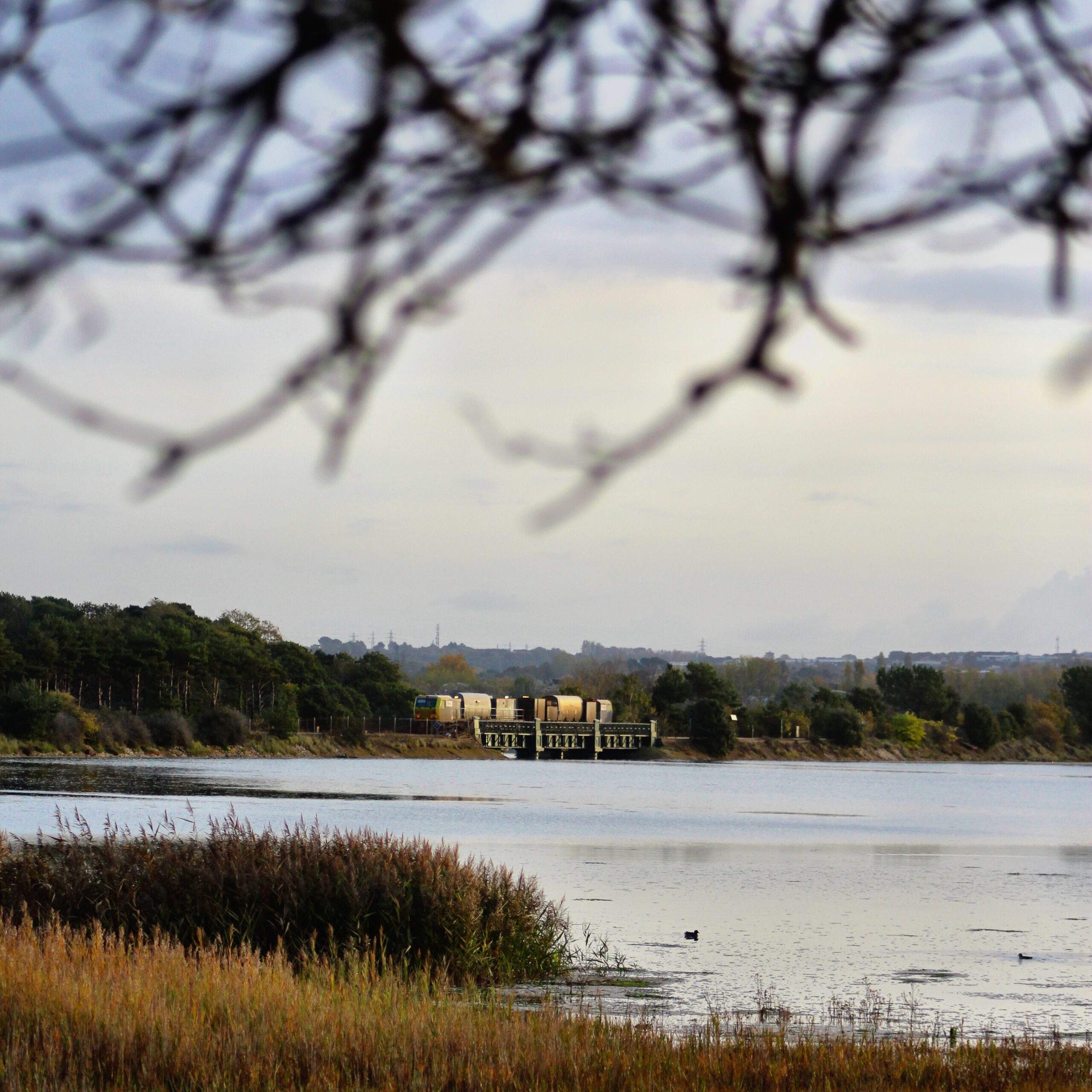
    For fans of photographs of trains taken through a shrubbery, here is Southampton Maritime Freightliner depot with pink liveried Class 66 No. 66587 ‘As One, We Can’ – 15/01/2023

    Wednesday January 11th to Tuesday January 17th 2023

    There has been a huge impact on rail services to and from London, Bournemouth and Weymouth as over the weekend, heavy rain washed away a clay embankment northeast of the Hampshire railway station of Hook situated between Basingstoke and London Waterloo. Passengers were advised against all but essential travel over the coming days on services which would usually pass through the area on the South West Main Line. The great majority of trains will not be able to run and repairs may take weeks before services are restored. As a result no trains will be stopping at Hook, Winchfield or Fleet.

    The landslip at Hook from the air – screen grab from BBC South Today – 16/01/2023

    Network Rail will need to build an access road to enable heavy machinery designed for piling to be brought in and repairs carried out around the clock. The embankment, originally built 190 years ago, is made of a mixture of London Clay and other local soils. Although there have been landslips at this location previously, they are becoming an increasing problem across the network because of drier summers and wetter winters with more intense rainfall which is a particular issue for clay embankments.

    Network Rail image of the Hook landslip – 16/01/2023

    The slip, which left one track hanging in mid-air, happened when the soil gave way along a 44-metre section of 10m high embankment, sliding out from underneath the tracks meaning only two tracks of the four-track railway are passable by trains. Both of the intact tracks are designed to be used by London bound trains only. This was the worst of 13 different flooding related incidents during the recent rainfall, which also included major flooding at Sway increasing the disruption on the already revised timetable between London Waterloo and Weymouth. South Western Railway (SWR) will run a service from Weymouth which will terminate at Basingstoke and a very limited shuttle will operate between Basingstoke and Woking, from where services continue thereafter.

    South Western Railway (SWR) service announcement published on 17/01/2023

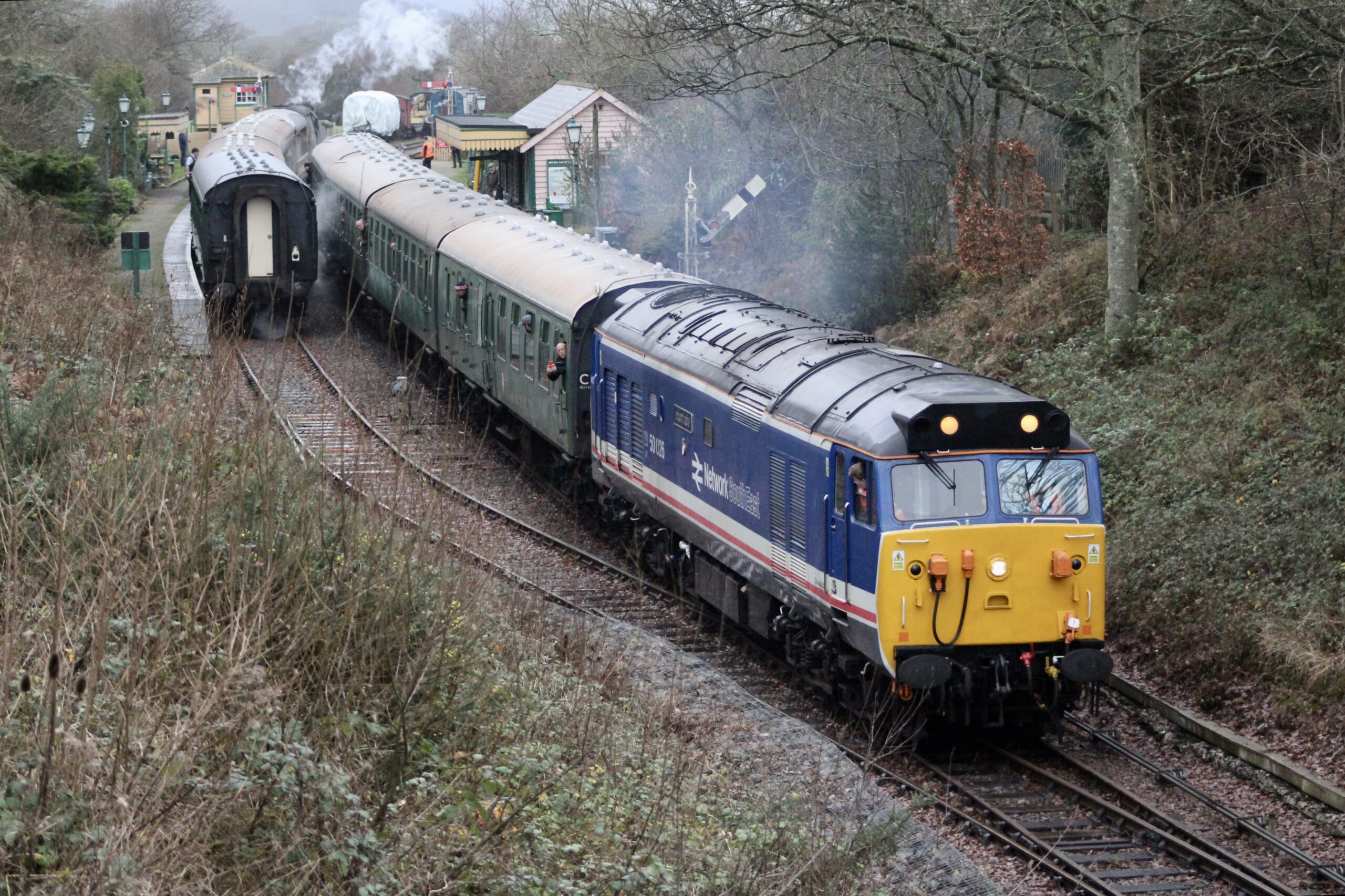
    Wednesday 11th January, before the latest period of rain, Swanage based Class 33 No. D6515 (33012) ‘Lt Jenny Lewis RN’ hauled Network South East liveried Class 50 No. 50026 ‘Indomitable’ from the Purbeck Heritage Line to Eastleigh Arlington working as 0Z50 0942 Swanage to Eastleigh Arlington (ZG). After dropping off the Class 50, the Crompton headed back to Swanage light engine the afternoon of the same day.

    Class 33 No. D6515 (33012) ‘Lt Jenny Lewis RN’ hauling Class 50 No. 50026 ‘Indomitable’ working 0Z50 0942 Swanage to Eastleigh Arlington (ZG) through Hamworthy – 11/01/2023
    Class 33 No. D6515 (33012) ‘Lt Jenny Lewis RN’ travels solo as 0Z33 1430 Eastleigh Arlington to Swanage – 11/01/2023
    Video of Class 33 No. D6515 (33012) ‘Lt Jenny Lewis RN’ hauling Class 50 No. 50026 ‘Indomitable’ on a day out from Swanage – 11/01/2023

    On Sunday, Yoshi stayed with his mum while I headed towards Eastleigh to visit an old friend and a chance to put the world to rights. I obviously took the opportunity to get some railway time in on my way and my journey took me via Totton Yard, Freightliner Southampton MCT – which was quite full of locomotives with examples of Class 66’s, Class 70’s, Class 47 No. 47830 – and of course Eastleigh itself!
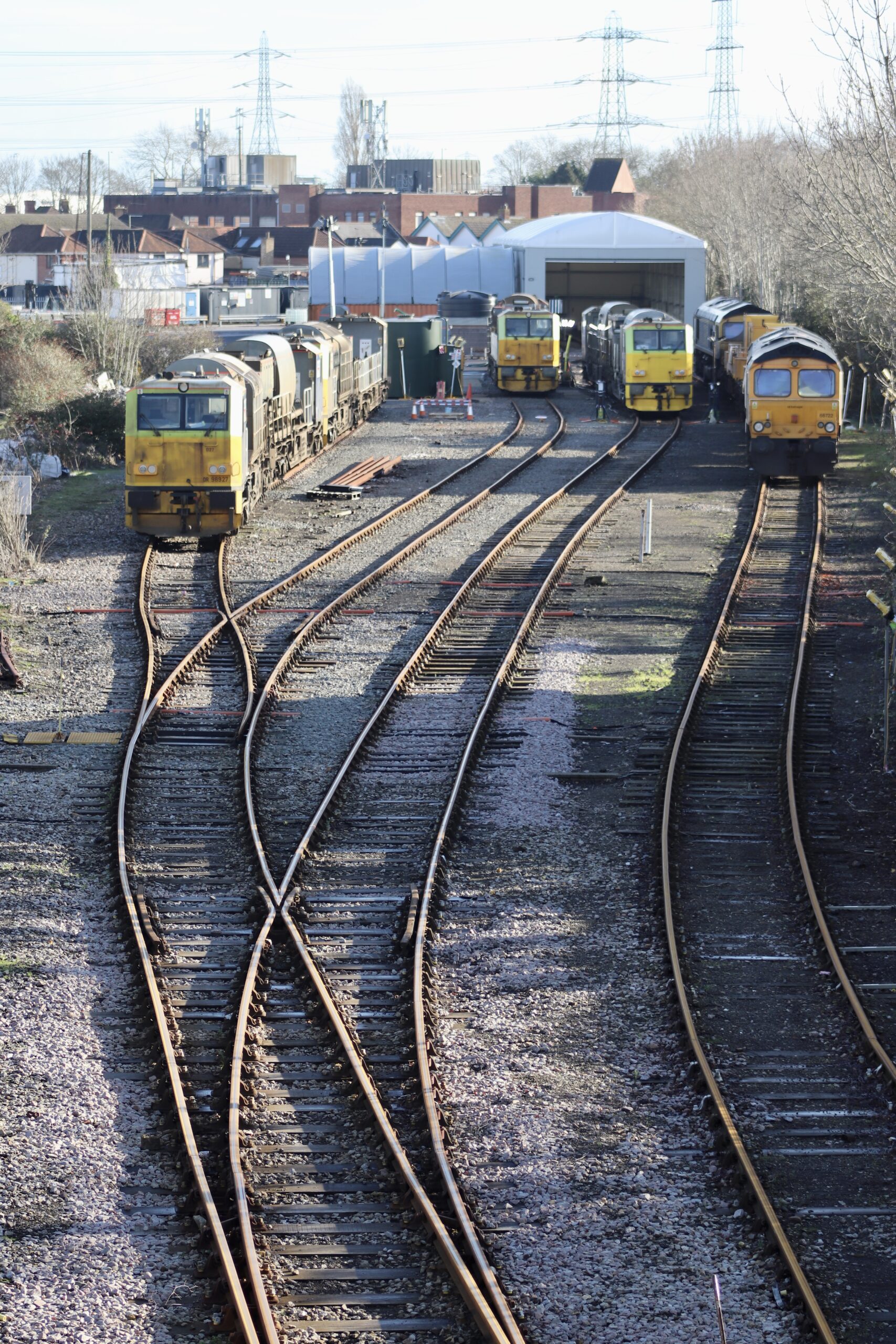
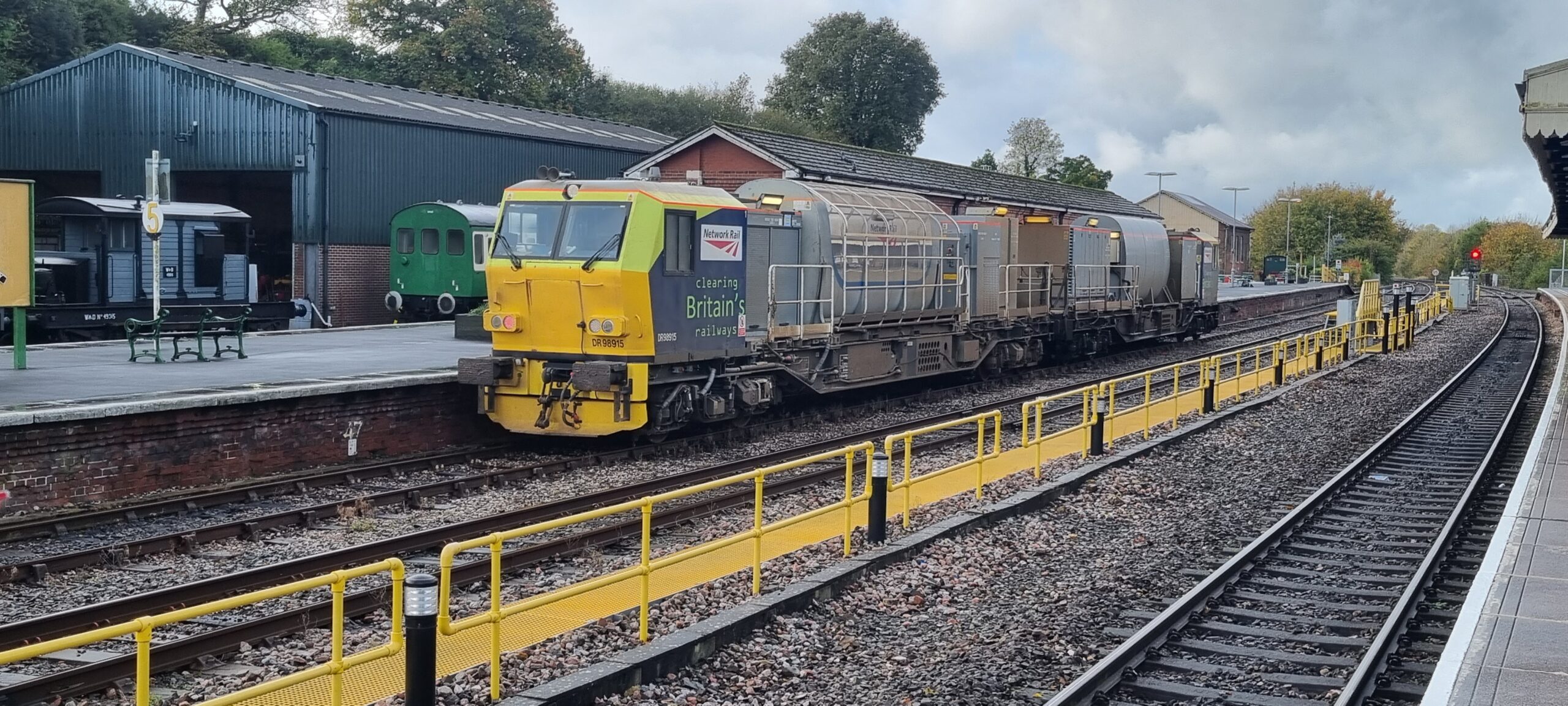
    A view of MPV’s and SITT sitting on Totton Yard – 15/01/2023
    Southampton Maritime Container Terminal depot with, amongst others, Class 47 No. 47830 ‘Beeching’s Legacy’ and Class 66 No. 66587 ‘As One, We Can’ hiding behind a container train – 15/01/2023
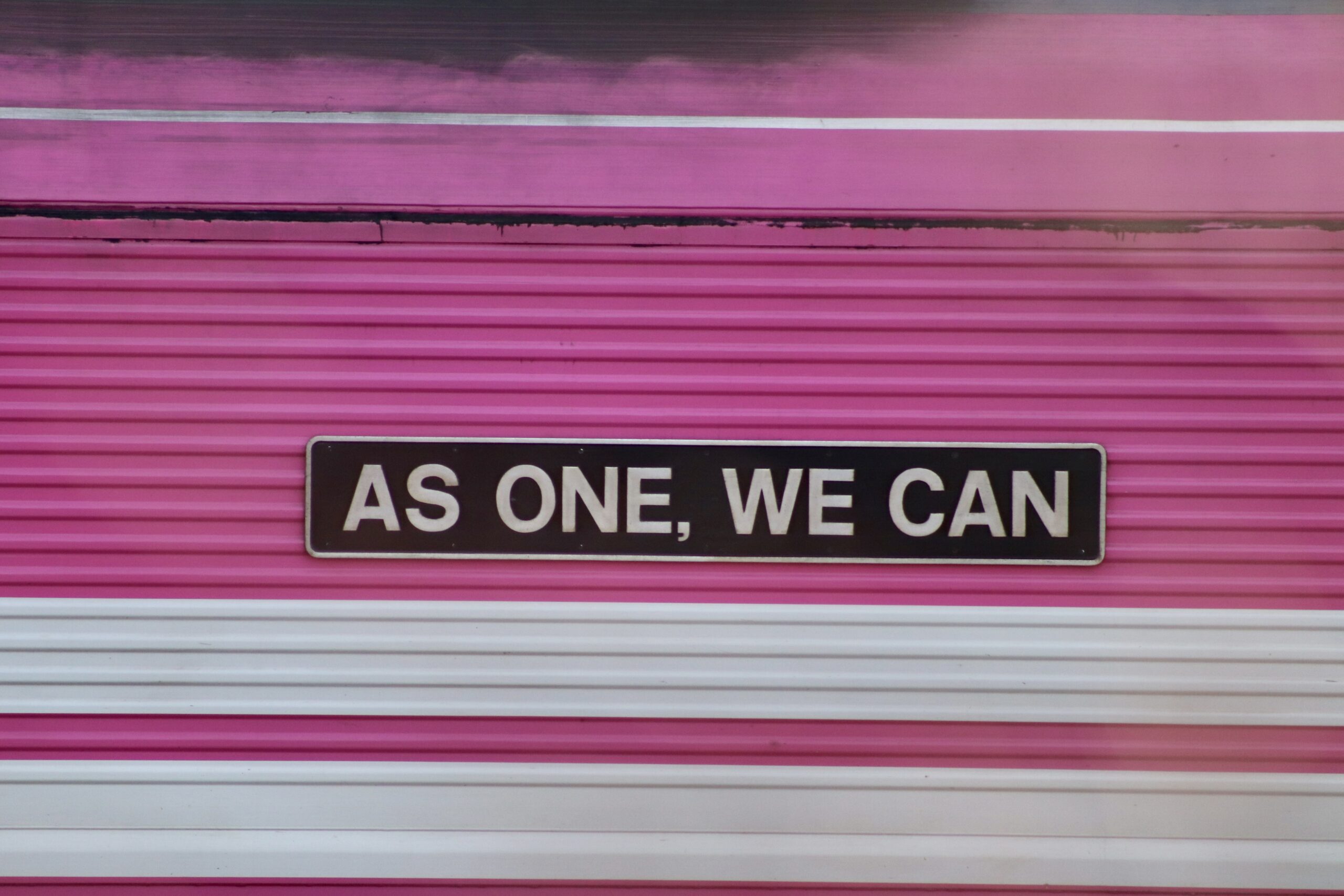
    Nameplate detail of Class 66 No. 66587 ‘As One, We Can’ – 15/01/2023
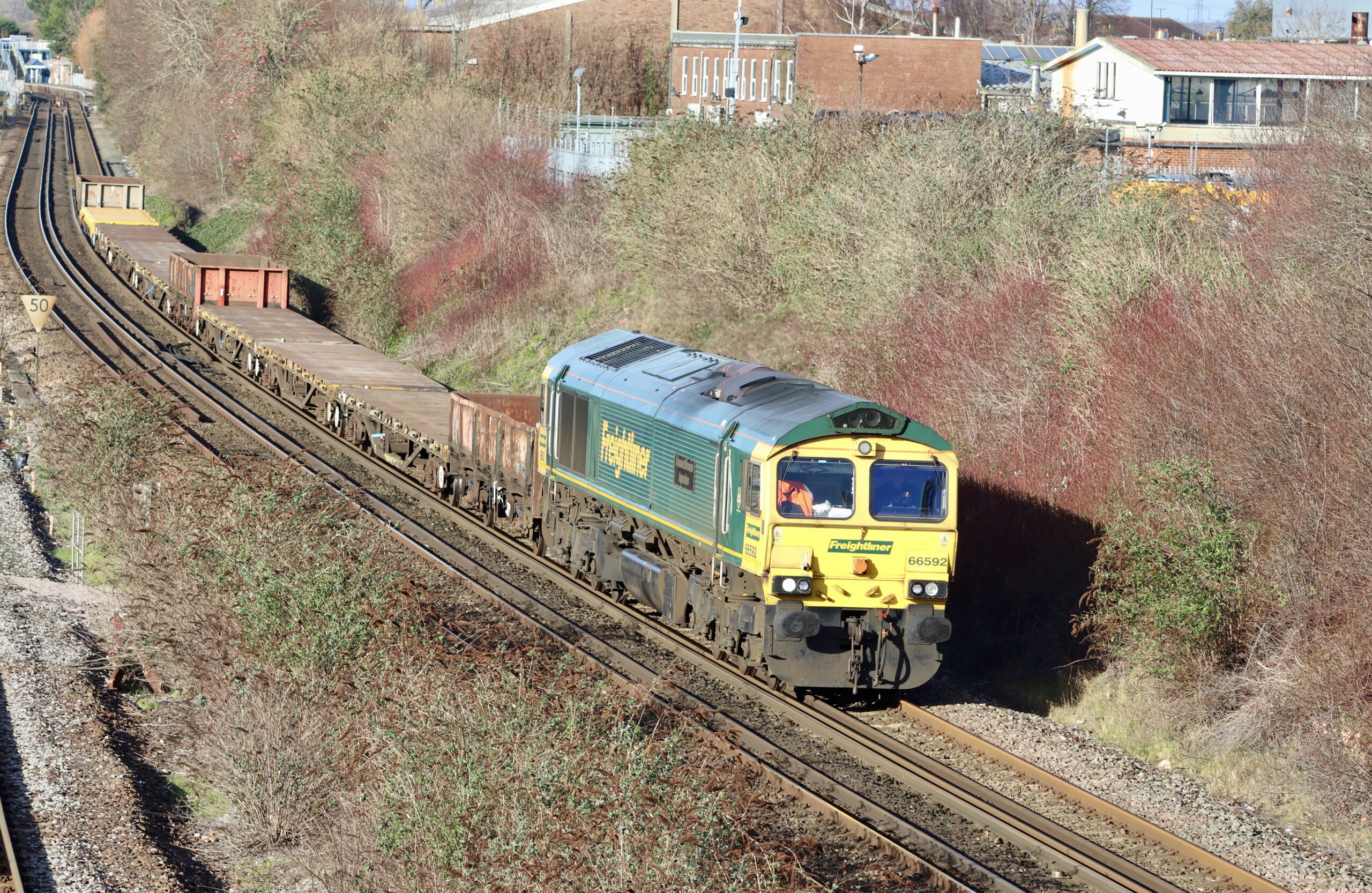
    With impeccable timing, late running Freightliner Class 66 No. 66592 ‘Johnson Stevens Agency’ works 6Y85 1000 Andover to Eastleigh East Yard past Redbridge, Southampton – 15/01/2023
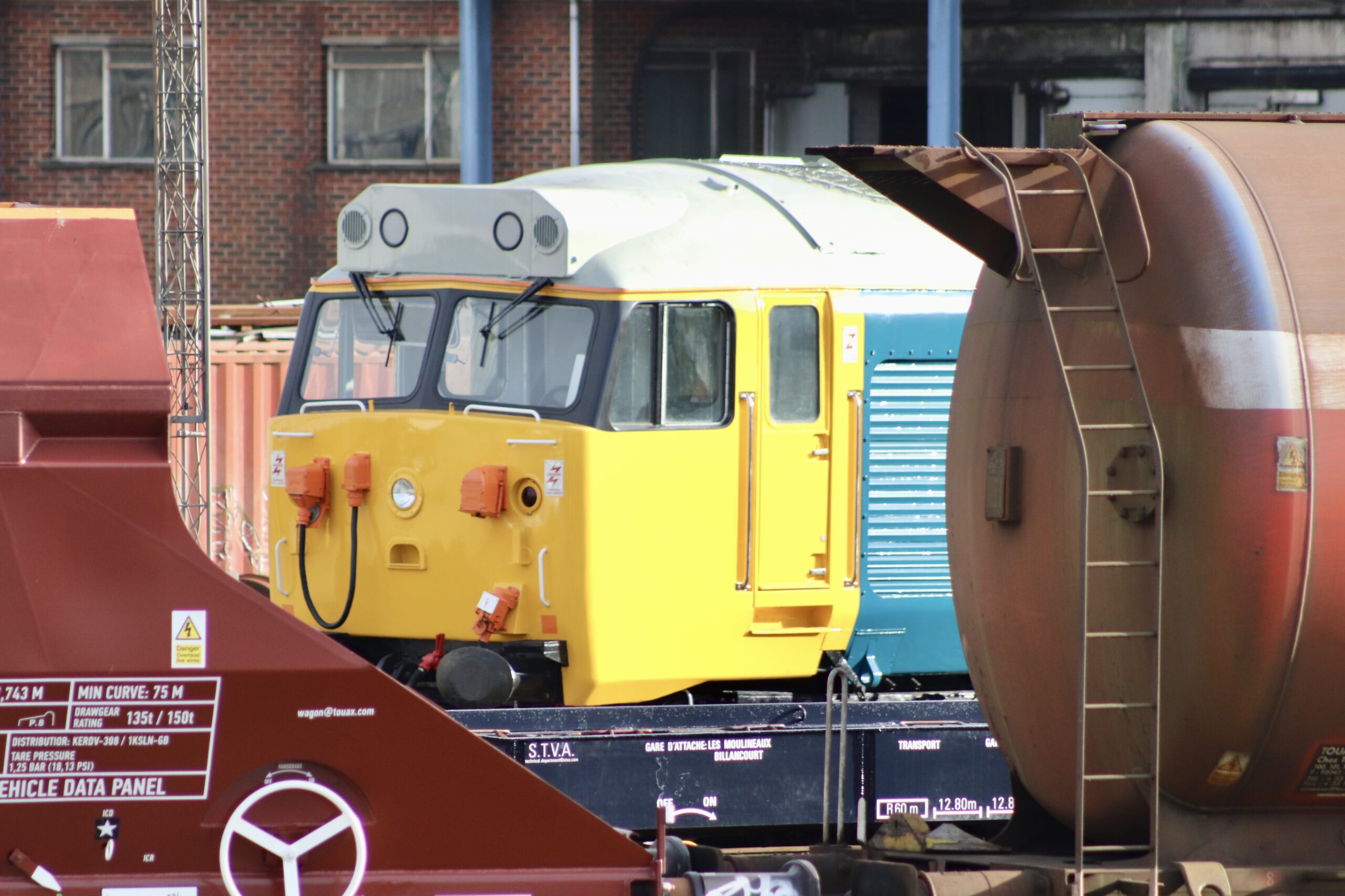
    Class 50 No. 50021 ‘Rodney’ (also known as Dave) on Eastleigh Works. Hopefully this locomotive and sister No. 50026 will head to Swanage for the 2023 Diesel Gala in May – 15/01/2023
    A view across Eastleigh East Yard – 15/01/2023
    Colas Class 66 No. 66849 ‘Wylam Dilly’ at Eastleigh East Yard – 15/01/2023
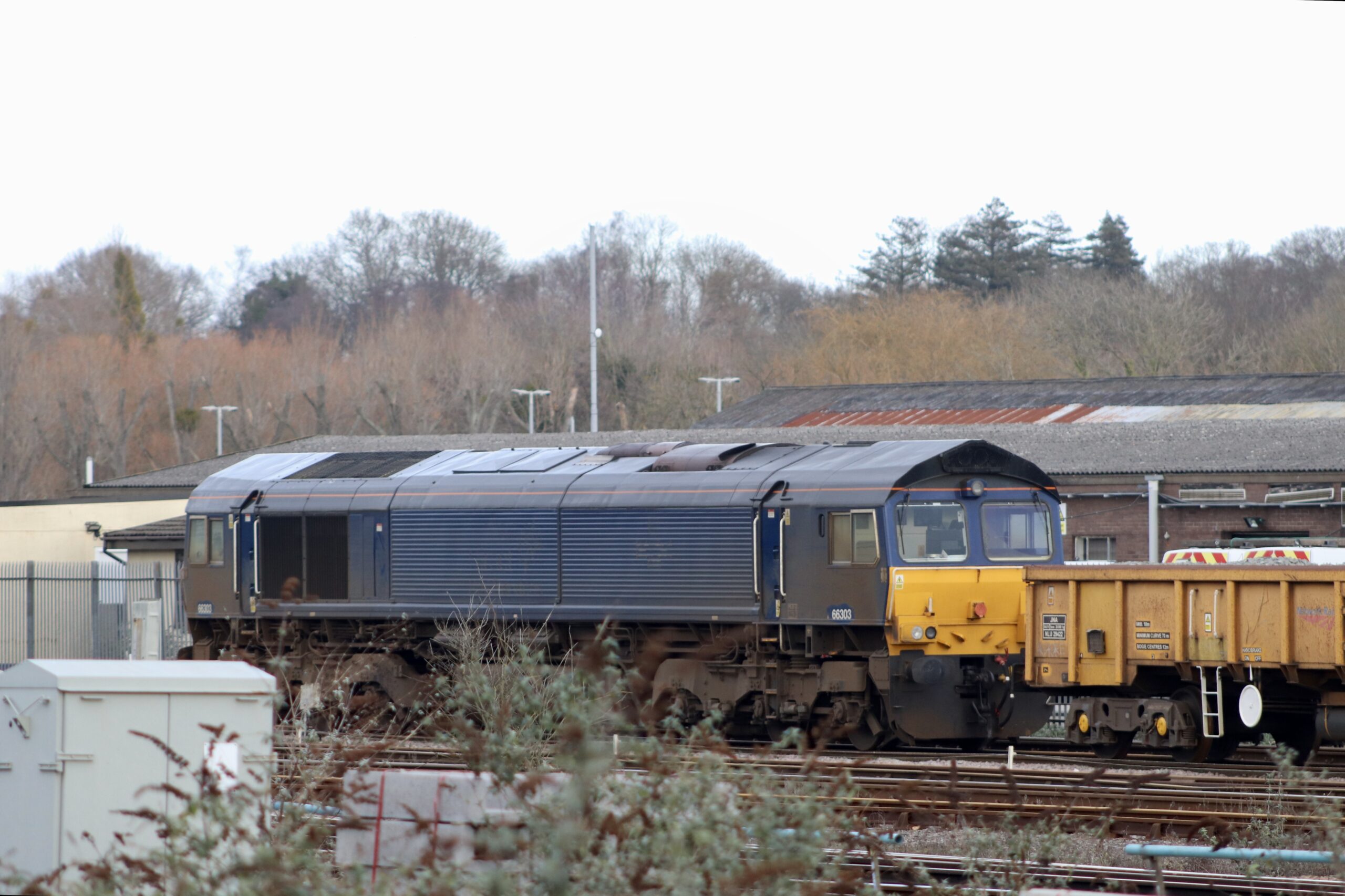
    Unbranded GBRf Class 66 No. 66303 at Eastleigh East Yard – 15/01/2023
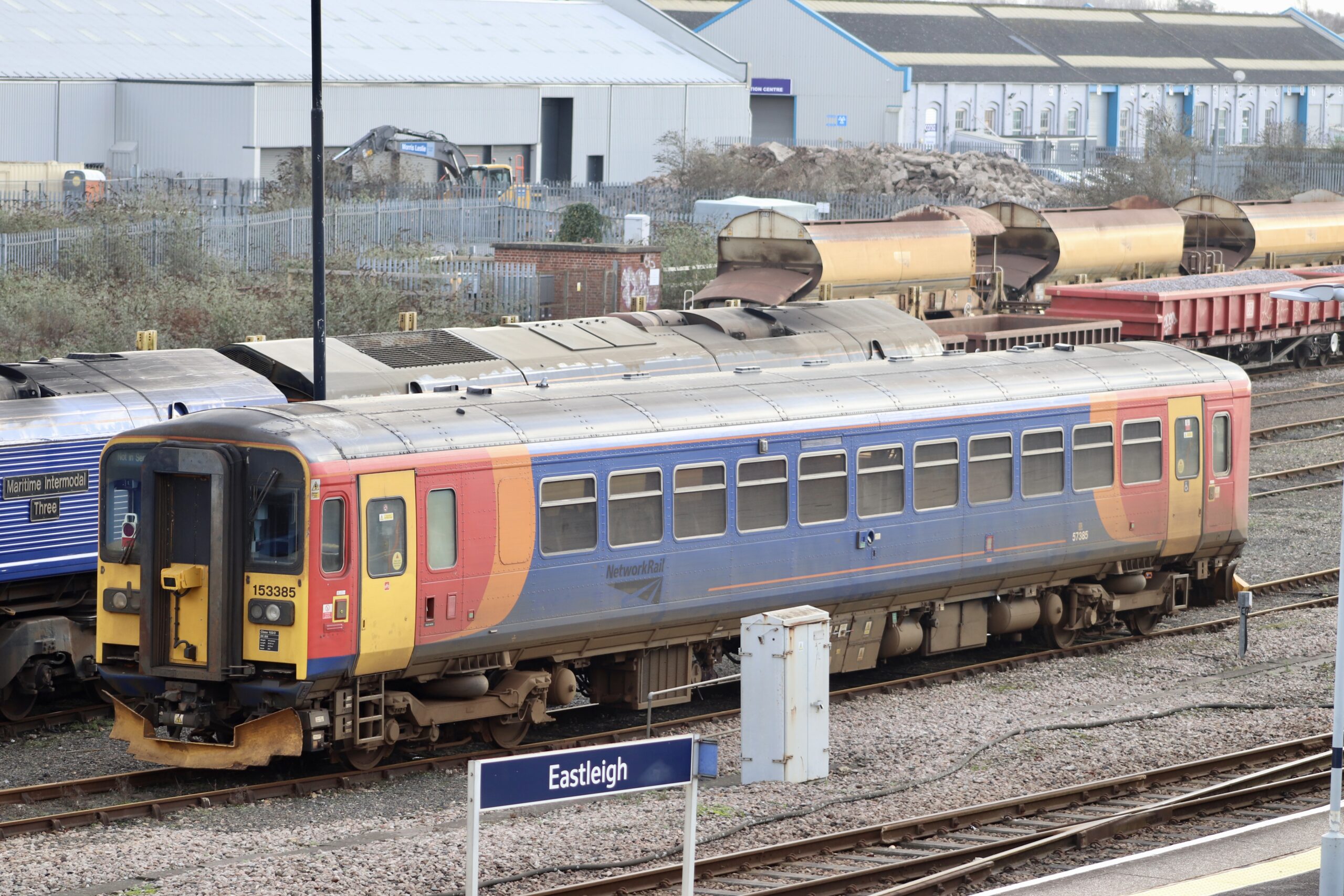
    Network Rail Video Inspection Unit VIU-3 Class 153 No. 153385 at Eastleigh – 15/01/2023
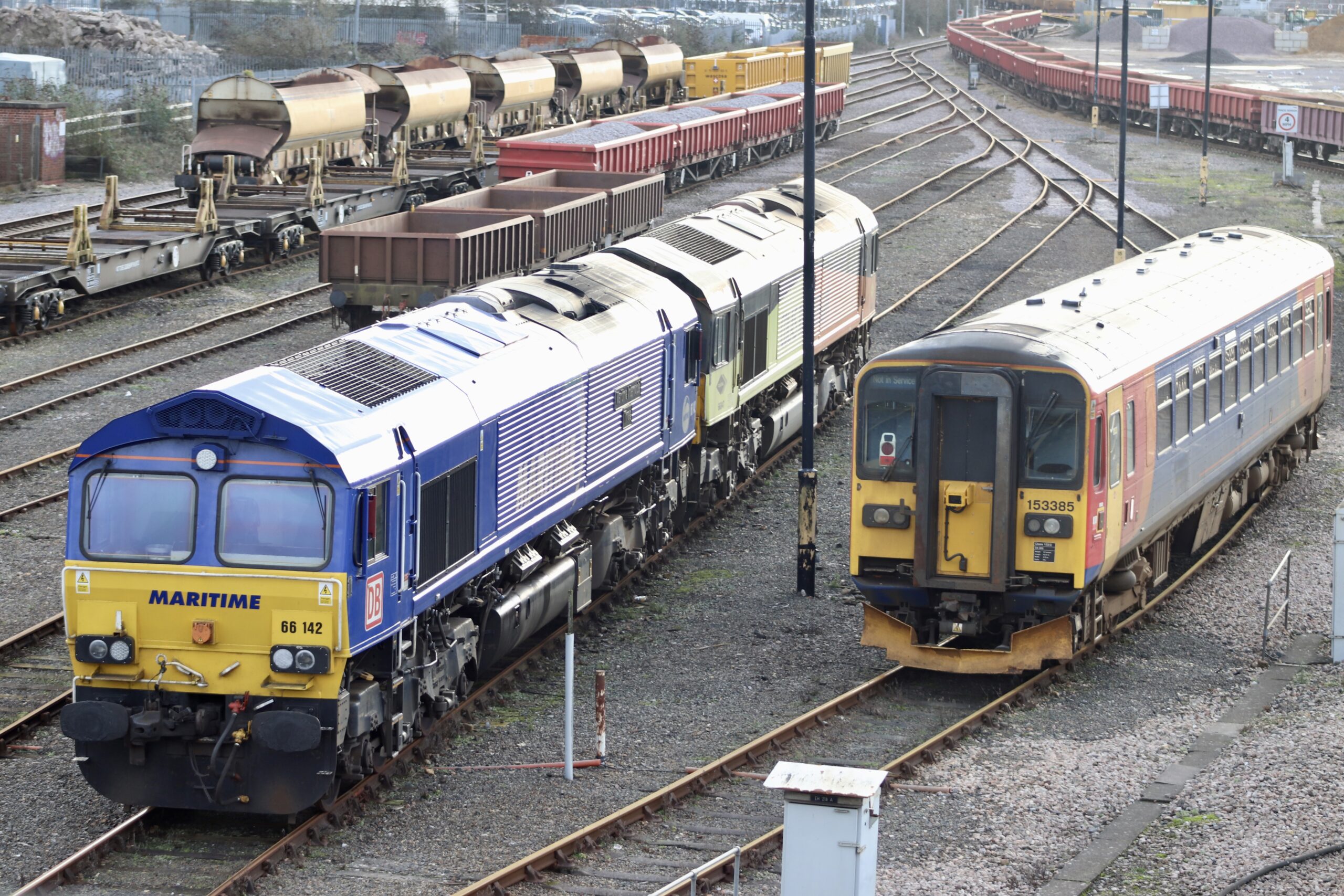
    DB Class 66 No. 66142 ‘Maritime Intermodal Three’, Colas Class 66 No. 66847 ‘Terry Baker’, Class 153 No. 153385 at Eastleigh – 15/01/2023
    Maritime Blue liveried DB Cargo Class 66 No. 66142 ‘Maritime Intermodal Three’ at Eastleigh – 15/01/2023

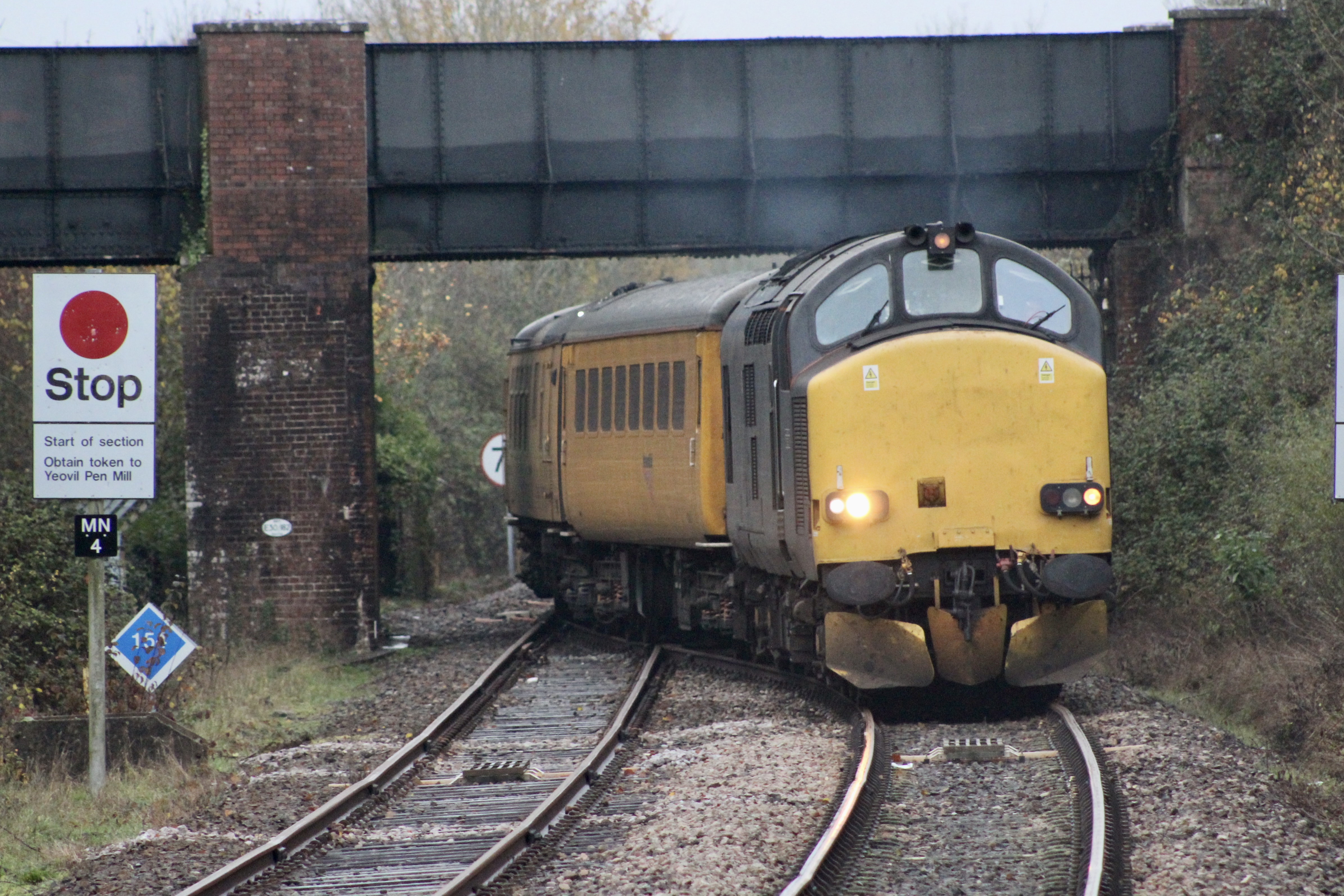
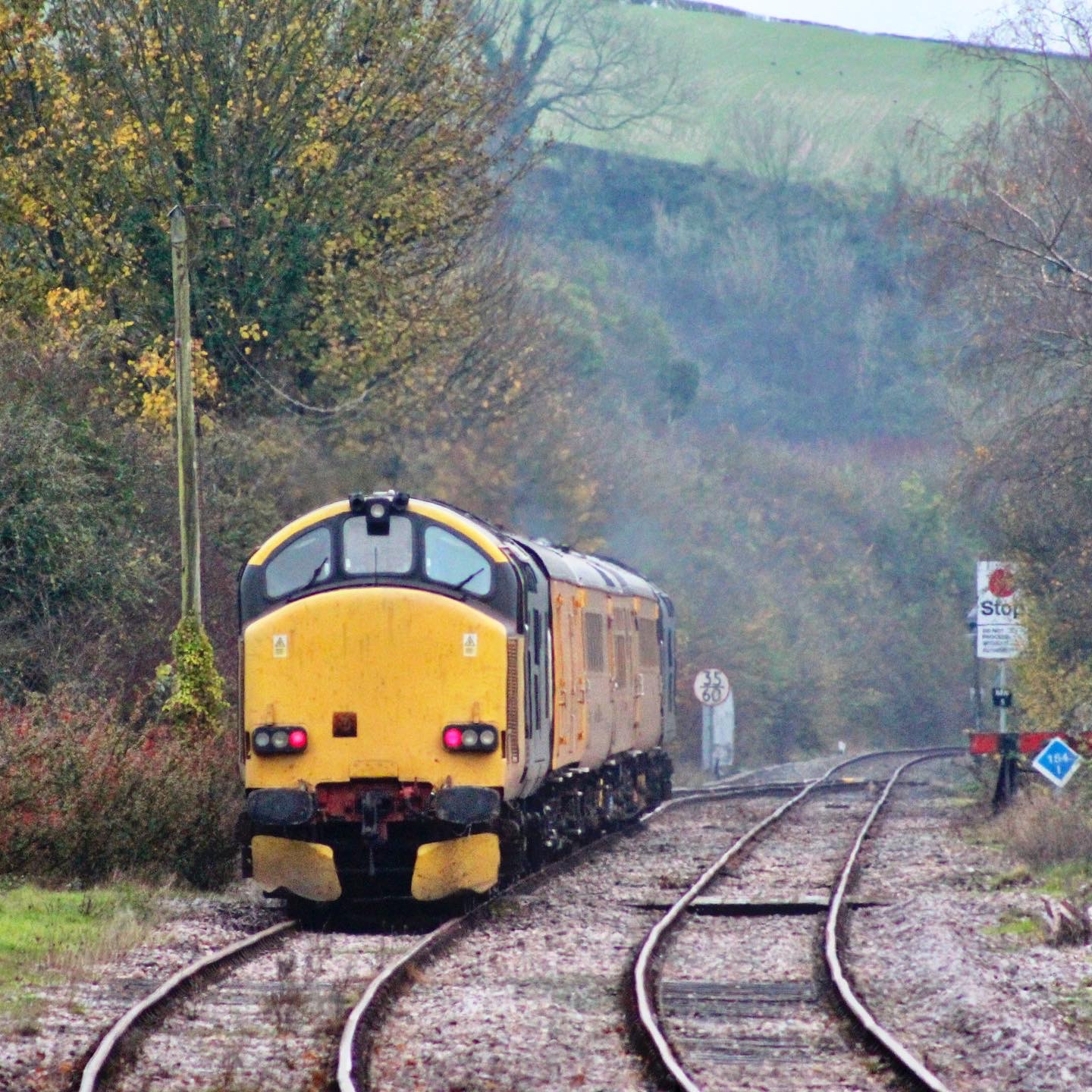
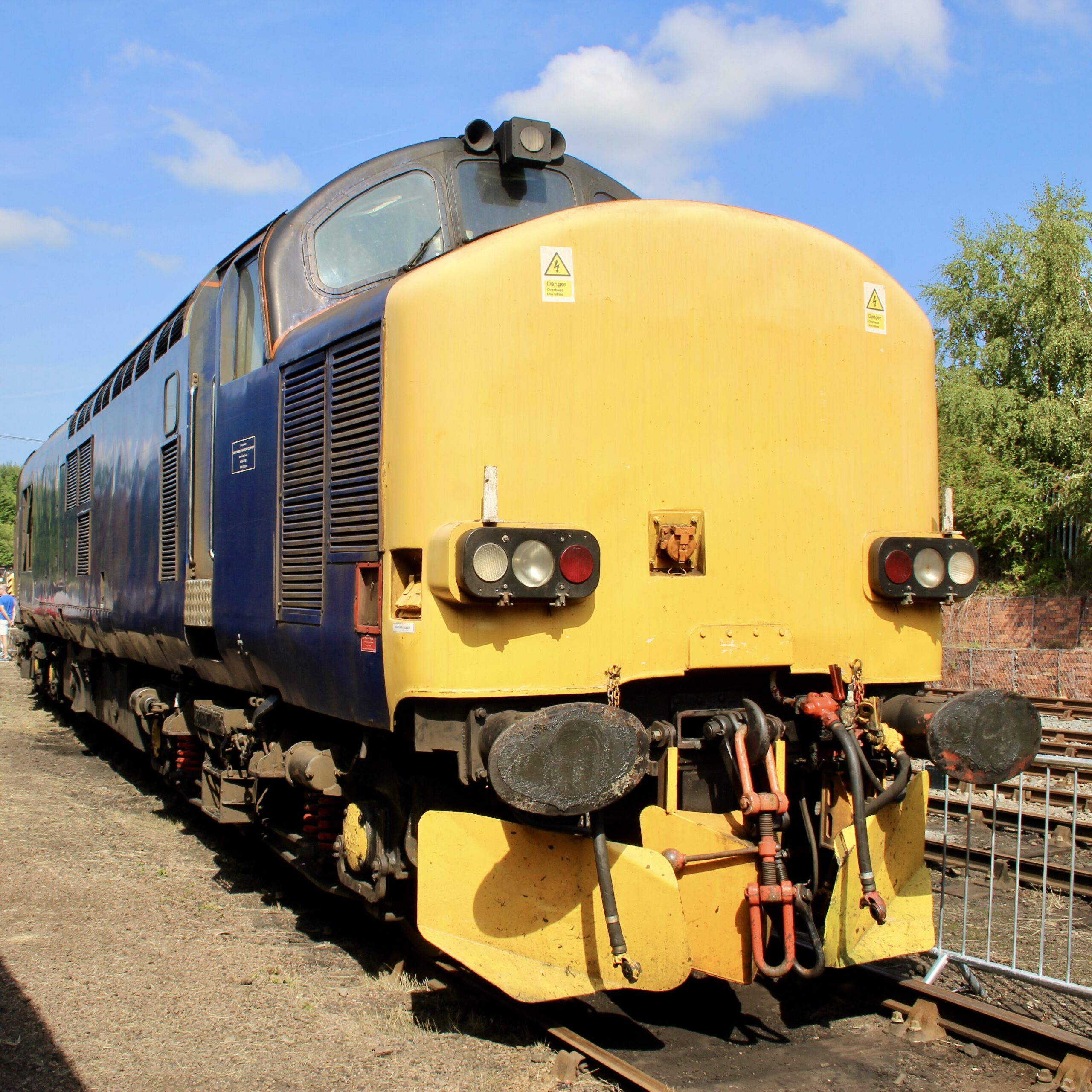
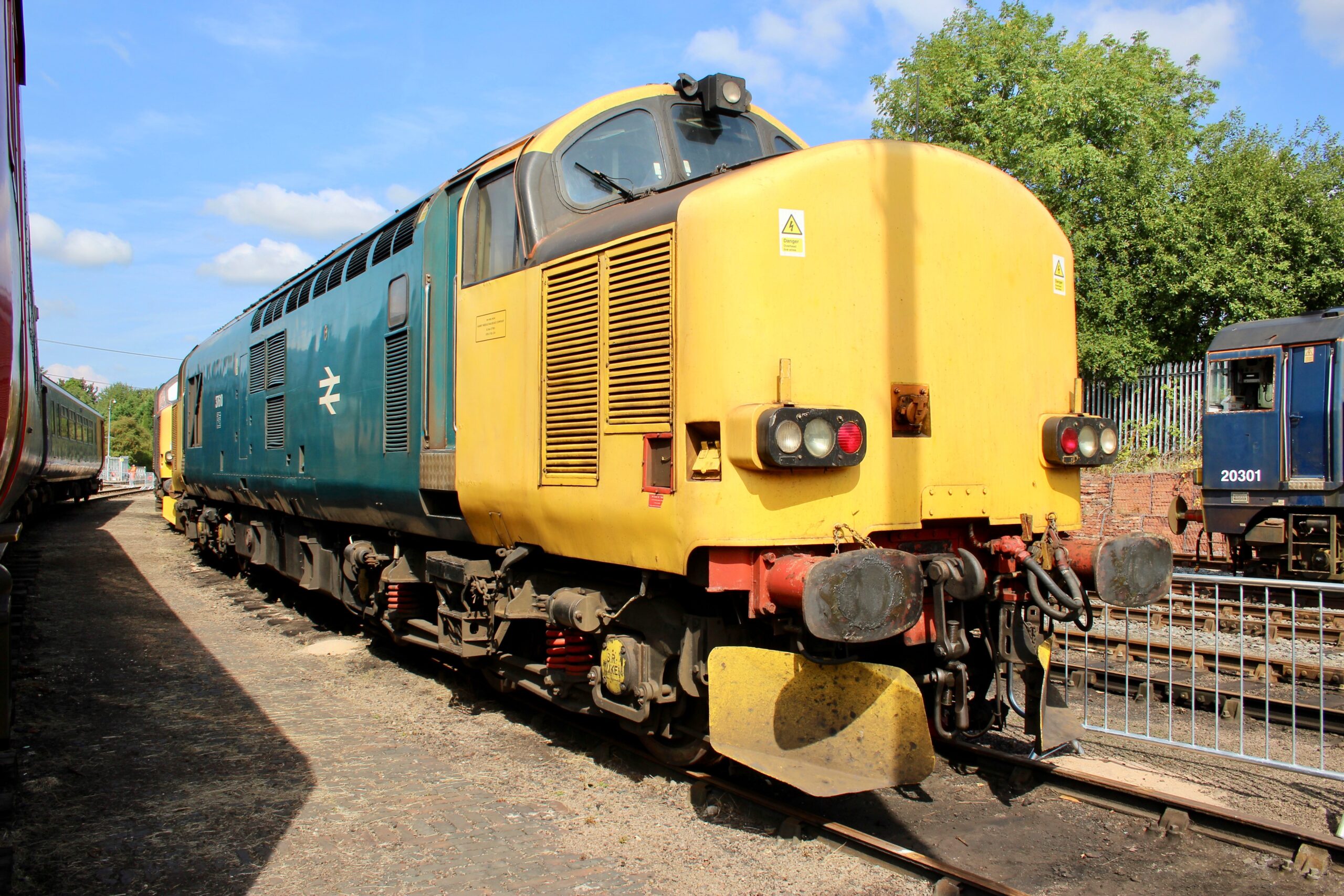
    Monday 16th January was panning out to feature a busy evening with the Snow & Ice Treatment Train (SITT) based at Totton Yard and the regular 1Q51 test train visiting the Bournemouth to Weymouth line. Much anticipation here when Colas English Electric Class 37’s No.’s 37116 and 37610 were allocated to the test train, normally in the hands of a pair of top and tailed Class 73 electro diesel locomotives, at Derby. However it soon became clear that the landslip at Hook meant the train would be forced off-route at Virginia Water, eventually terminating at Reading Triangle Sidings, instead of running to Weymouth via the South West Main Line and back to Eastleigh East Yard from where the consist normally operates over the rest of the week before returning to Derby. The train eventually continued to Eastleigh the following day, but at the time of writing, has not covered the section of line from Totton to Weymouth.

    Early Monday evening, the SITT was showing as cancelled on RealTimeTrains(RTT), although upon checking the following morning it was clear that the service did in fact run, at least as far as Dorchester South.
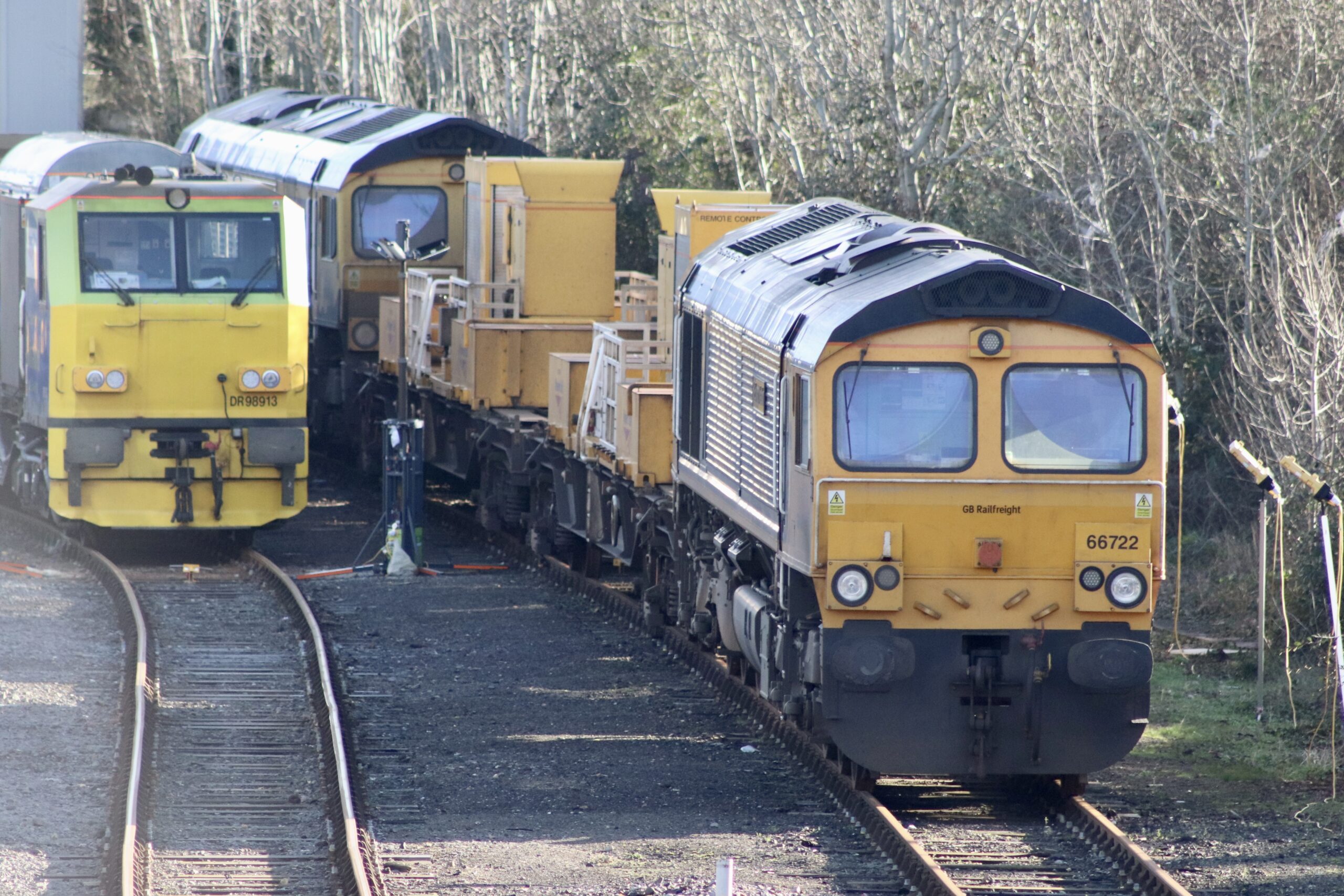
    GBRf Class 66 No.’s 66722 ‘Sir Edward Watkin’ and 66745 worked as far as Dorchester South on Monday 16th January. The pair are seen here at rest in Totton Yard – 15/01/2023

    From The Archive

    January 2023 marks the 160th Anniversary of the launch of the World’s first underground railway; The Metropolitan Line, in 1863. Ten years ago on 13th January 2013, scenes not witnessed on the central London sub-surface sections of underground since July 1954 marked the start of LU150, a year long celebration, as an 1898 built steam locomotive puffed in and out of the tunnels, surprising unsuspecting passengers and delighting railway enthusiasts. I was one of those who enjoyed the spectacle as the short video below shows:

    Video of Anniversary shuttles with 0-4-4-Steam Locomotive Met No 1 and Metropolitan Electric loco No.12 ‘Sarah Siddons’ with brake of vintage coaches

    The following is adapted from The London Transport Museum’s ‘History of the Tube’;

    Back in 1863 the underground railway was intended to reduce street congestion, which by the 1850’s had reached a crisis point. Upon opening, The Metropolitan Railway was an immediate success, although its construction had taken almost two years and caused huge disruption as the sub-surface lines were built by digging a long trench, laying track and covering it over again (known as the cut and cover technique) leaving a tunnel system which were at first operated by steam trains. The 5.6km line connected the mainline stations at Paddington, Euston and King’s Cross to Farringdon, at the edge of the City. Success meant that extensions to both ends of the line soon followed.

    In 1868, The Met was joined by an associated railway company; the Metropolitan District Railway with the intention that the two would cooperate to form an ‘Inner Circle’, linking all London’s mainline termini. However, disagreements over money led to a falling out and both companies instead chose to prioritise their individual extensions. The Circle was only completed after government intervention in 1884.

    Despite their differences, the Met cooperated with the District Railway in plans for electrification in 1900. However, their ideas were rejected when a powerful American businessman, Charles Tyson Yerkes, took over the District and a group of struggling Tube schemes in 1901. Under Yerkes, the Circle and District were electrified along American lines by 1905, powered by a new generating station at Chelsea. The Met built its own power station at Neasden using the same system but electrified more slowly. 

    In 1908, the separate companies started to work together to promote the system as a coherent network under the UndergrounD brand. Gradually most of the companies merged and the network expanded, as the population of London soared. The resultant station architecture of the 1930’s is highly regarded. 

    The Met had been exploiting the land along its lines since the 1880’s but entered a new phase when their first housing estate was built at Pinner in 1900. The name ‘Metro-land’ was coined in 1915 to publicise the area, and in 1919 a subsidiary company was set up to concentrate on housing. Throughout the 1920’s and 1930’s, thousands of homes were built. Gradually Metro-land was electrified, with services to Harrow in 1908 and Rickmansworth in 1924. A new electric line from Wembley Park to Stanmore opened in 1932, but further north steam locomotives continued as before.

    While the rest of London’s underground railways all succumbed to the domination of the railway group Yerkes founded, the Metropolitan alone remained independent. The Metropolitan Railway had regarded themselves not as a commuter railway, but as an ambitious player in the mainline railway world, extending out from Baker Street in the 1870s and 1880s into open country. By 1899, at the height of their powers, they had reached Verney Junction and Brill in Buckinghamshire, more than 80km from Baker Street.

    The Met was forced to give up their independence when all of London’s public transport – buses, trams and trolleybuses, as well as the Underground railways – came under the centralised control of London Transport (LT) in 1933 and decisions about services could be fully coordinated for the first time. The Met’s mainline ambitions were over, with LT closing the rural Brill branch in 1935 and the withdrawal of services north of Aylesbury a year later. The Stanmore branch transferred to the Bakerloo in 1939. 

    A massive plan; The New Works Programme, designed to upgrade and expand services was prepared in 1935, but the work was interrupted by the Second World War. Some of these were revived in the difficult post-war economic climate, but others were not.  

    Modernisation in the early 1960s saw extensive track and signal work and new A stock trains. These worked the line until replacement with S stock trains between 2010 and 2012 under the new Transport for London (TfL) organisation. This was part of wider modernisation project across all the Underground’s sub-surface lines, replacing infrastructure and signalling and introducing automatic operation. 

    A new Tube line had been suggested in 1943, but delays meant that the new Victoria line did not serve its first passengers until 1968. The Tube reached Heathrow Airport in 1977. Another new line, the Jubilee, was added in 1979. It terminated in central London and was later extended eastwards in 1999.

    Today, The Metropolitan Railway lives on as the Metropolitan Line, it has 67km of track and 34 stations, running from Amersham and Chesham in the north-west to Aldgate in east London, as well as a branch to Uxbridge.

    Yoshi

    Despite his urge to drink water from the upstairs toilet, Yoshi celebrated his 4th birthday on Thursday 12th January. He enjoyed a special doggo cupcake and played with a toy wine bottle for all of ten minutes before tearing it to shreds in an attempt to extract the squeaker.

    Yoshi celebrates his birthday with cake!

    On that happy note, it brings us towards the end of another blog. Many thanks for visiting, reading, your comments and corrections. For anyone wondering about my car, which broke down last week, things don’t look too good for it. In fact the garage I took it to for repair declined to undertake any further work other than an initial inspection, charging me for the privilege of confirming what the AA had previously already told me. I may get a second opinion, or just cut my losses. I can’t say it’s not been a fun car to drive, but all good things……

    Post Script

    Seeing Network Rail Class 153 No. 153385 at Eastleigh on Sunday prompted me to have a brief look at this class of diesel multiple unit (DMU).

    In the mid 1980’s, looking to replace older DMU’s, British Rail ordered 35 two-coach Class 155 units from Leyland Bus at Workington. In 1990 the decision was made to split each of the 35 Class 155’s into single car vehicles for use on rural railway lines, the work being carried out by Hunslet-Barclay at their plant in Kilmarnock during 1991/92. A new drivers cab was retrofitted into the spaces previously used for luggage racks at the inside end (B-end) of each carriage where they had been coupled together in the Class 155 formation. The new cab is noticeably smaller than the original A-end one, as the position of the exterior doors were not amended during conversion.

    Locally, GWR/Wessex Trains utilised Class 153’s on services between Bristol Temple Meads and Weymouth having inherited 13 units from Wales & West.

    Transport for Wales currently run a fleet of 26 Class 153’s having modified them to comply with Reduced Mobility Technical Specification Interoperability (PRM-TSI) legislation which came into effect on January 1st 2020. Scotrail have five units which have been modified to provide racks for luggage and bicycles for use on the West Highland Line services between Glasgow and Oban, running them in conjunction with existing Class 156 DMU’s.

    In May 2021, Network rail (NR) acquired three Class 153’s to convert into Video Inspection Units (VIU) for infrastructure monitoring services and have been fitted with cameras, recording devices and a generator placed in the saloon to provide power to the tech. One of these is the aforementioned No. 153385:

    Still in passenger revenue earning service, East Midlands Railway (EMR) Class 153 No. 153385 is seen at Barnetby working a service to Grimsby Town – 15/04/2014
    Now belonging to Network Rail; Class 153 No. 153385, also known as VIU-3, retains its East Midlands Railway (EMR) livery but with black Network Rail branding and is seen stabled in the Locomotive Holding sidings at Eastleigh – 17/02/2022
  • Winter Warmer

    Thursday 4th January to Tuesday 10th January 2023

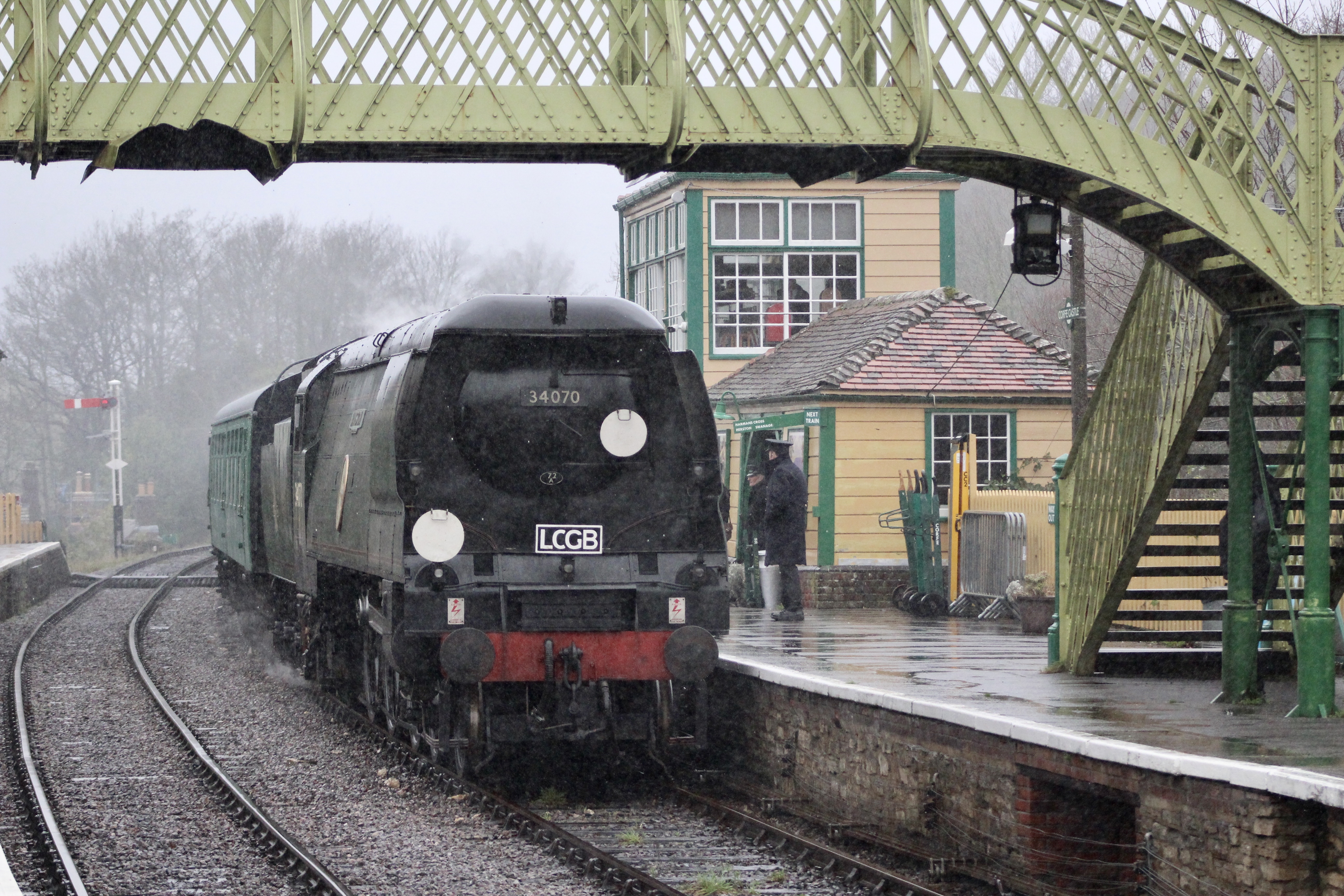
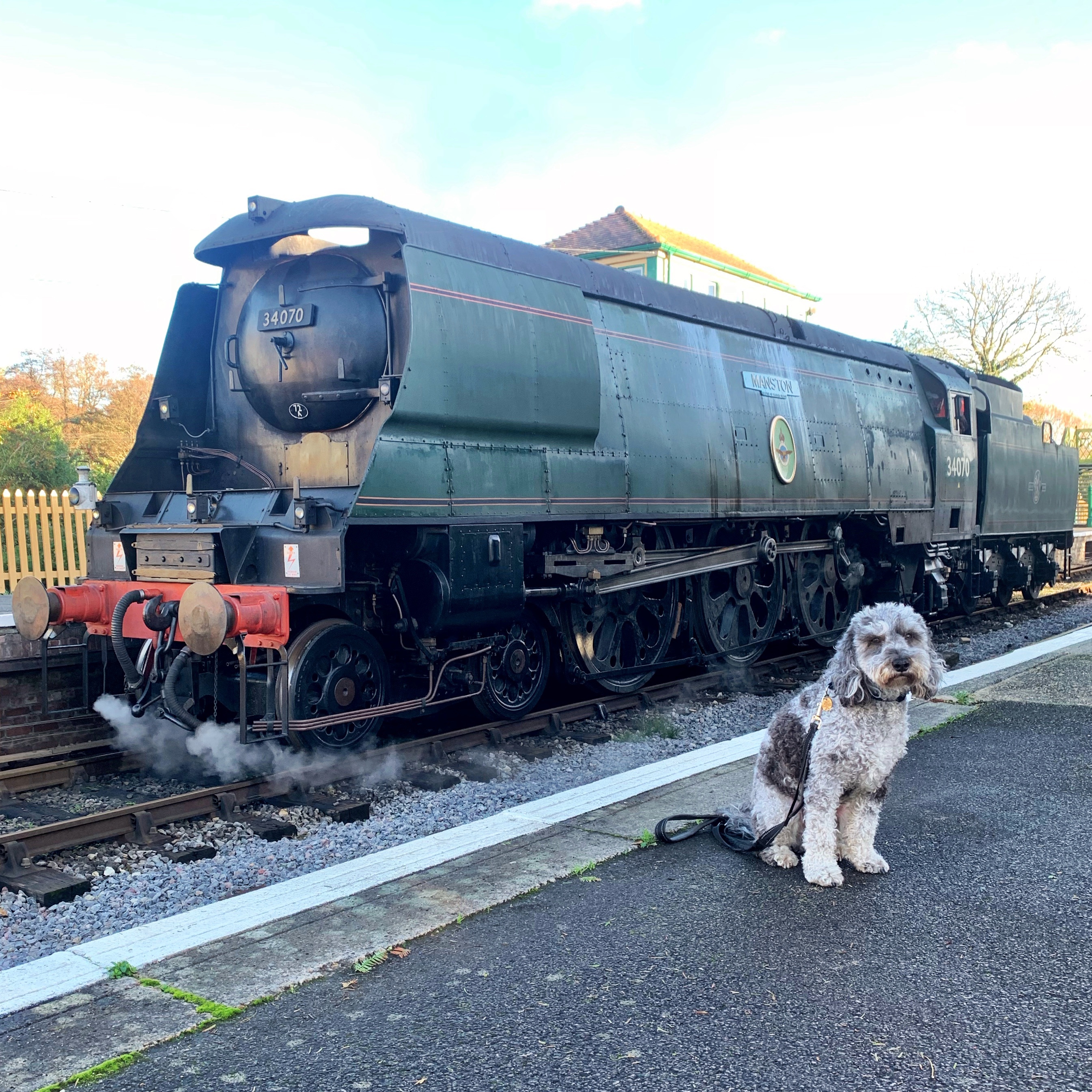
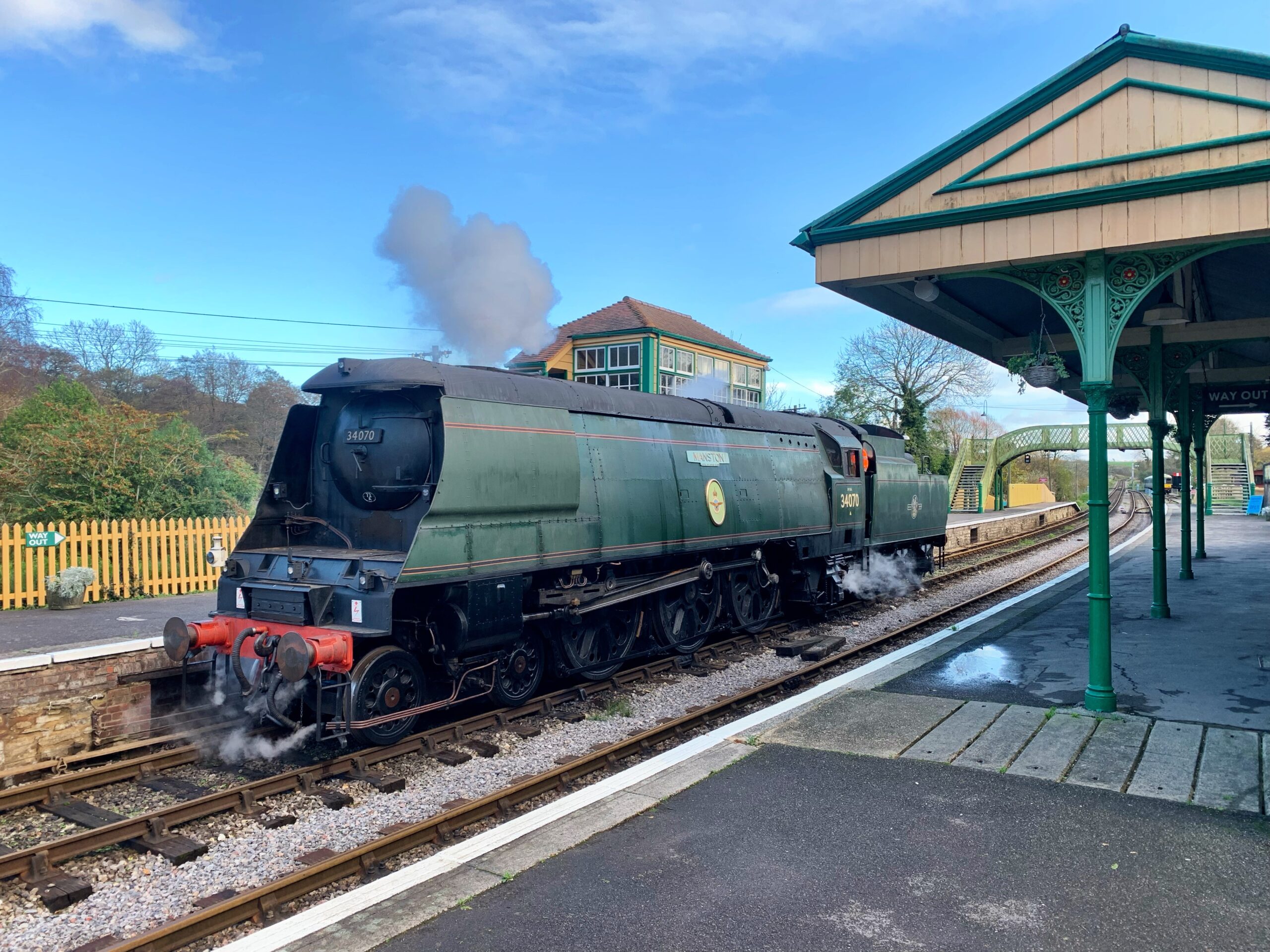
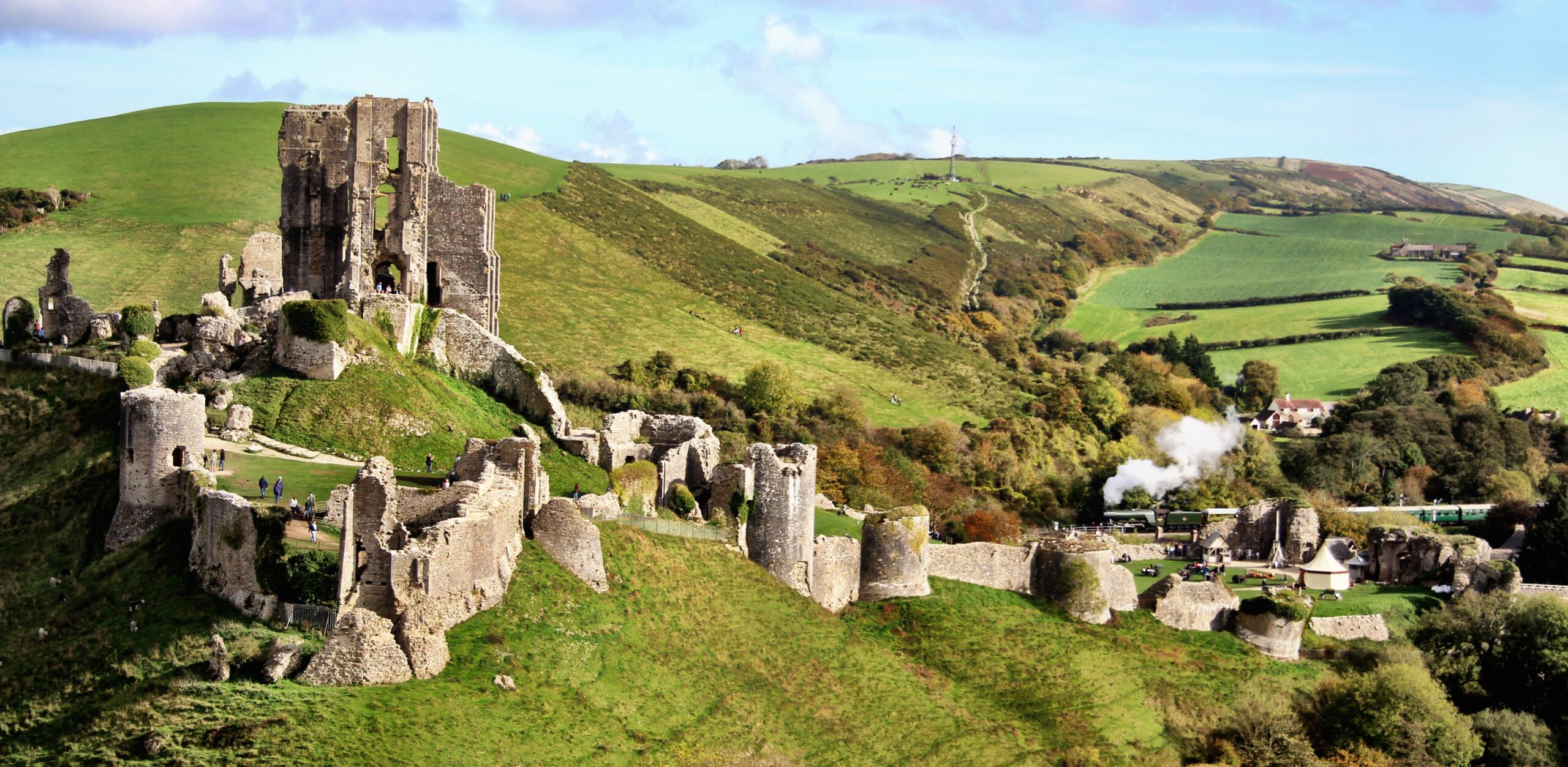
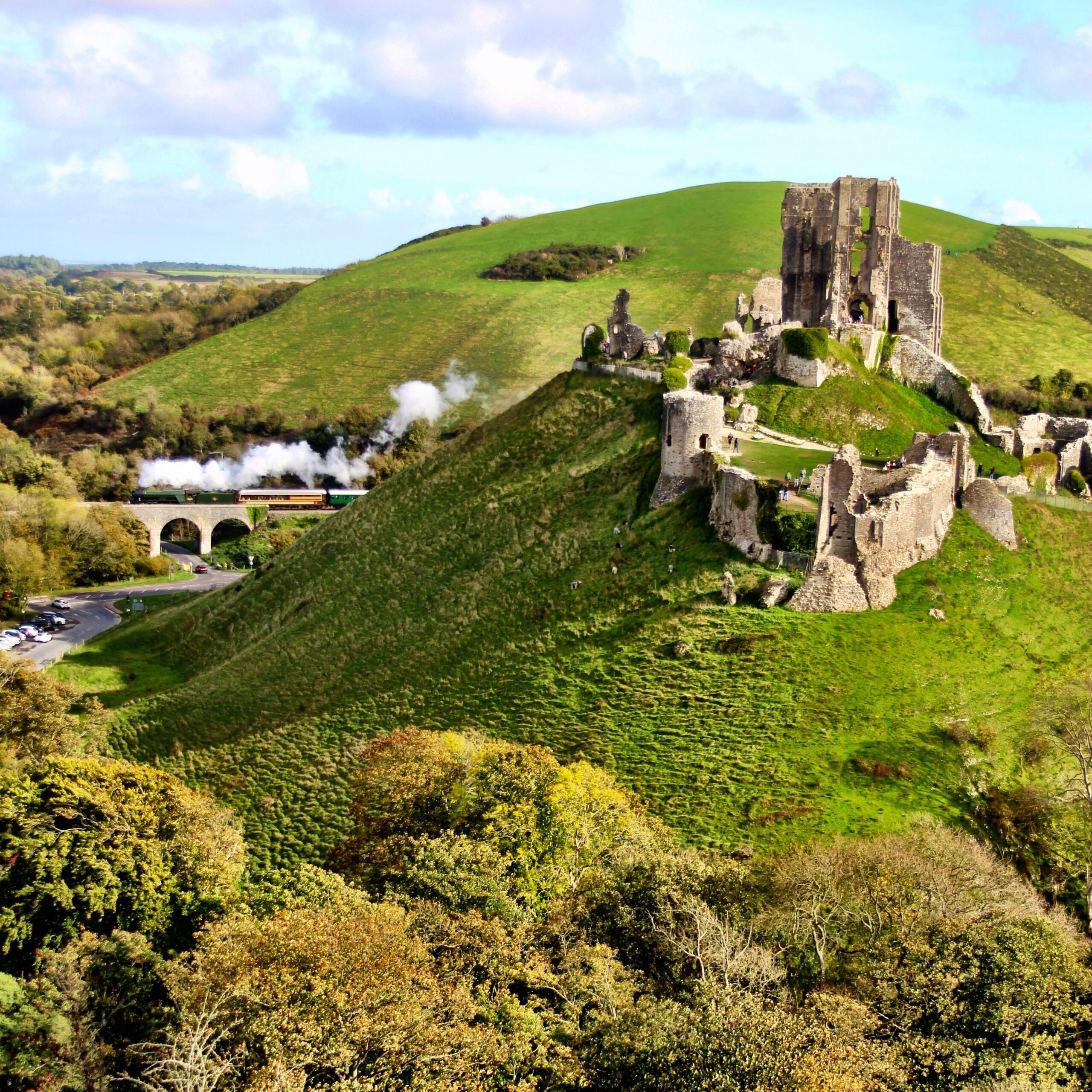
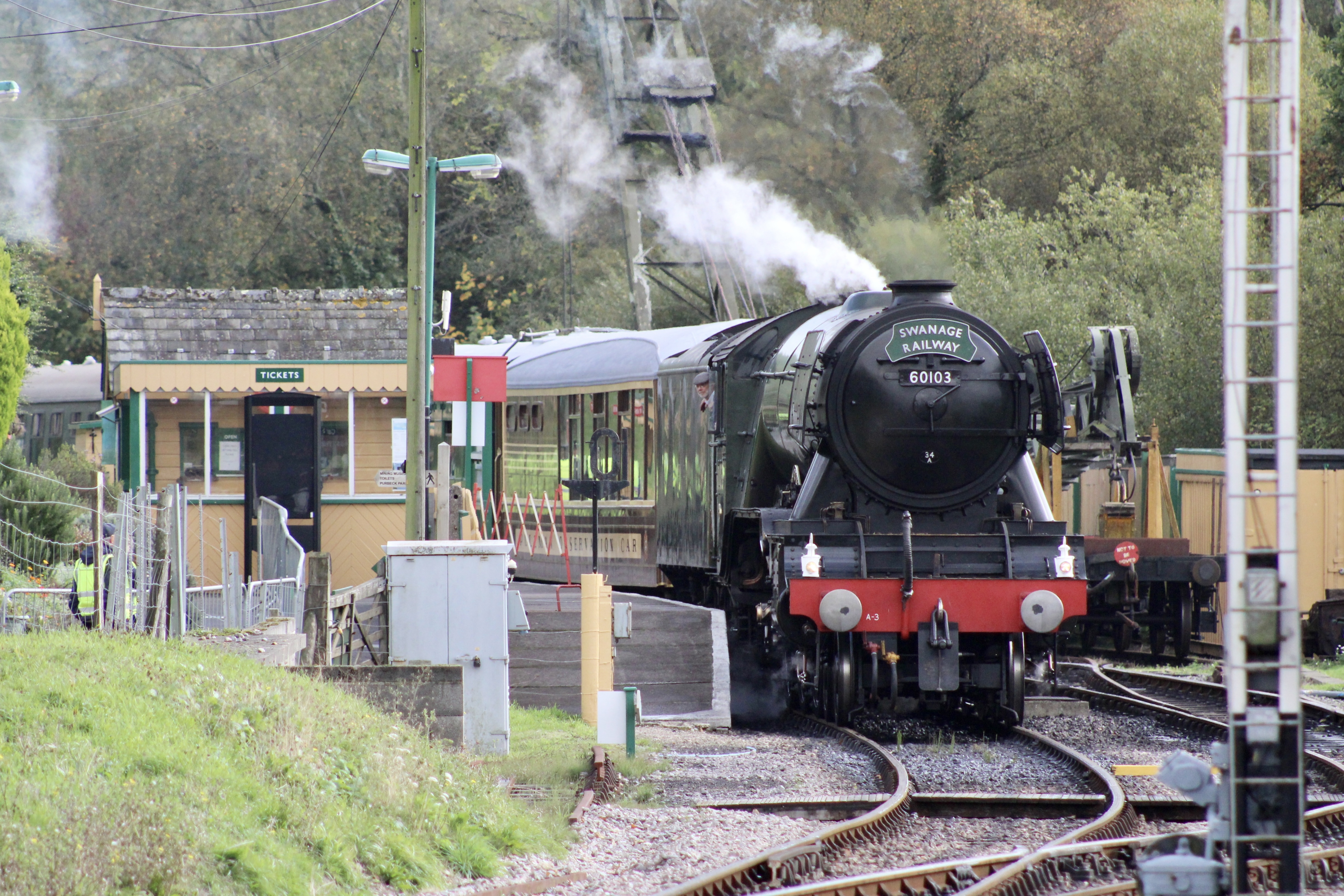
    Southern Railway Battle Of Britain Class 4-6-2 No. 34070 ‘Manston’ arrives at Corfe castle in the rain working 2N03 1115 Norden to Swanage – 07/01/2023

    With no trains running in Dorset until Sunday 8th January, it was down to the Swanage Railway to provide railway based entertainment, which they did admirably with their Winter Warm Up event over the weekend of 7th / 8th January 2023. The timetable involved four locomotives running passenger services between Swanage and Norden as well as each loco taking turns on a demonstration freight train which, to be honest, was the main attraction for me. The outlook for the weather forecast was poor, so it was decided Yoshi would remain home with his mama and join me later in the day.

    We started off by seeing Class 50 No. 50026 ‘Indomitable’ passing SR Battle of Britain Class 4-6-2 No. 34070 ‘Manston’ at Harmans Cross with the first workings of the day.

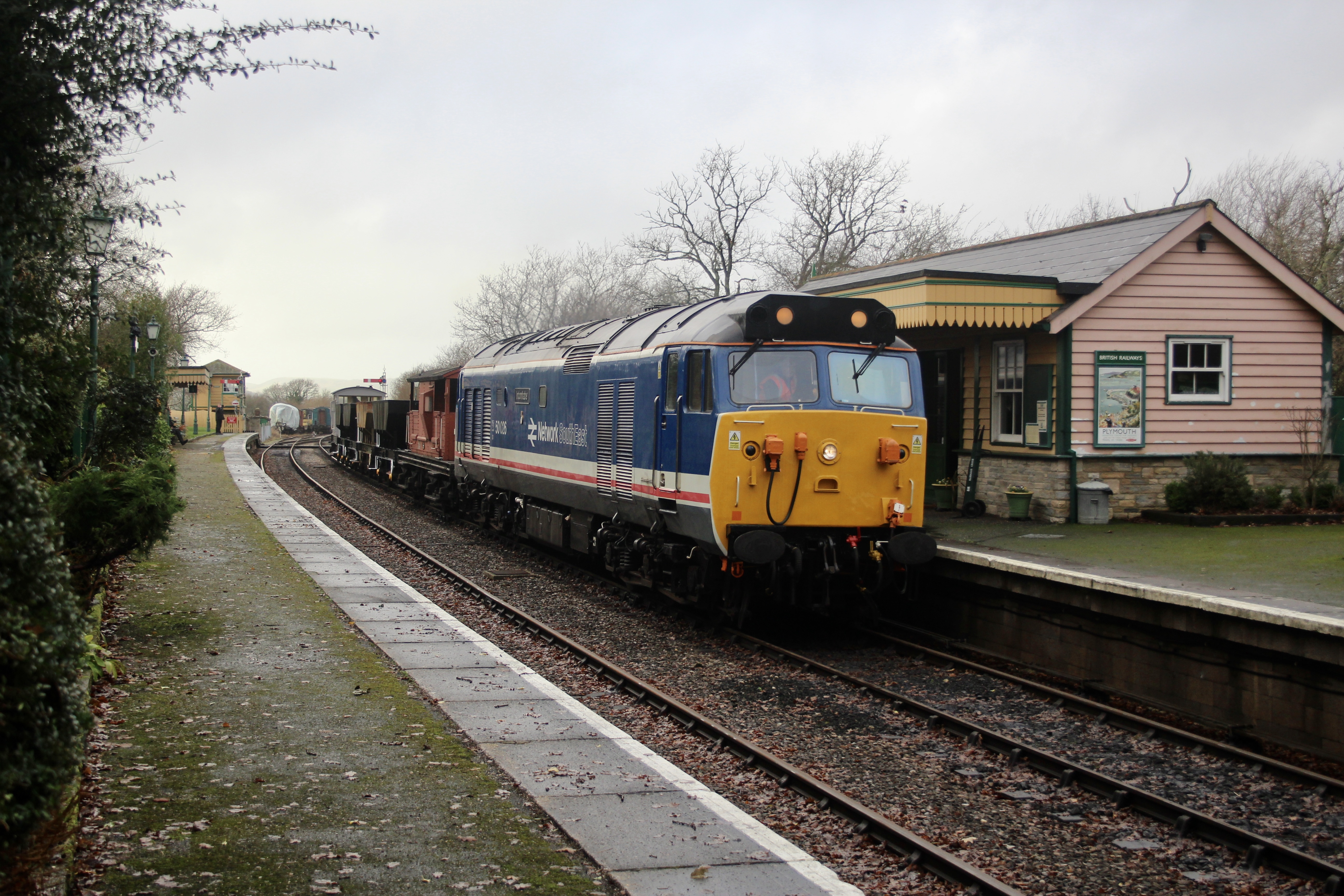
    Class 50 No. 50026 ‘Indomitable’ in Network South East livery departs Harmans Cross working 2N01 1030 Norden to Swanage – 07/01/2023

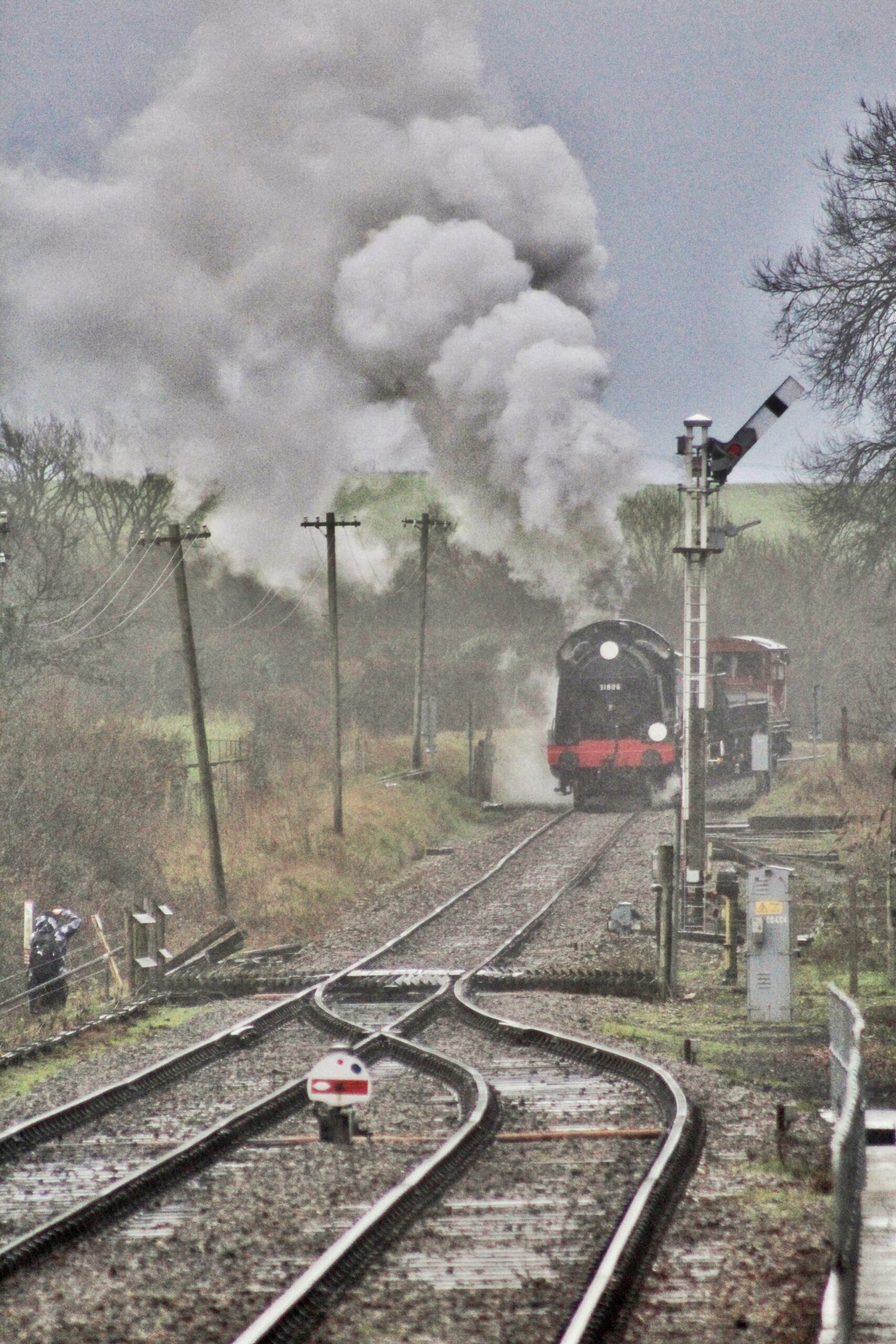
    The rain held off until we arrived at Corfe Castle. Waiting for the late running first freight of the weekend in the charge of SR U Class No. 31806 the heavens opened. It was at this point where I think my Canon DSLR camera must have suffered from water ingress. I should have switched the camera off and removed the battery and lens, but I foolishly carried on using it throughout the day until the point it gave up the ghost and would not switch on at all.

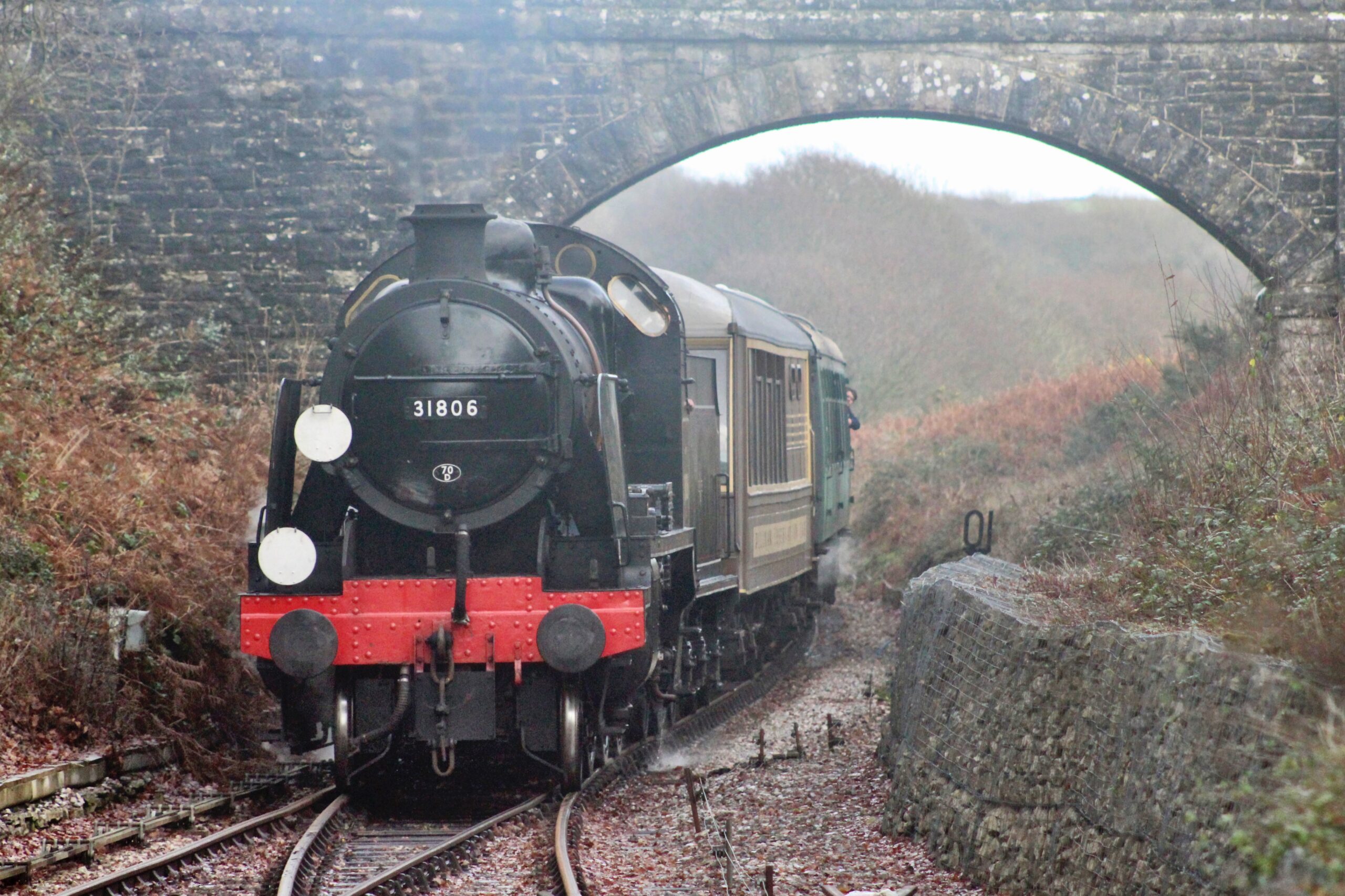
    Southern Railway U Class 2-6-0 No. 31806 working the first demonstration freight 6N04 1102 Herston Halt to Norden on the Saturday Winter Warm Up event – 07/01/2023
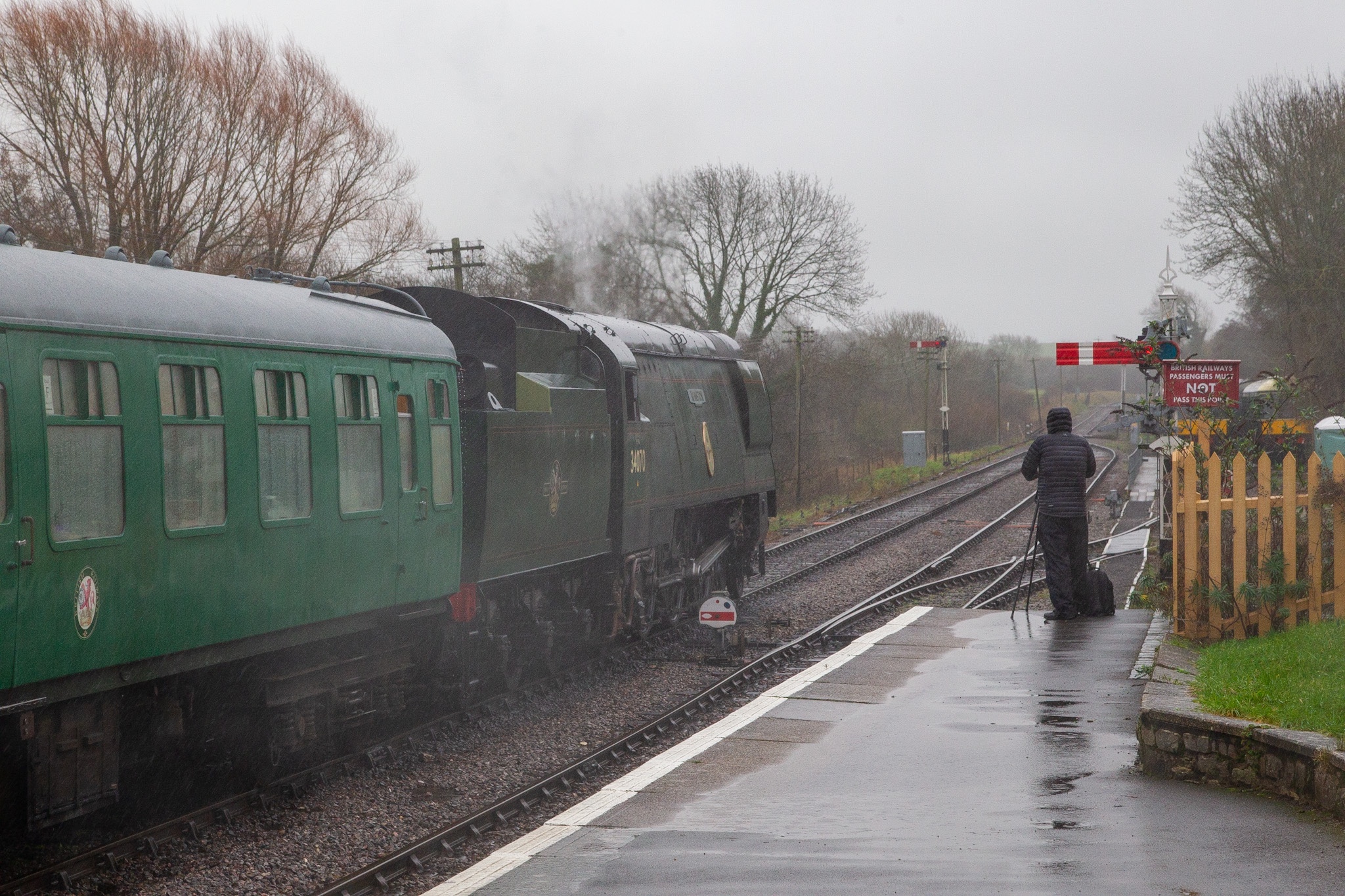
    Here I am getting soaked watching SR Battle Of Britain Class 4-6-2 No. 34070 ‘Manston’ departing Corfe Castle working 2N03 1115 Norden to Swanage – 07/01/2023 (Photograph courtesy of @da_buckley967)
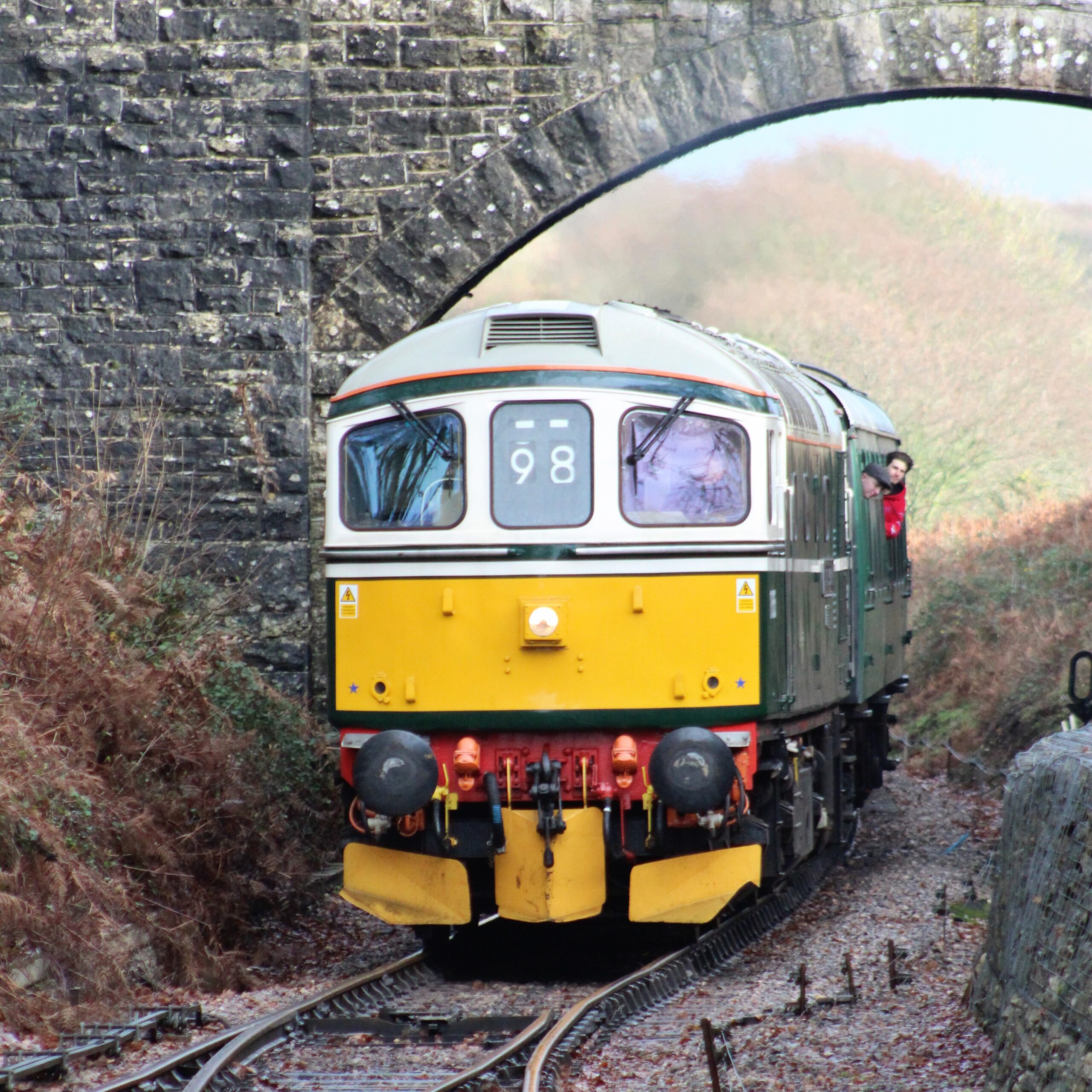
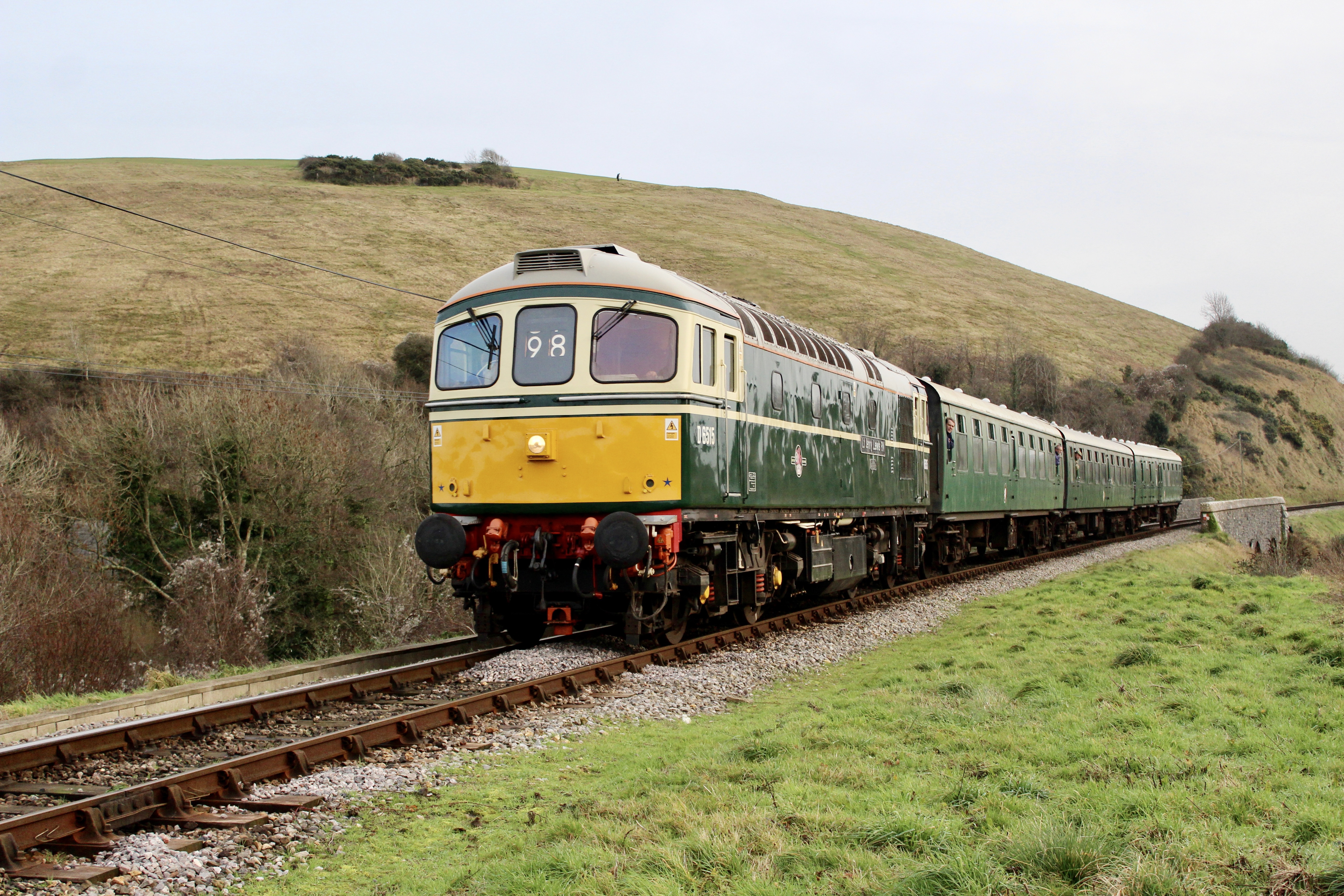
    Class 33 No. D6515 (33012) ‘Lt Jenny Lewis RN’ approaches Harmans Cross with the 2N12 1245 Swanage to Norden service – 07/01/2023
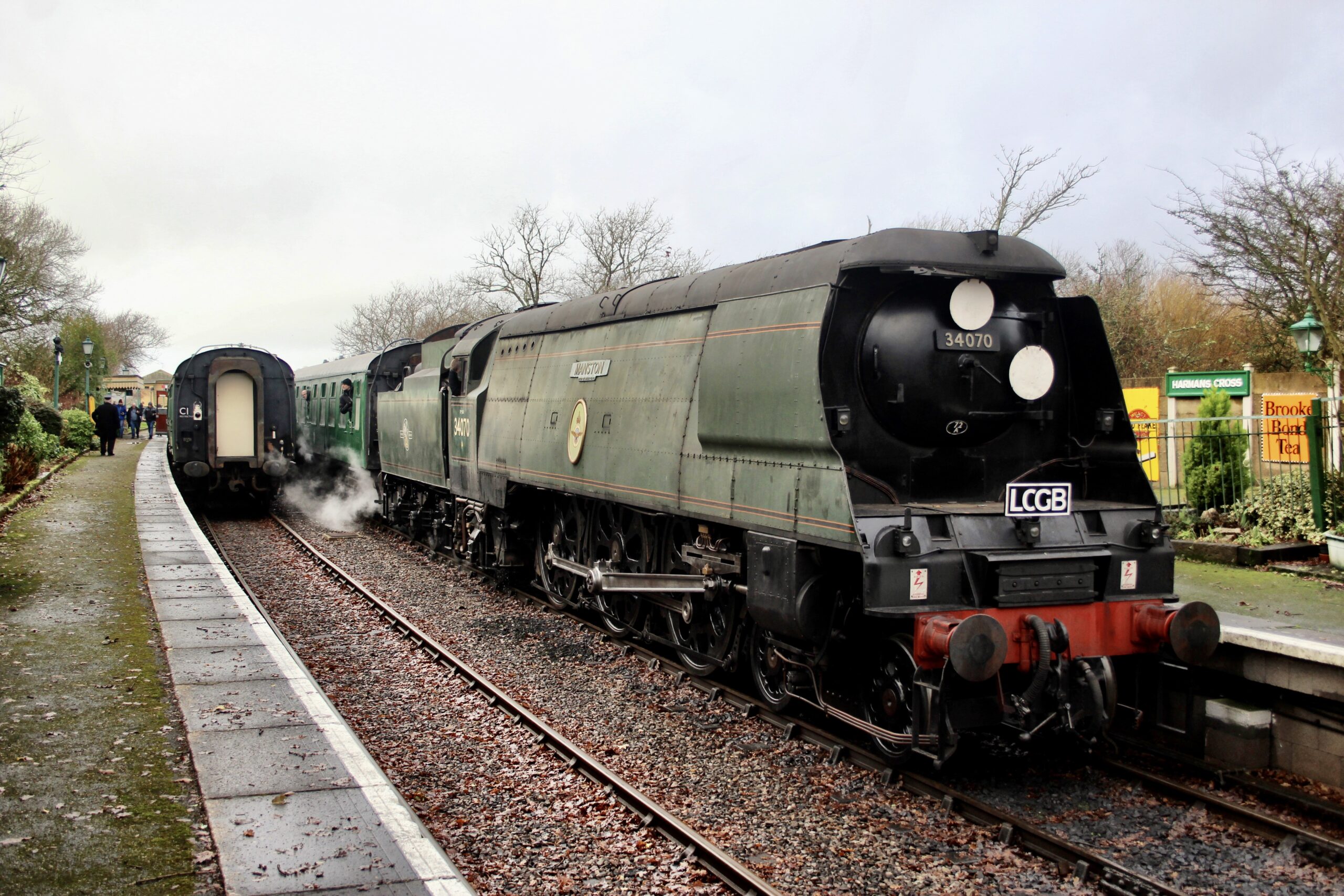
    SR Battle Of Britain Class 4-6-2 No. 34070 stands at Harmans Cross carrying a “Locomotive Club of Great Britain” (LCGB) headboard 2N09 1245 Norden to Swanage – 07/01/2023
    Class 50 No. 50026 ‘Indomitable’ takes a turn on the freight working 6N11 1302 Norden to Swanage seen here passing Harmans Cross – 07/01/2023
    U Class 2-6-0 No. 31806 nears Harmans Cross 2N14 1330 Swanage to Norden – 07/01/2023
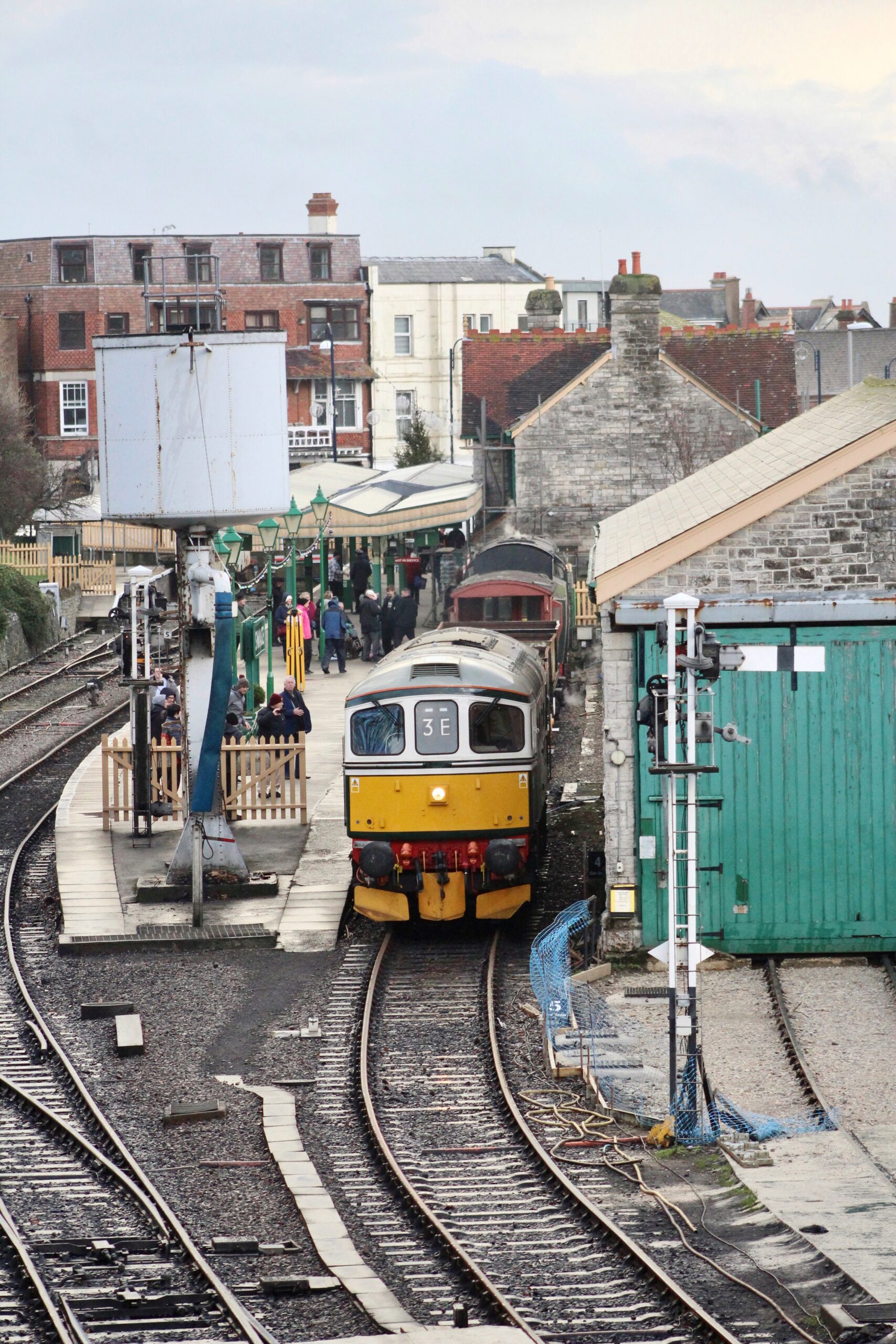
    The final image taken with my Canon D1200 DSLR camera before it shut down for the last time; Class 33 No. D6515 (33012) ‘Lt Jenny Lewis RN’ prepares to depart Swanage with the 6N22 1527 Swanage to Norden demonstration freight running as part of the Winter Warm Up – 07/01/2023
    Video from Saturday 7th January 2023 Swanage Winter Warm Up

    In 2016 the Winter Warm Up was on 27th December and I recall a frosty start to the day, as can be seen in the set of photographs below:
    U Class 2-6-0 No. 31806 approaches a frosty Harmans Cross with an early morning service from Swanage – 27/12/2016
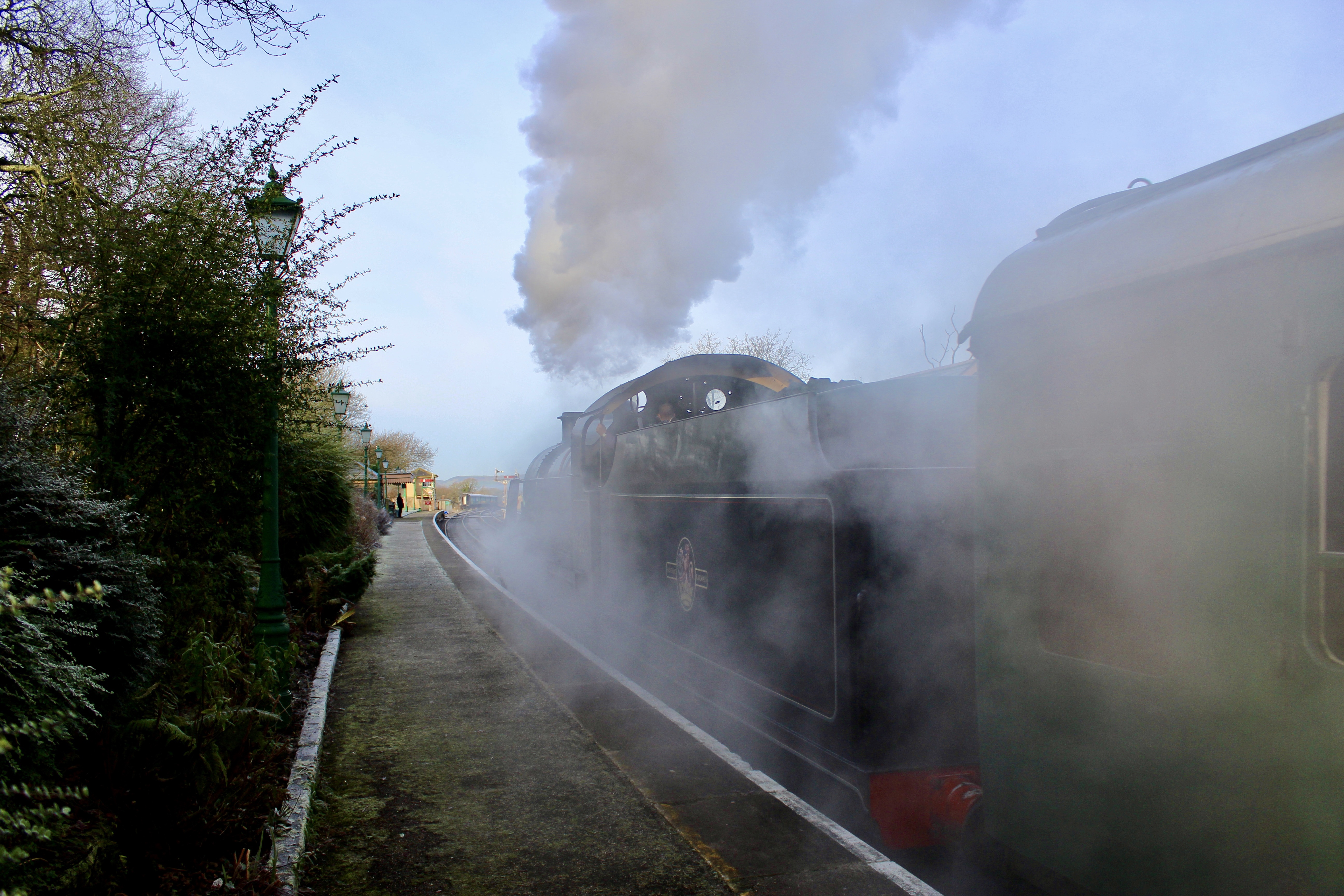
    U Class 2-6-0 No. 31806 arrives at Harmans Cross in cloud of steam with the first steam hauled service of the day from Swanage – 27/12/2016
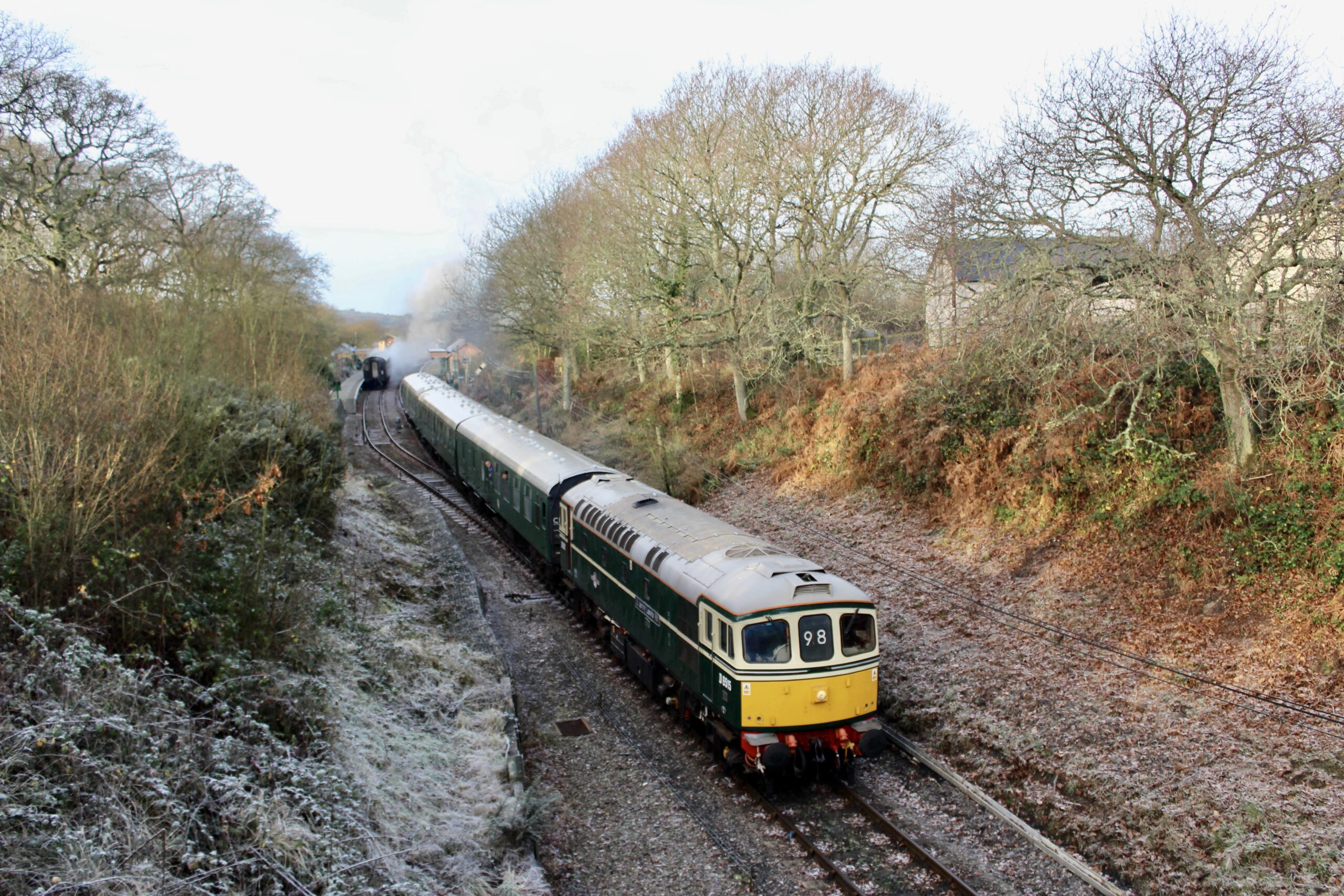
    Class 33 No. D6515 (33012) ‘Lt Jenny Lewis RN’ departing Harmans Cross – 27/12/2016
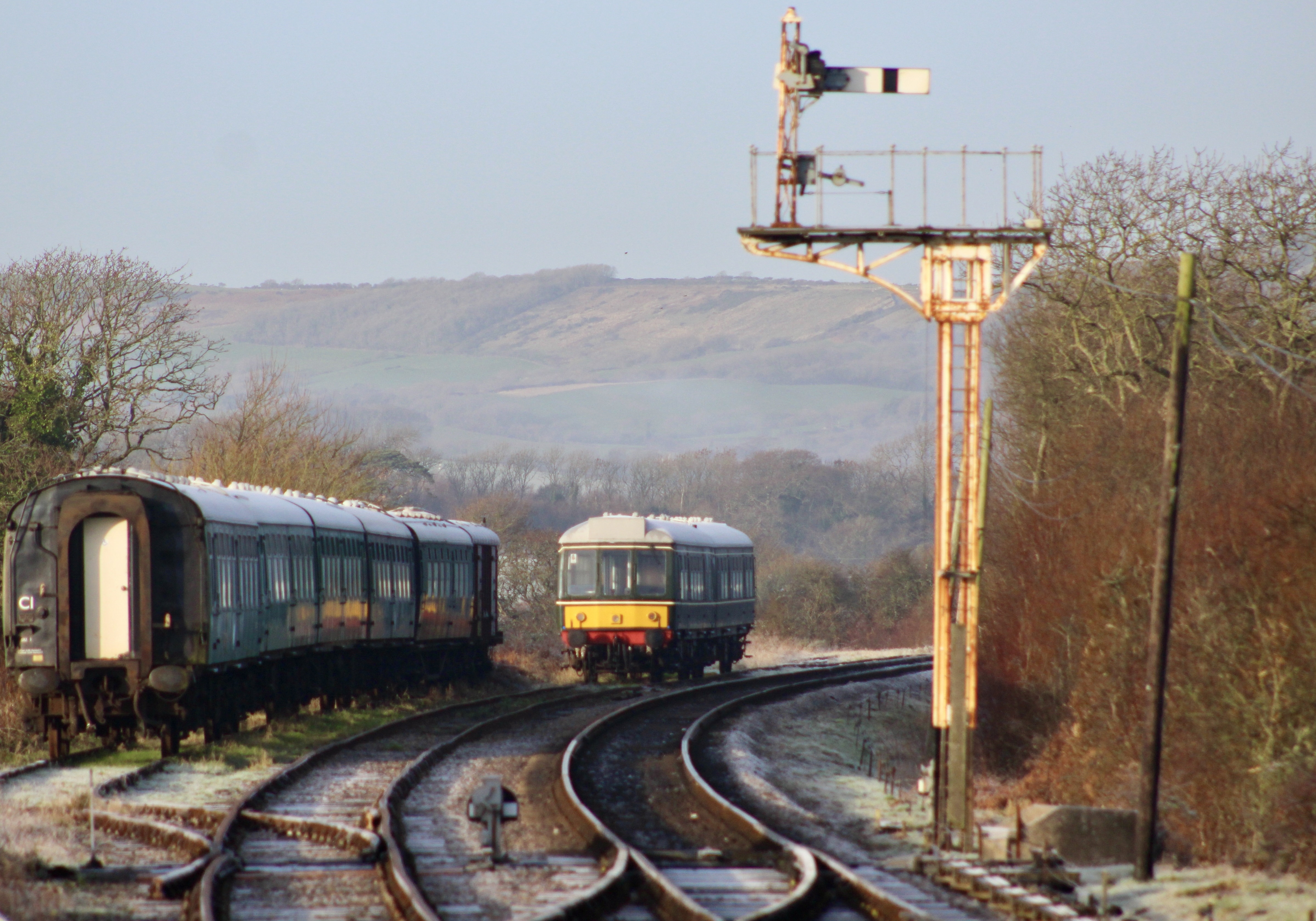
    A Diesel Multiple Unit set catches the sun at Harmans Cross sidings – 27/12/2016
    Class 33 No. D6515 (33012) ‘Lt Jenny Lewis RN’ nears journeys end at Norden – 27/12/2016
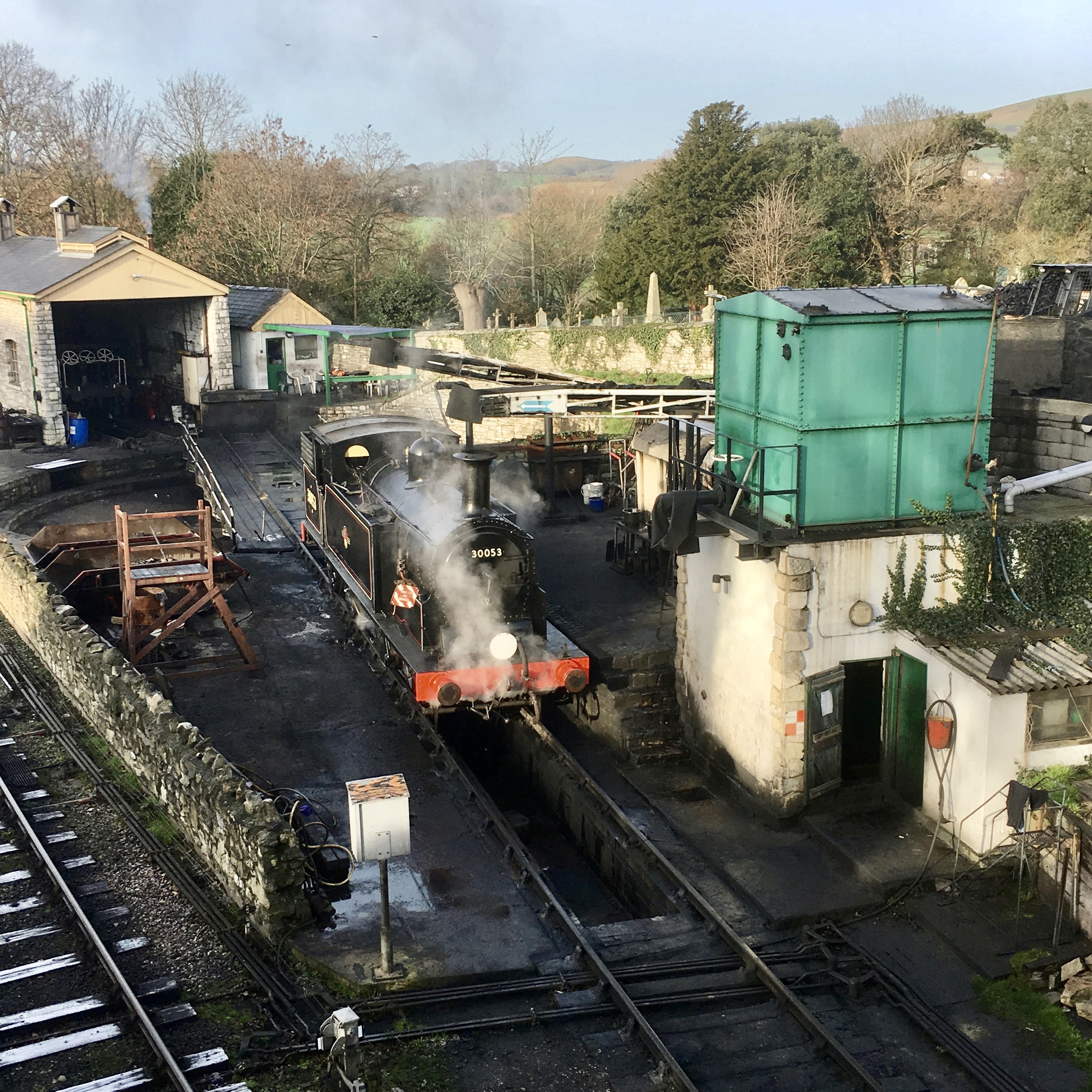
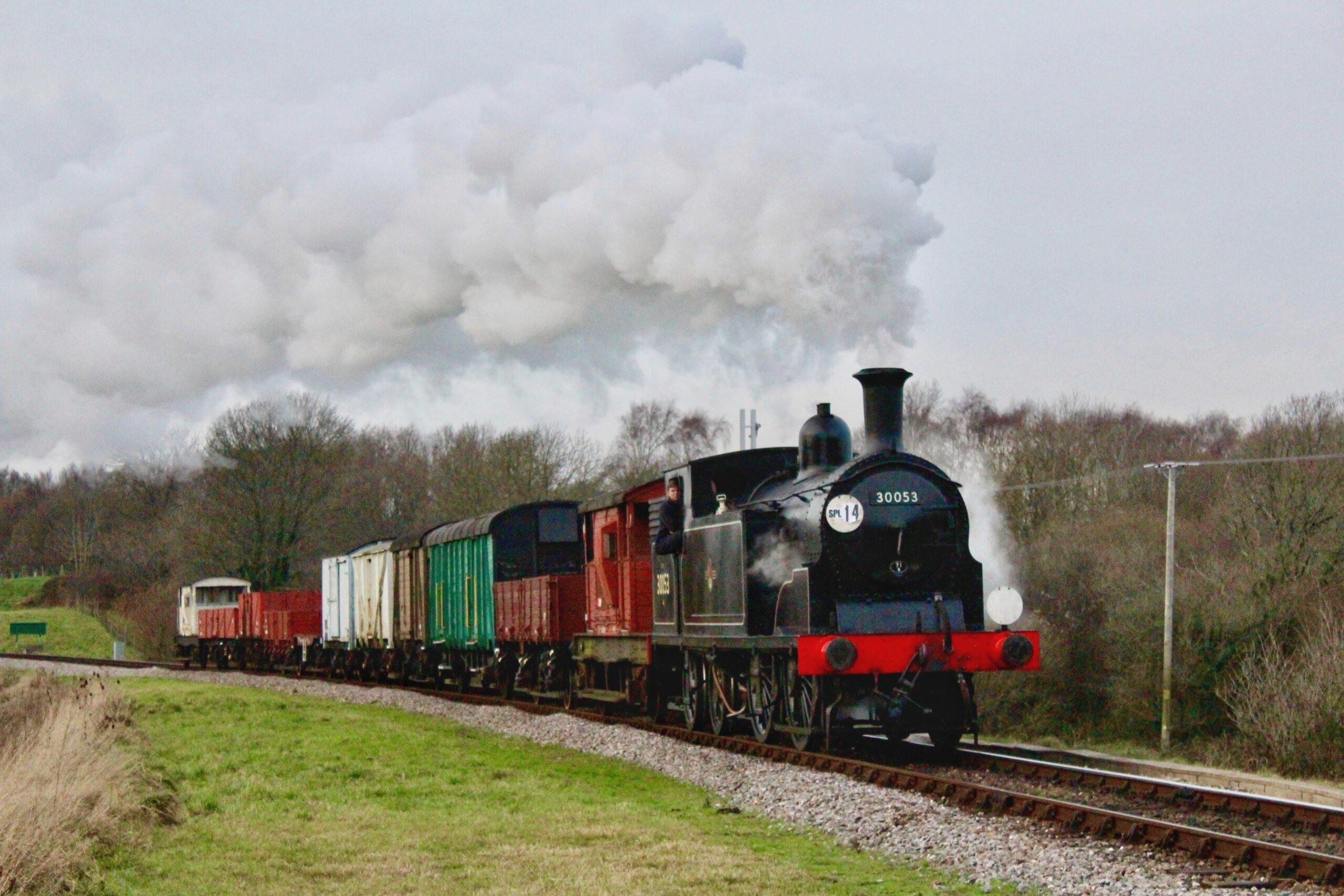
    London & South Western Railway (LSWR) 0-4-4T M7 Class No. 30053 being serviced at Swanage shed. No. 30053 is owned by the Drummond Locomotives Limited, and has been running regularly on the Swanage Railway since 1992. No. 30053’s boiler certificate expired in early 2017 but an extension to the certificate was obtained as the boiler had been re-tubed in 2011. The locomotive was in service until the end of October 2017 when the boiler certificate finally ran out.
    In December 2017 the boiler was lifted off the frames to enable the overhaul of the locomotive to start. The boiler was returned to the frames in September 2022 and it is planned that the locomotive will be back in service during 2023. She’s a particular favourite of mine and I look forward to seeing her running again – 27/12/2016
    London & South Western Railway (LSWR) 0-4-4T M7 Class No. 30053 taking shape once again at Swanage Railway’s Herston Works – 01/11/2022
    Three Class 33’s at Swanage, from left to right, No. D6515 (33012) ‘Lt Jenny Lewis RN’, No. 33111 and behind SR Battle Of Britain Class 4-6-2 No. 34070 ‘Manston’, No. 33201 – 27/12/2016
    Class 33 No. 33111 heads out of Swanage with a train destined for Norden – 27/12/2016
    Class 33 No. D6515 (33012) ‘Lt Jenny Lewis RN’ passes the observation area opposite Swanage depot while taking a turn on the freight wagons – 27/12/2016
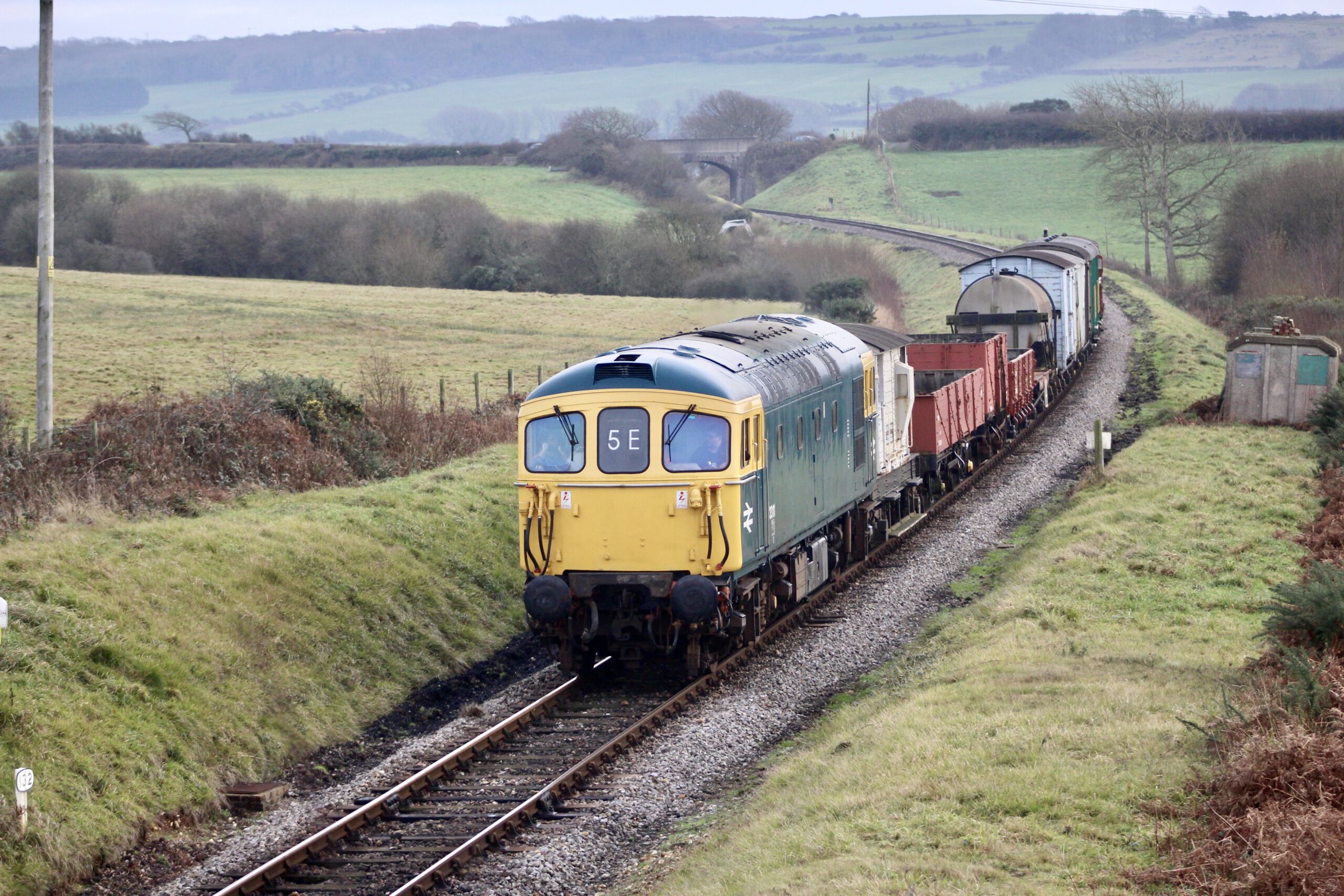
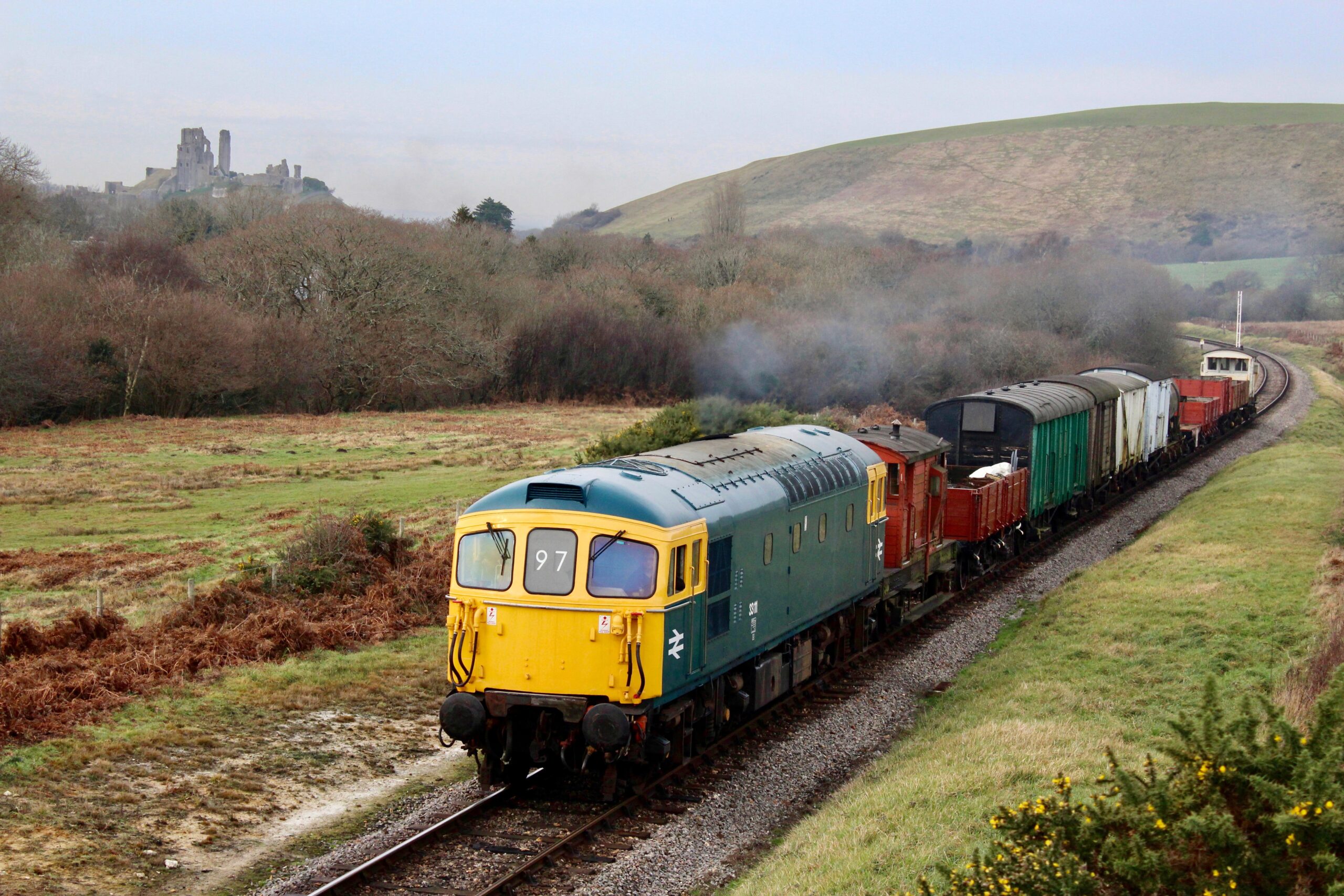
    Class 33 No. 33111 recreating a bygone era with a loose coupled freight – 27/12/2016
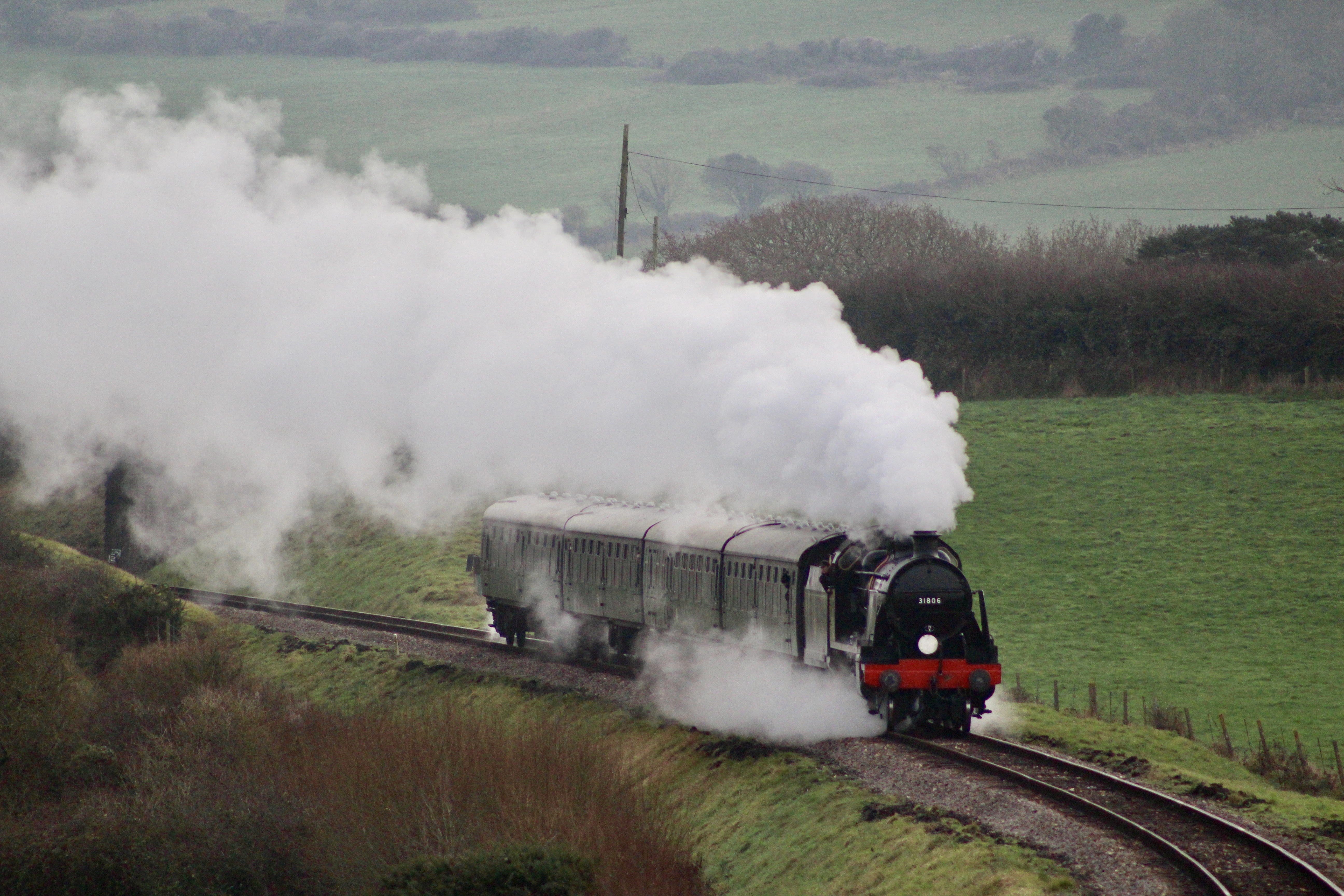
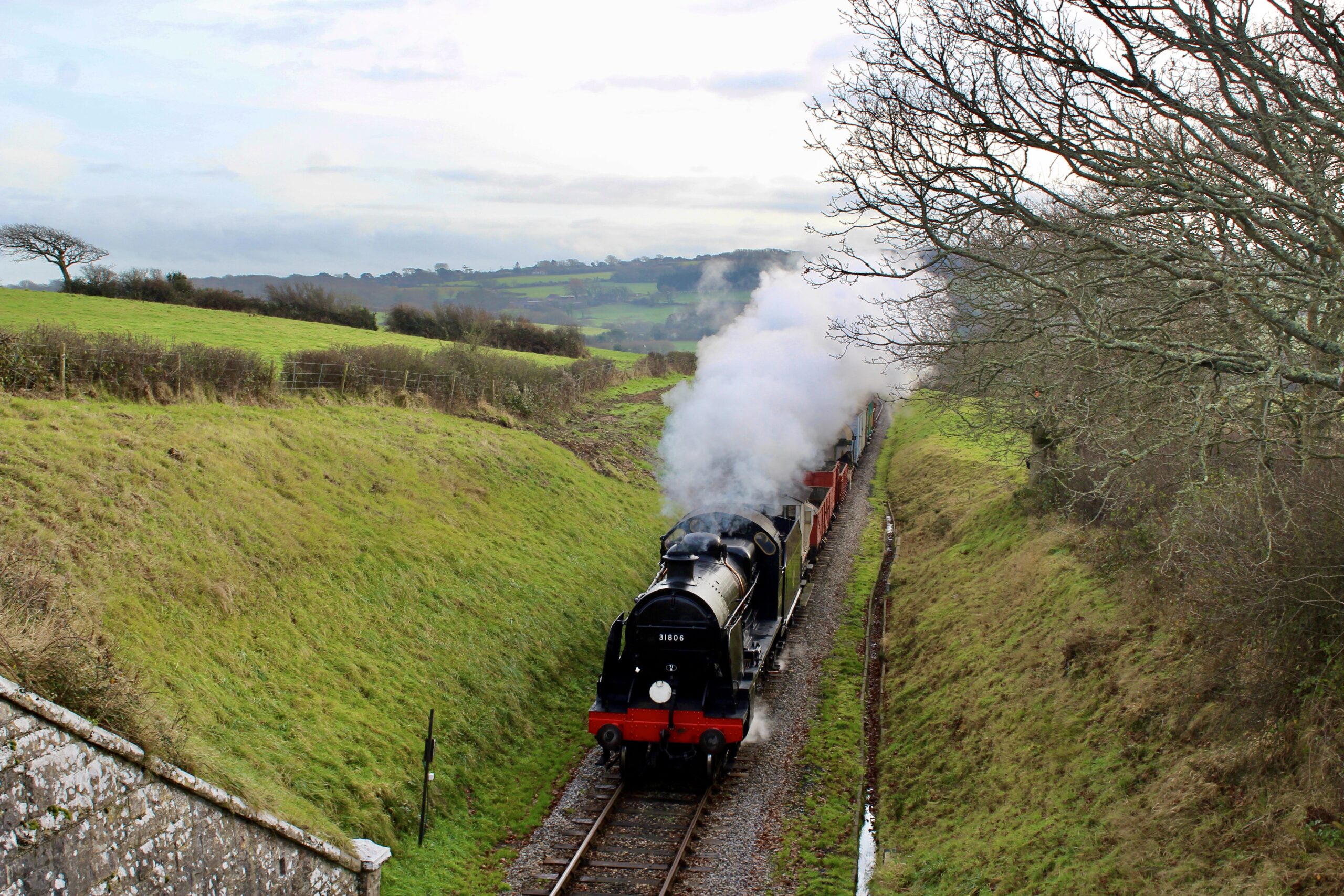
    U Class 2-6-0 No. 31806 approaching Corfe Castle – 27/12/2016
    With Corfe Castle in the background, another image of Class 33 No. 33111 working the demonstration freight train – 27/12/2016
    U Class 2-6-0 No. 31806 takes her turn on the Winter Warm Up freight consist – 27/12/2016
    London & South Western Railway (LSWR) 0-4-4T M7 Class No. 30053 nears Corfe Castle working a demonstration freight – 27/12/2016

    London & South Western Railway (LSWR) 0-4-4T M7 Class No. 30053 stands at Harmans Cross while working a demonstration freight – 27/12/2016
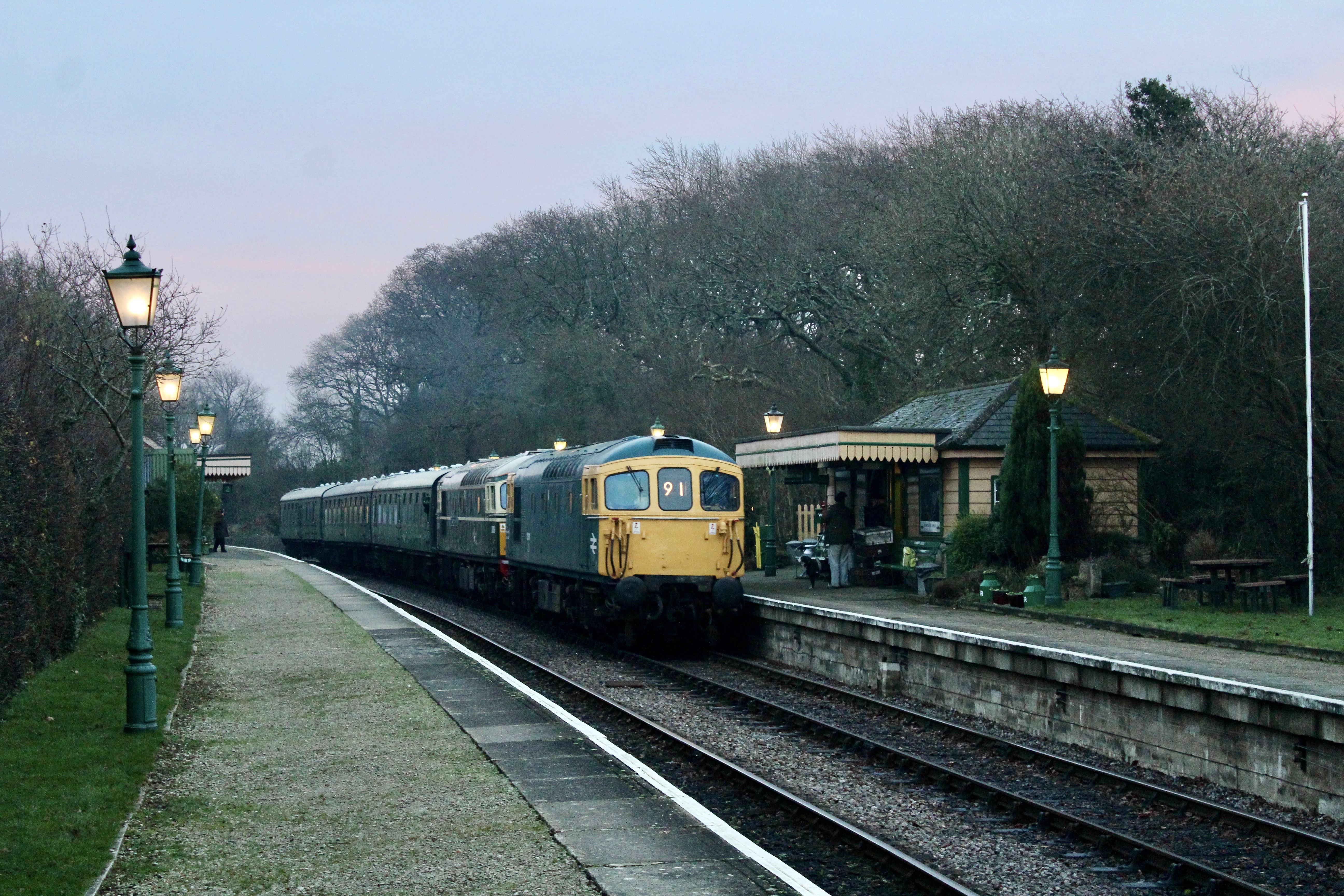
    Class 33 No. 33111 double heads with sister locomotive No. D6515 (33012) ‘Lt Jenny Lewis RN’ on the final working to Swanage on 27/12/2016
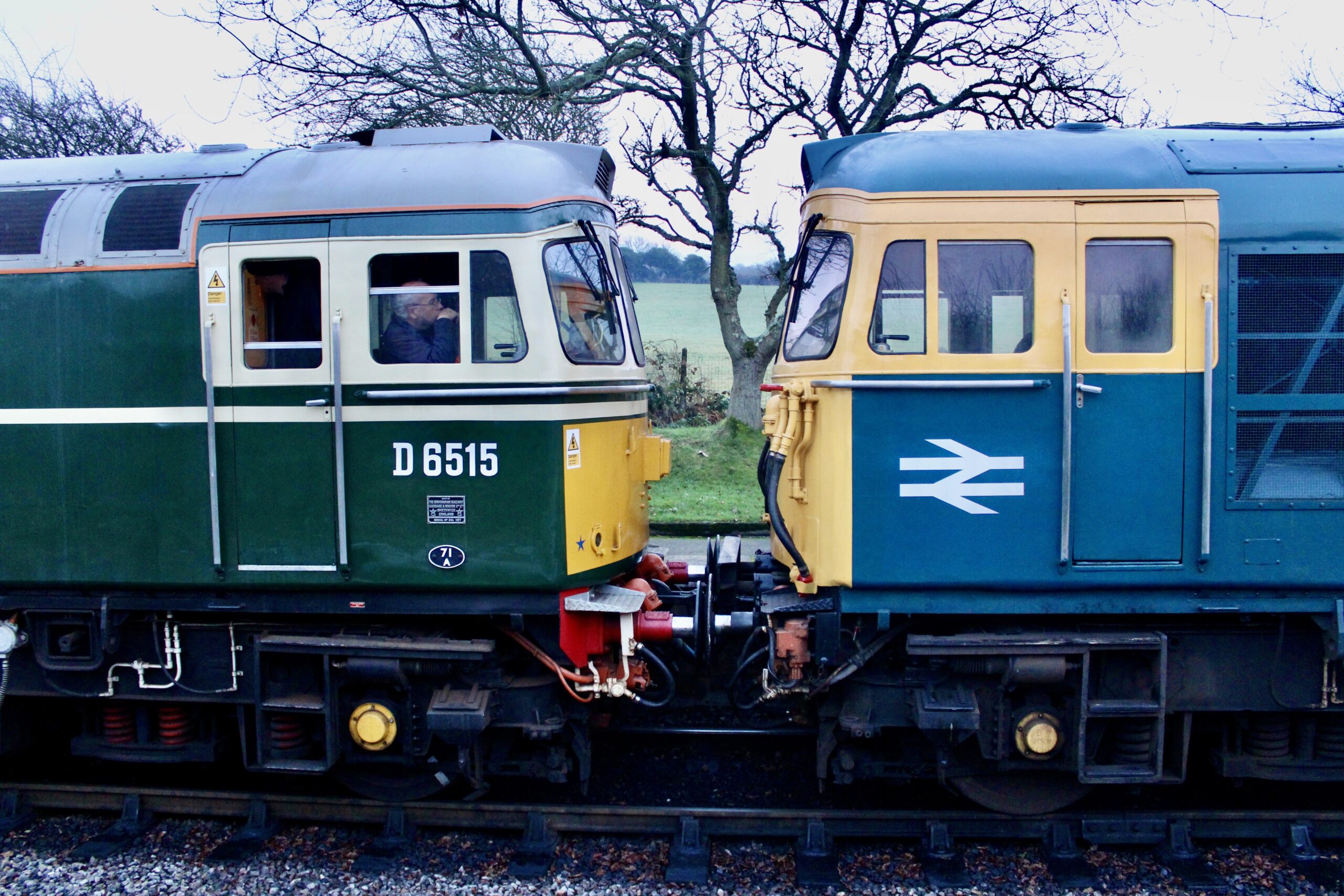
    The front end differences can be clearly seen in this image of Class 33 No.’s 33111 and D6515 (33012) ‘Lt Jenny Lewis RN’ – 27/12/2016
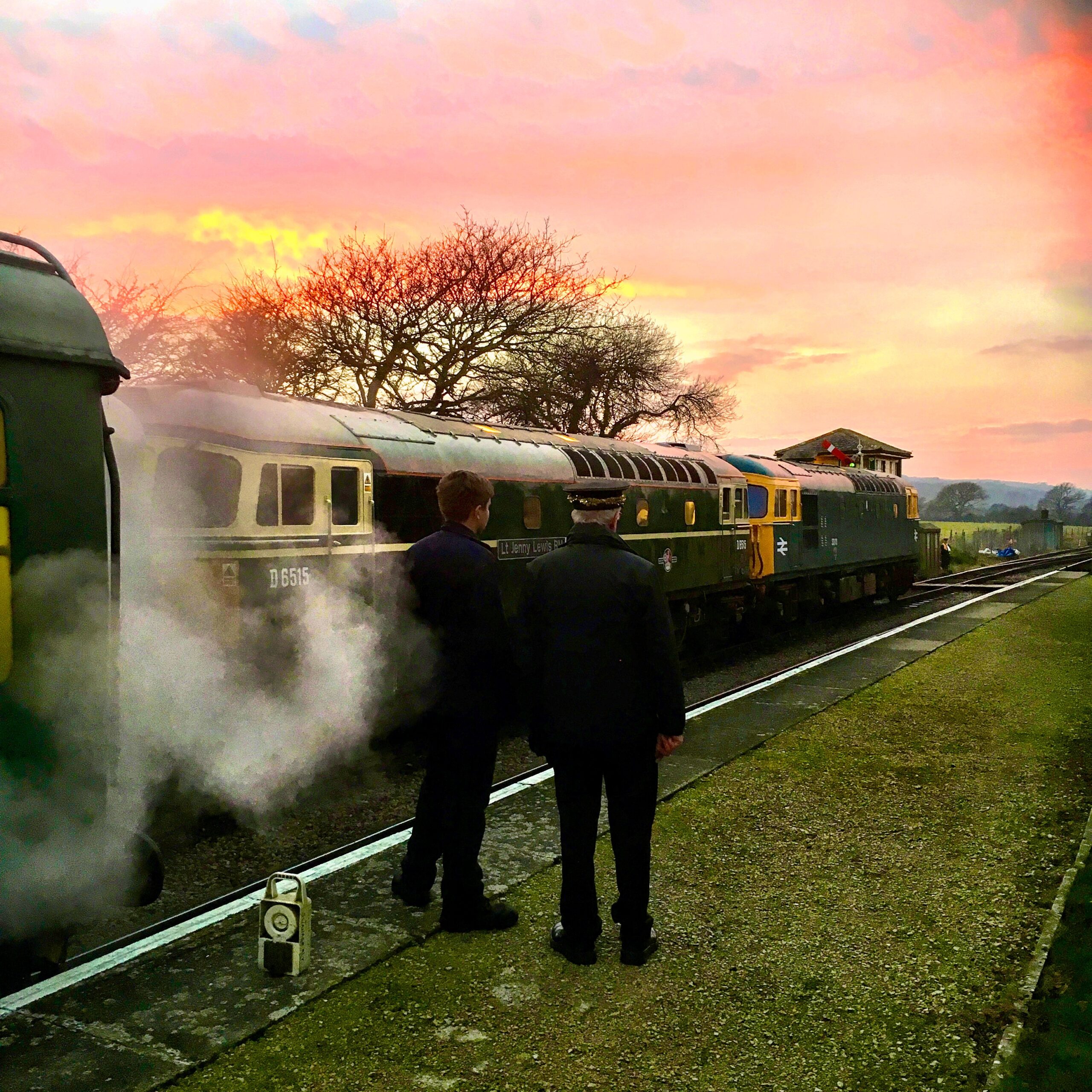
    Class 33 No.’s 33111 and D6515 (33012) ‘Lt Jenny Lewis RN’ are observed by the train crew of a Swanage bound train on their departure to Norden – 27/12/2016

    Tuesday 10th January 2023 and I decided an outing to Eastleigh was in order to test out a replacement camera body and hopefully put it through its paces. It was set to be a busy day in the Hampshire railway town with Class 33 No. D6515 ‘Lt Jenny Lewis RN’ scheduled to haul Class 50 No. 50026 ‘Indomitable’ from Swanage to Eastleigh Arlington Works where the Hoover is to undergo a period of winter maintenance, Freightliner Class 47 No. 47830 ‘Beeching’s Legacy’ passing on a trip to Banbury and the release of the latest Class 69 conversion from the Works and its onward journey to Tonbridge. However it transpired that the Class 50 move from Swanage was revised to run the next day, Wednesday 11th January (photos next week my lucky reader!), the Class 47 was replaced by FL Class 66 No. 66596. The Class 69, however was in a reasonably good position for a photograph on the Works following a special naming ceremony earlier in the day.

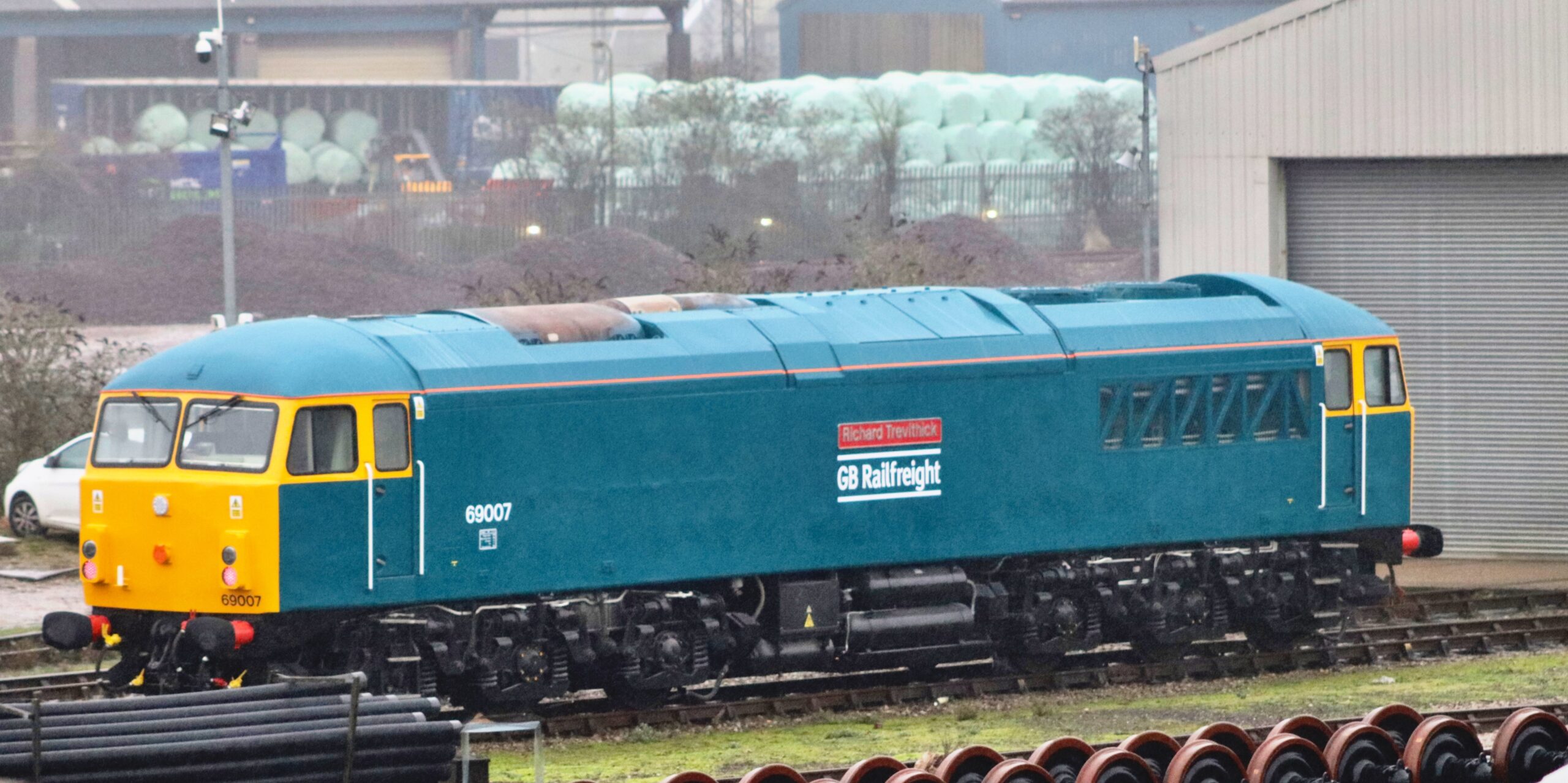
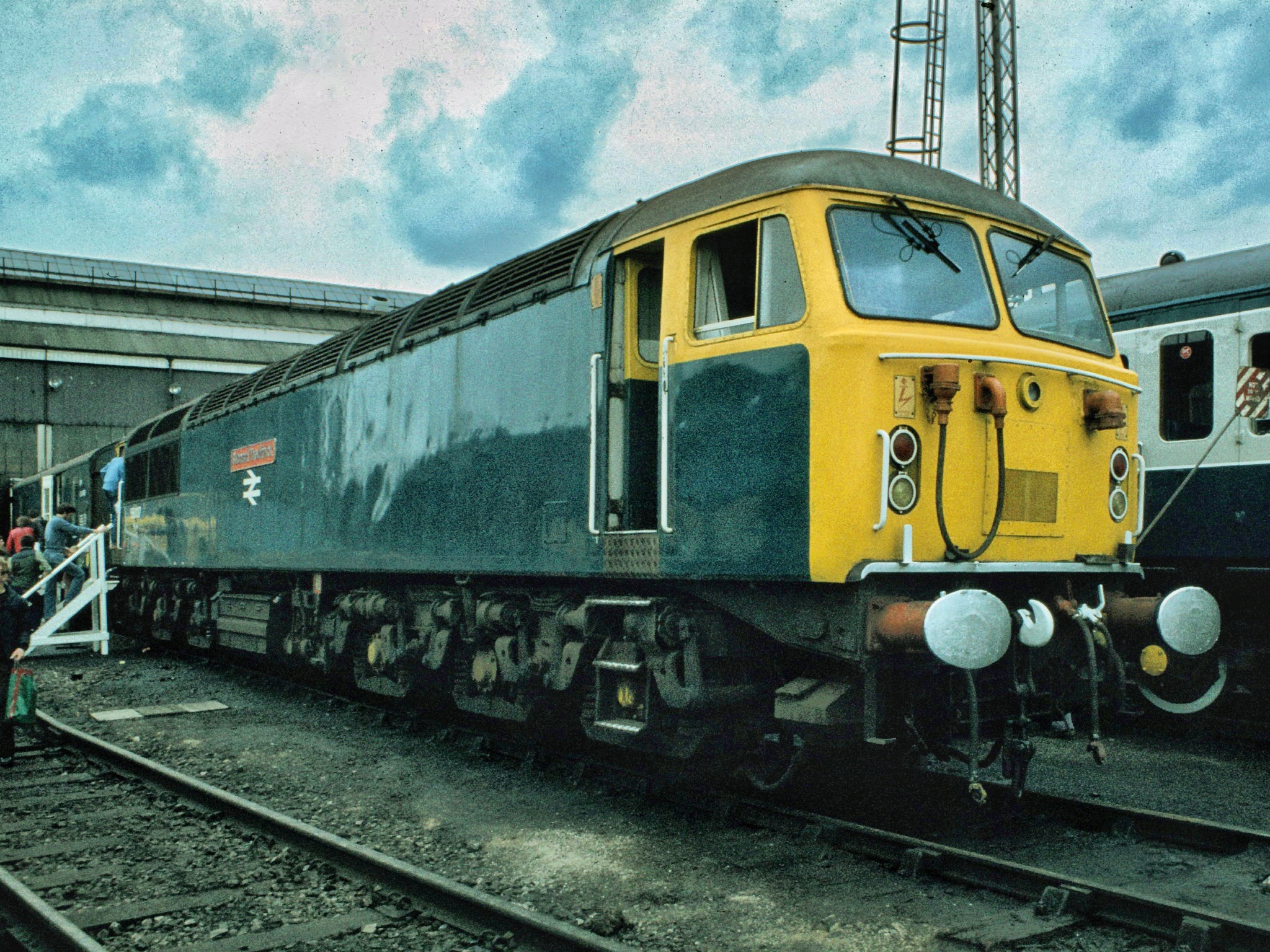
    GBRf Class 69 No. 69007 ‘Richard Trevithick’ at Eastleigh Works. The locomotive was converted from Class 56 No. 56037 which also carried the same name. Earlier in the day at a private ceremony for the benefit of ex Cardiff Canton employees the loco carried her former number and a double BR arrow emblem underneath the nameplate on one side. Before being released into traffic the 69007 number and GB Railfreight decals were affixed – 10/01/2023

    The Class 69 was scheduled to depart the Works at 1424, but by 1515 she still had to make her way out onto the mainline. At this point, conscious that Yoshi needed a bit of a comfort break, I decided not to wait any longer and instead decided to work our way towards home, stopping briefly to drop off a packet for a couple of Yoshi’s feline friends who are in the area.

    Package duly delivered we drove back through Eastleigh to see No. 69007 had moved up to Works gates and set to head into Eastleigh railway station to reverse before carrying onto Tonbridge. I made my own reversal and headed back into the station where I was just in time to get a photograph of the locomotive standing at platform 3 and video of her departure.

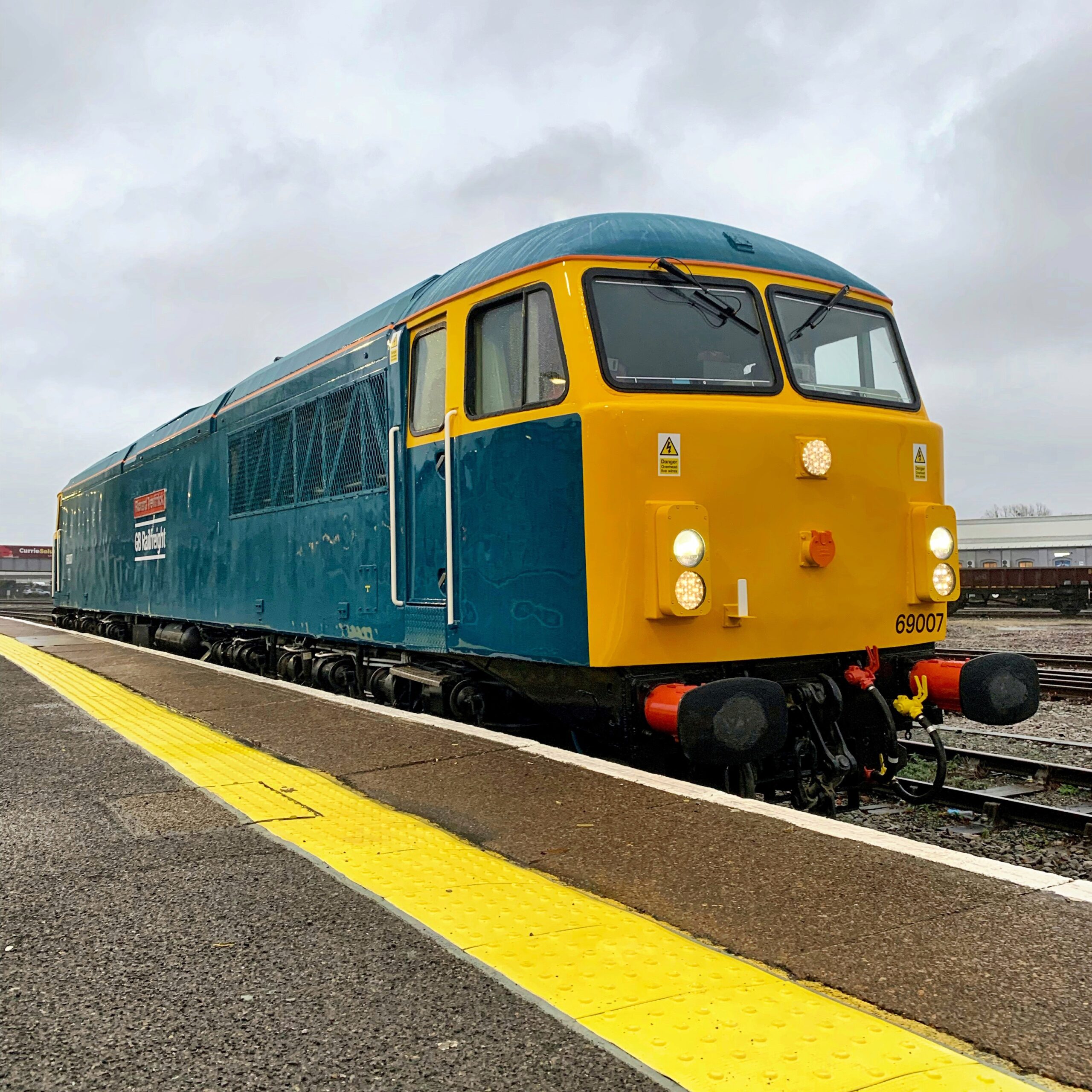
    GBRf Class 69 No. 69007 ‘Richard Trevithick’ reverses at Eastleigh railway station working the delayed 0Z07 1424 Eastleigh Works GBRf to Tonbridge West Yard GBRf – 10/01/2023
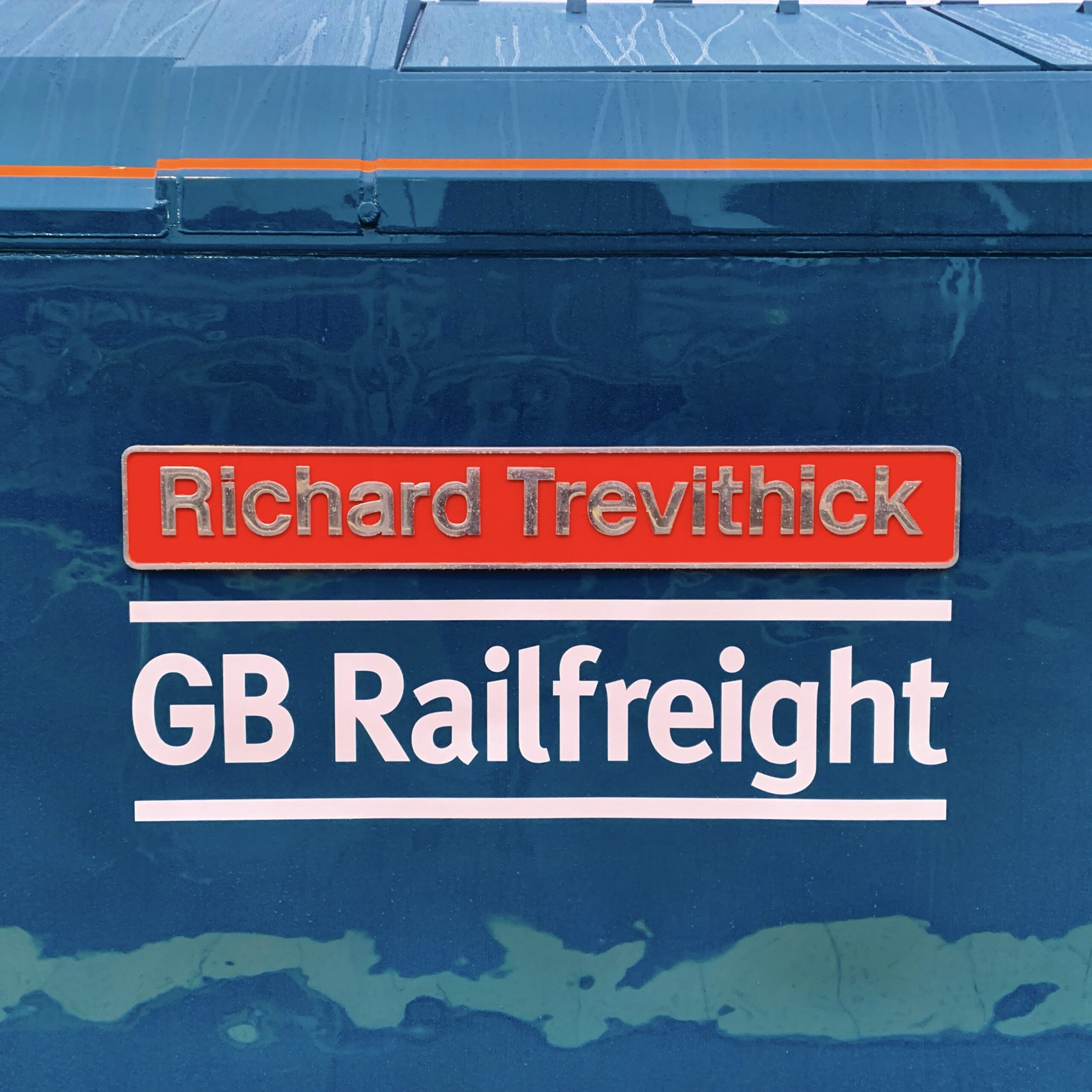
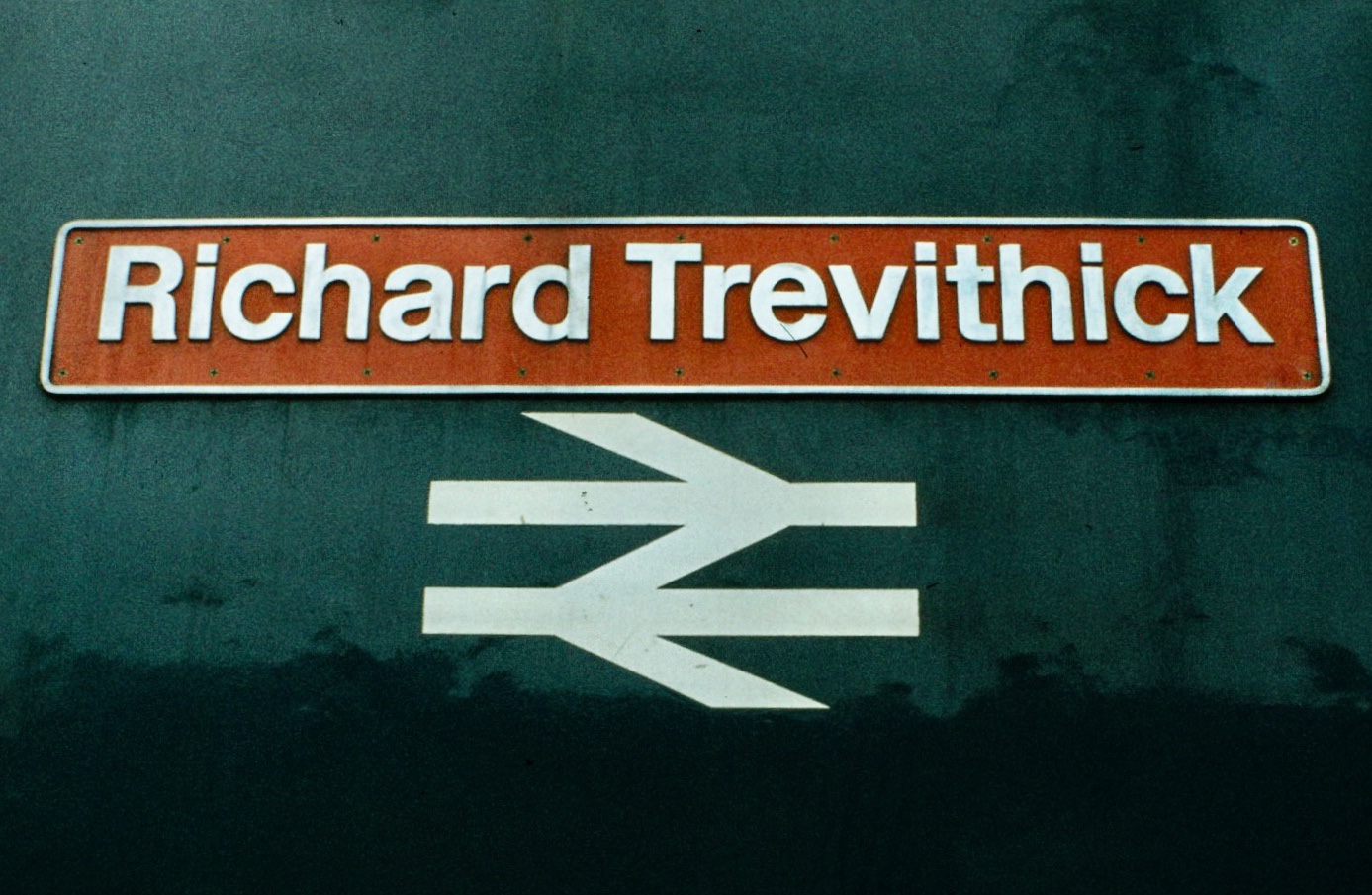
    Nameplate detail of Class 69 No. 69007, Eastleigh – 10/01/2023
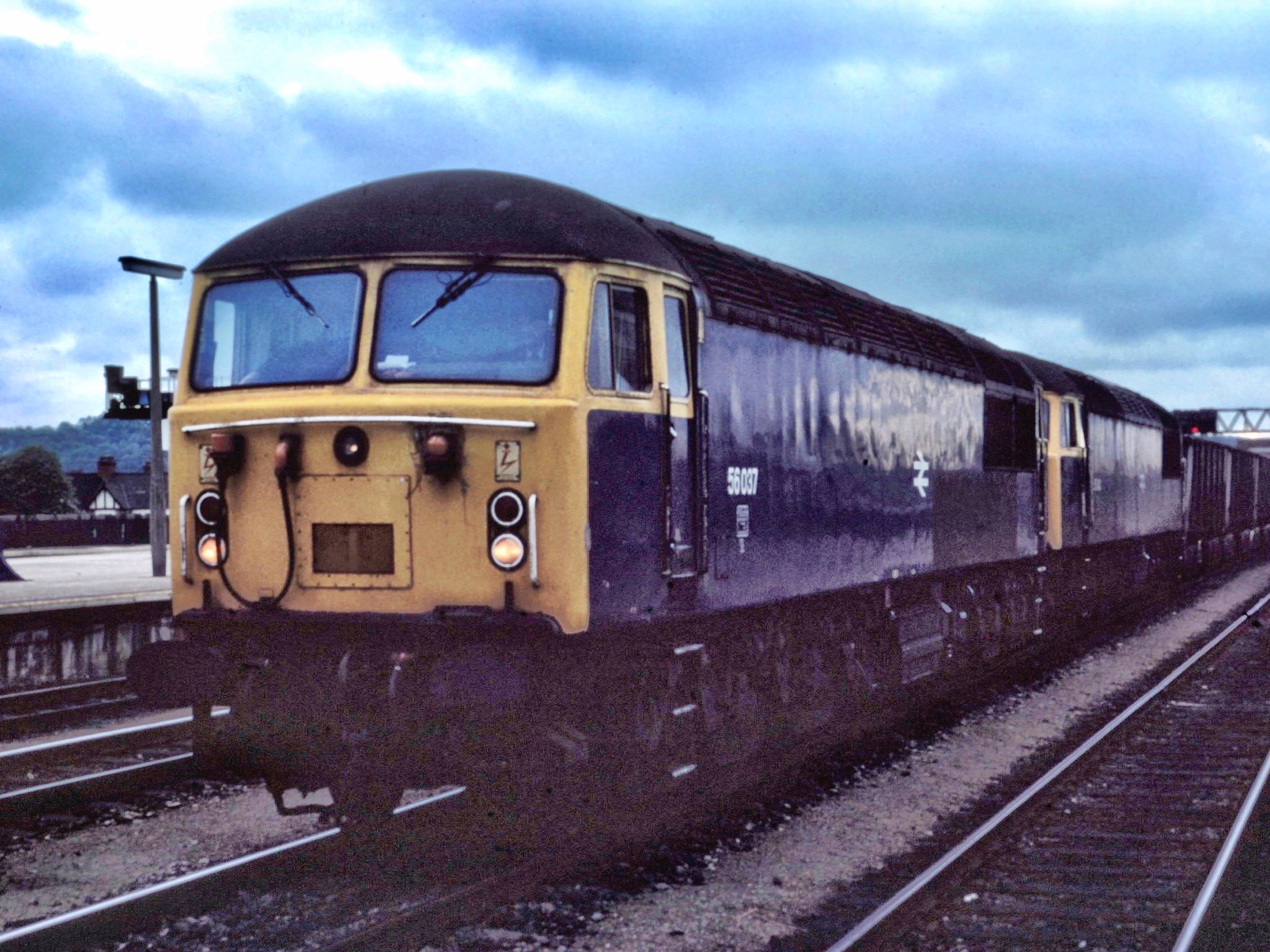
    Class 56 No. 56037 and an unidentified member of the class working the heavy Port Talbot to LLanwern iron ore train through Cardiff Central. Class 56’s were employed in pairs on this working having replaced the perhaps even more impressive triple headed Class 37’s! At this point in time No. 56037 was yet to be named – 25/05/1981
    Now named ‘Richard Trevithick’, Class 56 No. 56037 is on display at Old Oak Common Open Day – 20/09/1981
    Nameplate detail of Class 56 No. 56037, Old Oak Common – 20/09/1981

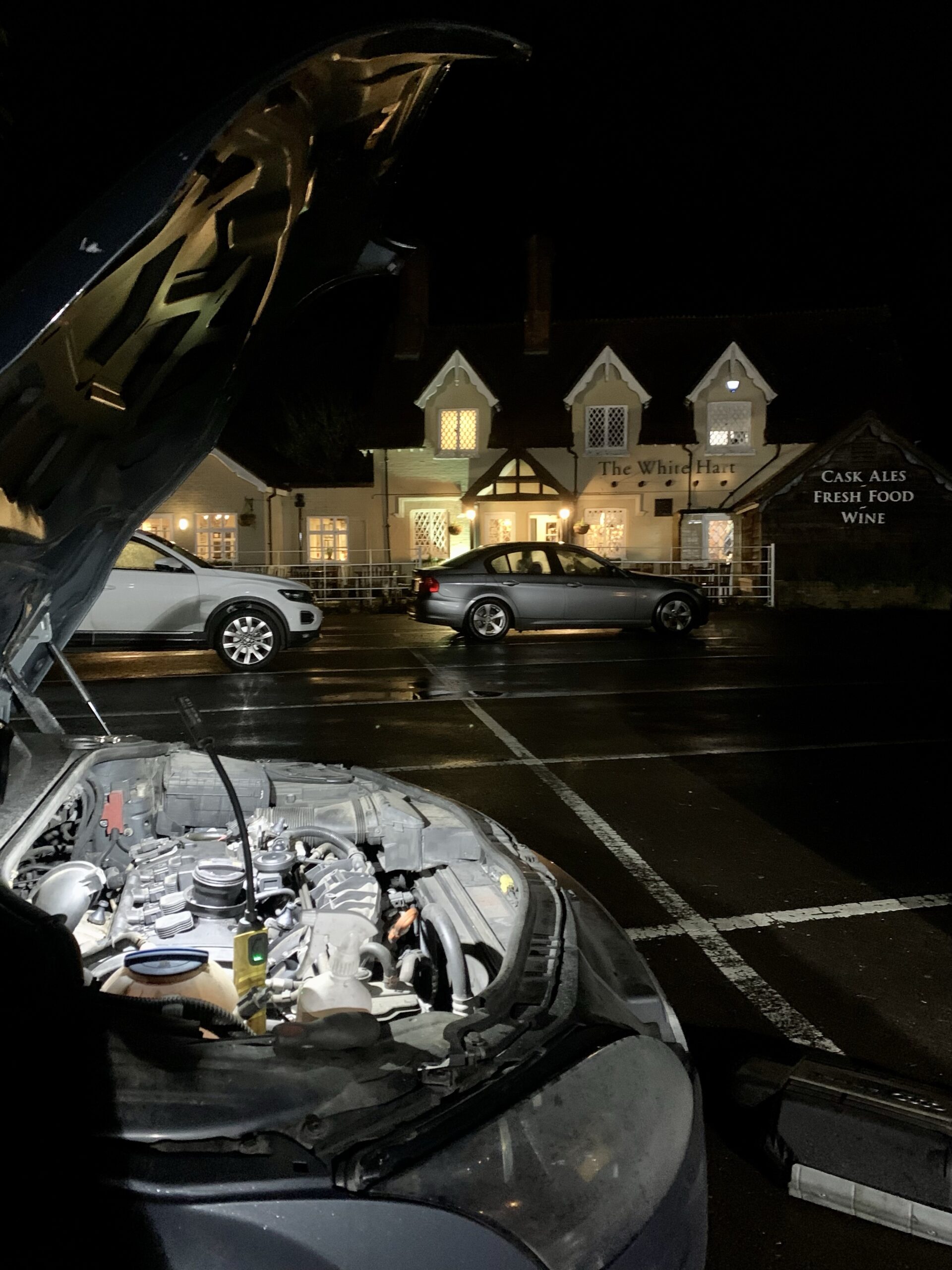
    On our way home from Eastleigh as we neared Junction 1 of the M27 my car suddenly lost power and we cautiously limped off the motorway to the relative safety of The White Hart pub at Cadnam where we awaited assistance from the AA and our eventual recovery home. The car is booked in with the garage for Friday. If things happen in three’s, I am nervously awaiting incident number three!!

    My car being checked over by the AA. Unfortunately, it was not a problem that could be fixed at the roadside and we required a lorry to take us home – 10/01/2023
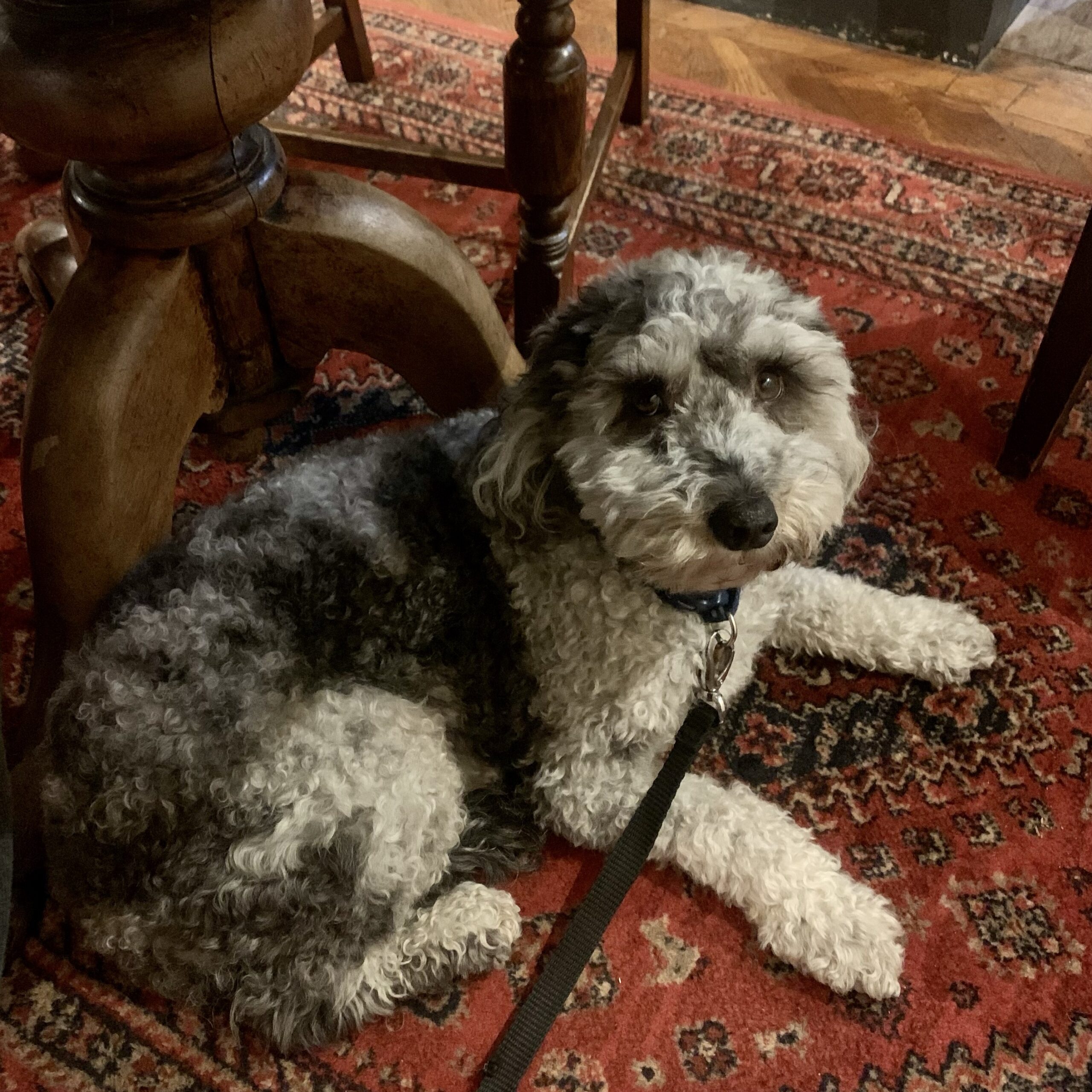
    Yoshi enjoys the delights of The White Hart, Cadnam as we await the arrival of the tow truck – 10/01/2023
    Video of Class 69 No. 69007’s first outing at Eastleigh – 10/01/2023

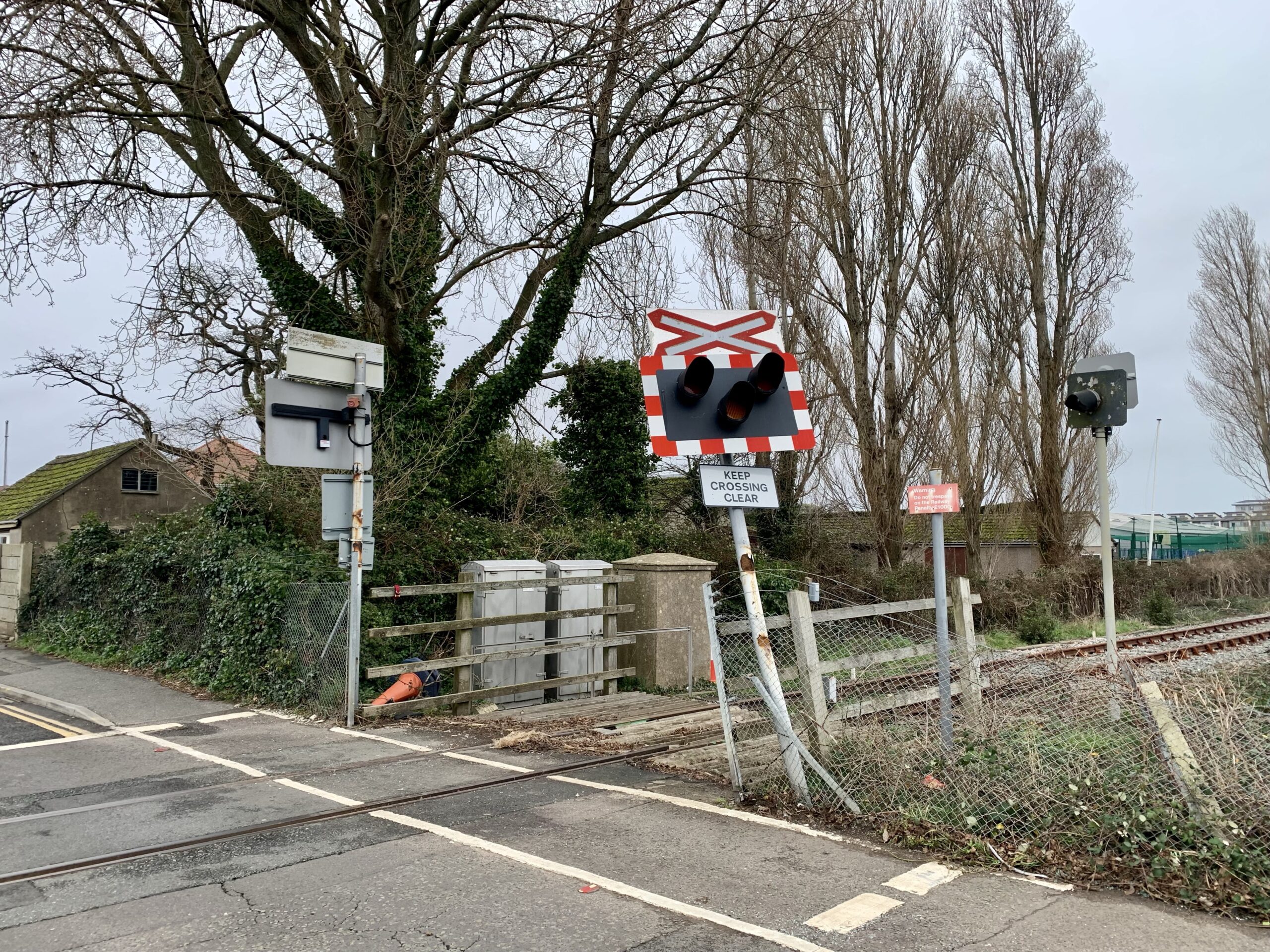
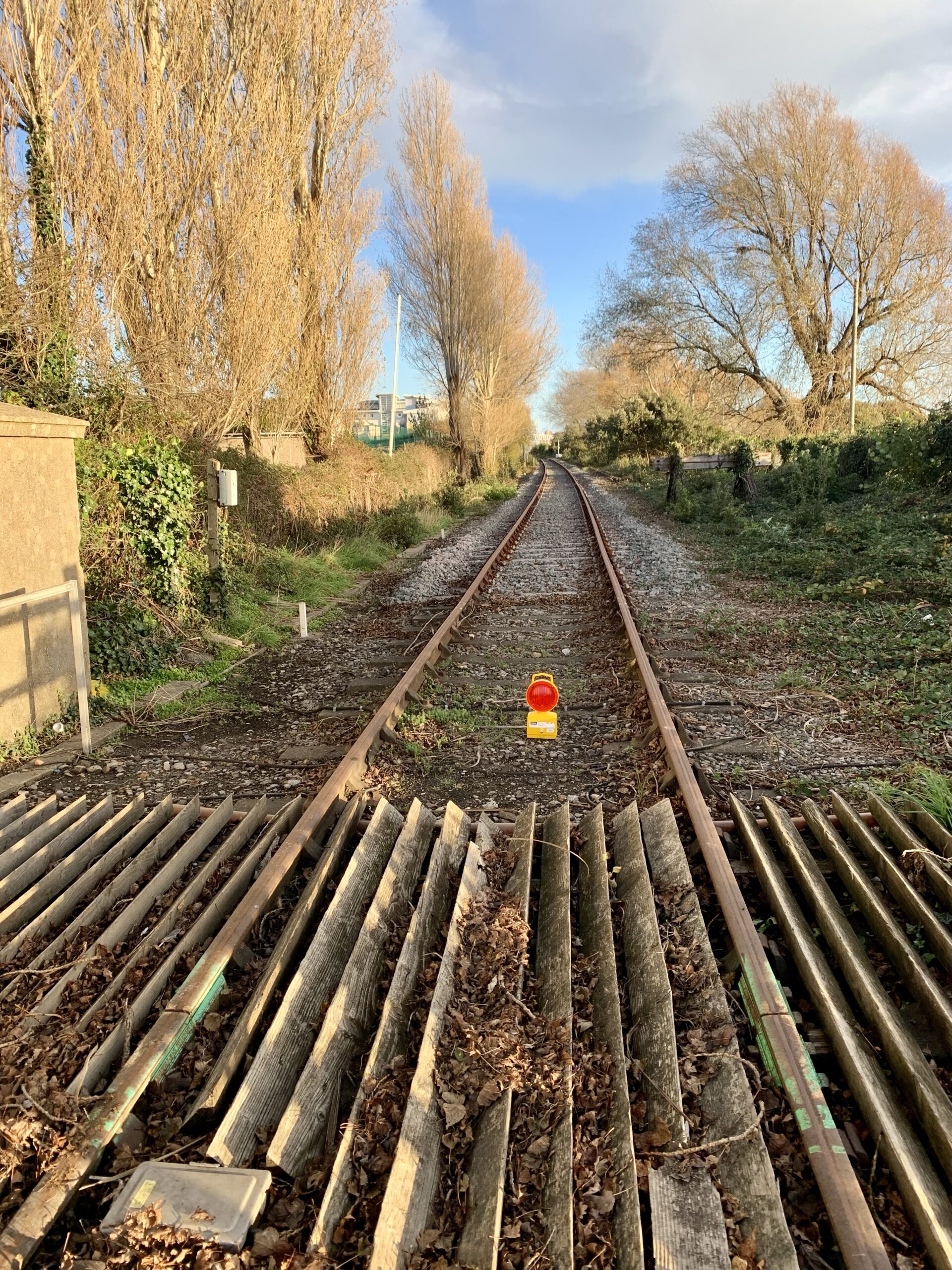
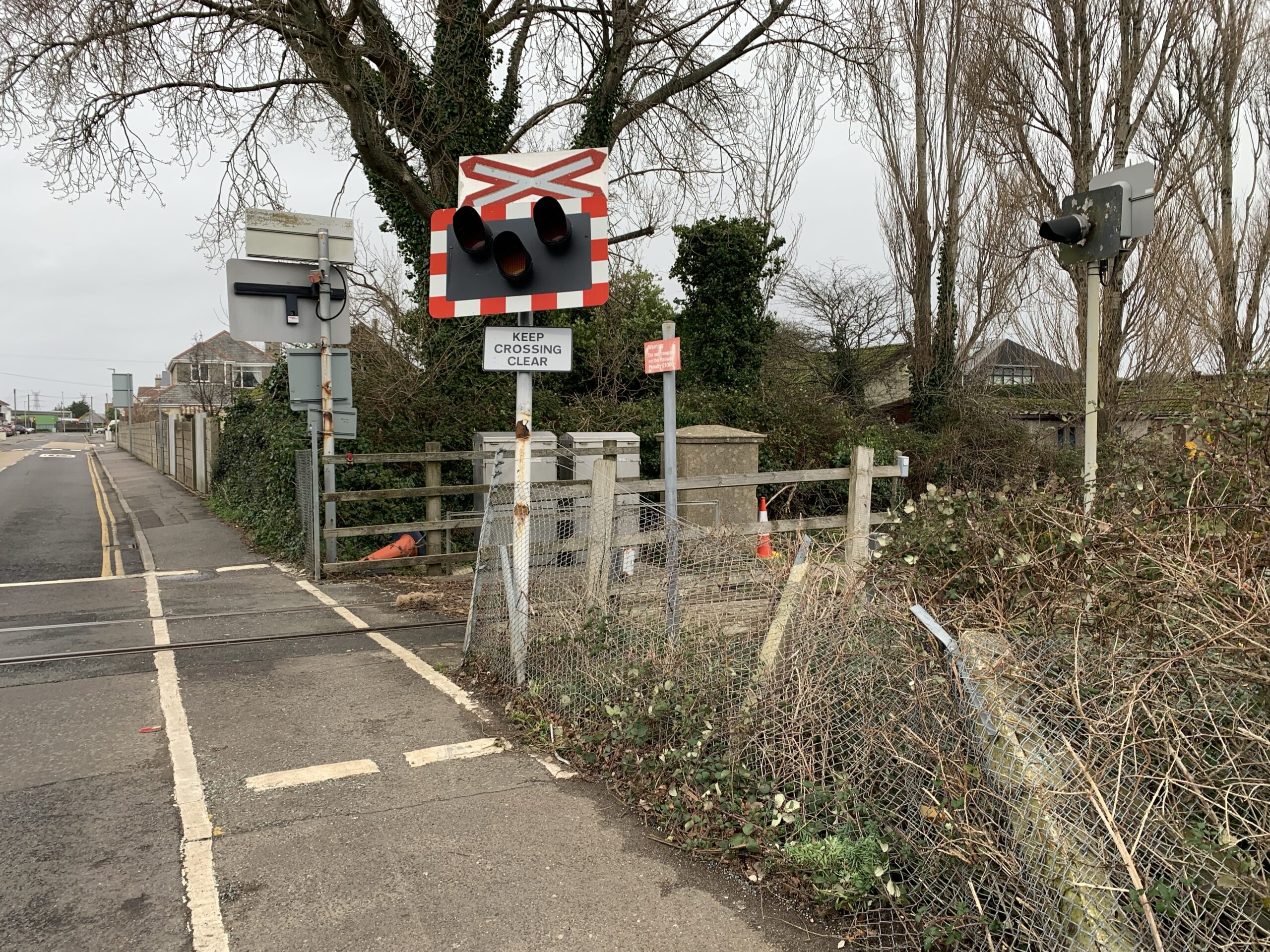
    Meanwhile, on the Hamworthy Branch, which has yet to see a train run along its length following the recent upgrade work, more remedial effort will be required following the damage to fencing and road crossing lights, as seen in the images below:
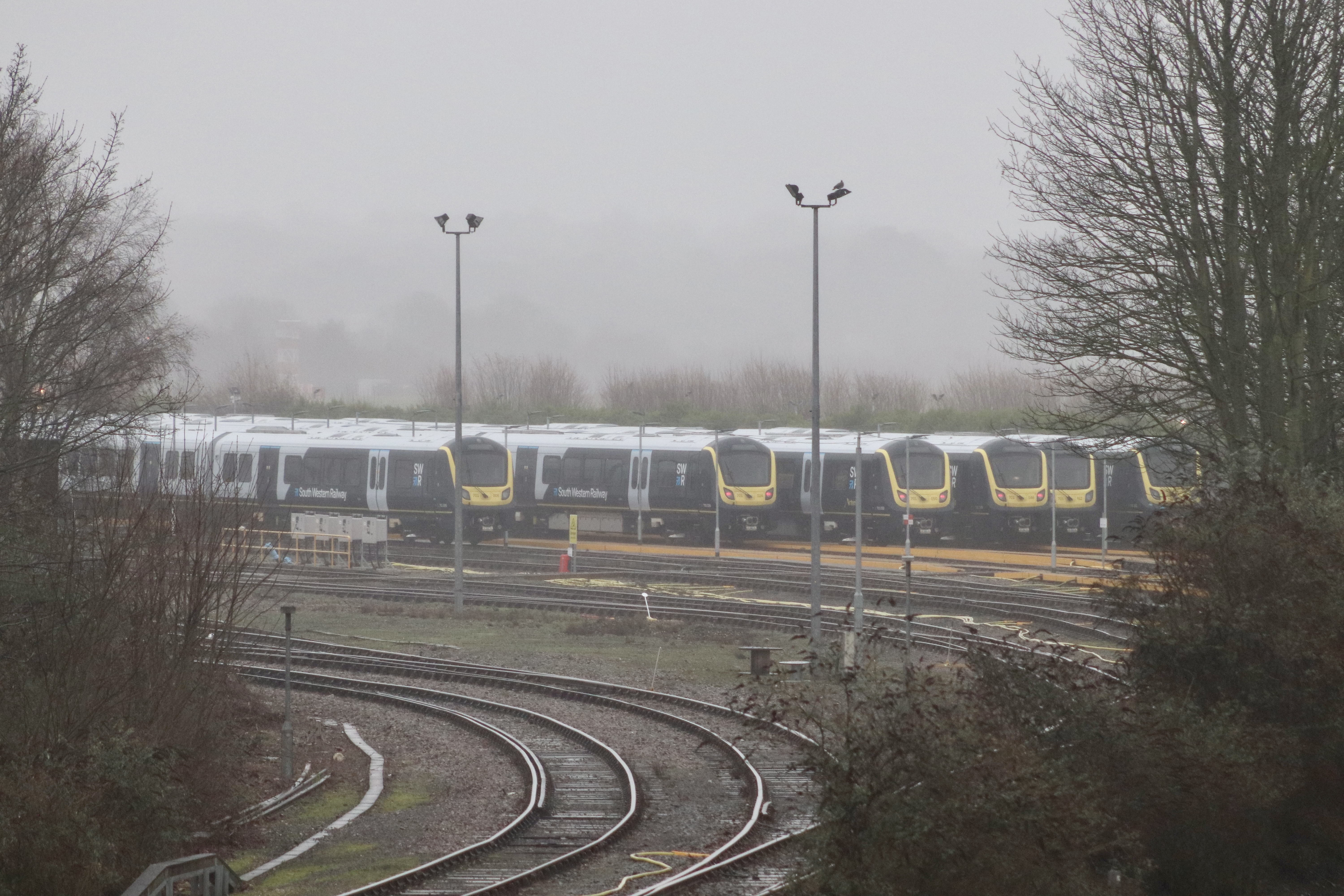
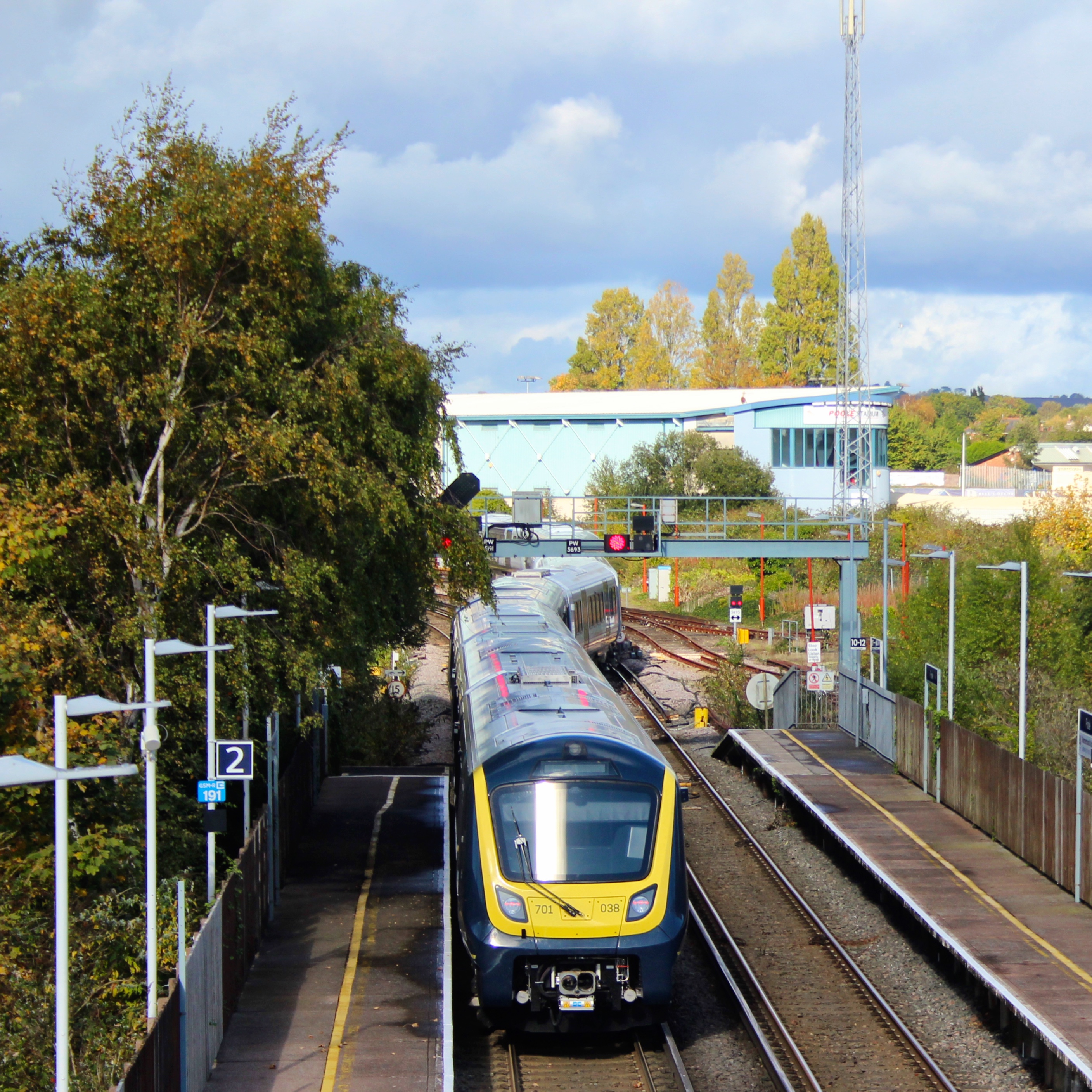
    An update to the long running South Western Railway (SWR) Class 701 Electric Multiple Units (EMU) saga has been reported with SWR formally accepting 24 finished units and repeating their commitment to introduce the fleet into service “as early in 2023 as possible”. A concurrent statement from the Department for Transport indicated that work to finalise a service-standard software package for the trains was still underway and that driver training had not yet commenced.

    A number of SWR Class 701 units standing in Eastleigh depot – 10/01/2023
    Class 701 No.’s 701031 and 701025 stabled in Eastleigh Works – 10/01/2023

    Thank you for joining us again this time. All being well, we’ll be back next week as long as I can avoid breaking anything else! This weeks blog was brought to you accompanied by the sounds of Stephen Sanchez, Ludovico Einaudi and Everything But The Girl.

    Endpiece:

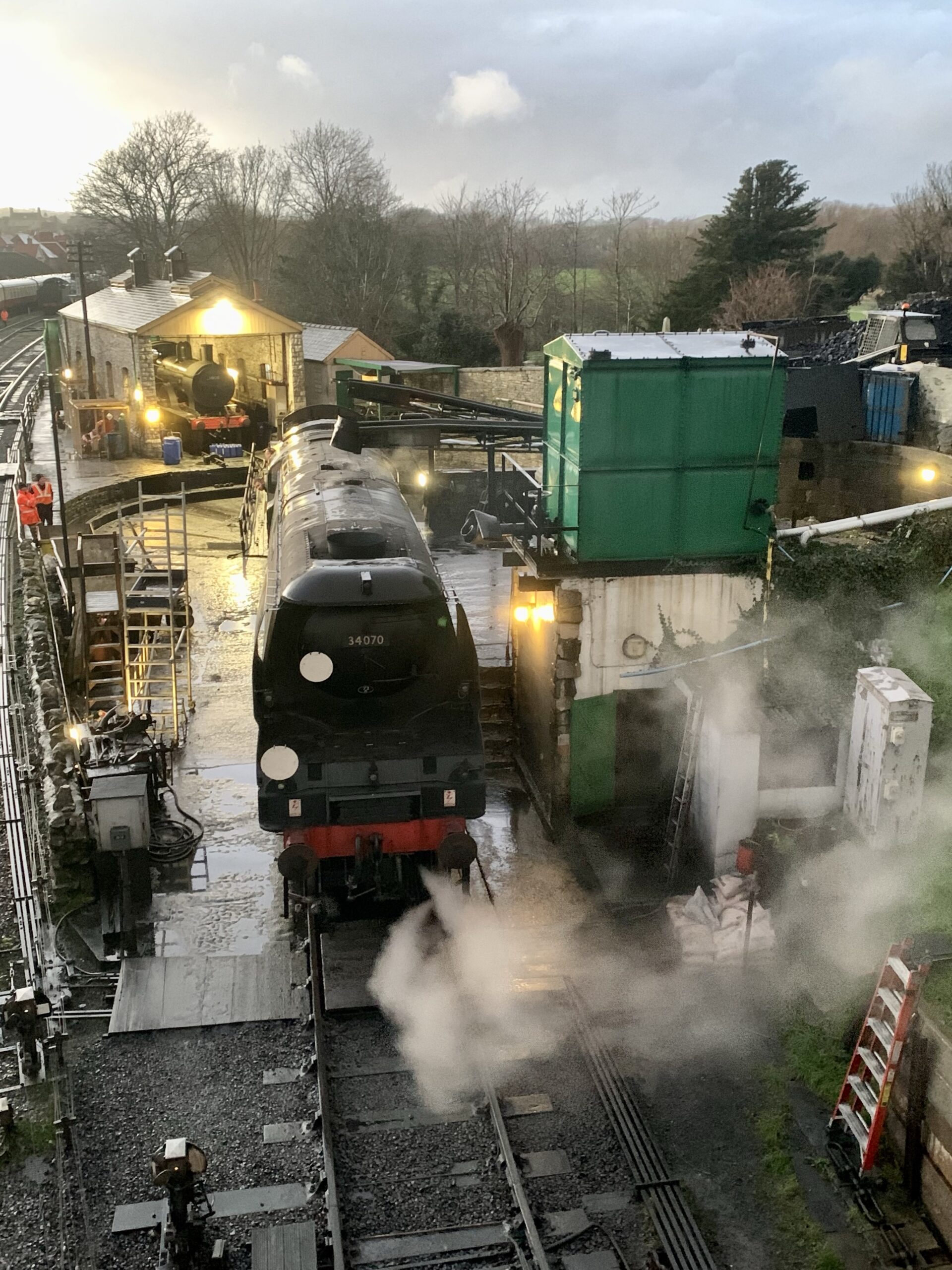
    SR Battle Of Britain Class 4-6-2 No. 34070 ‘Manston’ at rest on Swanage shed following the first day of the Swanage Railway Winter Warm Up – 07/01/2023
  • New Year 2023

    Thursday 22nd December to Tuesday 3rd January 2023

    Empty trains parked up on Christmas Day at Weymouth railway station – 25/12/2022

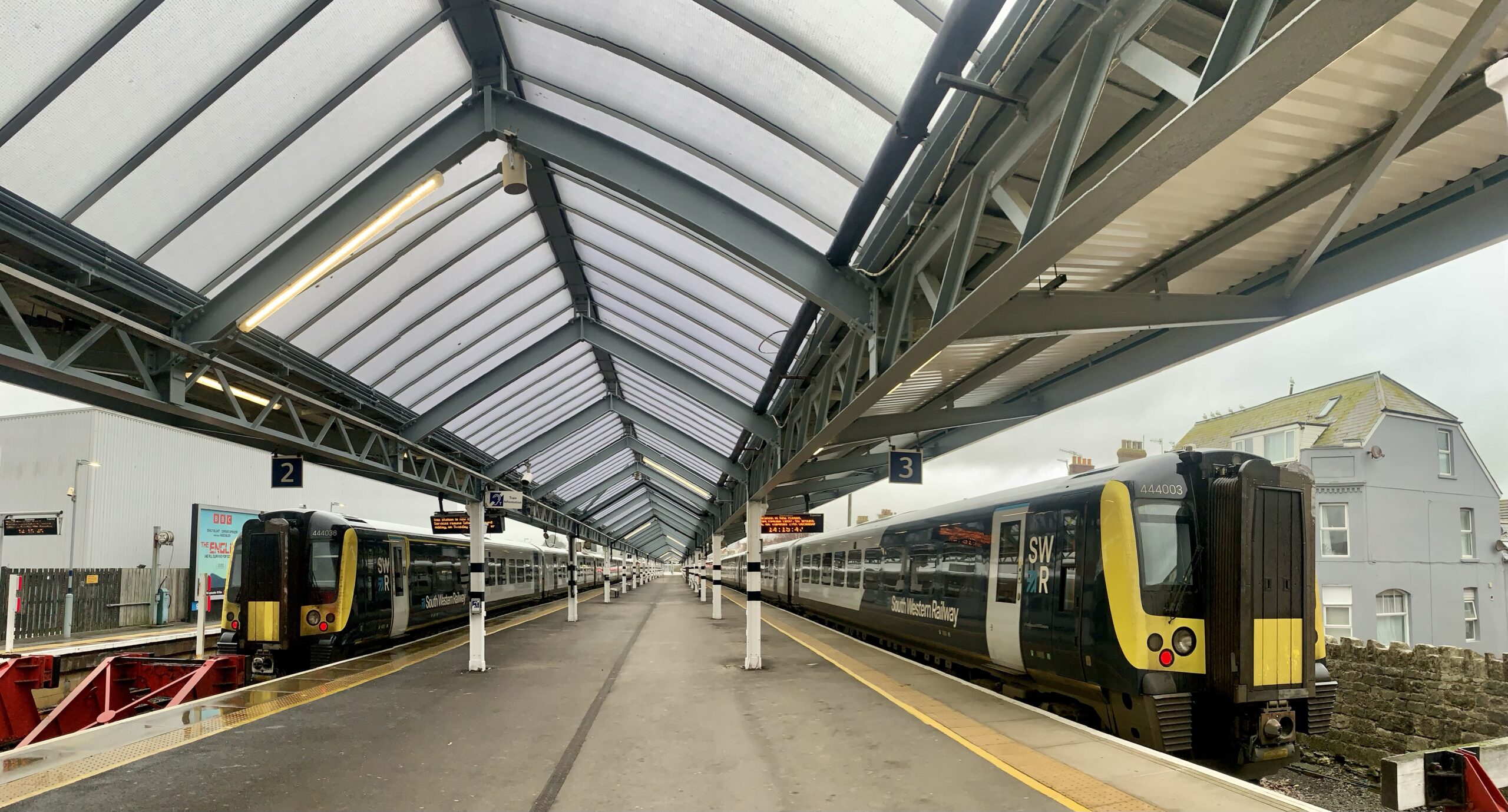
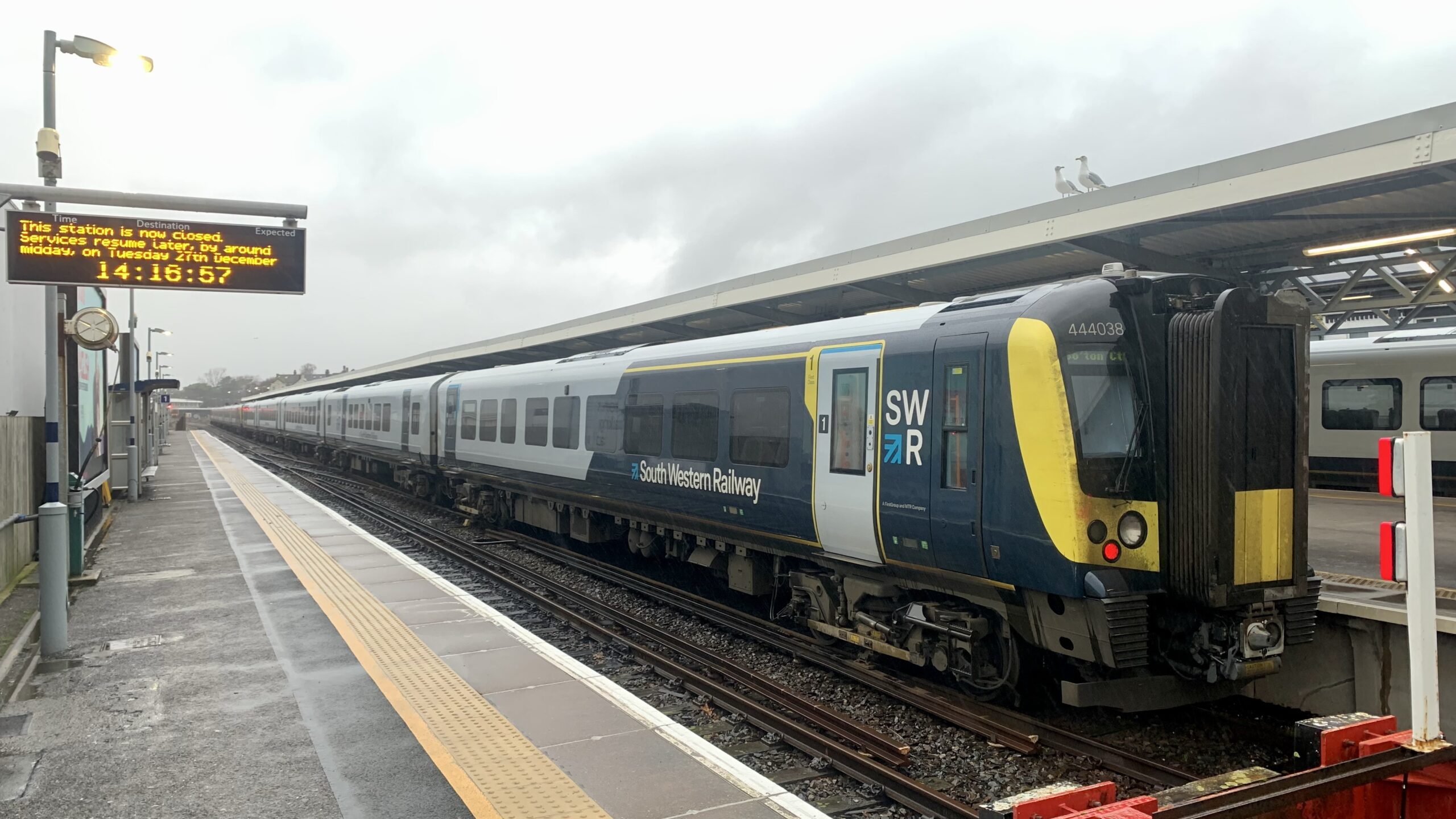
    The UK rail network wound down for the Christmas break early on 24th December in 2022 because of industrial action. Several South Western Railway (SWR) Class 444 Electric Multiple Units and a Great Western Railway (GWR) Class 165 diesel multiple unit spent Christmas parked up at Weymouth railway station awaiting the restart on the 27th December 2022.

    SWR Class 444 EMU No. 444038 in Weymouth – 25/12/2022

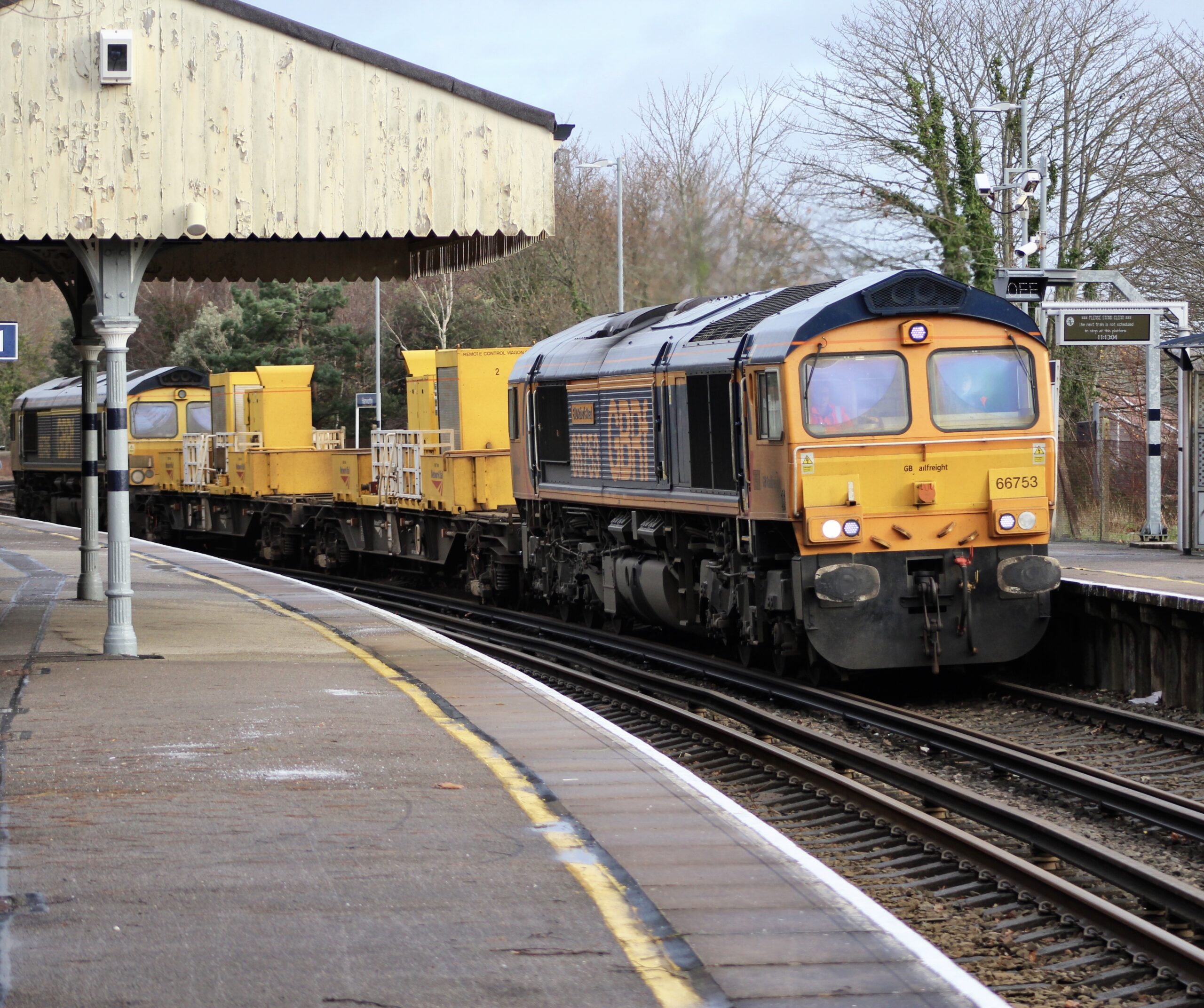
    Following the Christmas close down of the railways, the first train to run on the Bournemouth to Weymouth route was the seasonal Snow & Ice Treatment Train (SITT) which set off from Eastleigh mid-morning to ensure rails were free of ice before passenger services started after mid-day.

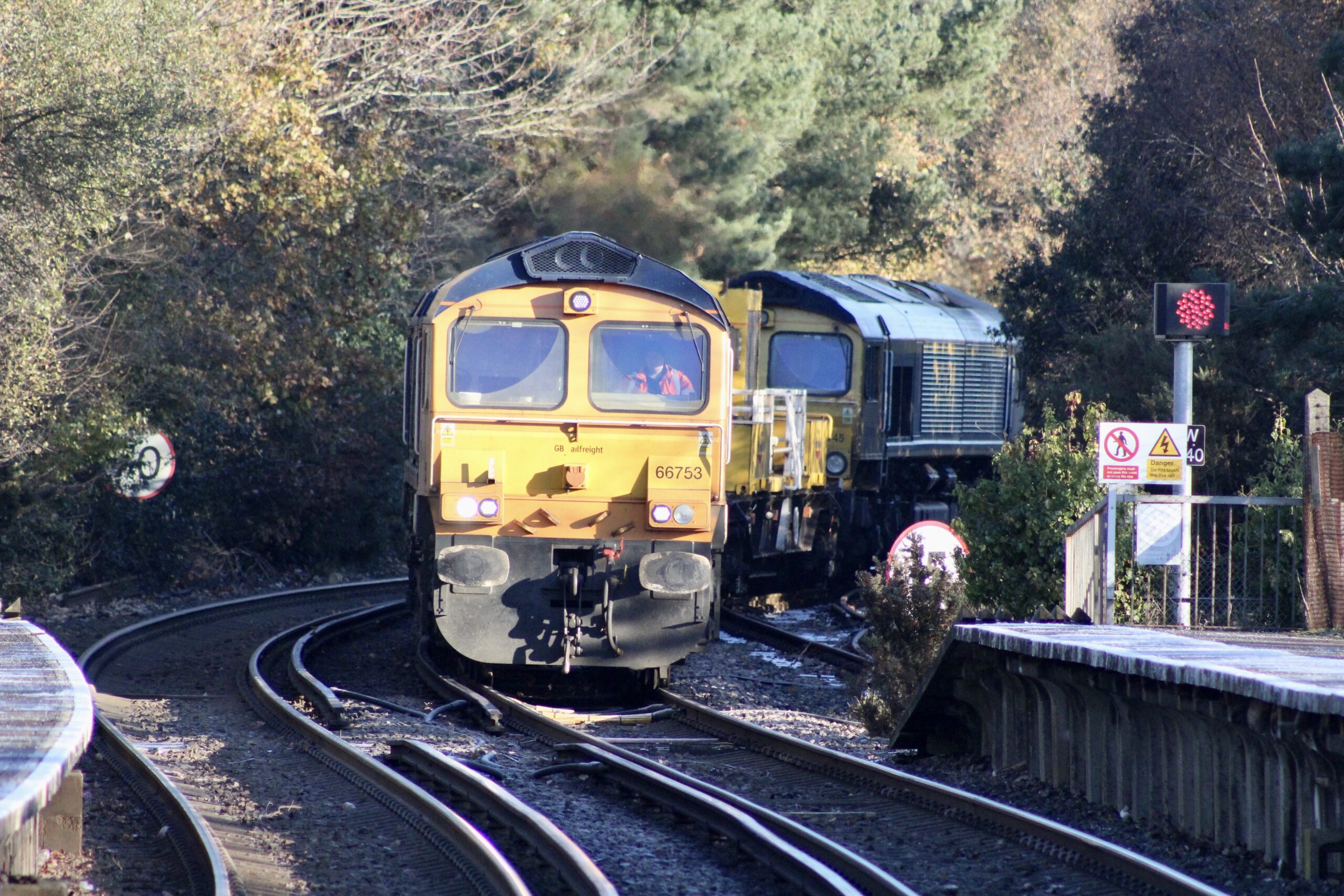
    GBRf Class 66 locomotives No.’s 66753 ‘EMD Roberts Road’ and 66745 top and tail 3Y88 1000 Eastleigh East Yard to Totton Yard SITT through Hamworthy on the outward run to Weymouth – 27/12/2022
    GBRf Class 66 locomotives No.’s 66745 and 66753 ‘EMD Roberts Road’ top and tail 3Y88 1000 Eastleigh East Yard to Totton Yard SITT across the Holes Bay causeway on the return run from Weymouth. No. 66722 replaced No. 66753 two days later, although this combination has yet to venture West to Bournemouth or Weymouth as SITT runs have been working East from Totton Yard – 27/12/2022
    GBRf Class 66 locomotives No.’s 66753 ‘EMD Roberts Road’ and 66745 top and tail 3Y88 1000 Eastleigh East Yard to Totton Yard SITT – 27/12/2022. Additional video courtesy of @dabuckley967

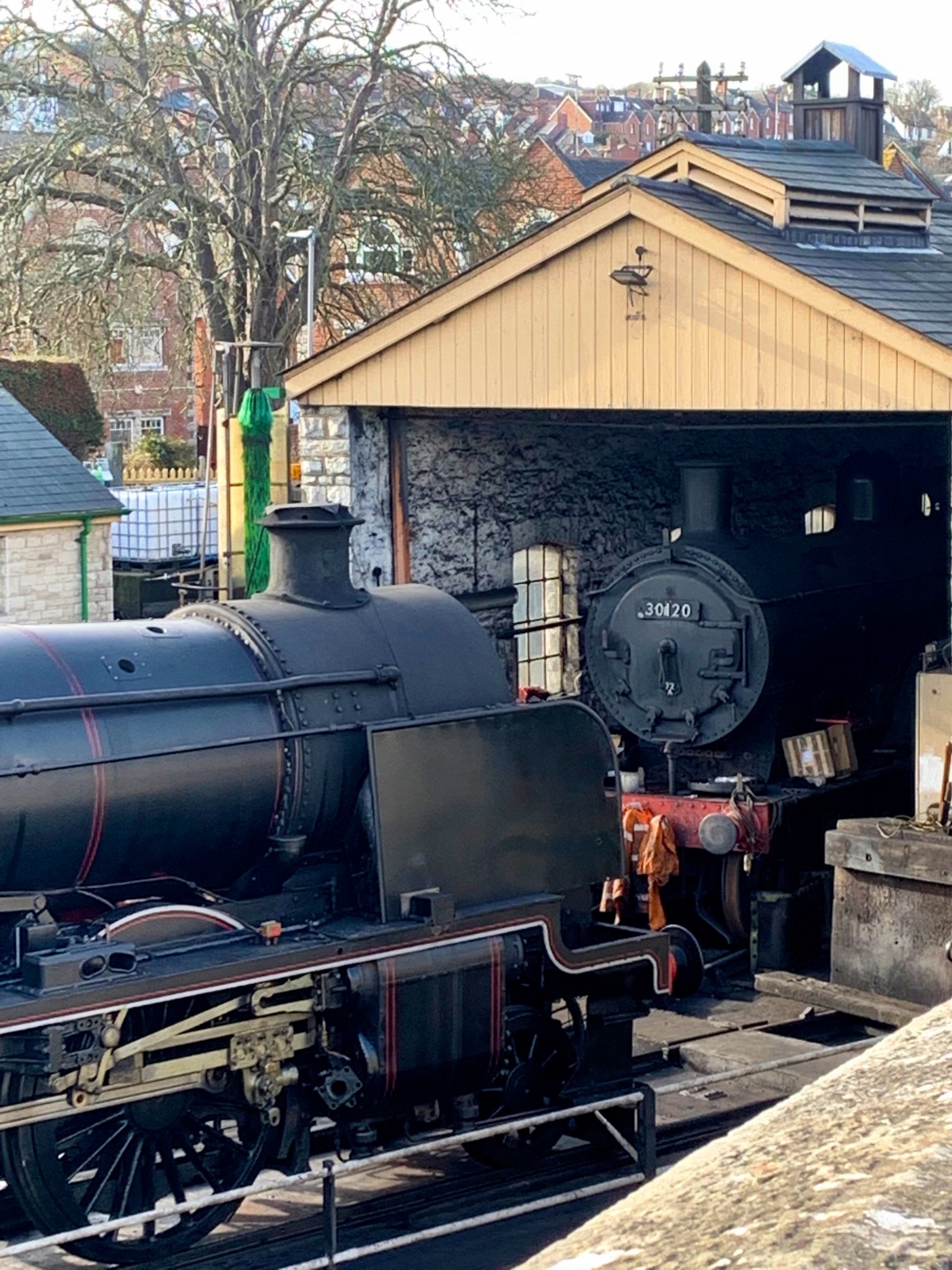
    1st January 2023 marks 100 years since the formation of the ‘Big Four’, the term coined by “The Railway Magazine” for the grouping of 120 individual railway companies into just four: Great Western Railway (GWR), Southern Railway (SR), London, Midland and Scottish Railway (LMS) and London and North Eastern Railway (LNER). The grouping was outlined in the 1921 Railways Act which strived to stem losses and regulate what were seen as inefficient, diverse and, in some cases, overlapping operations which had been struggling following the Great War. The act eliminated competition, as each group now had a regional monopoly. It also established standard fares and charges for particular services. 75 years ago on 1st January 1948, as a result of the Transport Act of 1947, the Big Four companies were nationalised to form British Railways.

    LSWR T9 Class No. 30120, seen here with SR U Class No. 31806, is a surviving locomotive from the pre-Big Four grouping period having been built in 1899 and has been stored at Swanage following the expiry of her boiler certificate in August 2020 – 12/02/2022

    New Years Day 2023 saw Yoshi’s Mum and I heading to London to take in the conveniently extended “Beatrix Potter: Drawn to Nature” exhibition at the V&A and Matthew Bourne’s “Sleeping Beauty” at Sadler’s Wells. We had intended to take the train, but South Western Railways timetabling around the RMT industrial action meant we would not be able to get everything done and home on the day with our last train leaving London Waterloo at 1830. So instead, we took to the roads and parked up at Kew Gardens and travelled into Town using the London Underground District Line from there.

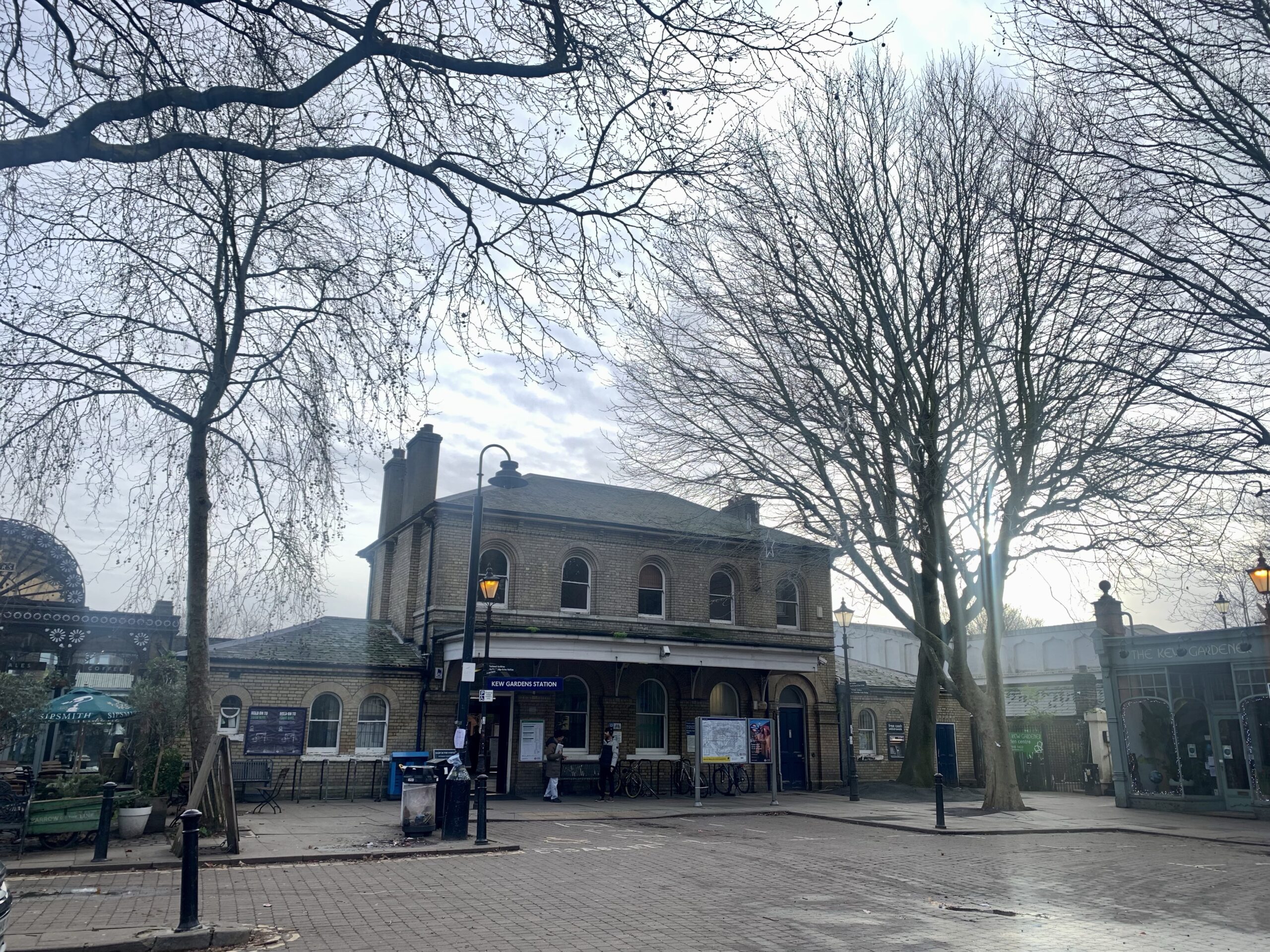
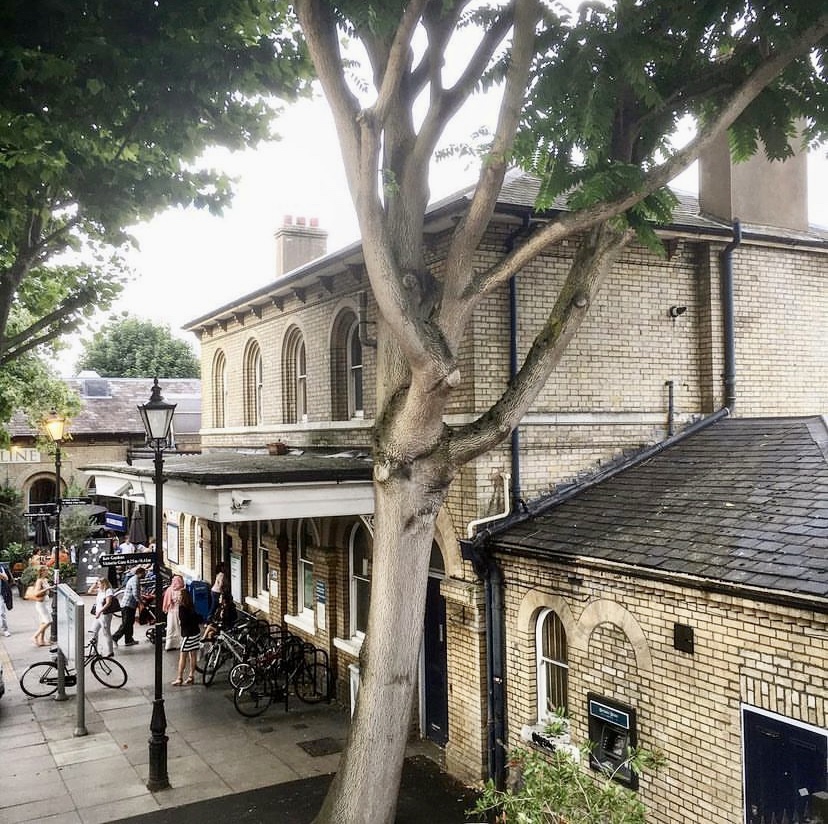
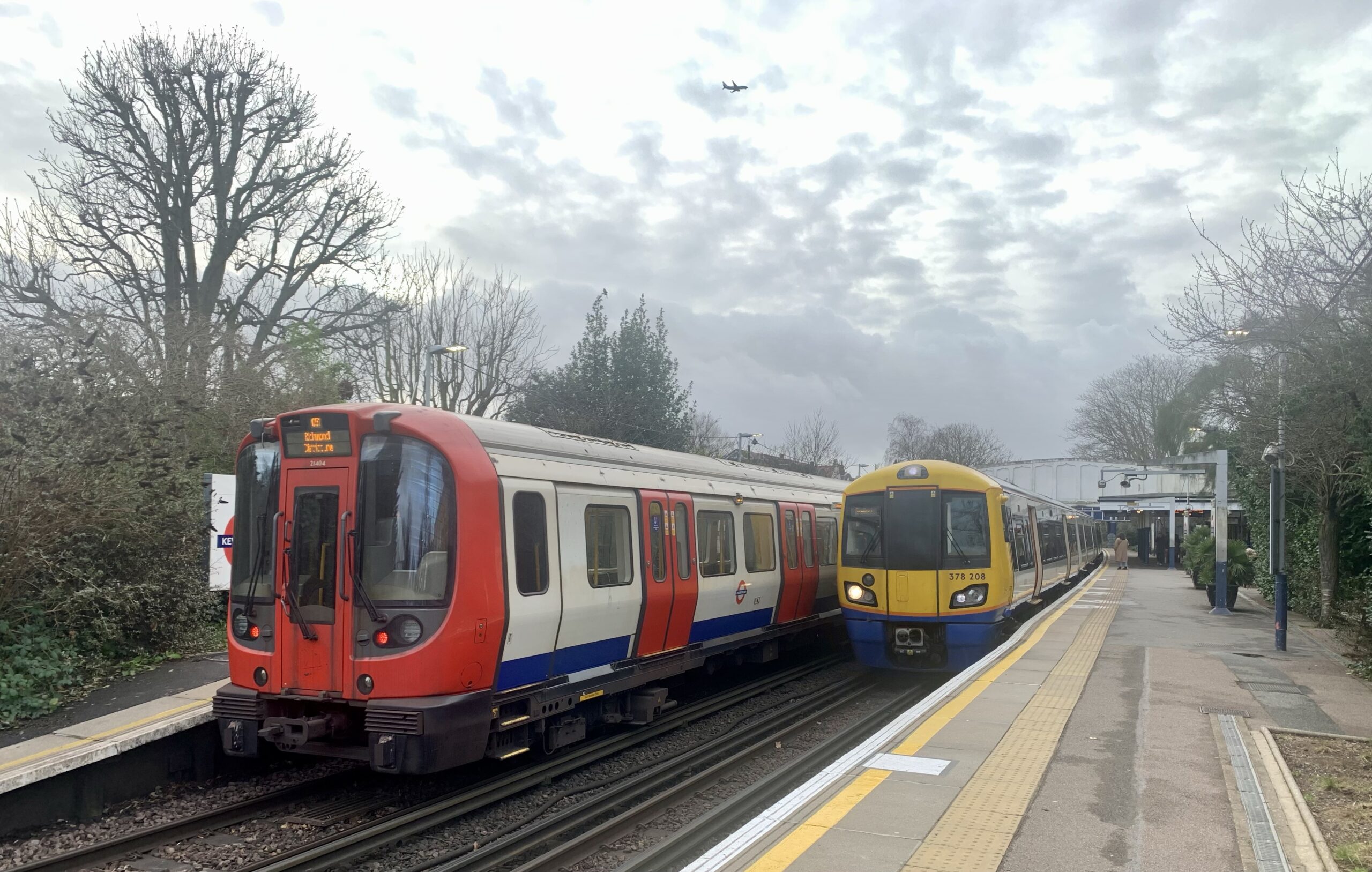
    I like Kew, it has a lovely village feel and Kew Gardens railway station is a fine Grade II listed example of mid-Victorian architecture and one of the last remaining 19th Century stations on the North London Line having been opened in 1869 by the London & South Western Railway (L&SWR) who were, prior to the formation of ‘The Big Four’, custodians of the Bournemouth to Dorchester line. Current services calling at Kew Gardens are operated by London Underground (LU) and National Rail London Overground utilising LU S7 stock and British Rail Class 378’s respectively. The Class 378 EMU’s replaced the Class 313’s operated by Silverlink and were introduced in 2008. Kew Gardens is also the only station on the London Underground network I know of which has a pub attached to it. The pub once had a door which gave access to platform one, but this is no longer in use. The pub is currently called ‘The Tap on the Line’ but was formerly known as ‘The Railway’.

    The footbridge over the tracks at the southern end of the station buildings is Grade II listed in its own right and is a rare surviving example of a reinforced concrete structure built by French engineer Francois Hennebique (1842-1921). The bridge, restored in 2004, has high sides which protected users from the smoke emitted from steam locomotives passing below when originally installed.

    Kew Gardens railway station exterior on the “Up” side – 01/01/2023
    Kew Gardens railway station – 30/07/2016
    Kew Gardens railway station, platform side – 01/01/2023
    Class 378 Capitalstar Electric Multiple Unit No. 378208 operated by London Overground arrives at Kew Gardens with 2N05 1010 Richmond NII to Stratford while London Underground S7 Stock Fleet No.21403 with driving coach No. 21404 at the rear of 2O51 Upminster LT to Upminster LT via Richmond awaits departure – 01/01/2023
    London Underground S7 Stock Fleet No. 21377 with driving coach No. 21378 leading arrives at Kew Gardens working 2O16 Upminster LT to Upminster LT via Richmond. The footbridge can be seen in the background – 01/01/2023

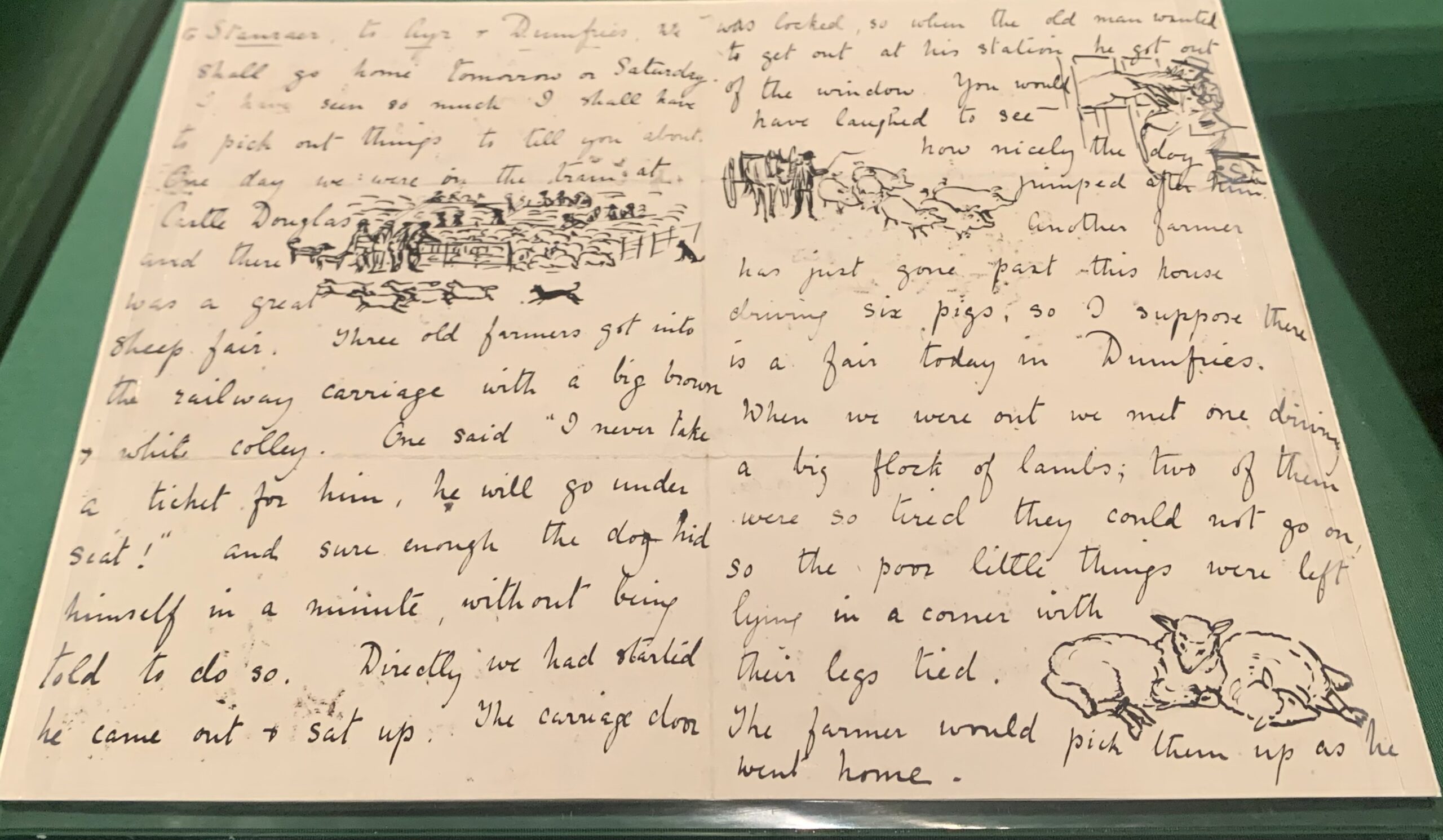
    I very much enjoyed the V&A’s exhibition celebrating the life and work of Beatrix Potter. One railway themed item was this illustrated letter Beatrix sent to Marjorie Moore, the daughter of her last governess, detailing an eventful train journey when a farmer’s collie exited the carriage by jumping through a window:

    Letter from Beatrix Potter to Marjorie Moore written on 23rd August 1898
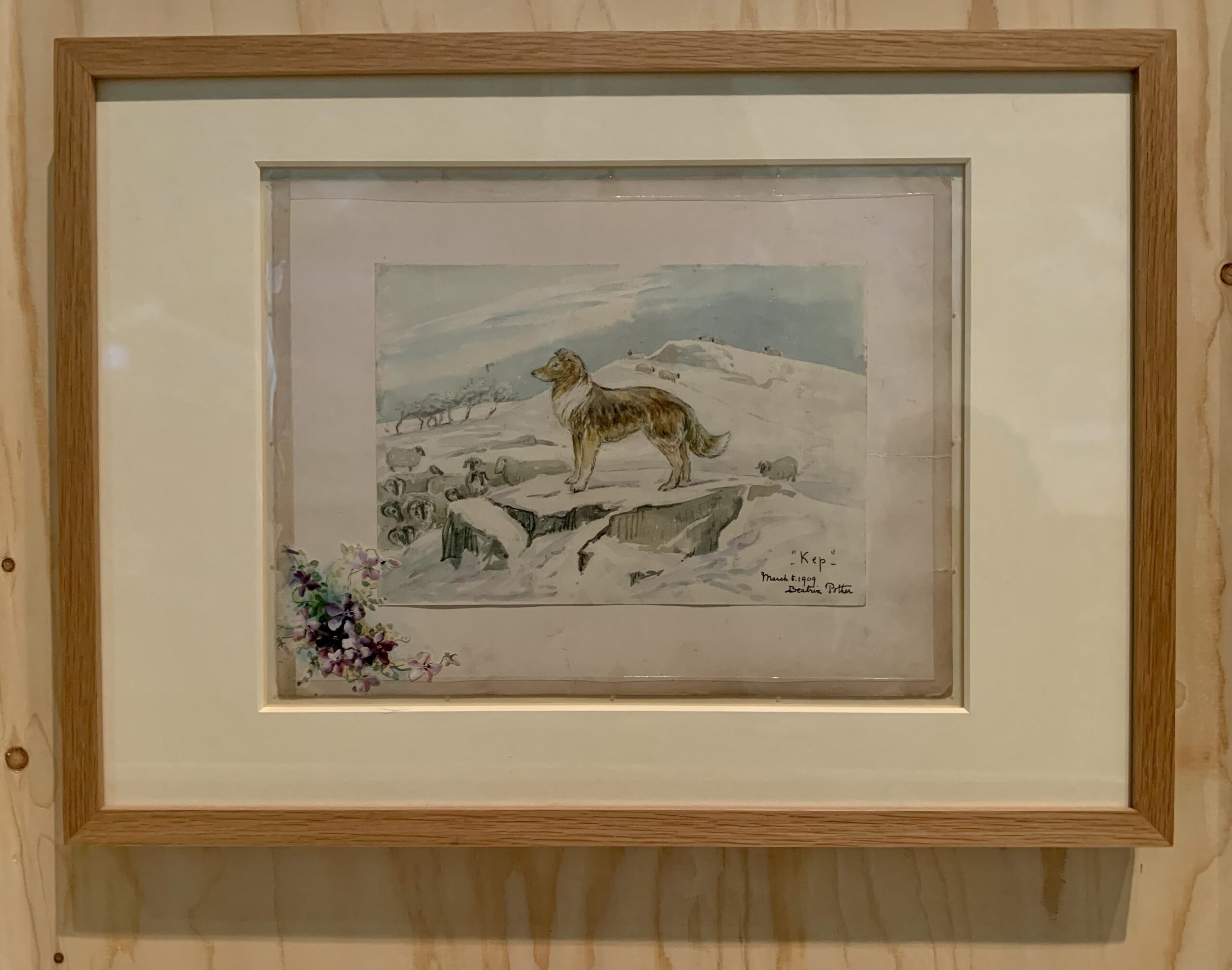
    Beatrix had many animals during her lifetime. Kep, who is shown here was immortalised as Jemima Puddle-Duck’s hero when he rescued her from a ‘sandy whiskered gentleman’

    Following our visit to the V&A (and a fabulous lunch – mustn’t forget the lunch!) we headed off to Islington via Old St. Pancras Churchyard so we could see ‘The Hardy Tree’ which had recently succumbed to a fungal infection and had fallen. During the 1860’s the Midland Railway line was being built over part of the original St. Pancras Churchyard. Arthur Blomfield, a Covent Garden based architect, was commissioned by the Bishop of London to supervise the proper exhumation of human remains and the dismantling of tombs. He passed this unenviable task onto his protégé Thomas Hardy in 1865. Hardy (1840-1928) is best known as a Dorset author and poet with his novels set in rural ‘Wessex’, however before turning to writing full time he studied architecture in London from 1862-67.

    Hardy would have spent many hours in Old St. Pancras Churchyard during the construction of the railway, overseeing the careful removal of bodies and tombs from the land on which the tracks were being laid. Legend has it that Hardy stacked displaced headstones in a circle around an ash tree with the stones becoming embedded in the tree over time.

    A few years before Hardy’s involvement, Charles Dickens (1812-1870) makes reference to Old St. Pancras Churchyard in “A Tale of Two Cities” (1859), as the churchyard in which Roger Cly was buried and where Jerry Cruncher was known to ‘fish’ – a 19th Century term for tomb robbery and body snatching!

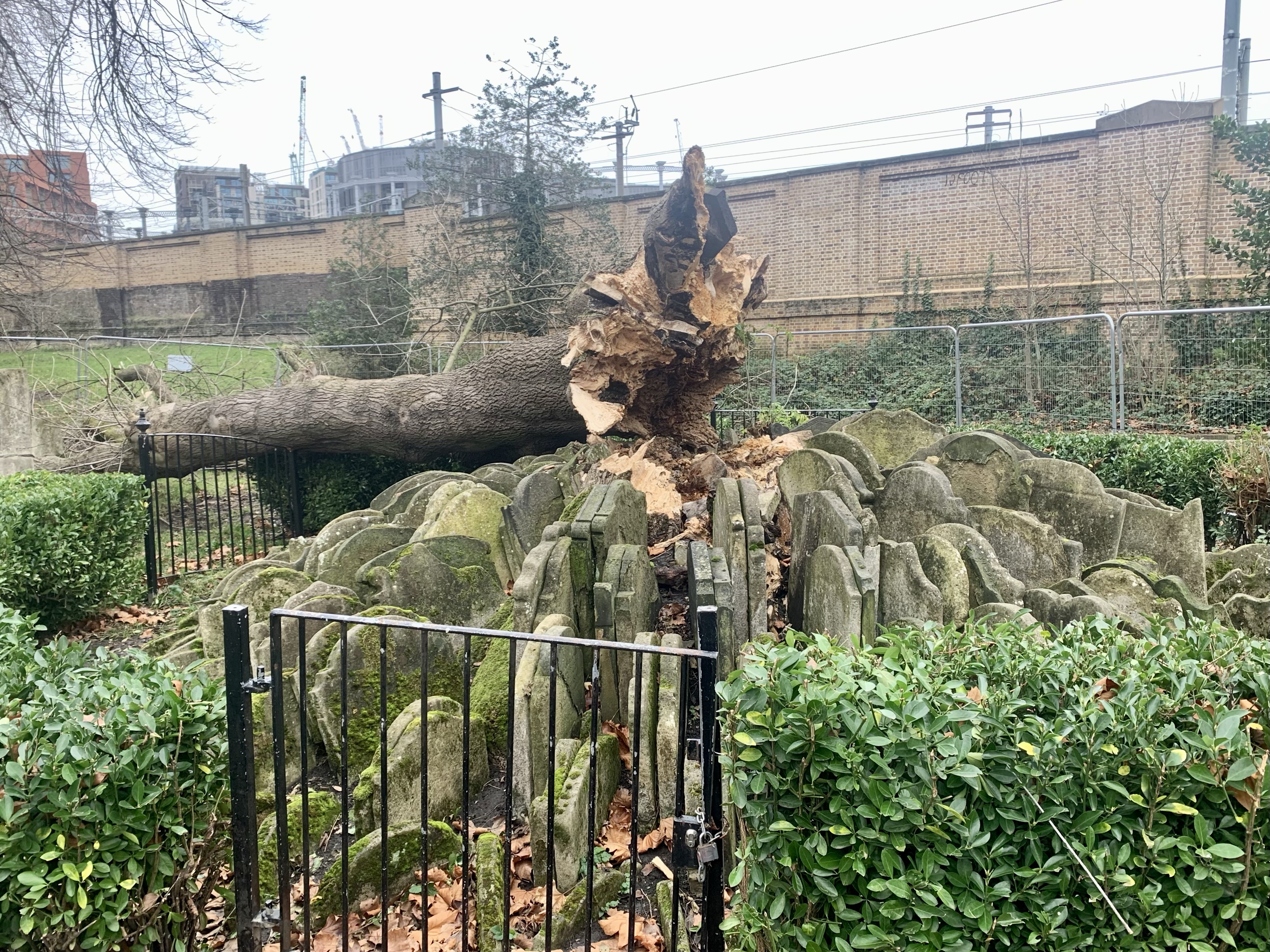
    The sad sight of the fallen Hardy Tree, St. Pancras Old Churchyard – 01/01/2023

    Thanks for reading and Happy New Year! This blog entry was brought to you by Halls Soothers. Until next time, we’ll leave you with this; Thomas Hardy, inspired by a visit to Upwey, wrote a poem “At the Railway Station, Upway”, about waiting for a train at a country station: 

    “There is not much that I can do,
    For I’ve no money that’s quite my own!”
    Spoke up the pitying child –
    A little boy with a violin
    At the station before the train came in, –
    “But I can play my fiddle to you,
    And a nice one ’tis, and good in tone!”

    The man in the handcuffs smiled;
    The constable looked, and he smiled, too,
    As the fiddle began to twang;
    And the man in the handcuffs suddenly sang
    Uproariously:
    “This life so free
    Is the thing for me!”
    And the constable smiled, and said no word,
    As if unconscious of what he heard;
    And so they went on till the train came in –
    The convict, and boy with the violin.

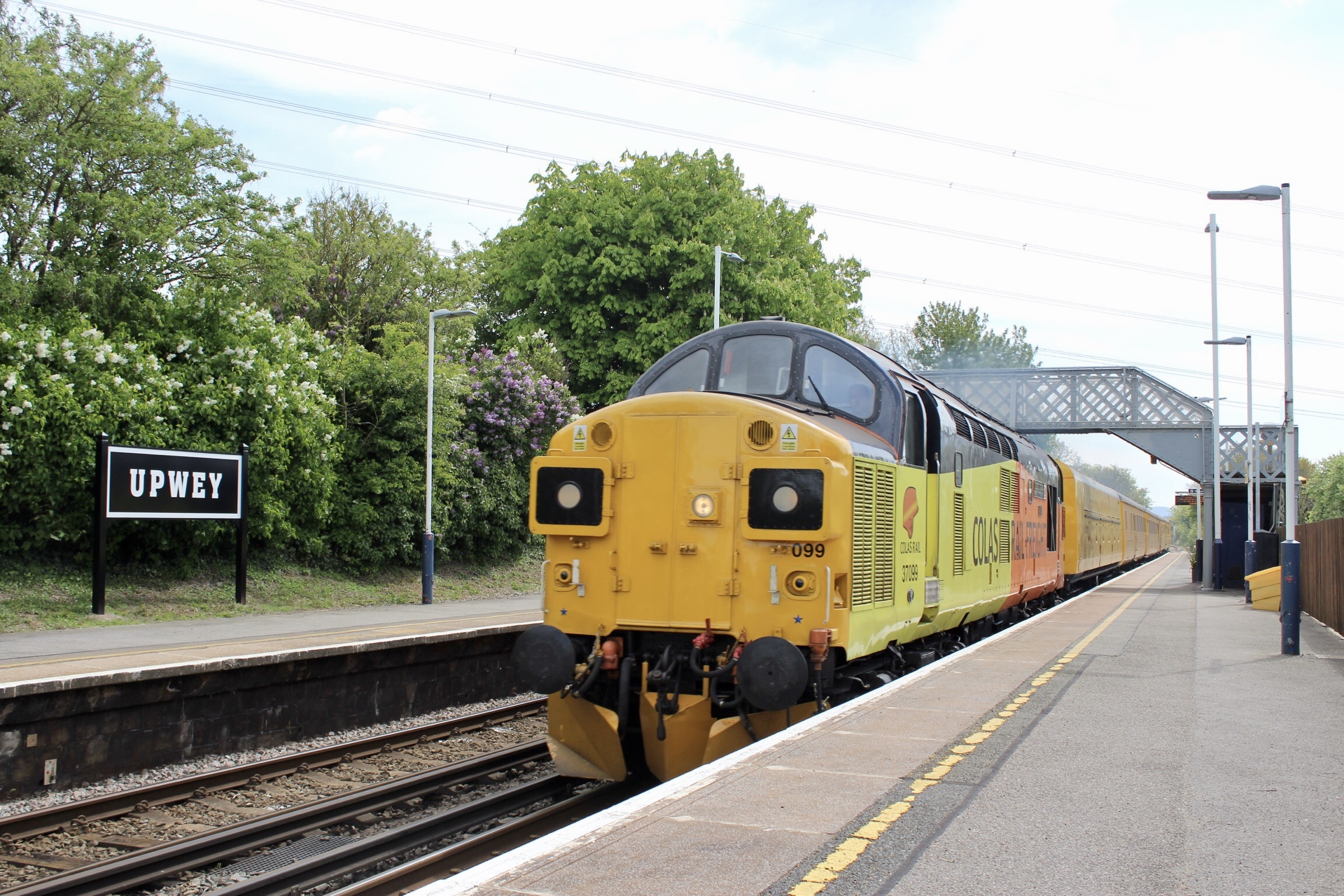
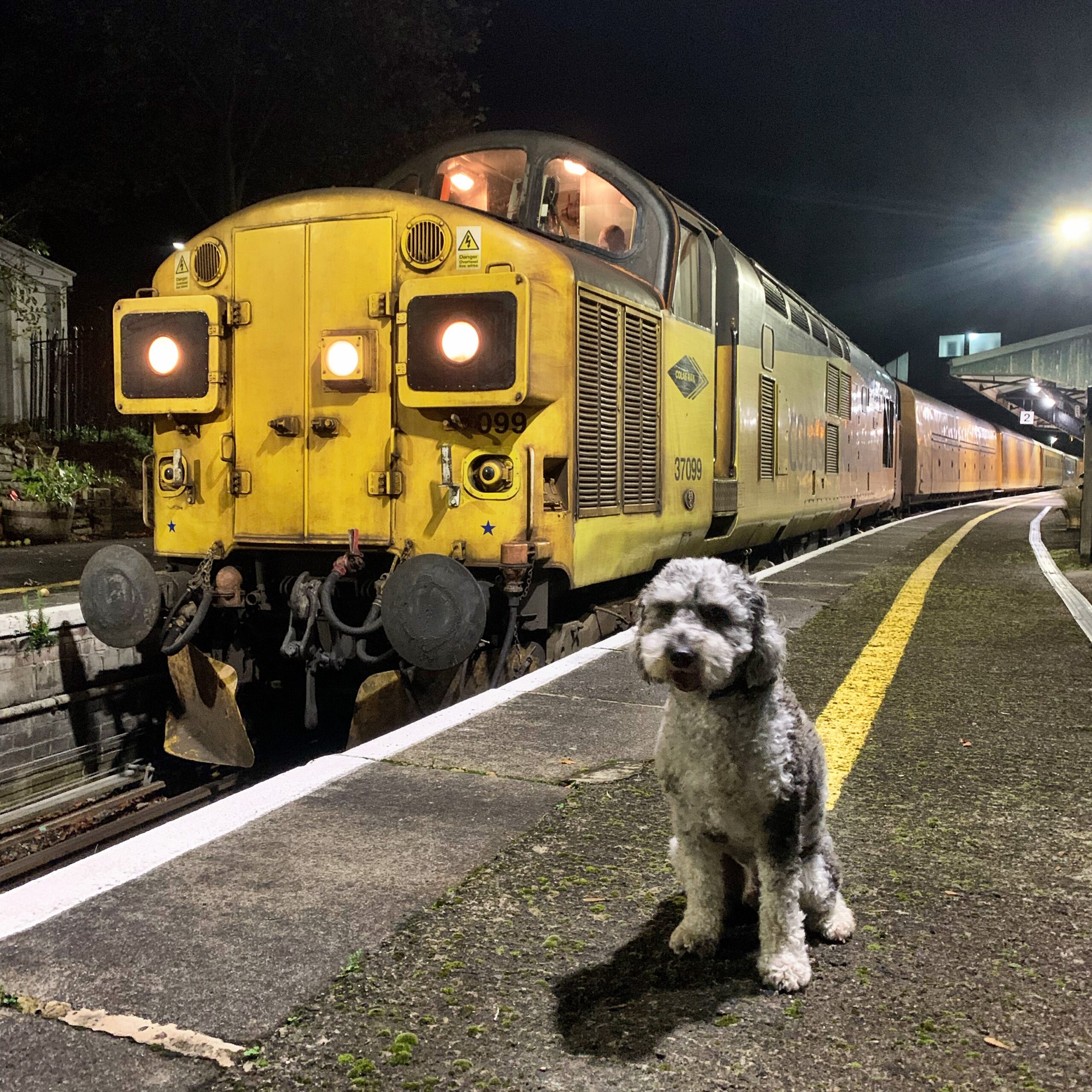
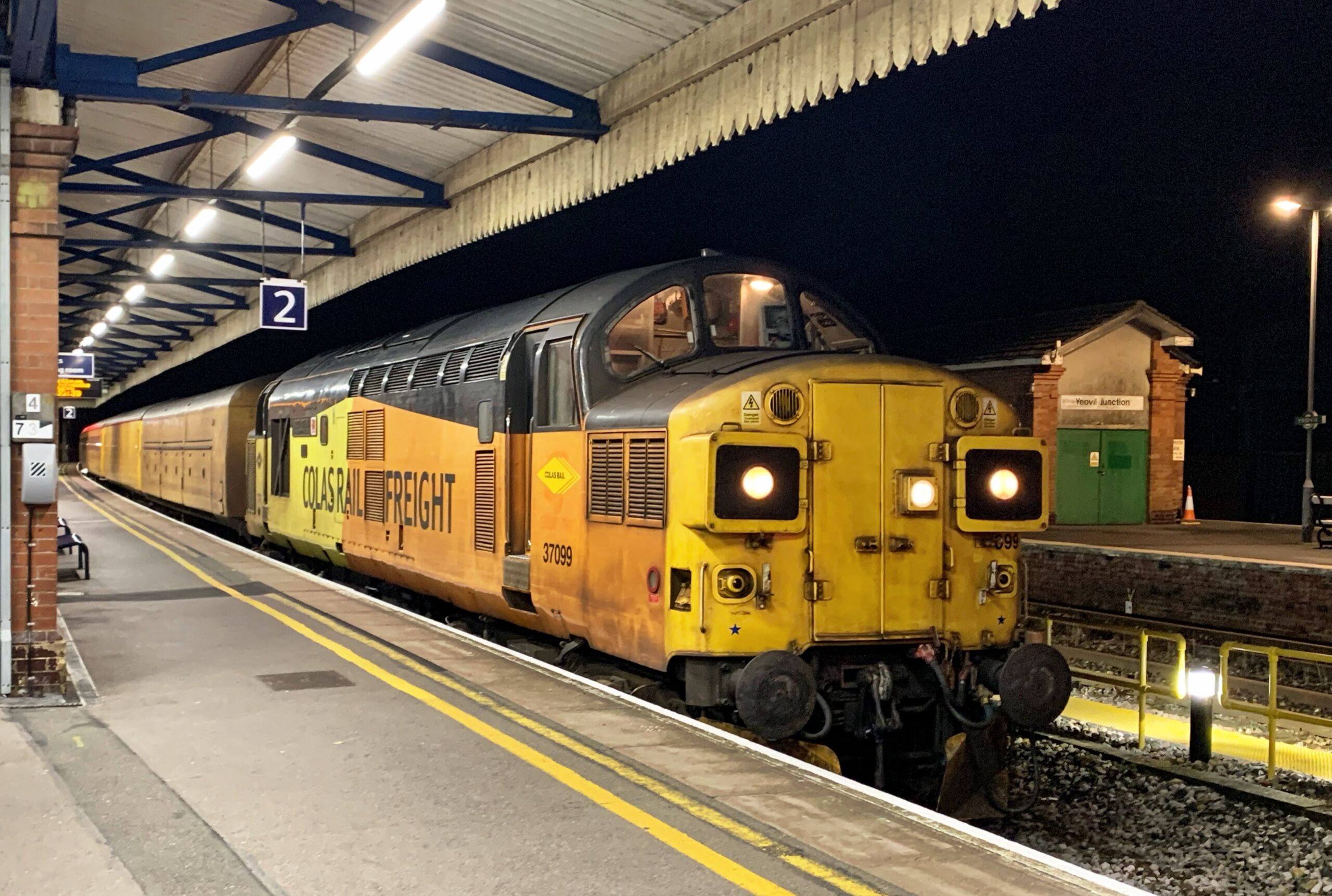
    Colas Rail Class 37 No. 37099 working a test train through Upwey – 27/04/2017
  • Seaton

    Wednesday 14th December to Wednesday 21st December 2022

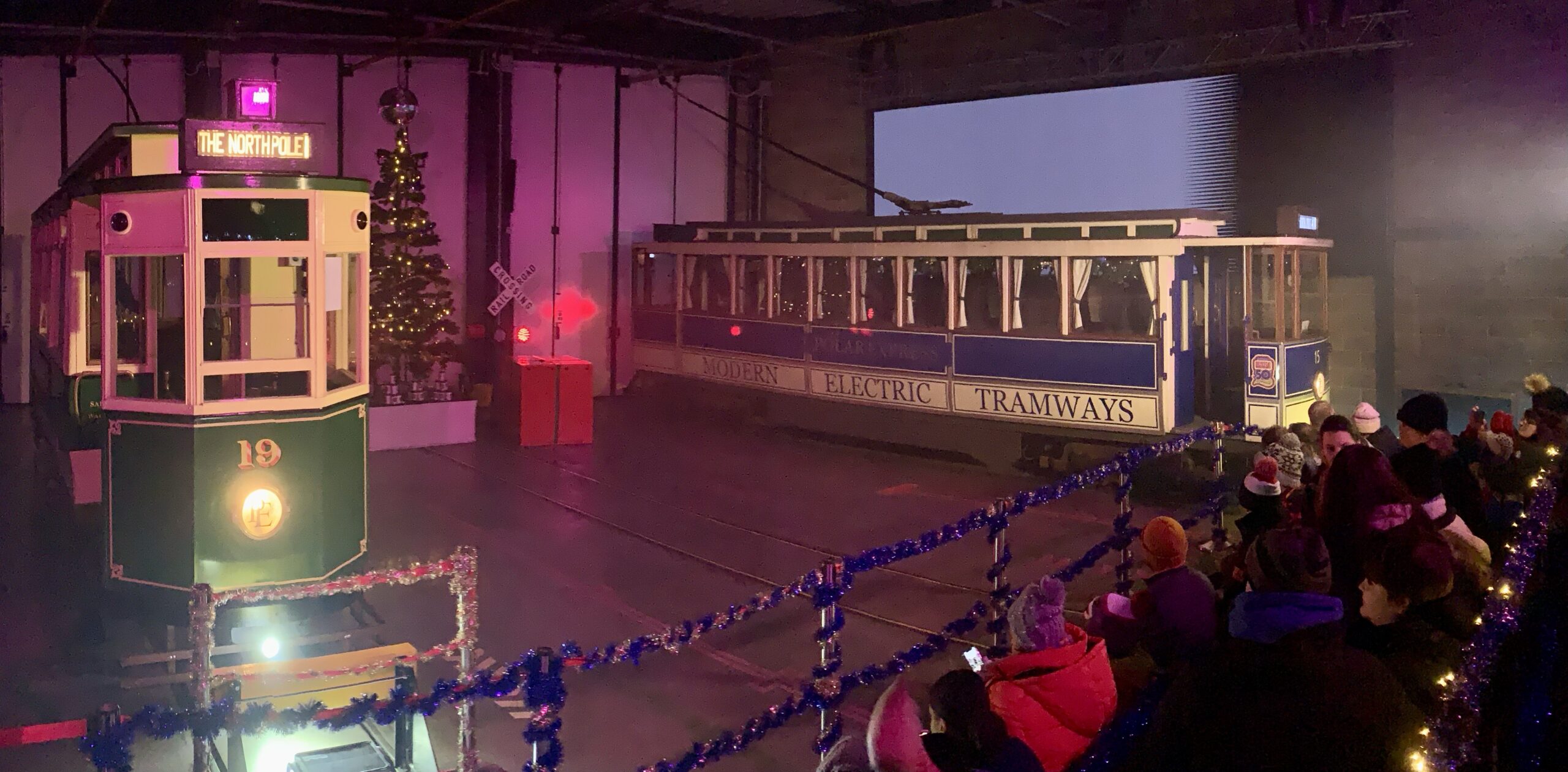
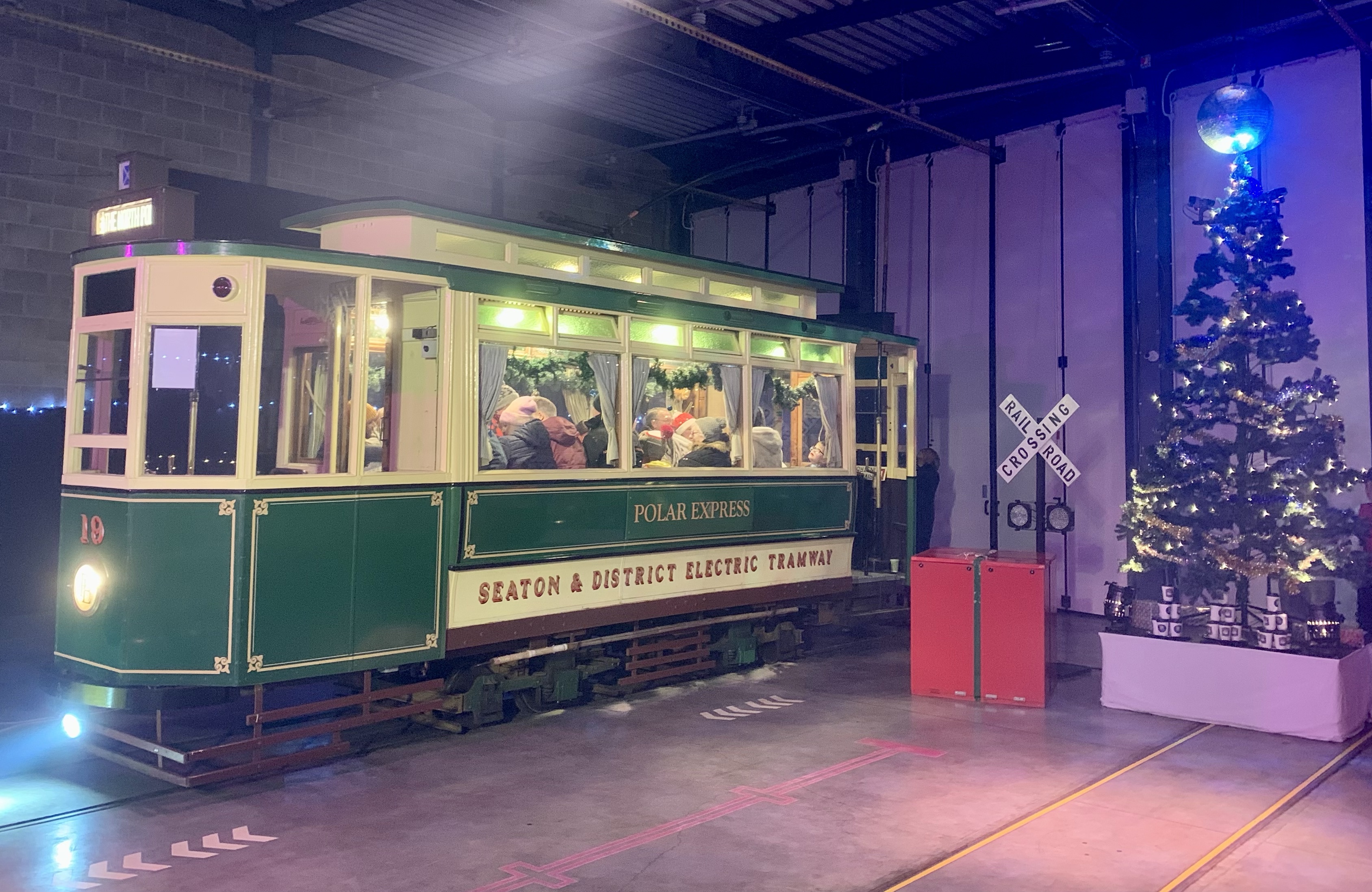
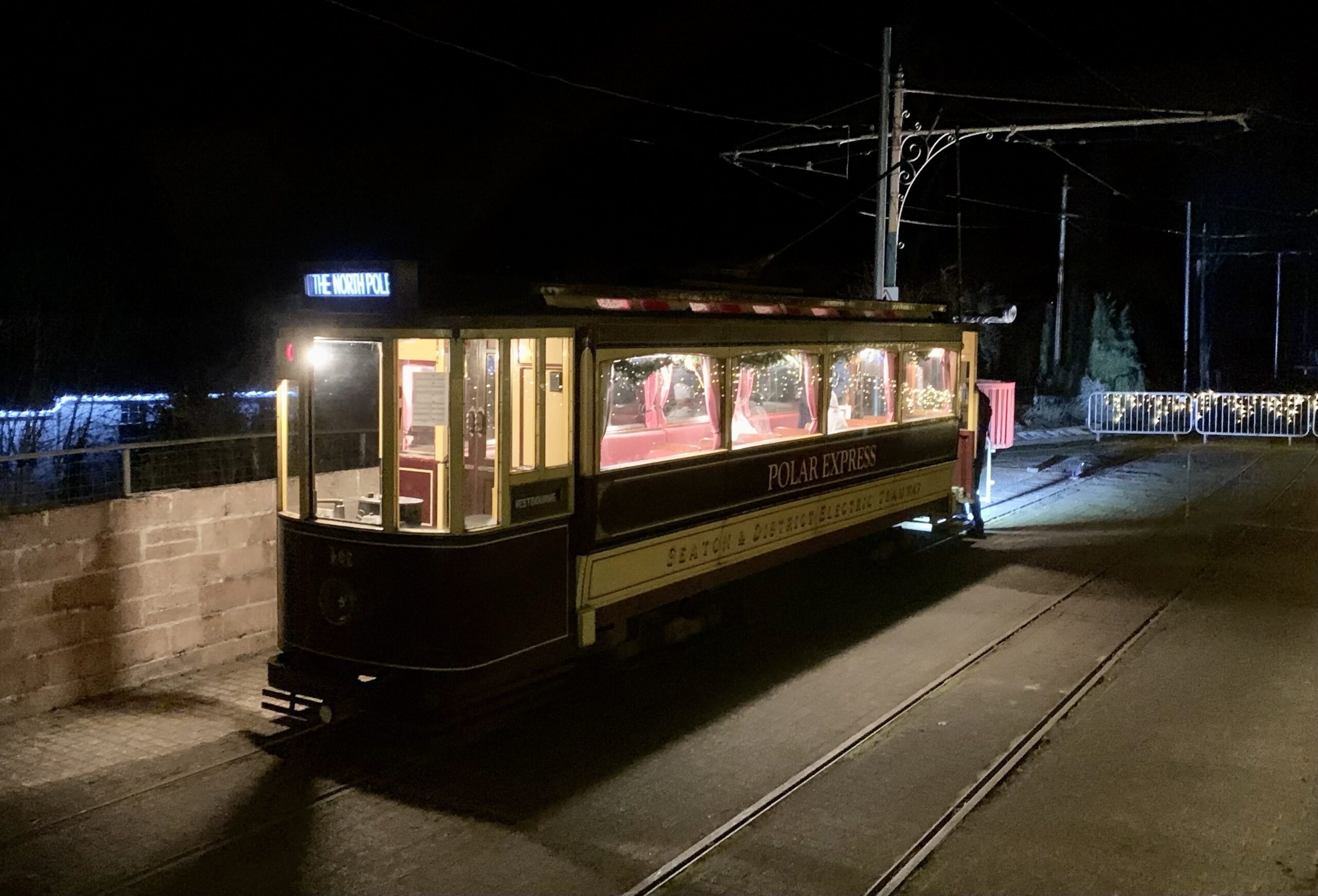
    Seaton Tramway’s Polar Express – 15/12/2022

    This week Yoshi’s mum and I took a trip on the Seaton Tramway’s Polar Express. We enjoyed hot chocolate and cookies and received the first gift of Christmas from the big man himself. Unfortunately, doggos were not allowed on the festive trams, but Yoshi had fun at his cousins’ for a few hours, as did we in the company of the conductor, chefs and elves on our journey to the North Pole.

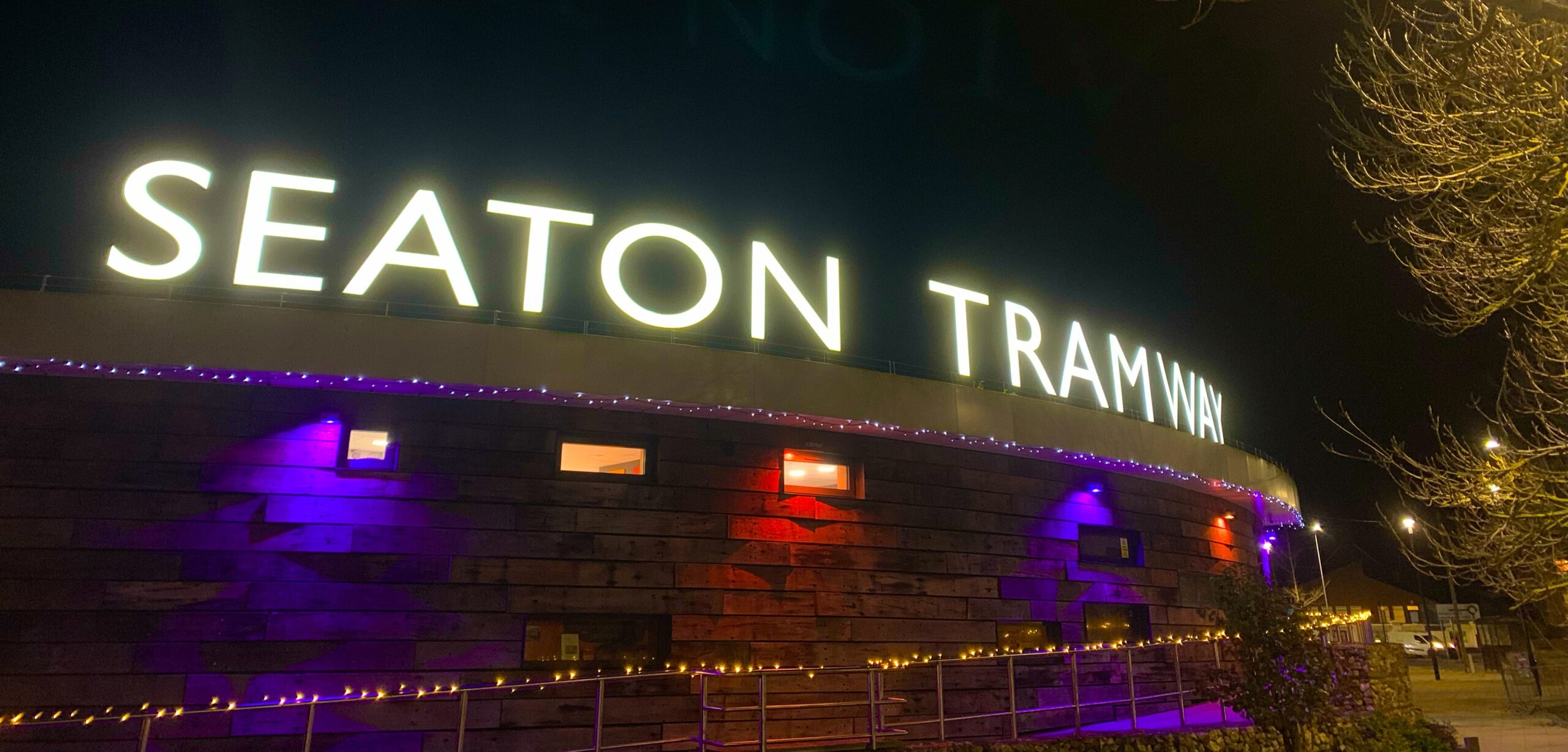
    In 2018 a new £3m station building was opened suitable for operation all-year round, and which acts as a venue for a range of tramway and community based events including The Polar Express – 15/12/2022

    Established in 1970, the Seaton Tramway is a 2ft 9in narrow gauge electric tramway located in Devon and runs for approximately 3 miles along the Axe Estuary and the River Coly between Seaton on the coast and Colyton and operates over part of the trackbed of the former Seaton branch line railway which closed in March 1966. The tramway was established by Claude Lane, founder of Modern Electric Tramways Ltd, which had previously operated in Eastbourne between 1954 and 1969. 

    Fourteen trams, all based on classic British designs and varying in size from half-scale to two thirds-scale, run on the tramway, which sees over 100,000 visitors per year. Most of the trams were built from scratch by Claude Lane or his successor Allan Gardner, however three were rebuilt from full-size tramcars which originally ran in London, Bournemouth and Exeter.

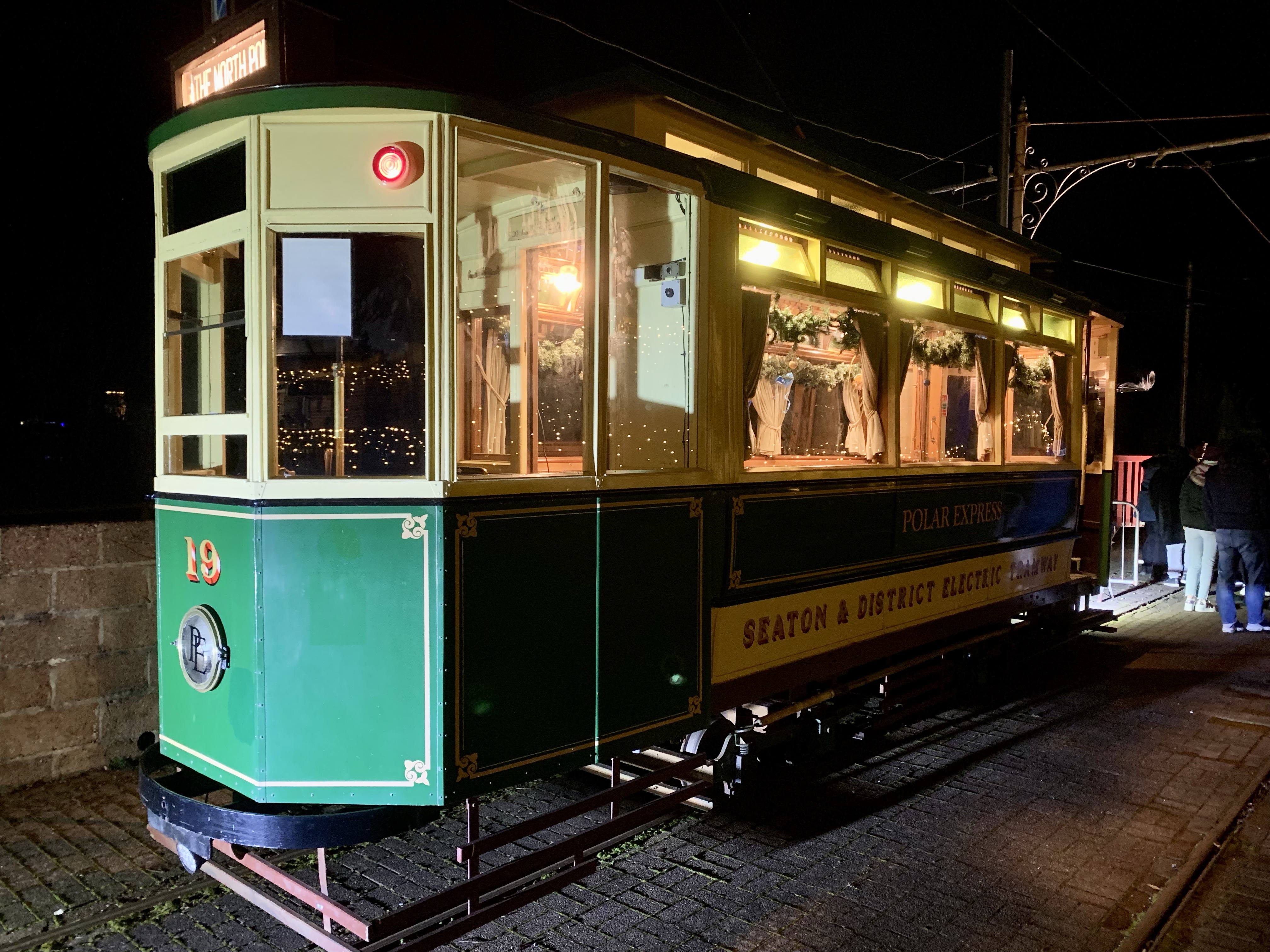
    TRAM 19 – 1906 – EX-EXETER TRAMWAY CAR
    Built in 1906. An Exeter Corporation Tramways 3ft 6in gauge open topper, 1906 – 1931. Rebuilt at Seaton, 1994-1998. The only Exeter tram in preservation. Enclosed tram for wet weather – 15/12/2022
    Tram 19 at Colyton – 15/12/2022
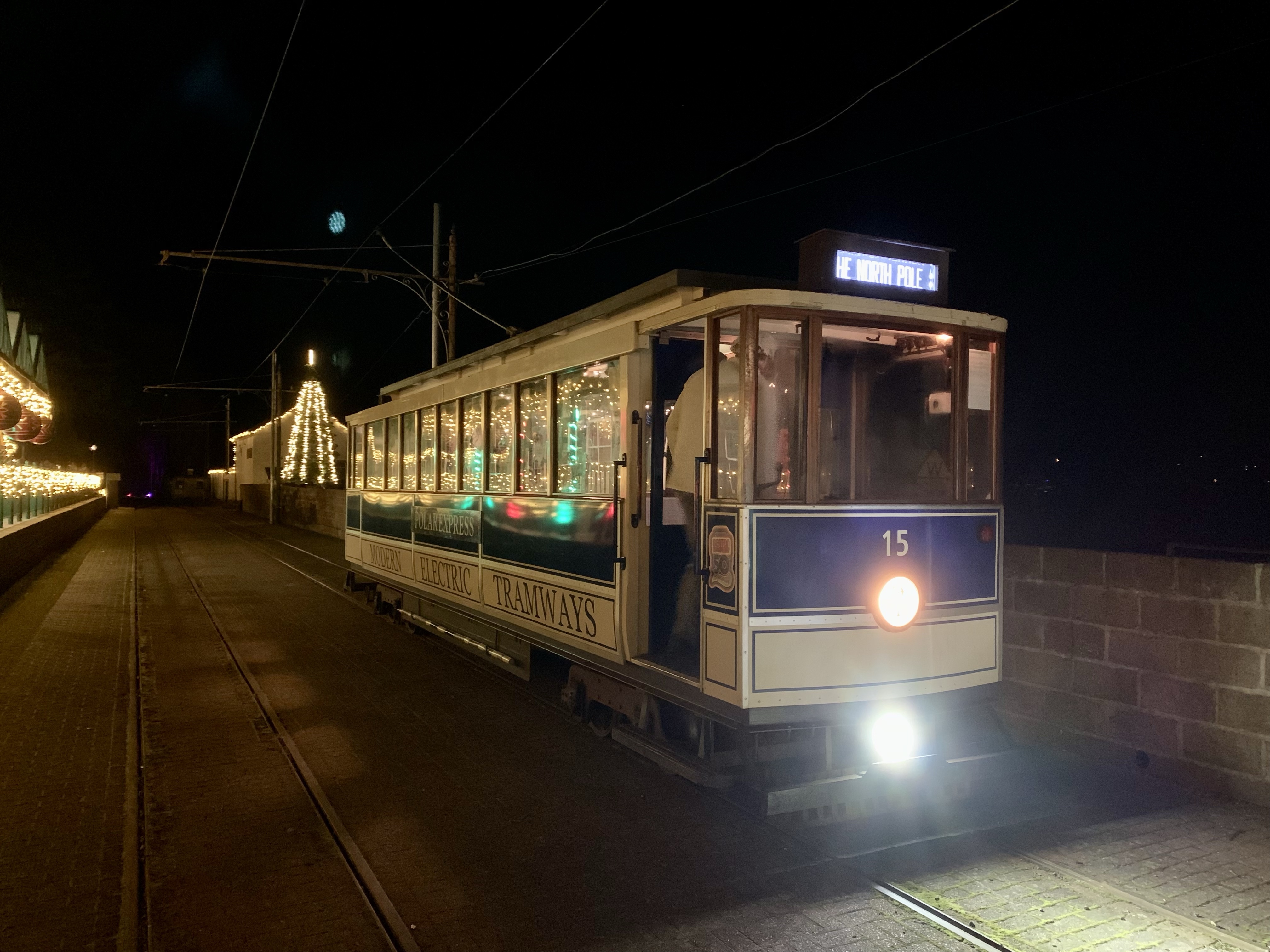
    TRAM 15 – 1988
    Built in 1988 at Seaton. Previously Car 17 and based on the Manx Electric Railway “toast-rack” cars. Rebuilt at Seaton in 2016 and transformed into an all-weather, enclosed single-deck tramcar – 15/12/2022
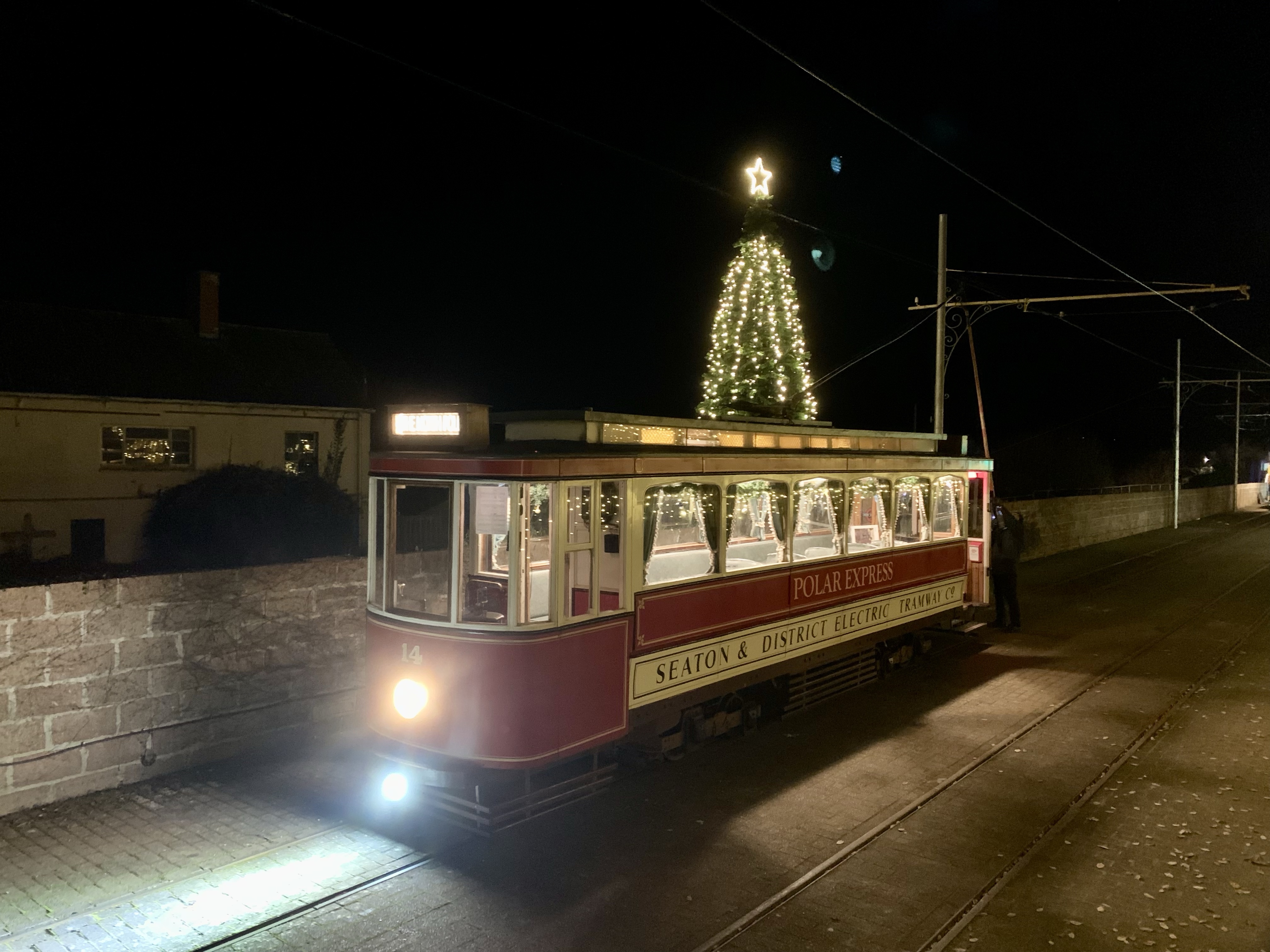
    TRAM 14 – 1904 – EX-METROPOLITAN TRAMWAY CAR
    Built in 1904, the oldest tram in the fleet. A metropolitan Tramways “type A” originally numbered car 94 (Standard Gauge), rebuilt at Eastbourne and Seaton between 1962 and 1984. Enclosed tram for wet weather – 15/12/2022
    TRAM 16 –1921 – EX-BOURNEMOUTH TRAMWAY CAR
    Formerly Bournemouth car No. 106, built as a 3ft 6in gauge open-top double-decker in 1921 and withdrawn on the closure of the Bournemouth system in 1936. The body was subsequently discovered in use on a Dorset farm, acquired by the Bournemouth Transport Preservation Group and then donated to Seaton Tramway in 1974 where the body was narrowed, and then rebuilt in its current form. Launched in to service in 1992 – 15/12/2022

    Video of the Seaton Tramway from 1996:

    The recent cold spell saw the Snow & Ice Treatment Train make its second run this winter along the Bournemouth to Weymouth line with a daylight outing on 15th December.

    GBRf Class 66 no.’s 66753 ‘EMD Roberts Road’ and 66745 top and tailing 3Y88 0908 Totton Yard to Totton Yard via Weymouth though Hamworthy – 15/12/2022
    3Y88 0908 Totton Yard to Totton Yard via Weymouth – additional video by kind permission of @dabuckley967 – 15/12/2022

    For The Record

    The final two scheduled test trains of 2022 failed to materialise with Monday evenings 1Q51 1115 Derby RTC to Eastleigh East Yard being cancelled at source due to ‘a problem with the train’ and Wednesday 21st December’s visit of the New Measurement Train operated by Colas Class 43 HST power car No.’s 43272 and 43257 via the West running as 1Q18 0754 Derby RTC to Bristol Kingsland Road was turned around at Yeovil Pen Mill because of late running.

    That brings us to the end of another blog entry, and indeed, our final Railway Dog of 2022. All things being equal, we’ll be back in January 2023 – thank you for reading and all your comments, corrections and contributions over the last 12 months. Wishing you a very Merry Christmas and a Happy New Year!!

  • Who Nothe?

    30th November to 6th December 2022

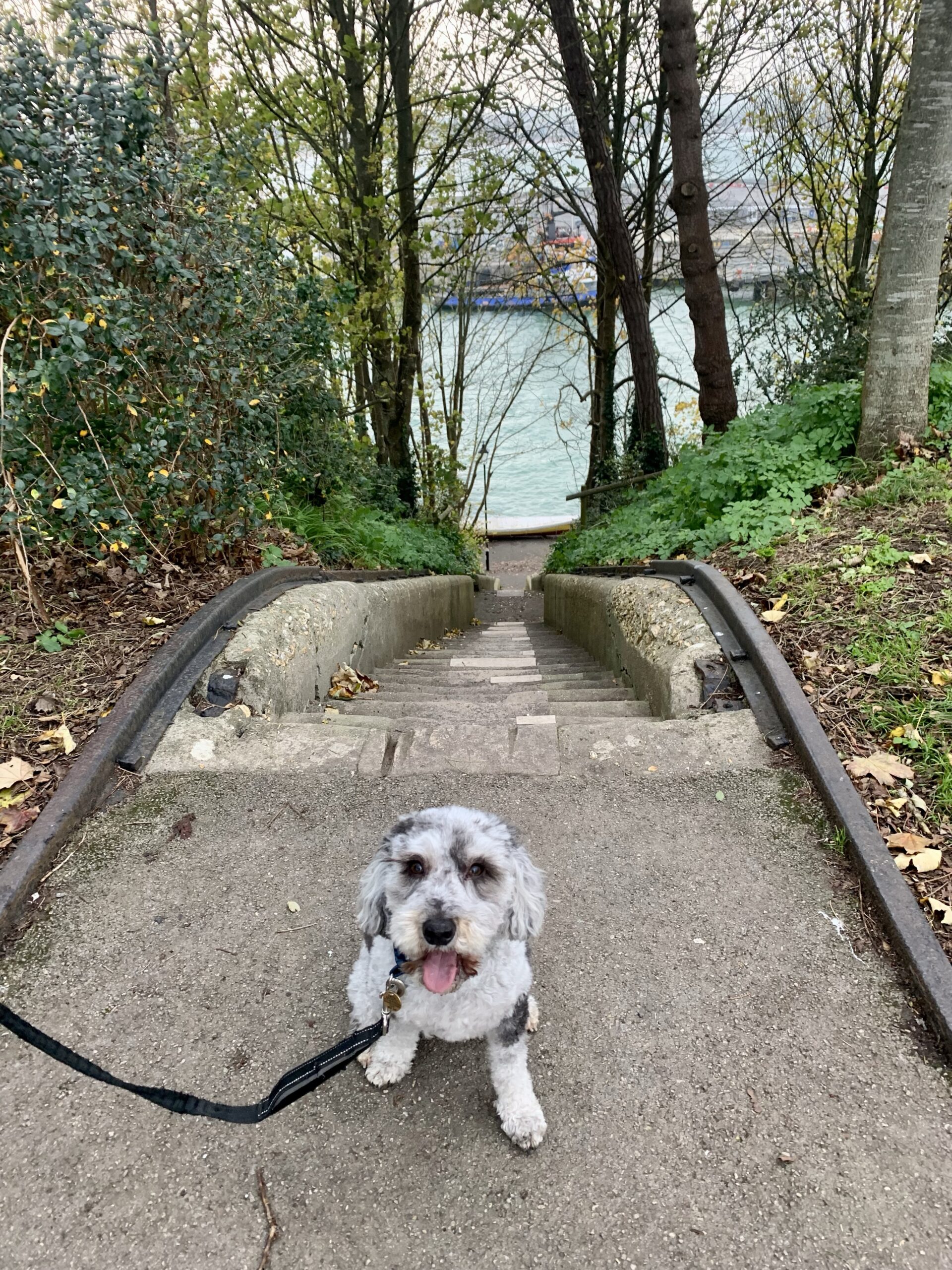
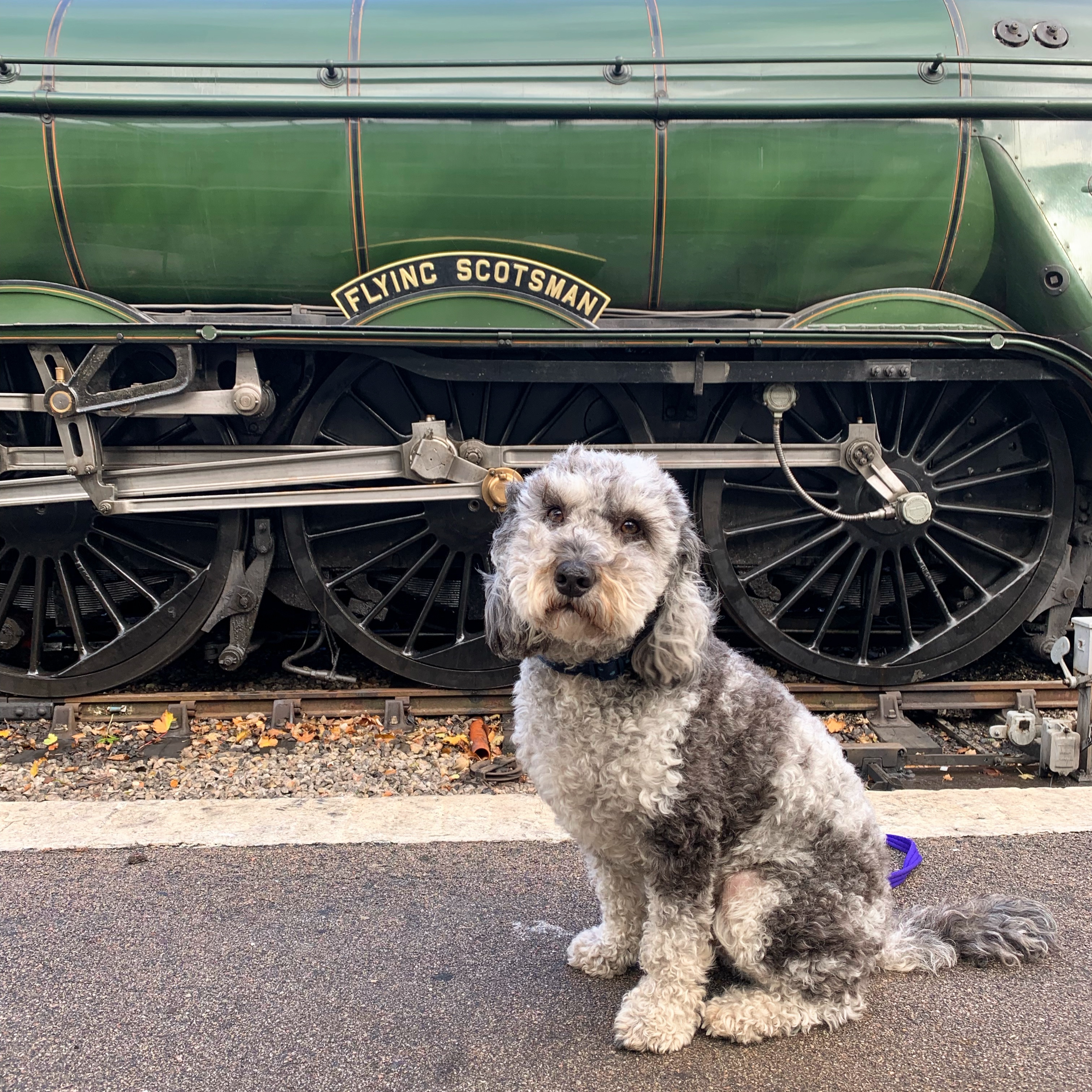
    Yoshi at the top of the Fusee Steps at The Nothe, Weymouth – 04/12/2022
    Fusee Steps, The Nothe Weymouth – 04/12/2022
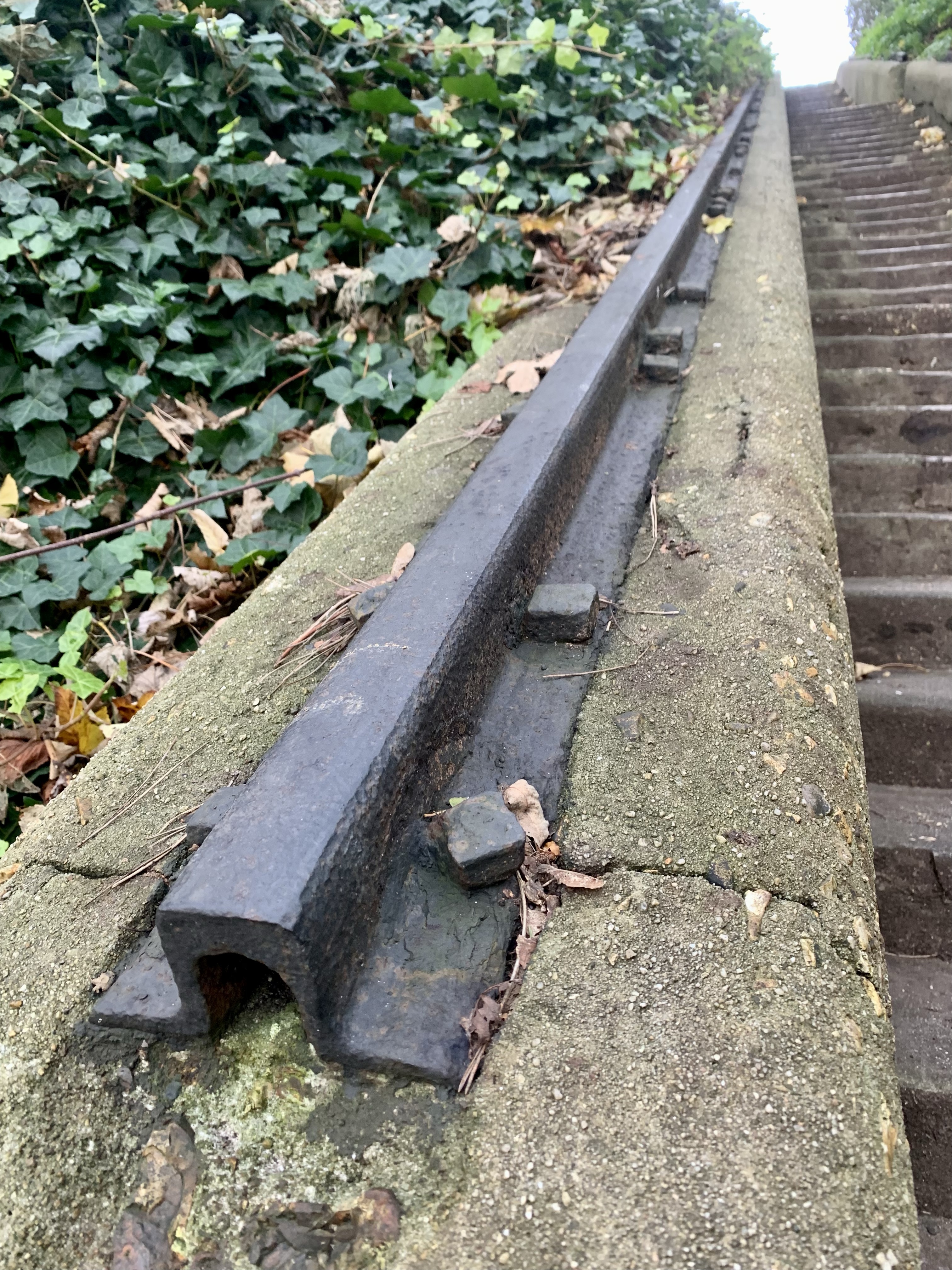
    Broad gauge rail attached to Fusee Steps, The Nothe Weymouth – 04/12/2022

    On Sunday we had a wander around the Nothe in Weymouth where we had a close look at these rails fixed to walls either side of Fusee Steps and wondered what their origin was. Historic England dates the steps and inclined tramway as circa 1860 and describes them as “Three flights of steps with low flanking walls of rendered brick, on which are placed wrought-iron plate rails, forming an inclined tramway for trolleys with double-flange wheels. It was constructed for hauling trolleys transporting ammunition, spares and stores from the quay to Nothe Fort.” We asked the Nothe Fort for any information about the rails, and although there is some dispute about the age and purpose of the them it is believed the tracks themselves are Great Western Railway broad gauge rail, of which large amounts became redundant in the late 19th Century when the GWR converted to standard gauge and much of the track was recycled for use in engineering projects. Many thanks to Geoff Culver from the Nothe Fort Curatorial Team for responding to our questions.

    Yoshi previously visited the Nothe Fort for a silent disco around Luke Jerram’s “Museum of the Moon” – 13/07/2019

    Wednesday 24th November 2022 and it was time for the appearance of the regular 1Z22 0644 Derby Railway Technical Centre to Bristol Kingsland Road via Weymouth test train. This month the train was once again in the charge of two Class 37 locomotives, and we chose to see the train at Maiden Newton as it worked its way down to Weymouth running around eleven minutes late at this point.

    Class 37 No. 37612 approaching Maiden Newton leading 1Z22 0644 Derby Railway Technical Centre to Bristol Kingsland Road – 30/11/2022
    Class 37 No. 37610 having departed Maiden Newton at the rear of 1Z22 0644 Derby Railway Technical Centre to Bristol Kingsland Road – 30/11/2022
    30/11/2022 1Z22 0644 Derby Railway Technical Centre to Bristol Kingsland Road via Weymouth – many thanks for additional video from G E Barrett and @da_buckley967

    We saw both of these locomotives, which are on hire from the Harry Needle Railroad Company at Barrow road earlier in the year:

    Class 37 No. 37612 on static display at Barrow Hill 150+2 – 28/08/2022
    Class 37 No. 37610 Barrow Hill – 28/08/2022
    The same pair of locomotives worked the equivalent test train in December 2020 which originated at that time from Tyseley LMD – 02/12/2020
    Class 37 No. 37610 at Weymouth having worked the 0820 Tyseley TMD to Bristol High Level Siding – 22/05/2019
    Class 37 No. 37521 assisted 37610 on this run of the 0820 Tyseley TMD to Bristol High Level Siding test train, seen here at Weymouth – 22/05/2019

    With Christmas fast approaching, it’s the time of year when many UK heritage railways run steam and lights trains, and the Swanage Railway is no exception. Thursday 1st December 2022 saw festive light adorned Southern Railway (SR) U Class 2-6-0 No. 31806 and SR Bulleid West Country Pacific 4-6-2 No. 34028 ‘Eddystone’ top and tailing a trial run for staff and volunteers. The previous evening saw the train operated empty with resident Class 33 diesel locomotives as the final Christamassy tweaks were made to the service.

    SR U Class 2-6-0 No. 31806 prepares to depart Swanage with a special outing pre-season opener for the 2022 Steam and Lights train for staff and volunteers – 01/12/2022
    Video of the pre-season steam hauled lights train – 01/12/2022

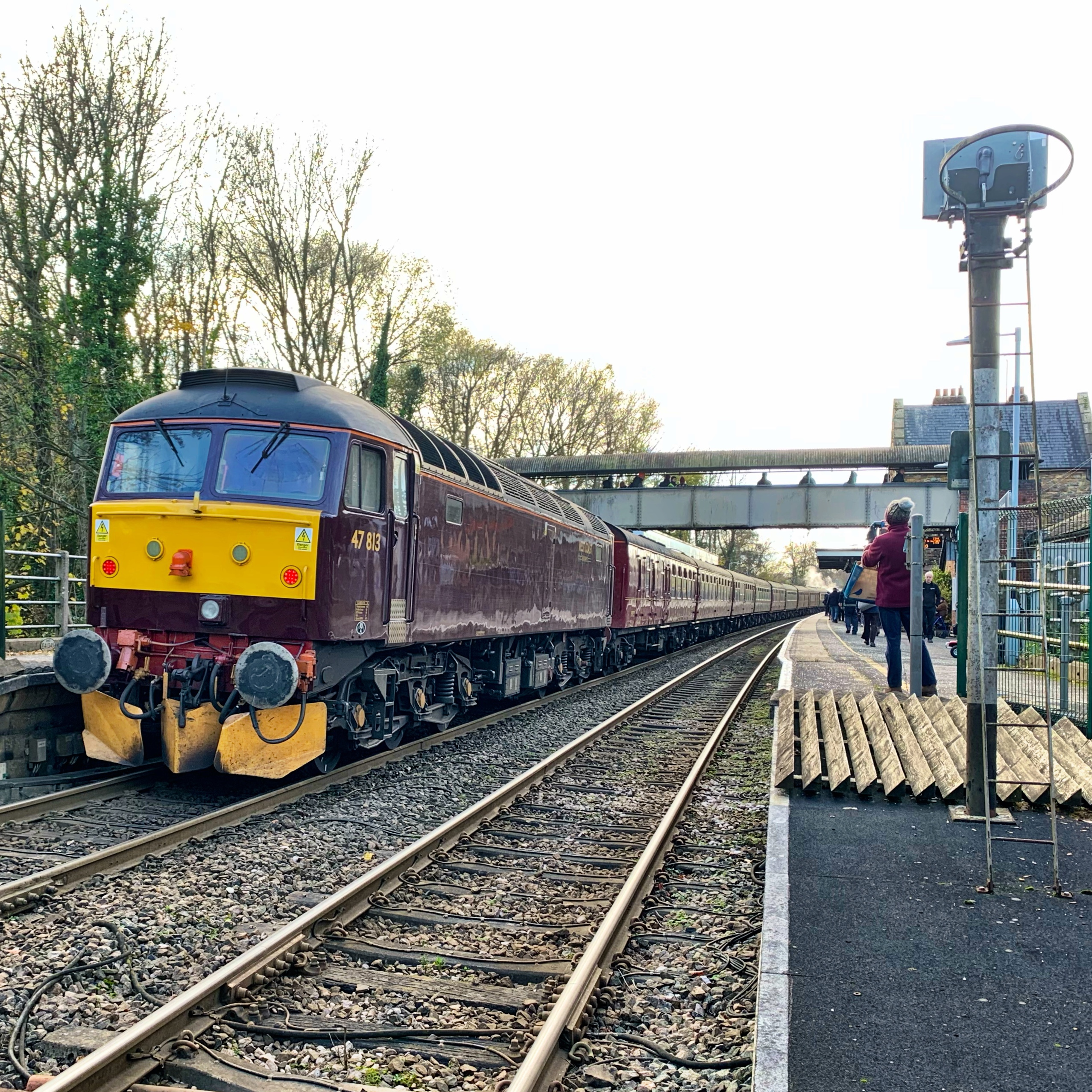
    The Railway Touring Company ran a steam hauled excursion from London Victoria to Yeovil, stopping to drop off passengers at Sherborne for a Christmas carol service held at Sherborne Abbey on Tuesday 6th April 2022. The rail tour, top and tailed by London Midland & Scottish (LMS) Stanier Black Five 4-6-0 No. 44871 and West Coast Railway Company Class 47 No. 47813, continued on to Yeovil Junction for servicing before heading back to Sherborne to pick up passengers for the return to London.

    Ian Riley’s LMS Stanier Black Five 4-6-0 No. 44871 approaches Sherborne working 1Z82 0830 London Victoria to Yeovil JN DN Main Platform – 06/12/2022
    WCRC Class 47 No. 47813 pauses at Sherborne at the rear of “The Sherborne Christmas Carol” 1Z82 0830 London Victoria to Yeovil JN DN Main Platform – 06/12/2022
    “The Sherborne Christmas Carol” rail tour at Sherborne – 06/12/2022 with additional video kindly provided by Caroline Smith
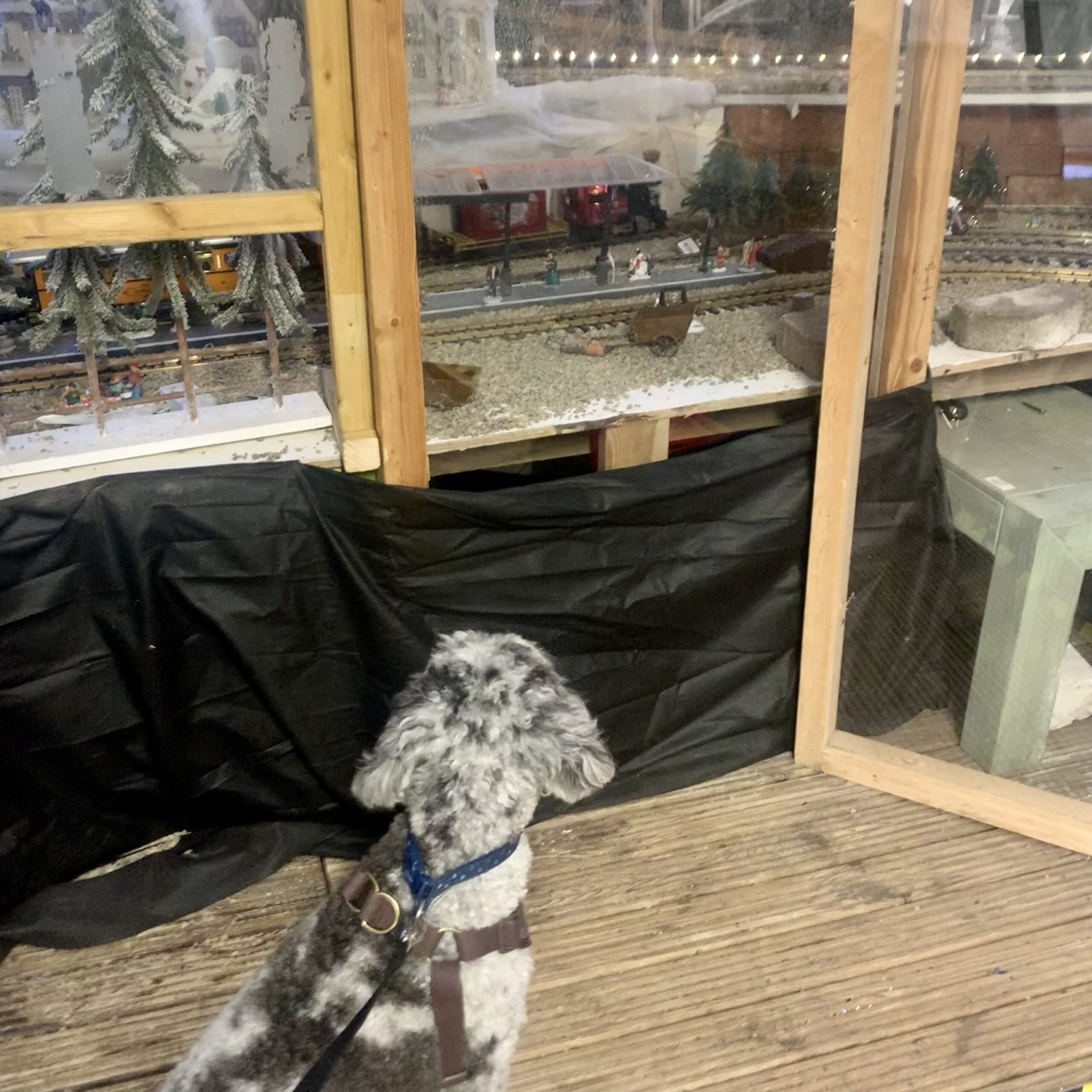
    While we were in Sherborne, we visited the Castle Garden Centre where Yoshi enjoyed watching the trains on the festive themed model railway – 06/12/2022

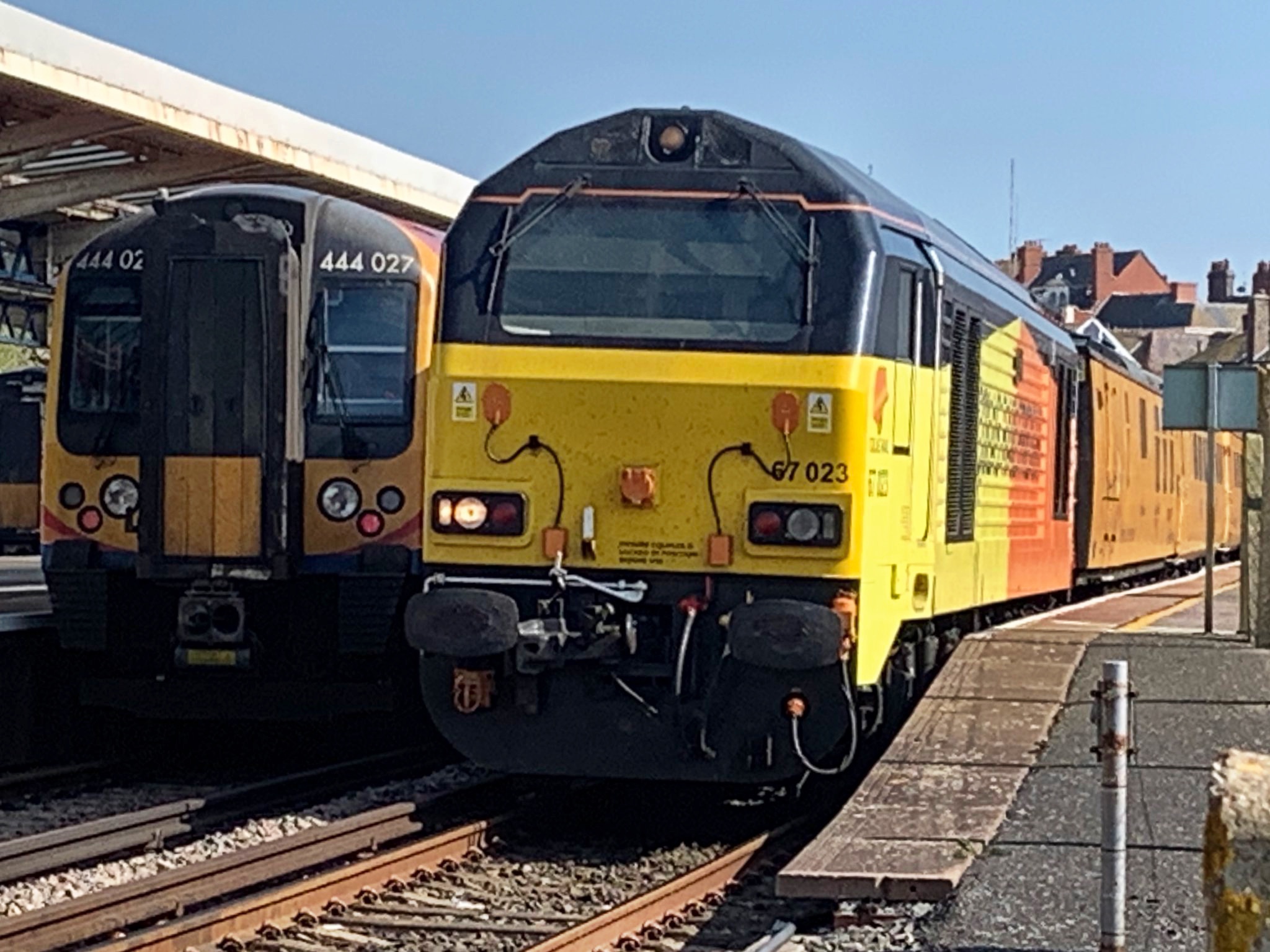
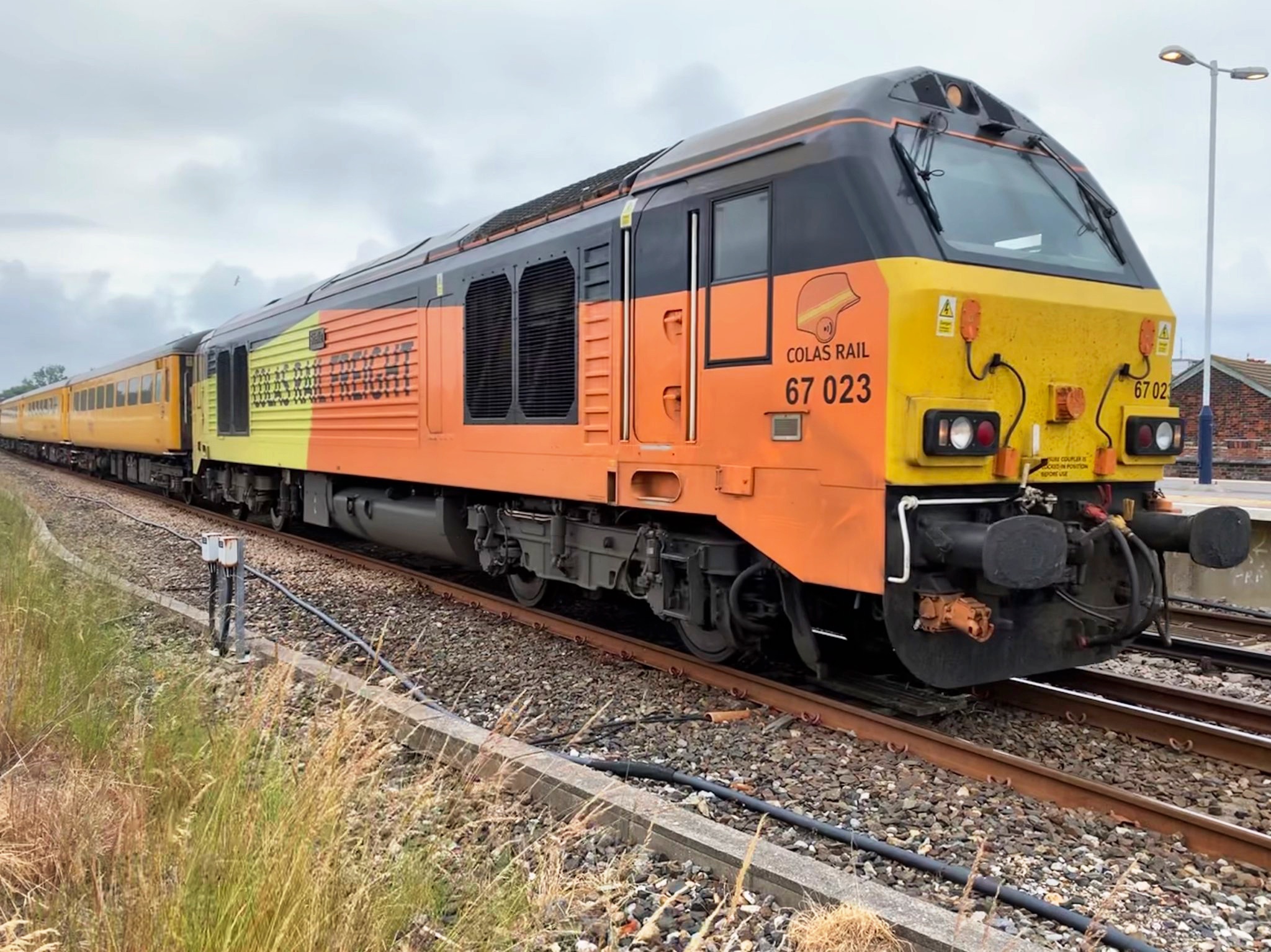
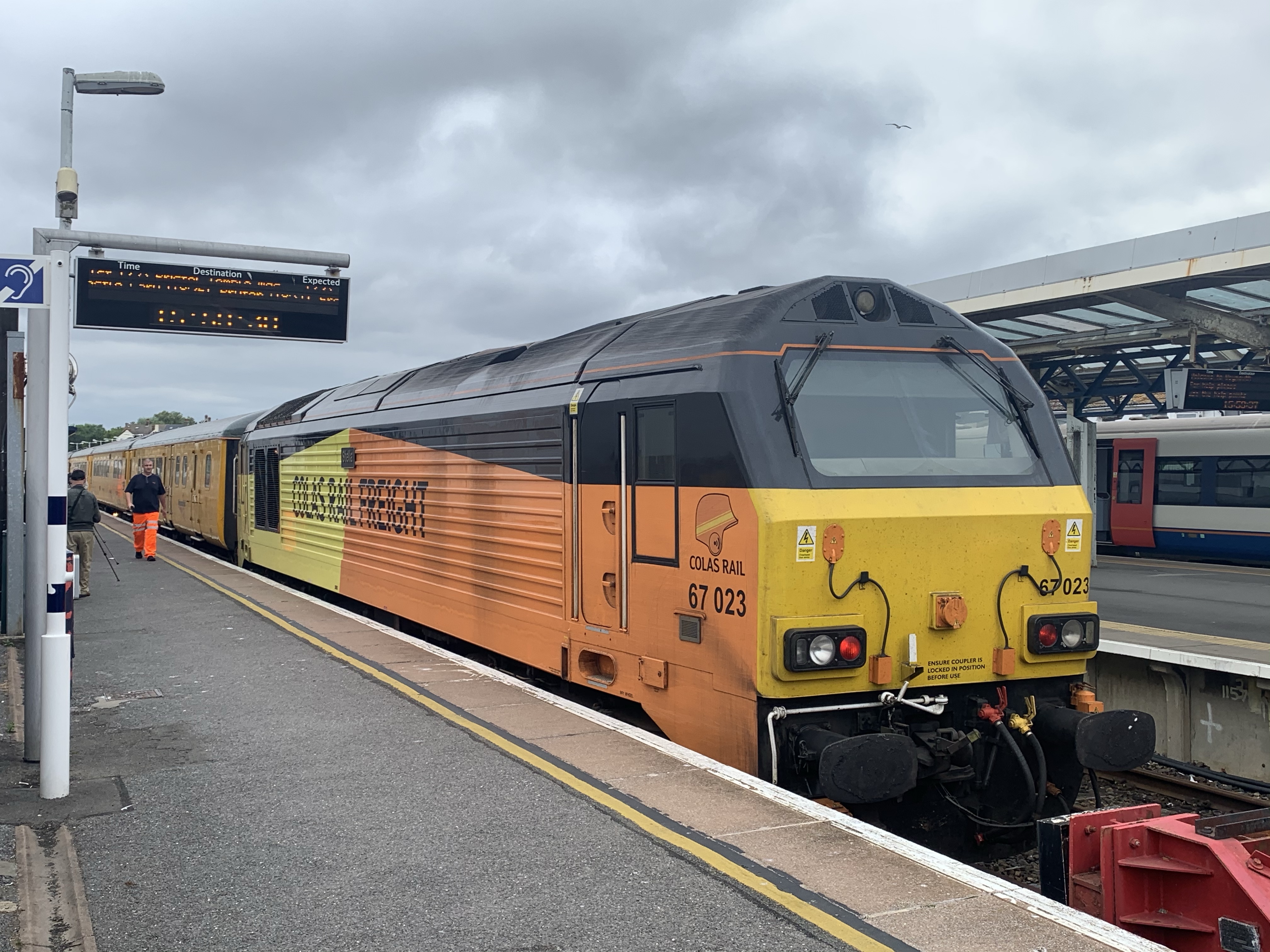
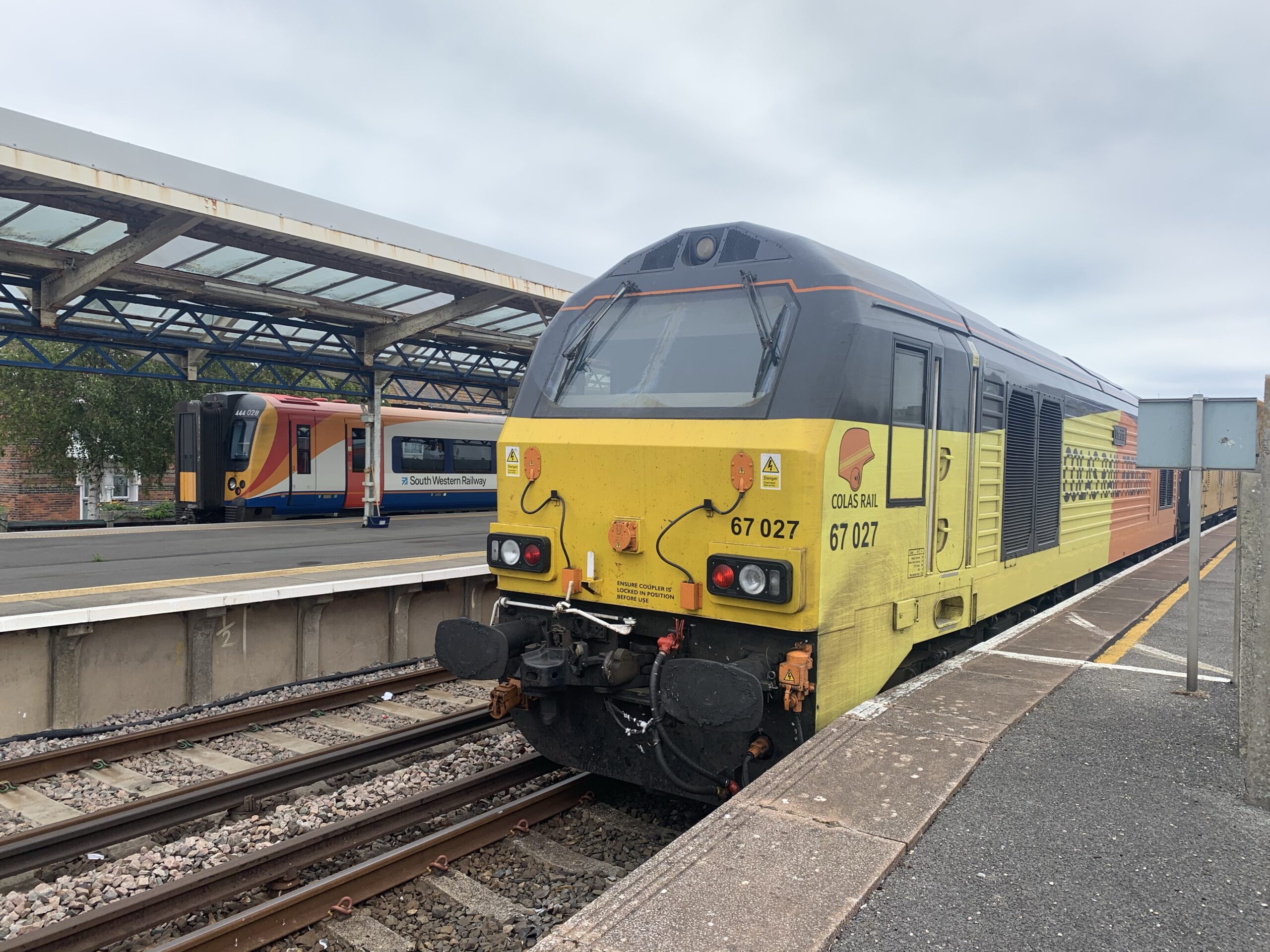
    While waiting for the Class 37 test train at Maiden Newton last Wednesday, I remembered that previously the equivalent test train in recent years was often top and tailed by Colas Class 67 locomotives. During this period, the test train was often turned around at Dorchester and missed out the section to Weymouth, very frustrating for those of us waiting at the seaside terminus. The two Colas Class 67 locomotives which were repeatedly turned out for the Tyseley TMD to Bristol High Level Siding via Weymouth test train were No.’s 67023 ‘Stella’ and 67027 ‘Charlotte’. Formerly part of the DB Cargo fleet, in January 2017 these two Class 67’s were sold to Colas Rail and they were repainted into Colas orange and black at Toton Traction Maintenance Depot for use on Network Rail (NR) infrastructure monitoring trains. They received their nameplates in June 2017. In December 2018, the pair were included in a sale of 67 France and UK based locomotives to Beacon Rail Leasing. They were subsequently leased back to Colas Rail. More recently they have been acquired by GBRf for use on operations including charter, passenger and stock moves including hauling the Highland section of the Caledonian Sleeper.

    The Bo-Bo Class 67 diesel-electric locomotives were built for DB Cargo forerunner English Welsh & Scottish Railway (EWS) between 1999 and 2000 by Alstom at Meinfesa in Valencia, Spain with the engine, generator and traction motors provided by General Motors Electro-Motive Division. The locomotives are able to supply Electric Train Supply for passenger train heating and air-conditioning. They were at first primarily utilised for mail trains, but with diminishing traffic, the contract finally ceased in March 2004.

    High speed running tests were undertaken with No. 67002 at Alstom’s facility at La Sagra, Toledo, Spain and running on the standard gauge Madrid-Toledo high-speed rail line where a top speed of 143 miles per hour was realised. 

    Colas Class 67 No. 67023 ‘Stella’, Weymouth working 0820 Tyseley TMD to Bristol High Level Siding – 22/04/2020
    Colas Class 67 No. 67023 ‘Stella’ arrives at Weymouth heading 0820 Tyseley TMD to Bristol High Level Siding – 19/06/2019
    Nameplate detail for Colas Class 67 No. 67023 ‘Stella’, Weymouth – 19/06/2019
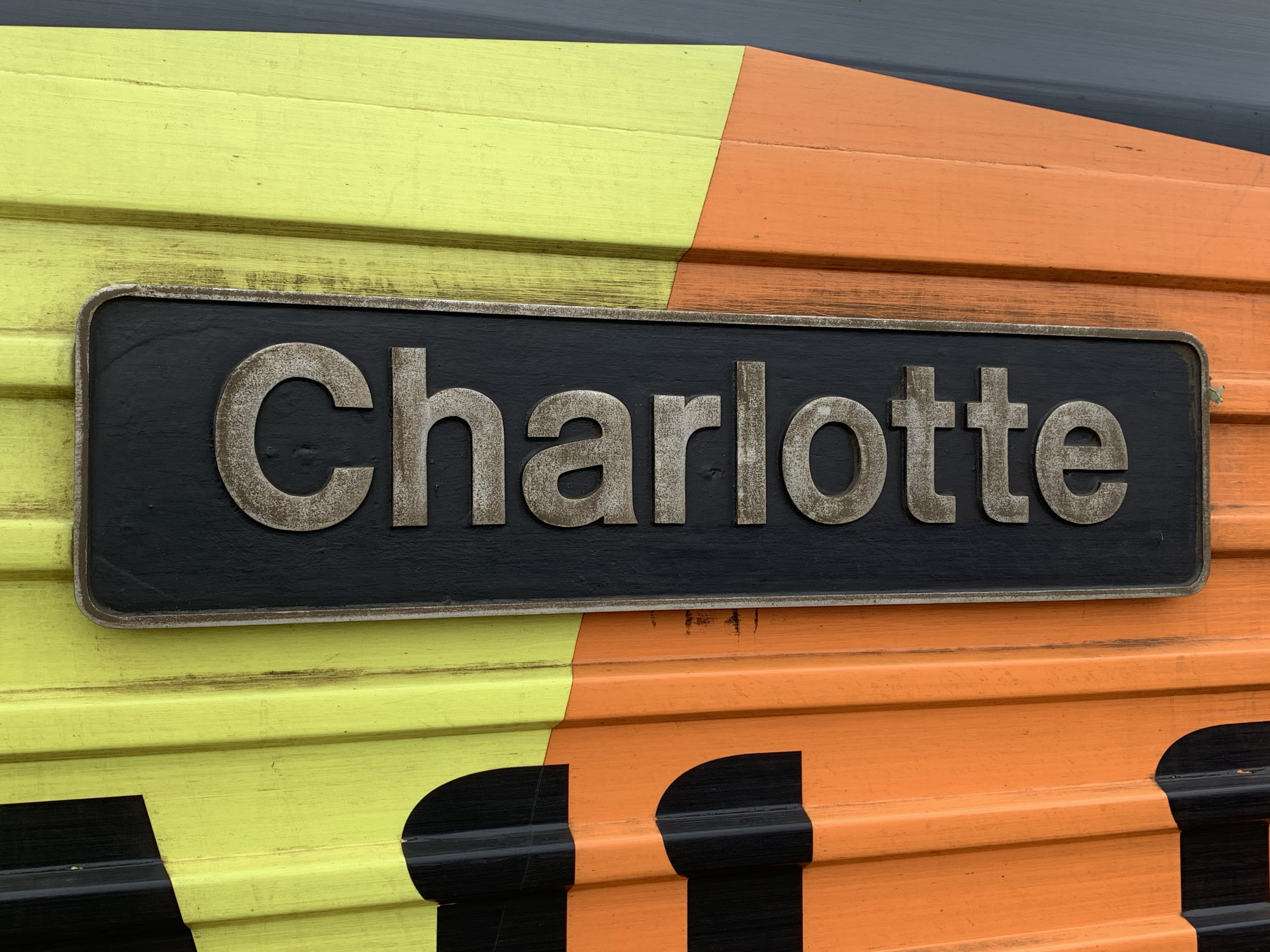
    Nameplate detail for Colas Class 67 No. 67027 ‘Charlotte’, Weymouth – 19/06/2019
    Colas Class 67 No. 67023 ‘Stella’ at the buffer stops at Weymouth having arrived with 0820 Tyseley TMD to Bristol High Level Siding – 15/07/2020
    Colas Class 67 No. 67027 ‘Charlotte’ ready to depart Weymouth with 0820 Tyseley TMD to Bristol High Level Siding – 15/07/2020
    A dirty Colas Class 67 No. 67027 ‘Charlotte’ at Weymouth working 0820 Tyseley TMD to Bristol High Level Siding – 19/06/2019
    Various visits to Weymouth by Colas Freight Class 67 locomotives all mashed up

    Another blog entry draws to a close. Thank you for reading and for your comments, corrections and contributions. We’ll leave you with this thought; “Dogs have a way of finding the people who need them, filling an emptiness we don’t even know we have.” – Thom Jones (1945-2016)

    Yoshi and I meet for the first time – 16/03/2019
  • A Peak Week

    23rd November to 29th November 2022

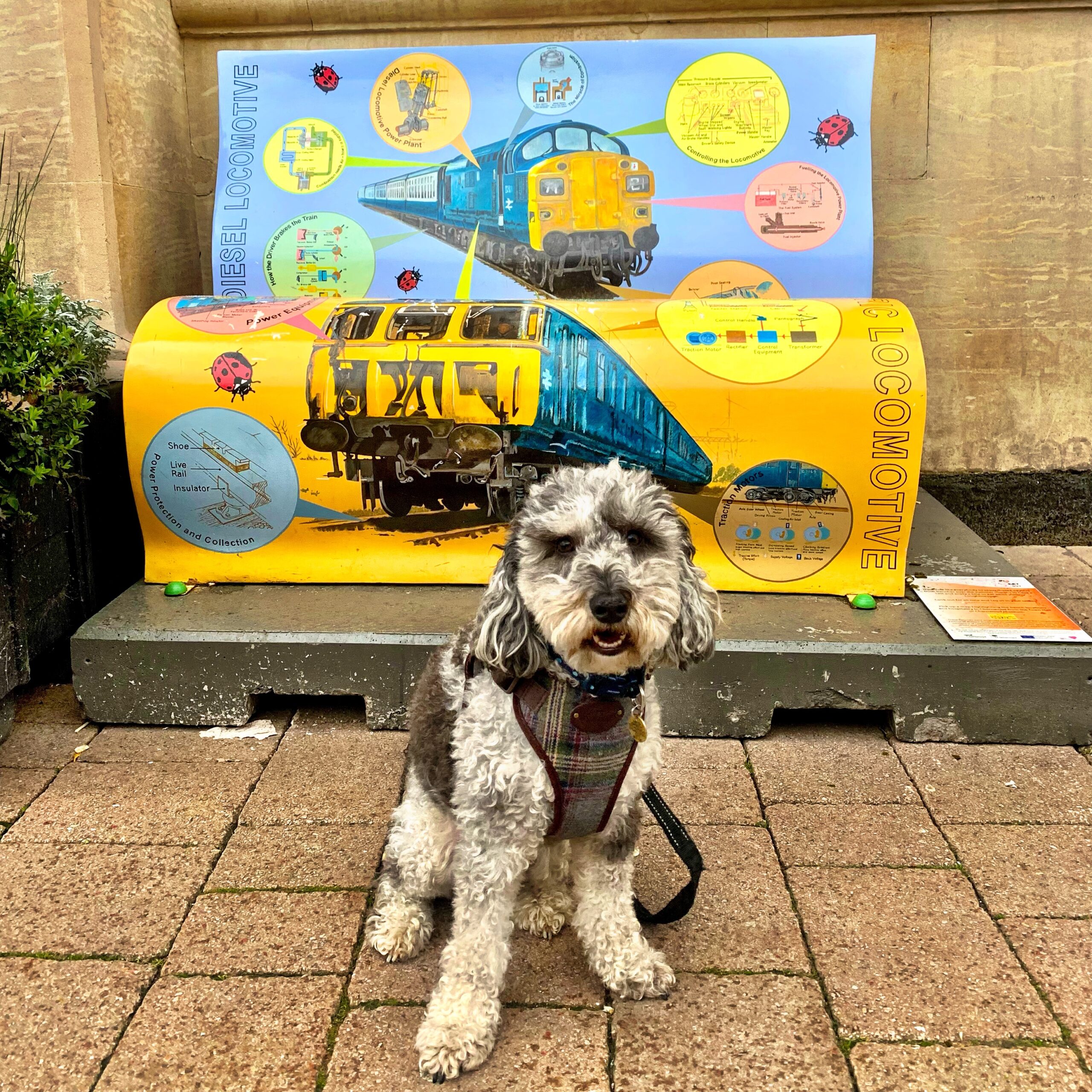
    Yoshi in Loughborough with a Ladybird Book seat featuring images from the “How It Works….” series – 24/11/2022

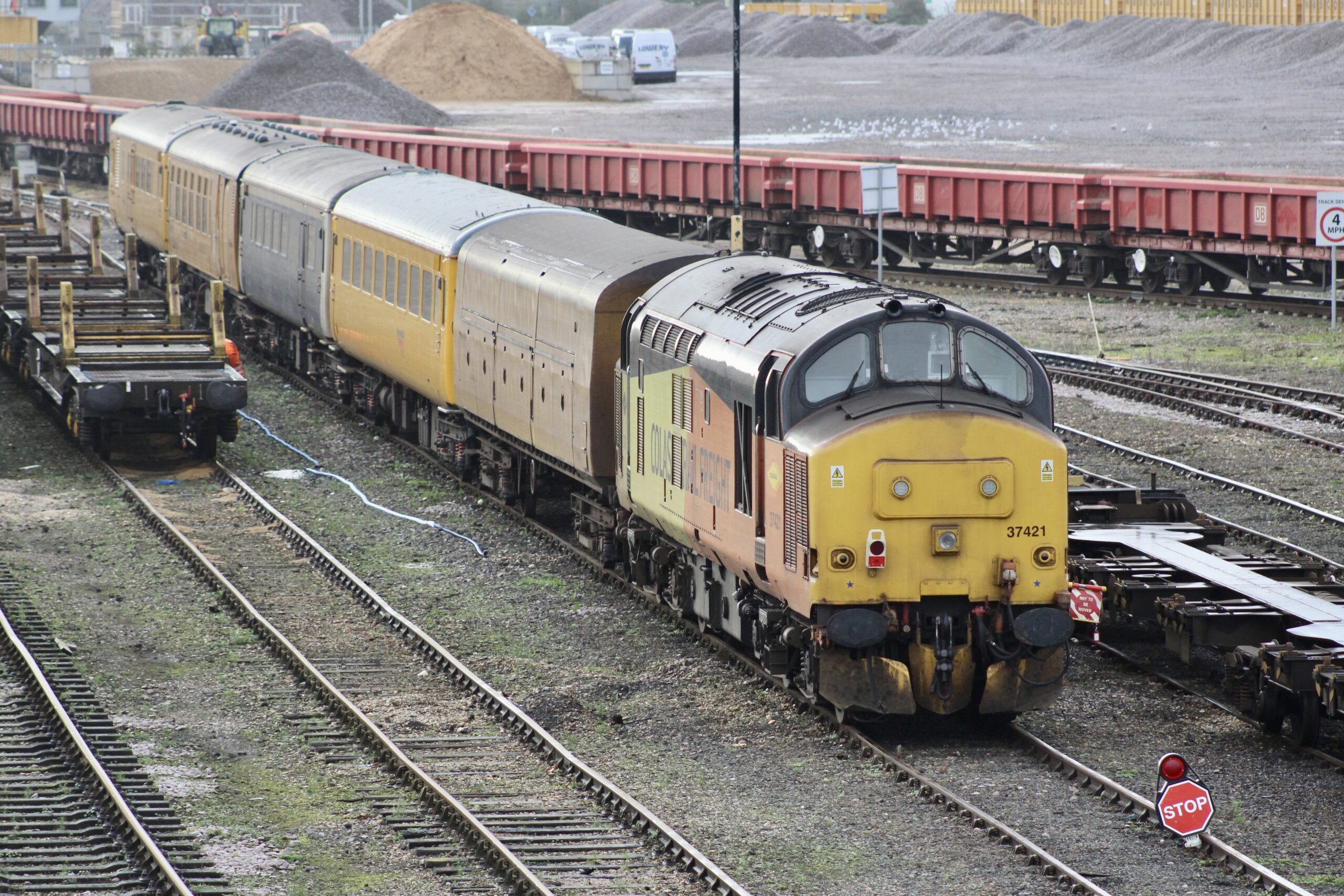
    We were lucky enough to enjoy a few days away last week, and as part of our travels, I was able to take in some railway locations. Before that however, Wednesday evening was one of those occasions when an unusual working along the Bournemouth to Weymouth line passed me by and it wasn’t until Thursday morning that I realised I’d missed out on seeing the Colas Ultrasonic Test Unit hauled by vintage Class 37 diesel electric locomotive No. 37421. I consoled myself with the knowledge it would have been raining as it passed through my local station on the outward run, and I was tucked up in bed by the time it returned. However, on our way to Derbyshire on Thursday morning, we popped into Eastleigh to find No. 37421 perfectly parked for a quick photo opportunity adjacent to Eastleigh railway station.

    Colas Class 37 No. 37421 parked up having worked 3Q02 Eastleigh East Yard to Eastleigh East Yard via Weymouth and Fratton at Eastleigh – 24/11/2022
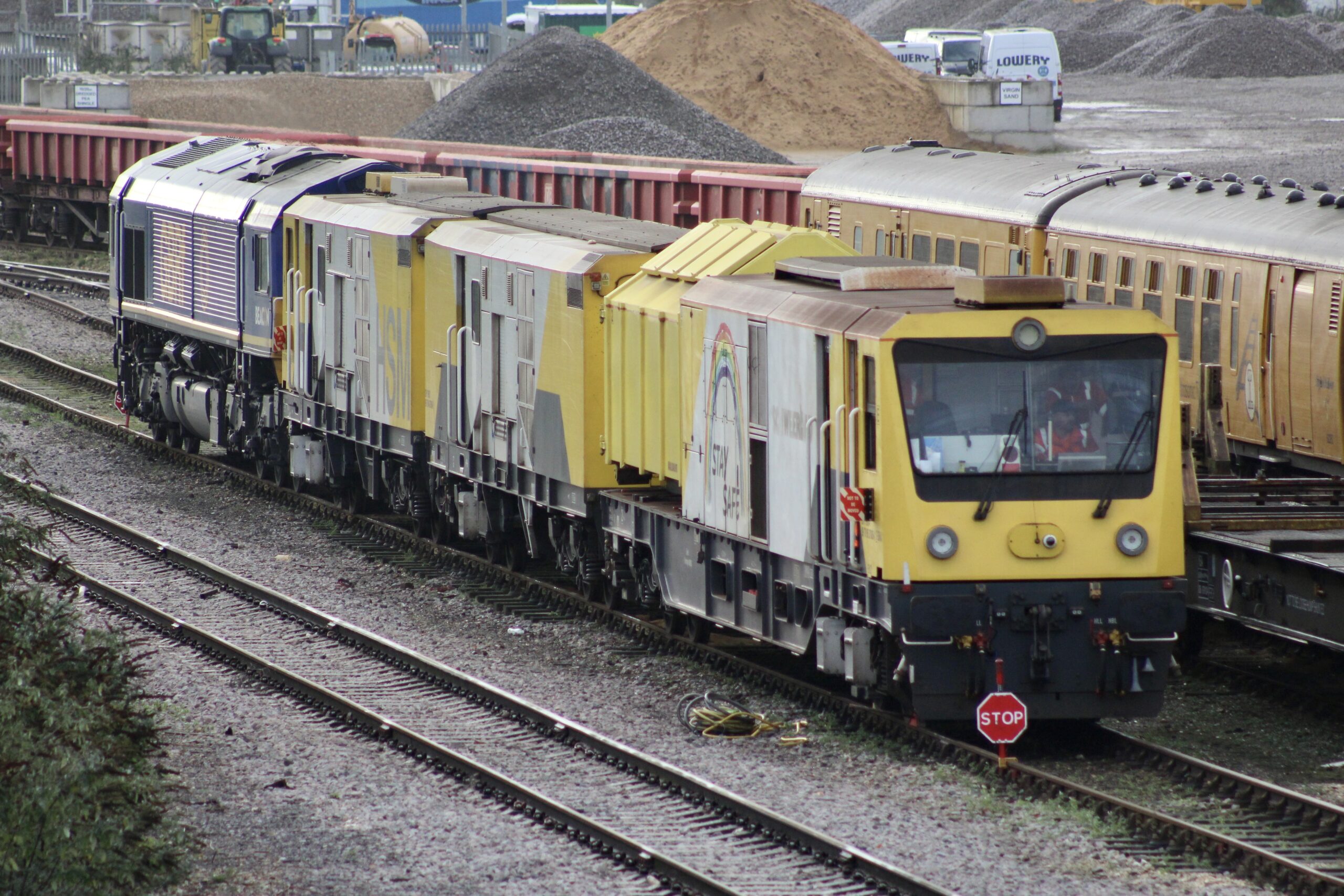
    GBRf Class 66 No. 66797 with a Network Rail National Delivery Service (NDS) track machine at Eastleigh – 24/11/2022
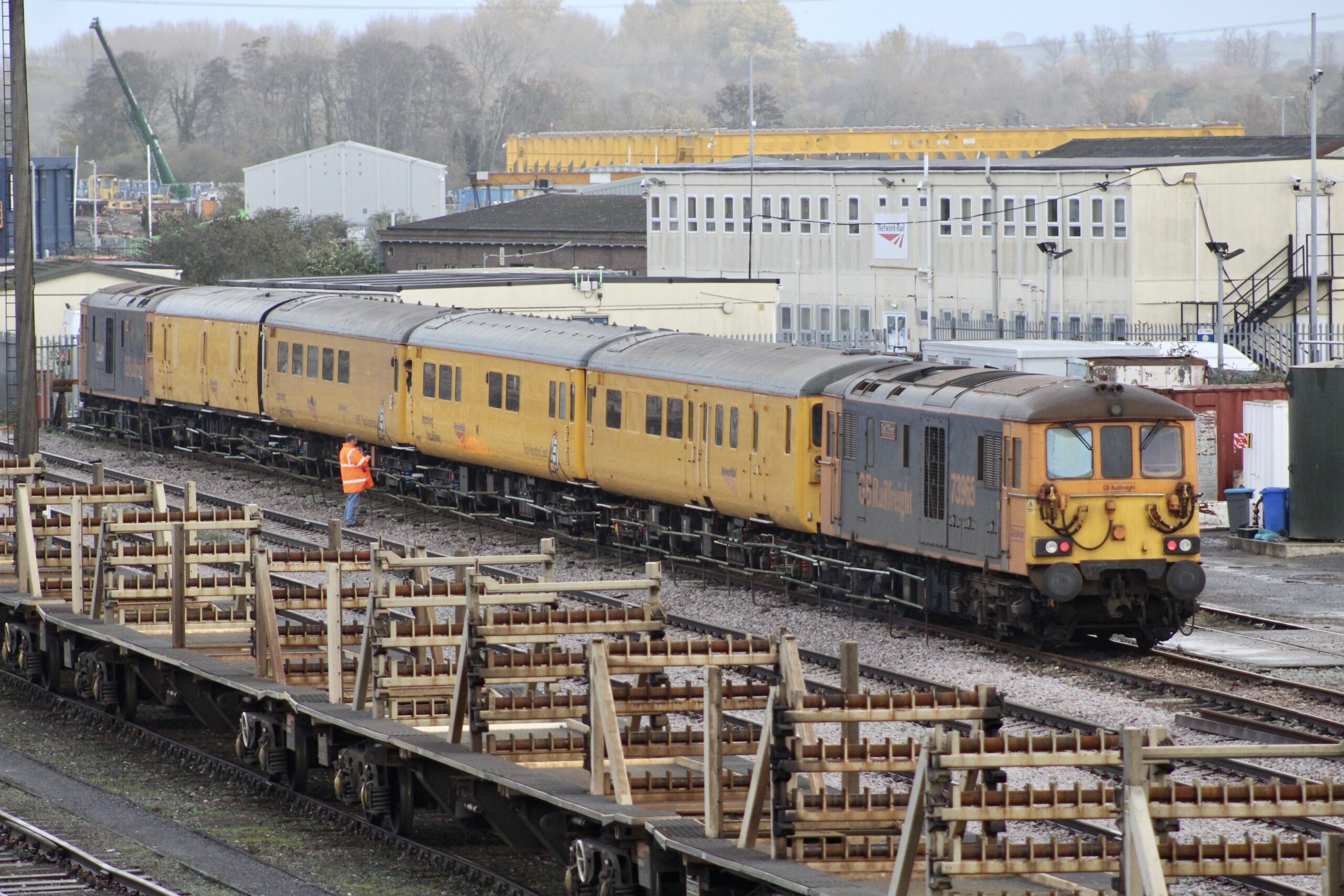
    GBRf Class 73 Electro-Diesel No.’s 73965 ‘Des O’Brien’ and 73961 ‘Alison’ being readied to work 1Q52 1045 Eastleigh East Yard to Tonbridge West Yard at Eastleigh – 24/11/2022

    After our Eastleigh pitstop, we drove on to Loughborough, where I was hopeful at seeing some stored Class 60 diesel locomotives at Brush Traction Works. The plant, known locally as the Falcon Works, was established in 1865 to build steam locomotives. American owned Wabtec took charge in 2011 and in April 2021 they announced reduced volumes had made the site “unsustainable” and proposed its closure which would see the end to over 150 years of locomotive building.

    The last time I had attempted to see locomotives at Brush, Loughborough I recall traipsing across water meadows to get a close view through a fence of Channel Tunnel Class 92’s. This time, having studied Google Maps, I drove around the outskirts of the site along access roads which I wasn’t entirely sure were open to the public. I wasn’t stopped by security, even when they drove past me as I snapped away.

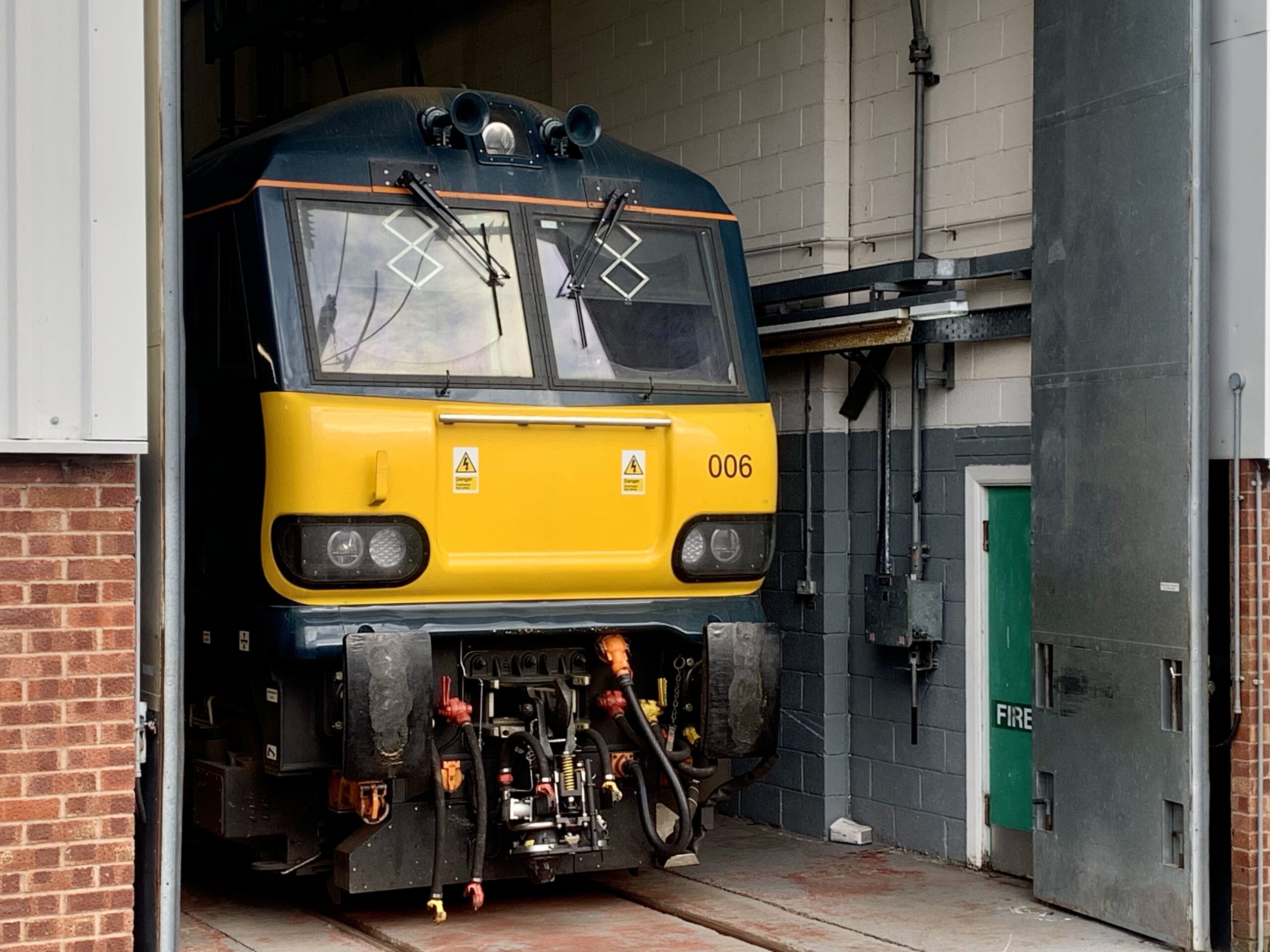
    Class 92 No. 92006, Loughborough – 24/11/2022
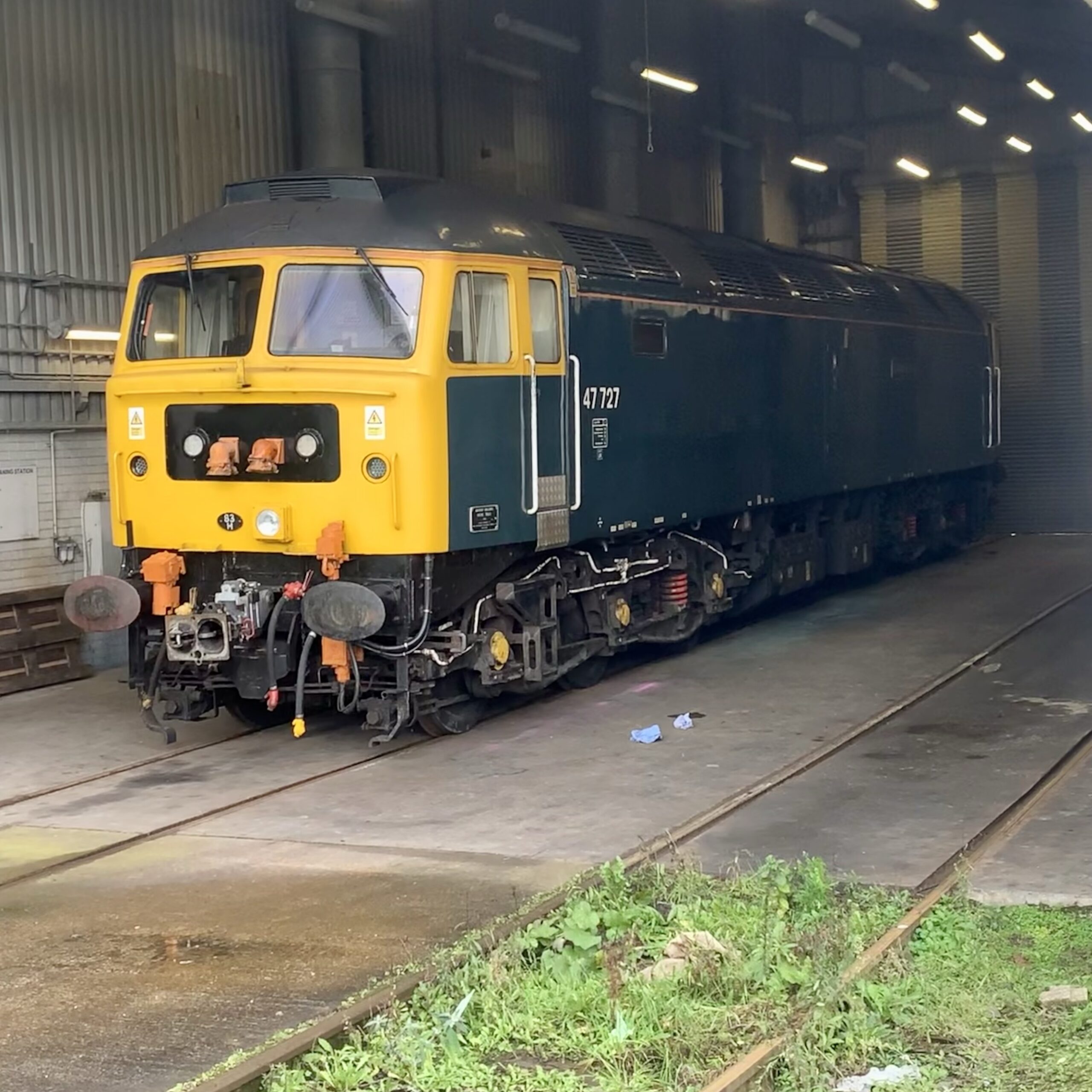
    GBRf Class 47 No. 47727 ‘Edinburgh Castle’ at Loughborough. The Class 47 diesel-electric locomotive was one of Brush’s most successful with 512 examples having been built as part of the British Rail Modernisation Plan. This particular example was built at BR Crewe Works as part of Order Lot 400 and entered traffic as D1629 at Toton depot on the 17th October 1964 – 24/11/2022
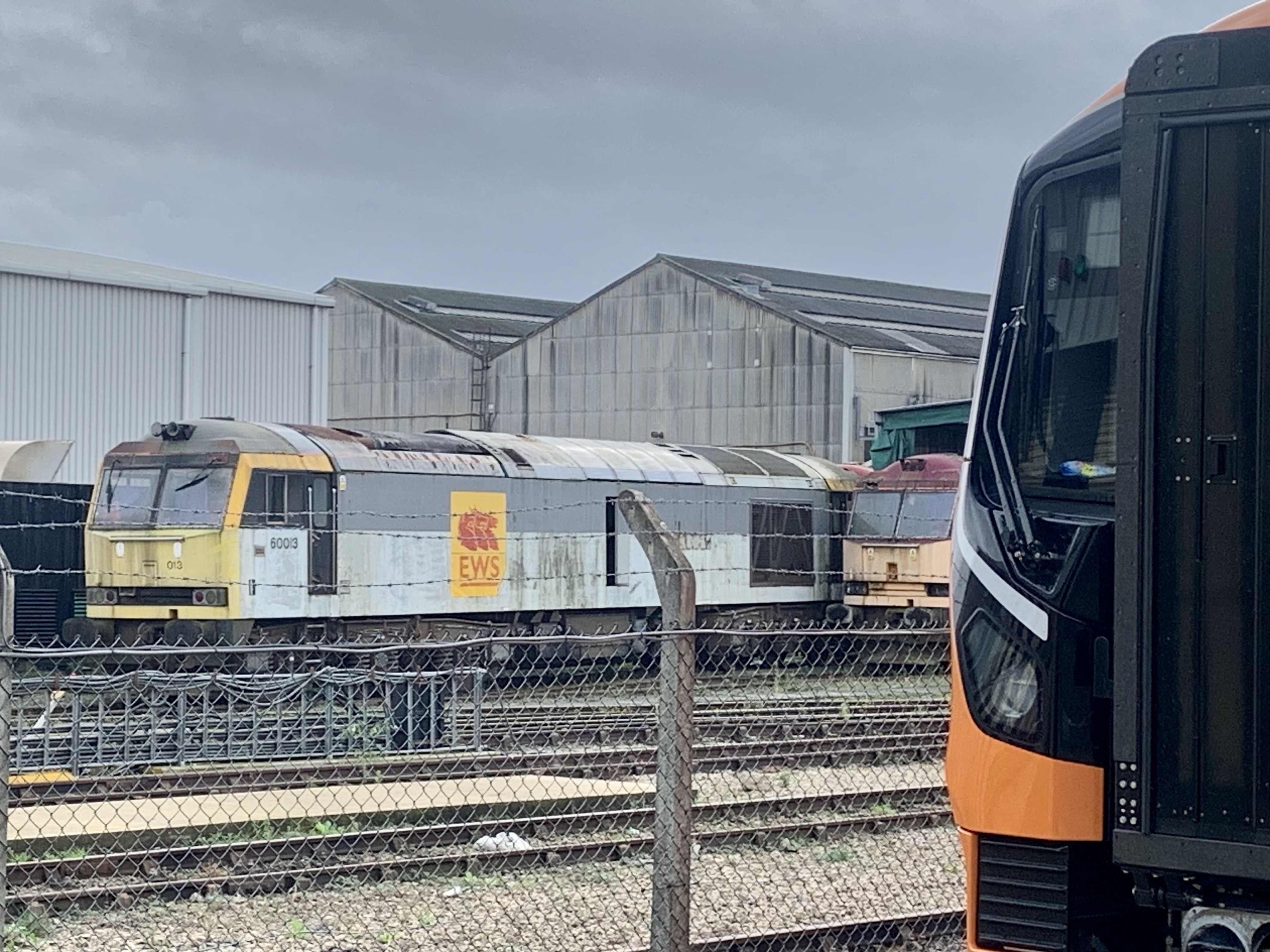
    Class 60 No. 60013 at Brush Loughborough – 24/11/2022

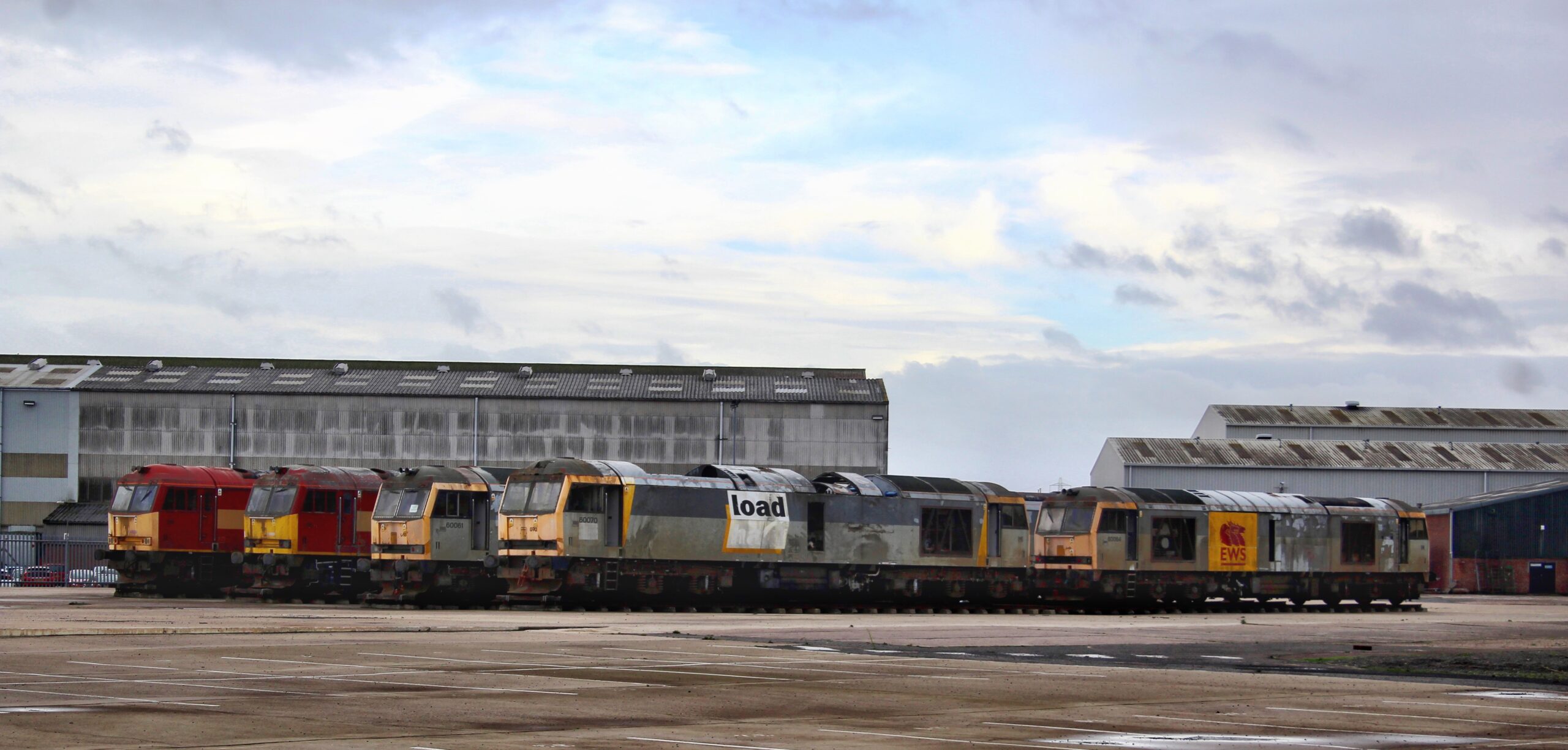
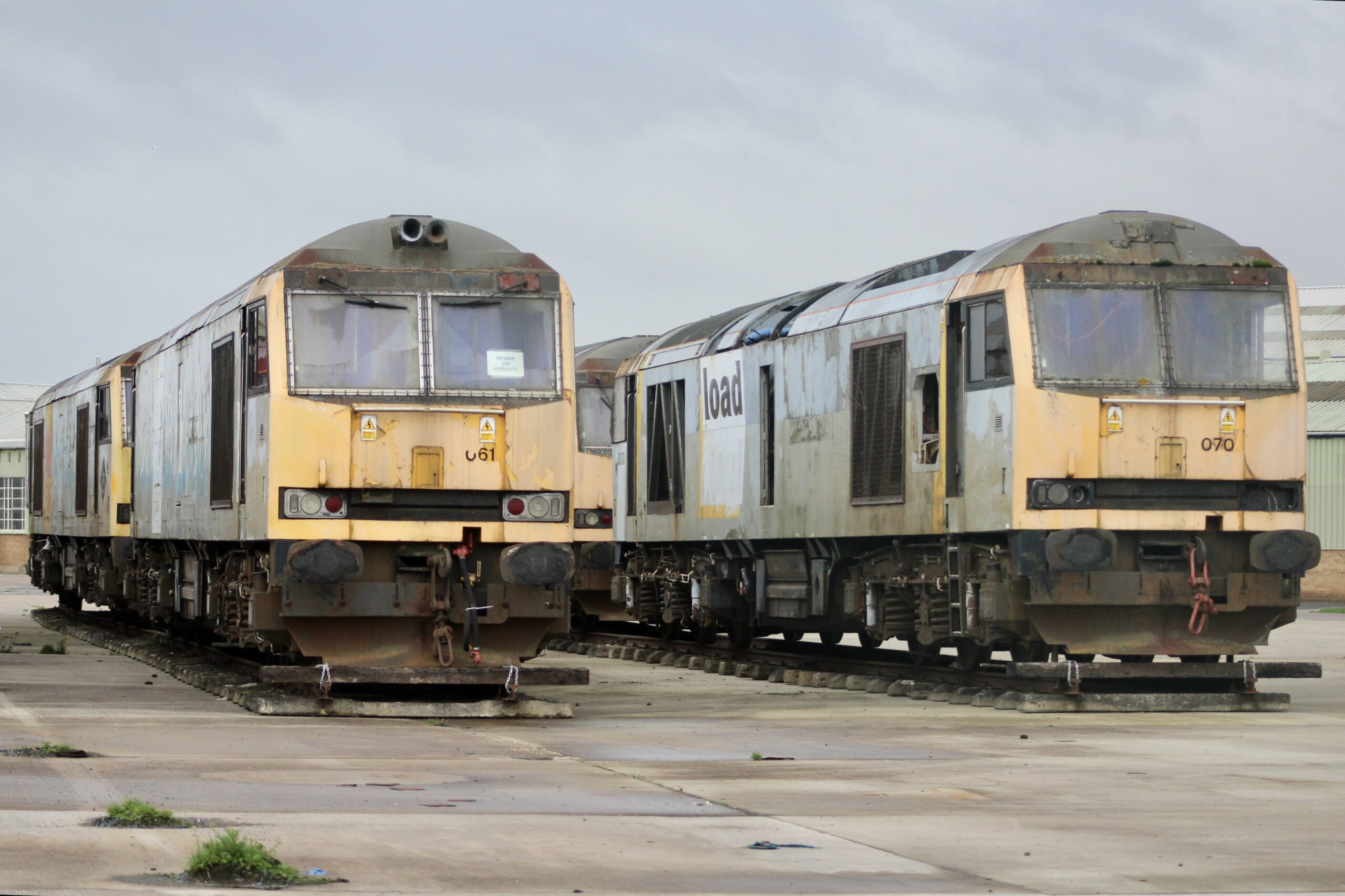
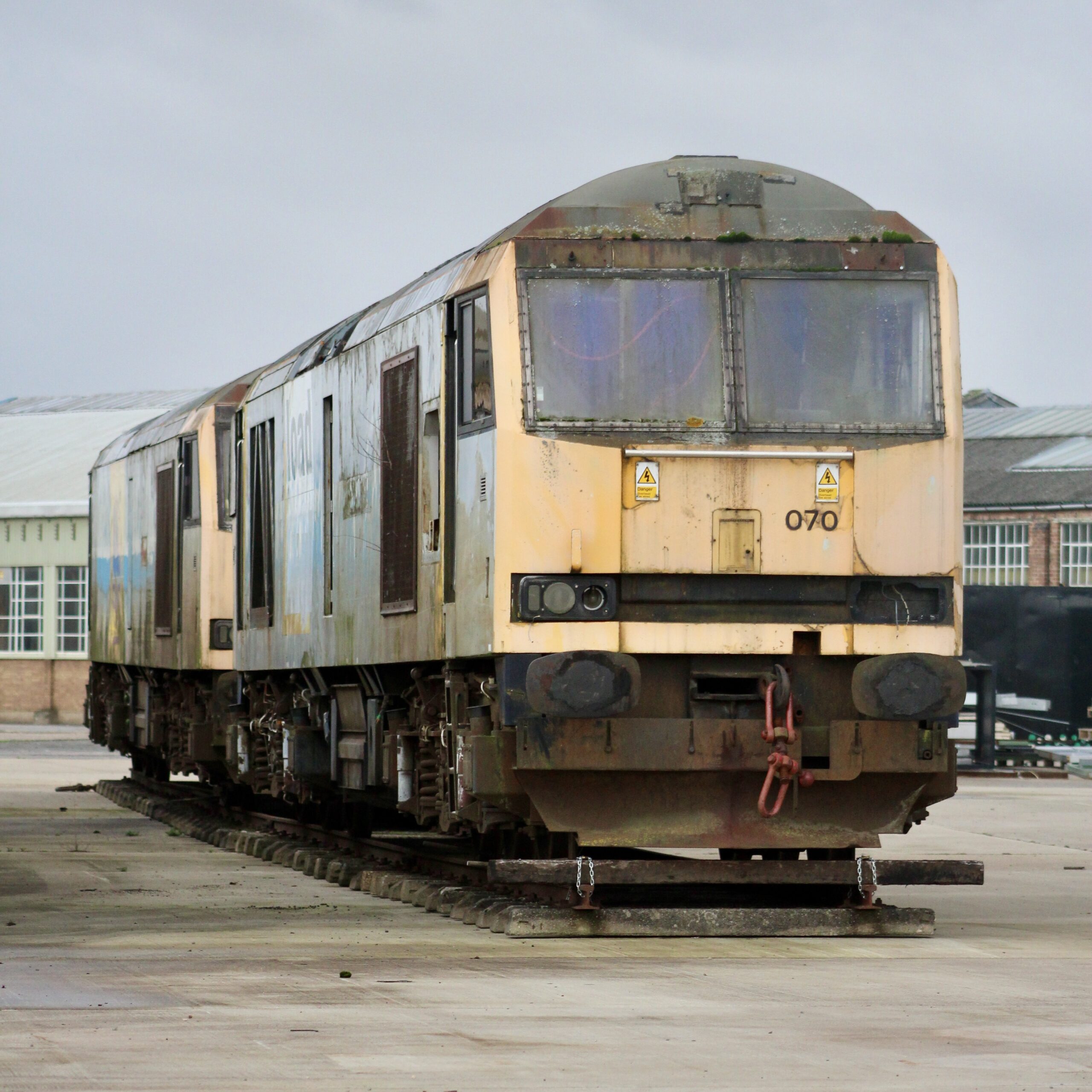
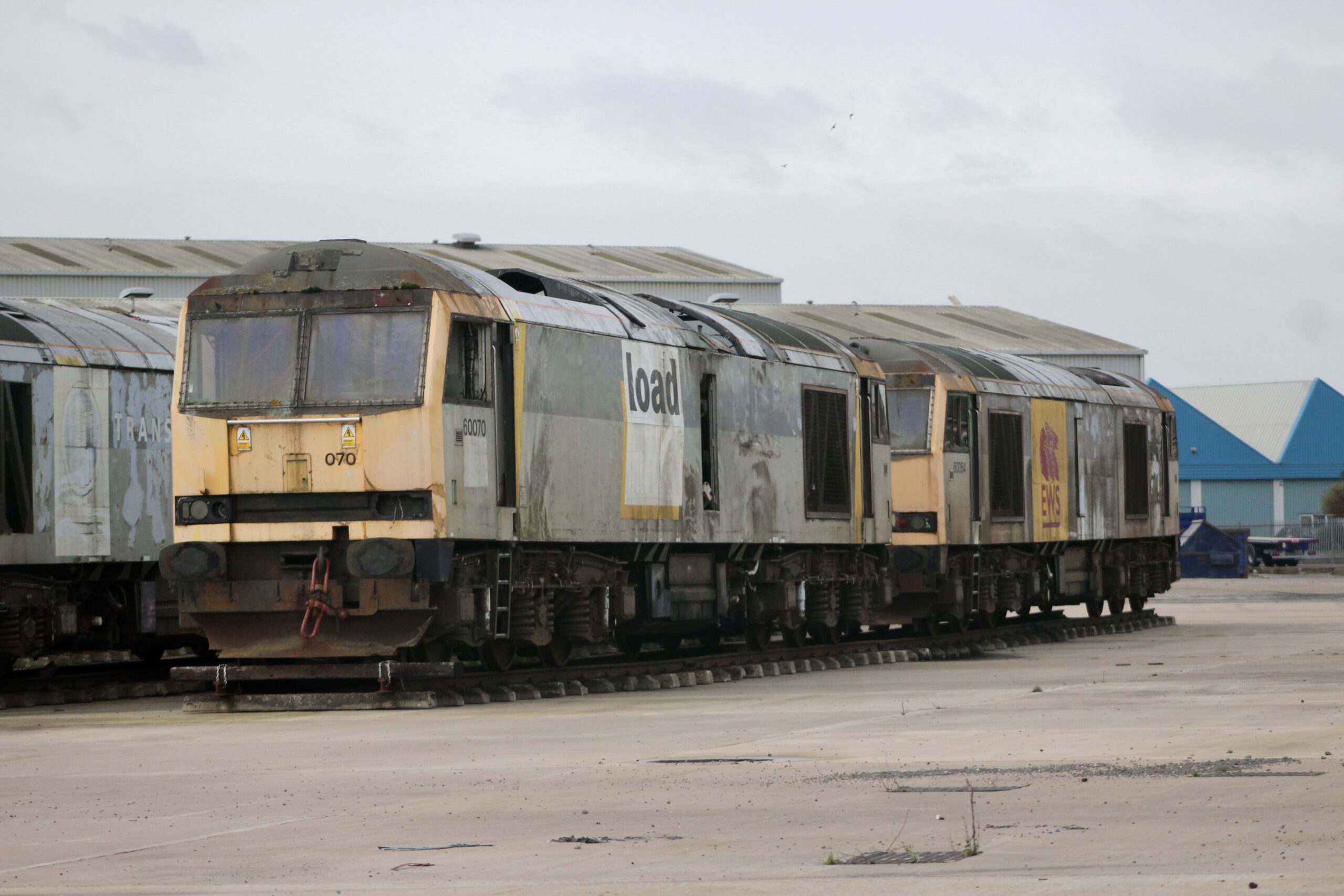
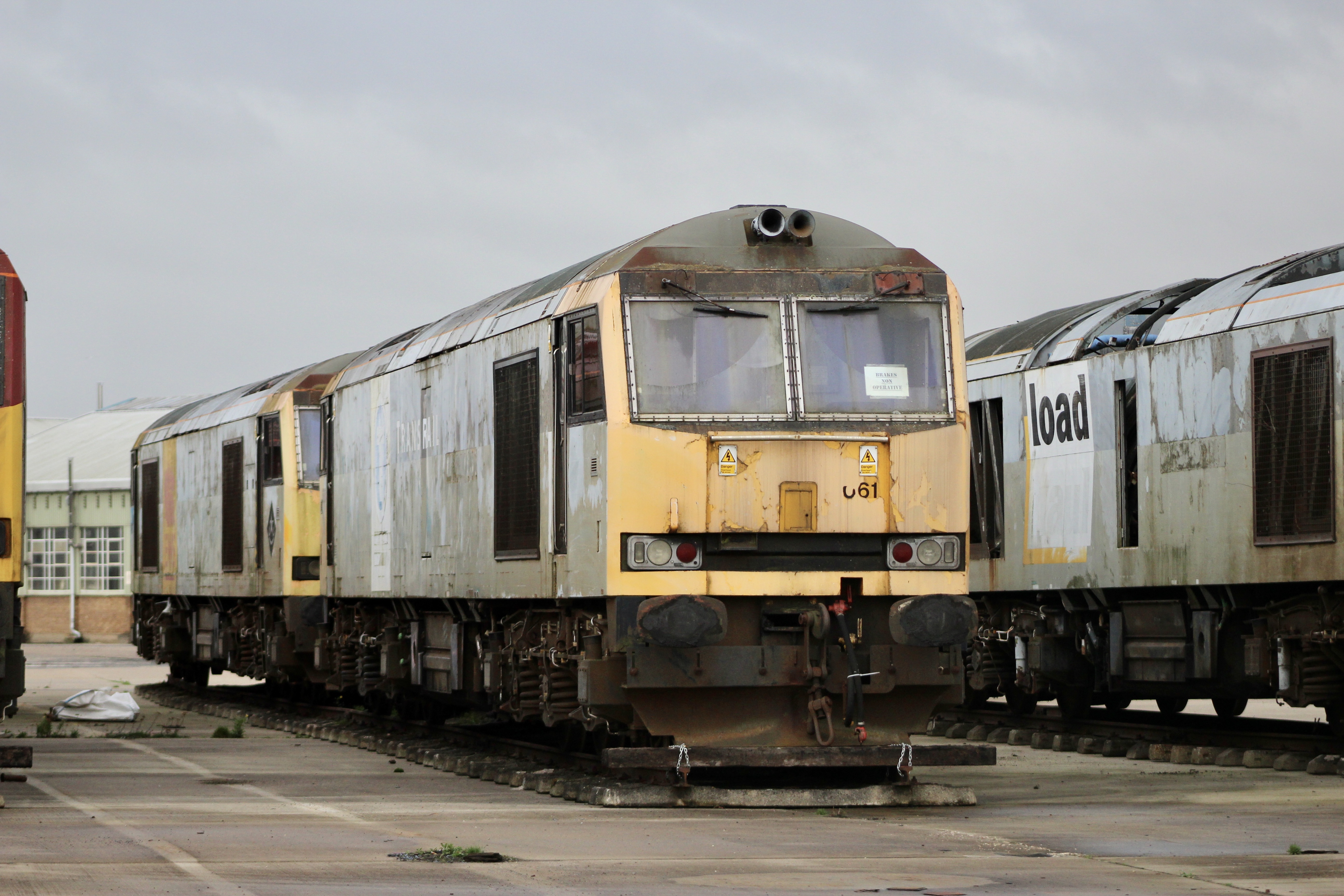
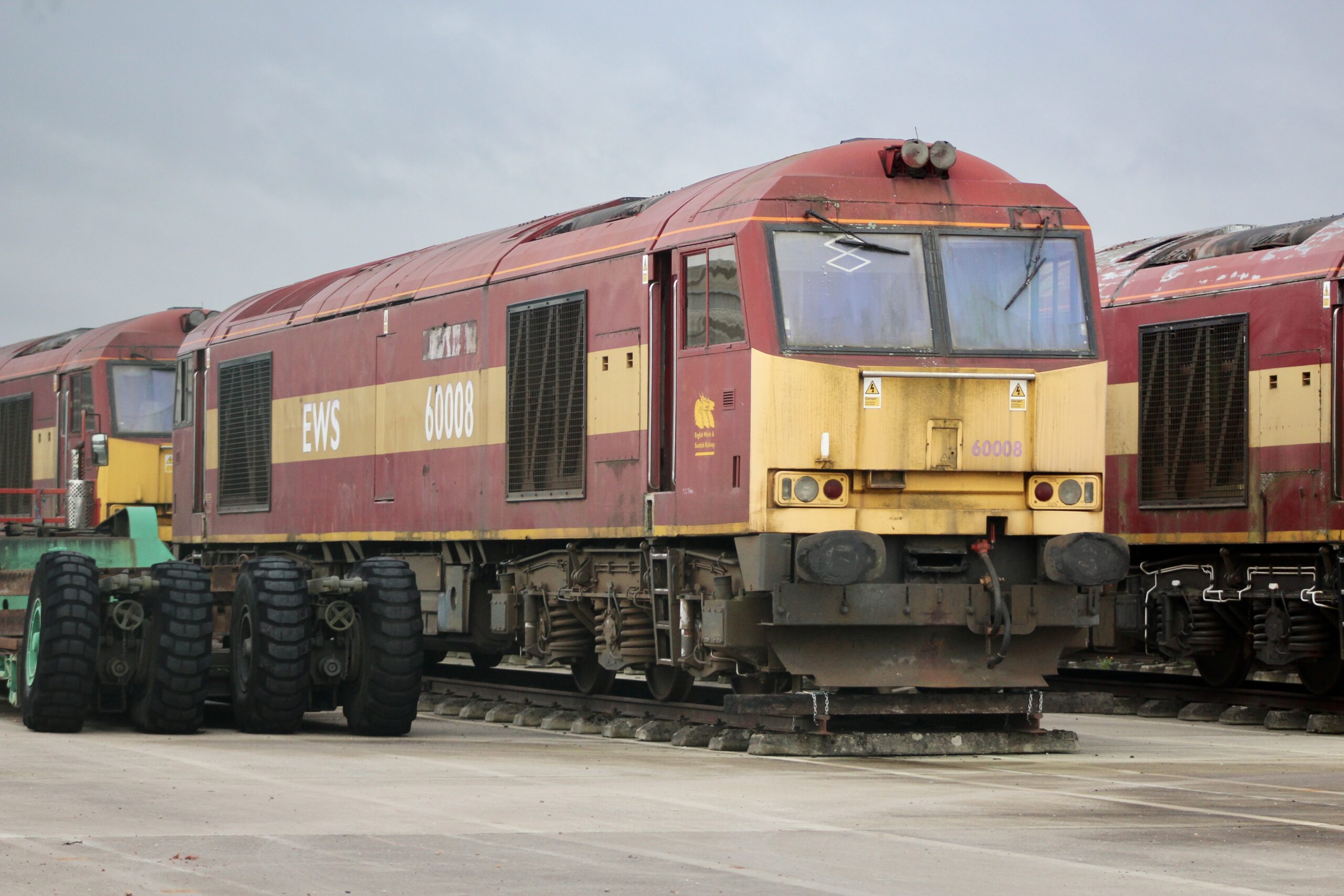
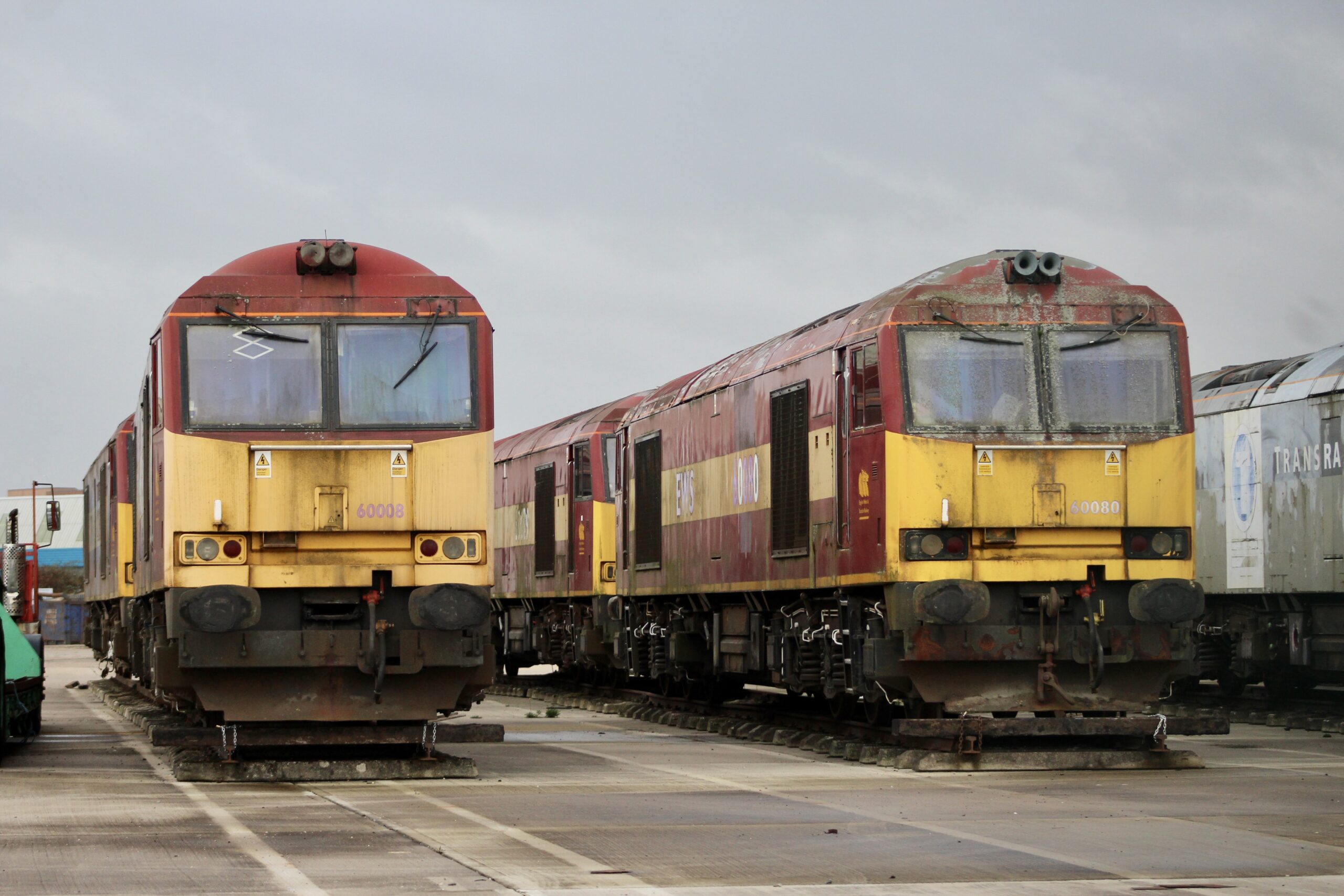
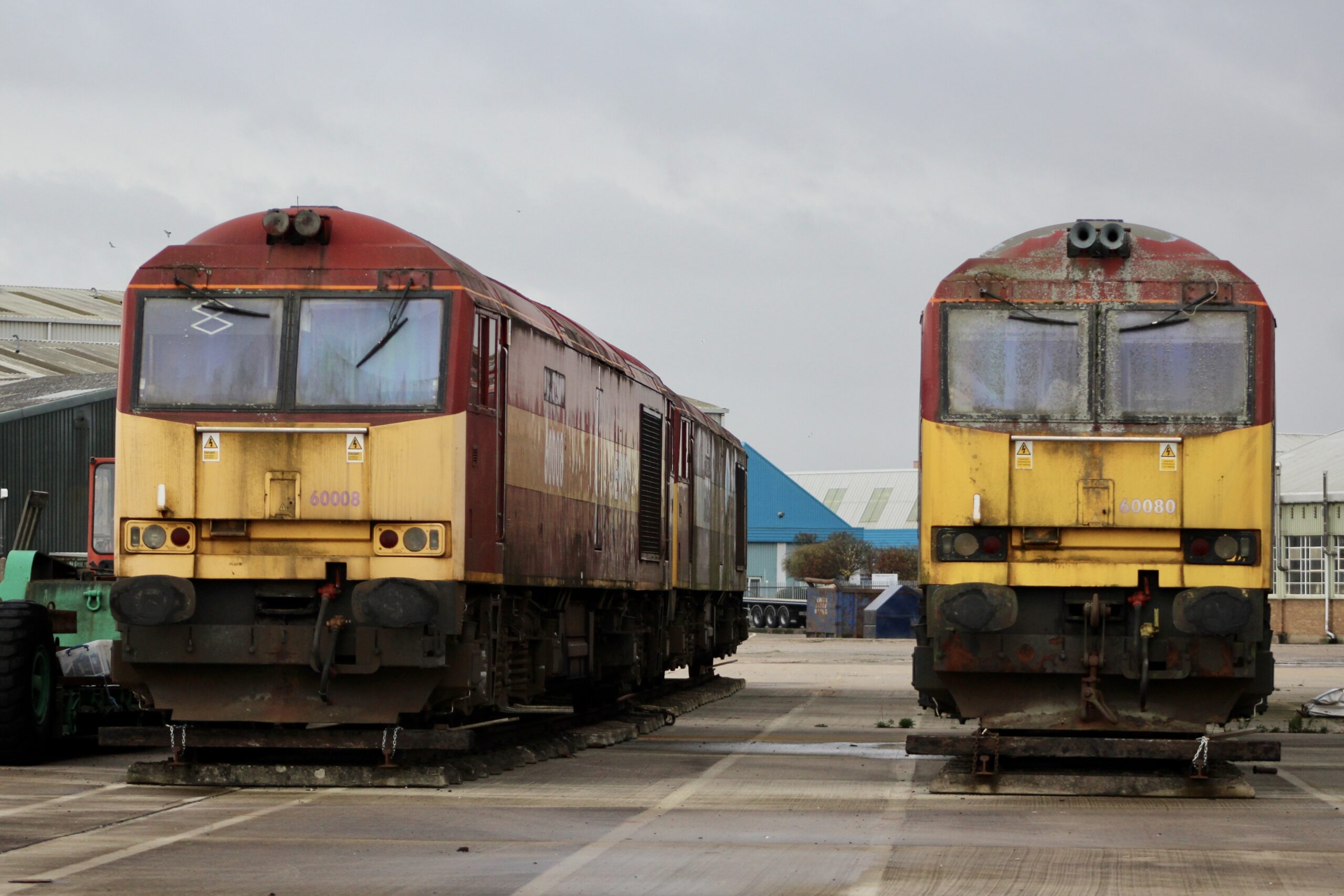
    Below are a series of images of nine stored Class 60 locomotives at Brush Works, Loughborough: the locos are No.’s 60057, 60008, 60061, 60070, 60038, 60009, 60090 and 60064. They are owned by Devon Cornwall Rail (DCR) and hopefully some will be returned to main line use.

    Brush, Loughborough – 24/11/2022
    Brush, Loughborough – 24/11/2022
    Brush, Loughborough – 24/11/2022
    Brush, Loughborough – 24/11/2022
    Brush, Loughborough – 24/11/2022
    Brush, Loughborough – 24/11/2022
    Brush, Loughborough – 24/11/2022
    Brush, Loughborough – 24/11/2022

    And here is video of my previous visit in 1995, when Class 92’s, Class 20’s and a Class 47 were amongst the classes of locomotive present:

    I very much look forward to learning what is going to happen to the Class 60 locomotives at Loughborough and hope that at least some of them will turn a wheel in revenue earning service in the near future.

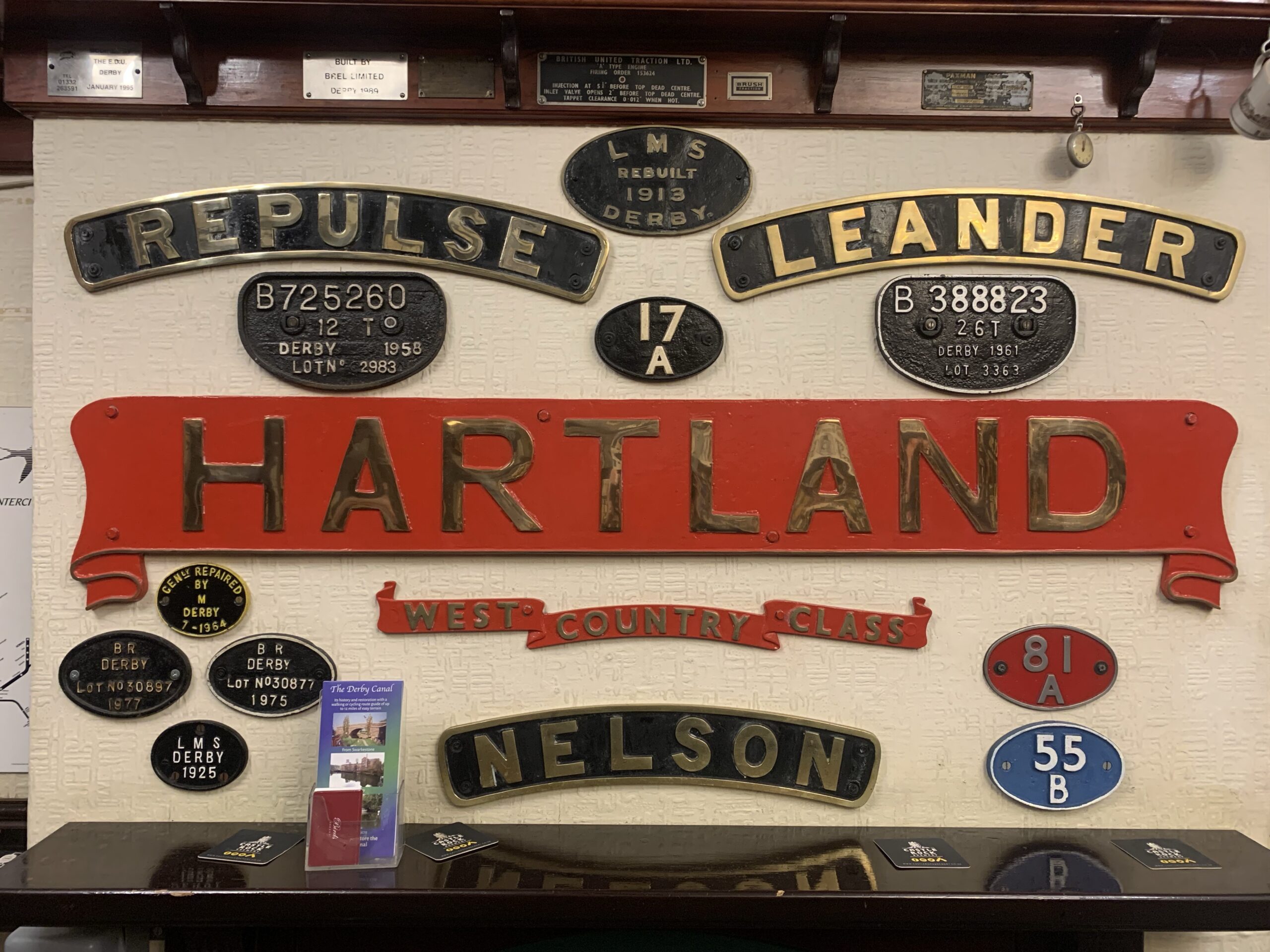
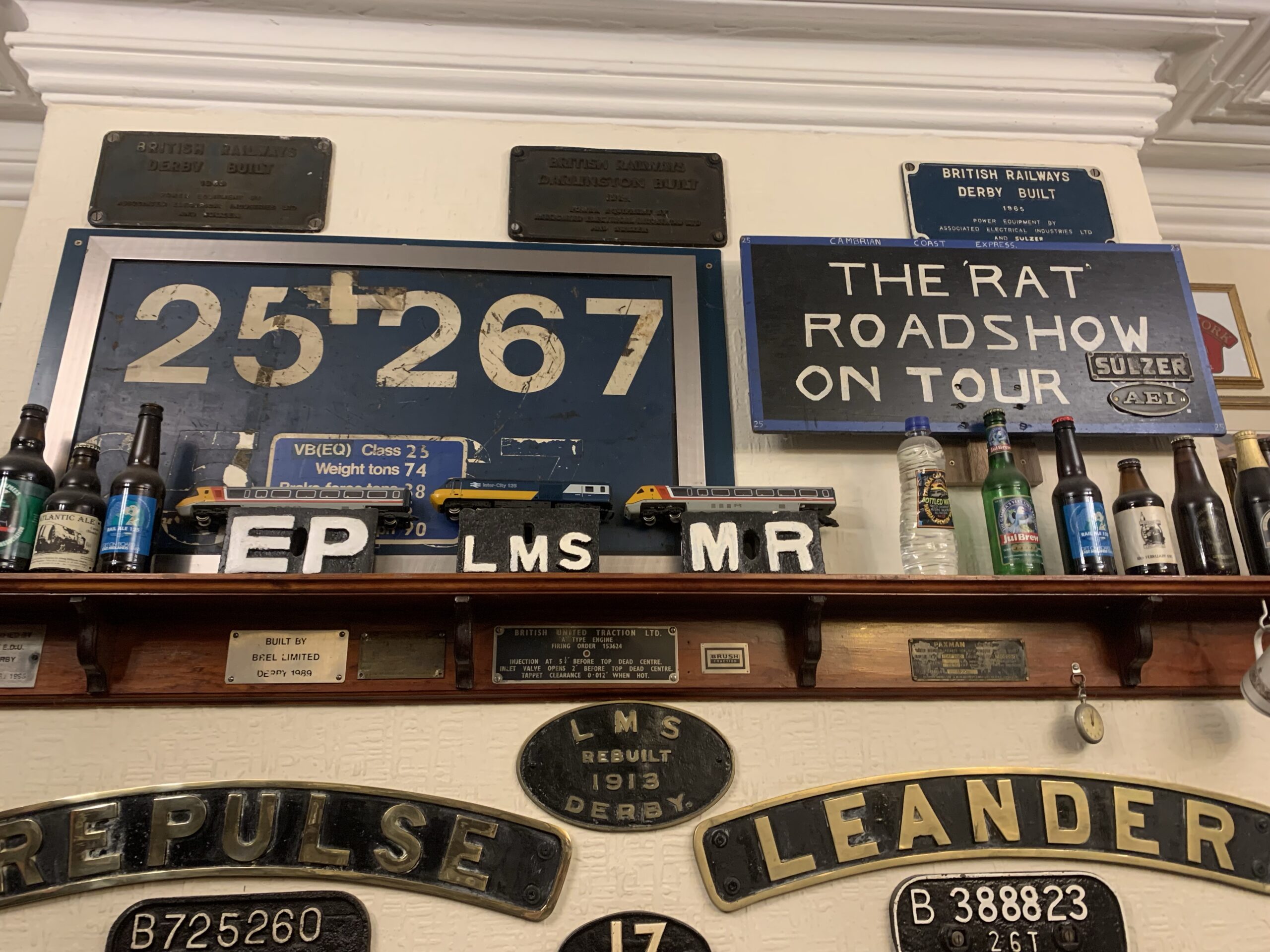
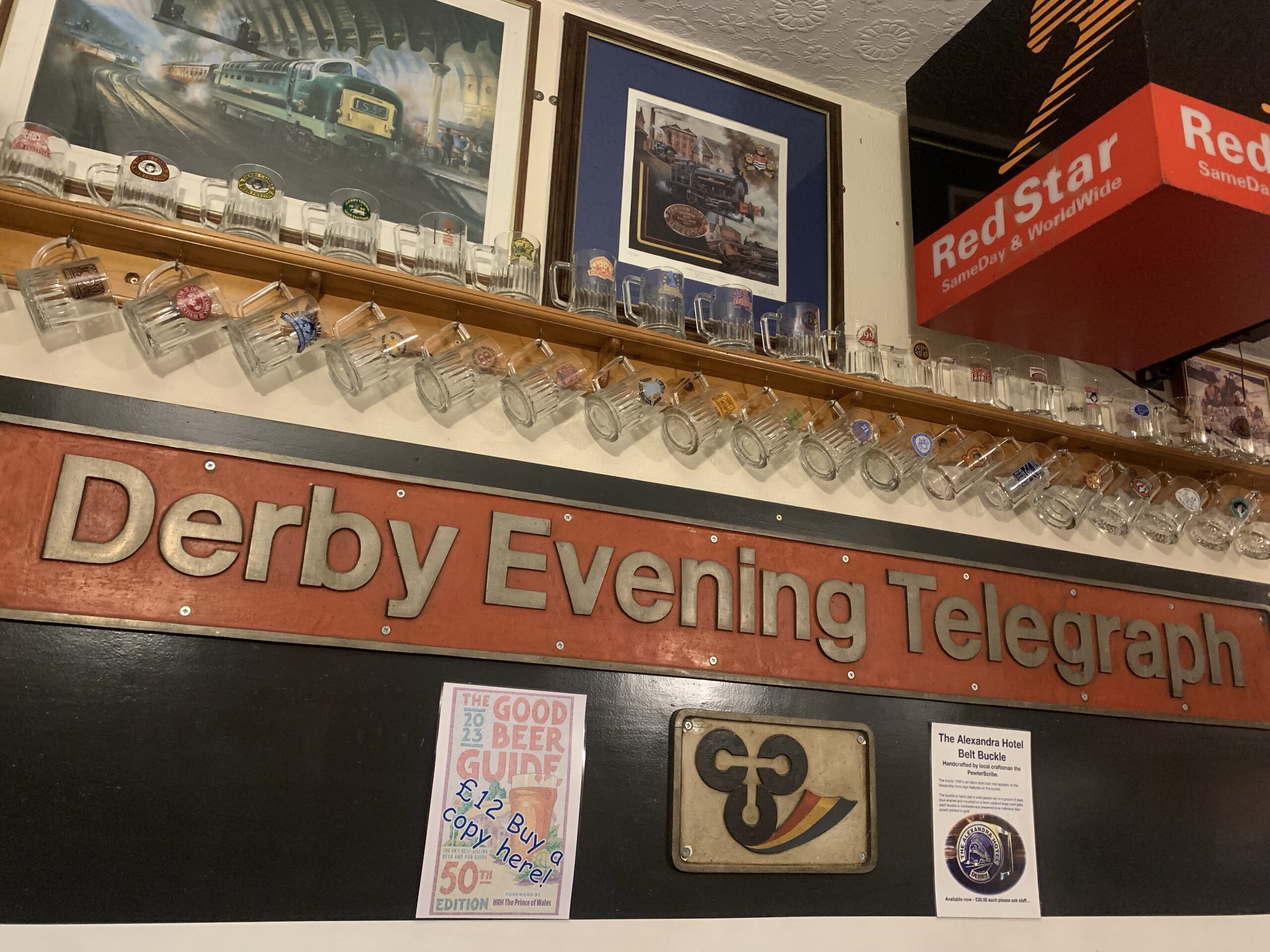
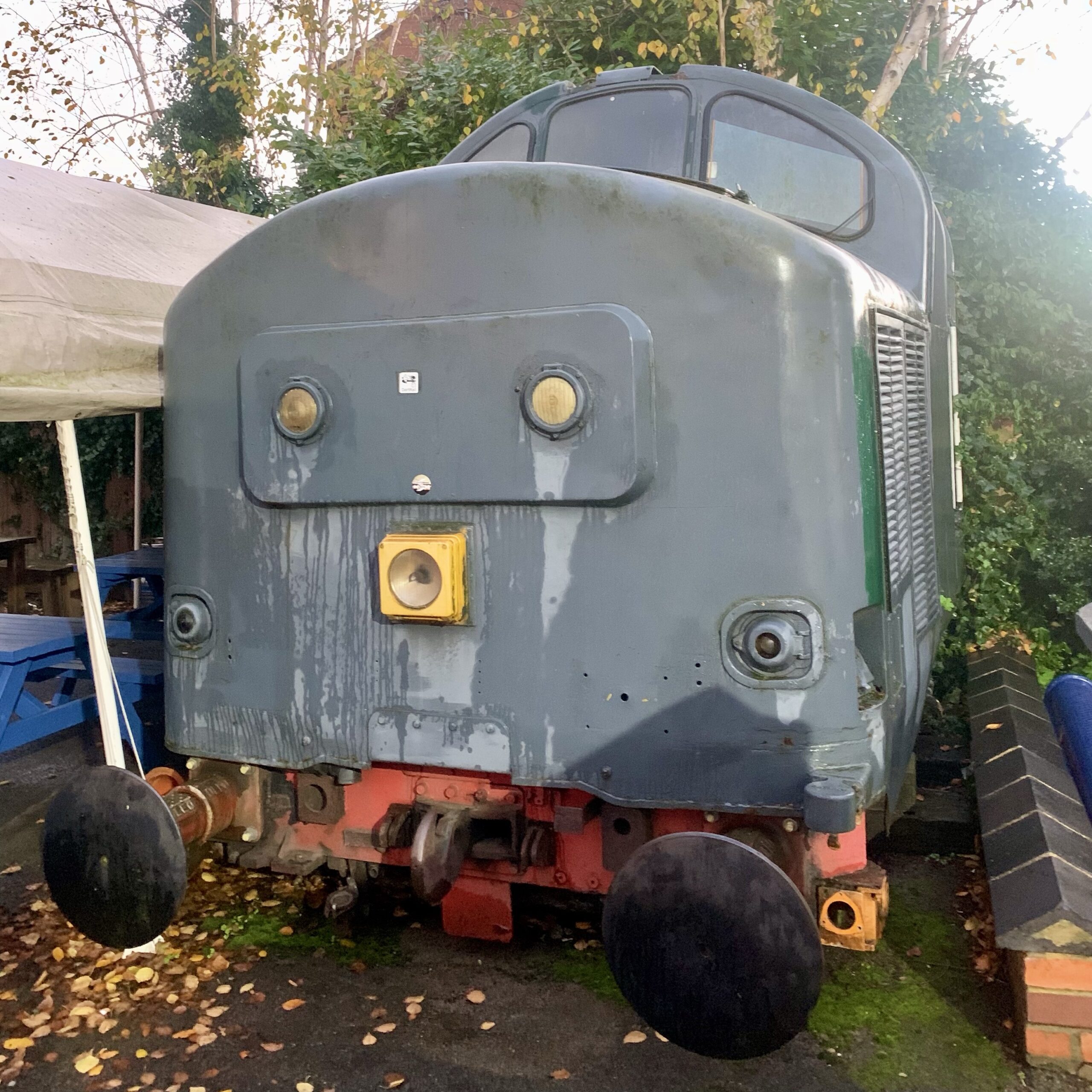
    From Loughborough, we drove onto Derby where we stopped for refreshment at The Alexandra Pub on Siddals Road. The pub is well known for it’s railway memorabilia and I enjoyed a Diet Coke and a packet of dried roasted peanuts while I took in the signs and locomotive nameplates which adorned the walls.

    The Alexandra Hotel has a strong railway theme and Manager Ralf Edge has collected a range of memorabilia that decorates the walls – 24/11/2022
    Railway memorabilia at The Alexandra Hotel, Derby – 24/11/2022
    ‘Derby Evening Telegraph’ name plate at The Alexandra Hotel, Derby – 24/11/2022
    The Alexandra Hotel, Derby has the cab of Class 37 No. 37411 in its garden – 24/11/2022

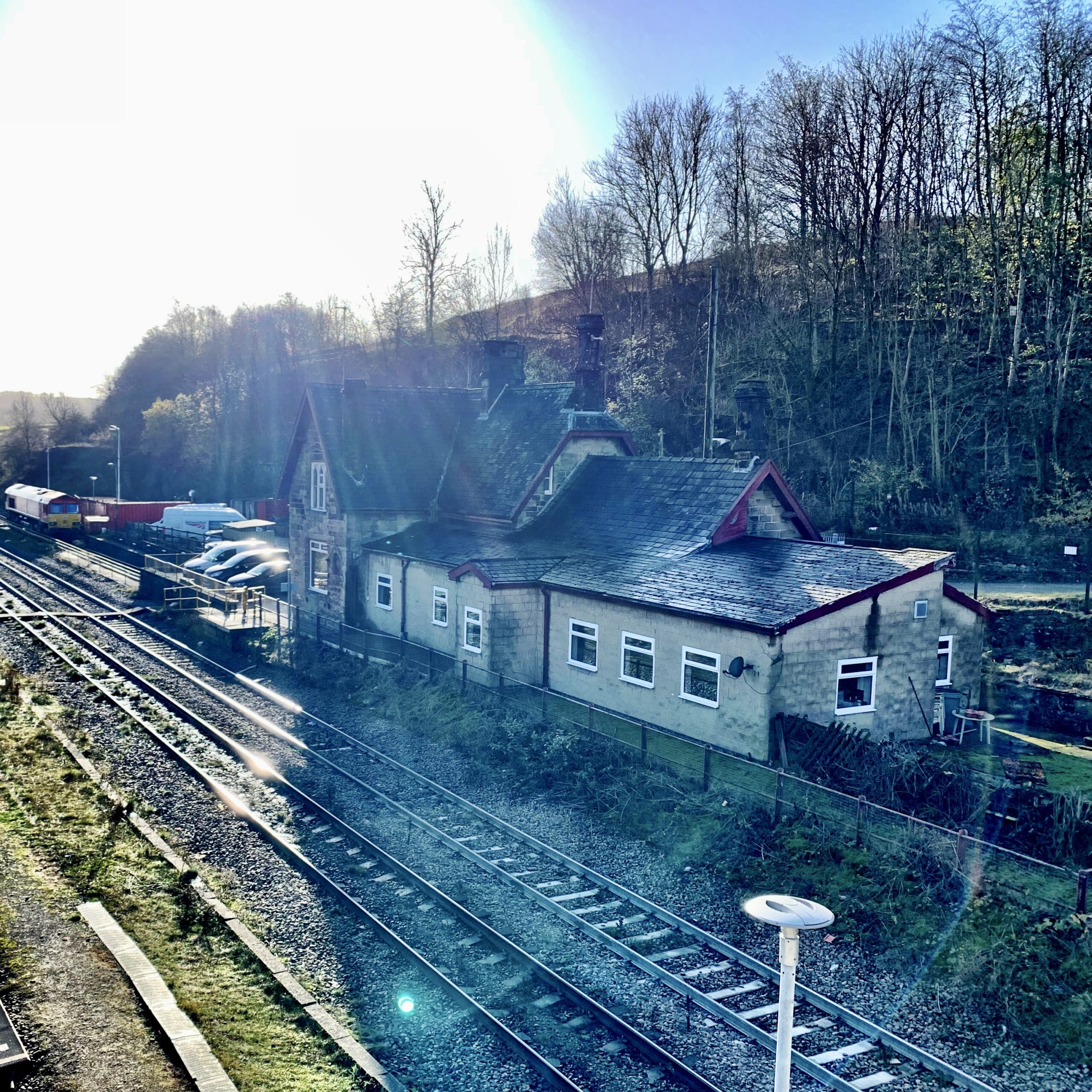
    After a nights rest, we set off on Friday morning for a leisurely drive through the Peak District National Park taking in Peak Forest.

    The former Peak Forest Railway Station – 25/11/2022

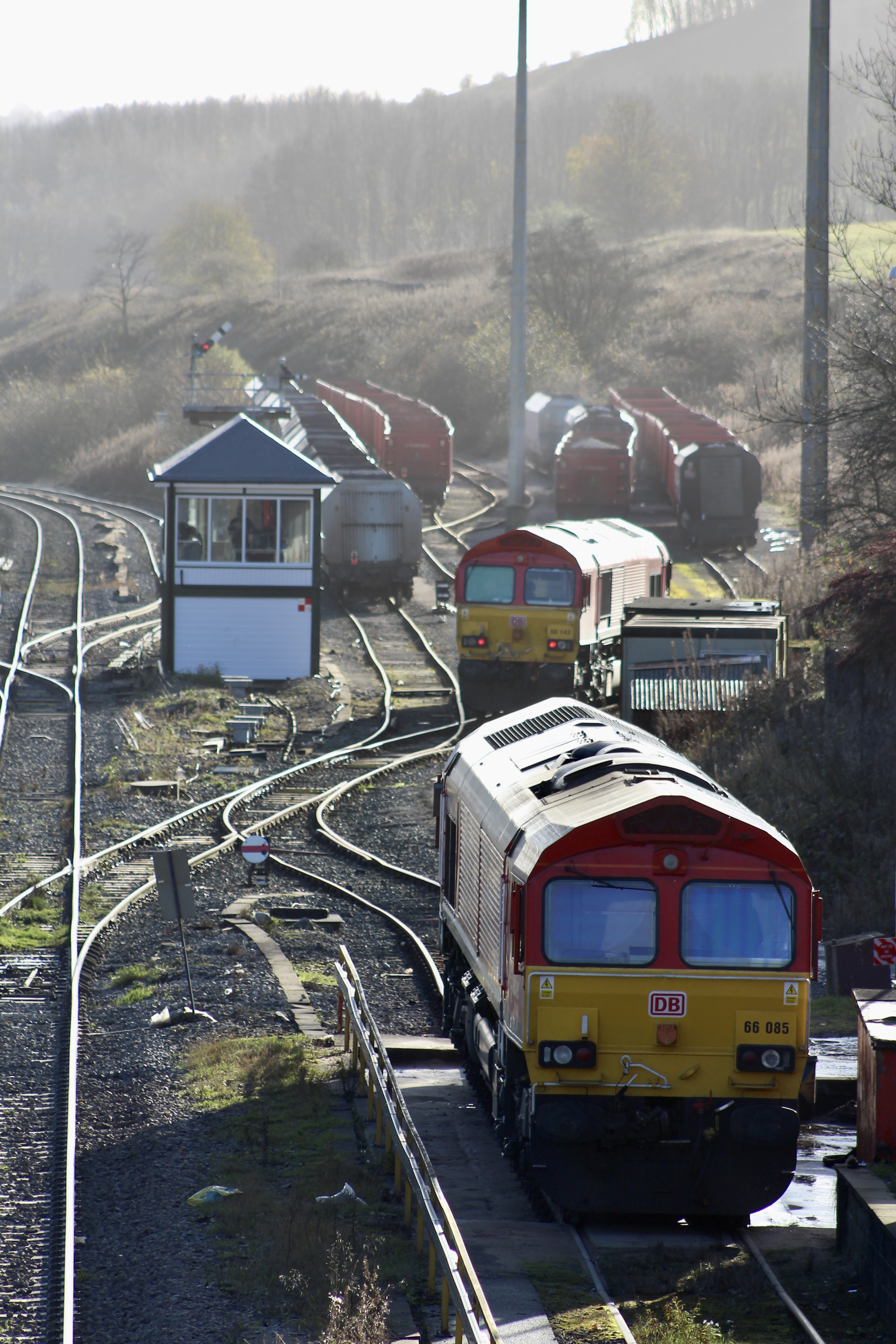
    Peak Forest railway station was opened in 1867 by the Midland Railway on its extension of the Manchester, Buxton, Matlock and Midlands Junction Railway from Rowsley, part of the main Midland Line from Manchester to London. It was also the northern junction for the line from Buxton. A section of the line is retained for freight trains. The station closed in 1967 and the platforms were demolished shortly afterwards, although a section has been reinstated for railway staff and the station buildings which can be seen from the road bridge passing over the tracks survive as offices for the nearby quarry terminal.

    DB Class 66 No.’s 66085 and 66143 at Peak Forest – 25/11/2022
    I was very happy to see Class 20 No.’s 20007 and 20205 parked up at Peak Forest – 25/11/2022
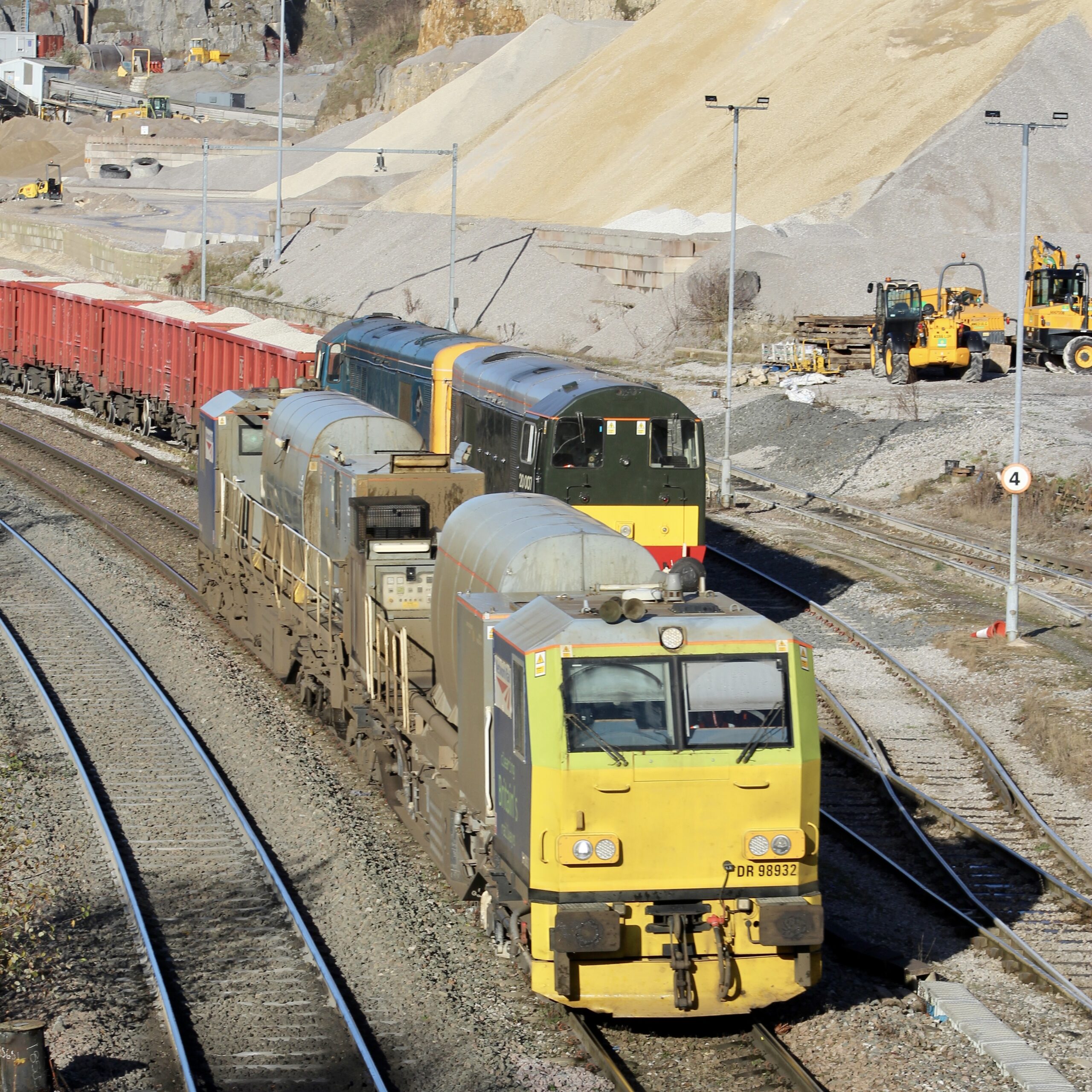
    MPV No. DR98982 works 3S50 0554 Wigan Locomotive Inspection Point to Crewe at Peak Forest – 25/11/2022
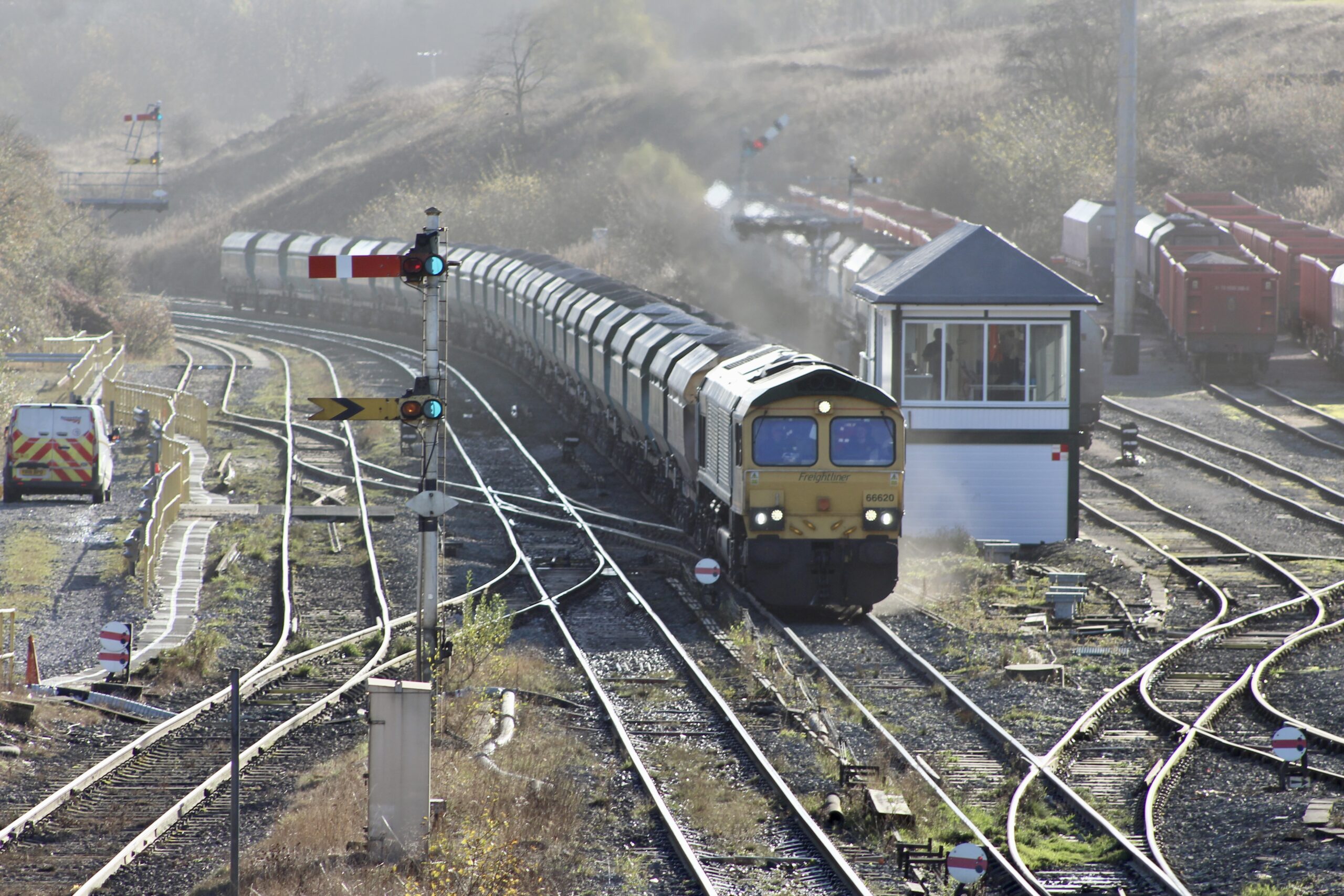
    Freightliner Class 66 No. 66620 working 6D17 1148 Tunstead sidings to Radlett Redland Roadstone passes Peak Forest signal box – 25/11/2022
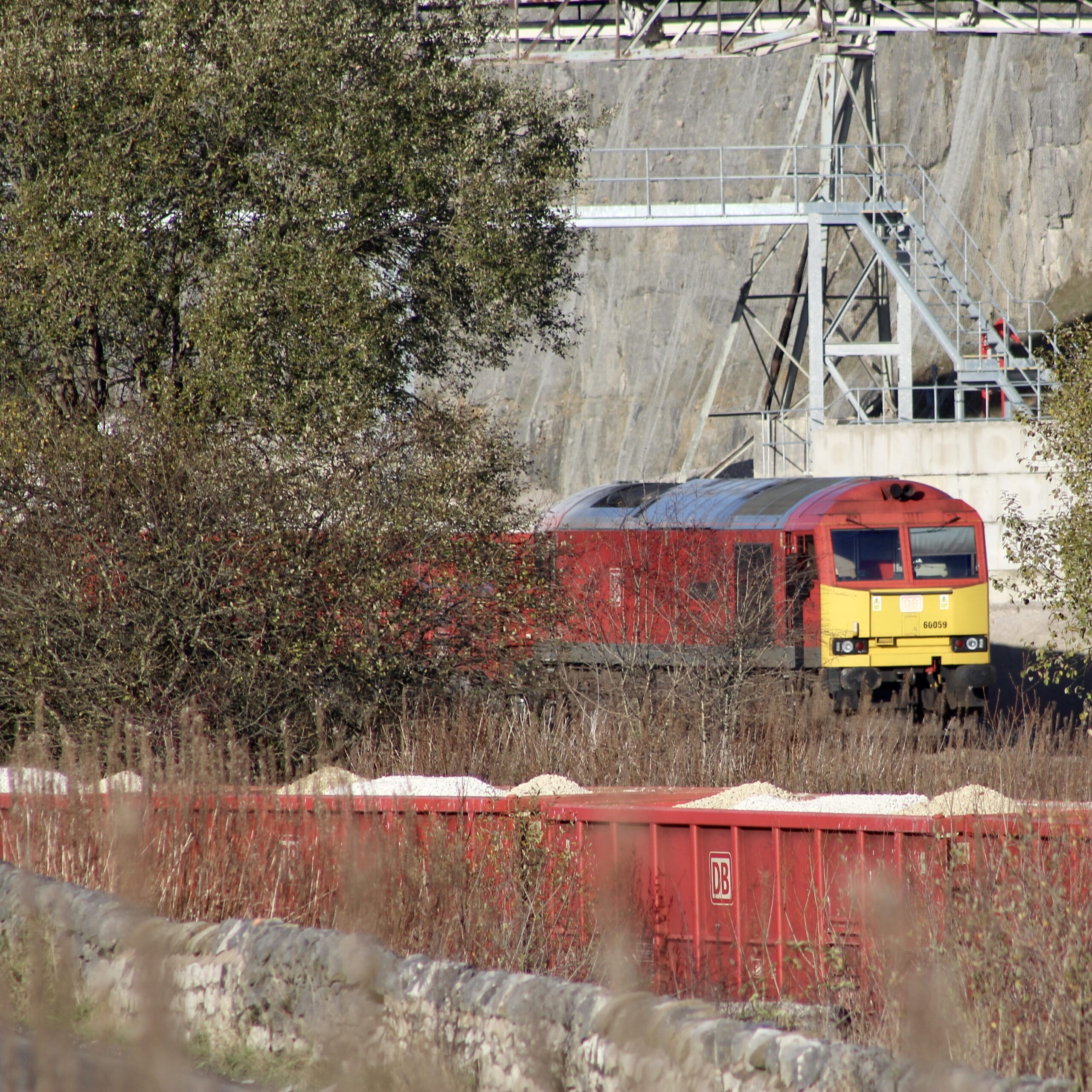
    Class 60 No. 60059 ‘Swindon Dalesman’ at Peak Forest – 25/11/2022

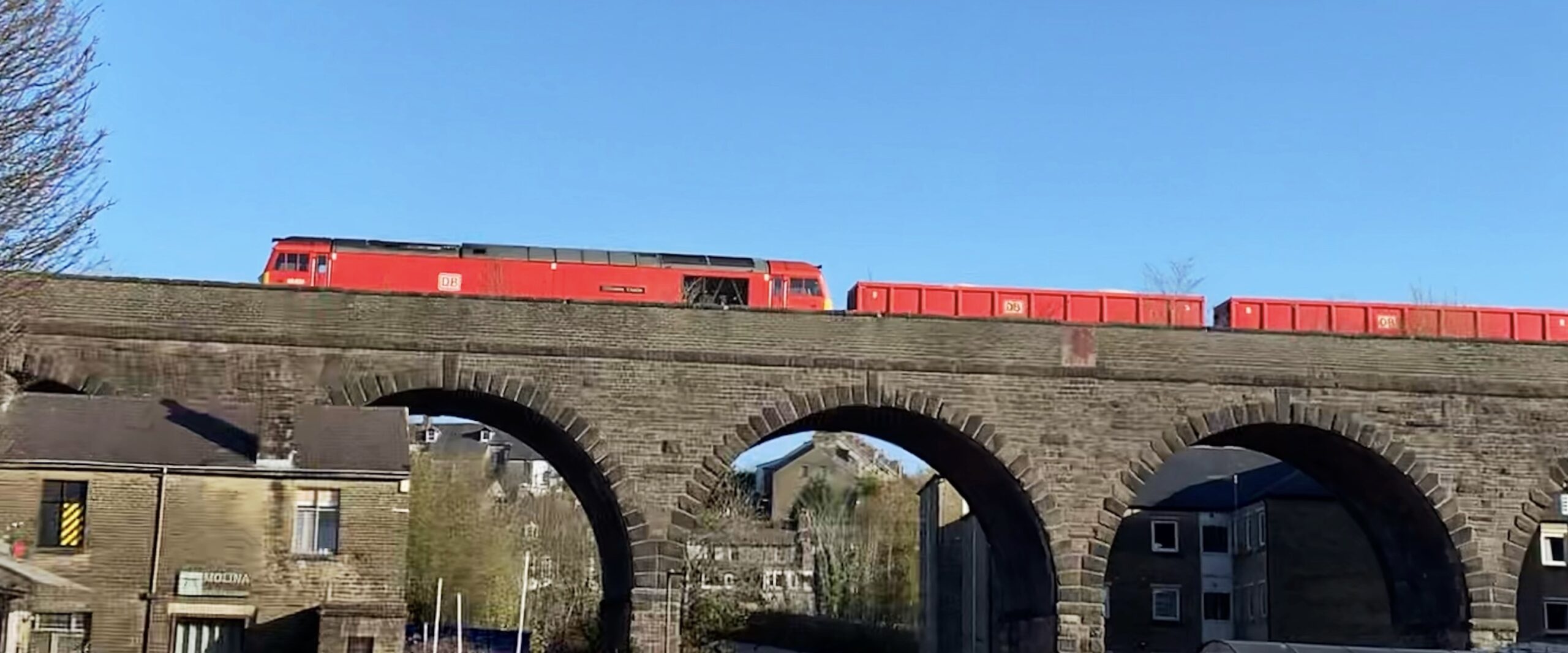
    From Peak Forest, we headed into Buxton for lunch in “The Railway @. Buxton” a pub which got its name as it was popular with railway workers after they had finished their shifts. It stands in front of the impressive Buxton Viaduct which carries the freight line from Peak Forest. As we parked up, we saw Class 60 No. 60059 ‘Swindon Dalesman’ pass over working 6E18 1141 Peak Forest RMC Sidings to Attercliffe Sindings EWS

    Class 60 No. 60059 ‘Swindon Dalesman’ working 6E18 1141 Peak Forest RMC Sidings to Attercliffe Sindings EWS at Buxton – 25/11/2022

    There were once two railway stations in Buxton; the aforementioned Manchester, Buxton, Matlock and Midlands Junction Railway from Rowsley favoured by the Midland Railway (MR) and The Stockport, Disley and Whaley Bridge Railway supported by the London & North Western Railway (LNWR) extended its line to Buxton. The stations were built side by side and given identical frontages designed by Joseph Paxton (best known for designing Crystal Palace and for cultivating the Cavendish banana), and built by John Smith each being built from local stone and having a wrought iron glazed train shed, fronted with half-circle fan widows and the names of the operating companies carved into the supporting stonework. Joseph Paxton was a director of both companies and he attended grand lunches at the opening of both stations which occurred on the same day; 1st June 1863. Can’t say I blame him!

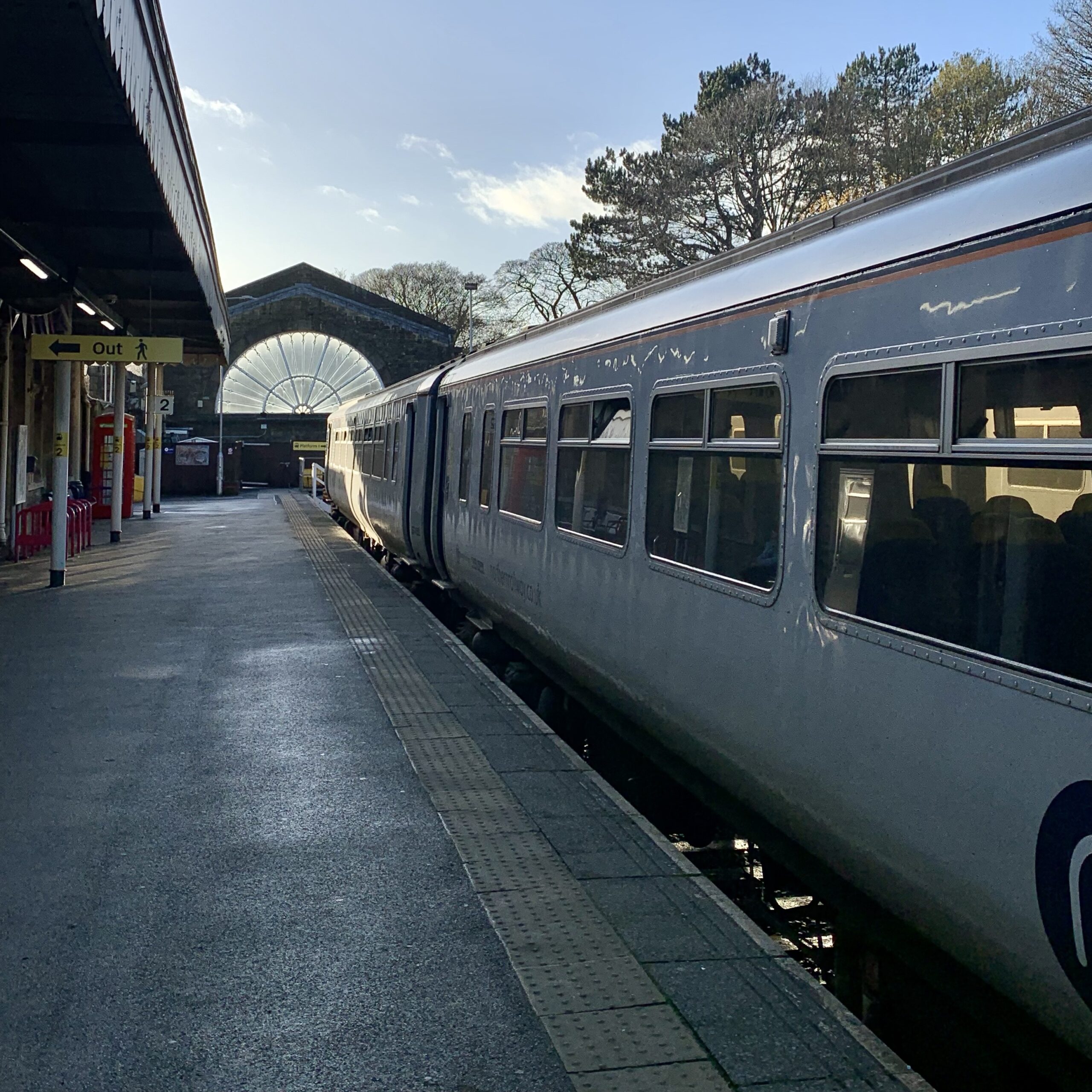
    A view along the platform at Buxton showing the half circle fan window and Class 156 No. 156452 – 25/11/2022

    Buxton’s Midland Station fell victim to the Beeching Axe and closed on 6th March 1967 and was demolished in November 1970. There have been numerous attempts since to relay the track as a heritage line, but these have met without success to date. The LNWR station survives and handles all of Buxton’s passenger traffic today. The glazed roof has been removed, but the fanlight window was restored in 2009 and is Grade II listed.

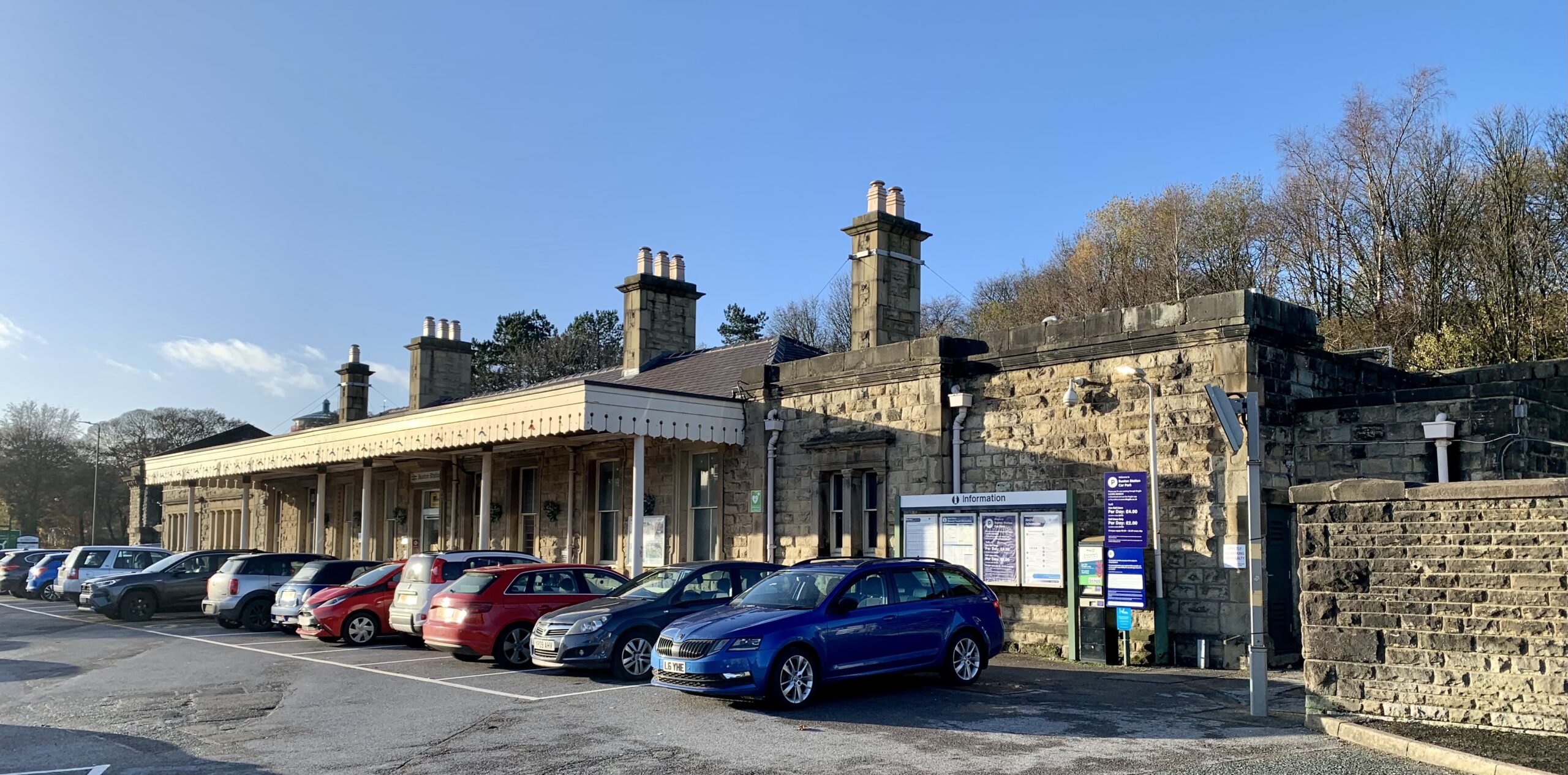
    The LNWR station building at Buxton – 25/11/2022
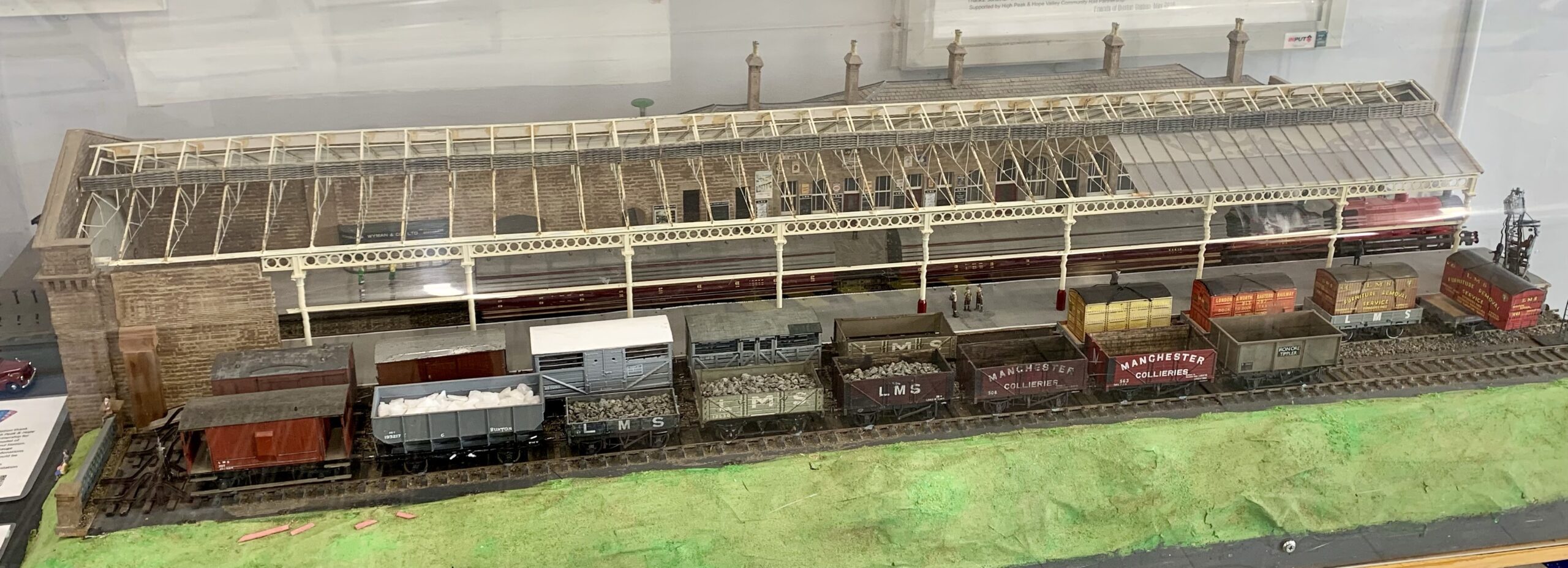
    An O gauge model of the demolished Midland Station at Buxton constructed by Barry Bryant, Keith Holland and Charlie Schultz which took four years to build using photographs and scale drawings – 25/11/2022
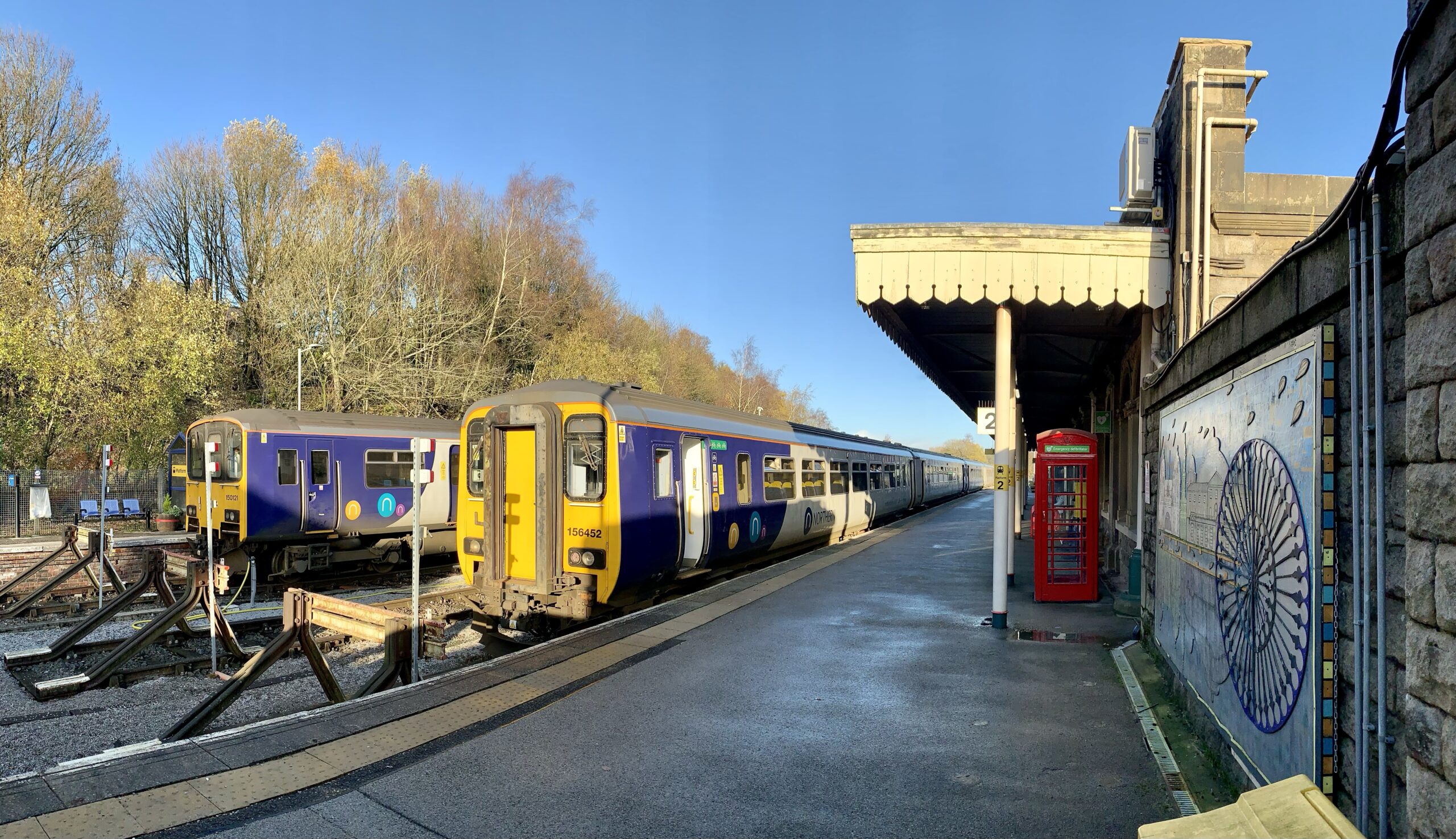
    Buxton railway station with Northern Rail Class 156 No. 156452 and Class 150 No. 150121 – 25/11/2022
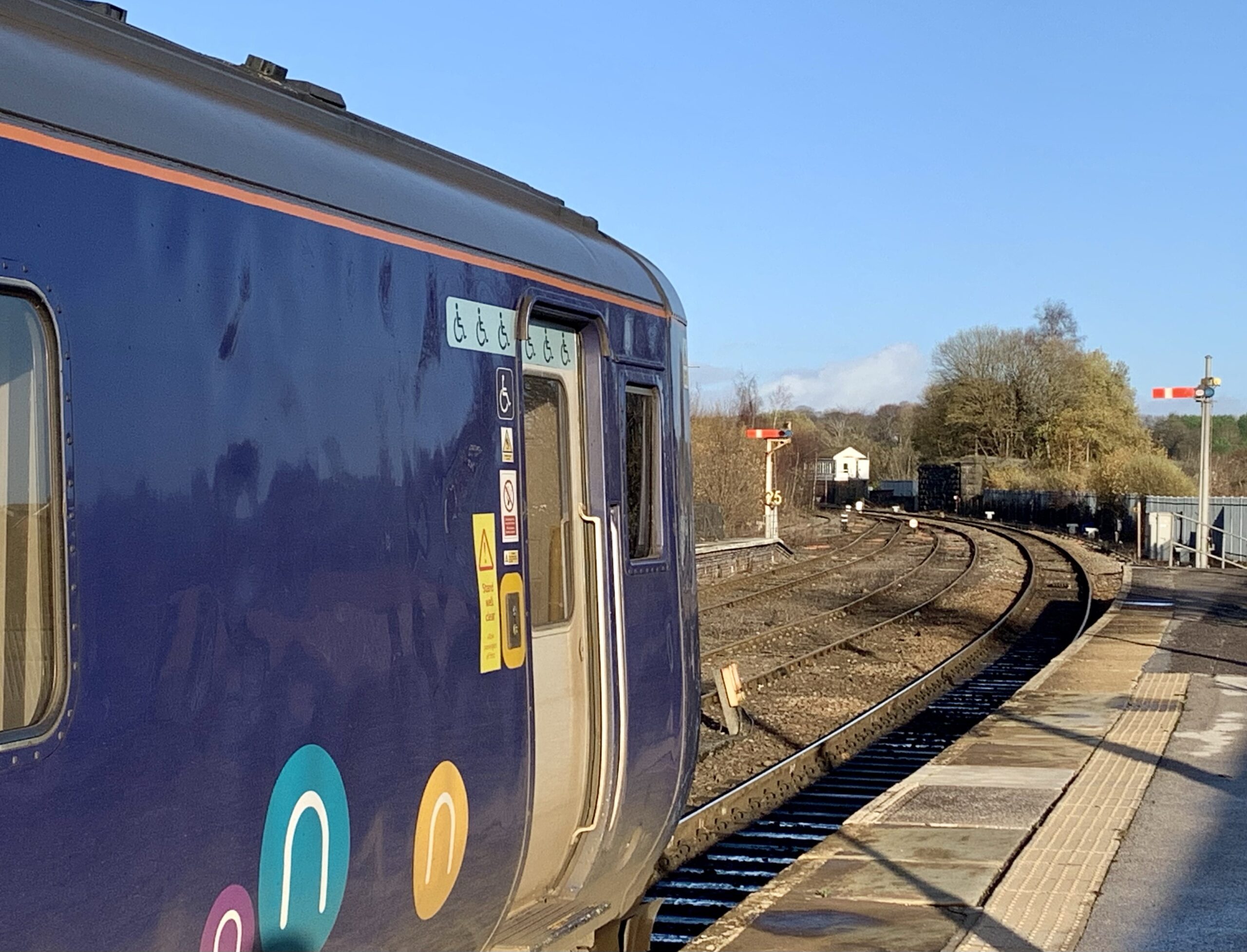
    Class 156 No. 156460 contemplates the view towards Manchester with signal box and surviving semaphore signalling – 25/11/2022
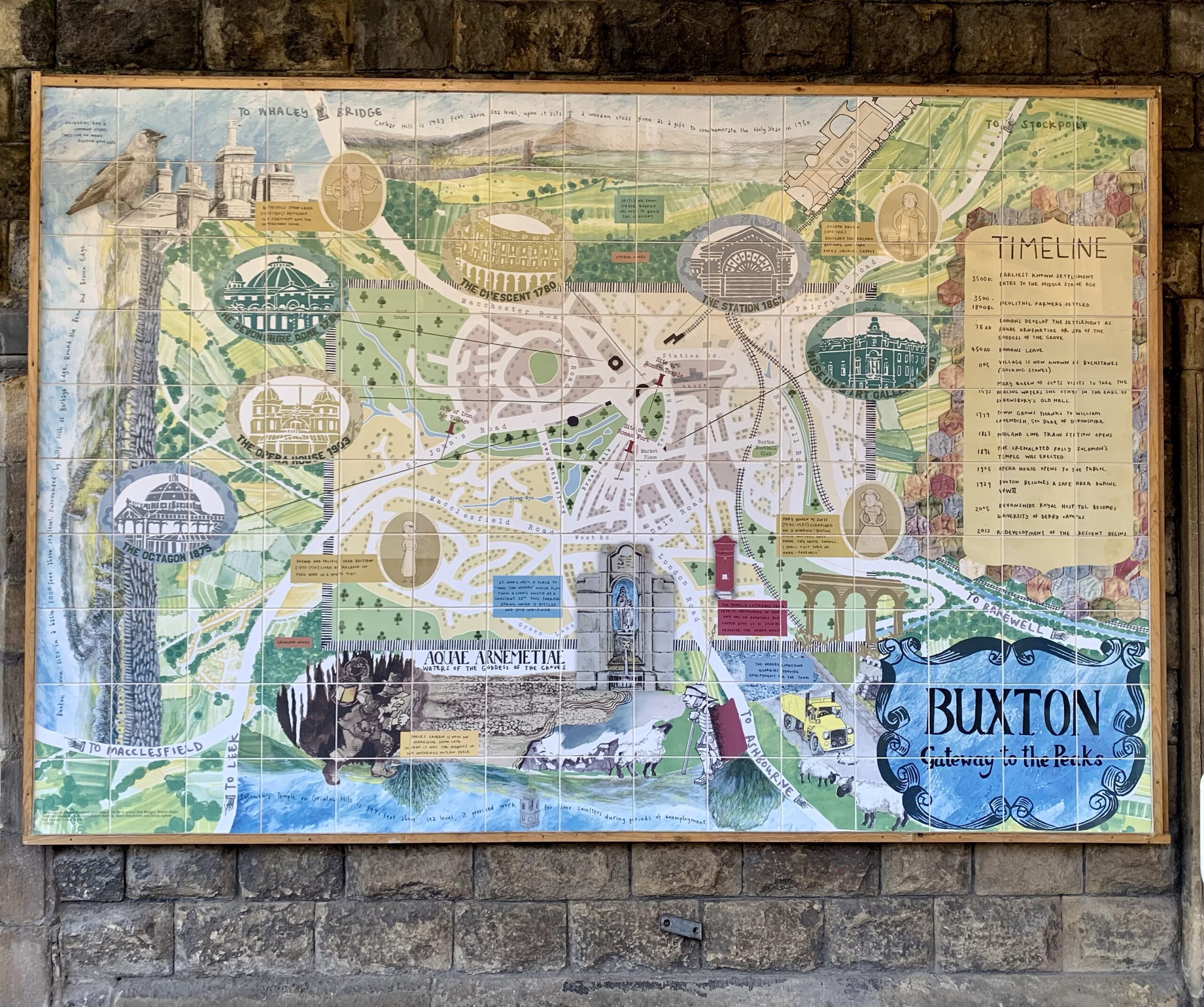
    Mural of Buxton at the railway station – 25/11/2022
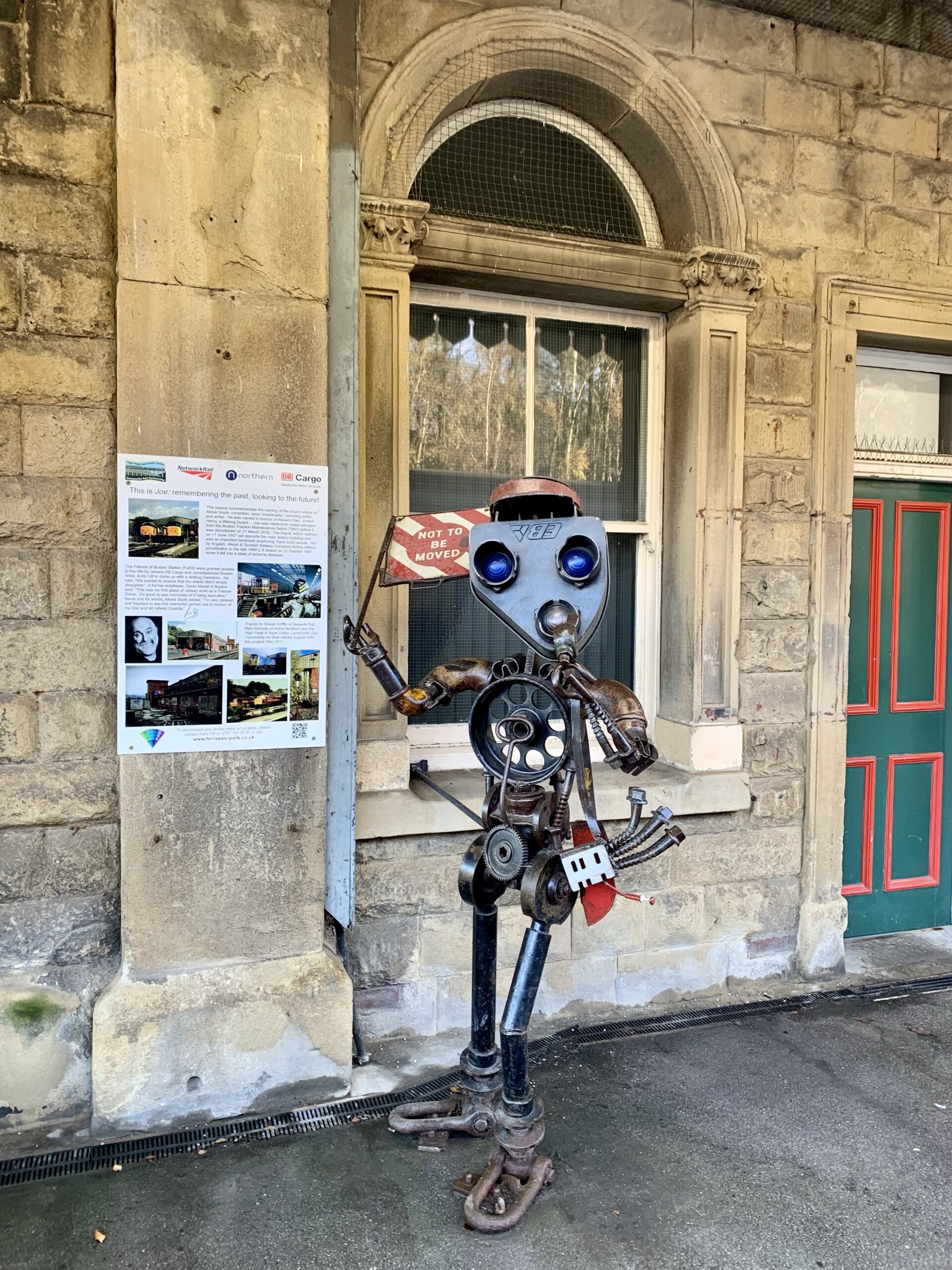
    Joe the Guard statue at Buxton railway station. He was named after broadcaster and comedian Alexei Sayle in honour of his father, Joseph Henry Sayle, who was a lifelong guard. Joe was made from metal salvaged from Buxton Traction Maintenance Depot (TMD) before it was demolished in March 2016 – 25/11/2022

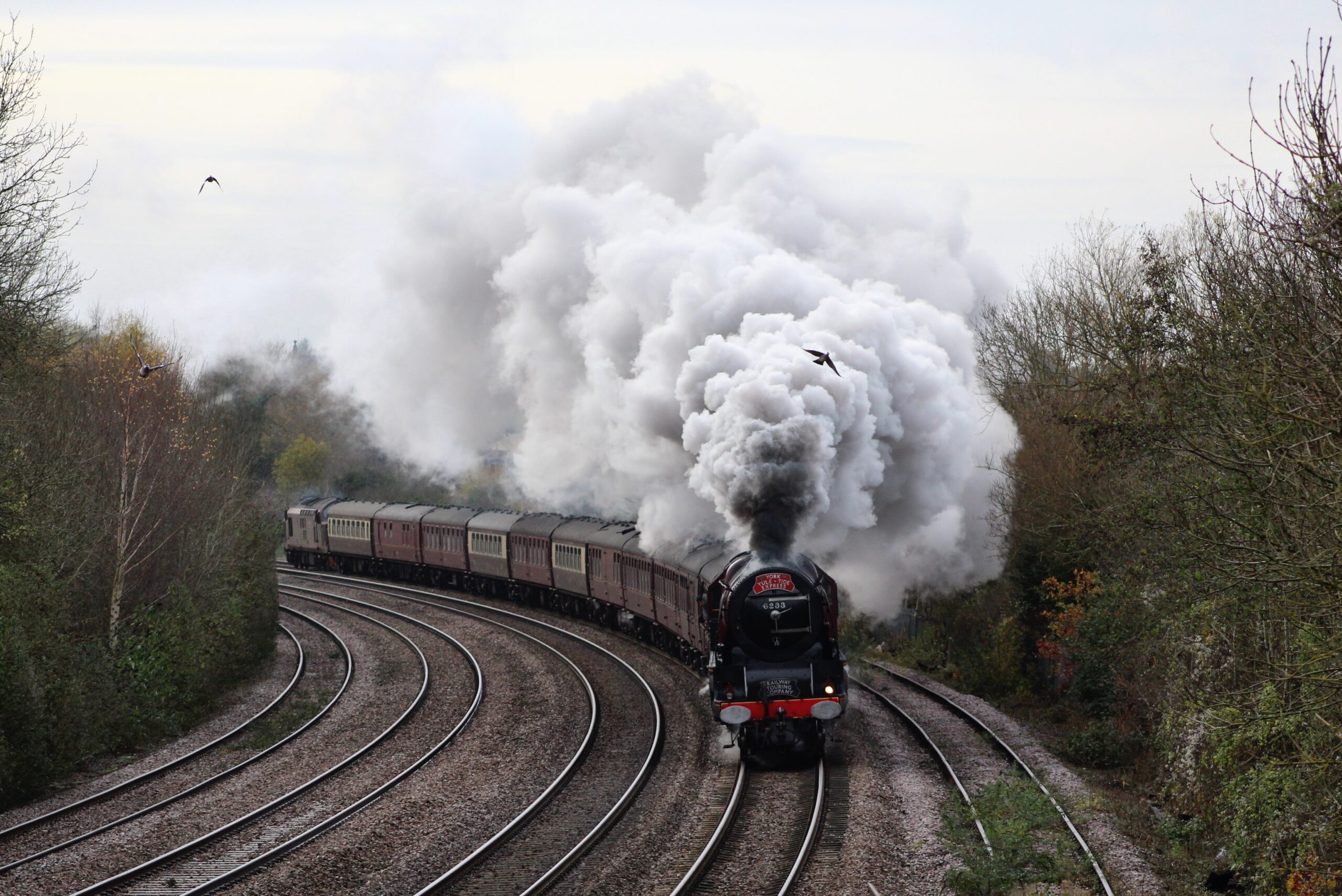
    Saturday we had planned to head to Nottingham to meet friends. There was a strike by ASLEF union members which prevented any East Midlands Railway (EMR) trains running through the city. However, a quick look at the rail tour schedule revealed that The Railway Touring Company organised “York Yule-Tide Express” was scheduled to pass very close to Nottingham at around 1030 that morning. So feeling quite pleased that a mainline steam train would be in our sights, we headed off to Toton which is halfway between Derby and Nottingham. After taking some photographs from the A52 looking across to Toton depot, we drove a short distance to Sandiacre and the Iron Giant Walkway which crosses the five track railway line which I though would make a great location to see LMS Coronation Pacific No. 6233 ‘Duchess of Sutherland’ head to York.

    Toton viewed from the A52 rail over bridge – 26/11/2022
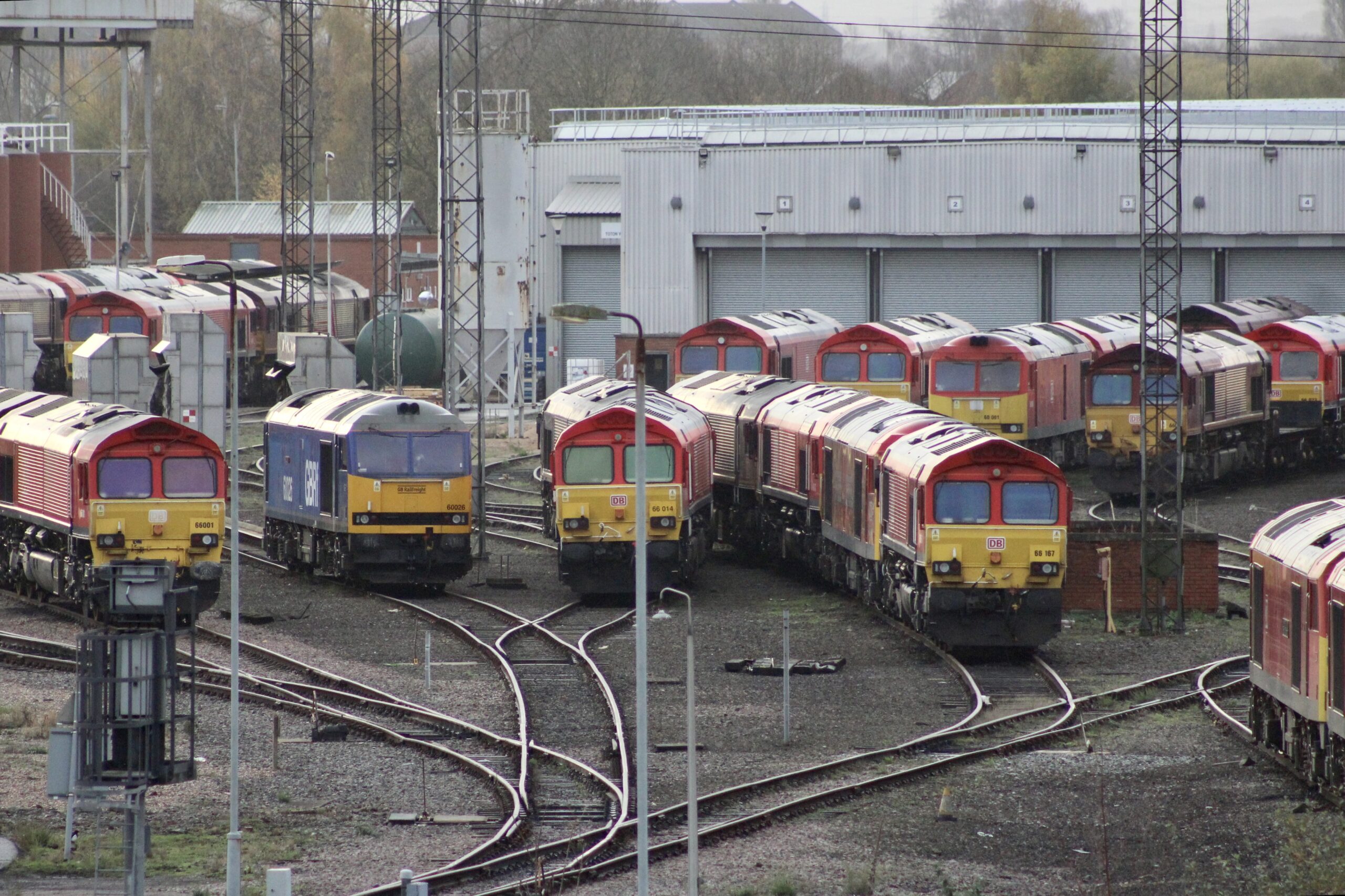
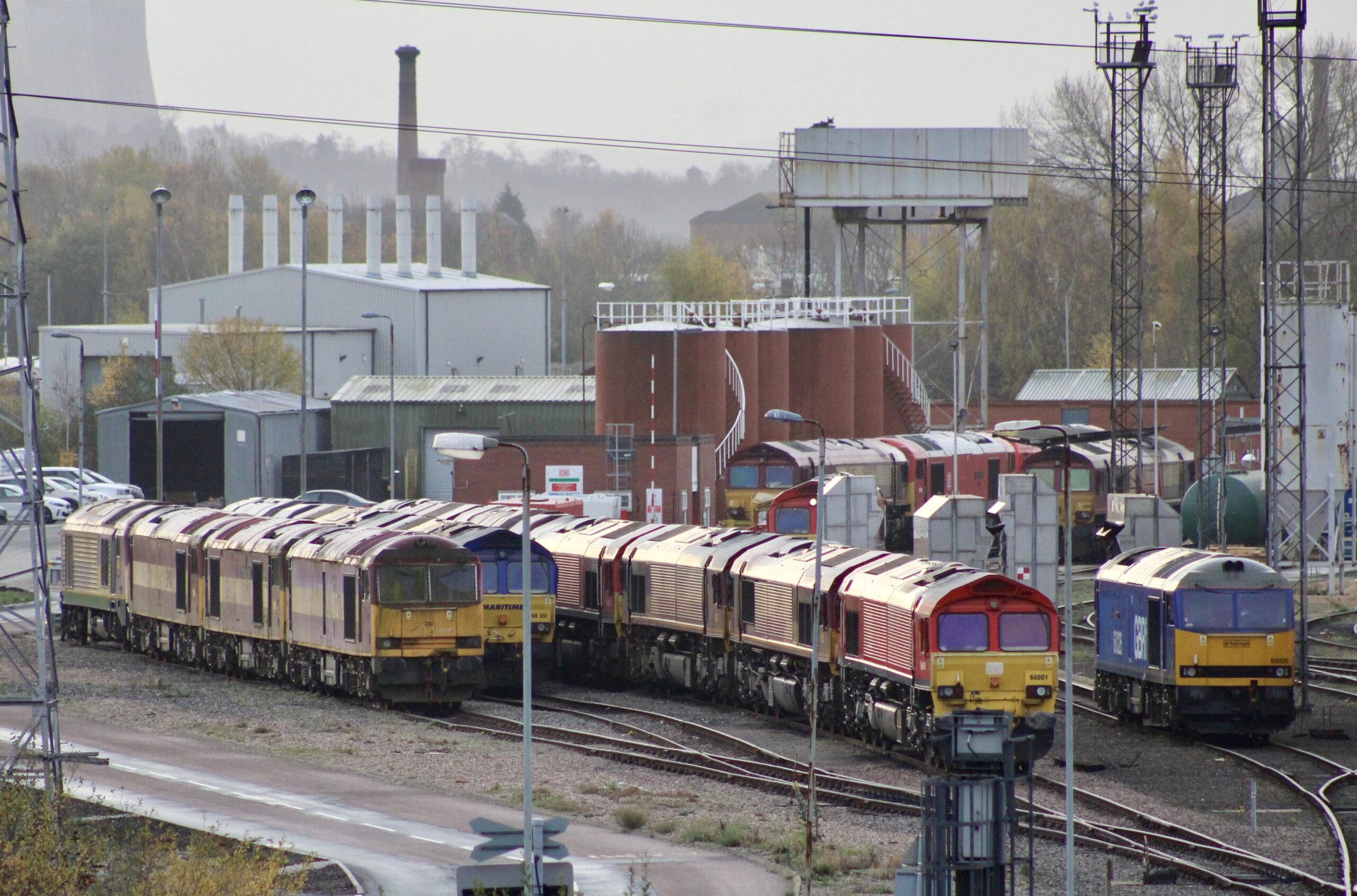
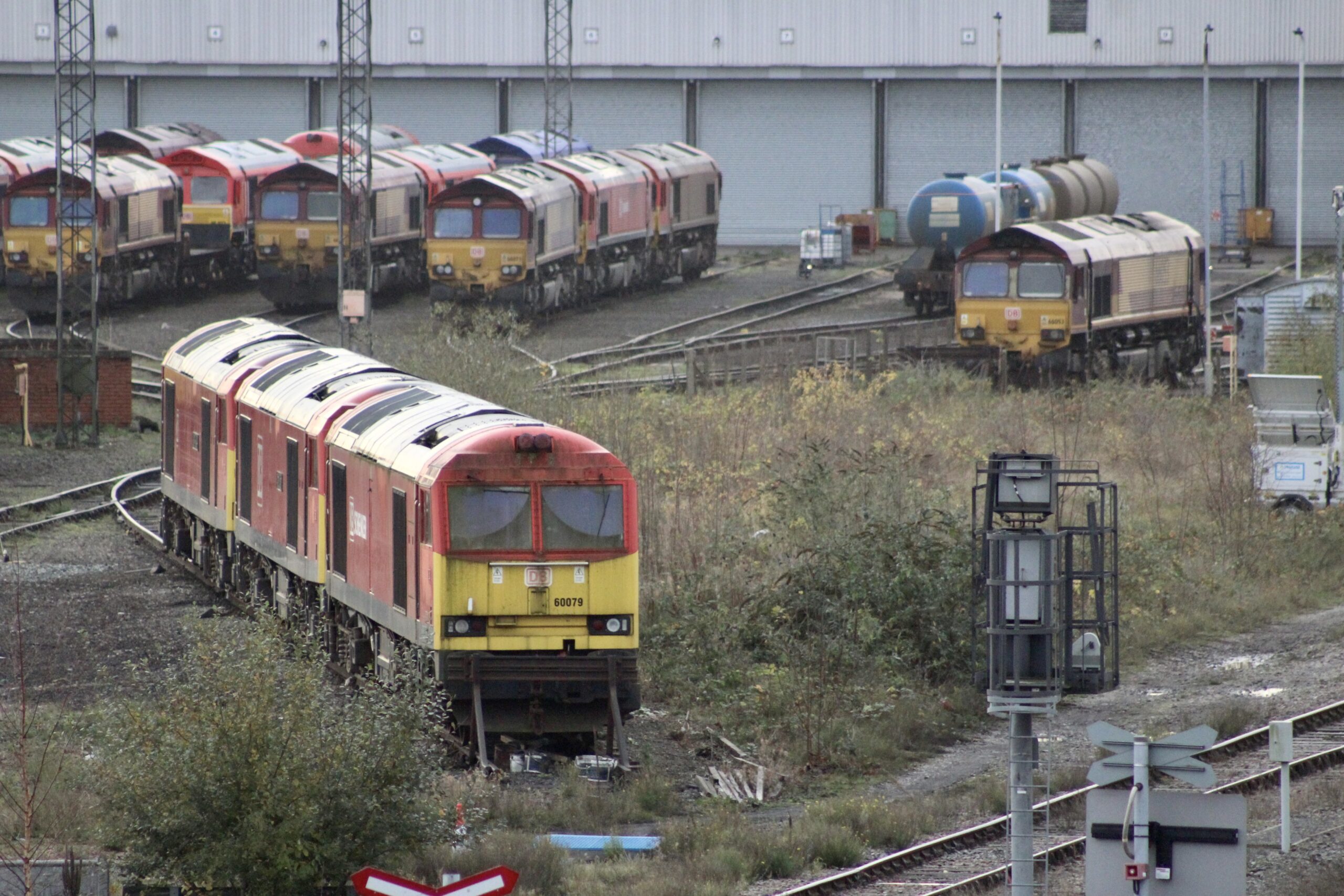
    A collection of Class 60 and Class 66 locomotives at Toton. Spot the Class 67! – 26/11/2022
    A view across to Toton depot with Class 60 No. 60079 in the foreground – 26/11/2022
    Class 60 No. 60012 slowly rotting away at Toton – 26/11/2022
    Some of the stored DB Class 60 locomotives at Toton with No. 60048 closest to the camera – 26/11/2022
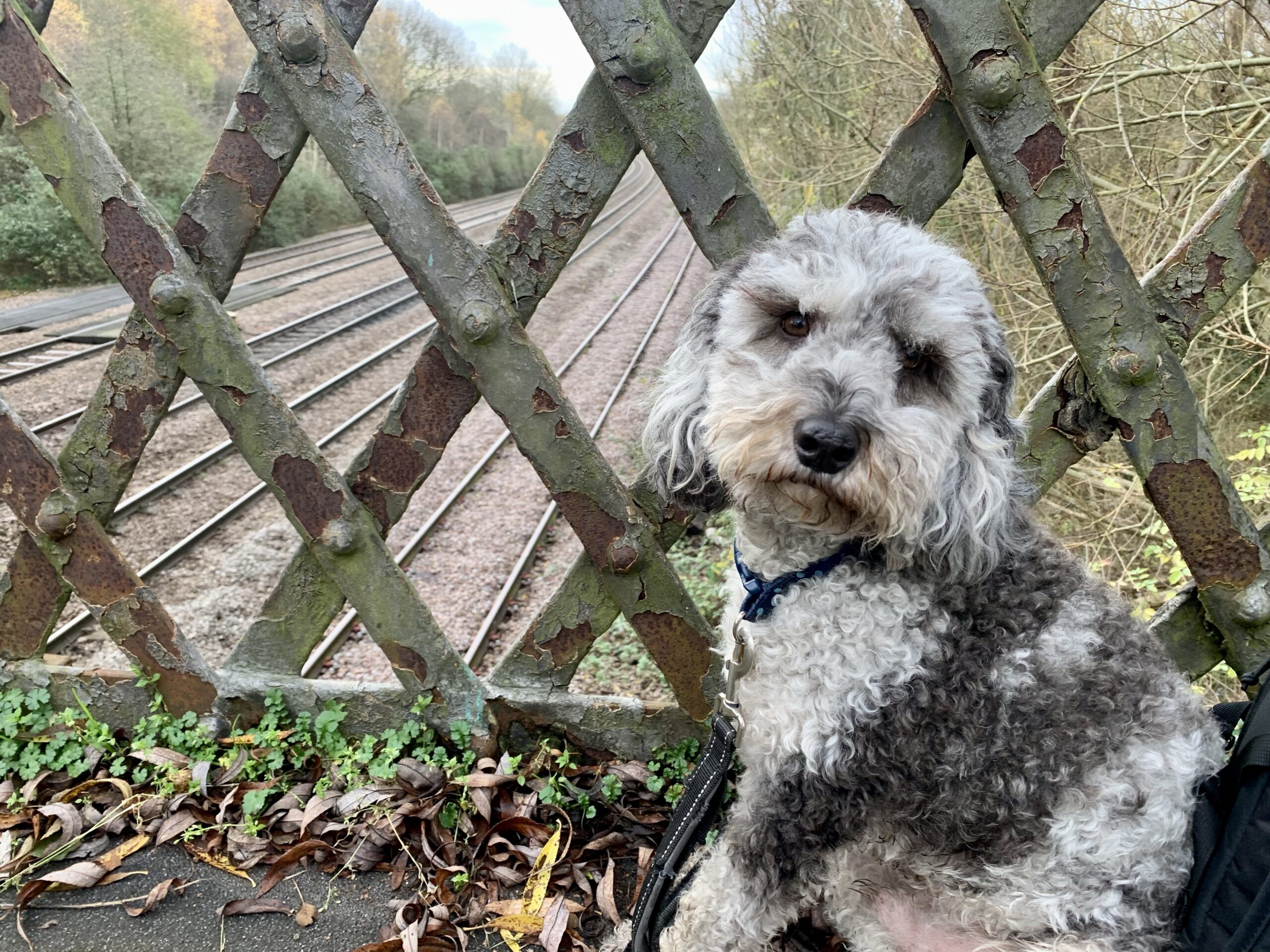
    Yoshi settles down on the Iron Giant Walkway at Sandiacre waiting for the Duchess – 26/11/2022
    Pigeon bothering LMS Coronation Pacific No. 6233 ‘Duchess of Sutherland’ working 1Z10 0635 Ealing Broadway to York “York Yule-Tide Express” passing Sandiacre – 26/11/2022
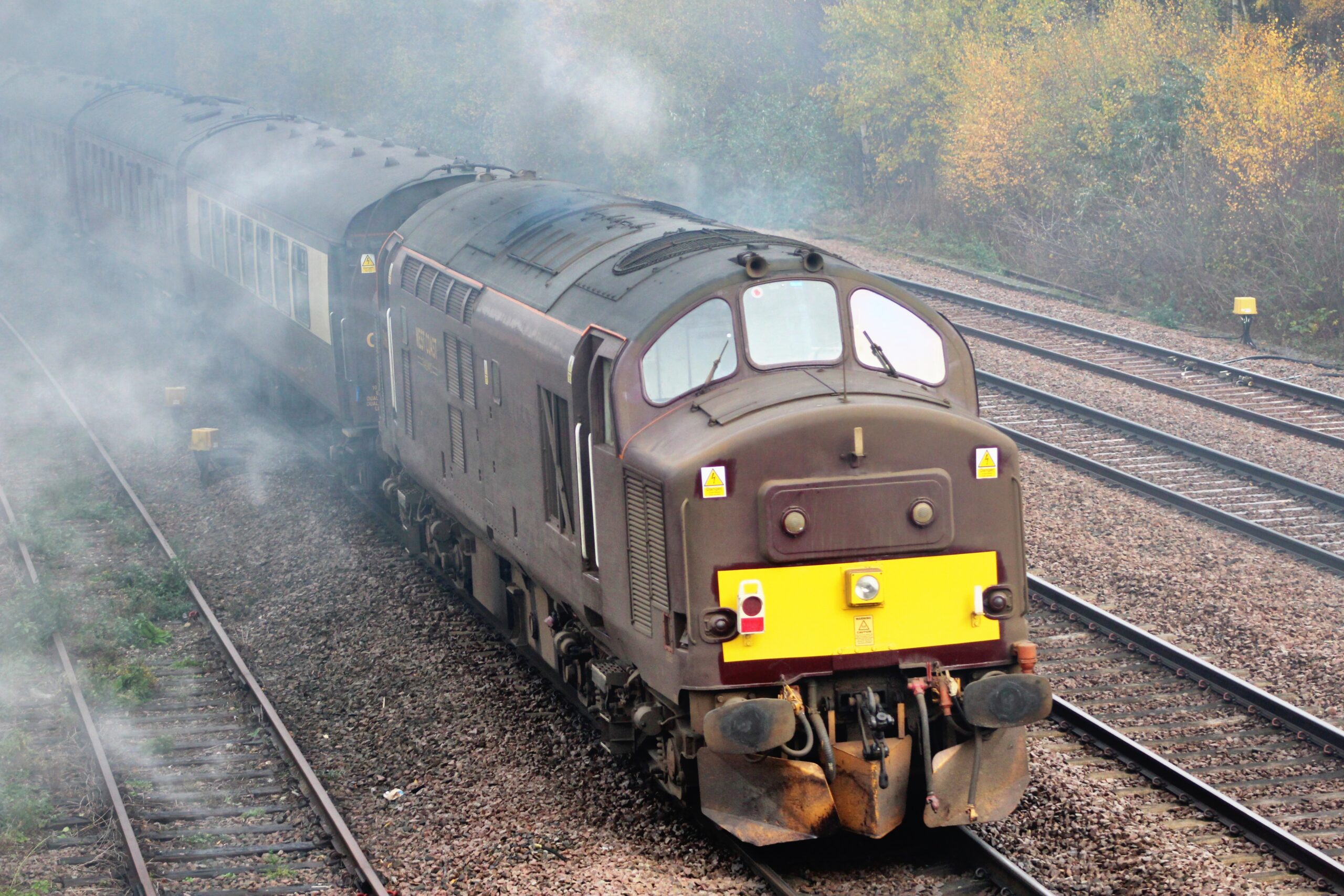
    West Coast Railways Class 37 No. 37668 at the rear of 1Z10 0635 Ealing Broadway to York “York Yule-Tide Express” passes Sandiacre – 26/11/2022
    Video of LMS Coronation Pacific No. 6233 ‘Duchess of Sutherland’ working 1Z10 0635 Ealing Broadway to York passes the Iron Giant Walkway at Sandiacre (additional video footage courtesy of Caroline Smith – 26/11/2022

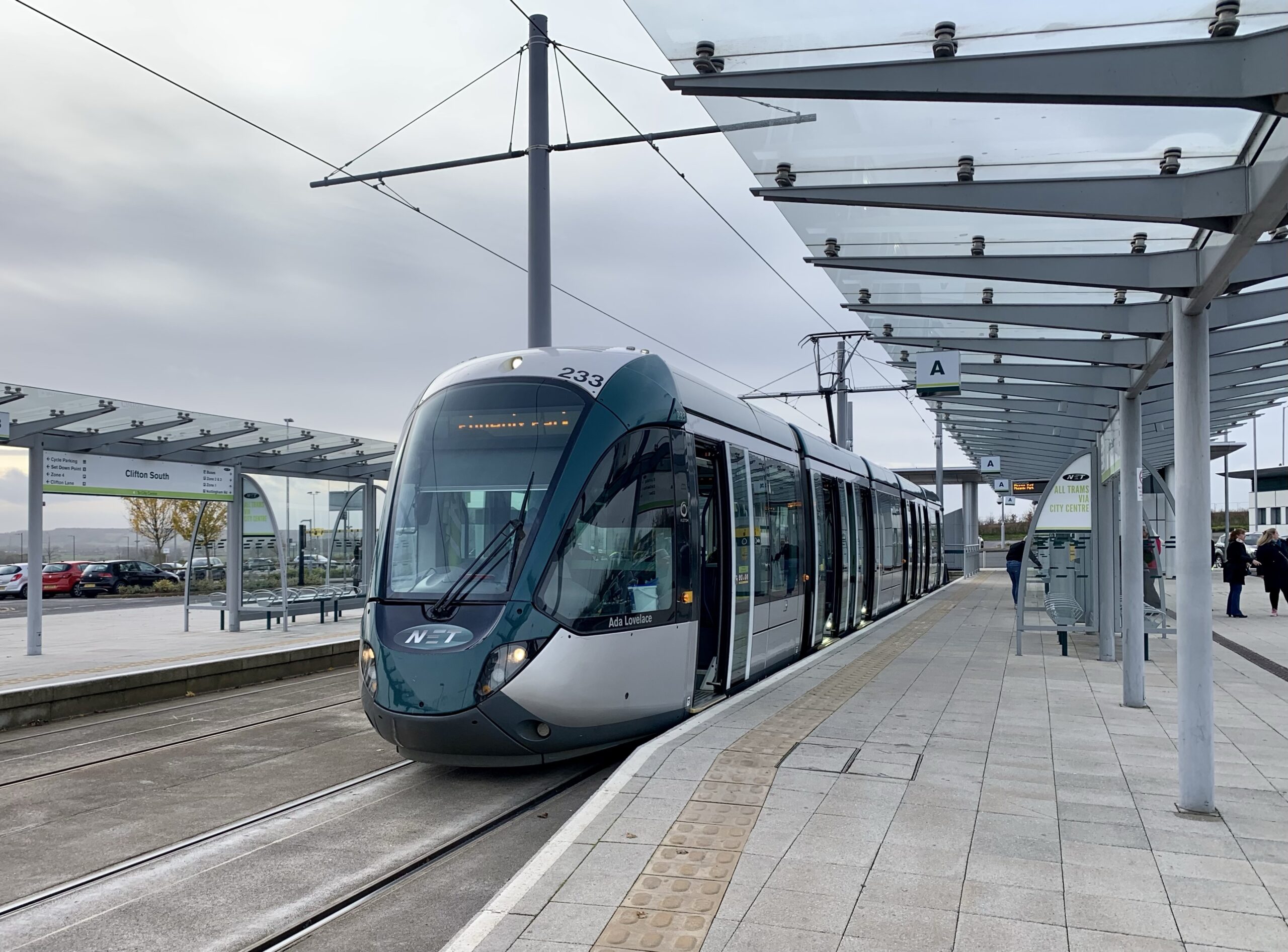
    While we were waiting for The Duchess we learned Nottingham Castle had fallen into liquidation and was closed to the public. We were not discouraged by this set back and headed off to the Park and Ride at Clifton South, Nottingham. It was only when we tried to buy tickets for the Nottingham Tram that we discovered that dogs were ‘not allowed’ onboard. The helpful Nottingham Express Transit (NET) representative at at Clifton South suggested asking tram drivers if they minded Yoshi being carried onboard and luckily none of the drivers of the trams we travelled on that day objected. Quite frankly, I was amazed that dogs were not allowed on the trams. A quick look at other tram networks in the UK revealed that NET are not alone in their no dog policy. Surely if local authorities want to get people out of their cars and onto public transport this absurd rule needs to be changed. I spoke to NET who told me dogs are not carried on the Nottingham trams for “health and safety reasons and for passenger and animal safety”. I was however informed that dogs would be allowed if they were carried in a suitable “pet carrier or bag.”

    Nottingham Express Transit Tram No.233 at Clifton South Park and Ride – 26/11/2022
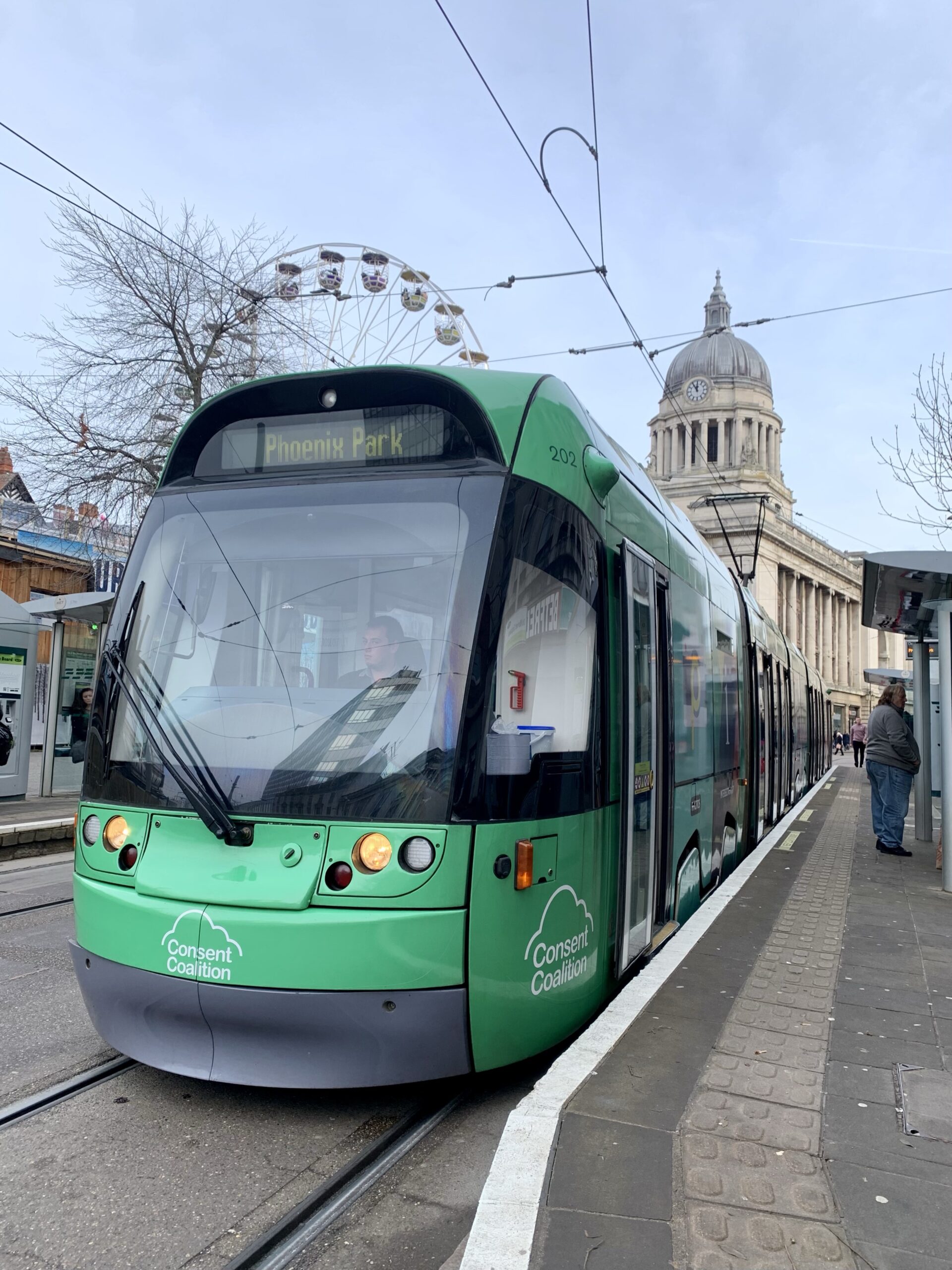
    NET Tram No. 202 awaits departure from Old Market Square bound for Phoenix Park – 26/11/2022
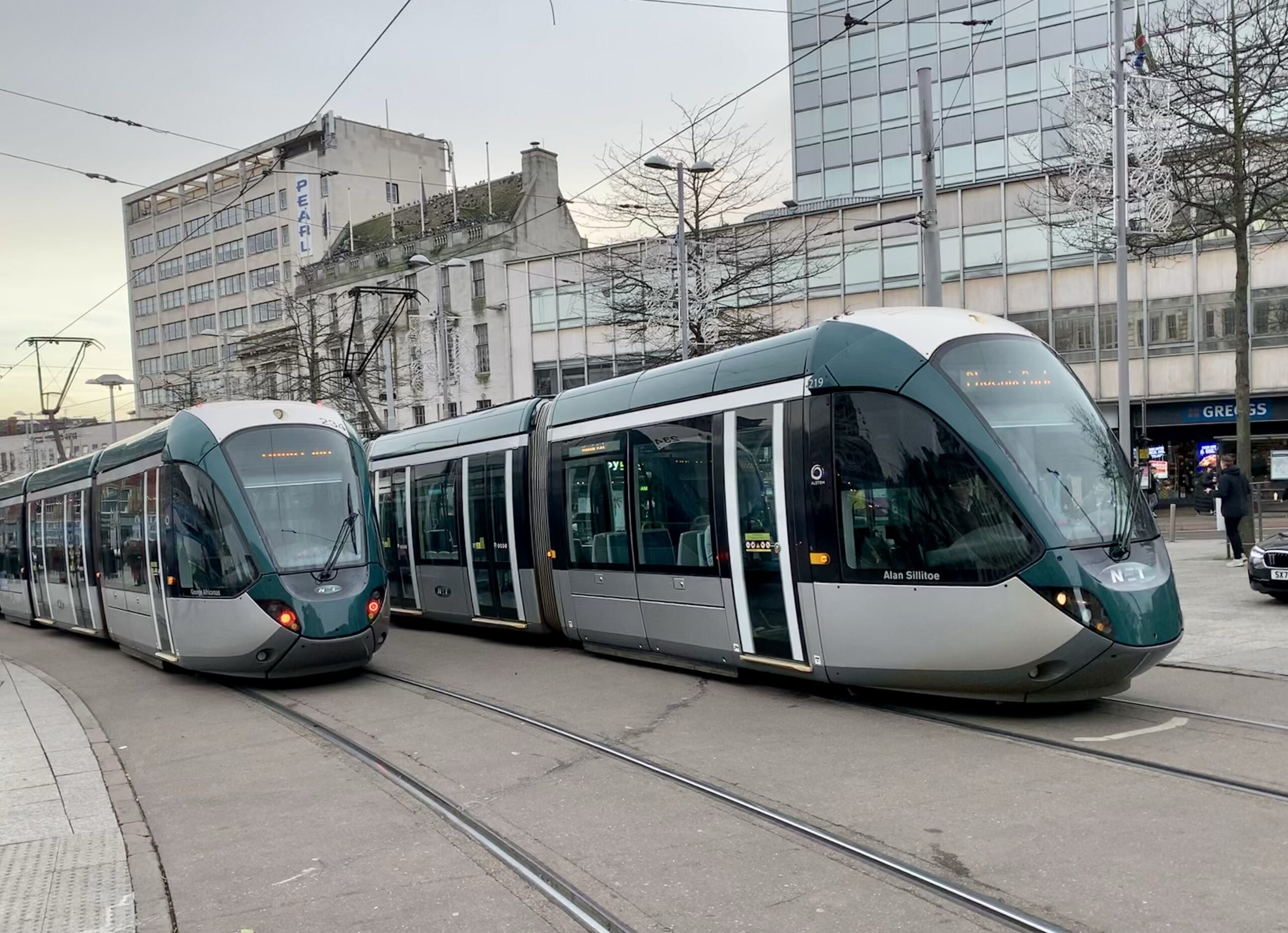
    Nottingham City Centre trams No. 234 and No. 219 ‘Alan Sillitoe’ – 26/11/2022

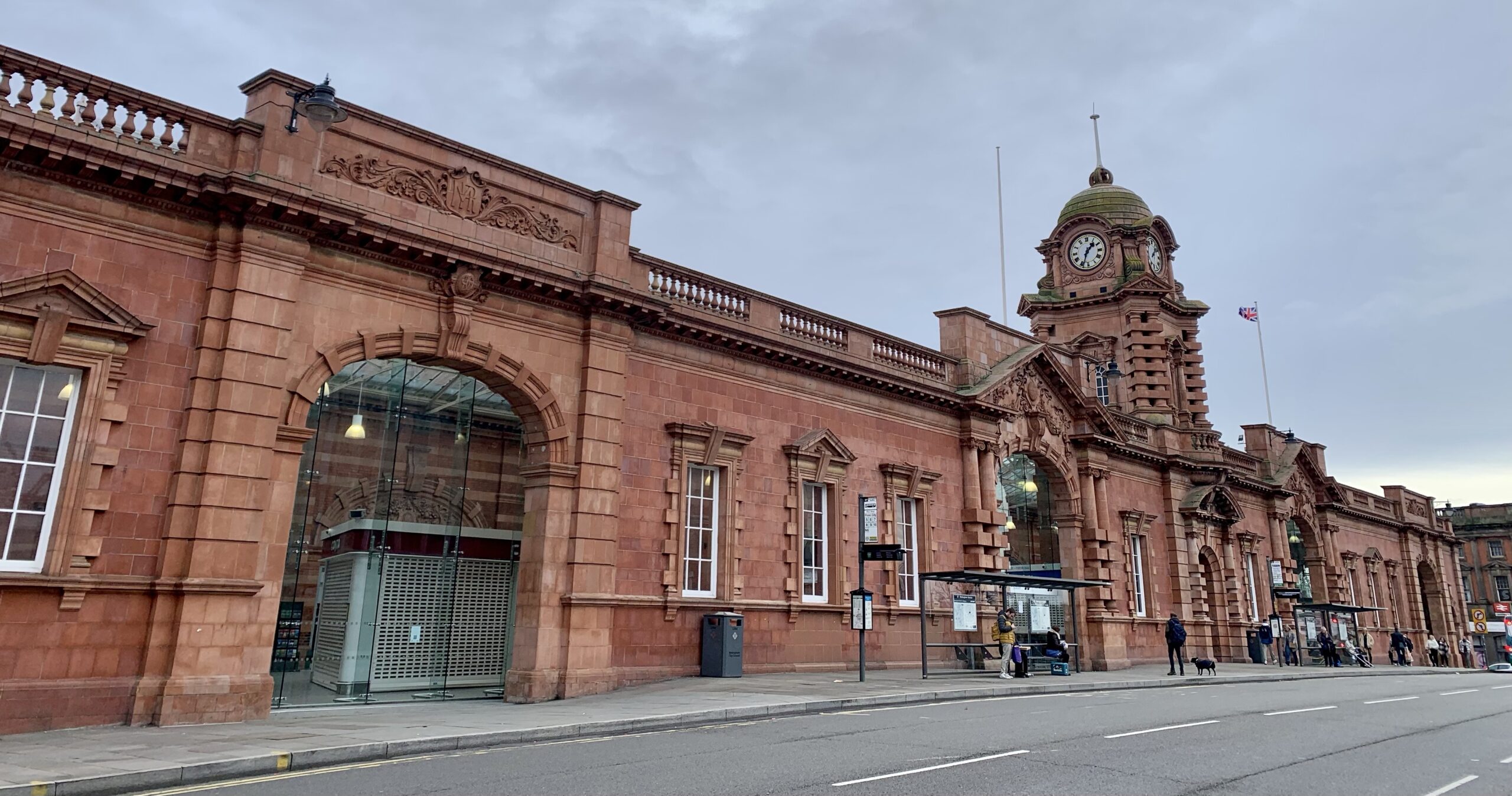
    Once in Nottingham, Yoshi and I decided to explore. First stop was Nottingham railway station which is the only surviving city centre station which survives from the four that once served the population of the city of Nottingham. The station was first built by the Midland Railway (MR) in 1848 and later rebuilt in 1904 to design by company architect Charles Trubshaw with external detail by local architect Albert Lambert. It is now owned by Network Rail (NR) and managed by (EMR). The tram network runs above the station on the path of the former Great Central Railway (GCR) viaduct and includes an interchange tram stop. The station was renovated in 2017 but a fire started by a 33 year old female drug addict in January 2018 badly damaged the building.

    Nottingham Railway Station exterior – 26/11/2022

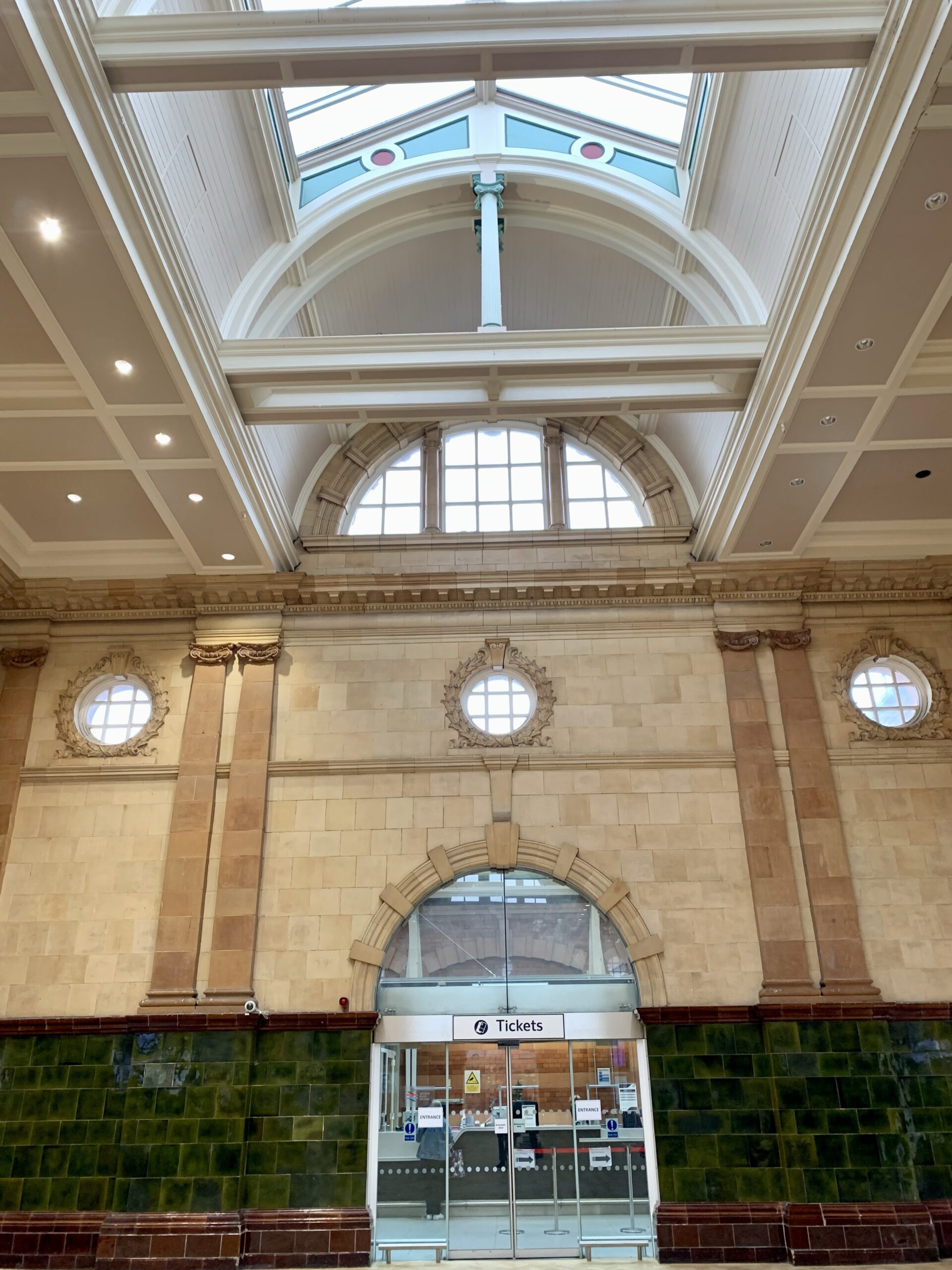
    The station entrance is itself on a road bridge above the platform level and is of heavy railway baroque style with the frontage consisting of a grand passageway, where road traffic once had access, flanked by a giant arch at each end and five arches along the front. A large domed clock tower dominates the building while the interior ticket hall displays a Renaissance quality

    The ticket hall, Nottingham Railway Station – 26/11/2022
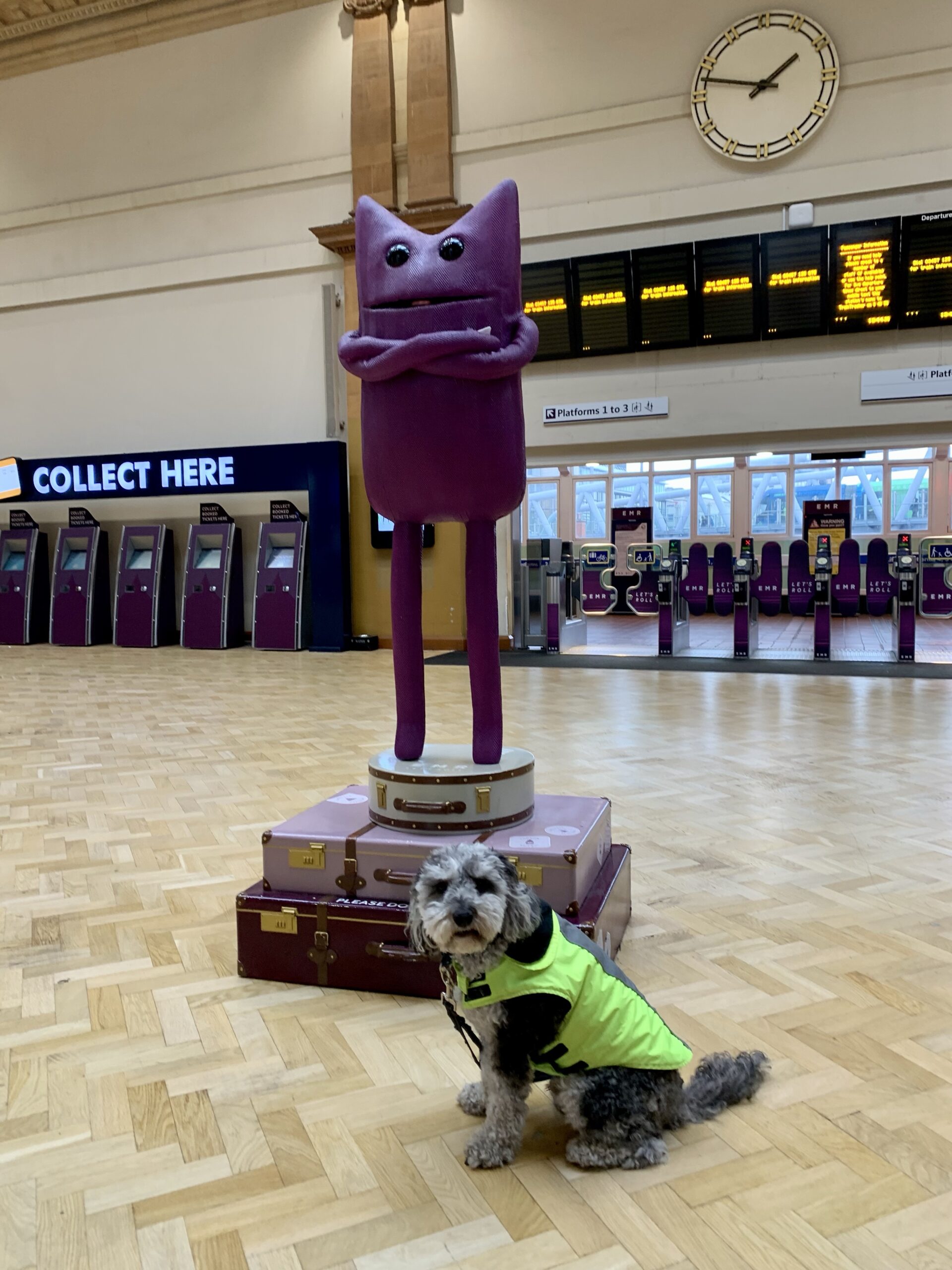
    Yoshi meets East Midland Railway mascot “Miles” at Nottingham Railway Station – 26/11/2022
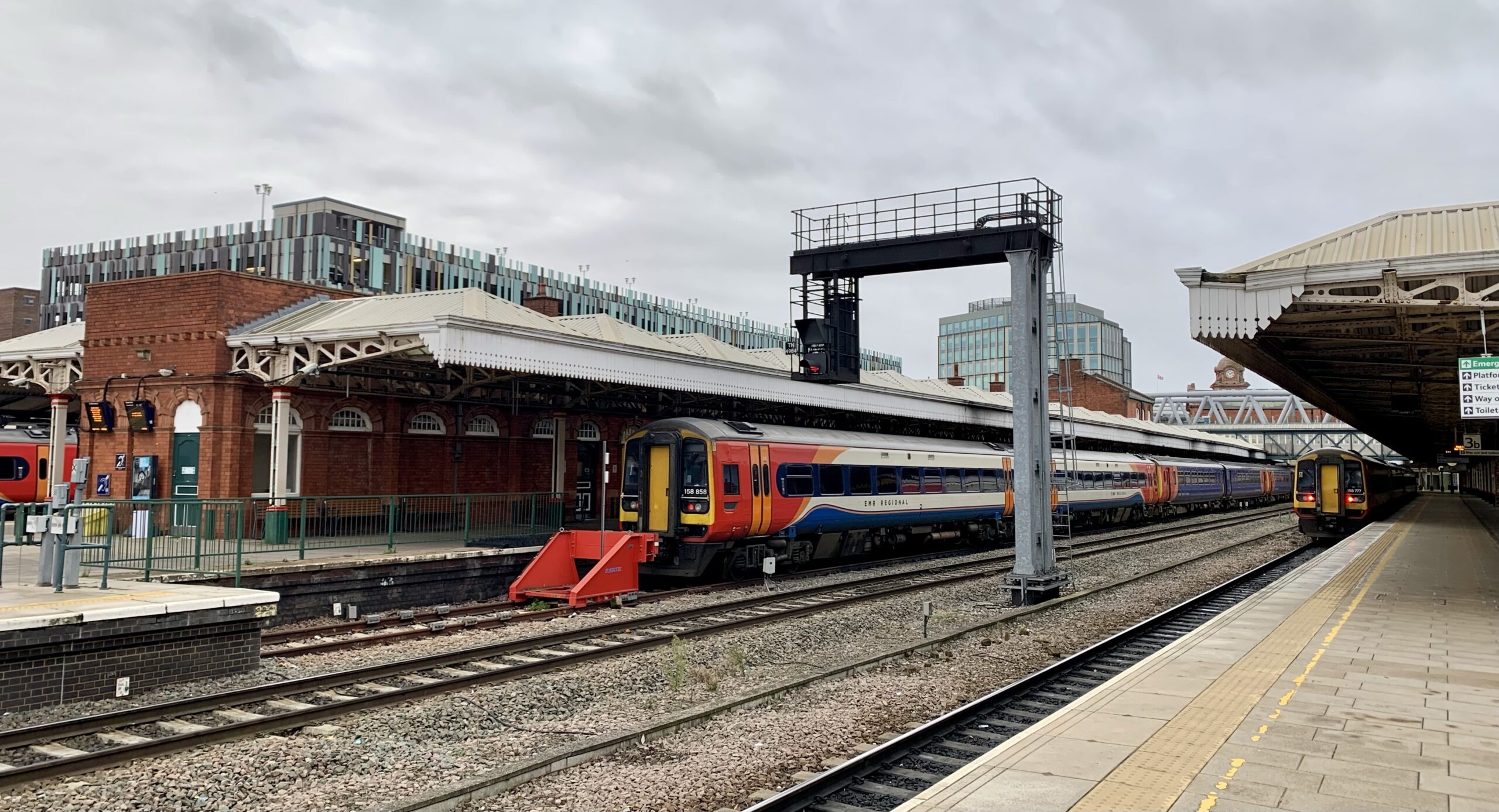
    Stationary trains including Class 158 diesel multiple units No.’s 158858 and 158777 in evidence at Nottingham Railway Station during a one day strike by ASLEF members – 26/11/2022
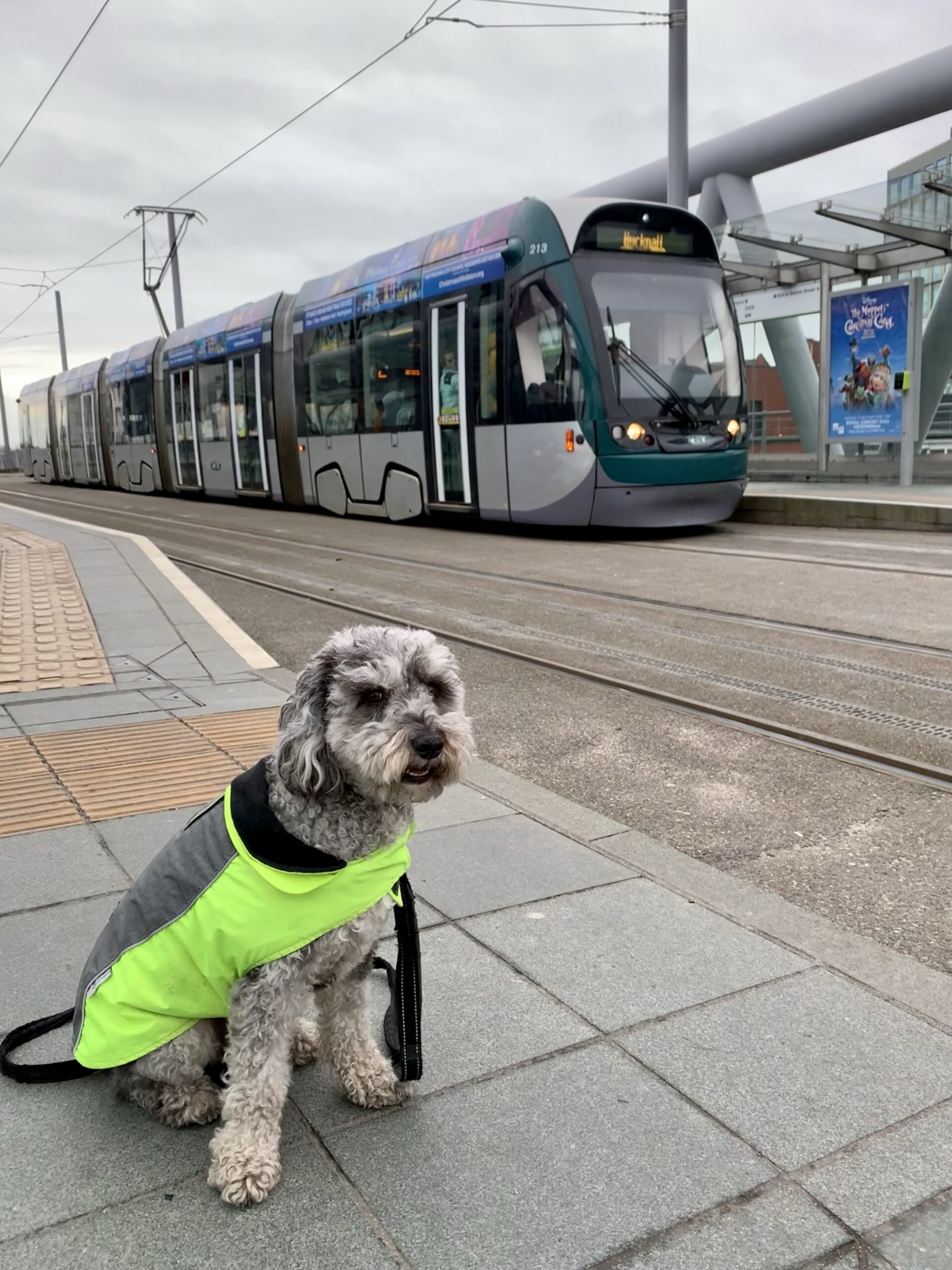
    Yoshi waits at Nottingham Station Tram Stop while NEC tram No. 213 awaits to depart on a service to Hucknall – 26/11/2022

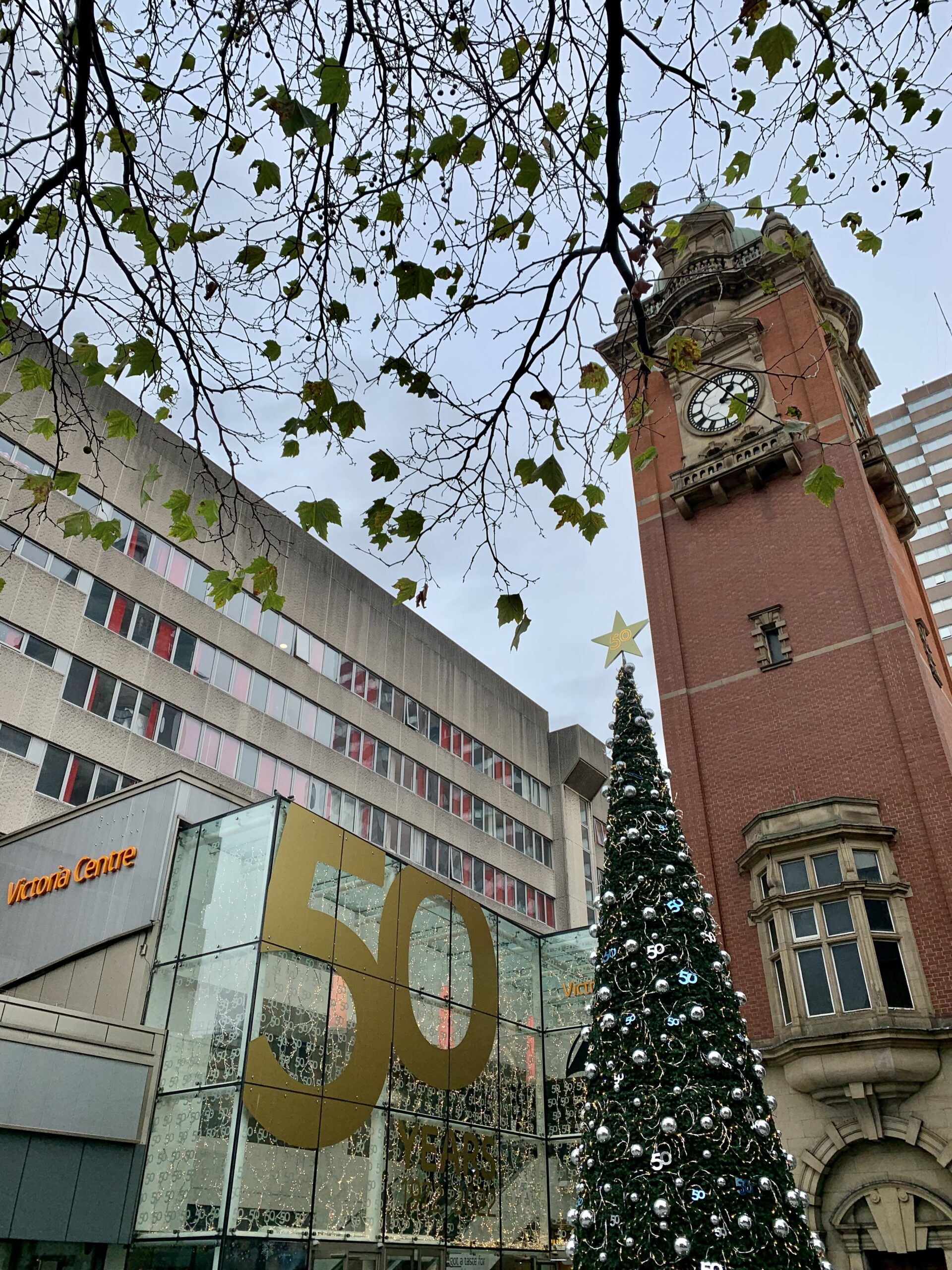
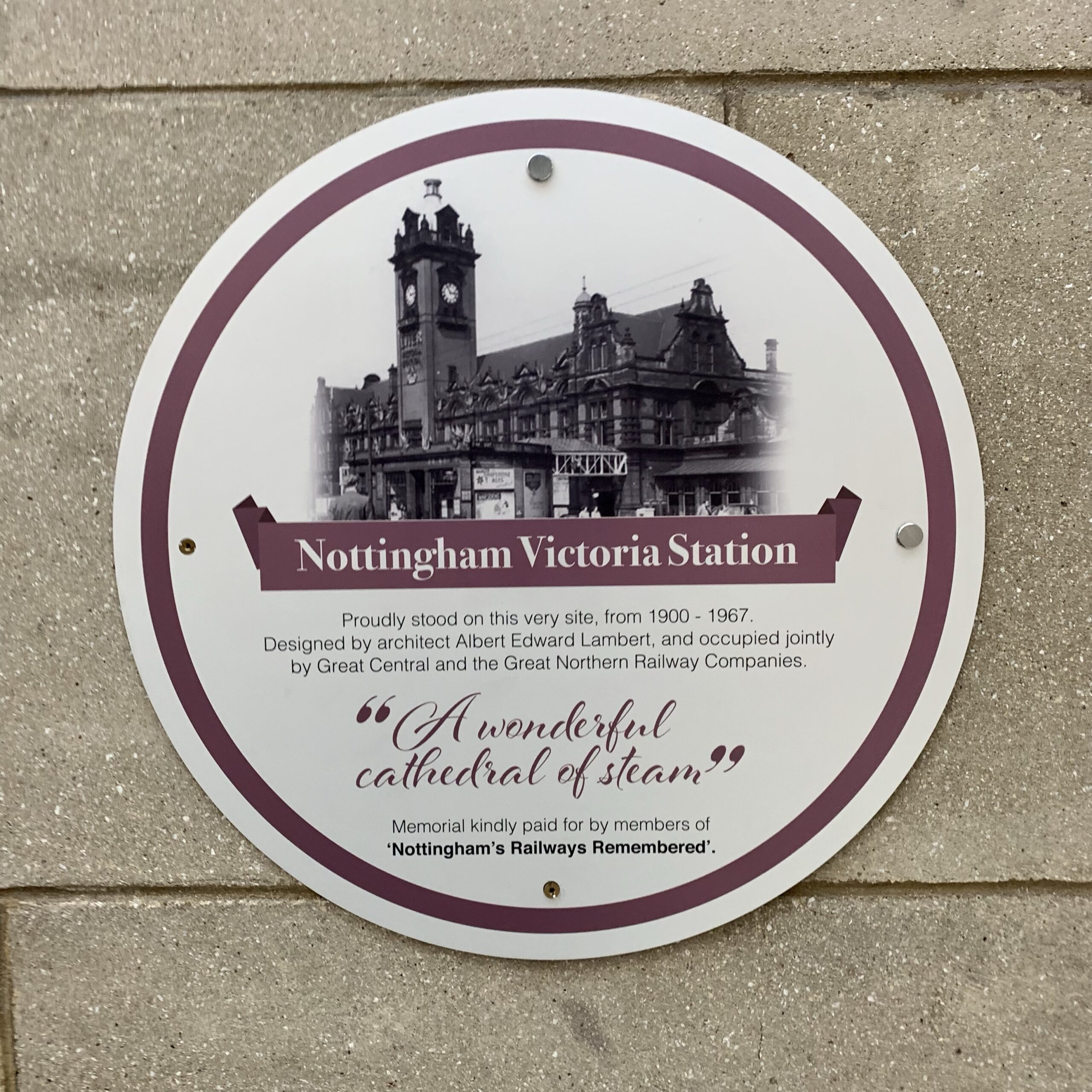
    The other city centre railway stations were the GCR’s Nottingham Victoria, which was raised to the ground and replaced by a shopping centre with only the clock tower surviving, and two on London Road opened by the Great Northern Railway (GNR). Of the Nottingham London Road station’s; the High Level station was demolished in 2006 and although severely damaged by fire in 1996, the Low Level station building has been restored and converted to a health and fitness club.

    The clock tower survived the demolition of Nottingham Victoria railway station – 26/11/2022
    Plaque commemorating Nottingham Victoria with the Victoria Shopping Centre, Nottingham – 26/11/2022

    That’s it for another week – thank you for joining us. We’ll leave you with the following thought; “In times of joy, all of us wished we possessed a tail we could wag” – W.H. Auden

  • We’re One Year Old!

    17th November to 22nd November 2022

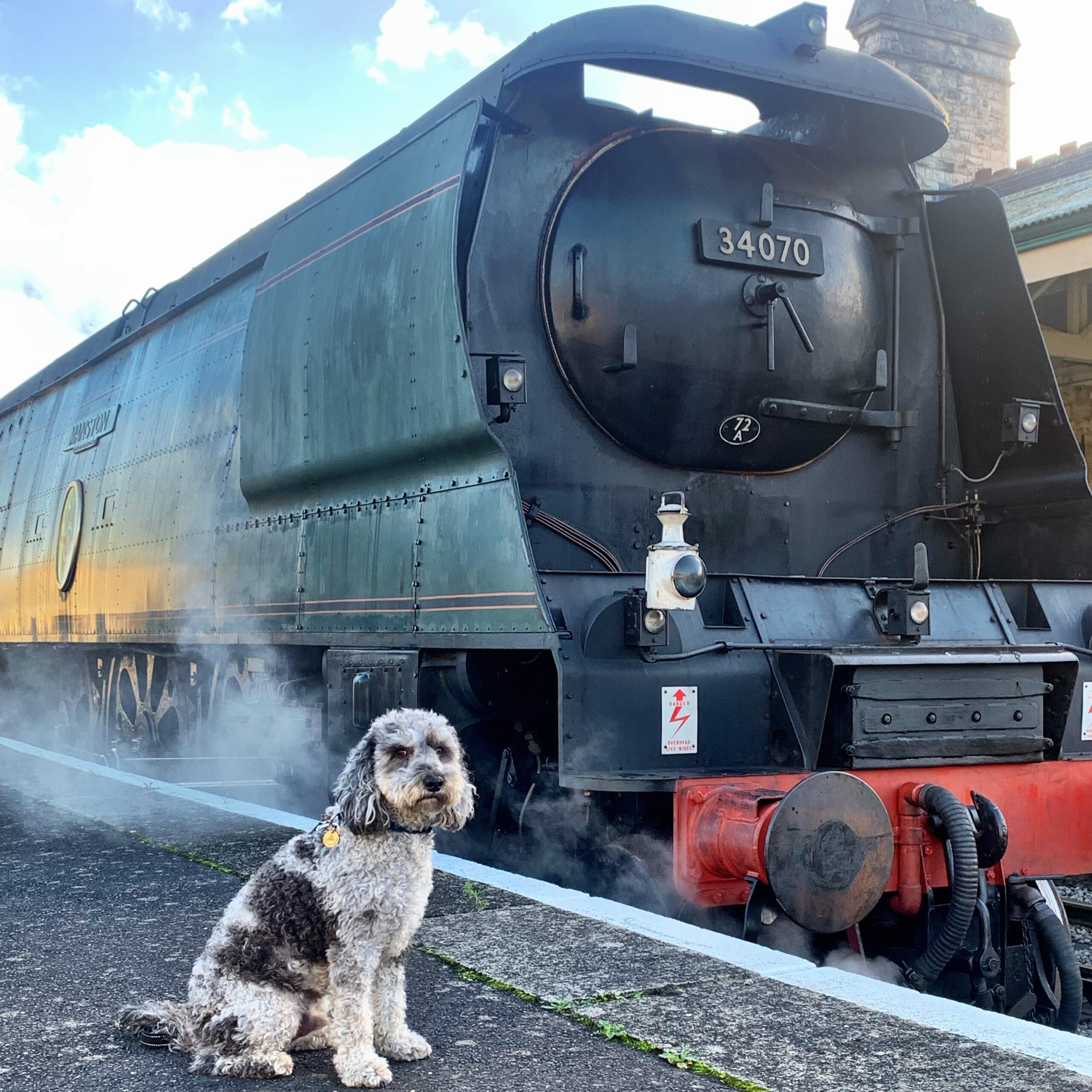
    Yoshi with SR Unrebuilt Battle of Britain Class 4-6-2 No. 34070 ‘Manston’ at Corfe Castle railway station on the Swanage Railway – 17/11/2022

    We first posted in Yoshi’s blog on 22nd November 2021 so I, for one, am very pleased we have completed a year of entries. Thank you for joining us if this is your first time or your 58th time. We really do appreciate everyone who has taken time out to read our words, look at our pictures or watch our video clips. Thank you for your comments, updates, suggestions and corrections over the past year.

    This last week began with a Thursday lunchtime trip to Corfe Castle on the Swanage Railway to see SR Unrebuilt Battle of Britain Class 4-6-2 No. 34070 ‘Manston’ which was out on test running light engine. The locomotive has only recently been returned to traffic and later in the day she also hauled two carriages in a loaded test run from Swanage.

    SR Unrebuilt Battle of Britain Class 4-6-2 No. 34070 ‘Manston’ departs Corfe Castle during a running in test run – 17/11/2022
    SR Unrebuilt Battle of Britain Class 4-6-2 No. 34070 ‘Manston’ at Corfe Castle during a running in test run – 17/11/2022
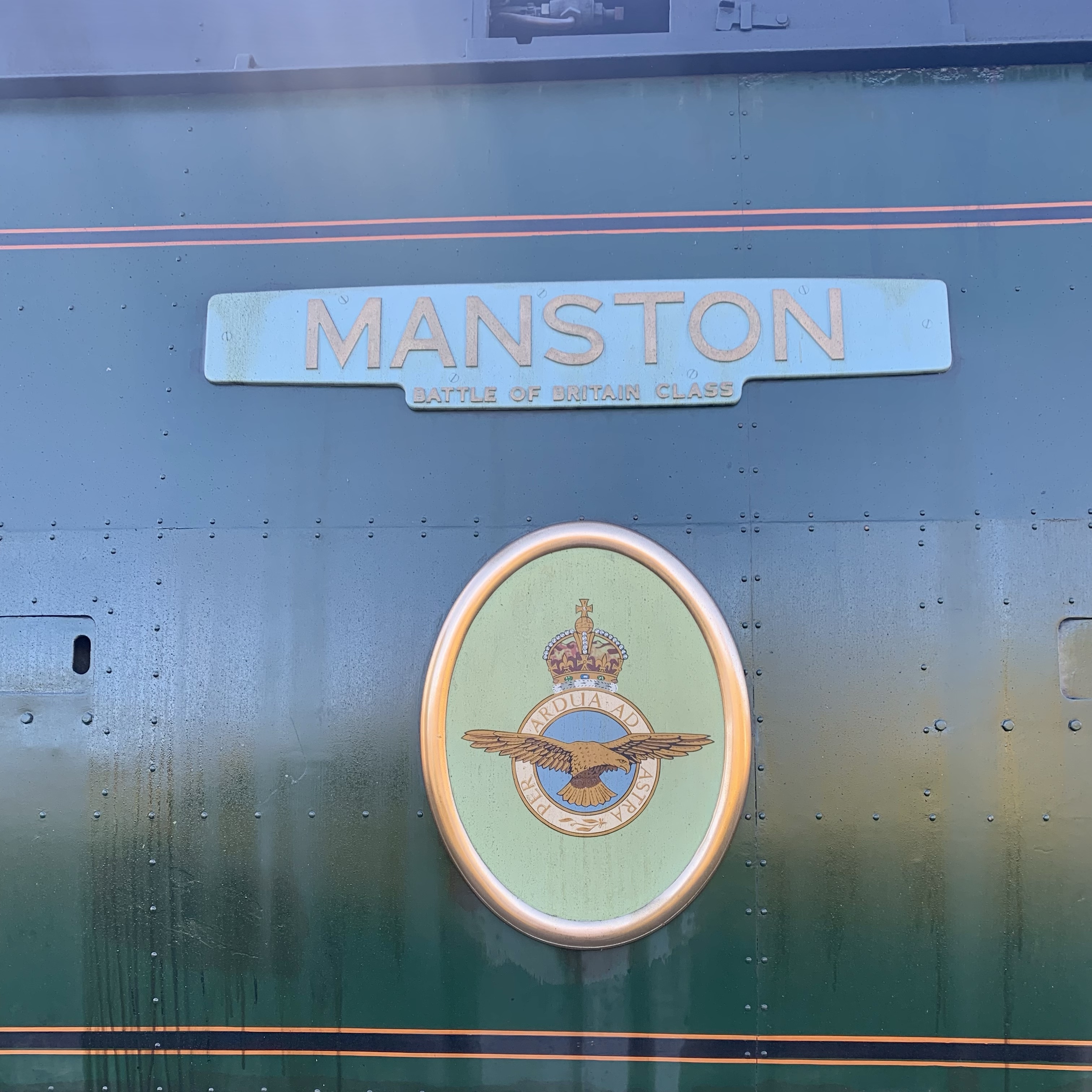
    Nameplate and crest detail of SR Unrebuilt Battle of Britain Class 4-6-2 No. 34070 ‘Manston’ – 17/11/2022
    Yoshi takes a closer look at SR Unrebuilt Battle of Britain Class 4-6-2 No. 34070 ‘Manston’ while at Corfe Castle – 17/11/2022

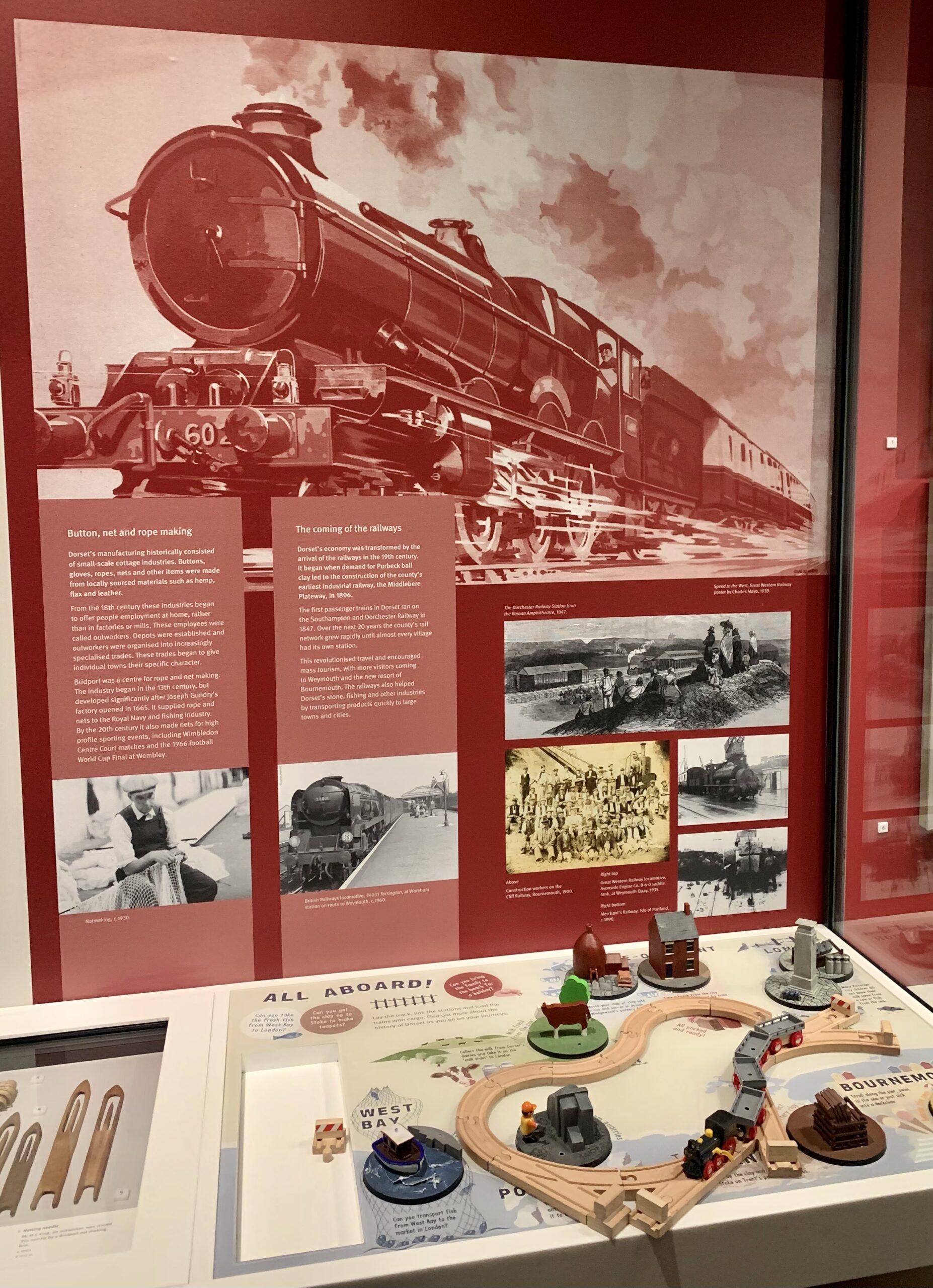
    In the evening we went along to the Dorset Museum’s “Museum after Hours” event in Dorchester. It was the first time I had visited the museum since its £16.4m refurbishment and May 2021 re-opening. The new museum galleries are spacious, the displays well thought out with a child friendly leaning. The railways of Dorset are covered by one display panel and a Brio style model track circle as part of the Trade and Industry section within the “People’s Dorset” gallery on the first floor.

    Dorset Museum celebrates the railways in Dorset – 17/11/2022

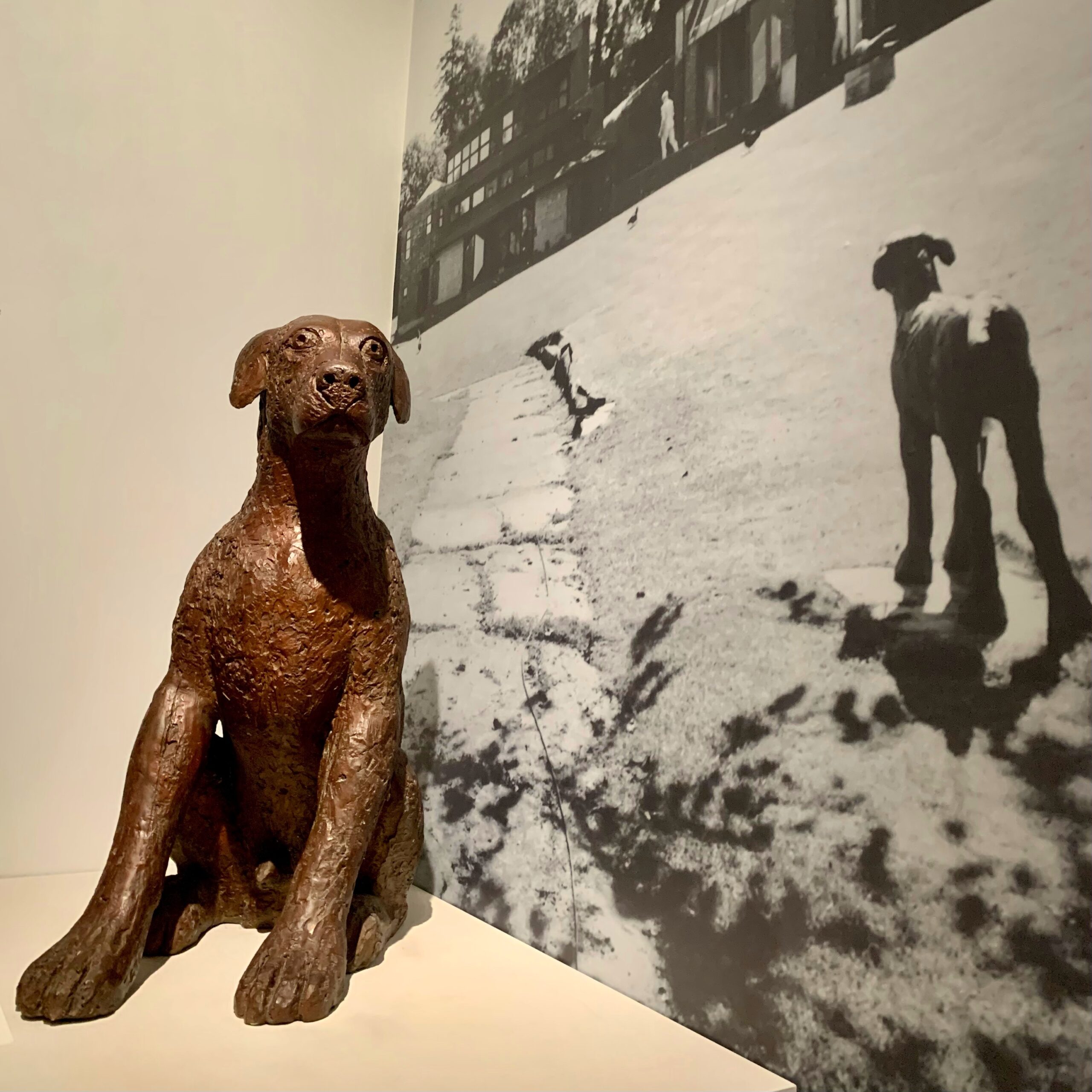
    I very much enjoyed seeing a number of sculptures from Dame Elisabeth Frink (1930 – 1993) who I have very fond memories of meeting at the museum many years ago while on a school visit. The “Artists’ Dorset” gallery was perhaps my favourite of what is currently on offer at the museum.

    Leonardo’s Dog (Bronze, edition of 6, 1990) – on a visit to the Loire, Dame Elisabeth Frink came across a stone dog at the entrance to Leonardo Da Vinci’s house that inspired her to create this work. Frink admired the traits of loyalty and dignity which she felt were often lacking in humans – 17/11/2022
    In August 1996 Dame Elisabeth was one of five ‘Women of Achievement’ selected for a set of British stamps 

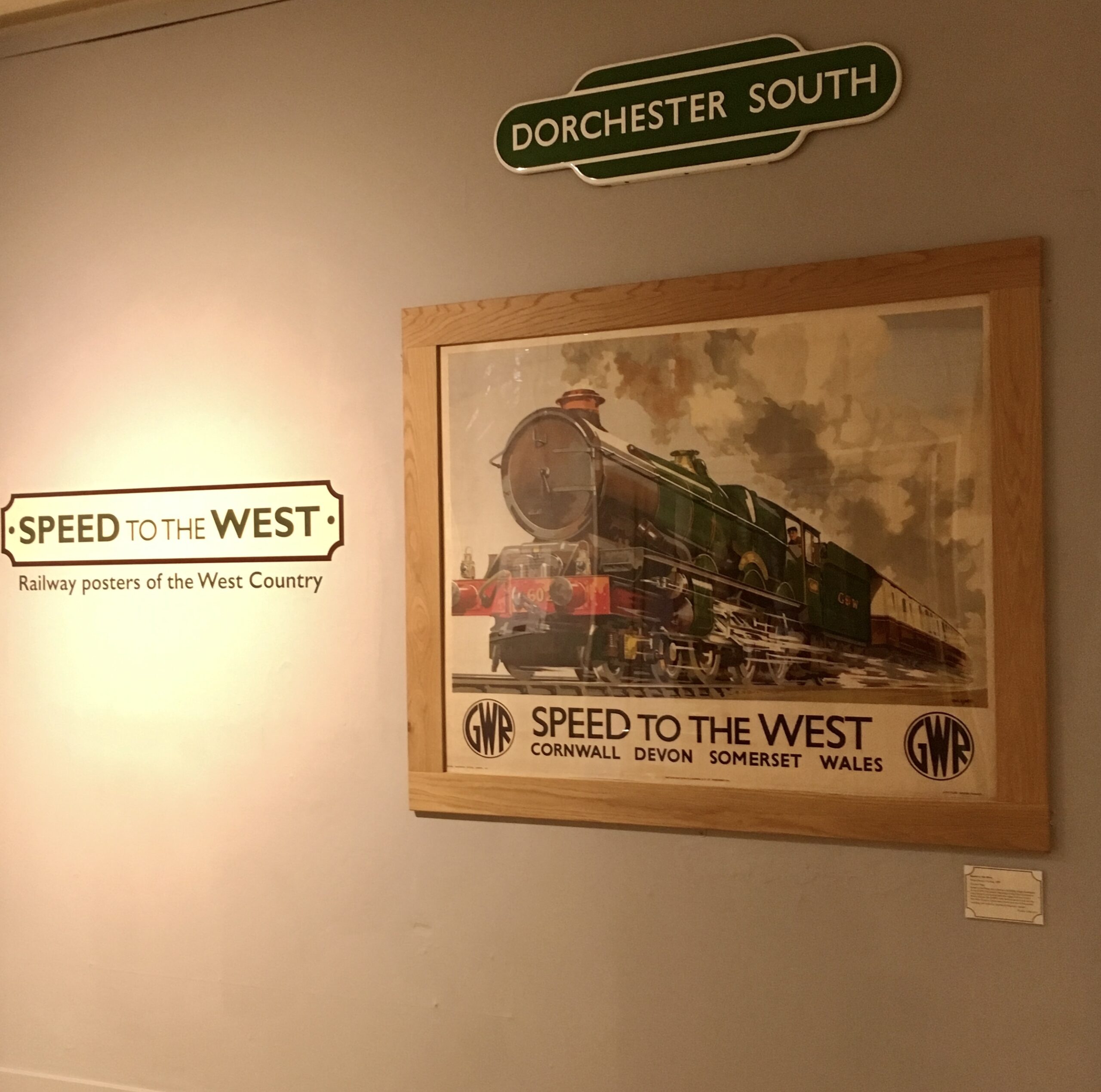
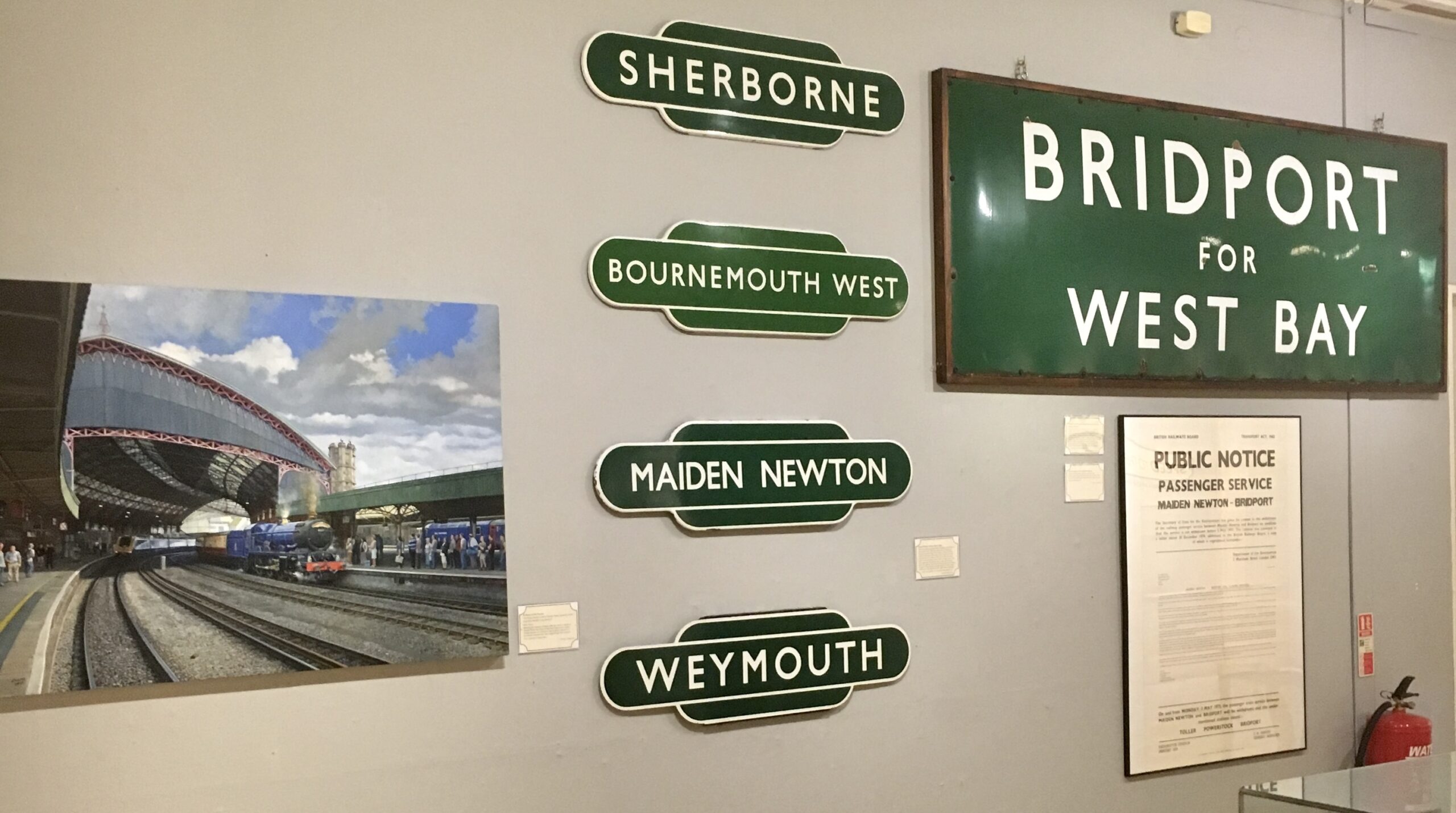
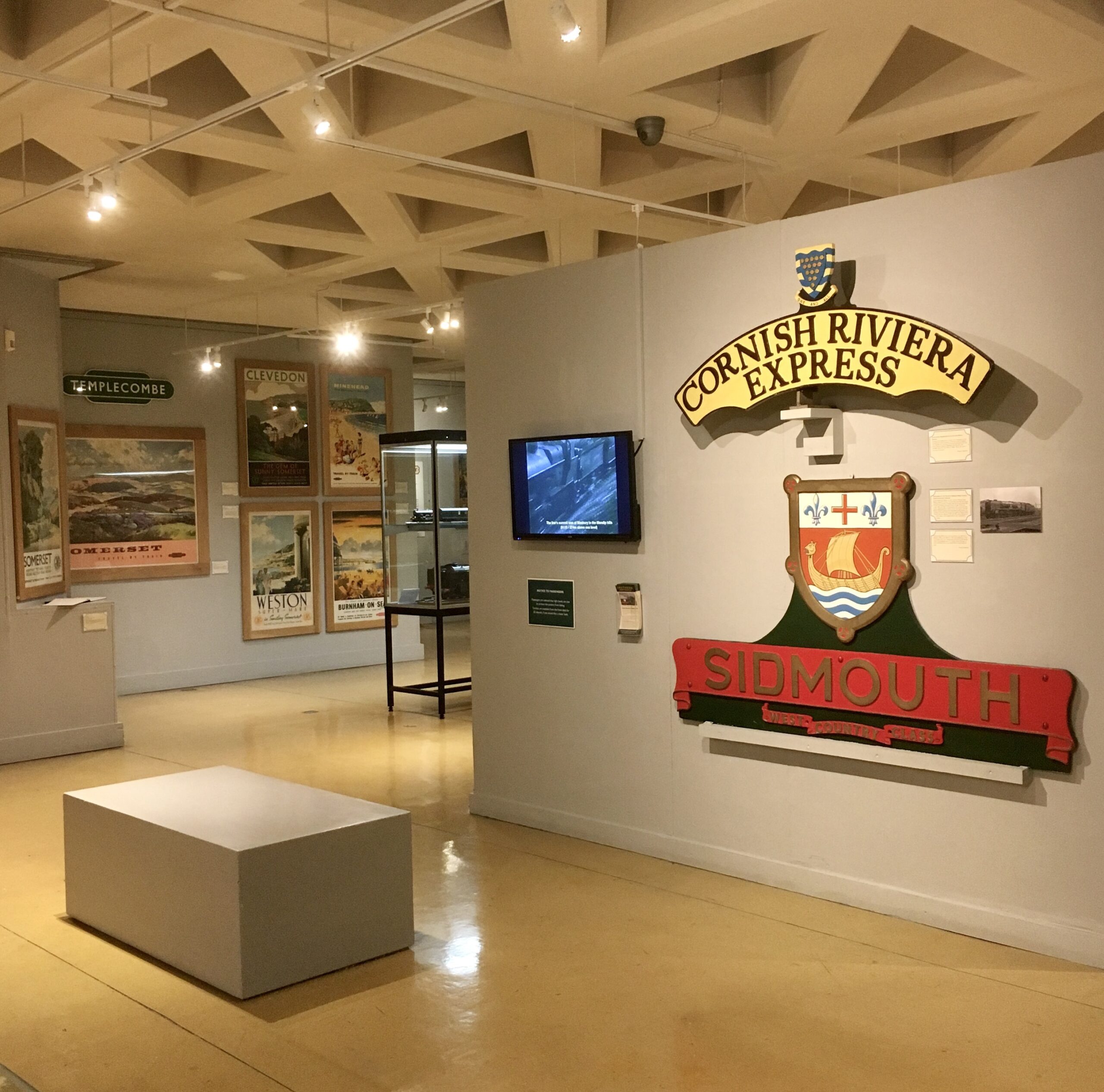
    In 2016/17, the Dorset County Museum (as we called it then) held an excellent exhibition of railway posters and station roundels called “Speed to the West” curated by “Antiques Roadshow” expert Paul Atterbury and collector Richard Furness. I was, of course, particularly pleased that some Terrence Cuneo posters were included and I’d be very pleased if the museum did a repeat showing!

    Dorset County Museum’s “Speed to the West” curated by Antiques Roadshow expert Paul Atterbury and collector Richard Furness – 19/03/2016
    Dorset County Museum’s “Speed to the West” curated by Antiques Roadshow expert Paul Atterbury and collector Richard Furness – 19/03/2016
    Dorset County Museum’s “Speed to the West” curated by Antiques Roadshow expert Paul Atterbury and collector Richard Furness – 19/03/2016

    Friday morning was the start of a long weekend with a return trip to the Naval Dockyards at Portsmouth. Our intention this time was to see the Submarine Museum which we didn’t have time for on our previous visit in the summer, but with the special boat which is used to ferry visitors across to Gosport not running, we elected instead to postpone clambering around the submarines and instead visited the ships on show in Portsmouth.

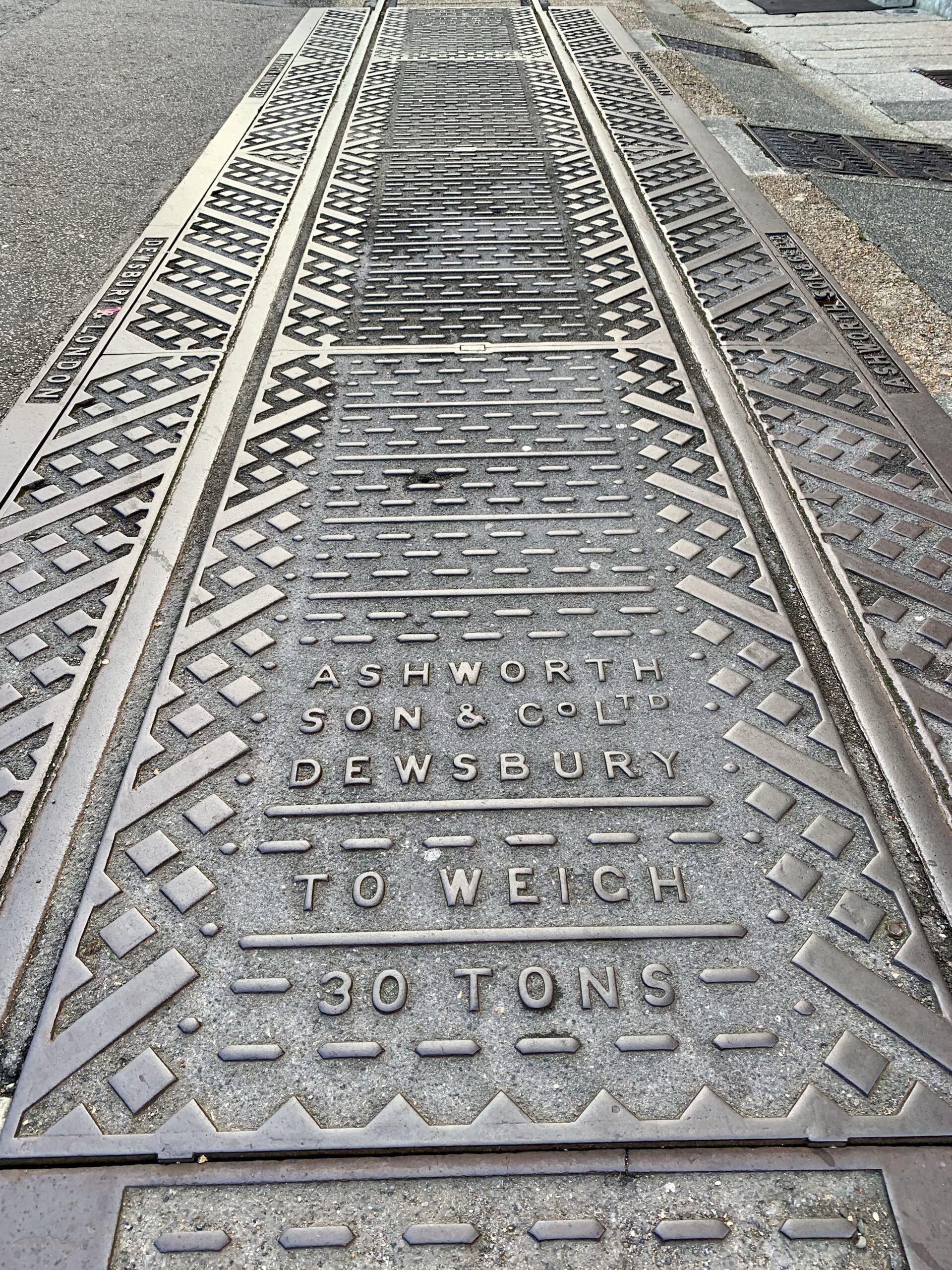
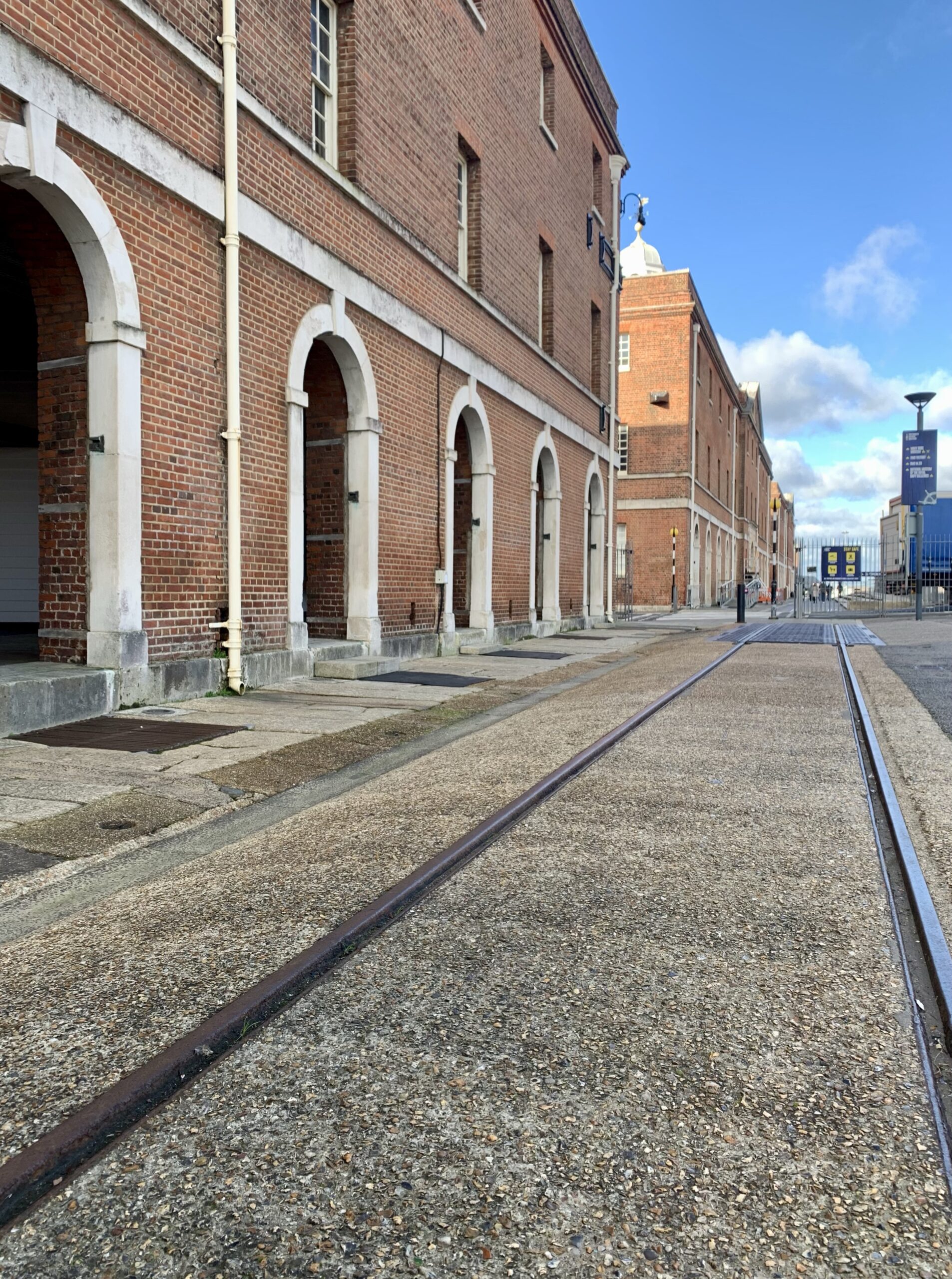
    There are still a few remains of the once extensive Portsmouth dockyard railway system still in evidence:

    Began in 1843 within the walls of the dockyard, the railway was connected to the national network in 1846 via the “Admiralty Line” between Unicorn Gate and Portsmouth Town station (now Portsmouth & Southsea). By 1952, at its peak, there were around 27 miles of track within the docks used for transporting goods, equipment and personnel. In the 1970’s the railway declined and the link to the main line was closed in 1977 with the dockyard railway closing entirely a year later.

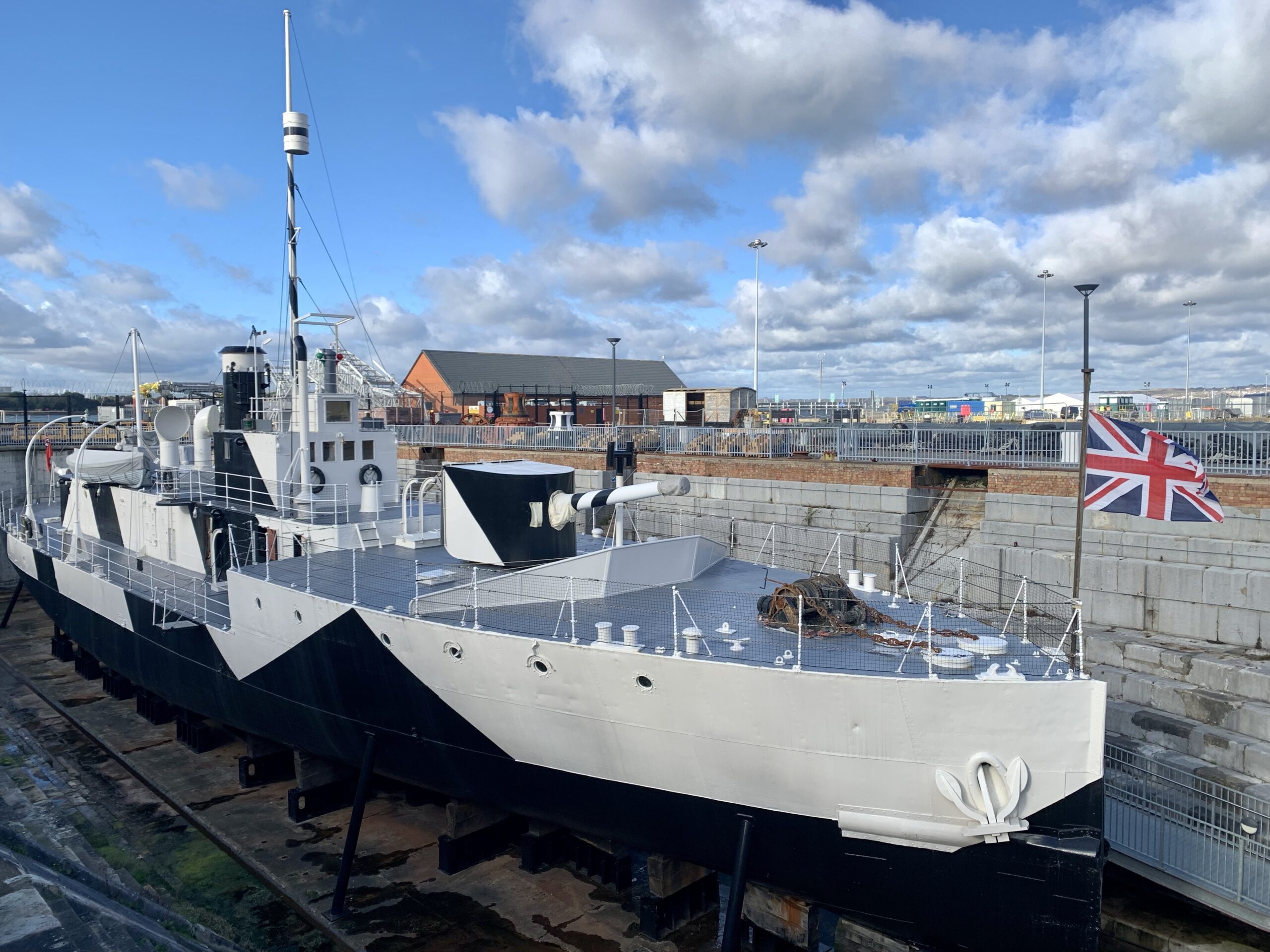
    HMS M.33 built in 1915 is not only the sole remaining British veteran of the bloody Dardanelles Campaign of 1915-1916, but also of the Russian Civil War which followed. The ship is one of just three British warships from World War I still in existence. Behind the ship you can see two railway wagons which remain in evidence – 18/11/2022
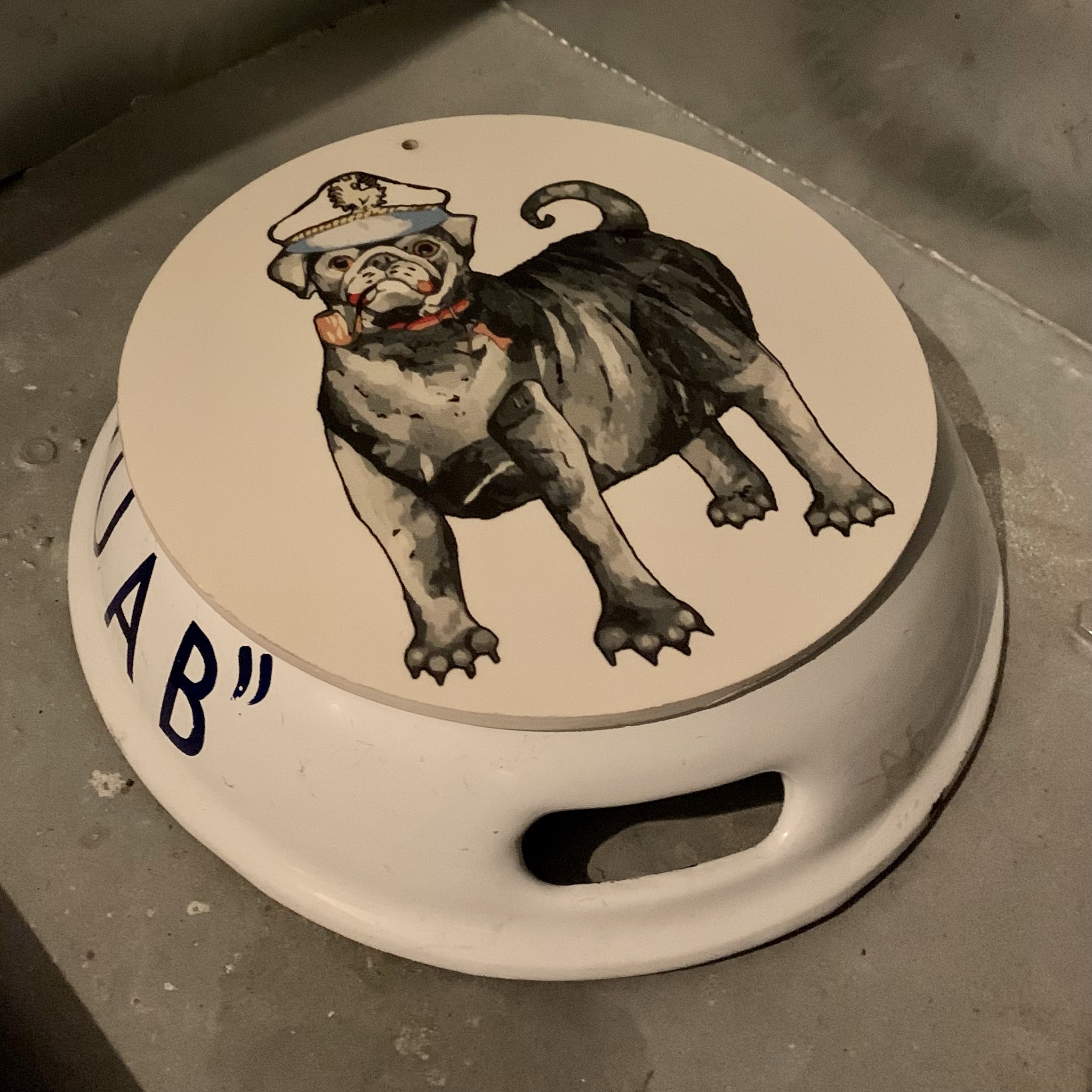
    According to a list of crew on board HMS M.33 in 1915, there were two ship’s dogs. Squab belonged to the captain, Preston-Thomas and Nell belonged to the crew. There was also a ship’s cat, Miss Muggins and the wheelhouse had a cat flap – 18/11/2022
    I didn’t video many trains on this Portsmouth outing – but this video clip includes DB Class 66 No. 66013 working 4021 0915 Trafford Park Euro Terminal to Southampton Western Docks Berth 109, GWR Class 166 No. 166215 working 1F26 1623 Portsmouth Harbour to Cardiff Central, GWR Class 165 No. 165129 with Class 166 No. 166203 working 1F24 1523 Portsmouth Harbour to Cardiff Central, Southern Class 377 No. 377158 working 1S24 1400 Brighton to Portsmouth Harbour and an RHTT configured MPV working 3S82 0611 Totton Yard to Totton Yard – 18/11/2022

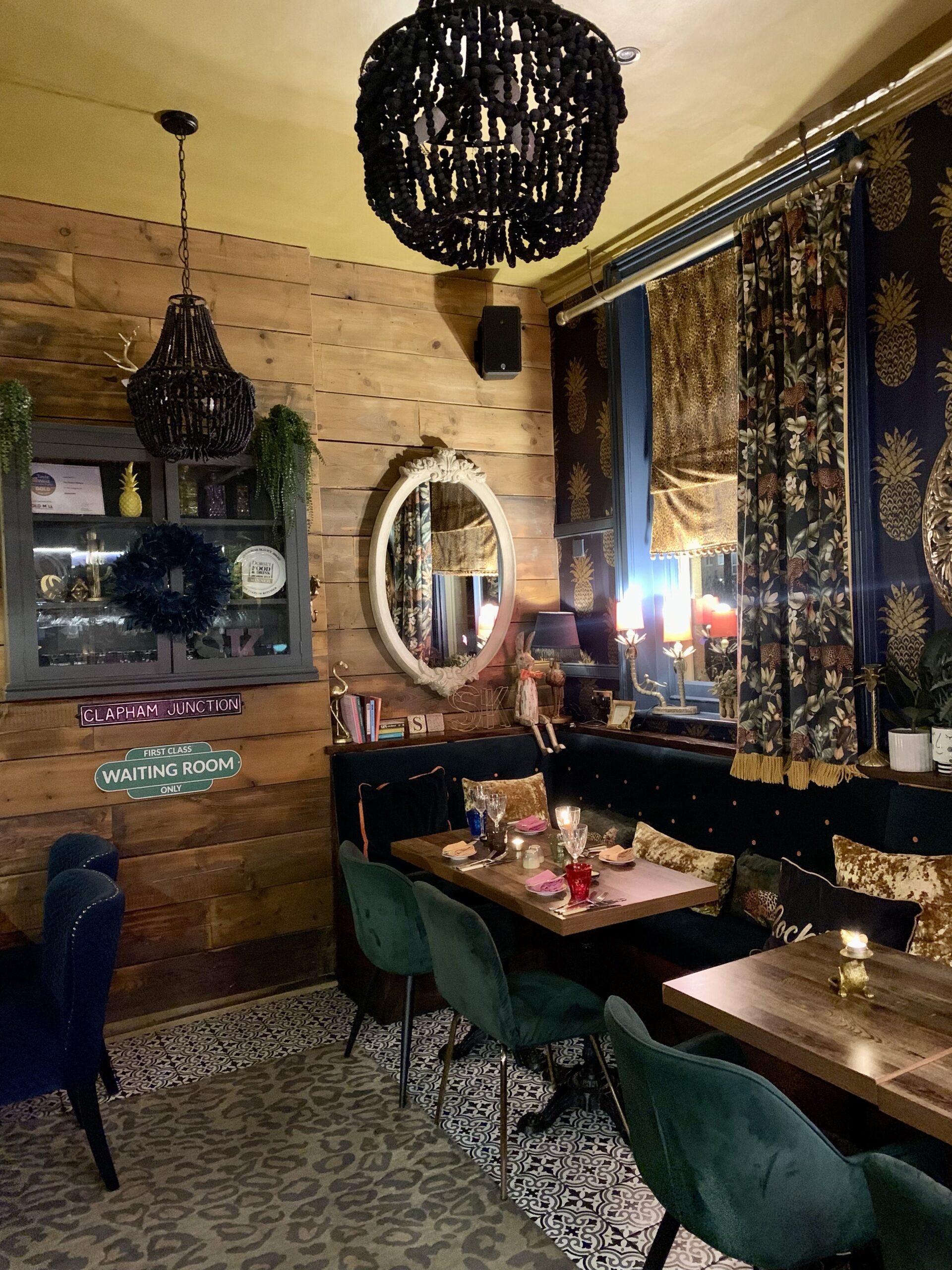
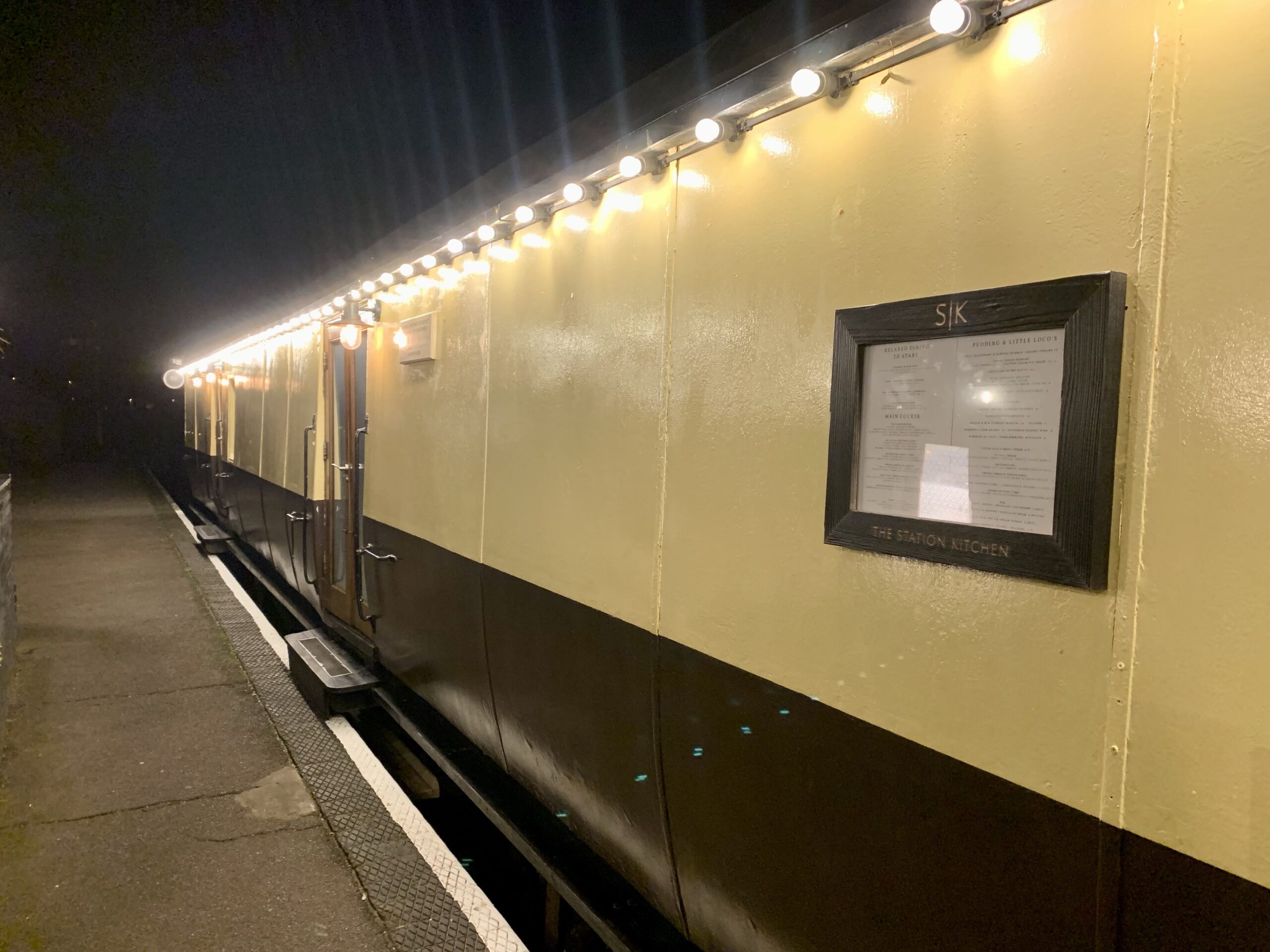
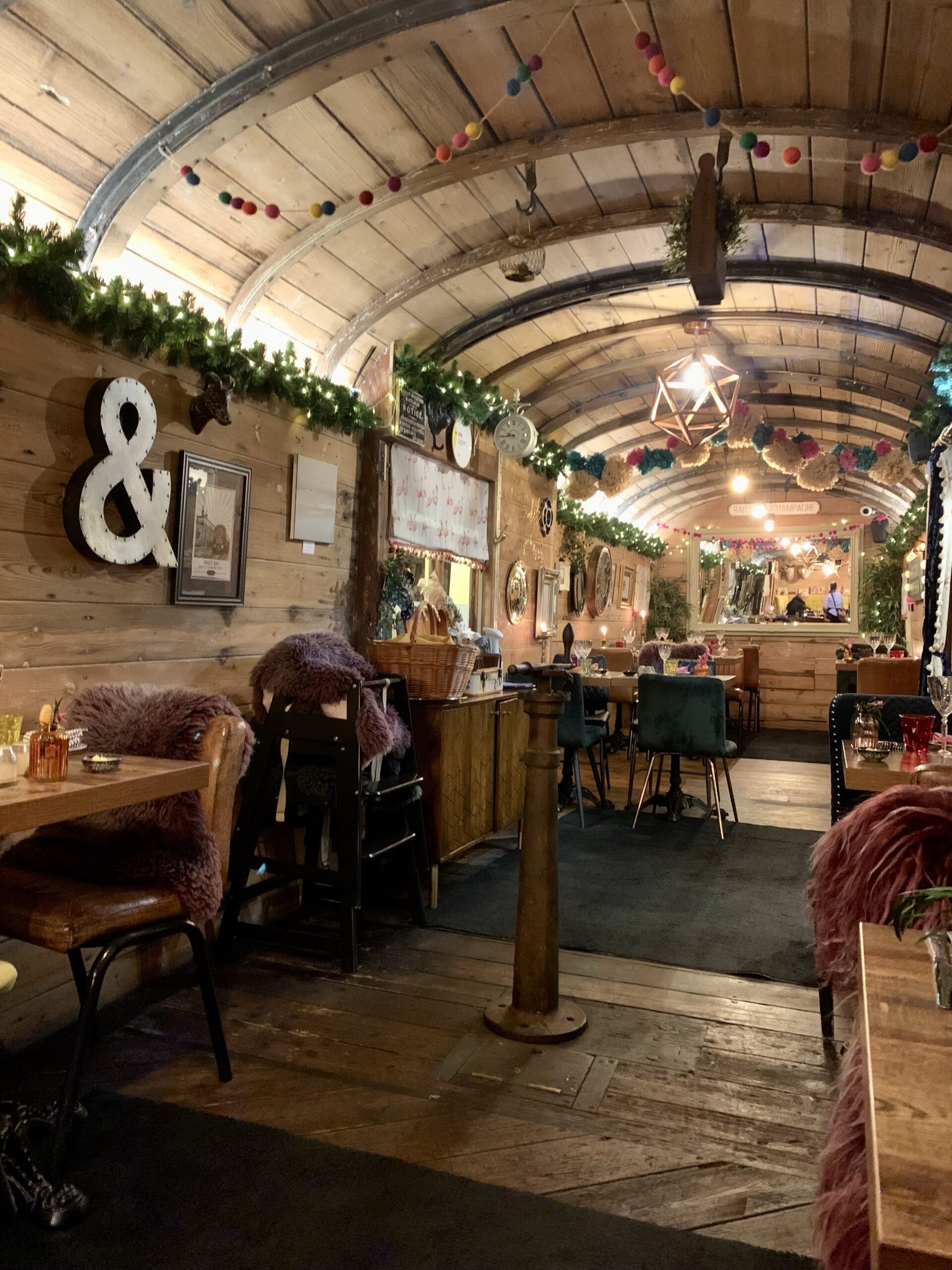
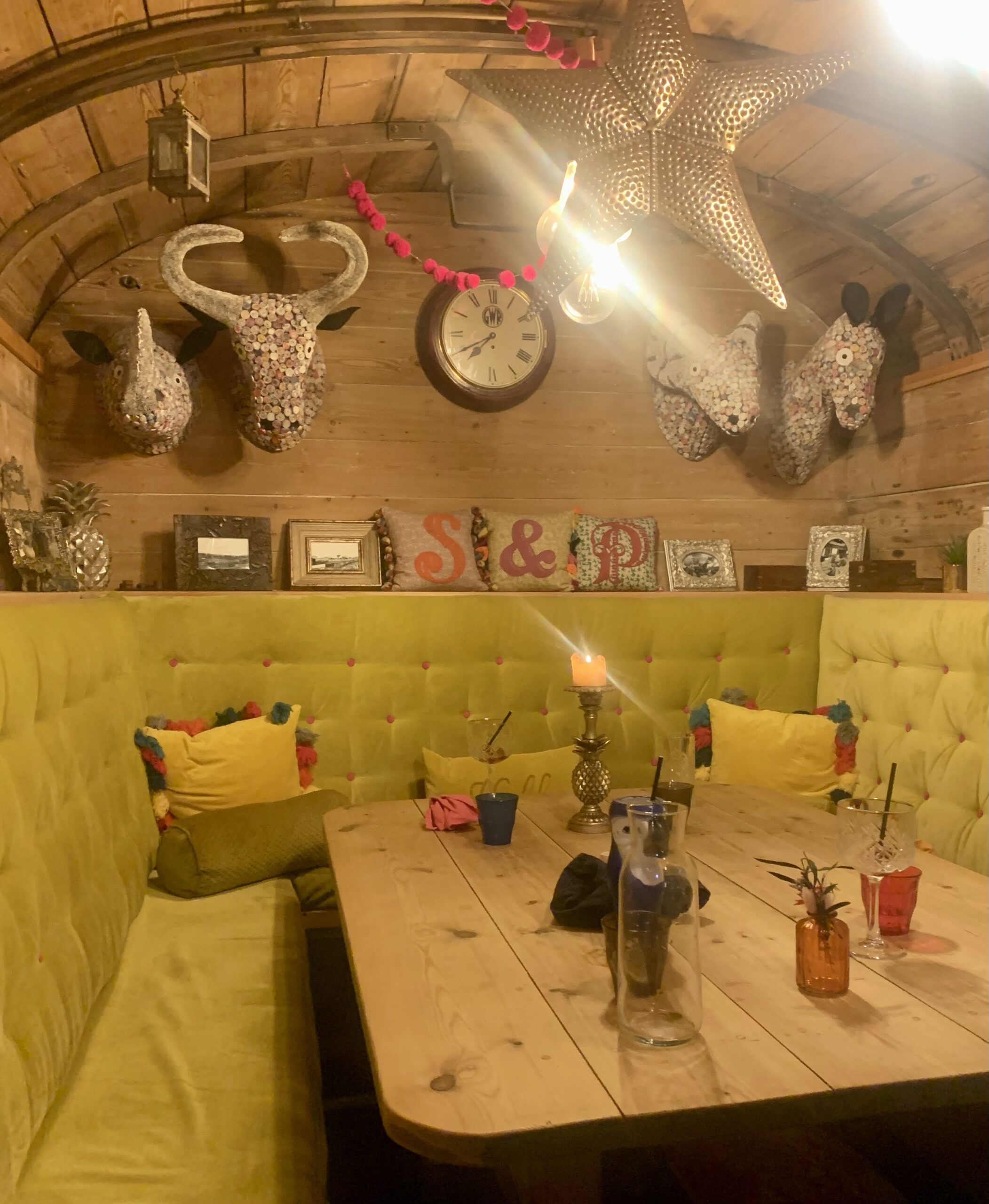
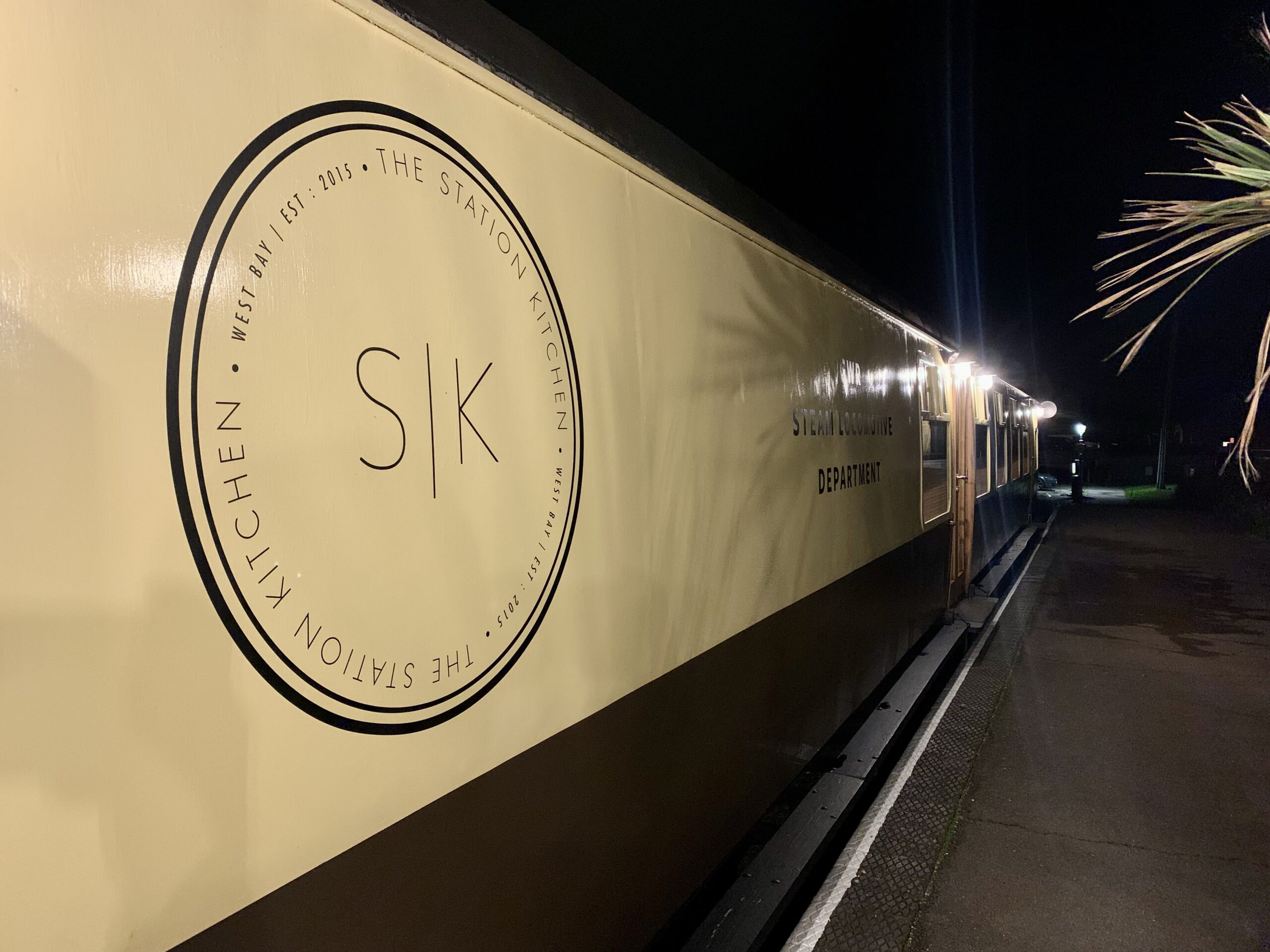
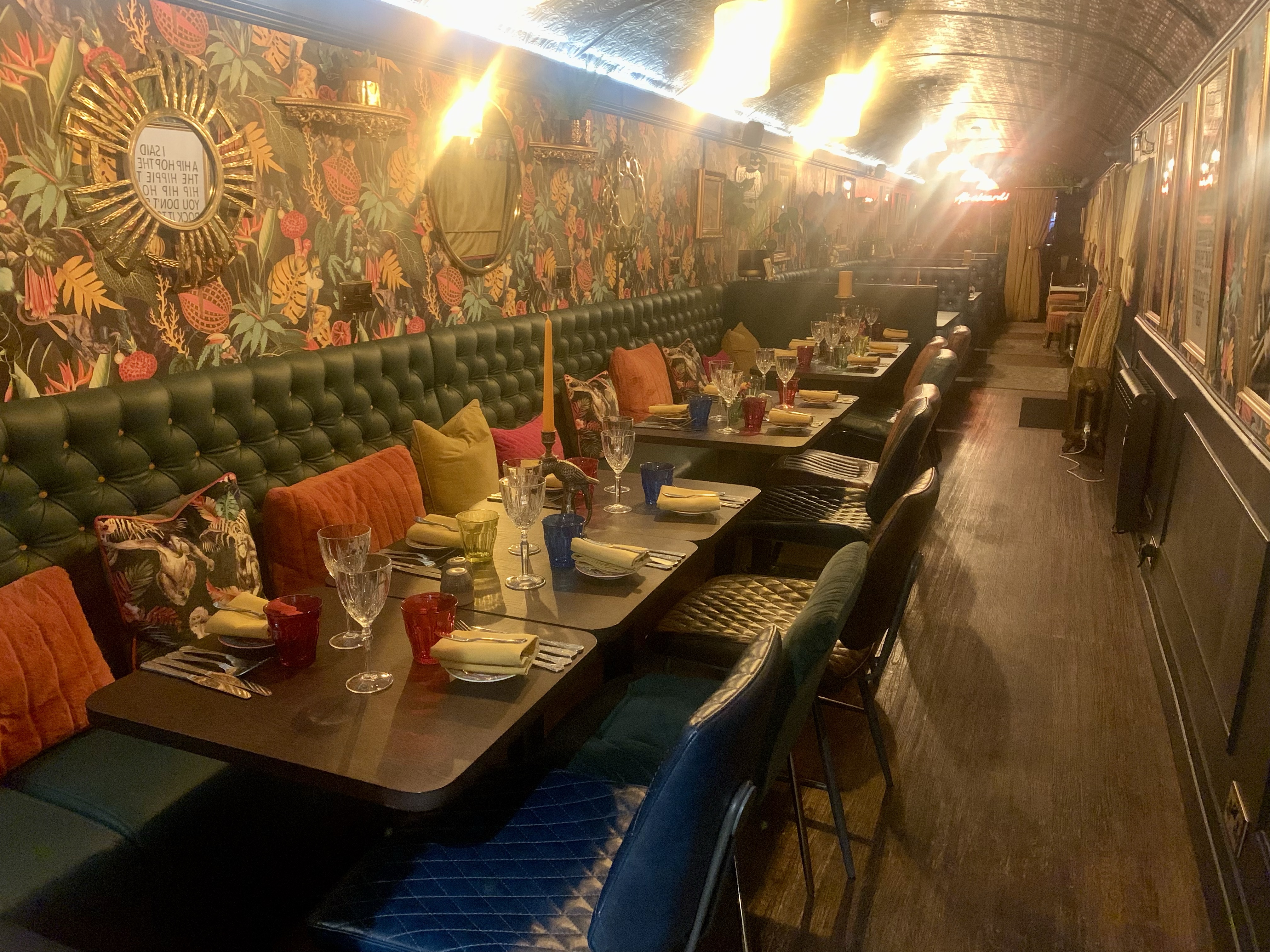
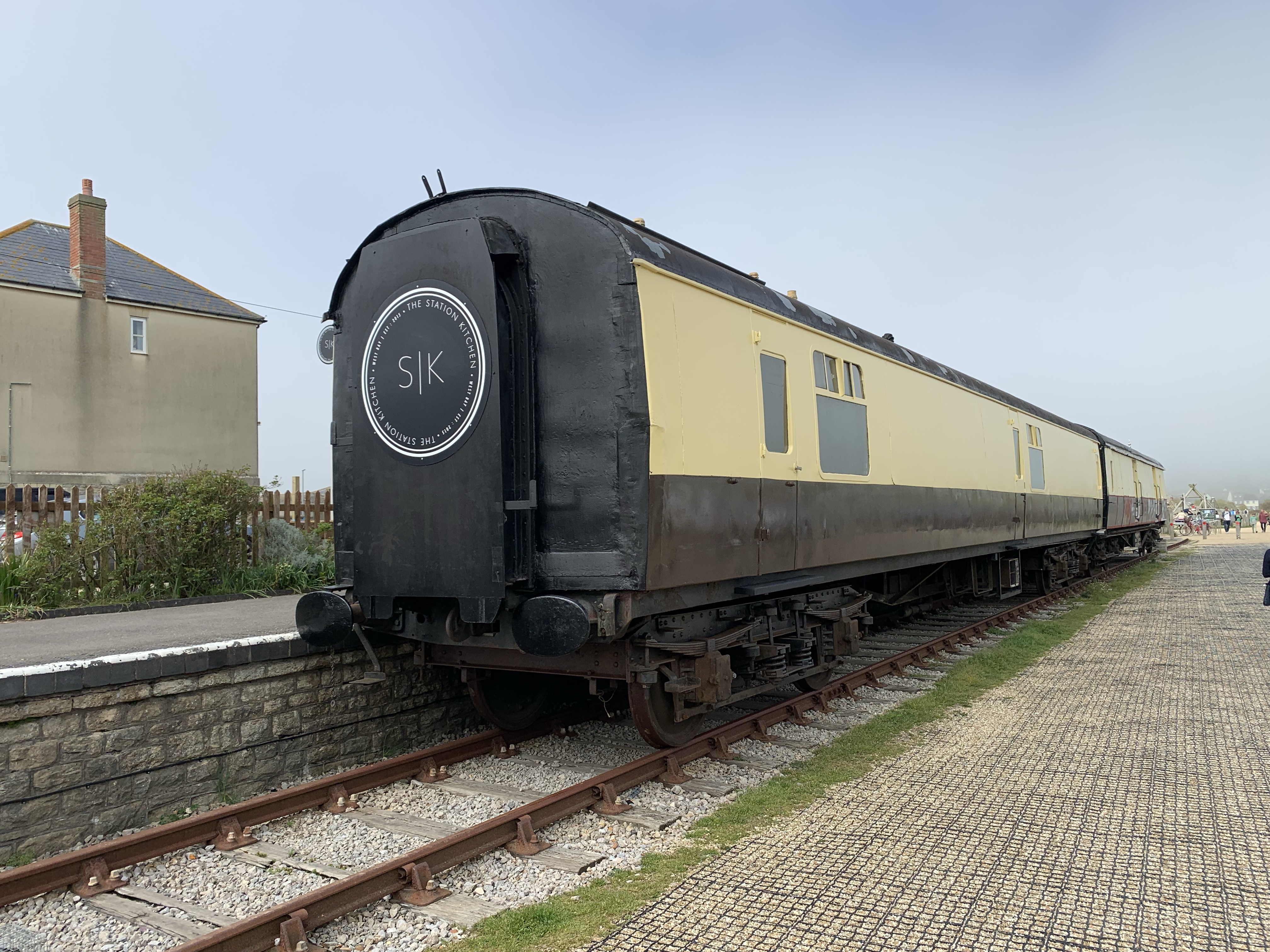
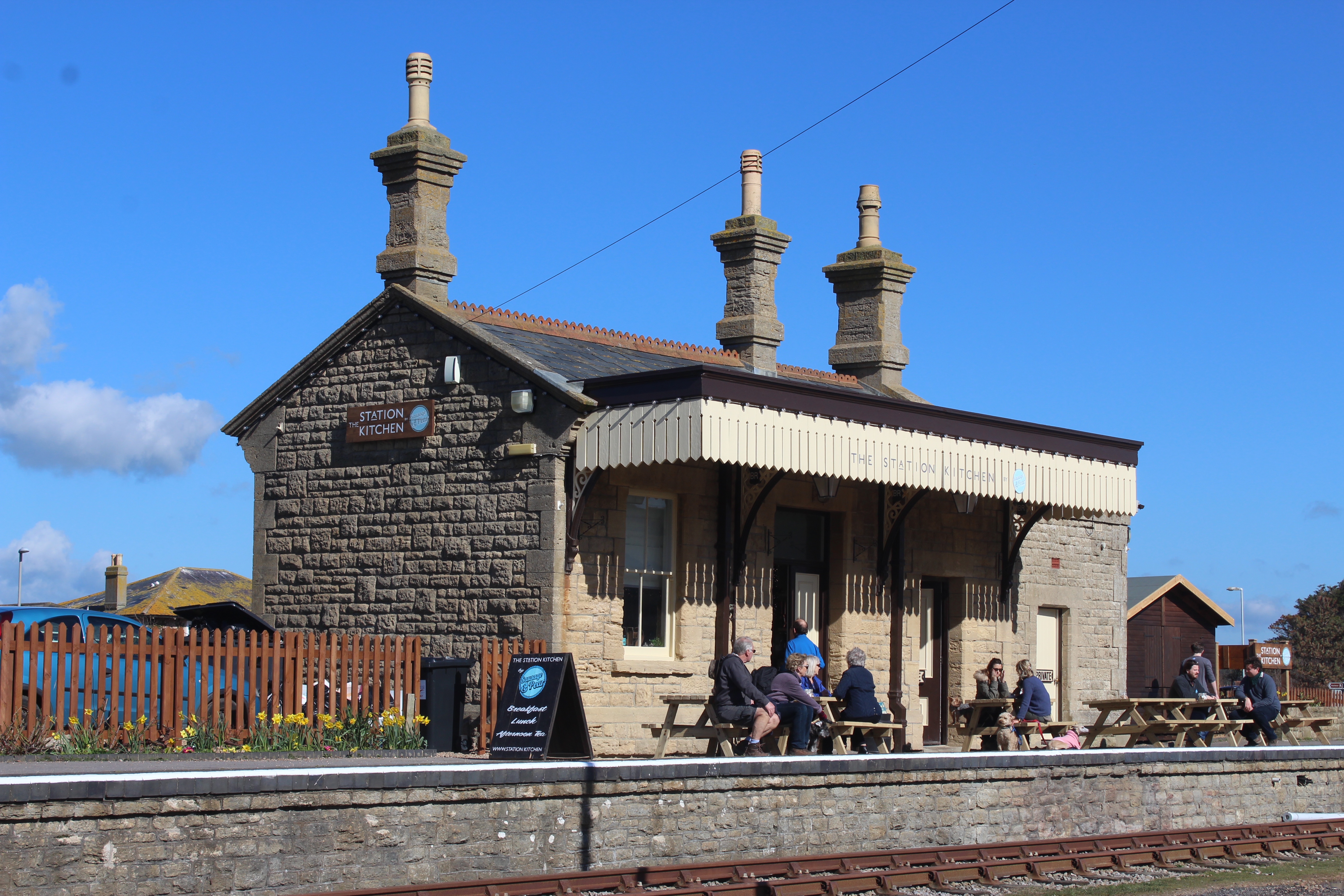
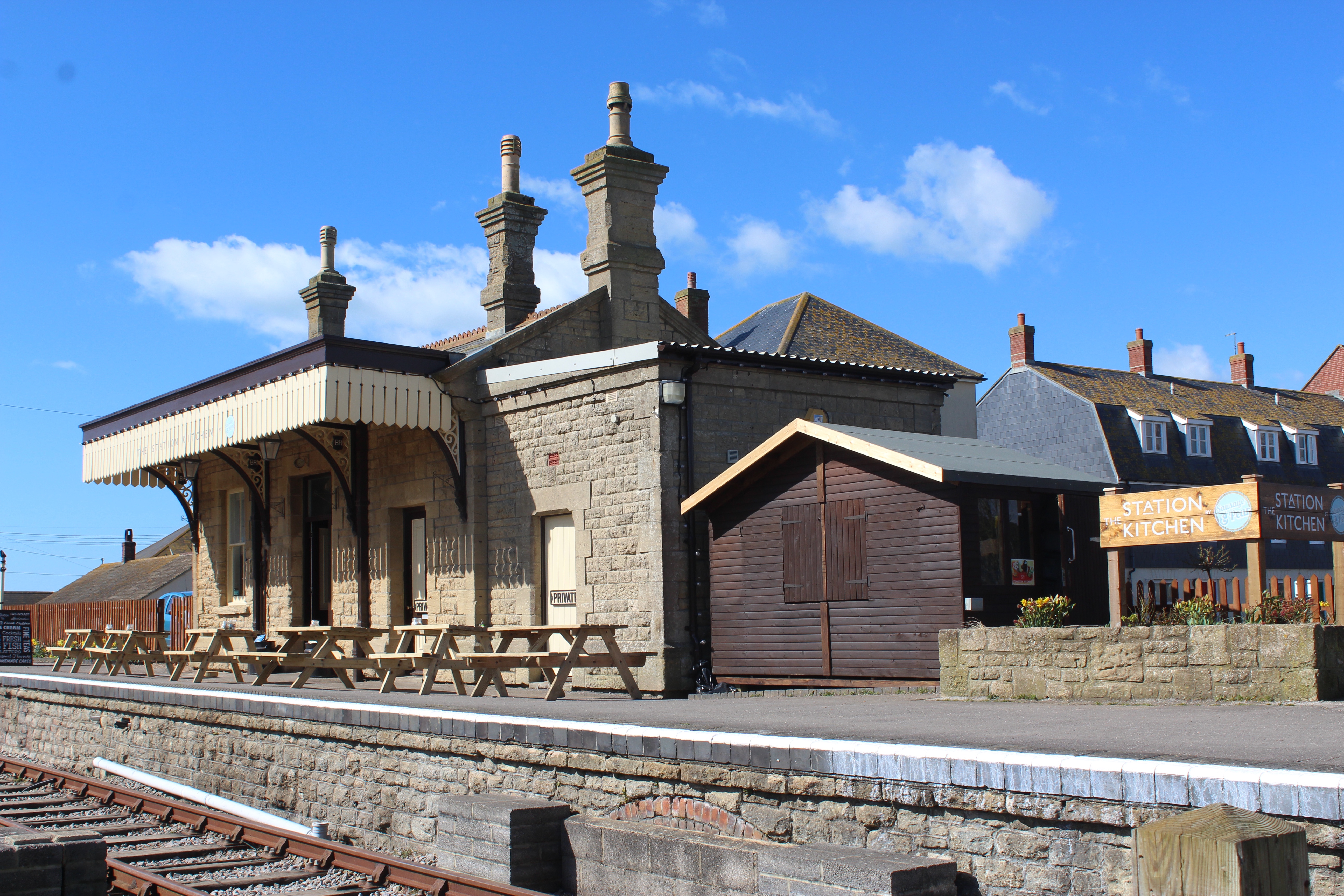
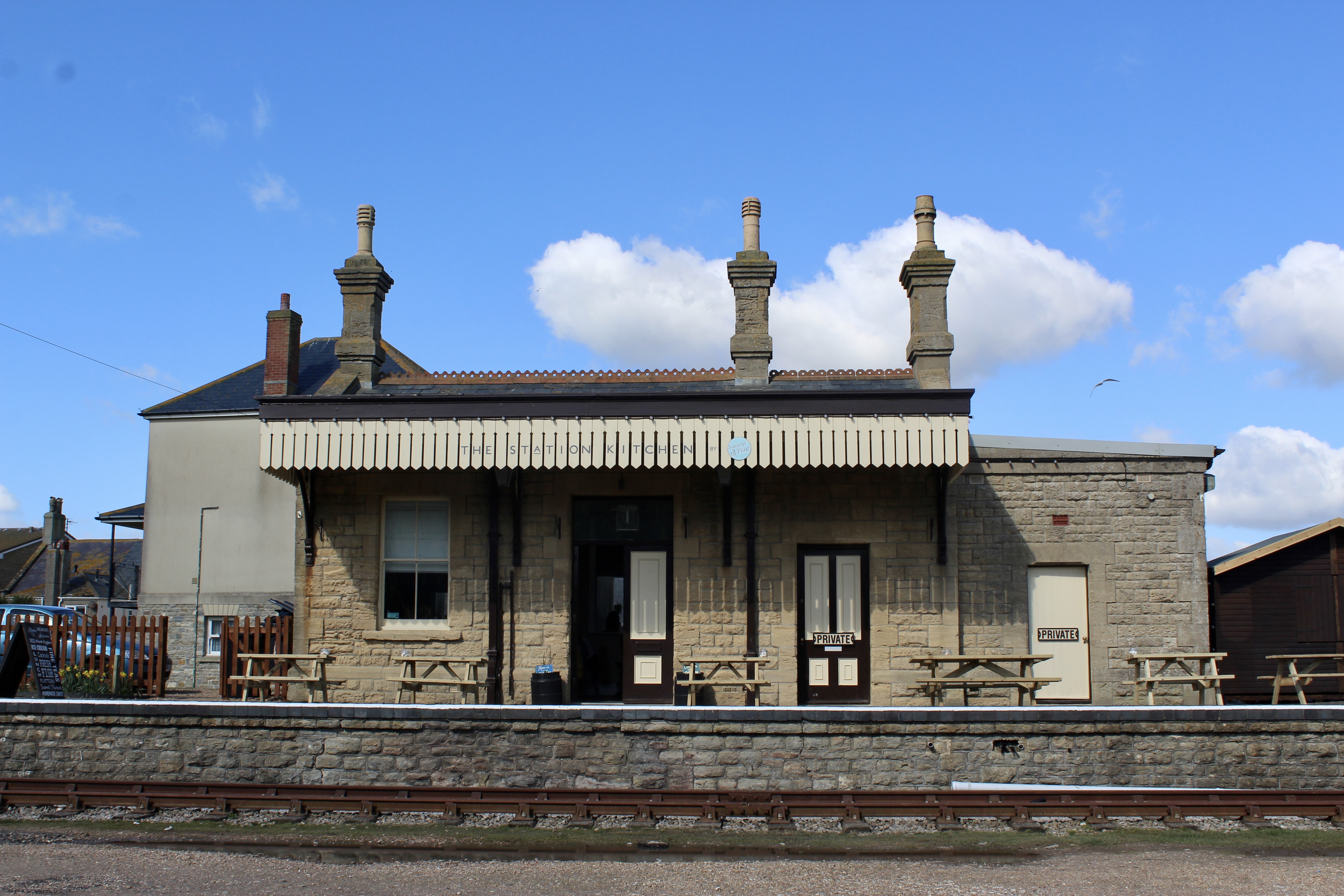
    Saturday evening saw Yoshi’s mum and myself in West Bay for dinner at the Station Kitchen which is situated at the former West Bay railway station. Originally called Bridport Harbour, the name was changed by the Great Western Railway to make it sound a more desirable holiday destination. Passenger services between Bridport and West Bay ended in 1930 with goods traffic remaining until closure in 1962. The restaurant comprises the dog-friendly 1884 station building and two railway carriages which have been transported to the site. The first carriage, which we dined in, GWR No. 2370 named ‘Brunel’ is a toplight brake corridor coach built in 1911 and purchased for use by the Station Kitchen in 2015. The carriage has quite a history having been used as a makeshift hospital in France during World War I and a tool coach in Worcester in the 1950’s before its restoration in Oswestry.

    The Station Kitchen, West Bay – 19/11/2022
    Station building interior – The Station Kitchen, West Bay – 19/11/2022
    ‘Brunel’ – The Station Kitchen, West Bay – 19/11/2022
    ‘Brunel’ interior – The Station Kitchen, West Bay – 19/11/2022
    ‘Brunel’ interior – The Station Kitchen, West Bay – 19/11/2022

    The second coach at West Bay is BR MK1 corridor second No. 25646 built in Gloucester in 1958 and was being used as a mess coach at Toddington when it was purchased for its new life at West Bay. This carriage has been named ‘Beeching’.

    ‘Beeching’ – The Station Kitchen, West Bay – 19/11/2022
    ‘Beeching’ interior – The Station Kitchen, West Bay – 19/11/2022

    The food was amazing, with perhaps the best cheesecake I’ve tasted. The staff were friendly, professional and attentive. If Yoshi had joined us, he would not have hesitated in giving the Station Kitchen five barks out of five.

    Yoshi visited The Station Kitchen, West Bay in April – 15/04/2022
    The Station Kitchen, West Bay – 15/04/2022
    The Station Kitchen, West Bay before the addition of the carriages – 31/03/2016
    The Station Kitchen, West Bay – 31/03/2016
    The Station Kitchen, West Bay – 31/03/2016

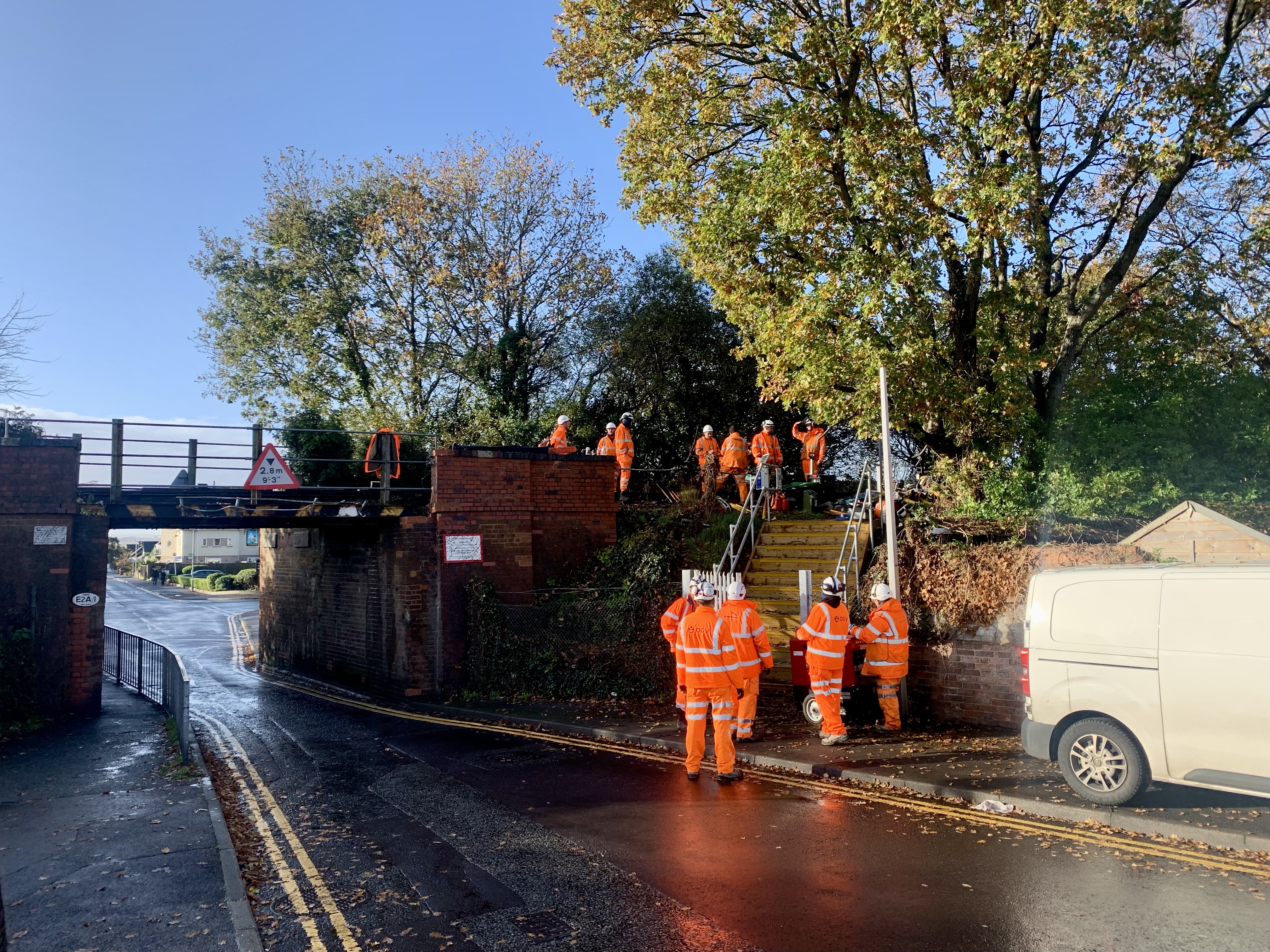
    On our Sunday morning walk, Yoshi and I went along to Lake Road in Hamworthy to see work being carried out on the railway bridge. Rotten timbers on which the railway line is carried were replaced and the area re-ballasted involving a team from Sonic Rail Services, who specialise in bridge strengthening and Network Rail. We await news of the first train to make it down the restored Hamworthy Branch with anticipation!

    Lake Road bridge works – 20/11/2022

    Lake Road bridge works – 20/11/2022
    The crossing at Ashmore Road looking towards Poole Port was managed by Network Rail staff – 20/11/2022
    A Network Rail Mercedes-Benz lorry reverses into the compound where the original Poole station was located. This later became Hamworthy Goods. The lorry, from Eastleigh, had arrived to collect the old timbers which had been removed from Lake Road bridge – 20/11/2022
    Bridge works at Lake Road – 20/11/2022

    Finally, Monday evening once again saw the regular Class 73 hauled track inspection test train heading to Weymouth. We elected to see the train pass through Poole on its outward journey working as 1Q51 1115 Derby RTC to Eastleigh East Yard in the capable charge of GBRf No.’s 73965 ‘Des O’Brien’ and 73961 ‘Alison’.

    1Q51 1115 Derby RTC to Eastleigh East Yard – 21/11/2022

    That’s it for another week! This entry was brought to you accompanied by the sounds of rainbow frog biscuit, Zeph, Ron Grainer & Delia Derbyshire (happy 59th birthday Doctor Who!). Until next time, remember; “The most affectionate creature in the world is a wet dog” – Ambrose Bierce (1842 – 1914 or thereabouts).

  • Kent and back

    Yoshi visits Tonbridge and barks at all the GBRf Class 69 locomotives introduced to traffic so far – 12/11/2022

    On Saturday, Yoshi’s mum was off to London for the weekend to meet up with a friend who had travelled down on the Caledonian sleeper – of which, I was extremely jealous! Travelling on a sleeper train has long been an item on my bucket list. As there are no sleeper services from sleepy Dorset to the big smoke, and as Yoshi’s mum isn’t keen on rail replacement bus services, I volunteered to drive up and drop her off in Greenwich. With this offer accepted, my mind began to formulate a number of plans of things Yoshi and I could do on our way back.

    My initial thought was to drive home via Brighton and try and catch Class 313 No. 313201 in its heritage British Rail livery before this particular Class of electric multiple units is withdrawn from service, but planned engineering works meaning no trains running in the area put paid to that idea.

    Next up, I thought I could spend the afternoon somewhere on the East Coast Main Line as I was certain London North Eastern Railway (LNER) would roster “celebrity” Class 91 No. 91111 ‘For The Fallen’ in Remembrance Day livery created to mark the contribution of, and the lives lost by regiments along the East Coast route during the First World War. First unveiled in 2014, the special livery depicts soldiers, artefacts, poppies and tributes in honour of those who lost their lives in service to their country. The locomotive had been running turns between London Kings Cross and the North all week, and I was confident it would run over the Remembrance weekend. But on checking the allocations via Real Time Trains on Saturday morning, it was clear that No. 91111 was being rested. It obviously returned to duty the following day.

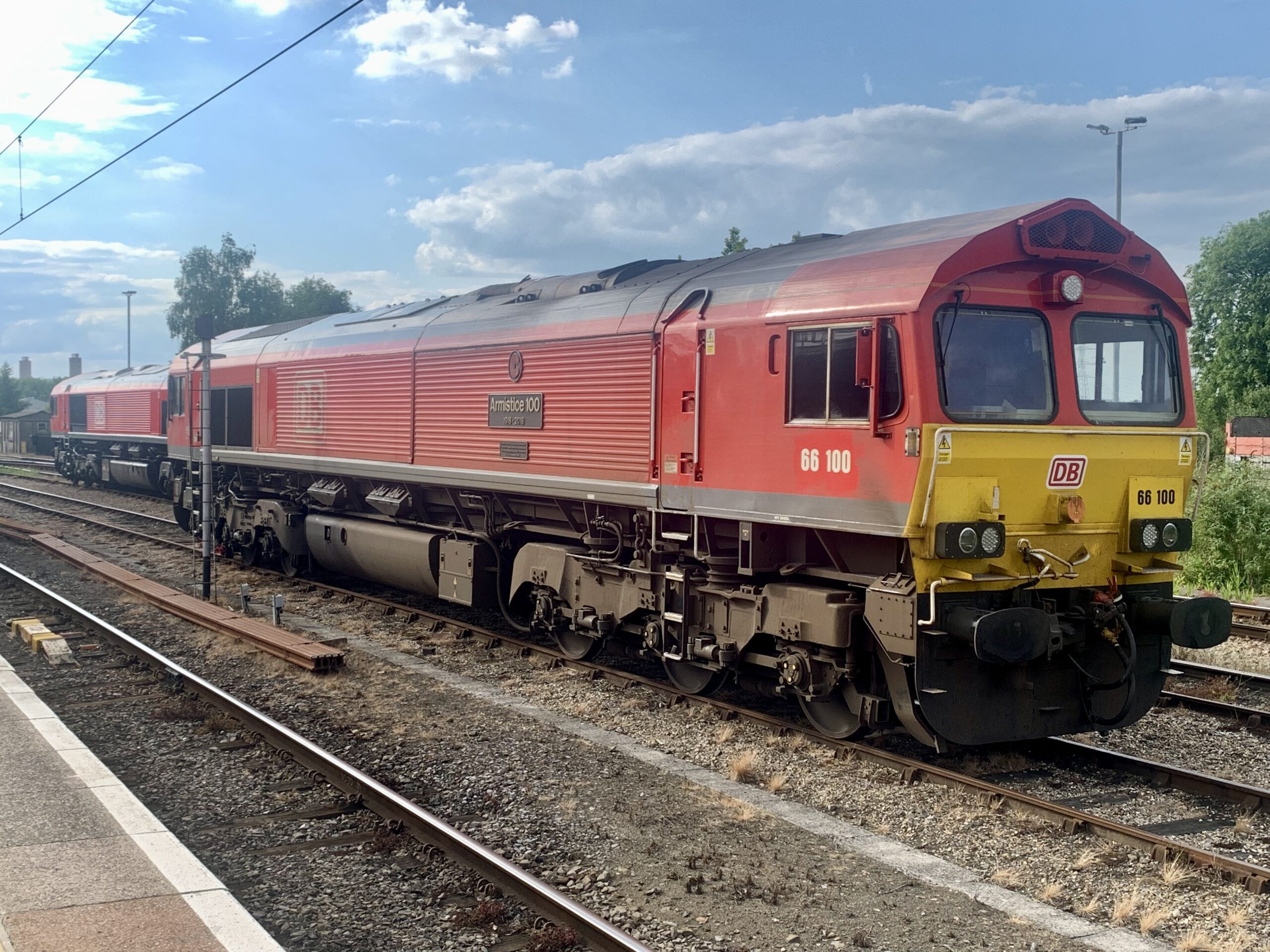
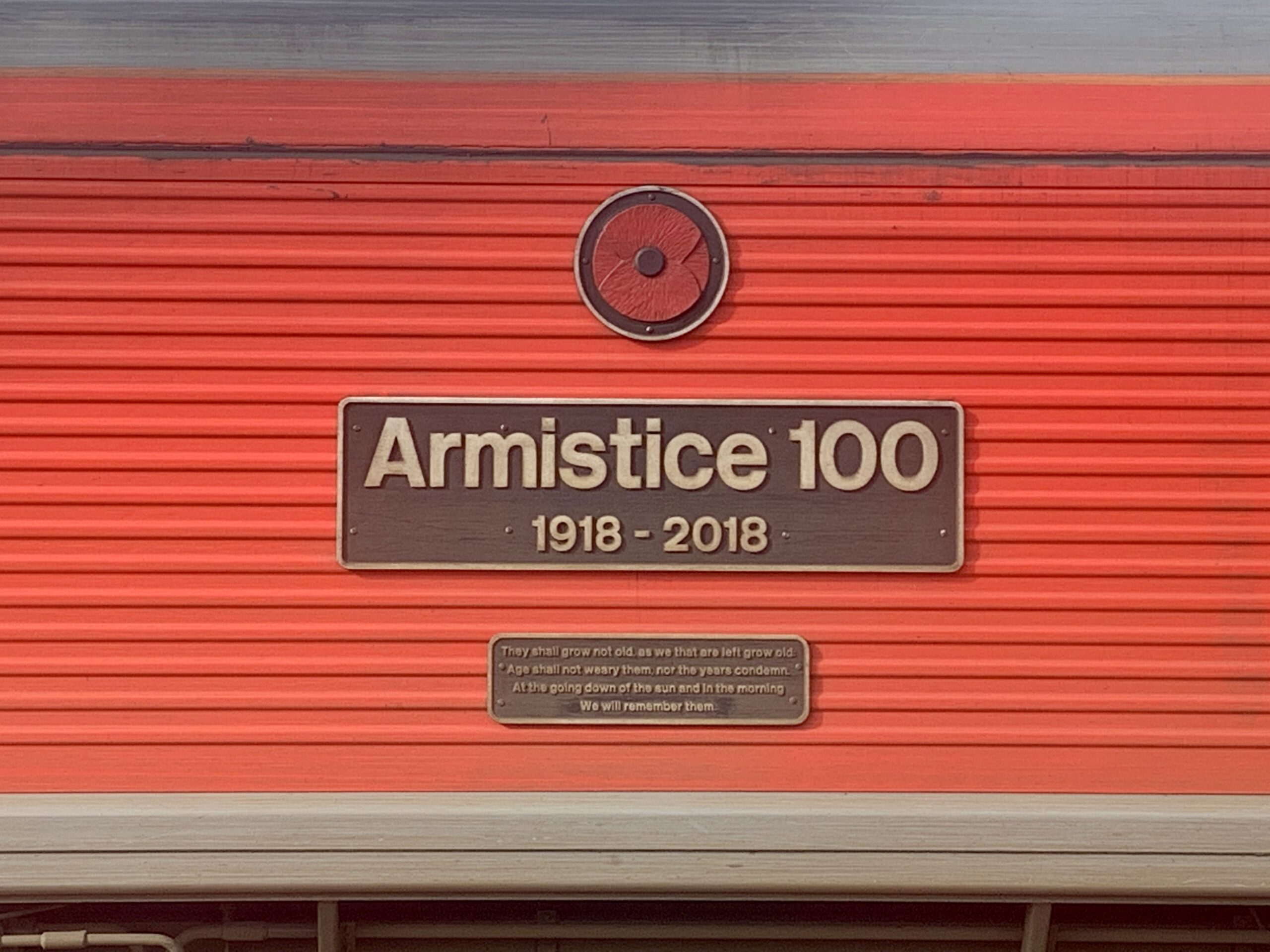
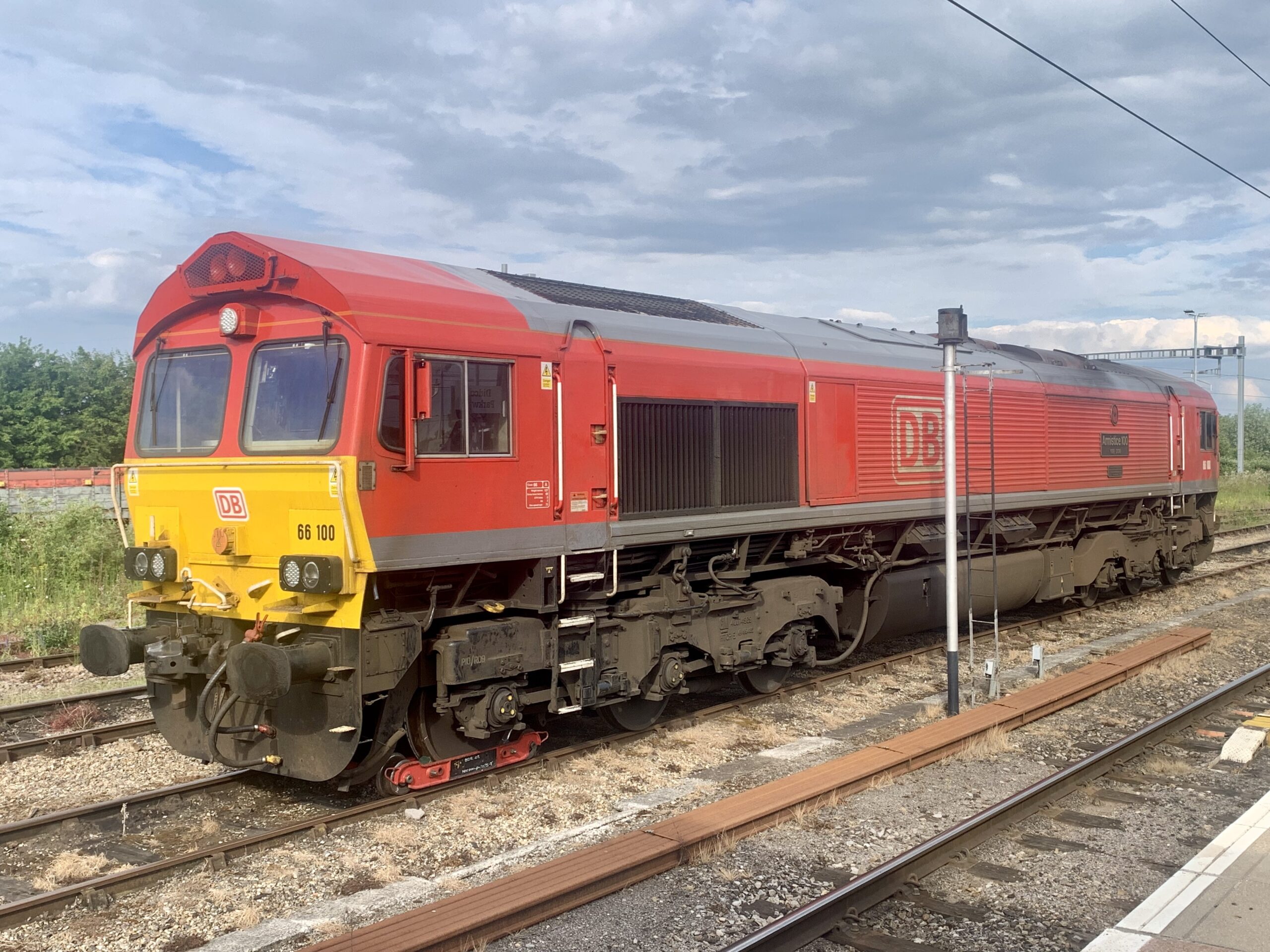
    One locomotive named in commemoration of Remembrance I have managed to capture is DB Class 66 No. 66100 ‘Armistice 100 1918 – 2018’ which I saw at Didcot on 2nd June 2022. In the images below, the loco has one of its wheel sets placed in a wheel skate and had been marooned at Didcot since the middle of May 2022, eventually leaving on the back of an Allelys low loader for repairs at Toton weeks later.

    DB Class 66 No. 66100 ‘Armistice 100 1918 – 2018’ at Didcot – 02/06/2022
    Nameplate detail of DB Class 66 No. 66100 ‘Armistice 100 1918 – 2018’ at Didcot – 02/06/2022
    DB Class 66 No. 66100 ‘Armistice 100 1918 – 2018’ at Didcot. The wheel skate can be seen clearly – 02/06/2022

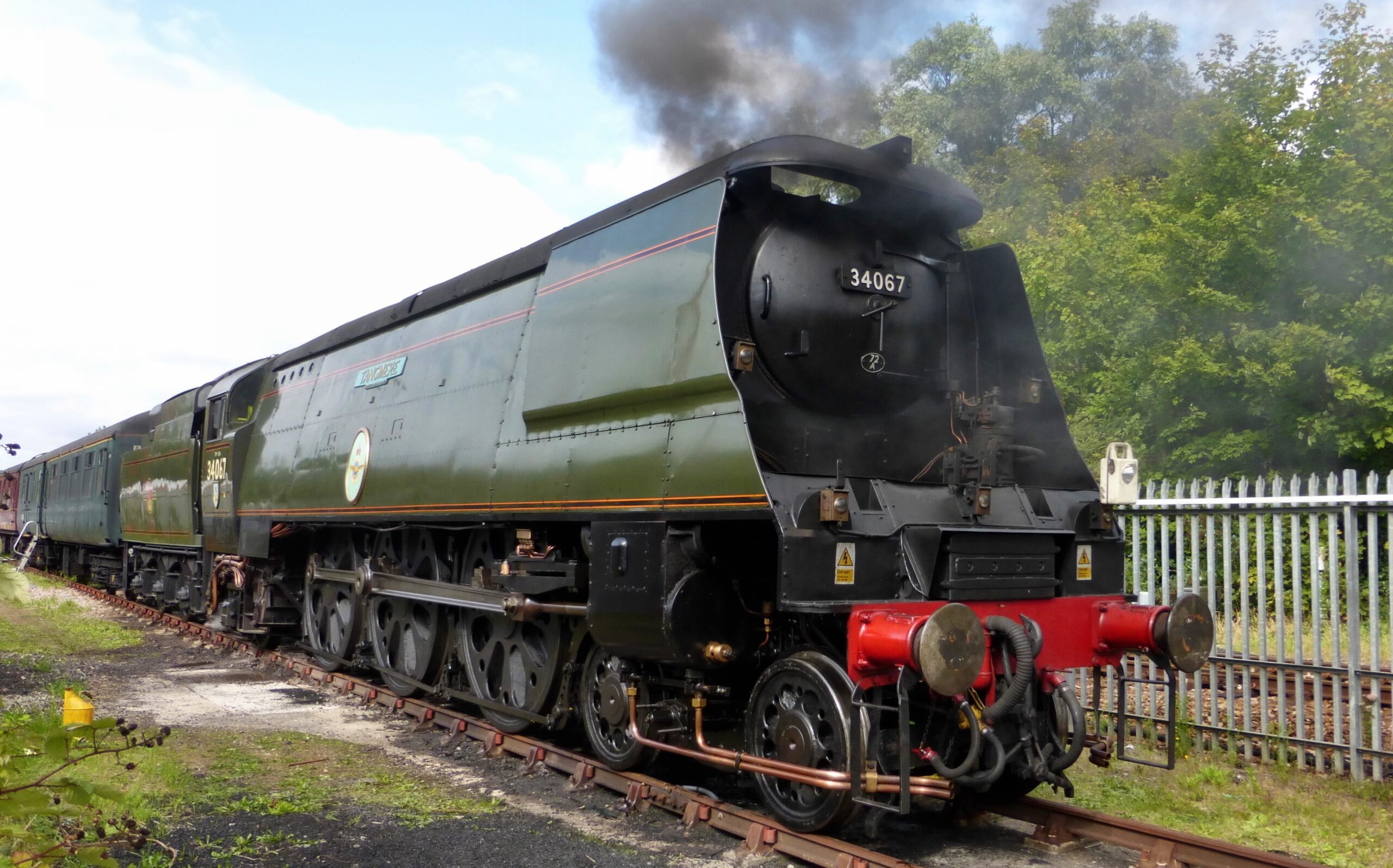
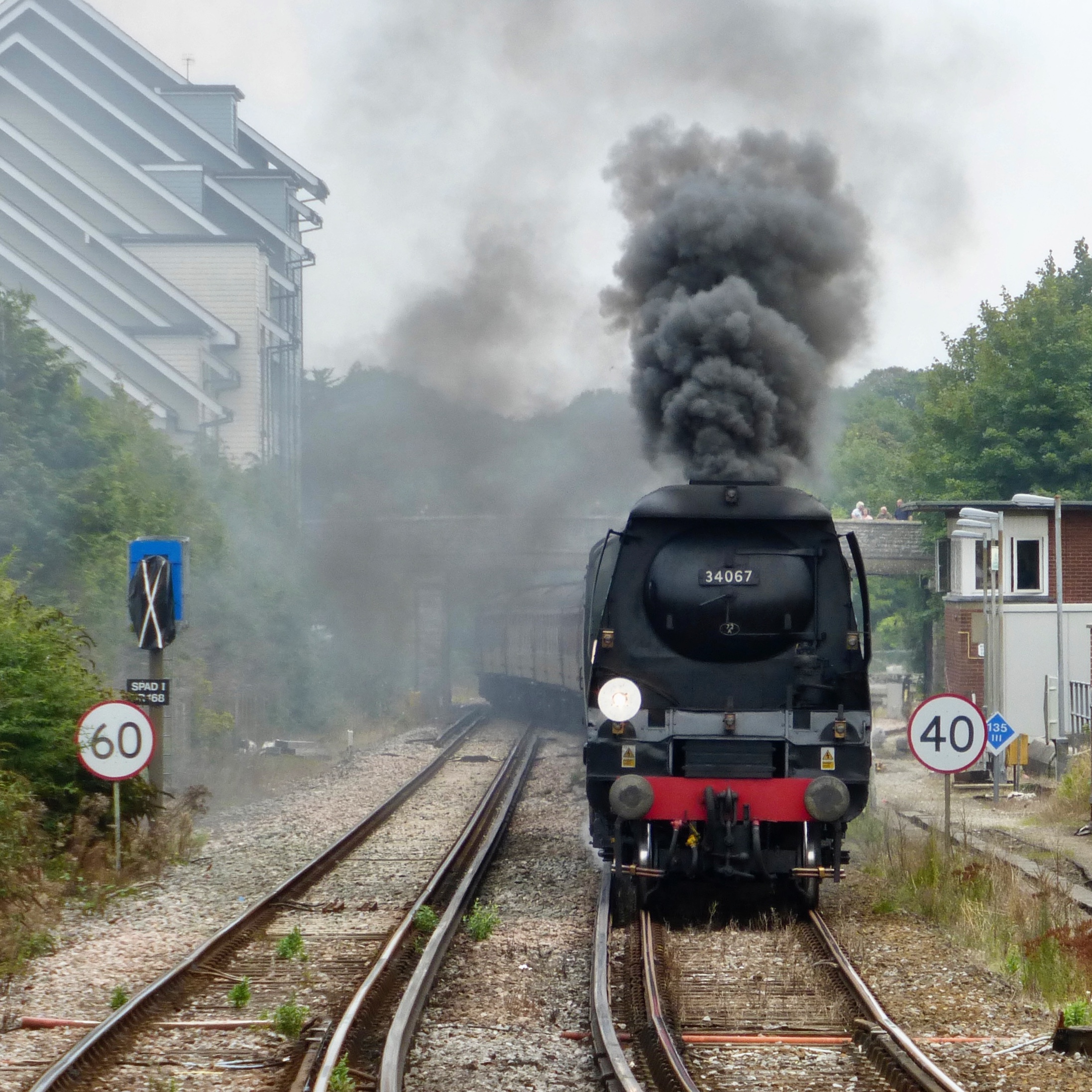
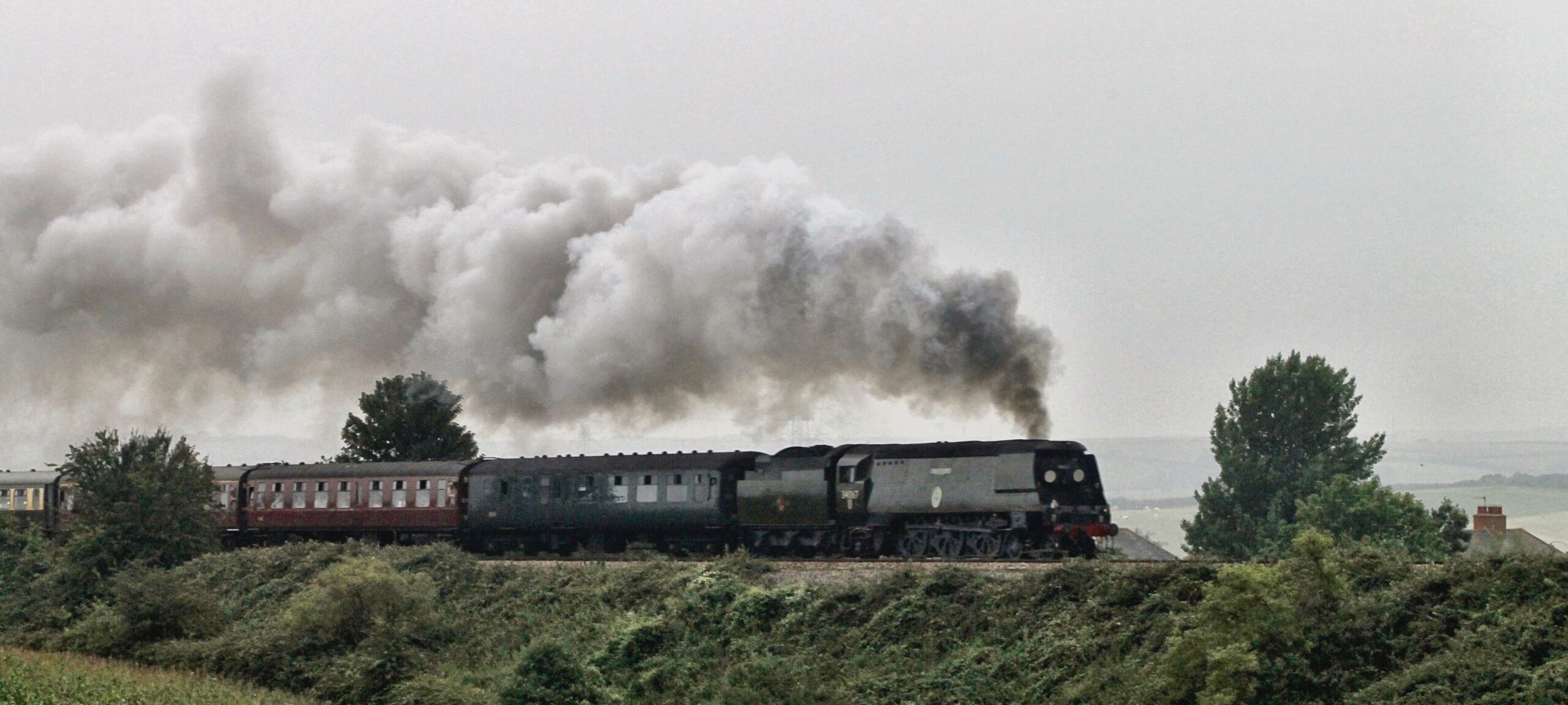
    Returning to last Saturday and plan number three which involved heading towards Tonbridge to see SR Unrebuilt West Country Class 4-6-2 No. 34067 ‘Tangmere’ in action heading up Bellmond British Pullman’s “Golden Arrow 50th Anniversary” rail tour running from London Victoria to Canterbury and return, commemorating the final run of this iconic named train which occurred on 30th September 1972. ‘Tangmere’ was deputising for SR Rebuilt Merchant Navy 4-6-2 No. 35028 ‘Clan Line’ but, unbeknownst to me (because I had failed to check) the positioning run which would have taken ‘Tangmere’ south from Carnforth to Southall was cancelled on Friday 11th November 2022 which resulted in the steam traction being substituted by top and tailed Class 67 locomotives.

    This is ‘Tangmere’ when she made it south a few years ago:

    SR Unrebuilt West Country Class 4-6-2 No. 34067 ‘Tangmere’ rests in the EMU compound at Weymouth having worked Railway Touring Company organised “The Royal Wessex”. It was reported that the locomotive hit the buffer stops at Weymouth station – 05/09/2015
    SR Unrebuilt West Country Class 4-6-2 No. 34067 ‘Tangmere’ puts on quite a display as she nears Dorchester South with “The Dorset Coast Express” – 09/09/2015
    SR Unrebuilt West Country Class 4-6-2 No. 34067 ‘Tangmere’ climbs Bincombe Bank with the return “Weymouth Seaside Express” – 31/07/2011
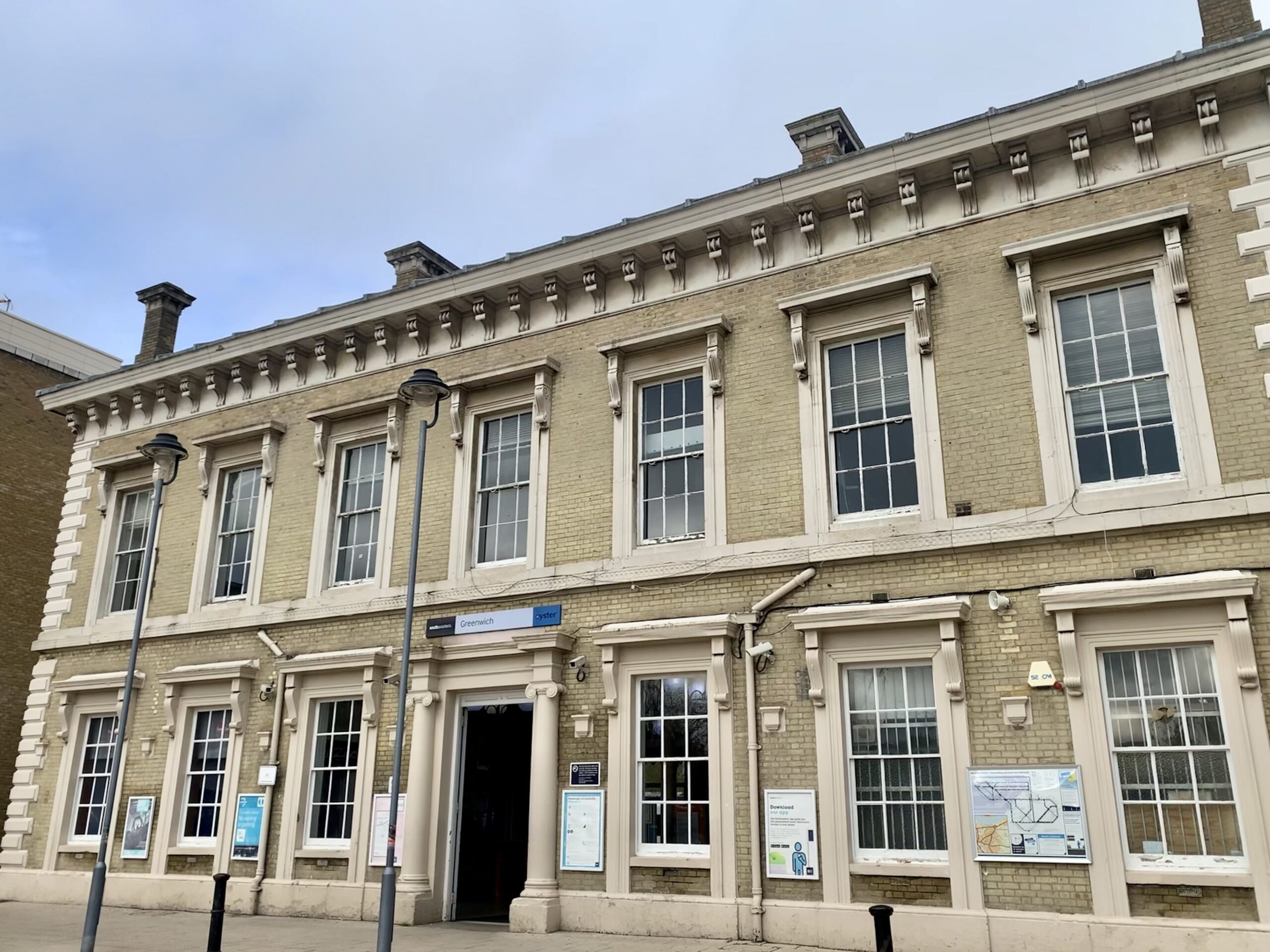
    The wonderful exterior of Greenwich railway station on 12/11/2022 where we deposited Yoshi’s mum. The station was opened in 1840, and the original building still stands, making it one of the oldest surviving station structures in the world. The line that serves Greenwich, the London and Greenwich Railway as it was known when it was built in 1836, was the first steam railway in London and the first to be built specifically for passengers. It began at Tooley Street (now London Bridge) and ran via Deptford to Greenwich on a viaduct of 878 brick arches. It was the first elevated railway in the world. 
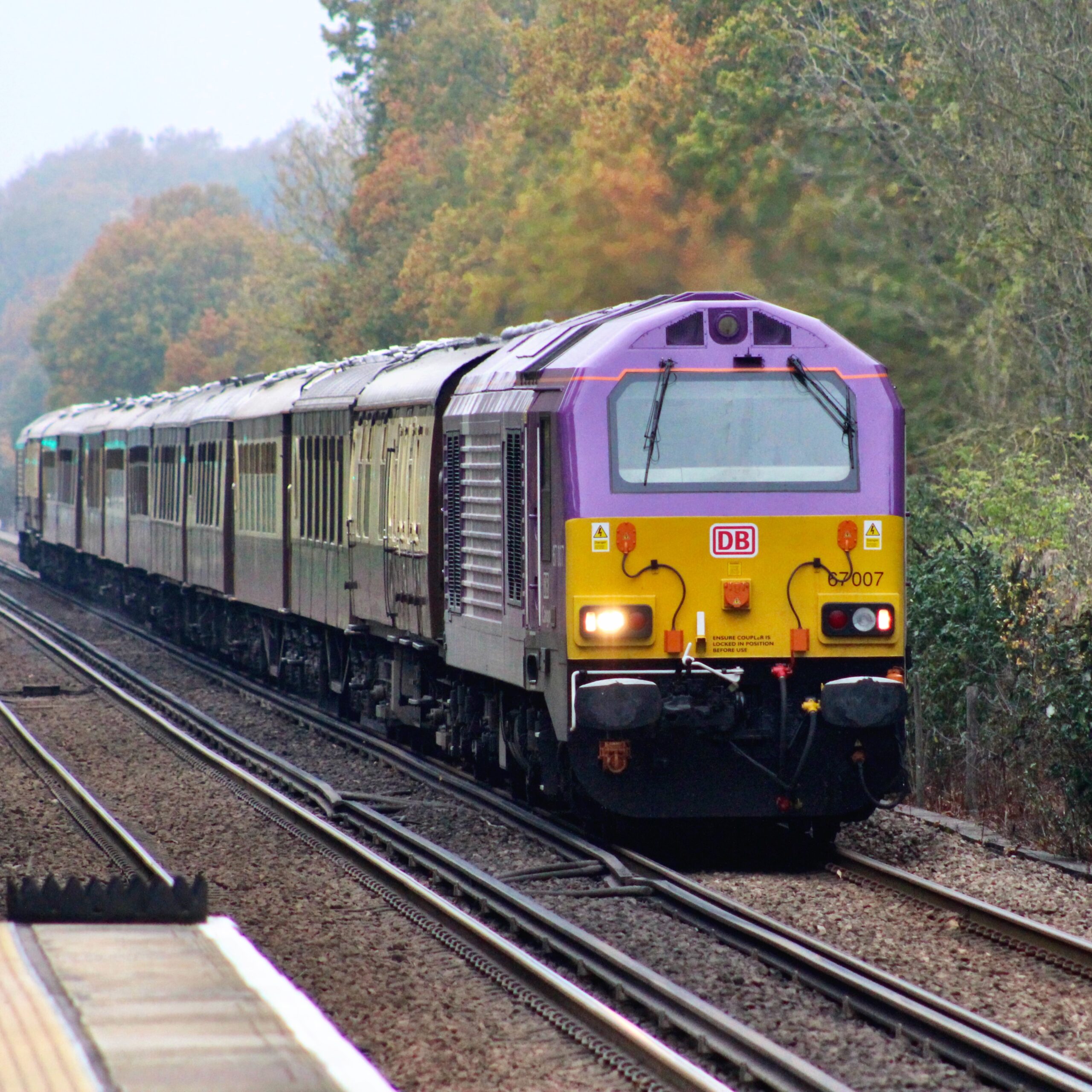
    DB Class 67 No. 67007 in Platinum Jubilee livery passing Pluckley hauling Belmond British Pullman’s “Golden Arrow 50th Anniversary” rail tour. The Class 67’s were deputising for SR Unrebuilt West Country Class 4-6-2 No. 34067 ‘Tangmere’ which would have been the first time a Bullied ‘Spam Cam’ had hauled a Pullman train since August 2007 – 12/11/2022
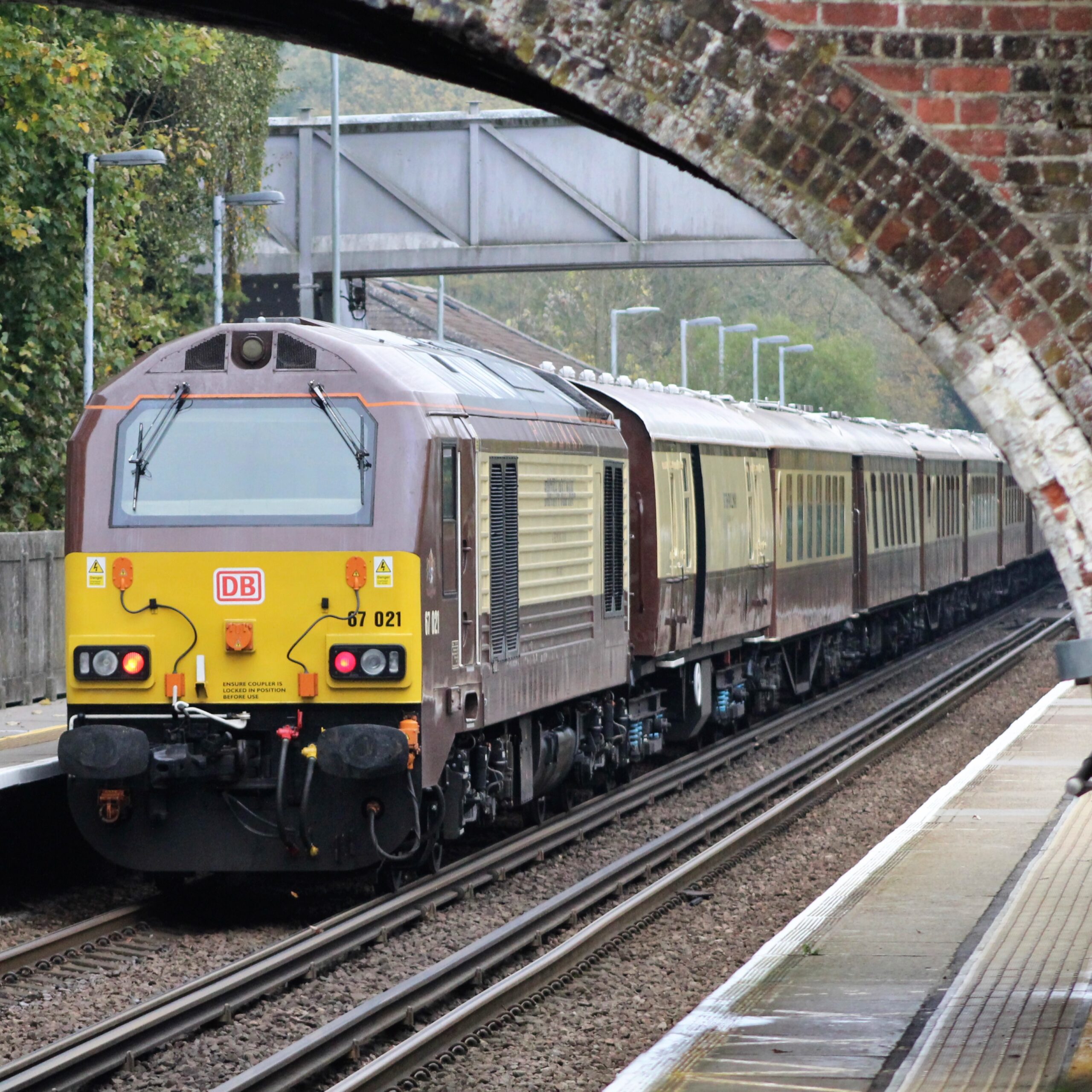
    DB Class 67 No. 67021 in Belmond Pullman livery at the rear of the “Golden Arrow 50th Anniversary” rail tour. Named in 1929, the “Golden Arrow” was the Southern Railway’s premier connection with Paris, the equivalent train on the French side was “La Flèche d’Or”. The “Golden Arrow” was mainly routed via Dover for the Channel Crossing, although for a number of years the return leg started at Folkestone Harbour – 12/11/2022
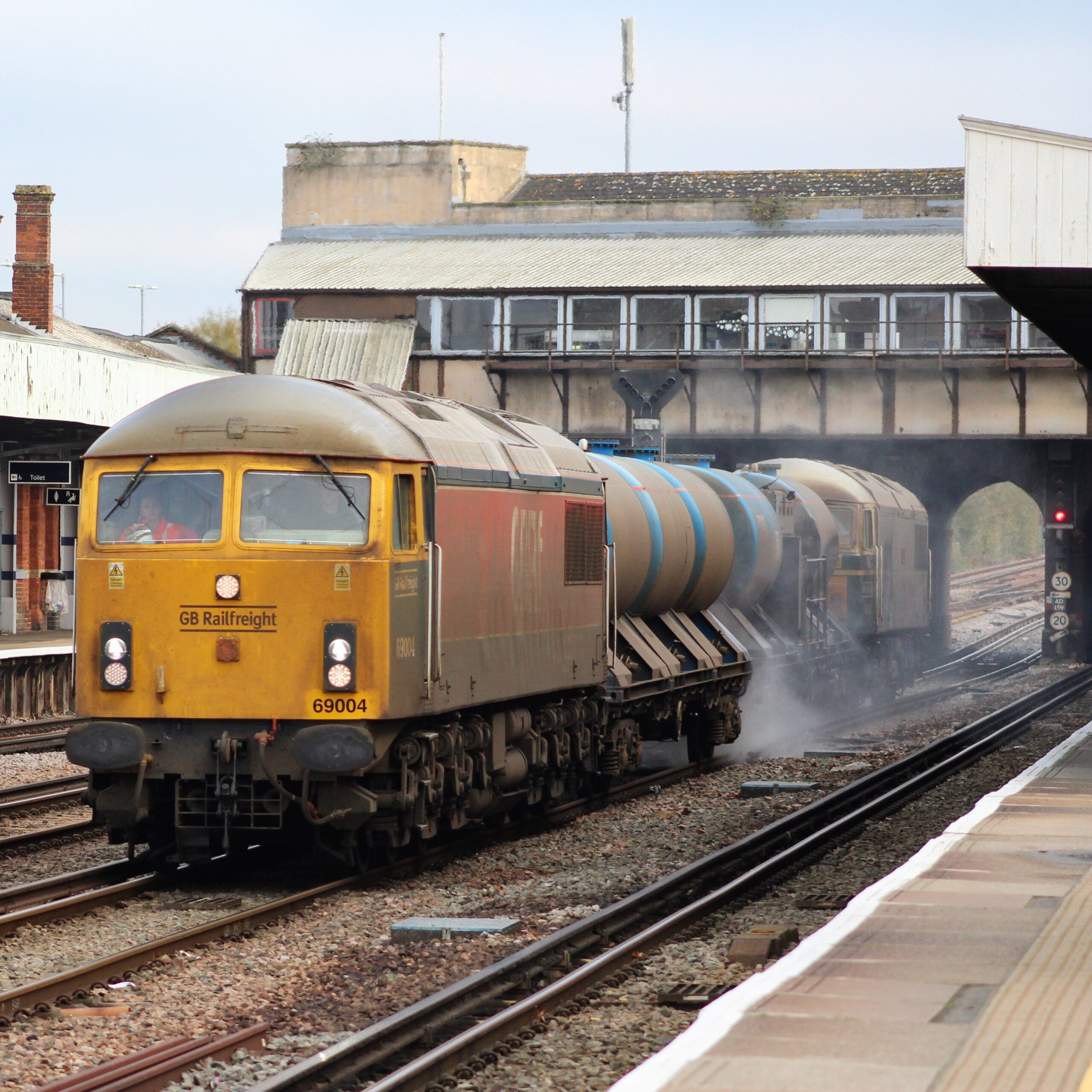
    GBRf Class 69 No. 69004 in traditional RHTT livery passes Tonbridge with No. 69005 ‘Eastleigh’ at the rear working 3W74 0605 Tonbridge West Yard GBRf to Tonbridge West Yard GBRf – 12/11/2022
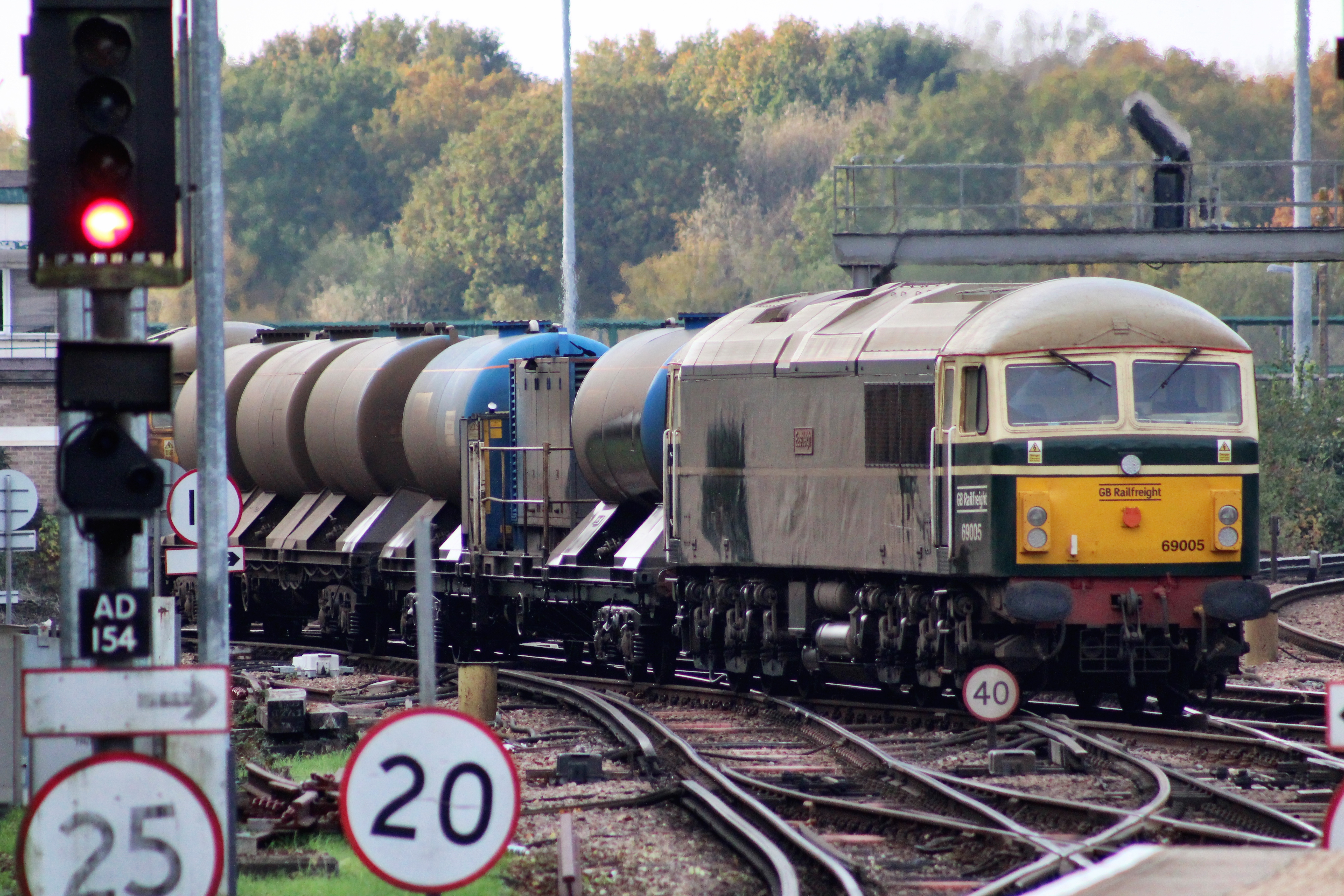
    GBRf Class 69 No. 69005 ‘Eastleigh’ at the rear of 3W74 0605 Tonbridge West Yard GBRf to Tonbridge West Yard GBRf. As was pointed out to me by our North Dorset correspondent, there are no tail lights in evidence – 12/11/2022
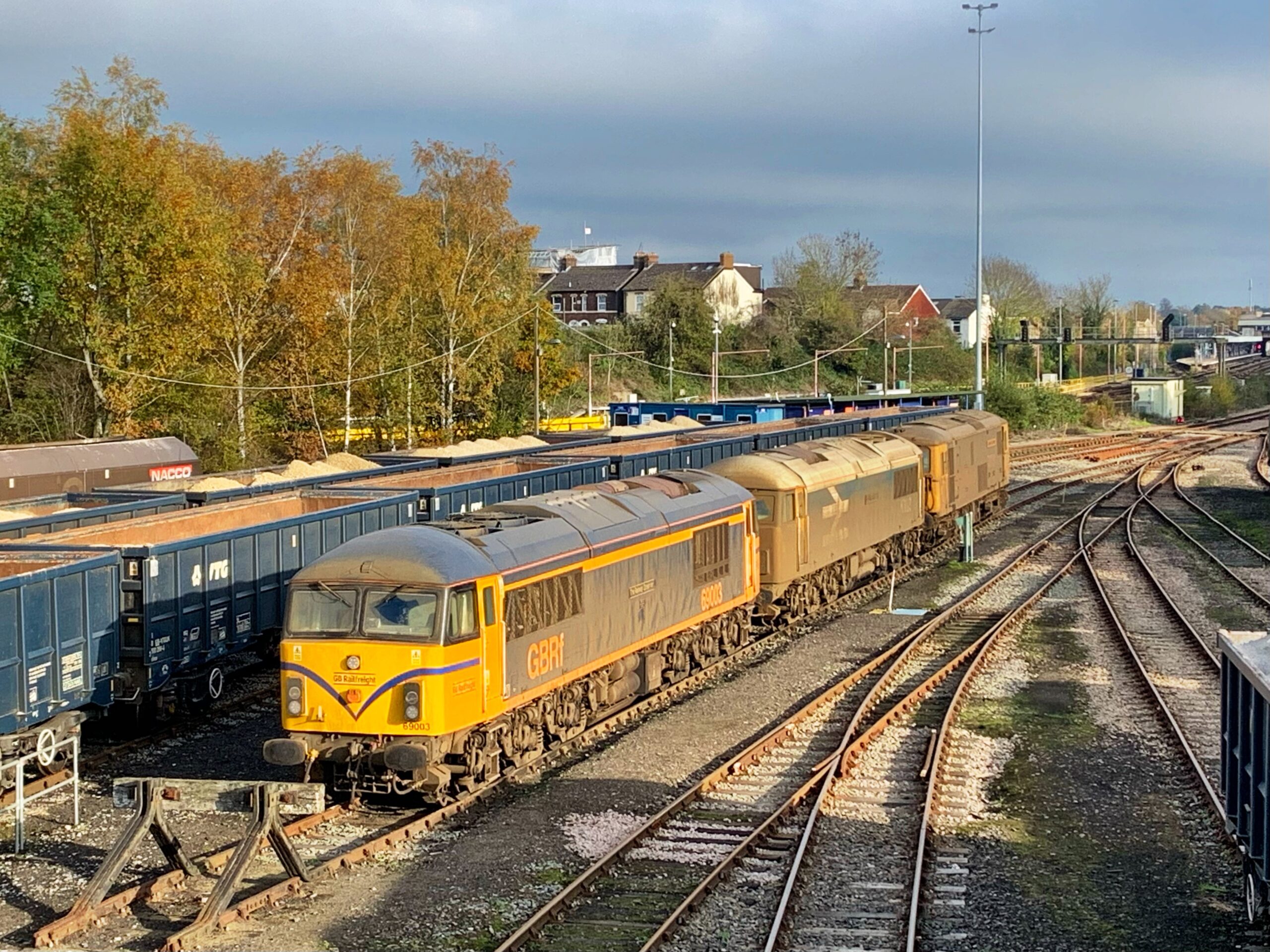
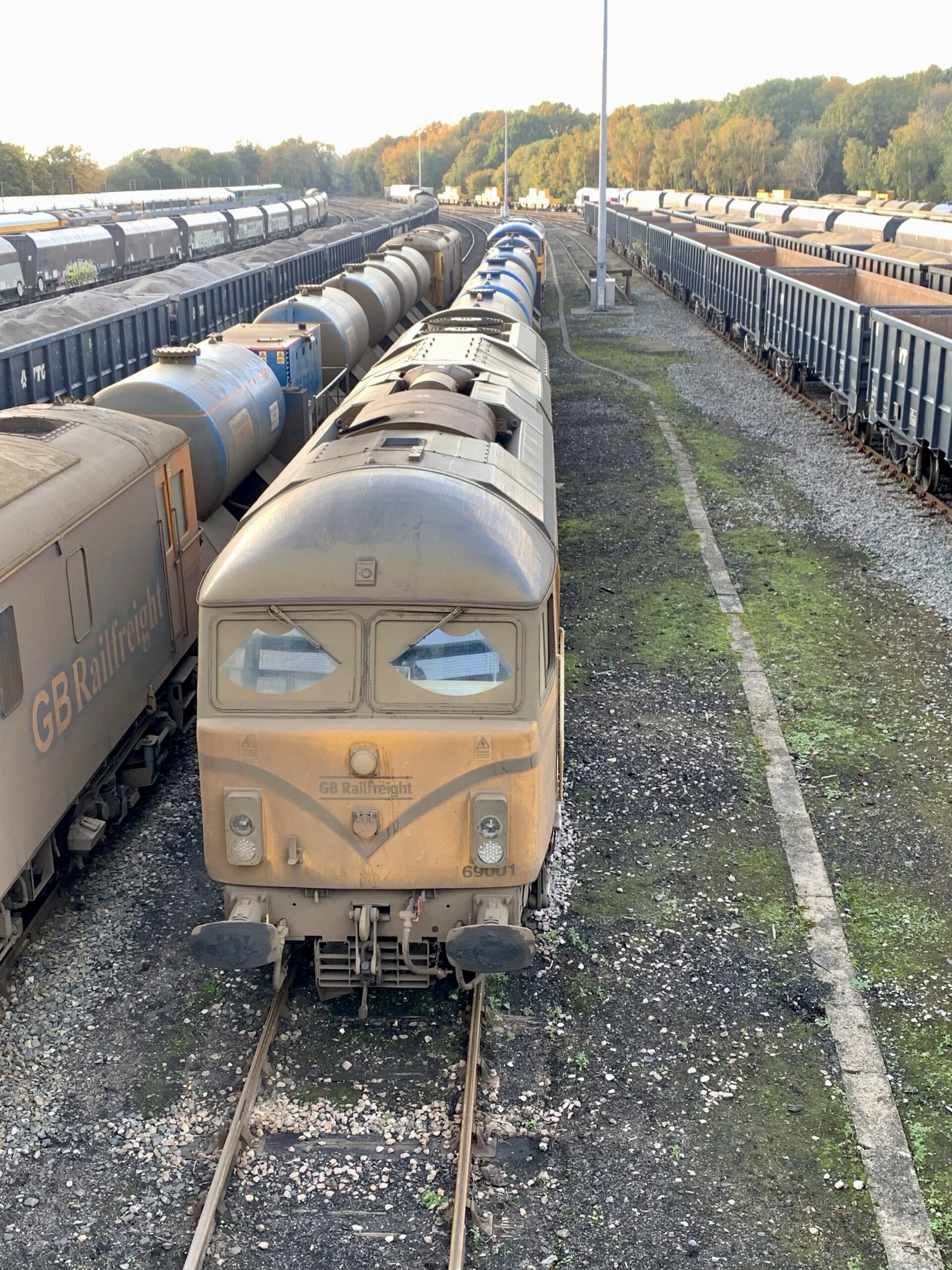
    GBRf Class 69 No.’s 69003 ‘The Railway Observer’ / 69002 ‘Bob Tiller CM&REE’ and Class 73 No. 73119 ‘Borough of Eastleigh’ at Tonbridge West Yard – 12/11/2022
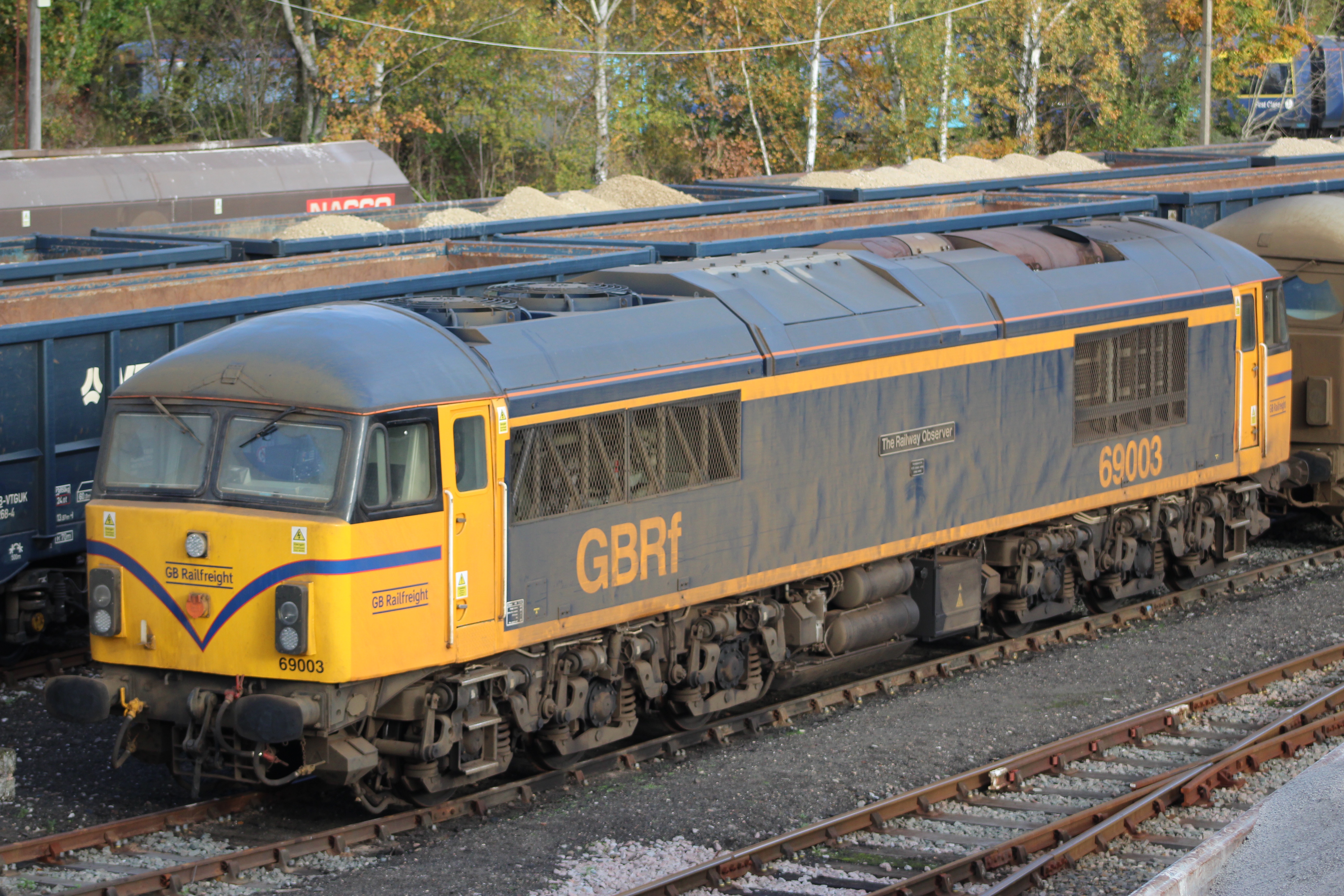
    GBRf Class 69 No. 69003 ‘The Railway Observer’ Tonbridge West Yard – 12/11/2022
    GBRf Class 69 No. 69001 ‘Mayflower’ with 69006 at the rear at Tonbridge West Yard – 12/11/2022
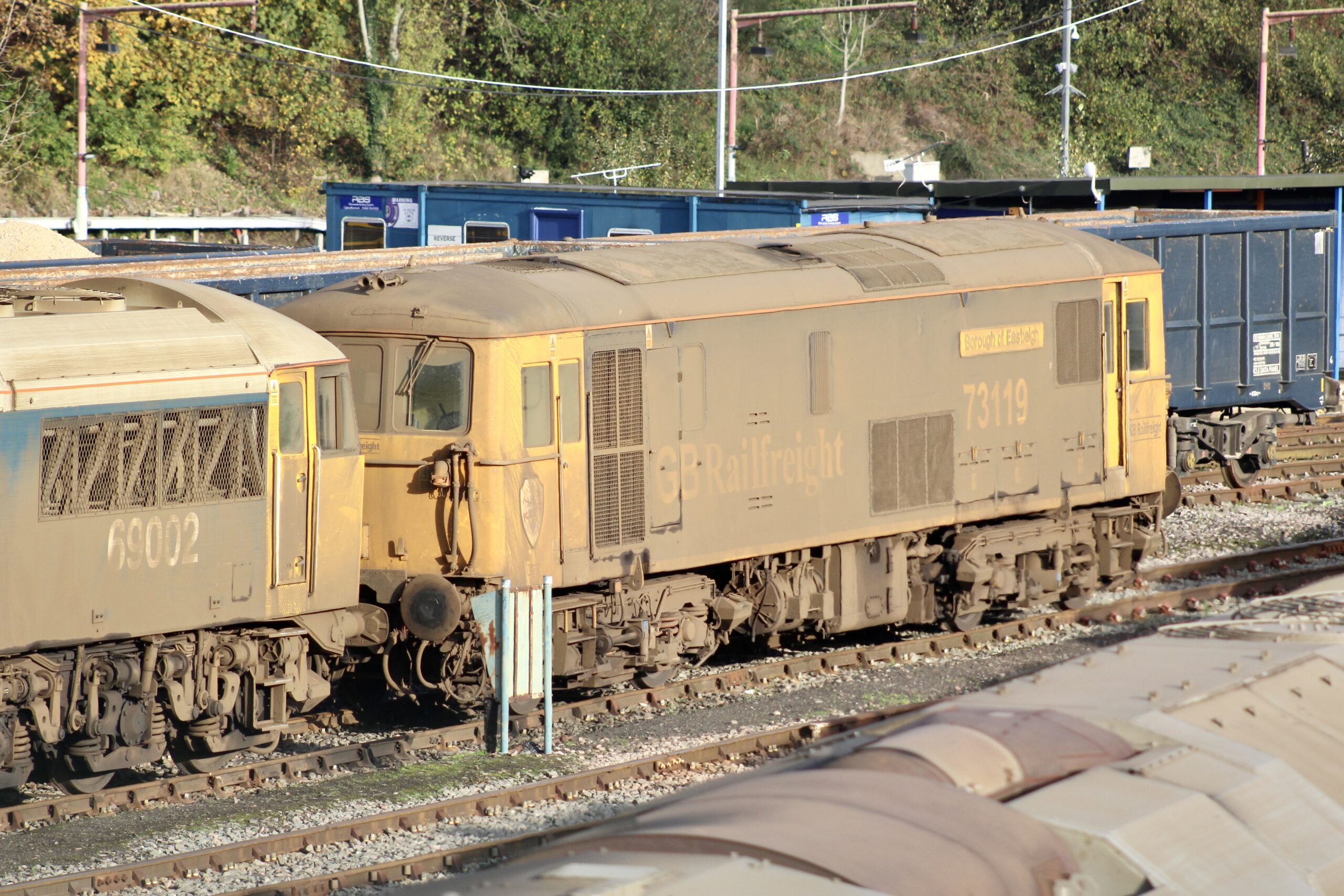
    GBRf Class 73 No. 73119 ‘Borough of Eastleigh’ at Tonbridge West Yard – 12/11/2022
    GBRf Class 73 No. 73964 ‘Jeanette’ rests having worked 1Q85 2356 Tonbridge West Yard to Tonbridge West Yard earlier in the day. Classmate 73962 was on the other end of the test train – 12/11/2022
    Our video from 12th November 2022, bark along!

    On Sunday 13th November, I visited The Tank Museum at Bovington, near Wool. Unfortunately the museum is not dog friendly, so Yoshi sat this one out. As would be expected, the museum follows the development of the tank from World War One to the modern day and has numerous examples on display. There are a few railway references in the museum:

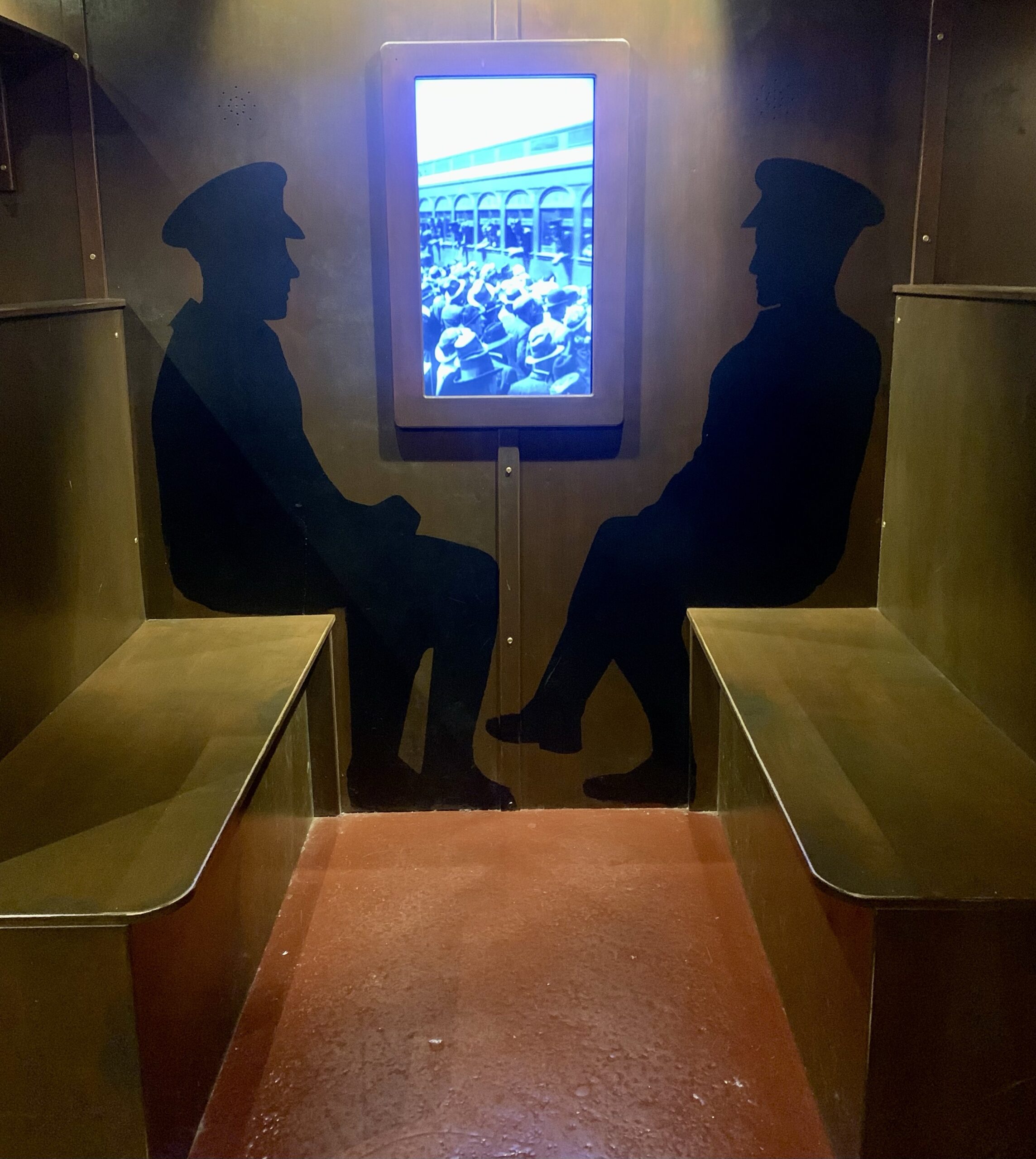
    A display showing how railway’s moved troops about the country for embarkation to Europe – The Tank Museum 13/11/2022
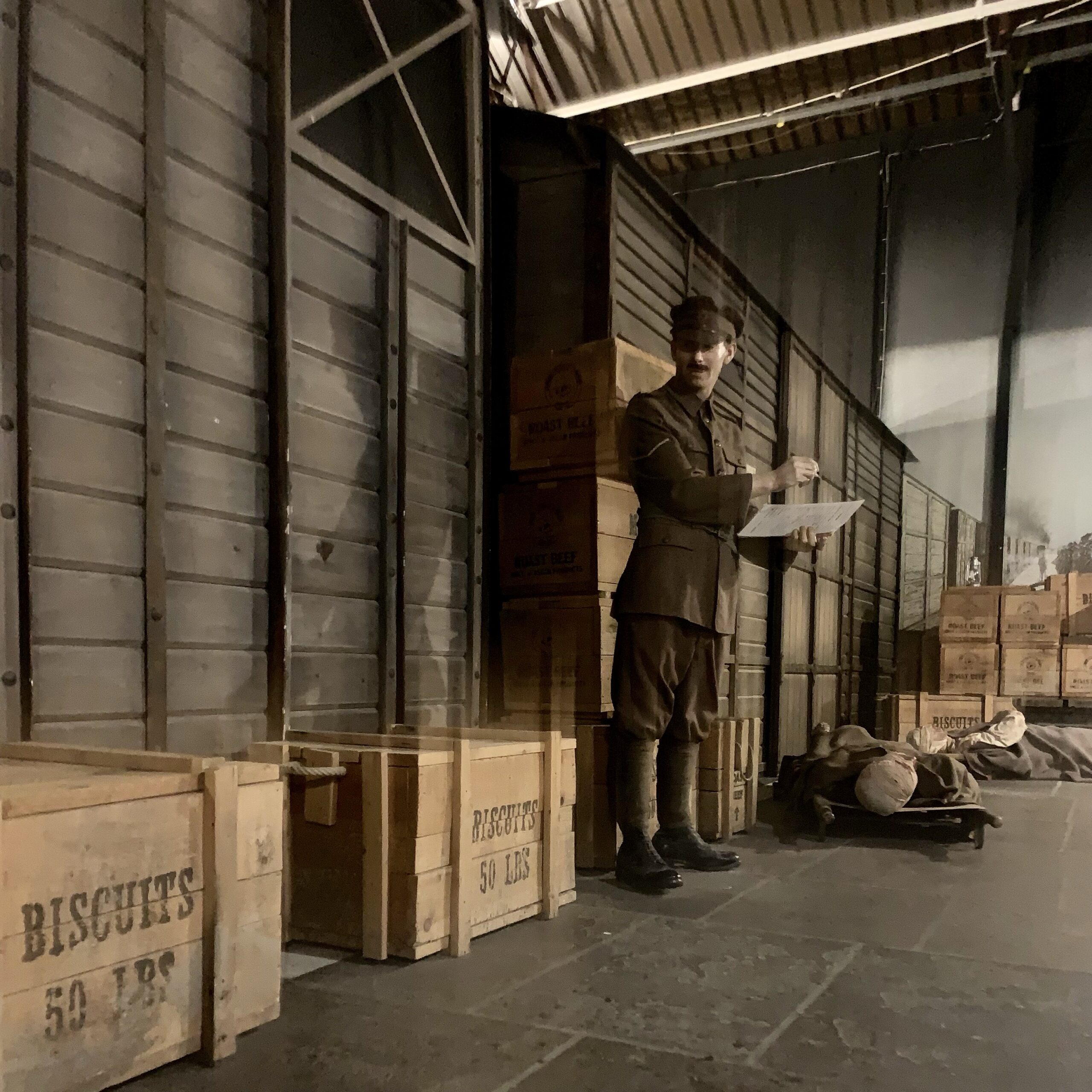
    Checking supplies arriving by train and the injured awaiting repatriation at a railway station diorama – The Tank Museum 13/11/2022
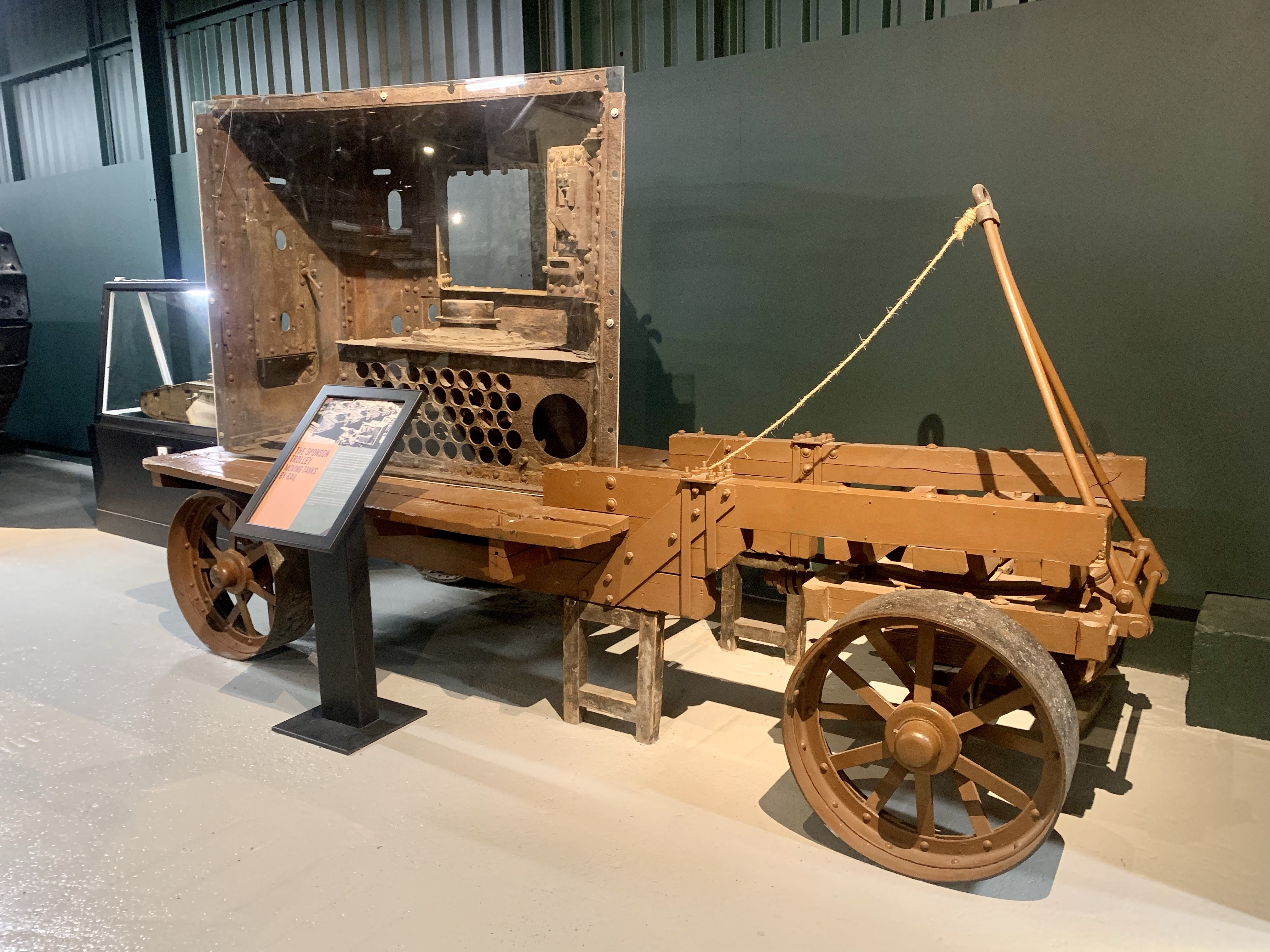
    Unlike modern armoured vehicles, the first tanks did not have turrets to carry the main gun. Their weapons were instead mounted in special side units known as “sponsons.” An example of a sponson from a Mark II tank is shown on the trolley in the above image. Specially designed trolleys were used in 1916 to move the sponsons around when taken off the tank. This was necessary because tanks would otherwise not be able to travel by rail. The sponsons jutted out and made the tank too wide to fit through tunnels – they may have also knocked down signal posts or injured passengers on platforms. The solution was to unbolt them which took the crew about fifteen minutes and then load them onto the trolleys to be carried separately. With the appearance of the new Mark IV tank in 1917, the trolley became redundant. Its sponsons were smaller and could slide into the hull to allow the whole tank to travel by rail – The Tank Museum 13/11/2022
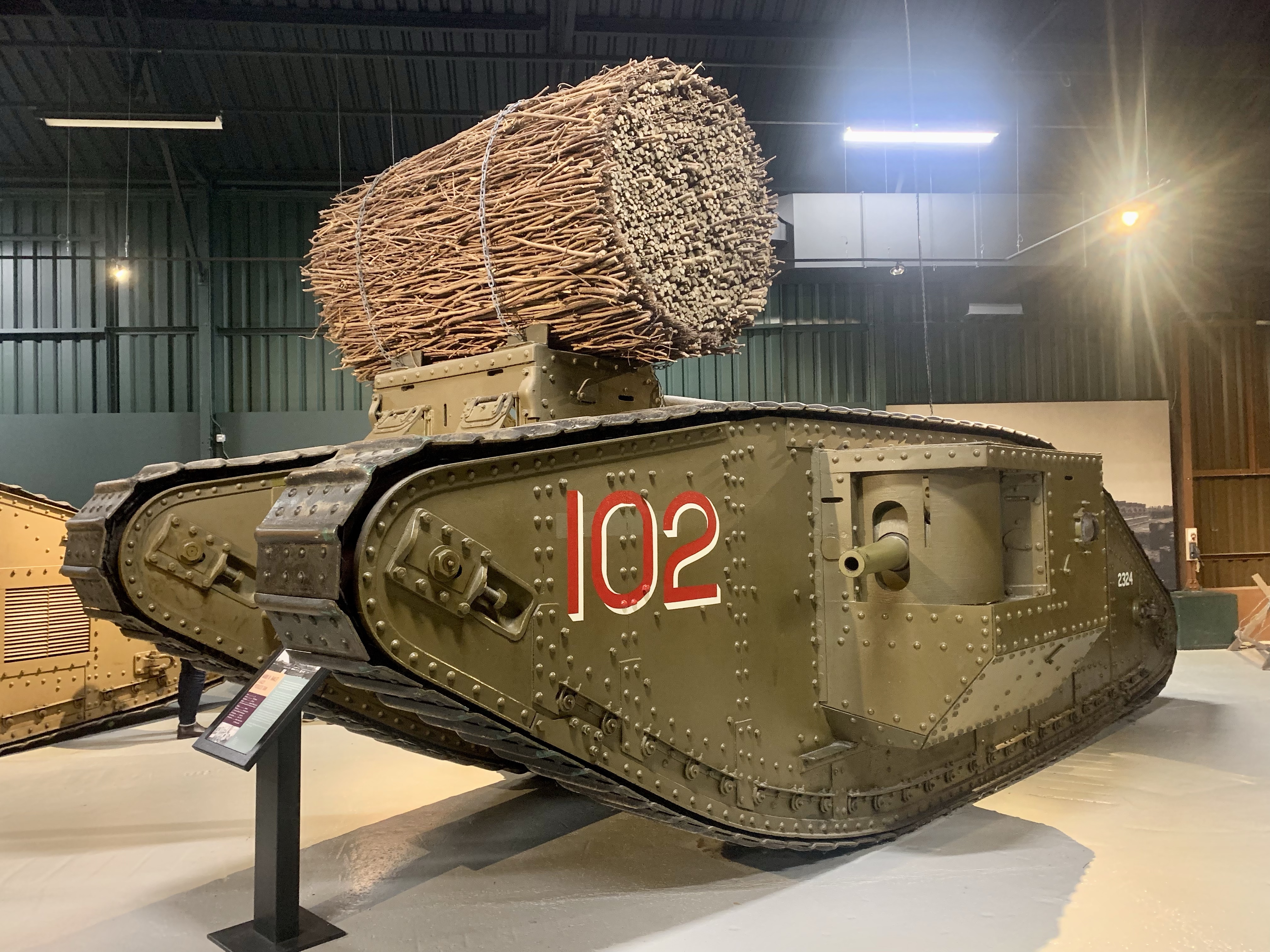
    A Mark IV Tank(Male), built in 1917 by William Foster & Co Ltd as part of a batch of 101 tanks numbered from 2300 to 2400. This is one of seven survivors from the 1,220 Mark IV tanks built and is preserved in operational condition, although it is not run to avoid damage from wear and tear – The Tank Museum 13/11/2022
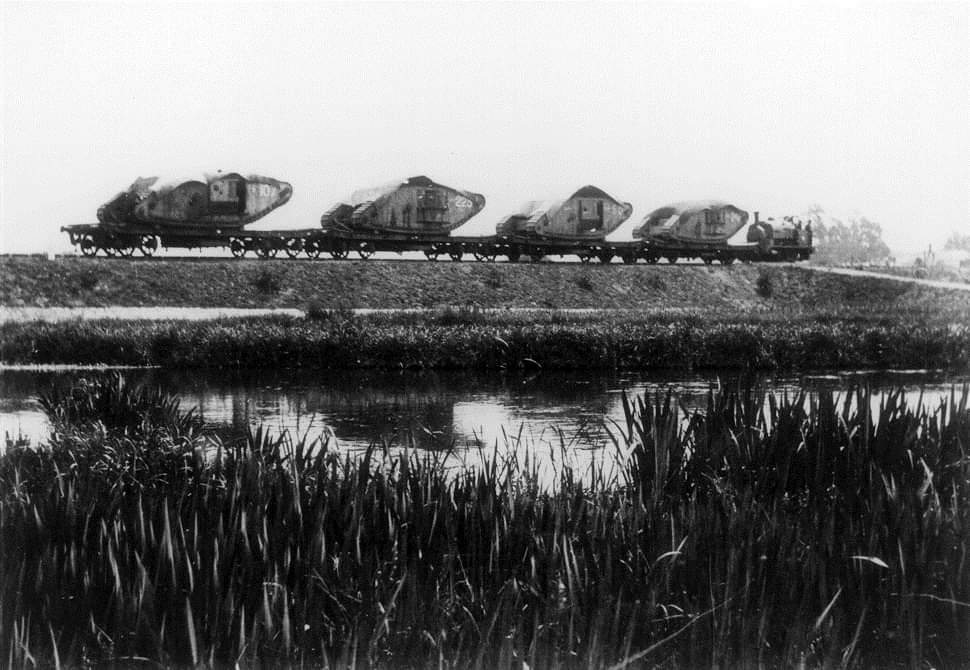
    A branch line from Wool to Bovington was built . This image courtesy of The Tank Museum shows Mark IV tanks with sponsons pushed inside to meet railway gauge limitations are being shunted towards Bovington. The branch cost an estimated £2,776 which was met by the War department. At just over 2 miles in length, the single track branch line was constructed by the Royal Engineers assisted by German prisoners of war between October 1918 and August 1919
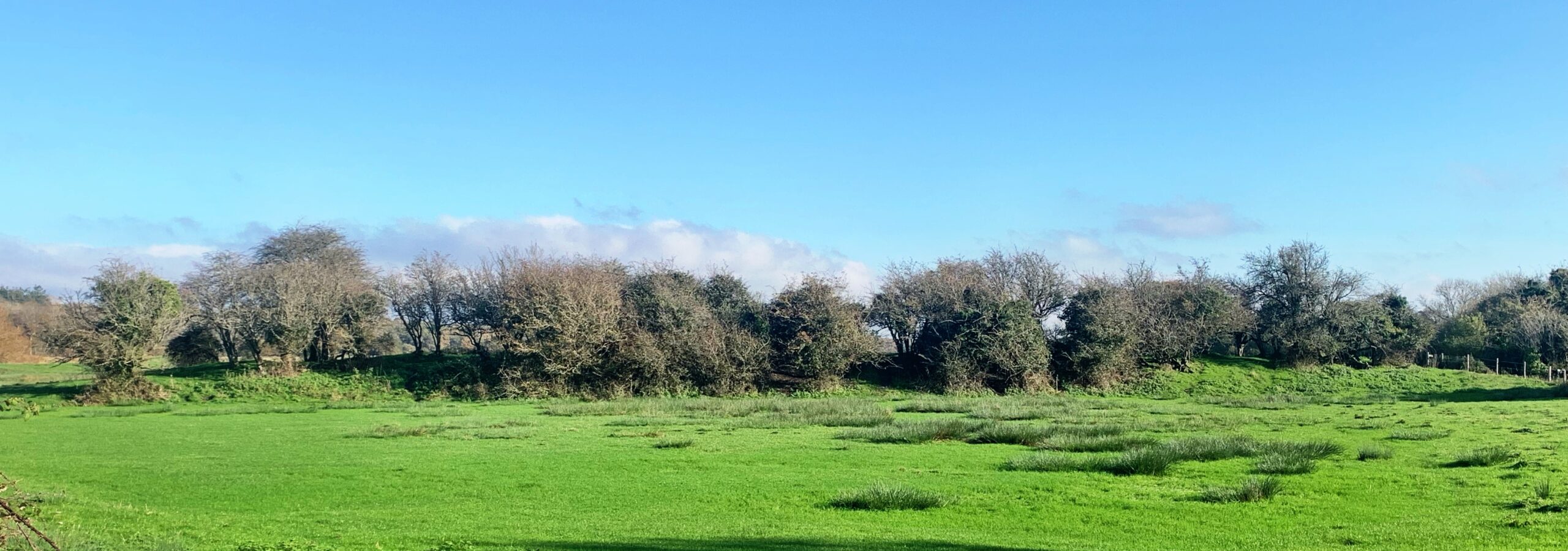
    Remains of the Bovington Branch railway in 2022; an embankment near Woolbridge – 13/11/2022
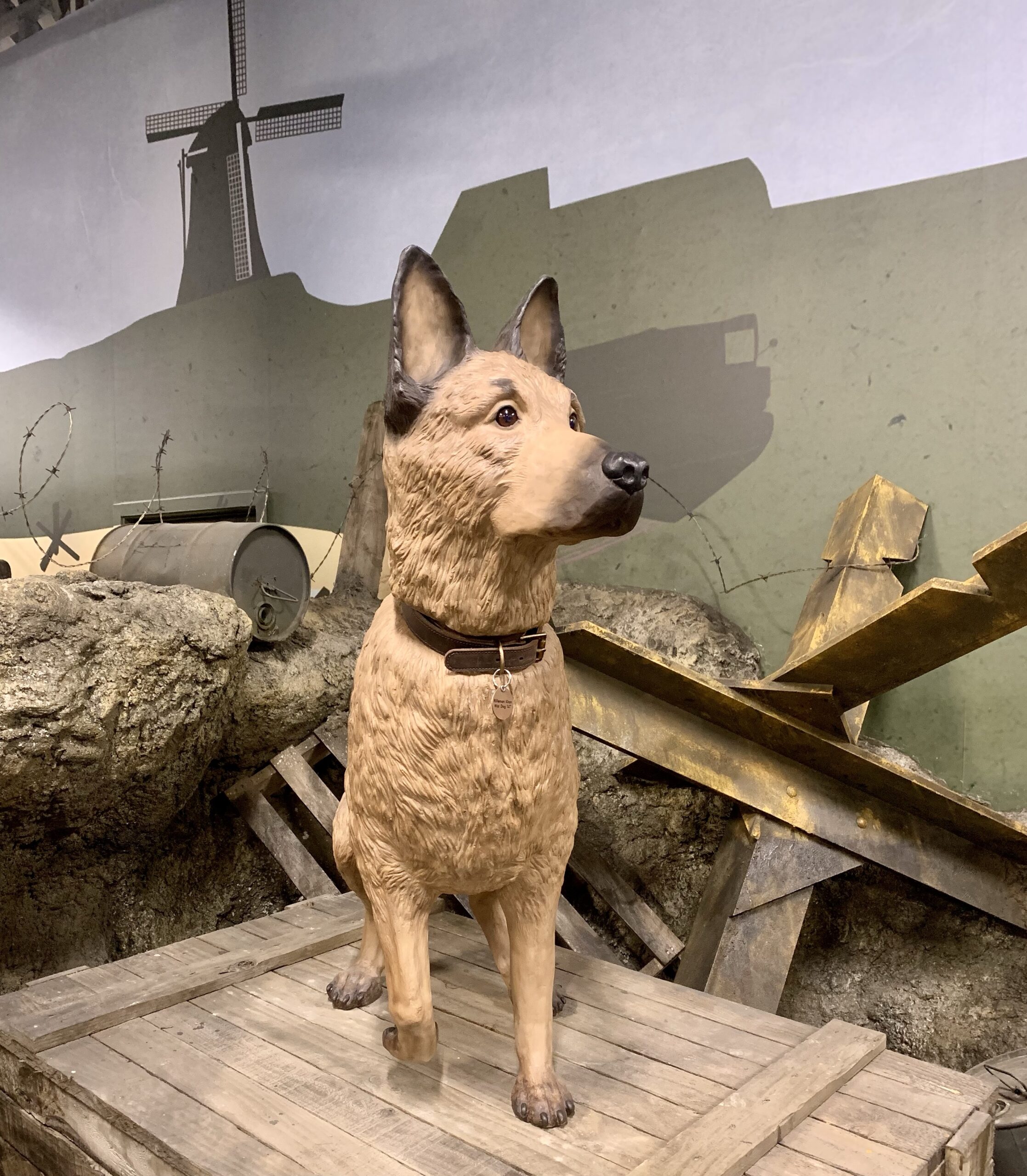
    We’ve looked at the railway element of The Tank Museum, and now a dog feature: Rifleman Khan was a German Shepherd who won the Dickin medal during the Second World War. He was awarded the medal for saving the life of his handler,
    Lance Corporal Jimmy Muldoon. Khan was volunteered for Army service by the Railton family and given the number 147. After training as a mine detection dog, he was assigned to Jimmy Muldoon, 6th Battalion, The Cameronians.
    Khan spent the rest of the war in Europe with Jimmy Muldoon. Due to the bond they had developed, Jimmy appealed to the Railton family to keep him. They initially refused, but after a parade organised by ‘The Star’ newspaper in 1947, the family saw them together and allowed Khan to stay with Jimmy, saying, “He is yours, take him home with you!”
    Jess Lucas, a sculpture student at Arts University Bournemouth, produced the model of Rifleman Khan seen in the image above for her final year project.
    There are all sorts of tanks on display at the Tank Museum. Sometimes mutated alien creatures encased in tank like bonded polycarbide armour visit for team build events such as this group in 2015 posing for photographs with their creator Davros – 25/07/2015

    In other news, at some “point” during the past week, the Hamworthy Branch has been reconnected to the main line. Hurrah! The track work crossing Lake Road bridge is scheduled to receive attention w/c 21/11/2022

    SWR Class 444 No.444038 having departed Hamworthy with 1W64 1420 Weymouth to London Waterloo passes the newly restored point work leading to the Hamworthy Branch – 16/11/2022
    Closer view of the new point work – 16/11/2022
    The ‘stop’ sign is still in situ on the Hamworthy Branch – 16/11/2022
    Maybe a sight we’ll see again? DB Class 60 No. 60054 heads off the Hamworthy Branch – 17/02/2017

    If you’ve made it this far dear reader, you have our thanks and gratitude. We really appreciate your comments, observations and corrections. We’ve almost managed a whole year of posts at therailwaydog.co.uk, join us next week for the blogs’ first birthday, There will be cake. Possibly. This week’s post was created to the sounds of Dizzy, John Rutter and Odanata (thanks Milly & Saffy!).

  • More Flying Scotsman

    LNER Gresley A3 4-6-2 No. 60103 hauls her last passenger train during her 2022 visit to the Swanage Railway as 1X10 1645 Swanage to Norden crosses Corfe Viaduct – 26/10/2022
    No. 4472 ‘Flying Scotsman’ alongside Stanier Black Five Class 5MT 4-6-0 No. 5407 at Steamtown which occupied the site of the former London Midland & Scottish Railway Carnforth Motive Power Depot (MPD) opened in 1944. It was hoped that the depot would form part of a preservation scheme involving what is now the Lakeside & Haverthwaite Railway but when this could not be realised due to road modernisation it was developed as major visitor attraction. In 1974 Sir William McAlpine became a shareholder in the company for the purposes of stabling ‘Flying Scotsman’ and he eventually took a controlling interest in the company and purchased the complete site including the track from British Rail. In 1990 McAlpine’s controlling stake in Steamtown Railway Museum Ltd was sold to David Smith, who over the following years has bought out the majority of the minority shareholders. The site closed to the public in 1998 and today it is the base for Smith’s West Coast Railways, which operates heritage steam and diesel trains across the national UK railway network – 18/07/1981
    The “Cumbrian Mountain Express” departed Crewe at 0940 behind electric traction to Carlisle where No. 4472 ‘Flying Scotsman’ took over and took the train along Settle & Carlisle to Skipton and Carnforth followed by electric haulage to Crewe. Seen here for a water stop at Garsdale – 22/07/1981
    A feature of CME tours were the run pasts through Appleby where passengers detrained and given the opportunity to photograph the steam locomotive and train in action – 22/07/1981
    The same view 35 years later and delayed because of single line working imposed by a landslip at Eden Brows near Armathwaite, “The Winter Cumbrian Mountain Express” 1Z87 1436 Carlisle to London Euston arrives at approximately 45 minutes late arrives at Appleby. No. 60103 ‘Flying Scotsman’ replaced LMS Princess Coronation No. 46233 ‘Duchess of Sutherland’ and was 60103’s first main line rail tour following her £4.2 million, 10 year major overhaul. She ran in Wartime black livery and carried the numbers 103 and 502 on either cab side – 06/02/2016
    No. 502 ‘Flying Scotsman’ in wartime black livery undergoing overhaul and restoration in the works at the National Railway Museum (NRM), York. ‘Flying Scotsman’ was bought for the nation by the NRM in April 2004 at a cost of £2.3million. She ran intermittently until December 2005 (although she was out of action between September 2004 and May 2005 undergoing a ‘heavy intermediate repair’) when she was withdrawn for overhaul. At the time, the NRM said this would take 12 months and cost around £750,000. In 2012 when the above image was taken, she was still not ready to steam again and the cost of the work undertaken had spiralled to over £2.6million. A report at the time, commissioned for the Trustees of the Science Museum Group (of which the NRM is part) to help understand quite why the overhaul had gone over time and over budget, was prepared by a respected steam engineer from Tyseley Locomotive Works, Bob Meanley, assisted by a professor of engineering and found “It is difficult to analyse drift in the project because there was no real plan against which it could be measured and new tasks were added to the workload as new problems were uncovered.” The report confirmed ‘Flying Scotsman’ was in a very worn out condition when acquired by the NRM. To a large degree this had been well known, although reports commissioned at the time seem to have been overly optimistic. The NRM had been clearly under pressure to secure the locomotive amid fears it may have been sold abroad, but is found not to have properly assessed the state of its new acquisition following purchase or to have drawn up a credible refurbishment plan. New faults are noted as having taken staff by surprise five years after purchase. In 2011, the locomotive had to be dismantled again to correct issues many thought would have been identified back in early 2006. – 03/07/2012
    No. 502 ‘Flying Scotsman’ at the Railway Museum, York. After the release of the 2012 report on the restoration of ‘Flying Scotsman’, the NRM commissioned an independent review to determine the next steps on how to proceed. It was recommended that further work on the locomotives overhaul should be put out to external tender and subsequently it was announced this would be Riley & Son and ‘Flying Scotsman’ was moved to their workshop at Bury. On 8 January 2016, ‘Flying Scotsman’ moved under her own steam for the first time since 2005. The final cost of the restoration was £4.5 million – 03/07/2012
    Following her ten year overhaul and restoration, ‘Flying Scotsman’ undertook running in tests on the East Lancashire Railway (ELR) and can be seen here at Rawtenstall – 17/01/2016
    Rawtenstall – 17/01/2016
    Awaiting the road at Rawtenstall – 17/01/2016
    Approaching Ramsbottom on the ELR – 17/01/2016
    1Z86 0710 London Euston to Carlisle “The Winter Cumbrian Mountain Express” – No. 60103 ‘Flying Scotsman’ is seen here climbing Shap bank – 06/02/2016
    “The Winter Cumbrian Mountain Express” water stop at Appleby – 06/02/2016
    Steam Dreams organised 1Z60 0837 London Paddington to Salisbury “The Cathedrals Express” rail tour hauled by No. 60103 ‘Flying Scotsman’ approaches Dilton Marsh – 21/05/2016
    No. 60103 ‘Flying Scotsman’ working 1Z82 1502 Salisbury to Salisbury “The Cathedrals Express” passing through Romsey – 21/05/2016
    “The Cathedrals Express” 1Z62 1828 Salisbury to London Paddington at Grateley – 21/05/2016
    Delayed by a line side fire in the former British Rail Staff Association building at Salisbury station, “The Cathedrals Express” 1Z62 1856 Salisbury to London Paddington passes Class 450 No. 450007 on the approach Basingstoke – 28/05/2016
    No. 60103 ‘Flying Scotsman’ working 1Z75 1520 Salisbury to Southampton Central alongside the Lower Test Valley – 06/06/2021
    No. 60103 ‘Flying Scotsman’ awaits the road at Salisbury with Steam Dreams 1Z83 1852 Salisbury to London Victoria. Following this main line run, ‘Flying Scotsman’ was withdrawn from operation for an overhaul in preparation for her centenary year celebrations – 24/03/2022

    Yoshi took the opportunity of ‘Flying Scotsman’ being on static display at Swanage railway station to get up close and personal! Last week we shared video of ‘Flying Scotsman’ during her 1994 visit to the Swanage Railway. This week we move forward to 1999 and 2000 when the locomotive could be found in her famous LNER Apple Green guise and numbered No. 4472, as she appeared when she was owned by Alan Peglar on purchase from British Railways in 1963:

    Video of LNER Gresley A3 4-6-2 No. 4472 ‘Flying Scotsman’ on various workings in LNER Apple Green livery: 08/08/1999 Upton Scudamore whilst on a London Paddington – Salisbury – London Paddington rail tour, 27/11/1999 Deputising for GWR 6000 Class King 4-6-0 ‘King Edward I’ No. 6024 on Pathfinder Tours “The Capital King” seen at Bradford Abbas and Sherborne, 06/02/2000 Deputising for SR Merchant Navy 4-6-2 No. 35028 ‘Clan Line’ on a VSOE British Pullman London Victoria to Southampton Docks and return rail tour seen in Southampton Docks, and 16/04/2000 Past Time Rail’s “The Tall Ships” seen in Southampton Docks and light engine turning move passing Eastleigh
    12th September 1965 and No. 4472 ‘Flying Scotsman’ visited Weymouth and is seen here on Weymouth depot. I was told that I was taken to see the special train organised by The Gainsborough Model Railway Society pass through Dorchester, so perhaps inspiring a lifetime love of railways! – John Chappell 12/09/1965

    Wednesday 26th October to Tuesday 1st November

    Returning to present day 2022 and Thursday 27th October which saw Yoshi and I travelling to Yeovil to catch sight of Colas Class 37 No. 37099 ‘Merl Evans 1947 – 2016’ working 3Q07 2053 Exeter Riverside New Yard to Exeter Riverside New Yard. This working consisting of a diesel locomotive on one end and a DBSO on the other usually heads off to Sherborne and Salisbury, but this month (possibly due to the speed restrictions on the line in place until 14th November 2022 because a clay embankment between Tisbury and Gillingham had dried out, causing the ground beneath the tracks to shrink) was scheduled to reverse at Yeovil Pen Mill, a station it usually misses out although is always booked to visit. I was 99% sure the train would make it to Pen Mill this time due to its pathing, but as I didn’t fully trust that the train wouldn’t be reversed before reaching here, I hedged my bets and went straight to Yeovil Junction to witness the test train working straight through. I jumped in the car and made it over to Yeovil Pen Mill just as the service arrived into platform 1. Being a glutton for punishment, we then headed back to Yeovil Junction to see the train arrive on the return leg before departure for Exeter at 0023.

    Yoshi on a late night barking mission with Colas Class 37 No. 37099 ‘Merl Evans 1947 – 2016’ at Yeovil Pen Mill – 27/10/2022
    Nameplate detail of Colas Class 37 No. 37099 ‘Merl Evans 1947 – 2016’ named in memory of Mel’s outstanding contribution to British model railways – 27/10/2022
    Colas Class 37 No. 37099 ‘Merl Evans 1947 – 2016’ awaits the green light on the return path to Exeter at Yeovil Junction – 27/10/2022
    Video of Colas Class 37 No. 37099 ‘Merl Evans 1947 – 2016’ working 3Q07 2053 Exeter Riverside New Yard to Exeter Riverside New Yard – 27/10/2022

    On Sunday 30th October Yoshi and I visited National Trust’s Stourhead Gardens in Wiltshire. After an initial rain shower on arrival, we had a very pleasant few hours drying out whilst walking around the grounds of the estate and enjoying the autumnal colours of the trees as their leaves fluttered to the ground.

    Yoshi enjoys his walks around National Trust Stourhead Gardens – 30/10/2022

    Being so close to Westbury, we took the opportunity to pop in and see the 3S59 1554 Swindon Transfer to Loreton-On-Lugg Rail Head Treatment Train in fading light before tucking into a very tasty Sunday roast at The Three Horseshoes at Chapmanslade. Class 66 No. 66846 has returned to traffic after being temporarily replaced by Class 37 No. 37668 which we saw the previous Sunday on the equivalent working as it passed through Bradford on Avon. No 66850 ‘David Maidment’ was once again in evidence.

    Colas Class 66 No. 66850 ‘David Maidment’ on the rear of 3S59 1554 Swindon Transfer to Loreton-On-Lugg RHTT having arrived at Westbury. The train reverses here – 30/10/2022
    Video of Class 66 No.’s 66846 and 66850 reversing at Westbury with S59 1554 Swindon Transfer to Loreton-On-Lugg RHTT – 30/10/2022
    SR Battle of Britain Class 4-6-2 No. 34070 ‘Manston’ at Swanage Railway’s Herston Works. The locomotive was waiting in readiness to be collected by low loader and taken to Norden by road where she will undertake running in tests. Her place in the works will be taken by classmate No. 34053 ‘Sir Keith Park’. Many thanks to Jamie for getting permission for our visit to Herston – 01/11/2022
    The Swanage DMU stock keeping SR Battle of Britain Class 4-6-2 No. 34053 ‘Sir Keith Park’ company in the sidings at Corfe Castle ahead of her move to Herston Works – 01/11/2022
    BR Class 33 No. 33111 sits at Corfe Castle having removed a consist of wagons from Norden the previous day in readiness for the low loader moves in connection with ‘Manston’, ‘Sir Keith Park’. and ‘257 Squadron’ which is off on holiday to the Spa Valley railway to work Polar Express trains. ‘257 Squadron’ will be back at Swanage in early 2023- 01/11/2022
    SR West Country Class 4-6-2 No. 34028 ‘Eddystone’ departs Swanage with the 1000 service to Norden. SR U Class 2-6-0 No. 31806 sits in front of the ‘Flying Scotsman’ support coach. Note the fence panels which had blown over onto the coach on the extreme right of the picture – 01/11/2022

    We also came across some interesting railwaymania when we visited the Den antiques emporium over the weekend:

    £795 would make you the proud owner of an enamel British Railways Eastleigh station sign

    Next, we found a signed Terrence Cuneo “The Night Express” print, an evocative study of a Great Western King Class 4-6-0 working along the sea wall near Teignmouth, painted by the Master in 1975 and issued by Felix Rosenstiels Widow & Sons Ltd. as a single edition of 850 prints signed by the artist in 1977. Terrence Cuneo (1907-1996) CVO, OBE is one of my favourite railway artists. He was also renowned for his military paintings and was the official artist for the coronation of Queen Elizabeth II in 1953. A bronze memorial statue of Terrence Cuneo, unveiled by Princess Anne in 2004, once stood on the concourse at London Waterloo, but was moved to Brompton Barracks in Kent prior to the development of the disused Eurostar platforms at the station. One of my favourite Cuneo paintings can be found at the Railway Museum in York and is of London Waterloo station:

    Terrence Cuneo’s 20ft x 10ft (6 x 3.6 metres) painting “Waterloo Station” (1967) was commissioned by the Science Museum Group for its Land Transport Gallery and is the largest canvas the artist ever painted. It is on display at The National Railway Museum, York where in June 2014 it was damaged when a prop was accidentally dropped and tore a gash in the painting. You can read the fascinating account of how the painting was repaired and restored here. The painting shares the same view as seen from the first floor British Rail Southern Region boardroom windows as the pair of works by artist Helen McKie of Waterloo at war and at peace created in 1948 which are also in the NRM collection. Cuneo’s painting features the artist, his wife and daughter, his assistant, various staff of the Science Museum and a couple of politicians of the day including Harold Wilson being eyed up by a bulldog. This is undoubtably one painting that the more time you spend looking at it, the more details you see.
    © The Board of Trustees of the Science Museum. This image is used under a Creative Commons Attribution-NonCommercial-ShareAlike 4.0 Licence
    Cuneo’s signature device, which you will find in many of his post 1956 paintings, is a little mouse and sure enough he is perched atop a Johnnie Walker advertisement in his painting of Waterloo Station – 03/07/2012
    South Western Railway (SWR) has published its timetable amendments which starts on11th December 2022. In the last six months, customer numbers have stabilised at @ 69% of pre-covid pandemic levels, with peak travel at 53%. The timetable still doesn’t include any plans for the introduction of the new Derby built Class 701 EMU’s meaning they are now three years late which is mostly attributed to software faults. SWR has not accepted any of the trains as being fit for service. Class 701 No. 701043 arrives wrong line at Poole on test working 5Q51 1115 London Waterloo to Staines Up Loop – 01/11/2022

    That just about wraps up another week and all that remains is for me to thank you, dear reader, for taking the trouble to visit Yoshi’s blog. We’ve enjoyed having you stop by. As always, please feel free to comment or let me know of any typo’s, gobbledygook or misinformation! May your dog (or cat) go with you.

  • Flying Scotsman… Again

    Wednesday October 19th to Tuesday October 25th 2022

    Yoshi meets Penny Peglar, daughter of Alan Peglar who rescued ‘Flying Scotsman’ from the scrapyard in 1963 – 22/10/2022

    Hello Dear Reader – Yoshi and I had a lovely family day out on the Swanage Railway on Saturday 22nd October when we took a ride in lovingly restored 1933 Maunsell open third carriage No. 1346 behind visiting LNER Gresley A3 Pacific No. 60103 ‘Flying Scotsman’. Having survived a German bomb at Clapham in 1940, the coach ran in traffic until 1961 when it was withdrawn and converted for use as a mobile office and later a classroom. Sold into preservation in 1982 and initially based on the Kent & East Sussex Railway (K&ESR), the coach was purchased privately in 2002 for use on the Swanage Railway. Still awaiting the refitting of tables the restoration has been carried out to the highest standard and it really was a delight to see and travel in.

    1933 Maunsell open third carriage No. 1346
    Yoshi and I explore 1933 Maunsell open third carriage No. 1346 (Image courtesy of Caroline Smith)
    Vestibule of 1933 Maunsell open third carriage No. 1346
    LNER Gresley A3 No. 60103 ‘Flying Scotsman’ prepares to back on to the seven coach train employed during running days at the Swanage Railway – 22/10/2022
    LNER Gresley A3 No. 60103 ‘Flying Scotsman’ passes Herston Halt – 25/10/2022
    LNER Gresley A3 No. 60103 ‘Flying Scotsman’ passes Southern Railway rebuilt West Country Class Bulleid Pacific No. 34028 ‘Eddystone’ at Harmans Cross – 22/10/2022 (Image courtesy of Caroline Smith)
    LNER Gresley A3 No. 60103 ‘Flying Scotsman’ passes Corfe Castle – 25/10/2022
    LNER Gresley A3 No. 60103 ‘Flying Scotsman’ crosses Corfe viaduct in the shadow of Corfe Castle – 25/10/2022
    LNER Gresley A3 No. 60103 ‘Flying Scotsman’ arrives at Norden with the 1X06 1325 service from Swanage – 24/10/2022
    Yoshi welcomes a fuss from Penny Pegler, daughter of ‘Flying Scotsman’ saviour Alan Pegler, who visited the Swanage Railway from her home in Portugal and traveled on the 1145 departure on Saturday 22nd October 2022. Penny’s late father purchased ‘Flying Scotsman’ from British Railways in 1963 at the cost of £3,000 – 22/10/2022
    1940’s Pullman “Devon Belle” observation coach Car 14 which accompanied ‘Flying Scotsman’ on tours of Canada and the United States to promote British exports was part of the consist of at Swanage this week. Volunteers with the Swanage Railway Trust carefully restored the wooden carriage after it was rescued from San Francisco where it was in use as a static bar. Norden – 24/10/2022
    SR U Class 2-6-0 No. 31806 assisted with the shunting of stock during the ‘Flying Scotsman’ running days at Swanage – 25/10/2022
    Yoshi keeps watch on SR U Class 2-6-0 No. 31806 as she backs onto the empty coaching stock in preparation for shunting – 25/10/2022
    Video of Yoshi’s visit to the Swanage Railway and his trip behind ‘Flying Scotsman’. Playing the bagpipes as our train departed Swanage was 15 year old Frederick Sills from Wareham who is a member of Swanage Railway’s Sygnets youth group and a member of the Weymouth Sea Cadets. He did a wonderful job!

    ‘Flying Scotsman’ will be on static display at Swanage Railway station until the 6th November 2022.

    Although there is still no date for their introduction into revenue earning service, South Western Railway (SWR) Class 701 Electric Multiple Units (EMU) continue testing and mileage accumulation runs taking in Poole where they reverse. On Thursday 20th October it was the turn of No. 701038 to have a run out, and we saw the unit passing through Poole:

    SWR Class 701 No. 701038 working 5Q51 1115 London Waterloo to Staines Up Loop passing through Poole – 20/10/2022
    SWR Class 701 No. 701038 working 5Q51 1115 London Waterloo to Staines Up Loop crosses over the Up Line to reach Poole Storage Sidings where the service reverses – 20/10/2022
    Having reversed in Poole Storage Sidings, SWR Class 701 No. 701038 working 5Q51 1115 London Waterloo to Staines Up Loop passes Class 444 No. 444035 which formed 1W65 1205 London Waterloo to Weymouth at Poole – 20/10/2022

    The railways in the UK are well into Rail Head Treatment Train (RHTT) season as the trees shed their leaves which are scattered across the nations railway tracks. This can cause problems for the track circuits and reduce a trans ability to grip to the rails when starting from stations, accelerating, climbing hills or stopping. In our neck of the woods we see regular Multi Purpose Vehicle (MPV) movements spreading adhesion modifier; a mixture of suspension gel (so it can be pumped), sand (to help train wheels grip the rail), and steel or iron shot that is pushed through contamination (compressed leaves and debris).

    Multi Purpose Vehicle No. DR98915 at Yeovil Junction – 25/10/2022 (Courtesy of Scott Lewis)
    An unidentified MPV crosses Holes Bay, Poole working 3S81 0551 Totton Yard to Totton Yard – 25/10/2022
    On the 28th October 2021, Direct Rail Services Class 37 No.’s 37218 and 37558 (37424) ‘Avro Vulcan XH558′ (named after a preserved Vulcan bomber) could be found working RHTT 310X 0900 Stowmarket DGI to Stowmarket DGI. The pair are seen passing through Ipswich.
    Yoshi taking a well earned rest on the lattice footbridge which crosses over Tonbridge West Yard with an RHTT behind. The Southern Railway commissioned the yard in 1941 to help cope with heavy wartime freight traffic – 21/11/2021
    Class 73 No. 73141, 73109 ‘Battle of Britain – 80th Anniversary’ and an unidentified class member (possibly No. 73119 ‘Borough of Eastleigh’ if a certain kind reader could confirm please?) with Class 66 No. 66770 at Tonbridge West Yard – 21/11/2021
    From left to right; Class 66 No. 66731 ‘Capt. Tom Moore’, Class 69 No. 69001 ‘Mayflower’ and Class 66 No. 66722 ‘Sir Edward Watkin’ at Tonbridge West Yard – 22/11/2021
    Video of Rail Head Treatment Trains at Tonbridge West Yard – 22/11/2021

    Network Rail’s website reveals there are 32 MPV and 29 locomotive-hauled RHTT’s which deliver the autumn rail head treatment programme. At the weekend, I was tipped off that a Class 37 diesel loco had been hired in by Colas for the Swindon area locomotive hauled RHTT replacing a Class 66 (No. 66846 which required repairs).

    On hire to colas for Rail Head Treatment Train (RHTT) workings, West Coast Rail Class 37 No. 37668 spent the weekend partnering Class 66 No. 66850 ‘David Maidment’ on Swindon based runs. The pair are seen nearing Bradford on Avon in the rain working 3S59 1554 Swindon Transfer Sidings to Moreton on Lugg – 23/10/2022

    So on Sunday afternoon we found ourselves in Bradford on Avon clinking delicate bone china tea cups and enjoying lunch at The Bridge Tearooms, a former blacksmith’s cottage dating from 1502.

    The Bridge Tea Rooms at Bradford on Avon does an excellent Welsh rarebit – 23/10/2022

    After a walk taking in the ancient Tithe Barn and the Kennet & Avon Canal, I headed to Bradford on Avon railway station while Yoshi and his mum took shelter from the rain in a pub.

    Bradford on Avon railway station exterior – 23/10/2022
    Bradford on Avon railway station plaque – 23/10/2022
    Bradford on Avon railway station platform 2 – 23/10/2022
    Bradford on Avon railway station platform 1 – 23/10/2022

    Grade 2 listed Bradford on Avon station, originally planned by The Wilts, Somerset and Weymouth Railway, is situated 15 km south east of Bath between Avoncliff and Trowbridge and is a stop on Weymouth to Bristol services. In the event the station was not opened until 1857 when the line was in the control of The Great Western Railway

    (GWR). The station is of a standard Brunel design but utilises local Bath stone rather than the usual bricks and mortar. Originally trains would have been of the seven-foot broad gauge variety, but the track was converted to standard gauge in 1874. Present day services are operated by Great Western Railway (formerly First Great Western and no relation to the old GWR), South Western Railway having withdrawn their direct services to Bristol. Trains are typically operated using Class 165 and Class 166 Networker Turbo trains and Class 158 diesel multiple units. The line is sometimes used as a diversionary route and sees GWR main line and CrossCountry trains, usually at weekends.

    The goods yard located on the ‘up’ side of the line was closed to traffic in 1965 and is now home to a car park and health centre. The signal box was demolished in 1966. There is a campaign to reinstate the canopy on the 1899 footbridge, removed in 1964, and which I would have found very useful during my visit in the rain! The Bradford on Avon Footbridge Canopy Project were awarded a £22,000 grant from the Community Rail Development Fund (CDRF) in September 2022.

    Class 158 No. 158798 pauses at Bradford on Avon working 2C96 1640 Westbury to Bristol Temple Meads. The canopy devoid footbridge can be seen above the rear of the train – 23/10/2022
    Class 166 No. 166204 ‘Norman Topsom MBE’ and Class 165 No. 165133 arrive at Bradford on Avon working 1F25 1526 Cardiff Central to Portsmouth Harbour which was terminated at Fratton due to an obstruction on the line – 23/10/2022
    Class 66 No. 66850 ‘David Maidment’ on the rear of 3S59 1554 Swindon Transfer Sidings to Moreton on Lugg RHTT passing Bradford on Avon – 23/10/2022
    Video from Bradford on Avon – 23/10/2022

    Our North Dorset Correspondent has been out and about in Yeovil over the last few days and has sent Yoshi the video and still images below:

    First up are the GWR Sleeper trains crossing at Yeovil Pen Mill while on route diversion during the early hours of Monday 23rd October 2022. The up service 1A50 2115 Penzance to Paddington hauled by Class 57 No. 57602 ‘Restormel Castle’ was running just over an hour late and because of the single track to Castle Cary, was held at Yeovil Pen Mill to allow 57604 ‘Pendennis Castle’ on the down 1C50 2350 London Paddington to Penzance to enter the station. I have been muttering about heading to Yeovil to see the sleepers on diverts for a while now, and as far as I am aware, this is most likely the final opportunity for 2022, so many thanks to Scott for braving the inclement weather!

    GWR Sleeper divers at Yeovil Pen Mill 24/10/2022 – courtesy of Scott Lewis

    The following day, Scott was back in Yeovil, this time at Yeovil Junction as Colas Class 37 No. 37099 arrived from Exeter Riverside and was engaged in shunting two damaged Network Rail test train coaches into position for recovery by low loader. After loading, there was a problem with one of the escort vehicles so the departure by road was delayed.

    Class 37 No. 37099 and Network Rail MK2 coaches at Yeovil Pen Mill – 25/10/2022 (with grateful thanks to Scott Lewis)

    Monday 24th October 2022 also saw the regular Class 73 hauled test train visit the Bournemouth to Weymouth line with GBRf Class 73 electro-diesel locomotives No. 73961 ‘Alison’ and 73963 ‘Janice’ top and tailing 1Q51 1115 Derby RTC to Eastleigh East Yard and we popped into Hamworthy station to see it and have a good old bark as it passed by on its outward run.

    1Q51 1115 Derby RTC to Eastleigh East Yard passing Hamworthy – 24/10/2022

    Thanks for reading and as always, many thanks for your comments, observations and corrections. We’ll leave you with some video footage from the archive of ‘Flying Scotsman’ when she visited the Swanage Railway in 1994:

    ‘Flying Scotsman’ at Swanage 1994

    Endpiece:

    LNER Gresley A3 No. 60103 ‘Flying Scotsman’ approaches Harmans Cross with her last turn of the day on Tuesday 25th October 2022