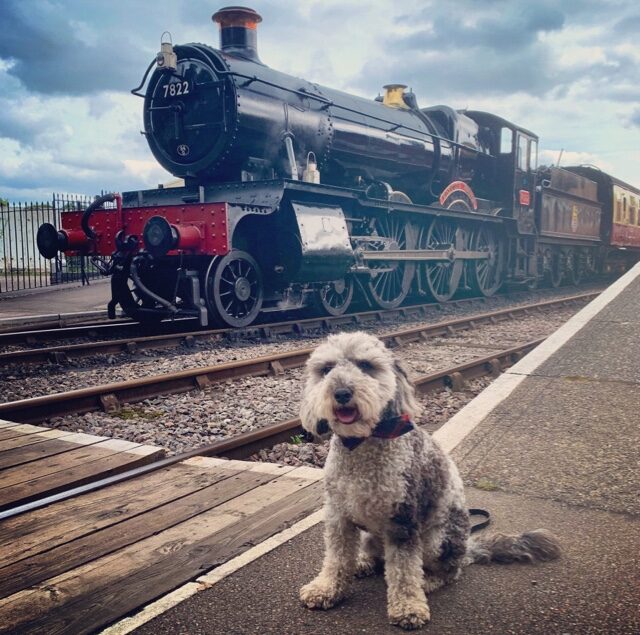
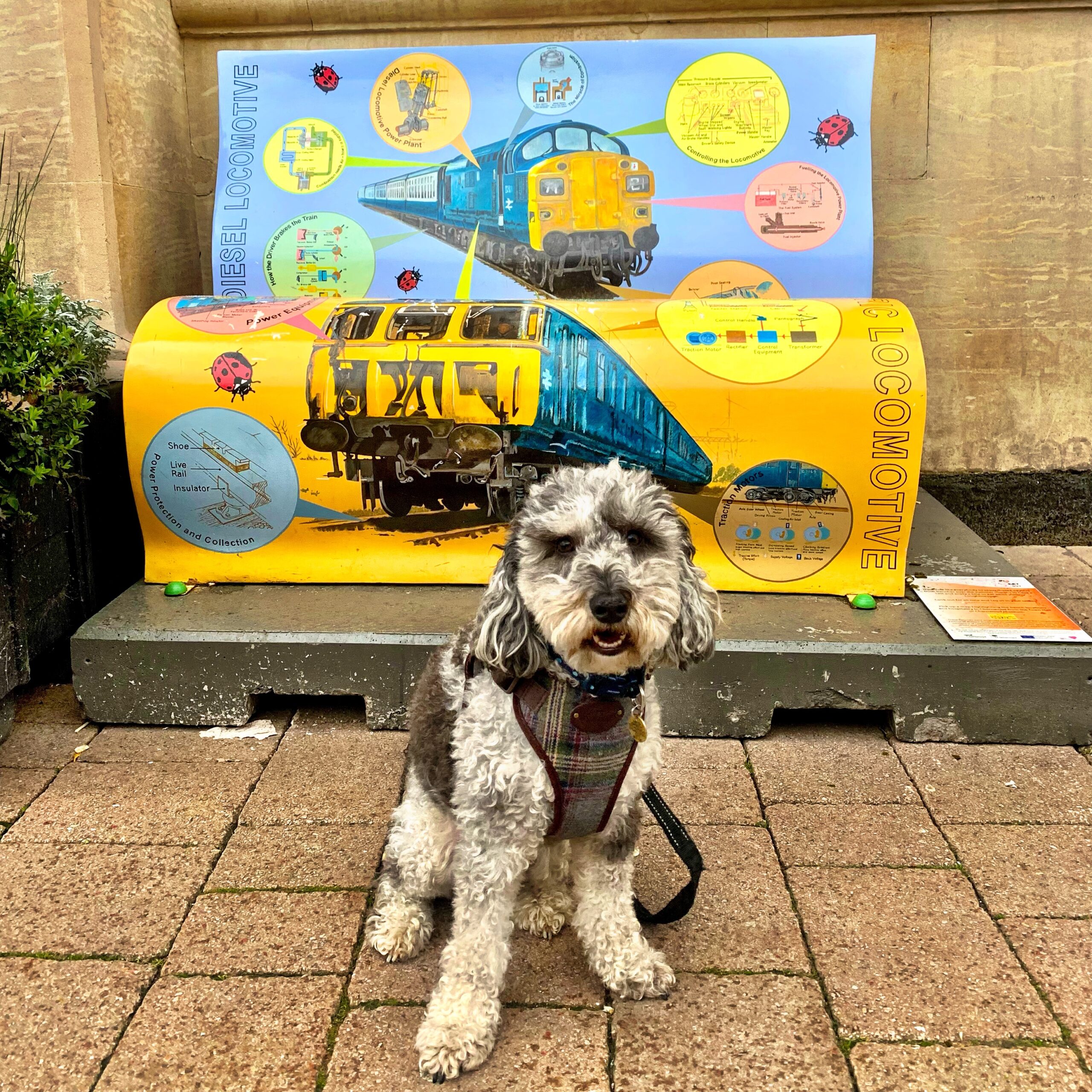
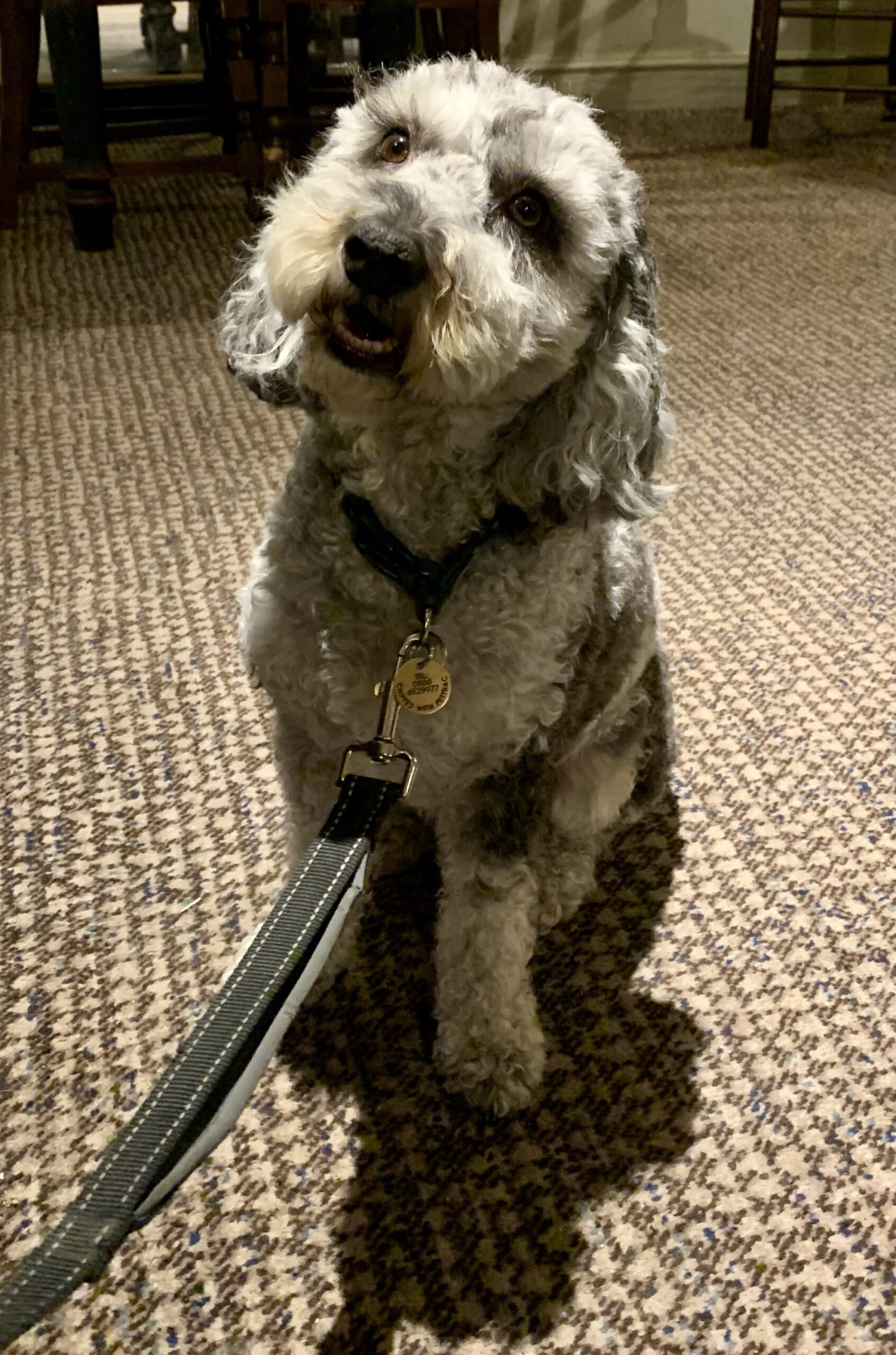
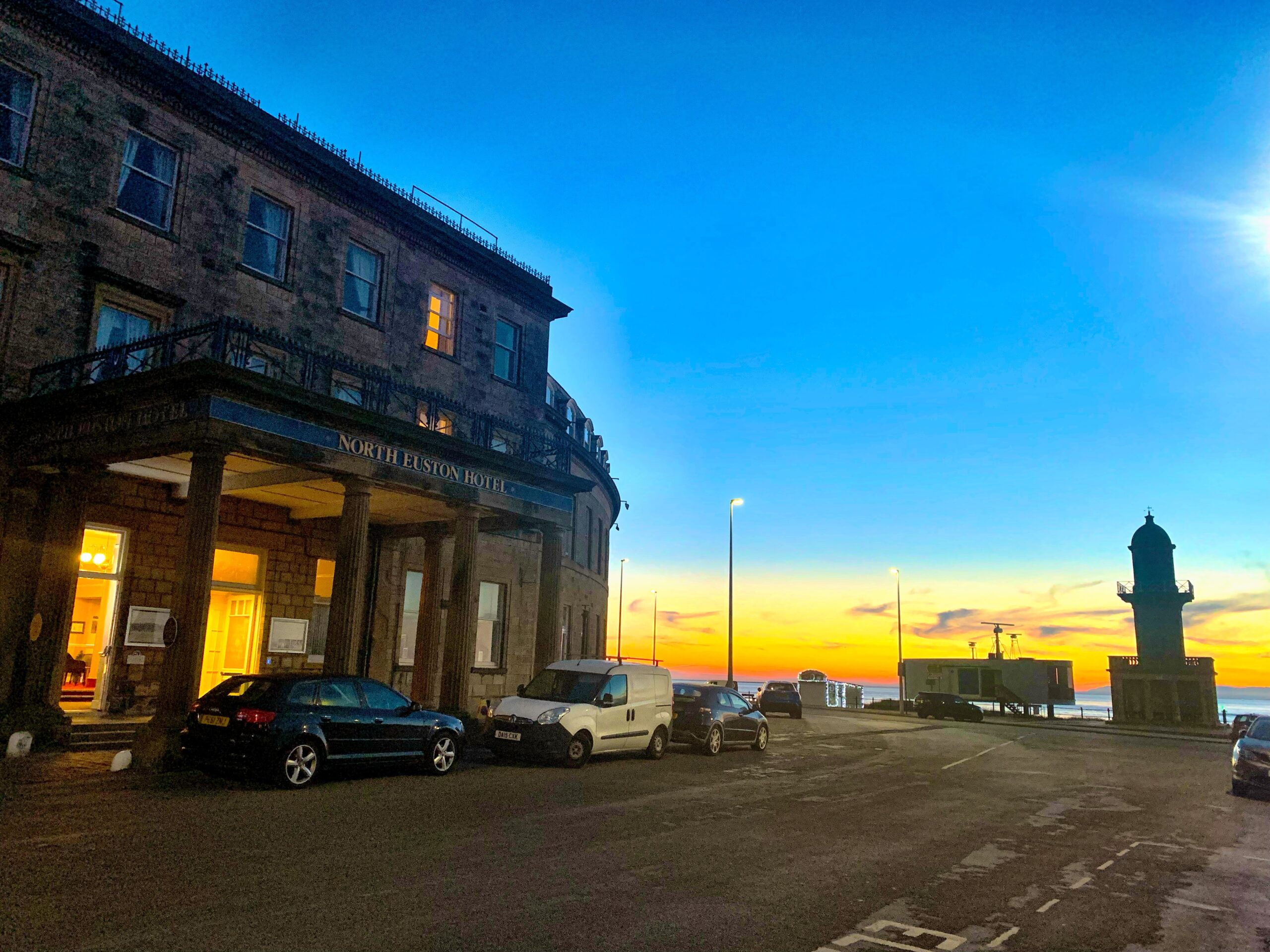
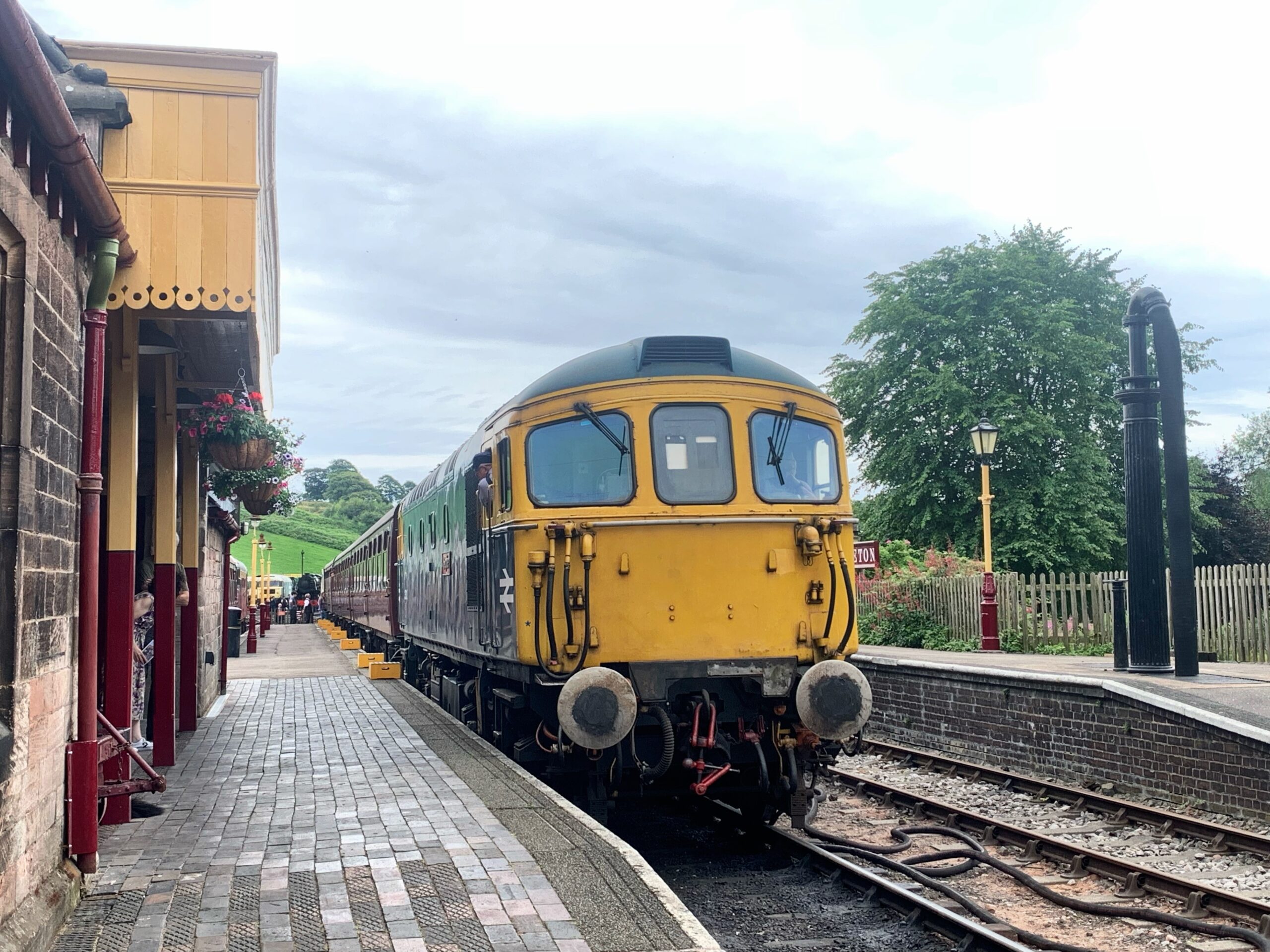
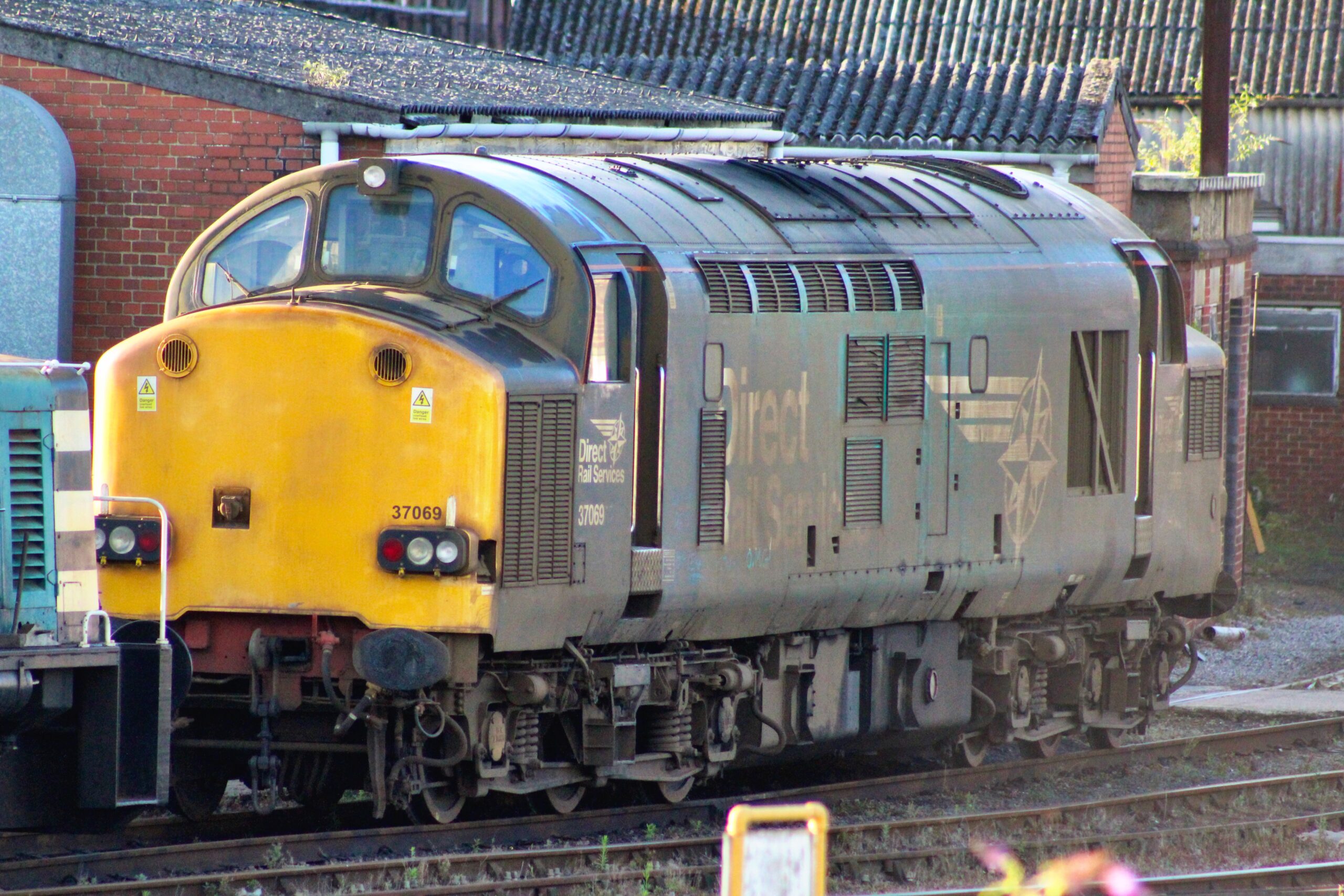
Yoshi in Loughborough with a Ladybird Book seat featuring images from the “How It Works….” series – 24/11/2022
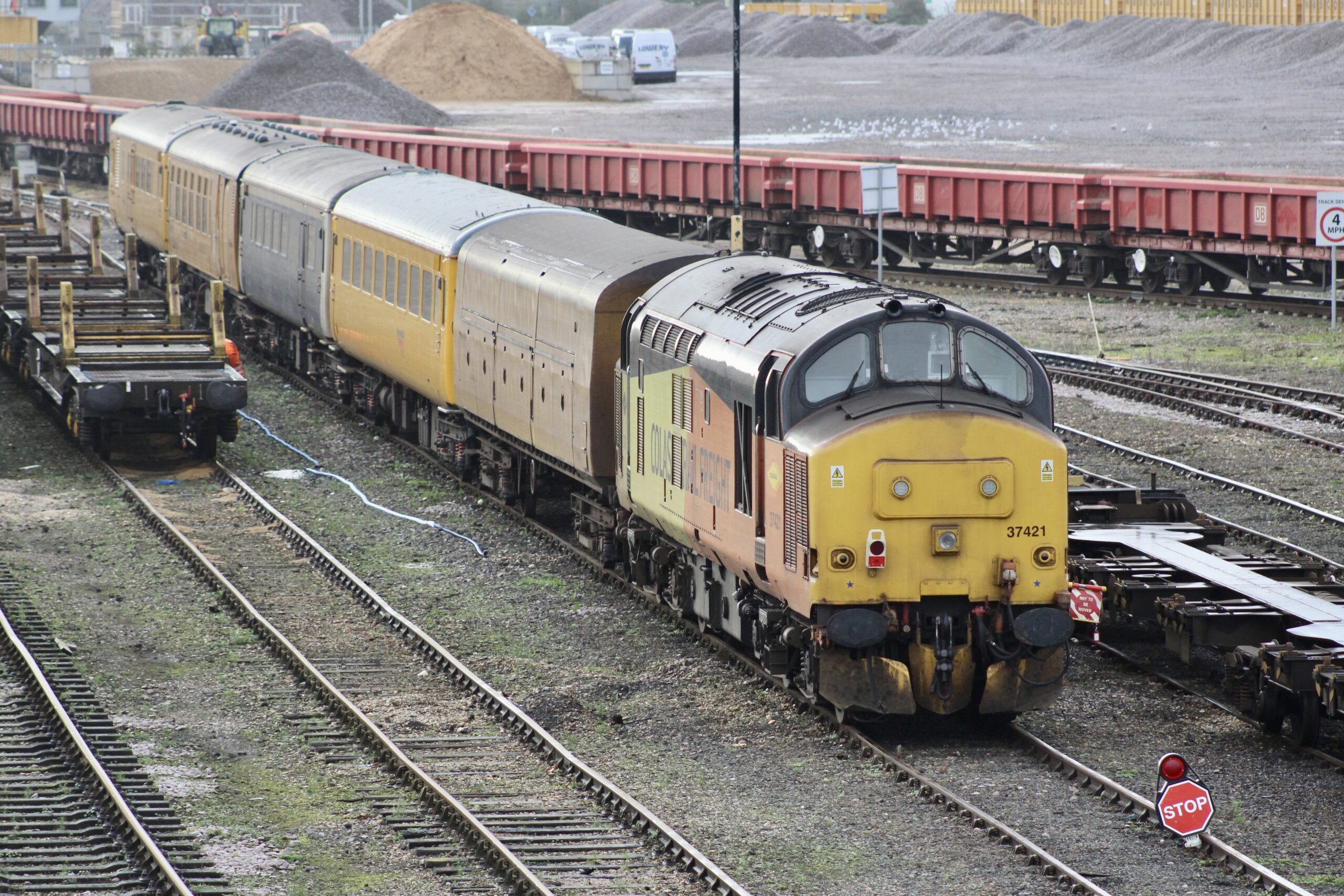
We were lucky enough to enjoy a few days away last week, and as part of our travels, I was able to take in some railway locations. Before that however, Wednesday evening was one of those occasions when an unusual working along the Bournemouth to Weymouth line passed me by and it wasn’t until Thursday morning that I realised I’d missed out on seeing the Colas Ultrasonic Test Unit hauled by vintage Class 37 diesel electric locomotive No. 37421. I consoled myself with the knowledge it would have been raining as it passed through my local station on the outward run, and I was tucked up in bed by the time it returned. However, on our way to Derbyshire on Thursday morning, we popped into Eastleigh to find No. 37421 perfectly parked for a quick photo opportunity adjacent to Eastleigh railway station.
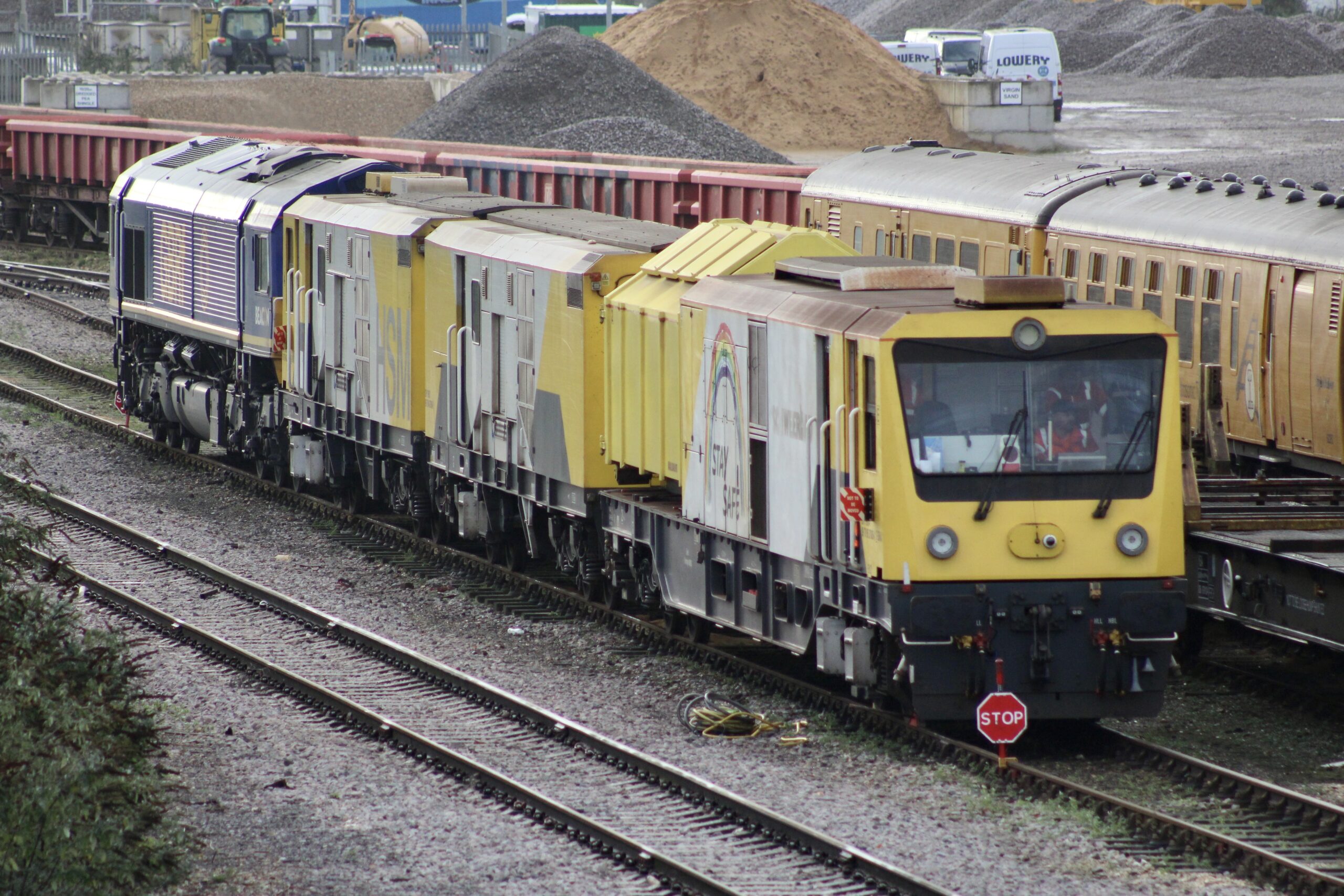
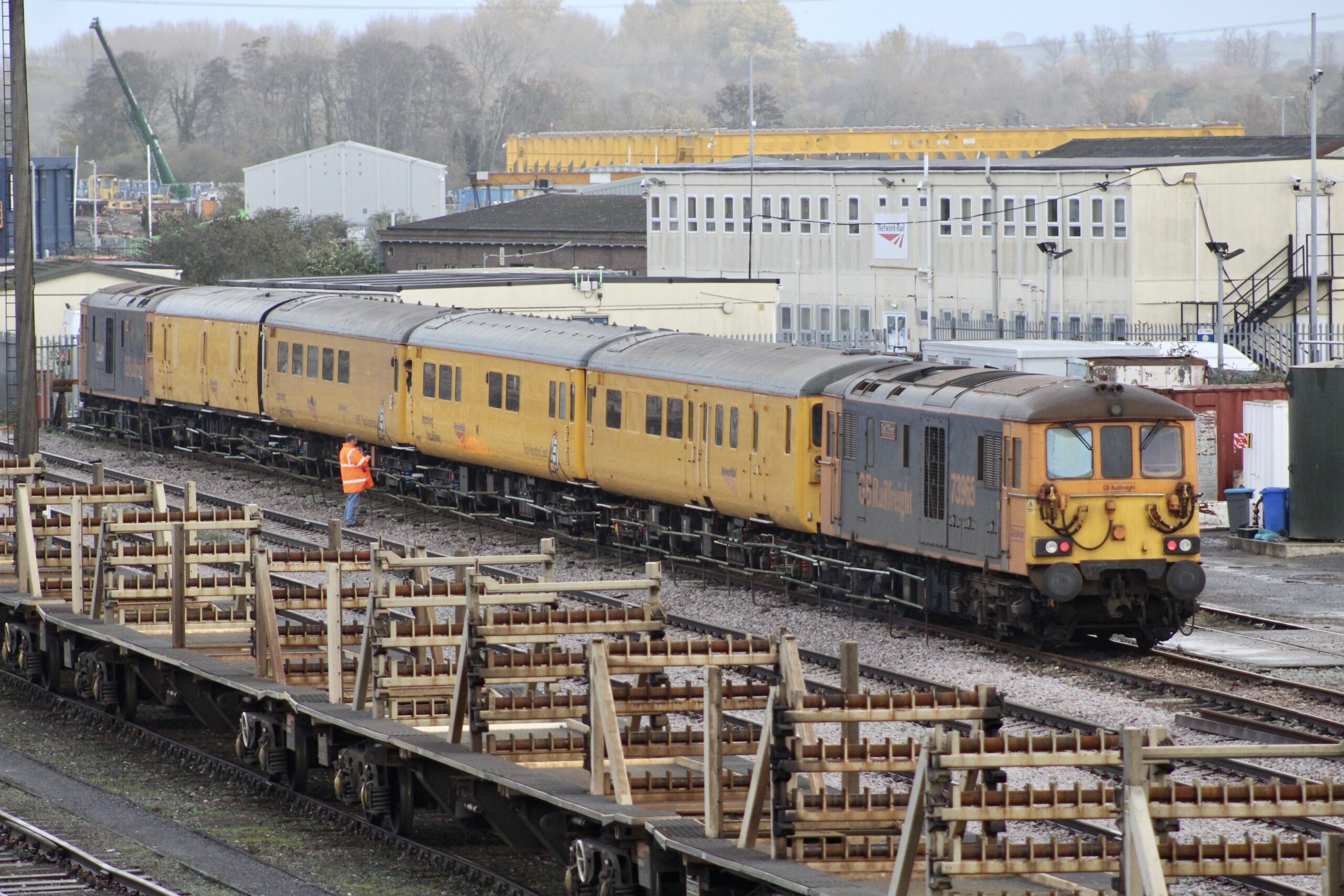
Colas Class 37 No. 37421 parked up having worked 3Q02 Eastleigh East Yard to Eastleigh East Yard via Weymouth and Fratton at Eastleigh – 24/11/2022GBRf Class 66 No. 66797 with a Network Rail National Delivery Service (NDS) track machine at Eastleigh – 24/11/2022GBRf Class 73 Electro-Diesel No.’s 73965 ‘Des O’Brien’ and 73961 ‘Alison’ being readied to work 1Q52 1045 Eastleigh East Yard to Tonbridge West Yard at Eastleigh – 24/11/2022
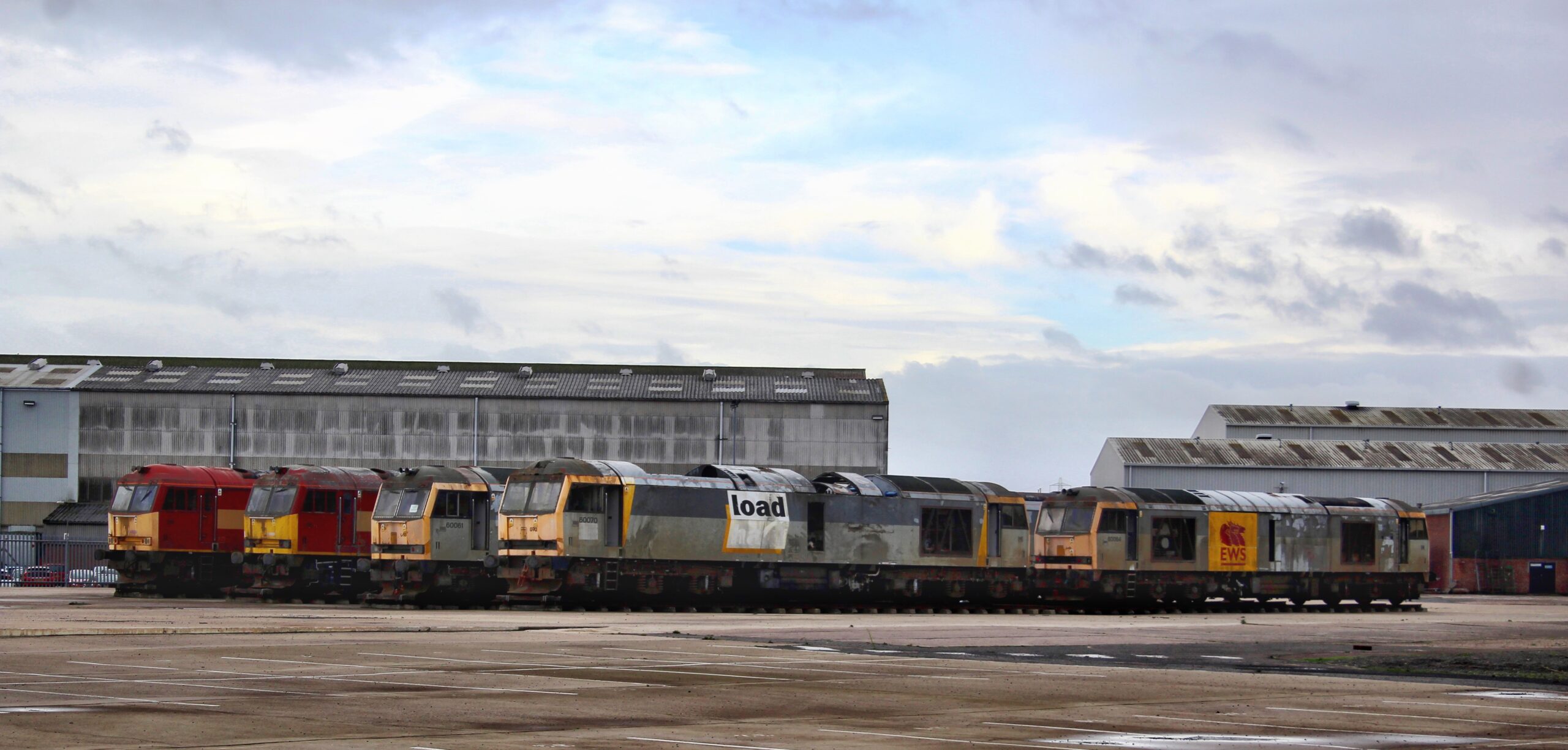
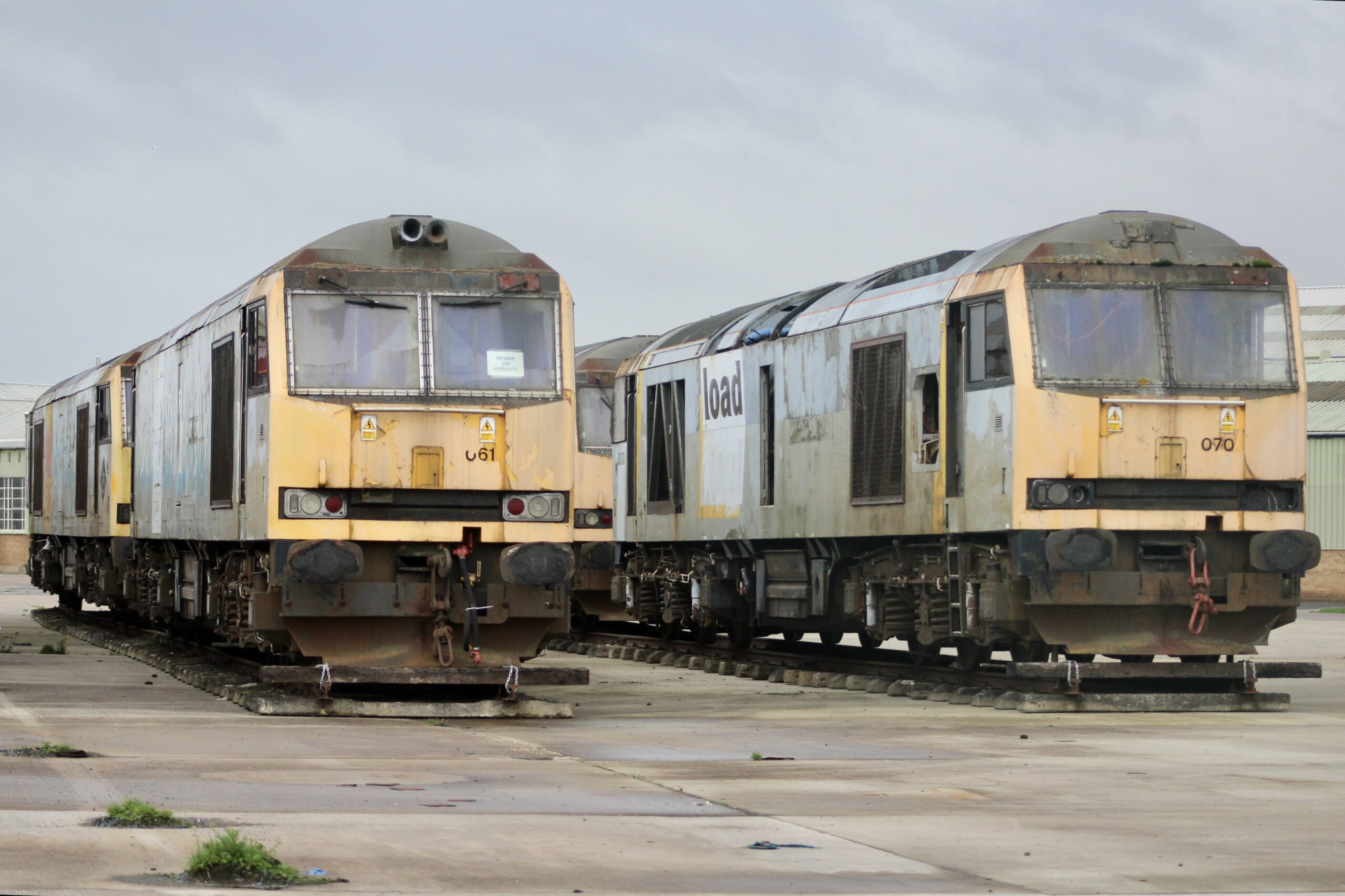
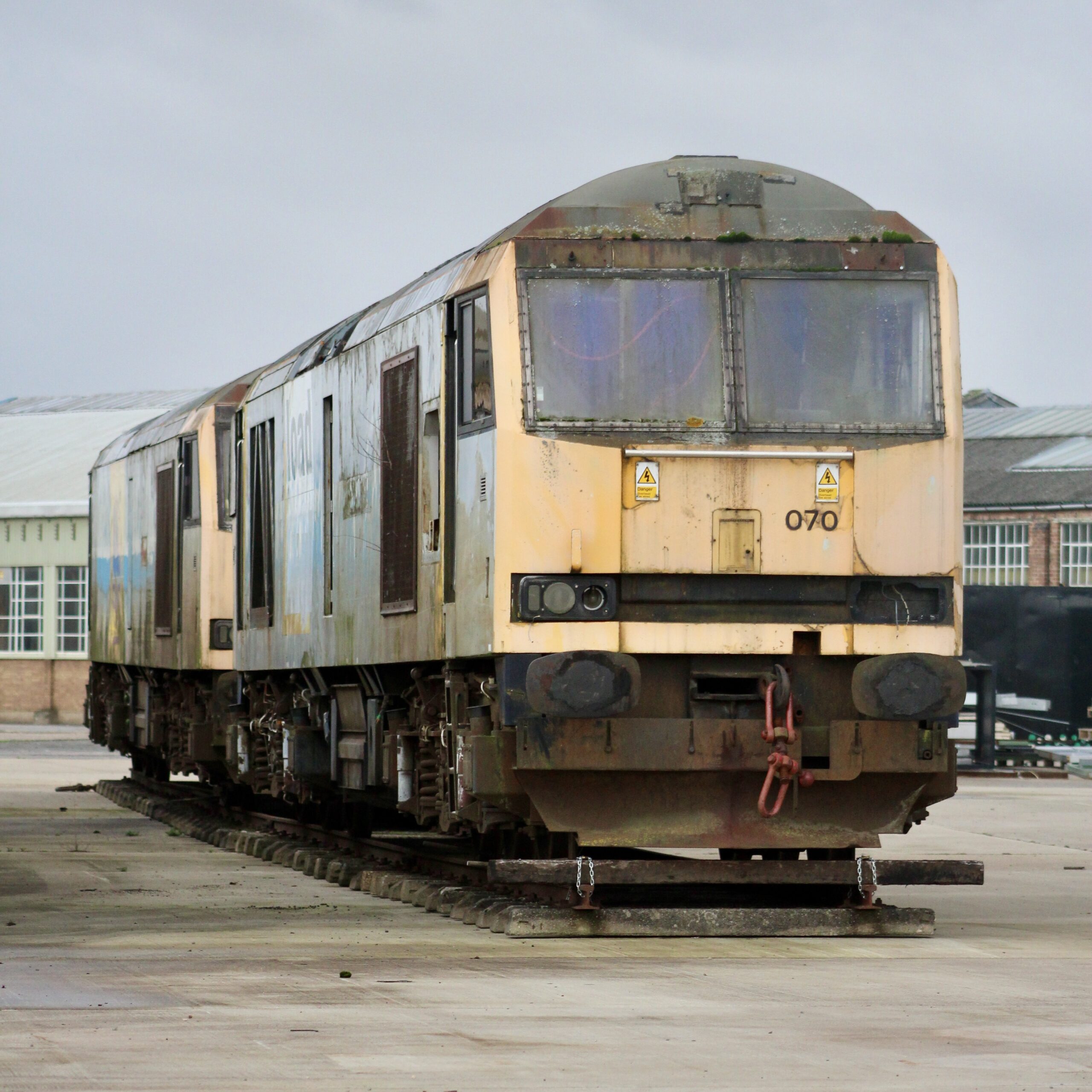
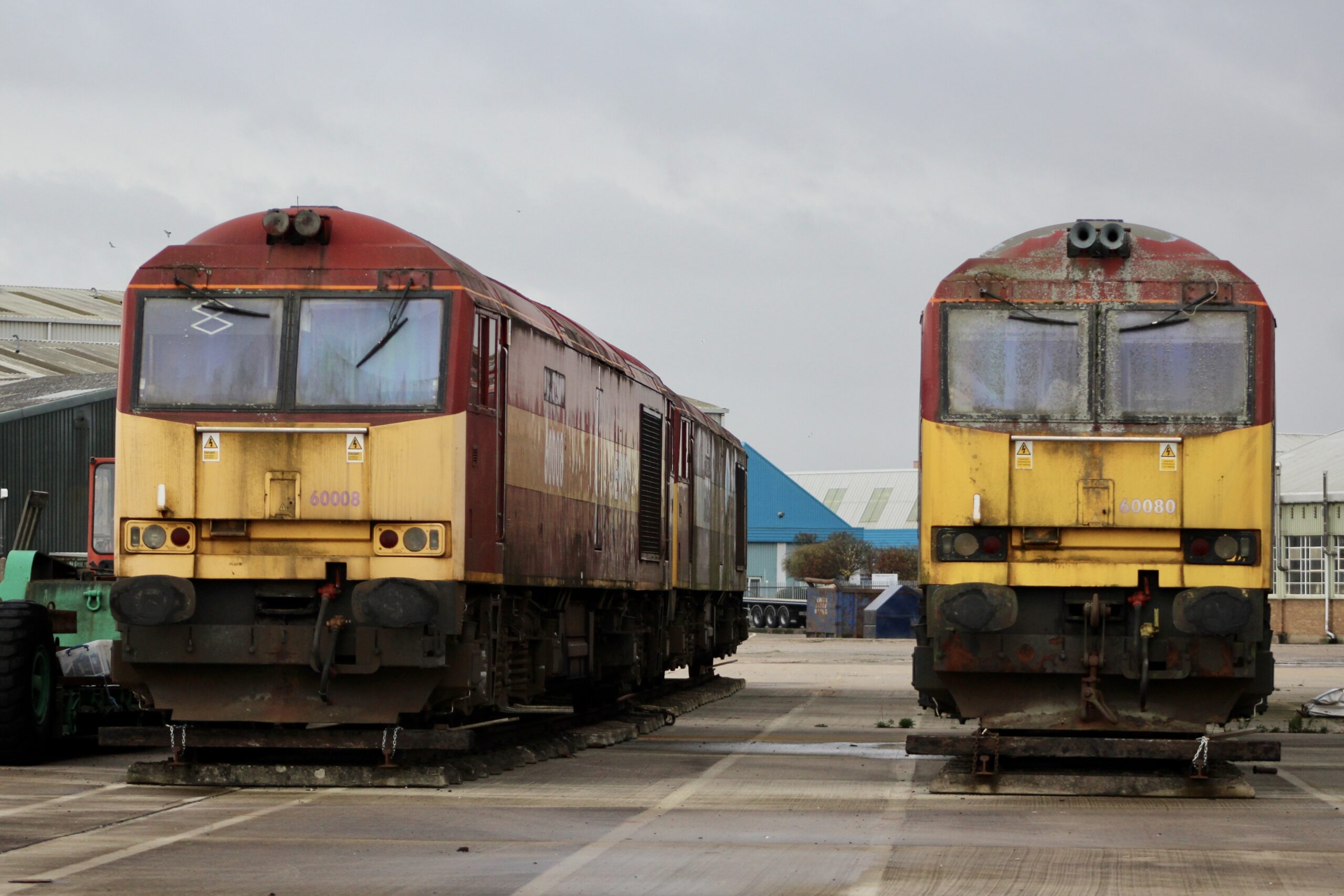
After our Eastleigh pitstop, we drove on to Loughborough, where I was hopeful at seeing some stored Class 60 diesel locomotives at Brush Traction Works. The plant, known locally as the Falcon Works, was established in 1865 to build steam locomotives. American owned Wabtec took charge in 2011 and in April 2021 they announced reduced volumes had made the site “unsustainable” and proposed its closure which would see the end to over 150 years of locomotive building.
The last time I had attempted to see locomotives at Brush, Loughborough I recall traipsing across water meadows to get a close view through a fence of Channel Tunnel Class 92’s. This time, having studied Google Maps, I drove around the outskirts of the site along access roads which I wasn’t entirely sure were open to the public. I wasn’t stopped by security, even when they drove past me as I snapped away.
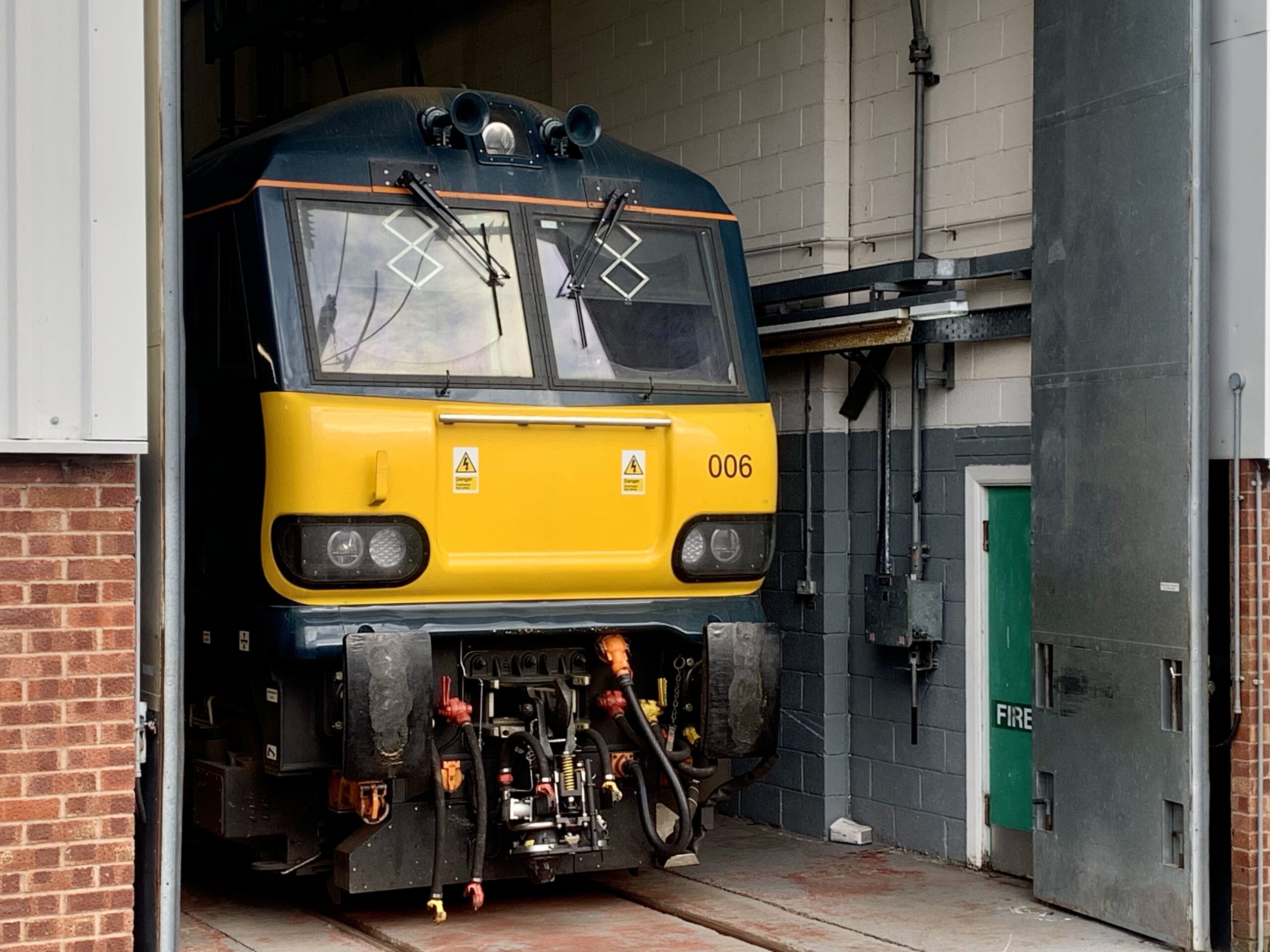
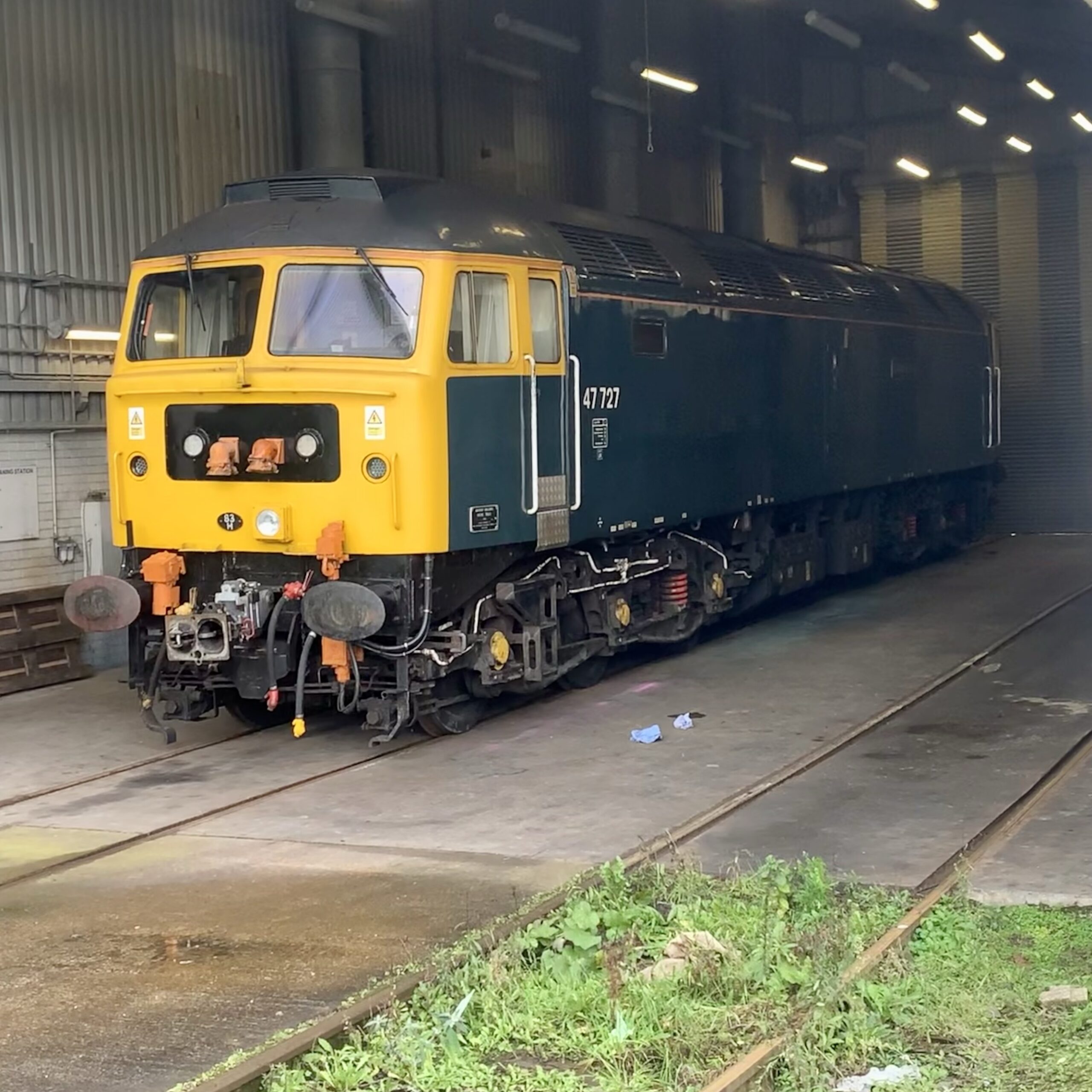
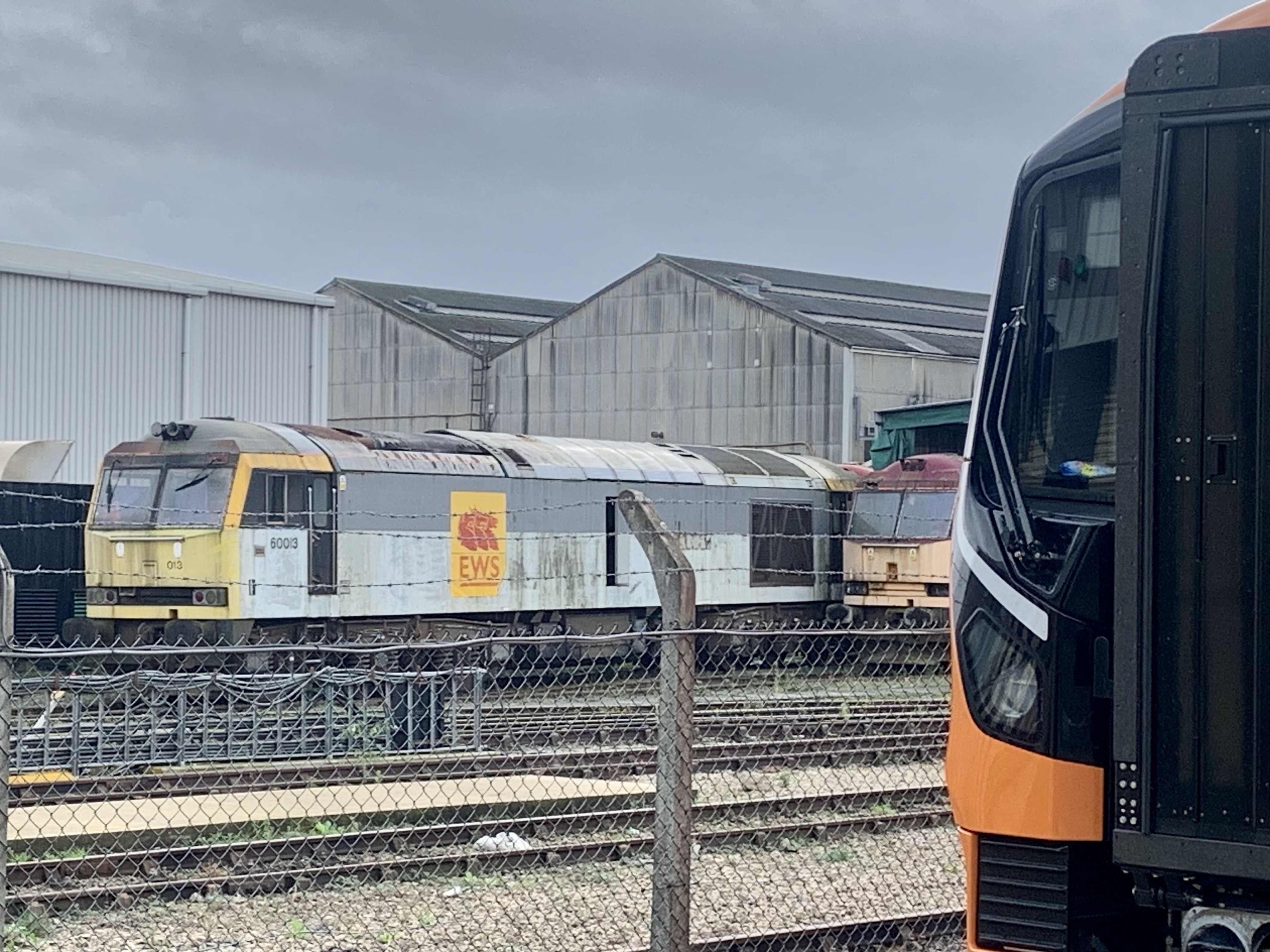
Class 92 No. 92006, Loughborough – 24/11/2022GBRf Class 47 No. 47727 ‘Edinburgh Castle’ at Loughborough. The Class 47 diesel-electric locomotive was one of Brush’s most successful with 512 examples having been built as part of the British Rail Modernisation Plan. This particular example was built at BR Crewe Works as part of Order Lot 400 and entered traffic as D1629 at Toton depot on the 17th October 1964 – 24/11/2022Class 60 No. 60013 at Brush Loughborough – 24/11/2022
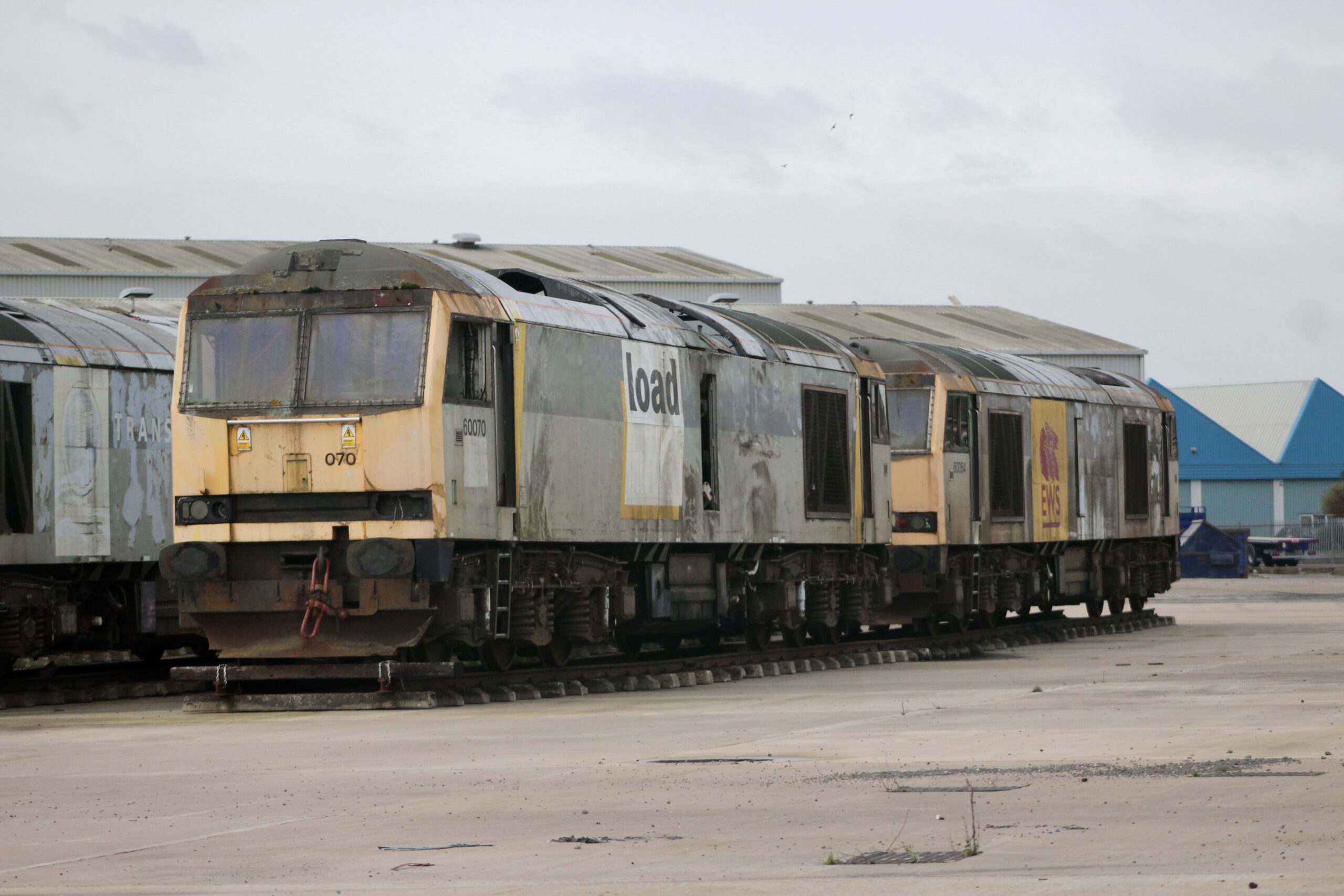
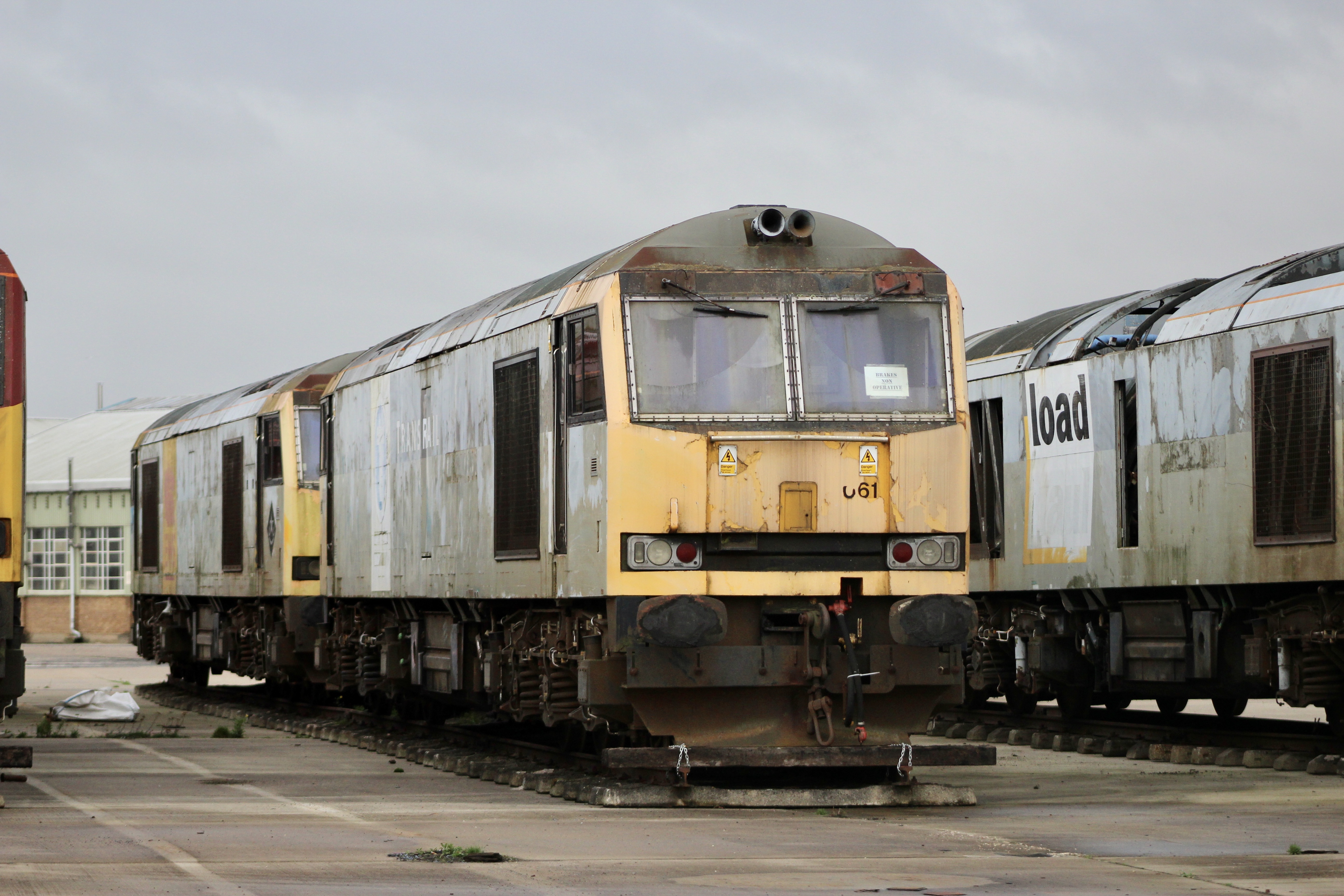
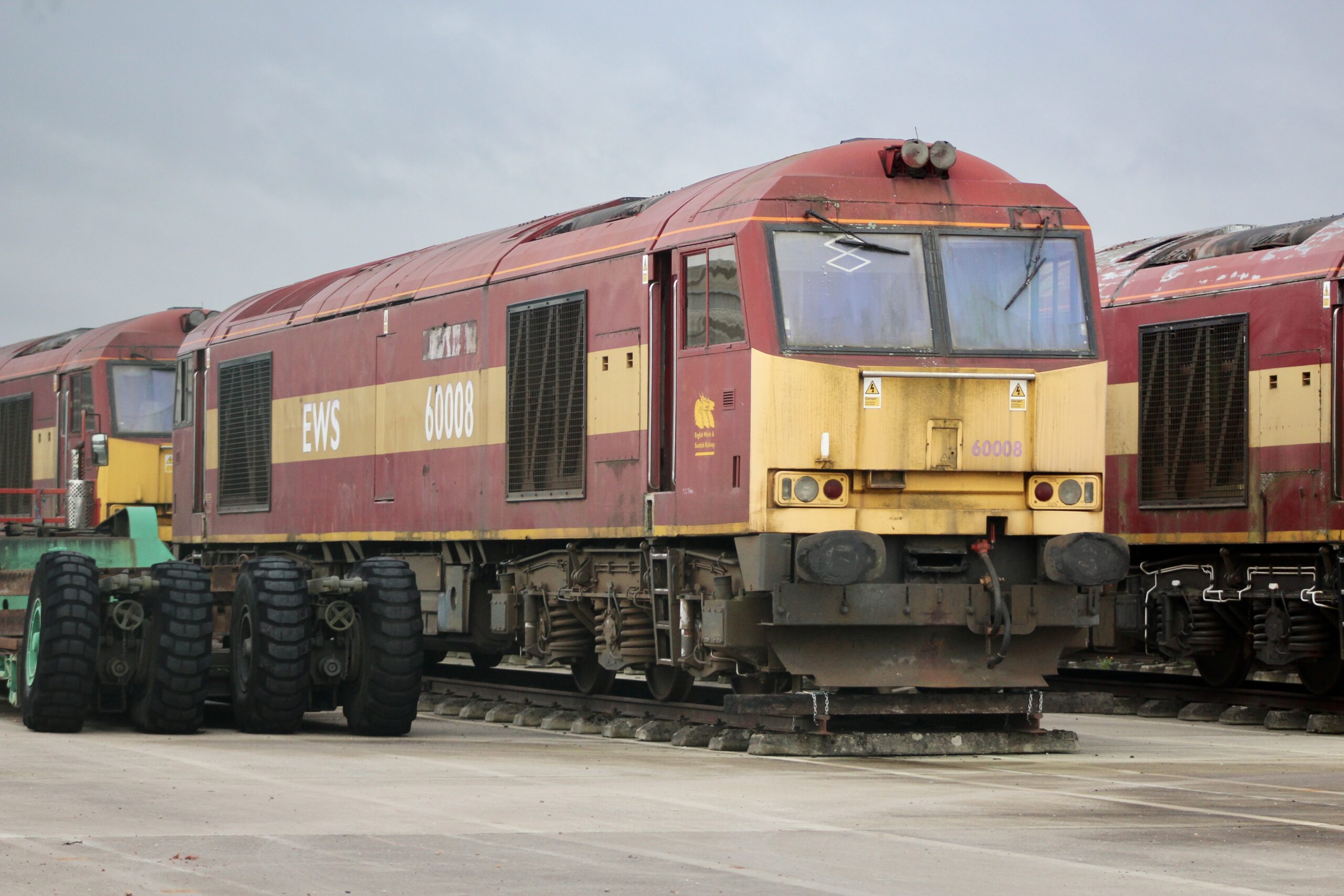
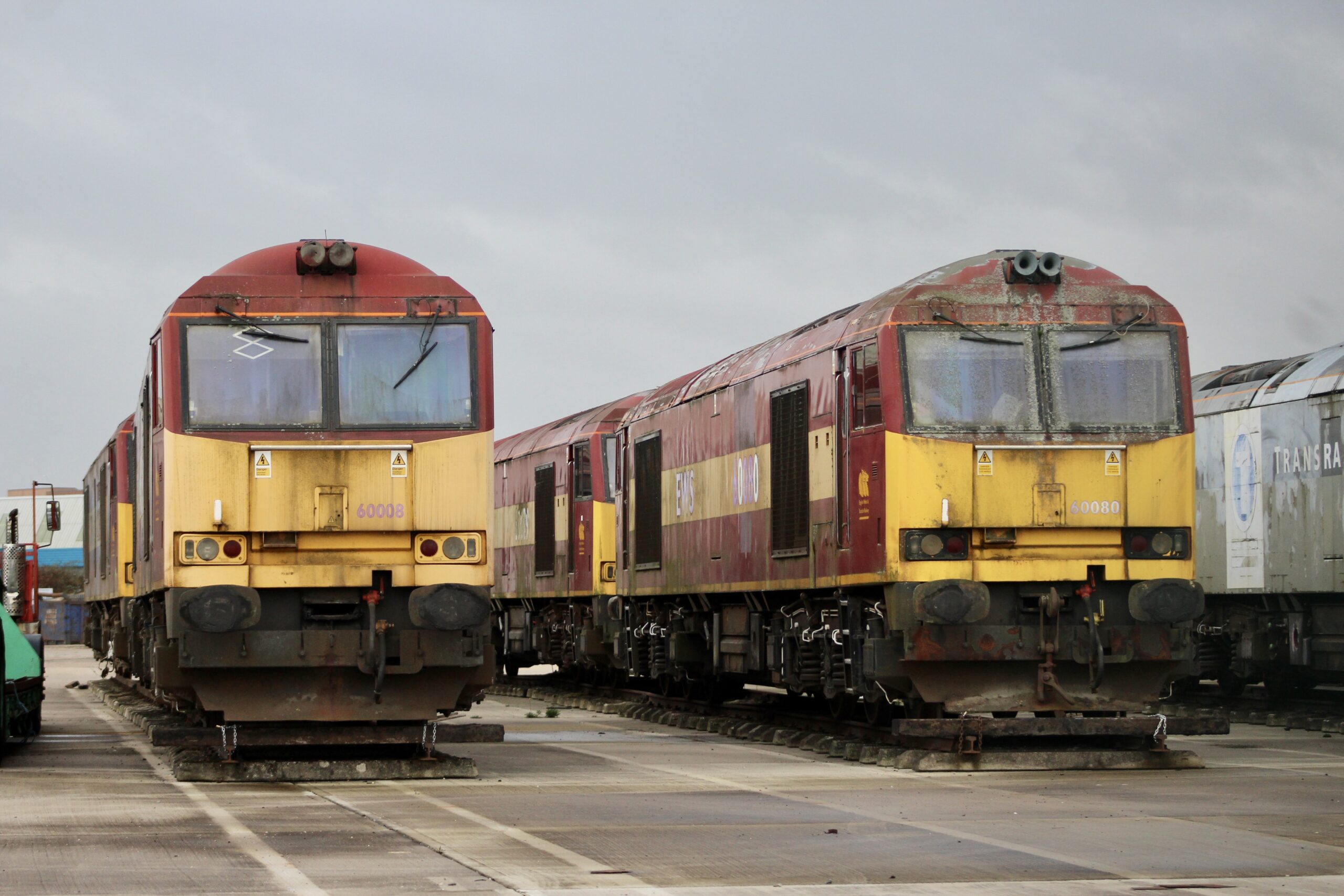
Below are a series of images of nine stored Class 60 locomotives at Brush Works, Loughborough: the locos are No.’s 60057, 60008, 60061, 60070, 60038, 60009, 60090 and 60064. They are owned by Devon Cornwall Rail (DCR) and hopefully some will be returned to main line use.
And here is video of my previous visit in 1995, when Class 92’s, Class 20’s and a Class 47 were amongst the classes of locomotive present:
I very much look forward to learning what is going to happen to the Class 60 locomotives at Loughborough and hope that at least some of them will turn a wheel in revenue earning service in the near future.
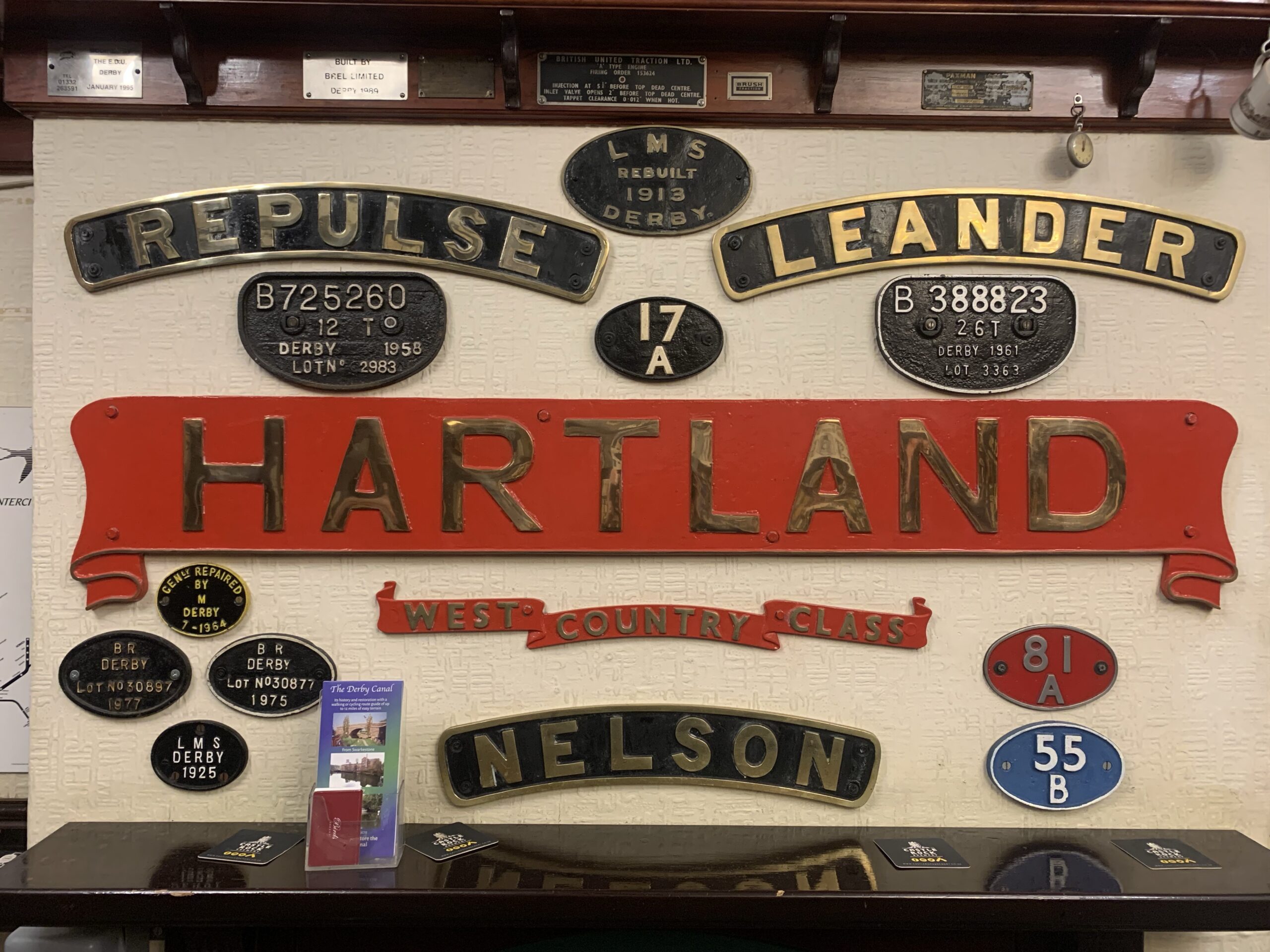
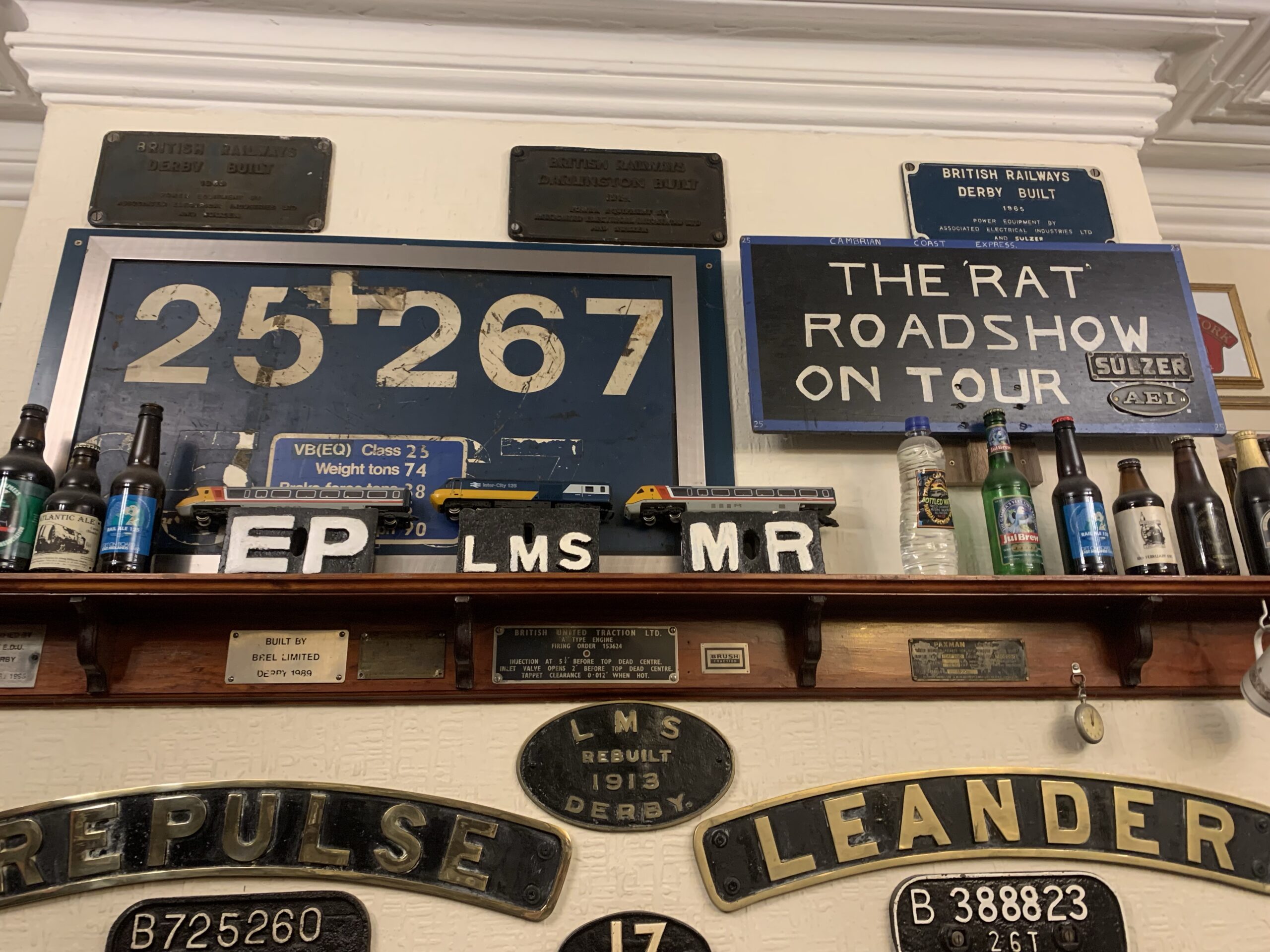
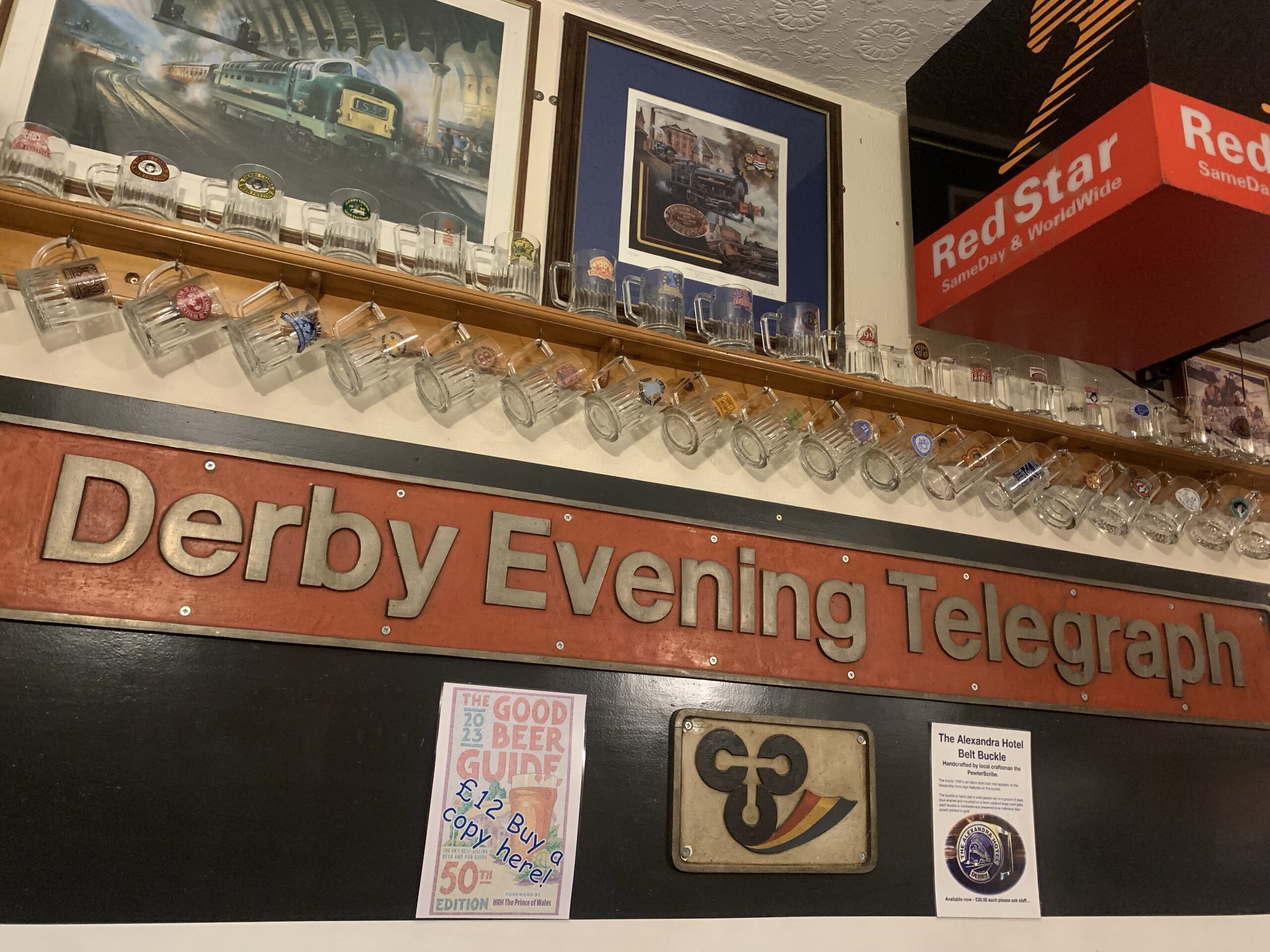
From Loughborough, we drove onto Derby where we stopped for refreshment at The Alexandra Pub on Siddals Road. The pub is well known for it’s railway memorabilia and I enjoyed a Diet Coke and a packet of dried roasted peanuts while I took in the signs and locomotive nameplates which adorned the walls.
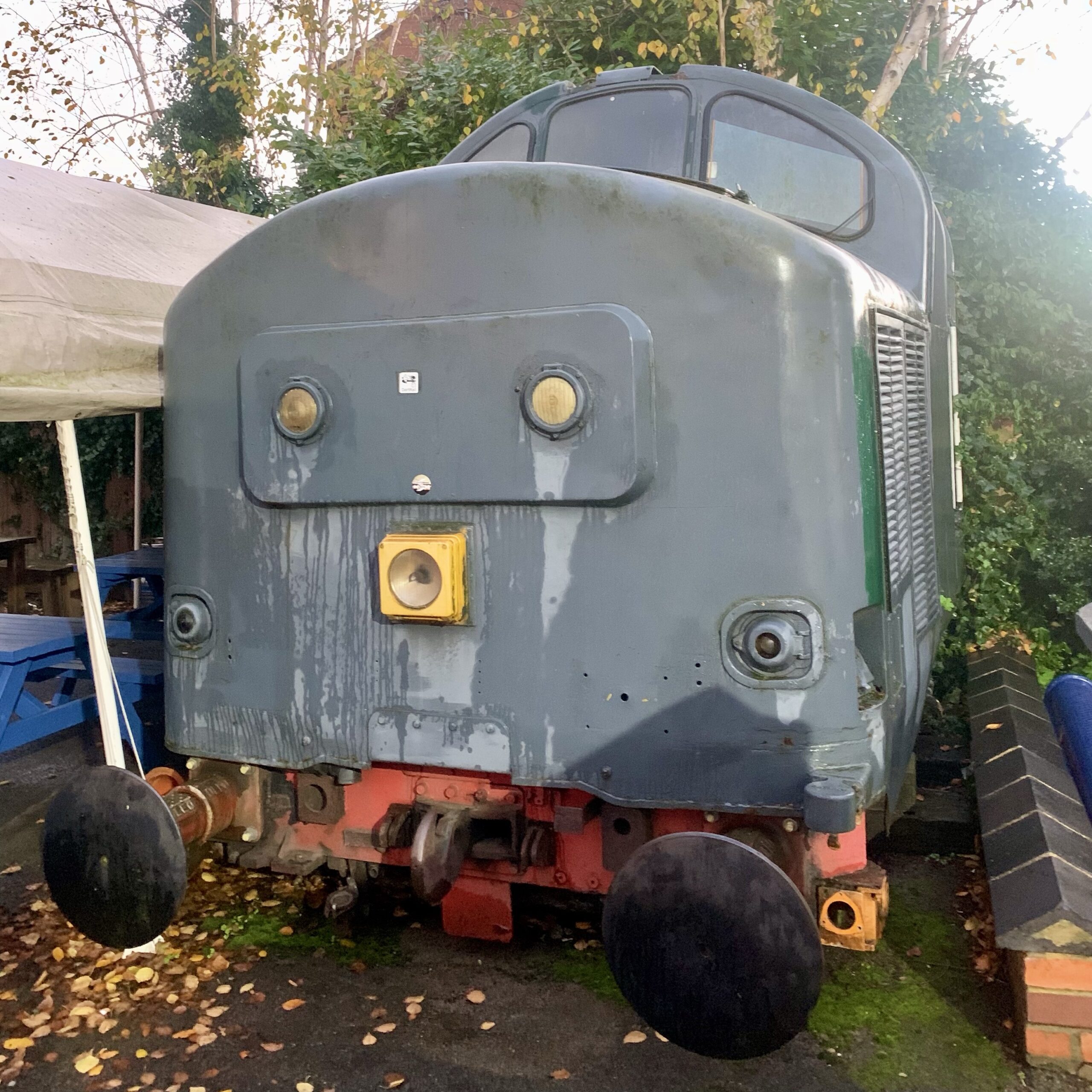
The Alexandra Hotel has a strong railway theme and Manager Ralf Edge has collected a range of memorabilia that decorates the walls – 24/11/2022Railway memorabilia at The Alexandra Hotel, Derby – 24/11/2022‘Derby Evening Telegraph’ name plate at The Alexandra Hotel, Derby – 24/11/2022The Alexandra Hotel, Derby has the cab of Class 37 No. 37411 in its garden – 24/11/2022
After a nights rest, we set off on Friday morning for a leisurely drive through the Peak District National Park taking in Peak Forest.
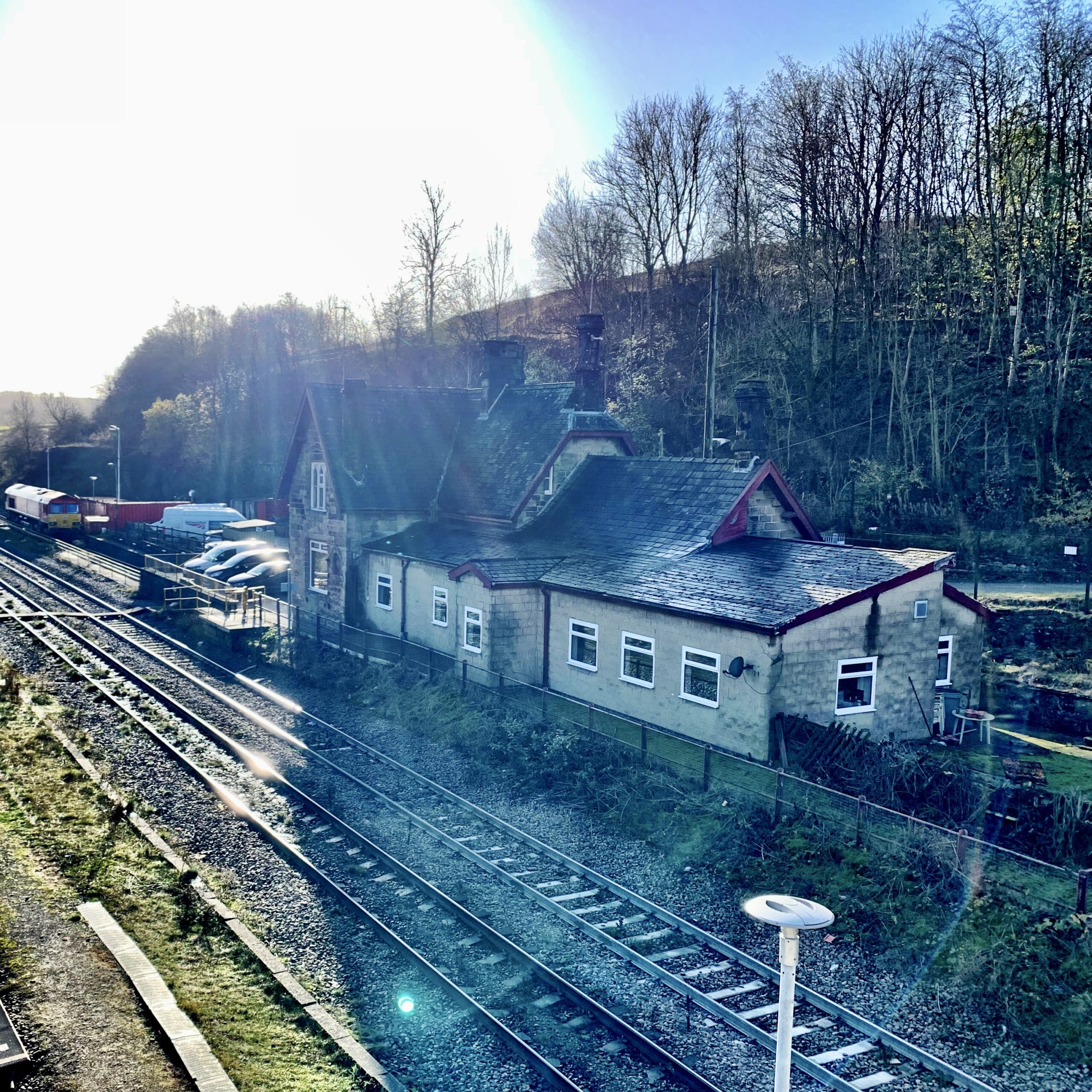
The former Peak Forest Railway Station – 25/11/2022
Peak Forest railway station was opened in 1867 by the Midland Railway on its extension of the Manchester, Buxton, Matlock and Midlands Junction Railway from Rowsley, part of the main Midland Line from Manchester to London. It was also the northern junction for the line from Buxton. A section of the line is retained for freight trains. The station closed in 1967 and the platforms were demolished shortly afterwards, although a section has been reinstated for railway staff and the station buildings which can be seen from the road bridge passing over the tracks survive as offices for the nearby quarry terminal.
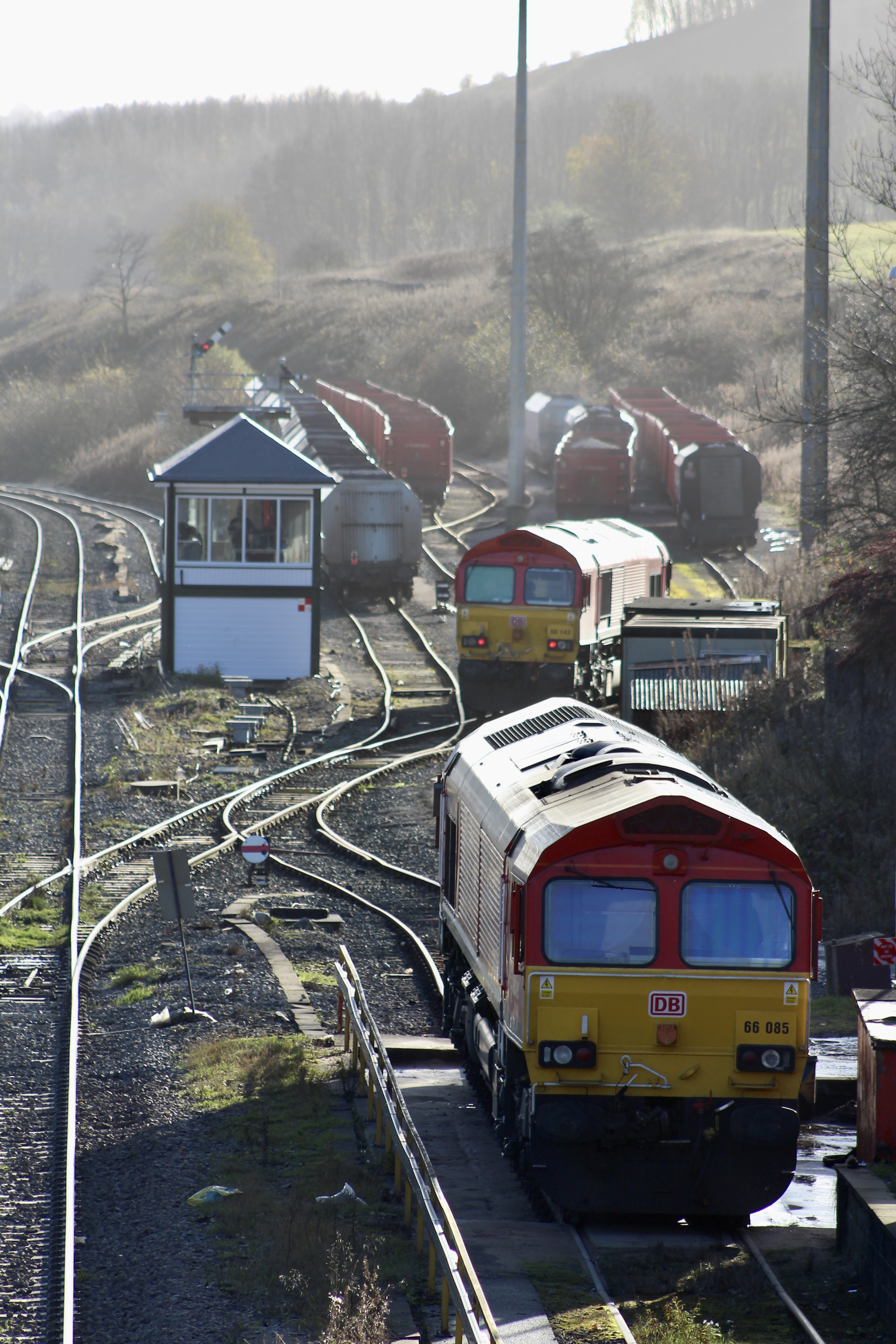
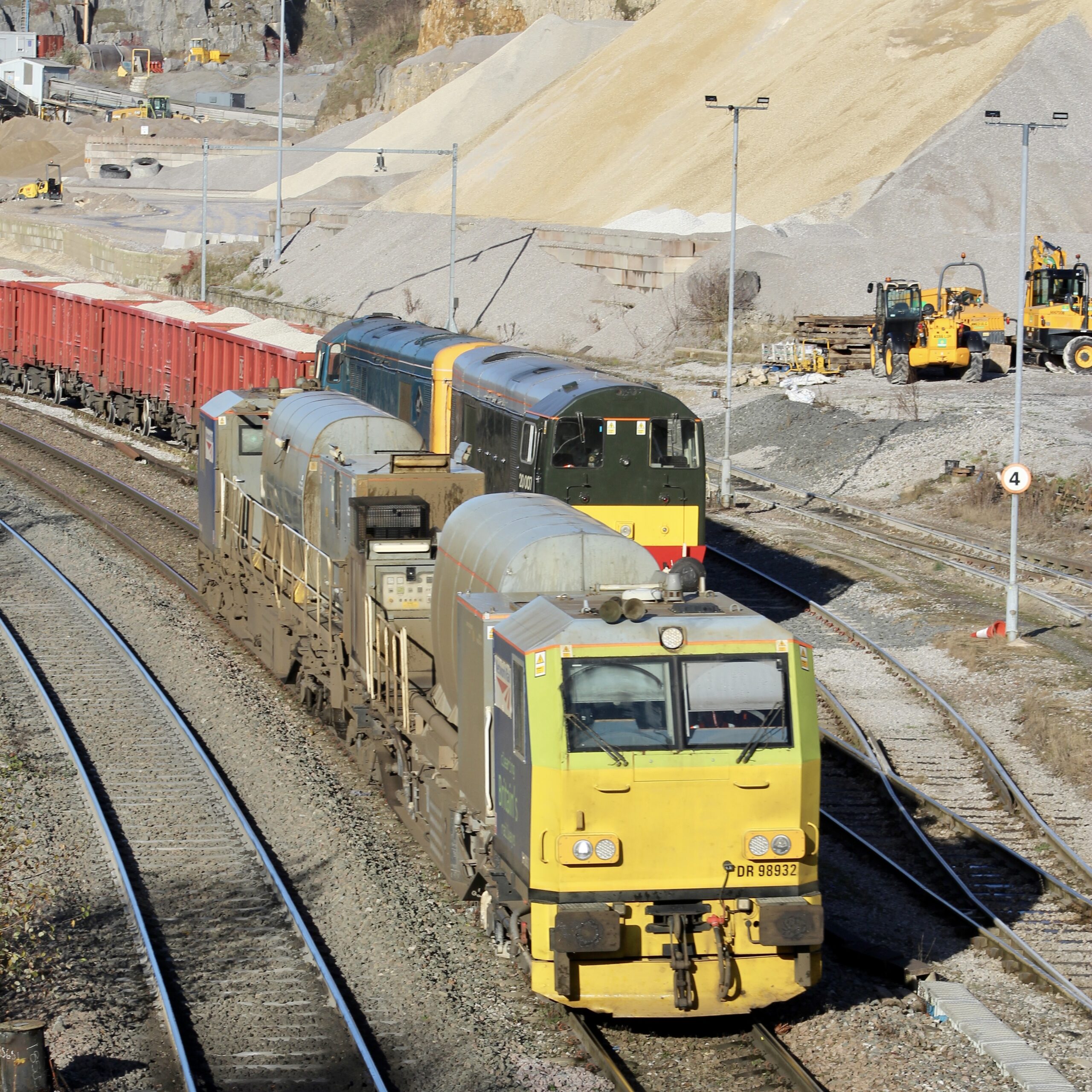
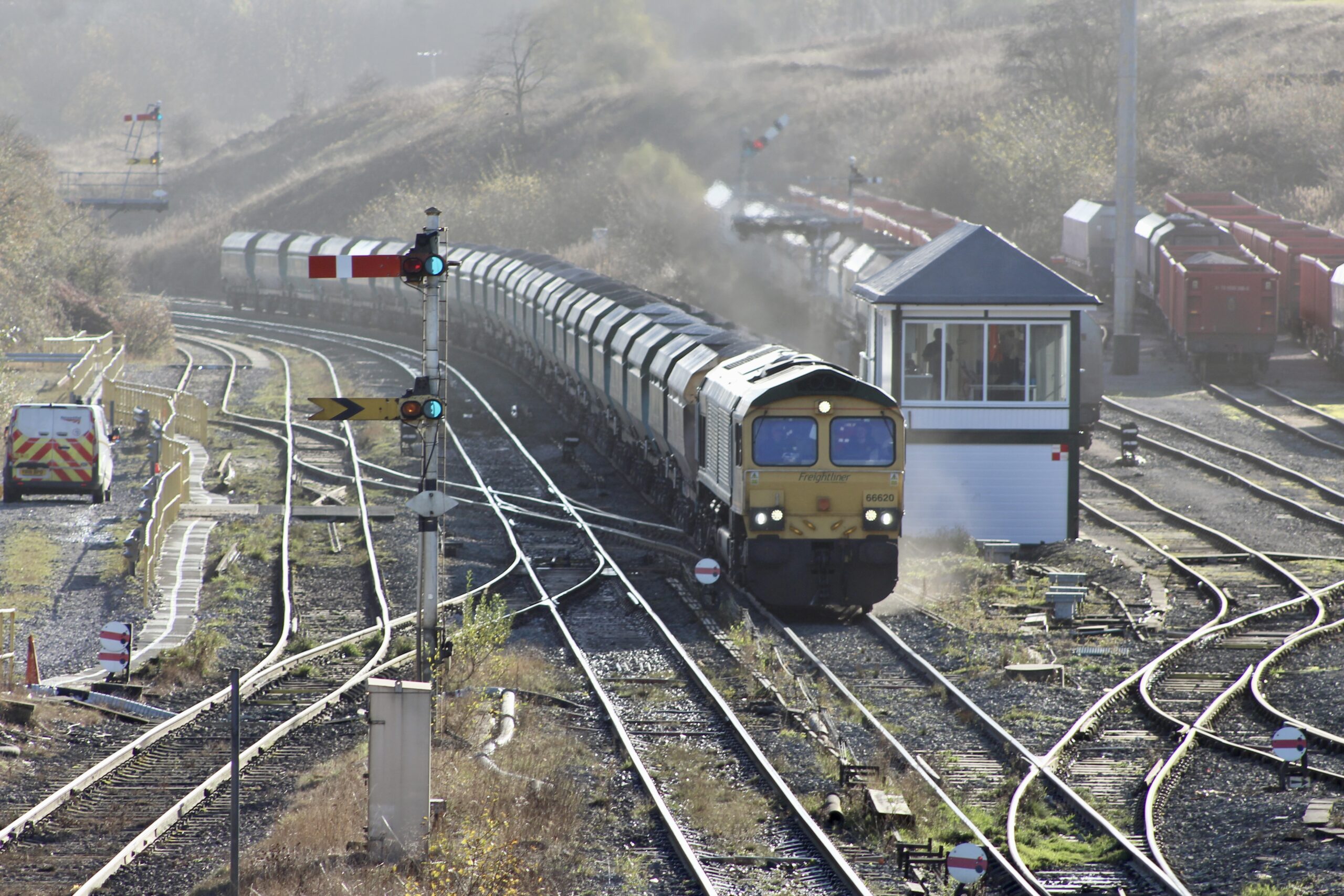
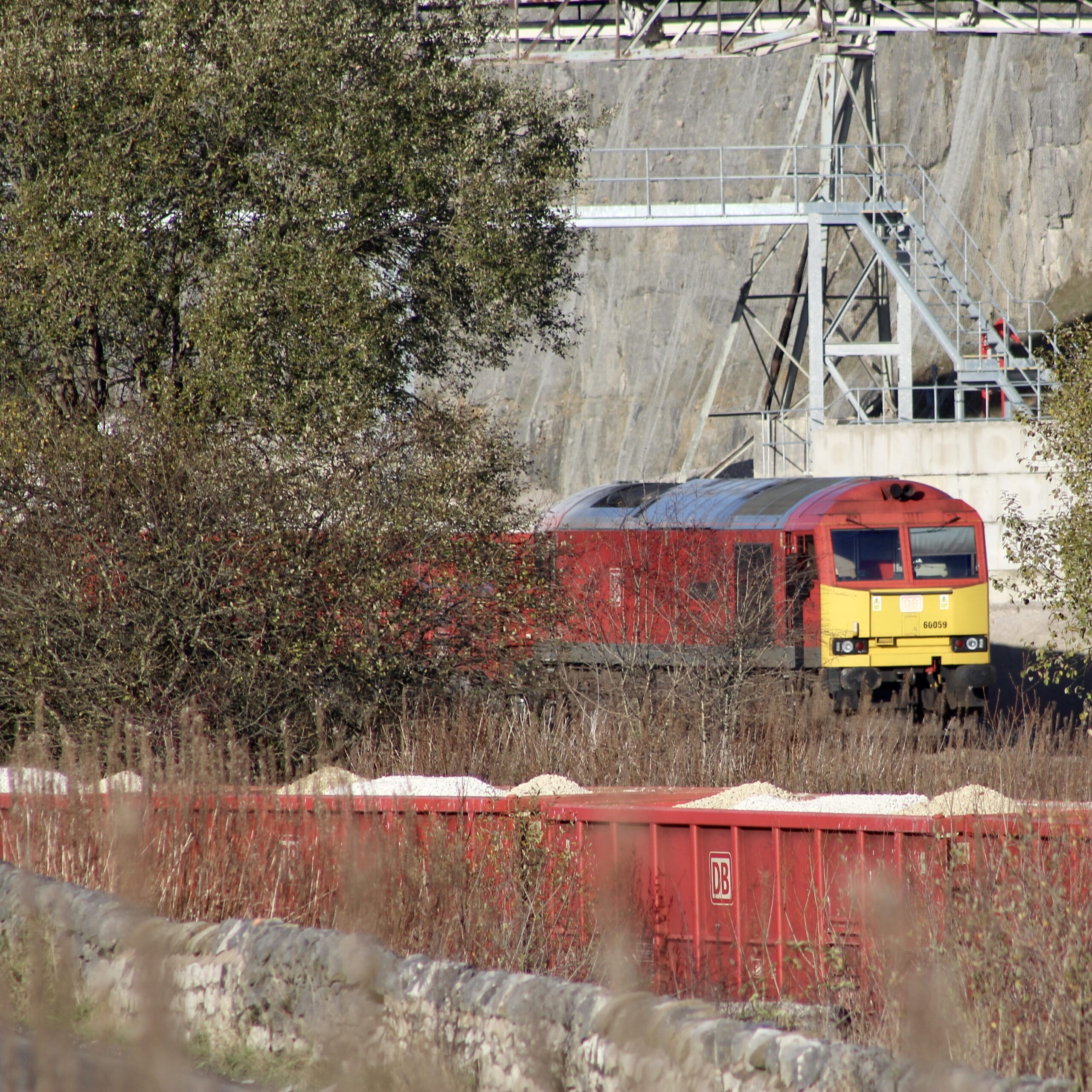
DB Class 66 No.’s 66085 and 66143 at Peak Forest – 25/11/2022I was very happy to see Class 20 No.’s 20007 and 20205 parked up at Peak Forest – 25/11/2022MPV No. DR98982 works 3S50 0554 Wigan Locomotive Inspection Point to Crewe at Peak Forest – 25/11/2022Freightliner Class 66 No. 66620 working 6D17 1148 Tunstead sidings to Radlett Redland Roadstone passes Peak Forest signal box – 25/11/2022Class 60 No. 60059 ‘Swindon Dalesman’ at Peak Forest – 25/11/2022
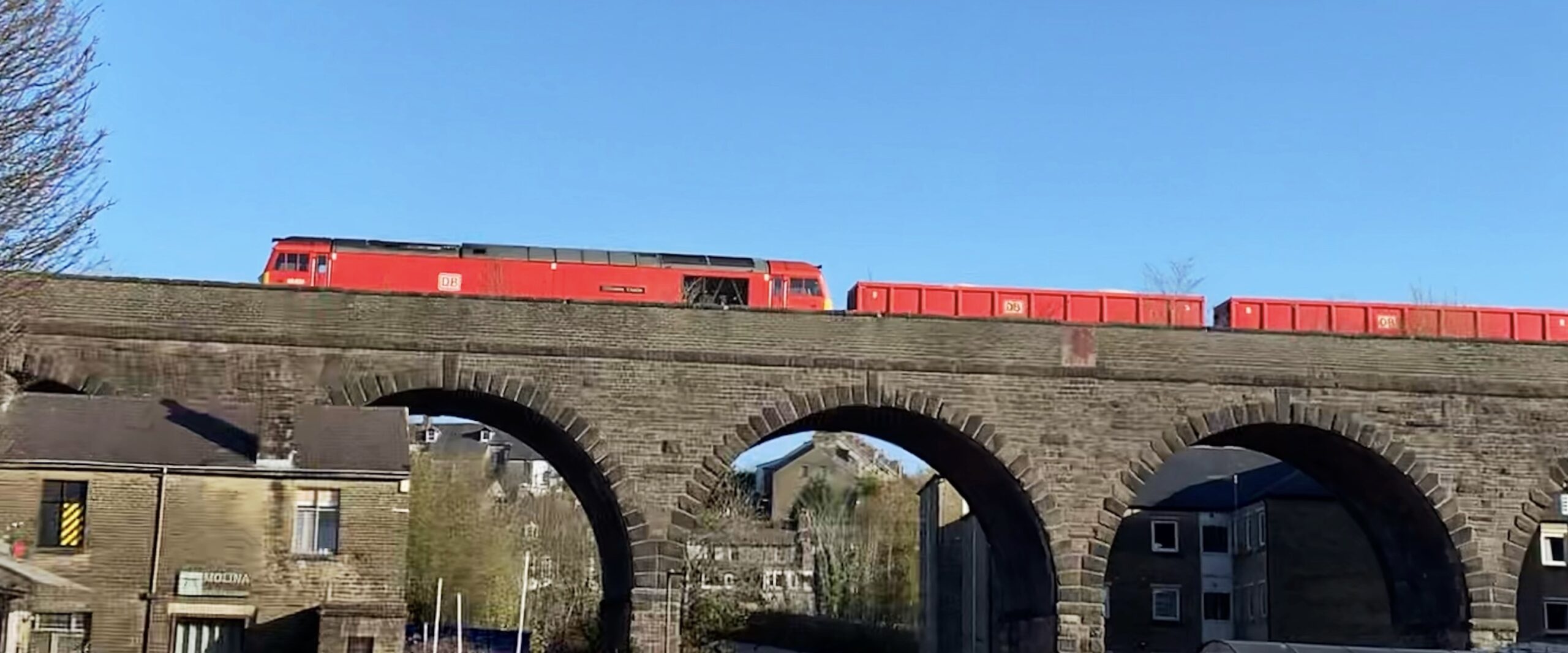
From Peak Forest, we headed into Buxton for lunch in “The Railway @. Buxton” a pub which got its name as it was popular with railway workers after they had finished their shifts. It stands in front of the impressive Buxton Viaduct which carries the freight line from Peak Forest. As we parked up, we saw Class 60 No. 60059 ‘Swindon Dalesman’ pass over working 6E18 1141 Peak Forest RMC Sidings to Attercliffe Sindings EWS
Class 60 No. 60059 ‘Swindon Dalesman’ working 6E18 1141 Peak Forest RMC Sidings to Attercliffe Sindings EWS at Buxton – 25/11/2022
There were once two railway stations in Buxton; the aforementioned Manchester, Buxton, Matlock and Midlands Junction Railway from Rowsley favoured by the Midland Railway (MR) and The Stockport, Disley and Whaley Bridge Railway supported by the London & North Western Railway (LNWR) extended its line to Buxton. The stations were built side by side and given identical frontages designed by Joseph Paxton (best known for designing Crystal Palace and for cultivating the Cavendish banana), and built by John Smith each being built from local stone and having a wrought iron glazed train shed, fronted with half-circle fan widows and the names of the operating companies carved into the supporting stonework. Joseph Paxton was a director of both companies and he attended grand lunches at the opening of both stations which occurred on the same day; 1st June 1863. Can’t say I blame him!
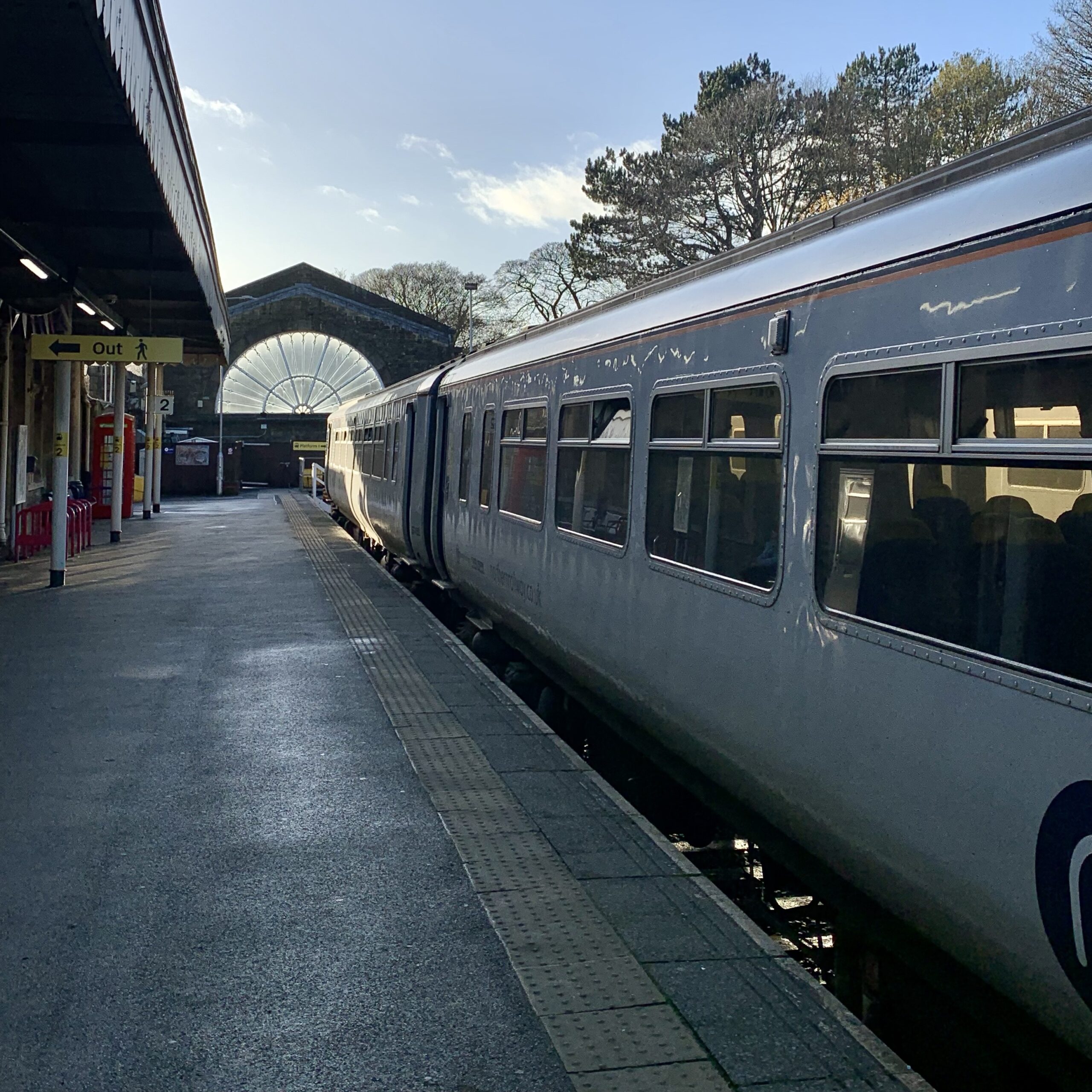
A view along the platform at Buxton showing the half circle fan window and Class 156 No. 156452 – 25/11/2022
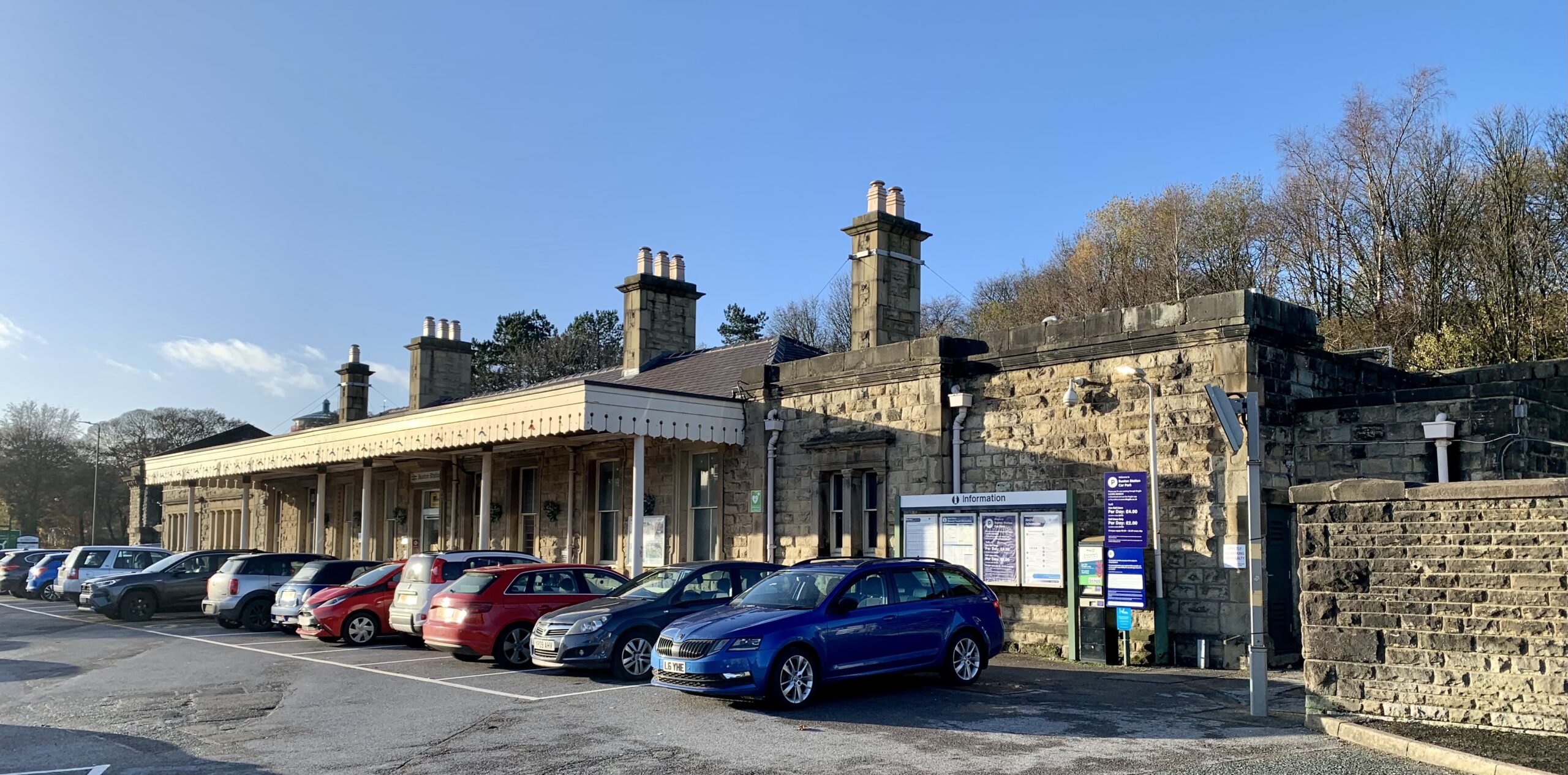
Buxton’s Midland Station fell victim to the Beeching Axe and closed on 6th March 1967 and was demolished in November 1970. There have been numerous attempts since to relay the track as a heritage line, but these have met without success to date. The LNWR station survives and handles all of Buxton’s passenger traffic today. The glazed roof has been removed, but the fanlight window was restored in 2009 and is Grade II listed.
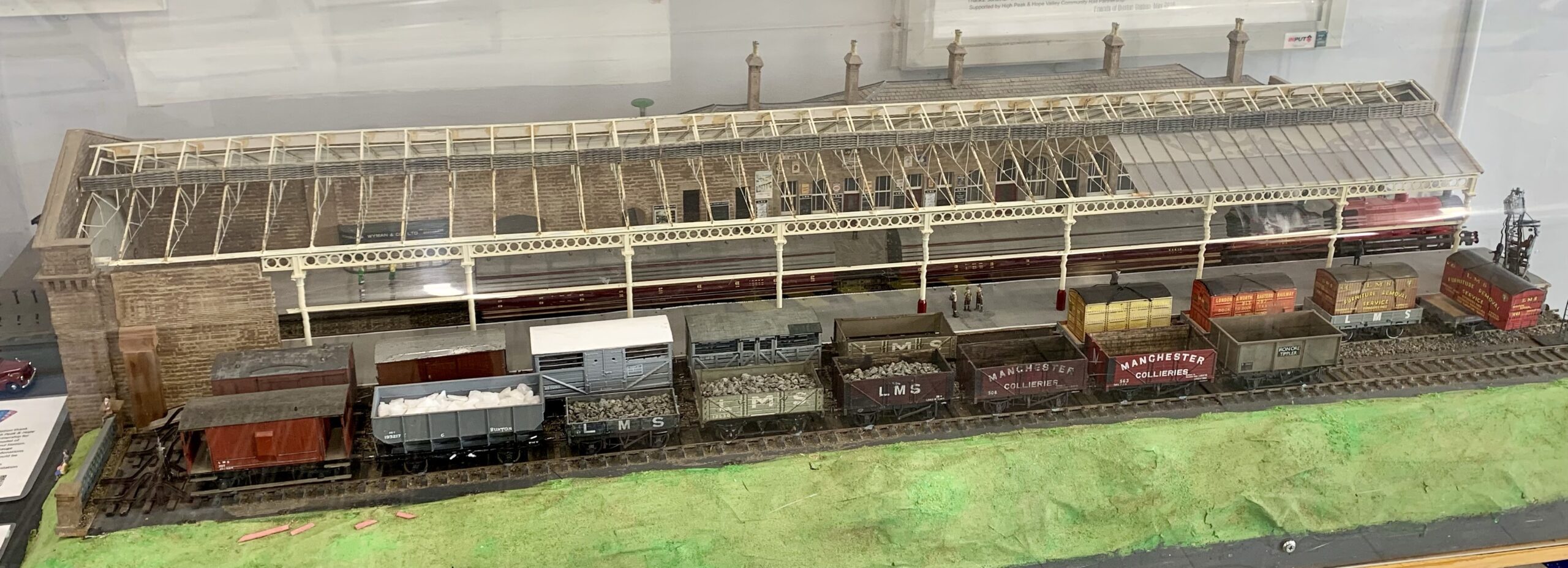
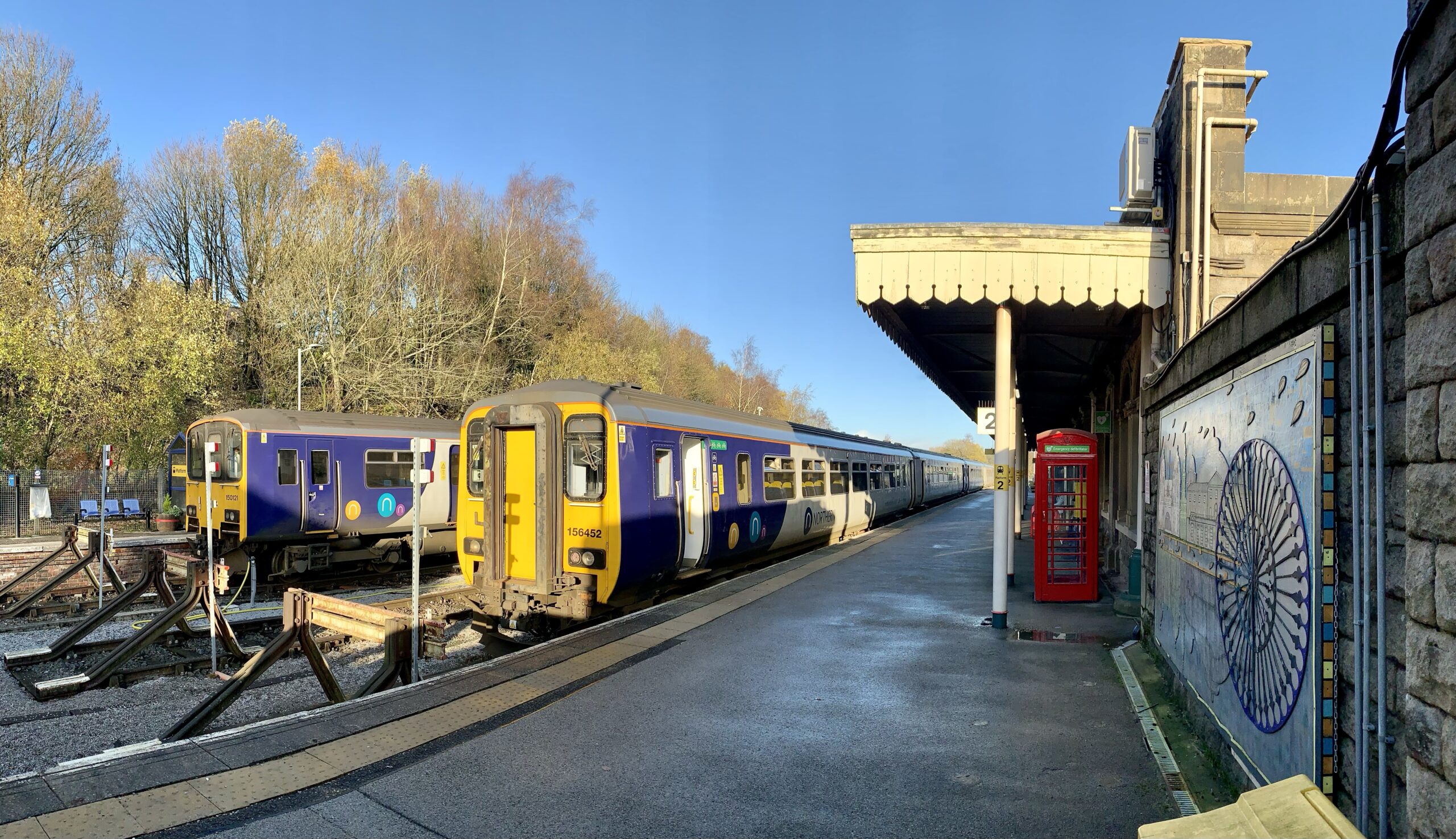
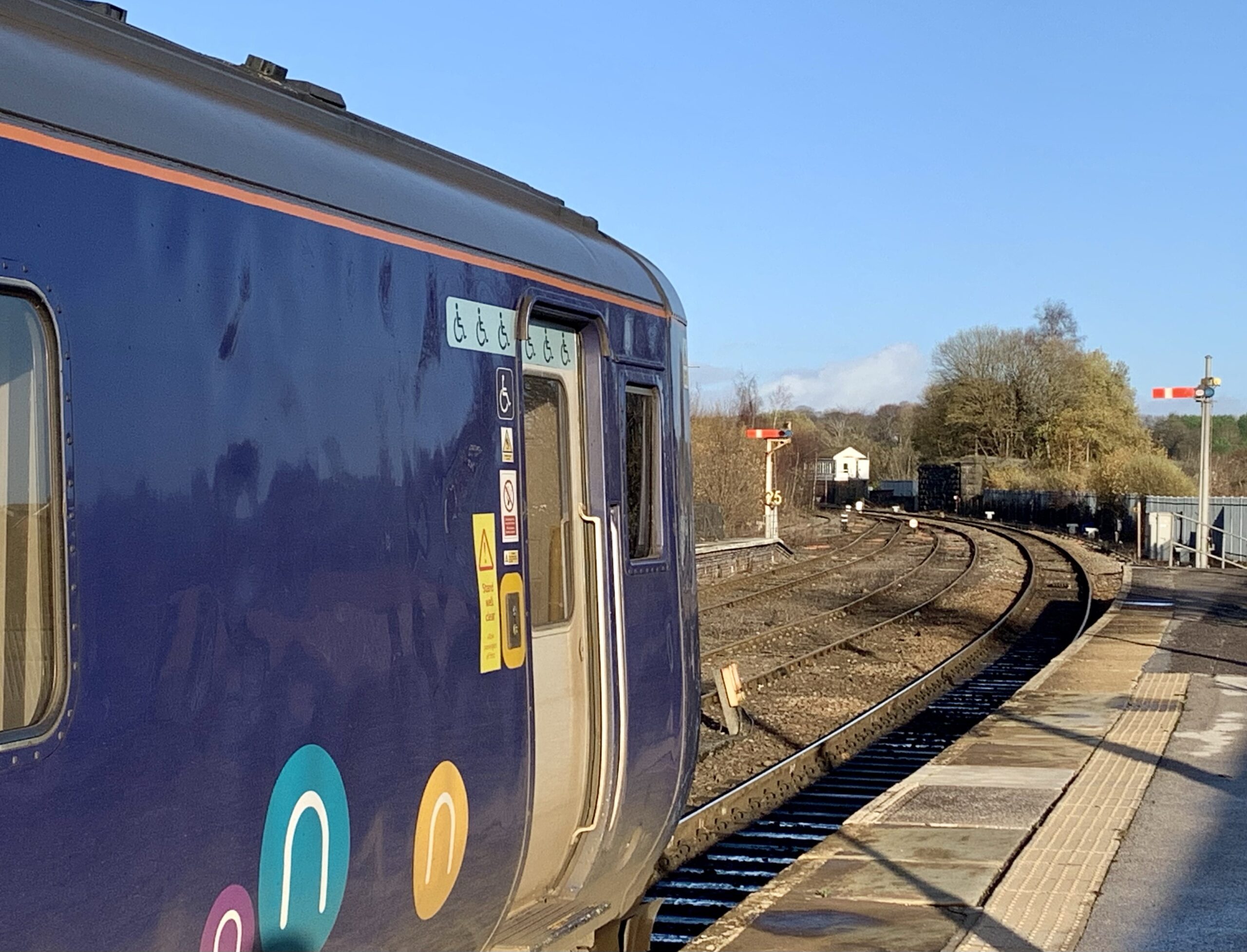
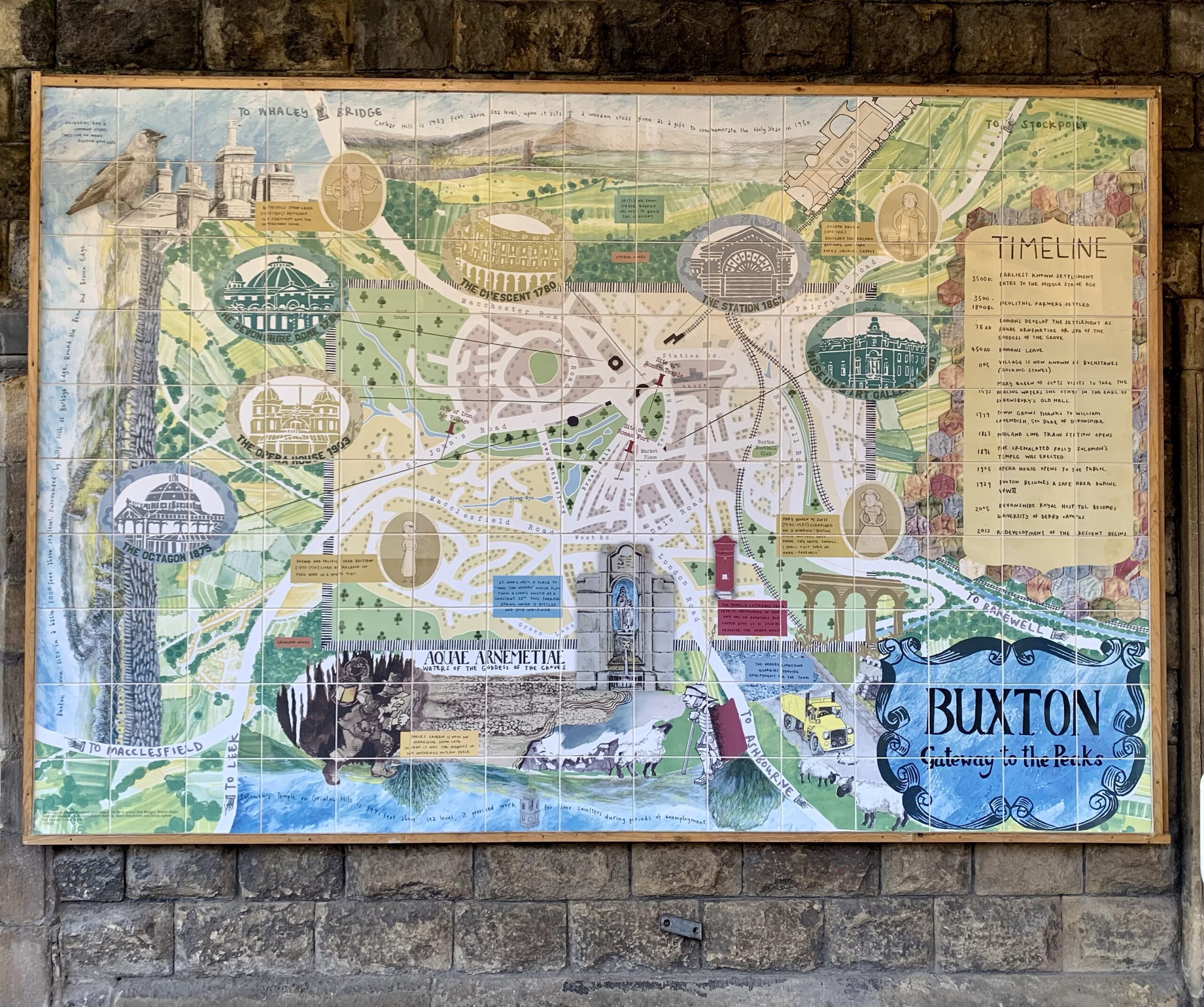
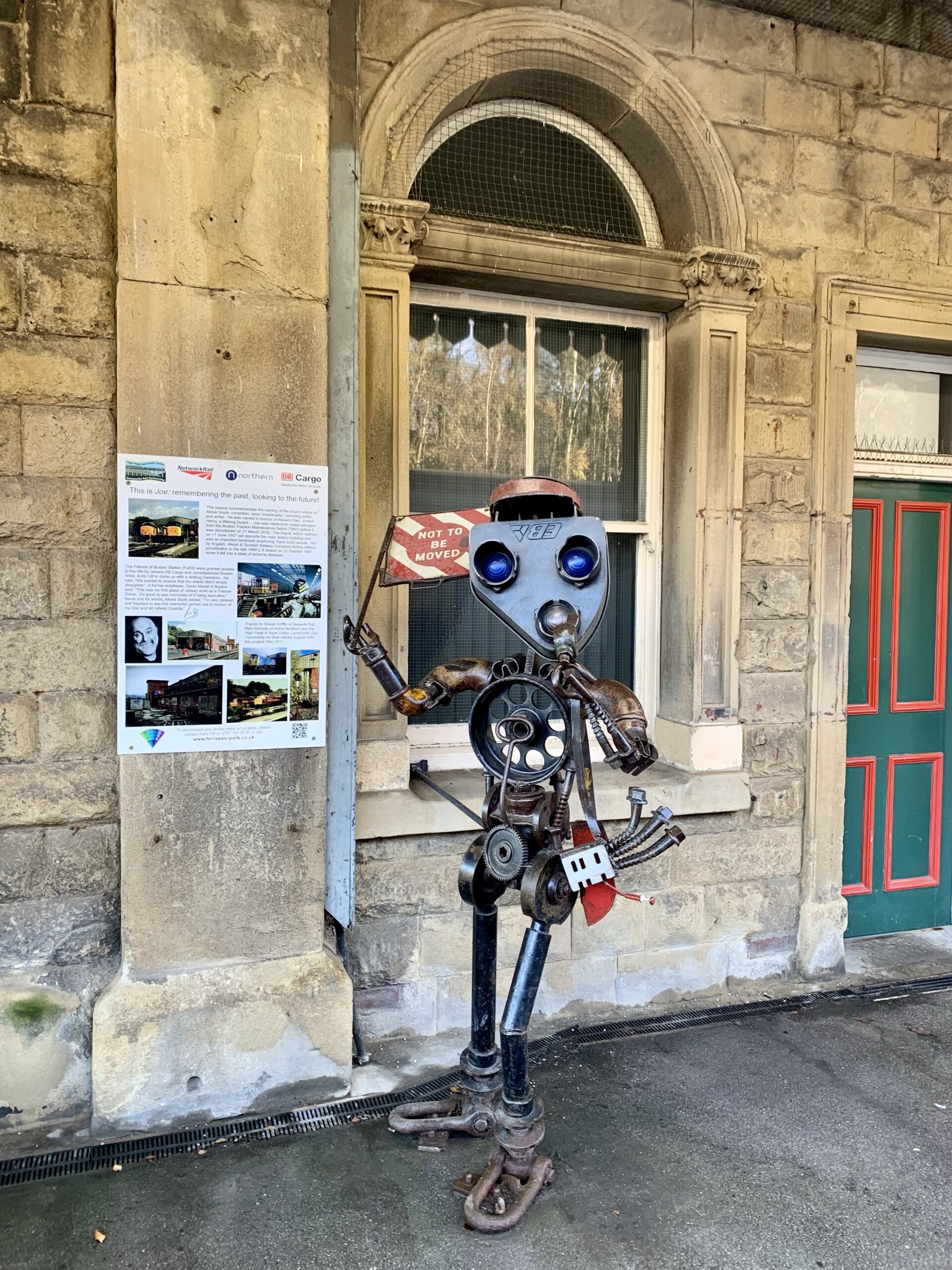
The LNWR station building at Buxton – 25/11/2022An O gauge model of the demolished Midland Station at Buxton constructed by Barry Bryant, Keith Holland and Charlie Schultz which took four years to build using photographs and scale drawings – 25/11/2022Buxton railway station with Northern Rail Class 156 No. 156452 and Class 150 No. 150121 – 25/11/2022Class 156 No. 156460 contemplates the view towards Manchester with signal box and surviving semaphore signalling – 25/11/2022Mural of Buxton at the railway station – 25/11/2022Joe the Guard statue at Buxton railway station. He was named after broadcaster and comedian Alexei Sayle in honour of his father, Joseph Henry Sayle, who was a lifelong guard. Joe was made from metal salvaged from Buxton Traction Maintenance Depot (TMD) before it was demolished in March 2016 – 25/11/2022
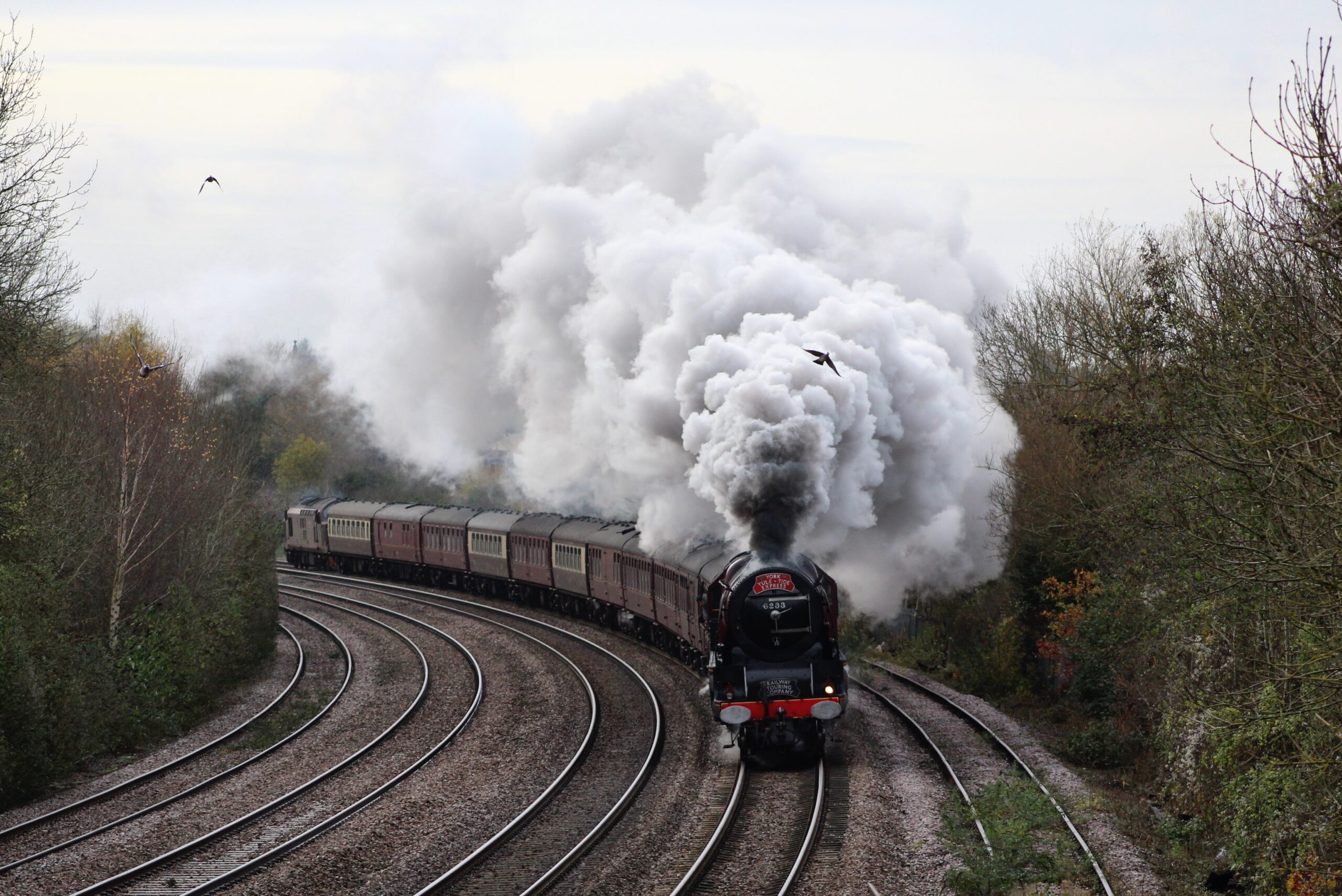
Saturday we had planned to head to Nottingham to meet friends. There was a strike by ASLEF union members which prevented any East Midlands Railway (EMR) trains running through the city. However, a quick look at the rail tour schedule revealed that The Railway Touring Company organised “York Yule-Tide Express” was scheduled to pass very close to Nottingham at around 1030 that morning. So feeling quite pleased that a mainline steam train would be in our sights, we headed off to Toton which is halfway between Derby and Nottingham. After taking some photographs from the A52 looking across to Toton depot, we drove a short distance to Sandiacre and the Iron Giant Walkway which crosses the five track railway line which I though would make a great location to see LMS Coronation Pacific No. 6233 ‘Duchess of Sutherland’ head to York.
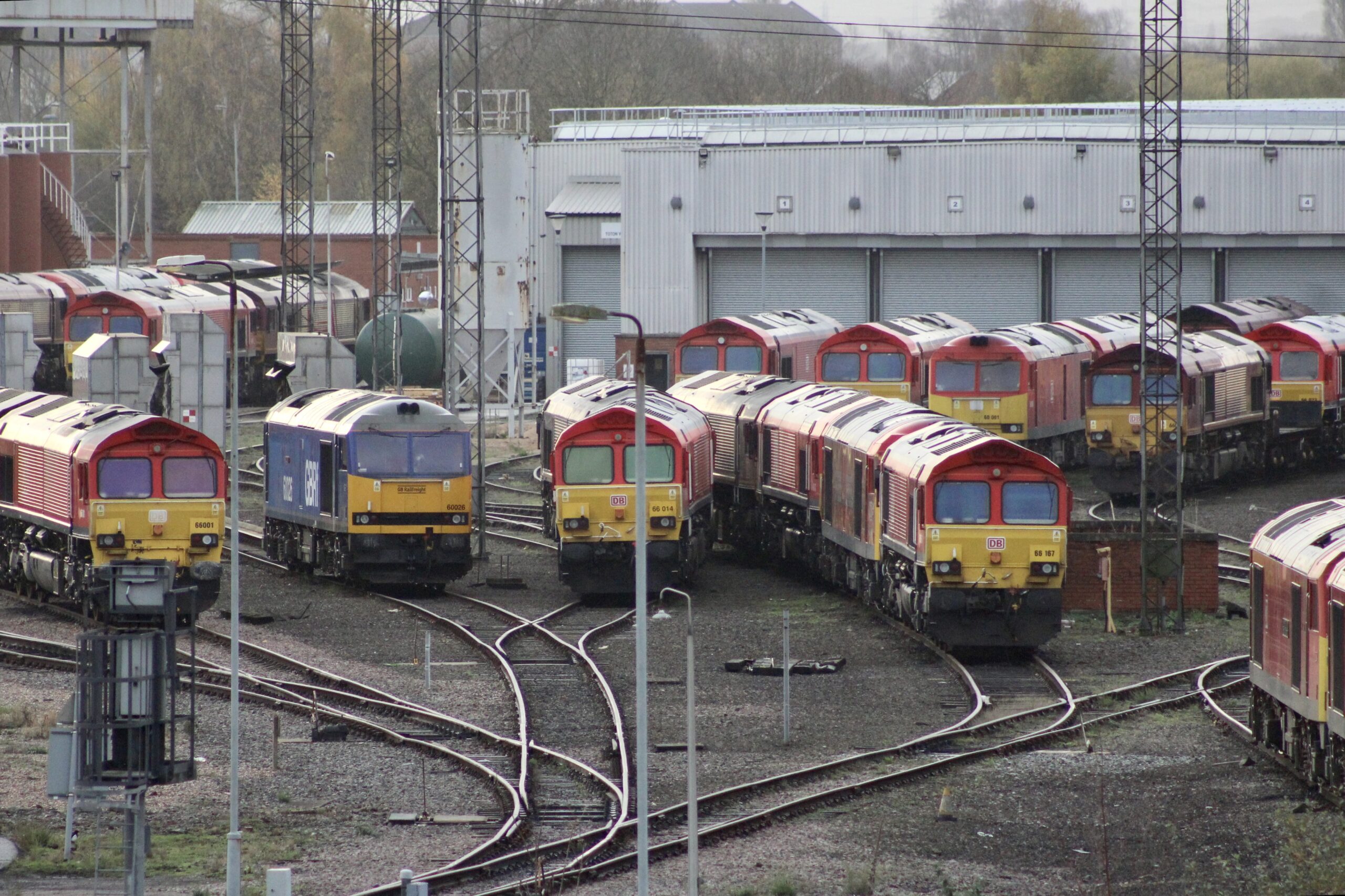
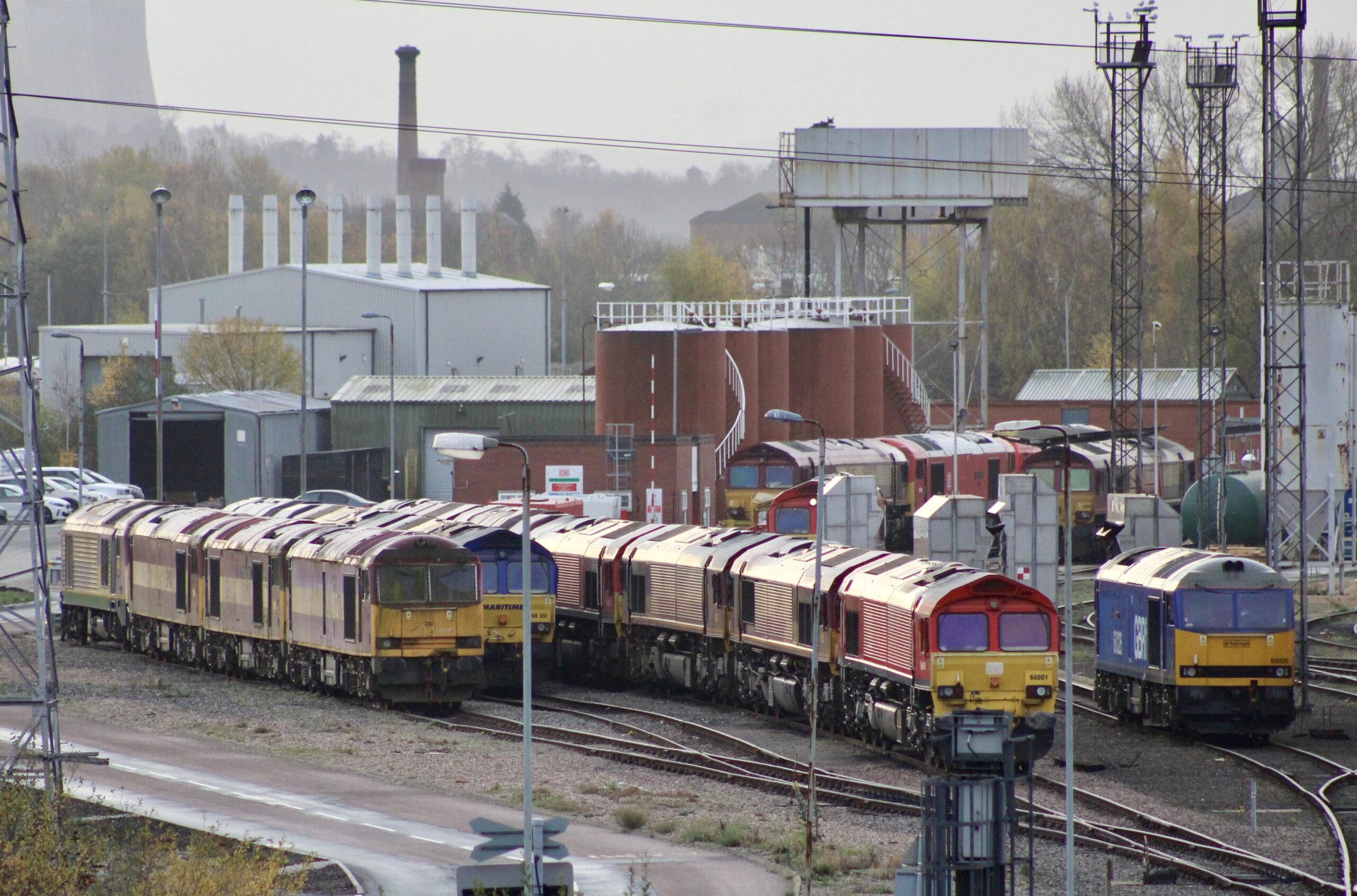
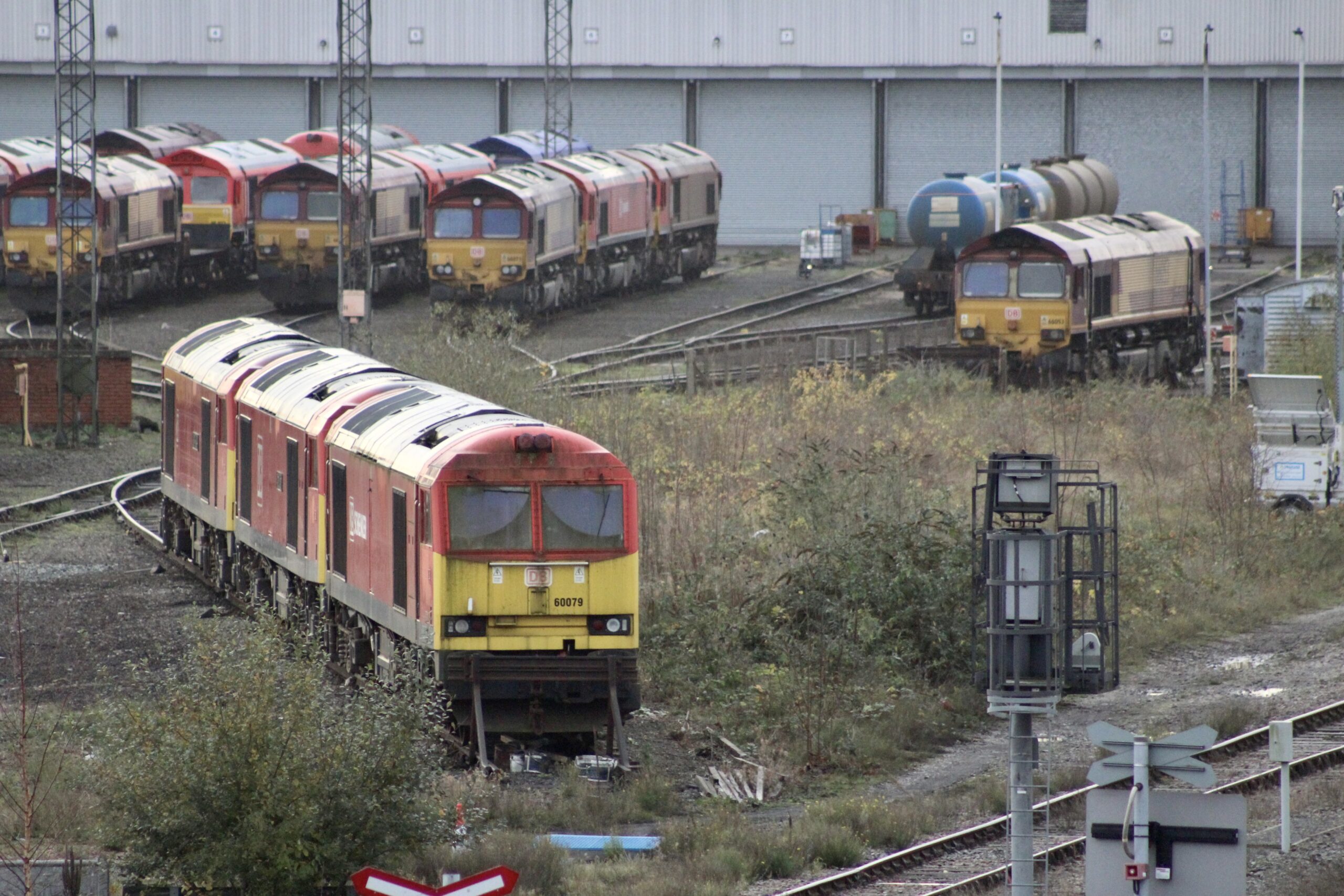
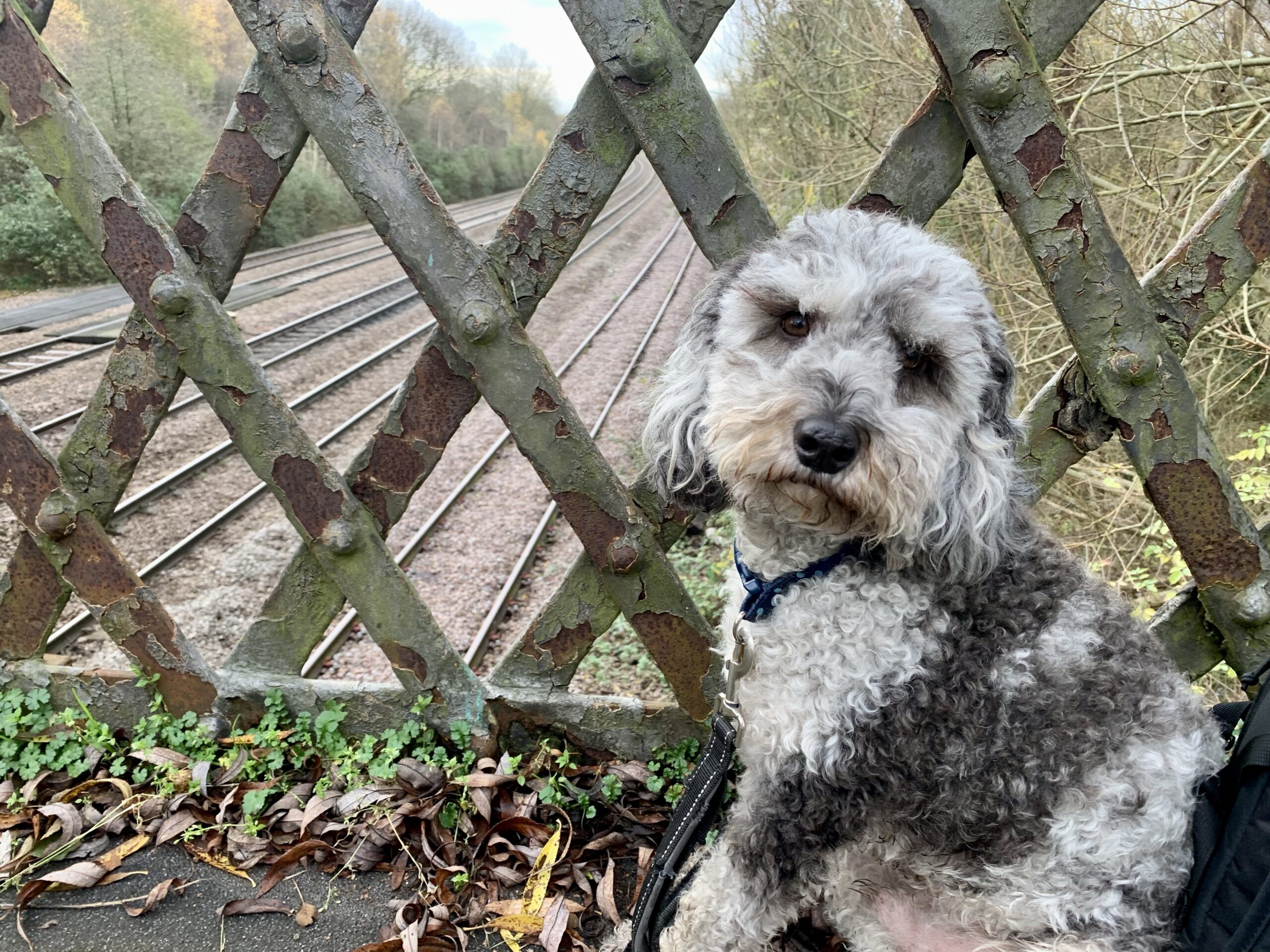
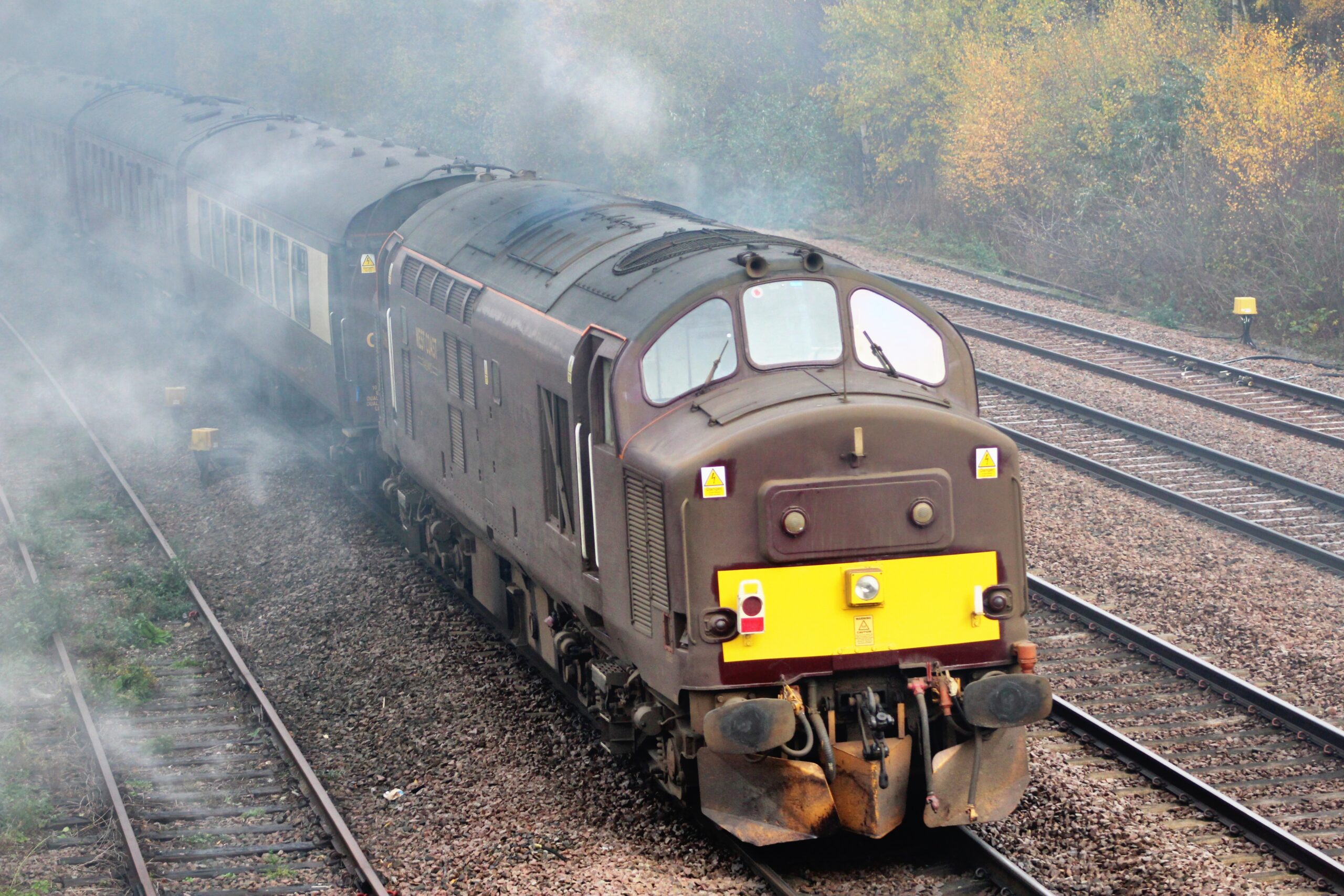
Toton viewed from the A52 rail over bridge – 26/11/2022A collection of Class 60 and Class 66 locomotives at Toton. Spot the Class 67! – 26/11/2022A view across to Toton depot with Class 60 No. 60079 in the foreground – 26/11/2022Class 60 No. 60012 slowly rotting away at Toton – 26/11/2022Some of the stored DB Class 60 locomotives at Toton with No. 60048 closest to the camera – 26/11/2022Yoshi settles down on the Iron Giant Walkway at Sandiacre waiting for the Duchess – 26/11/2022Pigeon bothering LMS Coronation Pacific No. 6233 ‘Duchess of Sutherland’ working 1Z10 0635 Ealing Broadway to York “York Yule-Tide Express” passing Sandiacre – 26/11/2022West Coast Railways Class 37 No. 37668 at the rear of 1Z10 0635 Ealing Broadway to York “York Yule-Tide Express” passes Sandiacre – 26/11/2022
Video of LMS Coronation Pacific No. 6233 ‘Duchess of Sutherland’ working 1Z10 0635 Ealing Broadway to York passes the Iron Giant Walkway at Sandiacre (additional video footage courtesy of Caroline Smith – 26/11/2022
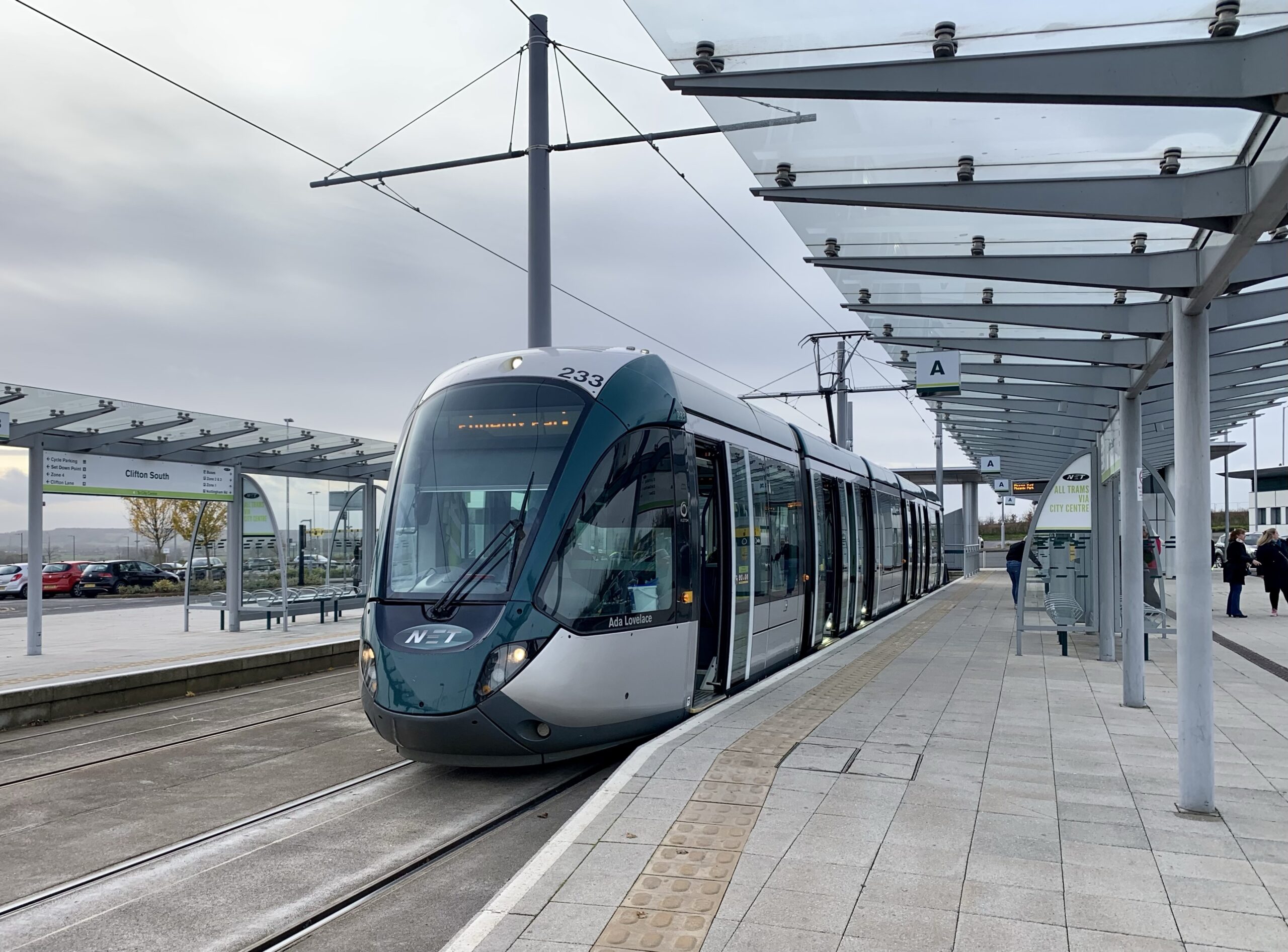
While we were waiting for The Duchess we learned Nottingham Castle had fallen into liquidation and was closed to the public. We were not discouraged by this set back and headed off to the Park and Ride at Clifton South, Nottingham. It was only when we tried to buy tickets for the Nottingham Tram that we discovered that dogs were ‘not allowed’ onboard. The helpful Nottingham Express Transit (NET) representative at at Clifton South suggested asking tram drivers if they minded Yoshi being carried onboard and luckily none of the drivers of the trams we travelled on that day objected. Quite frankly, I was amazed that dogs were not allowed on the trams. A quick look at other tram networks in the UK revealed that NET are not alone in their no dog policy. Surely if local authorities want to get people out of their cars and onto public transport this absurd rule needs to be changed. I spoke to NET who told me dogs are not carried on the Nottingham trams for “health and safety reasons and for passenger and animal safety”. I was however informed that dogs would be allowed if they were carried in a suitable “pet carrier or bag.”
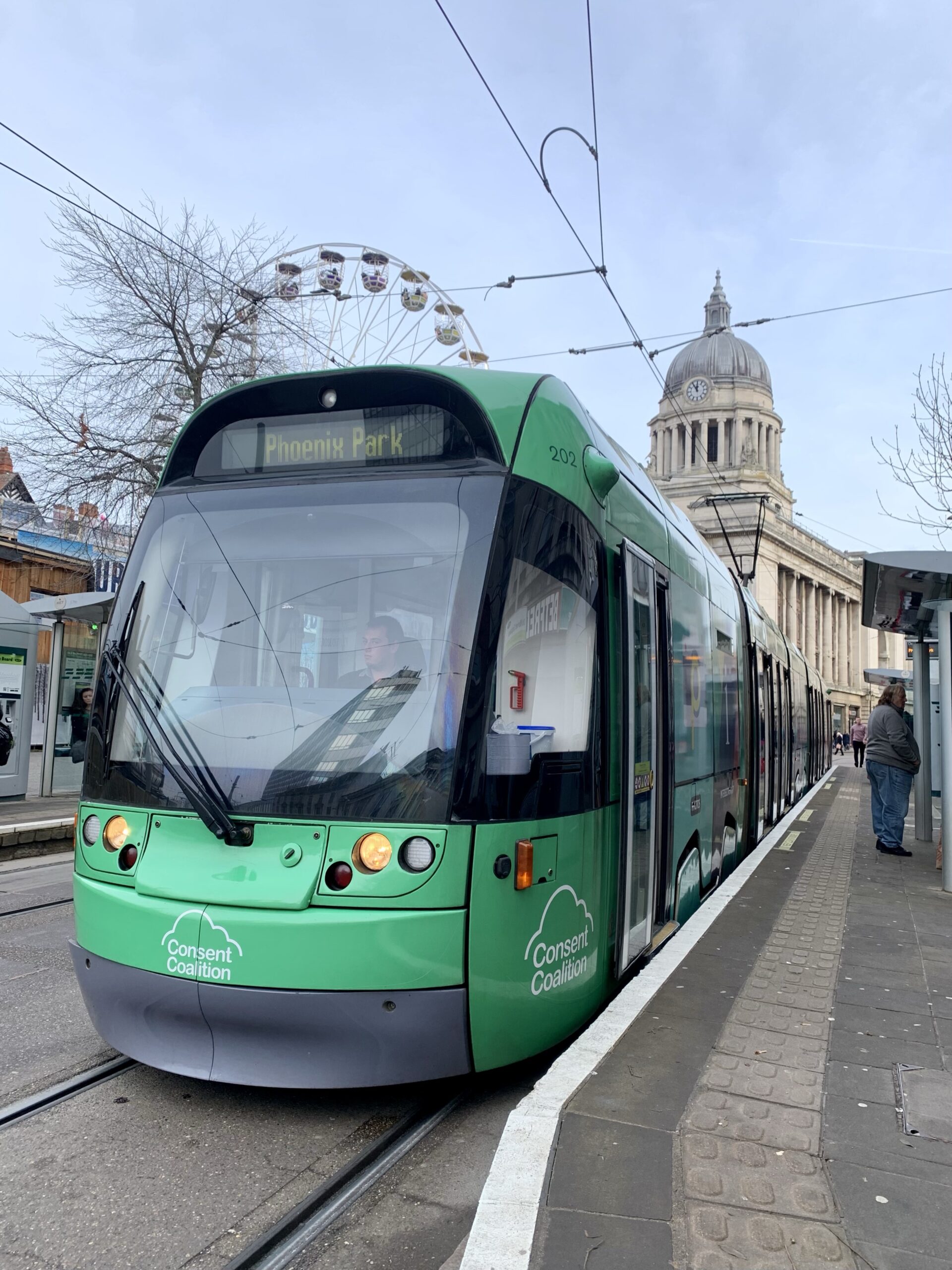
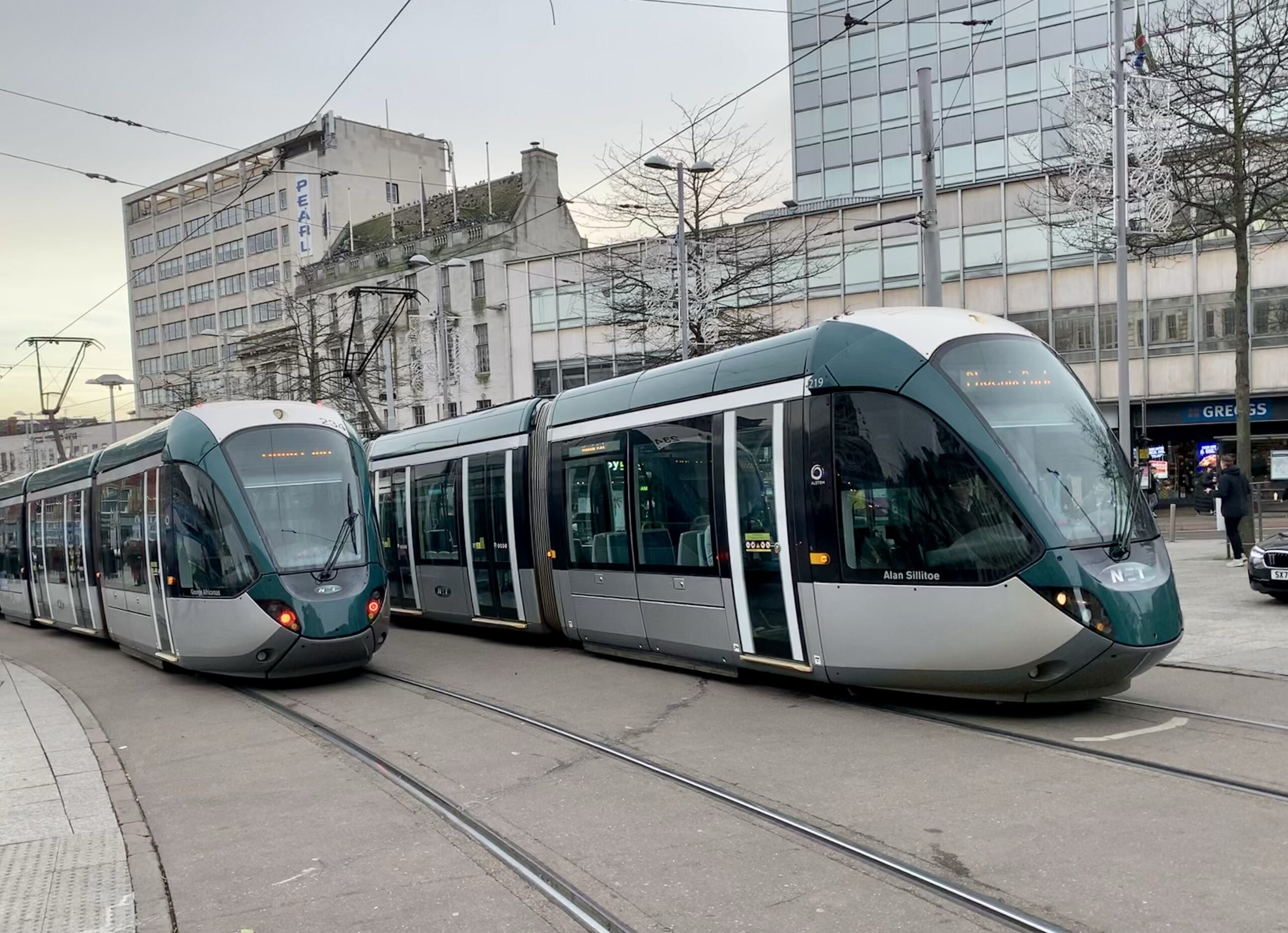
Nottingham Express Transit Tram No.233 at Clifton South Park and Ride – 26/11/2022NET Tram No. 202 awaits departure from Old Market Square bound for Phoenix Park – 26/11/2022Nottingham City Centre trams No. 234 and No. 219 ‘Alan Sillitoe’ – 26/11/2022
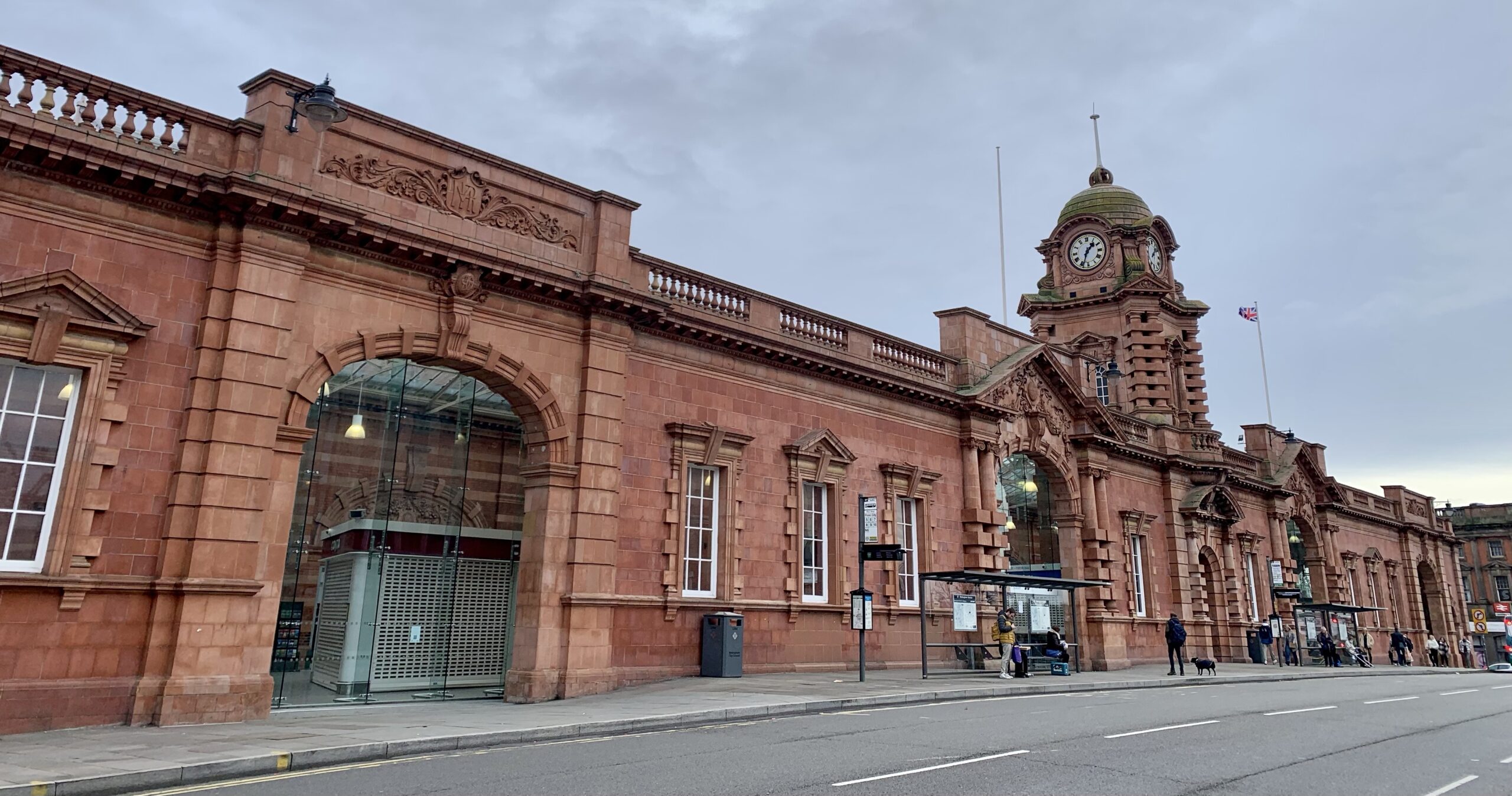
Once in Nottingham, Yoshi and I decided to explore. First stop was Nottingham railway station which is the only surviving city centre station which survives from the four that once served the population of the city of Nottingham. The station was first built by the Midland Railway (MR) in 1848 and later rebuilt in 1904 to design by company architect Charles Trubshaw with external detail by local architect Albert Lambert. It is now owned by Network Rail (NR) and managed by (EMR). The tram network runs above the station on the path of the former Great Central Railway (GCR) viaduct and includes an interchange tram stop. The station was renovated in 2017 but a fire started by a 33 year old female drug addict in January 2018 badly damaged the building.
Nottingham Railway Station exterior – 26/11/2022
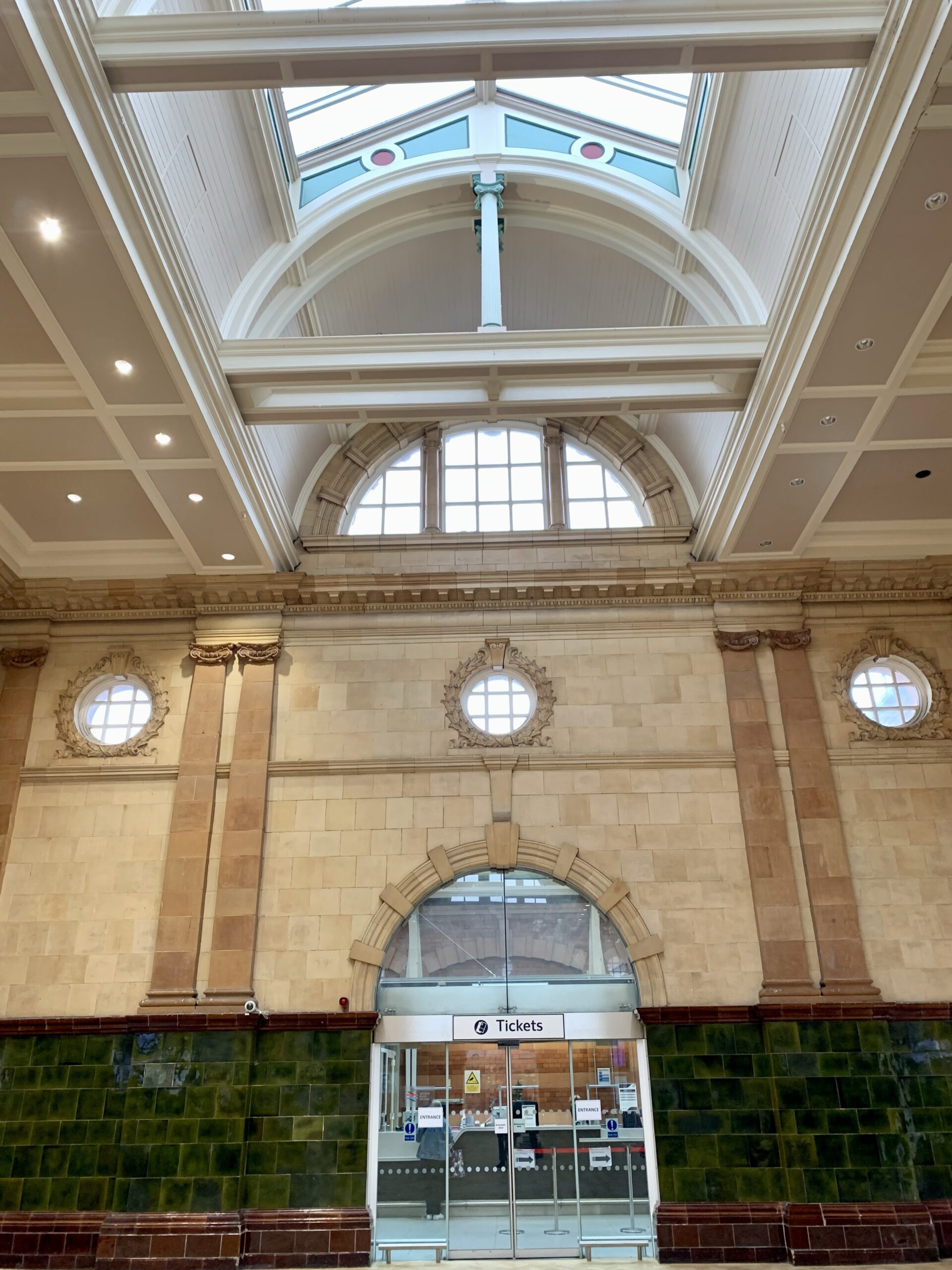
The station entrance is itself on a road bridge above the platform level and is of heavy railway baroque style with the frontage consisting of a grand passageway, where road traffic once had access, flanked by a giant arch at each end and five arches along the front. A large domed clock tower dominates the building while the interior ticket hall displays a Renaissance quality
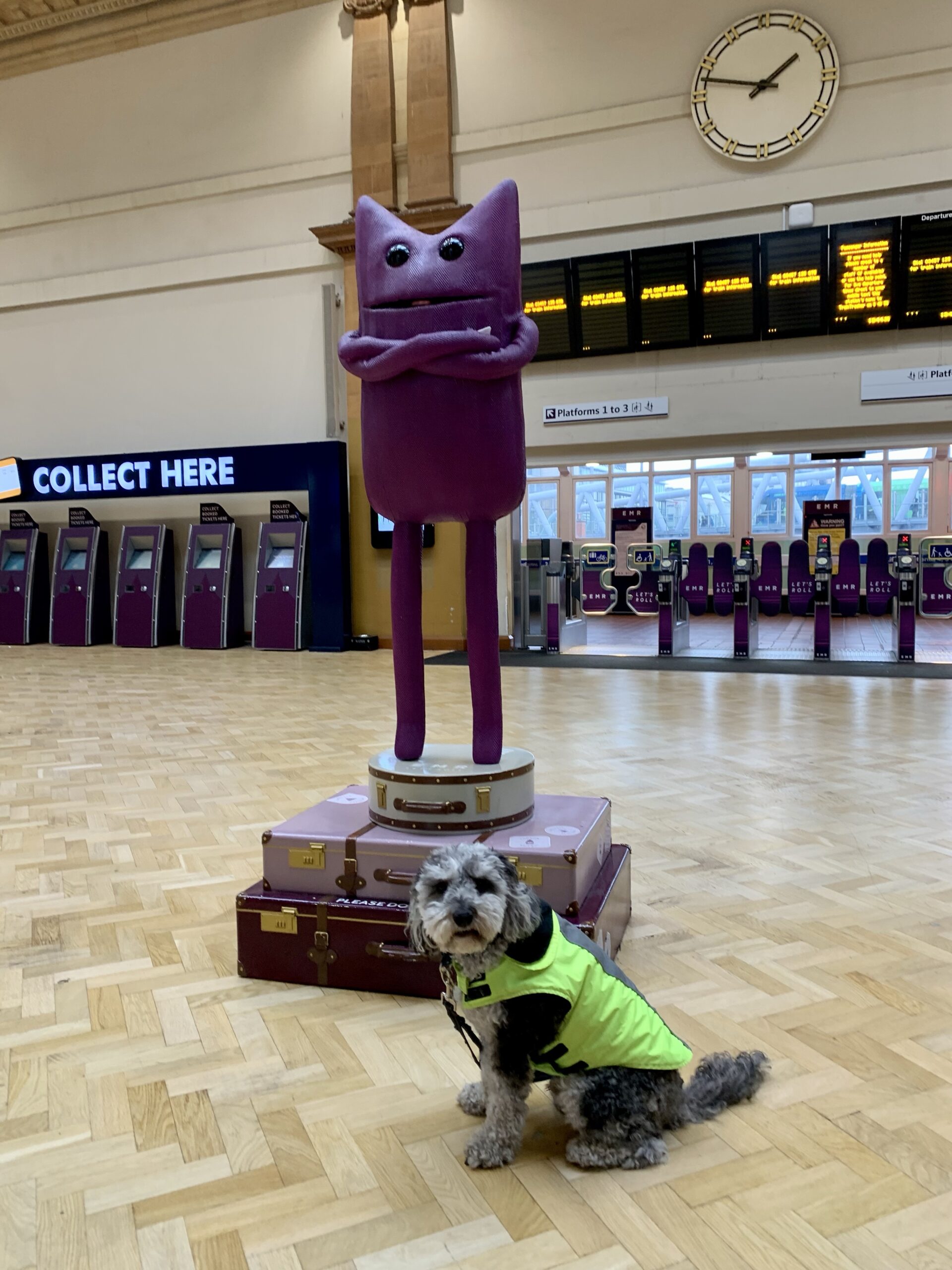
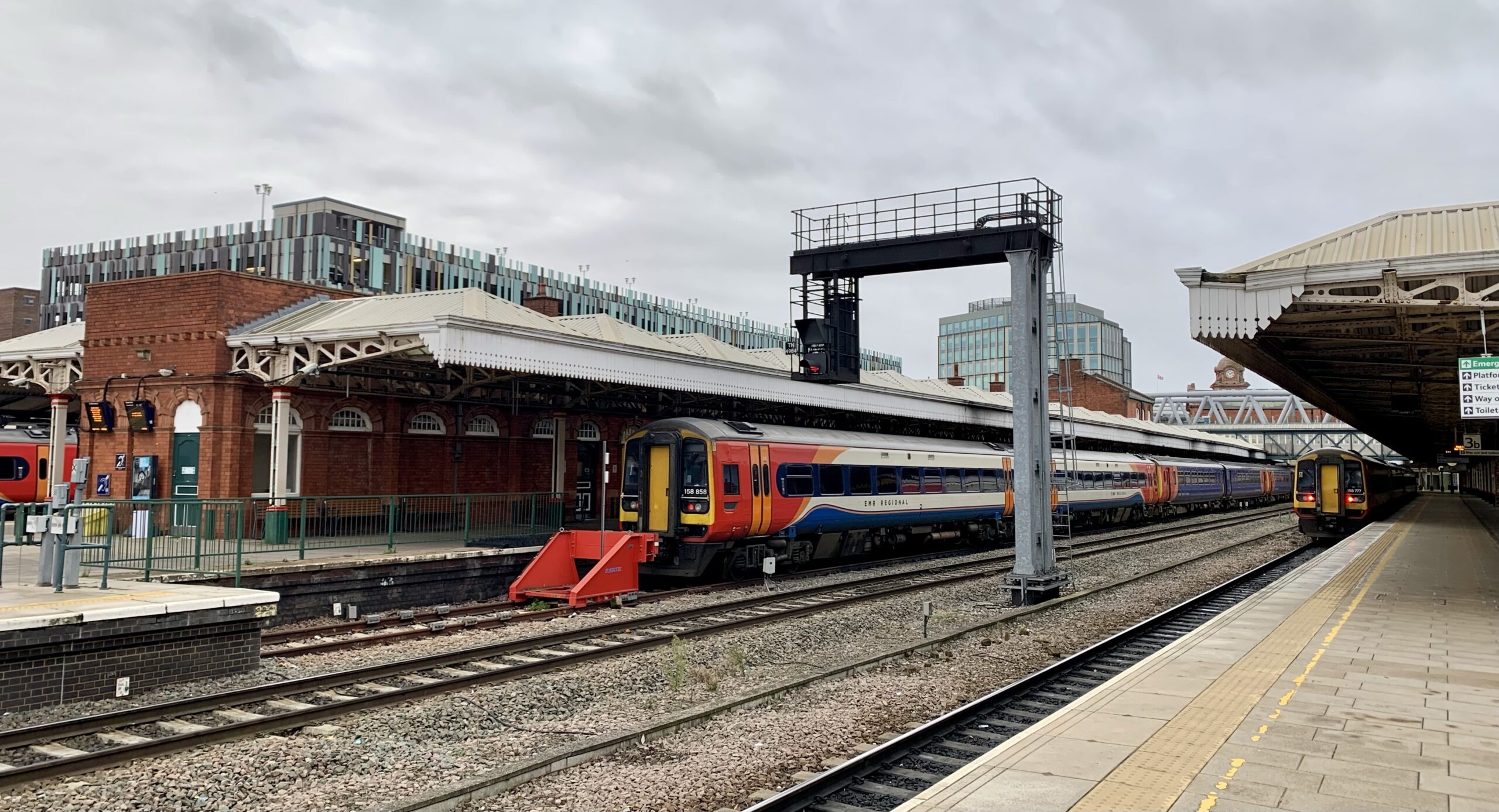
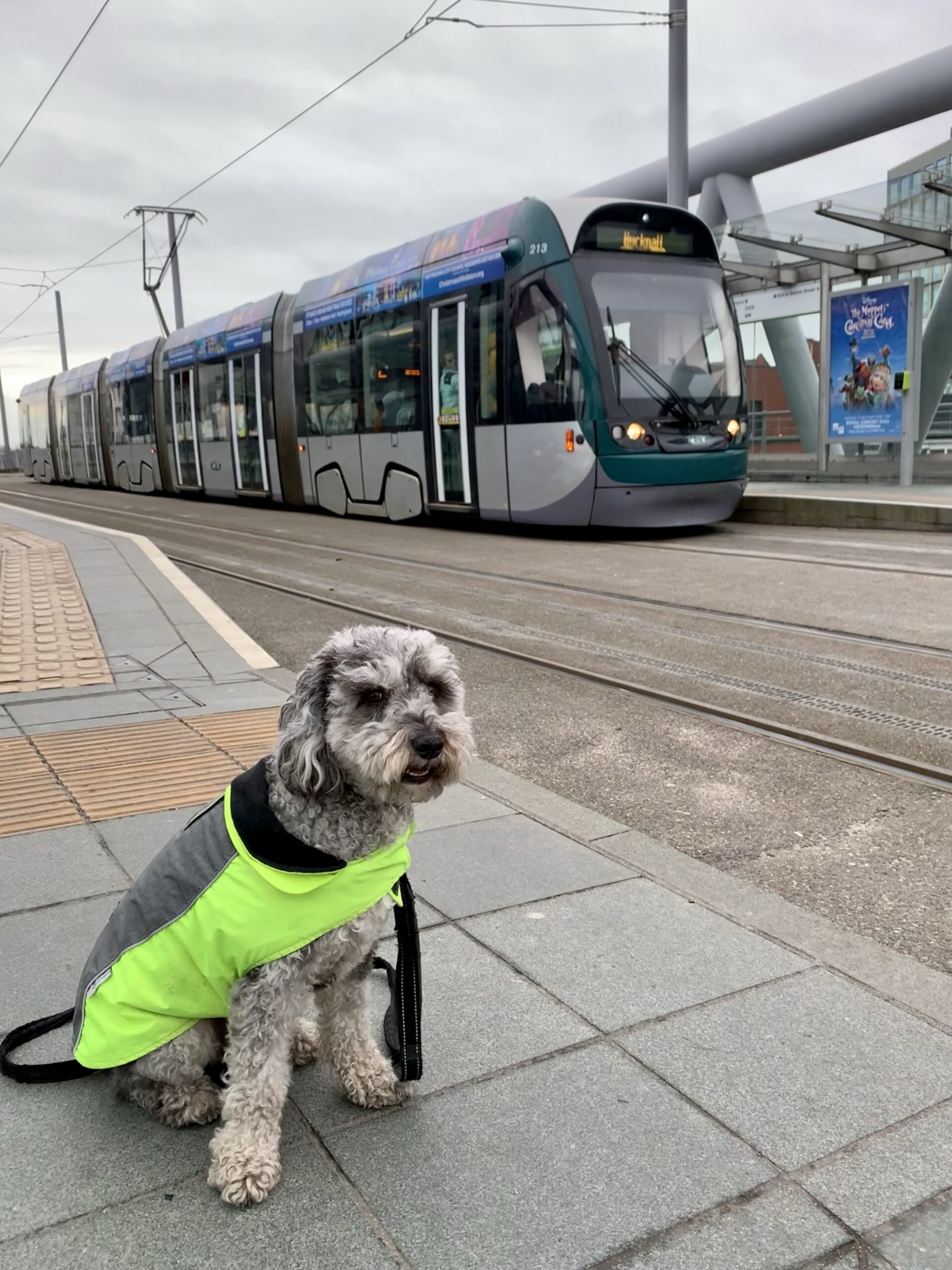
The ticket hall, Nottingham Railway Station – 26/11/2022Yoshi meets East Midland Railway mascot “Miles” at Nottingham Railway Station – 26/11/2022Stationary trains including Class 158 diesel multiple units No.’s 158858 and 158777 in evidence at Nottingham Railway Station during a one day strike by ASLEF members – 26/11/2022Yoshi waits at Nottingham Station Tram Stop while NEC tram No. 213 awaits to depart on a service to Hucknall – 26/11/2022
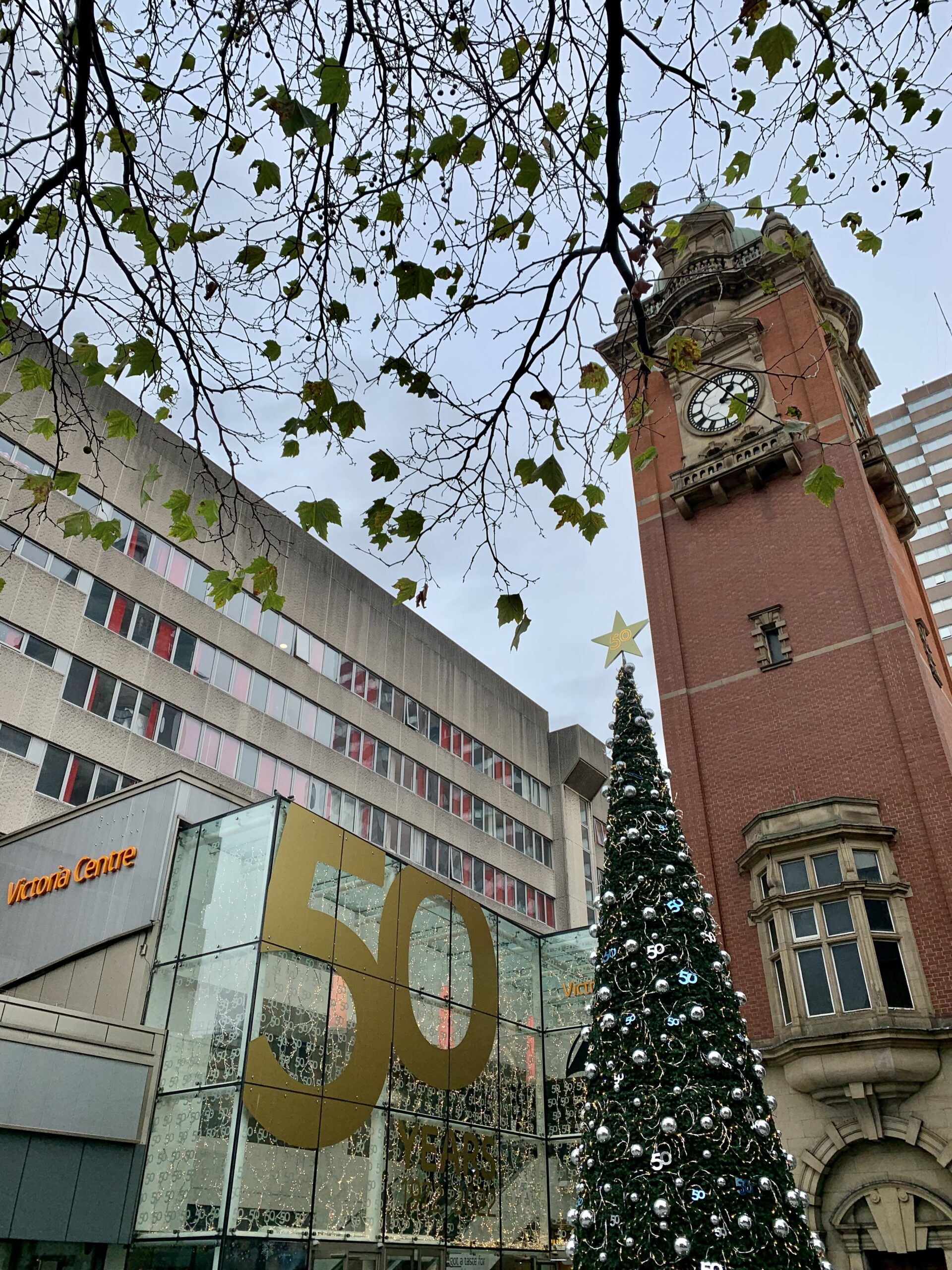
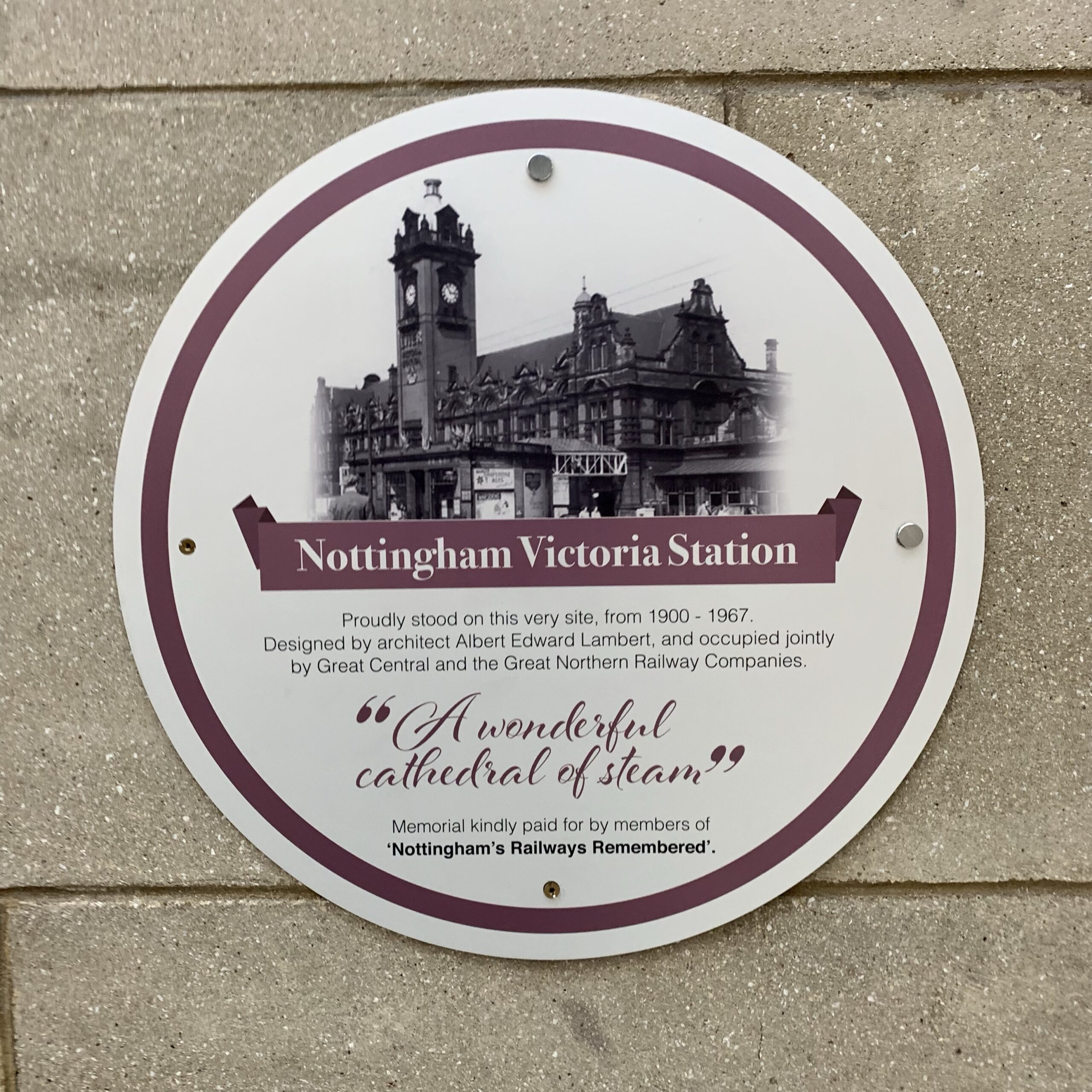
The other city centre railway stations were the GCR’s Nottingham Victoria, which was raised to the ground and replaced by a shopping centre with only the clock tower surviving, and two on London Road opened by the Great Northern Railway (GNR). Of the Nottingham London Road station’s; the High Level station was demolished in 2006 and although severely damaged by fire in 1996, the Low Level station building has been restored and converted to a health and fitness club.
The clock tower survived the demolition of Nottingham Victoria railway station – 26/11/2022Plaque commemorating Nottingham Victoria with the Victoria Shopping Centre, Nottingham – 26/11/2022
That’s it for another week – thank you for joining us. We’ll leave you with the following thought; “In times of joy, all of us wished we possessed a tail we could wag” – W.H. Auden
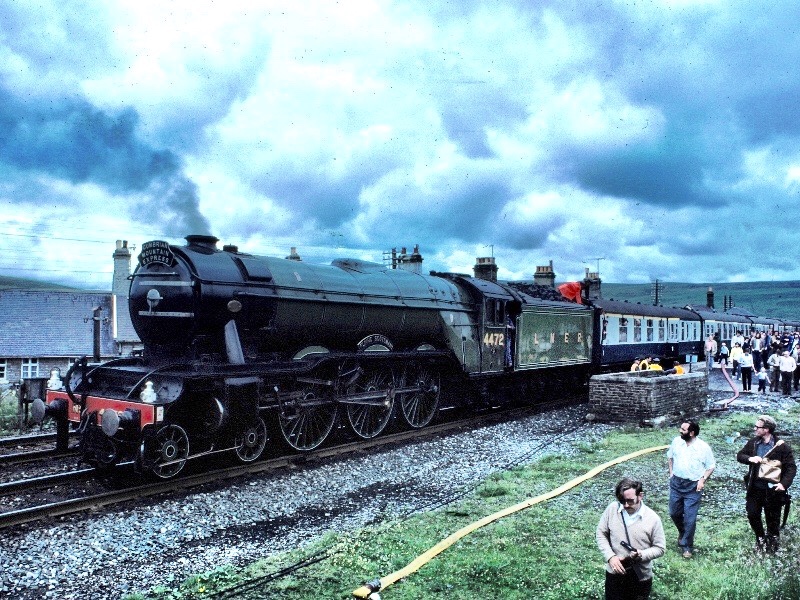
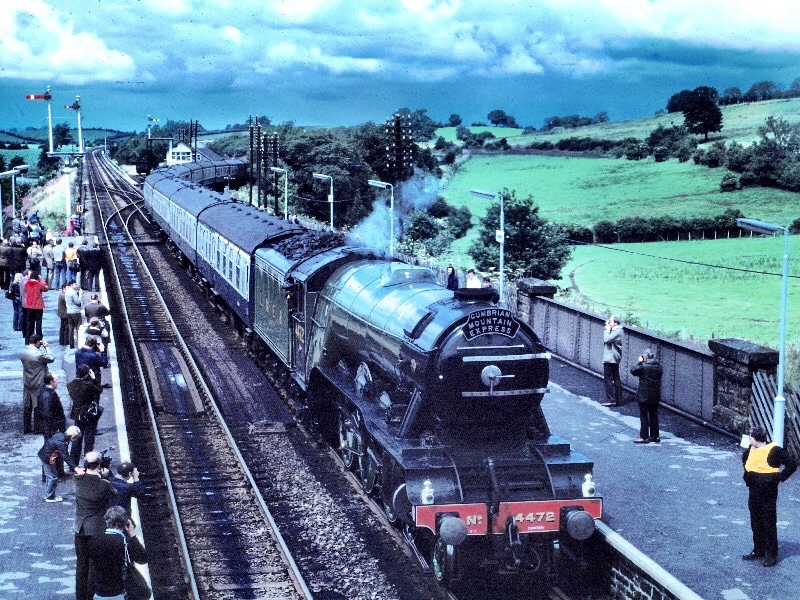
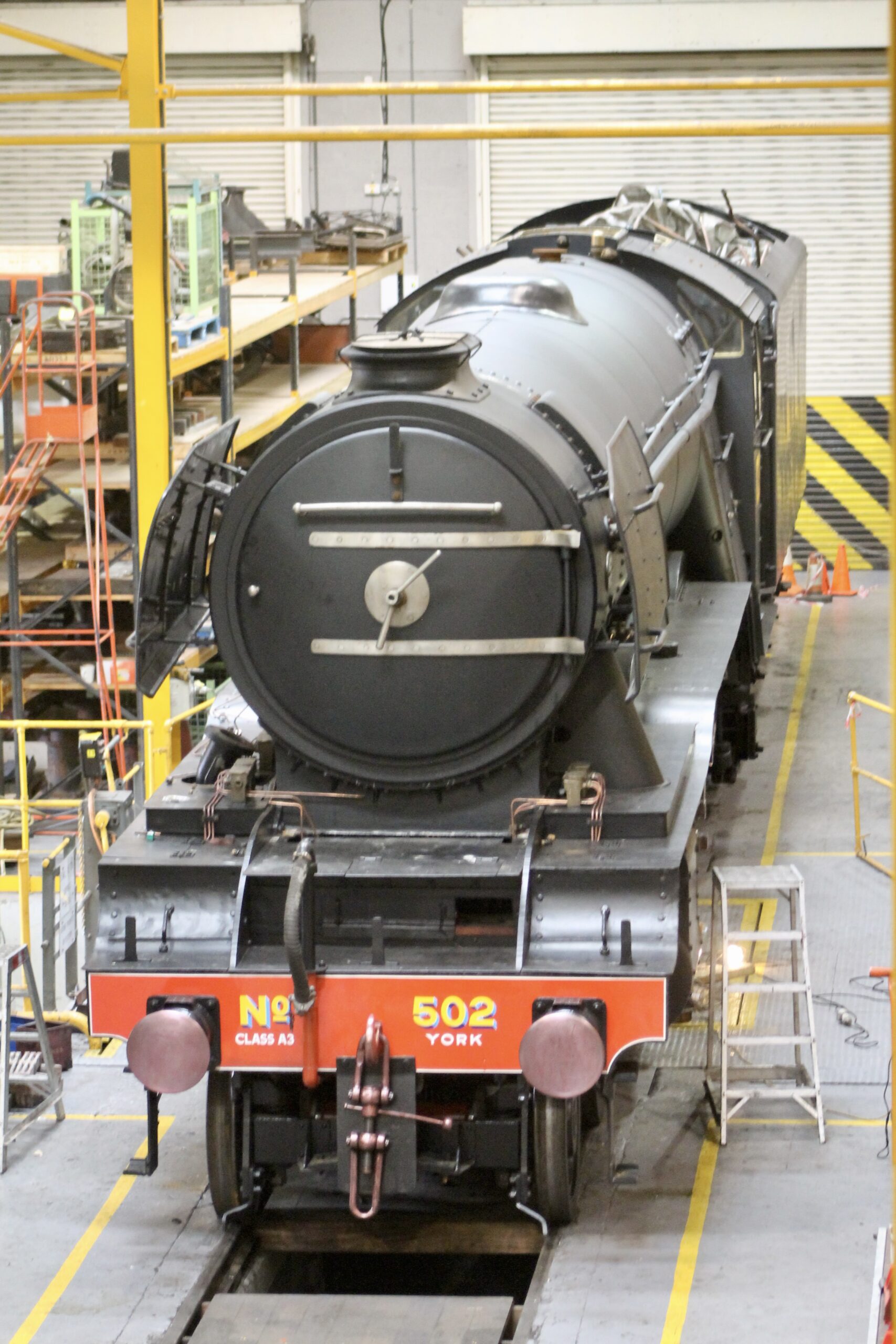
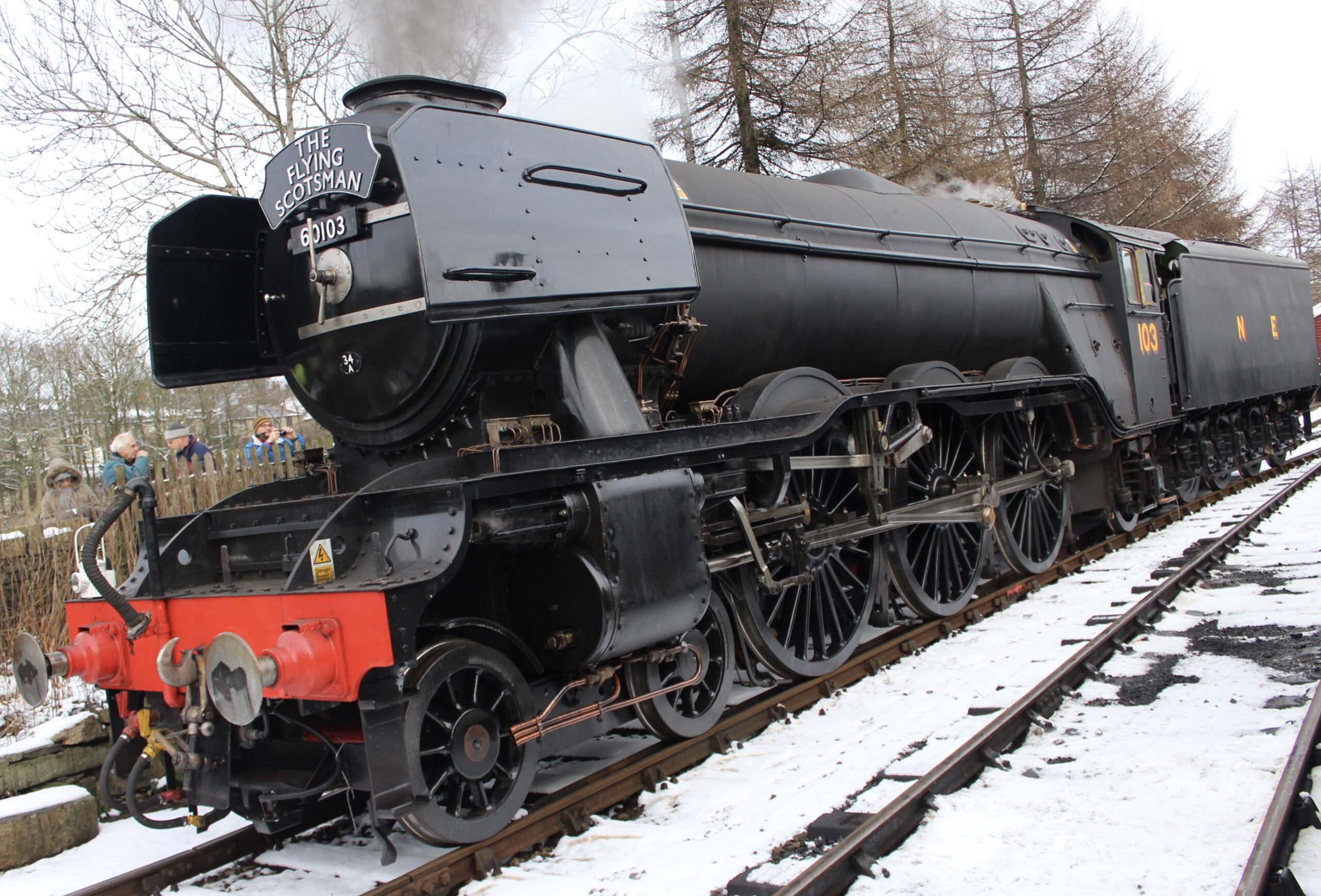
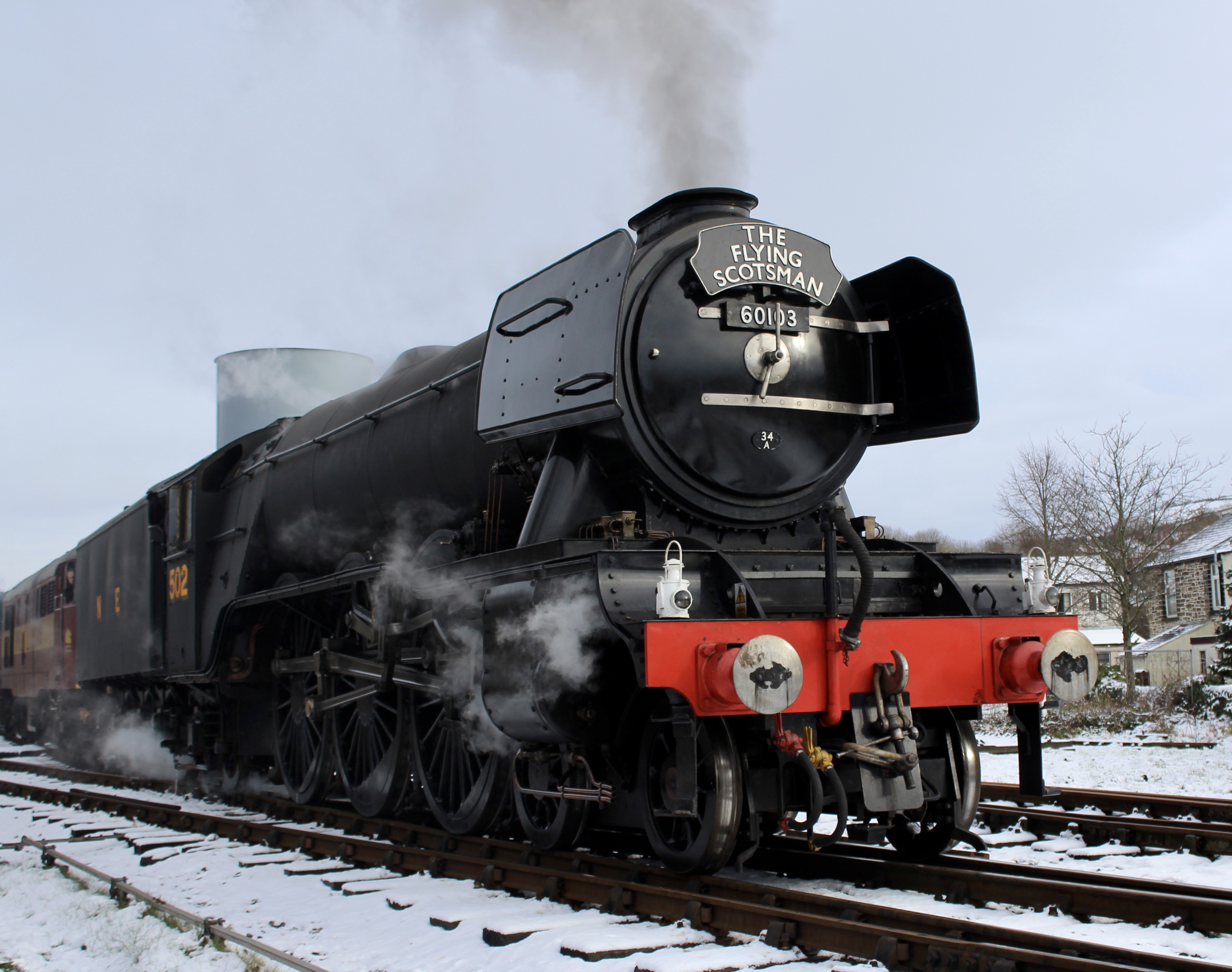
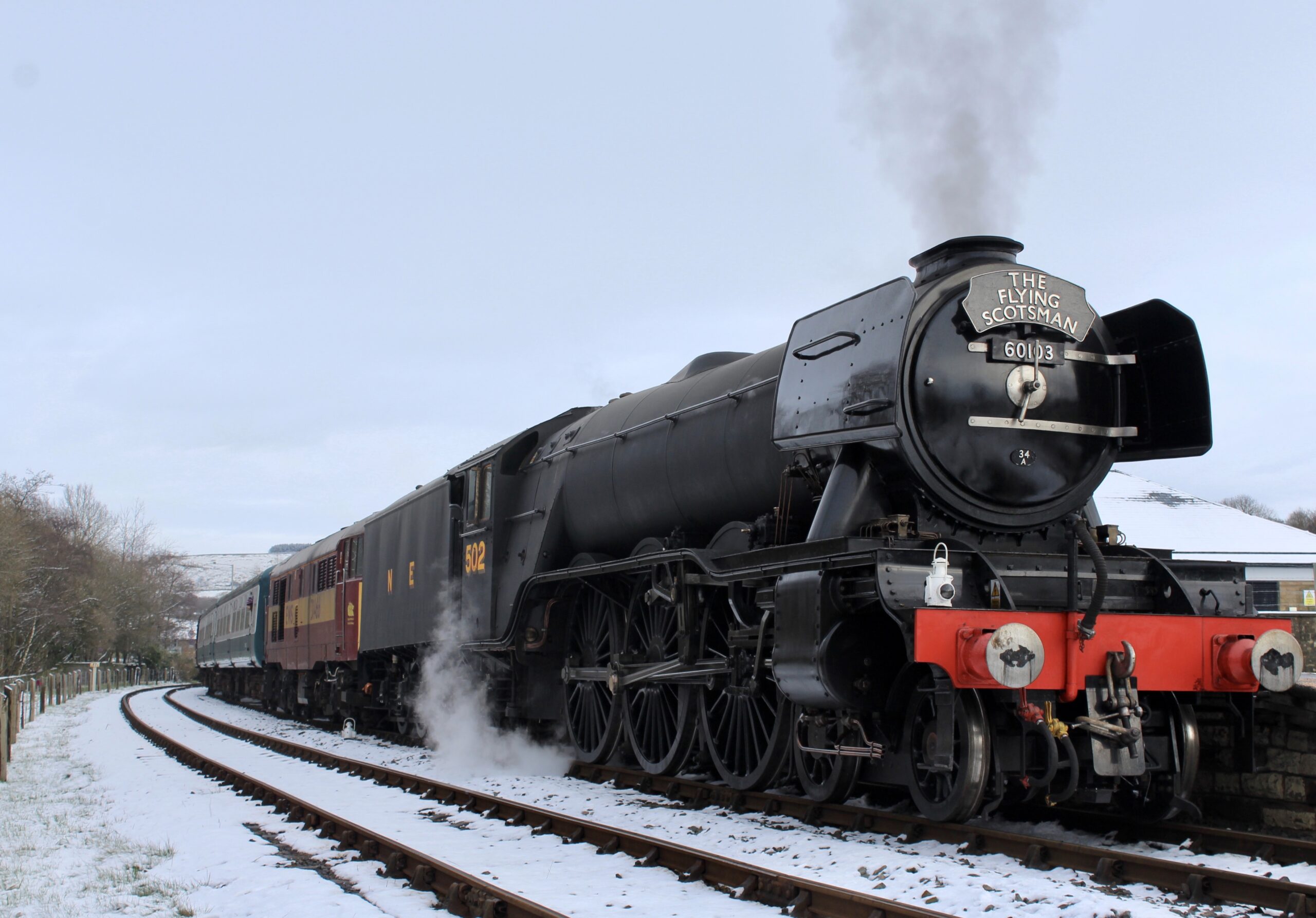
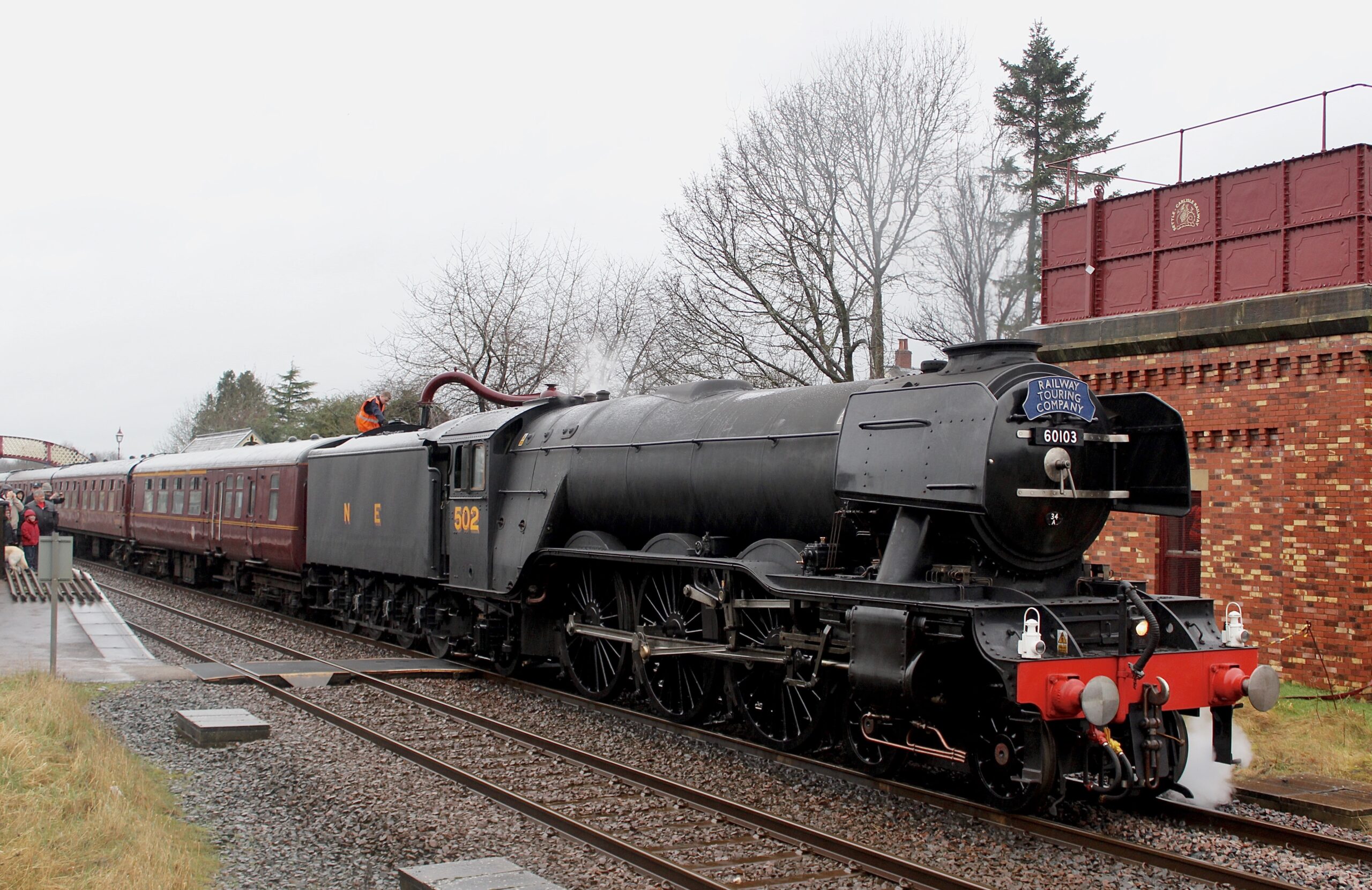
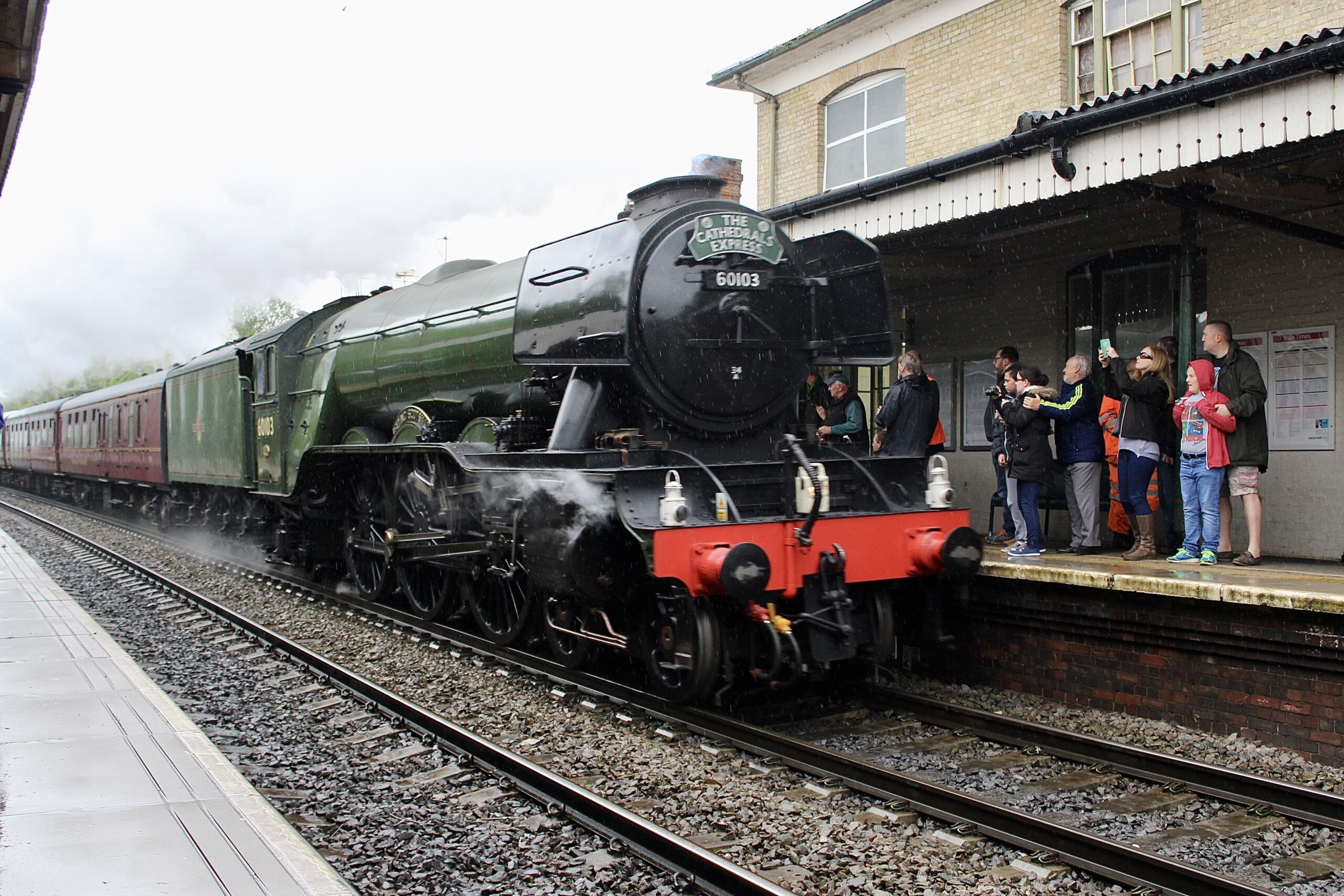
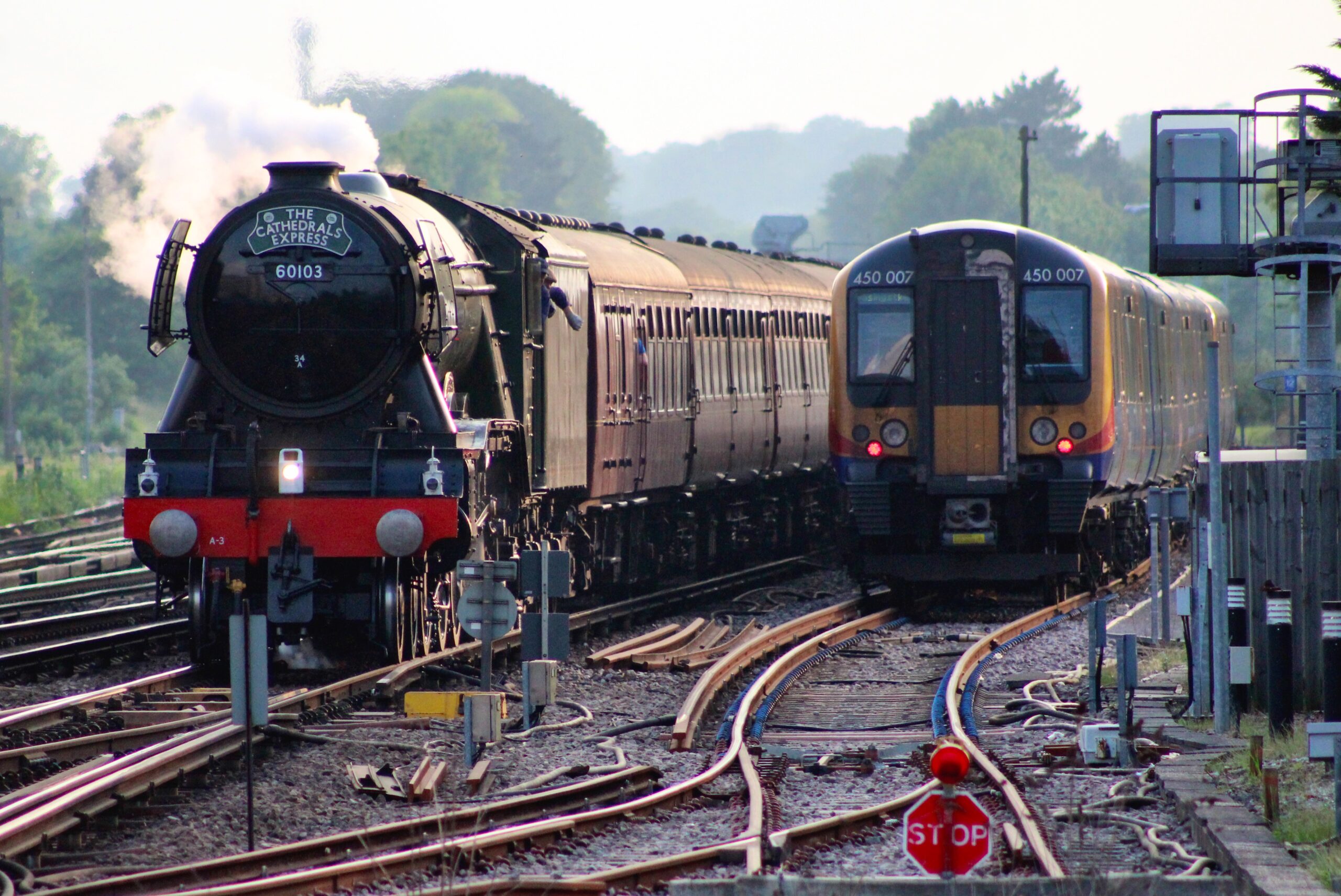
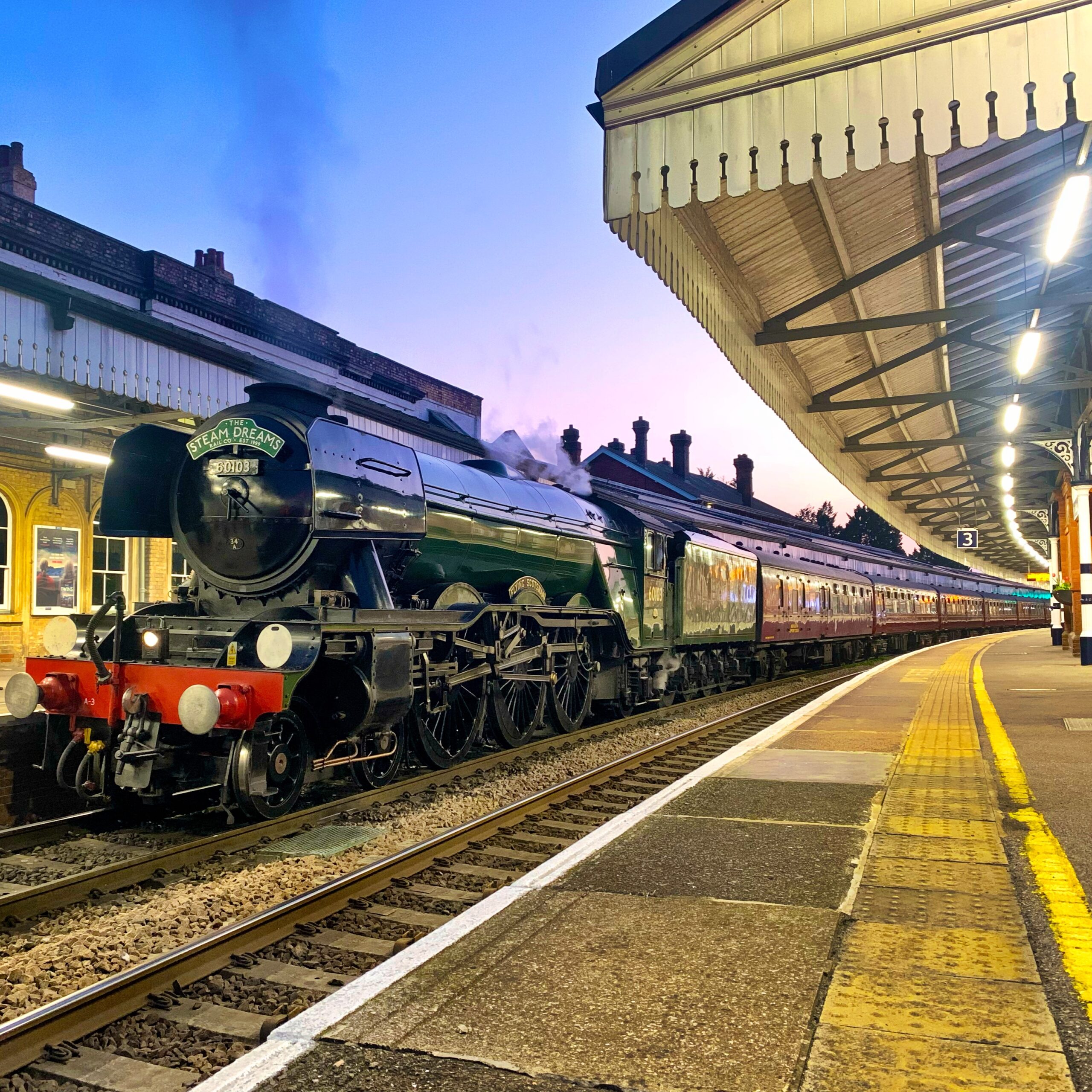
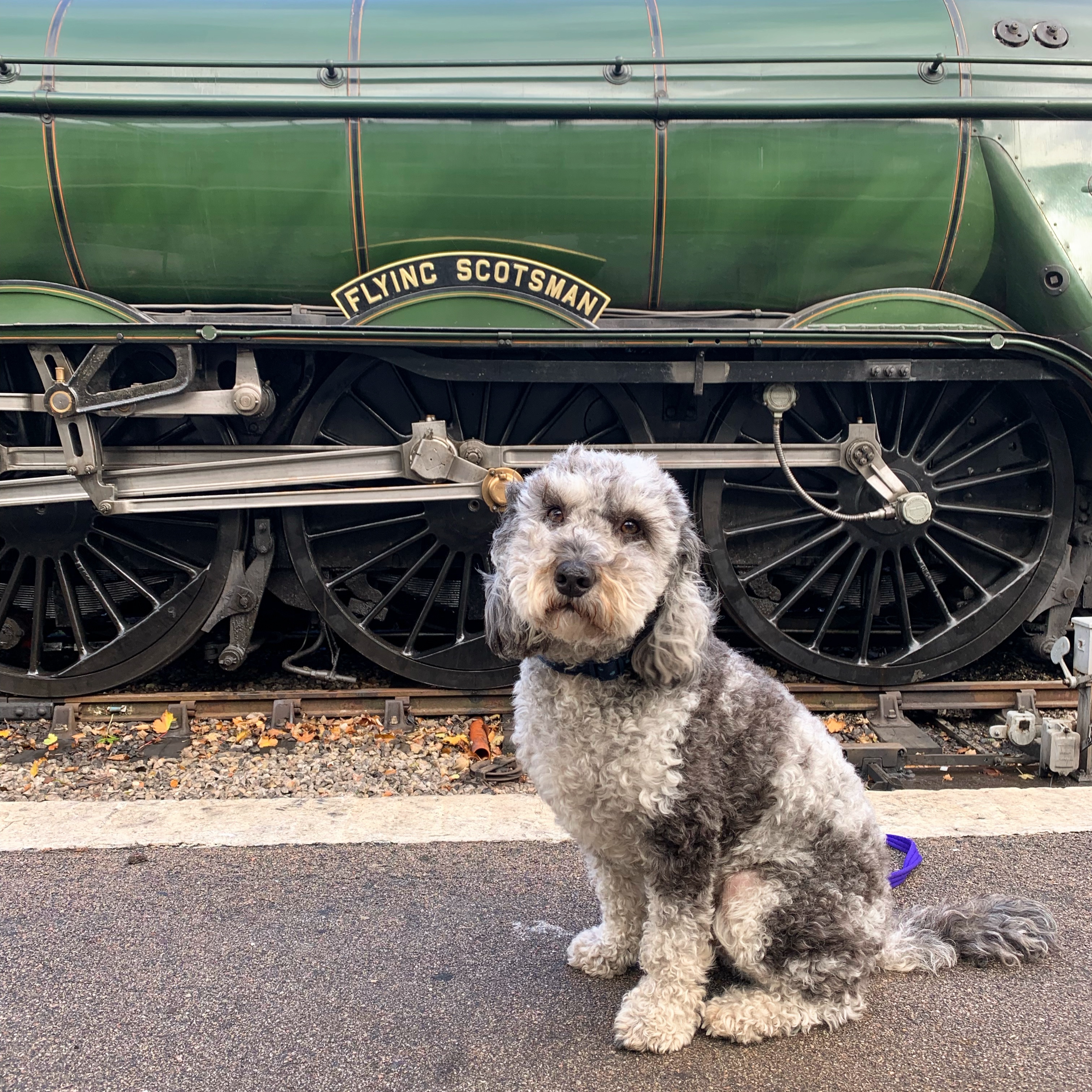
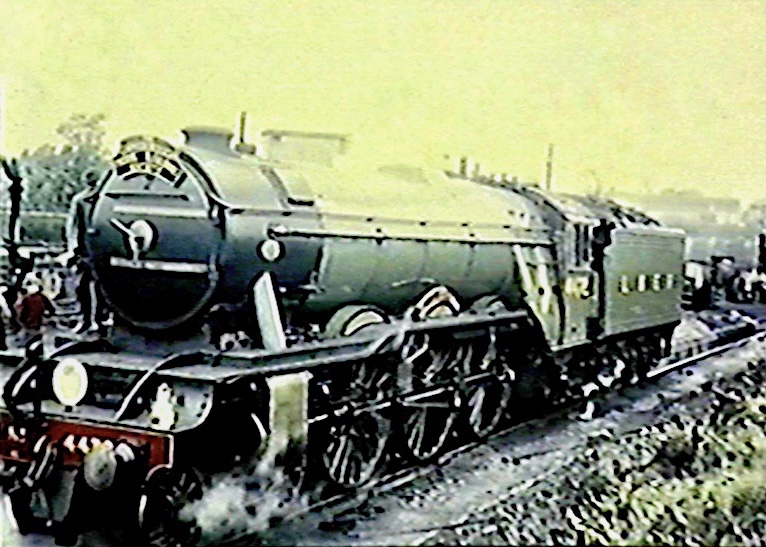
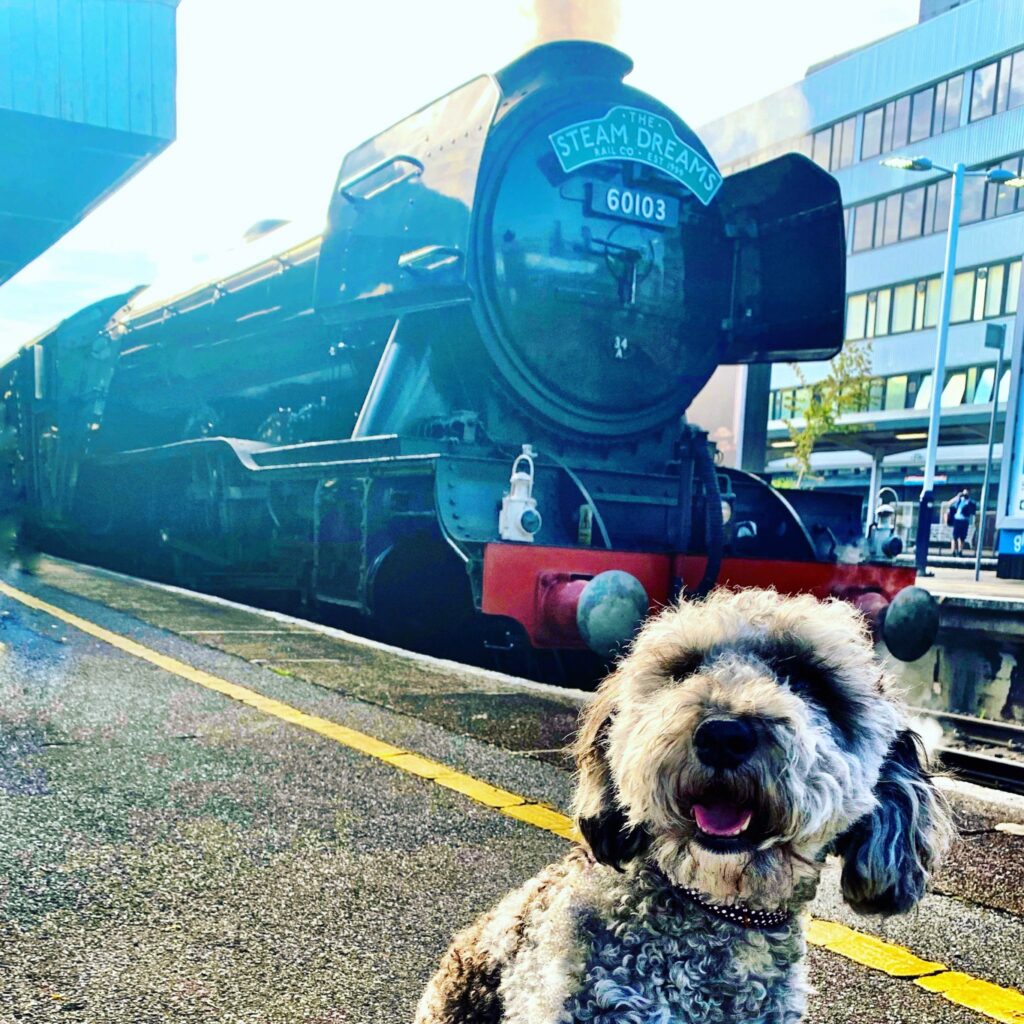
LNER Gresley A3 4-6-2 No. 60103 hauls her last passenger train during her 2022 visit to the Swanage Railway as 1X10 1645 Swanage to Norden crosses Corfe Viaduct – 26/10/2022No. 4472 ‘Flying Scotsman’ alongside Stanier Black Five Class 5MT 4-6-0 No. 5407 at Steamtown which occupied the site of the former London Midland & Scottish Railway Carnforth Motive Power Depot (MPD) opened in 1944. It was hoped that the depot would form part of a preservation scheme involving what is now the Lakeside & Haverthwaite Railway but when this could not be realised due to road modernisation it was developed as major visitor attraction. In 1974 Sir William McAlpine became a shareholder in the company for the purposes of stabling ‘Flying Scotsman’ and he eventually took a controlling interest in the company and purchased the complete site including the track from British Rail. In 1990 McAlpine’s controlling stake in Steamtown Railway Museum Ltd was sold to David Smith, who over the following years has bought out the majority of the minority shareholders. The site closed to the public in 1998 and today it is the base for Smith’s West Coast Railways, which operates heritage steam and diesel trains across the national UK railway network – 18/07/1981The “Cumbrian Mountain Express” departed Crewe at 0940 behind electric traction to Carlisle where No. 4472 ‘Flying Scotsman’ took over and took the train along Settle & Carlisle to Skipton and Carnforth followed by electric haulage to Crewe. Seen here for a water stop at Garsdale – 22/07/1981A feature of CME tours were the run pasts through Appleby where passengers detrained and given the opportunity to photograph the steam locomotive and train in action – 22/07/1981The same view 35 years later and delayed because of single line working imposed by a landslip at Eden Brows near Armathwaite, “The Winter Cumbrian Mountain Express” 1Z87 1436 Carlisle to London Euston arrives at approximately 45 minutes late arrives at Appleby. No. 60103 ‘Flying Scotsman’ replaced LMS Princess Coronation No. 46233 ‘Duchess of Sutherland’ and was 60103’s first main line rail tour following her £4.2 million, 10 year major overhaul. She ran in Wartime black livery and carried the numbers 103 and 502 on either cab side – 06/02/2016No. 502 ‘Flying Scotsman’ in wartime black livery undergoing overhaul and restoration in the works at the National Railway Museum (NRM), York. ‘Flying Scotsman’ was bought for the nation by the NRM in April 2004 at a cost of £2.3million. She ran intermittently until December 2005 (although she was out of action between September 2004 and May 2005 undergoing a ‘heavy intermediate repair’) when she was withdrawn for overhaul. At the time, the NRM said this would take 12 months and cost around £750,000. In 2012 when the above image was taken, she was still not ready to steam again and the cost of the work undertaken had spiralled to over £2.6million. A report at the time, commissioned for the Trustees of the Science Museum Group (of which the NRM is part) to help understand quite why the overhaul had gone over time and over budget, was prepared by a respected steam engineer from Tyseley Locomotive Works, Bob Meanley, assisted by a professor of engineering and found “It is difficult to analyse drift in the project because there was no real plan against which it could be measured and new tasks were added to the workload as new problems were uncovered.” The report confirmed ‘Flying Scotsman’ was in a very worn out condition when acquired by the NRM. To a large degree this had been well known, although reports commissioned at the time seem to have been overly optimistic. The NRM had been clearly under pressure to secure the locomotive amid fears it may have been sold abroad, but is found not to have properly assessed the state of its new acquisition following purchase or to have drawn up a credible refurbishment plan. New faults are noted as having taken staff by surprise five years after purchase. In 2011, the locomotive had to be dismantled again to correct issues many thought would have been identified back in early 2006. – 03/07/2012No. 502 ‘Flying Scotsman’ at the Railway Museum, York. After the release of the 2012 report on the restoration of ‘Flying Scotsman’, the NRM commissioned an independent review to determine the next steps on how to proceed. It was recommended that further work on the locomotives overhaul should be put out to external tender and subsequently it was announced this would be Riley & Son and ‘Flying Scotsman’ was moved to their workshop at Bury. On 8 January 2016, ‘Flying Scotsman’ moved under her own steam for the first time since 2005. The final cost of the restoration was £4.5 million – 03/07/2012Following her ten year overhaul and restoration, ‘Flying Scotsman’ undertook running in tests on the East Lancashire Railway (ELR) and can be seen here at Rawtenstall – 17/01/2016Rawtenstall – 17/01/2016Awaiting the road at Rawtenstall – 17/01/2016Approaching Ramsbottom on the ELR – 17/01/20161Z86 0710 London Euston to Carlisle “The Winter Cumbrian Mountain Express” – No. 60103 ‘Flying Scotsman’ is seen here climbing Shap bank – 06/02/2016“The Winter Cumbrian Mountain Express” water stop at Appleby – 06/02/2016Steam Dreams organised 1Z60 0837 London Paddington to Salisbury “The Cathedrals Express” rail tour hauled by No. 60103 ‘Flying Scotsman’ approaches Dilton Marsh – 21/05/2016No. 60103 ‘Flying Scotsman’ working 1Z82 1502 Salisbury to Salisbury “The Cathedrals Express” passing through Romsey – 21/05/2016“The Cathedrals Express” 1Z62 1828 Salisbury to London Paddington at Grateley – 21/05/2016Delayed by a line side fire in the former British Rail Staff Association building at Salisbury station, “The Cathedrals Express” 1Z62 1856 Salisbury to London Paddington passes Class 450 No. 450007 on the approach Basingstoke – 28/05/2016No. 60103 ‘Flying Scotsman’ working 1Z75 1520 Salisbury to Southampton Central alongside the Lower Test Valley – 06/06/2021No. 60103 ‘Flying Scotsman’ awaits the road at Salisbury with Steam Dreams 1Z83 1852 Salisbury to London Victoria. Following this main line run, ‘Flying Scotsman’ was withdrawn from operation for an overhaul in preparation for her centenary year celebrations – 24/03/2022
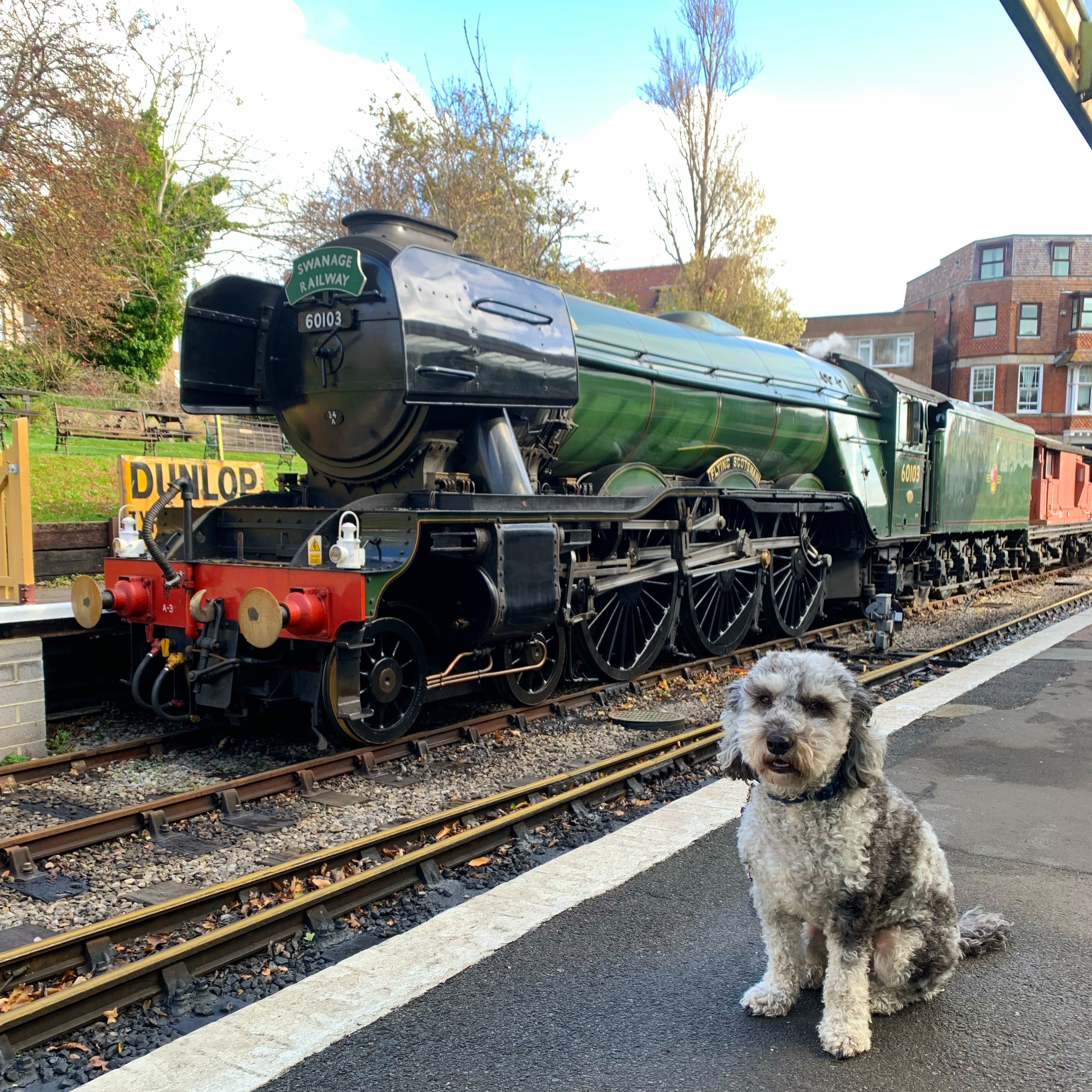
Yoshi took the opportunity of ‘Flying Scotsman’ being on static display at Swanage railway station to get up close and personal! Last week we shared video of ‘Flying Scotsman’ during her 1994 visit to the Swanage Railway. This week we move forward to 1999 and 2000 when the locomotive could be found in her famous LNER Apple Green guise and numbered No. 4472, as she appeared when she was owned by Alan Peglar on purchase from British Railways in 1963:
Video of LNER Gresley A3 4-6-2 No. 4472 ‘Flying Scotsman’ on various workings in LNER Apple Green livery: 08/08/1999 Upton Scudamore whilst on a London Paddington – Salisbury – London Paddington rail tour, 27/11/1999 Deputising for GWR 6000 Class King 4-6-0 ‘King Edward I’ No. 6024 on Pathfinder Tours “The Capital King” seen at Bradford Abbas and Sherborne, 06/02/2000 Deputising for SR Merchant Navy 4-6-2 No. 35028 ‘Clan Line’ on a VSOE British Pullman London Victoria to Southampton Docks and return rail tour seen in Southampton Docks, and 16/04/2000 Past Time Rail’s “The Tall Ships” seen in Southampton Docks and light engine turning move passing Eastleigh12th September 1965 and No. 4472 ‘Flying Scotsman’ visited Weymouth and is seen here on Weymouth depot. I was told that I was taken to see the special train organised by The Gainsborough Model Railway Society pass through Dorchester, so perhaps inspiring a lifetime love of railways! – John Chappell 12/09/1965
Wednesday 26th October to Tuesday 1st November
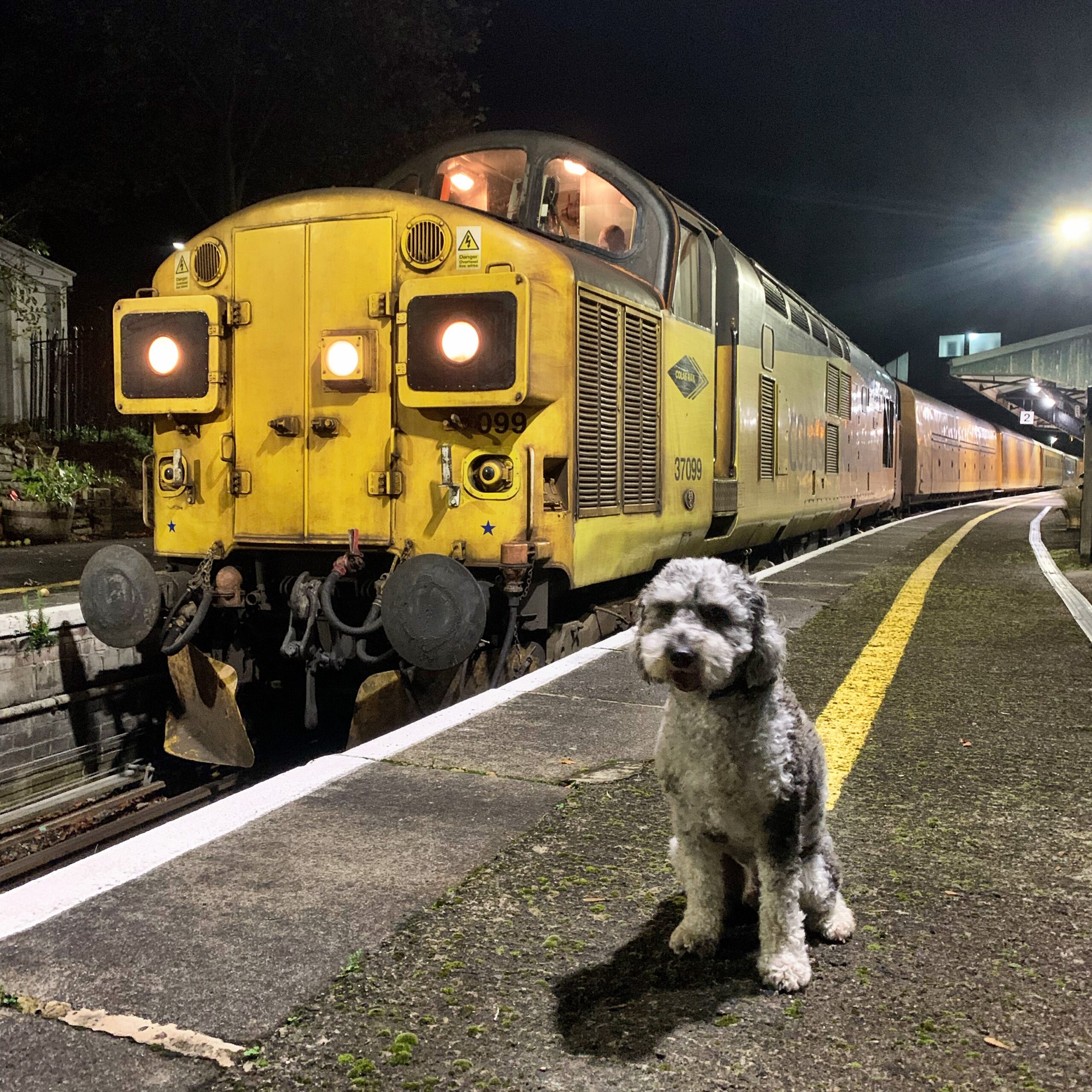
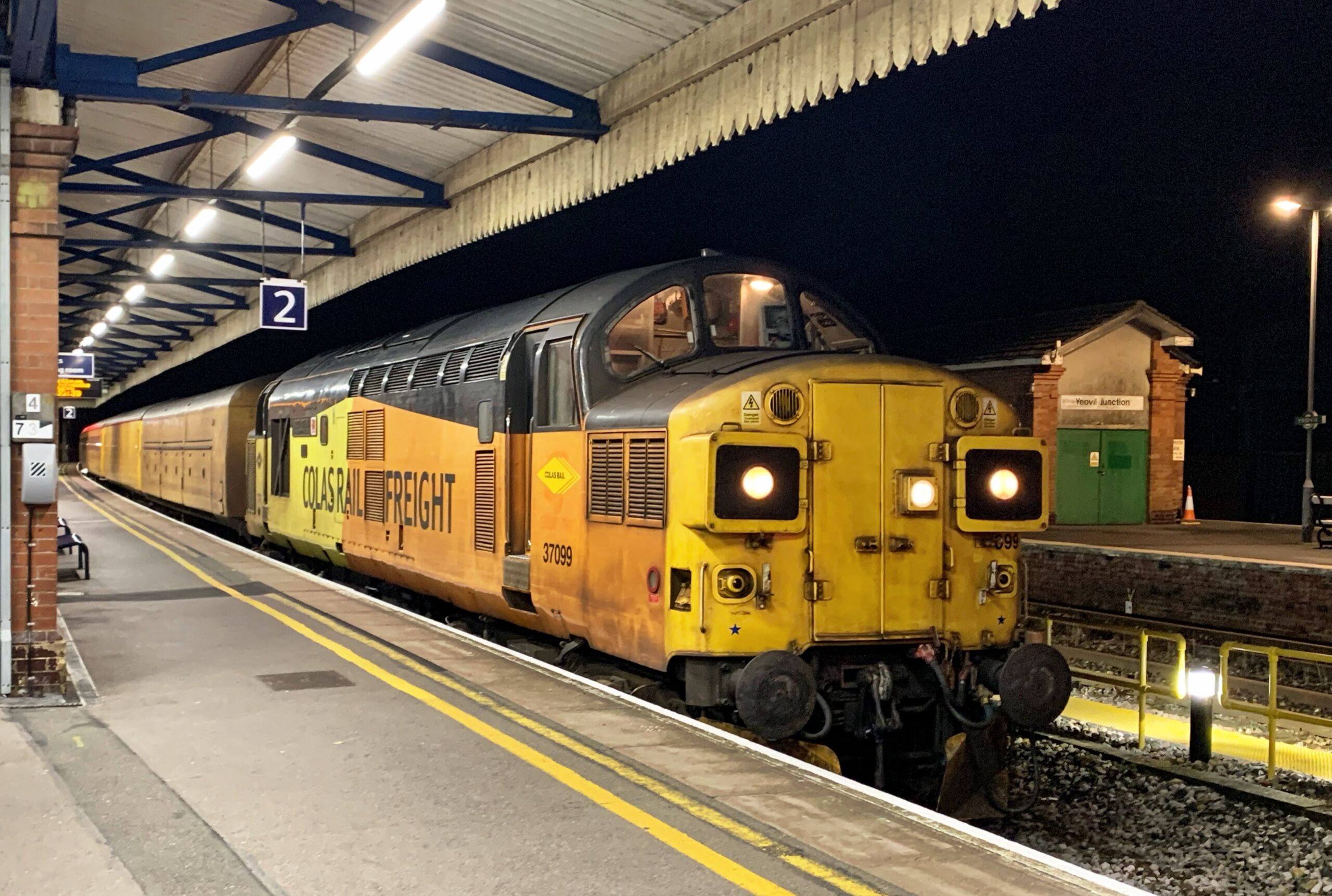
Returning to present day 2022 and Thursday 27th October which saw Yoshi and I travelling to Yeovil to catch sight of Colas Class 37 No. 37099 ‘Merl Evans 1947 – 2016’ working 3Q07 2053 Exeter Riverside New Yard to Exeter Riverside New Yard. This working consisting of a diesel locomotive on one end and a DBSO on the other usually heads off to Sherborne and Salisbury, but this month (possibly due to the speed restrictions on the line in place until 14th November 2022 because a clay embankment between Tisbury and Gillingham had dried out, causing the ground beneath the tracks to shrink) was scheduled to reverse at Yeovil Pen Mill, a station it usually misses out although is always booked to visit. I was 99% sure the train would make it to Pen Mill this time due to its pathing, but as I didn’t fully trust that the train wouldn’t be reversed before reaching here, I hedged my bets and went straight to Yeovil Junction to witness the test train working straight through. I jumped in the car and made it over to Yeovil Pen Mill just as the service arrived into platform 1. Being a glutton for punishment, we then headed back to Yeovil Junction to see the train arrive on the return leg before departure for Exeter at 0023.
Yoshi on a late night barking mission with Colas Class 37 No. 37099 ‘Merl Evans 1947 – 2016’ at Yeovil Pen Mill – 27/10/2022Nameplate detail of Colas Class 37 No. 37099 ‘Merl Evans 1947 – 2016’ named in memory of Mel’s outstanding contribution to British model railways – 27/10/2022Colas Class 37 No. 37099 ‘Merl Evans 1947 – 2016’ awaits the green light on the return path to Exeter at Yeovil Junction – 27/10/2022
Video of Colas Class 37 No. 37099 ‘Merl Evans 1947 – 2016’ working 3Q07 2053 Exeter Riverside New Yard to Exeter Riverside New Yard – 27/10/2022
On Sunday 30th October Yoshi and I visited National Trust’s Stourhead Gardens in Wiltshire. After an initial rain shower on arrival, we had a very pleasant few hours drying out whilst walking around the grounds of the estate and enjoying the autumnal colours of the trees as their leaves fluttered to the ground.
Yoshi enjoys his walks around National Trust Stourhead Gardens – 30/10/2022
Being so close to Westbury, we took the opportunity to pop in and see the 3S59 1554 Swindon Transfer to Loreton-On-Lugg Rail Head Treatment Train in fading light before tucking into a very tasty Sunday roast at The Three Horseshoes at Chapmanslade. Class 66 No. 66846 has returned to traffic after being temporarily replaced by Class 37 No. 37668 which we saw the previous Sunday on the equivalent working as it passed through Bradford on Avon. No 66850 ‘David Maidment’ was once again in evidence.
Colas Class 66 No. 66850 ‘David Maidment’ on the rear of 3S59 1554 Swindon Transfer to Loreton-On-Lugg RHTT having arrived at Westbury. The train reverses here – 30/10/2022
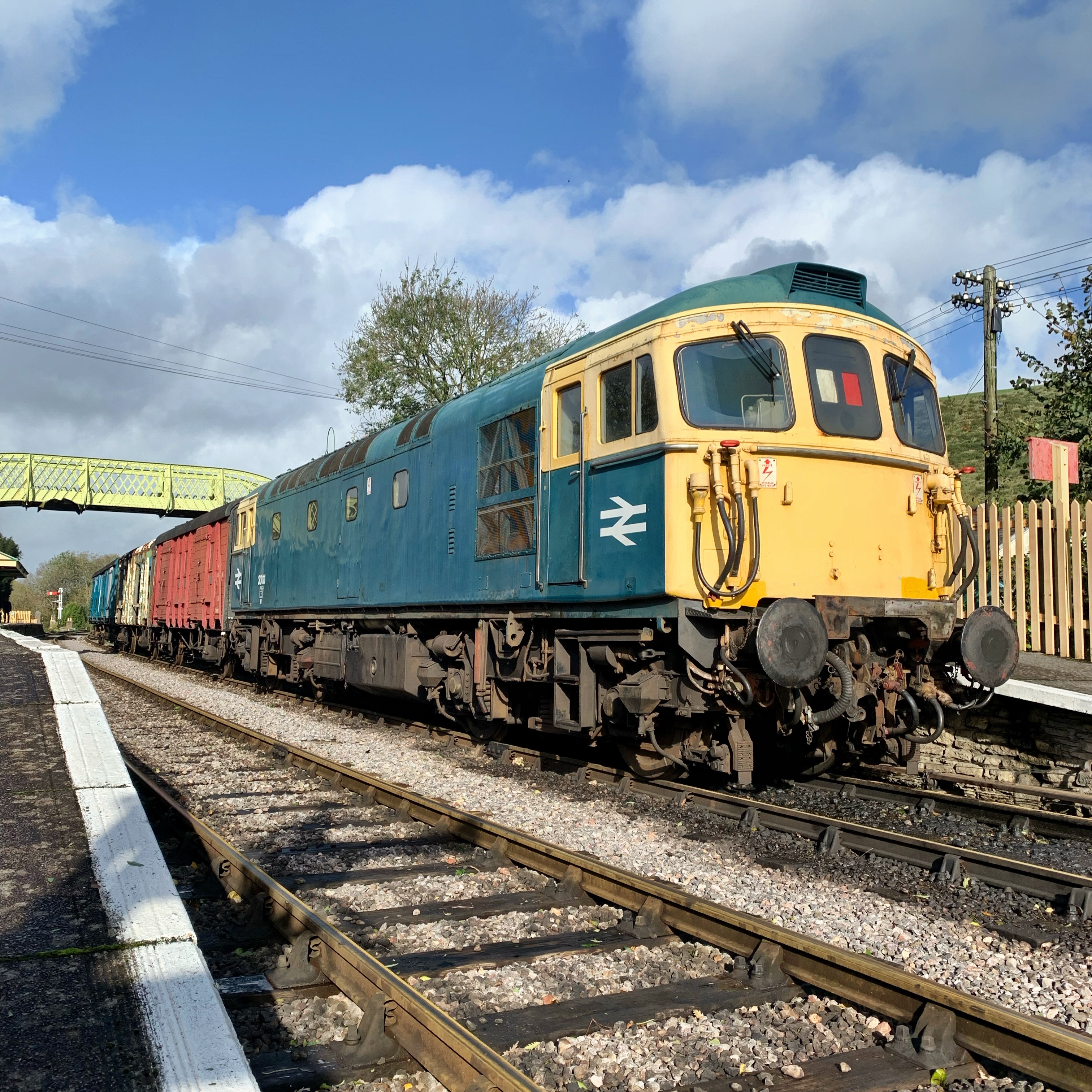
Video of Class 66 No.’s 66846 and 66850 reversing at Westbury with S59 1554 Swindon Transfer to Loreton-On-Lugg RHTT – 30/10/2022SR Battle of Britain Class 4-6-2 No. 34070 ‘Manston’ at Swanage Railway’s Herston Works. The locomotive was waiting in readiness to be collected by low loader and taken to Norden by road where she will undertake running in tests. Her place in the works will be taken by classmate No. 34053 ‘Sir Keith Park’. Many thanks to Jamie for getting permission for our visit to Herston – 01/11/2022The Swanage DMU stock keeping SR Battle of Britain Class 4-6-2 No. 34053 ‘Sir Keith Park’ company in the sidings at Corfe Castle ahead of her move to Herston Works – 01/11/2022BR Class 33 No. 33111 sits at Corfe Castle having removed a consist of wagons from Norden the previous day in readiness for the low loader moves in connection with ‘Manston’, ‘Sir Keith Park’. and ‘257 Squadron’ which is off on holiday to the Spa Valley railway to work Polar Express trains. ‘257 Squadron’ will be back at Swanage in early 2023- 01/11/2022SR West Country Class 4-6-2 No. 34028 ‘Eddystone’ departs Swanage with the 1000 service to Norden. SR U Class 2-6-0 No. 31806 sits in front of the ‘Flying Scotsman’ support coach. Note the fence panels which had blown over onto the coach on the extreme right of the picture – 01/11/2022
We also came across some interesting railwaymania when we visited the Den antiques emporium over the weekend:
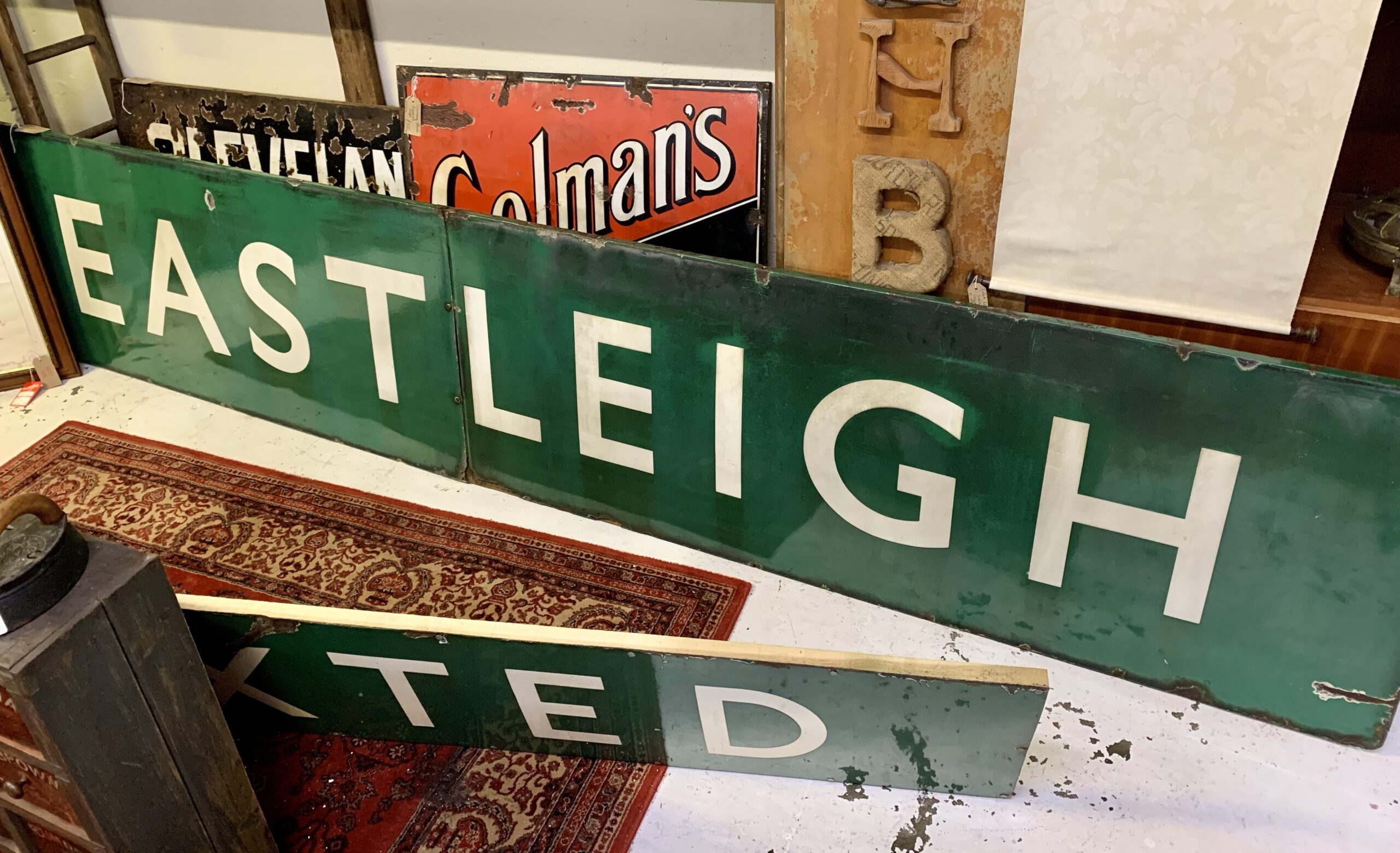
£795 would make you the proud owner of an enamel British Railways Eastleigh station sign
Next, we found a signed Terrence Cuneo “The Night Express” print, an evocative study of a Great Western King Class 4-6-0 working along the sea wall near Teignmouth, painted by the Master in 1975 and issued by Felix Rosenstiels Widow & Sons Ltd. as a single edition of 850 prints signed by the artist in 1977. Terrence Cuneo (1907-1996) CVO, OBE is one of my favourite railway artists. He was also renowned for his military paintings and was the official artist for the coronation of Queen Elizabeth II in 1953. A bronze memorial statue of Terrence Cuneo, unveiled by Princess Anne in 2004, once stood on the concourse at London Waterloo, but was moved to Brompton Barracks in Kent prior to the development of the disused Eurostar platforms at the station. One of my favourite Cuneo paintings can be found at the Railway Museum in York and is of London Waterloo station:
That just about wraps up another week and all that remains is for me to thank you, dear reader, for taking the trouble to visit Yoshi’s blog. We’ve enjoyed having you stop by. As always, please feel free to comment or let me know of any typo’s, gobbledygook or misinformation! May your dog (or cat) go with you.
Wednesday October 12th to Tuesday October 18th2022
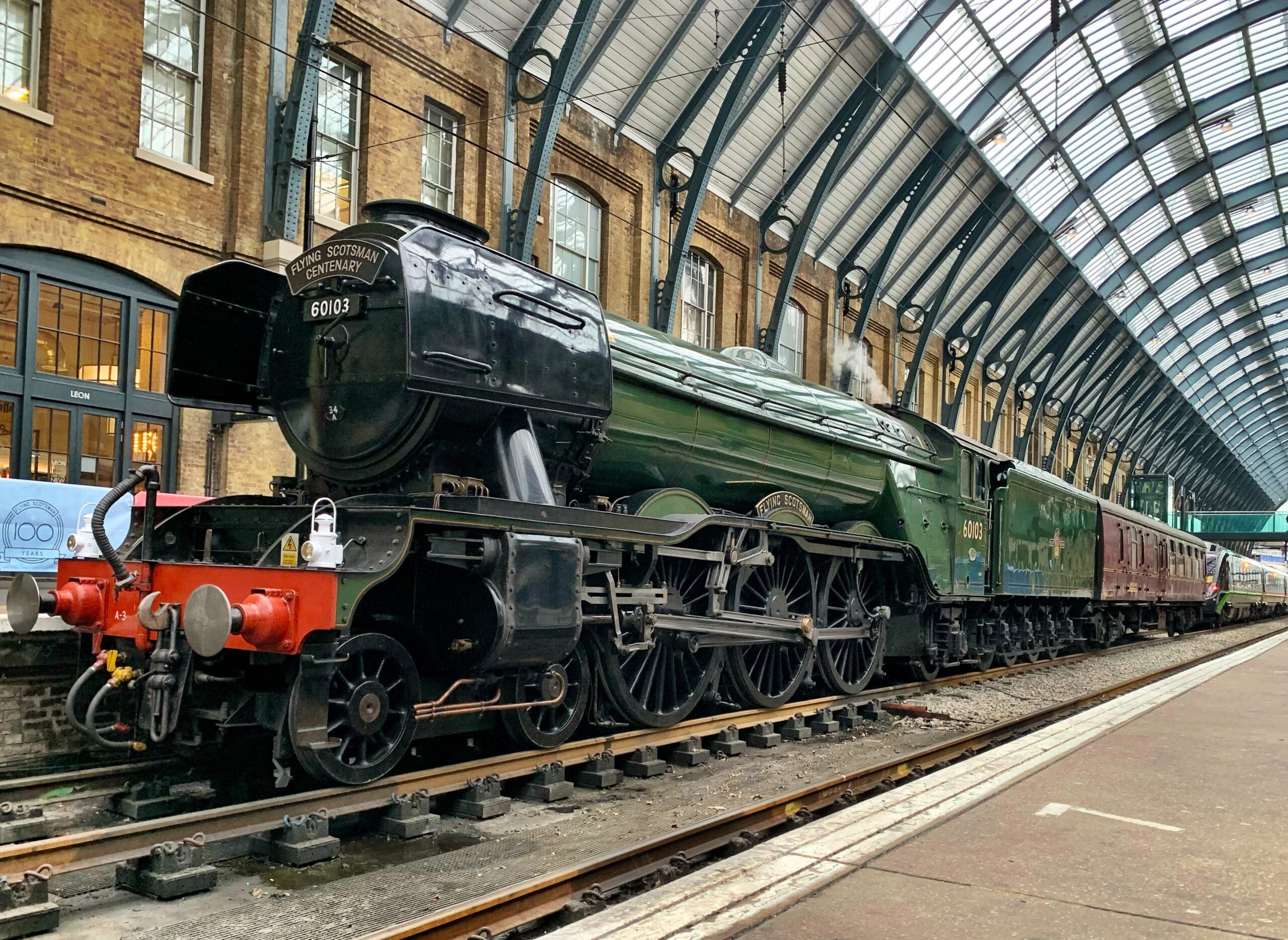
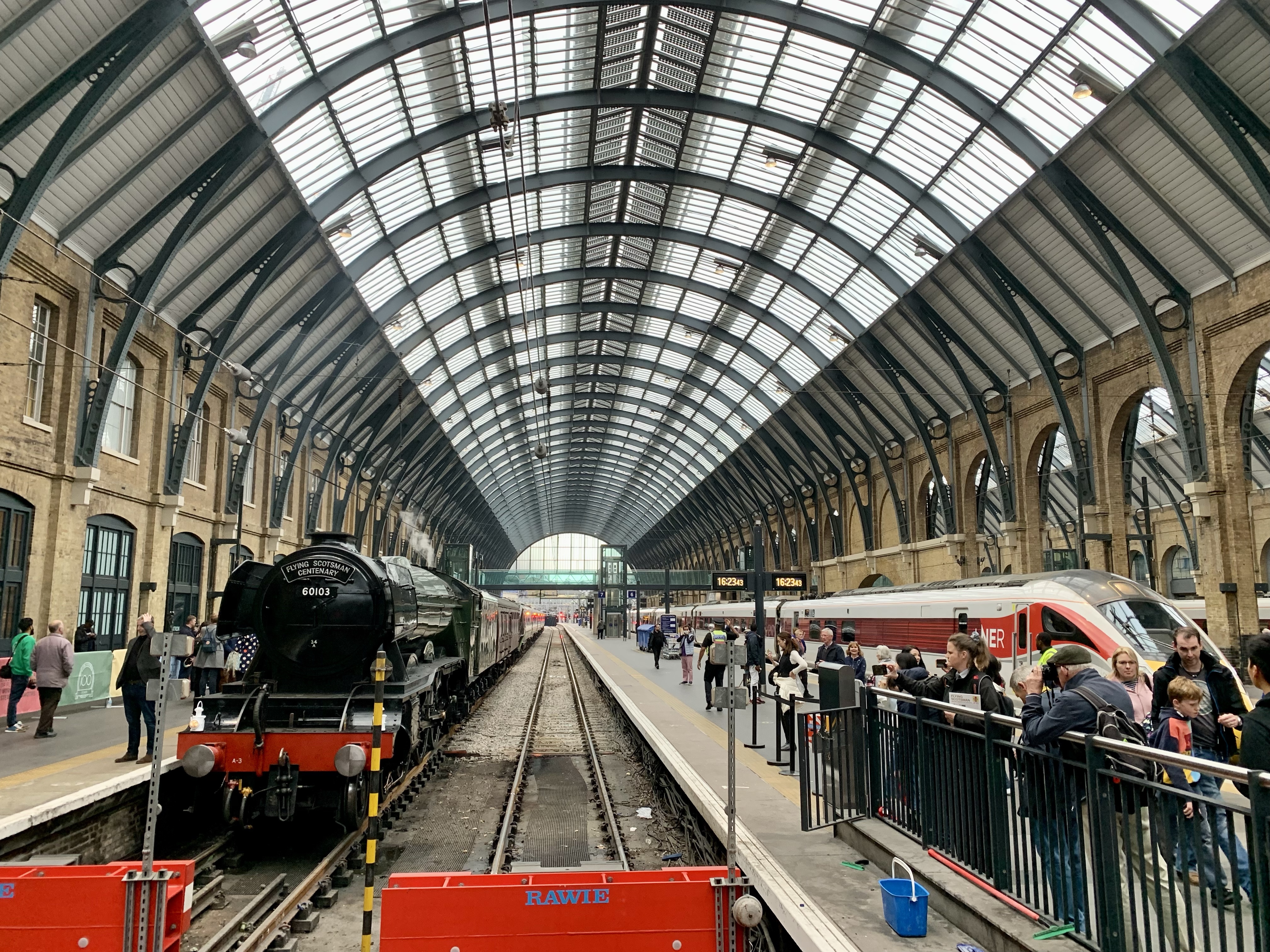
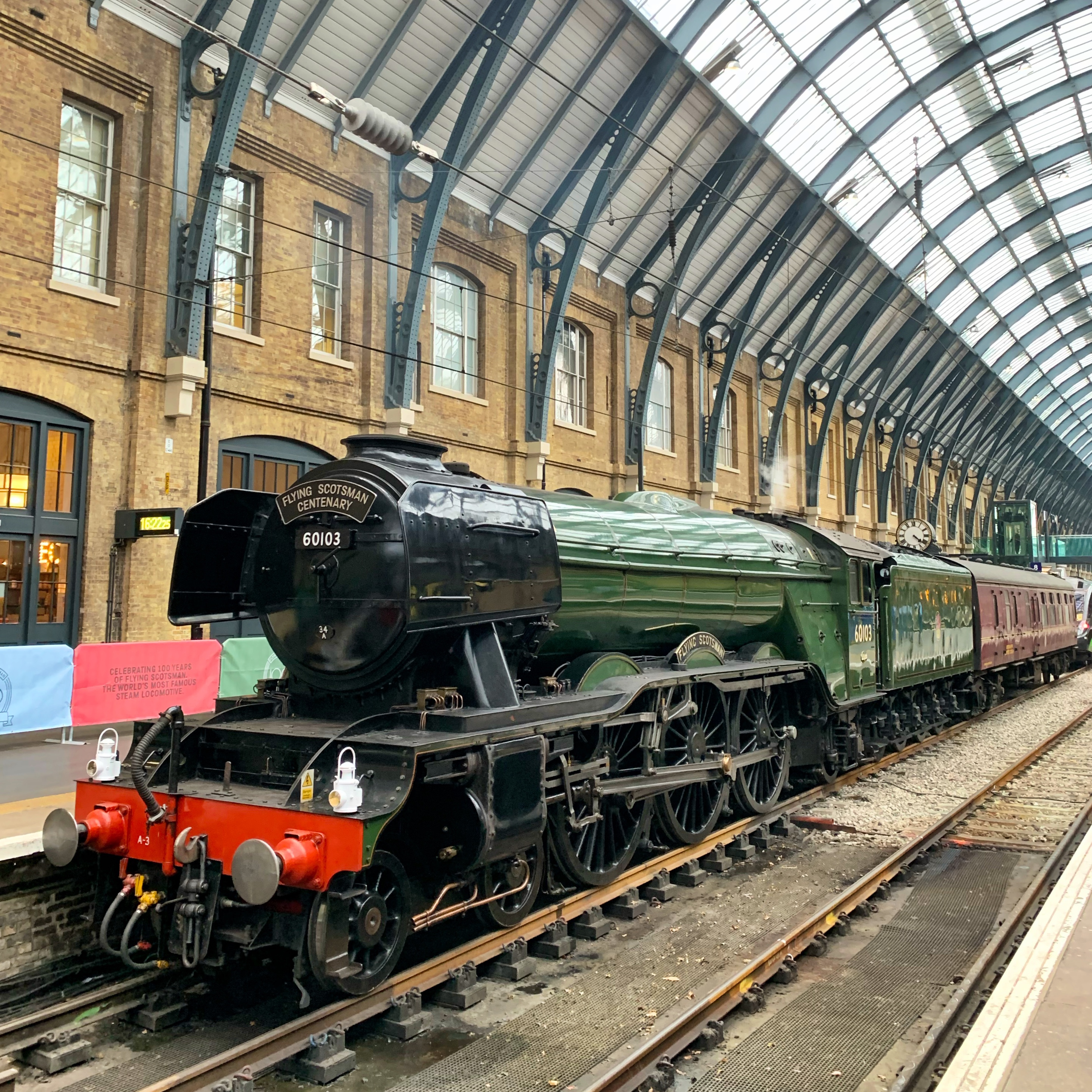
‘Flying Scotsman’, perhaps the most famous steam locomotive ever, kicked off a year of events to celebrate 100 years since she first emerged from Doncaster Works in February 1923. Costing £7,944 and originally numbered 1472 she was the first locomotive built for the London North Eastern Railway (LNER) and in 1924 was chosen to be exhibited at the British Empire Exhibition at Wembley Park in London which aimed to celebrate the British Empire and its economic achievements and potential. It was at this time the locomotive was renumbered to 4472 and given the name ‘Flying Scotsman’ in honour of the prestigious daily 1000am London to Edinburgh passenger service. In 2022, now in British Railways livery and numbered 60103, ‘Flying Scotsman’ spent the weekend of 15th/ 16th October in light steam at the buffer stops of Kings Cross platform 8 allowing visitors to view this icon. The event also tied in with the 170th Anniversary of the opening of Kings Cross station in 1852.
Visitors to the station over the weekend were also able to take part in associated activities including a ‘Flying Scotsman’ driving simulator, where people could experience driving the engine out of The Cross, screens to watch live footage of ‘Flying Scotsman’ from the concourse and regular recorded announcements from Michael Portillo.
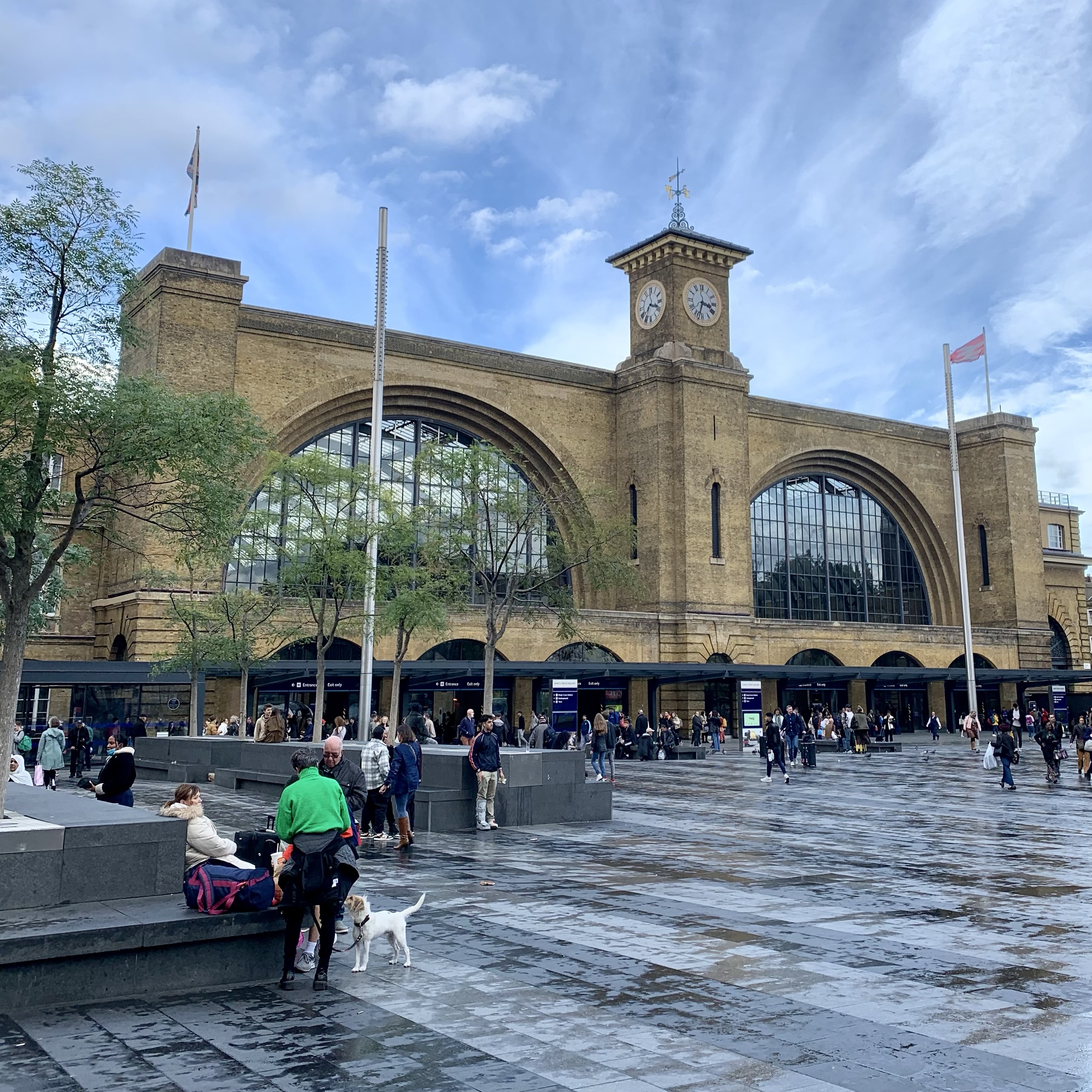
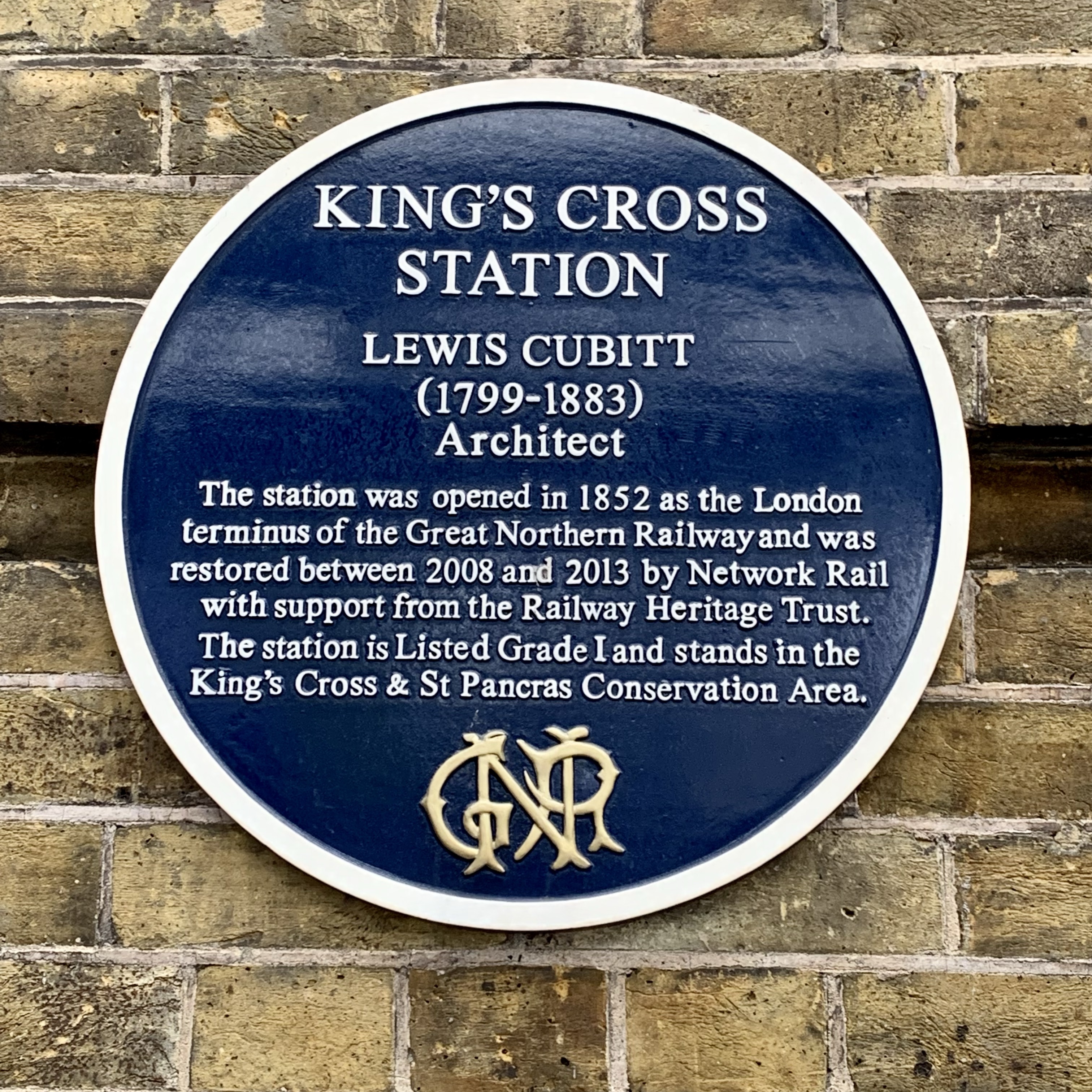
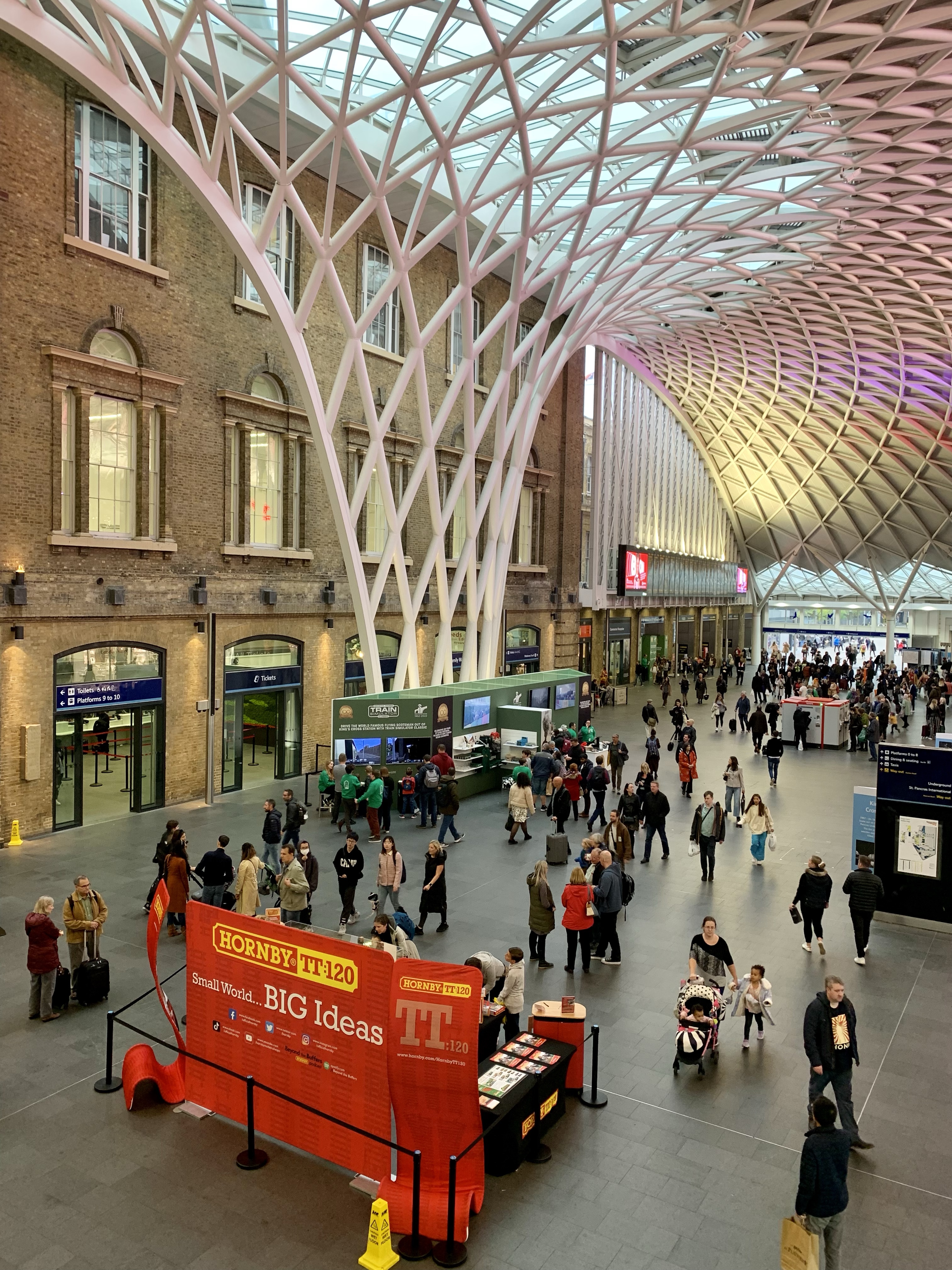
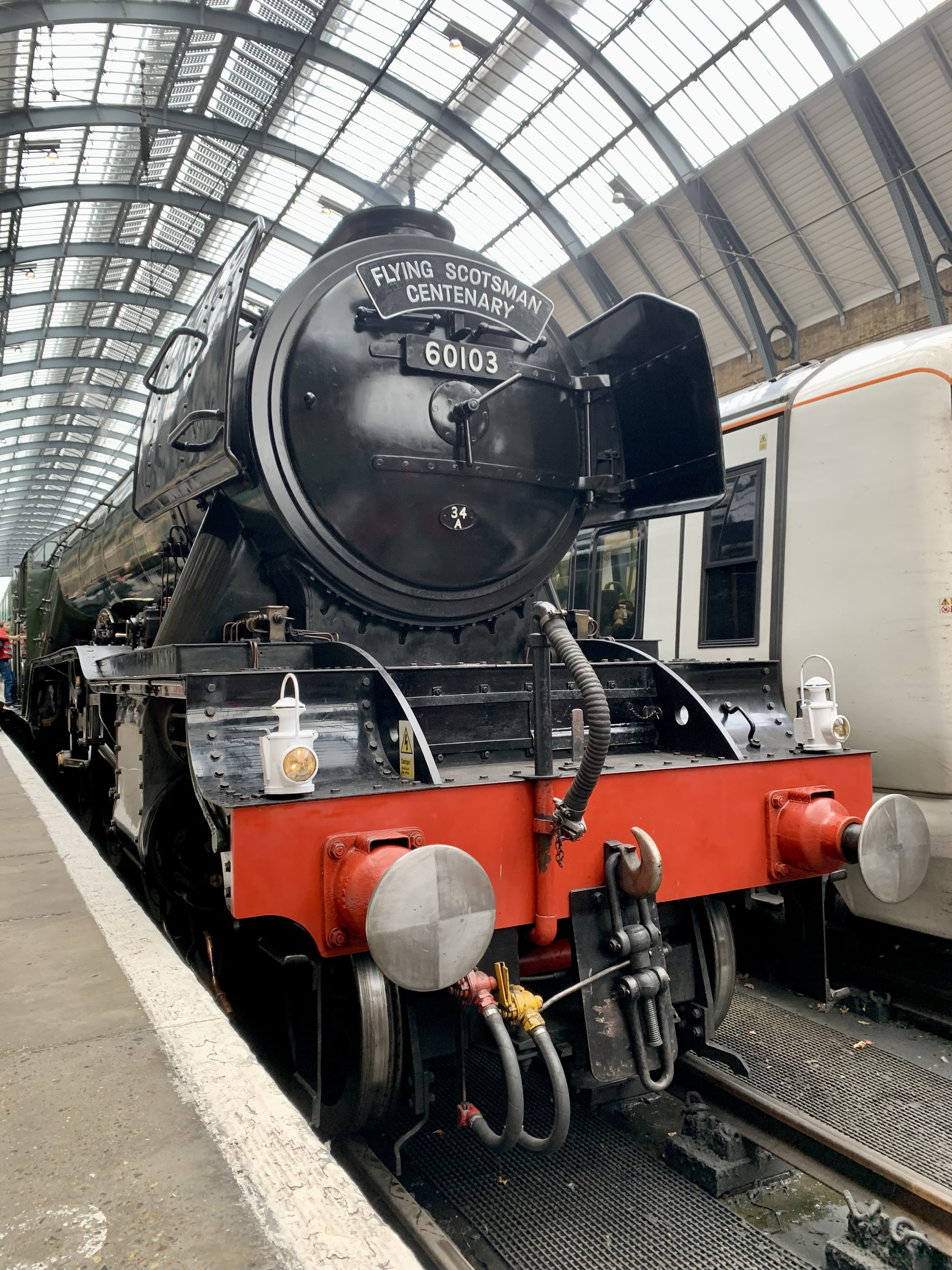
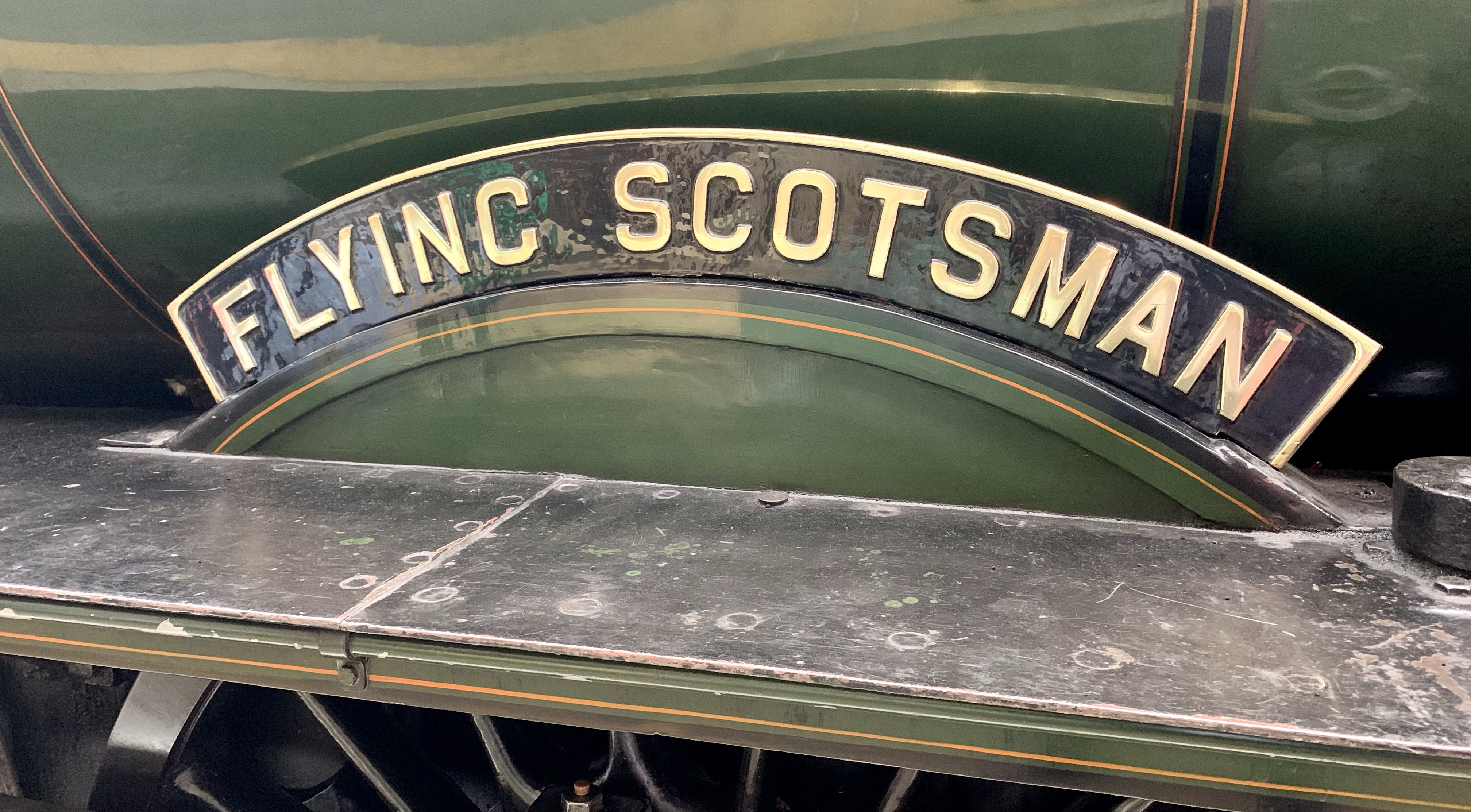
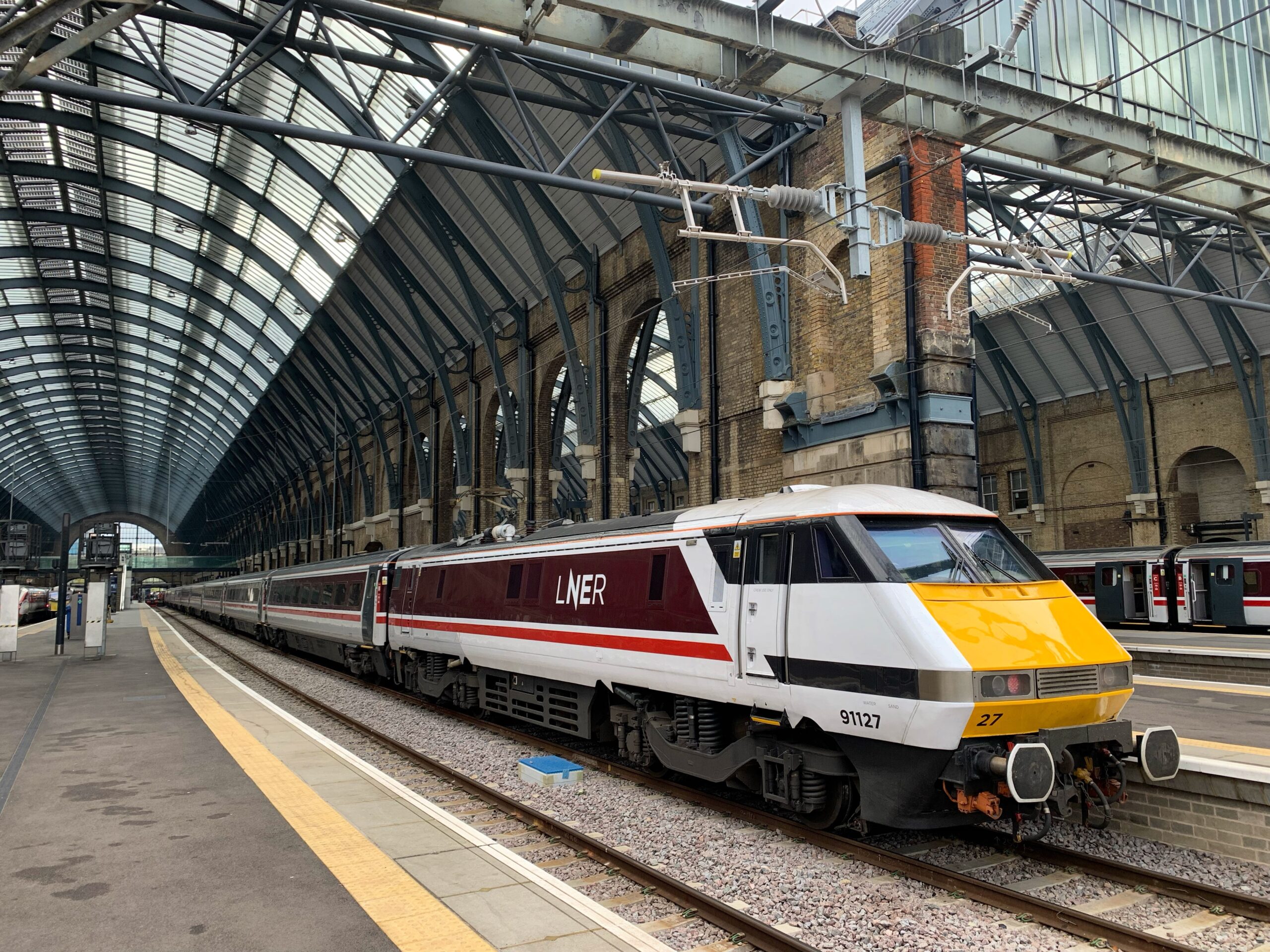
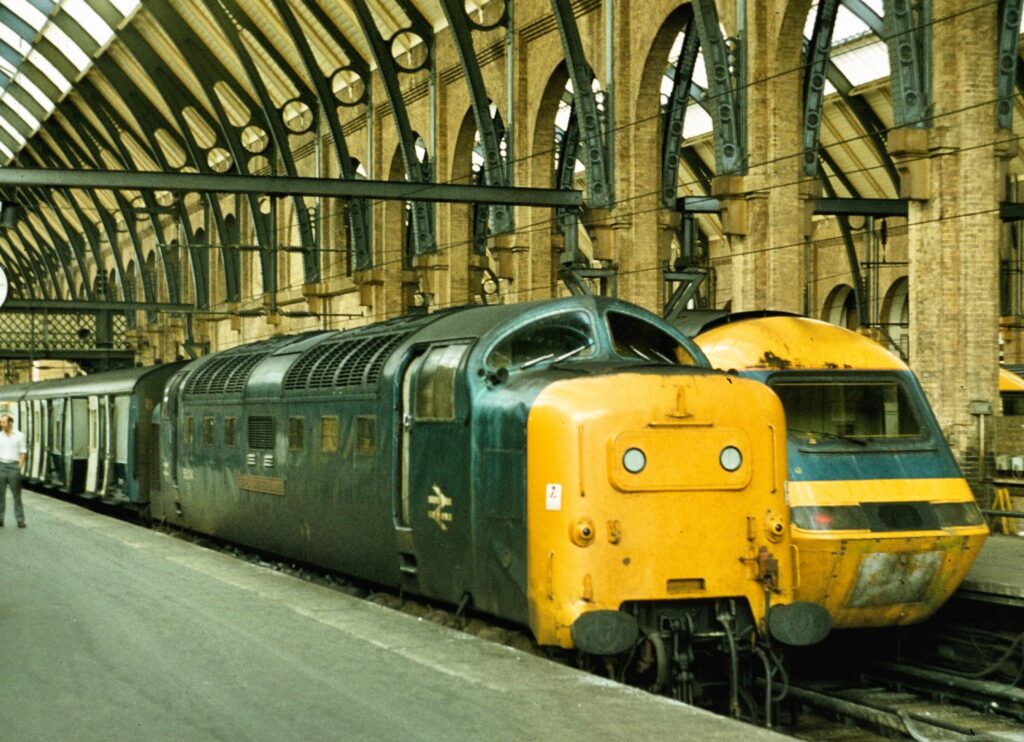
Kings Cross railway station exterior – 15/10/2022Blue plaque, Kings Cross – 15/10/2022Hornby Railways stand at Kings Cross. Hornby is lead sponsor of the ‘Flying Scotsman’ Centenary events. The steel structure engineered by Arup forming the roof seen in this image was added as part of a refurbishment programme completed in 2012 which included a new semi-circular departures concourse has been described as being “like some kind of reverse waterfall, a white steel grid that swoops up from the ground and cascades over your head” – 15/10/2022Hornby’s Marketing and Product Development Director, Simon Kohler – 15/10/2022The entrance to Platform 8 at Kings Cross – 15/10/2022‘Flying Scotsman’ Souvenir Platform Ticket LNER Gresley A3 4-6-2 No. 60103 ‘Flying Scotsman’ sits at Kings Cross platform 8 – 15/10/2022‘Flying Scotsman’ name plate LNER Gresley A3 4-6-2 No. 60103 ‘Flying Scotsman’ sits at Kings Cross platform 8 as a modern day LNER Azuma arrives at platform 10 – 15/10/2022The Gresley A3’s and A4’s gave way to diesel traction. Class 43 HST power car No. 43059 alongside Class 55 “Deltic” No. 55015 ‘Tulyar’ at Kings Cross – 18/10/1981Class 91 No. 91127 at the head of 1D19 1503 Kings Cross to Leeds – 15/10/2022LNER Gresley A3 4-6-2 No. 60103 ‘Flying Scotsman’ sits at Kings Cross platform 8 – 15/10/2022
For my Saturday October 25th visit to see No. 60103 at Kings Cross, Yoshi stayed at home with his mum as we thought things might be a little too crowded for our boy. For my part, it was great to be reacquainted with ‘Flying Scotsman’ once again and to hear her whistle echo around Kings Cross. Also a great joy was to witness the faces of passengers arriving at the station and unexpectedly coming across the peoples’ locomotive. It seems that everyone loves a steam engine, and none more so than Sir Nigel Gresley’s most famous A3.
Brief video of ‘Flying Scotsman’ at the buffer stops of platform 8 of London Kings Cross – 15/10/2022
Purchased by Alan Peglar from regular British Railways service for £3,000 in 1963 after covering 2,076,000 miles, ‘Flying Scotsman’ was later under the custodianship of Sir William McAlpine and then Tony Marchington before, in 2004, a campaign spearheaded by the National Railway Museum (NRM) to save the locomotive for the nation was supported by thousands of members of the public, confirming its status as a national treasure. A ten year £4.2 million restoration project funded by the National Heritage Memorial Fund, the Heritage Lottery Fund and public donations followed.
There will be a calendar of mainline UK rail tours involving No. 60103 across the the next year. ‘Flying Scotsman’ is extremely well travelled as in addition to hauling enthusiast specials across England, Scotland and Wales, between 1969 and 1973 the locomotive toured extensively in the United States and Canada and from 1988 to 1989 she visited Australia where she set a record for the longest non-stop run by a steam locomotive of 422 miles on 8 August 1989. ‘Flying Scotsman’ actually set two world records for steam traction being the first steam locomotive to be officially recorded at reaching 100mph which happened on 30 November 1934.
The next of the planned Centenary events takes place on Yoshi’s doorstep as ‘Flying Scotsman’ visits the Swanage Railway for a three week visit until November 7th 2022. No. 60103 is on display at Swanage railway station for pre-booked visits to her footplate on 20th and 21st October 2022 as well as every day between 27th October to 6th November inclusive. ‘Flying Scotsman’ will be hauling passenger trains between Swanage and Norden from 22nd October to 26th October.
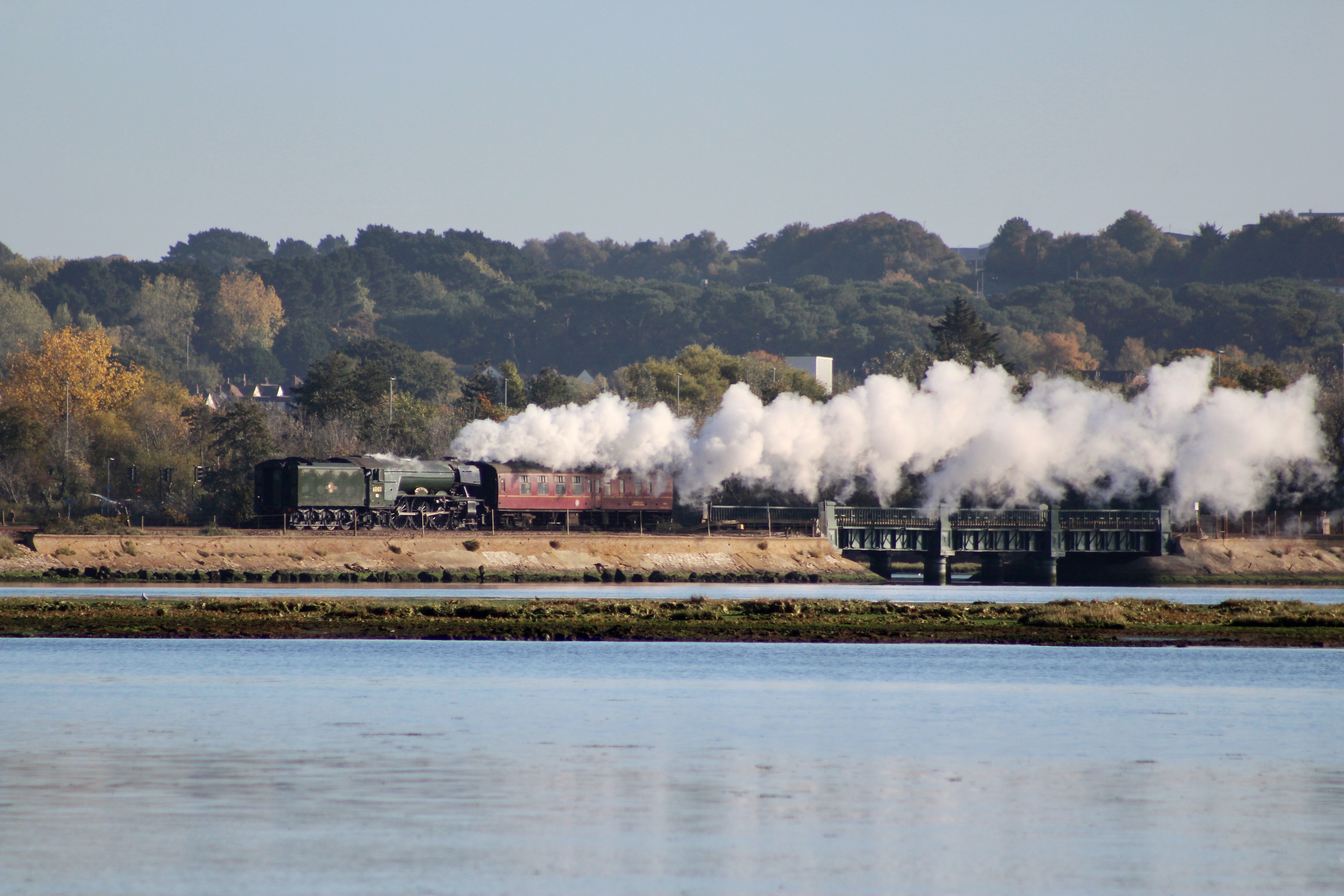
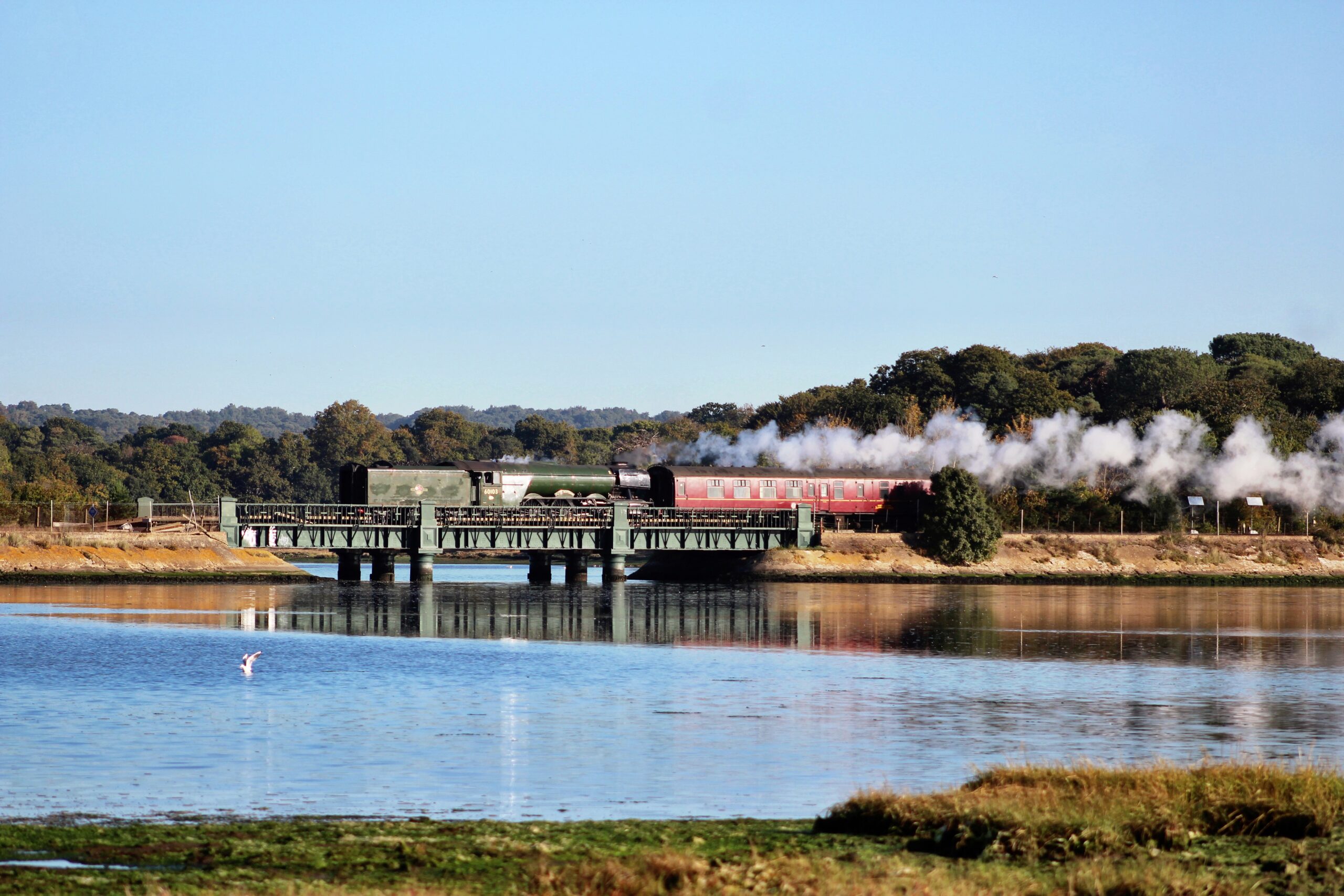
Making her way to the Isle of Purbeck, No. 60103 passed through East Dorset and we popped out to see her working tender first as she crossed the Holes Bay Causeway near Poole on the morning of 18th October 2022.
LNER Gresley A3 4-6-2 No. 60103 ‘Flying Scotsman’ having traversed Creekmoor Viaduct on the Holes Bay causeway working 5Z74 0452 Southall WCR to Swanage – 18/10/2022LNER Gresley A3 4-6-2 No. 60103 ‘Flying Scotsman’ crossing Upton Viaduct on the Holes Bay causeway working 5Z74 0452 Southall WCR to Swanage – 18/10/2022LNER Gresley A3 4-6-2 No. 60103 ‘Flying Scotsman’ nears Hamworthy after crossing Upton Viaduct on the Holes Bay causeway working 5Z74 0452 Southall WCR to Swanage – 18/10/2022
Video of LNER Gresley A3 4-6-2 No. 60103 ‘Flying Scotsman’ crossing the Holes Bay causeway working 5Z74 0452 Southall WCR to Swanage – 18/10/2022
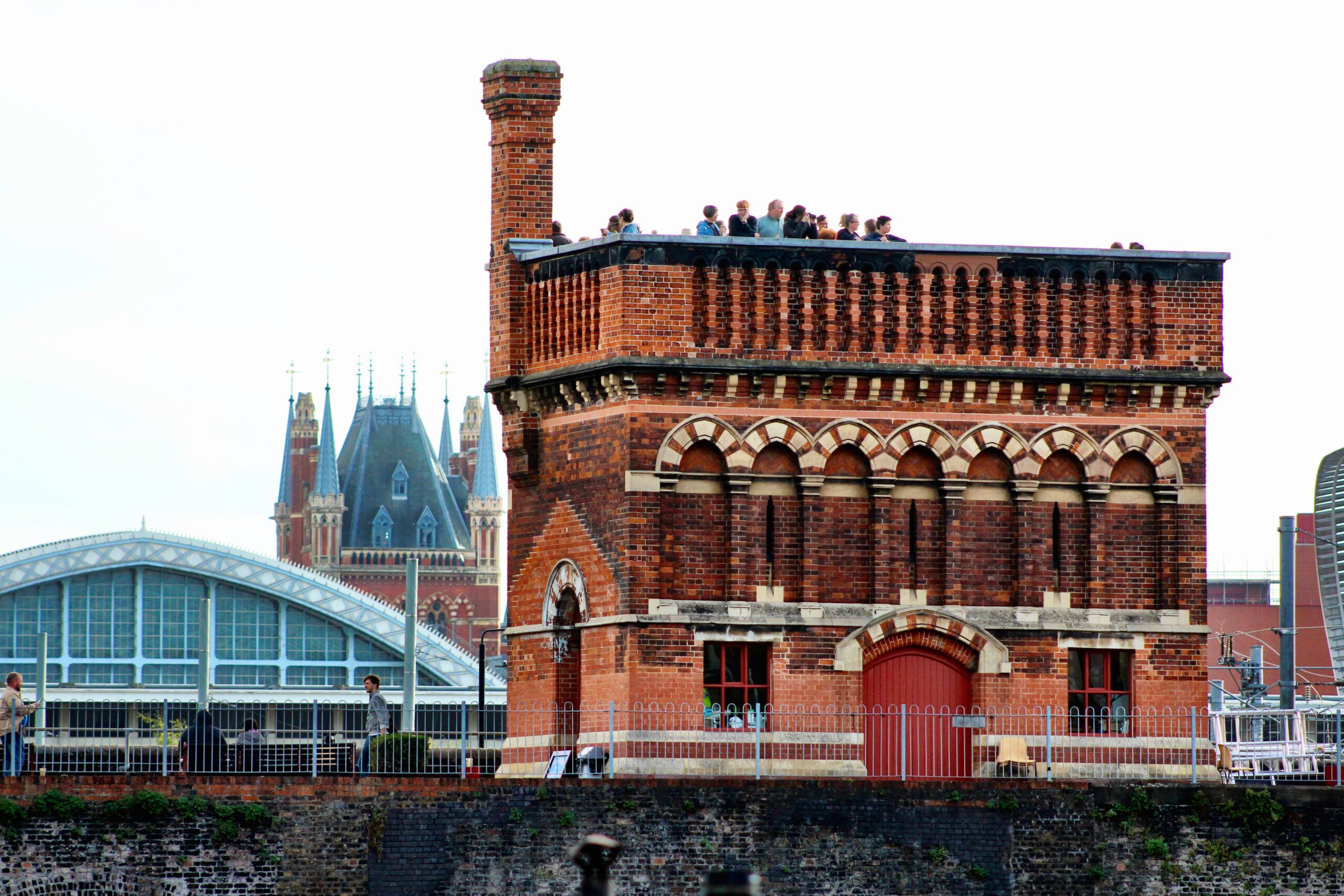
Another reason for my visit to London on Saturday was the opportunity to view the former Victorian St Pancras railway station water tower which was the subject of an open day. The water tower was built in 1872 and sat on the eastern side of St Pancras providing refreshment for steam locomotives using the station.
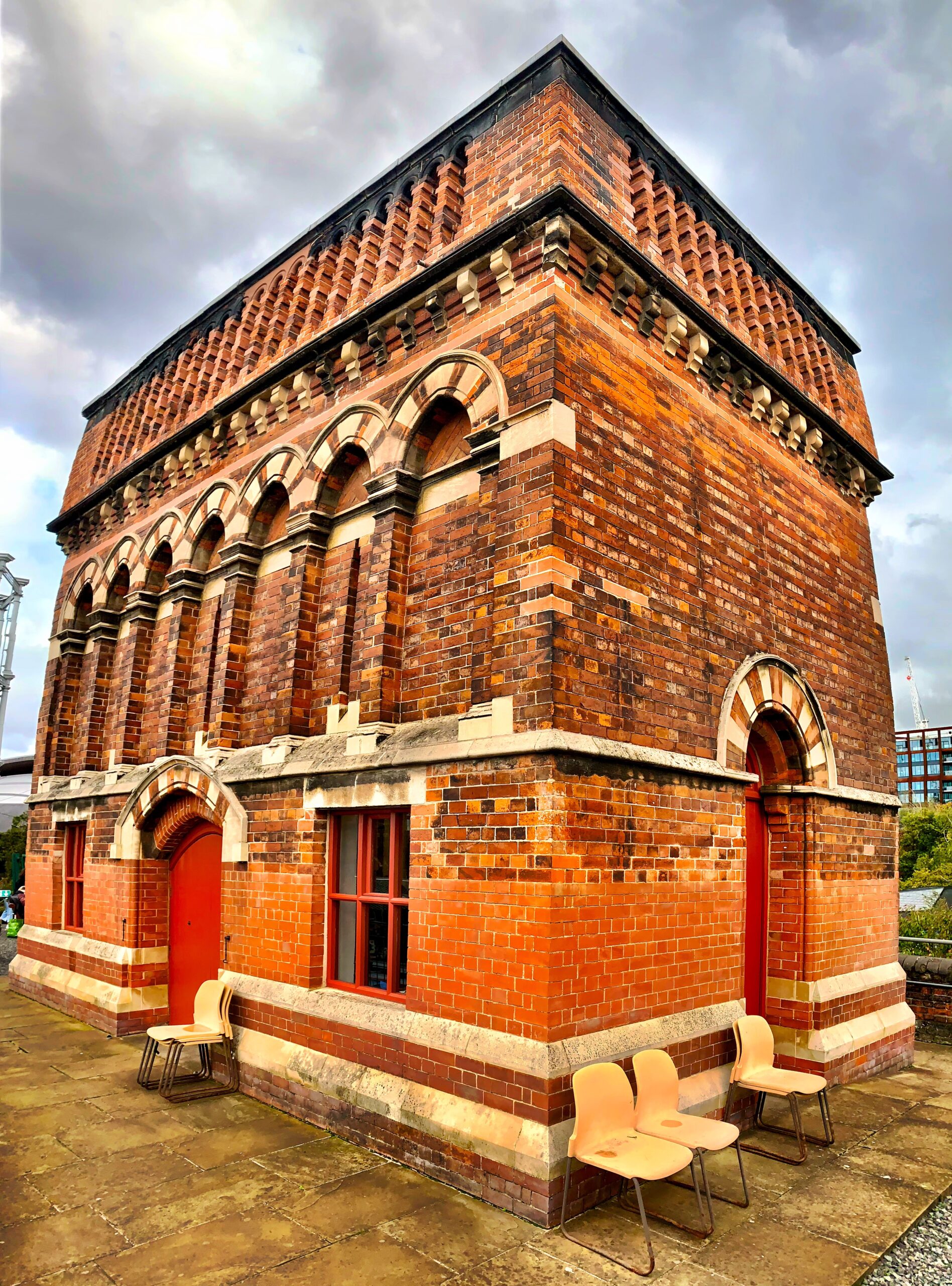
The St Pancras water tower was designed by the office of Sir George Gilbert Scott and features elaborate brickwork detailing around the edges of the overhang that supported the water tank – 15/10/2022
The water tower was nearly demolished as part of the 2001 Channel Tunnel rail link development at St Pancras. Thankfully a solution was sought to retain the building, and although now moved slightly from its original location, the water tower survives on land owned by the St Pancras Cruising Club. It was not an easy task relocating the structure as it was discovered that dismantling it brick by brick would be impossible given the hardness of the original mortar used in its construction. So instead, the tower was cut in half horizontally and moved in two pieces, the operation being completed by 2005.
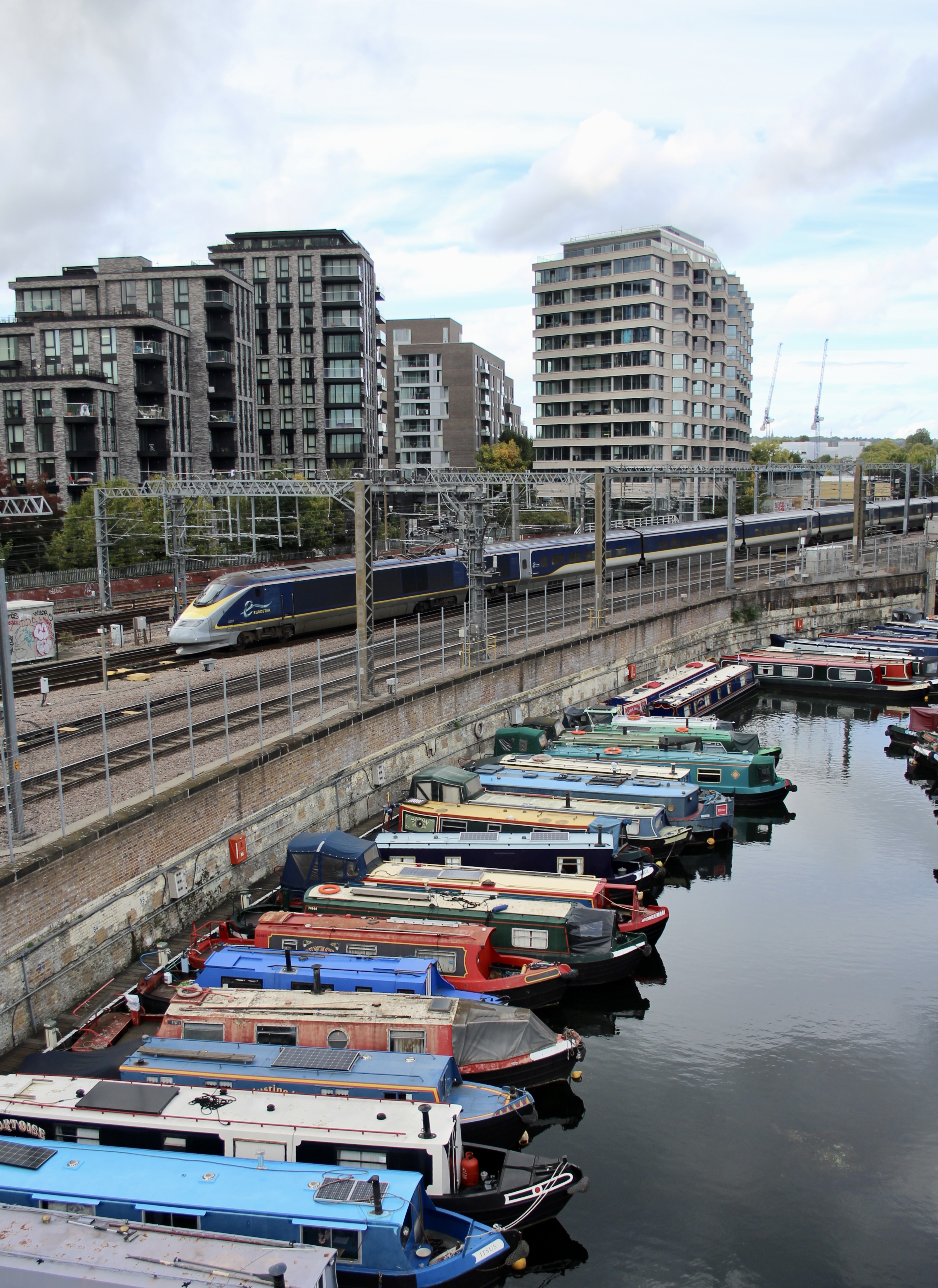
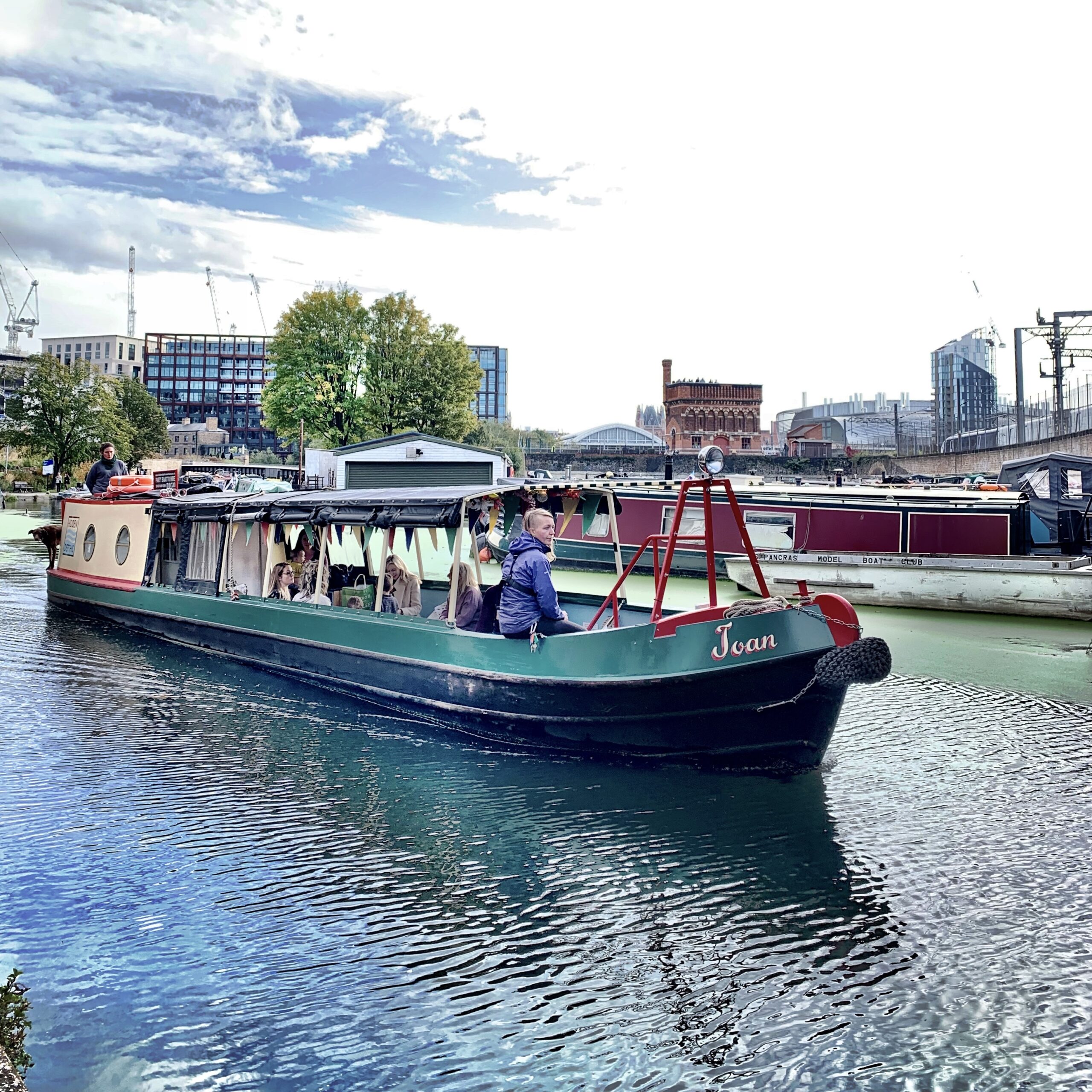
Once I’d managed to find the entrance, which was gained by crossing canal lock gates, the tower’s elevated location and low lying surroundings contributed to stunning views across St Pancras and the Regent’s Canal.
Two SouthEastern Class 395 Javelin EMU’s, with No. 395011 ‘Katherine Grainger’ leading, form the 1F38 1425 St Pancras International to Rochester service – 15/10/2022Class 373/1 Eurostar set No. 373007 9031 1313 Paris Nord to St Pancras International on the approach to the London terminus – 15/10/2022The St Pancras water tower serves as a back drop to the Regent’s Canal – 15/10/2022
Trains viewed from the St. Pancras water tower – 15/10/2022
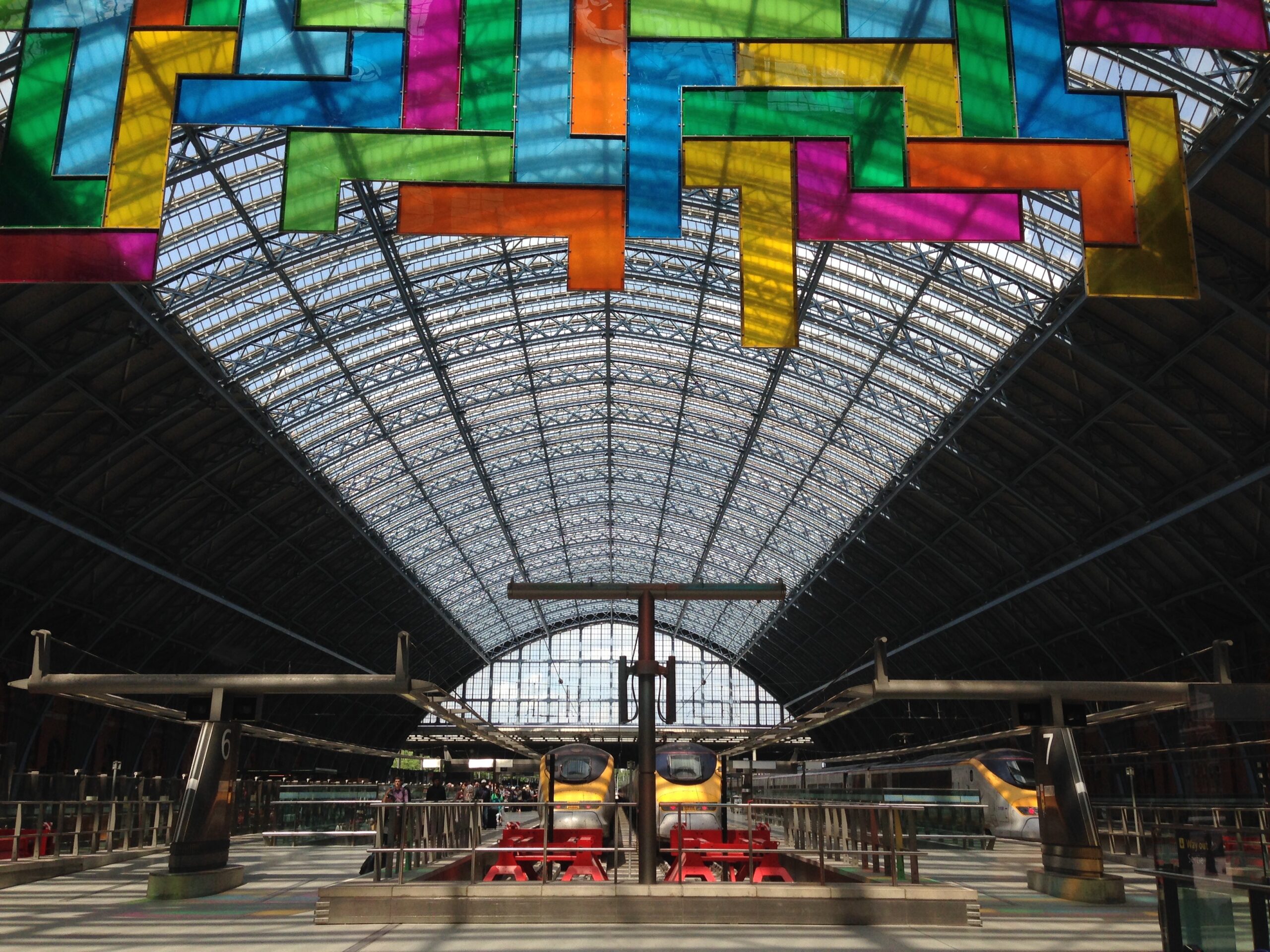
St Pancras railway station was designed by Midland Railway engineer William Barlow and his masterpiece train shed roof was built to span five tracks in one single arc with its cross ties buried under the floor in the form of horizontal girders. At 74 metres this was once the largest span in the world. Not content with this, the company turned to Sir George Gilbert Scott to design a hotel which would be the most luxurious on the planet. Scott’s building has an entrance wing facing Euston Road with a curved quadrant forecourt to reach Barlow’s existing entrance ramps to the station. The Midland Grand hotel closed in 1935 and was then used as office space.
The interior of St Pancras International with Eurostar trains in evidence – 21/06/2014
In the 1960’s British Railways driven by modernisation wanted to sweep it all away and concentrate rail services into neighbouring Kings Cross. However, unlike the corporate vandalism bestowed on London Euston, St Pancras had a flurry of supporters determined to save the building led by Sir John Betjeman and the newly formed Victorian Society. In 1967 the British Government acquiesced and St Pancras gained Grade I listed status and was saved the fate of the wrecking ball. Despite continued future use as BR offices and dormitories for rail staff the building fell into disrepair and was shut down in the 1980’s after failing fire safety checks. At a cost of £10 million, the exterior was restored and made structurally sound. But it was not until 2004 that planning permission was given for the building to be redeveloped into a new hotel.
Statue of Sir John Betjeman who led a campaign to save St Pancras Station from demolition in the 1960’s. In tribute to the famous poet and railway enthusiast a 2.10 metre high sculpture by Martin Jennings was unveiled in 2007 to celebrate the man and his poetry – 21/06/2014
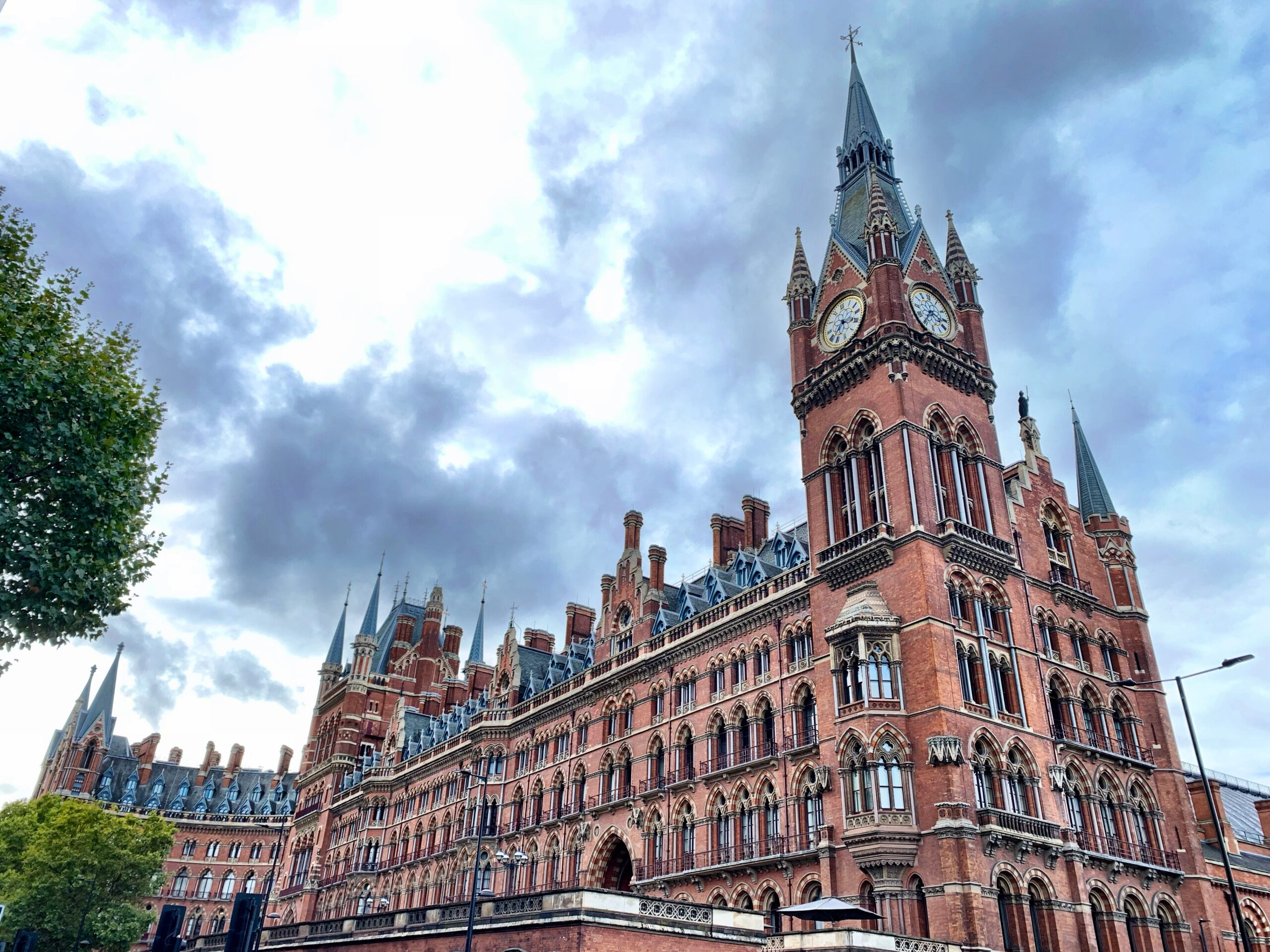
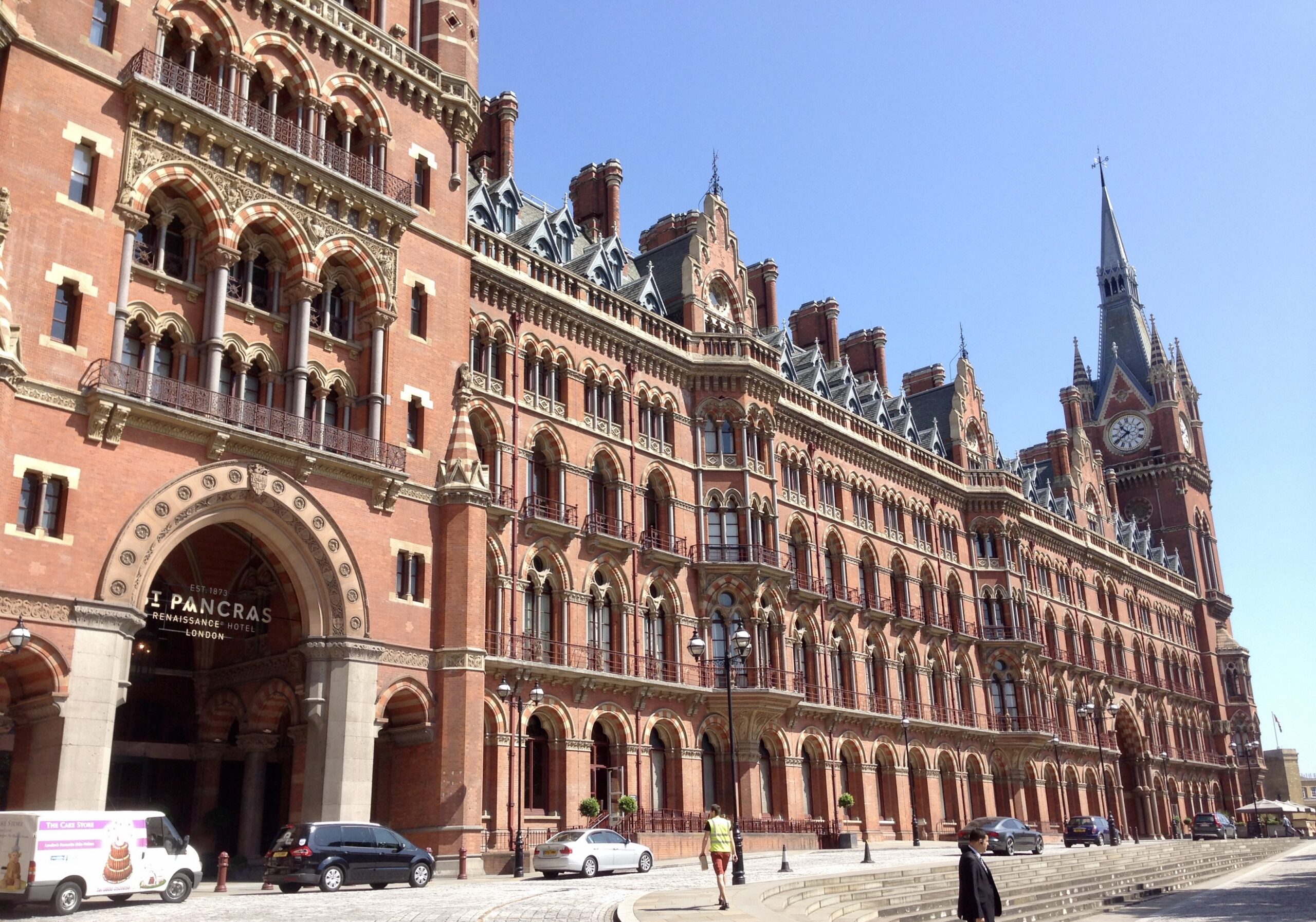
The main public rooms of the former Midland Grand Hotel were restored, along with some of the bedrooms. The former driveway for taxis entering St Pancras station which passed under the main tower of the building was converted into a hotel lobby and a new wing constructed on the western side of the Barlow train shed. Although open to guests in March 2011, the formal Grand Opening of The St Pancras Renaissance Hotel was held on the 5th May the same year, 138 years to the day after the original hotel opened in 1873. St Pancras is, without doubt, my favourite building in London. One day I’ll have breakfast at the hotel, or stay a night – maybe even both.
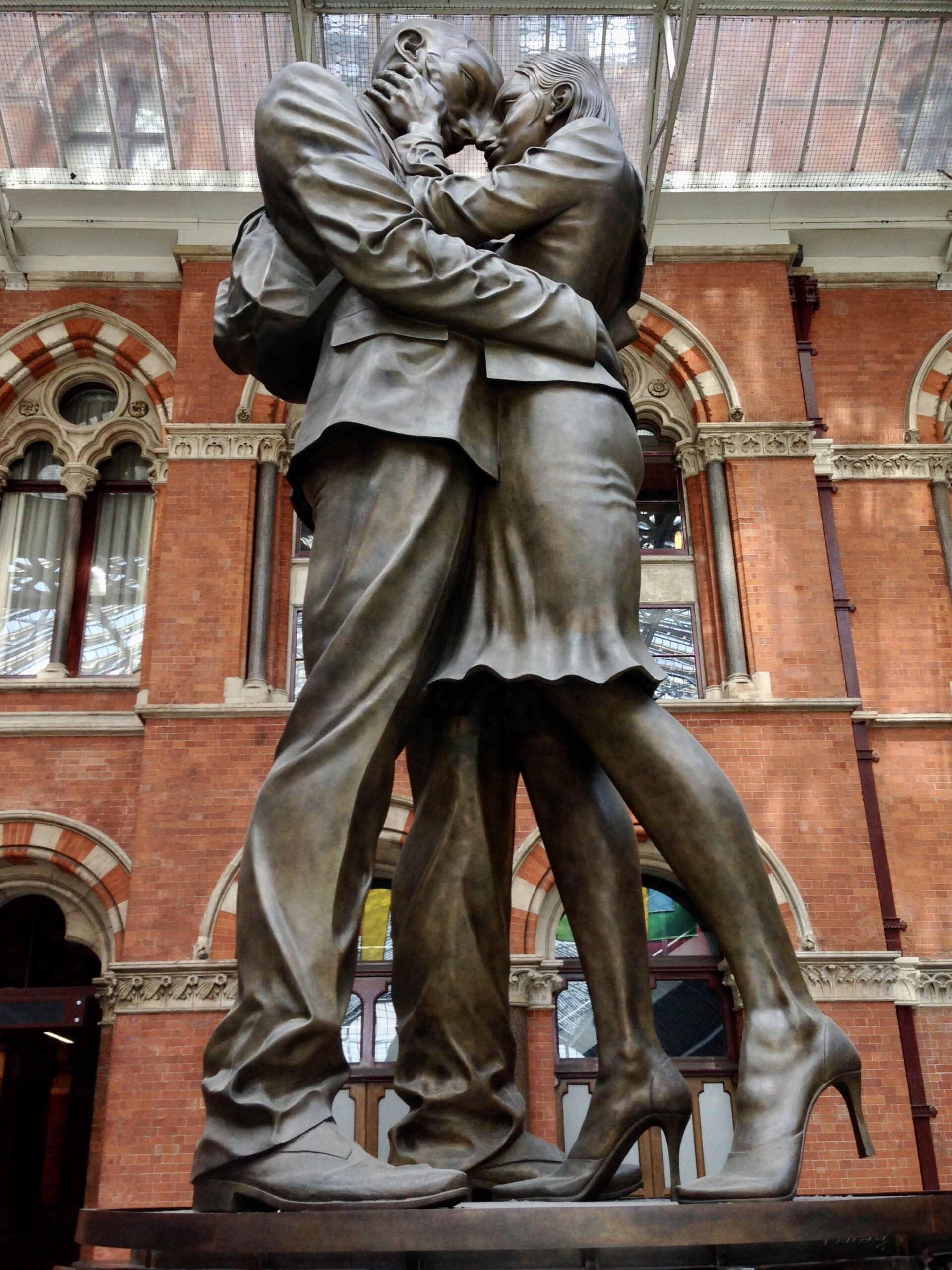
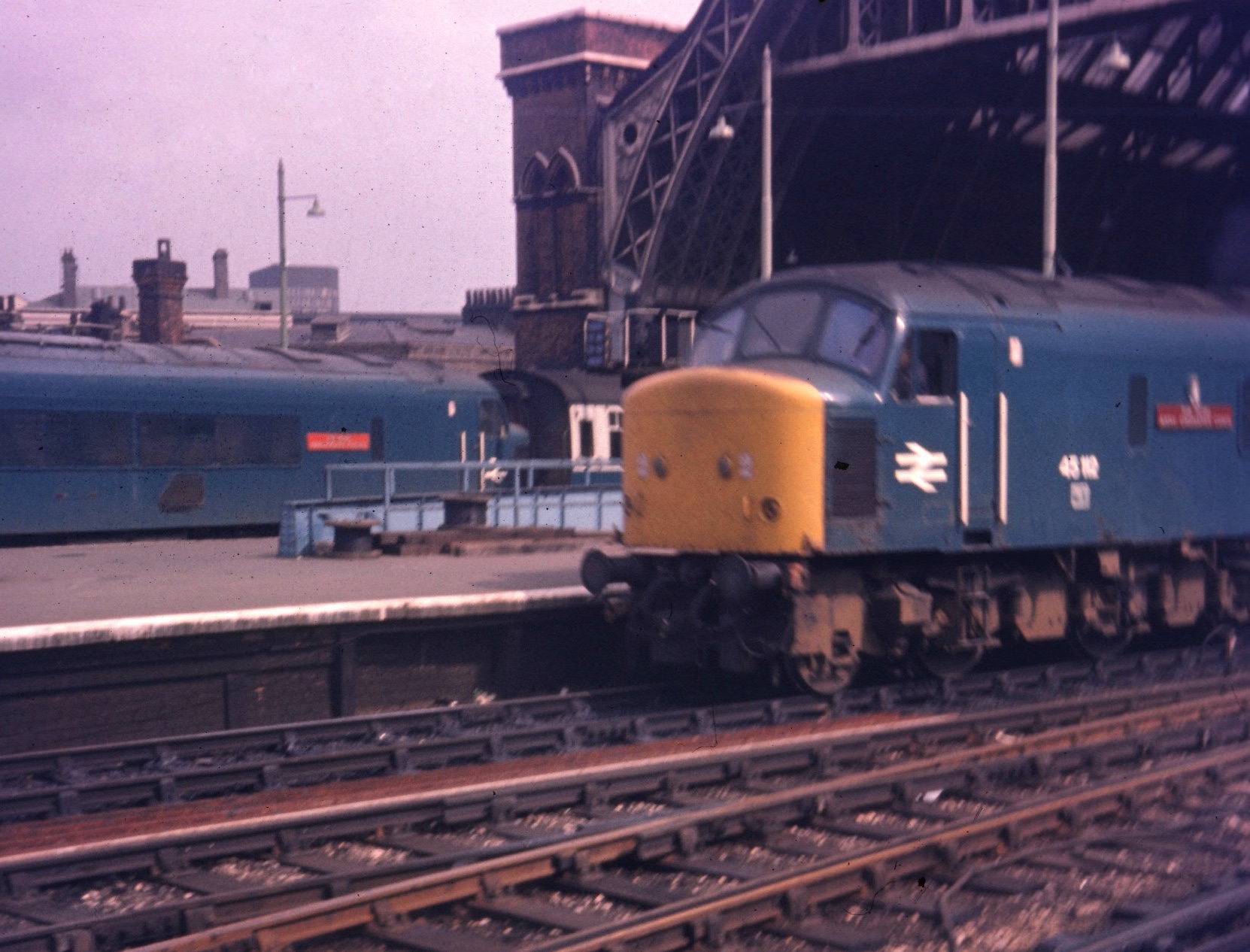
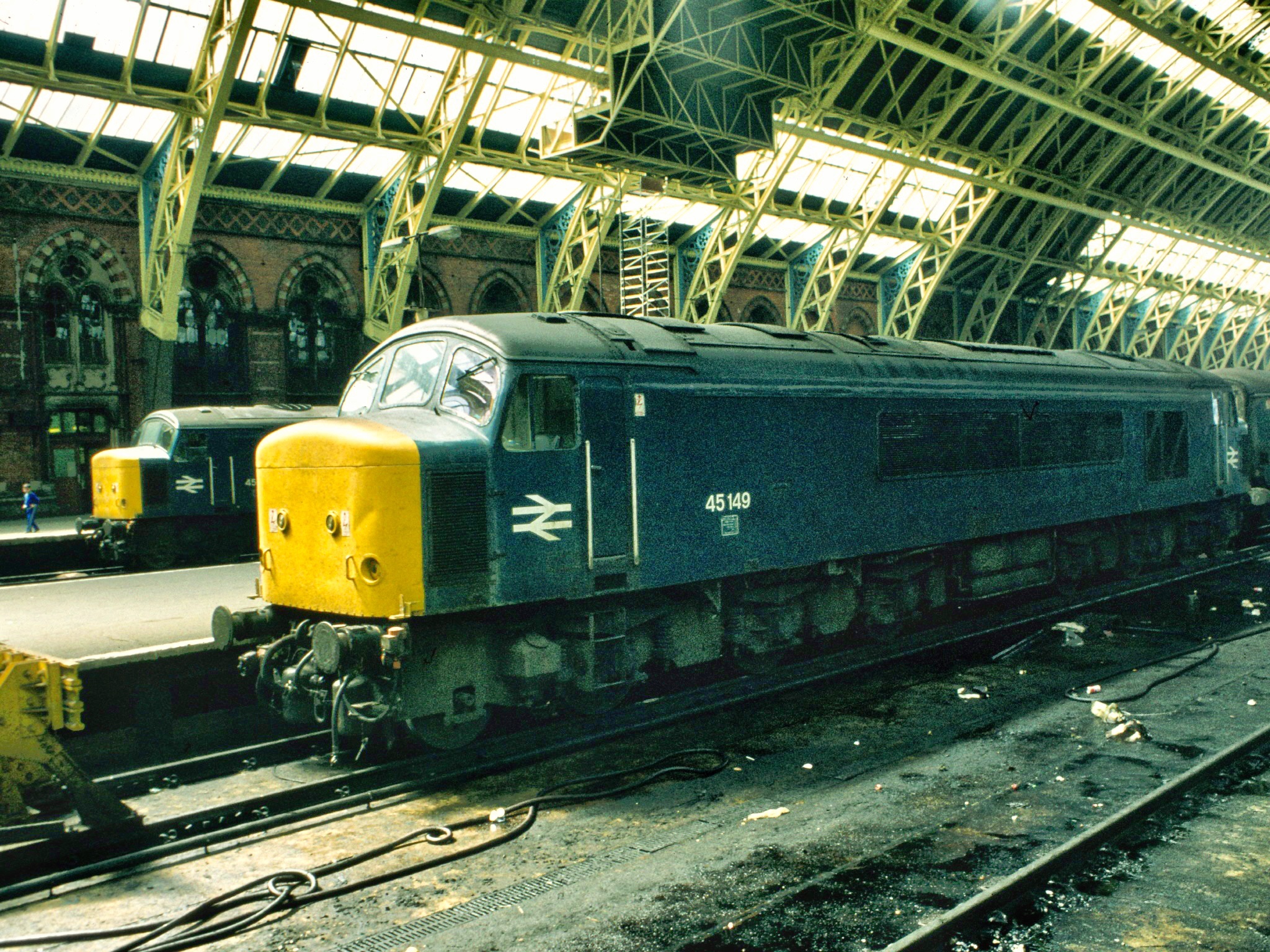
St Pancras railway station and The St Pancras Renaissance Hotel viewed from Euston Road – 15/10/2022 St Pancras railway station and The St Pancras Renaissance Hotel – 21/06/2014“The Meeting Place” is a 9 metre high, 20 tonne bronze sculpture that stands at the south end of the upper level of St Pancras. Designed by the British artist Paul Day and unveiled in 2007, it is intended to evoke the romance of travel through the depiction of a couple locked in an embrace – 21/06/2014Class 45 No. 45112 and an unidentified classmate at St Pancras circa 1977Class 47 No. 47484 ‘Isambard Kingdom Brunel’ awaits departure at St Pancras – 11/07/1981Class 45 No.’s 45149 and 45117 at the buffer stops of St Pancras – 11/07/1981
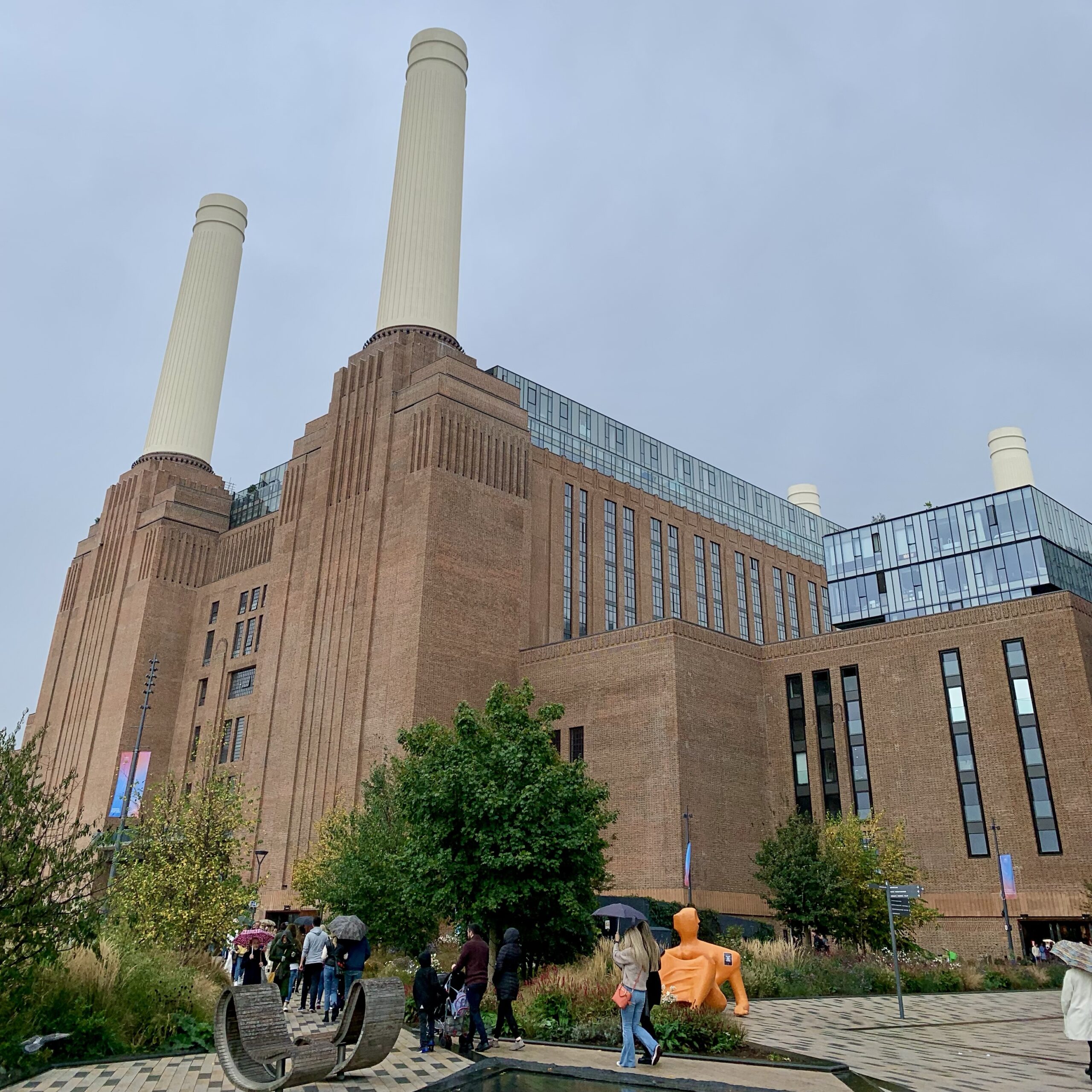
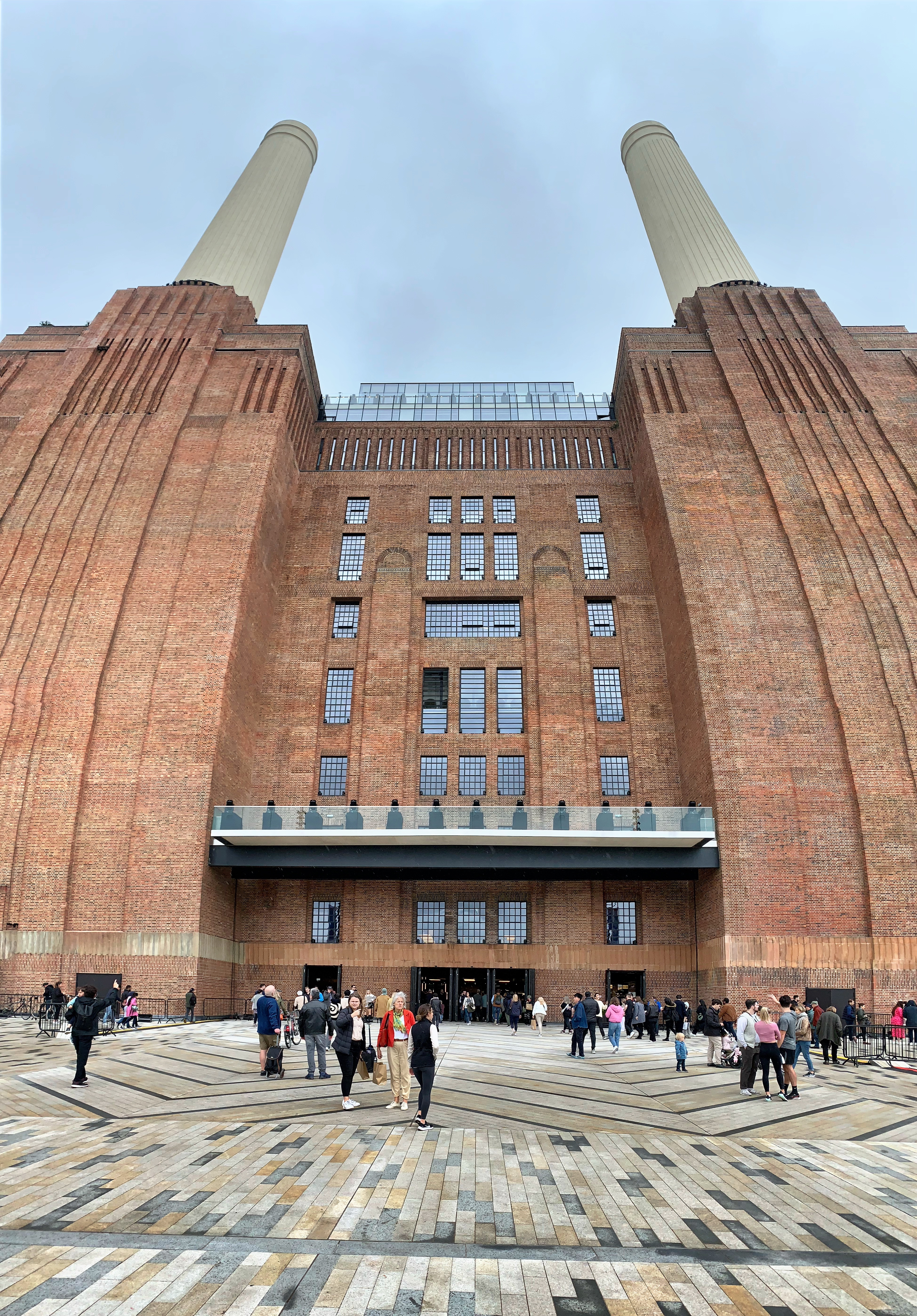
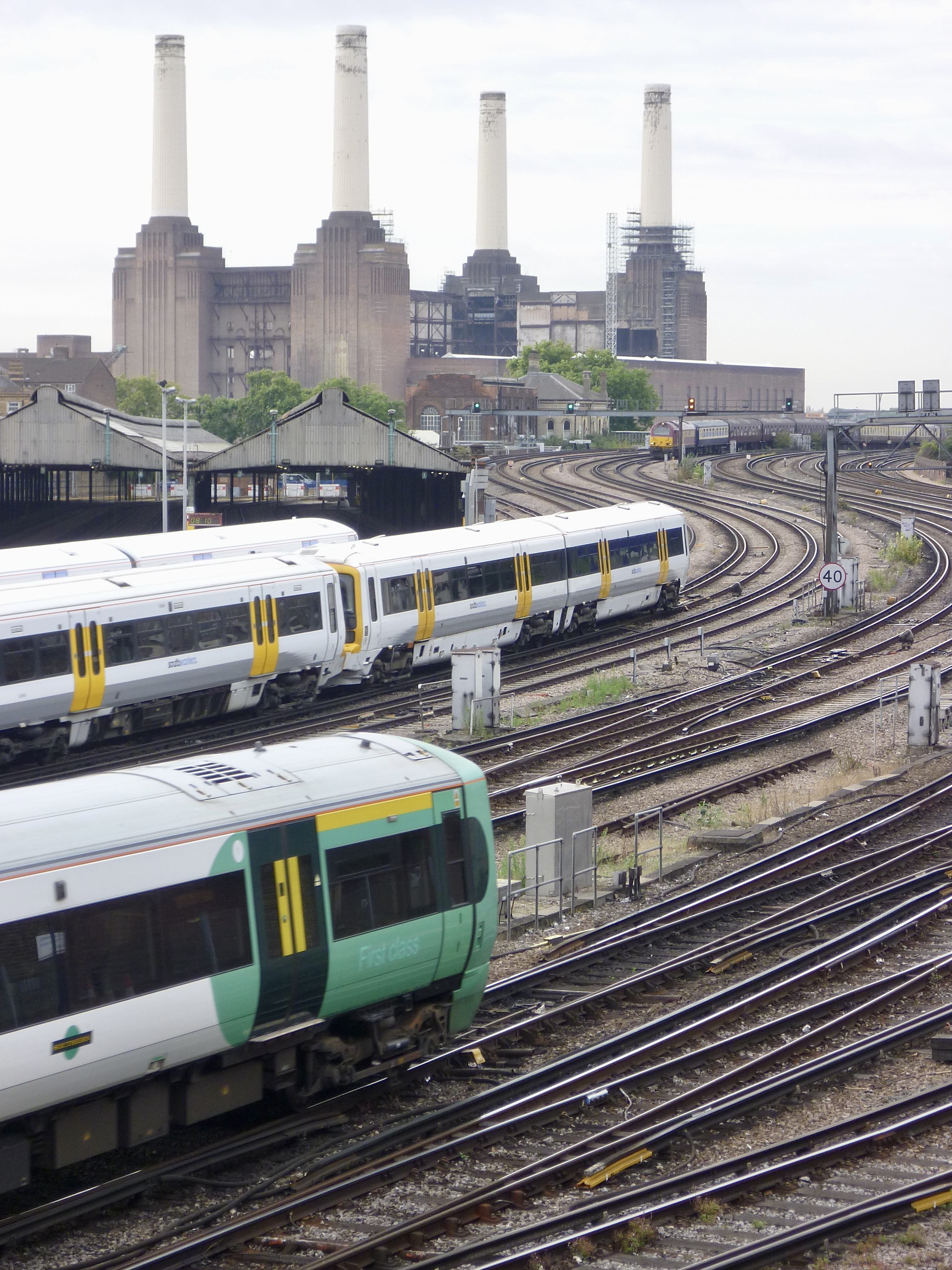
Staying with buildings connected to Sir George Gilbert Scott, Grade II Battersea Power Station re-opened on 14th October, so as I was in London and hoping to find an inflatable pig tethered above it, I thought it would be remiss of me not to stick my nose in and see what had been done to the place. The construction is actually two near-identical power stations built to form a single structure balanced by four chimneys, one in each corner of the plan. Designed by a team of architects and engineers, and allowing me to seamlessly segue from railway water towers to power stations, the third son of Sir George; Sir Giles Gilbert Scott, was brought onboard in 1930 by the London Power Company as consulting architect. Working with the buildings designer and the company chief engineer, Leonard Pearce (not to be confused with Lennard Pearce who played Grandad in BBC sitcom “Only Fools and Horses”), Scott’s role was to enhance the external appearance of the structure. He remodelled the four corner chimneys so they mimicked classical columns and added detailing to the vast brick walls.
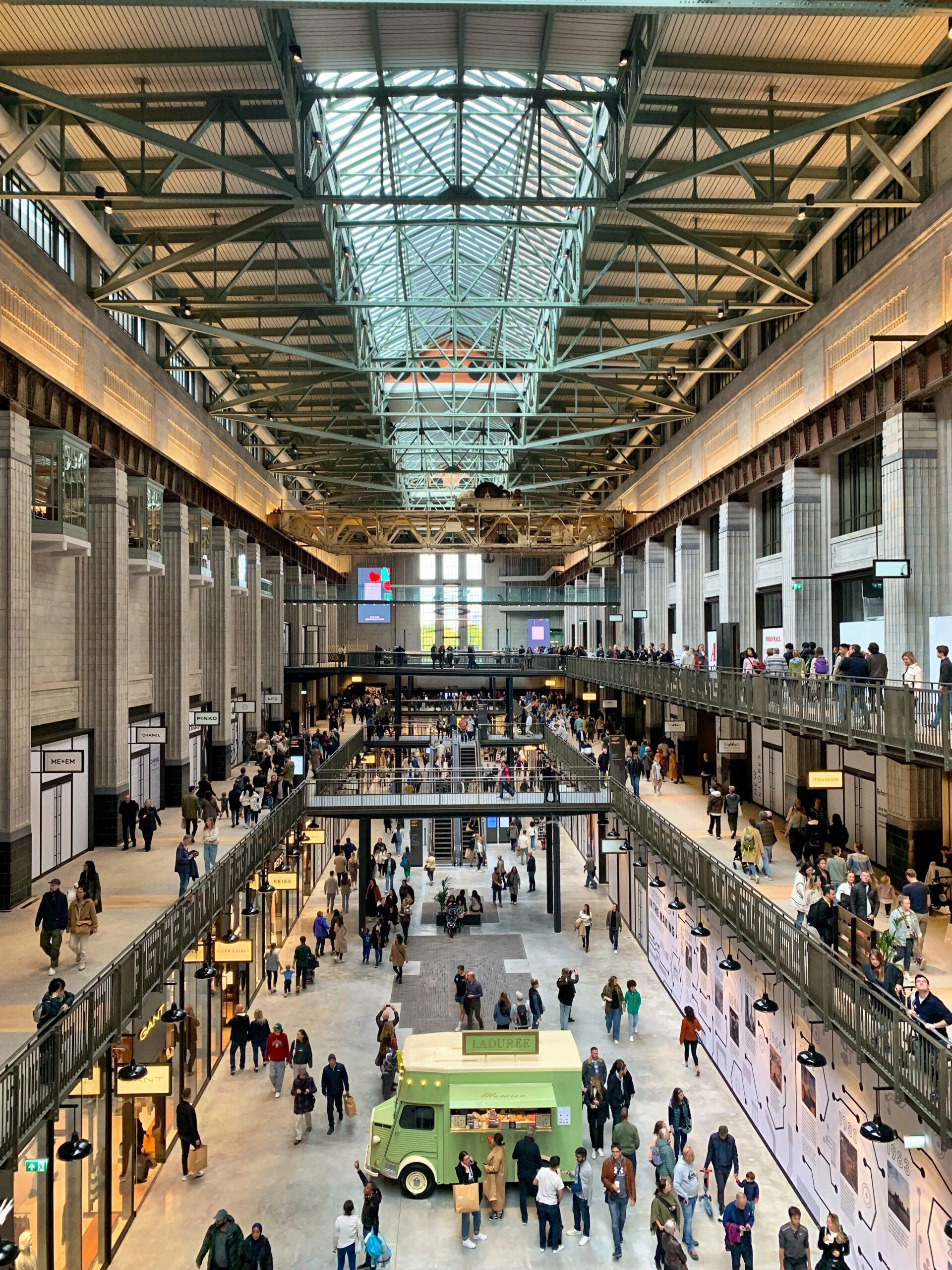
Battersea Power Station was originally opened in 1933, but has been disused since 1982. It was always one of the buildings I would look out for on rail journeys into London Waterloo, but is now obscured by modern buildings. At the time of its opening, The Observer newspaper called it “one of the finest sights in London” and I, for one, am happy it survived the intervening years which saw numerous unfulfilled proposals put forward for its regeneration. From theme parks to football stadiums, what we have ended up with on the site is a shopping centre, offices (soon to accommodate Apple’s London HQ) and homes occupying the building which was once dubbed “The Cathedral of Power” at the cost of £9 billion. 1,600 luxury flats have been built with a further 2,400 planned. Despite its size and six million bricks, I felt the former Power Station was somewhat lost amongst these new developments which have sprung up around it.
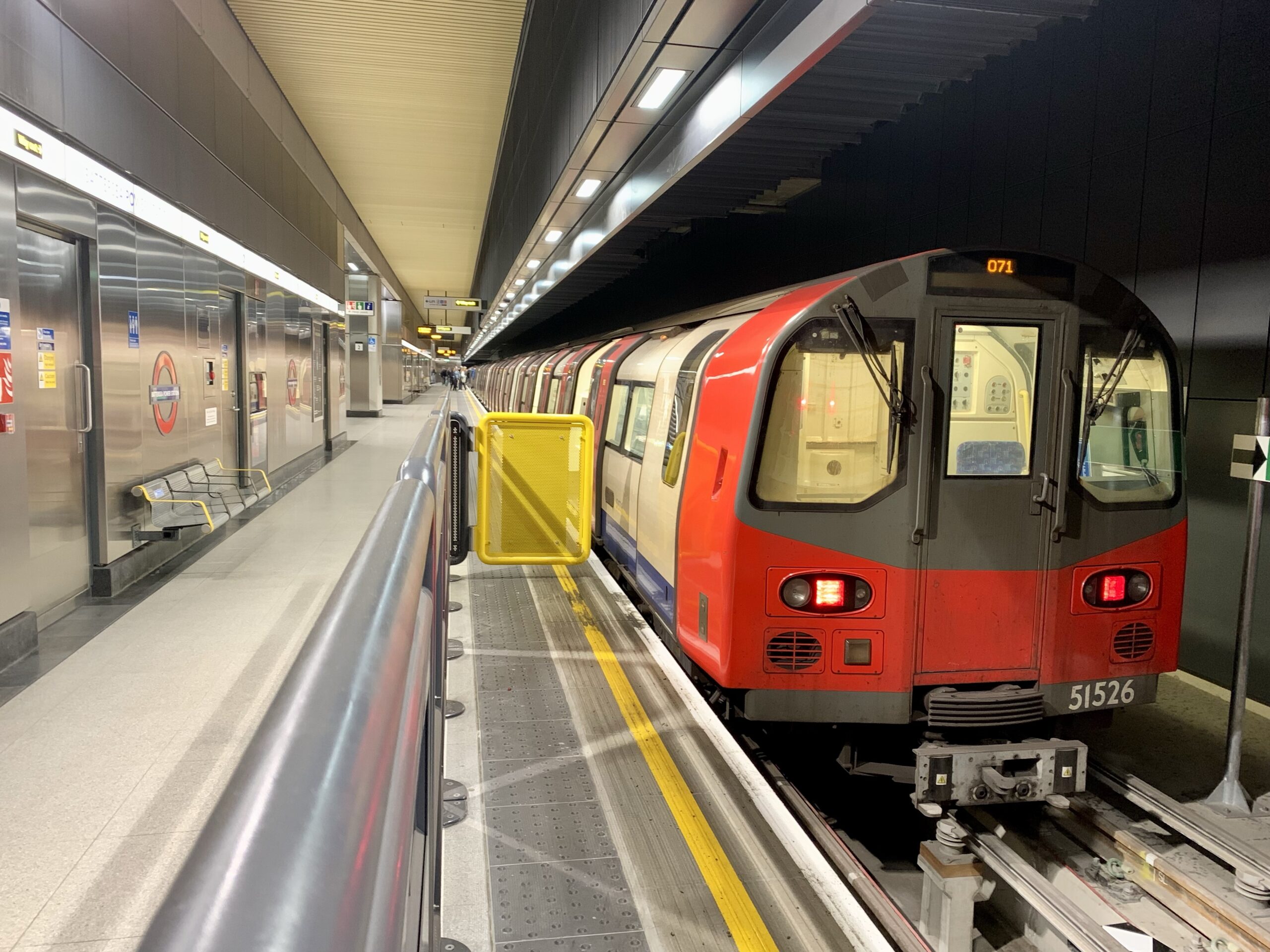
The London Underground’s Northern Line was extended, branching off at Kennington, with two new stations; Nine Elms and Battersea Power Station opening on 20th September 2021. The construction cost £1.1 billion and the extension is 3 kilometres long.
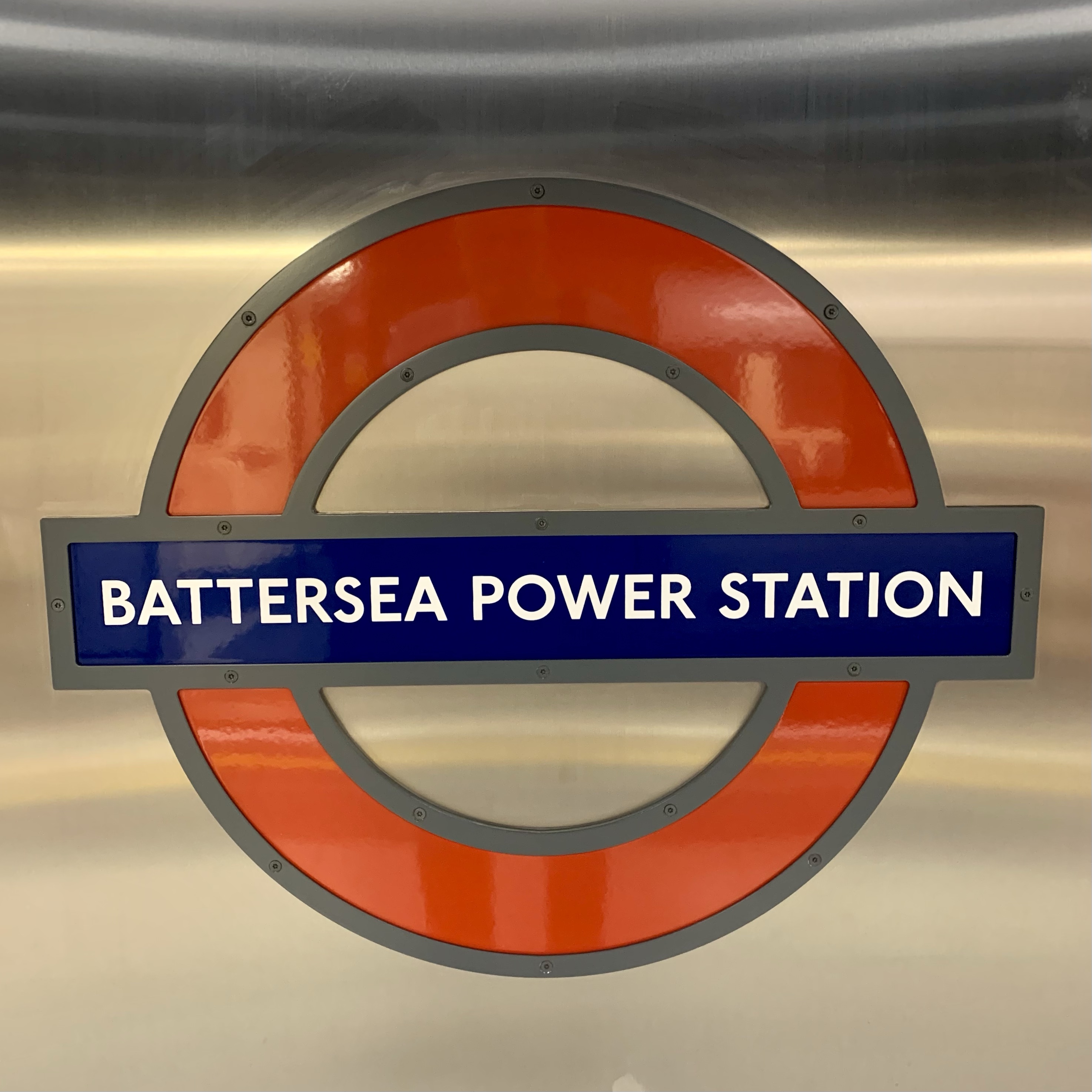
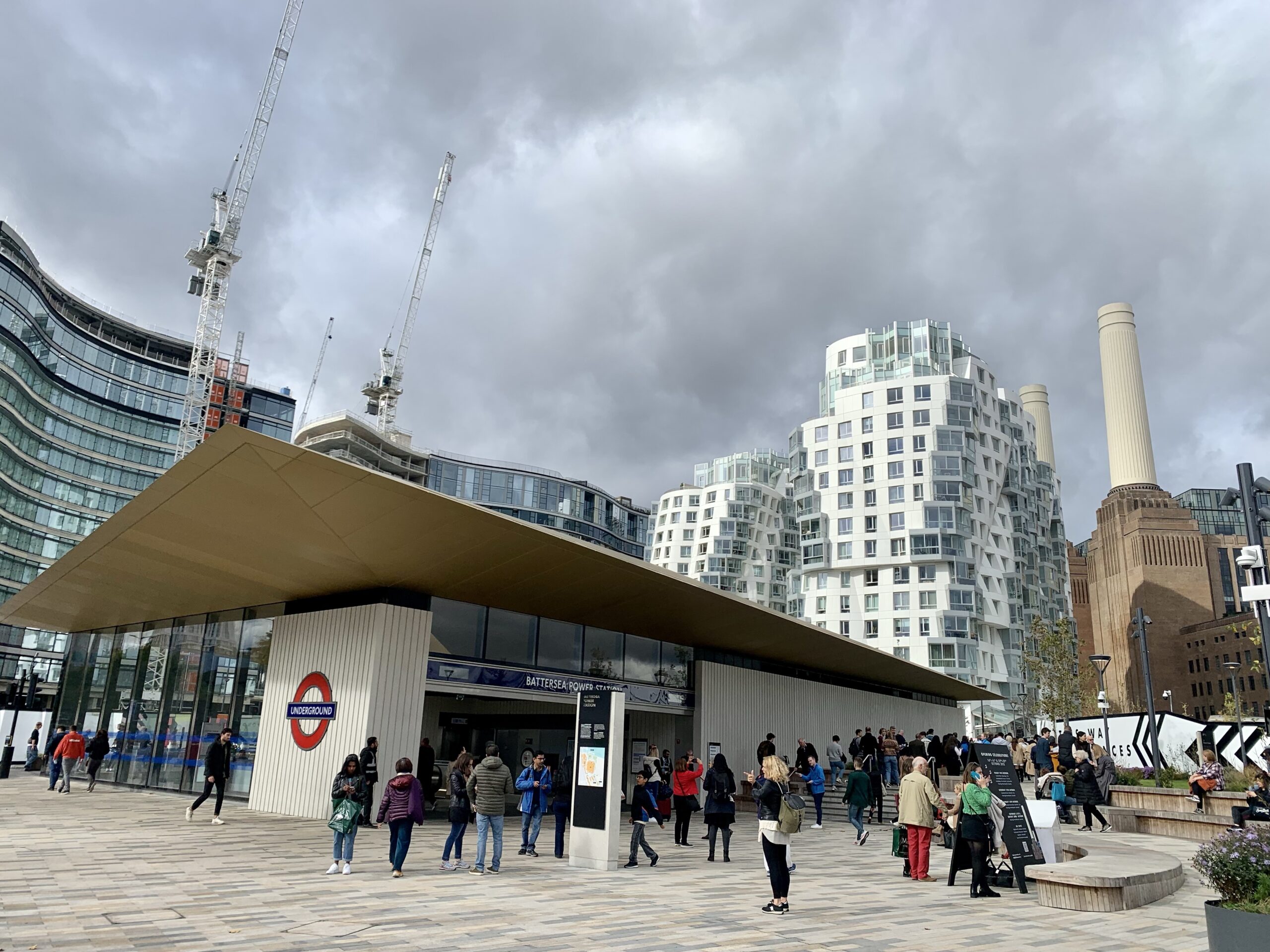
A Northern Line train awaits departure from platform 2 at Battersea Power Station – 15/10/2022Battersea Power Station roundel – 15/10/2022Exterior of Battersea Power Station tube – 15/10/2022Battersea Power Station – 15/10/2022Battersea Power Station – 15/10/2022
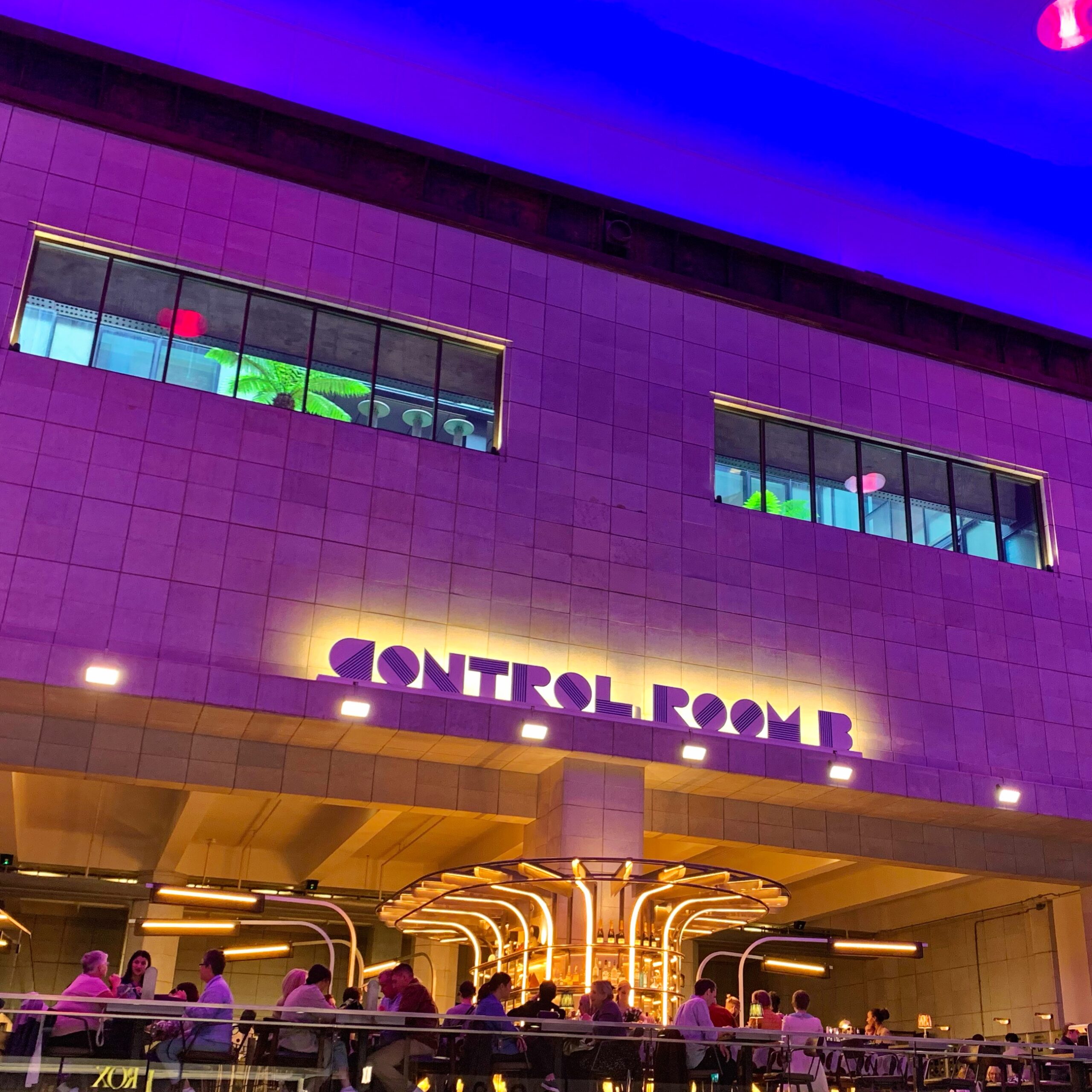
Not everything is open yet or accessible, such as the lift in one of the chimneys which promises aerial views of London, and Control Room A which will be used as an event space by invitation only. You can, however, visit Control Room B which is now a bar of the same name where staff wear white boiler suits and punters sit alongside switches and dials which technicians once used to control one fifth of the capital’s electricity. There was a queue of people waiting for seats when I passed by. On a future visit, I will definitely be checking out chef Gordon Ramsey’s bottomless pizzas at “Gordon Ramsey Street Pizza”. Unfortunately my visit of the exterior area was curtailed because of rain, so my intention of checking out the view of the railway originating from London Victoria across Grosvenor Bridge will have to wait until next time.
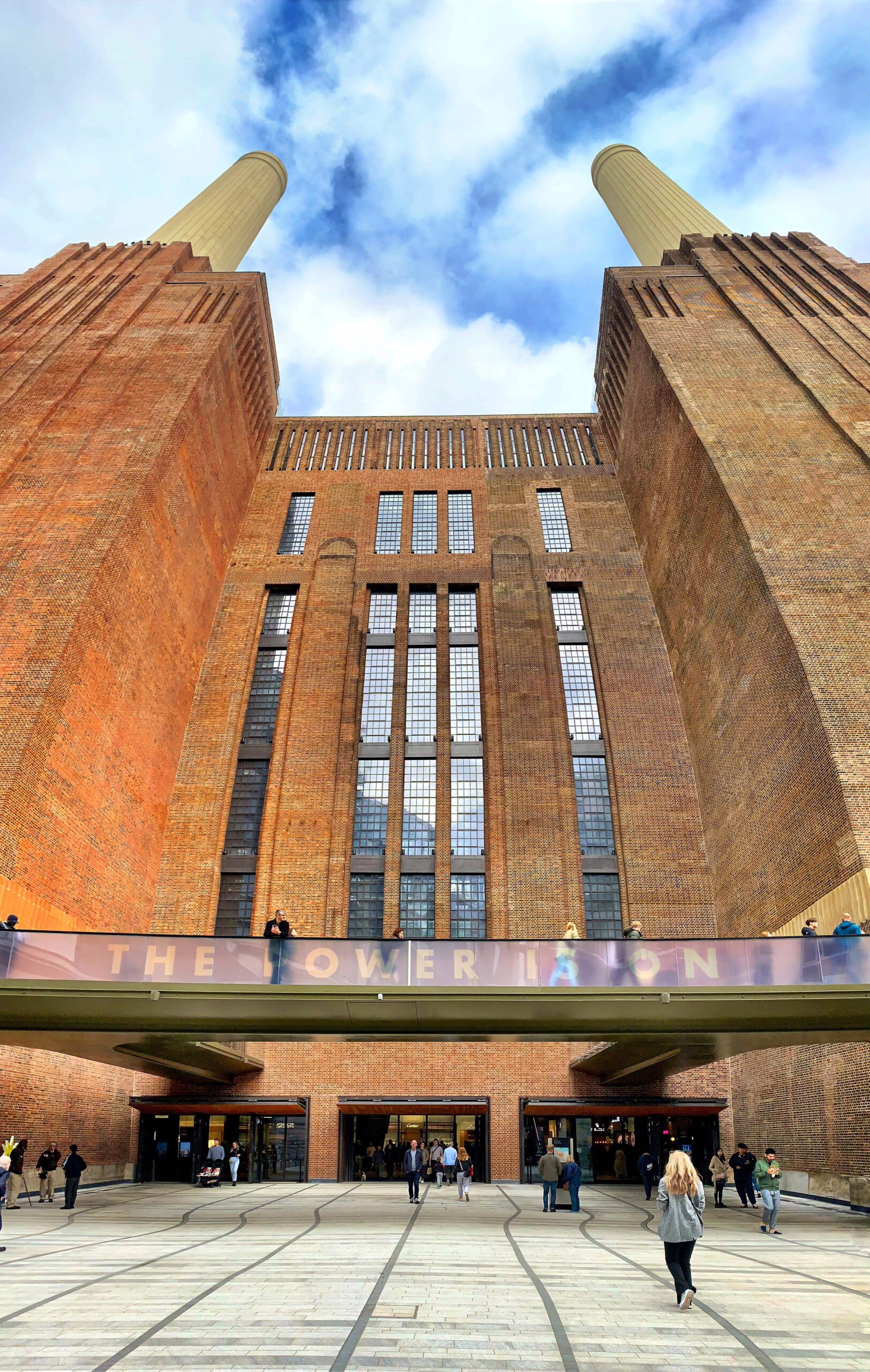
Shopping centre West Entrance to Battersea Power Station – 15/10/2022Battersea Power Station from alongside the River Thames – 15/10/2022North Entrance Battersea Power Station – 15/10/2022Interior Battersea Power Station – 15/10/2022Control Room B, Battersea Power Station – 15/10/2022Control Room B, Battersea Power Station – 15/10/2022
Sir Giles Gilbert Scott has a Dorset connection having designed the Church of the Annunciation, a Roman Catholic Church in Bournemouth. But this isn’t a blog about churches. Or power stations for that matter. And anyway, Bournemouth was in Hampshire in 1905.
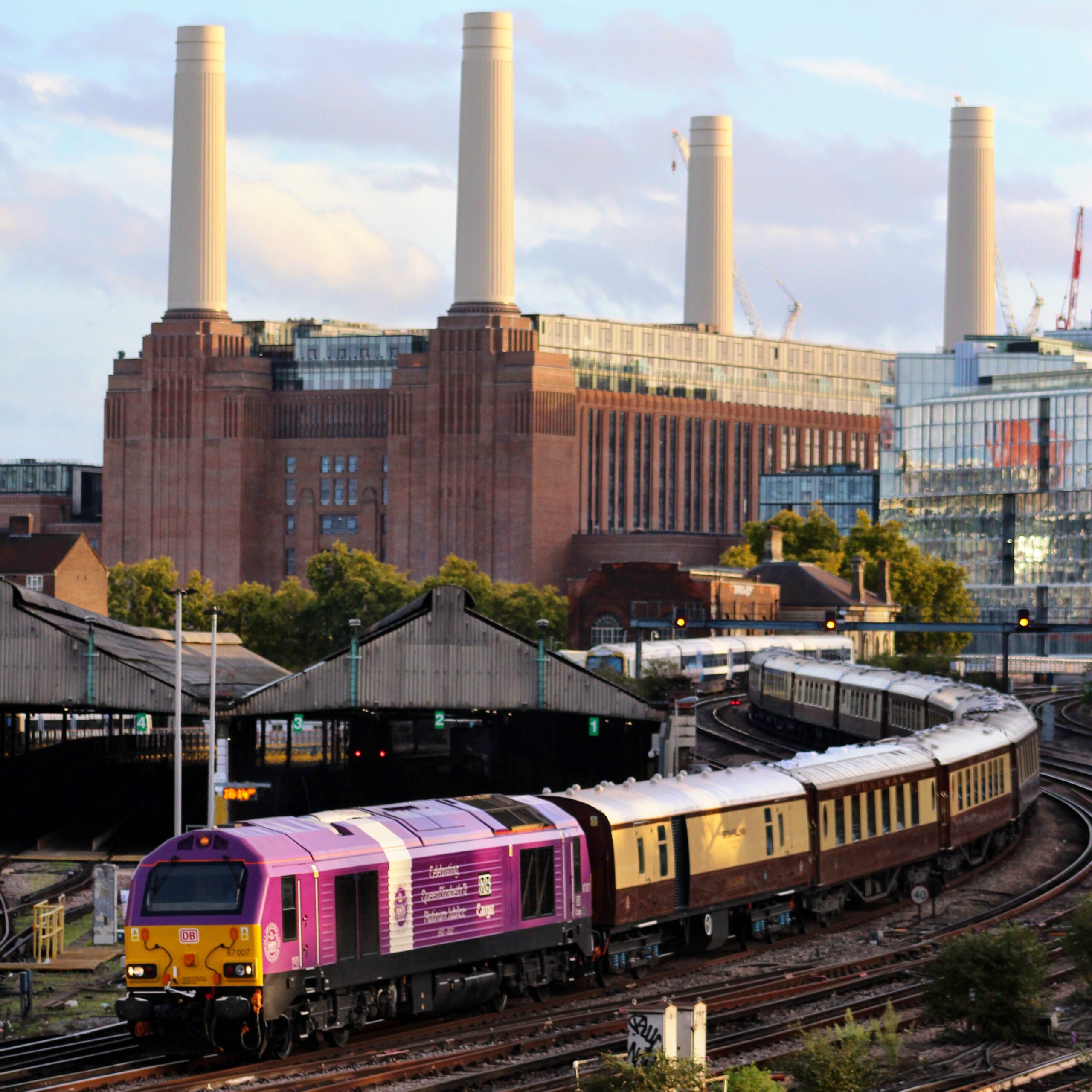
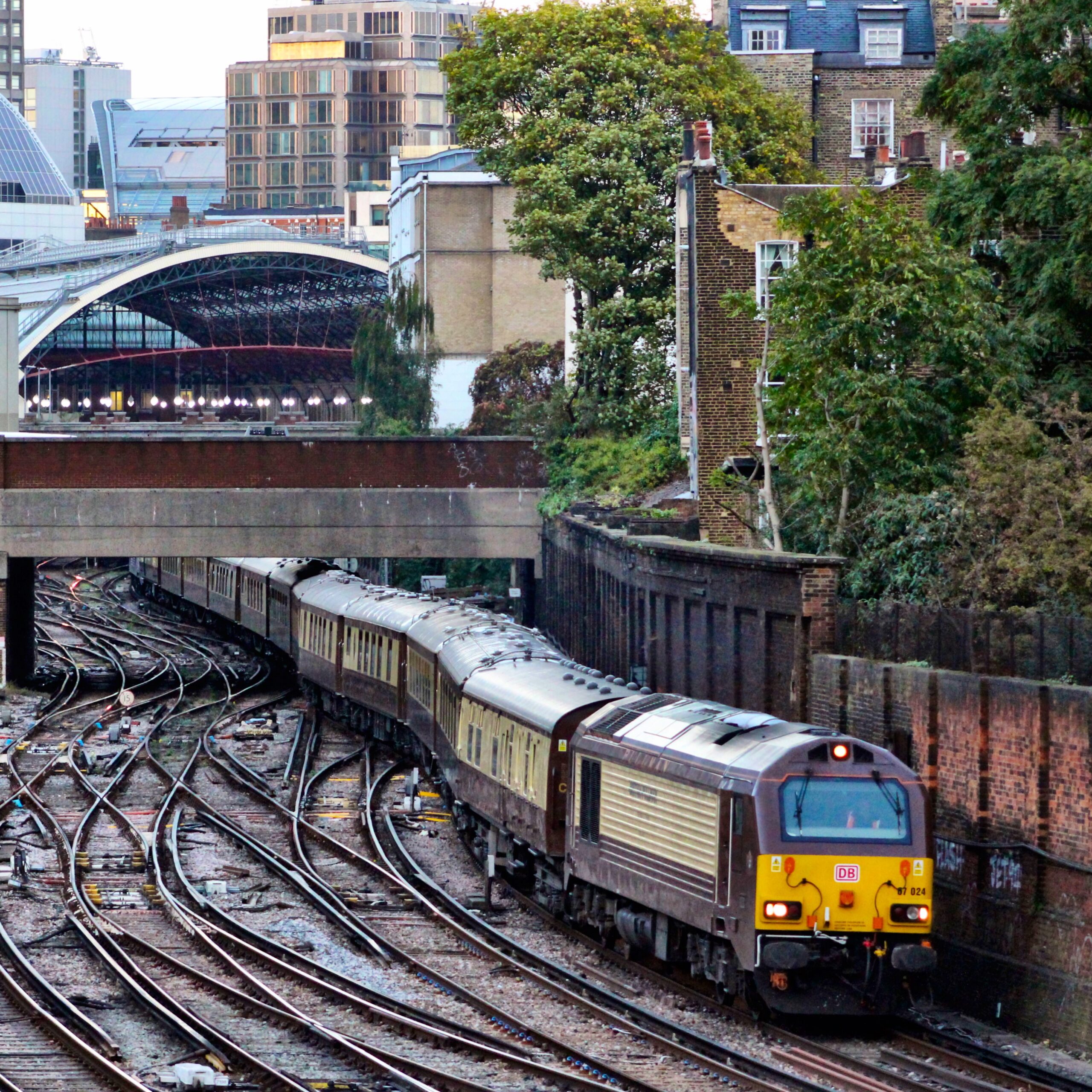
Returning to my recent London adventure, I did however set Battersea Power Station in my sights later in the day when on my way home, I alighted from my Victoria Line tube train to see Belmond Trains “Brighton Belle” British Pullman rail tour arrive at London Victoria.
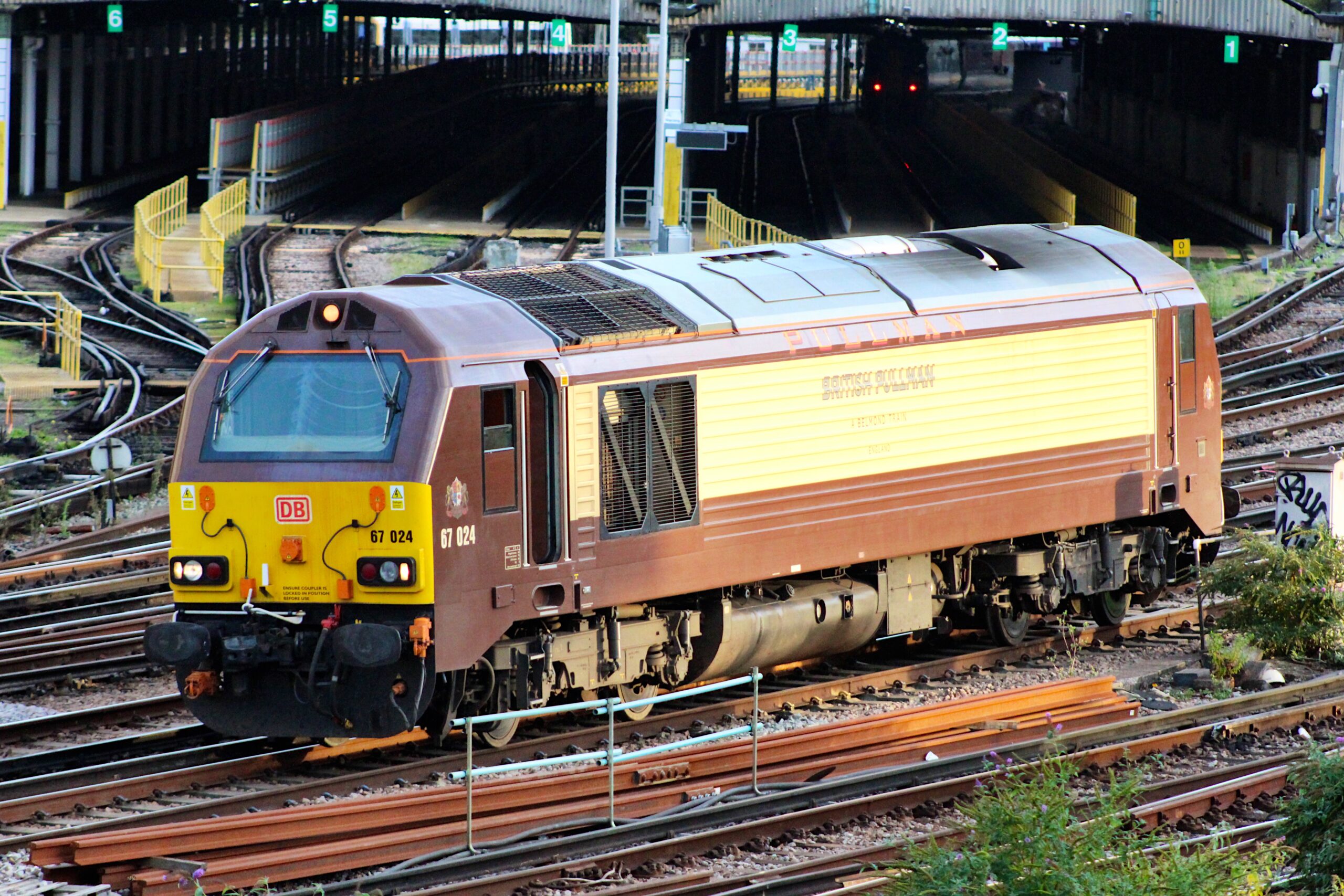
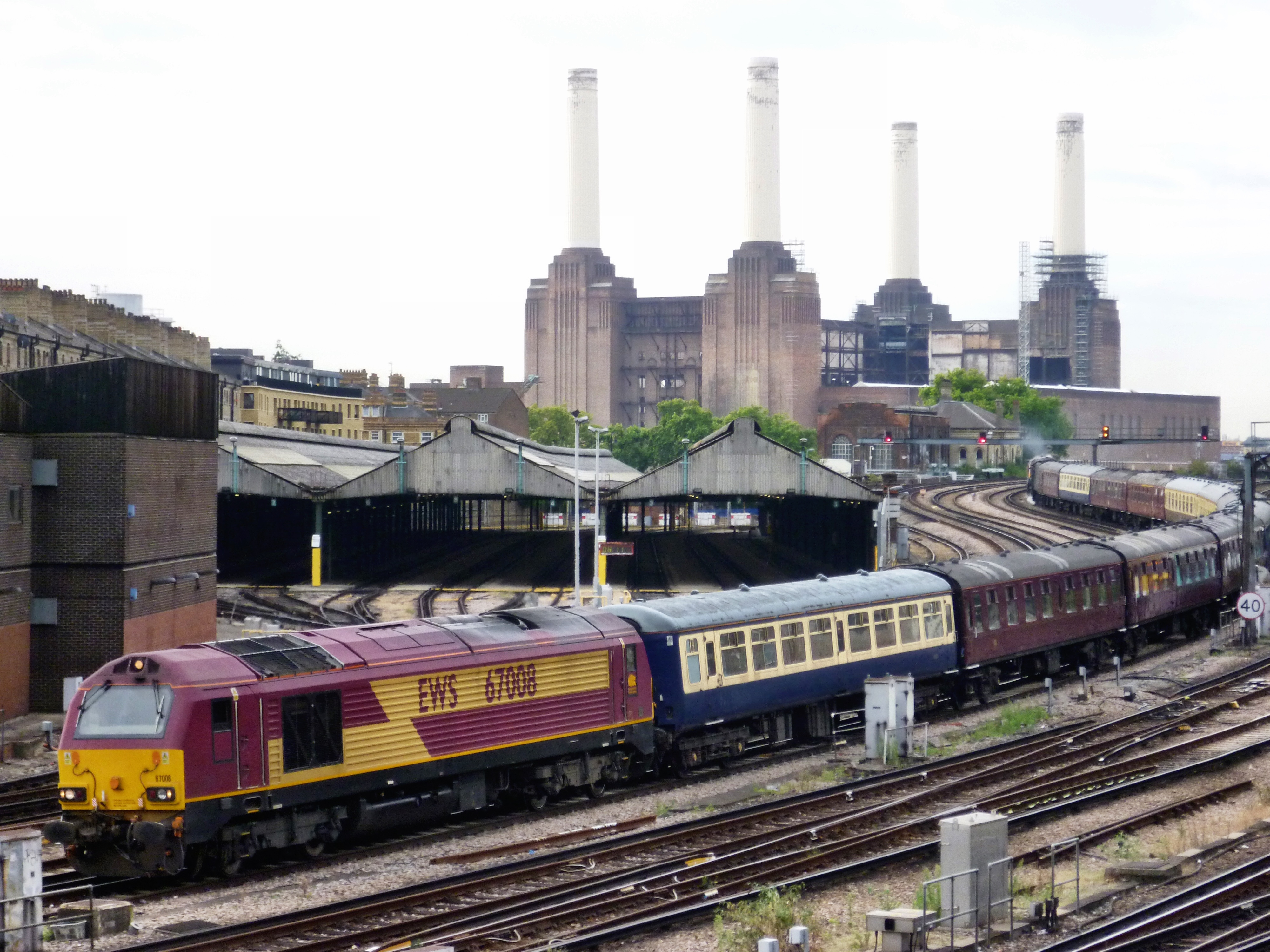
Platinum Jubilee liveried DB Class 67 No. 67007 working the return Brighton Belle 1Z91 Hove to London Victoria passes Grosvenor Road Carriage Sheds with the newly re-opened Battersea Power station as backdrop – 15/10/2022Light locomotive Class 67 No. 67024 in British Pullman livery working 0Y83 Stewarts Lane T&R.S.M.D to London Victoria – 15/10/2022Class 67 No. 67024 in British Pullman livery departing Victoria station with 5O82 London Victoria to Stewarts Lane T&R.S.M.D
Comings and goings at London Victoria vowed from Ebury Road bridge – 15/10/2022
Thank you for stopping by, Yoshi and I will be back next week for more ‘Flying Scotsman’ related tales. Until then, take care!
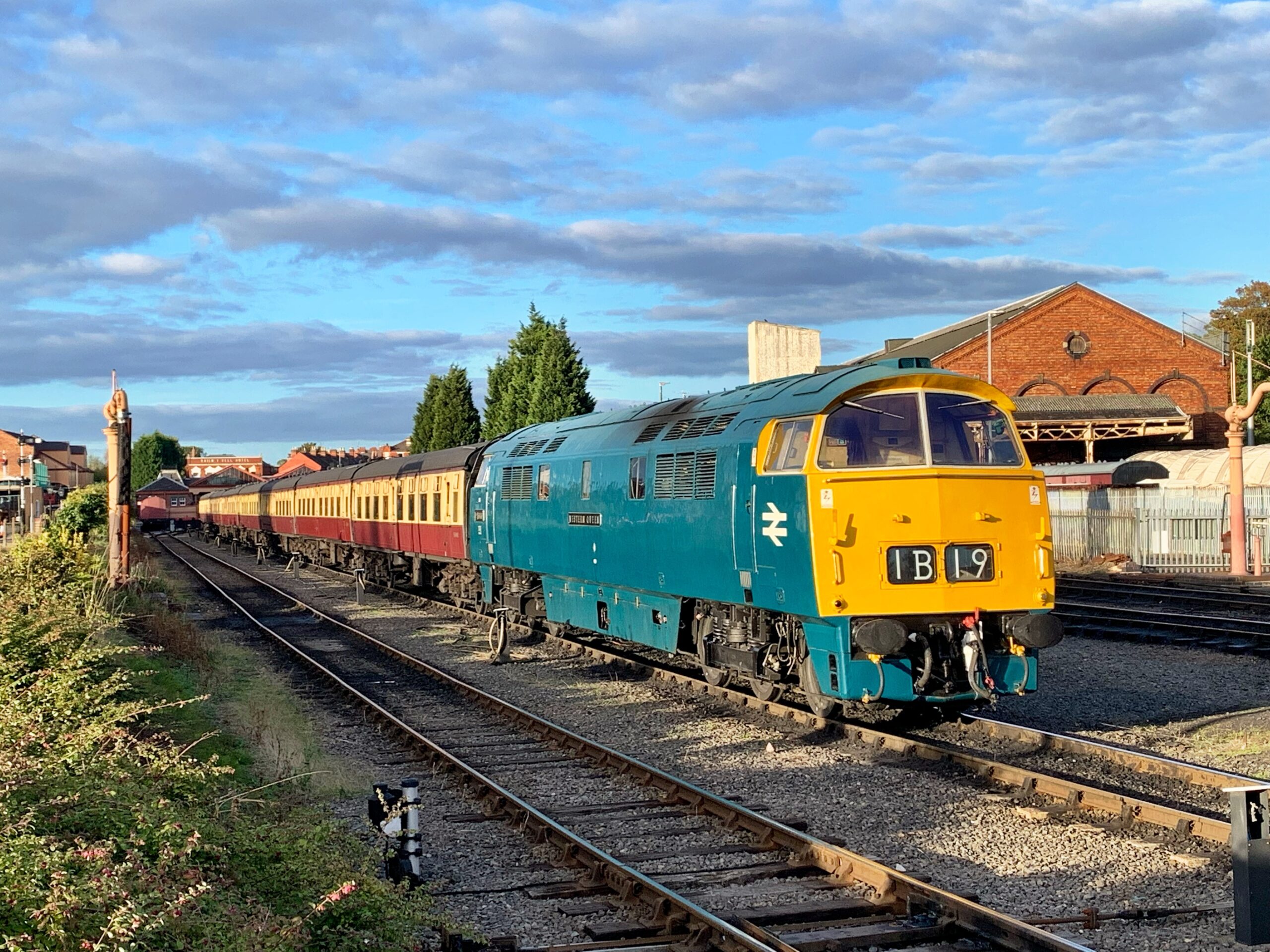
Yoshi at Kidderminster enjoying the last gasp of autumn sun with Class 52 Western diesel hydraulic No. D1040 ‘Western Queen’ in the background – 02/10/2022
Hello Dear Reader! It’s been a relatively quiet week on the rails in Yoshi’s manor. Engineers trains for the Chetnole track upgrade came and went, utilising the same locomotives on a rota as at the start of the work. Because of the their early departures via Dorchester South, Yoshi and I remained snuggled up in our bed. We had planned on seeing the final two trains depart via Yeovil Pen Mill on the Friday evening, but the rain and winds put us off as we didn’t fancy hanging around for them to make an appearance on an open windswept railway station. In the event it appears they left more or less on time, so it would not have be so tortuous!
Severn Valley Railway
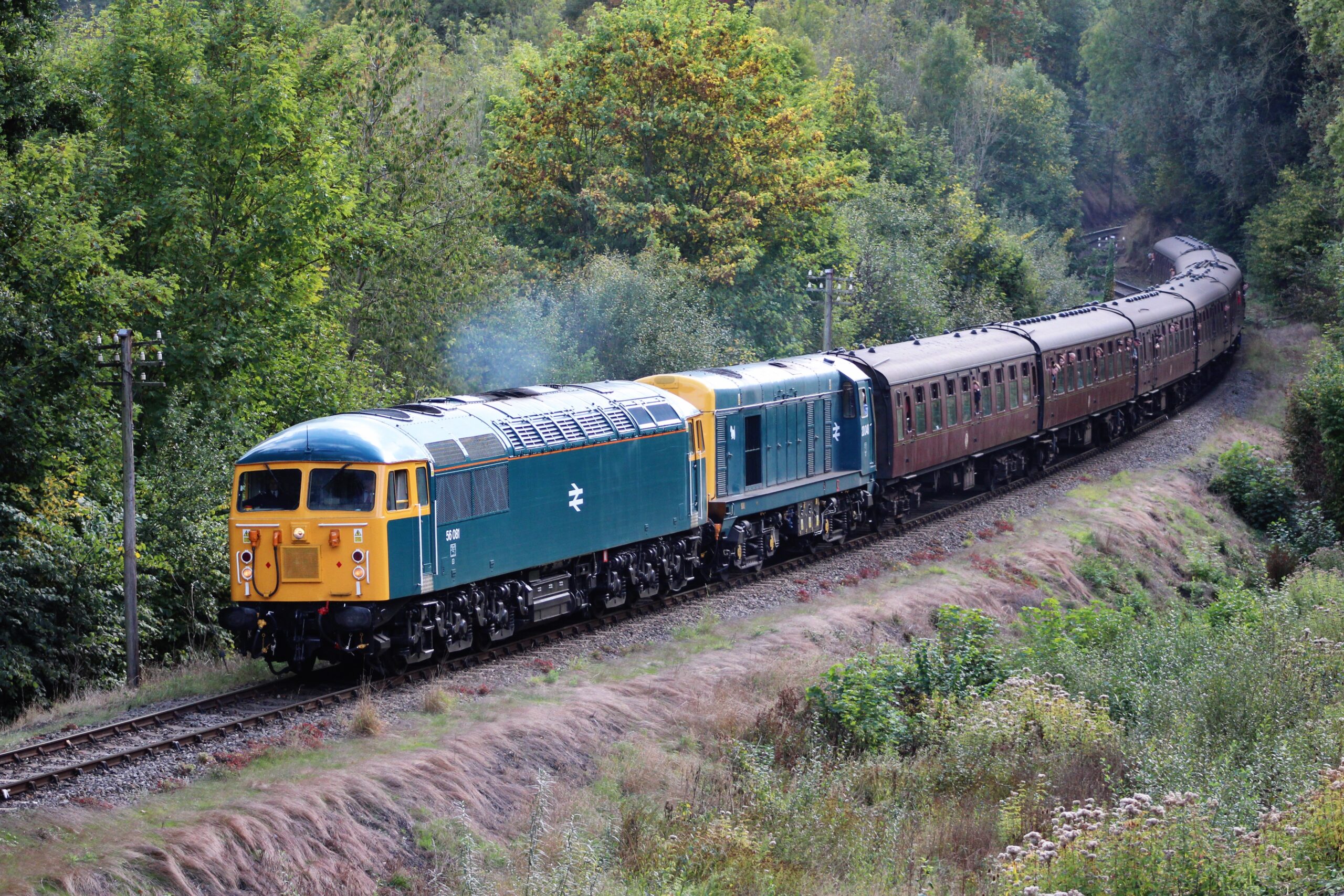
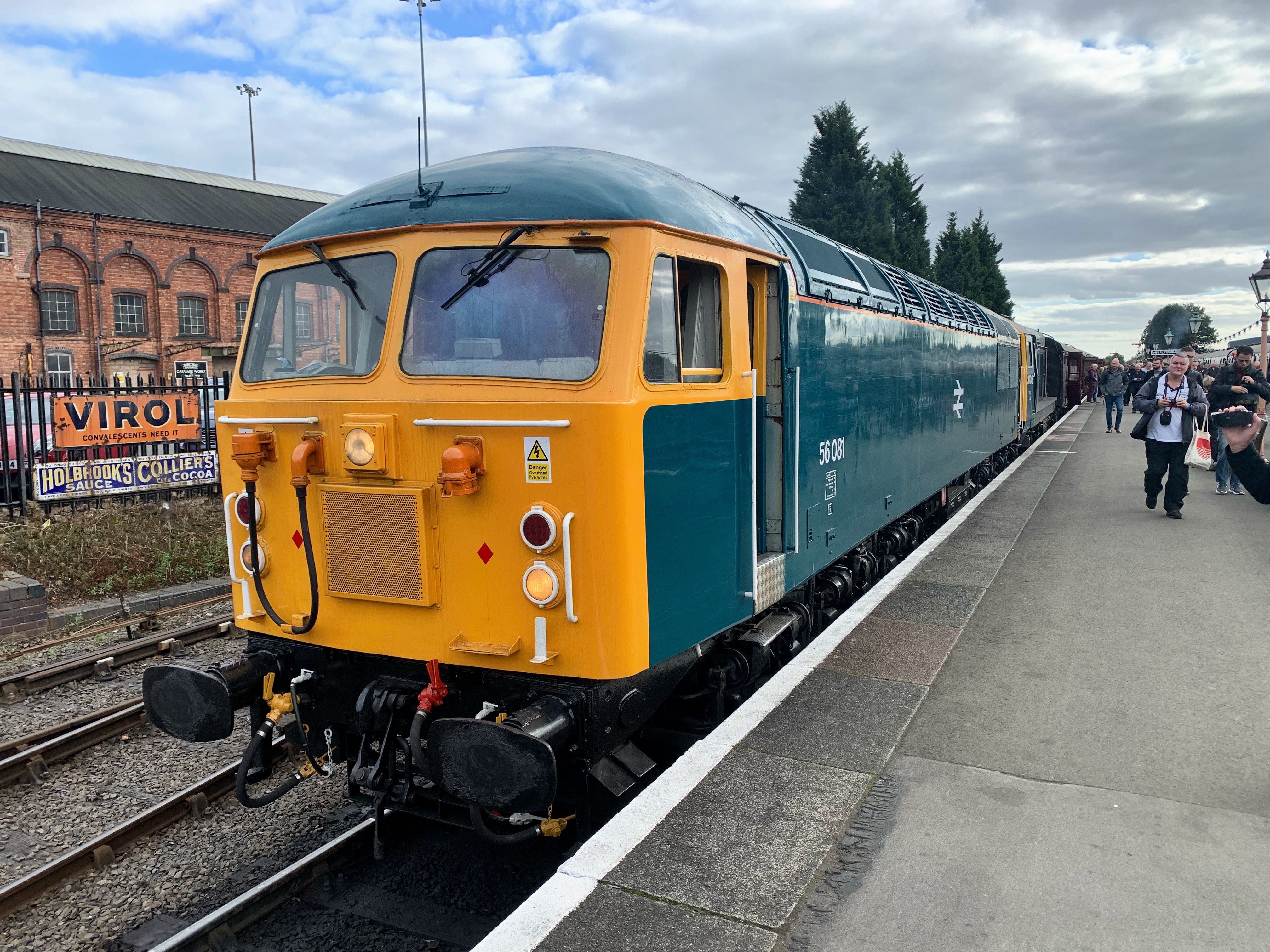
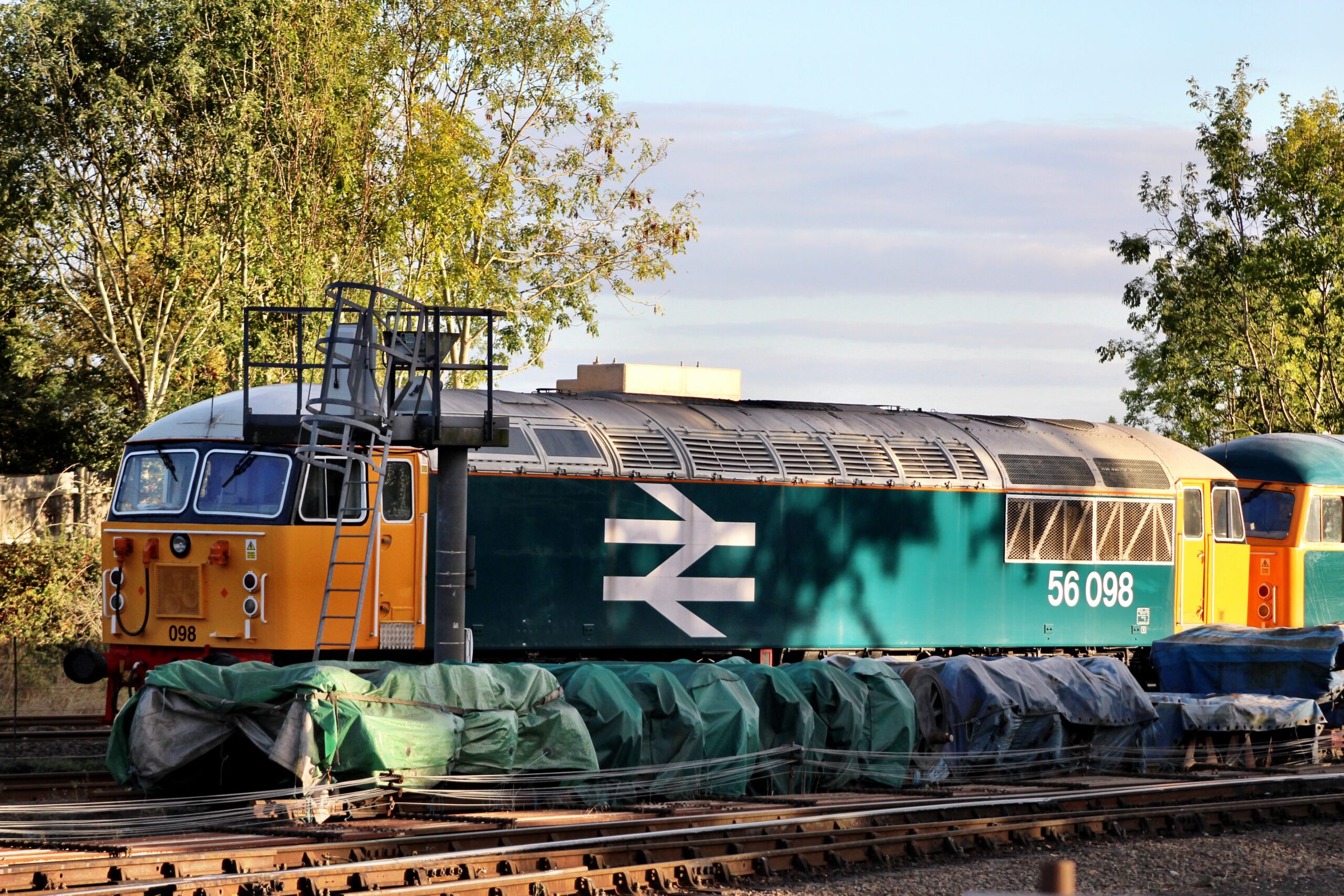
Sunday 2nd October found us back at the Severn Valley Railway, this time for their 2022 Autumn Diesel Bash. The main attraction for me being the visit of two GB Railfreight Class 56 locomotives which have been repainted into retro British Rail liveries. The GBRf Class 56’s will eventually be rebuilt as Class 69 locomotives in due course, so we thought we’d take the opportunity to catch these while we can. Only one of the two Class 56 locomotives ran each day over the weekend; No. 56098 on Saturday and 56081 on the Sunday. I hoped that the locomotive not being used would be on static display, but this wasn’t really the case, and only a record shot could be achieved from publicly accessible areas.
GBRf Class 56 No.’s 56098 and 56081 coupled together at Kidderminster SVR awaiting their return to Old Dalby the following day – 02/10/2022
Despite this, we had another great day out at the Severn Valley. Even the fact the coffee machine wasn’t working at The Engine House cafe in Highley didn’t dampen my spirits. As we left Dorset and made our way northwards, the weather didn’t look conducive to a day out, but once past Bristol, the sun made a welcome appearance for the rest of the day. Thanks to Andrew and Scott for their excellent company and helping to look after Yoshi.
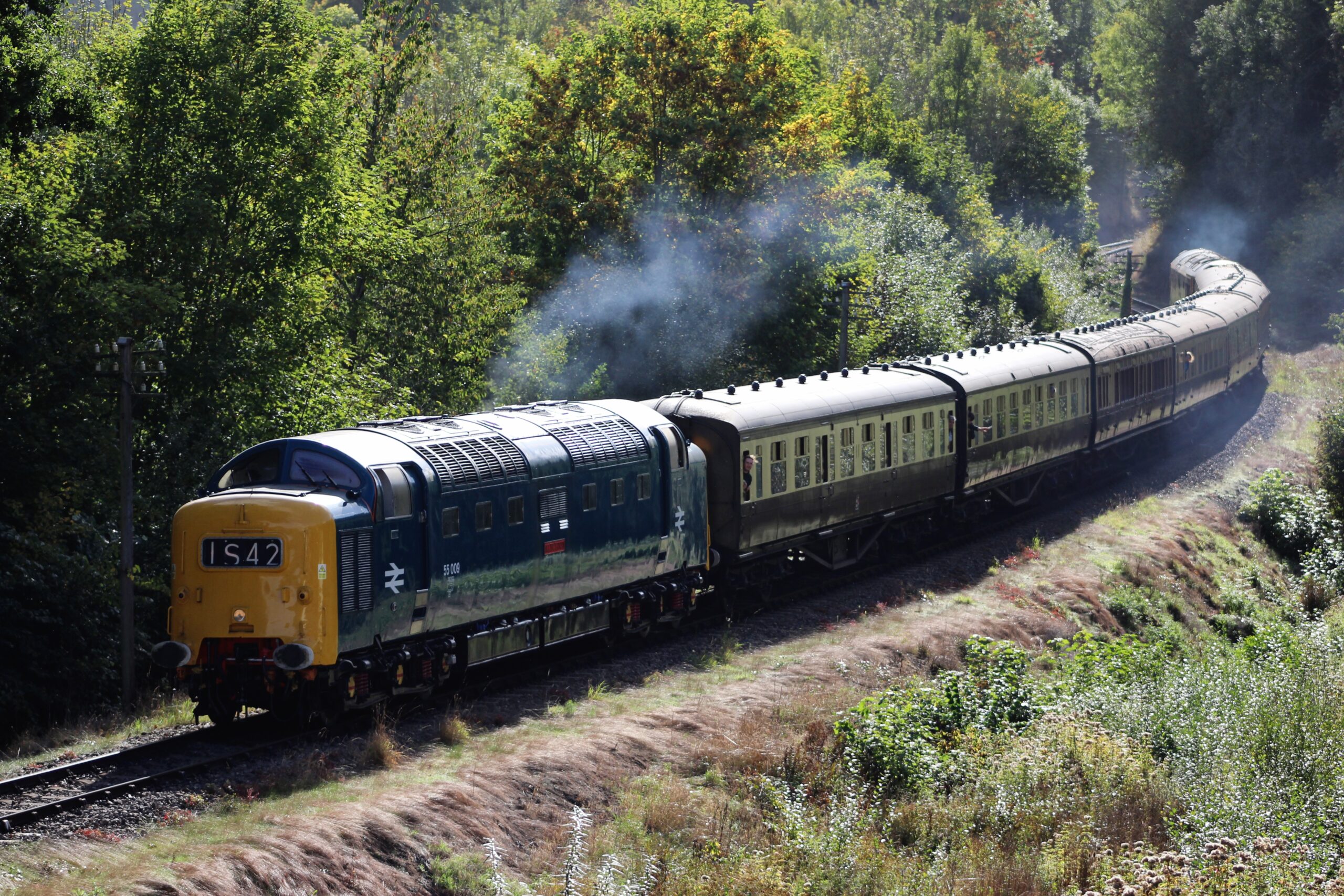
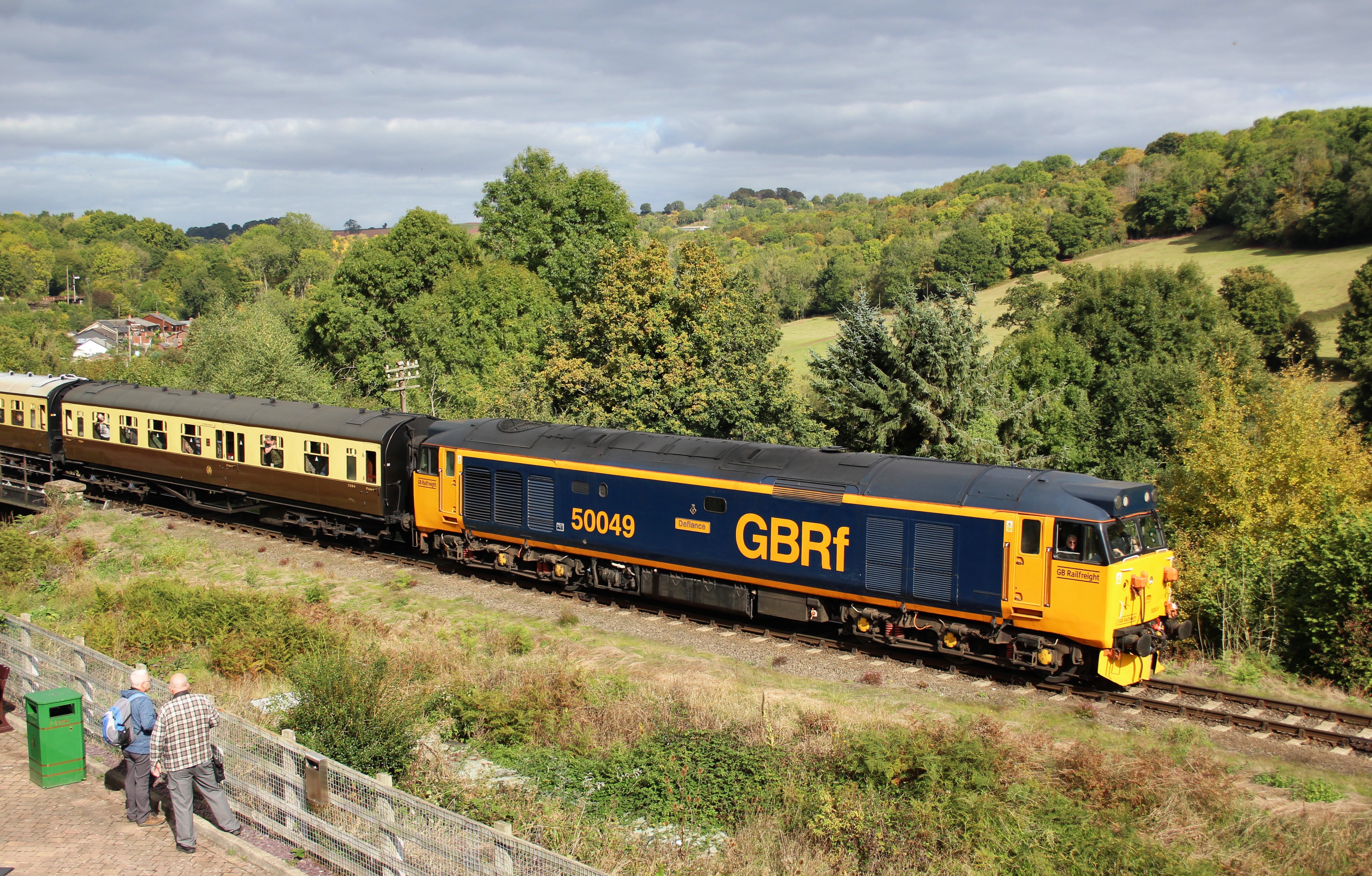
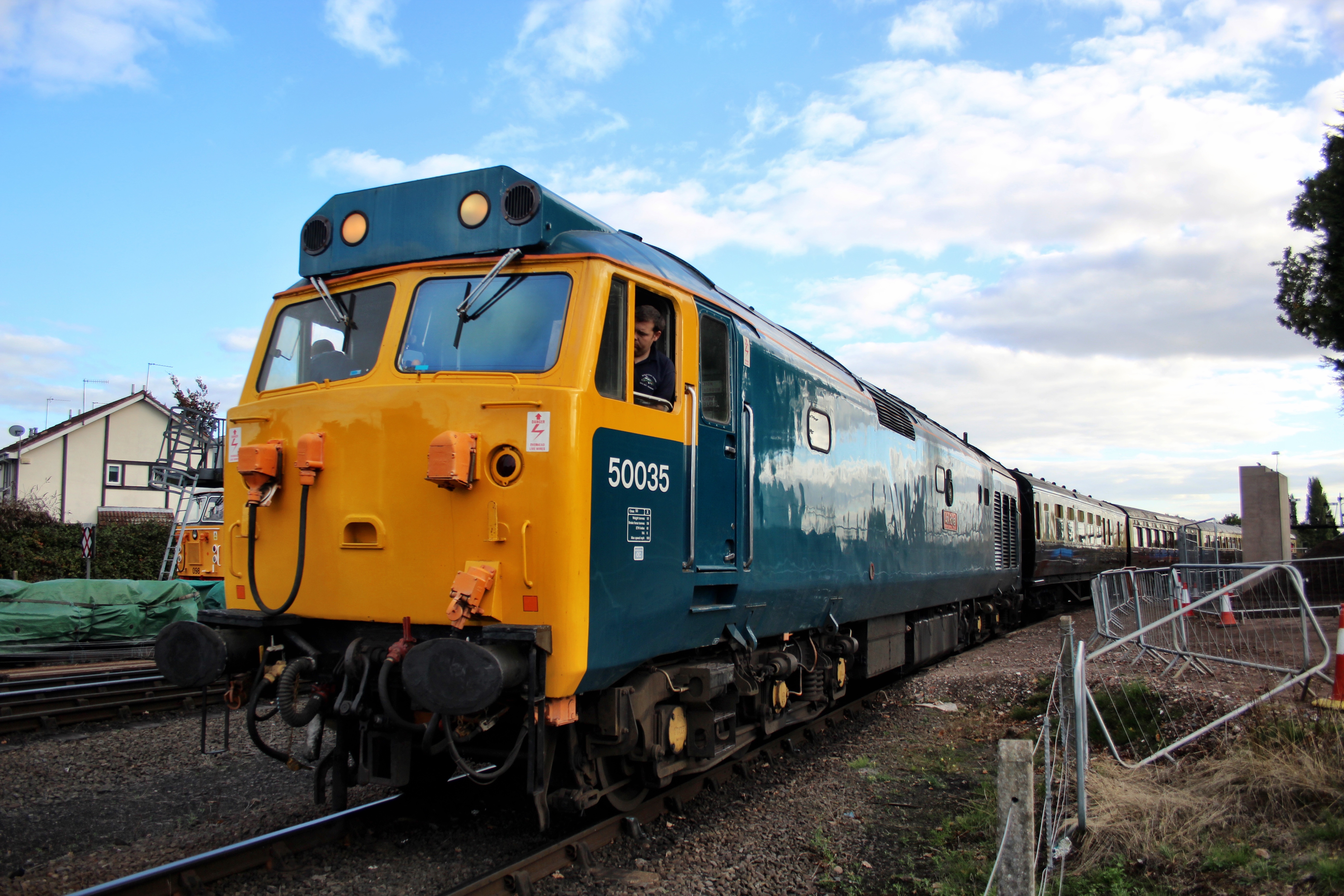
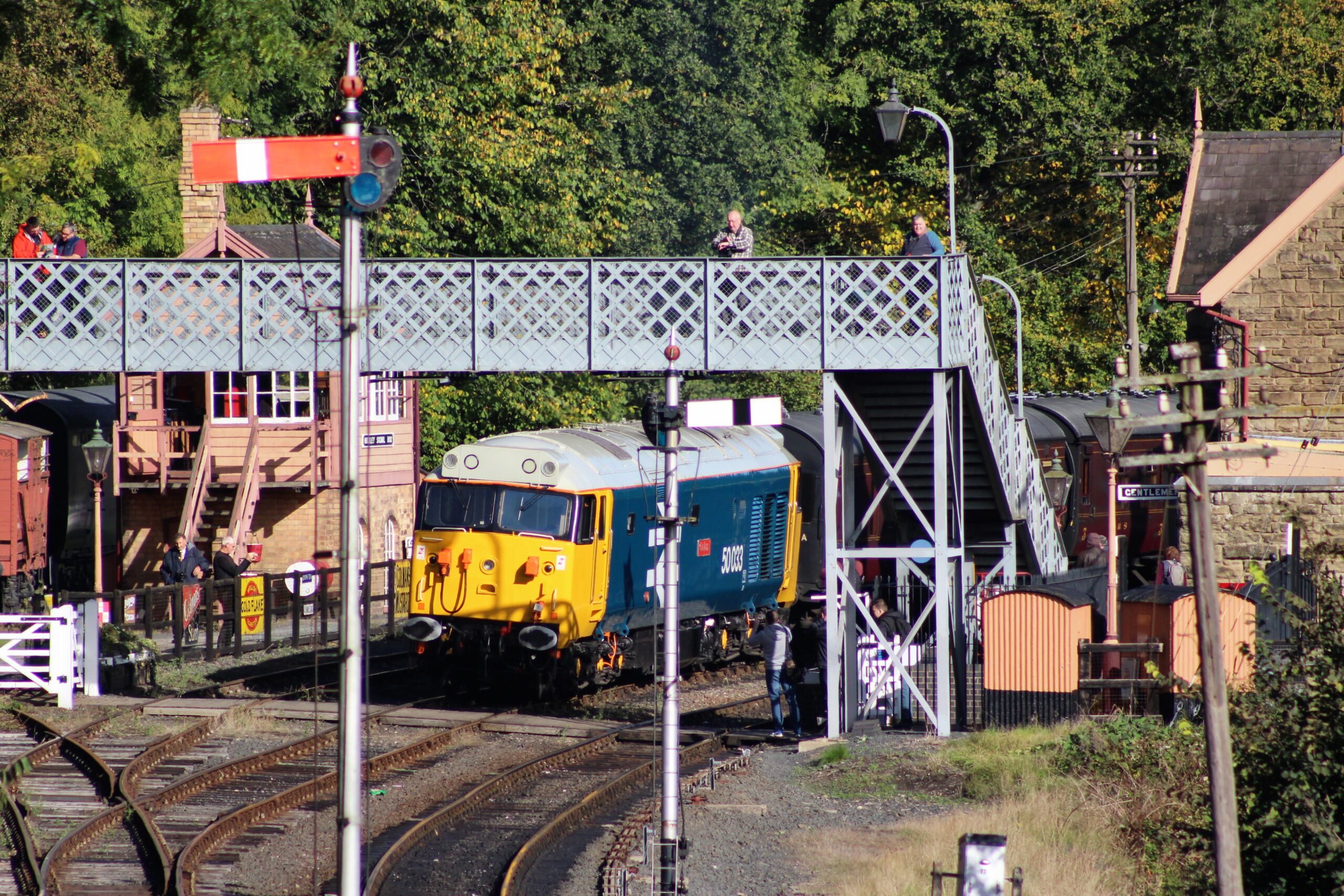
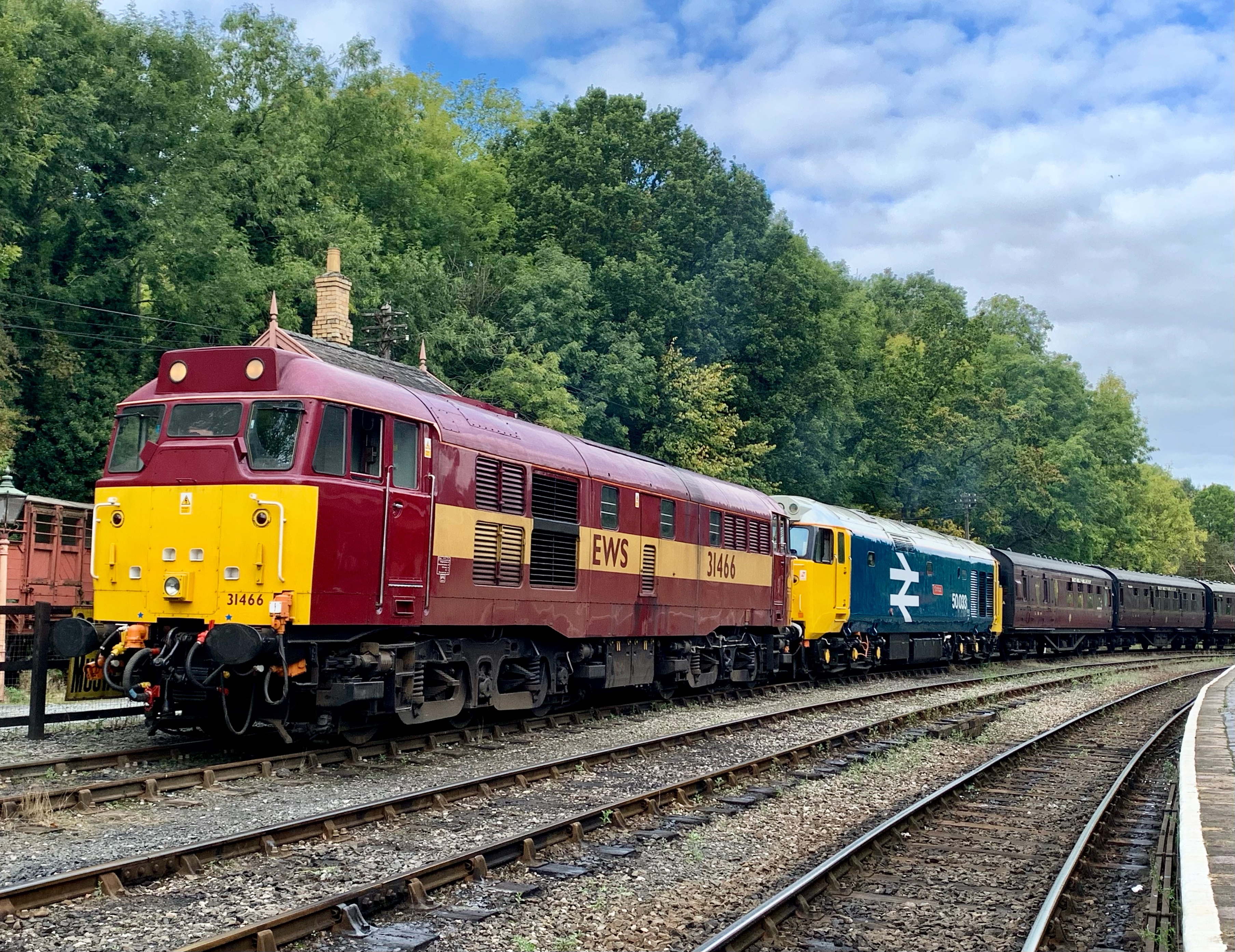
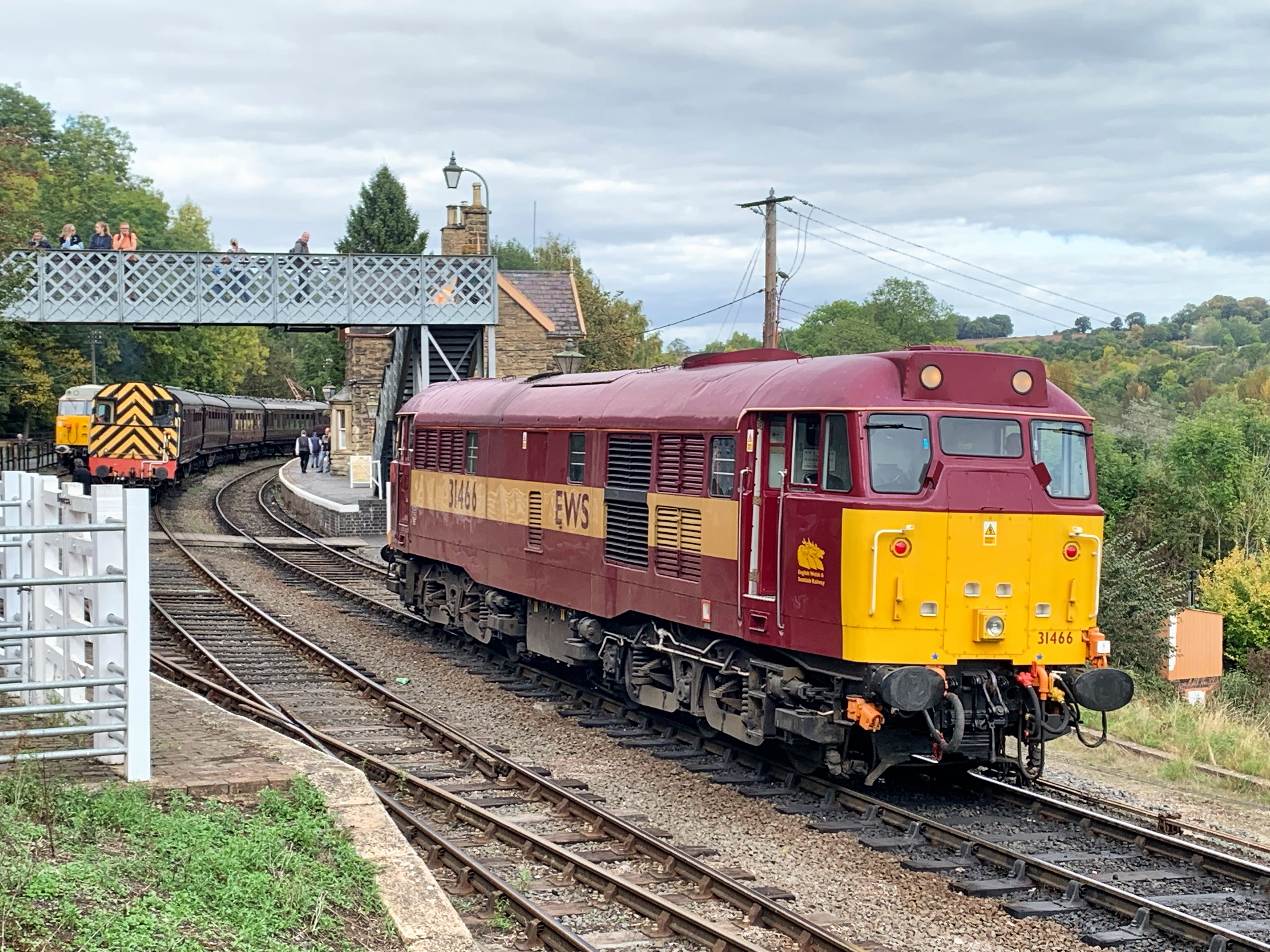
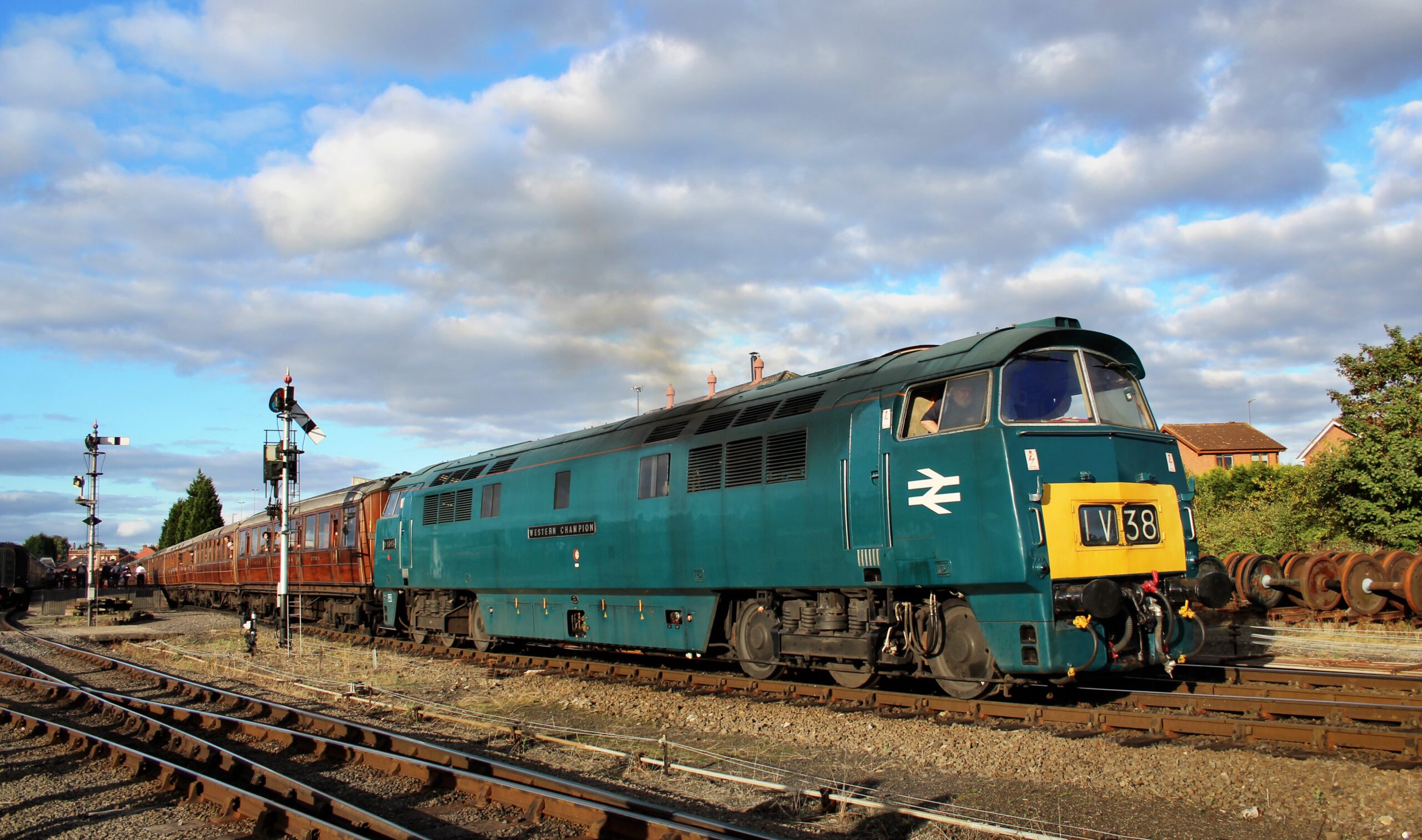
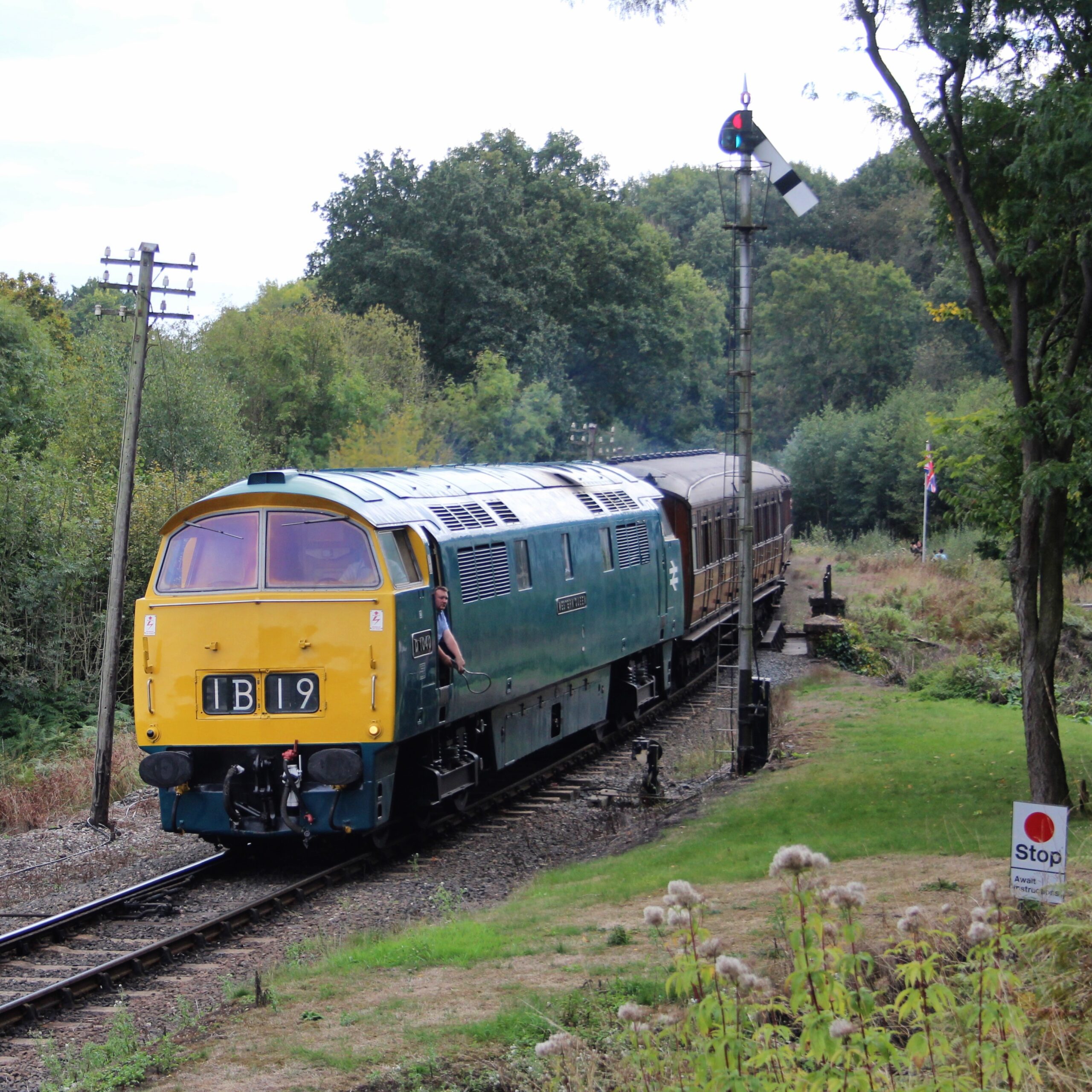
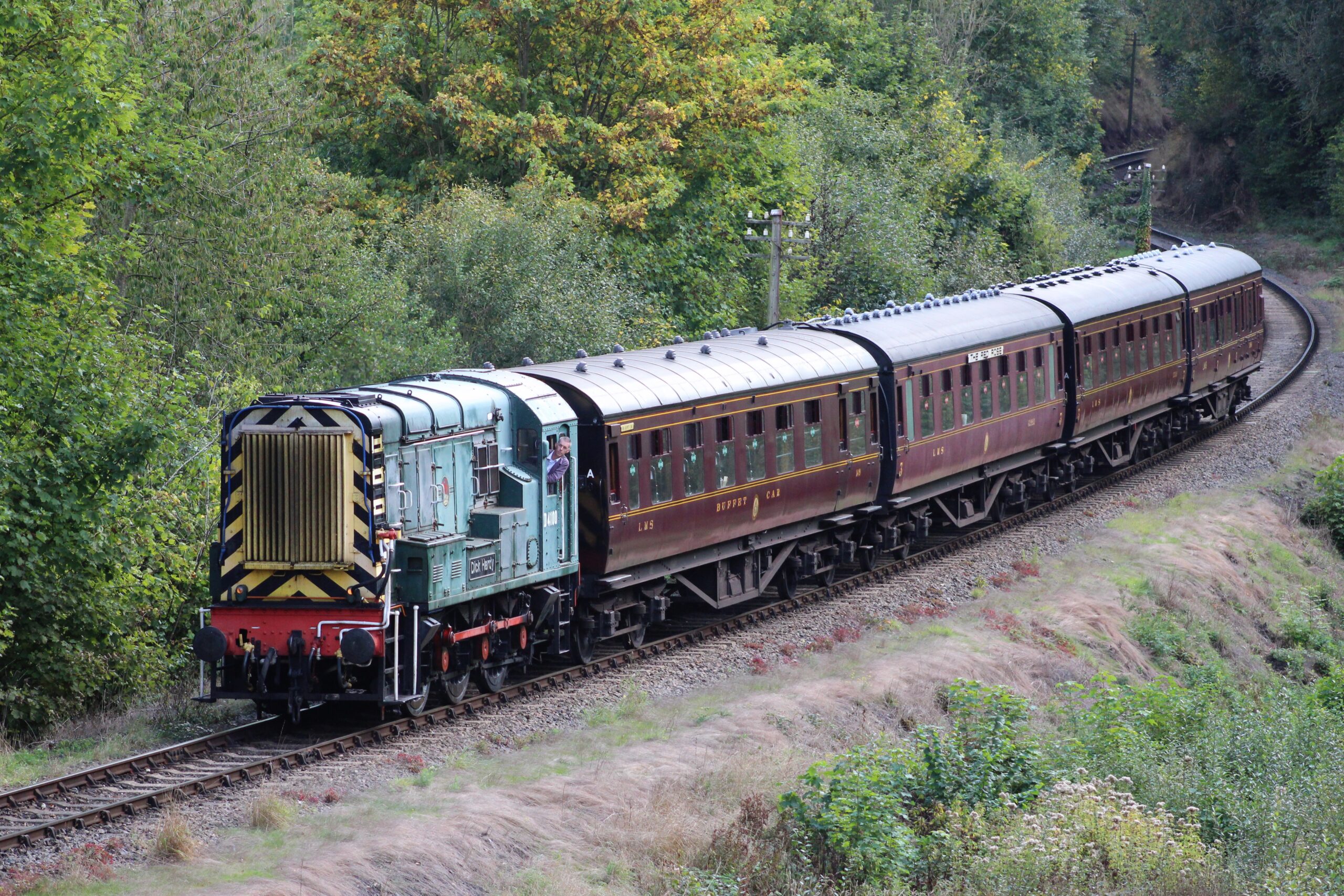
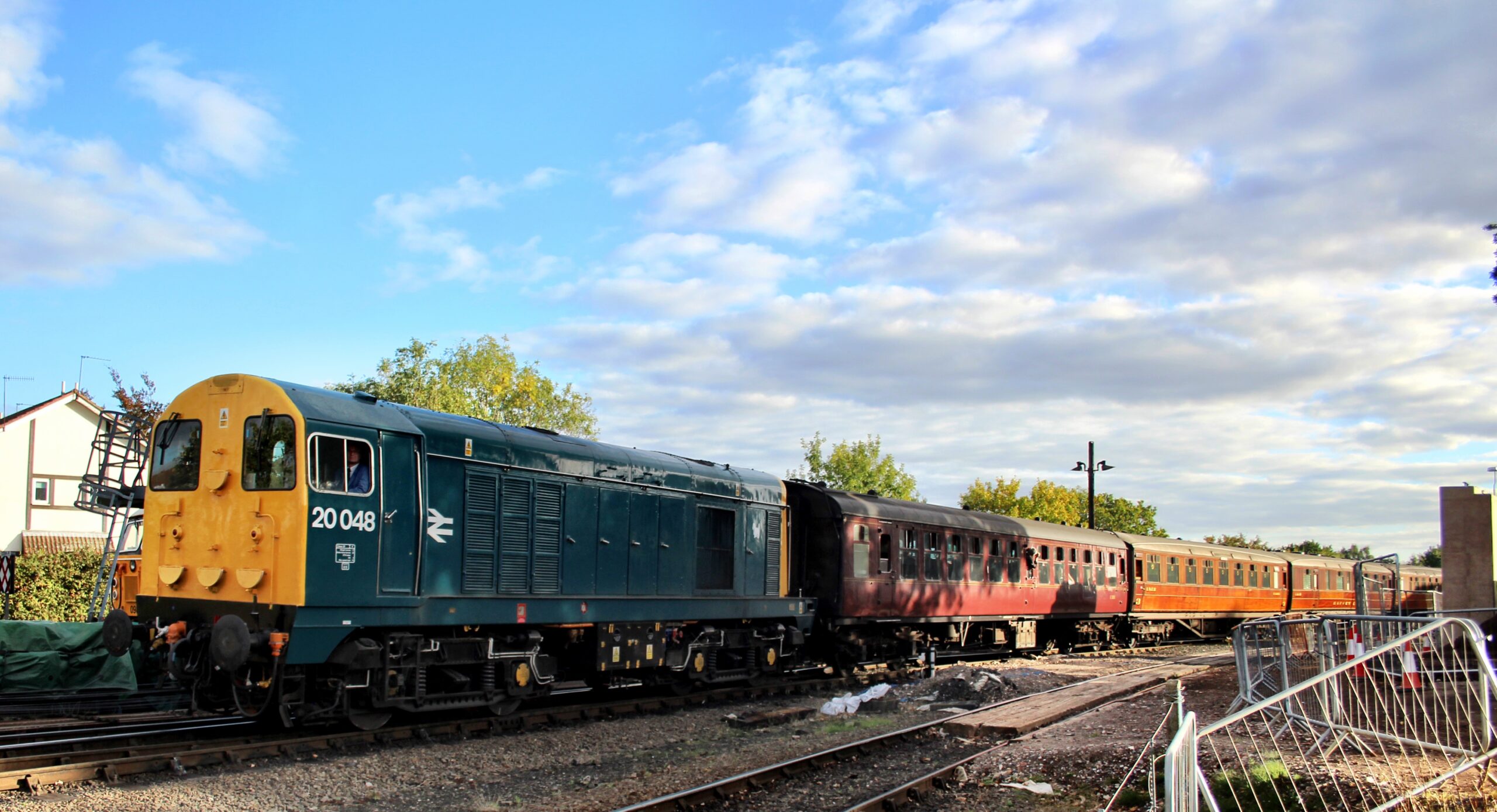
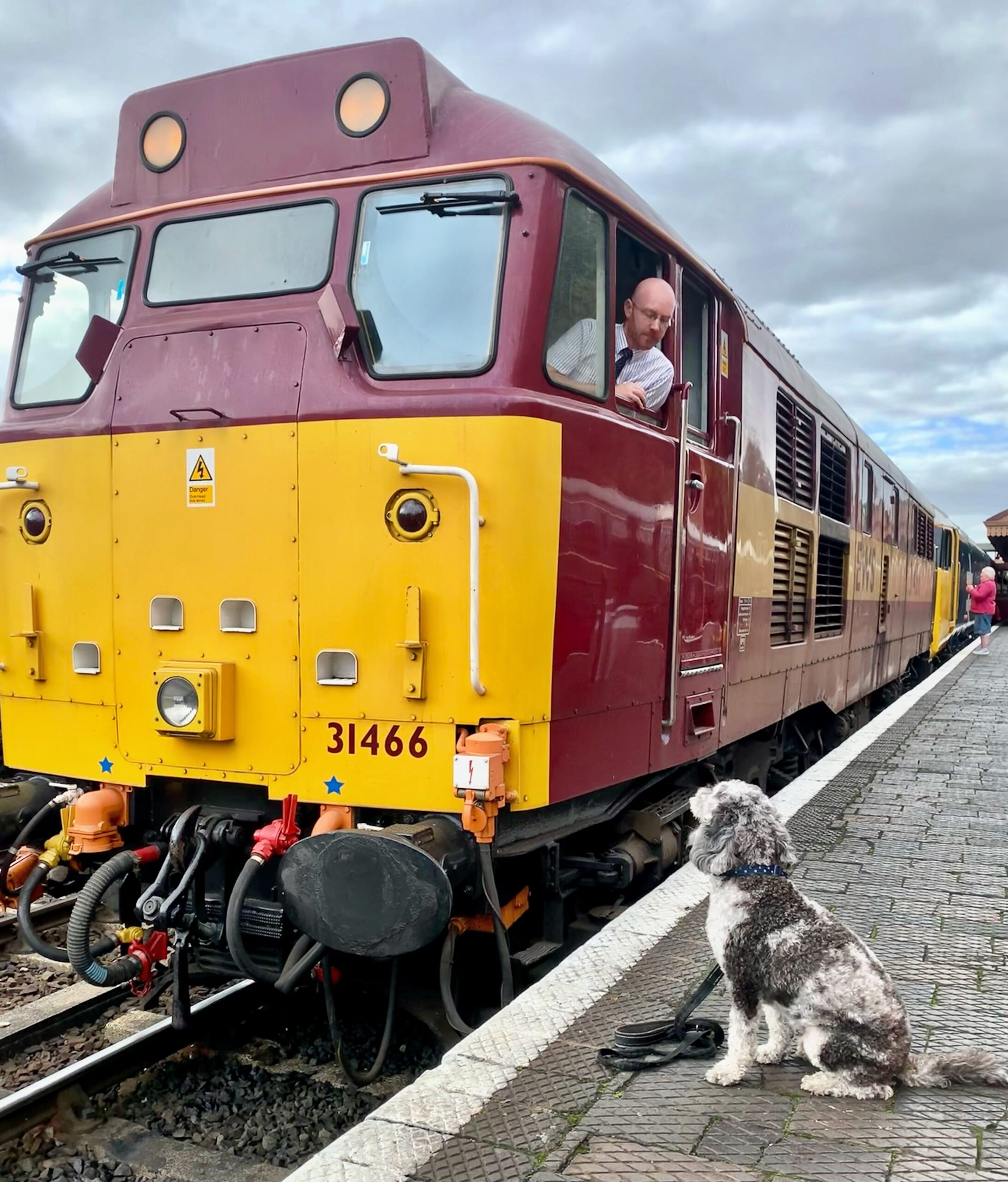
Deltic No. 55009 ‘Alycidon’ on the approach to Highley. I first saw this class of locomotive at London Kings Cross in 1977 and they immediately became my favourite diesel locomotives – 02/10/2022Class 50 No. 50049 ‘Defiance’ departs Highley – 02/10/2022Class 50 No. 50035 ‘Ark Royal’ arriving into Kidderminster – 02/20/2022Class 50 No. 50033 ‘Glorious’ awaiting to be rescued at Highley with a ‘local service’ after being declared a failure – 02/10/2022Class 31 No. 31466 plays Thunderbird loco for Class 50 No. 50033 ‘Glorious’ at Highley. A minor defect in the Class 50’s air system intermittently prevented the locomotive creating a brake – 02/10/2022Class 31 No. 31466 at Highley – 02/10/2022Class 52 No. D1015 ‘Western Champion’ nears Highley – 02/10/2022Class 52 No. D1015 ‘Western Champion’ departs Kidderminster with an evening service – 02/10/2022Class 52 No. D1062 ‘Western Courier’ running as classmate No. D1040 ‘Western Queen’ catching the late afternoon sun at Kidderminster – 02/10/2022The second man on Class 52 No. D1040 ‘Western Queen’ ready to exchange tokens entering Highley – 02/10/2022GBRf Class 56 No. 56081 and Class 20 No. 20048 being used as a translator locomotive for braking near Highley – 02/10/2022GBRf Class 56 No. 56081 having arrived at Kidderminster after its sole round trip – 02/10/2022GBRf Class 56 No. 56081 prepares to run to the sidings at Kidderminster – 02/10/2022Large Logo liveried Class 56 No. 56098 at Kidderminster – 02/10/2022Class 09 No. 09012 (D4100) ‘Dick Hardy’ came to the rescue after Class 46 No. D182 was withdrawn from service earlier during the gala – 02/20/2022 Class 20 No. 20048 departs Kidderminster on the rear of a train to Bridgnorth – 02/10/2022Yoshi chats with the driver of Class 31 No. 31466 during a stop at Bewdley – 02/10/2022
Our video from the 2022 Autumn Diesel Bash at the SVR
Class 91’s
Prior to our Seven Valley adventure, on Wednesday 28th September I was in London for a work meeting and I took the opportunity to pop into Kings Cross on my way to the office to catch a couple of Class 91 departures. I rather like the look of the business end of the Class 91 locomotive.
A total of 31 Class 91 ‘Electras’ were built by British Rail Engineering Limited (BREL) at Crewe Works from 1988 to 1991 and numbered 91001 to 91031. They were overhauled by Bombardier at Doncaster between 2000 and 2003 and renumbered by adding 100 to their original number, with the exception of No. 91023 which became No. 91132 due to its involvement in fatal accidents at Hatfield in 2000 and Great Heck in 2001.
The IC225 fleet of 314 Mk 4 carriages built by Metro-Cammell in Birmingham were formed into 30 sets and with the addition of a Driving Trailer Van (DVT) allowed push-pull operation with the Class 91’s. The fleet is now greatly reduced following the introduction of Hitachi InterCity Express Trains (IET) and eight coaching sets have been retained for use on the East Coast Mainline with 12 Class 91’s.
Over the years the trains have seen several changes in operator as franchises have collapsed and taken over by government backed Operators of Last Resort. GNER was replaced by National Express East Coast, followed by East Coast, Virgin Trains East Coast and currently LNER. Each operator has applied its own livery to the locomotives and coaching stock with most recently LNER simply replacing the Virgin Trains branding with its own. Now, however, the fleet is receiving repaints with those not carrying a celebrity livery receiving a retro style inspired by the original Intercity 225 design of sharp lines and red and white styling, the LNER brand replacing the InterCity lettering and swallow motif which can be seen applied to No. 91004 in the video from 1994 further down this page.
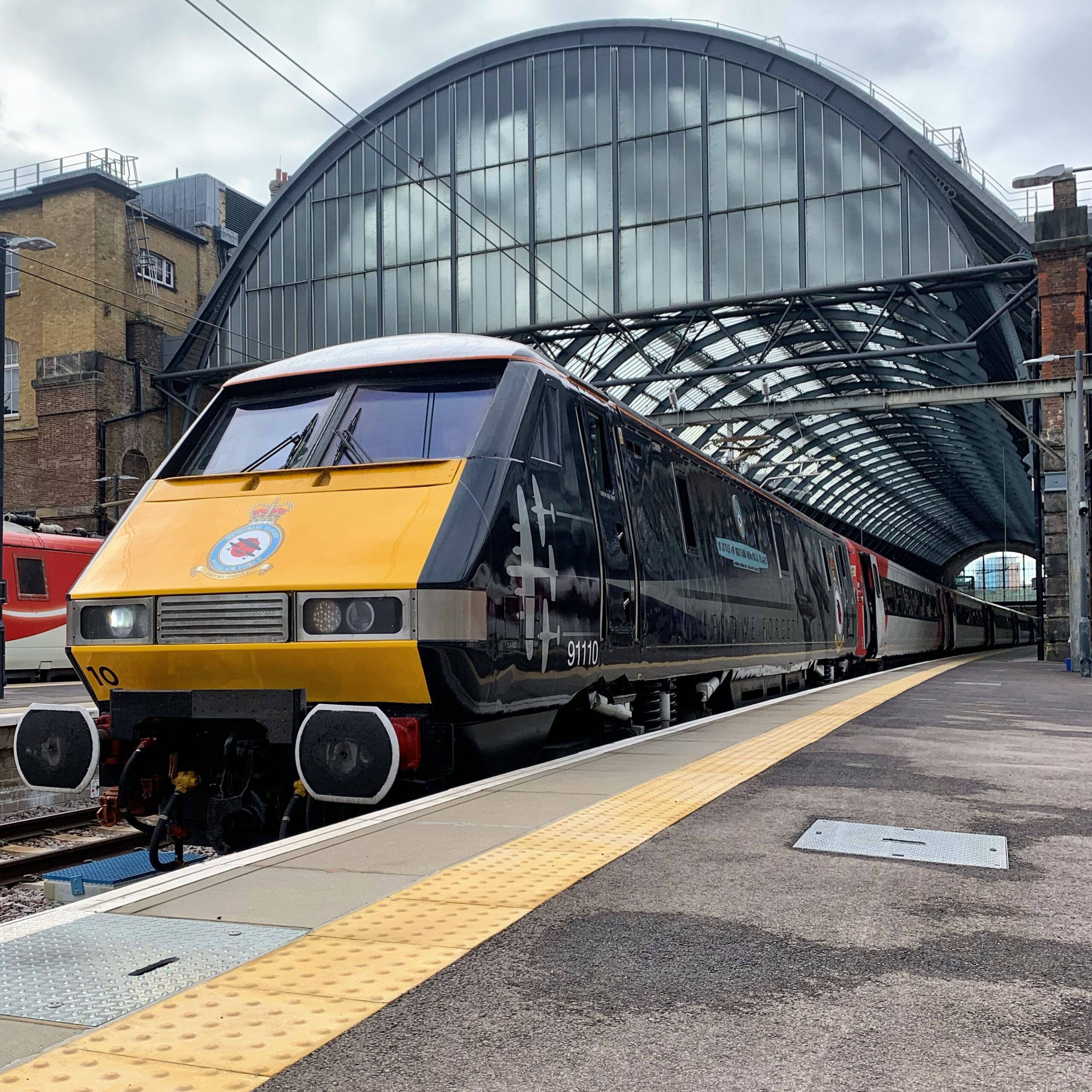
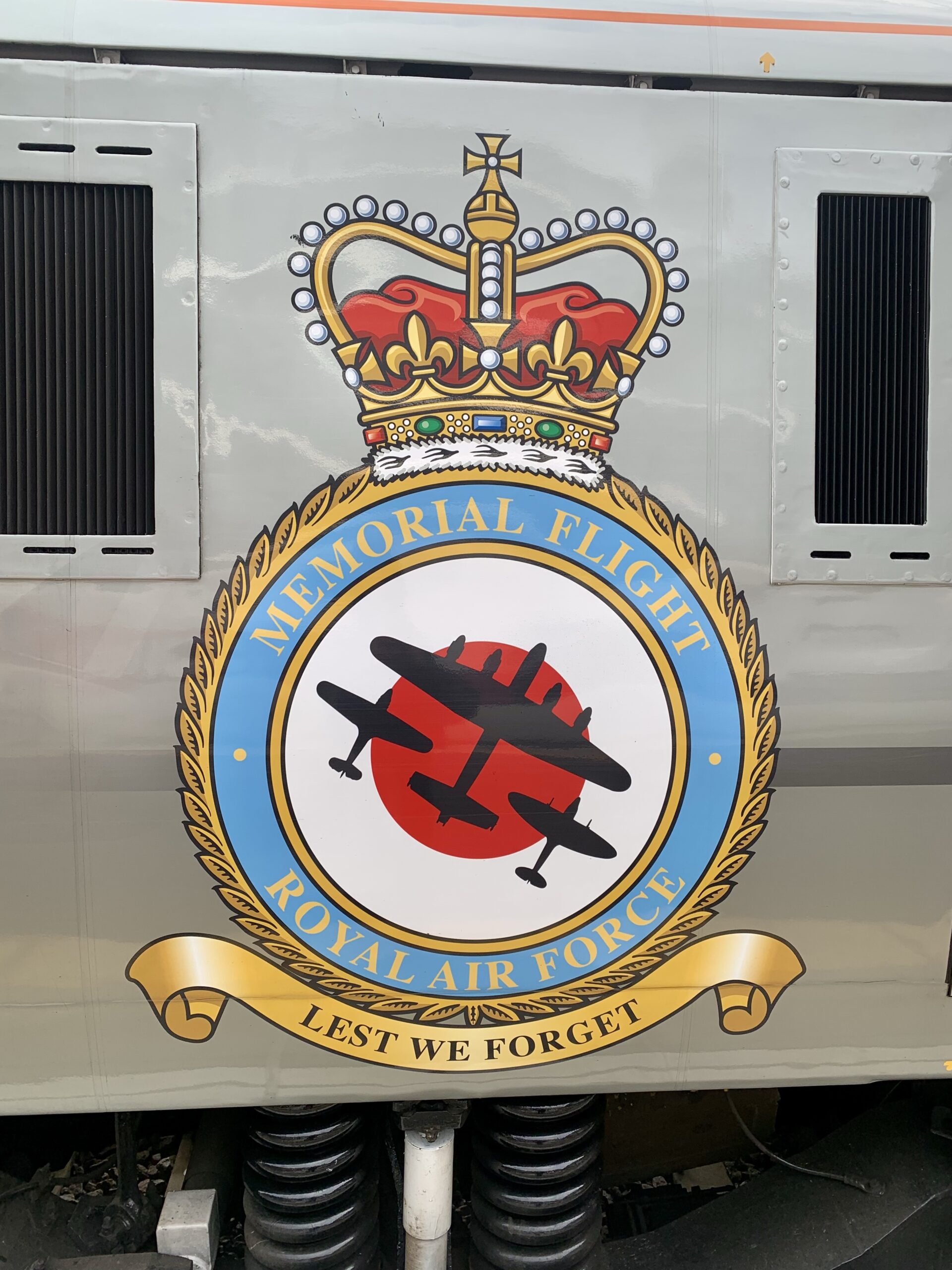
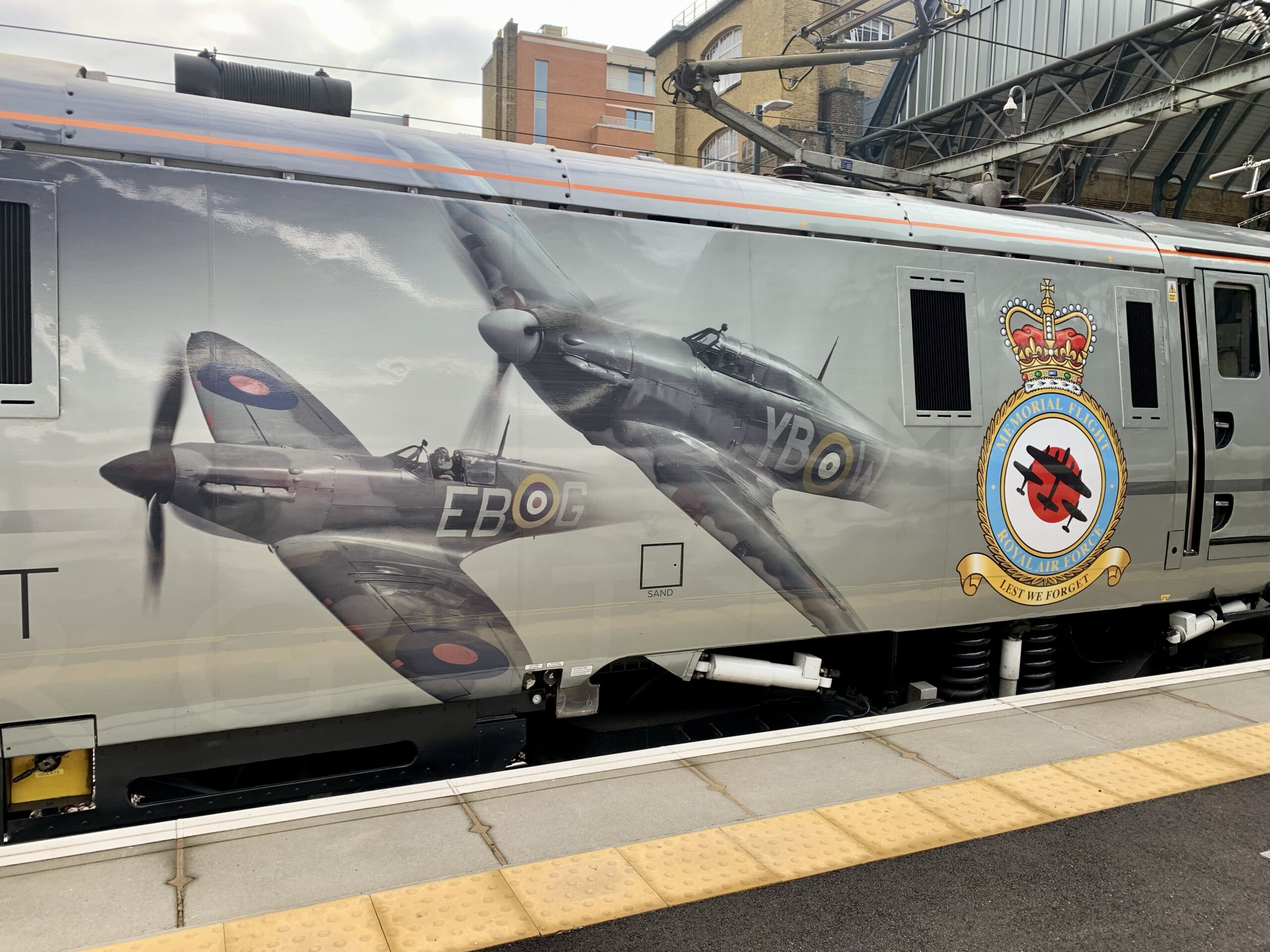
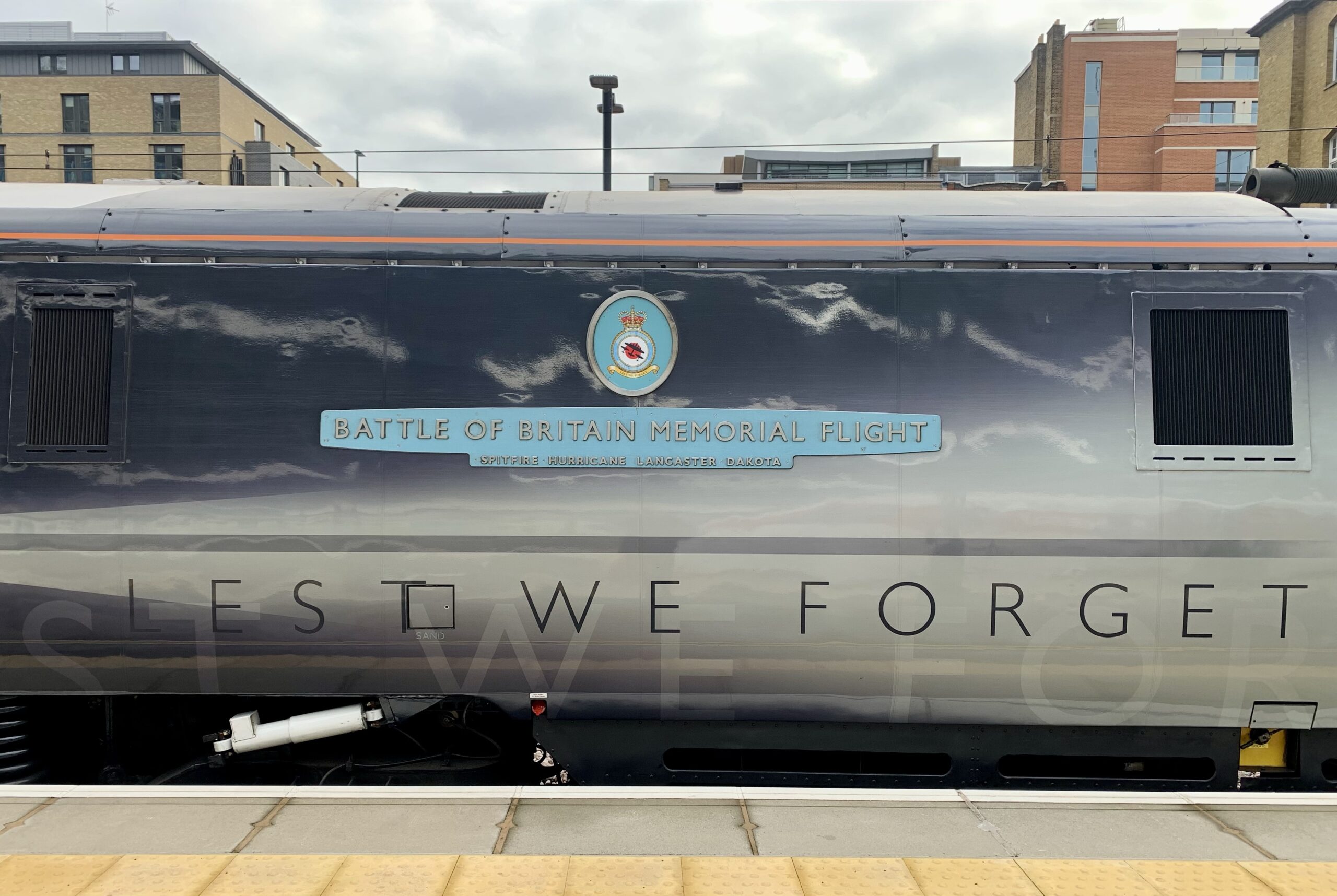
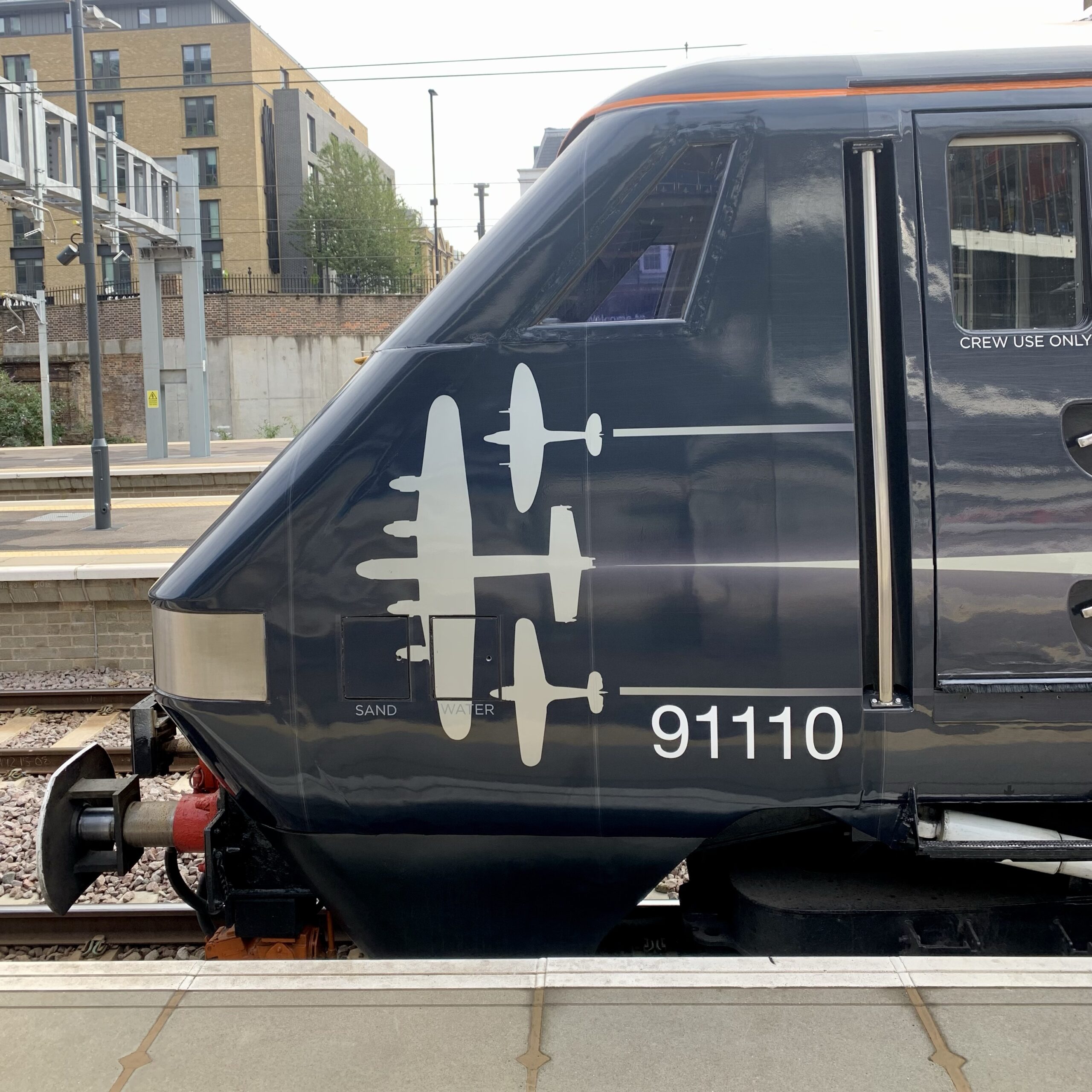
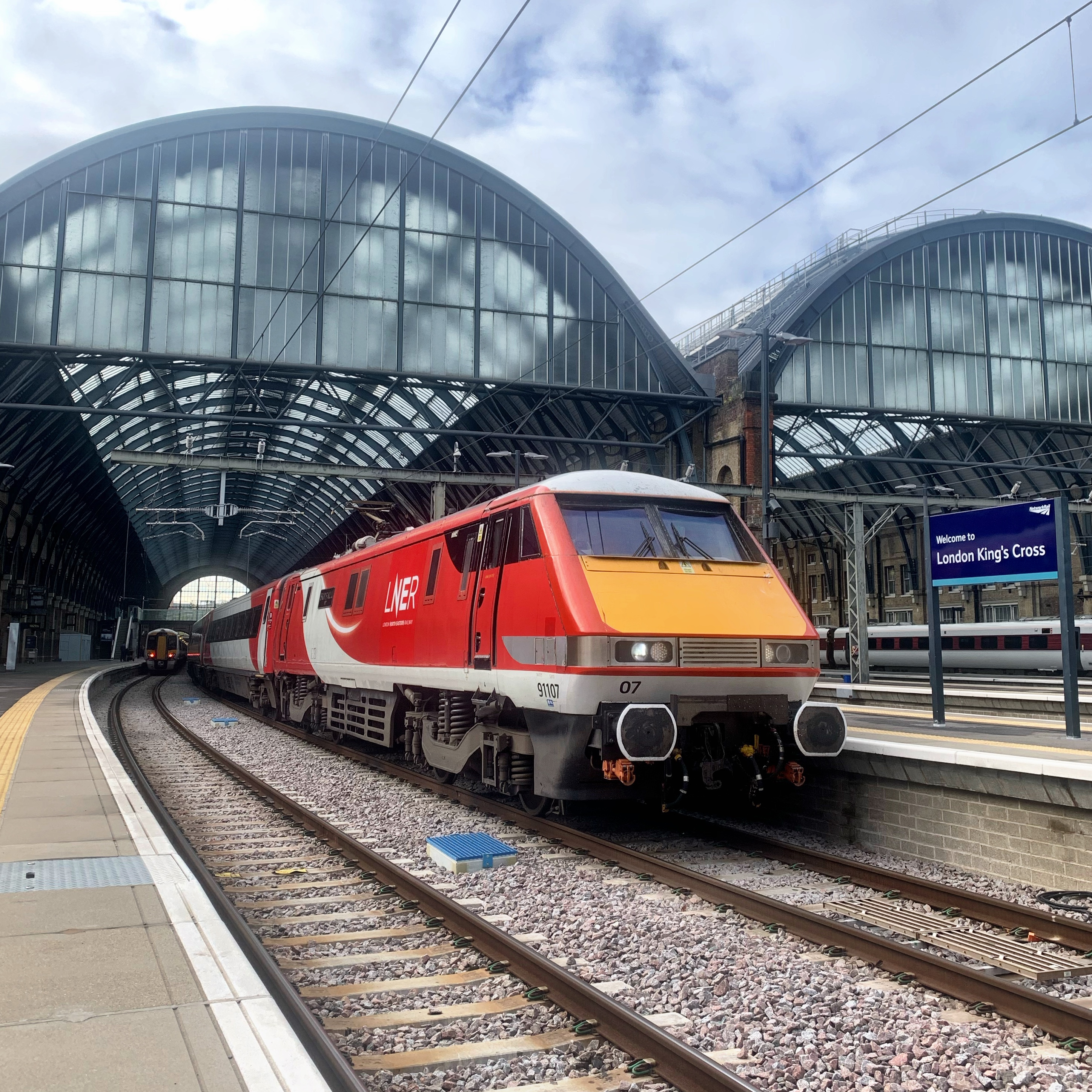
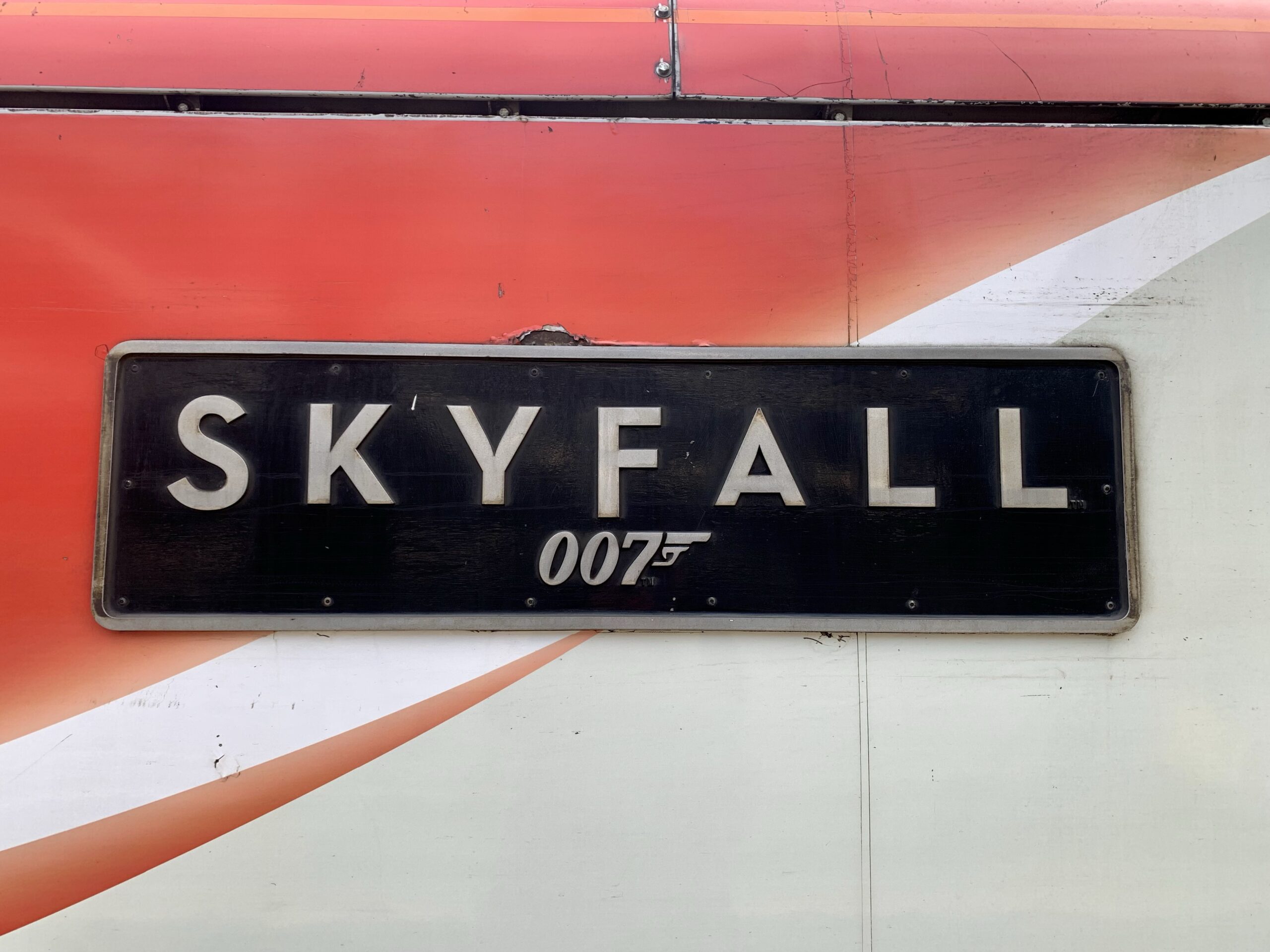
Class 91 No. 91110 ‘Battle of Britain Memorial Flight’ awaits departure from London Kings Cross with the 1003 1D09 service to Leeds. The InterCity 225 fleet leased by LNER is in the process of receiving a full repaint as the rolling stock is brought in for essential maintenance. The repaint of No. 91110 was completed in July 2022 – 28/09/2022Side detail of Class 91 No. 91110 ‘Battle of Britain Memorial Flight’Side detail of Class 91 No. 91110 ‘Battle of Britain Memorial Flight’Side detail and nameplate of Class 91 No. 91110 ‘Battle of Britain Memorial Flight’Side detail of Class 91 No. 91110 ‘Battle of Britain Memorial Flight’. In September 1989 No. 91110 achieved 162.8 mph on an overspeed test at Stoke Bank near Peterborough, the fastest ever recorded by a UK locomotive. Stoke Bank is the same location where the world record for a steam locomotive was set at 126 mph by Gresley A4 No. 4468 ‘Mallard’ on 3rd July 1938.Class 91 No. 91107 ‘Skyfall’ at Kings Cross platform 2 heading 1D10 1033 London Kings Cross to Leeds. The Class 91 powered IC225 trains have been operating on the East Coast Main Line for 33 years. The Gresley A4’s managed 27 years and the Class 55 Deltics 20 years. The Gresley A3’s and the IC125 HST’s both notched up 40 years of continuous ECML service – 28/09/2022Close up of nameplate for Class 91 No. 91107 ‘Skyfall’
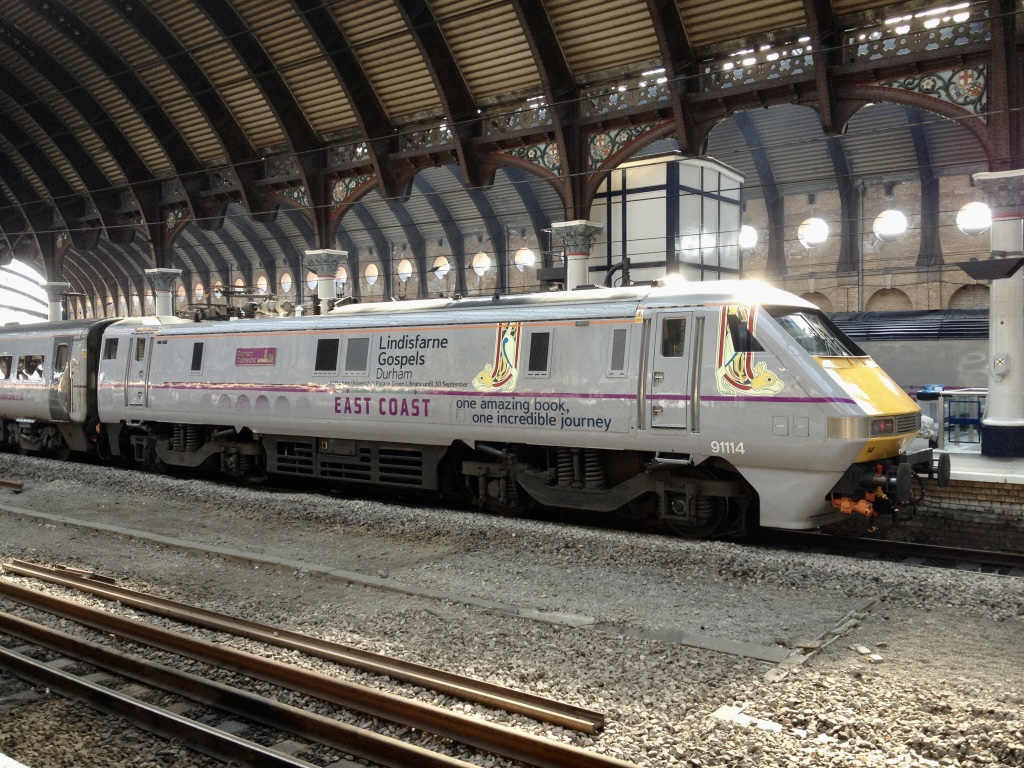
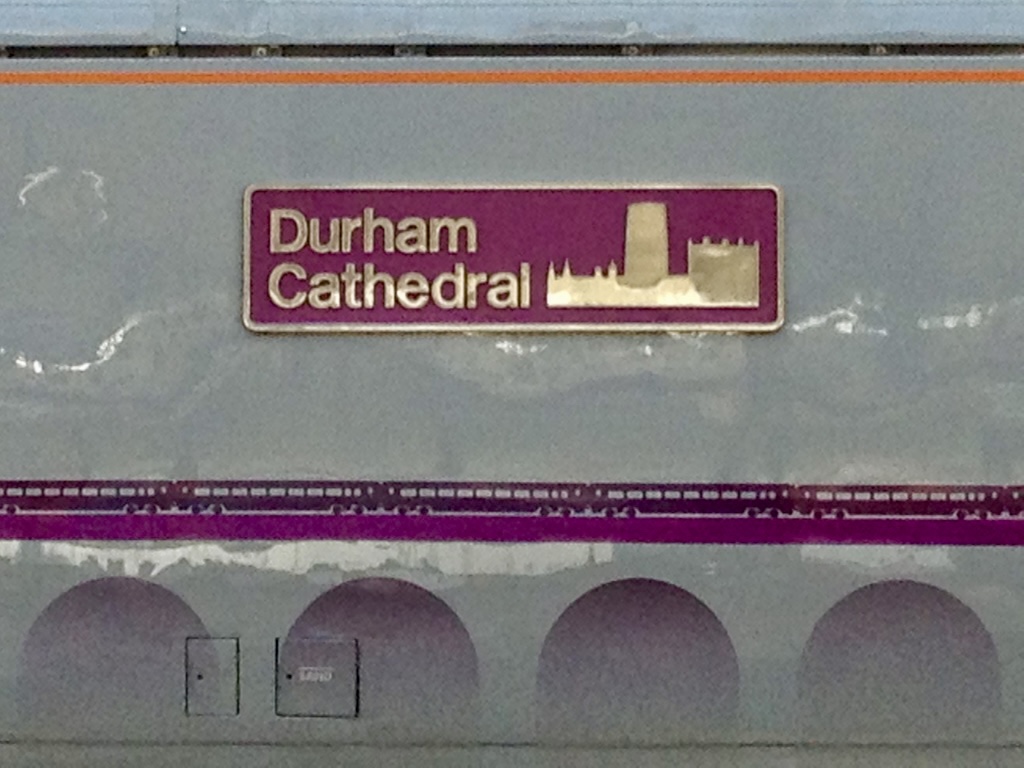
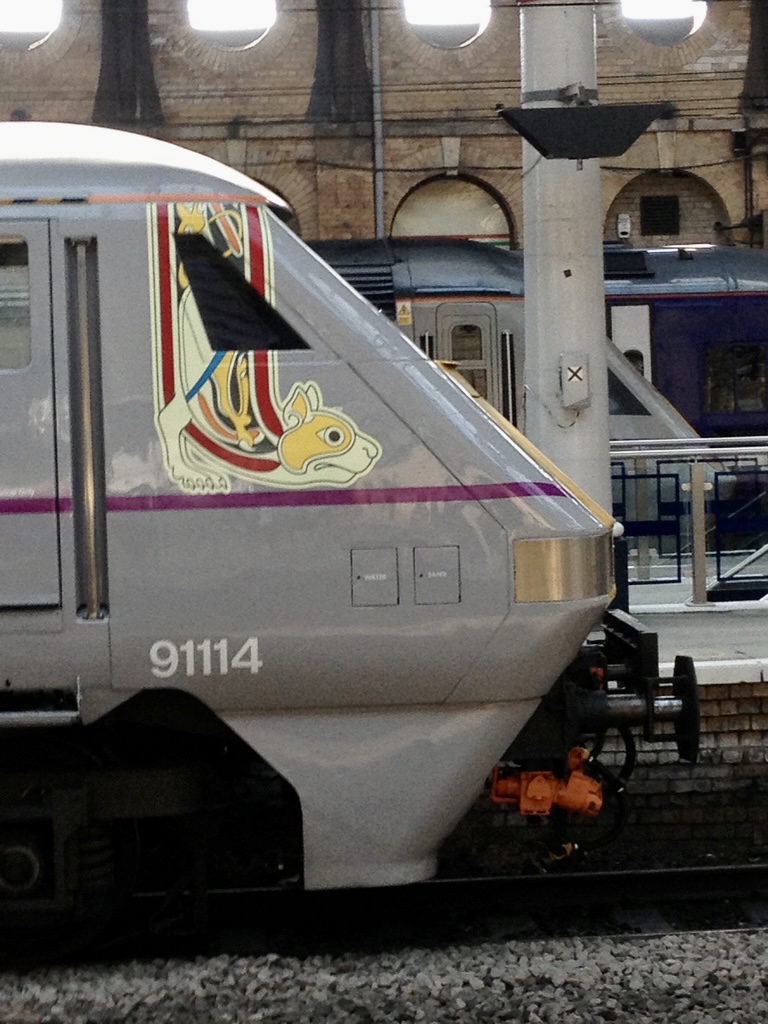
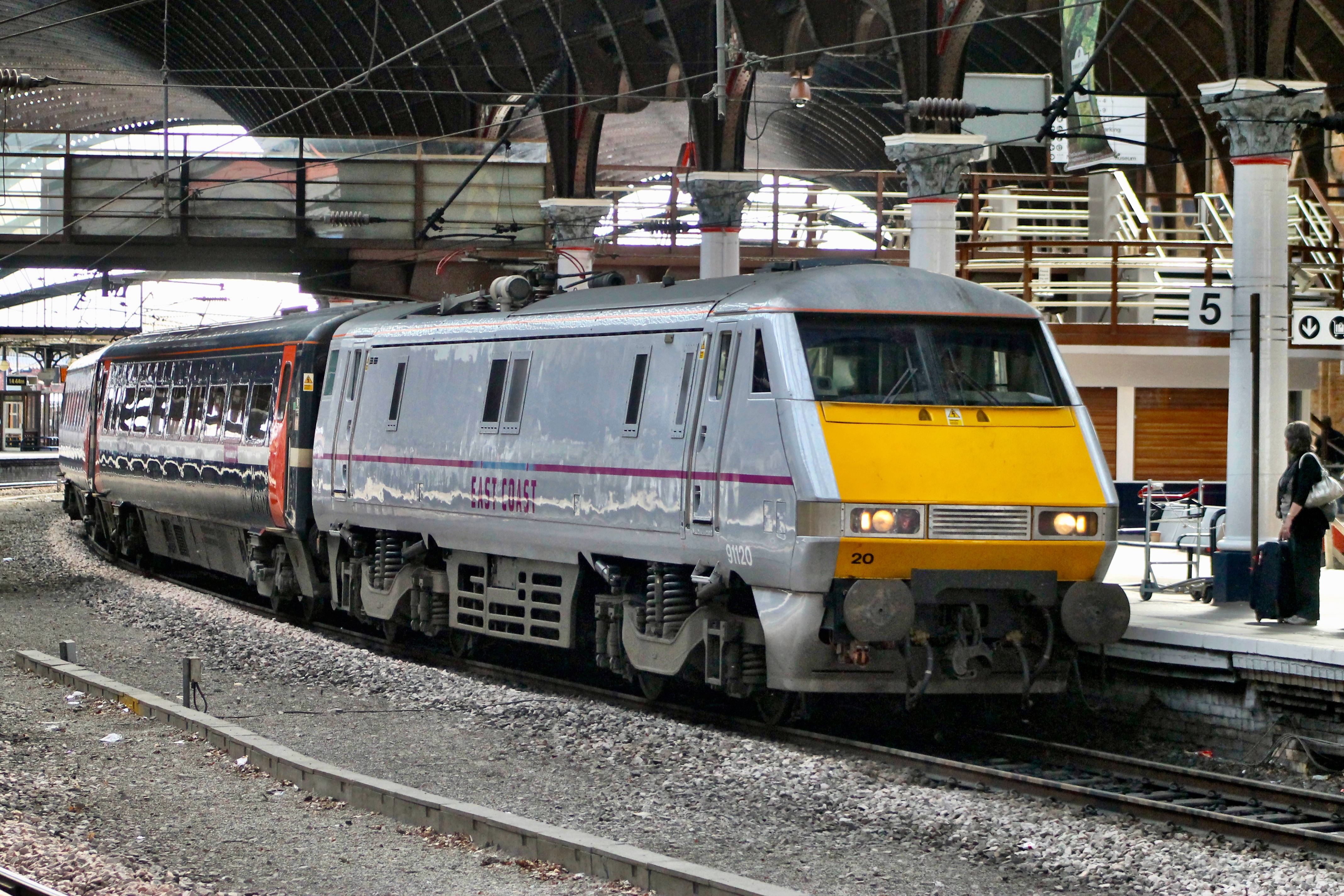
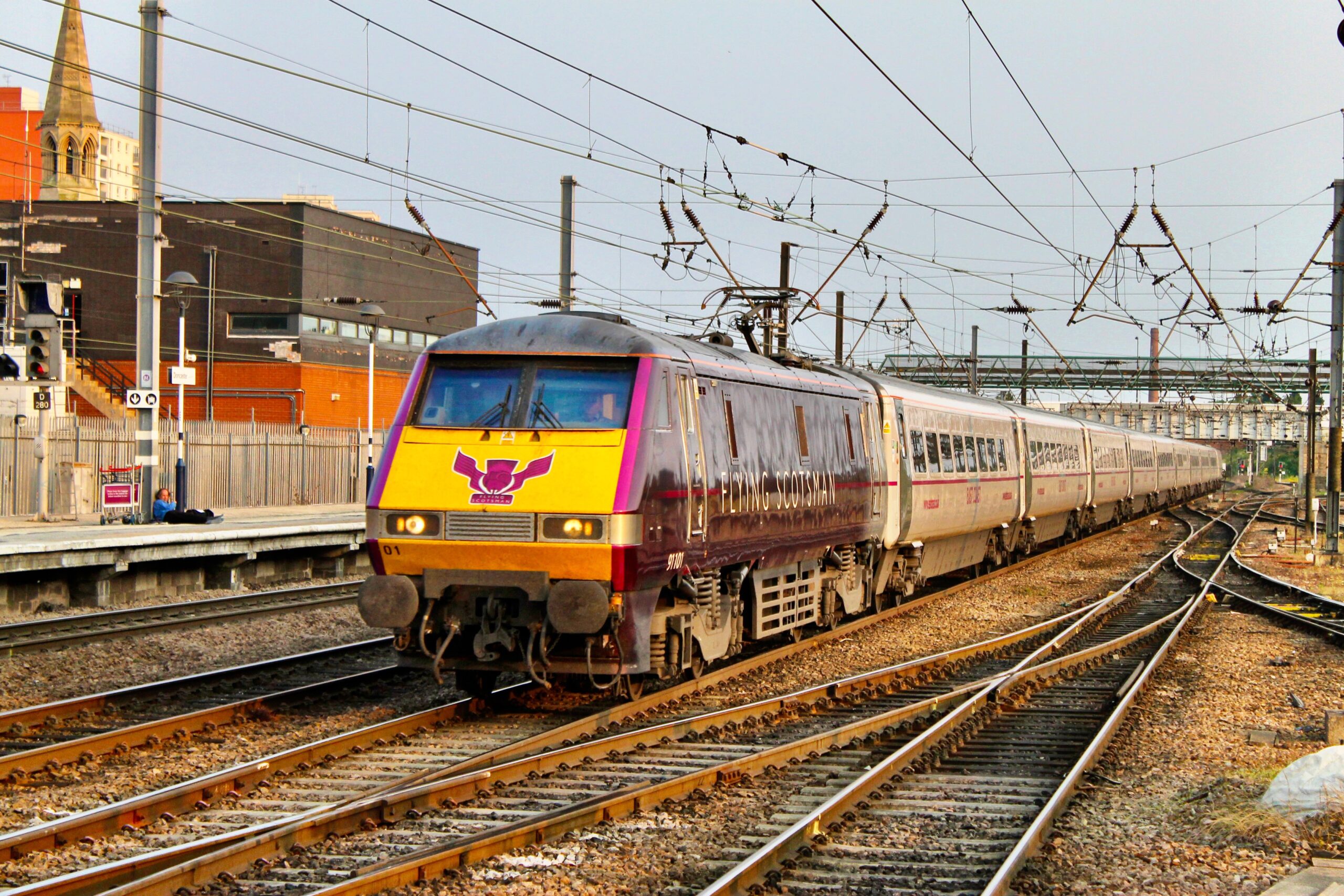
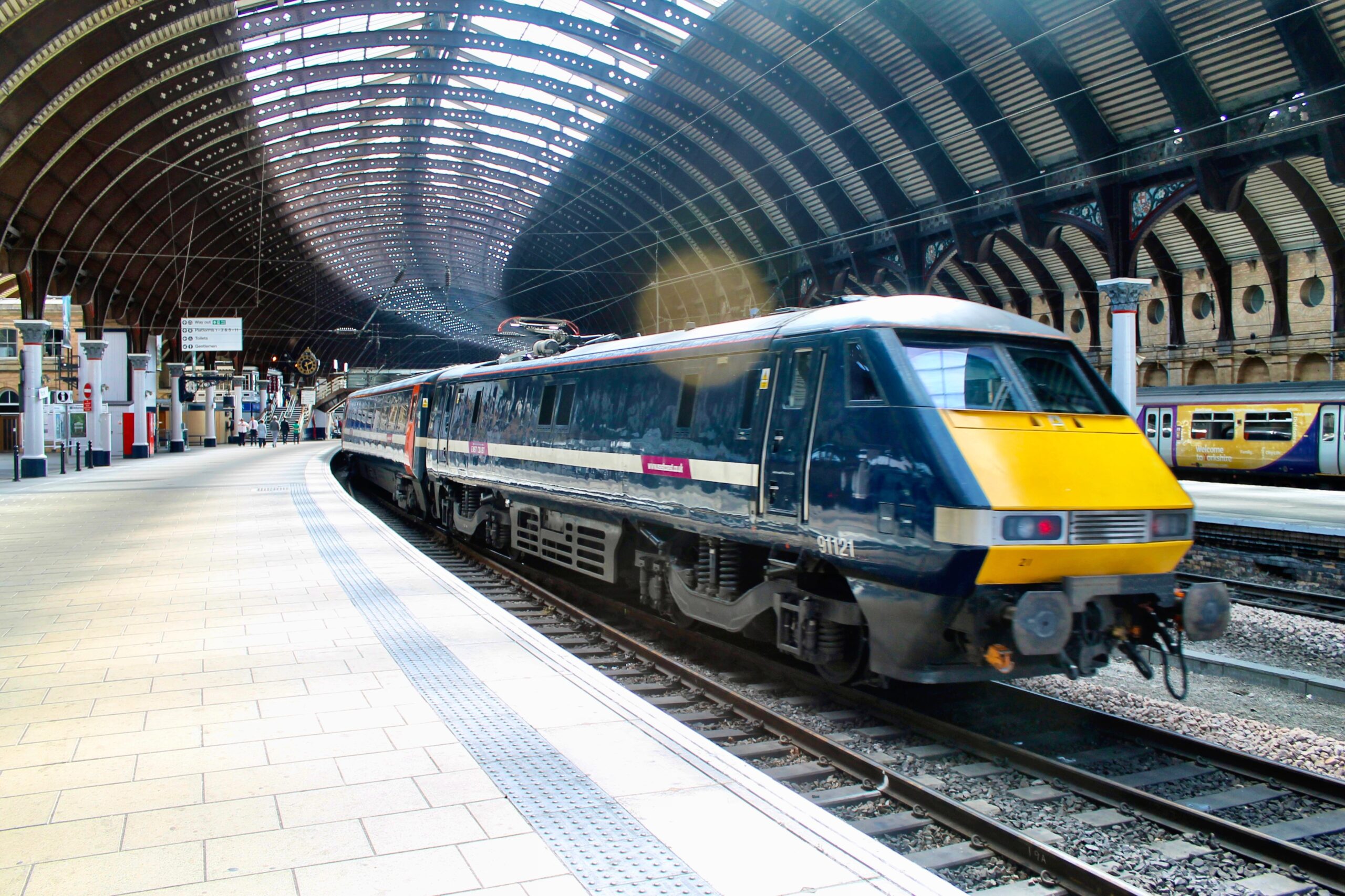
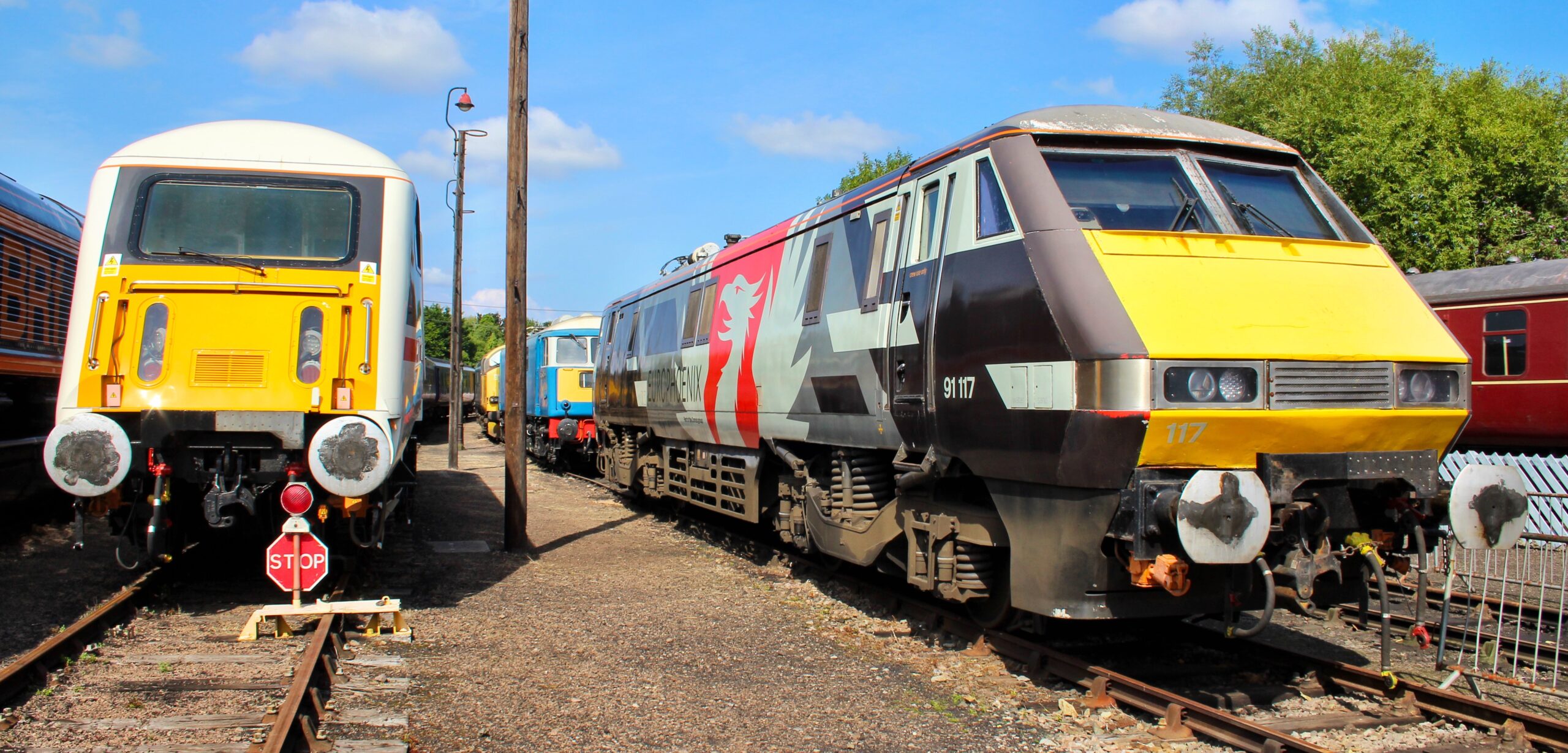
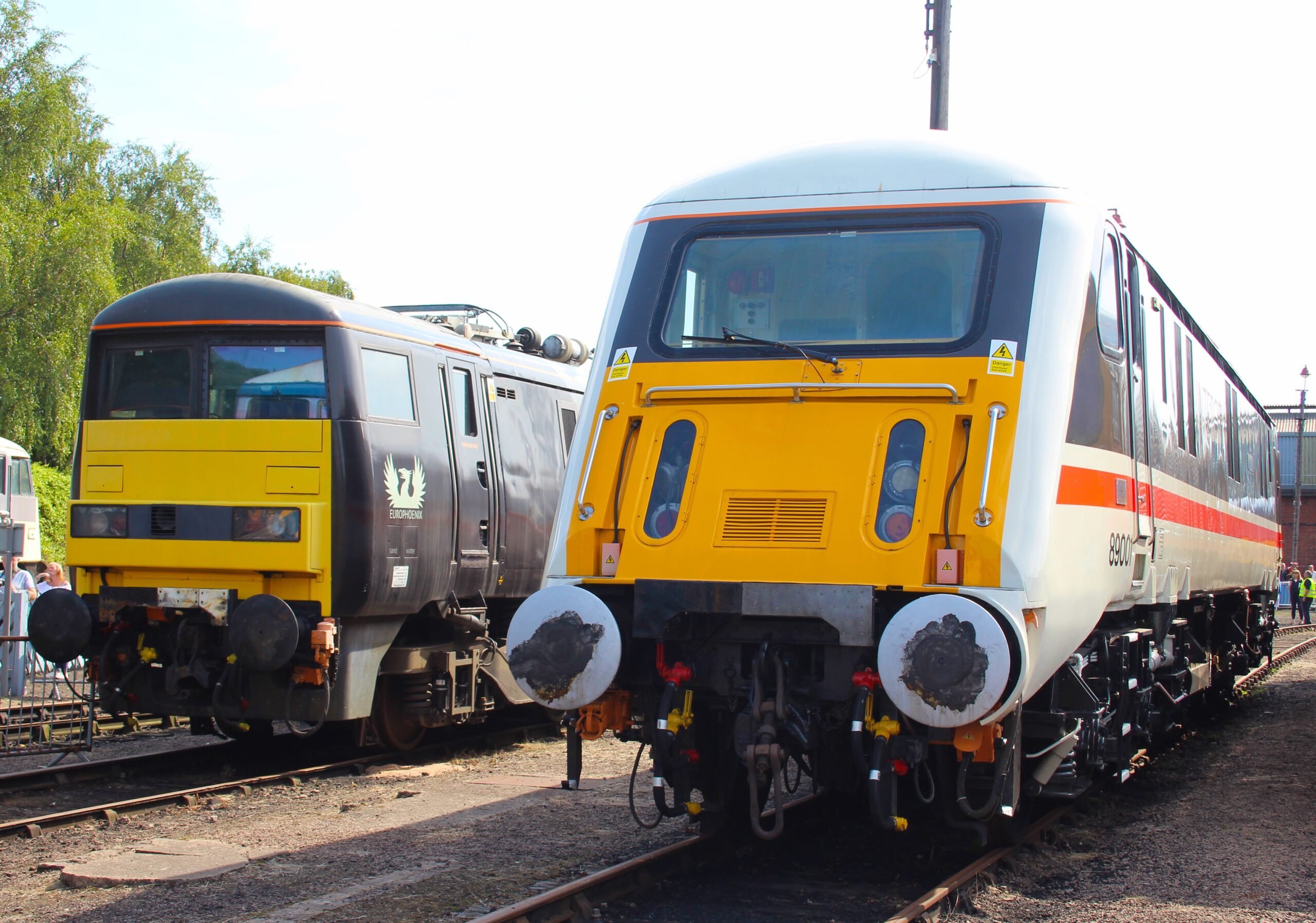
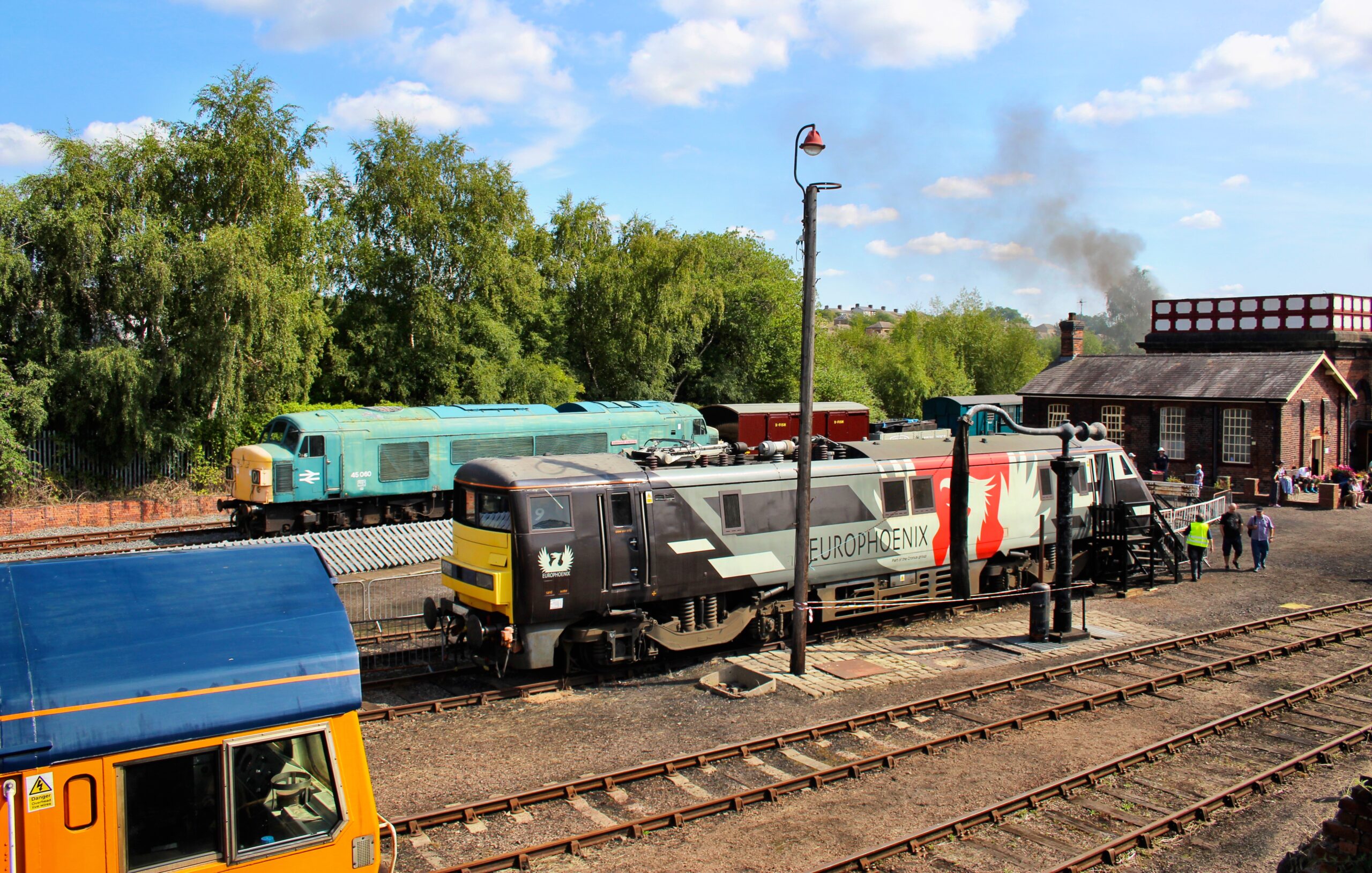
Class 91 departures at London Kings Cross – 28/09/2022Class 91 No. 91114 ‘Durham Cathedral’ at York – 04/07/2013Nameplate detail of Class 91 No. 91114 ‘Durham Cathedral’ at York – 04/07/2013Livery variation applied to Class 91 No. 91114 ‘Durham Cathedral’ at York – 04/07/2013East Coast liveried Class 91 No. 91120 at York – 28/08/2011Class 91 No. 91101 with Flying Scotsman branding at Doncaster – 05/07/2013Class 91 No. 91102 at York – 28/08/2011Class 91 No. 91121 at York – 28/08/2011Europhoenix liveried Class 91 No. 91117 stands adjacent to unique Class 89 No.89001 ‘Avocet’ at the recent Barrow Hill 150+2 celebrations – 28/08/2022The flat end of Class 91 No. 91120 can be seen clearly in this image alongside Class 89 No.89001 ‘Avocet’ at the recent Barrow Hill 150+2 celebrations. The Class 89 was a prototype for an electric six-axle mixed traffic locomotive which did not progress beyond this example – 28/08/2022Another view of Europhoenix Class 91 No. 91120 in the company of “Peak” Class 45 No. 45060 ‘Sherwood Forester’ and Class 66 No. 66726 ‘Sheffield Wednesday’ at Barrow Hill 150+2 celebrations – 28/08/2022
From The Archives
My first visit to London Kings Cross found Class 55 Deltic No.’s 55002 ‘The Kings Own Yorkshire Light Infantry’ and 55008 ‘The Green Howards’ await departure in 1977 In the diesel era the stabling point at London Kings Cross was commonly known as “Passenger Loco”. It was usually used by locomotives that needed a quick service and refuelling before their next trip north. There was a pit inside the shed where an “A exam” could be performed. A few locos would be berthed there during the day between trips and at night. Also from my first visit to The Cross in 1977Class 55 Deltic No. 55004 ‘Queens Own Highlander’ stands next to a Class 254 HST set at Kings Cross. The Deltic’s replaced Gresley A3 and A4 Pacific steam locomotives on top link duties before themselves succumbing to the advent of the High Speed Train which in turn were replaced by the Class 91’s – 25/09/1981
In 1994 what was heralded as being the best ever programme of main line steam specials was announced on 11th August, exactly 26 years after the end of regular steam on British Railways. A big surprise was the announcement of the return to steam at Kings Cross on the weekend of 29th / 30th October 1994 when LNER A4 Pacific No. 60009 ‘Union Of South Africa’, coincidentally the last steam locomotive to leave the East Coast terminus thirty years previously, was booked to haul private charters to Peterborough. Following these successful charter runs, No. 9 found herself imprisoned in Bounds Green depot for six weeks following an “under the wires” ban imposed by Railtrack who declared the locomotive as being out of gauge by 1.5 inches at an overbridge near Primrose Hill Tunnel which could have resulted in a flashover. This led Railtrack to impose a complete ban on all steam movements under overhead wires across the rail network which saw the cancellation of three other rail tours until Railtrack backed down and agreed the locomotive was in gauge all along!
I went along to Kings Cross on the 30th October 1994 to see the locomotive and train head for Peterborough – but as you can see in the video below my view of the departure was almost ruined by the arrival of Class 91 No. 91004 ‘The Red Arrows’! This Class 91 locomotive was withdrawn in February 2020 and is currently awaiting disposal at Booths of Rotherham, its fate is unconnected with passing in front of me while I was attempting to film steam at The Cross however!
Steam at Kings Cross 30/10/1994
Sixteen years later, I was once again able to see steam at Kings Cross – two A4’s this time when No. 60007 ‘Sir Nigel Gresley’ hauled the Railway Touring Company special train “The Tynesider” from Newcastle to the London terminus with sister locomotive No. 60019 ‘Bittern’ sporting two tenders to facilitate a non-stop run to York as there was no requirement to take on water en-route. I was using a mini DV camera at the time which had a tendency to “hunt’ in low light. Well, in any lighting conditions to be honest. But we include it here as it seems appropriate.
Steam at Kings Cross 27/11/2010
Thanks for visiting. We aim to be back again next week and hope to see you again. Thank you as always for comments and corrections which are very much appreciated.
Wednesday September 21st to Tuesday September 27th
Yoshi pictured in between trains at Cogload Junction, Somerset wondering how much longer he has to wait before getting more treats – 25/09/2022
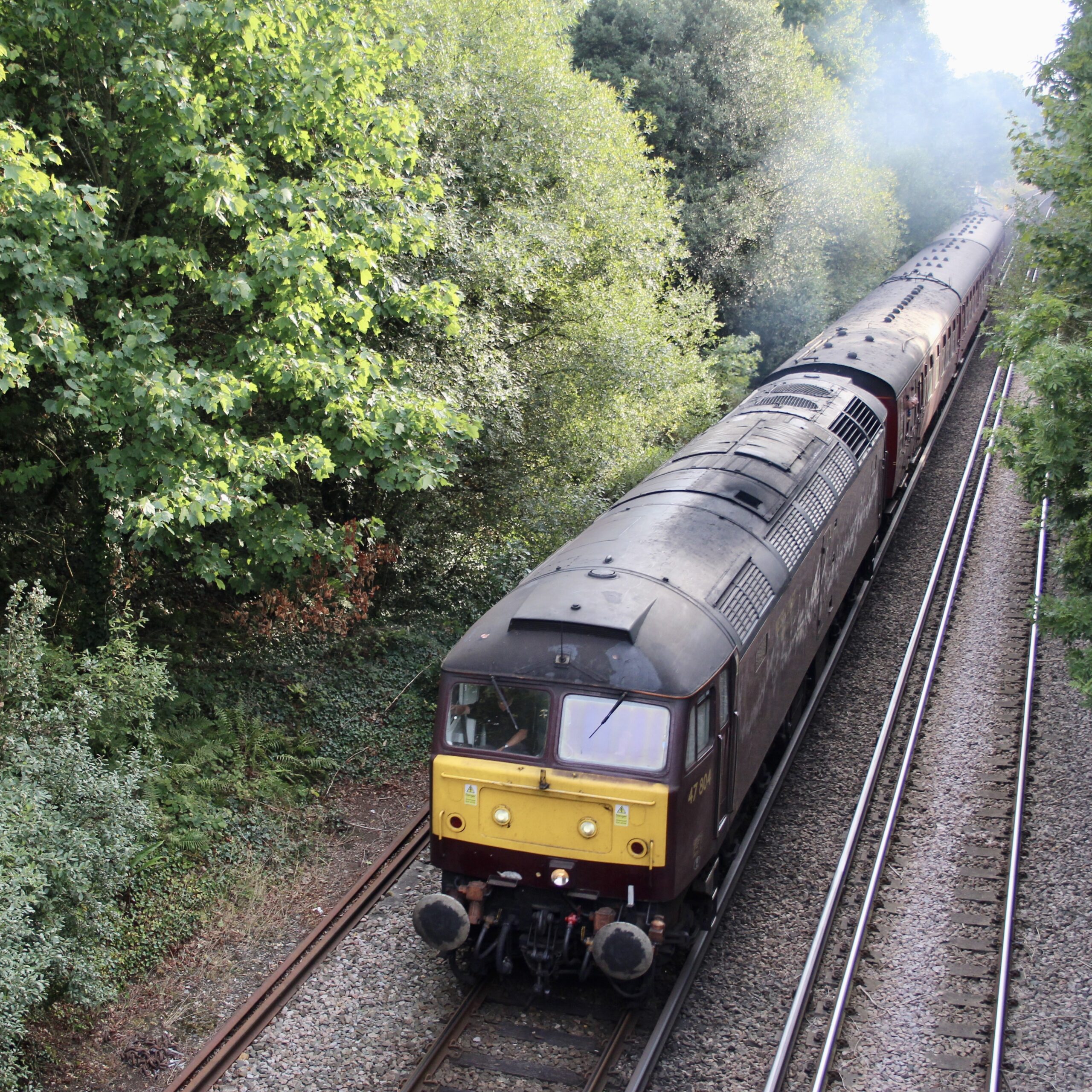
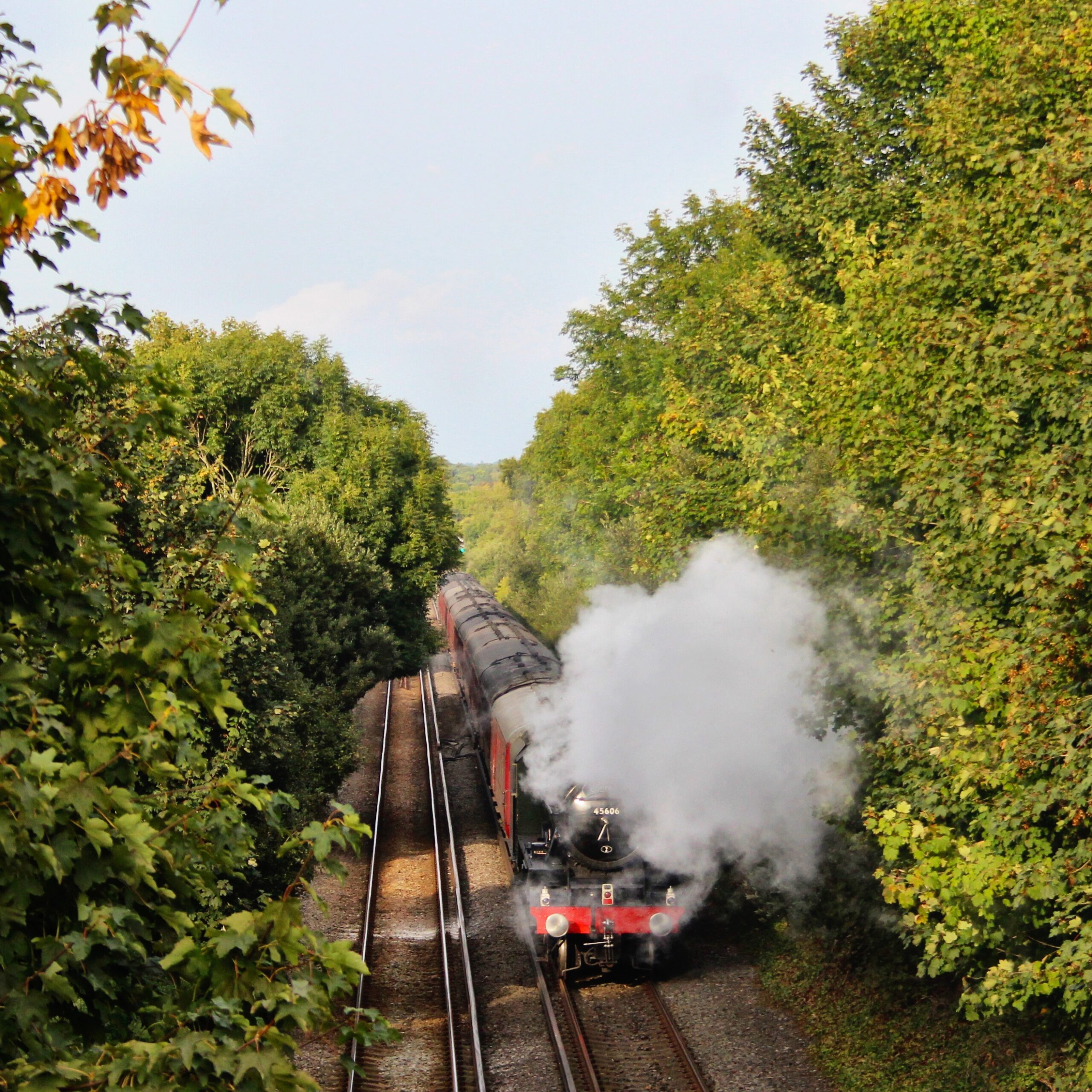
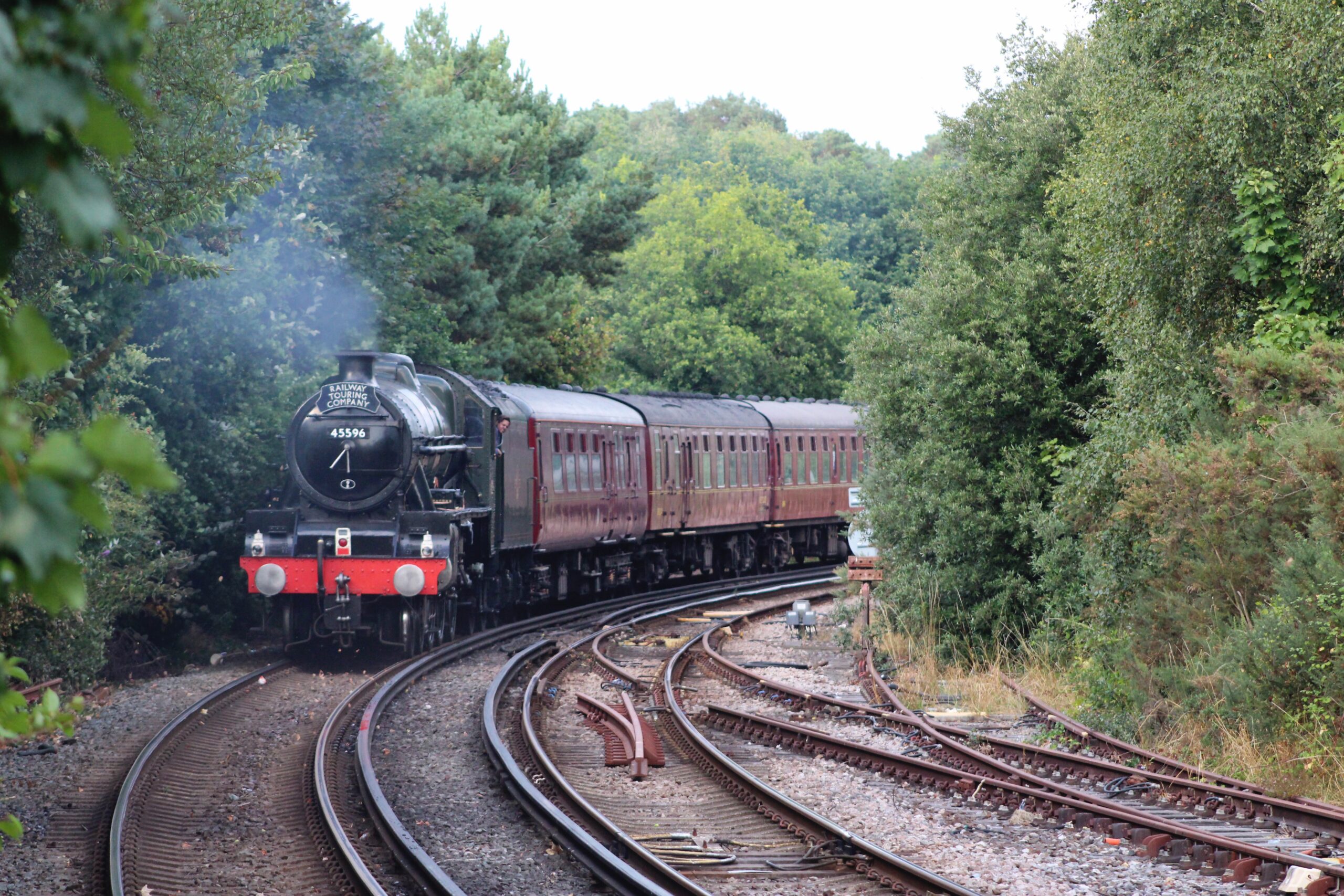
The Swanage Belle – Thursday 22nd September saw the postponed run of The Railway Touring Company organised “The Swanage Belle” headed up by LMS Jubilee 4-6-0 No. 45596 ‘Bahamas’ on the outward run from London Victoria and West Coast Railway Company (WCRC) Class 47 No. 47804 on the return working Swanage as far as Southampton where the steam locomotive once again took control of the train. Premier dining would have set you back £285 and a standard class seat £115 plus £1 for a bag of crisps.
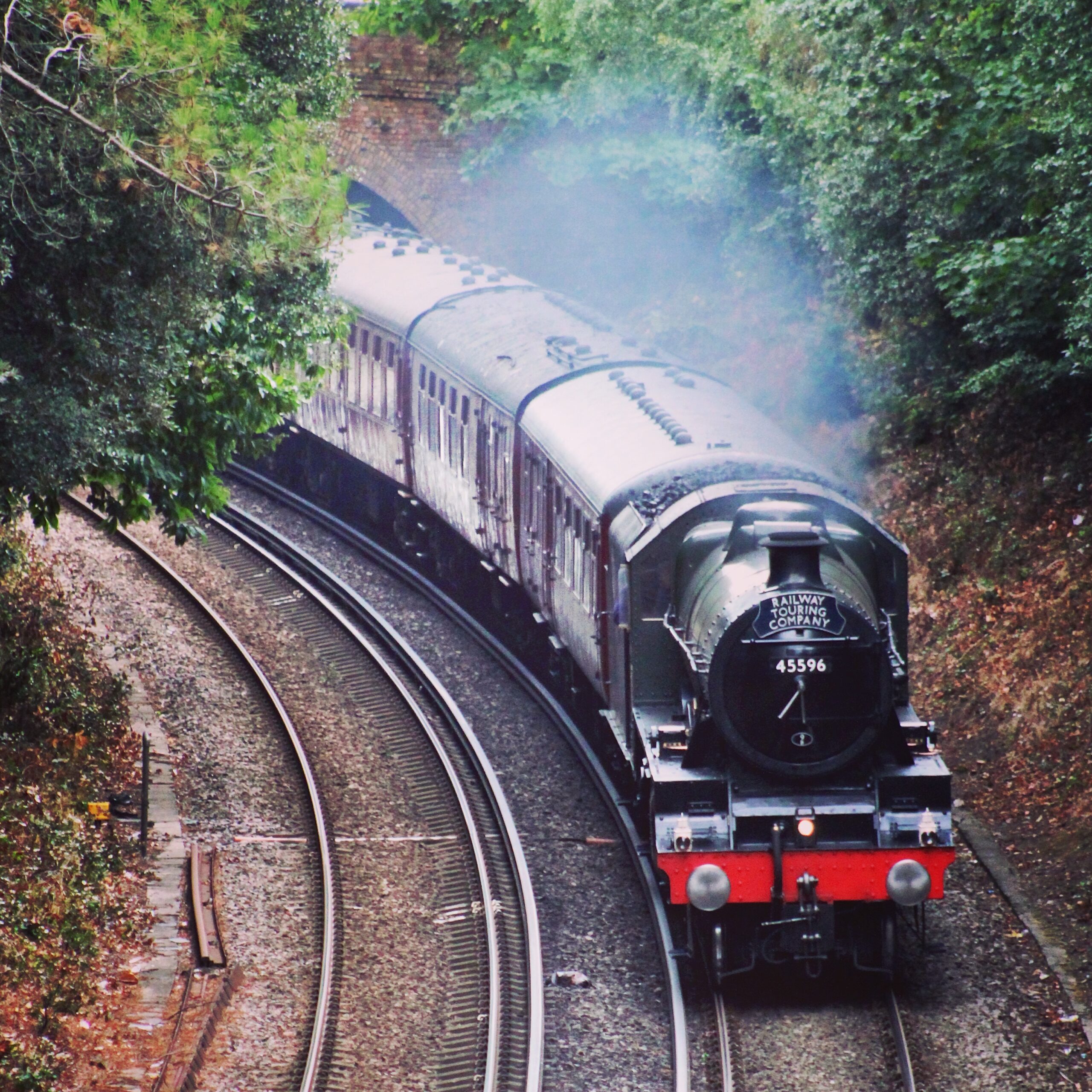
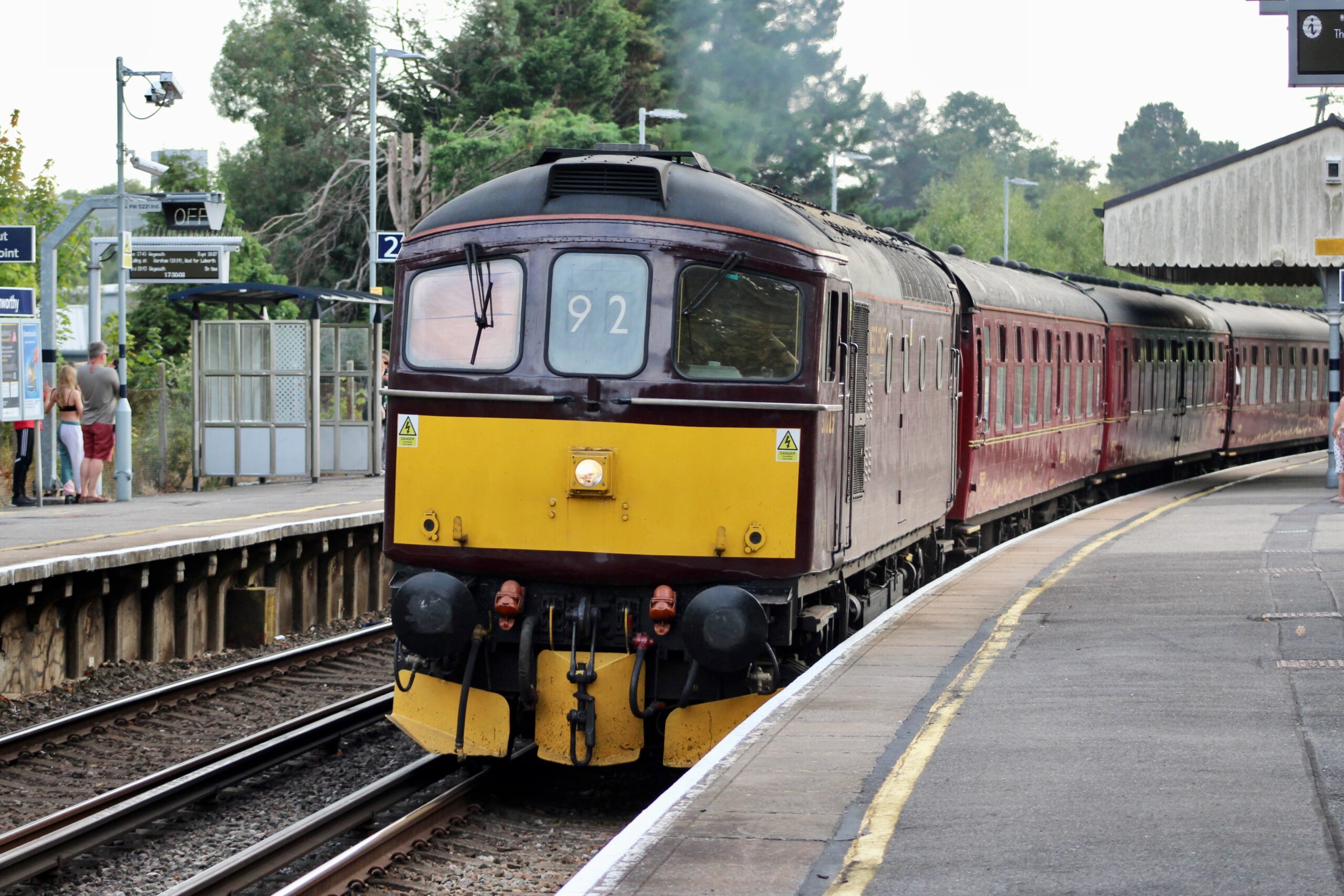
LMS Jubilee 4-6-0 No. 45596 ‘Bahamas’ powers through Hamworthy with “The Swanage Belle” – 22/09/2022Class 47 No. 47804 on the return “The Swanage Belle” rejoins the mainline at Worgret Junction – 22/09/2022
‘Bahamas’ was renumbered and renamed as long scrapped sister locomotive No. 45606 ‘Falkland Islands’ while at Swanage in commemoration of the 40th Anniversary of the Falklands conflict.
Obscured by steam, LMS Jubilee 4-6-0 No. 45596 ‘Bahamas’ running as classmate 45606 ‘Falkland Islands’ on the rear of the return “The Swanage Belle” – 22/09/2022
Video of “The Swanage Belle” – 22/09/2022
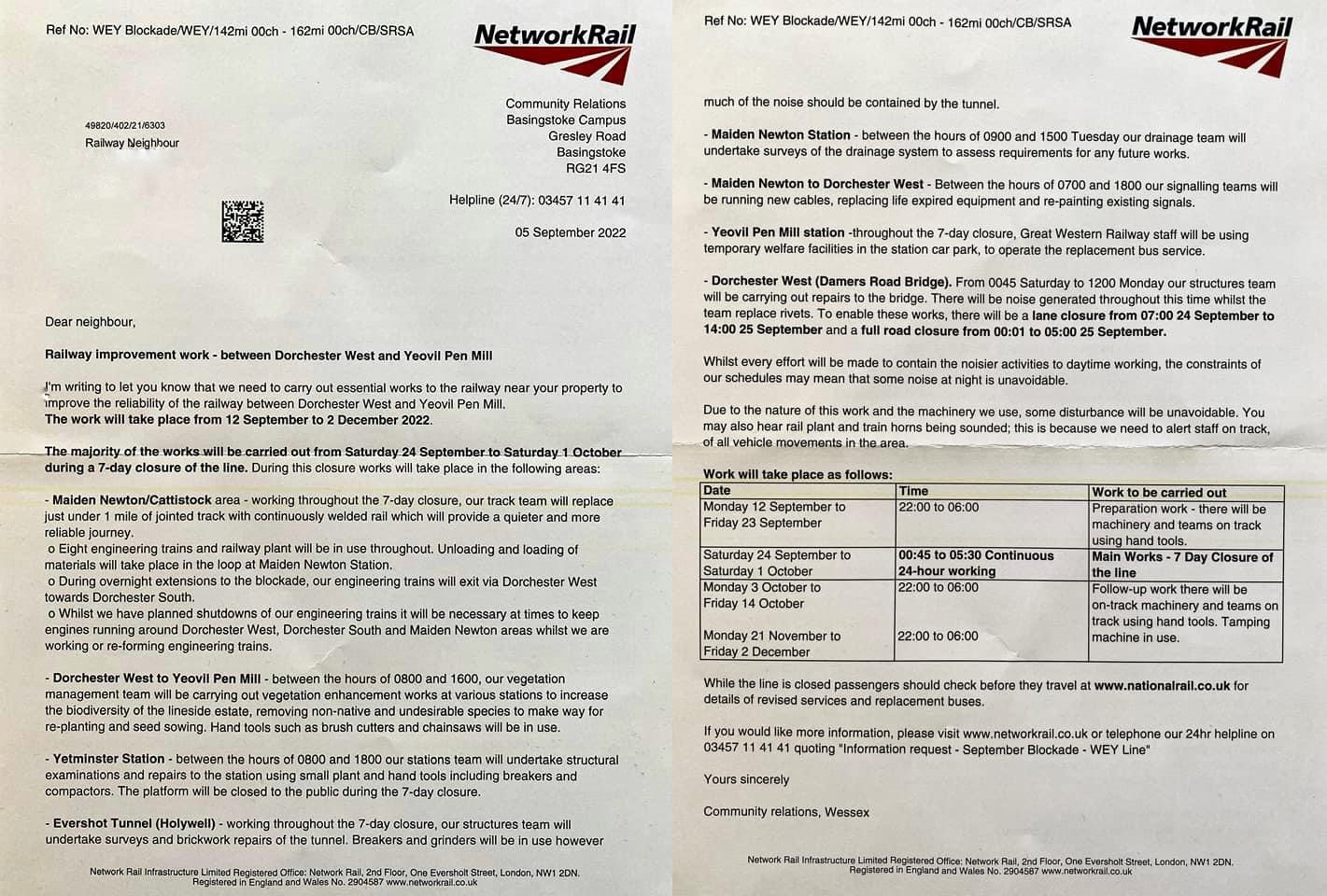
Rail Upgrades – A section of the Bristol to Weymouth “Heart Of Wessex Line” was closed to passenger services on Saturday 24th September through to Friday 30th September 2022 to allow for the replacement of a mile of track between Chetnole and Maiden Newton. At the same time, Yeovil Pen Mill signal box is being overhauled, the platform at Yestminster station is being resurfaced and the road bridge at Dorchester West is being repaired.
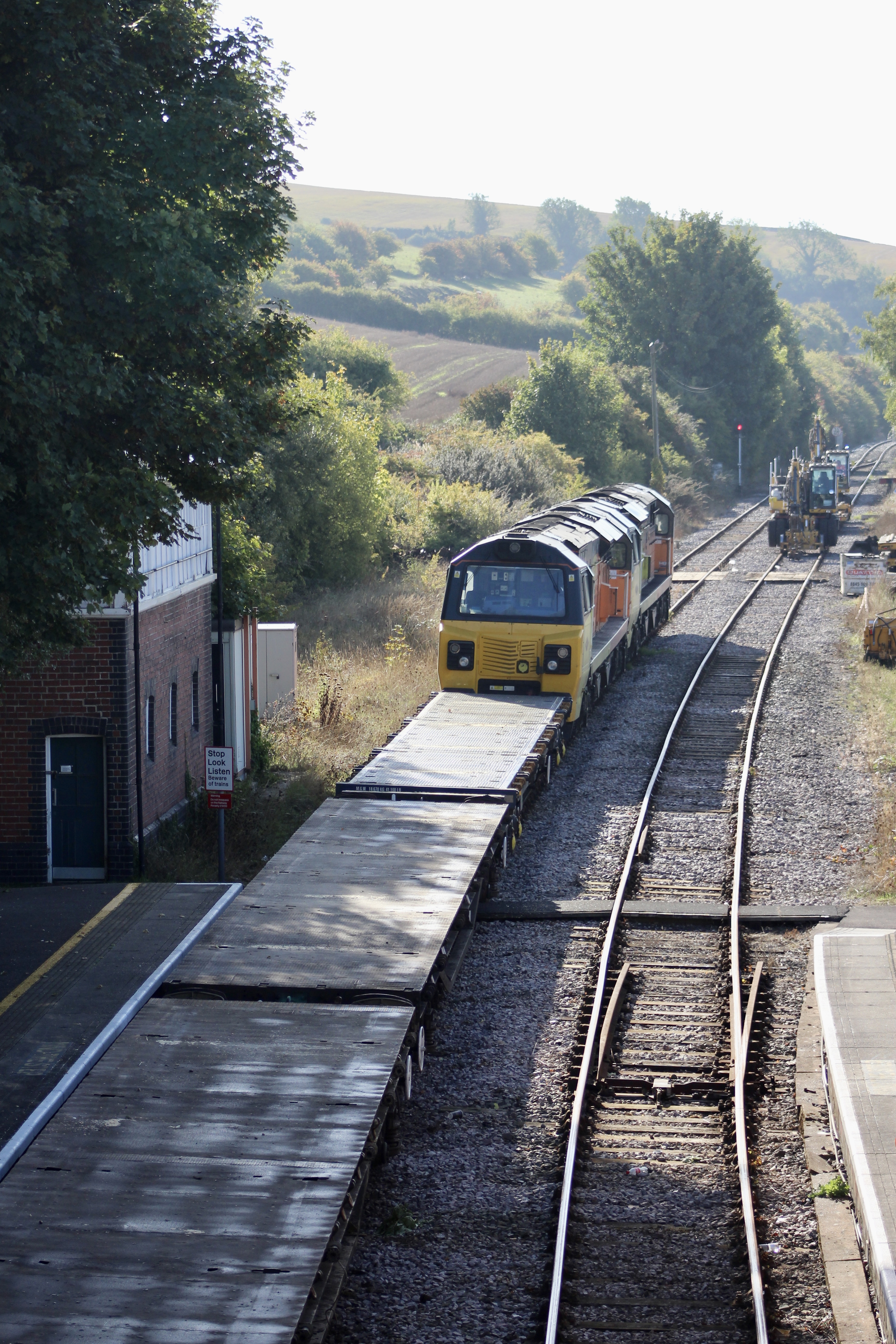
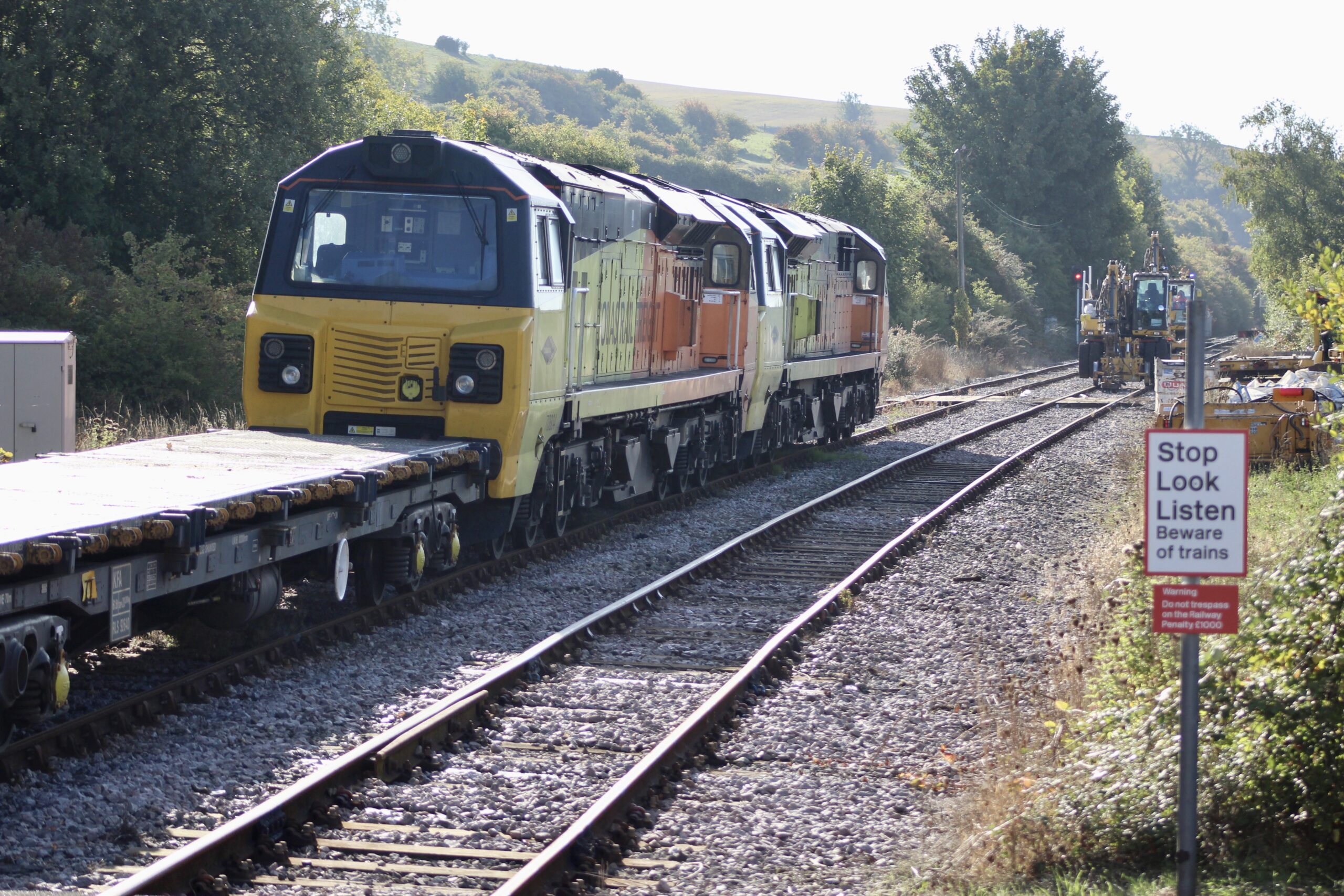
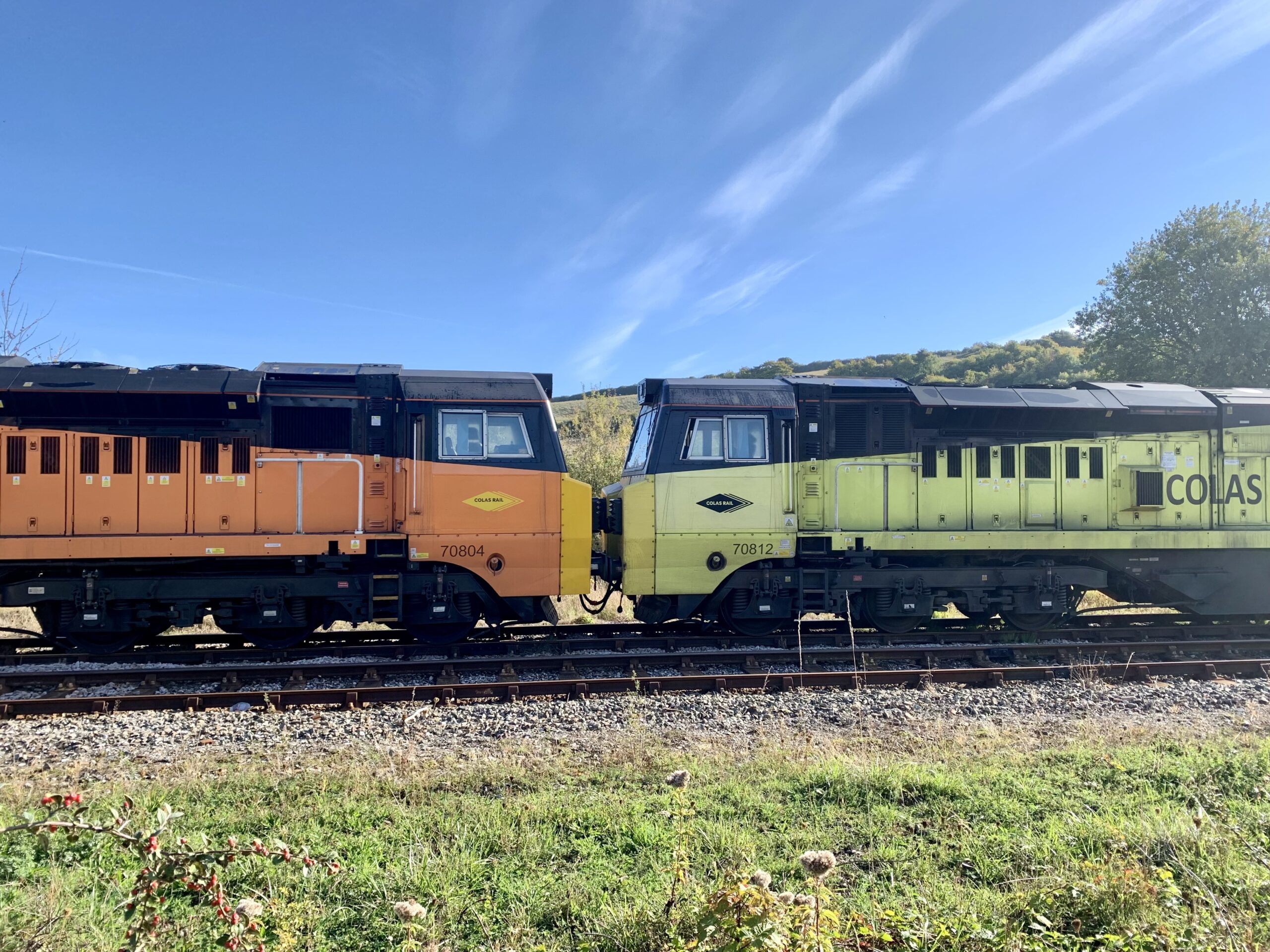
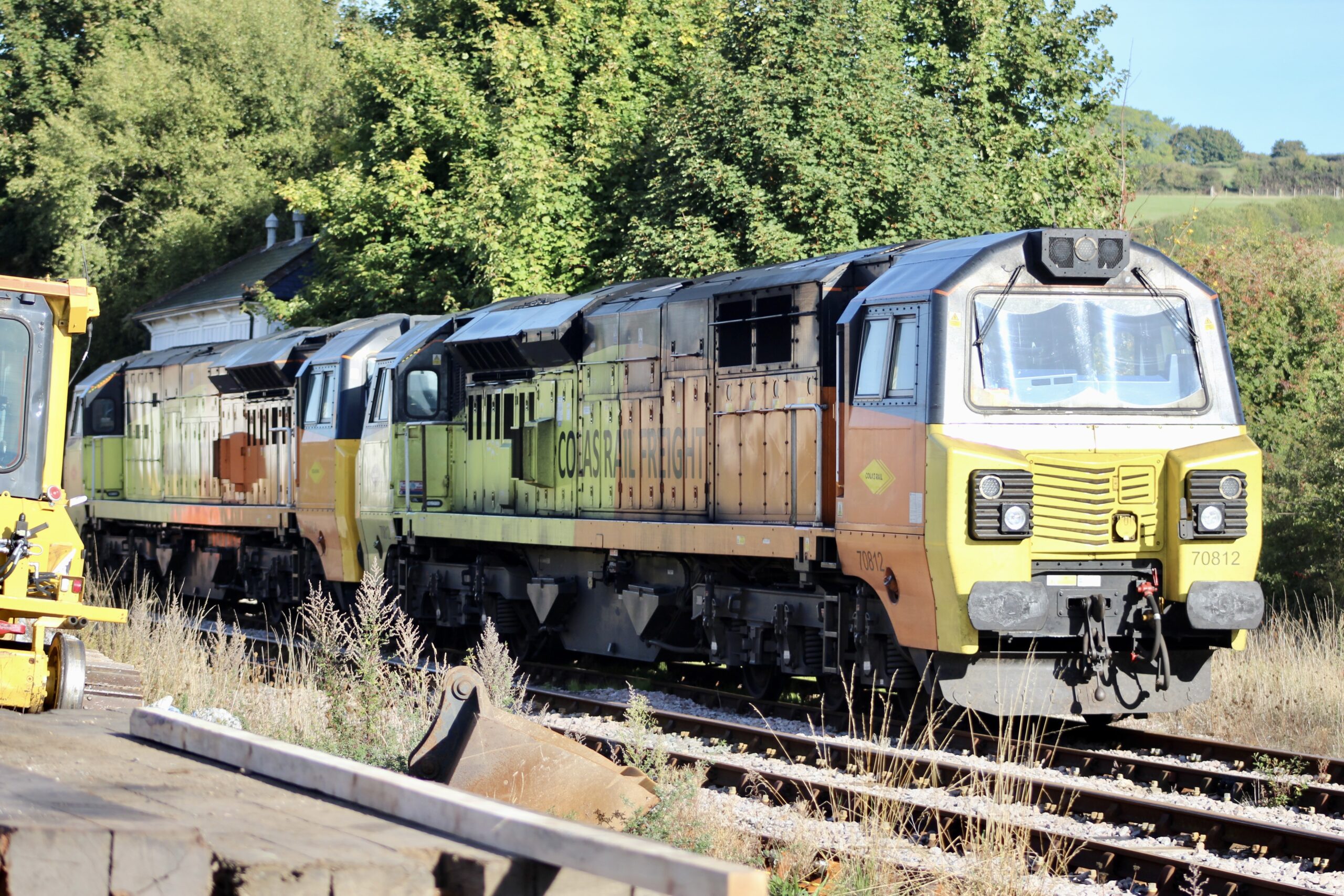
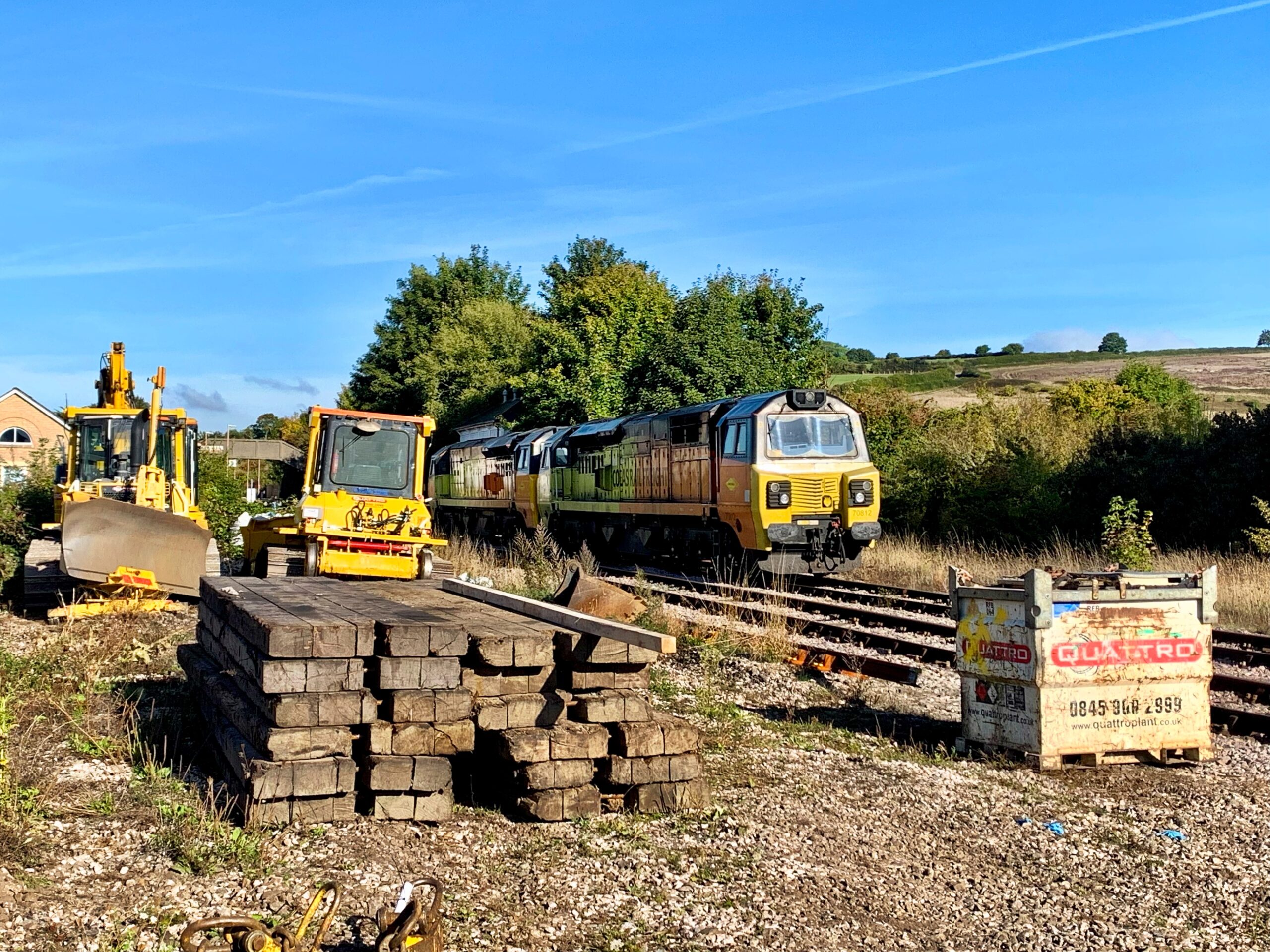
GWR and Network Rail information leafletGWR and Network Rail information leafletColas Rail Class 70 No.’s 70804 and 70812 at Maiden Newton having worked 6C02 2037 Eastleigh East Yard to Maiden Newton, the first of 8 scheduled workings for the upgrade work in the Chetnole area – 25/09/2022Colas Rail Class 70 No.’s 70804 and 70812 at Maiden Newton – 25/09/2022Colas Rail Class 70 No.’s 70804 and 70812 at Maiden Newton – 25/09/2022Colas Rail Class 70 No.’s 70812 and 70804 at Maiden Newton – 25/09/2022Colas Rail Class 70 No.’s 70812 and 70804 at Maiden Newton – 25/09/2022
Further local line closures are scheduled to take place in February 2023 when track renewal takes place in the the Thornford area, the Yeovil Pen Mill to Weymouth route being affected Monday 20th February to Friday 24th February 2023 and again from Monday 27th February to Friday 3d March 2023.
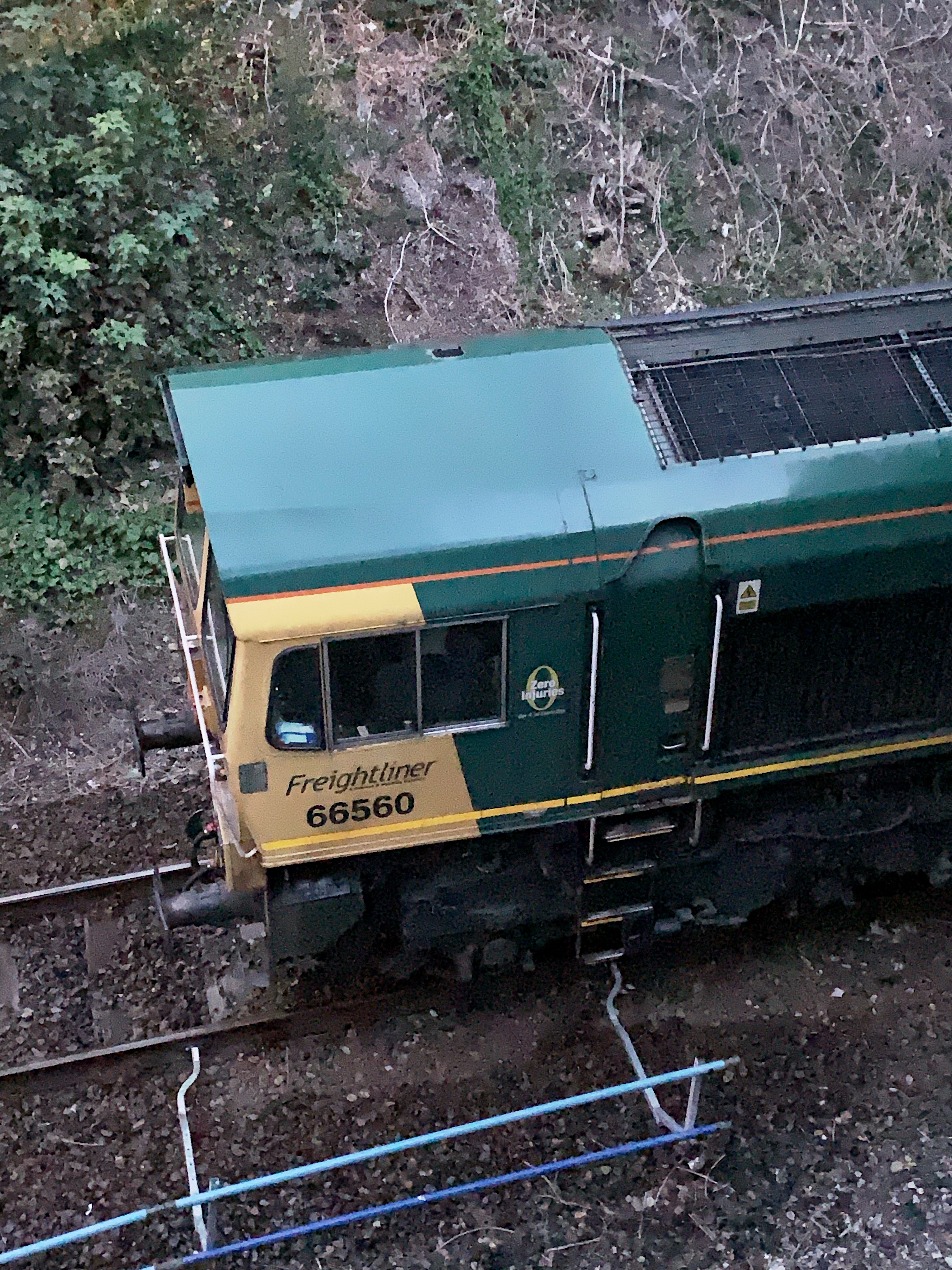
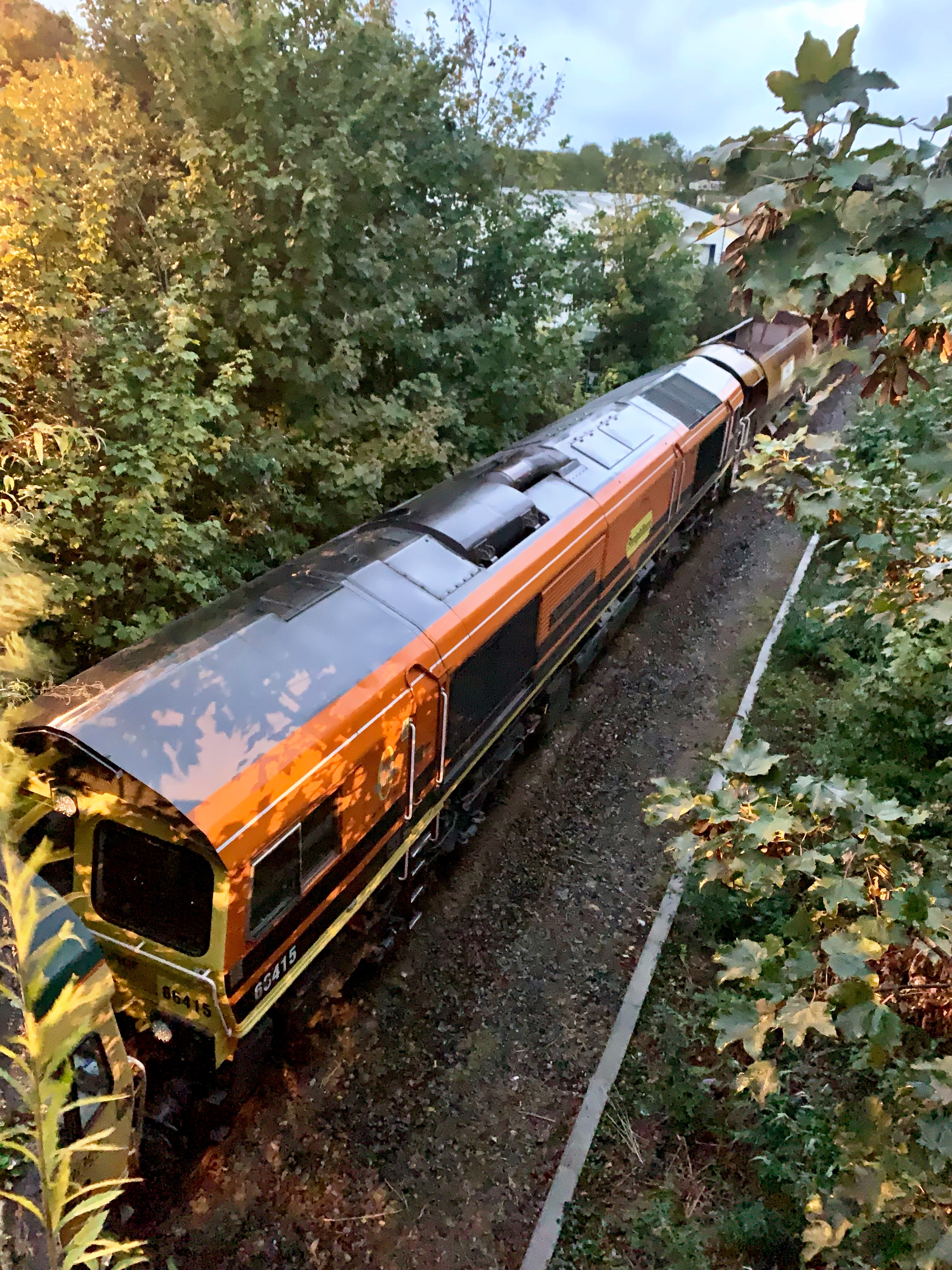
Network Rail “Dear Neighbour” letter detailing the improvement works between Dorchester West and Yeovil Pen Mill – September 2022Yoshi and I popped to Dorchester on the evening of Tuesday 27th September. In fading light, Freightliner Class 66 No.’s 66534 and 66585 stand just outside of Dorchester West with 6Y86 which worked 0438 Eastleigh East Yard to Yeovil Pen Mill and the work site at Maiden Newton on 26th September. The train was scheduled to return to Eastleigh via Dorchester South in the early hours of Wednesday 28th SeptemberIn this view taken from Poundbury Road (Barrack Road) Bridge, Freightliner Class 66 No. 66560 waits in the cutting with 6Y89 (26th September’s 1102 Eastleigh East Yard to Yeovil Pen Mill) while the rear ballast wagons of 6Y86 can be seen protruding from under Bridport Road bridge – 27/09/2022Freightliner Class 66 No. 66560 at the head of 6Y89 near Dorchester West – 27/09/2022In orange and black Genesee & Wyoming livery, Freightliner Class 66 No. 66415 ‘You Are Never Alone’ (named in support of The Samaritans) coupled behind classmate No. 66560 waits at Poundbury Road (Barrack Road) Bridge in Dorchester. The train is scheduled to return to Eastleigh via Dorchester South on 28th September 2022 in the early hours – 27/09/2022
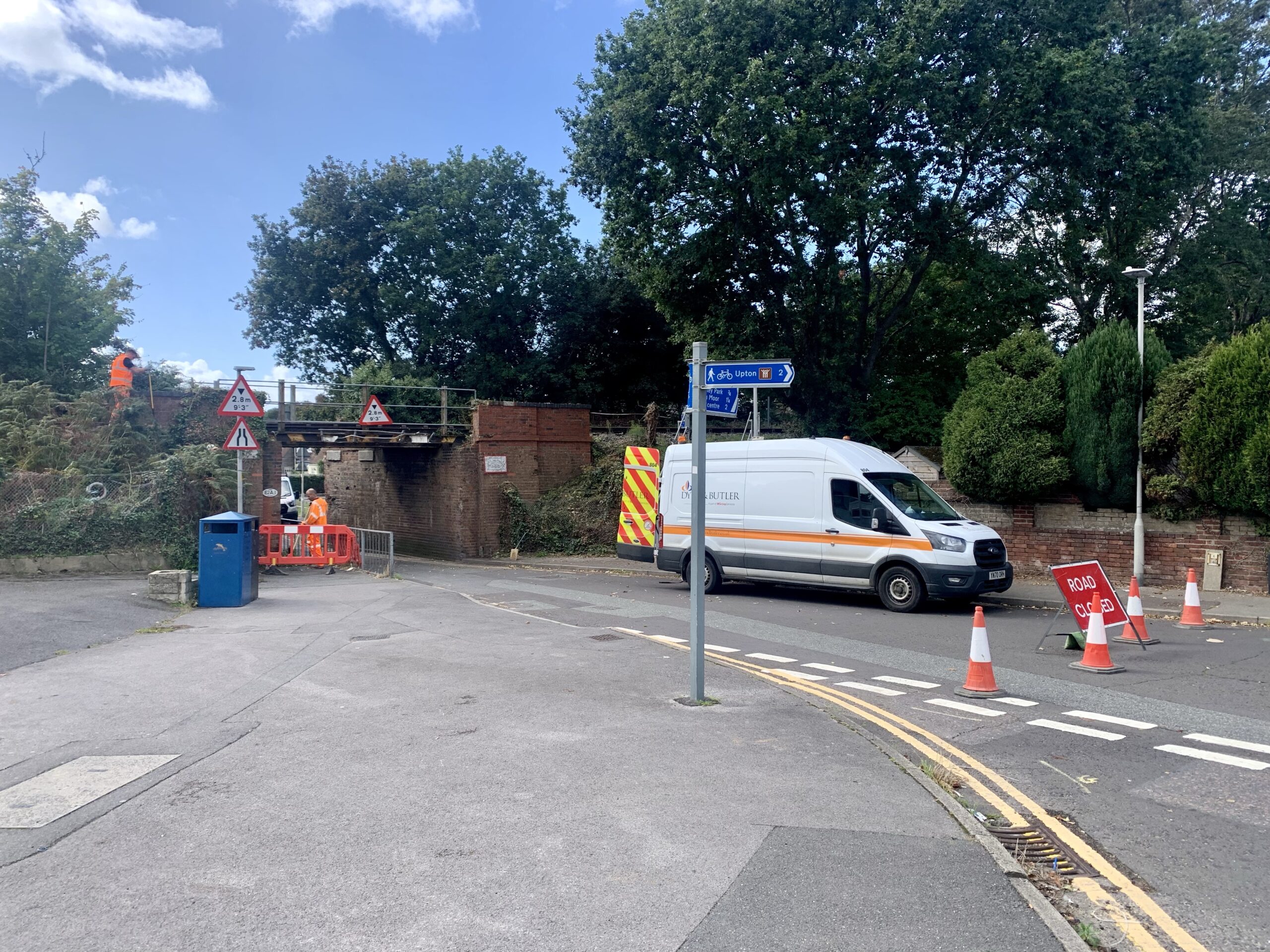
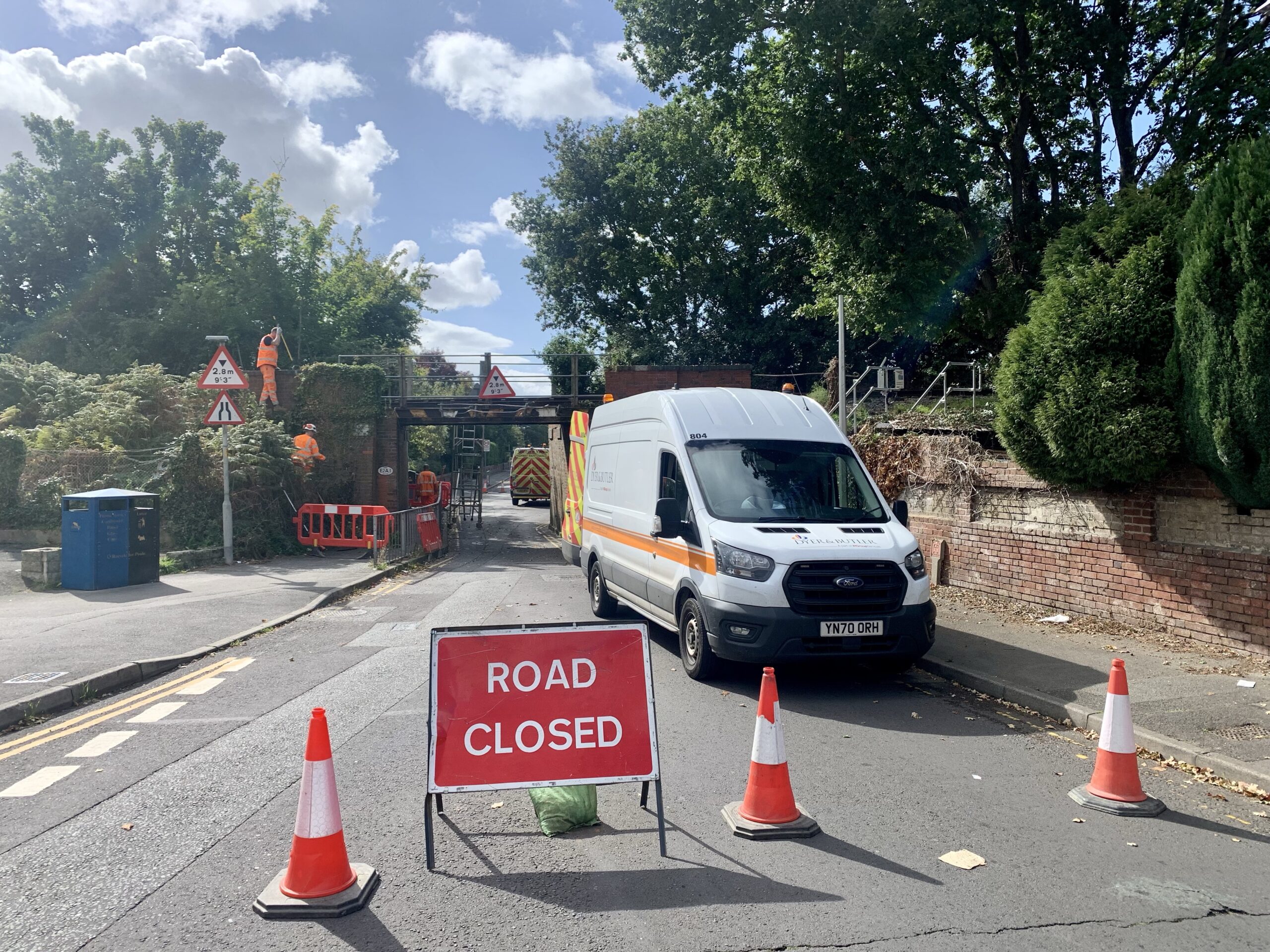
Meanwhile work on the Hamworthy Branch continues with the repointing of the brickwork on the abutments for the over bridge on Lake Road on Monday 26th September 2022.
Bridge work, Lake Road Hamworthy – 26/09/2022Bridge work, Lake Road Hamworthy – 26/09/2022
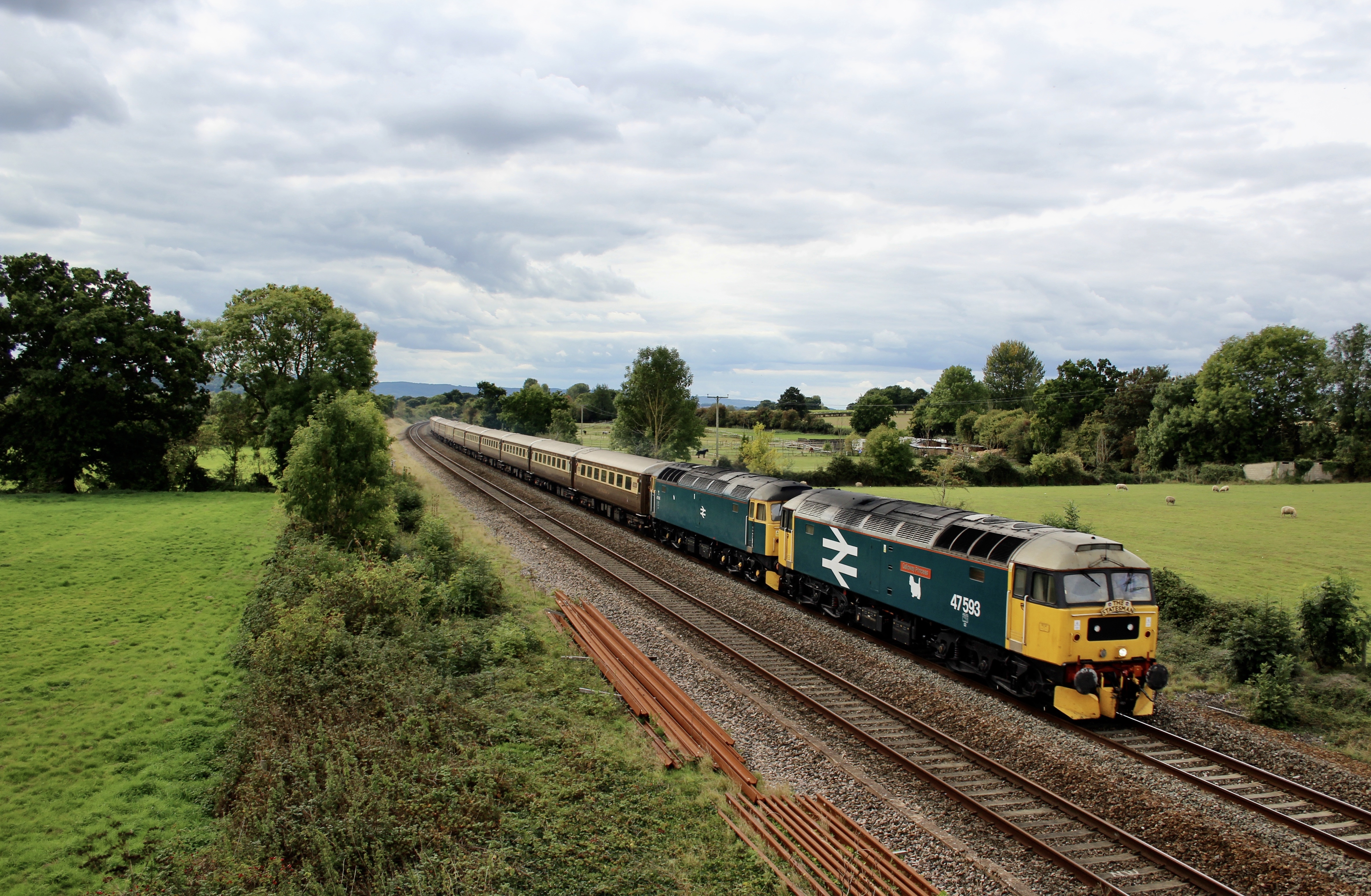
Cogload Junction – After we popped into Maiden Newton on Sunday 25th to see the Colas Rail Class 70’s, Yoshi and I headed off in the direction of Taunton to catch a glimpse of Statesman Rail’s “Cornish Explorer Statesman” which was heading back to York having departed Penzance earlier in the day. The train was headed by double headed Class 47 No.’s 47593 ‘Galloway Princess’ and 47614. We spent an hour or so at Cogload Junction and saw several GWR Castle HST sets, IET’s and a solitary CrossCountry HST working.
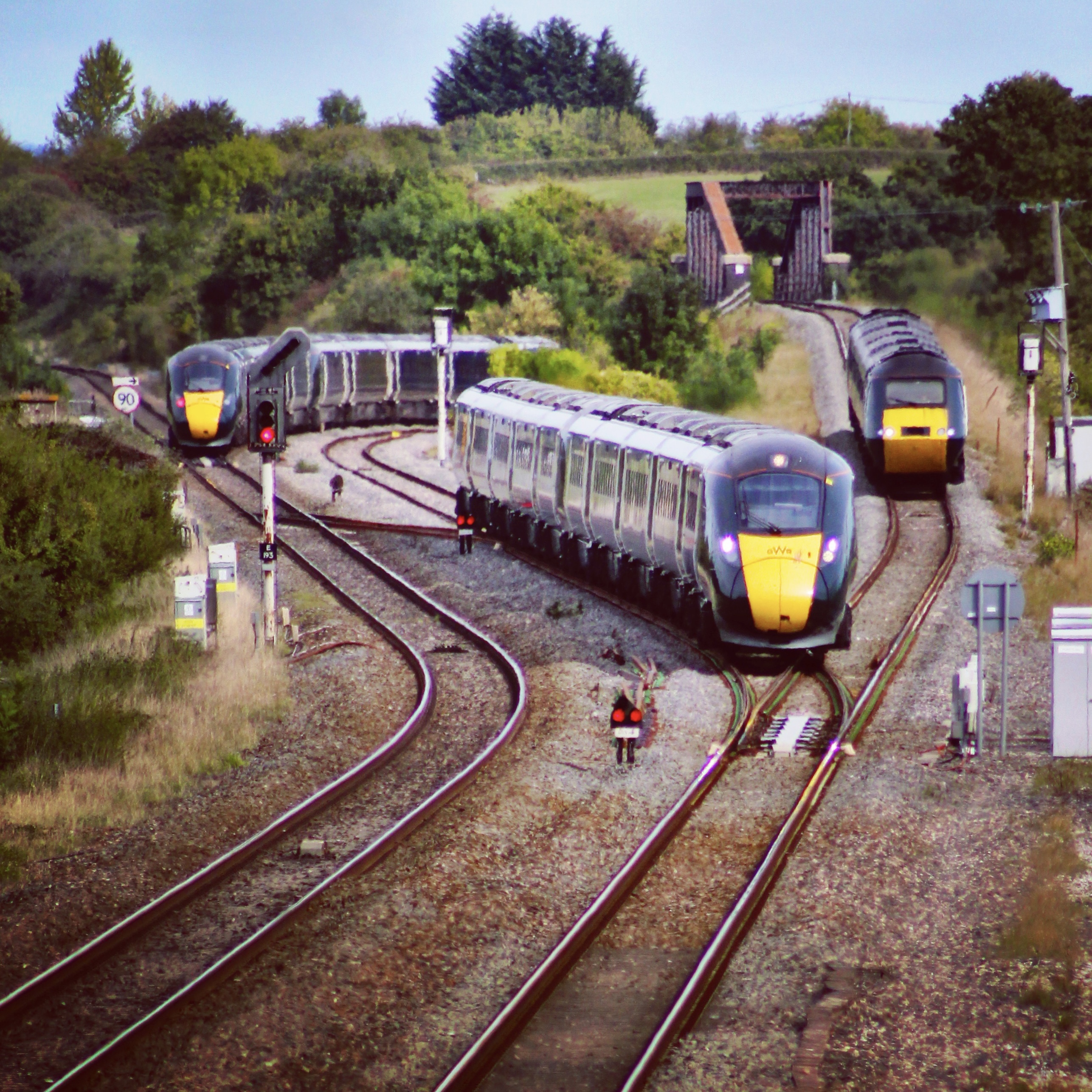
2C71 1102 Bristol Temple Meads to Taunton with Castle Class HST power cars 43171 (leading) and 43194 at the rear about to pass Cogload Junction via the flyover – 25/09/2022Class 47 No.’s 47593 ‘Galloway Princess’ and 47614 working 1Z28 0937 Penzance to York; Statesman Rail’s “Cornish Explorer Statesman” at Cogload – 25/09/2022A busy few minutes as 1C79 1103 London Paddington to Plymouth formed of GWR IET No.’s 800009 and 800027 flanked by 1A82 0918 Penzance to London with No.’s 800015 and 800025 and Castle Class HST with power car No.’s 43042 and 43094 working 2C73 1055 Cardiff Central to Penzance – 25/09/2022
Cogload Junction is located at Durston, Somerset about five miles east of Taunton. It is where the 1906-opened London Paddington to Penzance line via Castle Cary joins the original 1842 GWR line that runs via Bristol Temple Meads. A flyover was constructed in 1931 converting it into a flying junction.
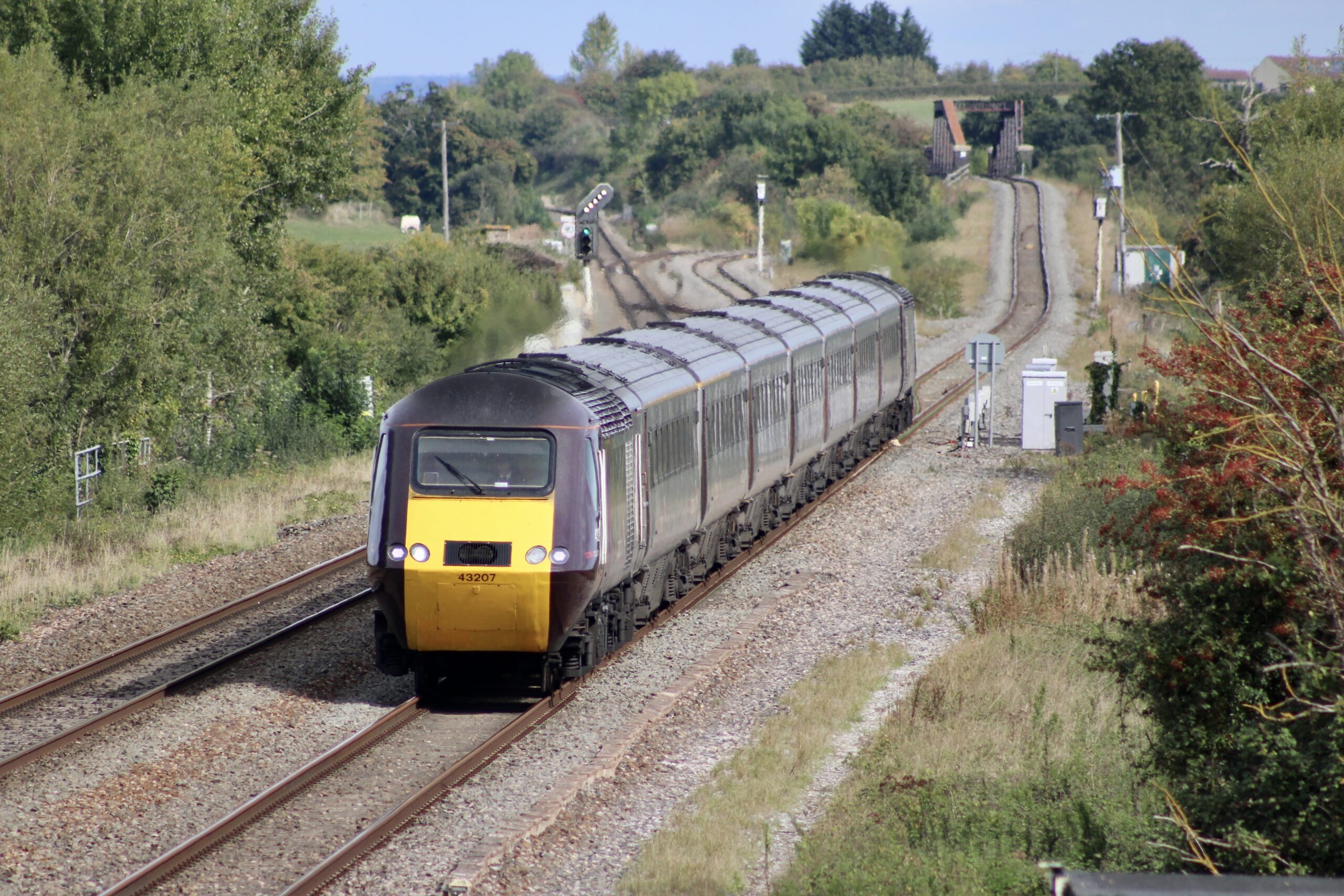
CrossCountry HST 1V48 0811 Leeds to Plymouth worked by Class 43 power car No.’s 43207 and 43321 at Cogload Junction – 25/09/2022
Cogload Junction on 25/09/2022. Trains include: 2U14 0947 Plymouth to Cardiff Central No.’s 43162/ 43160, 2C71 1102 Bristol Temple Meads to Taunton No.’s 43171/43194, 1M45 1049 Paignton to Birmingham New Street No. 220006, 2U16 0850 Penzance to Cardiff Central No.’s 43010/43092, 1V48 0811 Leeds to Plymouth No.’s 43207/43321, 1A82 0918 Penzance to London No.’s 800015/800025, 1C79 1103 London Paddington to Plymouth No.’s 800009/800027, 2C73 1055 Cardiff Central to Penzance No.’s 43042/ 43094, 1S49 0930 Penzance to Newcastle No. 220013, 2U18 1318 Taunton to Cardiff Central No.’s 43194/43171, 1Z28 0937 Penzance to York No.’s 47593/47614
Test Train – Regular test train top and tailed by Class 73 Electro-Diesels No.s 73964 ‘Jeanette’ and 73962 ‘Dick Mabbutt’ visited on Monday 26th September 2022 working 1Q51 Derby RTC to Eastleigh East Yard via Weymouth. Yoshi barked at the consist as it passed through Hamworthy.
1Q51 Derby RTC to Eastleigh East Yard via Weymouth seen at Hamworthy – 26/09/2022
That’s all we have time for this week. We’ll be back in seven days and hope you’ll join us then. Thank you for your comments and corrections, all gratefully received!
Wednesday 31st August to Tuesday 6th September 2022
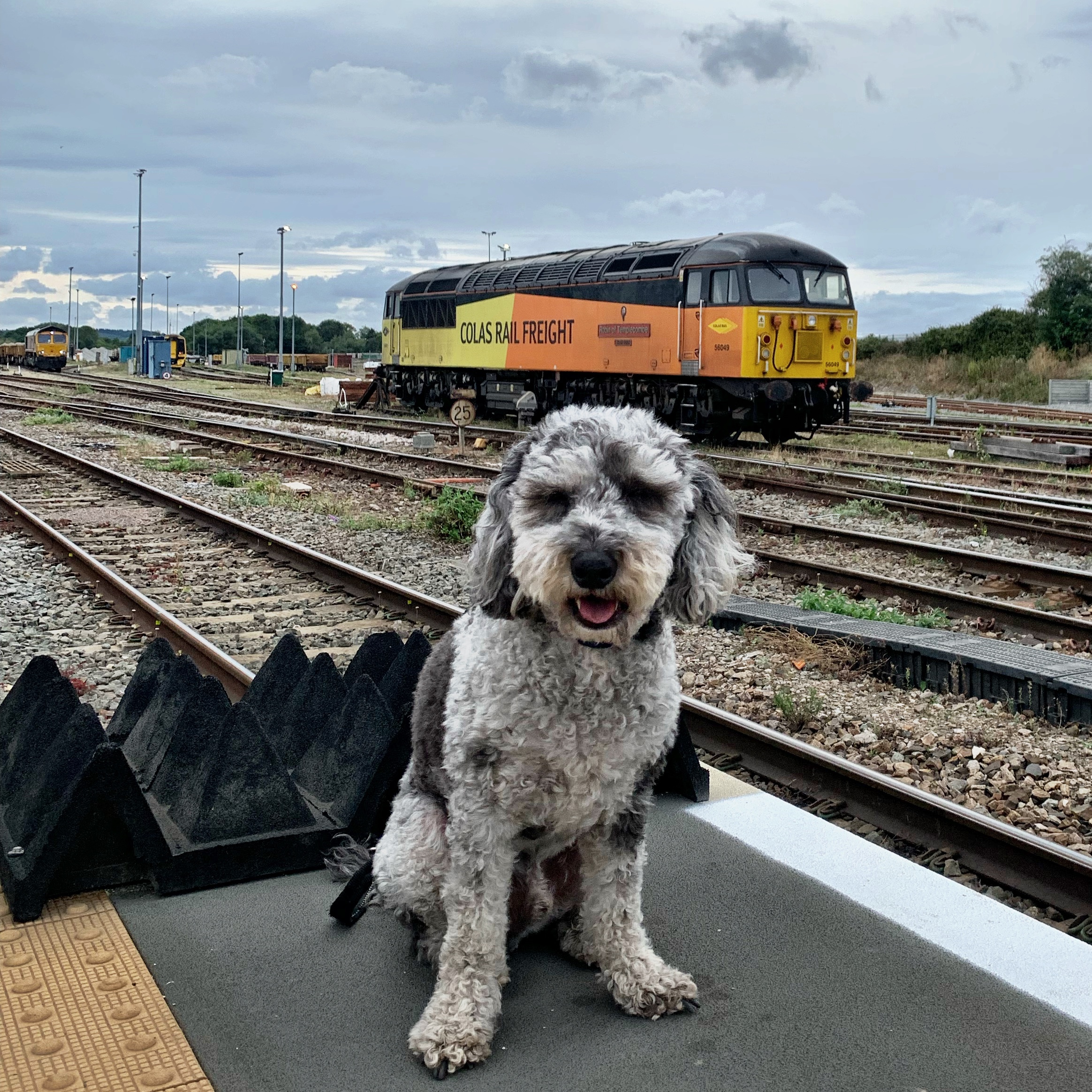
Yoshi train spotting on the end of Westbury station with Colas Class 56049 ‘Robin of Templecombe 1938 – 2013’ in the background – 03/09/2022
This week kicked off with two Weymouth bound rail tours in two days when “The Dorset Coast Statesman” and “The Dorset Coast Express” passed through our patch.
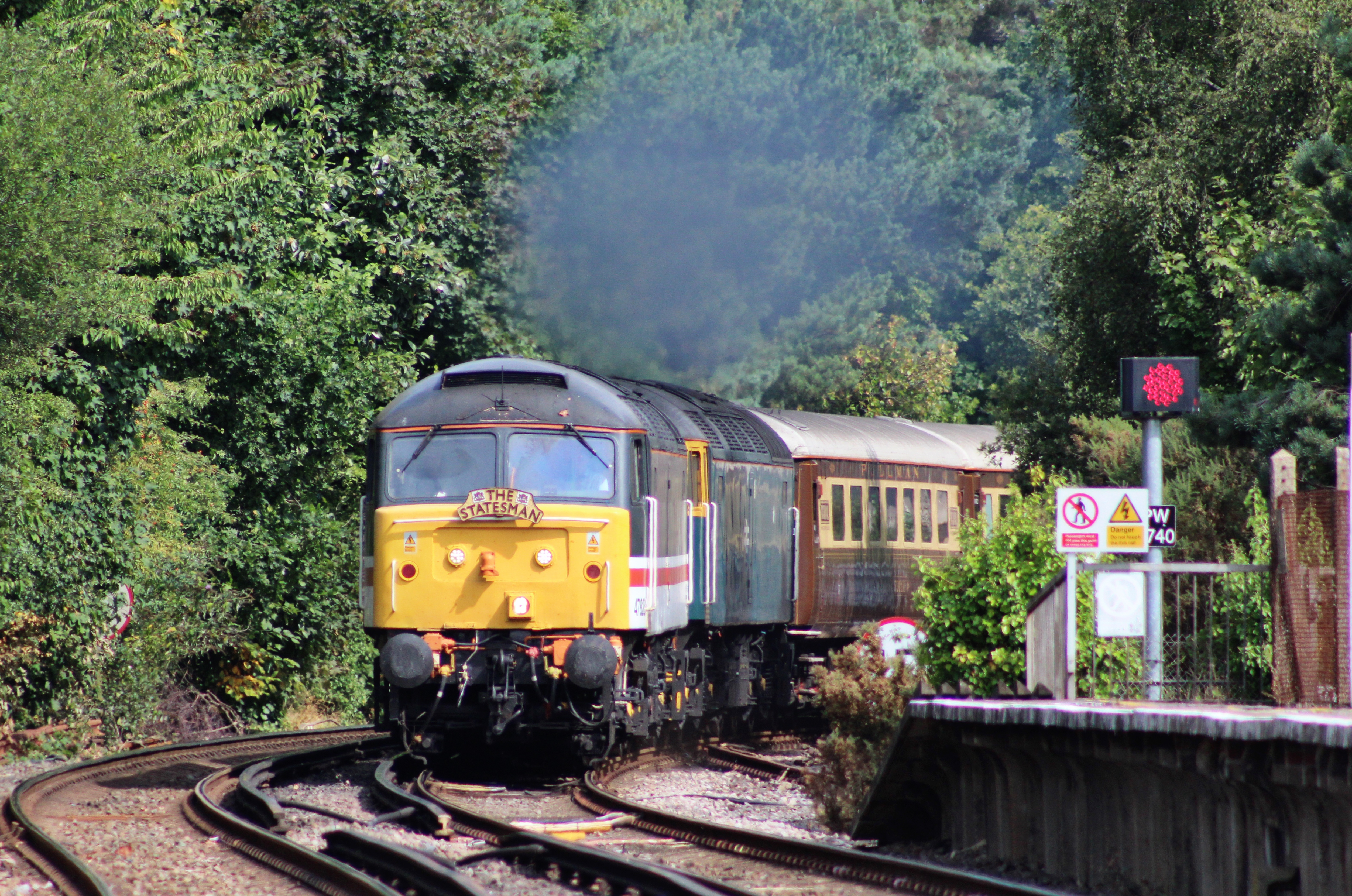
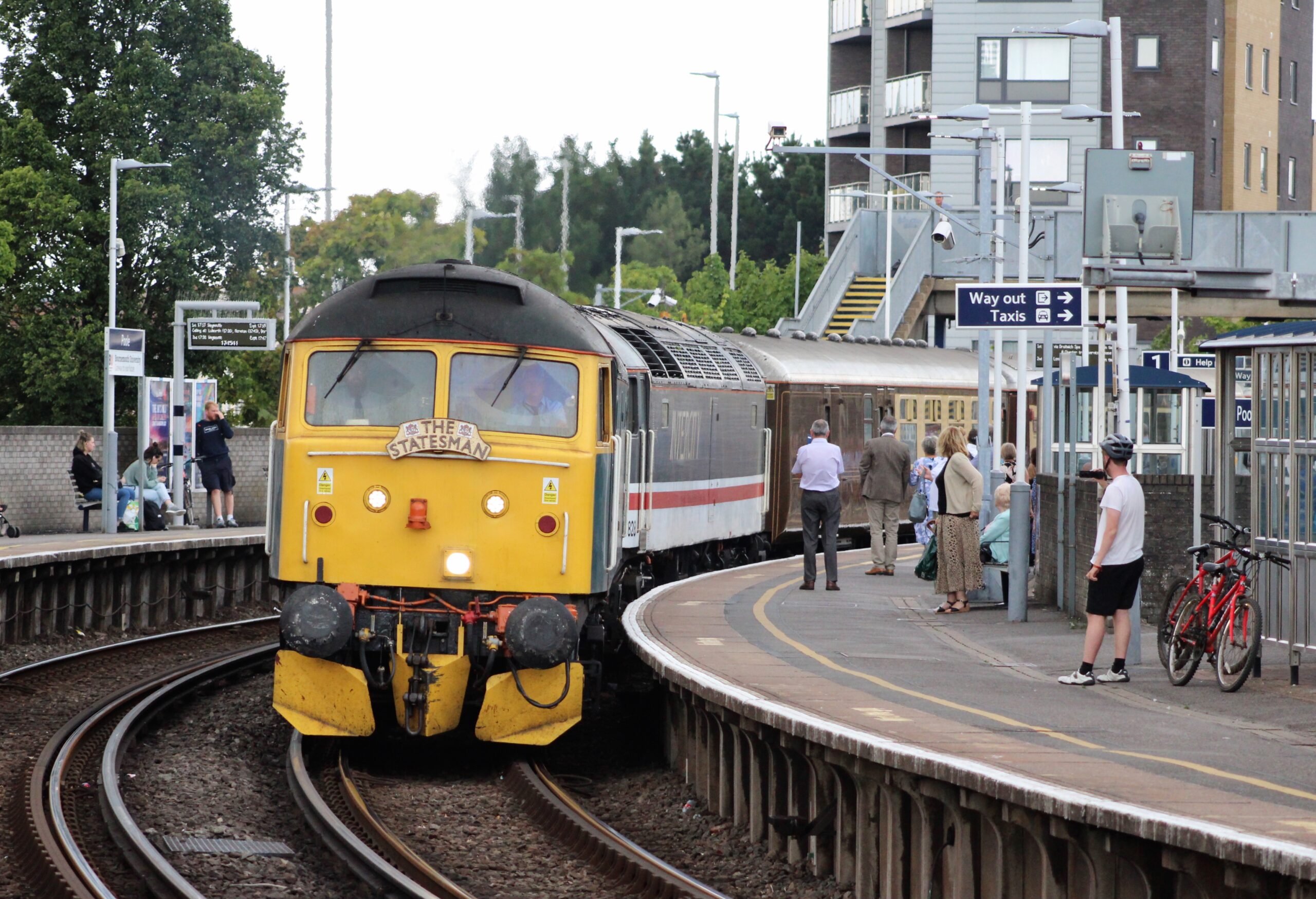
LSL Class 47 No.’s 47828 and 47853 (47614) round the curve into Hamworthy with the “Dorset Coast Statesman” – 31/08/2022LSL Class 47 No.’s 47853 (47614) and 47828 with the return “Dorset Coast Statesman” arriving at Poole – 31/08/2022
LSL Class 47 No.’s 47828 and 47853 (47614) with the “Dorset Coast Statesman” – 31/08/2022LMS Jubilee No. 45596 ‘Bahamas’ is captured between Branksome and Parkstone working the outward leg of “The Dorset Coast Express” 1Z82 0845 London Victoria to Weymouth – 01/09/2022Class 33/0 No. 33025 at the head of the return working of “The Dorset Coast Express” 1Z84 1635 Weymouth to London Victoria. Because of a problem with traction equipment, the tour was terminated at Clapham Junction – 01/09/2022LMS Jubilee No. 45596 ‘Bahamas’ at the rear of “The Dorset Coast Express” return working 1Z84 1635 Weymouth to London Victoria. The cut track on the pointwork for the Hamworthy Branch can clearly be seen, with the replacement frog for the point lying between the up and down lines. From December 12th 2022 the timetable includes a weekday “runs as required” freight service down the Hamworthy Branch to Hamworthy Blue Circle Industries (BCI) at 07:52. There is as yet no indication of a return working – 01/09/2022
LMS Jubilee No. 45596 ‘Bahamas’ and Class 33/0 No. 33025 with The Railway Touring Company excursion “The Dorset Coast Express” (With grateful thanks to @da_buckley967 for the Weymouth section, and G E Barrett for Winfrith) – 01/09/2022
No. 45596 ‘Bahamas’ managed to start a couple of minor line side fires between Dorchester South and Weymouth which caused delays to services until the flames were investigated and extinguished. The original intention was for Swanage based SR U Class 4-6-0 No. 31806 to run light engine to Weymouth to haul the train to Southampton, where it would reverse and head to London via Romsey once again in the care of the Jubilee locomotive. In the event, Class 33/0 No. 33025 which was on the rear of the tour from London worked the return section as far as Southampton Central because of the risk of line side fires.
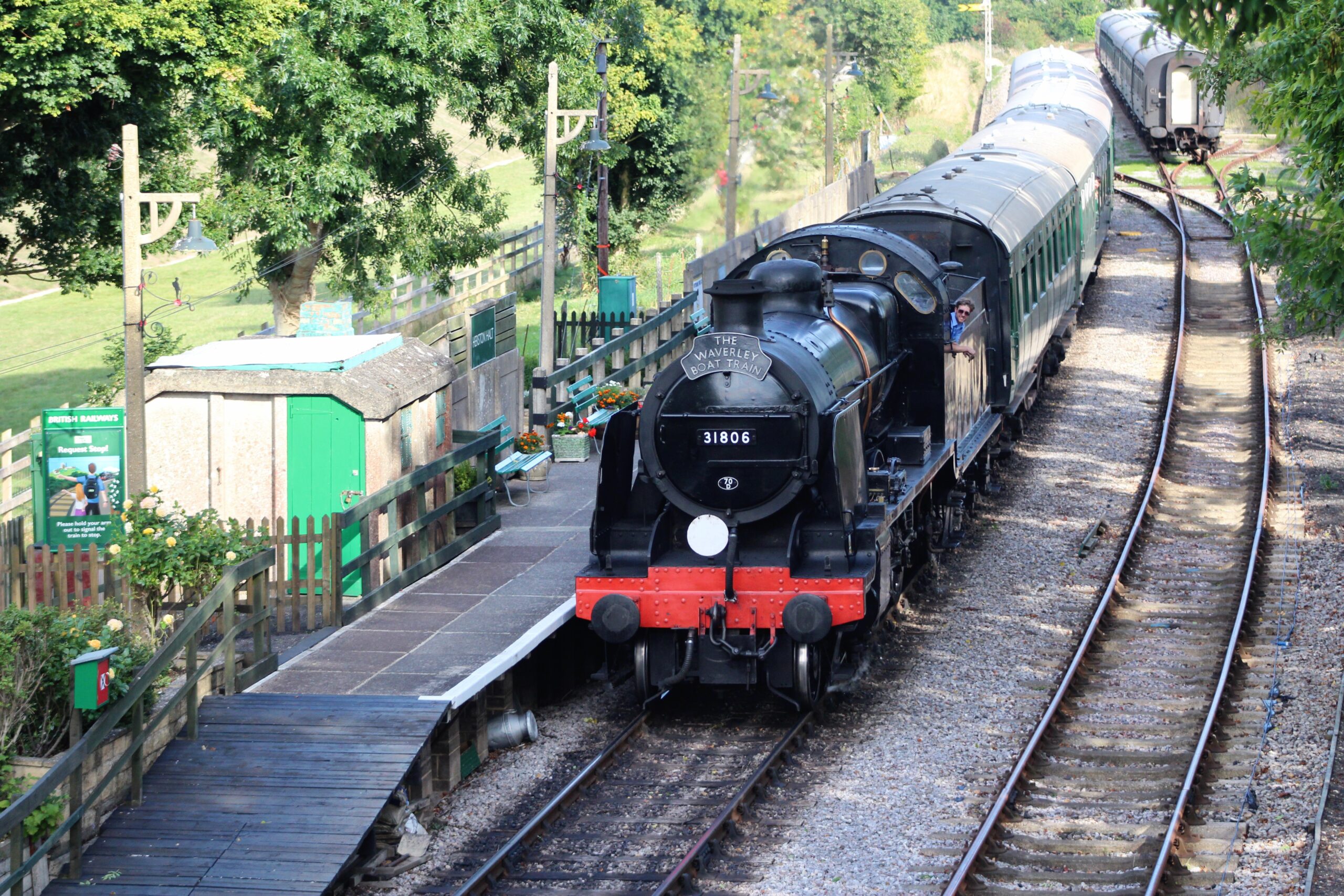
Yoshi and I eventually saw No. 31806 on Sunday 4th September 2022 working the services on the Swanage Railway. In connection with the last seagoing paddle steamer ‘Waverley’ No. 31806 carried a special headboard on some trains in honour of the visiting ship.
Video of SR U Class 4-6-0 No. 31806 on the Swanage Railway – 04/09/2022
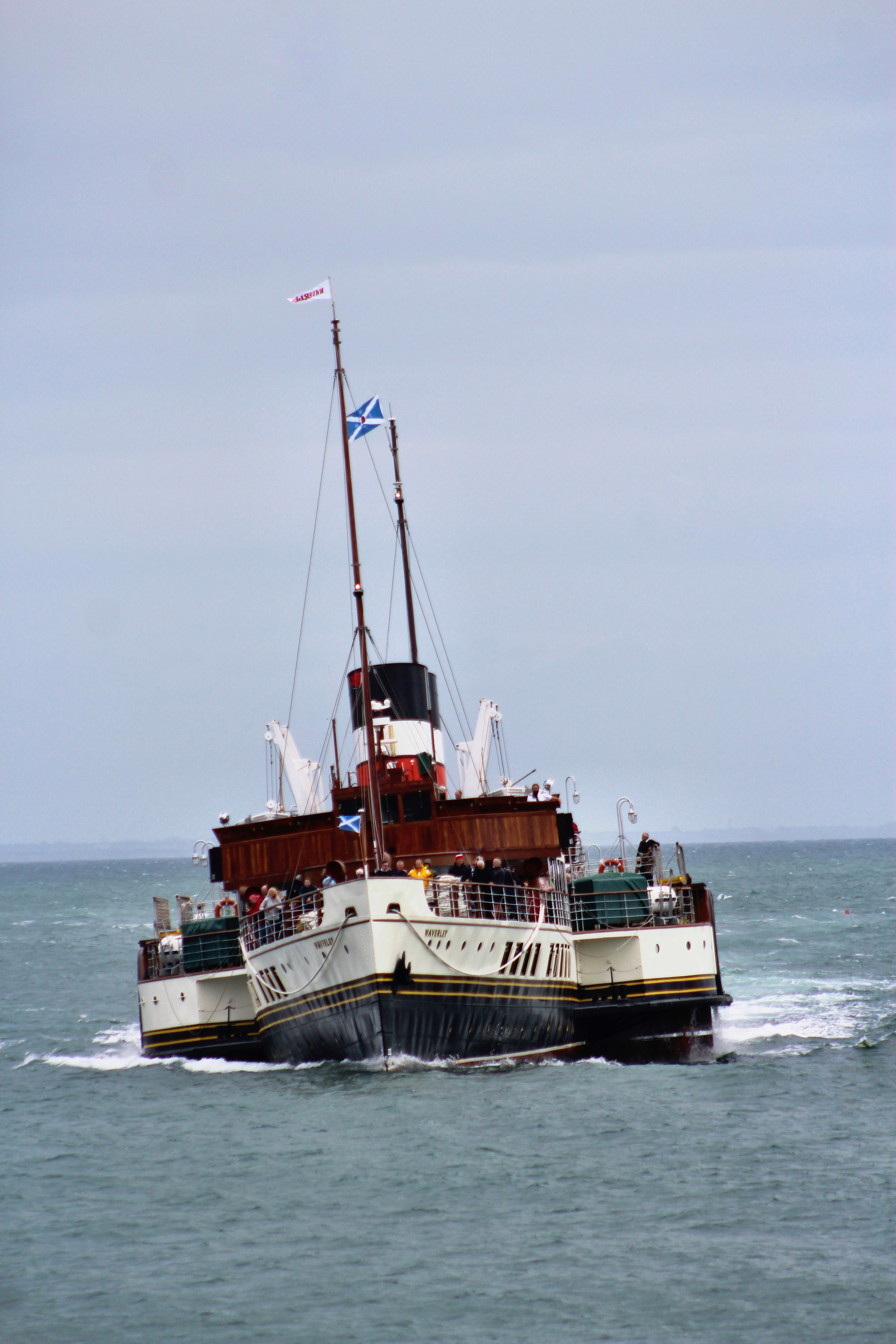
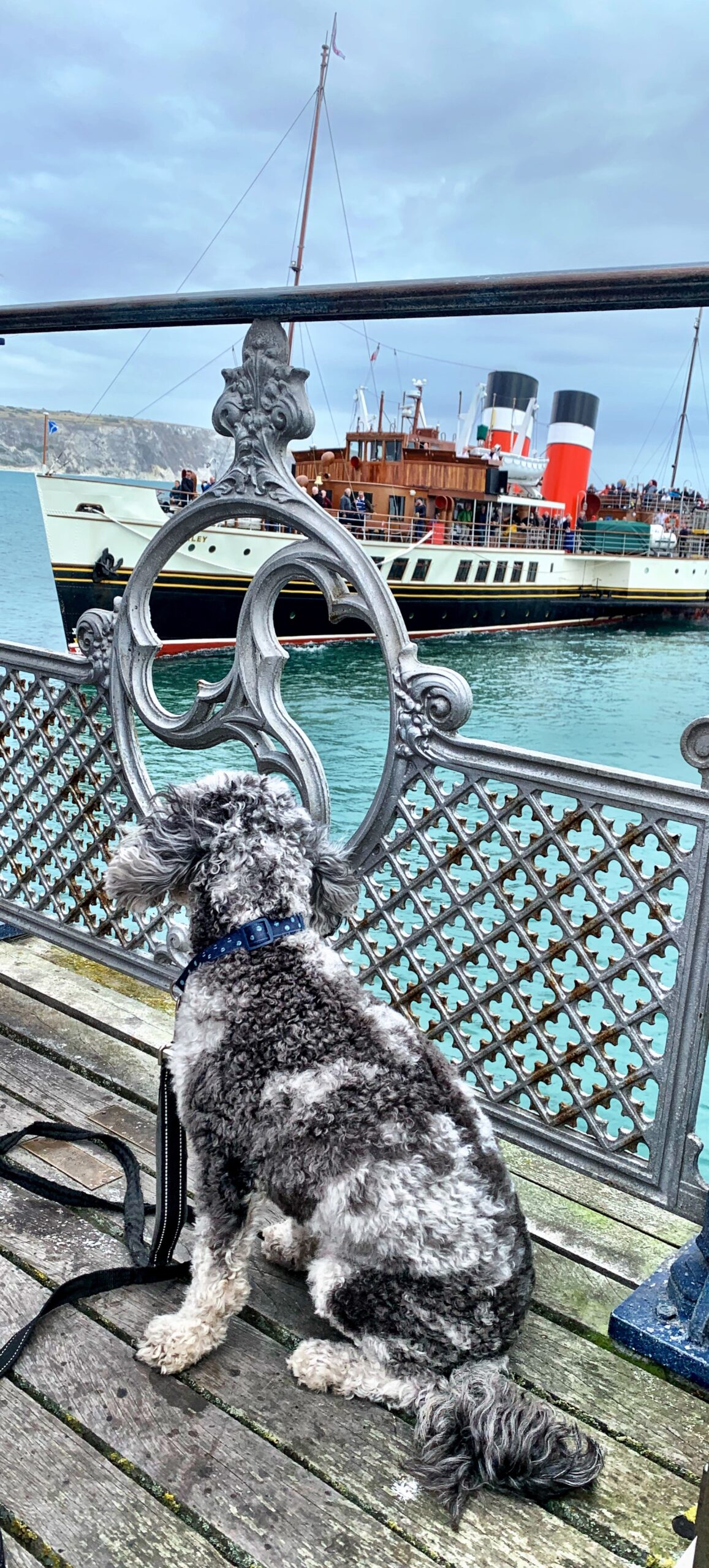
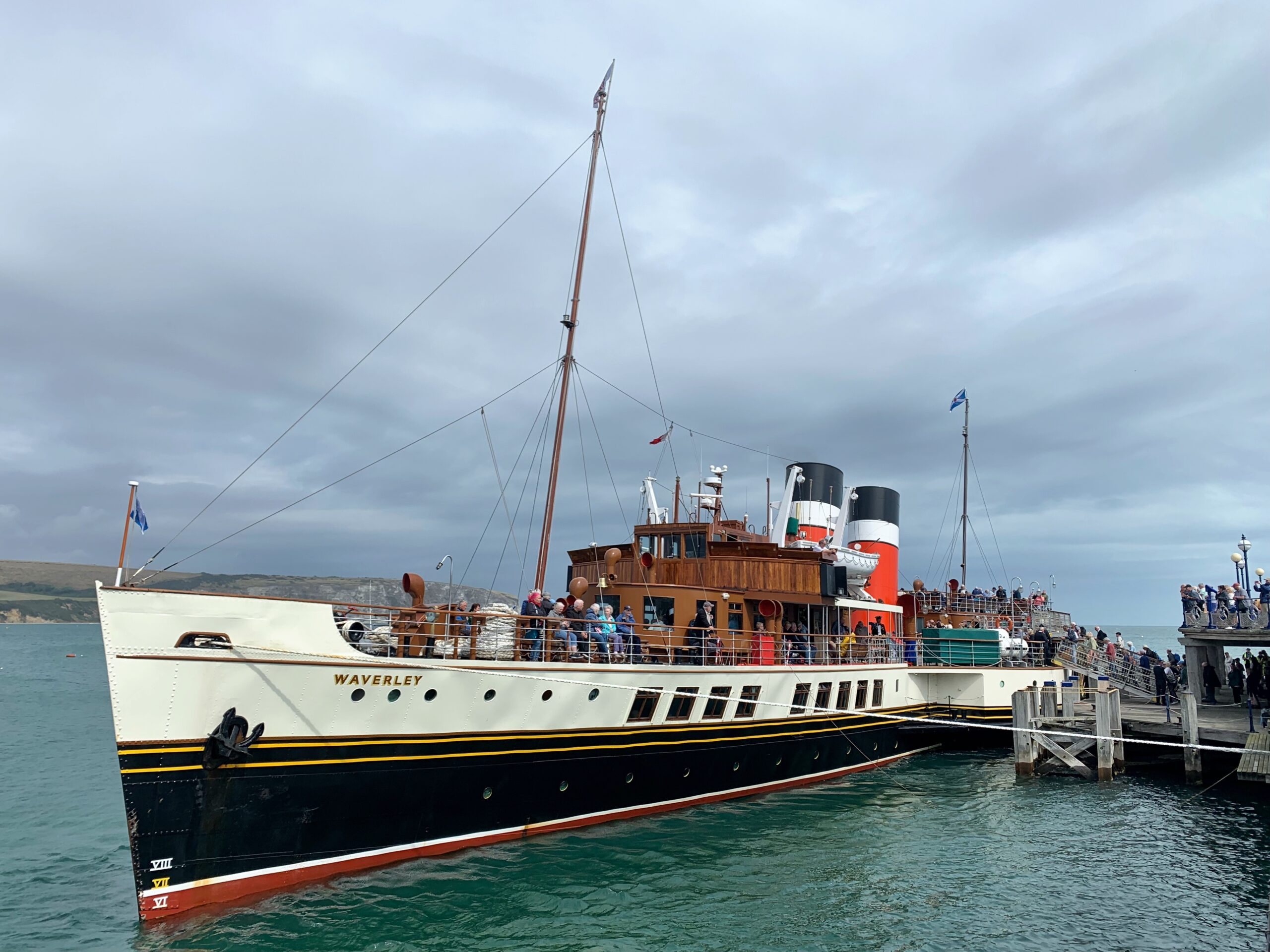
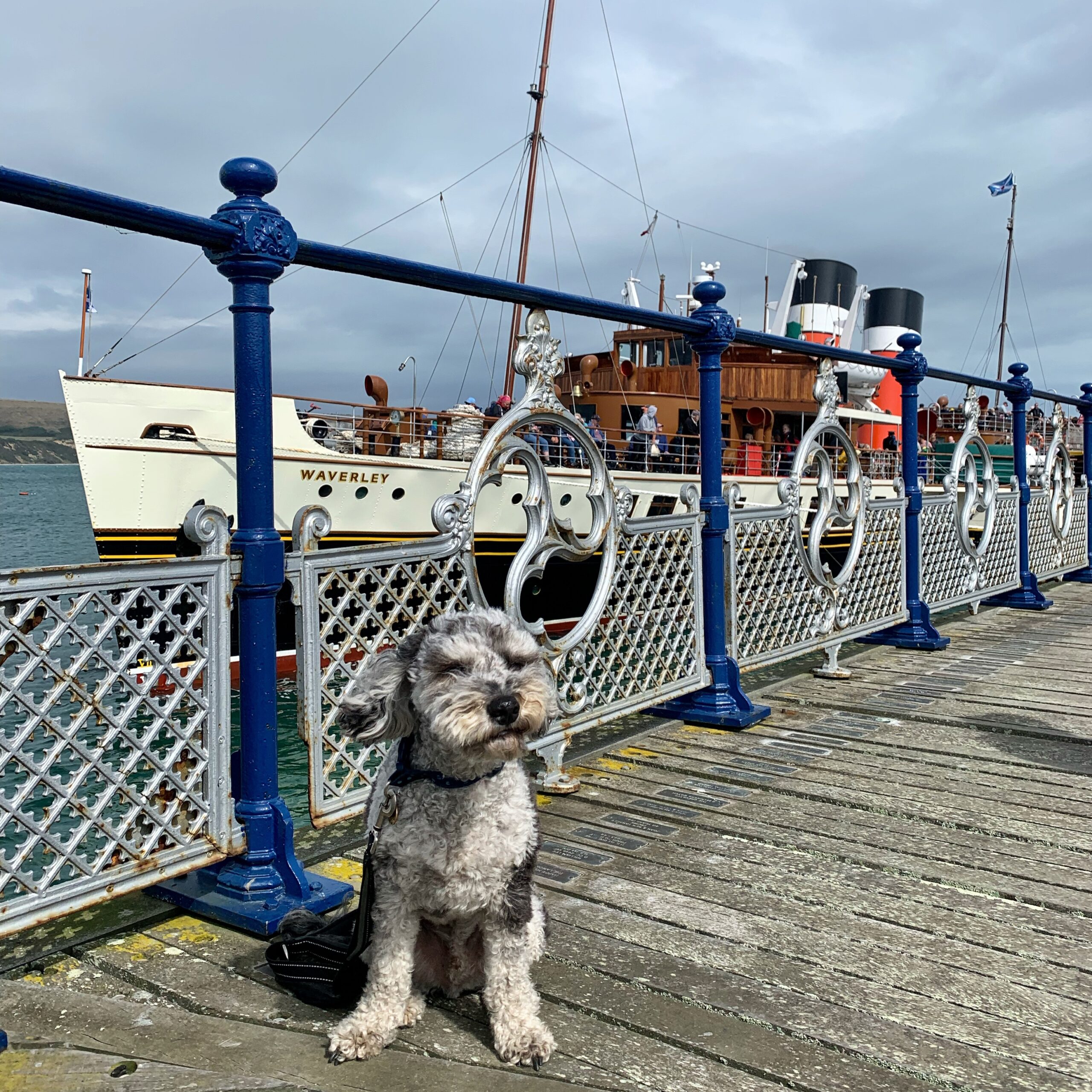
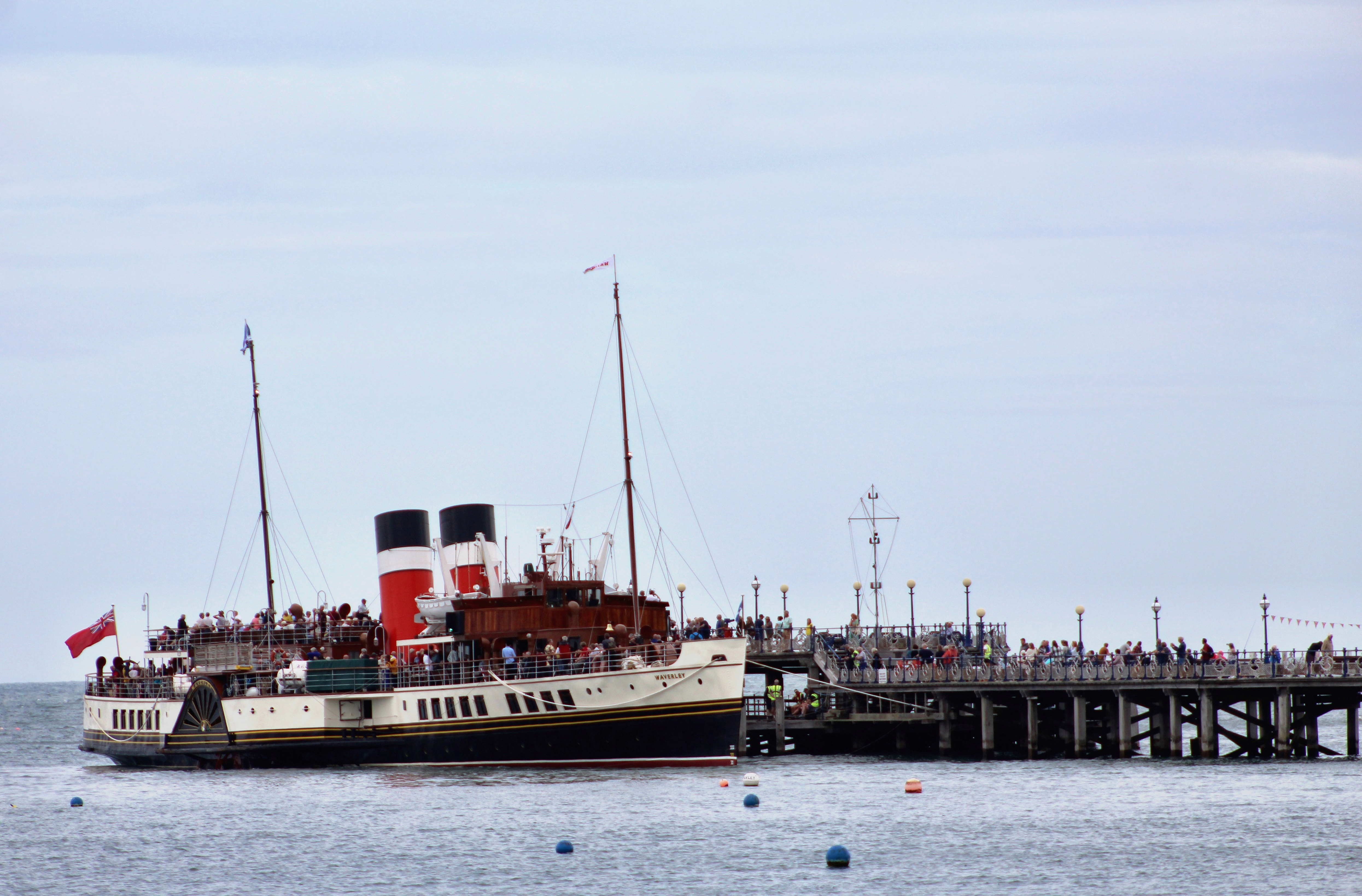
As we were in the area, Yoshi and I took a stroll along retired Victorian pier at Swanage to see ‘Waverley’ arrive to pick up passengers for a cruise to see the Bournemouth Air Show. Built in 1946, ‘Waverley’ sailed between Craigendoran on the Firth of Clyde and Arrochar on Loch Long until 1973 when she was sold to the Paddle Steamer Preservation Society for £1. She has since been restored to her 1947 appearance and now operates passenger excursions around the British coast.
‘Waverley’ is the 16th Clyde built vessel to be named after Scottish novelist and poet Sir Walter Scott’s (1771-1832) first novel published in 1814. She was ordered by the London and North Eastern Railway (LNER) to replace an earlier paddle steamer of the same name which was sunk by aircraft on 29th May 1940 during the evacuation of troops from Dunkirk.
Waverley, the last seagoing paddle steamer in the world approaches Swanage – 04/09/2022Yoshi watches from the end of Swanage’s historic pier as Waverley arrives to take passengers for trip to watch the Bournemouth Air Show – 04/09/2022Waverley alongside Swanage Pier – 04/09/2022Yoshi takes the air at Swanage Pier with Waverley in the background – 04/09/2022Waverley moored alongside Swanage Pier – 04/09/2022
The Swanage Railway announced this week that LNER A3 Class 4-6-2 No. 60103 ‘Flying Scotsman’ would be visiting the line from 19th October to 6th November 2022. ‘Flying Scotsman’ has recently undergone an extensive overhaul and celebrates her 100th birthday on 24th February 2023 and is sure to attract a lot of interest from enthusiasts and the general public.
Yoshi met up with No. 60103 ‘Flying Scotsman’ when she visited Southampton on 6th June 2021 and is looking forward to catching up again in October!
The iconic locomotive will be hauling passenger trains from Swanage to Norden from Saturday 22nd October to Wednesday 26th October 2022 and on static display at Swanage station on Thursday 20th October and Friday 21st October 2022 and again from Thursday 27th October to Sunday 6th November 2022.
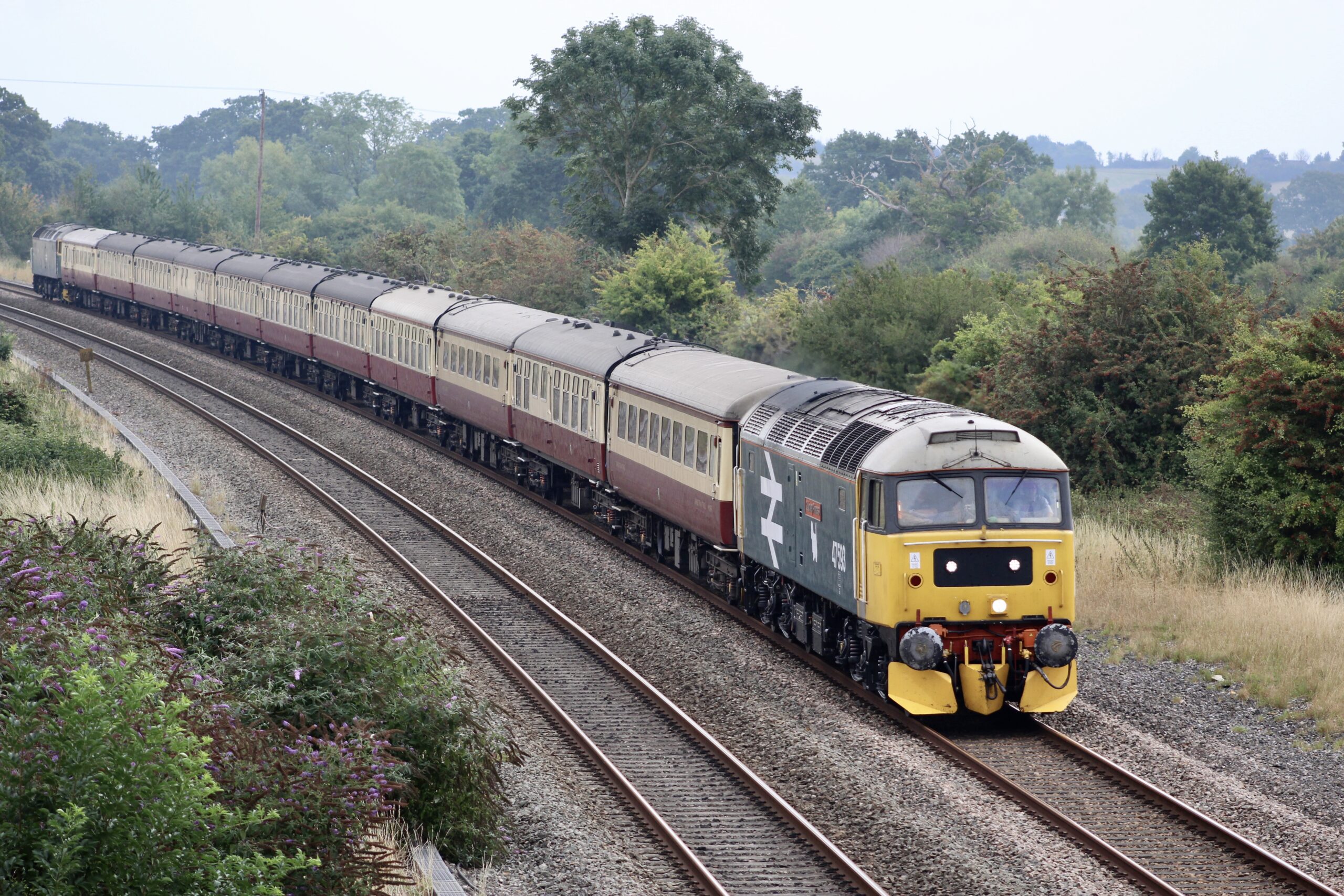
LSL Class 47 No.’s 47593 ‘Galloway Princess’ and 47614 (47853) approaching Creech St. Michael working Saphos Trains “English Riviera Express” 1Z60 0545 Crewe to Dartmouth Kingswear – 03/09/2022
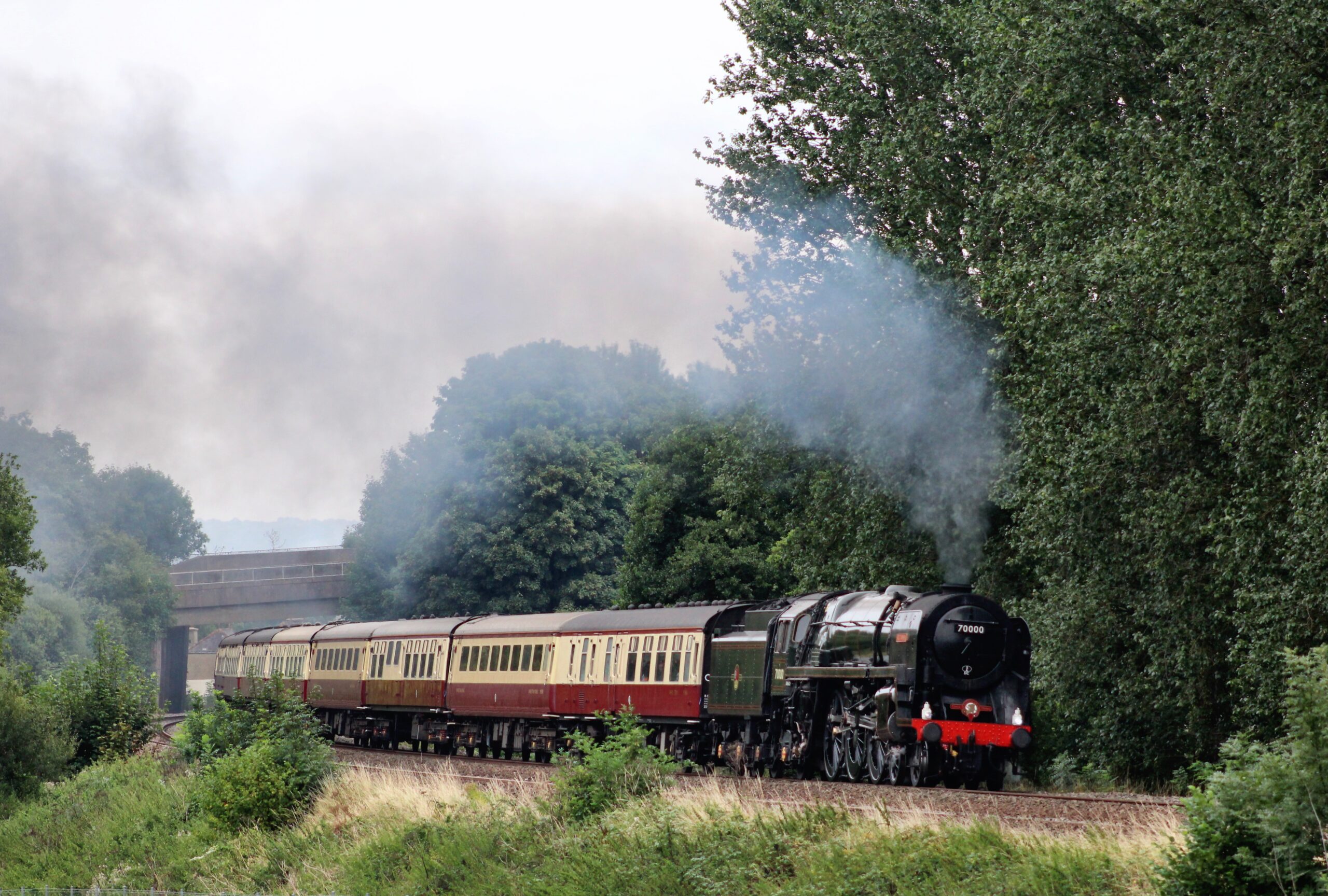
Saturday 3rd September 2022, Yoshi and I headed to the Taunton, Somerset area for the second week running, this time to see BR Standard Class 7 4-6-2 No. 70000 “Britannia’ in charge of Saphos Trains “English Riviera Express” 1Z60 0545 Crewe to Dartmouth Kingswear storm Whiteball. I was quite pleased to find the BR Standard allocated to this tour as I’d been itching to see her working all summer. As well as ‘Britannia’ we saw LSL Class 47 No.’s 47593 ‘Galloway Princess’ and 47614 (47853) passing Creech St. Michael with the train prior to the steam locomotive taking over at Norton Fitzwarren. Shortly after ‘Britannia’ passed by our line side position another tour hurtled by in the form of top and tailed WCRC Class 47 locomotives No.’s 47746 ‘Chris Fudge 29.7.70 – 22.6.10’ and 47815 ‘Great Western’ working 1Z84 0824 Birmingham International to Paignton – I almost missed these two as I was under the impression they were due an hour later than they actually were!
Standard Class 7 4-6-2 No. 70000 “Britannia’ in charge of Saphos Trains “English Riviera Express” 1Z60 0545 Crewe to Dartmouth Kingswear on the ascent to Whiteball tunnel – 03/09/2022
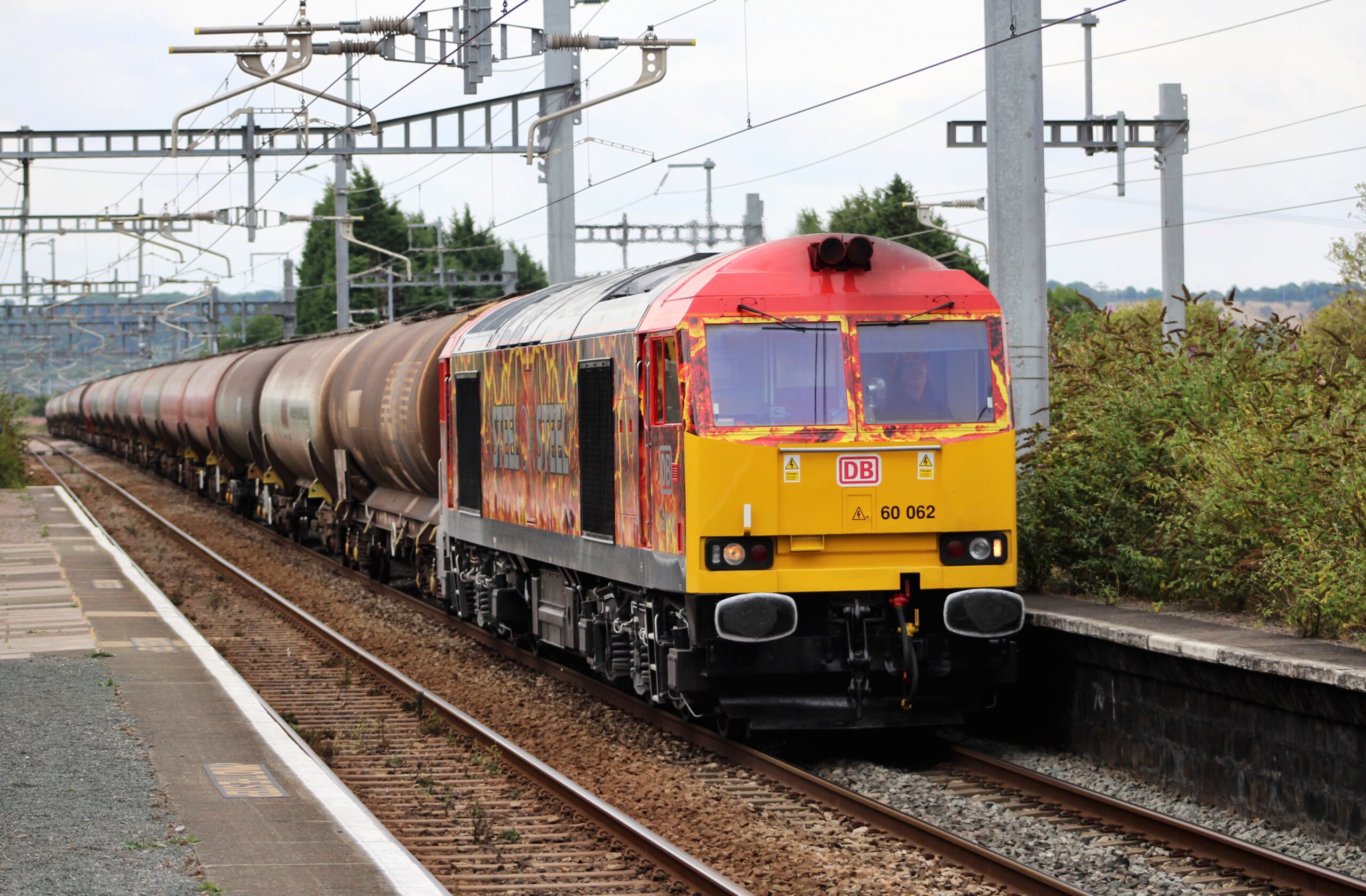
A quick perusal of the rail-gen groups flagged up a Class 56 working to Westbury on a train of spent ballast and scrap sleepers and unique “Steel On Steel” liveried Class 60 No. 60062 working 6B33 1137 Theale Puma to Margam T.C. Ruling out the Class 56 due to time constraints, we jumped in the car and headed up the M5 to Pilning, South Gloucestershire, with time to spare before the Class 60 appeared.
DB Cargo Steel On Steel liveried Class 60 No. 60062 ‘Sonia’, with her striking flame design celebrating the important role DB Cargo UK plays in supporting the UK’s metal transportation market, working 6B33 1137 Theale Puma to Margam T.C. The special livery is part of the company’s “Freight Belongs On Rail” campaign – 03/09/2022
We were also able to see one of the two parliamentary service trains which stop at Pilning each week. Parliamentary trains, also known as ghost trains, are passenger services operated to comply with the Railway Regulation Act of 1844 that required railway companies to provide inexpensive rail transport for less affluent passengers. The act required that at least one such service per day be run on every railway route in the UK. Although this is no longer a legal requirement, the term describes train services that continue to be run to avoid the cost of formal closure of a route or station but with reduced services often to just one train per week. As platform two is currently out of use at Pilning, the footbridge providing access having been removed in 2016, the two stopping services travel in the same eastbound direction. Currently the times for these trains are Saturday at 08:33 (Cardiff Central to Weston-super-Mare service) and 15:32 (Cardiff Central to Penzance service). Because there are no stopping westbound trains, a fares easement is in place which allows passengers to travel to Severn Tunnel Junction in order to return eastbound to alight at Pilning.
You can bark along with our day by watching the video below:
Video form September 3rd 2022 including 70000 ‘Britannia’, Class 60 No. 60062, GWR Castle HST sets and IEP’s – 03/09/2022
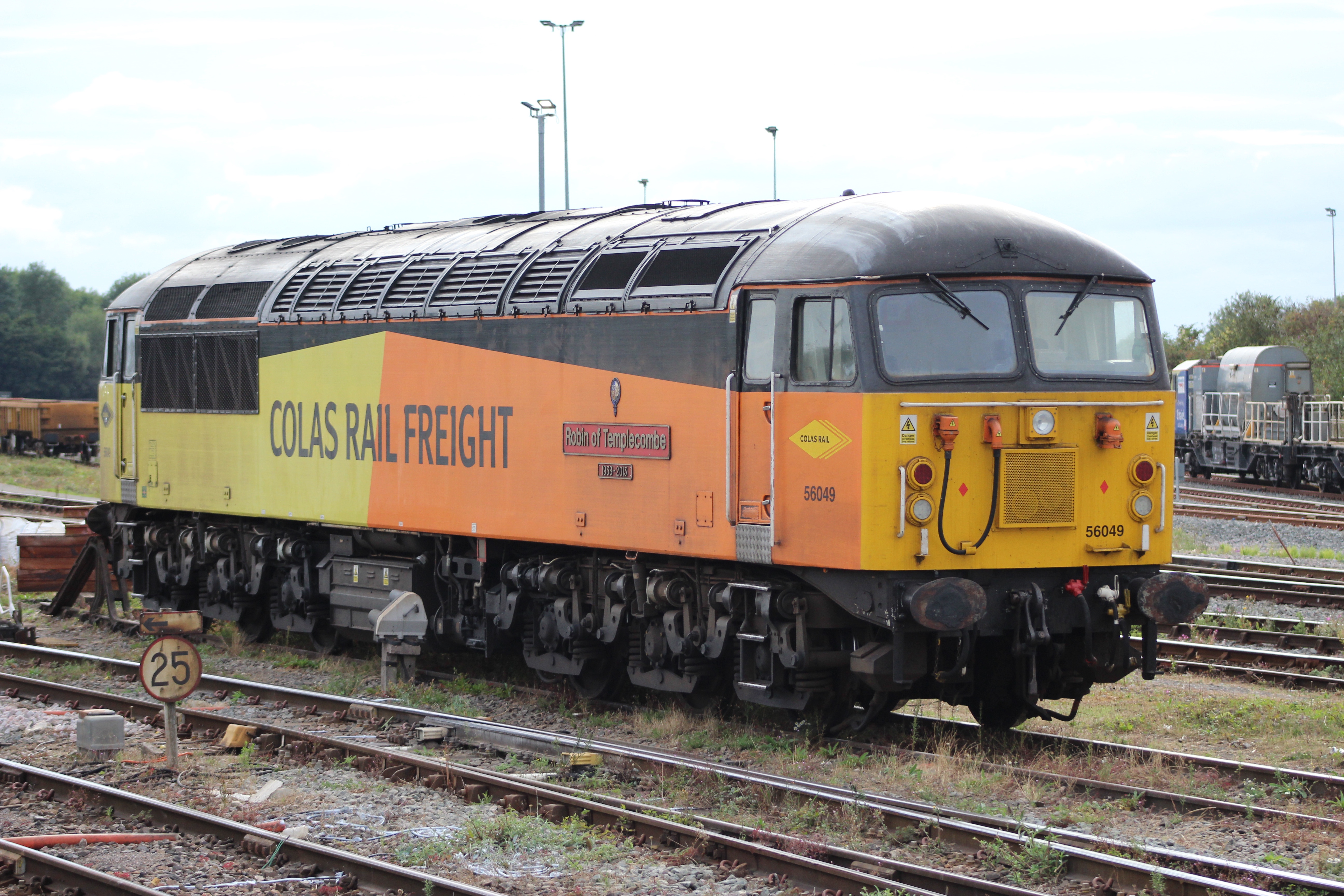
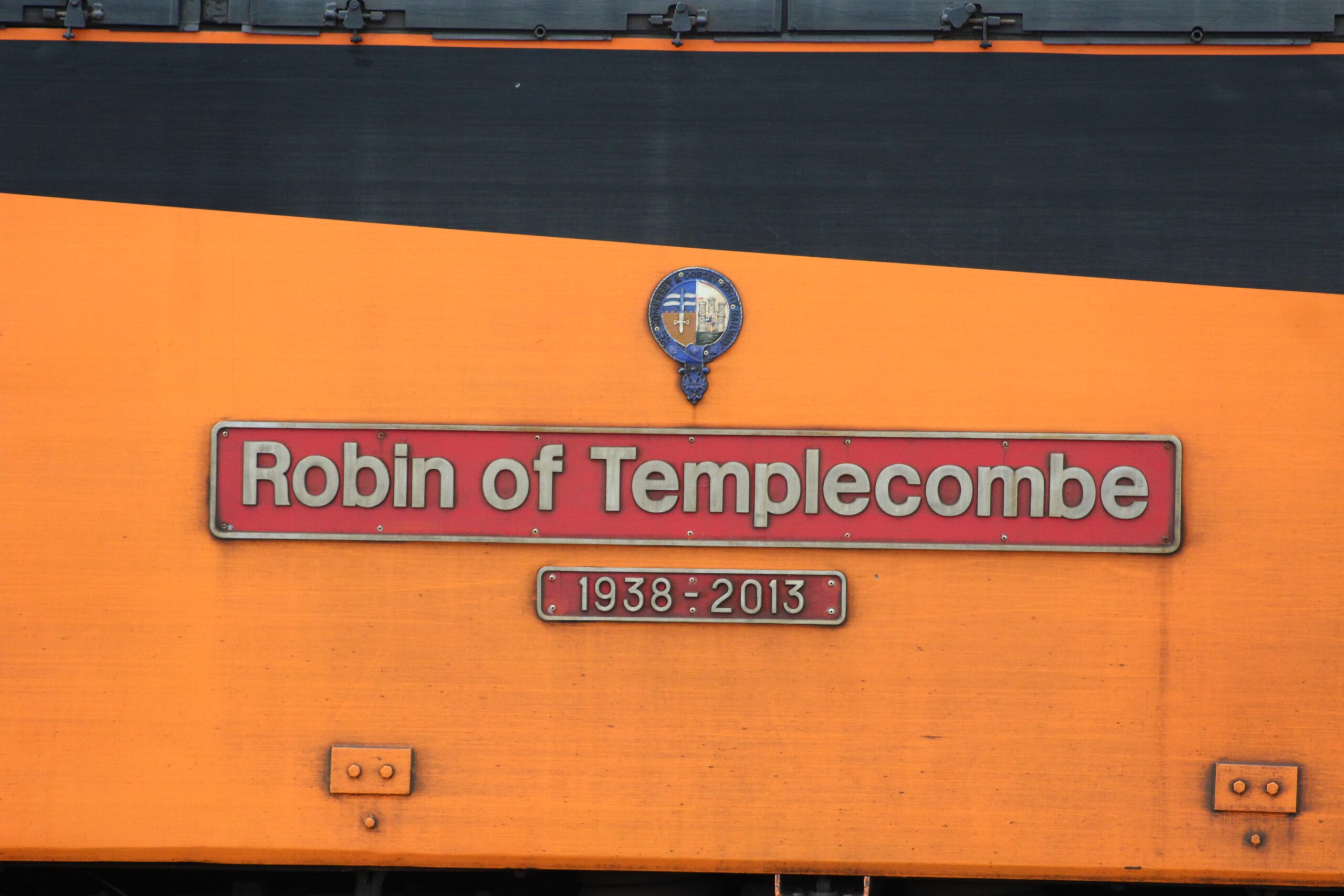
On our way home, we popped into Westbury to see if we could see the Class 56 loco which had arrived there earlier, and to use the loo! As it turned out, the No. 56049 ‘Robin of Templecombe 1938 – 2013’ could not have been better positioned for a photograph! With thanks to @da_buckley967 for the company and rail gen updates!
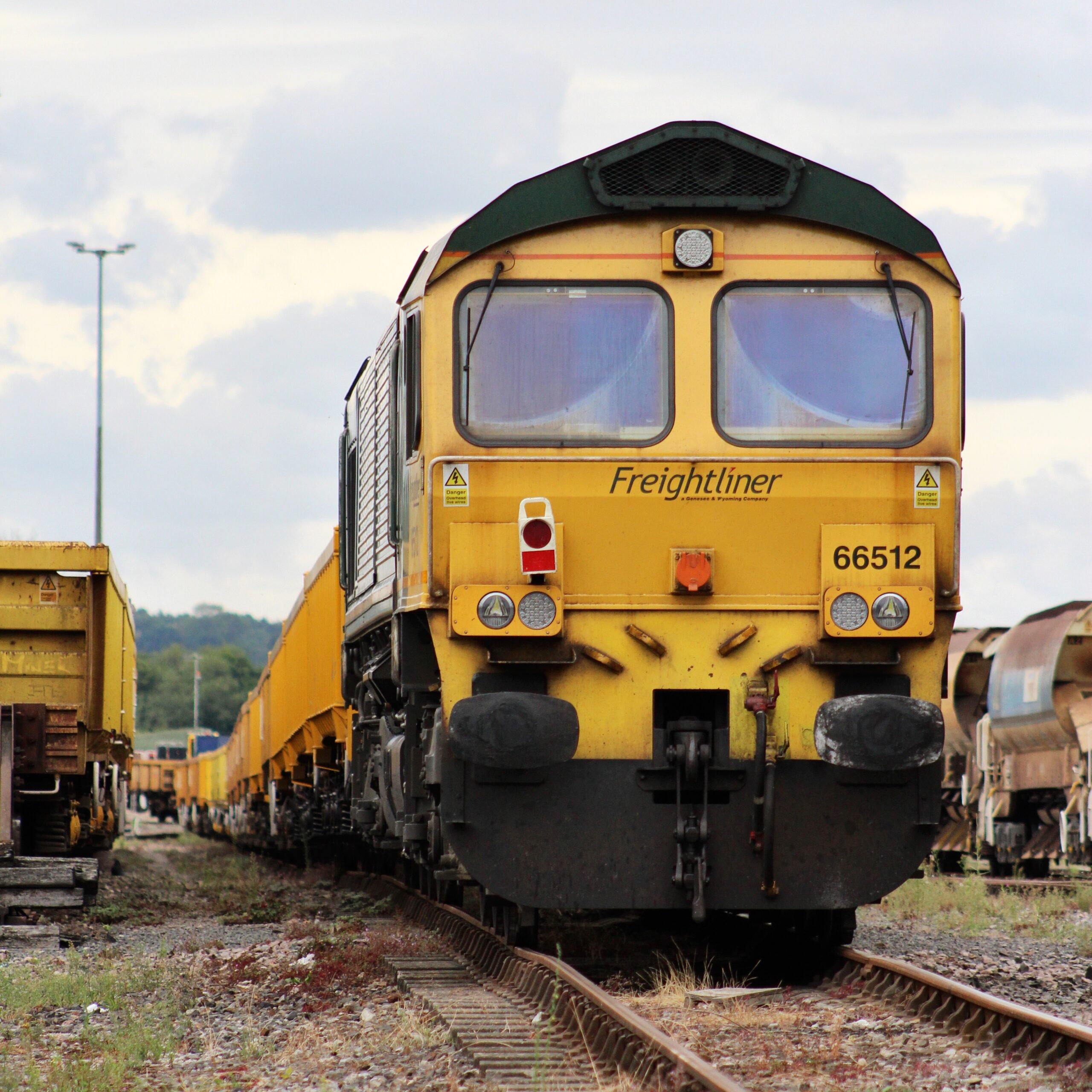
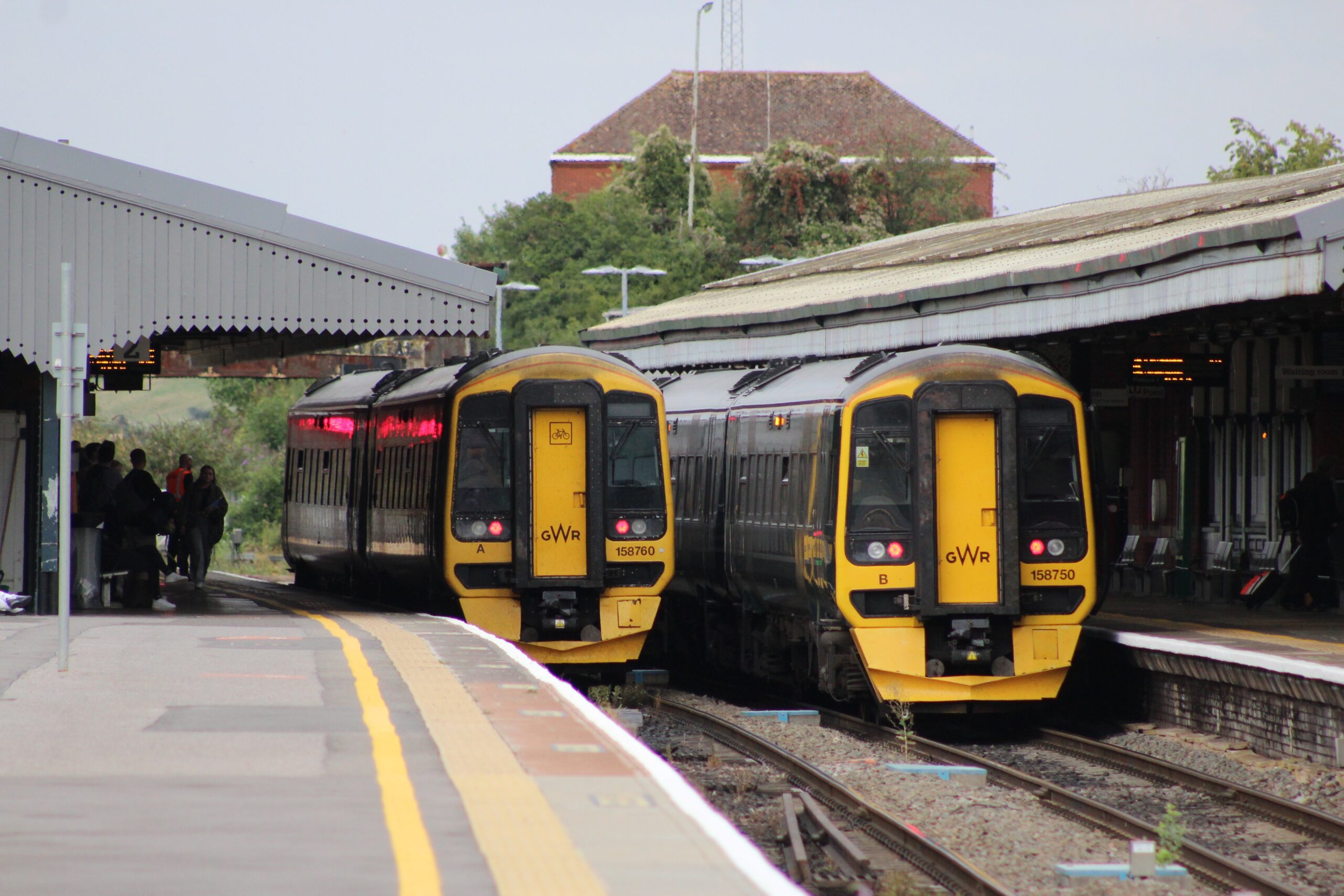
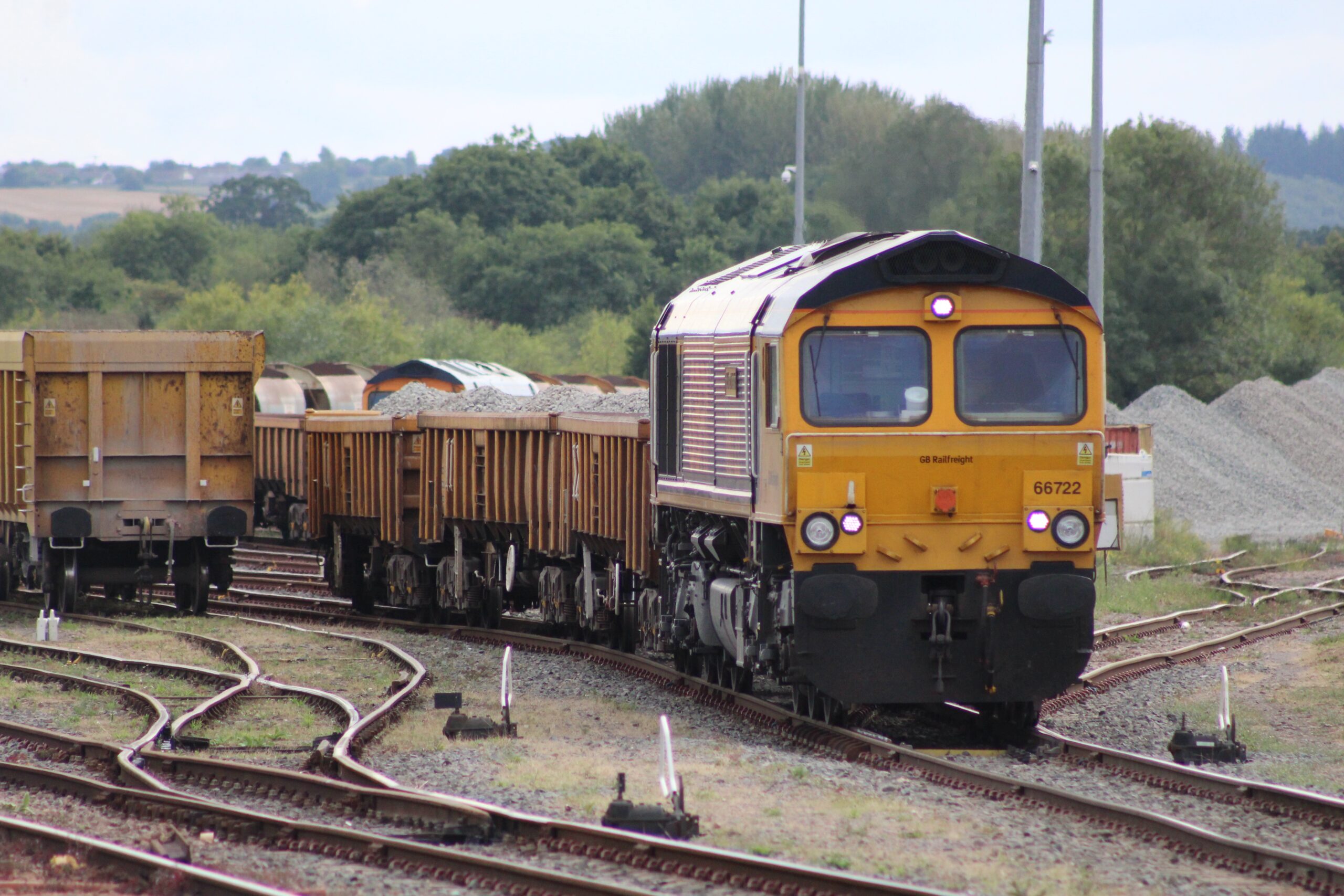
Class 56049 ‘Robin of Templecombe 1938 – 2013’ sits in the Colas sidings at Westbury -03/09/2022Nameplate detail of Class 56049 ‘Robin of Templecombe 1938 – 2013’ – 03/09/2022Freightliner Class 66 No. 66512 preparing to work 6Y16 1934 Westbury Down Yard to Burngullow Junction – 03/09/2022GWR Class 158 DMU No.’s 158760 and 158750 await departure from Westbury – 03/09/2022GBRf Class 66 No. 66722 ‘Sir Edward Watkin’ Westbury – 03/09/2022
In other news, The Railway Heritage Trust is interested in the restoration of the LSWR goods shed at Wool which although is in quite a poor condition still retains its original sliding doors and office partition.
A visit today to #Wool Station to see a potential restoration project. An original L&SWR goods shed in need of a future use, complete with original sliding doors and office partition. @PurbeckCRP@SW_Helppic.twitter.com/ydQZD9D51p
— RailwayHeritageTrust (@RailwayHeritage) August 8, 2022
That’s it for this week – we’ll be back soon. Thanks for being there! Bye for now.
We went to a meal on Saturday evening with friends and as a parting gift, we were all given a personalised cup cake, which was a lovely thought. Mine was a train. No idea why! As responsible paw-rents, we did not allow Yoshi to taste the cup cakes, although as you can see, he was very interested in trying. Look, it’s been a quiet week, humour me!
With two days of strike action by RMT members during this period, there has not been much notable activity on Yoshi’s home patch. A scheduled steam rail tour to Weymouth on Thursday 18th August, the first of the strike days was cancelled.
Work replacing sleepers and re-ballasting continues on the Hamworthy Branch. Although the branch is still cut off, a “stop” sign protecting the main line was in evidence on 18th August 2022
South Western Railway’s recent release of its 2022/23 business plan did not include any plans for the introduction of their long delayed £1 billion fleet of 90 new Class 701 EMU’s, with only the hope that the Arterio trains would see service as soon as possible. The trains, built at Alstom in Derby, had been scheduled to enter traffic in 2019 but have been plagued with faults preventing the start of driver training and train acceptance. Without the new rolling stock, SWR are unable to operate a full pre-COVID timetable and with overall passenger numbers at 70% of pre-COVID levels any previous plans to increase services in December 2022 have been deferred. On Wednesday 17th August, we caught a glimpse of SWR Class 701 No. 701048 on a mileage accumulation run at Poole:
Class 701 No. 701048 at Poole – 17/08/2022
From The Archive
This week in..
2019: Sunday 18th August 2019 found Class 33/0 D6515 (33012) ‘Lt Jenny Lewis RN’ and GBRf Class 73 No. 73107 ‘Tracey’ top and tail London Underground liveried 4TC working 1Z74 1626 Swanage to London Waterloo “The Swanage Sunday Special No.4”
2016: The Railway Touring Company ran “The Dorset Coast Express” on 17th August 2016 employing LMS Jubilee Class 4-6-0 No. 45699 ‘Galatea’ and Class 33/2 No. 33207 ‘Jim Martin’ in top and tail formation.
LMS Jubilee Class 4-6-0 No. 45699 ‘Galatea’ working 1Z67 0842 London Victoria to Weymouth on the approach to Dorchester South – 17/08/2016Class 33/2 No. 33207 ‘Jim Martin’ on the rear of 1Z67 0842 London Victoria to Weymouth nearing to Dorchester South – 17/08/2016
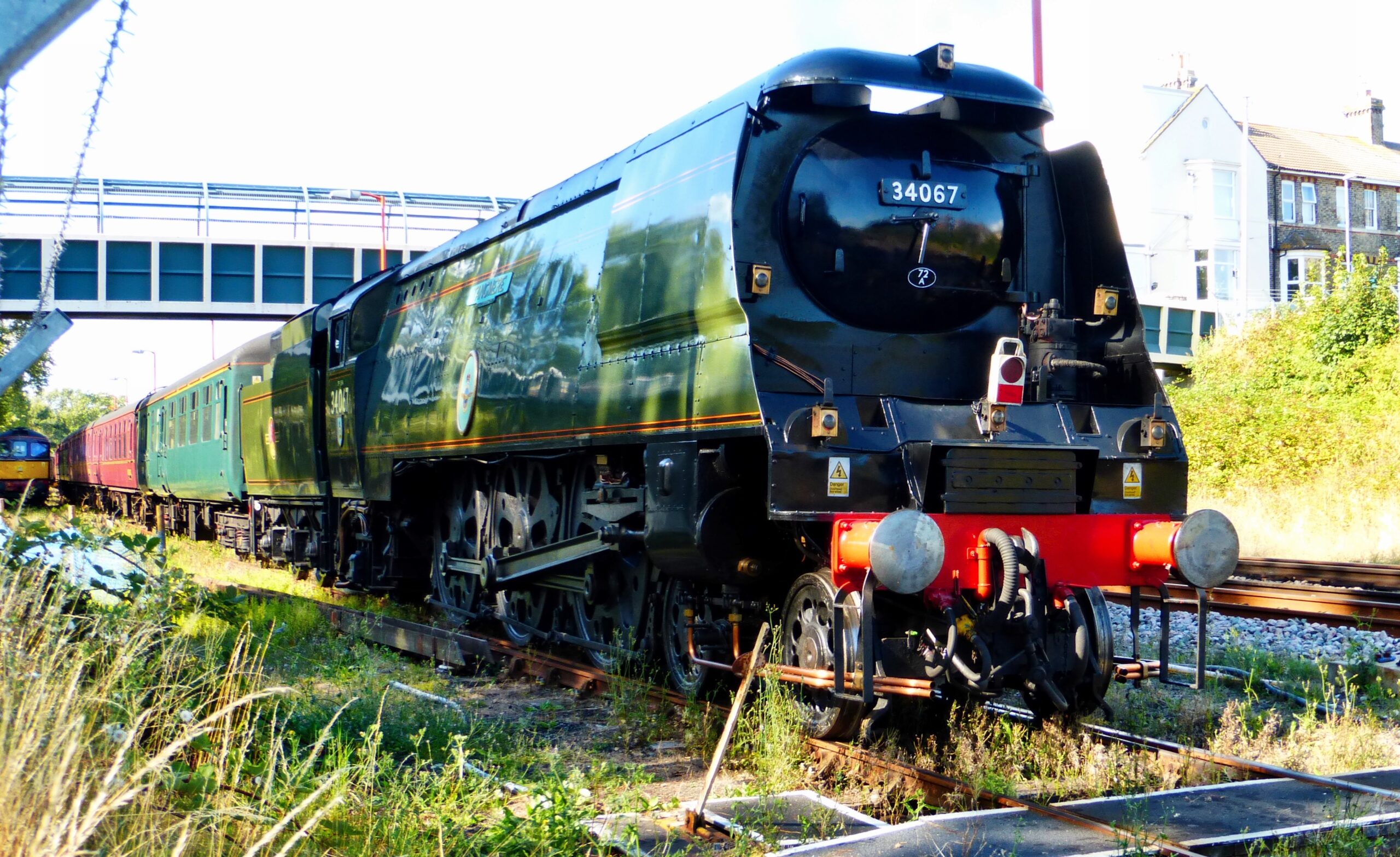
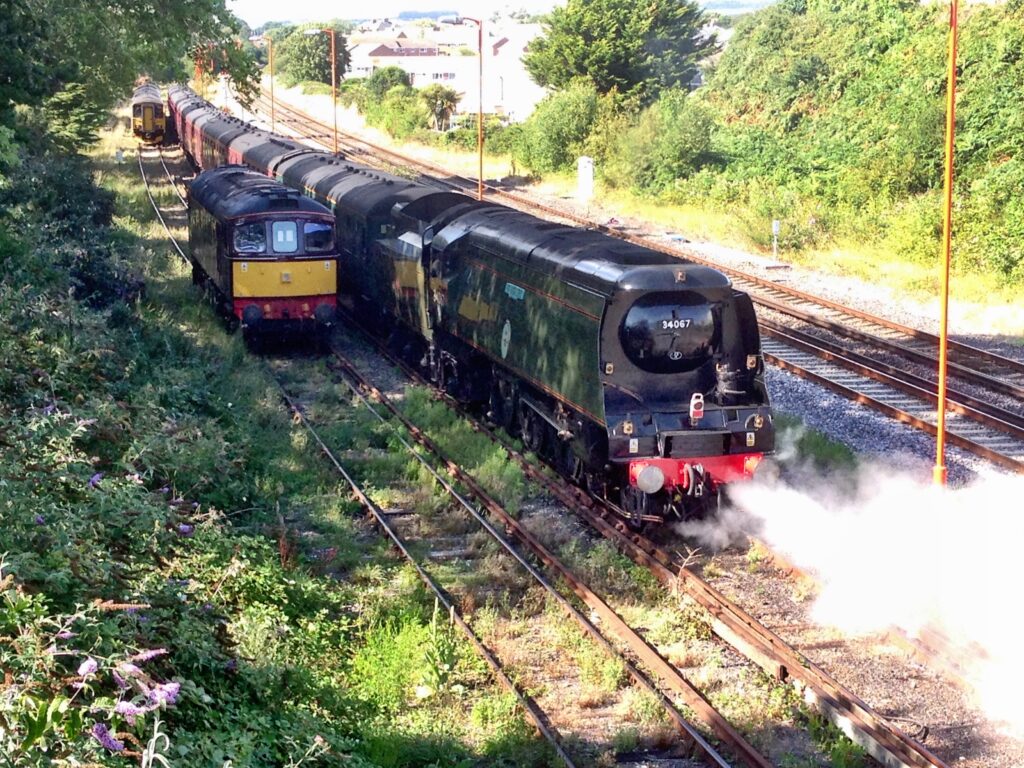
2014: SR Battle of Britain Class 4-6-2 No. 34067 ‘Tangmere’ and Class 33/0 No. 33029 with the return 17th August 2014 “The Weymouth Seaside Express” – 1Z83 1700 Weymouth to Bristol Temple Meads
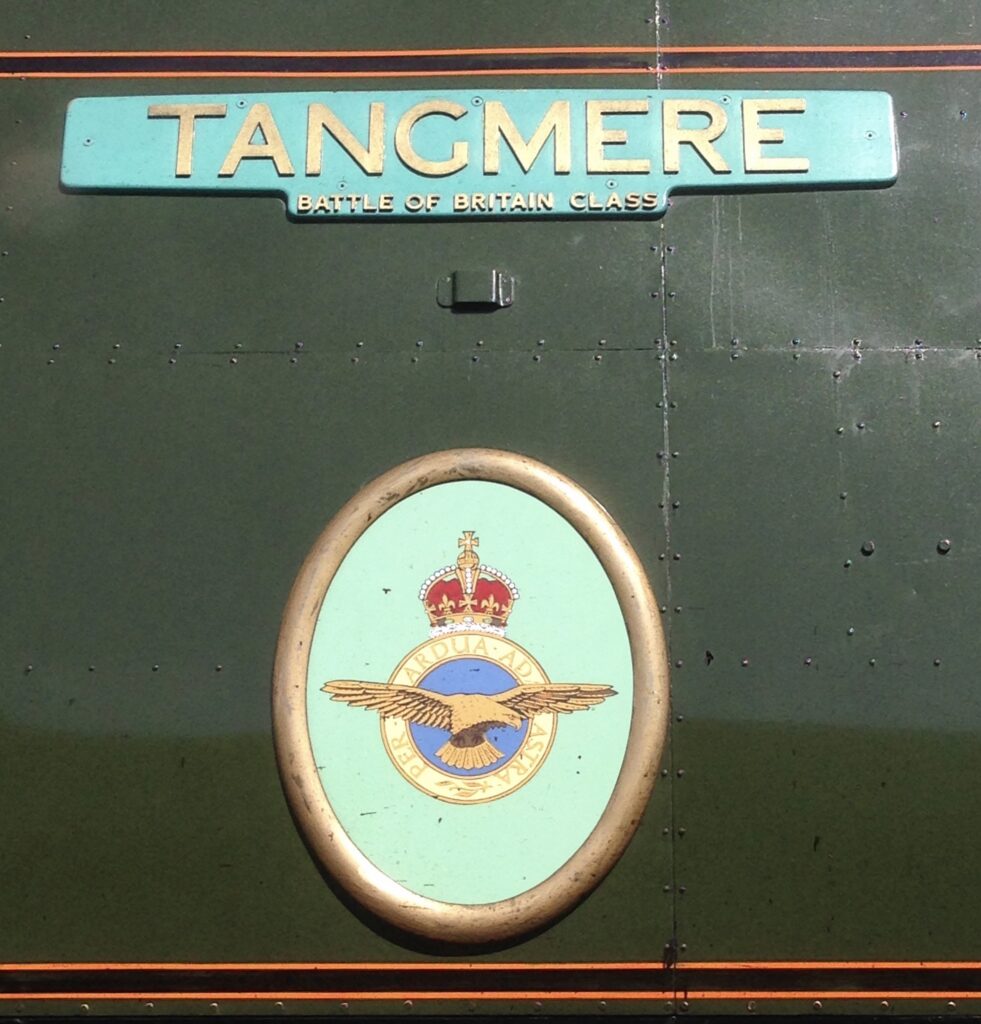
SR Battle of Britain Class 4-6-2 No. 34067 ‘Tangmere’ at Weymouth Jersey Sidings – 17/08/2014Nameplate detail of SR Battle of Britain Class 4-6-2 No. 34067 ‘Tangmere’- 17/08/2014SR Battle of Britain Class 4-6-2 No. 34067 ‘Tangmere’ alongside Class 33/0 No. 33029 in Weymouth Jersey Sidings – 17/08/2014
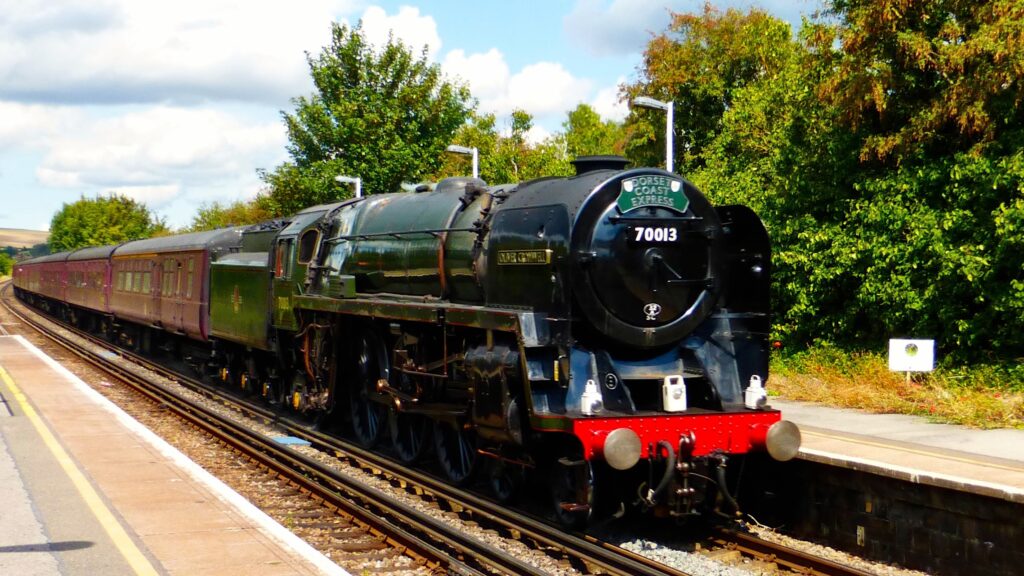
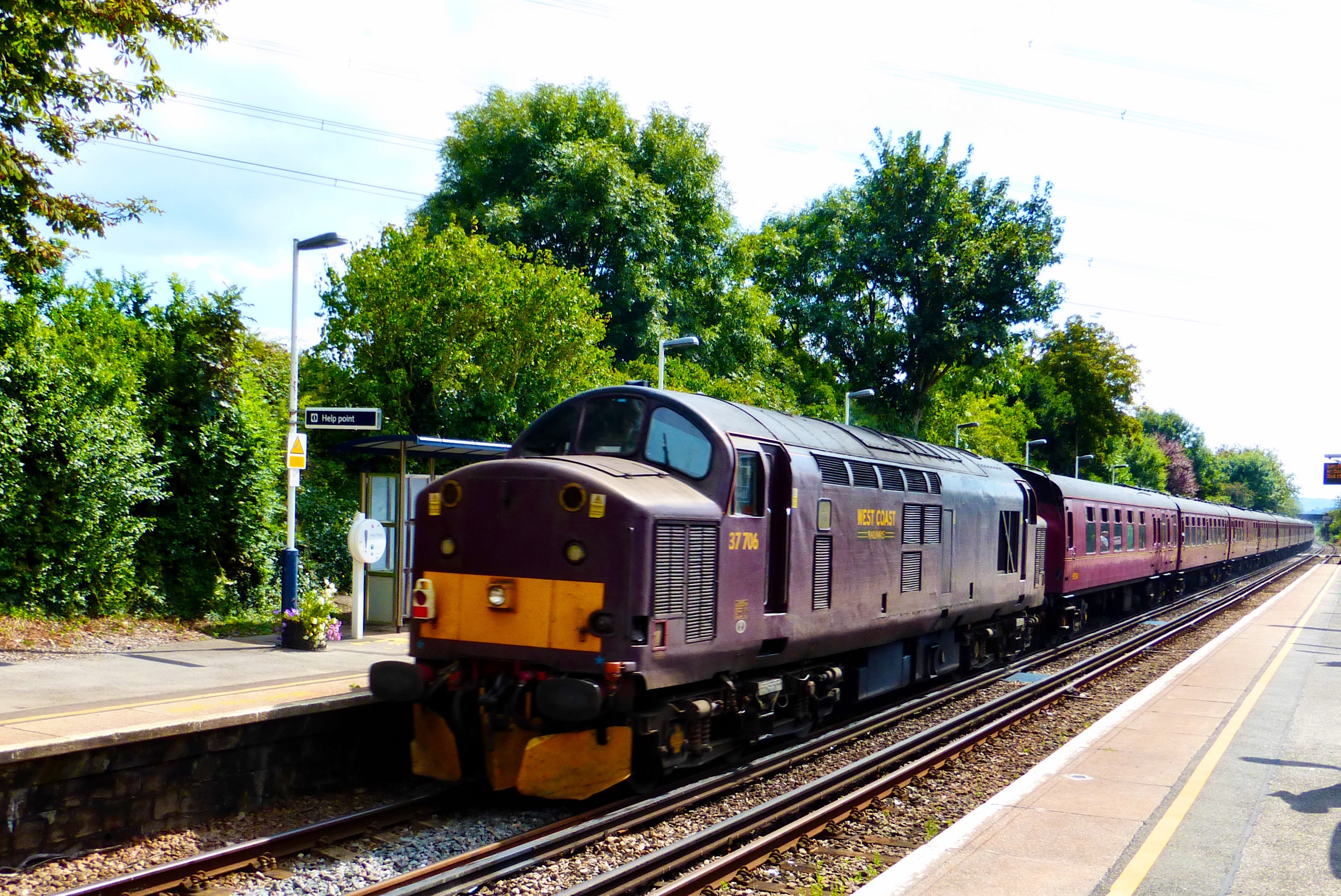
“The Weymouth Seaside Express” – 17/08/2014BR Standard Class 7 4-6-2 No. 70013 ‘Oliver Cromwell’ passing through Upwey with Railway Touring Company organised “The Dorset Coast Express” 1Z67 0844 London Victoria to Weymouth. No. 70013 was one of the four locomotives which worked the farewell to steam rail tour on British Railways in 1968 – 20/08/2014WCRC Class 37 No. 37706 on the rear of “The Dorset Coast Express”. Due to the unavailability of an additional steam locomotive the Class 37 worked the return tour as far as Southampton Central, where the train reversed for the onward journey to London Waterloo via Laverstock once again under the command of No. 70013 ‘Oliver Cromwell’ – 20/08/2014
2013:
DRS Class 37 No. 37402 with inspection saloon No. 975025 ‘Caroline’ departing Dorchester. ‘Caroline’ was converted from the buffet car of a former Hastings DEMU in the late 1960’s for use as a saloon for the General Manager of the Southern Region of BR to entertain VIP guests, but was also used by the engineers for line inspections and assessments. Originally numbered TDB975025 and with a kitchen and catering on board, she became known as the “gin palace” and an invitation to travel became something of a golden ticket. ‘Caroline’ formed the first standard gauge passenger working into the Channel Tunnel on 22nd October 1992. ‘Caroline’ now resides at Derby with LORAM/Network Rail and is widely used for track inspections, line repair assessments and still, occasionally, to entertain VIP’s. ‘Caroline’ has been earmarked for the national collection once her service life is over – 21/08/2013
2012:
SR Battle of Britain Class 4-6-2 No. 34067 ‘Tangmere’ storms up Bincombe Bank at Upwey deputising for No. 5029 ‘Nunney Castle’ with The Railway Touring Company “Weymouth Seaside Express” rail tour. These were a popular series of Sunday excursions which ran from Bristol Temple Meads to Weymouth – 19/08/2012
2011:
Back in August 2011 friends invited me to go along to a book talk and signing being given by author Neil Gaiman (who is currently enjoying success with the Netflix adaption of his “The Sandman” work). This seemed like a great idea, however the location was Edinburgh. Obviously, that’s not a short hop from Dorset being a distance of 548 miles, but after some investigation, I found I could travel from Weymouth to Edinburgh by coach for £9. Which at the time of booking seemed like a real bargain.
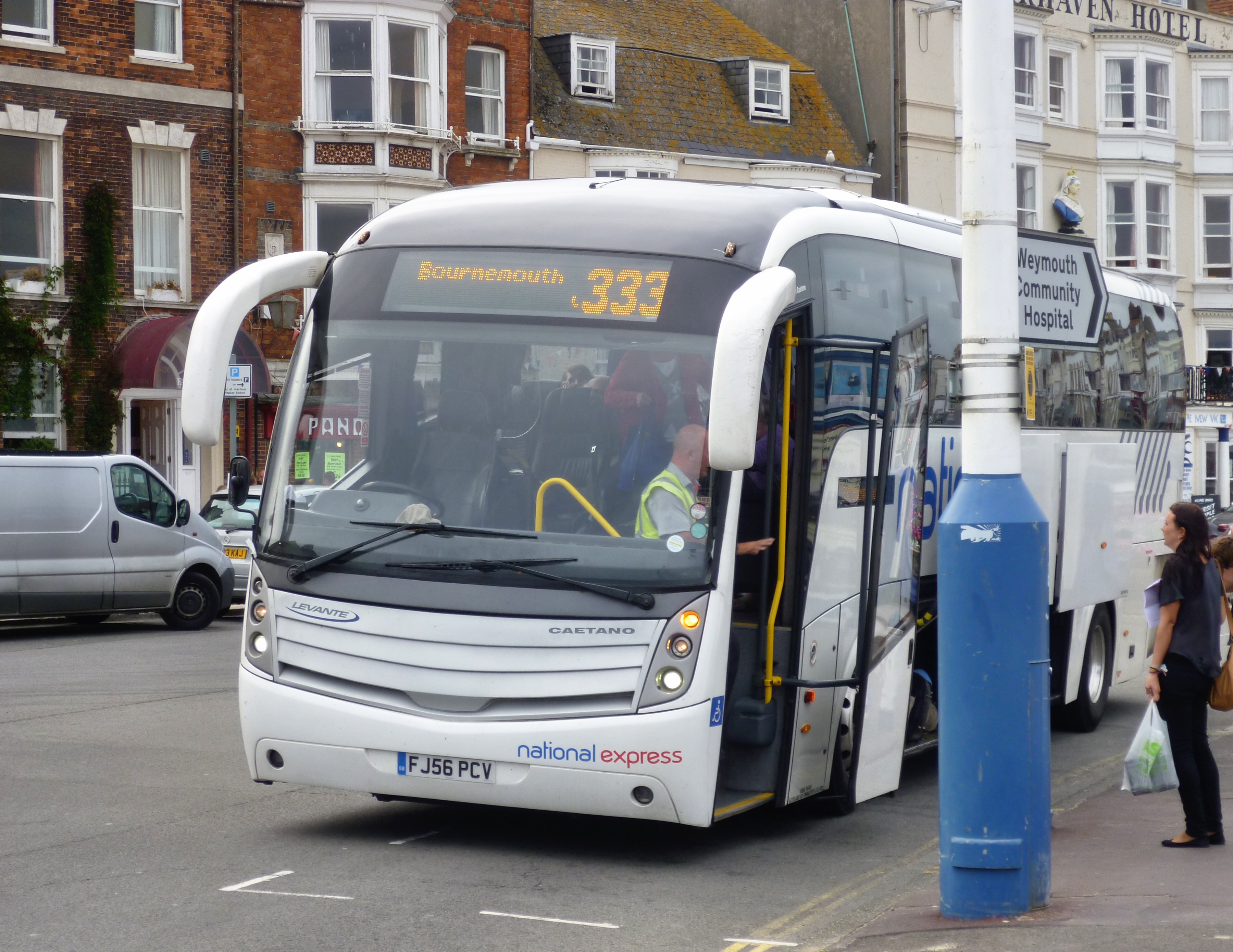
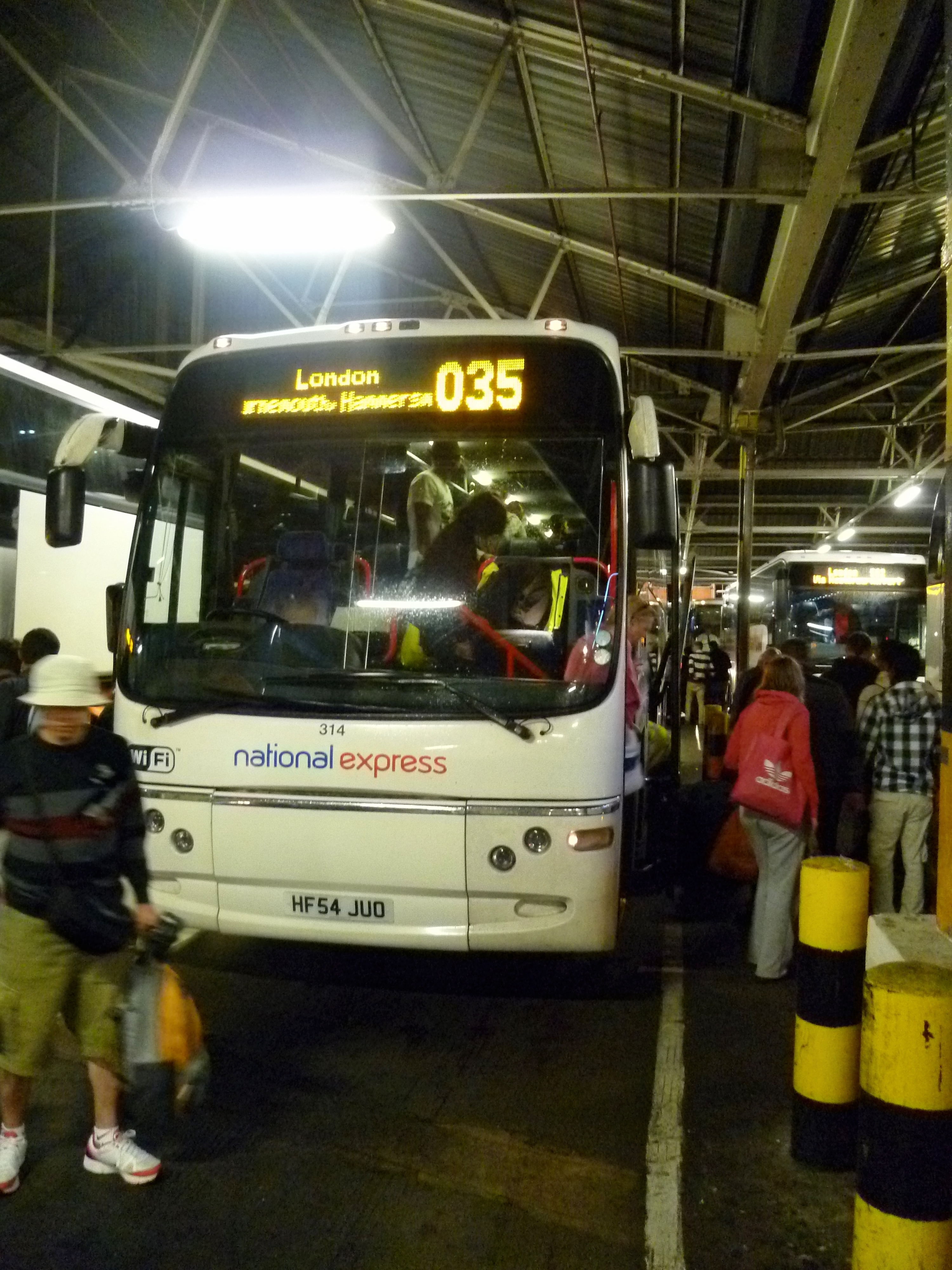
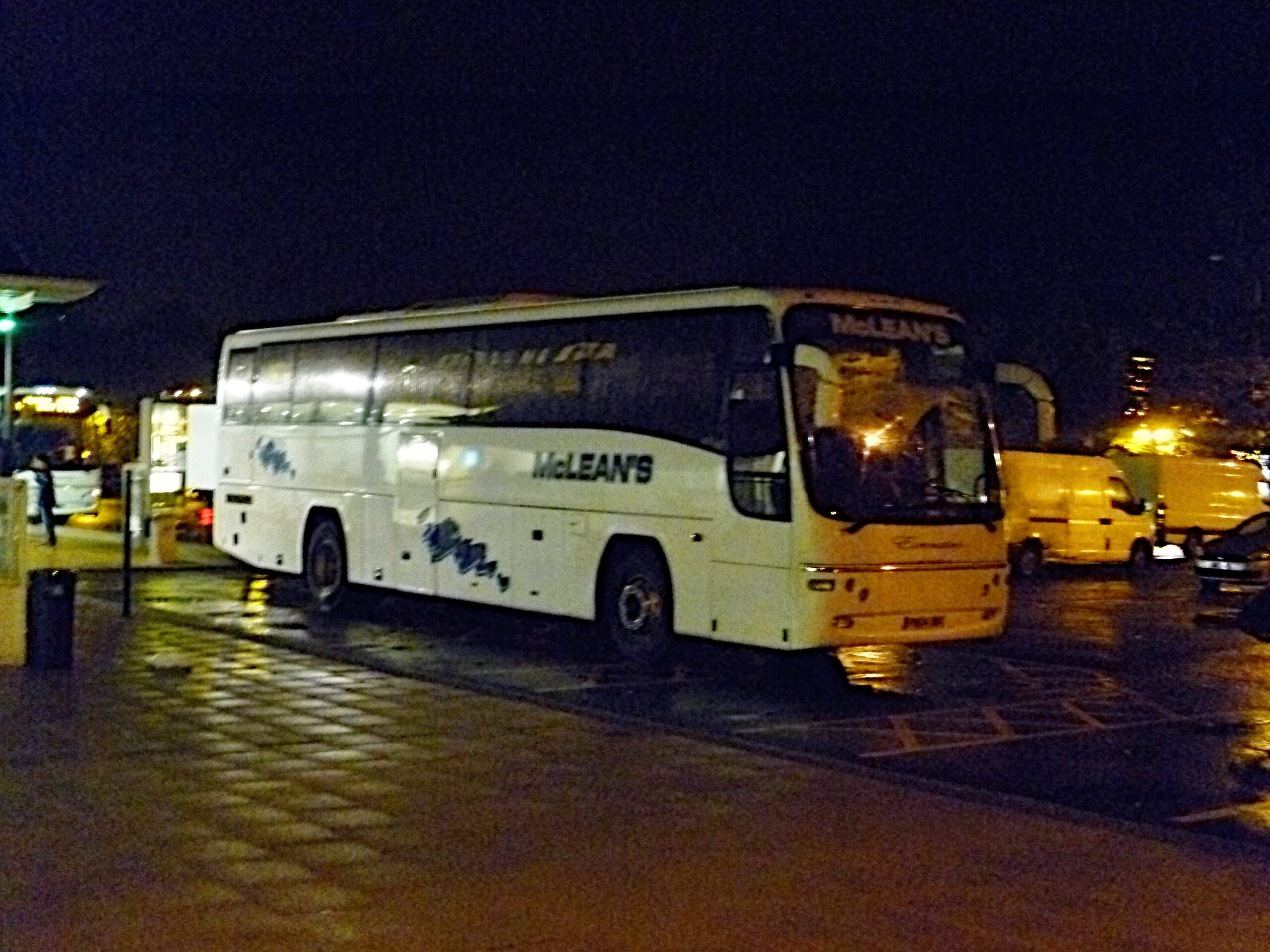
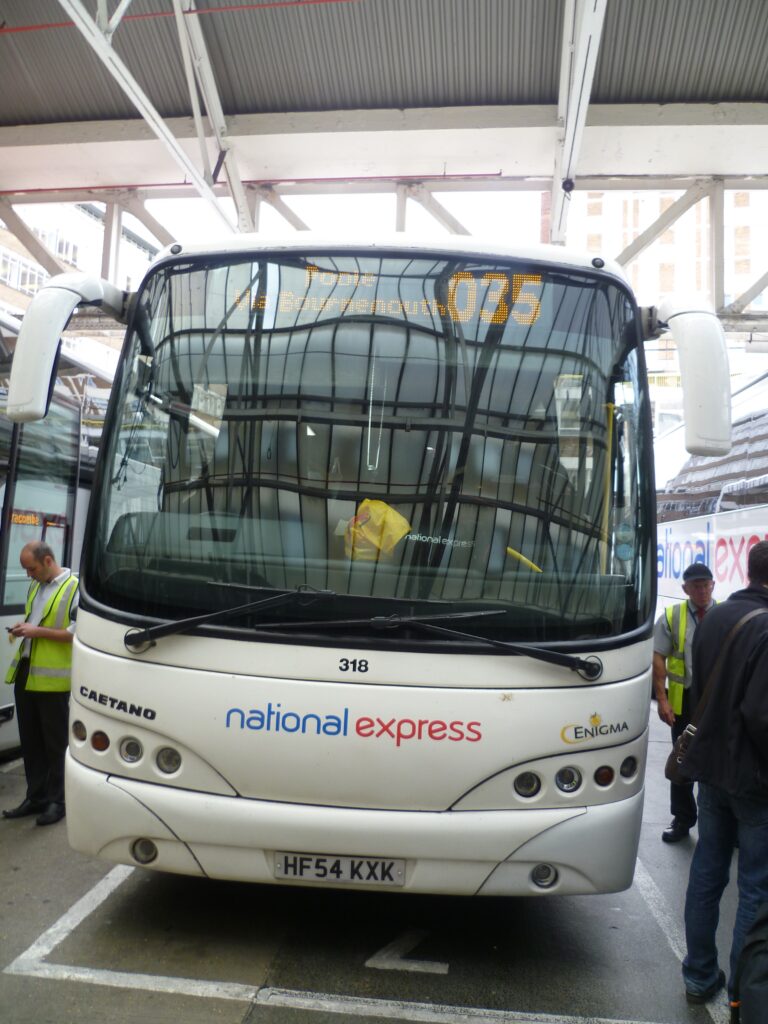
The first coach on my journey to Edinburgh ready for loading and departure from Weymouth at 1815. I needed to change coaches at Bournemouth and London Victoria – 15/08/2011The second coach just after arriving at London Victoria Coach Station @2210. This was a very nice coach with plush, comfy leather seats – 15/08/2011The third coach on lease to National Express stands at Charnock Richard Motorway Services during the 0300 driver fag break. This coach reminded me of the ancient vehicles which were employed on school trips all those years ago when the state was trying to educate me. And indeed, all those years ago when schools could organise trips without fear of litigation. My school ran a trip to Woodhams’ Barry Island scrap yard once. Nobody lost a limb and we all came back safe and sound after clambering all over the rusting steam locos. Oh, the memories came flooding back. Uncomfortable seats with harsh fabric made from the short sharp ear hair plucked from goblins, no leg room, defective air-con and the faint smell of sick – 16/08/2011
I thought I’d get some sleep on the coach from London to Edinburgh as the countryside passed by in darkness. I realised it wouldn’t be much of a deep sleep, more likely that light sleep where you’re semi-conscious of the movement of the transport you find yourself traveling in and when you wake up, you discover you’ve dribbled down your front. Or is that just me? Things started badly as we weaved our way through the streets of London and the driver turned on all the interior lights and the radio. The sound of Smooth Radio cut through my own choice of entertainment playing through my earphones making listening to my iPod difficult, and when a section of my fellow passengers started singing along to Simply Red, impossible. Eventually, as a woman a couple of seats in front of me started to wave her arms around in time to Bread’s “Make It With You”, I seriously doubted my decision to travel by coach, although in hindsight, she may have just been trying to get the overhead seating airflow to work.
Eventually, after driving all through the night, we arrived in Edinburgh and I headed off to Waverley railway station to make use of the excellent shower facilities available to weary travellers for the princely sum of £5 – for which you get a shower pack including shower gel and the loan of a towel. I checked Network Rail’s webpage on Edinburgh Waverley just now and the showers still cost £5. How reassuring.
After freshening up, I took a stroll along Princes Street and took in the landscaped gardens in the shadow of Edinburgh Castle – 16/08/2011I took a local bus out to Ocean Terminal to see The Royal Yacht Britannia – 16/08/2011The Royal Yacht Britannia. Again. Taken from the other end to that in the previous picture (someone can remind me of the correct nautical terms in the comments – thanks very much) – 16/08/2011
After visiting the shopping centre at Ocean Terminal, I headed back into the city with the intention of taking some railway photos from Princes Street Gardens, but because of very heavy rain I instead took shelter in the (then) new National Museum of Scotland.
The Wylam Dilly was built in 1813 and is one of the oldest surviving steam locomotives in existence. By strange coincidence, 1813 was the same year the coach I travelled on from London to Edinburgh was built – 16/08/2011The Wylam Dilly is named after the Wylam Colliery where it was used to pull coal wagons along the Wylam Wagonway to the river near Newcastle upon Tyne. A ‘dilly’ was the name used for the coal trucks used on the wagon way. Don’t tell me I don’t set out to educate – 16/08/2011Also in the National Museum of Scotland was Dolly the Sheep, a Finnish Dorset crossbreed and famous for being the first mammal to be cloned. She has to stand really still as she revolves around in her glass box. At night she drives around the museum in cars – 16/08/2011This is Sir Jackie Stewart’s racing car which can be found in the National Museum of Scotland. I observed that there was not much room to take home the weekly shop, but Dolly the Sheep likes how it handles corners – 16/08/2011
After visiting the museum and the rain abated it was time to find the location of the Edinburgh Book Festival and an interesting hour or so in the company of Mr Gaiman. While loitering for my friends to arrive, I inadvertently started a ramshackle queue, so front row seats awaited us. Go me!
A view of the approaches to Edinburgh Waverley – 16/08/2011Following chats, catch ups and pizza with my pals after the Neil Gaiman signing, I headed back south on another coach for the long journey to London. Actually, it was the same rubbish coach I had arrived in Edinburgh on earlier that day. Same drivers, but a different smelly bloke in the seat in front of me. You can imagine my enthusiasm when we met the above sign on the M6 at 4am – 17/08/2011Arrival into London Victoria Coach Station was over an hour late – 17/08/2011As my connecting coach to Bournemouth was due to depart a few hours after my arrival in London, I took the opportunity to stretch my legs and take in LNER A1 Class 4-6-2 No. 60163 ‘Tornado’ and empty coaching stock being moved into London Victoria railway station by EWS liveried Class 67 No. 67008 ready to form “The Cathedrals Express” rail tour to, of all places, Weymouth – 17/08/2011EWS Class 67 No. 67008 with the ecs for “The Cathedrals Express” nears London Victoria – 17/08/2011EWS Class 67 No. 67002 ‘Special Delivery’ and LNER A1 Class 4-6-2 No. 60163 ‘Tornado’ on the rear of the empty coaching stock movement into London Victoria – 17/08/2011LNER A1 Class 4-6-2 No. 60163 ‘Tornado’ departs London Victoria bound for Weymouth piloted by Class 67 No. 67002 ‘Special Delivery’ as the steam locomotive had no fireman at this point of the journey – 17/08/2011Former Wessex Electrics Class 442 No’s 442420 and 442410 on a Gatwick Express service with a SouthEastern Class 465 in the background – 17/08/2011Southern Class 455 No. 455839 with an unidentified SouthEastern Class 465 on the approaches to London Victoria. No. 455839 was one of the first Southern Class 455’s to be sent to Newport Docks for scrap earlier this year (The final journey being hauled by Class 47 No. 47727 along with sister Class 455 No. 455839 on 4th May 2022) – 17/08/2011The start of my own journey from London to Weymouth. However, by the time we reached Bournemouth I couldn’t take any more coach travel and I bailed out and took the train for the remainder of my trip – 17/08/2011SouthWest Trains liveried Class 444 No. 444005 having emerged from Bincombe Tunnel with a London Waterloo to Weymouth service – 17/08/2011 I arrived in Weymouth ahead of the steam tour and was able to see LNER A1 Class 4-6-2 No. 60163 ‘Tornado’ exiting Bincombe Tunnel on the run down into Weymouth with Steam Dreams “The Cathedrals Express” – 17/08/2011LNER Peppercorn Class A1 4-6-2 No. 60163 ‘Tornado’ was built between 1994 and 2008 to an original design by Arthur Peppercorn, the last Chief Mechanical Engineer of the London and North Eastern Railway. She was the first newly built British mainline steam locomotive following the completion of BR Standard 9F Class 2-10-0 No. 92220 ‘Evening Star’ in 1960, and the only Peppercorn Class A1 in existence after all the original locomotives of that class were scrapped. In 2017 No. 60163 became the first steam locomotive to officially reach 100 mph on British tracks for over 50 years – 17/08/2011 Nameplate detail for LNER A1 Class 4-6-2 No. 60163 ‘Tornado’ – 17/08/2022No. 60163 ‘Tornado’ worked “The Cathedrals Express” from London Victoria to Weymouth and then went tender first with her support coach to Yeovil Junction for turning while the train followed with Class 66 No. 66101 in charge. ‘Tornado’ took charge of the rail tour once again on departure from Yeovil on the return journey to London Victoria via Sherborne and Salisbury – 17/08/2011DB Class 66 No. 66101 assists with No. 60163’s support coach in the sidings at Weymouth – 17/08/2022
Video of “The Cathedrals Express” and light engine + support coach movement in the Weymouth area – 17/08/2022
2010:
Class 47 No. 47580 ‘County Of Essex’ heads 1Z62 0614 Shrewsbury to Weymouth “Dorset Coast Statesman” approaching Upwey – 19/08/2010Also at Upwey, Class 47 No. 47826 with Scarborough Spa Express branding works the return “Dorset Coast Statesman” 1Z63 1637 Weymouth to Shrewsbury – 19/08/2010The Railway Touring Company ran “The Dorset Coast Express” from London Victoria to Weymouth and back on Wednesday 18th August 2010. Having assisted at the rear of the main train on its return leg hauled by LNER A4 4-6-2 No. 60019 ‘Bittern’, SR N15 Class 4-6-0 No. 30777 ‘Sir Lamiel’ runs light engine with support coach to Weymouth, before running round and proceeding to Yeovil Junction for servicing at the mainline steam centre – 18/08/2010
Video of LNER A4 4-6-2 No. 60019 ‘Bittern’ during the 2010 summer season of “The Dorset Coast Express” rail tours. This is the result of experimenting with reformatting my 4:3 aspect ratio video footage in 16:9, however I’m not happy with the compression rate. But I’ll post it here at the bottom of the page, so probably nobody will notice!
That’s all for this time. Thanks for reading and for your corrections and comments to previous entries. Hopefully we’ll have our feet firmly back in 2022 for next weeks instalment. Join us again in seven days to find out!
DB Cargo Class 67 No. 67025 in operation with Transport for Wales waits departure at Crewe with 5K67 0951 Holyhead Car. M.D. Empty Coaching Stock working to Crewe C.S. – 16/07/2022
Fleetwood
The North Euston Hotel, Fleetwood
Yoshi and I spent much of last week in the North West of England as we made The North Euston Hotel in Fleetwood our base. The hotel was commissioned by Sir Peter Hesketh Fleetwood, designed in the Greek classical style by architect Decimus Burton and built between 1839 and 1841 to serve overnight passengers making the journey by rail from London Euston who were destined for steam ships which would provide onward travel to Scotland where after disembarking at Ardrossan they would take the train on to Glasgow. Fleetwood was the northern most station at the time, hence the name “North Euston” for the hotel, and the railway was yet to run over the Shap hills. Queen Victoria made the journey in 1847 and stayed at the hotel, although I’m sure she didn’t stay in our room. The first manager of the hotel, Corsican born Xenon Vantini, had been a courier for Napoleon Bonaparte and was also the first person to open a refreshment room at Wolverhampton railway station. In 1859 following a decline in fortunes, the hotel was sold to the government and was converted into a school of musketry and later, in 1867, an officer’s quarters. The building existed in this form until the 1890’s when it was purchased by a group of London businessmen who converted it back into a hotel. The North Euston is currently owned by local business families. Yoshi very much enjoyed his morning sausage for breakfast and we celebrated our dubious achievement of coming last in the Sunday evening pub quiz which was a lot of fun.
The railway to Fleetwood was opened on 15th July 1840 as the Preston & Wyre railway and was also the vision of Sir Peter Hesketh Fleetwood it being designed to connect the then new port of Fleetwood on the Fylde coast to Preston. The railway was constructed by George and Robert Stephenson with contribution from Joseph Locke. Its glory days lasted only six years until a direct route over Shap was finally achieved. The railway was absorbed into the Lancashire & Yorkshire Railway ( later the London Midland Scottish Railway as part of the Big Four groupings in 1923) and extensions were built to Blackpool and Lytham to cater for the growing number of passengers traveling to the seaside. Fleetwood would become, for a time, one of the largest and most successful fishing ports in the UK but by 1970 the railway from Poulton-le-Fylde to Fleetwood was closed to passenger traffic and later, in 1999, to freight workings.
Thornton Station is located in the heart of Thornton town centre – July 2022Until the late 1980’s a signal box operated the crossing over Station Road, Thornton – July 2022The current station buildings were the first built by the then newly formed London Midland Scottish Railway (LMS) in 1927 – July 2022
In 2006, the Poulton & Wyre Railway Society was formed with the aim of reopening the railway. Since then, much work has been carried out in clearing sections of the line from the ingress of nature and a Class 108 Diesel Multiple Unit was purchased for restoration and use on the line. More recently, the Poulton-Le-Fylde to Fleetwood line was subject to a study as part of the UK Government’s Restoring Your Railway programme. In June 2022 it was announced that the scheme should progress further and Network Rail will receive funding to produce a detailed plan for the revival of services. The Poulton-Le-Fylde & Wyre Railway Society have now turned their attention to developing a heritage railway centre which will eventually house a collection of railway artefacts and memorabilia for public viewing.
Churnet Valley Railway
Having heard that Class 33/1 No. 33102 was hauling trains, Yoshi and I spent Tuesday morning ( 12th July 2022 ) visiting Cheddleton on the Churnet Valley Railway, a preserved heritage line in Staffordshire. I grew up with 33/1’s providing the daily motive power on local passenger services between Bournemouth and Weymouth, and even though No. 33111 lives on at Swanage, our local heritage railway, it was fantastic to hear the Crompton’s Sulzer engine at work hauling a passenger train.
The Churnet Valley railway dates back to 1849 following the formation of The North Staffordshire Railway Company (NSR) in 1845. Falling passenger numbers saw the Beeching Report include the Churnet Valley line and its associated branches which became earmarked for closure with the final section from Leek Brook Junction to Oakamoor quarry lasting out until the late 1980’s as it was used for freight traffic. In 1992 the newly formed Churnet Valley railway (1992) PLC began talks with the Department of Transport with a view to operate the line. Trains currently run between Froghall and Ipstones, but the ambition is to run services into the Staffordshire market town of Leek for the first time since 1965. And they have an eye on the clock to achieve this as the railway needs to run its first passenger train into Leek by 1st December 2022 or lose a £1.4m EU grant. This means all track must be laid on the 0.5 mile extension, with additional resources being provided for a triangle at Leek Brook Junction, and a platform constructed at Leek. It really is a very picturesque railway with extremely friendly volunteers, Yoshi and I were escorted around the workshops to get a closer view of locomotives stabled there, and I wish them every success with their endeavours and look forward to a return visit in the future.
Cheddleton Station which was to be demolished in April 1974 but saved by the actions of local businessman and parish councillor Norman Hancock who parked his car on the level crossing preventing access to bulldozers giving sufficient time for the building to be Grade II listed – July 2022Cheddleton Station – July 2022Time for a cuppa! Yoshi waits for the kettle to boil in the booking hall of Cheddleton Station – July 2022Class 33/1 No. 33102 ‘Sophie’ awaits departure from Cheddleton – 12/07/2022Class 20 No. D8057 (20057) sits outside the repair shed at Cheddleton – 12/07/2022S160 Class 2-8-0 No. 5197 was built by the Lima Locomotive Company in Ohio, USA and exported to China in 1946. The United States Army Transportation Corps Class S160 were designed for heavy freight work across Europe during World War 2 with a total of 2,120 being built they eventually worked all over the world – 12/07/2022Class 25 No. 25322 ‘Tamworth Castle’ was the final Class 25 locomotive to see mainline service with British Rail. She is currently in store at Cheddleton Yard awaiting restoration – 12/07/2022Yoshi inspects Class 33 No. 33021 ‘Eastleigh’ in Post Office Red style livery. This locomotive was amongst the first privately owned diesel locomotives to be used on the mainline – 12/07/2022The Churnet Valley Railway has acquired Class 47 No. 47292 for an initial loan period of five years supplementing Class 33 No.’s 33021 and 33102 for use on passenger trains – 12/07/2022
On our way back to Fleetwood, we stopped off at Acton Bridge for an hour or so, primarily to capture Class 37 No. 37884 which was diagrammed to pass through with 0M58 Kilmarnock Long Lyes T.C. to Derby R.T.C. – which can be seen in the video below:
Southport
On the Wednesday, Yoshi and I took a trip on a heritage Blackpool Tram – more about that adventure next week – but first that we made a brief visit to Southport and Formby. Southport railway station is the terminal of the Southport branch of the Northern Line of the third-rail electric Merseyrail network, and the diesel-operated Manchester to Southport line. The station and services to Liverpool and Hunts Cross are operated by Merseyrail, with Manchester services operated by Northern Trains. The current station opened as Southport Chapel Street on 22 August 1851 and once boasted eleven regular platforms and two excursion platforms. Six truncated platforms are now in use (platforms 1-3 for Liverpool trains and 4-6 for Manchester services), the remainder having been demolished to make way for car parking. In 1970 the former terminal building was replaced with a shopping centre.
New Stadler Class 777 trains are currently being tested, and one was scheduled to visit Southport that morning on test run. Despite the best attempts at numerous roadworks and traffic queues, we made it just in time to see Class 777 No. 777015 arriving. Members of The National Union of Rail, Maritime and Transport Workers ( RMT – what these initials mean was one of the pub quiz questions I actually answered correctly! But I digress…. ) Anyway to continue; RMT members recently voted in favour of the proposed crewing plans for the new fleet which brings a five-year dispute to its conclusion. Merseyrail still has to reach agreement with the drivers union, the Associated Society of Locomotive Engineers and Firemen (ASLEF), but intends to introduce the new Class 777’s into service later this year. Currently, 17 out of the 53 units purchased have been delivered to the UK. The arrival of the Class 777 fleet will see the demise of both the Class 507 and 508 electric-multiple units (EMU’s).
The Class 507’s were built to work on Merseyside, replacing the London Midland Scottish Railway (LMS) built Class 502 units on Northern line services from Liverpool to Southport, Ormskirk and Kirkby. 33 sets were built by British Rail Engineering Limited (BREL) in York from 1978 to 1980 followed by 43 Class 508s constructed between 1979 and 1980. They were the second and fourth variety of BR’s then standard 1972 design for suburban EMU’s, which were derived from the prototype 2PEP and 4PEP EMU’s introduced in 1971 and eventually amassed 755 vehicles across five Classes (313/314/315/507/508). Originally, the Class 508’s were built as 4-car units for the Southern Region of British Rail working out of Waterloo on former London South Western Railway (LSWR) routes. From 1982 to 1984 they were reduced to 3 car units (one of the trailer cars was removed to be incorporated into the Class 455/7 EMU’s) and transferred to Merseyside to replace the former LMS Class 503 units that operated Wirral line services to New Brighton, Rock Ferry and West Kirby. Following rail privatisation the two fleets became interchangeable and work both sides of the Mersey. They are the oldest EMU’s still working in the UK after the Class 313’s.
Yoshi with Merseyrail Class 507 No. 507020, Southport – 13/07/2022Yoshi compares the differences between EMU’s with a study of Merseyrail Class 508 No. 508140, Southport – 13/07/2022Merseyrail Class 777 No. 777015 having arrived with 5T02 0917 Sandhills Reversing Sdg to SouthportSouthport – 13/07/2022Northern Trains Class 769 No.’s 769424 & 769456 Southport – 13/07/2022Northern Trains Class 150 No. 150128 and 150134 Southport – 13/07/2022Merseyrail Class 507 No. 507020 Southport – 13/07/2022Merseyrail Class 507 No. 507020 and Class 508 No. 508131 stand side by side at Southport – 13/07/2022Merseyrail Class 508 No. 508126 at the buffer stops, Southport – 13/07/2022Merseyrail Class 777 No. 777015 awaits departure of 5T03 1008 Southport to Kirkdale C.S. Southport – 13/07/2022
Crewe
After breakfast on Thursday where we spent a few enjoyable hours watching freight movements around Crewe Basford Hall. You can relive this by playing the video below:
We returned to Dorset on Friday, eschewing the opportunity of capturing two Colas Class 37’s at rest in Blackpool North Railway Station which had worked a test train from Carlisle in the early hours. However, the next day; Saturday 16th July, I was back in Crewe, this time without Yoshi, so I could attend the Direct Rail Services (DRS) Open Day at their depot at Gresty Road. Understandably, dogs were not allowed on site, so Yoshi spent the day with his mum, while I endured the heat of the day without my fluffy sidekick. Many thanks to Scott for driving and for his company.
The Open Day coincided with LMS Coronation 4-6-2 No. 6233 ‘Duchess Of Sutherland’ passing through Crewe railway station with the Railway Touring Company’s “Cheshireman” rail tour from London Euston to Chester. (1Z86 0639 London Euston to Chester with Class 47 No. 47813 providing support at the rear). The station was extremely busy with the influx of enthusiasts in the town to visit the DRS site, but I managed to catch a short video clip of this magnificent locomotive departing Crewe. Later that day, SR Merchant Navy 4-6-2 No. 35018 ‘British India Line’ worked into Crewe light engine and support coach as 5Z46 Carnforth Steamtown to Crewe Heritage Centre for servicing ahead of rail tour duties scheduled for the following day:
Crewe 16th July 2022
3,500 people attended Nuclear Transport Solutions’ (NTS) rail division DRS’s open day, the first one to be held for a number of years because of the Covid pandemic. There were two locomotive naming’s at the event – the first saw Class 66 No. 66422 being unveiled as ‘Max Joule’ in tribute to one of DRS’s founders and former Managing Director who died in 1999. The second naming was for Class 66 No. 66424 which was named ‘Driver Paul Scrivens’ who had been a driver with DRS for more than 20 years. An emotional tribute was delivered by colleague Tim Howlett before the new plate was unveiled by Paul’s sister Emma.
The open day raised over £39,000 from sponsorship and donations which is an amazing figure that will go to deserving causes across the UK. It was a fantastic event, and I thoroughly enjoyed the experience. Because of the hot weather, DRS made bottles of water available at points across the site, which was very welcome.
Locomotives on display were:
Class 37 No. 37218 in retro DRS livery – 16/07/2022Class 37 No. 37401 ‘Mary Queen Of Scots’ – 16/07/2022Class 37 no. 37419 ‘Carl Haviland’ – 16/07/2022Class 37 No. 37425 ‘Concrete Bob’ – 16/07/2022Class 68 No. 68025 ‘Superb’ – 16/07/2022Class 57 No. 57312 – 16/07/2022Class 88 No. 88002 ‘Prometheus’ – 16/07/2022Class 68 No. 68006 ‘Pride of the North’ in special green livery showcasing the environmental benefits of rail freight and how a diesel locomotive can reduce emissions by using Hydrotreated Vegetable Oil (HVO) fuel – 16/07/2022Class 66 no. 66303 ‘Rail Riders 2020’ – 16/07/2022Class 68 no. 68009 ‘Titan’ – 16/07/2022Class 66 No. 66422 ‘Max Joule 1958-1999’ – 16/07/2022Class 66 No. 66424 awaits its naming ceremony – 16/07/2022Class 57 No. 57304 – 16/07/2022Class 88 No. 88009 ‘Diana’ – 16/07/2022Class 66 No. 66429 – 16/07/2022Class 37 No. 37424/37558 ‘Avro Vulcan XH558’ – 16/07/2022Class 88 No. 88001 ‘Revolution’ – 16/07/2022
On our way to the DRS Open Day, we stopped off at Longport to peer through the fence at Electro-Motive Diesel Limited’s (EMD) site and witnessed some shunting around of locomotives, mainly Class 56 / Class 69 conversions which are ongoing.
With 69006 stencilled on the bodyside, the conversion of 56128 is almost complete. Longport – 16/07/2022The empty shell of Class 56 No. 56032 awaiting a second move to Marcroft Engineering with 69007 ( ex-56037 ) in the background – 16/07/202256038 is being converted into 69008 and is still on accommodation bogies but some of its new innards are in place. An extra hole has been cut in the cab front ends to accommodate an additional connection with this locomotive likely being the first for use by the GBRf Rail Services sector which handles stock movements – 16/07/2022Class 56 No. 56009 sits in the yard at Longport. The locomotive was unofficially renumbered No. 56201 when it was converted for use as an engineering test bed by Brush Traction in order to assess refurbished Paxman engines of sister class members – 16/07/2022Former DB Cargo UK Class 66 No. 66048 rests on accommodation bogies at Longport. The locomotive was damaged when it derailed at Carrbridge in January 2010 and it ended up down an embankment. It was sold to EMD in March 2016 after being initially disposed of for scrap. It’s unclear what the future holds for this Class 66 locomotive – 16/07/2022
On our way home we diverted to Keynsham to refuel the car and restock with drinking water. Fortuitously, Class 37 No.’s 37901 and 37800 were scheduled to pass through top and tailing an Eastleigh Works to Swansea Landore stock move consisting of a Great Central-liveried Mk4 set and an LNER-liveried Mk4 set (5Q79 1826 Eastleigh Arlington to Landore). This made a fantastic epilogue to the day!
Class 37 No. 37901 heads an Eastleigh Works to Swansea Landore stock move consisting of a Great Central-liveried Mk4 set and an LNER-liveried Mk4 set with 37800 on the rear approaches Keynsham station – 16/07/2022.
Dorset NMT
While we were away it was a quiet week on the Bournemouth to Weymouth line, with only the New Measurement Train of particular interest on the main line as far as I’m aware. HST Class 43 power car No.’s 43272 and 43257 were in charge of 1Q18 0719 Derby RTC to Bristol Kingsland Road on Wednesday 13th July 2022.
Class 43 No. 43257 sits in Weymouth station – 13/07/2022. Photograph courtesy of @da_buckley967Class 43 No. 43272 preparing to depart from Weymouth – 13/07/2022. Photograph courtesy of @da_buckley967
My brother popped out to see the NMT return through Dorchester West on its way to Bristol and his video which he captured especially for Yoshi can be seen here:
In other news, Swanage resident Class 33/1 No. 33111 headed off by road to the Mid Hants Railway (MHR) to participate in their 2022 diesel gala. I had considered visiting the MHR on Sunday, but felt it was far too hot for Yoshi to be out and about, so we decided to stay home and catch up on some gardening.
The recent heat wave also resulted in speed restrictions being imposed on main line services by South Western Railways (SWR), including those on the Bournemouth to Weymouth line, with the increased risk of tracks buckling. Reduced services were introduced on Monday 18th and Tuesday 19th July 2022 in a bid to give passengers certainty over which trains would run. There was also a steam ban imposed by many heritage railways and on the main line. This includes the Railway Touring Company’s “Dorset Coast Express” excursion to Weymouth on Thursday 21st July which will now be diesel hauled throughout.
Great Western Railways were under fire in the local press this week, when the Dorset Echo reported chaotic scenes at Weymouth station where passengers were turned away from trains as they tried to return home. The 1728 departure to Bristol Temple Meads from the Dorset seaside town was formed of just two carriages meaning station staff and police had to request some travellers to wait for the next service which was due to leave an hour later. Not so long ago a High Speed Train was regularly employed to run a relief service to Weymouth via the West route on Summer Saturdays in order to cater for anticipated increased passenger numbers.
That’s all for this week – join us next time when we recount our trip on a heritage Blackpool Tram. Many thanks for reading, and for continued contributions, comment and corrections which are very much appreciated!
Class 50 No. 50026 ‘Indomitable’ on a loaded test run as part of mainline certification nears Furzebrook on the Swanage Railway. Class 33 No. 33012 / D6515 ‘Lt Jenny Lewis RN’ takes up the rear – 09/07/2022
Lynton & Lynmouth
We took Wednesday off to visit friends who were holidaying in North Devon near the twin villages of Lynton and Lynmouth. Lynton was built on flat land 500 feet vertically above the beautiful fishing village of Lynmouth. I can never remember which is which, but until Easter Monday 1890 the only way you could travel between the two was via a very steep road. That is until the opening of the water powered funicular railway which had been approve by an Act of Parliament two years previously. Now established as a popular visitor attraction the original role of the cliff railway was to transport passengers and goods between Lynmouth harbour and Lynton. It is the highest and steepest totally water powered railway in the world.
The view from the Lynton terminus of the Lynton and Barnstaple Cliff Railway – 06/07/2022
The project to build the railway was the funded largely by publisher, MP and philanthropist Sir George Newnes who wanted to relieve the burden placed on the horses which laboured up the steep hill. The railway was designed by George Croydon Marks an early pioneer of funicular railways and devotee of Isambard Kingdom Brunel while the actual construction was carried out by local builder Bob Jones whose family are still involved in running the funicular today. The original mechanical design remains substantially unaltered.
The environmentally friendly railway works on a simple balancing principle using water as ballast which has been collected by gravity from the West Lyn River and stored in reservoirs. Each car has a 700 gallon tank mounted between the wheels with a smaller 10 gallons tank for the braking system. The two cars are attached to each other by two hauling cables and two balance cables which run around large pulley wheels at each end of the tracks. When each car is docked with full tanks of water, the cars are balanced and ready for passengers to board. Once the brakes are taken off the lower car discharges water until it is lighter than the top car which descends under the additional weight which causes the lower car to be pulled up the track. Our video of the Lynton and Lynmouth Cliff Railway can be seen below:
In a future railwaydog blog, we’ll be taking a close look at the three Bournemouth Cliff Lifts.
Bournemouth Fisherman’s Walk Cliff Lift, built in 1935, is currently out of action due to a landslide. It links Boscombe and Southbourne with the beach – 13/02/2021
Lynton & Barnstaple Railway
We had fully intended to visit The Lynton and Barnstaple Railway, but we had lots of catching up to do as well as finding ourselves distracted by goats that we decided to save this narrow gauge railway for another visit when we had time to do it justice. As a taste of what to expect, our friends visited on Thursday and sent us the following images to share, for which we are very grateful.
Baldwin 2-4-2 tank No. 762 ‘Lyn’ on the Lynton and Barnstaple Railway – 07/07/2022Baldwin 2-4-2 tank No. 762 ‘Lyn’ on the Lynton and Barnstaple Railway – 07/07/2022
The Lynton and Barnstaple Railway originally opened in 1898 and closed in 1935. The current railway is just the start of a project to rebuild the narrow gauge line and trains currently run between Woody Bay Station and Killington Lane, a round trip of two miles.
Poole Park Railway
Postcard view of Poole Park Railway circa 1970/80’s
The 260mm gauge Poole Park railway was first operated in 1949 by Southern Miniature Railways Ltd. In 2017, Poole Borough Council ended their tenancy agreement with Chris Bullen who had operated the railway since June 2005 and awarded a thirty year concession to Friends Of Poole Park for its operation. However following behind the scenes disputes, walkouts and a derailment in 2018 the concession was withdrawn and a notice to quit issued. Now in the hands of Bournemouth, Christchurch, Poole Council (BCP) and following a successful tendering process, Shropshire based Track Systems UK began work on renewing the infrastructure, traction and rolling stock.
Despite progress on the £480,000 revamp of Poole Park Railway having been made with work completed on the new engine shed and track there has been a delay in the delivery of a fully electric engine for use on the popular attraction. Efforts to source a suitable temporary engine are ongoing. Carriages are currently being constructed off-site which are expected to be delivered shortly. When re-opened the railway will be run by volunteers and BCP environmental team.
Saturday 9th July 2022
Class 33 No. 33012 / D6515 ‘Lt Jenny Lewis RN’ leads Class 50 No. 50026 ‘Indomitable’ through Norden – 09/07/2022
Saturday was far too hot for Yoshi to venture out, so while he stayed home drinking cold mocktails and being well looked after, I headed to Norden to see Class 50 No. 50026 ‘Indomitable’ on a loaded test run as part of its mainline certification on the Swanage Railway. Class 33 No. 33012 / D6515 ‘Lt Jenny Lewis RN’ provided support.
West Coast Railway Companies Class 47 No. 47826 nears Dorchester working the “Weymouth Harbour” 1Z47 0823 Birmingham International to Weymouth – 09/07/2022WCRC Class 47 No. 47804 heads the “Weymouth Harbour” empty coaching stock past Dorchester Junction heading to Yeovil Pen Mill for stabling as there was no room to accommodate the stock at Weymouth – 09/07/2022
There were scenes reminiscent of my misspent childhood Summer Saturday’s as five Class 47 diesel locomotives passed through Dorchester on their way to Weymouth as three rail tours visited Dorset on Saturday July 9th 2022. It could have been the 1980’s if I hadn’t had to fill the car up with fuel. First up was the Northern Belle organised “Weymouth Harbour – The Dorset Coast” which originated from Birmingham International. For £370 you could enjoy all the comforts of the Northern Belle luxury trains welcome Bellini cocktail, a three-course brunch, tea and coffee, oyster tasting with sparkling wine in Weymouth, a champagne reception and a five course dinner which included cheese and biscuits. What’s not to like? Apart from the seafood in my case, obviously. I’m sure cheesy puffs would be an acceptable alternative.
Double-Headed Class 47 No.’s 47853 and 47805 hauling the “Dorset Coast Statesman” heads through Dorchester – 09/07/2022
Statesman Rail provided the “Dorset Coast Statesman” which set out from Norwich in the early hours with passengers able to pick Bournemouth, Poole or Weymouth as their destination. Pullman dining, which also boasted cheese and biscuits, was available from £330 and First Class ( non-dining ) tickets could be purchased from £175.
SR rebuilt Merchant Navy No. 35028 ‘Clan Line’ hurtles through Hamworthy with “The End Of Southern Steam” rail tour – 09/07/2022
Finally The Railway Touring Company brought steam to Dorset with “The End Of Southern Steam” excursion which also provided passengers the opportunity to visit Weymouth for the afternoon. This tour marked 55 years since the end of steam on the Southern Region of BR. On the 9th July 1967 the final regular steam hauled passenger train arrived at London Waterloo, signifying the end of steam in the South. Departure on 9th July 2022 was steam hauled from London Victoria behind SR rebuilt Merchant Navy 4-6-2 No. 35028 ‘Clan Line’ through to Yeovil Junction where the steam locomotive was detached for servicing and turning while the rest of the train continued to Weymouth diesel hauled. ‘Clan Line’ then followed light engine to Weymouth in order to haul the train up Bincombe Bank and back to London via Bournemouth. At the time of writing, I’m not aware if cheese and biscuits were on the menu, however ticket prices ranged from £130 for Standard class, £195 for First class and £295 for Premier Dining.
Class 47 No. 47813 at the rear of “The End Of Southern Steam” rail tour, Hamworthy – 09/07/2022
The afternoon schedule was disrupted by a signalling issue between Dorchester South and Weymouth which resulted in all lines being blocked for a while. This delayed the arrival and departure of “The End Of Southern Steam” (37 minutes late arriving and 48 minutes late departing) and the departure of the “Dorset Coast Statesman” (43 minutes late departing).
A compilation video covering 9th July rail tours to Weymouth is below:
Class 47’s at Dorchester in days gone by:
Class 47 No. 47455 approaches Dorchester South – 29/05/1982Class 47 No. 47152 passes Dorchester Junction Signal Box – 14/07/1980Class 47 No. 47237 heads away from Dorchester West – 20/08/1981
That’s it for this week. Thanks for reading. Comments and corrections welcome. We’ll be back for another round-up soon!
We were being truthful about being distracted by the Lynton goats. Yoshi wisely kept his distance!
Class 47 No. 47593 ‘Galloway Princess’ approaching Campbell Road Bridge, Eastleigh working Saphos Trains 1Z60 0635 Poole to Kingswear “English Riviera Express” – 02/07/2022
Wednesday 29th June - Tuesday 5th July 2022
Saturday Sightings
Three rail tours were scheduled to pass through Dorset territory on Saturday July 2nd 2022. One had seemingly been cancelled a few days prior to its intended departure before reappearing on the schedules, much to Yoshi’s relief. Originally advertised as being steam hauled and later switched to a Class 57 diesel, “The Northern Belle Special: Tribute To The Bournemouth Belle” actually ran with a Class 47 at one end and a Class 57 at the other. Its journey from London Victoria to Bournemouth and return to London Euston via Slough briefly touched the route “The Bournemouth Belle” would have traversed back in the day. The empty coaching stock from this service ran to Norden on the Swanage Railway for servicing.
Class 57 No. 57314 approaching Creech Bottom on The Swanage Railway with The Northern Belle empty coaching stock 5Z68 1256 Bournemouth to Norden – 02/07/2022Class 57 No. 57314 at Creech Bottom on The Swanage Railway with The Northern Belle empty coaching stock 5Z68 1256 Bournemouth to Norden – 02/07/2022Class 57 No. 57314 parked up behind a pair of skips at Norden on The Swanage Railway awaiting servicing of The Northern Belle coaching stock – 02/07/2022Class 47 No. 47804 passes the former Furzebrook LPG site working 5Z69 1640 Norden to Bournemouth Northern Belle ECS – 02/07/2022
Saphos Trains Class 47 top and tailed “English Riviera Express” ran from Poole to Kingswear. BR Standard No. 70000 ‘Britannia’ took over the train from Norton Fitzwarren near Taunton, the diesel locomotives taking back control at the same point on the return leg back to Poole.
Class 47 No. 47810 (D1924) ‘Crewe Diesel Depot’ passes Bournemouth with the Empty Coaching Stock movement 5Z62 0444 Eastleigh Arlington to Poole to form Saphos Trains excursion to Kingswear and return – 02/07/2022
Railway Touring Company organised “The Atlantic Coast Express” took Southern Railway rebuilt Merchant Navy 4-6-2 No. 35028 ‘Clan Line’ from London Waterloo to Exeter St. Davids which traversed the Waterloo – Exeter line on its outward journey. One day I’ll tick off that box of recording a steam hauled train departing from Waterloo, but this week I was content with catching a glimpse of ‘Clan Line’ passing underneath Battledown Flyover at Worting Junction and nearing Sherborne.
SR rebuilt Merchant Navy 4-6-2 No. 35028 ‘Clan Line’ passes nearby Sherborne Old Castle with “The Atlantic Coast Express” 1Z82 0752 London Waterloo to Exeter St. Davids – 02/07/022
We have put together a compilation video of our Saturday below:
Yoshi was so excited to see and hear ‘Clan Line’ whistling as she passed Worting Junction he jumped up against the fence my camera was balanced on top of to see her pass for himself which is why there’s a slight wobble in the footage! I wish I’d have had the presence of mind to film him! We had a really enjoyable day out, despite the early start at Bournemouth and we met some friendly folk on our travels. I really didn’t imagine back in the late 1970’s that I’d be so pleased to see three Class 47’s on one day!
Freightliner Class 66 No. 66529 working 43Z2 0047 Trafford Park F.L.T. to Southampton M.C.T. through Eastleigh – 02/07/2022Direct Rail Services Class 37 No. 37069 which has been authorised for new wheelsets stands at Eastleigh Works – 02/07/2022Class 701 No. 701022 departing Eastleigh depot with 5Q50 0653 Eastleigh TRSMD to Eastleigh TRSMD – 02/07/2022
Class 701
Class 701 No. 701022 snaking its way into Eastleigh with 5Q50 0653 Eastleigh TRSMD to Eastleigh TRSMD – 02/07/2022
Trials with new Class 701 Electric Multiple Units continue. This week we filmed No. 701022 out and about over a few days which we’ve edited together in the video below:
Hamworthy Branch Update
Network Rail team examining the track work at Lake Road Bridge – image by kind permission of Kev Scott Trains
Network Rail were seen examining Lake Road Bridge on the Hamworthy Branch on the morning of Tuesday 5th July. Hopefully work will start soon clearing the site and replacing the existing structure which is rusted and, as was pointed out to me, has as at least one hole in the metal fabric. The replacement frog for the pointwork ready to reconnect the branch to the main line was deposited on the ballast at Hamworthy a few weeks ago.
Lake Road Bridge on the Hamworthy Branch – July 2022Lake Road bridge has sustained a number of hits from road vehicles as can be seen by the damaged brickwork in this view – July 2022
Great British Railways
This week “Snake-oil salesman” and Secretary of State for Transport Grant Shapps announced the shortlist of the most suitable locations for the national headquarters of Great British Railways (GBR), the planned state-owned public body that will oversee the majority of rail transport in Great Britain from 2023.
The closest local authorities to Yoshi HQ which threw their hats in the ring were Southampton and Eastleigh. However, these were both unsuccessful. The shortlist has been confirmed as:
Birmingham
Crewe
Derby
Doncaster
Newcastle upon Tyne
York
We would have visited each of these locations for a cup of tea and a bun, but they’re all too far away from Dorset so instead we’ll share the link where you can vote for your preferred location from the shortlist. The results will be used to measure the level of support for each place and will be considered as part of the final decision making. It’s almost like democracy at work.
Northern Belle: July 2019
A five month old Yoshi examines Class 57 No. 57601 ‘Windsor Castle’ at the buffer stops in Weymouth having worked The Northern Belle into the town for the Seafood Festival – 14/07/2022
In pre-Covid times The Northern Belle visited Weymouth with two special trains bringing passengers in to the seaside town for the annual Seafood Festival. Saturday 13th July saw Class 57 No. 57316 with Pullman Liveried classmate No. 57601 ‘Windsor Castle’ attached to the rear with the rail tour having originated form Cardiff. The following day saw the locomotives swap positions with No. 57601 heading into Weymouth with a tour having originated from Coventry.
Yoshi and Class 57 No. 57316 at Weymouth – 13/07/2019
This week, Yoshi’s blog was written to the sounds of Freya Ridings, A Dog’s Purpose (Original Motion Picture Soundtrack ) and Bear’s Den. Thanks to everyone who helped and provided information for this weeks therailwaydog blog. We’ll be back here in seven days for another update – we hope you’ll be able to join again us then. May your dog go with you.