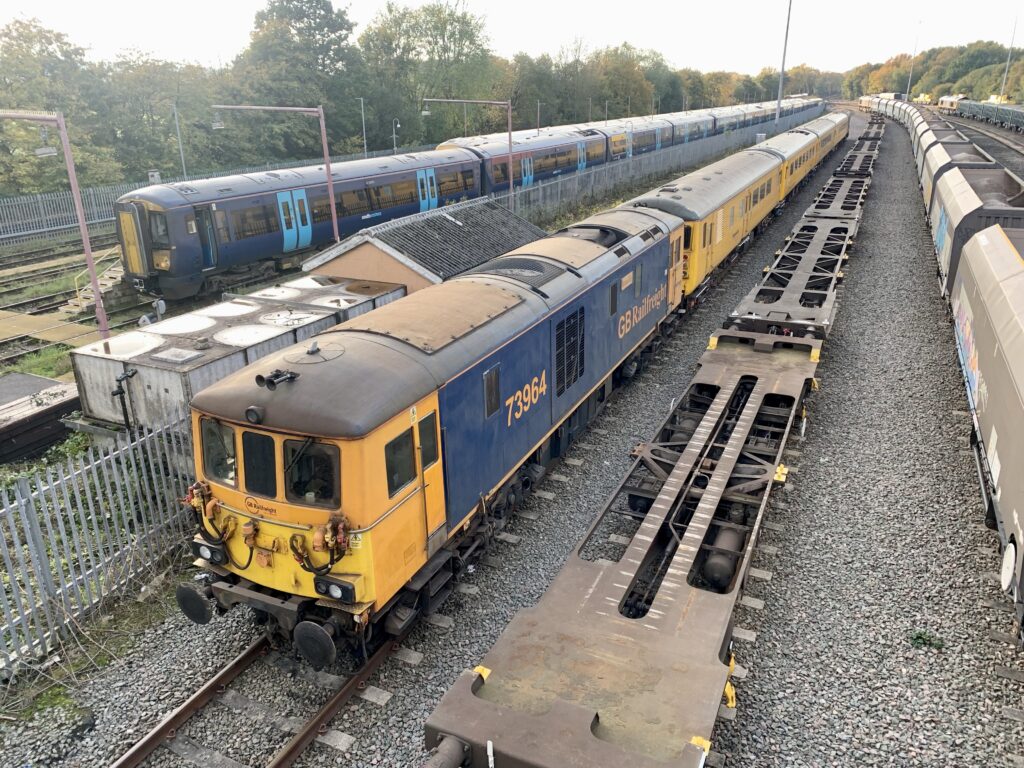
Wednesday 15th March 2023 to Tuesday 21st March 2023
Gotcha Day!
On Thursday we celebrated the annual ‘Gotcha Day’ when Yoshi first decided to adopt me as his hooman. He really was a tiny little pup with razor sharp baby teeth. We’ve both got bigger since then and I can hardly believe it’s been four years!
Colas Class 66 No. 66850 ‘David Maidment’ at the head of a rake of autoballasters pauses at Poole to pick up a crew member just after midnight working 6C15 2303 Eastleigh East Yard to Worgret Junction – 15/03/2023
This week I was a bit of a night owl on three consecutive occasions as I stayed up past my bedtime to see three engineers trains and a test train visit our patch, all operated by Colas Rail.
Class 66 No. 66848 at Hamworthy on the rear of the 6C17 2356 Eastleigh East Yard to Hamworthy autoballaster working – 16/03/2023
Colas Trains in Poole and Hamworthy – March 2023
Colas Rail is a subsidiary of Bouygues, a French industrial group headquartered in Paris. Originally a railway construction and maintenance company named Seco Rail, they became a freight operator in the UK market during 2006 acquiring their first locomotives in 2007 after a successful period using leased rolling stock. In 2008, Seco Rail merged with AMEC-Spie and Carillion Rail under the Colas Rail banner and today they are one of the five largest contractors working for Network Rail. Colas Rail were involved with major improvement works at London Waterloo railway station. The current fleet of locomotives include Class 37, Class 43 (HST Power Cars), Class 56, Class 66 and Class 70 as well as a mixed fleet of on-track plant, such as tampers, for maintenance operations which by 2016, was reportedly the largest of its type in the UK. Previously they counted ten Class 60 locomotives amongst their fleet, and for a short while Class 86 No. 86701 which gained the Colas Rail yellow and orange livery in October 2012. The locomotive was withdrawn from mainline use in January 2013 and subsequently transferred to Europhoenix and exported to Bulgaria where she is still in use running as No. 85001.
I quite like the bright Colas Rail livery, and I’ve added some photos from recent years showing some examples:
Class 37 No. 37175 pauses at Dorchester West – 16/07/2015Class 37 No. 37099 speeds through Upwey on a test train – 27/04/2017Class 37 No. 37099 shelters from the rain at Weymouth – 31/10/2020Class 37 No. 37116 at Weymouth – 24/01/2018Class 37 No. 37219 on track data recording duties (with extra, technical equipment mounted on its ends) reverses at Weymouth – 06/05/2020Class 37 No. 37219 on track data recording duties (with extra, technical equipment mounted on its ends) at Weymouth – 06/05/2020Class 37 No. 37421 makes a nocturnal visit to Weymouth on a test train – 03/08/2020Class 47 No. 47749 ‘Demelza’ on the Weymouth Quay branch siding – 24/02/2012Close up detail for Class 47 No. 47749 ‘Demelza’ – 24/02/2012Nameplate for Class 47 No. 47749 ‘Demelza’ – 24/02/201243274 about to depart from Maiden Newton having picked up the token to traverse the single line section to Dorchester West. Dorset Council is currently in talks with the Railway Heritage Trust over renovation plans for Maiden Newton – 23/03/2022Class 43 HST power cars No.’s 43274 and 43251 about to enter Bincombe Tunnel between Weymouth and Dorchester working the New Measurement Train 1Z23 0747 Derby RTC to Bristol Kingsland Road – 26/01/2022Class 56 No. 56105 works through Cardiff Central on a train of logs – 07/05/2013Class 56 No. 56049 at Westbury – 03/09/2022Class 56 No. 56096 hauling a Class 701 delivery through Eastleigh – Class 66 No. 66847 on the Weymouth Quay branch siding – 24/12/2012Class 66 No. 66849 at Weymouth on an engineers train during rail replacement work – 15/12/2015Class 66 No. 66848 on an engineers train at Monkton, Dorchester – 24/04/2016Class 67 No. 67027 working the New Measurement Train at Weymouth – 19/06/2019Class 67 No. 67023 at the platform in Weymouth – 15/07/2020Class 70 No. 70805 at the head of an engineers train at Weymouth – 11/04/2015Class 70 No. 70809 on the approach to Dorchester South – 11/04/2015Class 70 No. 70806 in Weymouth – 15/12/2015Class 70 No. 70807 sits in Weymouth station – 11/04/2015
South Western Railway (SWR) Class 444 EMU No. 444023 has been named ‘The Alex Wardle Foundation’ to celebrate a partnership between SWR and the Alex Wardle Foundation to help raise awareness of sudden arrhythmic death syndrome (SADS), when someone dies suddenly and unexpectedly from a cardiac arrest, particularly young, apparently healthy, people. The railway company is investing more than half a million pounds installing publicly accessible automated external defibrillators at its 154 staffed stations it operates across South West London, Surrey, Hampshire, Berkshire, Dorset, Wilshire, Somerset, and Devon. The installation of the lifesaving defibrillators comes as part of the rail operators’ commitment to support safety and serve local communities. Located in protective cabinets as close as possible to the front of stations, the defibrillators will be available for use day and night in the instance of cardiac issues in the surrounding area.
South Western Railway (SWR) Class 444 EMU No. 444023 ‘The Alex Wardle Foundation’ arrives at Hamworthy working 1W23 0855 London Waterloo to Weymouth – 19/03/2023
The charity was set up in memory of Alex Wardle, a medical student and son of an SWR operations trainer. Alex passed away from SADS in March 2016. His father, Steve Wardle, has worked for SWR for 38 years and, along with other members of Alex’s close family and friends, he set up the charity to help further understanding of SADS and prevent deaths from the condition. The Class 444 was named ‘The Alex Wardle Foundation’ on 15th March 2023. Unit number 23 was chosen as this was Alex’s age when he passed away.
BR Standard Class 4MT No. 76084 having been unloaded at Norden – 17/03/2023
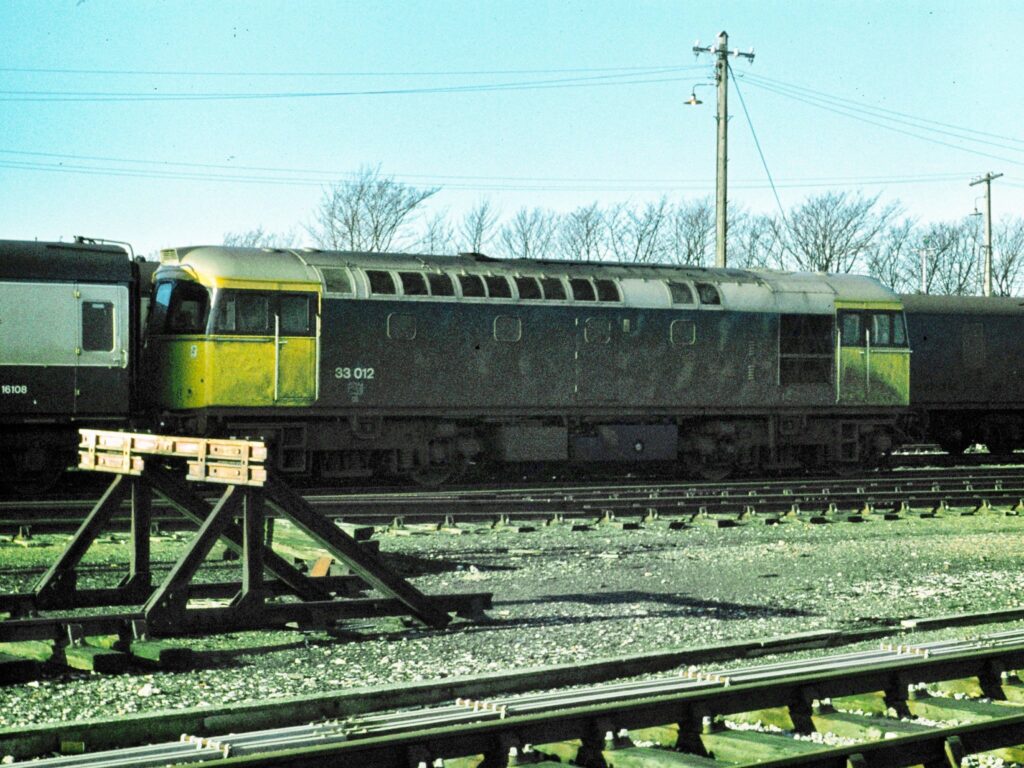
On Friday I slipped out to Norden as visiting British Railways (BR) Standard Class 4MT No. 76084 was delivered by road on the back of two lorries; one for the locomotive and one for the tender. No. 76084 is spending time on the Purbeck Heritage line for the Swanage Railway Spring Steam Gala running between 24th and 26th March 2023. The Gala will also feature BR Standard Class 7 No. 70000 ‘Britannia’, scheduled to arrive at the heritage line on 22nd March. Resident Class 33 diesel locos No.’s 33111 and D6515 (33012) ‘Lt Jenny Lewis RN’ were scheduled to assist the BR Standard down to Swanage once it had been unloaded onto the tracks at Norden. The locomotive was already sitting in the sidings when I arrived and, unfortunately, issues with a wagon meant that her departure was delayed and I was unable to wait for the consist to be formed and depart as Yoshi had an appointment with the dog groomer. I was, however, able to capture some images via the Swanage Railway webcams.
Class 33 diesel locos No.’s D6515 (33012) ‘Lt Jenny Lewis RN’ and 33111 as seen on the Swanage Railway Webcam passing through Corfe Castle – 17/03/2023Class 33 diesel locos No.’s D6515 (33012) ‘Lt Jenny Lewis RN’ and 33111 top and tail BR Standard Class 4MT No. 76084 as seen on the Swanage Railway Webcam passing through Corfe Castle as Jamie Smith Going Loco leans out of the cab door to collect the token giving permission for the consist to move on to Harmans Cross – 17/03/2023Class 33 diesel locos No.’s 33111 and D6515 (33012) ‘Lt Jenny Lewis RN’ top and tail BR Standard Class 4MT No. 76084 as seen on the Swanage Railway Webcam arriving into Swanage – 17/03/2023Yoshi post groom and sporting his Easter Bandana – 17/03/2023
Congratulations to Derby which has been chosen as the headquarters of Great British Railways (GBR HQ), beating five other short listed locations, none of which were in the West Country. There followed lots of bluster about the government going “full steam ahead” with reforms for the railways and promotion for Rolls-Royce.
RMT members working for Network Rail voted to accept the company’s pay offer; 12,047 voted yes and 3,709 voted no which brings to an end to their campaign of strike action. Disputes with 14 rail companies, represented by the Rail Delivery Group – including SWR and Great Western Railway (GWR) – are ongoing with further walk outs planned for 30th March and 1st April.
SWR is investing over £400,000 on improving waiting rooms at ten of its stations, including locations on the London Waterloo to Weymouth line including Basingstoke, Brockenhurst, Southampton Central and Totton. There are no stations on the list to be found in Dorset.
That’s it for another week – thank you for joining us. Please keep your comments and corrections coming, we really appreciate you having taken the time to read our little page.
Yoshi visits Bradpole to check out the crossing gate and track on the former Bridport Branch – 26/02/2023
Wednesday 22nd February 2023 to Tuesday 28th February 2023
We start off this week with another ‘no-show’ as the New Measurement Train running as 1Z22 0748 Derby RTC Serco to Bristol Kingsland Road Freightliner Heavy Haul scheduled to visit Weymouth via Yeovil Pen Mill on Wednesday 22nd February 2023 was truncated at Cheltenham Spa. The train would have seen Class 37 locomotives No.’s 37421 and 37610 in Dorset had it not been partially cancelled en-route at the request of the operator. It did make me wonder about the legal obligation, if any, of Network Rail to observe the findings by the Rail Accident Investigation Board (RAIB) and run these trains over the entire rail network. Maybe one day we’ll try and find out. Wednesday did, however, see two other special workings along the Bournemouth to Weymouth section as the Snow & Ice Treatment Train (SITT) and the third and final Freightliner engineers train of the week both ran as planned. The SITT made a return visit to Dorset running as far as Wareham on Monday 27th February.
All three February 2023 Dorset Freightliner engineers trains for your delectationGBRf Class 66 No. 66789 ‘British Rail 1948-1997’ in retro large logo livery stands in Totton Yard. I think it rather suits! – 25/02/2023
Keen to get a daylight image of British Rail large logo liveried Class 66 No. 66789 on the SITT as I incorrectly, as it turned out, assumed the loco would be swapped out for another member of the same class, Yoshi and I made the trip to Totton Yard to see the train before its return working to Eastleigh East Yard on Saturday morning.
GBRf Class 66 No. 66789 ‘British Rail 1948-1997’ and 66730 ‘Whitemoor’ top and tail the Snow & Ice Treatment Train (SITT) in Totton Yard – 25/02/2023
Video of the SITT working over the last week of February 2023 with GBRf Class 66 No. 66789 ‘British Rail 1948-1997’ and 66730 ‘Whitemoor’ at various locations
We also stopped off in Southampton to peer over the road bridge crossing the railway which leads to the Southampton Maritime Container Terminal which is built on reclaimed land and was opened in 1968. Dealing solely in deep sea container traffic the adjacent Freightliner terminal for rail-borne traffic links directly to the South West Main Line (SWML) at Millbrook and Redbridge. Network Rail carried out upgrades, completed in early 2021, allowing trains up to 775 metres in length to gain access to Southampton MCT which is the major rail freight traffic centre in the region. Intermodal freight transport involves the transportation of cargo in a shipping container utilising multiple modes of transport such as rail, ship, truck and aircraft without any handling of the contents while changing modes. Direct intermodal services operate from Southampton MCT six days a week to UK destinations such as Leeds and Crewe.
In this video: XC 220008 / 221140 1M38 0945 Bournemouth to Manchester Piccadilly; GWR 166209 1F62 0923 Portsmouth Harbour to Romsey; FL 70004 4018 0424 Lawley Street FLT to Southampton MCT; SWR 444021/444017 1W08 0903 Weymouth to London Waterloo; SWR 444016/444031 1W59 0905 London Waterloo to Weymouth and Poole; SWR 158883 2S23 1007 Romsey to Romsey; FL 66568 4V34 1102 Southampton MCT to Portbury Automotive FHH; SWR 450002 2B36 1002 Bournemouth to Winchester; 444042/444019 1W54 0920 Weymouth and Poole to London Waterloo; SWR 444010/444020 1W61 1005 London Waterloo to Weymouth and PooleFreightliner Class 08 No. 08785 at Southampton MCT – 25/02/2023As South Western Railway service 1W17 0835 London Waterloo to Weymouth formed of Class 444 EMU No.’s 444026 and 444034 passes on the SWML, Class 66 No. 66536 receives attention at Southampton MCT – 25/02/2023Class 70 No. 70004 arrives at Southampton MCT working the 4018 0424 from Lawley Street Freightliner – 25/02/2023The SITT passes Southampton MCT at Redbridge working 3Y88 1032 Totton Yard to Eastleigh East Yard in the care of GBRf Class 66 locos No.’s 66730 ‘Whitemoor’ and 66789 ‘British Rail 1948-1997’ – 25/02/2023Class 70 No. 70004 having just detached from her train at its final destination; 4018 0424 Lawley Street to Southampton MCT – 25/02/2023
Finally, we paid a visit to Eastleigh in the hope that former Colas Rail and newly outshopped in GBRf livery Class 67 No. 67027 would be in a position for a decent photograph as had been widely reported on social media the previous day. The Class 67 should have departed Eastleigh Arlington works bound for Rugby on the Friday, but brake issues meant it remained stuck in Hampshire. Although I was pleased with my iPhone shot of the Class 66 at Totton, my luck ran out when it came to Eastleigh and the Class 67 as the locomotive had been moved inside a shed for remedial modifications with only the front being visible from the road adjacent to the works. Yoshi and I did, however, get to a catch up with an old pal over coffee, so it turned out to be a very good day after all.
Disappointingly newly liveried into GBRf colours, Class 67 No. 67027 hides in a shed at Eastleigh Arlington. No amount of coaxing would persuade her to reveal her new paint scheme – 25/02/2023Direct Rail Services Class 37 No. 37602 in the yard at Eastleigh Arlington works – 25/02/2023Colas Class 70 No. 70801 awaits her next duty at Eastleigh East Yard – 25/02/2023GBRf Class 66 No. 66790 at Eastleigh East Yard – 25/02/2023
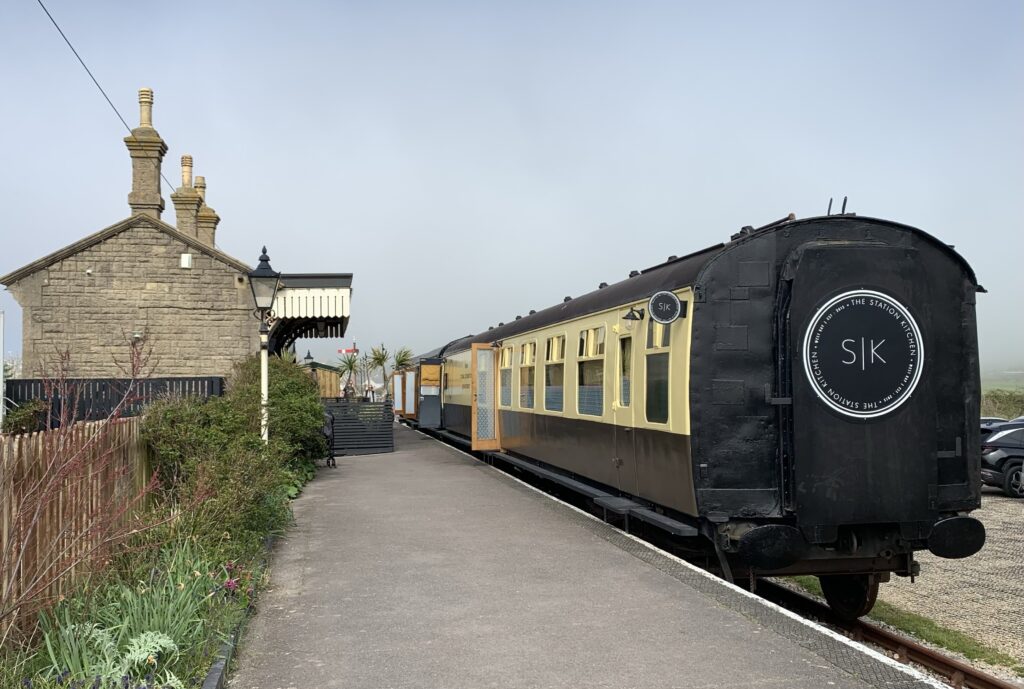
On Sunday, Yoshi, his mama and I made a return visit to the Station Kitchen at West Bay which we last wrote about in November 2022. This time we booked to eat in the old station building which is dog friendly (the carriages are not) and Yoshi joined us for our lunchtime visit. Again, the food was exceptional and our surroundings quirky and fun.
The Station Kitchen at West Bay – 26/02/2023The Station Kitchen, West Bay Lentil, wild mushroom & honeyed carrot roast, farm vegetables, rosemary roasties with a balsamic onion jus. Scrummy! – 26/02/2023Yoshi offers to get the drinks in – The Station Kitchen, West Bay – 26/02/2023
Prior to eating, we took the opportunity to walk the former railway track bed between West Bay and Bridport which is now a footpath and haven for nature. It was much tidier than on previous visits and Yoshi proved himself to be a good boy yet again when he roamed off lead. As the footpath approaches Bridport it rises to meet Burton Road. The original level of the railway crossed beneath the road here at Wanderwell Bridge. The top of the bridge, bore entrance and track bed can still be made out if you look closely. On its way towards Bridport East Street Station, the railway would have passed through Wanderwell and then east of the roundabout junction of Burton Road and West Bay Road. Sea Road South, the A35 Bridport by-pass, now occupies the former track bed and there is no trace left of East Street station, the site now occupied by a garage. Sea Road North has replaced the track bed between East Street Station and Bridport station (also known as Bradpole Road Station).
The start of the former West Bay to Bridport footpath looking north – 26/02/2023Along the route of the former extension from West Bay to Bridport – 26/02/2023
The railway reached Bridport in 1857 being officially opened on 12th November, just over three years after a public meeting in Bridport Town Hall in October 1854 where it was decided a railway branch line to link the town to the main line at Maiden Newton would be built. The Bridport Railway Company was formed and the necessary Act of Parliament passed on 5th May 1855. The operating licence was awarded by the Bridport Railway Company to the Great Western Railway (GWR) who supplied the steam locomotives and rolling stock before taking over the railway completely. An extension to the line running from Bridport to Bridport Harbour was instigated in 1879 with passenger services commencing on 31st March 1884. In an attempt to attract holiday traffic, the GWR named their new station at the harbour; West Bay, popularising the name by which the area is now commonly known. Passenger services to West Bay ceased in 1930 but the line remained open for freight traffic until 3rd December 1962 when only minimal traffic ran including coal and shingle from the beach. The track on the Bridport to West Bay section, which had not long been relaid with concrete sleepers, was removed in March 1965 having been cut into short lengths and sold for scrap.
My well thumbed and well loved copy of “The Bridport Branch” by B L Jackson and M J Tattershall
Our visit prompted me to dig out my copy of “The Bridport Branch” by B L Jackson and M J Tattershall. It was the first railway text book I acquired back in the 1970’s and I recall thinking it a very expensive tome at the time. Most likely my lovely mum financed the purchase and I was surprised to note the cover price was a princely £2.40. Published by the Oxford Publishing Co. (OPC), a leading publisher of railway books back then, the book was first issued in 1976, only a year after the closure of the branch it tells the history of. I would have missed travelling by train from Maiden Newton to Bridport by a couple of years, my interest in railways really taking hold in 1977. The Bridport Branch had been listed for closure as part of the Beeching plan of March 1963. We’ll take a closer look at “The Reshaping of British Railways”, to give the Beeching plan its proper title, next month following the 60thanniversary of its publication, but it is interesting to learn that a notice was posted on 1st September 1964 for the closure of all intermediate stations between Yeovil Pen Mill and Dorchester West, the latter due to be closed on 4th January 1965. However, at a public enquiry held in Yetminster it was argued that it was difficult to see how Maiden Newton could be closed on that date as the Bridport Branch would still be open and for which no notice of closure had yet been issued. The Minister of Transport’s solution was announced on 22nd April 1965; Maiden Newton and Dorchester West were to stay open along with Yetminster, Thornford Halt and Chetnole Halt while Evershot, Cattistock, Bradford Peverell and Grimstone & Frampton would close from 3rd October 1966.
On our way home from West Bay, we stopped off in the village of Bradpole to seek out the crossing gates and short length of rail embedded in the road which is most likely the last original track remaining from the Bridport Branch. The current gates are not original and were replacements made by local carpenters John Gale and Bernie Joy as a memorial to the railway. An adjacent section of the track bed has been grassed over for local residents to enjoy as part of the Railway Gardens and allotments. In December 2022, concerned at the poor repair of the crossing gates, Bradpole Civil Parish Council appealed for help in finding someone with the expertise to renovate them. Following discussions with a local woodwork firm the Parish Council are seeking funds so that a full restoration project can take place later in 2023 which will see a new gate being constructed as it is felt the existing one is now beyond repair.
The crossing gates at Bradpole – 26/02/2023
The Bridport Community Railway has an ambitious plan to restore the link between West Bay and the main line at Maiden Newton with a sustainable narrow gauge tramway and heritage steam operation alongside cycle and foot paths. In January 2021, one of the founding members of the group behind the project is quoted in the local Bridport News as saying; “Around 80 per cent of the feedback we have received has been generally positive. Ten percent are raving fans and ten per cent think we’re in cloud cuckoo land.”
Another lost railway and victim of the Beeching cuts can be celebrated at The Wimborne Railway Society “Railex” Model Railway Exhibition when the award winning Bournemouth West model layout will be on display. Celebrating the days of steam and the much missed Somerset & Dorset line which ran from Bath to Bournemouth West, the site of which now lies underneath the Wessex Way road, the terminus can be seen in all its miniature glory at The Allendale Centre, Hanham Road, Wimborne on 15/16th April 2023.
Bournemouth West in model from as seen in April 2022
For The Record
What is I believe to be the first visit to Dorset of five car Class 701 EMU’s occurred on Tuesday 28th February as No.’s 701509 and 701512 visited Poole working 5Q51 1306 Eastleigh to Eastleigh. Yoshi and I were enjoying our lunchtime walk and completely missed these. I had hoped they would make a return journey to Bournemouth later in the evening, but the associated working did not materialise.
Yet to enter revenue earning service, five car Class 701 No. 701509 nears Eastleigh – 29/03/2022
Engineering trains for the Network Rail work being carried out on the Yeovil Pen Mill to Dorchester West section of the Heart of Wessex Line have so far been headed up by a mixture of Freightliner and Colas Rail workings, involving Class 66 locomotives No.’s 66592/ 66537 / 66192 and Class 70 No. 70811.
Royal Mail ‘Flying Scotsman’ Centenary Stamp Presentation Pack
The Royal Mail have revealed images of a special stamp issue being released on 9th March 2023 to celebrate the centenary of ‘Flying Scotsman’.
The colour version of the ‘Flying Scotsman’ £2 coin
The Royal Mint have also announced the release of a special £2 coin featuring an original design by John Bergdahl and colour artwork by Ffion Gwillim. The coin is available in a range of editions all featuring the edge inscription “Live For The Journey”.
From the May timetable change, the first weekday train to the Bristol area terminating at Filton Abbey Wood from Weymouth timed to depart at 0526 will no longer run and will in future start at Yeovil Pen Mill from where the train will depart at 0618.
That brings us to the end of another week. Thanks for reading! Please keep your comments, corrections and observations coming – they are all appreciated…. even the ones suggesting I include photographs and video clips to make things more interesting. A nice idea, but I’ll carry on as I am for now….
Yoshi almost takes flight at West Bay in front of the iconic East Cliff. There has been much discussion about this being the perfect image for an album cover of doggo songs by Yoshi; “Ears In The Wind” – 26/02/2023We’ll leave you with one more image of the SITT top and tailed by GBRf Class 66 locos No.’s 66730 ‘Whitemoor’ and 66789 ‘British Rail 1948-1997’ at Redbridge – 25/02/2023
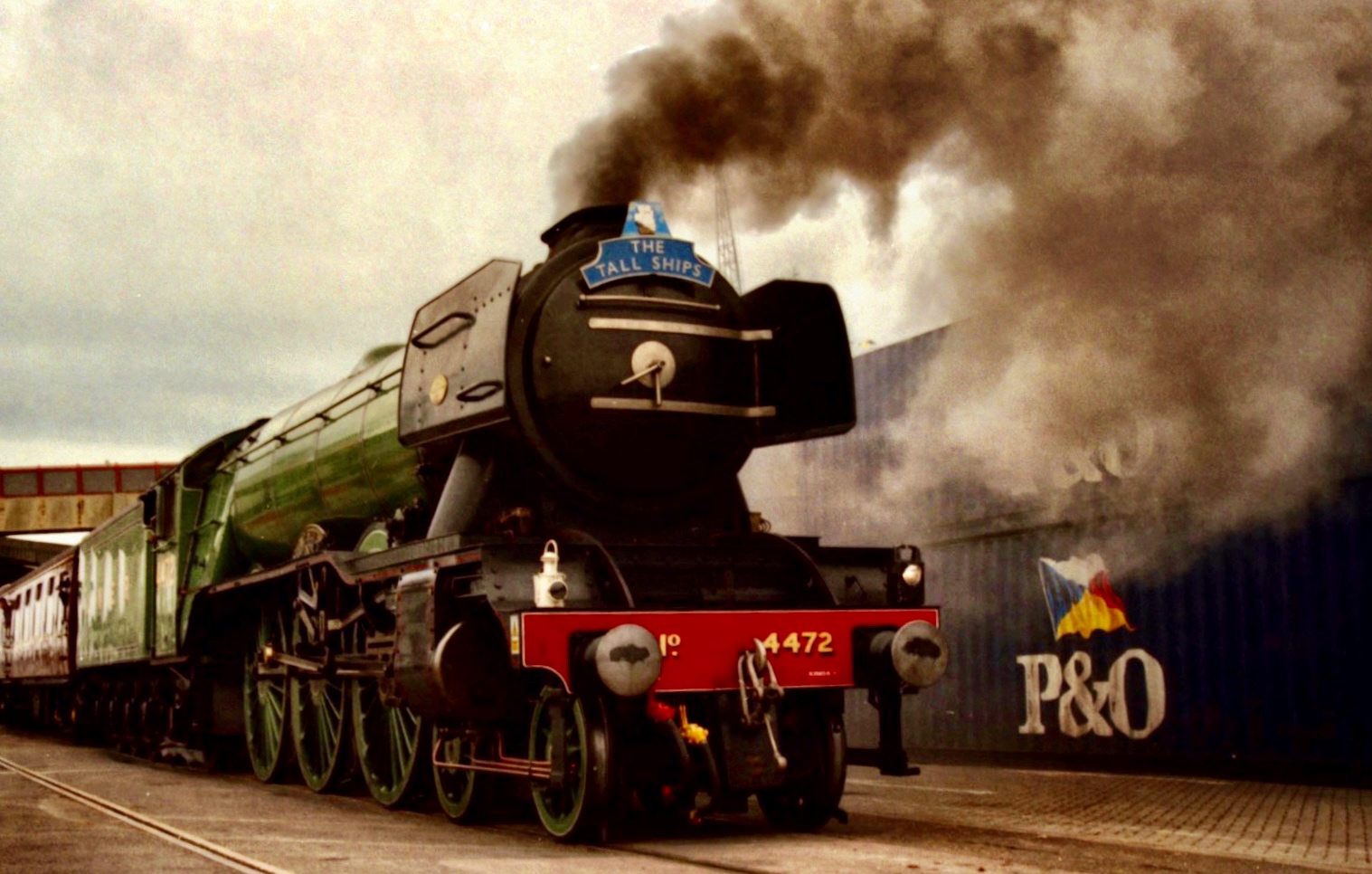
Gresley A3 Pacific No. 4472 ‘Flying Scotsman’ at Southampton Docks in an unauthentic condition in LNER Apple Green but with double chimney and smoke deflectors from BR days – 16/04/2000
Wednesday February 15th to Tuesday February 21st 2023
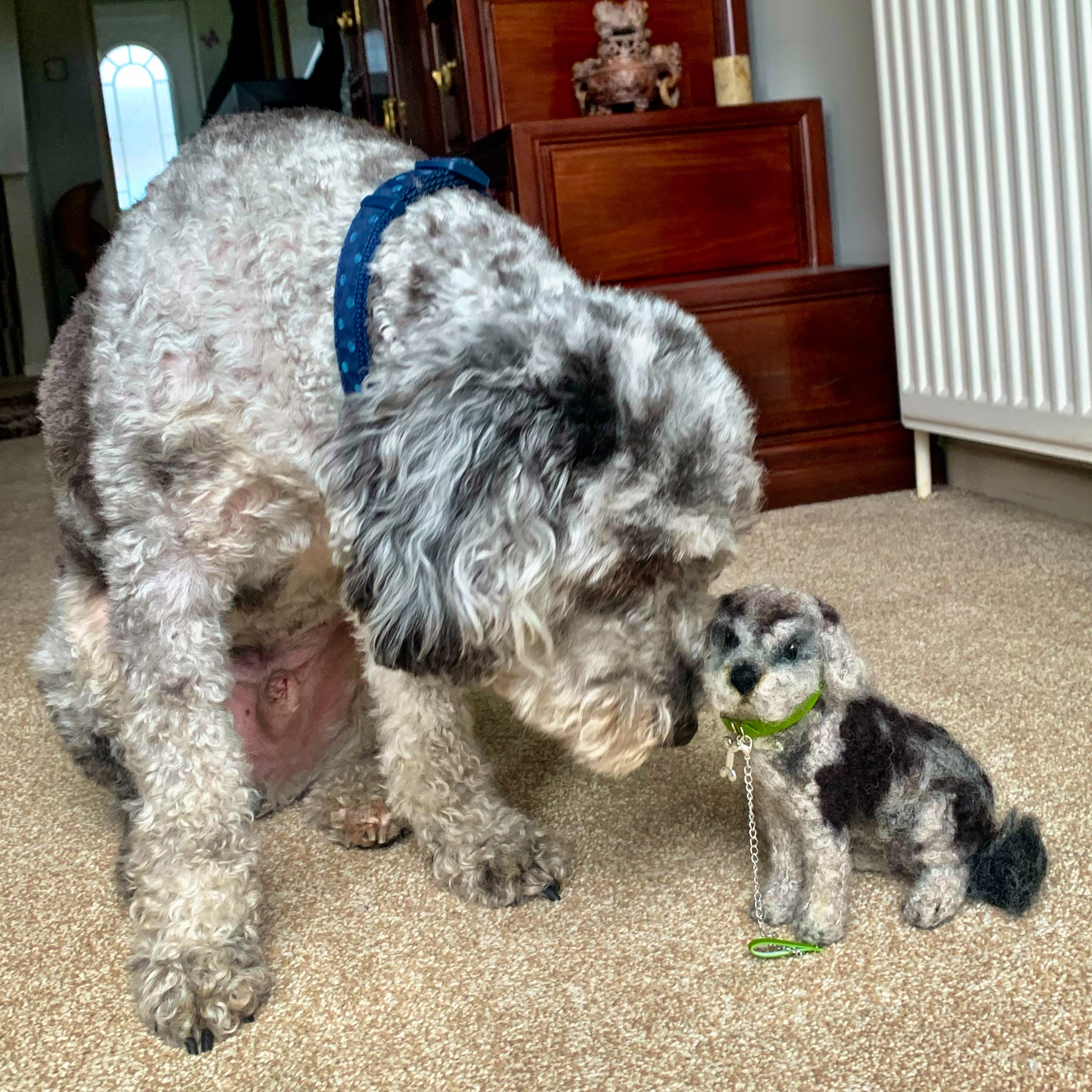
The week kicked off with the delivery of a little Yoshi from ArtemisFibreArt, which the boy himself was rather intrigued about. Thankfully he decided against tearing it apart as is his usual reaction to soft toys. He recognises a handsome boy when he sees one!
Yoshi meets…. Little YoshiYoshi and the fabulous replica Little Yoshi from ArtemisFibreArt
24th February 2023 marks 100 years since the third A1 Class 4-6-2 Pacific locomotive left Doncaster Works for the very first time and entered service with the London & North Eastern Railway. As if we haven’t written enough about this particular loco in previous blog entries, here’s another look at her history. Designed by Sir Nigel Gresley and originally numbered 1472 in a sequence originated by the Great Northern Railway who had placed the order for 51 Class A1’s prior to the “Big Four” Grouping of January 1923. A year later the LNER renumbered her No. 4472 and she gained the name ‘Flying Scotsman’ after the eponymous titled train in readiness for display at the British Empire Exhibition at Wembley.
In 1928, ‘Flying Scotsman’ ran a non-stop passenger service between London King’s Cross and Edinburgh, this was achieved by means of another Gresley innovation; a corridor tender allowing drivers and firemen to pass through to the locomotive footplate from the leading train carriage. Water for the engine was picked up en-route from troughs set between the rails.
1st November 1934 No. 4472 became the first steam locomotive to be officially recorded at travelling at 100 miles per hour as she passed between Little Bytham and Essendale on the East Coast Main Line.
In 1946 the LNER introduced an extensive renumbering scheme with the aim of placing all locomotives of the same type in a numerical sequence. ‘Flying Scotsman’ was renumbered twice this year, firstly in January as No. 502 by Gresley’s successor Edward Thompson and then No. 103 in May. After the Nationalisation of the railways in 1948 60000 was added to LNER engine numbers and consequently No. 103 became No. 60103.
January 1947 ‘Flying Scotsman’ was converted from a Class A1 locomotive to an A3 under a programme initiated by Gresley in 1928 which added a larger boiler with a higher boiler pressure. A double Kylchap chimney was added in 1959 to improve performance with German style smoke deflectors being added in 1961 as the exhaust from the new chimney blocked the drivers view.
Things looked bleak in October 1962 when it was announced ‘Flying Scotsman’ would be withdrawn from service in January 1963 and sent for scrap. Holder of the steam speed record Gresley A4 4-6-2 Pacific No. 60022 ‘Mallard’ was to be saved for the nation and it was deemed that only one locomotive of any given wheel arrangement per designer could be preserved.
After a failed public appeal to “Save Our Scotsman” by raising the £3000 scrap value, businessman Alan Peglar, fresh from selling his Northern Rubber business and with money to burn stepped in and purchased No. 60103 from British Railways in 1963. As part of the deal, Peglar negotiated an agreement for ‘Flying Scotsman’ to run on the main line until 1966 with options to 1971. The locomotive was overhauled at Doncaster emerging in LNER Apple Green and carrying the number 4472 once again. In 1969, the locomotive was heading for USA and Canada on a tour where she travelled 15,400 miles to promote British exports where, after initial success, UK Board of Trade backing was withdrawn and by 1970 money was running out. As a result, in 1972 Peglar was declared bankrupt and ‘Flying Scotsman’ was put into storage in the US Army Sharpe Depot to keep her safe from creditors.
No. 4472 ‘Flying Scotsman’ working the “Cumbrian Mountain Express” over the Settle & Carlisle stops at Garsdale for water – 22/07/1981
Enter Sir William McAlpine, who stepped in and bought the locomotive, shipping her home in 1973. Following restoration at Derby, ‘Flying Scotsman’ embarked on a career running on the UK main line and heritage railways. In October 1988 she made a trip to Australia where over the next year she travelled more than 28,000 miles and set the record for the longest non-stop run by a steam locomotive totalling 422 miles having journeyed between Parkes and Broken Hill in New South Wales. On her return to the UK, ‘Flying Scotsman’ would eventually come under new ownership, that of a new consortium “Flying Scotsman Railways” which included Sir William McAlpine and record producer and railway enthusiast Pete Waterman. In 1993, she was outshopped in BR Brunswick Green, complete with double chimney and smoke deflectors representing how she looked at the end of her working life on BR.
Following restoration to final BR condition, No. 60103 ‘Flying Scotsman’ headed for the Paignton & Dartmouth Railway where her visit lasted from 25th July to 11th September 1993
No. 60103 ‘Flying Scotsman’ visited Llangollen in 1995
April 1995, while working an empty coaching stock movement on the Llangollen Railway, ‘Flying Scotsman’ derailed and suffered a crack between her boiler and cab. She was deemed to be a complete failure and was taken to Southall to face an uncertain future. Experiencing financial difficulties, the consortium sold ‘Flying Scotsman’ to biotech entrepreneur Dr Tony Marchington in 1996 for £1.5m in a deal which included a set of coaches. Over the next three years Dr Marchington spent a further £1m restoring the locomotive which he returned to the main line in 1999. Following a failed attempt to create a “Flying Scotsman Village” in Edinburgh and the collapse of his company Oxford Molecular, Dr Marchington was bankrupted in September 2003. ‘Flying Scotsman’ was put up for sale in 2004 and there was a real fear that the locomotive would be sold abroad. However, to the relief of many, a huge public appeal was launched by the National Railway Museum (NRM) and on 5th April 2004 it was announced that the NRM had been successful with their sealed £2.2m auction bid, which had been boosted by a £1.8m grant from the National Heritage Memorial Fund. ‘Flying Scotsman’, a locomotive which perhaps more than any other represents the people’s engine had finally been saved for the nation. Unfortunately No. 60103 required a great deal of work to return her to steam with an estimated 12 month £750,000 restoration commencing in 2005. In reality, it would take 10 years and £4.2m before a warming fire could be lit in the overhauled firebox of ‘Flying Scotsman’. On her first public runs in January 2016 following restoration, she was seen in a wartime black livery on the East Lancashire Railway.
Still in wartime black livery with No. 60103 on the smokebox and No’s 103 and 502 on opposite cab sides, her first mainline outing following overhaul was on 6th February 2016 at the head of “The Winter Cumbrian Mountain Express” from Carnforth to Carlisle. Myself and @da_buckley967 decided to drive from Dorset to Cumbria to see the spectacle of ‘Flying Scotsman’ climbing Shap on the West Coast Main Line.
“The Winter Cumbrian Mountain Express” – 06/02/2016
Showing just how popular No. 60103 ‘Flying Scotsman’ has become is evident in this scene as she passes through Romsey with “The Cathedrals Express” rail tour on 21st May 2016
Steam Dreams ‘Flying Scotsman’ London to Winchester and Afternoon Tour from Southampton – 06/06/2021
Ahead of her centenary year celebrations, ‘Flying Scotsman’ underwent another overhaul at Riley & Son in Bury, the first event following this being her attendance at London King’s Cross to help celebrate the railway station’s 170th anniversary and launch her own event programme before she arrived in Dorset for a stint on the Swanage Railway.
For more ‘Flying Scotsman’ goodness, you might like to check out these “Railway Dog” blog entries from 2022 which feature more images and video:
From 27th February to 3rd March 2023 no weekday trains will run between Yeovil Pen Mill and Dorchester West to allow Network Rail to lay new track and carry out other maintenance, including station improvements at Maiden Newton. The closure extends to include the Yeovil to Castle Cary section on 6th and 7th March affecting Great Western Railway (GWR) and South Western Railway (SWR) services.
In no way connected to the forthcoming closure “up the West”, Monday 20th and Tuesday 21st February 2023 saw Freightliner Engineering Trains head to Dorchester South. A further train was scheduled to depart Eastleigh East Yard for Upwey on Wednesday 22/02/2023.
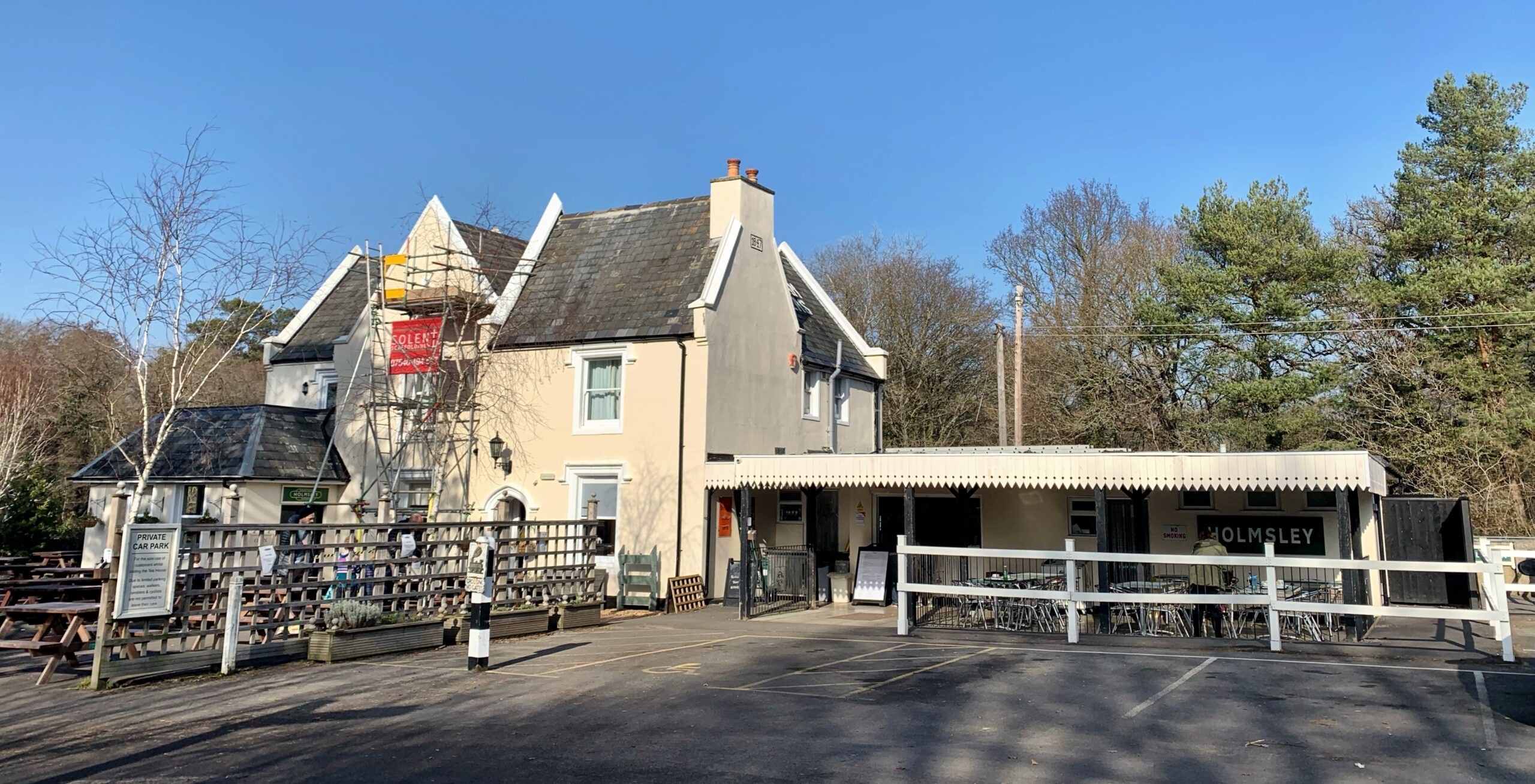
In another of our occasional visits to cafes which happen to be situated in former railway stations, on Wednesday 15th February, we popped over the county border to Hampshire in order to visit The Old Station Tea Rooms at Homsley.
The Old Station Tea Rooms at Homsley – 15/02/2023
Opened in 1874 as Christchurch Road railway station by the Southampton & Dorchester Railway it was, at the time, the closest station to Bournemouth and Christchurch, becoming Holmsley station in 1894. Prince Edward, the eldest son of Queen Victoria was a regular user of the station with his mistress Lillie Langtry as it was here where they would embark on their way to their private residence in Bournemouth. Holmsley was also the inspitration for Browndean station in Robert Louis Stephenson’s novel “The Wrong Box”.
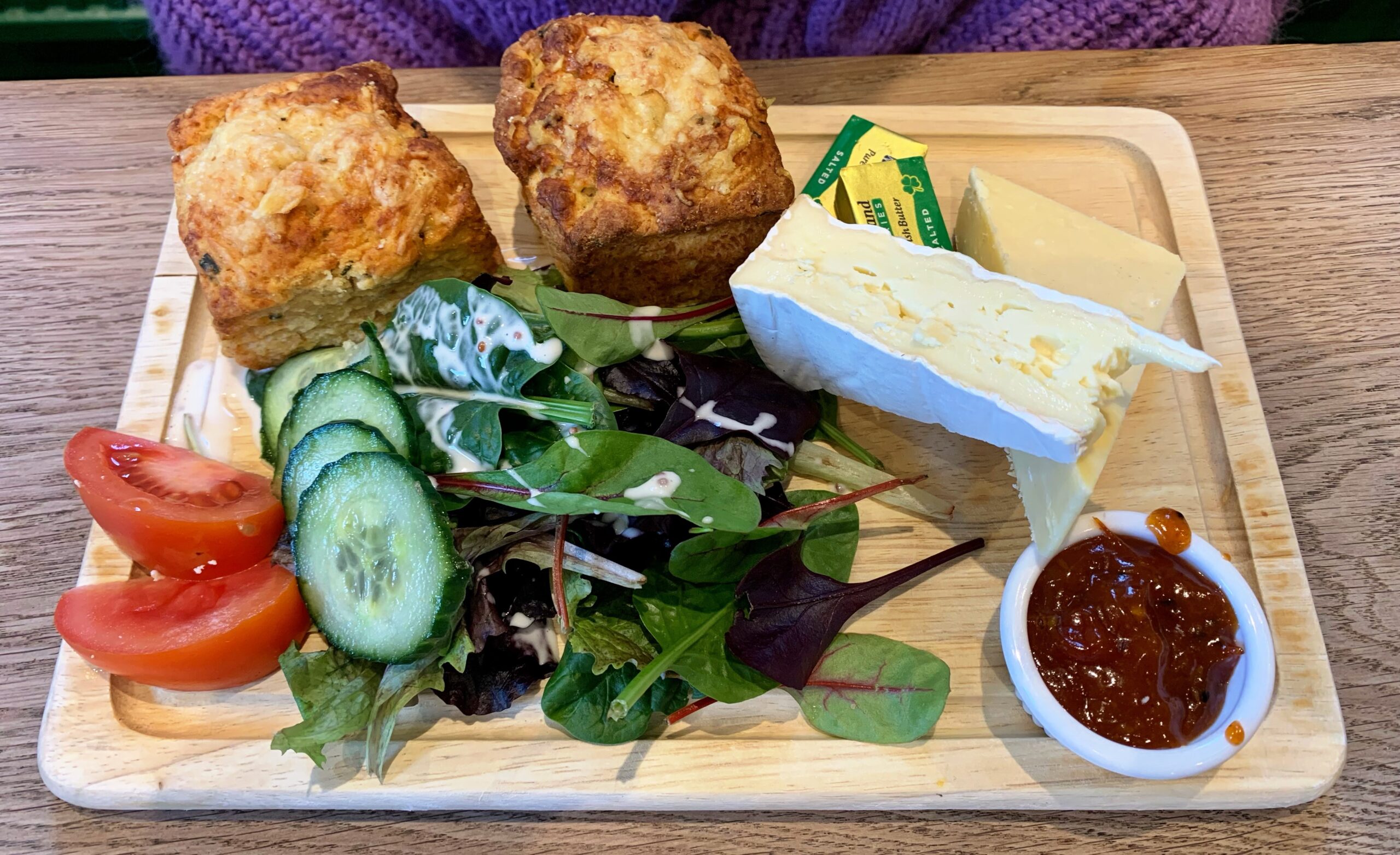
Porters Lunch BoxStation Managers Rarebit
Holmsley station was closed on May 4th 1964 as a result of the Beeching Report. Today the main station building lives on, repurposed as a tea room with several items of railway memorabilia and photographs on display. Dogs are welcome at outside tables, of which there are many, and the food is delicious. Walks along the Castleman Railway utilising the old rail road to Ringwood, Wimborne and Poole can be enjoyed nearby.
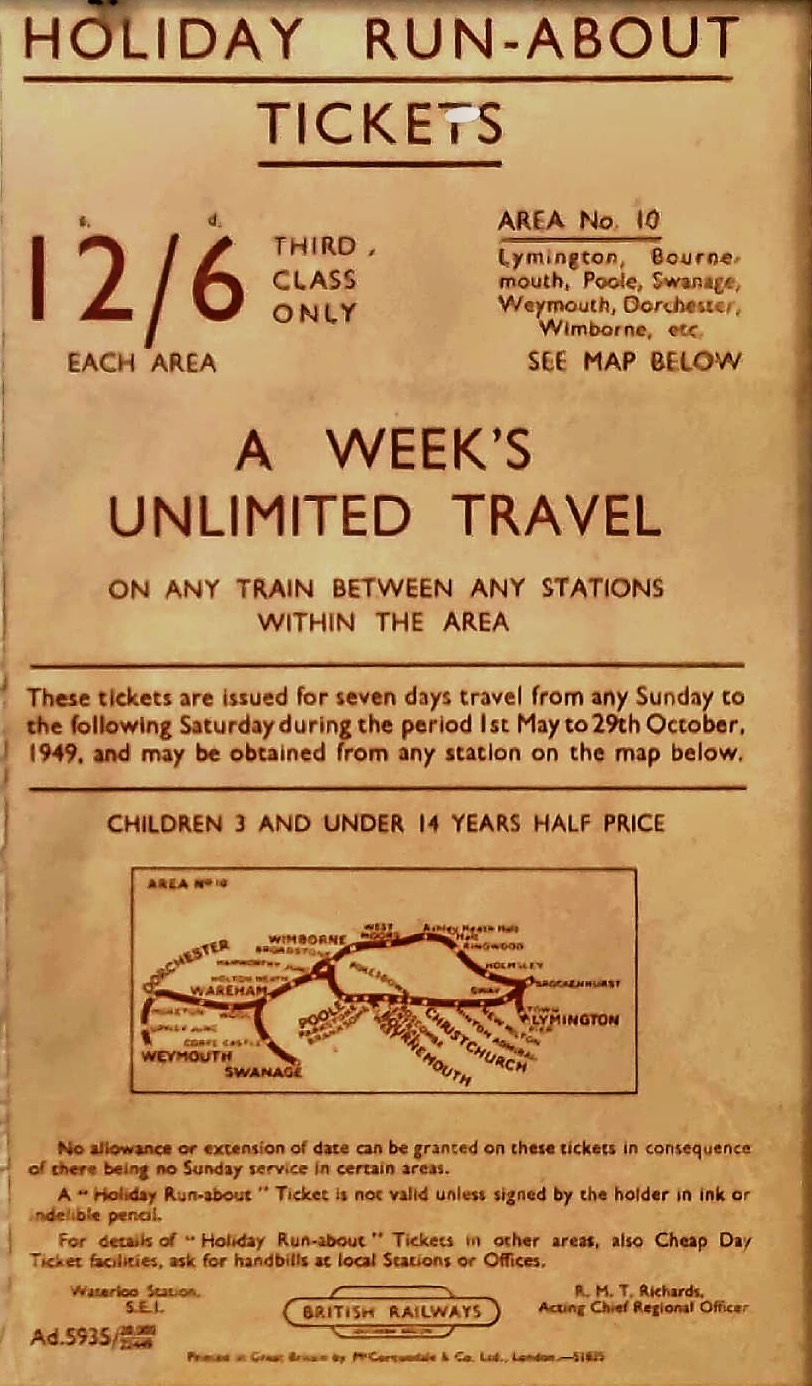
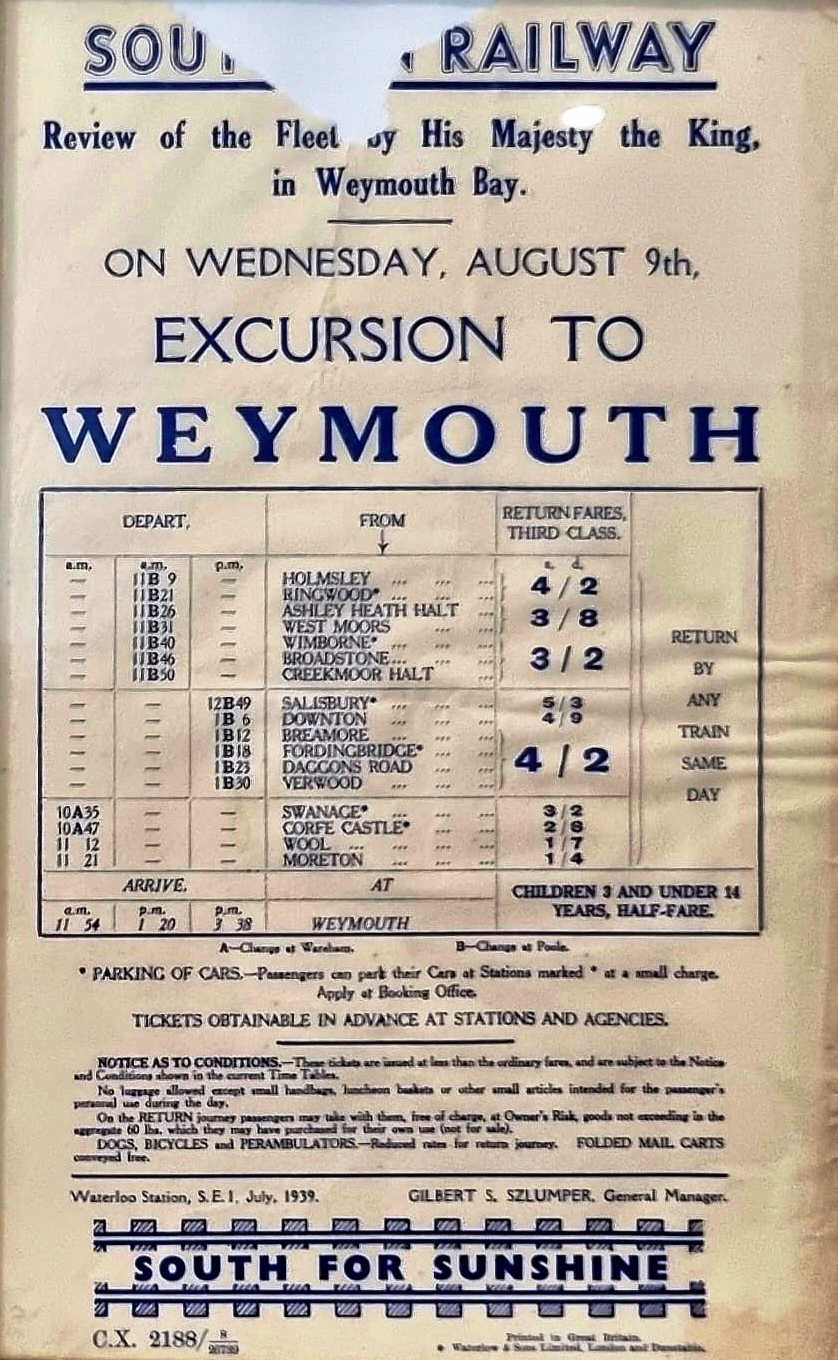
An example of the railway themed memorabilia which can seen at The Old Station Tea Rooms, HomsleyReview the fleet at Weymouth!
That brings us to the end of another entry. Thanks for visiting and we hope to see you again another time. Your comments, corrections and observations are very much appreciated. Recommendations for cafes situated in former railway stations are welcome! This weeks blog was mostly written with the aid of tea, Galaxy Milk Chocolate Digestive biscuits to the accompaniment of Pink Floyd’s “The Dark Side Of The Moon” – which, amazingly, is 50 years old next Wednesday (1st March 2023). Time, eh?
Yoshi has spotted a squirrel, or a possibly Class 444 Electric Multiple Unit. They both deserve being barked at….
Wednesday 7th December 2022 to Tuesday 13th December 2022
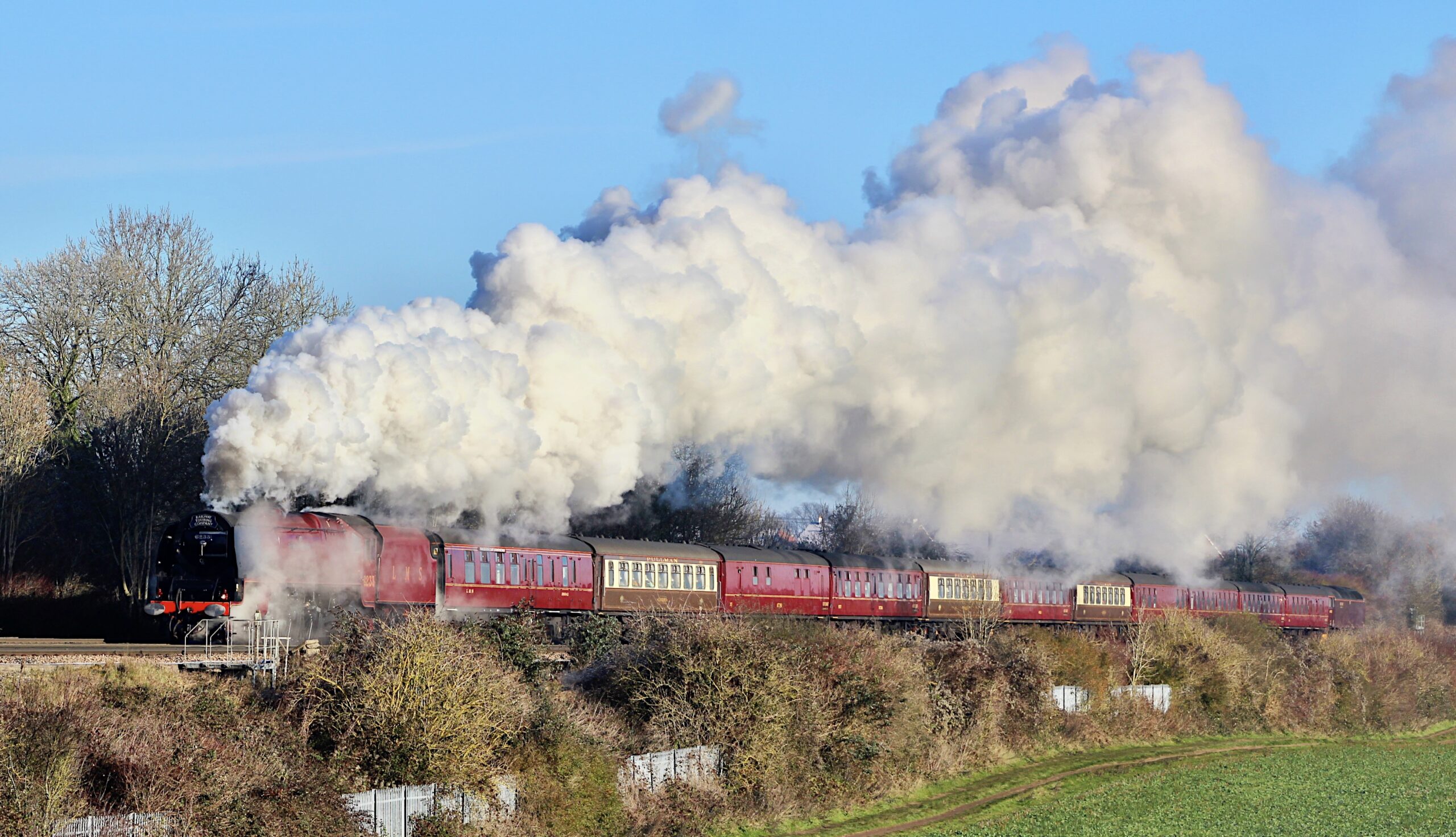
LMS Coronation Pacific No. 6233 ‘Duchess of Sutherland’ at Worting Junction working The Railway Touring Company’s “The Bath & Bristol Christmas Market” 1Z82 0847 London Victoria to Bristol Temple Meads – 10/12/2022
This week, Yoshi and I took a trip along the Southern Railway West Coastway route to witness the final days of the Class 313 electric multiple units (EMU), saw LMS Coronation Pacific No. 6233 ‘Duchess of Sutherland’ storming past Worting Junction and took in some Great Western Castle Class HST’s in frosty conditions.
Class 313
In preparation of spending a day on the Western Coastway route to see Class 313 emu’s, we had pre-booked our Southern Daysave ticket well in advance, and paid extra for next day delivery to avoid the postal strikes. It was a good job we did, as the ticket still took four days to arrive. So, on Friday 9th December we set off on a South Western Railway (SWR) service for Southampton (where we saw a couple of passing Class 66 hauled freight workings) to pick up a Southampton to London Victoria train which would take us to Barnham where we changed platforms to get a Class 313 operated shuttle to Bognor Regis. These are the last days of the Class 313’s and we hoped to record some of the units still in service.
The three-car Class 313’s were the first production, second generation, EMU’s built as a direct result of trials in 1972 with the PEP prototypes on British Rail Southern Region. I remember seeing at least one of the PEP units at Wimbledon on my first train journey to London in the early 1970’s. I may not have been an avid rail enthusiast at the time, but I’d clearly read about the new trains being introduced by British Rail. None of the prototypes survive and they were all cut up by 1990.
PEP Unit No. 4002 in the sidings at Wimbledon – 27/08/1982
The production-run classes which are most visibly similar to the PEP Stock are the dual voltage 750 V DC third rail / 25 kV AC overhead power collection Class 313, the 25 kV AC Classes 314 and 315, and the 750 V DC Classes 507 and 508. We covered the 507’s and 508’s earlier in the year when we visited Stockport. You can read about that adventure here.
A fleet of 64 three car sets were built by British Rail Engineering Limited (BREL) in York in 1976/1977 and were intended for the then newly modernised and electrified Great Northern inner suburban lines. The front end doors were designed for evacuation in an emergency in a single bore tunnel and the fleet were constructed to take in the slightly restricted loading gauge between Drayton Park and Moorgate.
Class 313 No. 313008 at Finsbury Park with a service to Moorgate – 30/10/1980
Upon privatisation, the 313’s were operated by Silverlink Railways and West Anglia Great Northern (WAGN) and later, in 2007, the class were transferred to London Overground who ran them until September 2010.
19 Class 313’s were modified for DC pick up only at Wolverton works and transferred to Southern to operate on the Coastway services out of Brighton from May 2010. These were deliveries into GTR Southern green and white with pictogram route branding. The remaining Great Northern members of the class were all withdrawn from service and scrapped by the end of 2019.
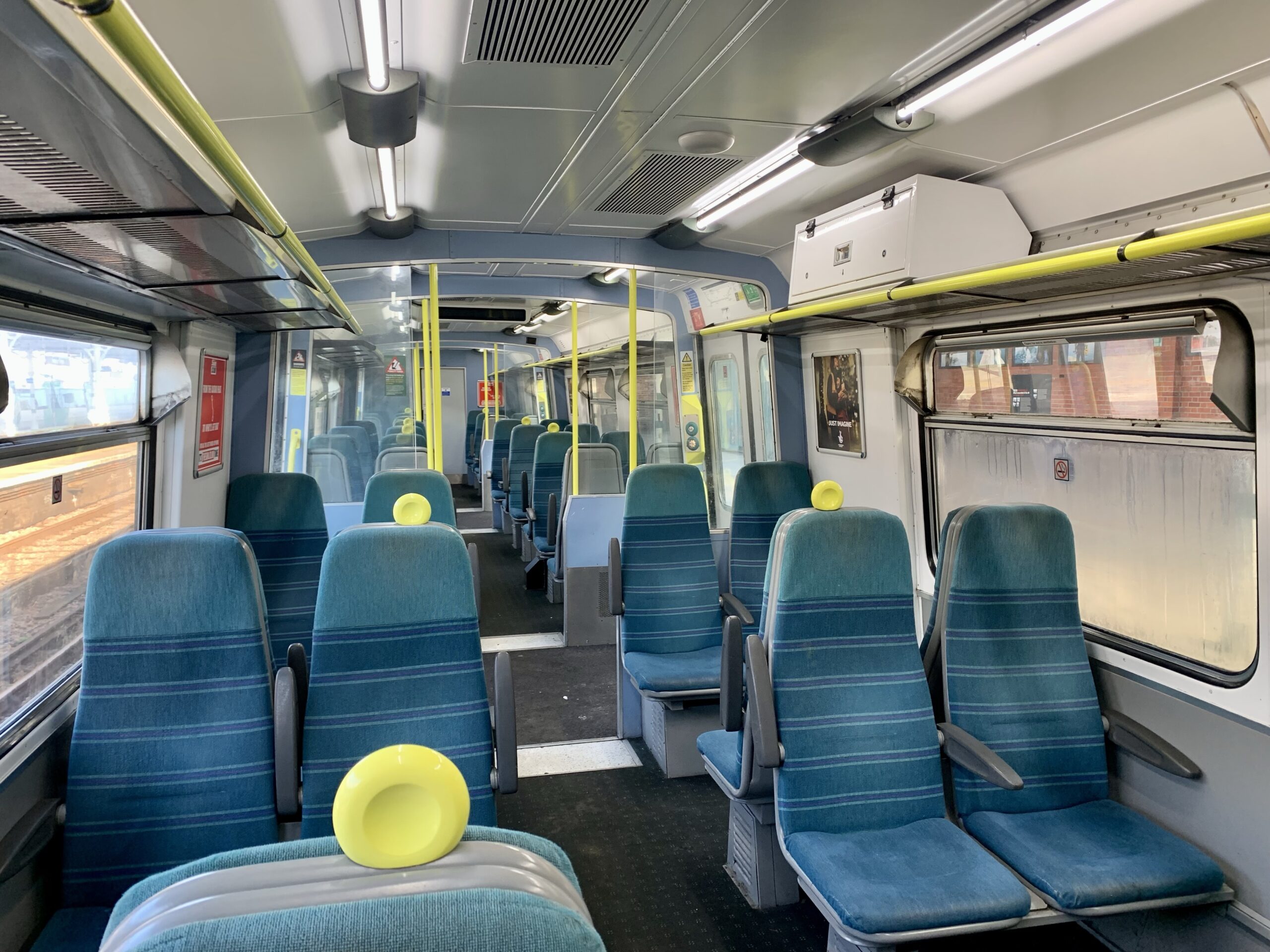
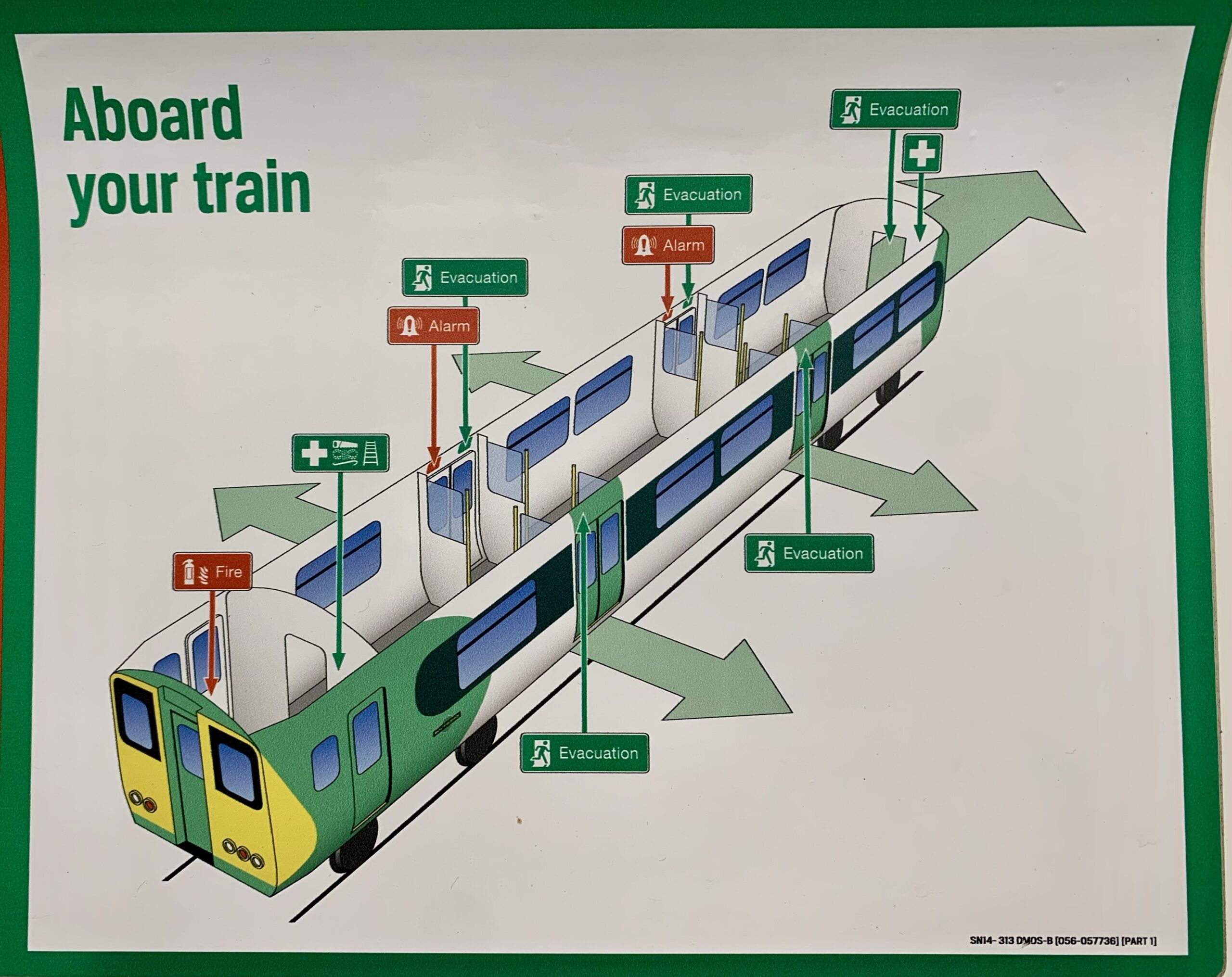
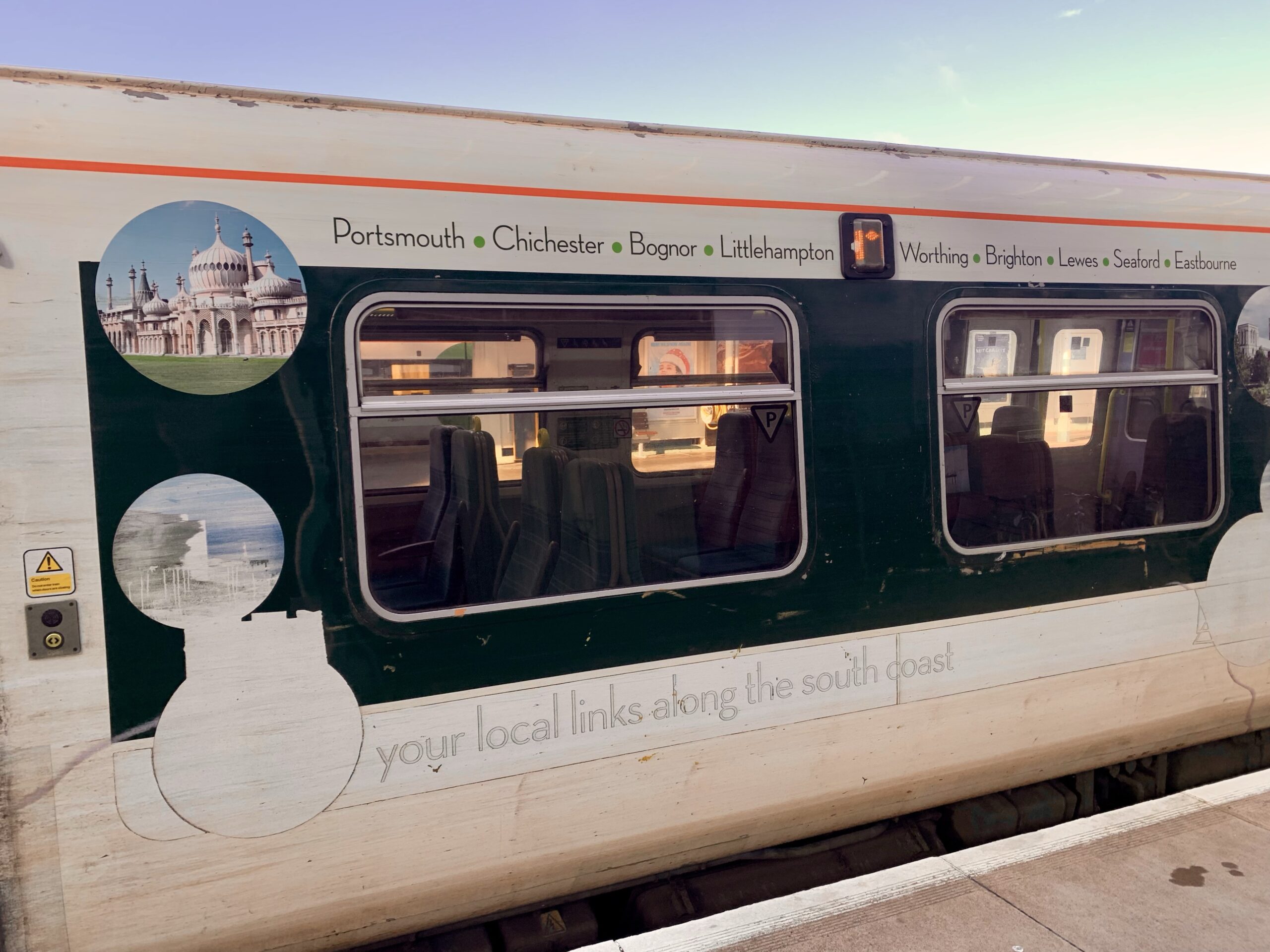
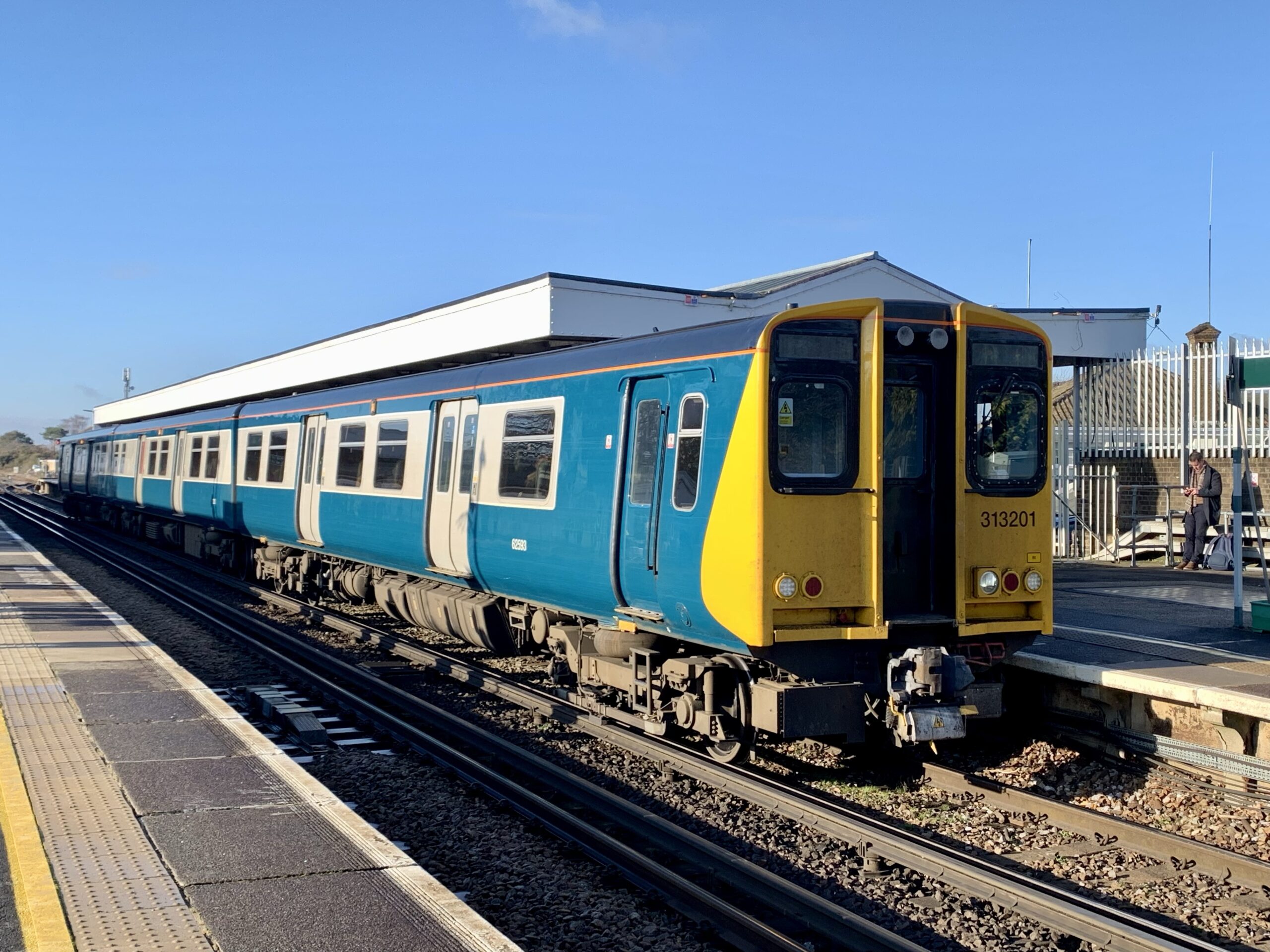
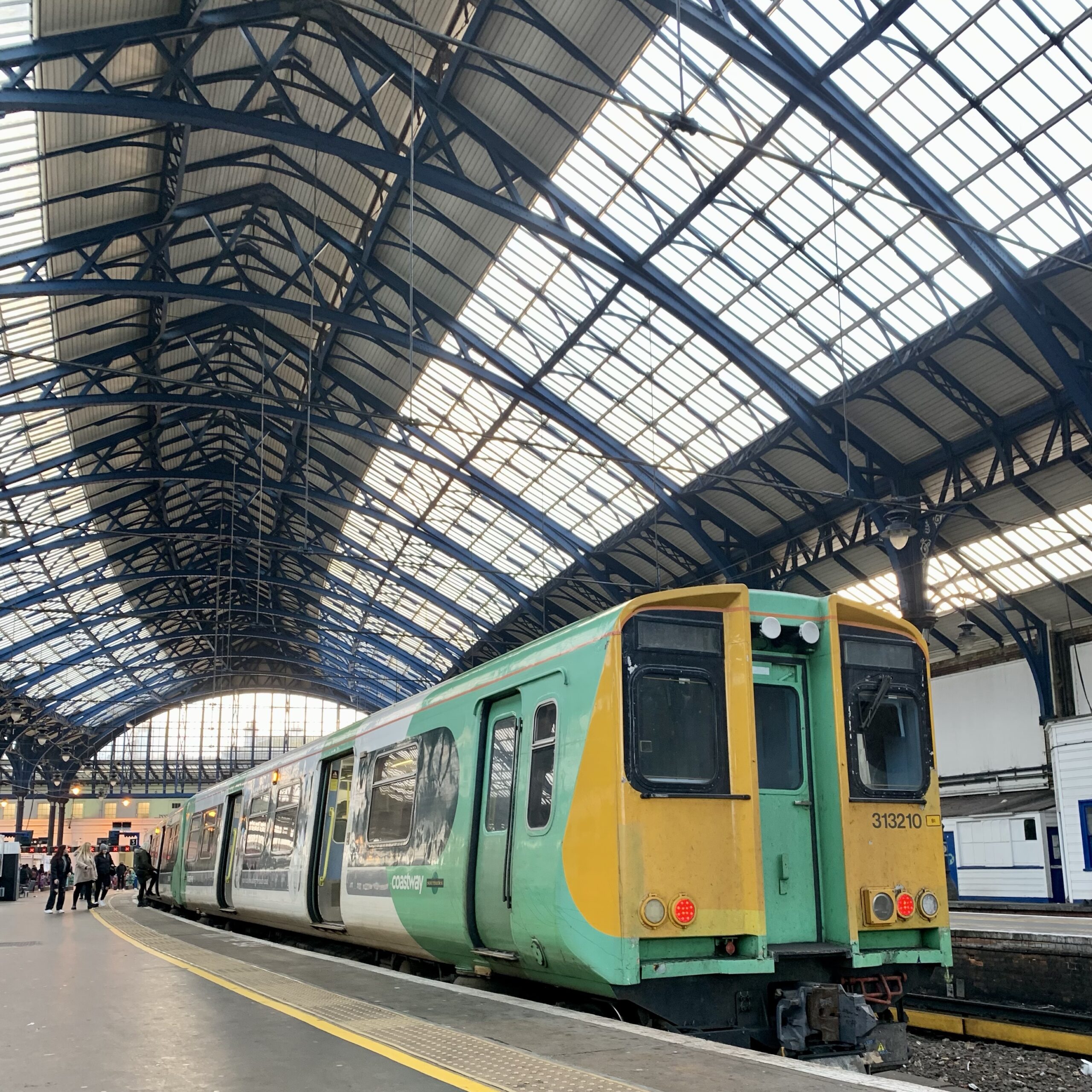
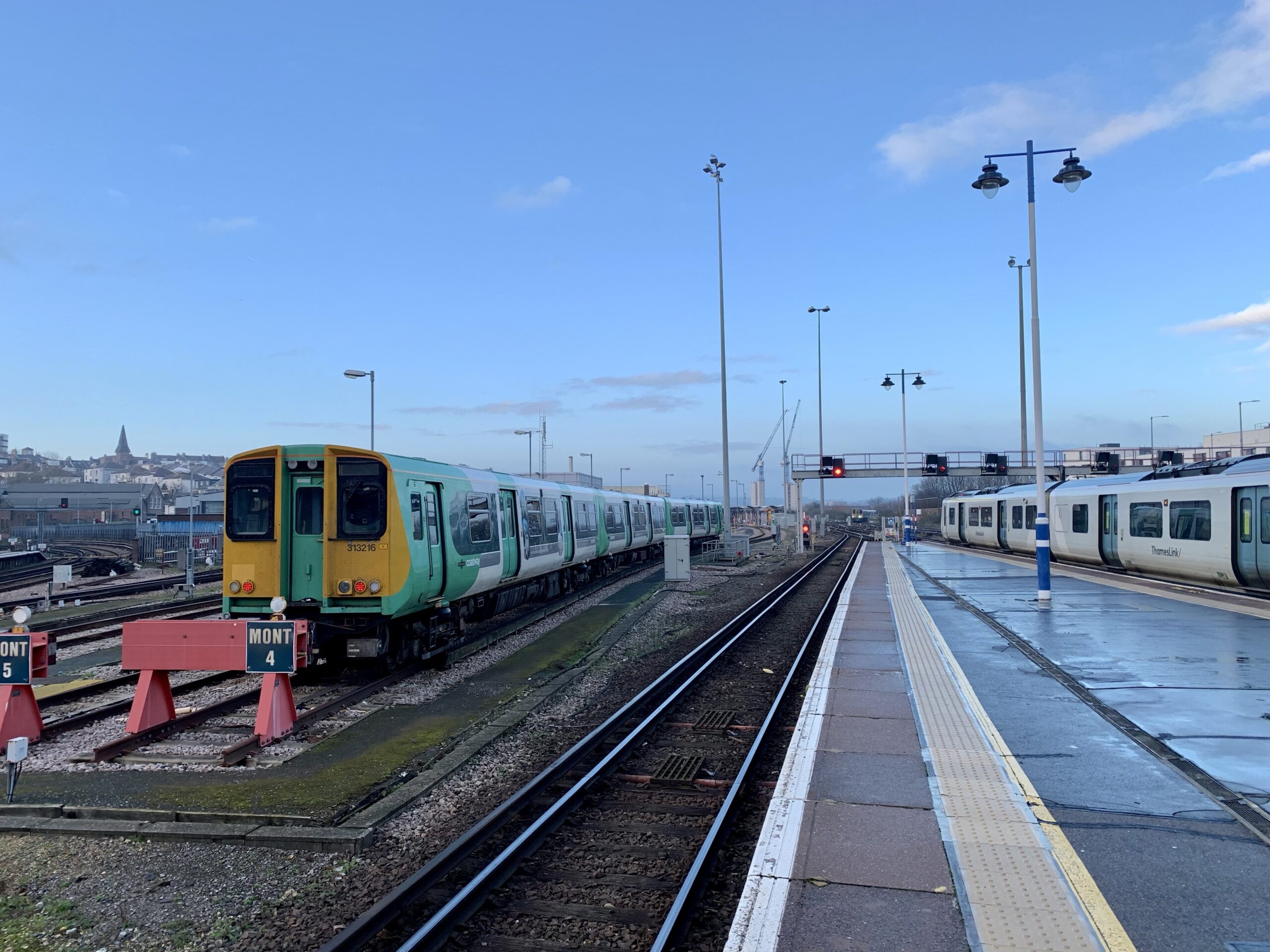
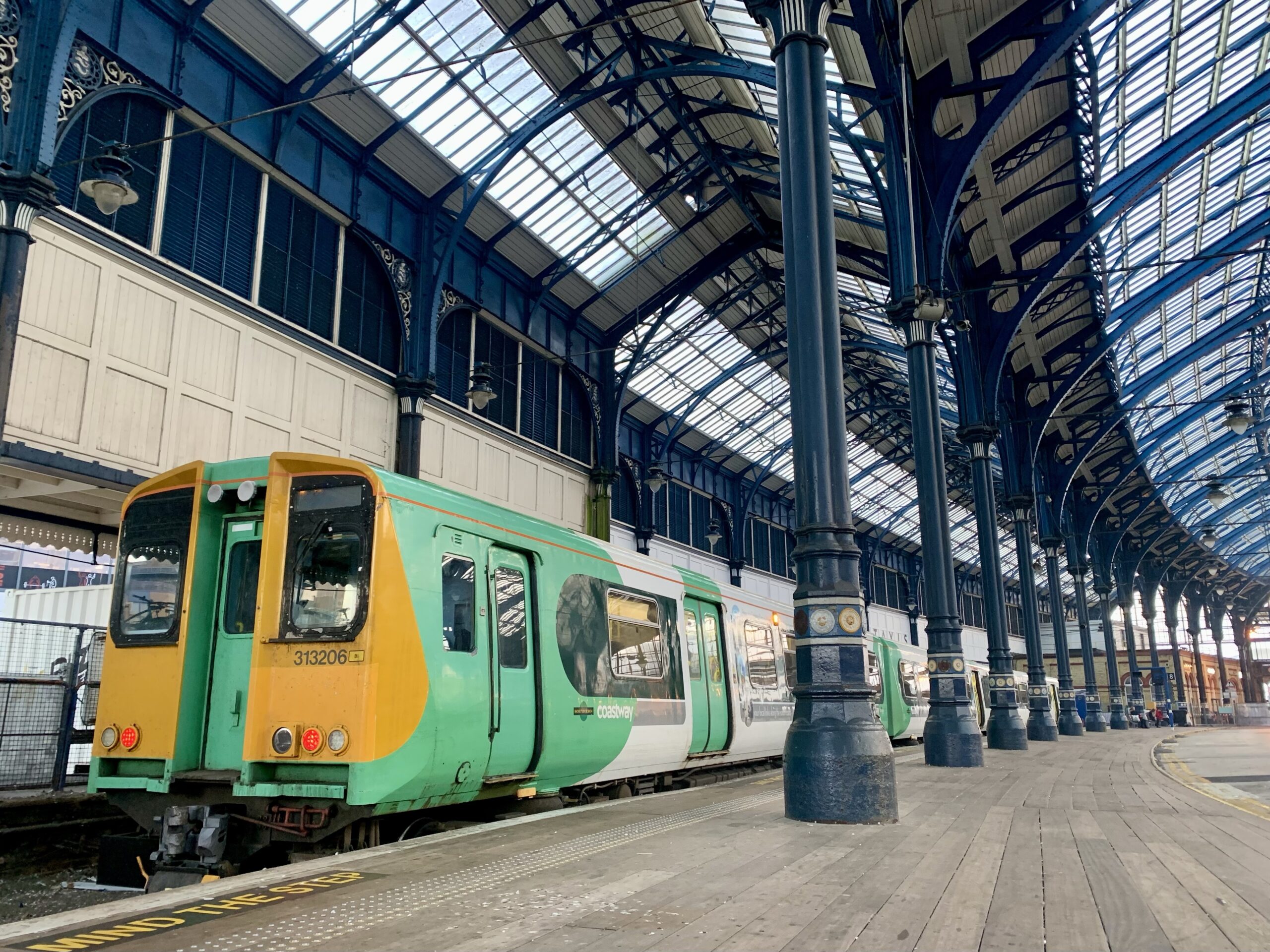
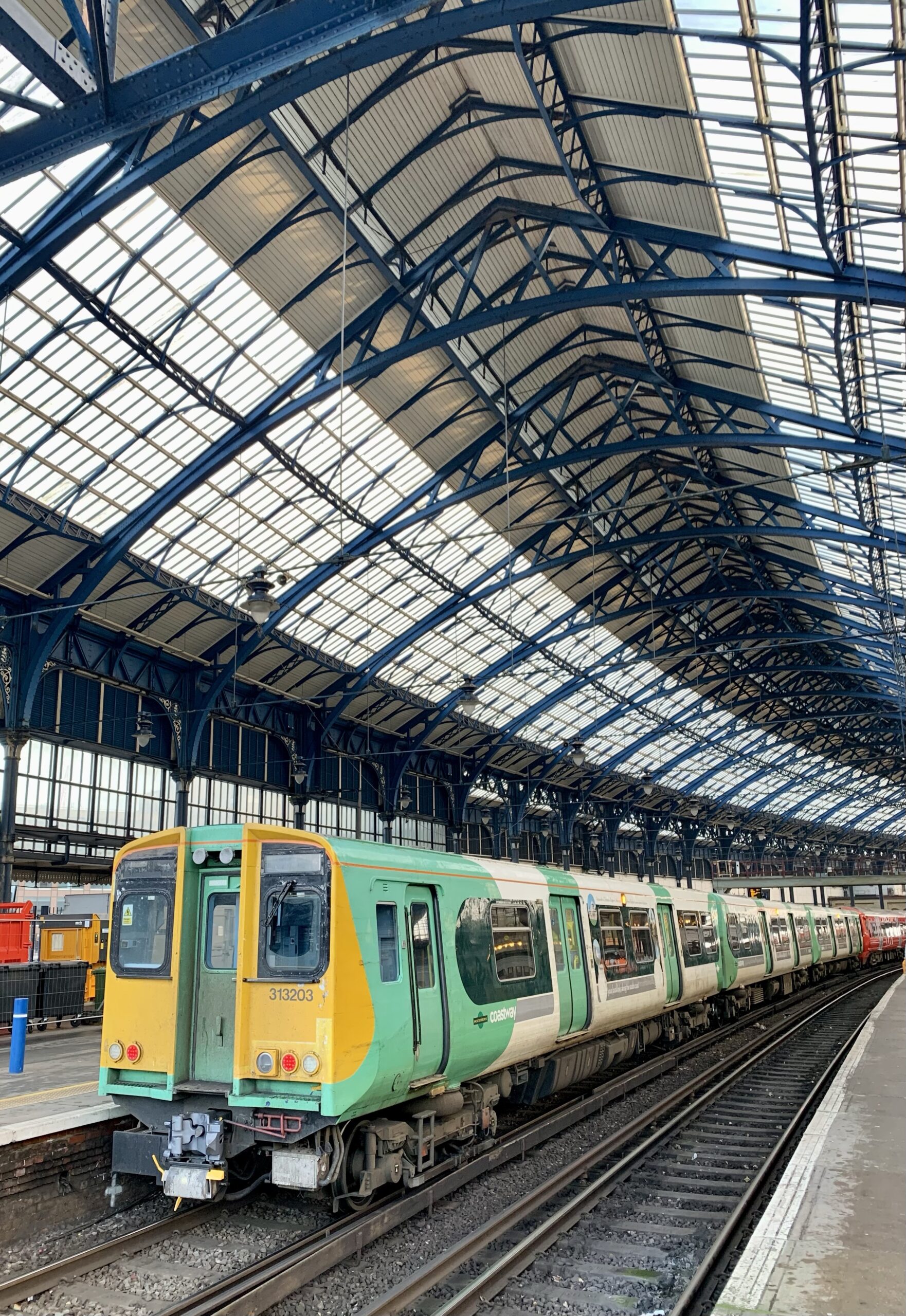
Yoshi gets up close to Class 313 No. 313207 at Bognor Regis having worked in with the 2P26 1053 service from Littlehampton – 09/12/2022When the Class 313’s were transferred to GTR Southern from May 2010 the sets were overhauled and the interiors refurbished with new seating in low-density 2+2 style using high backed seating – 09/12/2022Southern Class 313 onboard diagram – 09/12/2022Faded branding detail applied the intermediate coach of Coastway Class 313 No. 313207 (and other members of the class) on transfer to GTR Southern promoting the route Portsmouth, Chichester, Bognor, Littlehampton, Worthing, Brighton, Lewes, Seaford and Eastbourne – 09/12/2022In 2017 No. 313201, the first of the class to be built and therefore the oldest operational EMU in use in the UK, was repainted into as near as possible the BR blue/grey livery and it is believed the unit is destined for the National Collection. Because of disability reasons, the unit has contrasting colour doors and is seen here at Barnham – 09/12/2022On transfer to GTR Southern, the fleet was repainted in GTR Southern white and green. Class 313 No. 313210 at Brighton having arrived with Not being used on the day of our visit, Class 313 No. 313216 in the sidings at Brighton – 09/12/2022Class 313 No. 313206 at Brighton having arrived with the 1453 service from Seaford – 09/12/2022Class 313 No. 313203 has a short rest at Brighton prior to working the 1511 Brighton to Seaford service – 09/12/2022
Coastway Class 313’s – 09/12/2022Class 313 No. 313121 transferred to Network Rail in 2013 for use as a dynamic test vehicle for the development of the European Traffic Control System (ETCS). The set is based at Eastleigh Arlington where it is seen here – 30/01/2022 Development set 313 No. 313121 at Arlington Works, Eastleigh – 02/07/2022
Sherwood Forester
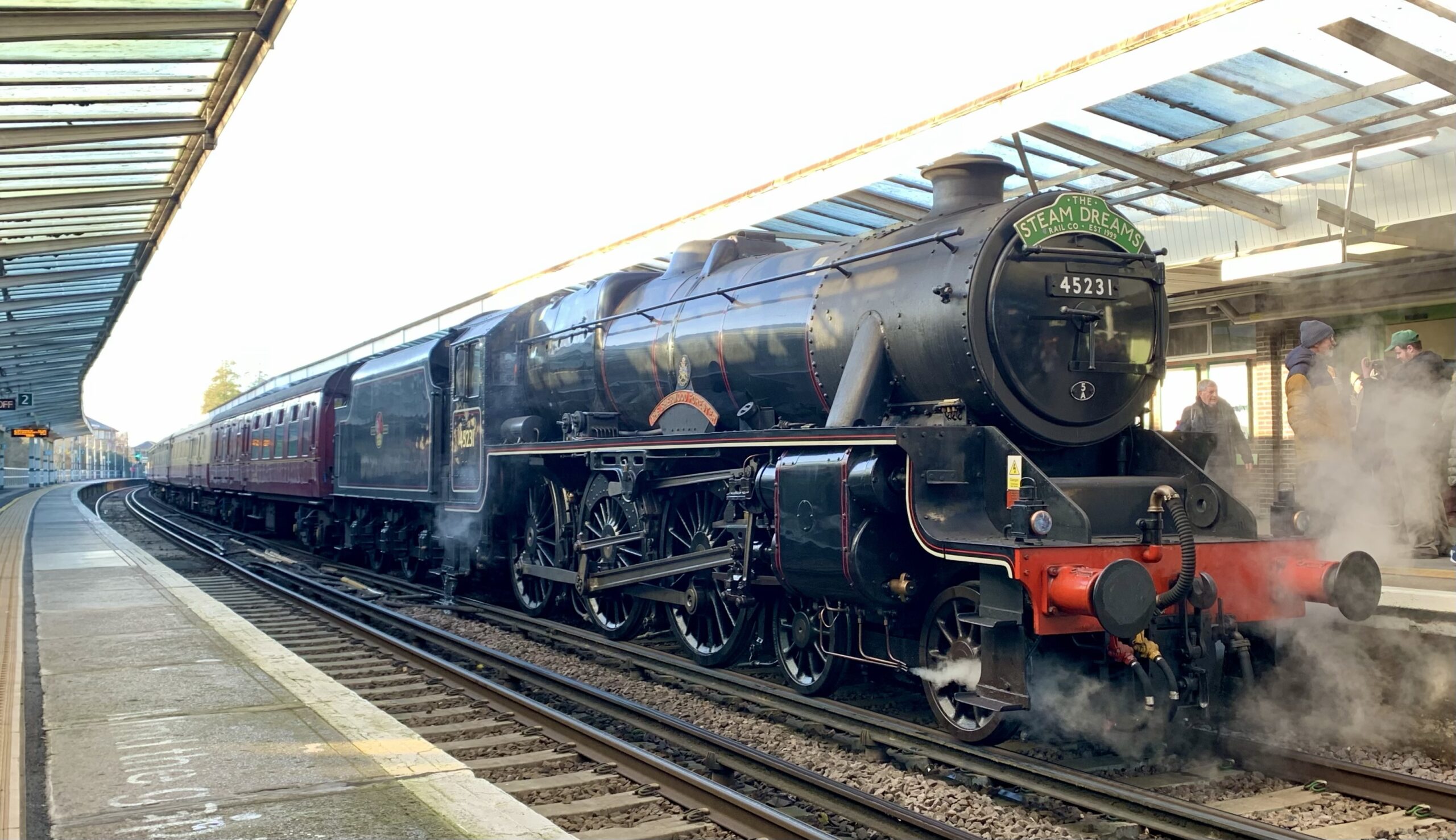
While on our Class 313 mission, we spent an hour at Chichester to coincide with the arrival of the steam hauled “Chichester For Carols” rail tour operated by Steam Dreams. Arriving just over half an hour late and with some confusion as to which platform the train was going to arrive on, LMS Black Five No. 45231 ‘Sherwood Forester’ hove into view.
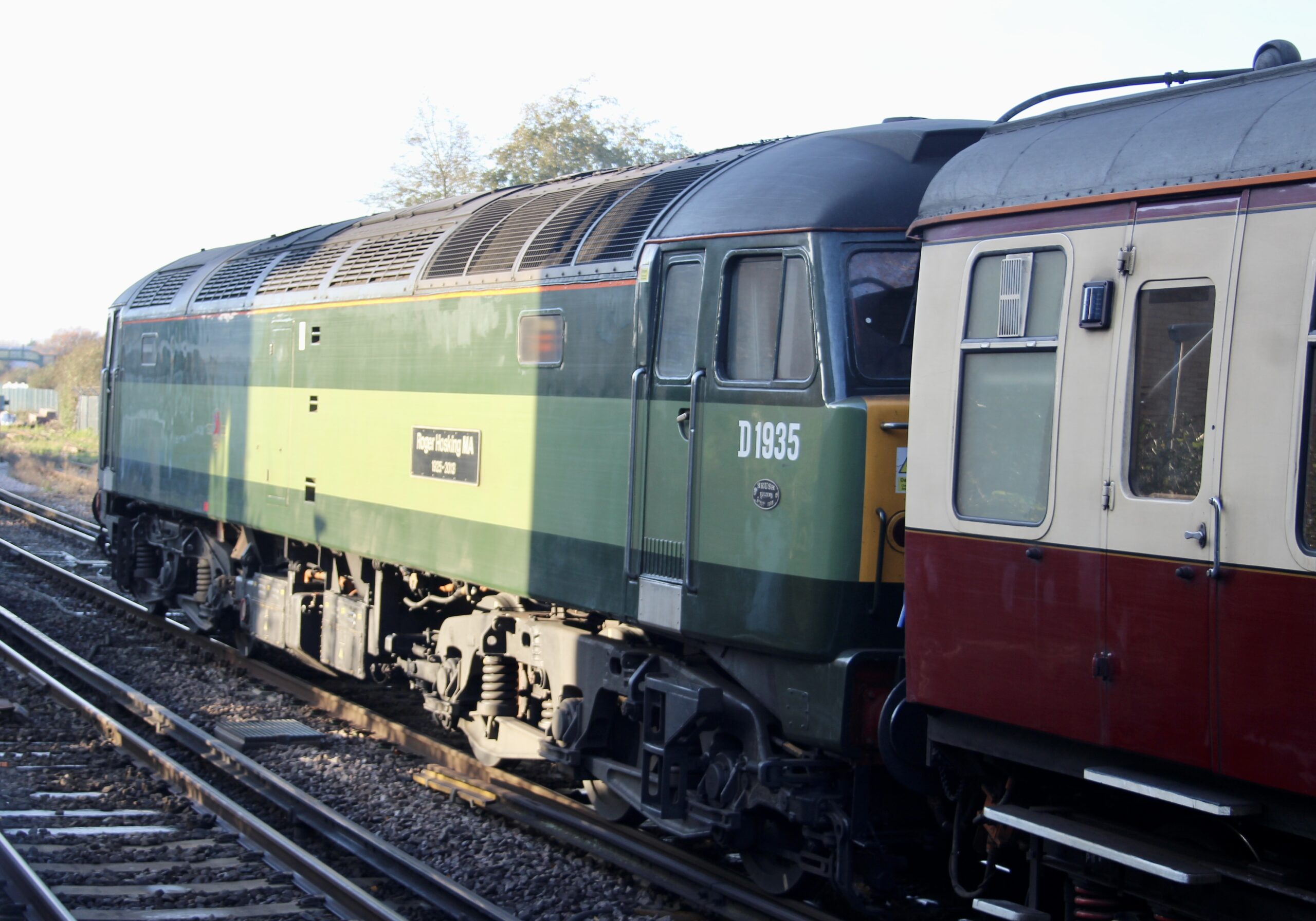
LMS Stanier Class Five 4-6-0 No. 45231 ‘Sherwood Forester’ sits at Chichester having brought in Steam Dreams “Chichester for Carols” rail tour 1Z45 0649 Shoeburyness to Chichester – 09/12/2022Class 47 No. D1935 (47805) ‘Roger Hosking MA 1925-2013’ at the rear of Steam Dreams “Chichester for Carols” rail tour 1Z45 0649 Shoeburyness to Chichester – 09/12/2022
1Z45 0649 Shoeburyness to Chichester – 09/12/2022
Duchess
Saturday saw us heading towards London in order to capture LMS Coronation Pacific No. 6233 ‘Duchess of Sutherland’ which was heading the Railway Touring Company “The Bath & Bristol Christmas Market” excursion. Having elected to see the tour at Worting Junction we were greeted by bright sunshine on a beautiful frosty day. Yoshi didn’t much care for the approaching steam locomotive and made his concerns known.
Worting Junction and LMS Coronation Pacific No. 6233 ‘Duchess of Sutherland’ – 10/12/2022
Following our view of the Duchess we headed towards London in the hope of seeing a second steam excursion originating from London Victoria, but in the event the promised steam locomotive had been replaced by a Class 67 diesel (again). Our view of the Belmond Pullman train was obscured by the parallel running of a Southern service into the London terminus. You win some, you lose some!
London Victoria – 10/12/2022
Bristol Temple Meads
Sunday and we were in Bristol in the hope of capturing the Lilly’s Pet Food Christmas liveried IET No. 802106 which had been allocated to work the 1300 Bristol Temple Meads to London Paddington service. We were disappointed when this colourful unit did not materialise. However, we had a lovely few hours meeting new friends, downing festive coffee and getting photos of trains in wintery conditions.
5 car CrossCountry Voyager No. 221135 arrives at a snowy Bristol Temple Meads working 1S45 0927 Plymouth to Dundee – 11/12/2022
Great Western Railway (GWR) has confirmed that it intends to withdraw its fleet of Castle Class HST sets with the December 2023 timetable change with IET’s taking over their duties.
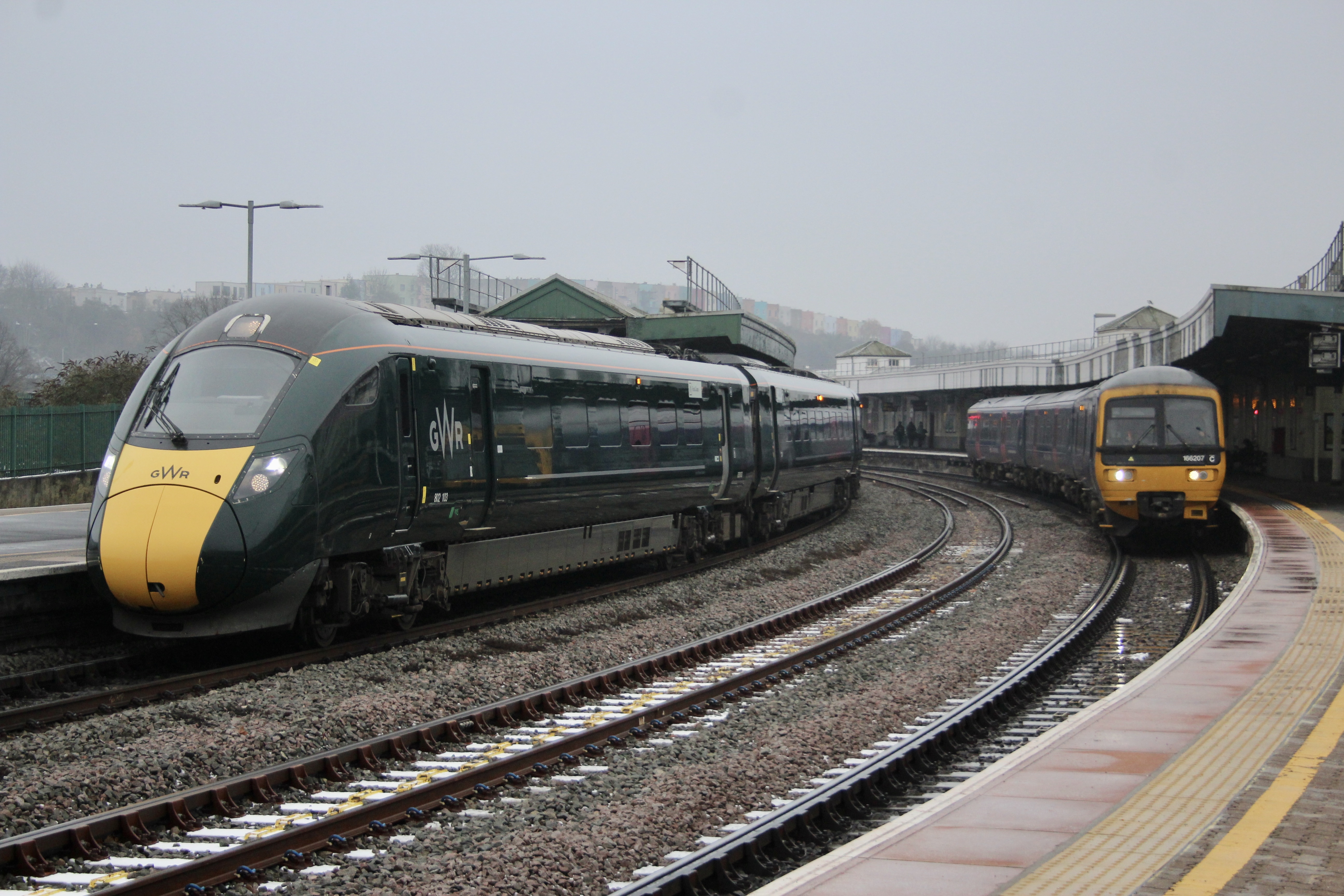
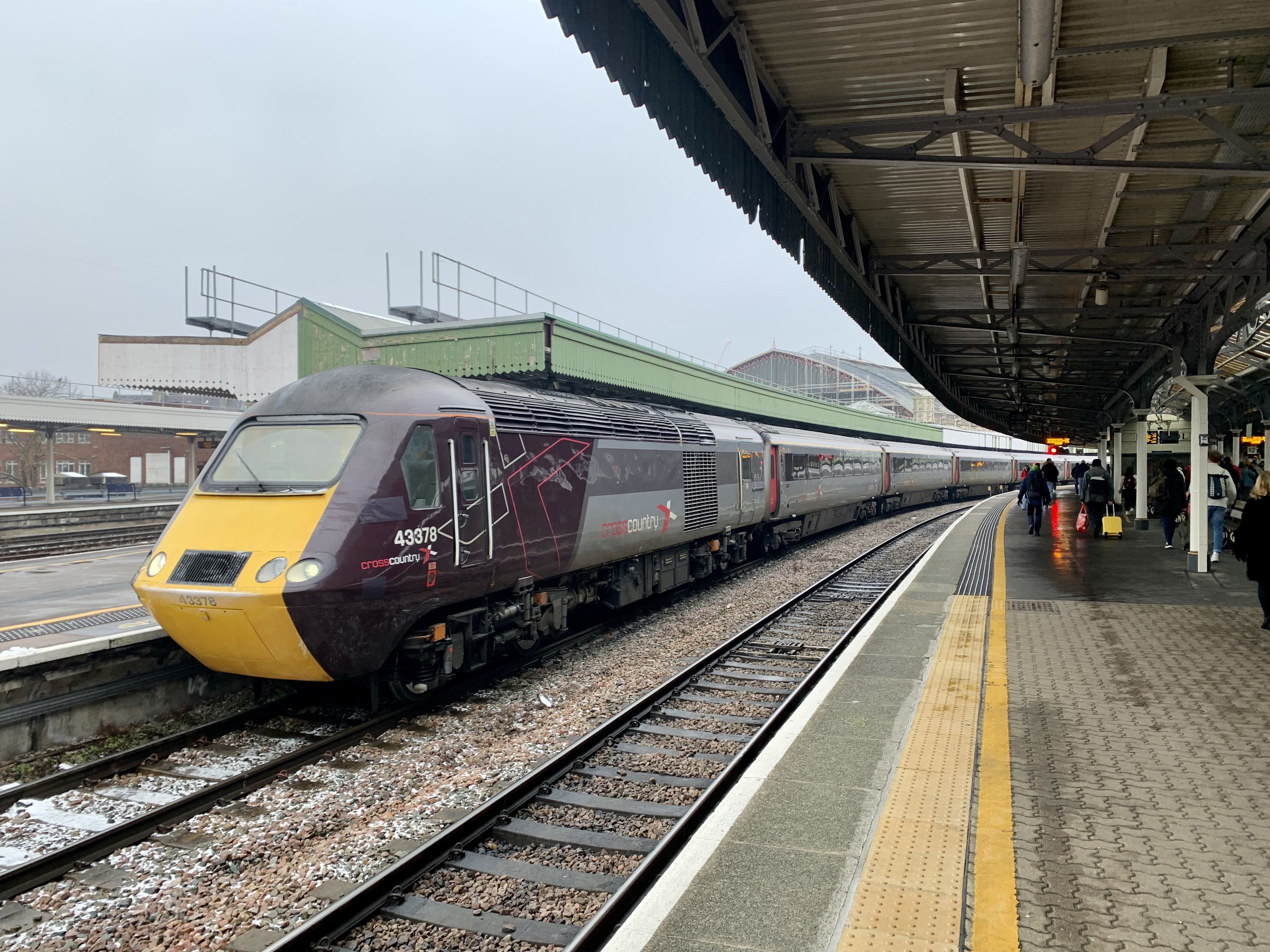
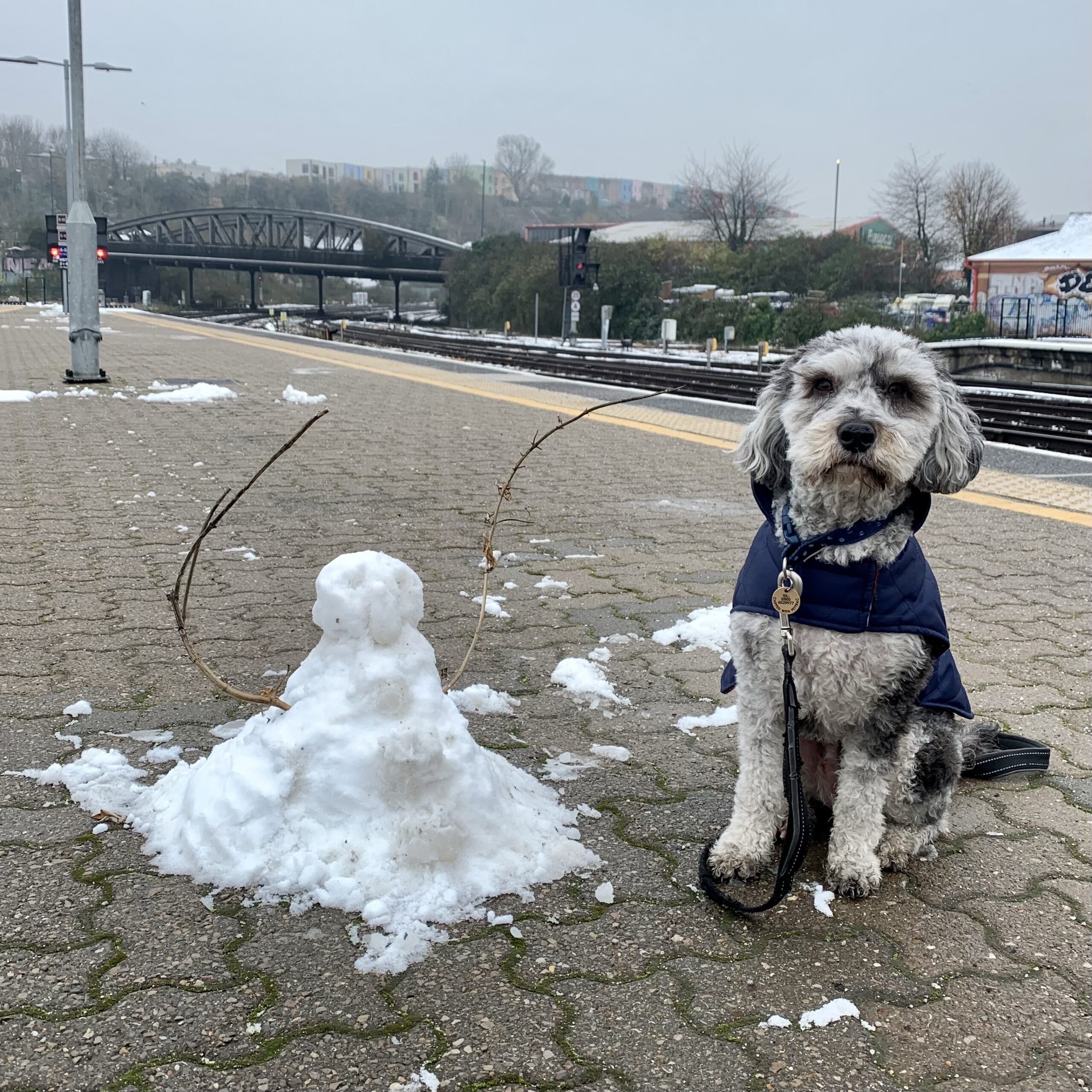
GWR Castle HST Class 43 Power Car No. 43155 ‘Rougemont Castle’ at Bristol Temple Meads forming 2E42 1338 service to Worcester Foregate Street – 11/12/2022What should have been the special Lilly’s Christmas liveried IETNo. 802106 was disappointingly plain old No. 802103 instead working 1A18 1300 Bristol Temple Meads to London Paddington – 11/12/2022CrossCountry Class 43 HST Power Car No. 43378 at Bristol Temple Meads working 1V48 0811 Leeds to Plymouth – 11/12/2022Yoshi with a snowman he made at Bristol Temple Meads – 11/12/2022
For The Record
The seasonal locomotive hauled Snow & Ice Treatment Trains (SITT) began running on 11th December 2022, with the first instance of the consist traversing the Bournemouth to Weymouth line in the early hours of 12th December. GBRf Class 66 locomotives No.’s 66745 and 66704 have been stationed at Totton Yard alongside the usual Multi Purpose Vehicles (MPV). Although running @25 minutes late, I remained tucked up in my warm bed and didn’t venture out in freezing temperatures to record the SITT pass. The Network Rail SITT scrapes any build up of ice from the Third Rail (the conductor rail from which electric traction pick up their power) using metal brushes and spraying anti-icing fluid to prevent further ice from forming. Without this process occurring, depending on the volume of ice, electric trains can struggle to pick up power and in really exceptional instances will be unable to move, which is what appears to have happened on Sunday 11th December when icy conditions between Weymouth and Brockenhurst meant all services were stopped. Engineering works taking place east of Brockenhurst prevented the SITT from running to Weymouth to rectify the situation. Limited services were later resumed, although South Western Railway (SWR) requested only essential journeys should be made. During the suspension of train services, passengers could source taxis between Brockenhurst and Weymouth and claim the cost back from SWR providing evidence of a train ticket and taxi receipt for the associated journey.
Throwback to December 2019 and GBRf Class 66 No. 66717 ‘Good Old Boy’ at the head of the SITT waiting departure from Weymouth to Totton Yard – 17/12/2019
The start of the new timetable on Sunday December 11th 2022 saw the inclusion of a weekday path along the Hamworthy Branch originating from Westbury Tarmac and terminating at Hamworthy BCI. It came as no surprise that the service did not run.
Many thanks for stopping by. This weeks blog is slightly curtailed owing to the fact somewhere along the line I have picked up a cold. Or more likely an extreme case of man-flu! Anyway, you have been saved my witterings on Brighton Railway Station, Class 701’s at Clapham Junction, video from Bristol and more about the Coastway Route.
Postscript
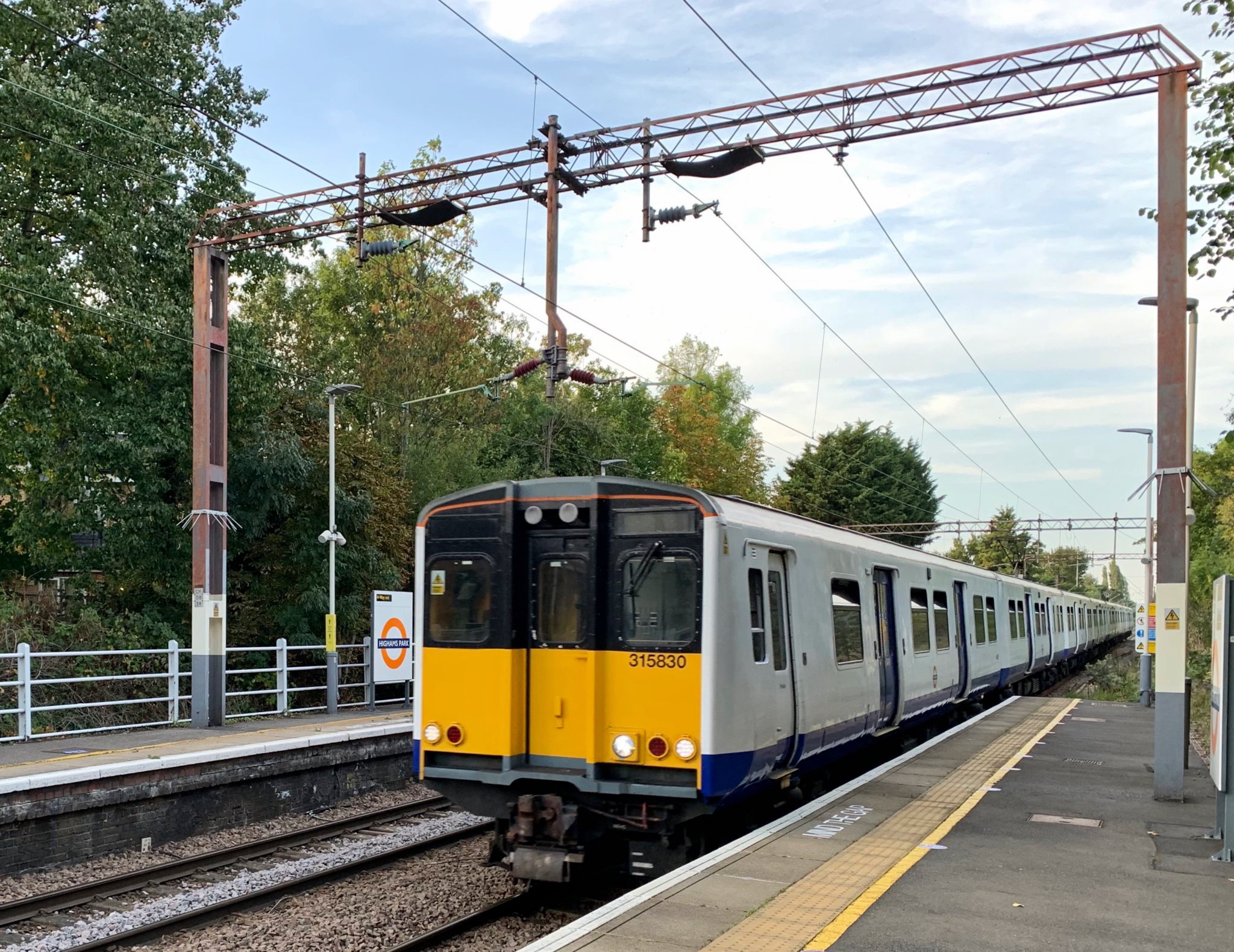
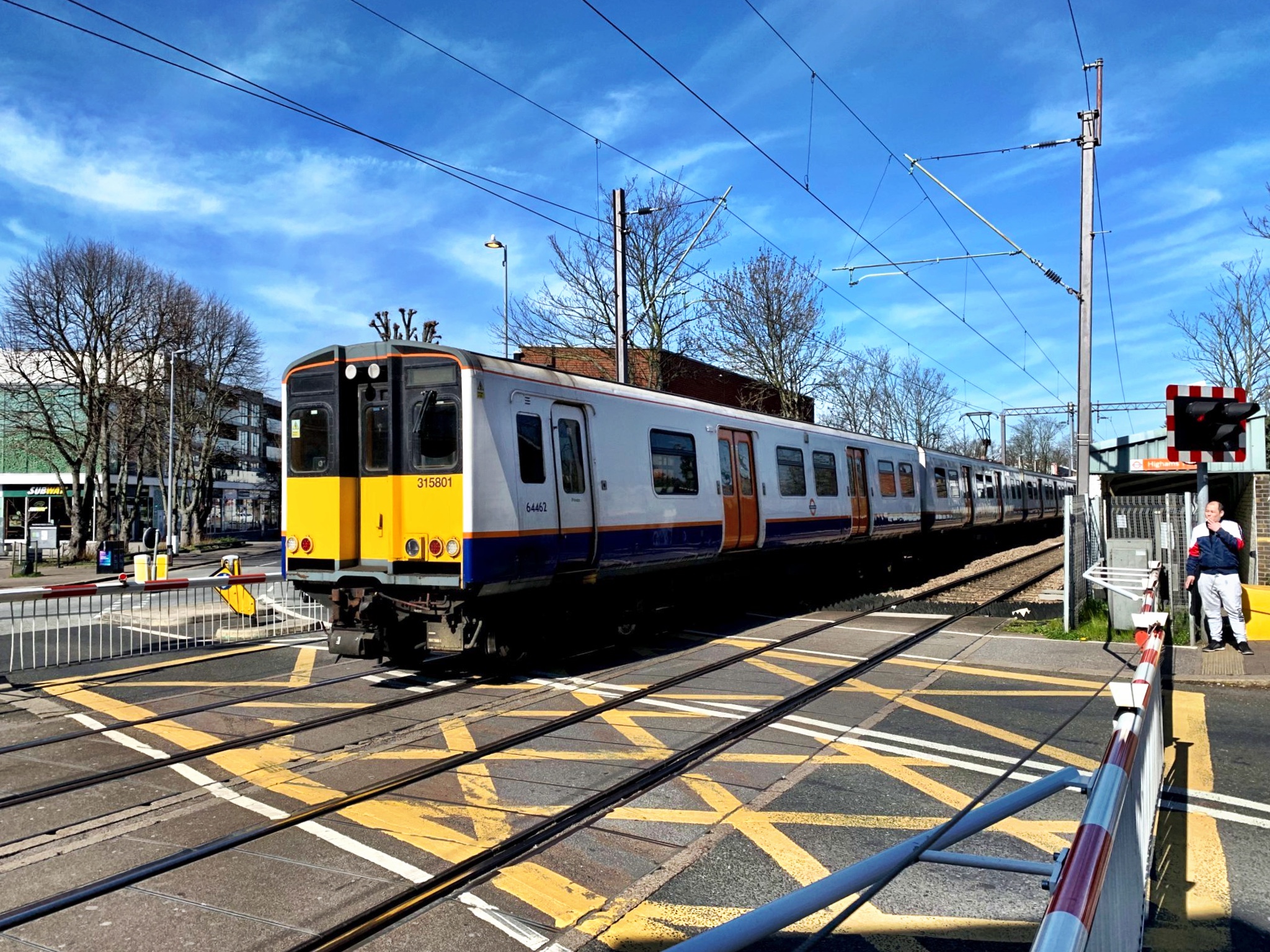
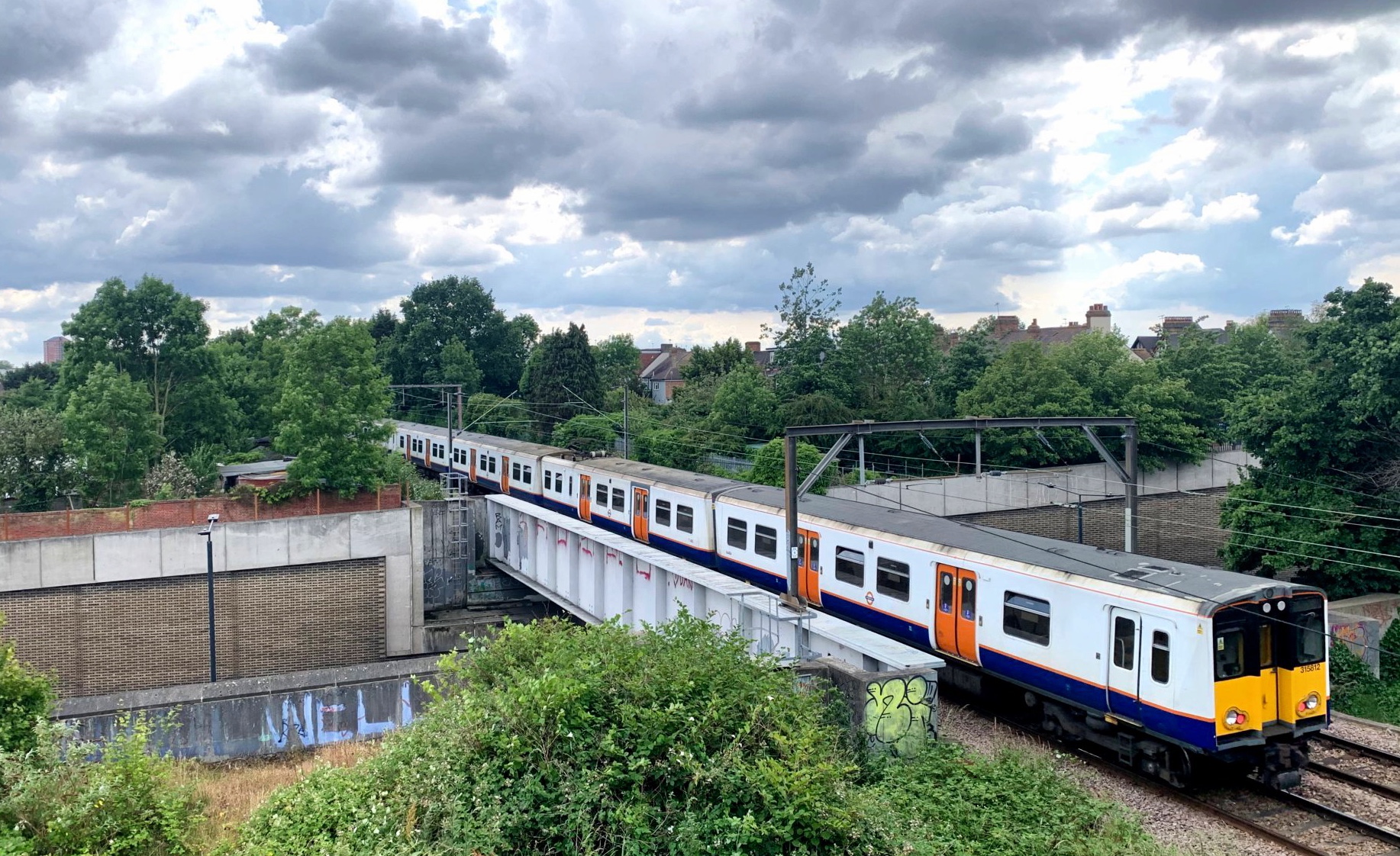
As a codicil to the Class 313 feature above, there was a period when I spent a great deal of time in North London. My local railway services were provided by Class 315 emu’s which were introduced in 1980 and was the last variant of five to have their design based on the PEP prototype units. The Class 315’s were set to end over 40 years of service on 9th December 2022. One unit, No. 315856 which took part in a farewell tour of the class organised by the Class 315 Preservation Society and the Branch Line Society, has been saved for preservation. The Class 315 Preservation Society has acquired the unit from Eversholt Rail Group and is destined for the Dean Forest Railway where it will be restored to original BR condition.
Class 315 No. 315830 arrives at Highams Park with a Chingford to London Liverpool Street service – 18/09/2020Class 315 No. 315801 arrives at Highams Park with a London Liverpool Street to Chingford service – 23/03/2020Class 315 No. 315807 passes the signal box at Highams Park with a London Liverpool Street to Chingford service – 19/04/2020Class 315 No. 315812 crosses the A406 rail bridge with a Chingford to London Liverpool Street service – 11/06/2020
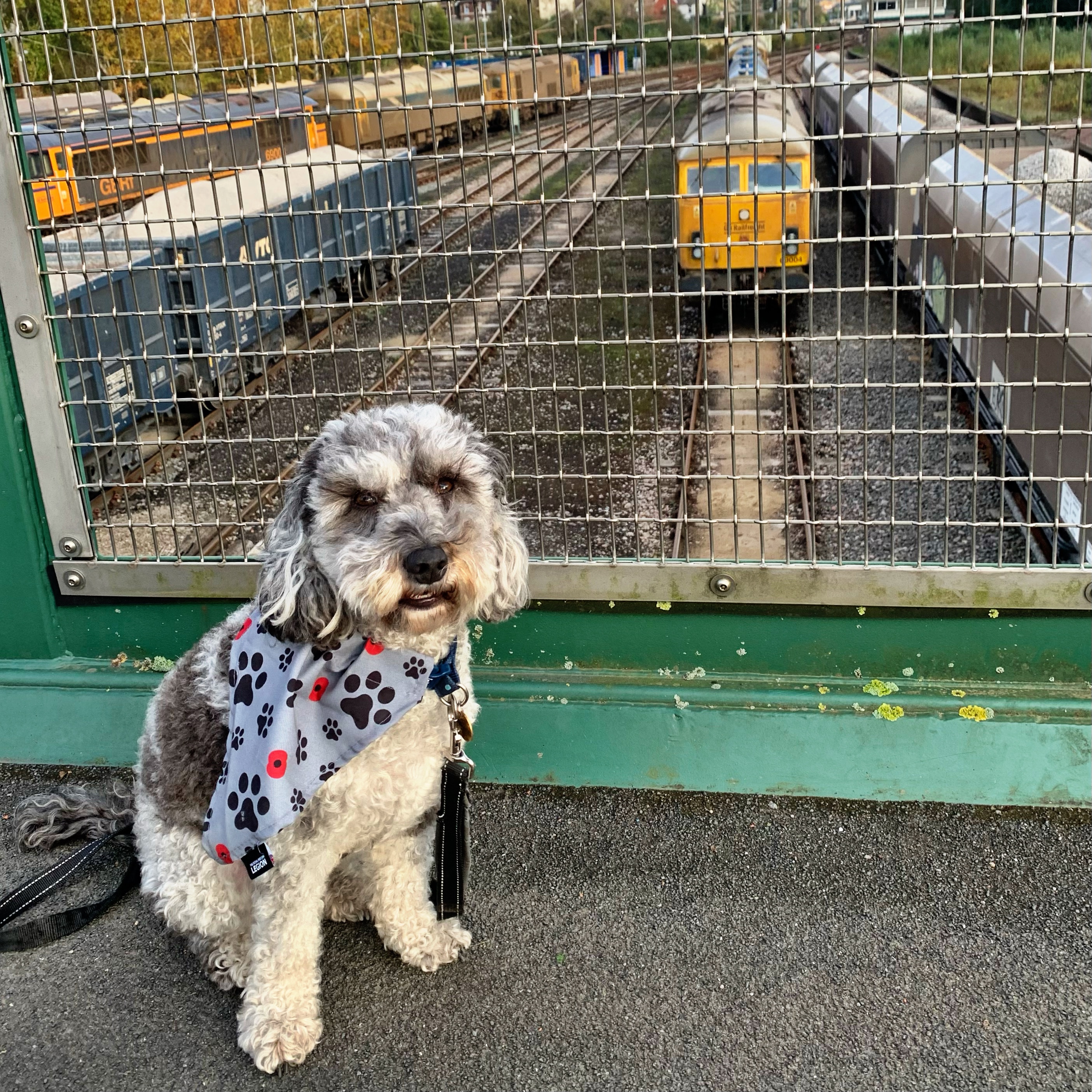
Yoshi visits Tonbridge and barks at all the GBRf Class 69 locomotives introduced to traffic so far – 12/11/2022
On Saturday, Yoshi’s mum was off to London for the weekend to meet up with a friend who had travelled down on the Caledonian sleeper – of which, I was extremely jealous! Travelling on a sleeper train has long been an item on my bucket list. As there are no sleeper services from sleepy Dorset to the big smoke, and as Yoshi’s mum isn’t keen on rail replacement bus services, I volunteered to drive up and drop her off in Greenwich. With this offer accepted, my mind began to formulate a number of plans of things Yoshi and I could do on our way back.
My initial thought was to drive home via Brighton and try and catch Class 313 No. 313201 in its heritage British Rail livery before this particular Class of electric multiple units is withdrawn from service, but planned engineering works meaning no trains running in the area put paid to that idea.
Next up, I thought I could spend the afternoon somewhere on the East Coast Main Line as I was certain London North Eastern Railway (LNER) would roster “celebrity” Class 91 No. 91111 ‘For The Fallen’ in Remembrance Day livery created to mark the contribution of, and the lives lost by regiments along the East Coast route during the First World War. First unveiled in 2014, the special livery depicts soldiers, artefacts, poppies and tributes in honour of those who lost their lives in service to their country. The locomotive had been running turns between London Kings Cross and the North all week, and I was confident it would run over the Remembrance weekend. But on checking the allocations via Real Time Trains on Saturday morning, it was clear that No. 91111 was being rested. It obviously returned to duty the following day.
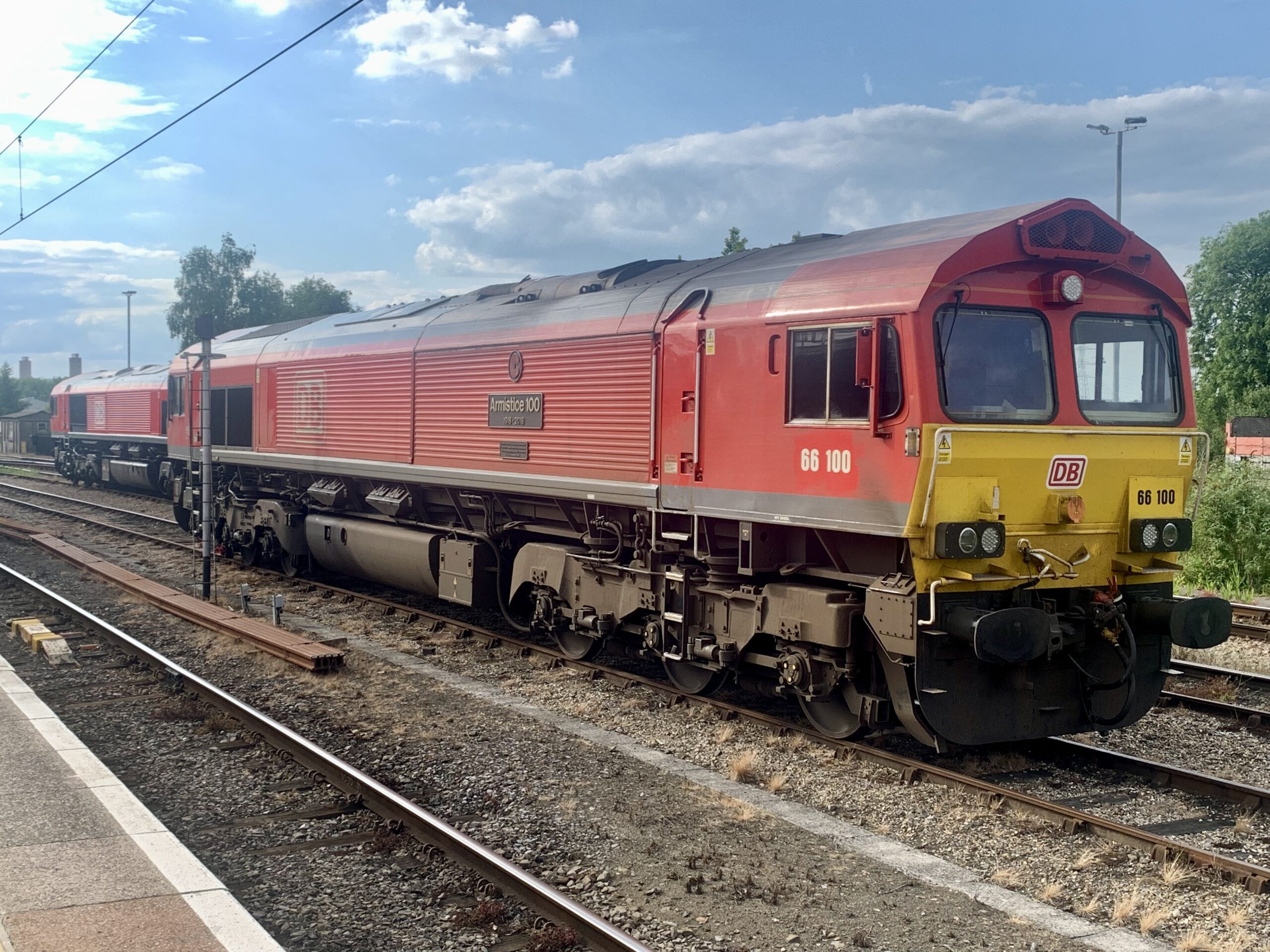
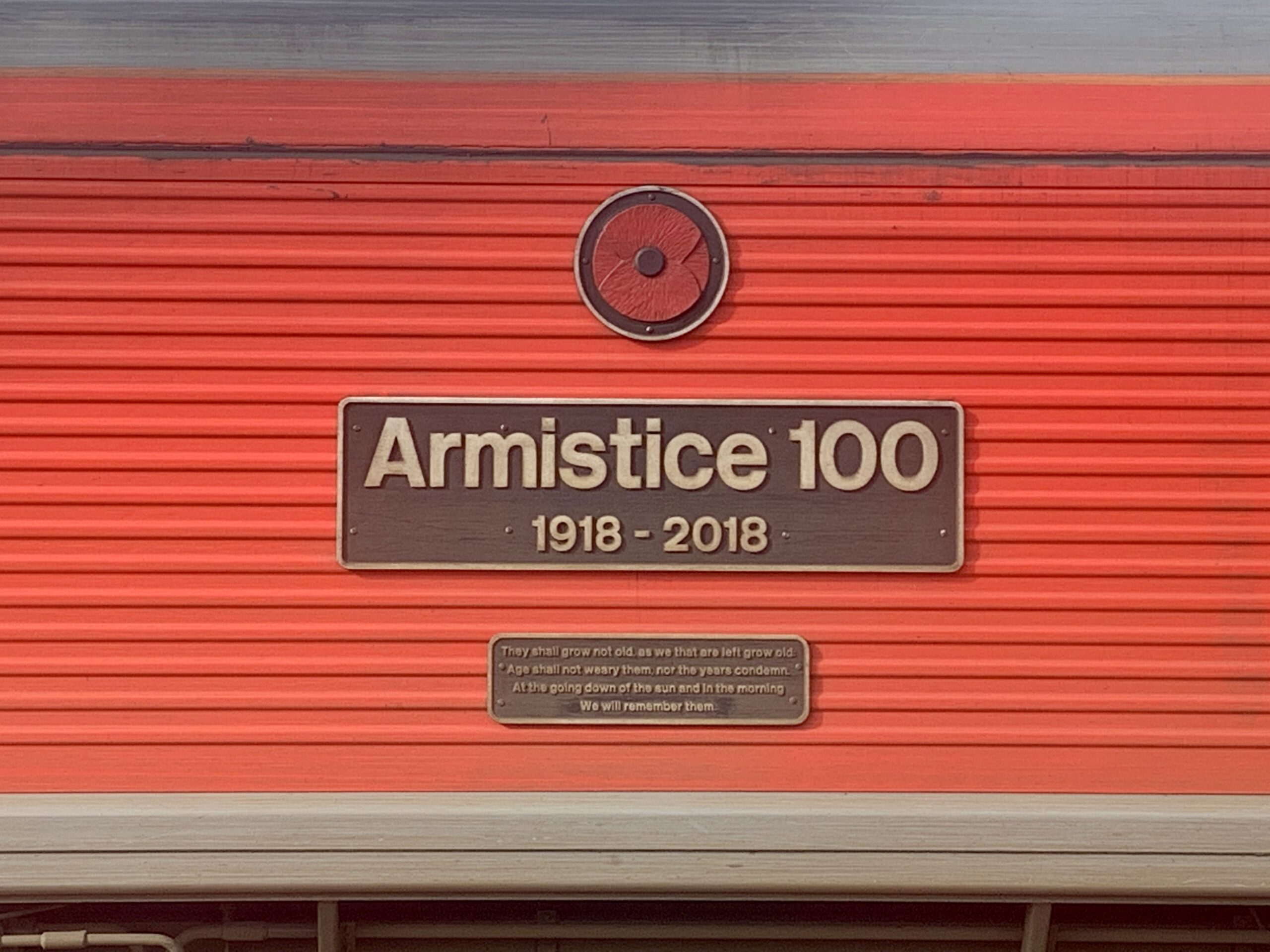
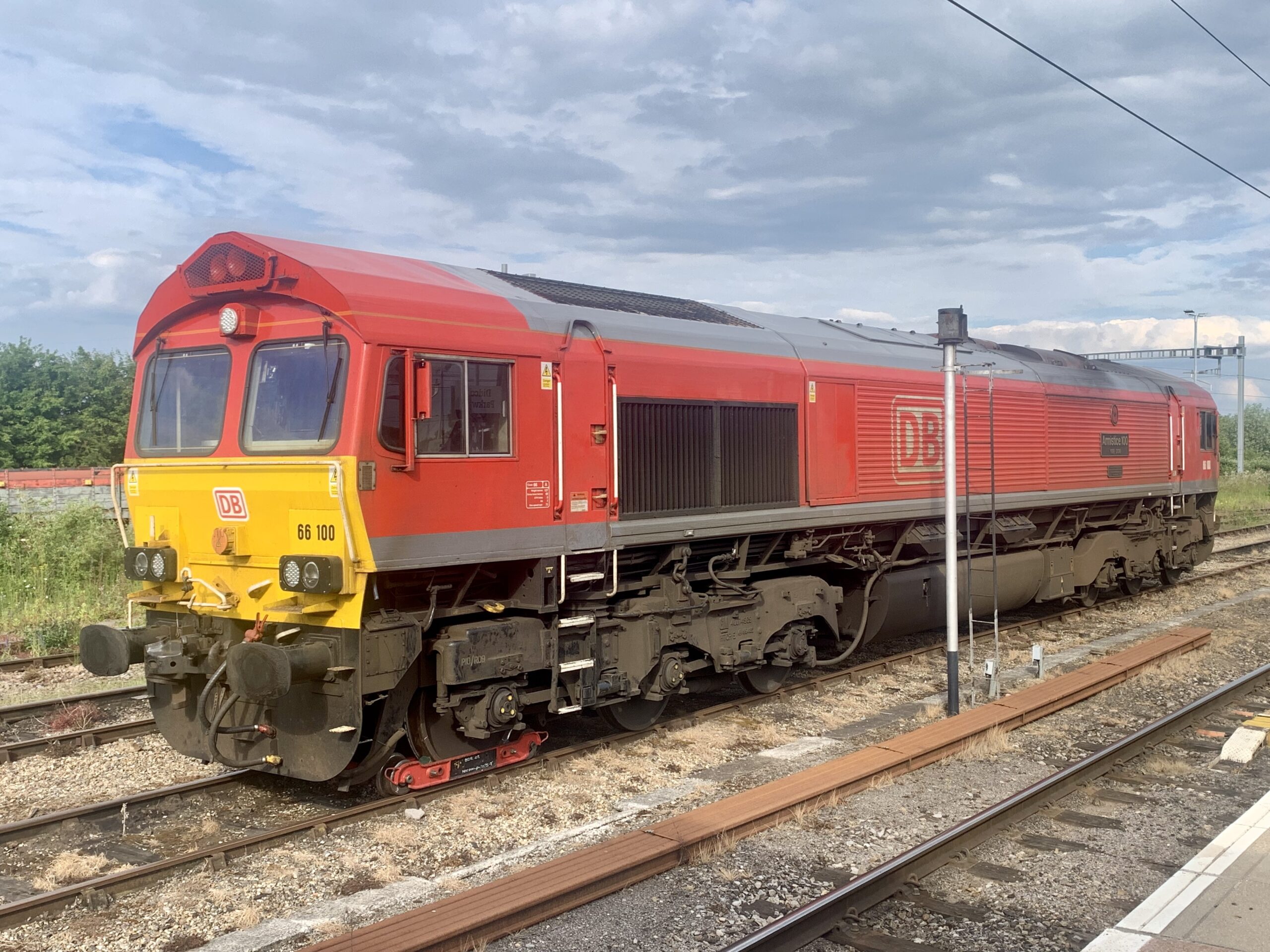
One locomotive named in commemoration of Remembrance I have managed to capture is DB Class 66 No. 66100 ‘Armistice 100 1918 – 2018’ which I saw at Didcot on 2nd June 2022. In the images below, the loco has one of its wheel sets placed in a wheel skate and had been marooned at Didcot since the middle of May 2022, eventually leaving on the back of an Allelys low loader for repairs at Toton weeks later.
DB Class 66 No. 66100 ‘Armistice 100 1918 – 2018’ at Didcot – 02/06/2022Nameplate detail of DB Class 66 No. 66100 ‘Armistice 100 1918 – 2018’ at Didcot – 02/06/2022DB Class 66 No. 66100 ‘Armistice 100 1918 – 2018’ at Didcot. The wheel skate can be seen clearly – 02/06/2022
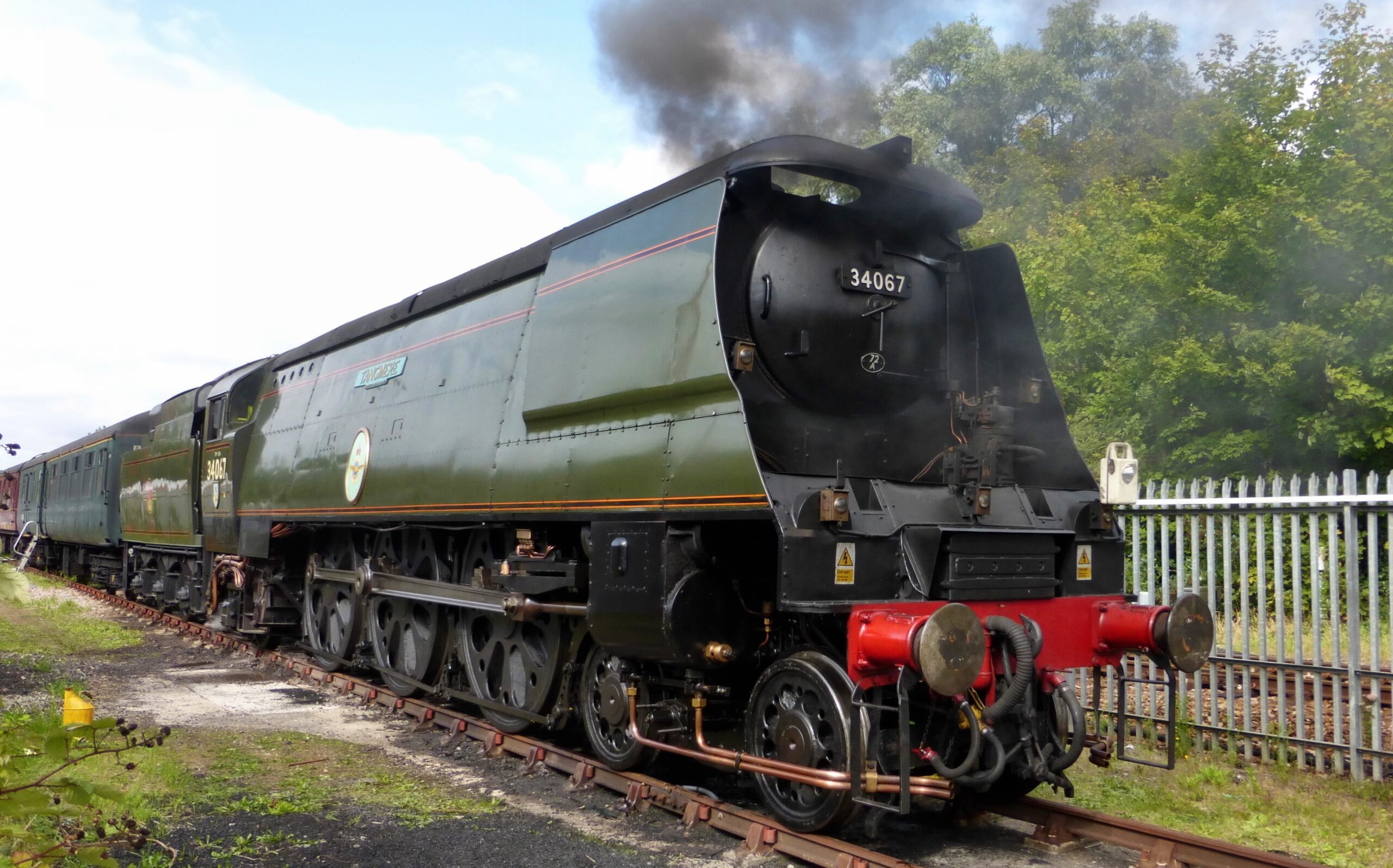
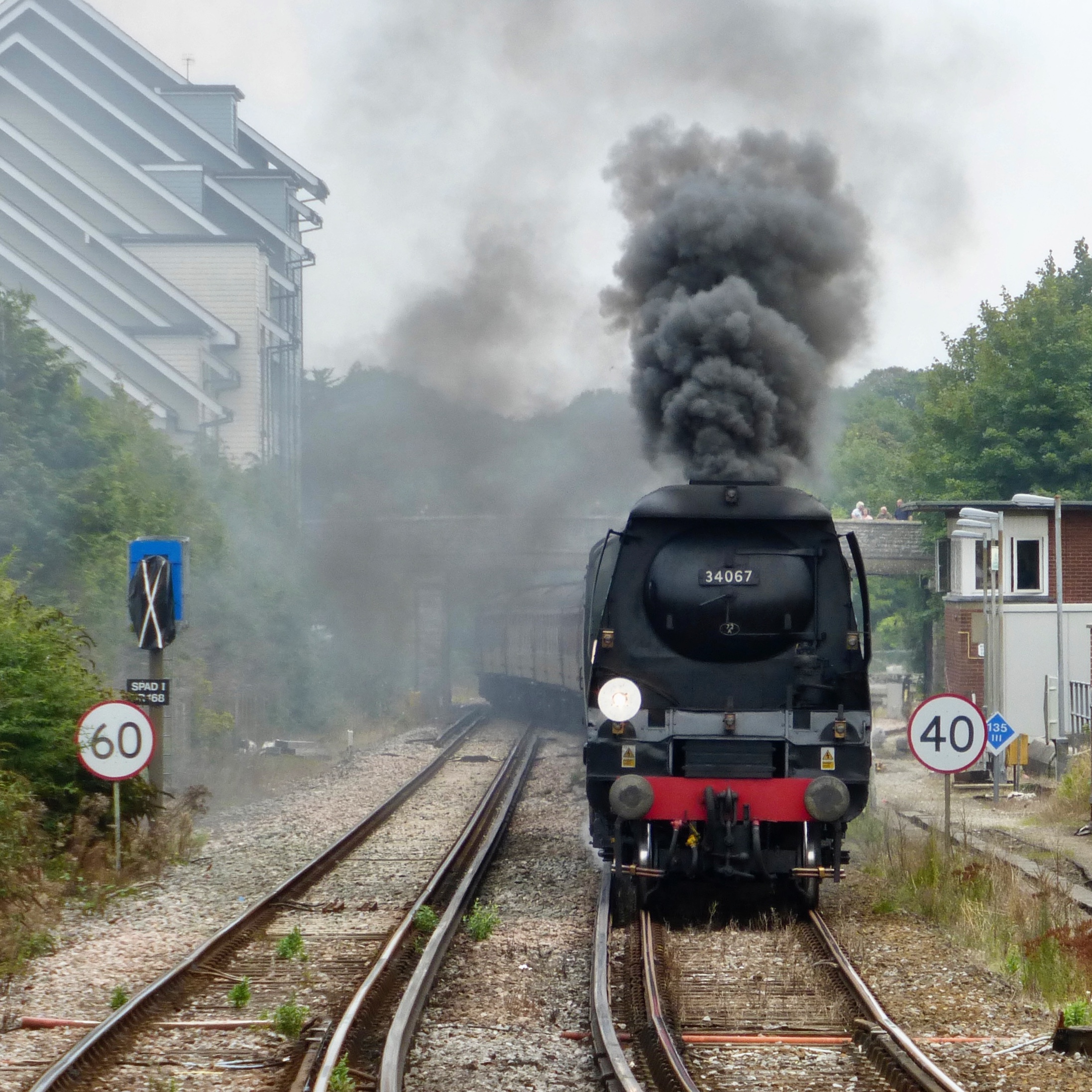
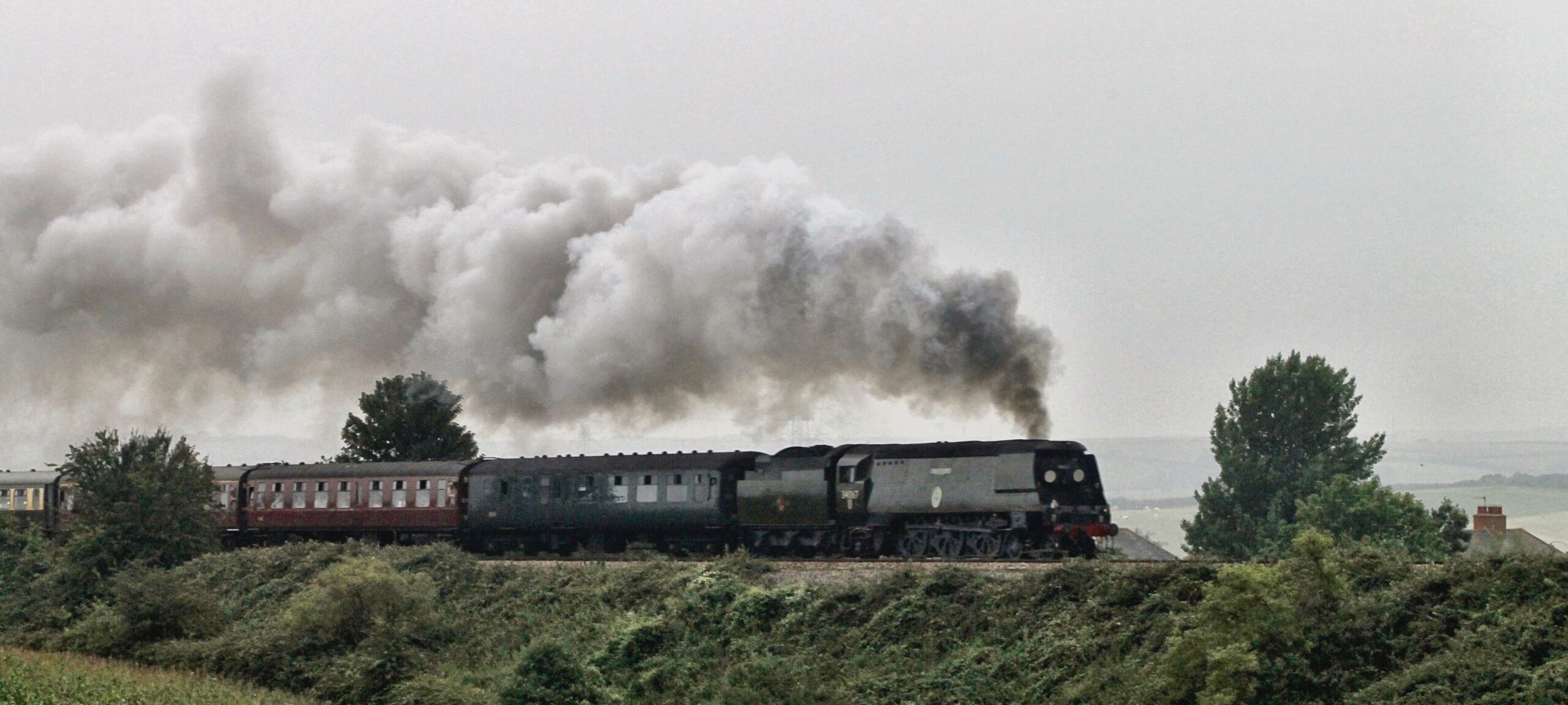
Returning to last Saturday and plan number three which involved heading towards Tonbridge to see SR Unrebuilt West Country Class 4-6-2 No. 34067 ‘Tangmere’ in action heading up Bellmond British Pullman’s “Golden Arrow 50th Anniversary” rail tour running from London Victoria to Canterbury and return, commemorating the final run of this iconic named train which occurred on 30th September 1972. ‘Tangmere’ was deputising for SR Rebuilt Merchant Navy 4-6-2 No. 35028 ‘Clan Line’ but, unbeknownst to me (because I had failed to check) the positioning run which would have taken ‘Tangmere’ south from Carnforth to Southall was cancelled on Friday 11th November 2022 which resulted in the steam traction being substituted by top and tailed Class 67 locomotives.
This is ‘Tangmere’ when she made it south a few years ago:
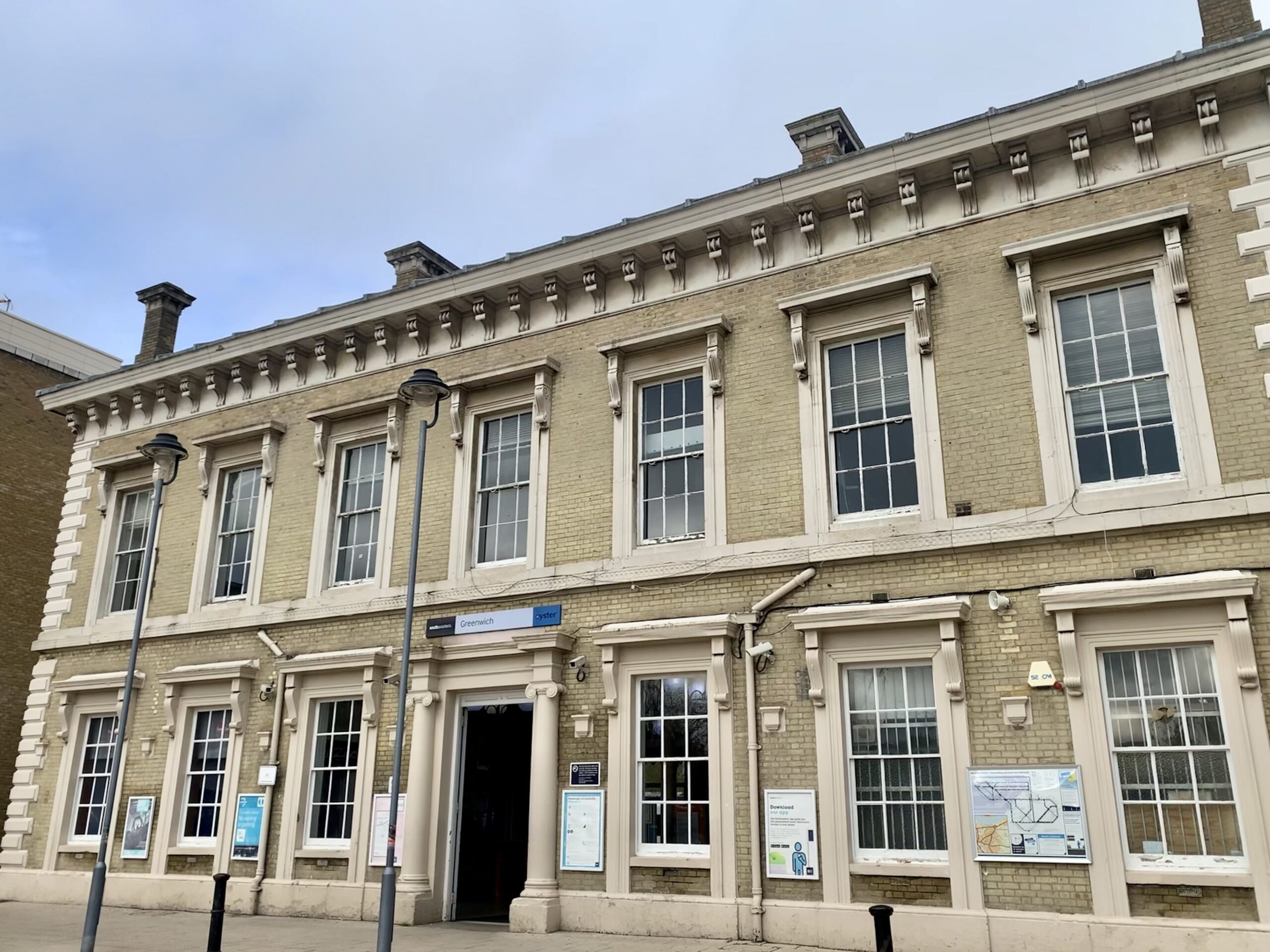
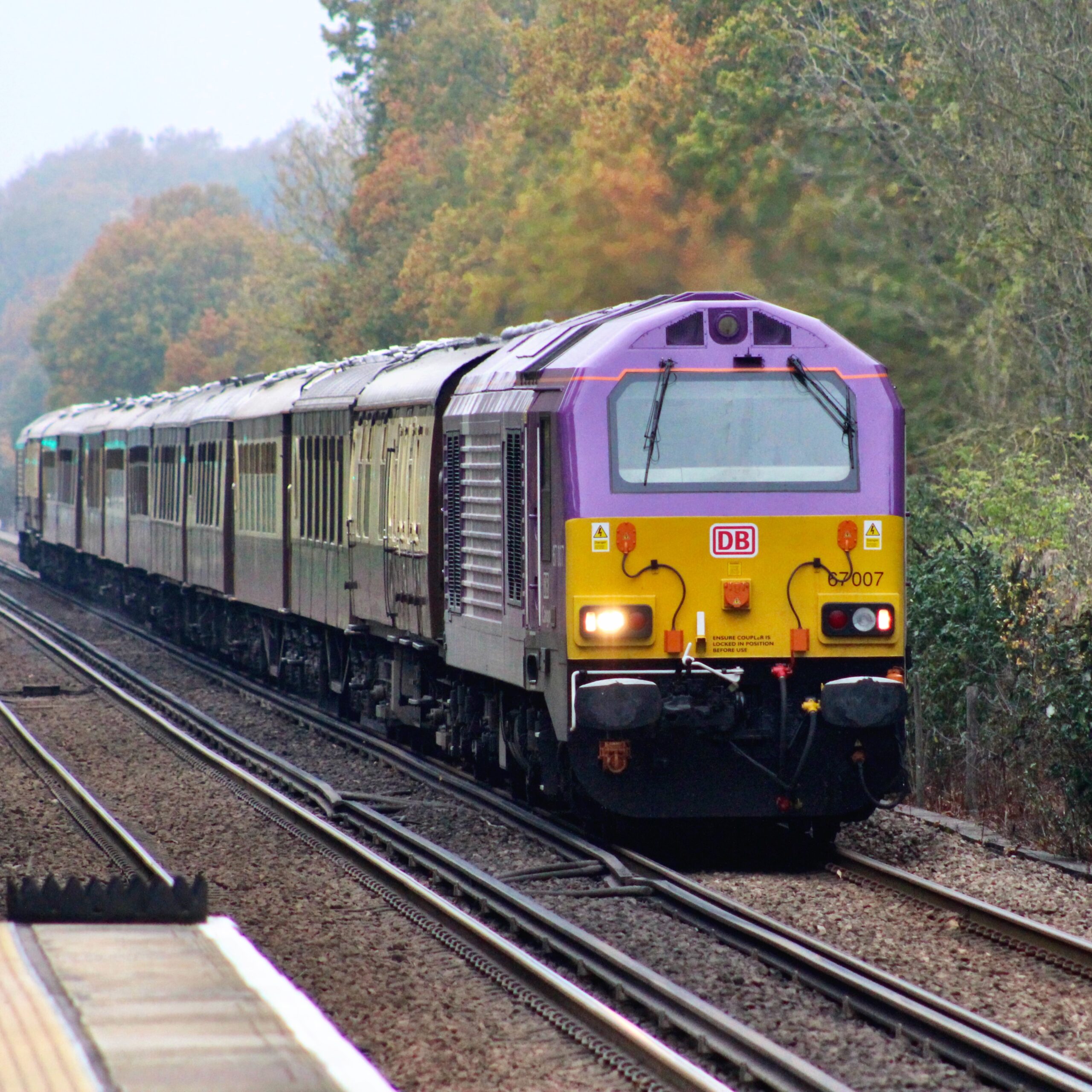
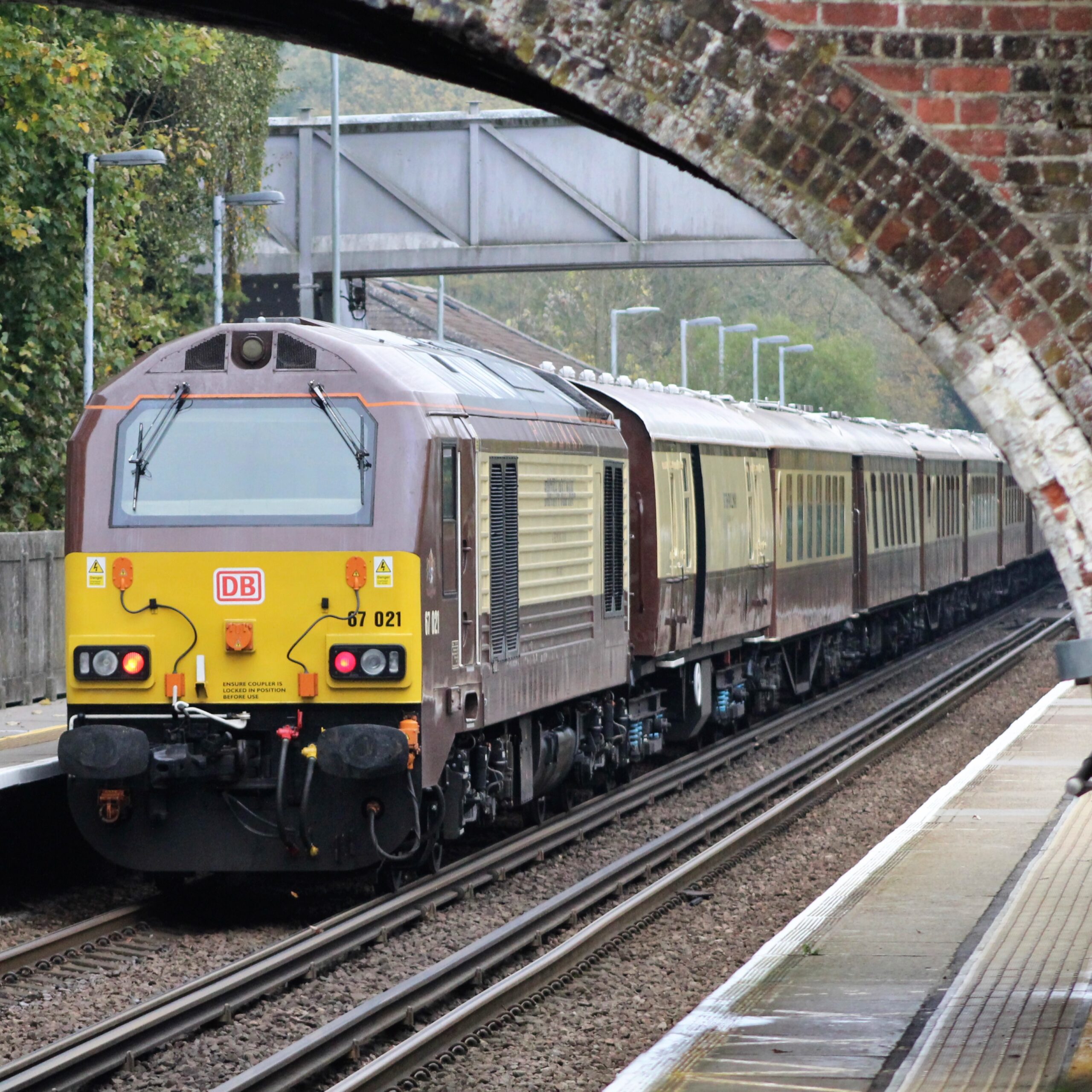
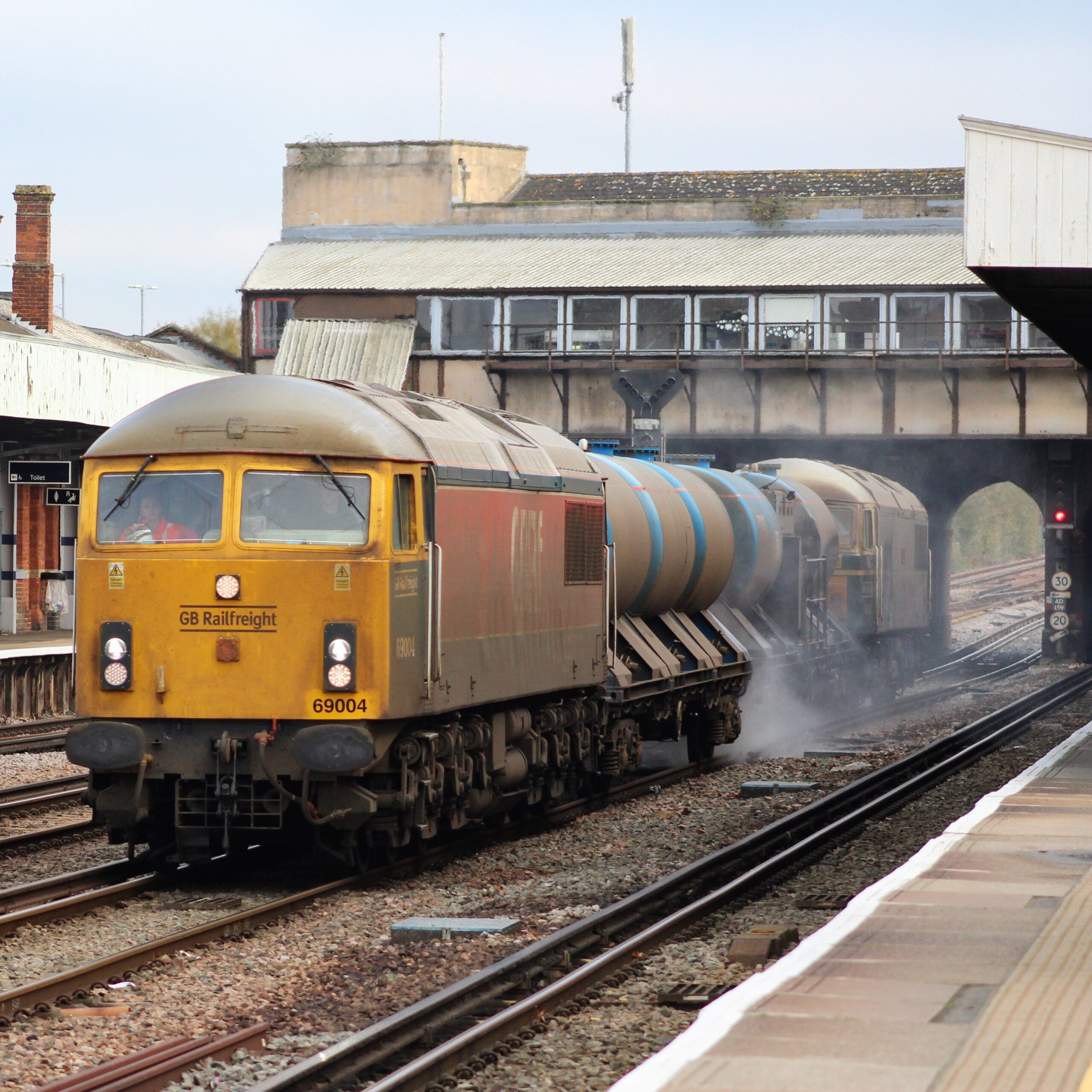
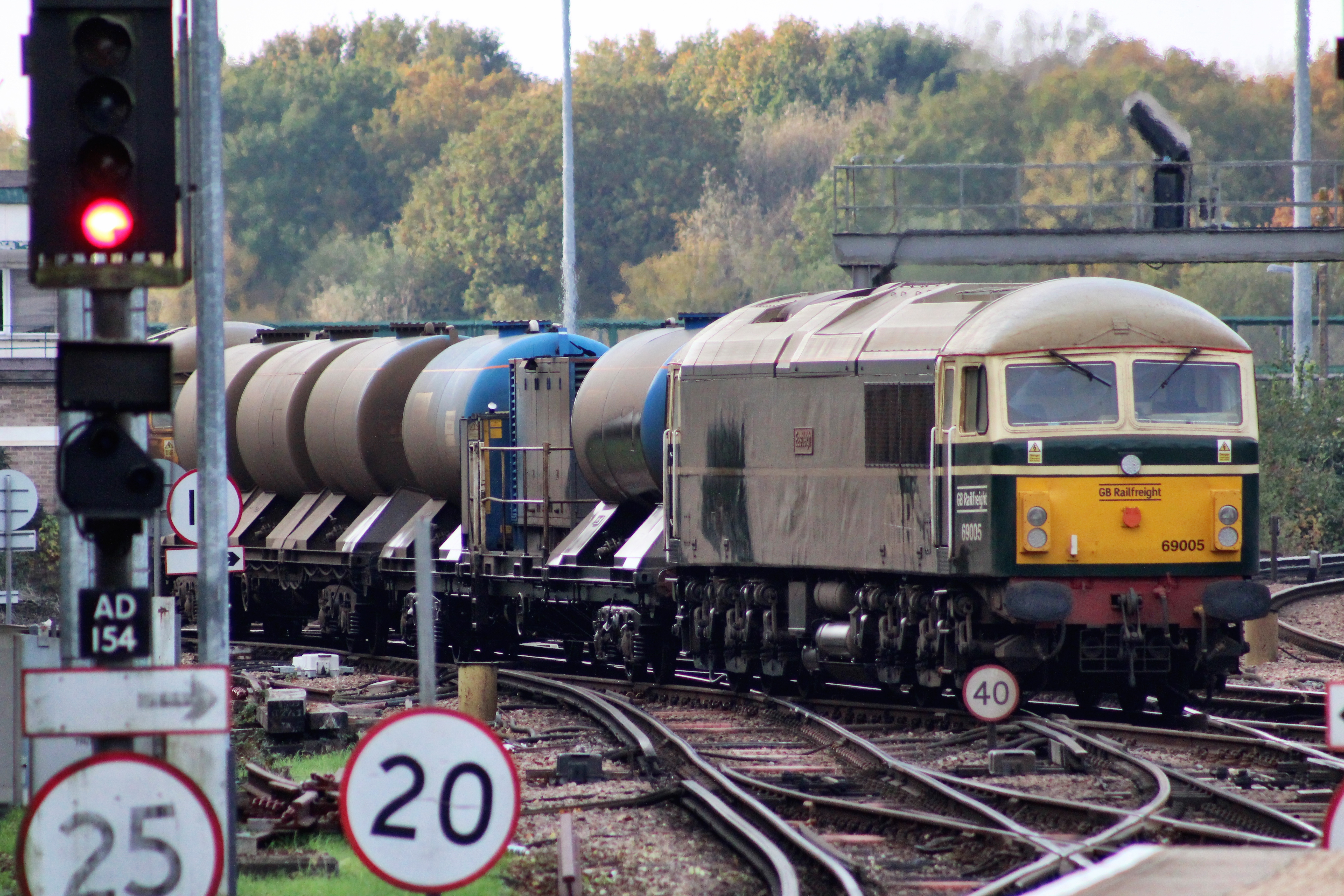
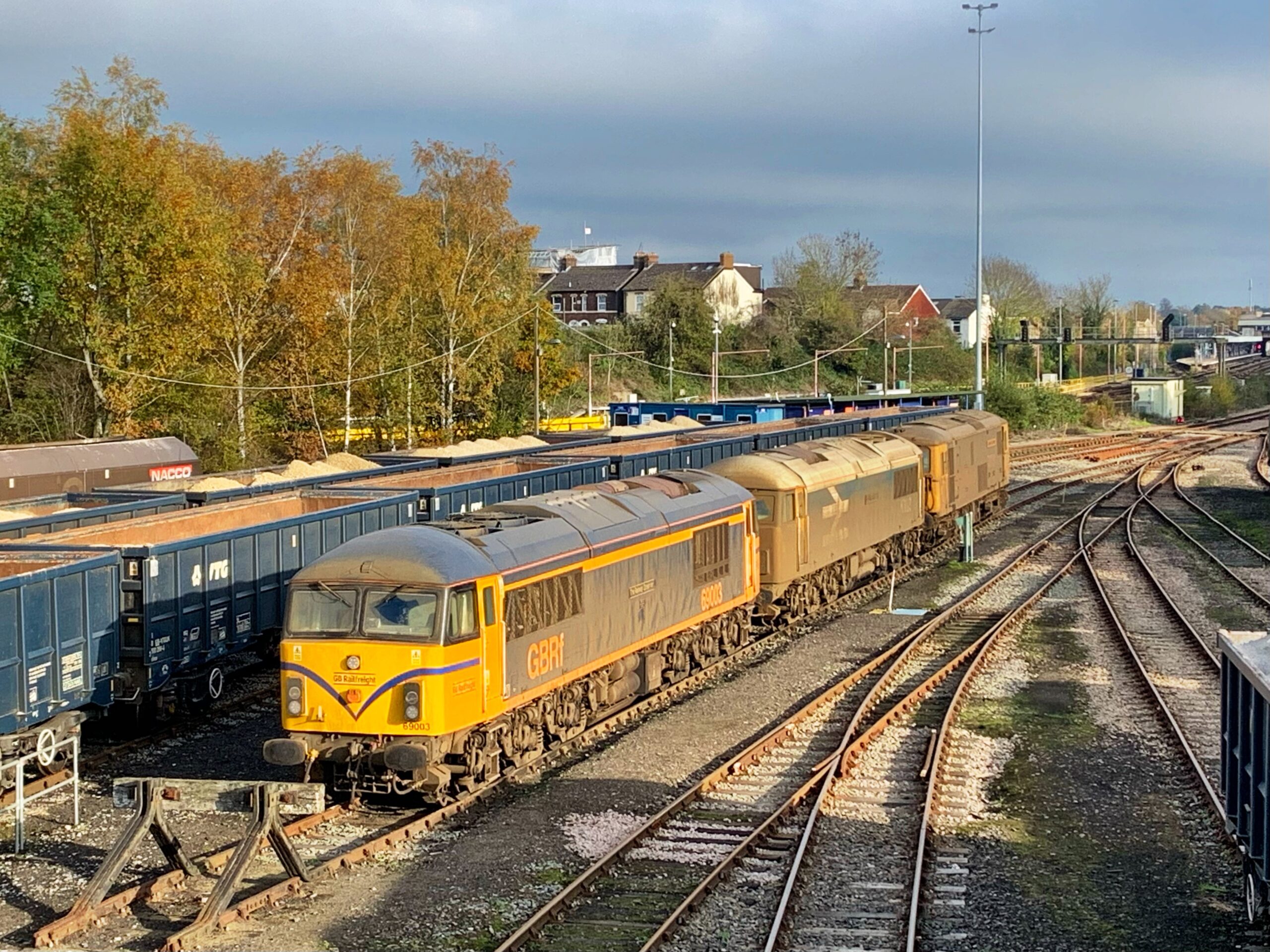
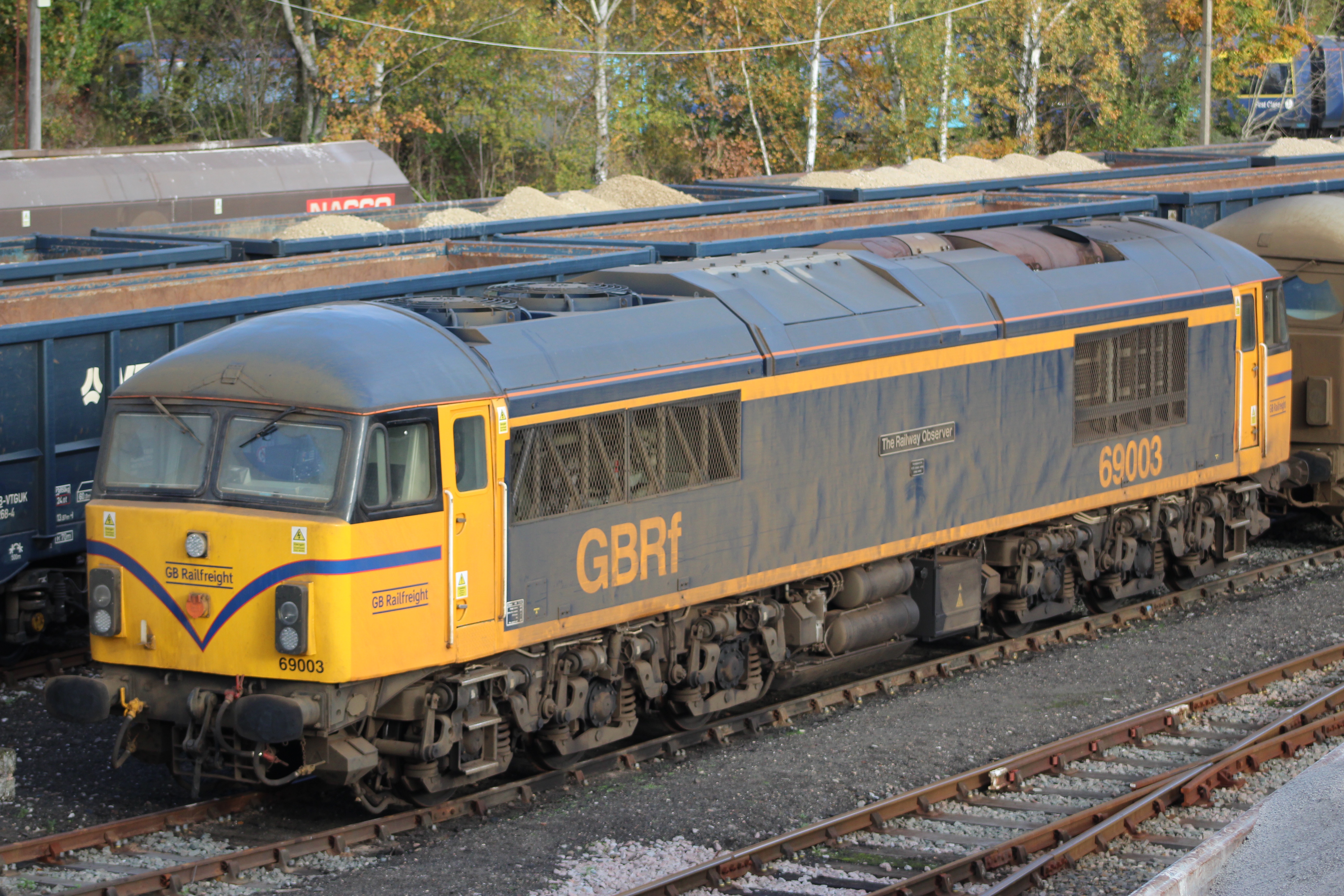
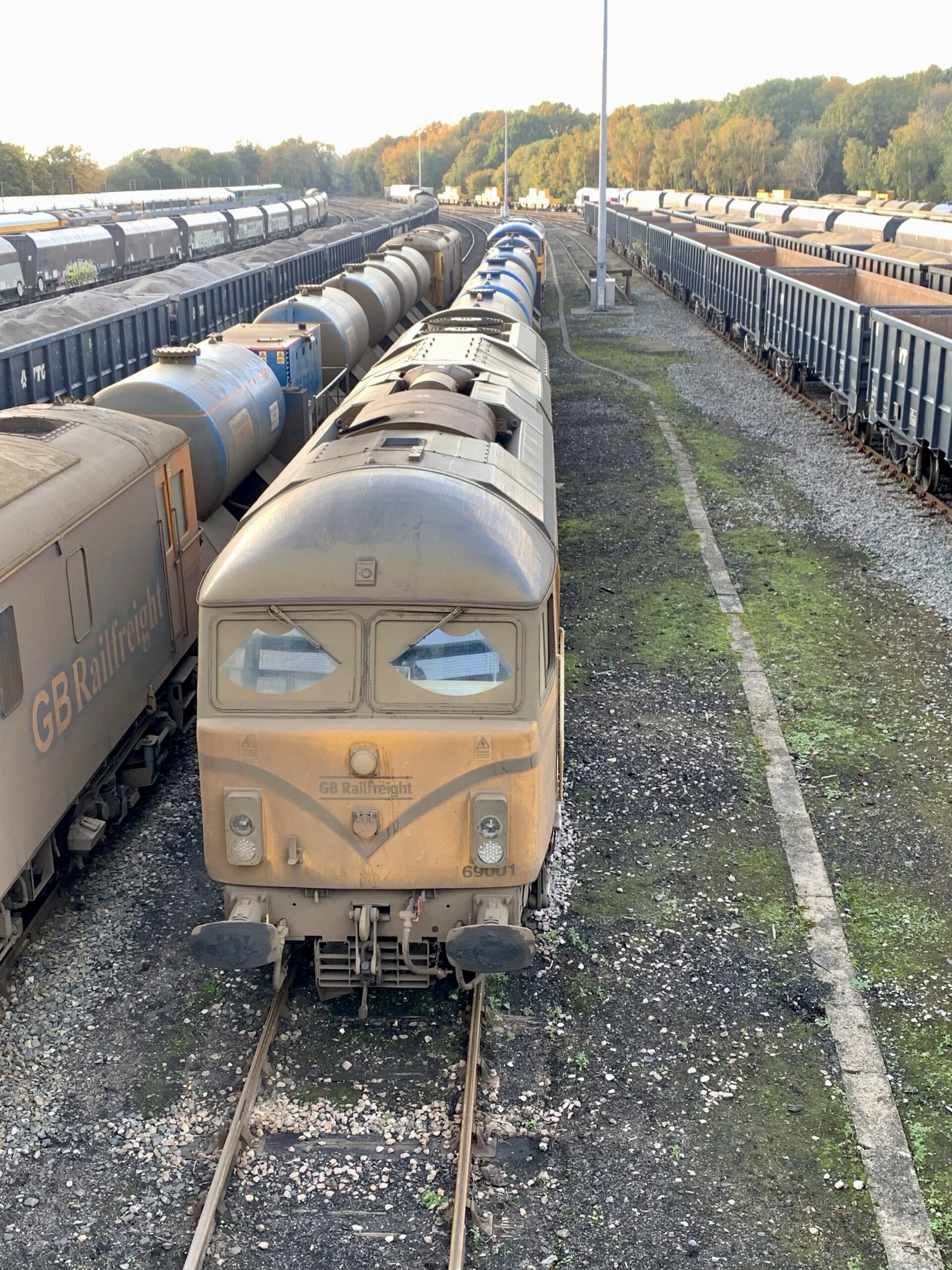
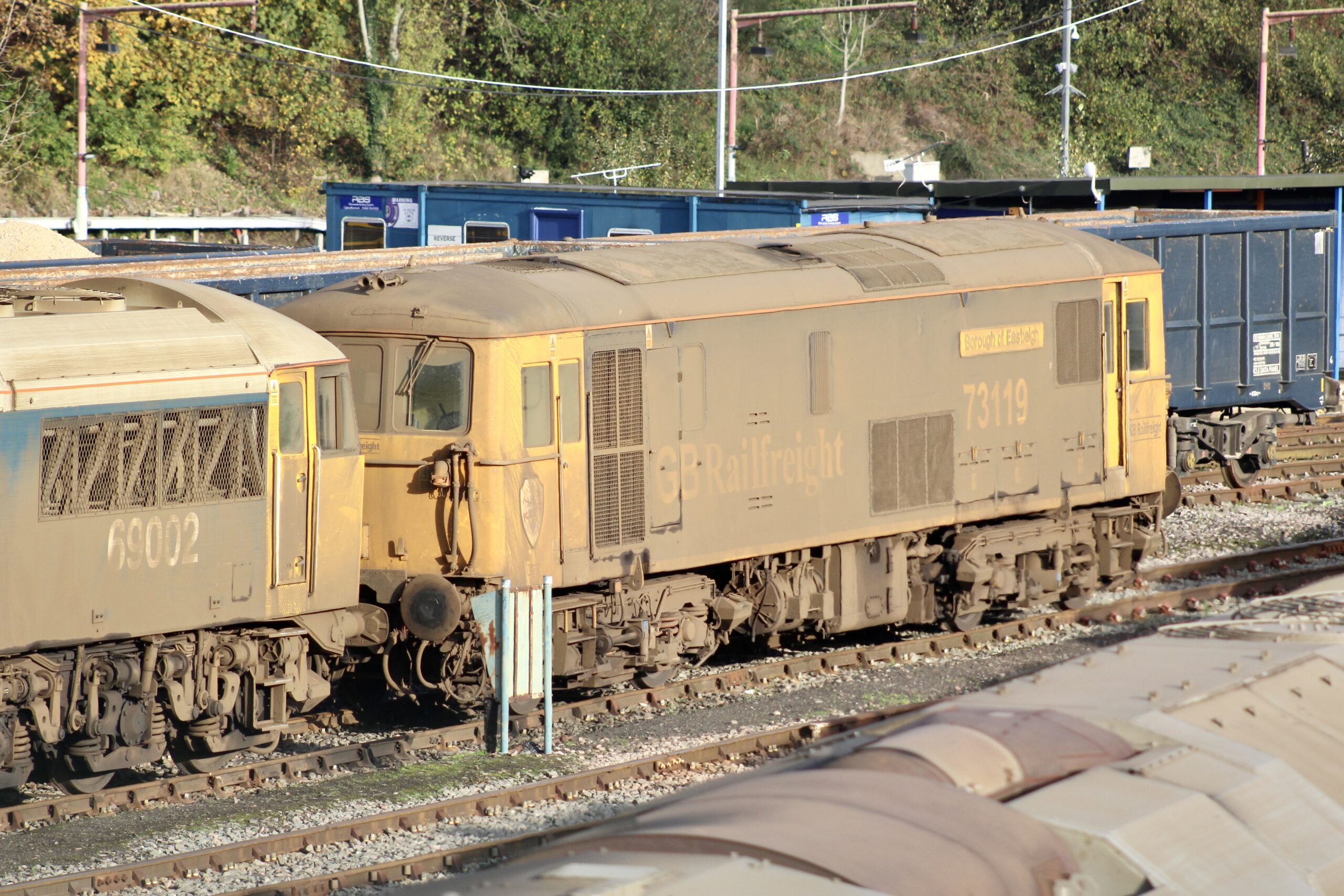
SR Unrebuilt West Country Class 4-6-2 No. 34067 ‘Tangmere’ rests in the EMU compound at Weymouth having worked Railway Touring Company organised “The Royal Wessex”. It was reported that the locomotive hit the buffer stops at Weymouth station – 05/09/2015SR Unrebuilt West Country Class 4-6-2 No. 34067 ‘Tangmere’ puts on quite a display as she nears Dorchester South with “The Dorset Coast Express” – 09/09/2015SR Unrebuilt West Country Class 4-6-2 No. 34067 ‘Tangmere’ climbs Bincombe Bank with the return “Weymouth Seaside Express” – 31/07/2011The wonderful exterior of Greenwich railway station on 12/11/2022 where we deposited Yoshi’s mum. The station was opened in 1840, and the original building still stands, making it one of the oldest surviving station structures in the world. The line that serves Greenwich, the London and Greenwich Railway as it was known when it was built in 1836, was the first steam railway in London and the first to be built specifically for passengers. It began at Tooley Street (now London Bridge) and ran via Deptford to Greenwich on a viaduct of 878 brick arches. It was the first elevated railway in the world. DB Class 67 No. 67007 in Platinum Jubilee livery passing Pluckley hauling Belmond British Pullman’s “Golden Arrow 50th Anniversary” rail tour. The Class 67’s were deputising for SR Unrebuilt West Country Class 4-6-2 No. 34067 ‘Tangmere’ which would have been the first time a Bullied ‘Spam Cam’ had hauled a Pullman train since August 2007 – 12/11/2022DB Class 67 No. 67021 in Belmond Pullman livery at the rear of the “Golden Arrow 50th Anniversary” rail tour. Named in 1929, the “Golden Arrow” was the Southern Railway’s premier connection with Paris, the equivalent train on the French side was “La Flèche d’Or”. The “Golden Arrow” was mainly routed via Dover for the Channel Crossing, although for a number of years the return leg started at Folkestone Harbour – 12/11/2022GBRf Class 69 No. 69004 in traditional RHTT livery passes Tonbridge with No. 69005 ‘Eastleigh’ at the rear working 3W74 0605 Tonbridge West Yard GBRf to Tonbridge West Yard GBRf – 12/11/2022GBRf Class 69 No. 69005 ‘Eastleigh’ at the rear of 3W74 0605 Tonbridge West Yard GBRf to Tonbridge West Yard GBRf. As was pointed out to me by our North Dorset correspondent, there are no tail lights in evidence – 12/11/2022GBRf Class 69 No.’s 69003 ‘The Railway Observer’ / 69002 ‘Bob Tiller CM&REE’ and Class 73 No. 73119 ‘Borough of Eastleigh’ at Tonbridge West Yard – 12/11/2022GBRf Class 69 No. 69003 ‘The Railway Observer’ Tonbridge West Yard – 12/11/2022GBRf Class 69 No. 69001 ‘Mayflower’ with 69006 at the rear at Tonbridge West Yard – 12/11/2022GBRf Class 73 No. 73119 ‘Borough of Eastleigh’ at Tonbridge West Yard – 12/11/2022GBRf Class 73 No. 73964 ‘Jeanette’ rests having worked 1Q85 2356 Tonbridge West Yard to Tonbridge West Yard earlier in the day. Classmate 73962 was on the other end of the test train – 12/11/2022
Our video from 12th November 2022, bark along!
On Sunday 13th November, I visited The Tank Museum at Bovington, near Wool. Unfortunately the museum is not dog friendly, so Yoshi sat this one out. As would be expected, the museum follows the development of the tank from World War One to the modern day and has numerous examples on display. There are a few railway references in the museum:
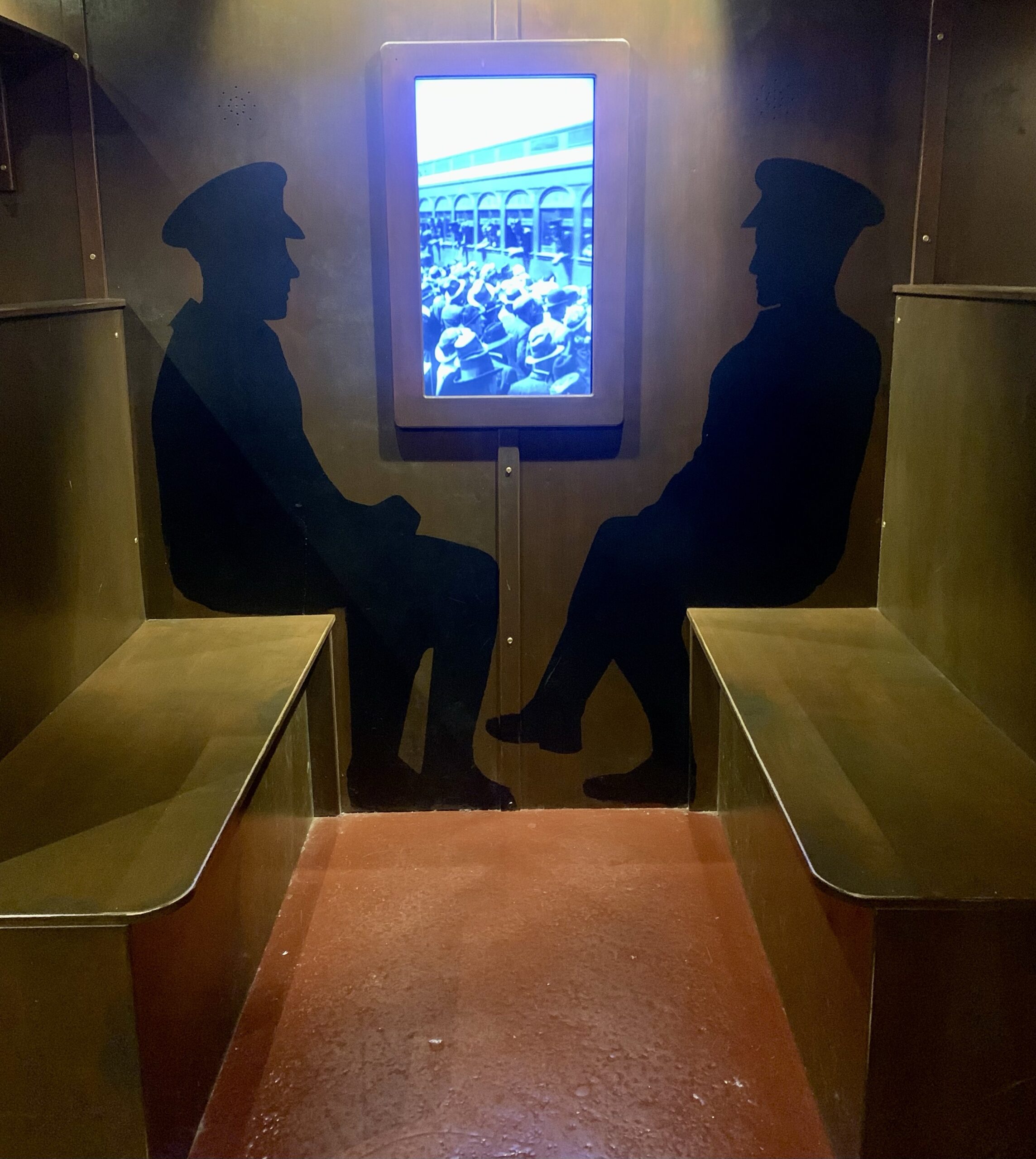
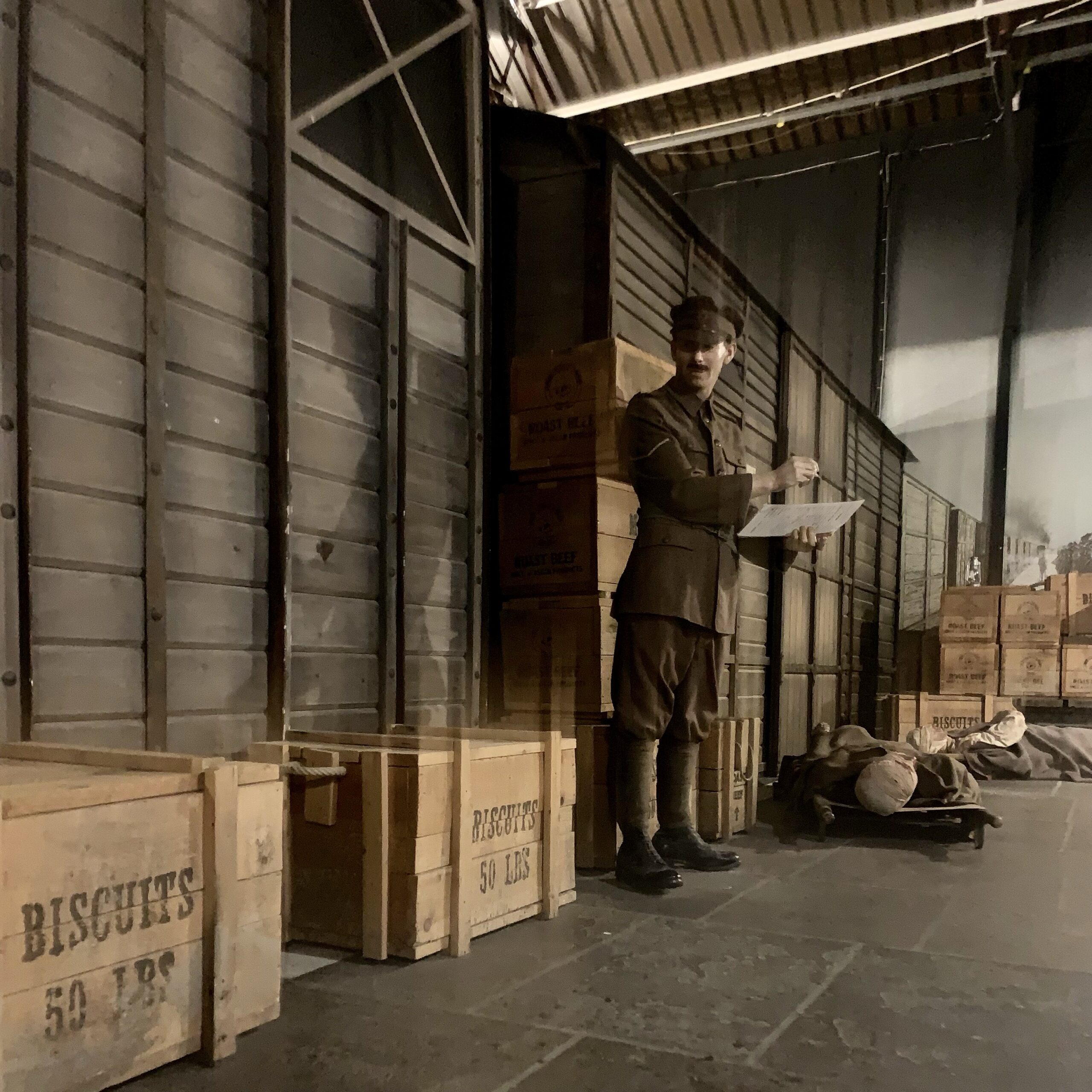
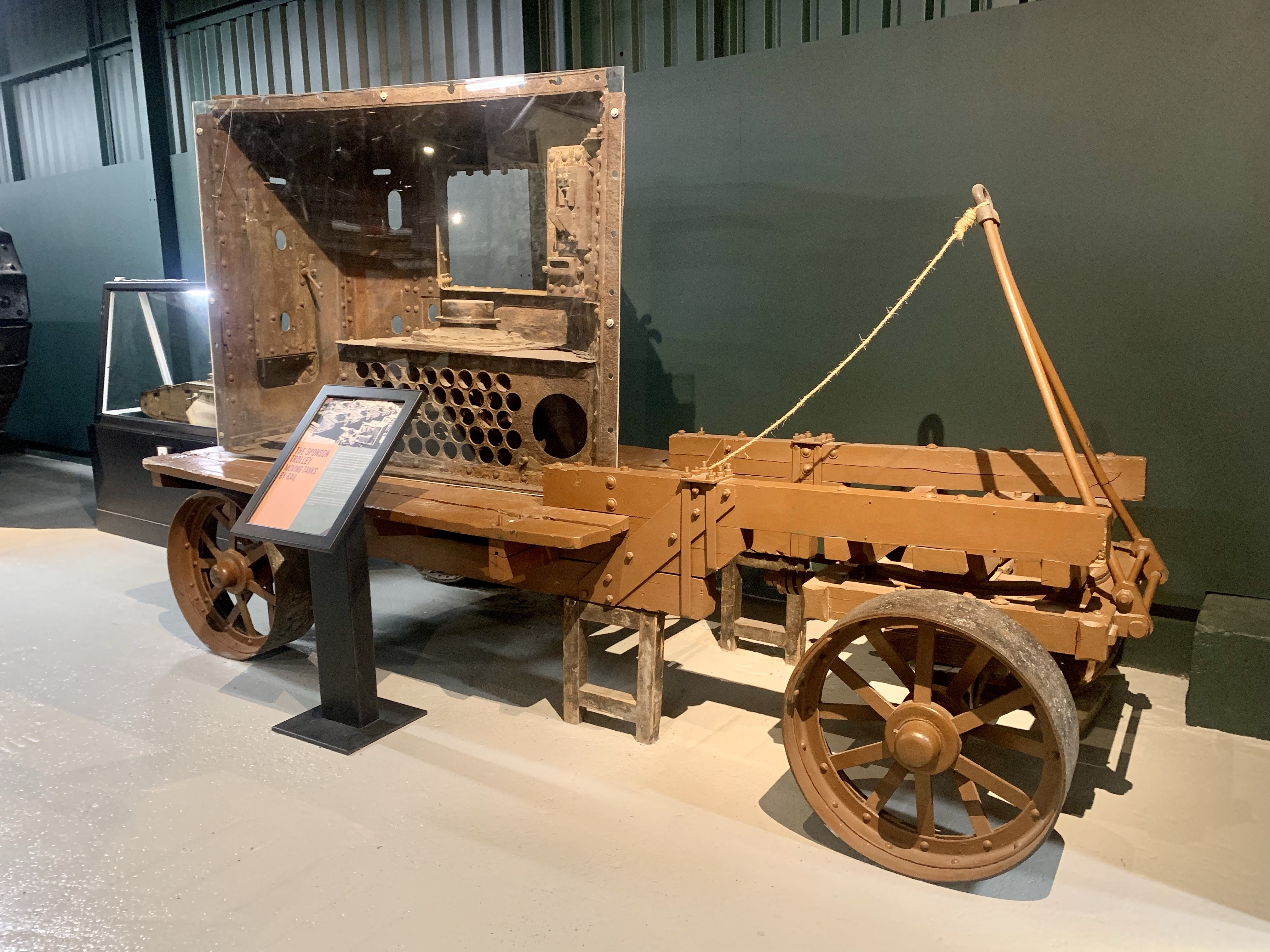
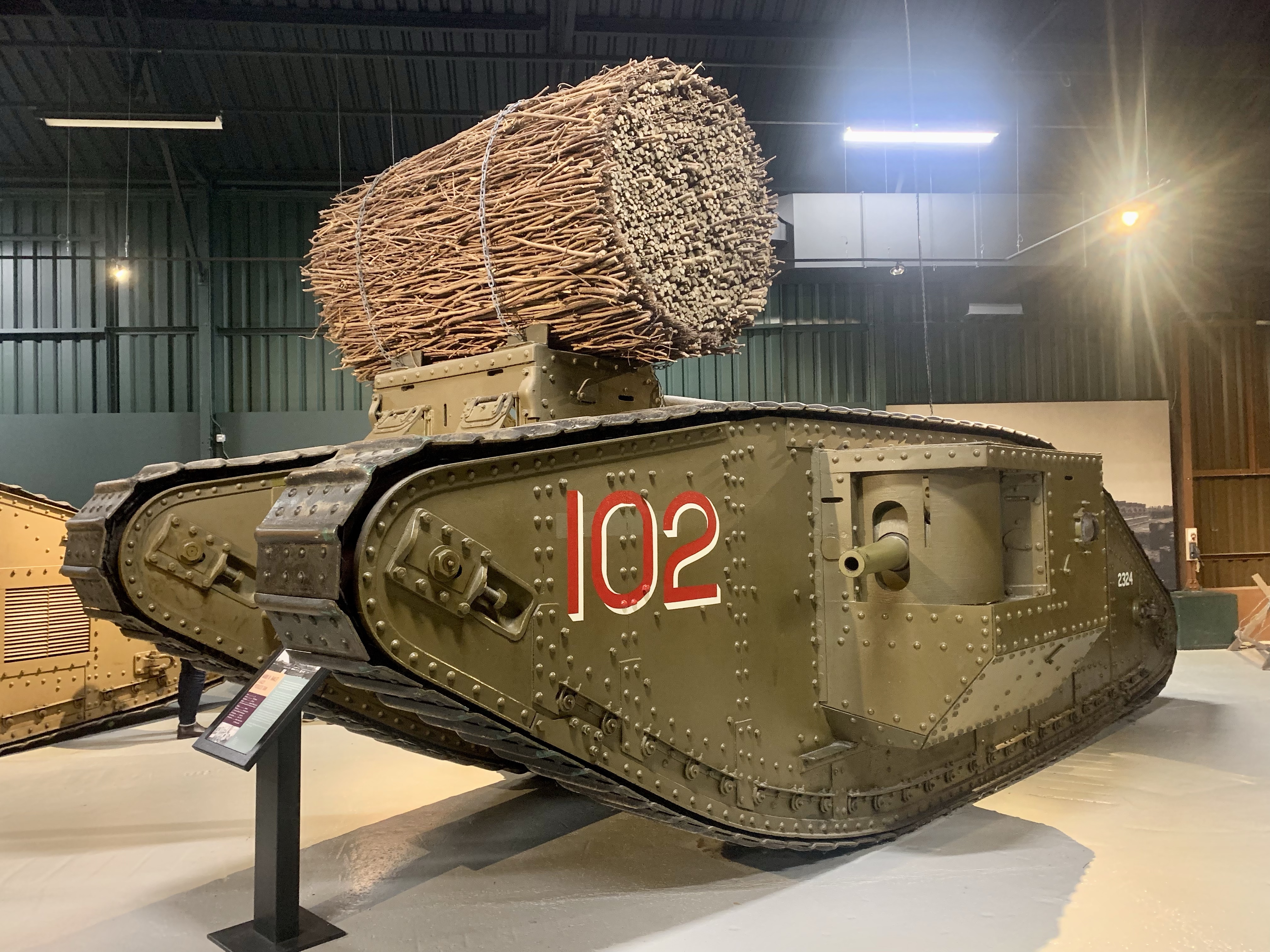
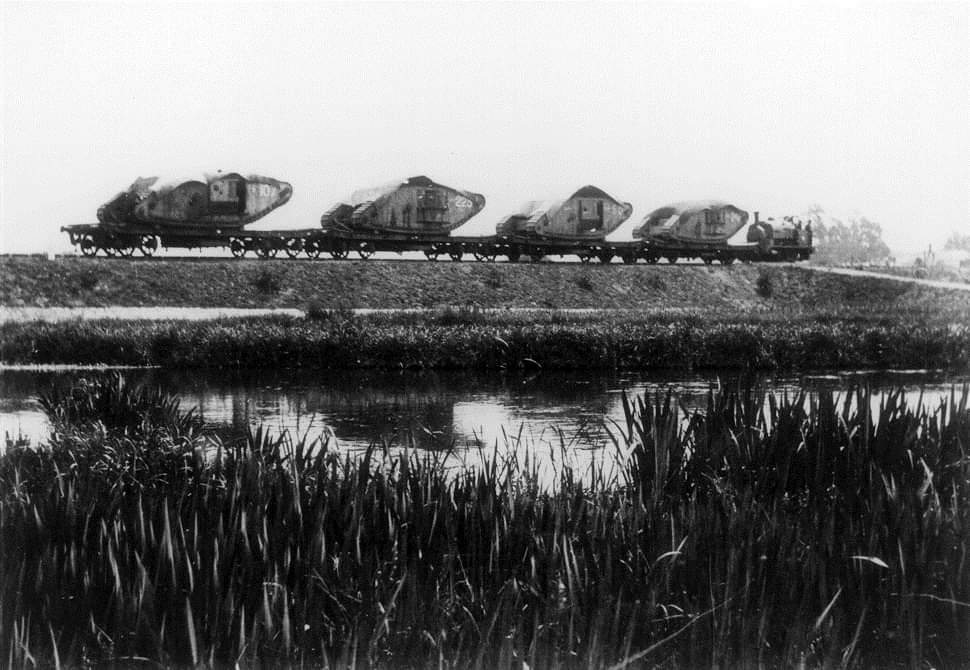
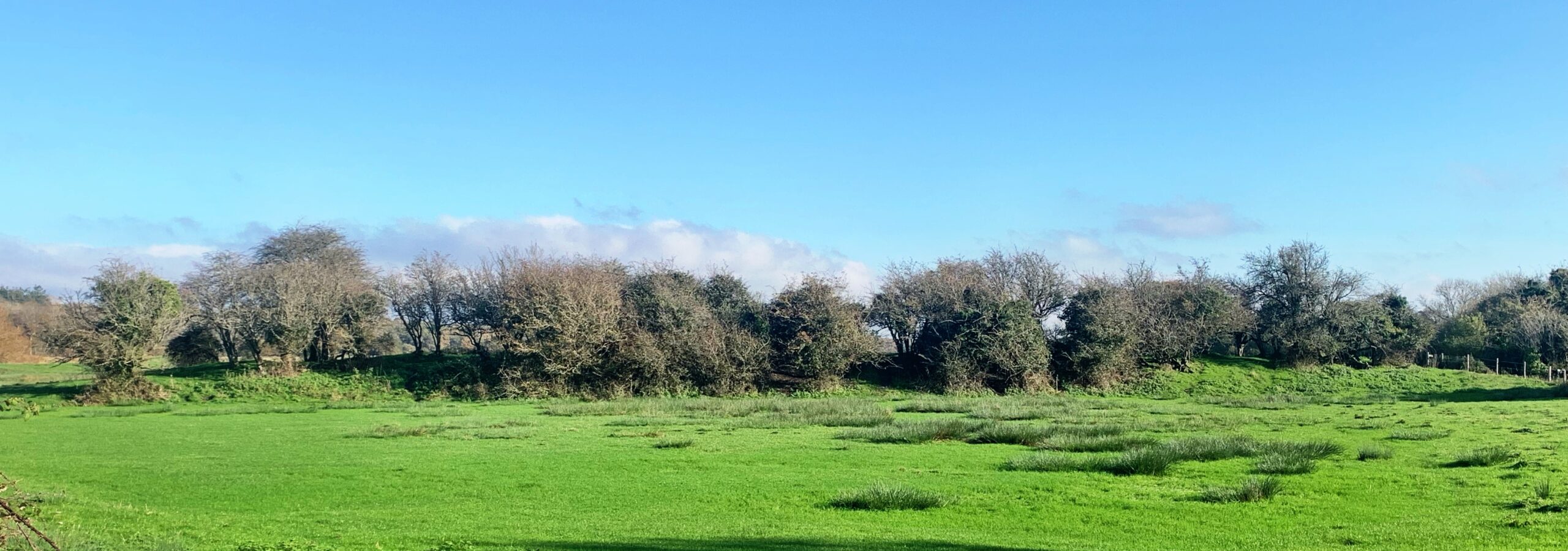
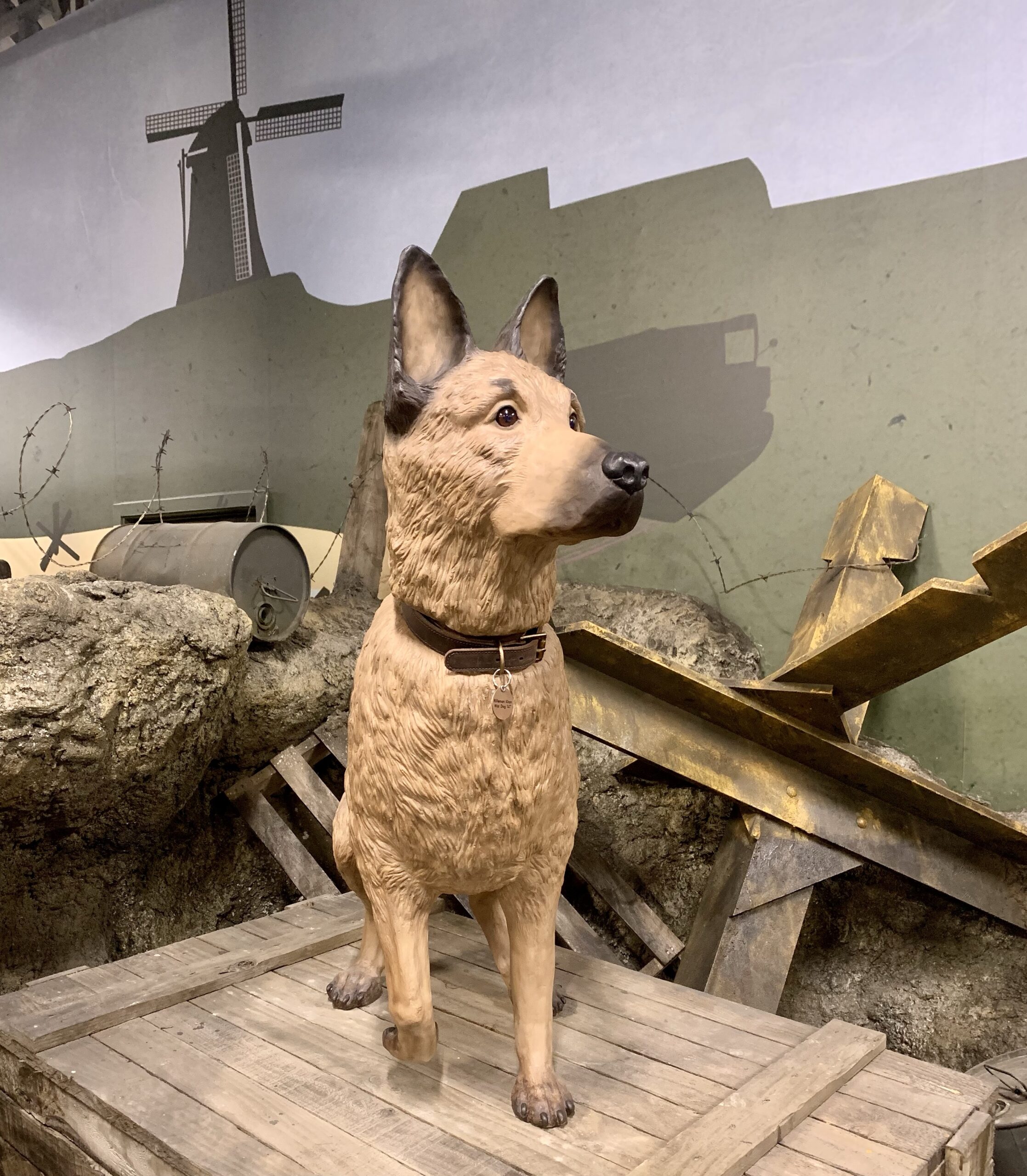
A display showing how railway’s moved troops about the country for embarkation to Europe – The Tank Museum 13/11/2022Checking supplies arriving by train and the injured awaiting repatriation at a railway station diorama – The Tank Museum 13/11/2022Unlike modern armoured vehicles, the first tanks did not have turrets to carry the main gun. Their weapons were instead mounted in special side units known as “sponsons.” An example of a sponson from a Mark II tank is shown on the trolley in the above image. Specially designed trolleys were used in 1916 to move the sponsons around when taken off the tank. This was necessary because tanks would otherwise not be able to travel by rail. The sponsons jutted out and made the tank too wide to fit through tunnels – they may have also knocked down signal posts or injured passengers on platforms. The solution was to unbolt them which took the crew about fifteen minutes and then load them onto the trolleys to be carried separately. With the appearance of the new Mark IV tank in 1917, the trolley became redundant. Its sponsons were smaller and could slide into the hull to allow the whole tank to travel by rail – The Tank Museum 13/11/2022A Mark IV Tank(Male), built in 1917 by William Foster & Co Ltd as part of a batch of 101 tanks numbered from 2300 to 2400. This is one of seven survivors from the 1,220 Mark IV tanks built and is preserved in operational condition, although it is not run to avoid damage from wear and tear – The Tank Museum 13/11/2022A branch line from Wool to Bovington was built . This image courtesy of The Tank Museum shows Mark IV tanks with sponsons pushed inside to meet railway gauge limitations are being shunted towards Bovington. The branch cost an estimated £2,776 which was met by the War department. At just over 2 miles in length, the single track branch line was constructed by the Royal Engineers assisted by German prisoners of war between October 1918 and August 1919Remains of the Bovington Branch railway in 2022; an embankment near Woolbridge – 13/11/2022We’ve looked at the railway element of The Tank Museum, and now a dog feature: Rifleman Khan was a German Shepherd who won the Dickin medal during the Second World War. He was awarded the medal for saving the life of his handler, Lance Corporal Jimmy Muldoon. Khan was volunteered for Army service by the Railton family and given the number 147. After training as a mine detection dog, he was assigned to Jimmy Muldoon, 6th Battalion, The Cameronians. Khan spent the rest of the war in Europe with Jimmy Muldoon. Due to the bond they had developed, Jimmy appealed to the Railton family to keep him. They initially refused, but after a parade organised by ‘The Star’ newspaper in 1947, the family saw them together and allowed Khan to stay with Jimmy, saying, “He is yours, take him home with you!” Jess Lucas, a sculpture student at Arts University Bournemouth, produced the model of Rifleman Khan seen in the image above for her final year project.There are all sorts of tanks on display at the Tank Museum. Sometimes mutated alien creatures encased in tank like bonded polycarbide armour visit for team build events such as this group in 2015 posing for photographs with their creator Davros – 25/07/2015
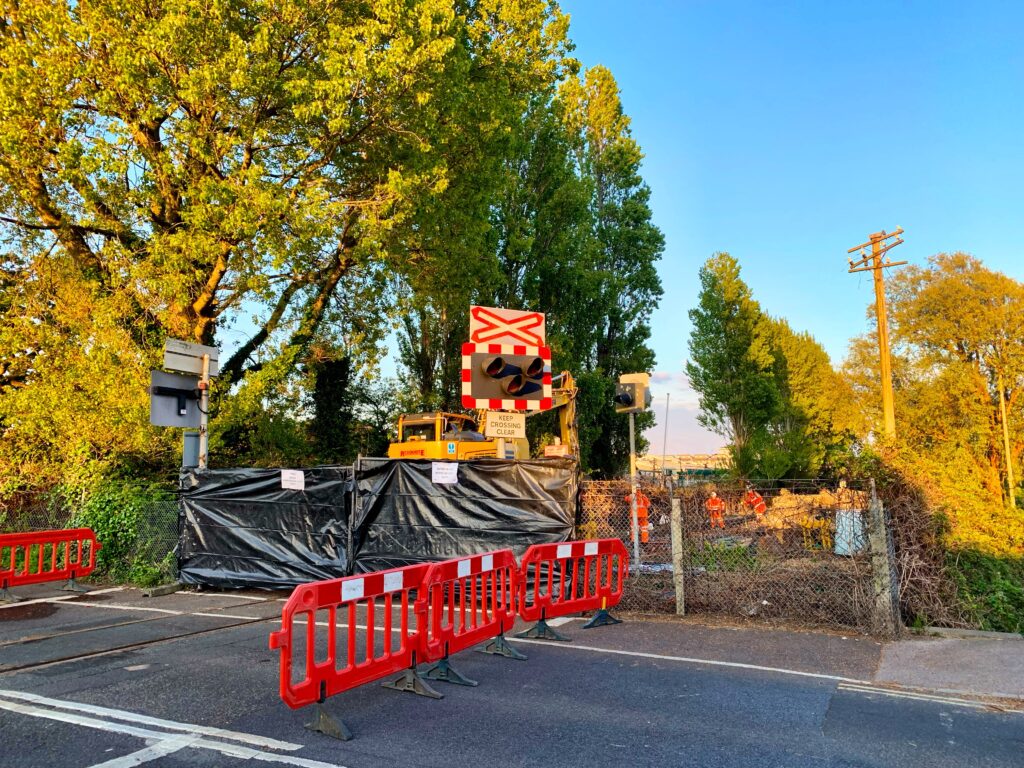
In other news, at some “point” during the past week, the Hamworthy Branch has been reconnected to the main line. Hurrah! The track work crossing Lake Road bridge is scheduled to receive attention w/c 21/11/2022
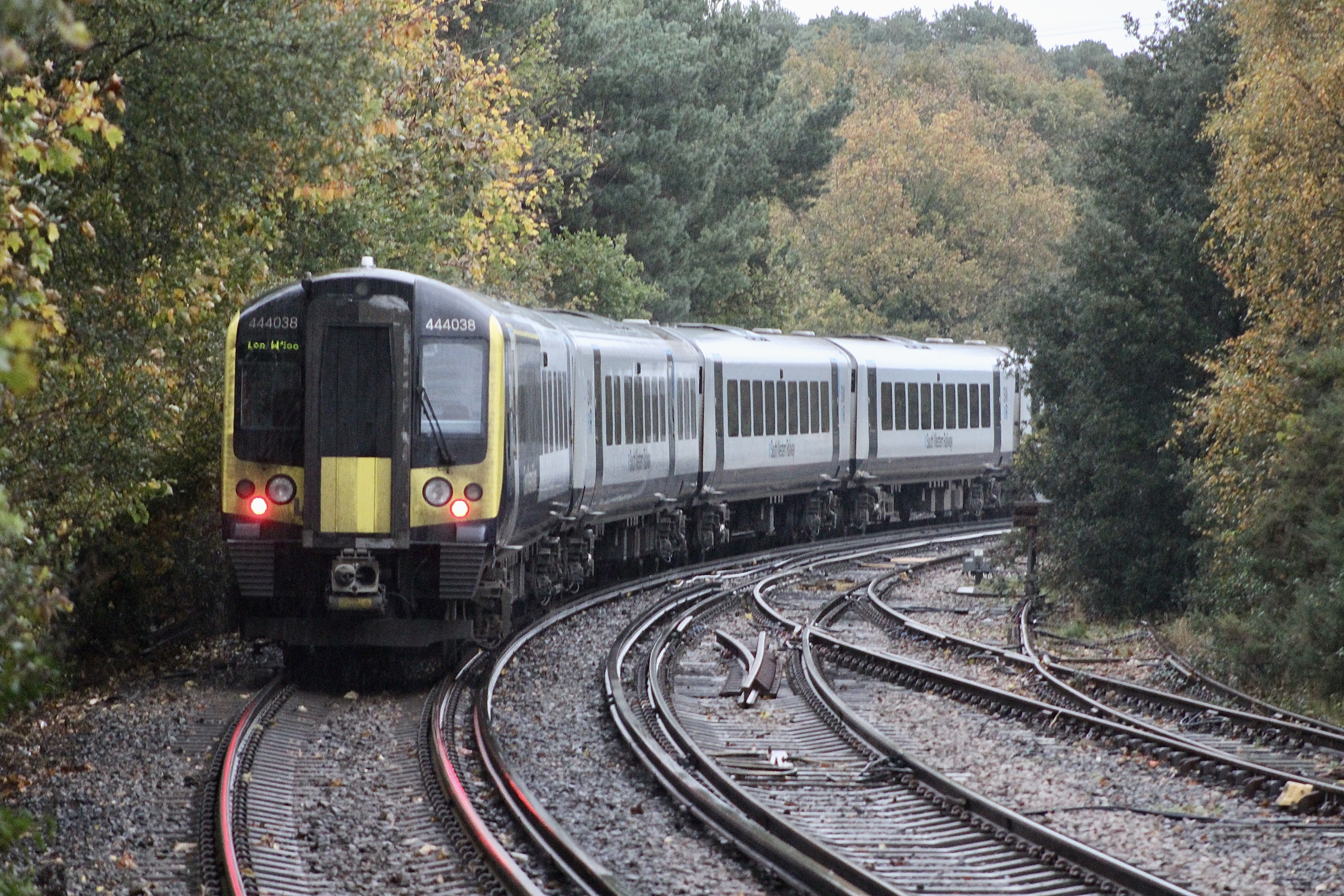
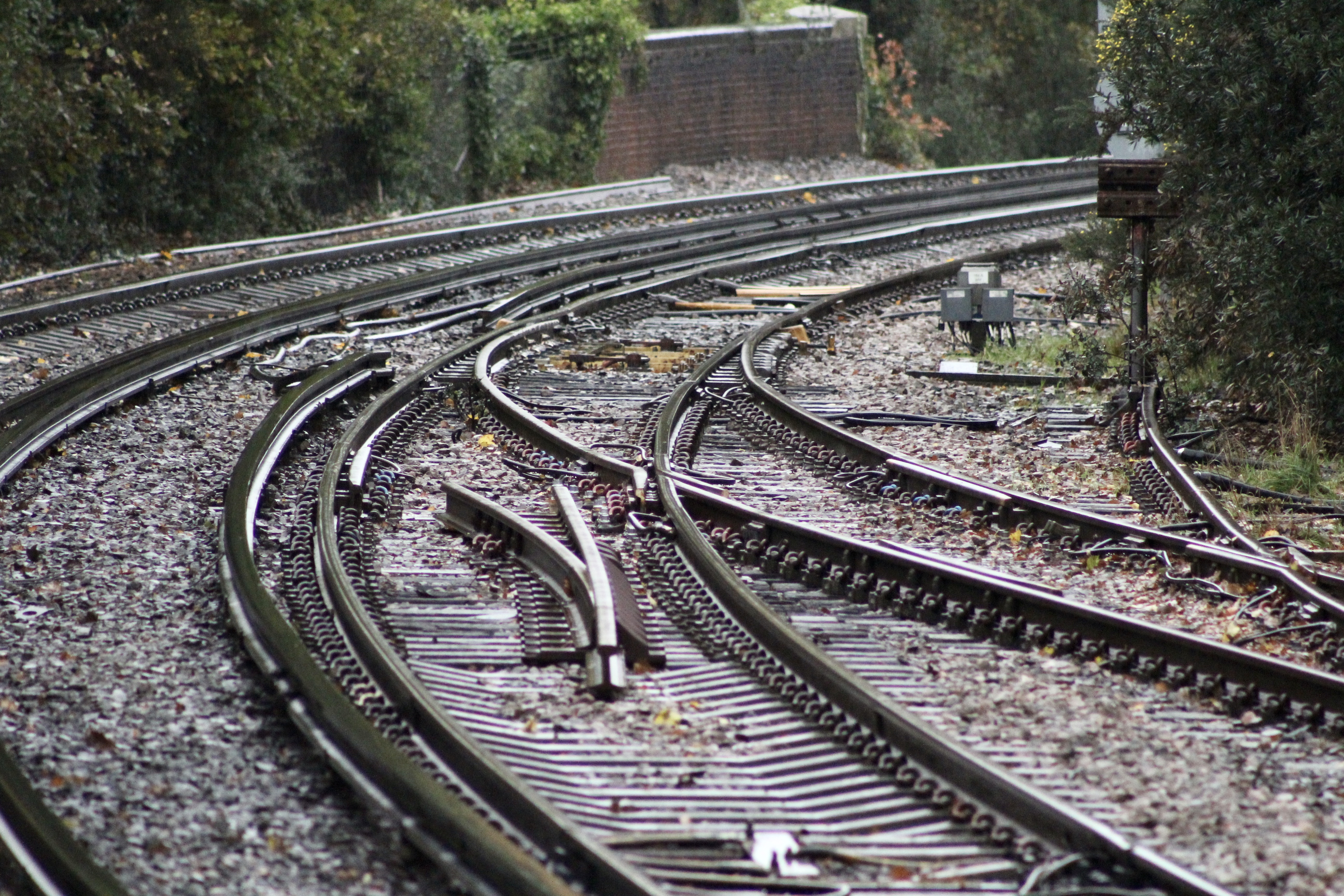
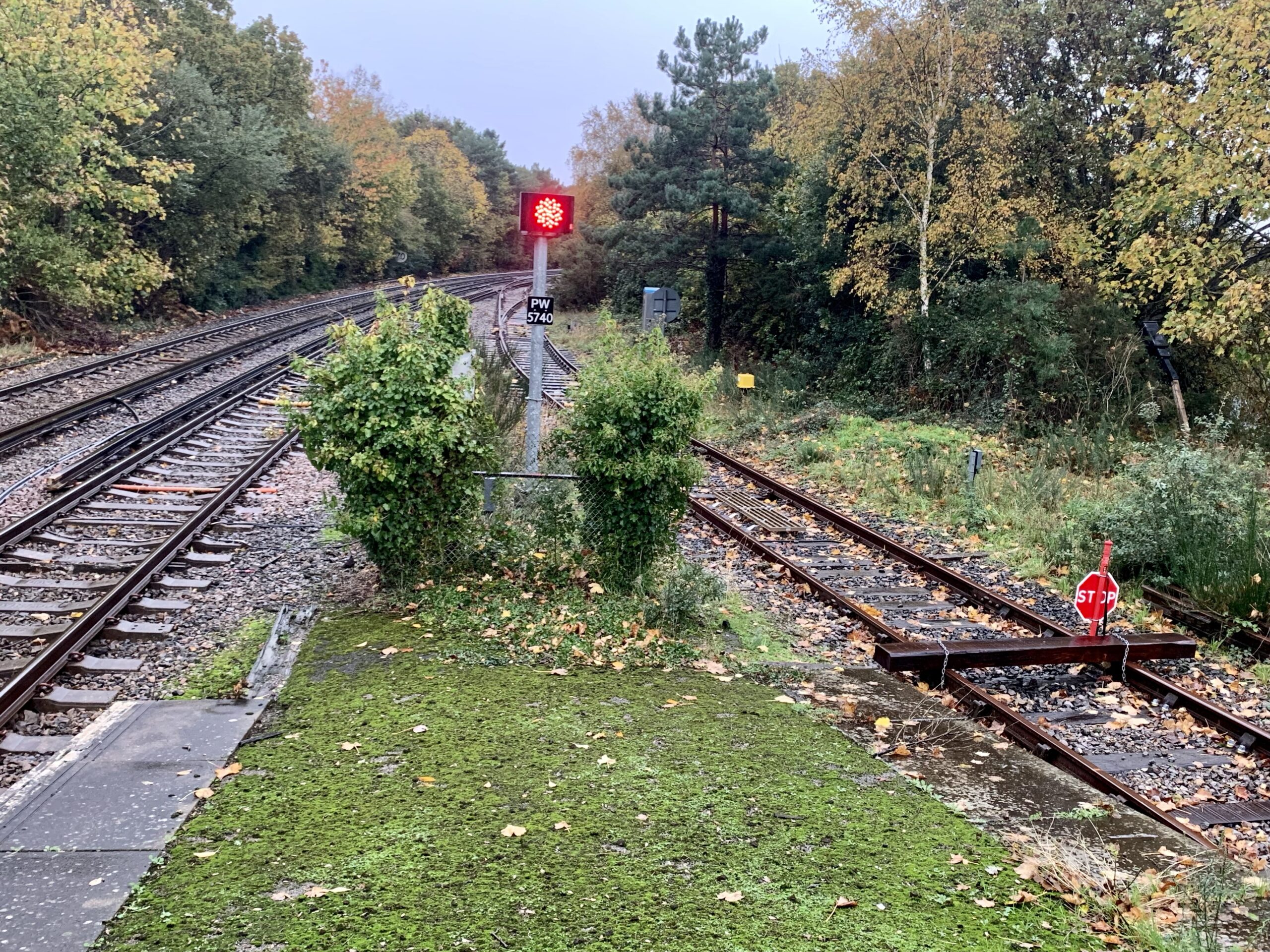
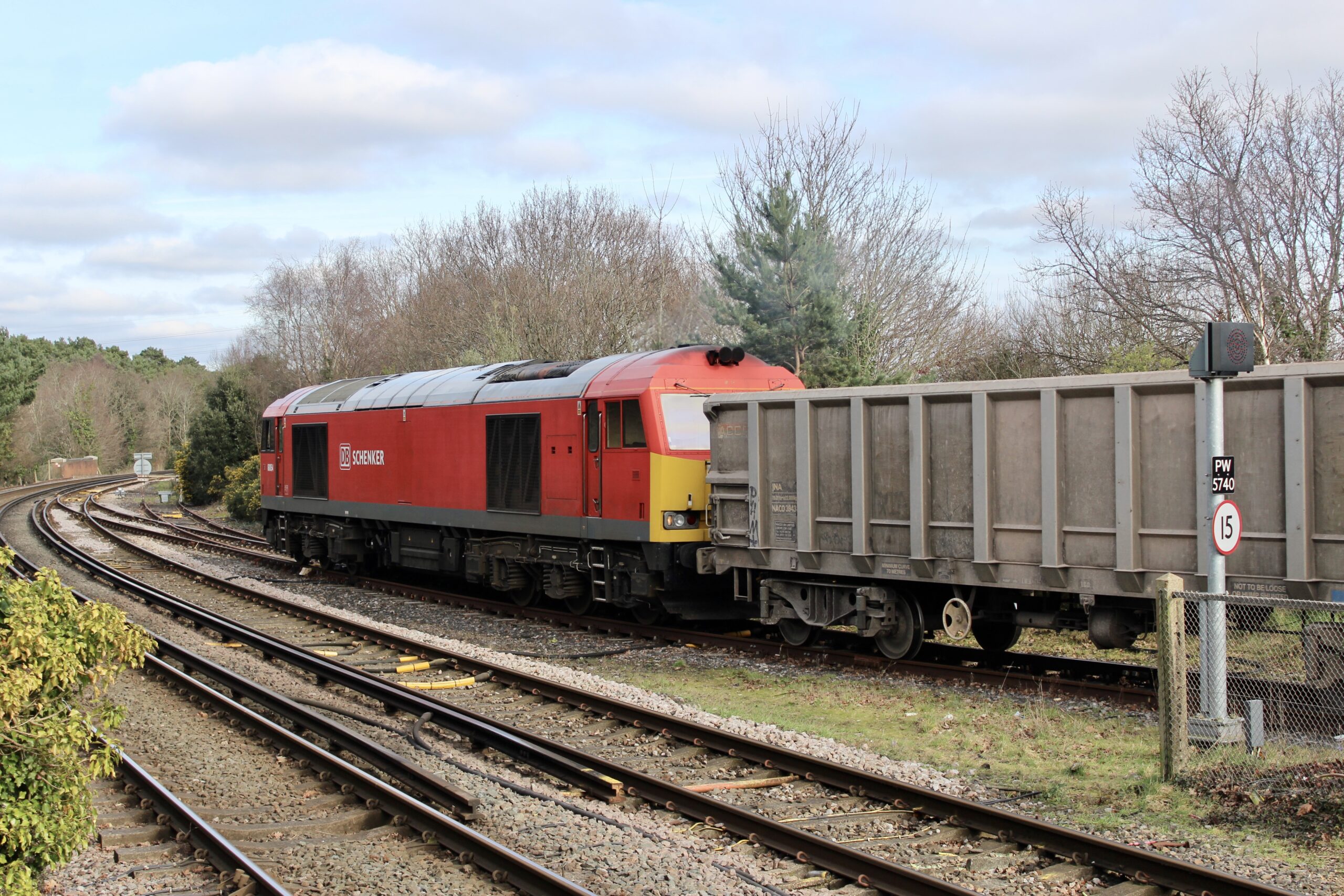
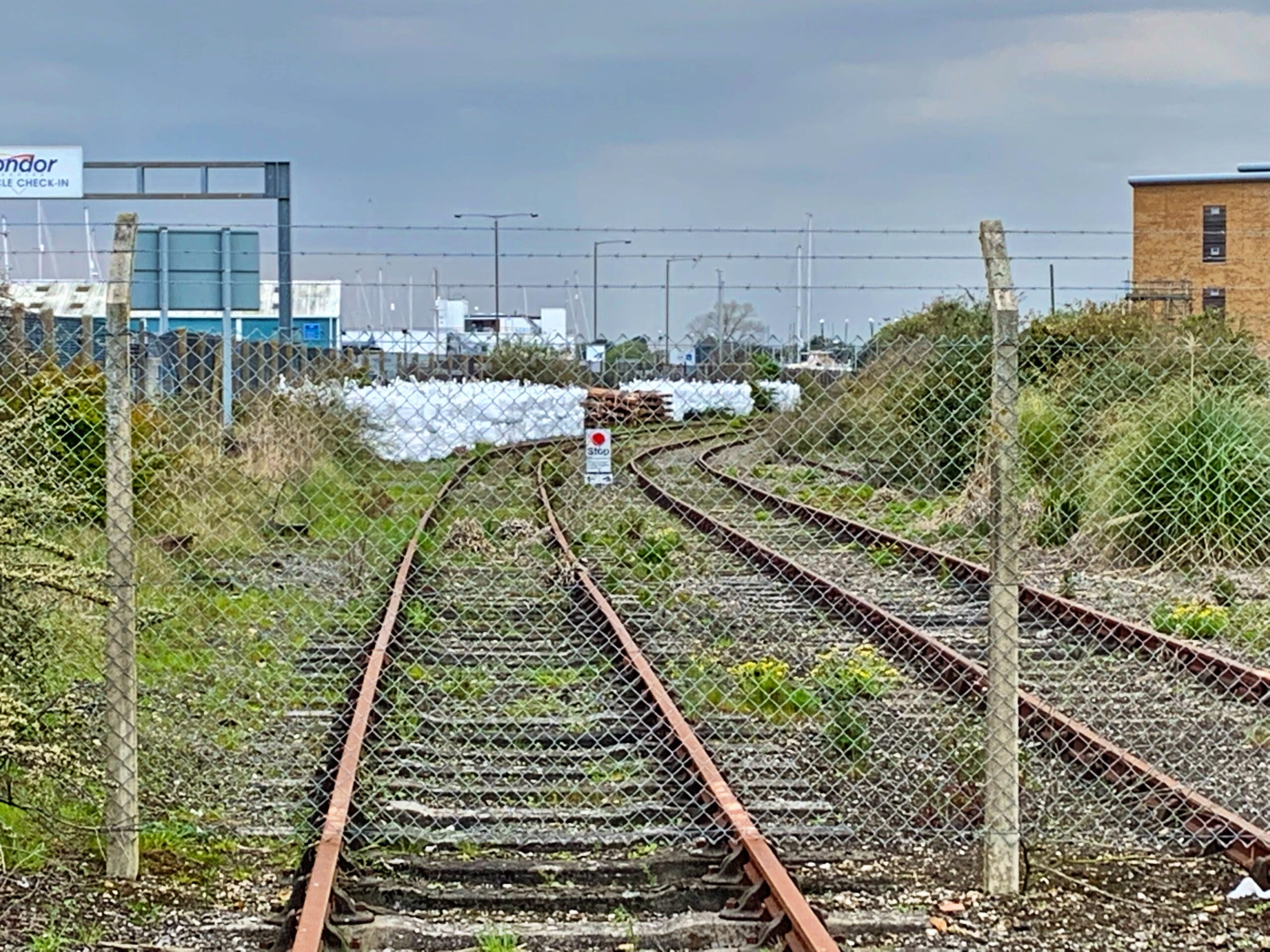
SWR Class 444 No.444038 having departed Hamworthy with 1W64 1420 Weymouth to London Waterloo passes the newly restored point work leading to the Hamworthy Branch – 16/11/2022Closer view of the new point work – 16/11/2022The ‘stop’ sign is still in situ on the Hamworthy Branch – 16/11/2022Maybe a sight we’ll see again? DB Class 60 No. 60054 heads off the Hamworthy Branch – 17/02/2017
If you’ve made it this far dear reader, you have our thanks and gratitude. We really appreciate your comments, observations and corrections. We’ve almost managed a whole year of posts at therailwaydog.co.uk, join us next week for the blogs’ first birthday, There will be cake. Possibly. This week’s post was created to the sounds of Dizzy, John Rutter and Odanata (thanks Milly & Saffy!).
Old meets new at North Pier, Blackpool – 13/07/2022
Blackpool
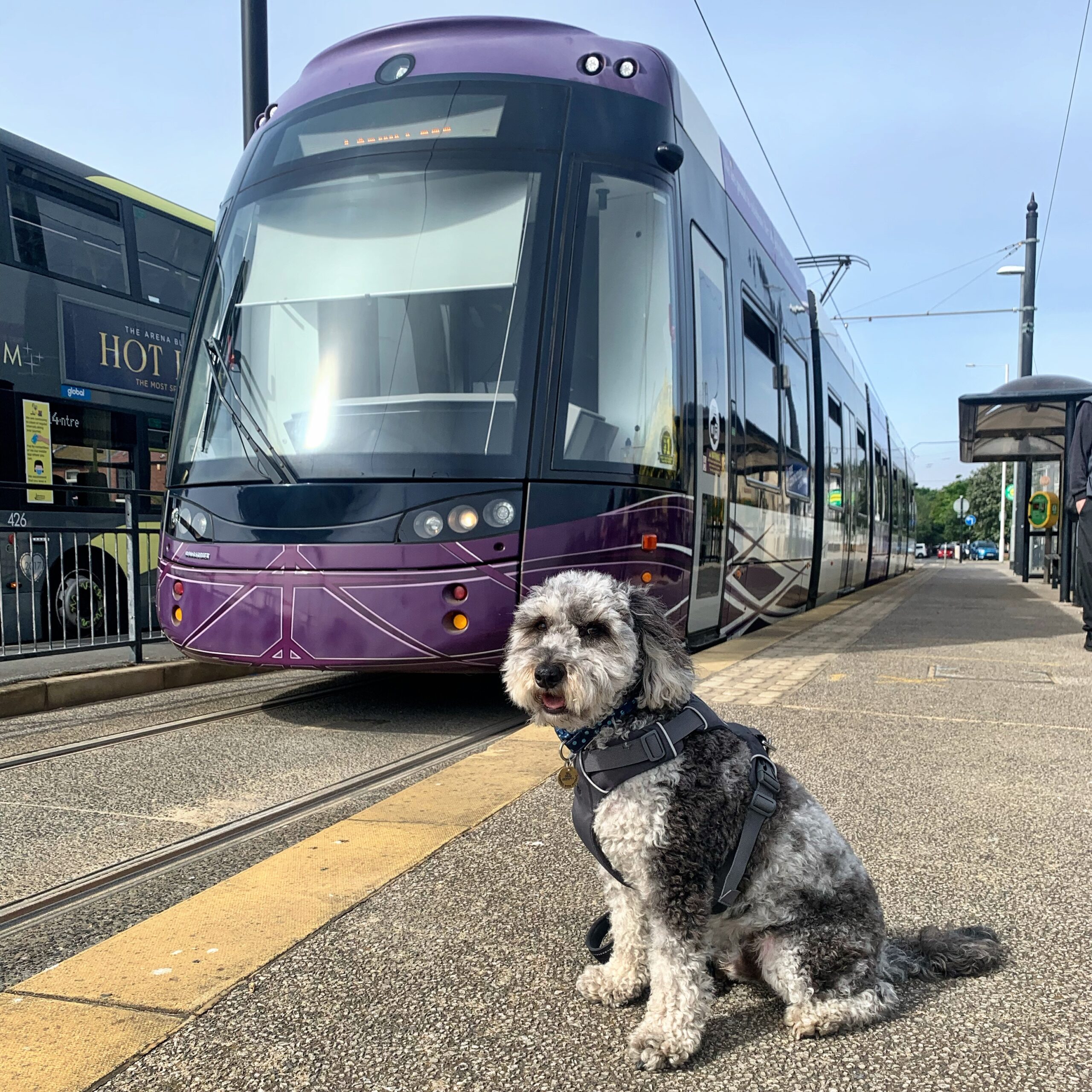
As we mentioned in our last blog entry, Yoshi and I spent a few days in the North West a couple of weeks ago when we took the opportunity to take a trip on a heritage Blackpool Tram. The Blackpool Tramway runs from Blackpool to Fleetwood, originally opening in 1885 and is one of the oldest electric tramways in the world. It is operated by Blackpool Transport (BT) and runs for approximately 11 miles. The last time I visited Blackpool was probably in 2007 when David Tennant, who was at the time playing the Tenth Doctor in BBC TV’s “Doctor Who”, switched on the illuminations. This was just prior to the announcement that the UK Government had agreed to the joint BT and Blackpool Council bid for funding towards the upgrade of the tram track network, with £60.3m coming from Government coffers. The remainder of the £85.3m cost came from Blackpool Council and Lancashire County Council which contributed @ £12.5m each. The Government’s funding allowed the entire tramway to be upgraded with 16 modern and accessible Bombardier Flexity 2 trams being introduced in 2012 replacing the traditional fleet of ageing cars.
A number of the old trams which I was familiar with on my previous visits have been retained with some having been lovingly restored to form a Heritage Fleet and modified, widened Balloon trams as part of the main fleet. The depot at Starr Gate houses the Flexity 2 trams with Rigby Road Depot, near Manchester Square, housing the traditional trams. A great deal of effort has been made to ensure that the traditional trams have a future in Blackpool and I was pleased to see one on a run out as we arrived in Fleetwood for our stay at the North Euston Hotel. Thinking perhaps these only ran at weekends, I asked a driver of one of the modern trams about the heritage fleet and was directed to a website dedicated to Blackpool Heritage Trams. From here, Yoshi and I booked a one hour promenade tour which picked up from North Pier on its way to Bispham before heading back all the way to the Pleasure Beach in the south of Blackpool before turning once more and returning via the Golden Mile, dropping us off where we started. I was delighted to see that the tram car operating our trip was one of the recognisable and iconic Balloon cars, so named because of their rounded streamlined appearance, in traditional Blackpool 1940s “Wartime” green and cream livery.
Yoshi waits to board the tram for his Blackpool promenade tour – 13/07/2022
The Balloon trams were originally called “Luxury Dreadnought” cars and had been commissioned in 1933 by Walter Luff, the controller of the Blackpool network, in a bid to modernise the tramway’s fleet which had been working the tracks since the early years. 27 trams were constructed by English Electric between 1934 and 1935, the first being delivered on 10th December 1934. They were built with central doors and stairs, with a maximum capacity of 94 passengers. Half-drop windows provided ventilation with Art Deco curved glass electric lighting providing illumination. The initial thirteen were open-topped and the remaining fourteen were enclosed, these having sliding roof windows and thermostatically-controlled radiators.
Yoshi after enjoying a snooze on Balloon tram No. 700 – 13/07/2022
Between 2009 and 2012, Balloon car No. 700, which was to provide transportation for our journey, along with sisters 711, 713, 719 and 720 were modernised so that they could continue to operate in service following the refurbishment of the whole tramway to light rail standards. New widened doorways were fitted to allow more accessibility, with driver operated doors which fit to the new platforms built at tram stops for the modern Bombardier trams. Fixed seats and new passenger information displays were also fitted to match the new trams. Speedometers were also retrofitted to the driving consoles, which seems like a very good idea to me!
Yoshi considers driving off in Car No. 700 – 13/07/2022
We really enjoyed our trip on the heritage tram, and thoroughly recommend the experience should you find yourself in Blackpool. You can join us on our tour of Blackpool promenade as well as view some of the Flexity 2 trams in our video below:
Yoshi takes time to check out Flexity 2 tram No. 010 at Fleetwood Ferry – 11/07/2022
For a reminder of what it used to be like, here’s a video of Blackpool Trams from October 1999, featuring a brief glimpse of some of the famous illuminated trams:
Dorset Coast Express
Thursday 21st July saw another steam excursion to Weymouth subjected to alterations, this time because of the dry weather and subsequent risk of line side fires, the planned steam motive power was replaced by two Class 47 diesel locomotives. Fingers crossed all goes to plan for the next scheduled The Railway Touring Company Dorset Coast Express in August!
Class 47 No. 47772 ‘Carnforth TMD’ leads 1Z82 0845 London Victoria to Weymouth past Poole carriage sidings – 21/07/2022Class 47 No. 47813 with the return working of the Dorset Coast Express racing through Hamworthy – 21/07/2022
Around Taunton
Video screen grab of Class 47 No.’s D1935 / 47805 ‘Roger Hosking MA 1925-2013’ and D1944 / 47501 ‘Craftsman’ power the “Cornish Riviera Statesman” rail tour up Whiteball bank – 23/07/2022
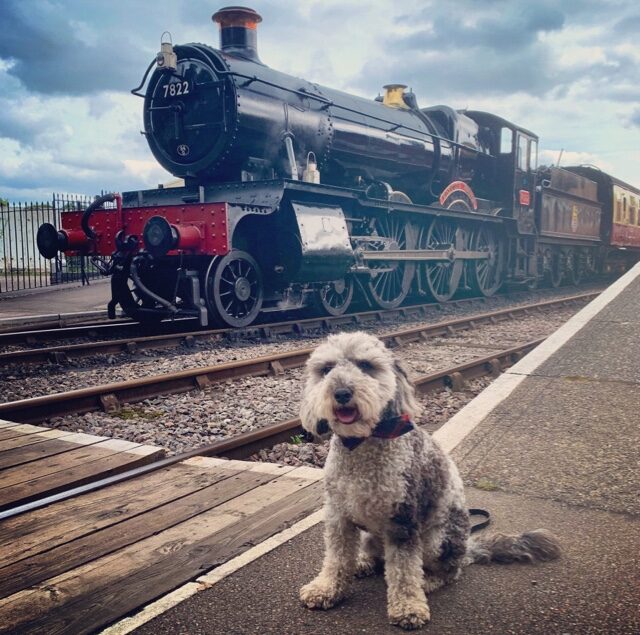
Saturday saw Yoshi and I in the Taunton area as we went to see a couple of rail tours and hoped to catch celebrity High Speed Train power car No. 43384 which has been outshopped in a retro livery by CrossCountry Trains. First on our radar was Statesman Rail’s “Cornish Riviera Statesman” working Derby to Penzance and double headed by Brush Type 4 Class 47 No.’s D1935 / 47805 ‘Roger Hosking MA 1925-2013’ and D1944 / 47501 ‘Craftsman’, both resplendent in British Rail two-tone green livery. I just had time to set up for a video capture when the train passed by several minutes ahead of schedule, meaning my camera was still asleep in its bag. Also running ahead of schedule was The Railway Touring Company operated “The West Somerset Express”, which like their tour to Weymouth a couple of days previously had been advertised as being steam hauled, but were deputised with West Coat Railways Class 47 No.’s 47813 and 47772 ‘Carnforth TMD’ again in top and tail formation. This tour originated from London Paddington and was destined for Minehead on the West Somerset Railway (WSR) – the longest heritage railway in the UK. On arrival at Bishops Lydeard, the first WSR station after leaving the main line, the Class 47’s were replaced with a pair of steam locomotives to take the train forward. We saw Great Western Railway (GWR) Inspired 2-6-0 9351 Class WSR Mogul No. 9351 and GWR 7800 Class Manor No. 7822 ‘Foxcote Manor’ hauling the train nearing Crowcombe Heathfield producing some fine acoustics. You can follow our day in the video below, which also includes some CrossCountry Trains and GWR Castle Class HST’s:
CrossCountry Trains (XC) recently outshopped Class 43/3 No. 43384 from Plymouth Laira Depot in a revised High Speed Train livery, known as Intercity Executive, first carried back in the 1980’s. At the time the Intercity yellow and grey livery replaced the original blue and yellow colour scheme that had been used since the introduction of the fleet. CrossCountry has confirmed that the repaint comes as part of marking the 40th anniversary of the introduction of the InterCity 125 by British Rail on to the North East to South West route. Other celebrations include a special Railway Benefit Fund charitable XC HST rail tour on the 27th September 2022 travelling from Leeds to the Severn Valley Railway including a run along the heritage railway itself. An HST power car will be named at Kidderminster to mark the anniversary.
Class 43/3 No. 43384 is seen leading on 1V52 0658 Edinburgh Waverley to Plymouth as it nears Creech St. Michael – 23/07/2022
Eastleigh Grid
Class 56 No. 56081 approaches Shawford working 5O07 1049 Leicester L.I.P. to Eastleigh East Yard hauling Arlington Fleet barrier vehicle’s No. 64664 ‘Liwet’ (Ex Class 508 DMSO from unit 508207) and 64707 ‘Labezerin’ (Ex Class 508 DMSO from unit 508116) ex EMU Barrier coach set T7 – 24/07/2022
Yoshi and I were busy with our chores on Sunday morning when we discovered GBRf Class 56 No. 56081 was on its way from Leicester to Eastleigh with barrier vehicles in order to collect Network Rail’s European Railway Traffic Management System (ERTMS) lab train No. 313121 – this was too good an opportunity to miss and we put down the duster and polish and jumped in the car and set off for Shawford. This is more than likely our final opportunity to see this particular Class 56 in its current form as it has been earmarked for conversion as part of the Class 69 programme.
On our way back home, we had a quick look in at Eastleigh Works and saw the remaining four cars of Wessex Electric Class 442 EMU No. 442412 had been shunted around and were now visible adjacent to the road. Based on the British Rail Mark 3 carriage as used in HST sets, the 442’s were introduced as part of the Bournemouth to Weymouth electrification programme in the late 1980’s and, in my view at least, were the best EMU to have run in the UK.
GBRf Class 73 No. 73141 ‘Charlotte’ at Eastleigh Works – 24/07/2022The remaining four coaches of Class 442 No. 442412 in faded “Express” livery at Eastleigh Works – 24/07/2022
701 On Test
Class 701 No. 701017 passes the site of the former Boscombe railway station working 5Q52 1724 Staines Up Loop to Eastleigh TRSMD via Bournemouth – 25/07/2022
Another week passes by and Class 701’s are still running test trains to Bournemouth and Poole prior to their introduction into revenue earning service. This week we went to take a look at the site of the former railway station at Boscombe which was located between Bournemouth Central and Pokesdown. The station opened in 1897 and served The Royal Victoria Hospital and the shopping area around the Royal Arcade. Boscombe had a goods yard which received traffic for despatch from a large area of Bournemouth along with a coal depot and sidings. The substantial brick built buildings were demolished a few years after closure in 1965. The site now houses business units and threatening signs about unofficial parking. The road bridge which goes over the railway at this point has had footbridges added to each side and these have very high fencing installed for safety reasons.
Access Point Information, Station Approach, Boscombe – July 2022Station Approach, Boscombe – July 2022Station Approach, Boscombe – July 2022
Class 701 No. 701017 was this weeks unit on test as seen in this video – 25/07/2022
Hamworthy Branch
More activity on the mothballed Hamworthy Branch this week as temporary traffic lights were put in place at the crossing on Ashmore Avenue on Tuesday 26th July. Road / rail vehicles were also in evidence along the branch moving ballast. Sleepers and sections of track have also been marked up, possibly for replacement. Network Rail have successfully applied for a road closure permit on Lake Road, presumably to enable work to be carried out on the railway bridge which is located there.
Pressure washing Ashmore Avenue crossing on the Hamworthy Branch – 26/07/2022
We arrived just too late for a decent shot of a road / rail vehicle working on the Hamworthy Branch at Hamworthy station, but we thought we’d share this anyway! 26/07/2022
Weymouth Railway Heritage Trail
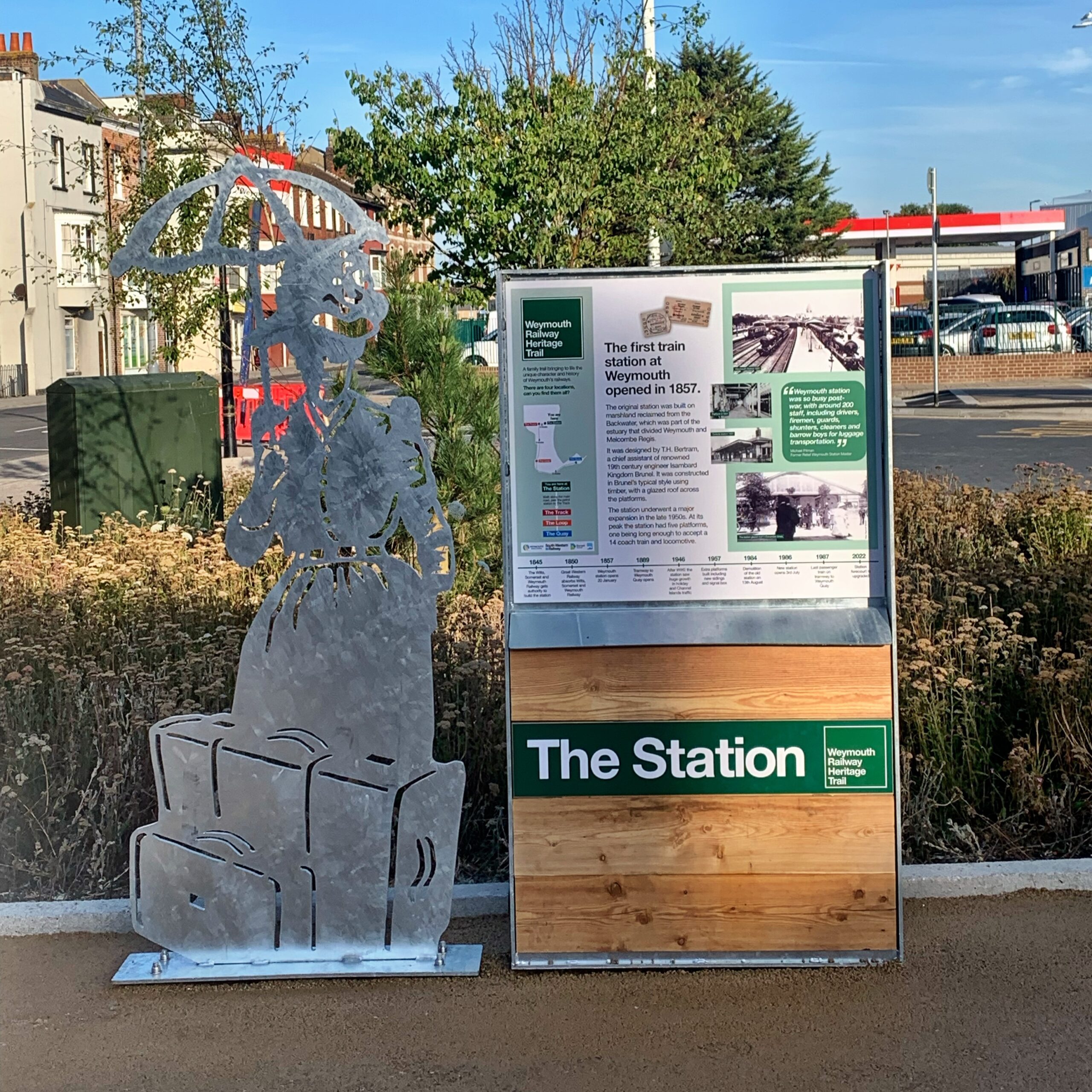
In the past week or so, new signage has popped up around Weymouth on the route of the former Weymouth Harbour Tramway which last saw use in 1999 and was dug up by the local council in an act of vandalism in 2020/21 with most of the track being removed at this time. With no sense of irony Weymouth Town Council, Dorset Council and South Western Railway have installed information boards celebrating Weymouth’s unique railway history.
The remodelled station forecourt at Weymouth – July 2022Weymouth Railway Heritage Trail information board ‘The Station’ – July 2022Weymouth Railway Heritage Trail information board ‘The Track’ – July 2022Weymouth Railway Heritage Trail information board ‘The Loop’ – July 2022Weymouth Railway Heritage Trail information board ‘The Quay’ – July 2022
This weeks “The Railway Dog” was mostly written to the sounds of Faeland, Hollow Coves, The Teardrop Explodes and Sibelius Symphony No. 5. Thanks for visiting. Comments and corrections are, as ever, always welcome and we really appreciate it when you point out typos or grammatical errors. We’ll be back next week, we hope you’ll join us.
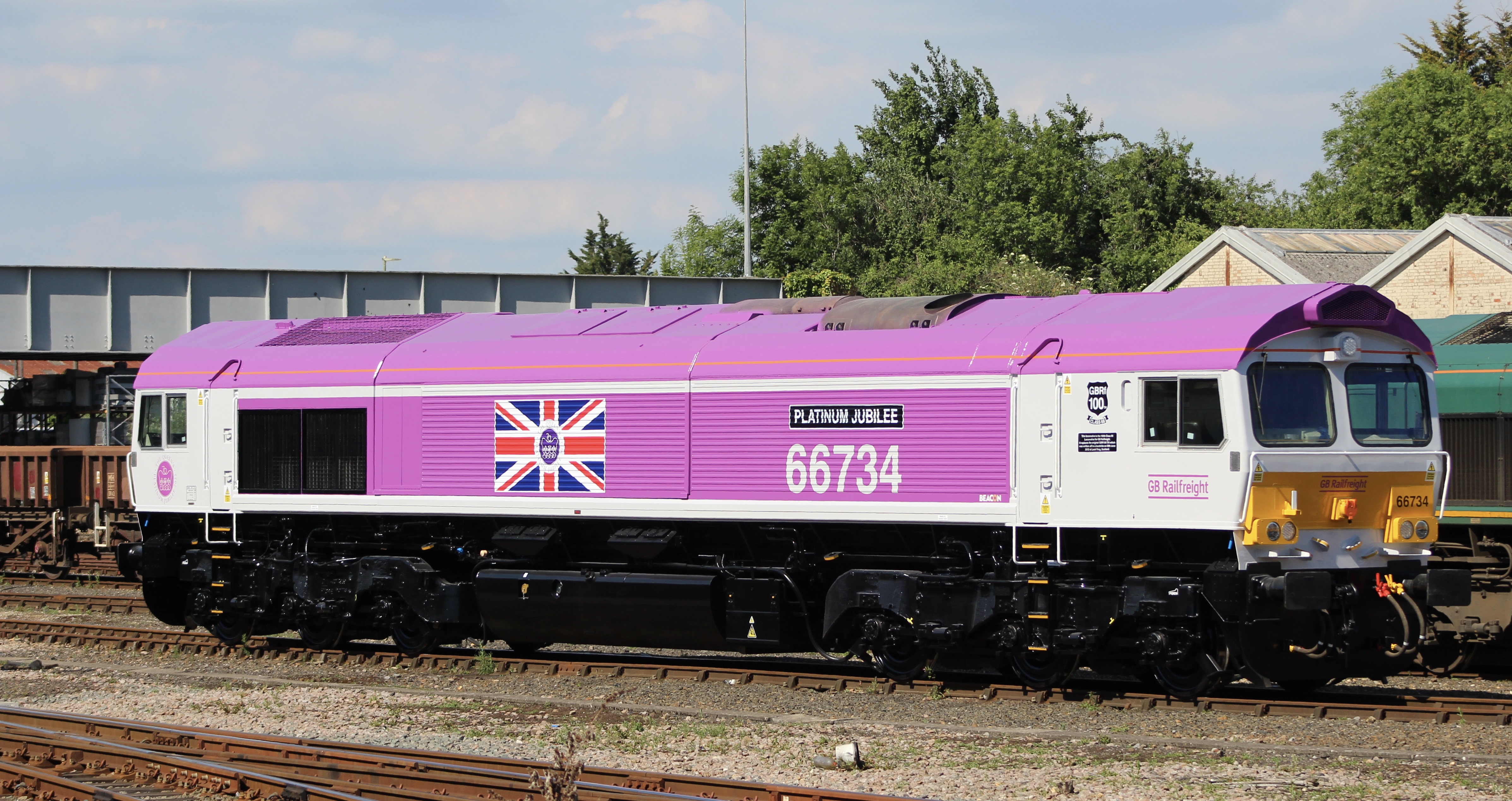
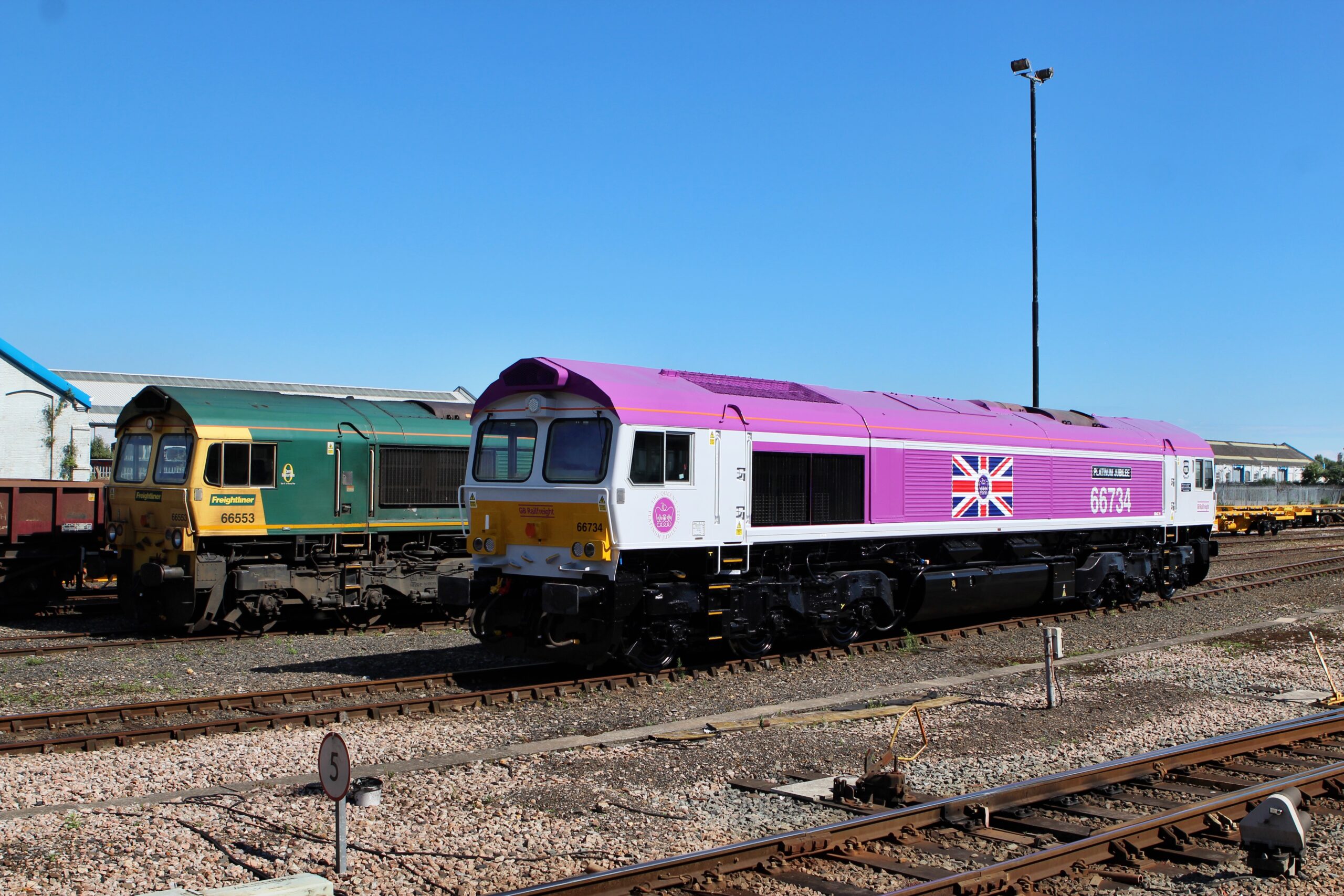
GBRf Class 66 No. 66734 ‘Platinum Jubilee’ stands adjacent to Eastleigh railway station – 02/06/2022
66734 ‘Platinum Jubilee’
We kicked off our four day Platinum Jubilee Weekend when we popped into Eastleigh to see newly outshopped GBRf EU Class 66 conversion No. 66734. The locomotive, previously No. PB04 when in use in Europe, has taken the identity of Class 66/7 No. 66734, which was written off in a landslide adjacent near Loch Trieg in 2012, and is the 100th member of the class acquired by GBRailfreight.
GBRf Class 66 No. 66734 ‘Platinum Jubilee’ stands adjacent to Eastleigh railway station – 02/06/2022Detail from 66734 ‘Platinum Jubilee’
To mark the Platinum Jubilee of Her Majesty The Queen, the engine has been given a special purple and silver livery, with the Platinum Jubilee logo and Union Flag on the bodyside. The engine has been named ‘Platinum Jubilee’, and although it currently carries vinyl nameplates, these will be replaced by cast versions in time.
Detail from 66734 ‘Platinum Jubilee’Detail from 66734 ‘Platinum Jubilee’GBRf Class 66 No. 66734 ‘Platinum Jubilee’ and Freightliner sister No. 66553 stabled next to Eastleigh railway station – 02/06/2022
Didcot
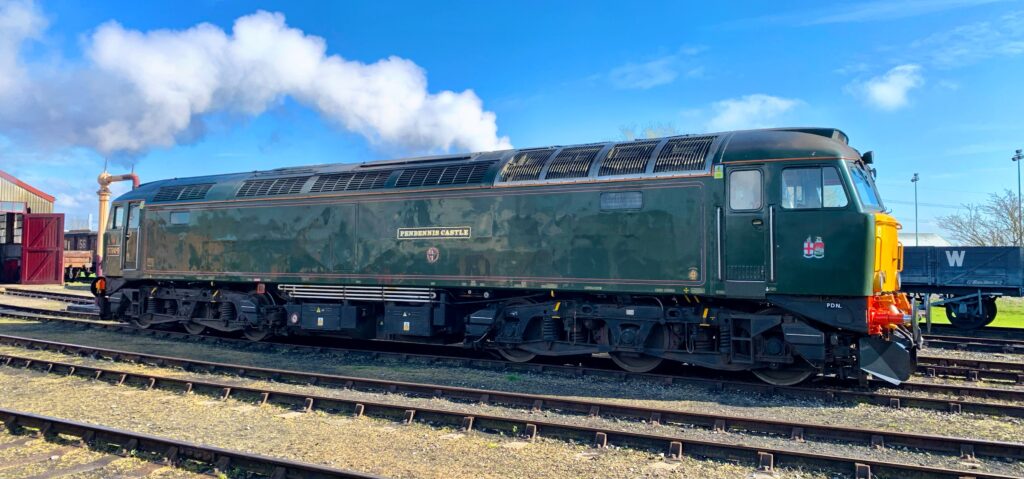
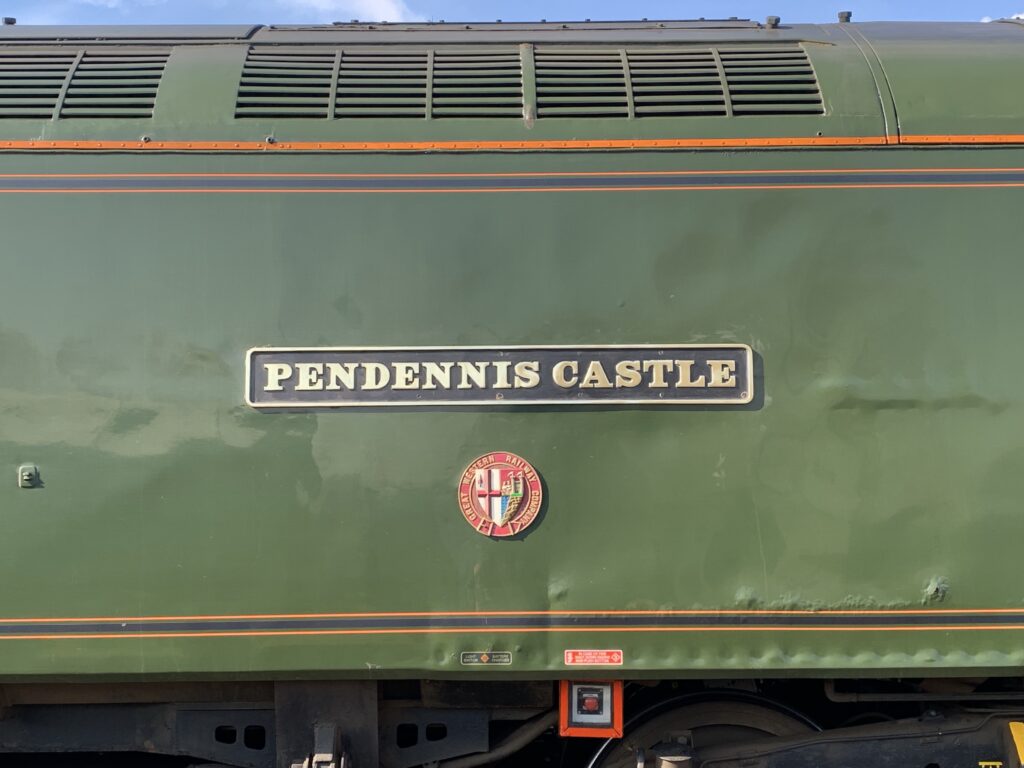
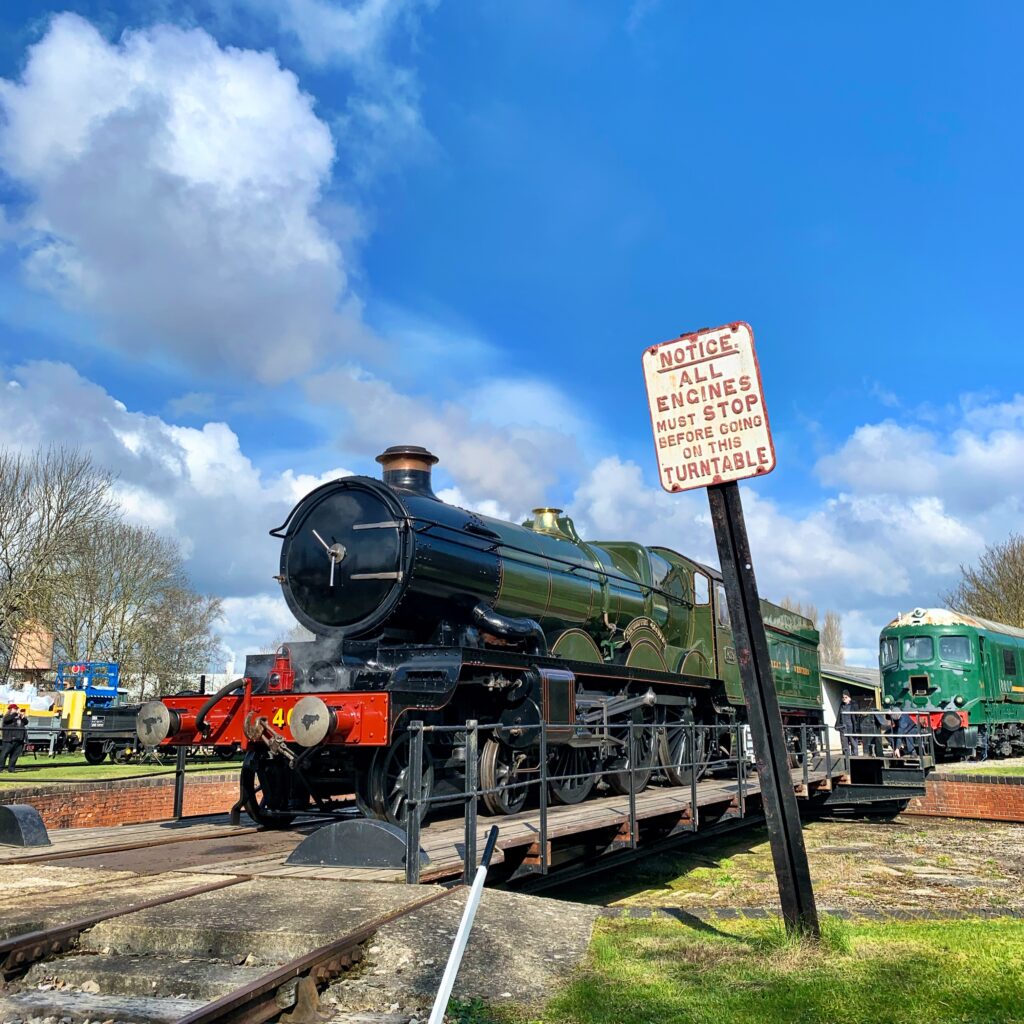
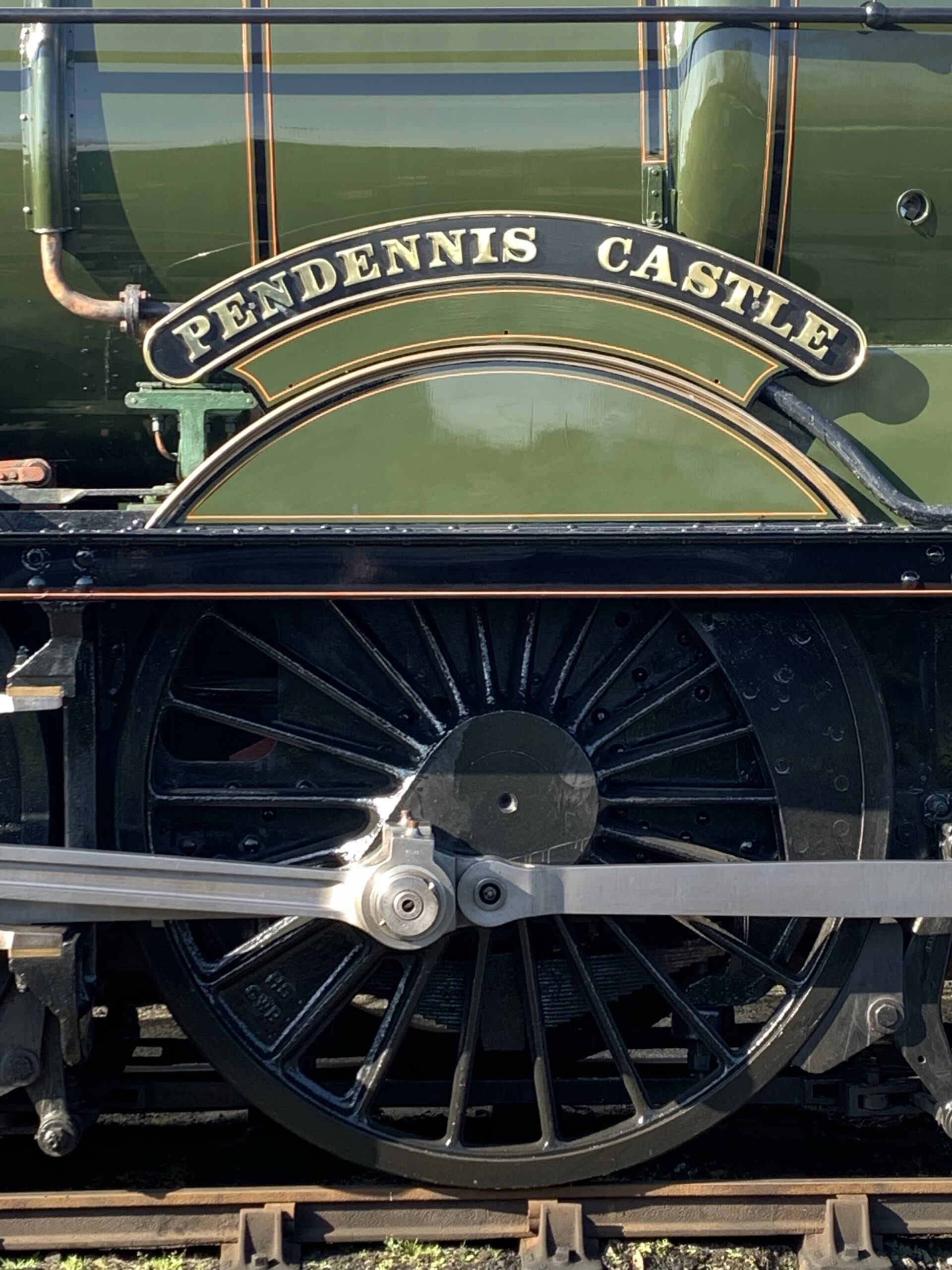
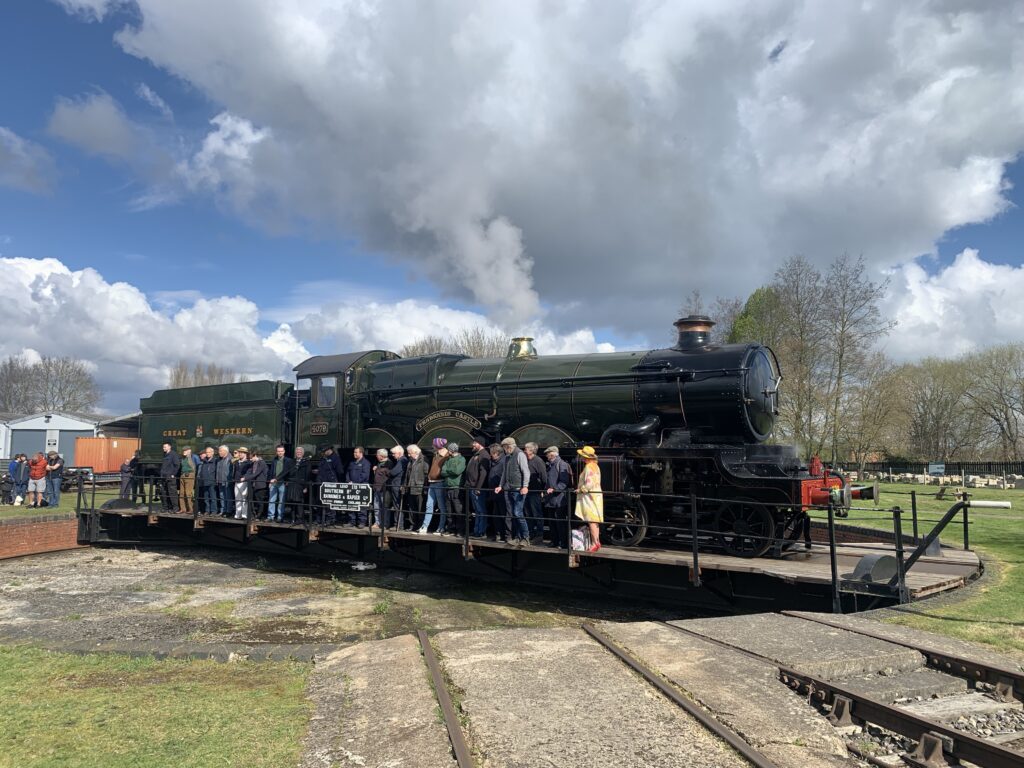
After our brief visit to Eastleigh, we headed off to Didcot Railway Centre for an evening photographic event run by TimeLine Events who had arranged for Great Western Railway Castle Class 4-6-0 No. 4079 ‘Pendennis Castle’ to be in steam for a number of scenarios around the site. You can read about our earlier visit to Didcot when No. 4079 was relaunched into service here.
TimeLine events specialise in recreating scenes from past eras using convincing re-enactors wearing authentic period dress in credible locations. Joining one of these events has been on my bucket list for a while now. We were a little late on arrival and once we had gained access to the railway centre, we quickly joined in the spirit of things. I really enjoyed the evening and the photographic opportunities and would attend another similar event in the future. I wasn’t totally satisfied with my resulting images and another time I would mount my camera on a tripod and try a variation of settings. As it was, this time around I hand held the DSLR and this certainly shows on shots taken later on in the evening.
Great Western Railway Castle Class 4-6-0 No. 4079 ‘Pendennis Castle’ at DidcotGreat Western Railway Castle Class 4-6-0 No. 4079 ‘Pendennis Castle’in the shed at DidcotGreat Western Railway Castle Class 4-6-0 No. 4079 ‘Pendennis Castle’ at Didcot
Although not the prime reason for attending the evening, I very much enjoyed seeing ‘Pendennis Castle’ in steam as she moved around Didcot and being turned on the turntable. Here’s a video showing a little taste of the evening:
Castle Class 4-6-0 No. 4079 ‘Pendennis Castle’ joins a line up of GWR engines at Didcot
Swanage Railway
Over the weekend Yoshi and I made a couple of visits to our local heritage railway in the Purbecks where dedicated Swanage Railway volunteer, Malcolm Munro, had spent a week crafting two special headboards marking the Queen’s Platinum Jubilee. Headboards are carried on trains to denote a special service or working and in the days of steam were a regular sight, including two famous Dorset related examples; The Bournemouth Belle and The Royal Wessex. The silver and red Platinum Jubilee headboards were carried by locomotives operating the Swanage Railway’s steam trains between Thursday 2nd June and Sunday 5th June 2022.
With SR 4-6-2 West Country Class No. 34028 ‘Eddystone’ on holiday at the Gloucestershire & Warwickshire Railway, steam services at Swanage were in the capable hands of SR 2-6-0 U Class No. 31806 and SR 4-6-2 Battle of Britain Class No. 34072 ‘257 Squadron’. Class 33 No. D6515 (33012) ‘Lt Jenny Lewis RN’ was in action on Saturday evening with the dining train.
SR 2-6-0 U Class No. 31806 enters Harman’s Cross – 02/06/2022SR 4-6-2 Battle of Britain Class No. 34072 ‘257 Squadron’ being prepared for departure from Swanage with the first train of the day. The special Platinum Jubilee headboard can be seen clearly – 04/06/2022Class 33 No. D6515 (33012) ‘Lt Jenny Lewis RN’ working the evening Curry Train across Corfe Common – 04/06/2022
Video of trains on the Swanage Railway over the Platinum Jubilee holiday weekend 2022
Mainline Happenings!
I was fully expecting a quiet time with local out of the ordinary main line workings over the bank holiday period and was pleasantly surprised to discover a GBRf route learner had been conjured up when I checked my emails on Saturday morning. So it was a hurried five minutes collecting cameras together and persuading Yoshi to jump in the car before setting off to view Class 66 No. 66755 ‘Tony Berkeley OBE’ working 0Z20 0813 Eastleigh East Yard to Weymouth. Over the weekend there had been several of these driver training workings set up, but in actuality only one ran each day on the Saturday and Sunday
GBRf Class 66 No. 66755 ‘Tony Berkeley OBE’ working light engine through Hamworthy as SWR Class 444 No. 444029 departs with a service bound for London Waterloo – 04/06/2022
Over the course of the Saturday and Sunday runs we managed to catch the light loco in a number of different settings – narrowly avoiding missing a shot once or twice because of passing passenger trains, as can be seen in the video below:
GBRf Class 66 No. 66755 ‘Tony Berkeley OBE’ heads into Poole having cleared the High Street crossing – 05/06/2022GBRf Class 66 No. 66755 ‘Tony Berkeley OBE’ runs down Bincombe bank into Upwey – 05/06/2022
The evening of Monday 6th June 2022 saw a test train and a heritage diesel working pass through the east of our area. The first was BR Green Class 33 No. D6515 from Swanage hauling Network SouthEast Class 50 No. 50026 ‘Indomitable’ heading to Dereham to pick up “slim’ Class 33/2 No. 33202 ‘Dennis G. Robinson’ before onward working to star at The Keighley & Worth Valley Railway diesel gala being held Friday 10th June through to Sunday 12th June 2022.
Class 33 No. D6515 from Swanage hauling Network SouthEast Class 50 No. 50026 ‘Indomitable’ through Hamworthy – 06/06/2022
The Class 33/ Class 50 combo was followed later by the monthly Colas test train top and tailed by Class 73 electro-diesels No.’s 73963 ‘Janice’ and 73962 ‘Dick Mabbutt’ working 1Q51 1115 Derby RTC to Eastleigh east Yard via Weymouth
Class 73 electro-diesels No.’s 73963 ‘Janice’ and 73962 ‘Dick Mabbutt’ working 1Q51 1115 Derby RTC to Eastleigh east Yard via Weymouth pass through Hamworthy – 06/06/2022
Elizabeth Line
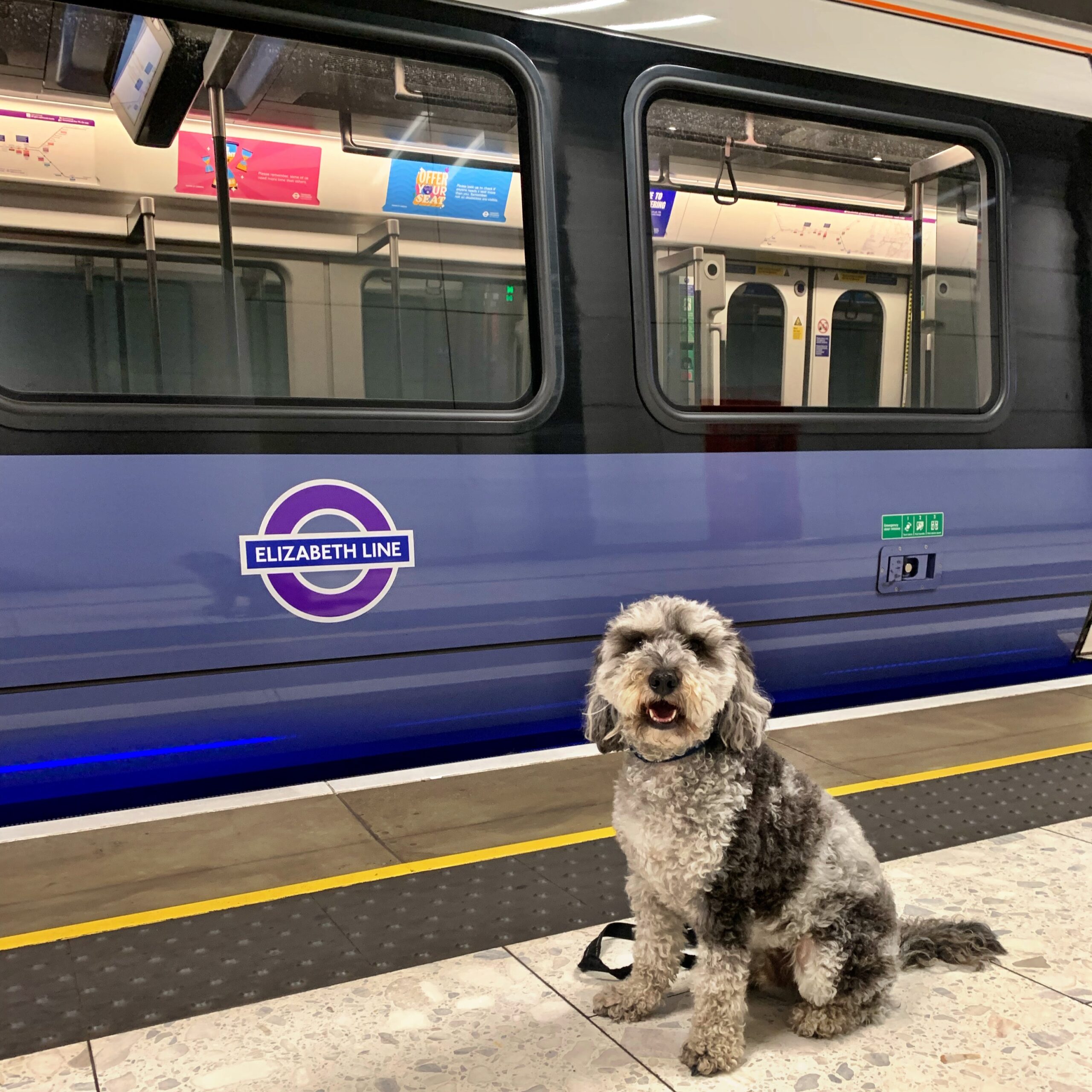
We took the opportunity of an airport run to meet Yoshi’s aunty who was flying into London Heathrow to bookend our Platinum Jubilee weekend with a quick visit to see an Elizabeth line train at the T5 railway station. The staff were amazingly friendly, helpful and accommodating allowing us to onto the platform to take photographs of one of the Alstom Class 345 Aventra trains as well as explaining technical and timetable details. The Elizabeth line was officially opened by Her Majesty The Queen accompanied by HRH Prince Edward, Earl of Wessex on May 17th 2022 when a commemorative plaque was unveiled at London Paddington station a week in advance of the route opening to passenger services on May 24th.
Initially know as Crossrail, the Elizabeth line is operated by “MTR Elizabeth Line” as a concession of Transport for London between London Paddington and Abbey Wood. The Class 345’s have already been running between Paddington, Heathrow Airport and Reading in the west and between London Liverpool Street and Sheffield to the east prior to the central core opening for service. There are 70 trains, some seven carriages in length and others with nine carriages which were designed and built by Alstom in Derby. They are maintained by Alstom at Old Oak Common depot in west London. It is planned for the company to maintain the trains for the next 32 years as part of a rolling stock and provision contract.
Yoshi alongside Class 345 No. 345170Yoshi explores the interior of a Class 345 trainYoshi poses next to the Elizabeth line logo
On the day of our visit around 4,000 London Underground station staff were on strike with most services being severely disrupted so the Elizabeth line may have been busier than normal during our visit. The RMT union says it is protecting jobs and the pensions of its members which are being reviewed. TfL says jobs are not under threat. Later this month, more than 40,000 railway workers across 13 railway companies, including South Western Railway and Great Western Railway, will walk out as part of a three day national strike on 21st, 23rd and 25th June after talks about pay and redundancies collapsed.
With the tube not running because of a strike, Yoshi was unable to access the London Underground
That’s all from us at therailwaydog.co.uk for this week. Thanks, as always, for reading. My regular reader ( you know who you are ) will no doubt recall the first Railway Dog blog entry where I shared the first railway photographs I ever took, which to continue the jubilee theme, were from 1977 and show a Silver Jubilee special excursion passing through Dorchester West on its way to Weymouth. You can read more about this and see the images here.
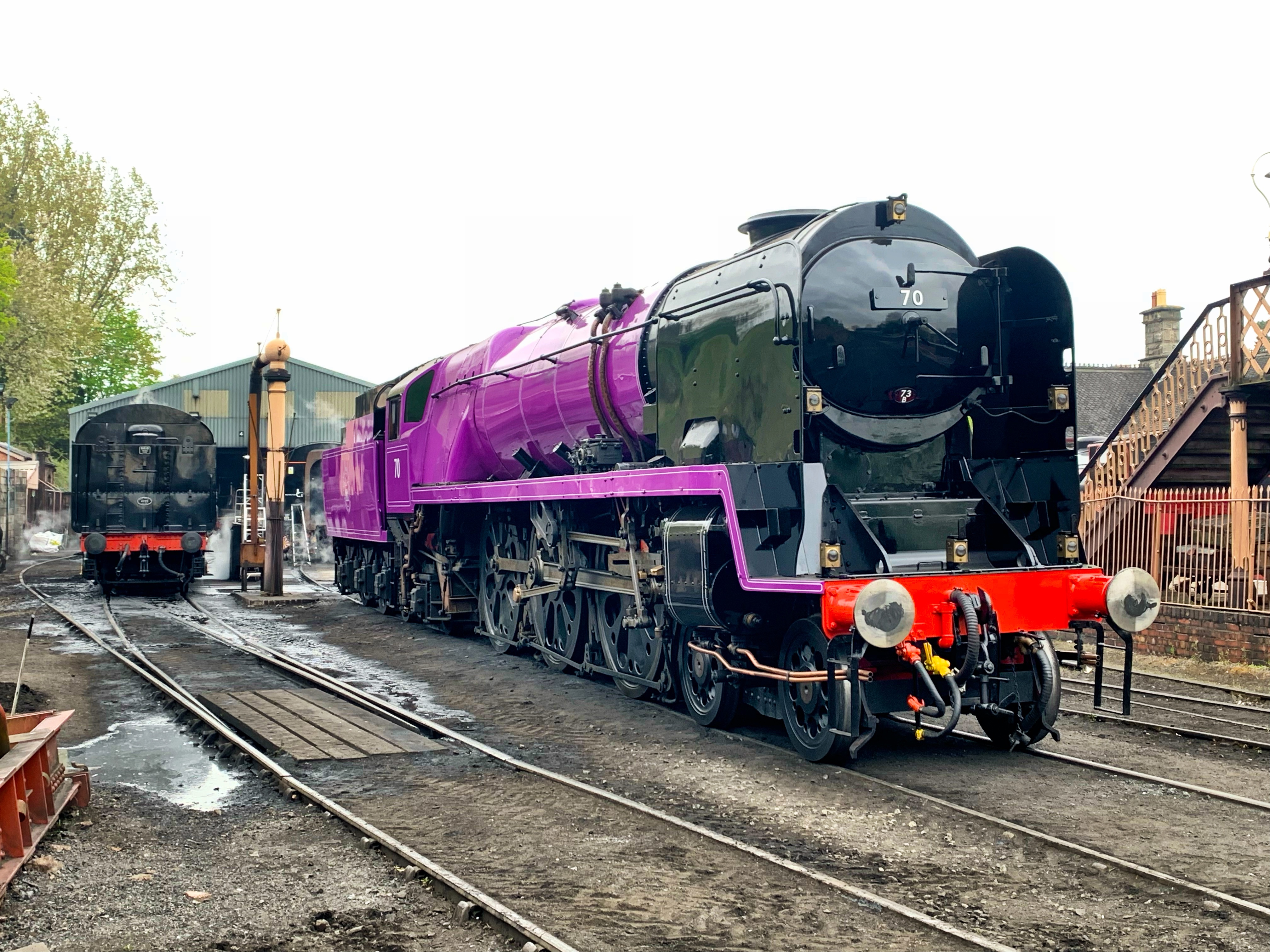
Yoshi visits the Severn Valley Railway and gets a glimpse of renumbered and repainted SR West Country Pacific No. 34027 ‘Taw Valley’
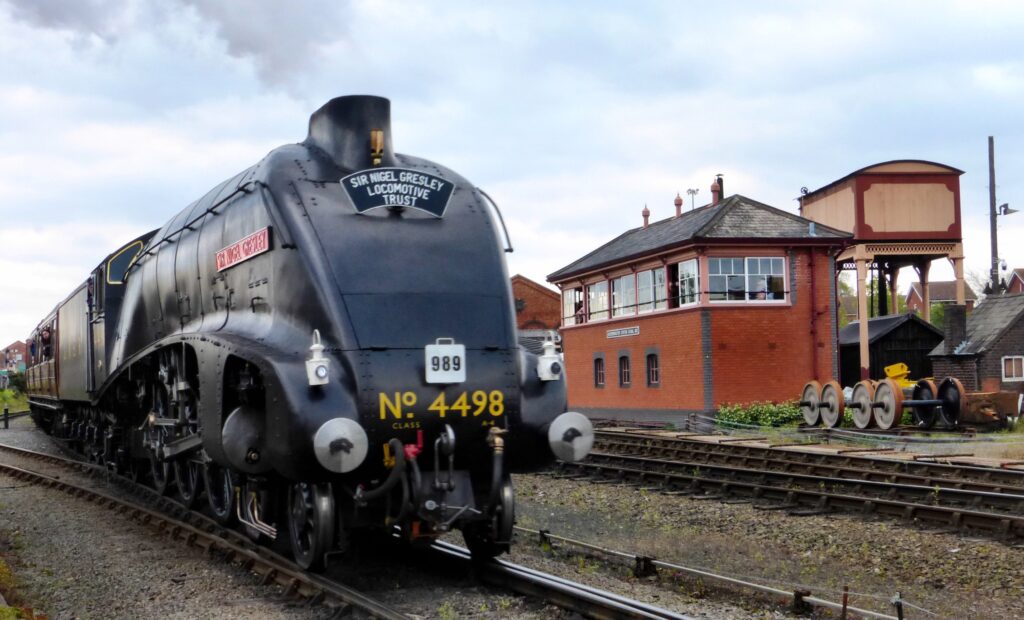
With heritage railway gala season now in full swing, last Saturday we were able to spend the day visiting The Severn Valley Railway as the 2022 Spring Steam Gala was taking place. Big draw for me was Gresley A4 4-6-2 No. 4498 ‘Sir Nigel Gresley’ in austerity black livery, as well as the chance of seeing SR West Country 4-6-2 No. 34027 ‘Taw Valley’ in Platinum Jubilee purple ready to be temporarily renamed ‘Elizabeth II’.
4498 ‘Sir Nigel Gresley’ approaches Highley on the SVR34027 ‘Taw Valley’ in Platinum Jubilee purple livery ready to be temporarily renamed ‘Elizabeth II’ at Bridgnorth
Other locomotives taking part included GWR Saint 4-6-0 new-build No. 2999 ‘Lady Of Legend’, SR S15 4-6-0 No. 506 and SVR home loco BR Standard 4MT 4-6-0 No. 75069.
No. 2999 ‘Lady of Legend’ departs HighleySR Urie S15 No. 506 awaits departure at Kidderminster75069 nearing Highley
Austerity liveried A4 ‘Sir Nigel Gresley’ was matched with Gresley teak stock on certain trains over the gala weekend. With the locomotive set to be repainted into British Railways express blue and numbered 60007, this was a unique opportunity to see the A4 in its temporary guise as No. 4498.
We really enjoyed our day and facilities at Highley in particular have vastly improved since my last visit to that particular location many years ago with the addition of the Engine House visitor centre where you can get up close to various static locomotives, buy a souvenir or tuck into a butternut, spinach and feta pasty – just like Yoshi and I! And until Autumn 2022 there is a photographic exhibition entitled ‘From Railways to Royalty’ featuring images from the very talented Jack Boskett.
LMR No. 600 ‘Gordon’ in The Engine ShedLMS Stanier 8F No. 48773 in The Engine Shed
A special train from London Kings Cross to Kidderminster bringing visitors to the Severn Valley Railway steam gala was top and tailed by Class 67 locomotives No.’s 67010 and 67006 ‘Royal Sovereign’ and we were able to see its departure from the SVR. We’ve put together a short video of our day which you can watch by clicking below:
Closer to home and the Weymouth line was visited by Network Rail’s new weed killing train on 20th April. The train is the result of a cooperation between NR, GBRf, Bayer Environmental Science and a number of start up companies using innovative technology to eliminate potentially dangerous weed infestations with advance precision across the railway network. The trains detect weeds using cameras and then deploy the most appropriate herbicide, thereby improving the environmental footprint. Data is uploaded to a central database to enable future weed control and monitoring. GPS tracking ensures that spray nozzles are automatically shut off when the train approaches a non-treatment zone, such as a river or a bridge. We caught the train working 3Q99 2130 Eastleigh East Yard to Eastleigh East Yard passing through Hamworthy top and tailed by Class 66 locomotives No.’s 66707 ‘Sir Sam Fay’ and 66778 ‘Cambios Depot 25 Years’:
3Q99 2130 Eastleigh East Yard to Eastleigh East Yard passing Hamworthy – 20/04/2022
Class 701 testing continues to visit Bournemouth and Poole as evidenced by No. 701044 on 21st April 2022:
Interesting work commenced on the Hamworthy branch this week with a section of the line adjacent to Hamworthy level crossing receiving attention with the replacing of 212 sleepers. We look forward to hearing more about this new initiative.
Hamworthy Branch having seen preparatory work in advance of the replacement of railway sleepersNew sleepers for the Hamworthy BranchBallast and new sleepers seen at the Poole Port end of the Hamworthy BranchWork at the Level Crossing replacing sleepersHamworthy Branch work to replace sleepersWork well underway installing replacement sleepers on the Hamworthy Branch – April 2022
Our archive footage this week features SR West Country 4-6-2 ‘Taw Valley’ as herself when she visited the Portsmouth area working a VSOE excursion train in February 1997 following the repair of a cracked cylinder liner which had seen her out of service for a few months. The video below shows No. 34027 at Havant and Fratton on 2nd February 1997 amidst some interesting diesel traction movements:
We’ll finish this week with a few more images from the Severn Valley Spring Gala 2022 and a flashback to ‘Sir Nigel Gresley’ in blue:
SR West Country No. 34027 ‘Taw Valley’ as No. 70 ‘Elizabeth II’ on display at Bridgnorth‘Taw Valley’ and ‘Lady of Legend’Yoshi takes another look at No. 70 ‘Elizabeth II’LNER A4 No. 4498 ‘Sir Nigel Gresley’ in black departs Kidderminster with the 1805 service to Bridgnorth – 23/04/2022Nameplate and front end detail of 4498 ‘Sir Nigel Gresley’ in austerity black liveryThe colour of things to come ‘Sir Nigel Gresley’ will revert to her British Railways number; No. 60007 and express locomotive blue livery as seen here at The Great Gathering, York 03/07/2013‘Sir Nigel Gresley’ nameplate detail as seen when in blue livery
Thanks for reading. As always comments or corrections gratefully received. Bye for now!
Yoshi waits for the road with Class 31 No. 31130 at the Avon Valley Railway
Last week I mentioned the failure of the monthly Class 73 top and tailed COLAS track recording train to make it to Weymouth on Monday 11th April. Well, the same thing happened the next day when the service was rescheduled. This time the train actually set out from Derby, but soon went off route and returned to its originating point due to faulty recording equipment. Things were more successful the following Tuesday – April 19th 2022 – when the 1Q51 Test Train ran from Derby Railway Technical Centre (RTC) to Eastleigh East Yard via Weymouth in the charge of GBRf Class 73 Electro-diesel locomotives No.’s 73961 ‘Alison’ and 73964 ‘Jeanette’.
COLAS Class 73 top and tailed Test Train – 19/04/2022
One test train which did make it to Dorset at the first attempt was the COLAS Ultrasonic Testing Unit, albeit 130 minutes late and its journey truncated at Wool where the service reversed without covering the tracks to and from Weymouth. Ultrasonic Testing Unit trains usually have one locomotive at one end, and a DBSO (Driving Brake Standard Open) at the other, as in the case of this working; 3Q02 Eastleigh East Yard to Eastleigh East Yard with Class 37 No. 37612. The DBSO controls the locomotive at the other end when required and dispenses with the need for the loco to run round the train or have top and tailed locomotives. UTU trains have ground-penetrating radar systems to detect voids and deformations up to 2 meters into the ballast and earth using rail profile scanners to help identify problems or degradation in track profile, comparing it to a template of an ideal track. Having planned to pop over to Poole to see this particular working I initially thought the run had been cancelled as Real Time Trains had given no indication of a departure from Eastleigh at the scheduled time, but two hours later the train was on the move.
3Q02 Eastleigh East Yard to Eastleigh East Yard with Class 37 No. 37612 pauses at Poole – 14/04/2022
Class 37 no. 37612 passes through Poole with an Ultrasonic Testing Unit train – 14/04/2022
Here are a few images of previous test trains utilising DBSO’s which have visited Dorset, in these instances in the charge of Brush Type 2 Class 31 diesel locomotives. These locos were once a common sight on the Bristol to Weymouth line hauling passenger trains, so I was pleased to find one running on the Avon Valley Railway over the Easter Weekend.
Class 31 No. 31602 ‘Driver Dave Green’ at the rear of a test train at Upwey heading to Weymouth – 28/07/2011 Class 31 No. 31106 heading a test train into Upwey – 17/11/2011Class 31 No. 31106 heads a test train through Upwey – 17/11/2011Class 31 No. 31465 propels a test train through Dorchester South – 10/04/2012Class 31 No. 31465 at Dorchester South – 10/04/2012
Later on Thursday 14th April another late runner was the movement of Class 33 No. D6515/ 33012 ‘Lt Jenny Lewis RN’ and Class 50 No. 50026 ‘Indomitable’ from Eastleigh Arlington to Swanage. The locomotives were on their way in preparation for the Swanage Diesel Gala to be held in a few weeks time. Because of the delay departing Eastleigh ( I read this was because of an air leak on the Class 50, but not sure if that is true or someones idea of a joke given the Class 50’s nickname of ‘Hoover’ ). Because of work commitments, I was unable to get to where I had planned to see these two, but I was quite happy with the resulting video and photographs at the location I selected in Parkstone.
Class 33 No. 33012 and Class 50 No. 50026 pass Parkstone heading to Swanage – 14/04/2022
33012 and 50026 heading to Swanage – 14/04/2022Back in British Rail days, class 33 No. 33012 with full yellow cab ends sits in the sidings at Weymouth – 01/01/1982Class 33 No. 33012 with full yellow cab ends sits in the sidings at Weymouth – 01/01/1982Class 33 No. 33012 with a Weymouth to Bristol service at Dorchester West – 09/02/1982. Night photography was never my strong point!
The Easter weekend saw Yoshi and I visit a few railway themed locations, kicking off with a lovely Good Friday afternoon walk around a foggy West Bay where we enjoyed ice-cream.
Yoshi can’t get enough of his Scoops ice-cream for dogs (Photo courtesy of @radioc71 )
Our visit to West Bay, of course, included a visit to the disused station which is now a restaurant. The owners of The Station Kitchen have placed two carriages on the length of track alongside the station platform and it all looks rather wonderful.
The Station Kitchen, West Bay Yoshi at West Bay Station
On Saturday we ventured a little further afield to the Avon Valley Railway and enjoyed a trip behind Class 31 No. 31130. I think Yoshi liked that we had our own compartment and enjoyed the ride from Bitton to Oldland Common and back. The track to Avon Riverside is currently closed for upgrade work. The line was originally opened in 1869 by the Midland Railway as a route between the Midlands and the South Coast. The Avon Valley Railway was later linked to the Somerset & Dorset Railway. Closed as part of the Beeching Axe in the 1960’s the line was saved by a group of volunteers and today three miles of track has been re-laid and trains can once again run along the Avon Valley which I can highly recommend. I look forward to a return visit for a walk further alongside the track on the Bristol & Bath Railway Path, a 13 mile off-road route between Bristol and Bath city centres. The staff and volunteers at the railway were amazingly friendly during our visit and Yoshi was made a great fuss of and even visited the cab of the Class 31, although he wasn’t allowed to drive the locomotive, because quite frankly that would have been a bit silly.
Class 31 No. 31130 at Bitton station on the Avon Valley Railway – 16/04/2022Yoshi in the cab of Class 31 No. 31130Yoshi in the cab of Class 31 No. 31130
Yoshi enjoys a trip behind 31130 on the Avon Valley Railway – 16/04/2022
The Class 31 mixed traffic diesels were built by Brush Traction of Loughborough from 1957 – 1962 and were one of the pilot Modernisation Plan locomotive classes ordered by British Rail in the 1950’s to replace steam traction. They were given the nickname ‘Goyles’ by train spotters, this being a reference to gargoyle because of their supposed ugly design. I rather like them and have a fondness for the class and their many variations.
Firstbuild Class 31 No. D5500 which was renumbered as No. 31018 on display at the National Railway Museum in York – 03/07/2012
Our day out was planned around picking up a train shaped flower planter we had ordered and on our way from the Avon Valley Railway we popped into Keynsham to catch a glimpse of passing Class 66 No. 66134 working to Westbury and a couple of Great Western IET’s.
Class 66 No. 66134 working 1101 Margam T.C. to Westbury
Fifteen minutes at Keynsham condensed – 16/04/2022
We also had time to pop in at Cranmore for a cuppa and to see GWR 4500 Class 2-6-2T No. 4555 which was working the passenger trains on the East Somerset Railway. Again Yoshi enjoyed all the attention and scritches he received.
GWR 4500 Class 2-6-2T Small Prairie No. 4555 at Cranmore – 16/04/2022
GWR 4500 Class 2-6-2T Small Prairie No. 4555 at Cranmore – 16/04/2022
After picking up the planter in Somerset we drove home via Chard as engineering work was taking place over the Easter weekend between Yeovil Junction and Honiton. We were very kindly escorted on to the disused station platform at Chard Junction to take photographs of GBRf Class 66 No. 66793 in British Rail Railfreight Construction livery attached to the engineers train. The station was closed to passenger traffic in March 1966 and there have been many calls, over the years since, to reopen it.
GBRf Class 66 No. 66793 – Chard Junction 16/04/2022GBRf Class 66 No. 66793 – Chard Junction 16/04/2022
GBRf Class 66 No. 66793 – Chard Junction 16/04/2022
Sunday afternoon we popped into Swanage to visit the Swanage Railway who were operating a two train service utilising SR Bullied 4-6-2 West Country Class No. 34028 ‘Eddystone’ and GWR 4575 Class 2-6-2T Small Prairie No. 5526. We also got another glimpse of Class 33 No. 33012 and Class 50 No. 50026 stabled in the sidings close to the engine shed.
Class 33 No. 33012 and Class 50 No. 50026 in the sidings at Swanage – 17/04/2022SR 4-6-2 West Country Class No. 34028 ‘Eddystone’ departs Swanage – 17/04/2022GWR 4575 Class 2-6-2T Small Prairie No. 5526 arrives at Swanage with a service from Norden
Swanage Railway – Easter Sunday 2022
For our first archive video this week, we return to Keynsham ( and Bradford-on-Avon ) for a glimpse of Great Western Railway Castle Class No. 5029 ‘Nunney Castle’. This locomotive was built at Swindon Works in 1934 and takes the name of a small castle near Frome, Somerset. She was withdrawn from service in December 1963 and sold to Woodham Bros. at Barry, arriving at the famous scrap yard in June 1964 being the last steam locomotive delivered to Barry scrap yard by rail. She was rescued after rusting away for 12 years and in May 1976 was the last Castle class locomotive to leave Barry. Throughout the summer season in 2010 ‘Nunney Castle’ hauled the Sunday ‘Weymouth Seaside Express’ trains organised by The Railway Touring Company, departing from the Bristol area bound for Weymouth and I have fond memories of hearing her exhaust beat echo around on her departure from Keynsham, as can be heard in the video below:
Finally, to wrap things up, here is a short video of Class 31’s top and tailing a test train at Upwey in September 2007:
Class 31’s No. 31602 and 31459 ‘Cerberus’ at Upwey – 25/09/2007
Don’t forget if you’re thinking about traveling by rail between 25/04/2022 and 27/05/2022 South Western Railway and Great Western Railway are just two of the rail operators offering up to 50% discounts on advance bookings on off-peak tickets as part of ‘The Great British Rail Sale’ . This comes after the highest increases in rail fares in nine years came into effect last month ( March 2022 ). Vacuous Toby Jug Transport Secretary Grant Shapps ( the name he’s currently using ) announced the promotion in a video on Twitter saying it would ‘help with the cost of living’. Unless you can eat or burn the tickets for heating, I have my doubts about that claim.
Train operators and Network Rail have been told by the Department of Transport ( DafT ) to find cost savings of 10% to 15%, after the Treasury spent an extra £15bn subsidising rail for lost revenue over the past two years during the Covid pandemic. The DafT said reforms to the sector due to be introduced after the Williams-Shapps review plan for Great British Railways (2021) could see more such network-wide sales across rail fares.
Yoshi takes the opportunity to inspect DB Class 66 No. 66105 at Poole High Street Crossing
It was an early start on Saturday April 2nd, or possibly a late end to Friday 1st when I popped into Poole to catch sight of DB Class 66 No. 66105 arrive with an engineers train from Eastleigh East Yard at 0045 (6N03 2355 Eastleigh East Yard to Poole). The next day, Yoshi and I were fortunate to see the locomotive and consist depart the Poole station area, getting some unusual photographs of the locomotive waiting for the barriers to close at Poole High Street crossing, but more of that later.
Back to Saturday and shortly after breakfast, we set off for the 2022 Steam Railway Magazine Readers’ Heritage Railway Association Award winning Didcot Railway Centre to share in the celebrations of Great Western Railway Castle Class 4-6-0 No. 4079 ‘Pendennis Castle’ being relaunched into traffic after a long absence. We made good time in getting to the car park adjacent to Didcot railway station and made our way across to the concourse where there was some confusion in how to access the subway to the railway centre. Yoshi was extremely excited and waited impatiently to get our tickets scanned before we made our way onto the site. The Great Western Society Didcot Railway Centre really is a marvel – 21 acres covering 200 years of railway heritage. Sadly the Coal Stage which dominates the skyline was recently found in need of urgent repair but conservation work is now underway on the Coal Stage as are repairs to the water tank that supplies the Centre’s steam engines with water.
We were greeted by not one, but two Pendennis Castle locomotives. In a lovely touch, current GWR Class 57 No. 57604 ‘Pendennis Castle’ was lined up alongside her early steam namesake No. 4079.
4079 and 57604 both named ‘Pendennis Castle’ in front of the engine shed at DidcotClass 57 No. 57604 ‘Pendennis Castle’ – Didcot 02/04/2022Nameplate of Class 57 No. 57604 ‘Pendennis Castle’
The Castle Class 4-6-0 express passenger engine was first introduced in 1923. No. 4079 ‘Pendennis Castle’was the 7th machine – of an eventual total of 171 – completed in February of 1924. She shot to fame the next year when she triumphed in a series of trials against the LNER Class A1 Pacific locomotives. The most famous of these being the legendary ‘Flying Scotsman’. ‘Pendennis Castle’was rather cheekily sent to be displayed alongside its famous rival in the 1925 Empire Exhibition at Wembley.
No. 4079 worked express passenger trains on the Great Western Railway and later British Rail (Western Region) for forty years, racking up an impressive 1.75 million miles in service. This came to a sudden end in 1964 when travelling on a special train, she sustained severe damage to her rear driving wheel bearings as her fire grate collapsed and almost melted them. She was taken off the train and abandoned on shed at Westbury.
From Westbury, she was rescued by Mike Higson who was then proprietor of Roundhouse Books. He had the locomotive slowly towed back to her birthplace at Swindon and restored to working order. On completion, she was handed over in 1965. Shortly afterwards, Mr Higson sold the locomotive to Lord John Gretton (of the Bass Brewery dynasty) and, Sir William McAlpine who had famously saved ‘Flying Scotsman’from a financially disastrous tour of North America. Initially based at Didcot, No. 4079 eventually moved to the Steamtown Railway Museum in Carnforth.
The story now shifts to 1977 and Hammersley, amid the deserts of North Western Australia, where Sir Russel Madigan was visiting the iron ore mines of the company he worked for; Rio Tinto. Here he encountered a preservation group named The Pilbara Railways Historical Society who were saving diesel locomotives which had once worked the iron ore railways. The society were also keen to obtain a steam locomotive to run on the railway. Sir Russel declared he would “go home and buy them the ‘Flying Scotsman’”. This was not to be as Sir William McAlpine wasn’t prepared to sell ‘Scotsman’. He was, however, willing to part with ‘Pendennis Castle’. After a farewell tour stopping for what was believed to be the last time at Didcot, she went to Southampton Docks, was loaded onto a P&O ship and set sail for ‘Down Under’ via the Suez Canal.
Arriving at Hammersley in 1978, she soon became a firm favourite, pulling trains over the extensive iron ore rail system for pleasure trips. Apparently, it wasn’t unknown for the locomotive to just pull up out of the way somewhere in the desert and for her hot coals to be used to start the barbecue! The highlight of her time in Australia was when her great rival ‘Flying Scotsman’ visited during the country’s bicentennial celebrations in 1988 and they hauled trains together.
By 1994 changes were afoot on the Rio Tinto railway. The introduction of a new in cab signalling system made it very difficult for a 1924 steam engine to pull trains and time was beginning to take its toll on No. 4079. Faced with mounting repair bills and operational difficulties, her last operational trip was made in 1994 and she was retired to await her fate.
It was suggested by the editor of Railway Magazine, Nick Piggott, that ‘Pendennis Castle’ needed to be repatriated into the hands of the Great Western Society at Didcot. Having contacted the society and entered negotiations with then deputy society chair Richard Croucher, the society was donated 120 tons of historic steam locomotive. With one provision; the society had to get her home. Through the efforts of successful fundraising that was match funded by the Heritage Lottery coffers, No. 4079 journeyed 1,000 miles on the roads of Australia, placed on a ship that took her through the Panama Canal, thus completing her circumnavigation of the planet. She arrived back in the UK on the 8th July 2000.
Sadly the engine was in poor condition mechanically. The buckets of red desert sand that permeated the locomotive which were removed had also ground away at her moving parts. Large sections of the structure under her cab was life expired, her cylinder block needed new liners and a serious crack repairing as well as her boiler requiring a thorough overhaul.
While the original intention was to restore No. 4079 to main line condition, operational changes have resulted in Didcot withdrawing from the main line scene. However, following over twenty years of volunteer work ‘Pendennis Castle’ has been fully restored to a very high standard and after her April 2nd 2022 photoshoot with her more ‘modern’ Class 57 counterpart, No. 4079 soon moved off to the turntable where, following speeches including one from Great Western Society Chair Richard Coucher, the widow of the late Sir William, Lady Judy McAlpine, cut the ribbon officially launching ‘Pendennis Castle’ back into traffic.
GWR Castle Class 4-6-0 No.4079 ‘Pendennis Castle’ on the turntable at DidcotLady Judy McAlpine launched ‘Pendennis Castle’ into trafficNameplate of No. 4079 ‘Pendennis Castle’GWR Castle Class 4-6-0 No.4079 ‘Pendennis Castle’ with the volunteers who restored her to working condition at Didcot
GWR Castle No.4079 is re-launched at Didcot – 02/04/2022
We also had an enjoyable look around the Didcot engine shed:
GWR King Class 4-6-0 No. 6023 ‘King Edward II’ – Didcot 02/04/2022GWR 0-4-0T No. 1338 – Didcot 02/04/2022No. 5 ‘Shannon’ – Didcot 02/04/2022
Of local interest for Yoshi and I was ‘Bonnie Prince Charlie’. The locomotive was built by Robert Stephenson and Hawthorns in 1949 (Works No. 7544) and entered service with Messrs. Corrall Ltd, initially in Dorset at Corrall’s Ballast Wharf in Hamworthy and later from 1965, at Corrall’s depot on Dibles Wharf in Southampton. ‘Bonnie Prince Charlie’ was purchased for preservation by the Salisbury Steam Trust in 1969 and arrived at Didcot soon after.
Works No. 7544 ‘Bonnie Prince Charlie’ – Didcot 02/04/2022
Saturday afternoon, Yoshi and I decided to visit the Chinnor & Princes Risborough Railway’s diesel gala. The main draw for me at least ( I’m not sure about Yoshi ) being the visit of two ex East Midlands Trains Class 43 HST power cars which are currently being operated by Rail Operations Group on behalf of Data Acquisition & Testing Services of Long Eaton – try saying that after a few JD and Coke’s – on routine checking of Over Head Line Equipment (OHLE) throughout the network, most recently in the Corby / Kettering area. The intention was for the power cars to work with the resident Southern Region 3-CEP unit, which is currently the C&PRR’s only operational air braked passenger stock. Unfortunately power car No. 43054 failed and was removed from the consist, being replaced with visiting Hanson & Hall Rail Services Solutions Ltd Class 50 No. 50008 ‘Thunderer’ which top and tailed the 3-CEP with working power car No. 43066. Sadly, this was not to be the only locomotive failure of the day as C&PRR’s departmental liveried home Class 31 No. 97205 was also withdrawn from the gala after experiencing issues.
A short video from the Chinnor & Princes Risborough Diesel Gala – 02/04/2022
C&PRR’s ambition is to extend to Aston Rowant which involves crossing a public highway at Kingston Blount in order to create a 14 mile heritage train round trip and to share operations with a public service originating from a large park and ride located near Junction 6 of the M40 to Princes Risborough for onward connections to London and Birmingham.
The next day, we caught up with Class 66 No. 66105 as it waited with its consist of wagons in the Poole area.
66105 in Poole – 03/04/202266105 at Poole with tamper DR75501 – 03/04/202266105 at Poole railway station – 03/04/202266105 at Poole High Street Crossing – 03/04/202266105 at Poole High Street Crossing – 03/04/202266105 waits to return to Eastleigh East Yard at Parkstone the eastern extent of the worksite – 03/04/2022Balfour Beatty Matisa B 66 UC Tamper No. DR75501 in Poole sidings – 03/04/2022
Video of 66105 in Poole – 02 & 03/04/2022
More engineering work is planned for this coming Sunday in the Poole area, although I have yet to see if any engineers trains beyond a tamper will be involved. Network Rail track inspections on the Hamworthy branch necessitate road closure and traffic restrictions as Hamworthy Level Crossing in Ashmore Avenue, Poole is closed for several days w/c 25th April 2022. Interesting times ahead, hopefully!
For our look into the archives this week we are returning to Didcot with a 1992 video from John Chappell, but first a set of photos taken with my ever trusty Kodak 110 camera during a school visit in 1979:
Didcot engine shed featuring GWR Collett 5600 Class 0-6-0T tank engine No. 6697, SR Battle of Britain No. 34051 ‘Sir Winston Churchill’ and No. 5 ‘Shannon’ – 24/06/1979Southern interloper Battle of Britain Class No.34051 ‘Sir Winston Churchill’ on shed at Didcot – 24/06/1979GWR Modified Hall Class 4-6-0 No. 6998 ‘Burton Agnes Hall’ at Didcot – 24/06/1979Nameplate of GWR No. 6998 ‘Burton Agnes Hall Hymek D7018 adjacent the turntable at Didcot – 24/06/1979.Hymek D7018 adjacent the turntable at Didcot – 24/06/1979. Note the now demolished cooling towers of the nearby power station.GWR Class 5700 0-6-0PT Pannier Tank No. 3738 on the demonstration line at Didcot – 24/06/1979Didcot 24/06/1979
During the weekend of 21/22nd November 1992, BR Standard 4-6-2 No. 70000 ‘Britannia’ was joined by unique BR Standard Pacific No. 71000 ‘Duke Of Gloucester’ where both locomotives were in steam working double headed trains on the demonstration line. In the video below, filmed by John Chappell, there is also a glimpse of ex-Corrall’s locomotive ‘Bonnie Prince Charlie’ in a blue livery for comparison to the more recent photo above.
As mentioned previously, the Railway Centre once enabled the servicing of steam locomotives for special main line trains. One example being the Great Western Society’s Rising Star tour which ran from London Paddington to Stratford-upon-Avon and return on 13th September 1981. I have few memories of the trip except for the glorious view of British Railways Standard Class 9F 2-10-0 No. 92220 ‘Evening Star’ setting off light engine to Didcot shed with the setting sun glinting off her side after completing the steam leg of the tour ( Didcot – Stratford-upon-Avon and return ).
BR Standard Class 9F 2-10-0 No. 92220 ‘Evening Star’ having worked the Rising Star railtour runs light engine into Didcot Railway Centre – 13/09/1981BR Standard Class 9F 2-10-0 No. 92220 ‘Evening Star’ working the Rising Star rail tour at Banbury – 13/09/1981
I’m assuming after arriving at Stratford-upon-Avon, ‘Evening Star’ turned on the triangle at Hatton before taking the train on the return journey. The images below are taken at Stratford-upon-Avon:
I recall from the main line steam excursions I travelled on in the 1980’s there was often a photo stop to enable passengers to disembark and fire off a few shots of the train, as in the photograph below:
BR Standard Class 9F 2-10-0 No. 92220 ‘Evening Star’ stops for photographs at Claverdon as part of the Rising Star tour – 13/09/1981Nameplate of BR Standard Class 9F 2-10-0 No. 92220 ‘Evening Star’
BR Standard Class 9F 2-10-0 No. 92220 ‘Evening Star’ was the last steam locomotive to be built by British Railways and the only main line steam locomotive earmarked for preservation from the date of construction. Built at Swindon Works in 1960, she was the 999th locomotive of the British Railways Standard Classes of locomotives. After a working life of only five years, she was withdrawn from service following an accident where she incurred minor damage at Cardiff Docks. As part of the National Collection, she now resides on static display at the Railway Museum in York
BR Standard Class 9F 2-10-0 No. 92220 ‘Evening Star’ at the National Railway Museum in York – 03/07/2012
Thank you for visiting and for your comments and corrections which are much appreciated. Many thanks to the Great Western Society for use of material from their press release in writing the story of No. 4079 ‘ Pendennis Castle’. Donations to the Water Tower and Coal Stage Conservation Project can be made here.