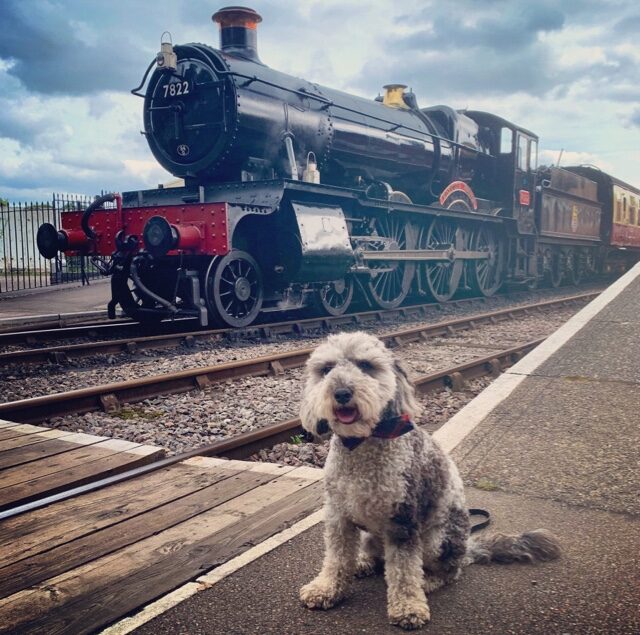
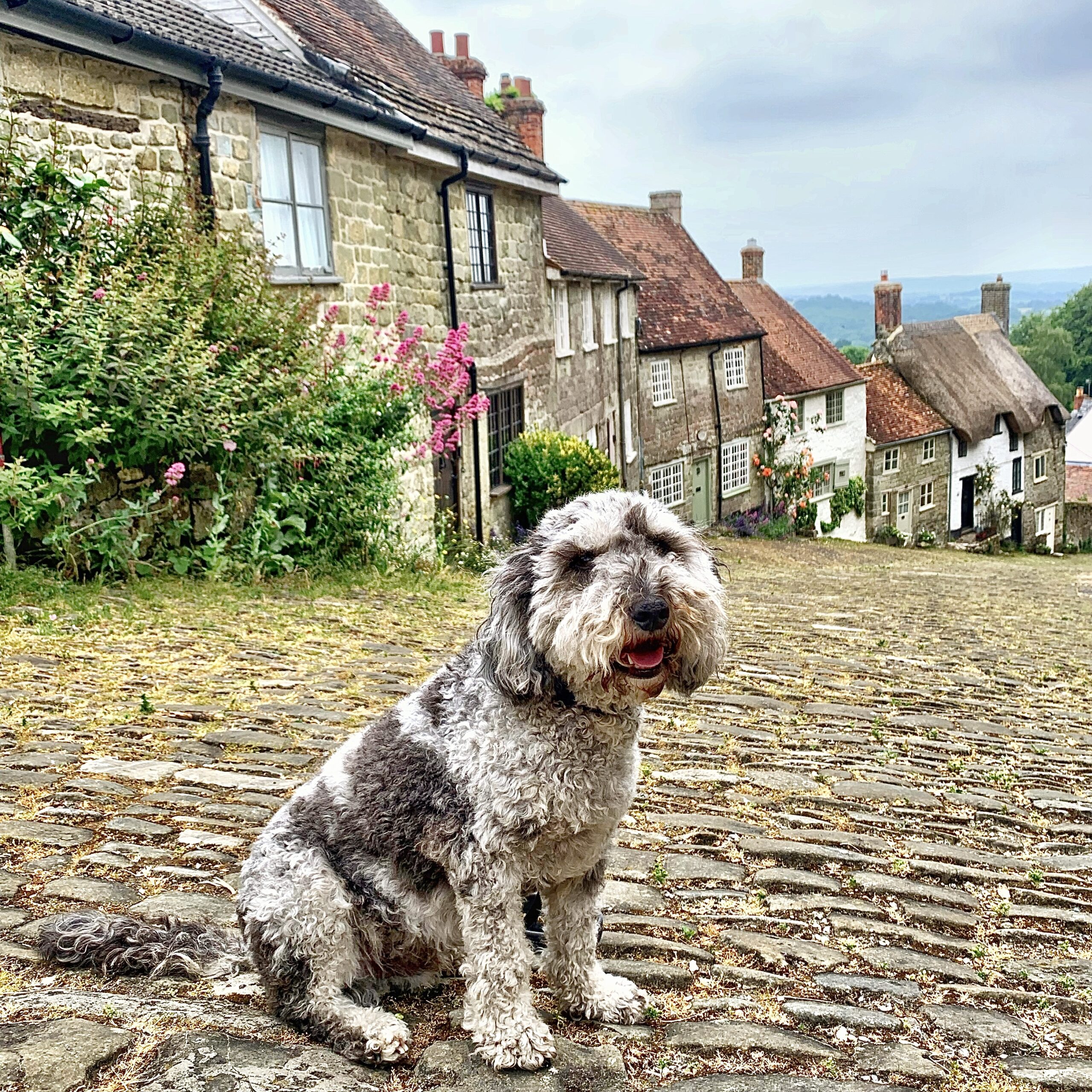
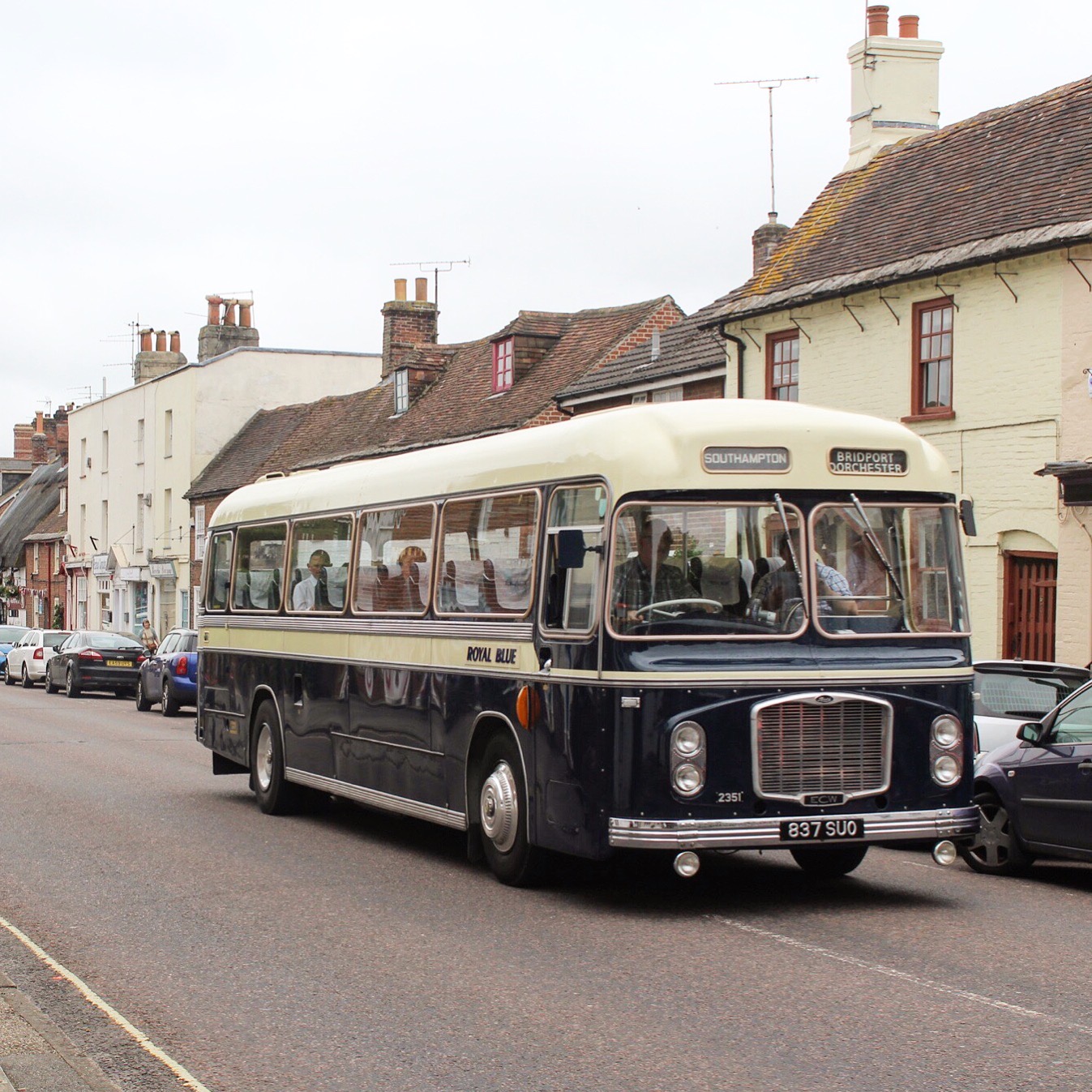
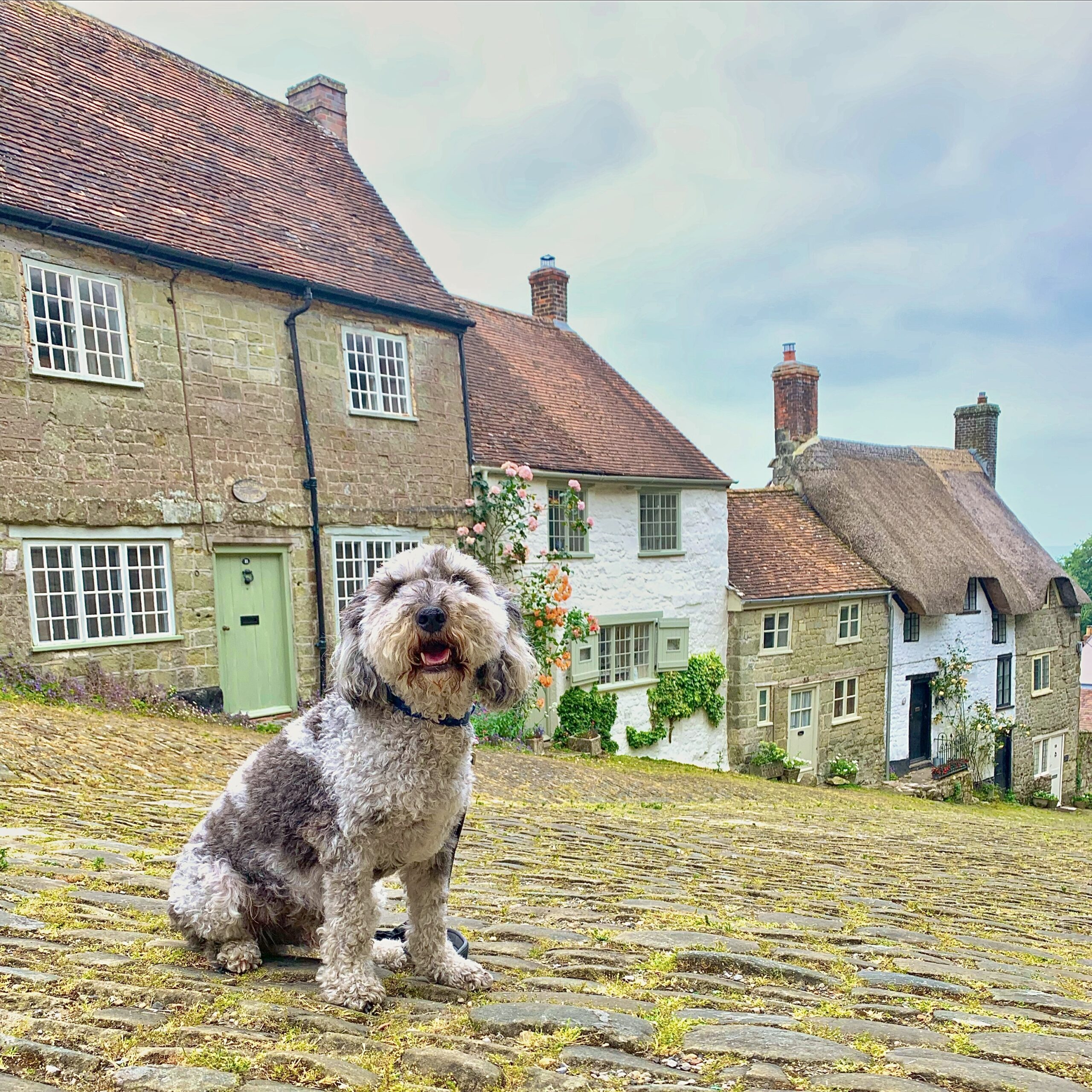
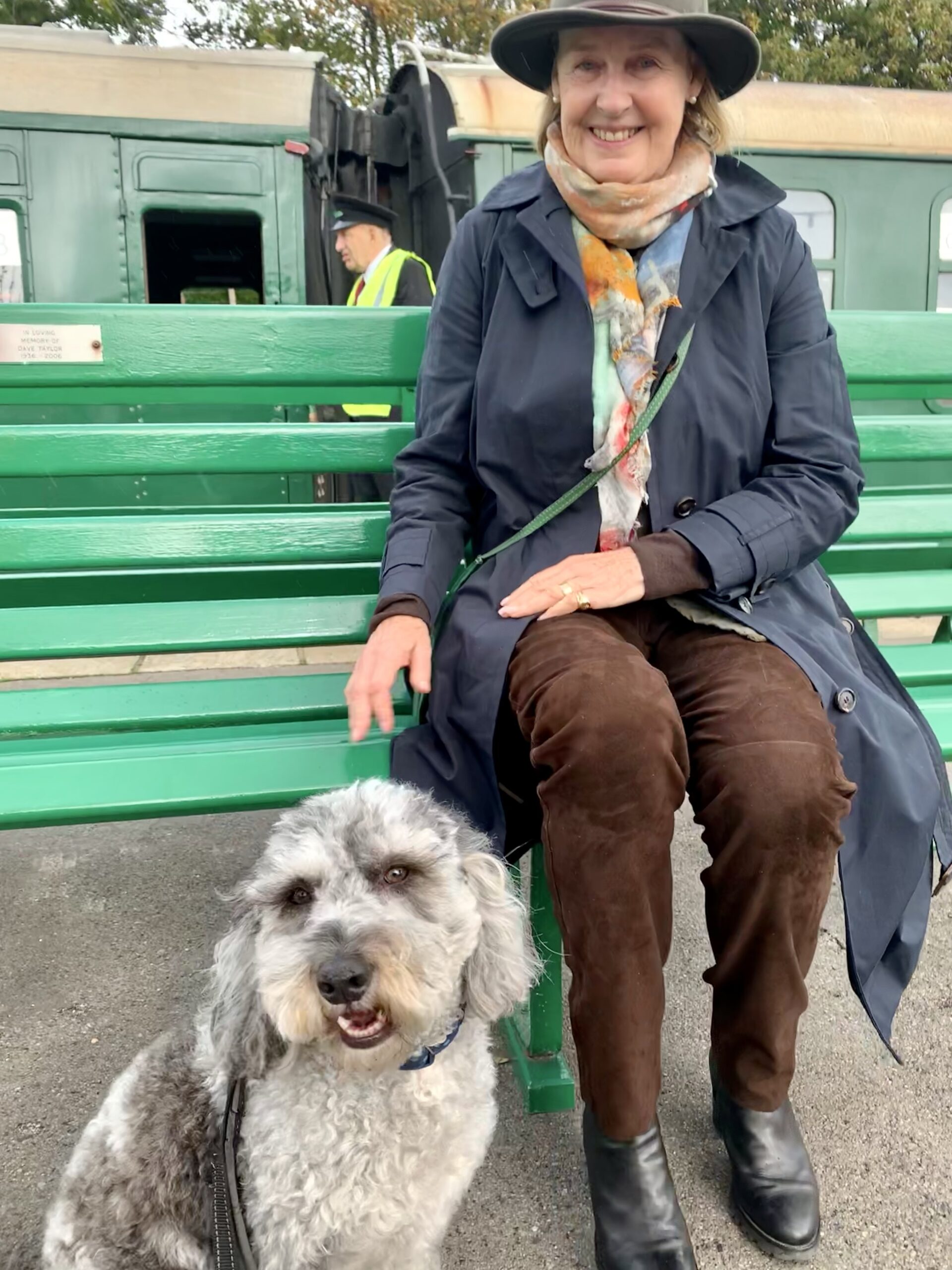
We went to Shaftesbury on Sunday to see old buses. Caroline and I visited a pub or three and Yoshi took a liking to Gold Hill. Famous as the location for the 1973 Hovis bread TV advert directed by Ridley Scott. Still the same today as its always been – 18/06/2023
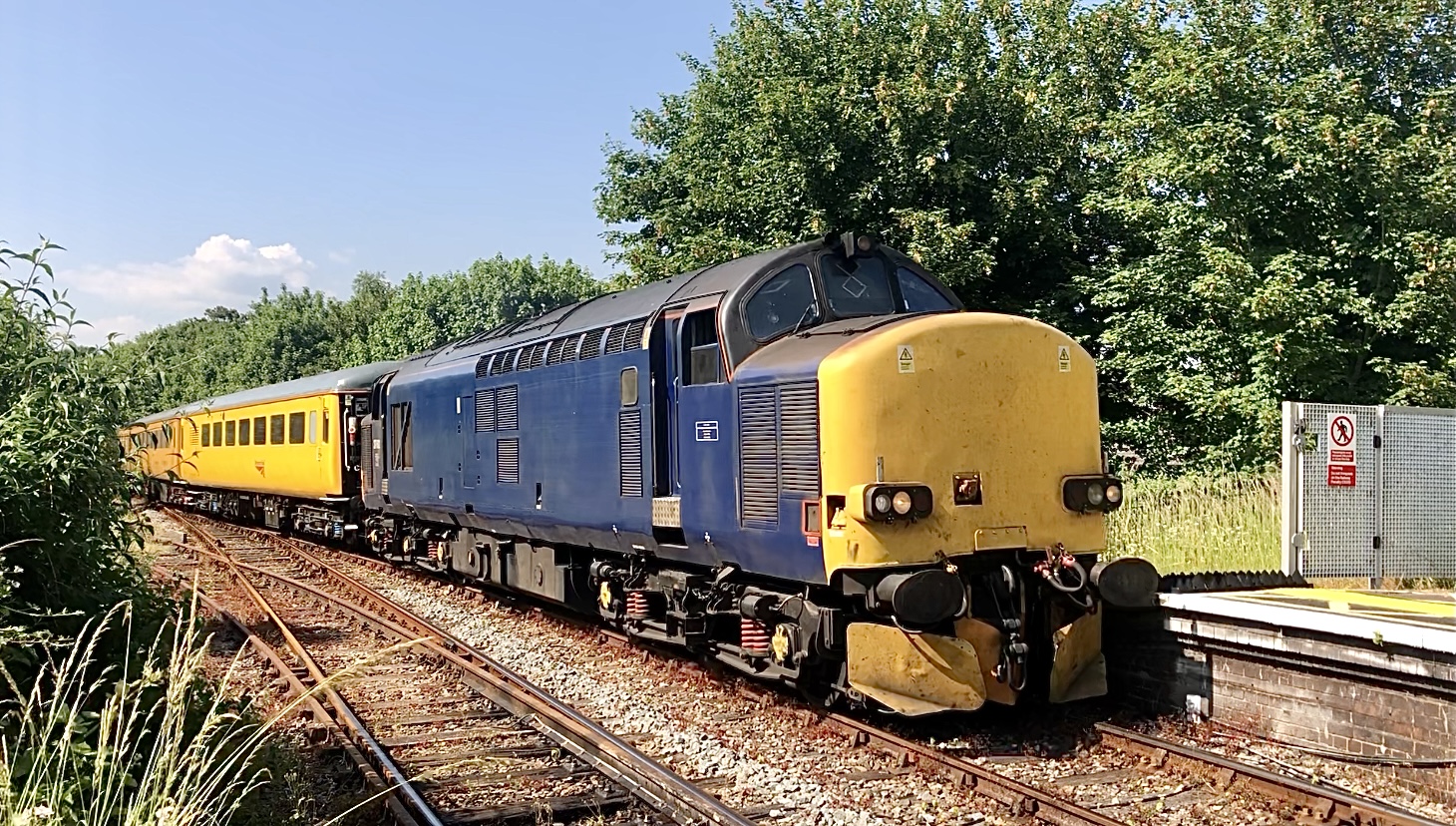
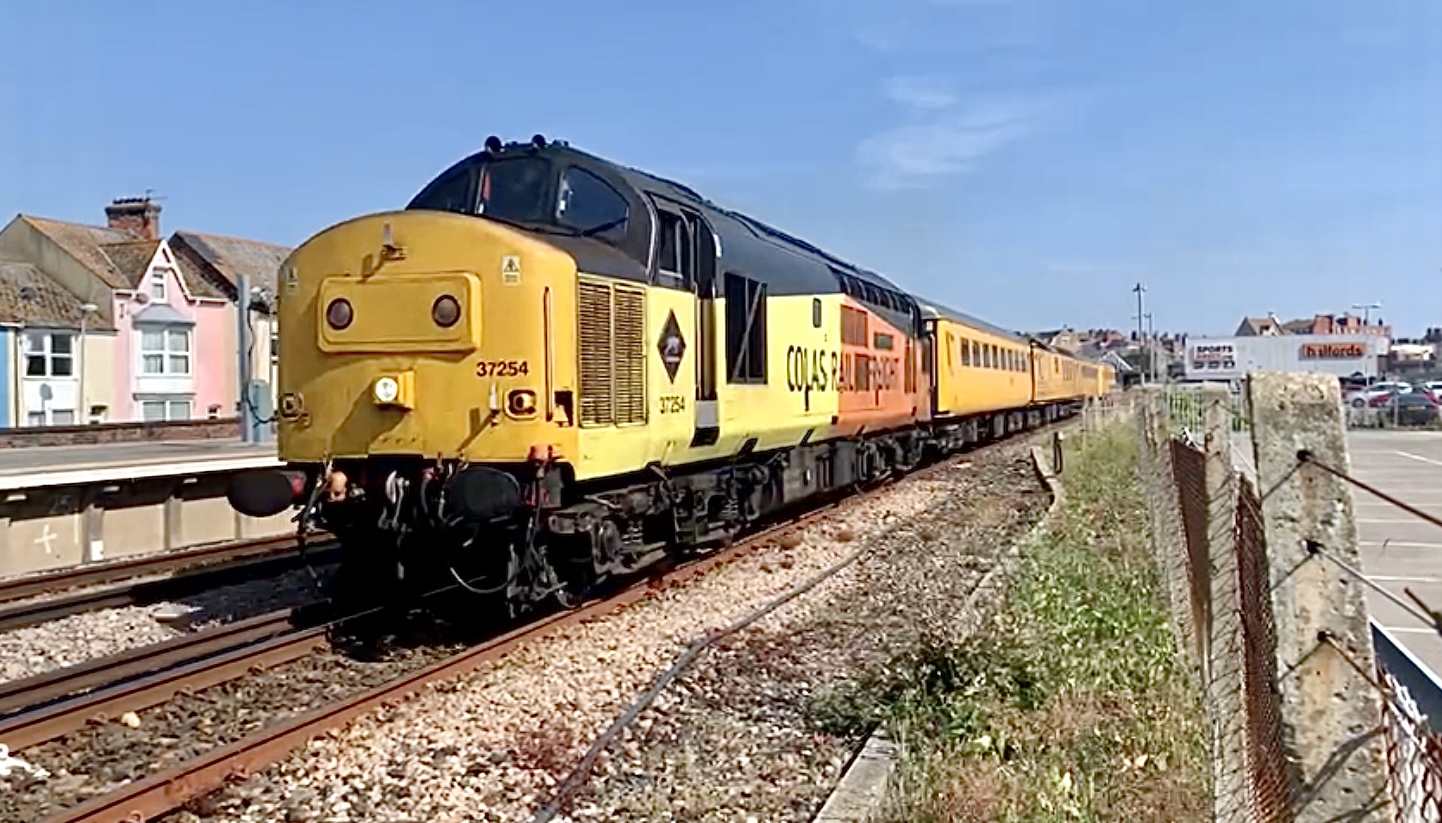
Wednesday 14th June 2023 saw Colas test train 1Q18 Derby RTC to Bristol Kingsland Road visit Dorset in the capable charge of top and tailed Class 37 locomotives No.’s 37612 and 37254. I was in the east of the county hoping to capture a Class 701 drag from Bournemouth to Eastleigh which didn’t materialise. It’s been quite a month for unusual movements being cancelled here; a Class 69 hauled Weedkiller to Weymouth, a Class 37 test train via the West and a Class 455 drag with a Rail Operations Group (ROG) Class 37 to Bournemouth T&RSMD to mention a few.
Class 37 No. 37612 leads 1Q18 Derby RTC to Bristol Kingsland Road via Weymouth into Dorchester West (video screen grab courtesy of G E Barrett) – 14/06/2023Class 37 No. 37254 leads out of Weymouth where 1Q18 Derby RTC to Bristol Kingsland Road has reversed for the run to Bristol (video screen grab courtesy of @da_buckley967) – 14/06/2023
Video of Class 37 No.s 37612 and 37254 working 1Q18 Derby RTC to Bristol Kingsland Road courtesy of @da_buckley967 and G E Barrett – 14/06/2023
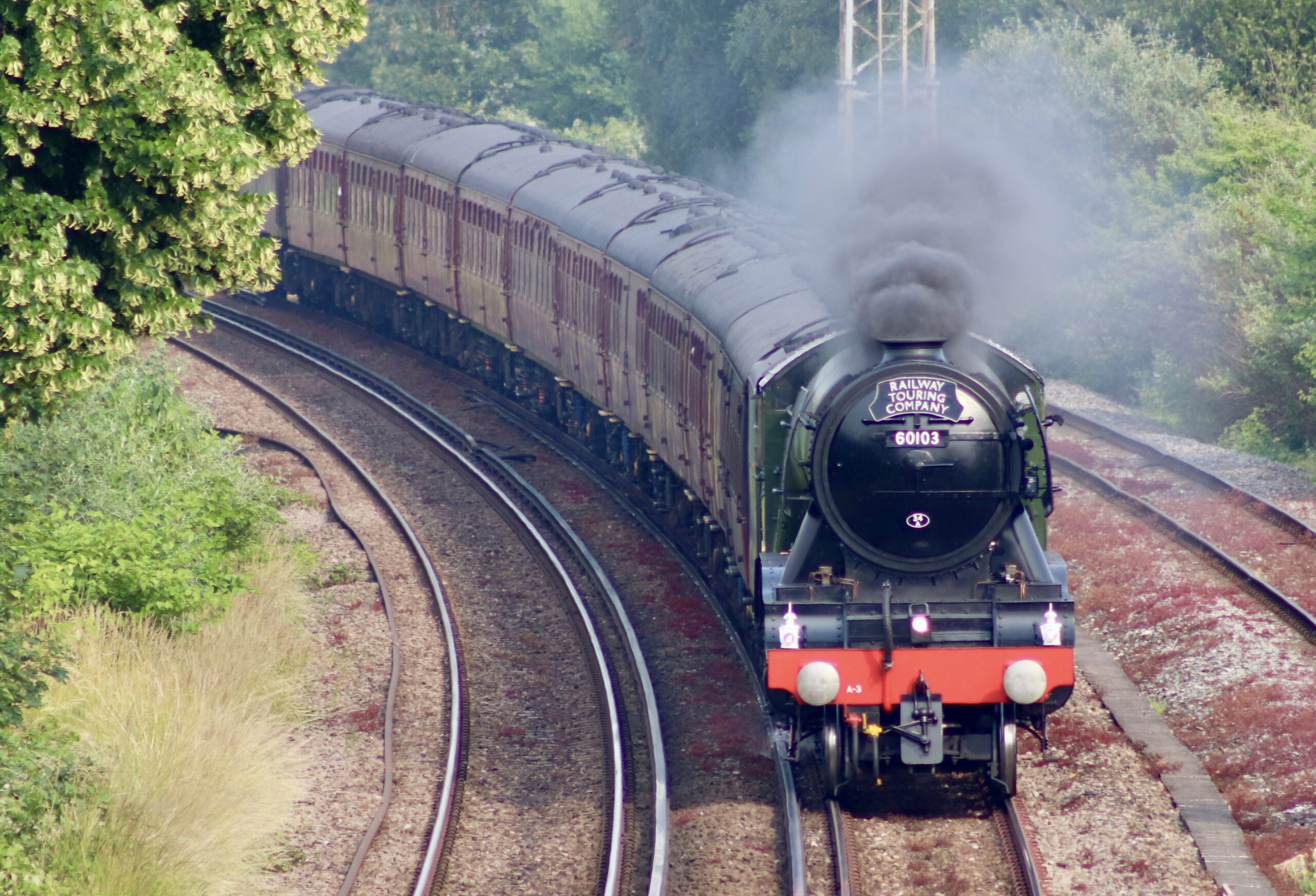
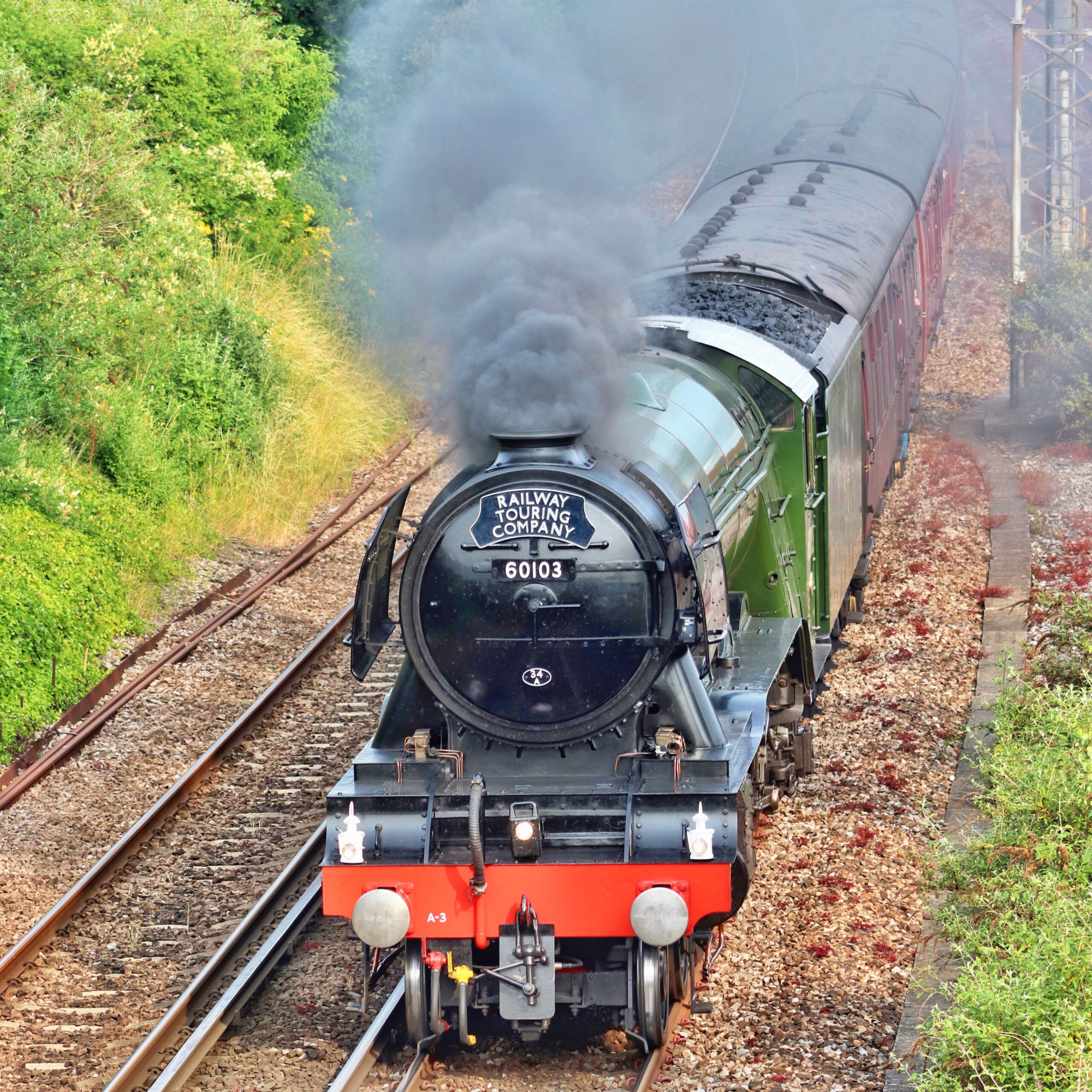
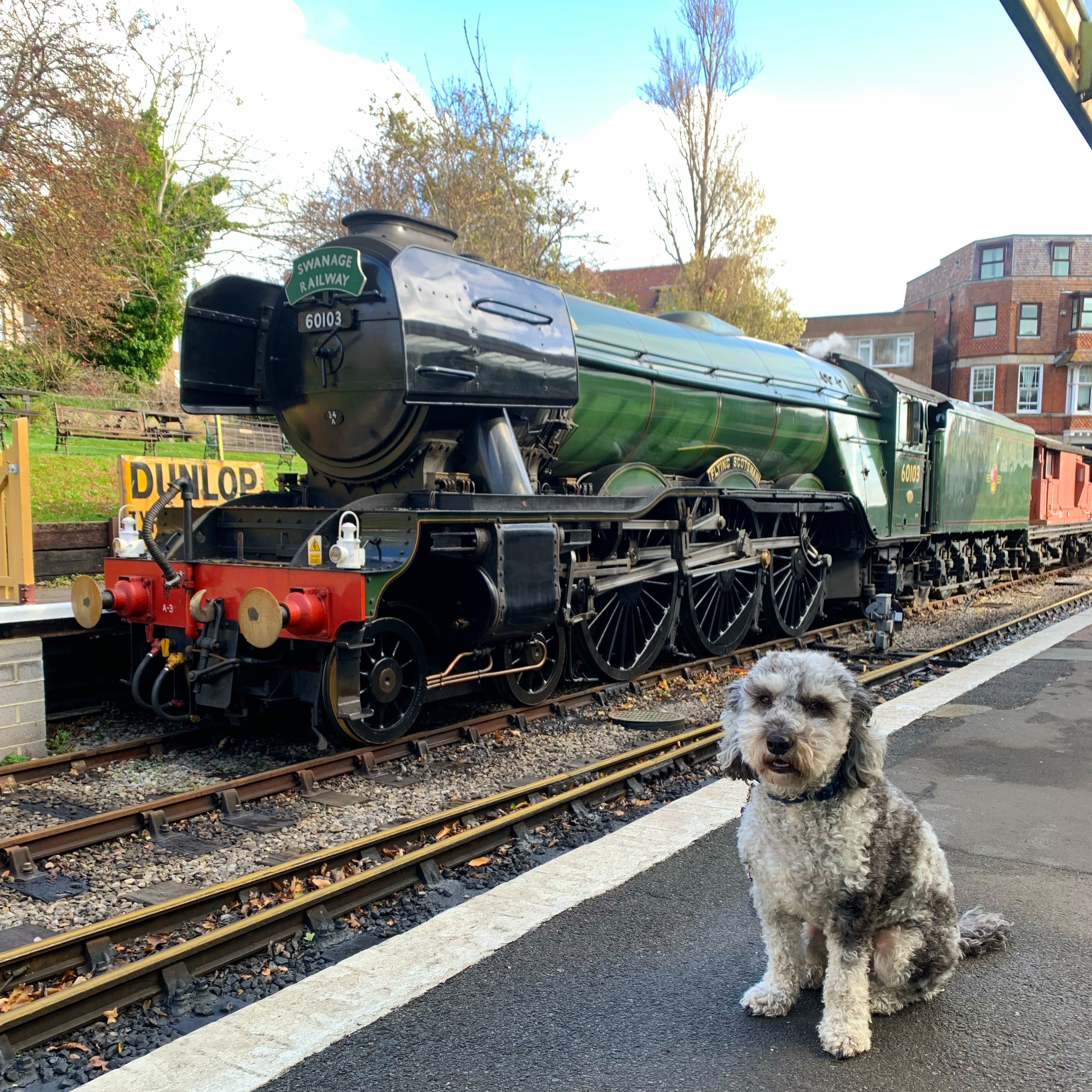
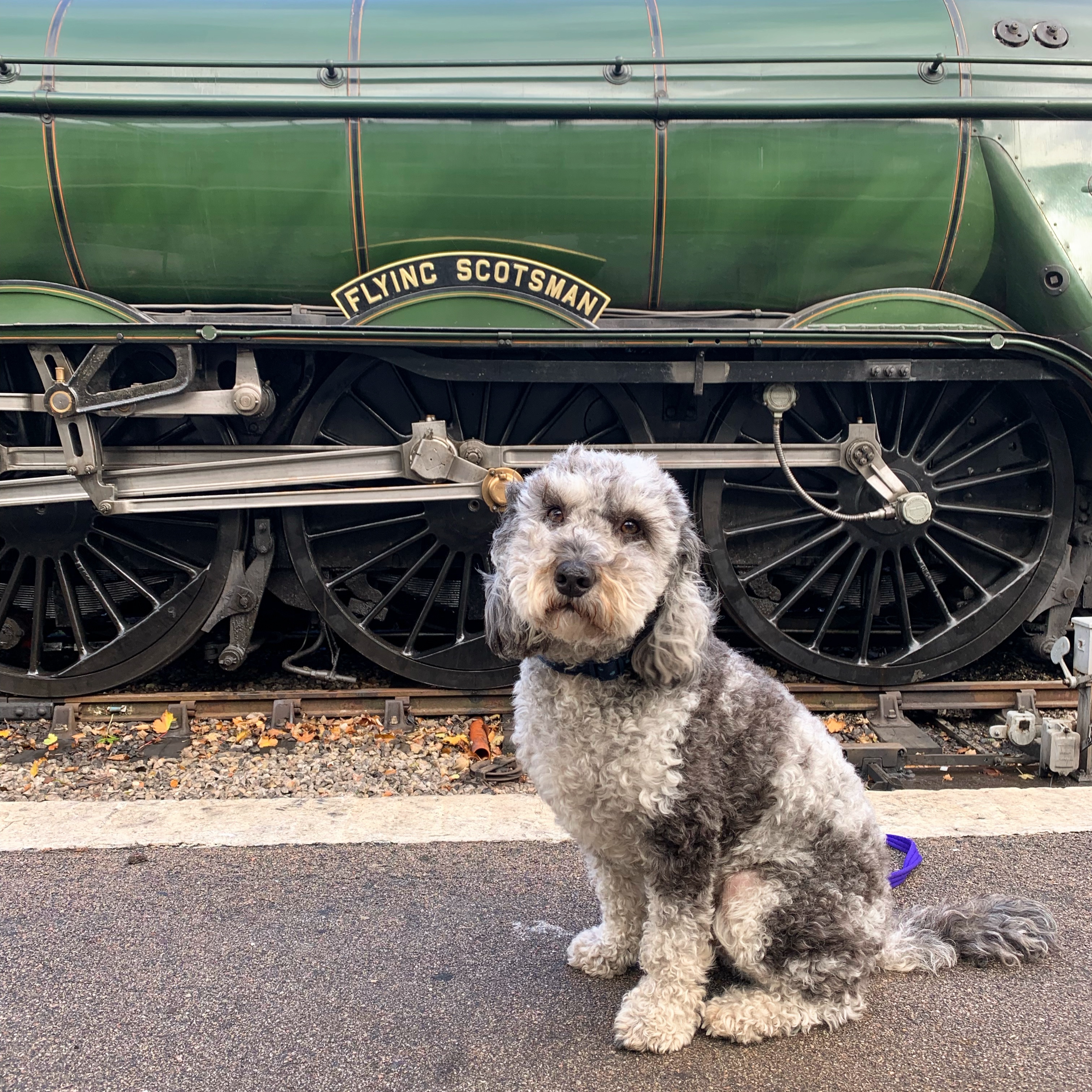
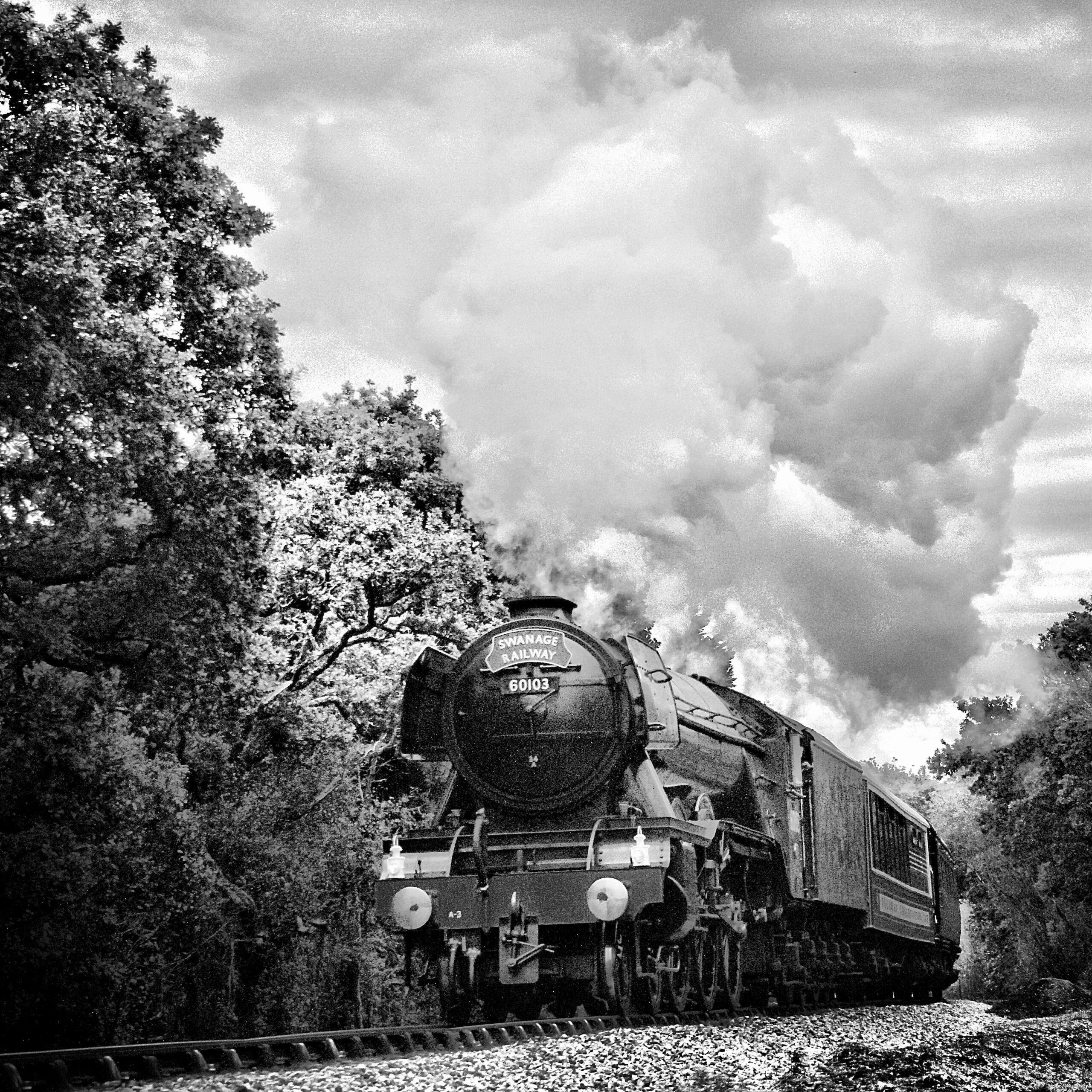
On Saturday, I popped over to the Southampton area for a brief evening visit to see LNER A3 4-6-2 Pacific No. 60103 ‘Flying Scotsman’. I don’t understand the scorn poured on this locomotive by a certain section of the railway enthusiast fraternity. I think it’s great Scotsman captures the imagination of the general public and it was delightful to hear a lot of chatter on our local radio station before and after the locomotive visited Portsmouth. I was interested to see if No. 60103 retained her white roof which she had gained the previous week in advance of hauling the Royal Train carrying King Prince Charles over the North Yorkshire Moors Railway on Monday 12th June, and I was very pleased to see she had! I was able to observe the “Portsmouth Flyer” rail tour on its way back to London Victoria from the overbridge leading to Dock Gate 20 at Millbrook. It’s also an excellent vantage point to see the locomotives being stabled at Freightliner Maritime depot. I thought the location would be quite popular with onlookers, but in the event it was just myself and another photographer there to see the “People’s Locomotive” steam by. It was quite pleasant passing the time having a friendly chat about railways of today and years gone.
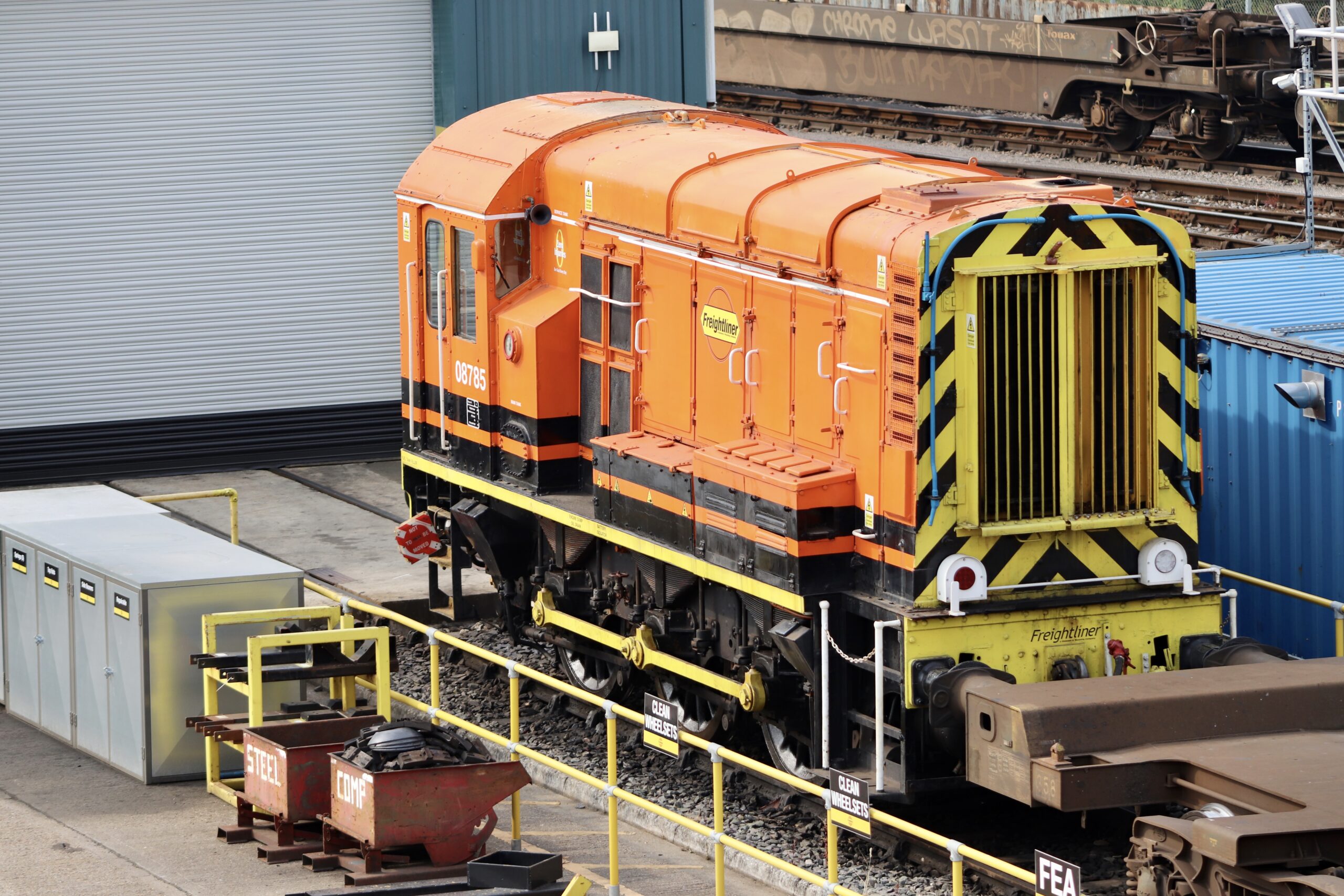
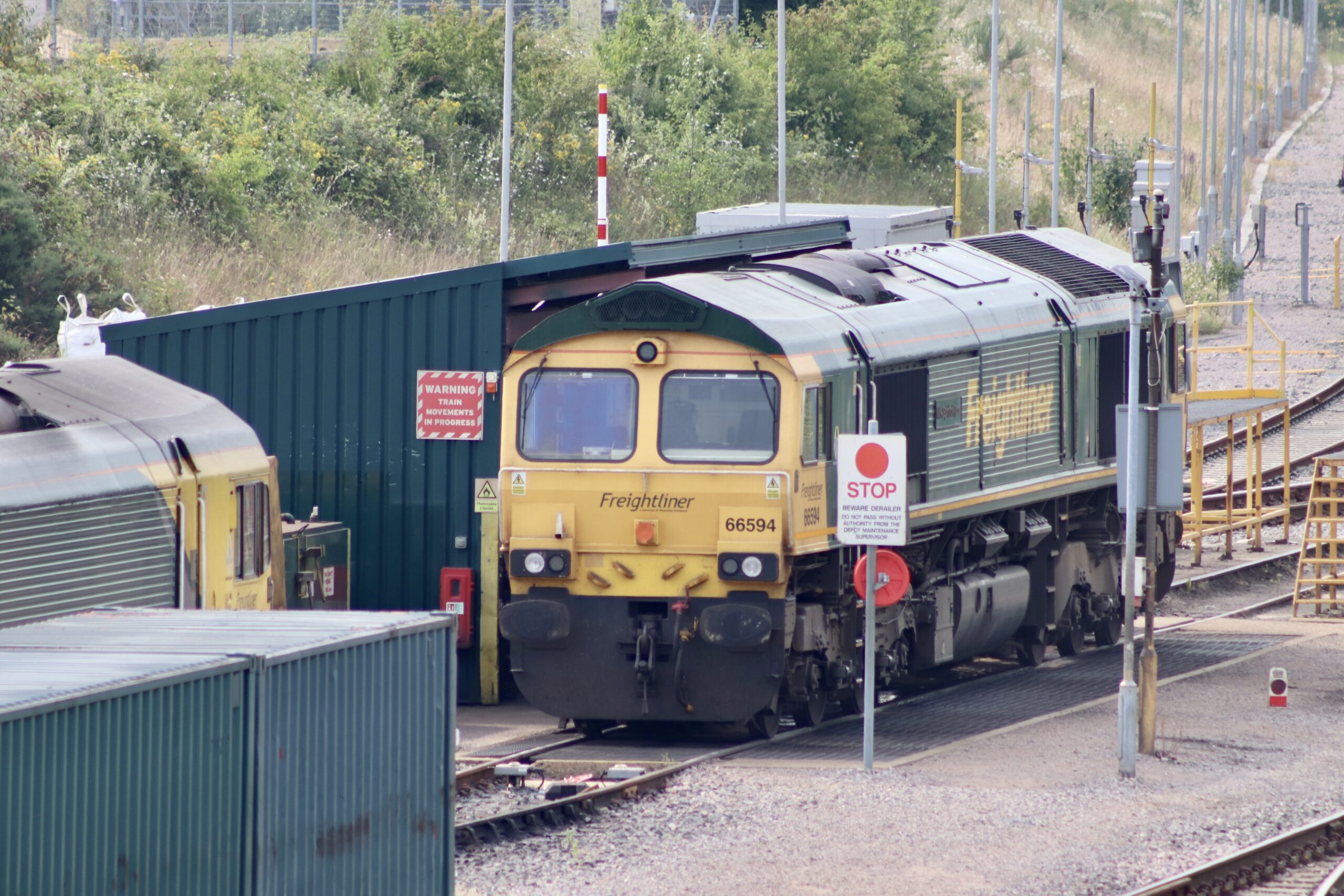
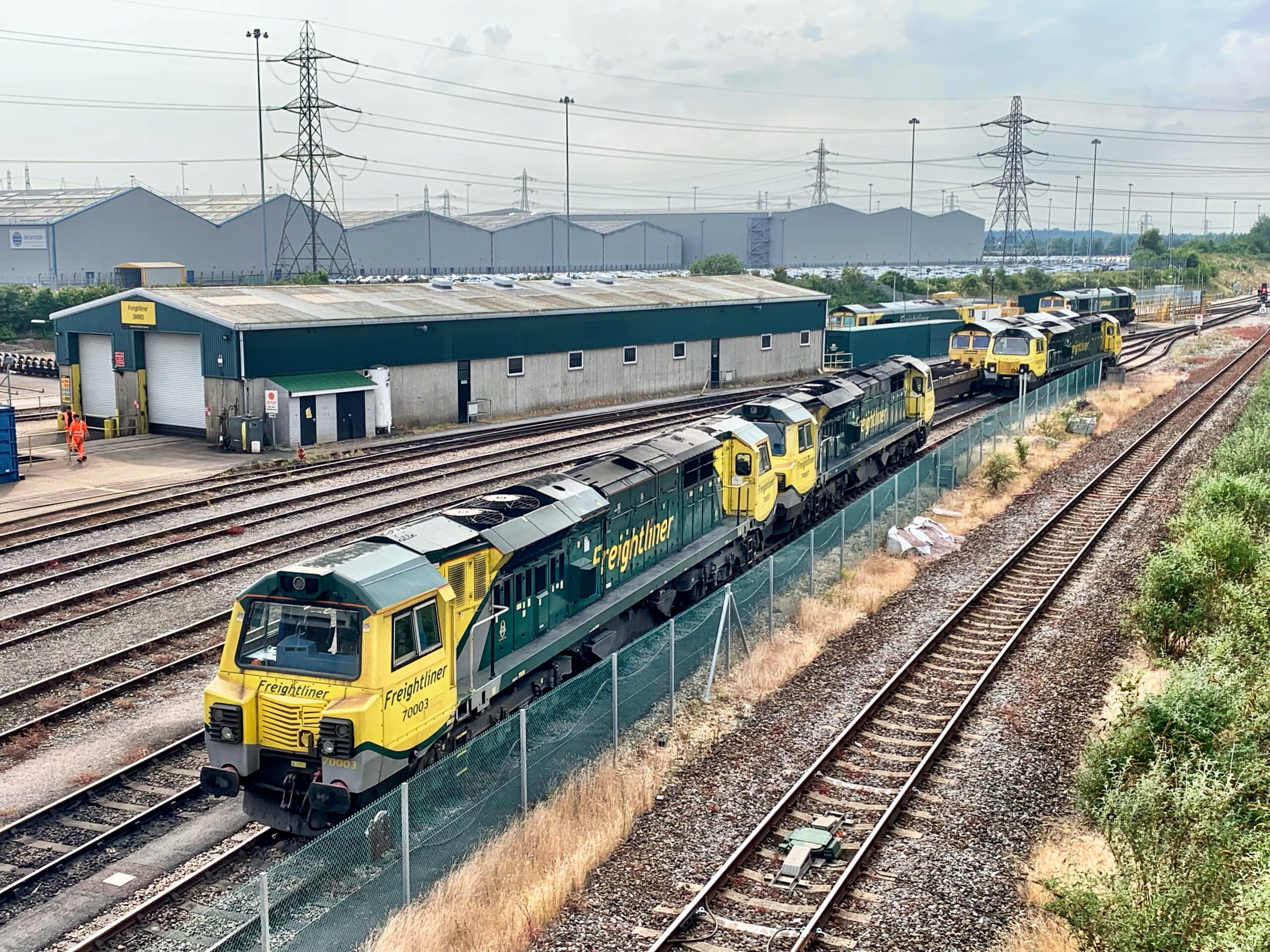
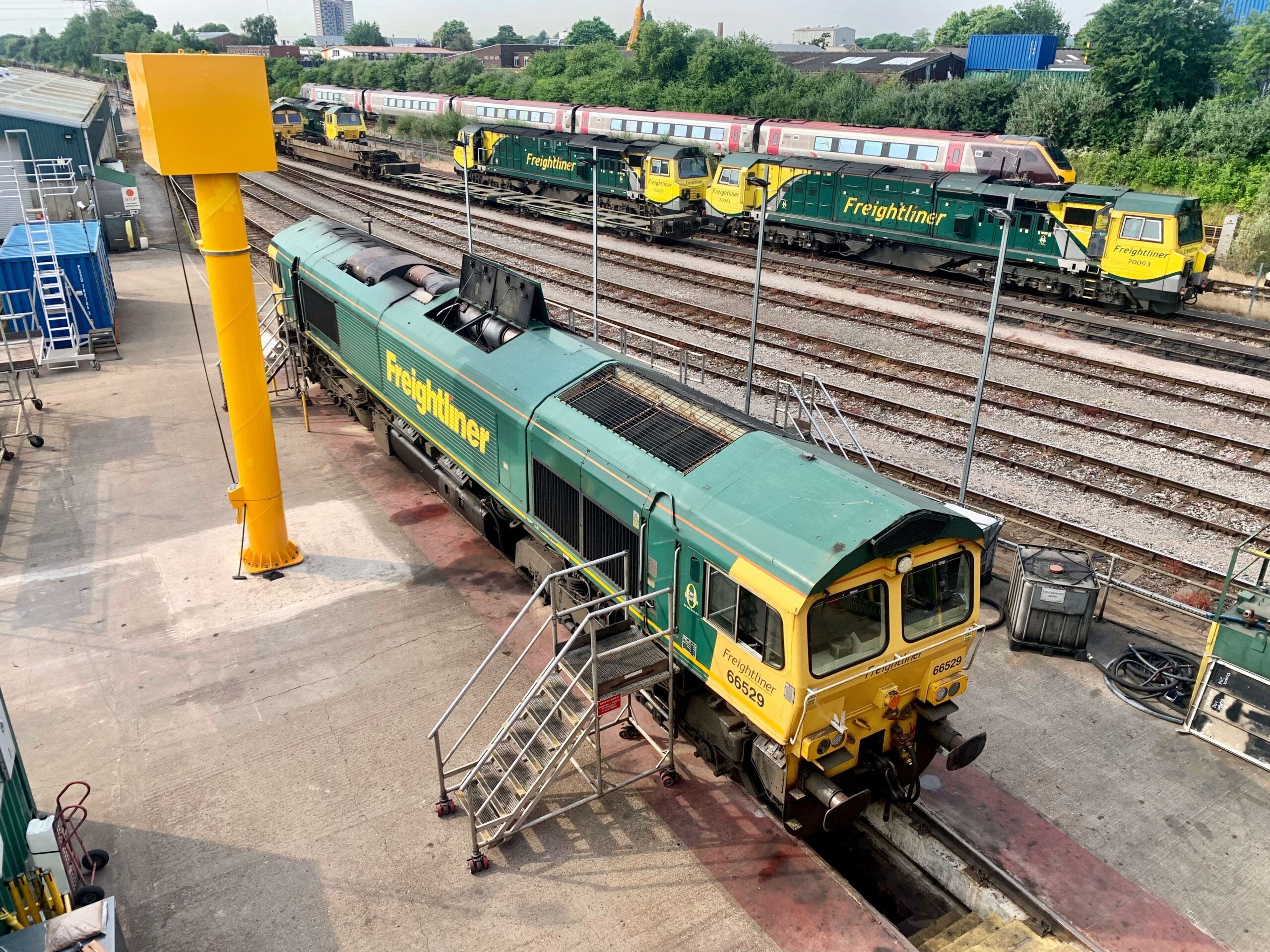
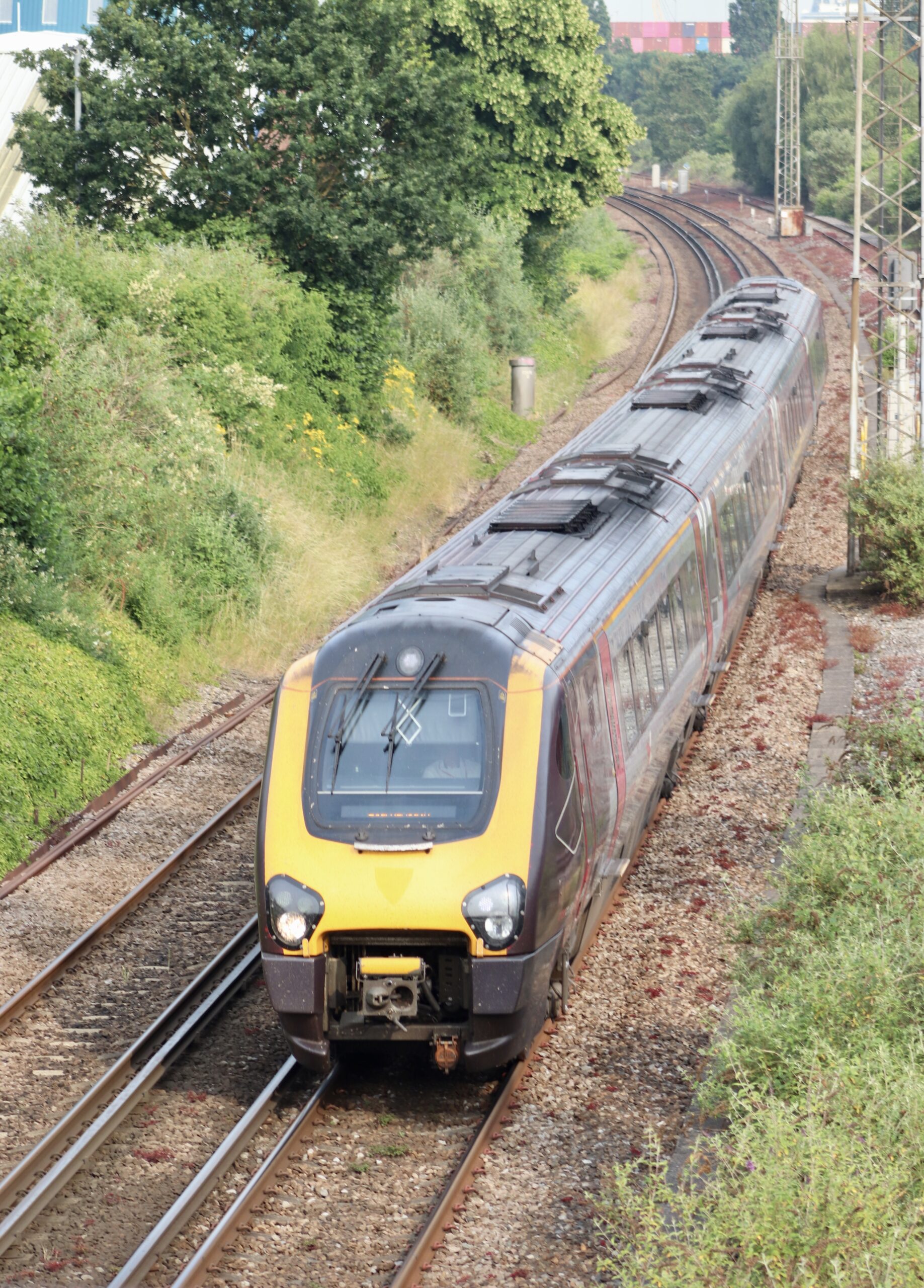
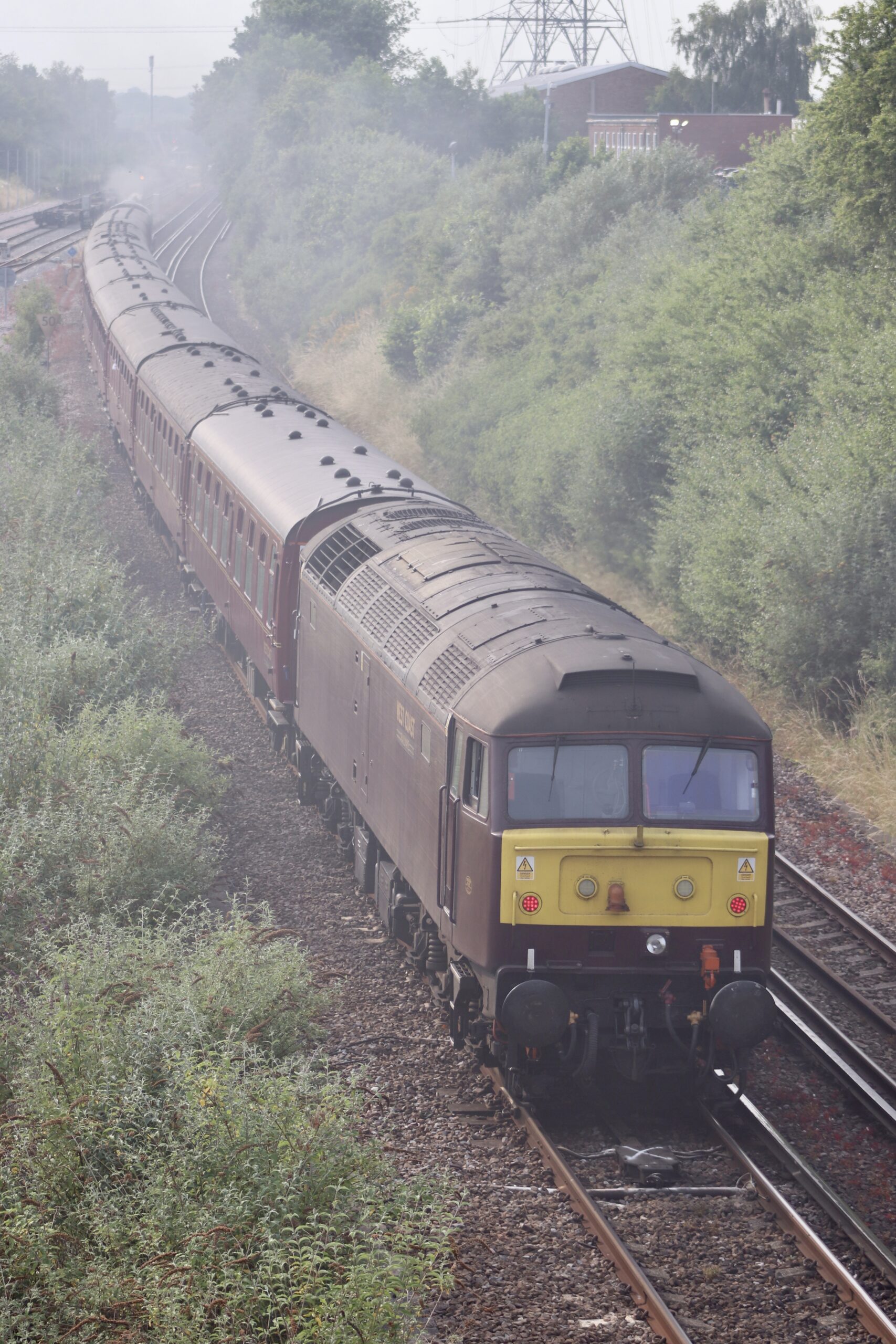
Freightliner Class 08 shunter No. 08785 at Southampton Maritime – 17/06/2023Class 66 No. 66594 at Southampton Maritime – 17/06/2023A line up of Class 70’s at Southampton Maritime, including No.’s 70003,70007 and 70014 with Class 66 No.’s 66565, 66594 and 66504 also visible- 17/06/2023Class 66 No. 66529 receives attention at Southampton Maritime – 17/06/2023CrossCountry Voyager No. 220011 nears Redbridge working 1020 1325 Manchester Piccadilly to Bournemouth – 17/06/2023LNER A3 Pacific No. 60103 ‘Flying Scotsman’ at Millbrook working the return “The Portsmouth Flyer” 1Z73 1606 Portsmouth Harbour to London Victoria – 17/06/2023The white cab roof applied to LNER A3 Pacific No. 60103 ‘Flying Scotsman’ can be seen clearly in this view of the locomotive as she works the return “The Portsmouth Flyer” 1Z73 1606 Portsmouth Harbour to London Victoria on the approach to Redbridge – 17/06/2023West Coast Railway Company Class 47 No. 47802 at the rear of “The Portsmouth Flyer” 1Z73 1606 Portsmouth Harbour to London Victoria approaching Redbridge – 17/06/2023
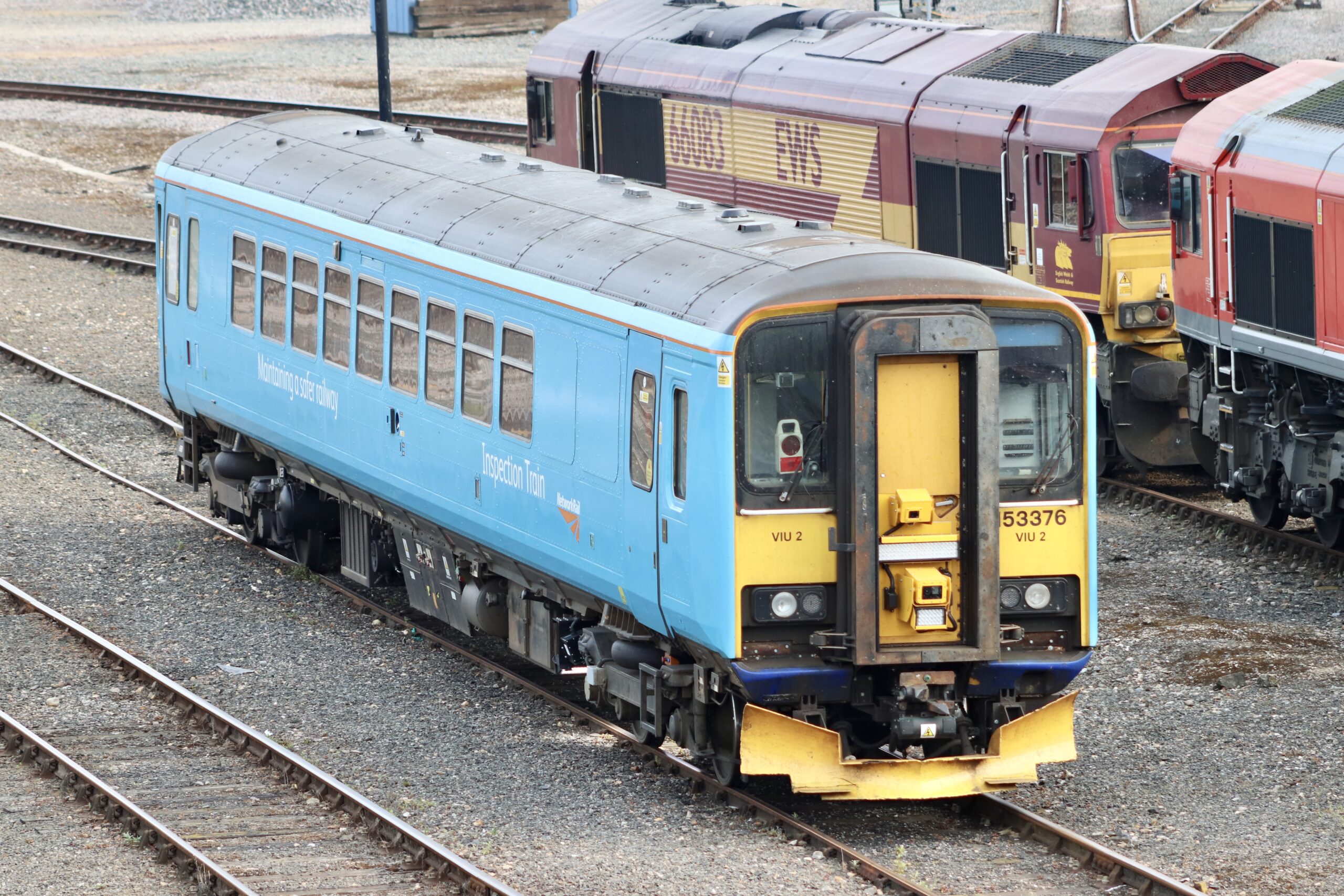
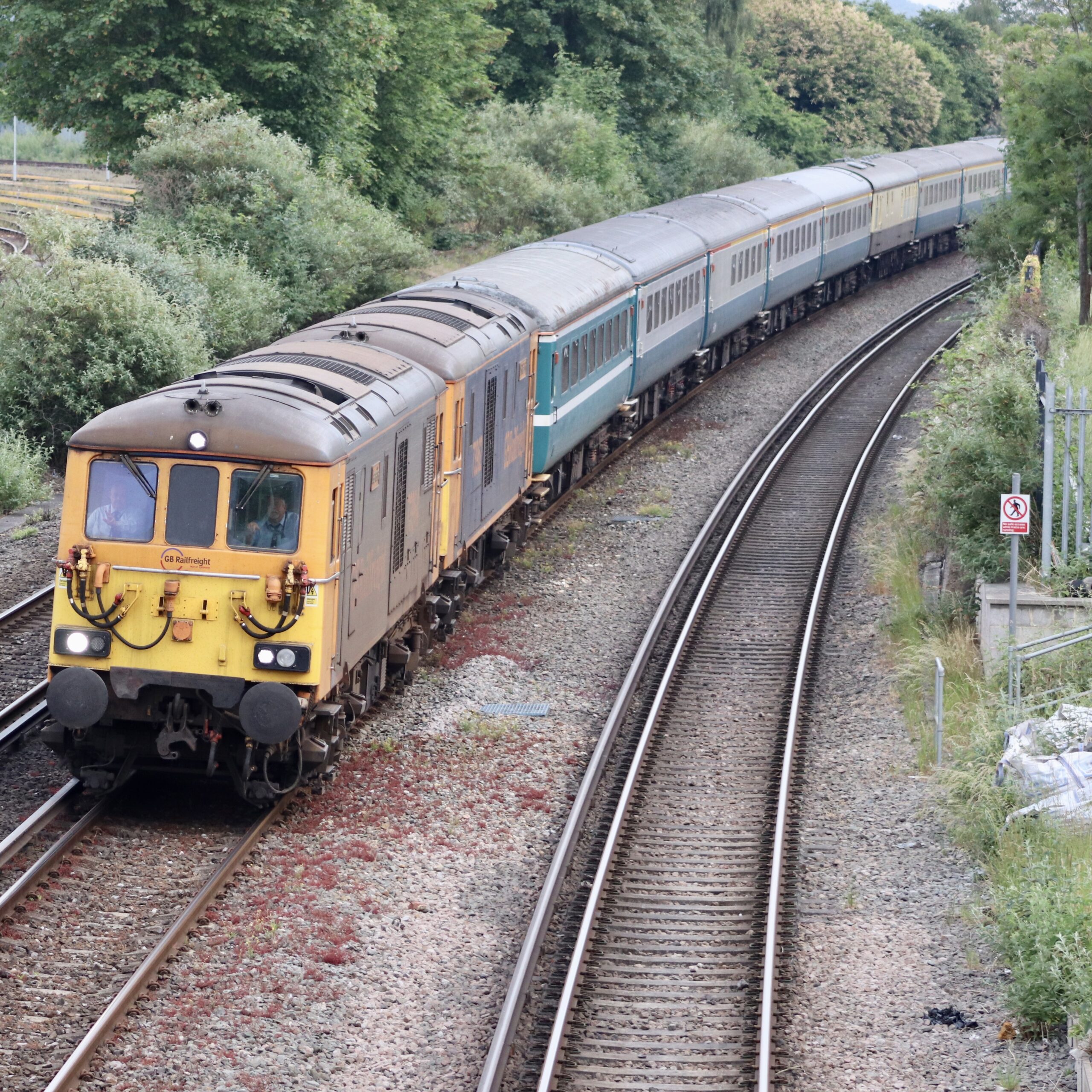
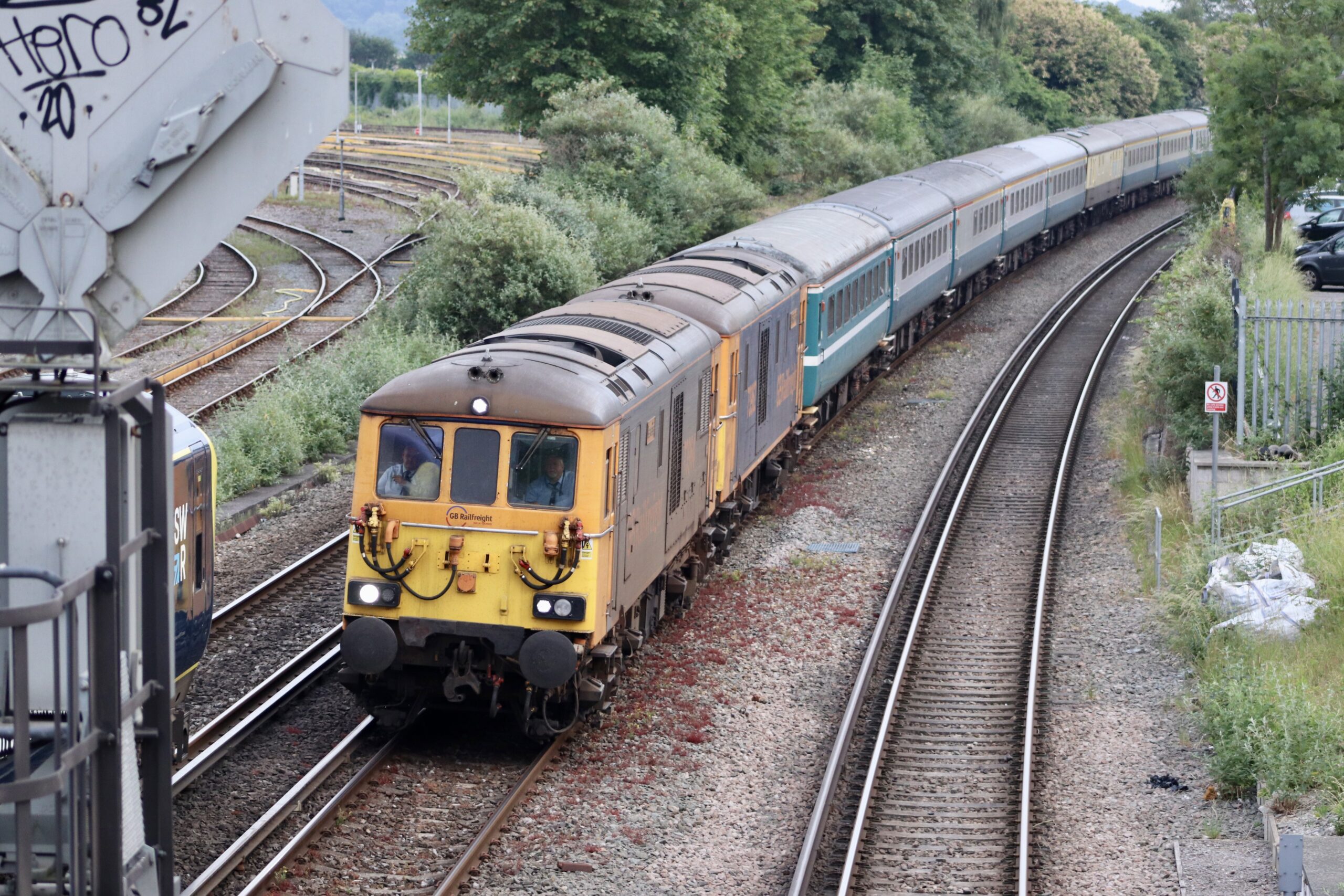
After seeing ‘Flying Scotsman’ I had just enough time to pop over to Eastleigh to get a photo of the Network Rail Class 153 Inspection Train. I was also able to see UK Railtours “The Magic Carpet” on its way from Exeter to London Victoria. This was hauled by two GBRf Class 73 Electro-diesels of the type we normally get here on a test train the first Monday of every month.
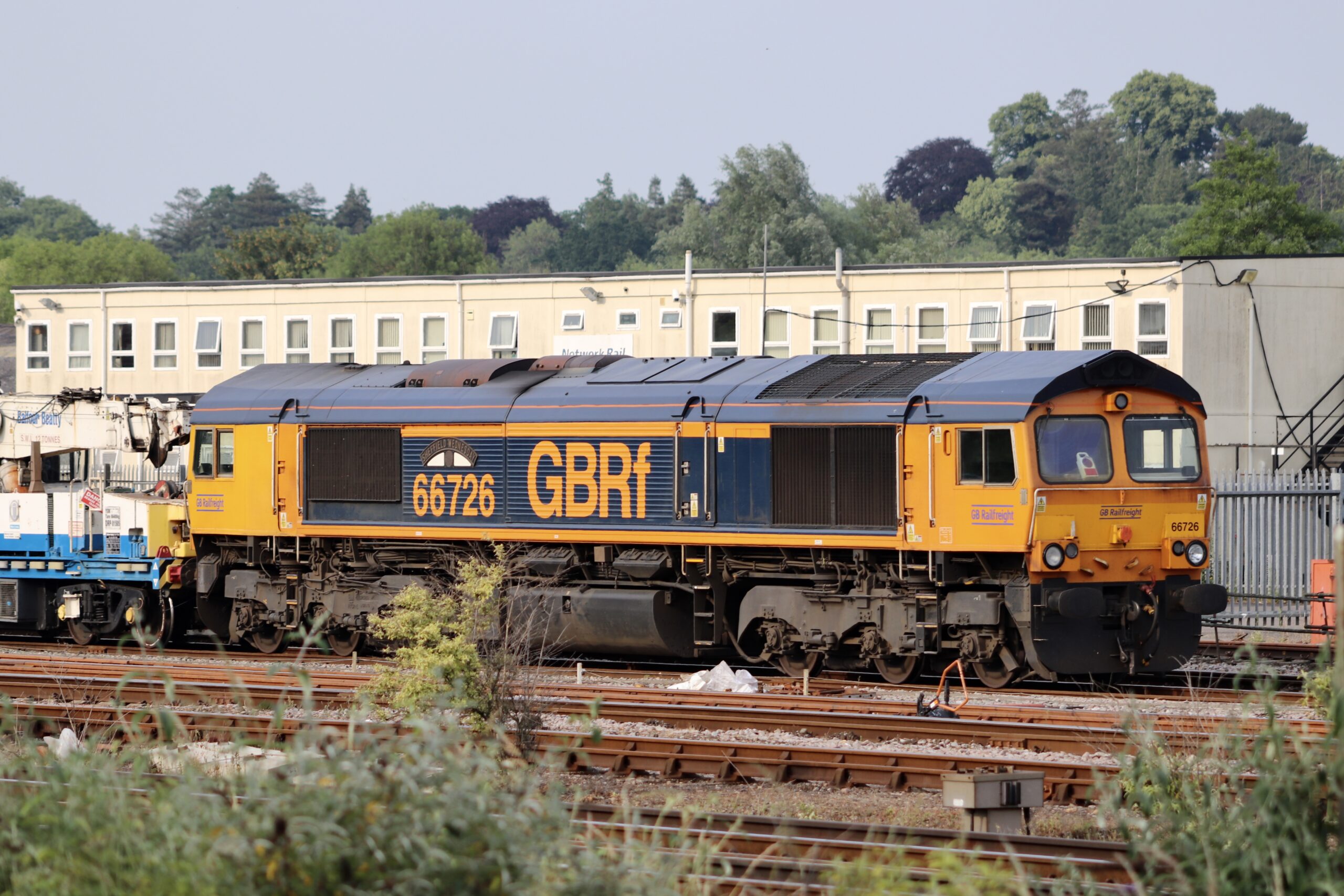
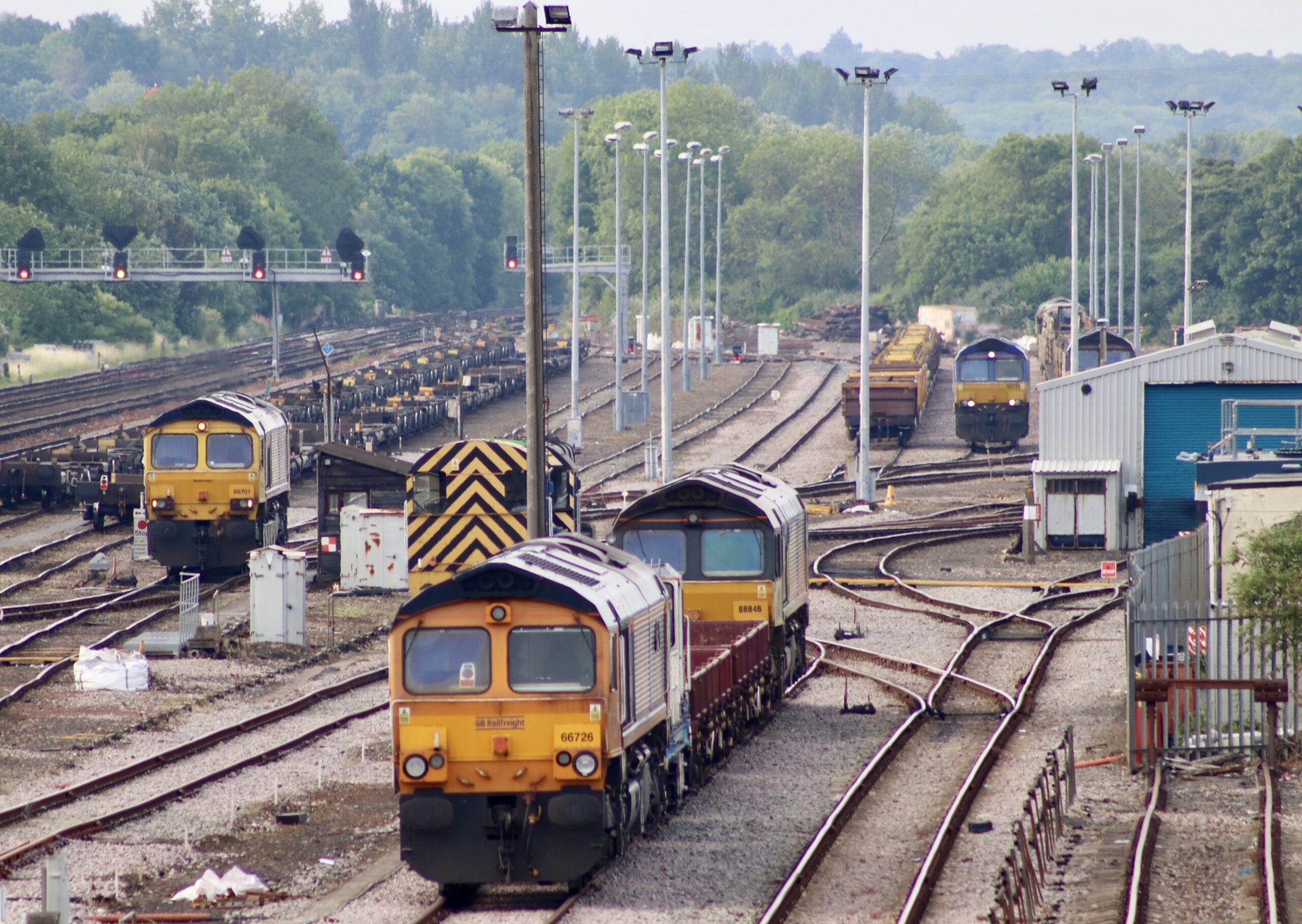
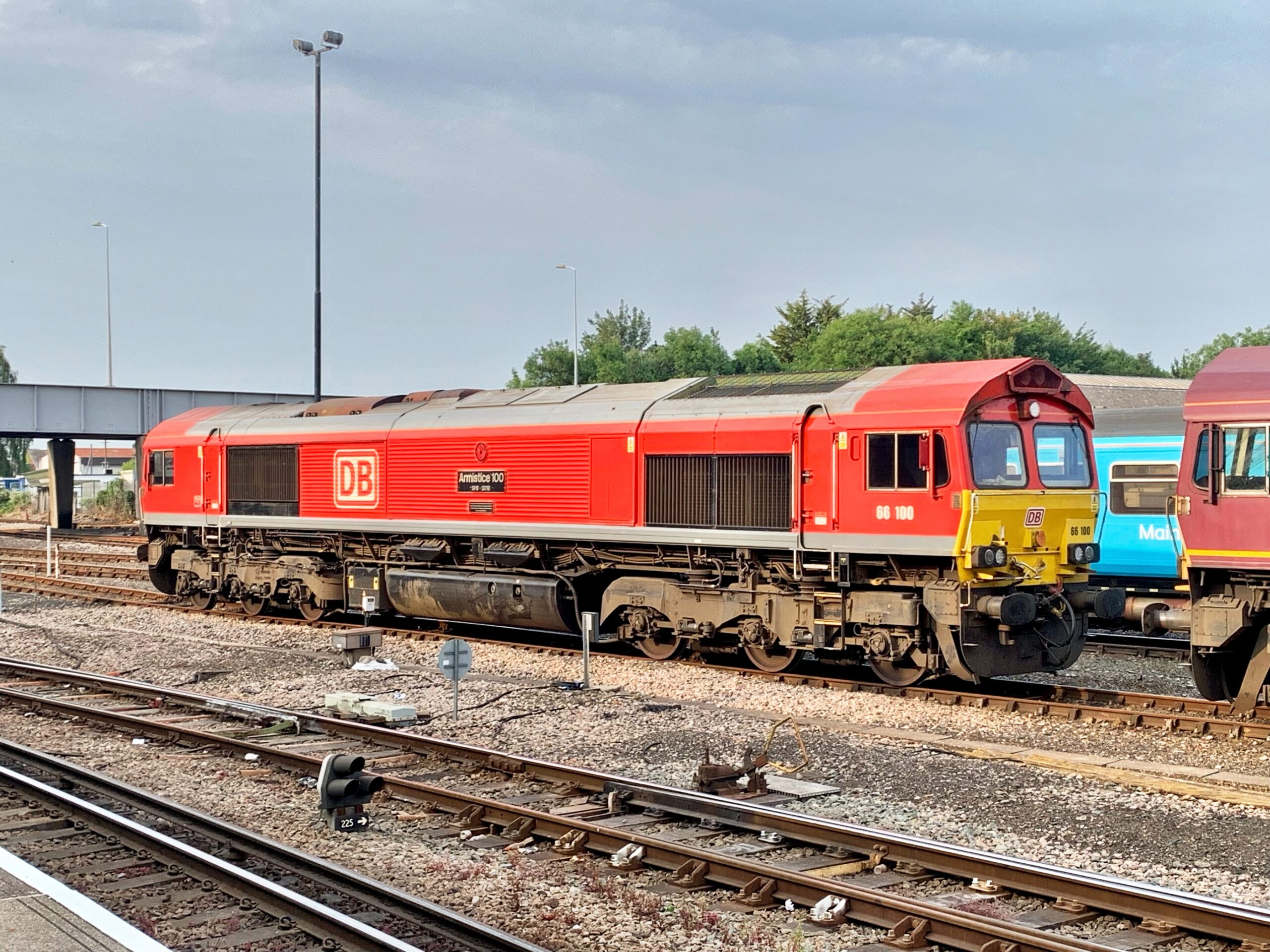
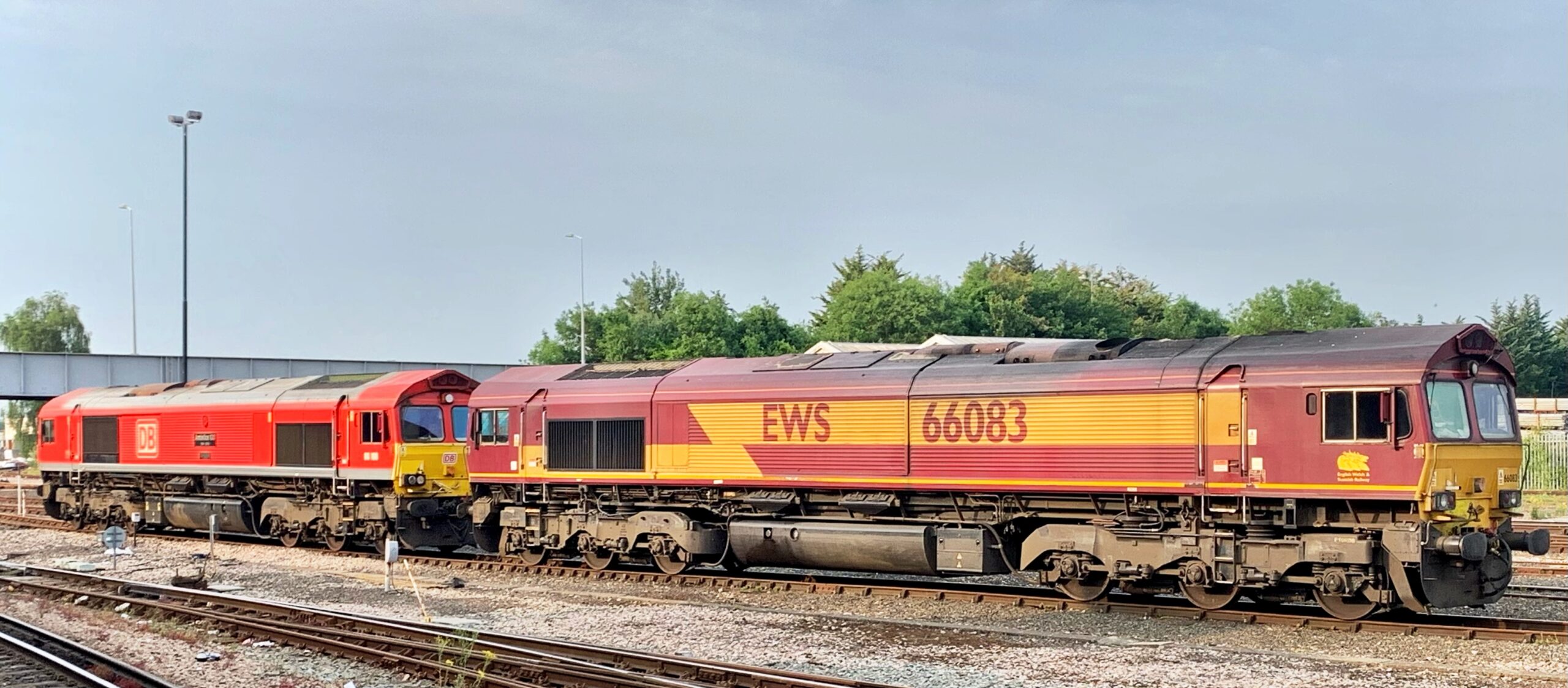
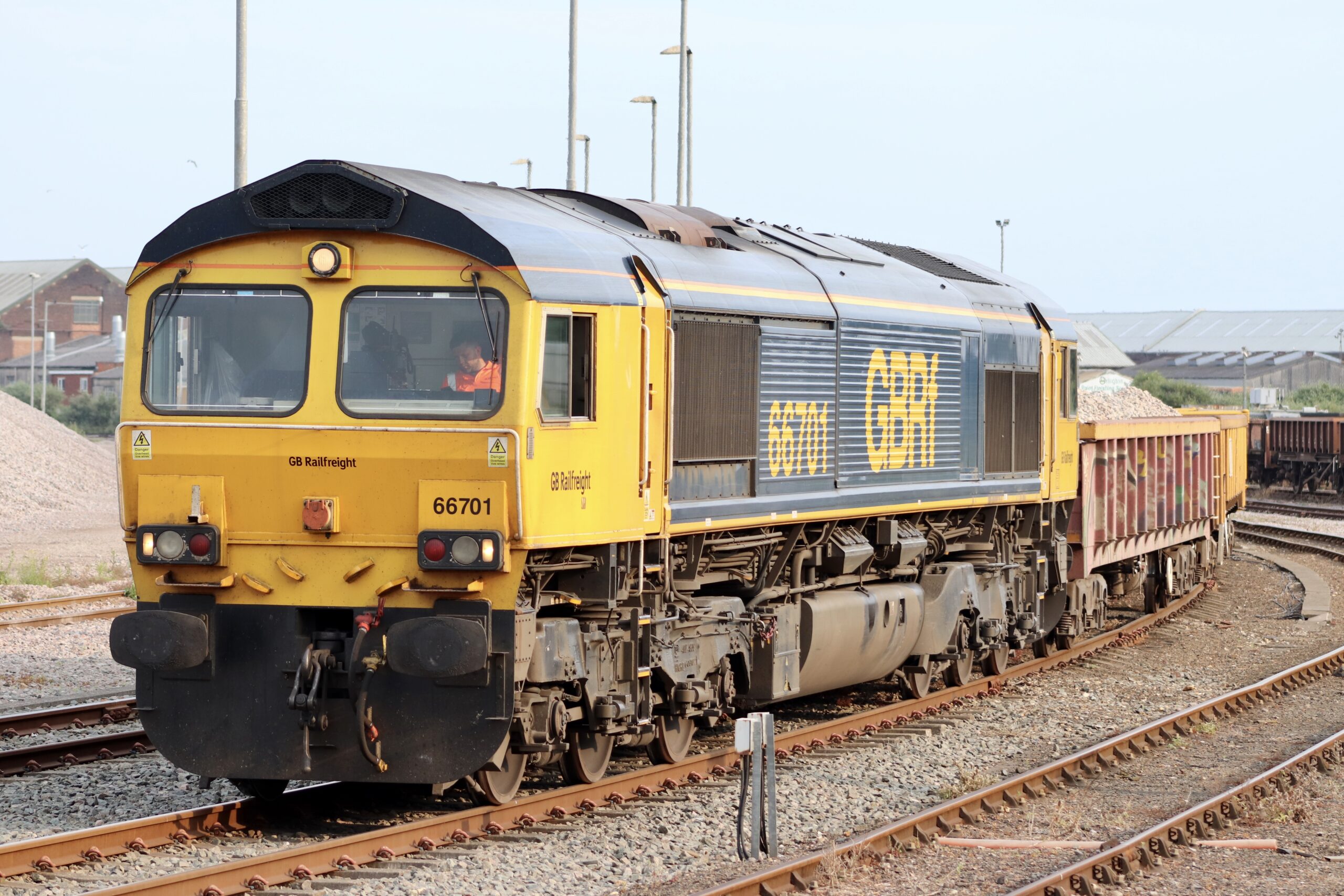
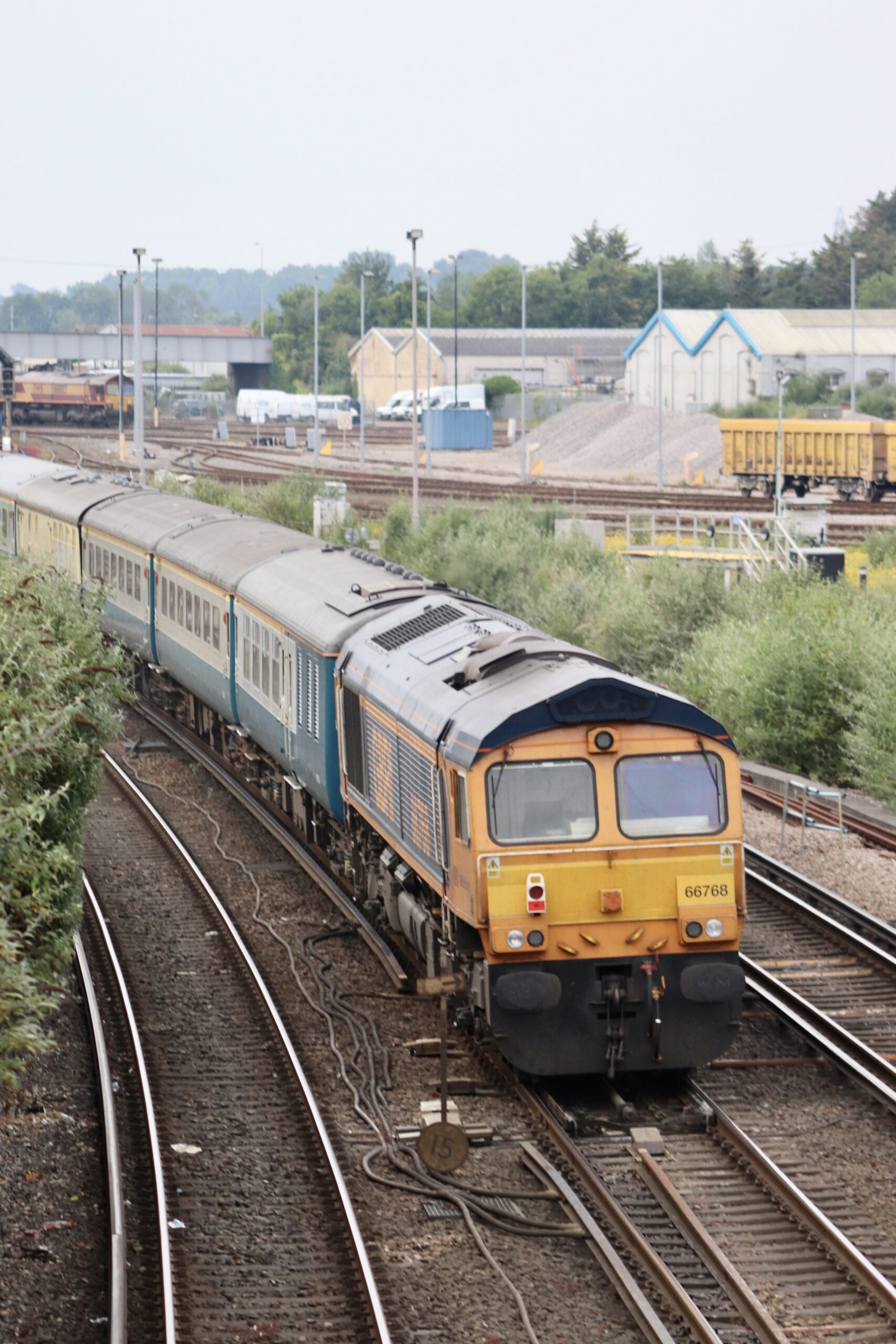
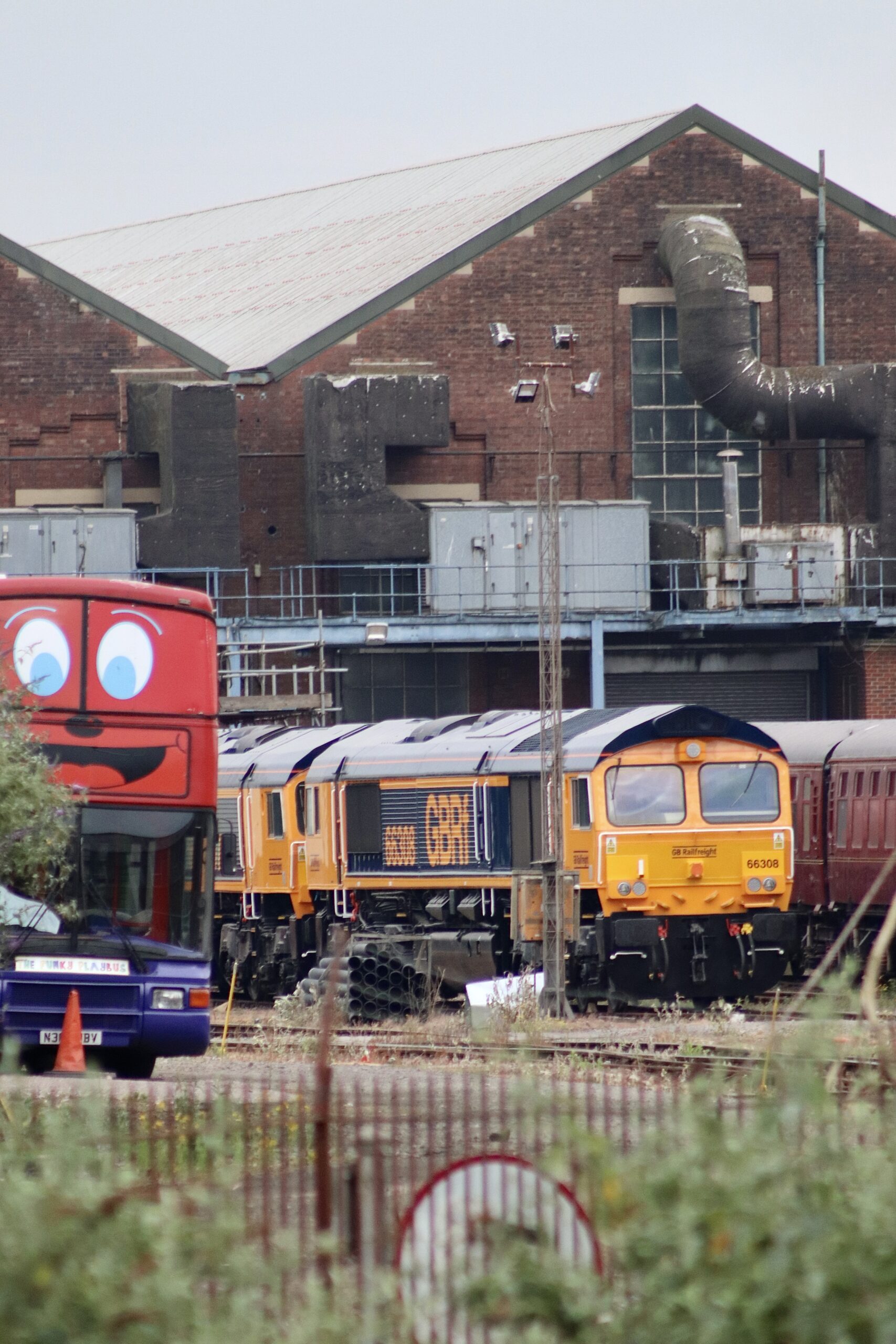
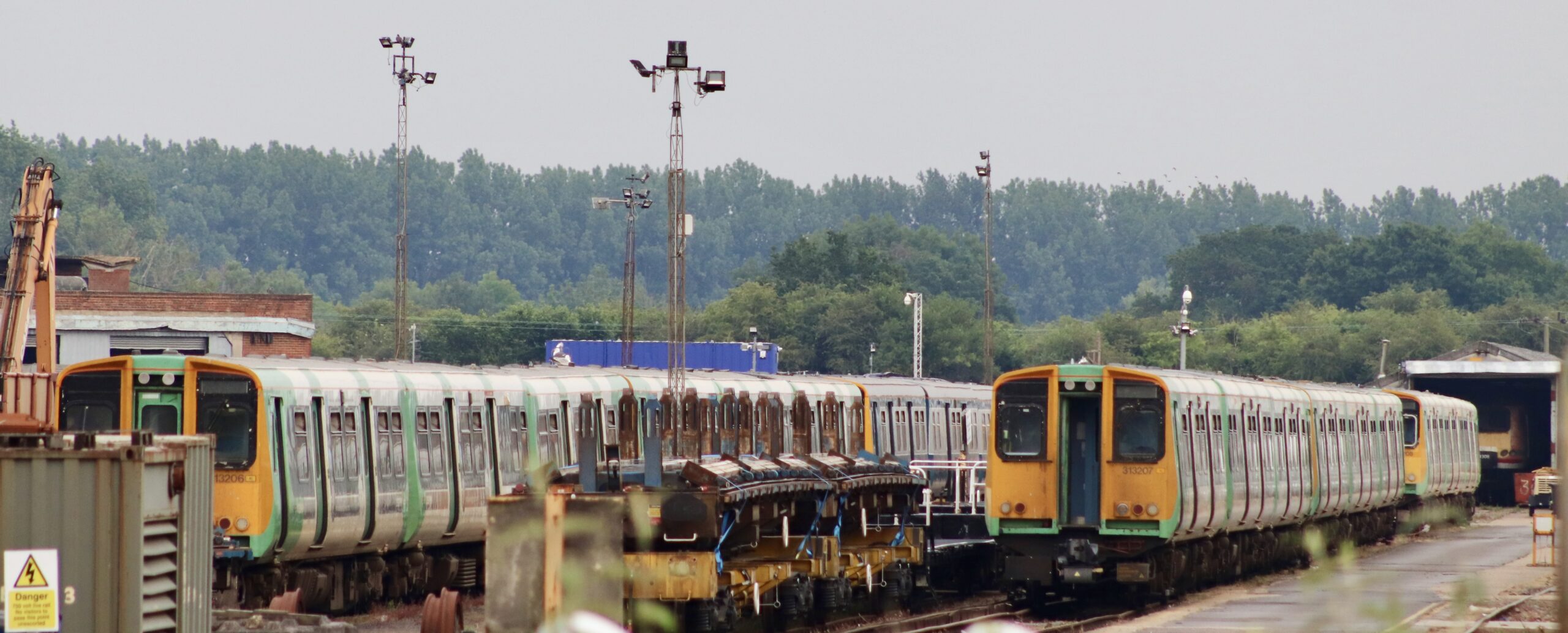
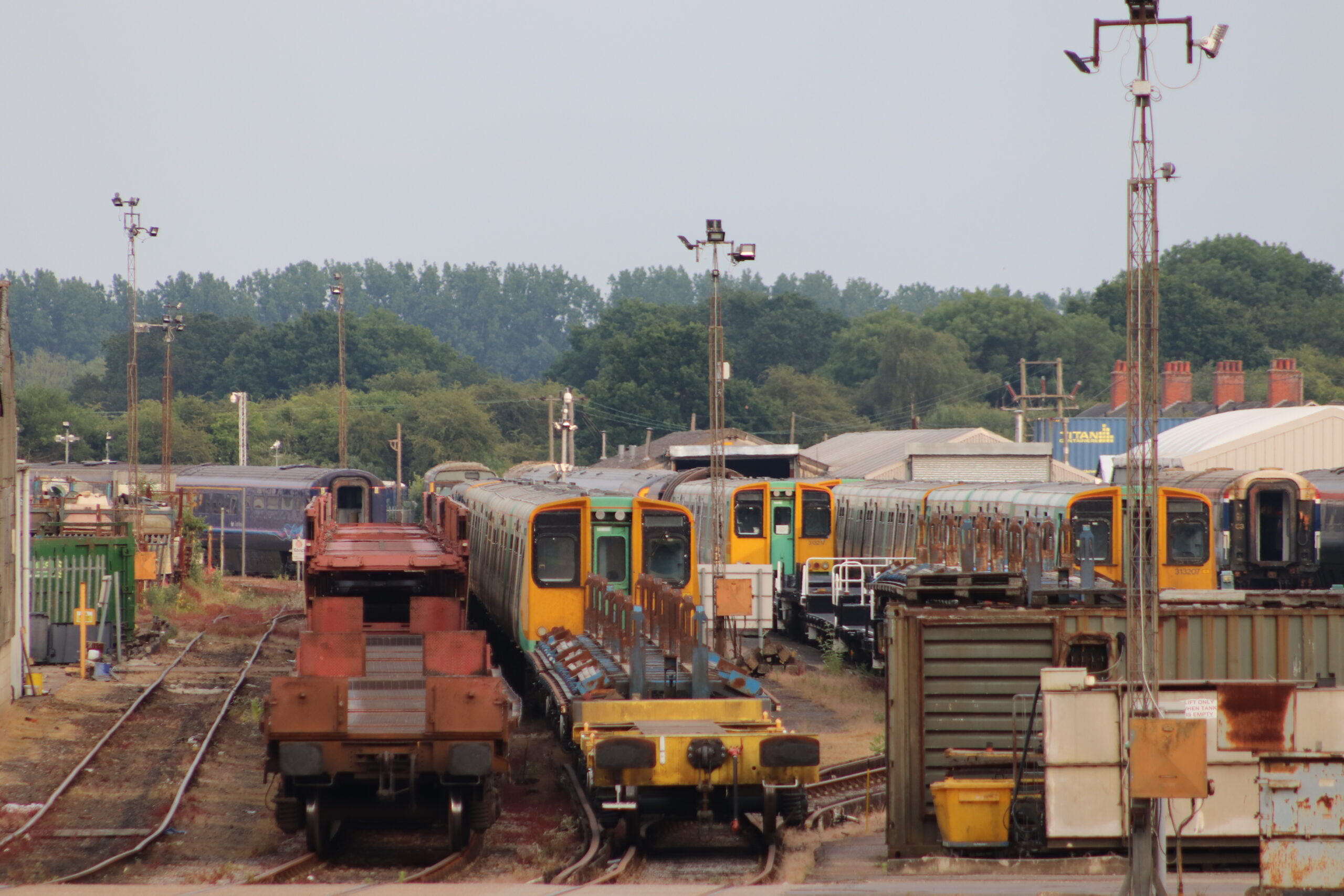
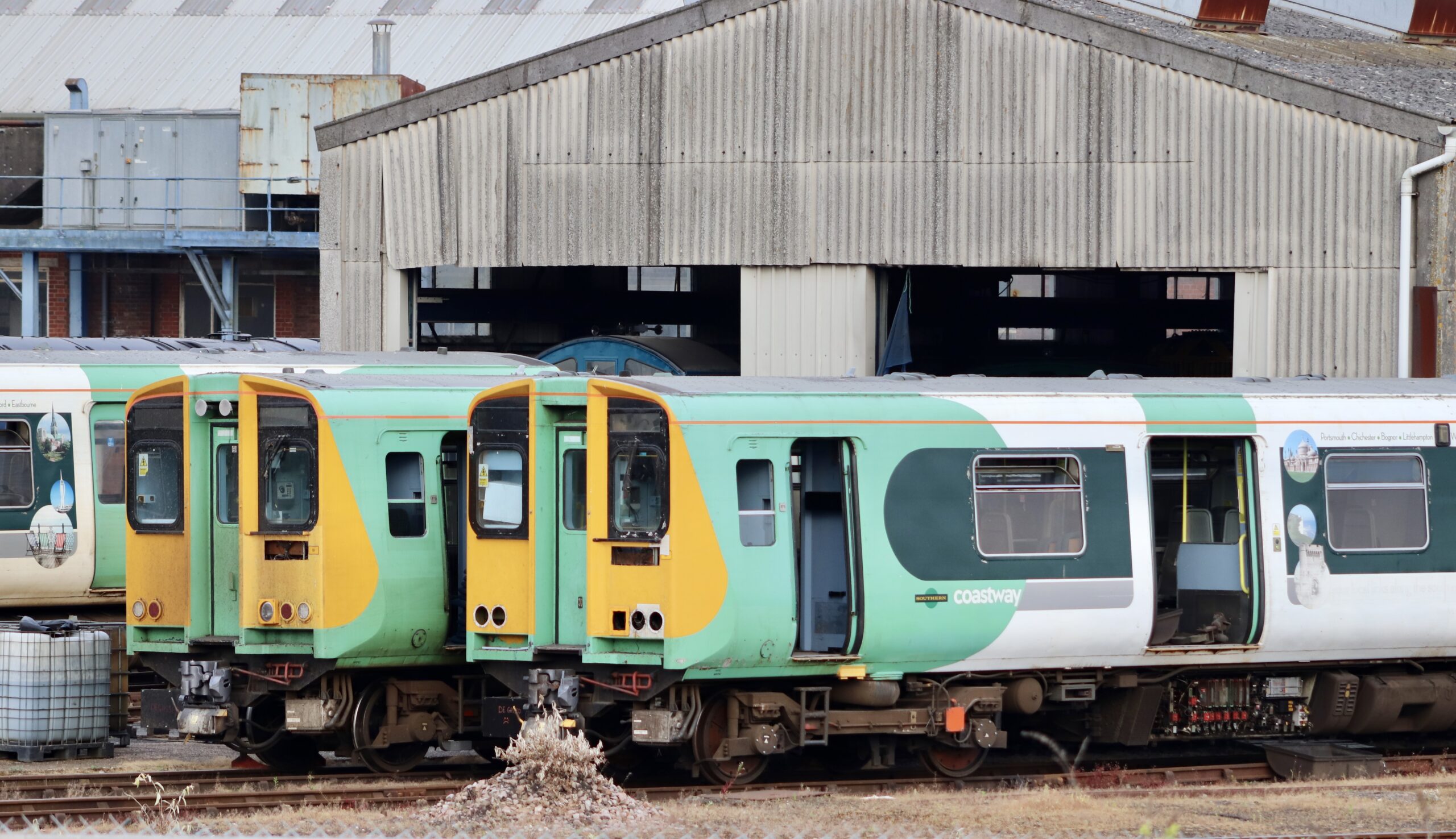
GBRf Class 66 No. 66726 ‘Sheffield Wednesday’ in Eastleigh East Yard in preparation for working 7C03 2302 to Clapham Junction Windsor Lines civil engineering train later in the day along with No. 66846 – 17/06/2023A view over Eastleigh East Yard with GBRf Class 66 No. 66726 ‘Sheffield Wednesday’ and Colas Rail Class 66 No. 66846 in the foreground – 17/06/2023DB Cargo Class 66 No. 66100 ‘Armistice 100 1918 – 2018’ in the sidings adjacent Eastleigh railway station – 17/06/2023Nameplate detail of Class 66 No. 66100 ‘Armistice 100 1918 – 2018’ – 17/06/2023Still carrying EWS Livery, DB Cargo Class 66 No. 66083 partners No. 66100 ‘Armistice 100 1918 – 2018’ at Eastleigh – 17/06/2023Network Rail Video Inspection Unit No. 2 (VIU2) No. 153376 rests at Eastleigh. Network Rail employs three Class 153 DMU’s for video assessment of track and points – 17/06/2023GBRf Class 66 No. 66701 having just reversed onto wagons ready to form 6G13 1952 Eastleigh East Yard to Cheam engineers train – 17/06/2023Maritime Blue liveried Class 66 No. 66051 ‘Maritime Intermodal Four’ passing through Eastleigh heading up 4V44 1824 Southampton Eastern Docks to Morris Cowley MAT – 17/06/2023GBRf Class 73/9 No.’s 73964 ‘Jeanette’ and 73962 ‘Dick Mabbutt’ hauling UK Railtours “The Magic Carpet” one the approach to Eastleigh – 17/06/2023GBRf Class 73/9 No.’s 73964 ‘Jeanette’ and 73962 ‘Dick Mabbutt’ hauling UK Railtours “The Magic Carpet” 1Z62 1533 Exeter St Davids to London Victoria on the approach to Eastleigh – 17/06/2023On the rear of “The Magic Carpet” 1Z62 1533 Exeter St Davids to London Victoria GBRf Class 66 No. 66768 – 17/06/2023In 2011, leasing company Akiem acquired seven unused JT42CWRM locomotives, which would originally enter service for Veolia Cargo SAS (77501-77503) as order 20078941 and Crossrail Benelux (77504-77507) as 20078920. On 20 June 2011, all seven locos were delivered with train protection systems for Germany, Belgium and France. After being delivered to Akiem, they were immediately leased to VFLI. Purchased and imported by GBRf Class 66 No.’s 66308 (ex-77503) and 66307 (ex-77502) are seen at Eastleigh Arlington Works having been repainted into standard GBRf livery following sizing modifications for the UK rail loading gauge carried out at Doncaster – 17/06/2023Class 313’s continue to arrive at Eastleigh Arlington for component recovery and scrapping. No.’s 313206, 313201, 313207 and 313208 can be identified in this view. An appeal to fund maintenance and storage costs of blue liveried No. 313201 has been launched – 17/06/2023No.’s 313206, 313201, 313217, 313207 and 313208 await their fate at Eastleigh Arlington – 17/06/2023These Class 313 EMU’s at Eastleigh Arlington have had their numbers cut out. We can identify No. 313202, closest to the camera, from the coach number 62530 – 17/06/2023
“The Magic Carpet” passed through Dorset and our North Dorset correspondent was on hand to capture the train at Gillingham:
GBRf Class 73/9 No.’s 73964 ‘Jeanette’ and 73962 ‘Dick Mabbutt’ head up UK Railtours “The Magic Carpet” at Gillingham on the return leg (photo courtesy of Scott Lewis) – 17/06/2023
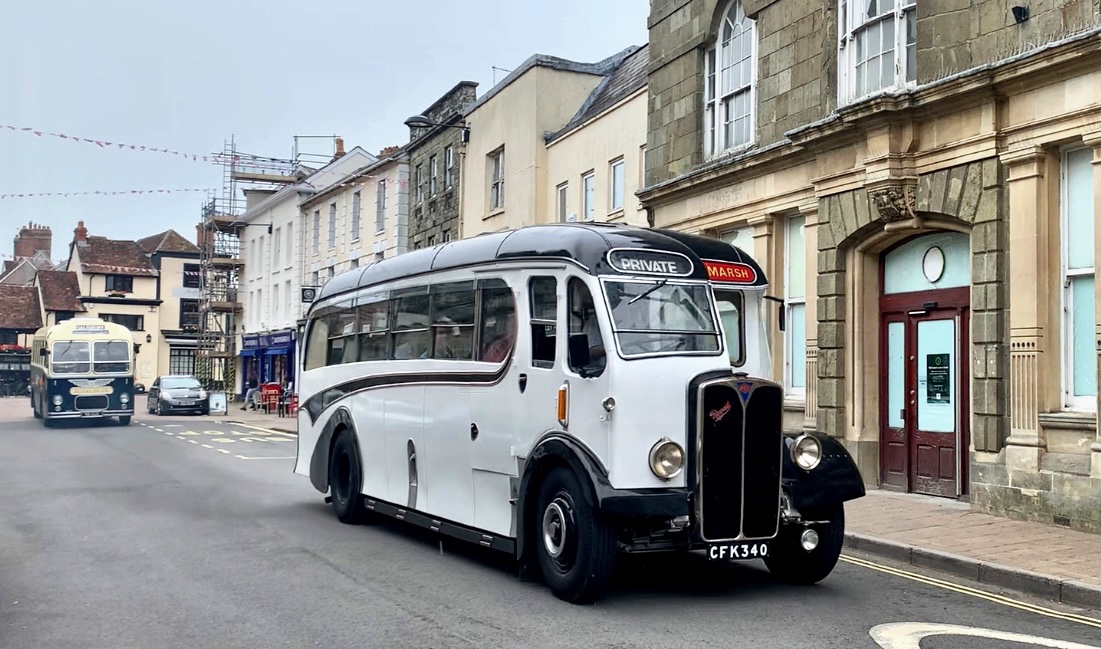
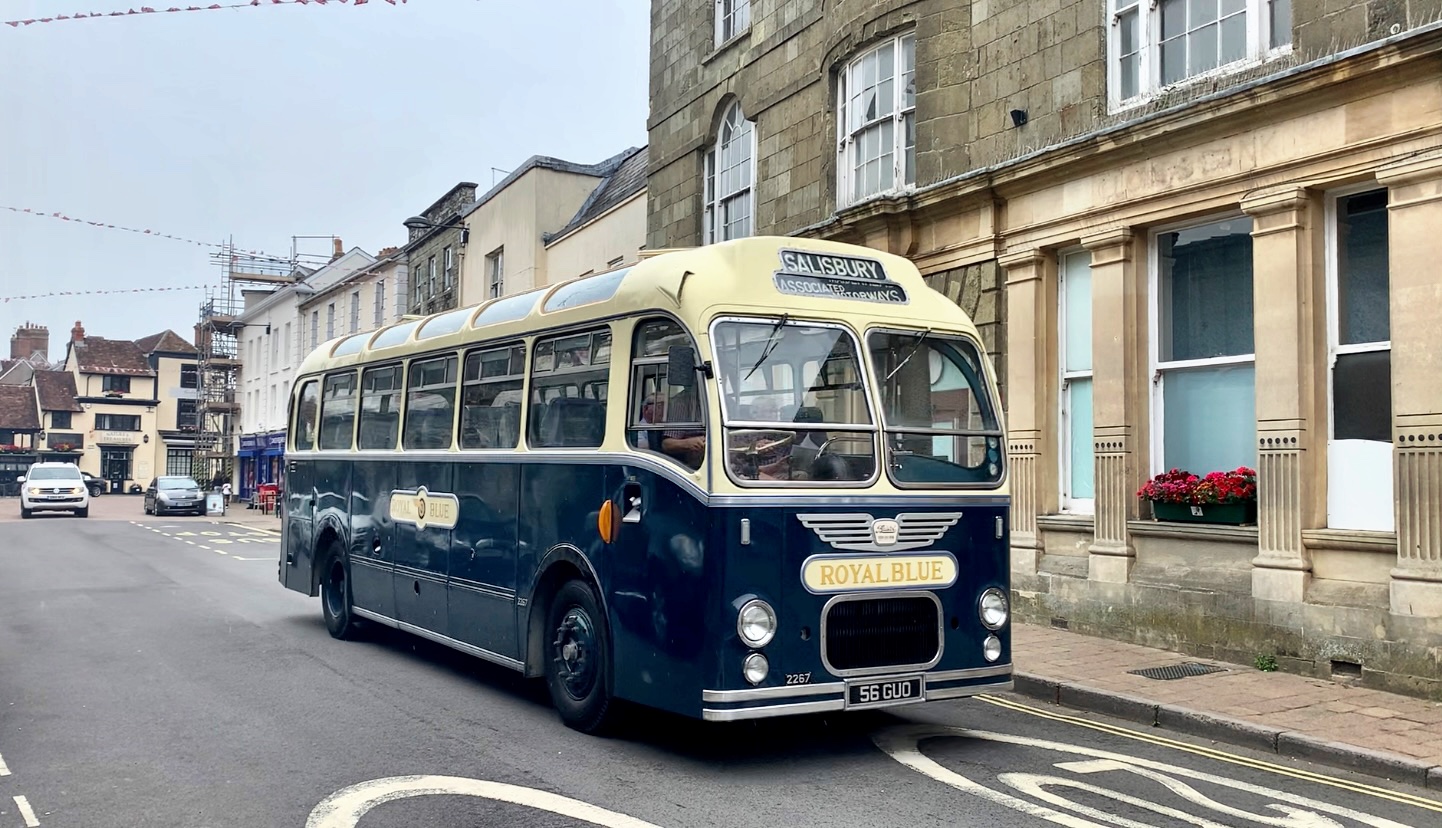
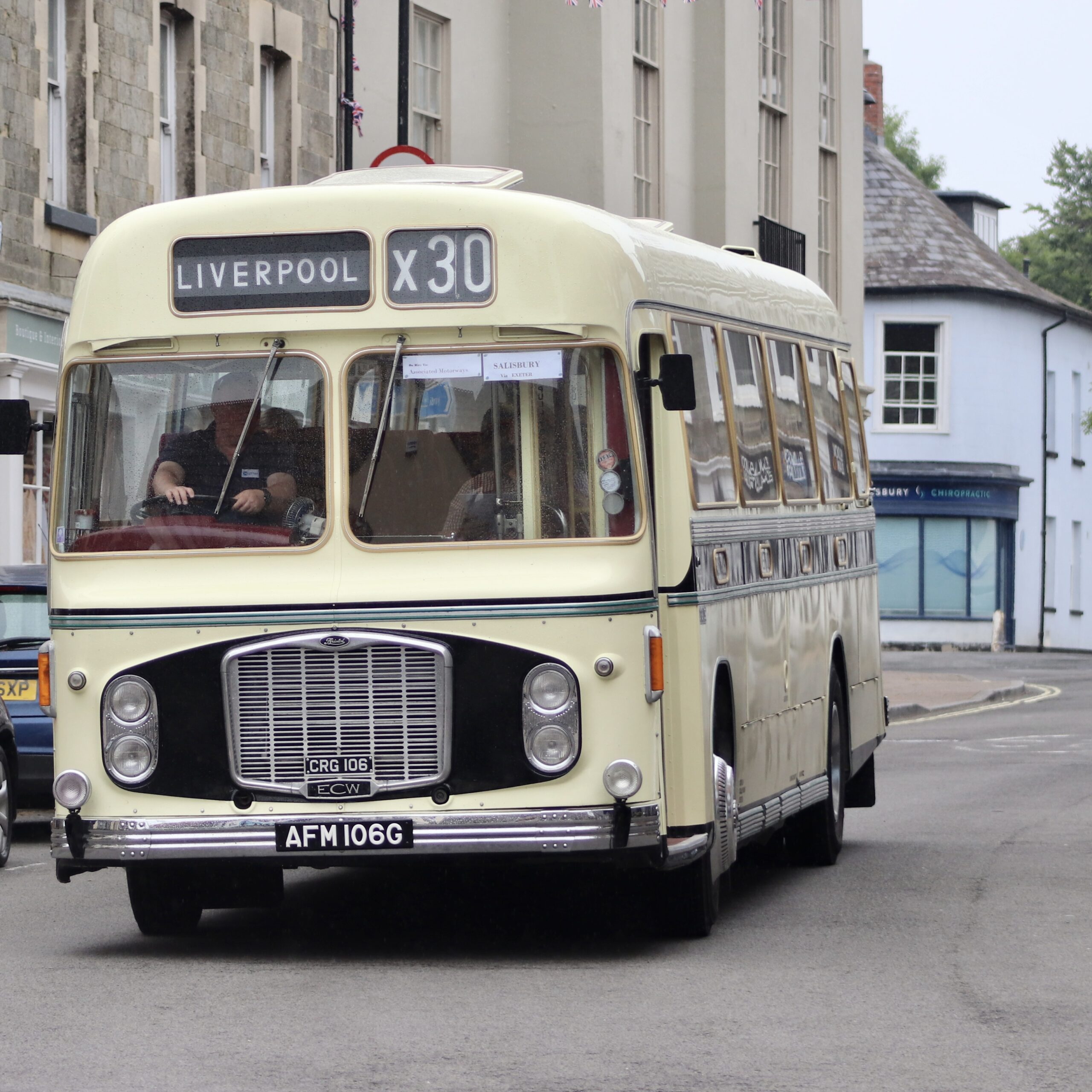
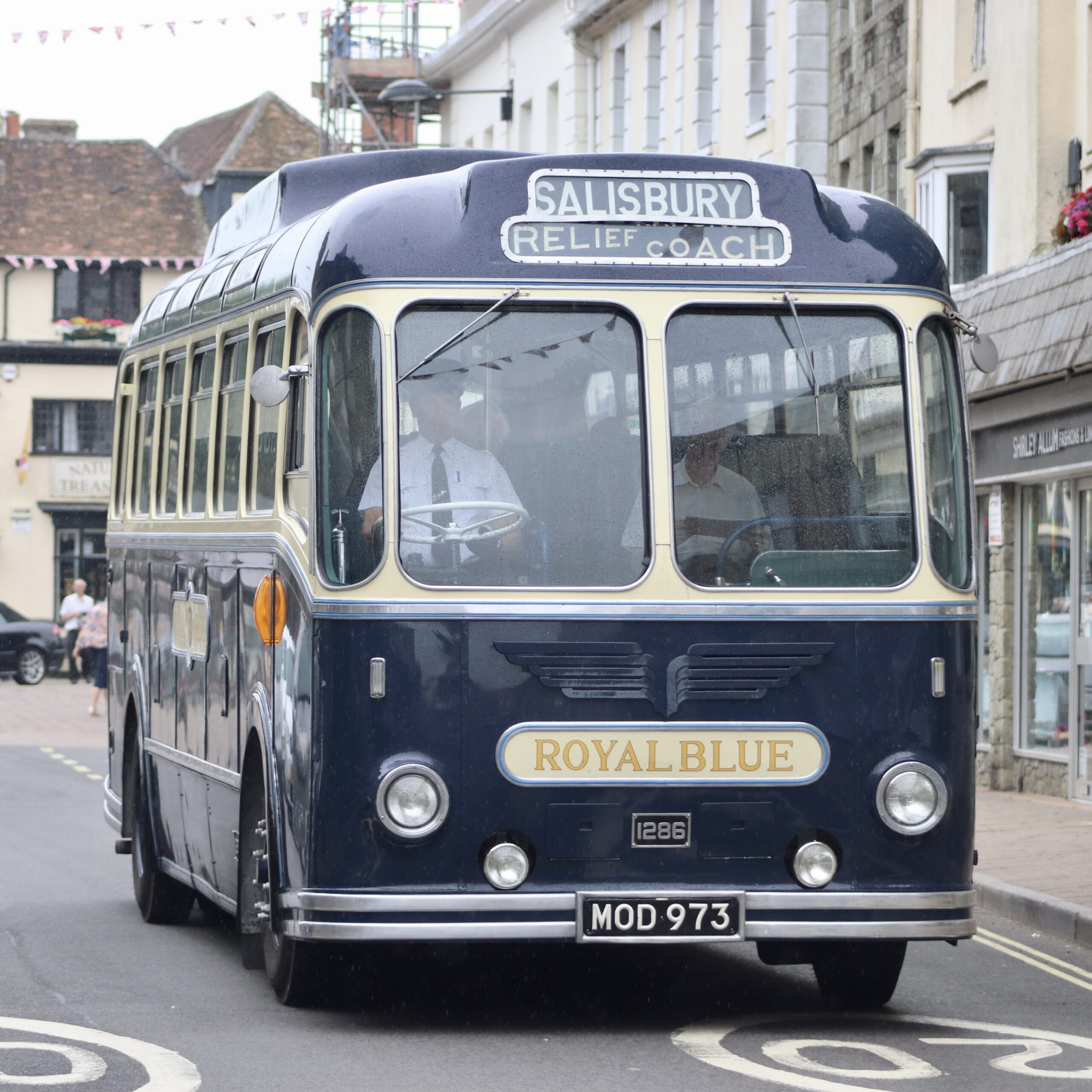
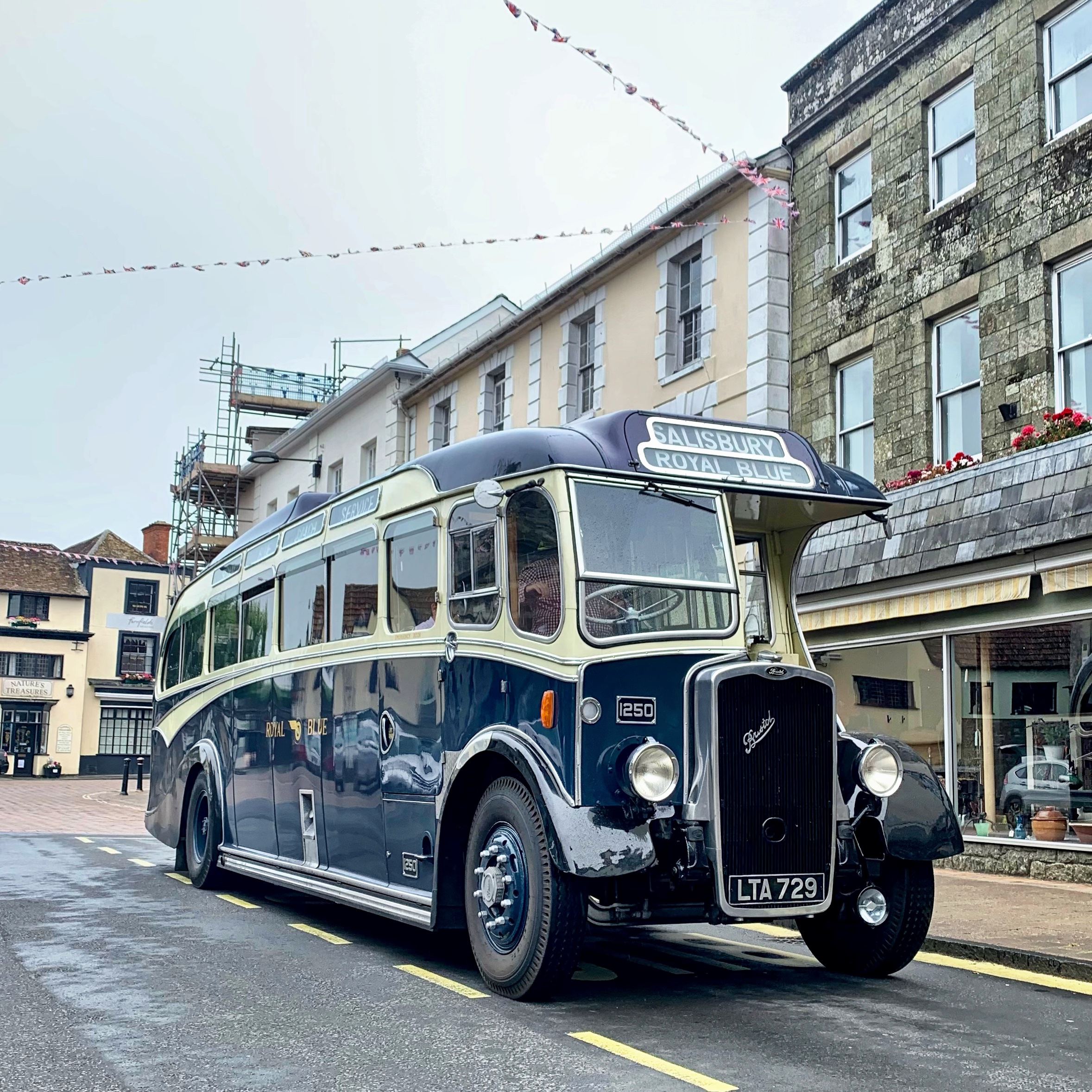
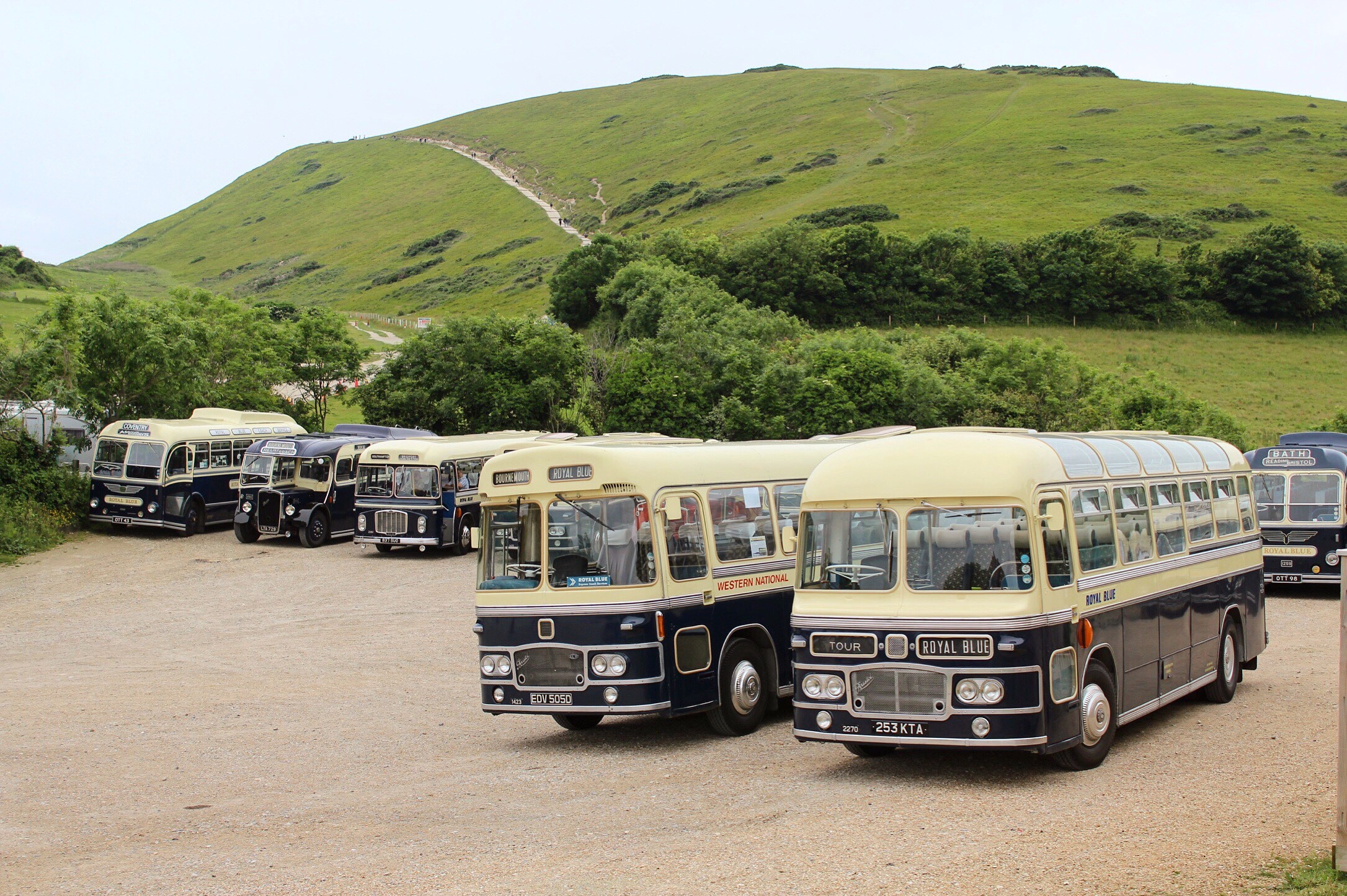
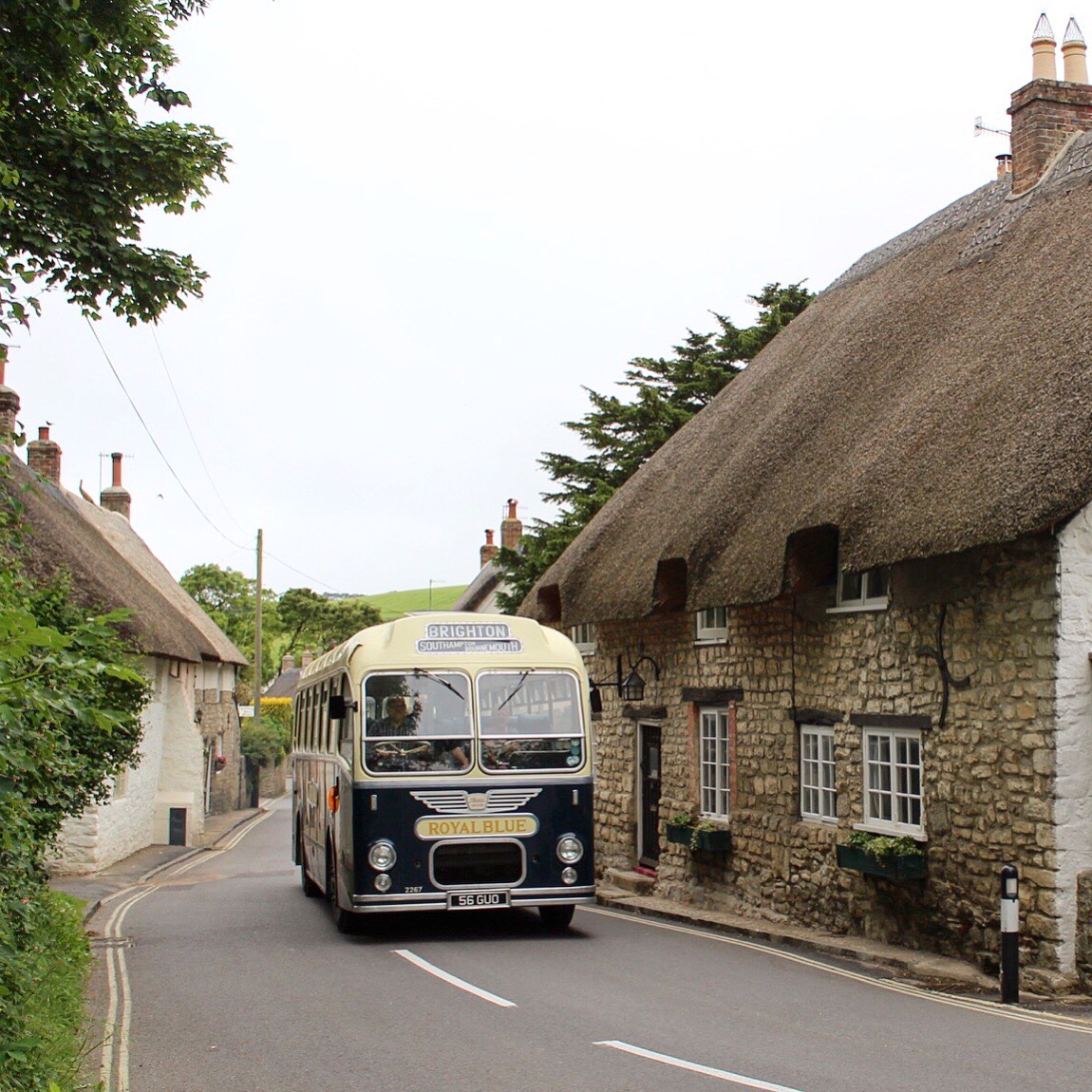
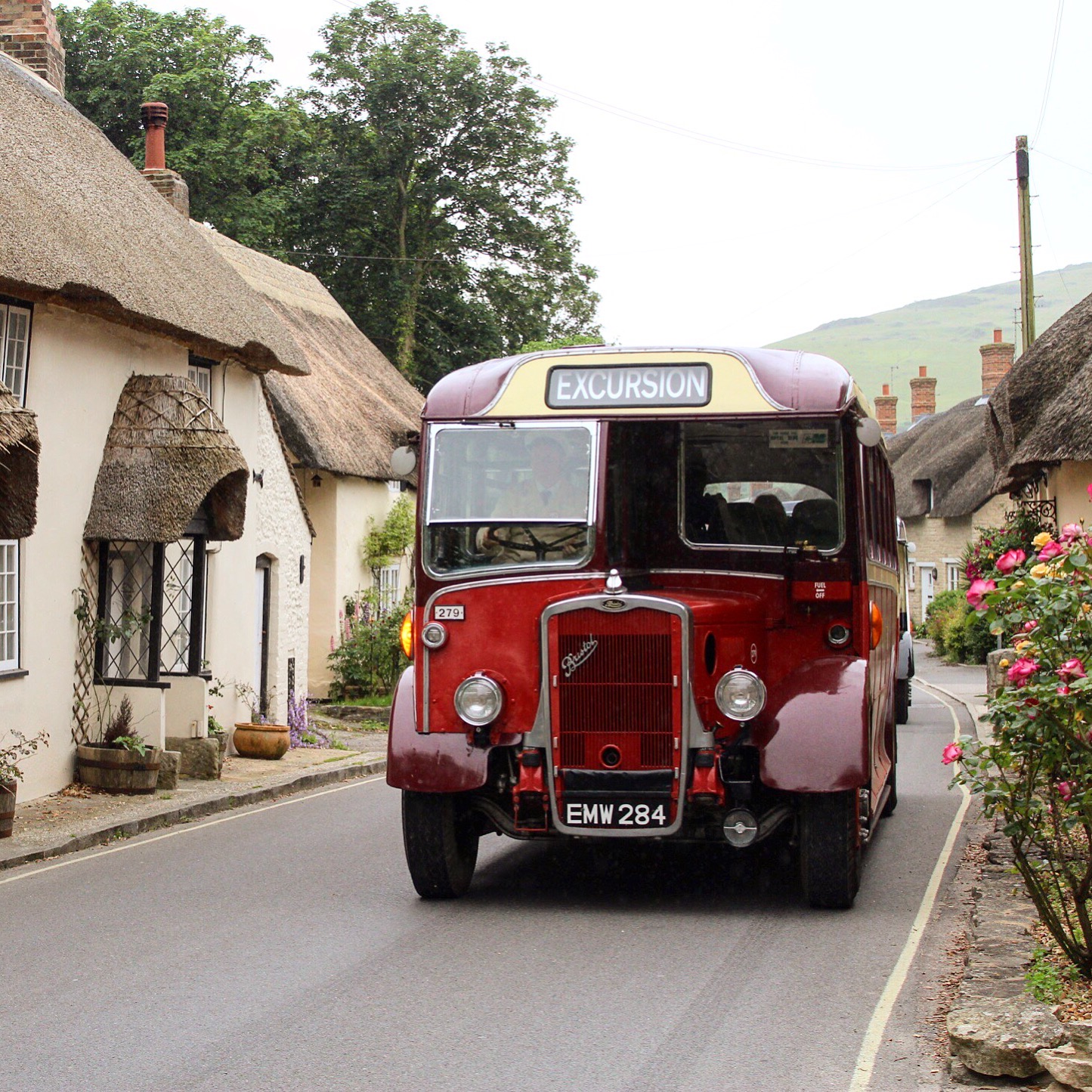
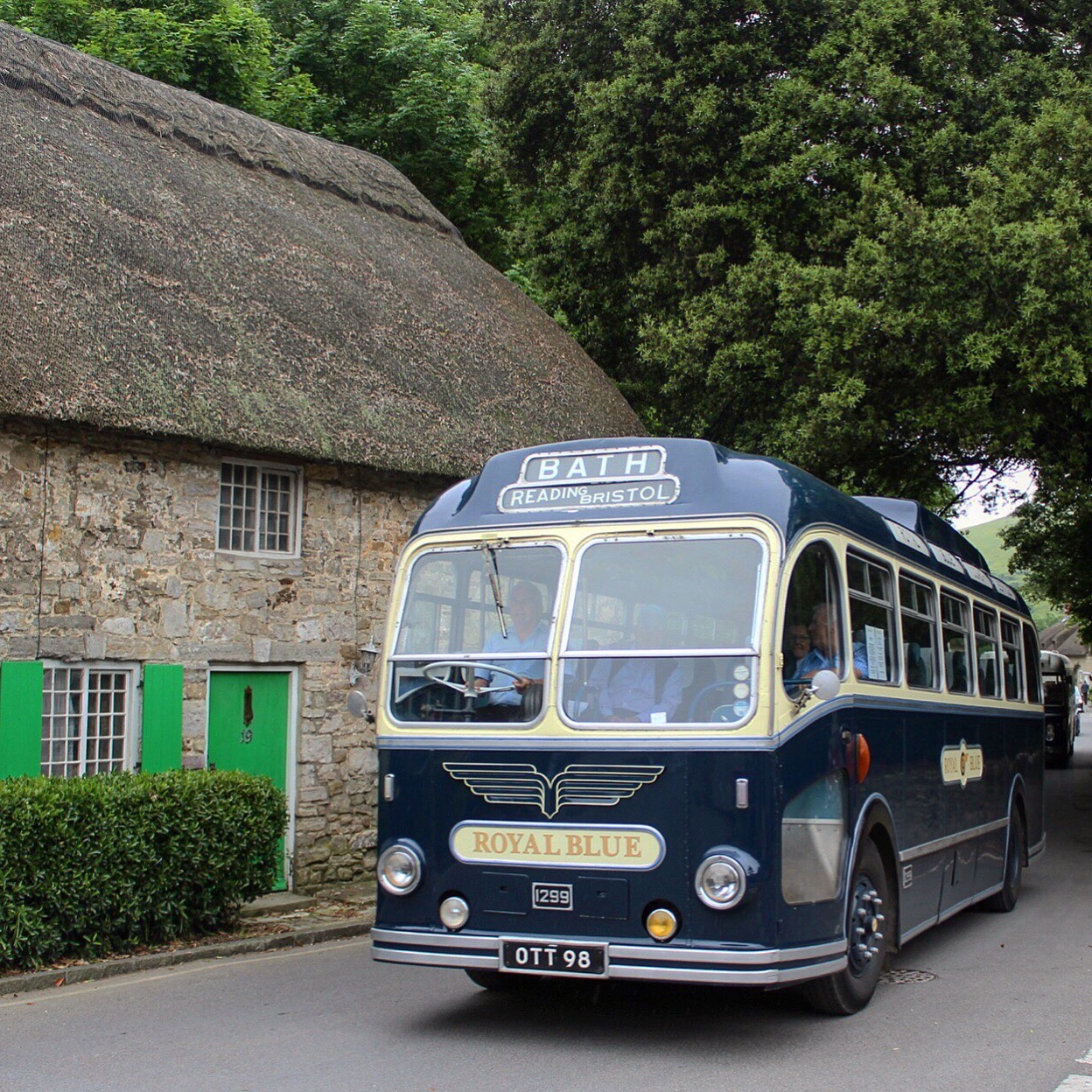
This past weekend the 2023 “Royal Blue Run” saw the return of preserved and restored coaches to roads across the West Country, showcasing these fine specimens in authentic settings across the country recreating lost scenes. This year the Royal Blue & Associated Motorways run saw the privately owned vehicles recreate an age of bygone travel on the open roads through Wiltshire, Somerset, Devon and Cornwall reaching Penzance in the far south west. The specific routes chosen were drawn from Royal Blue timetables from different eras. Sometimes segments of express services are followed, or in other cases seasonal variants are used (e.g. summer Saturdays only or winter season routing). Every stretch has to be pre-driven to ensure the original roads remain suitable for coaches to pass even with modern parking practices or traffic management schemes. The coaches set out from Salisbury bus station on Friday 16th June and we chose to see them passing through Shaftesbury on their return final stage run up the A30, as used by the ‘stopping’ Penzance to London services, to Salisbury.
Burlingham C33F AEC Regal Reg No. CFK 340 in the livery of operator Burnham built 1948 at Shaftesbury – 18/06/2023Royal Blue ECW Bristol MW6G Fleet No. 2267 Reg No. 56 GUO built 1961 at Shaftesbury – 18/06/202Wilts & Dorset Beadle C32R Bristol L6B Fleet No. 279 Reg. EMW284, built 1947 at Shaftesbury – 18/06/202
The Thames Valley & Great Western Omnibus Trust (TV&GWOT) website provides more information on the Royal Blue Runs which “were established in 2002 so that owners and their passengers can relive the pleasures of long distance luxury coach travel for which their carefully preserved vehicles were originally intended. The aim is to follow original Royal Blue routes as closely as possible and to travel at a leisurely pace redolent of the times. The runs also create a wonderful spectacle for innocent bystanders and dedicated photographers alike, thanks to the hard work and resources the owners have devoted to restoring and maintaining their fine coaches.
A lot of work goes into planning the runs from selecting routes from the extensive Royal Blue network and researching the original drivers’ instructions and passenger timetables, preparing maps and outline routing, driving the routes to develop detailed instructions allowing for modern day features and constraints, organising refreshment stops, obtaining parking permissions, to identifying potential accommodation for a dozen or more coaches and their passengers. Despite all the preparations, final timings are hard to judge whether due to roadworks or things that might pique the interest of crews along the way. The coaches do not travel in close convoy so as not to inconvenience other road users. Some drivers have also been known on occasion to deviate from the intended route (unintentionally!).
Overall the focus is on education and enjoyment and we hope that however you take part you share in the pleasure.”
Western National Fleet No. 3307 Reg AFJ 727T Plaxton Supreme DP41F Bristol LH6L built in 1979 at Shaftesbury – 18/06/202A long way from home, Crossville Fleet No. CRG106 Reg AFM 106G ECW C49F Bristol RELH built in 1969 at Shaftesbury – 18/06/202Royal Blue Fleet No. 1286 Reg MOD 973 ECW Bristol LS6G C39F built in 1952 at Shaftesbury – 18/06/202Royal Blue (Western National) Fleet No. 1250 Reg. LTA 729 Duple Bristol LL6B C37F built in 1951 at Shaftesbury – 18/06/202
A very short video of Royal Blue Run buses passing through Shaftesbury – 18/06/2023
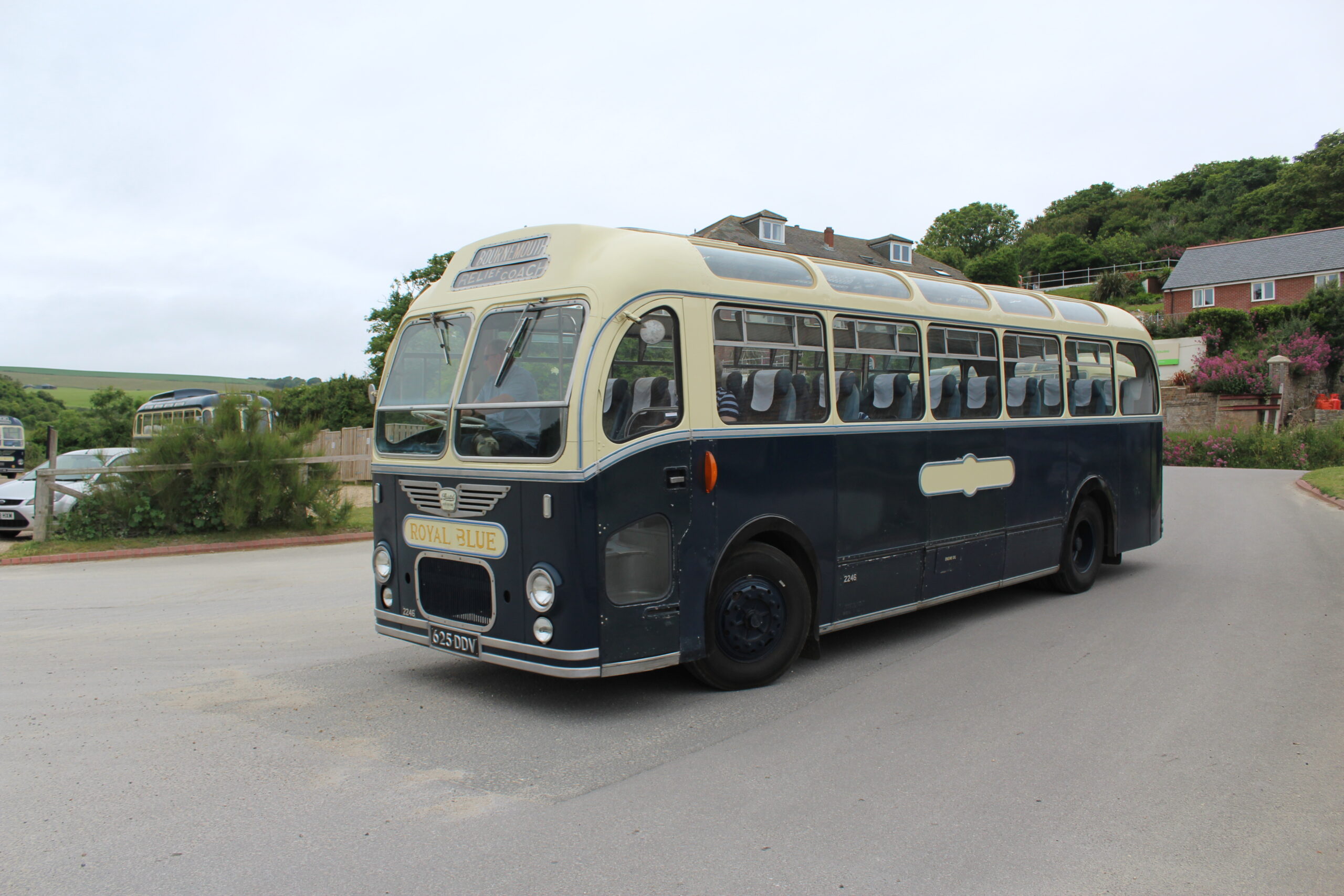
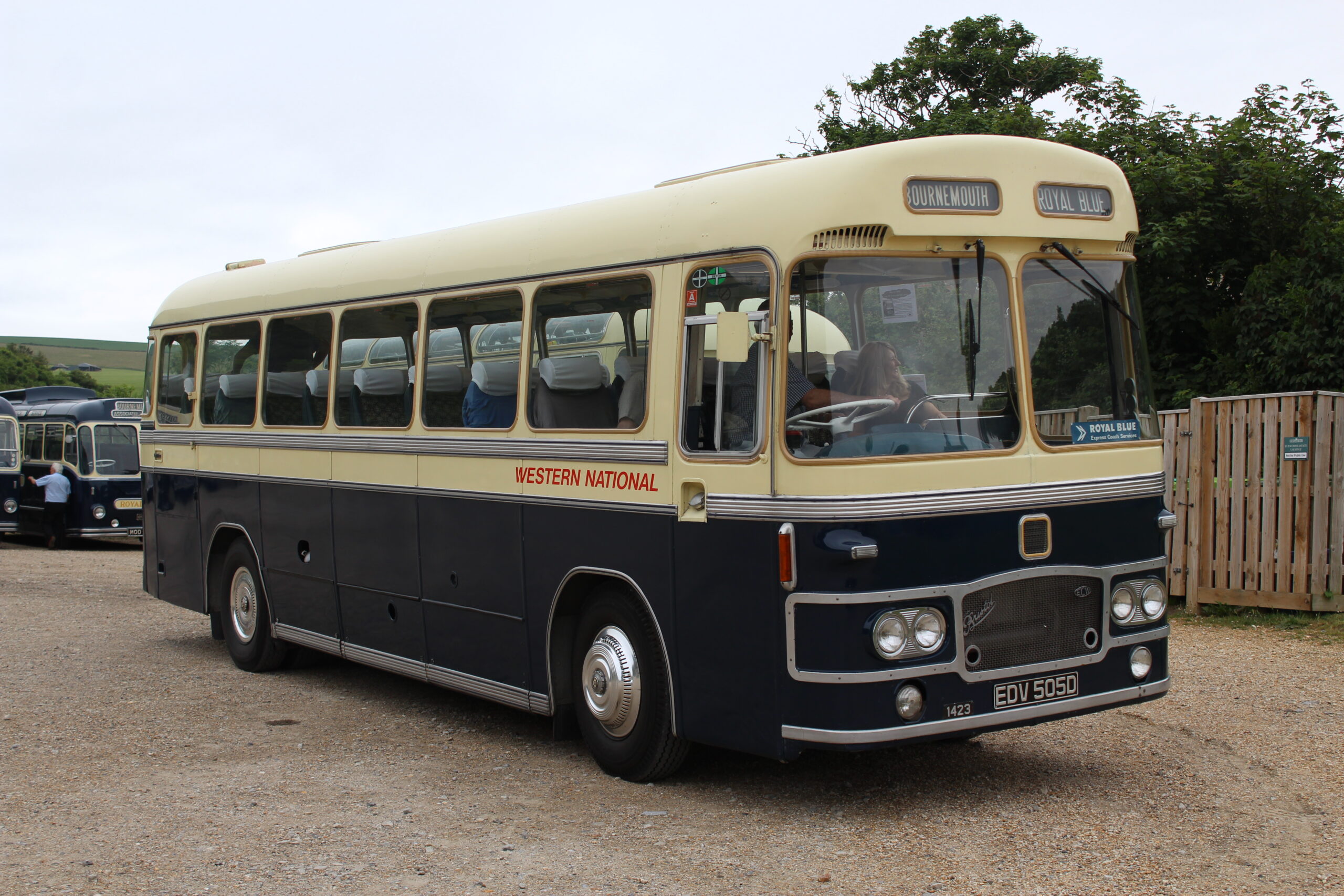
I certainly derived much pleasure from seeing the coaches which were running around thirty minutes behind schedule when they passed us. Not bad timing in my humble opinion! I previously saw the 2016 Royal Blue Run which having started at London Victoria Coach Station ran to Bristol on Day One. The following day was designed to commemorate 50 years since the final train on the Somerset & Dorset Railway, a much loved and mourned route that ran through Royal Blue heartland from Bath to Bournemouth. The route intertwined with several famous S&D locations, recreating in part the former rail replacement service that was created when the line closed in 1966. Day Three was an excursion from Bournemouth to Lulworth Cove, followed by a trip across the New Forest to Lyndhurst. It was Lulworth Cove where I decided to see the buses as they grouped together in the car park before once again taking to the open road where I took the opportunity to see them passing through Lulworth village and Wareham.
Royal Blue Bristol MW6G Fleet No. 2246 Reg. 625 DDV built 1960 enters the car park at Lulworth Cove – 19/06/2016Western National Bristol MW6G ECW C39F Fleet No. 1423 Reg. EDV 505D built in 1966 and entered service in Plymouth seen at Lulworth Cove – 19/06/2016A Royal Blue line up at Lulworth Cove – 19/06/2016Royal Blue ECW Bristol MW6G Fleet No. 2267 Reg No. 56 GUO built 1961 passing through Lulworth – 19/06/2016Wilts & Dorset Beadle bodied Bristol L6B Fleet No. 279 Reg. EMW284, built 1947 at Lulworth – 19/06/2016Royal Blue Fleet No. 1299 Reg. OTT 98 1953 Bristol LS6G with ECW C39F coachwork at Lulworth village – 19/06/2016Royal Blue express services Fleet No. 2351 Reg. 837 SUO Bristol RELH6G ECW passing through Wareham – 19/06/2016
From The Archives:
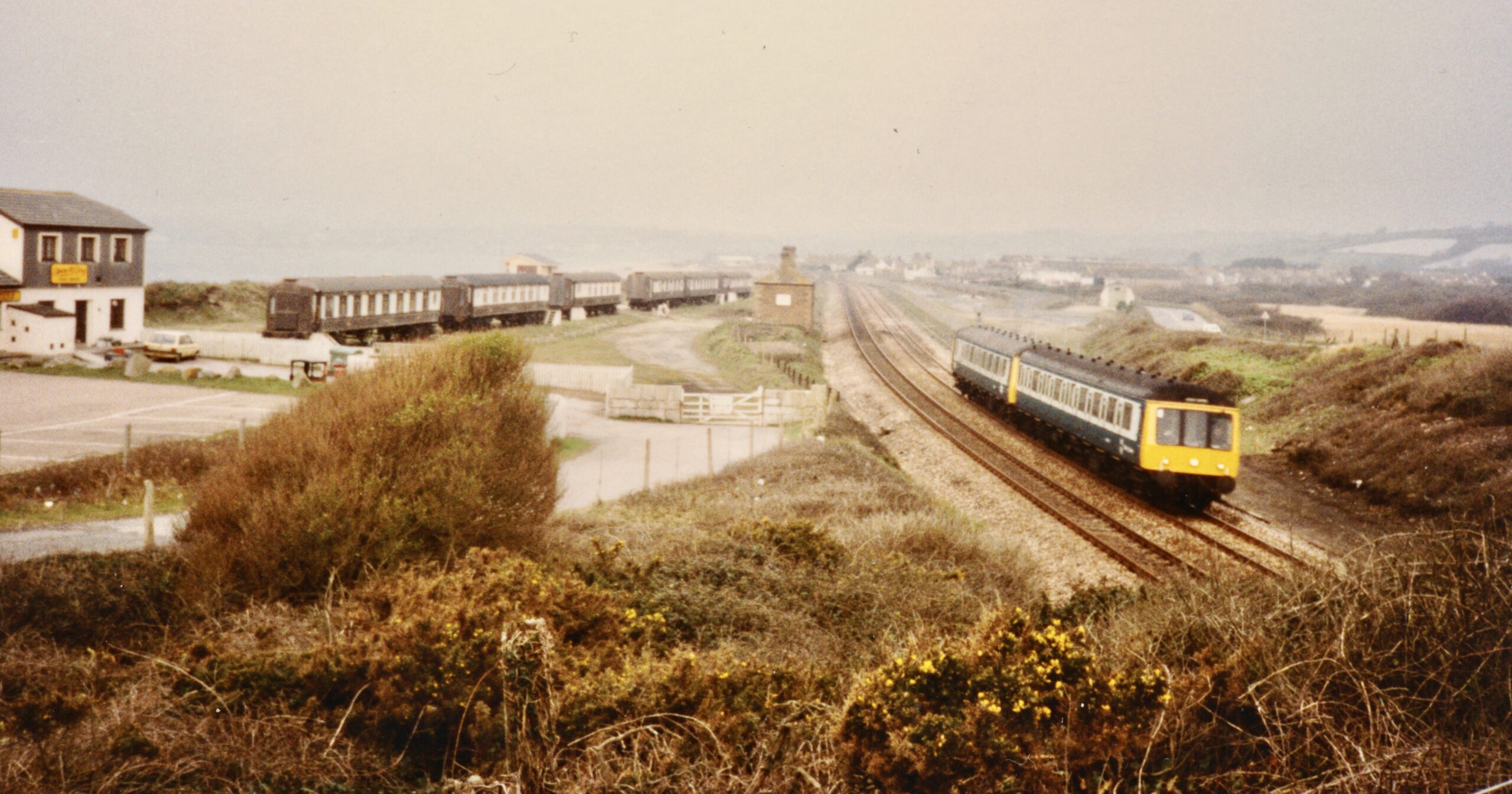
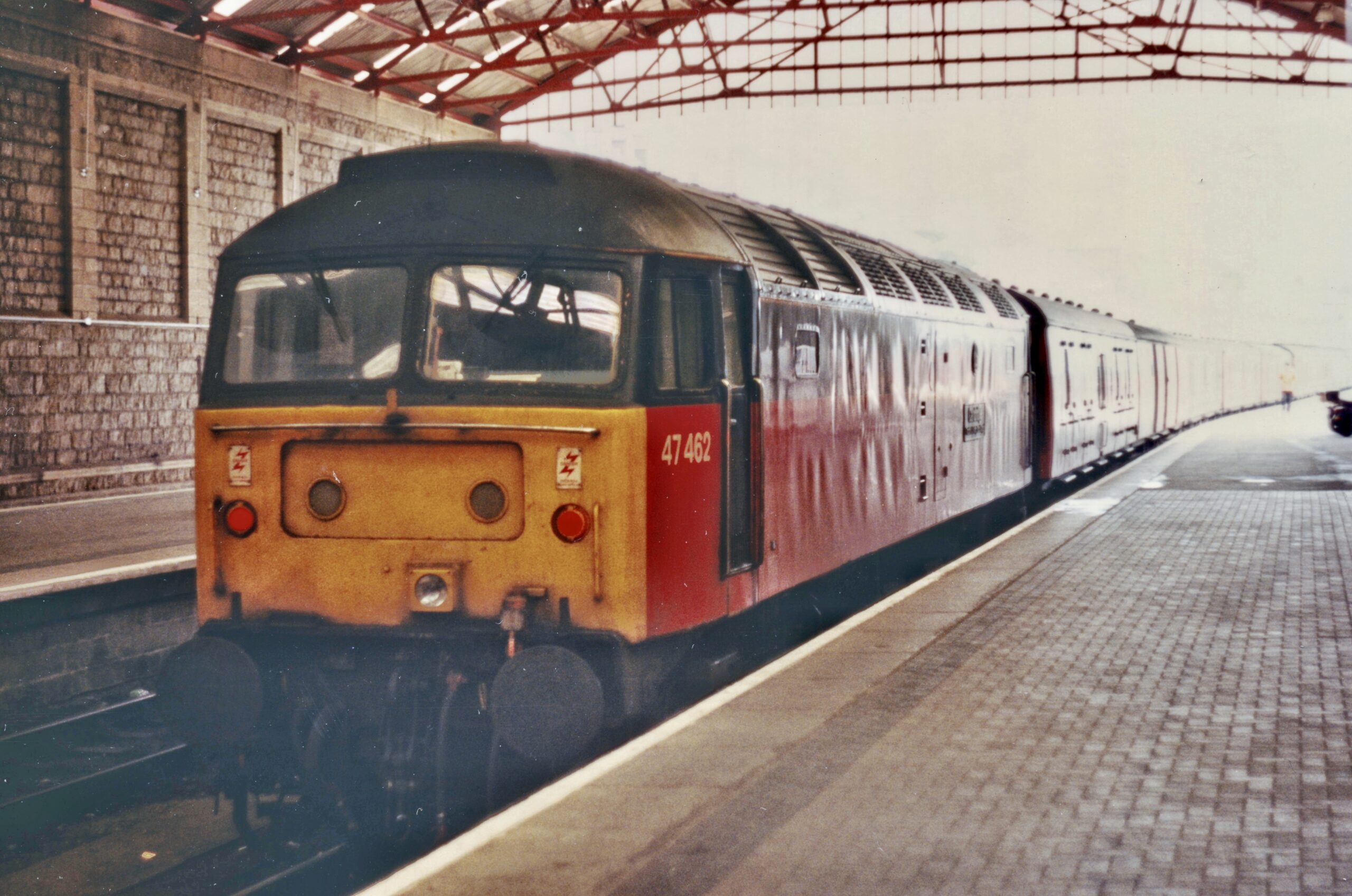
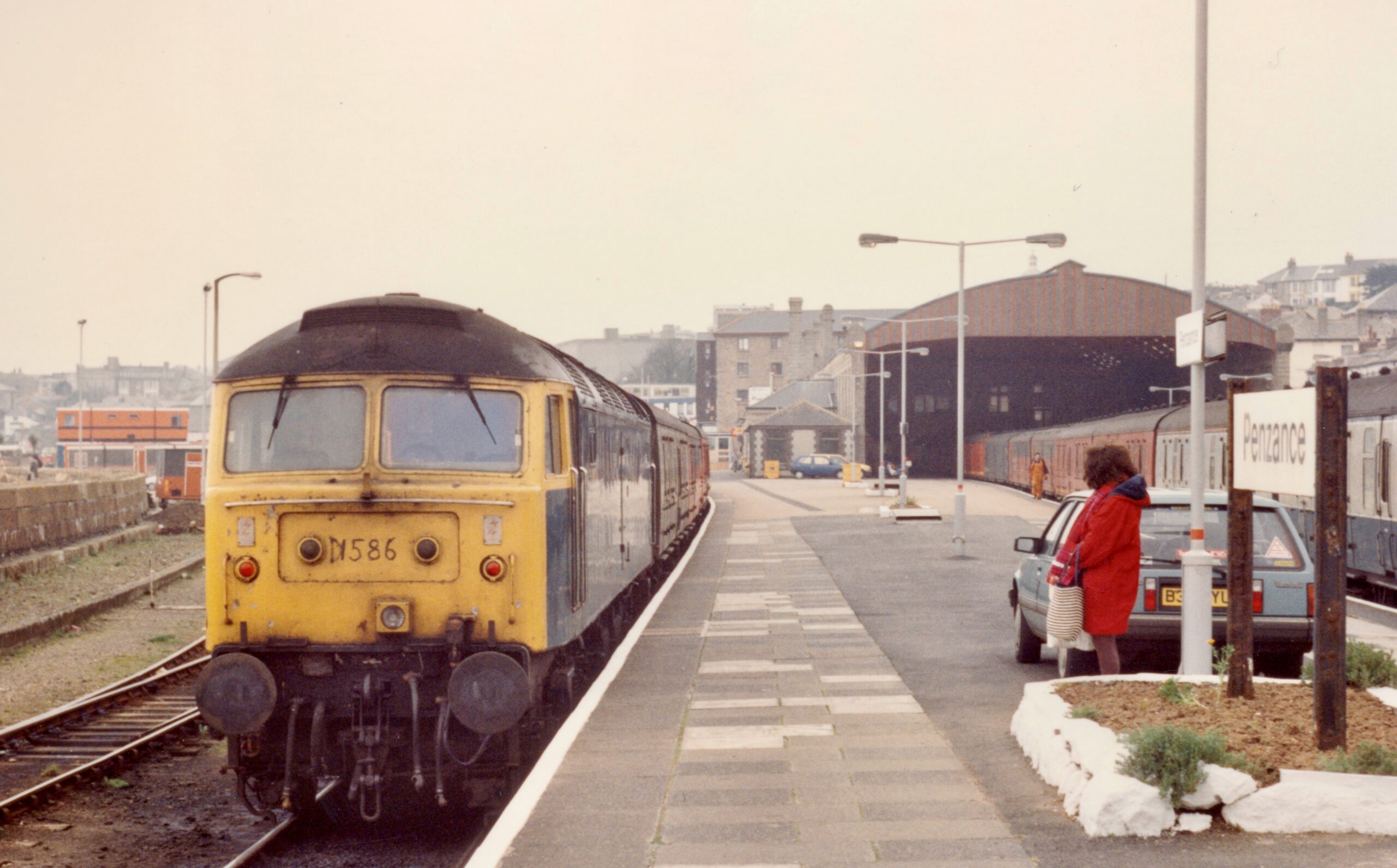
Mention of Penzance as part of the Royal Blue Run this year reminded me that I was going to look for a photograph of the Pullman Camping Coaches which used to stand at Marazion and I mentioned as much in our blog entry “Yoshi Goes To Cornwall”. As luck would have it, I was looking for some paperwork the other day and came across the following images:
For many years Marazion was home to six old Pullman coaches that were employed as camping coaches; holiday accommodation offered by the railway containing sleeping and living space designed to encourage people to travel by train to the stations where they were situated – March 1993British Rail Parcels Sector liveried Class 47 No. 47462 ‘Cambridge Traction & Rolling Stock Depot’ at Penzance – March 1993 Class 47 No. 47463 (with her pre-TOPS number D1586 marked between her head code lights) in BR Standard Monastral Blue livery, which she retained to the end, stands at Penzance. The locomotive entered service in May 1964 and was cut up in November 1996 by MRJ Phillips at Crewe Works – March 1993Class 47 No. 47462 ‘Cambridge Traction & Rolling Stock Depot’ at Penzance. The locomotive was built at Crewe and entered traffic on May 16th 1964 as D1582. Named at Cambridge Open Day held on 29th September 1990 by Jack Firman a retired workshop supervisor, the nameplates were removed in December 1993 and later transferred to No. 47736 – March 1993Class 47 No. 47462 at Penzance. The locomotive was cut up at Toton by Harry Needle Rail Co in March 2003 – March 1993
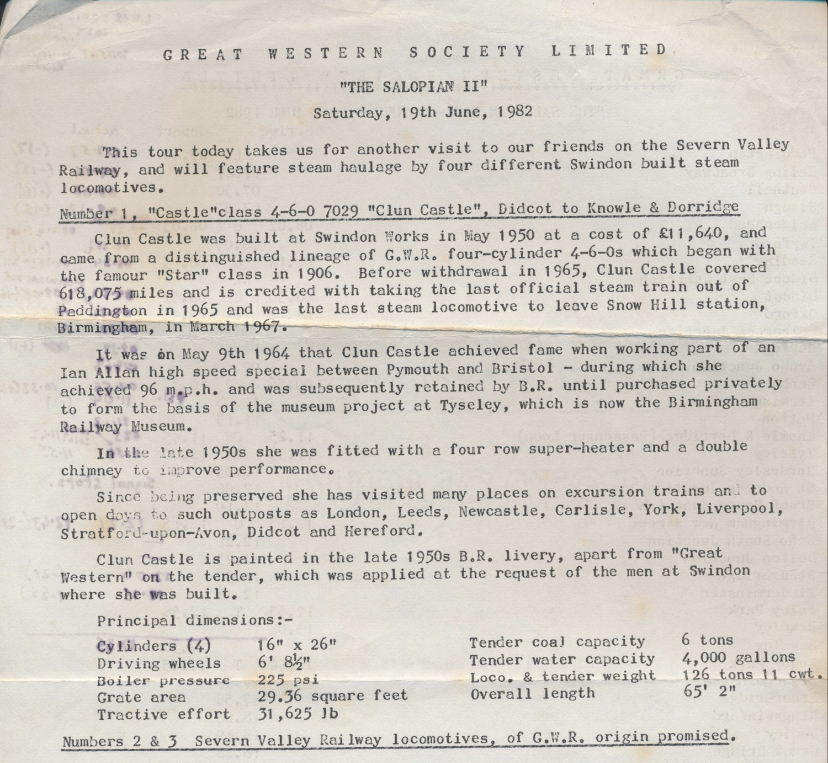
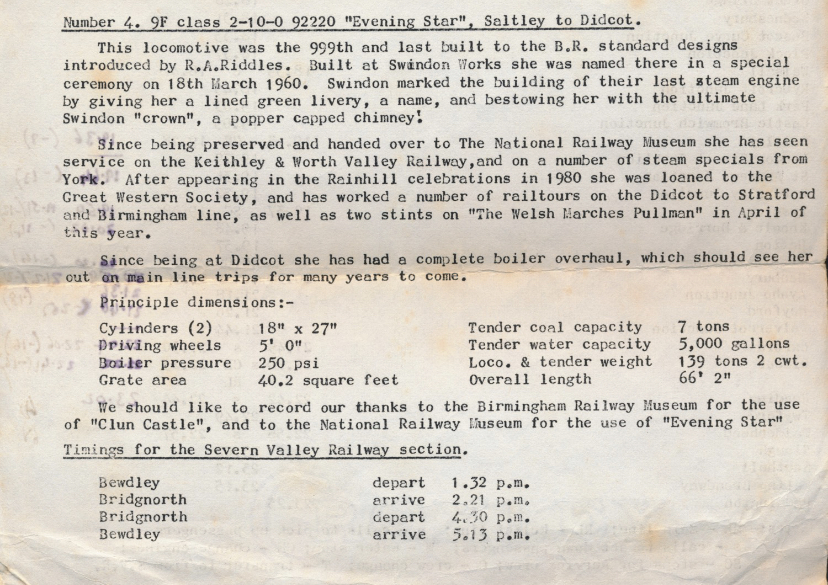
Alongside the Cornwall photographs above, the same box of documents contained, amongst other things, a Blake’s 7 ‘Liberator’ model and an old diary. I’ve not been one for keeping a diary, but for six months in 1982, I seemed to have managed it. Tucked inside the diary was a piece of paper from a rail tour I took from London Paddington to the Severn Valley Railway on Saturday 19th June 1982.
Great Western Society Limited “The Salopian II” information sheet – 19/06/1982Great Western Society Limited “The Salopian II” information sheet – 19/06/1982
This must have been my first visit to the SVR, and I don’t really remember much about the day if I’m honest. So from the pages of a diary not opened in years, here, extracted from amongst references to exams, my sister’s wedding, the Falklands War and working part-time at Bere Regis Motors in Dorchester, is my record of the Great Western Society Limited’s “The Salopian II”:
Thursday June 10th 1982
Rail tour tickets for the 19th arrived today. Going with Tony S. Adam Ant is number one with ‘Goody Two Shoes’
Friday June 18th 1982
At 2245 Tony and I boarded the mail train at Dorchester South. Jon H was there as well, but he’s going off somewhere else when we get to London.
There was talk about the mail train being taken off soon. If so, we will have problems if we want an overnight jaunt to connect with rail tours departing London in the future.
Saturday June 19th 1982
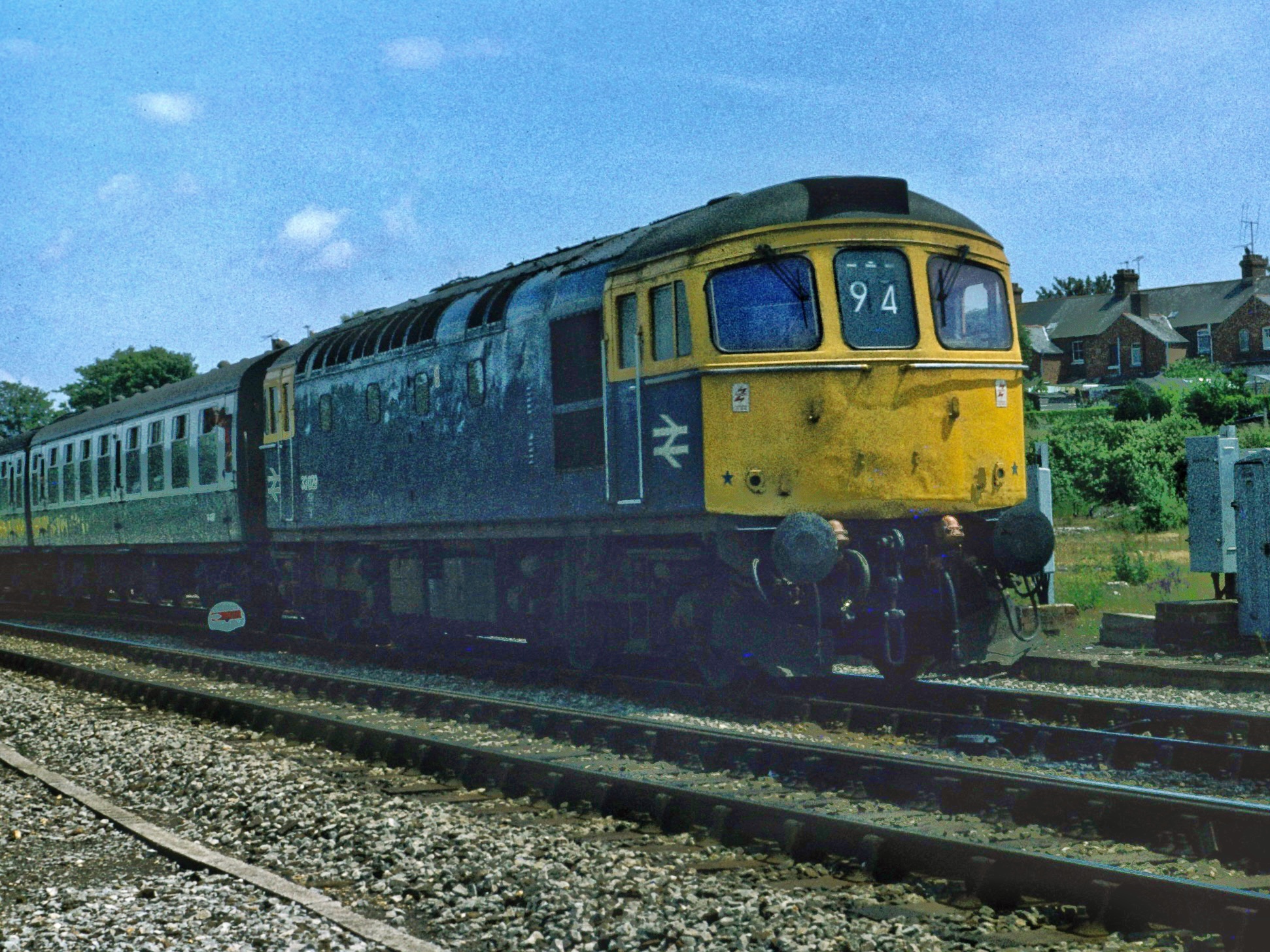
The locomotive which hauled the mail train from Dorchester, 33118, came off at Eastleigh where it was replaced by 73122. We arrived at London Waterloo right-time and then, together, Jon, Tony and I took a black cab across to Euston. At 0600 we went our separate ways with Jon heading to Kings Cross while Tony and I undertook the two and a half mile stroll to Paddington railway station. The weather was dismal , but at least it didn’t pour down with rain.
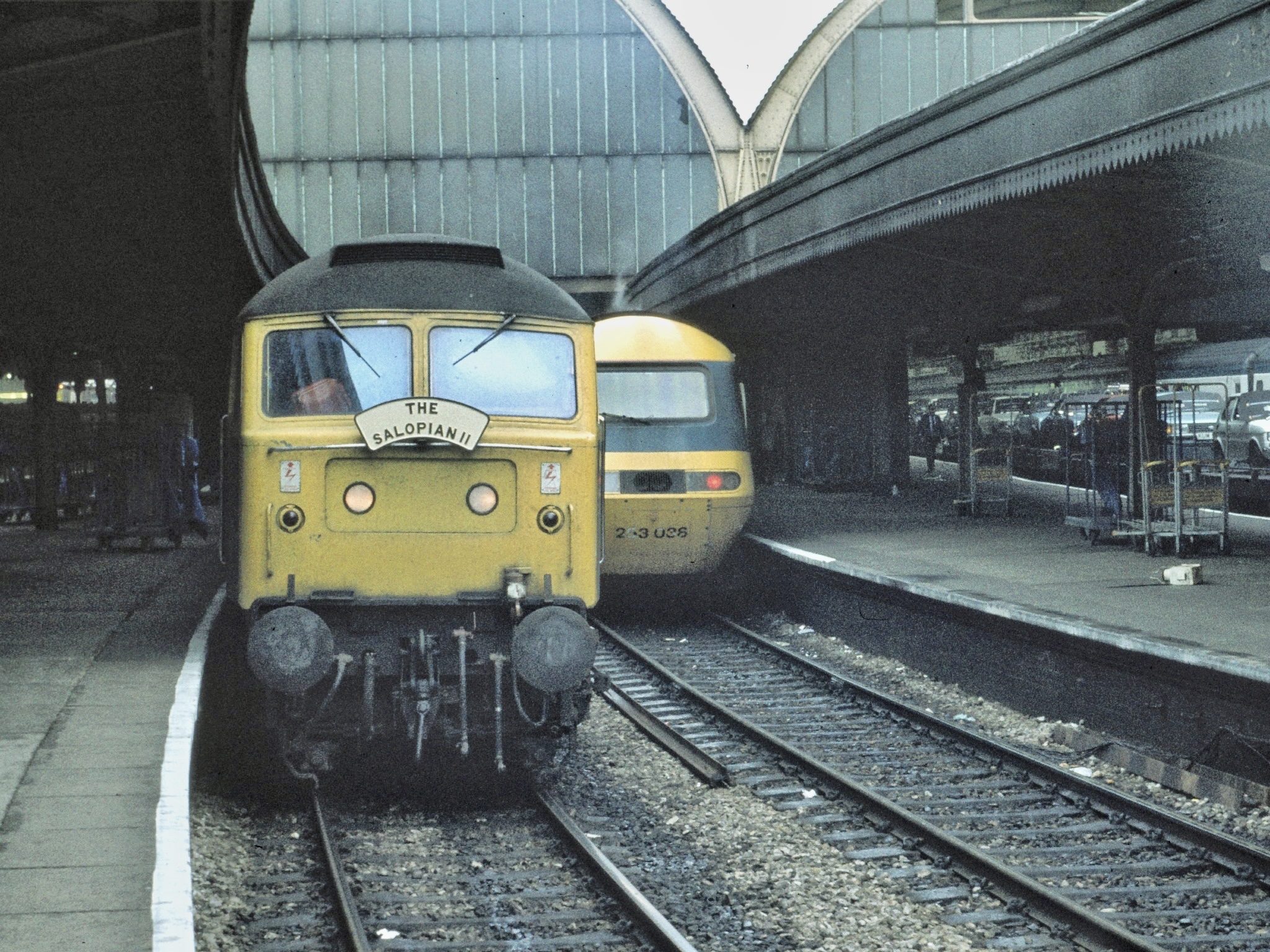
At Paddington, we were due to depart at 0740 but at the appointed time we were surprised to see our train loco; 47532, being taken off the stock at 0725 and taken away.
Class 47 No. 47532 at the head of “The Salopian II” rail tour at London Paddington prior to being removed from the train. HST Class 43 Power Car No. 43145 is on the adjacent track – 19/06/1982
We eventually left at 0757 with the class 47 having been replaced by 50012.
Class 50 No. 50012 ‘Benbow’ approaches London Paddington to take over “The Salopian II” rail tour. The locomotive would be withdrawn from service in January 1989 and cut up by Vic Berry in Leicester by July of that year – 19/06/1982
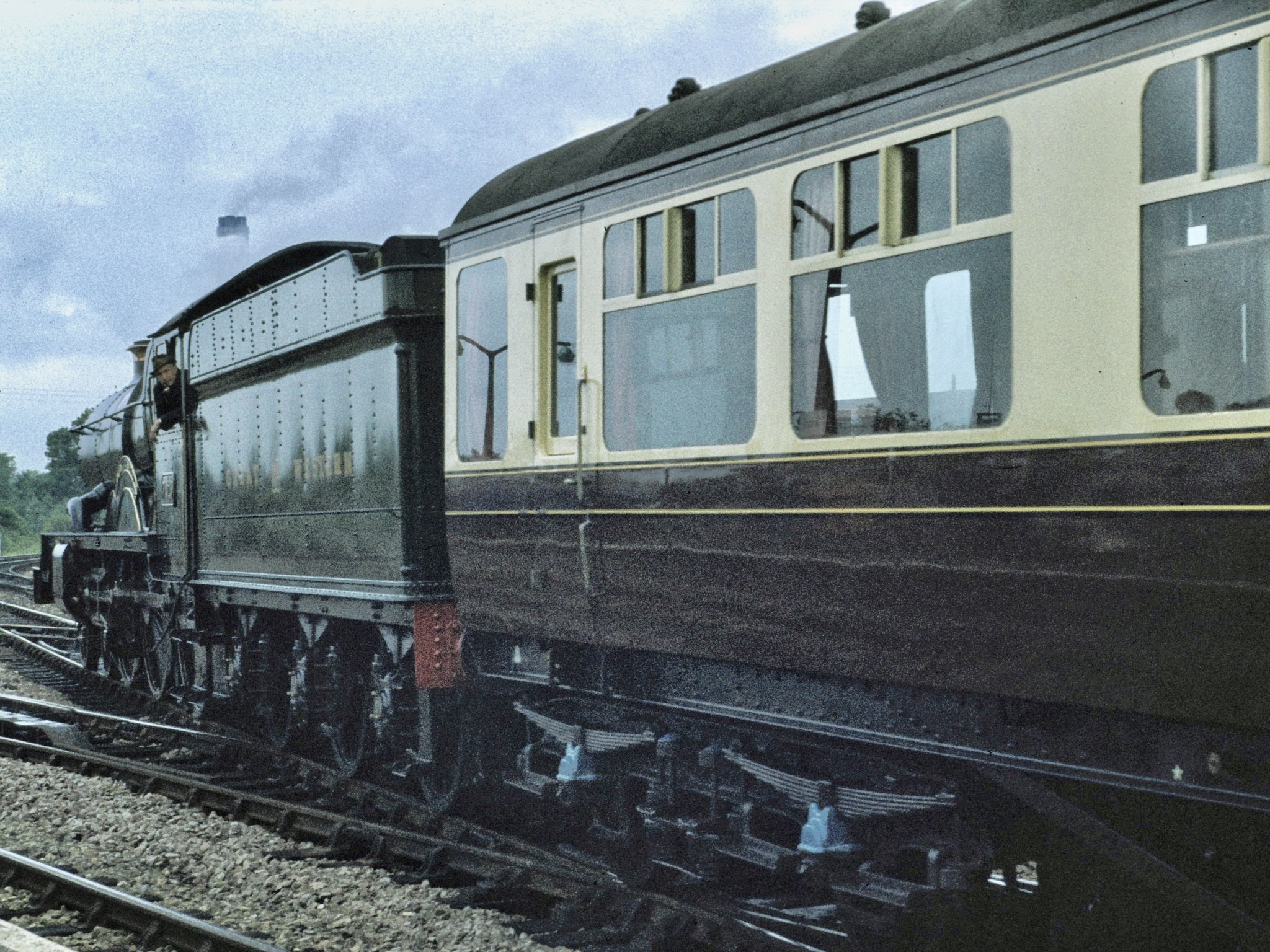
By the time we arrived at Didcot we were 27 minutes down on schedule. But a quick locomotive changeover meant this was reduced to 16 minutes when we left behind 7029 ‘Clun Castle’.
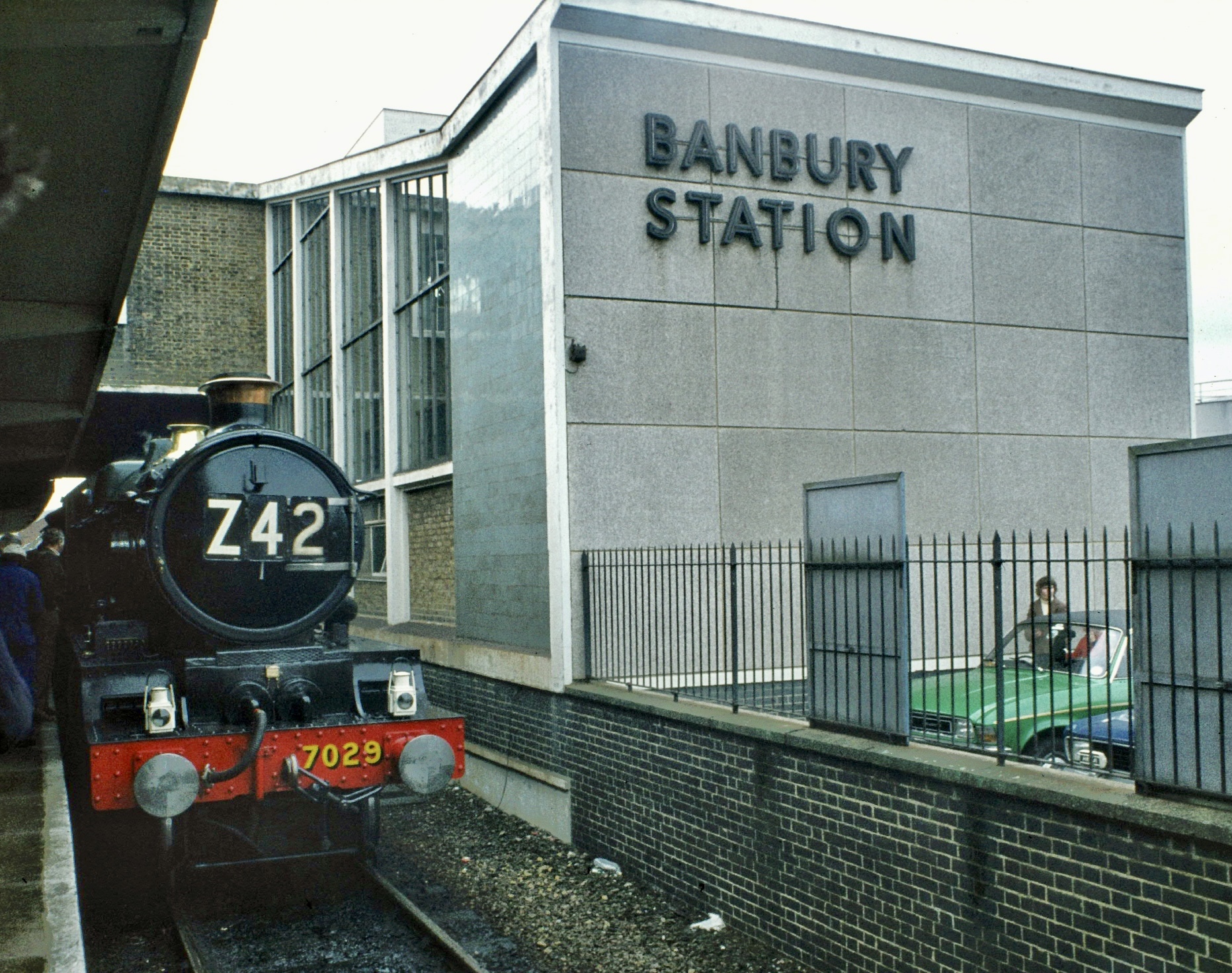
GWR 4073 Class 4-6-0 No. 7029 ‘Clun Castle’ backs onto “The Salopian II” at Didcot – 19/06/1982GWR 4073 Class 4-6-0 No. 7029 ‘Clun Castle’ at Didcot – 19/06/1982GWR 4073 Class 4-6-0 No. 7029 ‘Clun Castle’ at Didcot – 19/06/1982GWR 4073 Class 4-6-0 No. 7029 ‘Clun Castle’ stopped at Banbury for a water stop – 19/06/1982Class 33 No. 33025 ‘Sultan’ in the bay platform at Banbury as No. 7029 ‘Clun Castle’, having drawn forward from the previous image, takes on water – 19/06/1982
By the time of our next locomotive changeover the ‘Castle’ had managed to make up the deficit and we arrived bang on time allowing 20165 and 20167 to take us forward to Bewdley on the Severn Valley Railway where we still managed to arrive 20 minutes late!
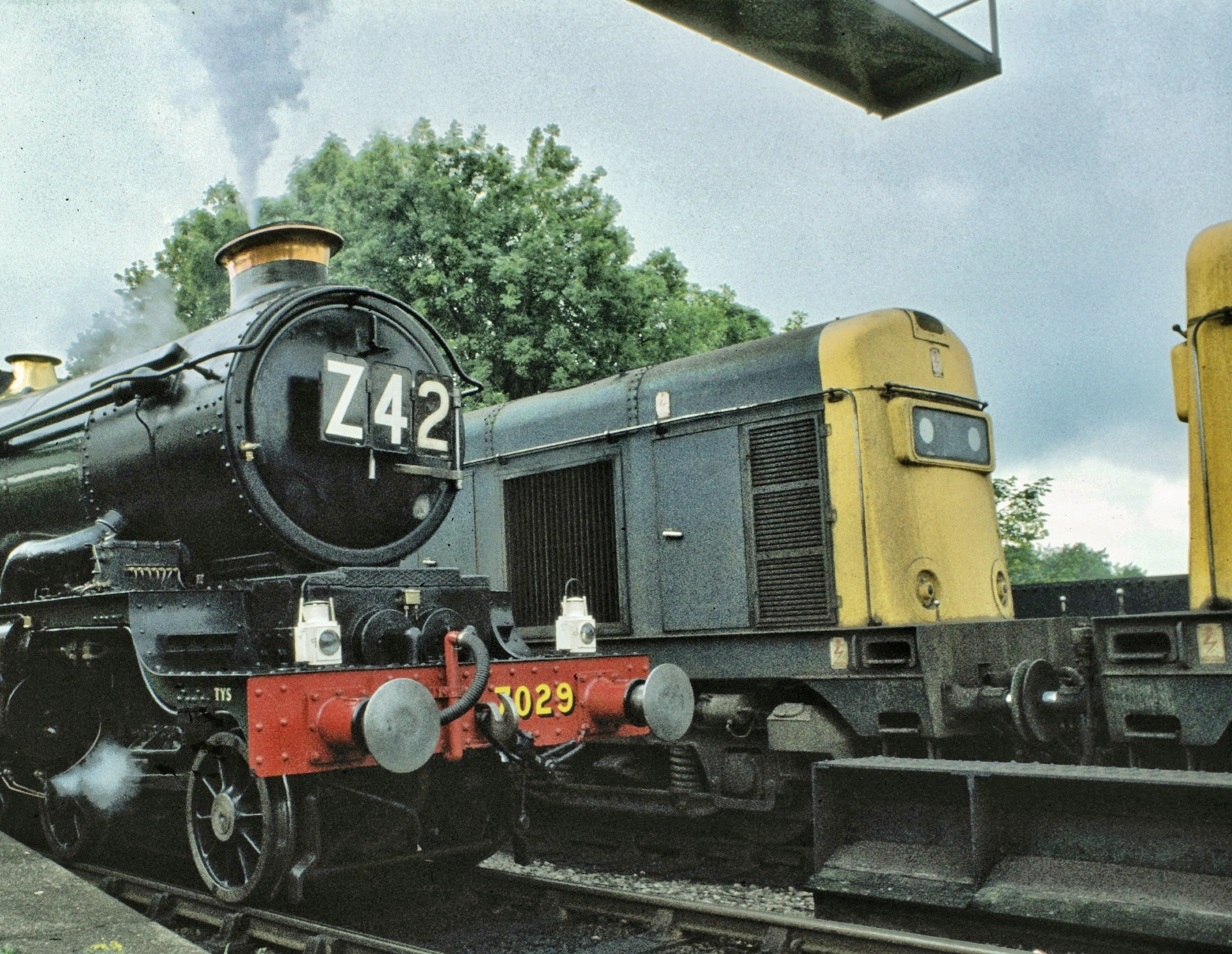
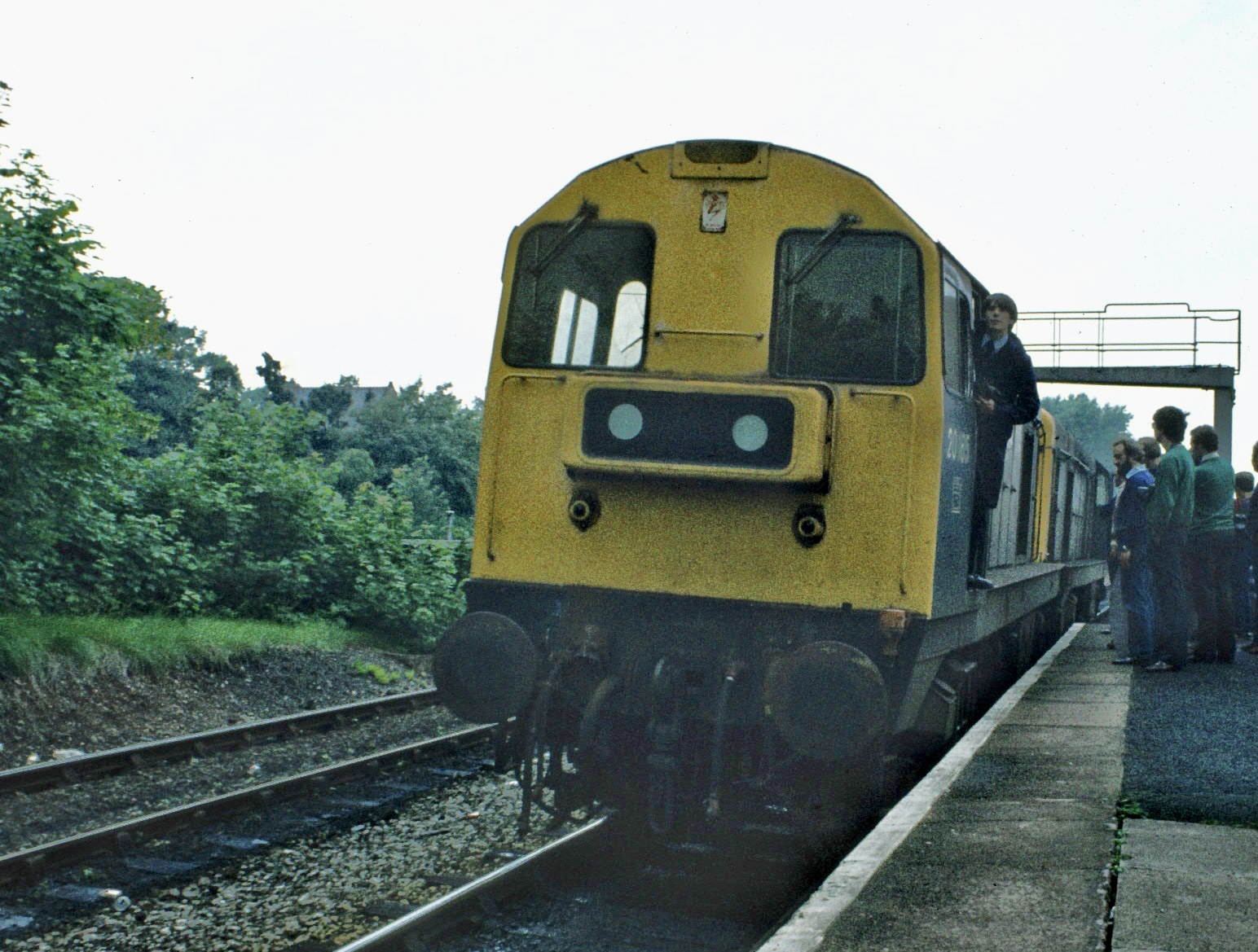
GWR 4073 Class 4-6-0 No. 7029 ‘Clun Castle’ alongside Class 20 No.’s 20165 and 20167 which took over “The Salopian II” at Dorridge – 19/06/1982Class 20 No.’s 20165 and 20167 backing onto “The Salopian II” at Dorridge – 19/06/1982
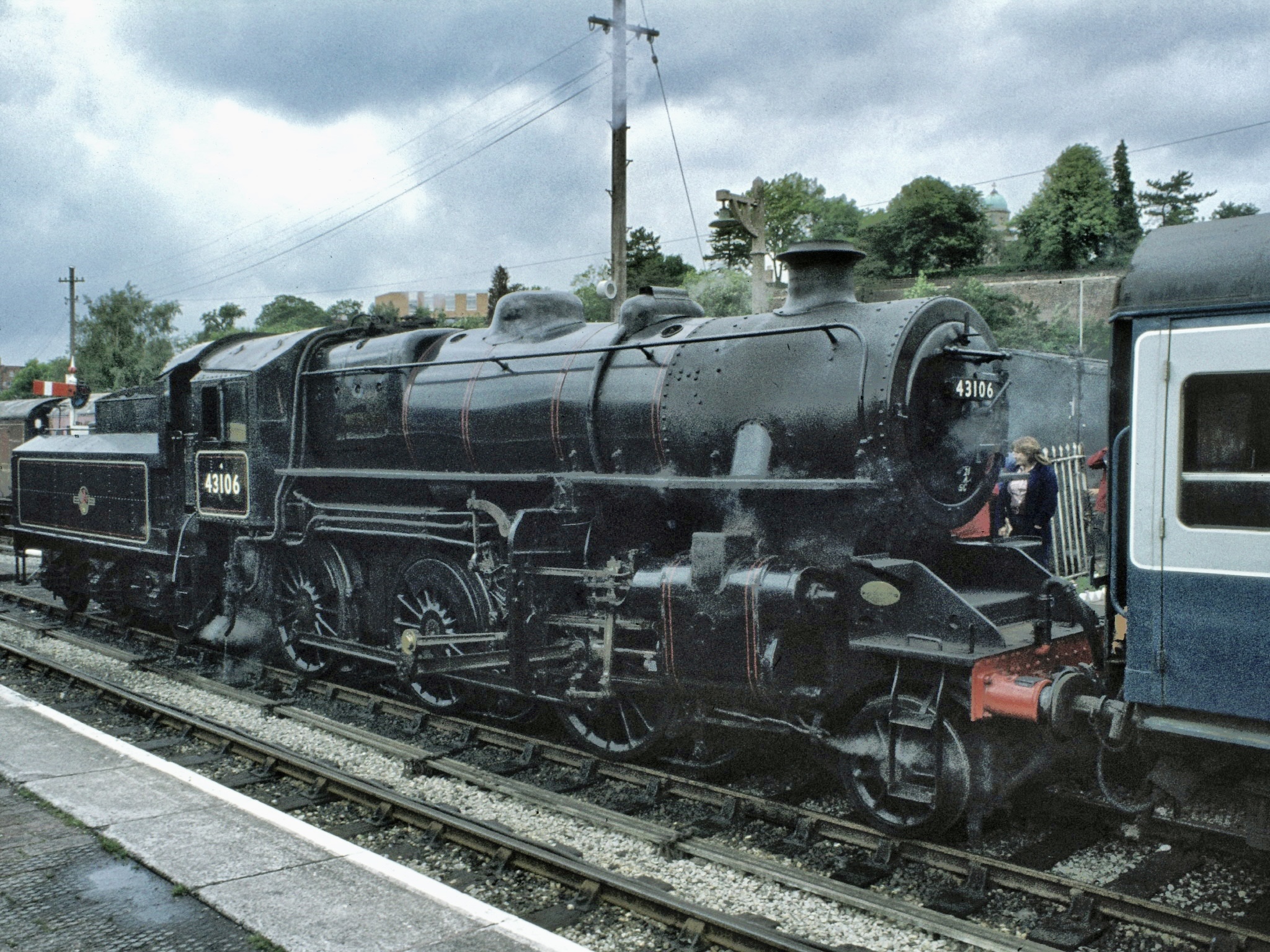
On the SVR we were hauled by 43106 from Bewdley to Dorridge and return. We had a couple of hours to look around the shed at Bridgnorth and get refreshments.
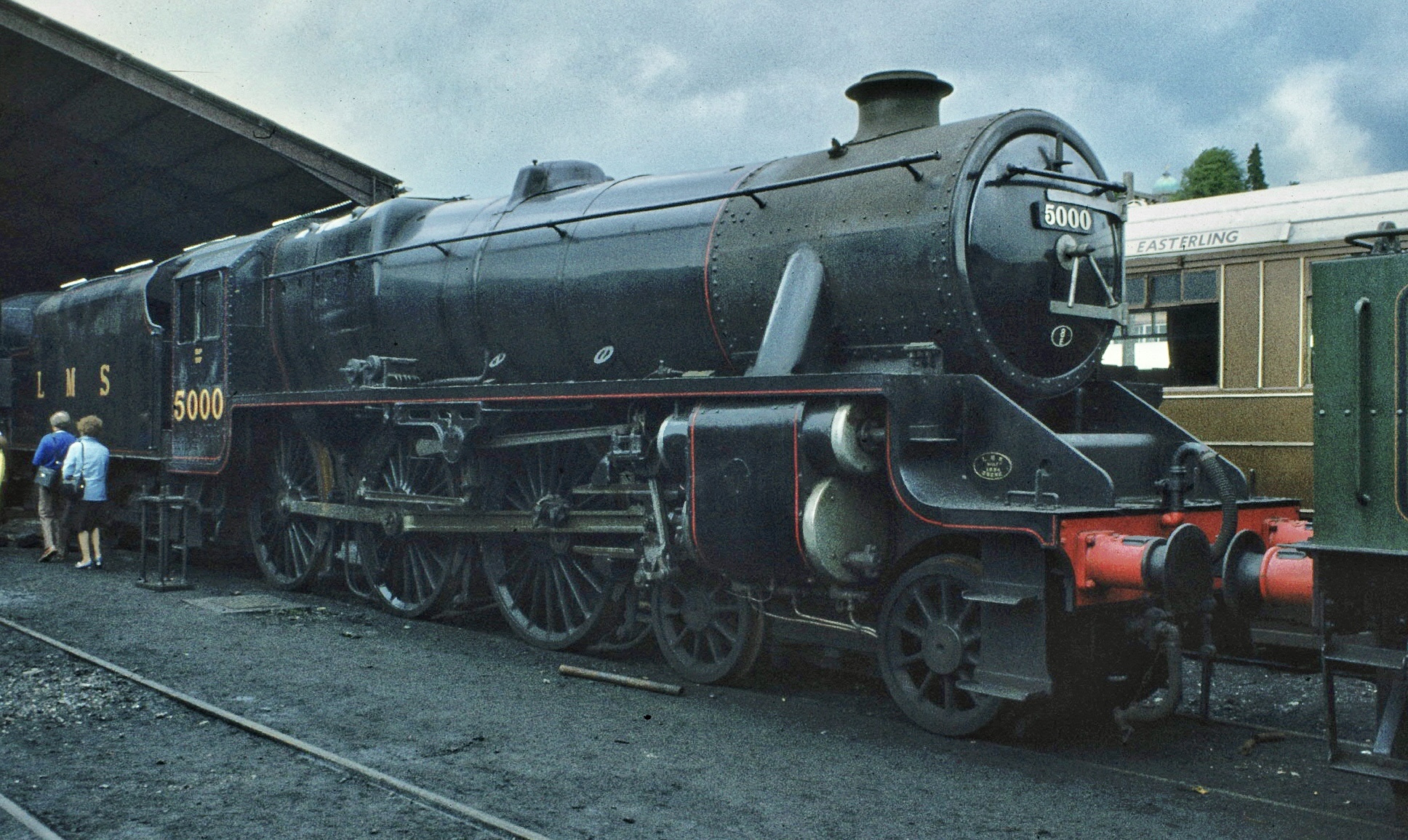
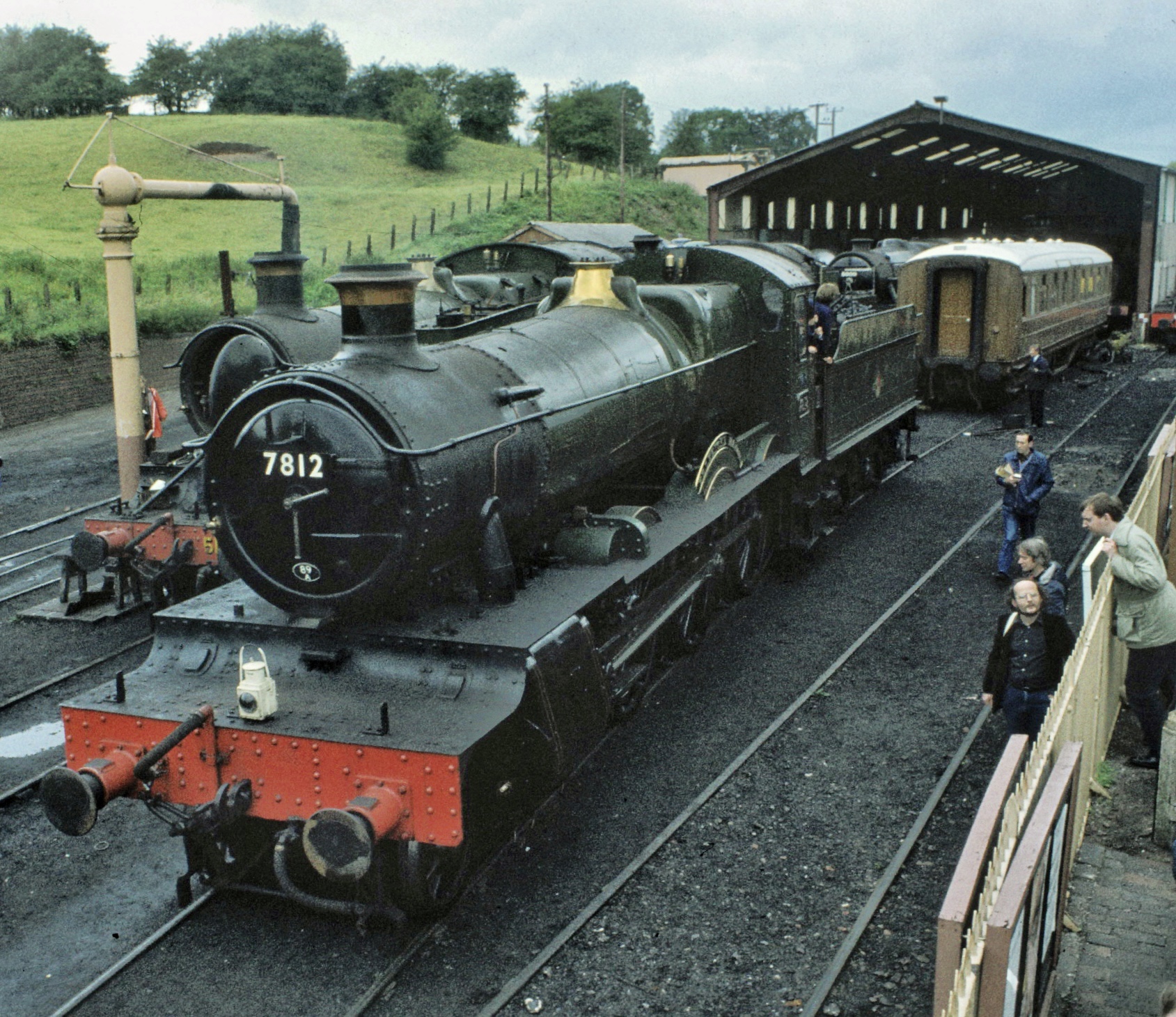
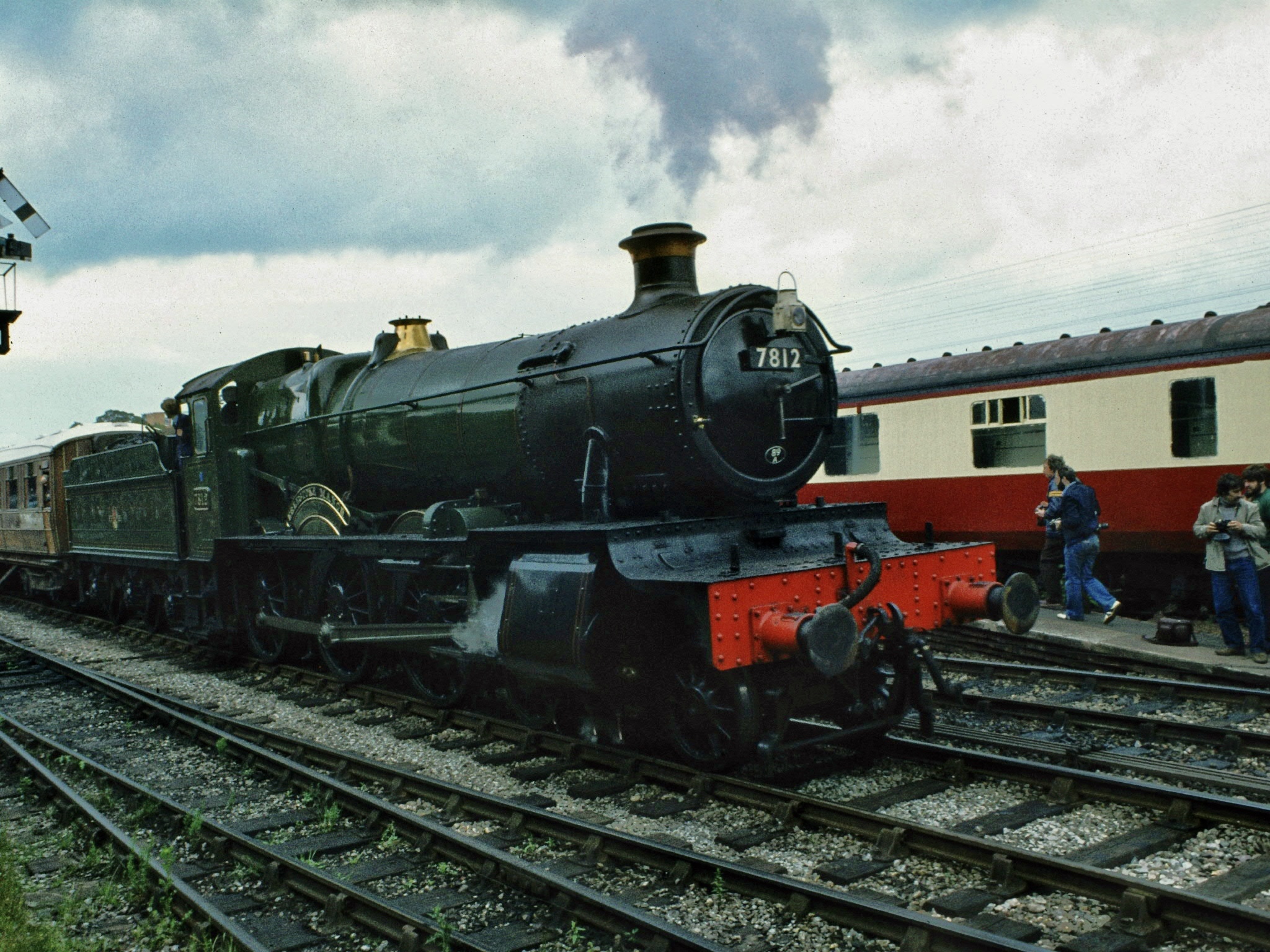
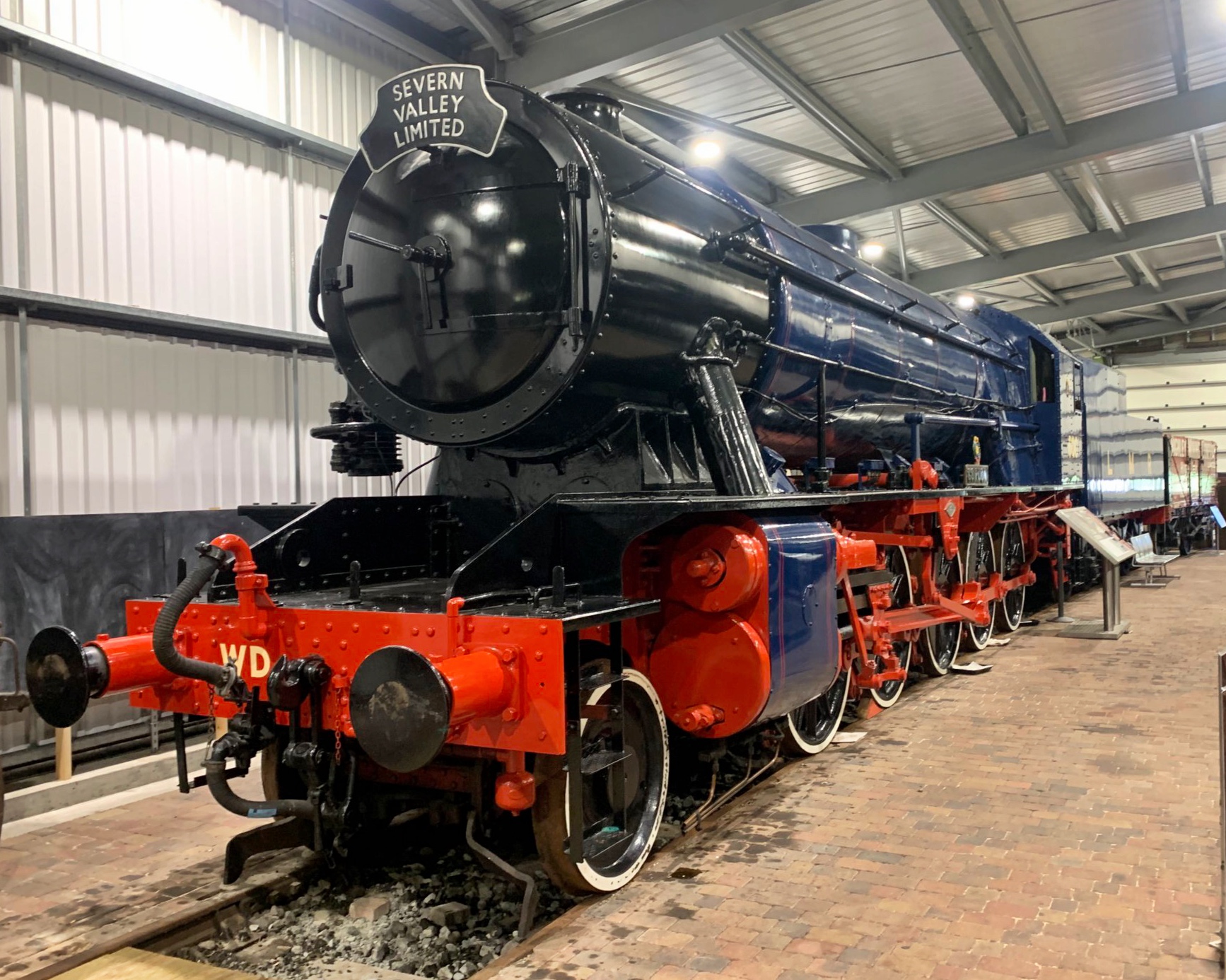
While on Severn Valley Railway metals our train was hauled by LMS Ivan Class 4 No. 43106, the only surviving member of the class. Seen here at Bridgnorth – 19/06/1982GWR 7800 Class 4-6-0 No. 7812 ‘Erlestoke Manor’ at Bridgnorth – 19/06/1982LMS Stanier Class 5 4-6-0 No. 5000 at Bridgnorth. No. 5000 is part of the National Collection and is currently on static display at the Shildon Locomotion Museum in County Durham – 19/06/1982Longmoor Military Railway No. 600 ‘Gordon’ (named after General Gordon of Khartoum) was. built in 1943 for the War Department and is seen here at Bridgnorth. In 1957, during the Suez Crisis, ‘Gordon’ worked highly secretive trains between Longmoor Military Base and Southampton. The locomotive is currently on static display on the SVR at The Engine House, Highley – 19/06/1982GWR 7800 Class 4-6-0 No. 7812 ‘Erlestoke Manor’ at Bridgnorth – 19/06/1982GWR 7800 Class 4-6-0 No. 7812 ‘Erlestoke Manor’ at Bridgnorth – 19/06/1982
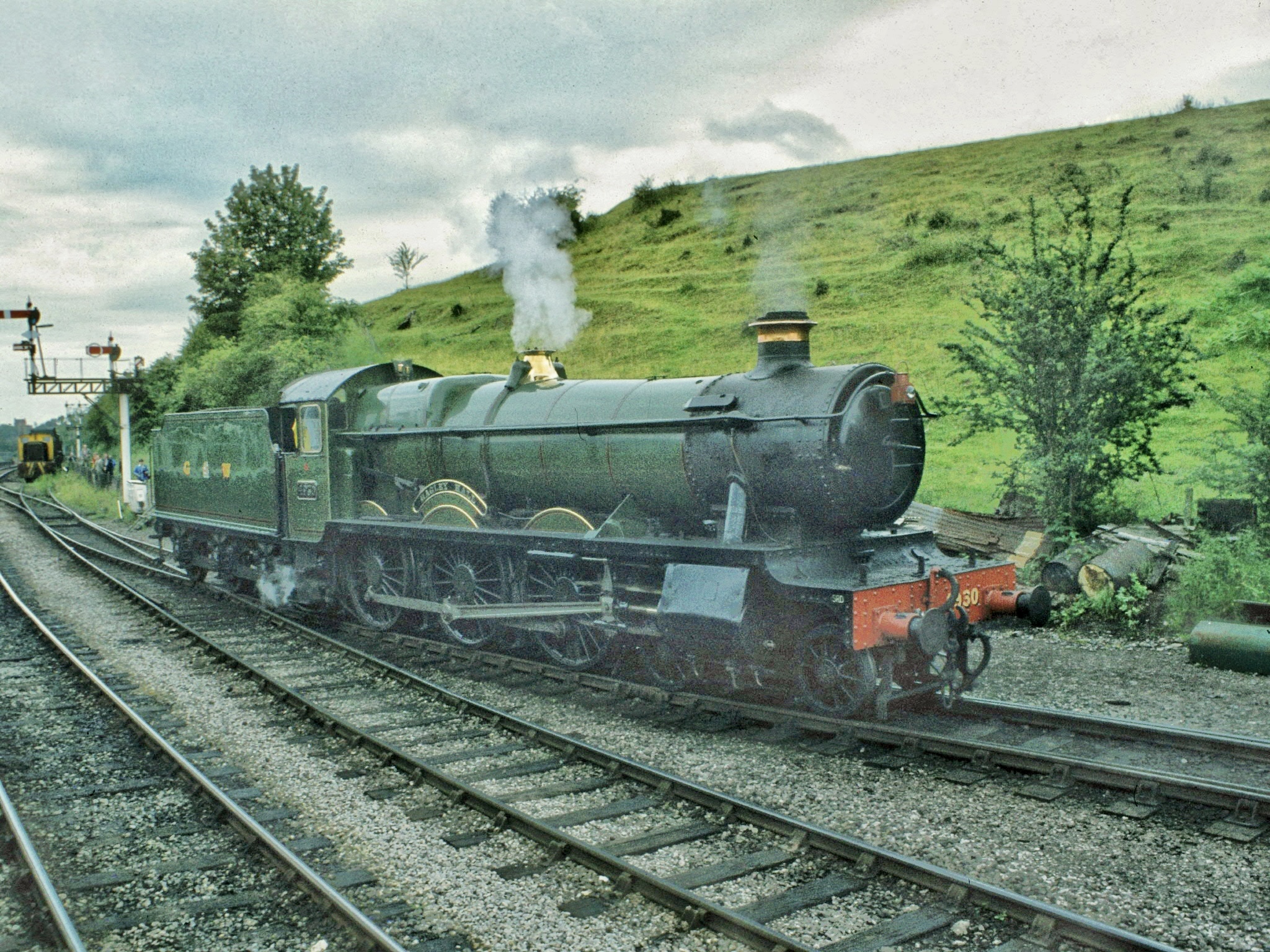
I managed to get a piece of smut in my in my eye from 4930 ’Hagley Hall’ which I just couldn’t get out. [2023 note: I’m thinking No. 4930 may have hauled us one way on the SVR, but my diary says No. 43106 worked the train in both directions]
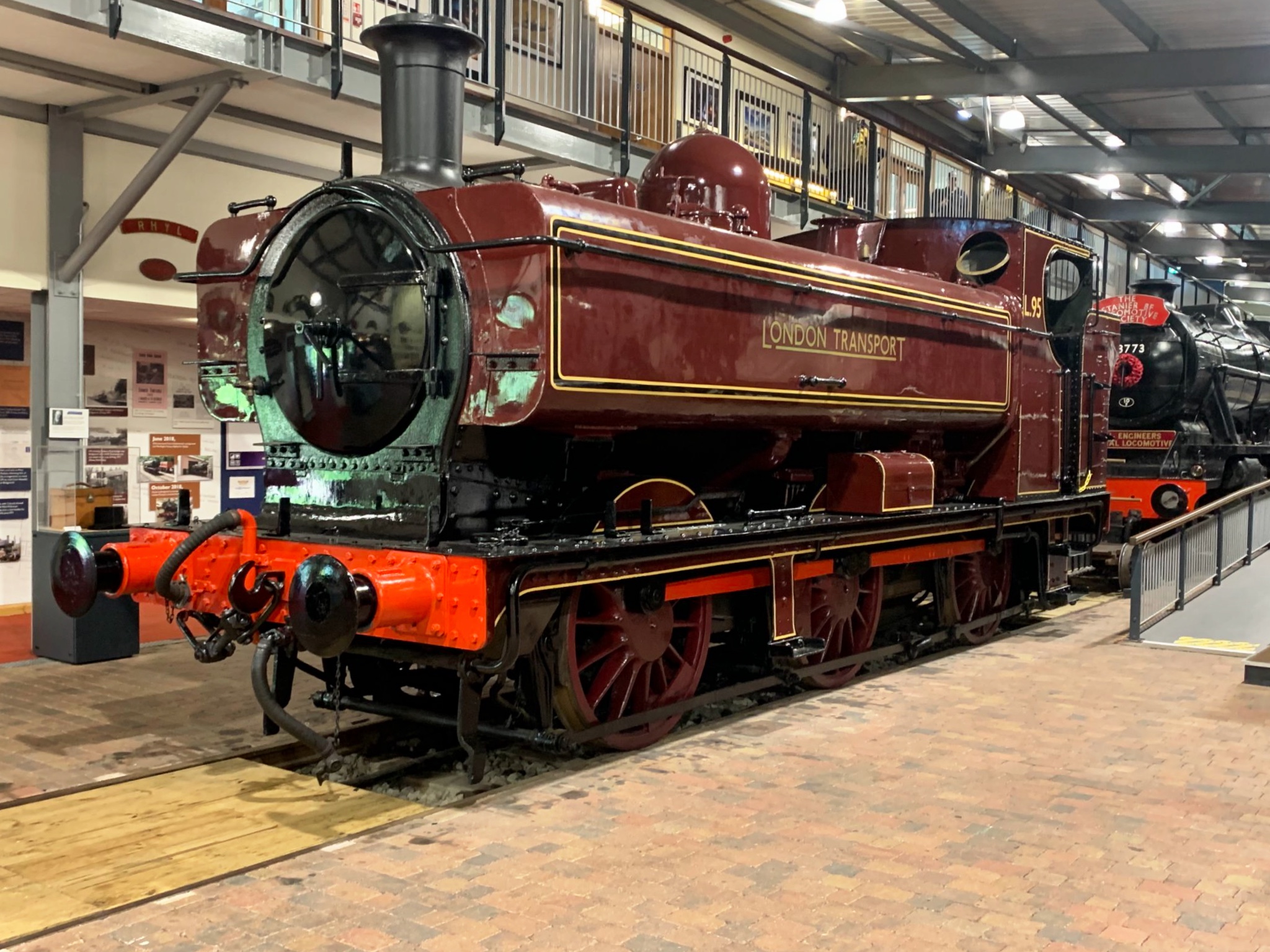
GWR Collett 4-6-0 Hall Class No. 4930 ‘Hagley Hall’ at Bridgnorth. She was built in 1929 at Swindon Works and originally allocated to Wolverhampton Stafford Road – 19/06/1982GWR Collett 5700 Class 0-60PT “Pannier Tank” No. 5764 entered service at London’s Old Oak Common in 1929 and was later one of a number of the class sold to London Transport following withdrawal from British Rail in 1960. She is currently on static display in London Transport guise, numbered L95, at The Engine House, Highley. She is seen here in GWR livery at Bridgnorth – 19/06/1982
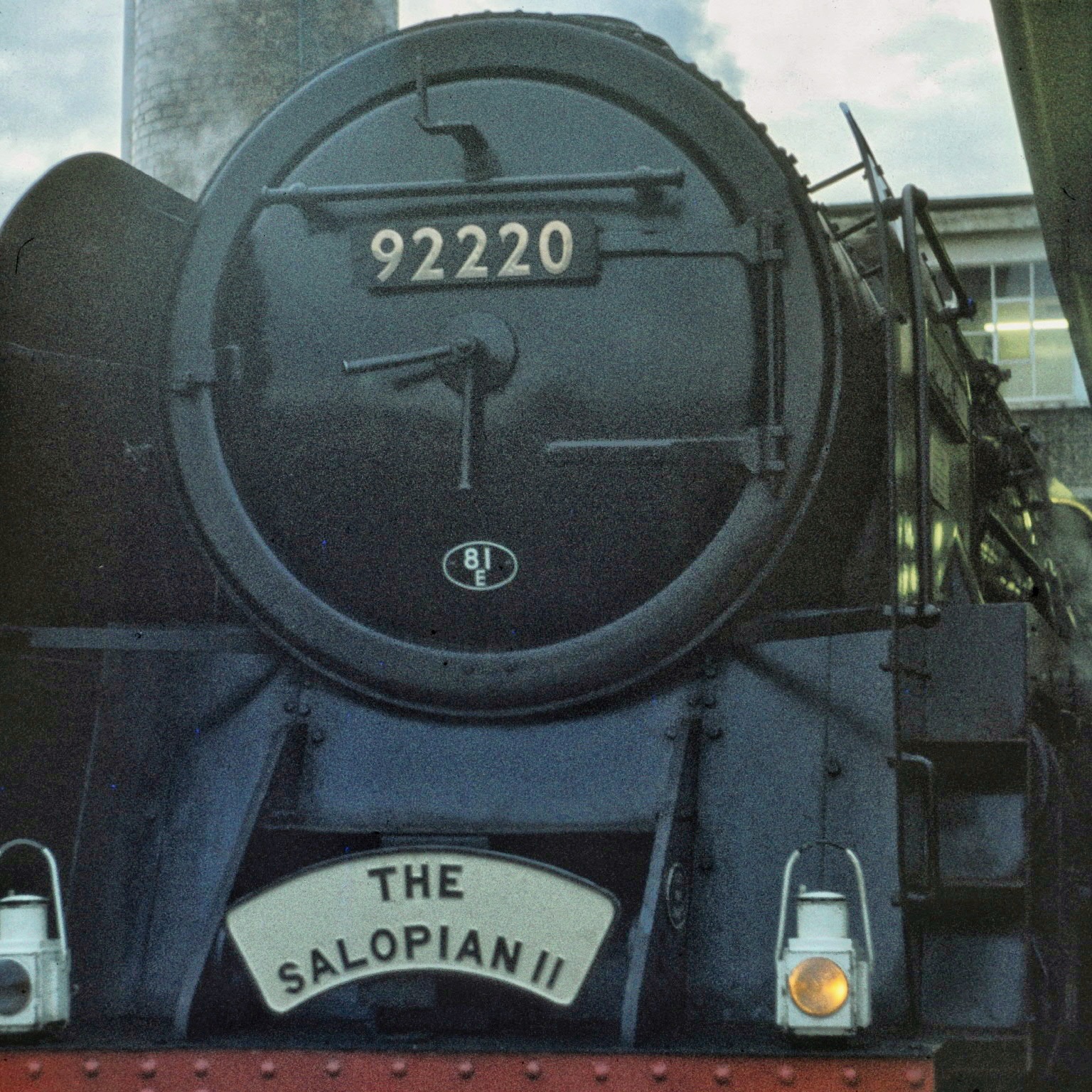
Returning to Bewdley, the 20’s took control of our train once again and regained all lost time and even gained 15 minutes. But despite these efforts, the quarter hour and more was lost due to a number of signal stops. In my opinion the star of the day; 92220 ‘Evening Star’, to be precise, replaced the diesel power at Saltley and despite working hard we arrived back at Didcot some 16 minutes down.
BR Standard Class 9F No. 92220 ‘Evening Star’ during a water stop at Banbury. No. 92220 was the last steam locomotive to be built at for British Railways and was earmarked for preservation before she entered service in March 1960. She hauled the last Pines Express on the Somerset & Dorset line on 8th September 1962. ‘Evening Star’ had a working life of five years before being withdrawn from service in March 1965 after sustaining damage in a shunting incident at Cardiff Docks. She was overhauled and restored at Crewe Works following withdrawal working in preservation until the late 1980’s. She is now on static display at the Railway Museum in York and one of nine existing locomotives of a class which numbered 251- 19/06/1982
50040 took us forward to Reading where Tony and I de-trained for our connection down to Basingstoke and home.
Sunday June 20th 1982
The down Mail arrived into Basingstoke at Midnight. We were extremely lucky to have made it as our connecting service train from Reading should have left at 2300 and “The Salopian II” arrived at 2302. We met Paul E and Mark B, two rail enthusiasts from Charminster who had been part of the group who went to Plymouth Laira with us in April. This time they had been to Calais with Mark’s parents. A class 73 took us from Basingstoke to Eastleigh where 33010 came on to bring us into Dorchester South just after 0300 where we all said our good-byes and headed home to our beds.
I was up again at 0900 in order to see some excursion trains.
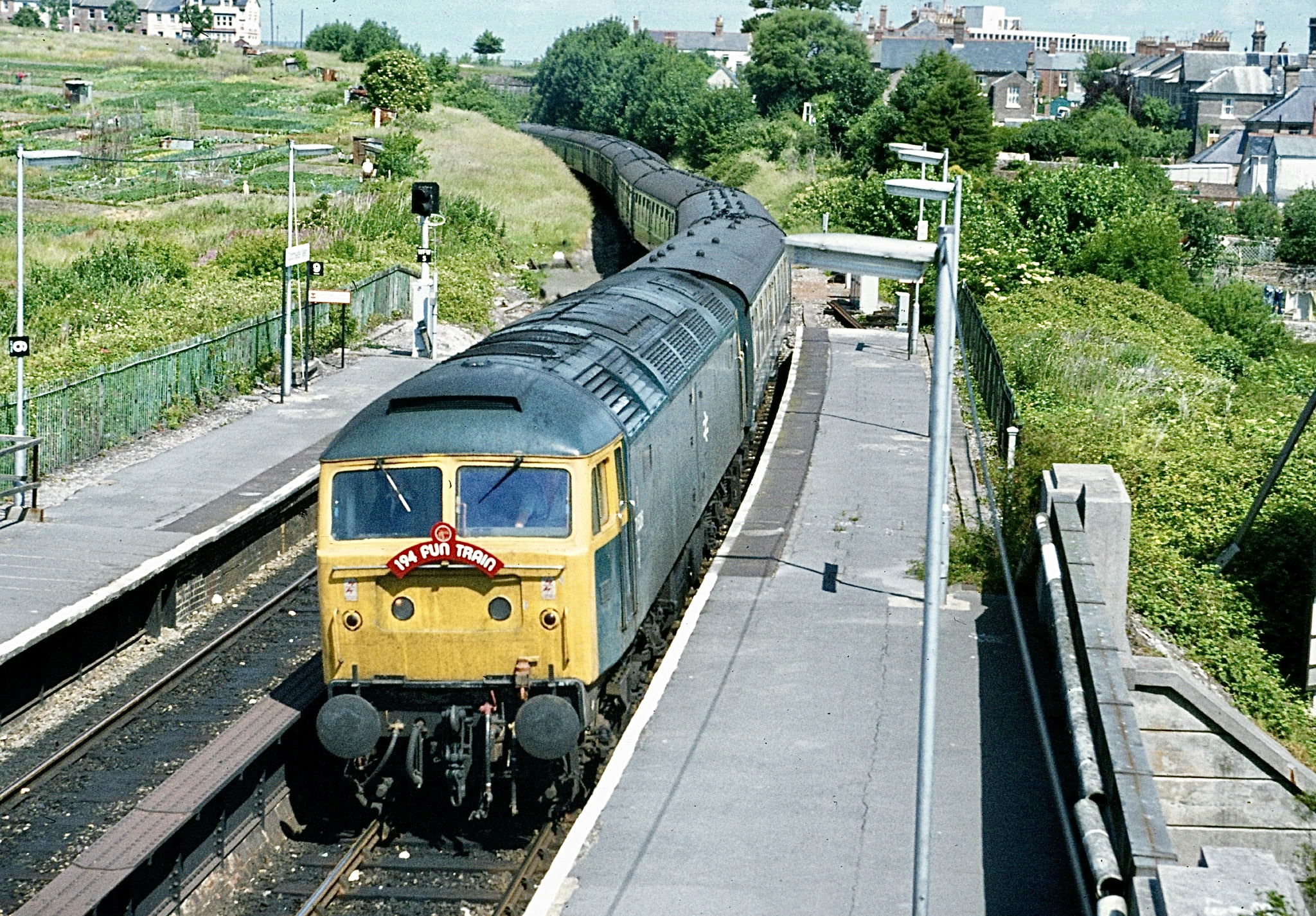
Class 33 No. 33029 approaching Dorchester South – 20/06/1982Class 47 No. 47526 at Dorchester West – 20/06/1982
The piece of smut in my eye from ‘Hagley Hall’ was still there, so I called on [my brother], who was out. Anyway, he appeared at half four and spent an hour moving the smut from the blue bit of my eye to the edge and finally relief!
GBRf Class 73 No.’s 73964 ‘Jeanette’ and 73961 ‘Alison’ were out on a GB Railfreight staff special the “Tonbridge Trailblazer” in June 2016 running from Ashford International to Weston-super-Mare. The ED’s are seen here at Bath Spa on the return leg working 1Z63 1725 Weston-super-Mare to Ashford International – 18/06/2016
Postscript:
Longmoor Military Railway No. 600 ‘Gordon’ as seen in 2023 at The Engine House, Highley – 20/05/2023London Transport No. L95 (the former GWR Collett 5700 Class 0-60PT “Pannier Tank” No. 5764) as seen in 2023 at The Engine House, Highley – 20/05/2023It’s goodbye from me, and a goodbye from Yoshi! Thanks for reading. We appreciate your comments, contributions, updates and corrections. See you soon!
Yoshi takes a look at Transport for Wales Class 175 No. 175112 stands at platform 0 forming 1W61 1453 Cardiff Central to Manchester Piccadilly – 29/04/2023
Saturday Yoshi and I had a brief trip to South Wales in the hope of seeing at least one Transport for Wales (TfW) liveried Class 67 working. We also caught up with @smithy.377 (please check out his Instagram account for a fabulous collection of railway images). Our first stop was Newport as what should not have been a diesel-multiple unit working had suddenly been switched to locomotive hauled.
Newport station was originally opened in 1850 by the South Wales Railway Company and saw expansion in 1928. A new station building was built in 2010 with four full size platforms, to facilitate new 10 car bi-mode Intercity Express Trains (IET).
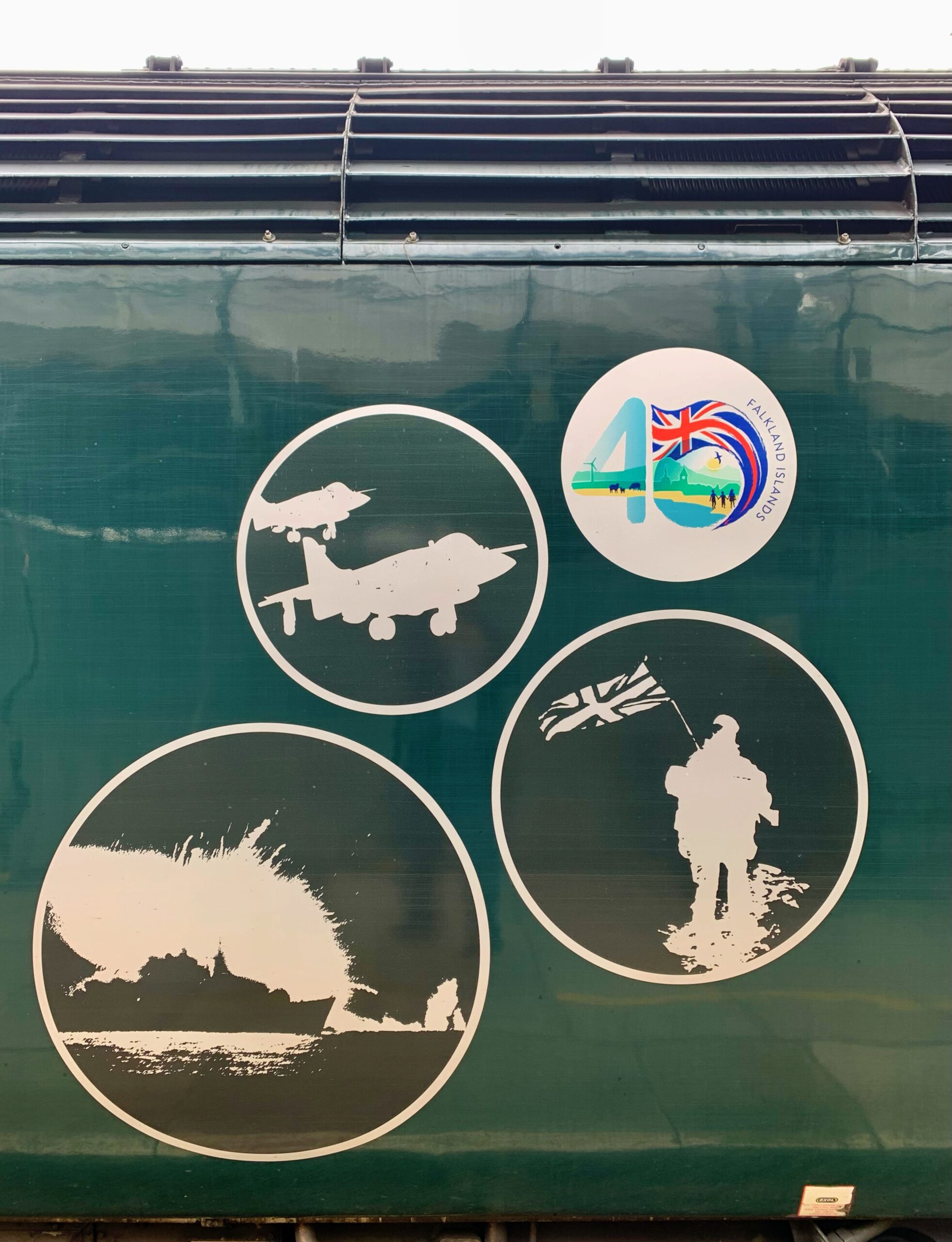
Station staff were friendly and allowed us access in time to see DB liveried Class 67 No. 67010 arrive with a service bound for Manchester. Followed shortly after by a Great Western Railway (GWR) Castle set headed up by Class 43 No. 43040 ‘Berry Pomeroy Castle’. This loco was of interest as it carries 40th Anniversary Falkland Island decals on the body side. While I was recording images of this set, I managed to miss seeing a Class 66 on a freight working go through on the centre road. To compound matters, as we left the station we heard a Class 60 approaching, but had no time to get to platform level to take photographs or video. Luckily we were to see the same locomotive later in the day as it worked back through Cardiff, which was our next stop.
DB Class 67 No. 67010 arrives at Newport working 1W57 Cardiff Central to Manchester Piccadilly – 29/04/2023Great Western Railway (GWR) Class 43 No. 43040 ‘Berry Pomeroy Castle’ awaits departure from Newport working 2C73 1100 Cardiff Central to Penzance – 29/04/202340th Anniversary of the Falklands conflict decals on the side of HST power car No. 43040 ‘Berry Pomeroy Castle’ – 29/04/2023
We arrived in Cardiff just in time to miss a double-headed light engine movement through the station heading to Westbury. But we saw a number of GWR Castle HST sets on Cardiff services to and from the West Country.
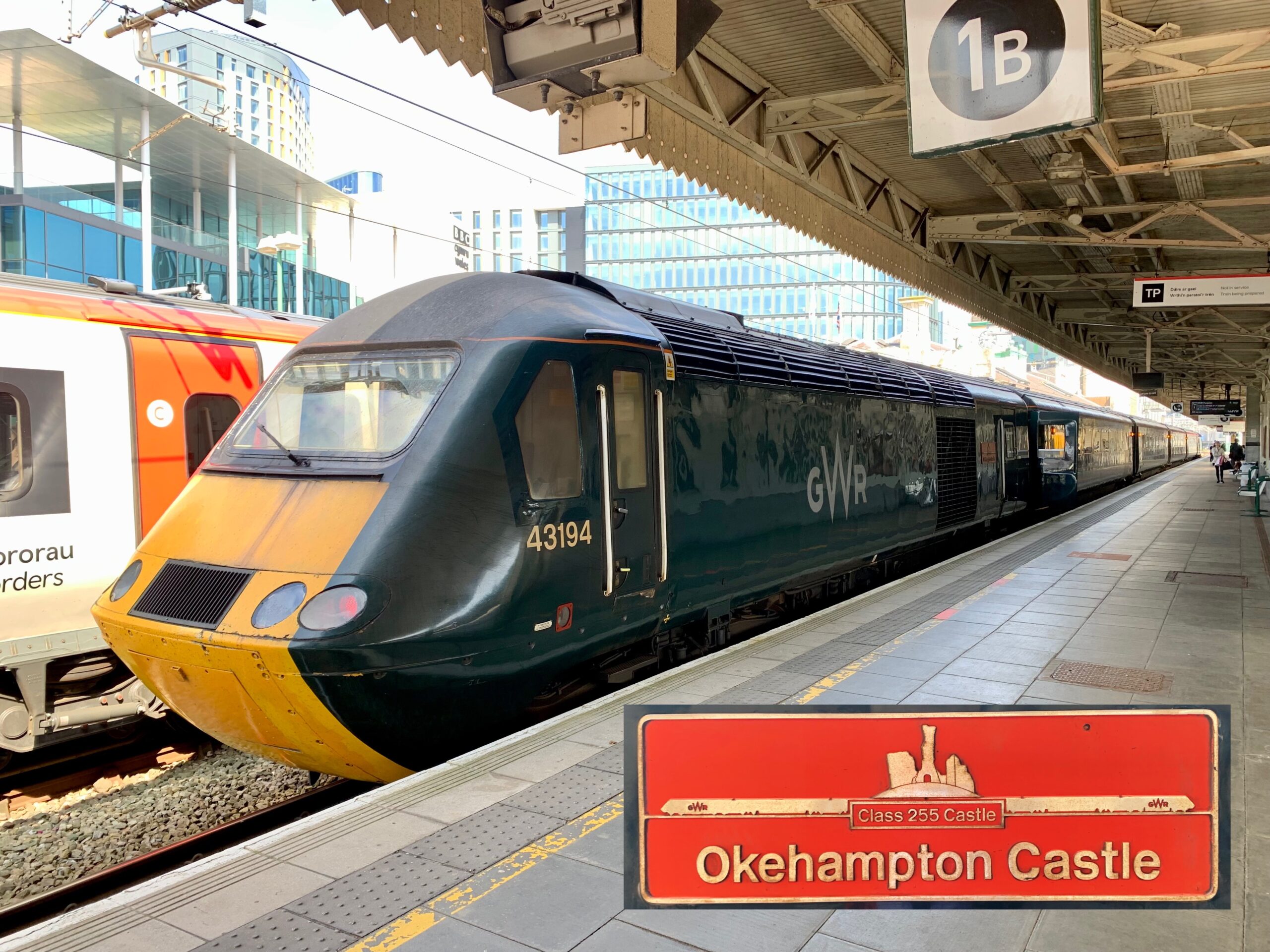
GWR Class 43 43188 ‘Newport Castle’ arrives at its final destination working 2U14 1043 Exeter St Davids to Cardiff Central – 29/04/2023Class 43 No. 43194 ‘Okehampton Castle’ awaits departure at the rear of 2C81 1500 Cardiff Central to Penzance – 29/04/2023
Good news that GWR will be retaining four of its Castle Class HST sets into 2024. The operator had originally planned a phased rundown of the fleet through 2023.
The four carriage HST’s are used on a variety of regional and inter-urban services in the West of England. While they are gradually being replaced by IET’s on these diagrams, the retention of a small number of HST’s will assist GWR with providing adequate capacity. A planned cascade of Turbo DMU’s to the West of England, released by the introduction of Class 769’s in the Thames Valley, has been abandoned as the 769’s have been sent off lease. GWR will still rid themselves of the HST’s which are owned by Angel Trains, but a small number of sets are either owned by FirstGroup or are franchise assets, and it is these sets which will remain into 2024. It is understood that they are likely to remain in service until December 2024.
The Class 60 we missed at Newport reappeared much to our relief working Llanwern to Margam train. We saw two Class 60’s during our trip. I have a soft spot for these locos and hope that they find a future. It’s understood that GBRf will be undertaking an evaluation study at EMD Longport with the view of possible Class 60 conversion work in the future.
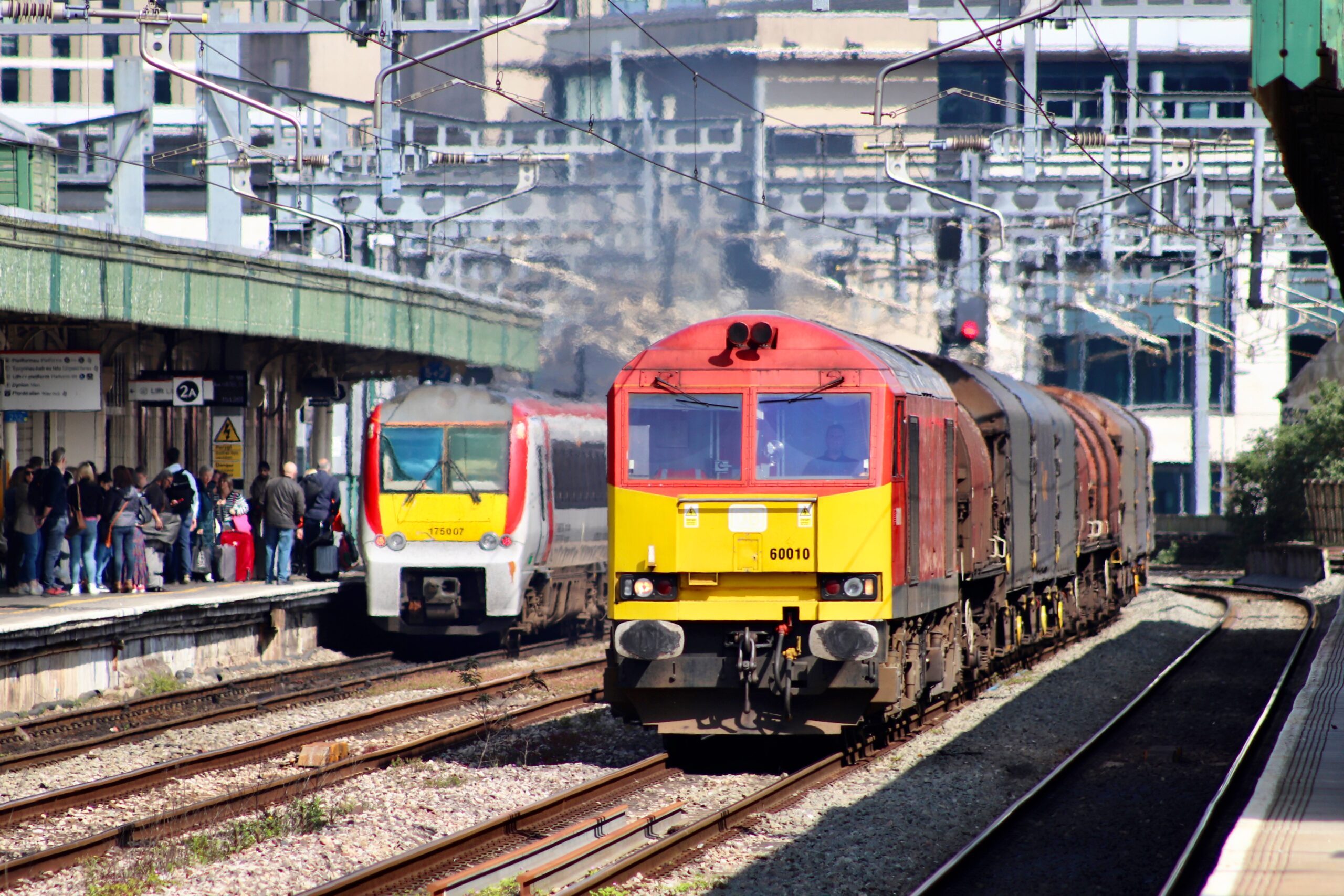
Class 60 No. 60024 working the early running 6H26 1325 Llanwern Exchange Sdgs to Margam T.C passing through Cardiff Central.- 29/04/2023DB Class 60 No. 60010 works 6F06 1110 Newport Docks to Margam T.C. through Cardiff Central – 29/04/2023
Having managed to miss out on other Class 66’s earlier I was pleased that I eventually managed to catch a couple of the locomotives, one of which can be seen in images below and the other, No. 66053 can be seen in the accompanying video further down this page.
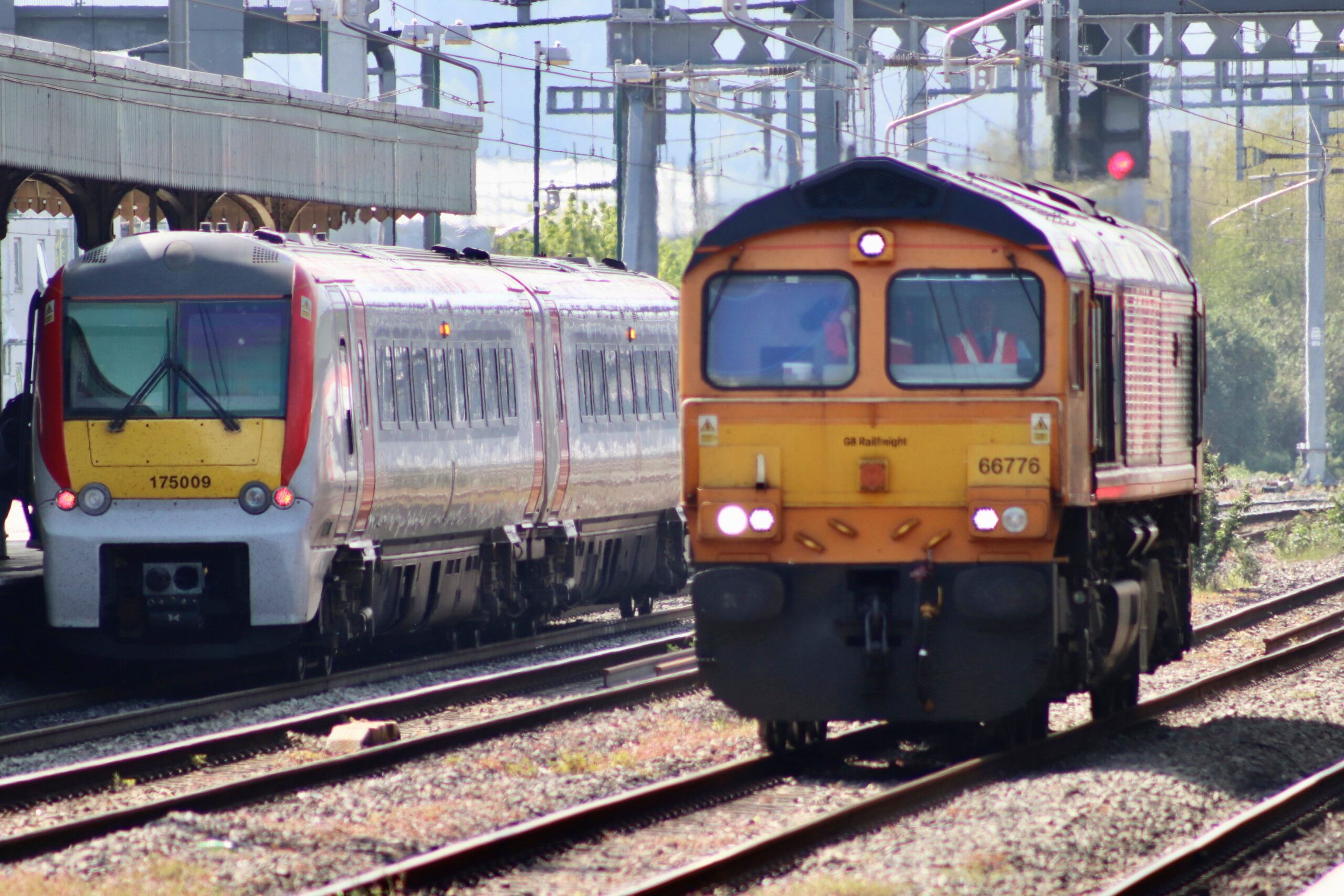
66776 ‘Joanne’ works 6V75 0931 Dee Marsh Recp GBRf to Margam TC GBR running 280 minutes early through Cardiff Central – 29/04/202366776 ‘Joanne’ returns light engine through Cardiff Central – 29/04/2023
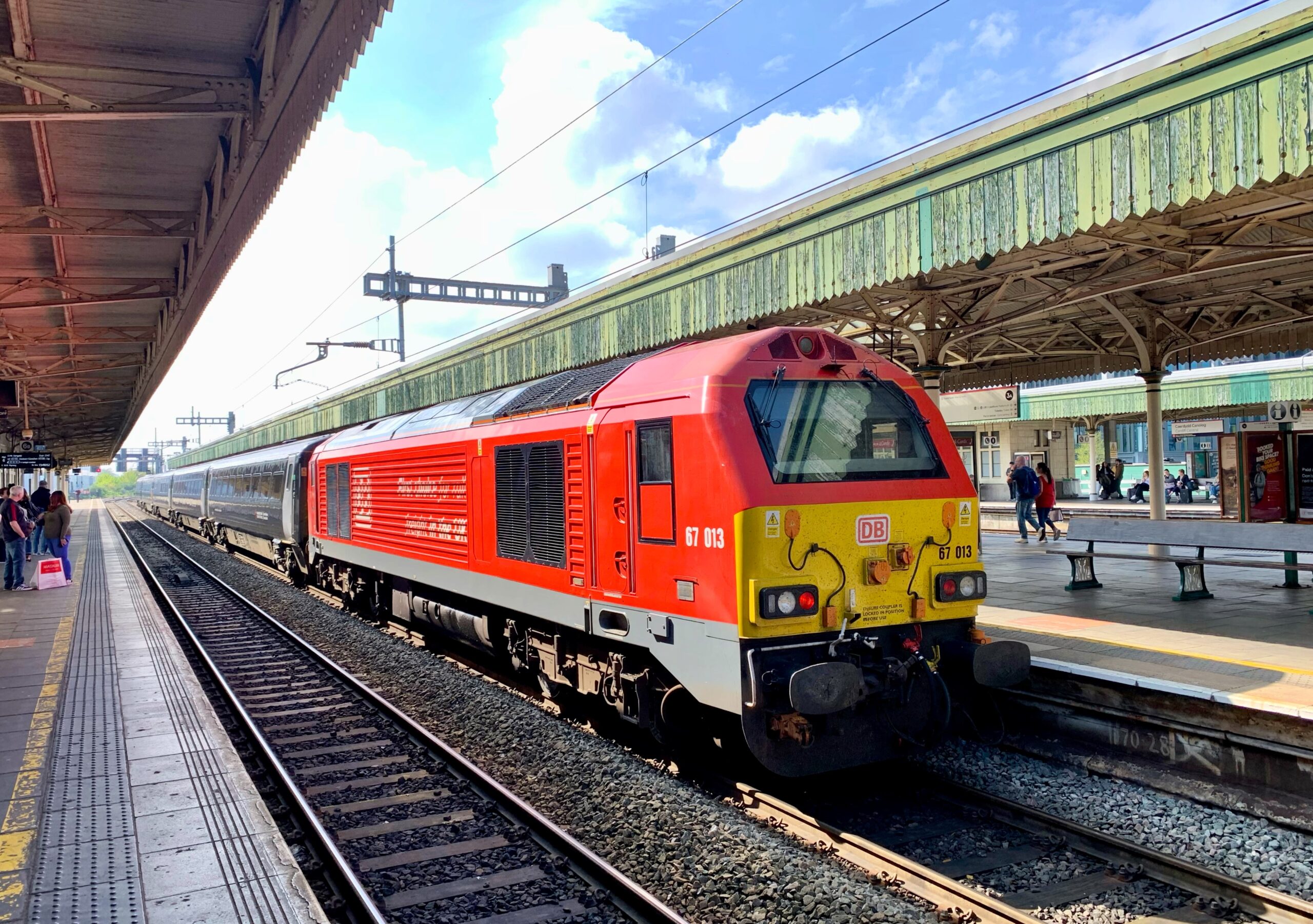
Our last train of the day was scheduled to be another Class 67. This, like the first working we saw at Newport, was in DB red livery instead of the hoped for TfW colours. It didn’t really matter, Yoshi still barked at it. On leaving Cardiff Central, gate staff were very enamoured with Yoshi and we swapped cockapoo stories and I was shown photographs of cockapoo’s owned by the TfW staff present.
DB Class 67 No. 67013 at the rear of the terminating 1V42 1230 Manchester Piccadilly to Cardiff Central – 29/04/2023
Video from Newport and Cardiff – 29/04/2023
The following day in inclement weather @da_buckley967, Yoshi and I headed over to Somerset for a fleeting glimpse of LNER A3 Pacific No. 60103 ‘Flying Scotsman’ as she worked the first rail tour of her Centenary year programme, The Railway Touring Company organised “The Royal Duchy”. To avoid trespassers on the railway, timings for this excursion were released a couple of days prior to the train running. But there were still good many people positioned safely on over bridges waiting for the ‘people’s locomotive’ to pass by on her way to Par.
LNER A3 Pacific No. 60103 ‘Flying Scotsman’ storms past Cogload Junction working The Railway Touring Company “The Royal Duchy” 1Z45 0907 Bristol Temple Meads to Par – 30/04/2023
Video of LNER A3 Pacific No. 60103 ‘Flying Scotsman’ storming past Cogload Junction working The Railway Touring Company “The Royal Duchy” 1Z45 0907 Bristol Temple Meads to Par – 30/04/2023The special stamps issued by the Royal Mail to celebrate 100 years of ‘Flying Scotsman’ in 2023. I rather like them!
Monday morning I set the alarm for 0350am so I could drive over to Bournemouth to see the Midland Pullman blue HST set which was running an excursion to and from North Wales. On arrival at the Bournemouth station I found everything locked up, but managed to video the arrival through a convenient gate! Thinking I’d be the only one foolish to get up at such an hour for the purpose of seeing a train, I was pleased that this was far from the truth as a number of railway enthusiasts had made the effort. I was doubly pleased that an old colleague and friend, Nick, was at the station to witness the occasion. Slightly late, the station doors were unlocked, and train crew, passengers and railway enthusiasts gained access to the platforms. It really is a stunning train and the onboard staff were very friendly and happy to show off their charge.
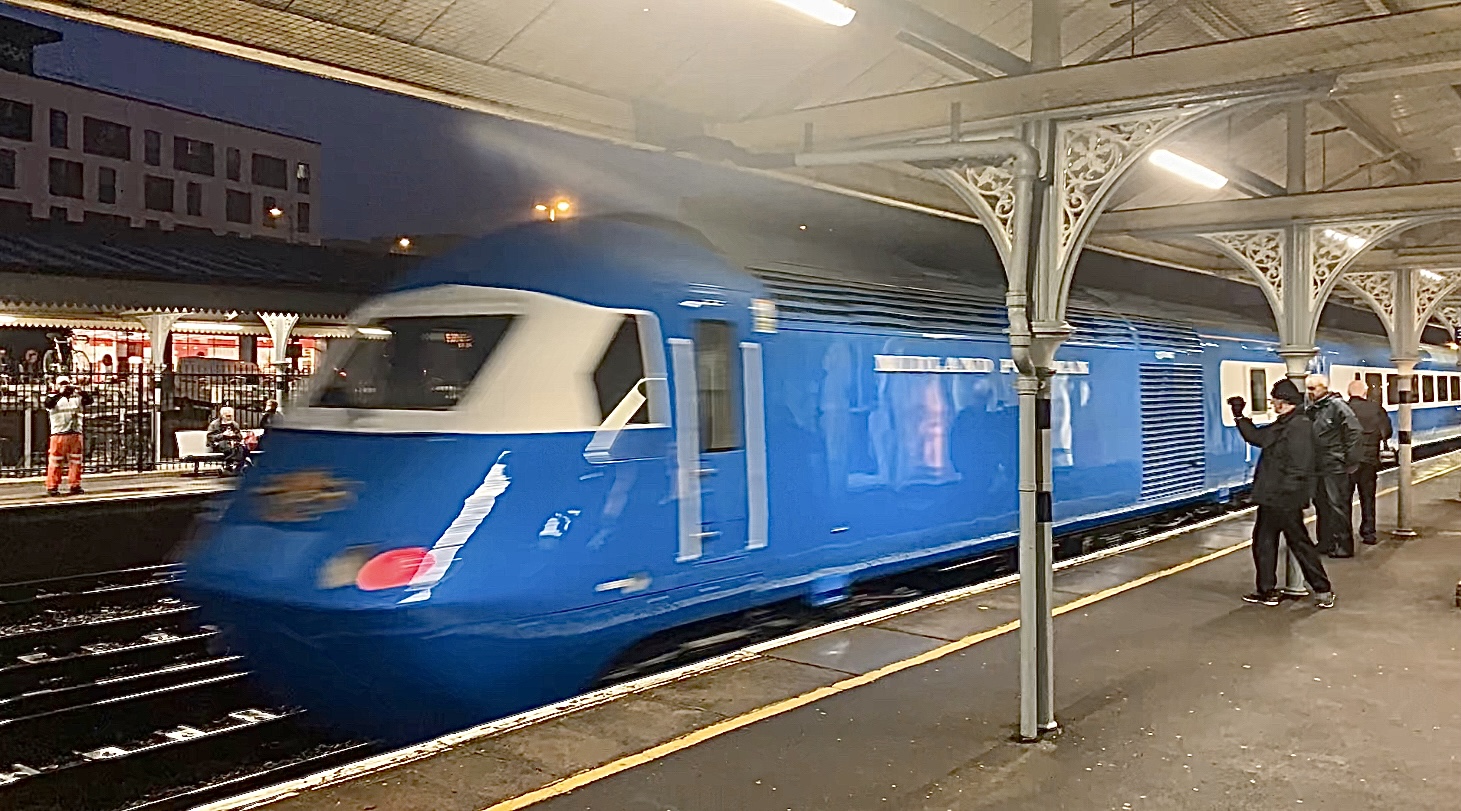
LSL Midland Pullman Class 43 No. 43046 ‘Geoff Drury 1930-1999’ at Bournemouth having arrived empty coaching stock from Eastleigh Arlington – 01/05/2023Nameplate of LSL Midland Pullman Class 43 No. 43046 ‘Geoff Drury 1930-1999’ – – 01/05/2023LSL Midland Pullman Class 43 No. 43055 awaiting departure from Bournemouth at the head of 1Z43 0516 Bournemouth to Llandudno railtour the “Llandudno Victorian Pullman” – 01/05/2023
This is the first time the Midland Pullman HST set has visited Bournemouth, and the second time I’d seen the train. Back in October 2020 the set was seen in public for the first time as it departed Eastleigh Arlington Fleet Services. Having always loved the original Blue Pullman train set of the 1960’s Yoshi and I headed over to Eastleigh in good time prior to it’s intended departure. However, as usual in railway moves, things did not go to plan and the HST set last several hours late under cover of darkness. I was caught out by a passing container train and by the time Yoshi and I had made it over the station footbridge to get a clear view the Midland Pullman was already passing through the station. In my rush, I’d also knocked the video setting on my phone to time lapse. You can see the results in the video below. The honking at the beginning is the HST set making its presence known over on the works at the time it should have been well on its way to Crewe.
Eastleigh on 30/10/2020
The carriage set, powered by Class 43 no.’s 43046 and 43055 has been fully configured using leather First Class seats from GWR HST trailers, with a Pullman motif on the antimacassars.
Video screen grab of the Midland Pullman’s first public outing passing through Eastleigh – 30/10/2020Prior to be repainted into Midland Pullman blue livery, Class 43 power cars No.’s 43055 and 43046 in East Midlands Railway (EMR) livery await attention at Eastleigh Arlington works – 22/08/2020
We’ve been beaten by the clock once again, although to be fair any arbitrary deadline is one of my own imposition. But if I didn’t set myself a Wednesday posting date, I’d never edit photos, video or update anything. The bank holiday weekend was very enjoyable and it was good to share it with some lovely folk and the best cockapoo buddy I could wish for. The next week is looking to be a quiet one in Dorset and for Yoshi and I, but all being well, we’ll find something to write about. Thank you for reading and your comments, corrections and observations. As always these are much appreciated.
I didn’t want to close this week without paying tribute to well known photographer and author, Brian Morrison, who has sadly passed away, at the age of 93. Brian’s name is one I fondly remember from railway magazines of my youth right up to more recent publications. Brian’s images were, and continue to be, an inspiration to all who enjoy railway photography. His was a name that spanned the generations, with his first picture being published in 1951 and across almost every British railway magazine to have been published.
The following is from “The Railway Herald”:
Brian had a railway interest since a young age, and after being ‘demobbed’ from the army in 1951, went and bought a camera, the same day visiting Liverpool Street station in London and taking his first picture, depicting Gresley-designed B17/1 ‘Sandringham’ 4-6-0 No. 61625 ‘Raby Castle’ being serviced in the yard at the end of the platforms. Remarkably, it was published a couple of months later in “The Railway Magazine”! Few photographers can claim to have their first picture, taken on their first camera, published!
Through the pages of Ian Allan published abc number books and subsequently in almost all printed and digital railway titles that have been published in the UK, Brian’s photographs have been enjoyed by a wide variety of people and have inspired generations into photography of the rail network. In addition, he was also the author, or co-author, of over 50 books.
Our thoughts and condolences go to Brian’s family and friends.
Yoshi visits Bradpole to check out the crossing gate and track on the former Bridport Branch – 26/02/2023
Wednesday 22nd February 2023 to Tuesday 28th February 2023
We start off this week with another ‘no-show’ as the New Measurement Train running as 1Z22 0748 Derby RTC Serco to Bristol Kingsland Road Freightliner Heavy Haul scheduled to visit Weymouth via Yeovil Pen Mill on Wednesday 22nd February 2023 was truncated at Cheltenham Spa. The train would have seen Class 37 locomotives No.’s 37421 and 37610 in Dorset had it not been partially cancelled en-route at the request of the operator. It did make me wonder about the legal obligation, if any, of Network Rail to observe the findings by the Rail Accident Investigation Board (RAIB) and run these trains over the entire rail network. Maybe one day we’ll try and find out. Wednesday did, however, see two other special workings along the Bournemouth to Weymouth section as the Snow & Ice Treatment Train (SITT) and the third and final Freightliner engineers train of the week both ran as planned. The SITT made a return visit to Dorset running as far as Wareham on Monday 27th February.
All three February 2023 Dorset Freightliner engineers trains for your delectationGBRf Class 66 No. 66789 ‘British Rail 1948-1997’ in retro large logo livery stands in Totton Yard. I think it rather suits! – 25/02/2023
Keen to get a daylight image of British Rail large logo liveried Class 66 No. 66789 on the SITT as I incorrectly, as it turned out, assumed the loco would be swapped out for another member of the same class, Yoshi and I made the trip to Totton Yard to see the train before its return working to Eastleigh East Yard on Saturday morning.
GBRf Class 66 No. 66789 ‘British Rail 1948-1997’ and 66730 ‘Whitemoor’ top and tail the Snow & Ice Treatment Train (SITT) in Totton Yard – 25/02/2023
Video of the SITT working over the last week of February 2023 with GBRf Class 66 No. 66789 ‘British Rail 1948-1997’ and 66730 ‘Whitemoor’ at various locations
We also stopped off in Southampton to peer over the road bridge crossing the railway which leads to the Southampton Maritime Container Terminal which is built on reclaimed land and was opened in 1968. Dealing solely in deep sea container traffic the adjacent Freightliner terminal for rail-borne traffic links directly to the South West Main Line (SWML) at Millbrook and Redbridge. Network Rail carried out upgrades, completed in early 2021, allowing trains up to 775 metres in length to gain access to Southampton MCT which is the major rail freight traffic centre in the region. Intermodal freight transport involves the transportation of cargo in a shipping container utilising multiple modes of transport such as rail, ship, truck and aircraft without any handling of the contents while changing modes. Direct intermodal services operate from Southampton MCT six days a week to UK destinations such as Leeds and Crewe.
In this video: XC 220008 / 221140 1M38 0945 Bournemouth to Manchester Piccadilly; GWR 166209 1F62 0923 Portsmouth Harbour to Romsey; FL 70004 4018 0424 Lawley Street FLT to Southampton MCT; SWR 444021/444017 1W08 0903 Weymouth to London Waterloo; SWR 444016/444031 1W59 0905 London Waterloo to Weymouth and Poole; SWR 158883 2S23 1007 Romsey to Romsey; FL 66568 4V34 1102 Southampton MCT to Portbury Automotive FHH; SWR 450002 2B36 1002 Bournemouth to Winchester; 444042/444019 1W54 0920 Weymouth and Poole to London Waterloo; SWR 444010/444020 1W61 1005 London Waterloo to Weymouth and PooleFreightliner Class 08 No. 08785 at Southampton MCT – 25/02/2023As South Western Railway service 1W17 0835 London Waterloo to Weymouth formed of Class 444 EMU No.’s 444026 and 444034 passes on the SWML, Class 66 No. 66536 receives attention at Southampton MCT – 25/02/2023Class 70 No. 70004 arrives at Southampton MCT working the 4018 0424 from Lawley Street Freightliner – 25/02/2023The SITT passes Southampton MCT at Redbridge working 3Y88 1032 Totton Yard to Eastleigh East Yard in the care of GBRf Class 66 locos No.’s 66730 ‘Whitemoor’ and 66789 ‘British Rail 1948-1997’ – 25/02/2023Class 70 No. 70004 having just detached from her train at its final destination; 4018 0424 Lawley Street to Southampton MCT – 25/02/2023
Finally, we paid a visit to Eastleigh in the hope that former Colas Rail and newly outshopped in GBRf livery Class 67 No. 67027 would be in a position for a decent photograph as had been widely reported on social media the previous day. The Class 67 should have departed Eastleigh Arlington works bound for Rugby on the Friday, but brake issues meant it remained stuck in Hampshire. Although I was pleased with my iPhone shot of the Class 66 at Totton, my luck ran out when it came to Eastleigh and the Class 67 as the locomotive had been moved inside a shed for remedial modifications with only the front being visible from the road adjacent to the works. Yoshi and I did, however, get to a catch up with an old pal over coffee, so it turned out to be a very good day after all.
Disappointingly newly liveried into GBRf colours, Class 67 No. 67027 hides in a shed at Eastleigh Arlington. No amount of coaxing would persuade her to reveal her new paint scheme – 25/02/2023Direct Rail Services Class 37 No. 37602 in the yard at Eastleigh Arlington works – 25/02/2023Colas Class 70 No. 70801 awaits her next duty at Eastleigh East Yard – 25/02/2023GBRf Class 66 No. 66790 at Eastleigh East Yard – 25/02/2023
On Sunday, Yoshi, his mama and I made a return visit to the Station Kitchen at West Bay which we last wrote about in November 2022. This time we booked to eat in the old station building which is dog friendly (the carriages are not) and Yoshi joined us for our lunchtime visit. Again, the food was exceptional and our surroundings quirky and fun.
The Station Kitchen at West Bay – 26/02/2023The Station Kitchen, West Bay Lentil, wild mushroom & honeyed carrot roast, farm vegetables, rosemary roasties with a balsamic onion jus. Scrummy! – 26/02/2023Yoshi offers to get the drinks in – The Station Kitchen, West Bay – 26/02/2023
Prior to eating, we took the opportunity to walk the former railway track bed between West Bay and Bridport which is now a footpath and haven for nature. It was much tidier than on previous visits and Yoshi proved himself to be a good boy yet again when he roamed off lead. As the footpath approaches Bridport it rises to meet Burton Road. The original level of the railway crossed beneath the road here at Wanderwell Bridge. The top of the bridge, bore entrance and track bed can still be made out if you look closely. On its way towards Bridport East Street Station, the railway would have passed through Wanderwell and then east of the roundabout junction of Burton Road and West Bay Road. Sea Road South, the A35 Bridport by-pass, now occupies the former track bed and there is no trace left of East Street station, the site now occupied by a garage. Sea Road North has replaced the track bed between East Street Station and Bridport station (also known as Bradpole Road Station).
The start of the former West Bay to Bridport footpath looking north – 26/02/2023Along the route of the former extension from West Bay to Bridport – 26/02/2023
The railway reached Bridport in 1857 being officially opened on 12th November, just over three years after a public meeting in Bridport Town Hall in October 1854 where it was decided a railway branch line to link the town to the main line at Maiden Newton would be built. The Bridport Railway Company was formed and the necessary Act of Parliament passed on 5th May 1855. The operating licence was awarded by the Bridport Railway Company to the Great Western Railway (GWR) who supplied the steam locomotives and rolling stock before taking over the railway completely. An extension to the line running from Bridport to Bridport Harbour was instigated in 1879 with passenger services commencing on 31st March 1884. In an attempt to attract holiday traffic, the GWR named their new station at the harbour; West Bay, popularising the name by which the area is now commonly known. Passenger services to West Bay ceased in 1930 but the line remained open for freight traffic until 3rd December 1962 when only minimal traffic ran including coal and shingle from the beach. The track on the Bridport to West Bay section, which had not long been relaid with concrete sleepers, was removed in March 1965 having been cut into short lengths and sold for scrap.
My well thumbed and well loved copy of “The Bridport Branch” by B L Jackson and M J Tattershall
Our visit prompted me to dig out my copy of “The Bridport Branch” by B L Jackson and M J Tattershall. It was the first railway text book I acquired back in the 1970’s and I recall thinking it a very expensive tome at the time. Most likely my lovely mum financed the purchase and I was surprised to note the cover price was a princely £2.40. Published by the Oxford Publishing Co. (OPC), a leading publisher of railway books back then, the book was first issued in 1976, only a year after the closure of the branch it tells the history of. I would have missed travelling by train from Maiden Newton to Bridport by a couple of years, my interest in railways really taking hold in 1977. The Bridport Branch had been listed for closure as part of the Beeching plan of March 1963. We’ll take a closer look at “The Reshaping of British Railways”, to give the Beeching plan its proper title, next month following the 60thanniversary of its publication, but it is interesting to learn that a notice was posted on 1st September 1964 for the closure of all intermediate stations between Yeovil Pen Mill and Dorchester West, the latter due to be closed on 4th January 1965. However, at a public enquiry held in Yetminster it was argued that it was difficult to see how Maiden Newton could be closed on that date as the Bridport Branch would still be open and for which no notice of closure had yet been issued. The Minister of Transport’s solution was announced on 22nd April 1965; Maiden Newton and Dorchester West were to stay open along with Yetminster, Thornford Halt and Chetnole Halt while Evershot, Cattistock, Bradford Peverell and Grimstone & Frampton would close from 3rd October 1966.
On our way home from West Bay, we stopped off in the village of Bradpole to seek out the crossing gates and short length of rail embedded in the road which is most likely the last original track remaining from the Bridport Branch. The current gates are not original and were replacements made by local carpenters John Gale and Bernie Joy as a memorial to the railway. An adjacent section of the track bed has been grassed over for local residents to enjoy as part of the Railway Gardens and allotments. In December 2022, concerned at the poor repair of the crossing gates, Bradpole Civil Parish Council appealed for help in finding someone with the expertise to renovate them. Following discussions with a local woodwork firm the Parish Council are seeking funds so that a full restoration project can take place later in 2023 which will see a new gate being constructed as it is felt the existing one is now beyond repair.
The crossing gates at Bradpole – 26/02/2023
The Bridport Community Railway has an ambitious plan to restore the link between West Bay and the main line at Maiden Newton with a sustainable narrow gauge tramway and heritage steam operation alongside cycle and foot paths. In January 2021, one of the founding members of the group behind the project is quoted in the local Bridport News as saying; “Around 80 per cent of the feedback we have received has been generally positive. Ten percent are raving fans and ten per cent think we’re in cloud cuckoo land.”
Another lost railway and victim of the Beeching cuts can be celebrated at The Wimborne Railway Society “Railex” Model Railway Exhibition when the award winning Bournemouth West model layout will be on display. Celebrating the days of steam and the much missed Somerset & Dorset line which ran from Bath to Bournemouth West, the site of which now lies underneath the Wessex Way road, the terminus can be seen in all its miniature glory at The Allendale Centre, Hanham Road, Wimborne on 15/16th April 2023.
Bournemouth West in model from as seen in April 2022
For The Record
What is I believe to be the first visit to Dorset of five car Class 701 EMU’s occurred on Tuesday 28th February as No.’s 701509 and 701512 visited Poole working 5Q51 1306 Eastleigh to Eastleigh. Yoshi and I were enjoying our lunchtime walk and completely missed these. I had hoped they would make a return journey to Bournemouth later in the evening, but the associated working did not materialise.
Yet to enter revenue earning service, five car Class 701 No. 701509 nears Eastleigh – 29/03/2022
Engineering trains for the Network Rail work being carried out on the Yeovil Pen Mill to Dorchester West section of the Heart of Wessex Line have so far been headed up by a mixture of Freightliner and Colas Rail workings, involving Class 66 locomotives No.’s 66592/ 66537 / 66192 and Class 70 No. 70811.
Royal Mail ‘Flying Scotsman’ Centenary Stamp Presentation Pack
The Royal Mail have revealed images of a special stamp issue being released on 9th March 2023 to celebrate the centenary of ‘Flying Scotsman’.
The colour version of the ‘Flying Scotsman’ £2 coin
The Royal Mint have also announced the release of a special £2 coin featuring an original design by John Bergdahl and colour artwork by Ffion Gwillim. The coin is available in a range of editions all featuring the edge inscription “Live For The Journey”.
From the May timetable change, the first weekday train to the Bristol area terminating at Filton Abbey Wood from Weymouth timed to depart at 0526 will no longer run and will in future start at Yeovil Pen Mill from where the train will depart at 0618.
That brings us to the end of another week. Thanks for reading! Please keep your comments, corrections and observations coming – they are all appreciated…. even the ones suggesting I include photographs and video clips to make things more interesting. A nice idea, but I’ll carry on as I am for now….
Yoshi almost takes flight at West Bay in front of the iconic East Cliff. There has been much discussion about this being the perfect image for an album cover of doggo songs by Yoshi; “Ears In The Wind” – 26/02/2023We’ll leave you with one more image of the SITT top and tailed by GBRf Class 66 locos No.’s 66730 ‘Whitemoor’ and 66789 ‘British Rail 1948-1997’ at Redbridge – 25/02/2023
Gresley A3 Pacific No. 4472 ‘Flying Scotsman’ at Southampton Docks in an unauthentic condition in LNER Apple Green but with double chimney and smoke deflectors from BR days – 16/04/2000
Wednesday February 15th to Tuesday February 21st 2023
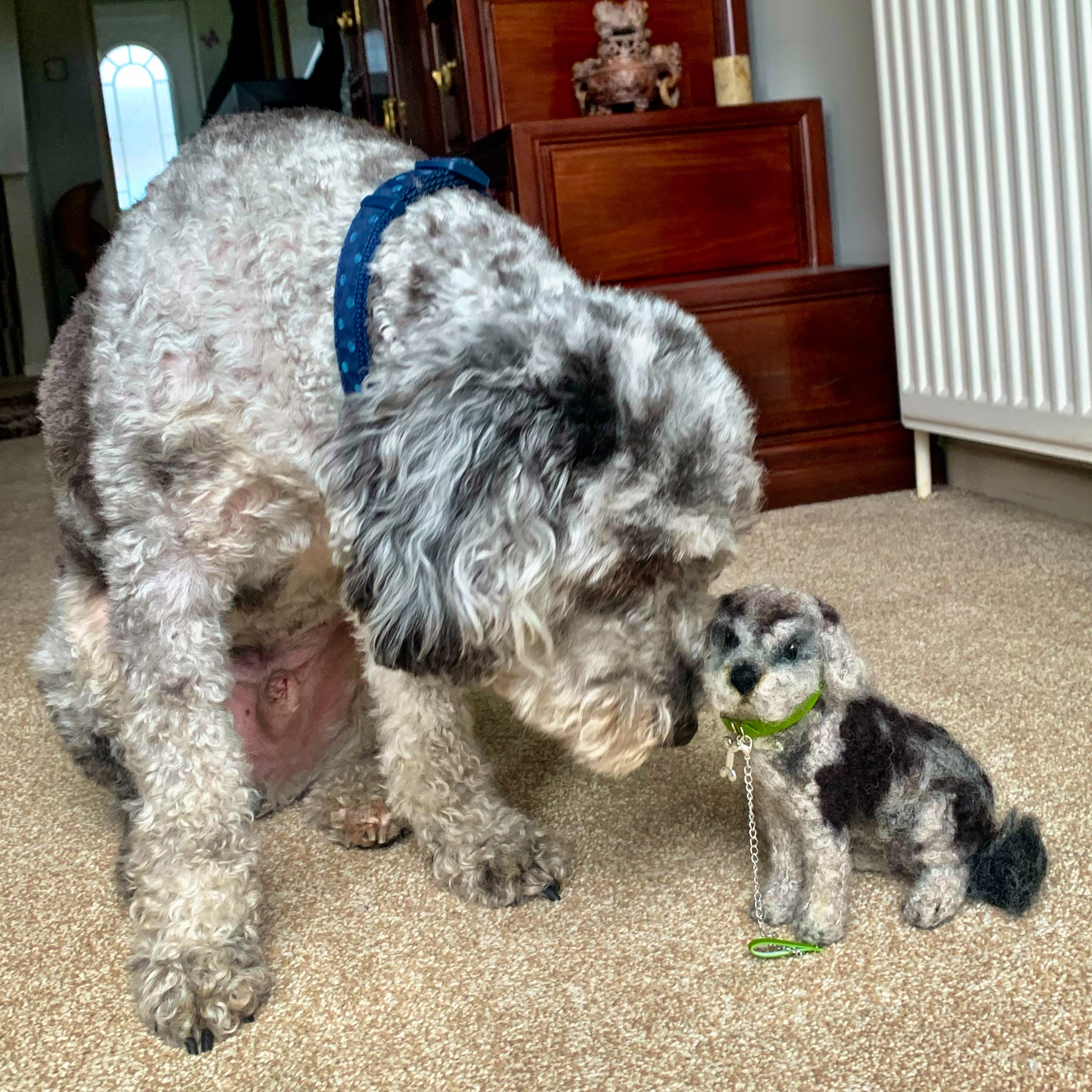
The week kicked off with the delivery of a little Yoshi from ArtemisFibreArt, which the boy himself was rather intrigued about. Thankfully he decided against tearing it apart as is his usual reaction to soft toys. He recognises a handsome boy when he sees one!
Yoshi meets…. Little YoshiYoshi and the fabulous replica Little Yoshi from ArtemisFibreArt
24th February 2023 marks 100 years since the third A1 Class 4-6-2 Pacific locomotive left Doncaster Works for the very first time and entered service with the London & North Eastern Railway. As if we haven’t written enough about this particular loco in previous blog entries, here’s another look at her history. Designed by Sir Nigel Gresley and originally numbered 1472 in a sequence originated by the Great Northern Railway who had placed the order for 51 Class A1’s prior to the “Big Four” Grouping of January 1923. A year later the LNER renumbered her No. 4472 and she gained the name ‘Flying Scotsman’ after the eponymous titled train in readiness for display at the British Empire Exhibition at Wembley.
In 1928, ‘Flying Scotsman’ ran a non-stop passenger service between London King’s Cross and Edinburgh, this was achieved by means of another Gresley innovation; a corridor tender allowing drivers and firemen to pass through to the locomotive footplate from the leading train carriage. Water for the engine was picked up en-route from troughs set between the rails.
1st November 1934 No. 4472 became the first steam locomotive to be officially recorded at travelling at 100 miles per hour as she passed between Little Bytham and Essendale on the East Coast Main Line.
In 1946 the LNER introduced an extensive renumbering scheme with the aim of placing all locomotives of the same type in a numerical sequence. ‘Flying Scotsman’ was renumbered twice this year, firstly in January as No. 502 by Gresley’s successor Edward Thompson and then No. 103 in May. After the Nationalisation of the railways in 1948 60000 was added to LNER engine numbers and consequently No. 103 became No. 60103.
January 1947 ‘Flying Scotsman’ was converted from a Class A1 locomotive to an A3 under a programme initiated by Gresley in 1928 which added a larger boiler with a higher boiler pressure. A double Kylchap chimney was added in 1959 to improve performance with German style smoke deflectors being added in 1961 as the exhaust from the new chimney blocked the drivers view.
Things looked bleak in October 1962 when it was announced ‘Flying Scotsman’ would be withdrawn from service in January 1963 and sent for scrap. Holder of the steam speed record Gresley A4 4-6-2 Pacific No. 60022 ‘Mallard’ was to be saved for the nation and it was deemed that only one locomotive of any given wheel arrangement per designer could be preserved.
After a failed public appeal to “Save Our Scotsman” by raising the £3000 scrap value, businessman Alan Peglar, fresh from selling his Northern Rubber business and with money to burn stepped in and purchased No. 60103 from British Railways in 1963. As part of the deal, Peglar negotiated an agreement for ‘Flying Scotsman’ to run on the main line until 1966 with options to 1971. The locomotive was overhauled at Doncaster emerging in LNER Apple Green and carrying the number 4472 once again. In 1969, the locomotive was heading for USA and Canada on a tour where she travelled 15,400 miles to promote British exports where, after initial success, UK Board of Trade backing was withdrawn and by 1970 money was running out. As a result, in 1972 Peglar was declared bankrupt and ‘Flying Scotsman’ was put into storage in the US Army Sharpe Depot to keep her safe from creditors.
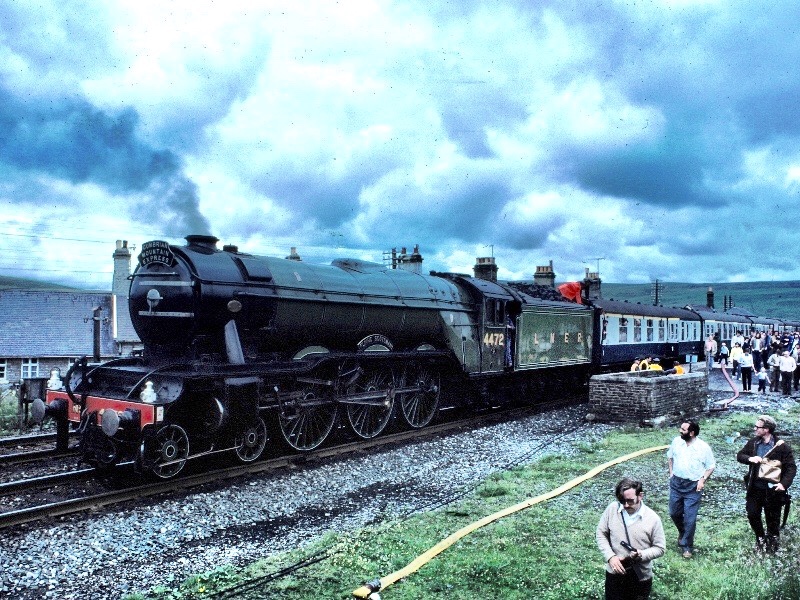
No. 4472 ‘Flying Scotsman’ working the “Cumbrian Mountain Express” over the Settle & Carlisle stops at Garsdale for water – 22/07/1981
Enter Sir William McAlpine, who stepped in and bought the locomotive, shipping her home in 1973. Following restoration at Derby, ‘Flying Scotsman’ embarked on a career running on the UK main line and heritage railways. In October 1988 she made a trip to Australia where over the next year she travelled more than 28,000 miles and set the record for the longest non-stop run by a steam locomotive totalling 422 miles having journeyed between Parkes and Broken Hill in New South Wales. On her return to the UK, ‘Flying Scotsman’ would eventually come under new ownership, that of a new consortium “Flying Scotsman Railways” which included Sir William McAlpine and record producer and railway enthusiast Pete Waterman. In 1993, she was outshopped in BR Brunswick Green, complete with double chimney and smoke deflectors representing how she looked at the end of her working life on BR.
Following restoration to final BR condition, No. 60103 ‘Flying Scotsman’ headed for the Paignton & Dartmouth Railway where her visit lasted from 25th July to 11th September 1993
No. 60103 ‘Flying Scotsman’ visited Llangollen in 1995
April 1995, while working an empty coaching stock movement on the Llangollen Railway, ‘Flying Scotsman’ derailed and suffered a crack between her boiler and cab. She was deemed to be a complete failure and was taken to Southall to face an uncertain future. Experiencing financial difficulties, the consortium sold ‘Flying Scotsman’ to biotech entrepreneur Dr Tony Marchington in 1996 for £1.5m in a deal which included a set of coaches. Over the next three years Dr Marchington spent a further £1m restoring the locomotive which he returned to the main line in 1999. Following a failed attempt to create a “Flying Scotsman Village” in Edinburgh and the collapse of his company Oxford Molecular, Dr Marchington was bankrupted in September 2003. ‘Flying Scotsman’ was put up for sale in 2004 and there was a real fear that the locomotive would be sold abroad. However, to the relief of many, a huge public appeal was launched by the National Railway Museum (NRM) and on 5th April 2004 it was announced that the NRM had been successful with their sealed £2.2m auction bid, which had been boosted by a £1.8m grant from the National Heritage Memorial Fund. ‘Flying Scotsman’, a locomotive which perhaps more than any other represents the people’s engine had finally been saved for the nation. Unfortunately No. 60103 required a great deal of work to return her to steam with an estimated 12 month £750,000 restoration commencing in 2005. In reality, it would take 10 years and £4.2m before a warming fire could be lit in the overhauled firebox of ‘Flying Scotsman’. On her first public runs in January 2016 following restoration, she was seen in a wartime black livery on the East Lancashire Railway.
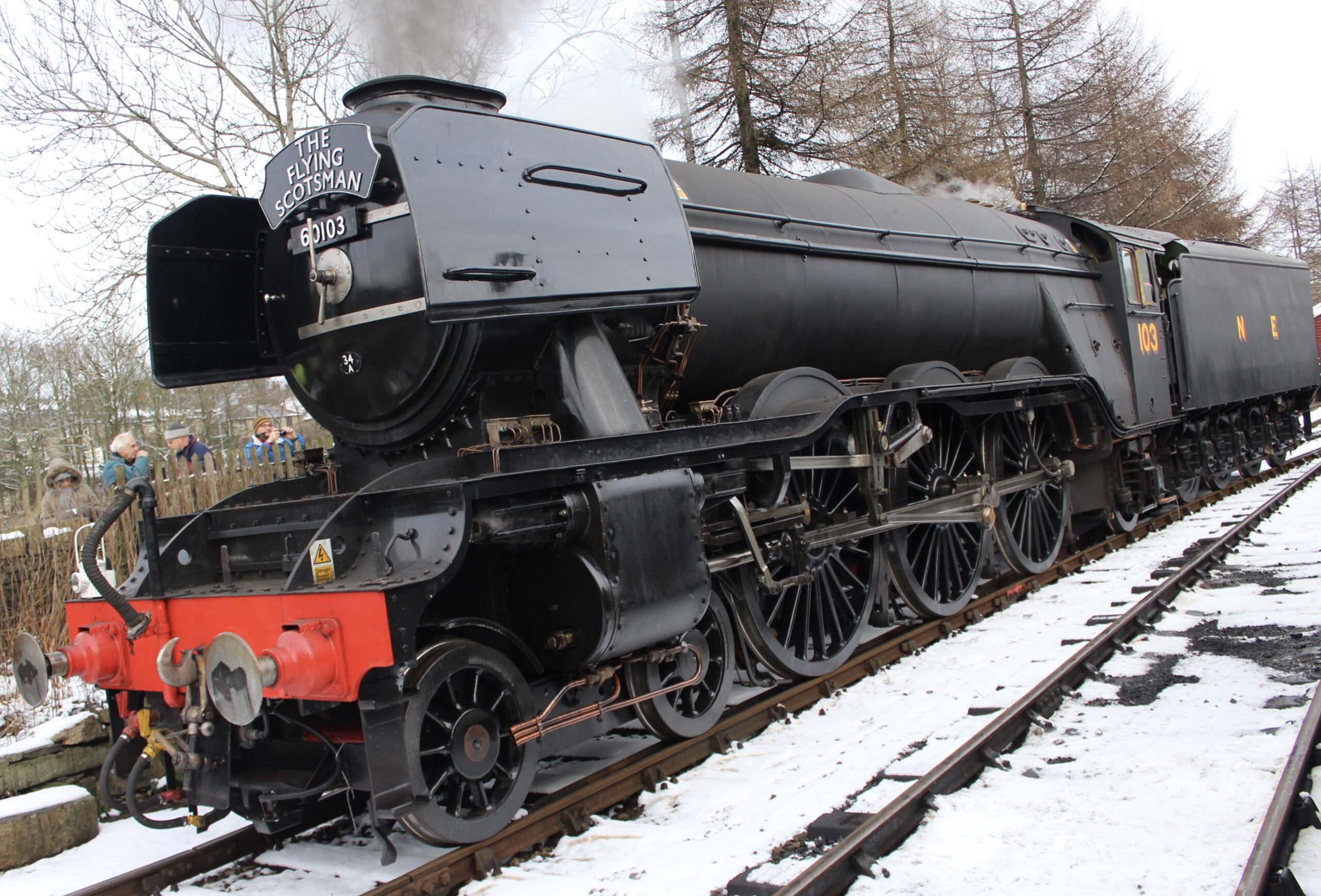
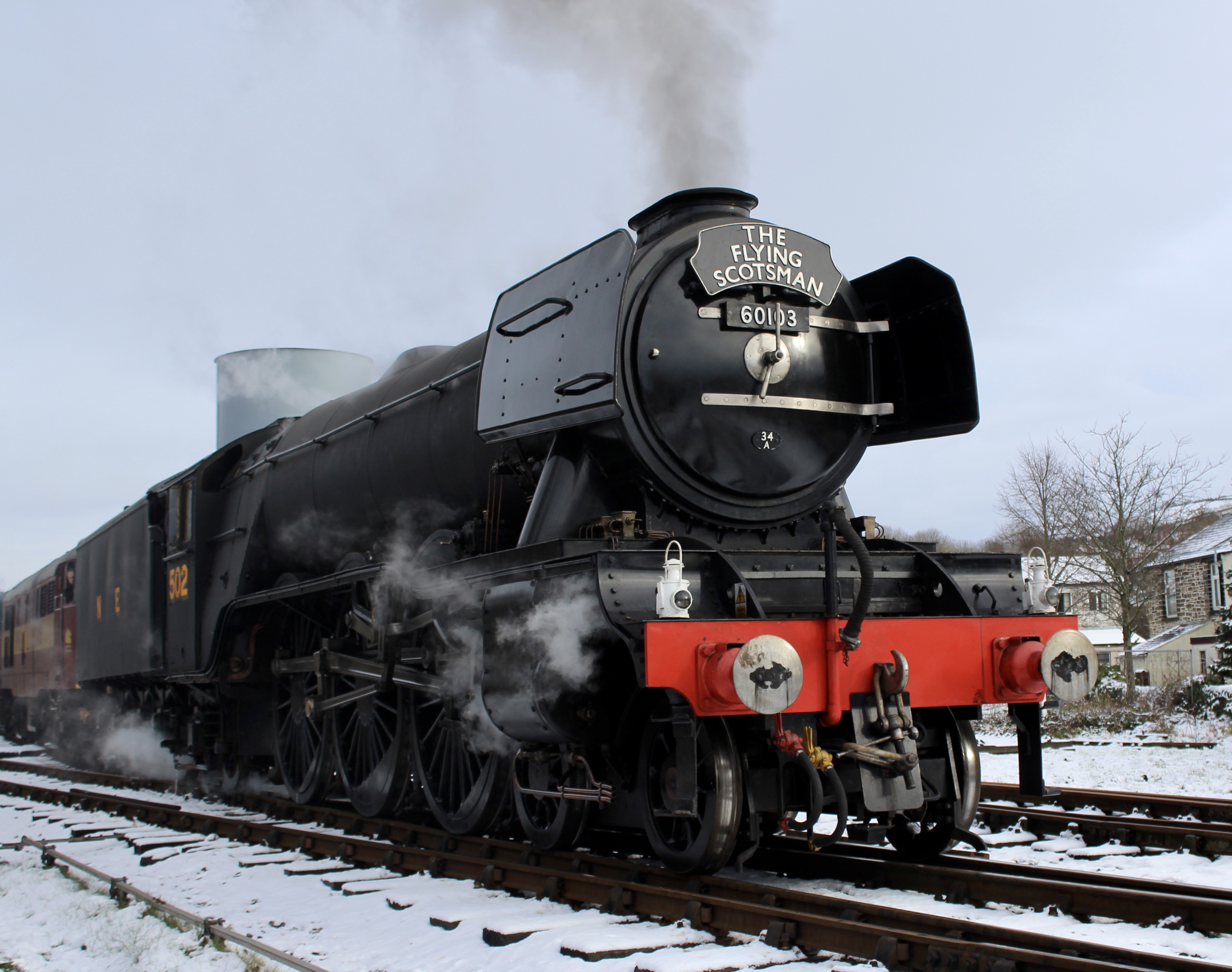
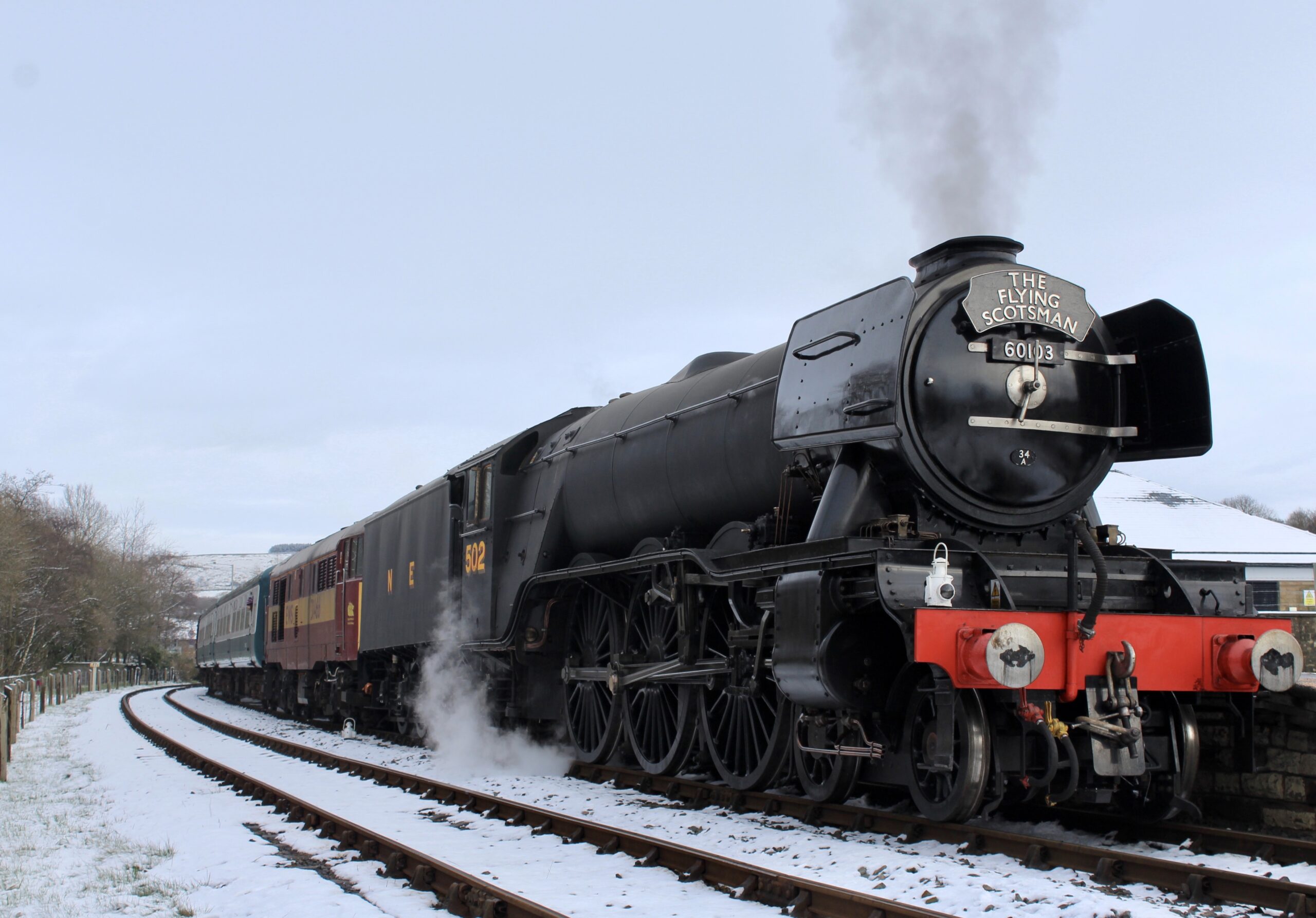
Still in wartime black livery with No. 60103 on the smokebox and No’s 103 and 502 on opposite cab sides, her first mainline outing following overhaul was on 6th February 2016 at the head of “The Winter Cumbrian Mountain Express” from Carnforth to Carlisle. Myself and @da_buckley967 decided to drive from Dorset to Cumbria to see the spectacle of ‘Flying Scotsman’ climbing Shap on the West Coast Main Line.
“The Winter Cumbrian Mountain Express” – 06/02/2016
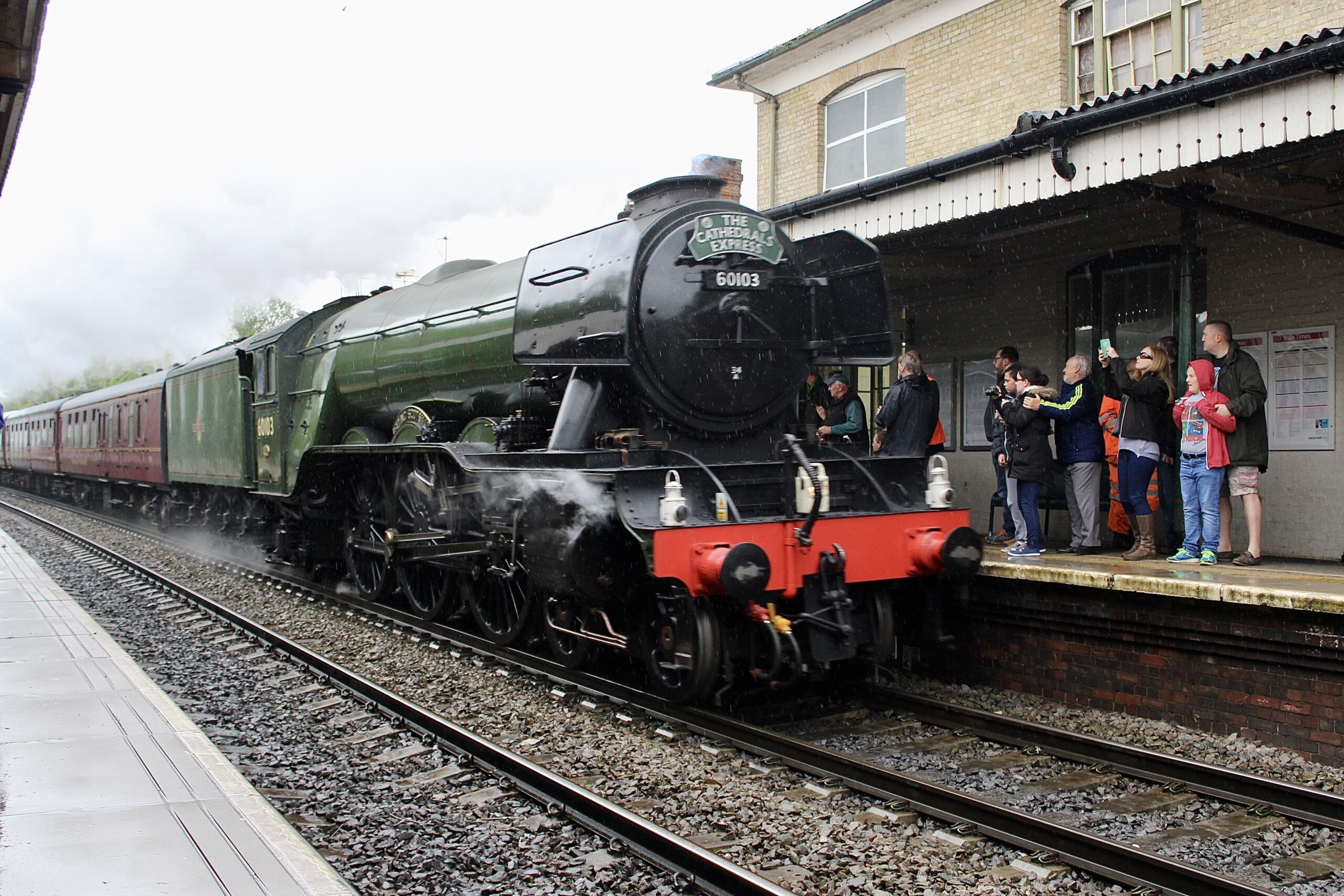
Showing just how popular No. 60103 ‘Flying Scotsman’ has become is evident in this scene as she passes through Romsey with “The Cathedrals Express” rail tour on 21st May 2016
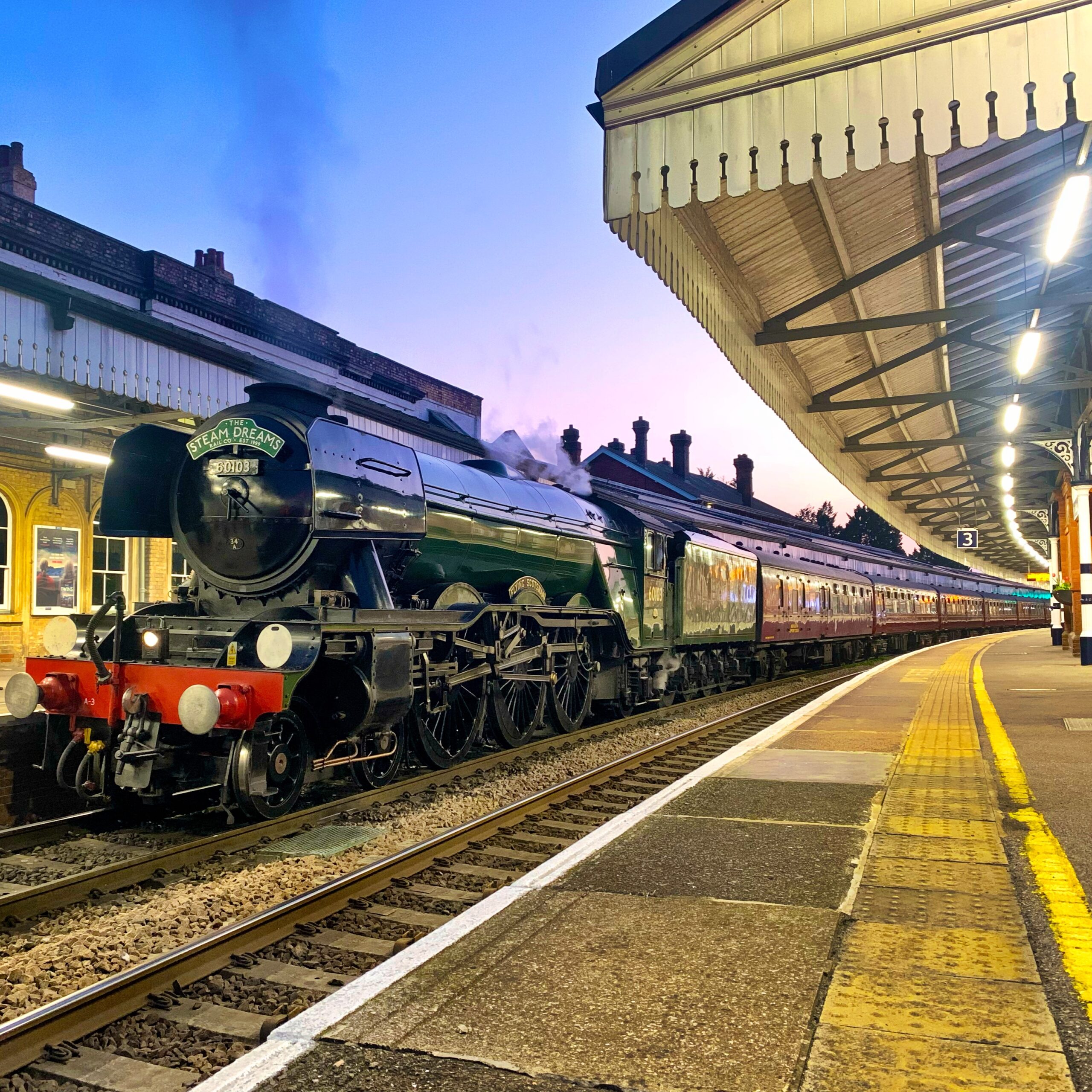
Steam Dreams ‘Flying Scotsman’ London to Winchester and Afternoon Tour from Southampton – 06/06/2021
Ahead of her centenary year celebrations, ‘Flying Scotsman’ underwent another overhaul at Riley & Son in Bury, the first event following this being her attendance at London King’s Cross to help celebrate the railway station’s 170th anniversary and launch her own event programme before she arrived in Dorset for a stint on the Swanage Railway.
For more ‘Flying Scotsman’ goodness, you might like to check out these “Railway Dog” blog entries from 2022 which feature more images and video:
From 27th February to 3rd March 2023 no weekday trains will run between Yeovil Pen Mill and Dorchester West to allow Network Rail to lay new track and carry out other maintenance, including station improvements at Maiden Newton. The closure extends to include the Yeovil to Castle Cary section on 6th and 7th March affecting Great Western Railway (GWR) and South Western Railway (SWR) services.
In no way connected to the forthcoming closure “up the West”, Monday 20th and Tuesday 21st February 2023 saw Freightliner Engineering Trains head to Dorchester South. A further train was scheduled to depart Eastleigh East Yard for Upwey on Wednesday 22/02/2023.
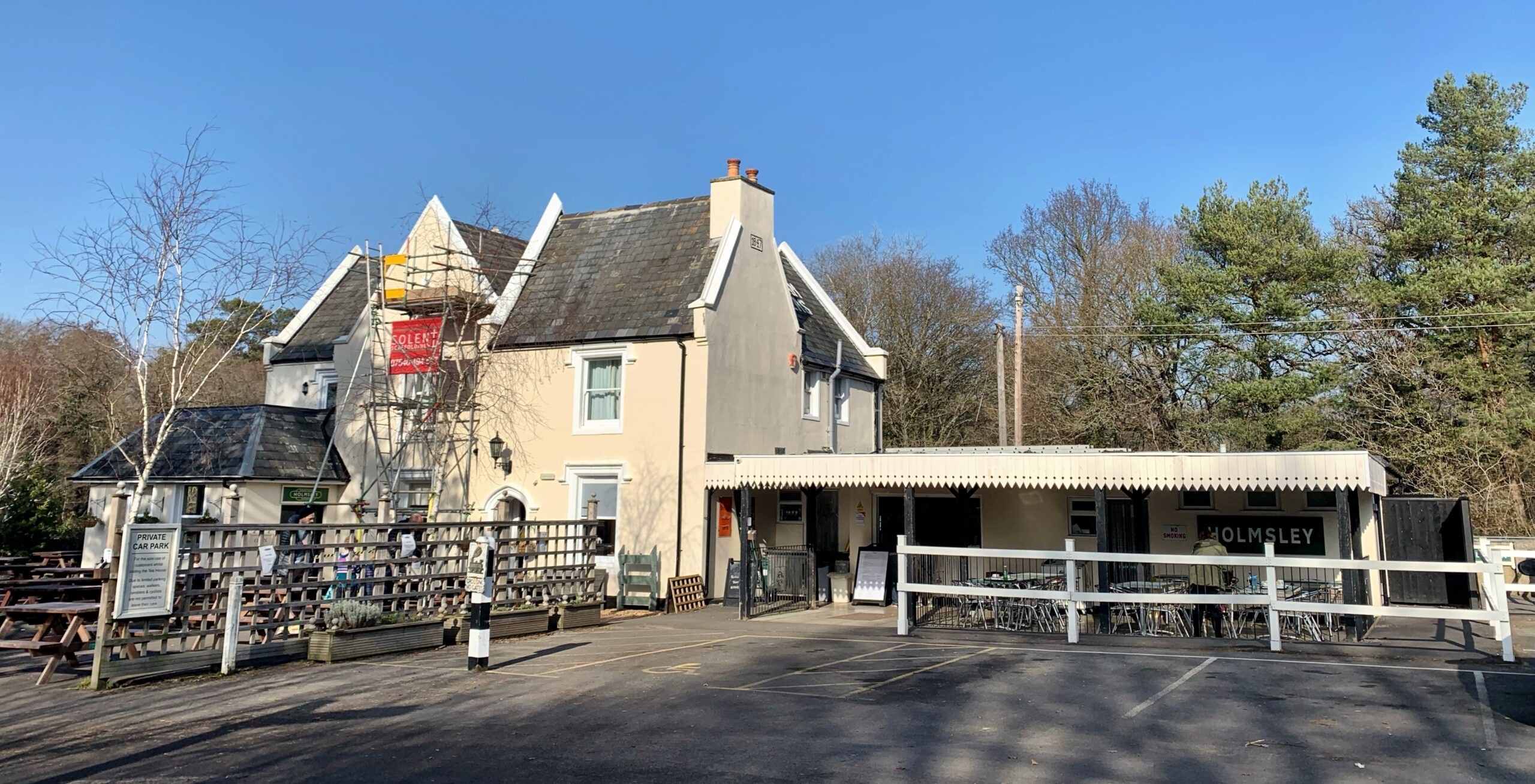
In another of our occasional visits to cafes which happen to be situated in former railway stations, on Wednesday 15th February, we popped over the county border to Hampshire in order to visit The Old Station Tea Rooms at Homsley.
The Old Station Tea Rooms at Homsley – 15/02/2023
Opened in 1874 as Christchurch Road railway station by the Southampton & Dorchester Railway it was, at the time, the closest station to Bournemouth and Christchurch, becoming Holmsley station in 1894. Prince Edward, the eldest son of Queen Victoria was a regular user of the station with his mistress Lillie Langtry as it was here where they would embark on their way to their private residence in Bournemouth. Holmsley was also the inspitration for Browndean station in Robert Louis Stephenson’s novel “The Wrong Box”.
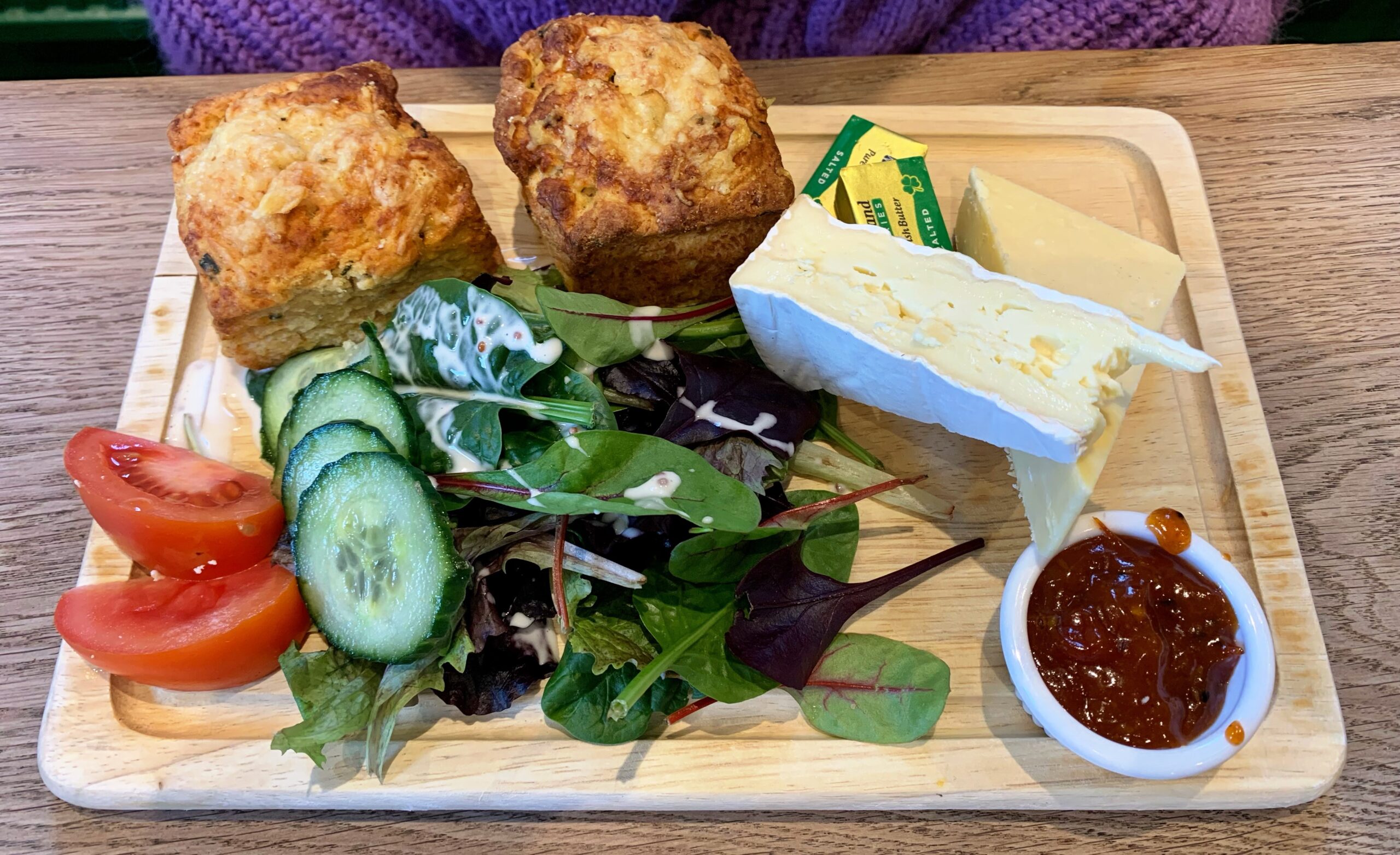
Porters Lunch BoxStation Managers Rarebit
Holmsley station was closed on May 4th 1964 as a result of the Beeching Report. Today the main station building lives on, repurposed as a tea room with several items of railway memorabilia and photographs on display. Dogs are welcome at outside tables, of which there are many, and the food is delicious. Walks along the Castleman Railway utilising the old rail road to Ringwood, Wimborne and Poole can be enjoyed nearby.
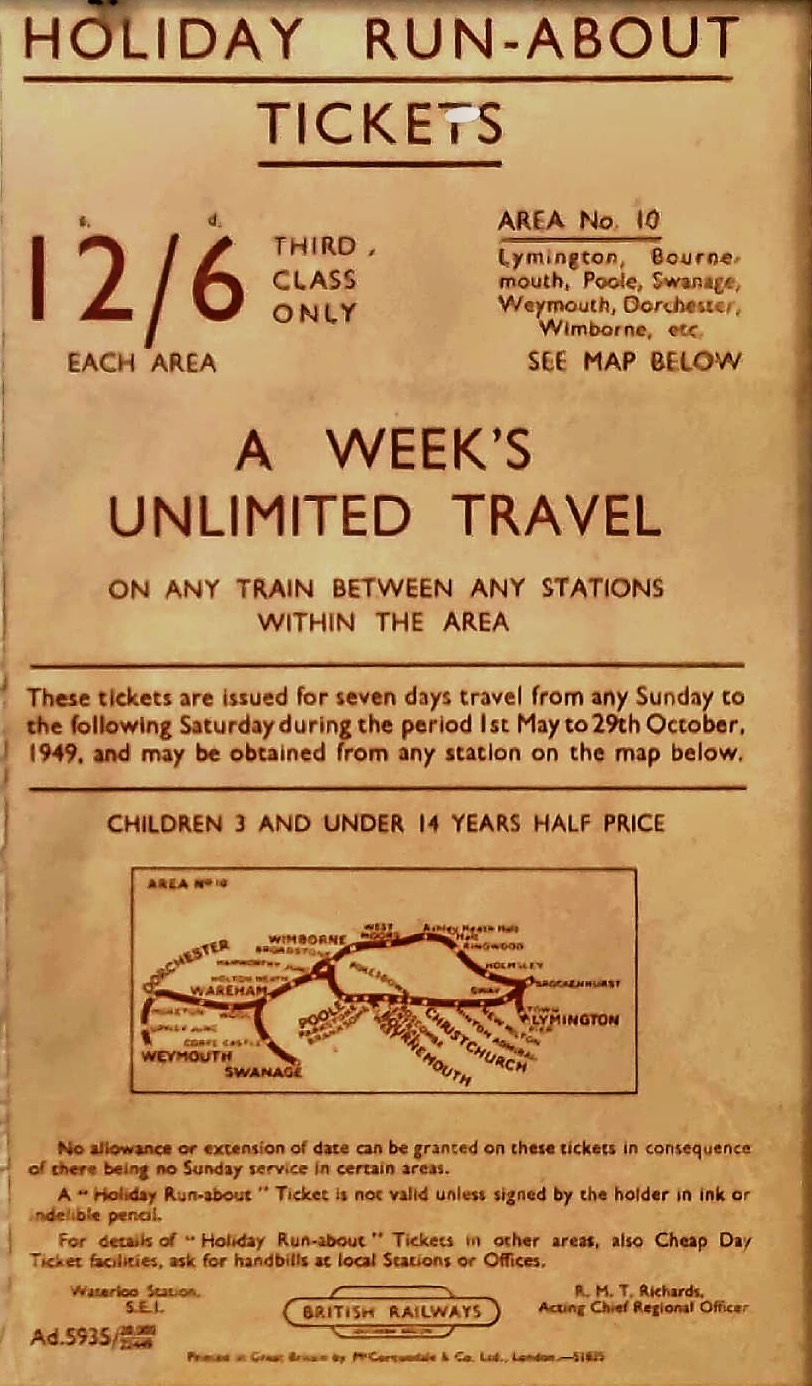
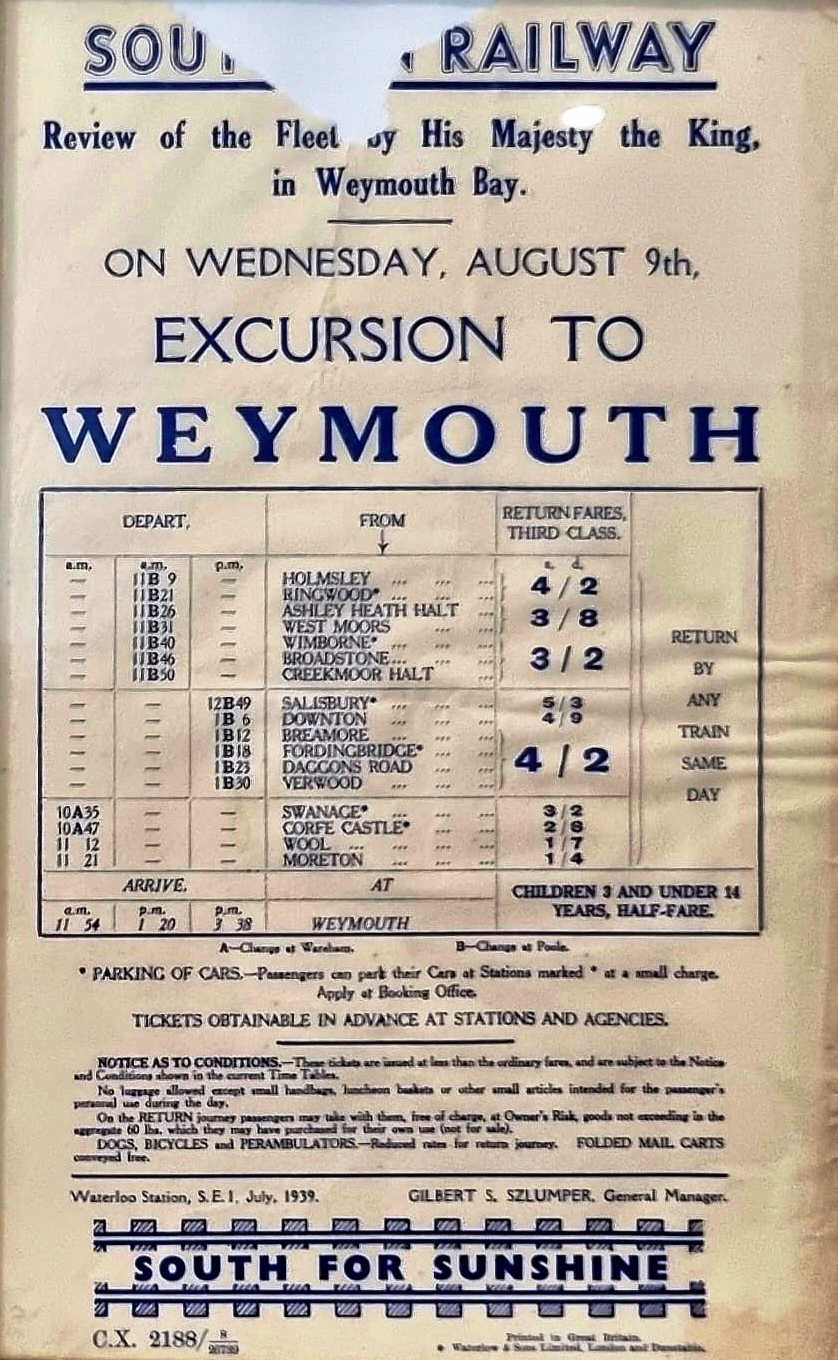
An example of the railway themed memorabilia which can seen at The Old Station Tea Rooms, HomsleyReview the fleet at Weymouth!
That brings us to the end of another entry. Thanks for visiting and we hope to see you again another time. Your comments, corrections and observations are very much appreciated. Recommendations for cafes situated in former railway stations are welcome! This weeks blog was mostly written with the aid of tea, Galaxy Milk Chocolate Digestive biscuits to the accompaniment of Pink Floyd’s “The Dark Side Of The Moon” – which, amazingly, is 50 years old next Wednesday (1st March 2023). Time, eh?
Yoshi has spotted a squirrel, or a possibly Class 444 Electric Multiple Unit. They both deserve being barked at….
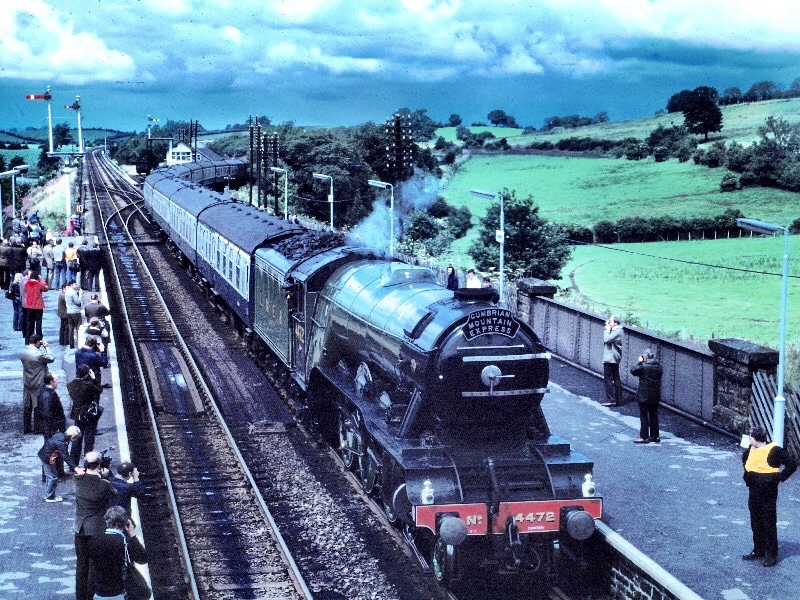
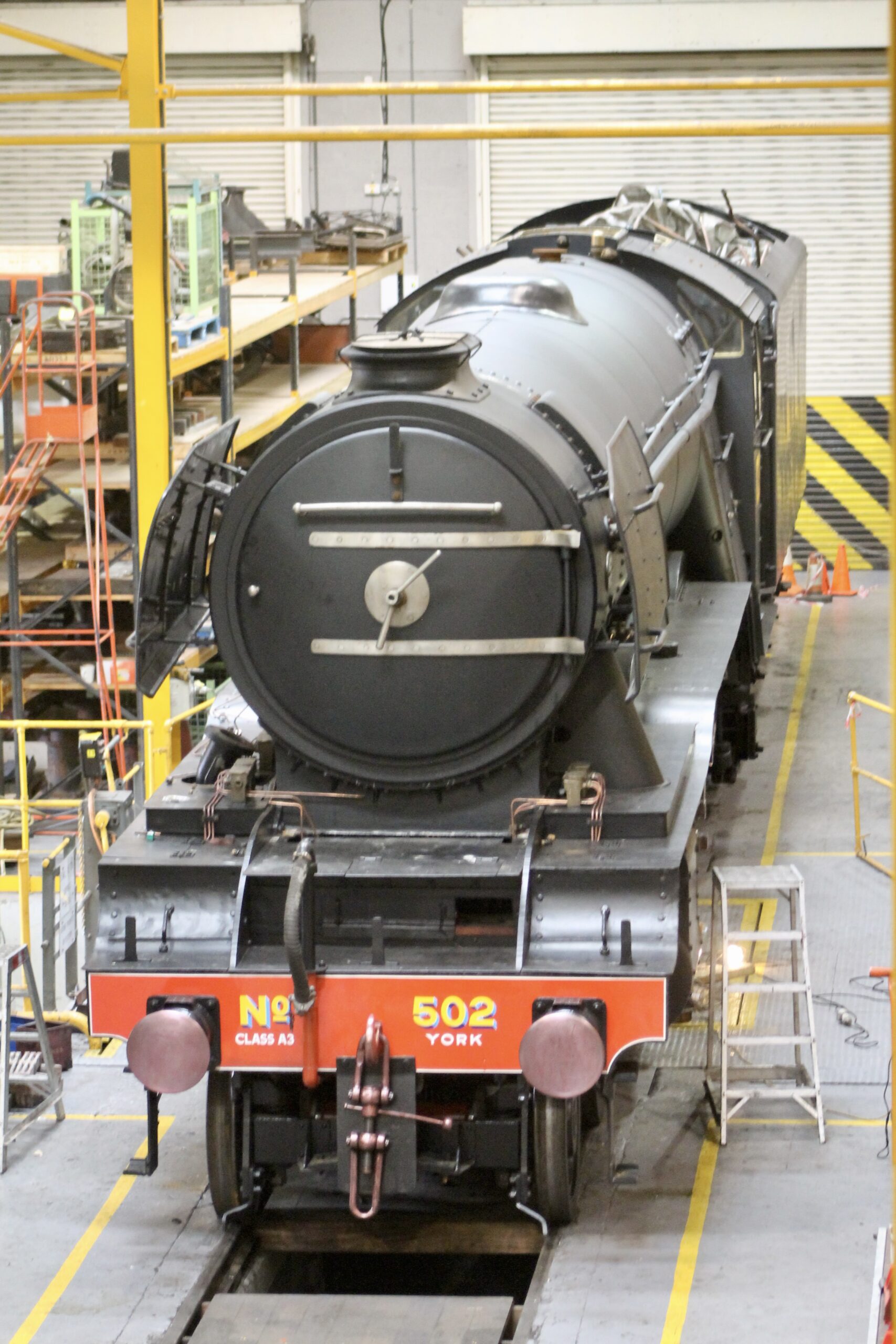
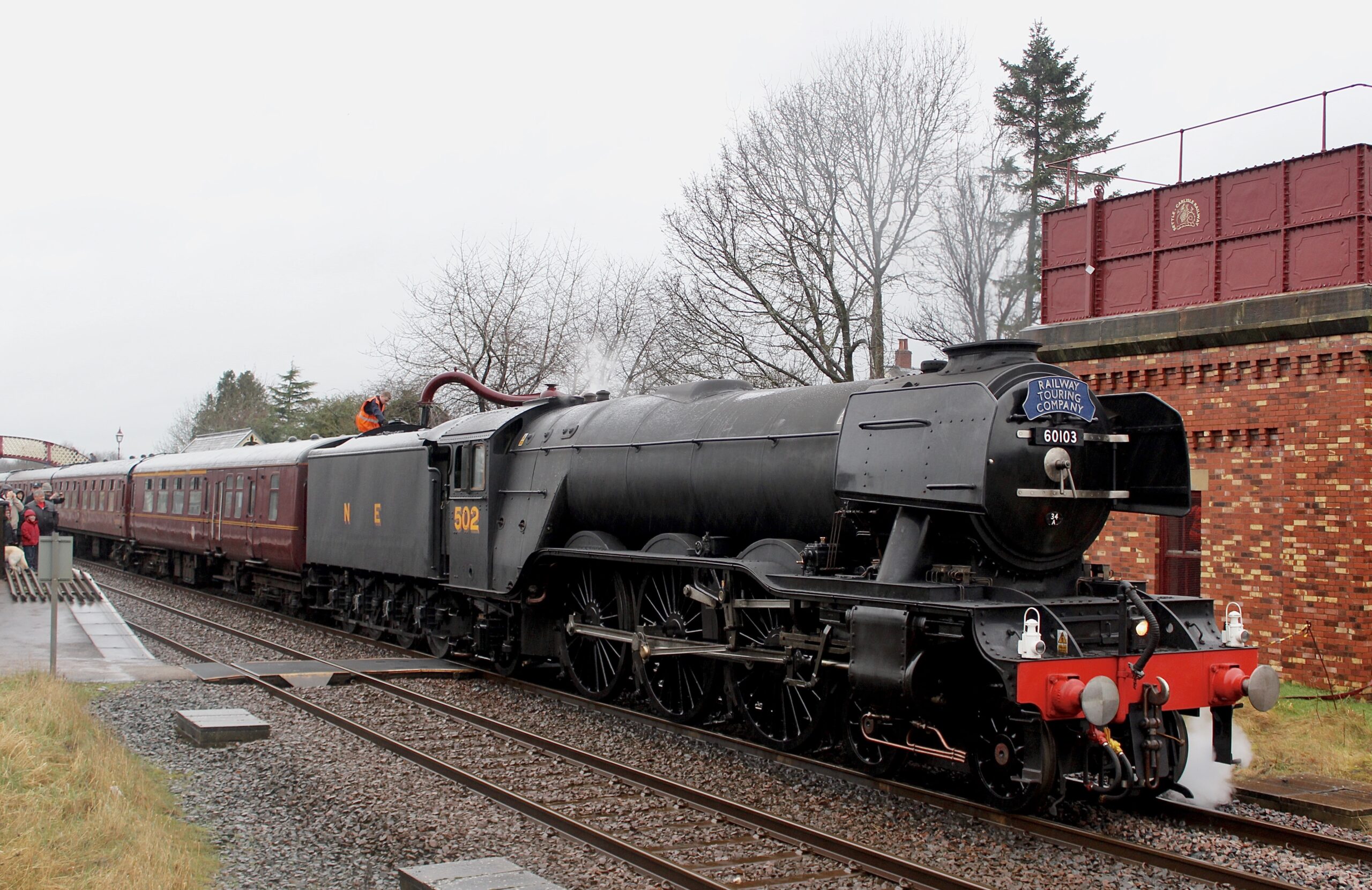
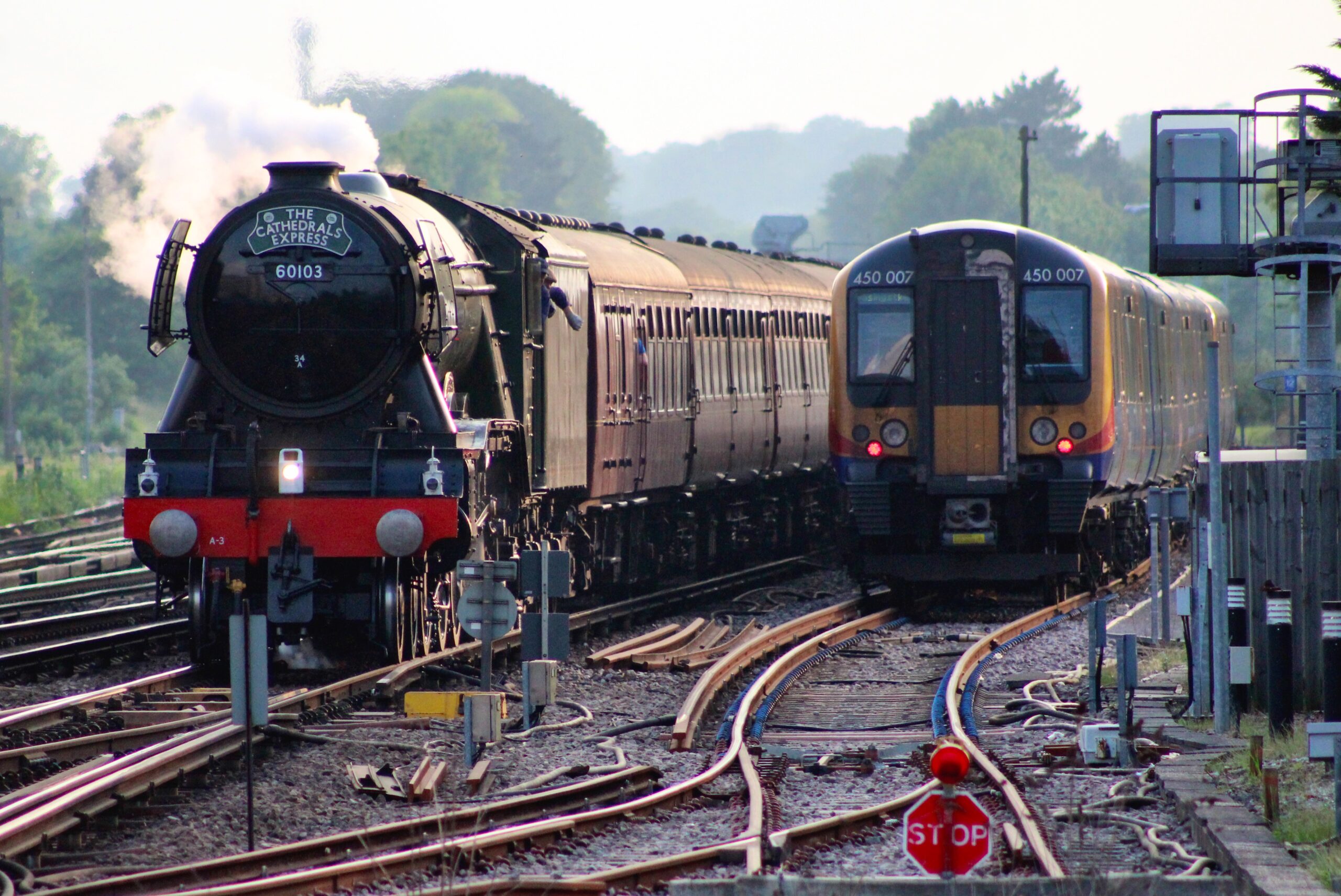
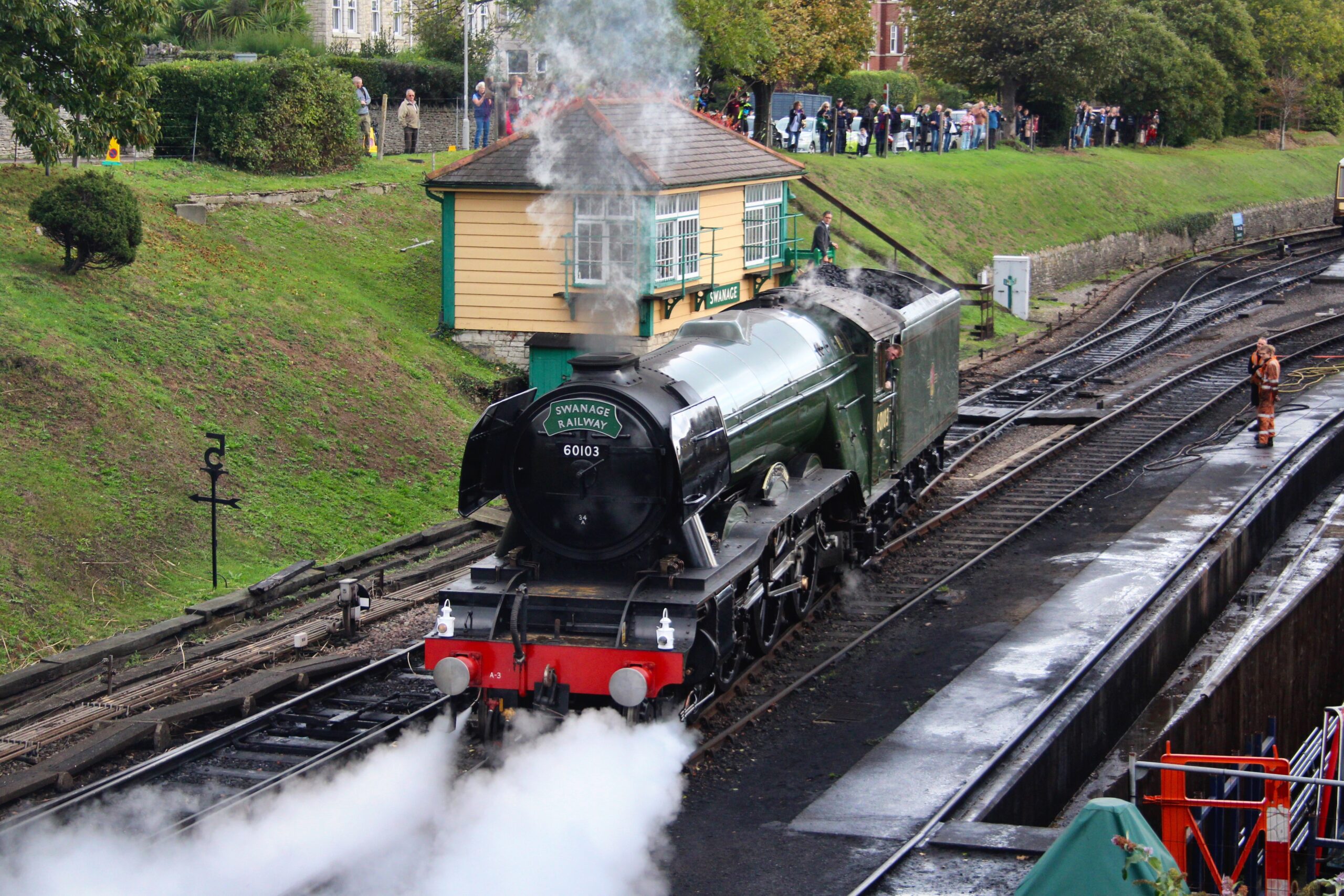
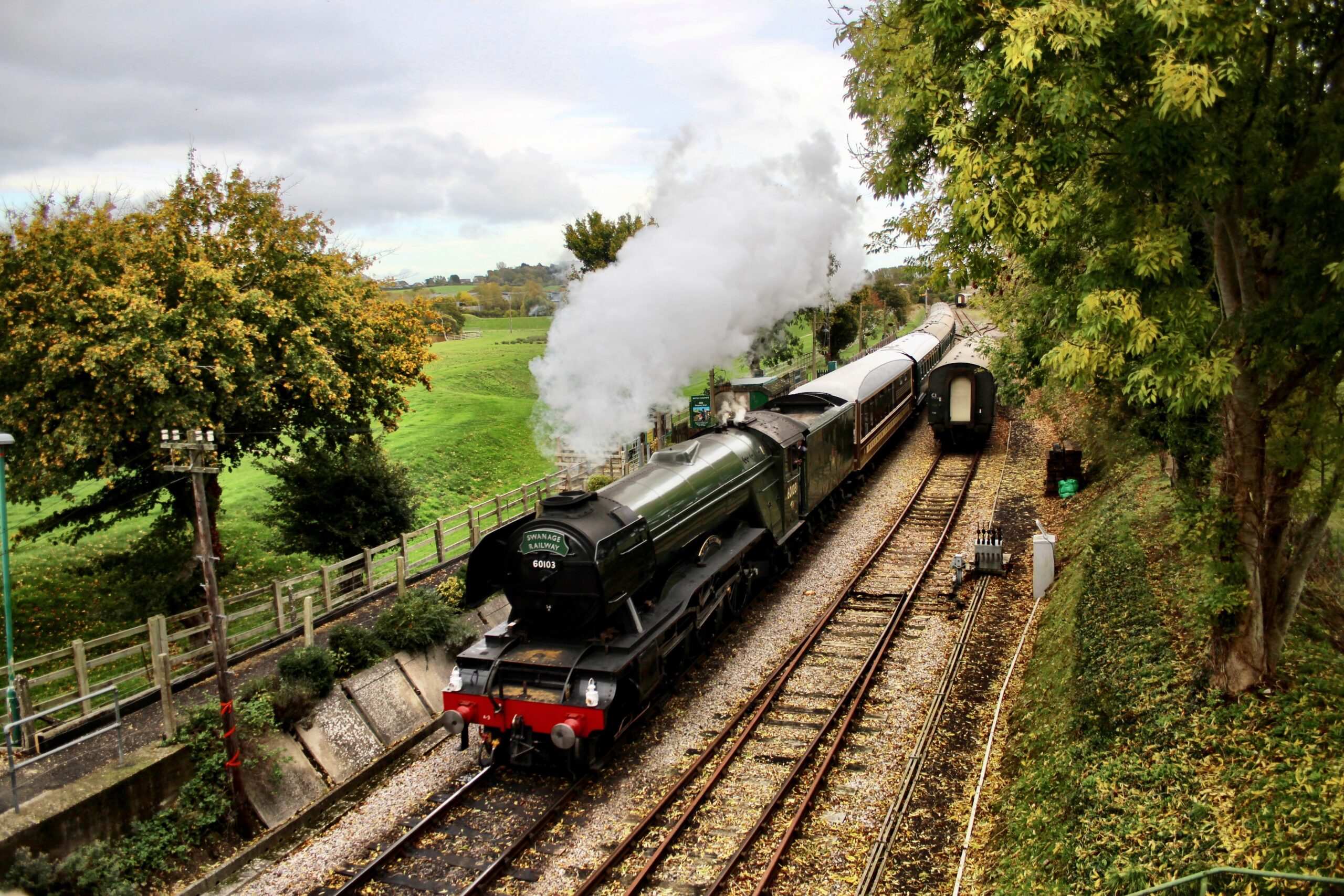
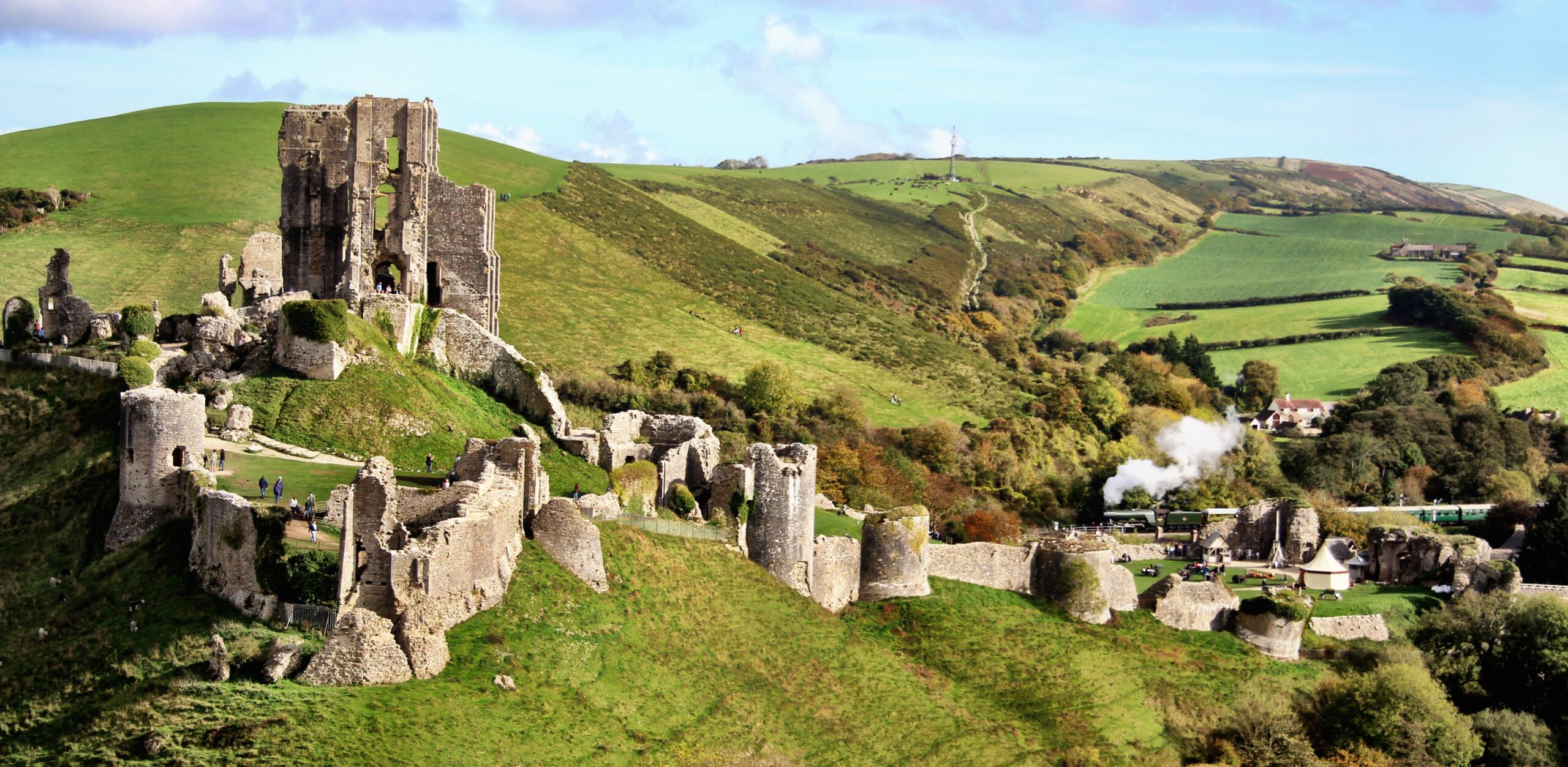
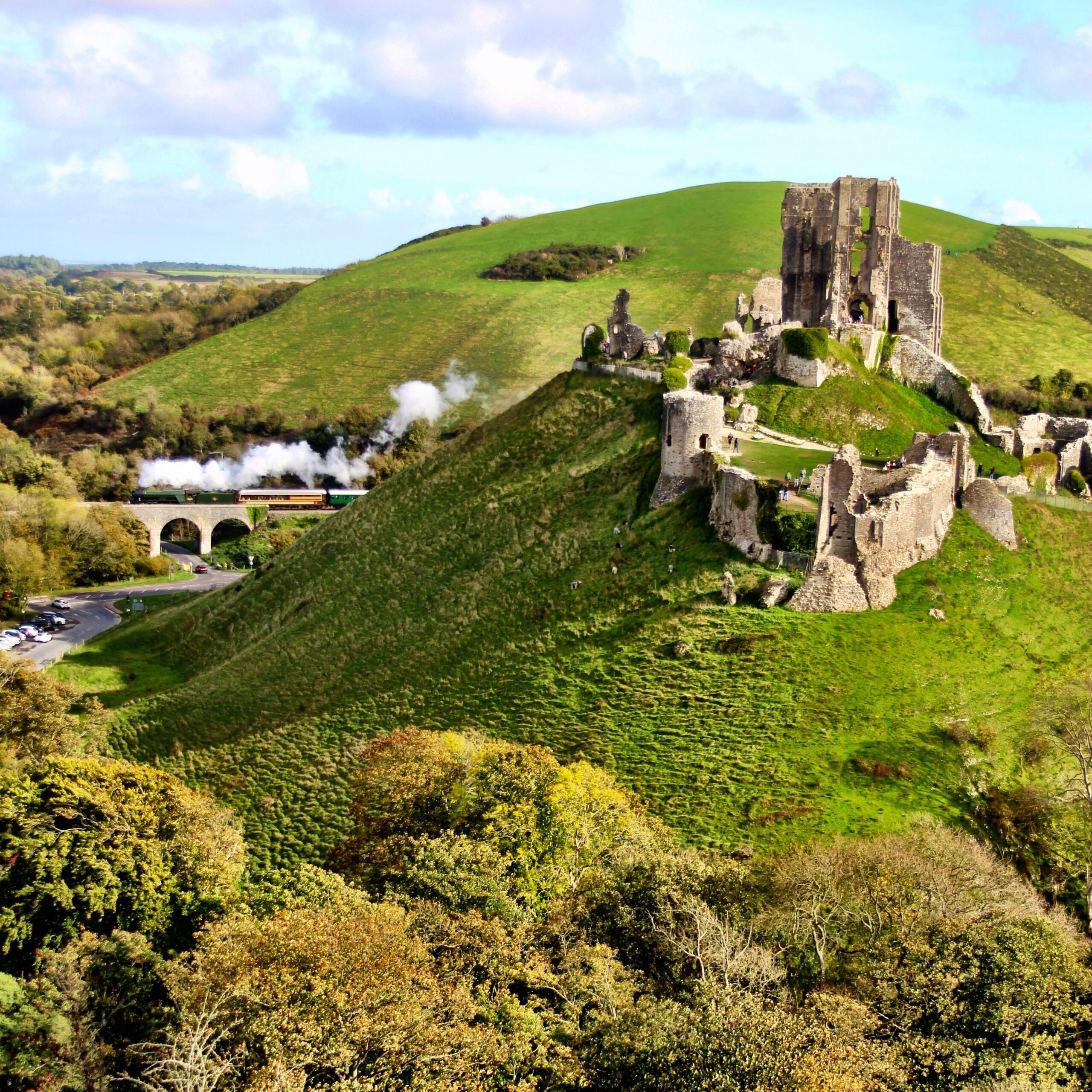
LNER Gresley A3 4-6-2 No. 60103 hauls her last passenger train during her 2022 visit to the Swanage Railway as 1X10 1645 Swanage to Norden crosses Corfe Viaduct – 26/10/2022No. 4472 ‘Flying Scotsman’ alongside Stanier Black Five Class 5MT 4-6-0 No. 5407 at Steamtown which occupied the site of the former London Midland & Scottish Railway Carnforth Motive Power Depot (MPD) opened in 1944. It was hoped that the depot would form part of a preservation scheme involving what is now the Lakeside & Haverthwaite Railway but when this could not be realised due to road modernisation it was developed as major visitor attraction. In 1974 Sir William McAlpine became a shareholder in the company for the purposes of stabling ‘Flying Scotsman’ and he eventually took a controlling interest in the company and purchased the complete site including the track from British Rail. In 1990 McAlpine’s controlling stake in Steamtown Railway Museum Ltd was sold to David Smith, who over the following years has bought out the majority of the minority shareholders. The site closed to the public in 1998 and today it is the base for Smith’s West Coast Railways, which operates heritage steam and diesel trains across the national UK railway network – 18/07/1981The “Cumbrian Mountain Express” departed Crewe at 0940 behind electric traction to Carlisle where No. 4472 ‘Flying Scotsman’ took over and took the train along Settle & Carlisle to Skipton and Carnforth followed by electric haulage to Crewe. Seen here for a water stop at Garsdale – 22/07/1981A feature of CME tours were the run pasts through Appleby where passengers detrained and given the opportunity to photograph the steam locomotive and train in action – 22/07/1981The same view 35 years later and delayed because of single line working imposed by a landslip at Eden Brows near Armathwaite, “The Winter Cumbrian Mountain Express” 1Z87 1436 Carlisle to London Euston arrives at approximately 45 minutes late arrives at Appleby. No. 60103 ‘Flying Scotsman’ replaced LMS Princess Coronation No. 46233 ‘Duchess of Sutherland’ and was 60103’s first main line rail tour following her £4.2 million, 10 year major overhaul. She ran in Wartime black livery and carried the numbers 103 and 502 on either cab side – 06/02/2016No. 502 ‘Flying Scotsman’ in wartime black livery undergoing overhaul and restoration in the works at the National Railway Museum (NRM), York. ‘Flying Scotsman’ was bought for the nation by the NRM in April 2004 at a cost of £2.3million. She ran intermittently until December 2005 (although she was out of action between September 2004 and May 2005 undergoing a ‘heavy intermediate repair’) when she was withdrawn for overhaul. At the time, the NRM said this would take 12 months and cost around £750,000. In 2012 when the above image was taken, she was still not ready to steam again and the cost of the work undertaken had spiralled to over £2.6million. A report at the time, commissioned for the Trustees of the Science Museum Group (of which the NRM is part) to help understand quite why the overhaul had gone over time and over budget, was prepared by a respected steam engineer from Tyseley Locomotive Works, Bob Meanley, assisted by a professor of engineering and found “It is difficult to analyse drift in the project because there was no real plan against which it could be measured and new tasks were added to the workload as new problems were uncovered.” The report confirmed ‘Flying Scotsman’ was in a very worn out condition when acquired by the NRM. To a large degree this had been well known, although reports commissioned at the time seem to have been overly optimistic. The NRM had been clearly under pressure to secure the locomotive amid fears it may have been sold abroad, but is found not to have properly assessed the state of its new acquisition following purchase or to have drawn up a credible refurbishment plan. New faults are noted as having taken staff by surprise five years after purchase. In 2011, the locomotive had to be dismantled again to correct issues many thought would have been identified back in early 2006. – 03/07/2012No. 502 ‘Flying Scotsman’ at the Railway Museum, York. After the release of the 2012 report on the restoration of ‘Flying Scotsman’, the NRM commissioned an independent review to determine the next steps on how to proceed. It was recommended that further work on the locomotives overhaul should be put out to external tender and subsequently it was announced this would be Riley & Son and ‘Flying Scotsman’ was moved to their workshop at Bury. On 8 January 2016, ‘Flying Scotsman’ moved under her own steam for the first time since 2005. The final cost of the restoration was £4.5 million – 03/07/2012Following her ten year overhaul and restoration, ‘Flying Scotsman’ undertook running in tests on the East Lancashire Railway (ELR) and can be seen here at Rawtenstall – 17/01/2016Rawtenstall – 17/01/2016Awaiting the road at Rawtenstall – 17/01/2016Approaching Ramsbottom on the ELR – 17/01/20161Z86 0710 London Euston to Carlisle “The Winter Cumbrian Mountain Express” – No. 60103 ‘Flying Scotsman’ is seen here climbing Shap bank – 06/02/2016“The Winter Cumbrian Mountain Express” water stop at Appleby – 06/02/2016Steam Dreams organised 1Z60 0837 London Paddington to Salisbury “The Cathedrals Express” rail tour hauled by No. 60103 ‘Flying Scotsman’ approaches Dilton Marsh – 21/05/2016No. 60103 ‘Flying Scotsman’ working 1Z82 1502 Salisbury to Salisbury “The Cathedrals Express” passing through Romsey – 21/05/2016“The Cathedrals Express” 1Z62 1828 Salisbury to London Paddington at Grateley – 21/05/2016Delayed by a line side fire in the former British Rail Staff Association building at Salisbury station, “The Cathedrals Express” 1Z62 1856 Salisbury to London Paddington passes Class 450 No. 450007 on the approach Basingstoke – 28/05/2016No. 60103 ‘Flying Scotsman’ working 1Z75 1520 Salisbury to Southampton Central alongside the Lower Test Valley – 06/06/2021No. 60103 ‘Flying Scotsman’ awaits the road at Salisbury with Steam Dreams 1Z83 1852 Salisbury to London Victoria. Following this main line run, ‘Flying Scotsman’ was withdrawn from operation for an overhaul in preparation for her centenary year celebrations – 24/03/2022
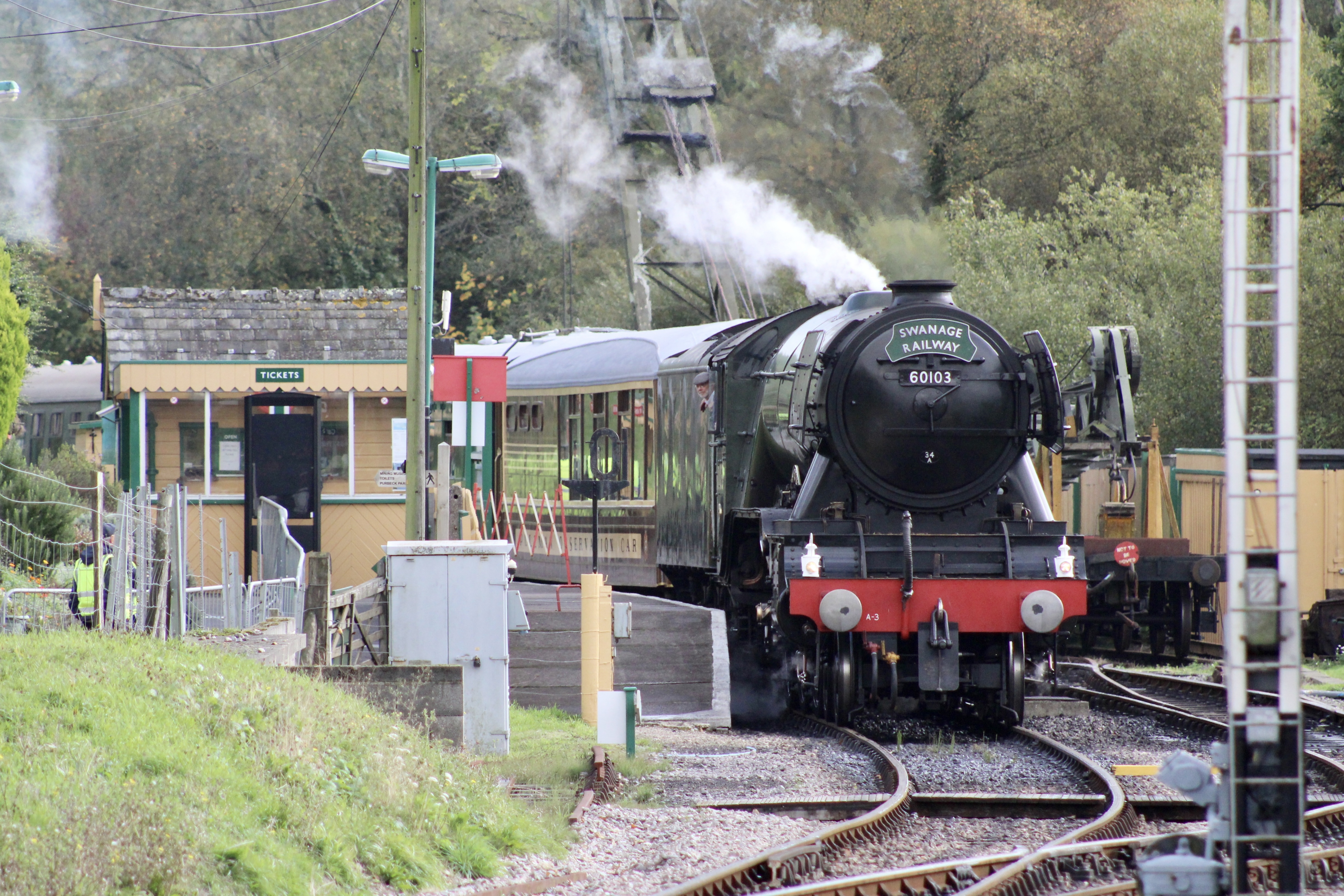
Yoshi took the opportunity of ‘Flying Scotsman’ being on static display at Swanage railway station to get up close and personal! Last week we shared video of ‘Flying Scotsman’ during her 1994 visit to the Swanage Railway. This week we move forward to 1999 and 2000 when the locomotive could be found in her famous LNER Apple Green guise and numbered No. 4472, as she appeared when she was owned by Alan Peglar on purchase from British Railways in 1963:
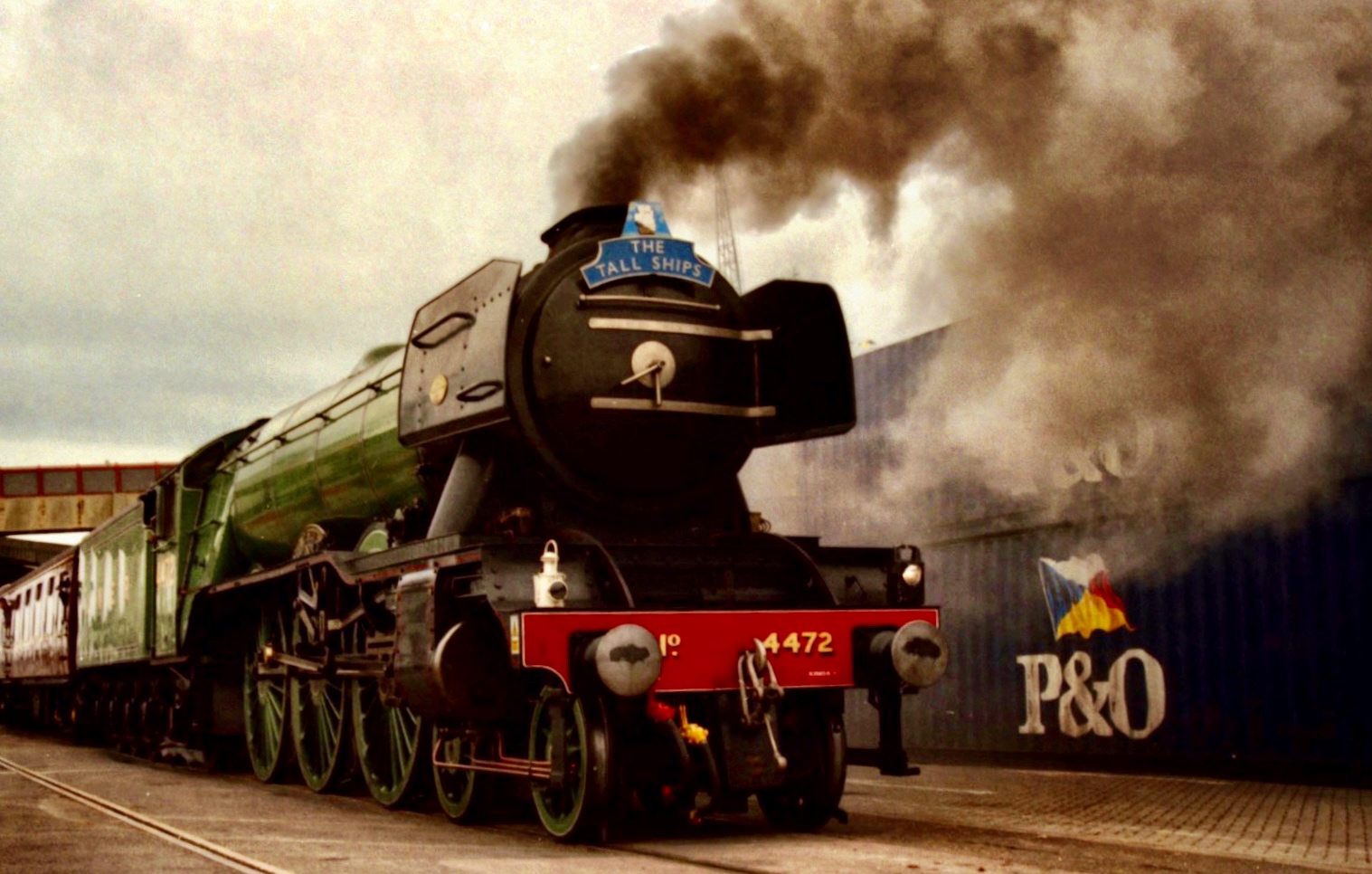
Video of LNER Gresley A3 4-6-2 No. 4472 ‘Flying Scotsman’ on various workings in LNER Apple Green livery: 08/08/1999 Upton Scudamore whilst on a London Paddington – Salisbury – London Paddington rail tour, 27/11/1999 Deputising for GWR 6000 Class King 4-6-0 ‘King Edward I’ No. 6024 on Pathfinder Tours “The Capital King” seen at Bradford Abbas and Sherborne, 06/02/2000 Deputising for SR Merchant Navy 4-6-2 No. 35028 ‘Clan Line’ on a VSOE British Pullman London Victoria to Southampton Docks and return rail tour seen in Southampton Docks, and 16/04/2000 Past Time Rail’s “The Tall Ships” seen in Southampton Docks and light engine turning move passing Eastleigh12th September 1965 and No. 4472 ‘Flying Scotsman’ visited Weymouth and is seen here on Weymouth depot. I was told that I was taken to see the special train organised by The Gainsborough Model Railway Society pass through Dorchester, so perhaps inspiring a lifetime love of railways! – John Chappell 12/09/1965
Wednesday 26th October to Tuesday 1st November
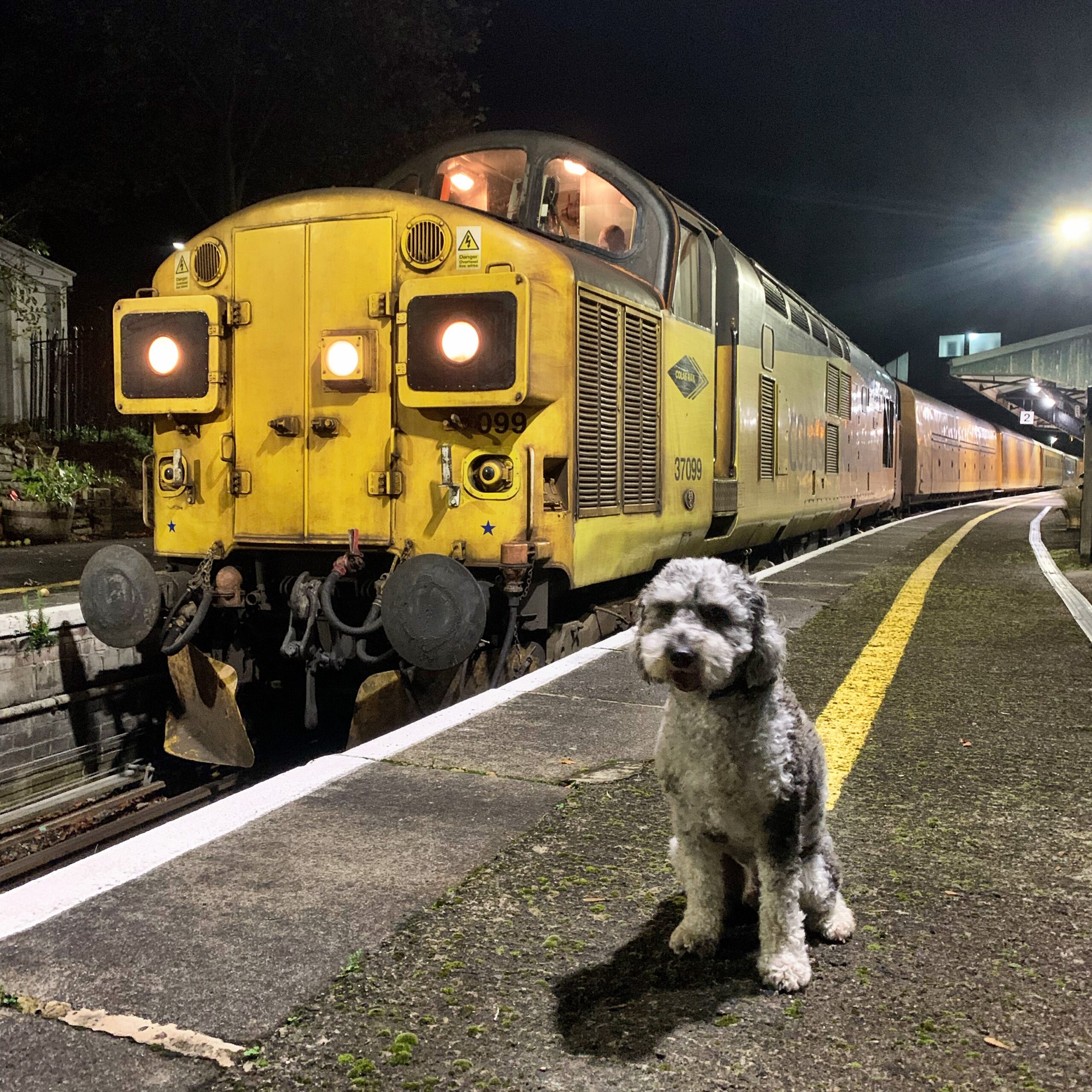
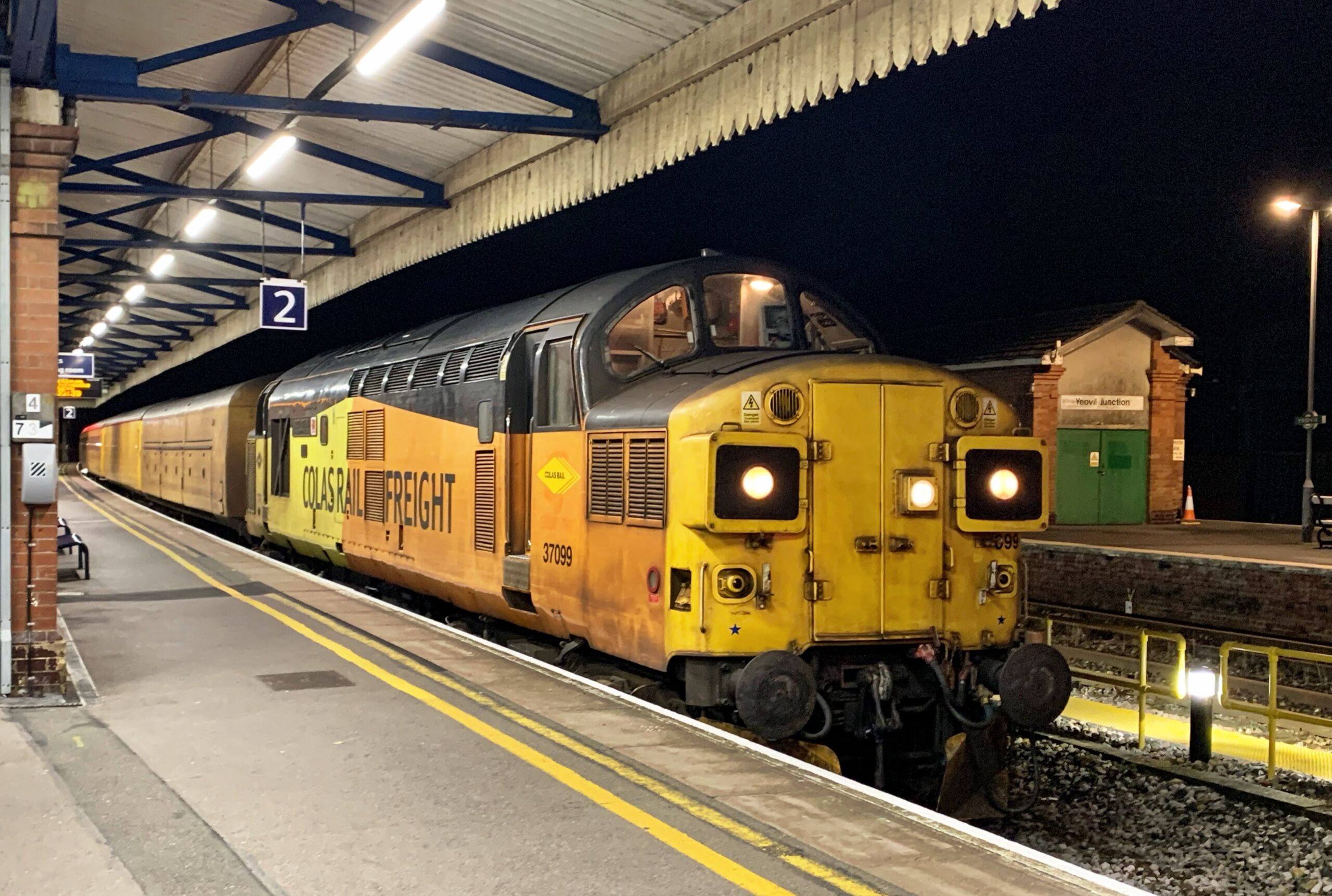
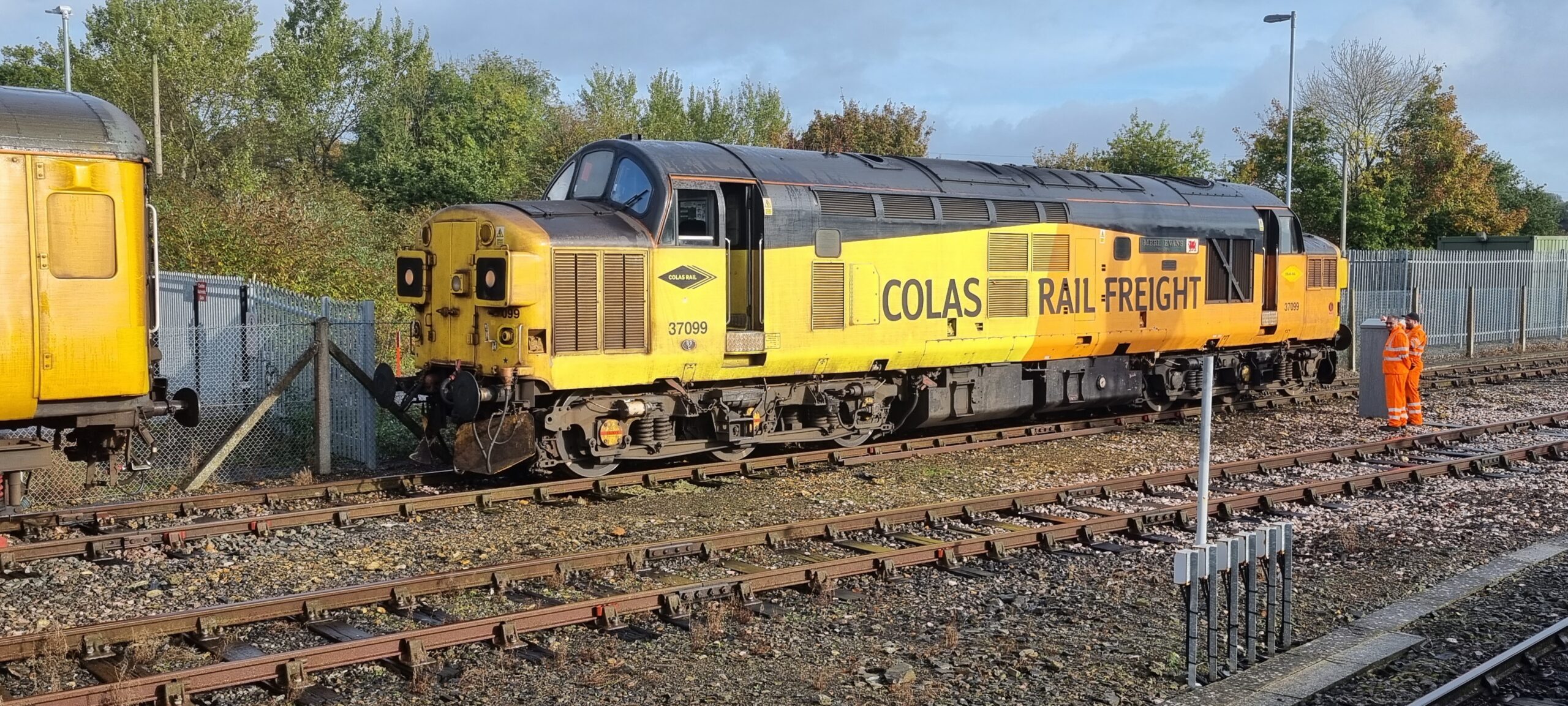
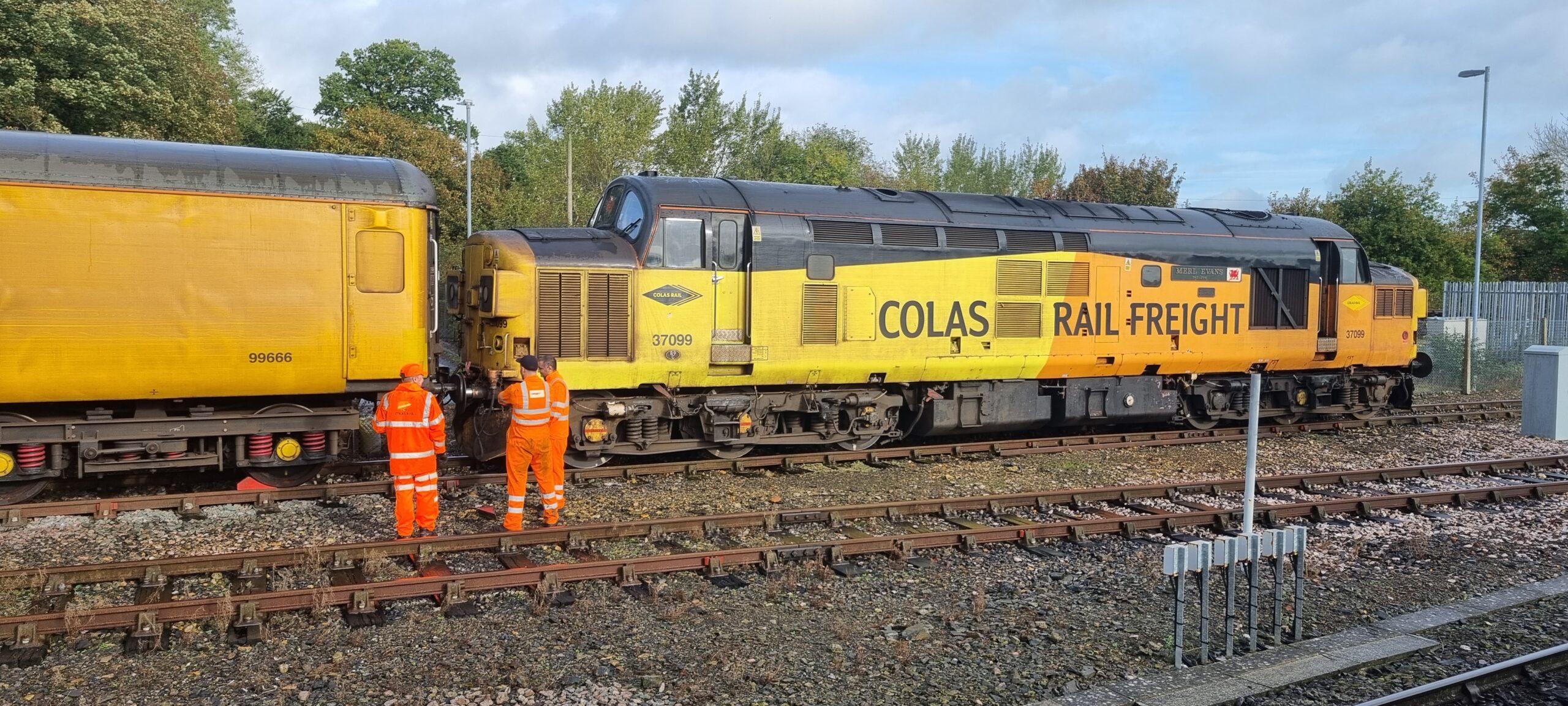
Returning to present day 2022 and Thursday 27th October which saw Yoshi and I travelling to Yeovil to catch sight of Colas Class 37 No. 37099 ‘Merl Evans 1947 – 2016’ working 3Q07 2053 Exeter Riverside New Yard to Exeter Riverside New Yard. This working consisting of a diesel locomotive on one end and a DBSO on the other usually heads off to Sherborne and Salisbury, but this month (possibly due to the speed restrictions on the line in place until 14th November 2022 because a clay embankment between Tisbury and Gillingham had dried out, causing the ground beneath the tracks to shrink) was scheduled to reverse at Yeovil Pen Mill, a station it usually misses out although is always booked to visit. I was 99% sure the train would make it to Pen Mill this time due to its pathing, but as I didn’t fully trust that the train wouldn’t be reversed before reaching here, I hedged my bets and went straight to Yeovil Junction to witness the test train working straight through. I jumped in the car and made it over to Yeovil Pen Mill just as the service arrived into platform 1. Being a glutton for punishment, we then headed back to Yeovil Junction to see the train arrive on the return leg before departure for Exeter at 0023.
Yoshi on a late night barking mission with Colas Class 37 No. 37099 ‘Merl Evans 1947 – 2016’ at Yeovil Pen Mill – 27/10/2022Nameplate detail of Colas Class 37 No. 37099 ‘Merl Evans 1947 – 2016’ named in memory of Mel’s outstanding contribution to British model railways – 27/10/2022Colas Class 37 No. 37099 ‘Merl Evans 1947 – 2016’ awaits the green light on the return path to Exeter at Yeovil Junction – 27/10/2022
Video of Colas Class 37 No. 37099 ‘Merl Evans 1947 – 2016’ working 3Q07 2053 Exeter Riverside New Yard to Exeter Riverside New Yard – 27/10/2022
On Sunday 30th October Yoshi and I visited National Trust’s Stourhead Gardens in Wiltshire. After an initial rain shower on arrival, we had a very pleasant few hours drying out whilst walking around the grounds of the estate and enjoying the autumnal colours of the trees as their leaves fluttered to the ground.
Yoshi enjoys his walks around National Trust Stourhead Gardens – 30/10/2022
Being so close to Westbury, we took the opportunity to pop in and see the 3S59 1554 Swindon Transfer to Loreton-On-Lugg Rail Head Treatment Train in fading light before tucking into a very tasty Sunday roast at The Three Horseshoes at Chapmanslade. Class 66 No. 66846 has returned to traffic after being temporarily replaced by Class 37 No. 37668 which we saw the previous Sunday on the equivalent working as it passed through Bradford on Avon. No 66850 ‘David Maidment’ was once again in evidence.
Colas Class 66 No. 66850 ‘David Maidment’ on the rear of 3S59 1554 Swindon Transfer to Loreton-On-Lugg RHTT having arrived at Westbury. The train reverses here – 30/10/2022
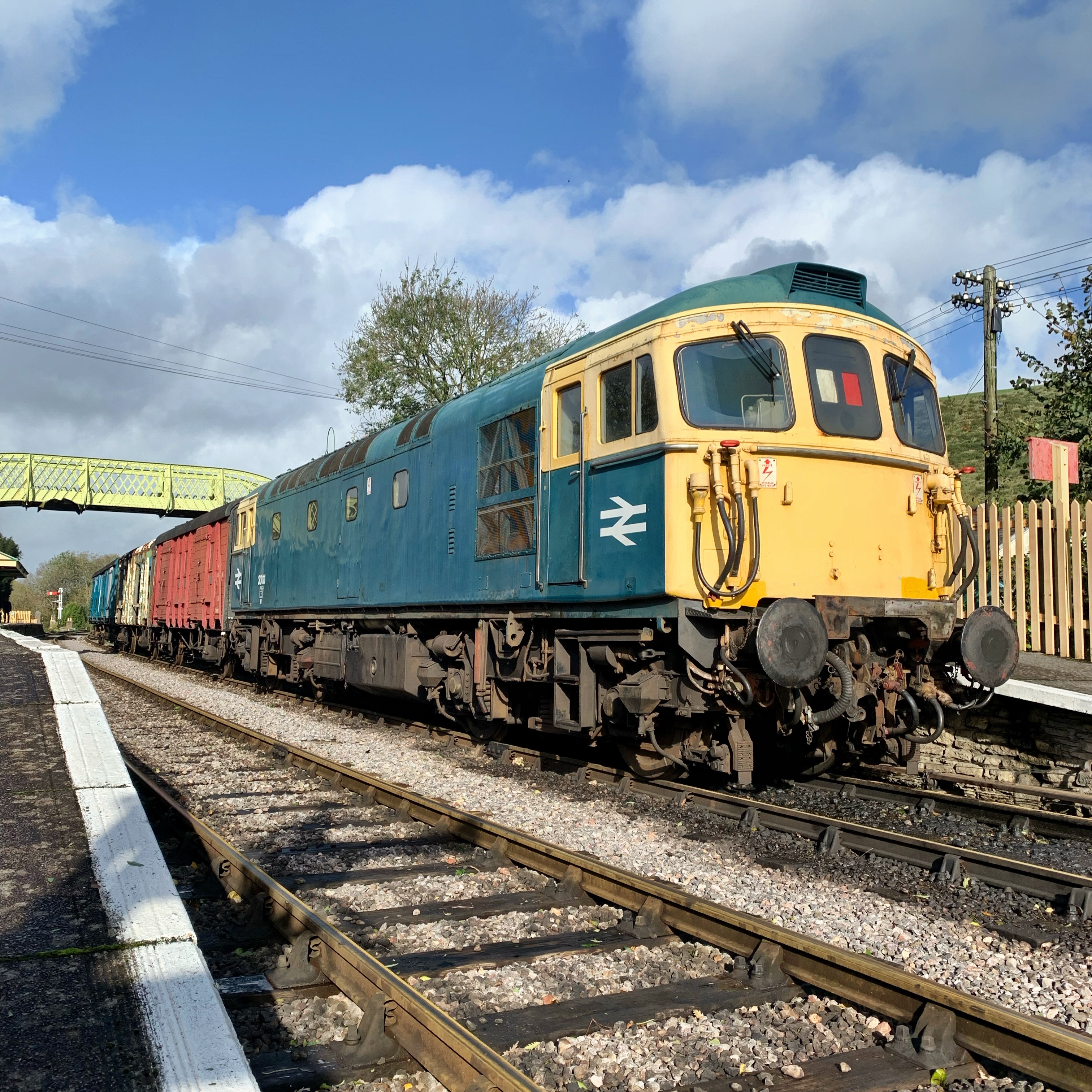
Video of Class 66 No.’s 66846 and 66850 reversing at Westbury with S59 1554 Swindon Transfer to Loreton-On-Lugg RHTT – 30/10/2022SR Battle of Britain Class 4-6-2 No. 34070 ‘Manston’ at Swanage Railway’s Herston Works. The locomotive was waiting in readiness to be collected by low loader and taken to Norden by road where she will undertake running in tests. Her place in the works will be taken by classmate No. 34053 ‘Sir Keith Park’. Many thanks to Jamie for getting permission for our visit to Herston – 01/11/2022The Swanage DMU stock keeping SR Battle of Britain Class 4-6-2 No. 34053 ‘Sir Keith Park’ company in the sidings at Corfe Castle ahead of her move to Herston Works – 01/11/2022BR Class 33 No. 33111 sits at Corfe Castle having removed a consist of wagons from Norden the previous day in readiness for the low loader moves in connection with ‘Manston’, ‘Sir Keith Park’. and ‘257 Squadron’ which is off on holiday to the Spa Valley railway to work Polar Express trains. ‘257 Squadron’ will be back at Swanage in early 2023- 01/11/2022SR West Country Class 4-6-2 No. 34028 ‘Eddystone’ departs Swanage with the 1000 service to Norden. SR U Class 2-6-0 No. 31806 sits in front of the ‘Flying Scotsman’ support coach. Note the fence panels which had blown over onto the coach on the extreme right of the picture – 01/11/2022
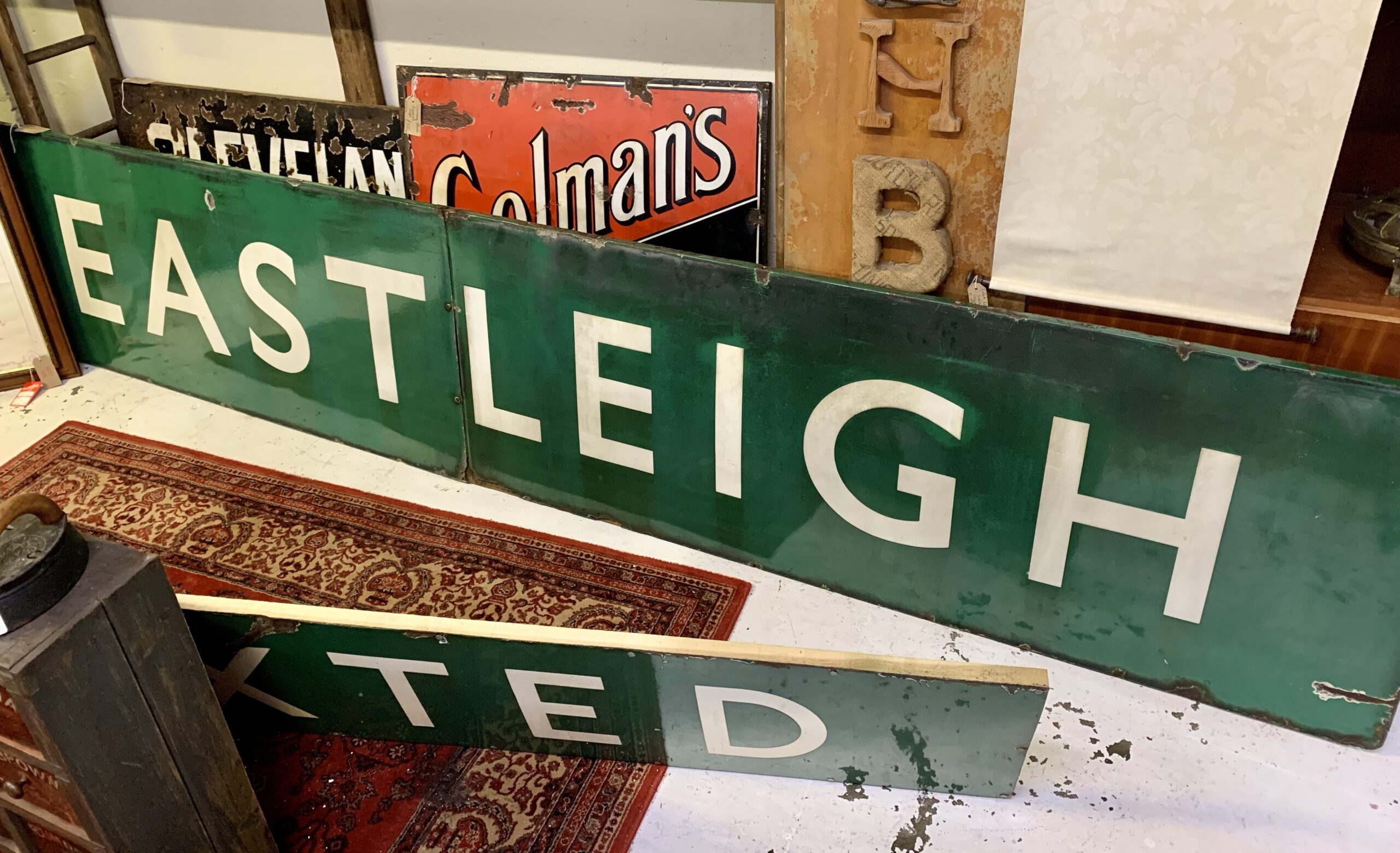
We also came across some interesting railwaymania when we visited the Den antiques emporium over the weekend:
£795 would make you the proud owner of an enamel British Railways Eastleigh station sign
Next, we found a signed Terrence Cuneo “The Night Express” print, an evocative study of a Great Western King Class 4-6-0 working along the sea wall near Teignmouth, painted by the Master in 1975 and issued by Felix Rosenstiels Widow & Sons Ltd. as a single edition of 850 prints signed by the artist in 1977. Terrence Cuneo (1907-1996) CVO, OBE is one of my favourite railway artists. He was also renowned for his military paintings and was the official artist for the coronation of Queen Elizabeth II in 1953. A bronze memorial statue of Terrence Cuneo, unveiled by Princess Anne in 2004, once stood on the concourse at London Waterloo, but was moved to Brompton Barracks in Kent prior to the development of the disused Eurostar platforms at the station. One of my favourite Cuneo paintings can be found at the Railway Museum in York and is of London Waterloo station:
That just about wraps up another week and all that remains is for me to thank you, dear reader, for taking the trouble to visit Yoshi’s blog. We’ve enjoyed having you stop by. As always, please feel free to comment or let me know of any typo’s, gobbledygook or misinformation! May your dog (or cat) go with you.
Wednesday October 19th to Tuesday October 25th2022
Yoshi meets Penny Peglar, daughter of Alan Peglar who rescued ‘Flying Scotsman’ from the scrapyard in 1963 – 22/10/2022
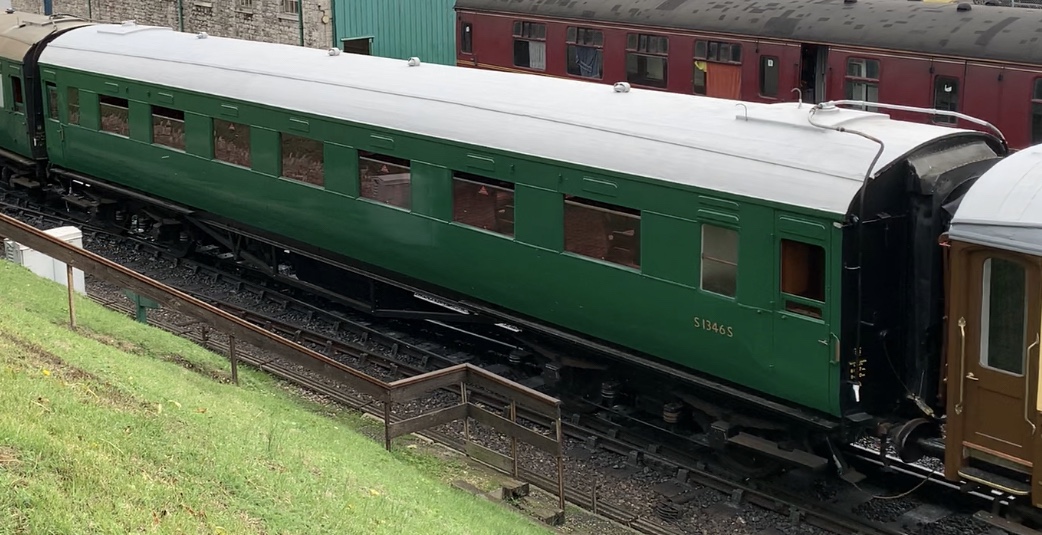
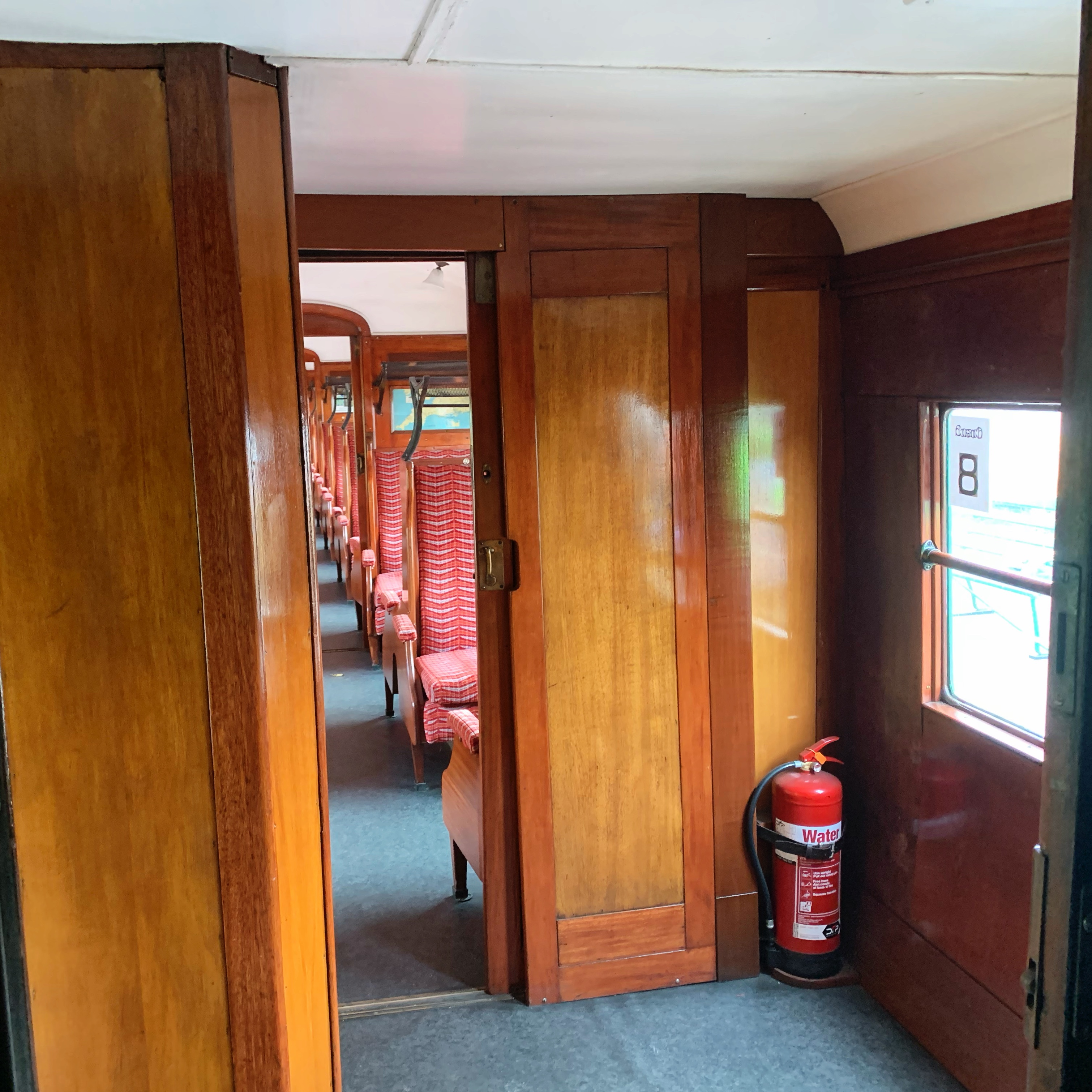
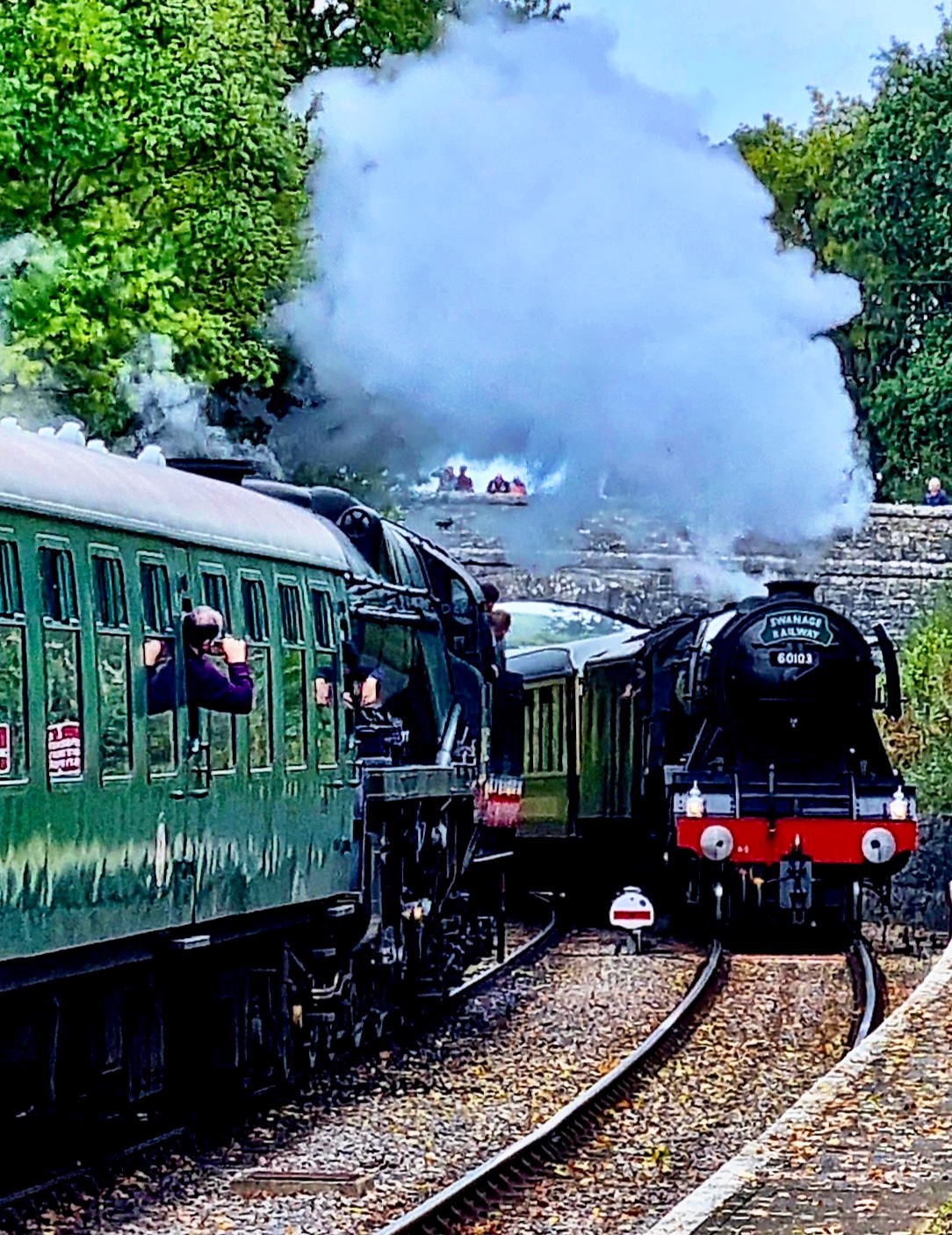
Hello Dear Reader – Yoshi and I had a lovely family day out on the Swanage Railway on Saturday 22nd October when we took a ride in lovingly restored 1933 Maunsell open third carriage No. 1346 behind visiting LNER Gresley A3 Pacific No. 60103 ‘Flying Scotsman’. Having survived a German bomb at Clapham in 1940, the coach ran in traffic until 1961 when it was withdrawn and converted for use as a mobile office and later a classroom. Sold into preservation in 1982 and initially based on the Kent & East Sussex Railway (K&ESR), the coach was purchased privately in 2002 for use on the Swanage Railway. Still awaiting the refitting of tables the restoration has been carried out to the highest standard and it really was a delight to see and travel in.
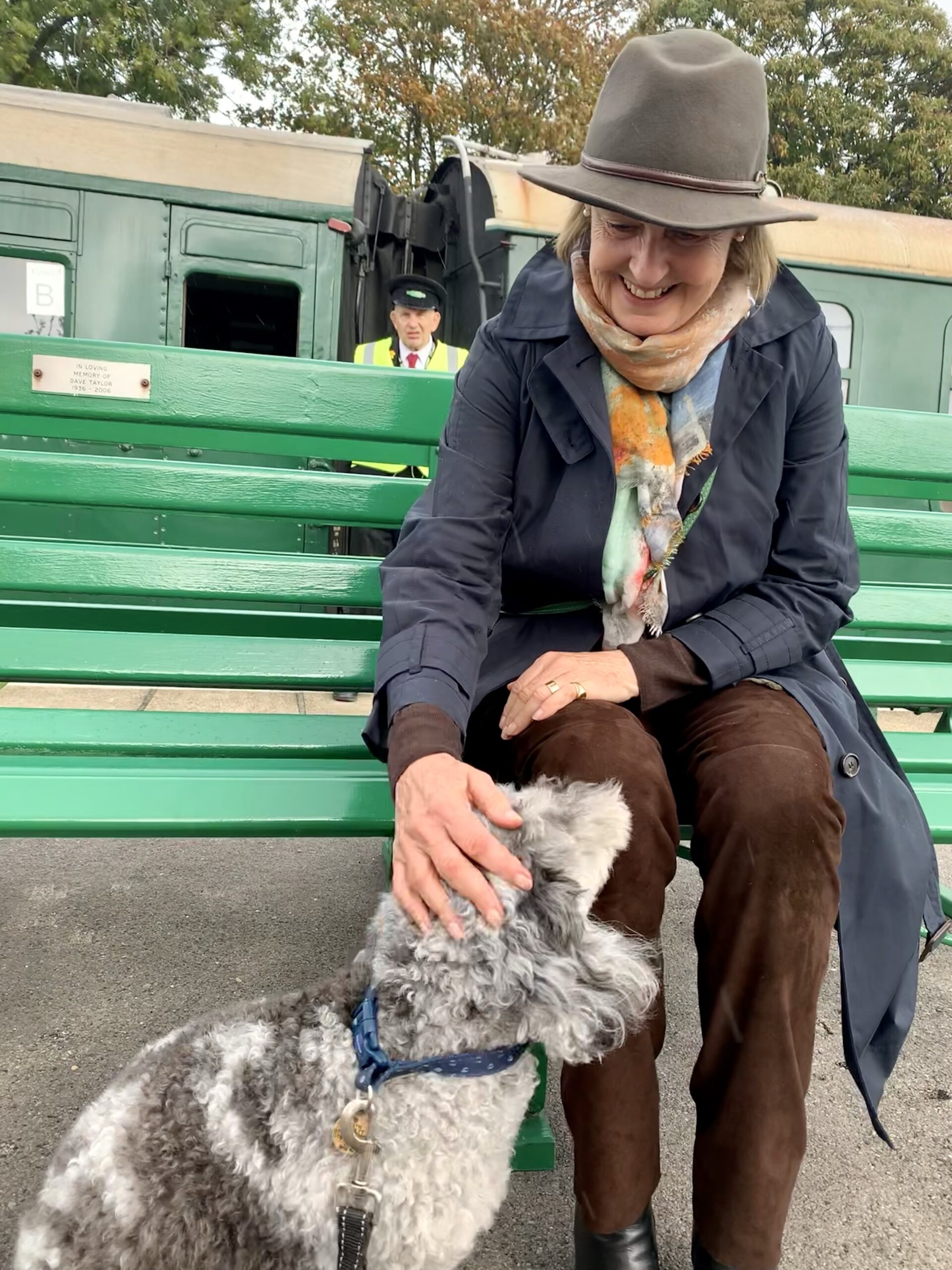
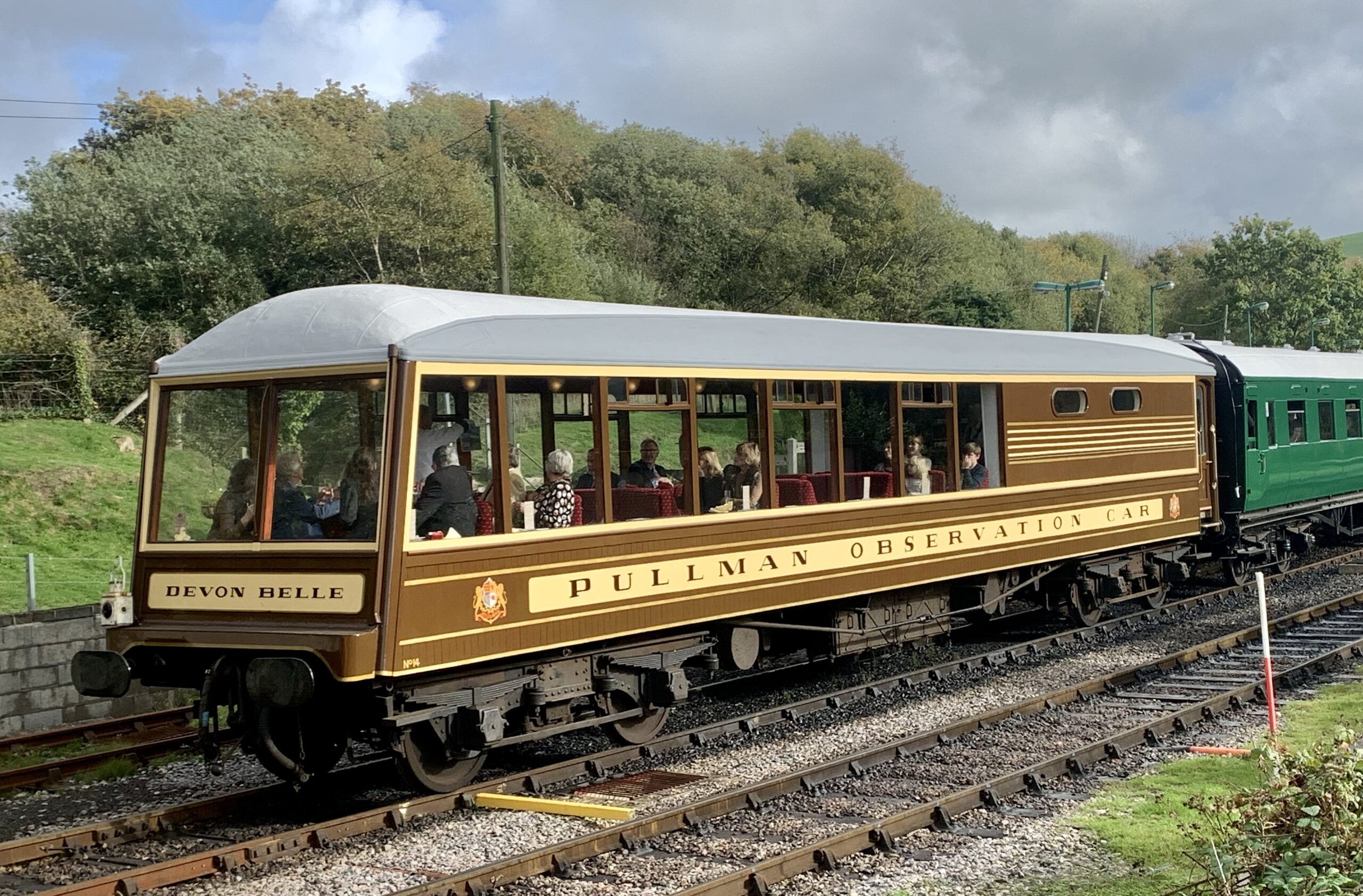
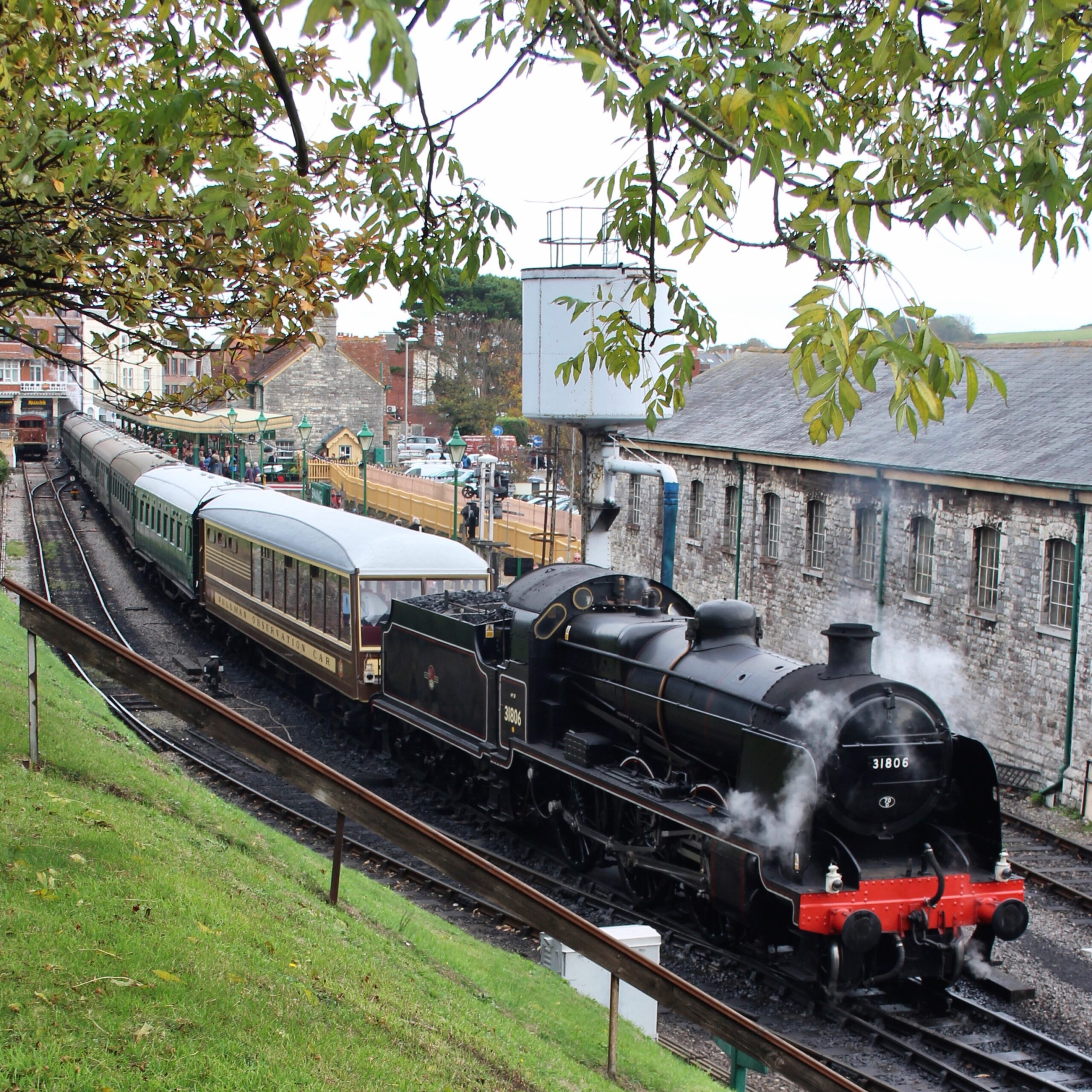
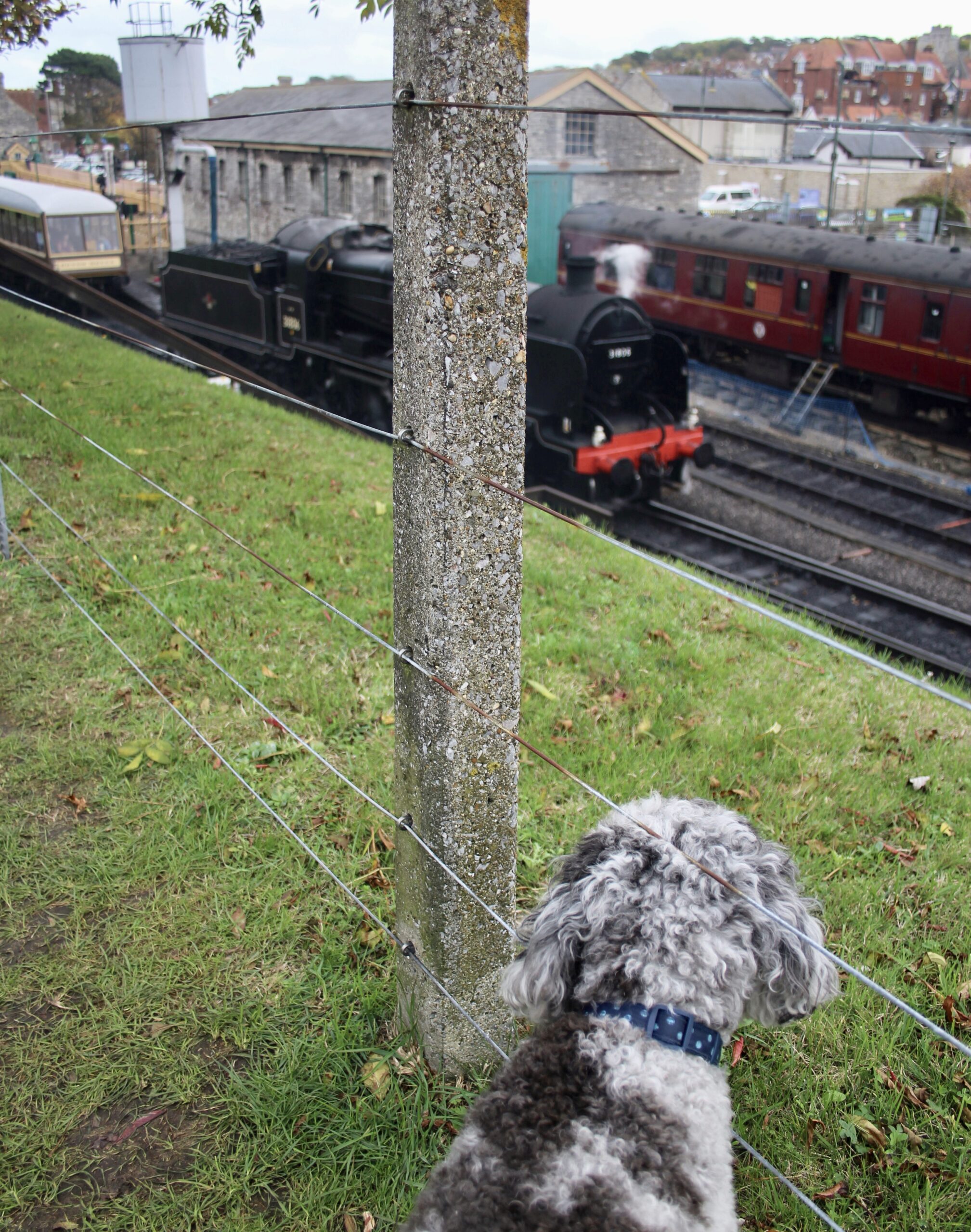
1933 Maunsell open third carriage No. 1346Yoshi and I explore 1933 Maunsell open third carriage No. 1346 (Image courtesy of Caroline Smith)Vestibule of 1933 Maunsell open third carriage No. 1346LNER Gresley A3 No. 60103 ‘Flying Scotsman’ prepares to back on to the seven coach train employed during running days at the Swanage Railway – 22/10/2022LNER Gresley A3 No. 60103 ‘Flying Scotsman’ passes Herston Halt – 25/10/2022LNER Gresley A3 No. 60103 ‘Flying Scotsman’ passes Southern Railway rebuilt West Country Class Bulleid Pacific No. 34028 ‘Eddystone’ at Harmans Cross – 22/10/2022 (Image courtesy of Caroline Smith)LNER Gresley A3 No. 60103 ‘Flying Scotsman’ passes Corfe Castle – 25/10/2022LNER Gresley A3 No. 60103 ‘Flying Scotsman’ crosses Corfe viaduct in the shadow of Corfe Castle – 25/10/2022LNER Gresley A3 No. 60103 ‘Flying Scotsman’ arrives at Norden with the 1X06 1325 service from Swanage – 24/10/2022 Yoshi welcomes a fuss from Penny Pegler, daughter of ‘Flying Scotsman’ saviour Alan Pegler, who visited the Swanage Railway from her home in Portugal and traveled on the 1145 departure on Saturday 22nd October 2022. Penny’s late father purchased ‘Flying Scotsman’ from British Railways in 1963 at the cost of £3,000 – 22/10/20221940’s Pullman “Devon Belle” observation coach Car 14 which accompanied ‘Flying Scotsman’ on tours of Canada and the United States to promote British exports was part of the consist of at Swanage this week. Volunteers with the Swanage Railway Trust carefully restored the wooden carriage after it was rescued from San Francisco where it was in use as a static bar. Norden – 24/10/2022SR U Class 2-6-0 No. 31806 assisted with the shunting of stock during the ‘Flying Scotsman’ running days at Swanage – 25/10/2022Yoshi keeps watch on SR U Class 2-6-0 No. 31806 as she backs onto the empty coaching stock in preparation for shunting – 25/10/2022
Video of Yoshi’s visit to the Swanage Railway and his trip behind ‘Flying Scotsman’. Playing the bagpipes as our train departed Swanage was 15 year old Frederick Sills from Wareham who is a member of Swanage Railway’s Sygnets youth group and a member of the Weymouth Sea Cadets. He did a wonderful job!
‘Flying Scotsman’ will be on static display at Swanage Railway station until the 6th November 2022.
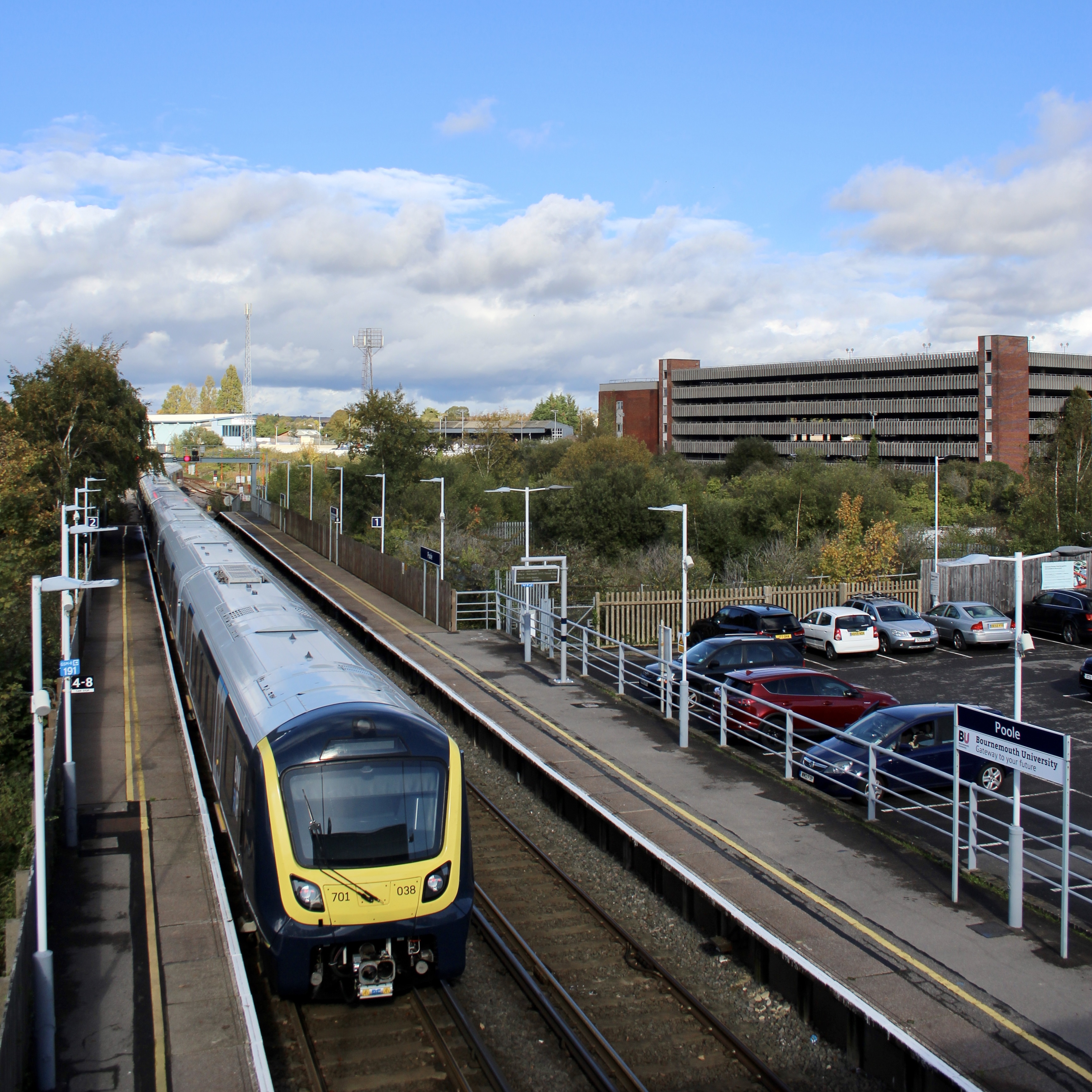
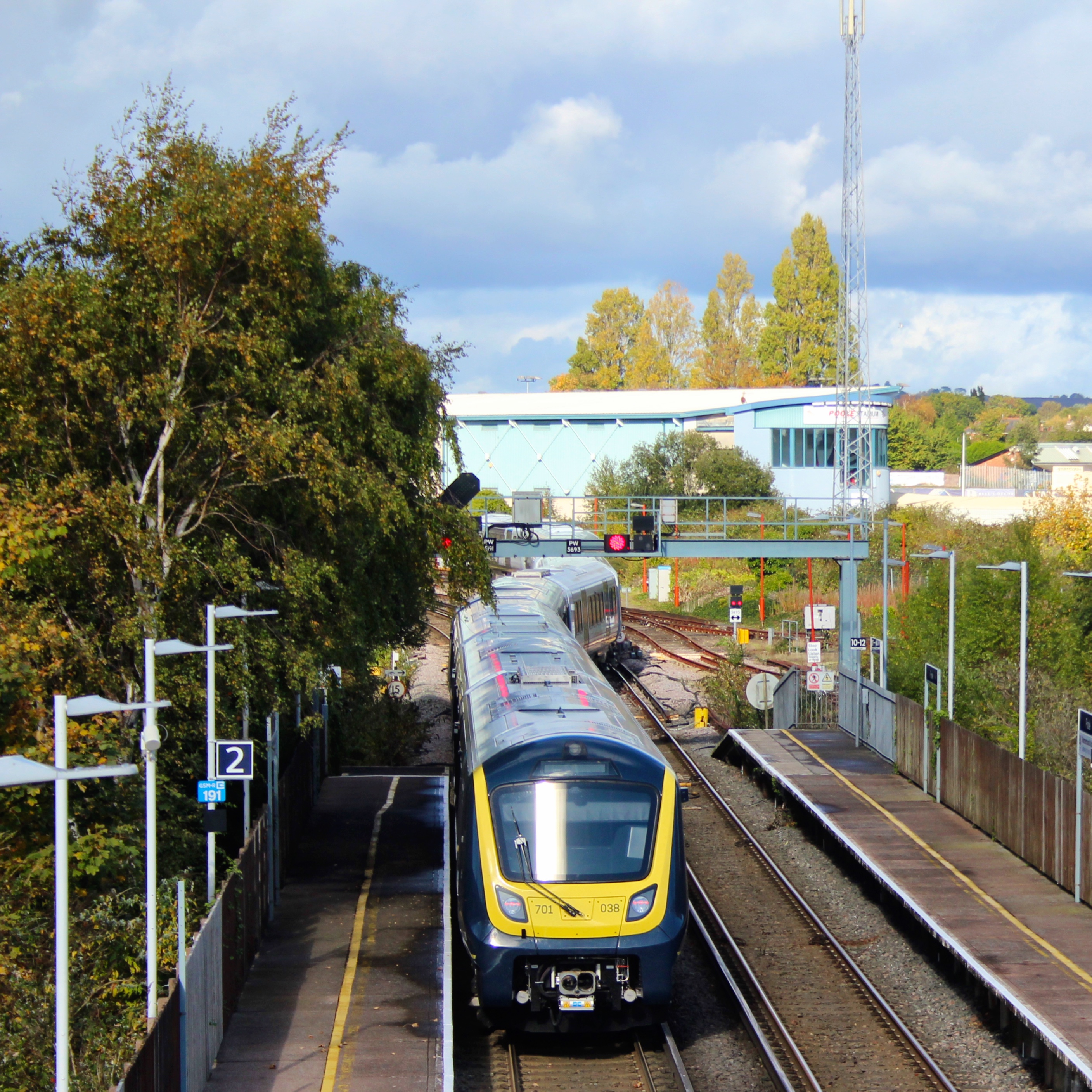
Although there is still no date for their introduction into revenue earning service, South Western Railway (SWR) Class 701 Electric Multiple Units (EMU) continue testing and mileage accumulation runs taking in Poole where they reverse. On Thursday 20th October it was the turn of No. 701038 to have a run out, and we saw the unit passing through Poole:
SWR Class 701 No. 701038 working 5Q51 1115 London Waterloo to Staines Up Loop passing through Poole – 20/10/2022SWR Class 701 No. 701038 working 5Q51 1115 London Waterloo to Staines Up Loop crosses over the Up Line to reach Poole Storage Sidings where the service reverses – 20/10/2022Having reversed in Poole Storage Sidings, SWR Class 701 No. 701038 working 5Q51 1115 London Waterloo to Staines Up Loop passes Class 444 No. 444035 which formed 1W65 1205 London Waterloo to Weymouth at Poole – 20/10/2022
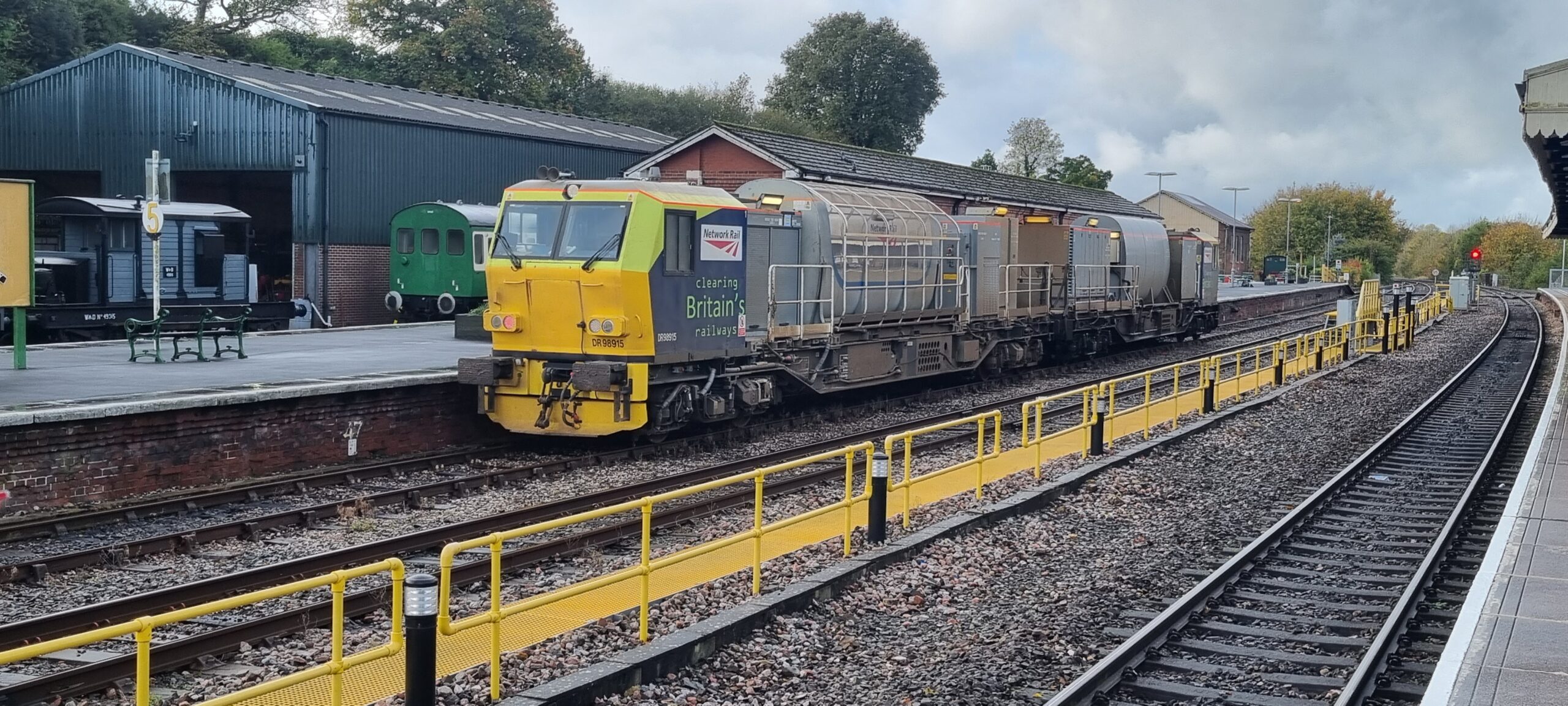
The railways in the UK are well into Rail Head Treatment Train (RHTT) season as the trees shed their leaves which are scattered across the nations railway tracks. This can cause problems for the track circuits and reduce a trans ability to grip to the rails when starting from stations, accelerating, climbing hills or stopping. In our neck of the woods we see regular Multi Purpose Vehicle (MPV) movements spreading adhesion modifier; a mixture of suspension gel (so it can be pumped), sand (to help train wheels grip the rail), and steel or iron shot that is pushed through contamination (compressed leaves and debris).
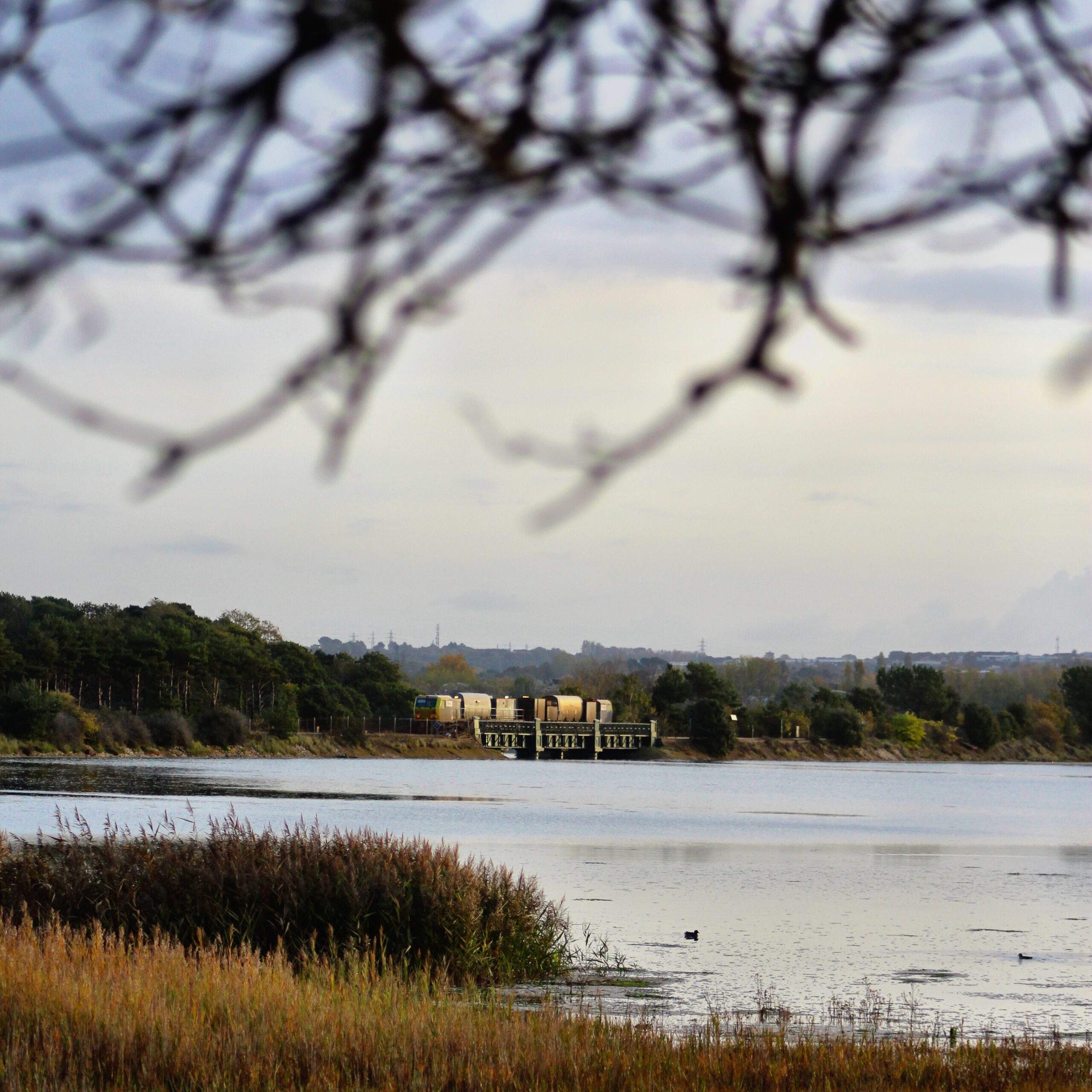
Multi Purpose Vehicle No. DR98915 at Yeovil Junction – 25/10/2022 (Courtesy of Scott Lewis)An unidentified MPV crosses Holes Bay, Poole working 3S81 0551 Totton Yard to Totton Yard – 25/10/2022
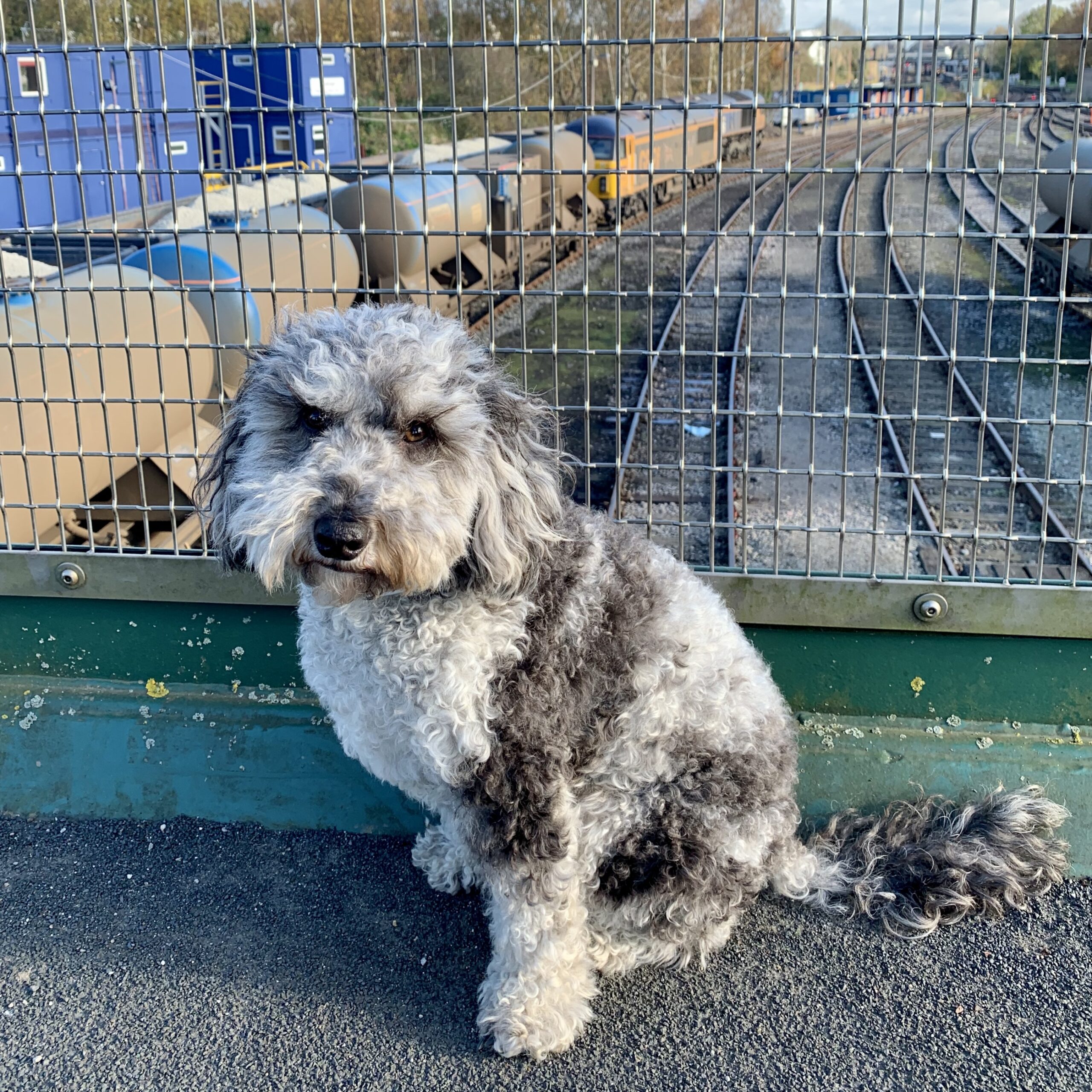
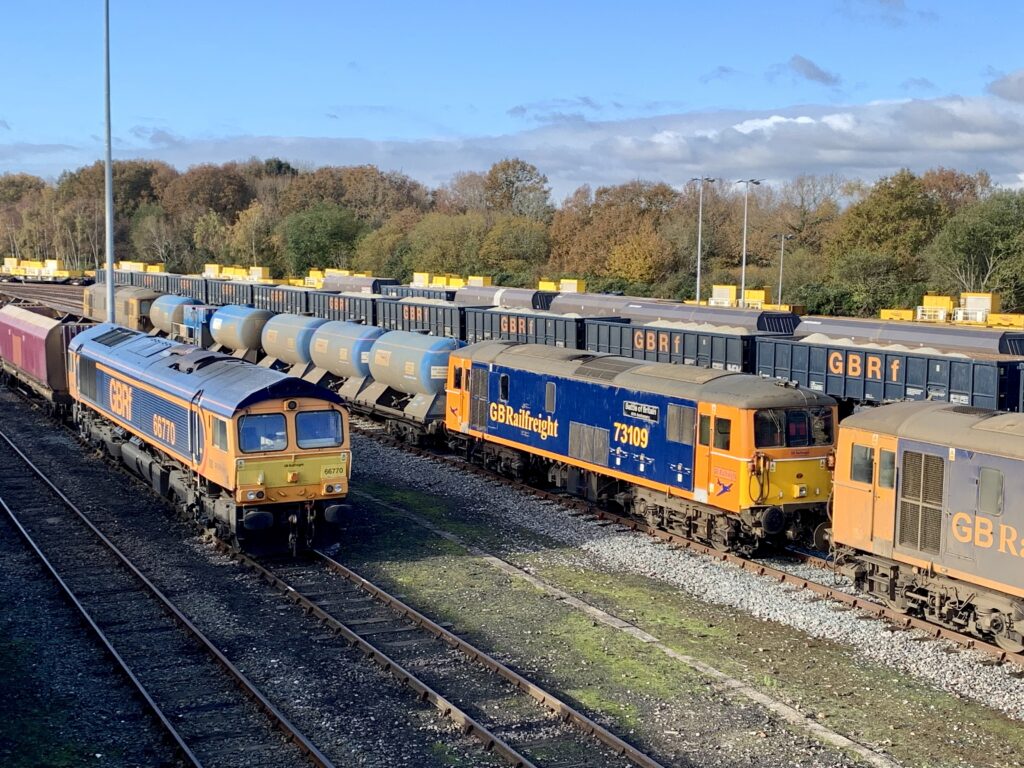
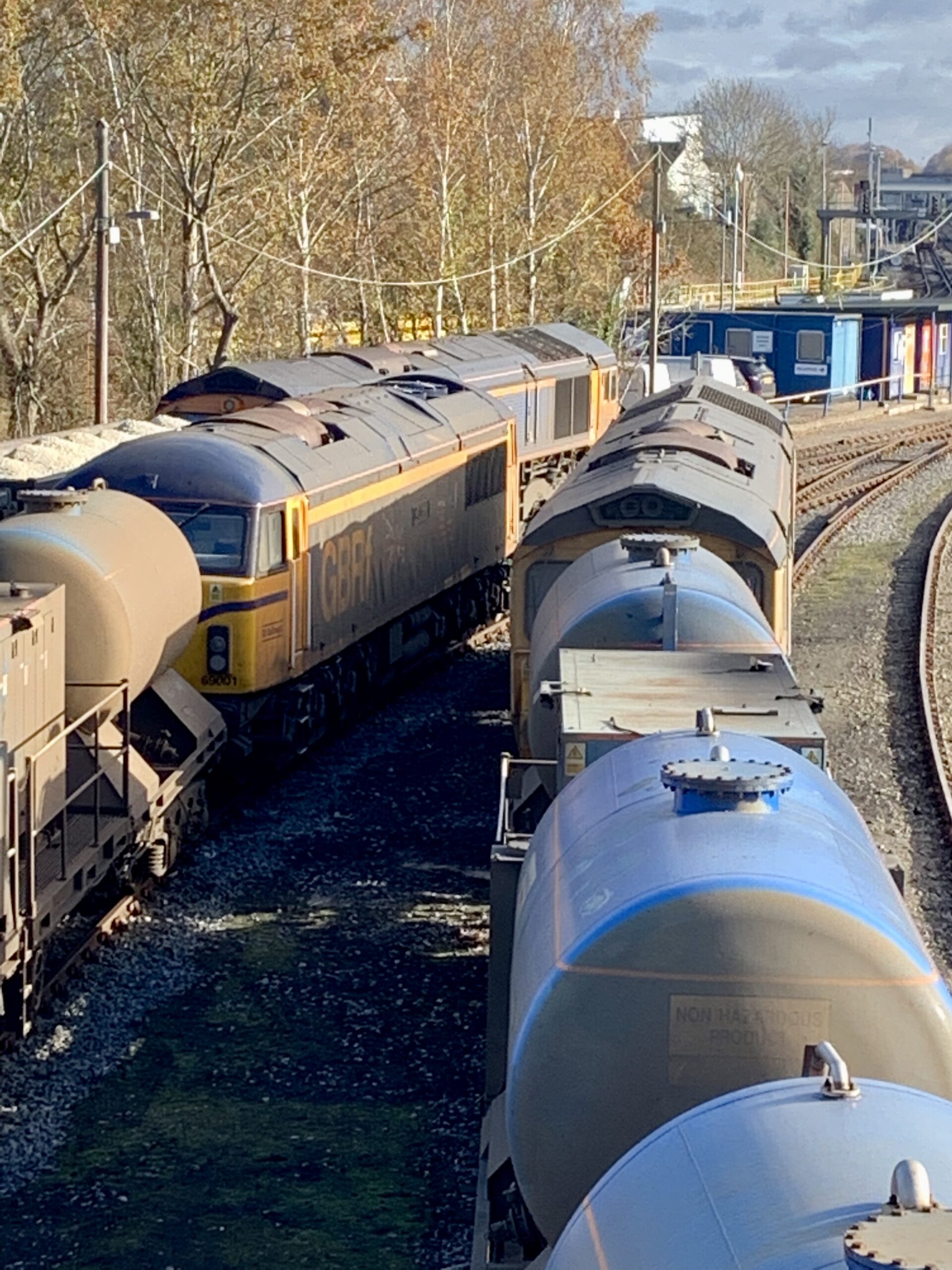
On the 28th October 2021, Direct Rail Services Class 37 No.’s 37218 and 37558 (37424) ‘Avro Vulcan XH558′ (named after a preserved Vulcan bomber) could be found working RHTT 310X 0900 Stowmarket DGI to Stowmarket DGI. The pair are seen passing through Ipswich.Yoshi taking a well earned rest on the lattice footbridge which crosses over Tonbridge West Yard with an RHTT behind. The Southern Railway commissioned the yard in 1941 to help cope with heavy wartime freight traffic – 21/11/2021Class 73 No. 73141, 73109 ‘Battle of Britain – 80th Anniversary’ and an unidentified class member (possibly No. 73119 ‘Borough of Eastleigh’ if a certain kind reader could confirm please?) with Class 66 No. 66770 at Tonbridge West Yard – 21/11/2021From left to right; Class 66 No. 66731 ‘Capt. Tom Moore’, Class 69 No. 69001 ‘Mayflower’ and Class 66 No. 66722 ‘Sir Edward Watkin’ at Tonbridge West Yard – 22/11/2021
Video of Rail Head Treatment Trains at Tonbridge West Yard – 22/11/2021
Network Rail’s website reveals there are 32 MPV and 29 locomotive-hauled RHTT’s which deliver the autumn rail head treatment programme. At the weekend, I was tipped off that a Class 37 diesel loco had been hired in by Colas for the Swindon area locomotive hauled RHTT replacing a Class 66 (No. 66846 which required repairs).
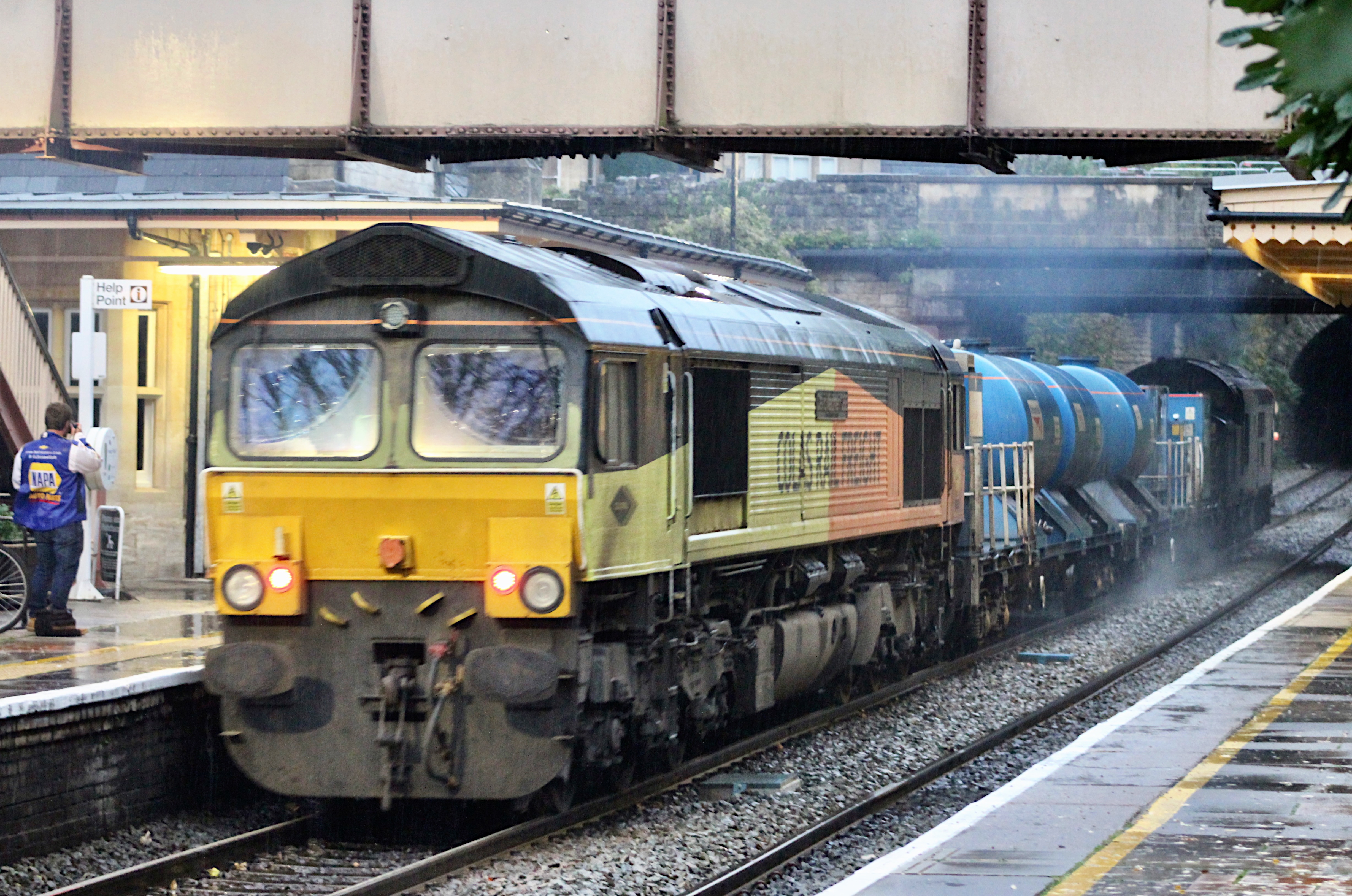
On hire to colas for Rail Head Treatment Train (RHTT) workings, West Coast Rail Class 37 No. 37668 spent the weekend partnering Class 66 No. 66850 ‘David Maidment’ on Swindon based runs. The pair are seen nearing Bradford on Avon in the rain working 3S59 1554 Swindon Transfer Sidings to Moreton on Lugg – 23/10/2022
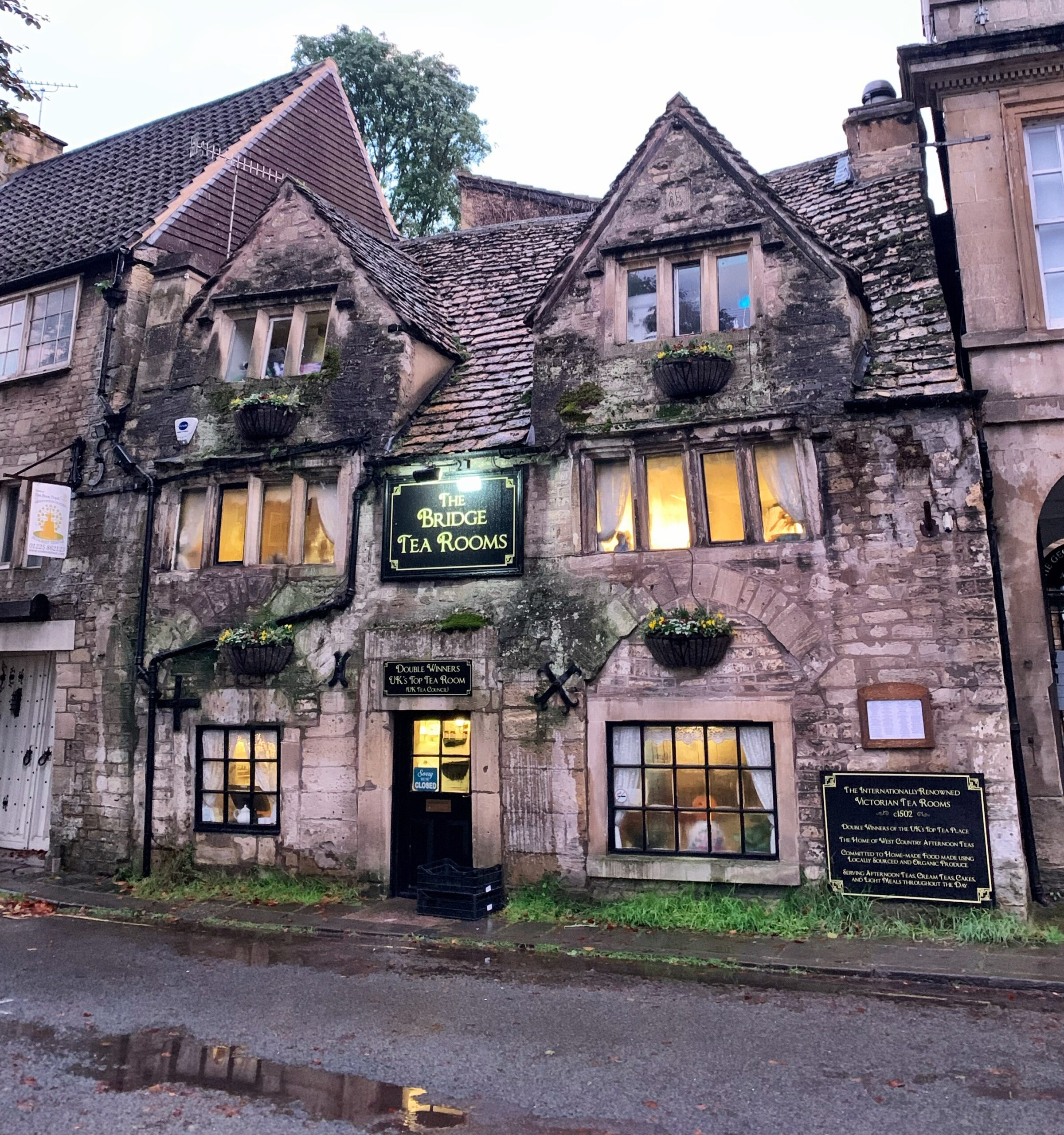
So on Sunday afternoon we found ourselves in Bradford on Avon clinking delicate bone china tea cups and enjoying lunch at The Bridge Tearooms, a former blacksmith’s cottage dating from 1502.
The Bridge Tea Rooms at Bradford on Avon does an excellent Welsh rarebit – 23/10/2022
After a walk taking in the ancient Tithe Barn and the Kennet & Avon Canal, I headed to Bradford on Avon railway station while Yoshi and his mum took shelter from the rain in a pub.
Bradford on Avon railway station exterior – 23/10/2022Bradford on Avon railway station plaque – 23/10/2022Bradford on Avon railway station platform 2 – 23/10/2022Bradford on Avon railway station platform 1 – 23/10/2022
Grade 2 listed Bradford on Avon station, originally planned by The Wilts, Somerset and Weymouth Railway, is situated 15 km south east of Bath between Avoncliff and Trowbridge and is a stop on Weymouth to Bristol services. In the event the station was not opened until 1857 when the line was in the control of The Great Western Railway
(GWR). The station is of a standard Brunel design but utilises local Bath stone rather than the usual bricks and mortar. Originally trains would have been of the seven-foot broad gauge variety, but the track was converted to standard gauge in 1874. Present day services are operated by Great Western Railway (formerly First Great Western and no relation to the old GWR), South Western Railway having withdrawn their direct services to Bristol. Trains are typically operated using Class 165 and Class 166 Networker Turbo trains and Class 158 diesel multiple units. The line is sometimes used as a diversionary route and sees GWR main line and CrossCountry trains, usually at weekends.
The goods yard located on the ‘up’ side of the line was closed to traffic in 1965 and is now home to a car park and health centre. The signal box was demolished in 1966. There is a campaign to reinstate the canopy on the 1899 footbridge, removed in 1964, and which I would have found very useful during my visit in the rain! The Bradford on Avon Footbridge Canopy Project were awarded a £22,000 grant from the Community Rail Development Fund (CDRF) in September 2022.
Class 158 No. 158798 pauses at Bradford on Avon working 2C96 1640 Westbury to Bristol Temple Meads. The canopy devoid footbridge can be seen above the rear of the train – 23/10/2022Class 166 No. 166204 ‘Norman Topsom MBE’ and Class 165 No. 165133 arrive at Bradford on Avon working 1F25 1526 Cardiff Central to Portsmouth Harbour which was terminated at Fratton due to an obstruction on the line – 23/10/2022Class 66 No. 66850 ‘David Maidment’ on the rear of 3S59 1554 Swindon Transfer Sidings to Moreton on Lugg RHTT passing Bradford on Avon – 23/10/2022
Video from Bradford on Avon – 23/10/2022
Our North Dorset Correspondent has been out and about in Yeovil over the last few days and has sent Yoshi the video and still images below:
First up are the GWR Sleeper trains crossing at Yeovil Pen Mill while on route diversion during the early hours of Monday 23rd October 2022. The up service 1A50 2115 Penzance to Paddington hauled by Class 57 No. 57602 ‘Restormel Castle’ was running just over an hour late and because of the single track to Castle Cary, was held at Yeovil Pen Mill to allow 57604 ‘Pendennis Castle’ on the down 1C50 2350 London Paddington to Penzance to enter the station. I have been muttering about heading to Yeovil to see the sleepers on diverts for a while now, and as far as I am aware, this is most likely the final opportunity for 2022, so many thanks to Scott for braving the inclement weather!
GWR Sleeper divers at Yeovil Pen Mill 24/10/2022 – courtesy of Scott Lewis
The following day, Scott was back in Yeovil, this time at Yeovil Junction as Colas Class 37 No. 37099 arrived from Exeter Riverside and was engaged in shunting two damaged Network Rail test train coaches into position for recovery by low loader. After loading, there was a problem with one of the escort vehicles so the departure by road was delayed.
Class 37 No. 37099 and Network Rail MK2 coaches at Yeovil Pen Mill – 25/10/2022 (with grateful thanks to Scott Lewis)
Monday 24th October 2022 also saw the regular Class 73 hauled test train visit the Bournemouth to Weymouth line with GBRf Class 73 electro-diesel locomotives No. 73961 ‘Alison’ and 73963 ‘Janice’ top and tailing 1Q51 1115 Derby RTC to Eastleigh East Yard and we popped into Hamworthy station to see it and have a good old bark as it passed by on its outward run.
1Q51 1115 Derby RTC to Eastleigh East Yard passing Hamworthy – 24/10/2022
Thanks for reading and as always, many thanks for your comments, observations and corrections. We’ll leave you with some video footage from the archive of ‘Flying Scotsman’ when she visited the Swanage Railway in 1994:
‘Flying Scotsman’ at Swanage 1994
Endpiece:
LNER Gresley A3 No. 60103 ‘Flying Scotsman’ approaches Harmans Cross with her last turn of the day on Tuesday 25th October 2022