Category: Electric Trains

  • Titfield @70

    Wednesday 1st March 2023 to Tuesday 7th March 2023
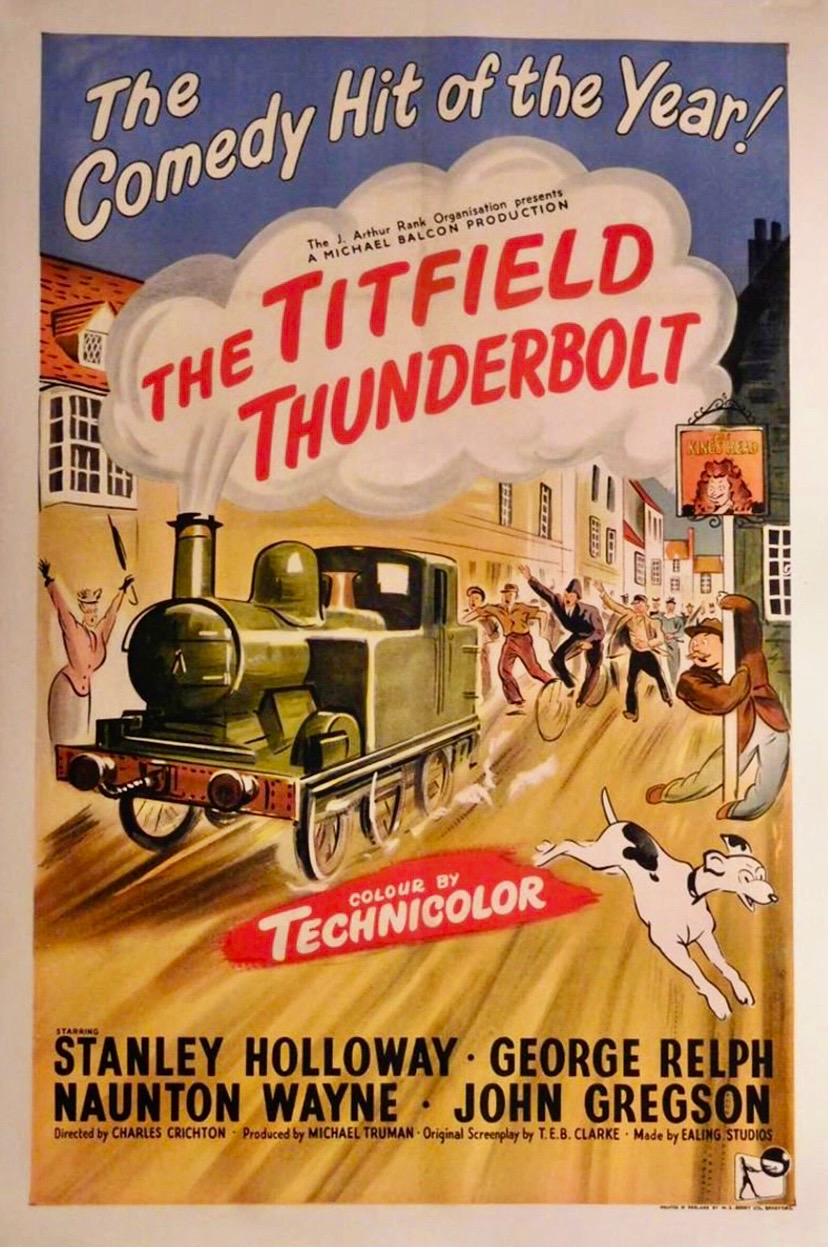
    “The Titfield Thunderbolt” film poster

    I love an Ealing Studios film, and this week, “The Titfield Thunderbolt” celebrated its 70th Anniversary having been released to the public for the first time on 5th March 1953 with a Gala Premiere at the Leicester Square Theatre in London as part of the British Film Academy’s award ceremony, before going on general release from the 6th. Filmed in 1952, the feature was mostly shot on the Camerton branch between Camerton and Limpley Stoke on the Cam Brook Valley near Bath which had closed to traffic in February of the previous year. Monckton Combe railway station stood in for Titfield while the village scenes were shot in Freshford. The Fish Bay platform at Bristol Temple Meads makes cameo appearances as Mallingford railway station. 
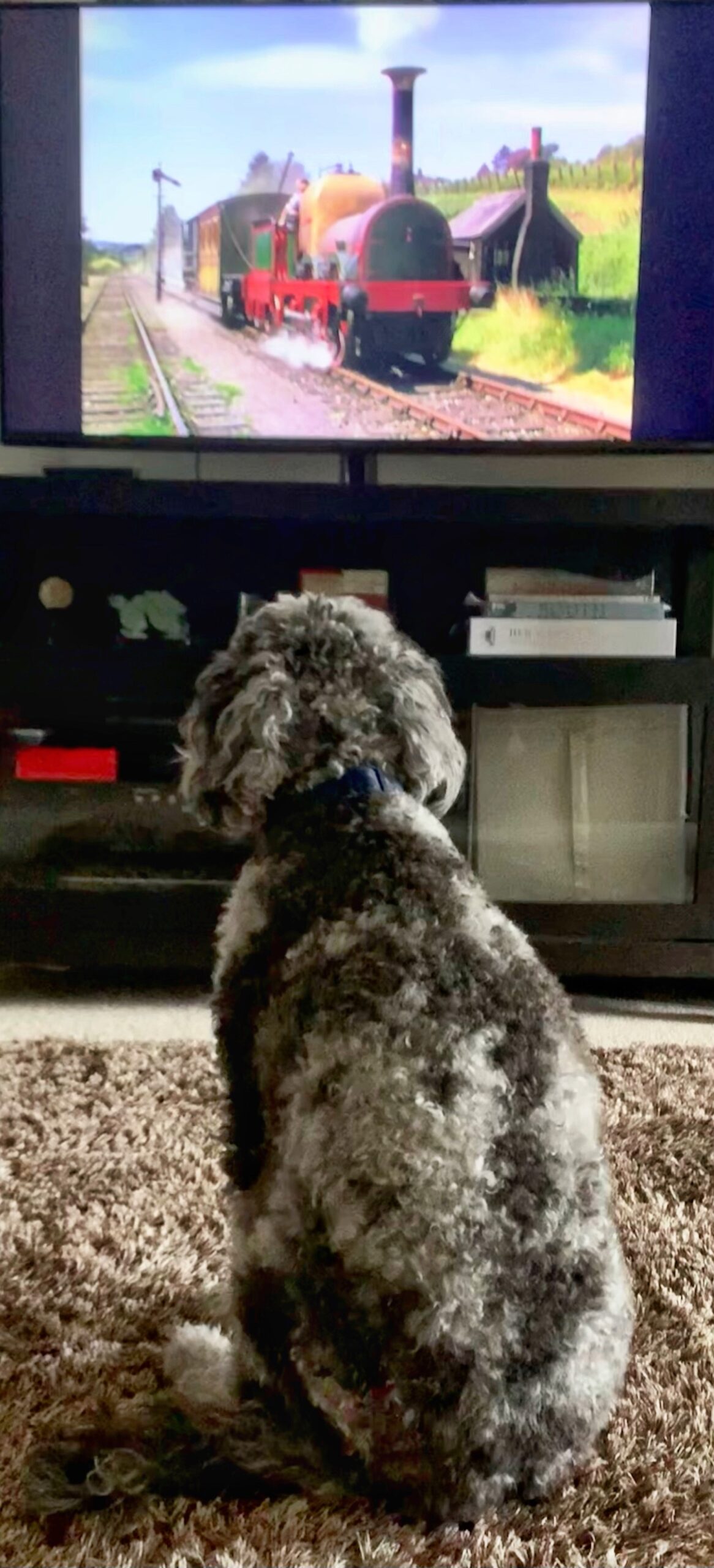
    Yoshi watches “The Titfield Thunderbolt”

    “The Titfield Thunderbolt” was inspired by the real life story behind the rescue of the Welsh narrow-gauge Talyllyn Railway in 1951. Directed by Ealing stalwart Charles Chrichton (1910-1999), starring Stanley Holloway (1890-1982) and with a screenplay by another Ealing old hand T.E.B. Clarke (1907-1989) the film opens with a view of Midford Viaduct on the Somerset & Dorset Joint Railway (S&DJR) as a train on the Camerton branch passes underneath. Midford is on our bucket list to explore one day, especially as there is a conveniently placed pub – the Hope & Anchor – located under the old S&D viaduct, the trackbed now forming a footpath and cycleway. The pub website notes: “The single line section between Midford & Bath required a special safety device known as “The Tablet”. A train about to enter this section had to pick up the tablet by means of a mechanical catcher. If the tablet was not there it meant another train was already on that stretch of track. Sometimes the act of giving up the tablet on the outward journey would result in the (accidental?) dropping of the tablet down the embankment into the garden of the inn. By some strange quirk of fate, this seemed to happen a lot more frequently during opening hours and climbing down to retrieve it was thirsty work!”

    “The Titfield Thunderbolt” (1953) Trailer

    Foreshadowing the Beeching report which would be released ten years later, “The Titfield Thunderbolt” tells the story of group of villagers determined to save their branch line after British Railways announces its closure. When a rival bus company, who have signed a deal with the nationalised railways to run a replacement service, sabotages the newly acquired train prior to an official inspection, the villagers resurrect the line’s first locomotive, ‘Thunderbolt’ which is being kept in the Mallingford Town Hall museum.

    The 60th Anniversary Blu-Ray release of “The Titfield Thunderbolt”

    The actual locomotive chosen to “play” the role of ‘Thunderbolt’ was Liverpool & Manchester Railway (LMR) 0-4-2 No. 57 ‘Lion’ built by Todd, Kitson & Laird of Leeds. The March 1953 edition of “The Railway Magazine” tells us the film studio borrowed the veteran loco from the Liverpool Engineering Society who, as well as allowing the application of a new nameplate, gave permission for her to be painted in a fictional bright green with red lining livery. ‘Lion’ had been in store at Crewe painted in her original  dark maroon colour and was transported to Westbury in Wiltshire for an overhaul and steaming test, which proved most satisfactory, her original steam pressure gauges checked against a modern counterpart with one being correct to within a pound. Shortly after production commenced it was discovered that ‘Lion’ consumed excessive amounts of fuel and water, it was thought because she was originally designed to burn coke rather than the coal being used. The locomotive was sent back to Westbury where a damper was fitted which enabled her to simmer all day awaiting periods of sun during which scenes would be filmed. The daily filming schedule was carefully arranged to reduce the requirement to turn the locomotive and rolling stock, but when this was needed the triangle junction at Bradford-on-Avon was utilised. Various items of rolling stock were employed, including an old Great Eastern coach, two brake vans (one containing a diesel generator for arc-lighting), a cattle truck and several flat wagons as well as two Great Western Railway (GWR) 1400 Class 0-4-2 tank engines No.’s 1401 and 1456. No. 1456 provided banking assistance to ‘Lion’ on the 1 in 100 gradients between Limpley stoke and Combe Hay when scenes were not being filmed.
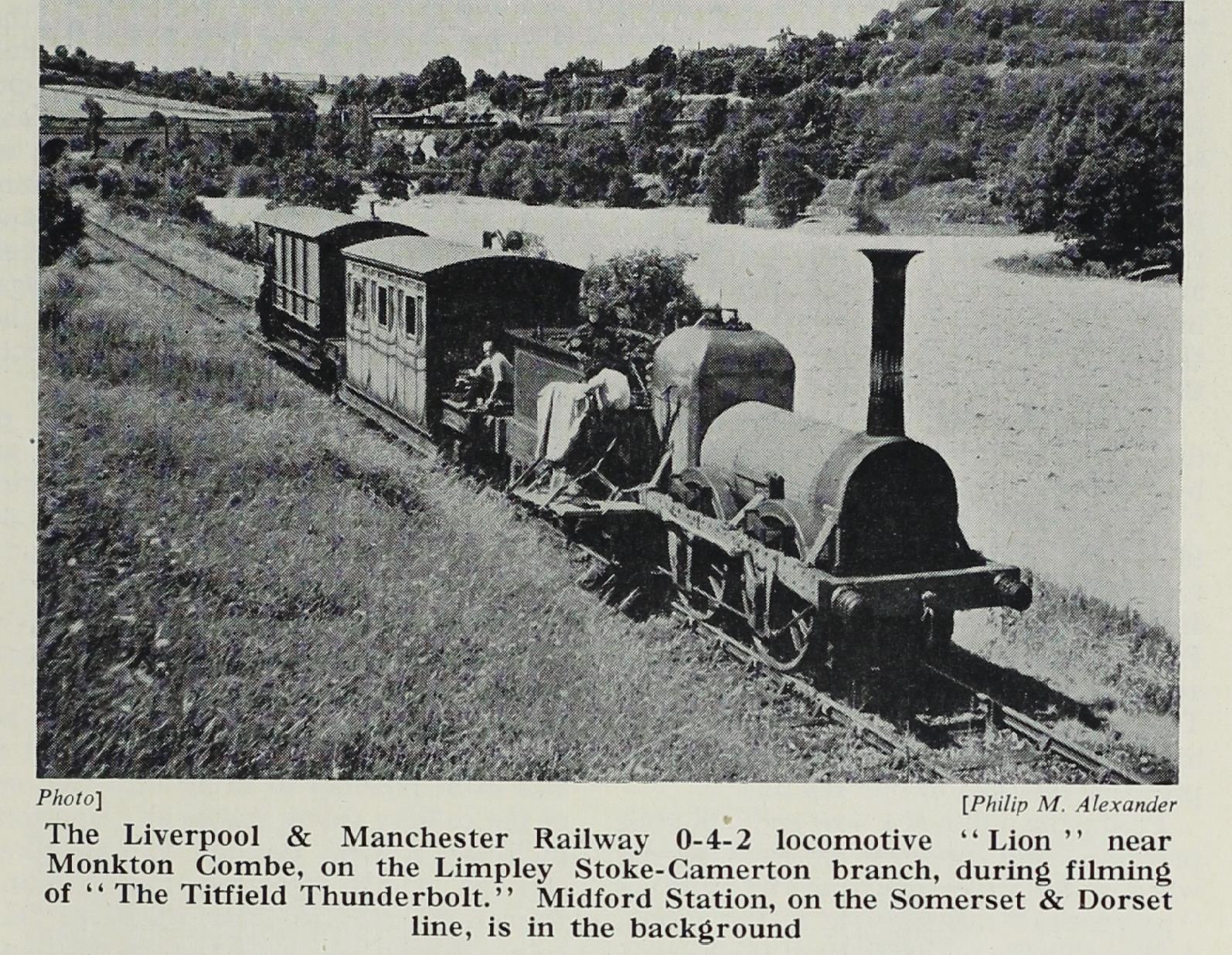
    “The Railway Magazine” March 1953 edition included a feature on the filming of “The Titfield Thunderbolt” written by Baynham Honri (1903-1987)

    I remember seeing ‘Lion’ in 1980 when she took part at “The Great Railway Exposition” in Manchester in connection with “The Rocket 150” celebrations marking the 150thAnniversary of the Rainhill Trials in 1829 and the opening of the Liverpool & Manchester Railway in September 1930. Unfortunately, along with other locomotives, she was on display in what I remember as being quite a gloomy shed area and my camera at the time would have been unlikely to have captured an image in the darkened conditions. Today you can see ‘Lion’ on static display at The Museum of Liverpool.
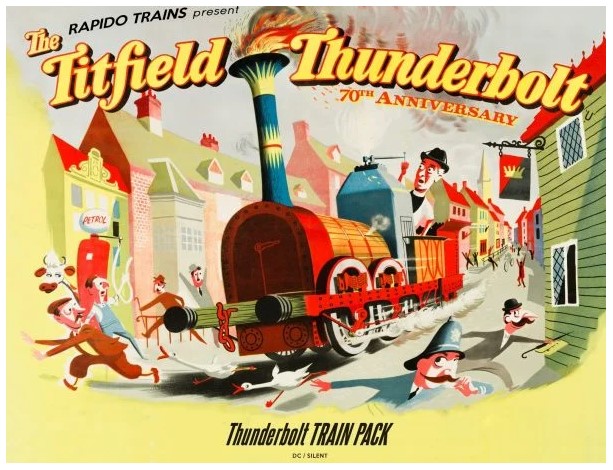
    Rapido Trains publicity image

    Rapido Trains are developing a special range of models celebrating the 70th Anniversary of “The Titfield Thunderbolt”. These are the only models licensed by StudioCanal the current rights owner of the film.

    Hornby Horbies Ltd had announced they too were going to release a ‘Thunderbolt’ model but have since withdrawn this from their schedule as licensing permission was not gained. They have however pushed ahead with their model pack of ‘Lion’.

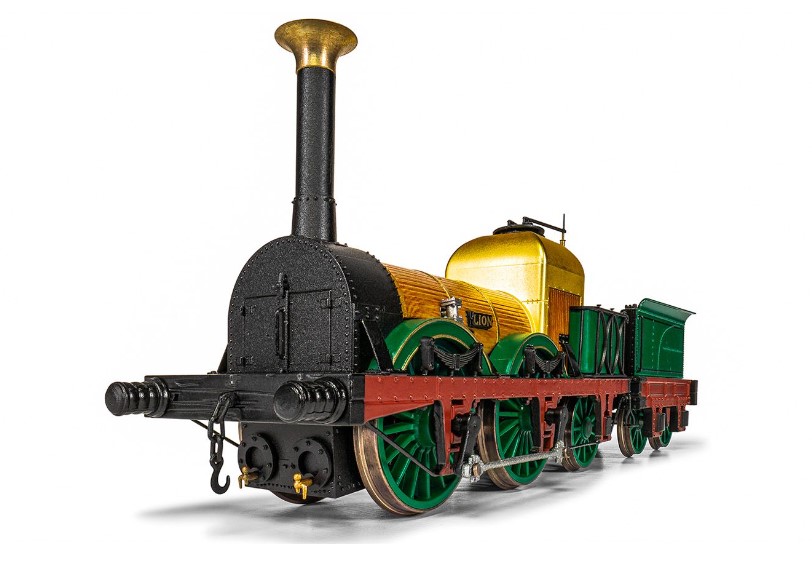
    Hornby ‘Lion’ Train Pack
    Hornby ‘Lion’ model

    You would think that the combination of Ealing Studios and railways would result in “The Titfield Thunderbolt” being my favourite film, but that honour falls to another Ealing production; “The Ladykillers” (1955) which also happens to feature extensive railway scenes, this time around King’s Cross in London. If you haven’t seen it, I highly recommend it. “The Ladykillers” was remade in 2004 with Tom Hanks and the location swapped to Mississippi. I don’t know why anyone thought this was a good idea. 

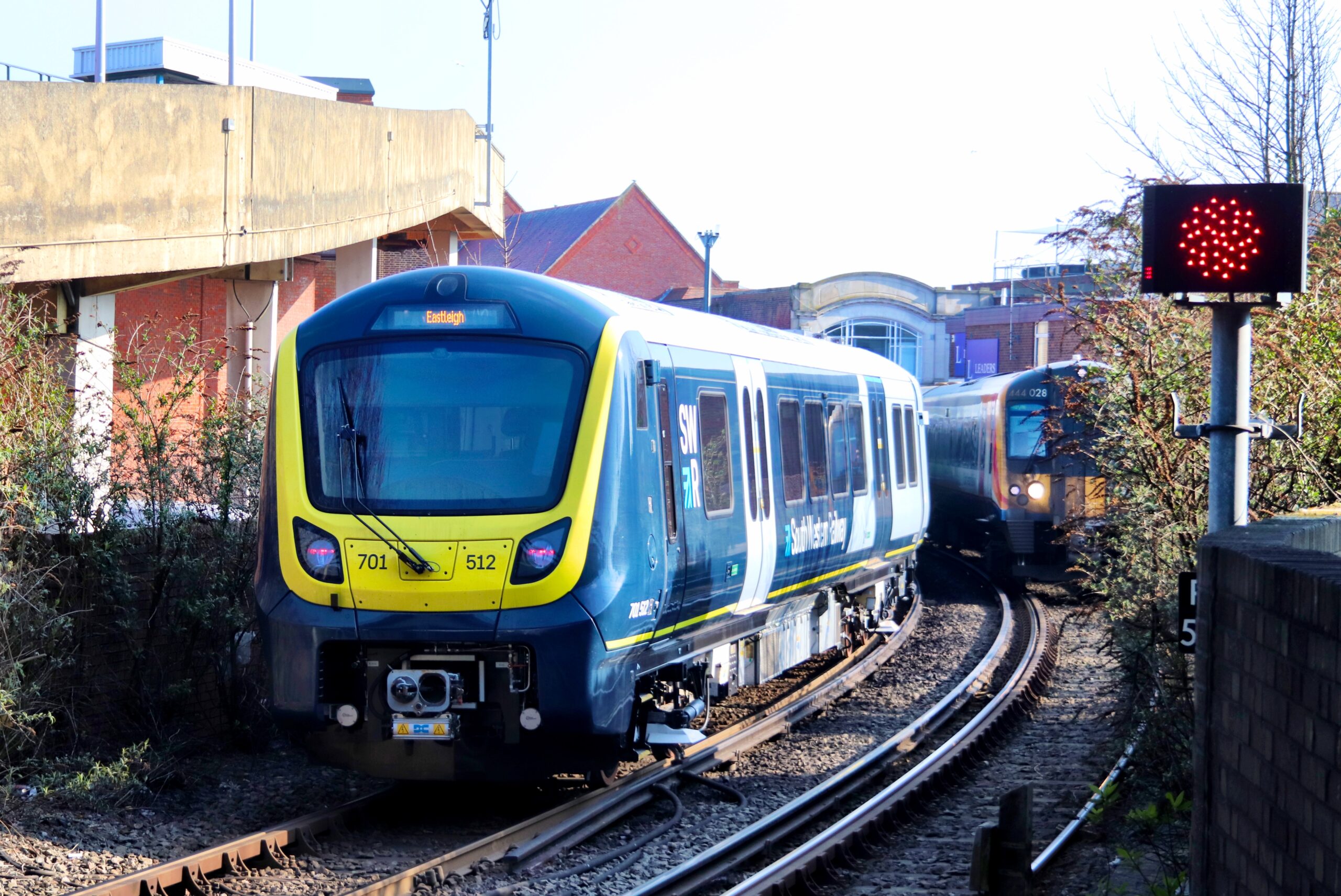
    The two five car Class 701 units, No.’s 701509 and 701512, which I mentioned last time I had missed seeing in Dorset made a return visit on Thursday 2nd March 2023, and this time I was ready and waiting for them! Here’s some video as they arrive and depart Poole. 
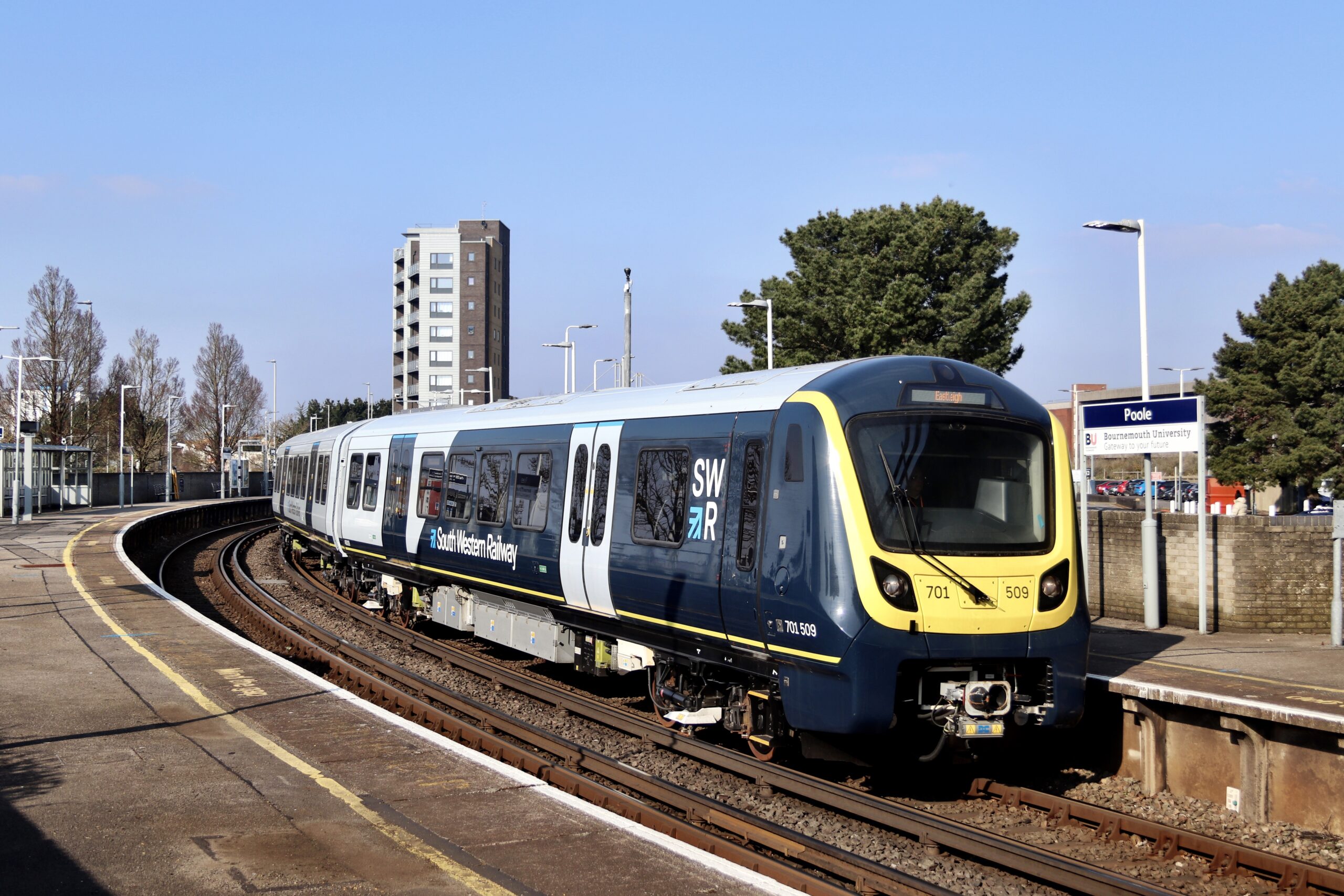
    Five Car Class 701 test run – 02/03/2023
    South Western Railway (SWR) 5 -car Class 701 Electric Multiple Unit No. 701509 arrives at Poole on the return working to Eastleigh – 02/03/2023
    SWR 5 -car Class 701 Electric Multiple Unit No. 701512 departs Poole working 5Q51 1115 London Waterloo to Eastleigh as Desiro Class 444 No. 444028 arrives with 2W65 1205 London Waterloo to Poole – 02/03/2023

    The Snow & Ice Treatment Train made an appearance on the Bournemouth to Weymouth line on Monday 6th. Its earlier scheduled run on Friday 3rd March was cancelled, so it was good to see the train run. And in daylight too, which was a bonus! We were pleased to see that large logo British Rail retro liveried GBRF Class 66 No. 66789 ‘British rail 1948-1997’ was one of the pair of locomotives allocated to the service, the other being No. 66750 ‘Bristol Panel Signal Box’.
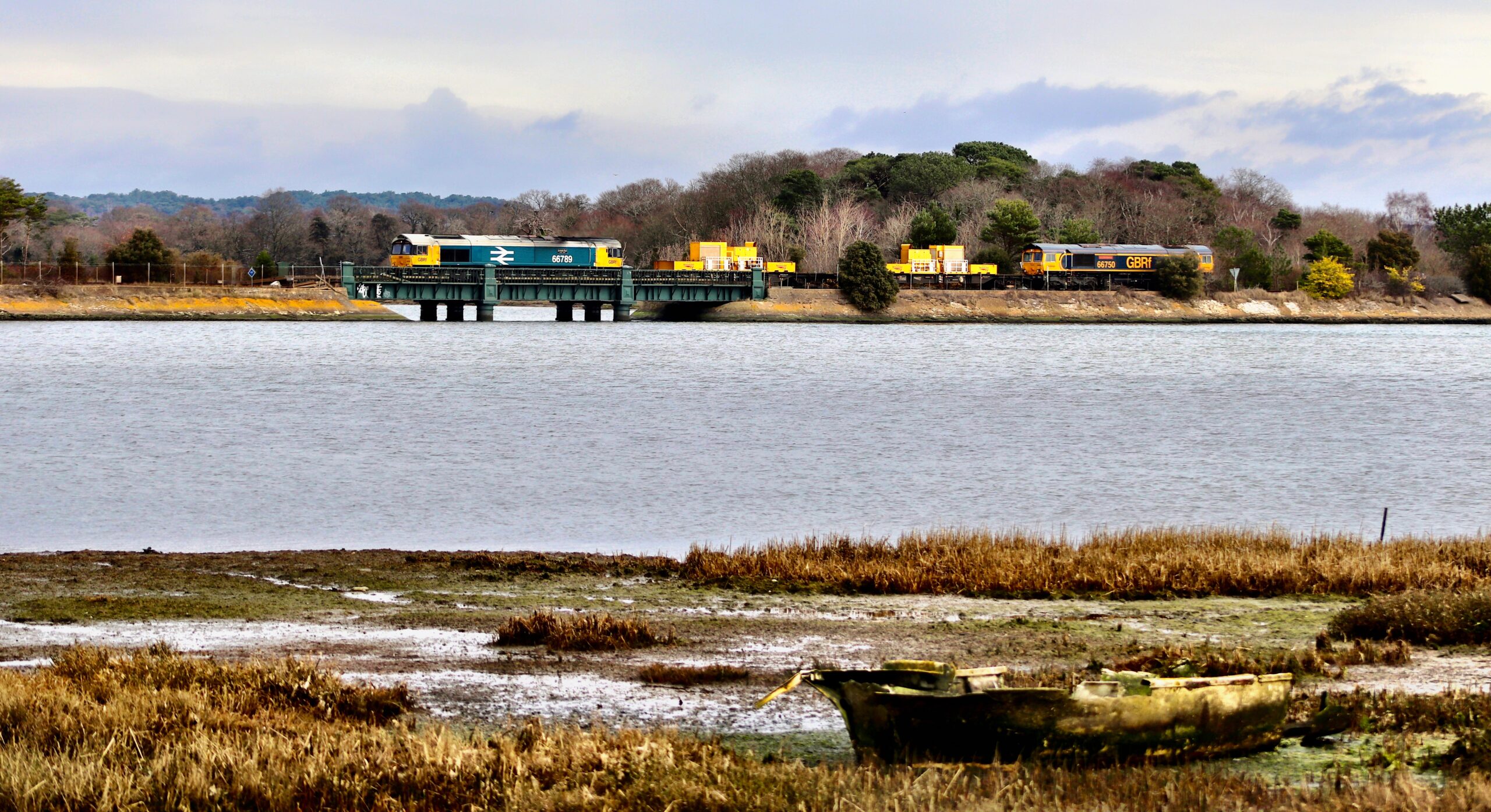
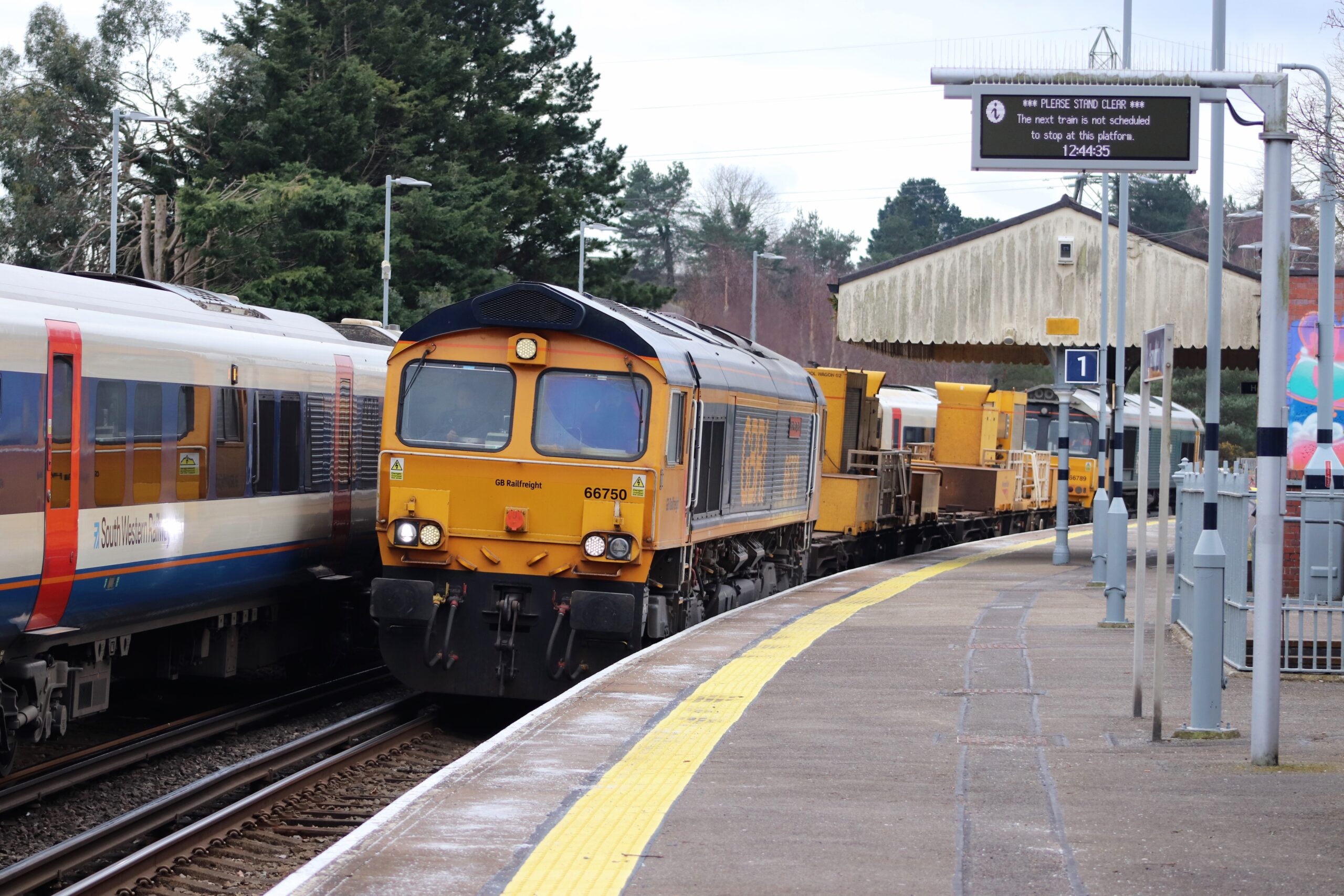
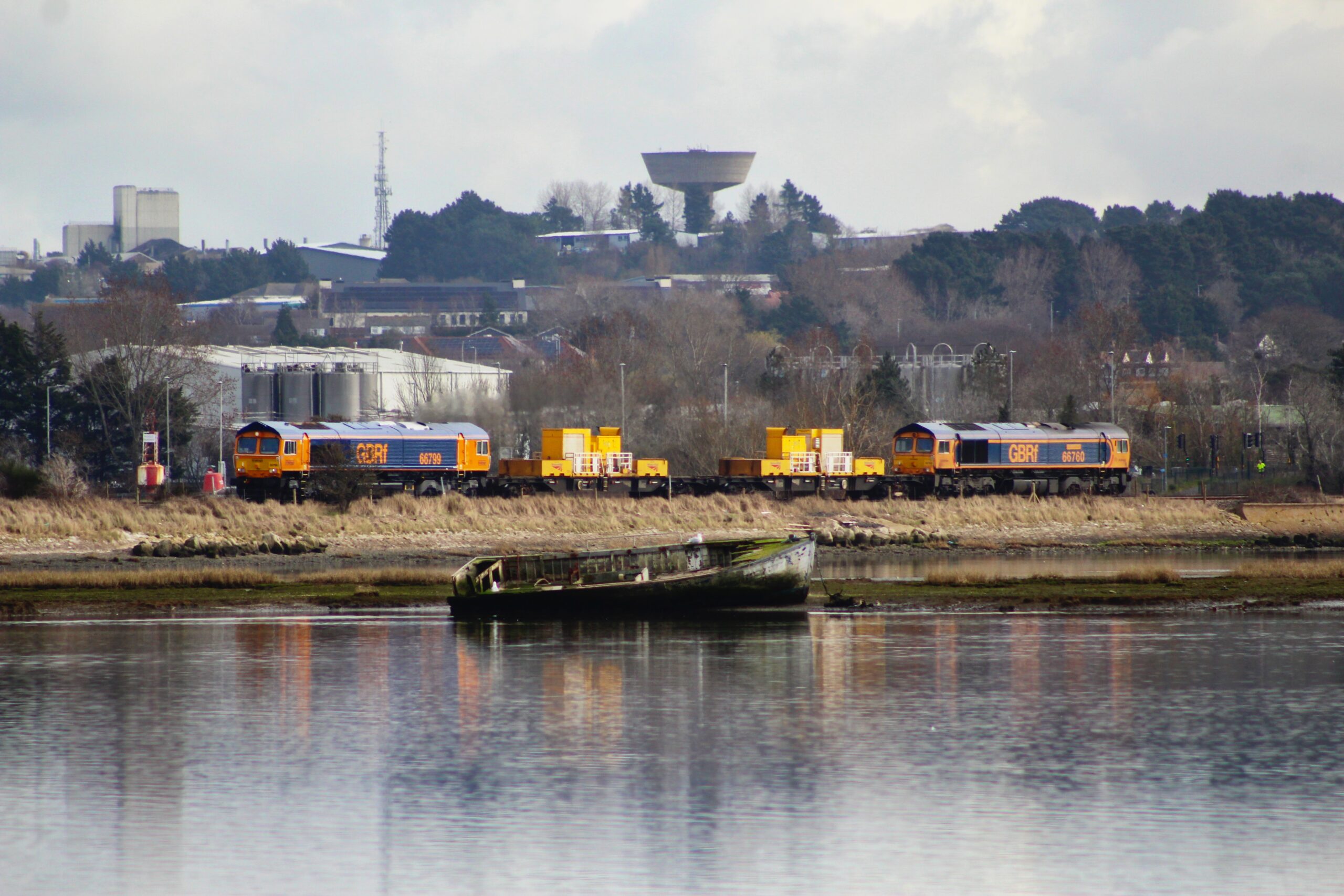
    GBRf Class 66 No.’s 66789 ‘British Rail 1948-1997’ and 66750 ‘Bristol Panel Signal Box’ top and tail 3Y88 1000 Totton Yard to Totton Yard across Holes Bay, Poole – 06/03/2023
    GBRf Class 66 No. 66750 ‘Bristol Panel Signal Box’ leading the return 3Y88 SITT with No. 66789 ‘British Rail 1948-1997’ bringing up the rear passes Class 444 No.444010 working 1W21 1035 London Waterloo to Weymouth service at Hamworthy – 06/03/2023
    3Y88 1000 Totton Yard to Totton Yard – 06/03/2023 (Dorchester video courtesy of GE Barrett)

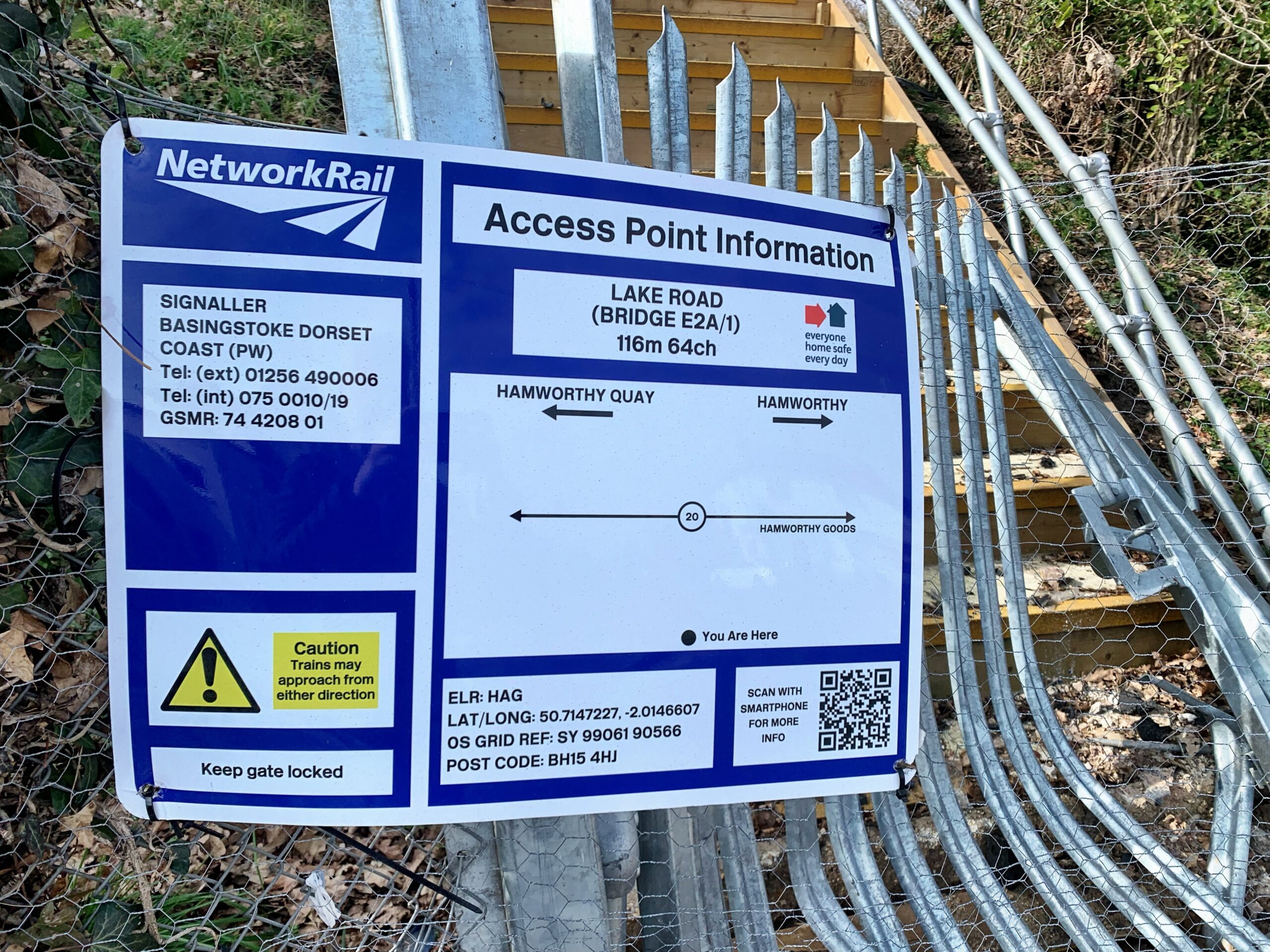
    Taking Yoshi for a walk around Hamworthy Park recently, we passed under Lake Road bridge. It looks as if a vehicle wasn’t quite so lucky and deviated from the road and into the newly installed gate protecting the new access steps to the Hamworthy branch line above.  Coupled with the damage to the warning lights at Ashmore Avenue crossing, I’m beginning to think someone doesn’t like the idea of the freight line re-opening!

    Damaged Lake Road Access Point – 05/03/2023
    Debris at damaged Lake Road Access Point – 05/03/2023
    Access Point information for Lake Road – 05/03/2023
    Damaged Lake Road Access Point – 05/03/2023

    For The Record

    I forgot to mention that the South Western Main Line resumed a full timetable on 24th February 2023 following reinstatement works following the major landslip at Hook which occurred on 15th January 2023 and affected Weymouth to London Waterloo services. 

    Sad news that John Parry MBE, creator of the Parry People Mover ultra-light vehicles passed away on 17th February 2023 after a short illness. He was 85. The most successful UK application of his idea is the 0.8 mile Stourbridge Junction to Stourbridge shuttle which operates every ten minutes between 0545 and 2354 Monday to Saturday with a more limited service on Sundays. These have been operated by pair of Class 139 Parry People Movers since their introduction to the branch, claimed to be the shortest in Europe, in 2009. The class 139’s are powered by Ford 86hp 2..3 litre LPG fuel engines and have flywheels to capture the energy generated which is then reused for acceleration and on-board systems. I mention it here as in 1996 an early version of a Parry People Mover was trialled on the much missed Weymouth Quay Branch in September 1996. You can watch a fascinating record of this on You Tube here.
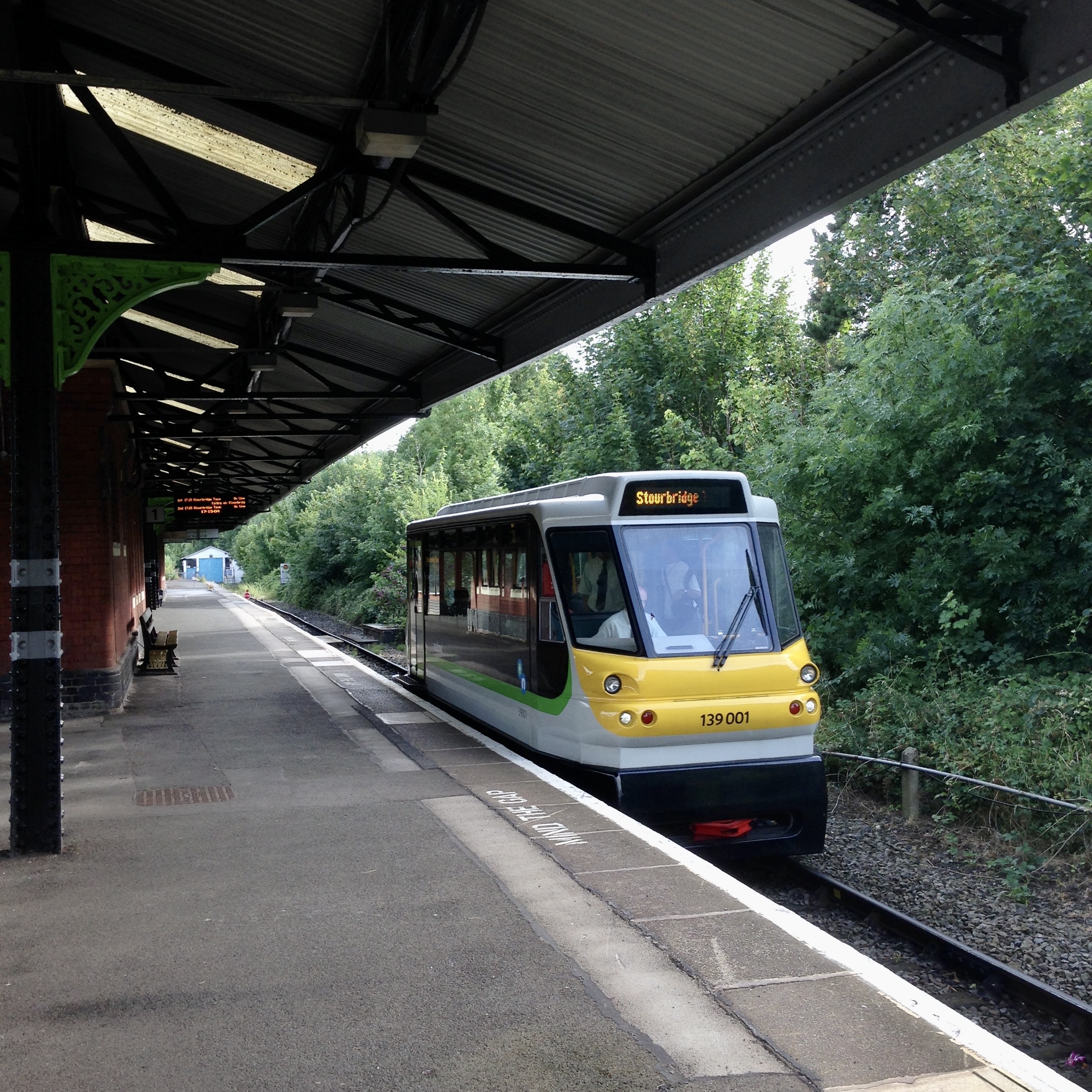
    West Midlands Trains Parry People Mover No. 139001 at Stourbridge Junction. These units have been a great success since taking over operations on the short branch to Stourbridge Town in June 2009 – 04/08/2015
    West Midlands Trains No. 139001 departing Stourbridge Junction. The unit will descend the 1 in 67 incline along the 0.8 mile branch line to Stourbridge Town – 04/08/2015

    The RMT union has suspended industrial action, including strikes and an overtime ban, at Network Rail following the receipt of a new pay offer. Strikes remain on for now at 14 train operating companies – including South Western Railway (SWR) and Great Western Railway (GWR). More updates will be released over the coming days.

    Train ticket prices in England and Wales increased by an average of 5.9% on Sunday 5th March 2023 – the largest fare hike in a decade.

    South Western Railway (SWR) is set to trial the use of QR codes soon to allow mobile phone users to access features including “real-time journey information” as well as a suite of further modules relevant to their trip. A select number of train services, including London Waterloo to Weymouth services, will feature QR codes located in prominent areas of the train such as seat backs, tables, accessible areas and toilet facilities. The innovative technology developed by software experts Whoosh will also allow passengers to use features such as “Talk to Us” to communicate with SWR about any issues on their journey, including on board faults and the digital service will know where the communication is coming from and be able to automatically populate areas of the report.

    That’s it for this week. It’s been a quiet one for me on the full size railway scene, but I was busy at the weekend putting floor boards down in our loft space in preparation for a model railway layout. I’ll be honest, this project has taken me far longer to get to this stage than I would have liked and my accidental mis-step resulting in putting my size 10’s through the ceiling was a low point (but not as low as it could have been as the rest of me didn’t follow my feet!), but good progress has been made over the last few weeks and I’ll soon be looking at building the baseboards for the railway track when funds allow. Thank you, as always, for stopping by and your comments and corrections. This weeks blog was brought to you with The Who “Tommy Live at The Royal Albert Hall”, The National (their latest offering “New Order T-Shirt” is just my cup of tea, or even my caramel latte) and Depeche Mode (who should really come and play a concert at the Weymouth Pavilion instead of all the big international venues they like to frequent). See you next week, take care and may your dog go with you.
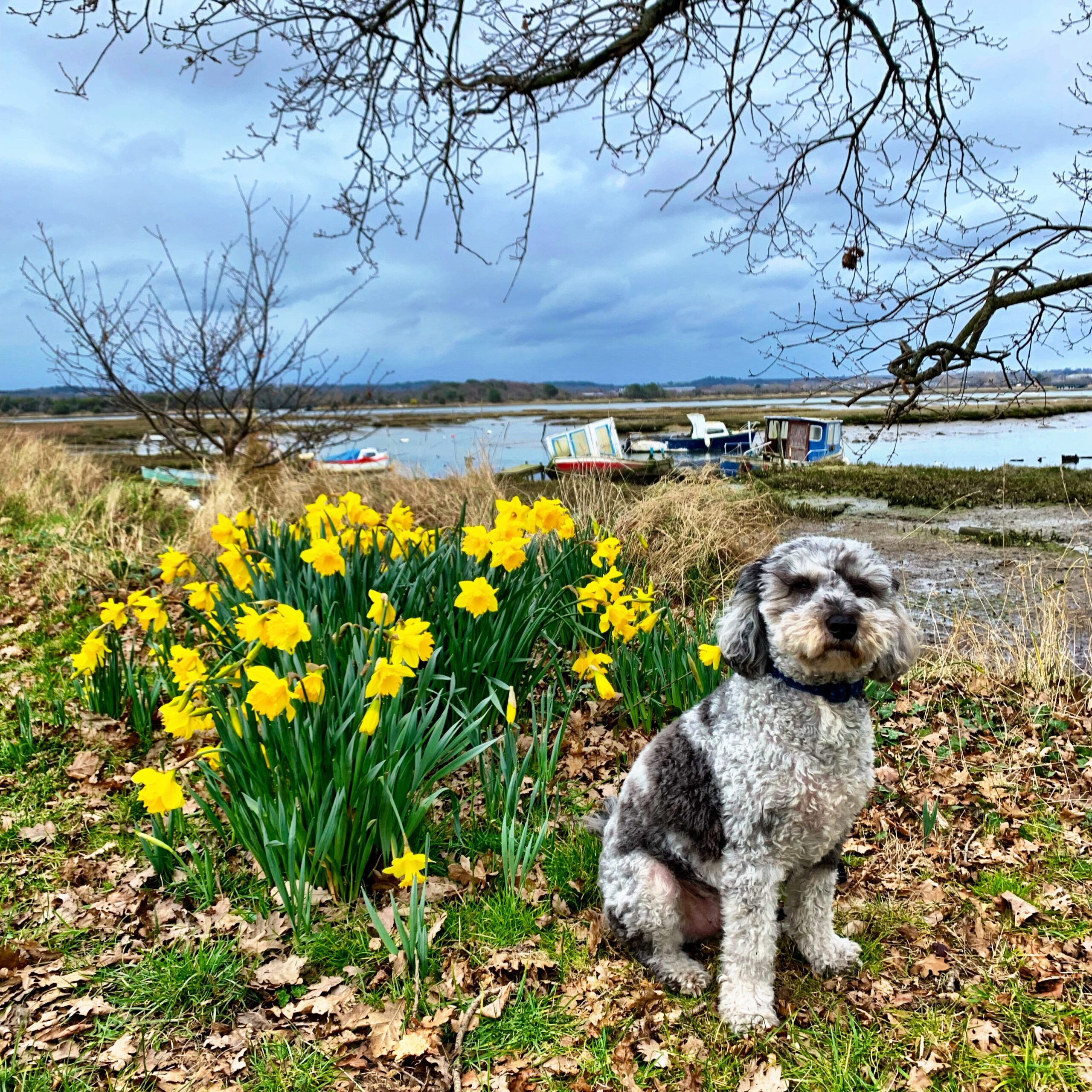
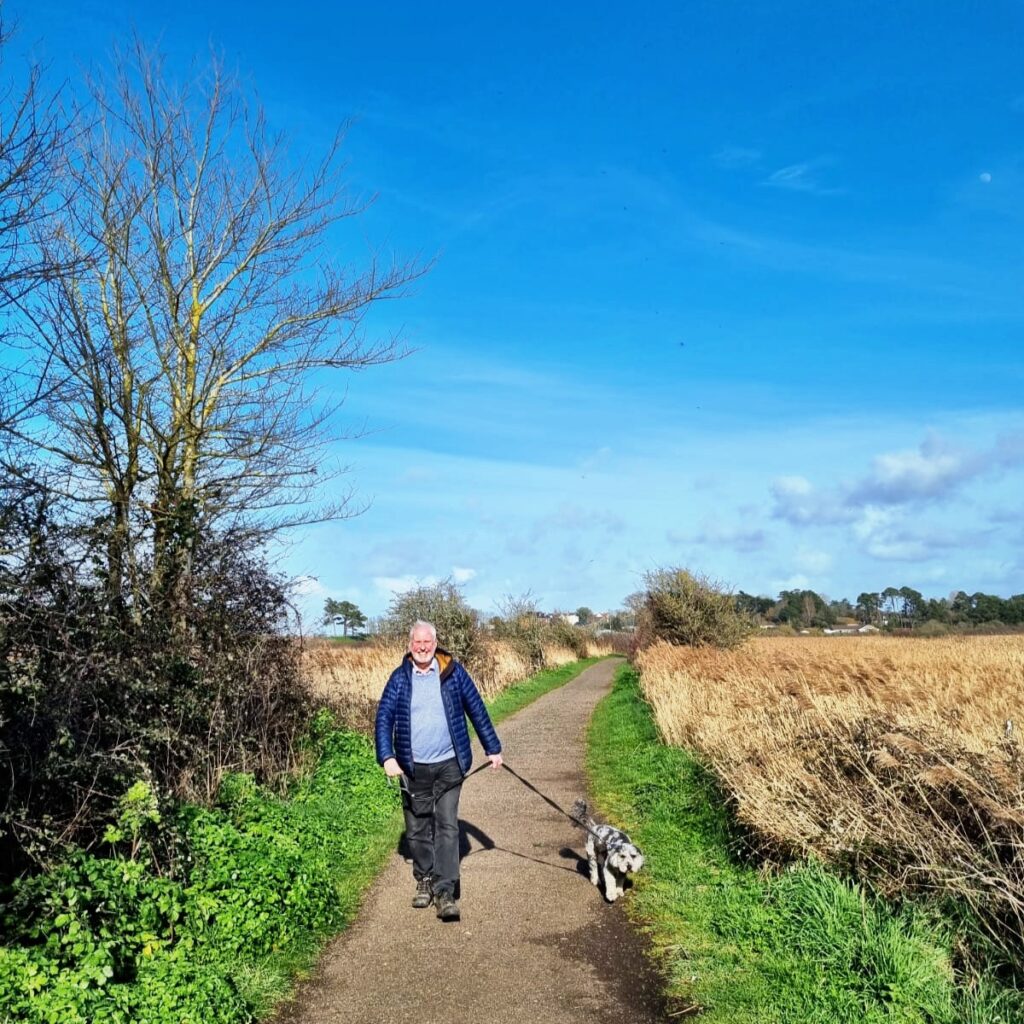
    Yoshi amongst the daffodils at Holes Bay – 06/03/2023
  • Pokesdown

    Yoshi vista Pokesdown railway station – 28/01/2023

    Wednesday January 25th to Tuesday January 31st 2023

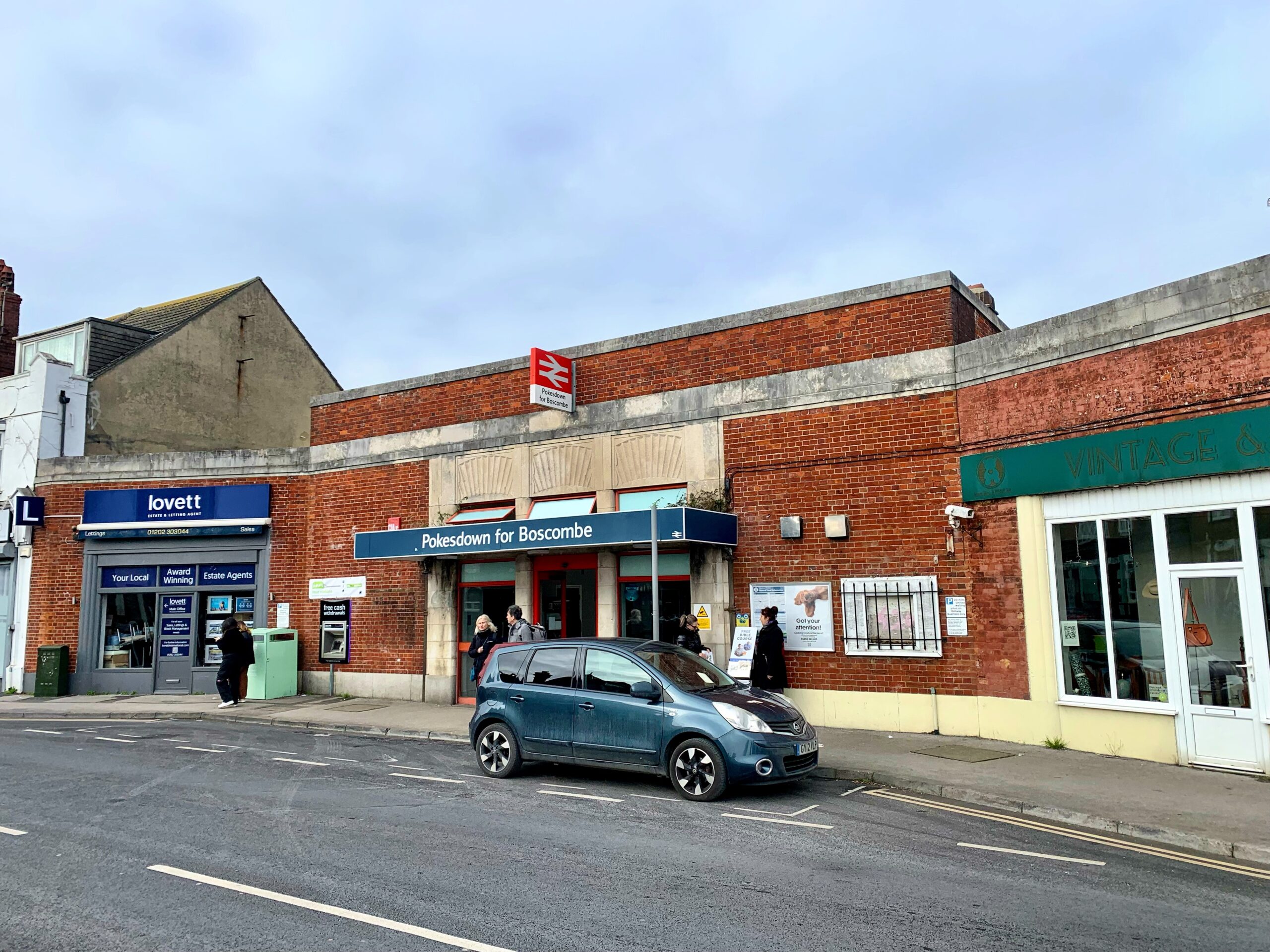
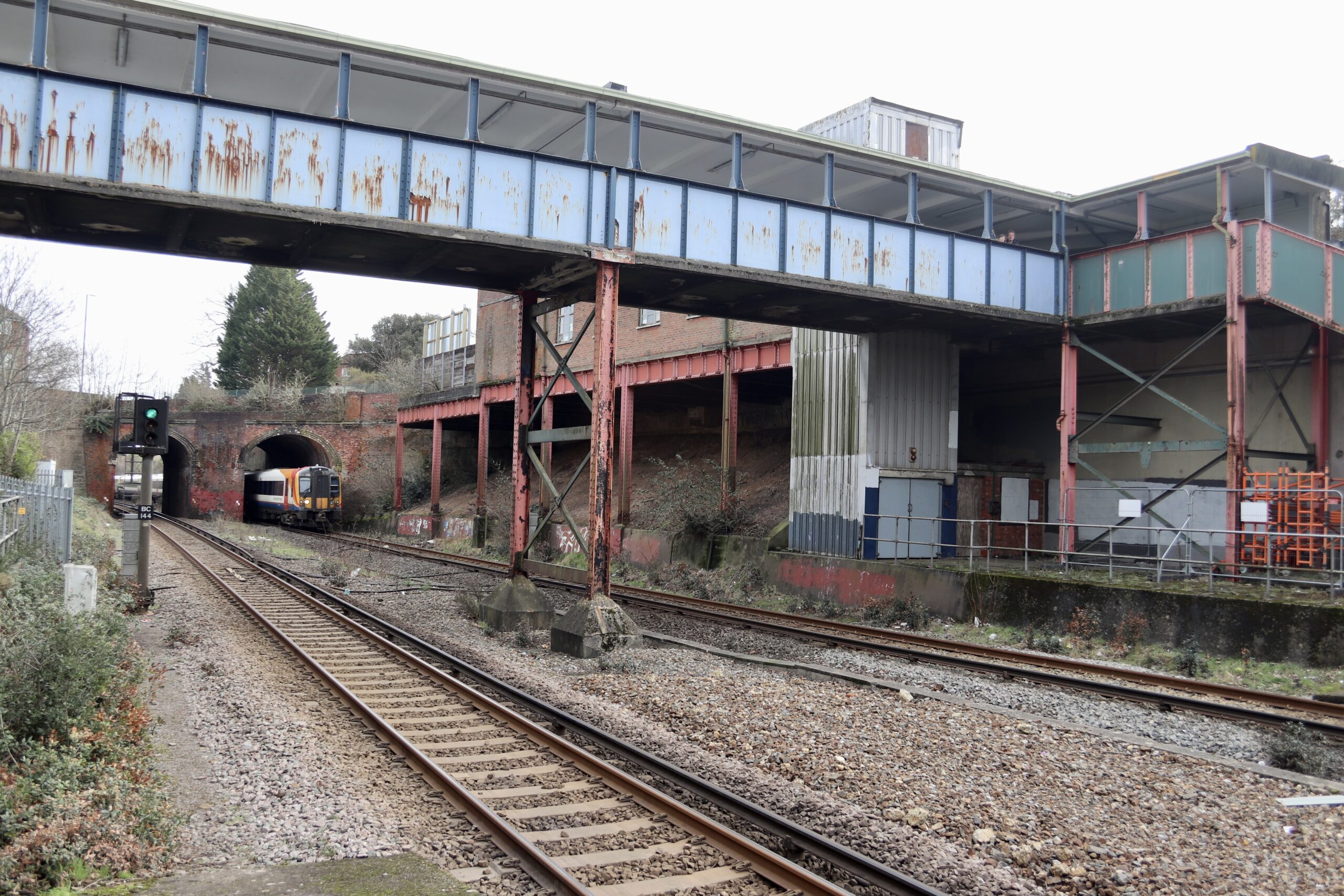
    Dorset railway station Pokesdown (or to quote current station signage; “Pokesdown for Boscombe”) has been in the news recently and on Wednesday January 11th 2023 was subject to an Adjournment debate at the House of Commons as Tobias Ellwood,  Conservative MP for Bournemouth East, raised the question of when customer lifts would be installed at the location. Describing the station as “pretty grim” Mr. Ellwood, who has been campaigning for improvements to the station since 2016, pressed Minister of State, Department of Transport, Huw Merriman for an update on promised improvements. At the weekend, Yoshi and I decided to go along and take a look at the station ourselves. 

    The ground level exterior entrance to Pokesdown railway station – 28/01/2023

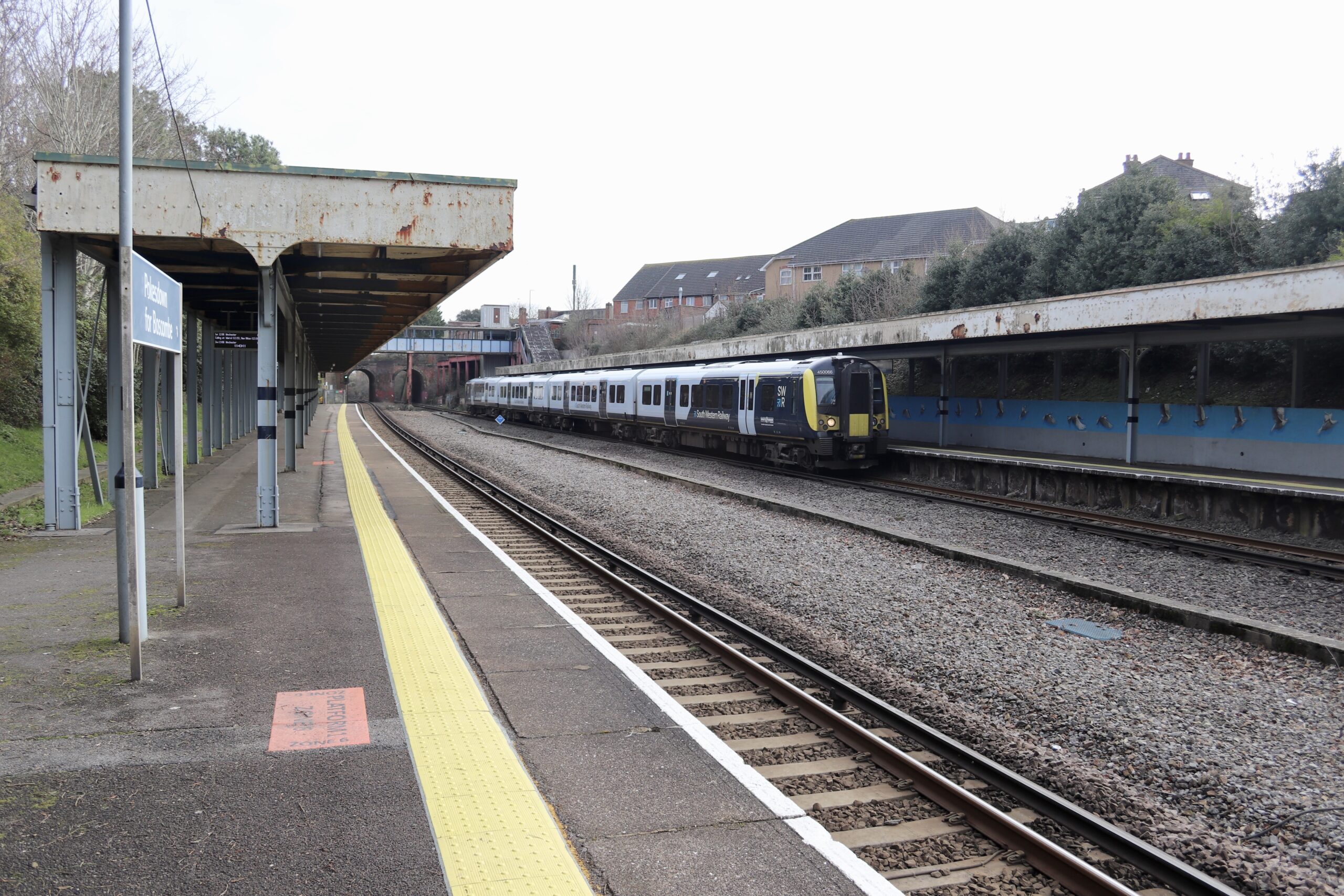
    Pokesdown railway station serves the Pokesdown, Boscombe and Southbourne areas of Bournemouth and is on the South West Main Line, situated 106 miles 24 chains (171.1 km)  from London Waterloo (Railways in the UK historically are measured in miles and chains, there being 80 chains to one mile). The station is served by South Western Railway (SWR), who operate semi-fast services from London Waterloo to Weymouth and stopping services from London to Poole. The station was originally opened on 1st July 1886 by the London and South Western Railway (LSWR) at an estimated cost of £2,000. It was originally named Boscombe, but was changed to Pokesdown (Boscombe) on 1st October 1891 as it is situated noticeably closer to Pokesdown than Boscombe. On 1st May 1897, when (the now closed) Boscombe station was opened, the station was renamed to just Pokesdown. In 1930, the station was again renamed, becoming Pokesdown for Eastern Bournemouth, but was once more changed to Pokesdown following the formation of British Railways in 1948. At one time there were two centre roads allowing non-stopping services to pass through the station without being encumbered by stopping trains at the platforms. These up and down fast lines were removed in the 1970’s.

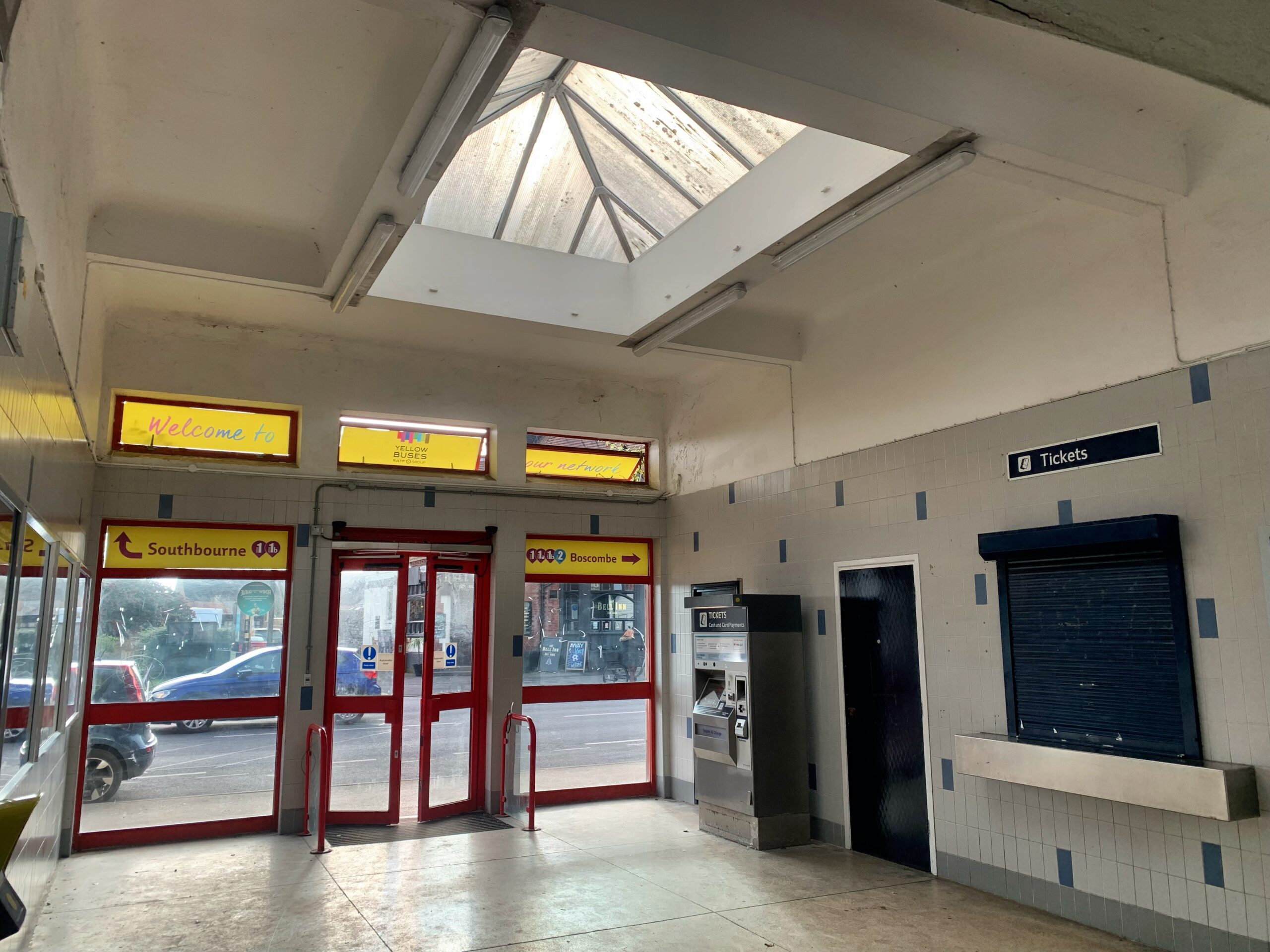
    The booking hall at Pokesdown – 28/01/2023

    The station entrance at Pokesdown is at ground level with the platforms 20 meters below, access can only be currently gained by two 42-step flights of stairs, one to catch trains in the Weymouth direction and the other for stations to London.  The goods lifts at Pokesdown are 90 years old and have not functioned for over 35 years. In 2021, the BBC reported that at least two passengers had suffered broken bones after falling on the steep steps. One, Jacky Dempsey, broke both arms.  There is no alternative access for passengers with restricted mobility and wheelchair users are advised to use the main Bournemouth station instead. 

    The up platform steps – 28/01/2023
    The bridge across the platforms – 28/01/2023

    Installation of lifts for passenger use was an obligation in SWR’s 2017 franchise agreement and although the franchise has since been replaced by a new National Rail Contract in the wake of the pandemic, SWR has reconfirmed its £1.6m contribution, subject to third-party funding to meet any shortfall.  In January 2022, Bournemouth Christchurch Poole Council (BCP) pledged £2.6m from its Future Fund, with Network Rail (NR) providing the balance of the overall project cost of £5.7m which in addition to new lifts include refurbishment works on the bridge across the railway line to connect both lifts and other much needed modernisation of the Station facilities. The steelwork on the bridge is of around the same age as the redundant goods lifts and requires assessment prior to the construction of new lifts.

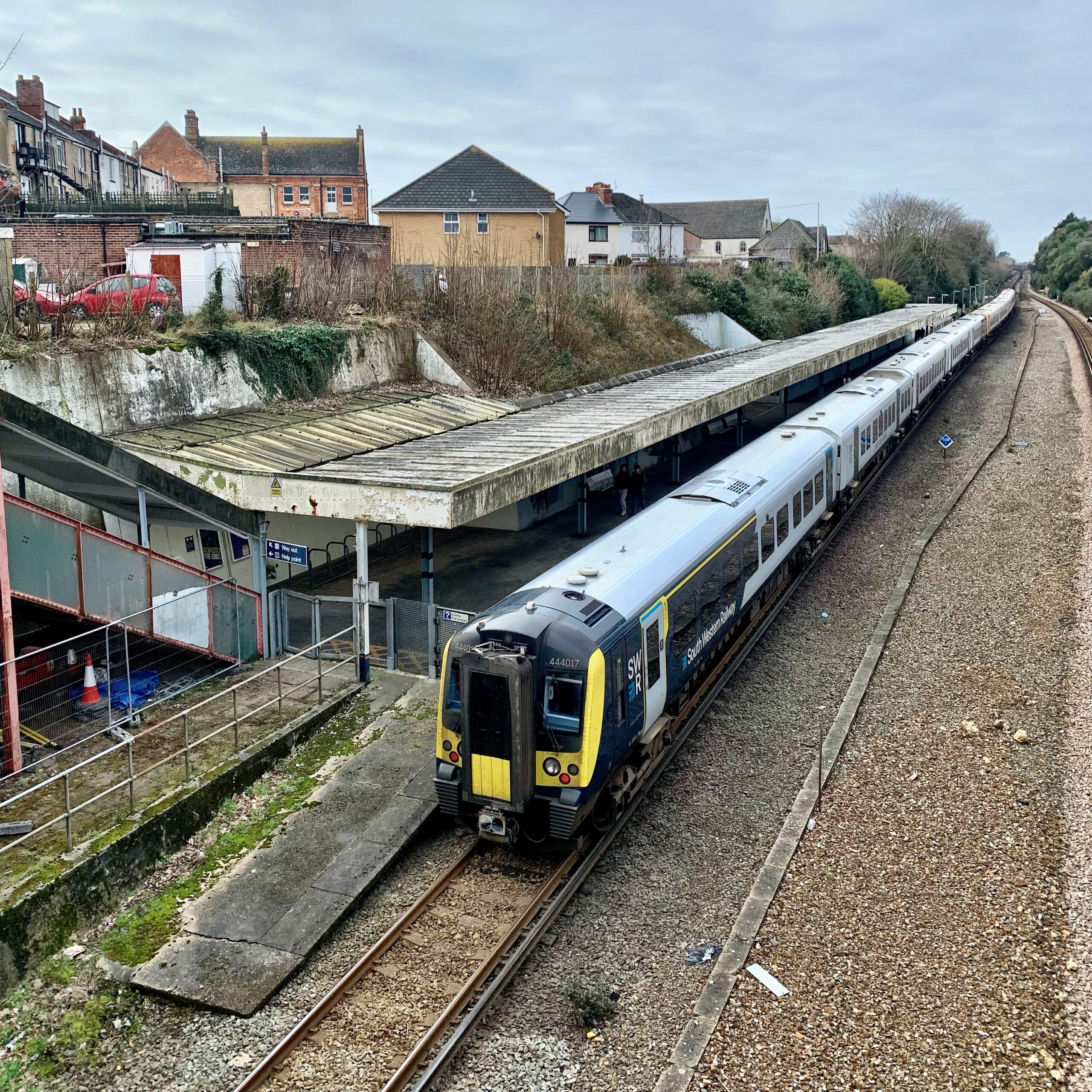
    The main road in the area is the A35 which crosses the main line east of Pokesdown station on this bridge. As originally built there was a single island platform – this was removed and two platform faces created allowing space for four running lines through the station. SWR Class 444 EMU No. 444036 leading No. 444017 with the 1W61 0950 London Waterloo to Weymouth and Poole stopping service approaches. One of the goods lift shafts can be seen behind the station bridge – 28/01/2023

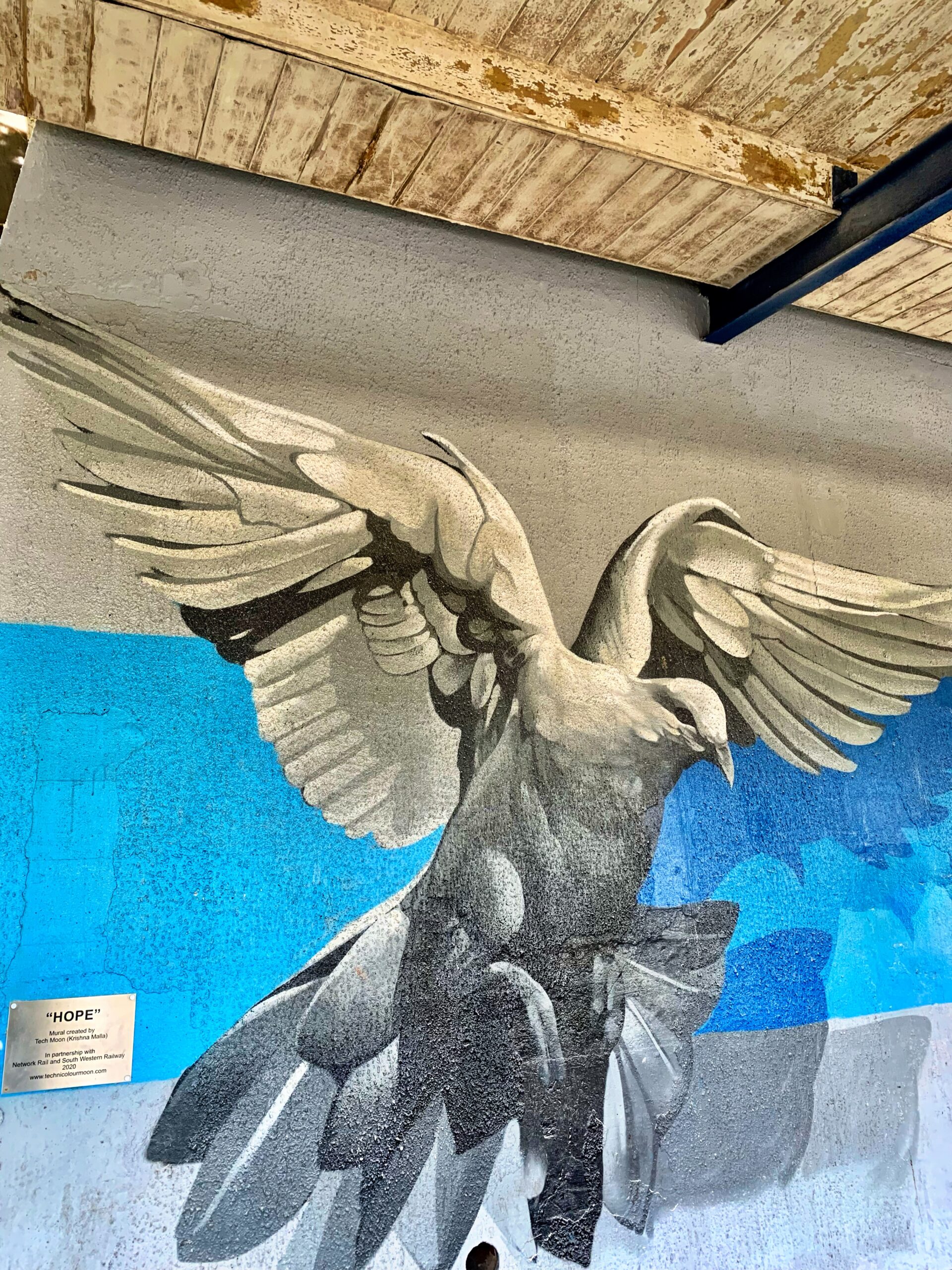
    SWR and NR are hoping to be in a position to put the job out to tender later this year which will give all parties a final construction cost for the lift project. In the meantime work to upgrade the platform canopies is expected to be completed by mid-2023. Local Premiership football club, AFC Bournemouth, whose ground is only a stone’s throw from the station, has offered to help to give the station some local personality by donating large football montages to brighten the platform spaces. Other opinions on this addition may vary! I would much prefer the mural by Krishna Malla, aka Tech Moon a Bournemouth based artist specialising in photorealism, which currently adorns the down platform walls remain in situ. The mural, entitled “Hope”, was created at the request of Network Rail and SWR in 2020 to create a positive image and help uplift an area which has been beset with hard times over the past few years for depressing circumstances surrounding mental health. Doves were chosen as the subject matter because “The dove represents peace of the deepest kind”.
    “Hope” dove detail by Krishna Malla, aka Tech Moon – 28/01/2023
    “Hope” plaque – 28/01/2023
    Hands detail from “Hope” by Krishna Malla, aka Tech Moon – 28/01/2023
    The final section of the “Hope” is designed to move from the view on the train. The shadows offer a metaphor that every shadow has a light on the other side – 28/01/2023

    Regular stopping services are operated using SWR Class 444 or Class 450 electric multiple units with a weekday and Saturday service of two trains an hour. Sunday’s see one stopping train an hour.  CrossCountry Voyagers are regular visitors as they pass non-stop through the station. 

    Class 450 No. 450066 working 2B21 1056 Southampton Central to Bournemouth stops at Pokesdown – 28/01/2023
    Class 444 No. 444017 at the rear of the 1W61 0950 London Waterloo to Weymouth and Poole stopping service – 28/01/2023
    Looking west towards Bournemouth from the footbridge, XC Voyager Class 221 No. 221127 passes Pokesdown on 1M46 1145 Bournemouth to Manchester Piccadilly. The space once occupied by two through tracks can clearly be identified – 28/01/2023

    So, is the station “pretty grim”, as opined by Tobias Ellwood? I liked the mural, but I think I’d describe Pokesdown station as unloved and in urgent need of TLC. We look forward to making a return visit to Pokesdown in the future to see the results of the £5.7m upgrades.

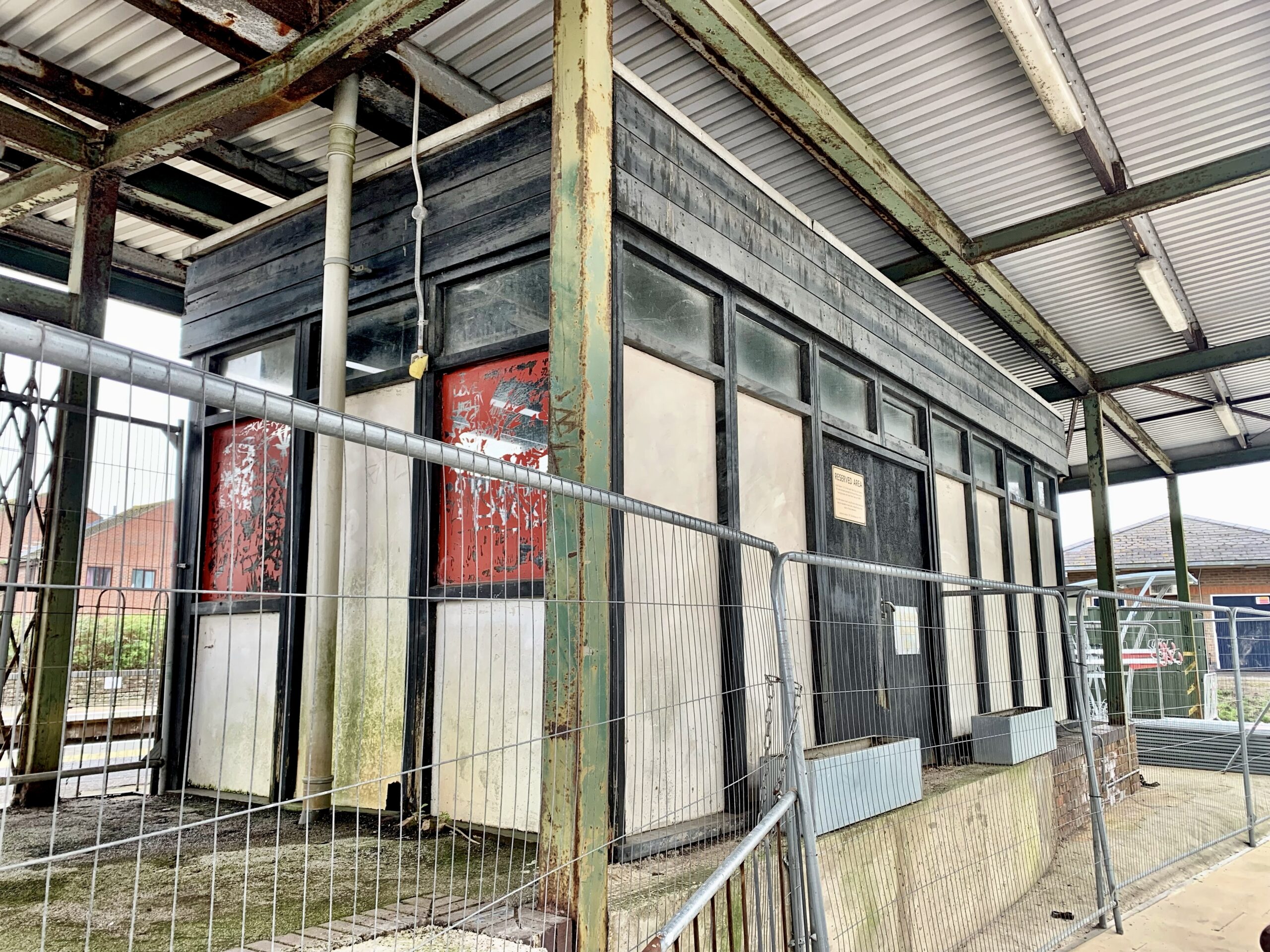
    Dorchester South is also seeing some ‘Railway Improvement Work’ as Network Rail undertake the demolition of the station canopy and removal of the former postal office at the end of platform 1. The major part of the work is planned to take place over the weekend of 4th / 5th February 2023 with follow up work expected to be completed by Friday 10th February 2023. 

    With the Brewery Square development rising up above it the Dorchester South postal office and canopy awaits demolition – 28/01/2023
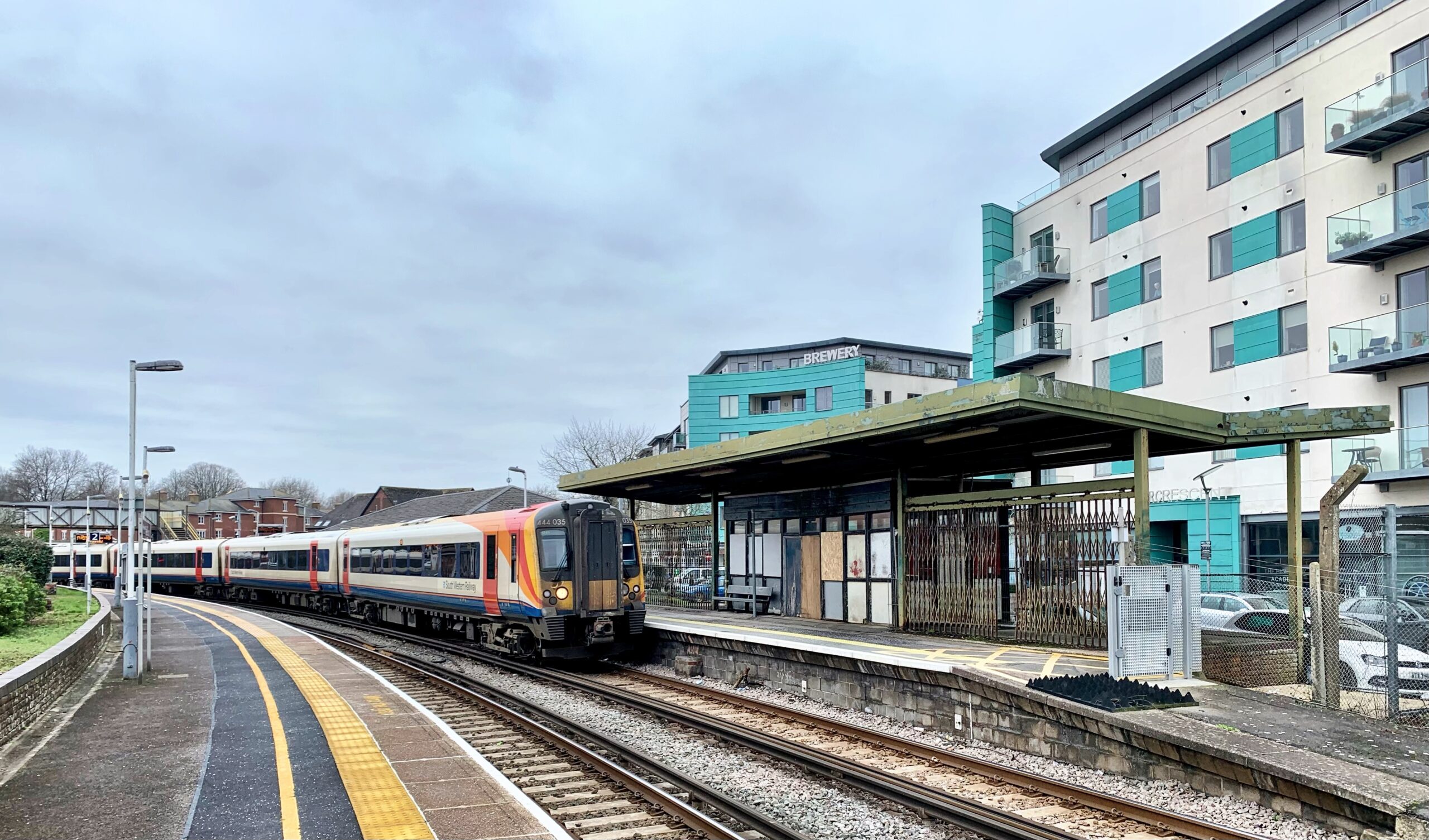
    Another view of the postal office / canopy at Dorchester South SWR Class 444 No. 444016 waits in the down platform working 1W21 1020 London Waterloo to Weymouth – 28/01/2023
    SWR Class 444 No. 444016 departs with the 1W21 1020 London Waterloo to Weymouth – 28/01/2023
    The dilapidated condition of the Dorchester South parcels office / canopy can clearly be seen in this view – 28/01/2023
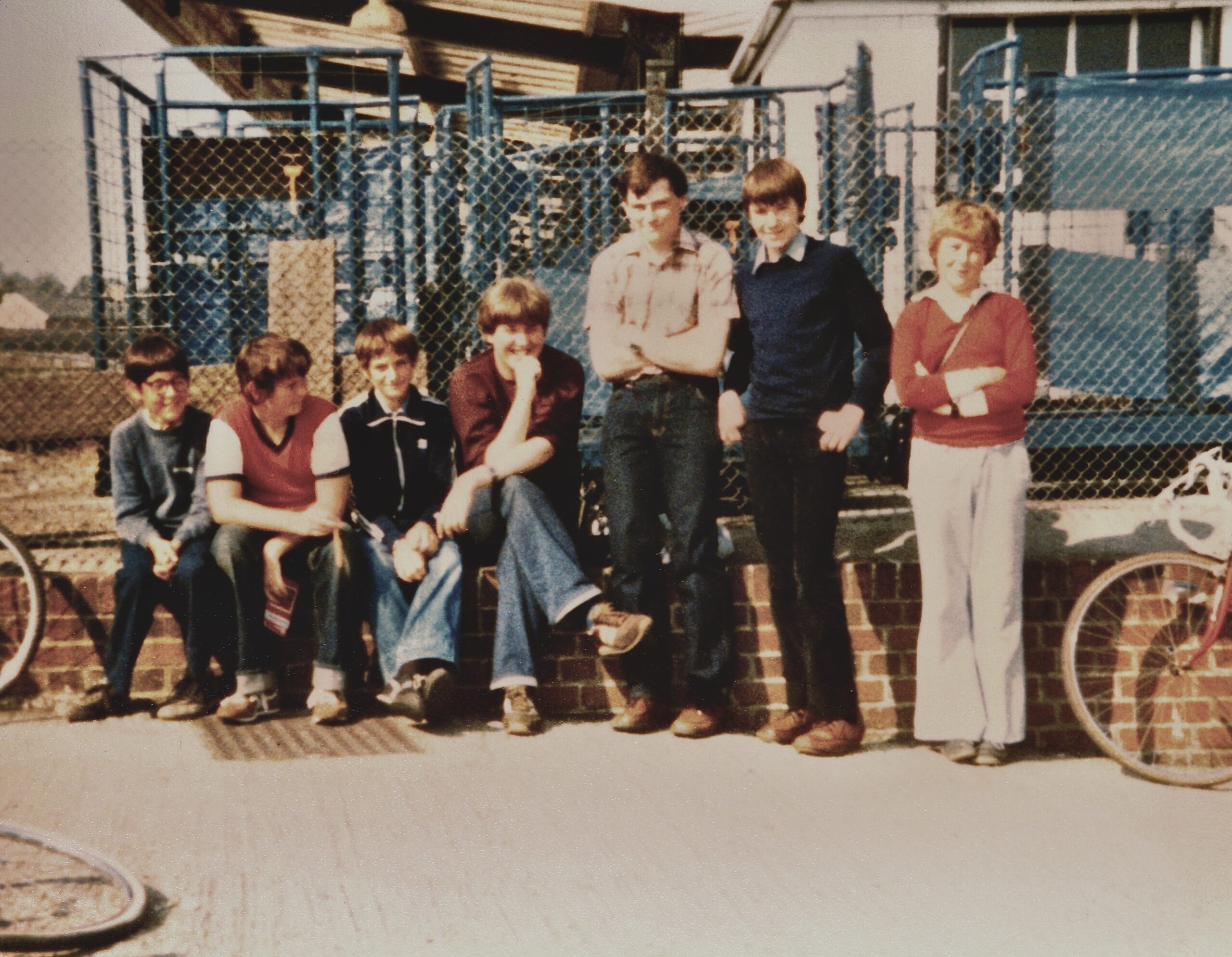
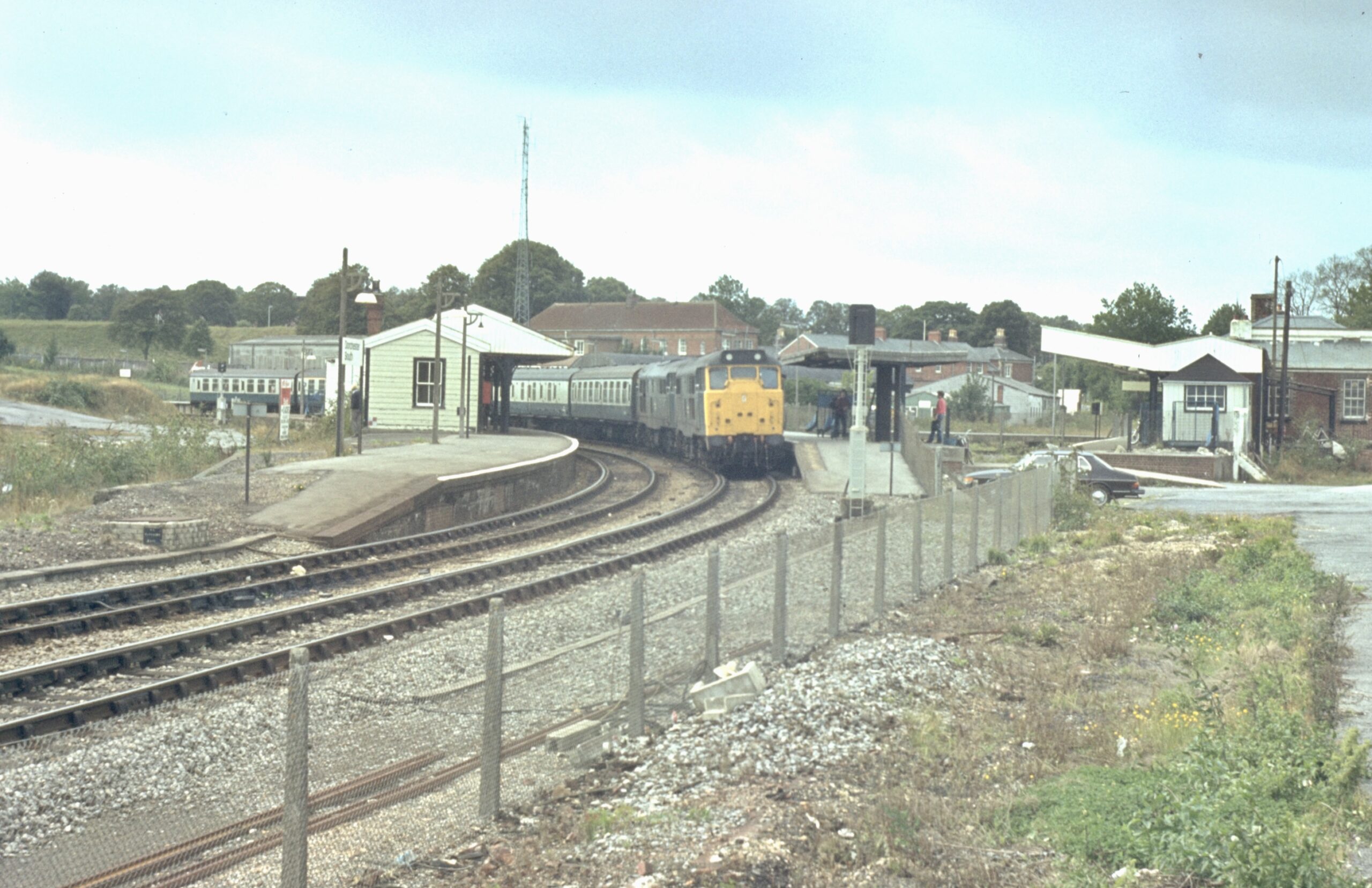
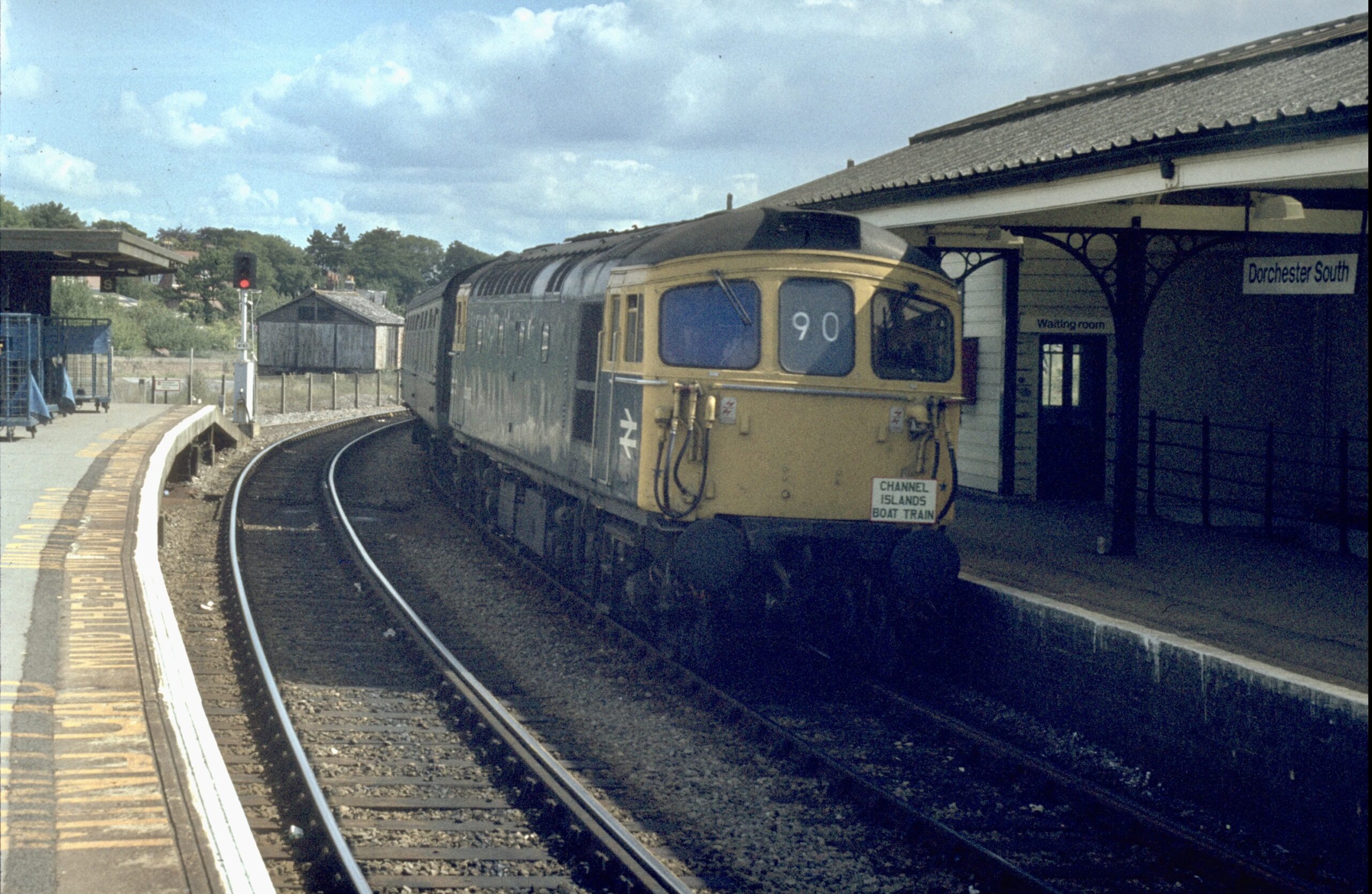
    Time travelling back to the 1980’s, the parcels ramp at Dorchester South was a favourite spot for rail enthusiasts and train spotters on a summer Saturday afternoon.
    Class 31 No.’s 31152 and 31154 make a rare visit to Dorchester South. The original station building still stands in the right of the image although the addition of an up platform meant trains no longer had to reverse into the original platform – October 1983
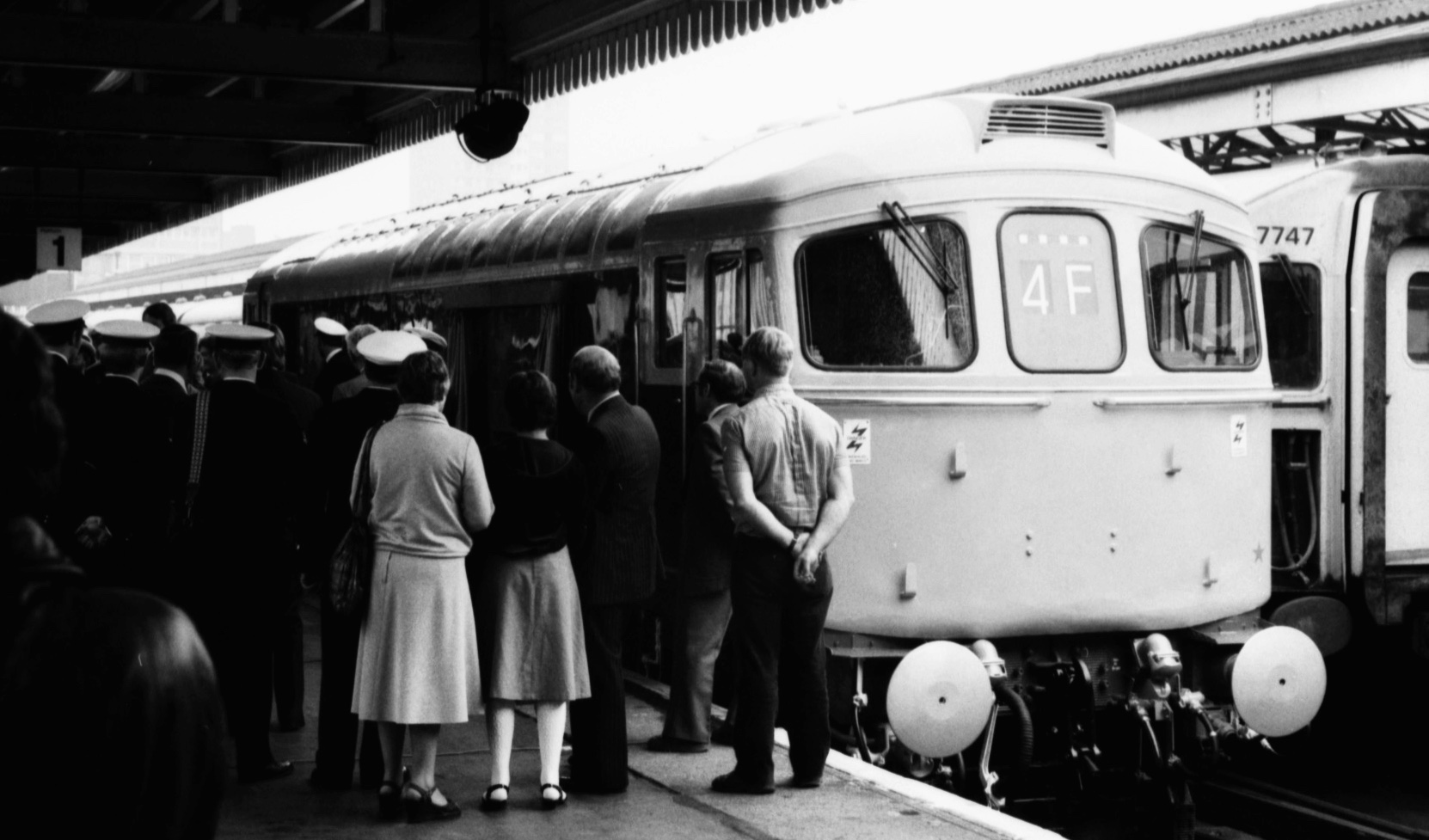
    Class 33 No. 33106 working a “Channel Islands Boat Train” through Dorchester South. On arrival at Weymouth, the train famously traversed the streets before arriving at the Quay station. The Dorchester South parcels area and canopy is seen on the left – 28/08/1982
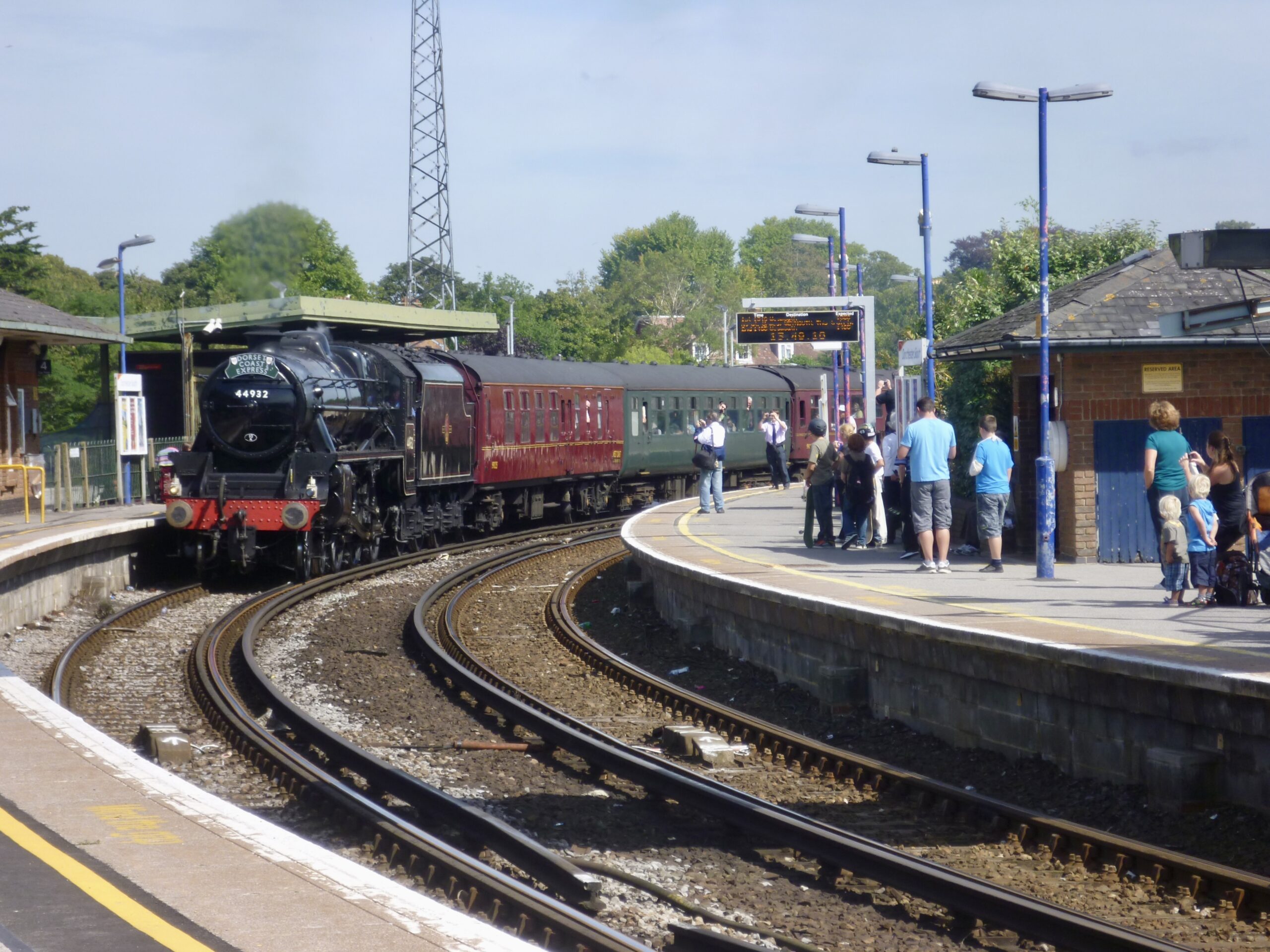
    London Midland Scottish Stanier Class 5MT 4-6-0 No. 44932, the sole survivor of this type of locomotive constructed in 1945 at Horwich Works, brings Railway Touring Company “The Dorset Coast Express” 1Z96 0845 London Victoria to Weymouth railtour past the parcels office and station canopy into Dorchester South – 01/09/2010
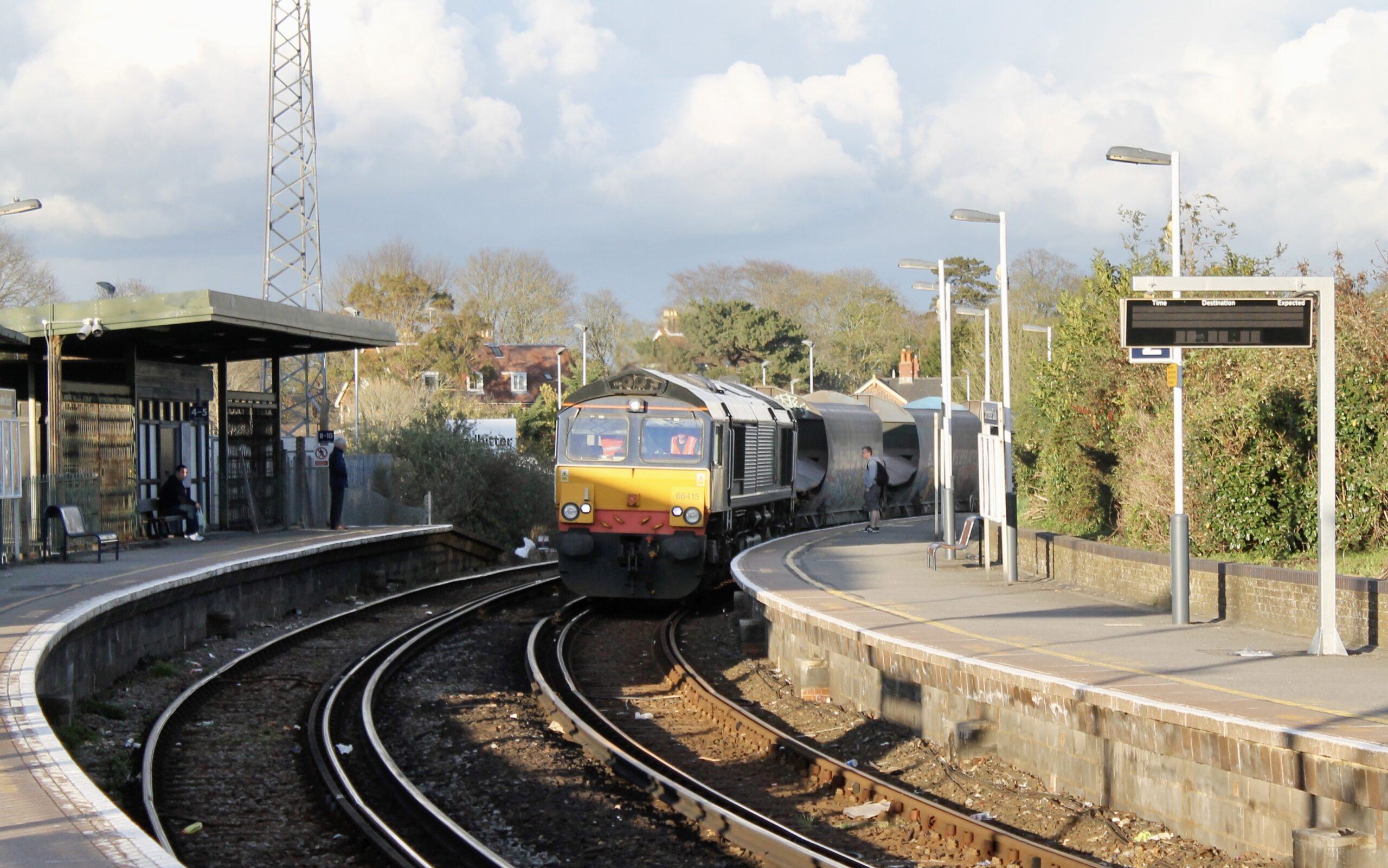
    Direct Rail Services (DRS) Class 66 No. 66415 arrives at Dorchester South with a train of empty wagons destined for Wool sidings where they would be loaded with sand. The locomotive would run around the train at Dorchester before returning to Wool for reversal into the sidings situated on the Up side of the station – 10/04/2012
    Our final modern day glimpse of the parcels office and station canopy as SWR Class 444 No. 4440135 awaits departure from Dorchester South working 1W20 1303 Weymouth to London Waterloo – 28/01/2023

    Our regular reader may remember a couple of weeks ago when one of the monthly test trains scheduled to visit Weymouth via Bournemouth and Poole did not materialise because of the landslip at Hook. A cause of much disappointment as the train was being hauled by Class 37 locomotives instead of the usual Class 73 electro-diesels. We had a sense of déjà vu this week when a Class 37 hauled test train to Weymouth via Yeovil also terminated early without visiting the Dorset seaside as 1Z22 0752 Derby RTC to Bristol Kingsland Road with No.’s 37610 and 37612 went off route at Wootton Bassett Junction and instead of heading south carried on a westerly trajectory and arrived at its final destination 481 minutes early because of lack of train crew to take over for the afternoon / evening shift.

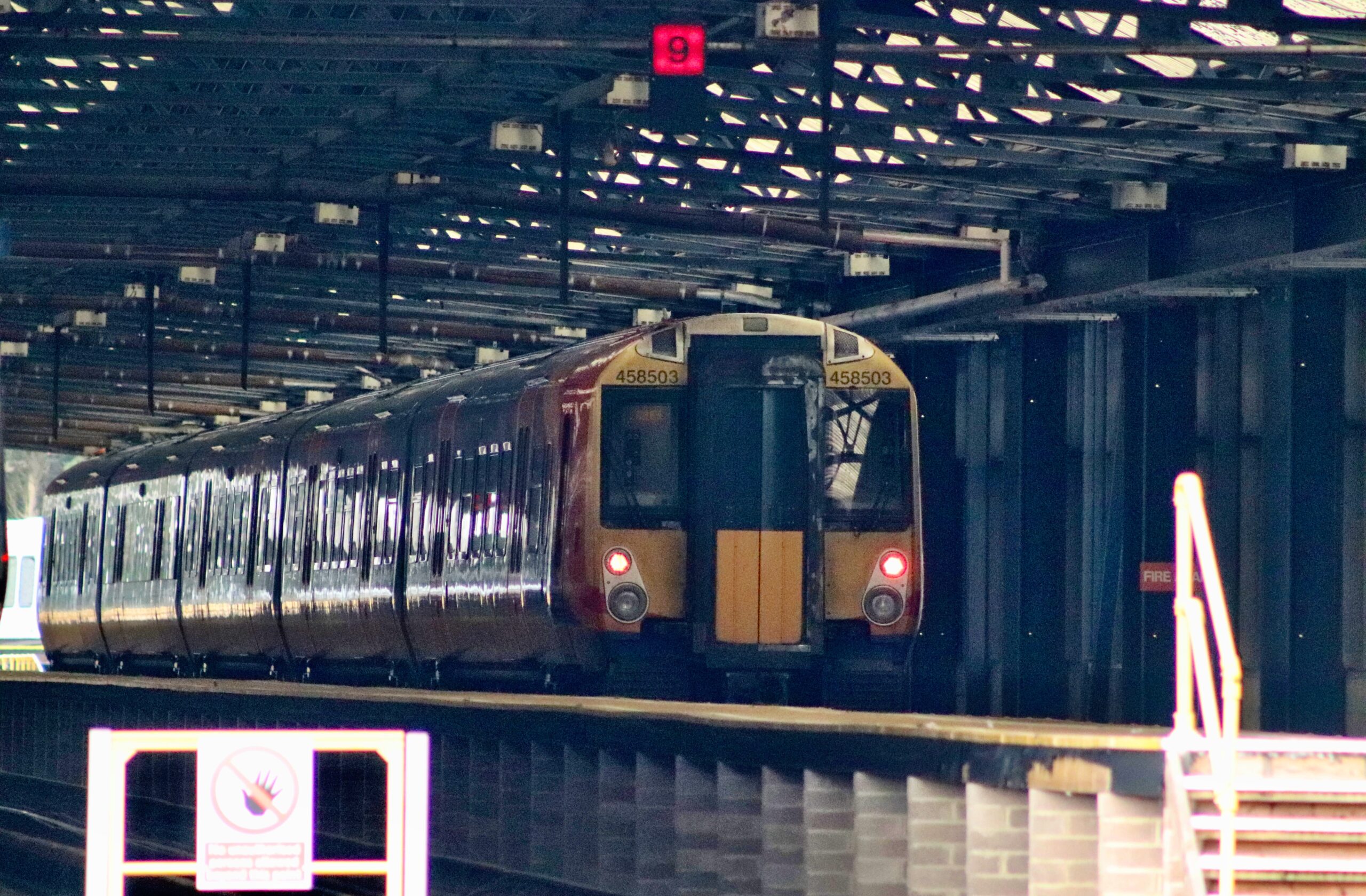
    Thursday 26th January saw SWR Class 458 EMU No. 458503 working 5B39 1001 Wimbledon Park Depot Sidings to Bournemouth T&R.S.M.D. To my knowledge, I have not previously seen a Class 458 in Dorset, so armed with a long lens for the camera, Yoshi and I stopped off at Bournemouth Traincare depot on our way to Pokesdown and from the safety of the car park took the following photos. 

    SWR Class 458 No. 458503 at Bournemouth T&R.S.M.D. – 28/01/2023
    Class 701 No. 701043 at Bournemouth T&R.S.M.D. – 28/01/2023
    A line up of SWR EMU’s at Bournemouth T&R.S.M.D. including No.’s 444005, 701041, 701042 and 444003 – 28/01/2023

    Two other Class 458’s could be seen stabled on the depot amidst the Class 444’s, Class 701’s and Class 455 EMU’s. 

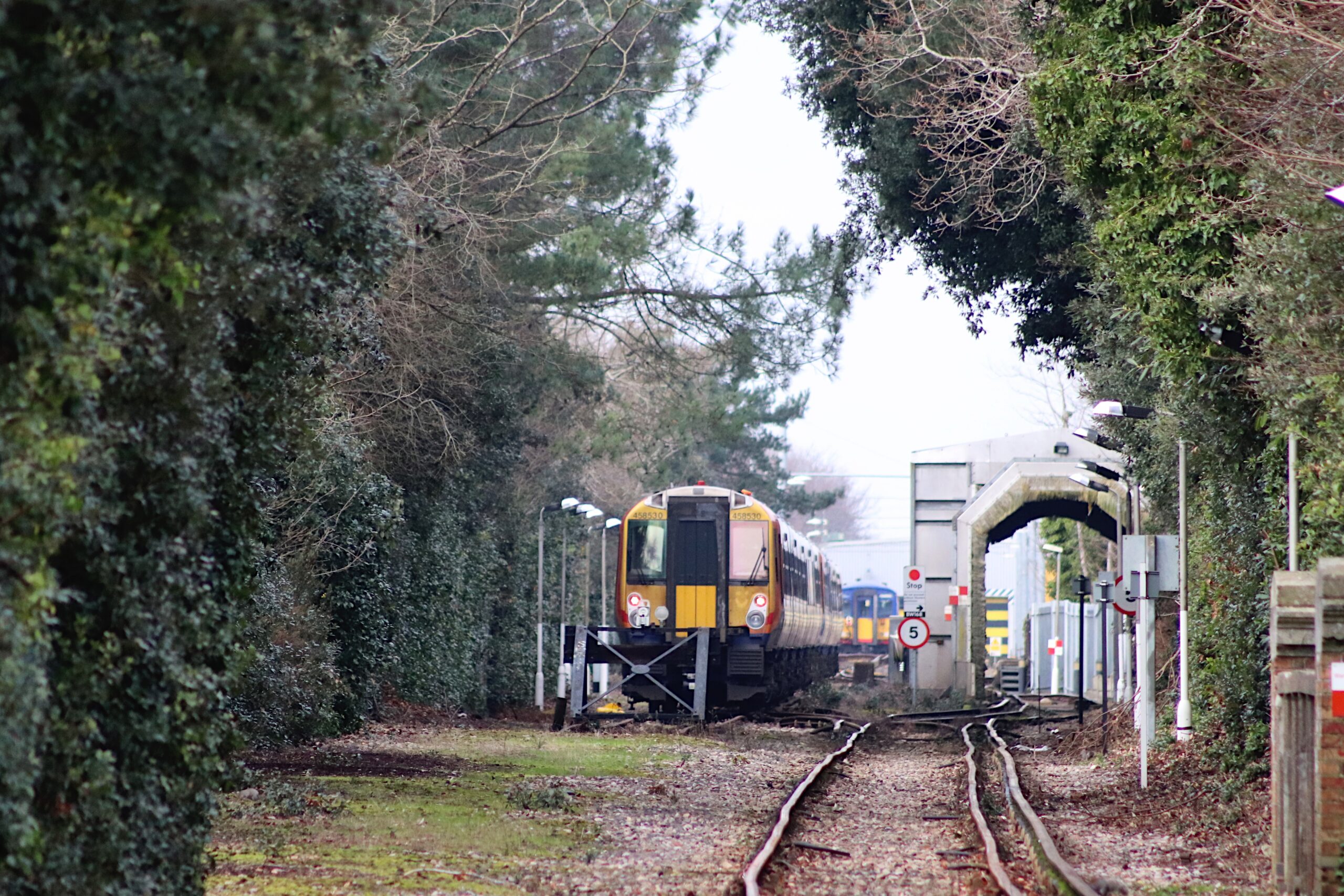
    SWR Class 458 No.’s 458530 and 458519 stand adjacent the train wash with an unidentified Class 455 behind, Bournemouth T&R.S.M.D. – 28/01/2023

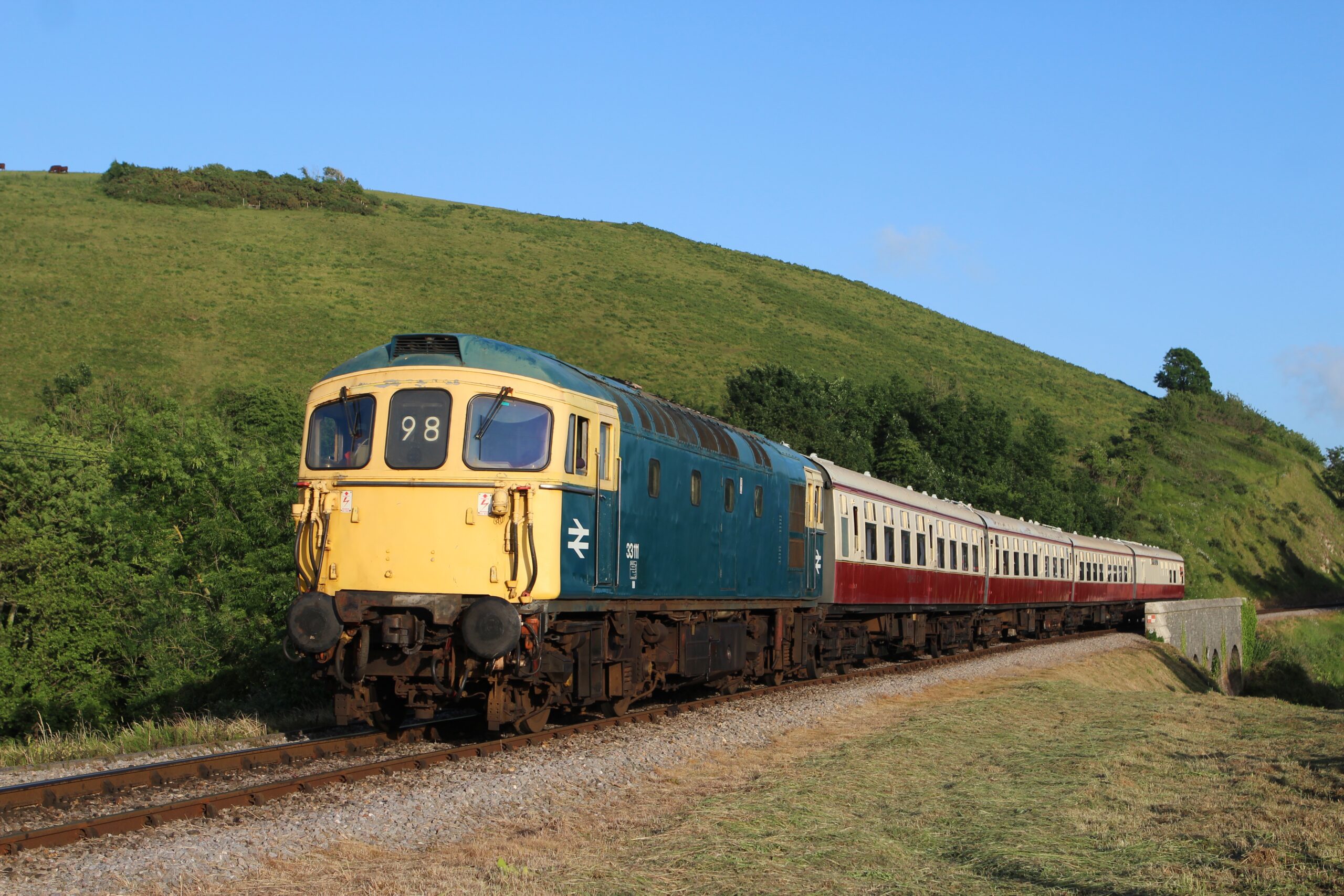
    Our final port of call on Saturday was a brief visit to the Swanage Railway and Corfe Castle station. As track work has been ongoing at Swanage this week, resident Class 33 diesel locomotives No. D6515 ‘Lt Jenny Lewis RN’ and No. 33111 have taken it in turns to be stabled adjacent to the signal box in Corfe. On our visit it was the turn of BR Blue liveried No. 33111 which made an interesting composition with a brake van and carriage.

    Class 33 No. 33111 rests at Corfe Castle railway station – 28/01/2023

    From The Archive

    The only 8mm video footage I recorded at Pokesdown station is of SR Merchant Navy Class 4-6-2 No. 35028 ‘Clan Line’ working the return LSW Railtours “The Strong Counrtyman” on 11th June 1995. My intention was to clip this shot and include it with this weeks blog section on Pokesdown. However, I enjoyed the complete 38 minute sequence and I thought you might be interested in seeing the whole thing as well. Starting at Eastleigh with views which could not be replicated today because of new building developments (Lidl, I’m looking at you) and including Class 47’s, a Class 58, a Class 07, Class 442 Wessex Electrics and Slam Door EMU’s the video also includes shots of ‘Clan Line’ at Bournemouth Traincare Depot before they erected an annoyingly huge fence. The appearance of No. 35028 at the Bournemouth depot was the first visit of a ‘Merchant Navy’ Pacific locomotive to the approaches of the former Bournemouth West station, on which the depot now resides, in almost 30 years. Has there been one since I wonder?

    Video of SR Merchant Navy Class 4-6-2 No. 35028 ‘Clan Line’ working LSW Railtours “The Strong Countryman’ – 11/06/1995

    This was LSW Railtours, run by Paul Blowfield formerly of the British Rail Special Trains Unit, first ever steam hauled tour. Looking back at the pages of the August 1995 edition of “The Railway Magazine” we discovered most of the seats on the tour had been sold in advance, with well over 300 passengers travelling on the train. It appeared to be a difficult time for rail tour operators with a whole page in the magazine devoted to readers letters discussing the topic dramatically entitled “Main Line Steam In Crisis”. From the small section of letters included from amongst the many apparently received on the subject by the editor it is apparent that tour organisers were generally failing to market and promote trains aggressively to a wide audience. In addition, poor time-keeping and the lack of photo opportunities for these onboard coupled with the uncertainty as to if the tour would run or not did little for the future confidence of main line steam. Mr Blowfield admitted that it was difficult to promote trains in a climate when more and more tour operators were competing for the same market, often with several trains running on the same date.

    Many thanks for your corrections, comments, contributions and observations – they are all most welcome. This weeks blog was brought to you courtesy of caramel latte and Twirl bars.

    If you, or someone you know, have been affected by mental health here are a few links below that may help. Two specific to Dorset and an NHS index of further support: 

    http://www.dorsetmentalhealthforum.org.uk

    https://www.nhs.uk/nhs-services/mental-health-services/

  • New Year 2023

    Thursday 22nd December to Tuesday 3rd January 2023

    Empty trains parked up on Christmas Day at Weymouth railway station – 25/12/2022

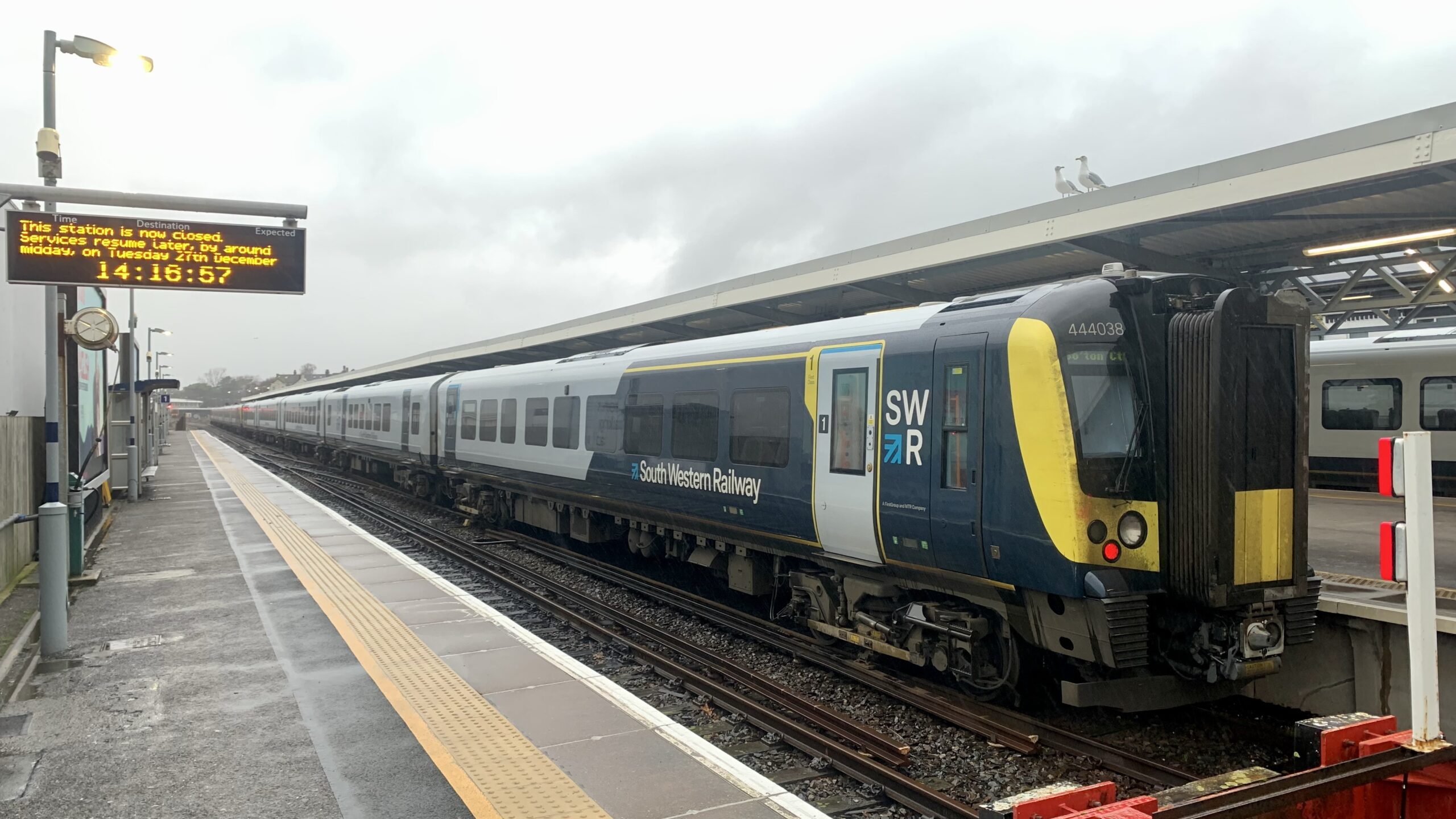
    The UK rail network wound down for the Christmas break early on 24th December in 2022 because of industrial action. Several South Western Railway (SWR) Class 444 Electric Multiple Units and a Great Western Railway (GWR) Class 165 diesel multiple unit spent Christmas parked up at Weymouth railway station awaiting the restart on the 27th December 2022.

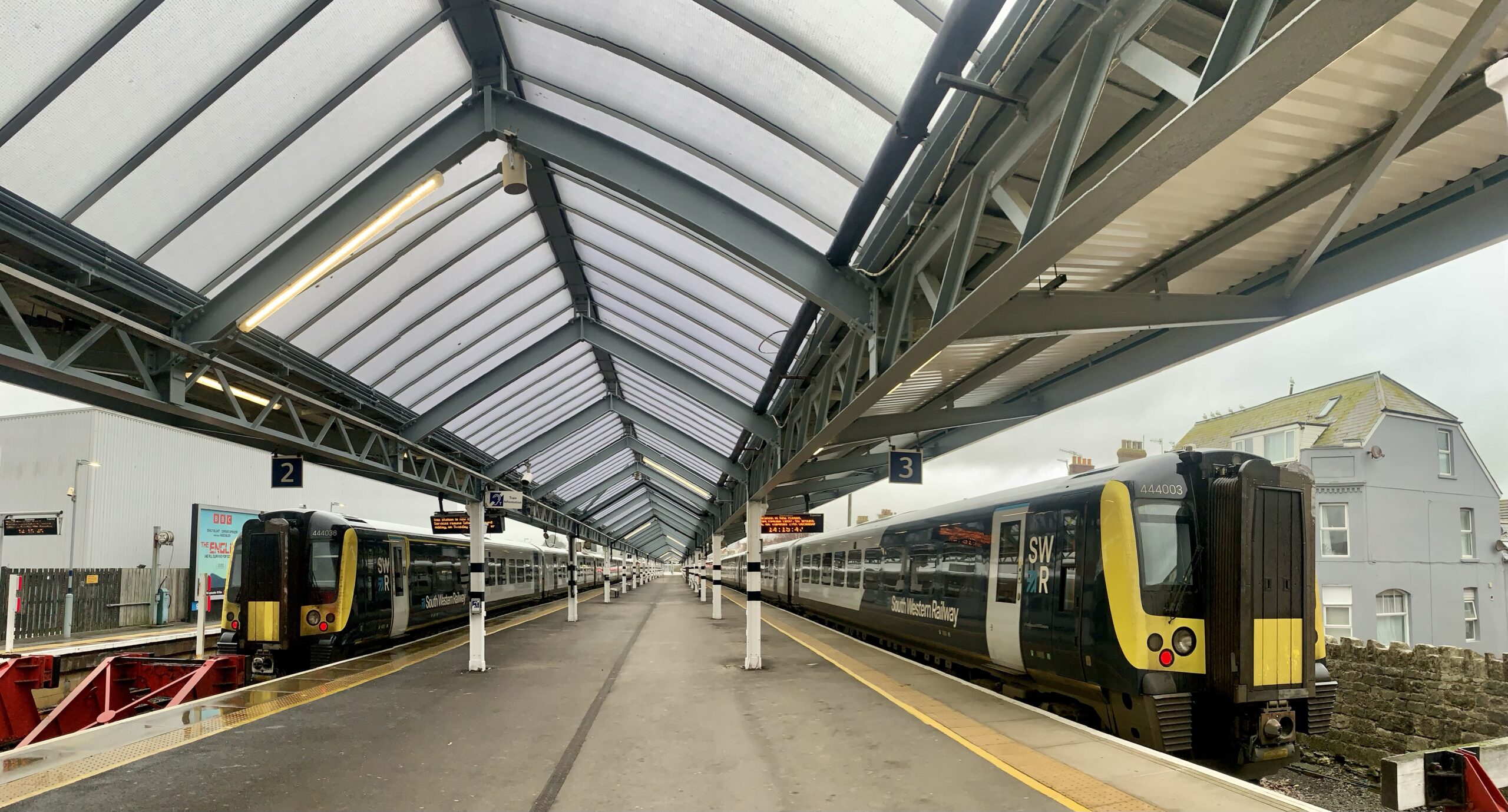
    SWR Class 444 EMU No. 444038 in Weymouth – 25/12/2022

    Following the Christmas close down of the railways, the first train to run on the Bournemouth to Weymouth route was the seasonal Snow & Ice Treatment Train (SITT) which set off from Eastleigh mid-morning to ensure rails were free of ice before passenger services started after mid-day.

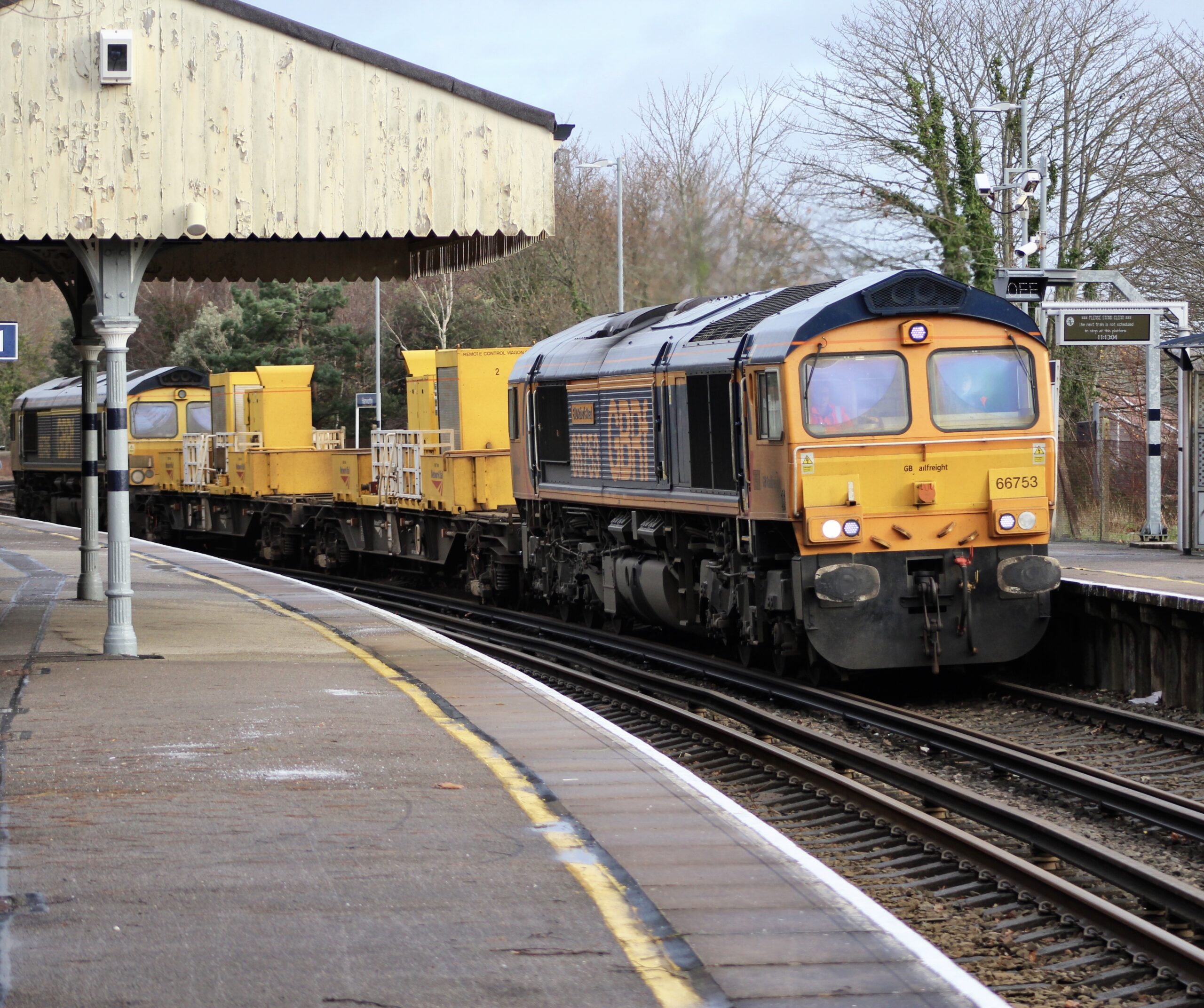
    GBRf Class 66 locomotives No.’s 66753 ‘EMD Roberts Road’ and 66745 top and tail 3Y88 1000 Eastleigh East Yard to Totton Yard SITT through Hamworthy on the outward run to Weymouth – 27/12/2022
    GBRf Class 66 locomotives No.’s 66745 and 66753 ‘EMD Roberts Road’ top and tail 3Y88 1000 Eastleigh East Yard to Totton Yard SITT across the Holes Bay causeway on the return run from Weymouth. No. 66722 replaced No. 66753 two days later, although this combination has yet to venture West to Bournemouth or Weymouth as SITT runs have been working East from Totton Yard – 27/12/2022
    GBRf Class 66 locomotives No.’s 66753 ‘EMD Roberts Road’ and 66745 top and tail 3Y88 1000 Eastleigh East Yard to Totton Yard SITT – 27/12/2022. Additional video courtesy of @dabuckley967

    1st January 2023 marks 100 years since the formation of the ‘Big Four’, the term coined by “The Railway Magazine” for the grouping of 120 individual railway companies into just four: Great Western Railway (GWR), Southern Railway (SR), London, Midland and Scottish Railway (LMS) and London and North Eastern Railway (LNER). The grouping was outlined in the 1921 Railways Act which strived to stem losses and regulate what were seen as inefficient, diverse and, in some cases, overlapping operations which had been struggling following the Great War. The act eliminated competition, as each group now had a regional monopoly. It also established standard fares and charges for particular services. 75 years ago on 1st January 1948, as a result of the Transport Act of 1947, the Big Four companies were nationalised to form British Railways.

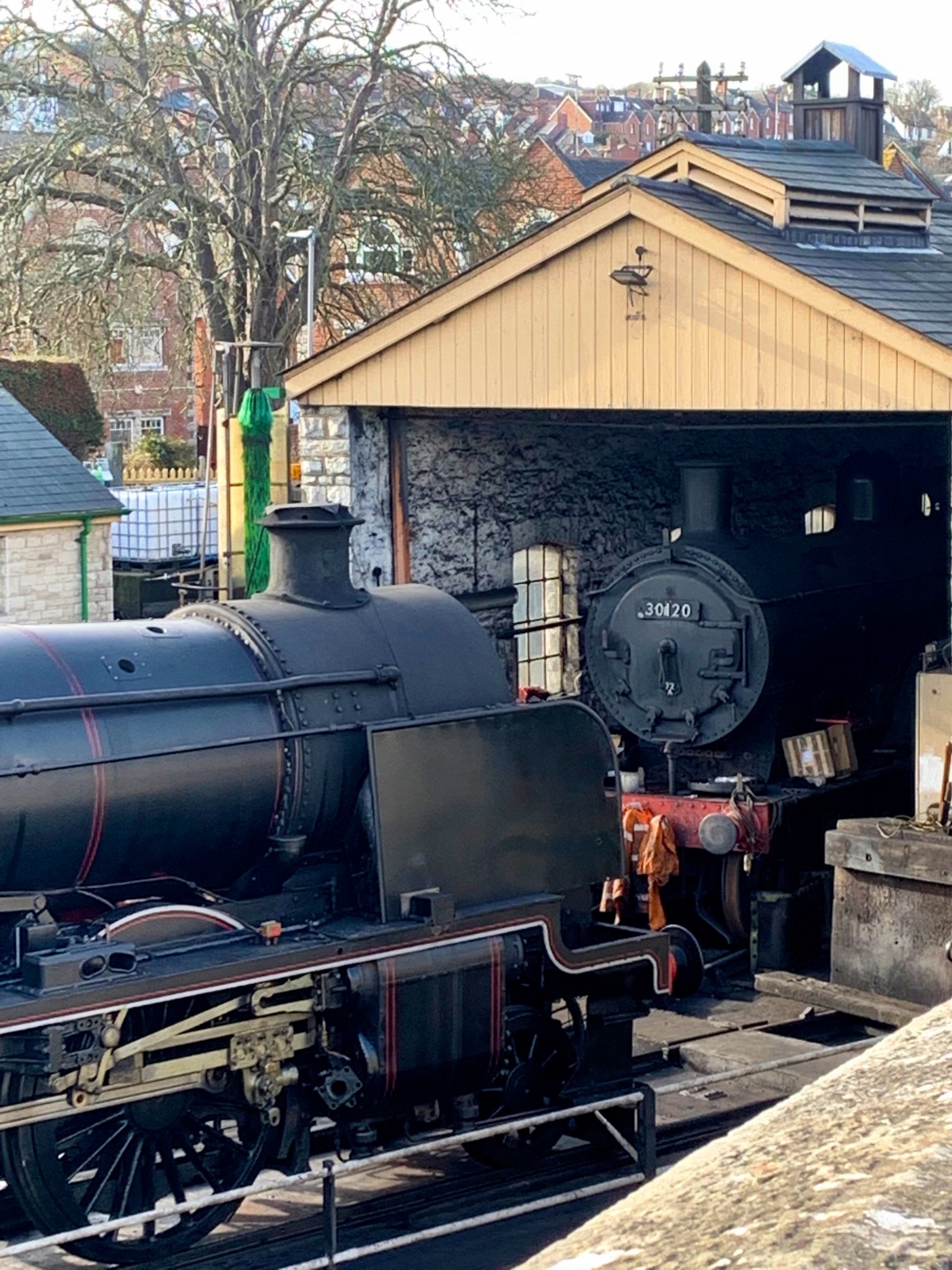
    LSWR T9 Class No. 30120, seen here with SR U Class No. 31806, is a surviving locomotive from the pre-Big Four grouping period having been built in 1899 and has been stored at Swanage following the expiry of her boiler certificate in August 2020 – 12/02/2022

    New Years Day 2023 saw Yoshi’s Mum and I heading to London to take in the conveniently extended “Beatrix Potter: Drawn to Nature” exhibition at the V&A and Matthew Bourne’s “Sleeping Beauty” at Sadler’s Wells. We had intended to take the train, but South Western Railways timetabling around the RMT industrial action meant we would not be able to get everything done and home on the day with our last train leaving London Waterloo at 1830. So instead, we took to the roads and parked up at Kew Gardens and travelled into Town using the London Underground District Line from there.

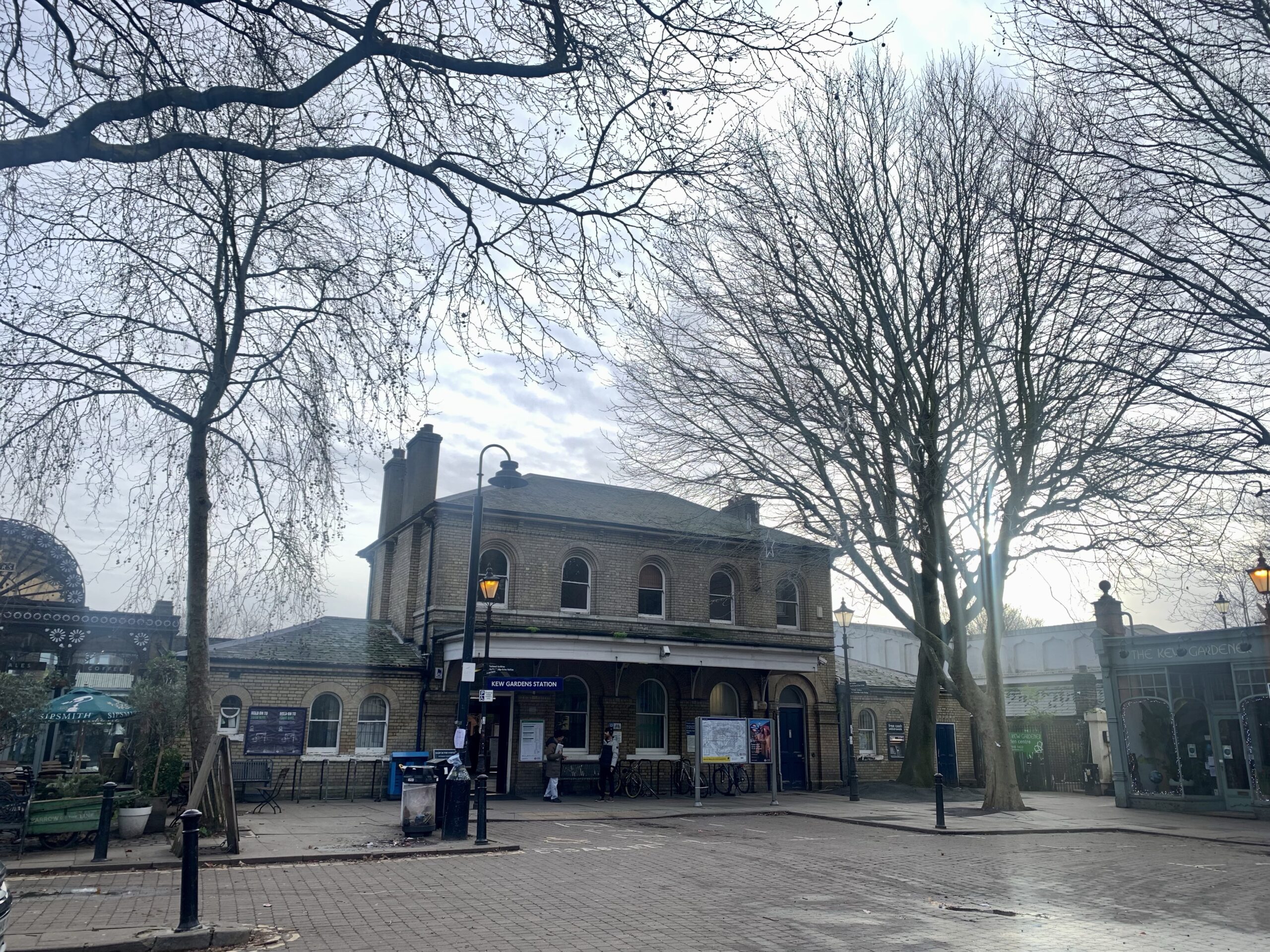
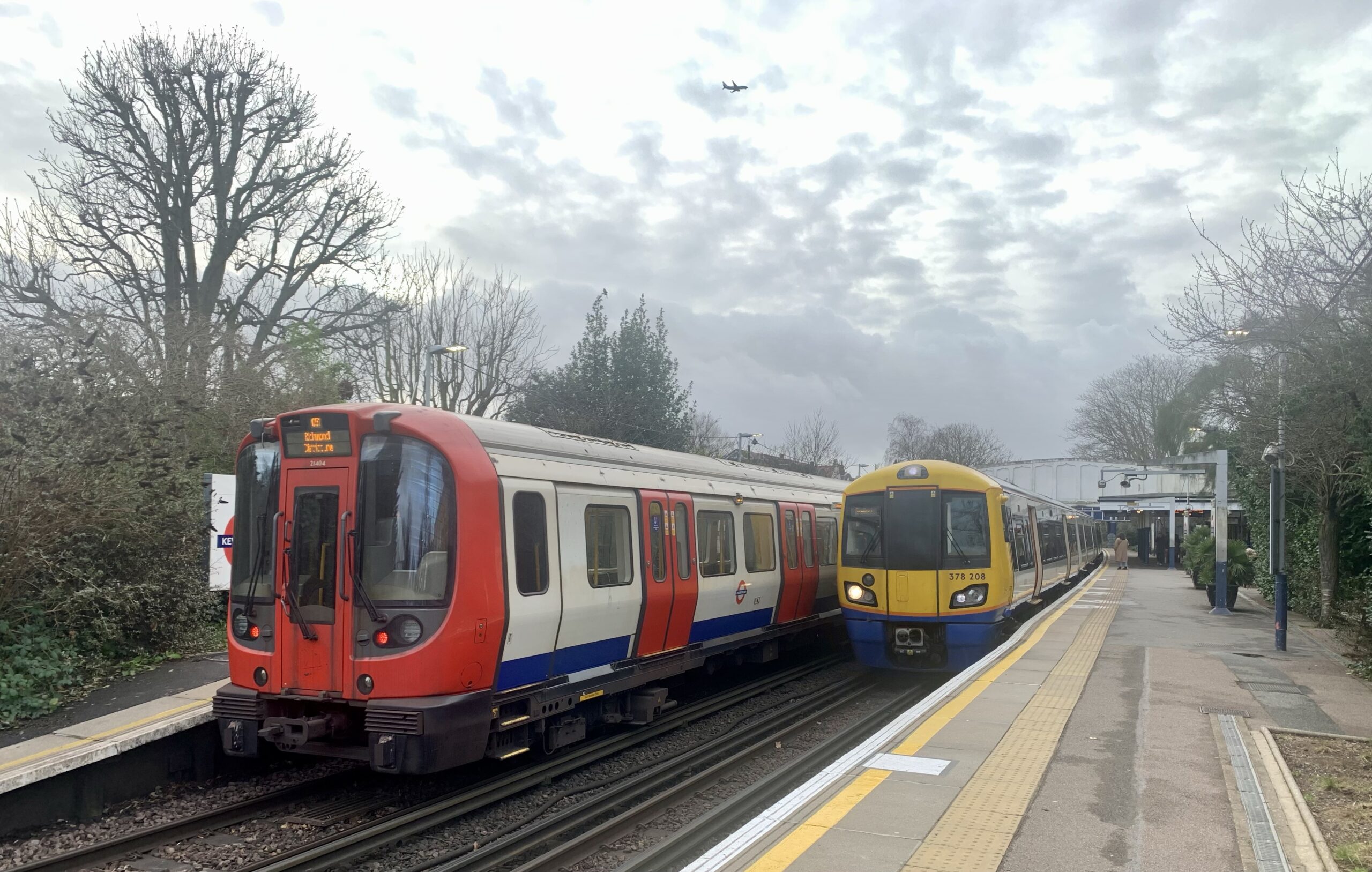
    I like Kew, it has a lovely village feel and Kew Gardens railway station is a fine Grade II listed example of mid-Victorian architecture and one of the last remaining 19th Century stations on the North London Line having been opened in 1869 by the London & South Western Railway (L&SWR) who were, prior to the formation of ‘The Big Four’, custodians of the Bournemouth to Dorchester line. Current services calling at Kew Gardens are operated by London Underground (LU) and National Rail London Overground utilising LU S7 stock and British Rail Class 378’s respectively. The Class 378 EMU’s replaced the Class 313’s operated by Silverlink and were introduced in 2008. Kew Gardens is also the only station on the London Underground network I know of which has a pub attached to it. The pub once had a door which gave access to platform one, but this is no longer in use. The pub is currently called ‘The Tap on the Line’ but was formerly known as ‘The Railway’.

    The footbridge over the tracks at the southern end of the station buildings is Grade II listed in its own right and is a rare surviving example of a reinforced concrete structure built by French engineer Francois Hennebique (1842-1921). The bridge, restored in 2004, has high sides which protected users from the smoke emitted from steam locomotives passing below when originally installed.

    Kew Gardens railway station exterior on the “Up” side – 01/01/2023
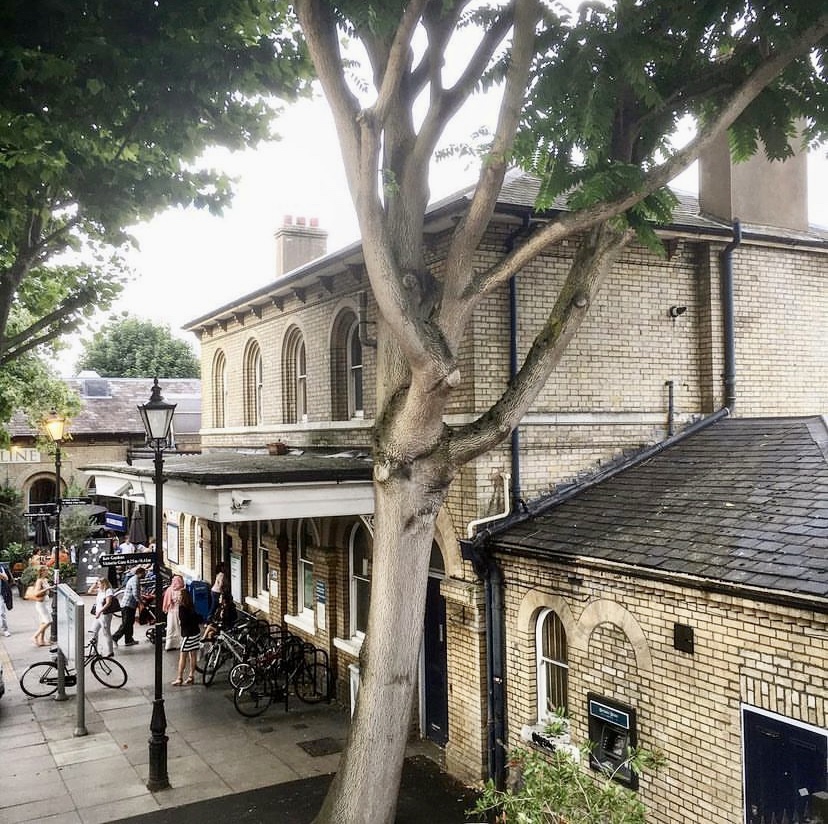
    Kew Gardens railway station – 30/07/2016
    Kew Gardens railway station, platform side – 01/01/2023
    Class 378 Capitalstar Electric Multiple Unit No. 378208 operated by London Overground arrives at Kew Gardens with 2N05 1010 Richmond NII to Stratford while London Underground S7 Stock Fleet No.21403 with driving coach No. 21404 at the rear of 2O51 Upminster LT to Upminster LT via Richmond awaits departure – 01/01/2023
    London Underground S7 Stock Fleet No. 21377 with driving coach No. 21378 leading arrives at Kew Gardens working 2O16 Upminster LT to Upminster LT via Richmond. The footbridge can be seen in the background – 01/01/2023

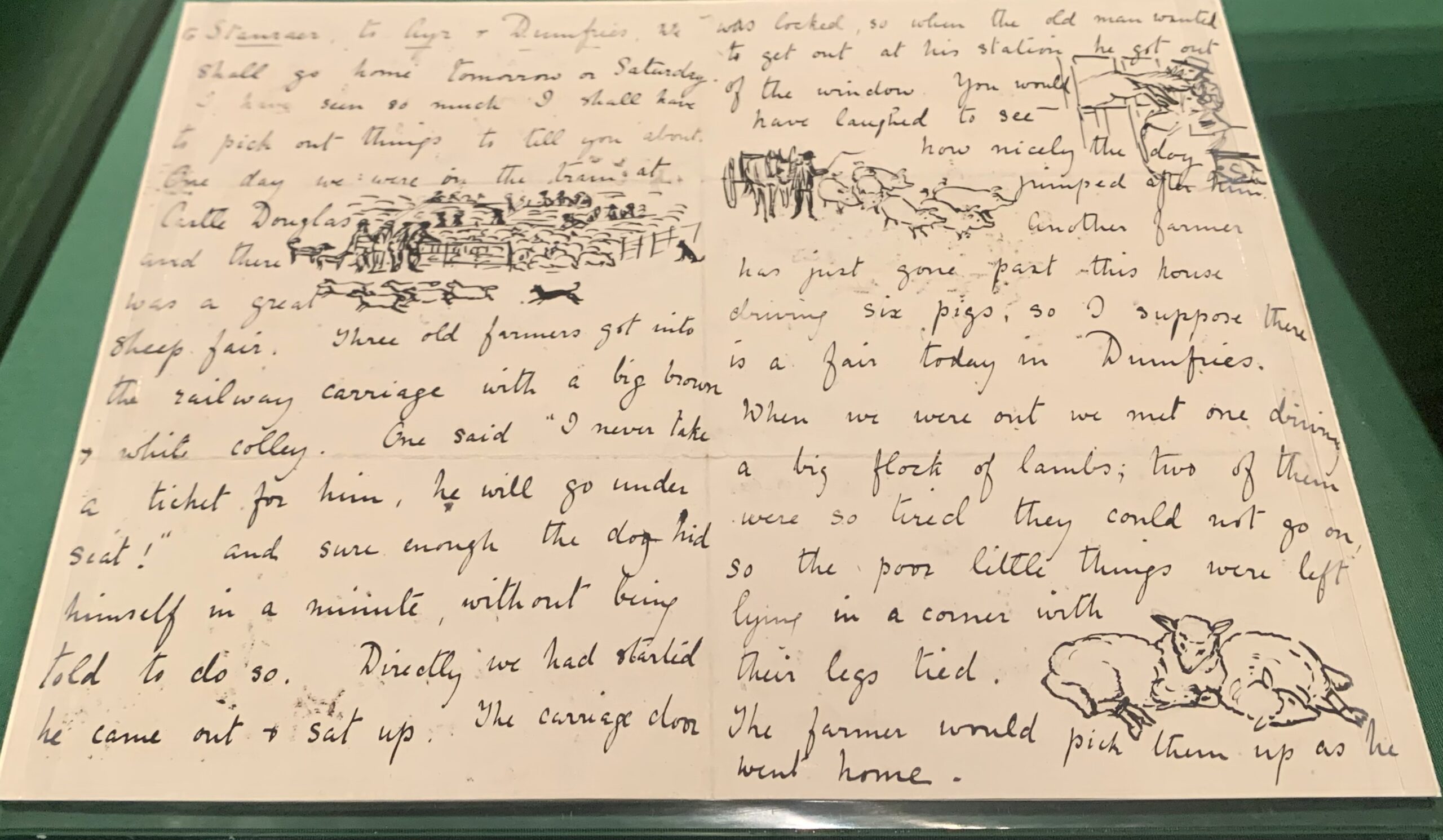
    I very much enjoyed the V&A’s exhibition celebrating the life and work of Beatrix Potter. One railway themed item was this illustrated letter Beatrix sent to Marjorie Moore, the daughter of her last governess, detailing an eventful train journey when a farmer’s collie exited the carriage by jumping through a window:

    Letter from Beatrix Potter to Marjorie Moore written on 23rd August 1898
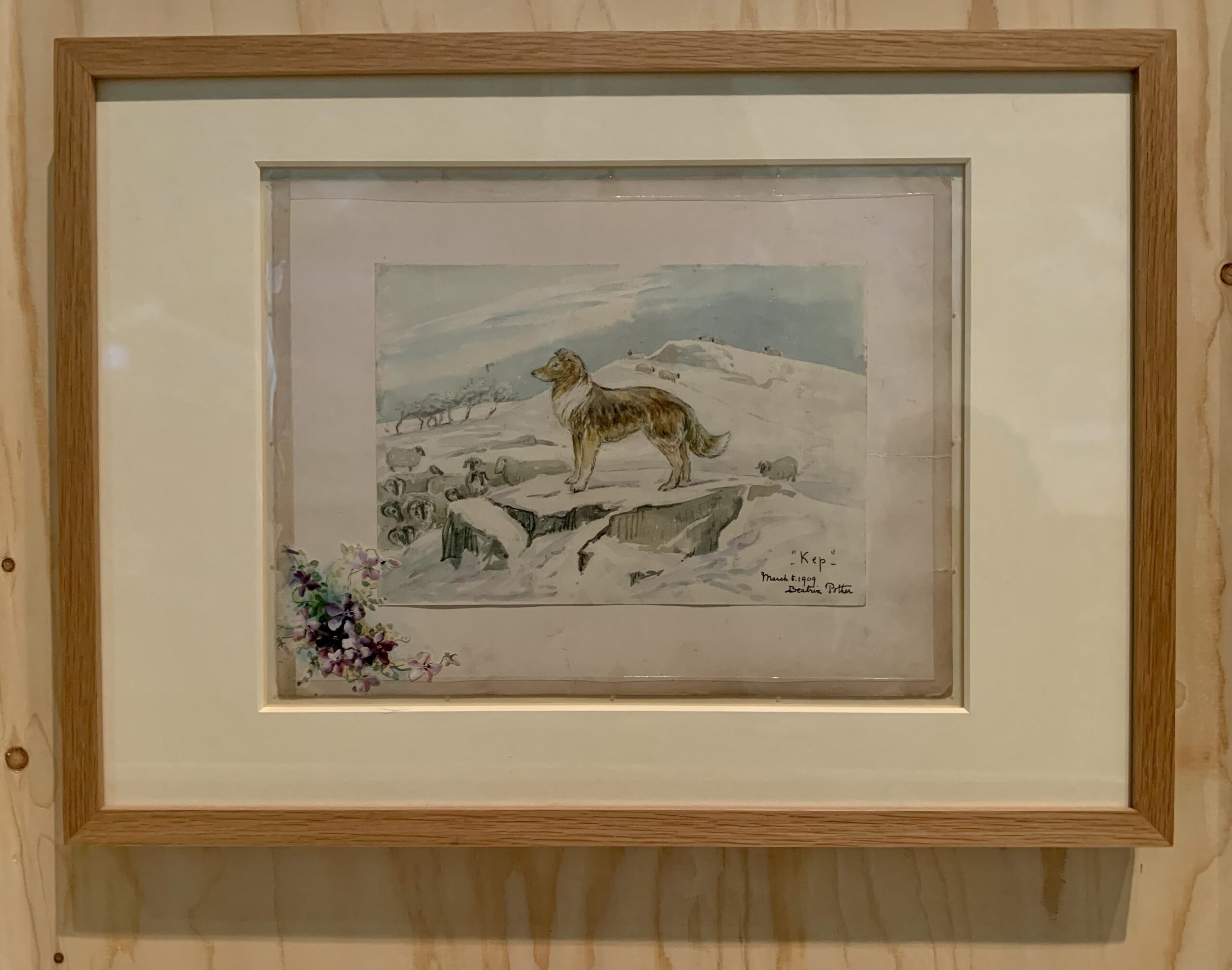
    Beatrix had many animals during her lifetime. Kep, who is shown here was immortalised as Jemima Puddle-Duck’s hero when he rescued her from a ‘sandy whiskered gentleman’

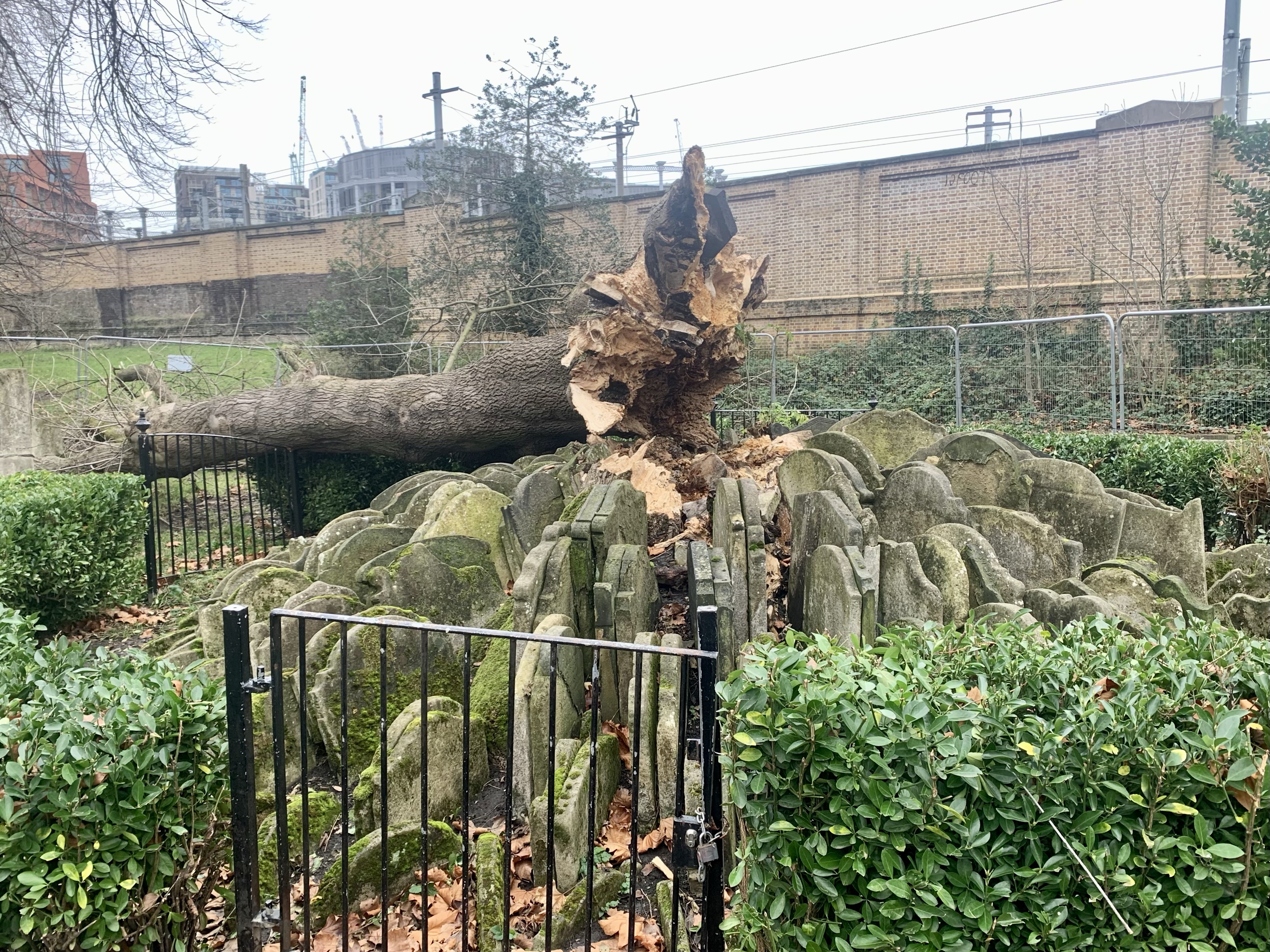
    Following our visit to the V&A (and a fabulous lunch – mustn’t forget the lunch!) we headed off to Islington via Old St. Pancras Churchyard so we could see ‘The Hardy Tree’ which had recently succumbed to a fungal infection and had fallen. During the 1860’s the Midland Railway line was being built over part of the original St. Pancras Churchyard. Arthur Blomfield, a Covent Garden based architect, was commissioned by the Bishop of London to supervise the proper exhumation of human remains and the dismantling of tombs. He passed this unenviable task onto his protégé Thomas Hardy in 1865. Hardy (1840-1928) is best known as a Dorset author and poet with his novels set in rural ‘Wessex’, however before turning to writing full time he studied architecture in London from 1862-67.

    Hardy would have spent many hours in Old St. Pancras Churchyard during the construction of the railway, overseeing the careful removal of bodies and tombs from the land on which the tracks were being laid. Legend has it that Hardy stacked displaced headstones in a circle around an ash tree with the stones becoming embedded in the tree over time.

    A few years before Hardy’s involvement, Charles Dickens (1812-1870) makes reference to Old St. Pancras Churchyard in “A Tale of Two Cities” (1859), as the churchyard in which Roger Cly was buried and where Jerry Cruncher was known to ‘fish’ – a 19th Century term for tomb robbery and body snatching!

    The sad sight of the fallen Hardy Tree, St. Pancras Old Churchyard – 01/01/2023

    Thanks for reading and Happy New Year! This blog entry was brought to you by Halls Soothers. Until next time, we’ll leave you with this; Thomas Hardy, inspired by a visit to Upwey, wrote a poem “At the Railway Station, Upway”, about waiting for a train at a country station: 

    “There is not much that I can do,
    For I’ve no money that’s quite my own!”
    Spoke up the pitying child –
    A little boy with a violin
    At the station before the train came in, –
    “But I can play my fiddle to you,
    And a nice one ’tis, and good in tone!”

    The man in the handcuffs smiled;
    The constable looked, and he smiled, too,
    As the fiddle began to twang;
    And the man in the handcuffs suddenly sang
    Uproariously:
    “This life so free
    Is the thing for me!”
    And the constable smiled, and said no word,
    As if unconscious of what he heard;
    And so they went on till the train came in –
    The convict, and boy with the violin.

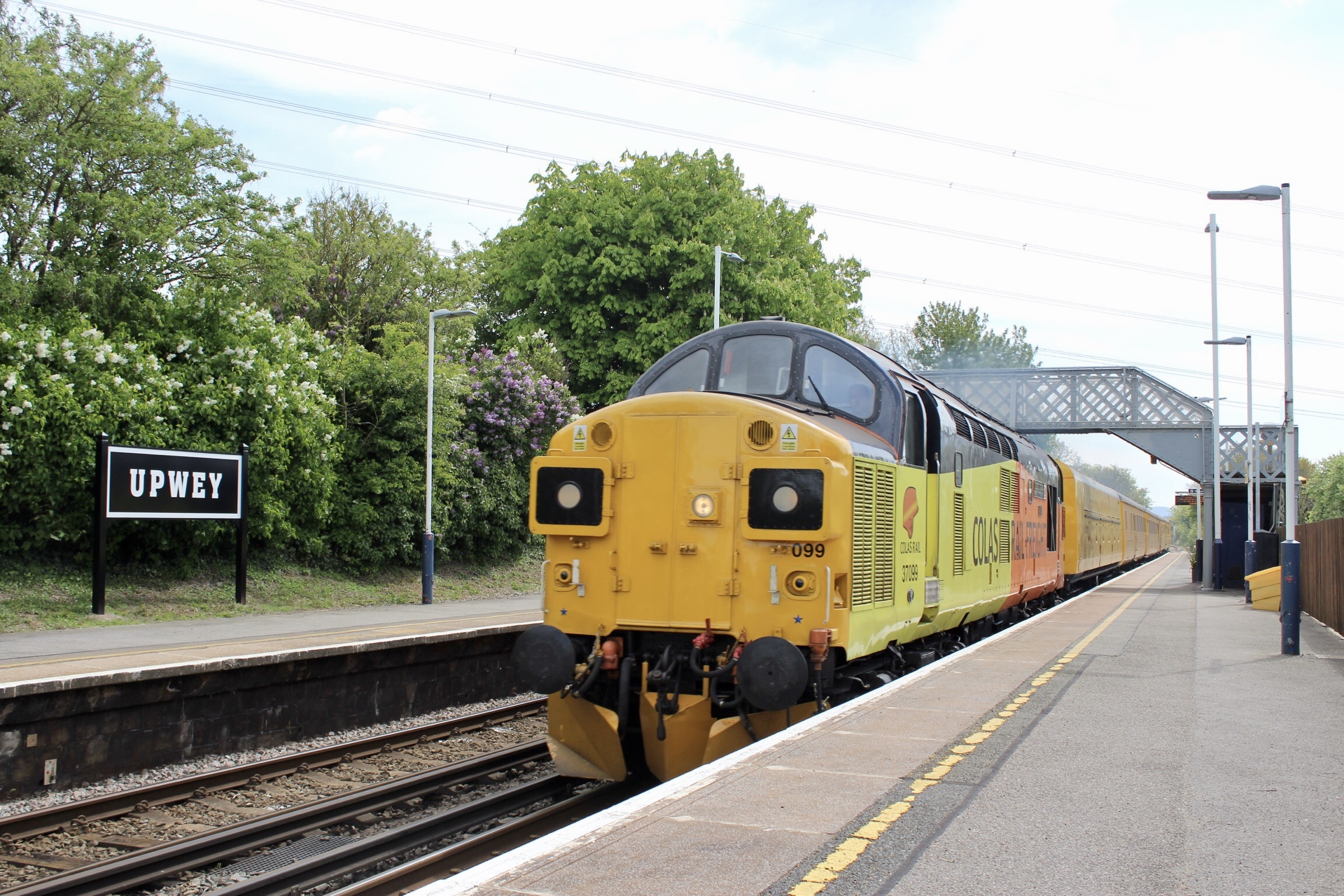
    Colas Rail Class 37 No. 37099 working a test train through Upwey – 27/04/2017
  • 313 Farewell

    Wednesday 7th December 2022 to Tuesday 13th December 2022

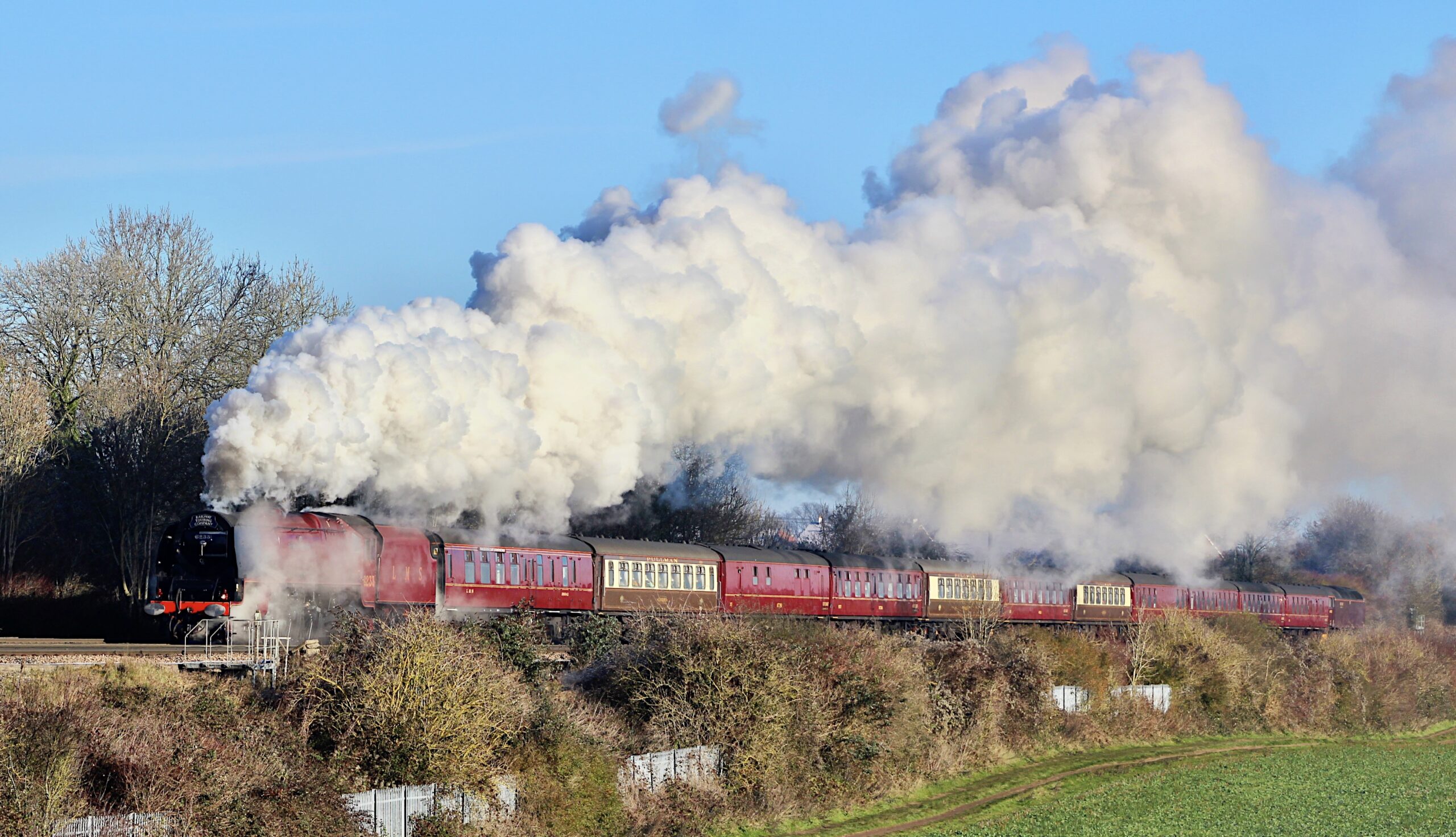
    LMS Coronation Pacific No. 6233 ‘Duchess of Sutherland’ at Worting Junction working The Railway Touring Company’s “The Bath & Bristol Christmas Market” 1Z82 0847 London Victoria to Bristol Temple Meads – 10/12/2022

    This week, Yoshi and I took a trip along the Southern Railway West Coastway route to witness the final days of the Class 313 electric multiple units (EMU), saw LMS Coronation Pacific No. 6233 ‘Duchess of Sutherland’ storming past Worting Junction and took in some Great Western Castle Class HST’s in frosty conditions.

    Class 313

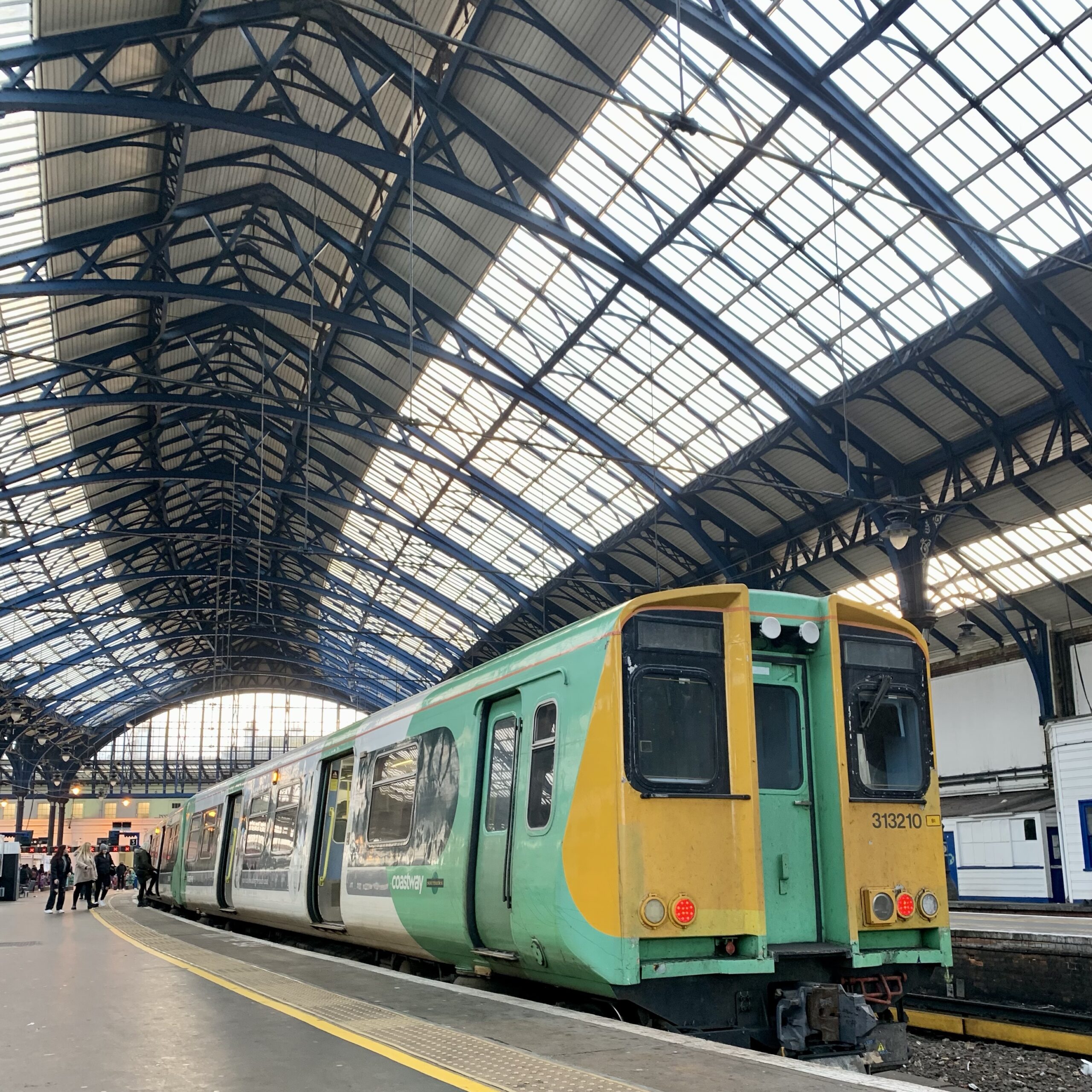
    In preparation of spending a day on the Western Coastway route to see Class 313 emu’s, we had pre-booked our Southern Daysave ticket well in advance, and paid extra for next day delivery to avoid the postal strikes. It was a good job we did, as the ticket still took four days to arrive. So, on Friday 9th December we set off on a South Western Railway (SWR) service for Southampton (where we saw a couple of passing Class 66 hauled freight workings) to pick up a Southampton to London Victoria train which would take us to Barnham where we changed platforms to get a Class 313 operated shuttle to Bognor Regis. These are the last days of the Class 313’s and we hoped to record some of the units still in service.

    The three-car Class 313’s were the first production, second generation, EMU’s built as a direct result of trials in 1972 with the PEP prototypes on British Rail Southern Region. I remember seeing at least one of the PEP units at Wimbledon on my first train journey to London in the early 1970’s. I may not have been an avid rail enthusiast at the time, but I’d clearly read about the new trains being introduced by British Rail. None of the prototypes survive and they were all cut up by 1990.

    PEP Unit No. 4002 in the sidings at Wimbledon – 27/08/1982

    The production-run classes which are most visibly similar to the PEP Stock are the dual voltage 750 V DC third rail / 25 kV AC overhead power collection Class 313, the 25 kV AC Classes 314 and 315, and the 750 V DC Classes 507 and 508. We covered the 507’s and 508’s earlier in the year when we visited Stockport. You can read about that adventure here.

    A fleet of 64 three car sets were built by British Rail Engineering Limited (BREL) in York in 1976/1977 and were intended for the then newly modernised and electrified Great Northern inner suburban lines. The front end doors were designed for evacuation in an emergency in a single bore tunnel and the fleet were constructed to take in the slightly restricted loading gauge between Drayton Park and Moorgate.

    Class 313 No. 313008 at Finsbury Park with a service to Moorgate – 30/10/1980

    Upon privatisation, the 313’s were operated by Silverlink Railways and West Anglia Great Northern (WAGN) and later, in 2007, the class were transferred to London Overground who ran them until September 2010.

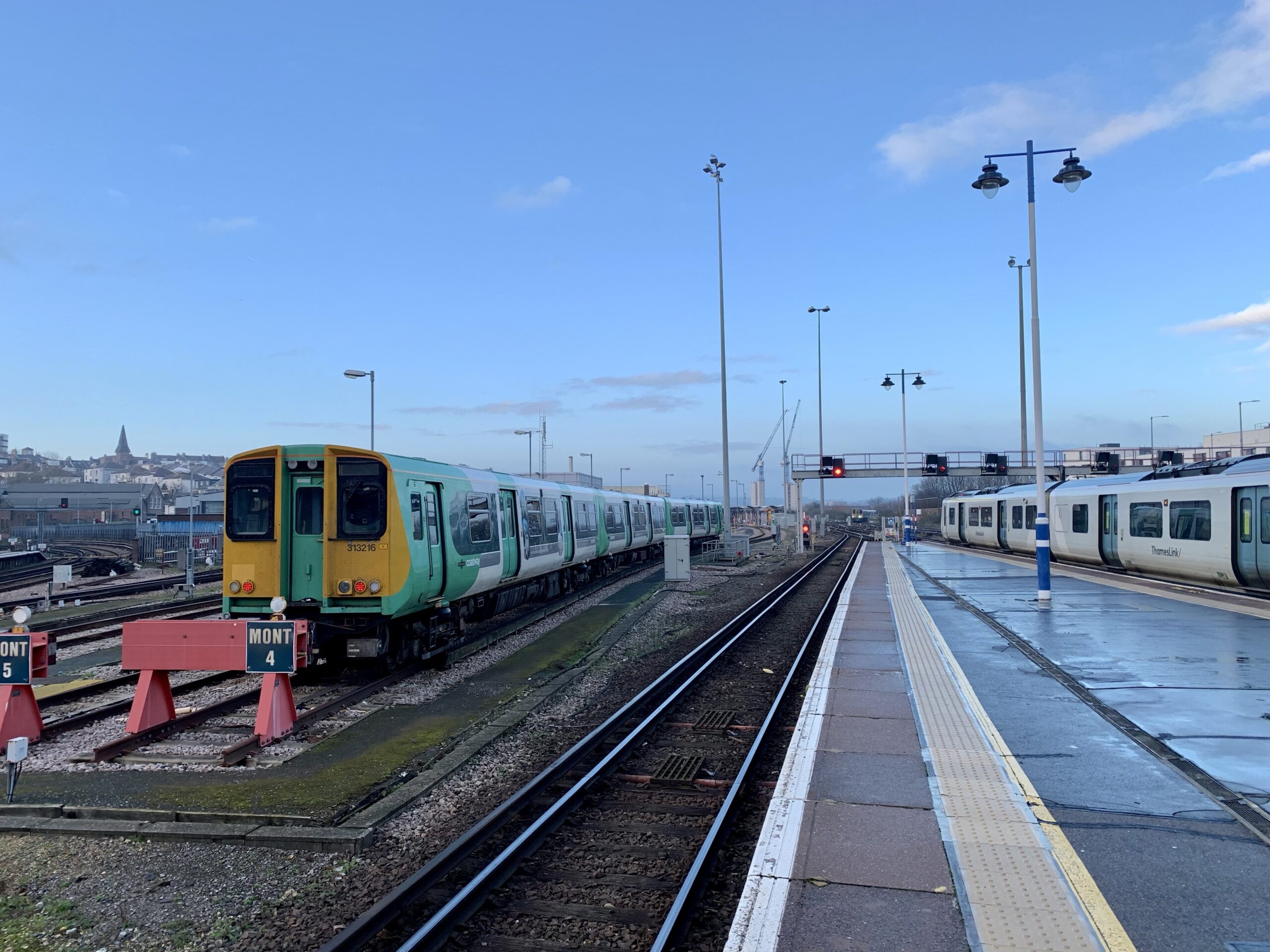
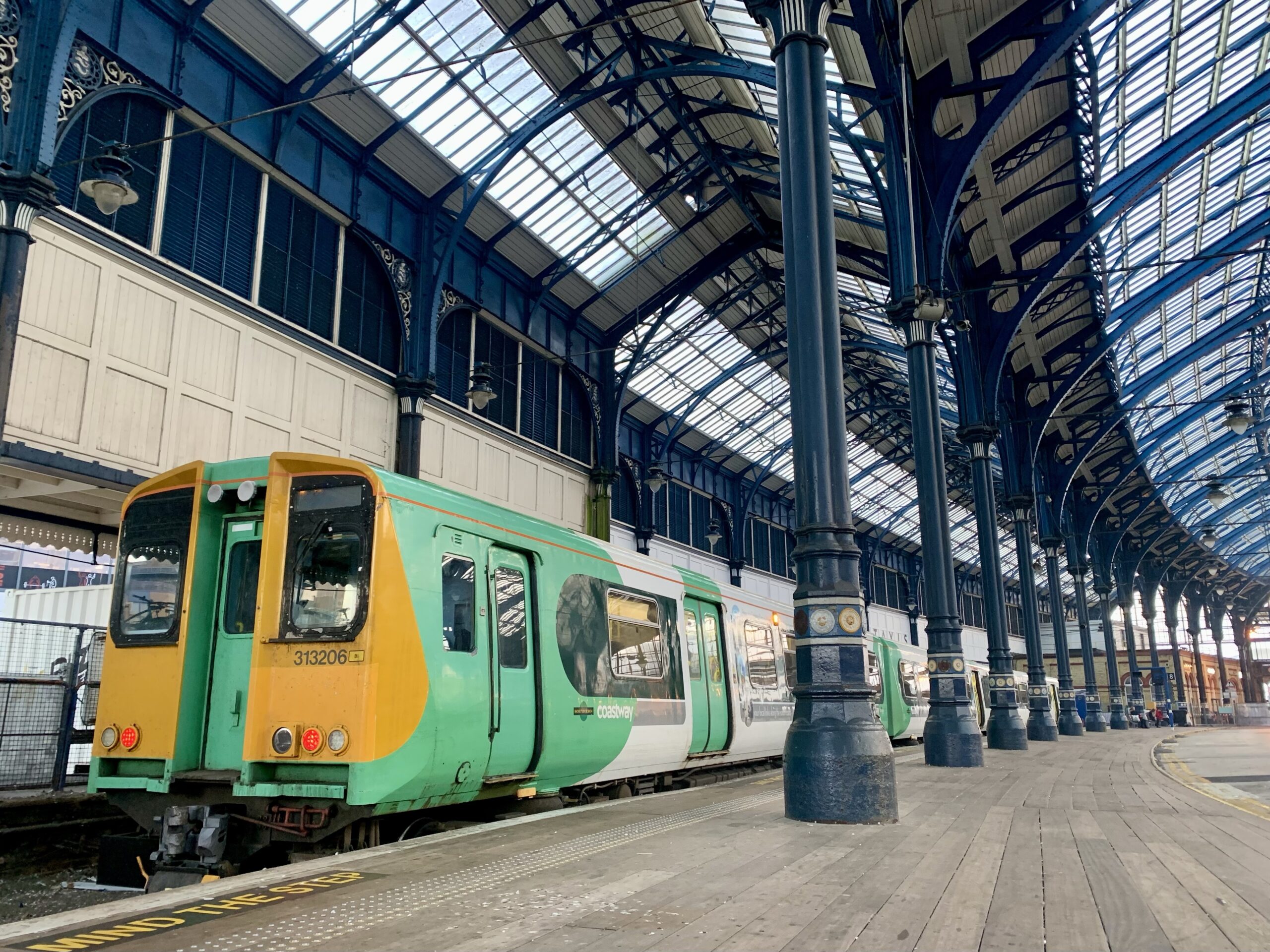
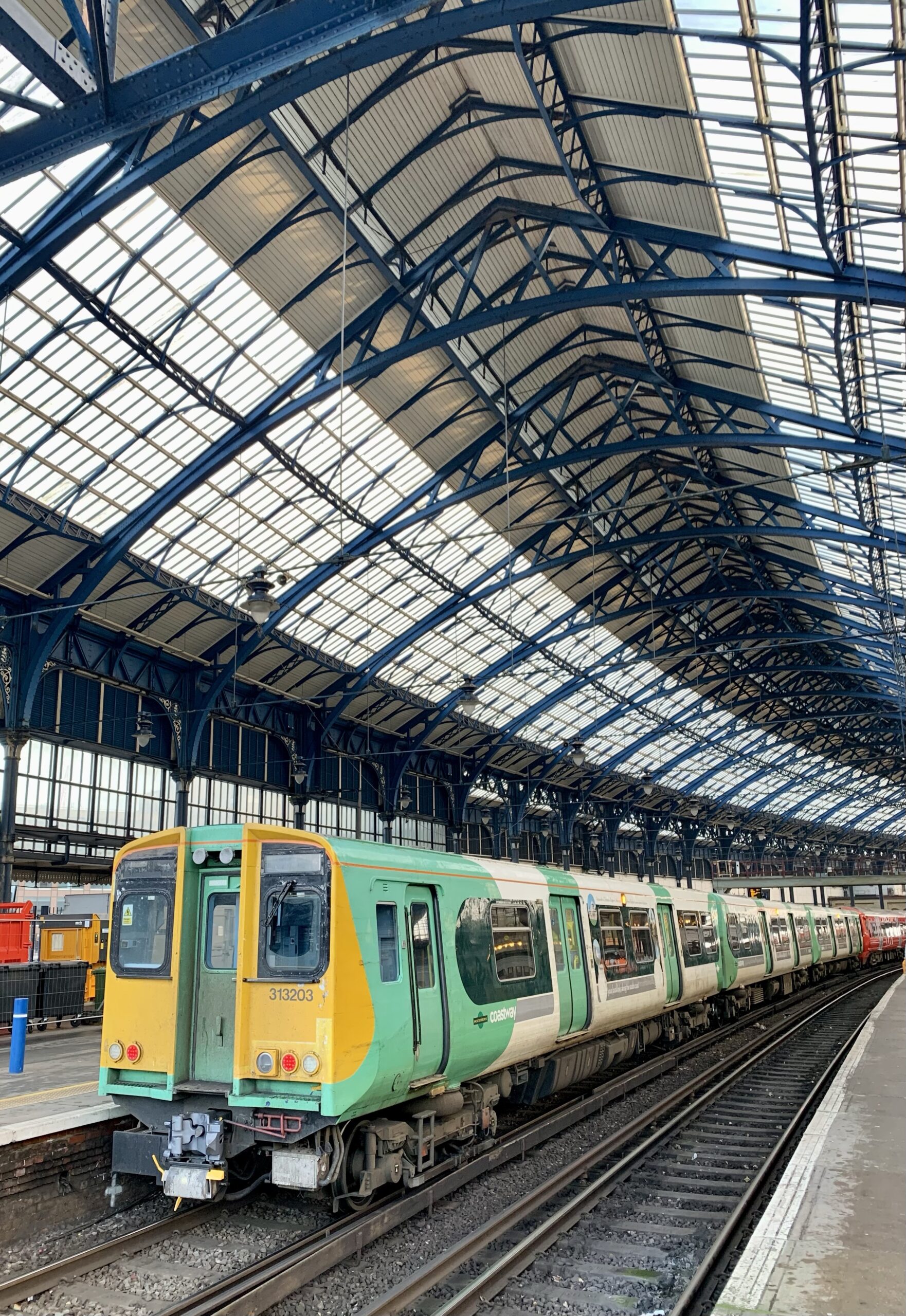
    19 Class 313’s were modified for DC pick up only at Wolverton works and transferred to Southern to operate on the Coastway services out of Brighton from May 2010. These were deliveries into GTR Southern green and white with pictogram route branding. The remaining Great Northern members of the class were all withdrawn from service and scrapped by the end of 2019.

    Yoshi gets up close to Class 313 No. 313207 at Bognor Regis having worked in with the 2P26 1053 service from Littlehampton – 09/12/2022
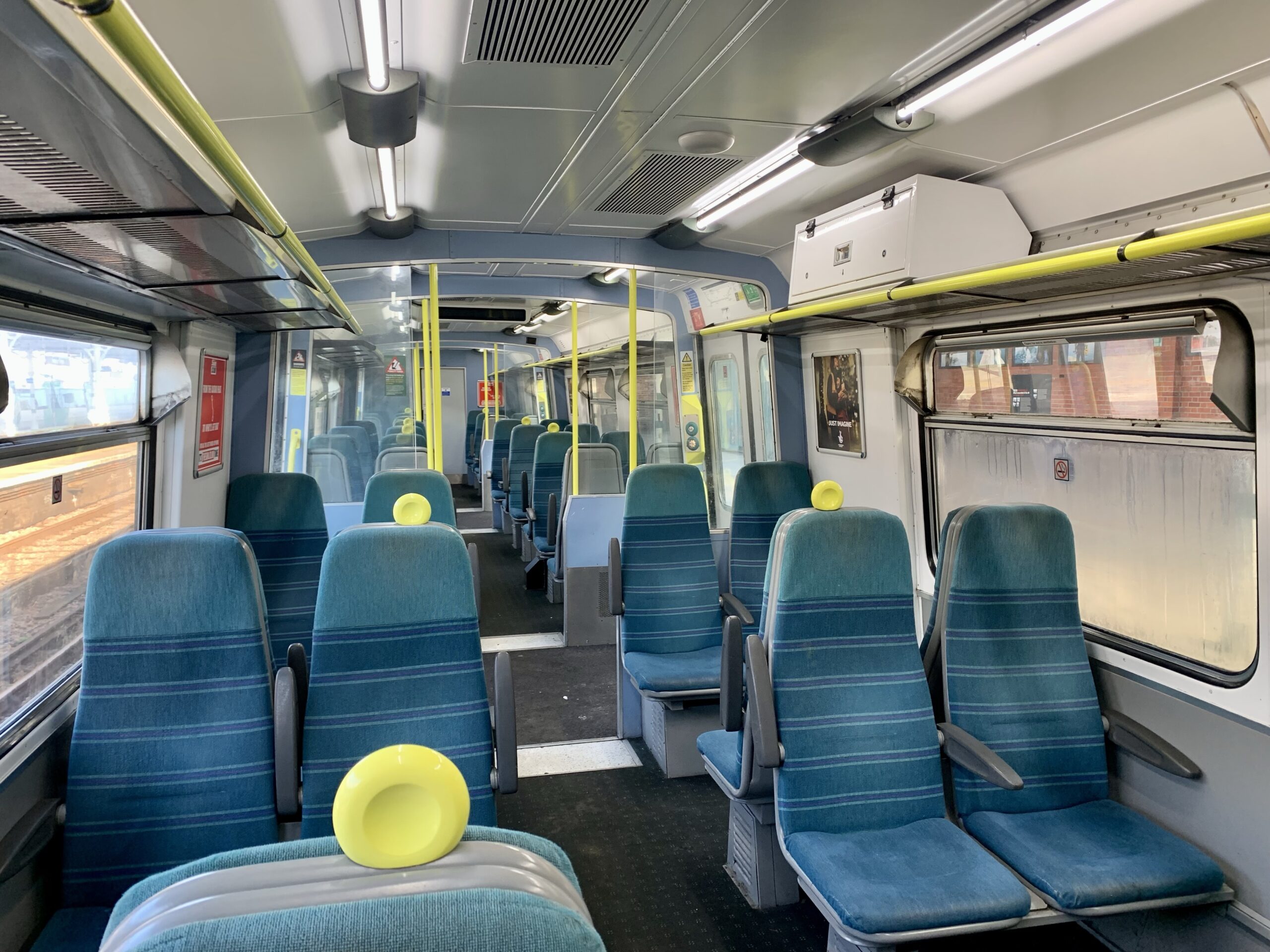
    When the Class 313’s were transferred to GTR Southern from May 2010 the sets were overhauled and the interiors refurbished with new seating in low-density 2+2 style using high backed seating – 09/12/2022
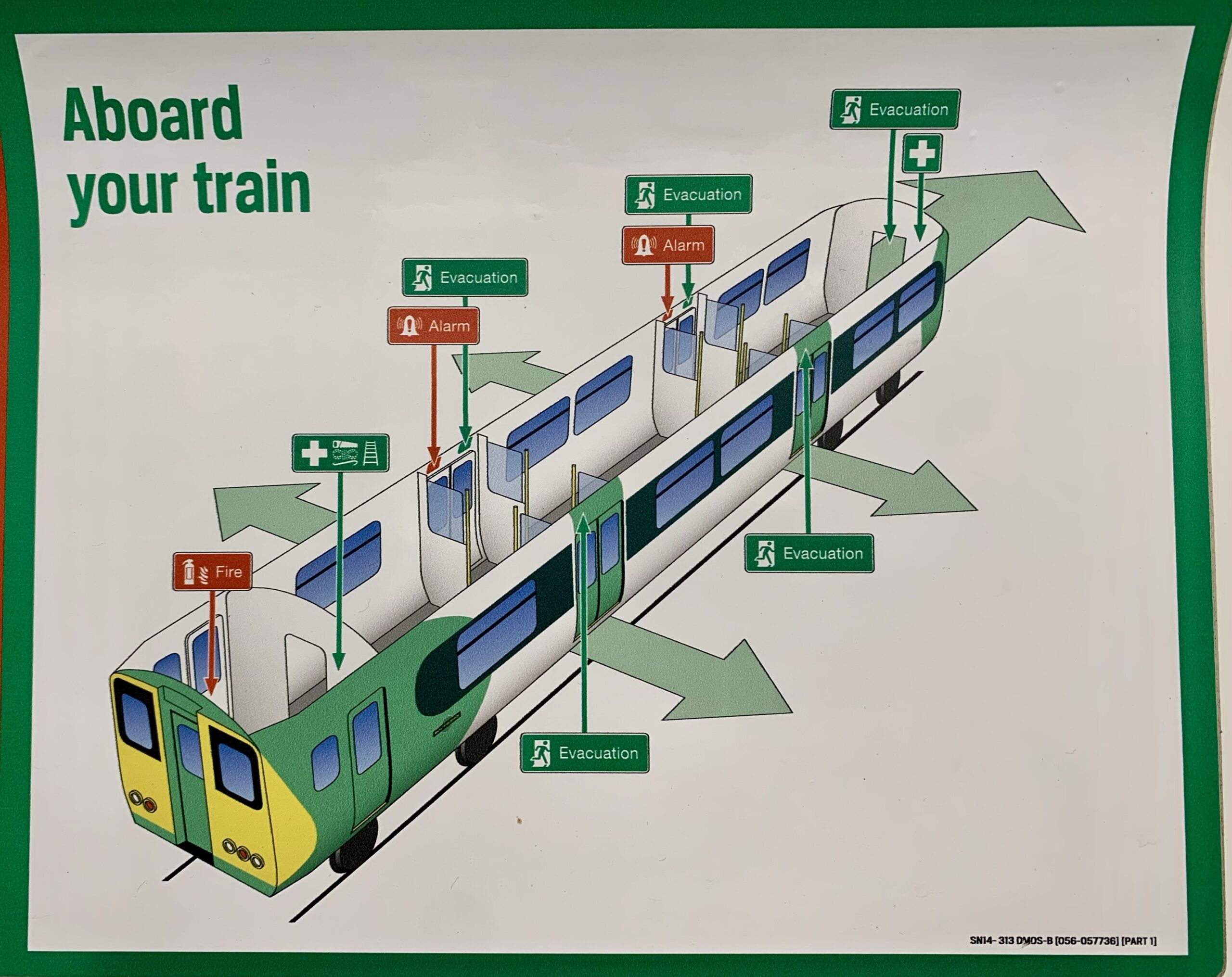
    Southern Class 313 onboard diagram – 09/12/2022
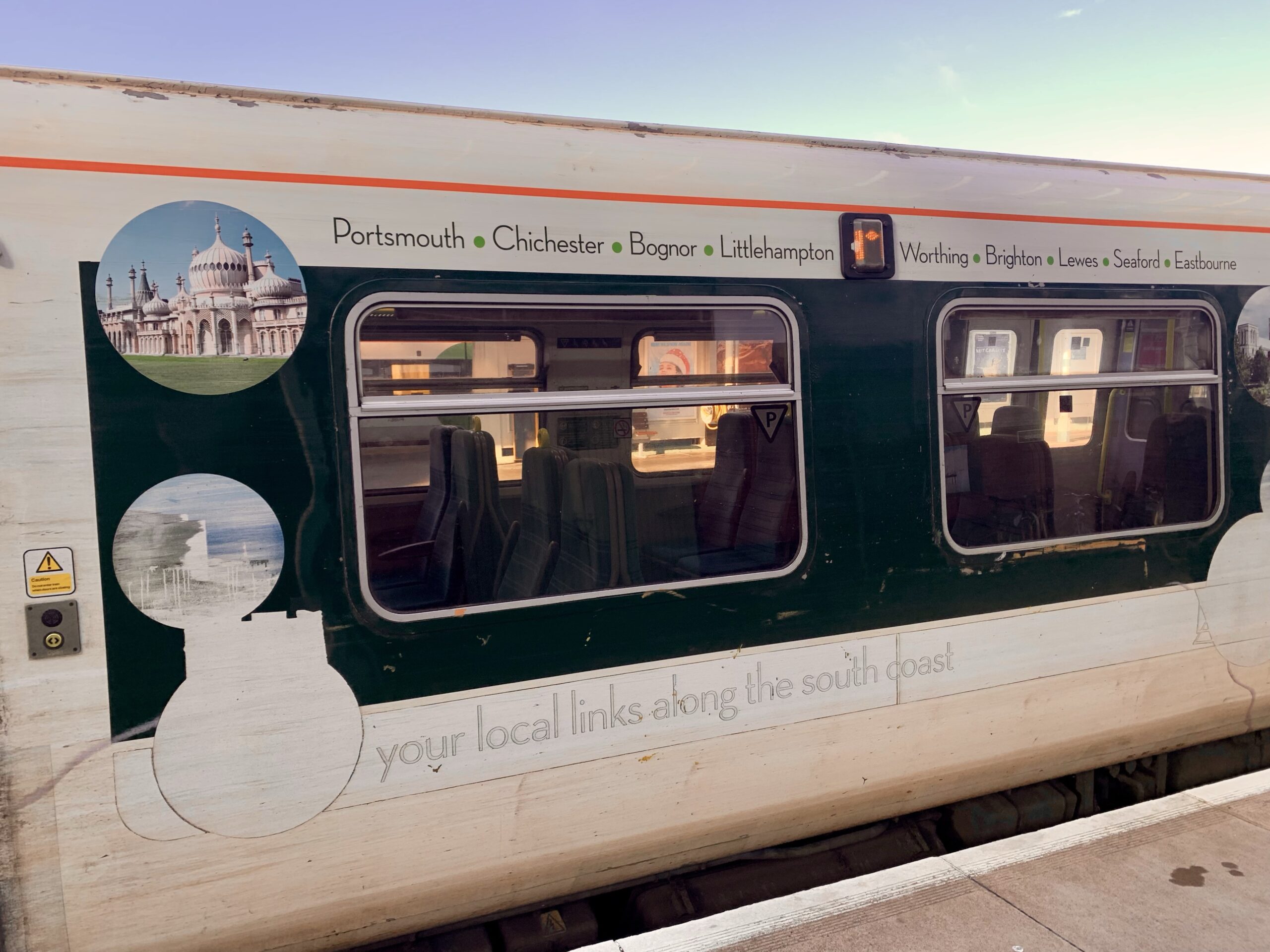
    Faded branding detail applied the intermediate coach of Coastway Class 313 No. 313207 (and other members of the class) on transfer to GTR Southern promoting the route Portsmouth, Chichester, Bognor, Littlehampton, Worthing, Brighton, Lewes, Seaford and Eastbourne – 09/12/2022
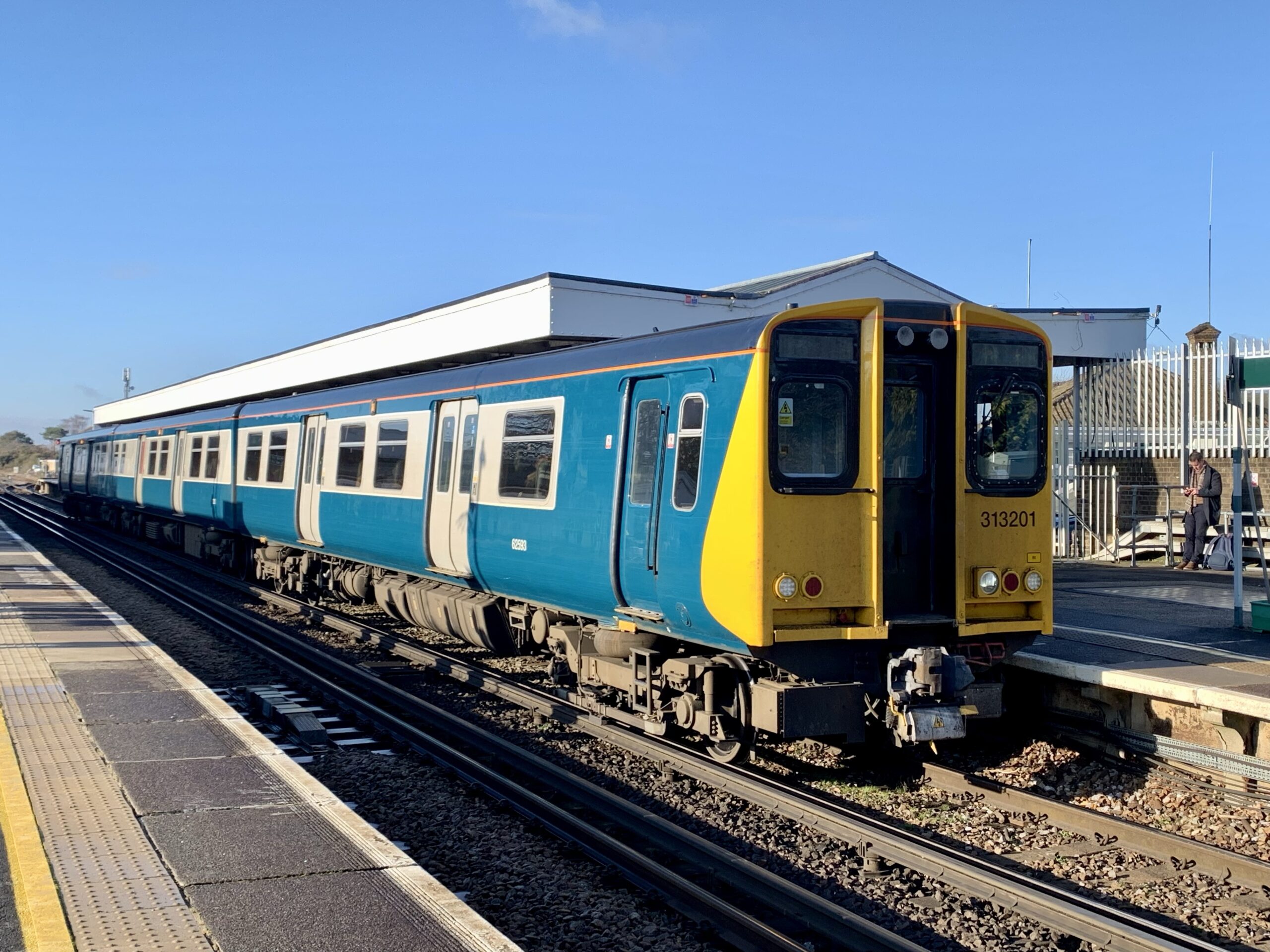
    In 2017 No. 313201, the first of the class to be built and therefore the oldest operational EMU in use in the UK, was repainted into as near as possible the BR blue/grey livery and it is believed the unit is destined for the National Collection. Because of disability reasons, the unit has contrasting colour doors and is seen here at Barnham – 09/12/2022
    On transfer to GTR Southern, the fleet was repainted in GTR Southern white and green. Class 313 No. 313210 at Brighton having arrived with
    Not being used on the day of our visit, Class 313 No. 313216 in the sidings at Brighton – 09/12/2022
    Class 313 No. 313206 at Brighton having arrived with the 1453 service from Seaford – 09/12/2022
    Class 313 No. 313203 has a short rest at Brighton prior to working the 1511 Brighton to Seaford service – 09/12/2022
    Coastway Class 313’s – 09/12/2022
    Class 313 No. 313121 transferred to Network Rail in 2013 for use as a dynamic test vehicle for the development of the European Traffic Control System (ETCS). The set is based at Eastleigh Arlington where it is seen here – 30/01/2022
    Development set 313 No. 313121 at Arlington Works, Eastleigh – 02/07/2022

    Sherwood Forester

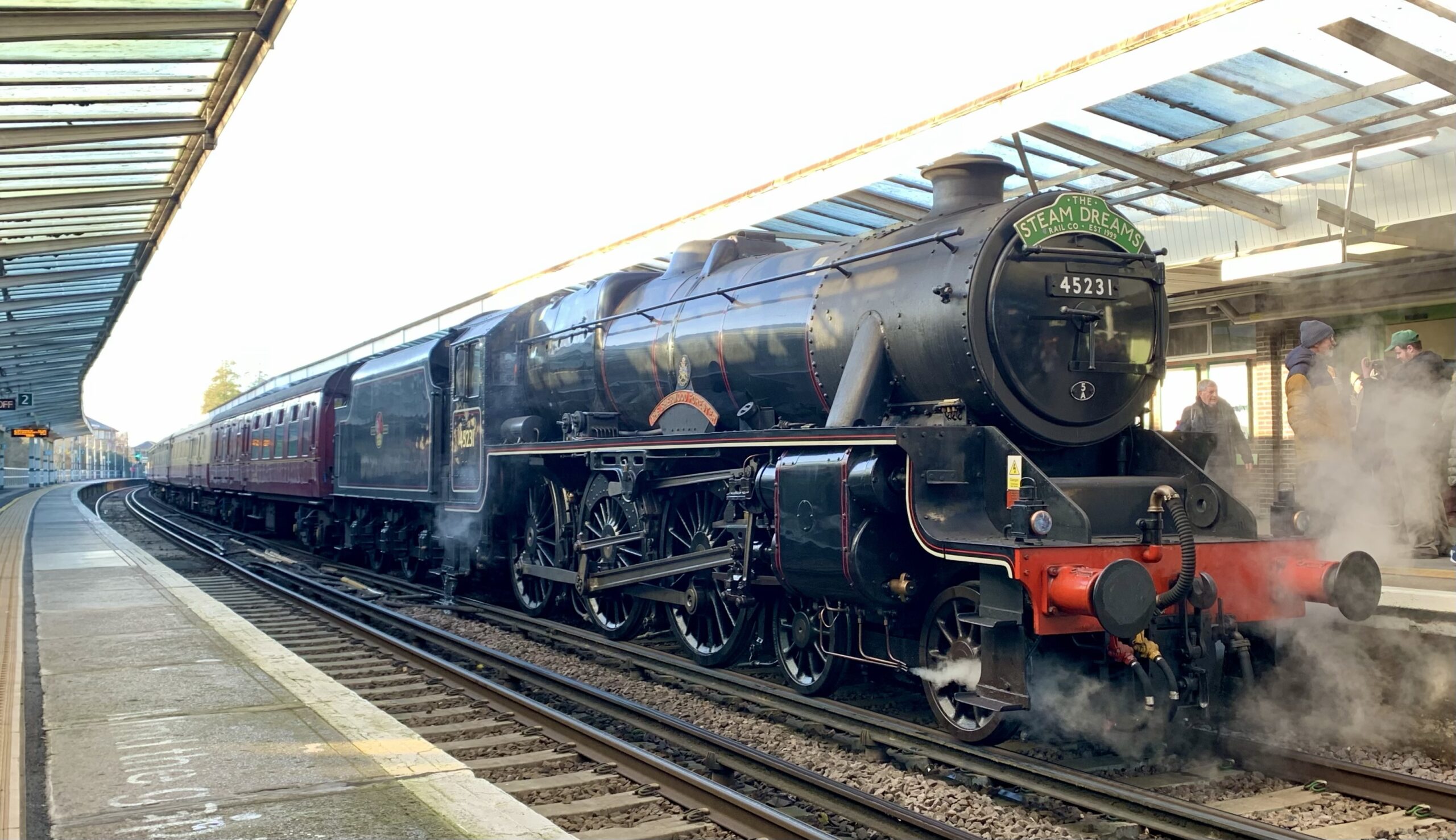
    While on our Class 313 mission, we spent an hour at Chichester to coincide with the arrival of the steam hauled “Chichester For Carols” rail tour operated by Steam Dreams. Arriving just over half an hour late and with some confusion as to which platform the train was going to arrive on, LMS Black Five No. 45231 ‘Sherwood Forester’ hove into view.

    LMS Stanier Class Five 4-6-0 No. 45231 ‘Sherwood Forester’ sits at Chichester having brought in Steam Dreams “Chichester for Carols” rail tour 1Z45 0649 Shoeburyness to Chichester – 09/12/2022
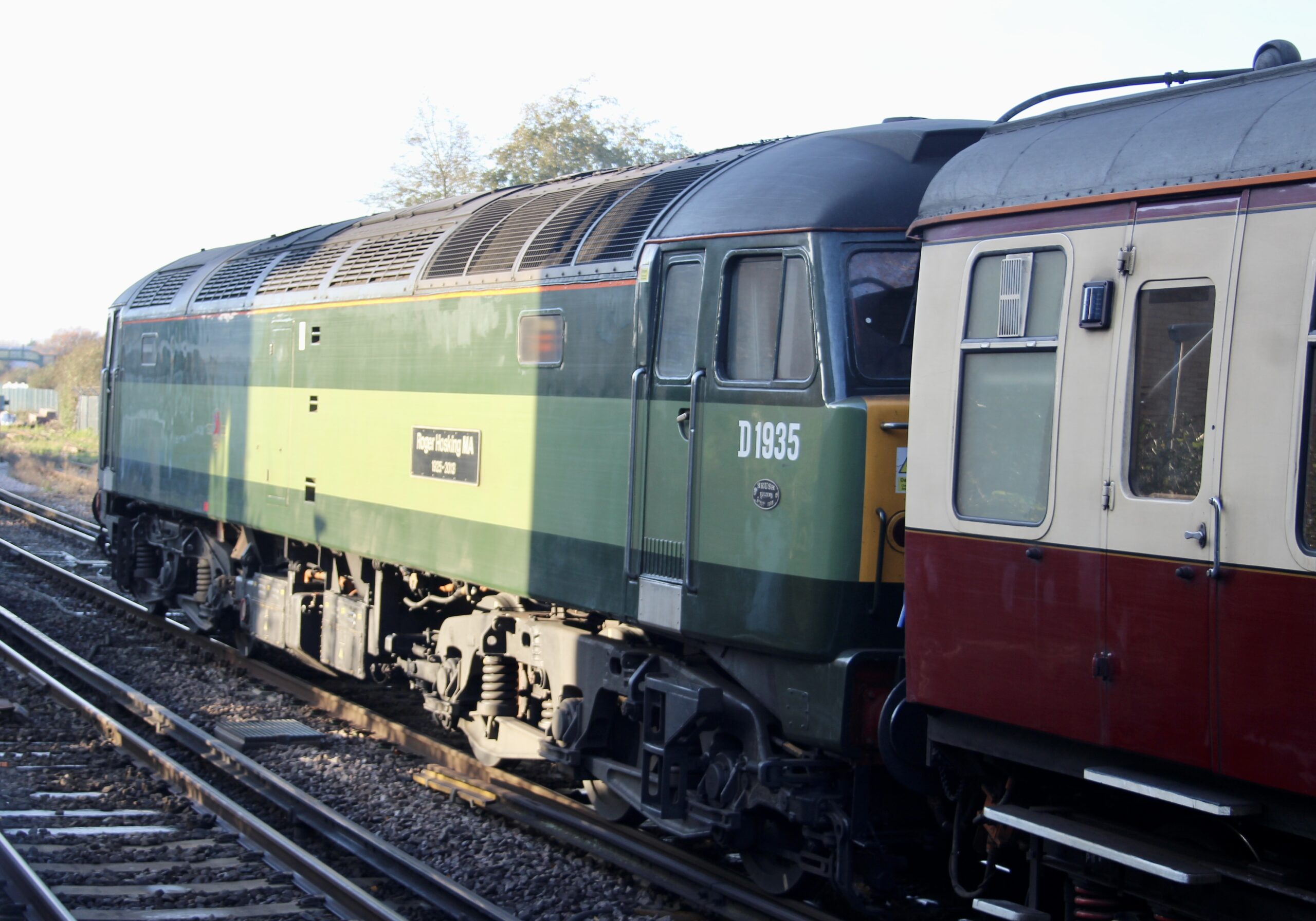
    Class 47 No. D1935 (47805) ‘Roger Hosking MA 1925-2013’ at the rear of Steam Dreams “Chichester for Carols” rail tour 1Z45 0649 Shoeburyness to Chichester – 09/12/2022
    1Z45 0649 Shoeburyness to Chichester – 09/12/2022

    Duchess

    Saturday saw us heading towards London in order to capture LMS Coronation Pacific No. 6233 ‘Duchess of Sutherland’ which was heading the Railway Touring Company “The Bath & Bristol Christmas Market” excursion. Having elected to see the tour at Worting Junction we were greeted by bright sunshine on a beautiful frosty day. Yoshi didn’t much care for the approaching steam locomotive and made his concerns known.

    Worting Junction and LMS Coronation Pacific No. 6233 ‘Duchess of Sutherland’ – 10/12/2022

    Following our view of the Duchess we headed towards London in the hope of seeing a second steam excursion originating from London Victoria, but in the event the promised steam locomotive had been replaced by a Class 67 diesel (again). Our view of the Belmond Pullman train was obscured by the parallel running of a Southern service into the London terminus. You win some, you lose some!

    London Victoria – 10/12/2022

    Bristol Temple Meads

    Sunday and we were in Bristol in the hope of capturing the Lilly’s Pet Food Christmas liveried IET No. 802106 which had been allocated to work the 1300 Bristol Temple Meads to London Paddington service. We were disappointed when this colourful unit did not materialise. However, we had a lovely few hours meeting new friends, downing festive coffee and getting photos of trains in wintery conditions.

    5 car CrossCountry Voyager No. 221135 arrives at a snowy Bristol Temple Meads working 1S45 0927 Plymouth to Dundee – 11/12/2022

    Great Western Railway (GWR) has confirmed that it intends to withdraw its fleet of Castle Class HST sets with the December 2023 timetable change with IET’s taking over their duties.

    GWR Castle HST Class 43 Power Car No. 43155 ‘Rougemont Castle’ at Bristol Temple Meads forming 2E42 1338 service to Worcester Foregate Street – 11/12/2022
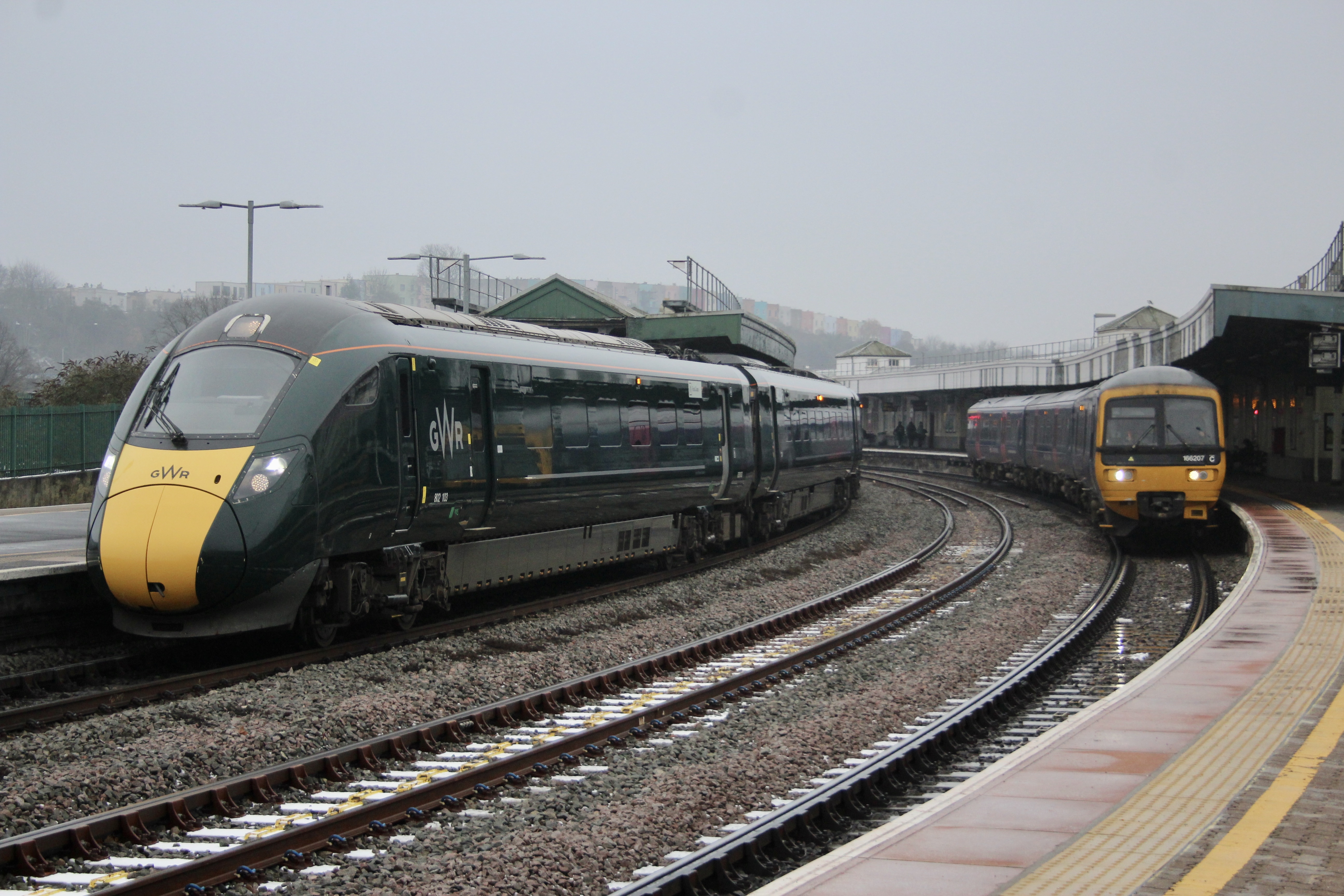
    What should have been the special Lilly’s Christmas liveried IETNo. 802106 was disappointingly plain old No. 802103 instead working 1A18 1300 Bristol Temple Meads to London Paddington – 11/12/2022
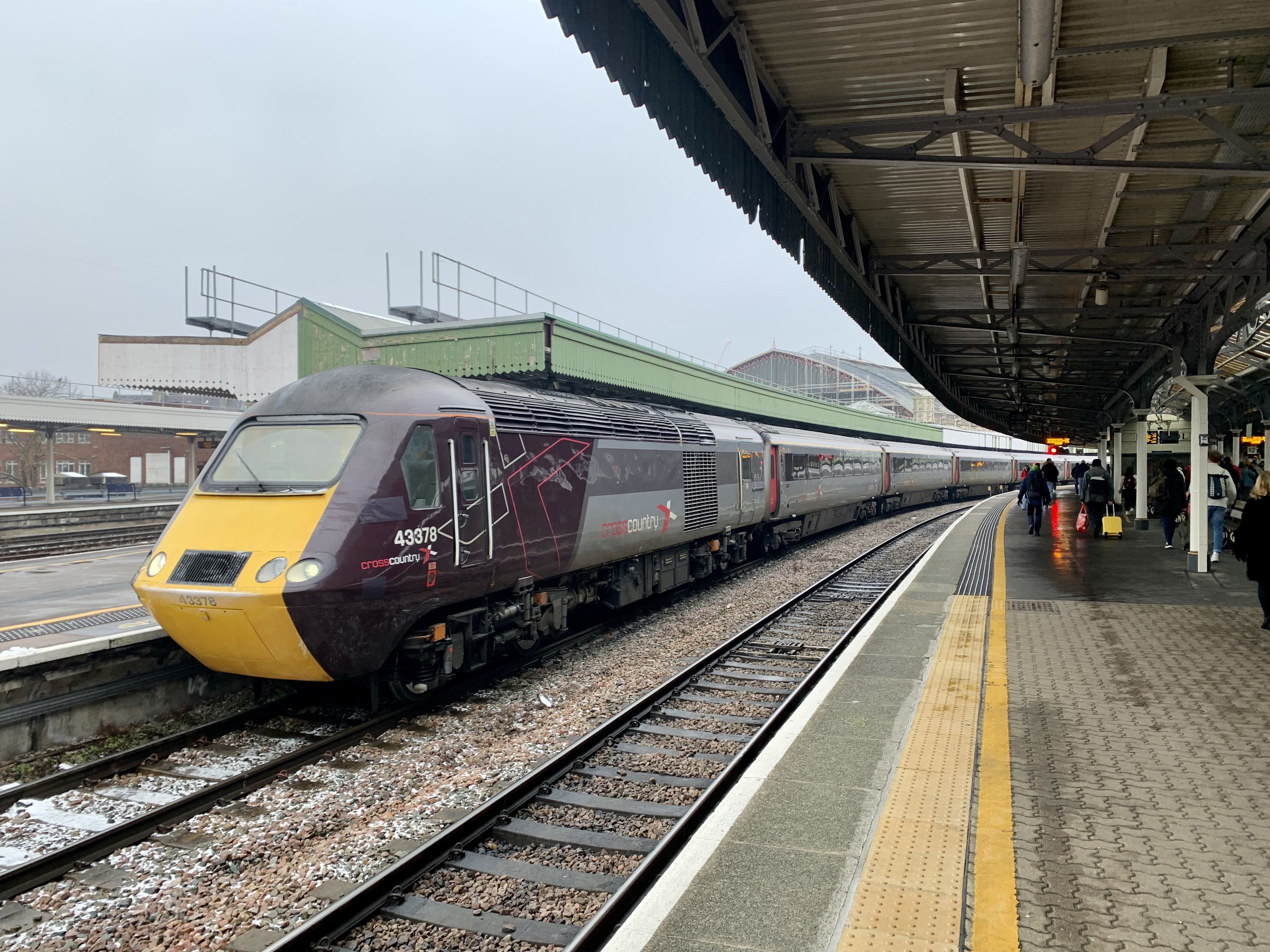
    CrossCountry Class 43 HST Power Car No. 43378 at Bristol Temple Meads working 1V48 0811 Leeds to Plymouth – 11/12/2022
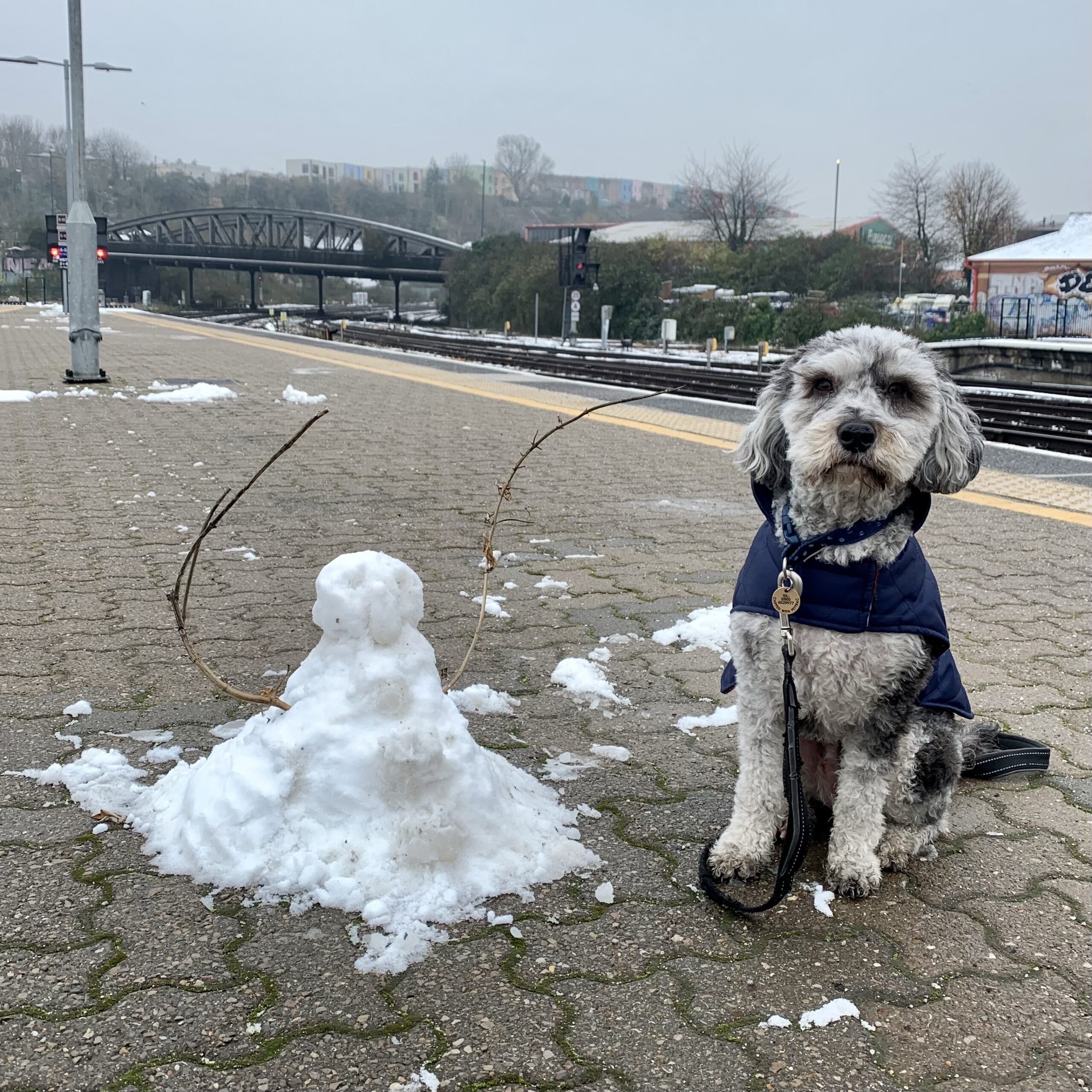
    Yoshi with a snowman he made at Bristol Temple Meads – 11/12/2022

    For The Record

    The seasonal locomotive hauled Snow & Ice Treatment Trains (SITT) began running on 11th December 2022, with the first instance of the consist traversing the Bournemouth to Weymouth line in the early hours of 12th December. GBRf Class 66 locomotives No.’s 66745 and 66704 have been stationed at Totton Yard alongside the usual Multi Purpose Vehicles (MPV). Although running @25 minutes late, I remained tucked up in my warm bed and didn’t venture out in freezing temperatures to record the SITT pass. The Network Rail SITT scrapes any build up of ice from the Third Rail (the conductor rail from which electric traction pick up their power) using metal brushes and spraying anti-icing fluid to prevent further ice from forming. Without this process occurring, depending on the volume of ice, electric trains can struggle to pick up power and in really exceptional instances will be unable to move, which is what appears to have happened on Sunday 11th December when icy conditions between Weymouth and Brockenhurst meant all services were stopped. Engineering works taking place east of Brockenhurst prevented the SITT from running to Weymouth to rectify the situation. Limited services were later resumed, although South Western Railway (SWR) requested only essential journeys should be made. During the suspension of train services, passengers could source taxis between Brockenhurst and Weymouth and claim the cost back from SWR providing evidence of a train ticket and taxi receipt for the associated journey.

    Throwback to December 2019 and GBRf Class 66 No. 66717 ‘Good Old Boy’ at the head of the SITT waiting departure from Weymouth to Totton Yard – 17/12/2019

    The start of the new timetable on Sunday December 11th 2022 saw the inclusion of a weekday path along the Hamworthy Branch originating from Westbury Tarmac and terminating at Hamworthy BCI. It came as no surprise that the service did not run.

    Many thanks for stopping by. This weeks blog is slightly curtailed owing to the fact somewhere along the line I have picked up a cold. Or more likely an extreme case of man-flu! Anyway, you have been saved my witterings on Brighton Railway Station, Class 701’s at Clapham Junction, video from Bristol and more about the Coastway Route.

    Postscript

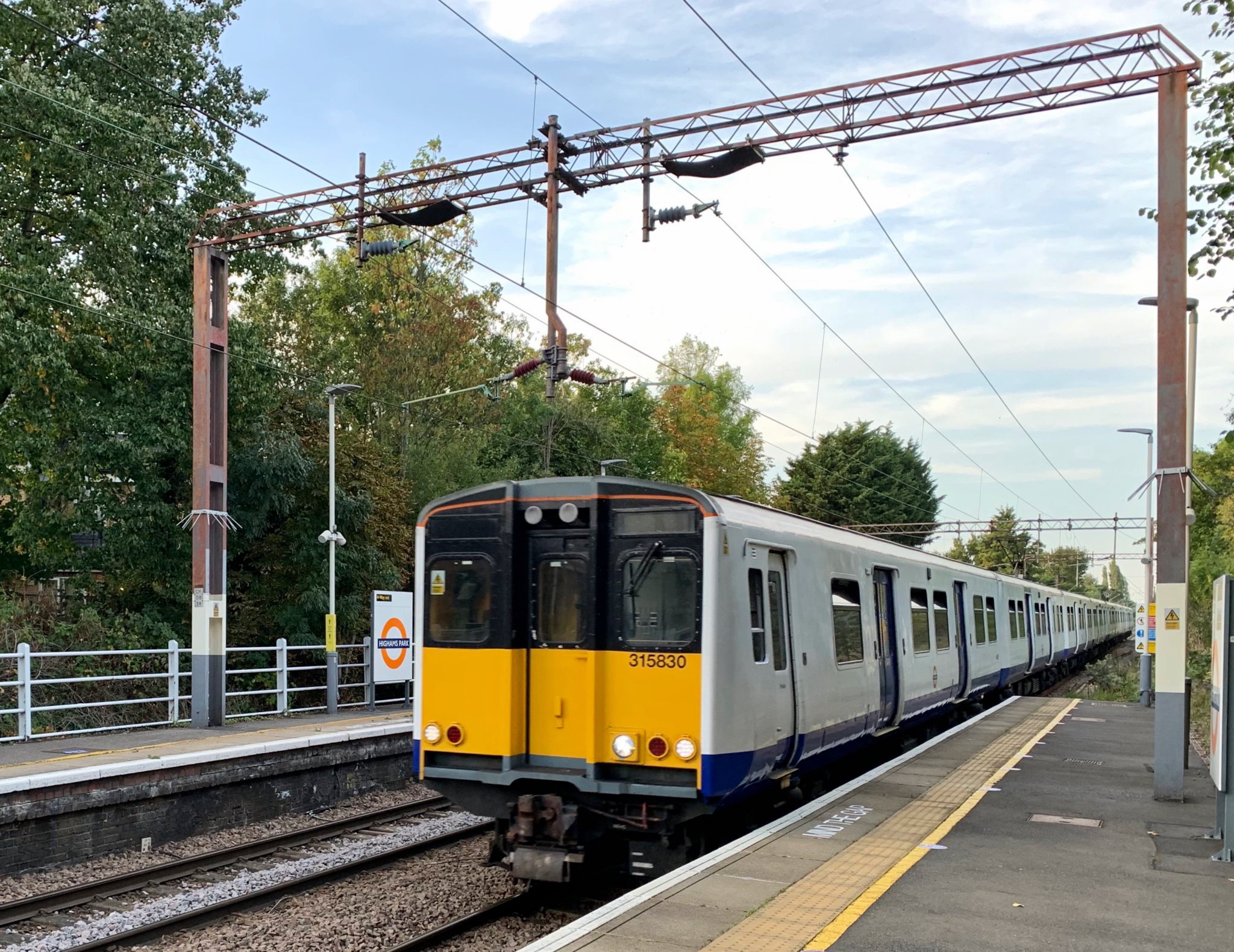
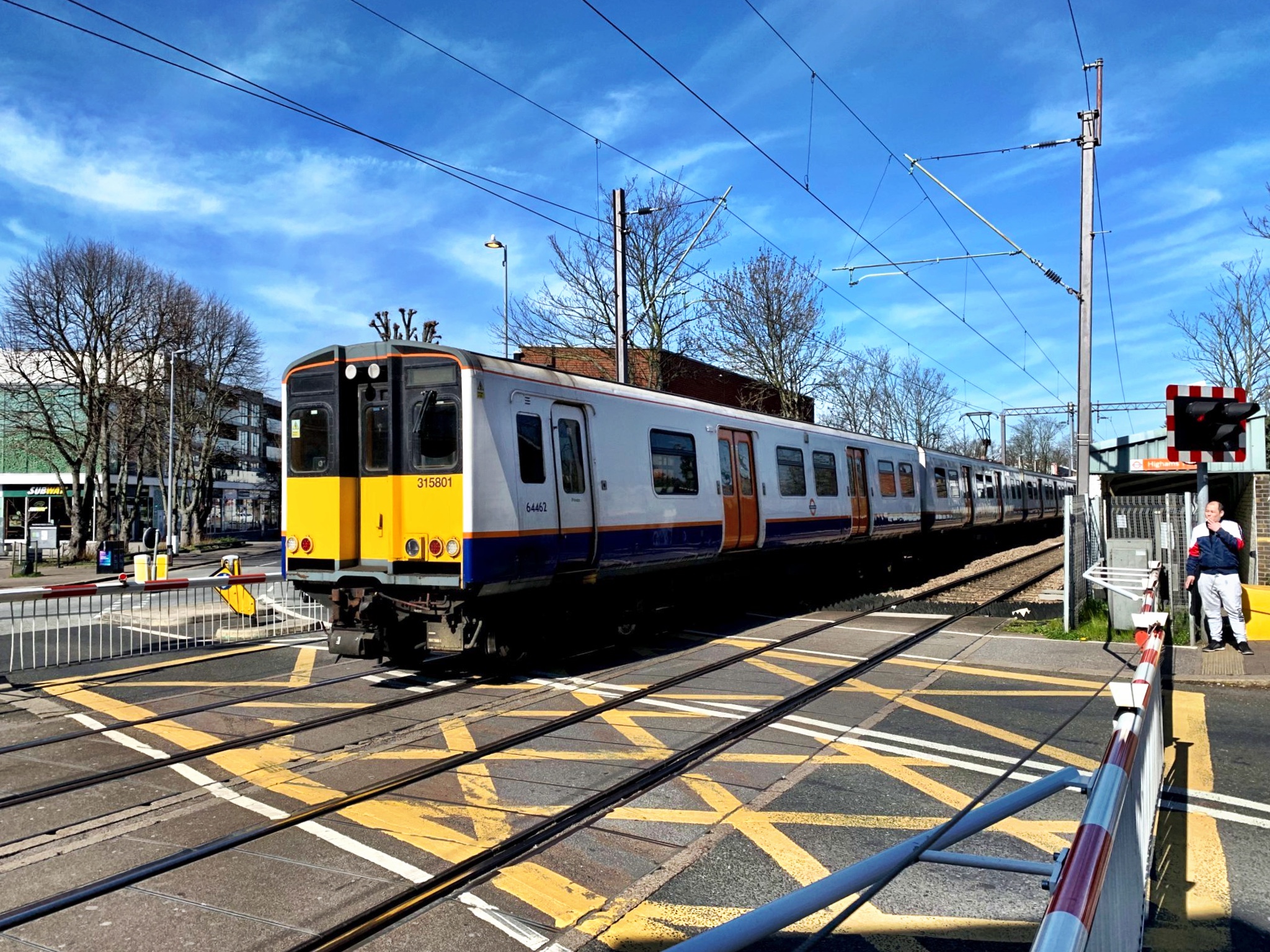
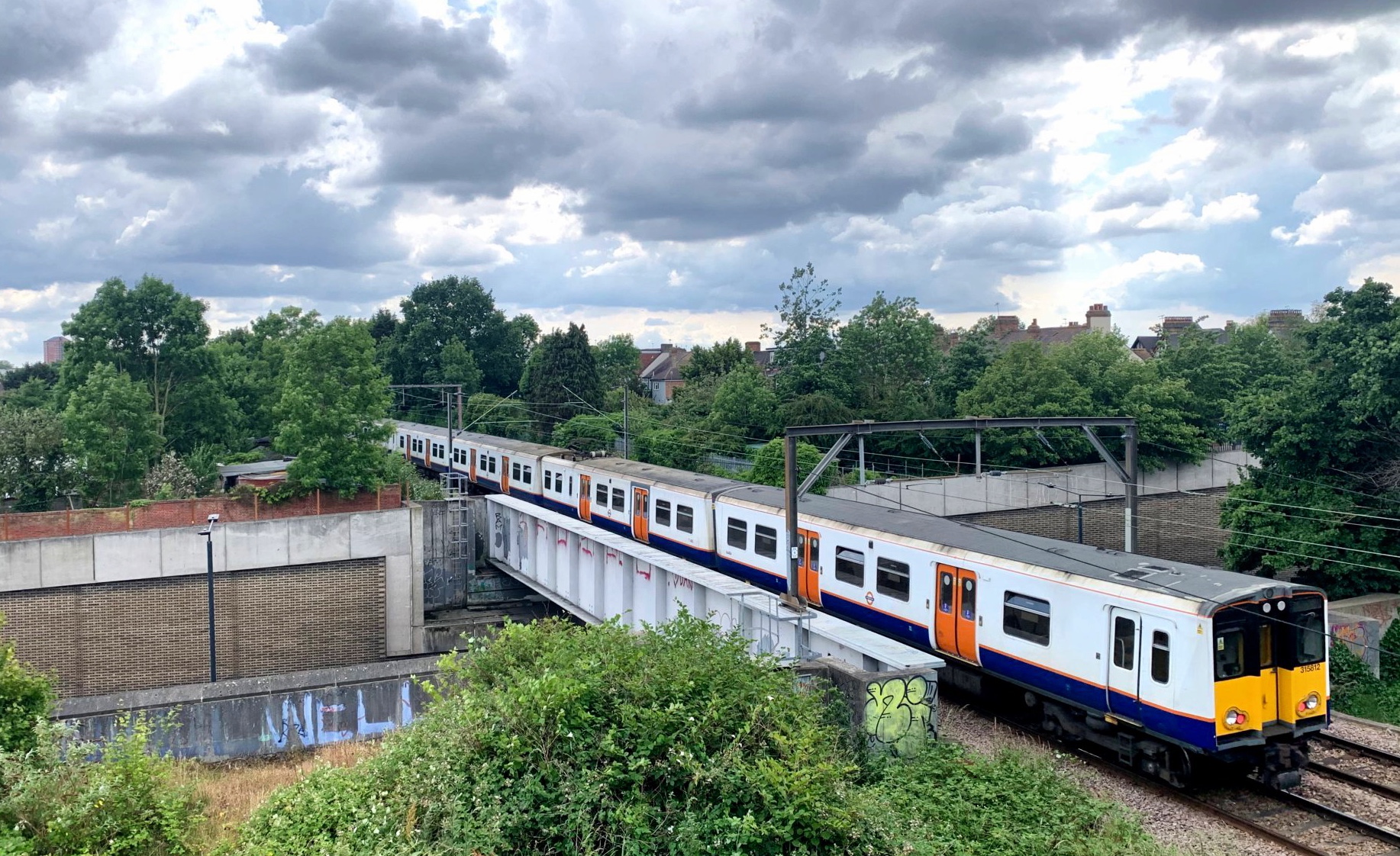
    As a codicil to the Class 313 feature above, there was a period when I spent a great deal of time in North London. My local railway services were provided by Class 315 emu’s which were introduced in 1980 and was the last variant of five to have their design based on the PEP prototype units. The Class 315’s were set to end over 40 years of service on 9th December 2022. One unit, No. 315856 which took part in a farewell tour of the class organised by the Class 315 Preservation Society and the Branch Line Society, has been saved for preservation. The Class 315 Preservation Society has acquired the unit from Eversholt Rail Group and is destined for the Dean Forest Railway where it will be restored to original BR condition.

    Class 315 No. 315830 arrives at Highams Park with a Chingford to London Liverpool Street service – 18/09/2020
    Class 315 No. 315801 arrives at Highams Park with a London Liverpool Street to Chingford service – 23/03/2020
    Class 315 No. 315807 passes the signal box at Highams Park with a London Liverpool Street to Chingford service – 19/04/2020
    Class 315 No. 315812 crosses the A406 rail bridge with a Chingford to London Liverpool Street service – 11/06/2020
  • SVR Autumn Diesel Bash

    Wednesday September 28th to Tuesday October 4th

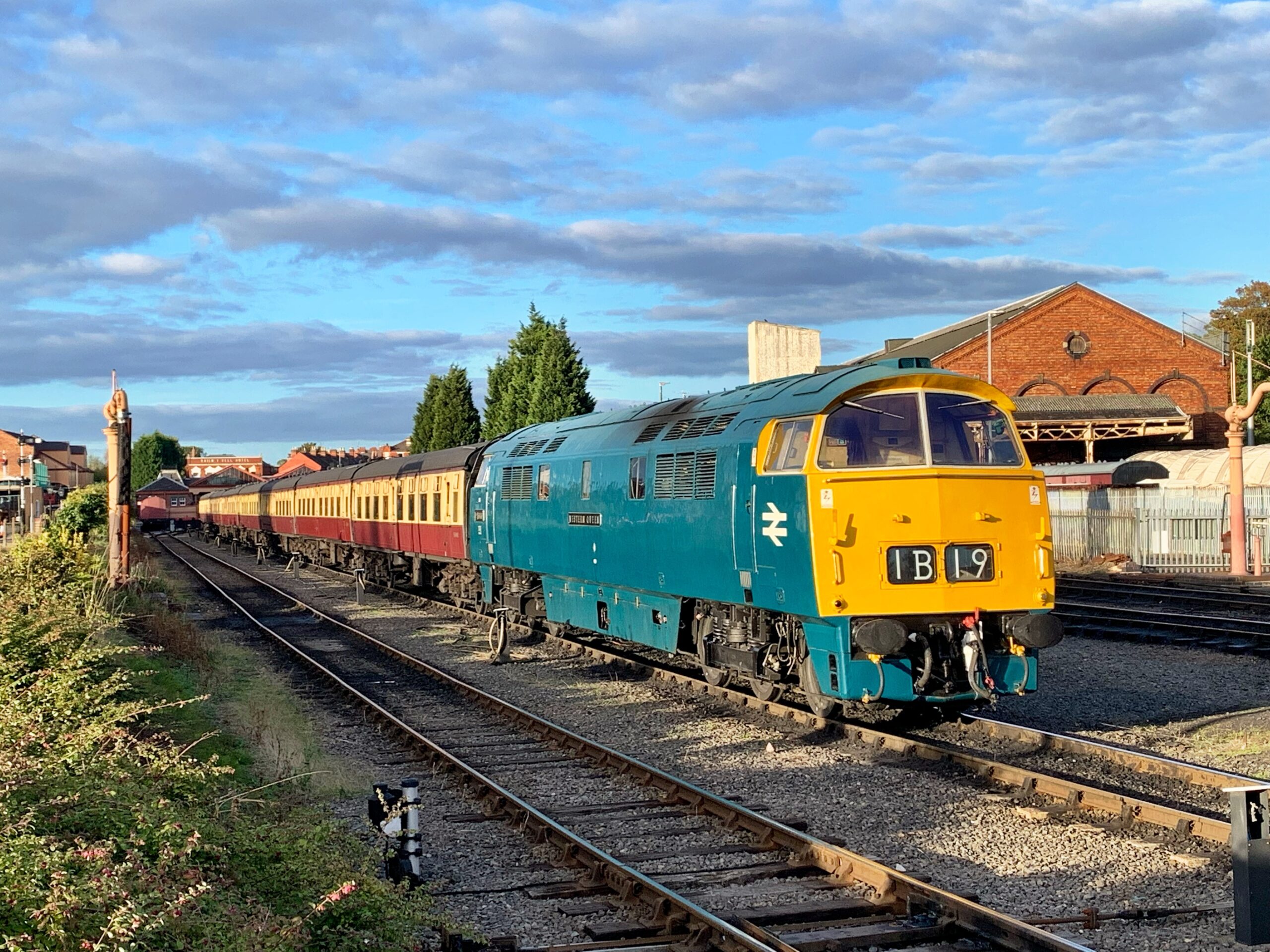
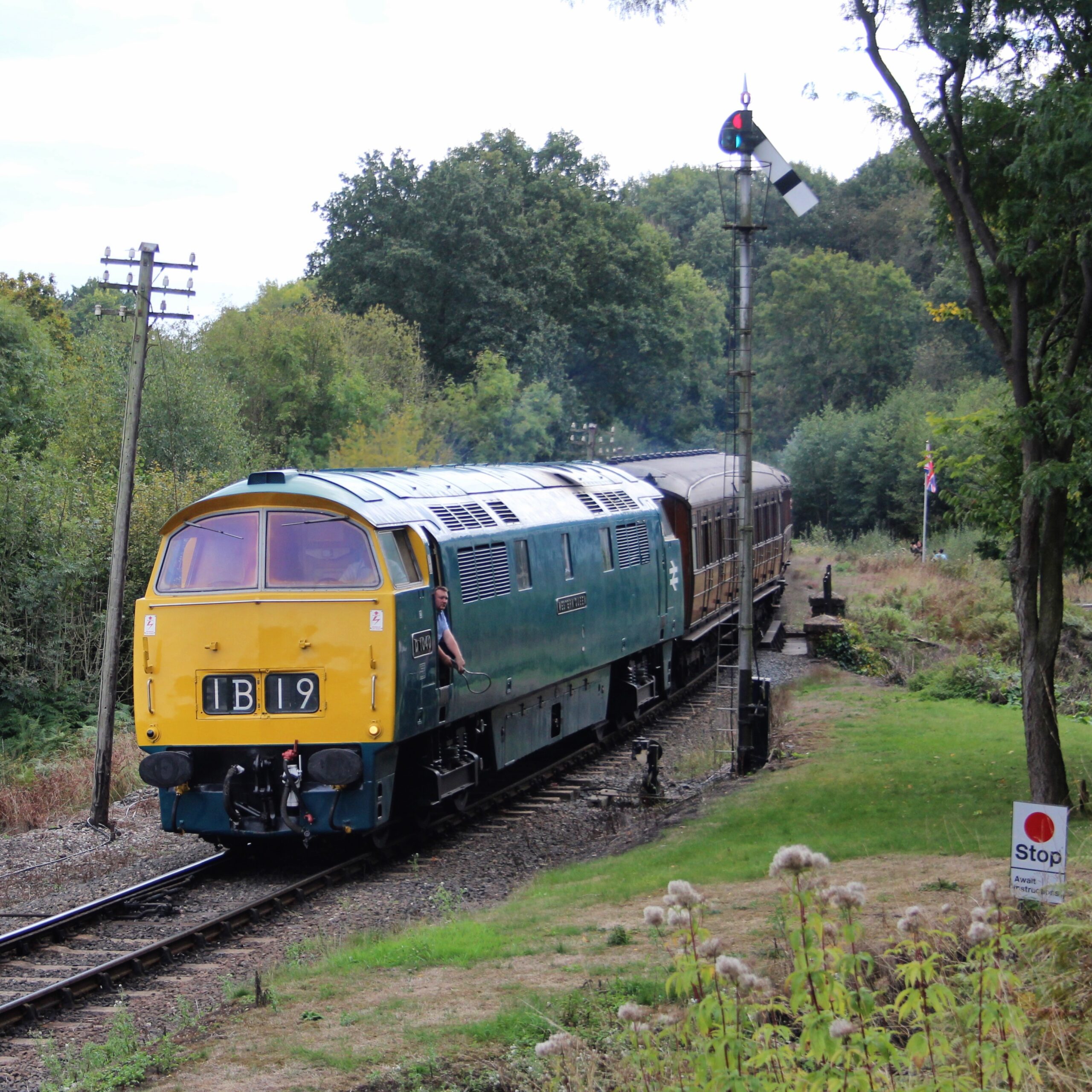
    Yoshi at Kidderminster enjoying the last gasp of autumn sun with Class 52 Western diesel hydraulic No. D1040 ‘Western Queen’ in the background – 02/10/2022

    Hello Dear Reader! It’s been a relatively quiet week on the rails in Yoshi’s manor. Engineers trains for the Chetnole track upgrade came and went, utilising the same locomotives on a rota as at the start of the work. Because of the their early departures via Dorchester South, Yoshi and I remained snuggled up in our bed. We had planned on seeing the final two trains depart via Yeovil Pen Mill on the Friday evening, but the rain and winds put us off as we didn’t fancy hanging around for them to make an appearance on an open windswept railway station. In the event it appears they left more or less on time, so it would not have be so tortuous!

    Severn Valley Railway

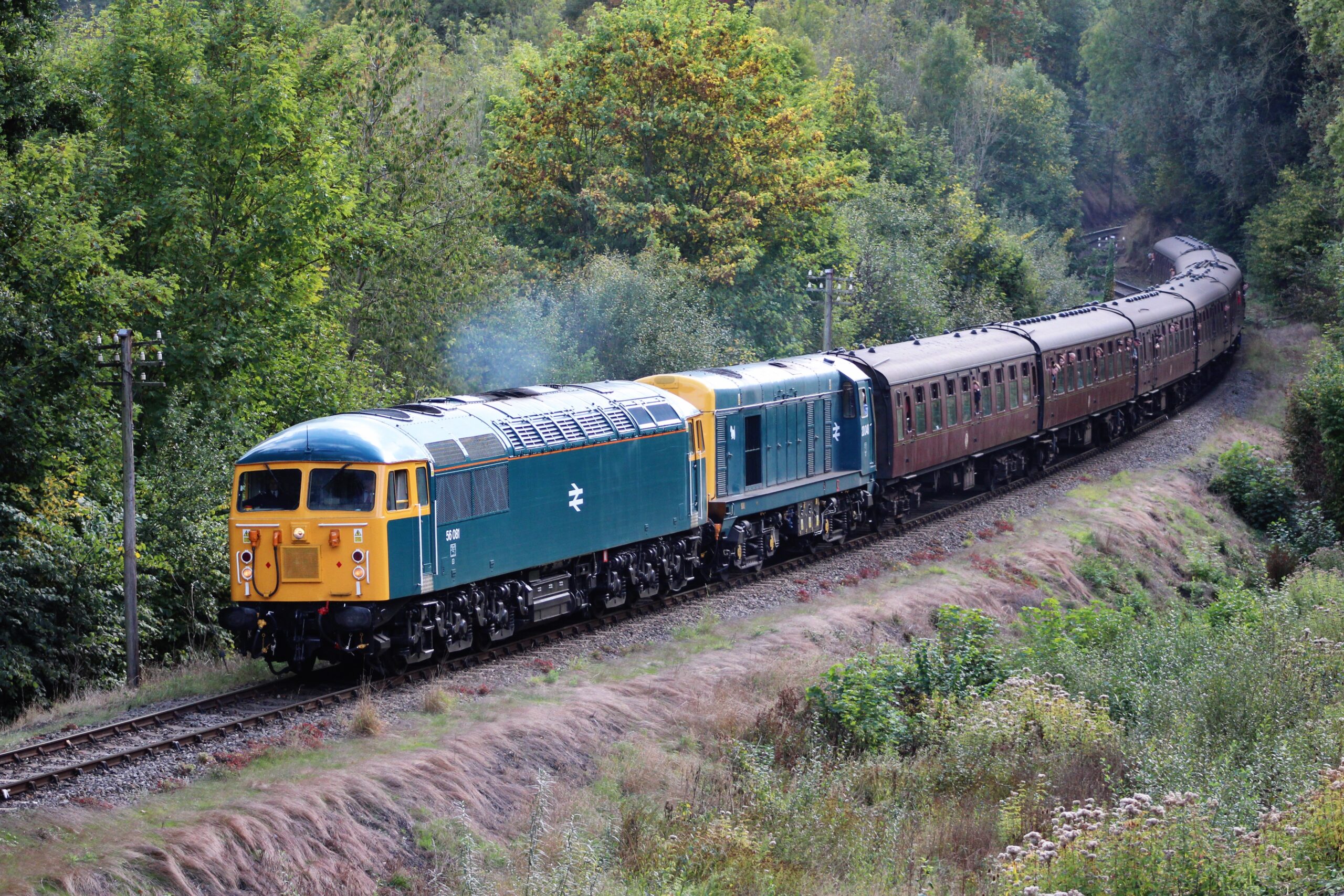
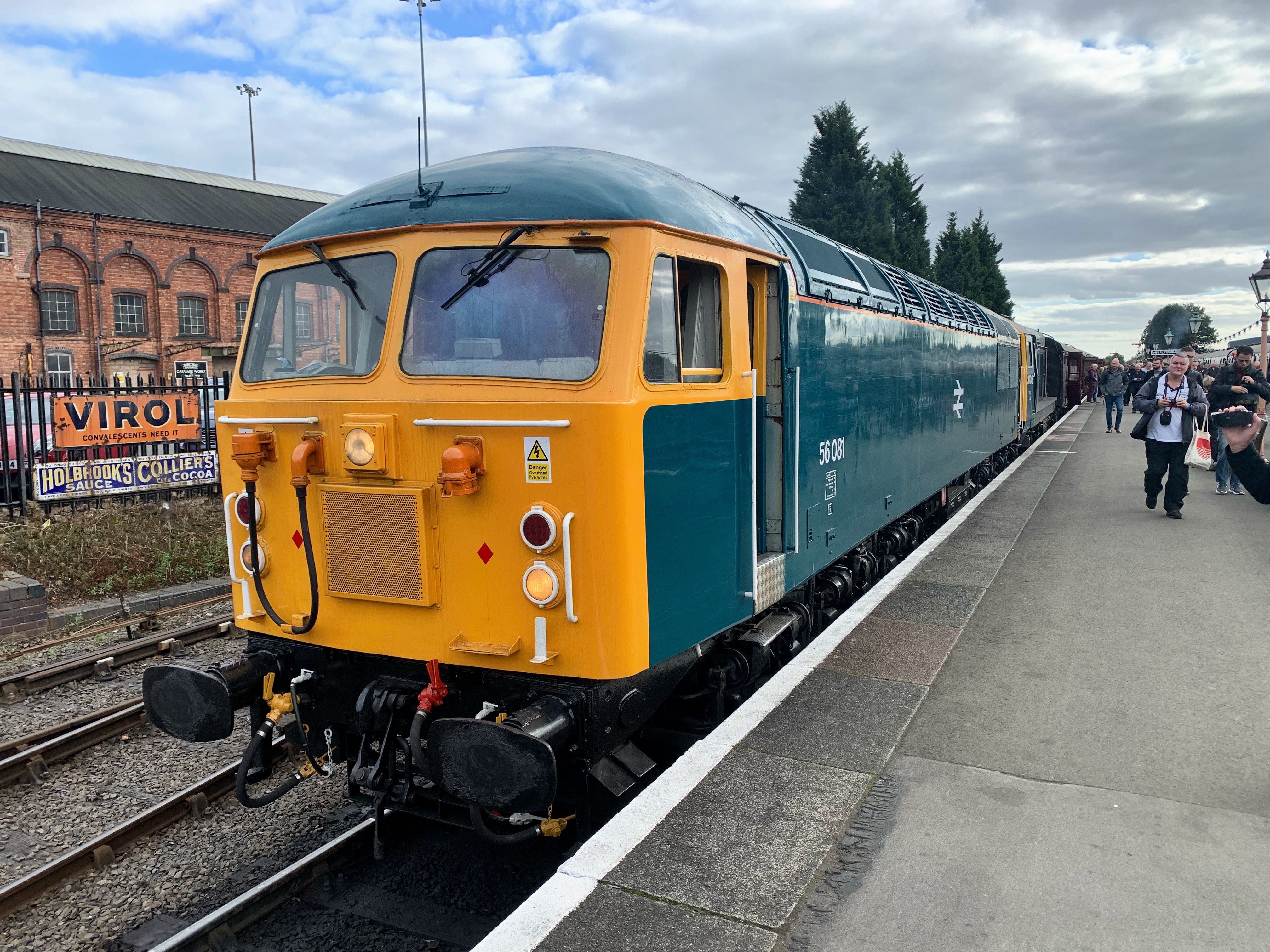
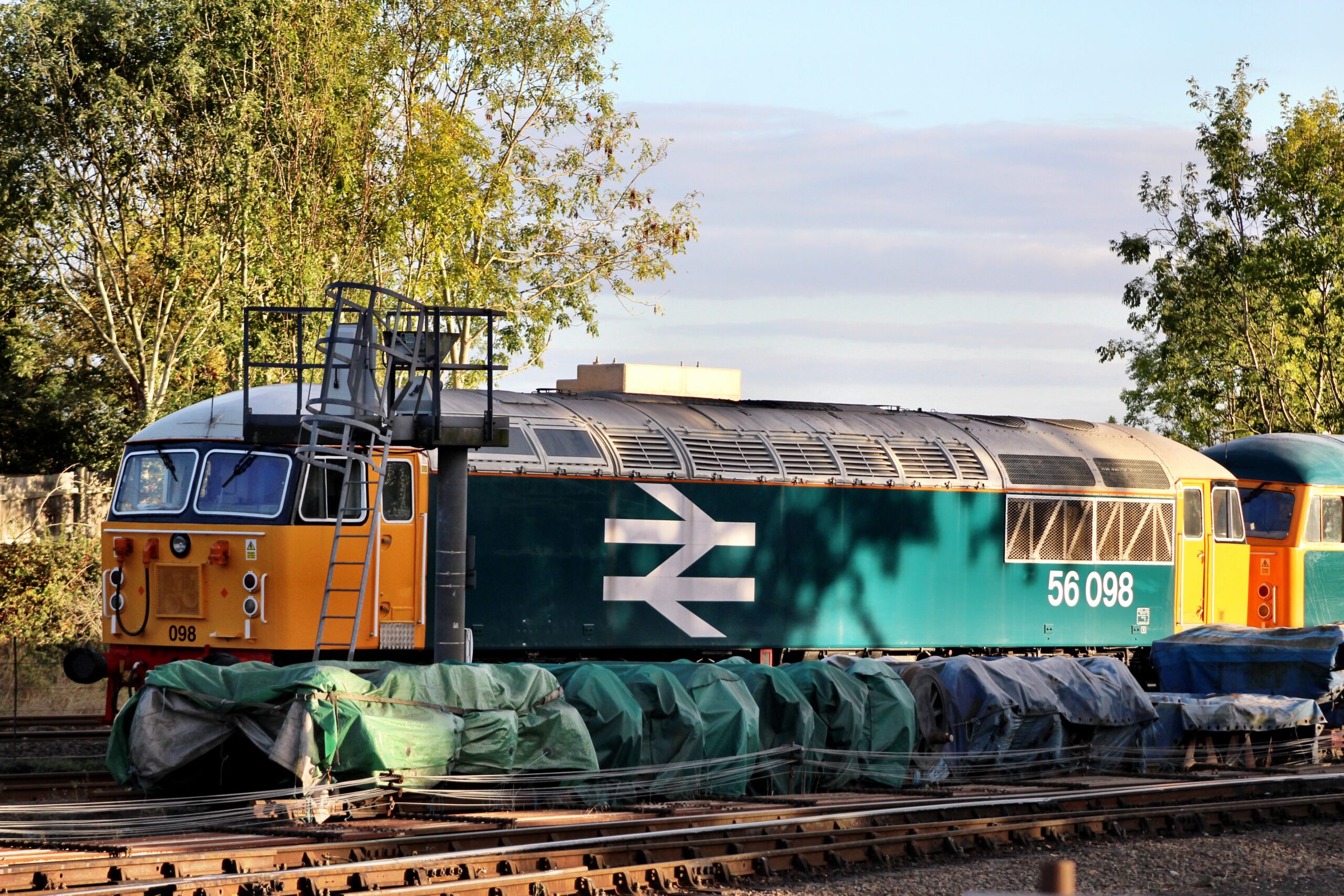
    Sunday 2nd October found us back at the Severn Valley Railway, this time for their 2022 Autumn Diesel Bash. The main attraction for me being the visit of two GB Railfreight Class 56 locomotives which have been repainted into retro British Rail liveries. The GBRf Class 56’s will eventually be rebuilt as Class 69 locomotives in due course, so we thought we’d take the opportunity to catch these while we can. Only one of the two Class 56 locomotives ran each day over the weekend; No. 56098 on Saturday and 56081 on the Sunday. I hoped that the locomotive not being used would be on static display, but this wasn’t really the case, and only a record shot could be achieved from publicly accessible areas.

    GBRf Class 56 No.’s 56098 and 56081 coupled together at Kidderminster SVR awaiting their return to Old Dalby the following day – 02/10/2022

    Despite this, we had another great day out at the Severn Valley. Even the fact the coffee machine wasn’t working at The Engine House cafe in Highley didn’t dampen my spirits. As we left Dorset and made our way northwards, the weather didn’t look conducive to a day out, but once past Bristol, the sun made a welcome appearance for the rest of the day. Thanks to Andrew and Scott for their excellent company and helping to look after Yoshi.

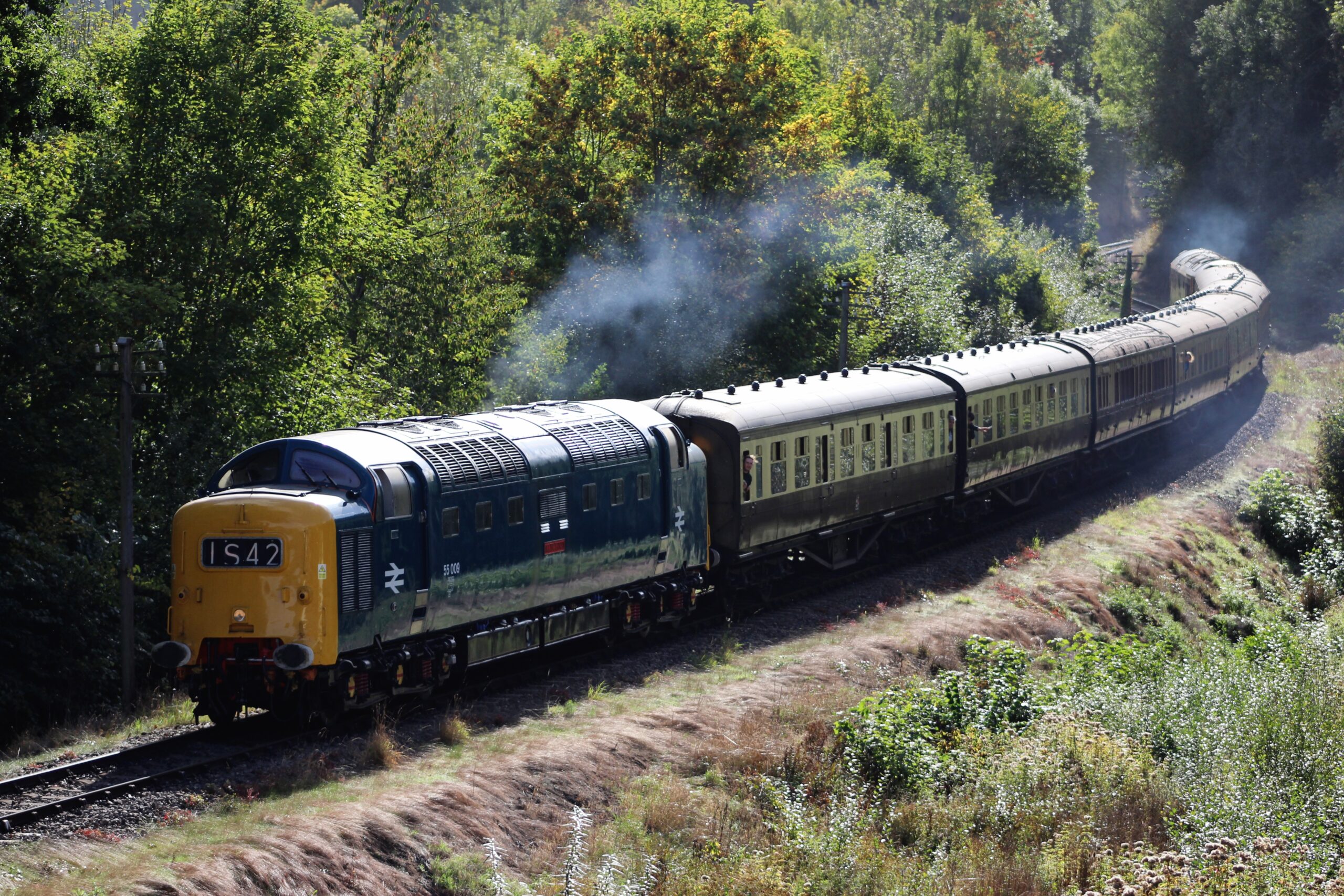
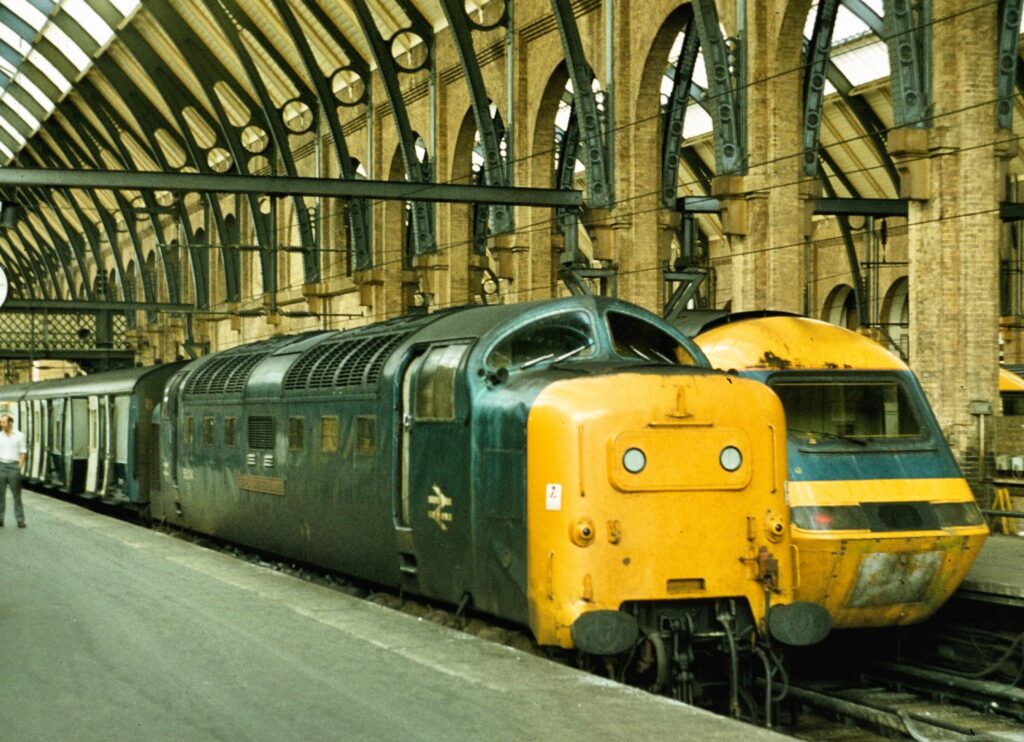
    Deltic No. 55009 ‘Alycidon’ on the approach to Highley. I first saw this class of locomotive at London Kings Cross in 1977 and they immediately became my favourite diesel locomotives – 02/10/2022
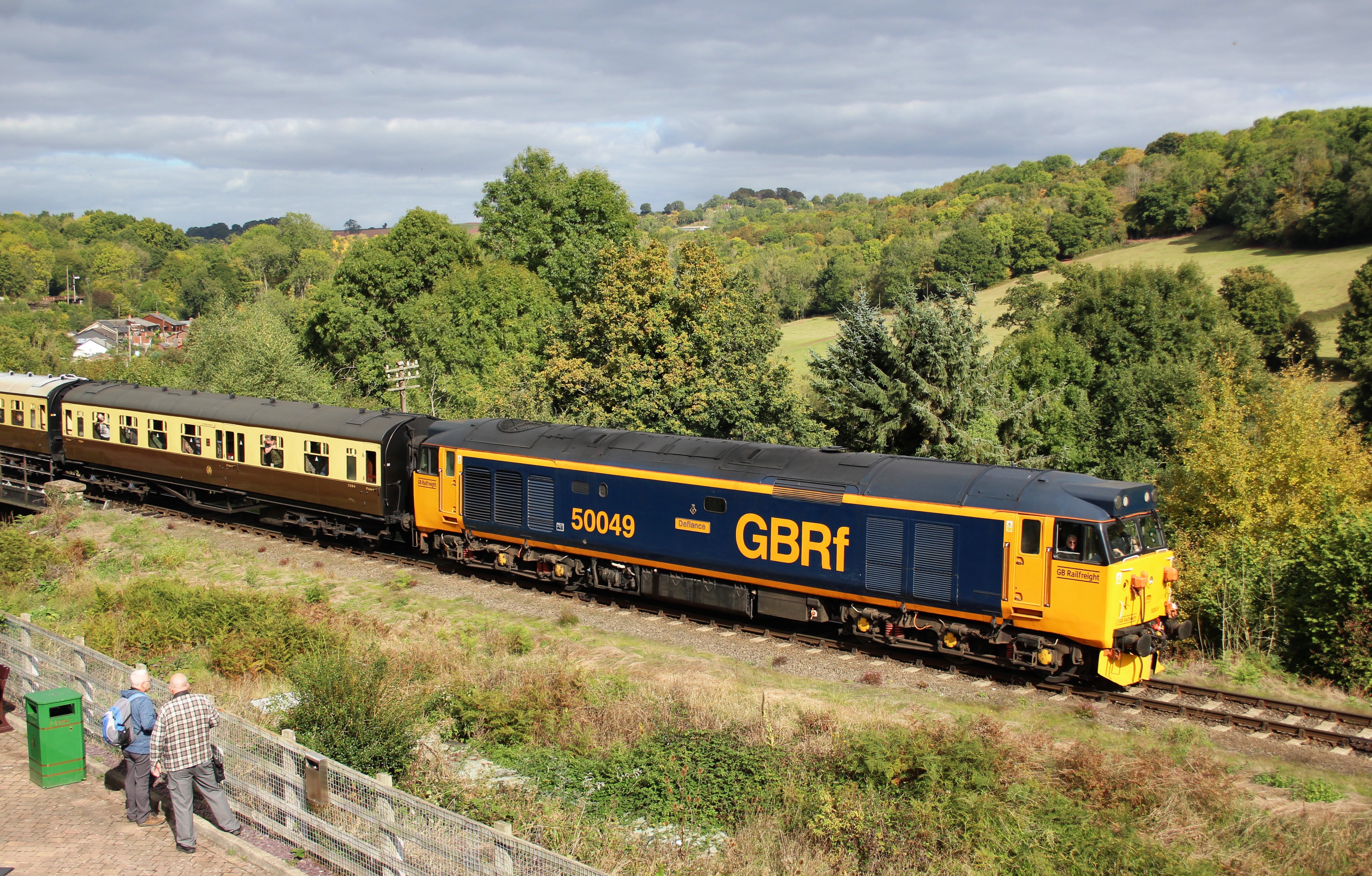
    Class 50 No. 50049 ‘Defiance’ departs Highley – 02/10/2022
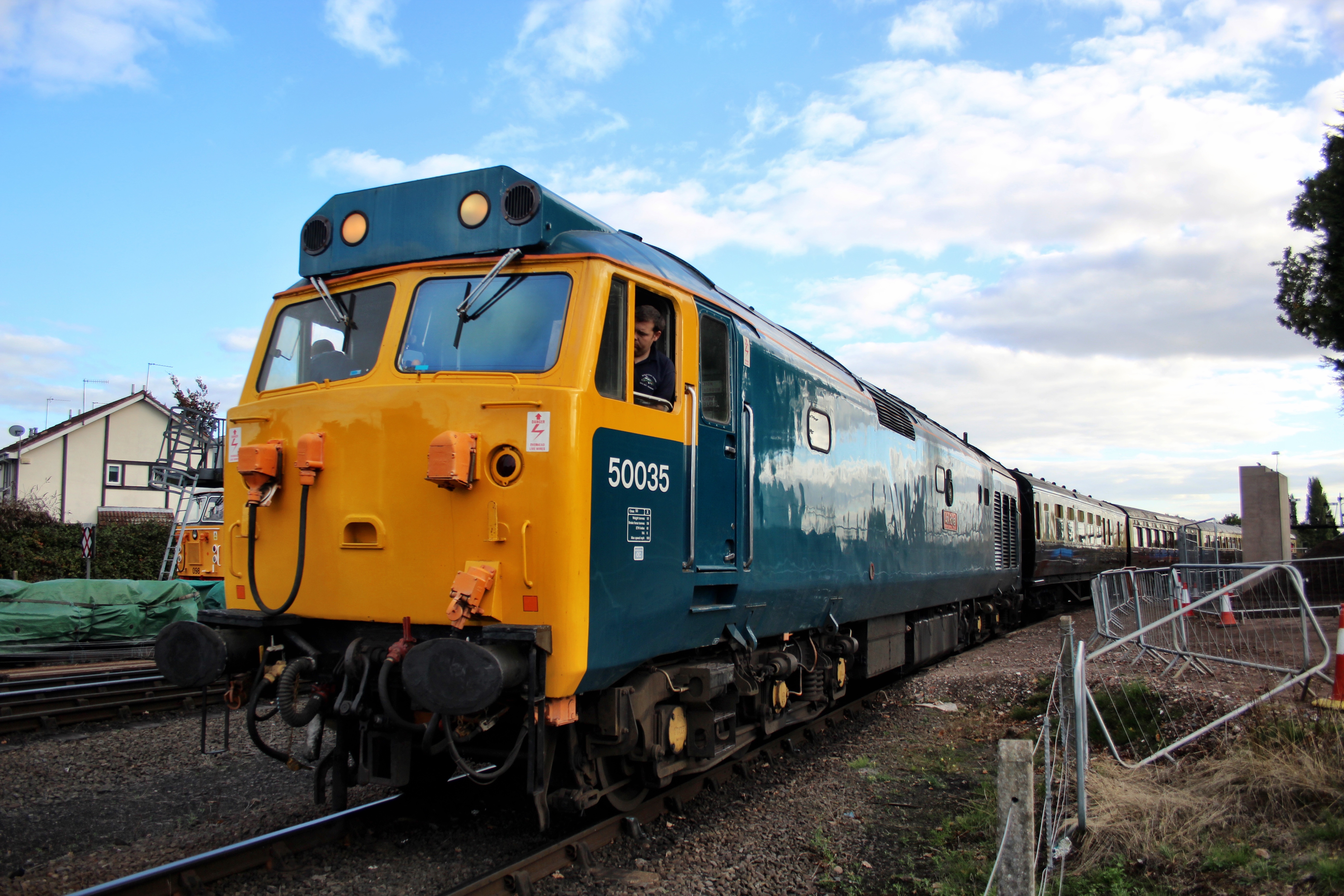
    Class 50 No. 50035 ‘Ark Royal’ arriving into Kidderminster – 02/20/2022
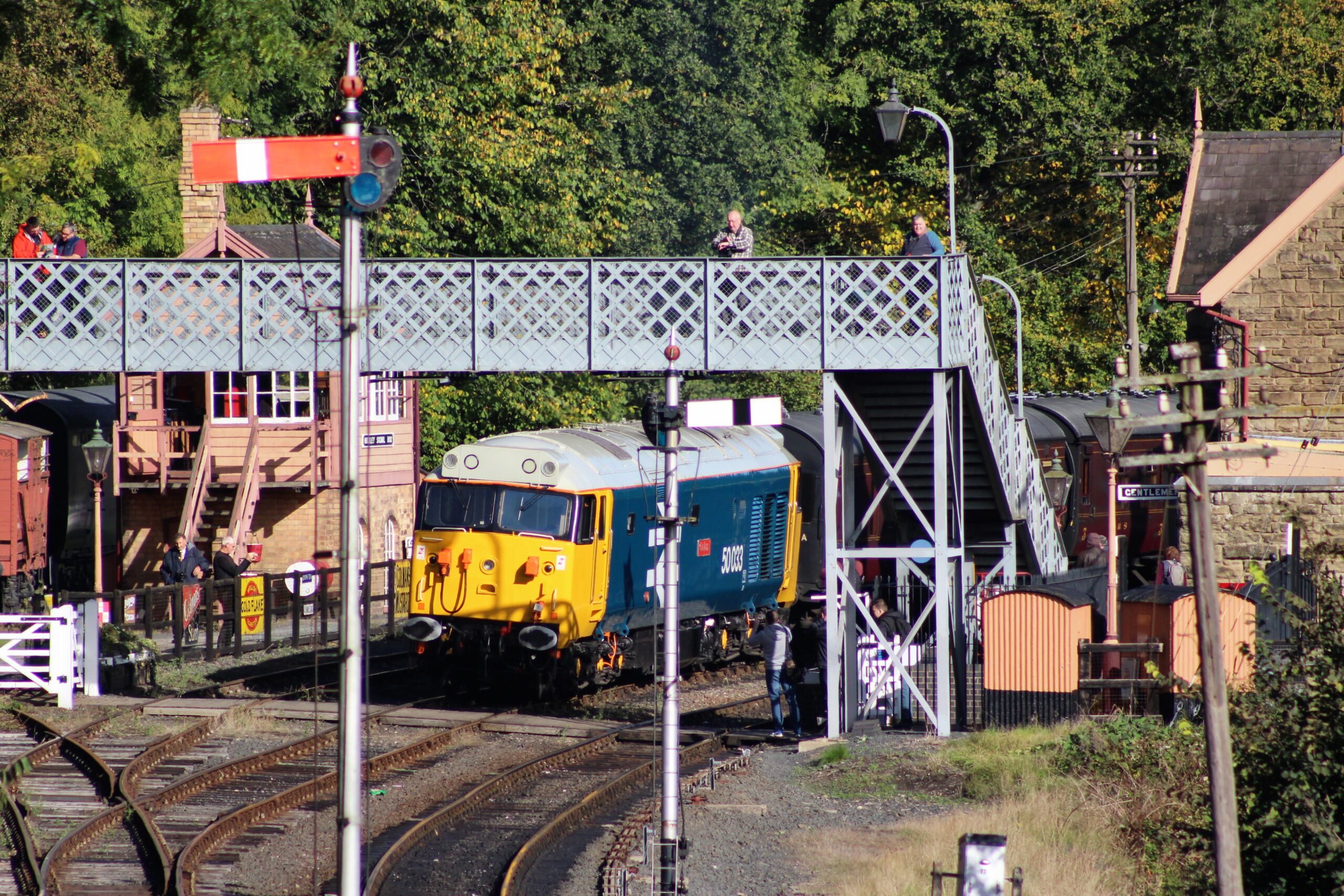
    Class 50 No. 50033 ‘Glorious’ awaiting to be rescued at Highley with a ‘local service’ after being declared a failure – 02/10/2022
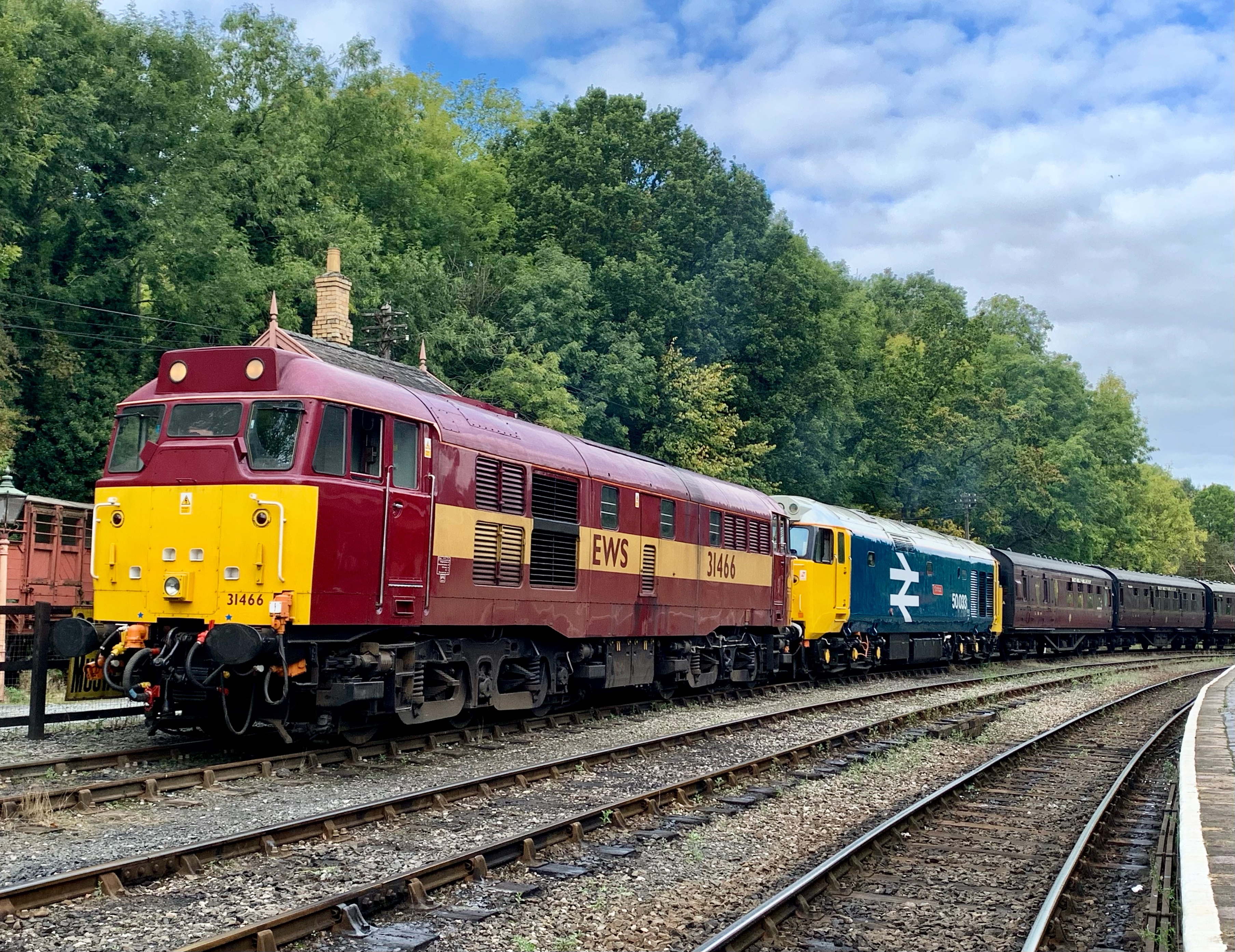
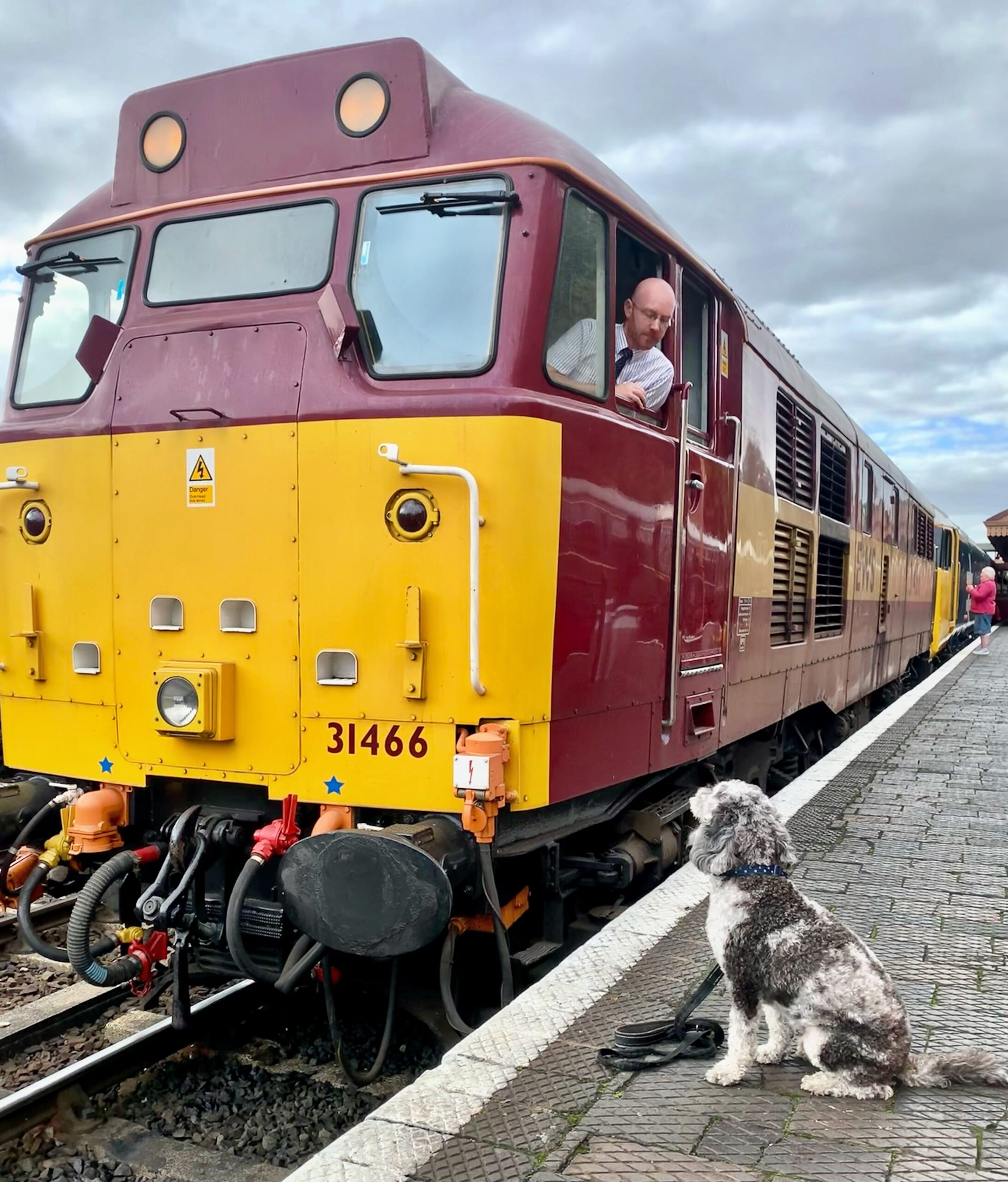
    Class 31 No. 31466 plays Thunderbird loco for Class 50 No. 50033 ‘Glorious’ at Highley. A minor defect in the Class 50’s air system intermittently prevented the locomotive creating a brake – 02/10/2022
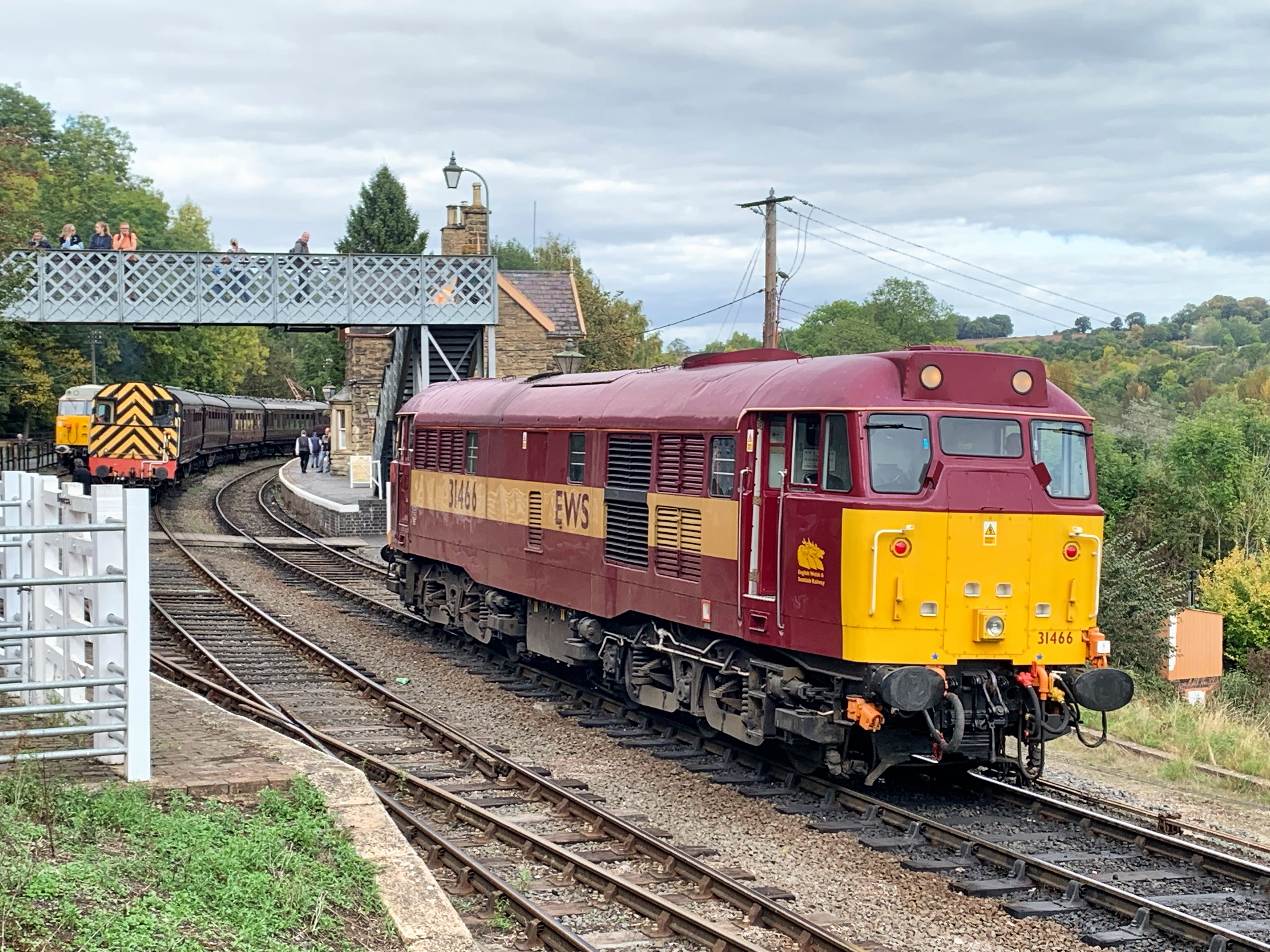
    Class 31 No. 31466 at Highley – 02/10/2022
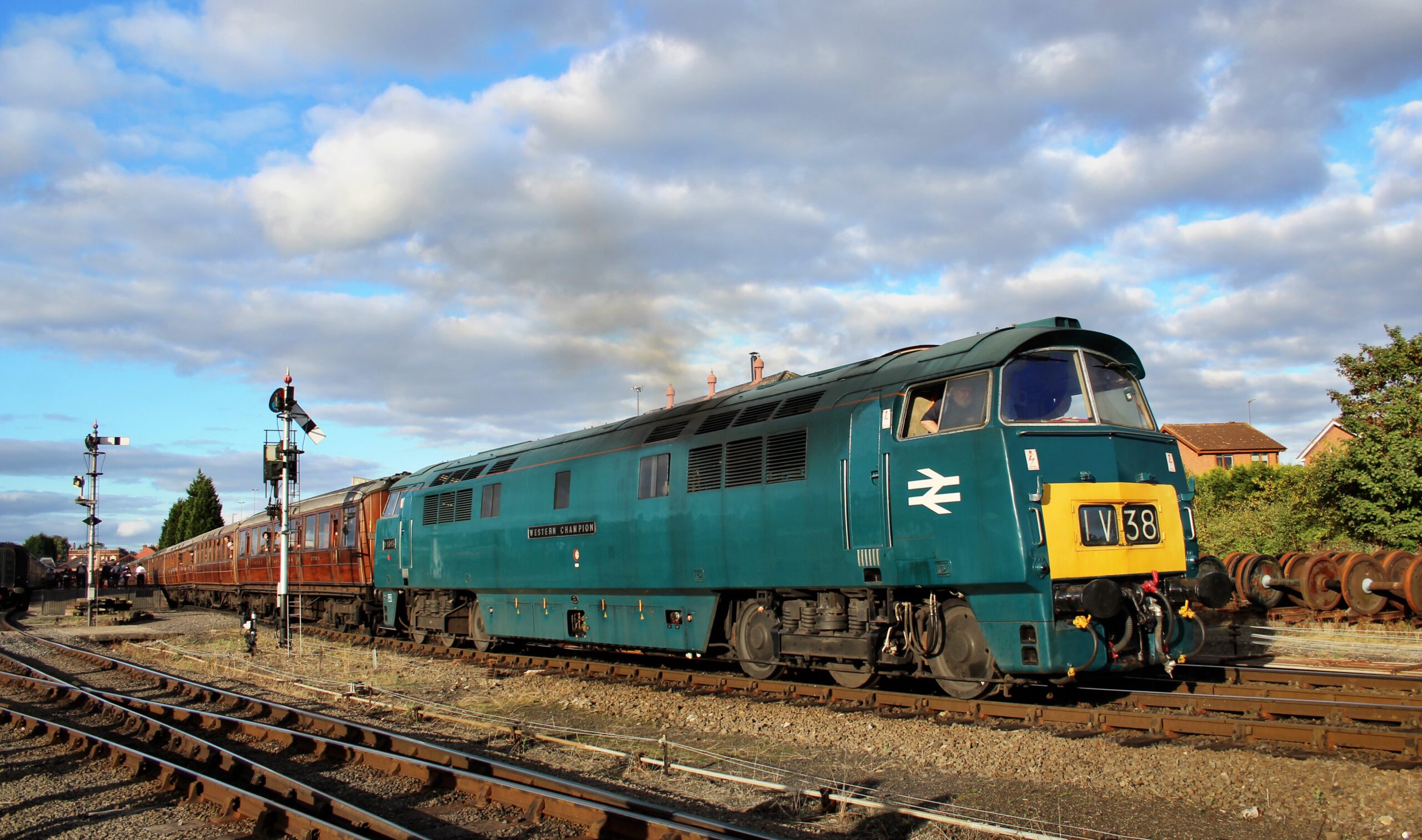
    Class 52 No. D1015 ‘Western Champion’ nears Highley – 02/10/2022
    Class 52 No. D1015 ‘Western Champion’ departs Kidderminster with an evening service – 02/10/2022
    Class 52 No. D1062 ‘Western Courier’ running as classmate No. D1040 ‘Western Queen’ catching the late afternoon sun at Kidderminster – 02/10/2022
    The second man on Class 52 No. D1040 ‘Western Queen’ ready to exchange tokens entering Highley – 02/10/2022
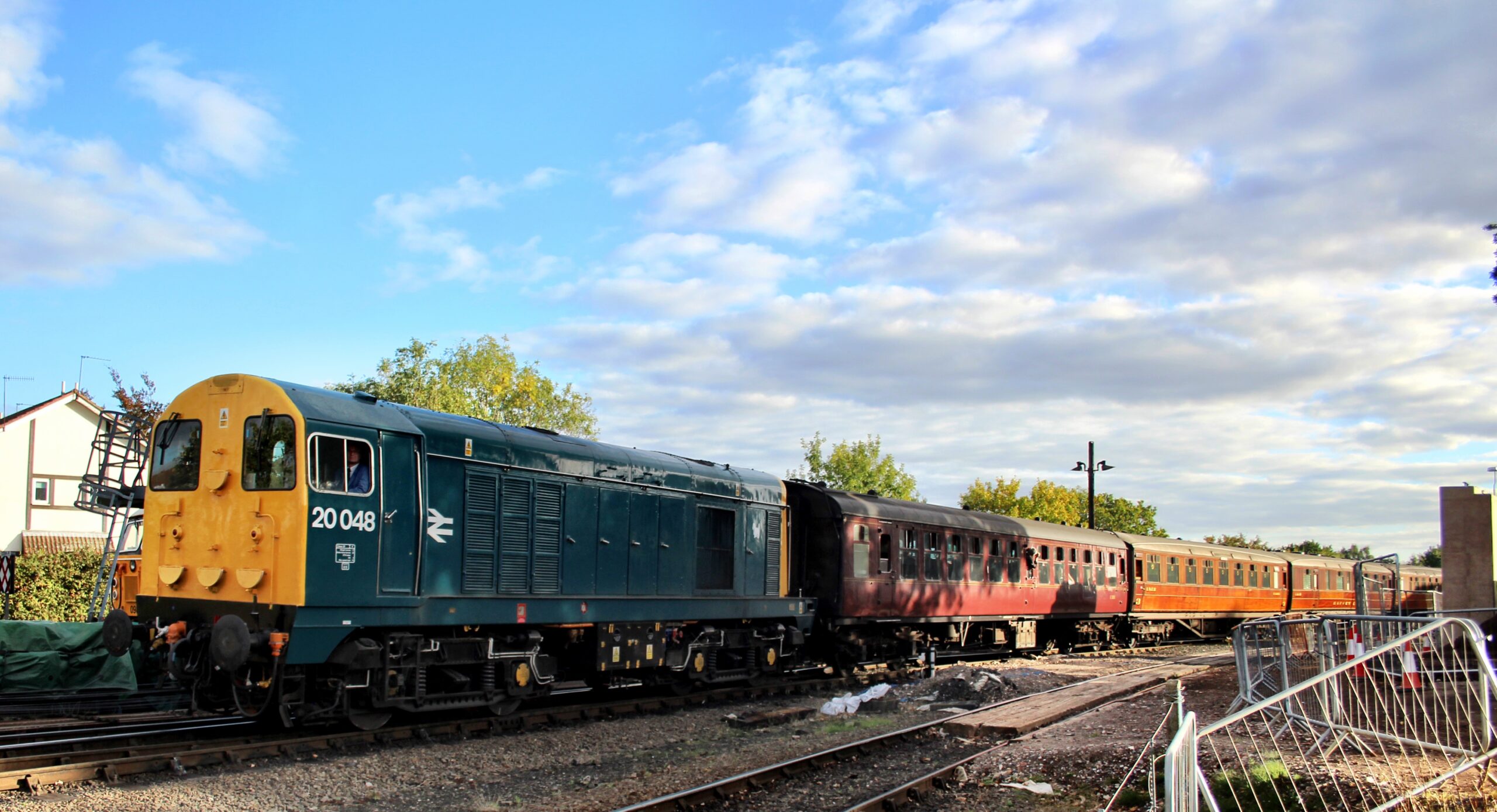
    GBRf Class 56 No. 56081 and Class 20 No. 20048 being used as a translator locomotive for braking near Highley – 02/10/2022
    GBRf Class 56 No. 56081 having arrived at Kidderminster after its sole round trip – 02/10/2022
    GBRf Class 56 No. 56081 prepares to run to the sidings at Kidderminster – 02/10/2022
    Large Logo liveried Class 56 No. 56098 at Kidderminster – 02/10/2022
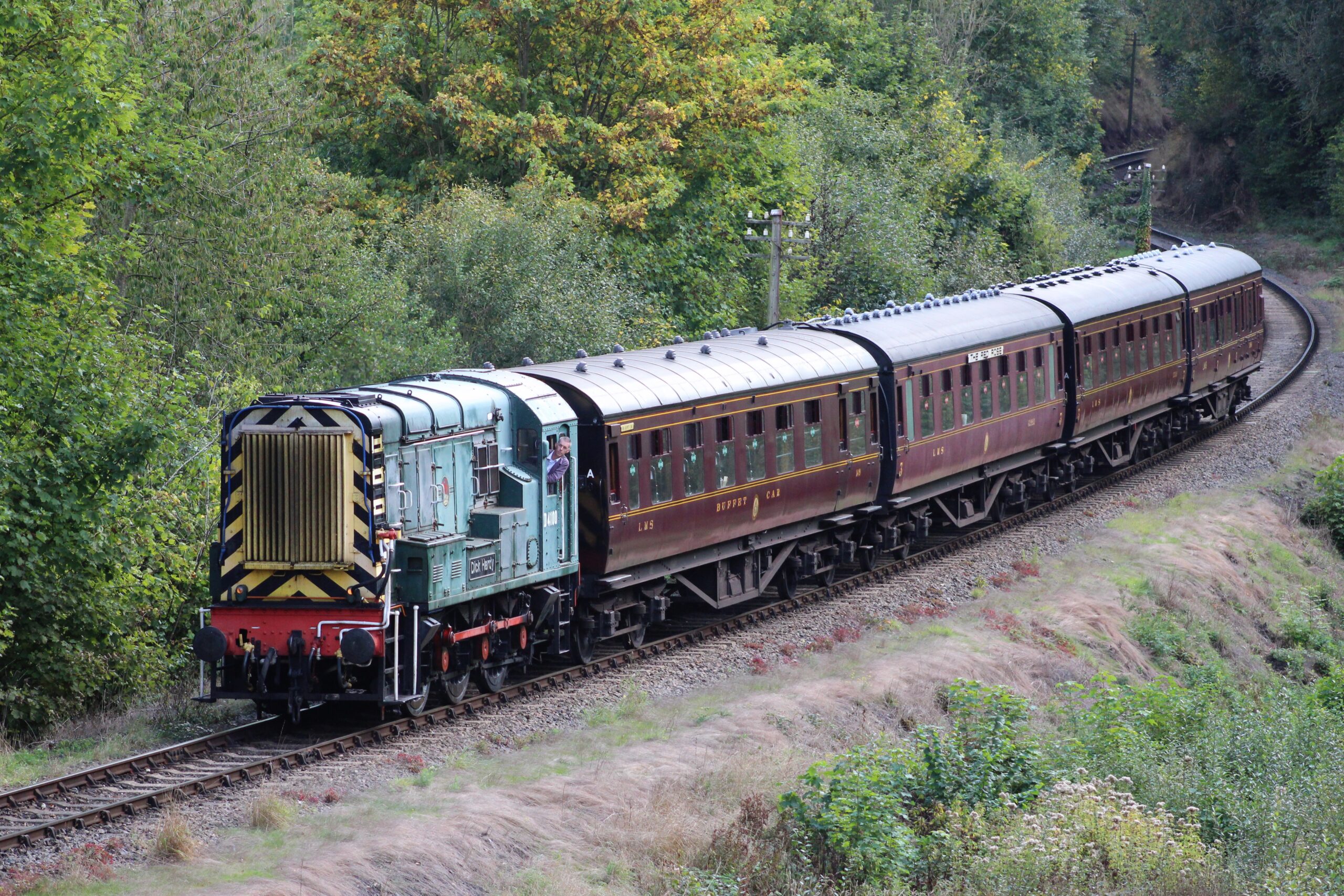
    Class 09 No. 09012 (D4100) ‘Dick Hardy’ came to the rescue after Class 46 No. D182 was withdrawn from service earlier during the gala – 02/20/2022 
    Class 20 No. 20048 departs Kidderminster on the rear of a train to Bridgnorth – 02/10/2022
    Yoshi chats with the driver of Class 31 No. 31466 during a stop at Bewdley – 02/10/2022
    Our video from the 2022 Autumn Diesel Bash at the SVR

    Class 91’s

    Prior to our Seven Valley adventure, on Wednesday 28th September I was in London for a work meeting and I took the opportunity to pop into Kings Cross on my way to the office to catch a couple of Class 91 departures. I rather like the look of the business end of the Class 91 locomotive.

    A total of 31 Class 91 ‘Electras’ were built by British Rail Engineering Limited (BREL) at Crewe Works from 1988 to 1991 and numbered 91001 to 91031. They were overhauled by Bombardier at Doncaster between 2000 and 2003 and renumbered by adding 100 to their original number, with the exception of No. 91023 which became No. 91132 due to its involvement in fatal accidents at Hatfield in 2000 and Great Heck in 2001.

    The IC225 fleet of 314 Mk 4 carriages built by Metro-Cammell in Birmingham were formed into 30 sets and with the addition of a Driving Trailer Van (DVT) allowed push-pull operation with the Class 91’s. The fleet is now greatly reduced following the introduction of Hitachi InterCity Express Trains (IET) and eight coaching sets have been retained for use on the East Coast Mainline with 12 Class 91’s.

    Over the years the trains have seen several changes in operator as franchises have collapsed and taken over by government backed Operators of Last Resort. GNER was replaced by National Express East Coast, followed by East Coast, Virgin Trains East Coast and currently LNER. Each operator has applied its own livery to the locomotives and coaching stock with most recently LNER simply replacing the Virgin Trains branding with its own. Now, however, the fleet is receiving repaints with those not carrying a celebrity livery receiving a retro style inspired by the original Intercity 225 design of sharp lines and red and white styling, the LNER brand replacing the InterCity lettering and swallow motif which can be seen applied to No. 91004 in the video from 1994 further down this page.

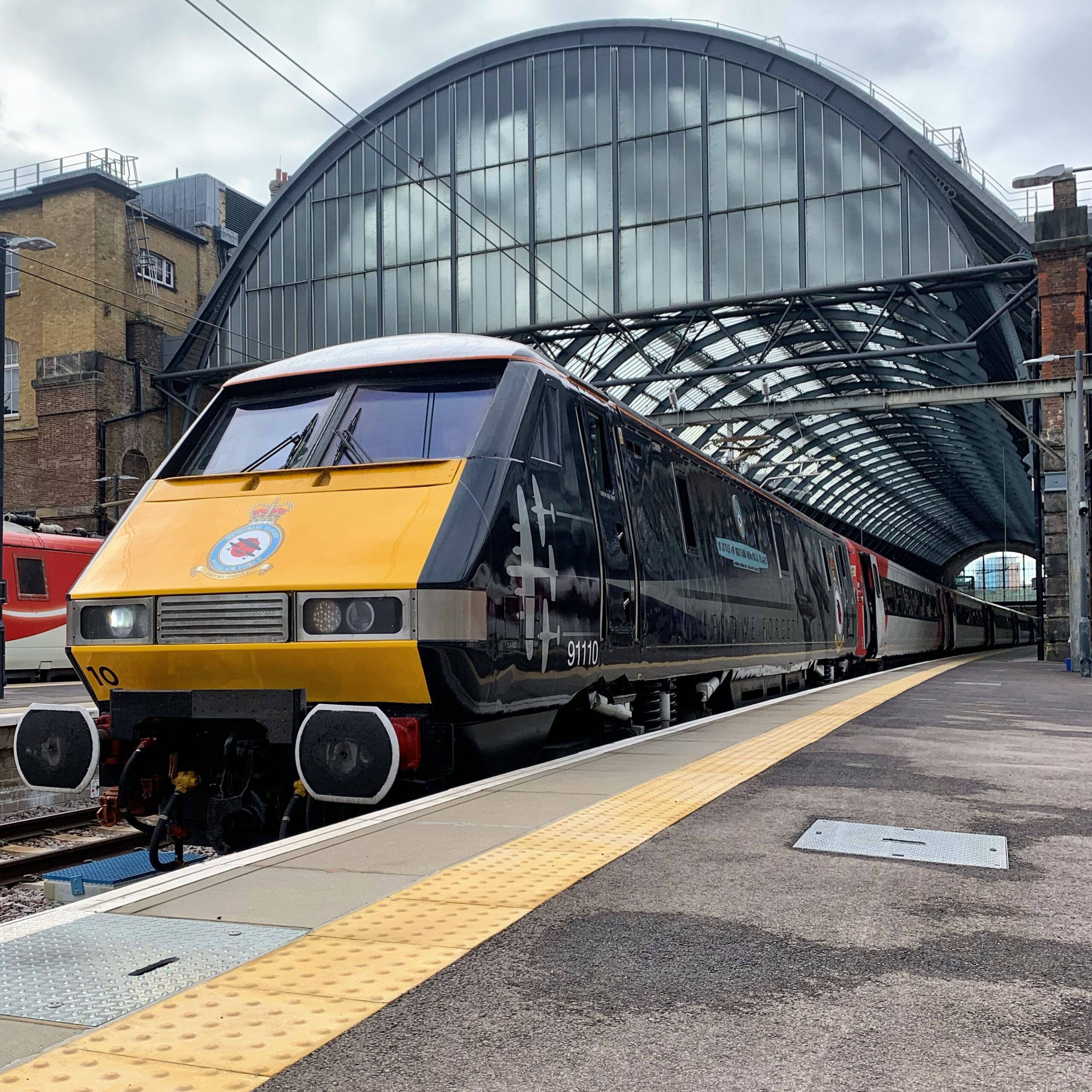
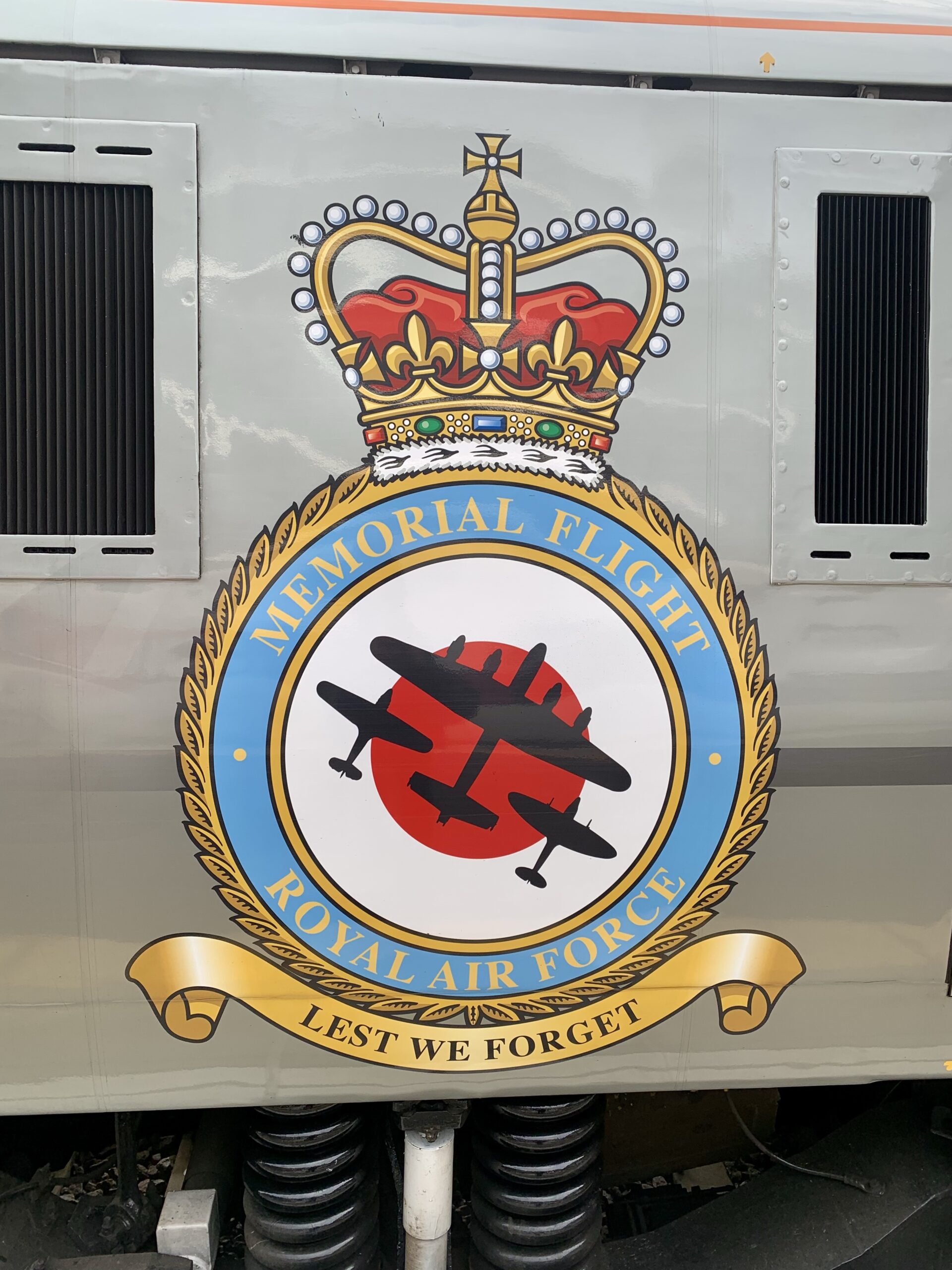
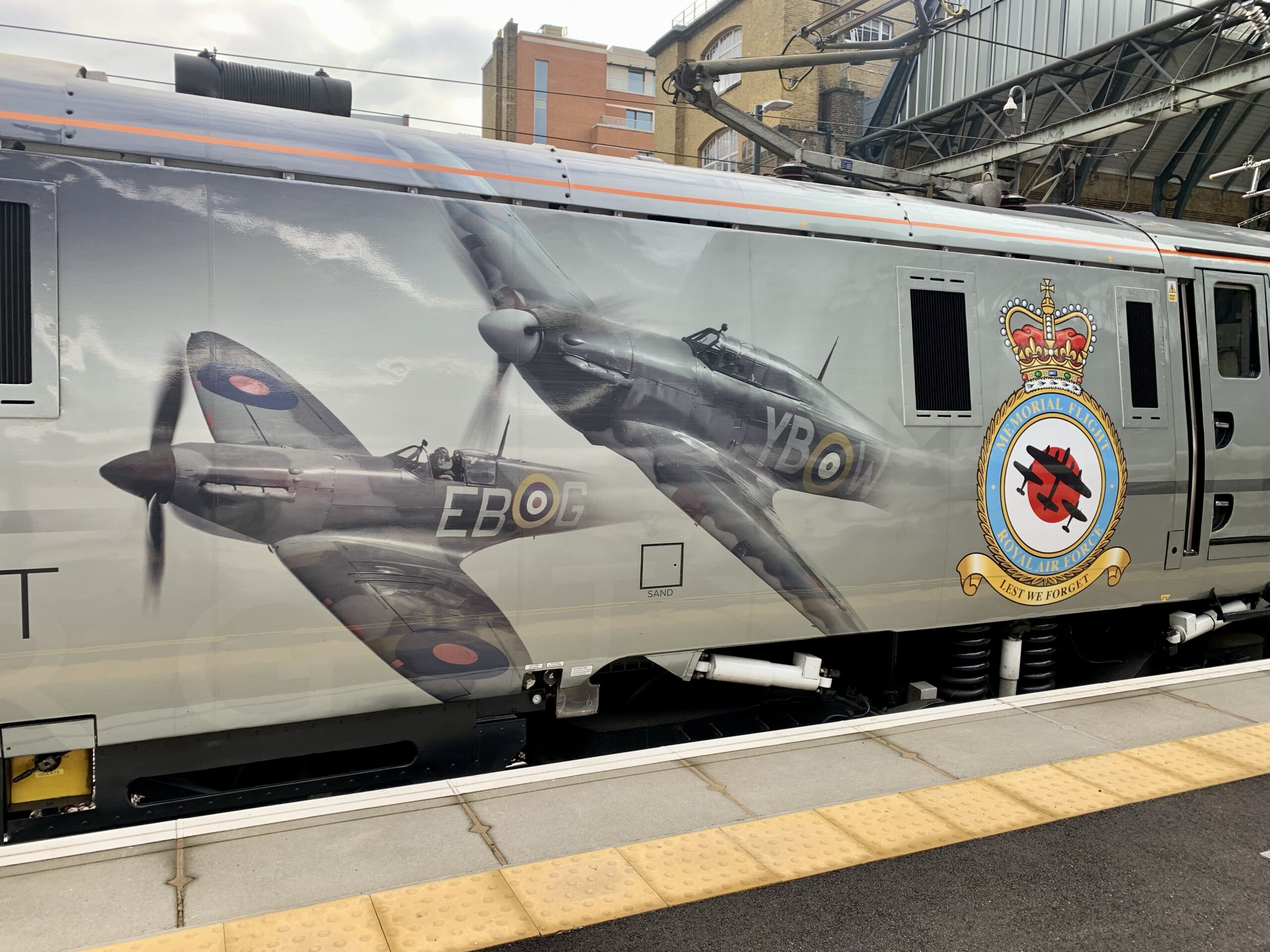
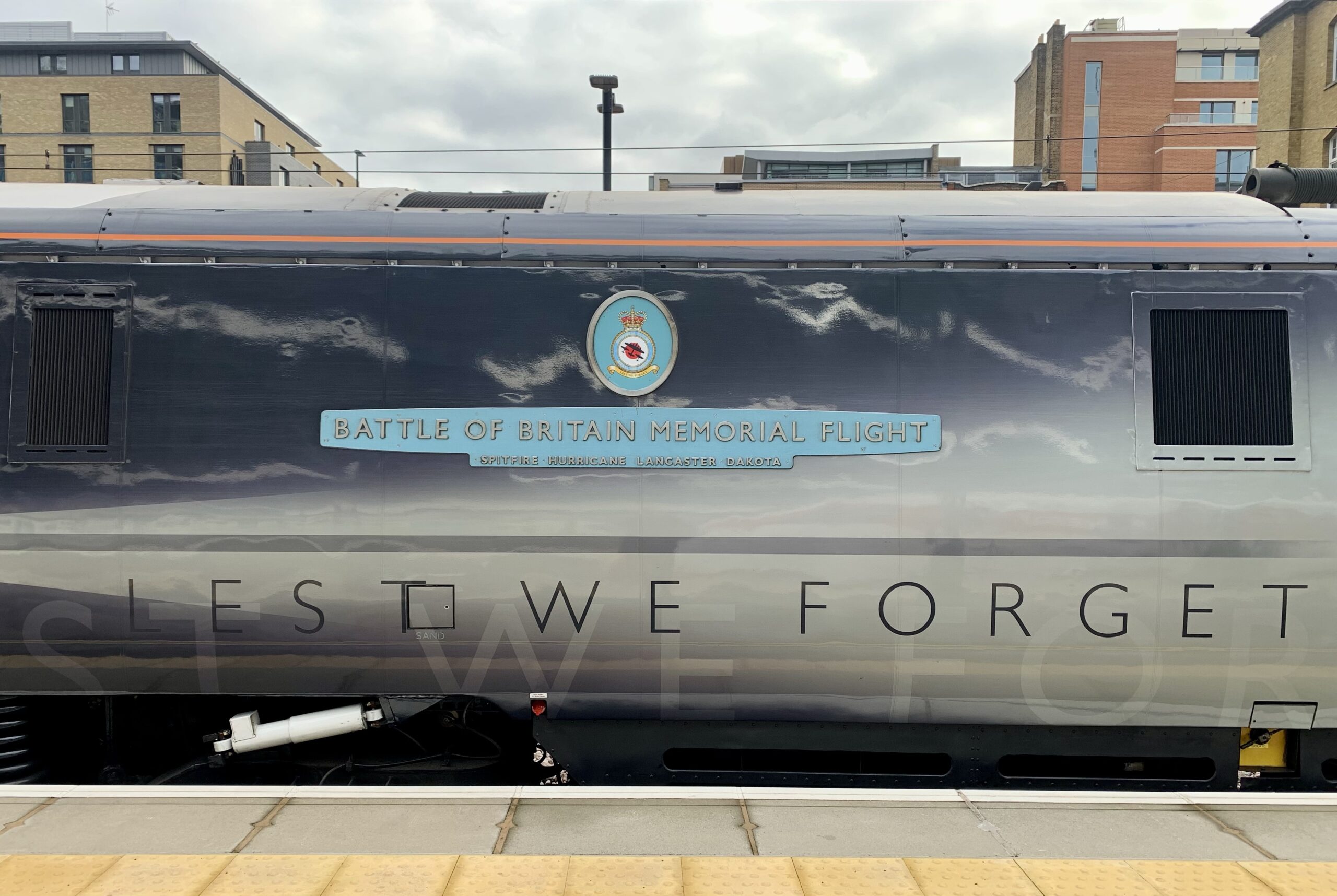
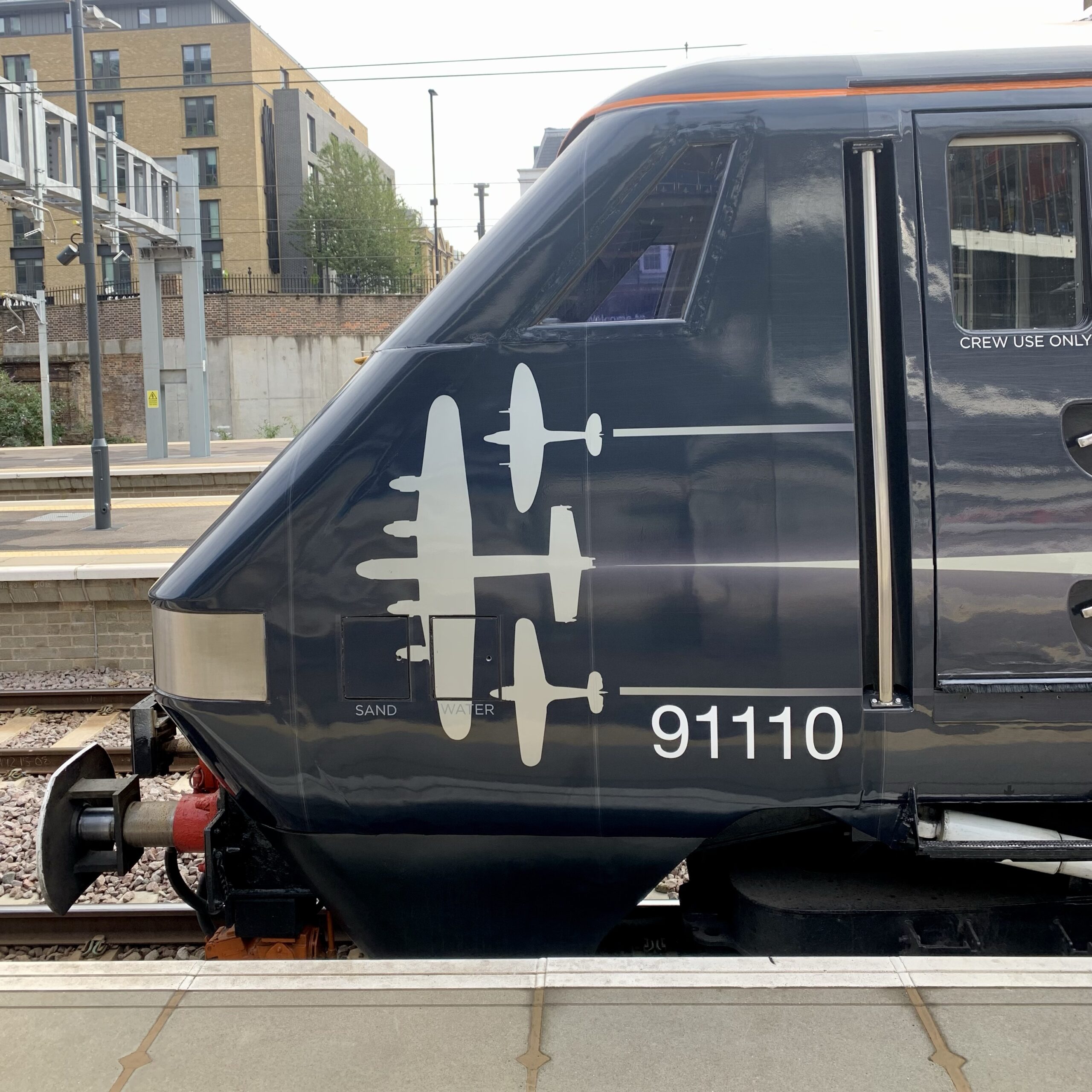
    Class 91 No. 91110 ‘Battle of Britain Memorial Flight’ awaits departure from London Kings Cross with the 1003 1D09 service to Leeds. The InterCity 225 fleet leased by LNER is in the process of receiving a full repaint as the rolling stock is brought in for essential maintenance. The repaint of No. 91110 was completed in July 2022 – 28/09/2022
    Side detail of Class 91 No. 91110 ‘Battle of Britain Memorial Flight’
    Side detail of Class 91 No. 91110 ‘Battle of Britain Memorial Flight’
    Side detail and nameplate of Class 91 No. 91110 ‘Battle of Britain Memorial Flight’
    Side detail of Class 91 No. 91110 ‘Battle of Britain Memorial Flight’. In September 1989 No. 91110 achieved 162.8 mph on an overspeed test at Stoke Bank near Peterborough, the fastest ever recorded by a UK locomotive. Stoke Bank is the same location where the world record for a steam locomotive was set at 126 mph by Gresley A4 No. 4468 ‘Mallard’ on 3rd July 1938.
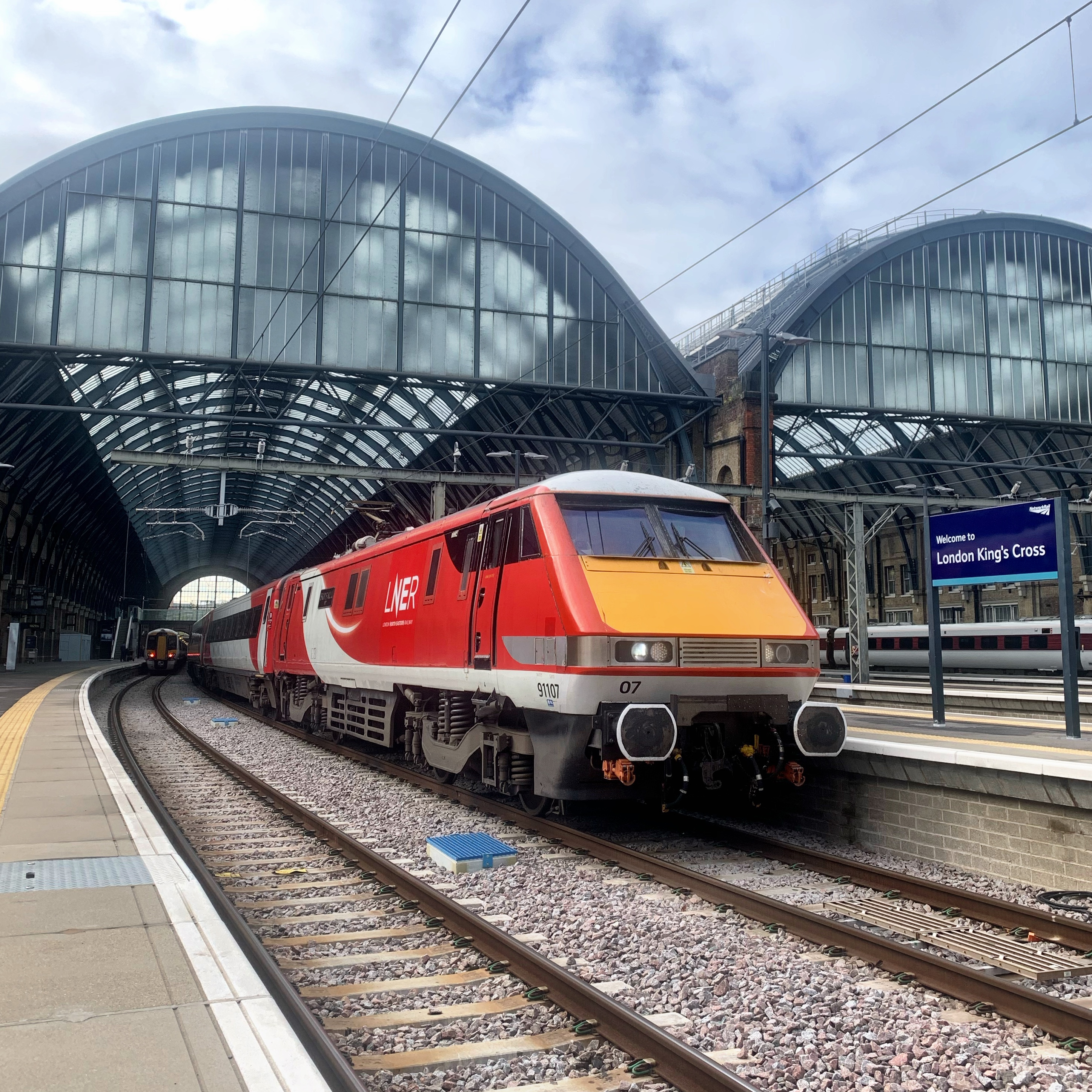
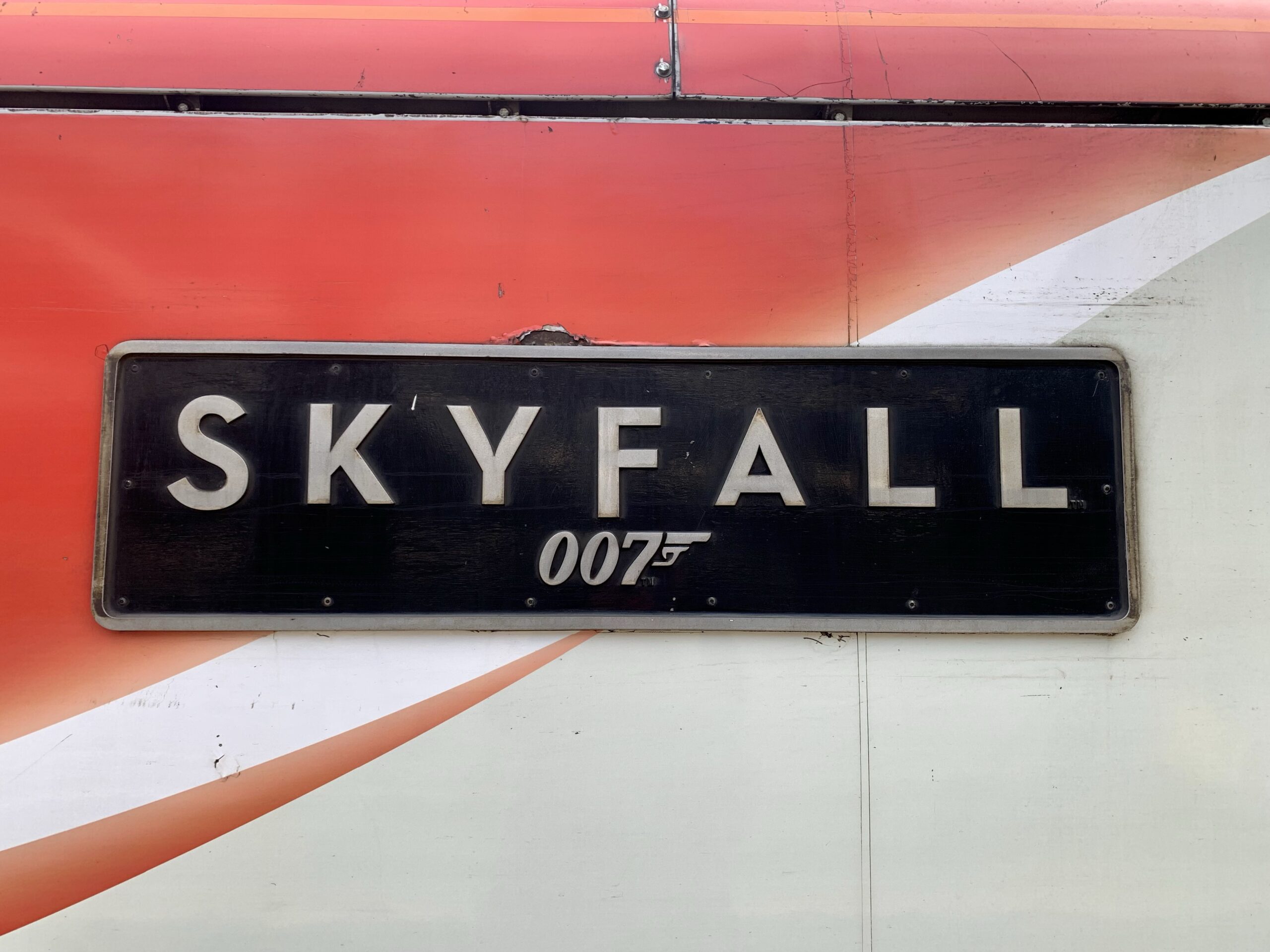
    Class 91 No. 91107 ‘Skyfall’ at Kings Cross platform 2 heading 1D10 1033 London Kings Cross to Leeds. The Class 91 powered IC225 trains have been operating on the East Coast Main Line for 33 years. The Gresley A4’s managed 27 years and the Class 55 Deltics 20 years. The Gresley A3’s and the IC125 HST’s both notched up 40 years of continuous ECML service – 28/09/2022
    Close up of nameplate for Class 91 No. 91107 ‘Skyfall’
    Class 91 departures at London Kings Cross – 28/09/2022
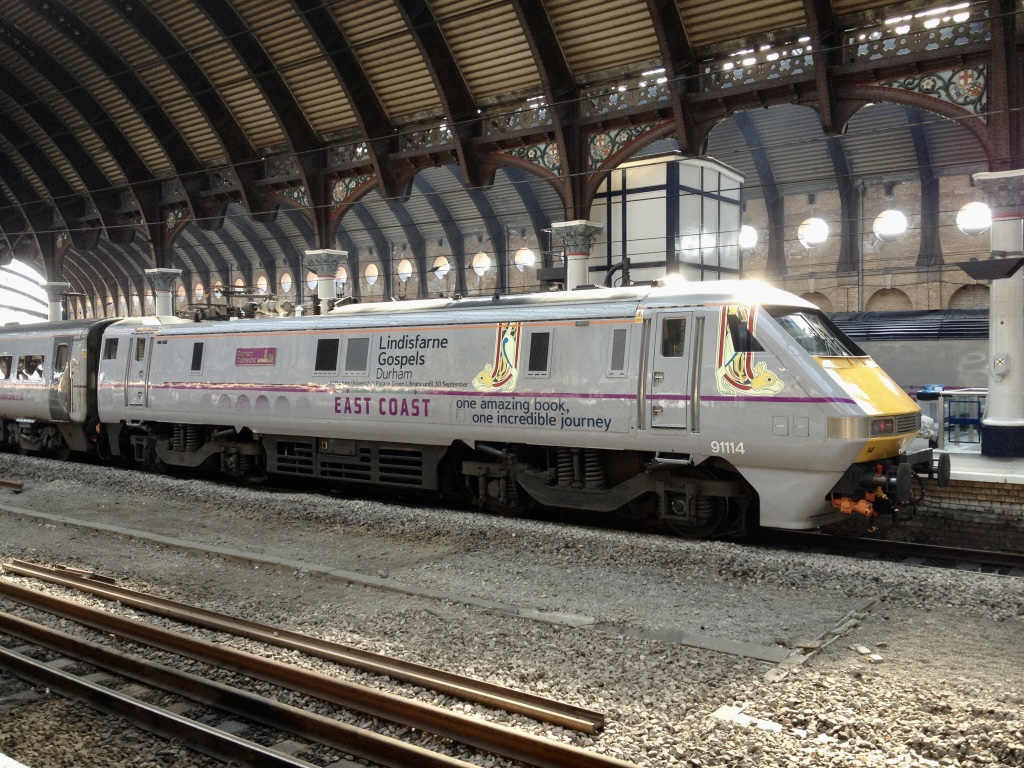
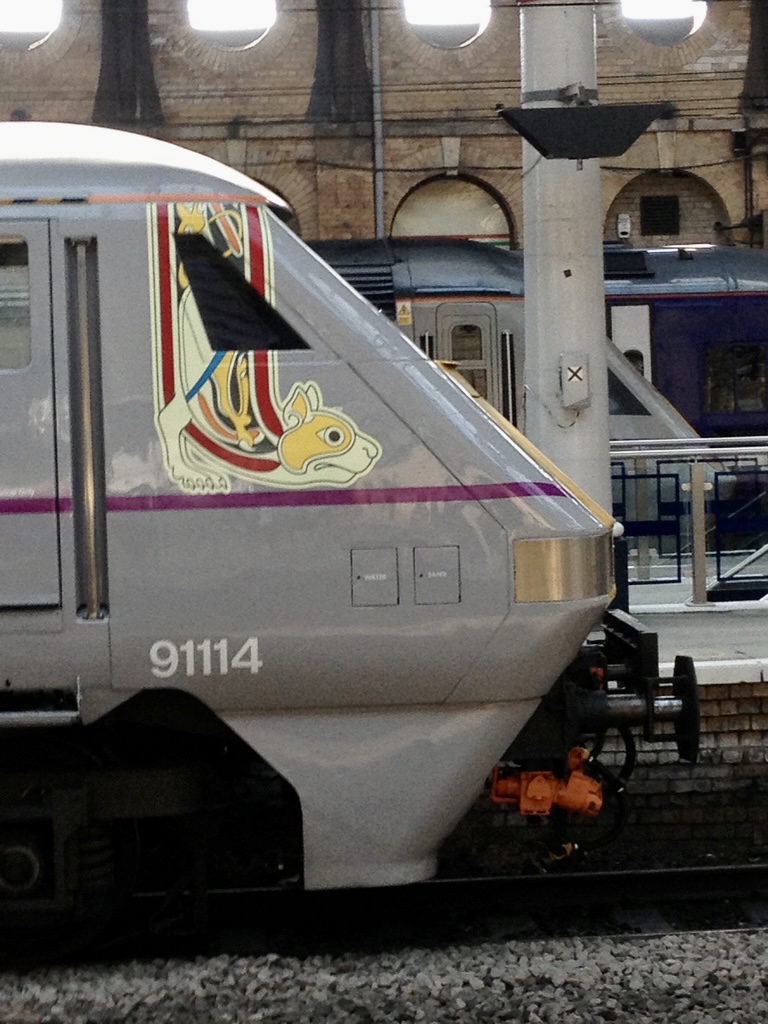
    Class 91 No. 91114 ‘Durham Cathedral’ at York – 04/07/2013
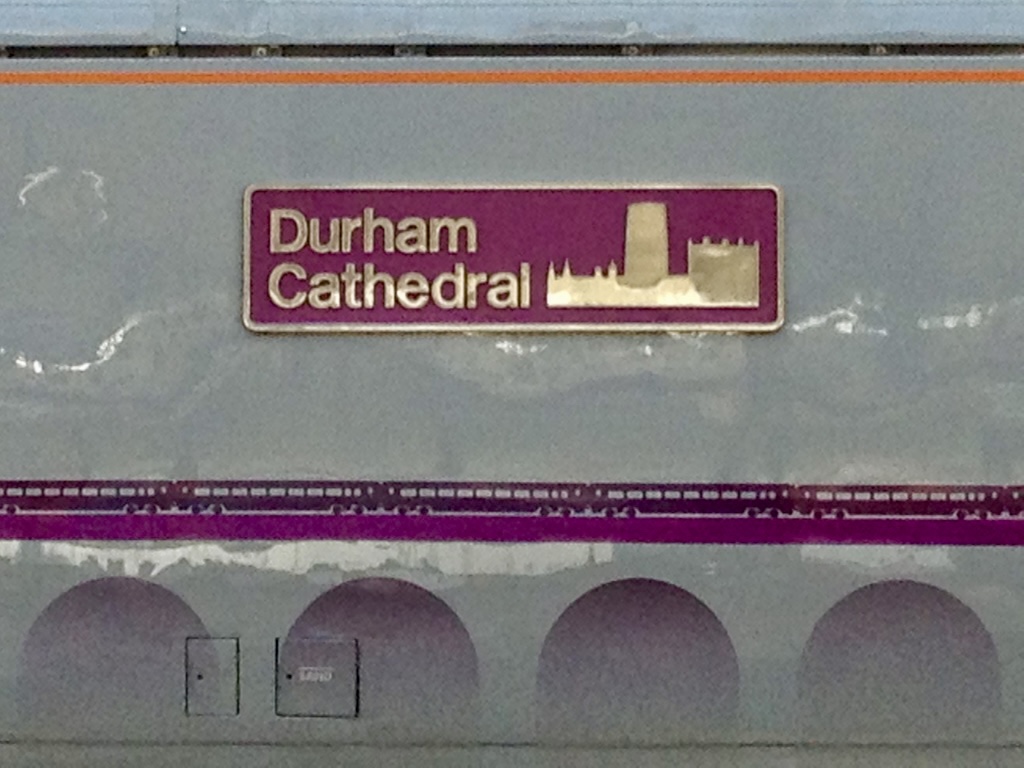
    Nameplate detail of Class 91 No. 91114 ‘Durham Cathedral’ at York – 04/07/2013
    Livery variation applied to Class 91 No. 91114 ‘Durham Cathedral’ at York – 04/07/2013
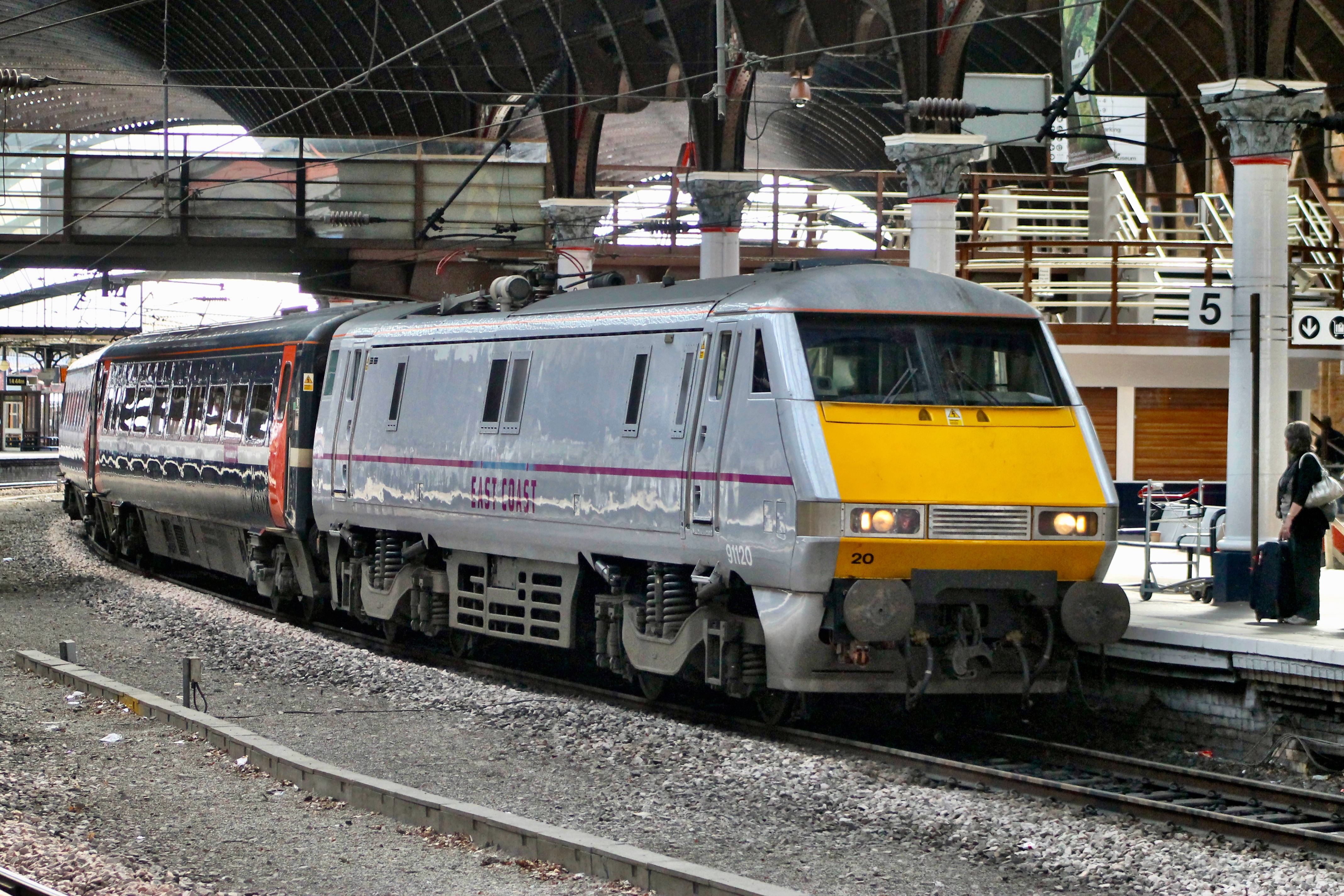
    East Coast liveried Class 91 No. 91120 at York – 28/08/2011
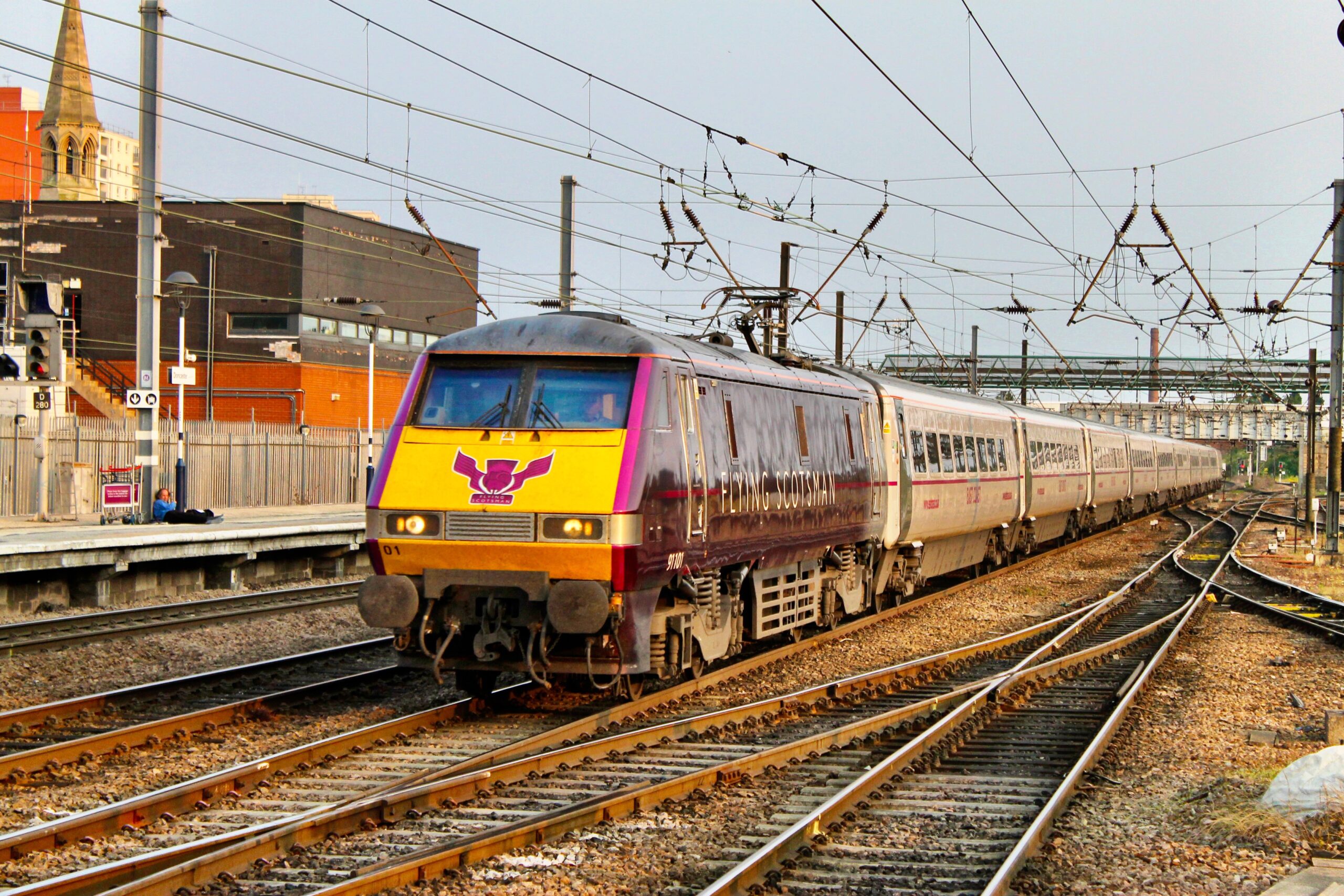
    Class 91 No. 91101 with Flying Scotsman branding at Doncaster – 05/07/2013
    Class 91 No. 91102 at York – 28/08/2011
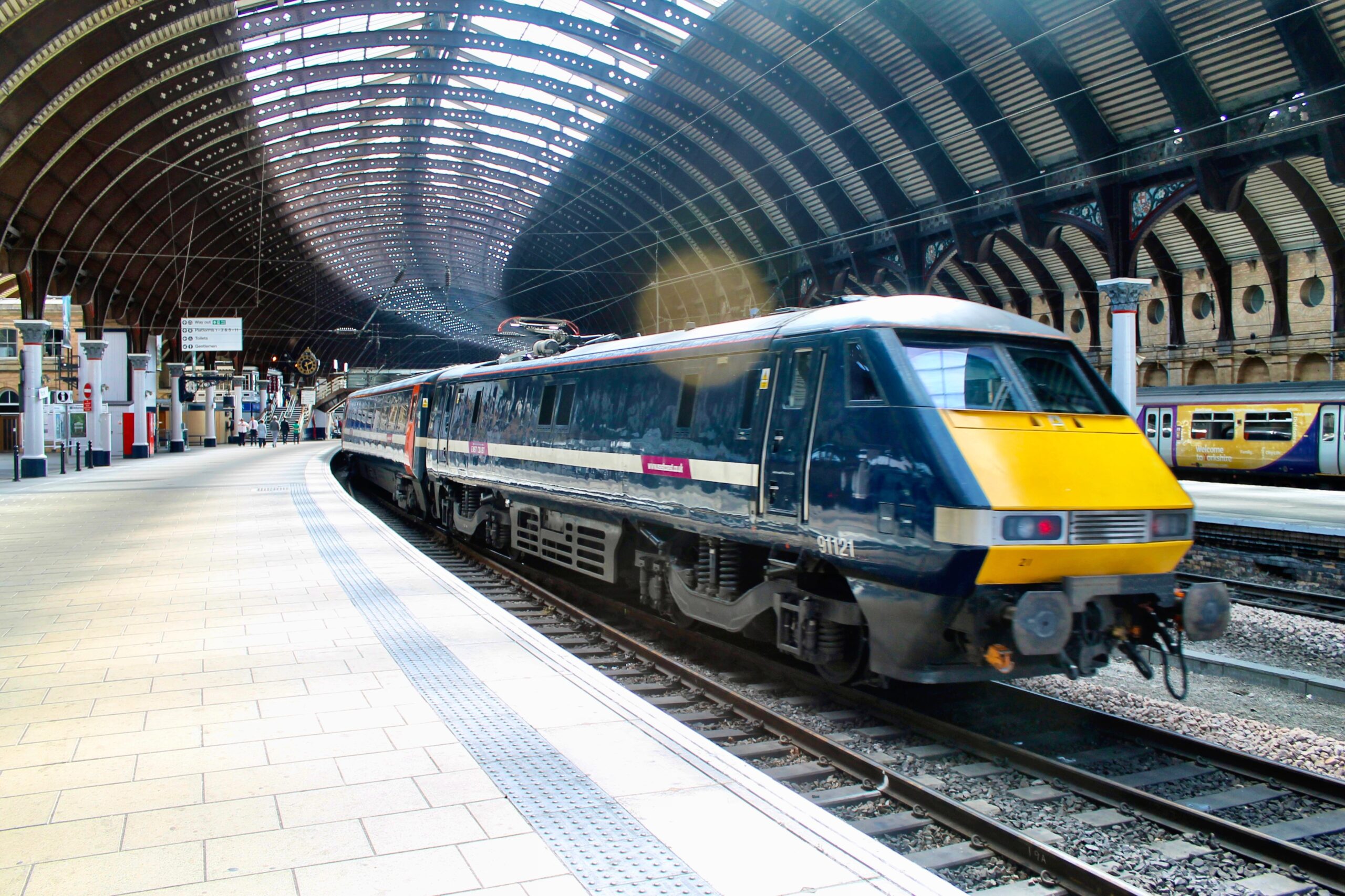
    Class 91 No. 91121 at York – 28/08/2011
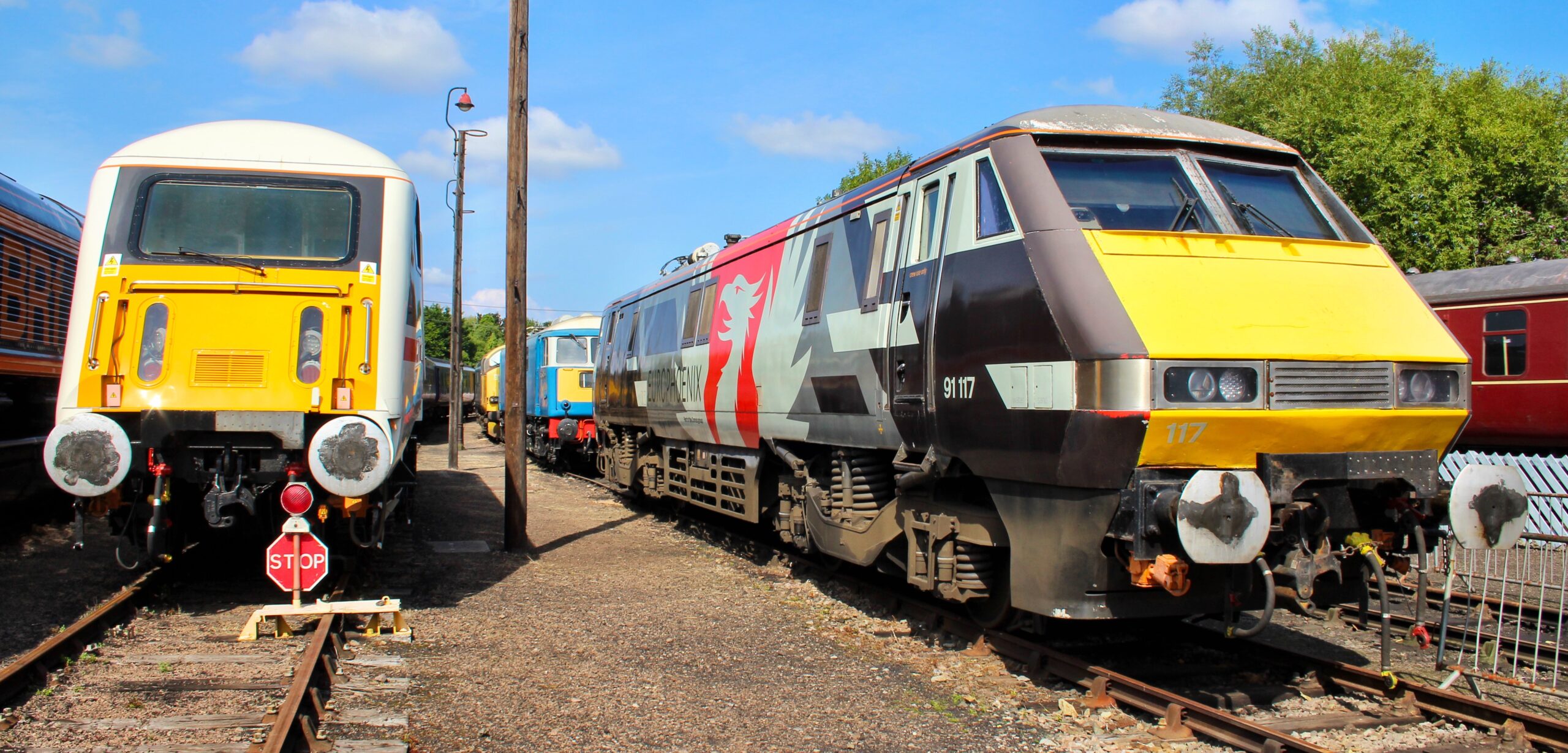
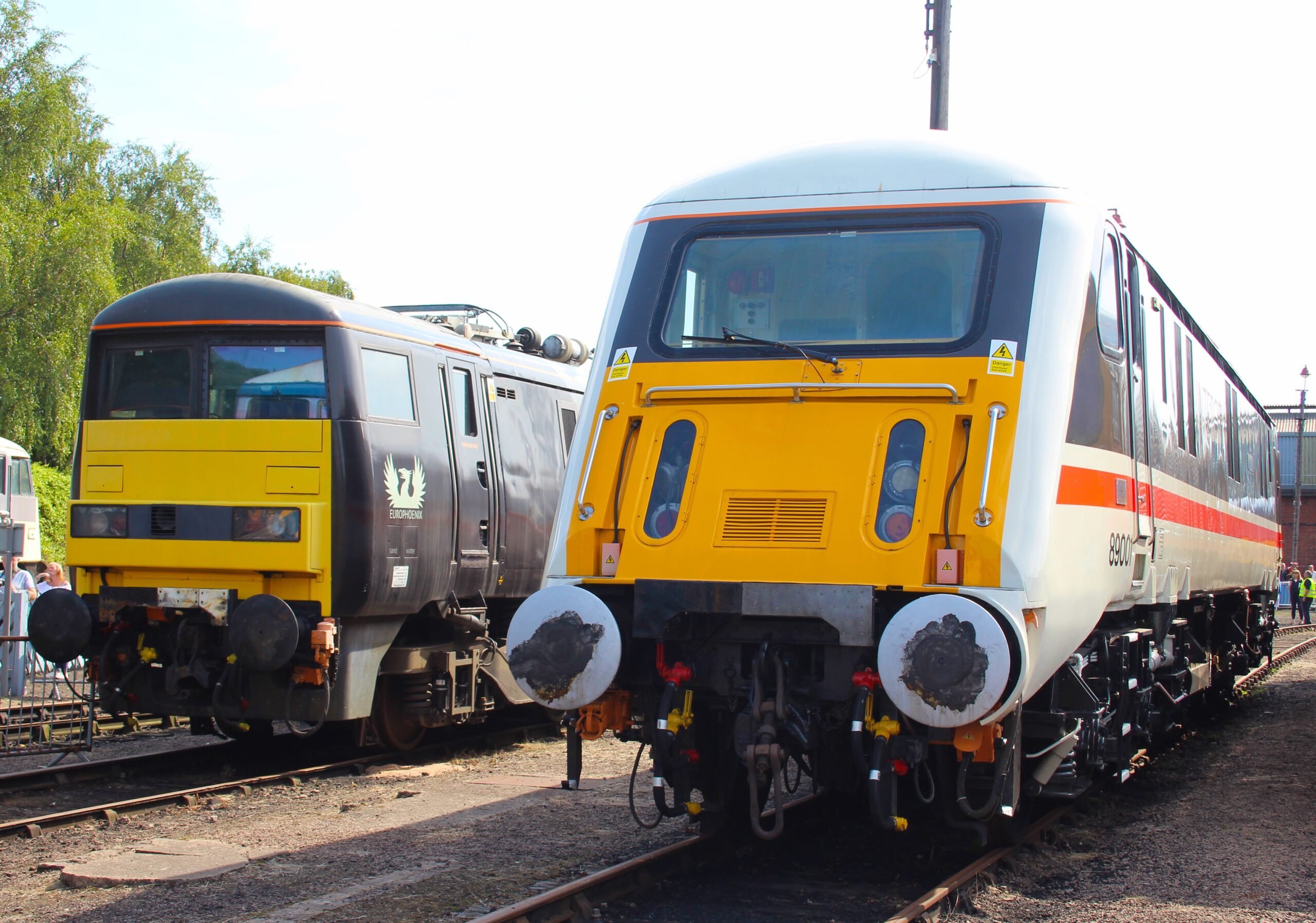
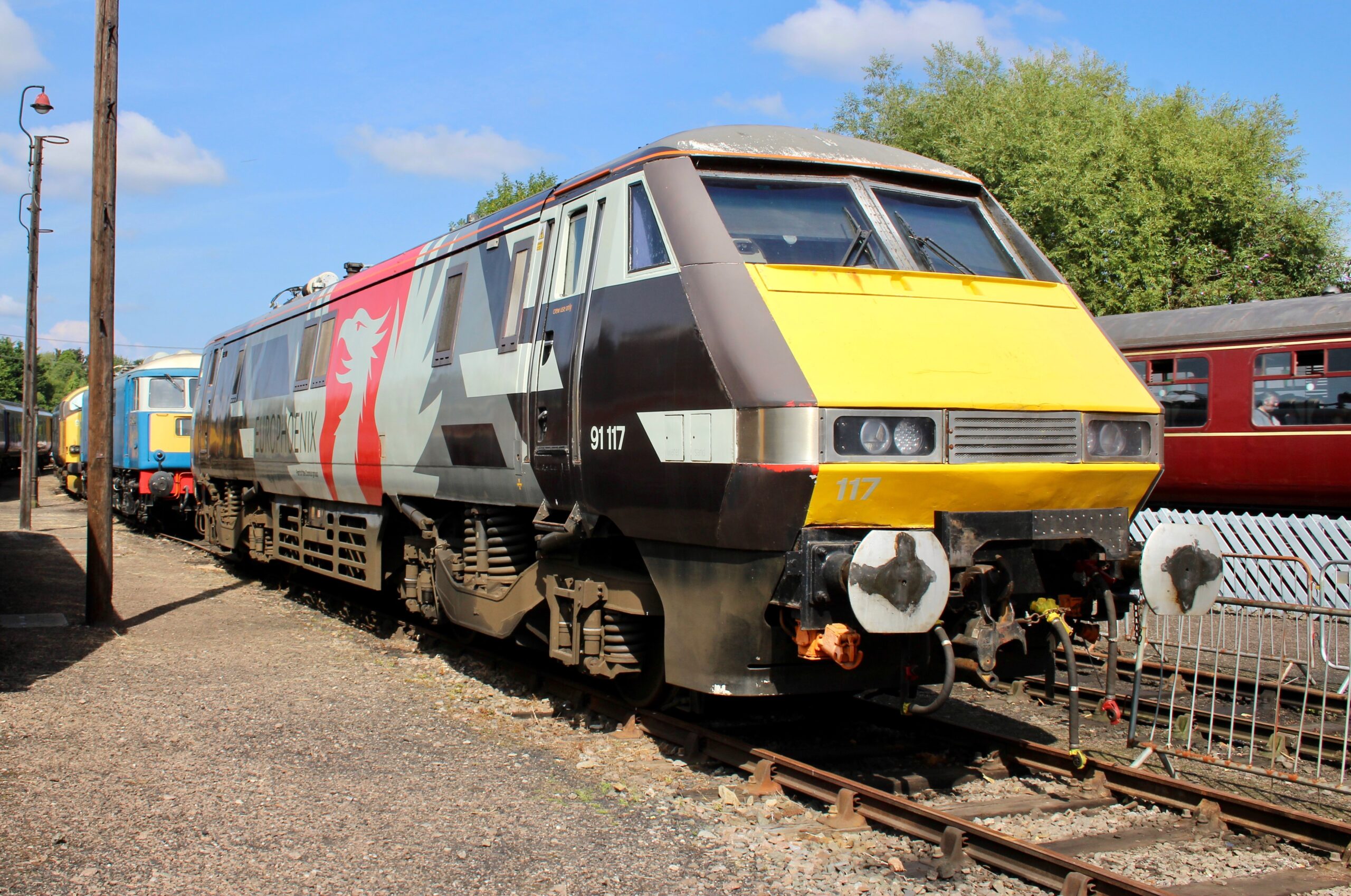
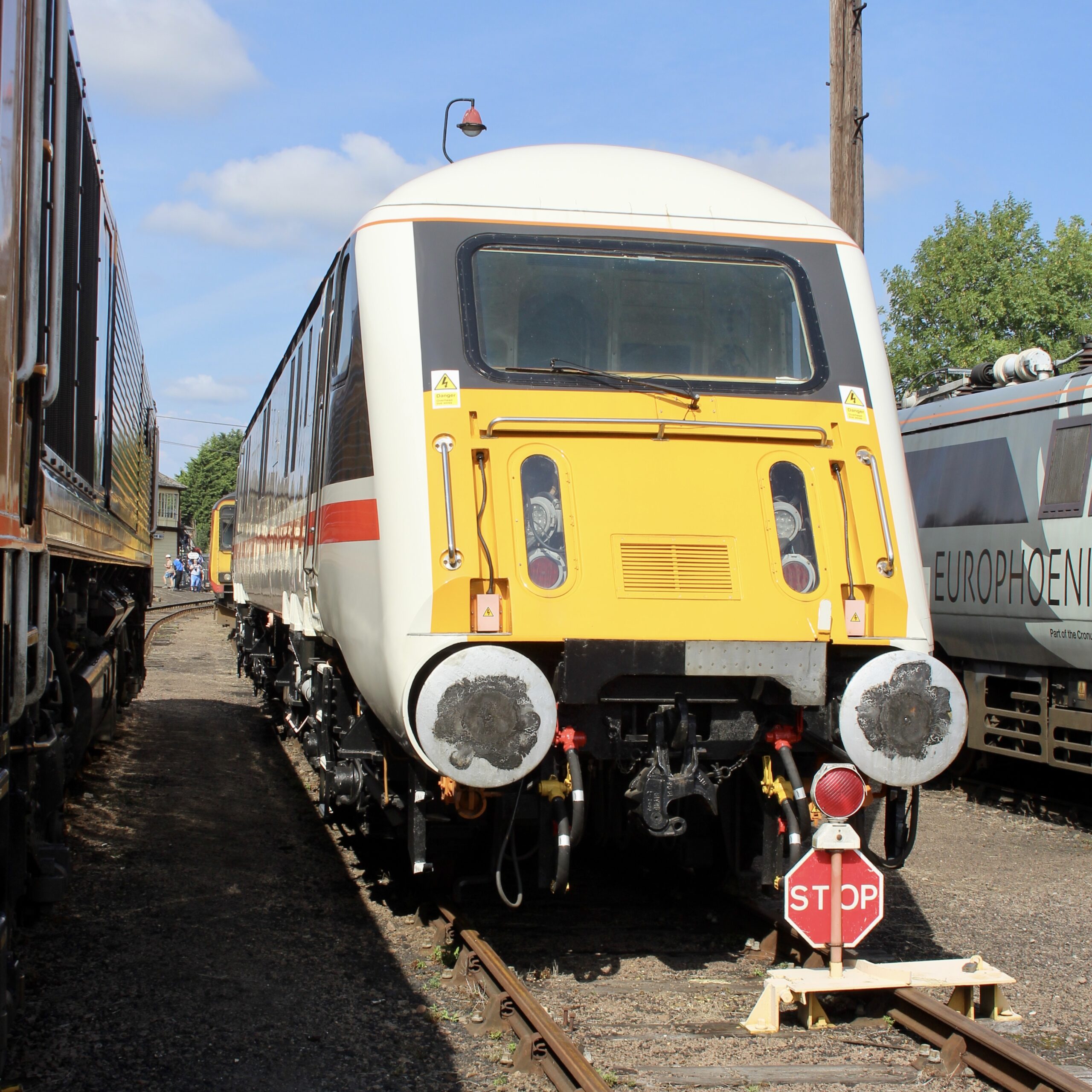
    Europhoenix liveried Class 91 No. 91117 stands adjacent to unique Class 89 No.89001 ‘Avocet’ at the recent Barrow Hill 150+2 celebrations – 28/08/2022
    The flat end of Class 91 No. 91120 can be seen clearly in this image alongside Class 89 No.89001 ‘Avocet’ at the recent Barrow Hill 150+2 celebrations. The Class 89 was a prototype for an electric six-axle mixed traffic locomotive which did not progress beyond this example – 28/08/2022
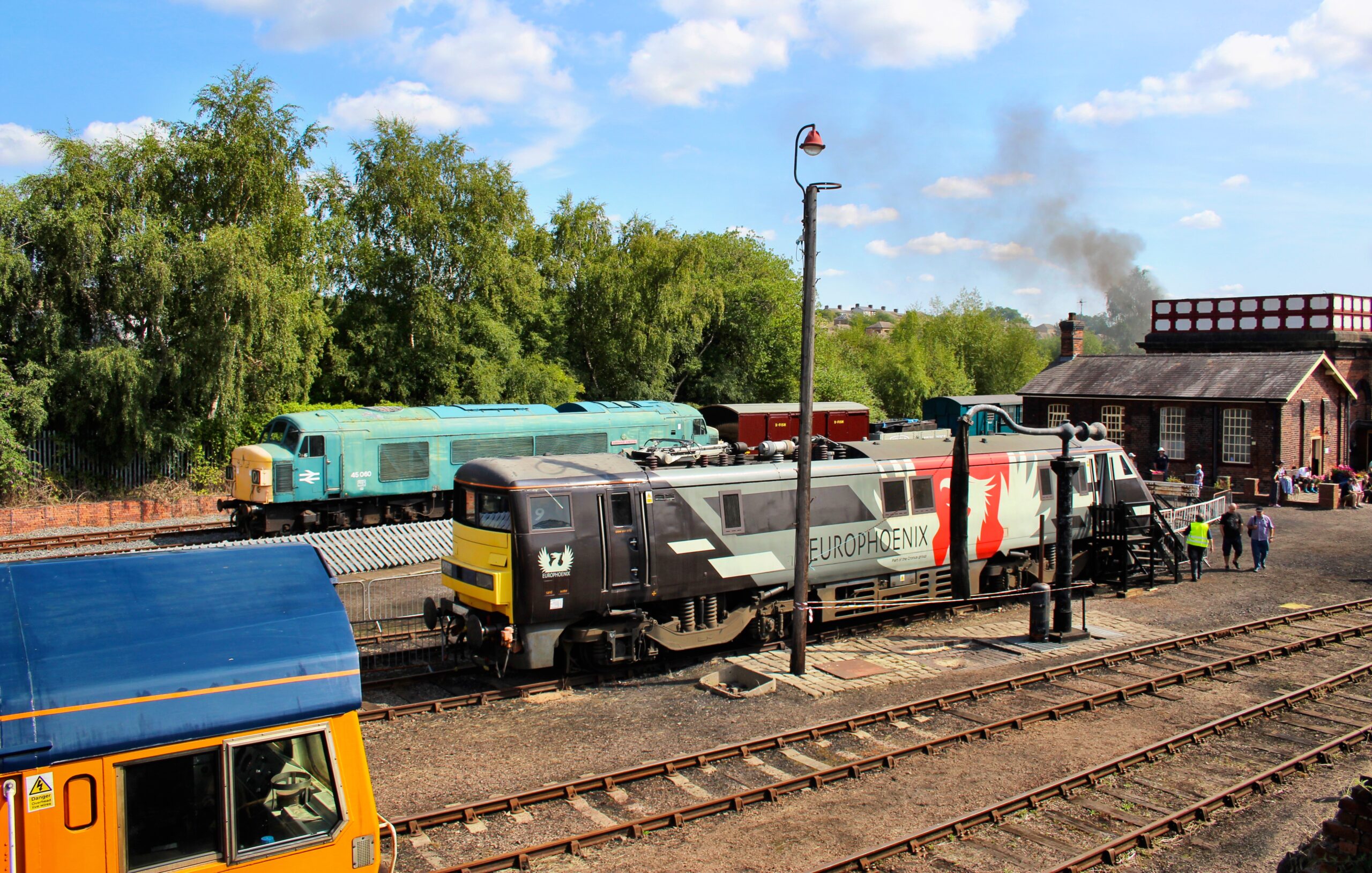
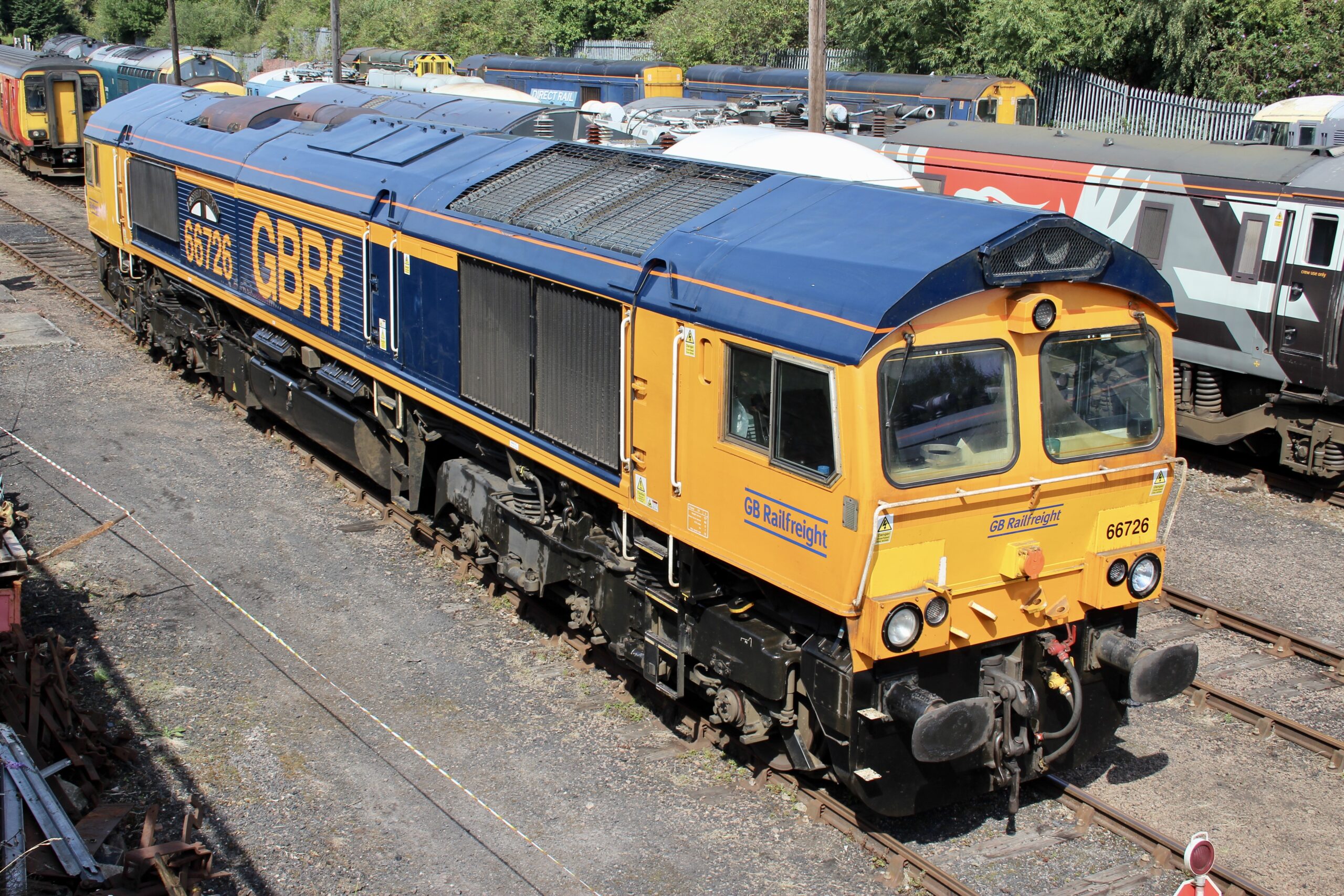
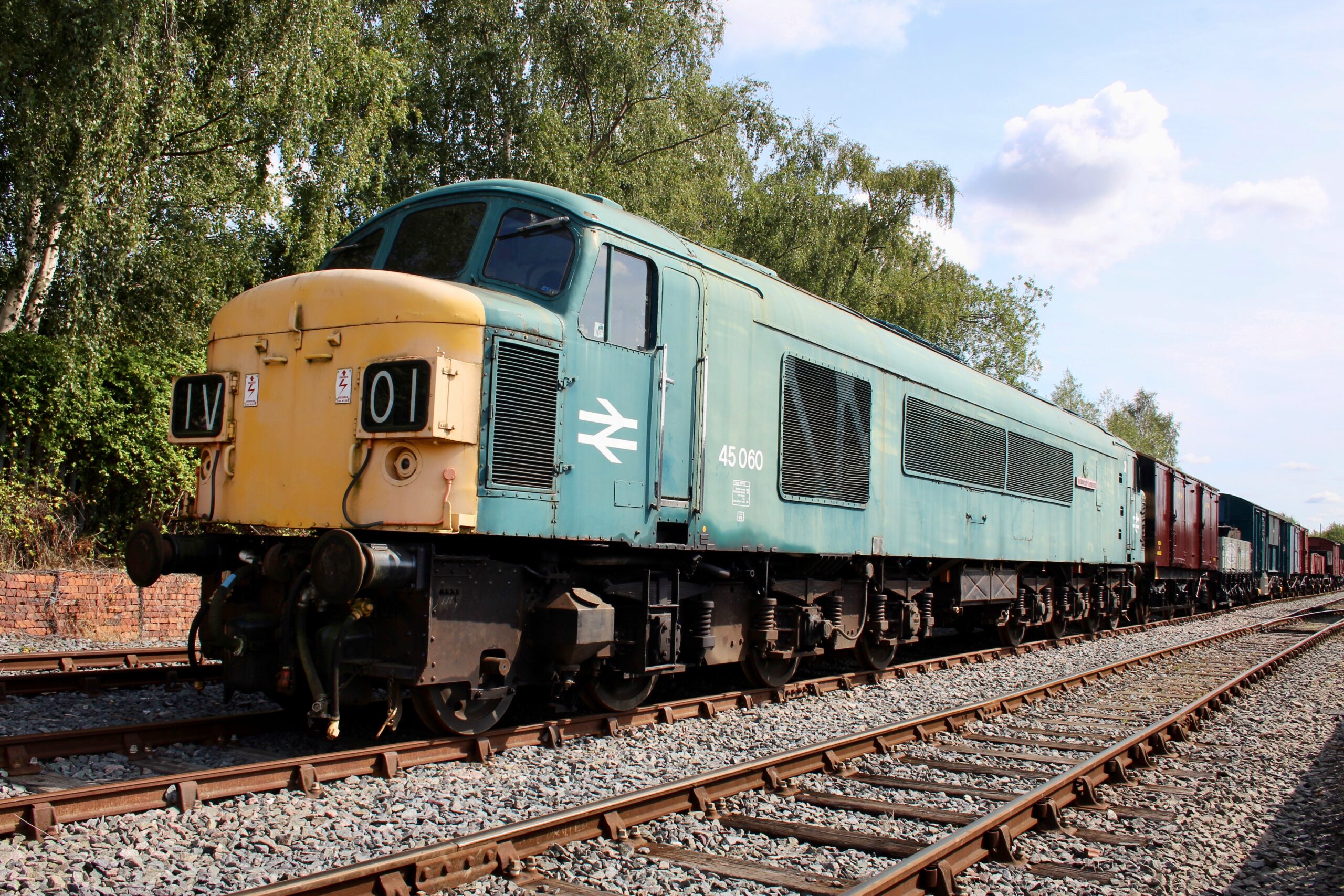
    Another view of Europhoenix Class 91 No. 91120 in the company of “Peak” Class 45 No. 45060 ‘Sherwood Forester’ and Class 66 No. 66726 ‘Sheffield Wednesday’ at Barrow Hill 150+2 celebrations – 28/08/2022

    From The Archives

    My first visit to London Kings Cross found Class 55 Deltic No.’s 55002 ‘The Kings Own Yorkshire Light Infantry’ and 55008 ‘The Green Howards’ await departure in 1977
    In the diesel era the stabling point at London Kings Cross was commonly known as “Passenger Loco”. It was usually used by locomotives that needed a quick service and refuelling before their next trip north. There was a pit inside the shed where an “A exam” could be performed. A few locos would be berthed there during the day between trips and at night. Also from my first visit to The Cross in 1977
    Class 55 Deltic No. 55004 ‘Queens Own Highlander’ stands next to a Class 254 HST set at Kings Cross. The Deltic’s replaced Gresley A3 and A4 Pacific steam locomotives on top link duties before themselves succumbing to the advent of the High Speed Train which in turn were replaced by the Class 91’s – 25/09/1981

    In 1994 what was heralded as being the best ever programme of main line steam specials was announced on 11th August, exactly 26 years after the end of regular steam on British Railways. A big surprise was the announcement of the return to steam at Kings Cross on the weekend of 29th / 30th October 1994 when LNER A4 Pacific No. 60009 ‘Union Of South Africa’, coincidentally the last steam locomotive to leave the East Coast terminus thirty years previously, was booked to haul private charters to Peterborough. Following these successful charter runs, No. 9 found herself imprisoned in Bounds Green depot for six weeks following an “under the wires” ban imposed by Railtrack who declared the locomotive as being out of gauge by 1.5 inches at an overbridge near Primrose Hill Tunnel which could have resulted in a flashover. This led Railtrack to impose a complete ban on all steam movements under overhead wires across the rail network which saw the cancellation of three other rail tours until Railtrack backed down and agreed the locomotive was in gauge all along!

    I went along to Kings Cross on the 30th October 1994 to see the locomotive and train head for Peterborough – but as you can see in the video below my view of the departure was almost ruined by the arrival of Class 91 No. 91004 ‘The Red Arrows’! This Class 91 locomotive was withdrawn in February 2020 and is currently awaiting disposal at Booths of Rotherham, its fate is unconnected with passing in front of me while I was attempting to film steam at The Cross however!

    Steam at Kings Cross 30/10/1994

    Sixteen years later, I was once again able to see steam at Kings Cross – two A4’s this time when No. 60007 ‘Sir Nigel Gresley’ hauled the Railway Touring Company special train “The Tynesider” from Newcastle to the London terminus with sister locomotive No. 60019 ‘Bittern’ sporting two tenders to facilitate a non-stop run to York as there was no requirement to take on water en-route. I was using a mini DV camera at the time which had a tendency to “hunt’ in low light. Well, in any lighting conditions to be honest. But we include it here as it seems appropriate.

    Steam at Kings Cross 27/11/2010

    Thanks for visiting. We aim to be back again next week and hope to see you again. Thank you as always for comments and corrections which are very much appreciated.

  • Barrow Hill 150+2

    Wednesday 24th August to Tuesday 30th August 2022

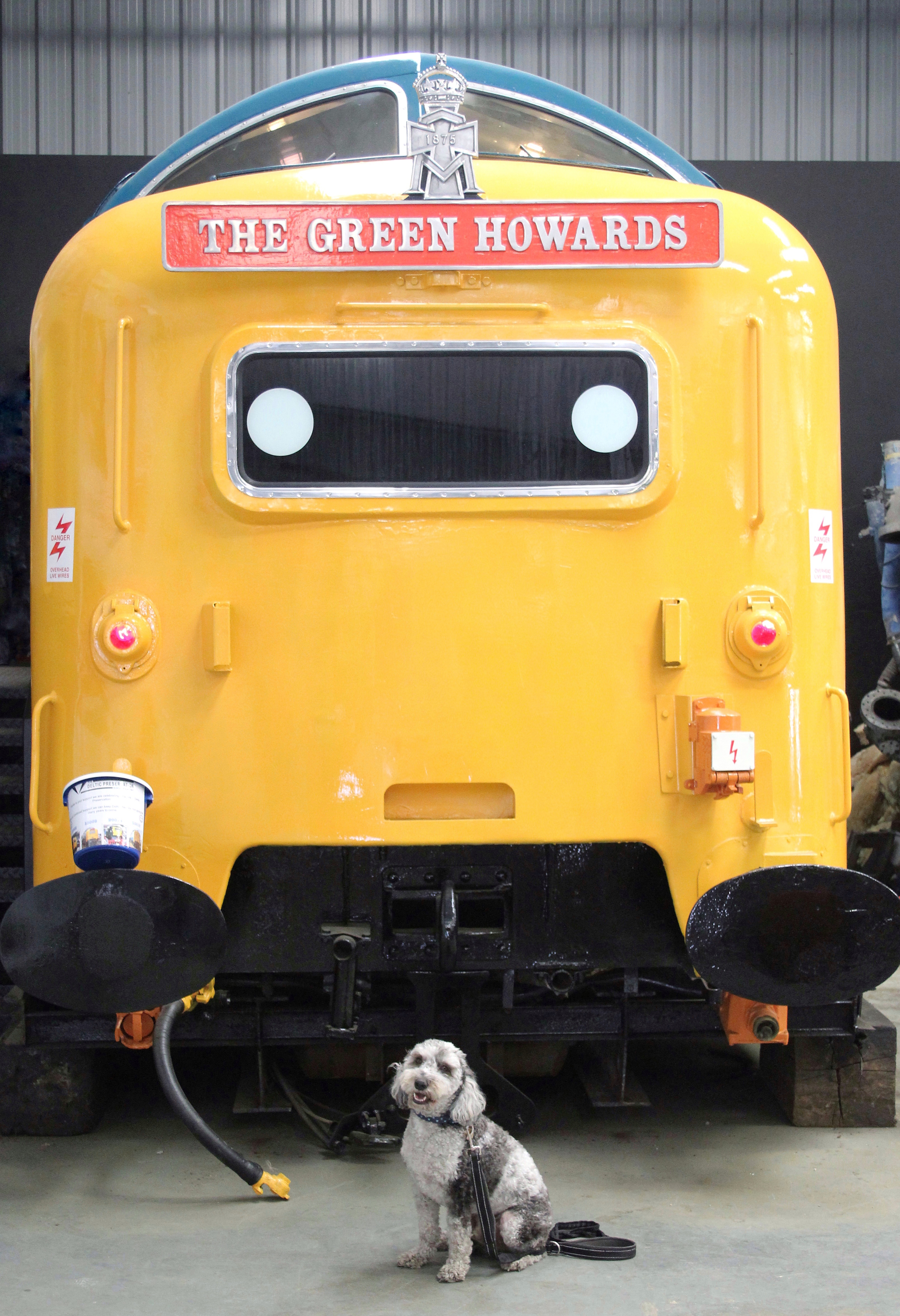
    Yoshi was very excited to see the cab of Class 55 Deltic No. 55008 ‘The Green Howards’ when he visited the Barrow Hill 150+2 Celebration Gala – 28/08/2022

    In contrast to last week, Yoshi and I have been kept reasonably busy over the last seven days.

    New Measurement Train

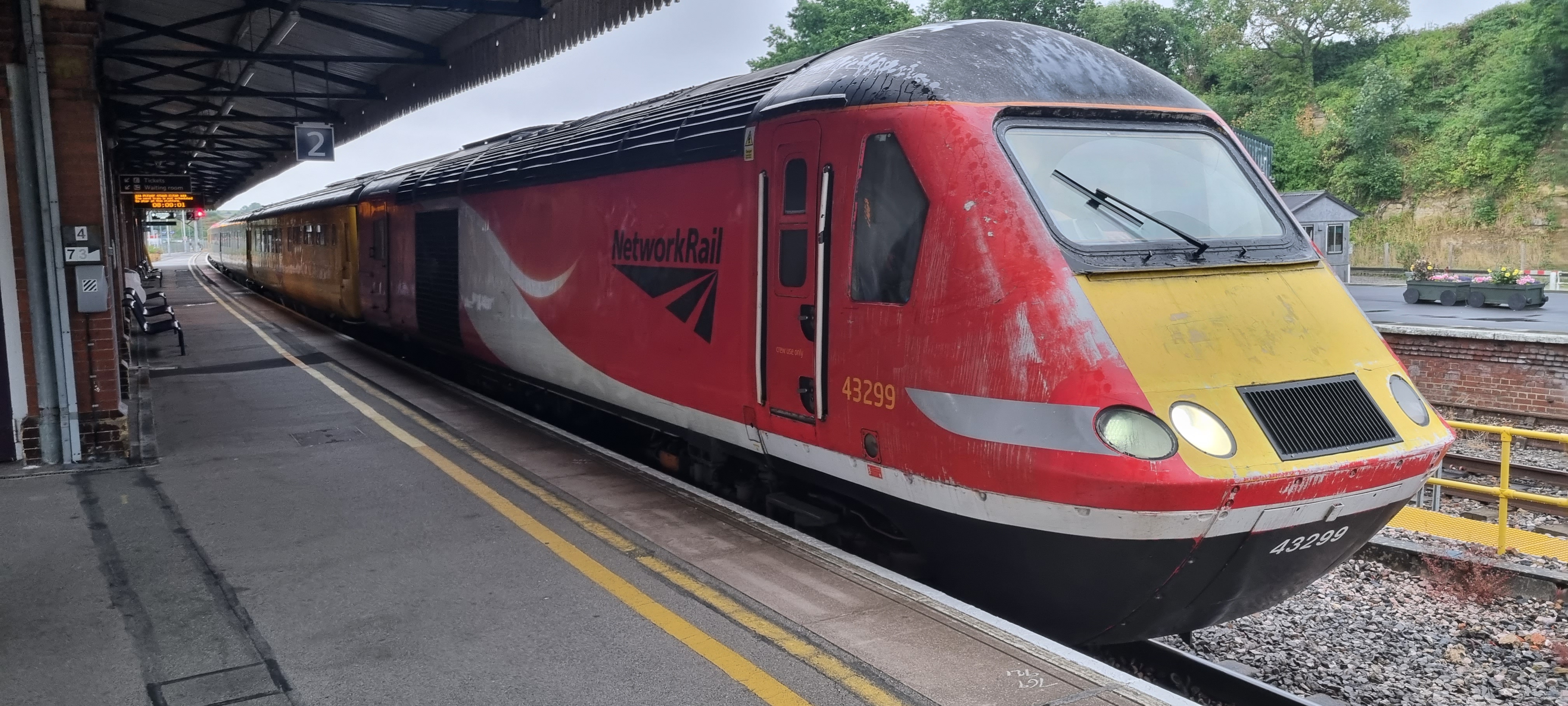
    Colas operated NMT Class 43 No. 43299 at Yeovil Junction heading 1Q23 0556 Reading to Salisbury via Exeter St Davids seen at Yeovil Junction – 25/08/2022 (Image courtesy of Scott Lewis)
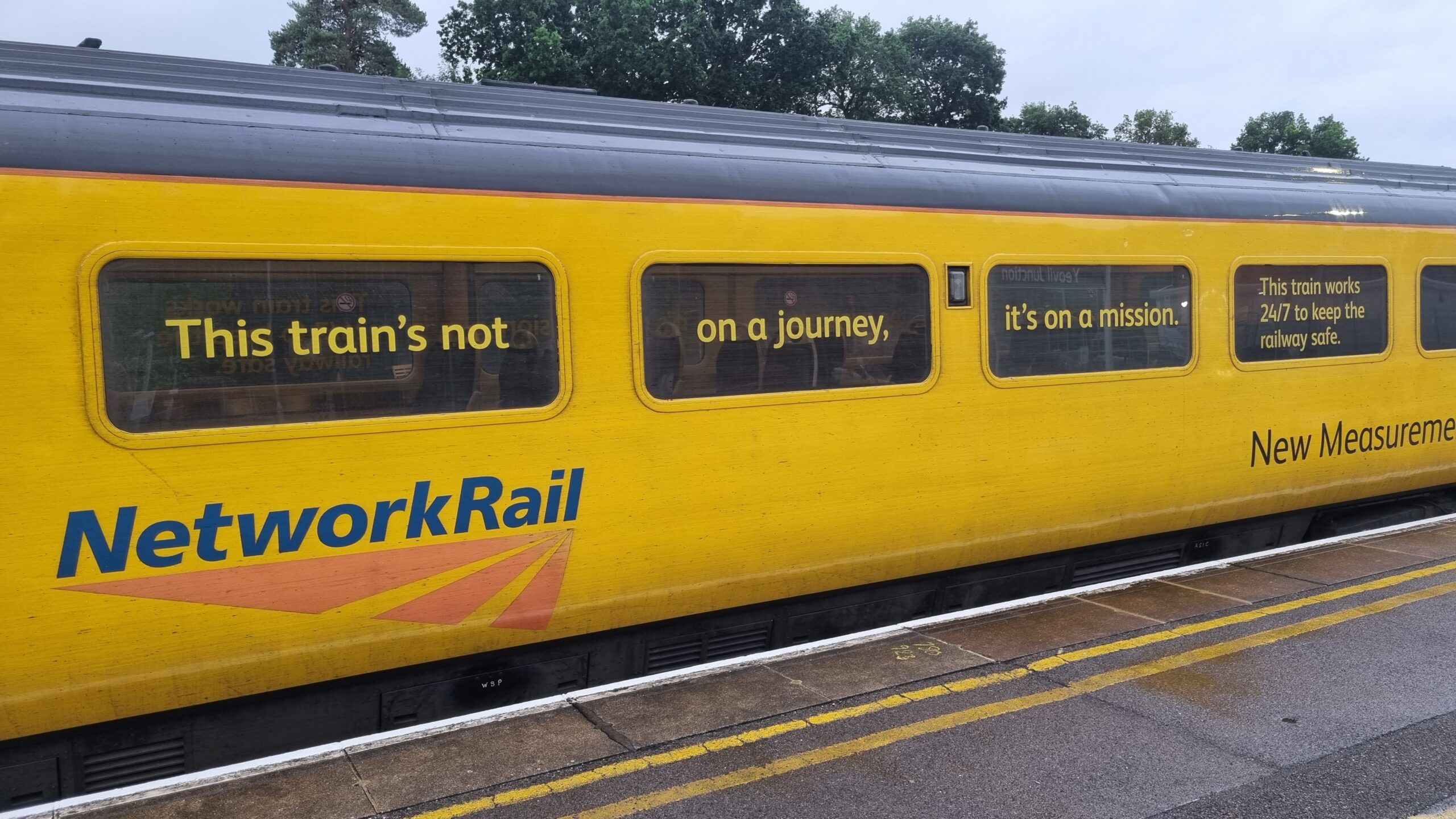
    NMT carriage from 1Q23 0556 Reading to Salisbury via Exeter St Davids seen at Yeovil Junction – 25/08/2022 (Image courtesy of Scott Lewis)
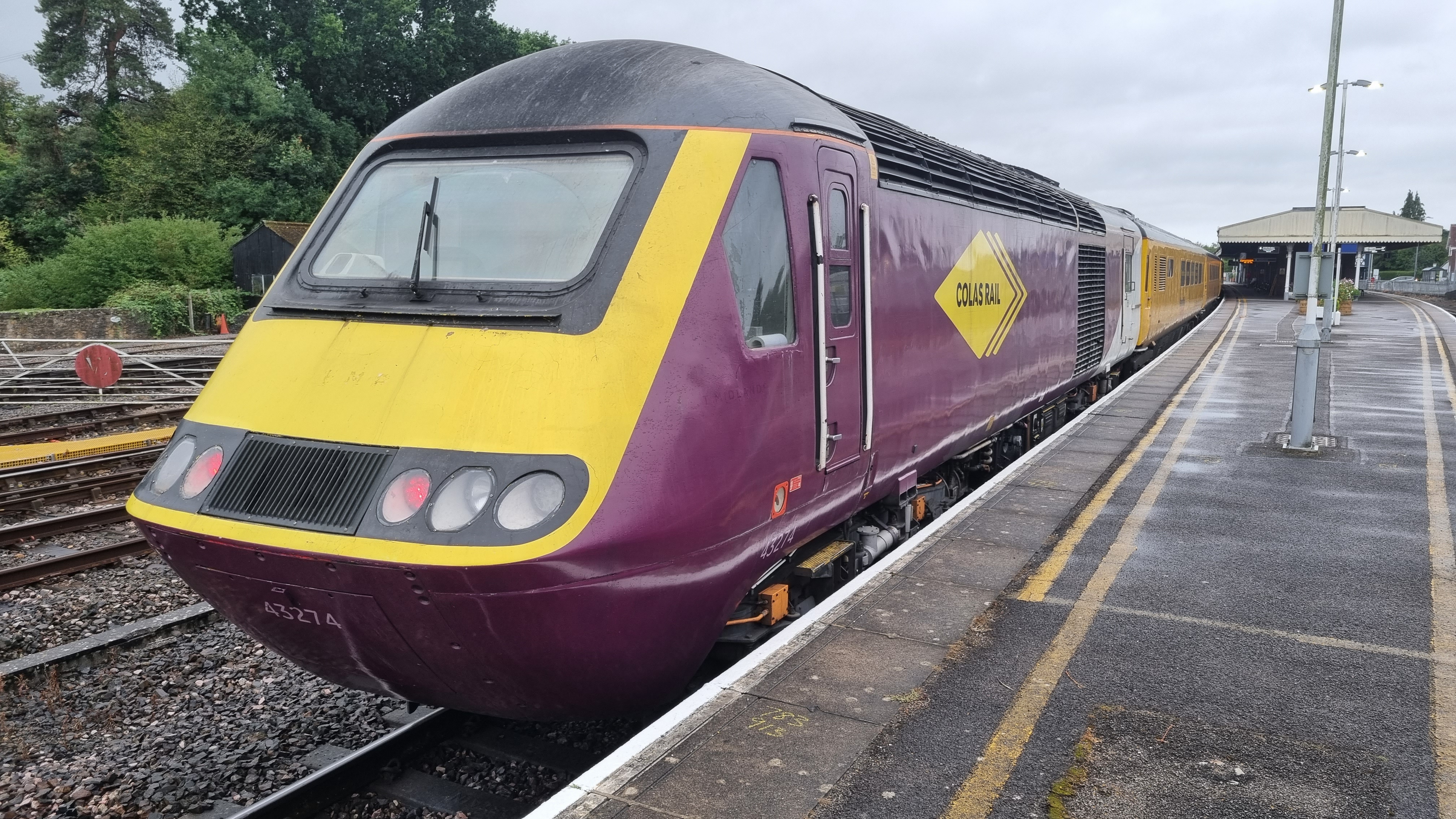
    NMT Class 43 No. 43274 at the rear of 1Q23 0556 Reading to Salisbury via Exeter St Davids seen at Yeovil Junction – 25/08/2022 (Image courtesy of Scott Lewis)

    Yoshi’s North Dorset Correspondent sent us video and photos of the New Measurement Train which passed through Dorset on the Salisbury to Exeter line on Thursday 25th August 2022.

    Network Rails’ New Measurement Train running 1Q23 0556 Reading to Salisbury via Exeter St Davids seen at Yeovil Junction – 25/08/2022 (With many thanks to Scott Lewis)

    South Western Railway (SWR) services between between Tisbury and Gillingham have emergency speed restrictions currently imposed because of the warm weather. Network Rail says the conditions have dried out the clay beneath railway embankments which can result in shrinkage and movement of the rails. SWR will be announcing a temporary, revised timetable on Friday 2nd September 2022 with the likelihood there will be a reduced number of services between Salisbury and Exeter St Davids and journeys will take longer than usual.

    87002 ‘Royal Sovereign’

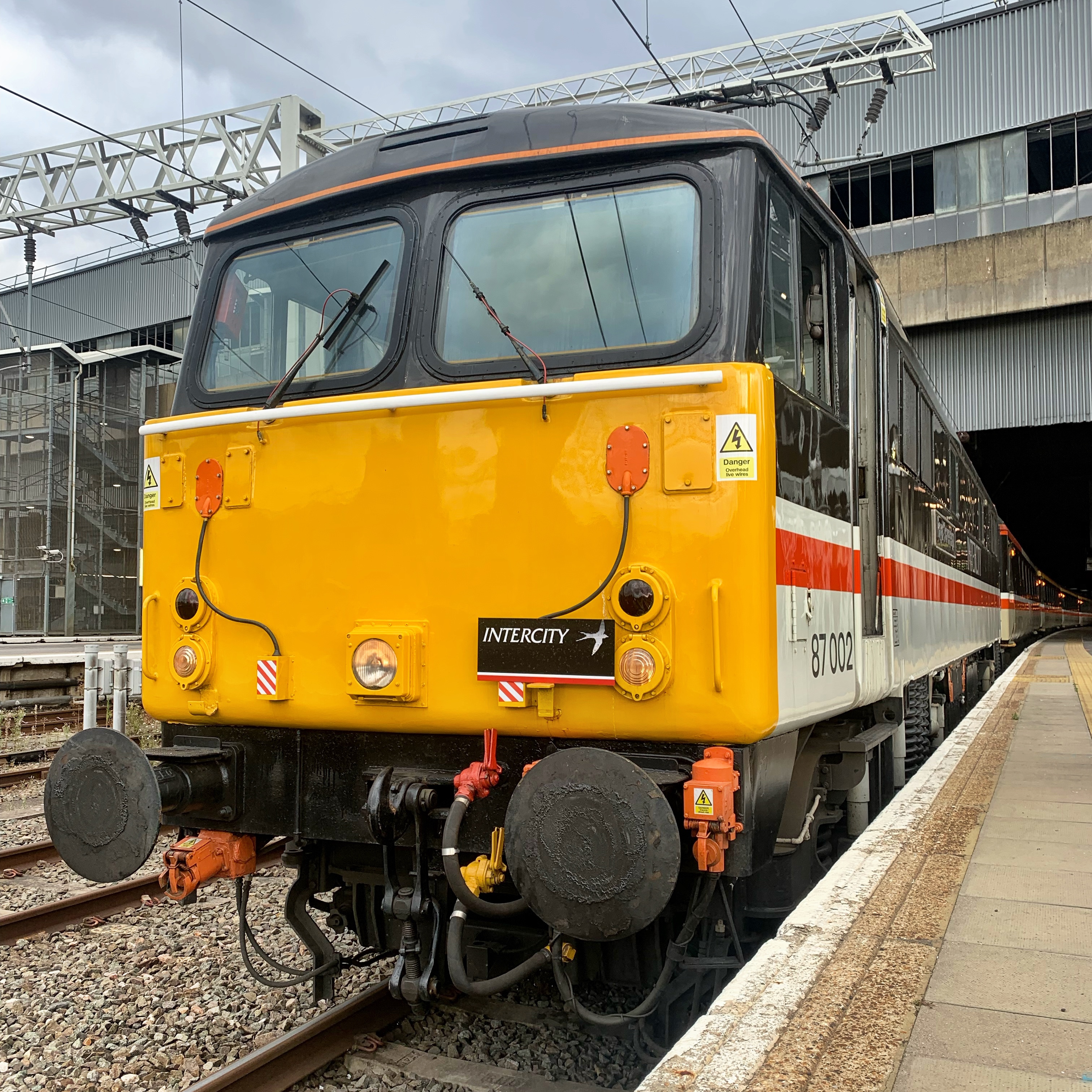
    On Friday 26th August 2022, Yoshi spent the day with his cousins while I was in London escaping from martian invaders at Jeff Wayne’s The War of the Worlds: The Immersive Experience, which I can thoroughly recommend. After surviving the alien threat, I headed off to London Euston to see Locomotive Services Ltd’s “The Friday Charter” which, for only its second weekly run, between London and Manchester / Crewe was hauled by Class 87 No. 87002 ‘Royal Sovereign’ and a fine sight she looked at the head of a rake of Inter-City Executive liveried carriages. There were a number of railway enthusiasts waiting on platform 16 to see the train depart and it was good to see many were from a younger generation than myself, hopefully assuring interest in railways survives.

    1Z41 1742 London Euston to Manchester Piccadilly departs London Euston behind Class 87 No. 87002 – 26/08/2022

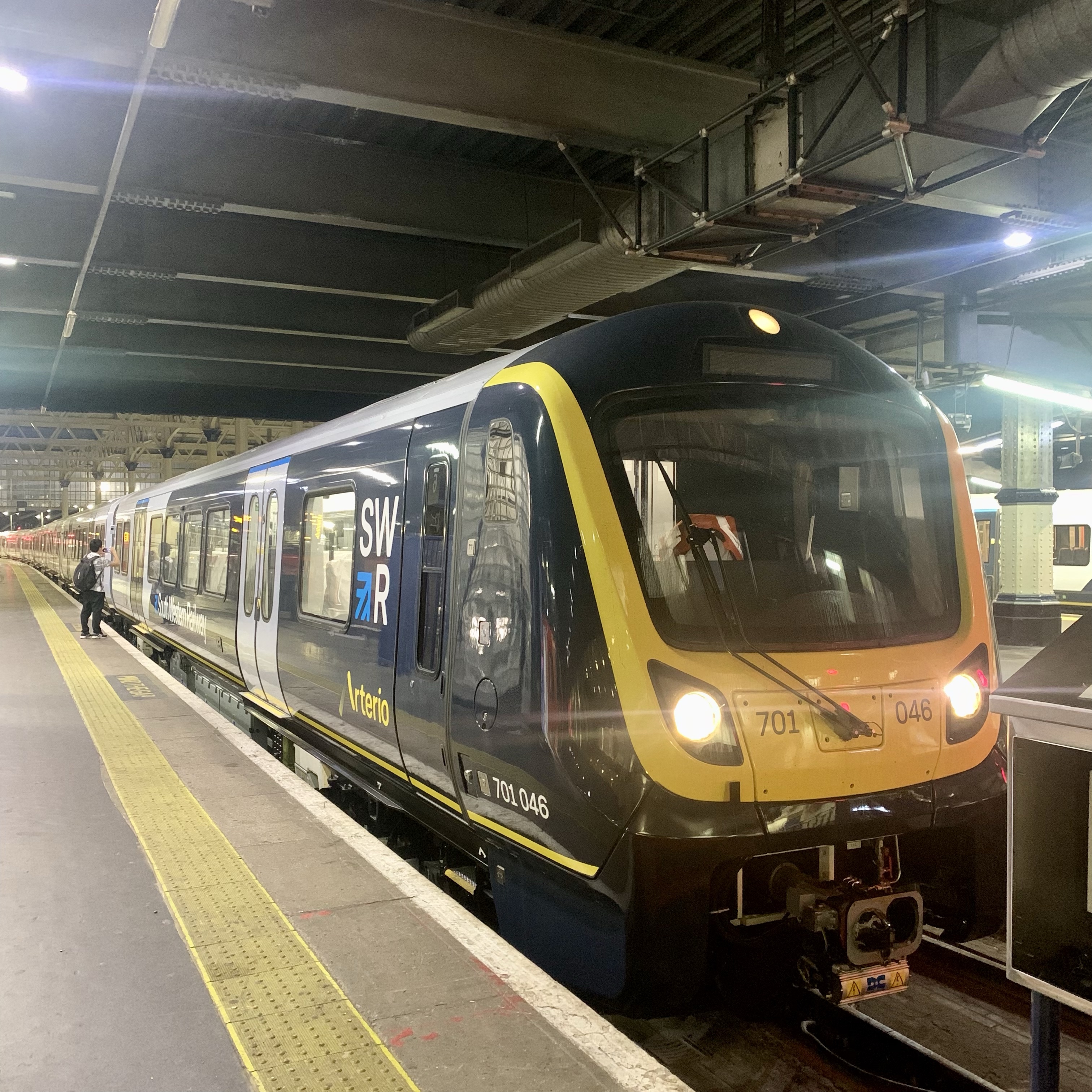
    On our way home from London Waterloo, I was able to see Class 701 No. 701046 depart on a mileage accumulation run.

    Class 701 No. 701046 at the platform 6 buffer stops of London Waterloo having worked into the SR terminus working 5Q42 1844 Eastleigh to London Waterloo. The unit would form the 2114 5Q43 London Waterloo to Eastleigh TRSMD departure. Note the new Arterio branding under the SWR logo – 26/08/2022
    Video of Class 701 mileage accumulation runs – August 2022
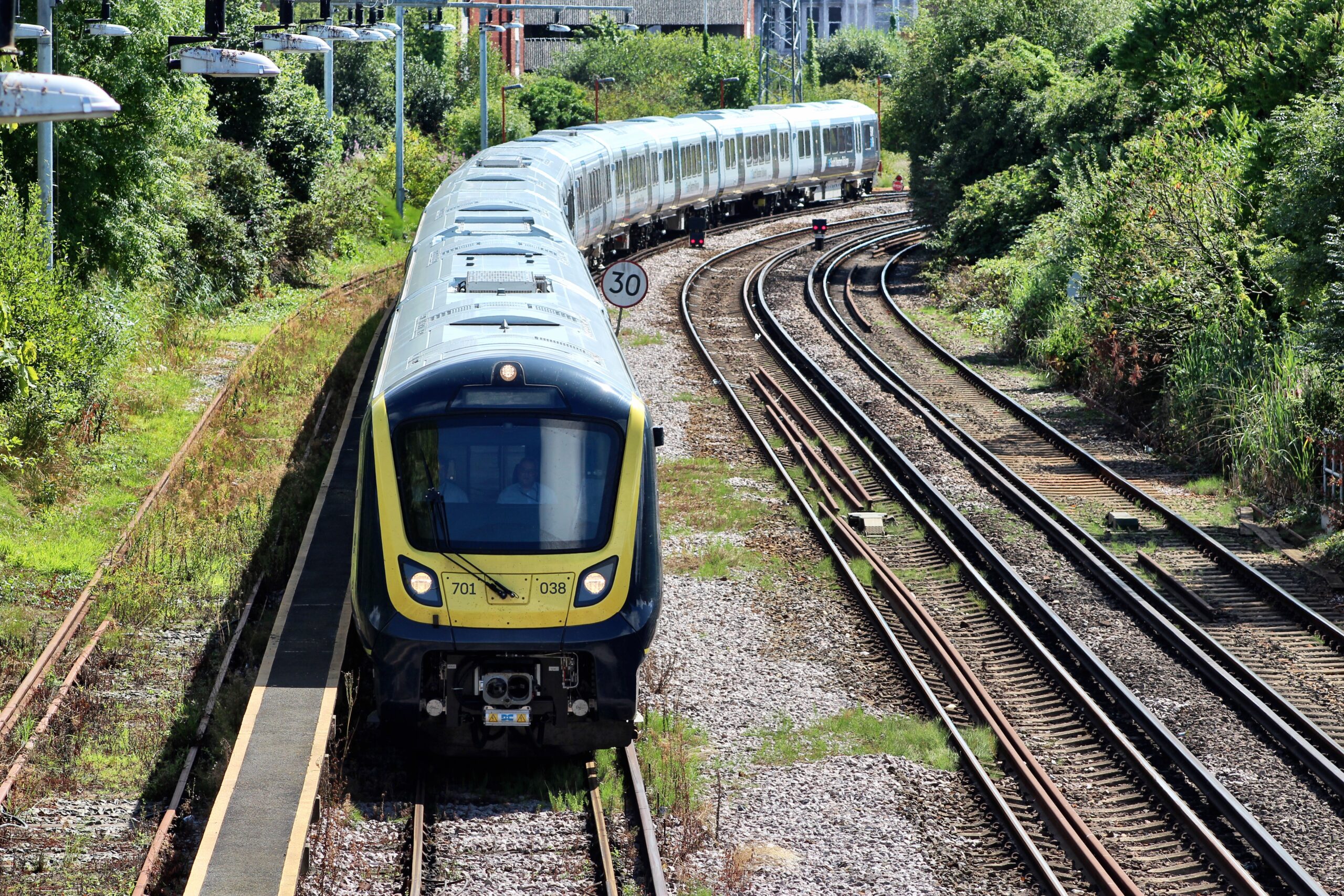
    Class 701 No. 701038 seen at Poole Storage Sidings working 5Q51 1115 London Waterloo to Eastleigh – 24/08/2022

    Great Dorset Steam Fair

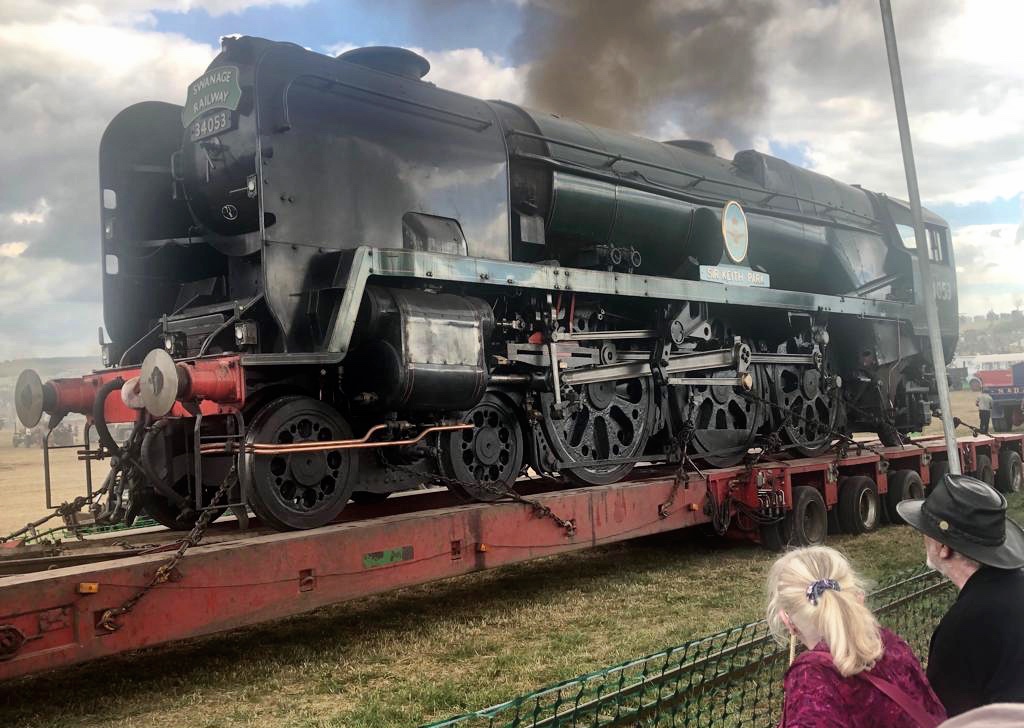
    Yoshi didn’t make it to this years Great Dorset Steam Fair which is held at Tarrant Hinton near Blandford Forum, but his cousin the collie Jess had a great day out and sent us the following images of out of ticket Rebuilt Battle of Britain Class Bullied Pacific No. 34053 ‘Sir Keith Park’ which was on show healing to demonstrate heavy haulage and loading / unloading courtesy of heavy haulage contractor Allelys.

    No. 34053 is currently out of ticket following her recent stint at the Spa Valley Railway – 27/08/2022 (Image courtesy of G. E. Barrett)
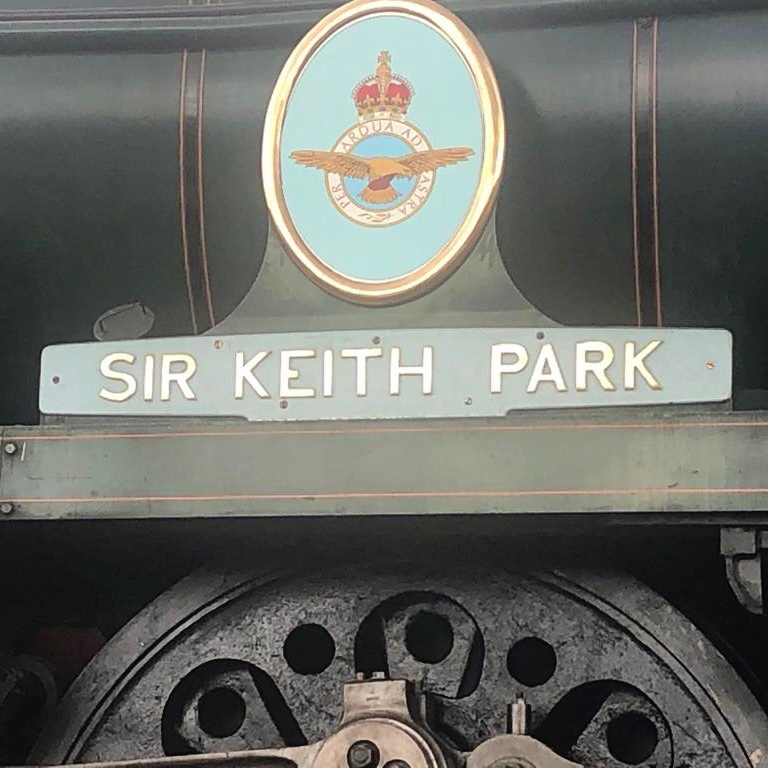
    Nameplate detail No. 34053 ‘Sir Keith Park’ (Image courtesy of G. E. Barrett)
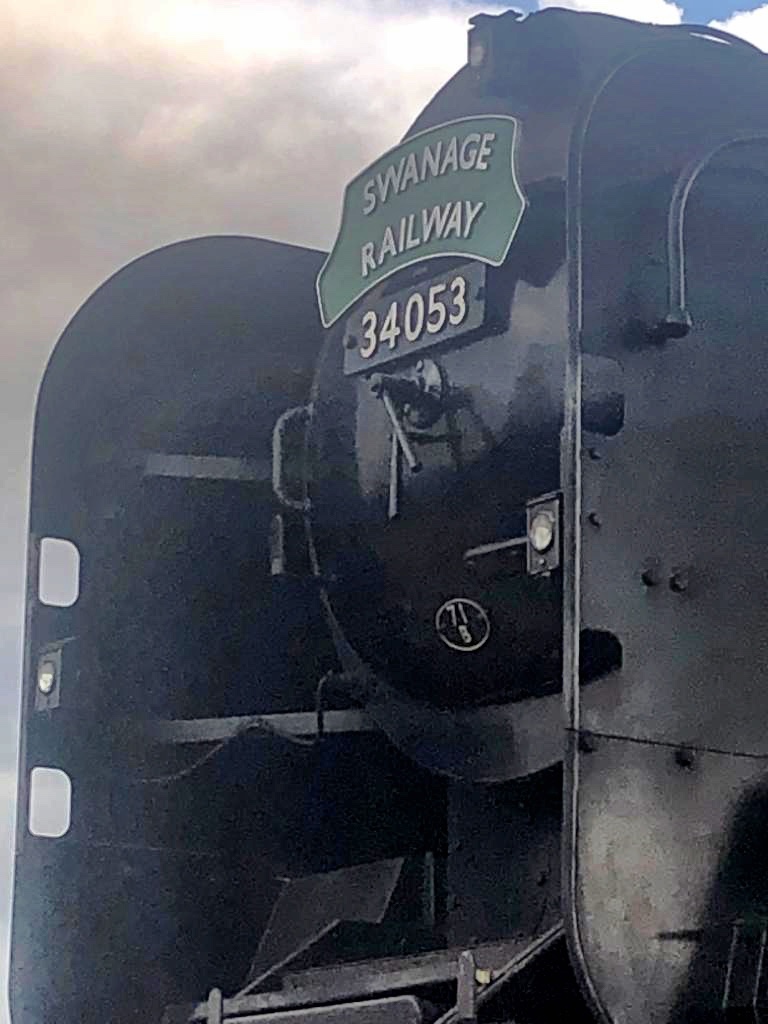
    Smokebox close-up of No. 34053 ‘Sir Keith Park’ (Image courtesy of G. E. Barrett)

    GBRf Staff Charter

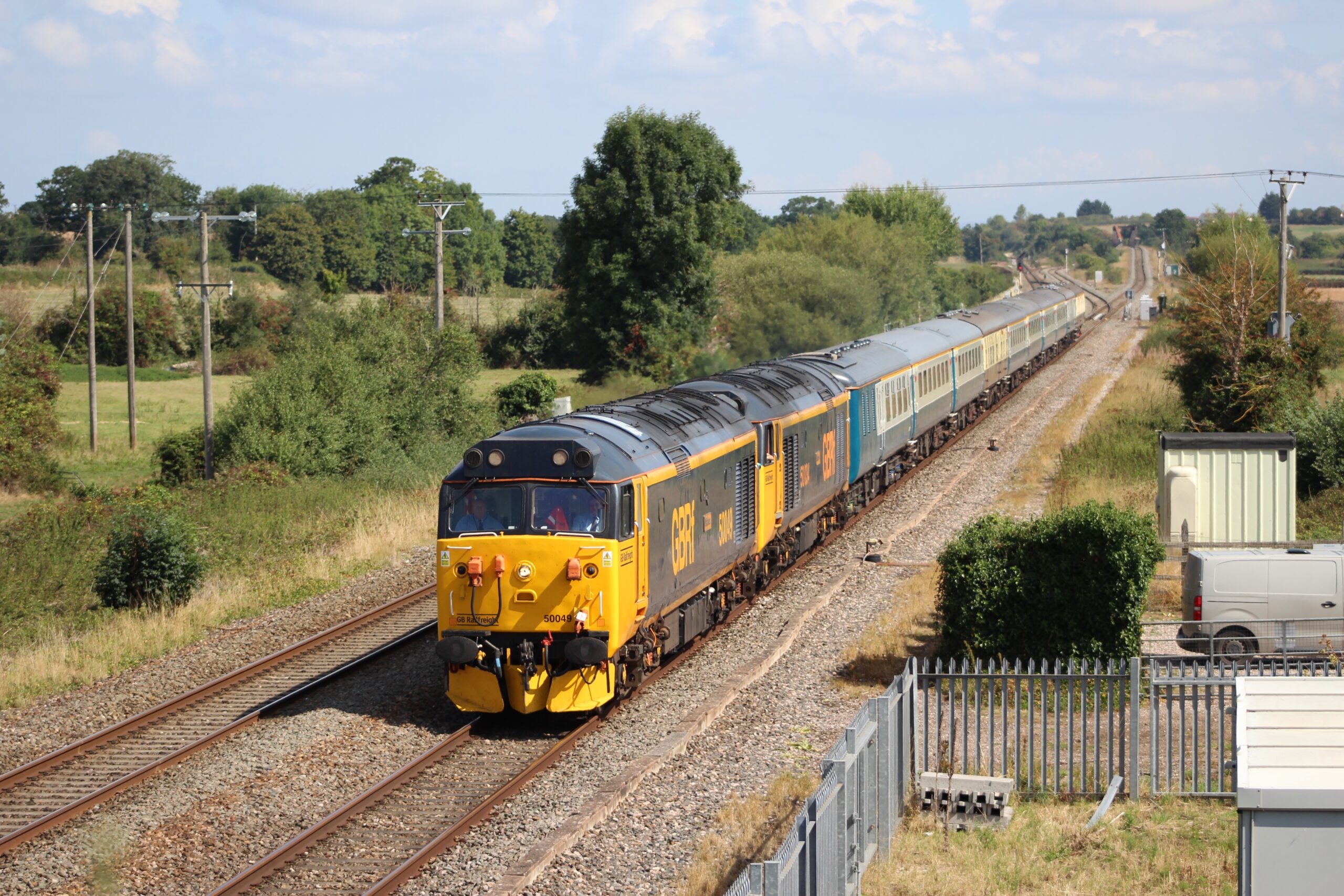
    GBRf liveried Class 50 No.’s 50049 ‘Defiance’ and 50007 ‘Hercules’, the latter still running with one side disguised as No. 50034 ‘Furious’, having passed Cogload Junction north of Taunton working a GBRf staff charter from Warrington to Paignton and return – 27/08/2022

    Saturday 27th August Yoshi and I visited a friend in the Taunton area. We of course looked to see on Real Time Trains for any interesting workings we might be able to see while in Somerset. As luck would have it, GBRf organised staff charter hauled by two Class 50 locomotives were perfectly timed for our visit. We parked up at Creech St. Michael adjacent to the Bridgwater and Taunton Canal and walked alongside the waterway until we reached the over bridge just south of Cogload Junction which was to be our vantage point.

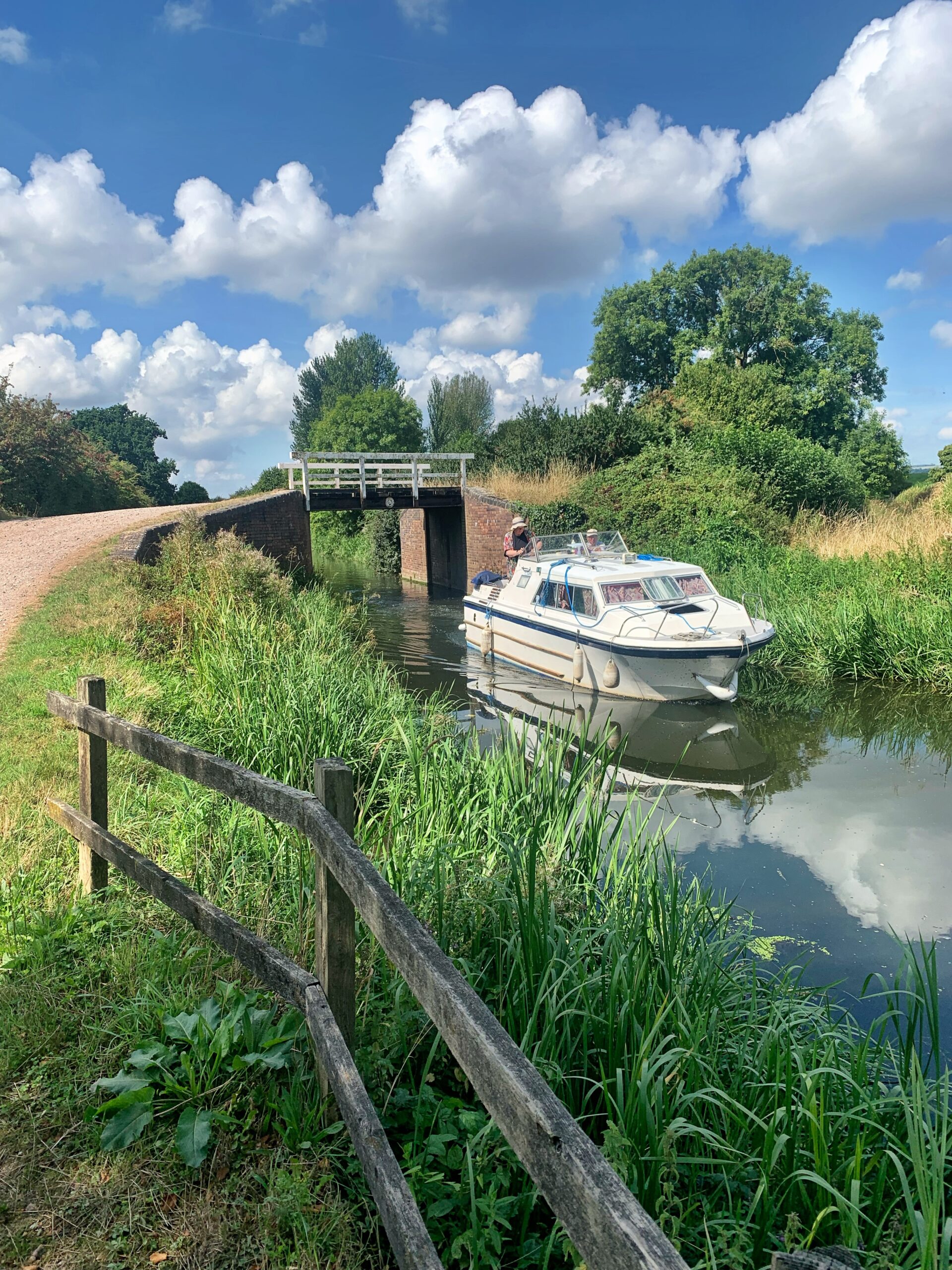
    The Bridgwater and Taunton Canal – 27/08/2022

    The Canal was engineered by James Hollinsworth and opened in 1827. The original section ran from Taunton to Huntworth where it joined the River Parrett. Ten years later, in 1837, the canal as extended from Huntworth to Bridgwater dock where a lock was made to join the River Parrett. This was to be blocked off when the docks closed to coastal shipping in 1971.

    In 1866 the Canal was under considerable pressure from the railway and was eventually sold to the Bristol & Exeter Railway Company, although control eventually passed to the Great Western Railway. There was no interest in promoting commercial traffic on the Canal which slowly declined in preference to the much quicker railway. In 1907 the last barge tolls were collected after which the Canal became a water course. In 1947 the British Transport Commission took over responsibility of the Canal and later still in 1962 the British Waterways took over its management.

    A noticeable feature on the Creech section of the canal is “The Old Engine House”, built in 1827 to pump water into the canal from the RiverTone, originally housing a beam engine pump, and later two locomotive boilers which worked a centrifugal pump delivering 125,000 gallons per hour. Eventually the engine house supplied the water troughs fixed between the nearby railway lines, so that steam engines could pick up water from the troughs in the railway tracks without having to stop, saving valuable time for through express services.

    GBRf staff charter; 1Z18 0732 Warrington Bank Quay to Paignton and 1Z20 1641 Paignton to Warrington Bank Quay – 27/08/2022

    Barrow Hill

    An early start on Sunday August 28th saw us heading North to Barrow Hill near Chesterfield for the deferred event celebrating 150 years since the opening of the roundhouse in 1870. Intended to take place in 2020, Covid meant that the gala could not take place until two years after the anniversary. Known as Staveley Roundhouse until 1948 when it was renamed as Barrow Hill to avoid confusion with an ex-Great Central Railway shed located nearby, it was built to a standard Midland Railway square shed design in 1870 with a central turntable under cover. The shed was operational from 1870 until 9 February 1991 and Grade II listed in the same year. Chesterfield Borough Council purchased the building and surrounding yard from the British Rail Property Board in December 1996. During the interim years, the Roundhouse and associated buildings were heavily vandalised and came dangerously close to being lost forever. The site reopened to the public in July 1998 after the building was restored by the Barrow Hill Engine Shed Society

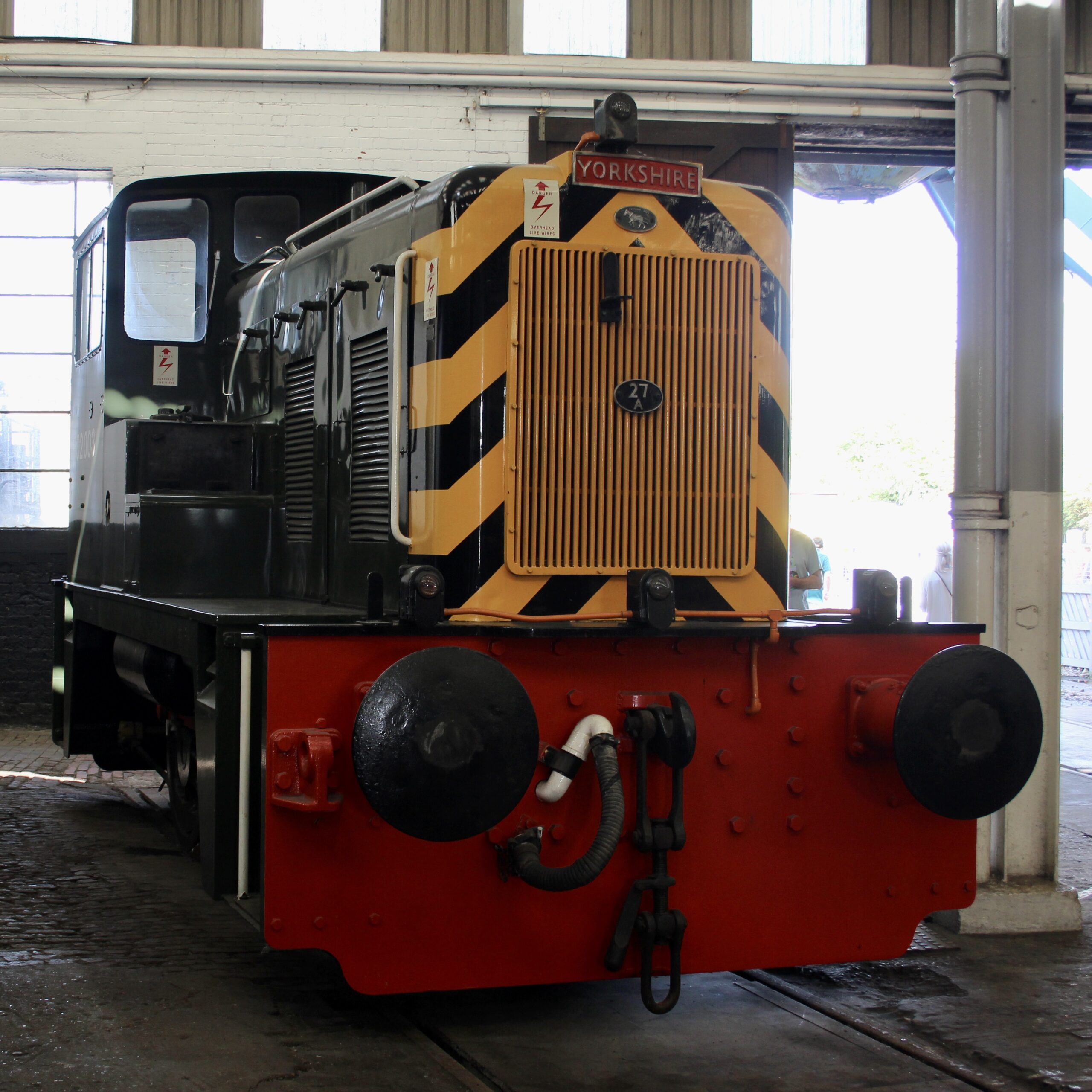
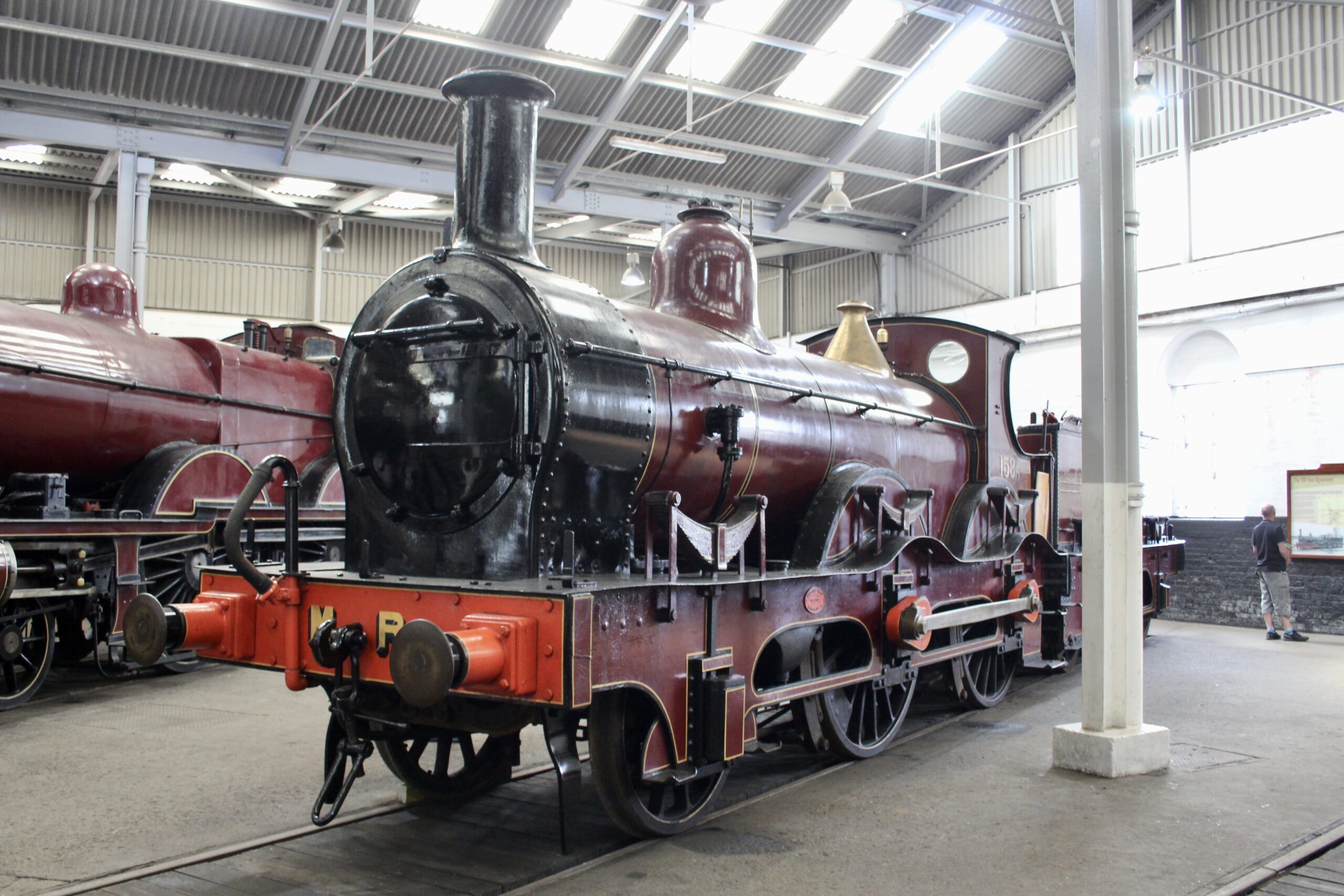
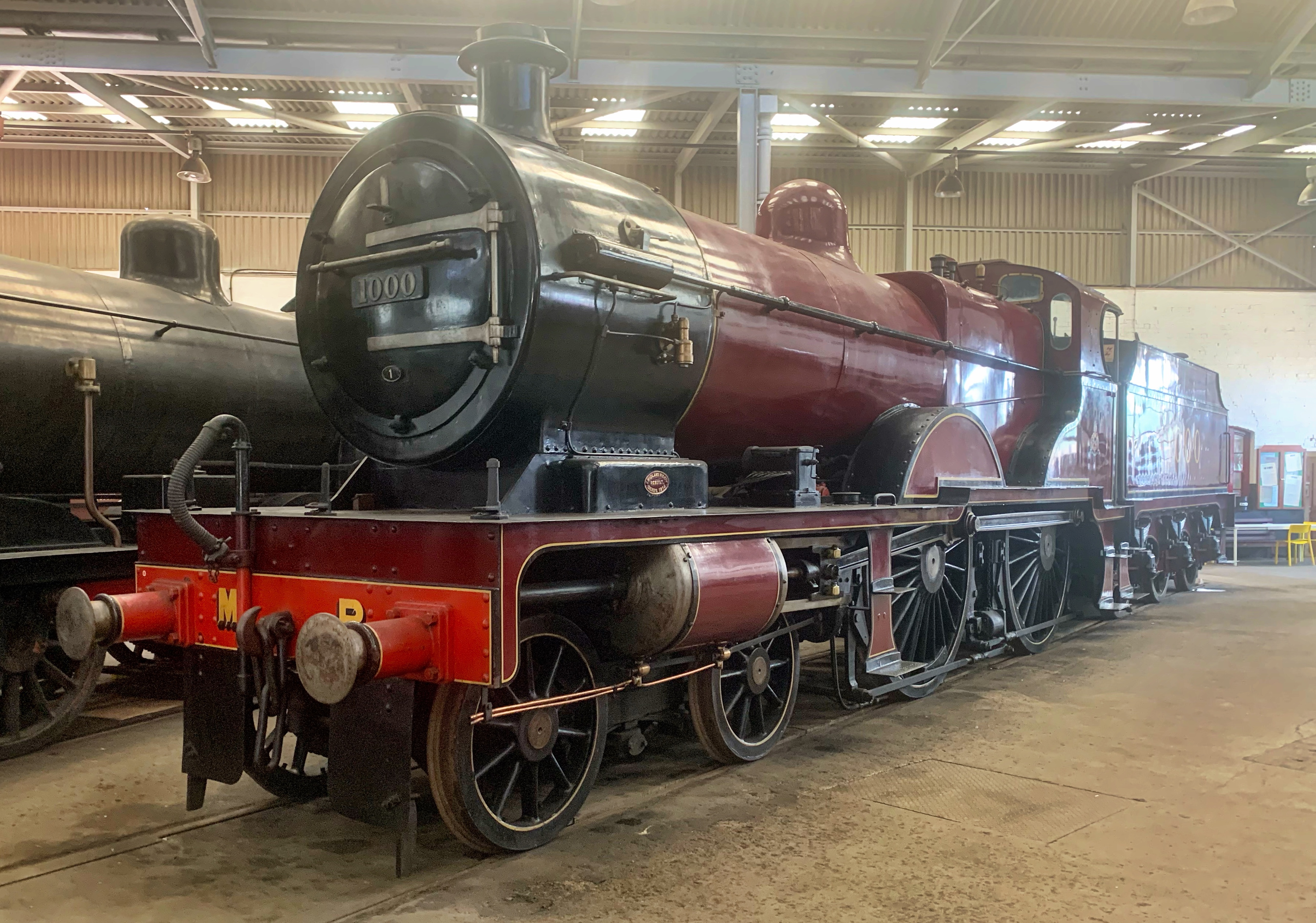
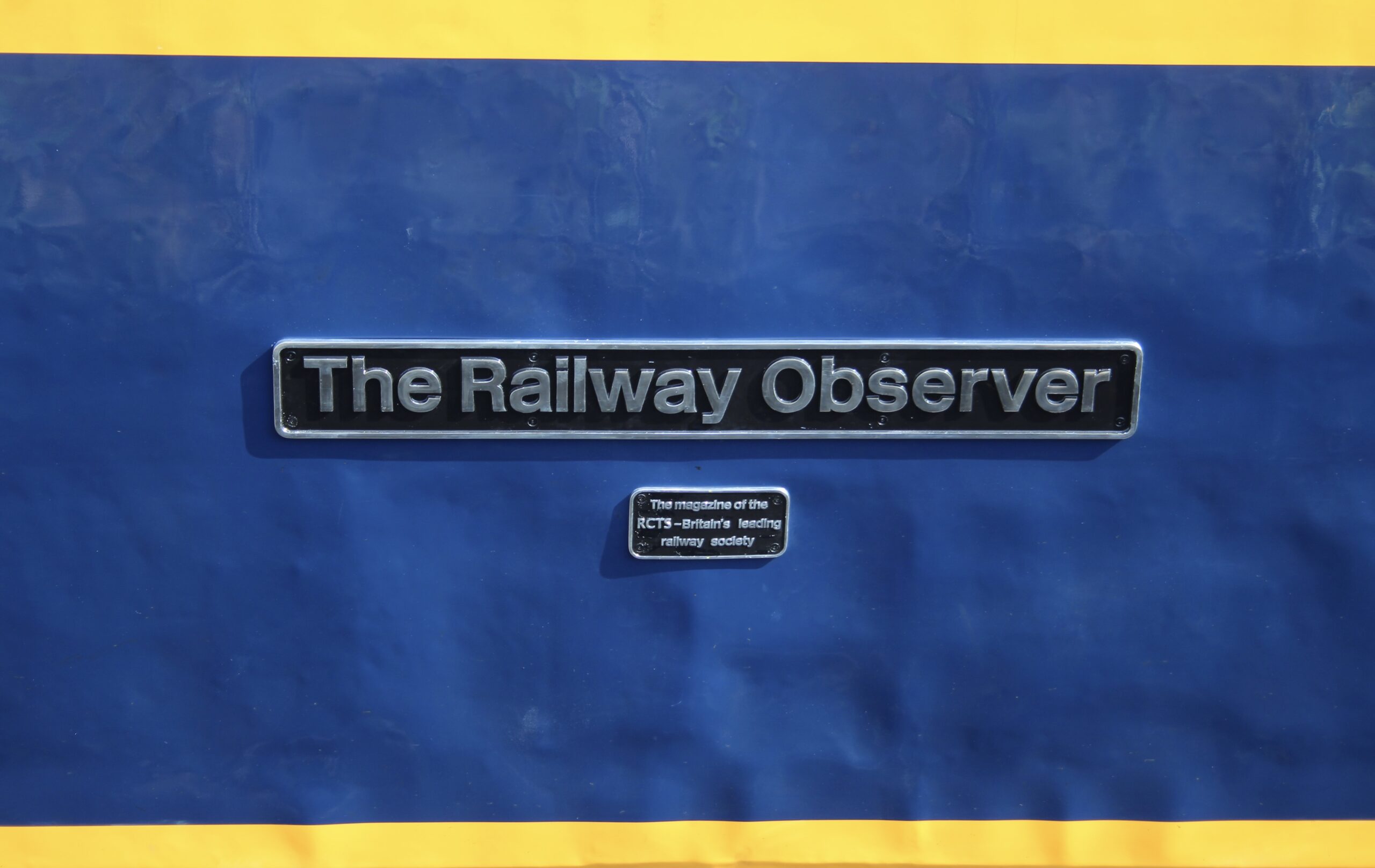
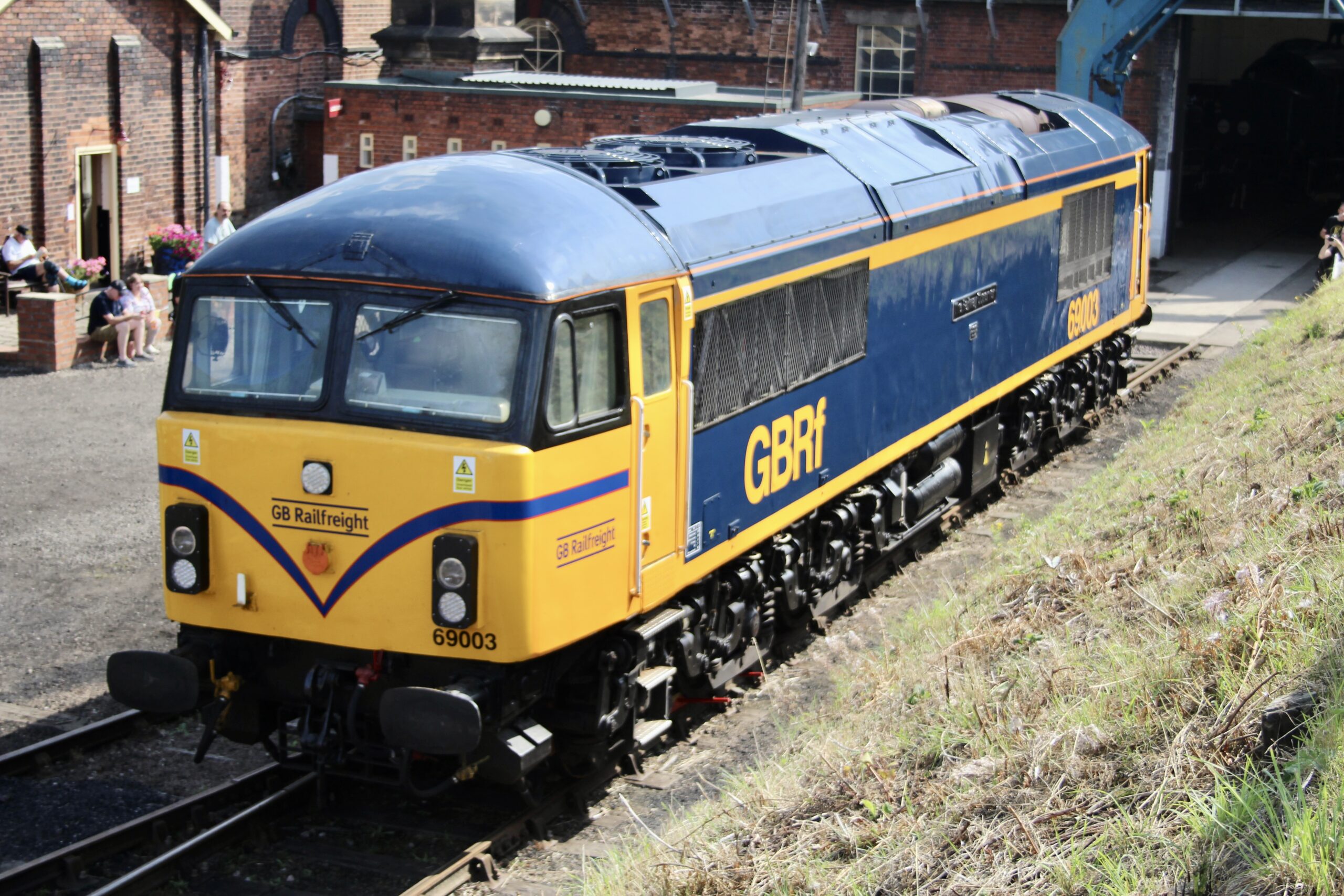
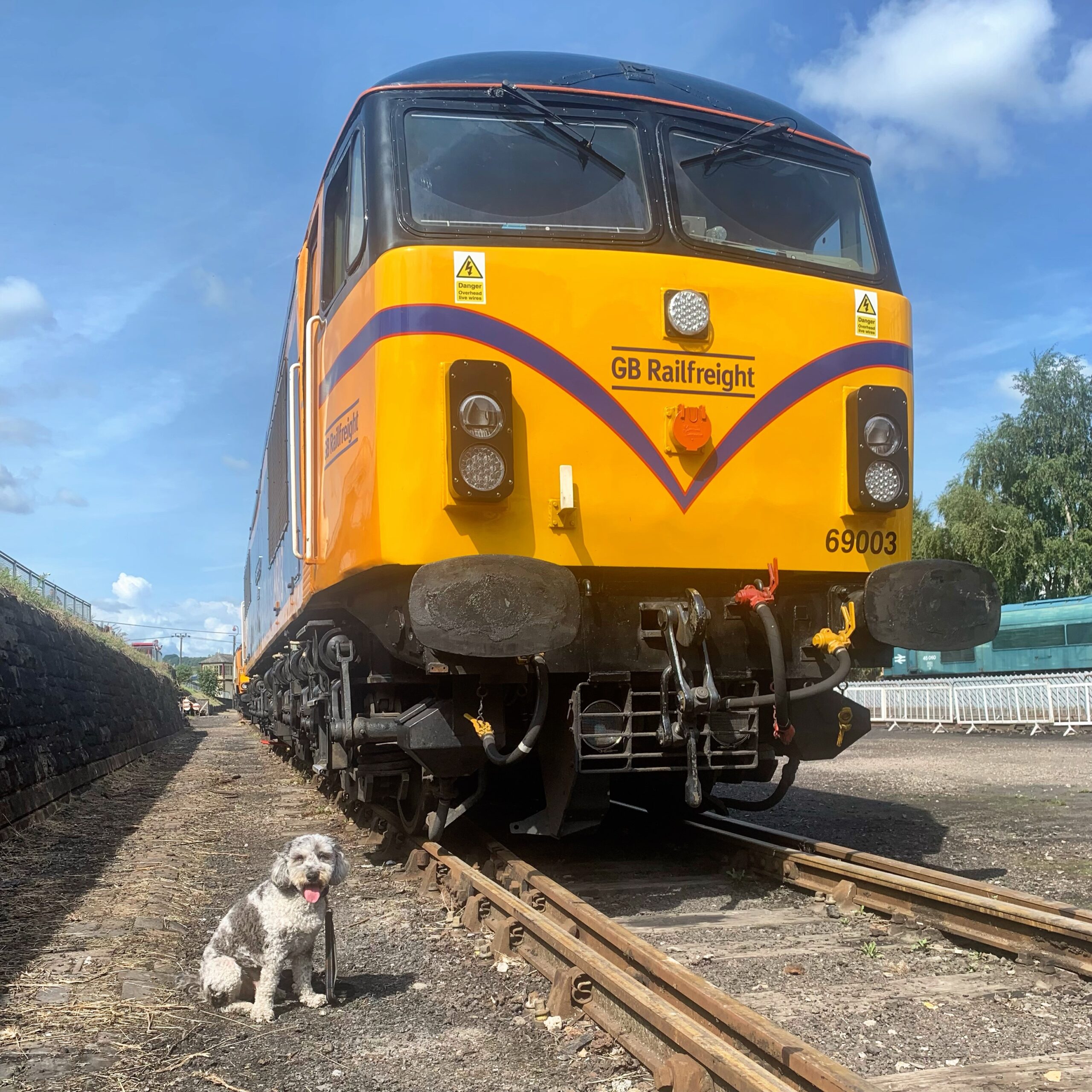
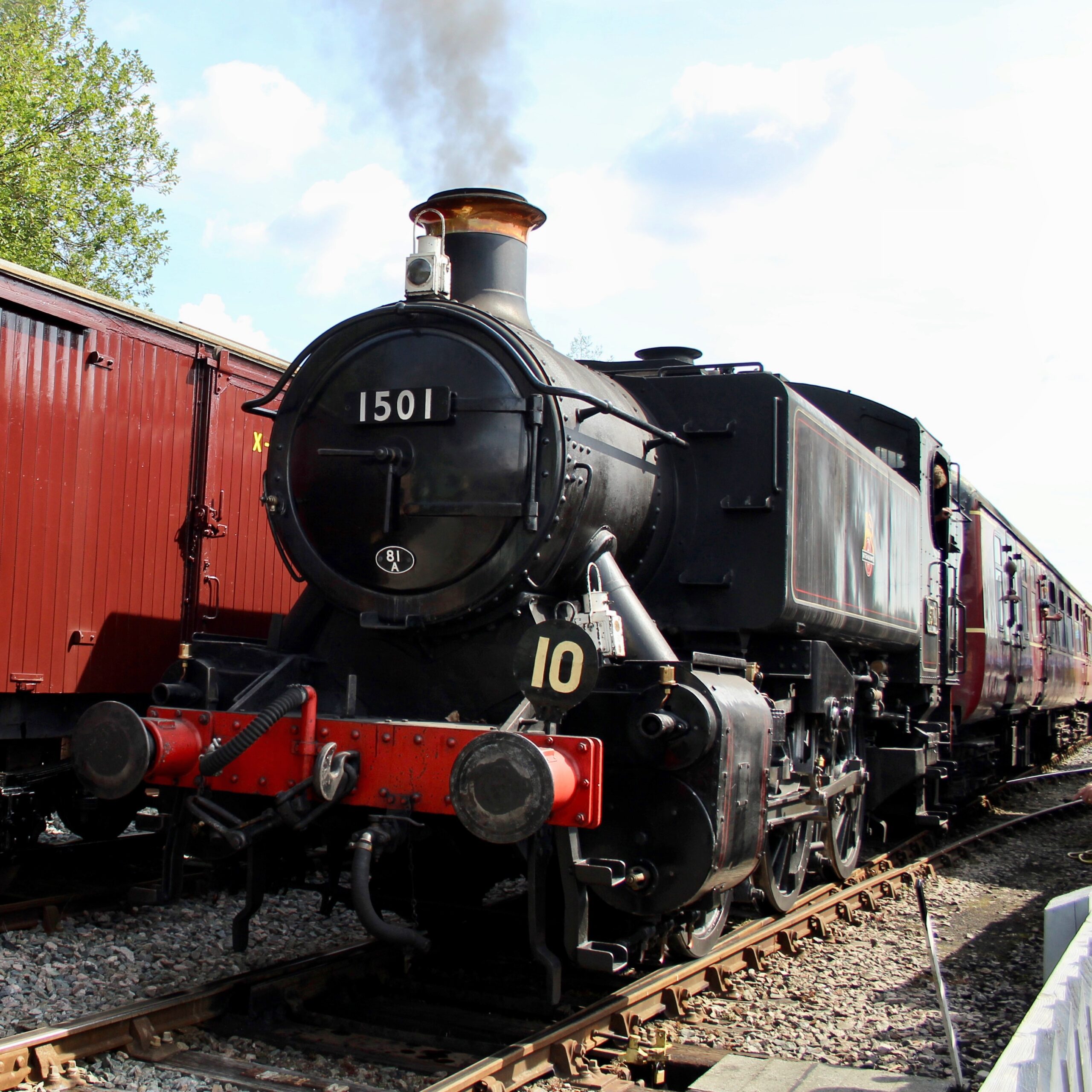
    Recreated Baby Deltic Class 23 No. D5910 ( formerly Class 37 No. 37372) took centre stage on the turntable while GBRf Class 69 No. 69003 was named ‘The Railway Observer’ the day before our visit. GWR 1500 Class 0-6-0PT shunting engine No. 1501 was in steam working shuttle trains from the Roundhouse Halt up the Springwell branch line. Midland Railway 158A Class 2-4-0 No. 156 was on display alongside Midland Railway Compound No. 1000, the first time in several years the two Midland Railway locomotives have been seen together.

    It was a little on the warm side, so we took care to ensure Yoshi had lots of water and shade during our time at Barrow Hill. It was quite busy on arrival, but numbers thined out during the day.

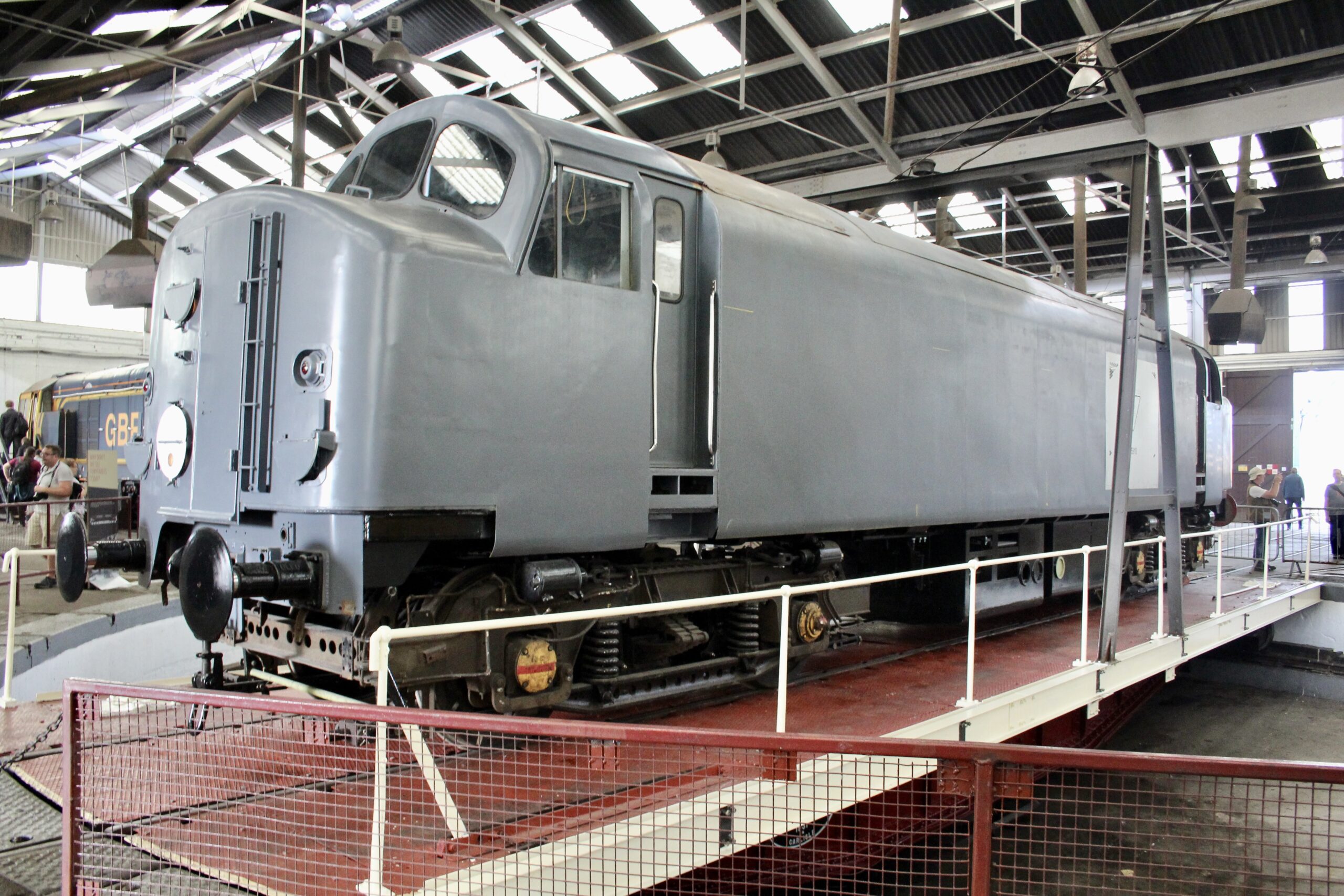
    Baby Deltic Class 23 No. D5910 (formerly Class 37 No. 37372) Barrow Hill – 28/08/2022
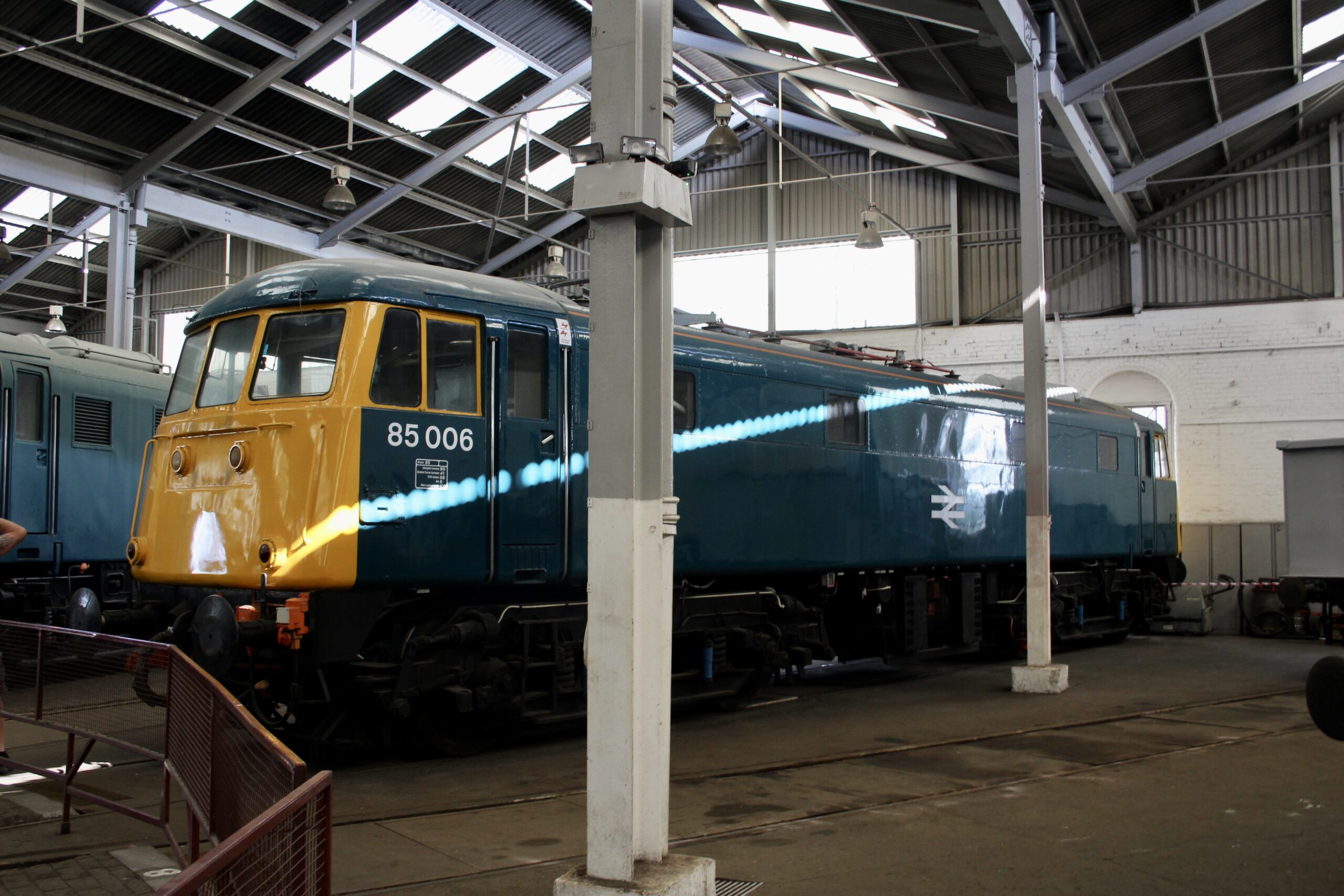
    Class 85 No. 85006 Barrow Hill – 28/08/2022
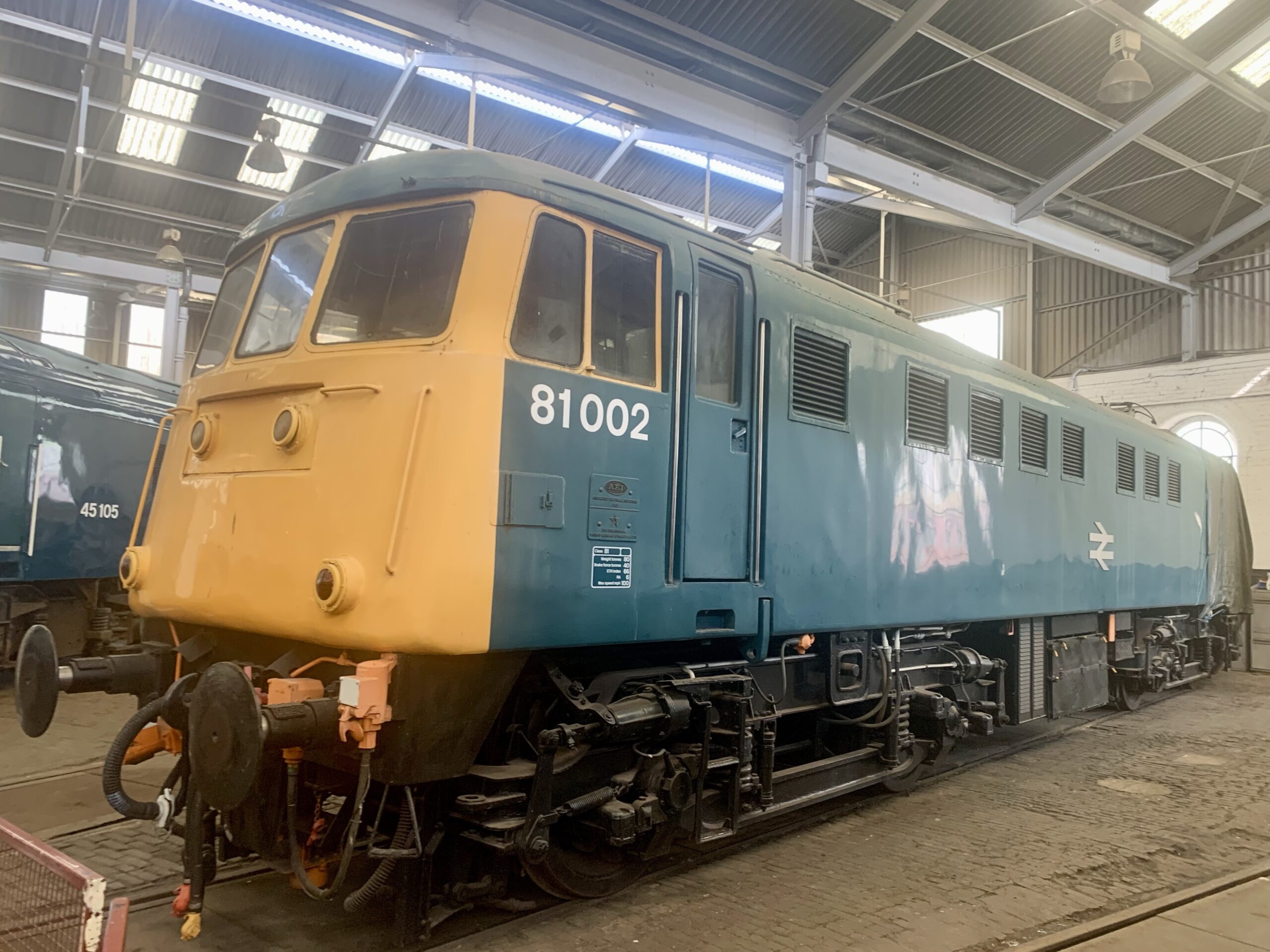
    Class 81 No. 81002 Barrow Hill – 28/08/2022
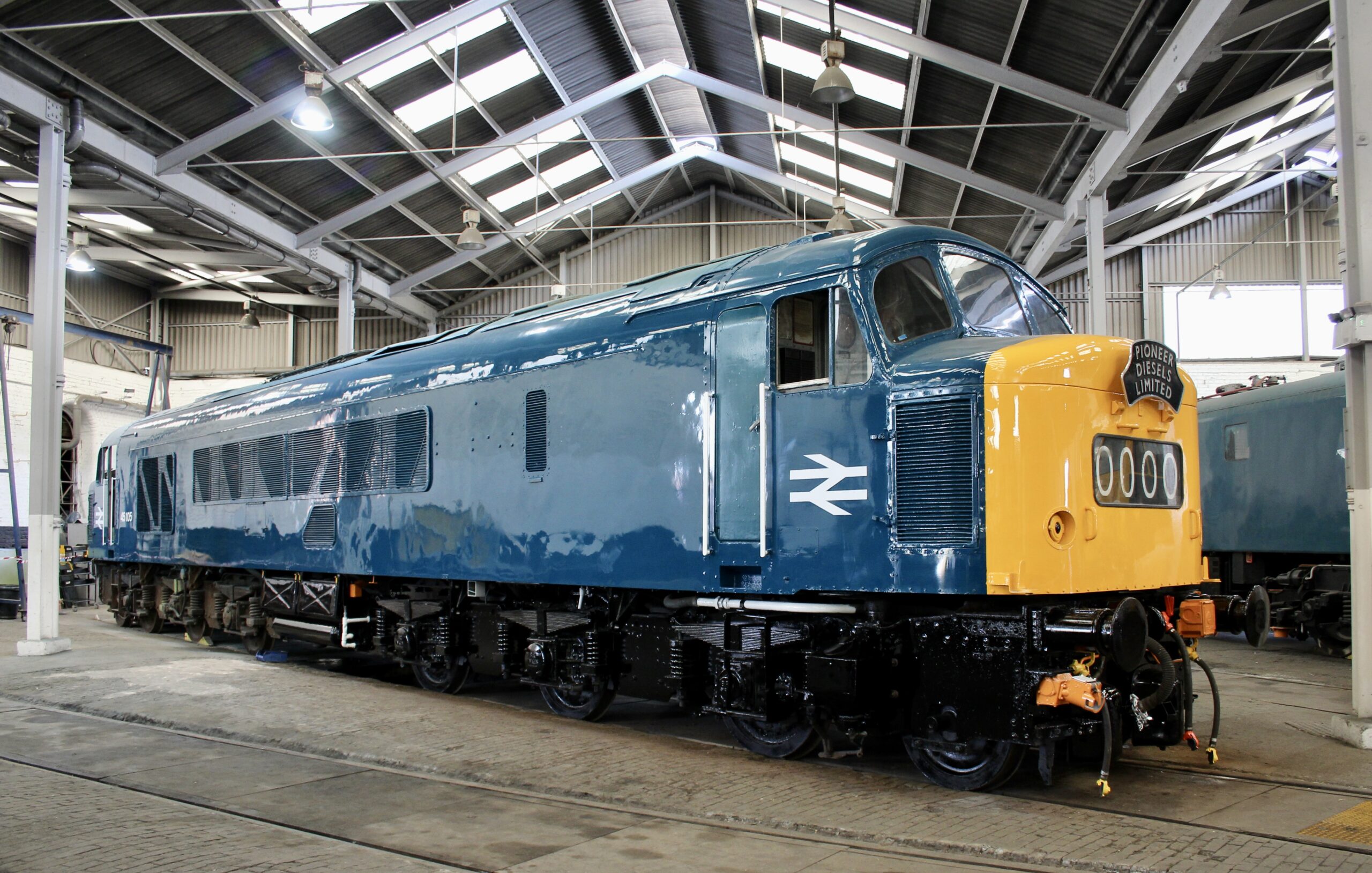
    Class 45 No. 45105 Barrow Hill – 28/08/2022
    Class 02 No. 02003 Barrow Hill – 28/08/2022
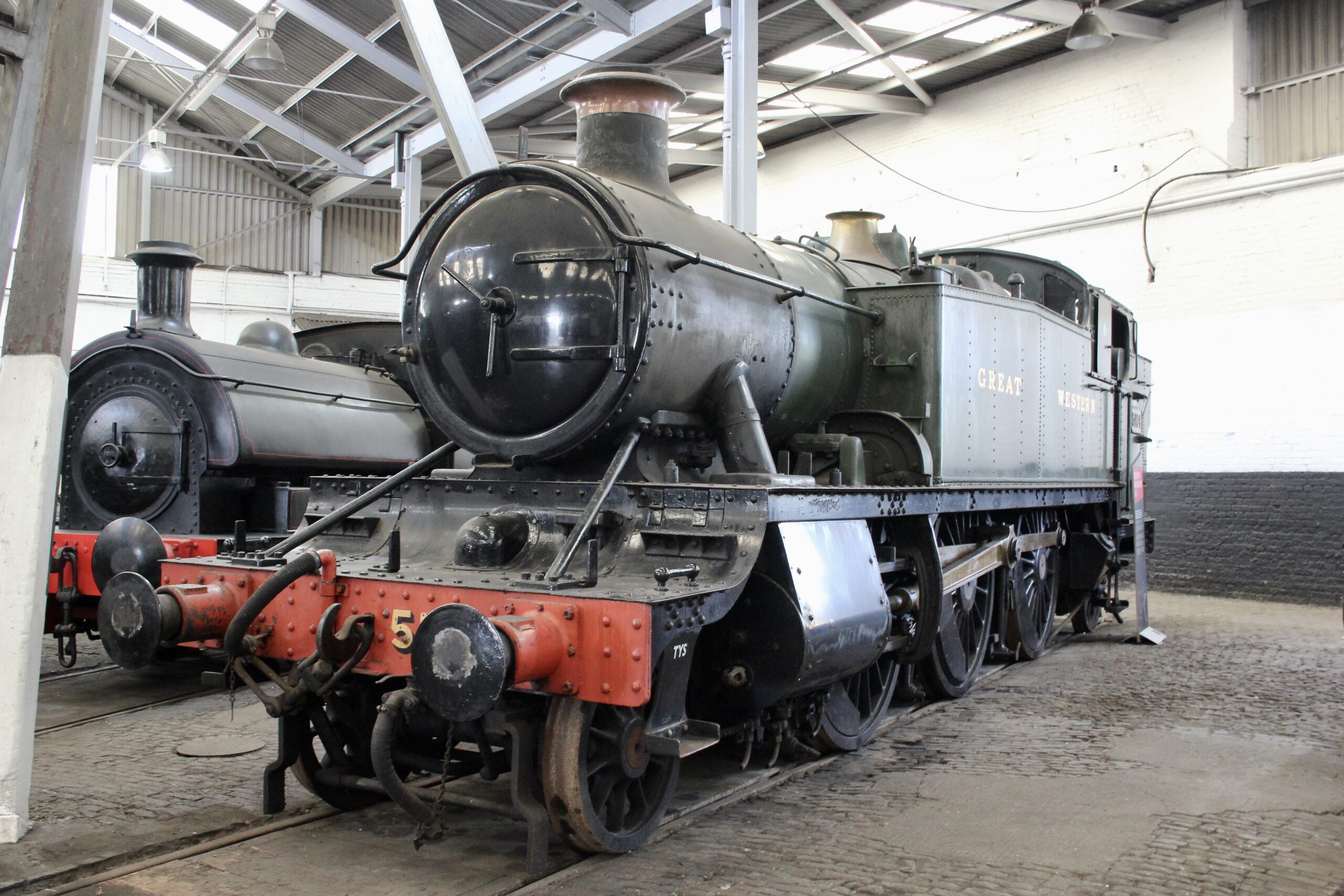
    Great Western Railway Class 2-6-2T No. 5164. Built in 1930. On loan from the Severn Valley Railway at Barrow Hill – 28/08/2022
    Hawthorn Leslie 0-40ST No. 2491 ‘Henry’. Built in 1901. Barrow Hill – 28/08/2022
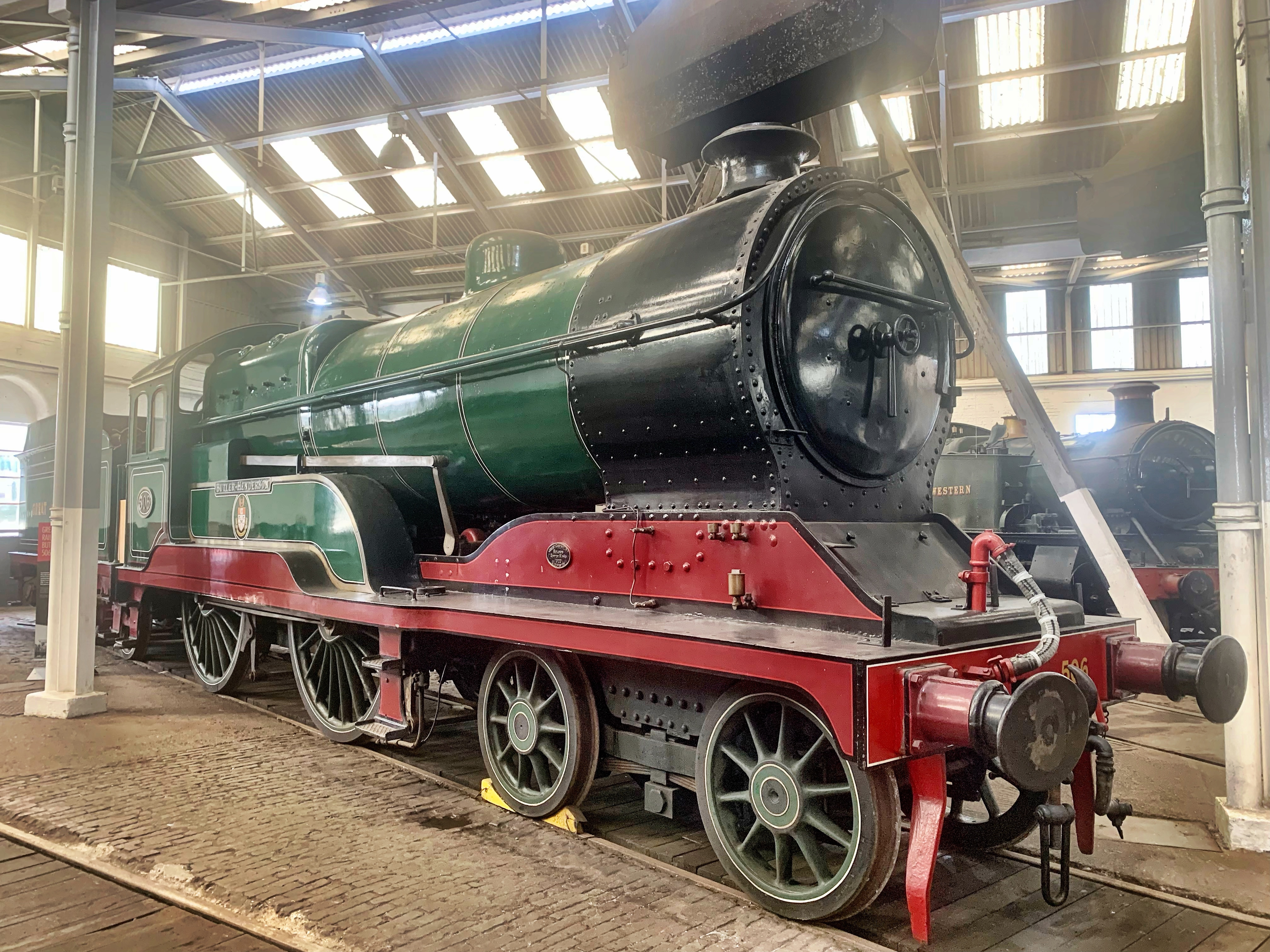
    Great Central Railway Class 11F (LNER Class D11)4-4-0 No. 506 ‘Butler Henderson’ built in 1919. On loan from the National Railway Museum at Barrow Hill – 28/08/2022
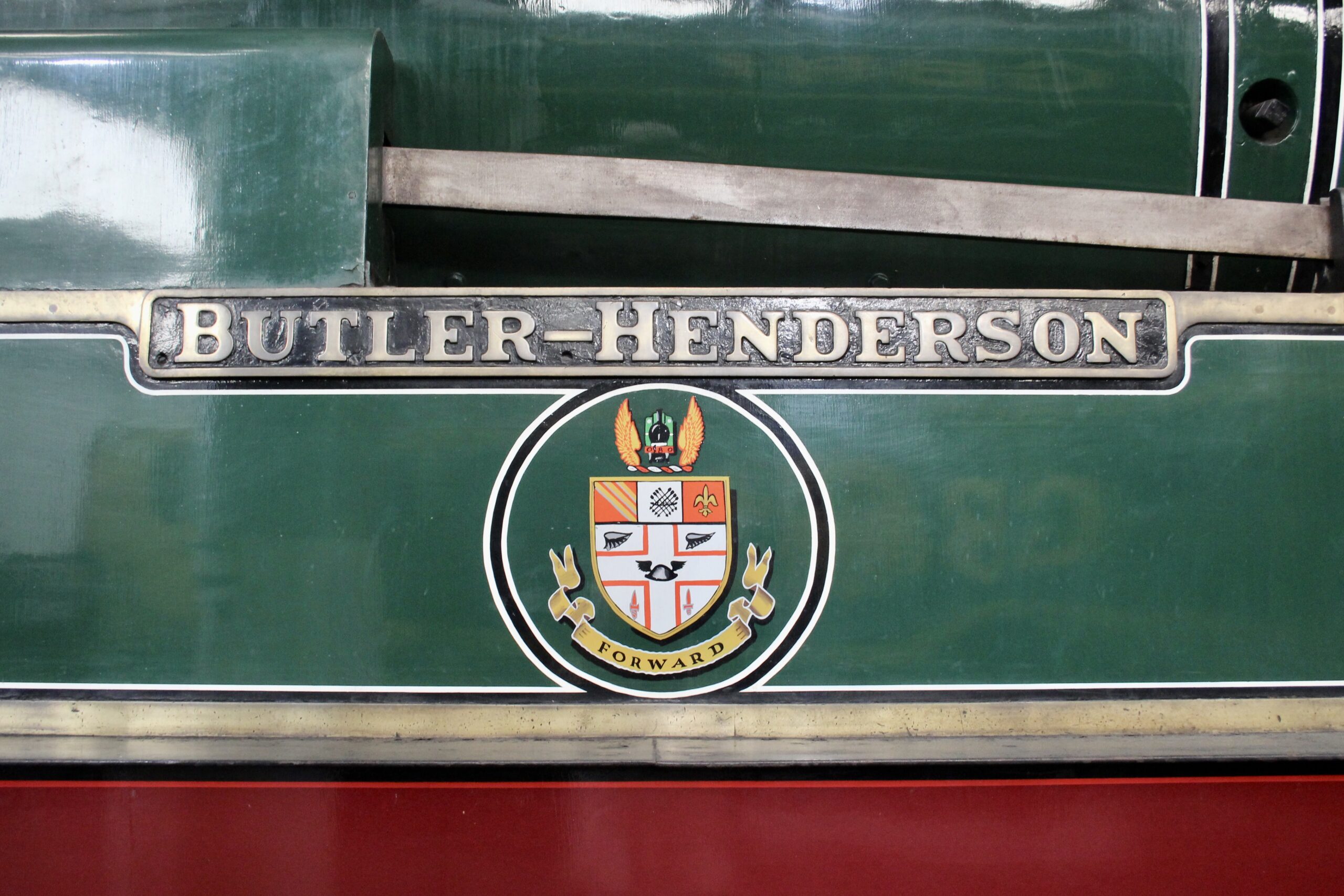
    Nameplate detail of Great Central Railway Class 11F (LNER Class D11)4-4-0 No. 506 ‘Butler Henderson’ built in 1919. On loan from the National Railway Museum at Barrow Hill – 28/08/2022
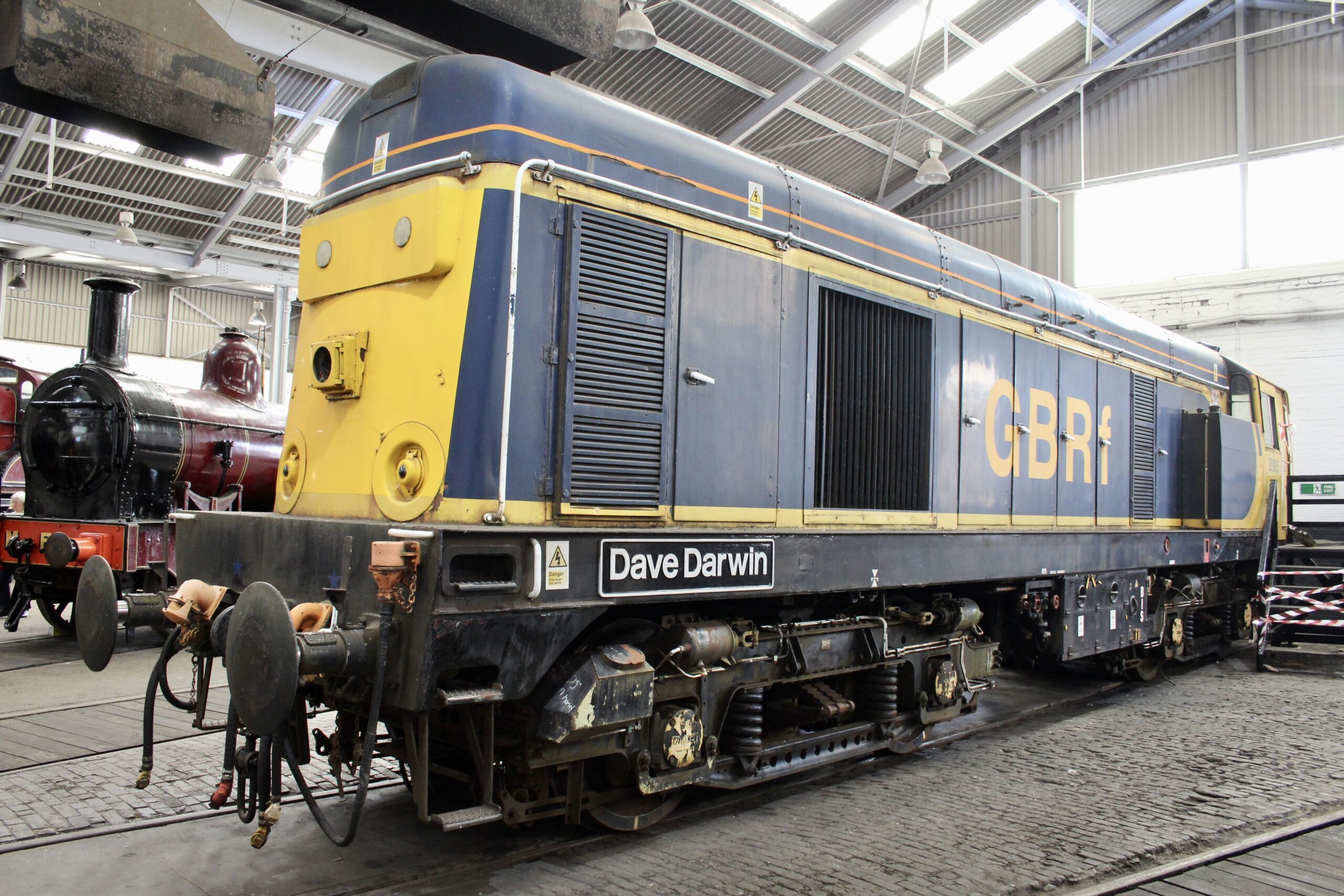
    Class 20 No. 20905 ‘Dave Darwin’ Barrow Hill – 28/08/2022
    Midland Railway 156 Class 2-4-0 No. 158A. Built in 1866. On loan from the National Railway Museum at Barrow Hill – 28/08/2022
    Midland Railway Compound Class 4-4-0 No. 1000. Built in 1902. On loan from the National Railway Museum at Barrow Hill – 28/08/2022
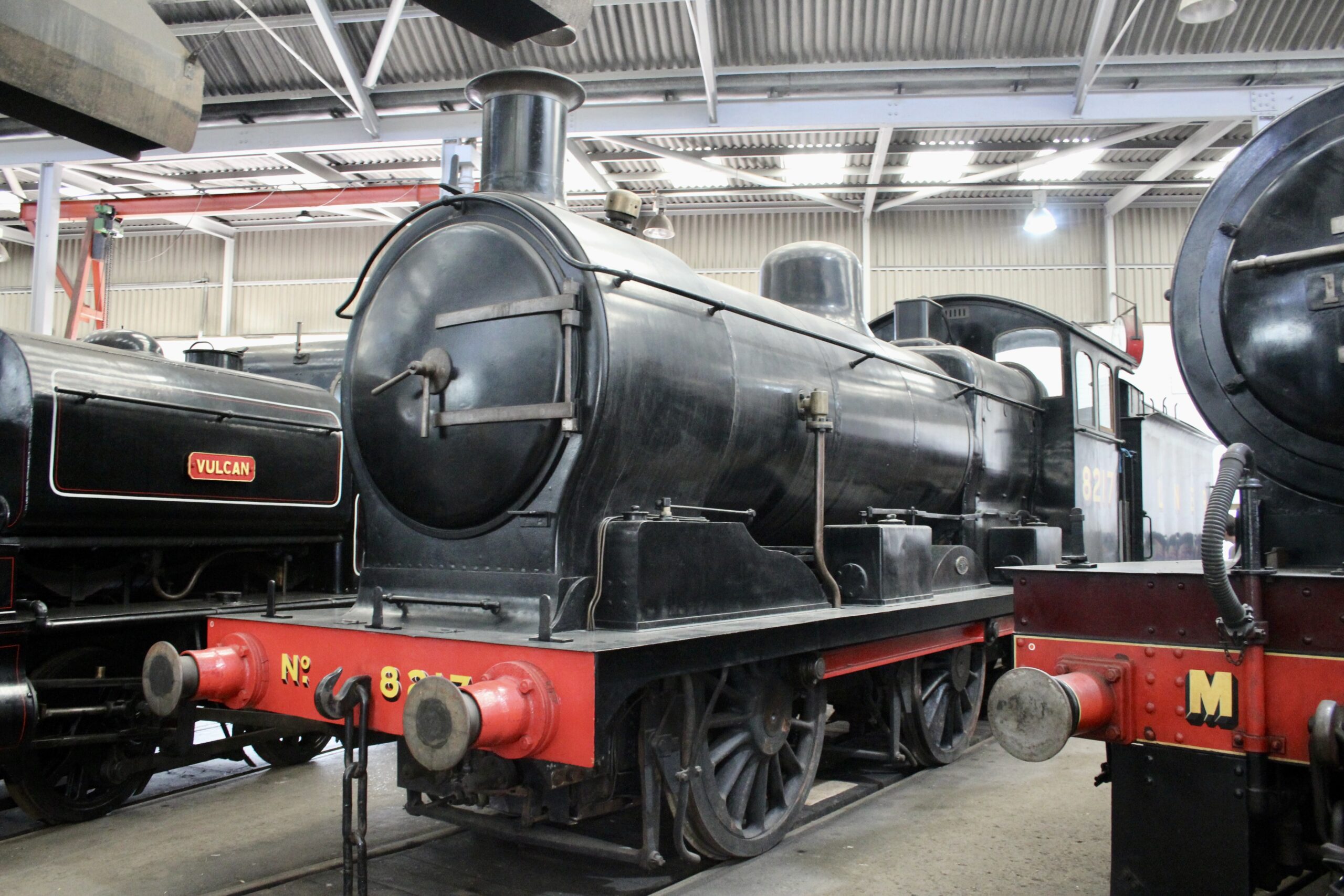
    GER Class G58 (LNER Class J17) 0-6-0 No. 8217. Built in 1905 at Barrow Hill – 28/08/2022
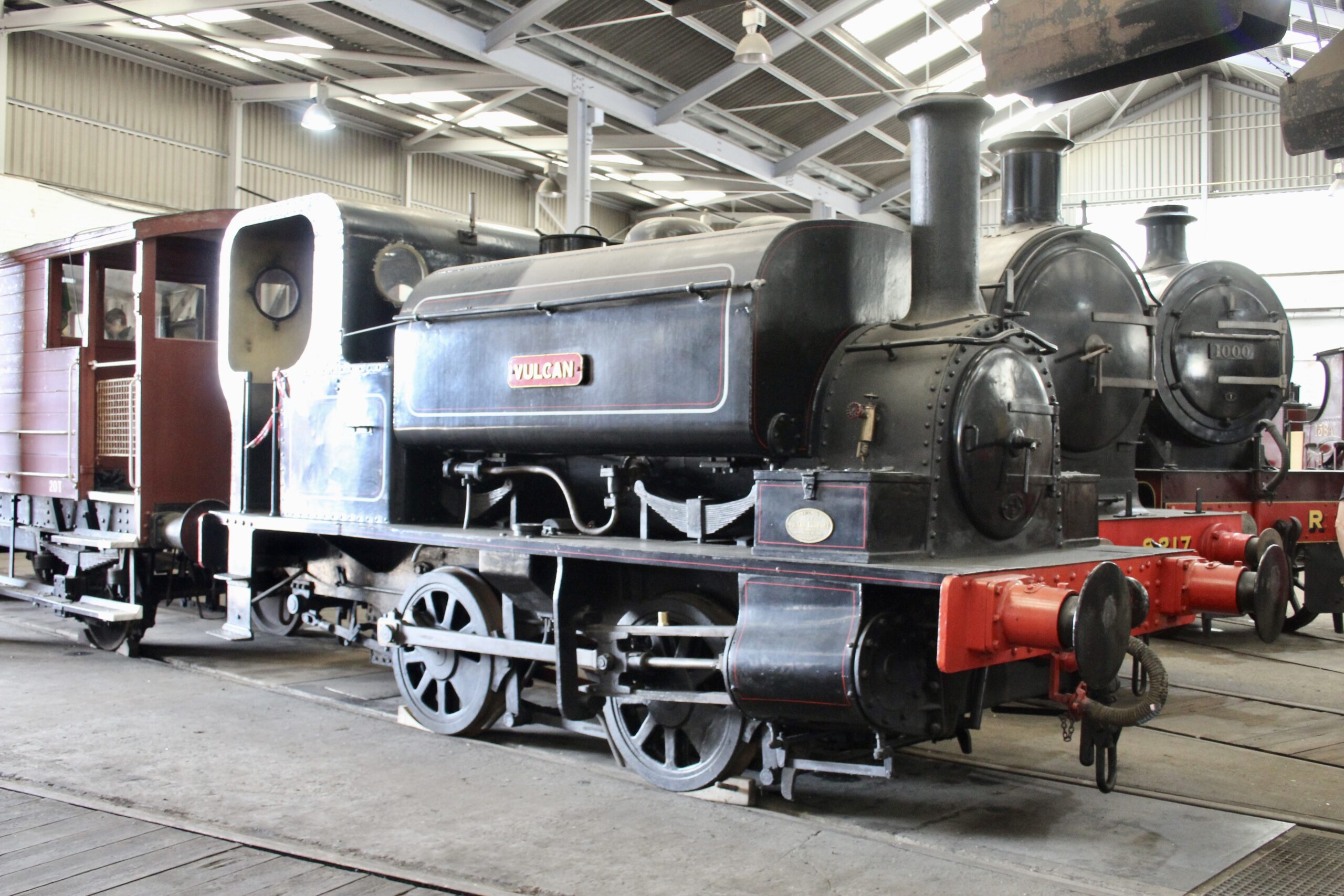
    Vulcan Foundry 0-4-0-OST No. 3272 Vulcan. Built in 1918 at Barrow Hill – 28/08/2022
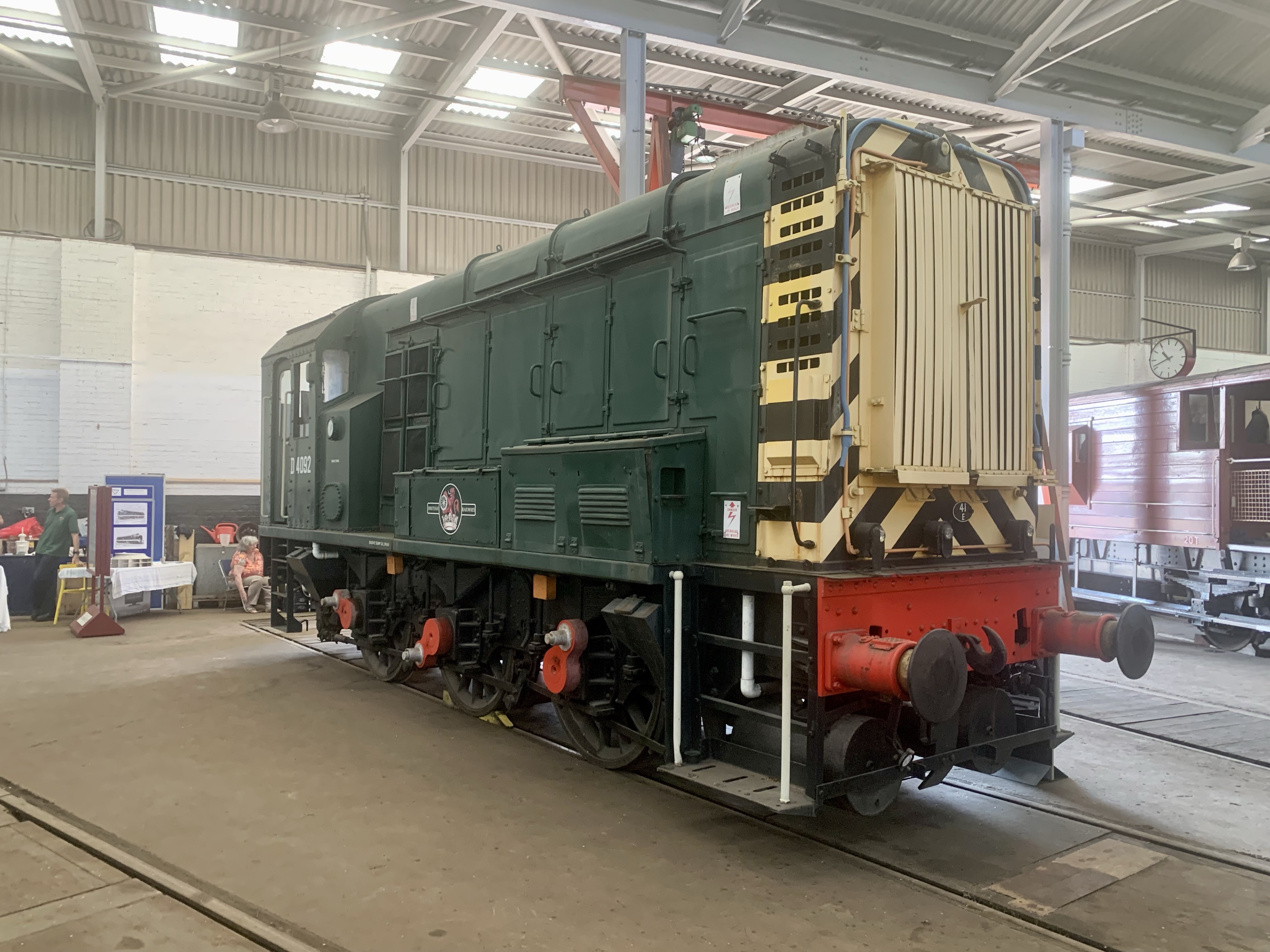
    Class 08 No. D4092 Barrow Hill – 28/08/2022
    GBRf honoured the Railway Correspondence & Travel Society (RCTS) by naming Class 69 No. 69003 ‘The Railway Observer’ after the Society magazine at Barrow Hill. – 28/08/2022
    Nameplate detail of Class 69 No. 69003 ‘The Railway Observer’ at Barrow Hill – 28/08/2022
    Class 69 No. 69003 ‘The Railway Observer’ at Barrow Hill – 28/08/2022
    Yoshi with Class 69 No. 69003 ‘The Railway Observer’ at Barrow Hill – 28/08/2022
    Class 66 No. 66726 ‘Sheffield Wednesday’ Barrow Hill – 28/08/2022
    Class 91 No. 91120 Barrow Hill – 28/08/2022
    Class 91 No. 91117 Barrow Hill – 28/08/2022
    Class 83 No. 83012 at Barrow Hill – 28/08/2022
    The unique Class 89 No. 89001 ‘Avocet’, was built as a prototype in 1986 for a fleet that was never ordered. Barrow Hill – 28/08/2022
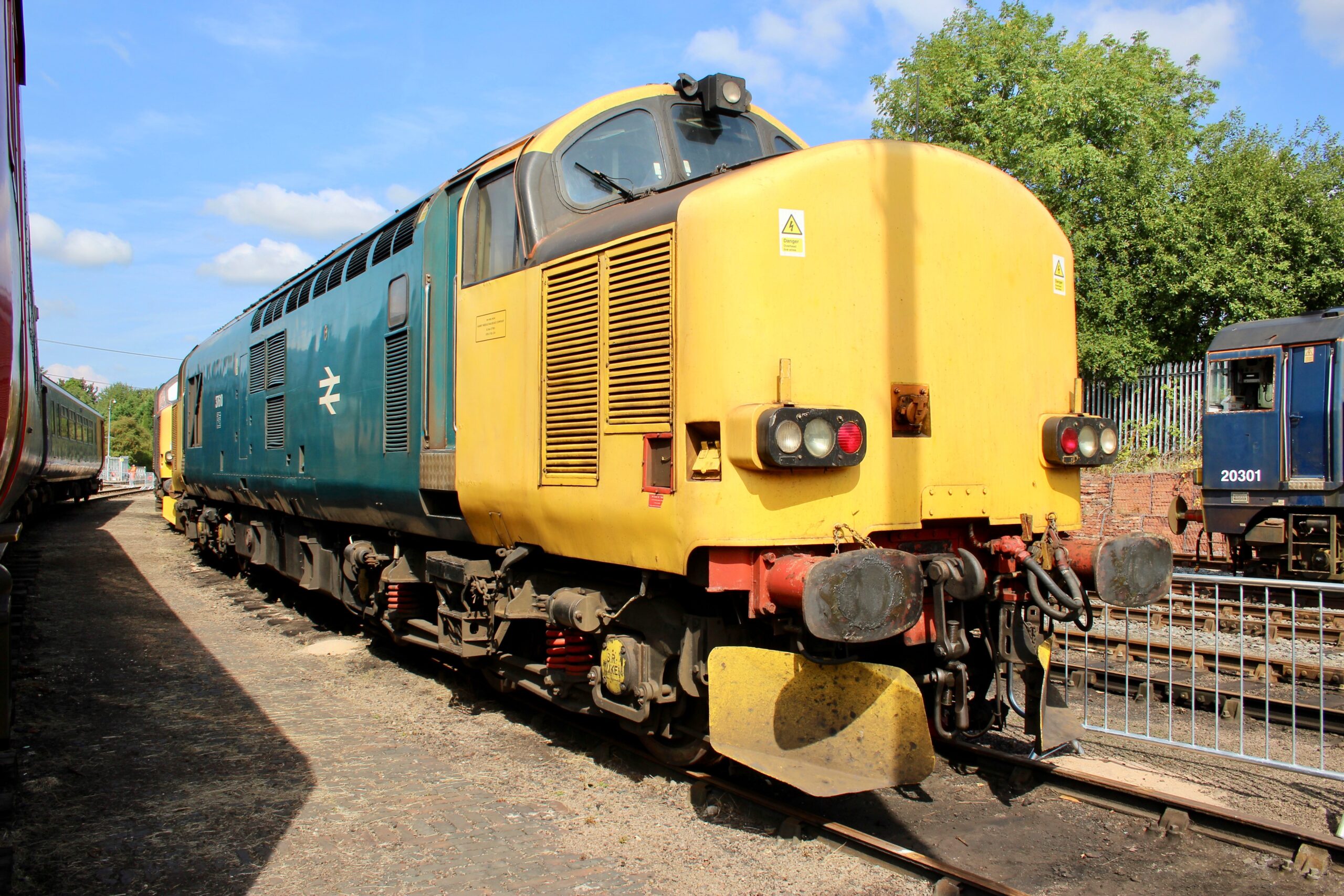
    Class 37 No. 37610 Barrow Hill – 28/08/2022
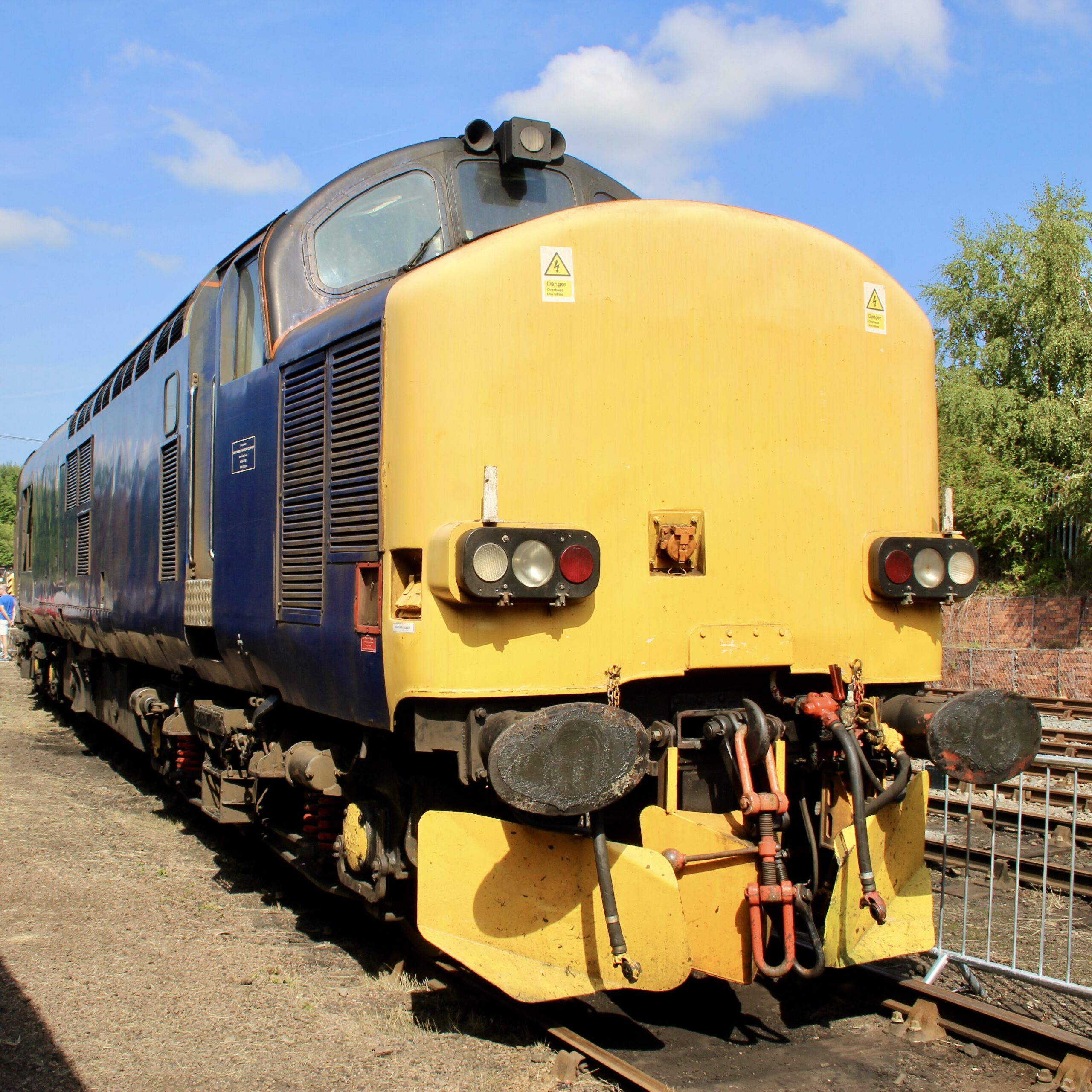
    Class 37 No. 37612 Barrow Hill – 28/08/2022
    Class 45 No. 45060 ‘Sherwood Forester’ Barrow Hill – 28/08/2022
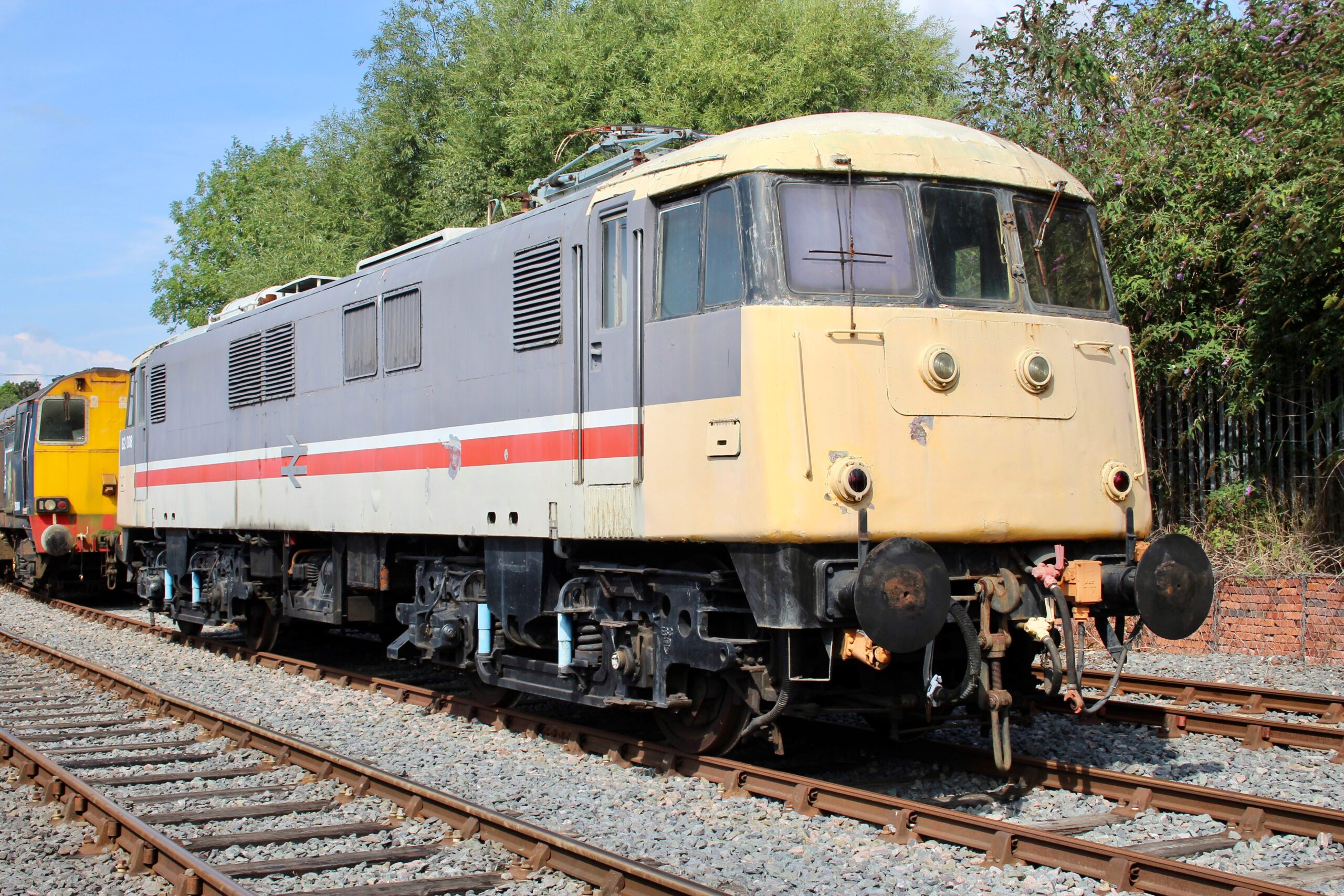
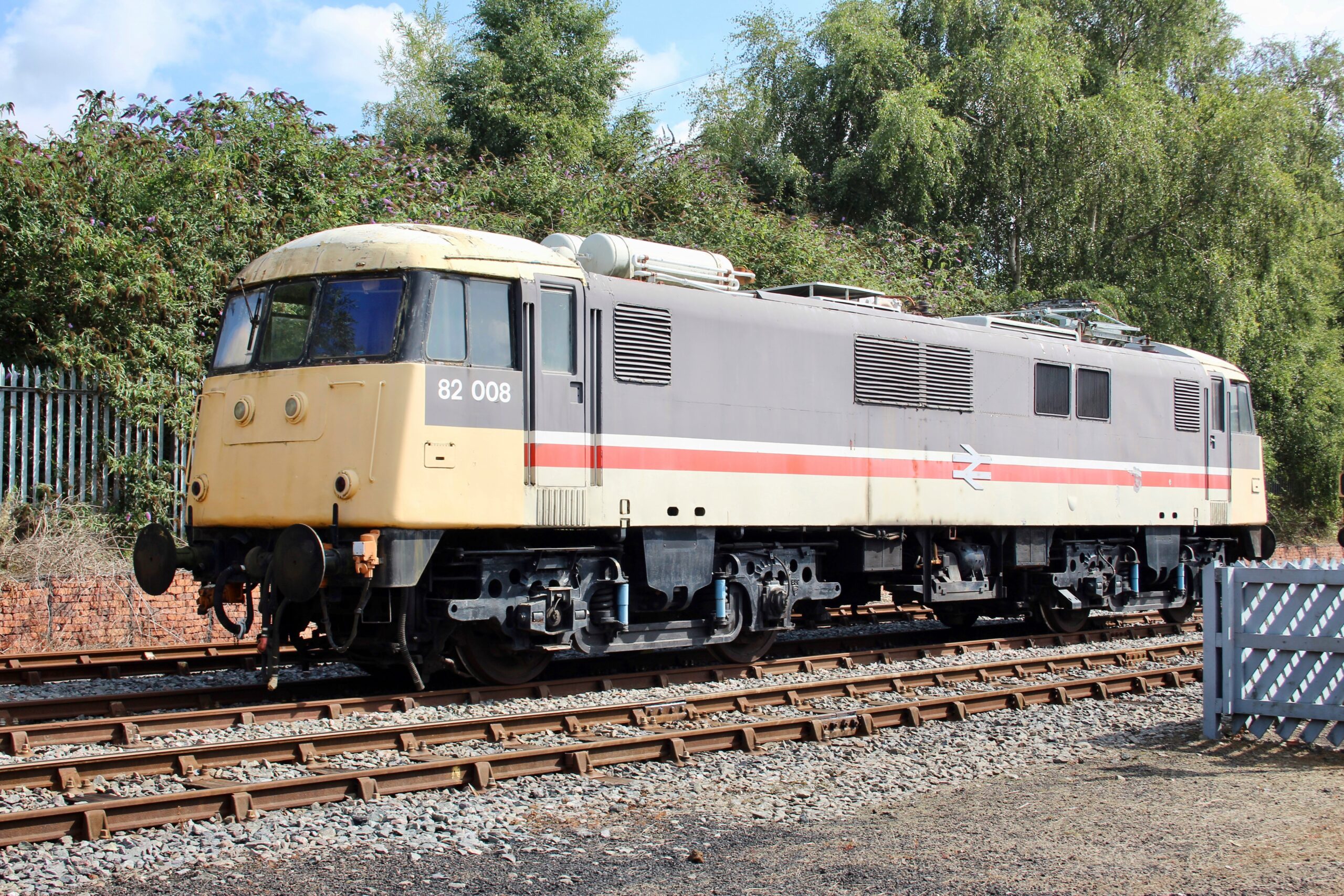
    Class 82 No. 82002 Barrow Hill – 28/08/2022
    Class 82 No. 82002 Barrow Hill – 28/08/2022
    Class 20 No. 20304 Barrow Hill – 28/08/2022
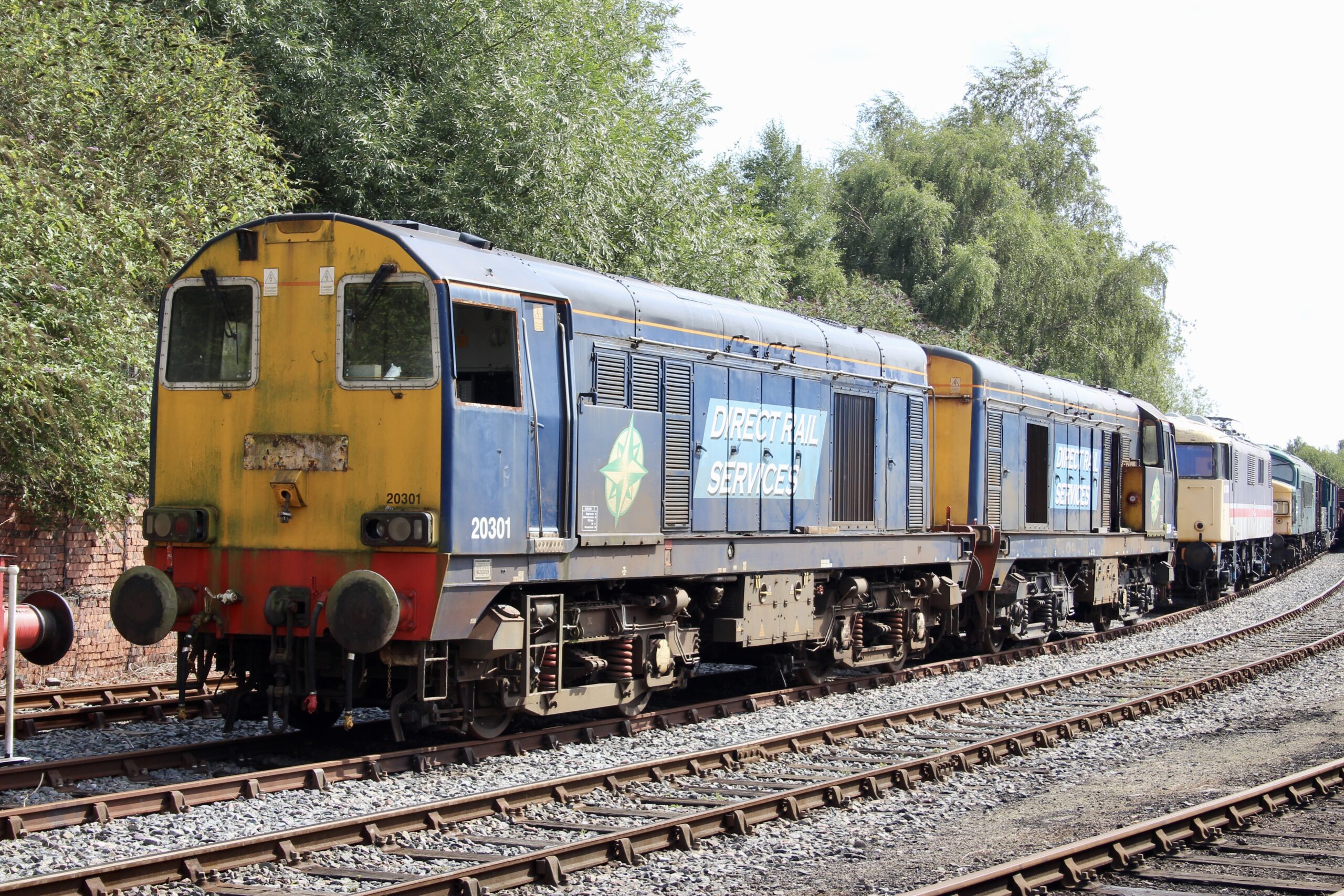
    Class 20 No. 20301 Barrow Hill – 28/08/2022
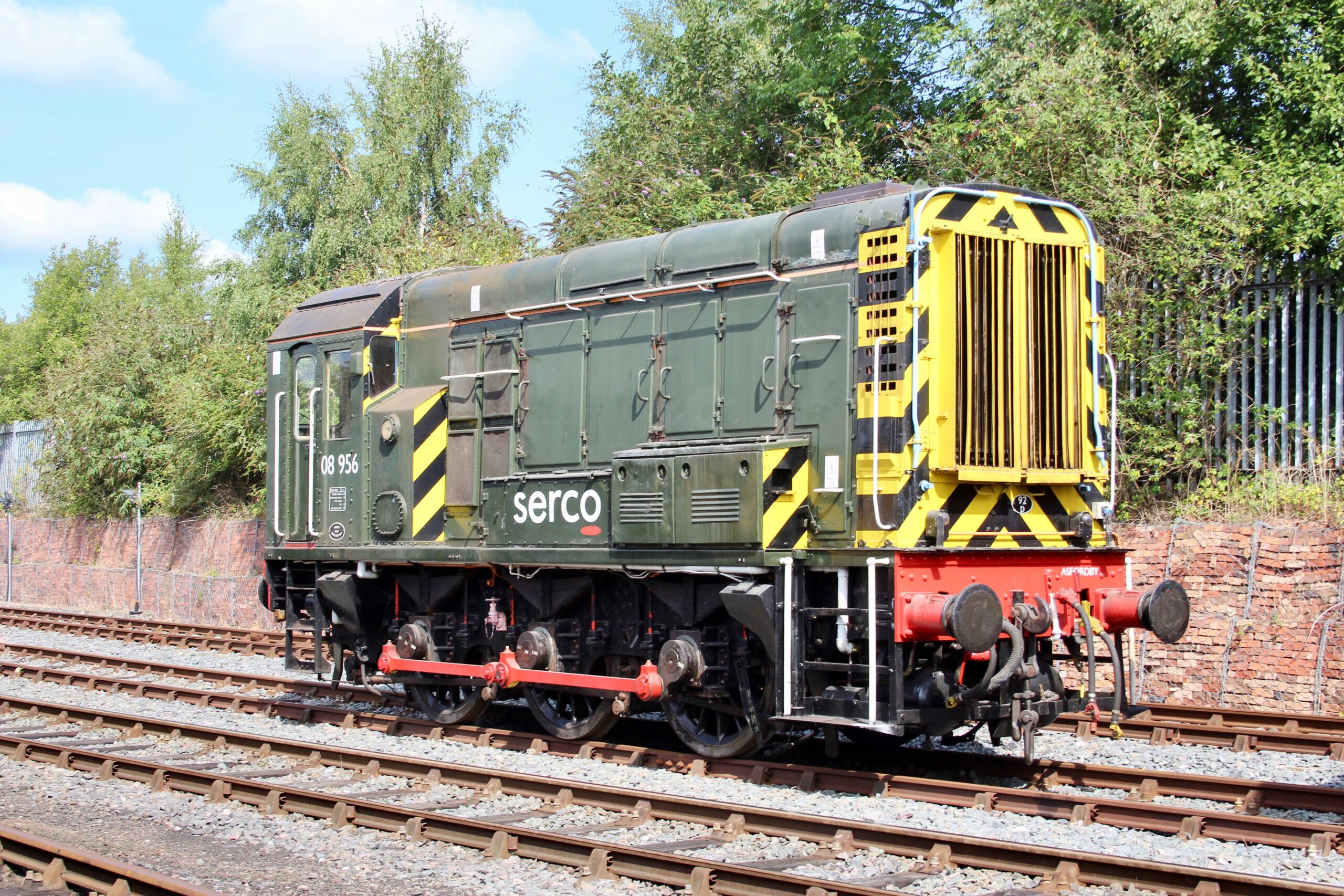
    Class 08 No. 08956 Barrow Hill – 28/08/2022
    EMR Class 156 No. 156498 Barrow Hill – 28/08/2022
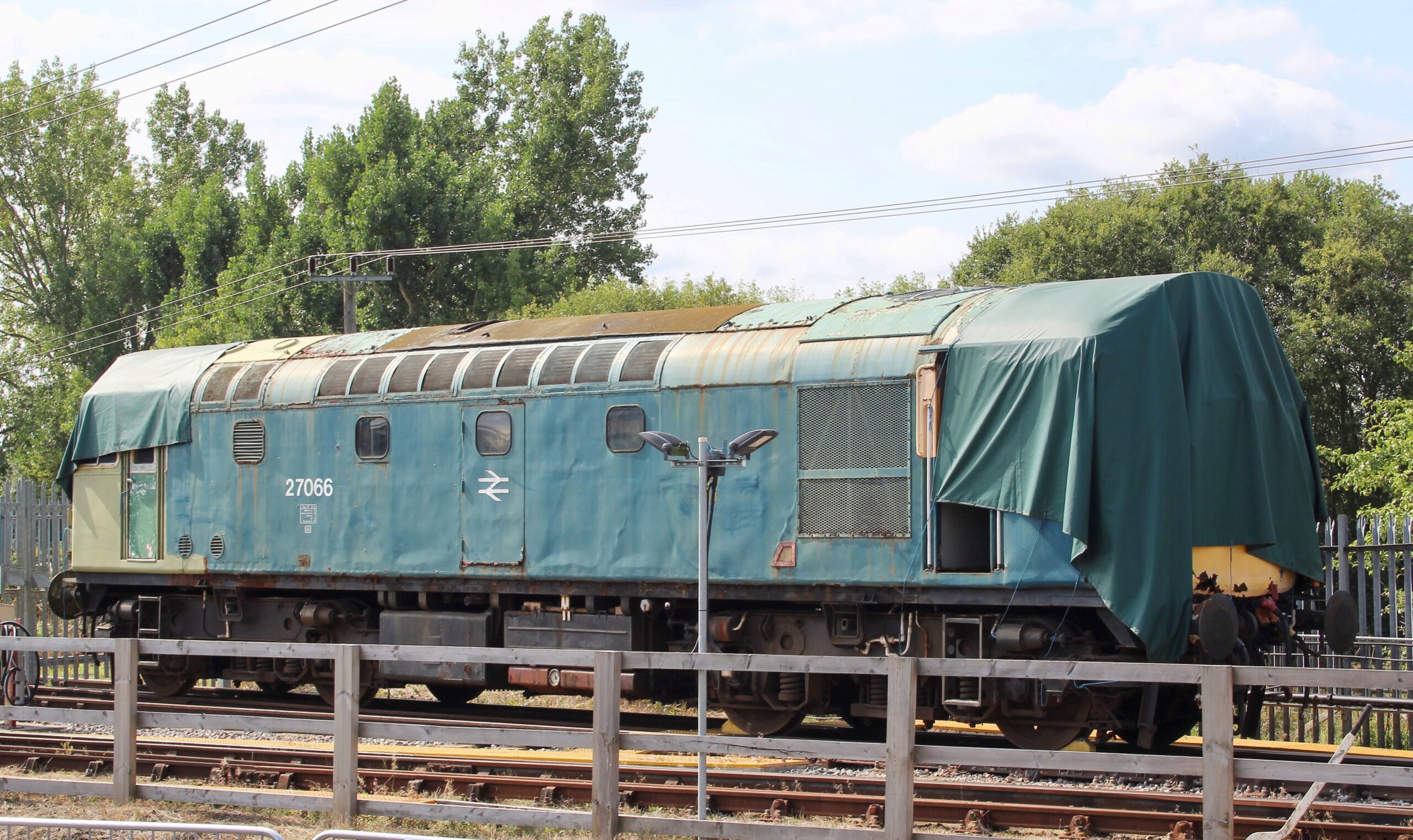
    Class 27 No. 27066 Barrow Hill – 28/08/2022
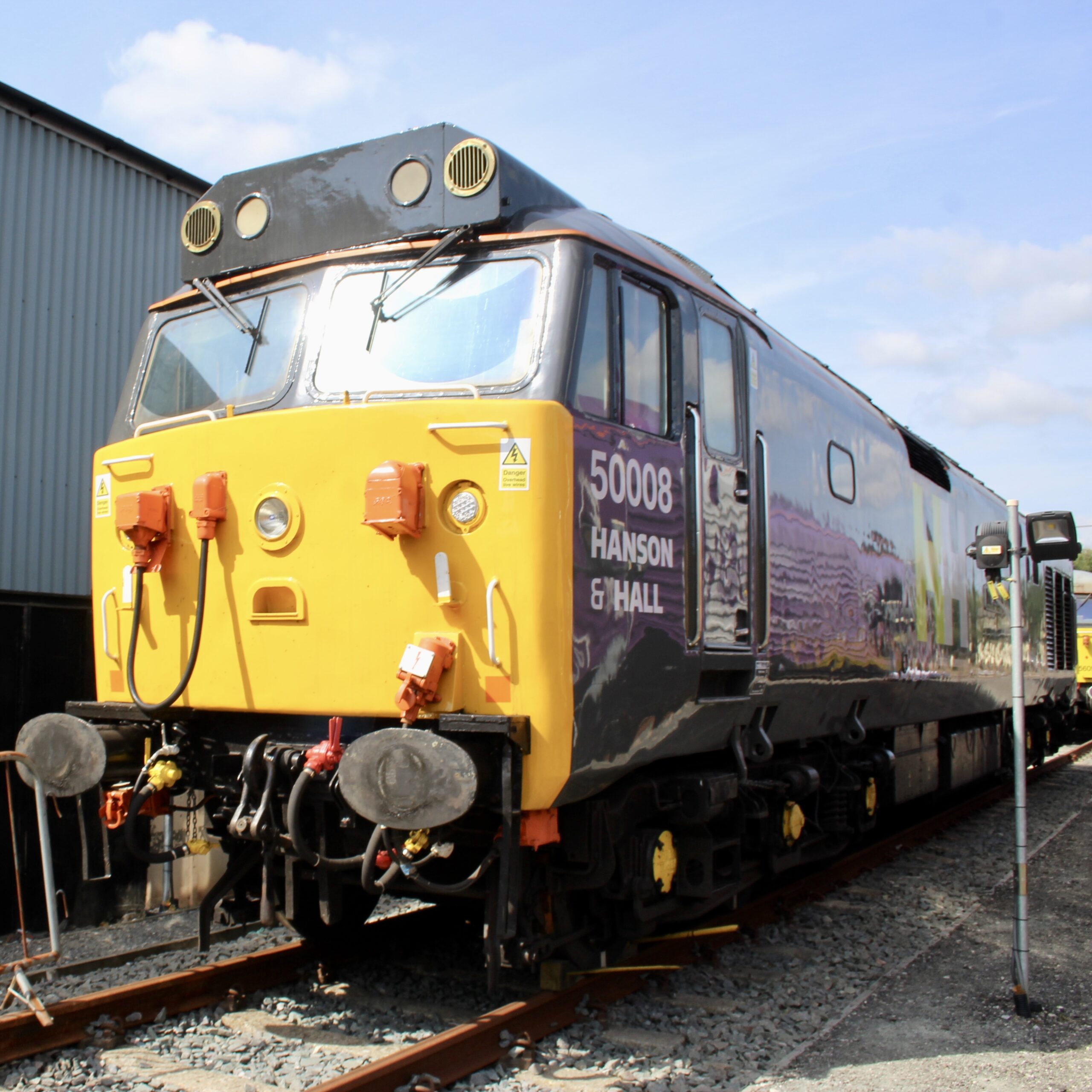
    Class 50 No. 50008 ‘Thunderer’ Barrow Hill – 28/08/2022
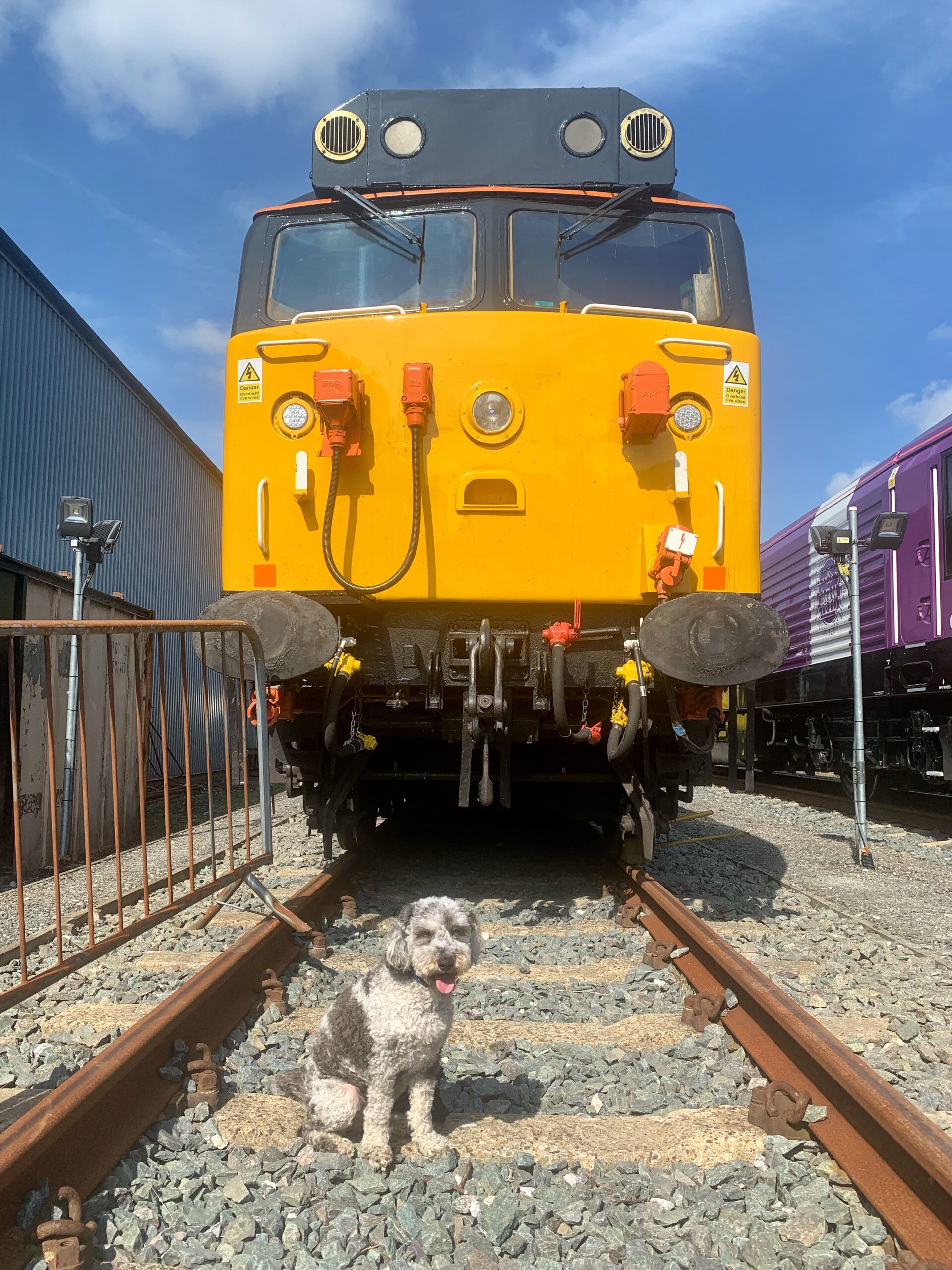
    Yoshi with Class 50 No. 50008 ‘Thunderer’ Barrow Hill – 28/08/2022
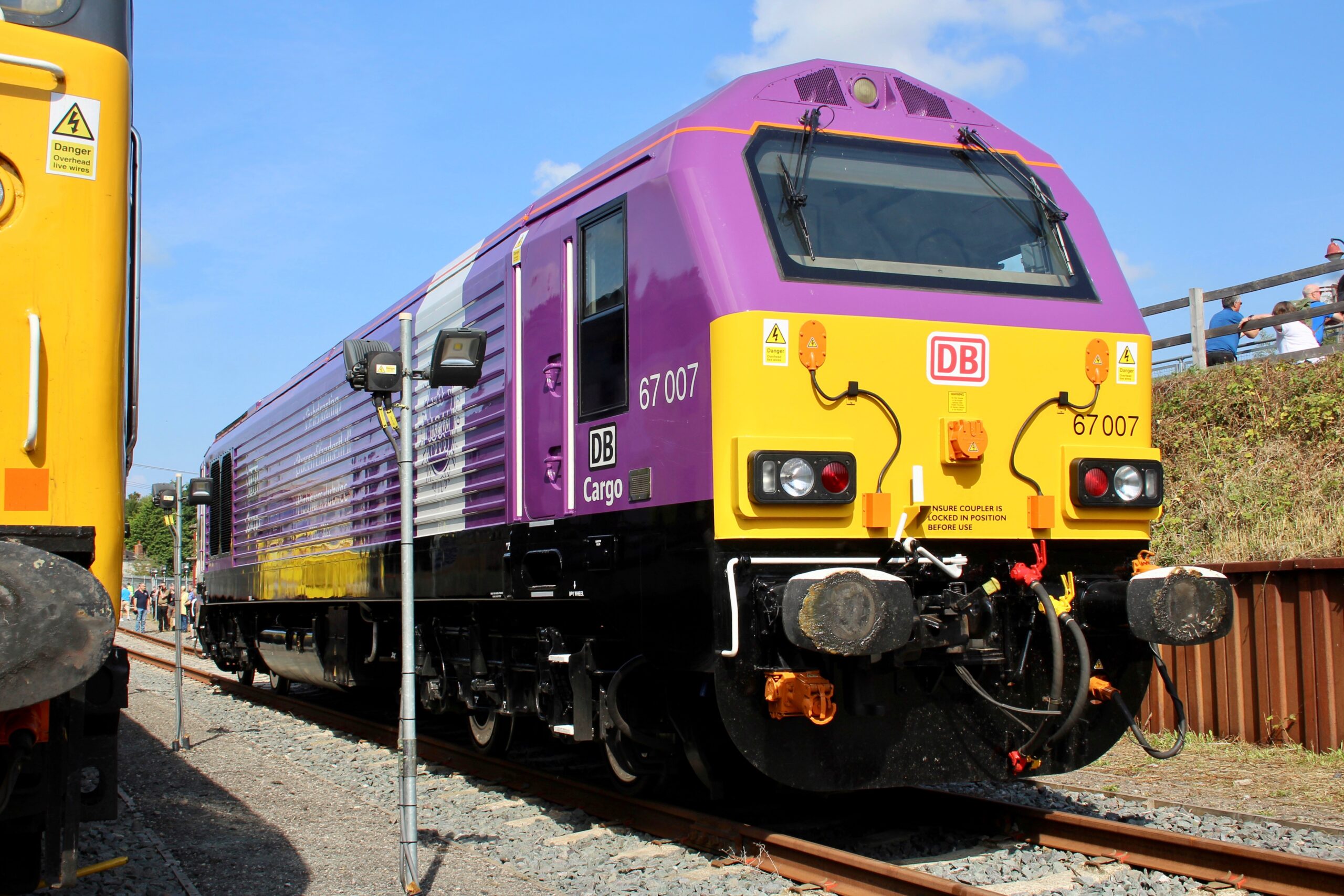
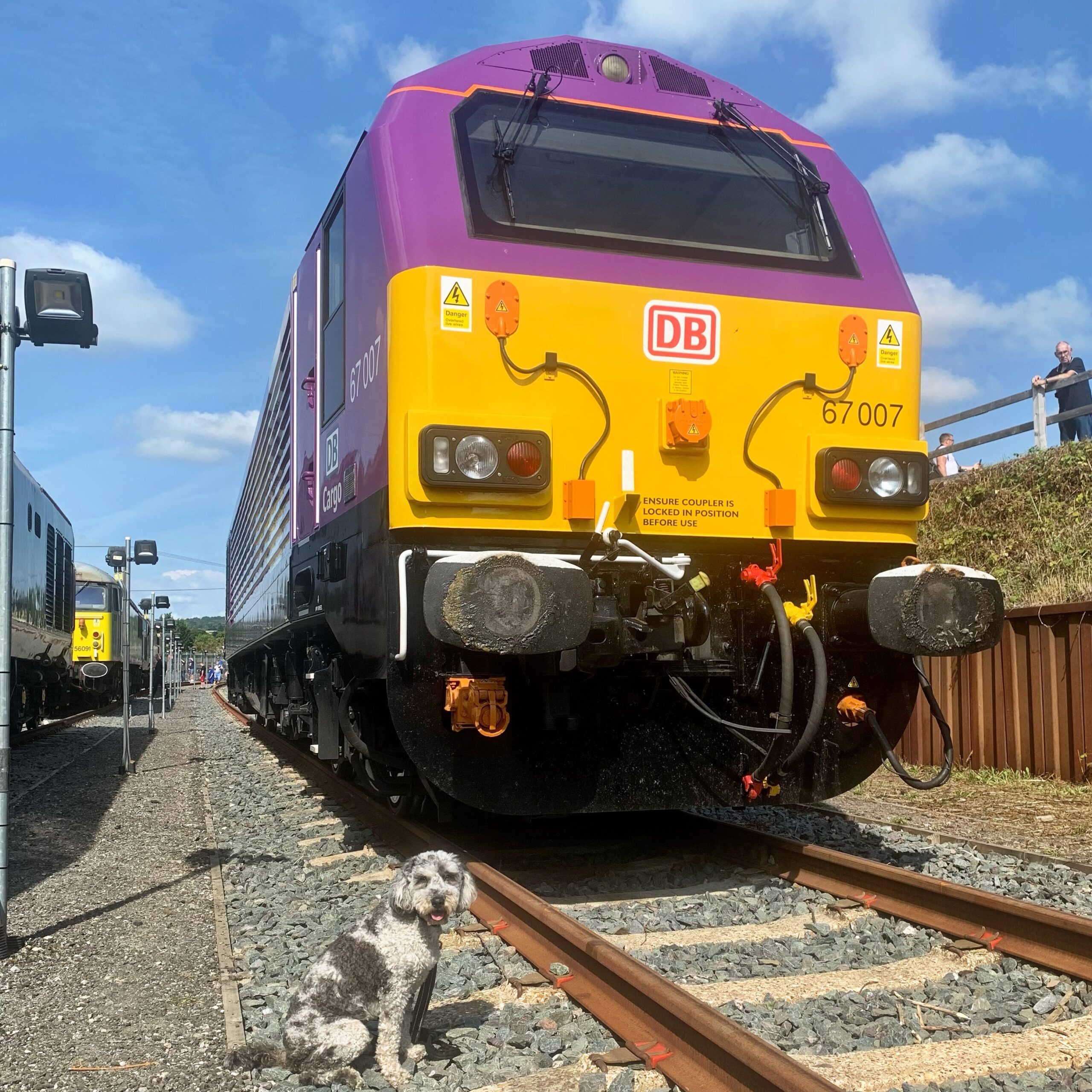
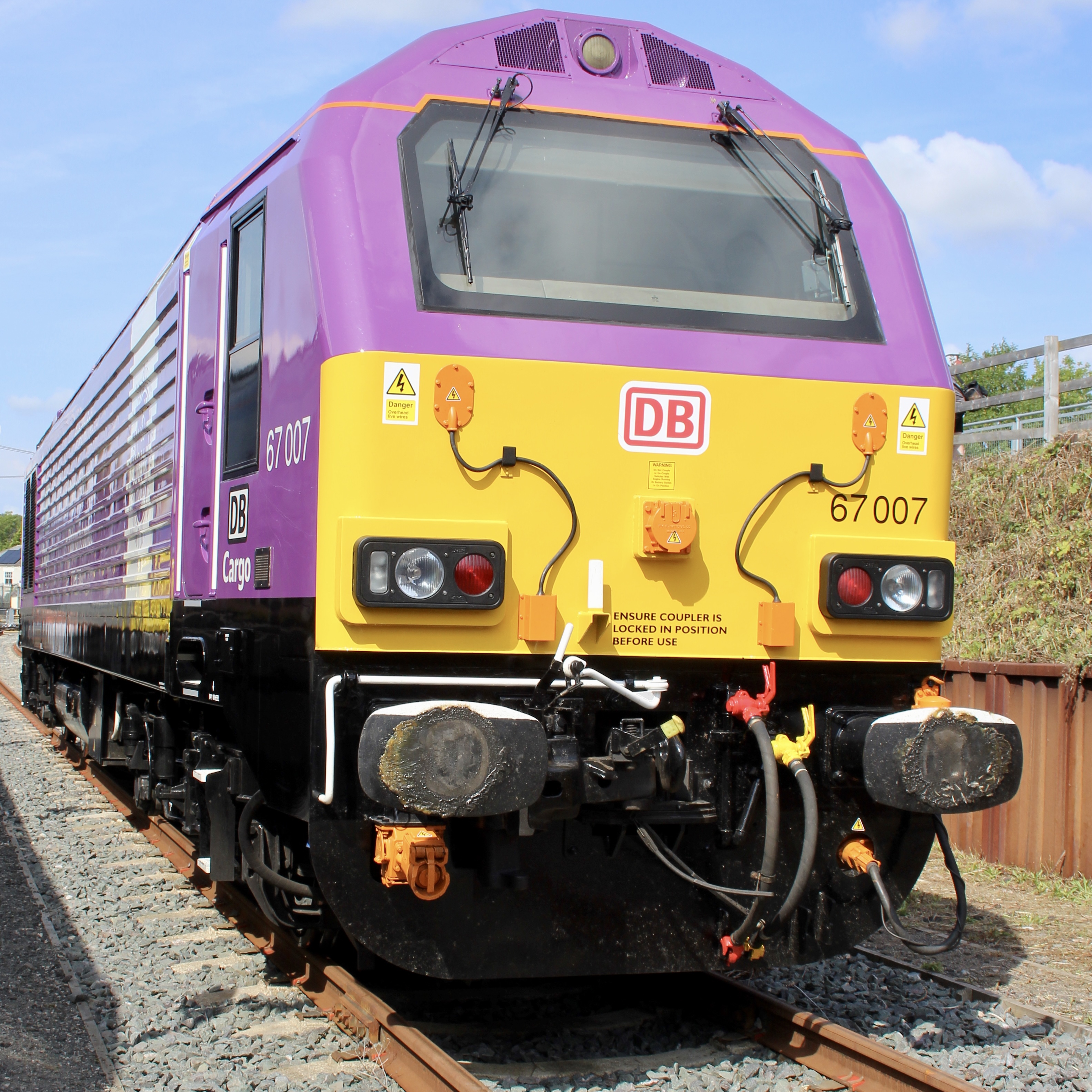
    Class 67 No. 67007 Barrow Hill – 28/08/2022
    Yoshi with Class 67 No. 67007 Barrow Hill – 28/08/2022
    Class 67 No. 67007 Barrow Hill – 28/08/2022
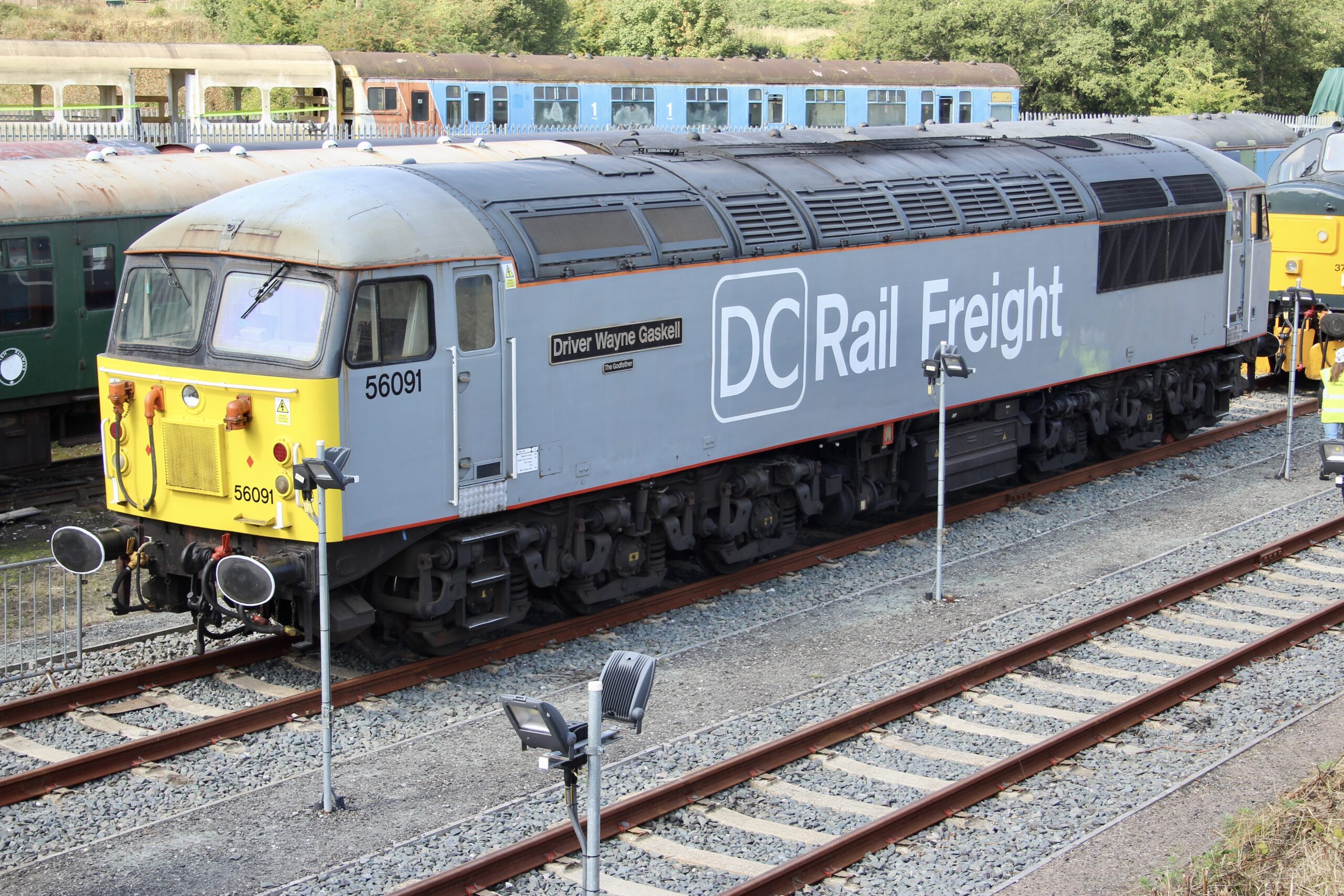
    DC Rail liveried Class 56 No. 56091 ‘Driver Wayne Gaskell’ at Barrow Hill – 28/08/2022
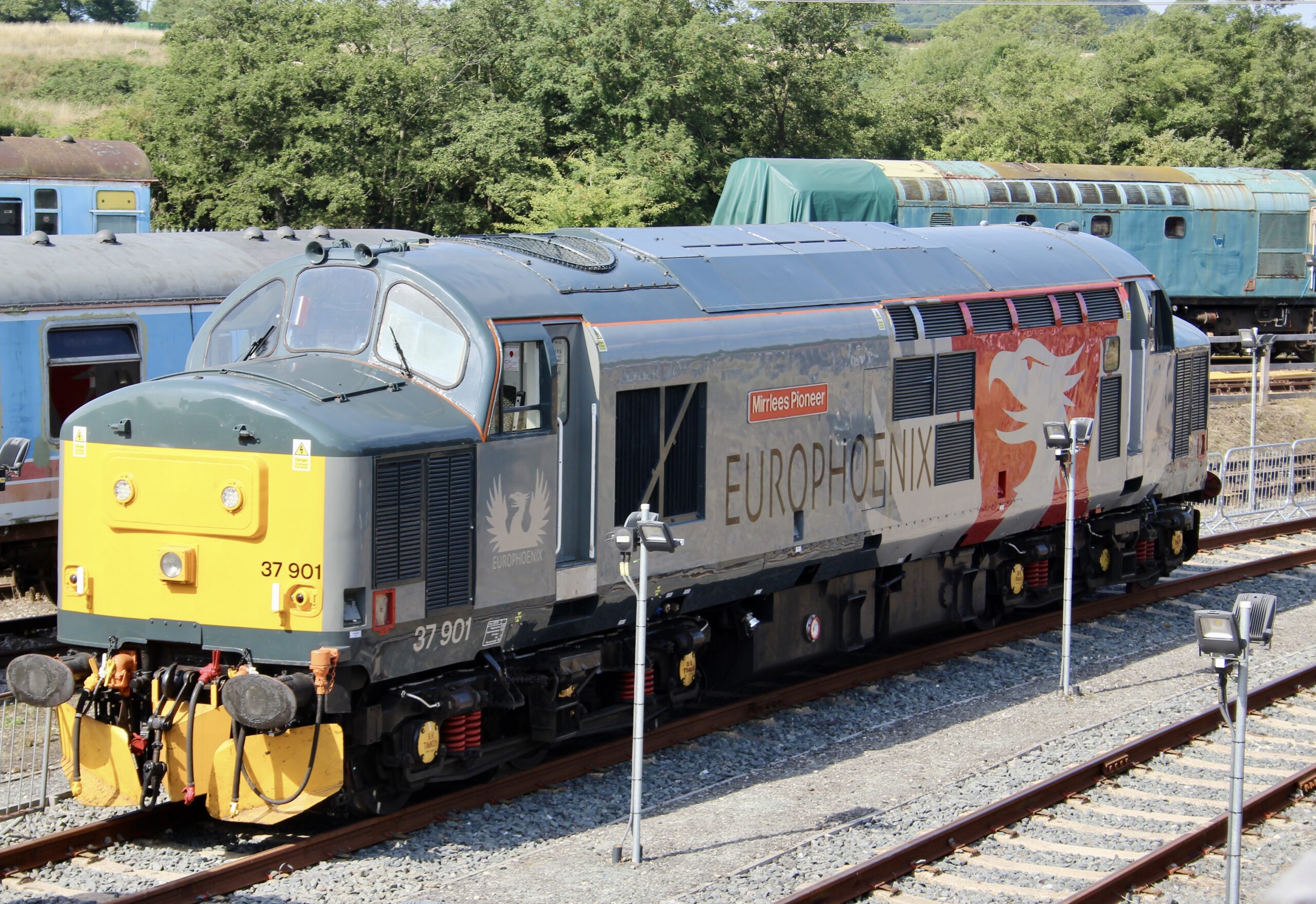
    Class 37 No.’s 37219 ‘Jonty Jarvis’ and 37901 Barrow Hill – 28/08/2022
    Class 37 No. 37901 Barrow Hill – 28/08/2022
    Class 37 No. 37667 ‘Flossie’ Barrow Hill – 28/08/2022
    Class 37 No. 37667 (D6851)’Flossie’ with Class 47 No. 47769 and Class 20 No. 20314 Barrow Hill – 28/08/2022
    Class 55 No. 55015 ‘Tulyar’ Barrow Hill – 28/08/2022
    Yoshi gets up close to Class 55 No. 55015 ‘Tulyar’ Barrow Hill – 28/08/2022
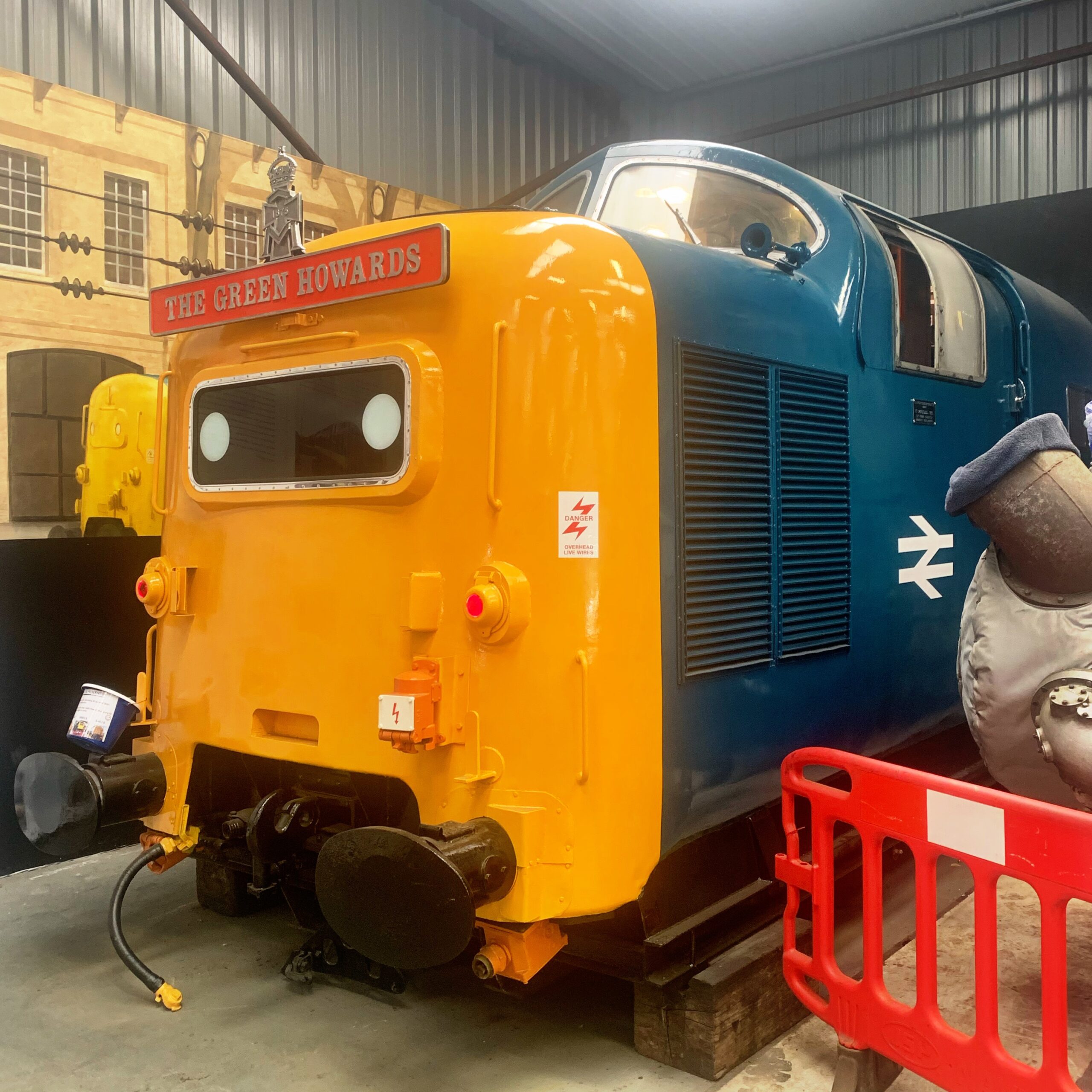
    Cab of Class 55 No. 55008 ‘The Green Howards’ – Barrow Hill 28/08/2022

    Although Yoshi clearly took a liking to the Deltic locomotives, he was a little unsure about the metal steps leading up to the door of No. 55008 ‘The Green Howards’, so we reversed back down to the security of ground level. However, Scott kindly took the following video of the Napier Deltic engine simulation which we can all enjoy!

    Napier Deltic engine simulation (Courtesy of Scott Lewis)
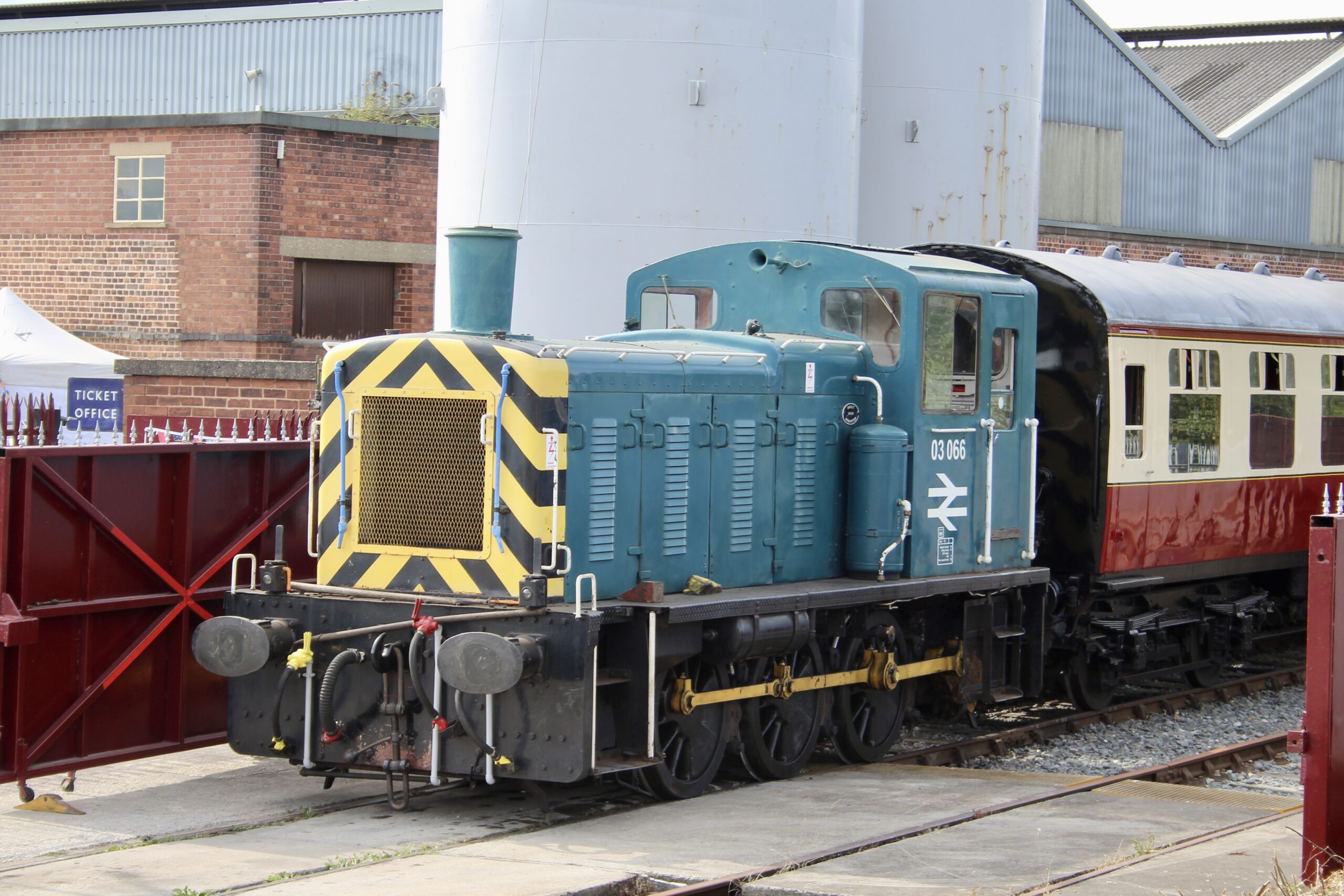
    Class 03 No. 03066 Barrow Hill – 28/08/2022
    No. 1501 Barrow Hill – 28/08/2022
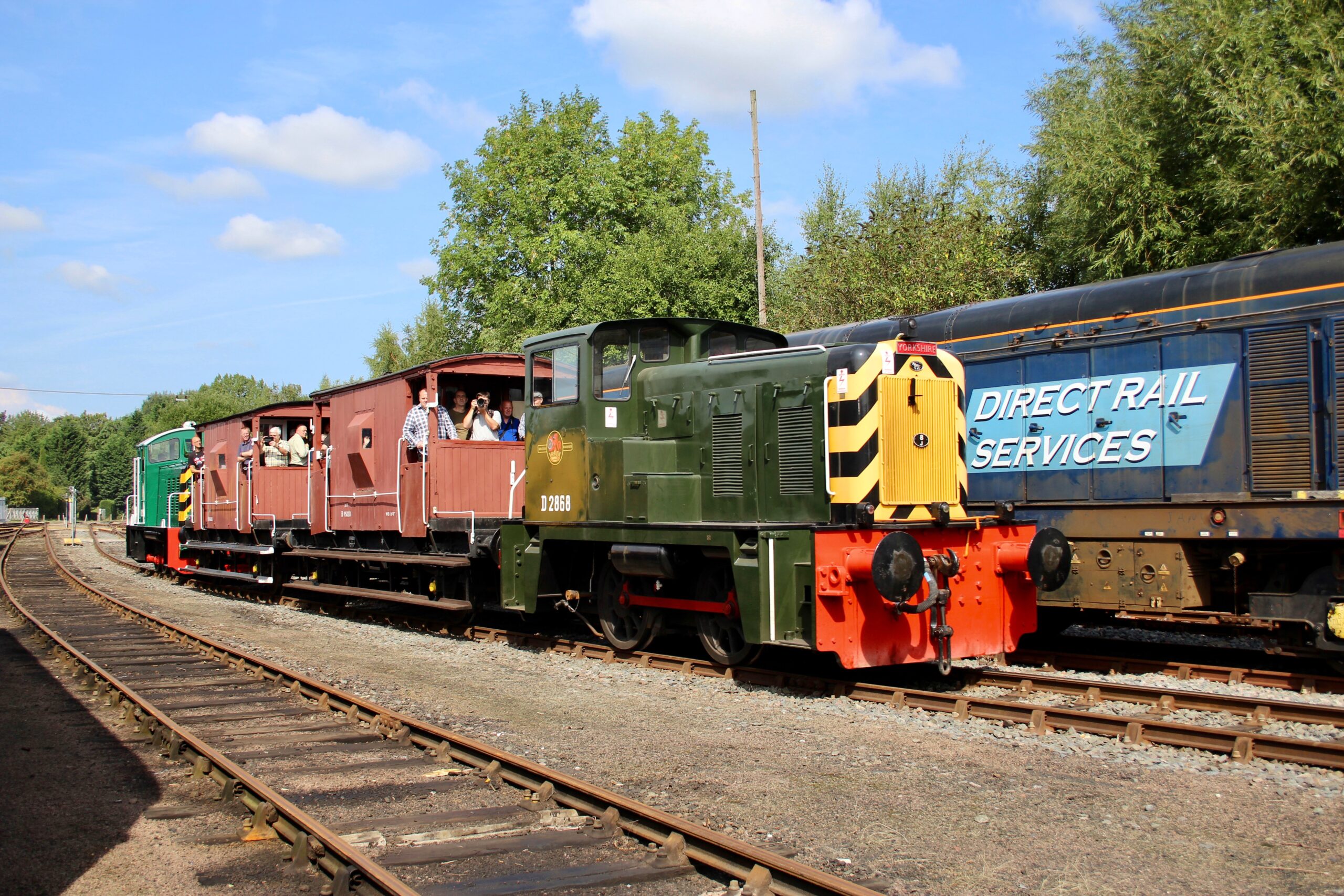
    Class 02 No. D2868 Barrow Hill – 28/08/2022
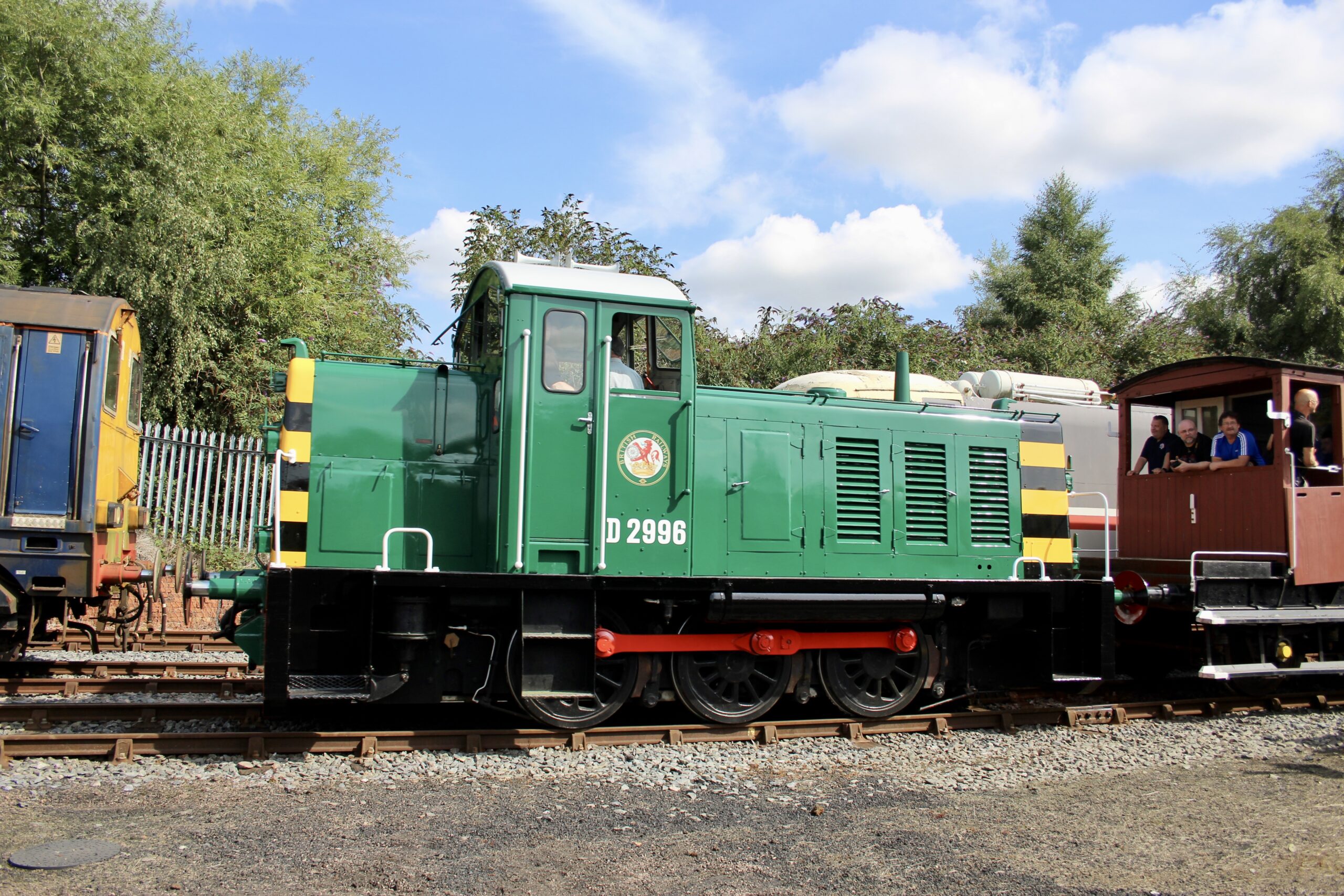
    Class 07 No.D2996 (07012) Barrow Hill – 28/08/2022
    Video of Barrow Hill 150 +2 Celebration Gala shuttles – 28/08/2022

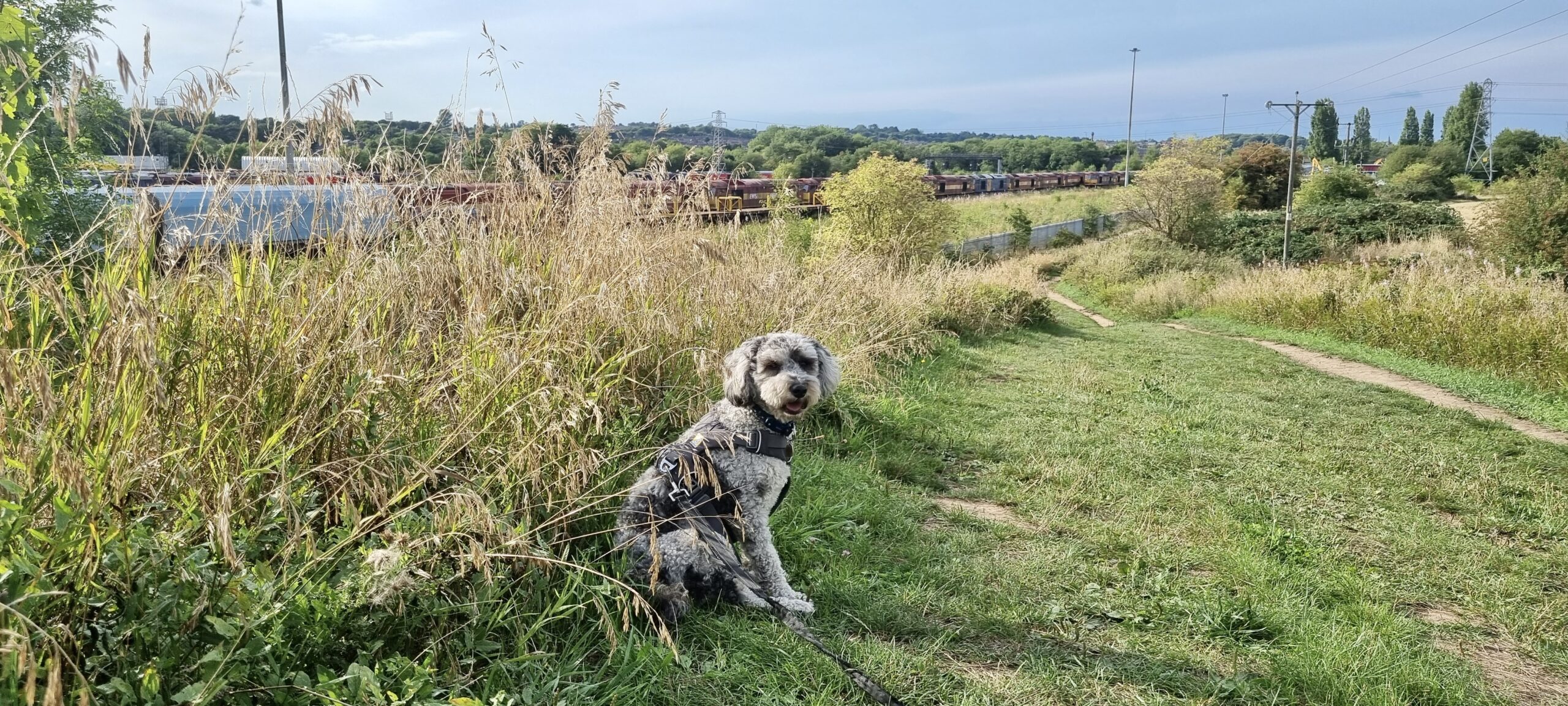
    After our visit to Barrow Hill, we journeyed home via DB Cargo operated Toton Traction Maintenance DepotChanges and currently the only TMD within DB Cargo UK where heavy maintenance is carried out on locomotives. Our visit was to see the lines of withdrawn Class 60 locomotives currently in store. I was surprised by the number of diesel engines slowly rotting away.

    Class 60 locomotives at Toton – 28/08/2022 (Image courtesy of Scott Lewis)
    Yoshi having surveyed the Class 60 locomotives at Toton – 28/08/2022 (Image courtesy of Scott Lewis)

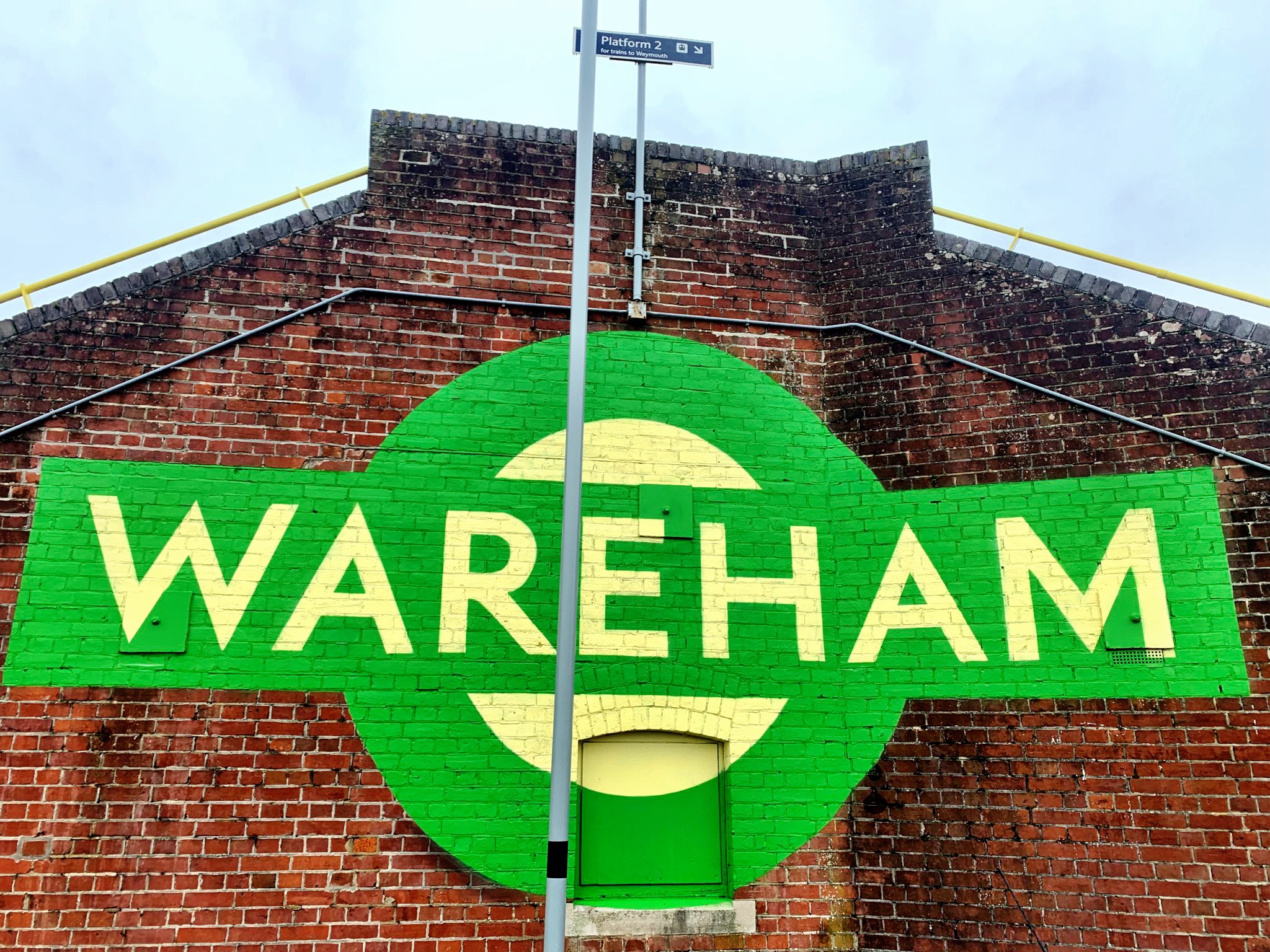
    In other news, Network Rail have been granted retrospective listed building approval for adorning the pedestrian bridge at Wareham railway station with a heritage style roundel sign which has been in place on the grade 2 station site since November 2021. The station was built in 1864 and listed for its historical and architectural importance in 1976. Network Rail said they did not realise the footbridge which is a later addition to the station buildings was included in the listed status.

    Shame about the lamppost! The Wareham station sign as seen on 03/01/2022

    Swanage Railway resident Class 33/1 No. 33111 was taken to Bristol St. Phillips Marsh depot on a low loader for wheel turning this week following her recent failure on the heritage branch.

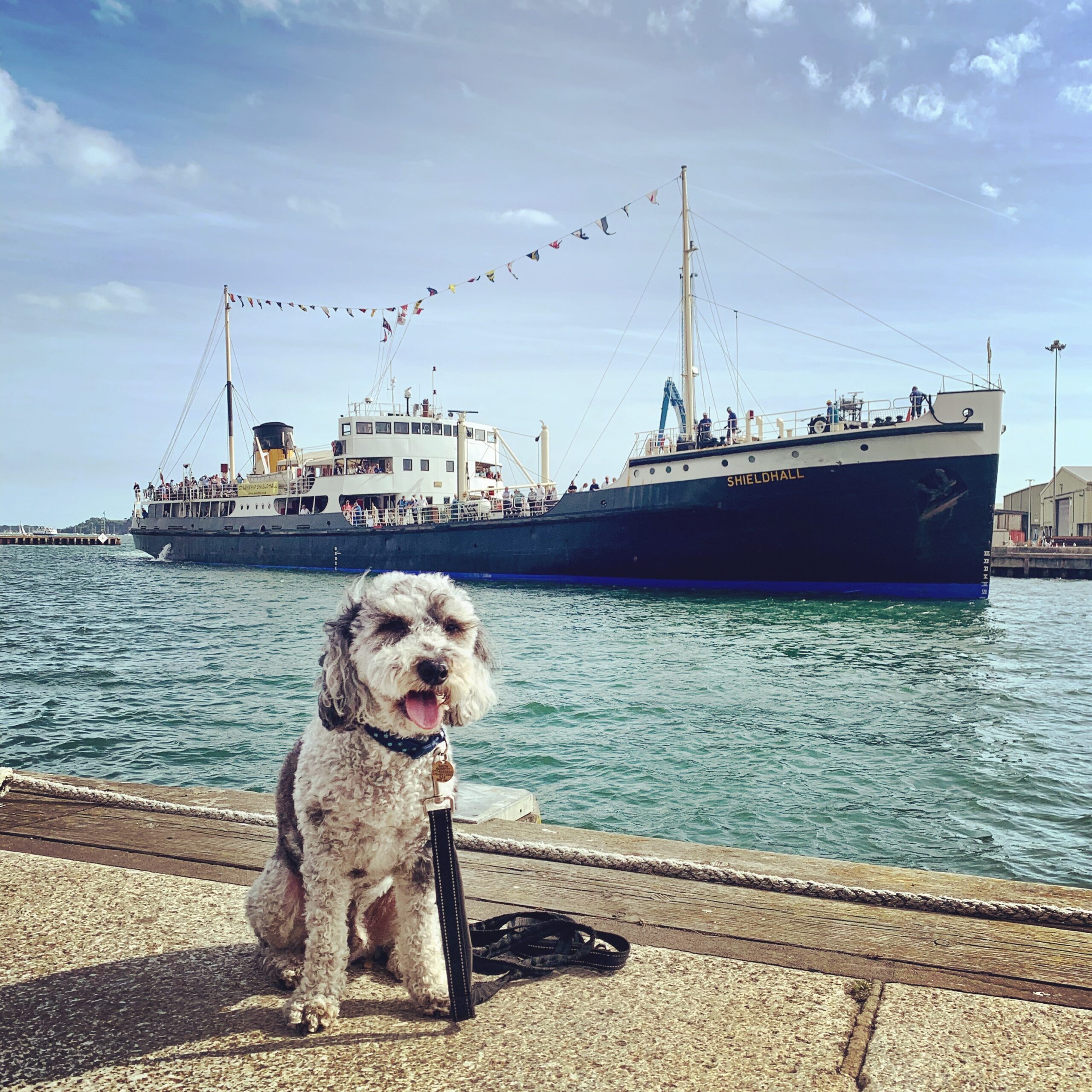
    On Bank Holiday Monday Yoshi popped down to Poole Quay to see the arrival of Steamship Shieldhall, launched in 1955 for the transport of treated sewage sludge down the river Clyde to be dumped at sea – 29/08/2022

    This week’s blog has mostly been put together with the sound of Alexi Sayle’s “Strangers on a Train” gracing our ears. We loved the idea of combining the “Tank Museum” at Bovington with “Monkey World” and creating a monkey tank driving nightmare. Many thanks for popping by and for your comments, corrections and updates. Thank you to Caroline for helping out with video and putting up with me. And finally a big thank you for Scott for taking the driving seat on Sunday for our trip to Derbyshire. See you in seven!

  • Northward Bound

    Tuesday 12th July to Tuesday 19th July

    DB Cargo Class 67 No. 67025 in operation with Transport for Wales waits departure at Crewe with 5K67 0951 Holyhead Car. M.D. Empty Coaching Stock working to Crewe C.S. – 16/07/2022

    Fleetwood

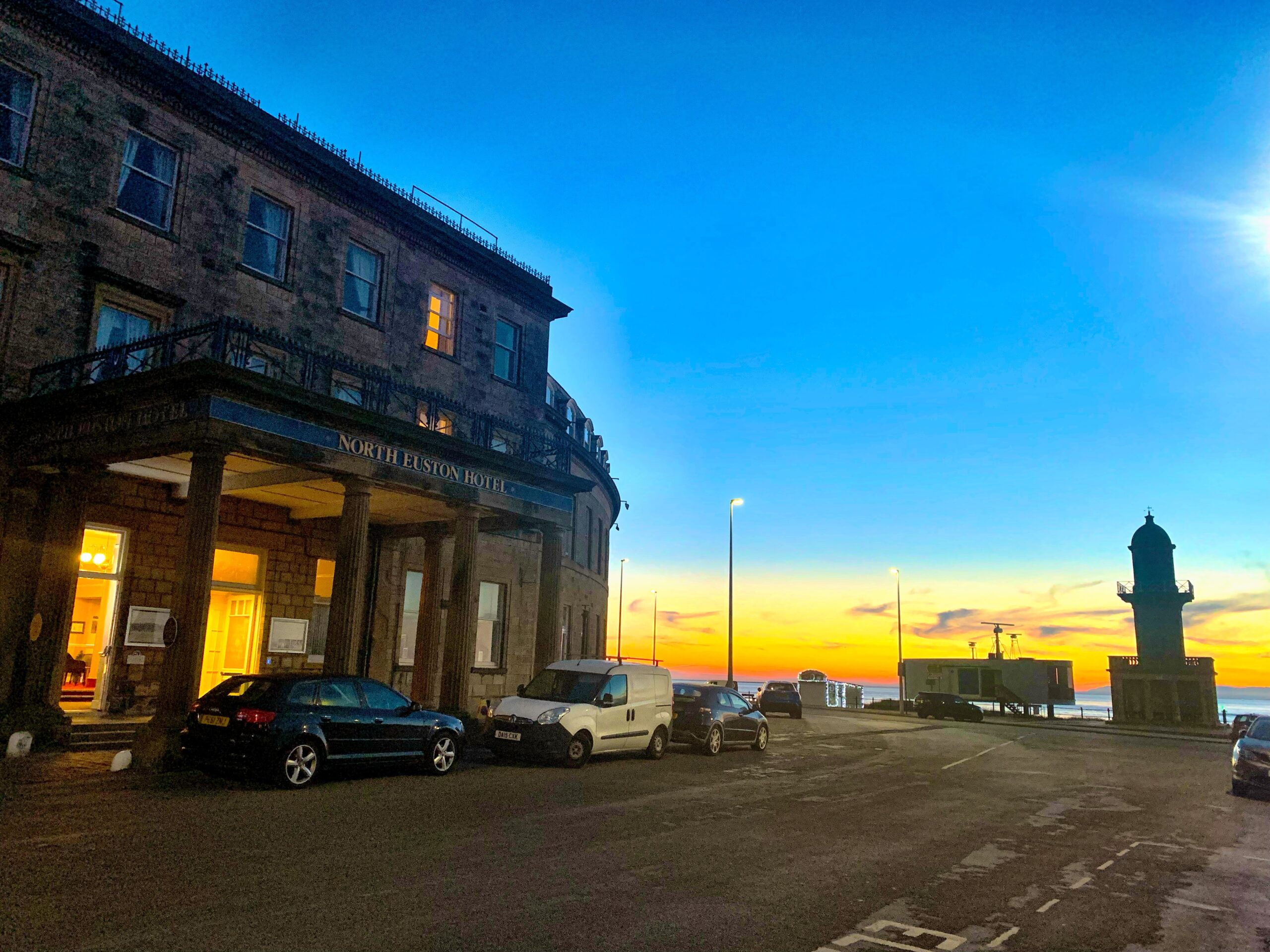
    The North Euston Hotel, Fleetwood

    Yoshi and I spent much of last week in the North West of England as we made The North Euston Hotel in Fleetwood our base. The hotel was commissioned by Sir Peter Hesketh Fleetwood, designed in the Greek classical style by architect Decimus Burton and built between 1839 and 1841 to serve overnight passengers making the journey by rail from London Euston who were destined for steam ships which would provide onward travel to Scotland where after disembarking at Ardrossan they would take the train on to Glasgow. Fleetwood was the northern most station at the time, hence the name “North Euston” for the hotel, and the railway was yet to run over the Shap hills. Queen Victoria made the journey in 1847 and stayed at the hotel, although I’m sure she didn’t stay in our room. The first manager of the hotel, Corsican born Xenon Vantini, had been a courier for Napoleon Bonaparte and was also the first person to open a refreshment room at Wolverhampton railway station. In 1859 following a decline in fortunes, the hotel was sold to the government and was converted into a school of musketry and later, in 1867, an officer’s quarters. The building existed in this form until the 1890’s when it was purchased by a group of London businessmen who converted it back into a hotel. The North Euston is currently owned by local business families. Yoshi very much enjoyed his morning sausage for breakfast and we celebrated our dubious achievement of coming last in the Sunday evening pub quiz which was a lot of fun.

    The railway to Fleetwood was opened on 15th July 1840 as the Preston & Wyre railway and was also the vision of Sir Peter Hesketh Fleetwood it being designed to connect the then new port of Fleetwood on the Fylde coast to Preston. The railway was constructed by George and Robert Stephenson with contribution from Joseph Locke. Its glory days lasted only six years until a direct route over Shap was finally achieved. The railway was absorbed into the Lancashire & Yorkshire Railway ( later the London Midland Scottish Railway as part of the Big Four groupings in 1923) and extensions were built to Blackpool and Lytham to cater for the growing number of passengers traveling to the seaside. Fleetwood would become, for a time, one of the largest and most successful fishing ports in the UK but by 1970 the railway from Poulton-le-Fylde to Fleetwood was closed to passenger traffic and later, in 1999, to freight workings.

    Thornton Station is located in the heart of Thornton town centre – July 2022
    Until the late 1980’s a signal box operated the crossing over Station Road, Thornton – July 2022
    The current station buildings were the first built by the then newly formed London Midland Scottish Railway (LMS) in 1927 – July 2022

    In 2006, the Poulton & Wyre Railway Society was formed with the aim of reopening the railway. Since then, much work has been carried out in clearing sections of the line from the ingress of nature and a Class 108 Diesel Multiple Unit was purchased for restoration and use on the line. More recently, the Poulton-Le-Fylde to Fleetwood line was subject to a study as part of the UK Government’s Restoring Your Railway programme. In June 2022 it was announced that the scheme should progress further and Network Rail will receive funding to produce a detailed plan for the revival of services. The Poulton-Le-Fylde & Wyre Railway Society have now turned their attention to developing a heritage railway centre which will eventually house a collection of railway artefacts and memorabilia for public viewing.

    Churnet Valley Railway

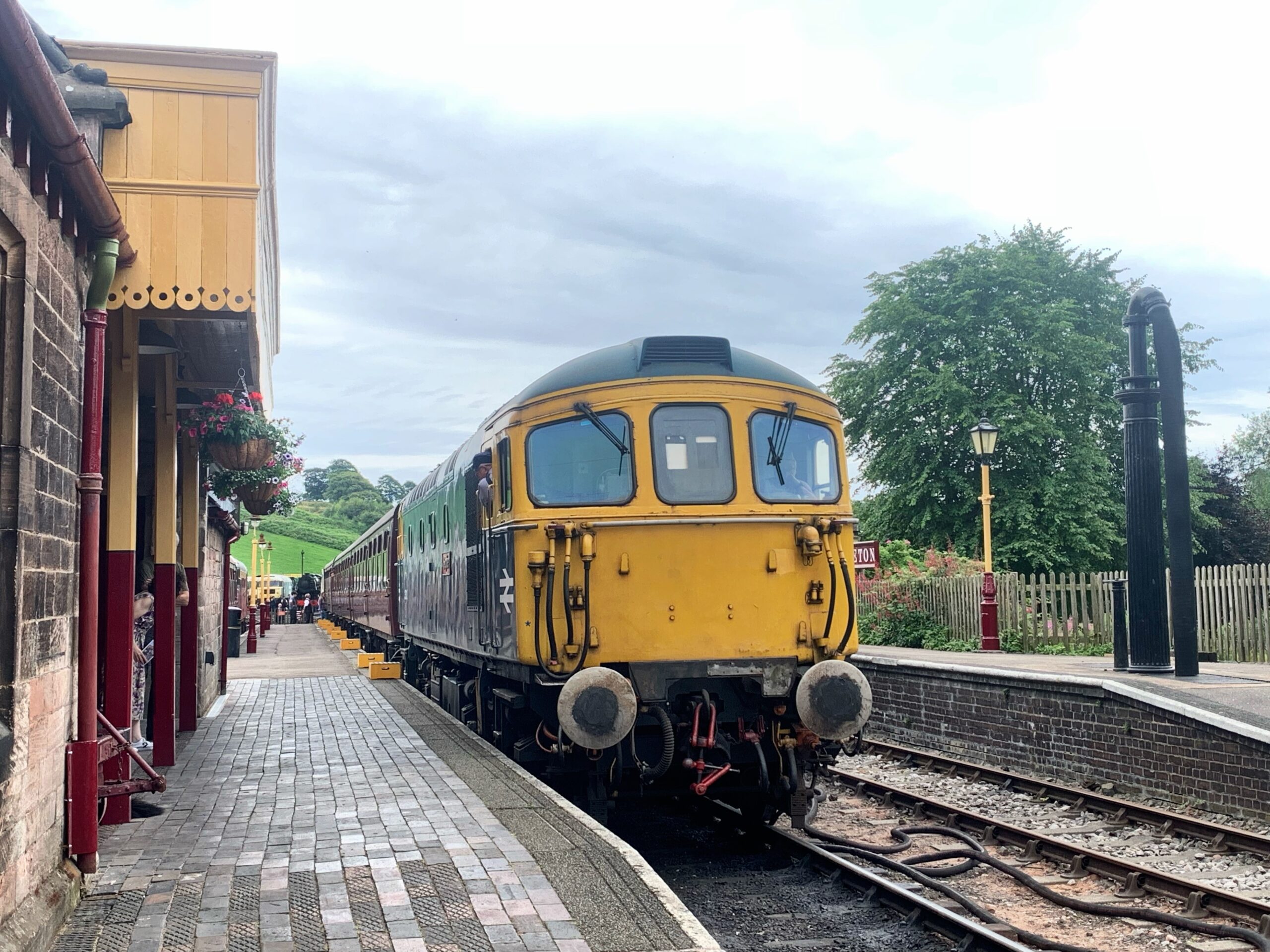
    Having heard that Class 33/1 No. 33102 was hauling trains, Yoshi and I spent Tuesday morning ( 12th July 2022 ) visiting Cheddleton on the Churnet Valley Railway, a preserved heritage line in Staffordshire. I grew up with 33/1’s providing the daily motive power on local passenger services between Bournemouth and Weymouth, and even though No. 33111 lives on at Swanage, our local heritage railway, it was fantastic to hear the Crompton’s Sulzer engine at work hauling a passenger train.

    The Churnet Valley railway dates back to 1849 following the formation of The North Staffordshire Railway Company (NSR) in 1845. Falling passenger numbers saw the Beeching Report include the Churnet Valley line and its associated branches which became earmarked for closure with the final section from Leek Brook Junction to Oakamoor quarry lasting out until the late 1980’s as it was used for freight traffic. In 1992 the newly formed Churnet Valley railway (1992) PLC began talks with the Department of Transport with a view to operate the line. Trains currently run between Froghall and Ipstones, but the ambition is to run services into the Staffordshire market town of Leek for the first time since 1965. And they have an eye on the clock to achieve this as the railway needs to run its first passenger train into Leek by 1st December 2022 or lose a £1.4m EU grant. This means all track must be laid on the 0.5 mile extension, with additional resources being provided for a triangle at Leek Brook Junction, and a platform constructed at Leek. It really is a very picturesque railway with extremely friendly volunteers, Yoshi and I were escorted around the workshops to get a closer view of locomotives stabled there, and I wish them every success with their endeavours and look forward to a return visit in the future.

    Cheddleton Station which was to be demolished in April 1974 but saved by the actions of local businessman and parish councillor Norman Hancock who parked his car on the level crossing preventing access to bulldozers giving sufficient time for the building to be Grade II listed – July 2022
    Cheddleton Station – July 2022
    Time for a cuppa! Yoshi waits for the kettle to boil in the booking hall of Cheddleton Station – July 2022
    Class 33/1 No. 33102 ‘Sophie’ awaits departure from Cheddleton – 12/07/2022
    Class 20 No. D8057 (20057) sits outside the repair shed at Cheddleton – 12/07/2022
    S160 Class 2-8-0 No. 5197 was built by the Lima Locomotive Company in Ohio, USA and exported to China in 1946. The United States Army Transportation Corps Class S160 were designed for heavy freight work across Europe during World War 2 with a total of 2,120 being built they eventually worked all over the world – 12/07/2022
    Class 25 No. 25322 ‘Tamworth Castle’ was the final Class 25 locomotive to see mainline service with British Rail. She is currently in store at Cheddleton Yard awaiting restoration – 12/07/2022
    Yoshi inspects Class 33 No. 33021 ‘Eastleigh’ in Post Office Red style livery. This locomotive was amongst the first privately owned diesel locomotives to be used on the mainline – 12/07/2022
    The Churnet Valley Railway has acquired Class 47 No. 47292 for an initial loan period of five years supplementing Class 33 No.’s 33021 and 33102 for use on passenger trains – 12/07/2022

    On our way back to Fleetwood, we stopped off at Acton Bridge for an hour or so, primarily to capture Class 37 No. 37884 which was diagrammed to pass through with 0M58 Kilmarnock Long Lyes T.C. to Derby R.T.C. – which can be seen in the video below:

    Southport

    On the Wednesday, Yoshi and I took a trip on a heritage Blackpool Tram – more about that adventure next week – but first that we made a brief visit to Southport and Formby. Southport railway station is the terminal of the Southport branch of the Northern Line of the third-rail electric Merseyrail network, and the diesel-operated Manchester to Southport line. The station and services to Liverpool and Hunts Cross are operated by Merseyrail, with Manchester services operated by Northern Trains. The current station opened as Southport Chapel Street on 22 August 1851 and once boasted eleven regular platforms and two excursion platforms. Six truncated platforms are now in use (platforms 1-3 for Liverpool trains and 4-6 for Manchester services), the remainder having been demolished to make way for car parking. In 1970 the former terminal building was replaced with a shopping centre.

    New Stadler Class 777 trains are currently being tested, and one was scheduled to visit Southport that morning on test run. Despite the best attempts at numerous roadworks and traffic queues, we made it just in time to see Class 777 No. 777015 arriving. Members of The National Union of Rail, Maritime and Transport Workers ( RMT – what these initials mean was one of the pub quiz questions I actually answered correctly! But I digress…. ) Anyway to continue; RMT members recently voted in favour of the proposed crewing plans for the new fleet which brings a five-year dispute to its conclusion. Merseyrail still has to reach agreement with the drivers union, the Associated Society of Locomotive Engineers and Firemen (ASLEF), but intends to introduce the new Class 777’s into service later this year. Currently, 17 out of the 53 units purchased have been delivered to the UK. The arrival of the Class 777 fleet will see the demise of both the Class 507 and 508 electric-multiple units (EMU’s).

    The Class 507’s were built to work on Merseyside, replacing the London Midland Scottish Railway (LMS) built Class 502 units on Northern line services from Liverpool to Southport, Ormskirk and Kirkby. 33 sets were built by British Rail Engineering Limited (BREL) in York from 1978 to 1980 followed by 43 Class 508s constructed between 1979 and 1980. They were the second and fourth variety of BR’s then standard 1972 design for suburban EMU’s, which were derived from the prototype 2PEP and 4PEP EMU’s introduced in 1971 and eventually amassed 755 vehicles across five Classes (313/314/315/507/508). Originally, the Class 508’s were built as 4-car units for the Southern Region of British Rail working out of Waterloo on former London South Western Railway (LSWR) routes. From 1982 to 1984 they were reduced to 3 car units (one of the trailer cars was removed to be incorporated into the Class 455/7 EMU’s) and transferred to Merseyside to replace the former LMS Class 503 units that operated Wirral line services to New Brighton, Rock Ferry and West Kirby. Following rail privatisation the two fleets became interchangeable and work both sides of the Mersey. They are the oldest EMU’s still working in the UK after the Class 313’s.

    Yoshi with Merseyrail Class 507 No. 507020, Southport – 13/07/2022
    Yoshi compares the differences between EMU’s with a study of Merseyrail Class 508 No. 508140, Southport – 13/07/2022
    Merseyrail Class 777 No. 777015 having arrived with 5T02 0917 Sandhills Reversing Sdg to SouthportSouthport – 13/07/2022
    Northern Trains Class 769 No.’s 769424 & 769456 Southport – 13/07/2022
    Northern Trains Class 150 No. 150128 and 150134 Southport – 13/07/2022
    Merseyrail Class 507 No. 507020 Southport – 13/07/2022
    Merseyrail Class 507 No. 507020 and Class 508 No. 508131 stand side by side at Southport – 13/07/2022
    Merseyrail Class 508 No. 508126 at the buffer stops, Southport – 13/07/2022
    Merseyrail Class 777 No. 777015 awaits departure of 5T03 1008 Southport to Kirkdale C.S. Southport – 13/07/2022

    Crewe

    After breakfast on Thursday where we spent a few enjoyable hours watching freight movements around Crewe Basford Hall. You can relive this by playing the video below:

    We returned to Dorset on Friday, eschewing the opportunity of capturing two Colas Class 37’s at rest in Blackpool North Railway Station which had worked a test train from Carlisle in the early hours. However, the next day; Saturday 16th July, I was back in Crewe, this time without Yoshi, so I could attend the Direct Rail Services (DRS) Open Day at their depot at Gresty Road. Understandably, dogs were not allowed on site, so Yoshi spent the day with his mum, while I endured the heat of the day without my fluffy sidekick. Many thanks to Scott for driving and for his company.

    The Open Day coincided with LMS Coronation 4-6-2 No. 6233 ‘Duchess Of Sutherland’ passing through Crewe railway station with the Railway Touring Company’s “Cheshireman” rail tour from London Euston to Chester. (1Z86 0639 London Euston to Chester with Class 47 No. 47813 providing support at the rear). The station was extremely busy with the influx of enthusiasts in the town to visit the DRS site, but I managed to catch a short video clip of this magnificent locomotive departing Crewe. Later that day, SR Merchant Navy 4-6-2 No. 35018 ‘British India Line’ worked into Crewe light engine and support coach as 5Z46 Carnforth Steamtown to Crewe Heritage Centre for servicing ahead of rail tour duties scheduled for the following day:

    Crewe 16th July 2022

    3,500 people attended Nuclear Transport Solutions’ (NTS) rail division DRS’s open day, the first one to be held for a number of years because of the Covid pandemic. There were two locomotive naming’s at the event – the first saw Class 66 No. 66422 being unveiled as ‘Max Joule’ in tribute to one of DRS’s founders and former Managing Director who died in 1999. The second naming was for Class 66 No. 66424 which was named ‘Driver Paul Scrivens’ who had been a driver with DRS for more than 20 years. An emotional tribute was delivered by colleague Tim Howlett before the new plate was unveiled by Paul’s sister Emma.

    The open day raised over £39,000 from sponsorship and donations which is an amazing figure that will go to deserving causes across the UK. It was a fantastic event, and I thoroughly enjoyed the experience. Because of the hot weather, DRS made bottles of water available at points across the site, which was very welcome.

    Locomotives on display were:

    Class 37 No. 37218 in retro DRS livery – 16/07/2022
    Class 37 No. 37401 ‘Mary Queen Of Scots’ – 16/07/2022
    Class 37 no. 37419 ‘Carl Haviland’ – 16/07/2022
    Class 37 No. 37425 ‘Concrete Bob’ – 16/07/2022
    Class 68 No. 68025 ‘Superb’ – 16/07/2022
    Class 57 No. 57312 – 16/07/2022
    Class 88 No. 88002 ‘Prometheus’ – 16/07/2022
    Class 68 No. 68006 ‘Pride of the North’ in special green livery showcasing the environmental benefits of rail freight and how a diesel locomotive can reduce emissions by using Hydrotreated Vegetable Oil (HVO) fuel – 16/07/2022
    Class 66 no. 66303 ‘Rail Riders 2020’ – 16/07/2022
    Class 68 no. 68009 ‘Titan’ – 16/07/2022
    Class 66 No. 66422 ‘Max Joule 1958-1999’ – 16/07/2022
    Class 66 No. 66424 awaits its naming ceremony – 16/07/2022
    Class 57 No. 57304 – 16/07/2022
    Class 88 No. 88009 ‘Diana’ – 16/07/2022
    Class 66 No. 66429 – 16/07/2022
    Class 37 No. 37424/37558 ‘Avro Vulcan XH558’ – 16/07/2022
    Class 88 No. 88001 ‘Revolution’ – 16/07/2022

    On our way to the DRS Open Day, we stopped off at Longport to peer through the fence at Electro-Motive Diesel Limited’s (EMD) site and witnessed some shunting around of locomotives, mainly Class 56 / Class 69 conversions which are ongoing.

    With 69006 stencilled on the bodyside, the conversion of 56128 is almost complete. Longport – 16/07/2022
    The empty shell of Class 56 No. 56032 awaiting a second move to Marcroft Engineering with 69007 ( ex-56037 ) in the background – 16/07/2022
    56038 is being converted into 69008 and is still on accommodation bogies but some of its new innards are in place. An extra hole has been cut in the cab front ends to accommodate an additional connection with this locomotive likely being the first for use by the GBRf Rail Services sector which handles stock movements – 16/07/2022
    Class 56 No. 56009 sits in the yard at Longport. The locomotive was unofficially renumbered No. 56201 when it was converted for use as an engineering test bed by Brush Traction in order to assess refurbished Paxman engines of sister class members – 16/07/2022
    Former DB Cargo UK Class 66 No. 66048 rests on accommodation bogies at Longport. The locomotive was damaged when it derailed at Carrbridge in January 2010 and it ended up down an embankment. It was sold to EMD in March 2016 after being initially disposed of for scrap. It’s unclear what the future holds for this Class 66 locomotive – 16/07/2022

    On our way home we diverted to Keynsham to refuel the car and restock with drinking water. Fortuitously, Class 37 No.’s 37901 and 37800 were scheduled to pass through top and tailing an Eastleigh Works to Swansea Landore stock move consisting of a Great Central-liveried Mk4 set and an LNER-liveried Mk4 set (5Q79 1826 Eastleigh Arlington to Landore). This made a fantastic epilogue to the day!

    Class 37 No. 37901 heads an Eastleigh Works to Swansea Landore stock move consisting of a Great Central-liveried Mk4 set and an LNER-liveried Mk4 set with 37800 on the rear approaches Keynsham station – 16/07/2022.

    Dorset NMT

    While we were away it was a quiet week on the Bournemouth to Weymouth line, with only the New Measurement Train of particular interest on the main line as far as I’m aware. HST Class 43 power car No.’s 43272 and 43257 were in charge of 1Q18 0719 Derby RTC to Bristol Kingsland Road on Wednesday 13th July 2022.

    Class 43 No. 43257 sits in Weymouth station – 13/07/2022. Photograph courtesy of @da_buckley967
    Class 43 No. 43272 preparing to depart from Weymouth – 13/07/2022. Photograph courtesy of @da_buckley967

    My brother popped out to see the NMT return through Dorchester West on its way to Bristol and his video which he captured especially for Yoshi can be seen here:

    In other news, Swanage resident Class 33/1 No. 33111 headed off by road to the Mid Hants Railway (MHR) to participate in their 2022 diesel gala. I had considered visiting the MHR on Sunday, but felt it was far too hot for Yoshi to be out and about, so we decided to stay home and catch up on some gardening.

    The recent heat wave also resulted in speed restrictions being imposed on main line services by South Western Railways (SWR), including those on the Bournemouth to Weymouth line, with the increased risk of tracks buckling. Reduced services were introduced on Monday 18th and Tuesday 19th July 2022 in a bid to give passengers certainty over which trains would run. There was also a steam ban imposed by many heritage railways and on the main line. This includes the Railway Touring Company’s “Dorset Coast Express” excursion to Weymouth on Thursday 21st July which will now be diesel hauled throughout.

    Great Western Railways were under fire in the local press this week, when the Dorset Echo reported chaotic scenes at Weymouth station where passengers were turned away from trains as they tried to return home. The 1728 departure to Bristol Temple Meads from the Dorset seaside town was formed of just two carriages meaning station staff and police had to request some travellers to wait for the next service which was due to leave an hour later. Not so long ago a High Speed Train was regularly employed to run a relief service to Weymouth via the West route on Summer Saturdays in order to cater for anticipated increased passenger numbers.

    That’s all for this week – join us next time when we recount our trip on a heritage Blackpool Tram. Many thanks for reading, and for continued contributions, comment and corrections which are very much appreciated!

  • 175 And Not Out…

    33111 pauses after departing Norden on the Swanage Railway Friday evening dining train – 10/06/2022

    Swanage Railway

    Friday evening was gloriously sunny, so Yoshi and I made the most of the light and took a drive to Swanage to see resident Class 33 No. 33111 in charge of the dining train which made two return trips between Swanage and Norden enabling diners ample time to enjoy dinner while taking in the beautiful Purbeck countryside. Class 33/1’s were part of the regular scene in my train spotting days back in the late 1970’s/ early 1980’s. On my way to school in the morning I would time my walk to coincide with the arrival of the ‘school train’ from Weymouth to Dorchester South which was regularly hauled by a 33/1 diesel locomotive hauling the passenger stock from the overnight mail train which would have arrived at the seaside terminus several hours previously. Well, that’s my recollection anyway! No. 33111 was the last locomotive of the 19 strong sub-class that I needed to ‘spot’, and therefore holds a special memory for me. I’m very pleased she survived into preservation locally.

    Class 33 No. 33111 heads towards Norden – 10/06/2022
    Yoshi with Class 33 No. 33111 – so as not to upset anyone of a nervous disposition, I digitally removed the fence behind Yoshi which separated him from the lineside.

    On Tuesday 14th June, 71A Locomotive Group’s green liveried Class 33 No. D6515 (33012) ‘Lt Jenny Lewis RN’ along with Network Southeast liveried Class 50 No. 50026 ‘Indomitable’ returned to Swanage after their outing to guest at the Keighley & Worth Valley Railway diesel gala over the weekend. It was too hot for Yoshi to be hanging around for old diesels, so I headed off to Wareham alone. The 33/50 combo arrived around ten minutes late and a passing up service almost rendered photographic opportunities useless, but I managed to get a few snaps of the event. There’s a video below too, featuring the locomotives at Wareham on the main line and at Norden Crossing on the Swanage Railway.

    71A Locomotive Group’s green liveried Class 33 No. D6515 (33012) ‘Lt Jenny Lewis RN’ along with Network Southeast liveried Class 50 No. 50026 ‘Indomitable’ pause at Wareham for a crew change working as 0Z23 0700 Dereham U.K.F. to Swanage – 14/06/2022

    Portsmouth Harbour

    On Saturday while Yoshi was enjoying spending a day with friends and socialising with other doggos, I was off on a family jaunt to the Portsmouth Historic Dockyards to visit The Mary Rose and to hit my head several times onboard HMS Victory. It was a lovely day, apart from the bashing my head on the low beams inside Victory bit obviously, made even better by taking the train to Portsmouth Harbour.

    Portsmouth Harbour railway station first opened on the 2nd October 1876 as the terminus of Portsmouth and Ryde Joint Railway Chief Engineer Frederick Banister’s Portsmouth Waterside Extension to the Portsmouth Direct Line which runs to London Waterloo. The construction of the station replaced an earlier pier on the site called the Albert Pier that was used for passenger steamships in the mid-Victorian era. The Portsmouth and Ryde Joint Railway was a group of three railway lines in Southern England that were jointly owned and operated by the London & South Western Railway (LSWR) and the London, Brighton & South Coast Railway (LB&SCR). The main line was between Cosham and Portsmouth Harbour. There was a branch from Fratton to East Southsea; and a line between Ryde Pier Head and Ryde St John’s Road. The last-named section was isolated from the others, being on the Isle of Wight. The first section of line opened in 1847 and the last in 1885; the Southsea branch closed in 1914 but all of the other routes have since been electrified and remain open.

    Portsmouth Harbour railway station was rebuilt in 1937 when the route was electrified but was almost totally destroyed during World War 2 by fire after German bombing. The station was rebuilt again after the war.

    Train services to and from Portsmouth Harbour are operated by South Western Railway (SWR), Southern and Great Western Railway (GWR) – here are a selection of images taken on Saturday 11th June 2022:

    GWR Class 166 No. 166210 at Portsmouth Harbour having arrived with the 1F05 0629 Cardiff Central to Portsmouth Harbour service – 11/06/2022
    Southern Class 377 EMU No. 377129 working 1S27 1529 Portsmouth Harbour to Brighton – 11/06/2022
    Class 444 No. 444018 leads fellow unit 444040 on 1P54 1545 Portsmouth Harbour to London Waterloo – 11/06/2022
    Portsmouth Harbour signal box was opened by the Southern Railway on the 1st June 1946. It was built to the Southern Railway Type 13 design and was fitted with a 47 lever Westinghouse ‘L’ frame.

    It replaced two boxes, Portsmouth Harbour signal box which was destroyed by aerial bombing in 1941 but was not officially closed and Portsmouth Harbour signal box, a temporary box opened on 21st August 1941 to replace the bomb damaged box.
    Portsmouth Harbour signal box was closed on 21st April 1968 and was used as an office and a relay room for Portsmouth power signal box. After closure the lever frame was moved to the school of signalling at Clapham Junction. The building was retained as a relay room for the 1968 Portsmouth NX signalling scheme which was operational until December 2006. Network rail re-commissioned Portsmouth Harbour signal box on February 4th 2007, following serious problems with the 2006 Portsmouth re-signalling scheme. It was closed for the second time at the end of 2007 when Havant ASC was eventually commissioned.
    The Spinnaker Tower forms a backdrop to the entrance to Portsmouth Harbour railway station – 11/06/2022
    The steps leading up to the entrance of Portsmouth Harbour railway station – 11/06/2022
    SWR Class 450 No.’s 450053 forming the 1P56 1615 departure to London Waterloo and 450126 having worked in on the 1P43 1430 London Waterloo service at the buffer stops, Portsmouth Harbour – 11/06/2022
    GWR Class 166 No. 166220 waits to depart with F26 1623 Portsmouth Harbour to Cardiff Central – 11/06/2022

    On 6th August 1981, Class 33 No. 33025 was named ‘Sultan’ during a ceremony at Portsmouth Harbour by Captain Austin Lockyer of HMS Sultan. The crests for 33025 were presented by The Royal Navy. I remember it being a wet day, not unusual for a British summer by the seaside I suppose! Here are some scans of my colour slides and black and white negatives of the day, including a couple shots taken at Southampton Central on the way to/ from the naming ceremony.

    33025 ‘Sultan’ Portsmouth Harbour – 06/08/1981
    33025 ‘Sultan’ Portsmouth Harbour – 06/08/1981
    33025 ‘Sultan’ Portsmouth Harbour – 06/08/1981
    33025 ‘Sultan’ Portsmouth Harbour – 06/08/1981
    33025 ‘Sultan’ Portsmouth Harbour – 06/08/1981
    33025 ‘Sultan’ Portsmouth Harbour – 06/08/1981
    BR Class 33 No. 33001 at Portsmouth Harbour – 06/08/1981
    Class 33 No. 33116 arrives at Portsmouth Harbour – 06/08/2022
    Brush Type 4 Class 47 No. 47064 pauses at Southampton Central – 06/08/1981
    Class 33 No. 33057 gets the road at Southampton Central – 06/08/1981

    Southampton – Dorchester 175

    June 2022 marks the 175th Anniversary of the Southampton to Dorchester line opening in 1847. The main driving force behind this line was Wimborne solicitor, Charles Castleman who first proposed a route by way of Brockenhurst, Wimborne, Poole and Wareham. Interestingly, one town which was not included was Bournemouth which in the early 1840’s had a population of around 200, none of whom appeared to care greatly about the new era of rail transportation. Politics of the day meant the supporters of the line courted interest from both the LSW and GW railway companies as both had interest in gaining a foothold in each others territories. The LSW to Exeter and GWR to Southampton. Weymouth was not initially included because of the projected expense of tunnelling which would be required between Dorchester and the seaside town. Eventually the GWR proposed a Wilts, Somerset and Weymouth line and it was agreed that when built the LSW should work the line between Southampton and Dorchester and the GWR from Dorchester to Weymouth.

    Castleman had suggested early on that the Southampton to Dorchester route should be extended west from Dorchester through to Exeter, but in the event this didn’t happen. In part because the LSW eventually preferred to extend its Salisbury line. The Southampton and Dorchester Railway received Royal Assent on 21st July 1845 and engineer Samuel Peto was hired to construct the line, work commencing in August 1845. Castleman’s route was anything but direct, but was designed to take in most of the larger settlements on the way. This twisting route earned the nickname of Castleman’s Corkscrew.

    The Illustrated London News w/e 5th June 1847 edition

    The first section to be completed was between Dorchester and Ringwood but trains did not start running until the section through the New Forest was ready. Problems with the construction of a tunnel to carry the line under Southampton causing earthslips and subsidence prevented the running of through trains on opening day; 1st June 1847 and trains ran between Dorchester and Blechynden which was immediately west of the tunnel and stood further east than the present Southampton Central station.

    There were originally thirteen stations on the 60.5 mile line, plus one other for Poole which was accommodated by a 1.75 mile branch and was actually located in Hamworthy. The chief engineer, William Moorson, appointed architect Sancton Wood to design a station building which could be replicated across all locations these being Blechynden, Redbridge, Lyndhurst, Beaulieu, Brockenhurst, Christchurch Road, Ringwood, Wimborne, Poole Junction (later Hamworthy Junction ), Wareham, Wool, Moreton and Dorchester.

    The 1960’s saw the ‘old road’ from Brockenhurst through Ringwood and Wimborne fall under the blade of the Beeching cuts with passenger services assigned closure on 2nd May 1964, although Wimborne remained open for freight until 1977. I’m quite grumpy about not having seen any workings on this route. The last passenger to actually use Wimborne station was Her Majesty The Queen in July 1969. It is ironic that today the towns on the route of Castleman’s Corkscrew are growing conurbations and the railway would have had great potential as a commuter line. The population was already increasing when the line was closed, such is the short sightedness of planners and politicians and we are now left with the cycle and walking Castleman’s Trailway which Yoshi and I have explored in part.

    An £180,000 improvement scheme has recently been completed to upgrade surfaces and access making the Trailway more accessible to a wider range of users. Drainage has been improved and much of the route has been widened. Barriers have been replaced by bollards, new signage and benches will be installed soon and verges seeded with wildflowers.

    There were activities ranging from cake to dancing held at a number of stations on the Southampton to Dorchester route over the last weekend to celebrate the 175th Anniversary. Certainly something worth celebrating.

    That’s just about all for from us for this week. Last weekend was also the occasion of the 2022 West Somerset Railway Diesel Gala. Because of lovely family plans we were unable to visit this year, but we’ll leave you with a couple of glimpses of one of our previous visits to the line. This was in 2019 and was coincidentally Yoshi’s first heritage railway outing!

    Class 25 D7535 at Crowcombe Heathfield – 21/06/2019
    Yoshi meets D1010 ‘Western Campaigner’ at Williton – 21/06/2019

    Thanks for reading – until next week, take care!

  • Heaton Lodge Junction

    Something a little different this week. On Sunday, Yoshi stayed home with his mum while I went off to Shepton Mallet and the Bath & West Showground who were hosting Britain’s Biggest Model Railway – Heaton Lodge Junction. With over three miles of track, the ‘O’ Gauge layout took eight years to build and can accommodate over 25 full length model trains. The detailed scenic model railway perfectly recreates the childhood memories of its main builder Simon George who took a year to practise and refine the modelling techniques employed in the layout in addition to three years of research to create a pictorial map of the 1.5 mile location. Everything, from drain covers to signal gantries are placed exactly where they should be. Back in the early 1980’s Simon spent much of his school holidays perched on a bridge parapet watching the trains go by. In fact, Simon is himself included in the model in the very location he spent so much of his time.

    The following video gives a flavour of operations on the layout which normally runs in an automated mode with trains being pre-programmed. The system senses exactly which section a train is occupying and depending on the route of each train, the signals and points change accordingly.

    I was accompanied on my visit by my brother and my nephew, and we were all really impressed by Heaton Lodge Junction and look forward to future viewings including the planned, detailed additions of a typical 1980’s BR station, marshalling yard and depot. Viewing the model layout has really given me renewed inspiration to get started on building my own model railway. I still need to fully board the loft at home before building the baseboards for the track work and have decided that I will lure my brother, and anybody else, in with the promise of cheese and beer to help get this done. Although I’ll be modelling in ‘OO’ gauge, the images below show what it’s possible to achieve with a lot of hard work and skill and I hope I can have at least a fraction of the ability which went into creating this masterpiece.

    The next few images show the scale of the model. Many thanks to staff at the Bath & West Showground who gave me access to the balcony area to take the photographs.

    As well as Heaton Lodge Junction, there were several other layouts on display. All highly detailed and impressive in their own way.

    Of particular local interest for this blog are the two following railway layouts of Wimborne from The Wimborne Railway Society and the former Somerset & Dorset Joint Railway southern terminus at Bournemouth West: supported by Model Railway Solutions (MRS) of Poole:

    Bournemouth West

    It was fantastic to see all the model railways on show in addition to Heaton Lodge Junction. The Bournemouth West display employed very authentic ‘live steam’ locomotives and the dedication to realistic modelling was evident throughout the hall.

    Things have been quiet on the full size railway this week in Dorset – although Class 701 test runs continue to visit Poole and Bournemouth, Sunday engineering work at Branksome didn’t produce any locomotive hauled engineers trains and the regular Class 73 hauled test train scheduled for Monday 11th April, although activated early doors, didn’t move from Derby and was eventually cancelled. So instead, here’s a photo of Yoshi from last year alongside GBRf Class 73 Electro-diesel No. 73128 ‘O.V.S. Bulleid C.B.E.’ which visited Weymouth on 6th September 2021 whilst on route learning duties. For some reason I am unable to fathom the driver greeted me by saying ‘it’s the man with the barking dog!’

    73128 ‘O.V.S. Bulleid C.B.E.’ Weymouth – 06/09/2021

    A video of the light-engine at Hamworthy and Weymouth. If you listen carefully, you might just hear Yoshi bark his approval:

    Our archive video for this week comes from March 1995 and a visit to Eastleigh when it looks like I used a tripod and actually set it up correctly for the most part as trains are not consistently going up or down hill. Although it would appear I still overused the zoom function.

    For comparison, you might like to watch the following compilation video filmed mostly around Eastleigh in the more recent 2020’s:

    That’s all for this week. Thanks for reading – comments and corrections always welcome. Why not support your local heritage railway this coming Easter Weekend, they would welcome your support!

  • Island Line Adventure

    Yoshi at Ryde Pier Head in the company of Class 484 unit No. 484002

    We spent last weekend enjoying the delights of the Isle of Wight. As part of our travels, we took a trip from Shanklin to Ryde Pier Head on the recently upgraded Island Line which is operated by South Western Railway (SWR). The Island Line is 8.5 miles long and runs between Ryde and Shanklin. Because of clearance height issues along the route, notably in Ryde Tunnel, limited locomotives and rolling stock could be employed on this route. I was planning on visiting the Island in 2020/21 prior to the improvement works taking place, but Covid measures prevented travel and I was unable to capture the last days of the Class 483 trains. My previous visit to Ryde St Johns was in June 2013 when I snapped the following images of the ex-1938 London Underground tube stock on the depot. These units were extensively refurbished for use on the Isle of Wight line at Eastleigh Works between 1989 and 1992.

    The Class 483’s replaced the even older and life-expired Class 485 ( or 4VEC / 5VEC) and 486 (3TIS / 2TIS) units which were introduced to the island in 1967 and had been converted from 1923 standard tube stock built for use on the London Electric Railway. At the time of their introduction on the Isle of Wight these trains were already over forty years old but allowed for the phasing out of steam locomotives on the line. I travelled on these trains in August 1980 and took these photos with my treasured Kodak 110 camera.

    The main purpose of the 1980 trip was to track down the elusive Class 05 shunter which was at that time unique on British Rail. We found it hiding at the back of the shed at Ryde St Johns. The locomotive is now preserved on the Isle of Wight Steam Railway which was unfortunately not open for the 2022 season during our stay on the island.

    There are five ‘new’ two-car Class 484 trains which were converted by Vivarail using London Underground D78 stock originally built in the late 1970’s / early 1980’s by Metero-Cammell. The 484’s are based on the Class 230 diesel multiple unit.

    230004 seen at Bedford 15/05/2021

    The Island Line closed in January 2021 for the £26m upgrade to take place. Work was originally scheduled to take until April 2021 for its completion, but because of the Covid pandemic and teething problems with onboard software the line didn’t reopen to passengers until 1st November 2021. As part of the upgrade, platforms were raised or tracks lowered at five stations to improve accessibility and re-engineering of the track considerably improved the standard of travel and ensured a smooth ride. We found the new interiors spacious and clean with charging sockets available at most seats.

    Class 484 No. 484002 heading to Ryde Pier Head 13/03/2022

    The Isle of Wight has a great deal of railway history and more by accident than design we came across the location of the former railway stations at Newport, Freshwater and Yarmouth.

    We enjoyed a light lunch at the ‘End Of The Line Cafe’ in Freshwater on Saturday, Yoshi sharing a delicious sausage baguette with his mum while I kept all my vegetable soup to myself.

    We can totally recommend ‘Off The Rails‘, an award winning restaurant which inhabits the station building at Yarmouth. Our Sunday lunch was exceptional and the dog snack menu was welcomed by Yoshi who enjoyed another tasty sausage.

    Afterwards we walked off the calories taking a stroll along the trackbed of the former Newport, Yarmouth and Shanklin railway.

    After a slow start to the week in review, Monday 14th March could be described as something of a bumper day for unusual traction on the Bournemouth to Weymouth line.

    Namplate detail of 66760 (photograph courtesy of @da_buckley967)

    Our marvellous Monday kicked off with a visit of GBRf Class 66 top and tailed Snow & Ice Treatment Train. Railhead treatment trains are always a favourite in this dog house so it was great to see this working after an absence of a few months.

    Monday 14th and Tuesday 15th saw an interesting route learning move from Direct Rail Services (DRS) with Class 57 No. 57002 ‘Rail Express’ working from Norwich to Southampton via Weymouth in connection with a few future train movements from the area.

    The Class 57 was re-engineered from redundant Class 47 locomotives by Brush Traction of Loughborough between 1998 and 2004. The locos were given reconditioned Electro-Motive Diesel engines and traction alternator’s as fitted to the Class 56 to improve reliability and performance. 57002 is part of the 57/0 variant specifically designed for freight operations. DRS currently have nine Class 57’s on their books.

    57002 ‘Rail Express’ Holes Bay, Poole 15/03/2022
    Namplate detail of 57002 (photograph courtesy of @da_buckley967)

    Along with the 57/0’s there are two other sub-classes of Class 57; 57/3 and 57/6 both primarily intended for passenger use.

    57005 Cardiff 24/02/2010

    Virgin West Coast Trains utilised 16 Class 57’s for rescue duties and for dragging electric locomotives on routes with no overhead wires with the first locomotive leased from Porterbrook delivered in 2002. All were handed back by the end of 2012 as they were no longer required.

    To acknowledge their role as rescue locomotives, Virgin named their Class 57’s after elements from Gerry Anderon’s Thunderbirds TV series and in addition each engine carried an International Rescue logo above the nameplate. The next few images show two of he Thunderbird locomotives which were hired in by First Great Western to work a Taunton to Cardiff Central diagram which commenced in December 2009. The 57’s worked in pairs top and tailing stock sourced from Riviera Trains. The sets were serviced at Bishops Lydeard on the West Somerset Railway on weekdays, returning to Cardiff for maintenance at the weekends. However, the 57’s and coaching stock proved troublesome and the contract ceased in July 2010.

    57309 ‘Brains’ Taunton 24/02/2010
    57307 ‘Lady Penelope’ Taunton 24/02/2010
    57309 ‘Brains’ and 57307 ‘Lady Penelope’ at Bristol Temple Meads 24/02/2010

    Great Western Railway (GWR) operate four Class 57/6 locomotives which were all named after castles in the Devon and Cornwall area in which they operate, mostly on the Night Riviera sleeper service between London Paddington and Penzance. In June 2010 No. 57604 ‘Pendennis Castle’ was out-shopped in a lined Brunswick green livery to celebrate the 175th anniversary of the original Great Western Railway.

    57604 ‘Pendennis Castle’ at Dorchester West 04/09/2010
    Nameplate of 57604 ‘Pendennis Castle’ London Paddington 27/03/2013

    Finally the monthly rail inspection train, this time top and tailed by Class 73 Electro-Diesel locomotives No’s 73963 ‘Janice’ and 73964 ‘Jeanette’, ran to Weymouth this week as 186V 1115 Derby RTC to Eastleigh East Yard.

    For the record, my first ever visit to the Isle of Wight was in 1973. I don’t recall travelling by train during that holiday, but I do remember sunny days sat on the top deck of double decker buses touring the island. I also vividly remember the poster campaign for the ecological dystopian thriller film ‘Soylent Green‘. The images of riot control trucks fitted with large hydraulic shovels scooping up people like they were waste has haunted me ever since. Incidentally the film was set in 2022. I suppose I should get around to watching it some day. For this weeks archive feature, we return to the island in the mid 1970’s and a trip along the Isle of Wight steam Railway in a short, silent cine film from the John Chappell Collection.

    16th March 2022, the day this blog entry was uploaded, marks the third anniversary of Yoshi picking me as his human dad. It’s been a happy rewarding companionship, made stronger when we found Yoshi’s gorgeous human mum. We both love our boy to bits and try and include him on as many adventures as possible.

    That’s it for this week. Thanks for reading. I’m off to find a snack – I’ve heard about a nutritious product made from ocean plankton I should try…..