Category: Dorset Trains

  • Yoshi Goes To Cornwall

    Did Yoshi discover King Arthur at Tintagel during our trip to Cornwall? “Gallos”(meaning ‘power’ in Cornish) created by sculptor Rubin Eynon is an 8ft bronze sculpture standing above cliffs on the Atlantic coast-side of the castle – 22/03/2023
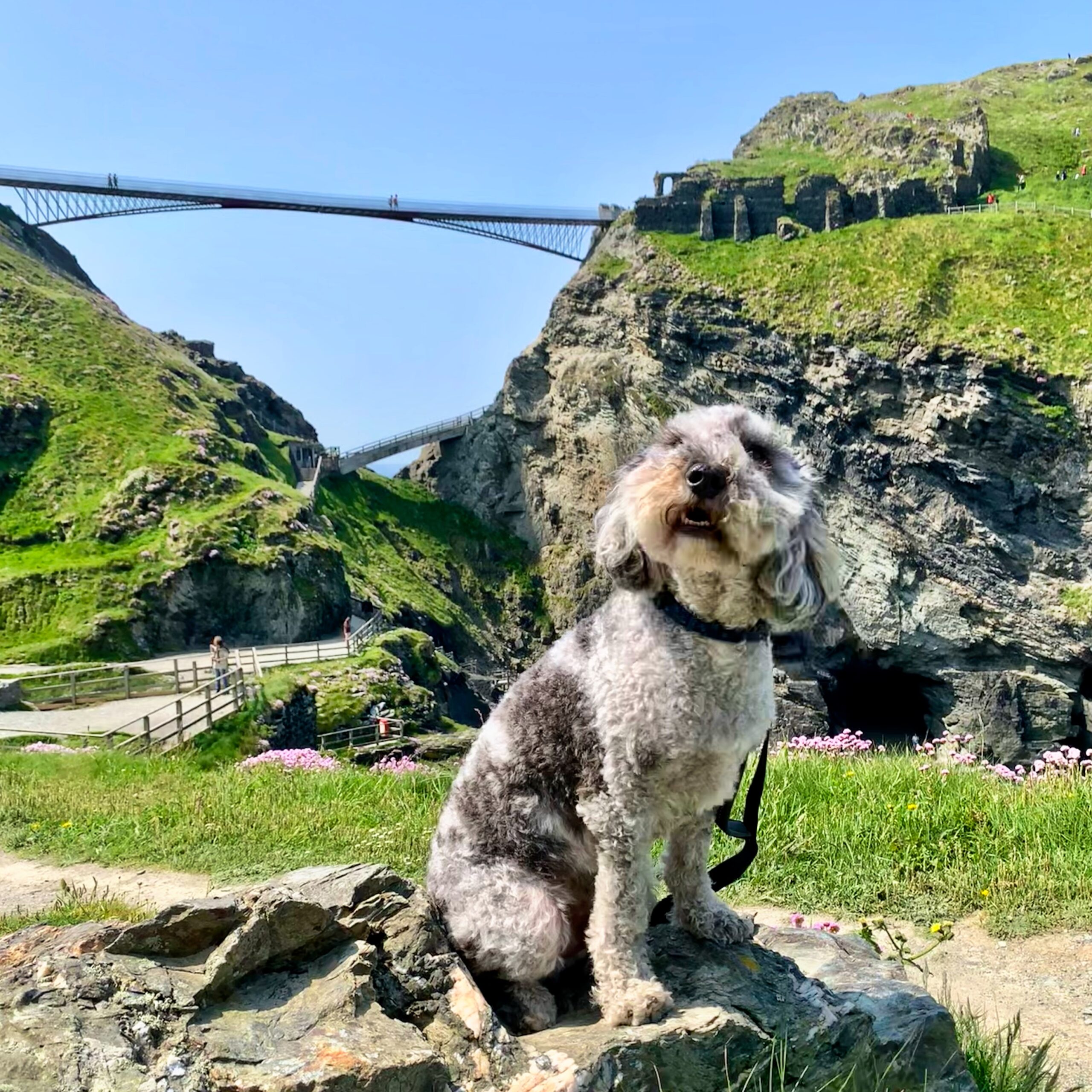
    Yoshi with the new Tintagel Bridge in the background which reinstates the original route to the castle. In the Middle Ages, Tintagel’s residents walked from one side of the site to the other using a narrow land bridge as high as the clifftops. But the crossing disappeared between the 14th and 17th centuries, leaving the castle divided by a natural chasm. English Heritage launched a competition in 2015 to find a design for a new bridge. The winning concept was created by Ney & Partners Civil Engineers and William Matthews Associates. The project was completed in August 2019. The design sees two cantilevers reach out and meet, not quite touching, with a 40mm gap in the middle. The gap represents the transition from the mainland to the island, present to past. The bridge is paved with Cornish Delabole slate, with stainless steel balustrades fitted along its length. The balustrades have been designed to be so fine that, when viewed from a distance, they disappear against the sky – 22/03/2023

    As mentioned in our last blog, we recently spent a few days in Cornwall. This gave me the opportunity to see some of the remaining semaphore signals on the Great Western mainline and also GWR sleeper trains arriving and departing from Penzance. We stayed in Camelford for three nights before moving onto Penzance for a couple of days.

    While we were in the Camelford area we visited Padstow and Bodmin and we were able to walk along some disused railway trackbed which now forms the Camel Trail; an 18 mile largely traffic free, surfaced and virtually level multi use trail. It provides access to the beautiful Cornish countryside between Wenfordbridge, Bodmin, Wadebridge and Padstow and is suitable for walkers, cyclists, horse-riders and wheel-chair users.
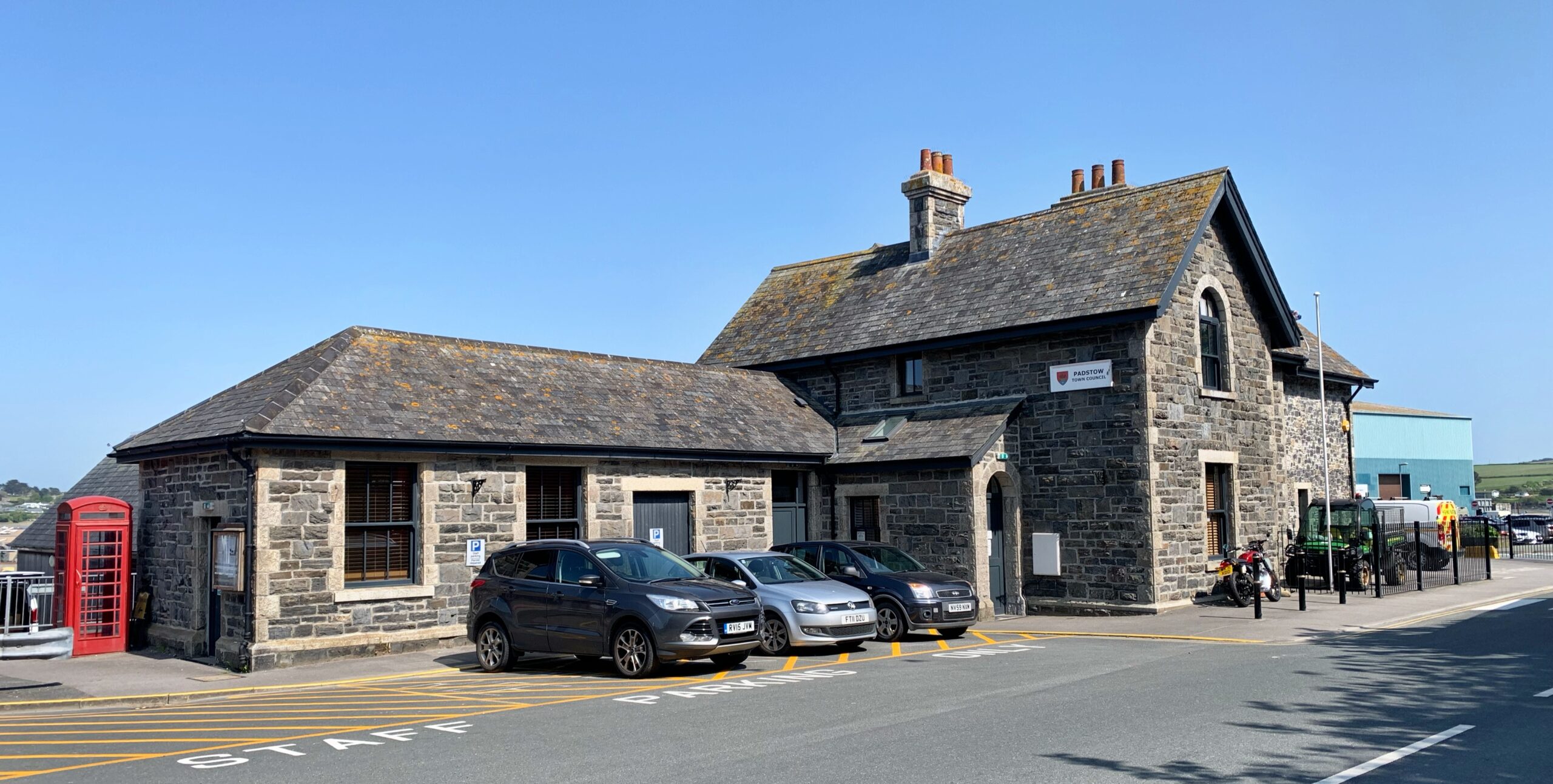
    The former Padstow railway station, the western terminus of the North Cornwall Railway. It was opened in 1899 by the London and South Western Railway and closed in 1967 following the Beeching report. The building currently houses the offices of Padstow Town Council – 22/05/2023

    We walked from Padstow towards Wadebridge and from Bodmin, we also walked in the direction of Wadebridge as the trail follows the paths of two former railway lines; a section of the North Cornwall Railway between Padstow and Wadebridge and most of the Bodmin and Wadebridge Railway from Wadebridge to Wenford Bridge, along with a short branch from that line to Bodmin.

    The Bodmin and Wadebridge Railway was originally built at a cost of £35,000 following a study commissioned in 1831 by local landowner Sir William Molesworth of Pencarrow. The line was intended to carry sand from the Camel estuary to inland farms for use as fertiliser. In the 1840’s, England’s railway network expanded towards Bodmin. The London and South Western Railway (LSWR) purchased the Bodmin and Wadebridge Railway in 1846 and intended to connect it to the rest of the system by a new line through North Cornwall. The line from Halwill reached Wadebridge in June 1895 and then Padstow in March 1899. Later the railway was used to ship slate and china clay from inland quarries to ships in Padstow and also transport fish landed in Padstow inland to London and other cities. When both quarrying and fishing died off, the railway lost most of its traffic. The last passenger train ran in 1967 and freight ceased in 1983, when a need to invest in new track forced the line to close.

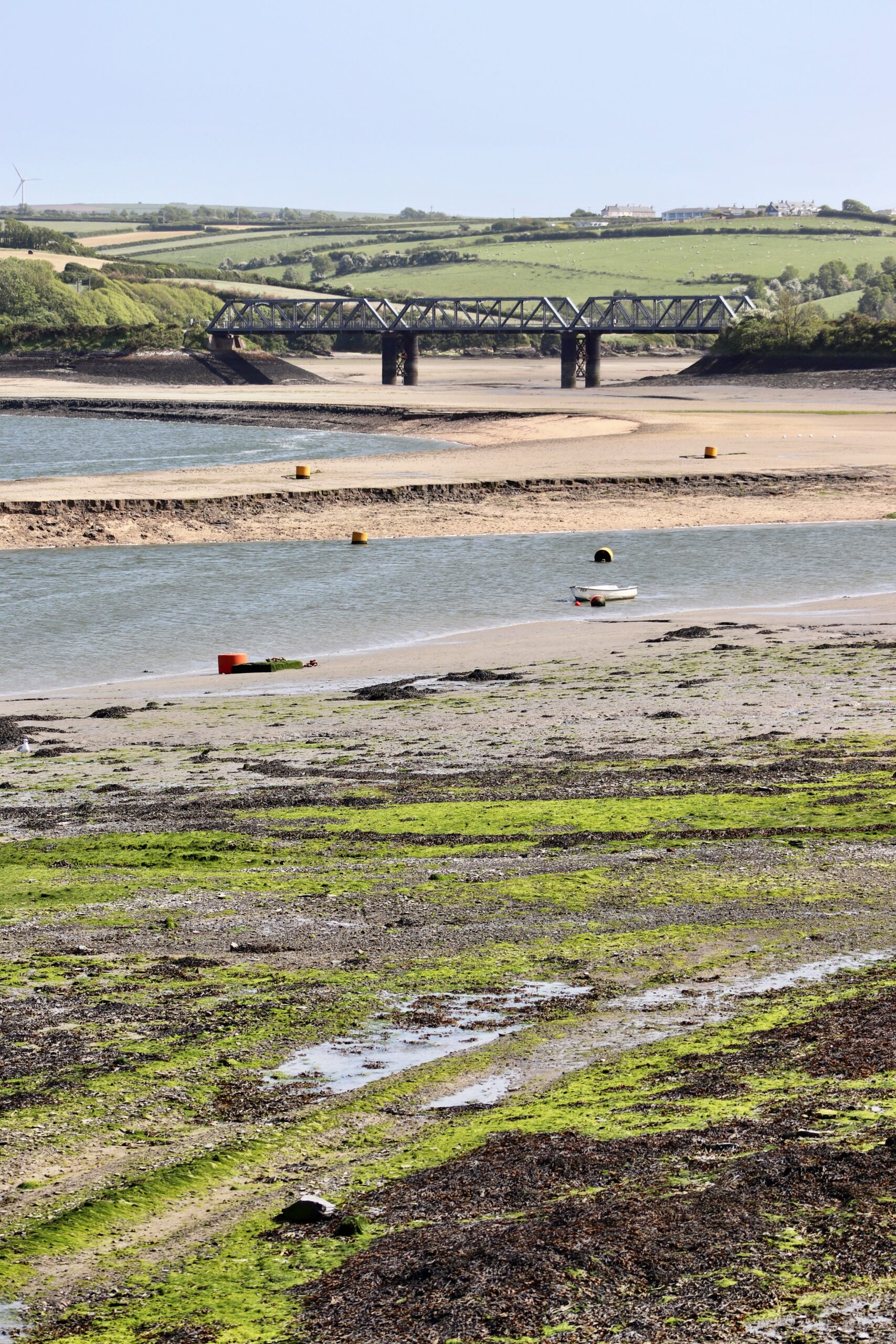
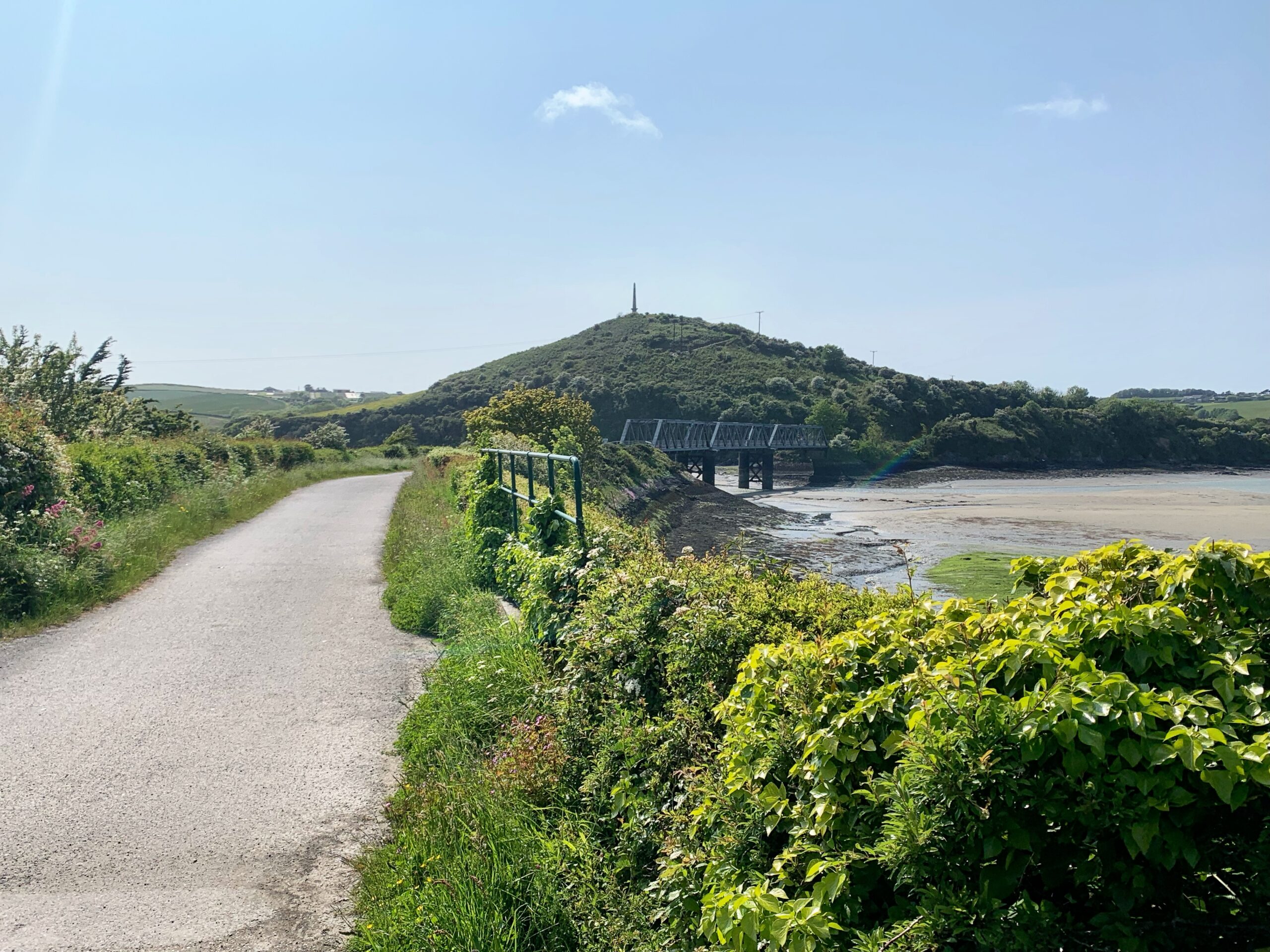
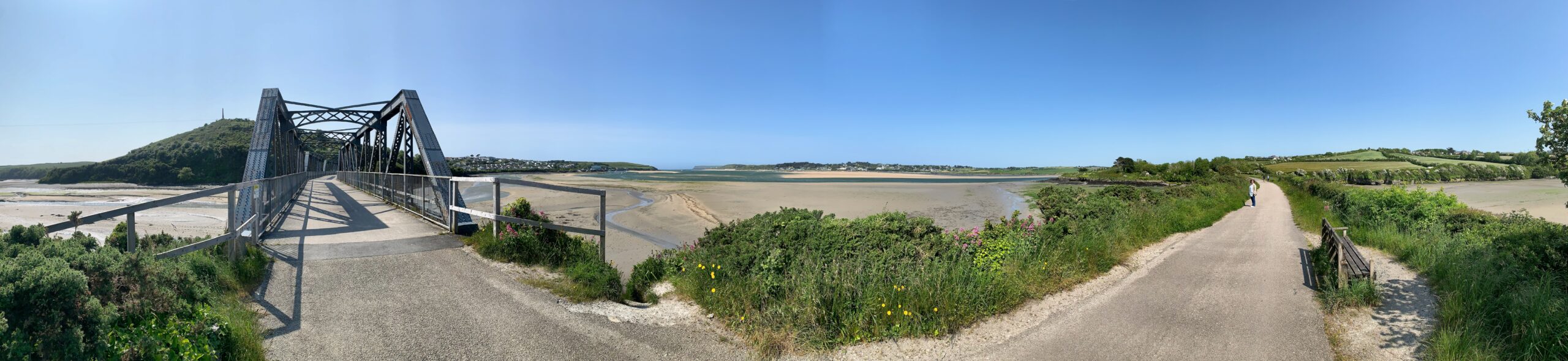
    On leaving Padstow, the Camel Trail crosses Petherick Creek on this bridge which formerly carried the North Cornwall Railway – 22/05/2023
    Petherick Creek bridge. Construction began in December 1896 with the erection of temporary staging over Little Petherick Creek, a mile south-east of Padstow. This facilitated construction of a bridge comprising three spans of 133 feet each, curving to the north on a radius of about 20 chains. It was built by contractors from Derby, Messrs Eastwood Swingler & Co. The spans are formed of two Pratt trusses, together with nine cross girders and three wind braces, giving a deck width of 16 feet 3 inches. Two rail bearers are also provided. The ironwork was brought by rail to Wadebridge before being carried on barges to site down the River Camel. Each truss weighs 350 tons. Heading towards Padstow, the structure is approached on a 230-yard embankment, protected by revetments. This incorporates a brick and slate arched bridge at its east end.The main bridge’s abutments are formed in brick and concrete. Supporting the spans are two piers incorporating pairs of cast iron cylinders, 8 feet in diameter and at 18 feet 3 inch centres. These are braced at the top. Rail level is approximately 85 feet above bedrock, 30 feet above the river bed and 16 feet above high water level. At the top of the cylinders are granite bedstones and cast iron bearings.The contractor experienced considerable difficulty assembling the piers. Each 200-ton cylinder was loaded with a 50 ton weight, causing it to sink through the river silt. With bedrock found, the mud was then excavated using grabs, sometimes taking 48 hours to progress just one yard down. When the water had been pumped out and the interior cleaned, they were then filled with concrete – 22/05/2023
    Listen to the wind as Yoshi crosses Petherick Creek bridge in a rare portrait ratio video – 22/05/2023
    Looking back at Petherick Creek – 22/05/2023
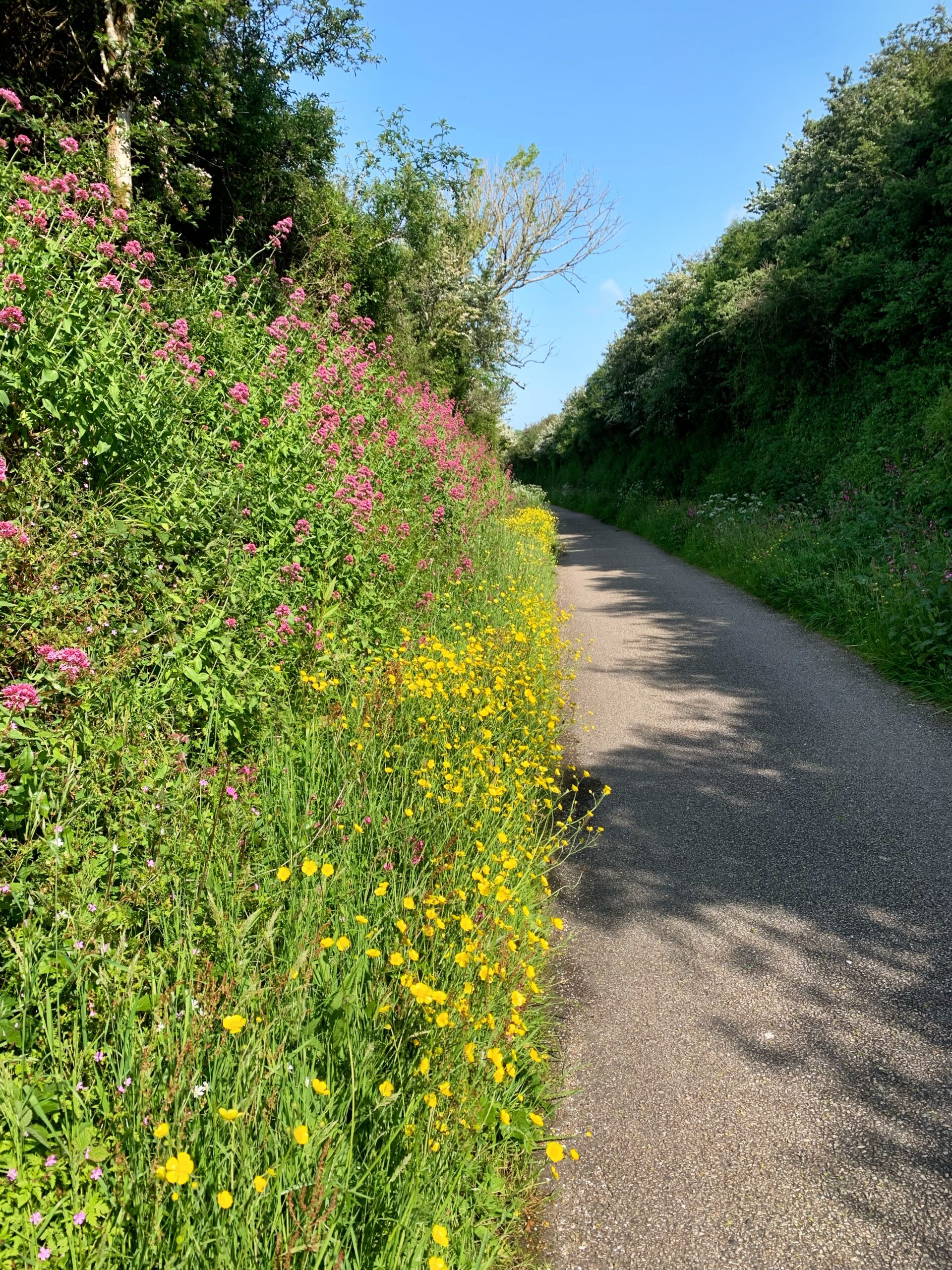
    The Camel Trail near Padstow -22/05/2023
    St Issey on the Camel Trail – 22/05/2023
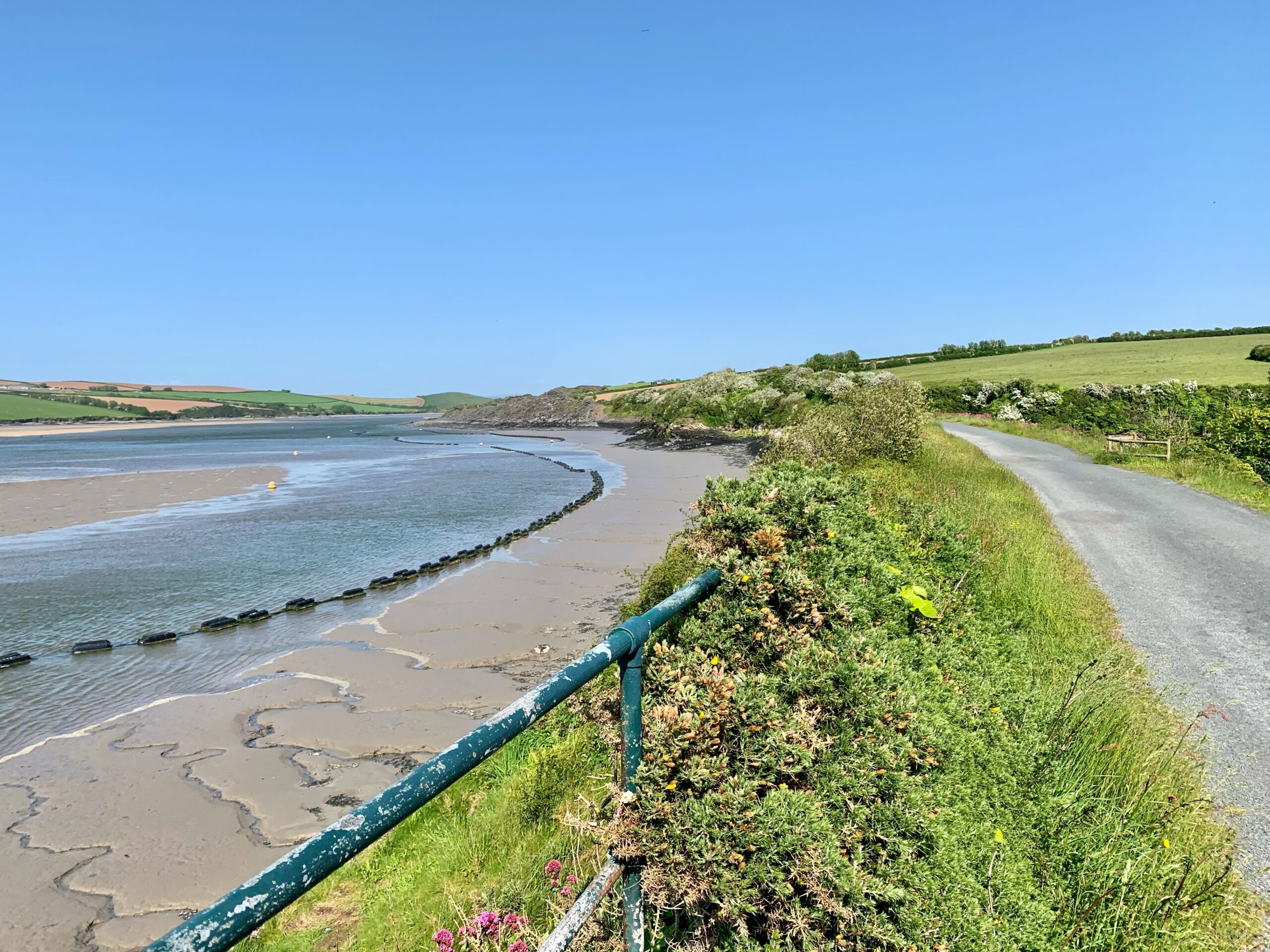
    Lobster pots on the River Camel alongside the disused railway line – 22/05/2023
    Road bridge over the Camel Trail at Bodmin – 23/05/2023
    Dunmere on the Camel Trail – 23/05/2023
    Dunmere Halt on the Camel Trail – 23/05/2023
    Dunmere Halt on the Camel Trail – 23/05/2023
    Dunmere on the Camel Trail – 23/05/2023
    Nanstallon Halt on the Camel Trail – 23/05/2023
    Remains of railway track at Nanstallon on the Camel Trail – 23/05/2023
    Remains of signalling at Nanstallon on the Camel Trail – 23/05/2023
    The branch to Camelford on the Camel Trail – 23/05/2023

    While Yoshi’s mama was visiting Bodmin Jail (now a tourist attraction, Caroline wasn’t spending time at the invitation of the local constabulary), the boy and I also popped in briefly on the Bodmin & Wenford Railway. On the day of our visit visiting steam loco GWR Small Prairie Class 4500 Churchwood 2-6-2T tank engine No. 5553 was in operation, but we also saw several heritage diesel locomotives on site. The Bodmin Railway Preservation Society (BRPS) was formed in 1984, and they in turn formed the Bodmin Railway plc in order to raise funds to purchase the line from Bodmin Parkway to Boscarne Junction, via Bodmin General. They were successful, and North Cornwall District Council (now part of Cornwall Council) secured the land from British Rail.
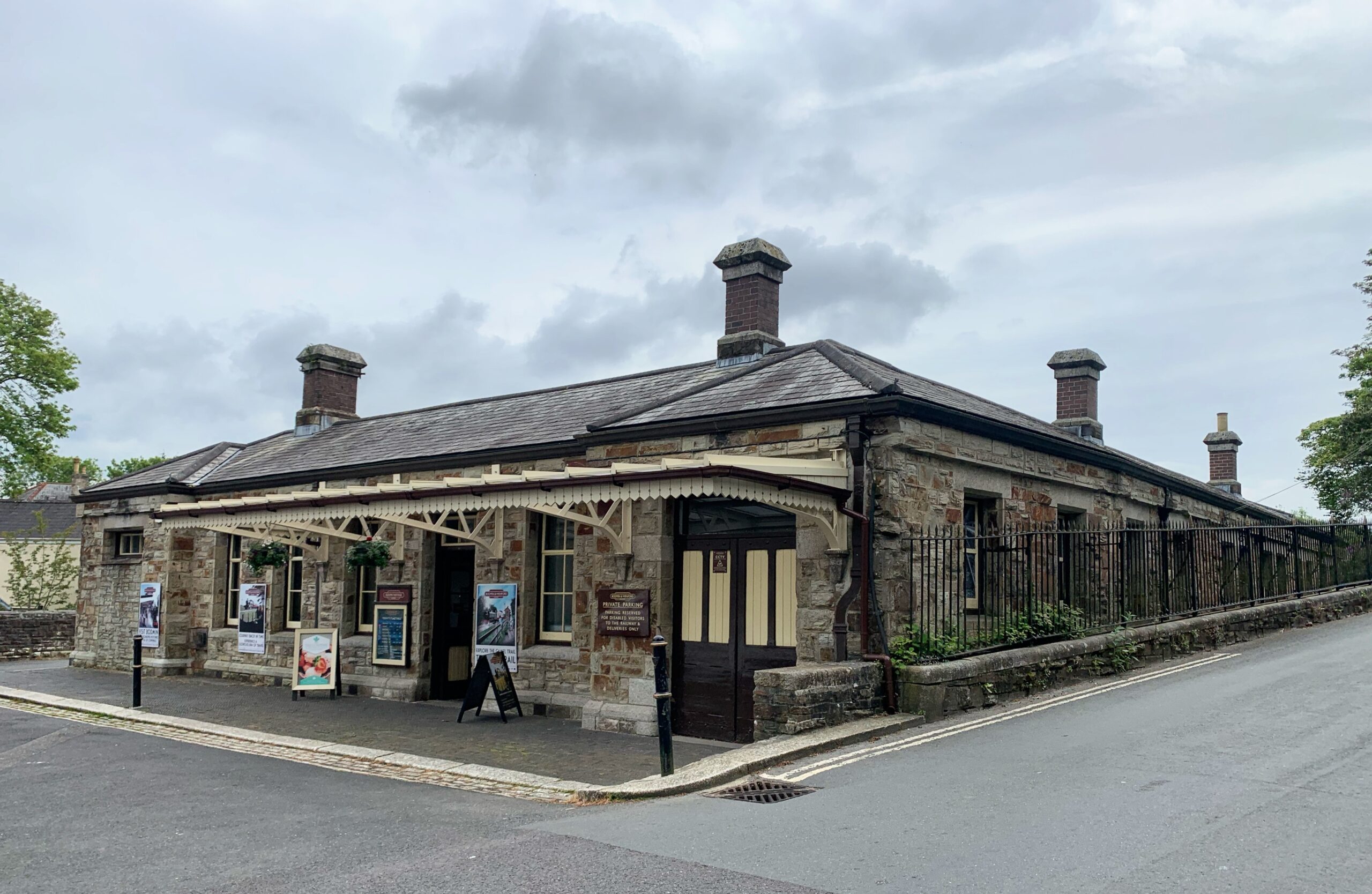
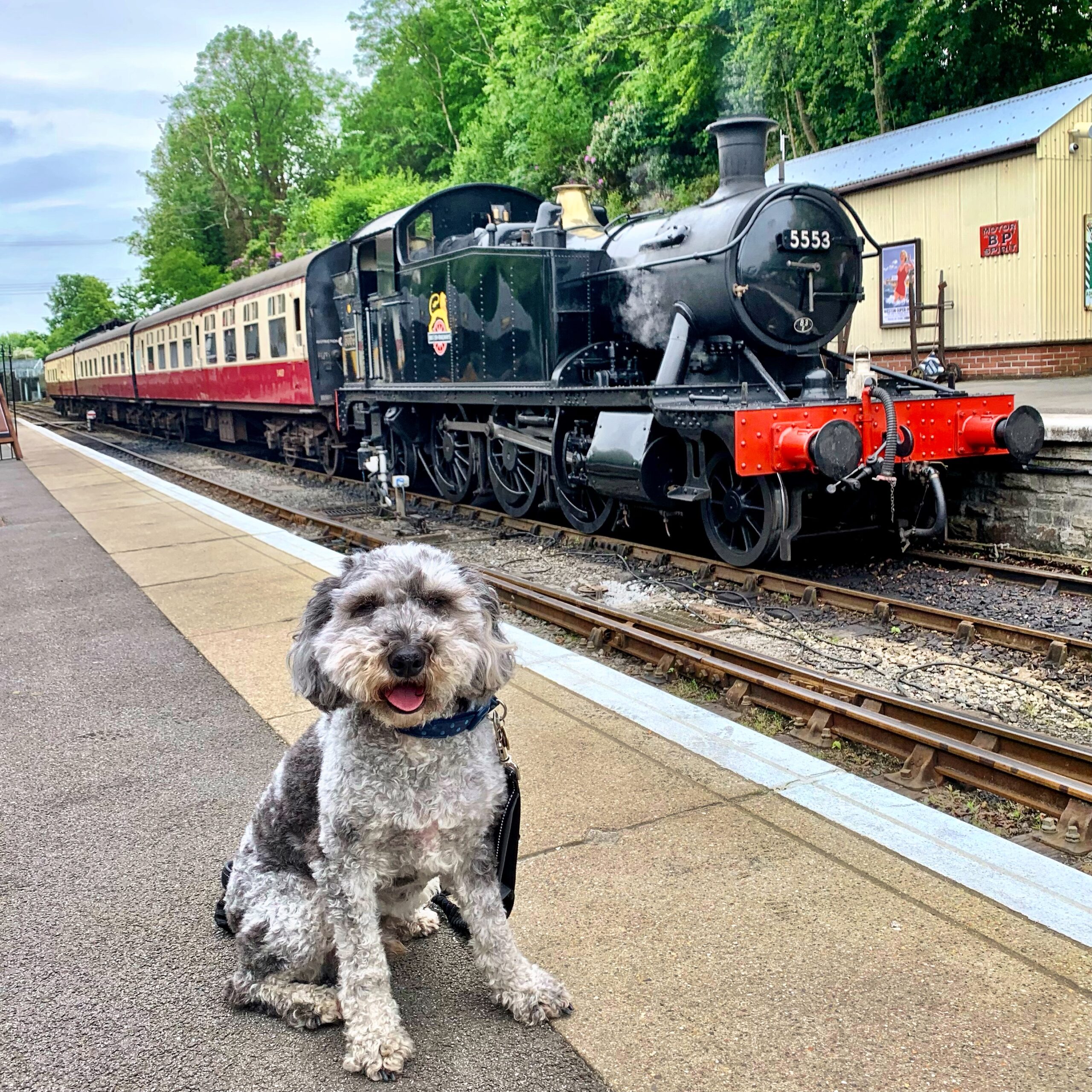
    Bodmin General railway station was constructed by the Great Western Railway and opened in 1887, when the 3½-mile branch line from Bodmin Road to Bodmin was opened. The station is beautifully restored to reflect the 1950’s and is resplendent in the British Railways (Western Region) colour scheme of the period. It currently houses the headquarters of the Bodmin and Wenford Railway – 23/05/2023
    Yoshi at Bodmin General with GWR Small Prairie No. 5553. The locomotive was built at Swindon in 1928 and withdrawn in November 1961 when she was sold for scrap to Woodham Brothers in Barry. Having spent nearly 28 years in the scrapyard, she was the last locomotive to leave Barry in January 1990 where she was transported to the Dean Forest Railway – 23/05/2023
    No. 5553 arrives at Bodmin General. Feel free to bark along – 25/03/2023

    Services between Bodmin Parkway and Bodmin General were restored in 1990, and the line was extended back to Boscarne Junction six years later, in 1996.
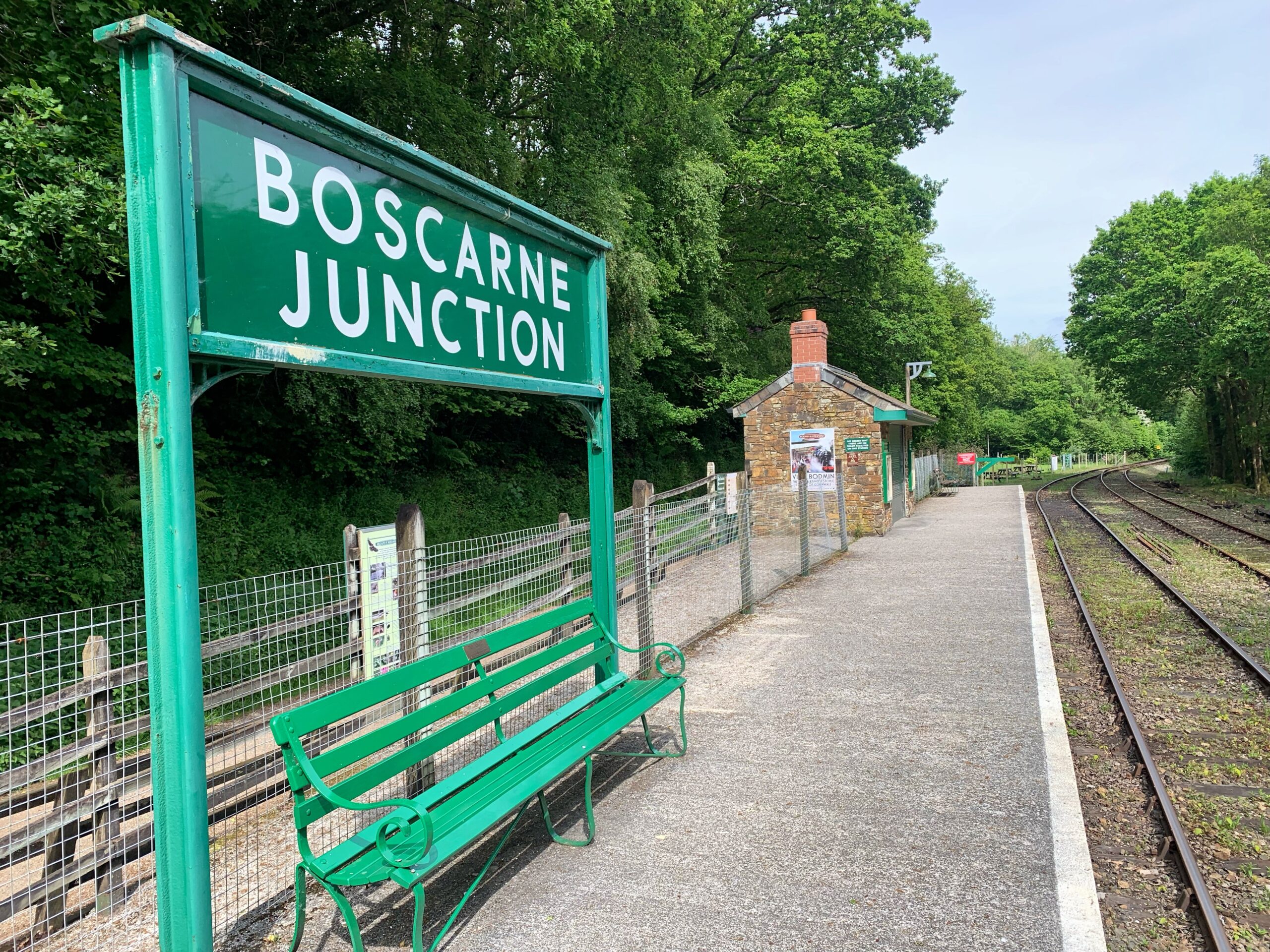
    Boscarne Junction station on the Bodmin and Wenford railway. The Camel Trail passes this location – 23/05/2023

    Since then the Bodmin & Wenford Railway has operated trains – principally steam, but with some heritage diesel services – over the 6½ miles between Bodmin Parkway and Boscarne Junction via Bodmin General.
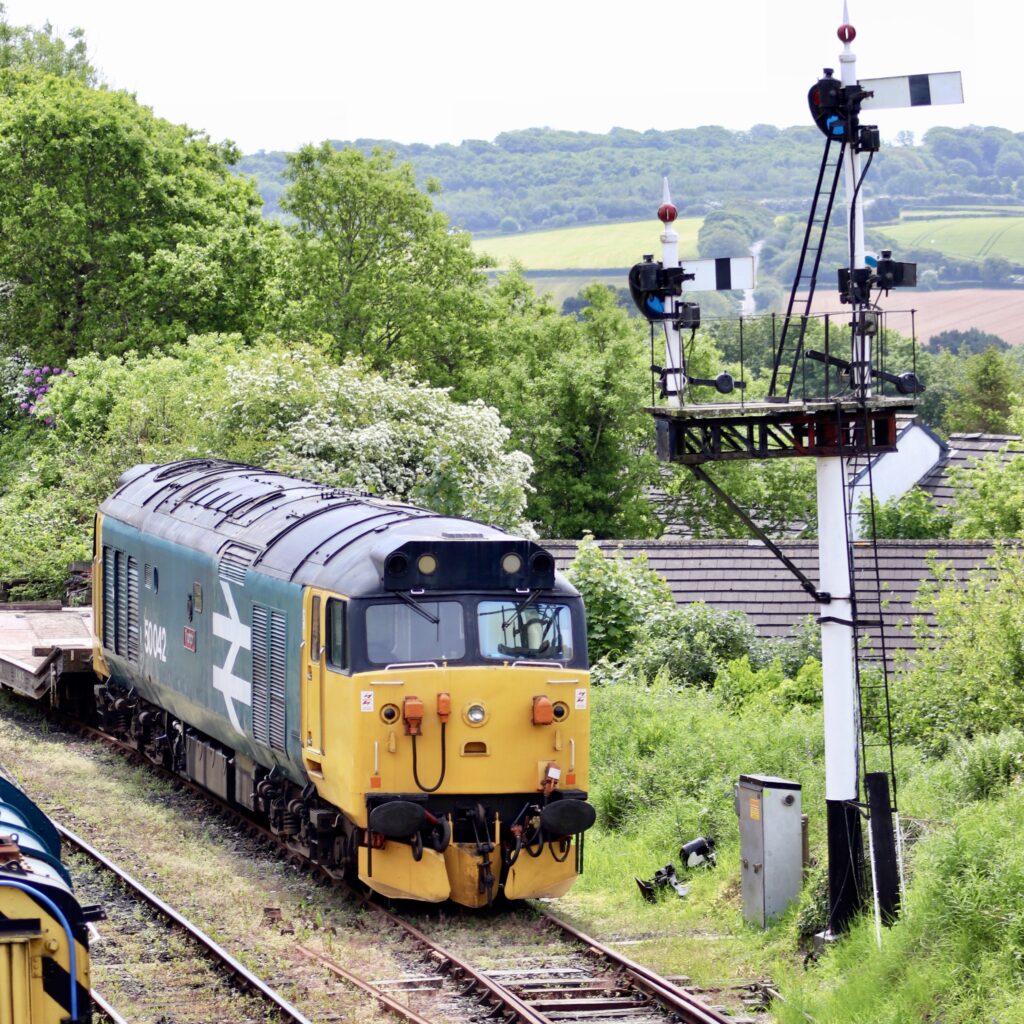
    Class 50 No. 50042 ‘Triumph’ at Bodmin. Withdrawn in 1990 the Bodmin Mainline Diesel Group purchased the loco in 1991 and restored her to pristine condition in 1993 – 23/05/2023
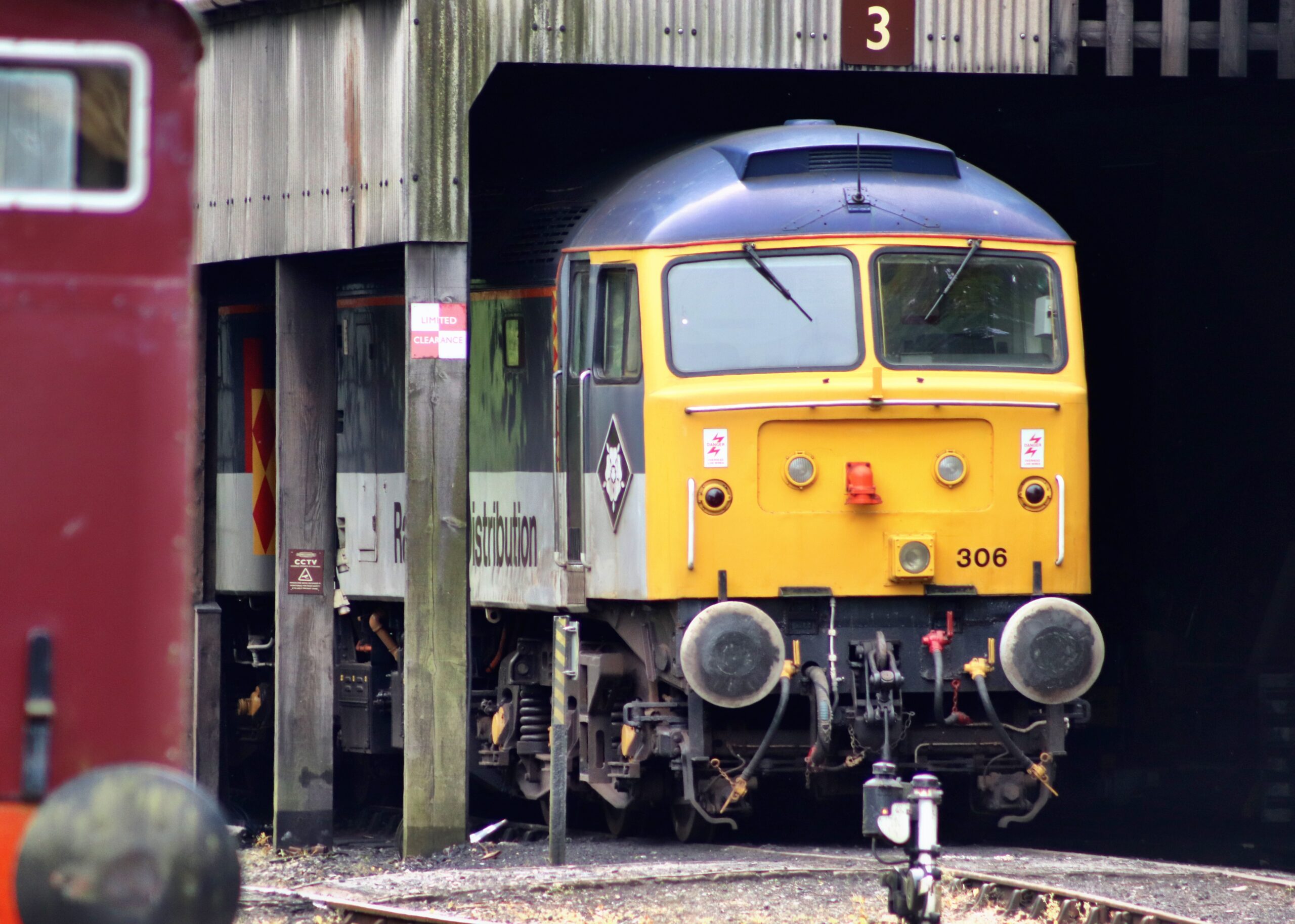
    Class 47 No. 47306 ‘The Sapper’ at Bodmin. Built by Brush at their Falcon Works in Loughborough in 1963 the locomotive arrived on the Bodmin and Wenford Railway in 2007 straight from St Blazey where she had been placed in store following withdrawal from mainline use – 23/05/2023
    Class 37 No. 37142 built in 1963 at English Electric’s Vulcan Foundry is currently undergoing an overhaul at Bodmin. In her mainline days she worked China Clay trains across Cornwall so is very much at home on the Bodmin and Wenford Railway – 23/05/2023
    Travel back to April 1995 when Robert Stephenson & Hawthorn Works 0-6-0T locomotive No. 7597 was in operation on the Bodmin and Wenford Railway. The locomotive was built in 1959 and spent her industrial life at the Rye House Power Station on the Lea Valley in Essex. She is currently being overhauled at The Lincolnshire Wolds Railway.

    We also had time to take photographs of GWR Castle HST Sets and a passing freight at Bodmin Parkway railway station which we visited before reuniting with Caroline. The signal box at Bodmin Parkway is now a café and I enjoyed a latte in between photographing passing trains.
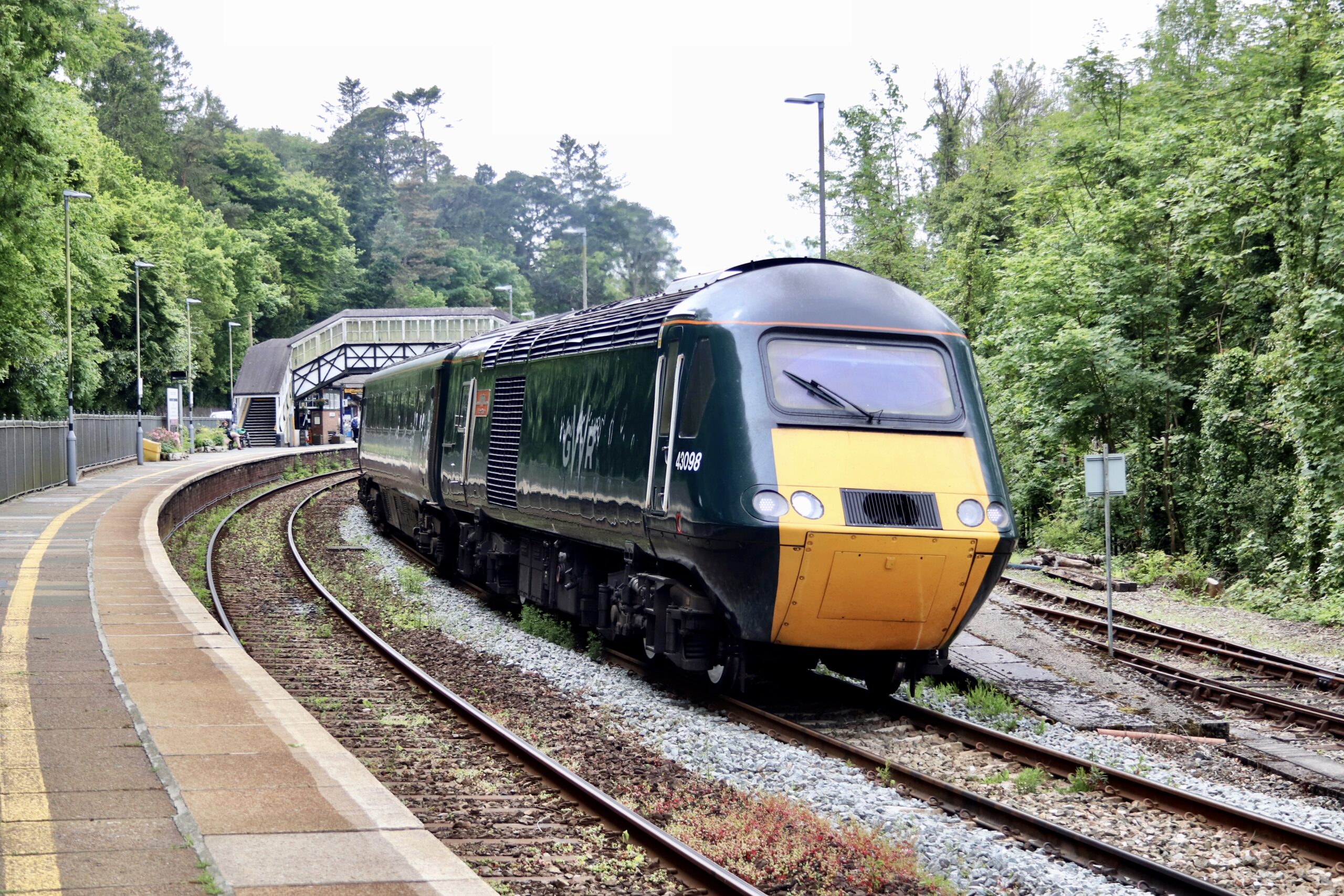
    Class 43 No. 43098 ‘Walton Castle’ departs Bodmin Parkway working 2U24 1250 Penzance to Cardiff Central – 23/05/2023
    GWR IEP No. 802107 departs Bodmin Parkway with 1A88 1215 Penzance to London Paddington passing DB Class 66 No. 66165 6C99 1103 Exeter Riverside N.Y. to St. Blazey SS – 23/05/2023

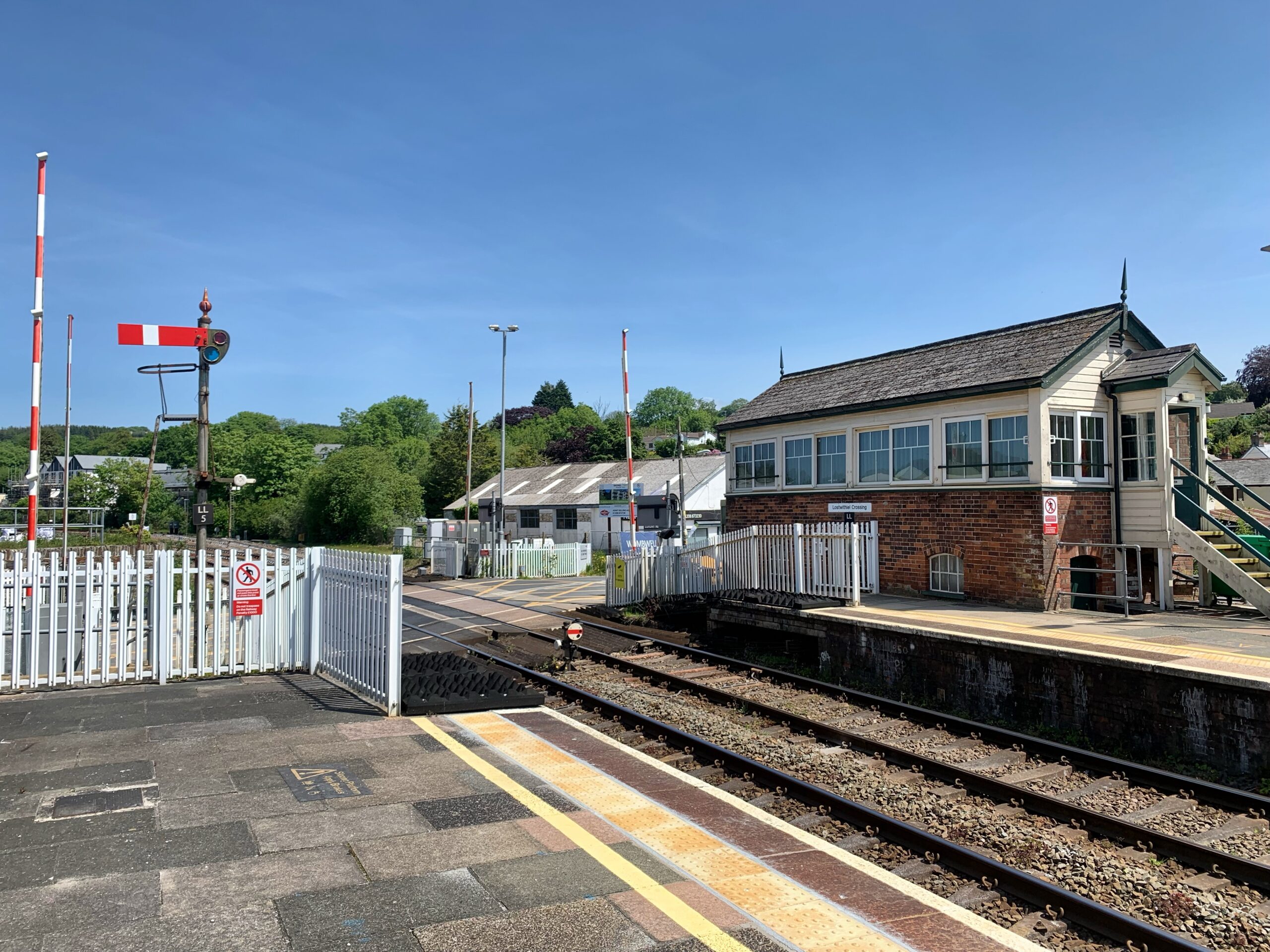
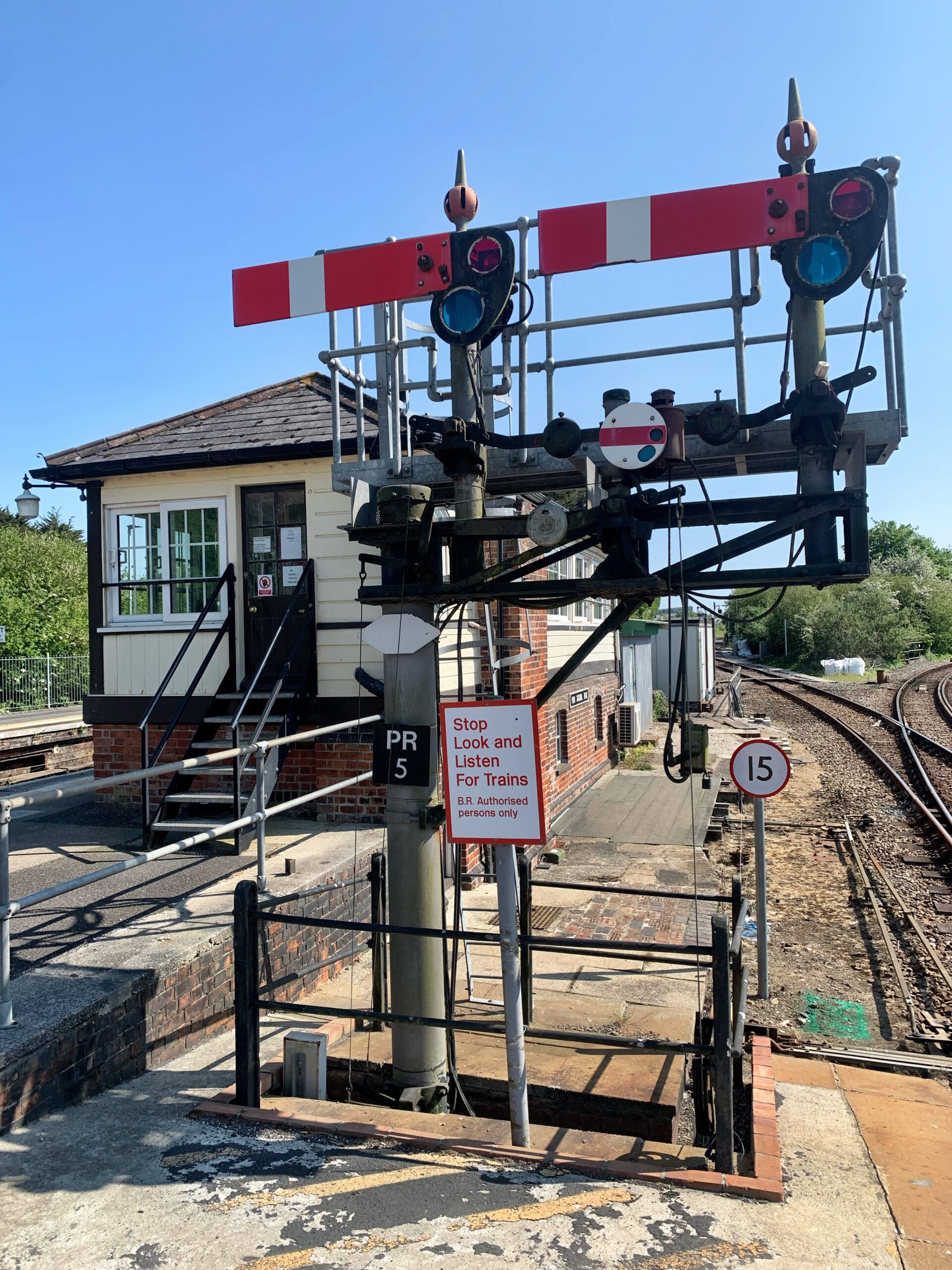
    The next day we drove to Penzance via a couple of stations which still have their semaphore signalling intact. Cornwall has long been one of the country’s most remarkable outposts of lower quadrant semaphore signalling, but time is fast running out for much of its marvellous mechanical infrastructure, with a major re-signalling project due to be completed in Autumn 2023.

    The present Exeter signalling centre is to become the centralised control point for the West of England and will become a Railway Operations Centre in all but name. The section from Lostwithiel to Truro will be controlled from a new work station incorporating four or five VDU screens, sited in the Exeter centre. It will mean the closure of Lostwithiel, Par and Truro signal boxes but the same track layouts will be retained, more or less, except for some minor rationalisation. Improving the capacity on the Newquay branch is part of the plan as is the modernisation of two level-crossings on each of the Looe and Gunnislake branches.

    At Lostwithiel, the junction for the Fowey freight line, the two holding loops for the china clay trains, and the level crossing at the eastern end of the station, will all be controlled from Exeter. The crossing will become CCTV-controlled, with the monitoring screens sited at the Exeter work station. It is anticipated that the downtime of the barriers, a cause of local complaint, can be reduced with this arrangement.

    Class 43 No. 43010 ‘Lydford Castle’ at the rear of the late running 2C69 0900 Cardiff Central to Penzance Castle HST service – 24/05/2023
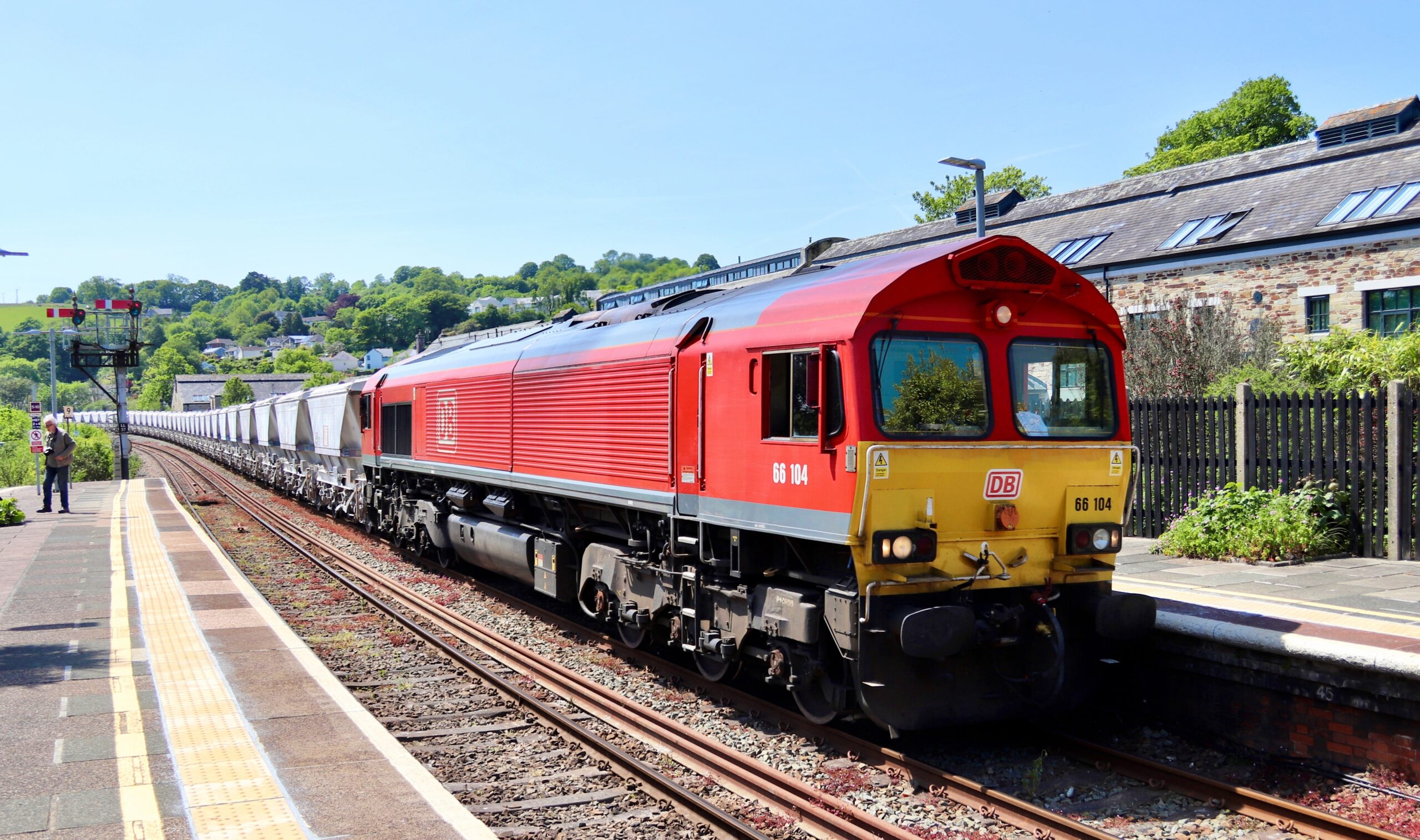
    Class 66 No. 66104 heads up 6G09 1302 Goonbarrow Junction EWS to Fowey Dock Carne Point china clay working at Lostwithiel. The locomotive runs around the train in Lostwithiel Up Goods Loop before heading back through the station to Fowey – 24/05/2023
    Having run round its wagons, Class 66 No. 66104 hauls 6G09 1302 Goonbarrow Junction EWS to Fowey Dock Carne Point china clay back through Lostwithiel – 24/05/2023
    Lostwithiel signal box and crossing – 24/05/2023

    At Par, the junction for the Newquay branch, the signal box will be abolished and the entire layout, including the main line connections to enable through running to the branch, will be put on the Exeter work station. The intermediate block sections at St Austell, Burngullow and Probus will also transfer to Exeter. Par station will be equipped with a new footbridge and lifts to comply with the disabled access requirements.
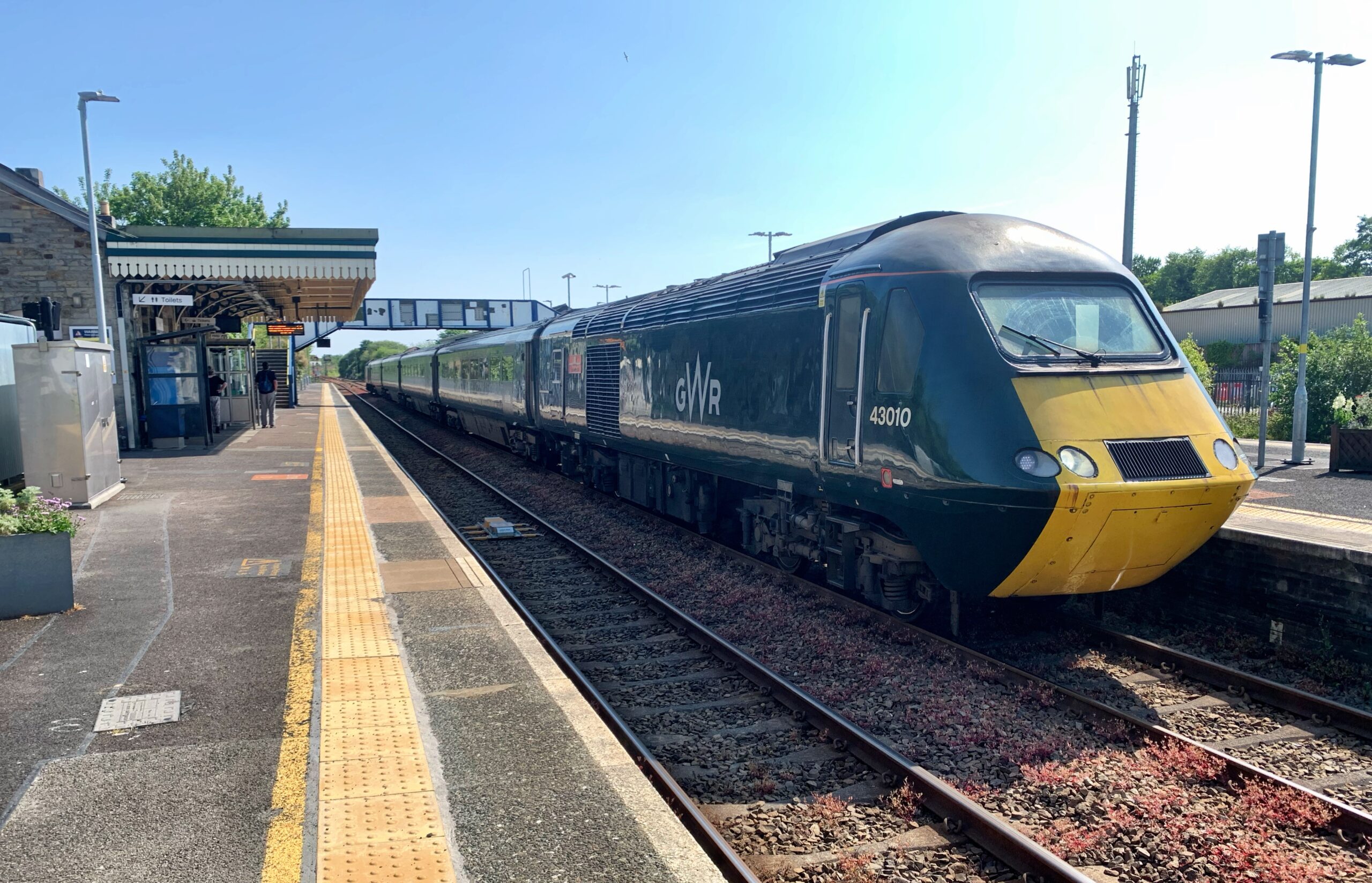
    Class 43 No. 43010 ‘Lydford Castle’ pauses at Par with 2P20 1515 Penzance to Plymouth service – 24/05/2023
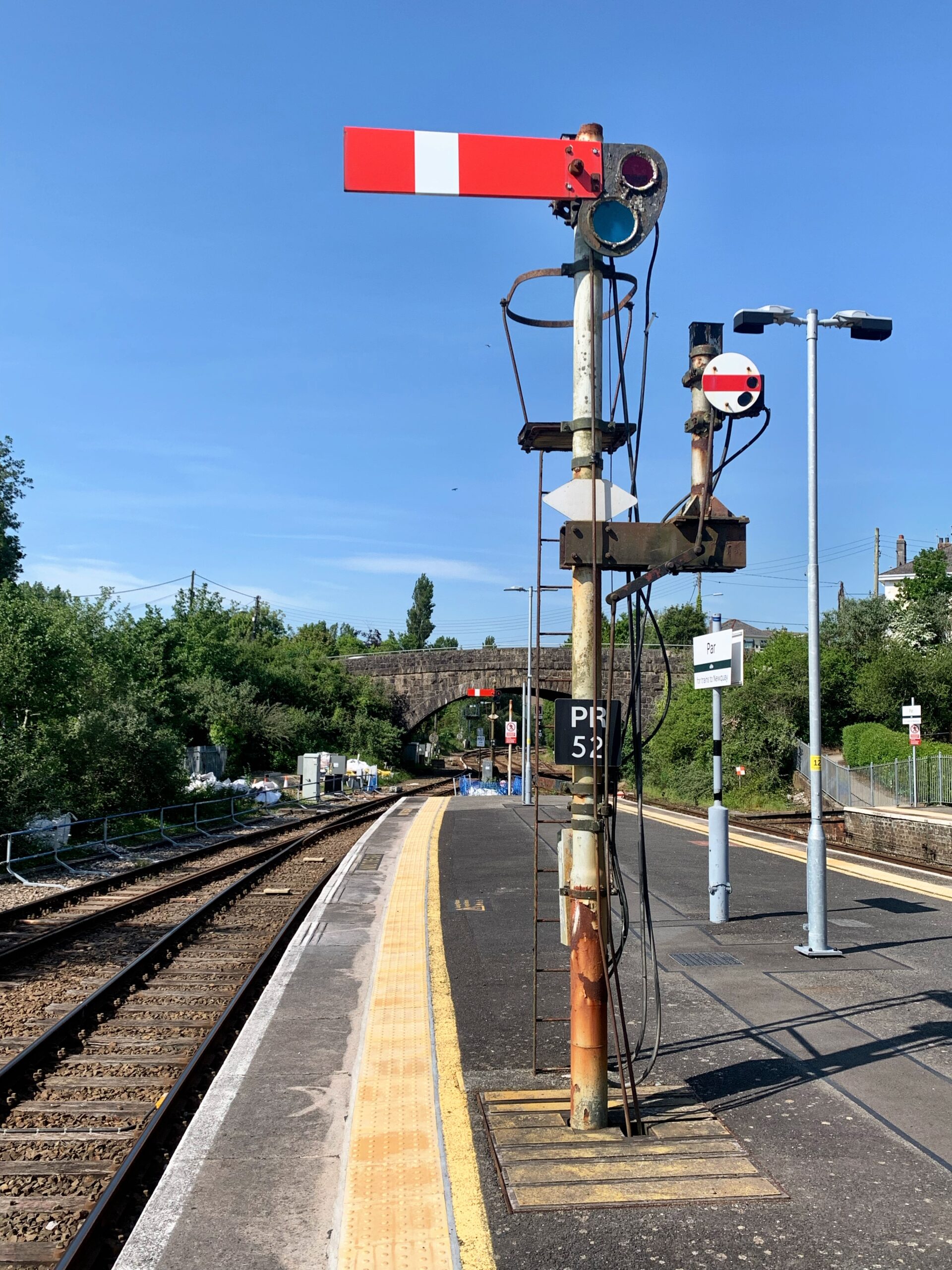
    Semaphore signals at Par – 24/05/2023
    Grade II listed signal box and semaphore signals at Par. The box opened in 1879 and is built to the first GWR standard design, it was set up to control the GWR’s mainline onwards to Penzance, together with the junction for the branch to Newquay – 24/05/2023

    Par is one of two operational Cornish signal boxes – along with Lostwithiel – to enjoy a Grade II Listing, being one of only two surviving examples of a GWR-designed Type 2 box to survive in its original location, at the western end of platforms 2 and 3 on Par station.

    As well as the main line, modifications will be made to some of the Cornish branch lines to increase operating flexibility and an improved train service. The most significant of these will be on the one from Par to Newquay, currently the Cinderella branch in the county with, broadly, a two-hour interval service. The intermediate signal box at Goonbarrow splits the section, after that the branch being ‘One Train Working’.

    802006 ‘Harry Billinge MBE LdH’ at Newquay having arrived with the 1N68 0905 Plymouth to Newquay service – 23/05/2023

    Only one operational platform exists at Newquay. A passing loop is to be provided at Goss Moor that will enable an hourly service to be introduced. The second platform at Newquay will be brought back into use thus enabling more through trains from beyond Par. The county’s ambition is to create a Mid Cornwall Metro to facilitate more train usage into the areas of greater employment. This will imply the restoration of full signalling throughout, which will be controlled from Exeter.

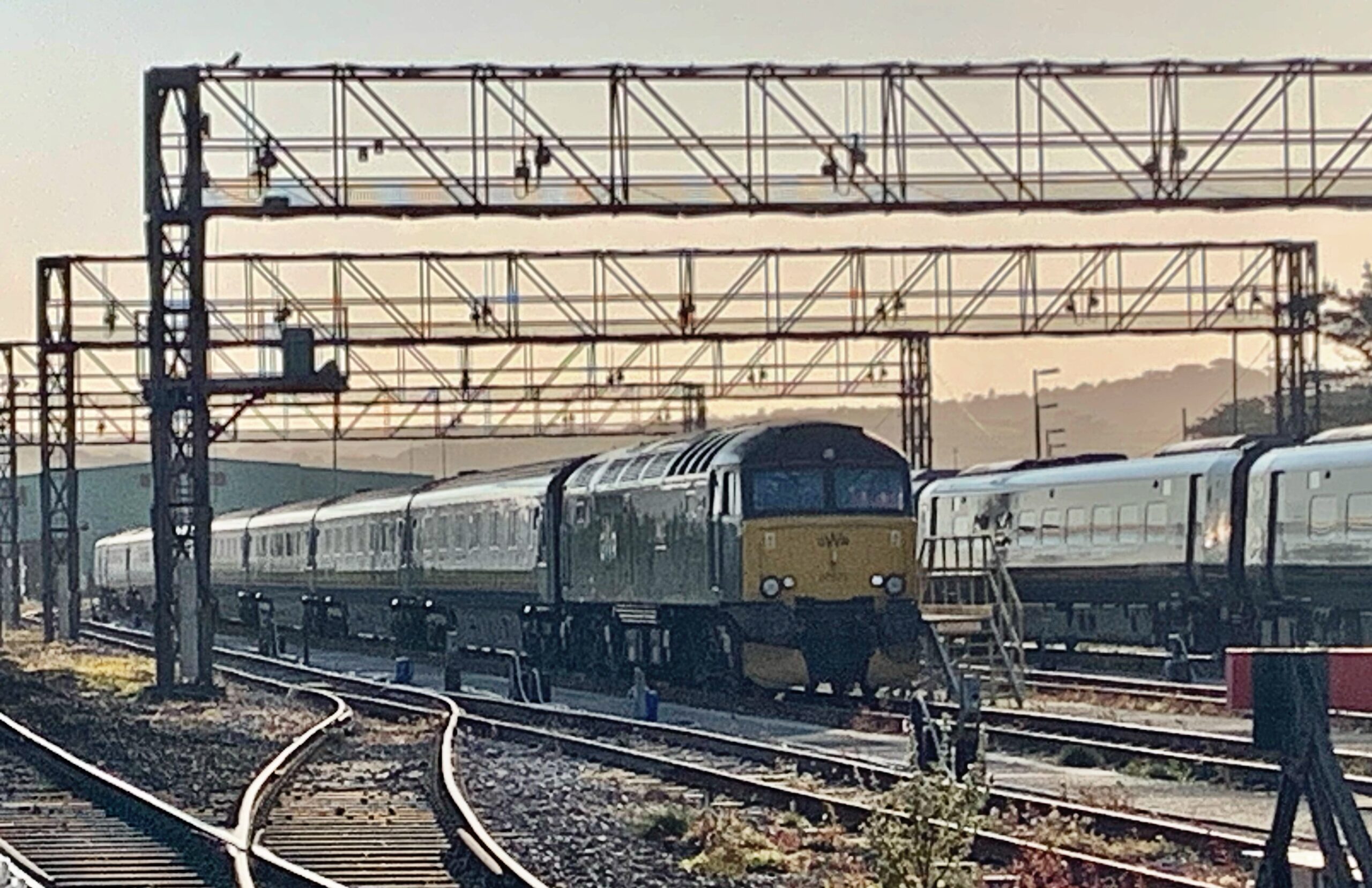
    During our sty in Penzance, I enjoyed watching the GWR sleeper service headed up by Class 57 locomotives depart for London in the evening and the corresponding service arrive from the capital in the morning. The Night Riviera leaves Penzance at 2145 and arrives in London paddington at 0504 while the reverse working departs London at 2345 and is scheduled to pull in to Penzance at 0754. On the Wednesday, I was interested to learn that the sleeper service was diverted via Yeovil that day. 

    Class 57 No. 57604 ‘Pendennis Castle’ awaits departure of 1A50 2145 Penzance to London Paddington sleeper – 24/05/2023
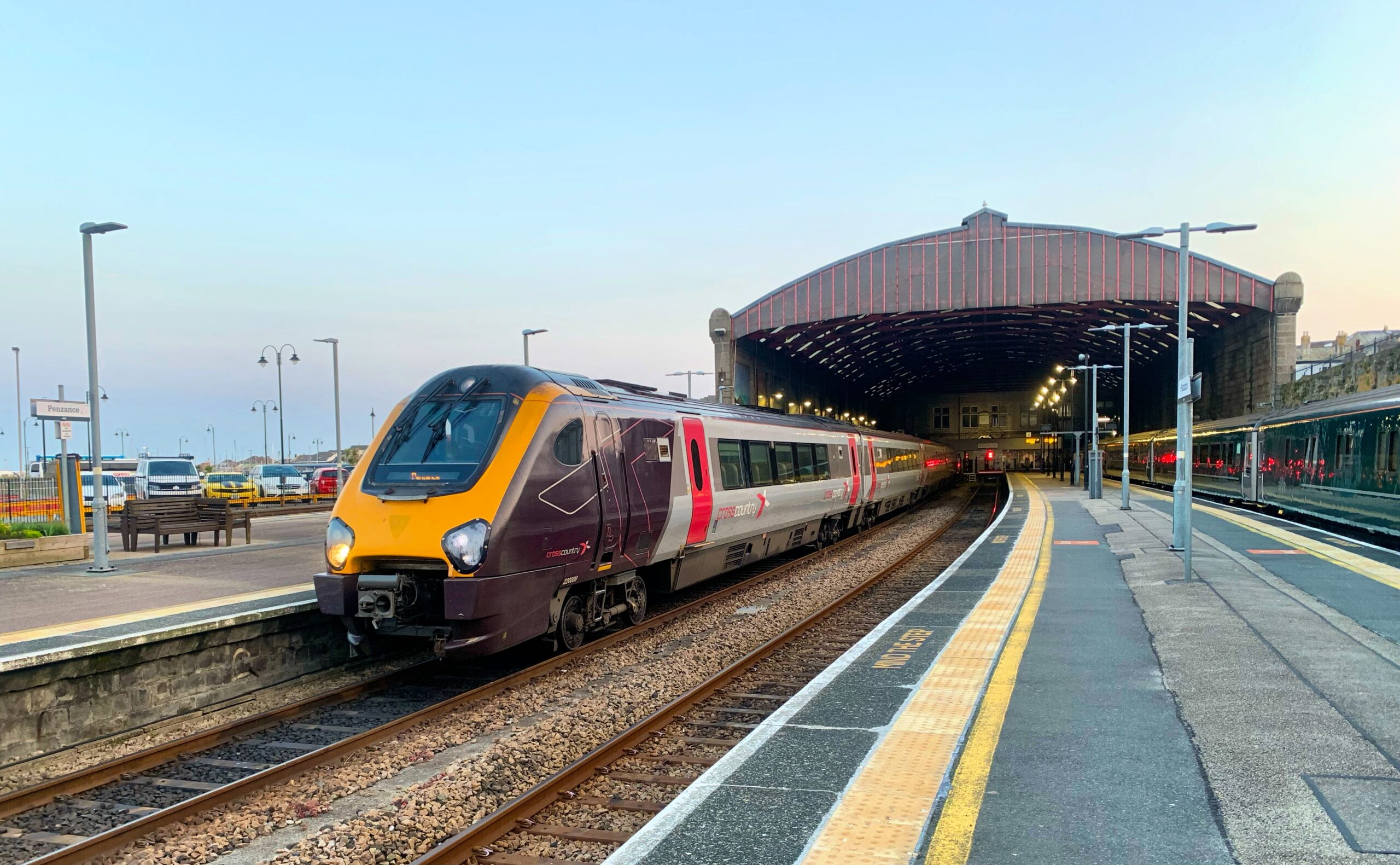
    CrossCountry Voyager Class 220 No. 220009 ready to set off ECS to Long Rock after working in 1V58 1003 Edinburgh Waverley to Penzance – 24/05/2023
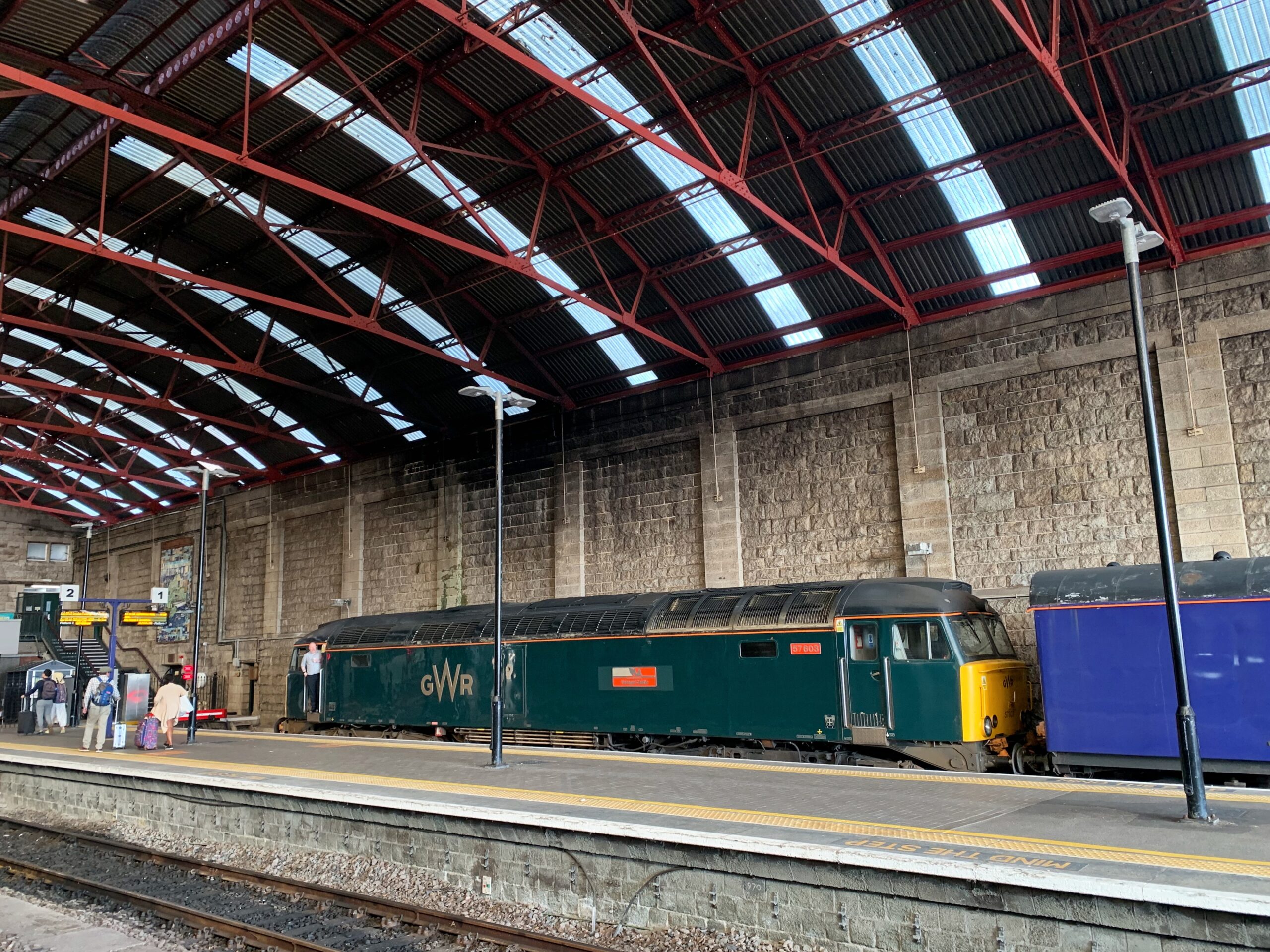
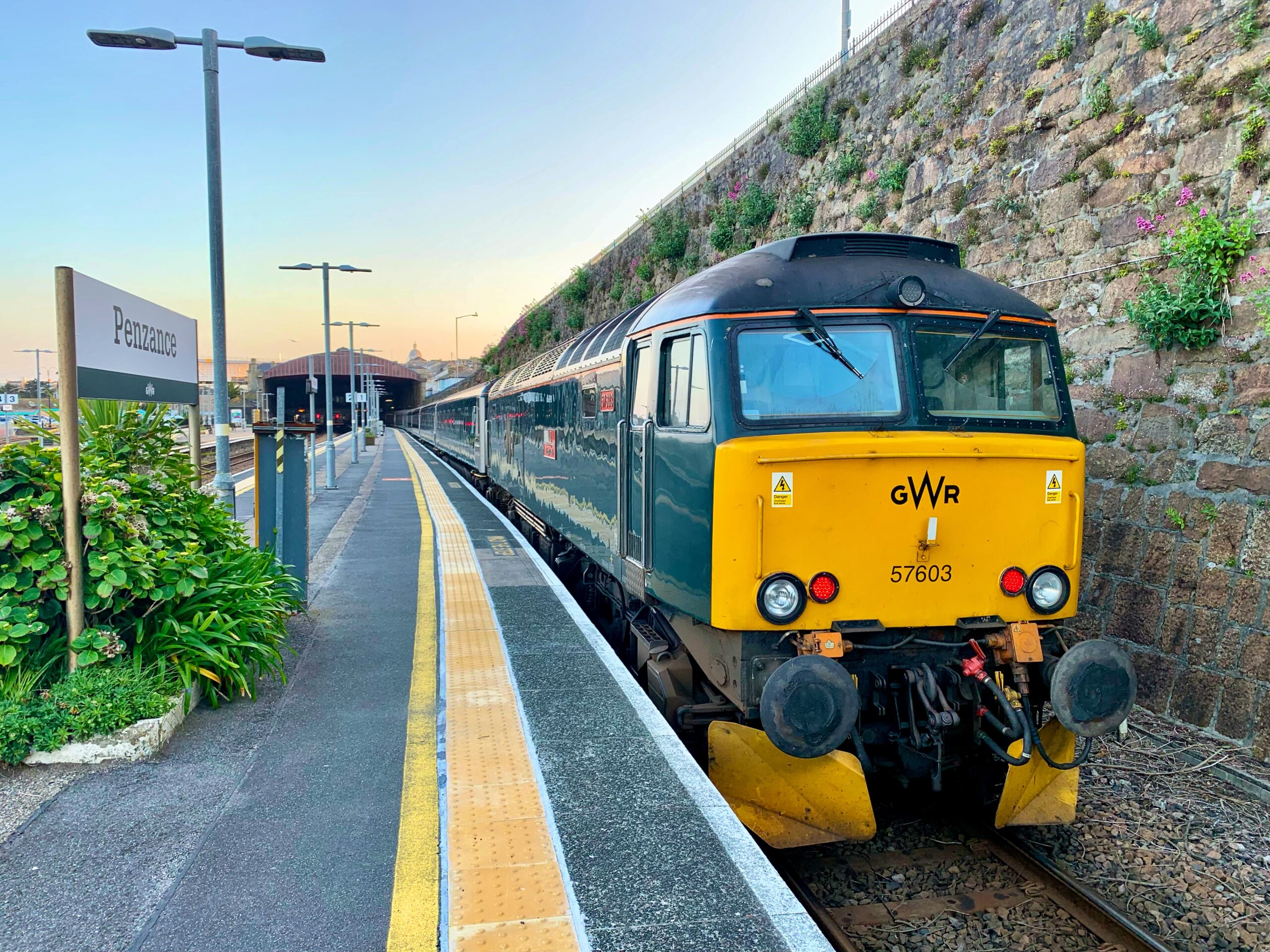
    Class 57 No. 57603 ‘Tintagel Castle’ at the buffer stops at Penzance having worked 1C50 2345 London Paddington to Penzance – 25/05/2023
    Class 57 No. 57603 ‘Tintagel Castle’ nameplate
    Class 57 No. 57603 ‘Tintagel Castle’ awaiting shunting movement to Long Rock having arrived with the morning 1C50 2345 London Paddington to Penzance service – 25/05/2023
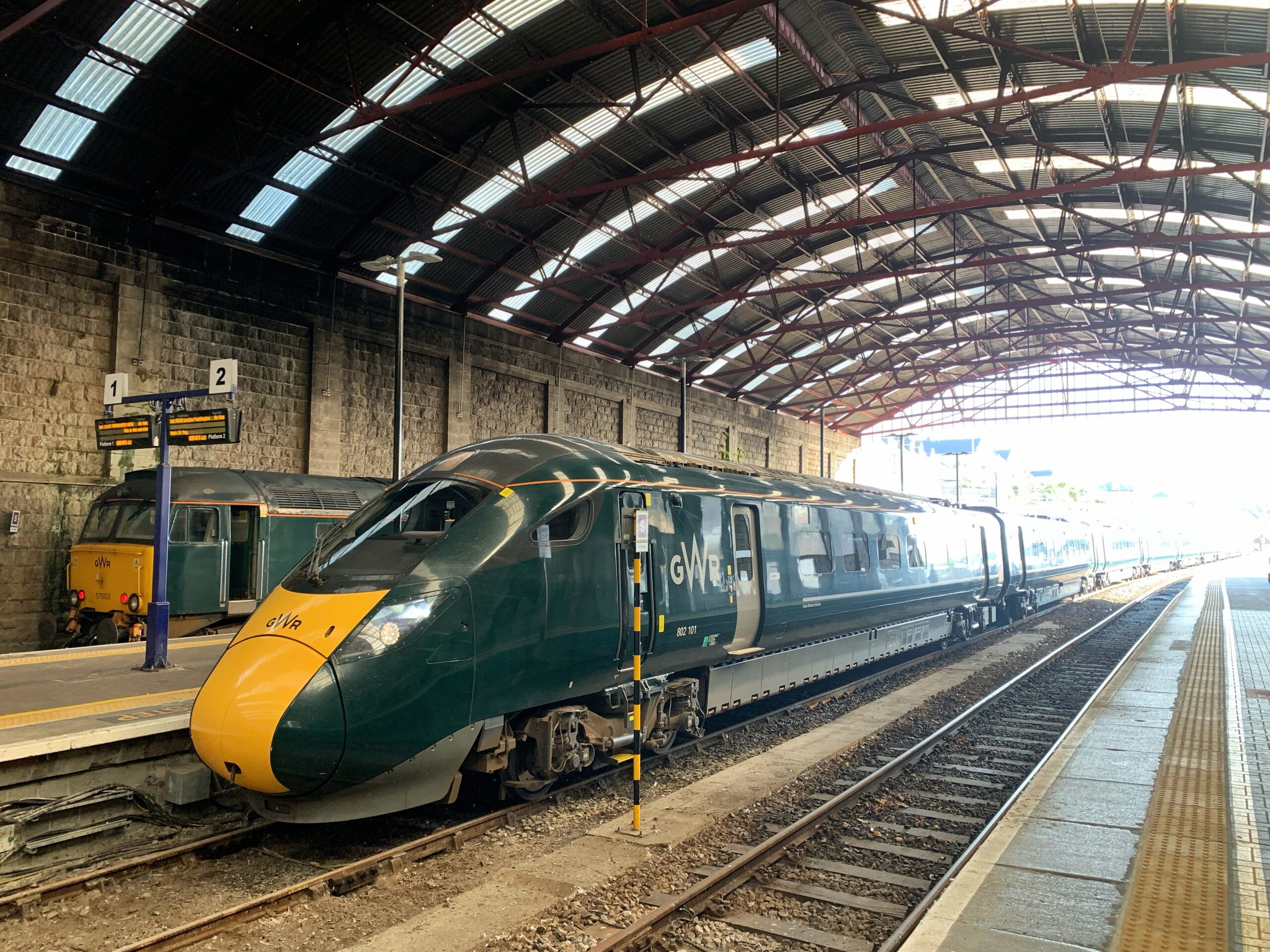
    Class 57 No. 57603 ‘Tintagel Castle’ and GWR Bi-Mode IET Class 802 No. 802101 ‘Nancy Astor’ working 1A80 0815 Penzance to London Paddington – 25/05/2023
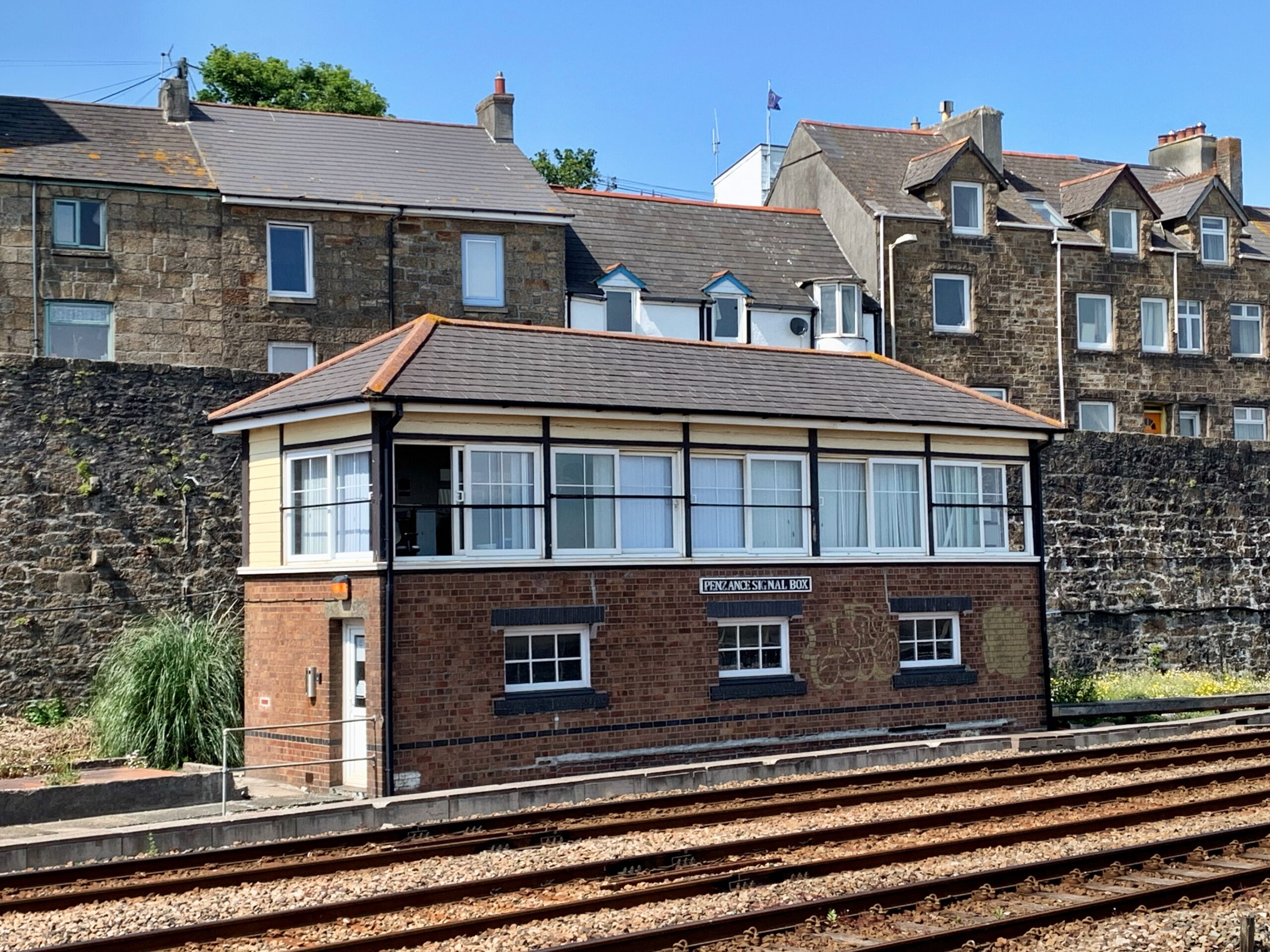
    Penzance Signal Box – 25/05/2023
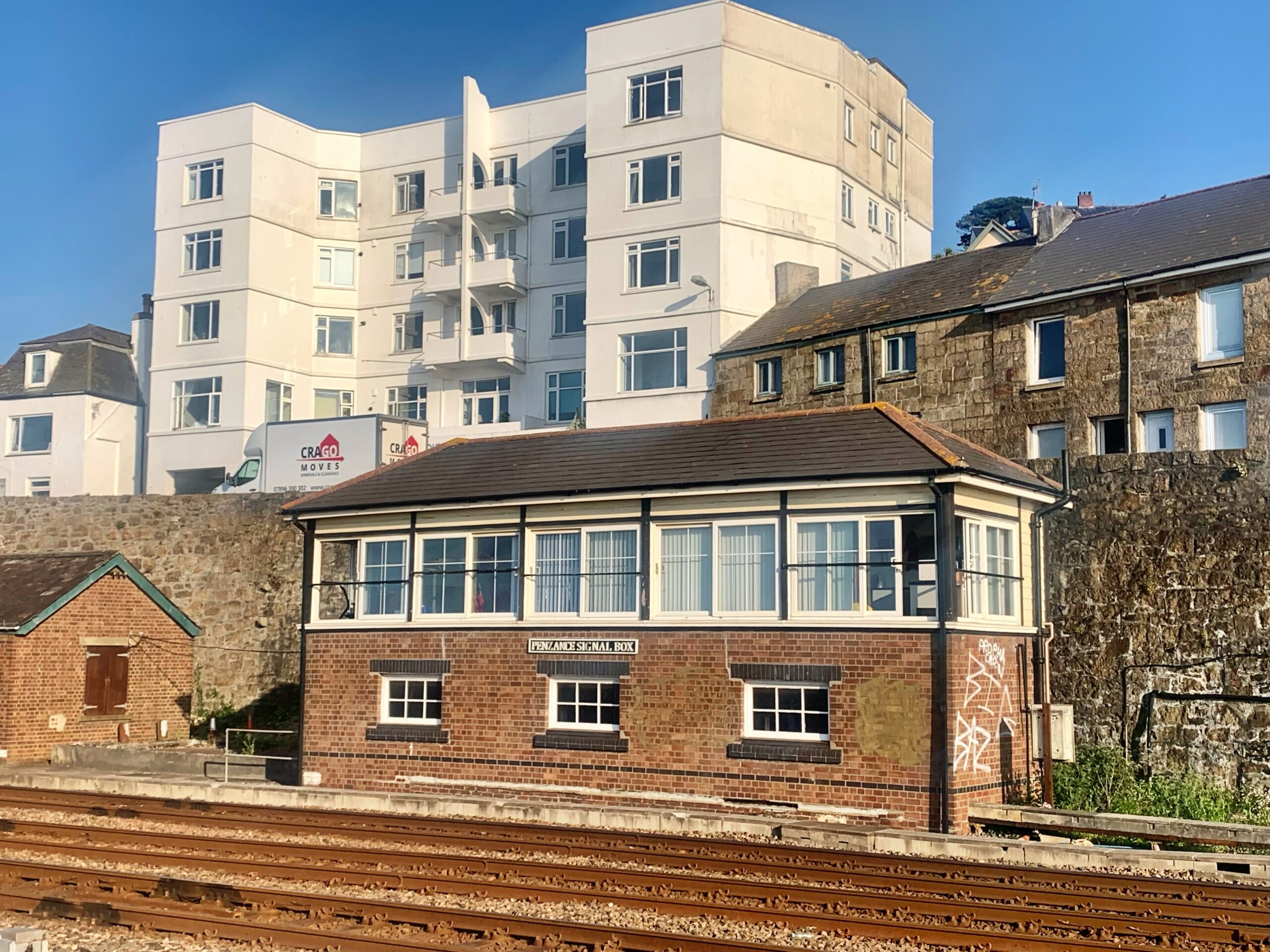
    Penzance Signal Box – 26/05/2023
    Class 57 No. 57603 ‘Tintagel Castle’ at the rear of 5A50 2012 Penzance Traction & Rolling Stock Maintenance Depot to Penzance Empty Coaching Stock move forming the evening Night Riviera sleeper service to London Paddington – 25/05/2023
    Class 57 No. 57603 ‘Tintagel Castle’ having arrived at the rear of the ECS move from Long Rock ready to haul the 1A50 2145 Penzance to London Paddington sleeper – 25/05/2023
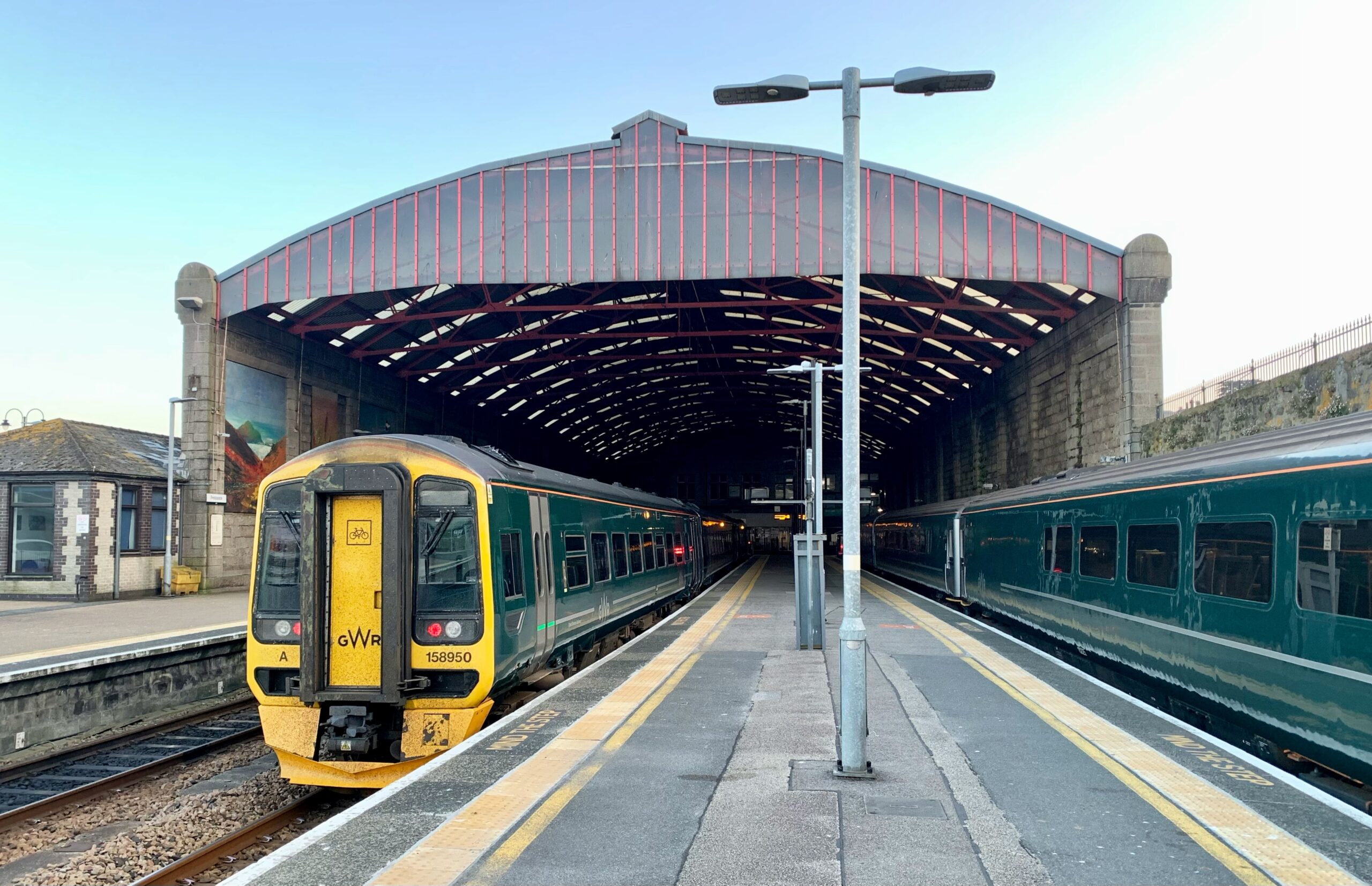
    GWR Class 158 No. 158950 at Penzance having arrived with 2C36 1830 Plymouth to Penzance service – 25/05/2023
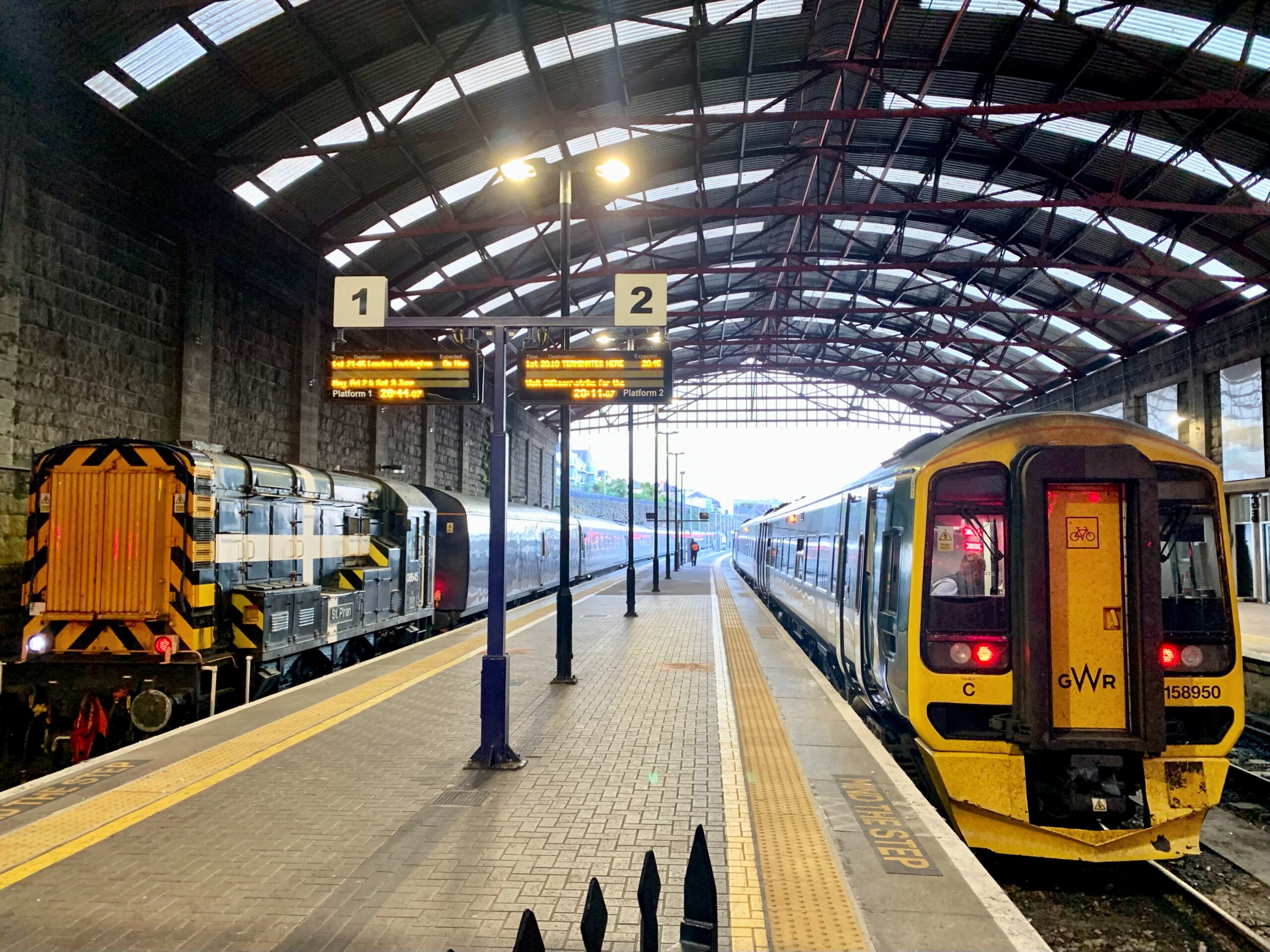
    Class 08 No. 08645 ‘St.Piran’ at rest having brought the Night Riviera stock into Penzance whilst GWR Class 158 No. 158950 awaits departure with the 2E30 2100 service to Exeter St. Davids – 25/05/2023
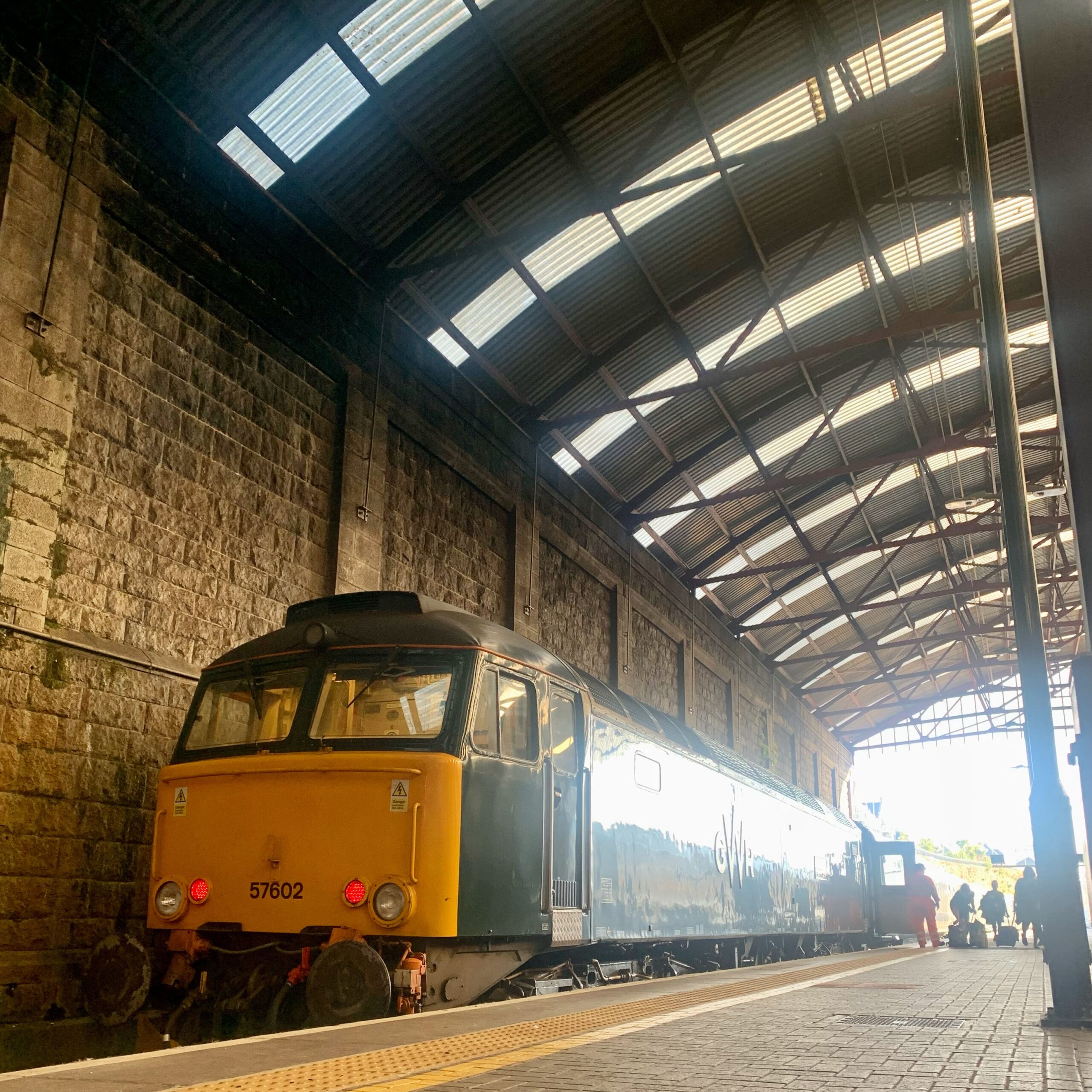
    Class 57 No. 57602 ‘Restormel Castle’ at the buffer stops in Penzance having worked the down Night Riviera sleeper service – 26/05/2023

    On Thursday we walked from Penzance to Marazion which conveniently meant we passed by Long Rock where Penzance TMD, the most westerly and southerly rail depot in the country, is located. There has been a depot a Long Rock since 1914 when a steam shed was opened. The current depot dates from 1977 with later modernisation to increase capacity in 2017.

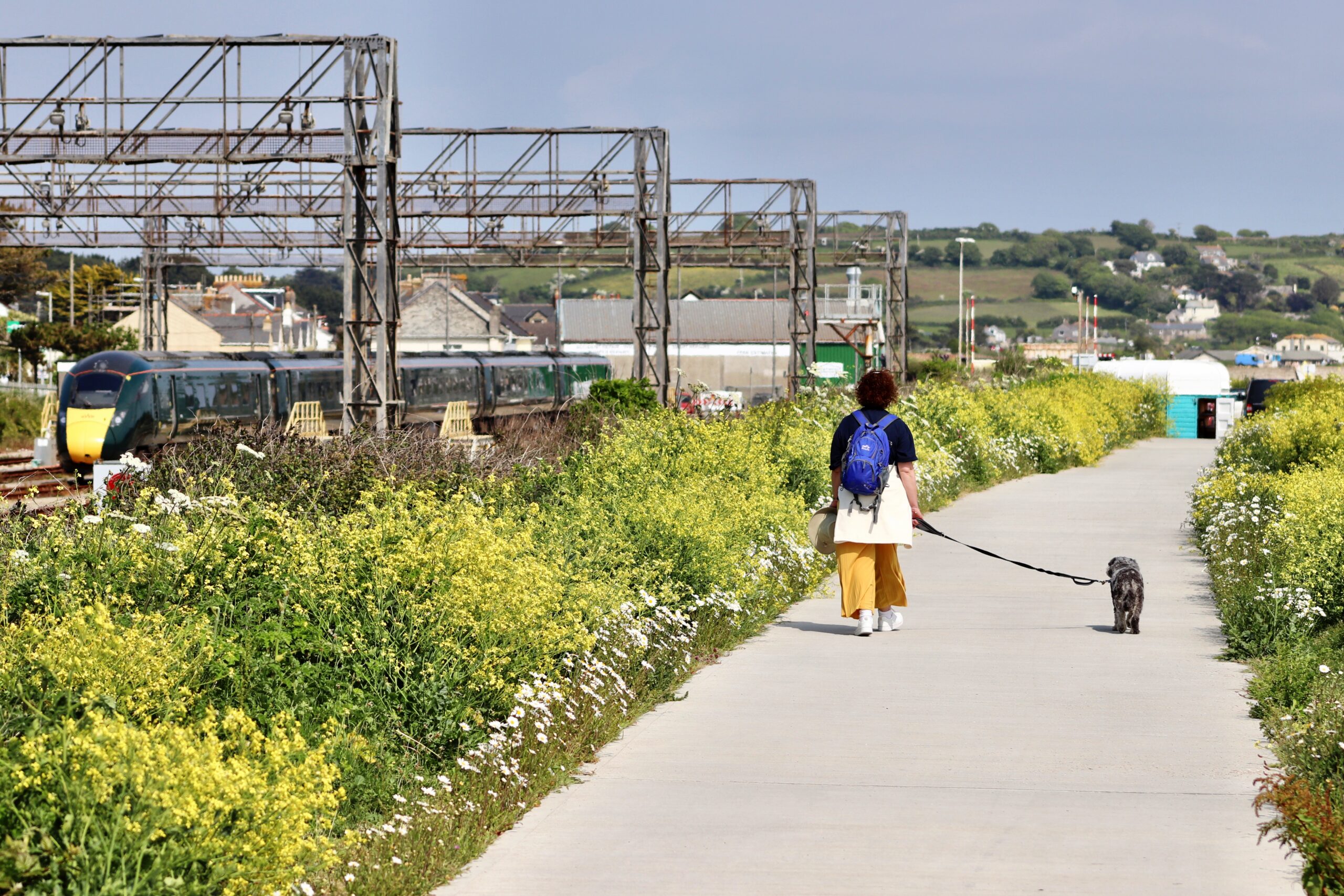
    Long Rock depot seen from the west of Penzance – 25/05/2023
    The coastal path runs adjacent to Long Rock. Caroline and Yoshi pass an unidentified IET awaiting its next duty from Penzance – 25/05/2023
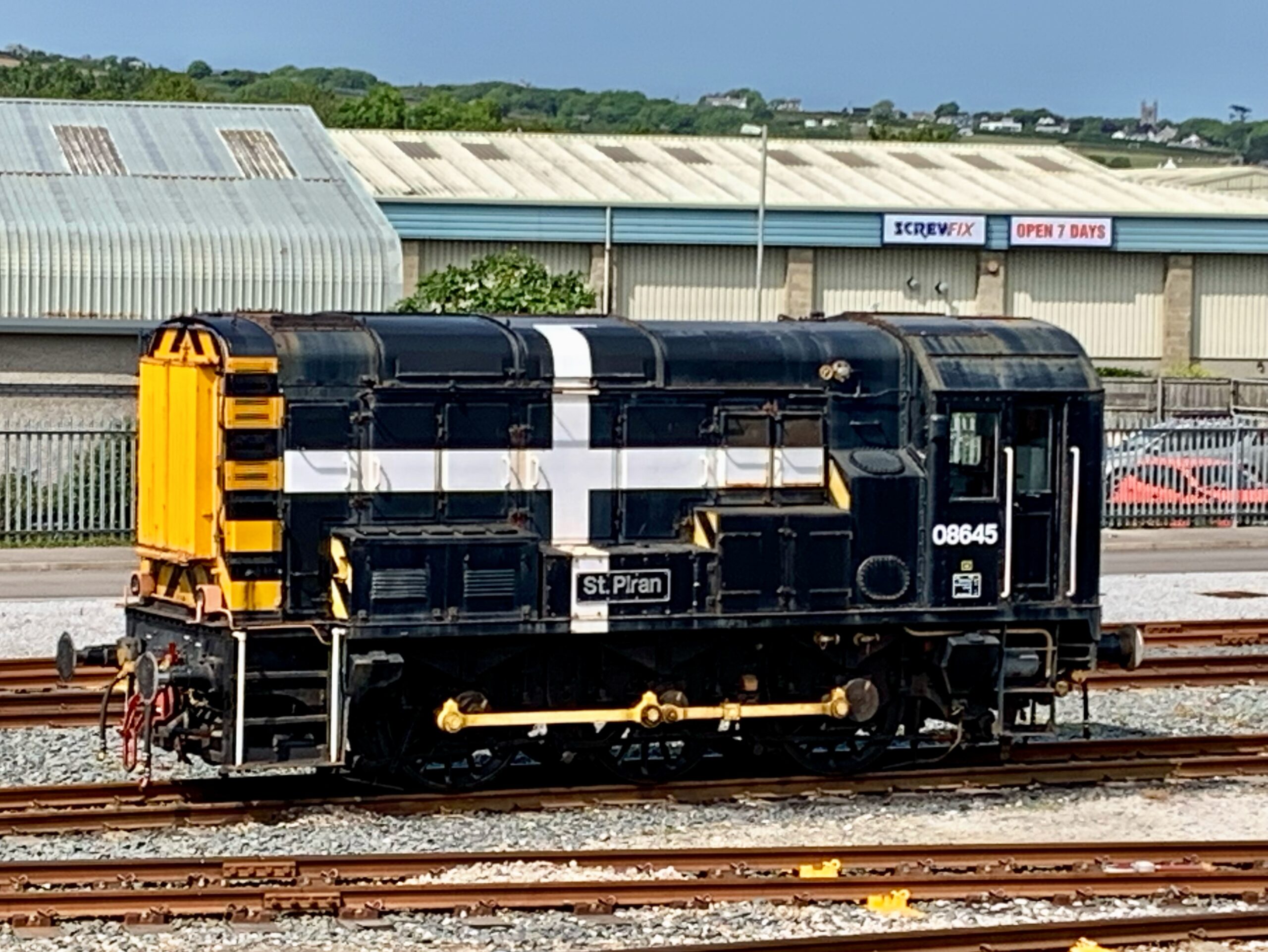
    Class 08 No. 08645 ‘St.Piran’ (after the patron saint of Cornwall) in Kernow livery at Long Rock, Penzance. Built at Harwich Works and originally numbered D3812 this
    0-6-0 diesel shunter entered traffic in February 1959 being allocated to Newport Pill. The locomotive was allocated to different Welsh depots until December 2018 when, with the closure of Landore, she moved to Penzance. Her new livery was unveiled to the public at a special open day to raise money for the Penlee Lifeboat in April 2019 –
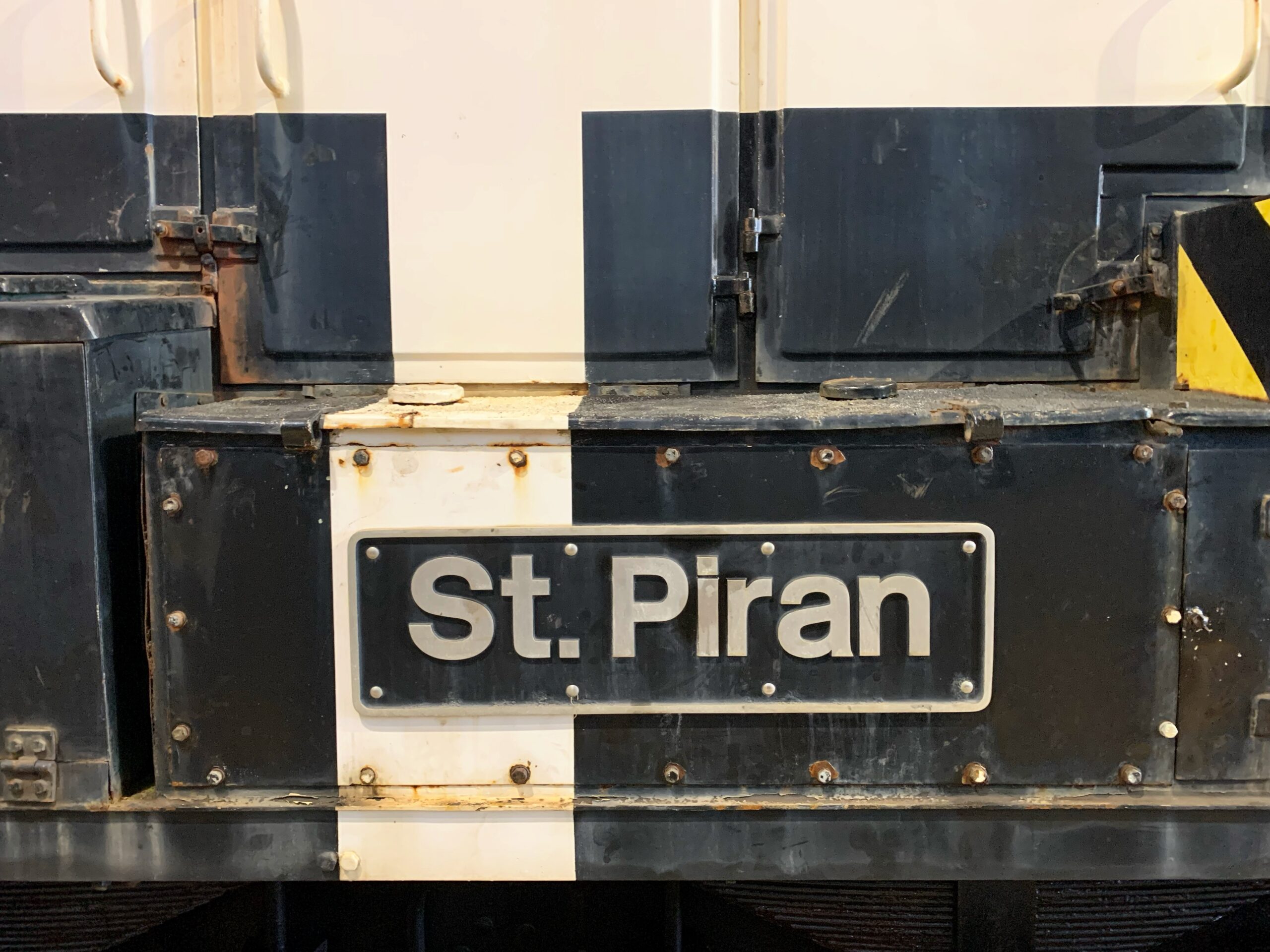
    Nameplate of Class 08 No. 08645 ‘St. Piran’
    Class 57 No. 57603 ‘Tintagel Castle’ pokes her nose out of the shed at Long Rock – 25/05/2023
    Class 57 No. 57603 ‘Tintagel Castle’ with the Night Riviera Sleeper stock in the sidings at Long Rock – 25/05/2023
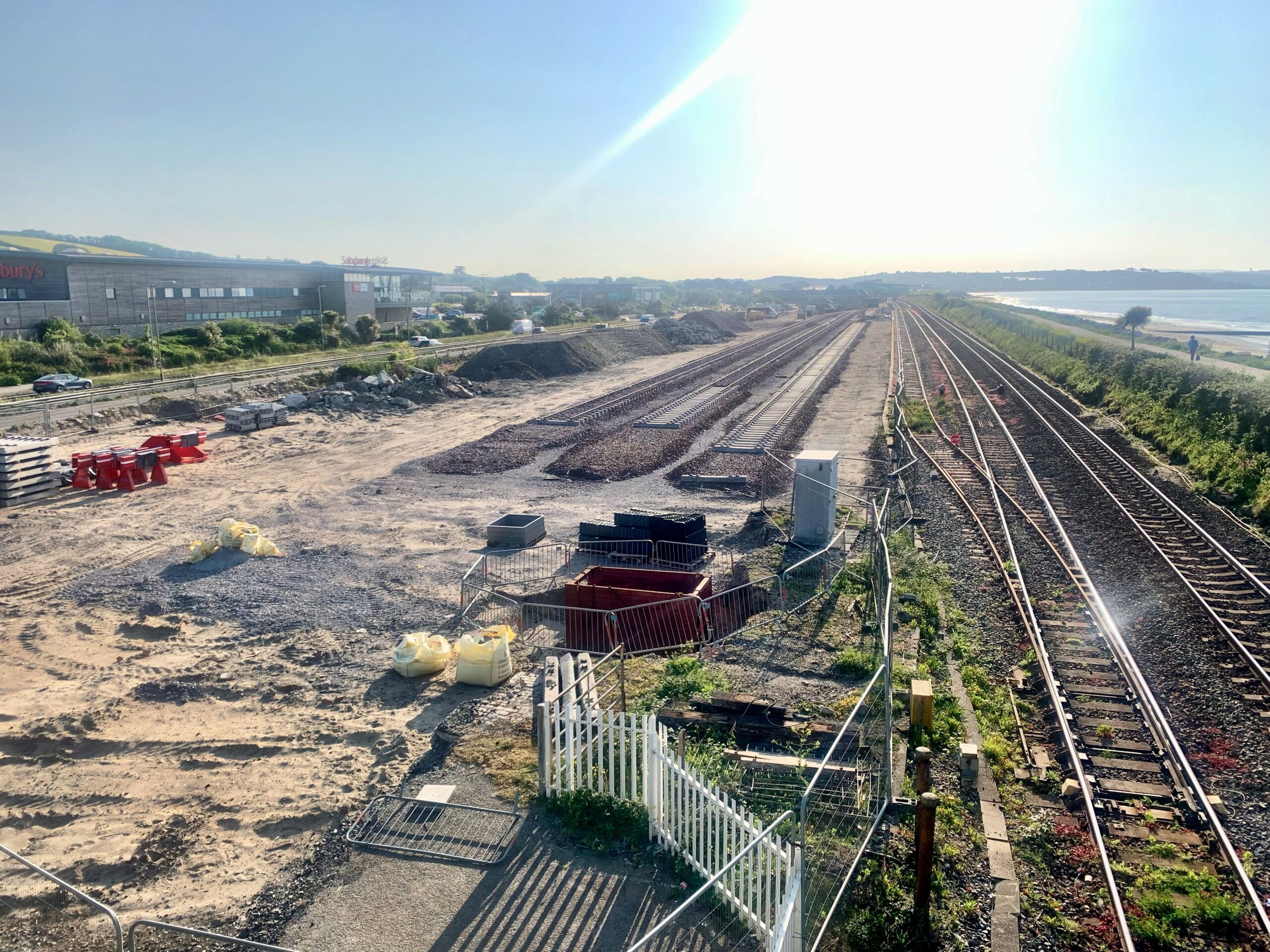
    New sidings being constructed at Long Rock depot, Penzance – 26/05/2023
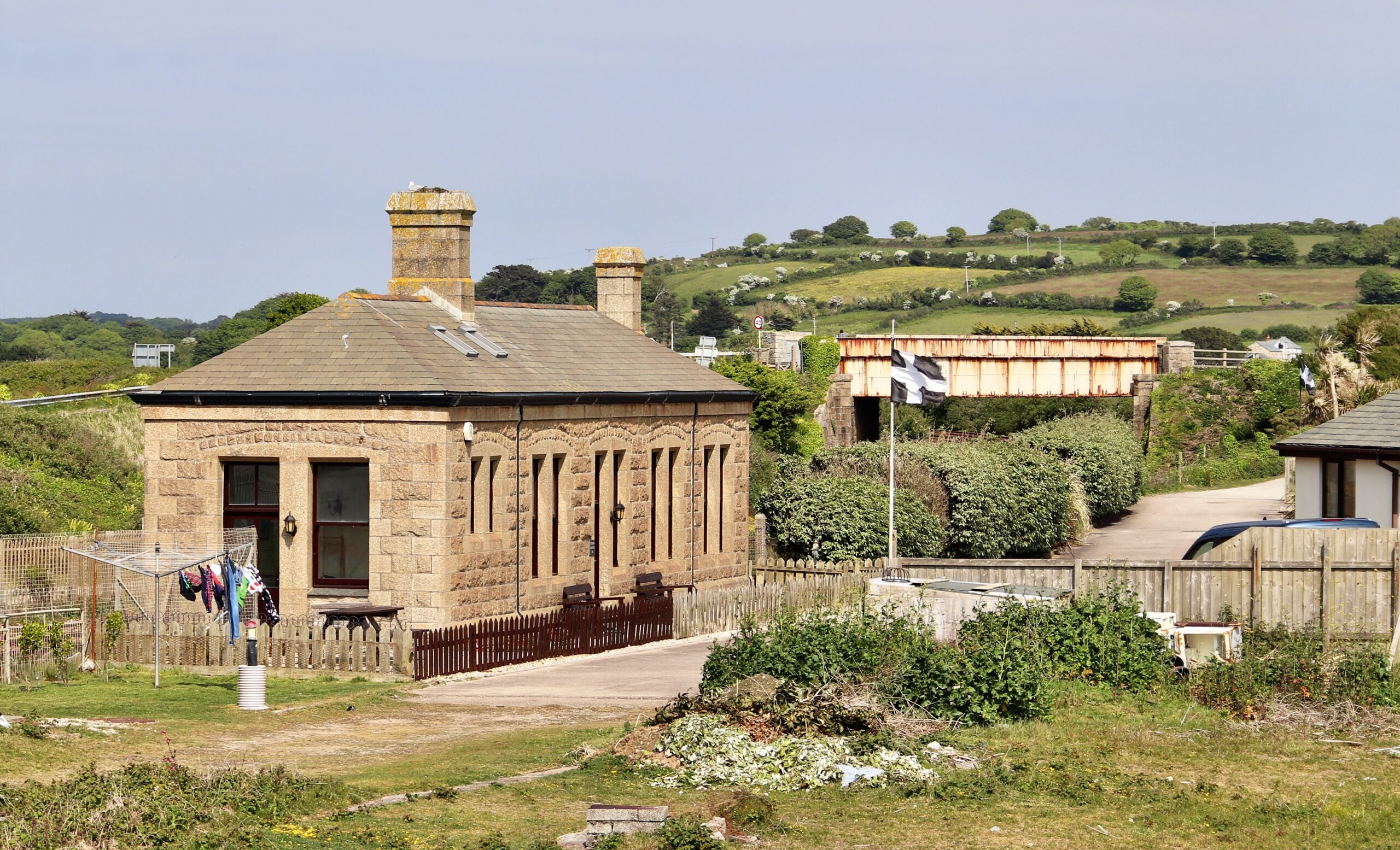
    Once an important stop on the main London Paddington – Penzance route, Marazion railway station, which originally opened in March 1852 by the West Cornwall Railway, has been stripped of its platforms and awnings. The current building which dates from the 1880’s has been fully restored into a two bedroom bungalow. The line was absorbed into the Great Western Railway on 1st January 1877. The station was never particularly busy, although it dealt with a fair bit of agricultural traffic including broccoli and new potatoes. The station was closed to passengers 5 Oct 1964, with freight services following on 6 Dec 1965. The station is situated on the shore of Mount’s Bay and offers wonderful views across to St. Michael’s Mount. For many years Marazion was home to six old Pullman coaches that were employed as camping coaches, holiday accommodation offered by the railway containing sleeping and living space designed to encourage people to travel by train to the stations where they were situated. I remember the coaches from a previous visit to the area and I’ll tray and find some photographs at some point! The coaches, which had fallen into disrepair, were removed in 2006 and nine holiday cottages built in their place – 25/05/2023
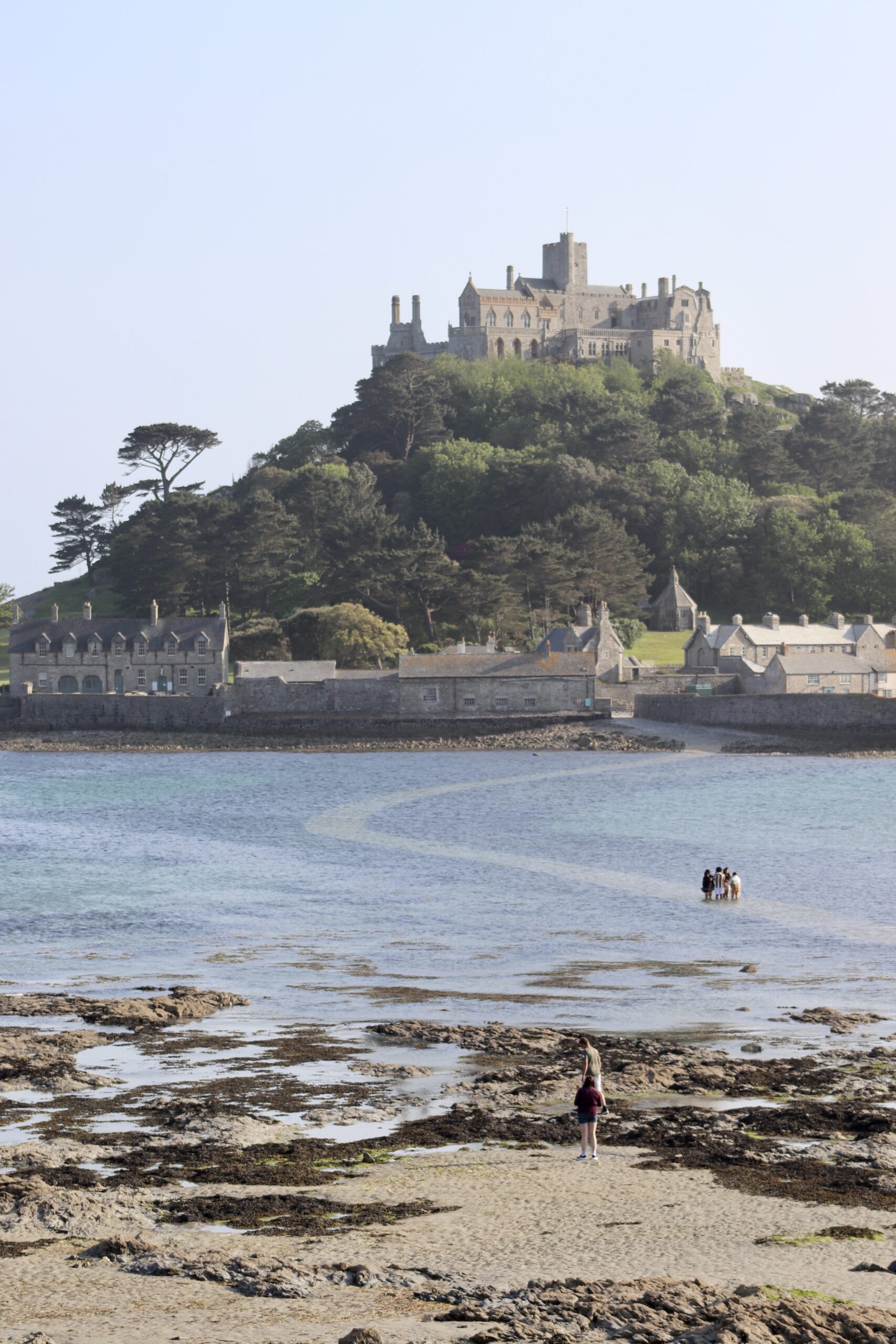
    Yoshi was a real trooper on our walks. Earlier on the same day we had walked to Mousehole before setting off for Marazion. St Michael’s Mount can be seen behind Yoshi. It is a rocky island crowned by a medieval church and castle, home to the St Aubyn family and a community of islanders – 25/05/2023
    Yoshi at Mousehole. Famous for its narrow streets and tiny harbour, its name comes from a cave in the cliffs nearby. Until the 16th century it was one of the main ports on Mount’s Bay, the other being Marazion. Mousehole is believed to have been the landing place of the Knights of St John when they returned from the Holy Land. The poet, Dylan Thomas called it the prettiest village in England – 25/05/2023
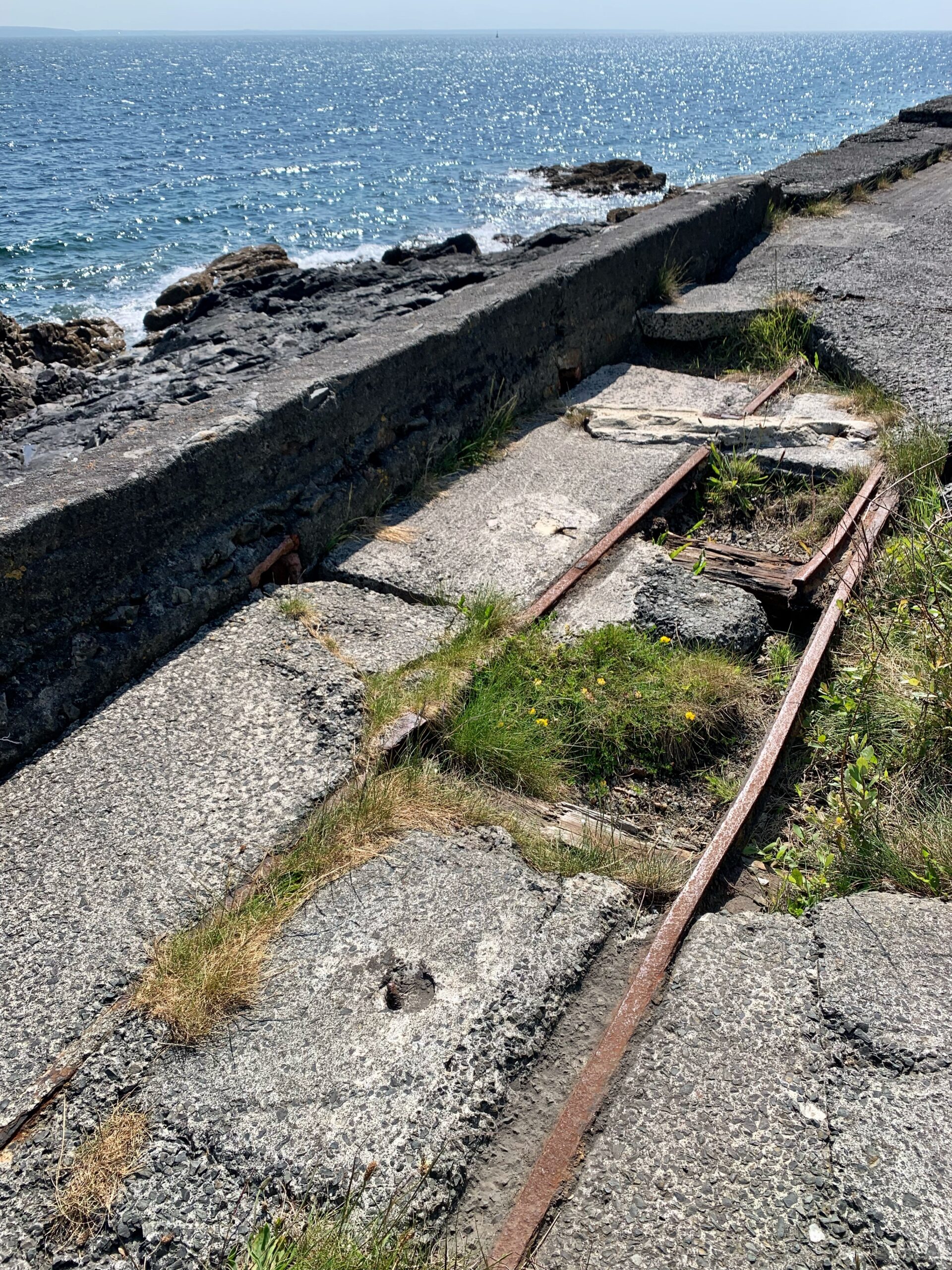
    Stone from Penlee Quarry was transported along by the coast near Newlyn in large containers on rails. The containers were originally pulled by a locomotive called ‘Penlee’, also known as ‘Janner’s Engine’ to the south pier in Newlyn, where the contents were loaded onto boats. Later, in the 1960’s, six diesel locomotives were required for hauling the stone. The quarry closed in the late 1980’s – 25/05/2023
    Marazion is a town of great antiquity, being one of the oldest chartered towns in Cornwall and in Medieval times was a significant location. Marazion was granted its first charter of incorporation by Henry III in 1257 and was reaffirmed on 13th June 1595 by Queen Elizabeth I. The name derives from the important fairs and markets that were held in the town, the earliest dating back to 1070; Marghas Byghan (Small Market) and Marghas Yow or Jew (Thursday Market) blurred over time to become ‘Marazion’. The presence of the Benedictine Monastery on St. Michael’s Mount attracted pilgrims to Marazion, who hung about in the town until the causeway was revealed by the ebbing tide allowing them to cross to the island – 25/05/2023
    Lineside video of our visit to Cornwall in May 2023

    Bringing us up to date, another Winfrith run took place over 31st May and 1st June 2023 as unusually the train collecting low lever radioactive waste from the Steam-Generating Heavy Water Reactor stayed a night in the sidings at the Dorset facility. Ownership of the Winfrith Nuclear site is under the auspices of the Nuclear Decommissioning Authority (NDA). The site is managed by Magnox Limited who are contracted to deliver the site decommissioning programme, the Winfrith reactor having been shut down in 1990.

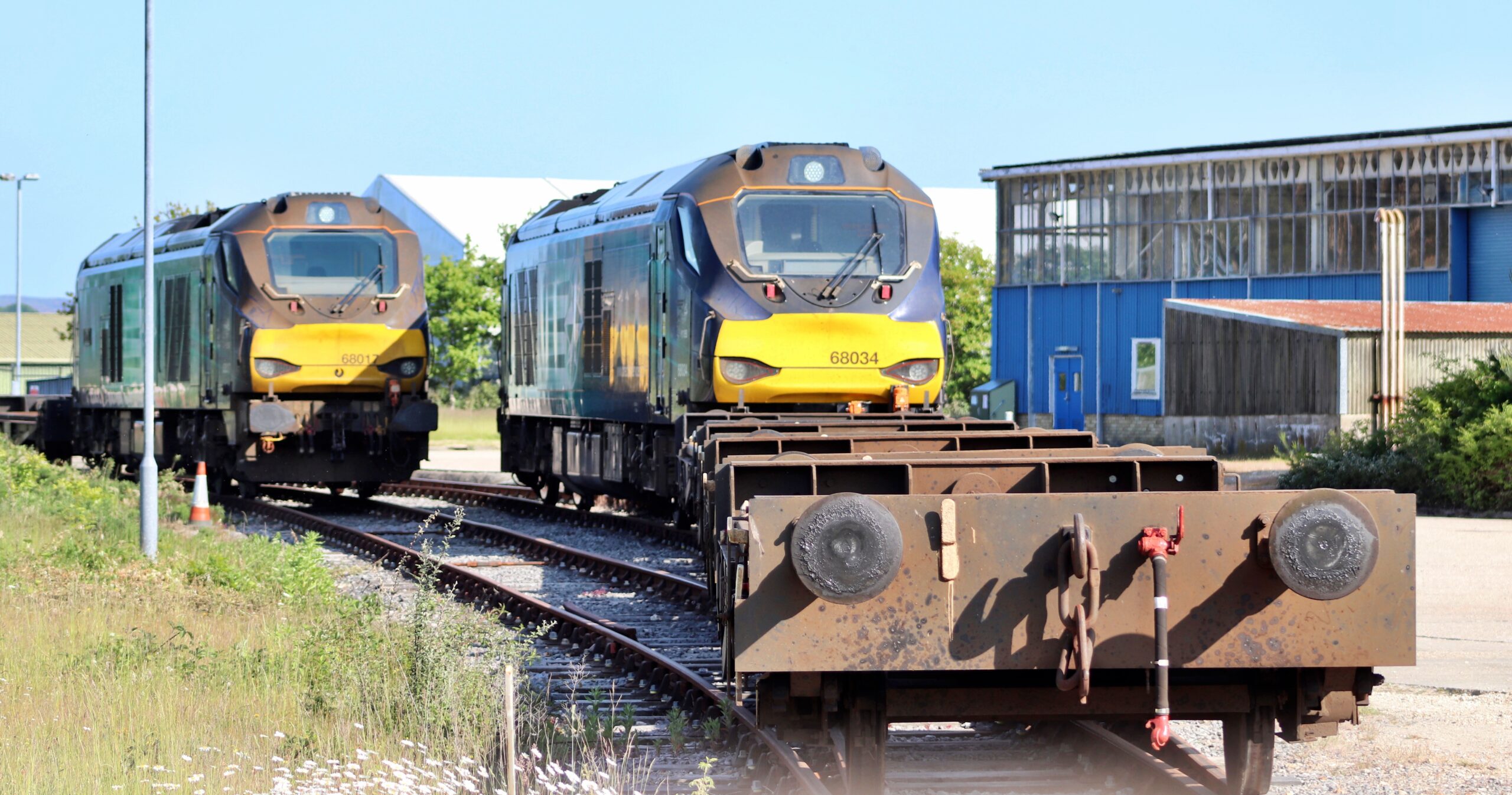
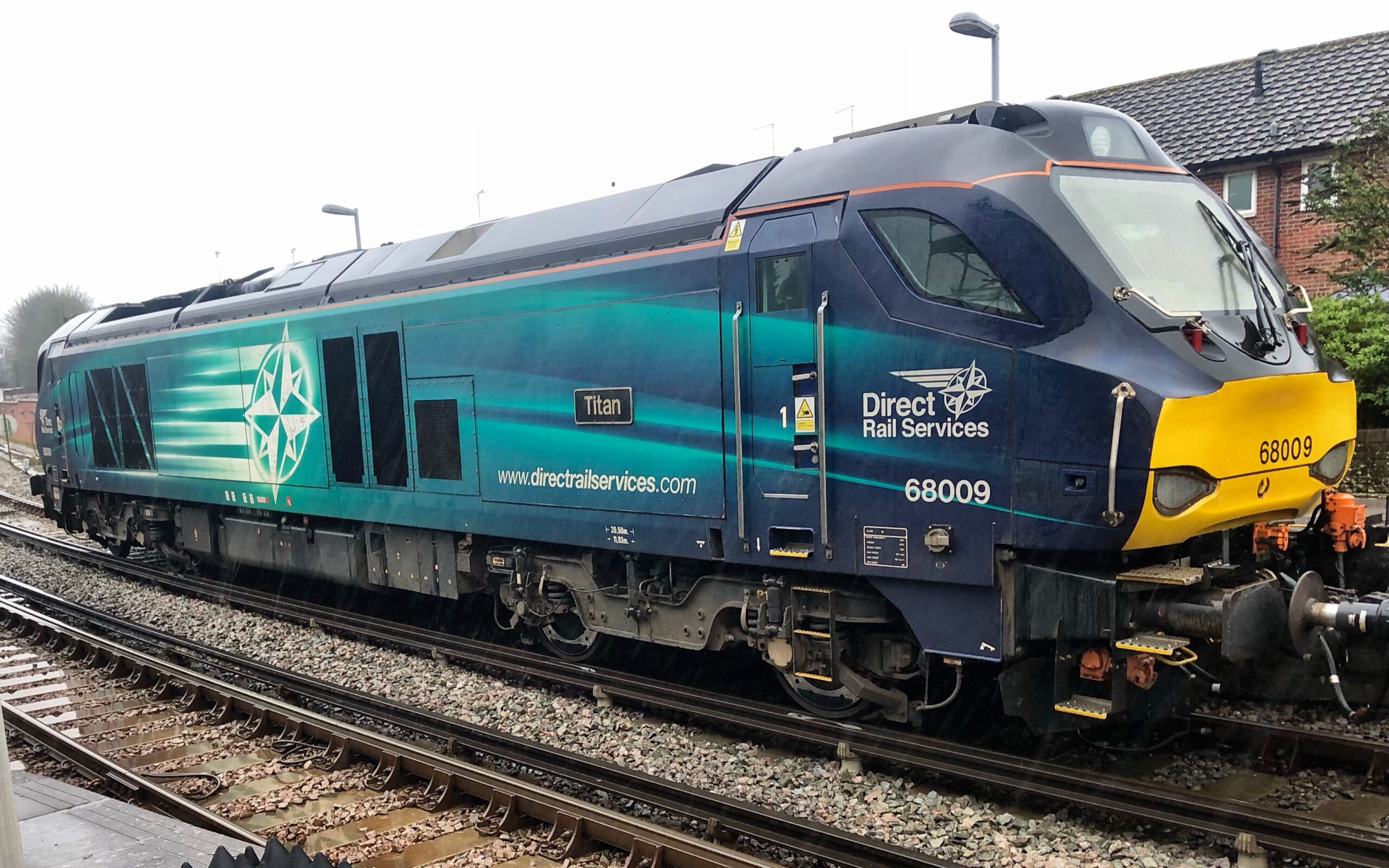
    Direct Rail Services (DRS) Class 68’s No.’s 68017 ‘Hornet’ and 68034 top and tail 6Z62 Crewe Coal Sidings DRS to Winfrith Sidings on the approach to Parkstone railway station – 31/05/2023
    DRS Class 68’s No.’s 68017 ‘Hornet’ and 68034 in the sidings at Winfrith – 31/05/2023
    DRS Class 68’s No.’s 68017 ‘Hornet’ and 68034 in the sidings at Winfrith – 31/05/2023
    DRS Class 68 No. 68034 passing through Hamworthy heading up the return working 6Z95 Winfrith Sidings to Crewe Coal Sidings DRS. No. 68017 ‘Hornet’ was on the rear of the consist – 01/06/2023
    Winfrith Cats 31/05/2023 & 01/06/2023

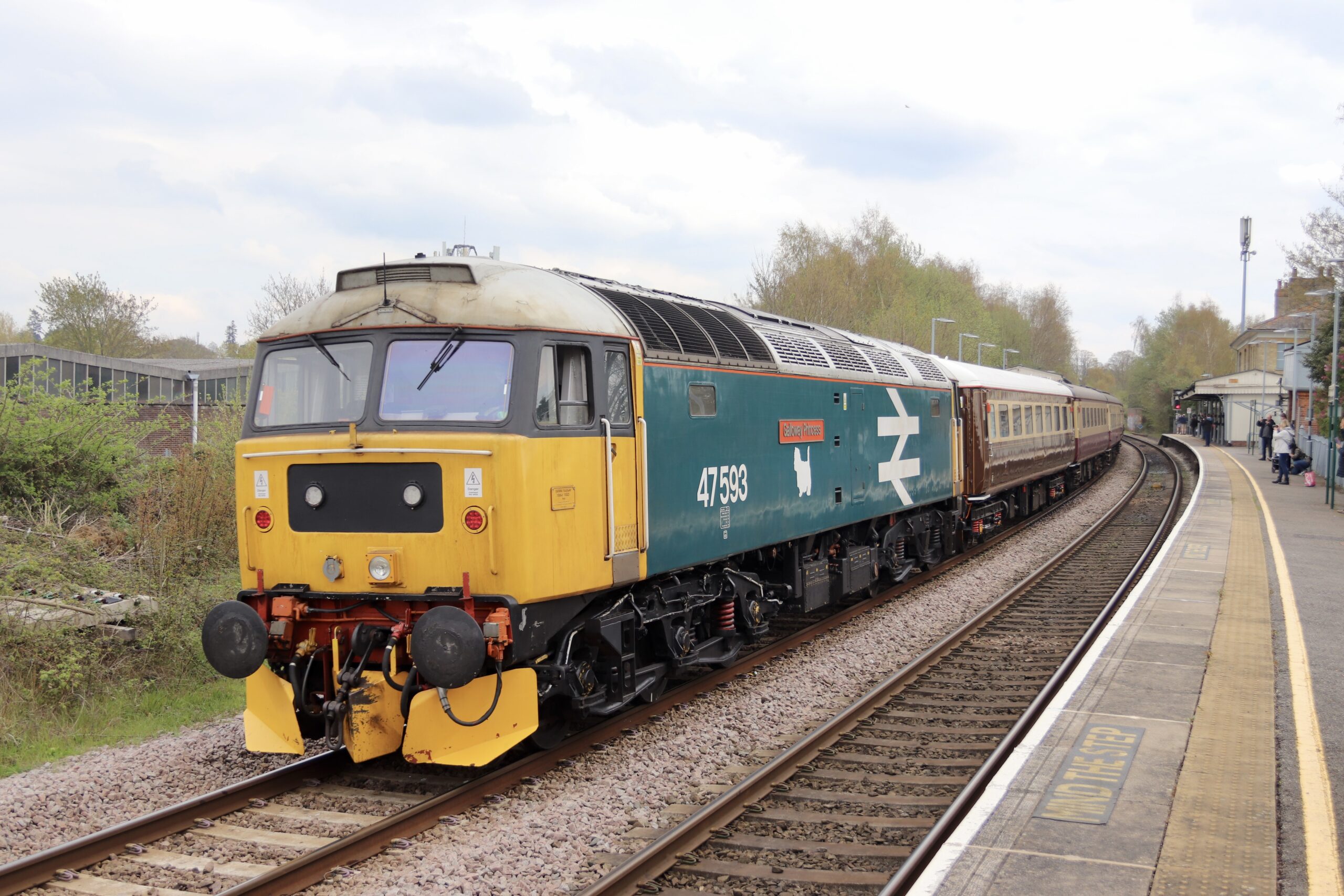
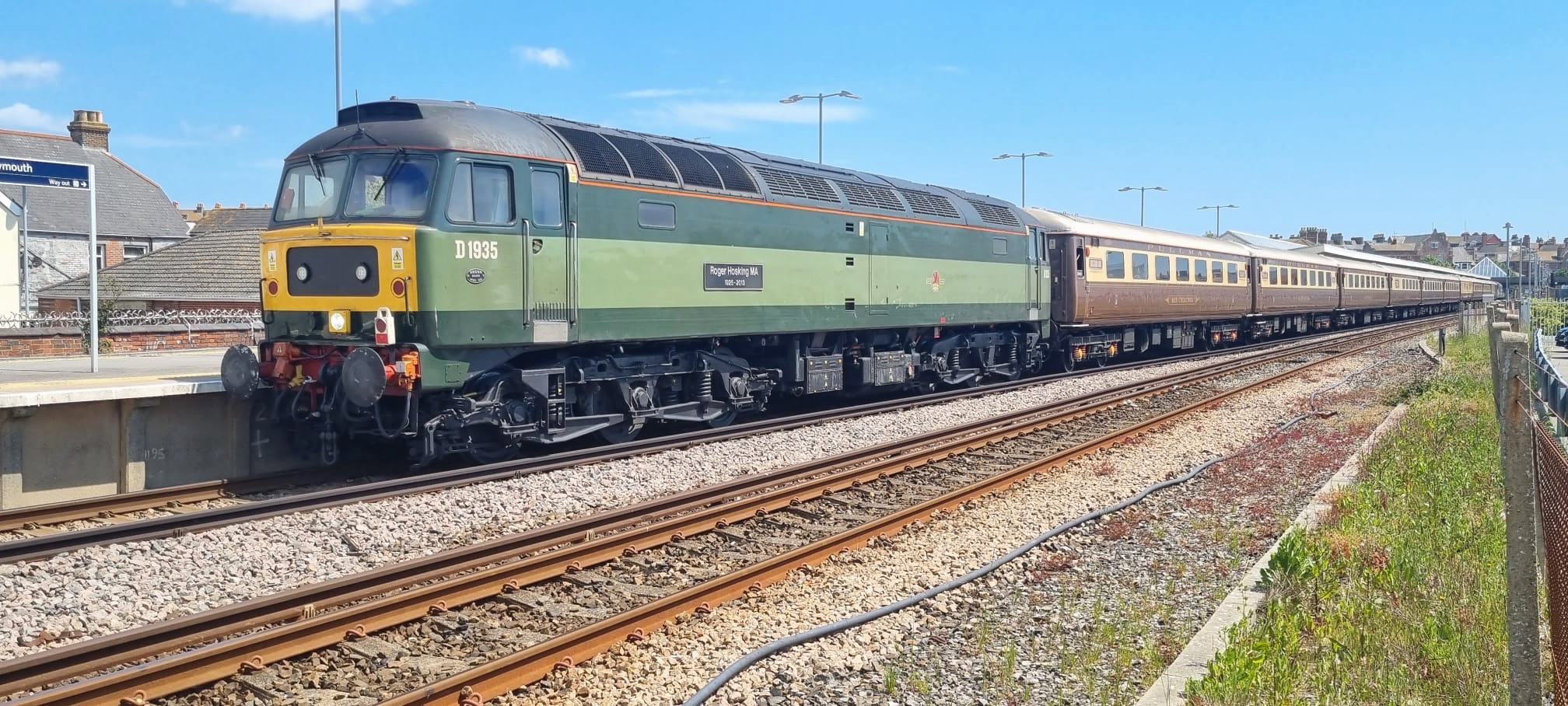
    On Saturday 3rd June “The Dorset Coast Statesman” ran to Weymouth for the third time in 2023. On this occasion the tour originated from Peterborough and was top and tailed by LSL Class 47 locomotive No.’s 47805 ‘Roger Hosking MA 1925-2013’ and 47593 ‘Galloway Princess’. I was unable to see this working (again!) as I was in Lichfield helping to celebrate the wedding of two friends, and the following photos are by kind permission of Scott Lewis.
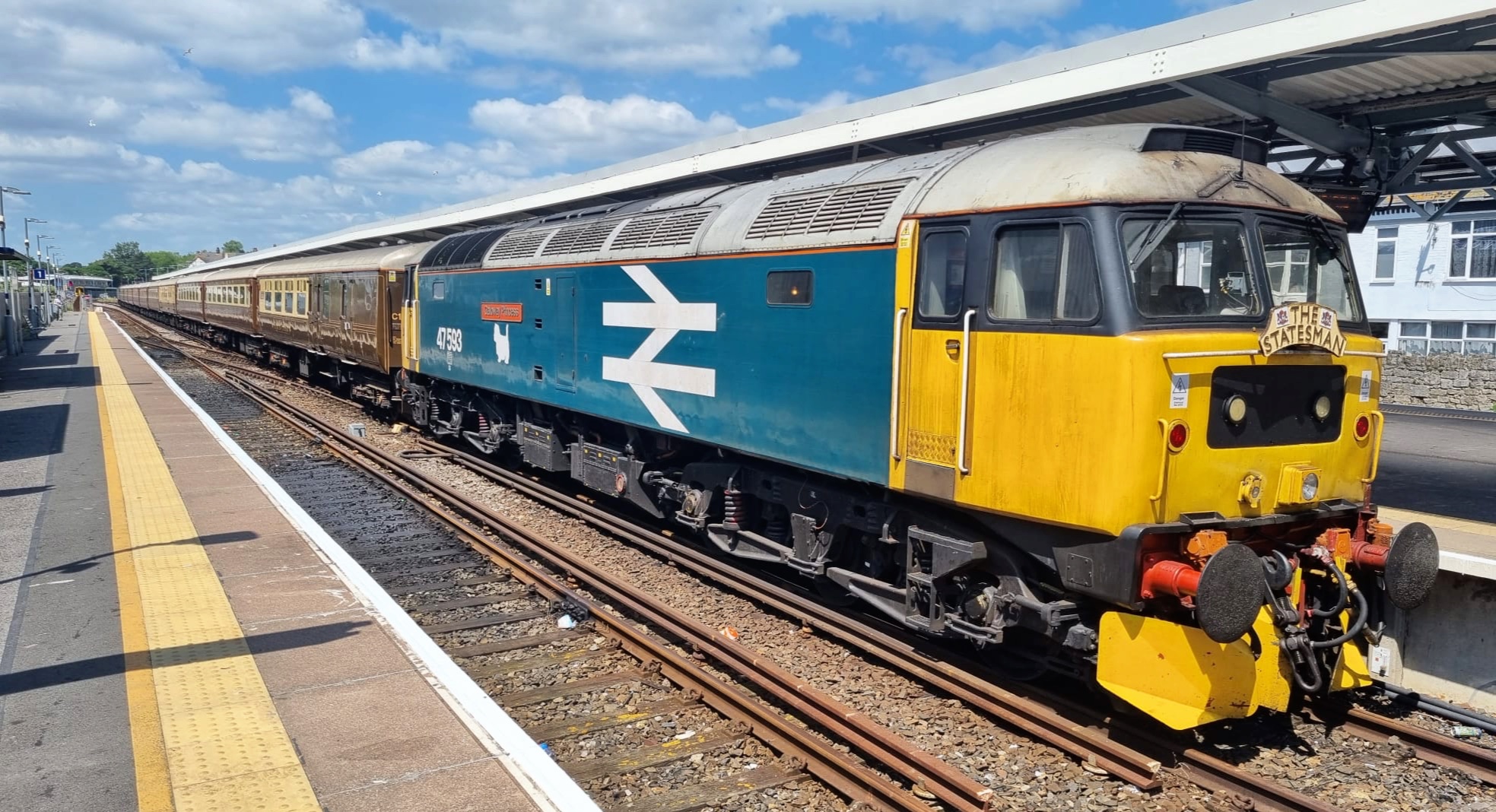
    47593 ‘Galloway Princess’ at the buffer stops in Weymouth – 03/06/2023 (Image courtesy of Scott Lewis)
    47805 ‘Roger Hosking MA 1925-2013’ in Weymouth station at the rear of 1Z40 0617 Peterborough to Weymouth – 03/06/2023 (Image courtesy of Scott Lewis)

    Our North Dorset Correspondent was up in the early hours of Tuesday 6th June to see Class 69 locomotives No.’s 69003 ‘The Railway Observer’ and 69004 which are currently operating in the West Country on weedkiller duties. This is the first operational visit of the class to our area. Yeovil Junction railway station was in Dorset until 1991 when county boundaries were changed. The 69’s are scheduled to work the same vegetation management train to Dorchester West in the early hours of 9th June and the Bournemouth to Weymouth on the 12th/13th June 2023.
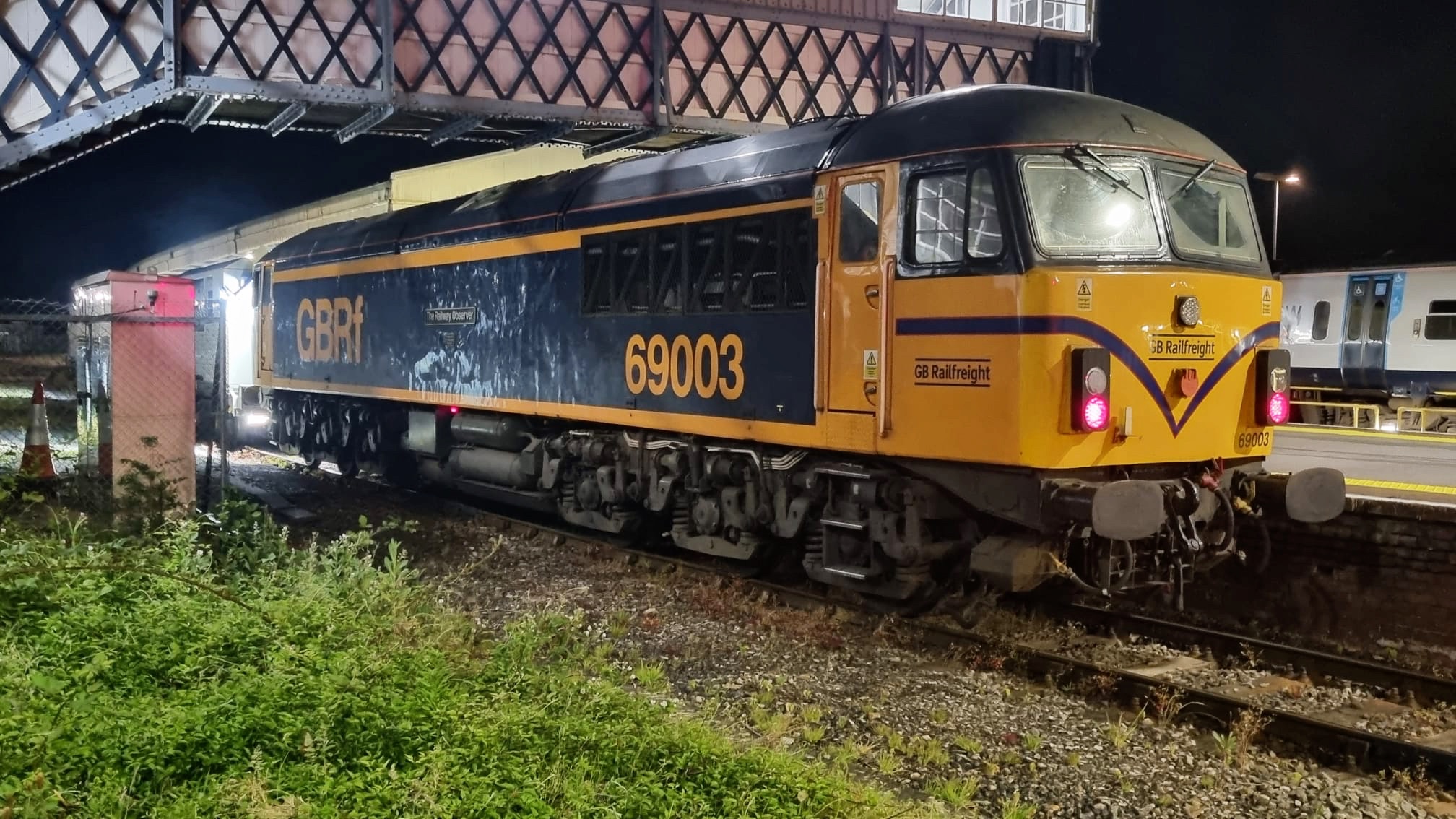
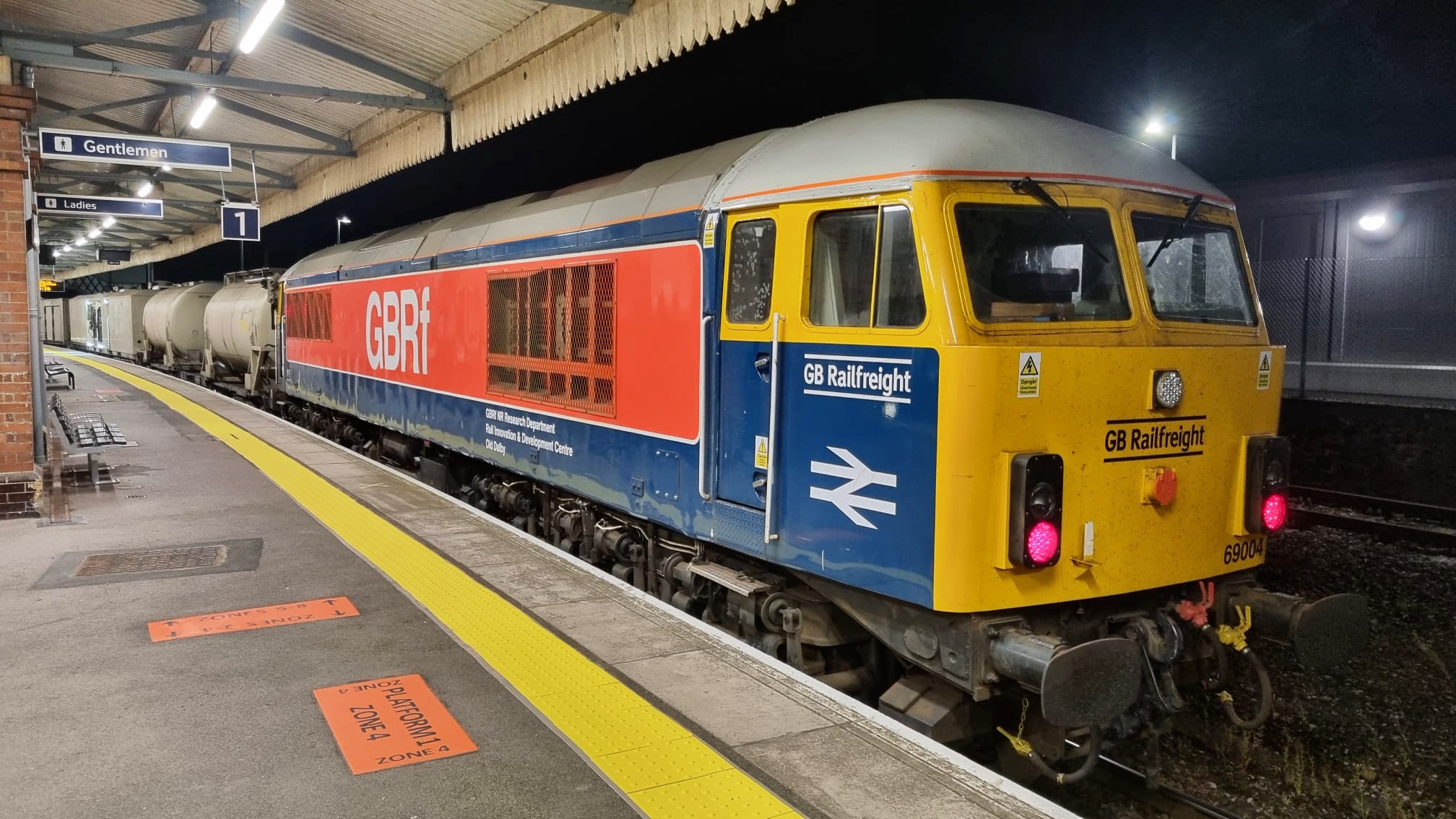
    GBRf Class 69 No.’s 69003 ‘The Railway Observer’ at Yeovil Junction – 06/06/2023 (Image courtesy of Scott Lewis)
    GBRf Class 69 No.’s 69004 at Yeovil Junction working 3Q00 Exeter Riverside NY to Exeter Riverside NY – 06/06/2023 (Image courtesy of Scott Lewis)

    Yoshi was delighted to learn that South Western Railway (SWR) have joined other rail operators in banning e-scooters, e-skateboards, u-unicycles and “hoverboards” across its stations as from 1st June 2023. The rule has been introduced as there is a small fire risk due to the potential for their lithium-ion batteries to overheat.

    With that piece of trivia we come to the end of another blog entry. Thank you for joining us and as always we appreciate your comments, corrections and feedback. We’ll be seeing you.

  • Swanage Diesel Gala 2023

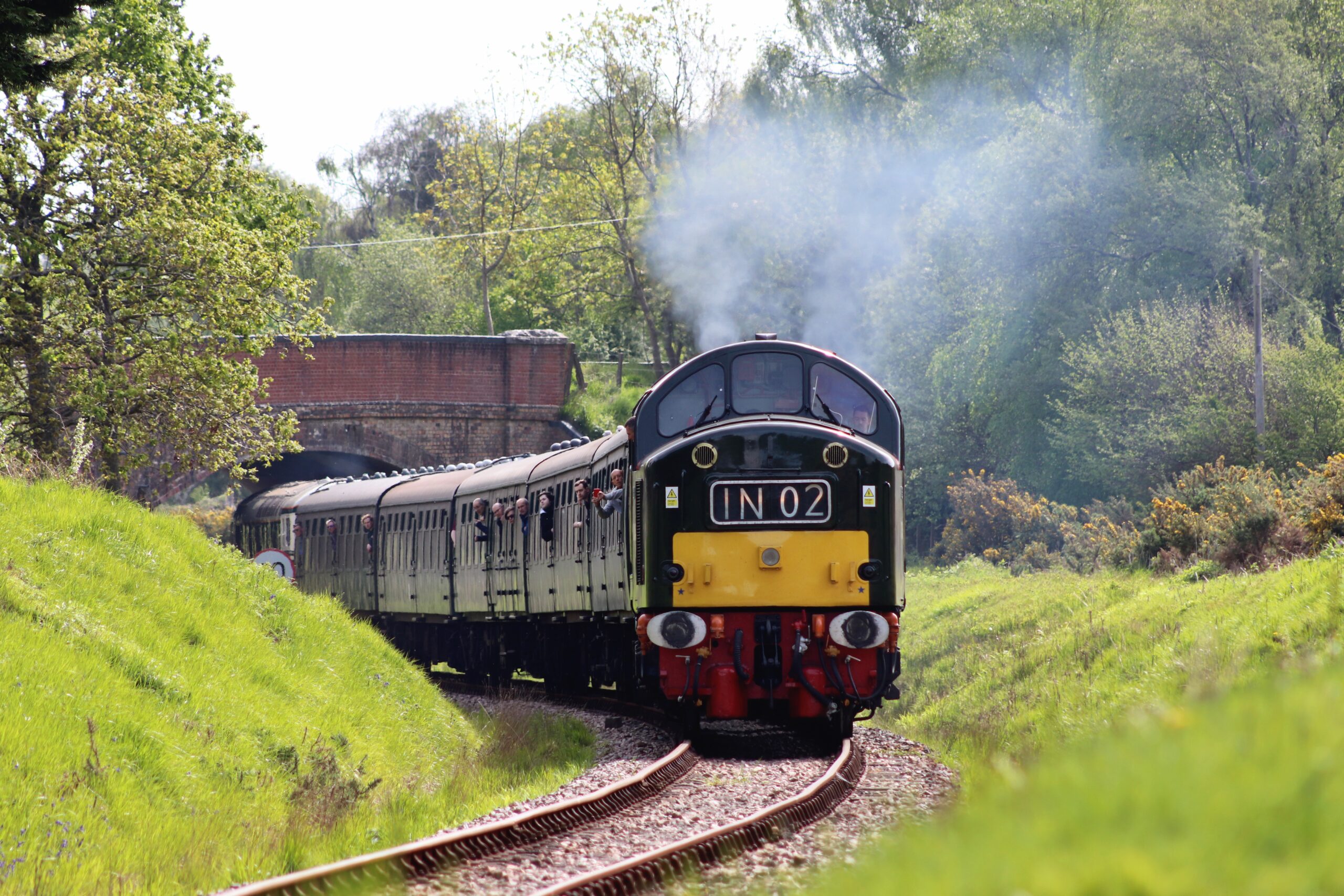
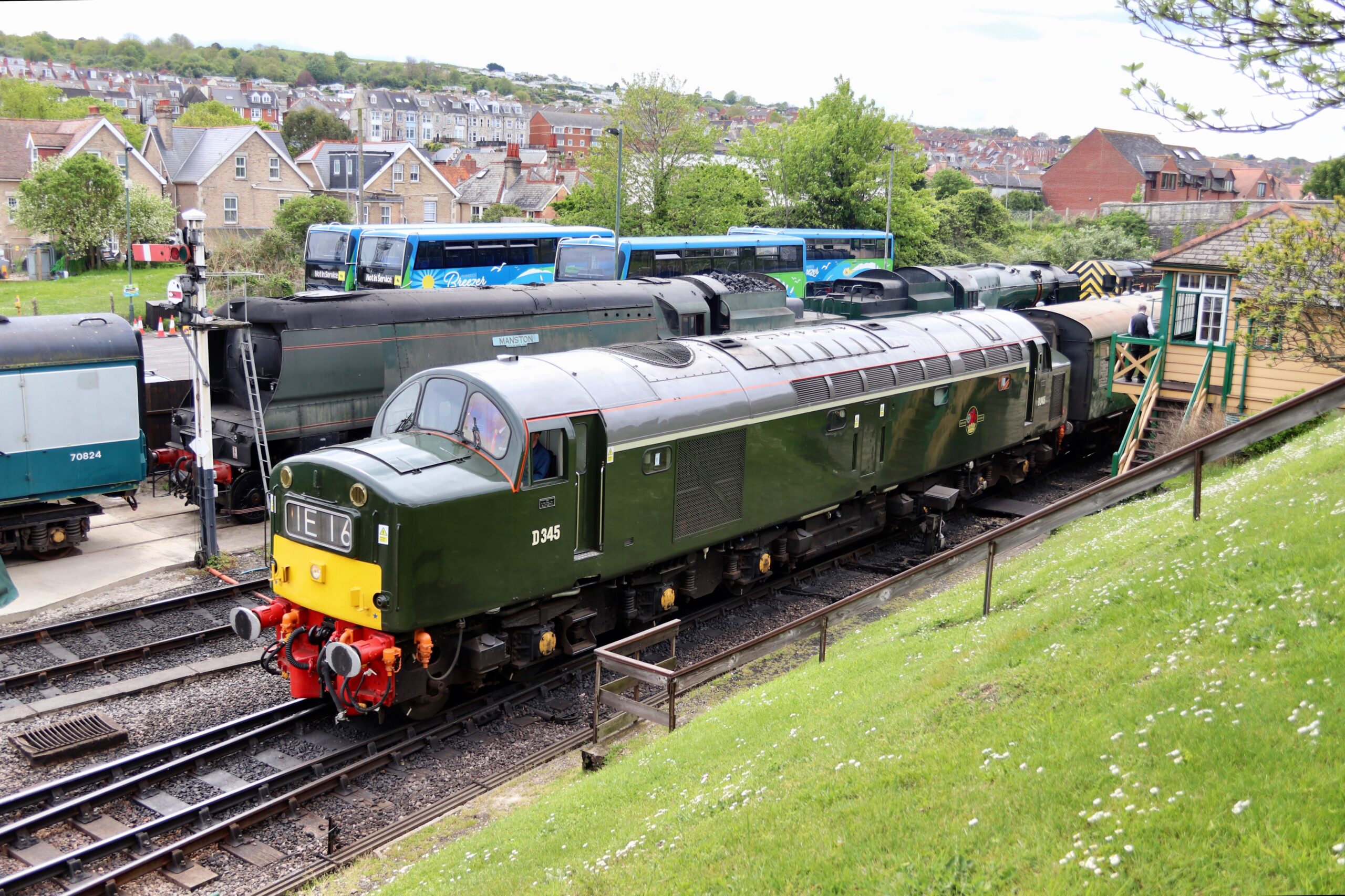
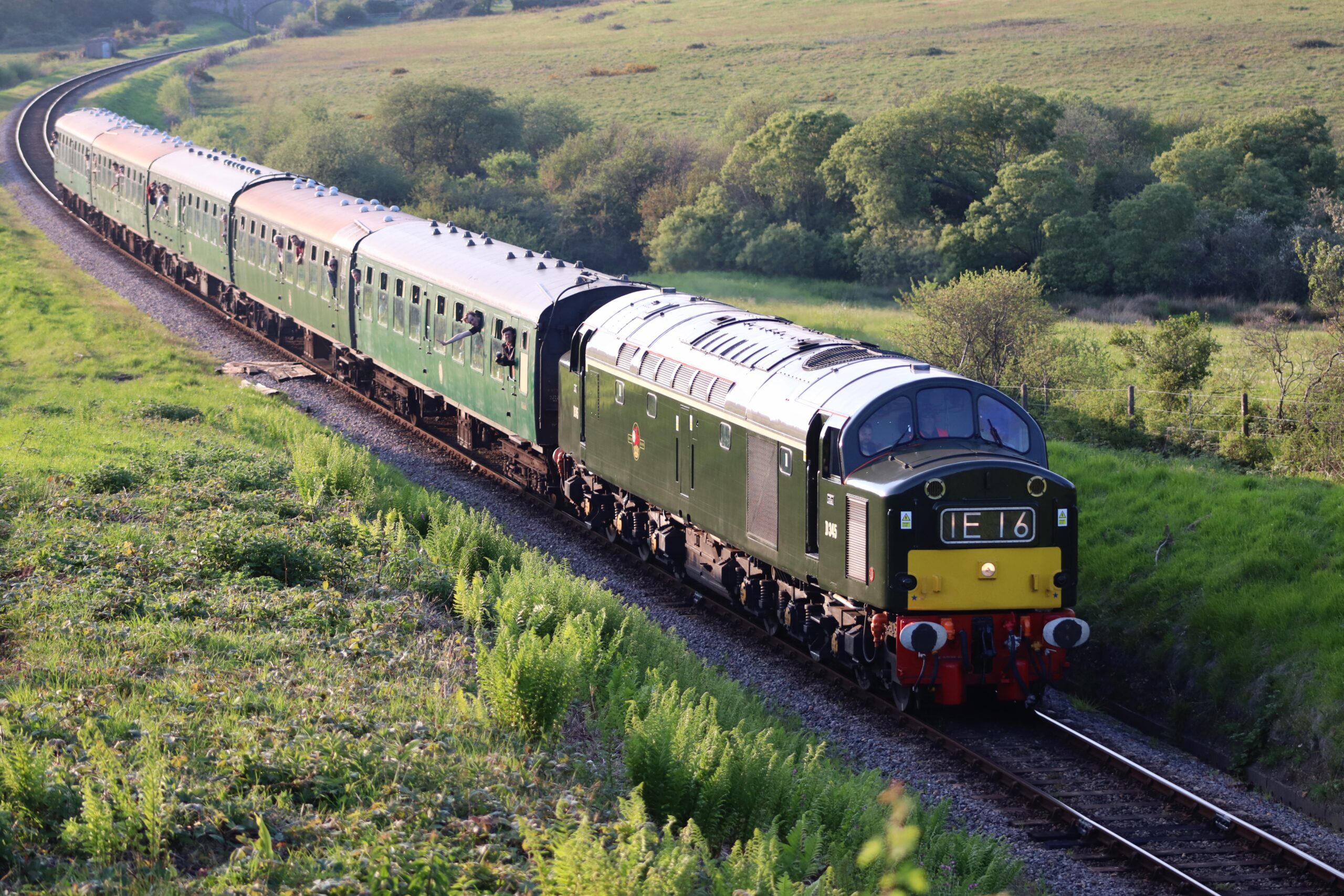
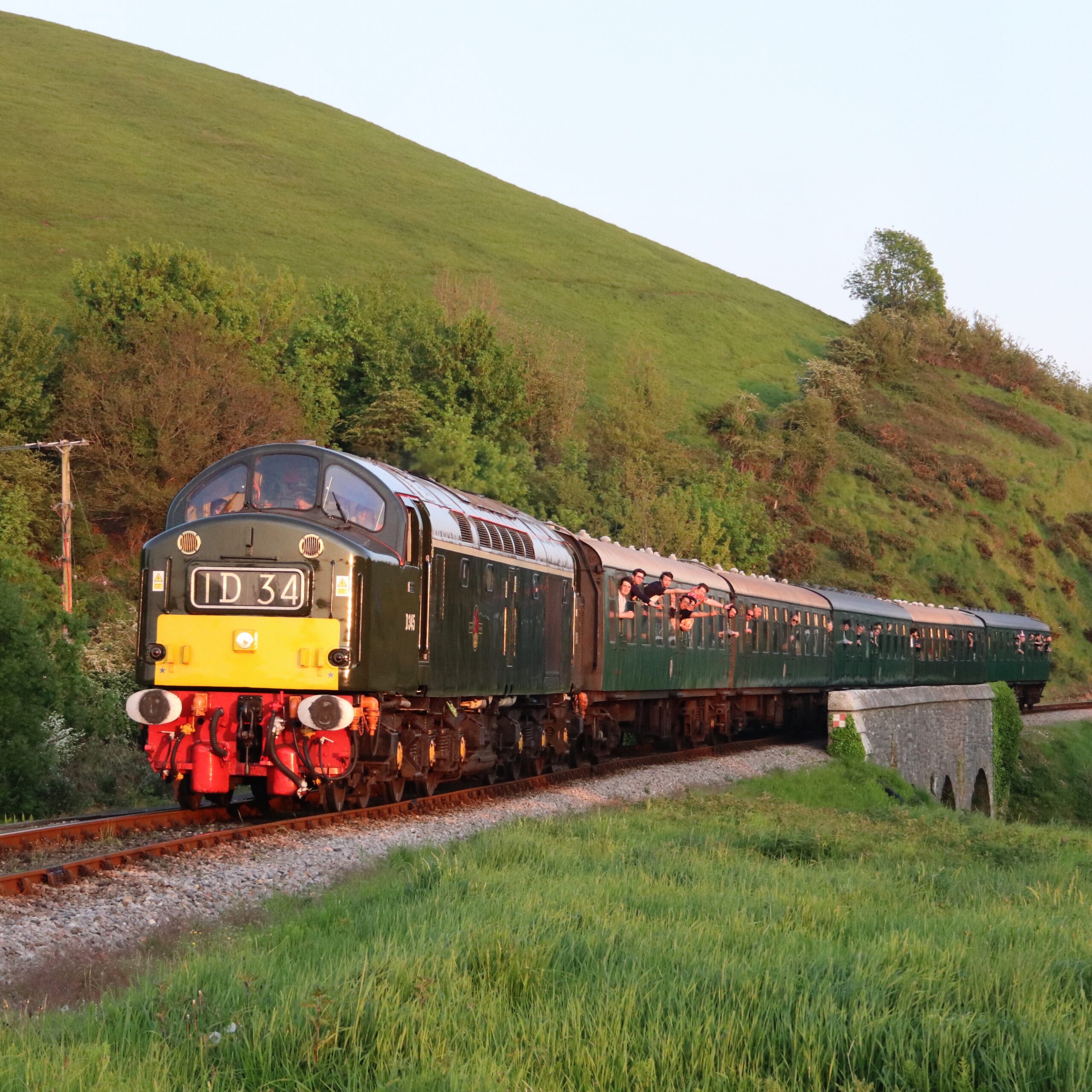
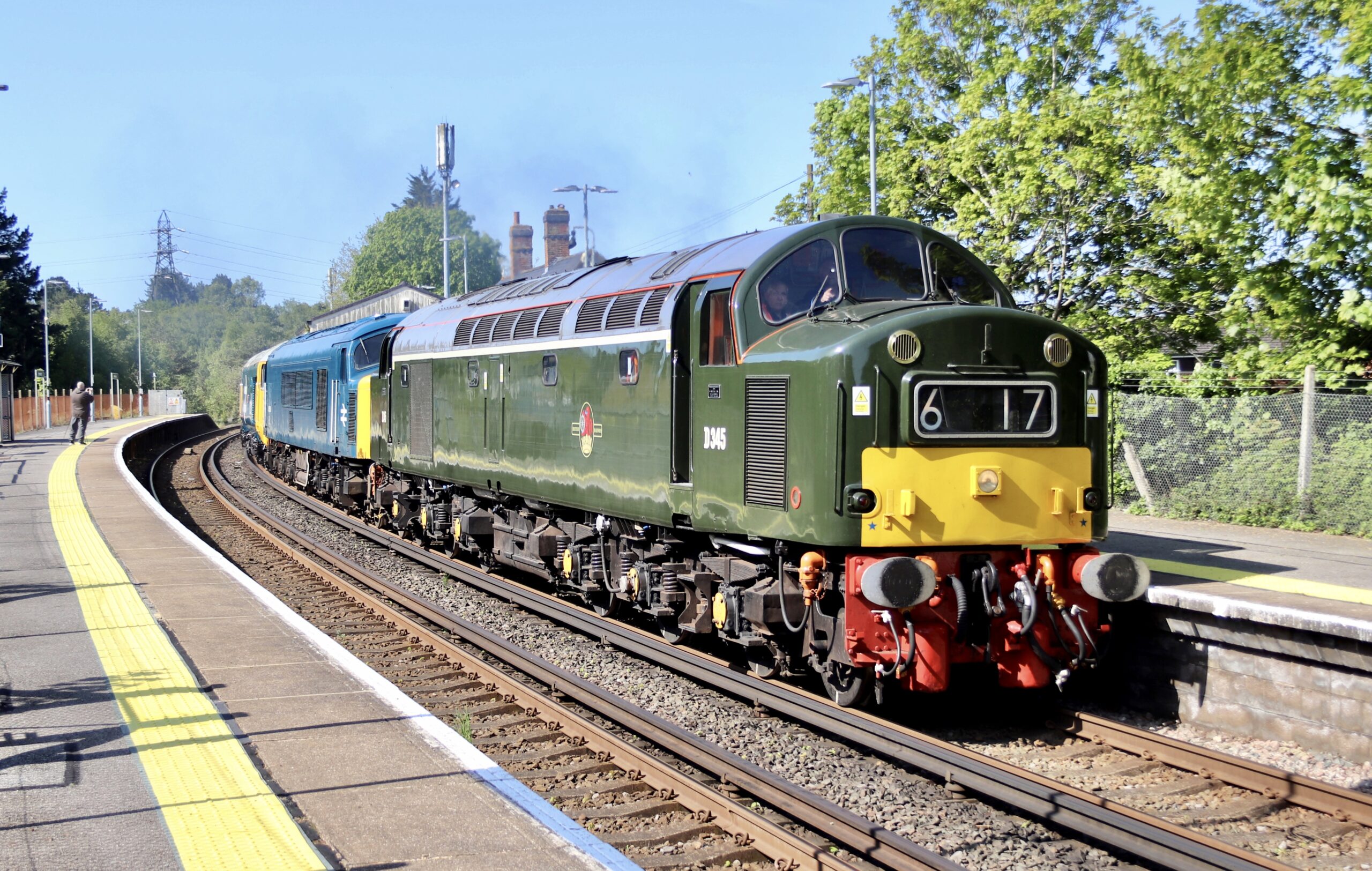
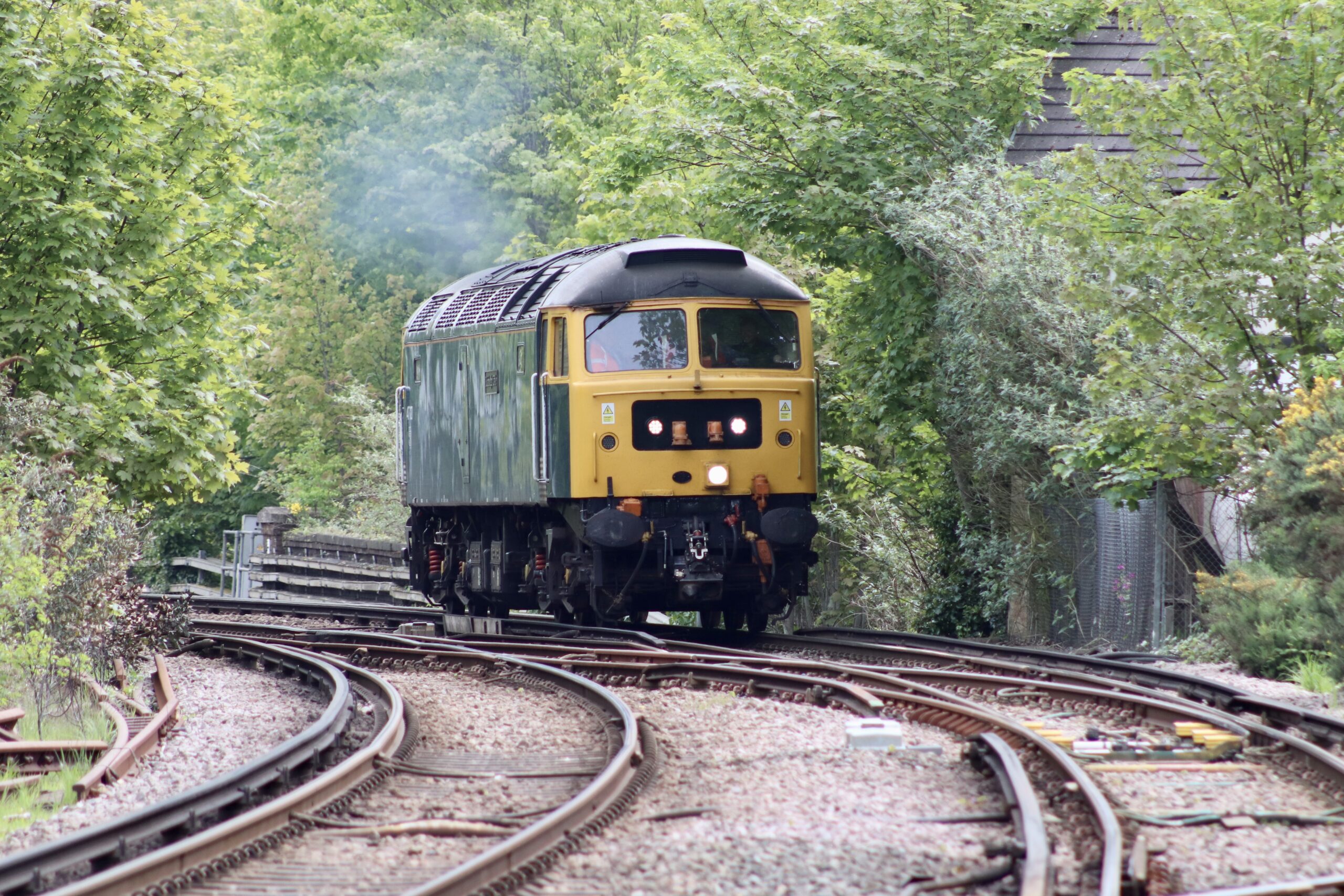
    With Corfe Castle on the horizon Class 40 No. D345 (40145) catches the evening light as she works an evening Norden to Swanage service in connection with the Beer Festival being held at Corfe – 13/05/2023

    Last week proved to be very much the lull before the storm as this week we have enjoyed many rare visitors along our patch of railway line, mostly associated with the 2023 Swanage Diesel Gala which proved to be a resounding success judging by the numbers of enthusiasts who turned out to travel and photograph the trains during the special event weekend. 

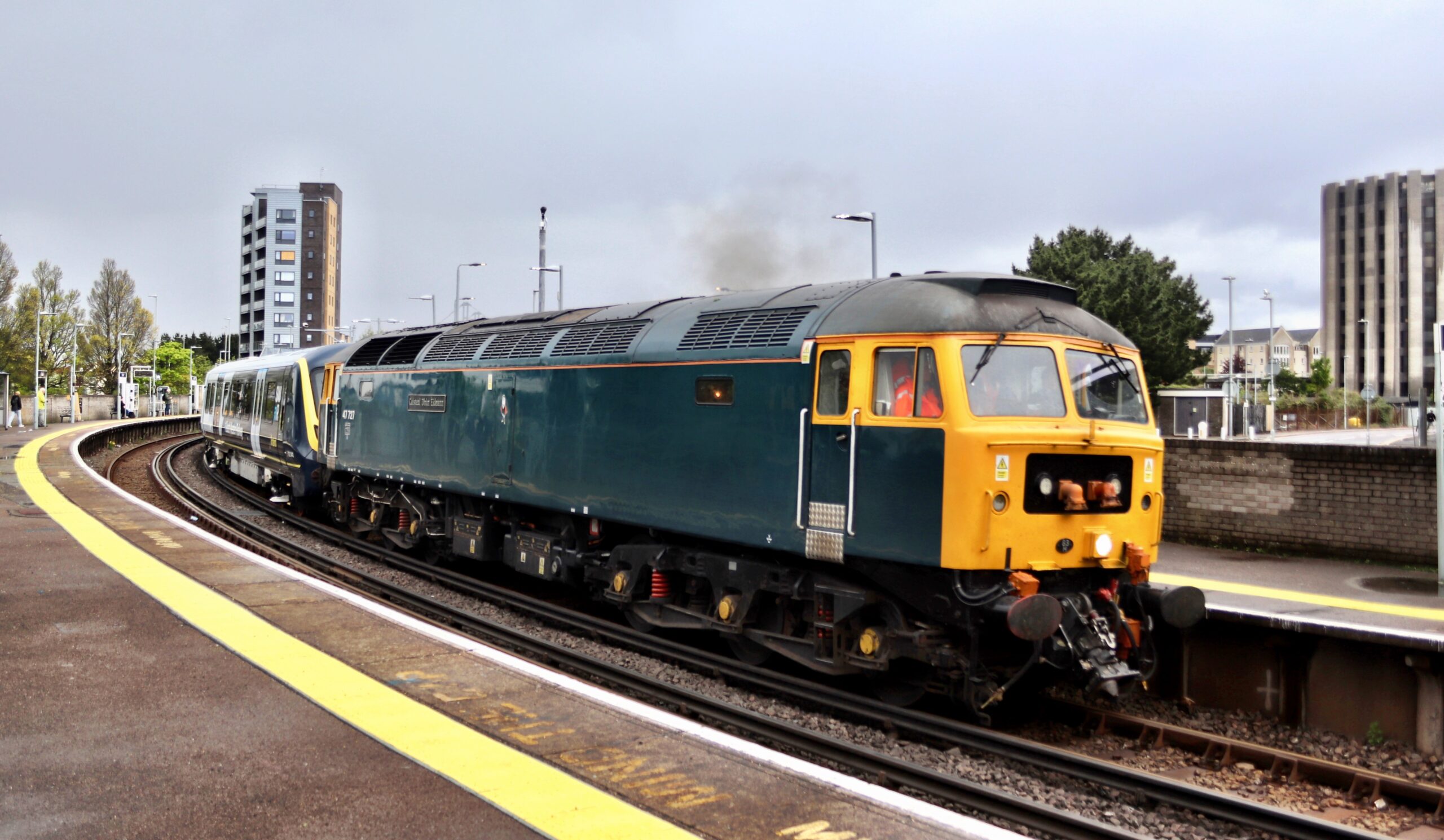
    But before any special movements to Swanage took place, another rare locomotive here these days, in the form of GBRf Class 47 No. 47727 ‘Edinburgh Castle,’ turned up on Wednesday 10th May heading for Bournemouth Traction & Rolling Stock Maintenance Depot where it was rostered to collect a Class 701 Electric Multiple Unit (EMU) which was being stored at the depot and move it to Eastleigh Traction TRSMD prior to an onward working taking it to Worksop Down Yard for storage the following day.

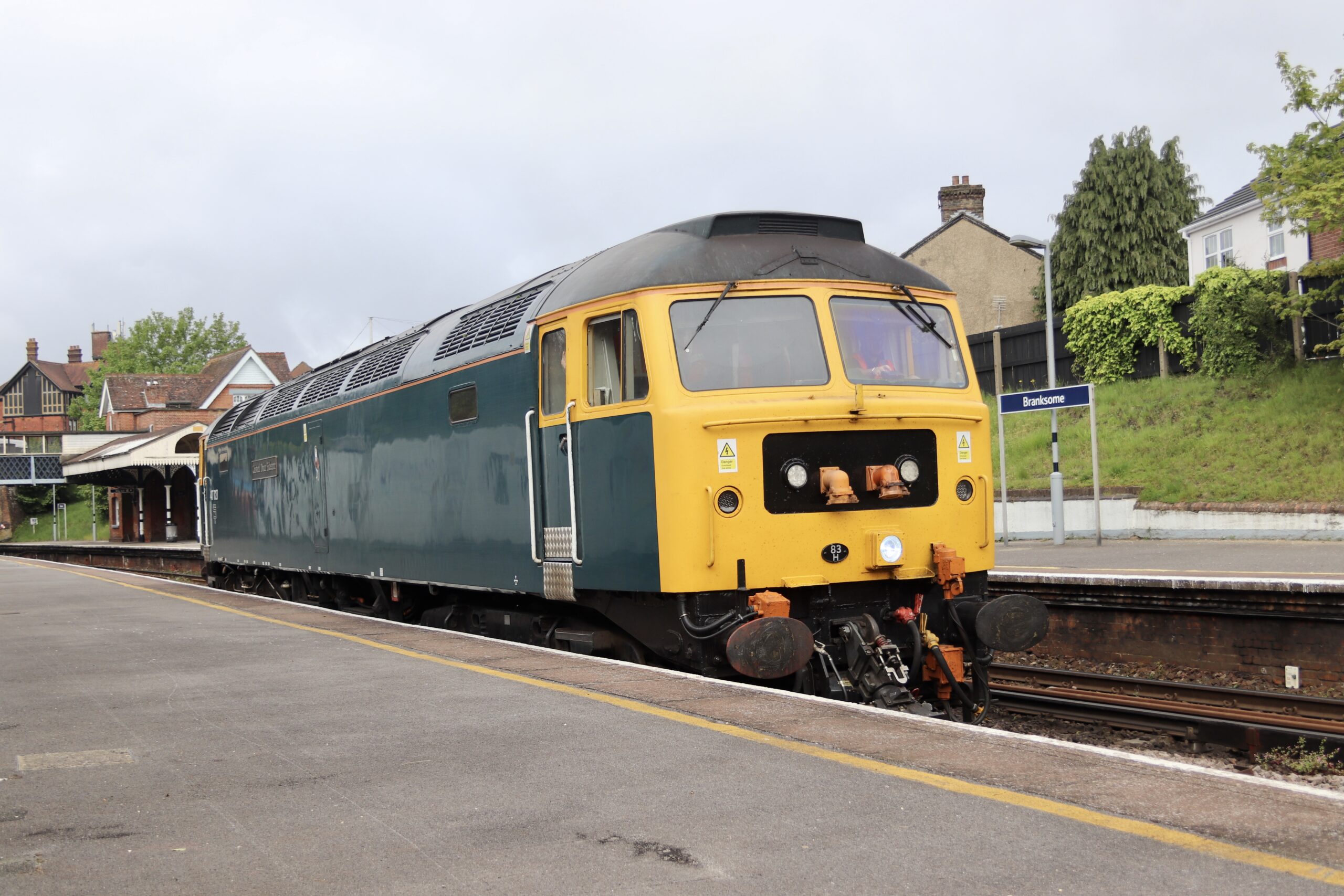
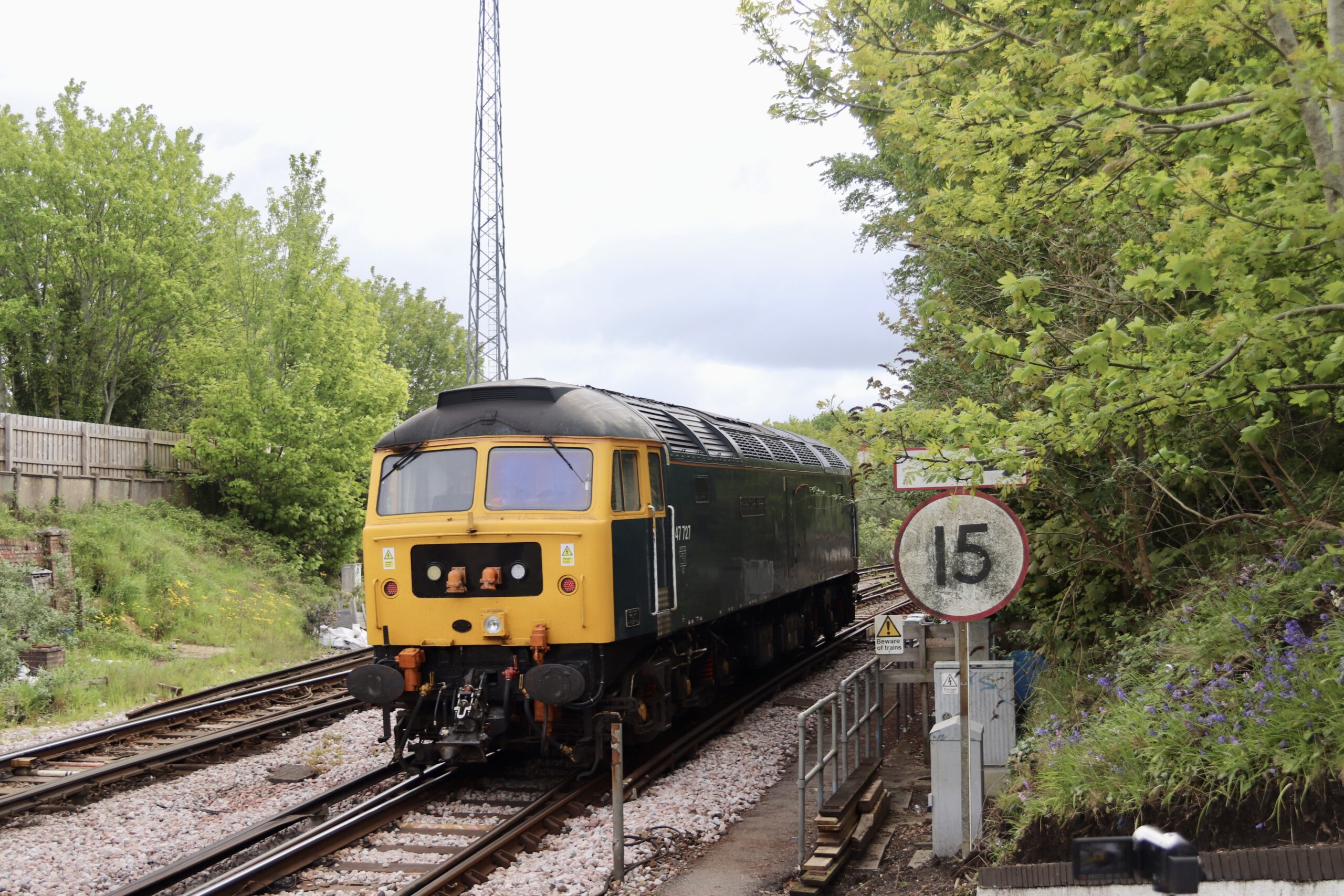
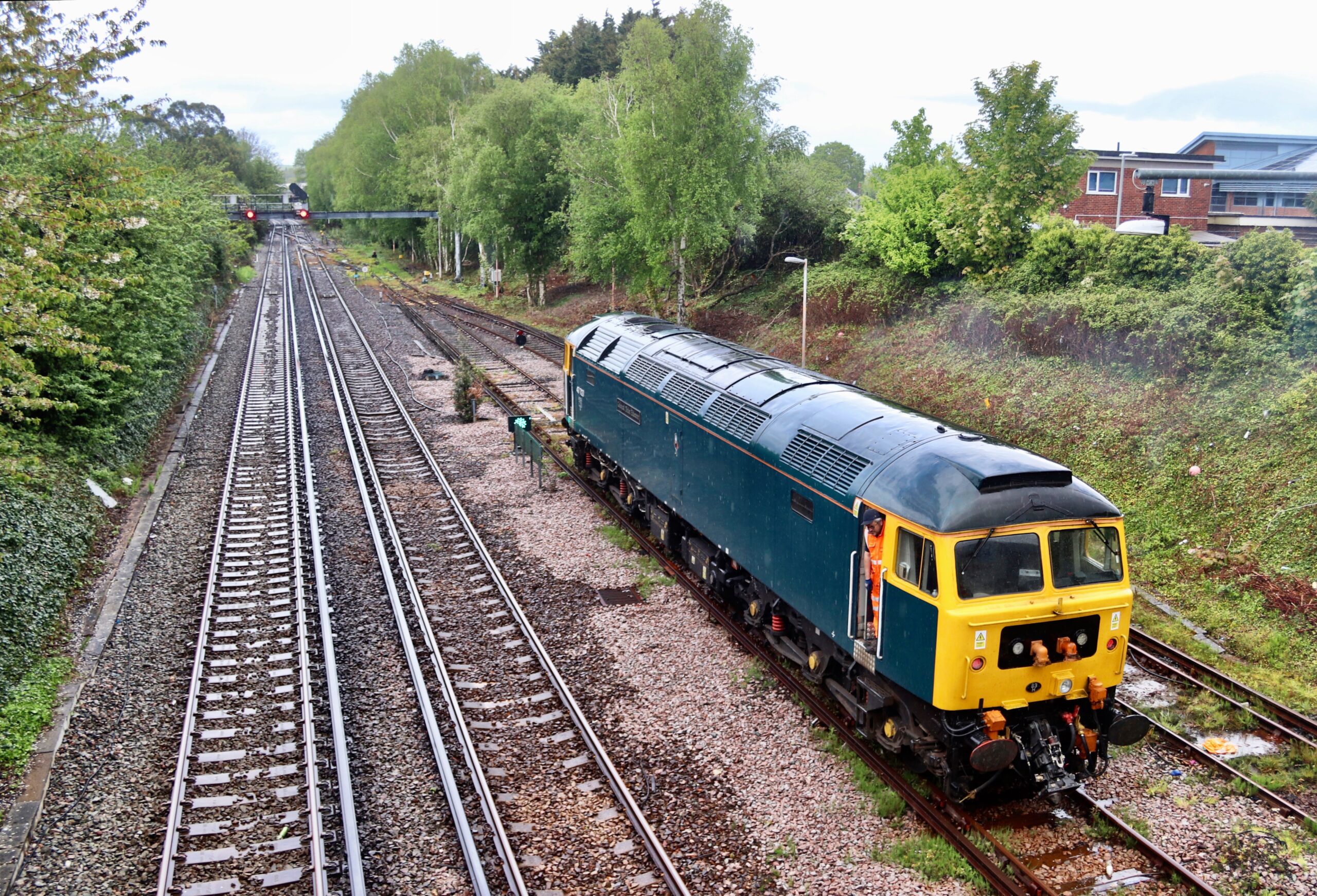
    47727 ‘Edinburgh Castle’ works light engine 0Z47 0814 Eastleigh East Yard to Bournemouth T&RSMD approaching Branksome – 10/05/2023
    47727 ‘Edinburgh Castle’ rests briefly in Branksome station while the crew change ends to take the locomotive into the depot – 10/05/2023
    47727 ‘Edinburgh Castle’ runs light into Bournemouth T&RSMD to collect an SWR Class 701 EMU – 10/05/2023

    None of the Class 701 units have yet to turn a wheel in revenue earning service , but they continue to run mileage accumulation and test runs between Eastleigh, London Waterloo, Staines and Poole. It’s believed that SWR are moving any units in store from their facilities until they have accepted the 701’s into service. Despite the rain, I opted to see the Class 47 and 701 drag at Poole as this was the first location I ever saw one of the ubiquitous Brush type 4 locomotives way back in 1977 or thereabouts. 

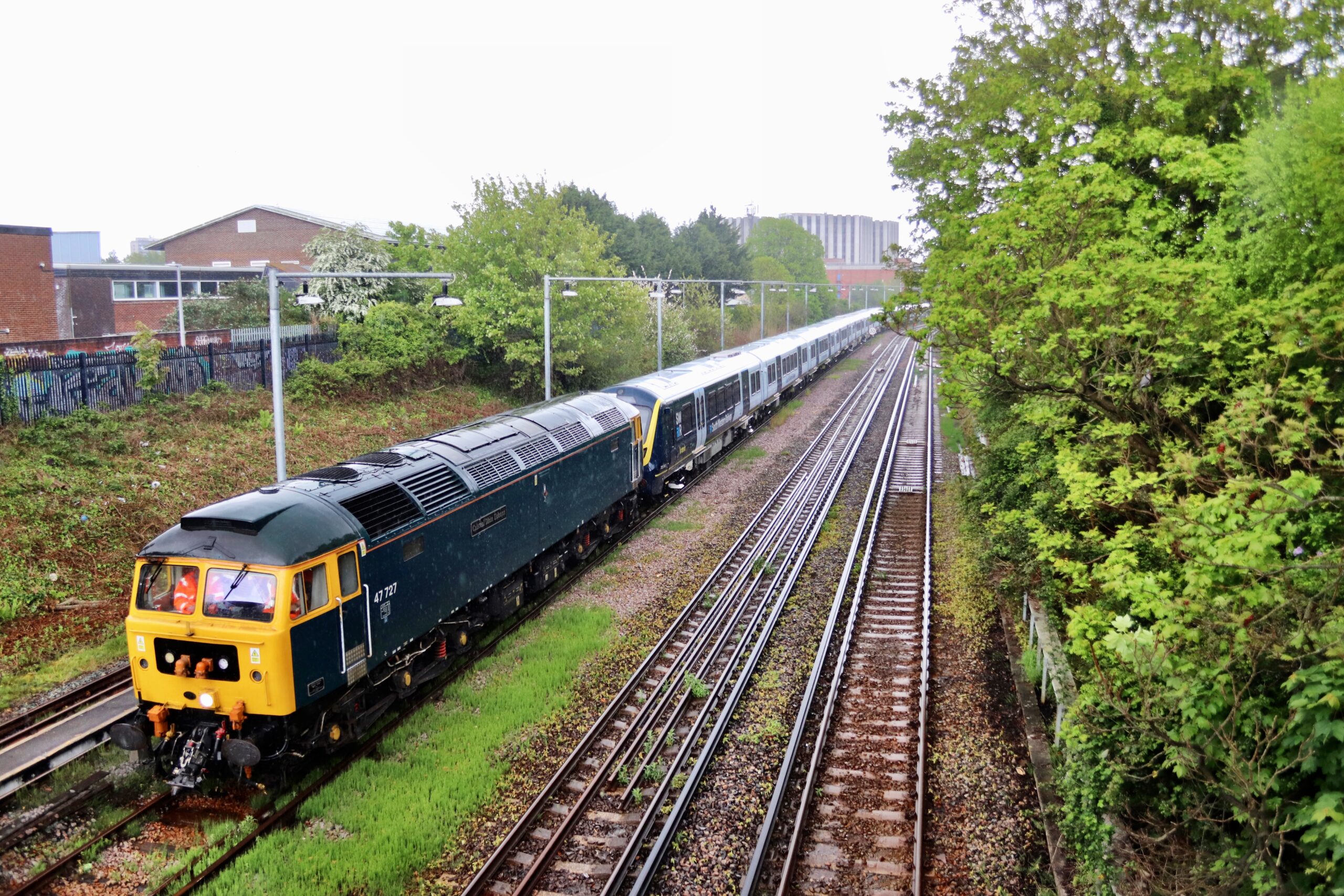
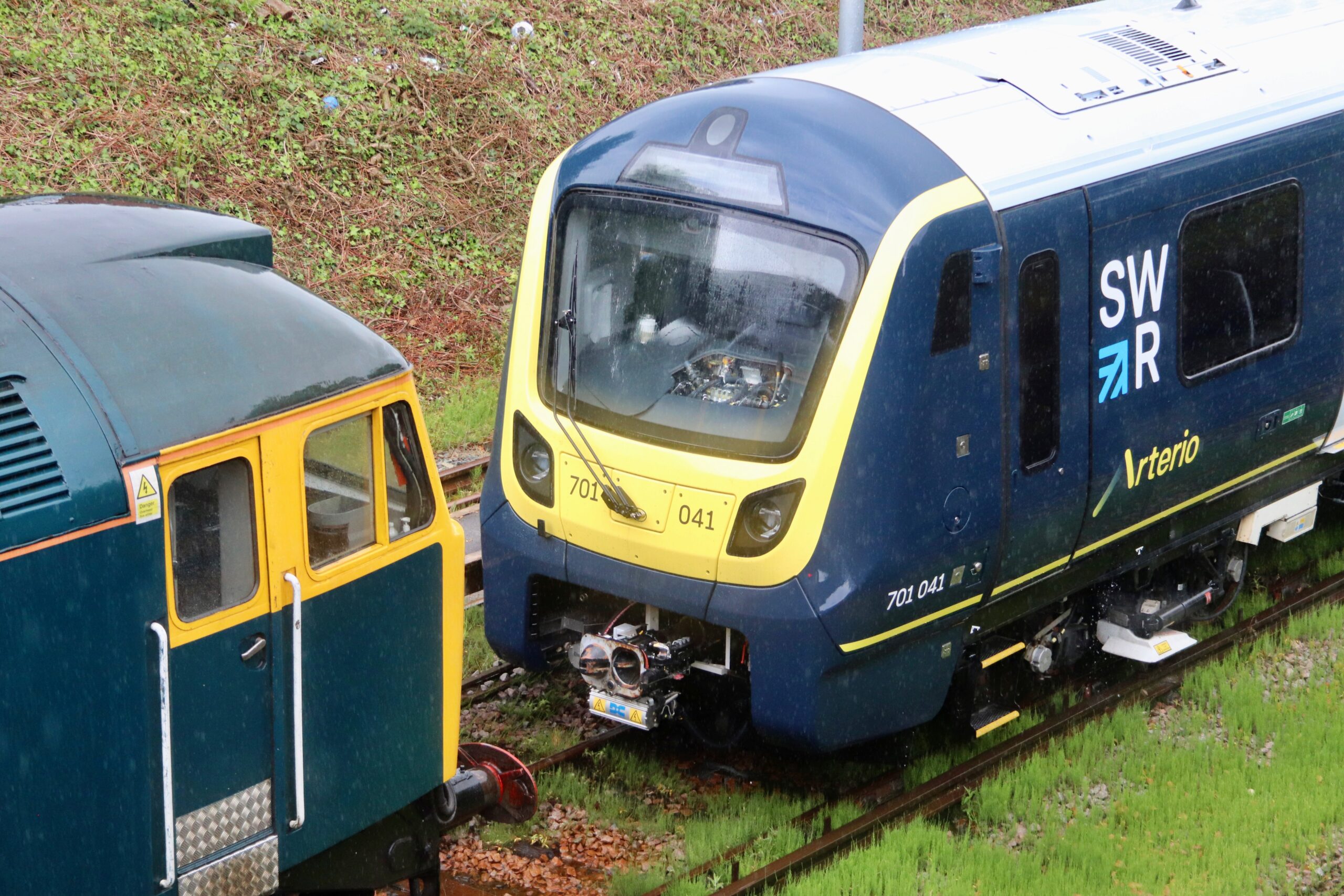
    Class 47 No. 47727 ‘Edinburgh Castle’ arrives at Poole Storage Sidings with Class 701 No. 701041 in tow forming 5Q47 1240 Bournemouth T&RSMD to Eastleigh TRSMD- 10/05/2023
    47727 ‘Edinburgh Castle’ pauses at Poole Storage Sidings in heavy rain – 10/05/2023
    47727 ‘Edinburgh Castle’ has detached from 701041 prior to the locomotive running around the EMU for onward transit to Eastleigh – 10/05/2023
    47727 ‘Edinburgh Castle’ runs out of Poole Storage Sidings to the main line in order to run round the empty coaching stock formed of a Class 701 unit – 10/05/2023
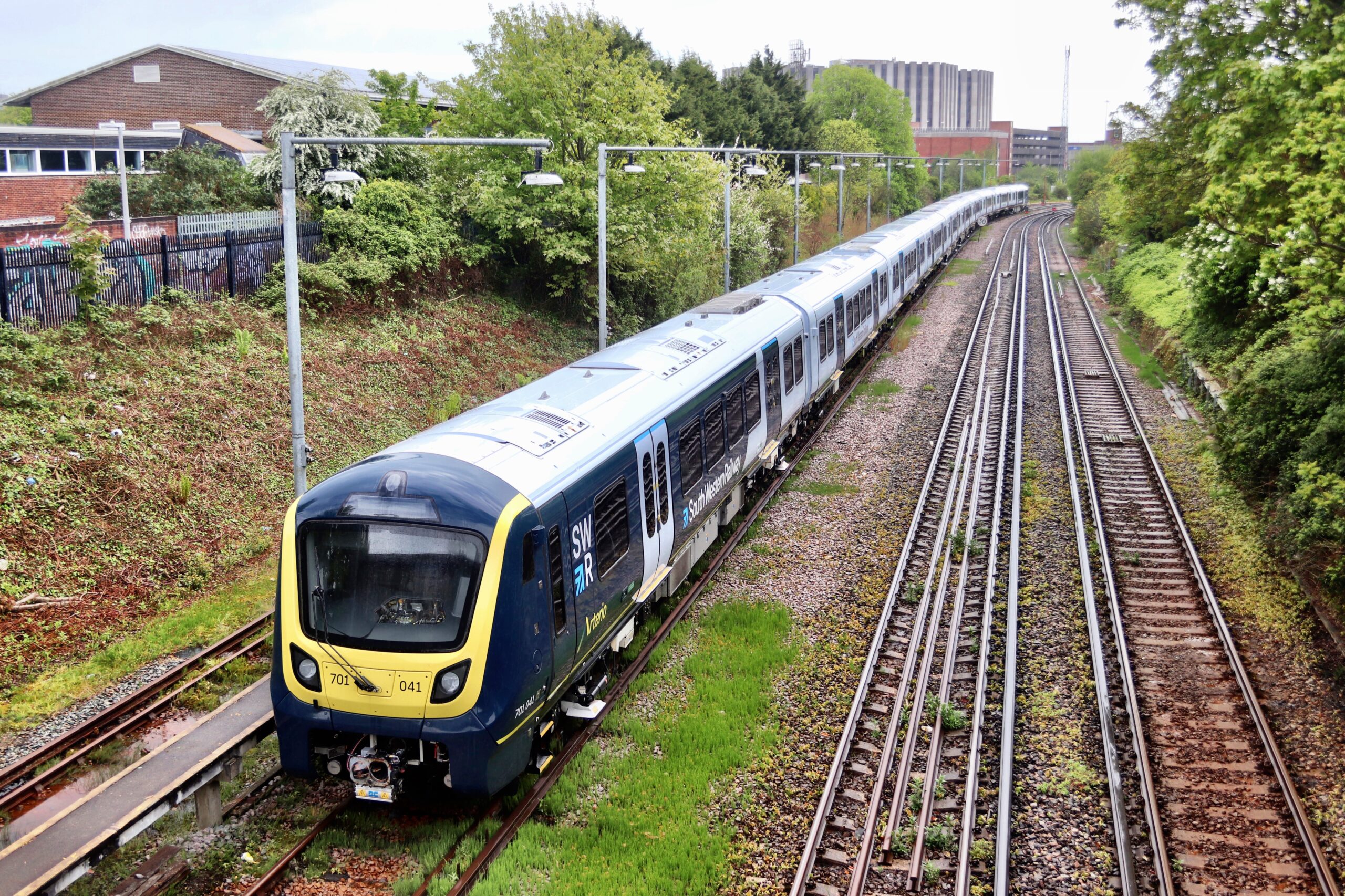
    SWR Class 701 No. 701041 wait for 47727 to run round and re-attach on the London end of the unit – 10/05/2023
    Having re-attached to her charge, 47727 ‘Edinburgh Castle’ leads 701041 through Poole station working 5Q47 1240 Bournemouth T&RSMD to Eastleigh TRSMD- 10/05/2023
    Video of Class 47 No. 47727 ‘Edinburgh Castle’ working 0Z47 0814 Eastleigh East Yard to Bournemouth T&RSMD / 5Q47 1240 Bournemouth T&RSMD to Eastleigh TRSMD – 10/05/2023

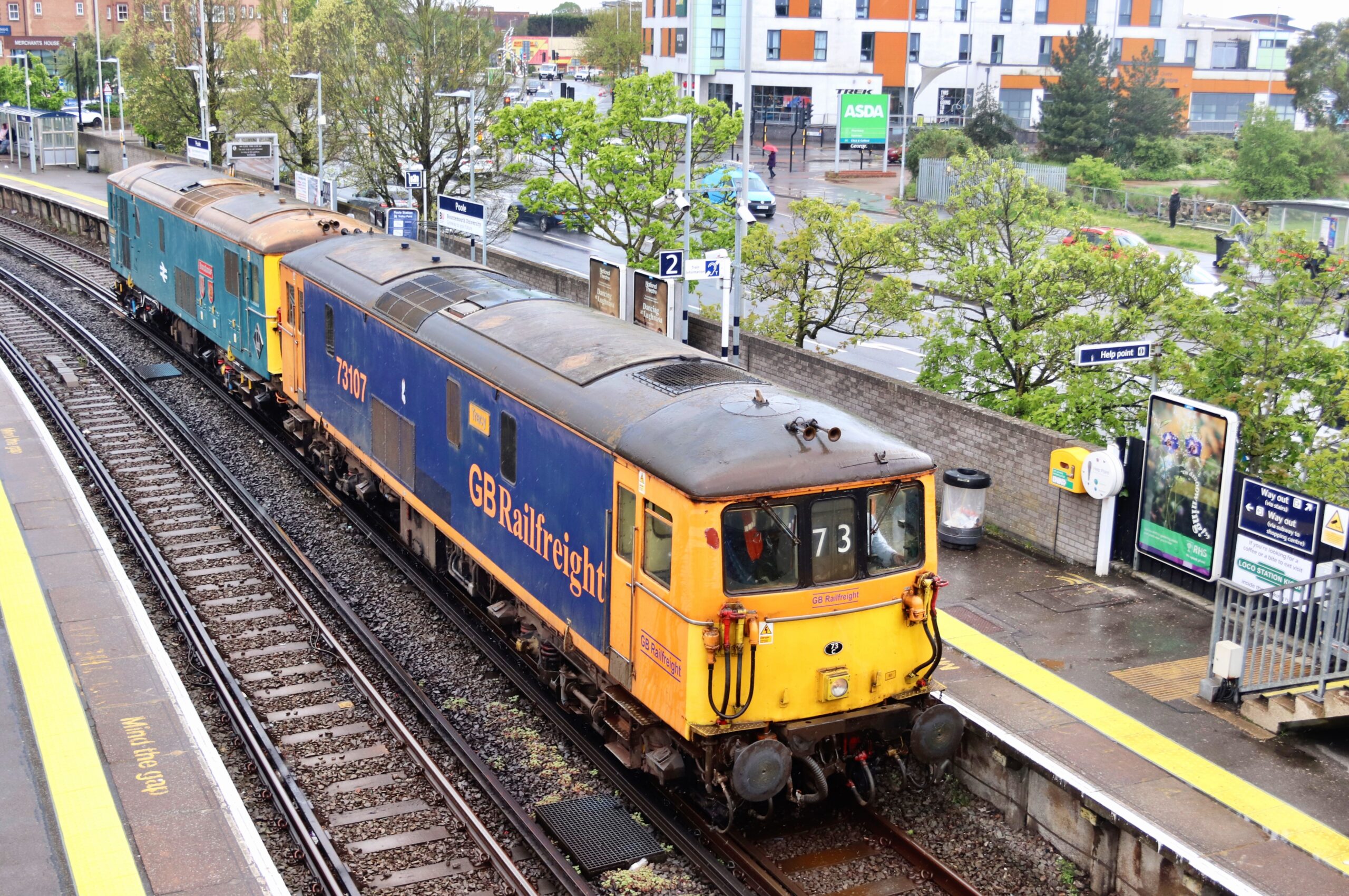
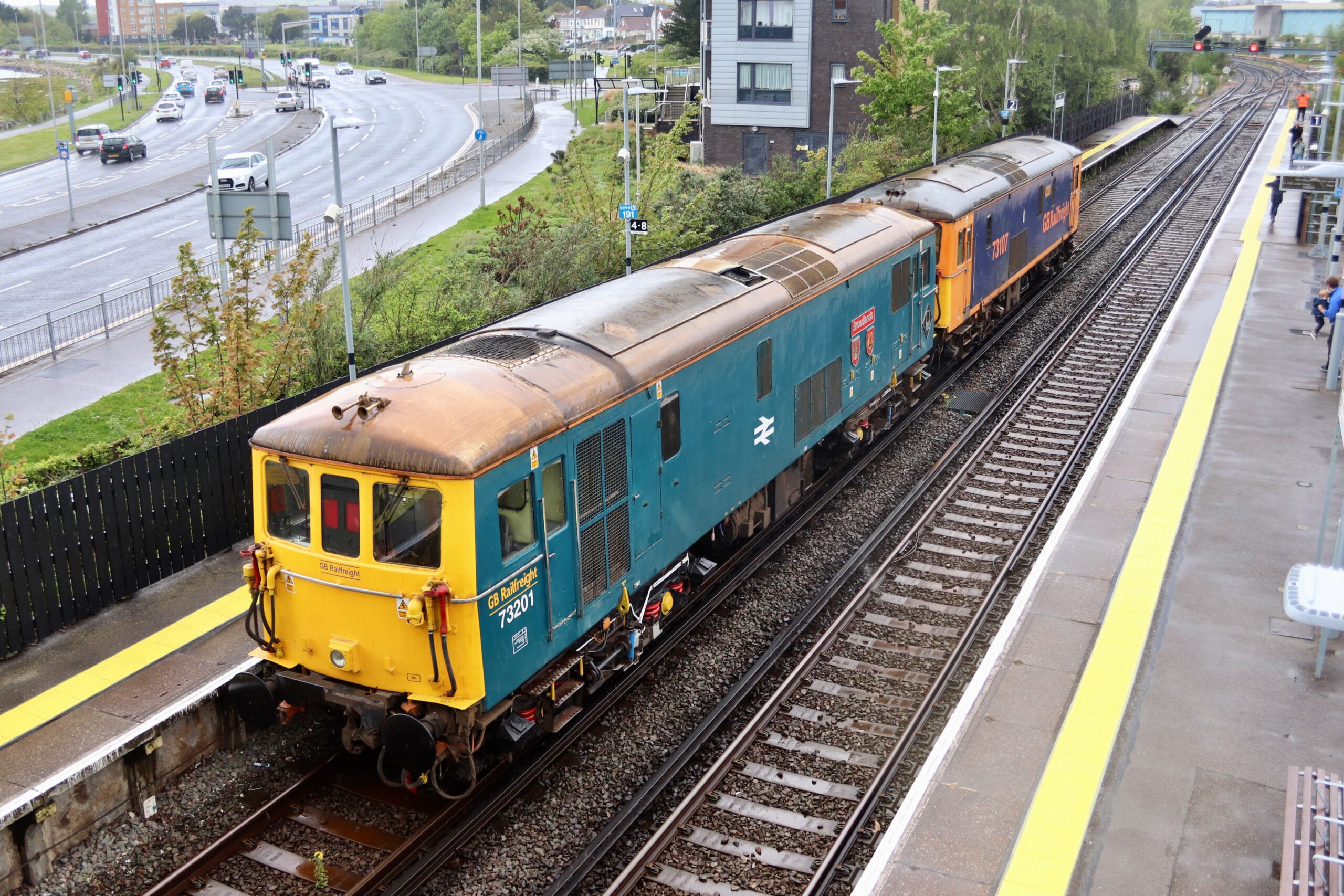
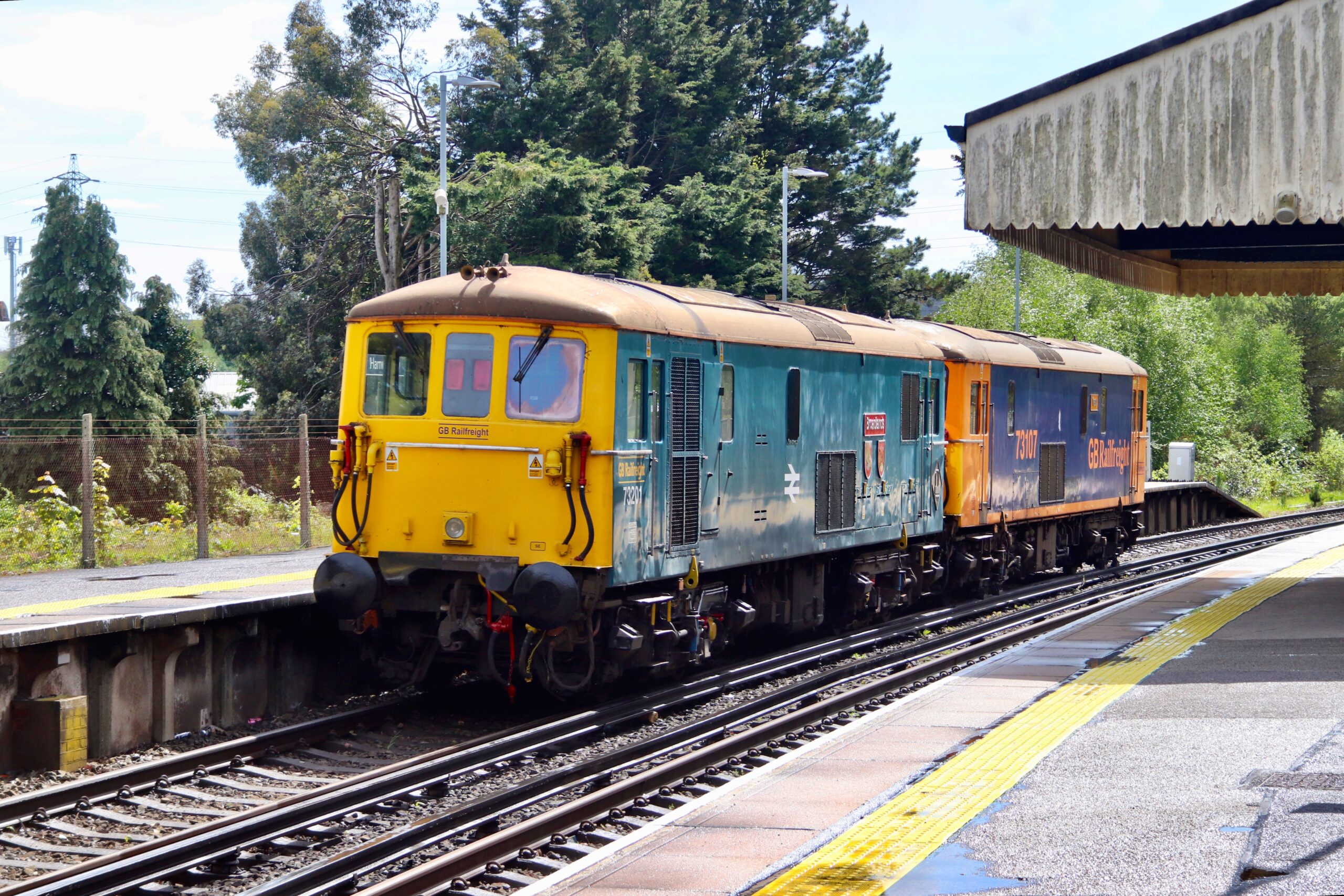
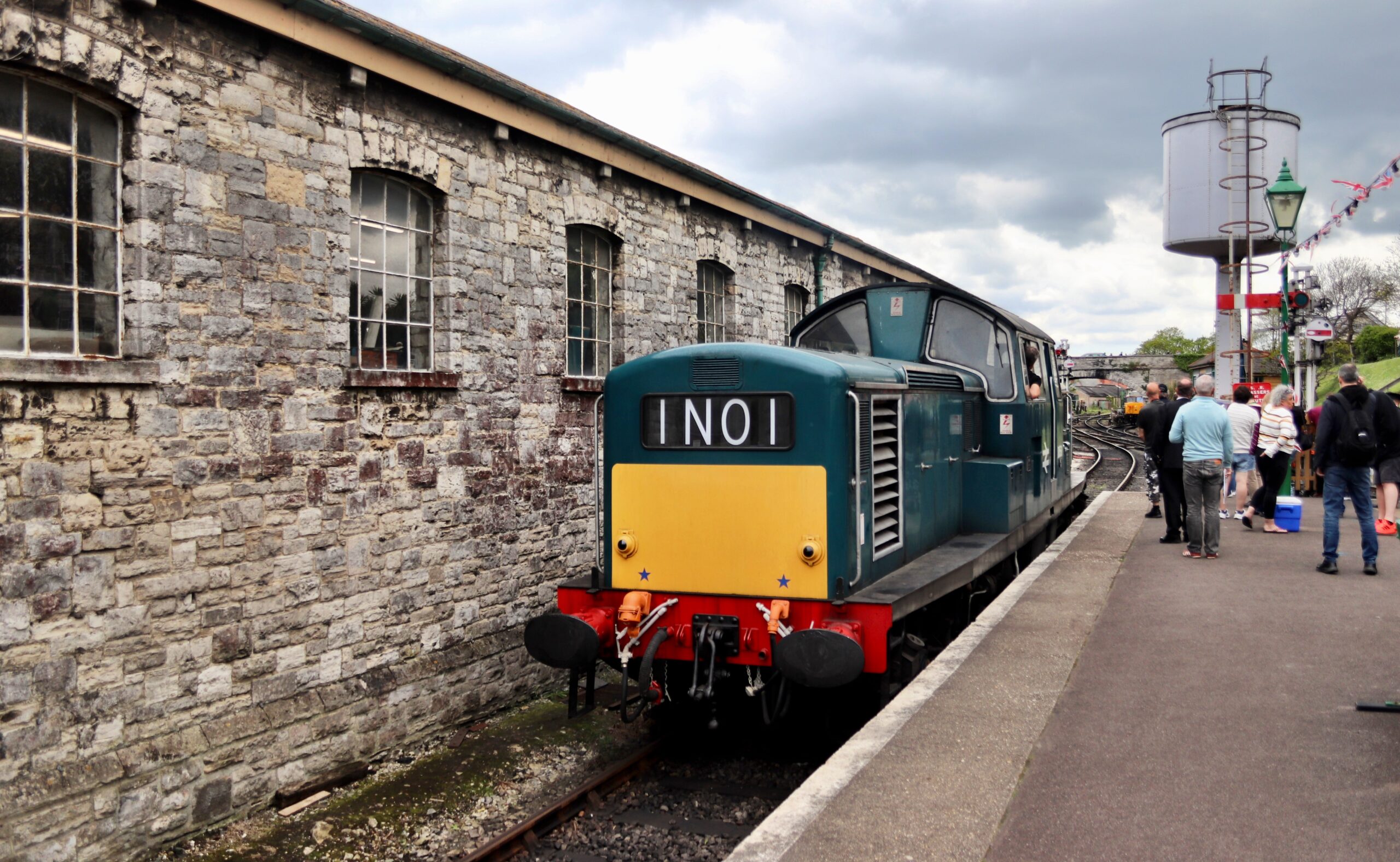
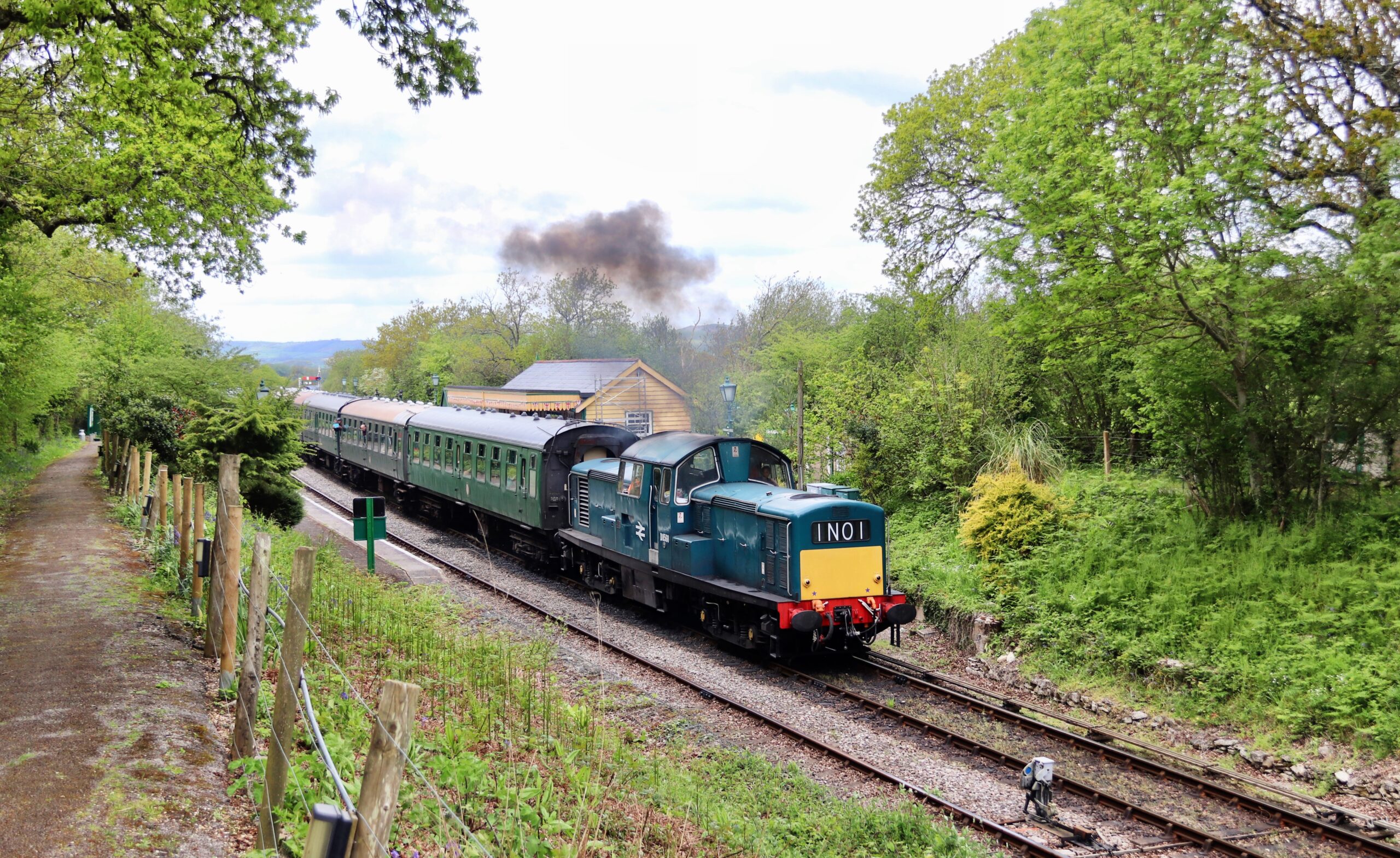
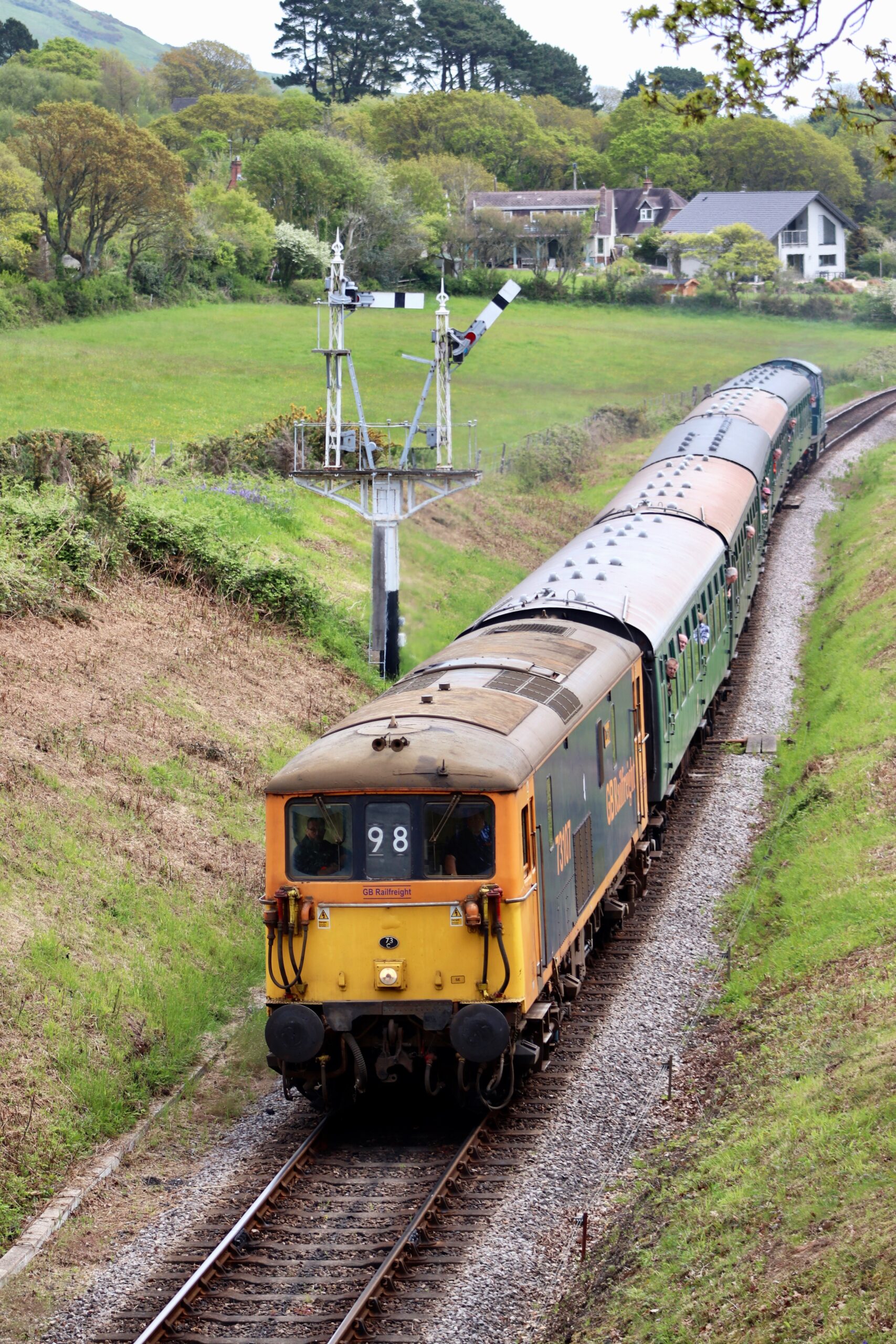
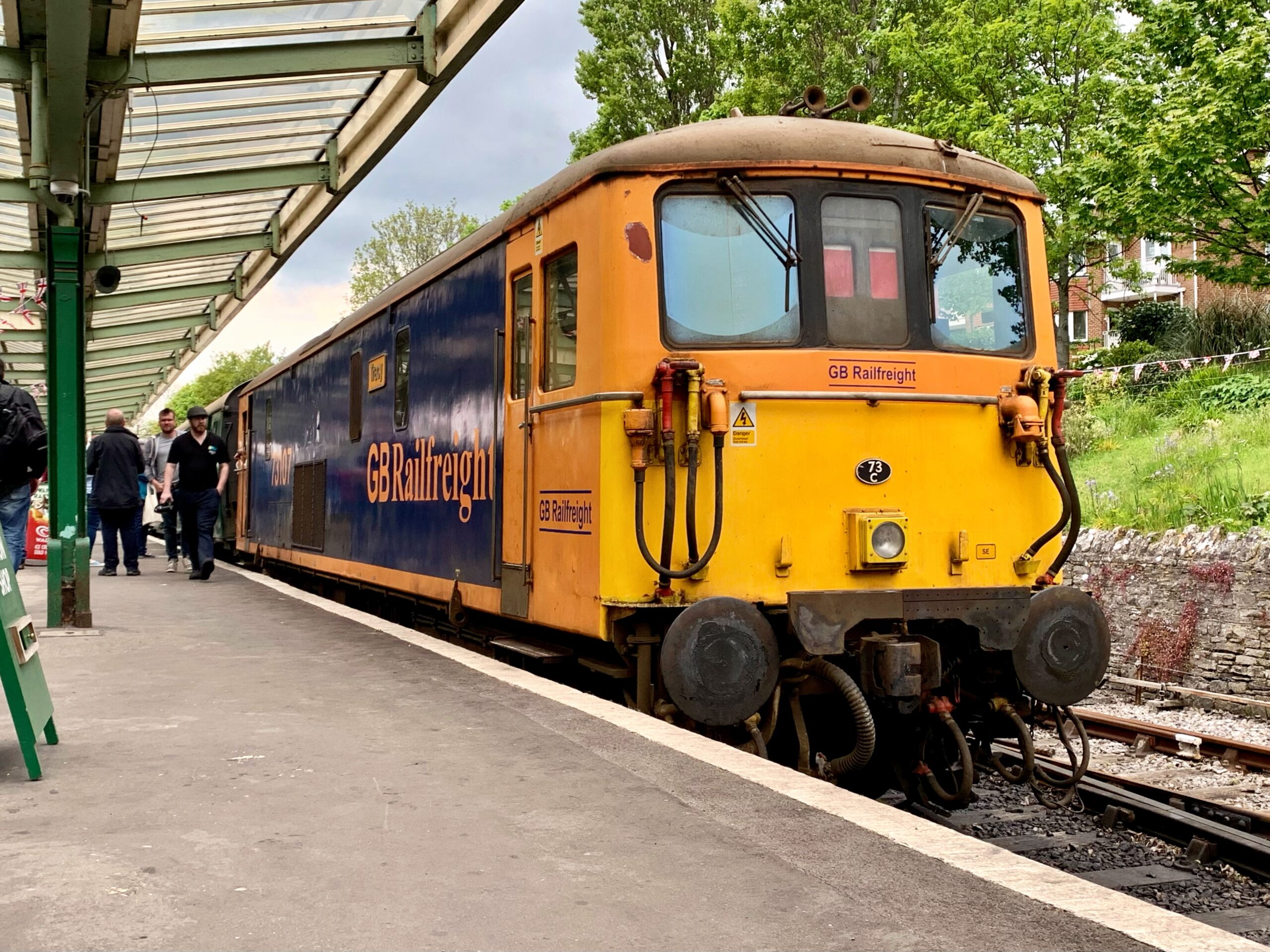
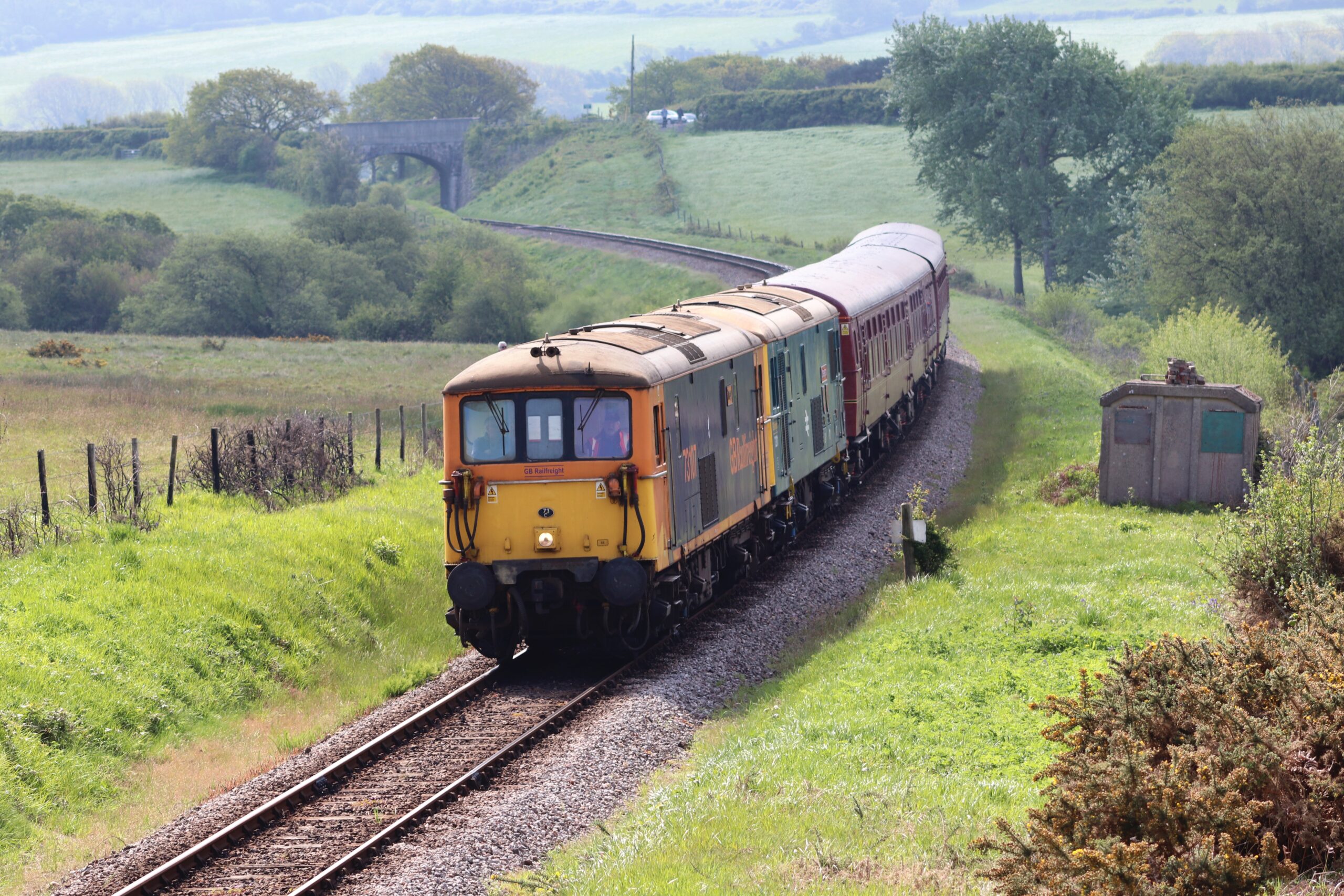
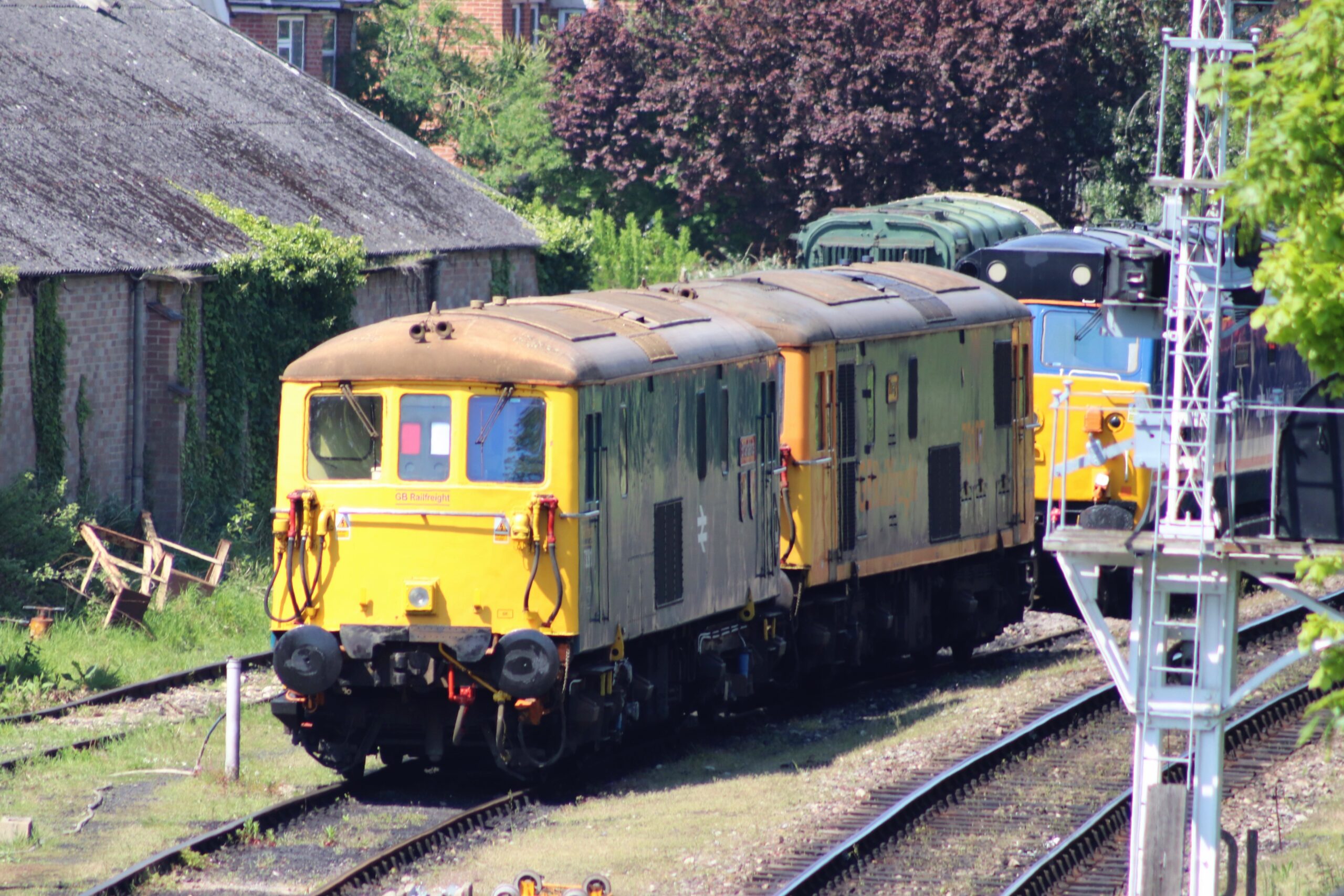
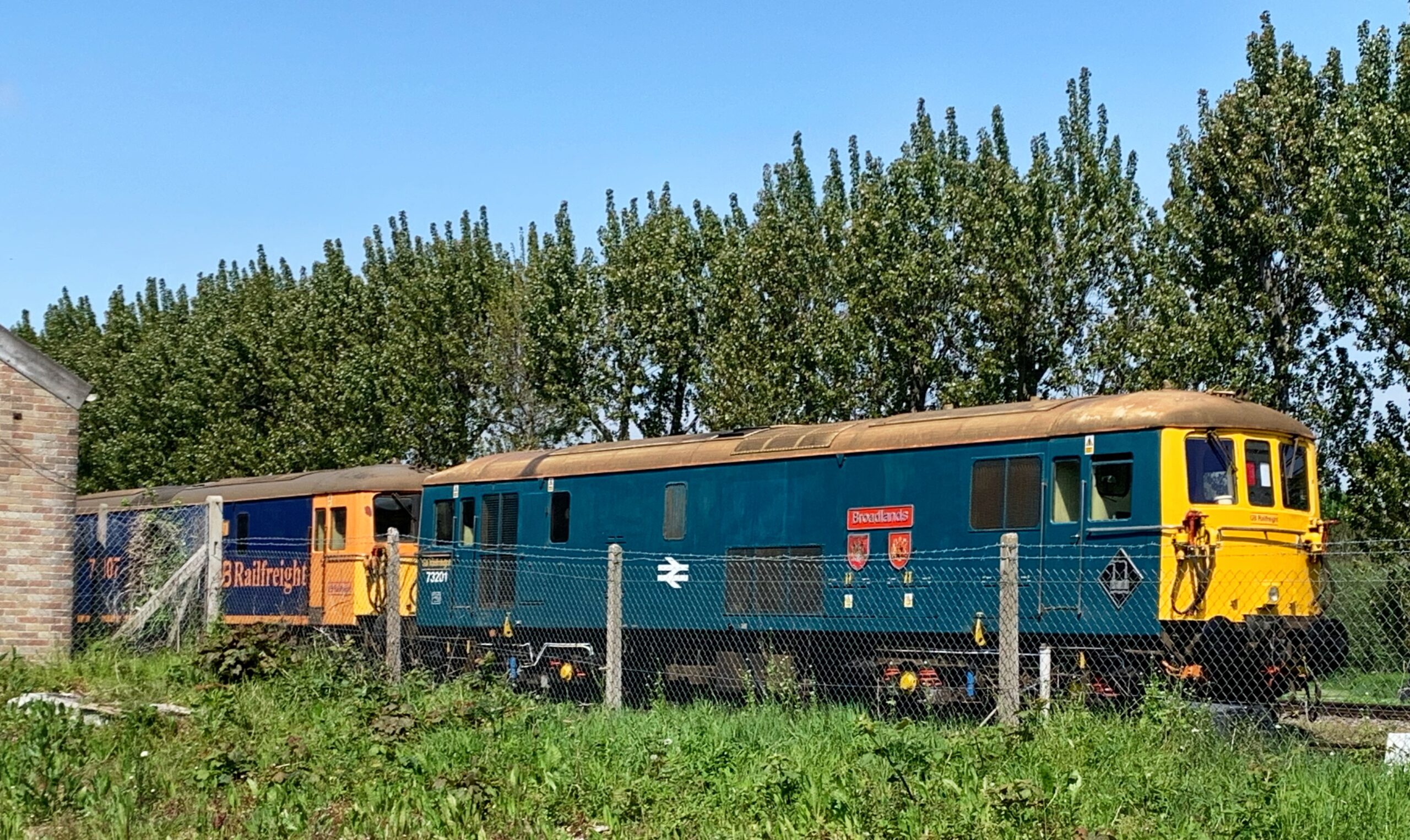
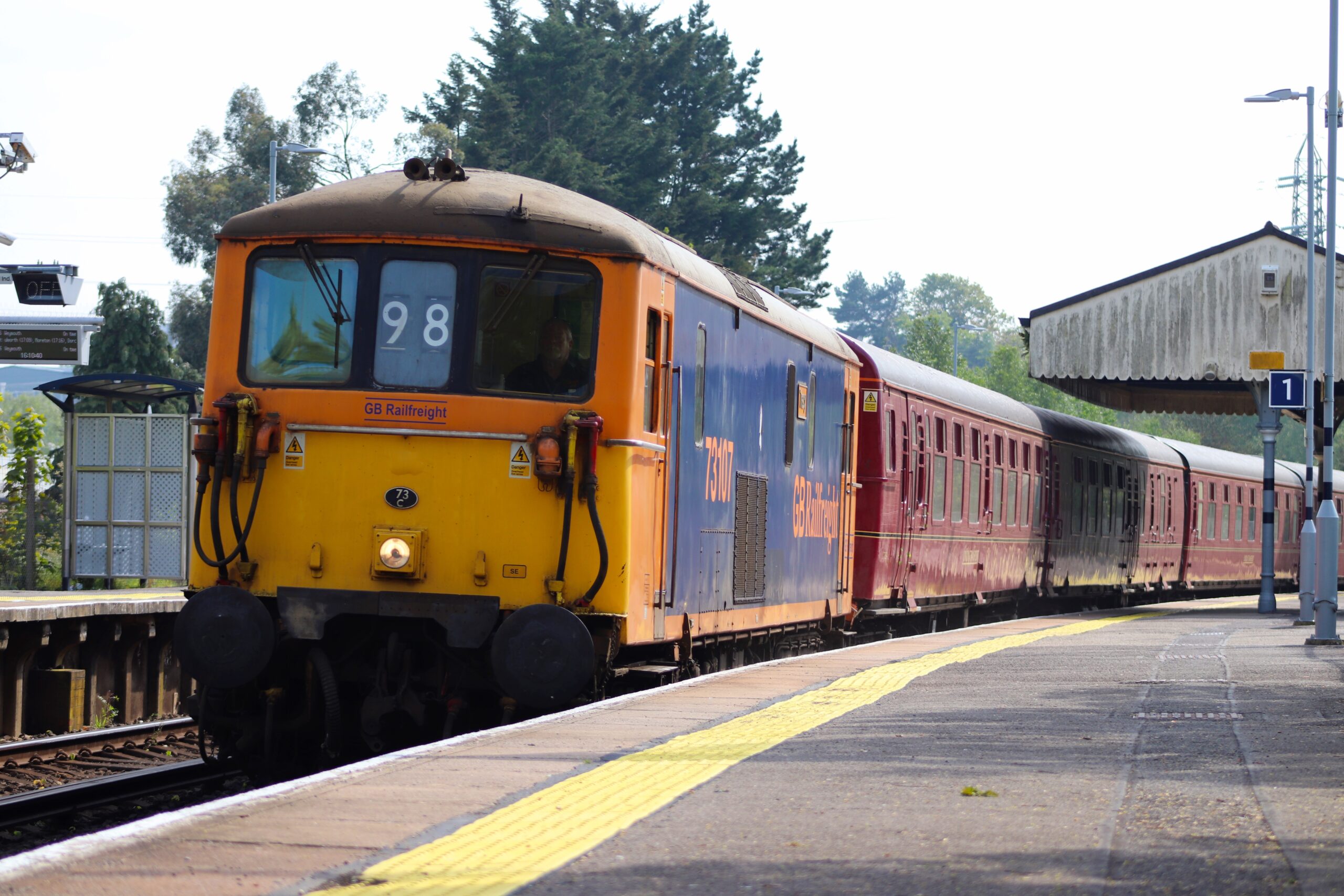
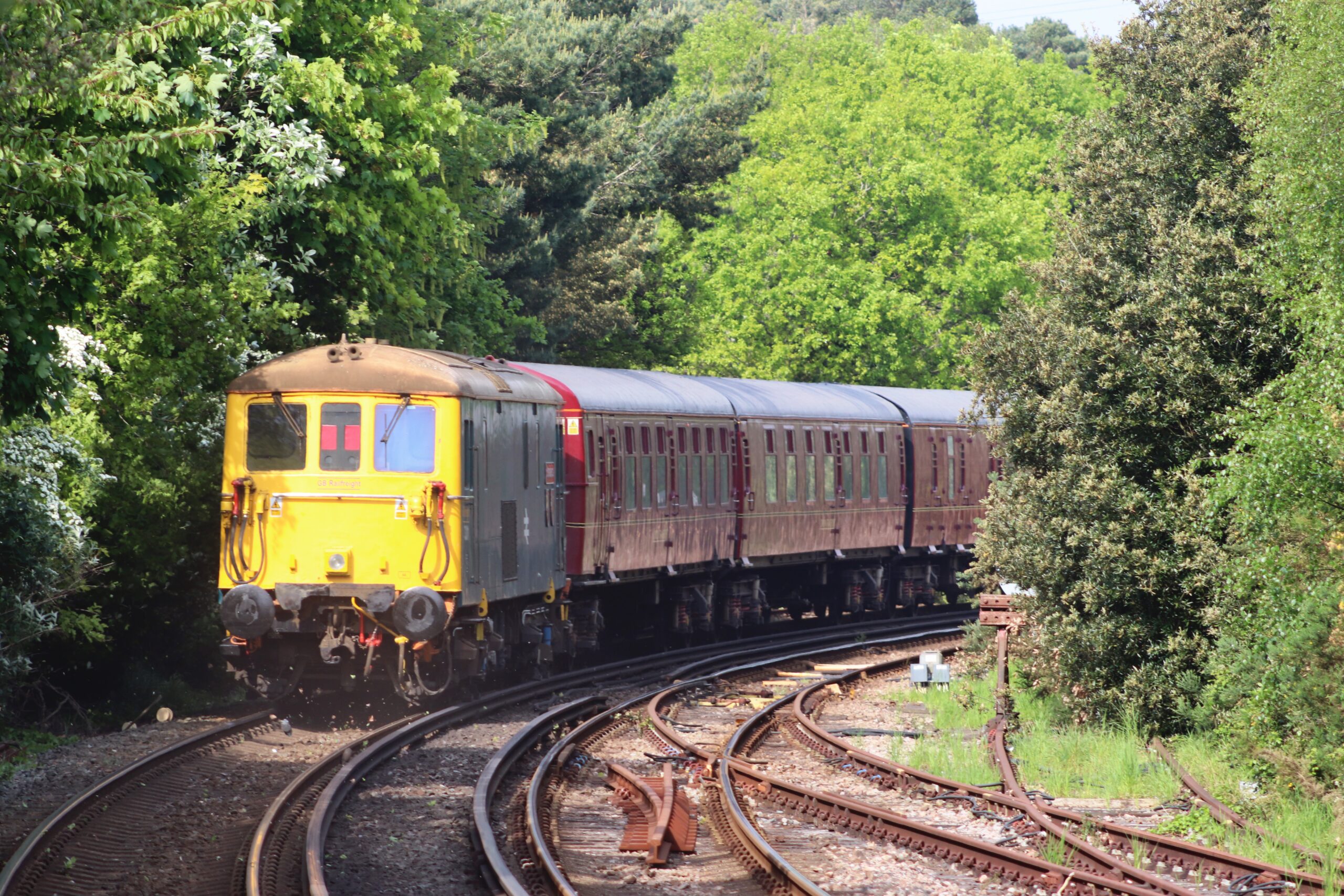
    Later on Wednesday the first of the visiting locomotives destined for the Swanage Diesel Gala arriving via the main line worked through to the branch in the form of GBRf Class 73 Electro-Diesels No.’s 73107 ‘Tracy’ and 73201 ‘Broadlands’. As we reported last week, Clayton Class 17 No. D8568 arrived on the Swanage Railway via road transport in readiness for the Diesel gala being held over the weekend of 12-14th May 2023. The Clayton was also involved in a warm-up day on Thursday 11th and was to scheduled to remain after the gala for driver experience runs before a returning to the Severn Valley Railway, again by road, on 16th May.

    GBRf Class 73 Electro-Diesels No.’s 73107 ‘Tracy’ and 73201 ‘Broadlands’ work 0Y68 Eastleigh East Yard to Swanage through Poole – 10/05/2023
    GBRf Class 73 Electro-Diesels No.’s 73107 ‘Tracy’ and 73201 ‘Broadlands’ work 0Y68 Eastleigh East Yard to Swanage through Poole – 10/05/2023
    GBRf Class 73 Electro-Diesels No.’s 73107 ‘Tracy’ and 73201 ‘Broadlands’ work 0Y68 Eastleigh East Yard to Swanage through Hamworthy – 10/05/2023
    GBRf Class 73 Electro-Diesels No.’s 73107 ‘Tracy’ and 73201 ‘Broadlands’ work 0Y68 Eastleigh East Yard to Swanage through Hamworthy – 10/05/2023

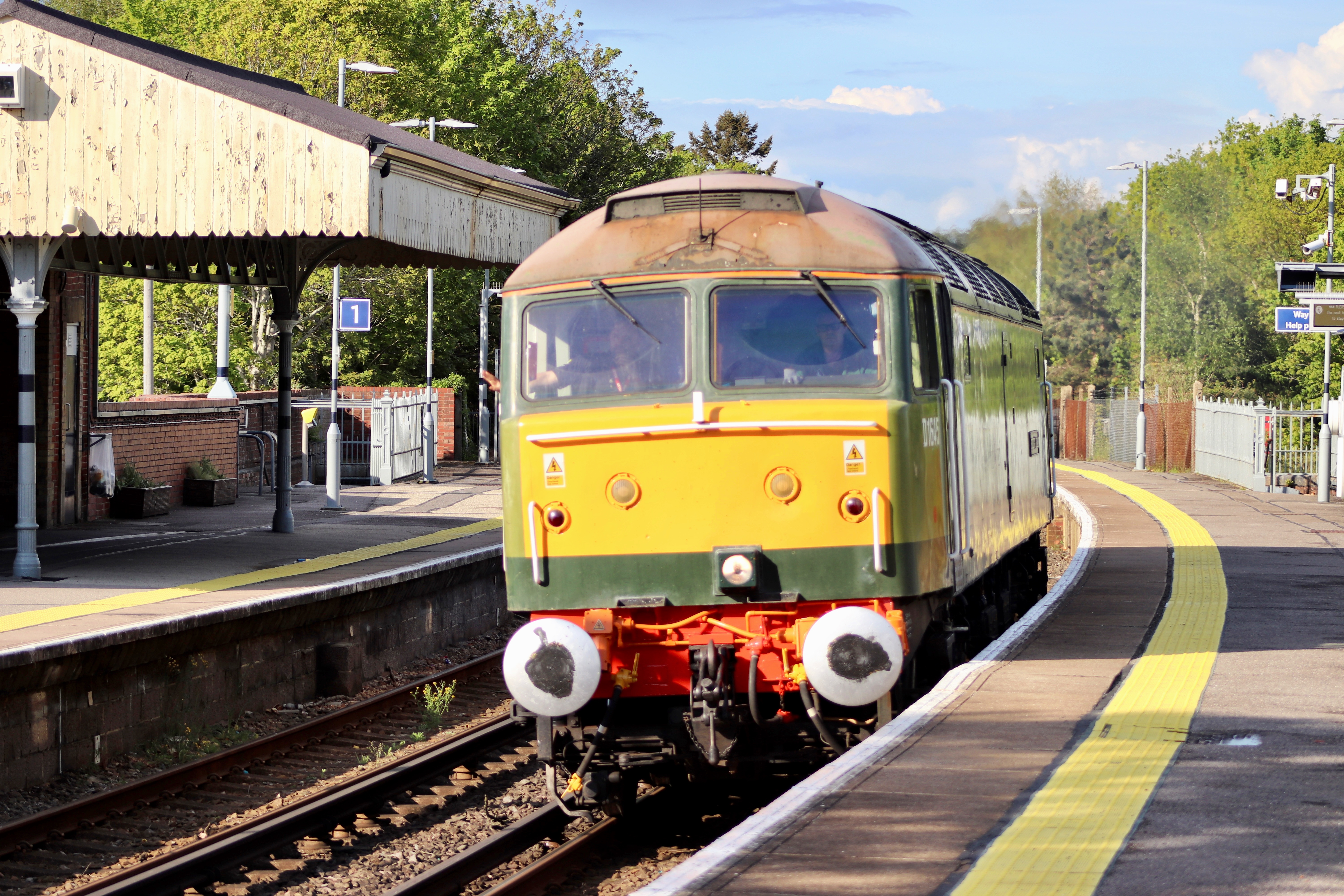
    The 73’s arrival was followed by Swanage resident Class 33/0 No. D6515 (33012) ‘Lt Jenny Lewis RN’ travelling light engine away from Swanage on her way to Eastleigh in order to collect the London Underground Class 438 4TC unit. Originally this combination was to have formed the Branch Line Society organised rail tour “The Jurassic Crompton” which had been designed to take the following pathing on Thursday 11th May: Eastleigh P3 (PU 11.12) – Fareham – Havant P2 – Haslemere P3 – Guildford P8 (PU 12.42) – Wokingham – Reading P14 (PU 13.22) – Dn Feeder Relief – Basingstoke P4 (PU 13.58) – Wallers Ash DPL – Shawford Jn – Dn Slow – Eastleigh – Southampton Central P4 (PU 15.07) – Up Fast – Church Lane Jn – Dn Main – Brockenhurst P1 (photo stop) – Bournemouth P4 (photo stop) – Poole P2 – Wareham – Norden – Swanage (SD 18:41). In the event paperwork associated with the rail tour and the 4TC’s ability to carry passengers on the main line was apparently submitted late and the special train cancelled, although the 33/0 and 4TC still ran to Swanage via the same convoluted route, only without fare paying passengers! 

    Showing as cancelled on Real Time Trains (RTT) but actually running as evidenced by this image, Class 33 No. D6515 (33012) ‘Lt Jenny Lewis RN’ runs light engine through Hamworthy as 0Z12 1750 Norden to Eastleigh Arlington (Zg) – 10/05/2023

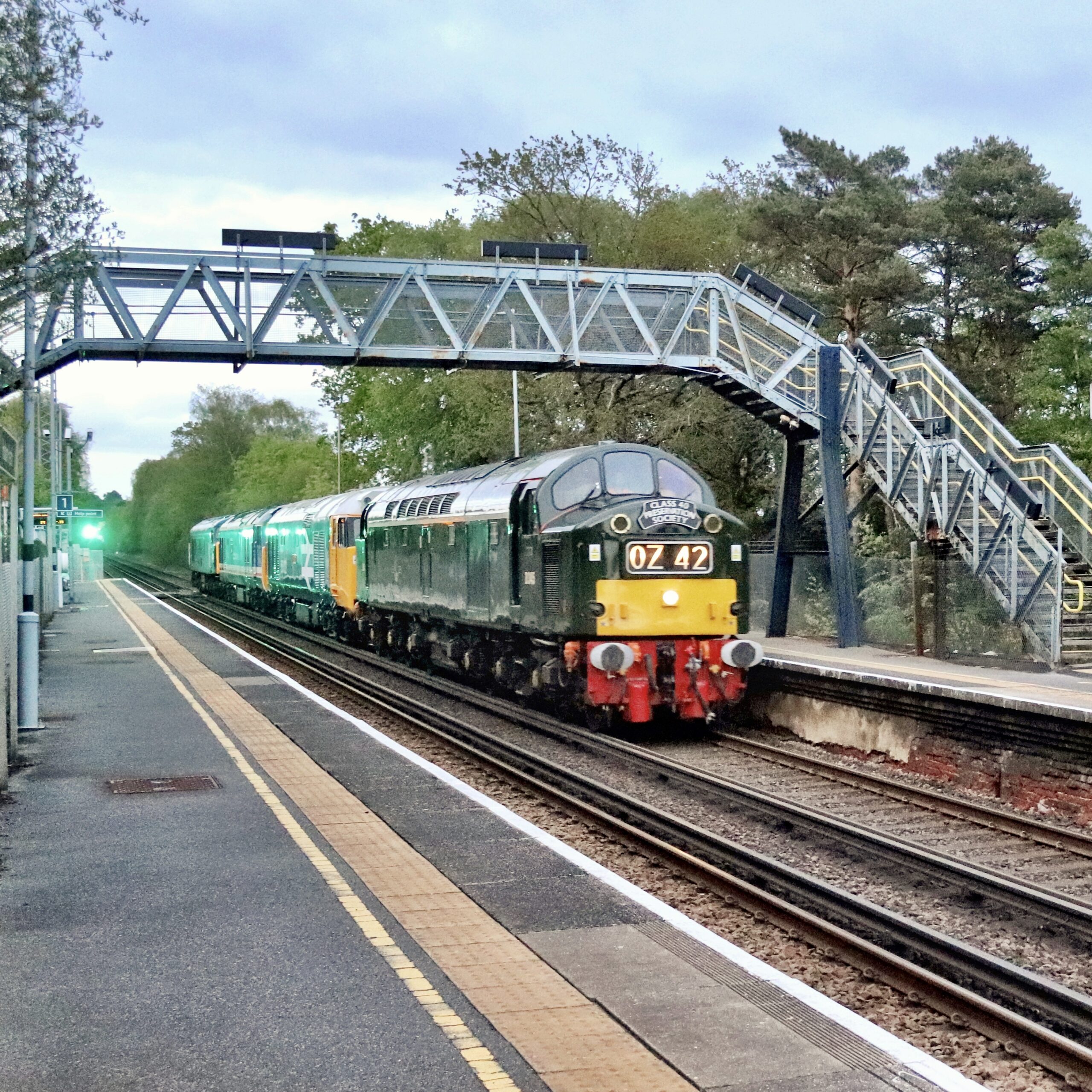
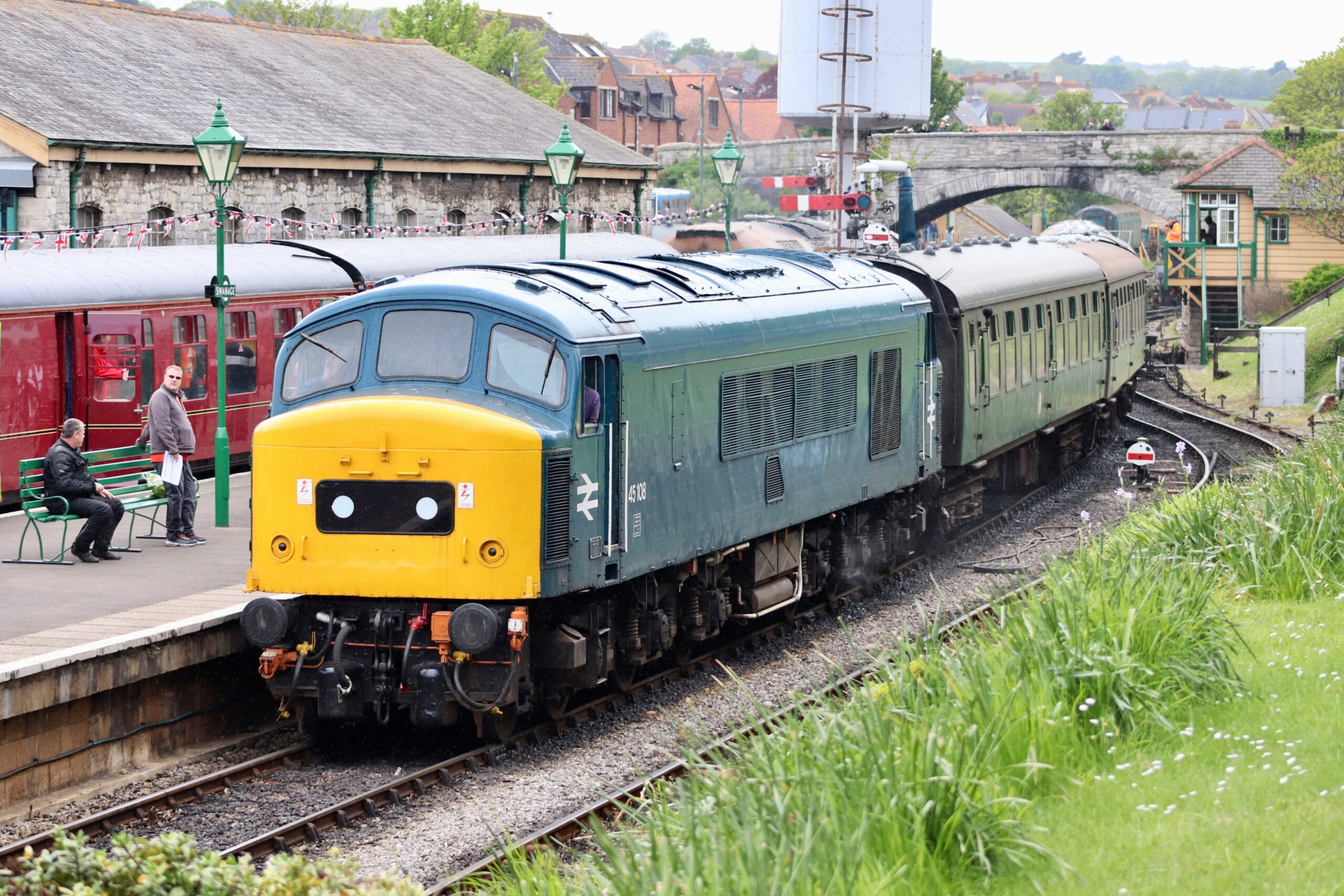
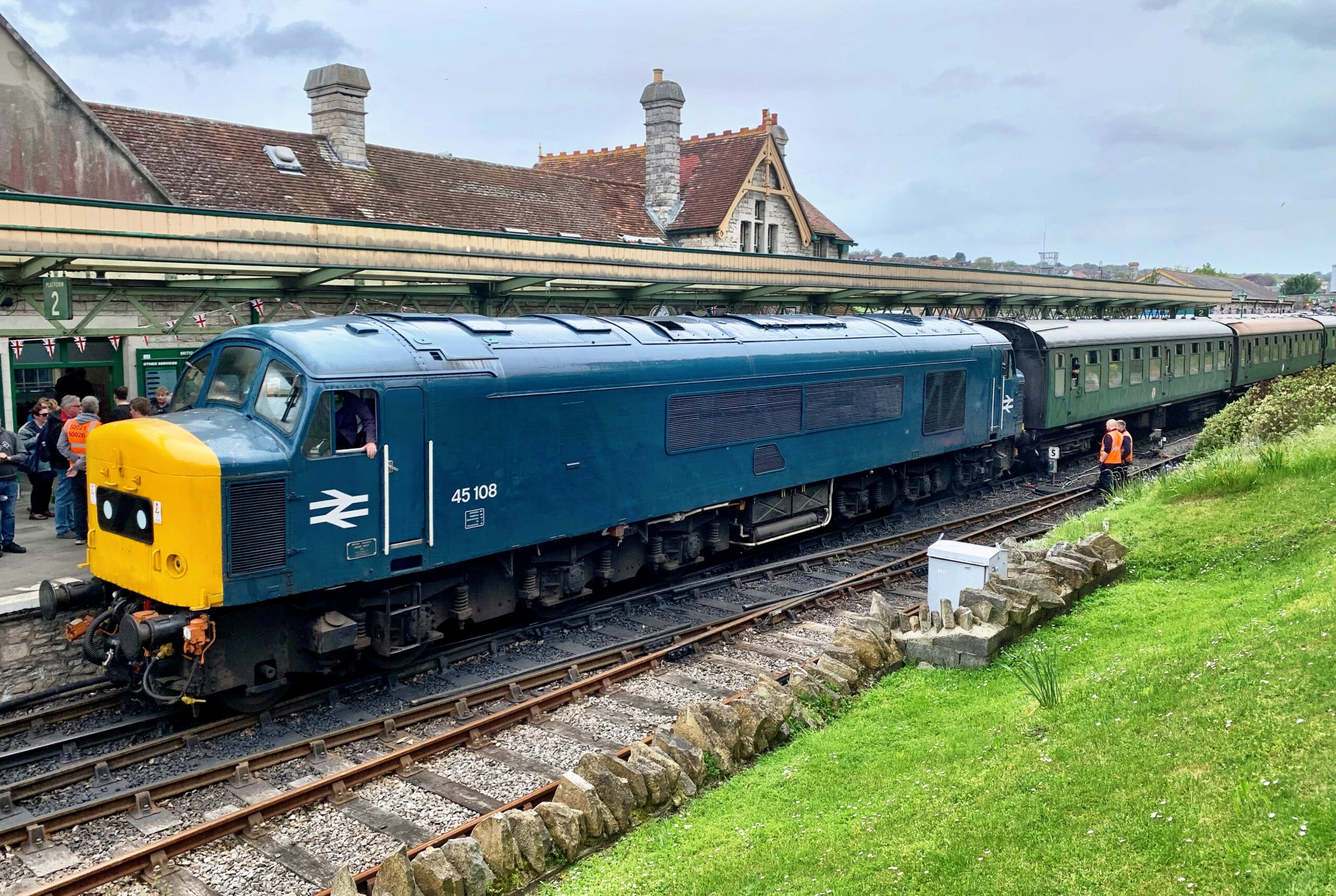
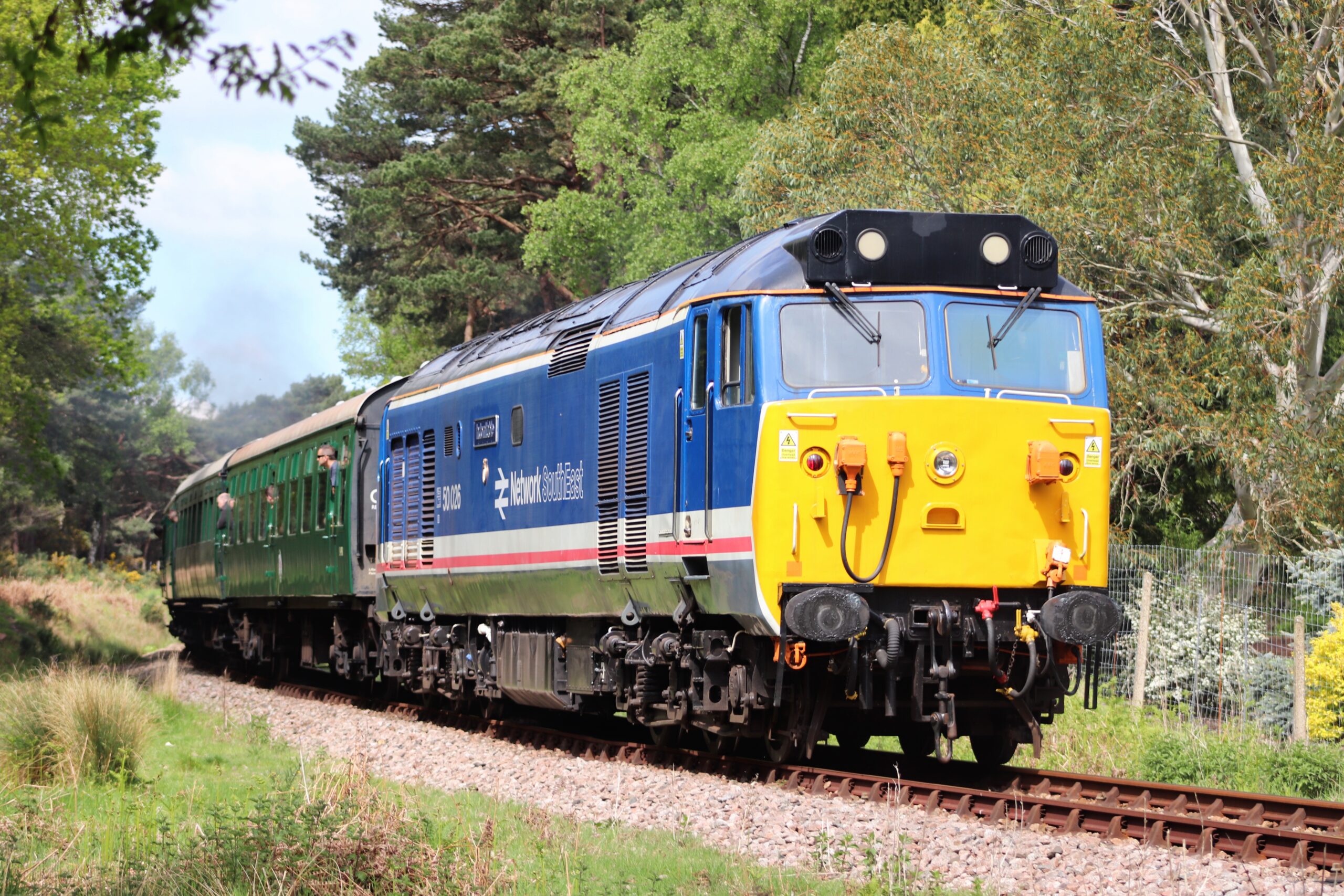
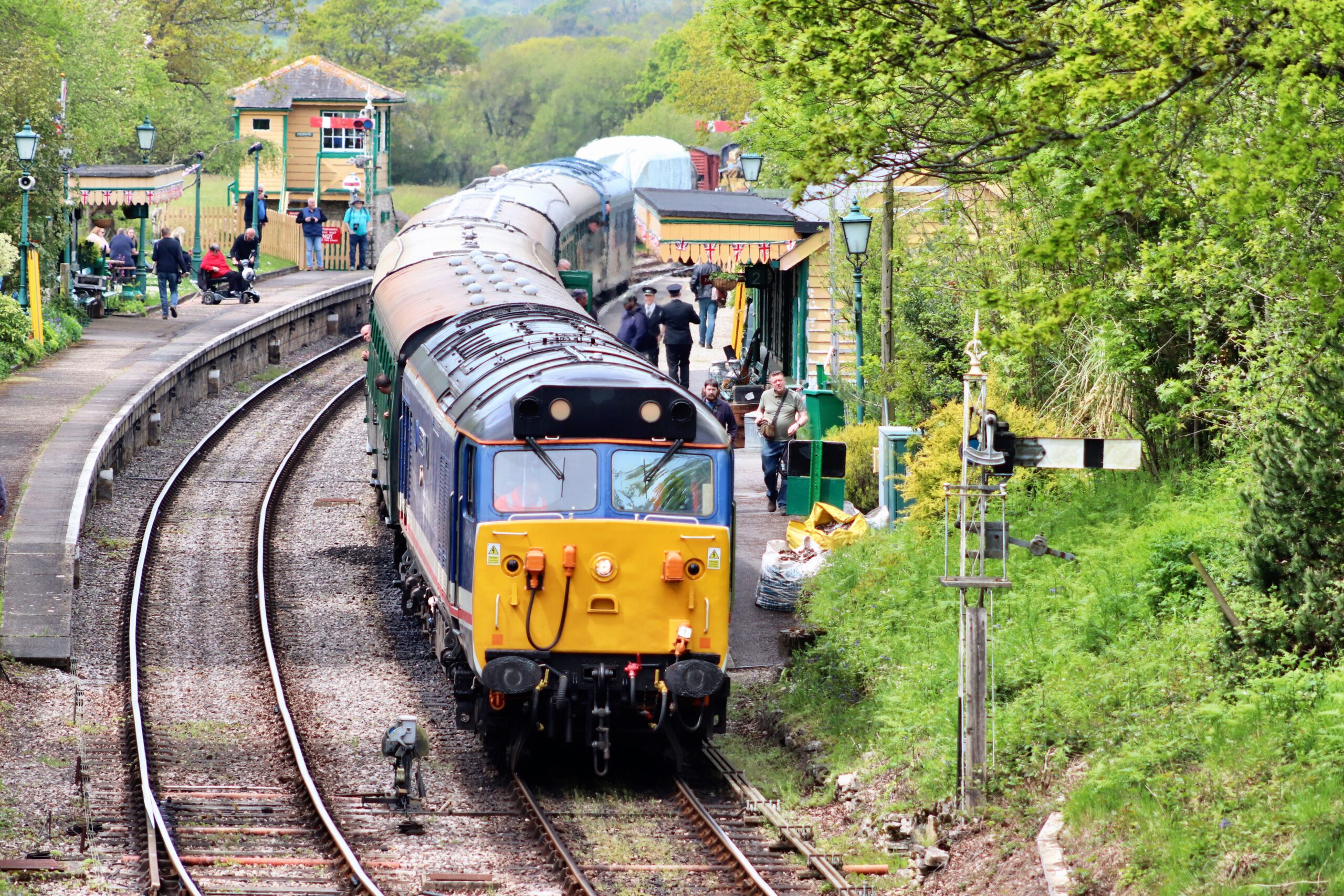
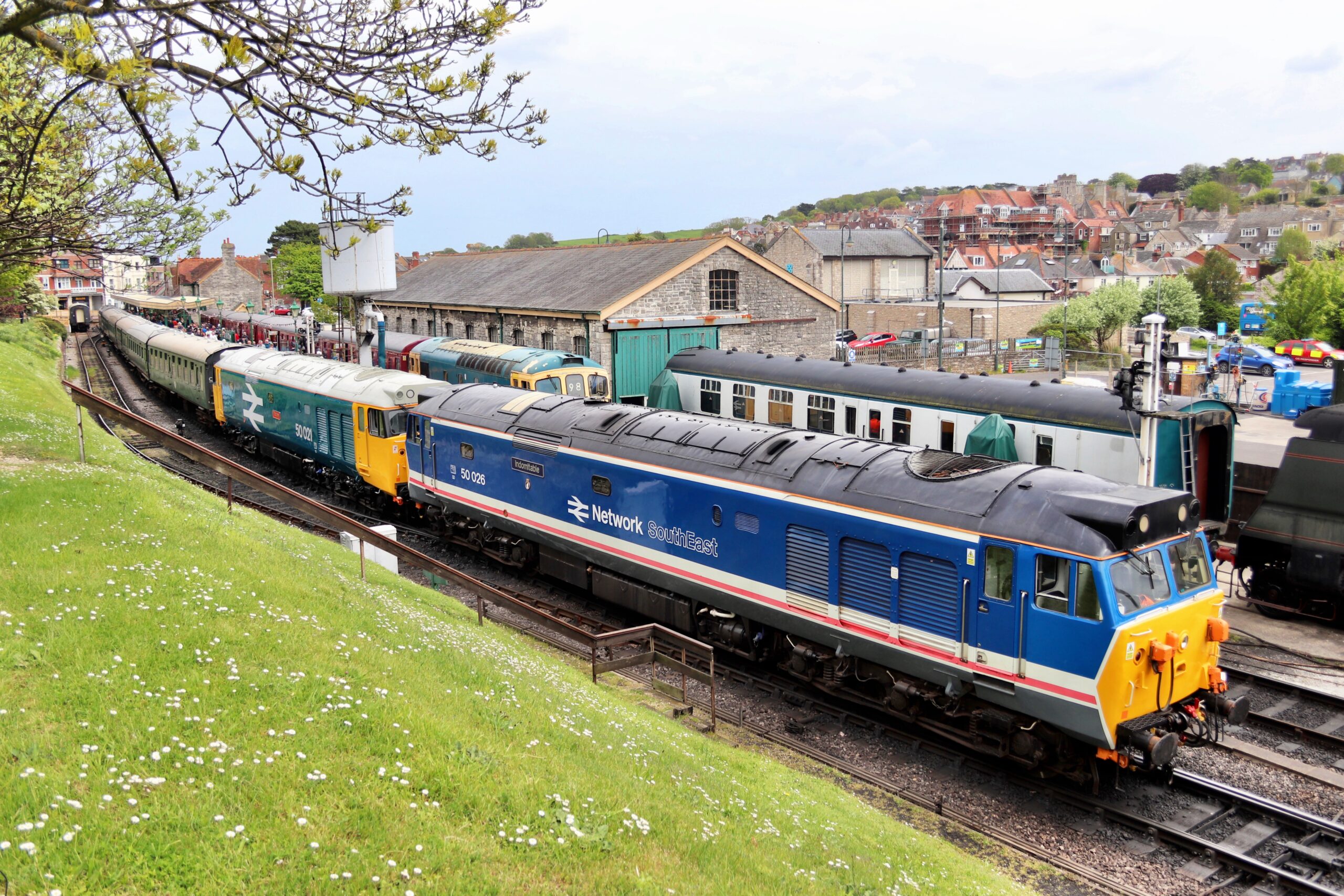
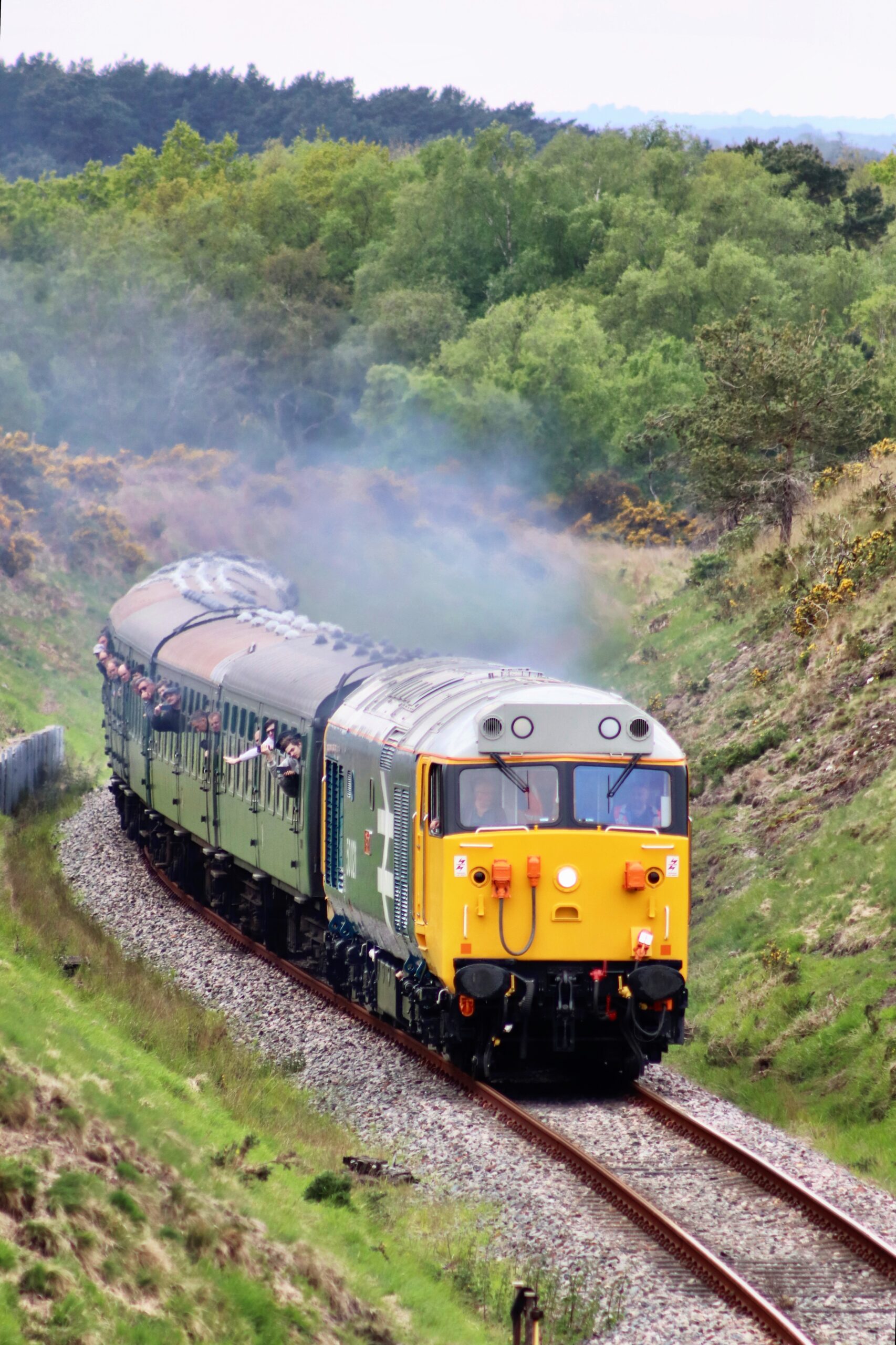
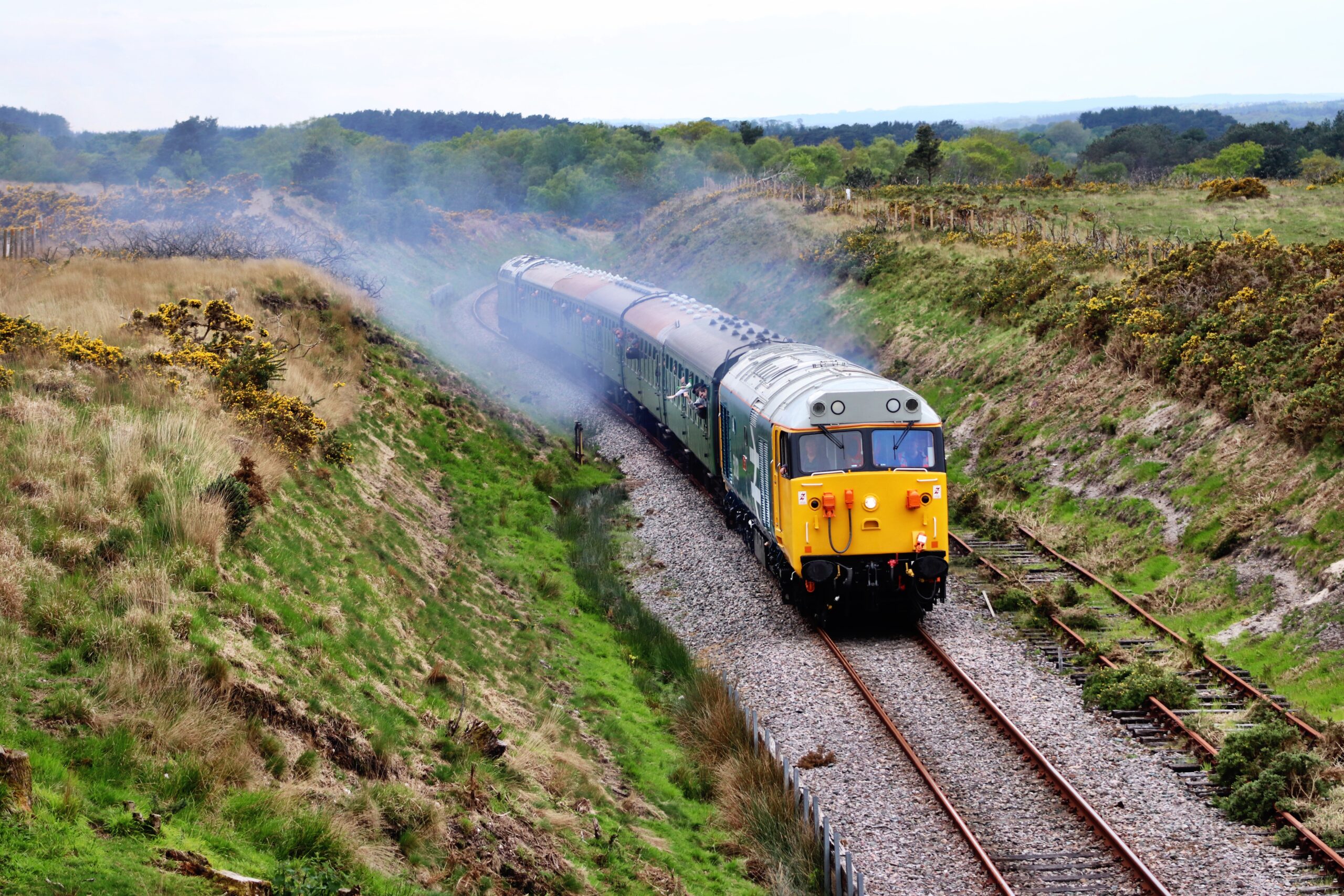
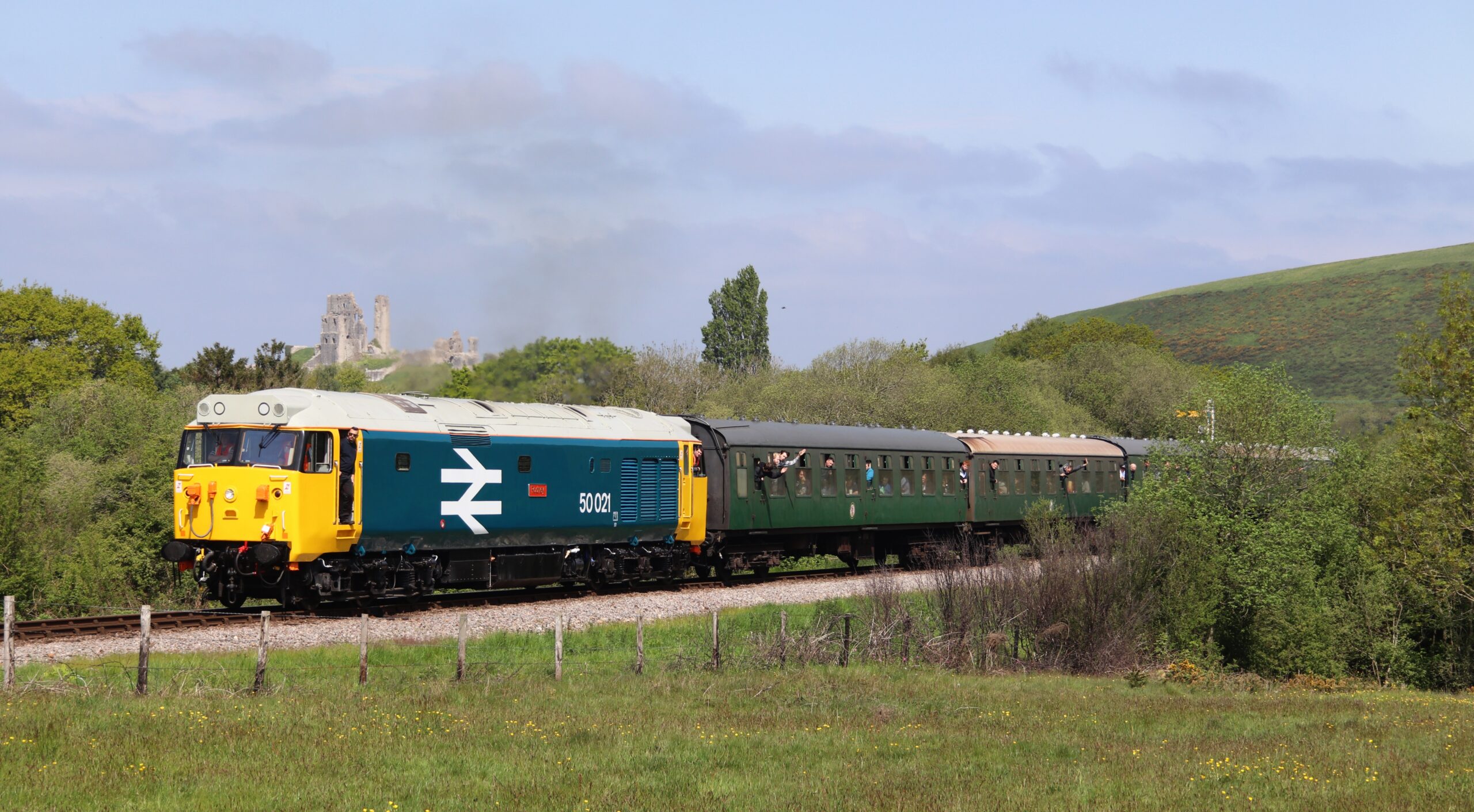
    The final special working of the day included a surprise visitor in the form of “Dave”, or to give the correct identification; Class 50 No. 50021 ‘Rodney’, which although previously announced as a visitor to the Swanage Gala had been withdrawn from the guest list as the loco was not going to be ready in time. After some tremendous effort by the team behind ‘Rodders’ the locomotive made the cut and was included in the convoy which was headed by English Electric Class 40 No. D345 (40145) and included Peak Class 45 No. 45108 and another Class 50 No. 50026 ‘Indomitable’. 

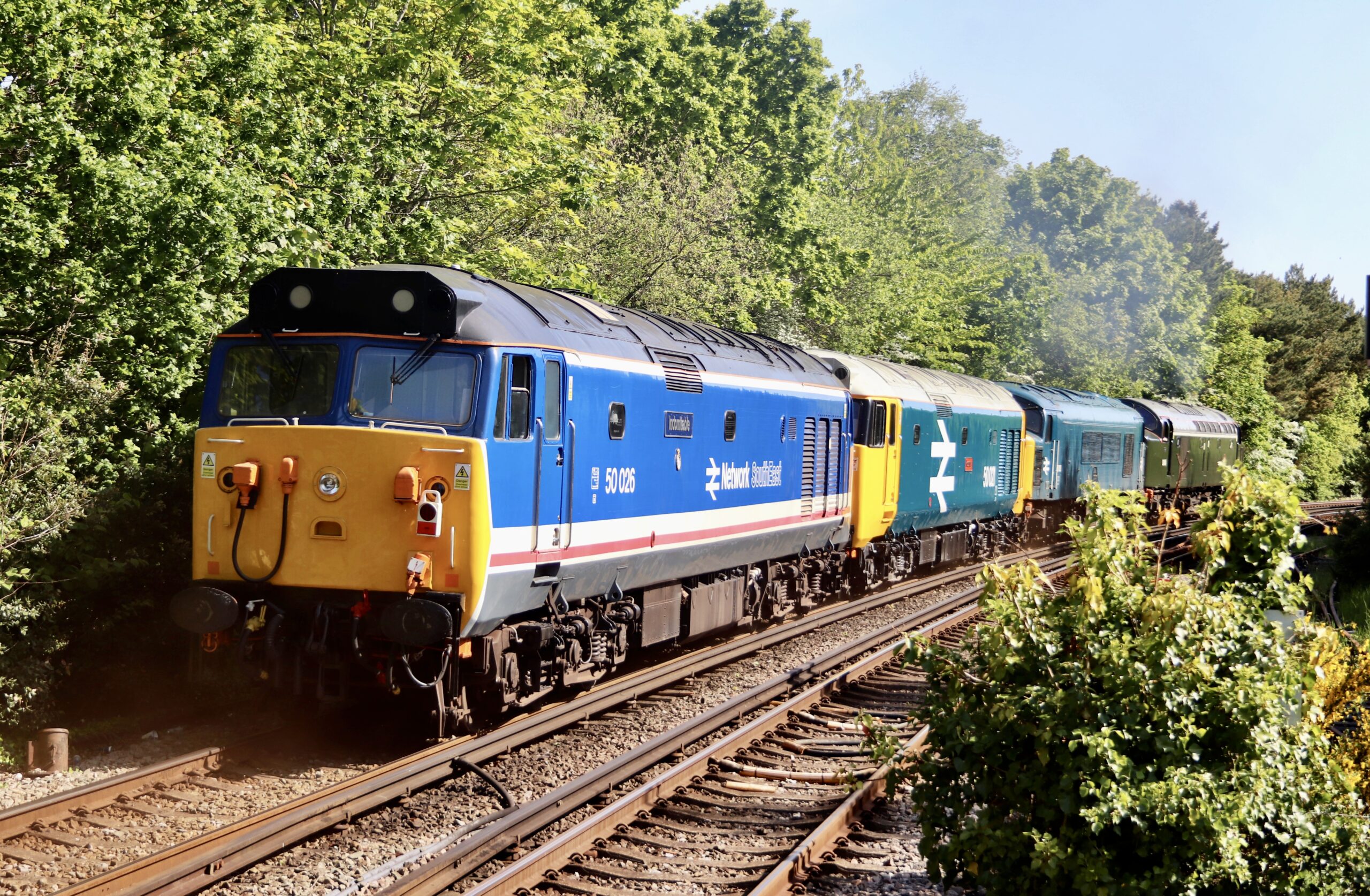
    Convoy! In failing light, Class 40 No. D345 (40145) leads 50021, 50026 and 45108 through Holton Heath working as 0Z42 1848 Eastleigh Arlington to Swanage – 10/05/2023

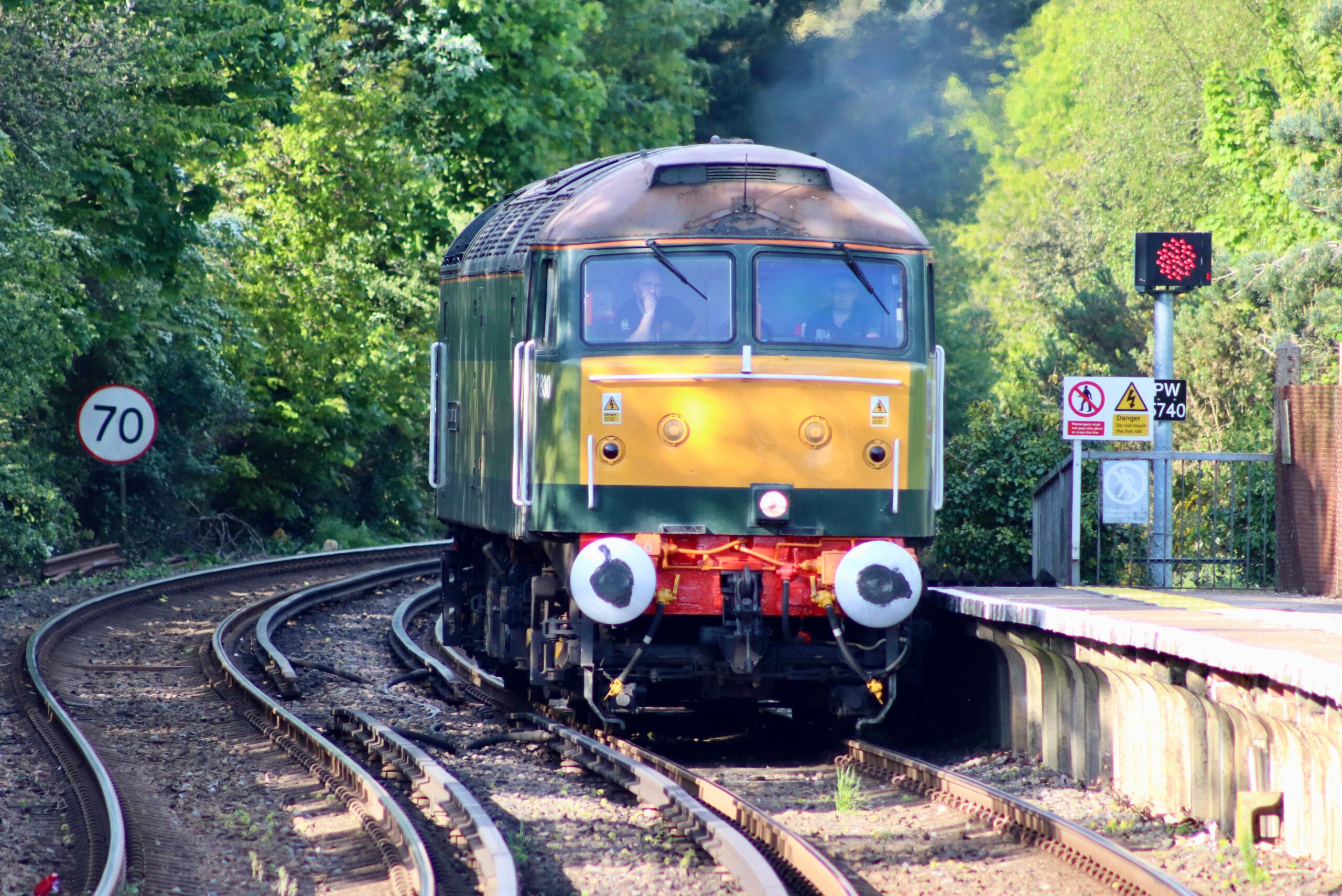
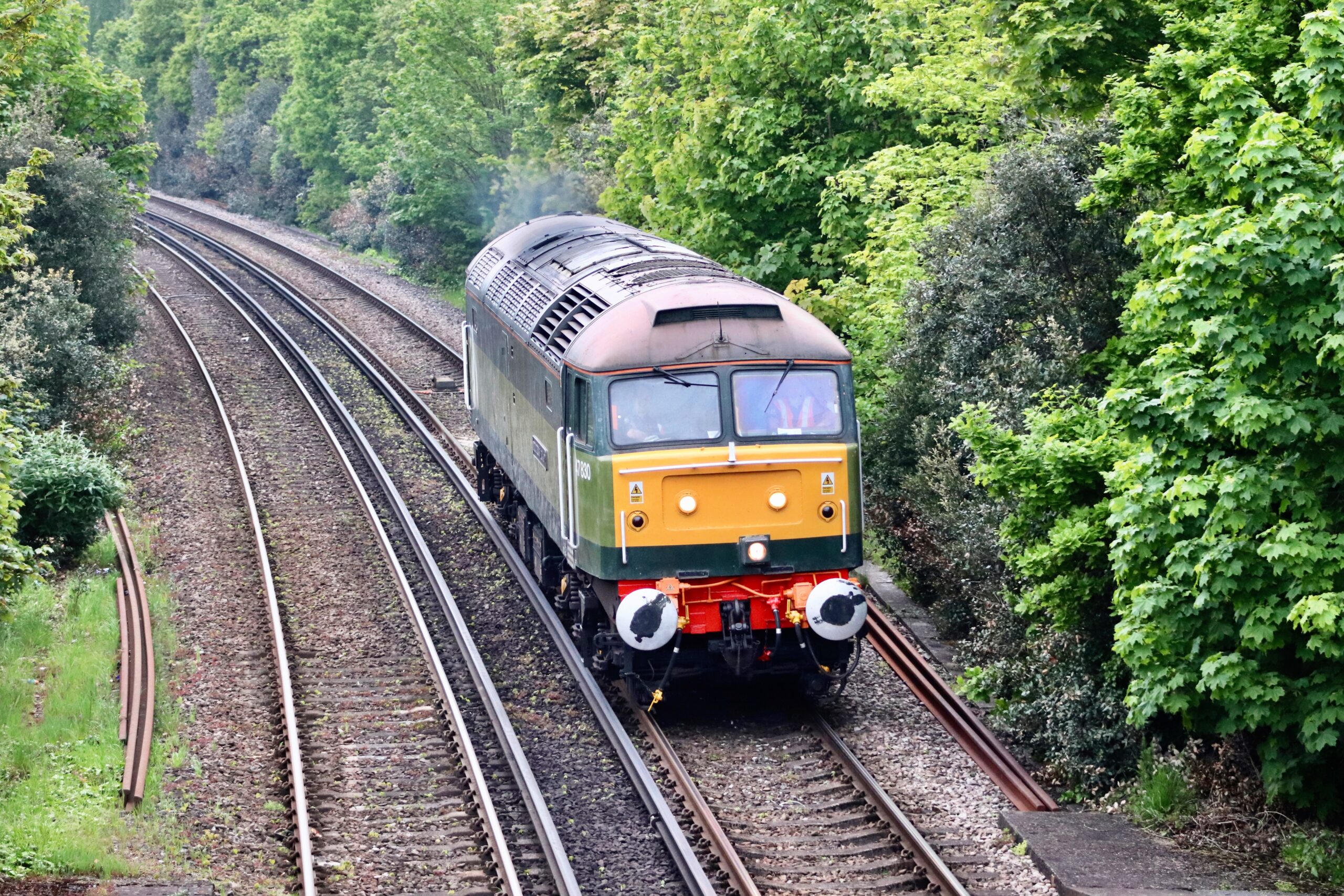
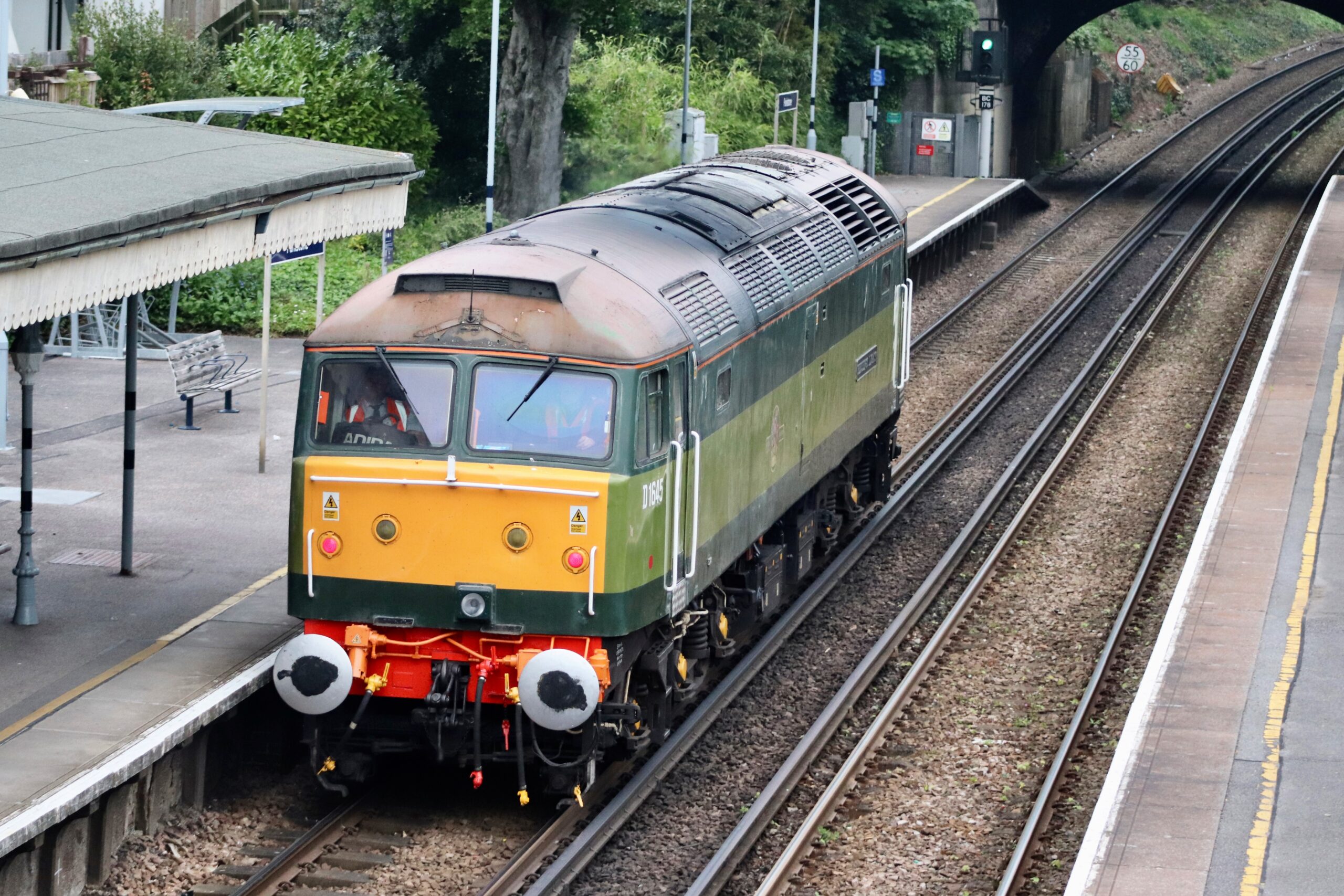
    With two more guests due to arrive on Thursday 11th May it was a busy half hour as I waited at Hamworthy station for Class 33/0 No. D6515 on her return journey to Swanage having collected the LU 4TC unit forming 5Z34 1112 Eastleigh to Swanage closely followed by light engine Freightliner Class 47 No. 47830 ‘Beeching’s Legacy’ working as 0Z47 1635 Southampton Maritime Container Terminal to Swanage. Both these were signal checked at Hamworthy as they were running behind stopping service trains.  

    Class 33 No. D6515 (33012) ‘Lt Jenny Lewis RN’ coming to a stop in Hamworthy station due to a signal check working 1Z33 1112 Eastleigh to Swanage bringing the London Underground 4TC unit for use at the Swanage Diesel Gala – 11/05/2023
    Class 33 No. D6515 (33012) ‘Lt Jenny Lewis RN’ pulls away from Hamworthy with the LU 4TC in tow – 11/05/2023
    Freightliner contributed their last remaining Class 47 No. 47830 ‘Beeching’s Legacy’ to the Swanage celebrations. The locomotive is seen at Hamworthy working light engine with 0Z47 1635 Southampton MCT to Swanage – 11/05/2023
    Class 47 No. 47830 ‘Beeching’s Legacy’ preparing to stop due to a red signal ahead at Hamworthy – 11/05/2023
    Class 47 No. 47830 ‘Beeching’s Legacy’ pulls away from the signal check just outside of Hamworthy railway station working 0Z47 1635 Southampton MCT to Swanage – 11/05/2023
    Swanage guest locomotives on their way to the Purbeck based railway for the May 2023 Diesel Gala. Visiting Class 17 No. D8568 arrived and departed by road transport.

    Yoshi and I spent Friday at the Swanage gala, with a couple of brief visits to the railway on the Saturday.

    Class 40 No. D345 (40145) powers up near Cats Eye Crossing working 1R02 Swanage to River Frome Viaduct – 12/05/2023
    Class 40 No. D345 (40145) arrives at Swanage with a service from River Frome Viaduct – 12/05/2023
    Class 40 No. D345 (40145) at Afflington working evening Beerex train 2N37 1920 Norden to Swanage – 13/05/2023
    Class 40 No. D345 (40145) crosses Corfe Viaduct on the approach to Norden working 2N40 Swanage to Norden – 13/05/2023
    Class 45 No. 45108 arrives at Swanage – 12/05/2023
    Class 45 No. 45108 at Swanage – 12/05/2023
    Class 50 No. 50026 ‘Indomitable’ approaches Cats Eye Crossing with 1R03 1032 River Frome Viaduct to Swanage service. This loco was deputising for sister No. 50021 as a fault was being rectified – 12/05/2023
    Class 50 No. 50026 ‘Indomitable’ at Harman’s Cross – 12/05/2023
    Class 50 No.’s 50026 ‘Indomitable’ and 50021 ‘Rodney’ prepare to drop off their train at Swanage and move to the turntable area – 12/05/2023
    Class 50 No.’s 50026 ‘Indomitable’ and 50021 ‘Rodney’ at rest on the Swanage turntable – 12/05/2023
    Leading her first solo working, Class 50 No. 50021 ‘Rodney’ on the approach to Furzebrook at the head of 1R15 1632 River Frome Viaduct to Swanage – 12/05/2023
    Another view of Class 50 No. 50021 ‘Rodney’ on approaching Furzebrook working 1R15 1632 River Frome Viaduct to Swanage – 12/05/2023
    Class 50 No. 50021 ‘Rodney’ catches the sun as she crosses Corfe Common hauling 1R03 1032 River Frome Viaduct to Swanage – 13/05/2023
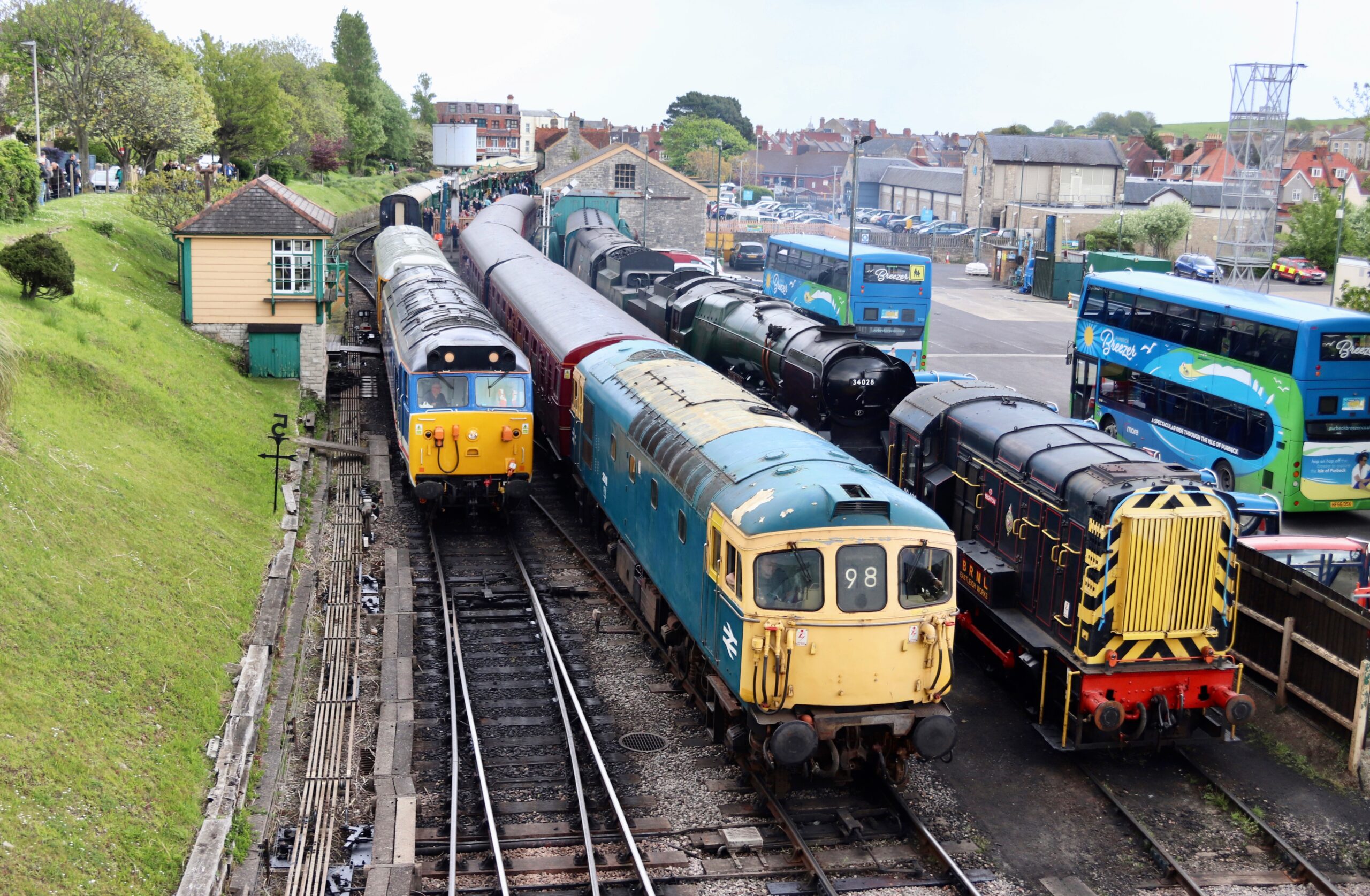
    Class 50 No. 50021 ‘Rodney’ awaits her next service in the sidings at Swanage with Class 73’s and sister Class 50 behind – 13/05/2023
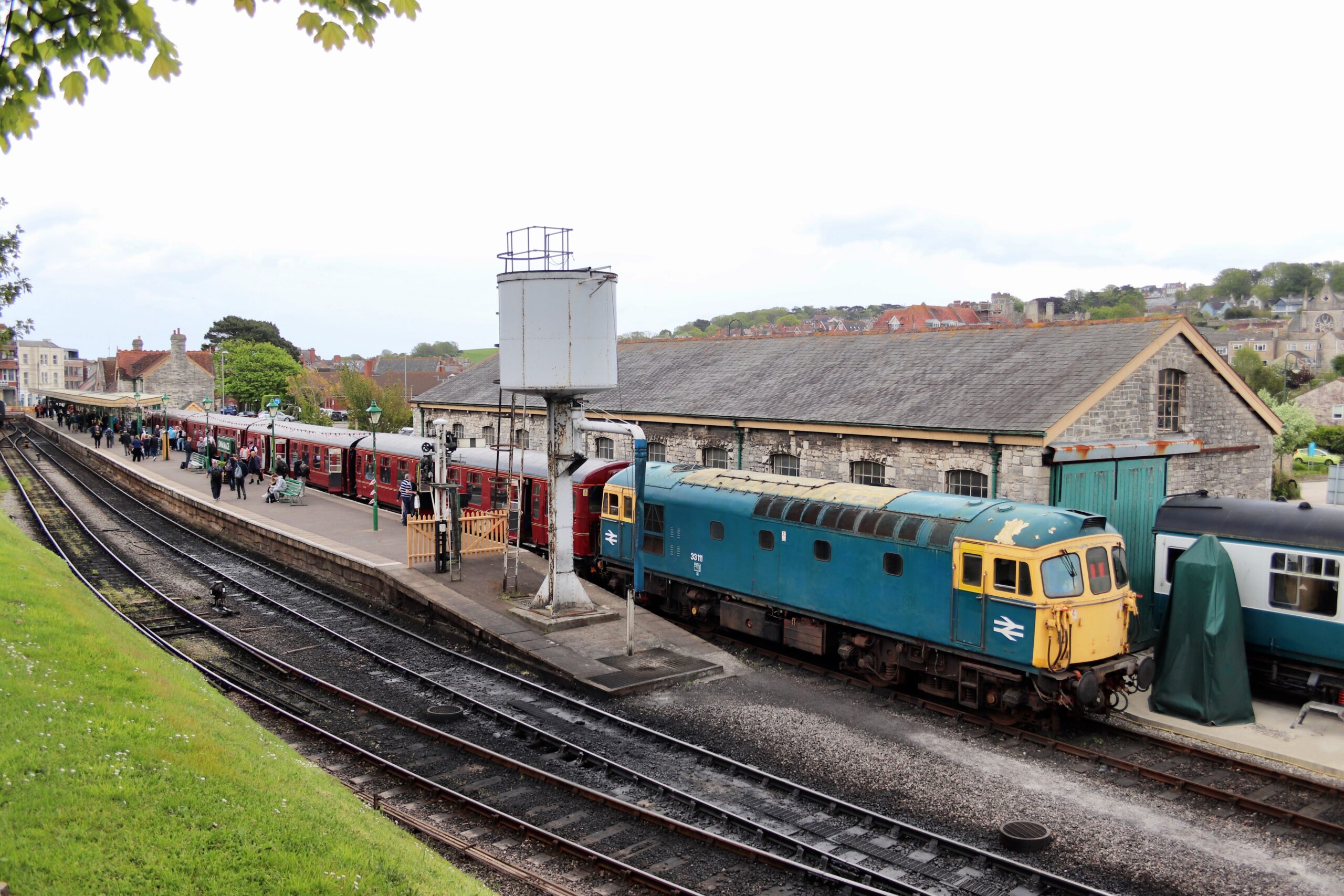
    Resident Class 33 No. 33111 passes the pair of Class 50’s and stabled resident locomotives as she is reunited with a 4TC unit. Once a common sight own the Bournemouth to Weymouth line – 12/05/2023
    Class 33 No. 33111 with train formed of the LU 4TC in the bay platform at Swanage – 12/05/2023
    Class 33 No. 33111 runs to the sidings at Swanage – 12/05/2023
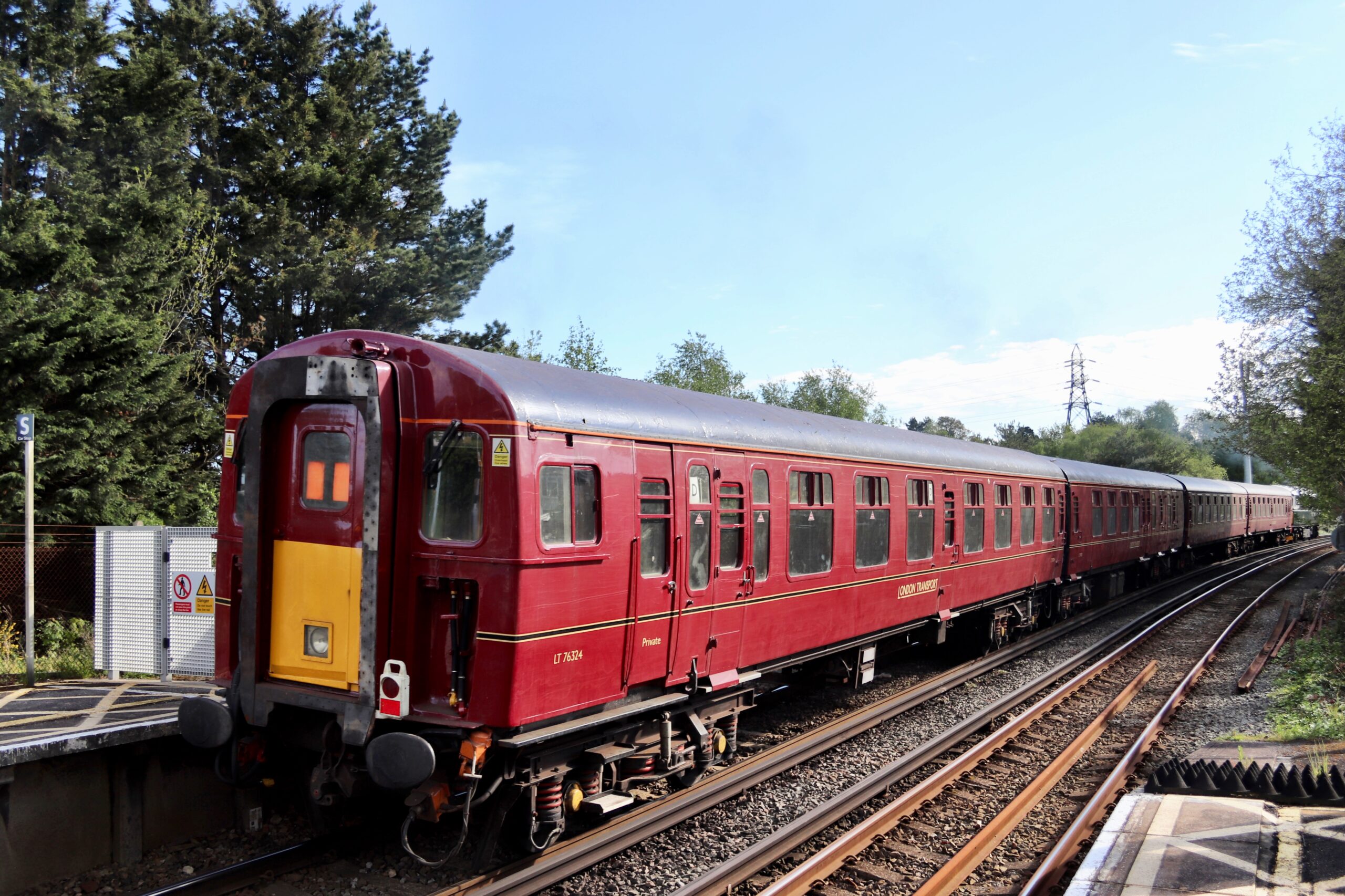
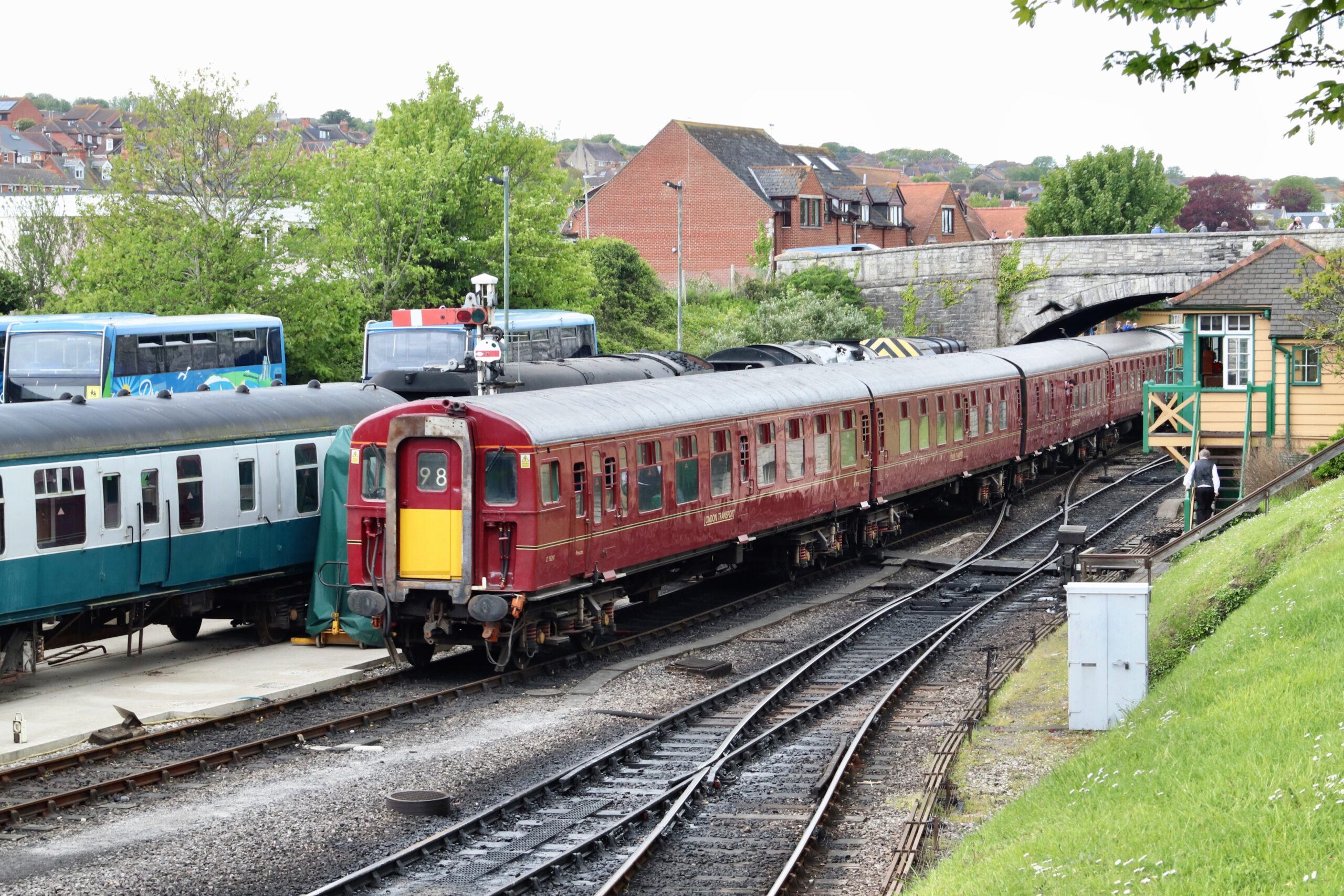
    The visiting London Transport liveried 4TC is propelled into Swanage passing a coach from the Swanage based 4TC which is being restored at the railway – 12/05/2023
    Freightliner Class 47 No. 47830 ‘Beeching’s Legacy’ arrives at Harman’s Cross with a shuttle service to Corfe Castle – 12/05/2023
    Class 47 No. 47830 ‘Beeching’s Legacy’ rests in the bay at Swanage station – 12/05/2023
    Class 17 No. D8568 makes a spirited departure from Harman’s Cross bound for Swanage – 12/05/2023
    GBRf owned Class 73 No. 73107 ‘Tracy’ approaches Harman’s Cross – 12/05/2023
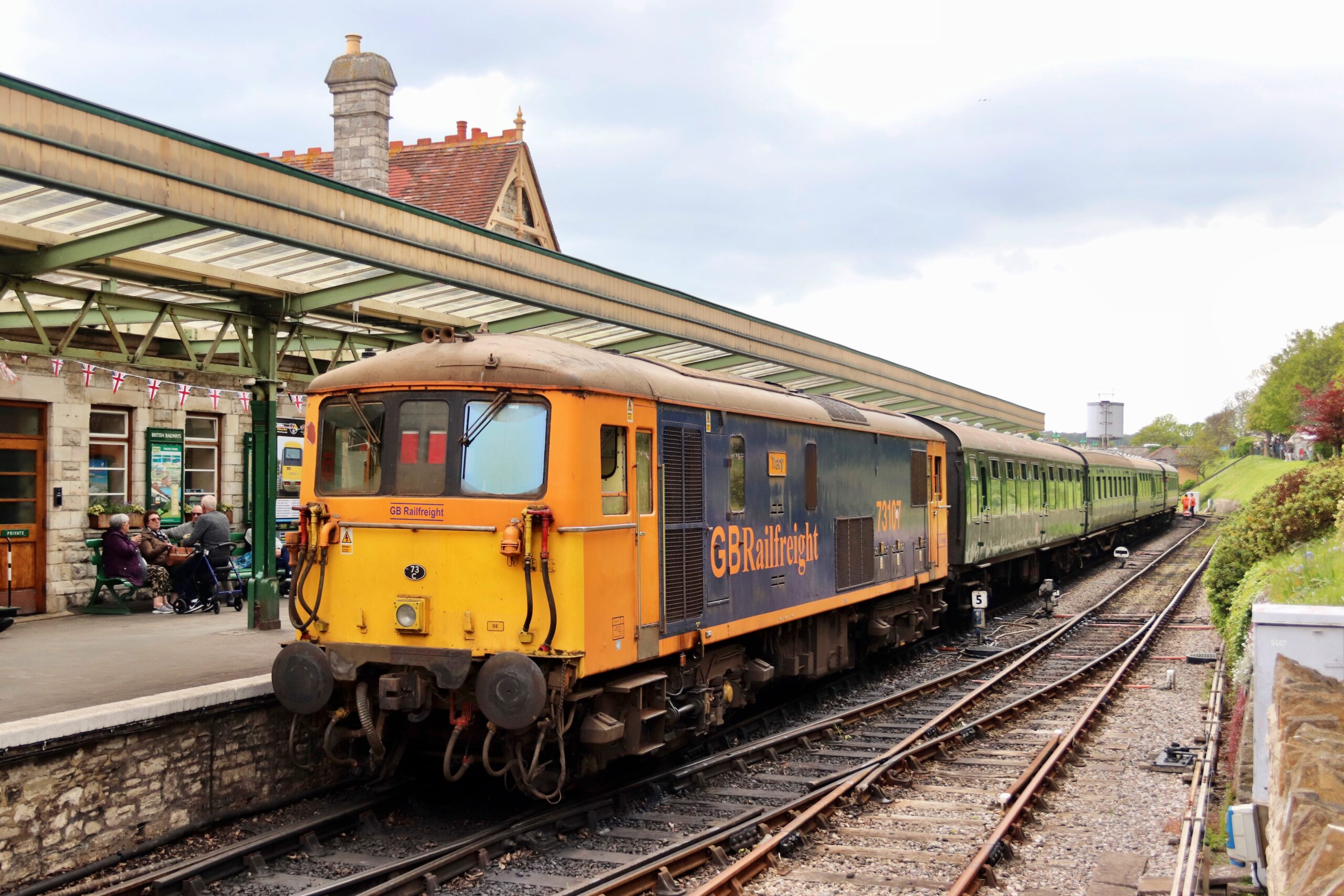
    Class 73 No. 73107 ‘Tracy’ at the rear of a River Frome Viaduct bound train at Swanage – 12/05/2023
    Class 73 No. 73107 ‘Tracy’ was the only visiting member of the class in use on the Friday and is seen here at Swanage – 12/05/2023
    Both GBRf Class 73’s appeared in service on Saturday. No.’s 73107 ‘Tracy’ and 73201 ‘Broadlands’ hauling the 4TC set approach Townsend Overbridge with 2C04 1015 Swanage to Corfe Castle – 13/05/2023
    Class 73’s No. 73201 ‘Broadlands’ and 73107 ‘Tracy’ await their next turn in the sidings at Swanage – 13/05/2023
    Class 73’s No. 73201 ‘Broadlands’ and 73107 ‘Tracy’ at Swanage – 13/05/2023
    Our record of Swanage Diesel Gala 2023

    Sunday saw guest attractions moving away from Swanage, the first working being the two GBRf Class 73’s which headed off with the LU Class 4TC for a night being berthed at platform 5 of Southampton Central before onward movement the following day. But for the late paperwork, the 4TC would again have been intended to carry passengers as “The Return Of The Jurassic Crompton” rail tour which would have involved D6515 (33012) and the two GBRf Class 73’s traversing the following route: Swanage (PU 15.30) – Norden – Wareham – Poole – Bournemouth – Brockenhurst – Southampton Central (SD 17.30) – Redbridge – Laverstock Curve – Andover – Basingstoke (SD 18.55) – Woking – Wimbledon – London Waterloo (SD 20.00 / RM) – Wimbeldon – Woking – Basingstoke (SD 20.55) – Andover – Laverstock Curve – Romsey – Southampton Central (PU 22.20) – Eastleigh (SD 22.40).

    73107 ‘Tracy’ tops the 4TC unit through Hamworthy forming 5Z36 1515 Swanage to Southampton Central – 14/05/2023
    Class 73’s No. 73201 ‘Broadlands’ tails the LU 4TC working 5Z36 1515 Swanage to Southampton Central – 14/05/2023

    Later on Sunday the Freightliner Class 47 made her escape heading back to Southampton MCT. 

    The turn of Freightliner Class 47 No. 47830 ‘Beeching’s Legacy’ to head home, seen here climbing Parkstone Bank with 0Z48 1900 Swanage to Southampton MCT – 14/05/2023
    Class 47 No. 47830 ‘Beeching’s Legacy’ passing Parkstone with 0Z48 1900 Swanage to Southampton MCT – 14/05/2023

    The remainder of the visiting locomotives (with the exception of the Class 17 of course) formed a mini convoy on the morning of Tuesday 16th May and made a fine sight as they passed through Hamworthy in full sun where I was able to see them. I would have liked to have found a straight length of track to photograph the four departees, but time constraints meant Hamworthy was far more convenient. I did however, manage to mess up the video settings on my phone. Oh well! 

    In brilliant sunshine, Class 40 No. D345 (40145) leads 45108,50021 and 50026 through Hamworthy as 0Z50 0834 Swanage to Eastleigh Arlington (Zg) where the Class 50’s would be dropped off before the Whistler and Peak worked onwards. I messed up part of the video shot of this, so make the most of this image – 16/05/2023
    Class 50 No. 50026 ‘Indomitable’ at the rear of the returning convoy having passed through Hamworthy – 16/05/2023
    Swanage Diesel Gala visitors work home

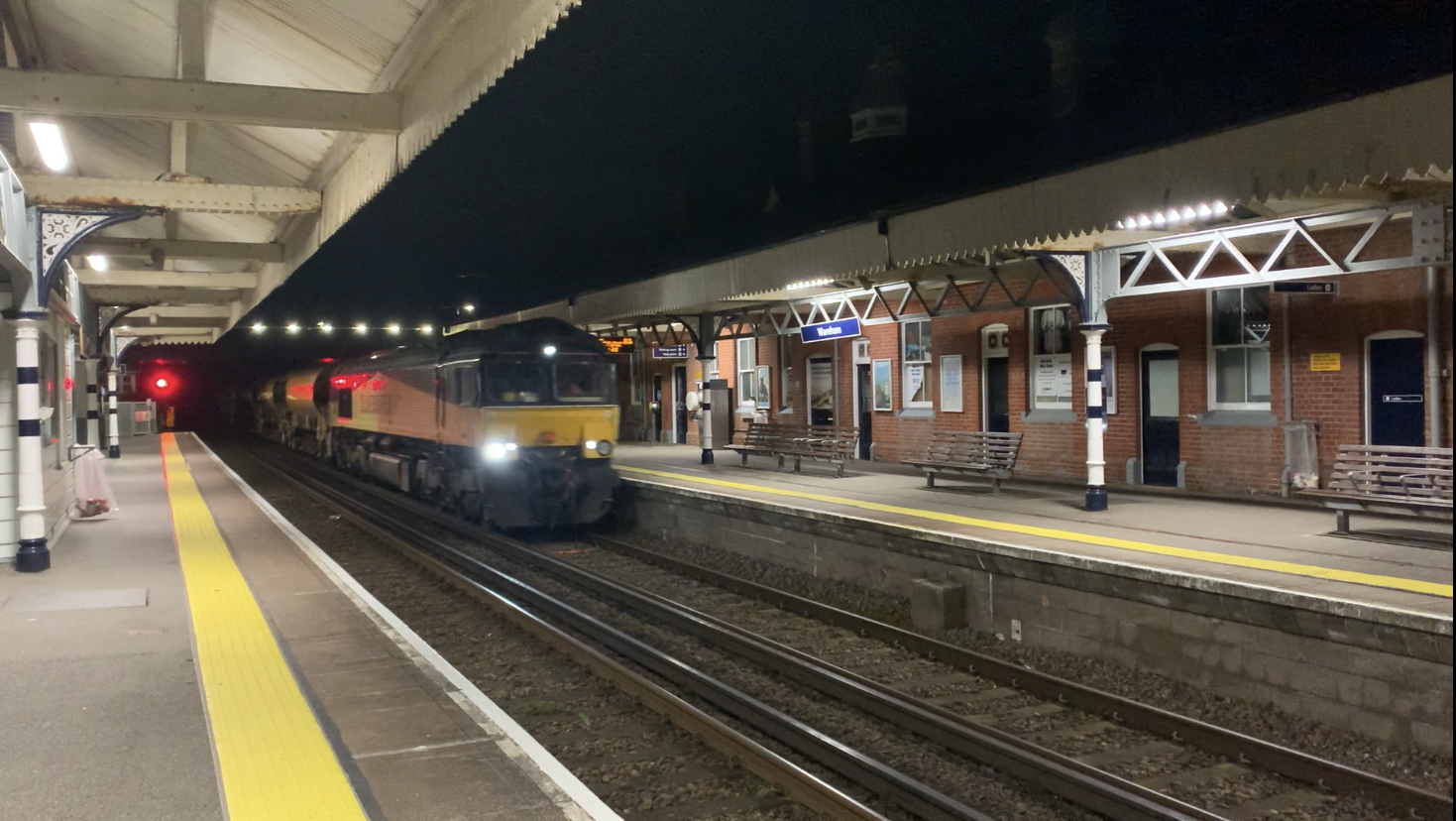
    After all the Swanage associated activity, the week was not yet done as on the evening of Tuesday 16th May 2023 there was one last special working as Colas operated an engineers train from Eastleigh to Dorchester West. We went to Wareham to see the train as it was booked to stop here for fifteen minutes. Unsurprisingly, it didn’t stop. I thought maybe I should have travelled to Dorchester after all as Class 66 No’s 66850 ‘David Maidment OBE’ and 66848 sped through the station working 6C15 1946 Eastleigh East Yard to Dorchester West.

    Colas Class 66 No’s 66850 ‘David Maidment OBE’ passes Wareham heading up engineers train 6C15 1946 Eastleigh East Yard to Dorchester West – 16/05/2023

    Looking at RTT this train was to enter engineering possession and work up through Yeovil overnight and arrive at Castle Cary before onward working to Westbury. In fact, the train appears to have reversed via Dorchester Junction and worked back up the South.

    Engineering train 6C15 1946 Eastleigh East Yard to Dorchester West passes Wareham – 16/05/2023

    Time to catch our breath! We’ll be back properly in two weeks, although please check in next week as we’ll hopefully have a petit quelque chose for you. Thank you so much for reading and for your comments and corrections.
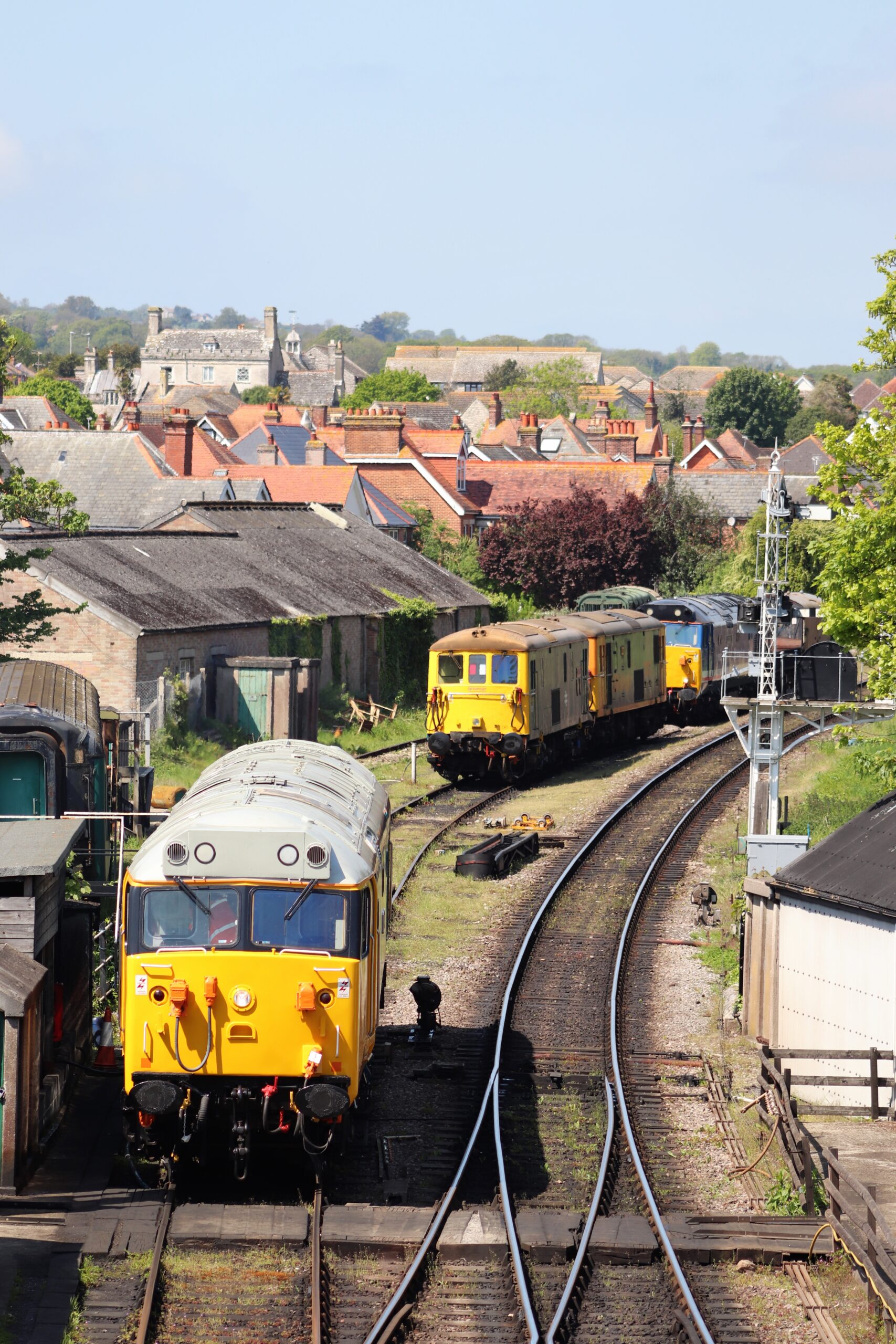
    Yoshi wondering just how long we are having to wait until something comes along to bark at whilst at Corfe Castle – 13/05/2023
  • A Brief Ingress

    It’s been a quiet week on the rails here, with only one special rail movement to report on the Bournemouth to Weymouth line. We’ve also been entertaining friends for an extended Coronation weekend, although I was fully behind the suggestion from Yoshi’s Mama of exploring Corfe Castle and Swanage on the Tuesday. I had hoped to see the Class 17 Clayton Type 1 diesel-electric locomotive arrive at Norden on a low loader in the afternoon but I was informed by the Norden crossing signalman that it wasn’t going to arrive that afternoon. I’ve since heard it did – so big sighs all round!

    Instead of watching an old diesel locomotive being unloaded off the back of a lorry, Yoshi enjoyed zoomies in Corfe Castle – 09/05/2023

    On Sunday we took a walk down Poole Quay in order to celebrate the sights, sounds and smells of the age of steam with visiting mini steam traction engines, all lovingly built and maintained by their owners and representing many hours of hard work. The traction engines are recreated from original Victorian drawings or old photographs. It was lovely relaxing on a sunny afternoon with a drink in one of the many pubs along Poole Quay as the smell of steam wafted in through the doors. Yoshi was initially quite happy to see the steam engines but later decided to bark at each one individually. Just like he would their full size cousins.

    Before Yoshi took a dislike to the mini steam traction engines, he happily posed with this example – 07/05/2023
    Mini Steam On The Quay at Poole – 07/05/2023
    Mini Steam On The Quay at Poole – 07/05/2023
    Mini Steam On The Quay at Poole – 07/05/2023
    Mini Steam On The Quay at Poole – 07/05/2023
    Mini Steam On The Quay at Poole – 07/05/2023
    Mini Steam On The Quay at Poole – 07/05/2023
    Mini Steam On The Quay at Poole – 07/05/2023

    The monthly Class 73 Electro-Diesel top and tailed Colas Test Train ran on Monday evening, passing through Hamworthy in a shower of rain on its outward journey to Weymouth. The weather put me off going back out to see the ensemble on the return journey as it headed to Eastleigh East Yard and journeys end. The locomotives utilised on the 1Q51 1115 Derby R.T.C.(Network Rail) to Eastleigh East Yard working this time were GBRf Class 73 No’s 73964 ‘Jeanette’ and 73965 ‘Des O’Brien’. 

    1Q51 1115 Derby R.T.C.(Network Rail) to Eastleigh East Yard – 08/05/2023

    Thanks for reading. As always, thank you for your comments and corrections. With the 2023 Swanage Diesel Gala just days away as I write this, I’ll leave you with some images taken from the 2016 event.

    Class 20 No’s. 20205 and 20142 pass Class 50 No. 50035 ‘Ark Royal’ at Corfe Castle – 07/05/2016
    Swanage resident Class 33 No’s 33012 (D6515) ‘Lt. Jenny Lewis RN’ and 33111 head to Norden – 07/05/2016
    BR Blue liveried Class 31 No. D5580 (31162), owned by A1A Locomotive Limited runs round her train at Swanage – 07/05/2016
    Class 40 No.D213 ‘Andania’ (40013) having departed Corfe Castle. A total of 200 Class 40 locomotives were built by English Electric between 1958 and 1962. Seven examples are preserved – 07/05/2016
    Warship No. D832 ‘Onslaught’, the first member of the class to visit the Swanage Railway, on the approach to Corfe Castle – 07/05/2016
    Class 31 No. D5580 (31162) recreating a Kings Cross service with head code 1N08 – 07/05/2016
    Peak Class 46 No. D182 (46045) catches the sun crossing Corfe Common on her way to Swanage – 07/05/2016
    Class 50 No. 50035 ‘Ark Royal’ heads towards Corfe. The Hoover was a late substitute for 50049 ‘Defiance’ which was unavailable to attend – 07/05/2016
    Class 33 No’s 33012 (D6515) ‘Lt. Jenny Lewis RN’ and 33111 between Harmans Cross and Corfe Castle – 07/05/2016
    Another view of Swanage based Class 33 No’s 33012 (D6515) ‘Lt. Jenny Lewis RN’ and 33111 – 07/05/2016
    Class 40 No.D213 (40013) ‘Andania’ leads Class 46 No. D182 (46045) out of Norden towards Corfe Castle – 07/05/2016
    Unusually coupled cab to cab, English Electric Class 20 No. 20205 leading No. 20142 which was acting as a translator as 205 is air-brake only and the coaching stock is vacuum brake, crossing Corfe viaduct – 07/05/2016
    Hastings gauge “Slim Jim” Class 33 No. 33202 with a Swanage bound train 07/05/2016
    Warship No. D832 ‘Onslaught’ makes a fine sight and sound powering out of Corfe Castle on her way to Norden – 07/05/2016
  • Wales… again

    Yoshi takes a look at Transport for Wales Class 175 No. 175112 stands at platform 0 forming 1W61 1453 Cardiff Central to Manchester Piccadilly – 29/04/2023

    Saturday Yoshi and I had a brief trip to South Wales in the hope of seeing at least one Transport for Wales (TfW) liveried Class 67 working. We also caught up with @smithy.377 (please check out his Instagram account for a fabulous collection of railway images). Our first stop was Newport as what should not have been a diesel-multiple unit working had suddenly been switched to locomotive hauled.

    Newport station was originally opened in 1850 by the South Wales Railway Company and saw expansion in 1928. A new station building was built in 2010 with four full size platforms, to facilitate new 10 car bi-mode Intercity Express Trains (IET).

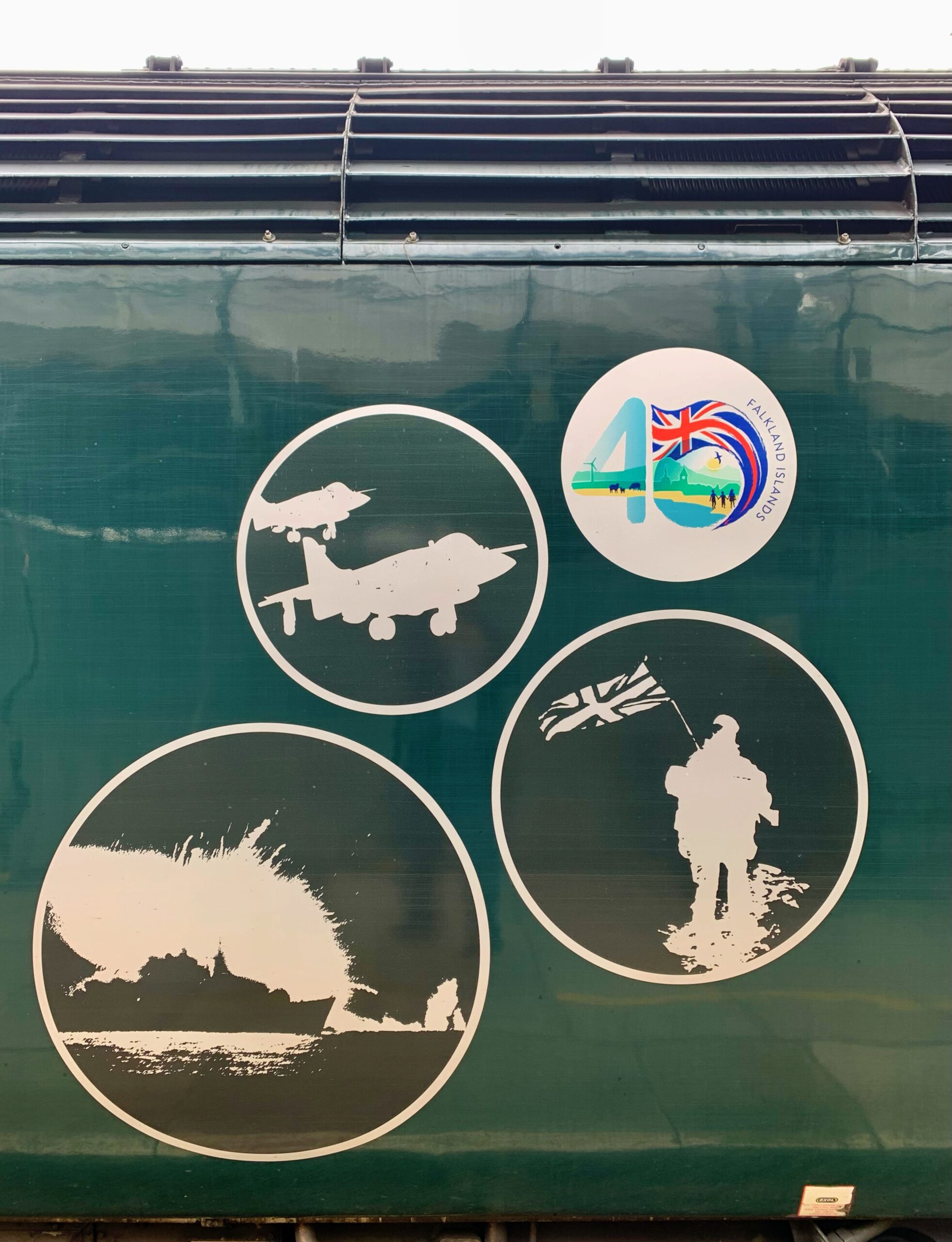
    Station staff were friendly and allowed us access in time to see DB liveried Class 67 No. 67010 arrive with a service bound for Manchester. Followed shortly after by a Great Western Railway (GWR) Castle set headed up by Class 43 No. 43040 ‘Berry Pomeroy Castle’. This loco was of interest as it carries 40th Anniversary Falkland Island decals on the body side. While I was recording images of this set, I managed to miss seeing a Class 66 on a freight working go through on the centre road. To compound matters, as we left the station we heard a Class 60 approaching, but had no time to get to platform level to take photographs or video. Luckily we were to see the same locomotive later in the day as it worked back through Cardiff, which was our next stop.

    DB Class 67 No. 67010 arrives at Newport working 1W57 Cardiff Central to Manchester Piccadilly – 29/04/2023
    Great Western Railway (GWR) Class 43 No. 43040 ‘Berry Pomeroy Castle’ awaits departure from Newport working 2C73 1100 Cardiff Central to Penzance – 29/04/2023
    40th Anniversary of the Falklands conflict decals on the side of HST power car No. 43040 ‘Berry Pomeroy Castle’ – 29/04/2023

    We arrived in Cardiff just in time to miss a double-headed light engine movement through the station heading to Westbury. But we saw a number of GWR Castle HST sets on Cardiff services to and from the West Country.

    GWR Class 43 43188 ‘Newport Castle’ arrives at its final destination working 2U14 1043 Exeter St Davids to Cardiff Central – 29/04/2023
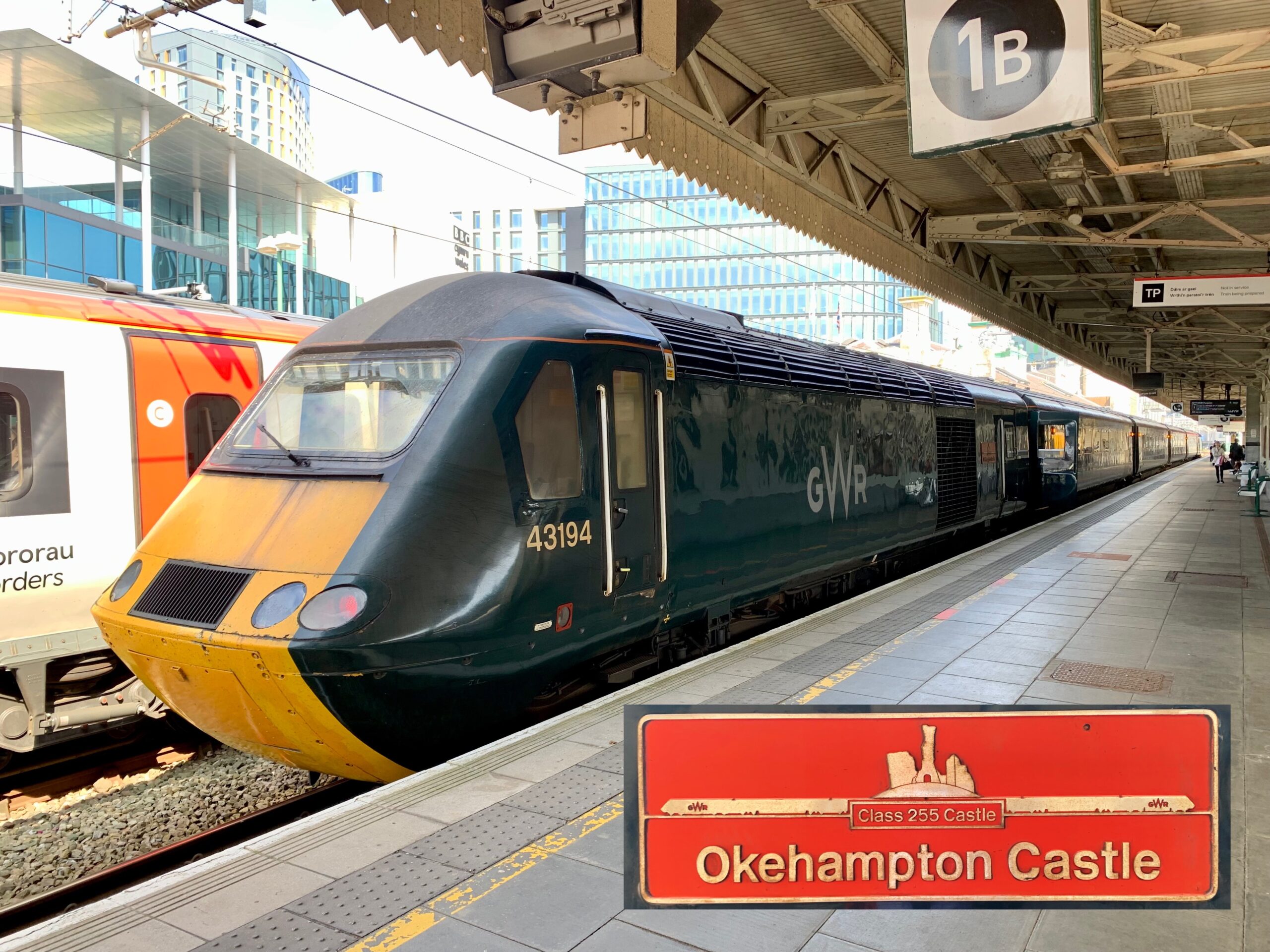
    Class 43 No. 43194 ‘Okehampton Castle’ awaits departure at the rear of 2C81 1500 Cardiff Central to Penzance – 29/04/2023

    Good news that GWR will be retaining four of its Castle Class HST sets into 2024. The operator had originally planned a phased rundown of the fleet through 2023.

    The four carriage HST’s are used on a variety of regional and inter-urban services in the West of England. While they are gradually being replaced by IET’s on these diagrams, the retention of a small number of HST’s will assist GWR with providing adequate capacity. A planned cascade of Turbo DMU’s to the West of England, released by the introduction of Class 769’s in the Thames Valley, has been abandoned as the 769’s have been sent off lease. GWR will still rid themselves of the HST’s which are owned by Angel Trains, but a small number of sets are either owned by FirstGroup or are franchise assets, and it is these sets which will remain into 2024. It is understood that they are likely to remain in service until December 2024.

    The Class 60 we missed at Newport reappeared much to our relief working Llanwern to Margam train. We saw two Class 60’s during our trip. I have a soft spot for these locos and hope that they find a future. It’s understood that GBRf will be undertaking an evaluation study at EMD Longport with the view of possible Class 60 conversion work in the future.

    Class 60 No. 60024 working the early running 6H26 1325 Llanwern Exchange Sdgs to Margam T.C passing through Cardiff Central.- 29/04/2023
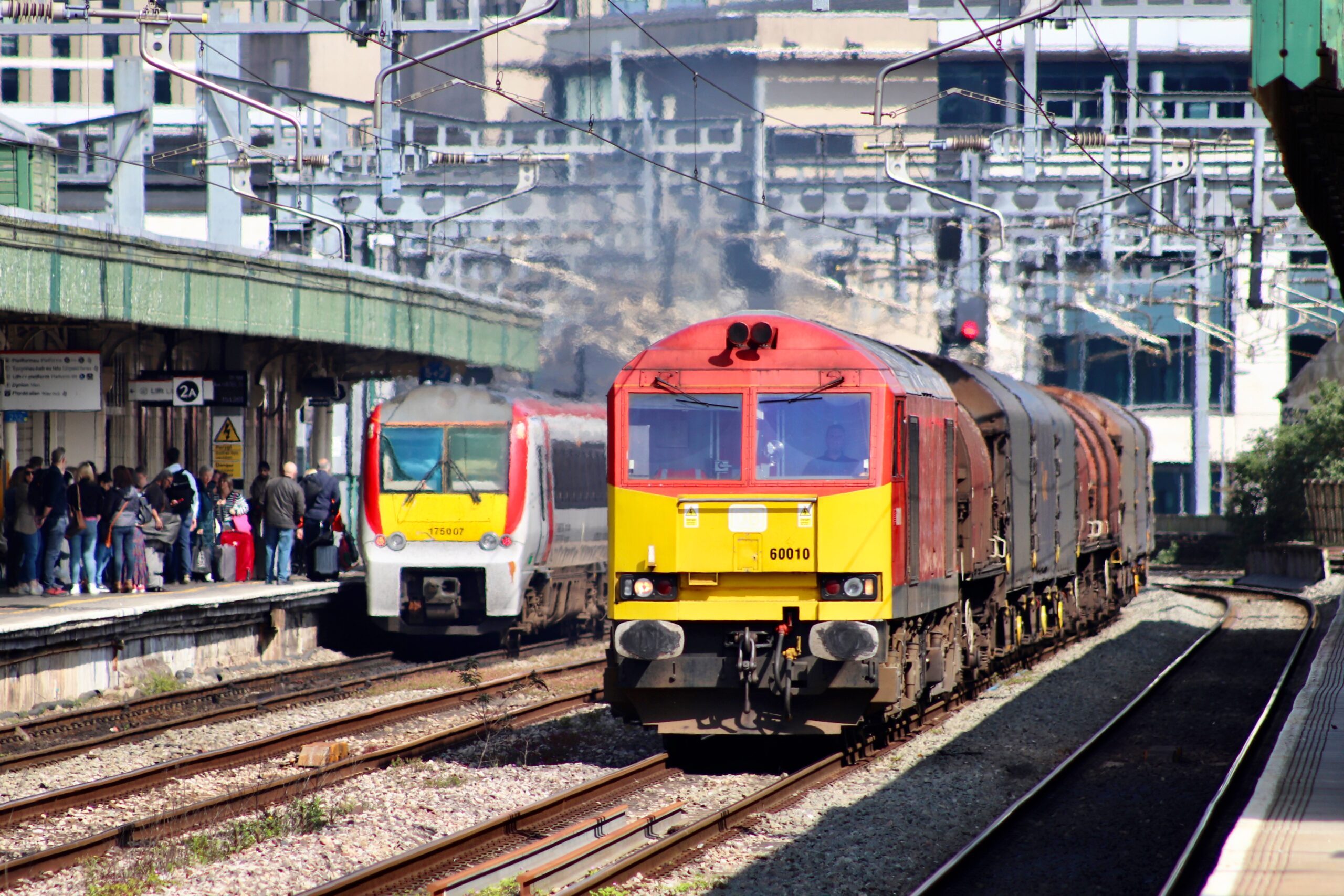
    DB Class 60 No. 60010 works 6F06 1110 Newport Docks to Margam T.C. through Cardiff Central – 29/04/2023

    Having managed to miss out on other Class 66’s earlier I was pleased that I eventually managed to catch a couple of the locomotives, one of which can be seen in images below and the other, No. 66053 can be seen in the accompanying video further down this page.

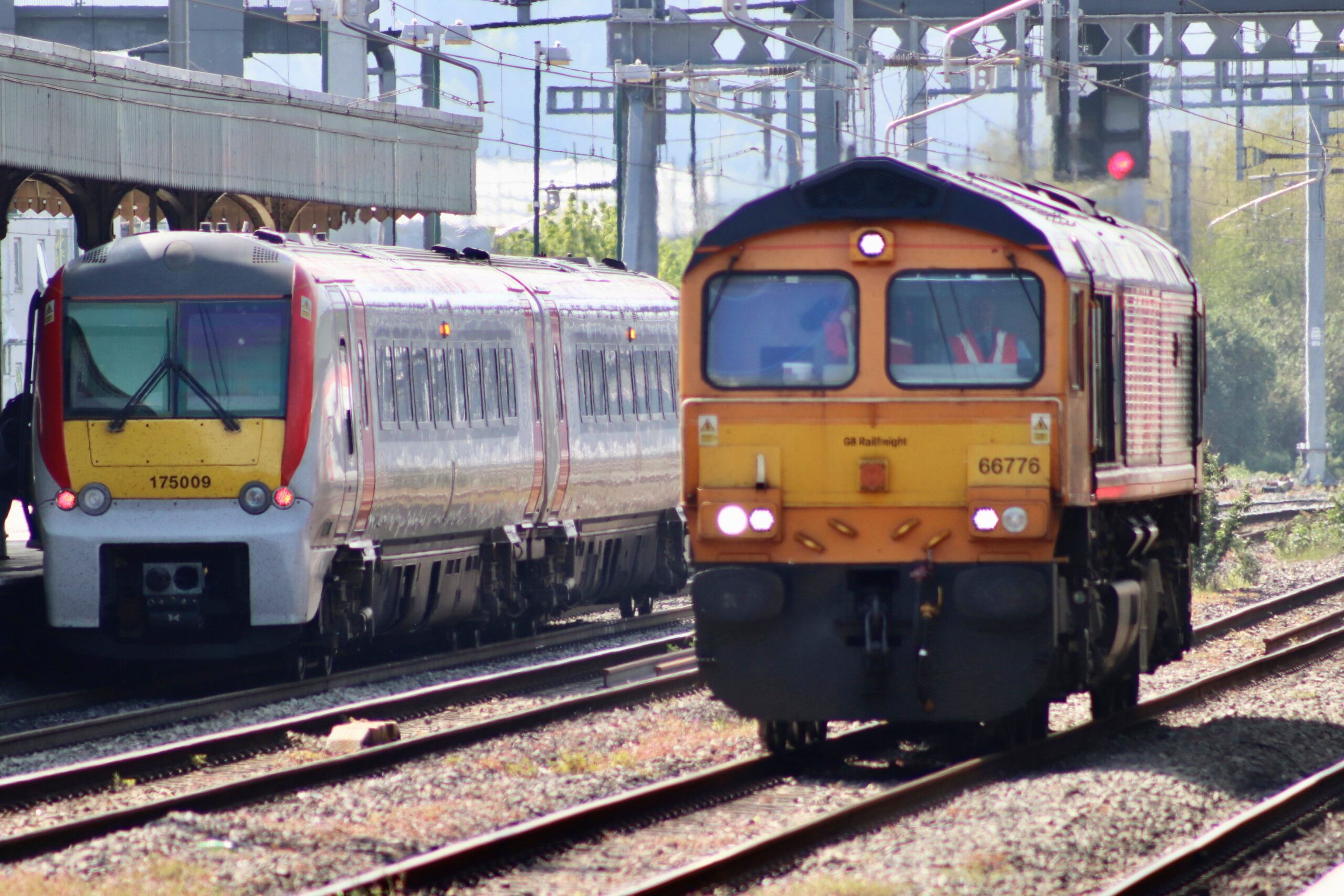
    66776 ‘Joanne’ works 6V75 0931 Dee Marsh Recp GBRf to Margam TC GBR running 280 minutes early through Cardiff Central – 29/04/2023
    66776 ‘Joanne’ returns light engine through Cardiff Central – 29/04/2023

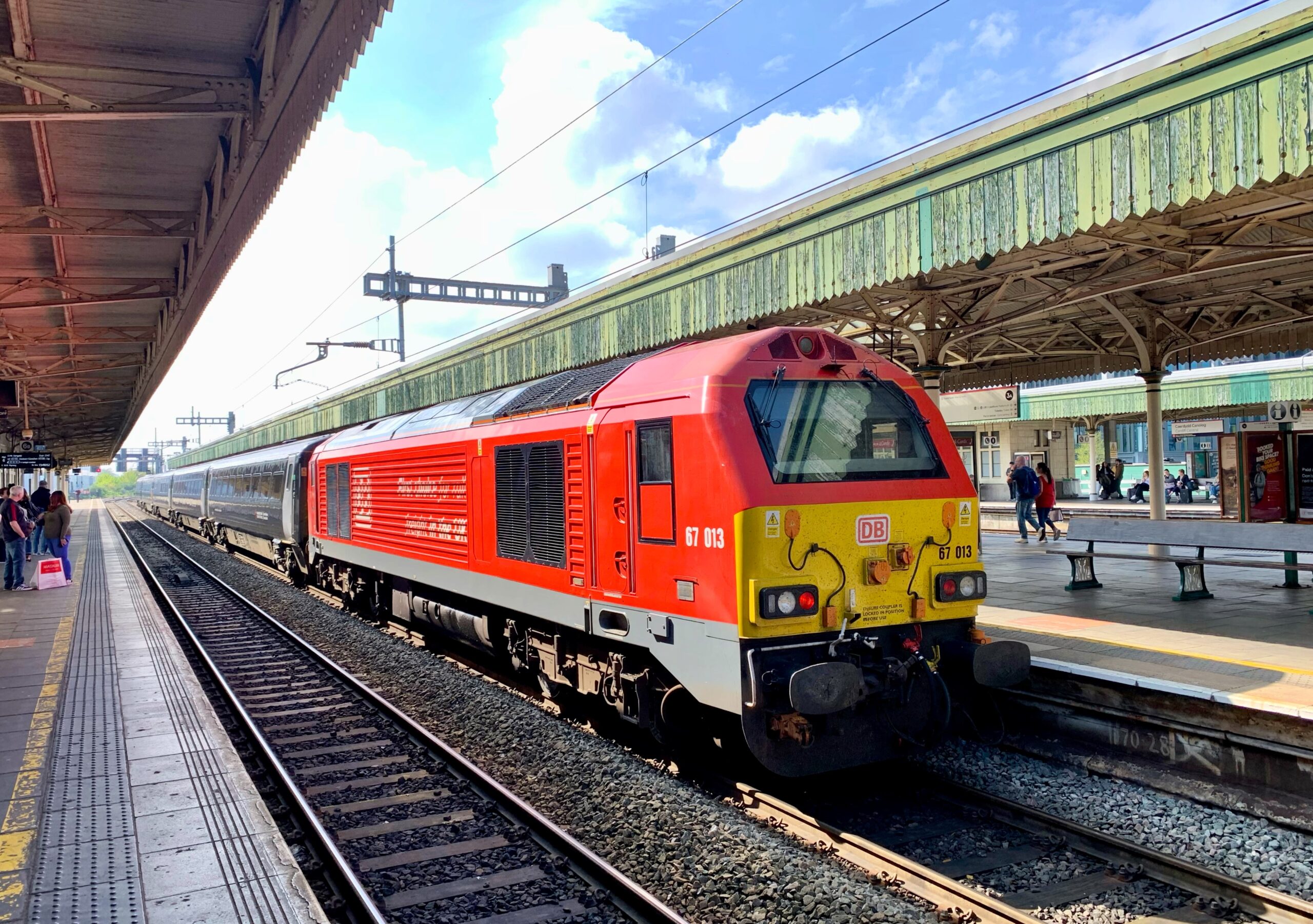
    Our last train of the day was scheduled to be another Class 67. This, like the first working we saw at Newport, was in DB red livery instead of the hoped for TfW colours. It didn’t really matter, Yoshi still barked at it. On leaving Cardiff Central, gate staff were very enamoured with Yoshi and we swapped cockapoo stories and I was shown photographs of cockapoo’s owned by the TfW staff present.

    DB Class 67 No. 67013 at the rear of the terminating 1V42 1230 Manchester Piccadilly to Cardiff Central – 29/04/2023
    Video from Newport and Cardiff – 29/04/2023

    The following day in inclement weather @da_buckley967, Yoshi and I headed over to Somerset for a fleeting glimpse of LNER A3 Pacific No. 60103 ‘Flying Scotsman’ as she worked the first rail tour of her Centenary year programme, The Railway Touring Company organised “The Royal Duchy”. To avoid trespassers on the railway, timings for this excursion were released a couple of days prior to the train running. But there were still good many people positioned safely on over bridges waiting for the ‘people’s locomotive’ to pass by on her way to Par.

    LNER A3 Pacific No. 60103 ‘Flying Scotsman’ storms past Cogload Junction working The Railway Touring Company “The Royal Duchy” 1Z45 0907 Bristol Temple Meads to Par – 30/04/2023
    Video of LNER A3 Pacific No. 60103 ‘Flying Scotsman’ storming past Cogload Junction working The Railway Touring Company “The Royal Duchy” 1Z45 0907 Bristol Temple Meads to Par – 30/04/2023
    The special stamps issued by the Royal Mail to celebrate 100 years of ‘Flying Scotsman’ in 2023. I rather like them!

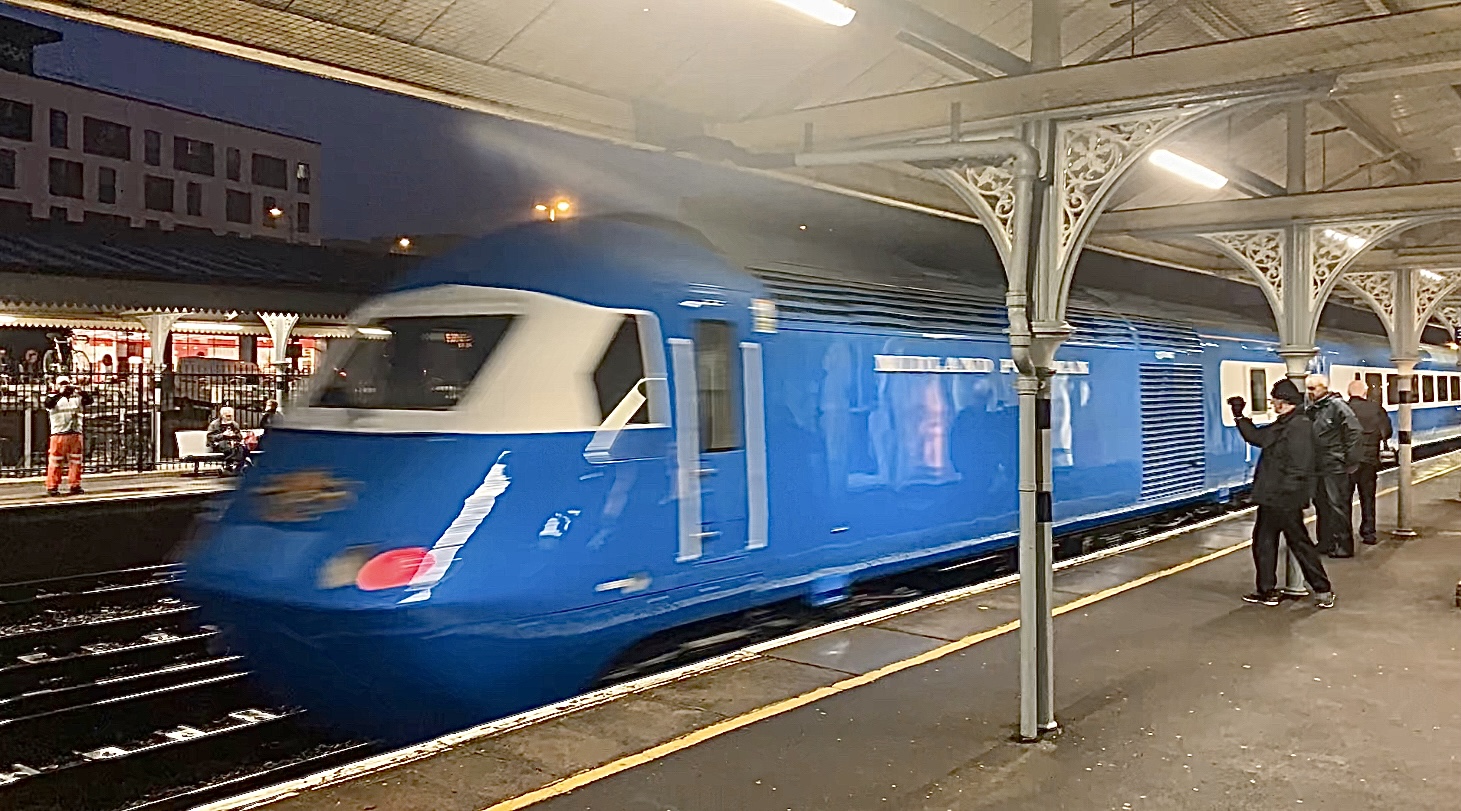
    Monday morning I set the alarm for 0350am so I could drive over to Bournemouth to see the Midland Pullman blue HST set which was running an excursion to and from North Wales. On arrival at the Bournemouth station I found everything locked up, but managed to video the arrival through a convenient gate! Thinking I’d be the only one foolish to get up at such an hour for the purpose of seeing a train, I was pleased that this was far from the truth as a number of railway enthusiasts had made the effort. I was doubly pleased that an old colleague and friend, Nick, was at the station to witness the occasion. Slightly late, the station doors were unlocked, and train crew, passengers and railway enthusiasts gained access to the platforms. It really is a stunning train and the onboard staff were very friendly and happy to show off their charge.

    LSL Midland Pullman Class 43 No. 43046 ‘Geoff Drury 1930-1999’ at Bournemouth having arrived empty coaching stock from Eastleigh Arlington – 01/05/2023
    Nameplate of LSL Midland Pullman Class 43 No. 43046 ‘Geoff Drury 1930-1999’ – – 01/05/2023
    LSL Midland Pullman Class 43 No. 43055 awaiting departure from Bournemouth at the head of 1Z43 0516 Bournemouth to Llandudno railtour the “Llandudno Victorian Pullman” – 01/05/2023

    This is the first time the Midland Pullman HST set has visited Bournemouth, and the second time I’d seen the train. Back in October 2020 the set was seen in public for the first time as it departed Eastleigh Arlington Fleet Services. Having always loved the original Blue Pullman train set of the 1960’s Yoshi and I headed over to Eastleigh in good time prior to it’s intended departure. However, as usual in railway moves, things did not go to plan and the HST set last several hours late under cover of darkness. I was caught out by a passing container train and by the time Yoshi and I had made it over the station footbridge to get a clear view the Midland Pullman was already passing through the station. In my rush, I’d also knocked the video setting on my phone to time lapse. You can see the results in the video below. The honking at the beginning is the HST set making its presence known over on the works at the time it should have been well on its way to Crewe.

    Eastleigh on 30/10/2020

    The carriage set, powered by Class 43 no.’s 43046 and 43055 has been fully configured using leather First Class seats from GWR HST trailers, with a Pullman motif on the antimacassars.

    Video screen grab of the Midland Pullman’s first public outing passing through Eastleigh – 30/10/2020
    Prior to be repainted into Midland Pullman blue livery, Class 43 power cars No.’s 43055 and 43046 in East Midlands Railway (EMR) livery await attention at Eastleigh Arlington works – 22/08/2020

    We’ve been beaten by the clock once again, although to be fair any arbitrary deadline is one of my own imposition. But if I didn’t set myself a Wednesday posting date, I’d never edit photos, video or update anything. The bank holiday weekend was very enjoyable and it was good to share it with some lovely folk and the best cockapoo buddy I could wish for. The next week is looking to be a quiet one in Dorset and for Yoshi and I, but all being well, we’ll find something to write about. Thank you for reading and your comments, corrections and observations. As always these are much appreciated.

    I didn’t want to close this week without paying tribute to well known photographer and author, Brian Morrison, who has sadly passed away, at the age of 93. Brian’s name is one I fondly remember from railway magazines of my youth right up to more recent publications. Brian’s images were, and continue to be, an inspiration to all who enjoy railway photography. His was a name that spanned the generations, with his first picture being published in 1951 and across almost every British railway magazine to have been published. 

    The following is from “The Railway Herald”:

    Brian had a railway interest since a young age, and after being ‘demobbed’ from the army in 1951, went and bought a camera, the same day visiting Liverpool Street station in London and taking his first picture, depicting Gresley-designed B17/1 ‘Sandringham’ 4-6-0 No. 61625 ‘Raby Castle’ being serviced in the yard at the end of the platforms. Remarkably, it was published a couple of months later in “The Railway Magazine”! Few photographers can claim to have their first picture, taken on their first camera, published!

    Through the pages of Ian Allan published abc number books and subsequently in almost all printed and digital railway titles that have been published in the UK, Brian’s photographs have been enjoyed by a wide variety of people and have inspired generations into photography of the rail network. In addition, he was also the author, or co-author, of over 50 books.

    Our thoughts and condolences go to Brian’s family and friends.

  • Winfrith Cats Return

    Yoshi watches Steam Dreams afternoon Test Valley rail tour passing through Romsey – 22/04/2023

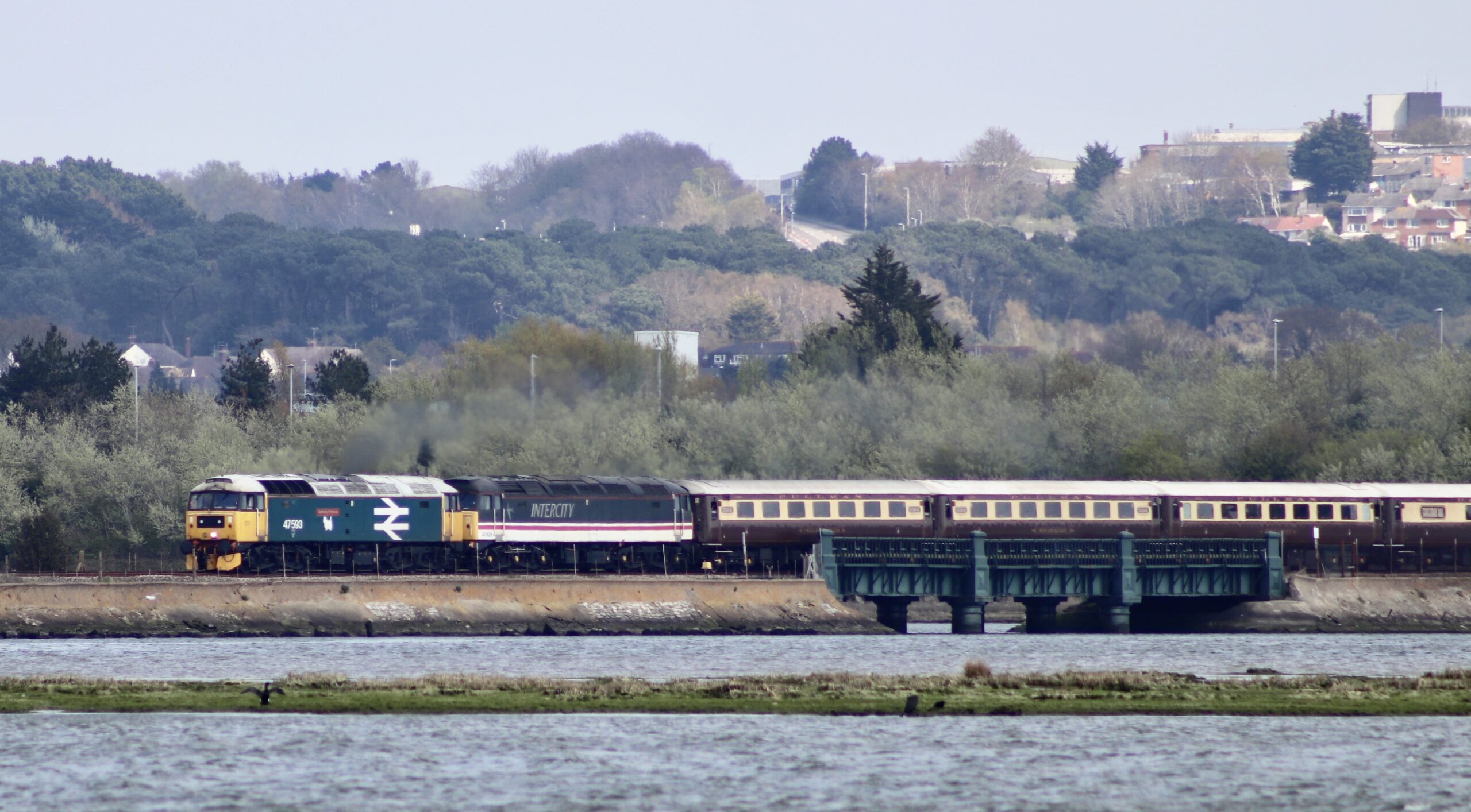
    The Weymouth line was visited by a rail tour on Wednesday 19th April 2023 when Statesman Rail’s Dorset Coast Statesman, hauled by double-headed Brush Type 4 Class 47 diesel-electric locomotives No.’s 47593 ‘Galloway Princess’ and 47828 ran from Crewe to the Dorset seaside town for an afternoon layover. We saw the train on its outward leg passing over Holes Bay at Poole. If you look very closely in the following video you might be able to work out the train as it crosses the causeway. Thankfully my brother was at Dorchester South and managed to capture a much better clip. On the return journey, I elected to pop up to Hamworthy railway station to see the train passing through, which I only just managed as it was running nine minutes early and I was only just able to grab my phone to video the pass, my stills camera remaining firmly in its bag!

    Class 47 No.’s 47593 ‘Galloway Princess’ and 47828 working the outward leg of Statesman Rail’s Dorset Coast Statesman 1Z67 0614 Crewe to Weymouth – 19/04/2023
    Additional video from Dorchester South courtesy of G E Barrett

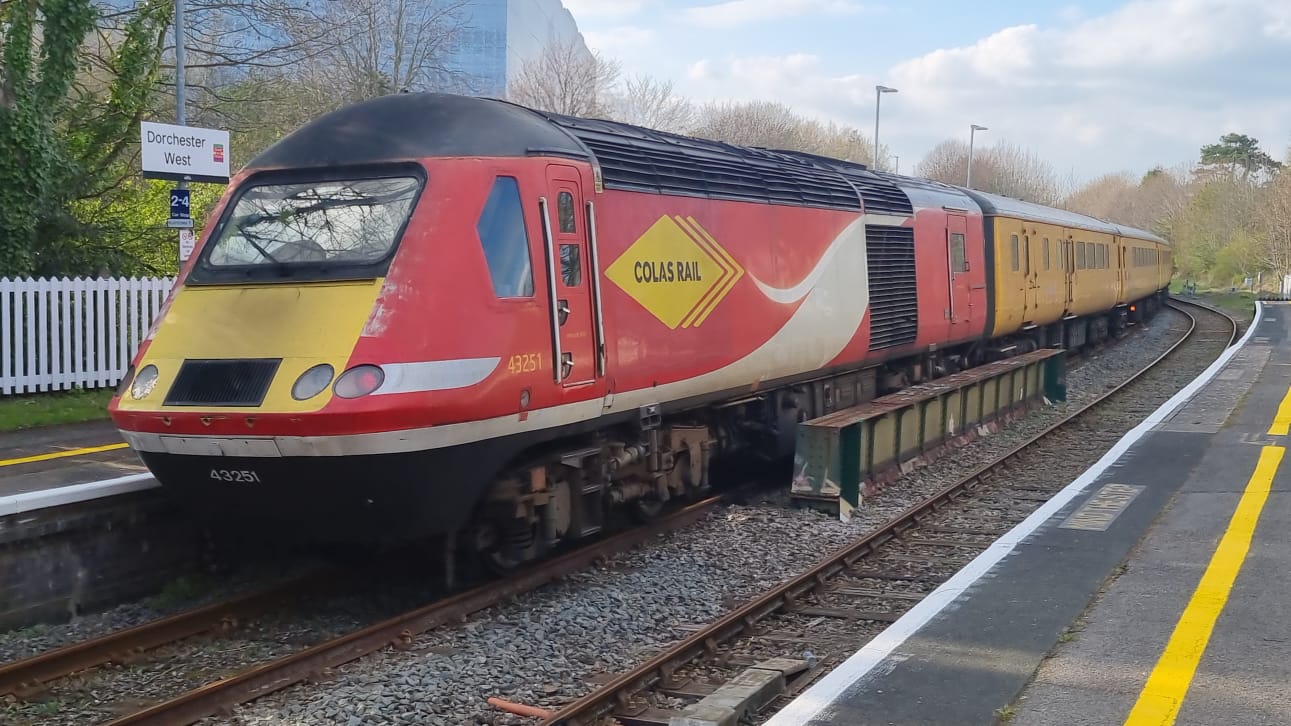
    Wednesday also saw the regular monthly New Measurement Test Train working to Weymouth. This month it ran with two former High Speed train power cars and arrived 75 minutes late because of incidents on its journey south from Derby. Thinking the train would be capped enroute, I elected not to go and see this working, so I’m very grateful for the great video kindly provided by both my brother, and Scott our North Dorset correspondent!

    Video courtesy of G E Barrett and Scott Lewis
    Colas Class 43 HST Power Car No. 43274 at Dorchester West working the late running 1Z22 0804 Derby R.T.C.(Network Rail) to Bristol Kingsland Road having reversed at Weymouth. Image courtesy of Scott Lewis – 19/04/2023
    Colas Class 43 HST Power Car No. 43251 runs through Dorchester West working 1Z22 0804 Derby R.T.C.(Network Rail) to Bristol Kingsland Road. Image courtesy of Scott Lewis – 19/04/2023

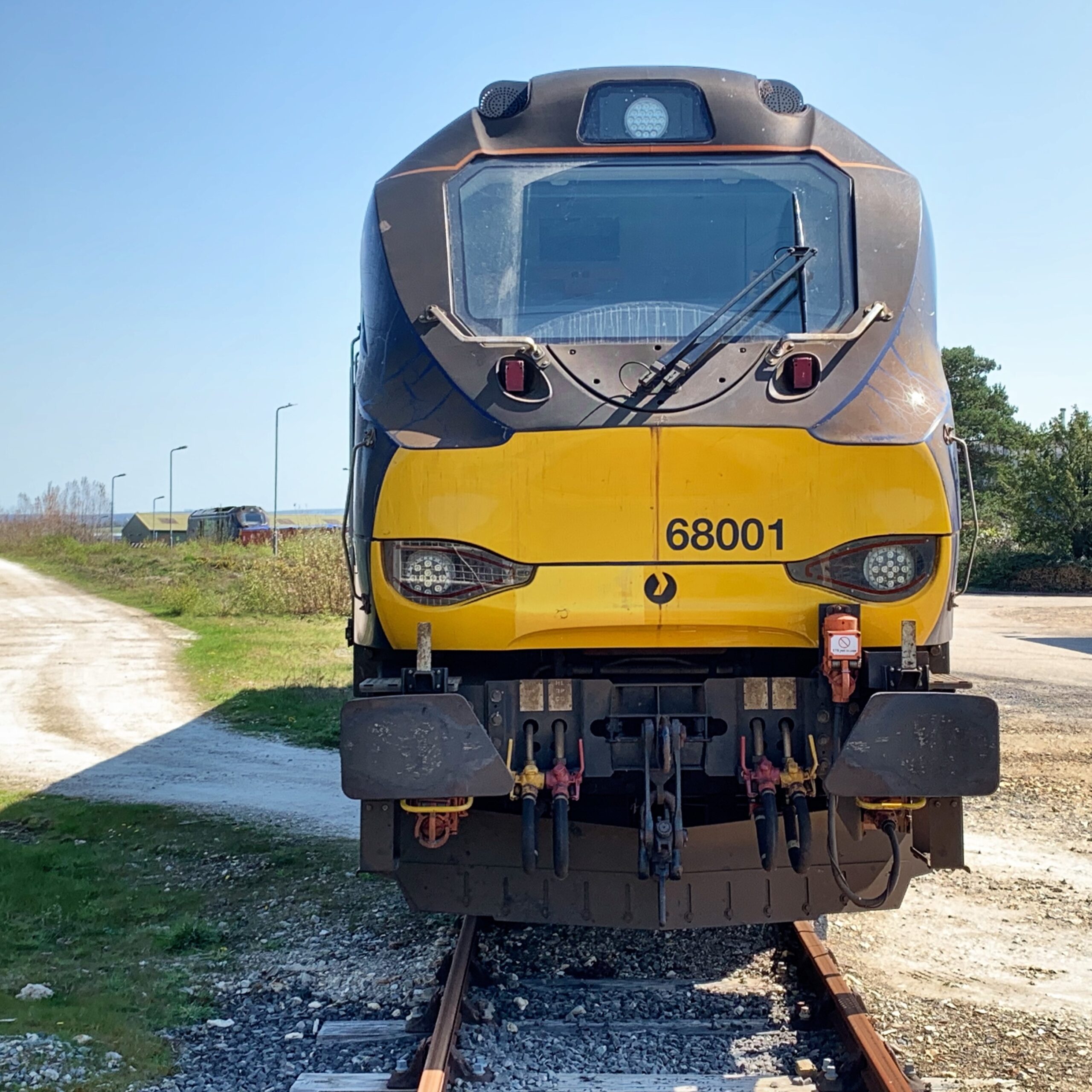
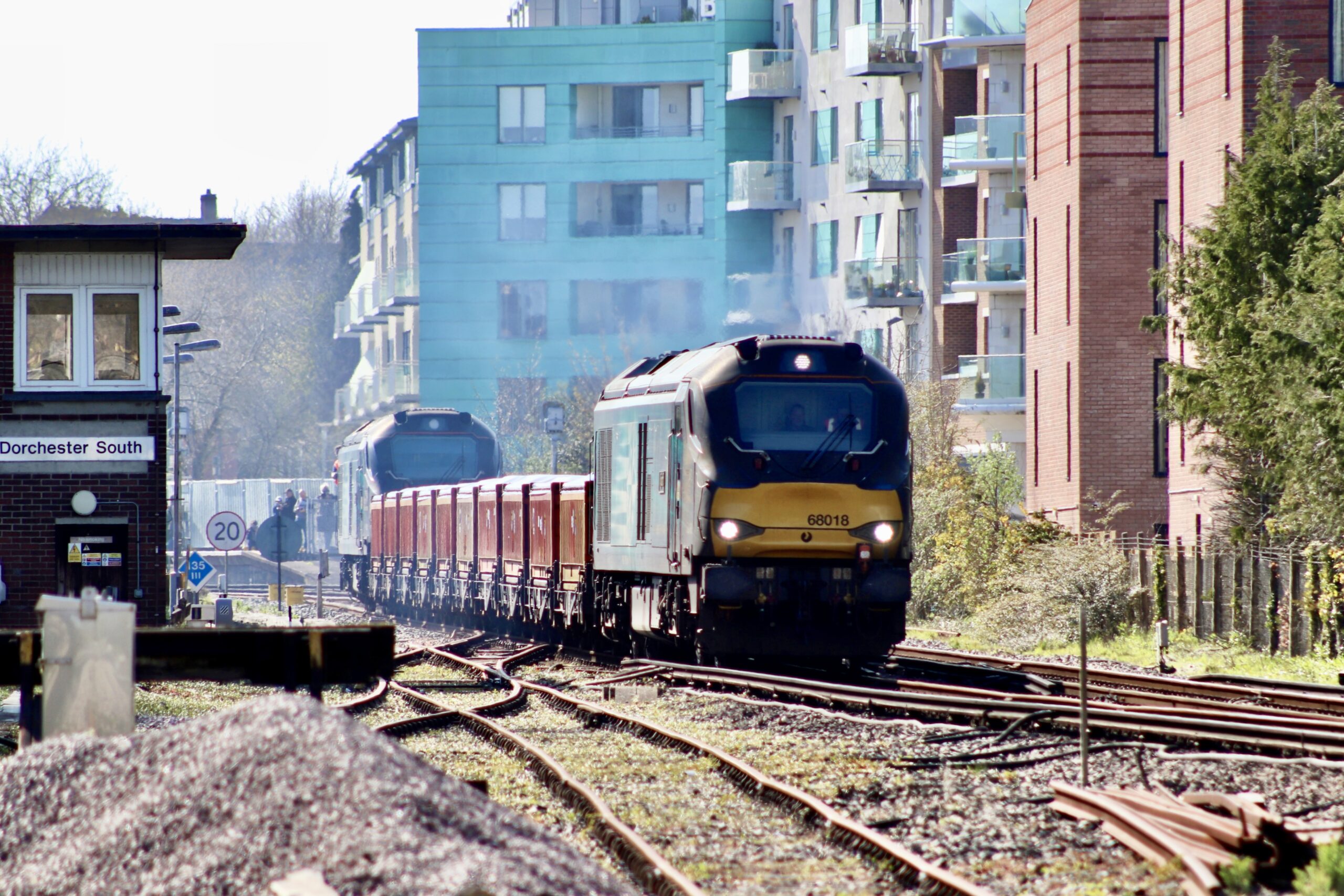
    The following day saw another out of the norm working as Direct Rail Services (DRS) Class 68’s No.’s 68001 ‘Evolution’ and 68018 ‘Vigilant’ top and tailed ten FNA wagons on their mission to collect low level nuclear waste from Magnox Winfrith. The previous working left empty because of operational difficulties preventing the loading of the train so it was good to see all went smoothly this time around. We were able to have another wander around the perimeter fence at Winfrith to see the train up close. As always, security staff were on hand to politely request that photographs and video refrained from showing buildings or the faces of staff. I was happy to oblige. Although leaving Winfrith more or less right-time, the return working was delayed by some 86 minutes further up the line following an incident at Basingstoke.  

    Direct Rail Services Class 68’s No.’s 68001 ‘Evolution’ and 68018 ‘Vigilant’ on the approach to Poole working 6Z62 0100 Crewe Coal Sidings (DRS) to Winfrith Sidings – 20/04/2023
    DRS Class 68 No. 68001 ‘Evolution’ is seen prior to marshalling the loaded train together at Winfrith. 68018 ‘Vigilant’ is in the background – 20/04/2023
    DRS Class 68 No. 68018 ‘Vigilant’ leads out of Dorchester South with the return 6Z95 1551 Winfrith Sdgs to Crewe Coal Sidings (DRS). No. 68001 ‘Evolution’ at the rear – 20/04/2023

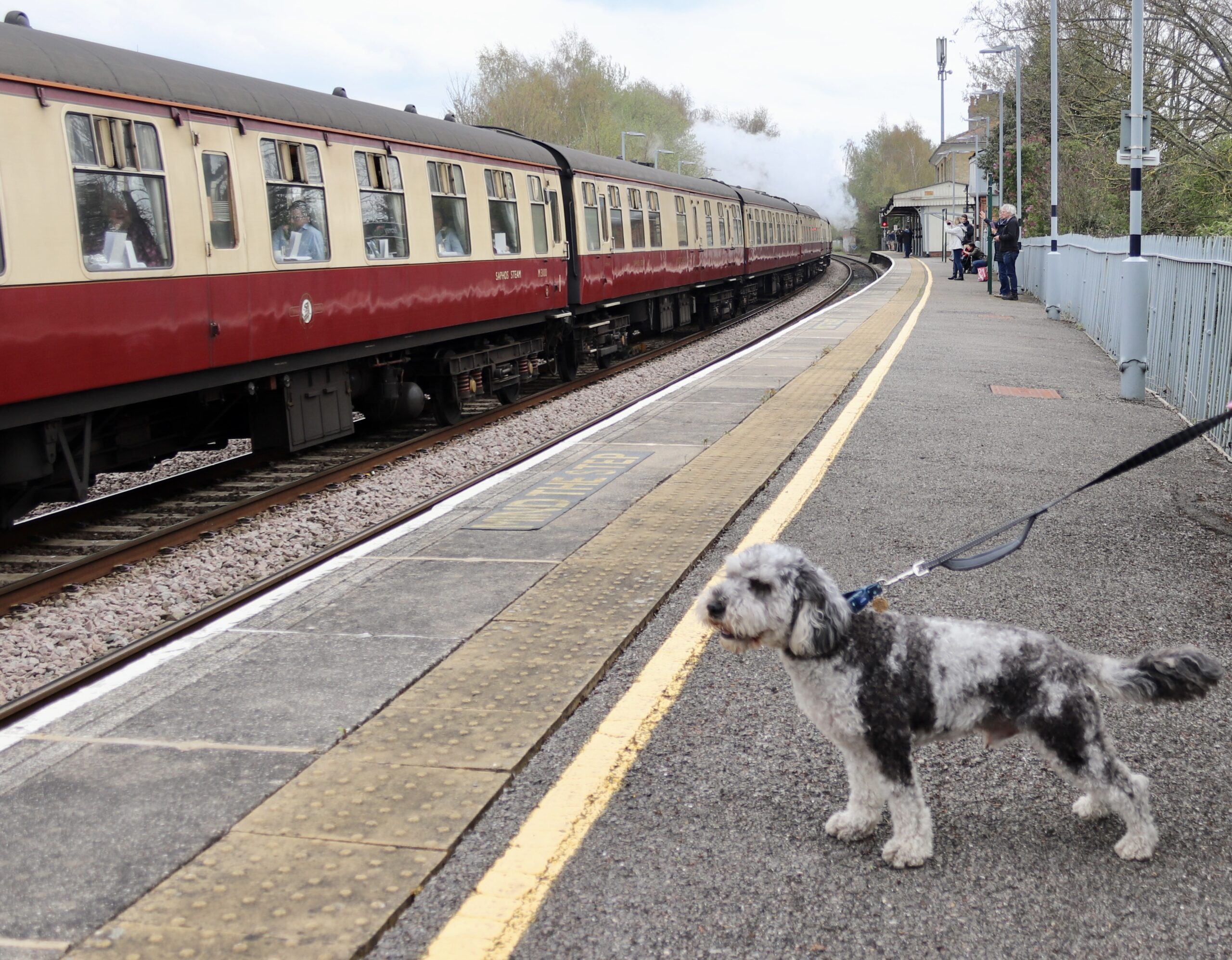
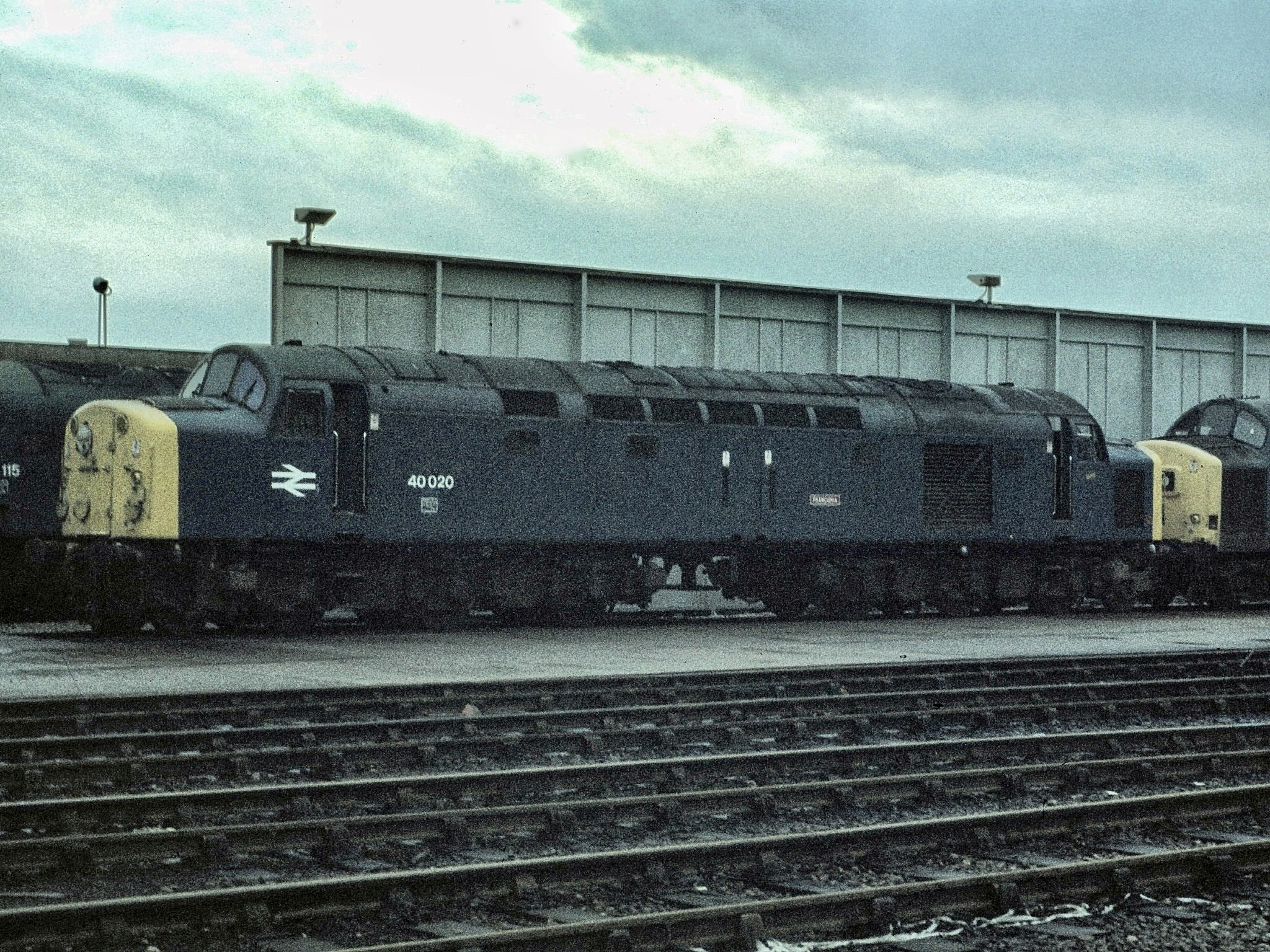
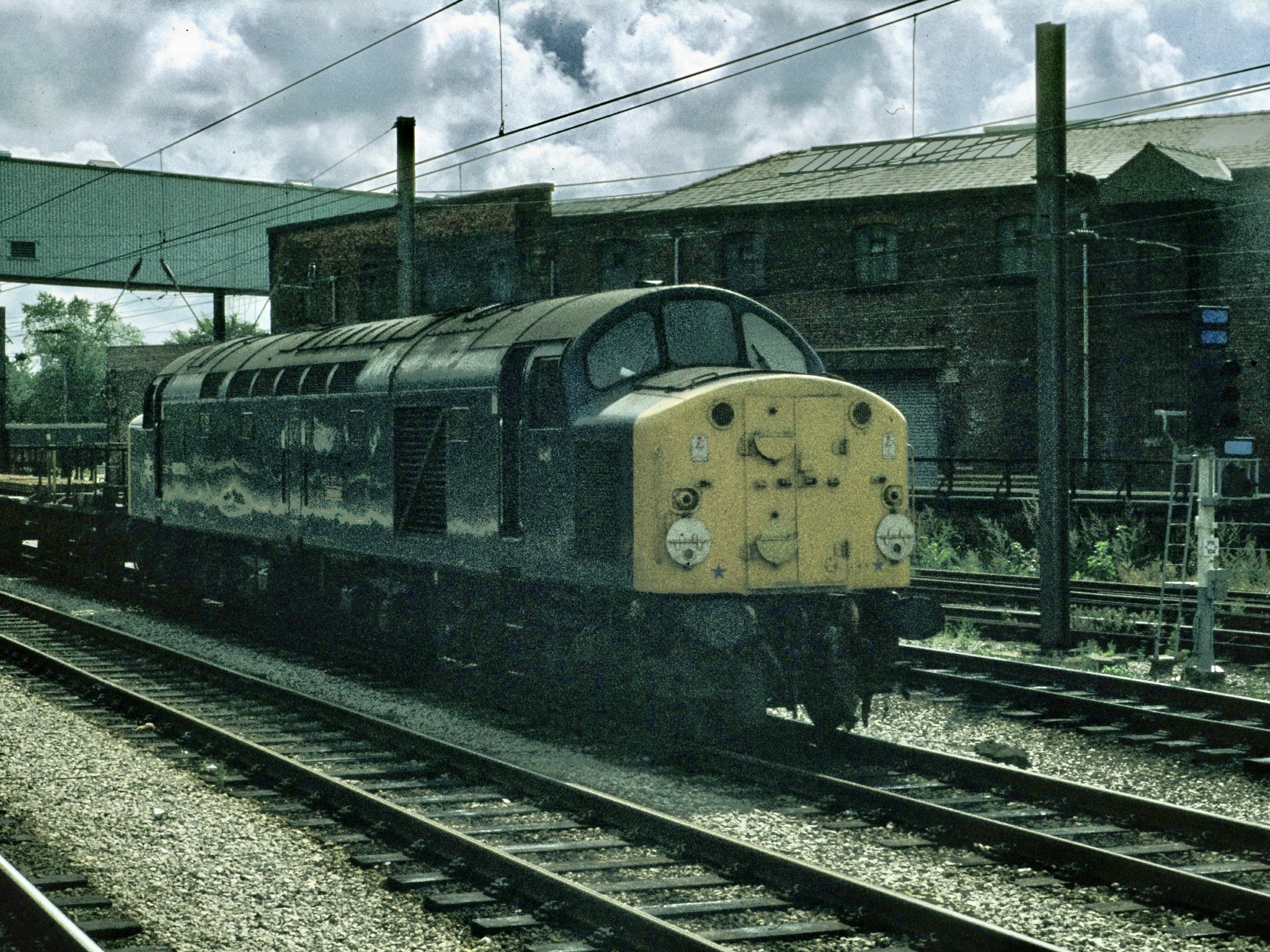
    On Saturday, to tie in with a passing steam hauled excursion train, Yoshi, his Mama and I had a walk along the Test Valley nature reserve. Or that was the plan at least. We encountered a fair bit of flood water so our walk was curtailed and instead, while we waited for the Winchester to Salisbury circular tour to pass by we grabbed a take away tea from a burger van outside of B&Q Nursling and sat awhile at a convenient picnic table located on Franconia Drive, named, we assume, after the Cunard ship of the same name. Or perhaps the road name is inspired by English Electric Class 40 Diesel loco No. D220 (40020) ‘Franconia’ which was of course definitely named after the liner. This is an excuse to share the following two images from 1982:

    EE Class 40 No. 40020 at Crewe, the ‘Franconia’ nameplates long gone having been removed but carrying a stencilled name instead – 24/10/1982
    Class 40 No. 40020 at Preston – 13/08/1982

    Class 40 locomotives in the number range D210–D235 were mostly named after ships operated by the Cunard Line, Elder Dempster Lines and Canadian Pacific Steamships as the diesel locos hauled express trains to and from Liverpool, the home port of these companies. In the early 1970’s, with Class 40’s no longer working these trains, the nameplates were gradually removed, although enthusiasts still remembered the names and as in the images above, replacement versions were often applied.

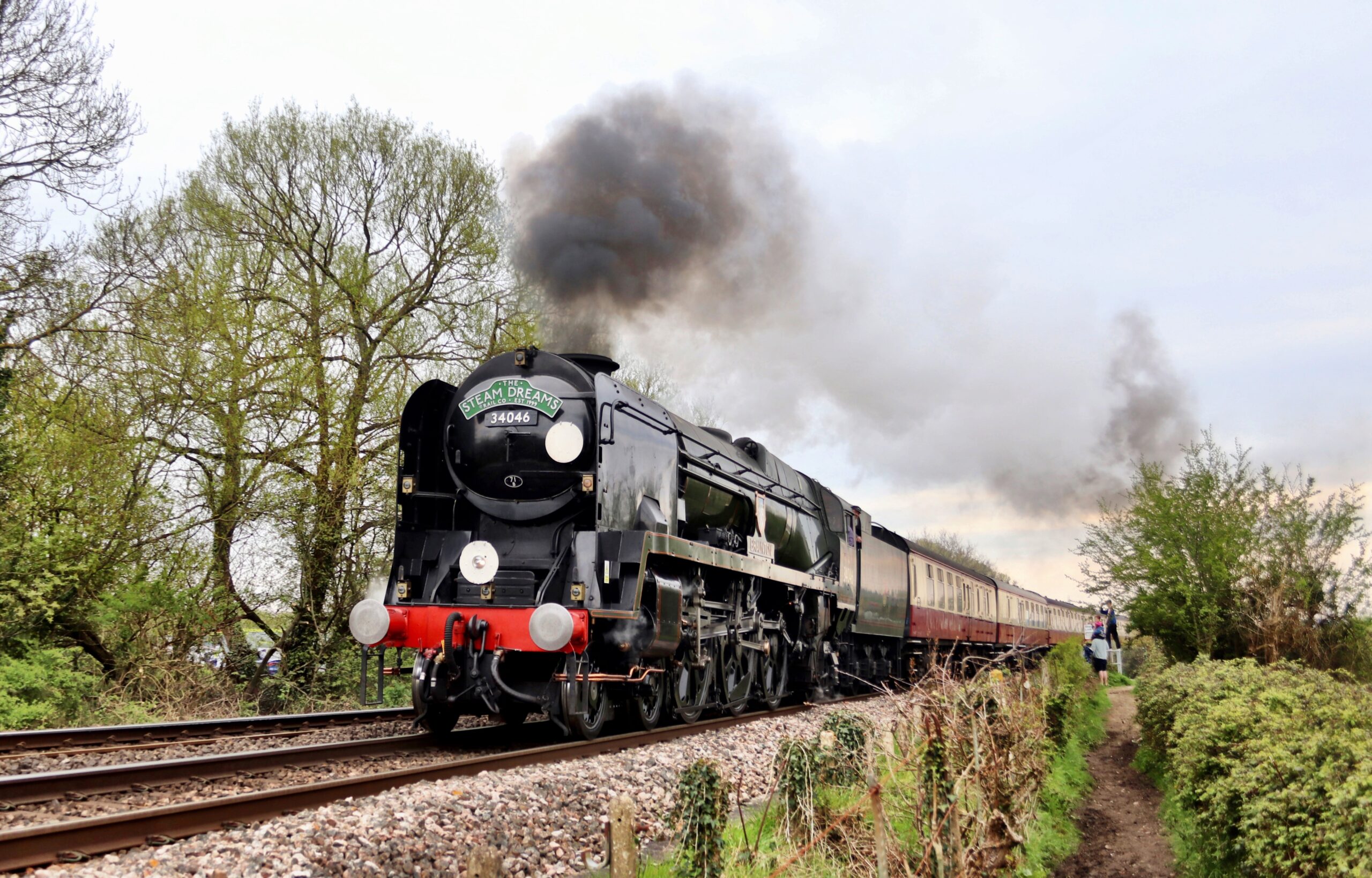
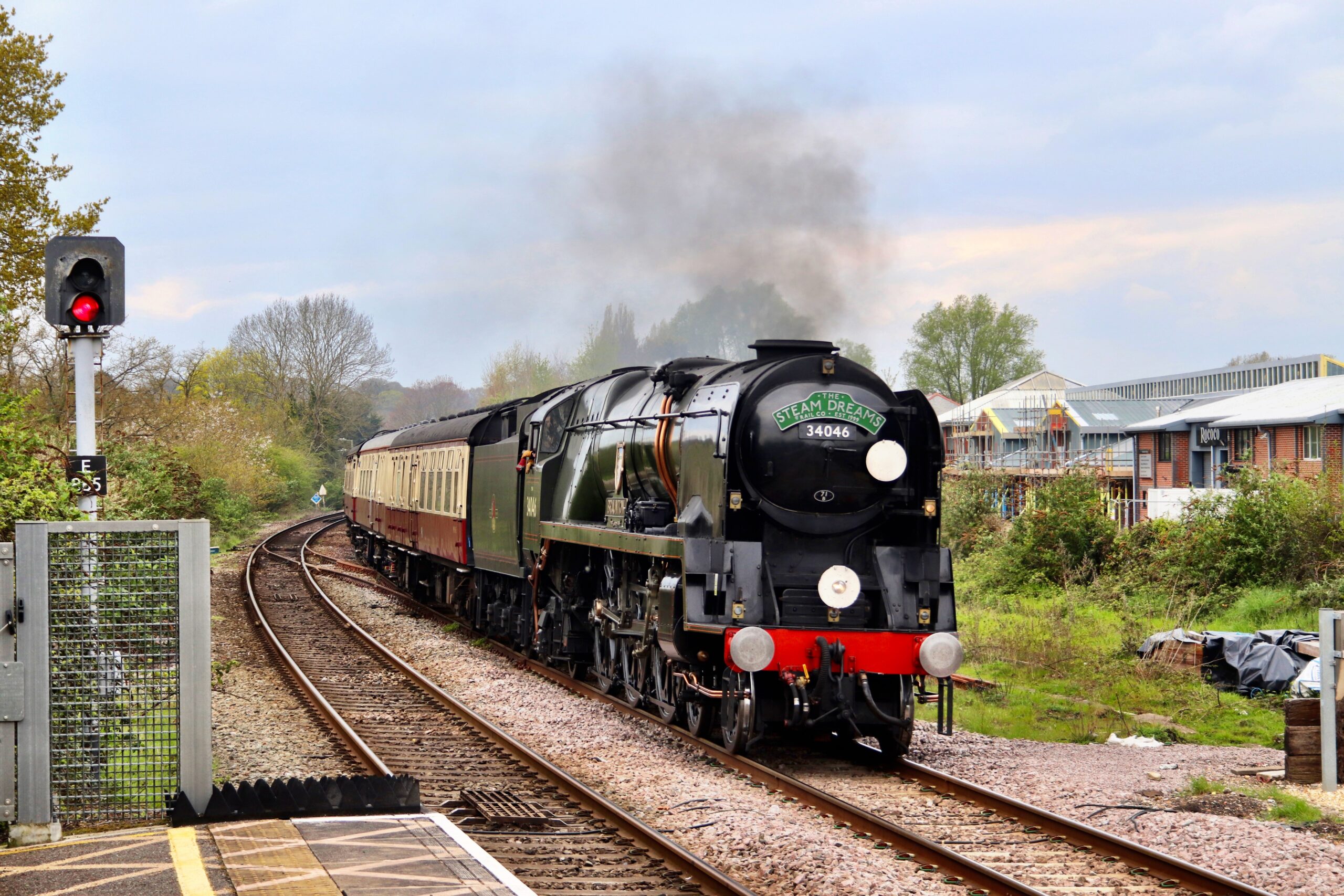
    Suitably refreshed following our cuppa (Yoshi had water and some snacks), we headed back to the footpath which runs alongside the railway line, only to discover the location had suddenly become very popular with other enthusiasts and observers of steam trains. The two locations I had thought about photographing the train from had ‘been taken’ so I settled for another view which was slightly obscured by lineside vegetation, but turned out to be a reasonable shot after all. Afterwards, we drove the short distance to Romsey to see the train head back to Winchester prior to its onward journey to London.

    Southern Railway West Country Class No. 34046 ‘Braunton’ powers along the Lower Test Valley working Steam Dreams 1Z92 1316 Winchester to Salisbury – 22/04/2023
    Southern Railway West Country Class No. 34046 ‘Braunton’ approaches Romsey working Steam Dreams 1Z93 1444 Salisbury to Winchester – 22/04/2023
    Second viewing for us as Class 47 No. 47593 ‘Galloway Princess’ works Steam Dreams 1Z93 1444 Salisbury to Winchester through Romsey – 22/04/2023

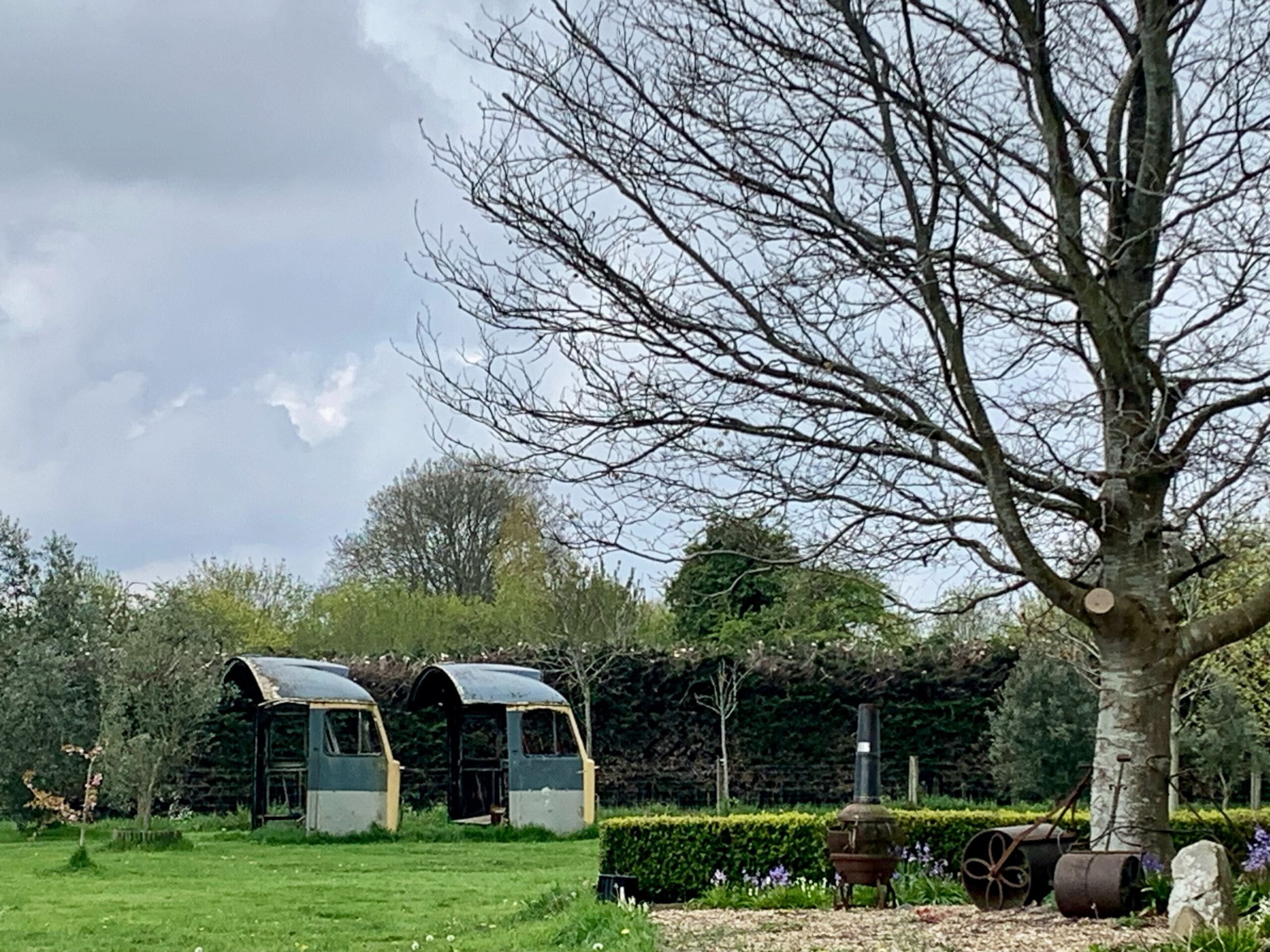
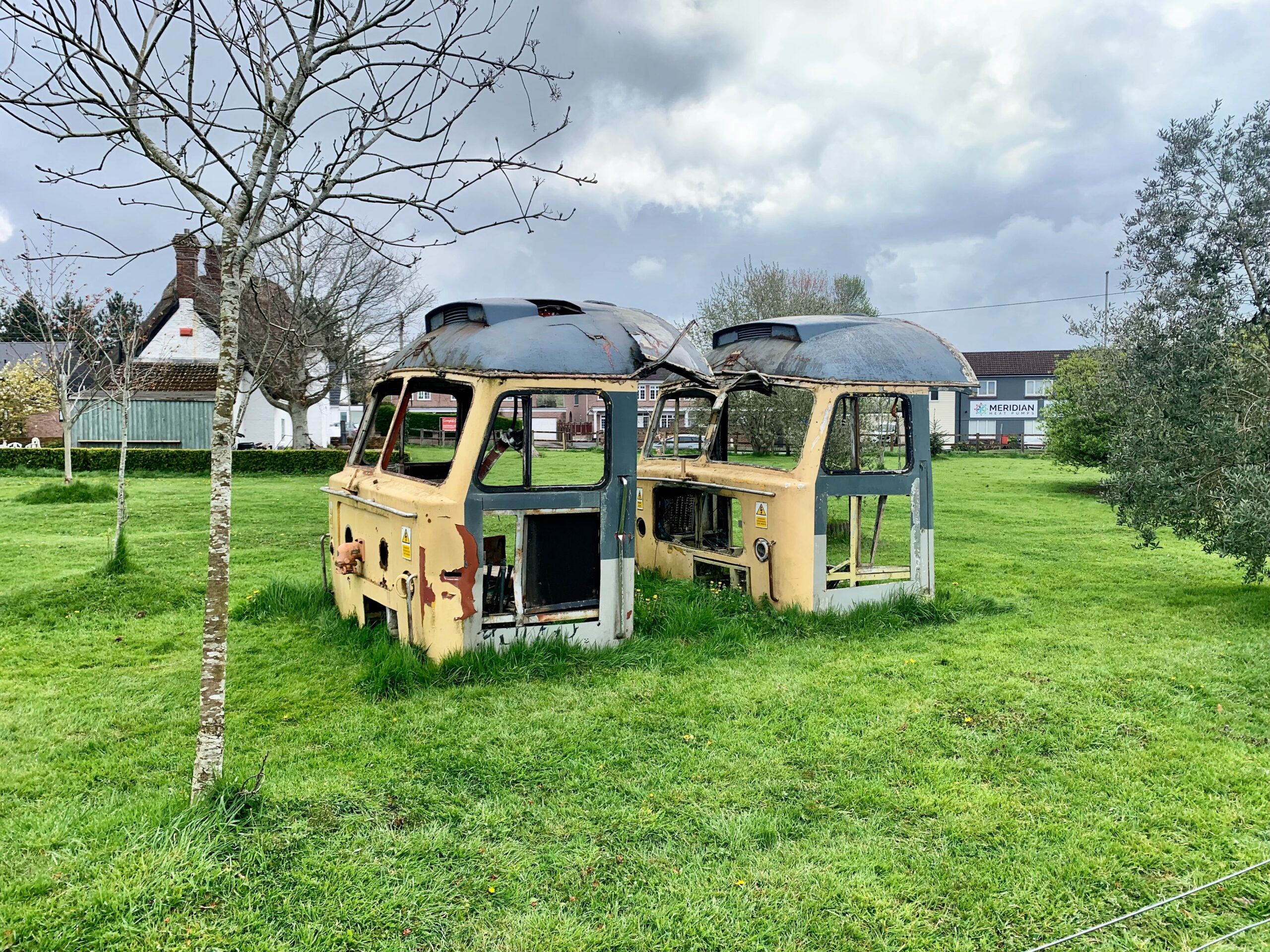
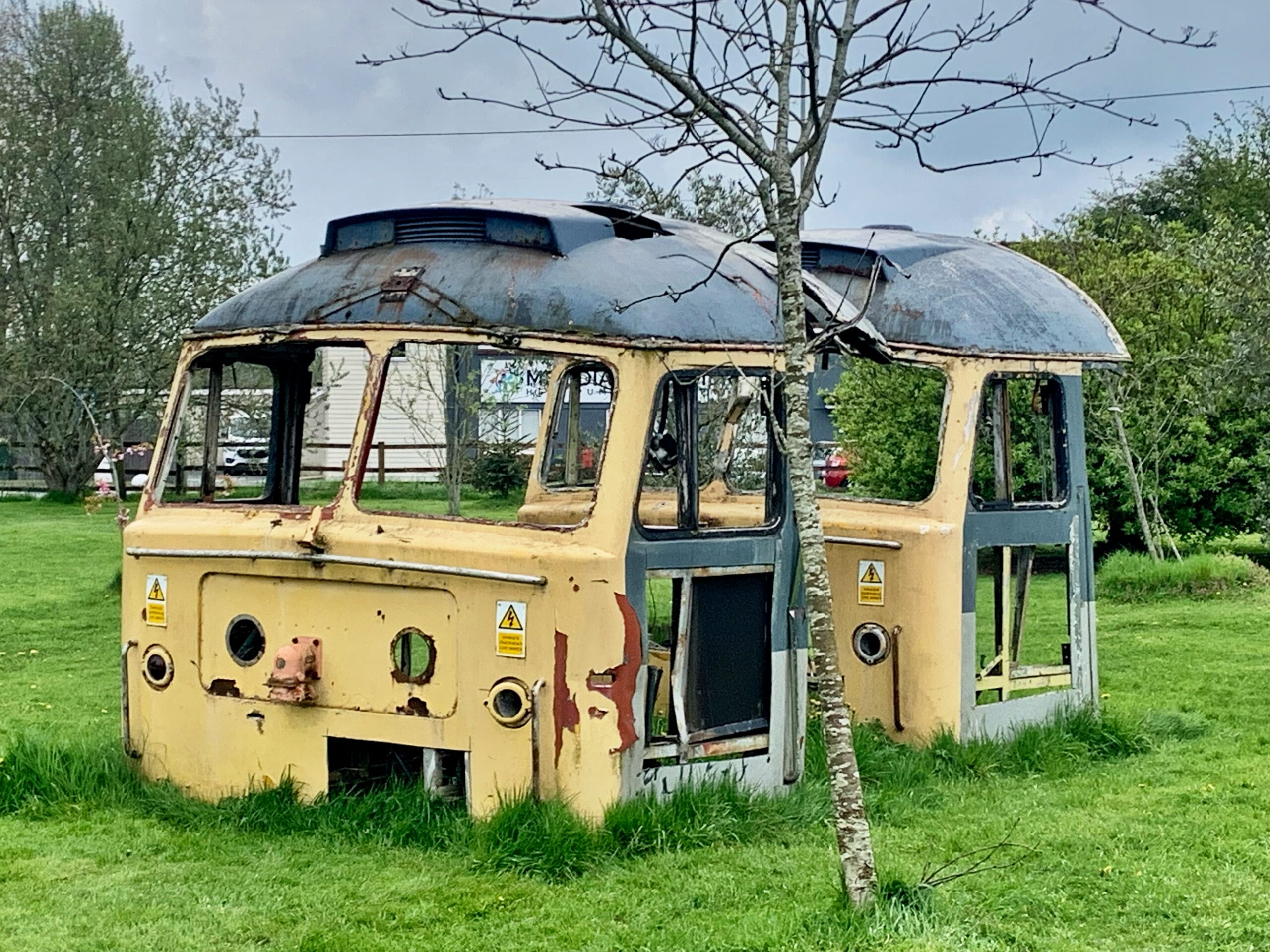
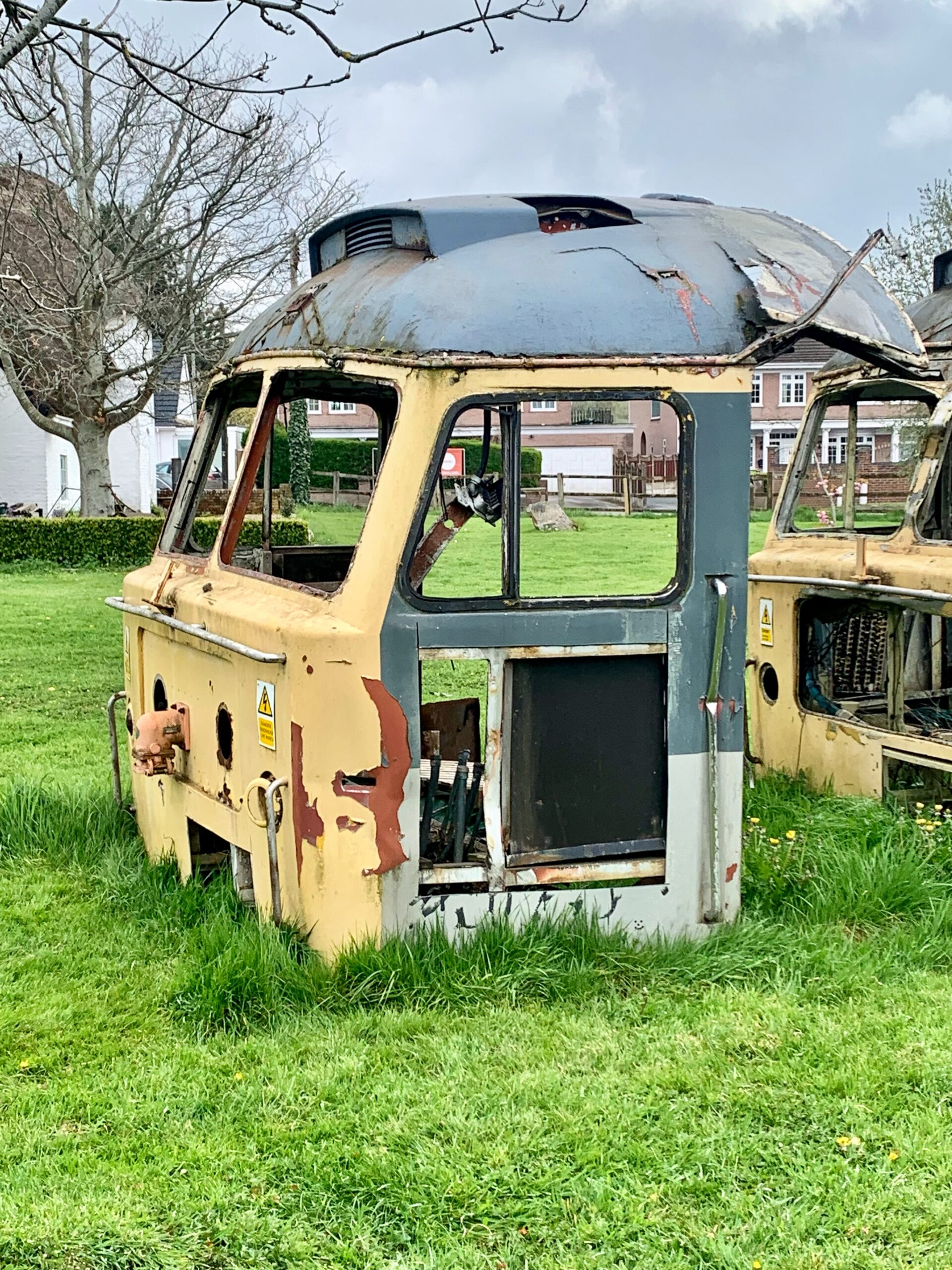
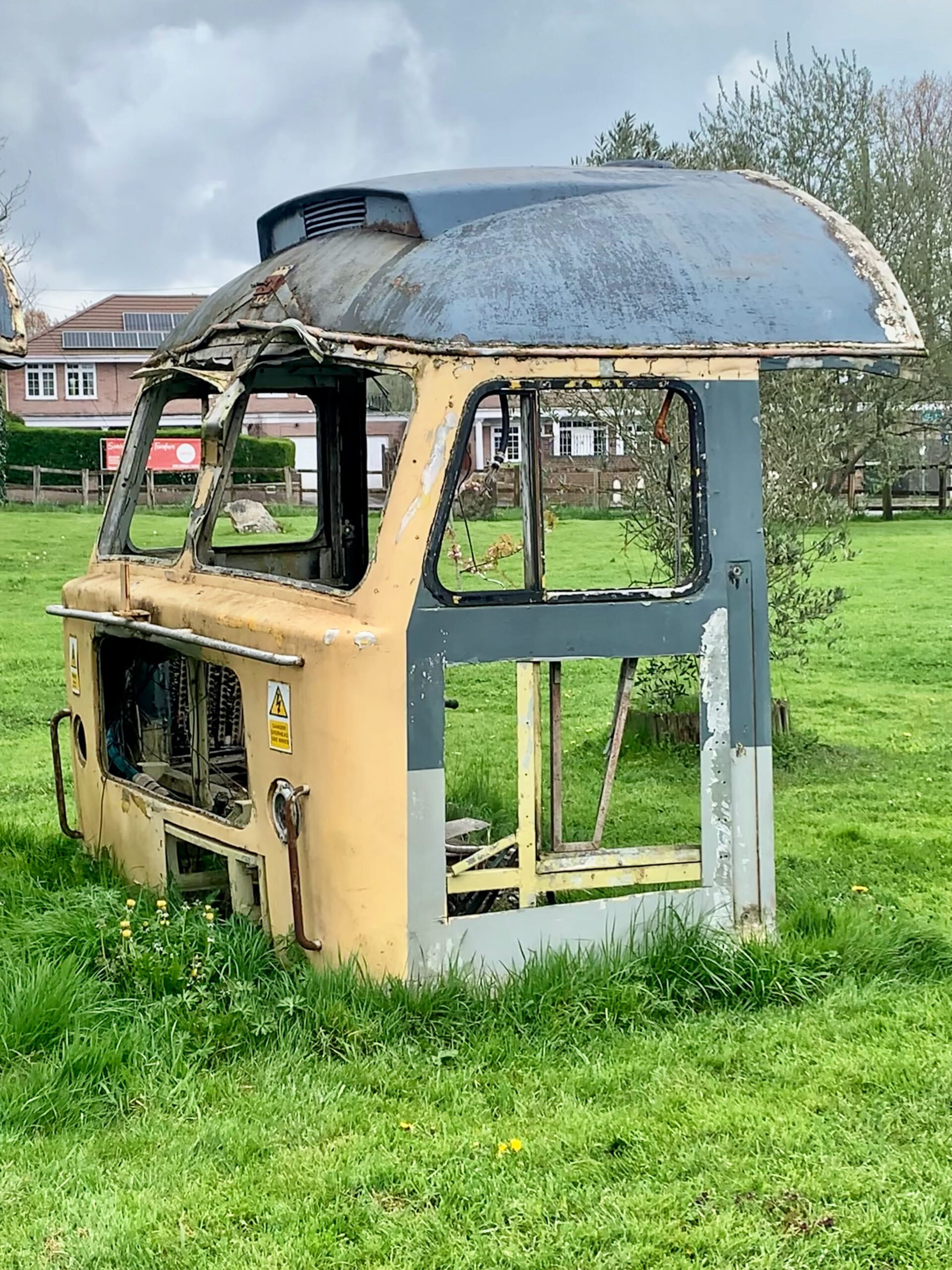
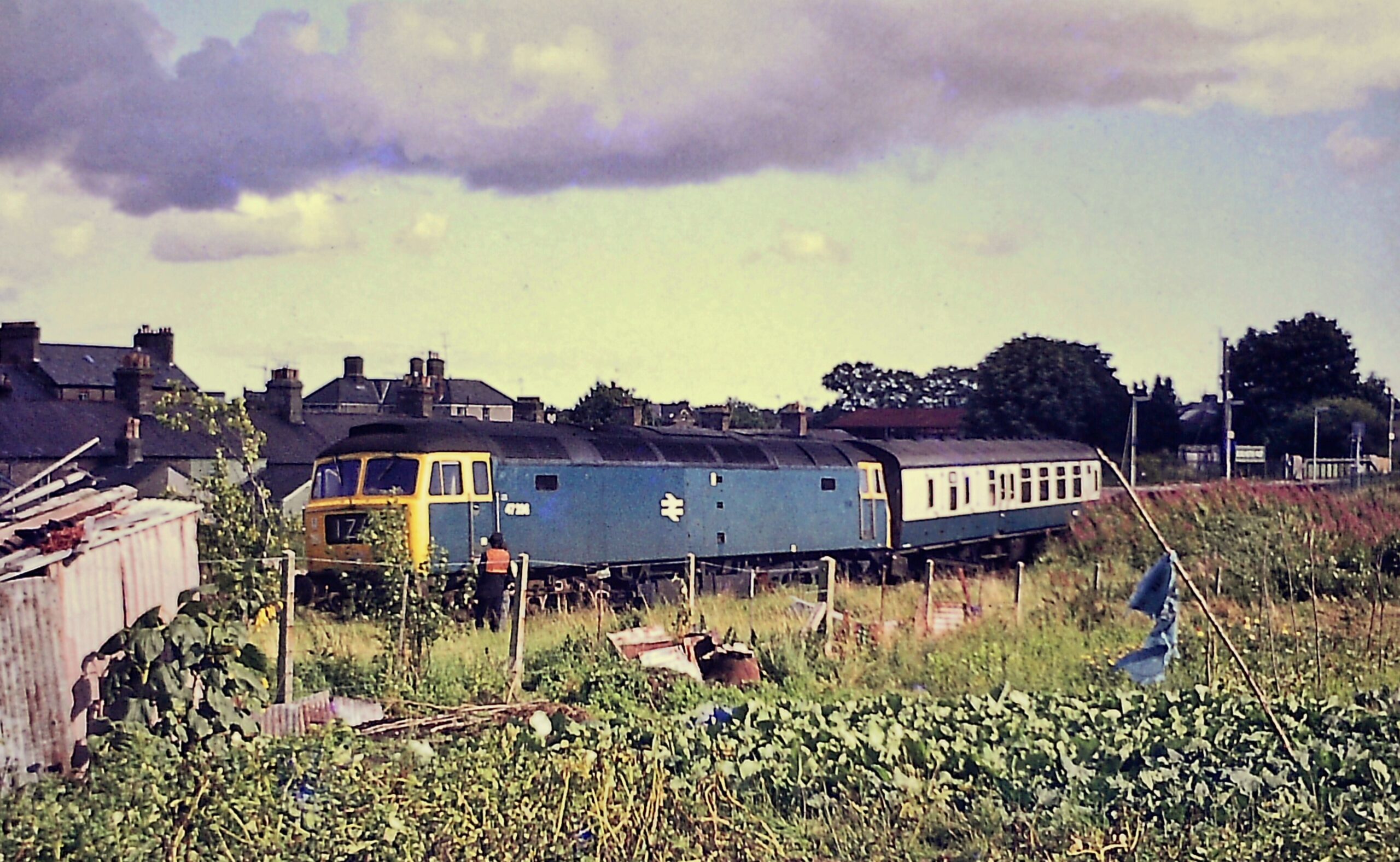
    The following day, Yoshi and I went in search of a pair of Class 47 locomotive cabs which I have seen photographs of, but never quite managed to work out where they are located. Tipped off by our pal Nick, we headed out to Longham near Bournemouth and were able to get the following snaps. Our North Dorset correspondent, Scott, was able to confirm that the cabs came from Brush Type 4 No. 47236 which was retired from service and put into store in February 1999 lasting until November 2017 when it was cut up by Morecambe Metals at Carnforth.

    Cabs from Class 47 No. 47236 as garden decoration near Bournemouth – 23/04/2023
    Cabs from Class 47 No. 47236 – 23/04/2023
    Cabs from Class 47 No. 47236 – 23/04/2023
    Cab from Class 47 No. 47236 – 23/04/2023
    Cab from Class 47 No. 47236 – 23/04/2023

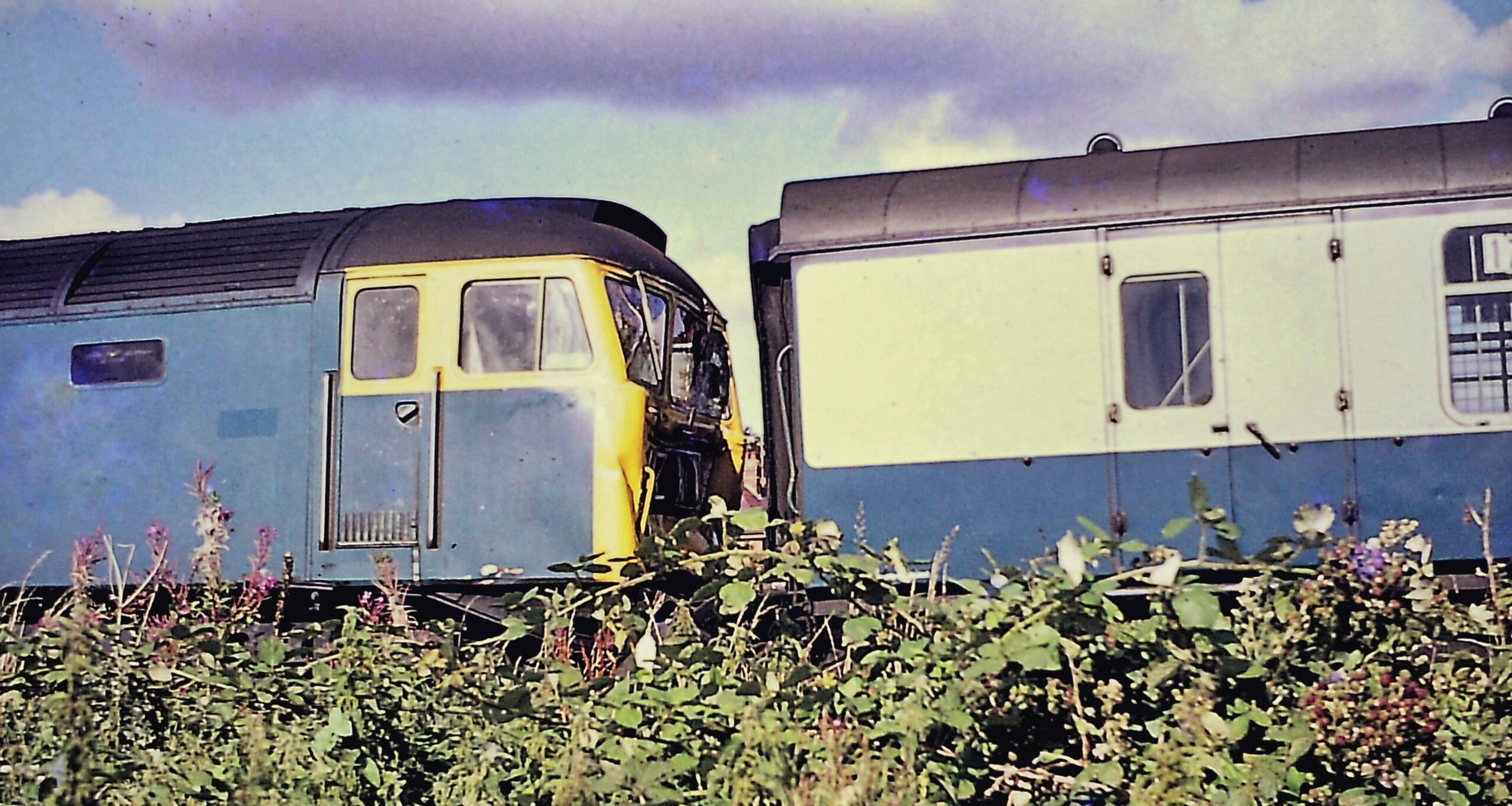
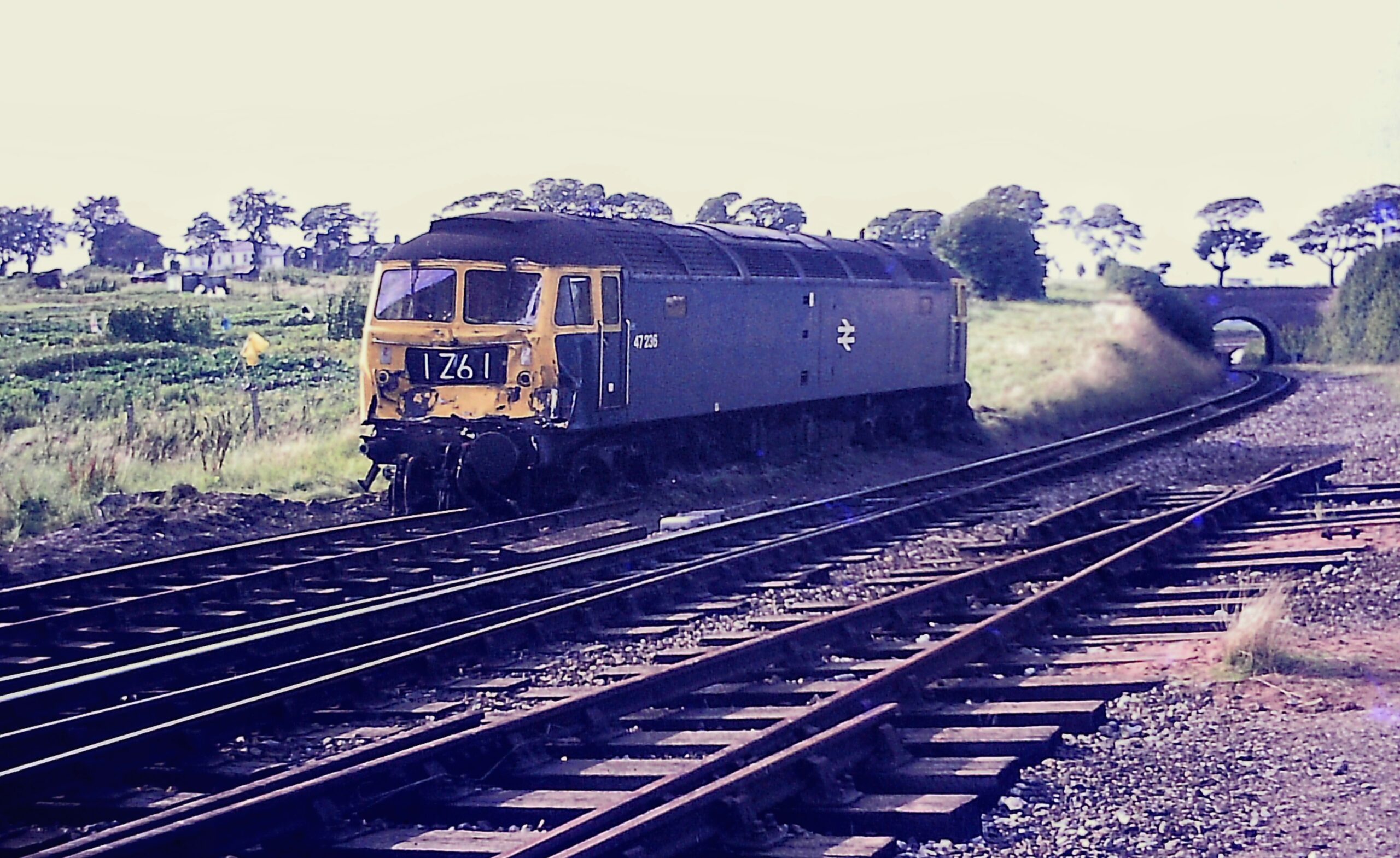
    No. 47236 was involved in an incident at Dorchester West on Sunday 25th August 1974 when she fell foul of trap points having passed a signal at danger in heavy rain whilst working 1Z61 Weymouth to Hereford excursion train. The main damage to the locomotive was at the trailing end where the leading coach had ridden up over the buffers, tearing them off in the process. The cab-end panelling was torn away from the bottom edge and stove in to just above the head code indicator; the side panelling between the corners and cab doors was torn and buckled. Both bogies suffered damage to their brake equipment. The leading coach, a brake second corridor, had its forward bogie displaced by about 7 feet and suffered minor damage to the end of the coach where it had struck the rear of the locomotive. The second coach, an open second, was also damaged. The track survived intact following the derailment and the only damage to the signalling equipment was the slight displacement of one lineside apparatus case. The accident report, published in 1976, was written by Major P. M. Olver who noted:

    “The train was the 2000 Weymouth to Hereford return passenger excursion train, consisting of 12 coaches and hauled by a Class 47 diesel-electric locomotive. Travelling at about 15 mile/h, the head of the train passed Dorchester Junction Up Main Starting signal at Danger, the locomotive and first two coaches being diverted into a sand drag by trap points protecting the single line to Maiden Newton. The locomotive and leading coach ran off the end of the sand drag and were derailed before the train came to a stand.

    I am glad to report that of the 600 passengers, who were railway staff and their families from the Hereford Staff Association and Social Club, only 6 were required to be taken to hospital for the treatment of their minor injuries and a further 12 were given first aid attention on site. A special train was formed from the rear 10 coaches of the train, after they had been examined and found fit to run, and the passengers finally departed for Hereford via Bournemouth and Southampton at 2346.”

    Class 47 No. 47236 in the aftermath of the 25th August 1974 derailment at Dorchester West – Image by John Chappell
    Class 47 No. 47236 in the aftermath of the 25th August 1974 derailment at Dorchester West – Image by John Chappell
    Class 47 No. 47236 in the aftermath of the 25th August 1974 derailment at Dorchester West – Image by John Chappell
    Class 47 No. 47236 in the aftermath of the 25th August 1974 derailment at Dorchester West – Image by John Chappell
    Class 47 No. 47236 in the aftermath of the 25th August 1974 derailment at Dorchester West – Image by John Chappell
    Class 47 No. 47236 in the aftermath of the 25th August 1974 derailment at Dorchester West – Image by John Chappell

    It’s been a family story that my brother spent much of one night following the derailment watching recovery operations, much to the consternation of our mum who wondered where he’d got to!

    For The Record

    An informal event took place on 21st April 2023 to mark the opening of the new look forecourt at Weymouth railway station. Work began on the £1 million redevelopment in November 2021 with most of the work having been completed by September 2022. 

    Network Rail has started a two-year project to refurbish London Waterloo’s roof, which was built in 1922. Around 10,000 new glazed panels will be installed across 12,000 square metres of roof – an area nearly twice the size of the pitch at Wembley Stadium. The panels will be made from a polycarbonate material which is around 50% lighter than the existing panels in order to reduce stress on the structure. Other changes to the station will include the addition of more seating and improved toilet and baby changing facilities. London Waterloo, which celebrates its 175th Anniversary in 2023, was originally opened in 1848 and is now Britain’s busiest train station with 99.4 million journeys a year. 

    South Western Railway (SWR) severely reduced services in the Romsey area and west of Salisbury following reports biofuel was clogging the engine fuel filters of Class 158 and Class 159 diesel multiple units (DMU’s) which reduced their power and performance. The fault was discovered in much of the diesel fleet at depots in Exeter and Salisbury on Wednesday 19th April 2023. The fuel tanks will have to be flushed clean and the filters replaced which is not an insignificant task.  SWR will run one train every two hours on routes connecting Salisbury to Exeter and Southampton. One train an hour will operate between Salisbury and Basingstoke, while services to Westbury and Yeovil Pen Mill will not run. Disruption is expected until the end of the day on 28/04/23.

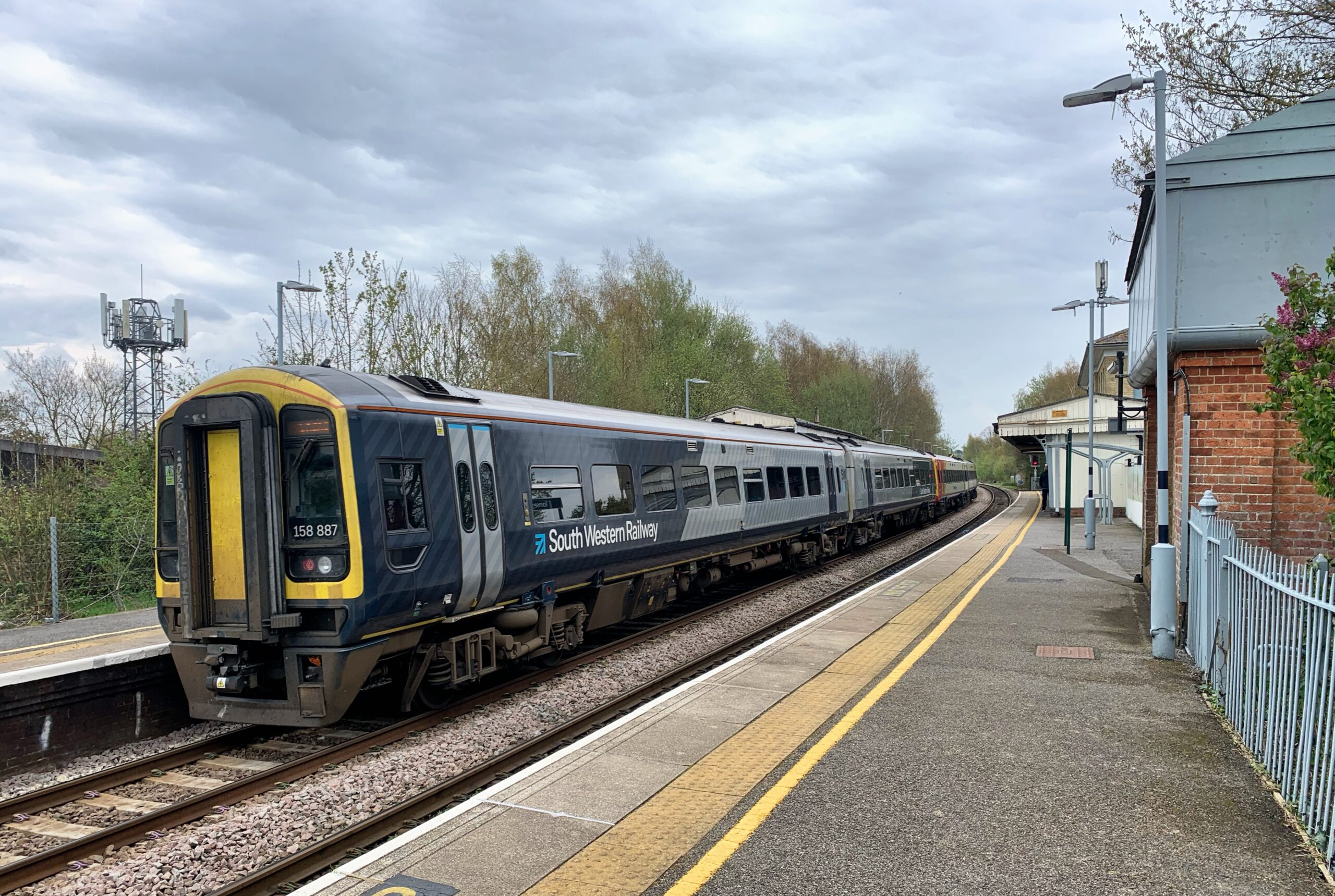
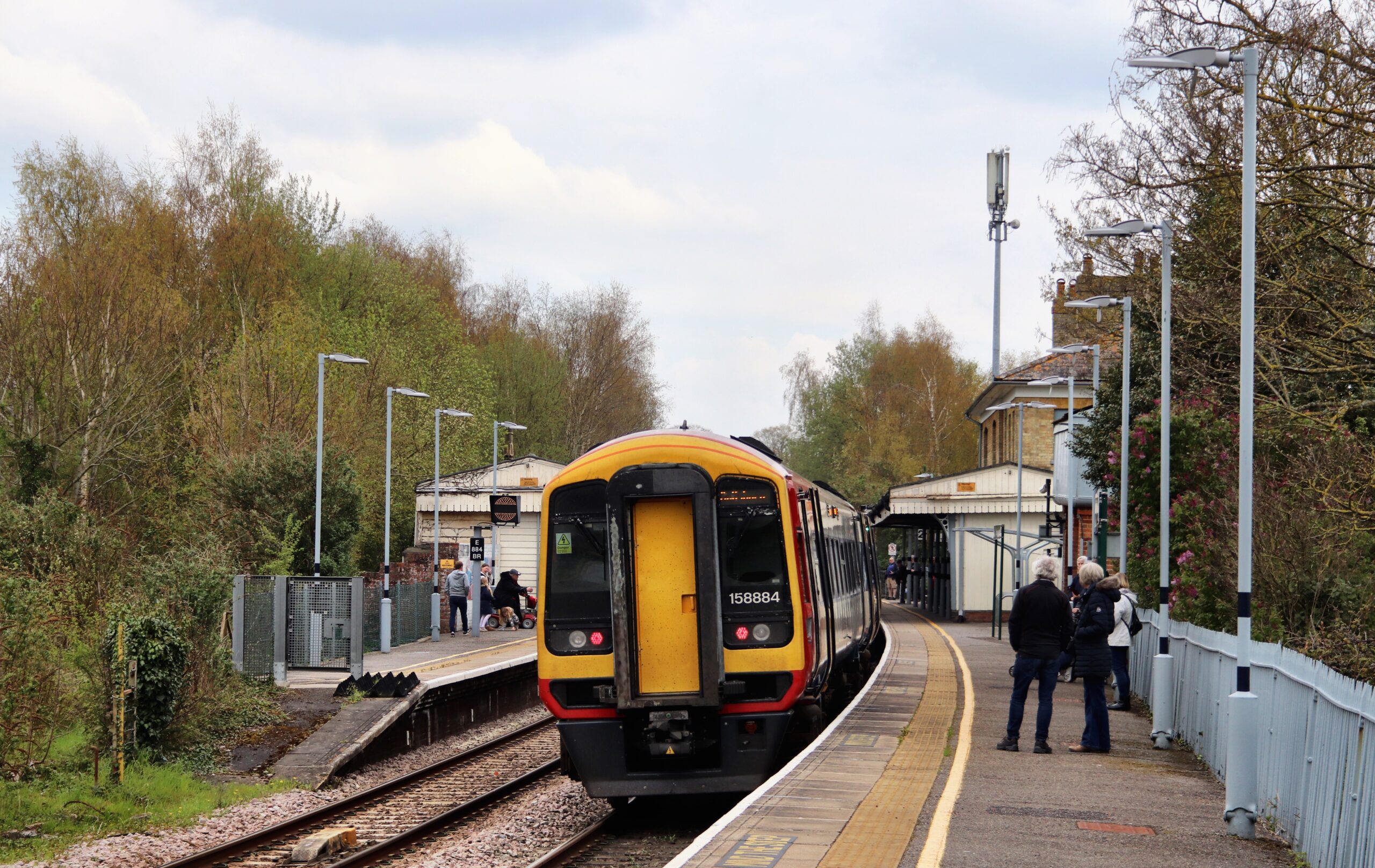
    Class 158 DMU No.’s 158887 and 158884 working 2R50 1356 Salisbury to Romsey service – 23/04/2023
    Timetable changes meant Class 158 DMU No. 158884 reversed at Romsey to form the 2S43 1507 Romsey to Salisbury service. No. 158887 was the lead unit – 23/04/2023

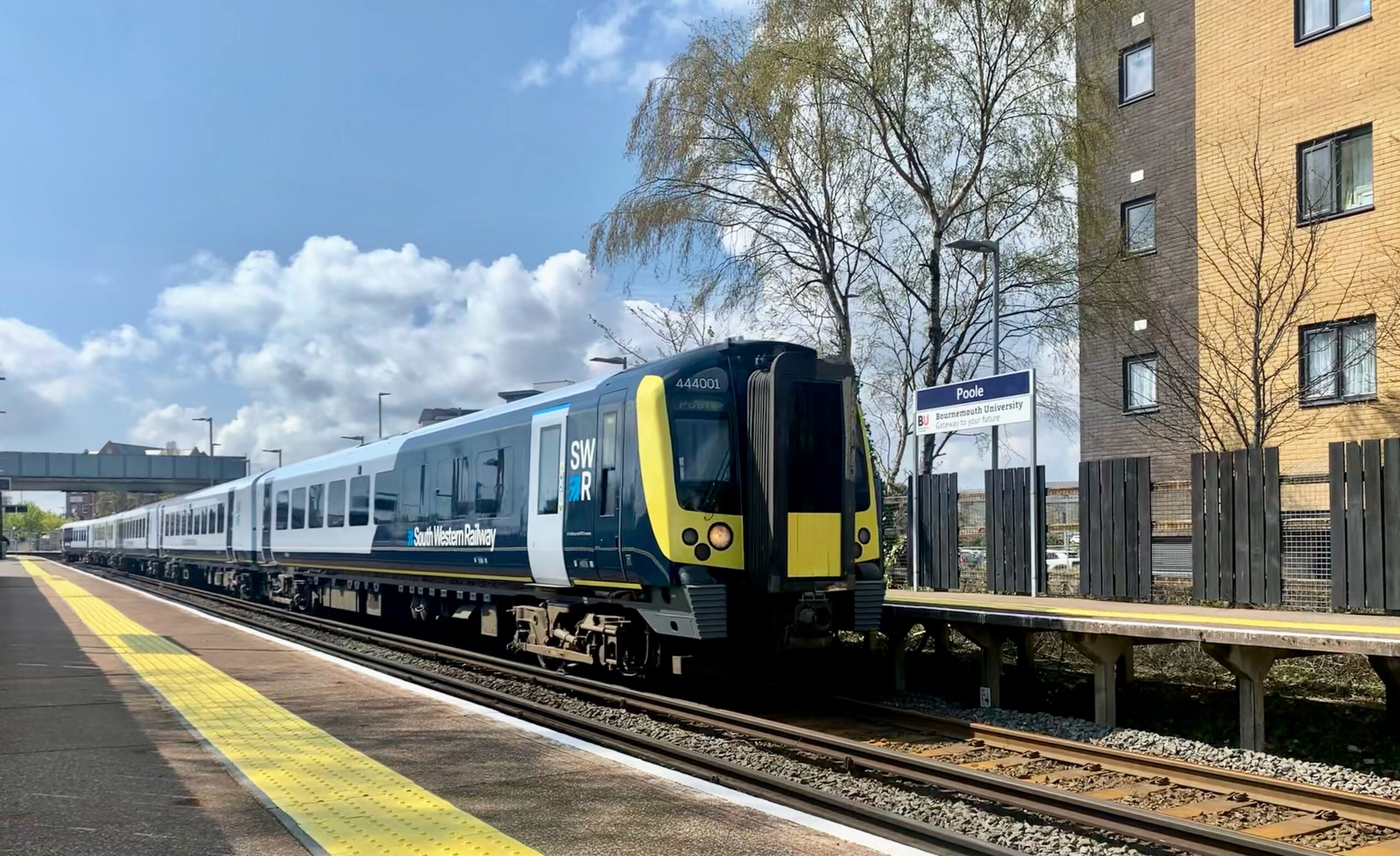
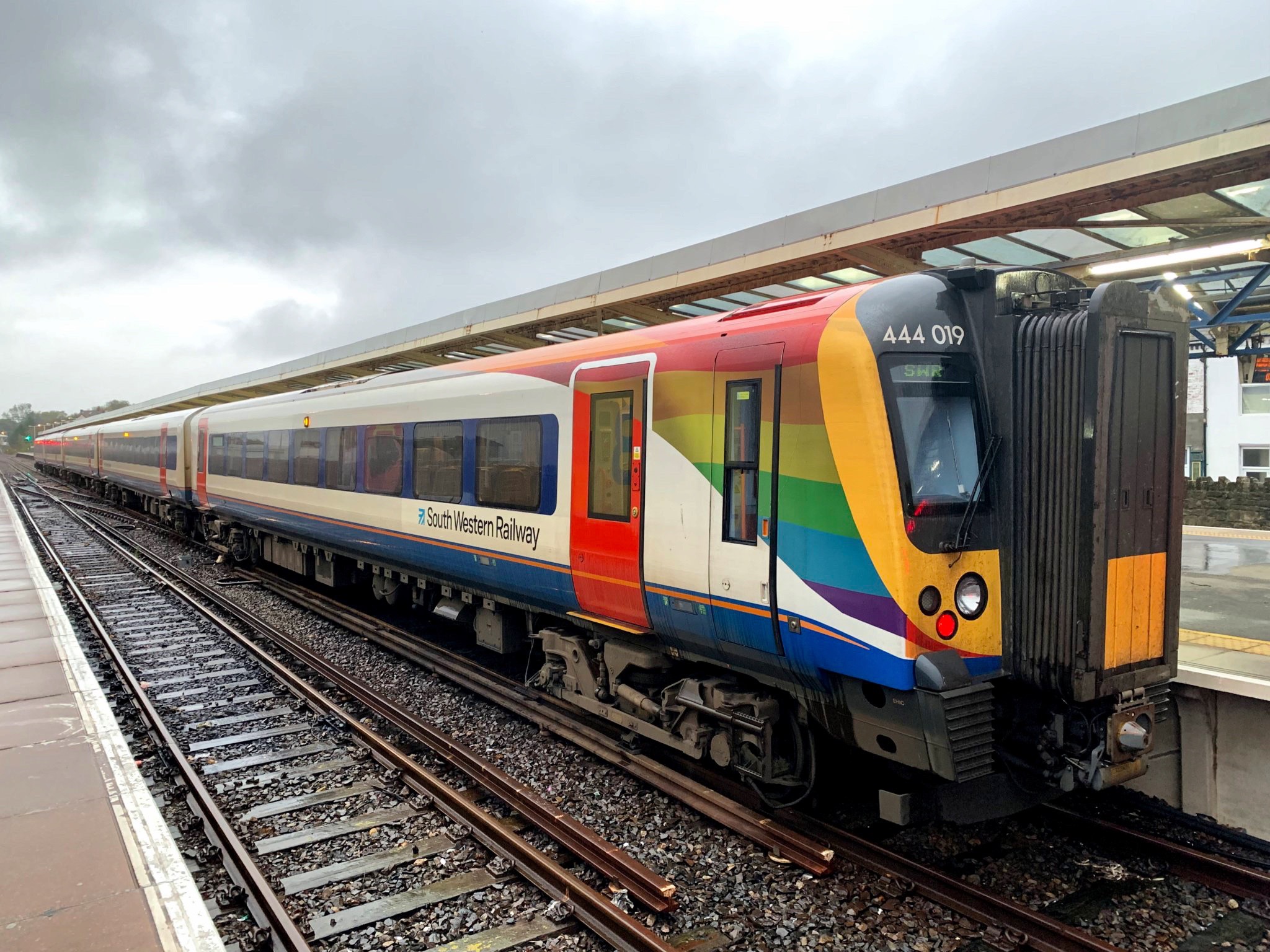
    Initial Class 444 Desiro Electric Multiple Unit (EMU) No. 444001 has been the latest vehicle to receive the corporate South Western Railway (SWR) livery having been repainted at Bournemouth T&RSMD and released back into traffic on 23rd April 2023. Formerly still carrying South West Trains livery, No. 444001 was the last unit in SWR’s fleet to carry a proper nameplate which it carried since being named ‘Naomi House’ at London Waterloo on 24th May 2007 to mark the 10th anniversary of the Winchester charity of the same name. The unit emerged without the nameplate or a replacement SWR style sticker name.  

    South Western Railway Class 444 No. 444001 ‘Naomi House’ at Weymouth – 26/04/2020
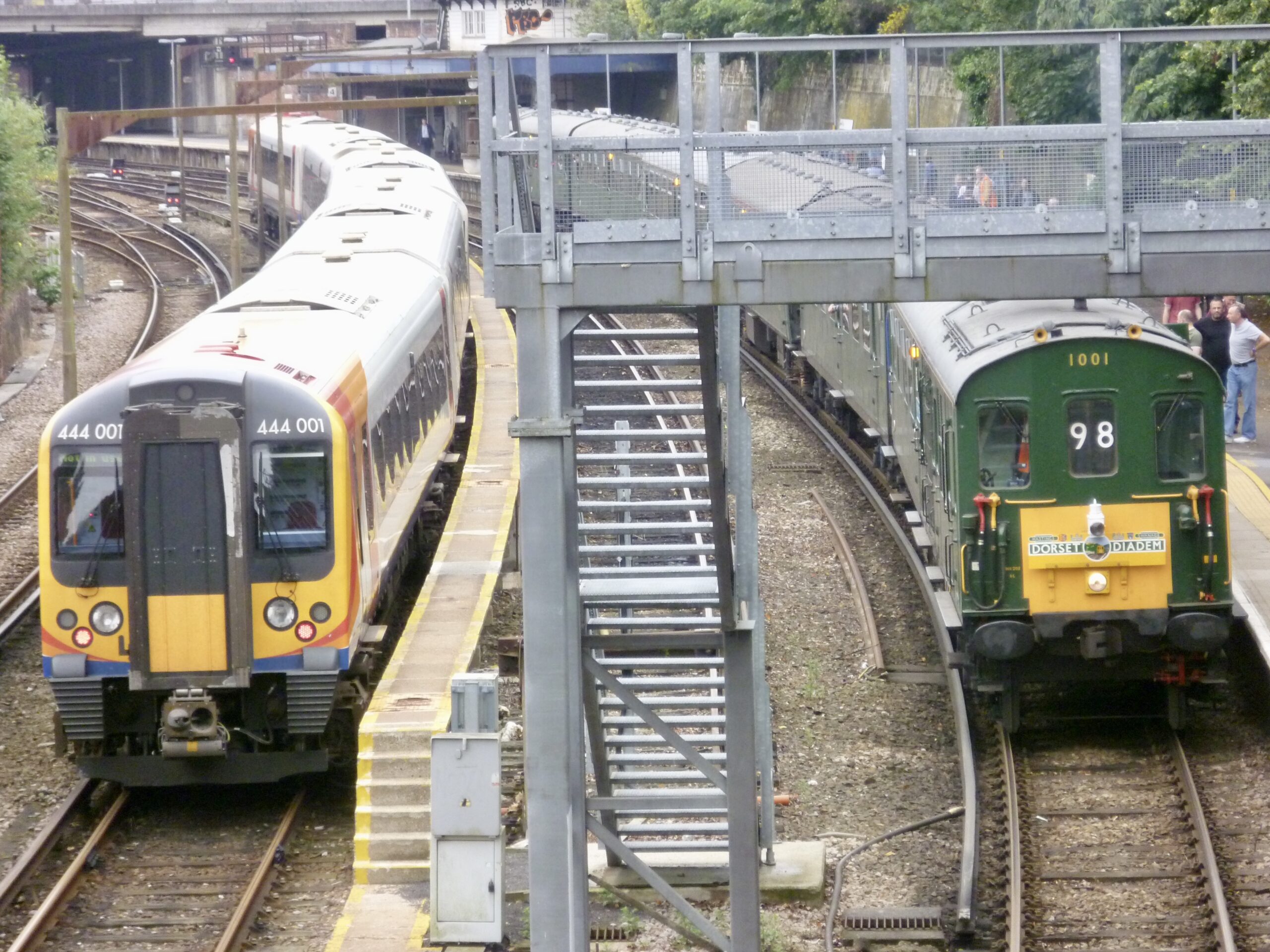
    South West Trains Class 444 No. 444001 at Bournemouth while “slim gauge” Hastings Diesel Electric Multiple Unit (DEMU) No. 1001 passes with the “Dorset Diadem’ Rail tour – 25/06/2011
    Newly re-liveried SWR Class 444 No. 444001 departs Poole working 5B19 1137 Poole to Poole Storage Sidings – 23/04/2023

    The Class 444’s were built by Siemens in Austria between 2002 and 2004, initially on Portsmouth services. They began replacing Class 442 “Wessex Electrics” on the Weymouth line from November 2006. They have five carriages and can operate in multiple, meaning two Class 444’s can run together as a ten-car service or they can work with a four car Class 450 to make a nine-car train.

    That’s all we have time for this week. Thank you for reading and for your corrections and comments – all very much appreciated!

    End Shot

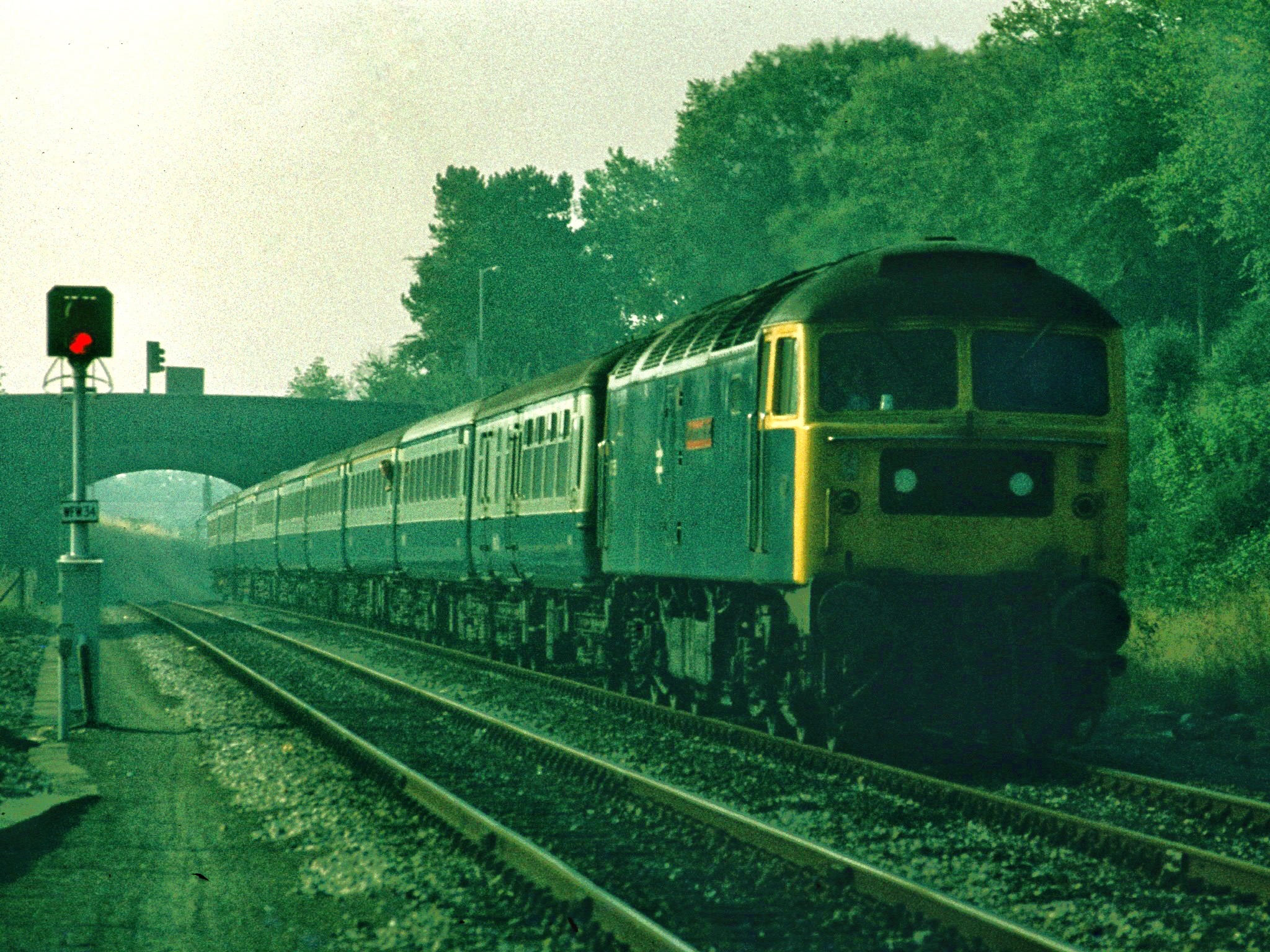
    Class 47/4 No. 47555 ‘The Commonwealth Spirit’ heads up a rake of MK2 Inter-City coaches approaching Dorchester West on 5th September 1981. The locomotive entered traffic on 28th February 1964 as No. D1717. It carried the number 47126 for a short while, before being fitted with Electric Train Heating (ETH) in 1974. She was withdrawn in January 1999 and cut up at EWS Wigan Springs Branch CRDC by January of the following year. This was one of my favourite Class 47 locos. It’s a bit strange to have favourites I suppose, but I liked the name and I saw her many times. Unlike sister loco, No. 47595 ‘Confederation of British Industry’ which I always found a bit toxic.
  • SWR Living Walls

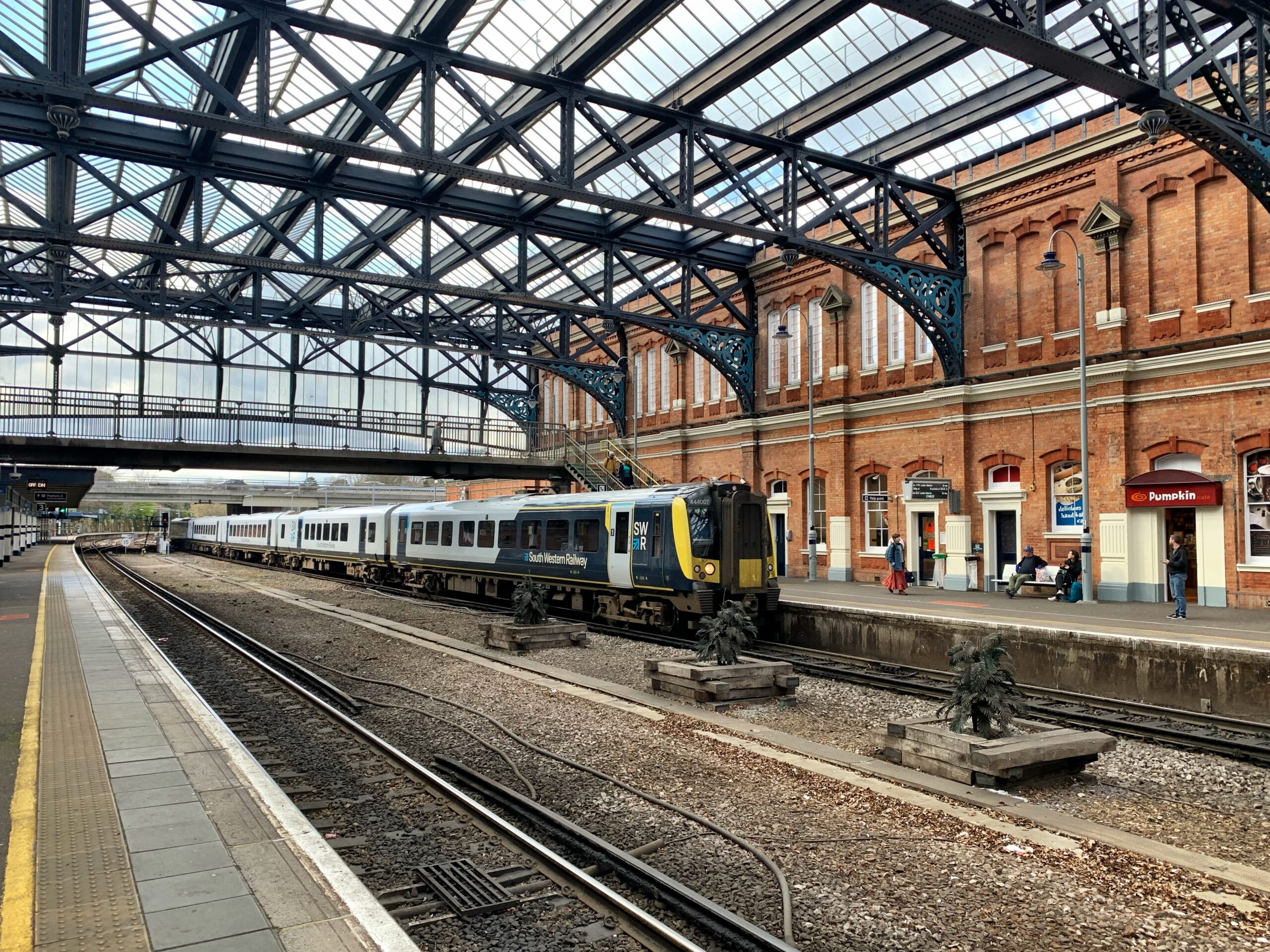
    South Western Railway (SWR) Class 444 No. 444007 arrives into Bournemouth with 5W28 1748 Bournemouth Middle Sidings to Bournemouth empty coaching stock movement – 15/04/2023

    Thursday 13th April was greeted by South Western Railway (SWR) announcing a major fault at @0300 in the cabling that powers the signalling systems at London Waterloo. This knocked out 14 of the platforms. Consequently passengers were advised not to travel on routes into the busiest railway station in Britain with 41.4 million customers travelling through every year. Engineers fixed the problem by 1130, however because of the length of time the lines were blocked SWR was expecting disruption until the end of the day. For some reason, a number of trains between Weymouth and Poole / Bournemouth were cancelled. We asked SWR why and were told it was “due to staff and stock displacement”. There were three Class 444 Electric Multiple Units in Weymouth station so I can only assume SWR have not heard of taxis to get staff to Weymouth. Yet again the Bournemouth to Weymouth line is mostly disregarded when it comes to providing a train service.

    South Western Railway (SWR) Class 444 No. 444007 forms the front section of 1W28 1703 Weymouth to London Waterloo. Class member No. 444017 joined No. 444007 with the section from Weymouth. Class 450 No. 450041 sits in the bay platform with the 2B68 1802 Bournemouth to Winchester service – 15/04/2023

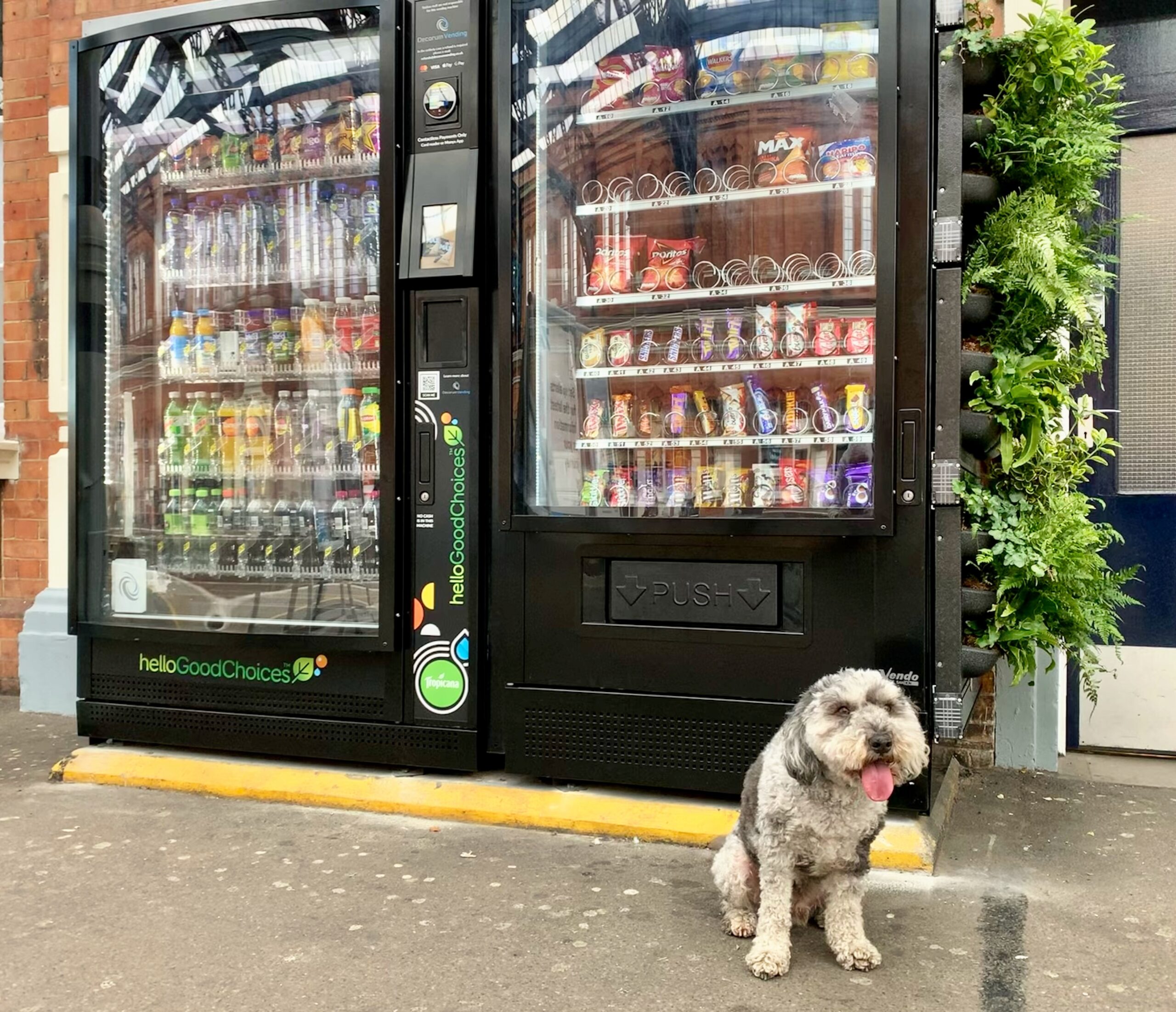
    However, Bournemouth station has been chosen to showcase a new, green addition on the platforms. SWR has introduced new, more energy-efficient vending machines as part of a world-leading, innovative new trial having partnered with Christchurch-based Decorum Vending, who have worked with Regency Design and phs Greenleaf to design the world’s first “living walls” that can be attached to the sides of vending machines.

    Yoshi takes a look at the Living Wall vending machine on platform 3 at Bournemouth railway station. He wanted a Milky Way, but we declined his requests – 15/04/2023

    The living walls – which are small, self-sufficient, vertical gardens – have been developed to thrive in all locations, whether sunlight, shady or covered, and if the trial at Bournemouth is successful, they will be making an appearance on machines at other locations on the SWR network. The living walls are attached to an advanced vending machine which uses 54% less electricity than previous versions and has a smaller environmental impact through the use of upgraded refrigerants. Annually, each wall consumes nearly 5kg of carbon and produces 2.4kg of oxygen while combatting air pollution and increasing biodiversity. The walls’ structures are made from recycled coffee grounds and all removed plants are recycled back into biomass. Living walls have been proven to effectively reduce harmful nitrogen oxides while providing a boost to biodiversity, by providing accessible habitats for insects and other wildlife.

    Class 444 No. 444017 departs Bournemouth at the rear of the 1W28 1703 Weymouth to London Waterloo service. A Living Wall vending machine can be seen on platform 2 in the middle of the image – 15/04/2023

    The new vending machines join other innovations in Bournemouth including station benches made from recycled plastic bottles and a plastic-free dispenser for both still and sparkling water.

    Class 66 No. 66587 ‘As One, We Can’ with Class 47 No. 47830 ‘Beeching’s Legacy’ tucked inside at Crewe Basford Hall. The Class 47 will be a guest at the Swanage Diesel Gala in May – 01/04/2023

    We posted photos of our recent visit to the Crewe Heritage Centre last week. We were in Crewe to take part in an Inter City Railway Society organised visit to Crewe Basford Hall Yard, a railway marshalling yard which since the 1970’s has been the stabling and swapping of intermodal trains operated by the Freightliner Group. The yard is situated just under a mile south of Crew railway station and was originally opened in 1901 by the London & North Western Railway (LNWR). During the 1930’s, Basford Hall was the busiest marshalling yard in Europe, handing between 28,000 and 47,000 wagons every week.

    We arrived in good time at the 1145 meeting point situated at the entrance to Basford Hall. Parking was limited, and we were very grateful that another car shunted forward to allow enough space to squeeze in a Nissan Note. After signing in and handing over our fee, we joined an expectant number of other enthusiasts to await the safety briefing prior to admission into the yard. It was stressed that visitors should be in good health as on a previous visit a member of an enthusiast group had been taking ill through the exertion of walking over uneven surfaces and railway track.

    Freightliner Class 66 No. 66561 runs light engine through Crewe Basford Hall – 01/04/2023
    DB Cargo Class 66 No. 66078 at Crewe Basford Hall – 01/04/2023

    The yard, still one of the busiest in the UK for freight traffic, is a nationally important node on the West Coast Main Line (WCML), with most freight trains routed through the yard in order to avoid congesting the nearby Crewe railway station, which is also an important junction on the WCML for passengers.

    Prior to the privatisation of British Rail (BR), Freightliner trains would run from various locations in the north which were then re-organised at Basford Hall to make whole trains for other locations. In 1992, the destination roster was changed so that all services stopped at Crewe to allow swapping of containers. This meant that any destination or point of origin was possible with only one change. Whilst this process has lessened in the 21st century, Basford Hall is still an important location for the stabling and rearranging of trains for Freightliner’s intermodal network.

    Freightliner also stable non-intermodal freight trains at Basford Hall, and they have a maintenance location on site for wagons and locomotives, with heavier repairs and maintenance is still undertaken at Leeds Midland Road. A fuelling point was opened at Basford Hall in 1998, when the yard experienced an upsurge in traffic, with further remodelling of the down yard taking place in 2000. The traction maintenance depot (TMD) was opened on site in 2016, with the TOPS code of BA.

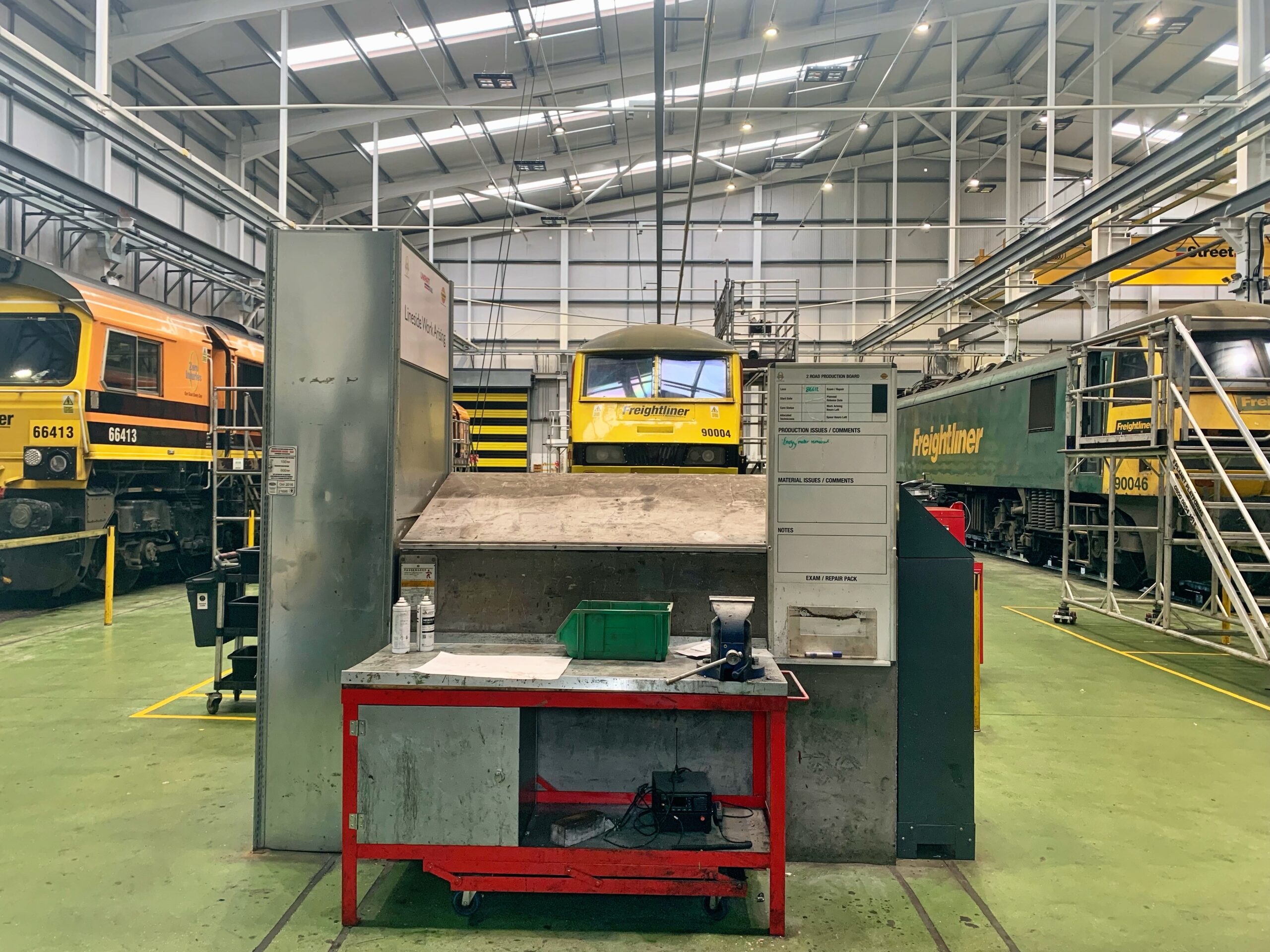
    From left to right: Class 66 No. 66413 ‘Lest We Forget’, Class 90 No. 90004 and Class 90 No. 90046 inside Crewe Vehicle Maintenance Facility (taken from a window looking into the facility) – 01/04/2023

    Crewe Vehicle Maintenance Facility is comprised of a two-road diesel Loco fuel point and a five-road maintenance shed. The facility operates 24/7 providing maintenance services for both electric and diesel locomotives across six types, Classes 08, 47, 66, 70 86 and 90. Home to Freightliner’s electric fleet, the Crewe VMF team carry out all planned maintenance activities on these locos including wheelset changes, bogie overhauls and transformer changes. In addition the team carry out servicing, maintenance and repair activities on the diesel fleet from the fuel point and also up to C exams on the Class 66’s in the maintenance shed. The team is currently expanding into class 66 engine work as part of their 2020 maintenance development plan.

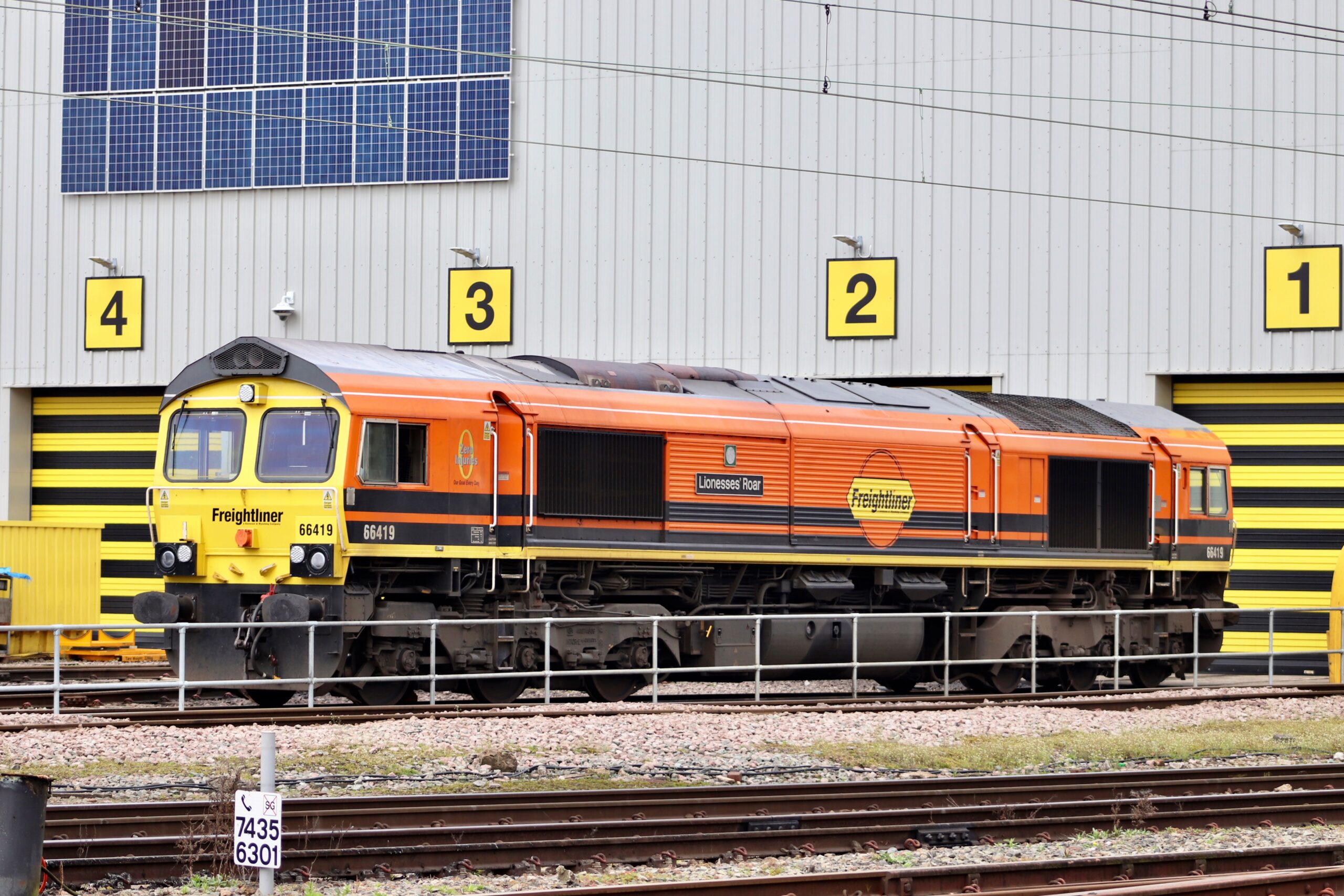
    Class 66 No. 66419 ‘Lionesses’ Roar’ stands in number 1 road at Basford Hall Crewe Vehicle Maintenance Facility – 01/04/2023
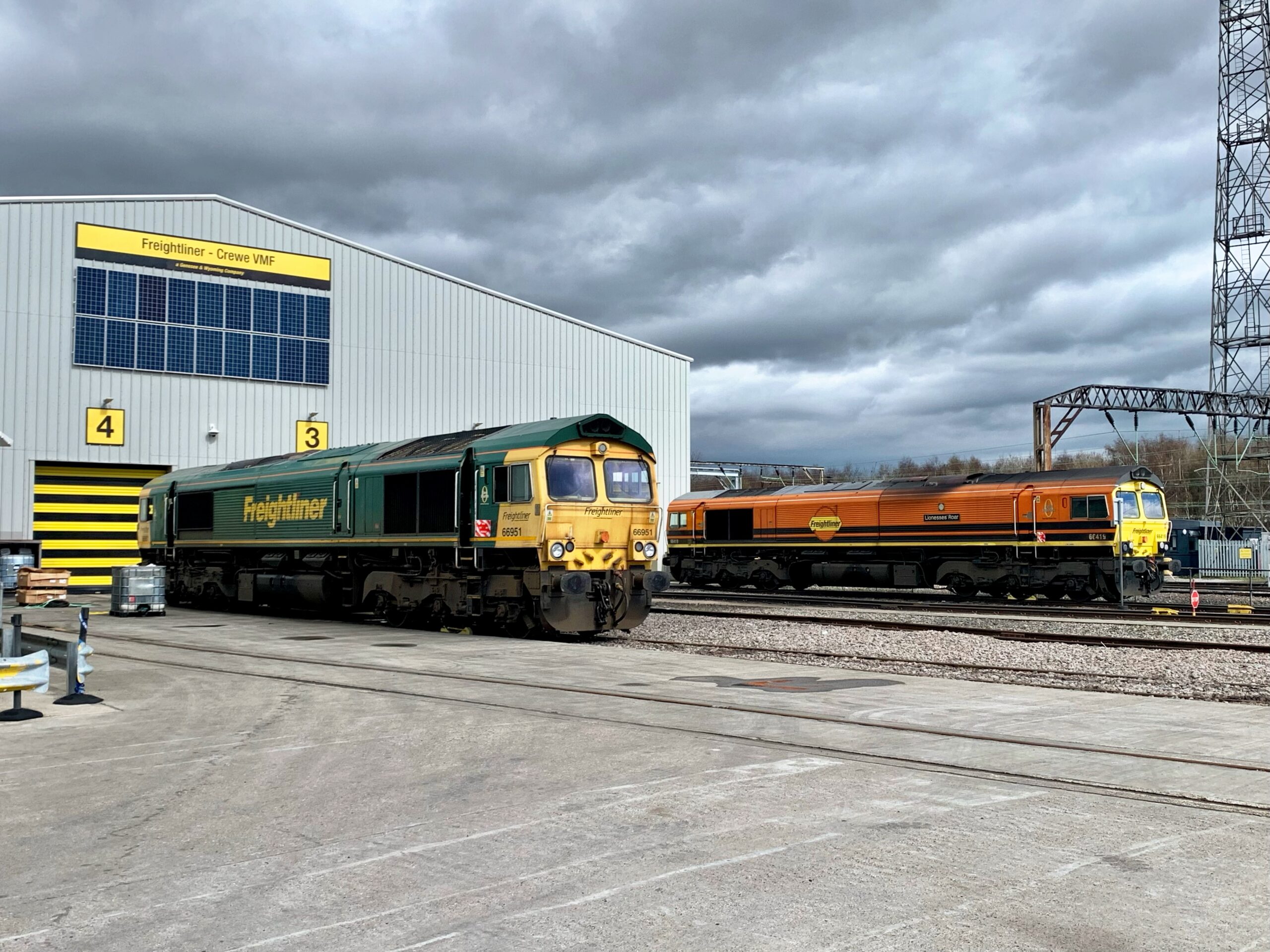
    Class 66 No’s. 66951 and 66419 ‘Lionesses’ Roar’ outside Crewe Vehicle Maintenance Facility – 01/04/2023

    A team of mobile Field Service Engineers, managed from Crewe but strategically located throughout the country undertake planned maintenance and repairs in the field minimising locomotive downtime.

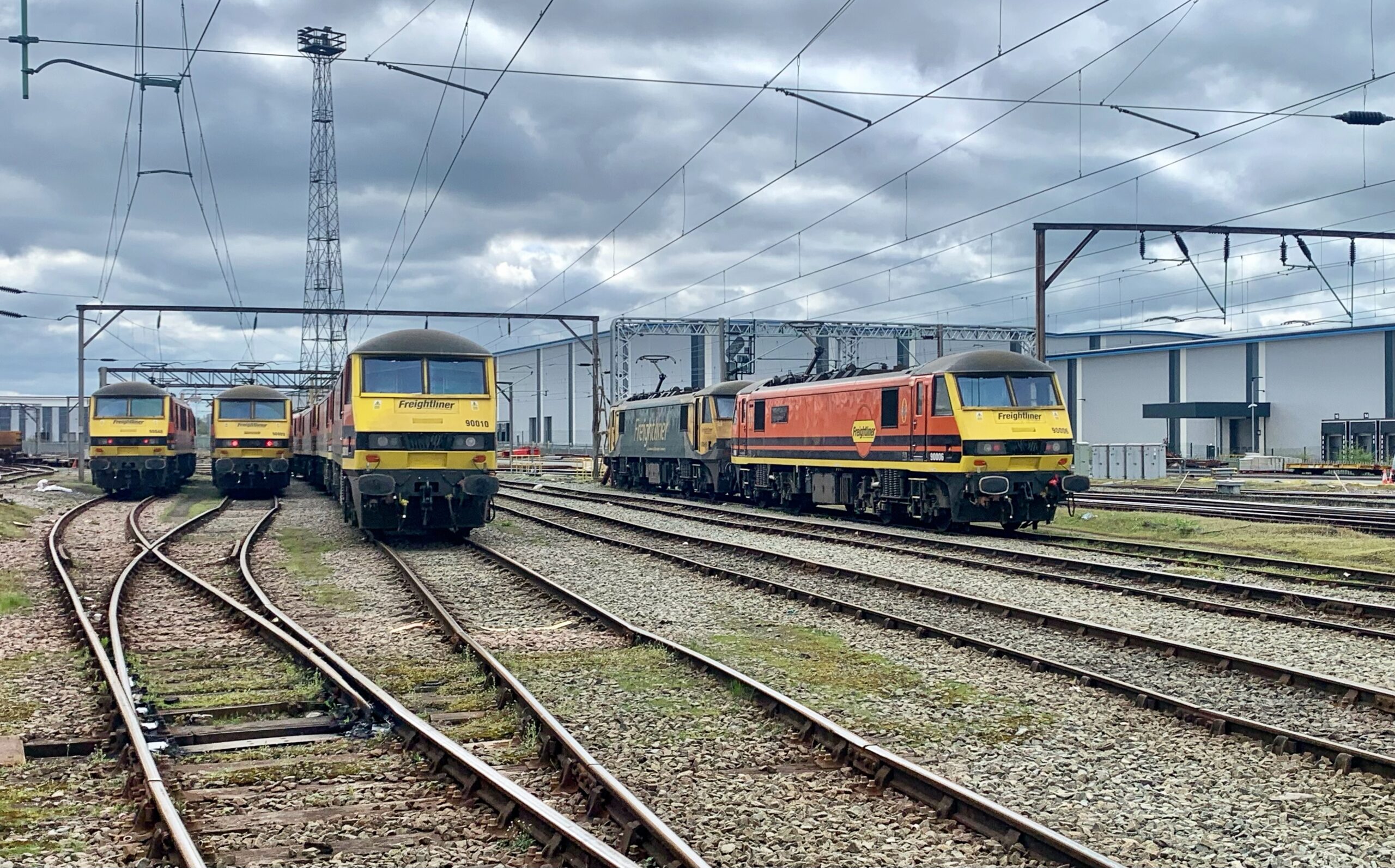
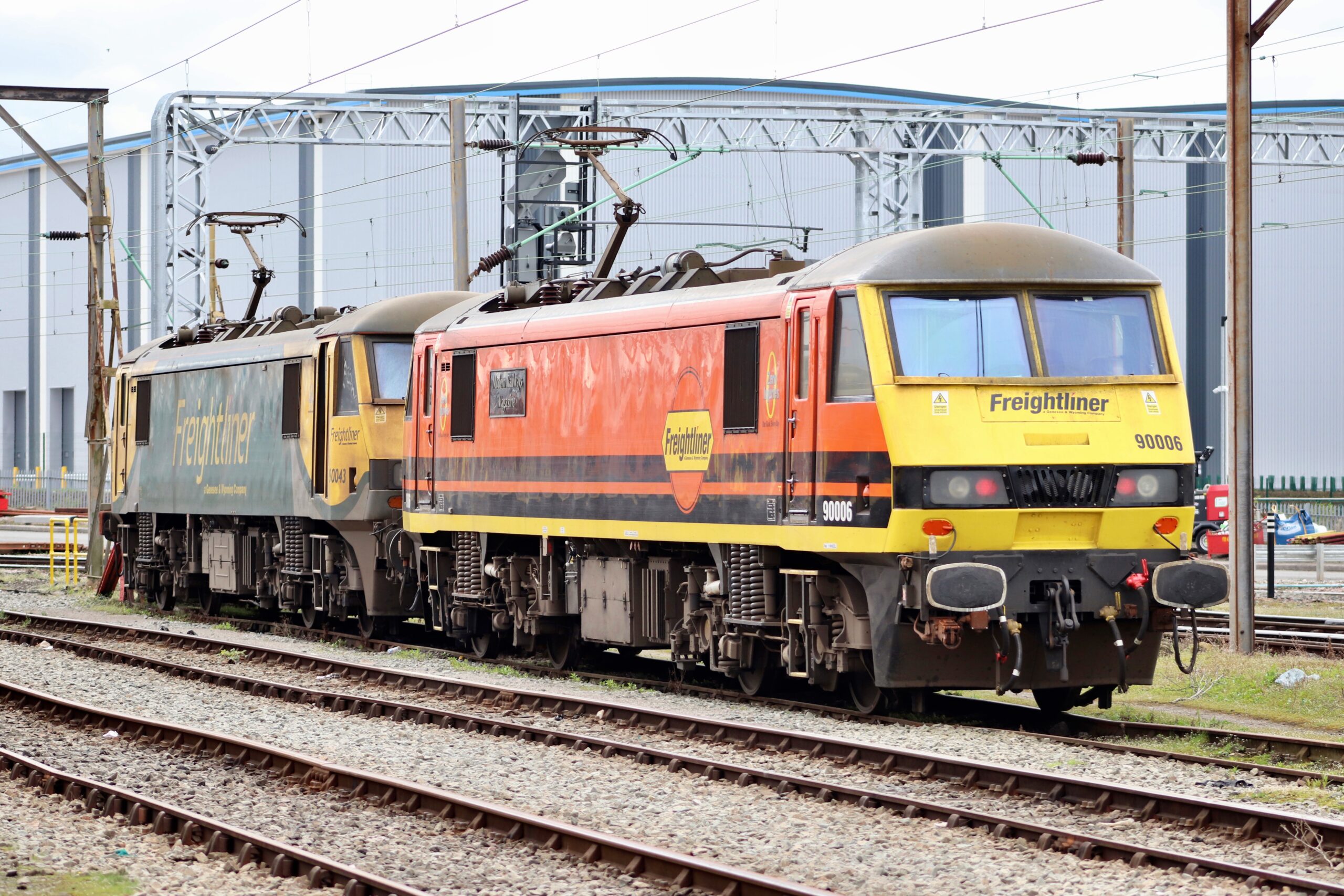
    Class 90’s stabled at Crewe Basford Hall including No’s. 90048 / 90003 / 90007/ 90011 / 90010 / 90006 / 90043 – 01/04/2023
    Another view of Class 90’s at Crewe Basford Hall – 01/04/2023
    Class 90 No. 90006 ‘Modern railways Magazine / Roger Ford’ with Class 90 No. 90043 at Crewe Basford Hall – 01/04/2023
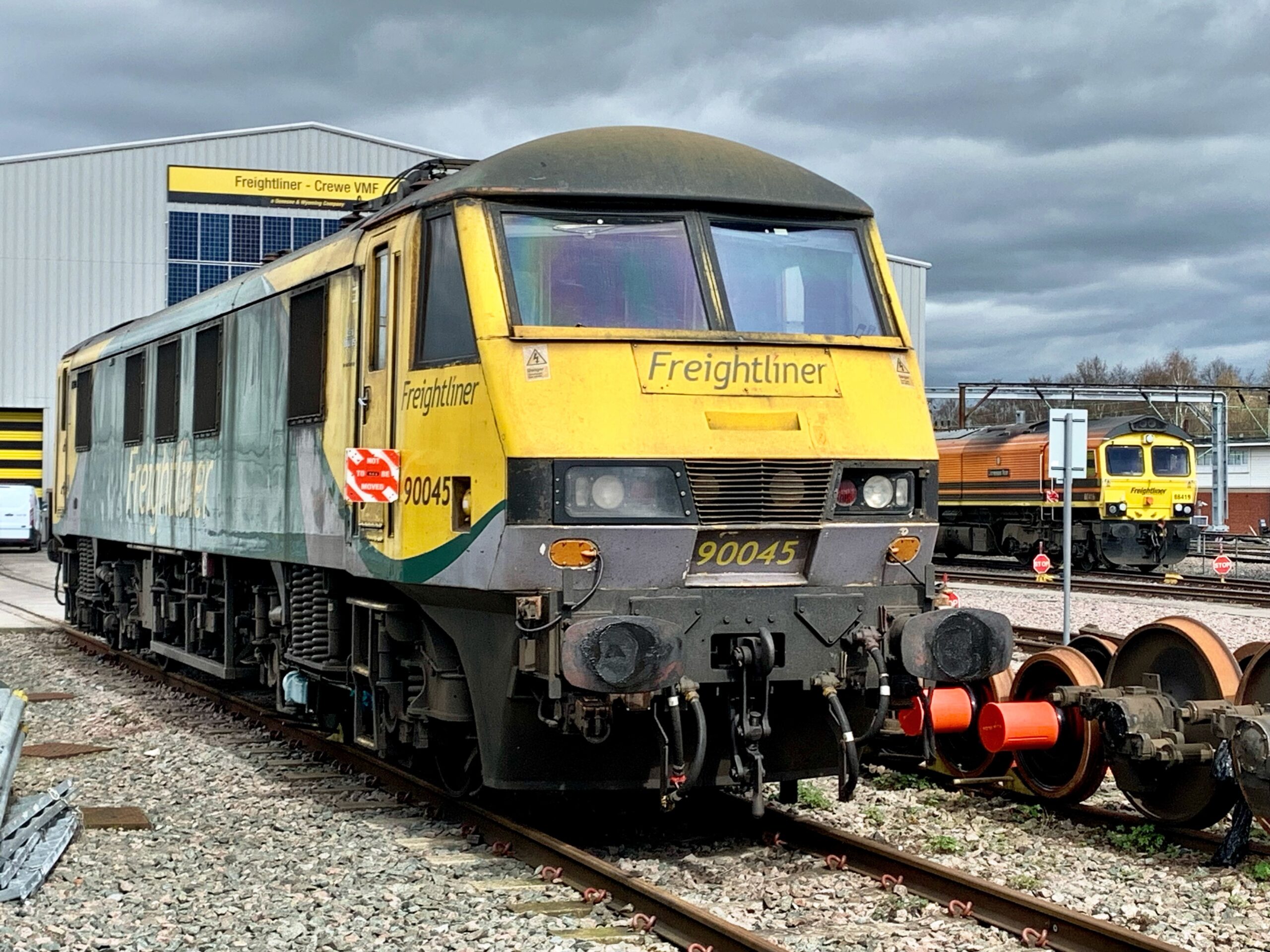
    Class 90 No. 90045 at Crewe Basford Hall – 01/04/2023
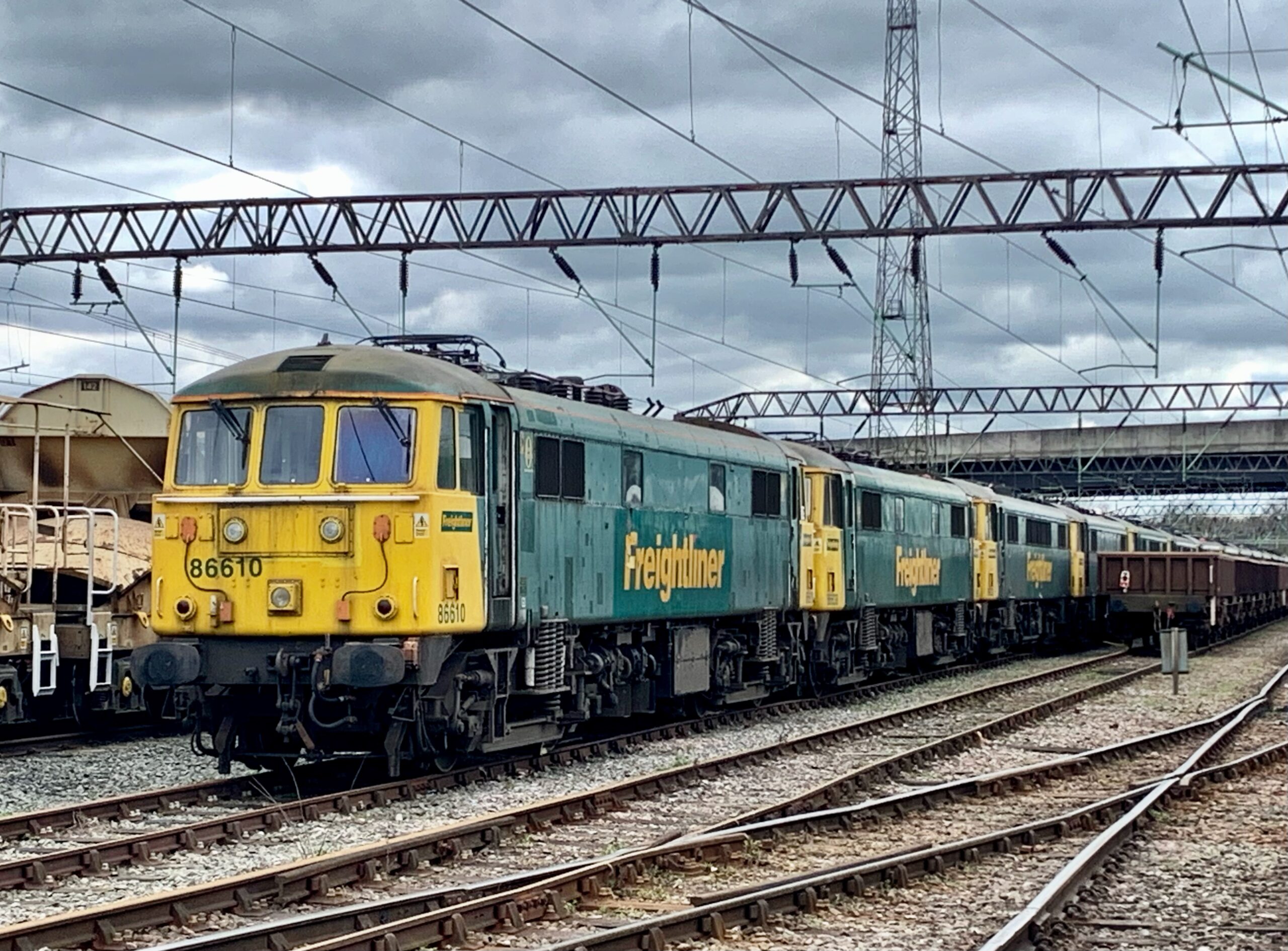
    A long line of stored and disused Class 86 locomotives awaiting their fate at Crewe Basford Hall. Rumour is they are being sold to Bulgaria – 01/04/2023
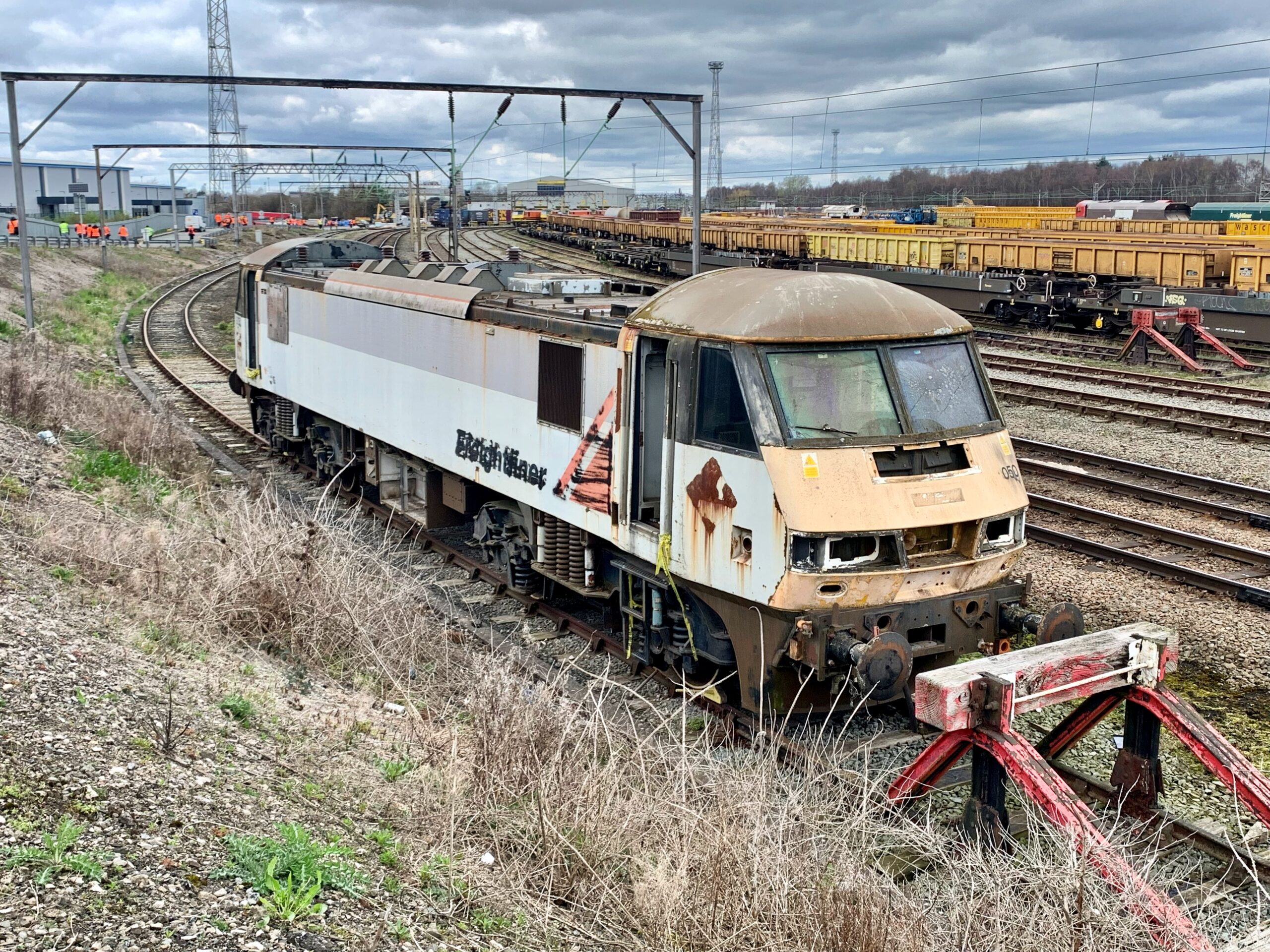
    Class 90 No. 90050 in very poor condition at Crewe Basford Hall Sorting Sidings – 01/04/2023

    Our visit took just over an hour and I found it very enjoyable, although I understand that some in the group were very frustrated as they were unable to wander down every line of wagons in order to collect the numbers.

    Afterwards, we made the short walk over the road to peer through the fence at Direct Rail Services Crewe facility and were able to obtain the following views:

    A modern line up at DRS Crewe Gresty Bridge with Class 68 locomotives No’s. 68027 ‘Splendid’ 68002 ‘Intrepid’ and 68022 ‘Resolution’ – 01/04/2023
    Class 88 No. 88001 ‘Revolution’ and 57305 at DRS Gresty Bridge – 01/04/2023

    At this point we collected the car and drove round to the Crewe Heritage Centre which we chatted about last time.

    Our next port of call was Casey Lane which is situated just south of Crewe Basford Hall yard for an entertaining hour of watching trains go by, the highlight for me being a Class 60 on a sand train.

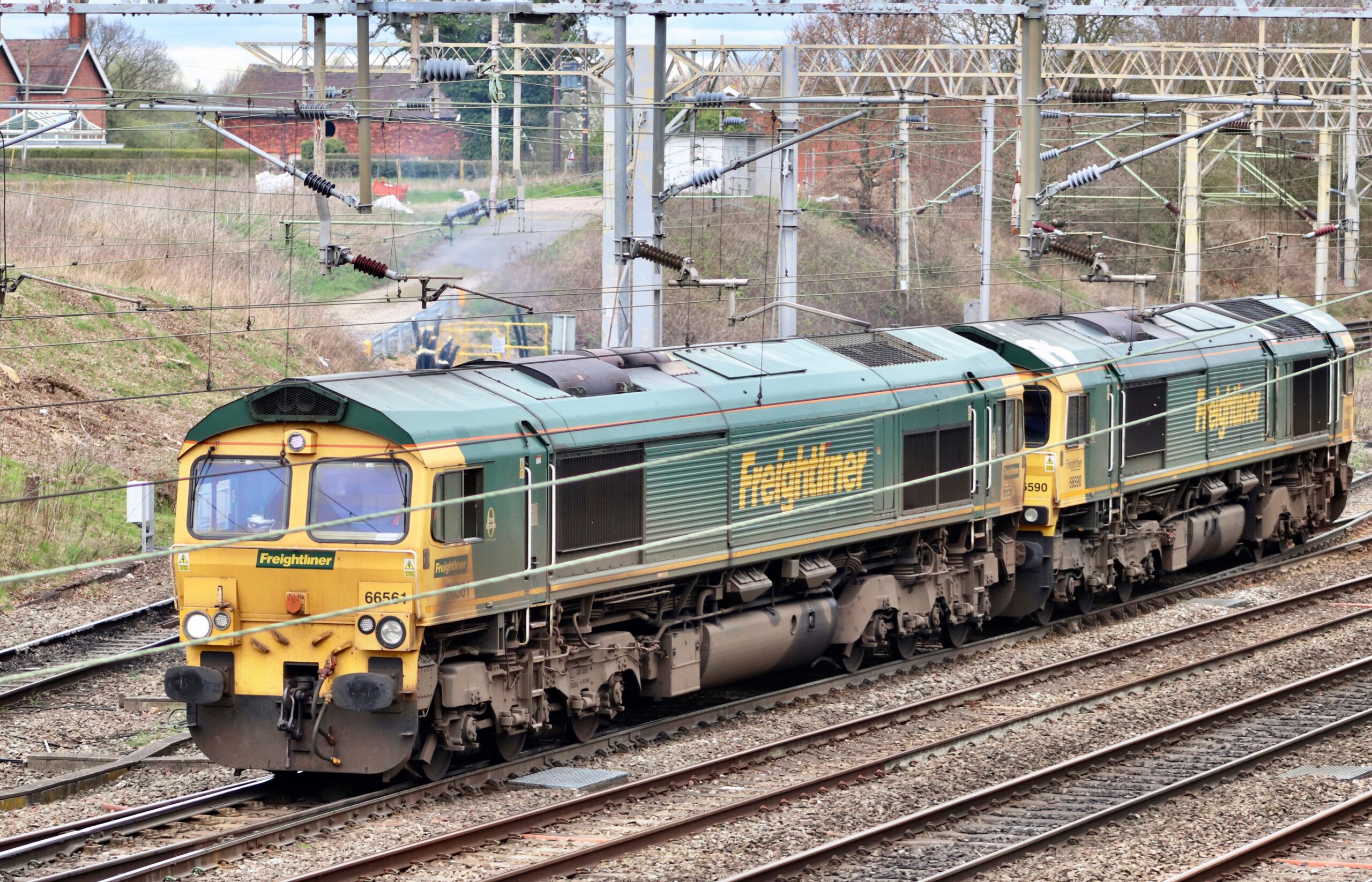
    Freightliner Class 66 No’s. 66561 and 66590 depart Basford Hall with light engine movement 0Y61 1557 Crewe Basford Hall to Bescot Up Engineers Sidings – 01/04/2023
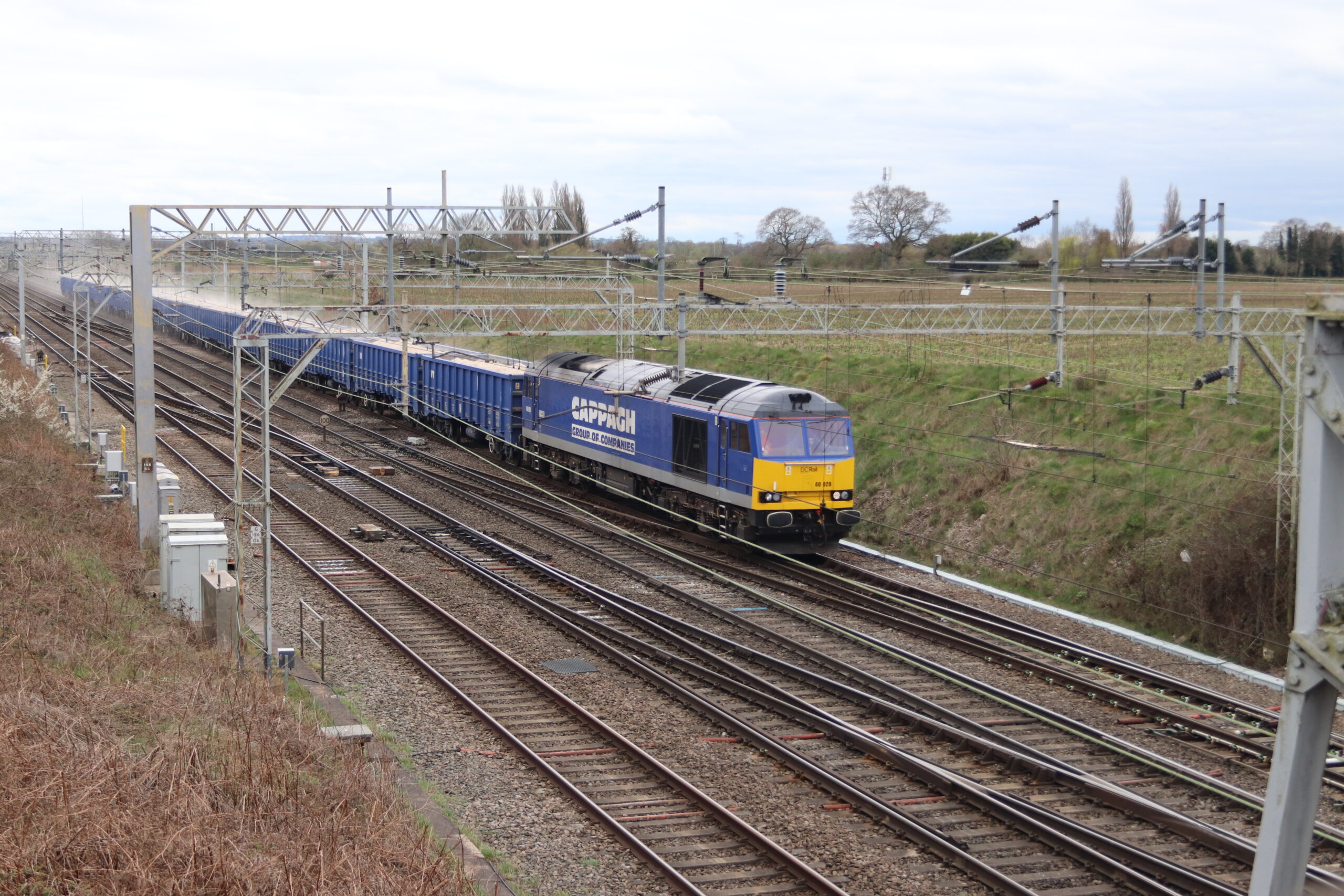
    Cappagh liveried DCR Class 60 No. 60028 heads north past Casey Lane with 6M89 0901 Middleton Towers to Ravenhead Sidings – 01/04/2023
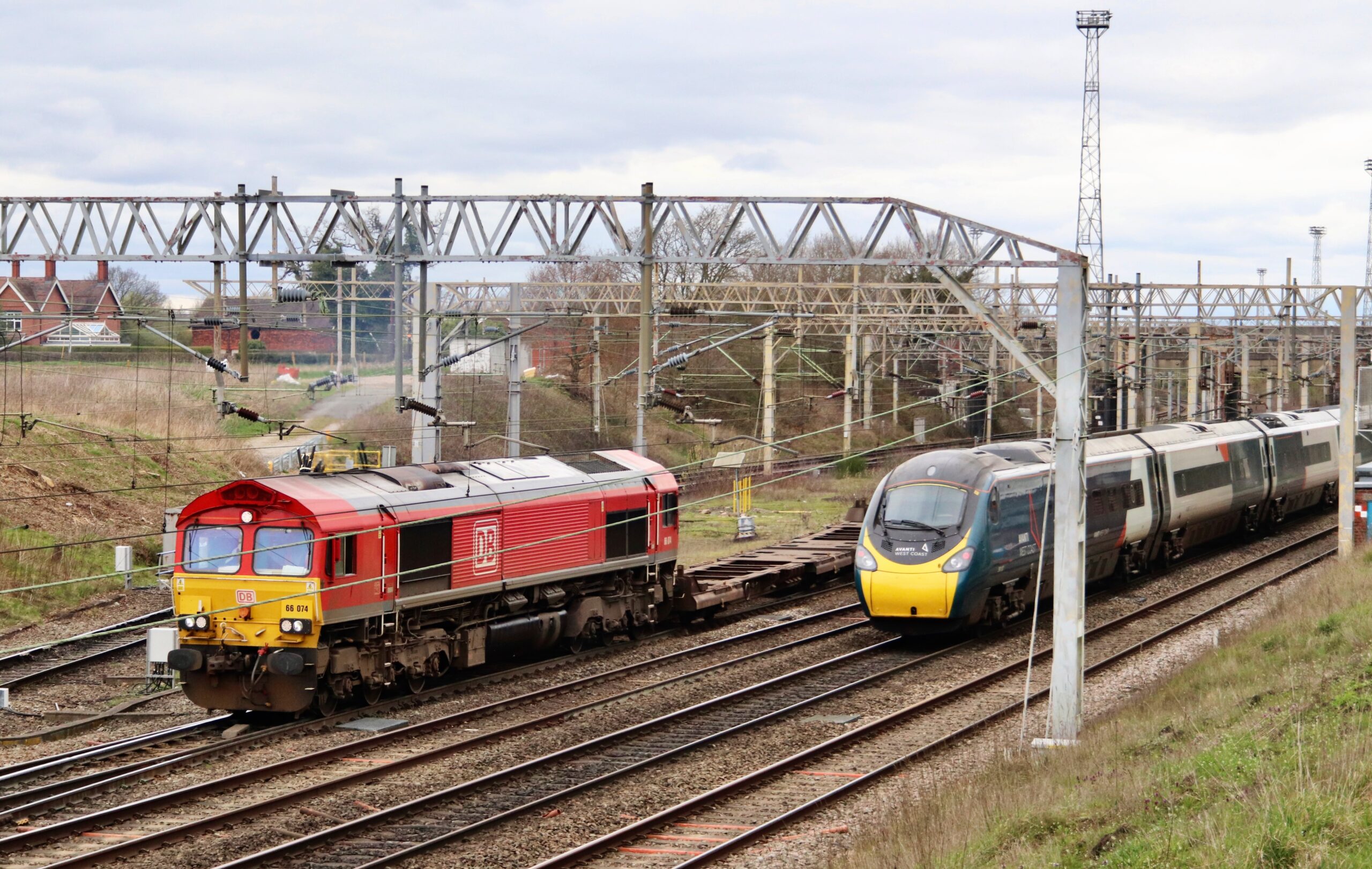
    DB Cargo Class 66 No. 66074 departs Crewe Basford Hall working 4M25 0628 Mossend Down Yard to Daventry International Rail Freight Terminal Reception RFD as a passing Avanti Class 390 Pendolino heads north- 01/04/2023

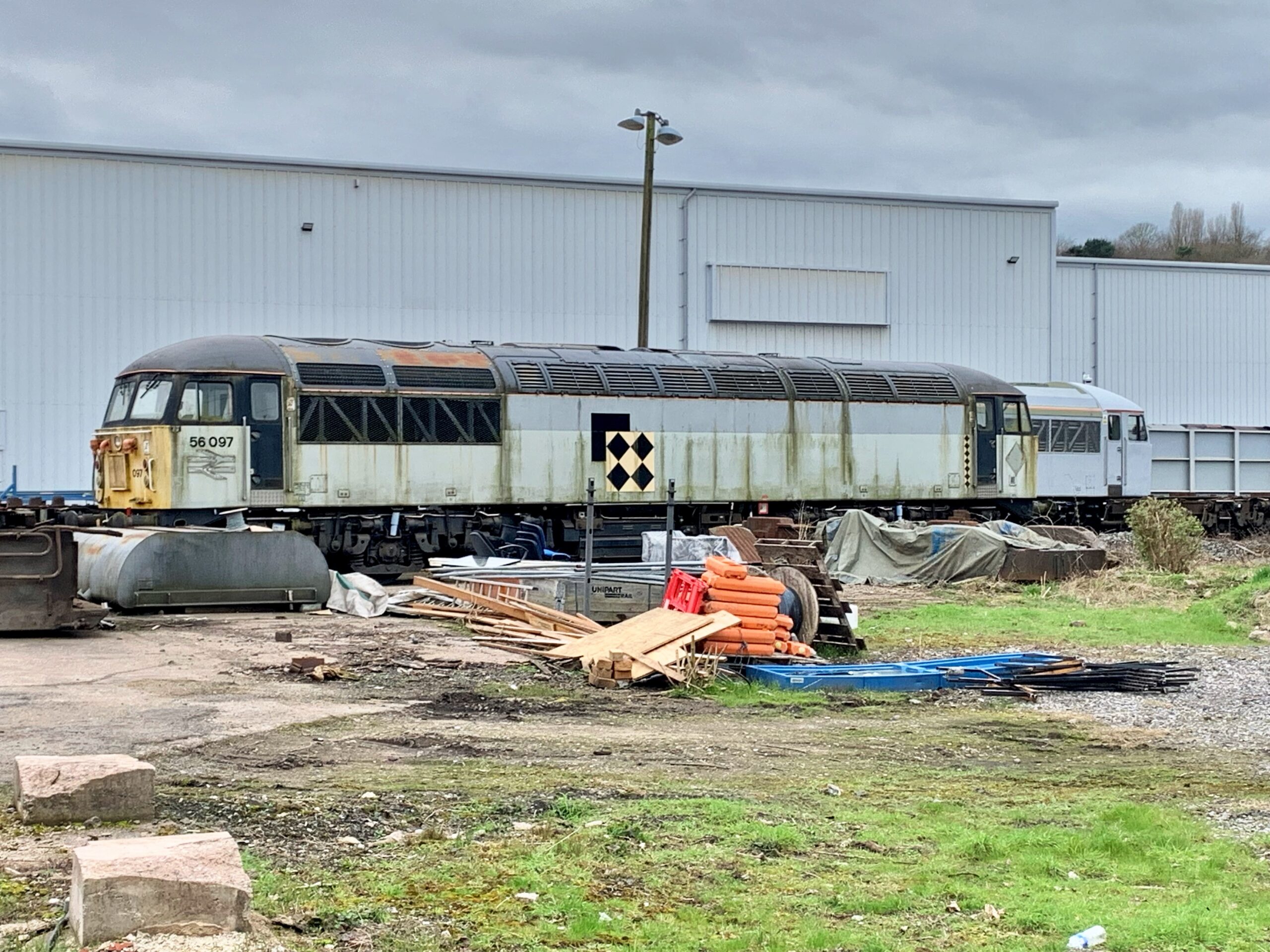
    Our intention was then to pop into Longport to have a look through the fences at Electromotive (EMD) before heading onto Derby for an overnight stay. And although we did drive down to Longport and captured the following images, we were soon on our way back to Crewe!

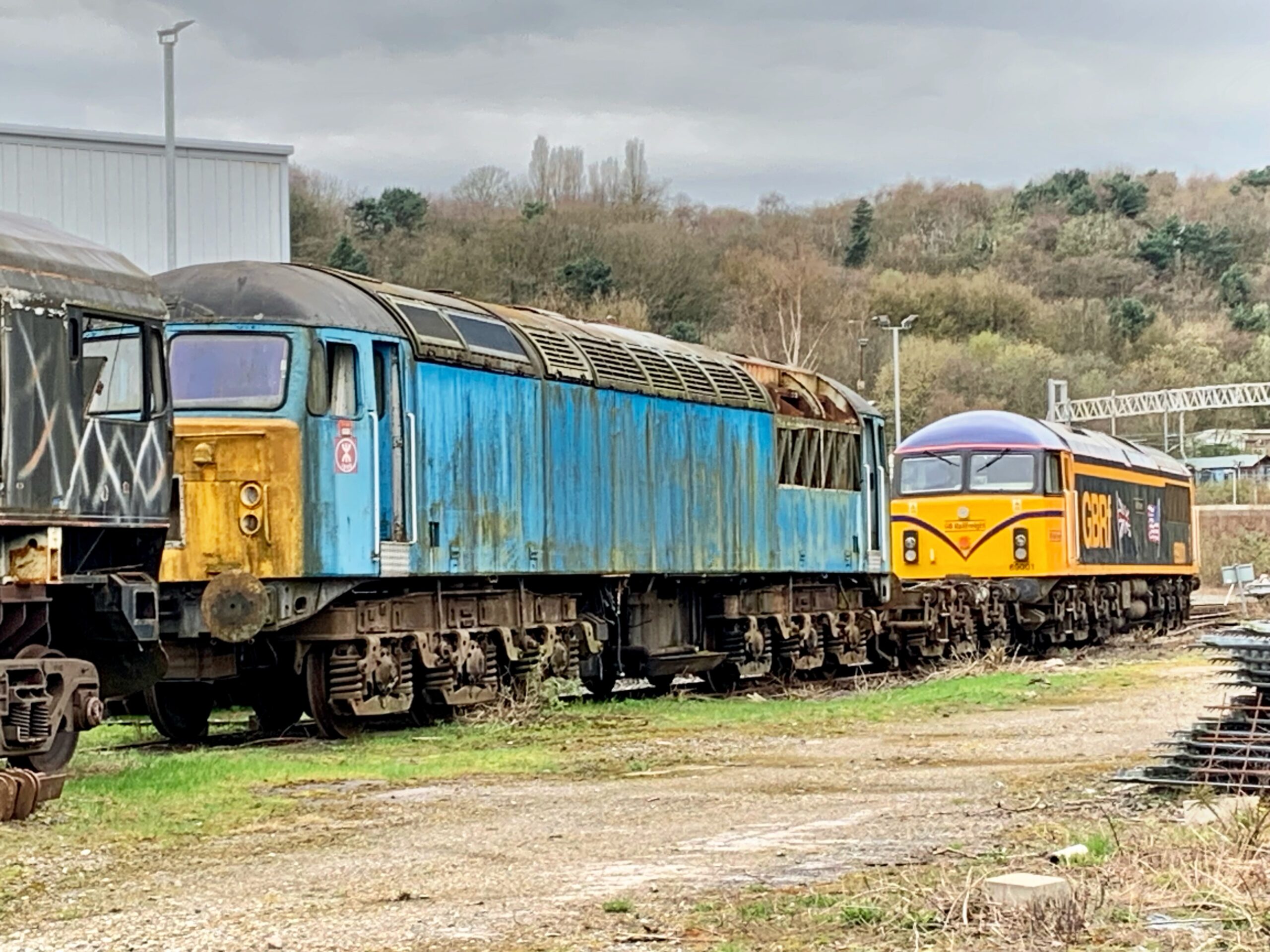
    Class 56 No. 56097 at Longport has been nominated for the Class 69 conversion programme and will become either No. 69015 or 69016 – 01/04/2023
    Class 56 No. 56009, destined to be converted into Class 69 No. 69015 or 69016 in the yard at Longport with Class 69 No. 69001 ‘Mayflower’ behind. No. 69001 was awaiting release back into traffic following the completion of the first of three packages of planned modifications being rolled out for the Class 69’s including a new drivers seat and cab modifications. Part two is connected with air conditioning while part three is for engine tuning to reduce vibrations – 01/04/2023
    69008 (ex-56038) in grey primer at Longport. This conversion is the first to include the additional front connection for stock movements – 01/04/2023

    As we returned to the car at Longport, we heard a rumbling noise coming trough the station which sounded very much like a Class 37, because it was indeed one of the veteran locomotives which soon passed us top and tailing two FNA flask wagons with a Class 57. A quick look at Real Time Trains revealed the working was heading to Crewe Coal Sidings which would require a reversal in Crewe Station. The timings were in our favour so we headed back up the A500 and the barrier staff at the station very kindly allowed us access to the platforms allowing us to see Class 37 No. 37401 ‘Mary Queen Of Scots’ arrive with Class 57 No. 57309 ‘Pride Of Crewe’ bringing up the rear.

    Class 37 No. 37401 ‘Mary Queen Of Scots’ arrives at Crewe with Class 57 No. 57309 ‘Pride Of Crewe’ at the rear of two FNA flask wagons working 6Z52 1325 Leeds Balm Road Loco Freightliner Heavy Haul to Crewe Coal Sidings DRS – 01/04/2023
    Class 57 No. 57309 ‘Pride Of Crewe’ waits to depart Crewe as the driver changes locomotives, the train having been brought into the station by Class 37 No. 37401 ‘Mary Queen Of Scots’ working 6Z52 1325 Leeds Balm Road Loco Freightliner Heavy Haul to Crewe Coal Sidings DRS – 01/04/2023

    Our afternoon at Casey Lane and Crewe railway station has been distilled into the following video:

    DRS Class 57 No. 57304 ‘Pride Of Cheshire’ stabled at Crewe Station for Thunderbird (rescue) duties – 01/04/2023

    Arrival at Derby was slightly later than planned, but feeling chuffed to have captured the flask working at Crewe. To stretch our legs we had a walk over to the East Midlands Railway depot, which might have been a highlight had it not been so dark! On the way we passed a former roundhouse engine shed building now in use by the university. The evening was rounded off with a visit to The Alexandra Hotel to check out the railway memorabilia agai and a bag of surprisingly good chips!

    This is the world’s first railway roundhouse, built by Robert Stephenson in 1839 for the North Midland Railway.
    It was decribed on construction as “A polygon of sixteen sides, and 58m (190 ft) diameter, lighted from a dome-shaped roof, of the height of 15 m (50 ft). It contains sixteen lines of rails, radiating from a single turn-table in the centre: the engines, on their arrival, are taken in there, placed upon the turn-table, and wheeled into any stall that may be vacant. Each of the sixteen stalls will hold two, or perhaps more, engines.”
    Early steam locomotives normally travelled forwards only; although reverse operations capabilities were soon built into locomotive mechanisms, the controls were normally optimized for forward travel, and the locomotives often could not operate as well in reverse. Some passenger cars, such as observation cars, were also designed as late as the 1960s for operations in a particular direction. A turntable therefore allowed a locomotive or other rolling stock to be turned around for the return journey.
    Located next to Derby Railway Station, the buildings were previously part of the East Midlands’ thriving railway business. Attached to and integral with the Roundhouse are two buildings distinct within their own right. Firstly, The Carriage Shop, which as the name suggests, was primarily used for the manufacture and repair of railway carriages. Secondly, there is an office complex which consists of three storeys of accommodation wrapped around the North West quadrant of the Roundhouse. In addition to this complex of three adjoined buildings, there is a fourth building which stands alone to the North. This is known as The Midland Counties Building or Engine Shop.
    Having narrowly escaped demolition after the closure of Derby Railway Works, this Grade II* Listed Building has been sympathetically restored as the main campus of Derby College, catering for more than half of the college’s 25,000 students. Source: https://www.nationaltransporttrust.org.uk/heritage-sites/heritage-detail/derby-roundhouse
    The North Midland Railway and later Midland Railway workshop, Derby – 01/04/2023
    Former railway cottages, Derby – 01/04/2023
    Former railway cottages, Derby – 01/04/2023
    The Alexandra Hotel, Derby. A Class 37 cab can be seen in the car park to the left of the image. You can see more images of the railway memorabilia located at the pub in a previous blog entry here – 01/04/2023

    That’s it for another week – time has defeated us once again! Thank you, as always, for visiting, your comments and encouragement. However, we can’t close without mention of the story first broken by “The Independent” newspaper regarding a leaked Network Rail presentation claiming the condition of railway infrastructure including track, bridges and earthworks is expected to worsen as funding will not cover the rising costs of maintaining a largely Victorian network. We only have to look at the Nuneham Viaduct in Oxfordshire which was closed on 3rd April for safety reasons after cracks appeared in supporting structures. This section of railway, a key artery on the route between the Midlands, London and the South Coast which includes CrossCountry services from / to Bournemouth, will be closed until at least 10th June 2023.

    The leaked presentation states that the funding constrictions will mean:

    • Network Rail will do fewer repairs over the next five years, clearing less of the debris that can cause delays and accidents.
    • Lack of funding will lead to higher costs overall as Network Rail will be expected to repeatedly repair outdated infrastructure instead of replacing it.
    • Network Rail £3bn risk fund, which covers unpredictable events like a pandemic or extreme weather, has been cut because there is “not sufficient headroom”.
    • A “market-led” approach to maintenance will be adopted, with the highest earning services taking priority.

    All this was revealed as the RMT union highlighted Transport Secretary Mark Harper has allowed two rail companies to be paid £82 million in dividends in 2022. FirstRail Holdings Ltd, the holding company for five FirstGroup franchises, and Govia Thameslink Railways, which runs the biggest franchise in Britain, have recently reported dividend payments of £65 million and £16.9 million respectively in their annual accounts for 2022.

    This is the despite the fact both companies are part of a major industrial dispute where hundreds of millions of pounds has been used to indemnify them against lost revenue from strike action. Two of First Rail Holdings Ltd’s franchises, Avanti West Coast and Transpennine Express, have been the subject of public and political controversy after cancelling hundreds of services. In spite of this, the government has renewed or extended contracts for Avanti West Coast and may shortly do the same for Transpennine Express.

    Govia won a contract to carry on running the Thameslink, Southern and Great Northern franchise from the government in October 2022 despite its sister company LSER being stripped of the Southeastern franchise for concealing public money. The Department for Transport allowed Go-Ahead Group to conduct its own internal inquiry into the failings at LSER and renewed Govia’s contract for the Thameslink franchise in spite of the fact that the two companies shared many of the same management personnel.

    All these franchises have benefited from indemnification worth hundreds of millions of pounds in taxpayers’ money by the DfT to cover the costs of lost passenger revenue during the ongoing dispute. The RMT believes this is unnecessarily prolonging the dispute, as the employers do not feel the full impact of stoppages.

    What a way to run a railway…. into the ground.

  • Crewe Heritage Centre

    The Inter City APT-P (Advanced Passenger Train Prototype) was donated to the Crewe Heritage Centre by British Rail in 1988, this would become the only APT-P to be preserved and is the first thing visitors see on arrival – 01/04/2023

    On Saturday April 1st, Yoshi’s mama had a weekend away planned with friends in Oxford. Organised before the announcement of rail strikes, I had a cunning plan for an adventure of my own when Mick Lynch of the RMT declared “everyone out!” By the time the April strike day was suspended, I’d already committed myself to an overnight stay in Derby. So after a stop at the Oxford Park & Ride, my chum @da_buckley967 and myself headed North to Crewe as we had booked a visit to the Freightliner depot at Crewe Basford Hall. Yoshi was still on his hols with his cousins as obviously he wasn’t going to be allowed to wander around a working railway yard. Our visit was scheduled to last for approximately one hour and kicked off at midday. Looking for some other things to do in the area, a visit to The Crewe Heritage Centre was an obvious choice. I was under the misunderstanding that dogs were not allowed on site, but I am happy to report that dogs are very much welcomed, and indeed, they enjoy free admission and doggy watering stations are spotted about the museum to help keep them hydrated. Owners are catered for in the cafe where tea, coffee, cold drinks and snacks are available.

    The former Crewe North Junction Signal Box now contains a cafe, viewing point, model railway and signalling equipment. Constructed in 1938 by the London Midland & Scottish (LMS) Railway Company and built to an ‘ARP’ (Air Raid Precautions) design, with 38cm thick reinforced concrete walls and a 45cm thick concrete roof. The new ‘electric’ Signal Box was constructed directly in front of the previous 1906 building; this was partially demolished in 1940 with only the ground floor being retained and converted into a Linesmans’ hut. In 1985 as part of the Crewe Station remodelling project this Signal Box was closed with control being handed over to the new Signalling Centre on the opposite side of the Crewe to Chester Line.

    The Crewe Heritage Centre is nestled between the Crewe to Chester line and West Coast Mainline on part of the site of the original Crewe Locomotive Works. The Heritage Centre was officially opened by Her Majesty Queen Elizabeth II and His Royal Highness the Duke of Edinburgh, on 24th July 1987 to mark the 150th anniversary of the first train to arrive at Crewe Railway Station in 1837. Originally forming part of the Crewe Heritage Festival which was an eight week long event with activities and celebrations taking place all over the town of Crewe, members of the public were also invited to visit the historic Locomotive Works and see first hand how railway locomotives were constructed and maintained by British Rail.

    Following a really successful festival, Crewe and Nantwich Borough Council decided to open the Heritage Centre again in 1988, and in 1989 the council handed the running of the museum over to the newly formed Crewe Heritage Trust who continue to operate the museum to this day. We really enjoyed our visit and I hope to return with Yoshi in tow one day soon!

    Crewe Station ‘A’ Signal Box with Exeter West Signal Box behind – 01/04/2023
    In 1991, the dismantled sections of Exeter West Signal Box are transported to the Heritage Centre from storage and the complex task of reconstructing the Signal Box begins in May, construction continued into 1992 with the Signal Box opening as part of the museum on May Day 1993 – 01/04/2023
    An example of a Crewe Eagle, four of which were mounted on a bridge crossing the Crewe to Chester railway line – 01/04/2023
    The No. 2 end cab of Class 86 No. 86247 was restored at the Heritage Centre and currently displays the Anglia Railways livery, which whilst in service, the locomotive never actually carried. The locomotive was scrapped in 2015 with both cabs being saved. The No. 1 end cab can be seen at The Cab Yard Project in Bridgend – 01/04/2023
    One of two Class 86/6 locomotives to be given the Freightliner Powerhaul green and yellow livery No. 86622 is on long term loan at the Heritage Centre – 01/04/2023
    Through an agreement between the Crewe Heritage Trust and Europhoenix British Rail Class 91 No. 91120 arrived at the Heritage Centre in 2022 – 01/04/2023
    Released from English Electric Vulcan Foundry in January 1963 – Works Number EE/VF3237/D762 1962 – and originally numbered No. D6808, Class 37 No. 37108 was moved to the Heritage Centre from Carnforth by road in 2010 – 01/04/2023
    Class 37 No. 37108 alongside Class 03 No. 03073 – 01/04/2023
    With the kind support of British Rail, the Heritage Centre was able to acquire Doncaster built Class 03 Diesel Shunter No. 03073 in 1990, this would be the first shunting locomotive to be preserved by the Heritage Centre – 01/04/2023
    Thanks to a generous donation by Porterbrook the Heritage Centre secured the High Speed Train (HST) Power Car No. 43081, the 8,000th locomotive to be constructed in Crewe Work – 01/04/2023
    Crewe built HST Power Car No. 43018 on static exhibition was acquired by the Heritage Centre in 2020 – 01/04/2023
    Visitors to the Heritage Centre can visit the cab of one of the driving trailers from set 370003 – 01/04/2023
    The very 1970’s high tech cab arrangement of APT-P – 01/04/2023
    Standard Class (probably still called second class in the 1980’s) seating in APT-P – 01/04/2023
    The “fully stocked bar” in the buffet car of APT-P – 01/04/2023
    First class seating on board APT-P – 01/04/2023
    The view from the cab window of the APT-P driving car – 01/04/2023

    In the November 1980 edition of Railnews, the industry newspaper, there was pullout special souvenir all about the Advanced Passenger Train:

    Proof I saw APT-P on the mainline! An unidentified APT at Crewe – 13/08/1978
    Driving trailer of APT-P set No. 370007 at Old Oak Common. The APT was apparently a late addition to the Open Day at Old Oak Common after lots of discussions over route clearance – 20/09/1981

    We’ll tell you more about our weekend next time. I would have included more this week, but I have episodes of “Married At First Sight Australia” to catch up on.

    Closer to home, Yoshi, his mama and I made the trip on Swanage Railway’s trial diesel multiple unit (DMU) service which we discussed in our previous blog entry. The trains were well used on Saturday 8th April, the day of our trip, which was good to see. This was despite widespread criticism of the ticket prices.

    Swanage Railway’s three car Class 117 DMU stands at Wareham Platform 2 with the 1109 arrival from Swanage – 08/04/2023

    Yoshi had a good view out of the window along the route to Corfe Castle aboard the heritage Class 117 DMU – 08/04/2023
    Having arrived back in Wareham, Yoshi took a closer look at the Class 117 DMU – 08/04/2023

    On Tuesday 11th April, the Swanage Railway said good-bye to British Railways Standard Class 7 No. 70000 ‘Britannia’ as she returned to her base at Locomotive Services Limited in Crewe. We caught her crossing the Holes Bay causeway in Poole. During her stay in The Purbeck’s the Brit was star guest at the Swanage Steam Gala and was utilised on sell out driver training events.

    British Railways Standard Class 7 No. 70000 ‘Britannia’ crosses Holes Bay working 5Z72 0720 Swanage to Crewe H.S. – 11/04/2023
    Video of ‘Britannia’ at Holes Bay – 11/04/2023

    Easter Monday saw the monthly GBRf Class 73 hauled test train originating from Derby Railway Technical Centre visit Weymouth. Because of engineering work in the Basingstoke / Winchester area, this working was diverted via Guildford. Which was a shame as I was visiting friends in Basingstoke. However, I was back in Dorset just in time to see the early running ensemble pass through Poole on the return run from Weymouth heading to Eastleigh East Yard.

    GBRf Class 73 No.’s 73965 ‘Des O’Brien’ and 73963 ‘Janice’ working 1Q51 1115 Derby RTC to Eastleigh East Yard pass Poole – 10/04/2023
    CrossCountry Voyager Class 220 No. 220007 at Bournemouth – 28/07/2021

    CrossCountry train services from Bournemouth to the North as well as freight from Southampton have been affected by the closure of the Nuneham Viaduct near Abingdon in Oxfordshire. Network Rail have been carrying out stabilisation works on the viaduct in recent weeks and monitoring equipment detected significant movement over the weekend of 1st/2nd April with the result that the bridge was temporarily closed on 4th April along with the railway between Didcot Parkway and Oxford to ensure the safety of passengers.

    Network Rail advised CrossCountry passengers; “Trains will be revised to run in two portions; between Bournemouth and Didcot Parkway and between Oxford and Manchester Piccadilly. Limited replacement road transport is in operation between Didcot Parkway and Oxford. Customers travelling between Bournemouth/Reading and Banbury/Birmingham/Manchester are advised to travel via London stations or Bristol stations. This is due to limited availability of road transport at Didcot Parkway.”

    Network Rail are working around the clock to install a temporary structure to stabilise Nuneham Viaduct, so trains can safely run again by Saturday 10 June. Place your bets….

    That’s all we have time for this week. Thanks agin for joining us. We’ve been busy catching up with friends and eating chocolate over the Easter weekend just gone. Mmmhhh, chocolate.

  • Mostly Britannia

    British Railways Standard Class 7 4-6-2 No. 70000 ‘Britannia’ on the turntable at the Yeovil Railway Centre – 22/03/2023

    Hello there – after a week away, we are back with a lot to catch up on. We hope you found last times Beeching blog of interest – it’s certainly a period in railway history which incites discussion and reflection. This time we are concentrating on more recent events concerning the Swanage Railway including our visit to their excellent March 2023 Steam Gala – which featured British Rail Standard Class 7 4-6-2 No. 70000 ‘Britannia’ – and the first diesel multiple unit train departing Wareham connecting the Purbeck heritage railway to the main line. 

    British Railways Standard Class 7 4-6-2 No. 70000 ‘Britannia’ approaches Yeovil Junction working 5Z70 Crewe HS to Swanage having used the connecting curve from Yeovil Pen Mill – 22/03/2023

    On Wednesday 22nd March 2023, we headed over to Yeovil to see No. 70000 ‘Britannia’ arrive at Yeovil Junction in readiness for her being turned on Yeovil Railway Centre’s turntable. I always enjoy watching locomotives on the turntable, and despite a few initial barks form Yoshi, he mostly watched on with quiet fascination.

    British Railways Standard Class 7 4-6-2 No. 70000 ‘Britannia’ is turned on the Yeovil Railway Centre turntable – 22/03/2023
    British Railways Standard Class 7 4-6-2 No. 70000 ‘Britannia’ after being turned at the Yeovil Railway Centre – 22/03/2023

    Following her spin on the turntable, ‘Britannia’ backed out onto the main line at Junction station and we drove down to Yeovil Pen Mill so that we could capture a pair of Class 37 diesel locomotives working test train 1Z22 Derby Railway Technical Centre to Bristol Kingsland Road via Weymouth which was scheduled to pass through at around 1500, 20 minutes or so before ‘Britannia’ was due to arrive at Pen Mill prior to a tender first run down to Weymouth. The test train, however, top and tailed by Colas No.’s 37116 and 37254 arrived at Pen Mill almost thirty minutes late and by this time ‘Britannia’ had already made the run down from Junction with her support coach. We were also able to see a Great Western Railway (GWR) Class 800 IET pass through on a divert as engineering work was taking place on the Taunton line and services to Exeter were taking the West of England route. 

    British Railways Standard Class 7 4-6-2 No. 70000 ‘Britannia’ having turned at Yeovil Junction nears Yeovil Pen Mill where she will run round her support coach before proceeding to Weymouth – 22/03/2023
    Colas Class 37 No. 37116 arrives at Yeovil Pen Mill with 1Z22 Derby Railway Technical Centre to Bristol Kingsland Road. British Railways Standard Class 7 4-6-2 No. 70000 ‘Britannia’ stands in the sidings waiting to run round her support coach before proceeding to run tender first to Weymouth – 22/03/2022
    Colas Class 37 No’s. 37116 and 37254 depart Yeovil Pen Mill top and tailing 1Z22 Derby Railway Technical Centre to Bristol Kingsland Road as No. 70000 ‘Britannia’ waits to reverse out of the station and back on to her support coach – 22/03/2023
    Great Western Railway Class 800 IET No. 802102 works the diverted 1C84 1404 London Paddington to Plymouth service through Yeovil Pen Mill – 22/03/2023
    British Railways Standard Class 7 4-6-2 No. 70000 ‘Britannia’ prepares to reverse out of Yeovil Pen Mill and run back in to couple up with her support coach – 22/03/2023
    British Railways Standard Class 7 4-6-2 No. 70000 ‘Britannia’ at Weymouth here she again ran around her support coach in preparation for the journey to Poole, where she again changes ends on the coach, before working back down to Swanage (Image courtesy of Scott Lewis) – 22/03/2023
    Video from Yeovil, Dorchester, Upwey and Hamworthy as British Railways Standard Class 7 4-6-2 No. 70000 ‘Britannia’ makes her way to Dorset having departed Crewe earlier in the day as working 5Z70 Crewe HS to Swanage (additional video courtesy of G E Barrett and Scott Lewis – 22/03/2023

    I had an idea that I would pop over to Yeovil Pen Mill at 2am some point during the week to see the Penzance sleeper services cross via the diversionary route, but decided to wait until warmer weather later in the year should the diversions take place again. However, our North Dorset Correspondent was far more intrepid and caught the following exchange as No. 57604 ‘Pendennis Castle’ passed No. 57602 ‘Restormel Castle’:

    GWR Sleeper trains on divert pass at Yeovil Pen Mill. Video courtesy of Scott Lewis – 24/03/2023

    Over the final March weekend, the Swanage Railway ran their popular Spring Steam Gala which featured ‘Britannia’ and BR Standard Class 4MT 2-6-0 No. 76084 as guest locomotives alongside home fleet Southern Railway U Class No. 31806 and Southern Railway Bulleid Pacifics No. 34070 ‘Manston’ and No. 34028 ‘Eddystone’. I headed down to join in the fun on the Saturday leaving Yoshi with his mama. I had planned on seeing the first train of the day which was scheduled to be double headed – but I also needed to pop into Wareham and visit the Post Office – so my arrival at the National Trust car park at Corfe Castle was delayed and I just missed the ensemble pass. To make things worse, the National Trust tea room at the car park was closed, so no breakfast for me as I had left home with the idea of catching refreshment between trains. However, luckily for me, Jamie came to my rescue and very kindly shared his packed lunch so I didn’t waste away through the lack of nourishment. 

    A video snap shot of the 2023 Swanage Steam Gala – 25/03/2023
    Unrebuilt Battle of Britain Class Bulleid Pacific No. 34070 ‘Manston’ between Norden and Corfe Castle – 25/03/2023
    Rebuilt West Country Class Bulleid Pacific No. 34028 ‘Eddystone’ nears Cat’s Eye Crossing with a train bound fro the River Frome boundary – 25/03/2023
    Bulleid Pacific No. 34028 ‘Eddystone’ approaching Cat’s Eye Crossing – 25/03/2023
    BR Standard Class 4MT 2-6-0 No. 76084 nears Cat’s Eye Crossing – 25/03/2025
    BR Standard Class 4MT 2-6-0 No. 76084 approaching Cat’s Eye Crossing – 25/03/2023
    Bulleid Pacific No. 34028 ‘Eddystone’ approaches Holme Lane Bridge on the Swanage Railway – 25/03/2023
    Bulleid Pacific No. 34070 ‘Manston’ hauls a train away from the River Frome boundary – 25/03/2023
    British Railways Standard Class 7 4-6-2 No. 70000 ‘Britannia’ with a train heading towards the River Frome boundary passing under Cat’s Eye Bridge – 25/03/2023
    British Railways Standard Class 7 4-6-2 No. 70000 ‘Britannia’ nears Cat’s Eye Crossing – 25/03/2023

    Undoubtably the star of the gala; No. 70000 ‘Britannia’ was built at Crewe Works to a new design and entered servive in January 1951. She was the first British Railways Standard locomotive to be constructed and was the initial locomotive in the Britannia Class which went on to number 55 examples. The design of the ‘Britannias’ was based on best practice from the pre-nationalisation “Big Four” railway companies. The new classes were designed by Ernest Stewart Cox, under Robert Riddles who had previously designed the War Department Austerity 2-8-0 and 2-10-0  locomotives for use during World War 2. No. 70000 was named ‘Britannia’ during a ceremony held at Marylebone station by Minister for Transport Alfred Barnes on the 30th January 1951. ‘Britannia’ had the honour of hauling the funeral train of King George VI from King’s Lynn to London in February 1952, for which she had her cab roof painted white as was the custom for royal locomotives. No. 70000 was withdrawn after only 15 years of service in May 1966 and was initially destined for the National Collection, but was passed over for sister locomotive No. 70013 ‘Oliver Cromwell’. She was saved from the cutter’s torch by the Britannia Locomotive Company Ltd. She is currently operated by Locomotive Services Limited (LSL). One of most memorable main line steam locomotives when I used to enjoy the chase in the mid 1990’s, a video with footage of ‘Britannia’ from this period is below:

    No. 70000 ‘Britannia’ also visited the Swanage Railway in 2015 and I’ve dug out a few images of that time to share:

    British Railways Standard Class 7 4-6-2 No. 70000 ‘Britannia’ heads a Swanage bound service with Corfe Castle in the background – 18/04/2015
    British Railways Standard Class 4 2-6-4 No. 80104 double heads with BR Standard Class 7 4-6-2 No. 70000 ‘Britannia’ having just left Norden – 18/04/2015
    British Railways Standard Class 7 4-6-2 No. 70000 ‘Britannia’ works a demonstration freight nears Corfe Castle – 18/04/2015
    Another view of British Railways Standard Class 7 4-6-2 No. 70000 ‘Britannia’ working the Swanage Railway demonstration freight – 18/04/2015

    The Swanage Railway has also been in the news following their launch of a trial train service from main line Wareham through to the heritage branch line. Operating from April to September 2023, tickets for the service will also be available from South Western Railway (SWR) from late April so passengers can add tickets for Corfe Castle and Swanage to their main line tickets. This is the first time in 51 years that through ticketing to Corfe and Swanage has been possible. The last day of British Rail passenger services between Wareham, Corfe Castle and Swanage was on Saturday 1st January 1972 when the branch was closed. The eleven mile service, one mile of which running from Worgret Junction into Wareham station will be over main line Network Rail metals, will utilise restored and upgraded 1950’s Class 117 and Class 121 heritage diesel multiple units. The trial service will operate on Tuesdays, Wednesdays, Thursdays and Saturdays from 4th April to 10th September 2023, with the first train departing Wareham at 1119 and the last train leaving Swanage for Wareham at 1620 giving visitors the opportunity to spend four hours in Swanage or Corfe Castle. The timetable is subject to change on special event days. We popped over to Wareham to see the first service arrive and depart from Wareham.

    Swanage Railways Class 117 DMU leads into Wareham with the first trail service onto the main line – 04/04/2023
    South Western Railway staff pose at Wareham with an actual sized ticket to promote through ticketing to Corfe Castle and Swanage – 18/04/2023
    Dignitaries pose in front of the single car Class 121 DMU at Wareham ahead of the first departure to Swanage – 04/04/2023

    A surprise run to Winfrith occurred on March 23rd 2023, timings only appearing on Real Time Trains late the previous day. Two new to Dorset Direct Rail Services (DRS) Class 68 locomotives top and tailed the train which interestingly returned empty to Crewe. It is thought that the high winds in evidence on the day meant it was unsafe to use the crane at Winfrith employed to load the low level nuclear waste onto the wagons.

    DRS Class 68 No. 68003 ‘Astute’ heads up 6Z62 0100 Crewe Coal Sidings DRS to Wool Winfrith Sidings with classmate No. 68009 ‘Titan’ behind passing through Hamworthy – 23/03/2023
    DRS Class 68 No. No. 68009 ‘Titan’ trails No. 68003 ‘Astute’ having passed through Hamworthy working 6Z62 0100 Crewe Coal Sidings DRS to Wool Winfrith Sidings – 23/03/2023
    DRS Class 68 No. 68003 ‘Astute’ at Dorchester South working 6Z95 1554 Wool Winfrith Sidings to Crewe Coal Sidings DRS (image courtesy of G E Barrett) – 23/03/2023
    DRS Class 68 No. No. 68009 ‘Titan’ prepares to lead 6Z95 1554 Wool Winfrith Sidings to Crewe Coal Sidings DRS away from Dorchester South (image courtesy of G E Barrett) – 23/03/2023
    Video of the DRS Class 68 No.’s 68003 ‘Astute’ and 68009 ‘Titan’ working a Winfrith train. Additional video courtesy of G E Barrett – 23/03/2023

    South Western Railway (SWR) have unveiled Class 444 Electric Multiple Unit No. 444019 in a new version of their ‘Pride’ livery. The unit was wrapped at Bournemouth Traction and Rolling Stock Maintenance depot on 25th/26th March 2023 and displays the LGBTQIA+ flag on the driving ends.

    SWR Class 444 No. 444019 displays the new ‘Pride’ livery at London Waterloo before working IP65 2000 London Waterloo to Portsmouth & Southsea – 30/03/2023
    SWR Class 444 No. 444019 awaits departure from Poole with the 2W56 1100 service to London Waterloo – 31/03/2023
    SWR Class 444 No. 444019 in an earlier ‘Pride’ livery stands at the buffer stops in London Waterloo – 05/03/2022
    How Class 444 No. 444019 used to look, seen at Weymouth – 12/10/2019

    That’s it for this week, thanks for joining us! We’ll be back in seven days or so when we have a look at the Crewe Heritage Centre amongst other things.

    Yoshi watches on as British Railways Standard Class 7 4-6-2 No. 70000 ‘Britannia’ turns on the Yeovil Steam Centre turntable – 22/03/2023
  • Gotcha Week!

    Wednesday 15th March 2023 to Tuesday 21st March 2023

    Gotcha Day!

    On Thursday we celebrated the annual ‘Gotcha Day’ when Yoshi first decided to adopt me as his hooman. He really was a tiny little pup with razor sharp baby teeth. We’ve both got bigger since then and I can hardly believe it’s been four years!

    Colas Class 66 No. 66850 ‘David Maidment’ at the head of a rake of autoballasters pauses at Poole to pick up a crew member just after midnight working 6C15 2303 Eastleigh East Yard to Worgret Junction – 15/03/2023

    This week I was a bit of a night owl on three consecutive occasions as I stayed up past my bedtime to see three engineers trains and a test train visit our patch, all operated by Colas Rail.

    Class 66 No. 66848 at Hamworthy on the rear of the 6C17 2356 Eastleigh East Yard to Hamworthy autoballaster working – 16/03/2023
    Colas Trains in Poole and Hamworthy – March 2023

    Colas Rail is a subsidiary of Bouygues, a French industrial group headquartered in Paris. Originally a railway construction and maintenance company named Seco Rail, they became a freight operator in the UK market during 2006 acquiring their first locomotives in 2007 after a successful period using leased rolling stock. In 2008, Seco Rail merged with AMEC-Spie and Carillion Rail under the Colas Rail banner and today they are one of the five largest contractors working for Network Rail. Colas Rail were involved with major improvement works at London Waterloo railway station. The current fleet of locomotives include Class 37, Class 43 (HST Power Cars), Class 56, Class 66 and Class 70 as well as a mixed fleet of on-track plant, such as tampers, for maintenance operations which by 2016, was reportedly the largest of its type in the UK. Previously they counted ten Class 60 locomotives amongst their fleet, and for a short while Class 86 No. 86701 which gained the Colas Rail yellow and orange livery in October 2012. The locomotive was withdrawn from mainline use in January 2013 and subsequently transferred to Europhoenix and exported to Bulgaria where she is still in use running as No. 85001.

    I quite like the bright Colas Rail livery, and I’ve added some photos from recent years showing some examples:

    Class 37 No. 37175 pauses at Dorchester West – 16/07/2015
    Class 37 No. 37099 speeds through Upwey on a test train – 27/04/2017
    Class 37 No. 37099 shelters from the rain at Weymouth – 31/10/2020
    Class 37 No. 37116 at Weymouth – 24/01/2018
    Class 37 No. 37219 on track data recording duties (with extra, technical equipment mounted on its ends) reverses at Weymouth – 06/05/2020
    Class 37 No. 37219 on track data recording duties (with extra, technical equipment mounted on its ends) at Weymouth  – 06/05/2020
    Class 37 No. 37421 makes a nocturnal visit to Weymouth on a test train – 03/08/2020
    Class 47 No. 47749 ‘Demelza’ on the Weymouth Quay branch siding – 24/02/2012
    Close up detail for Class 47 No. 47749 ‘Demelza’ – 24/02/2012
    Nameplate for Class 47 No. 47749 ‘Demelza’ – 24/02/2012
    43274 about to depart from Maiden Newton having picked up the token to traverse the single line section to Dorchester West. Dorset Council is currently in talks with the Railway Heritage Trust over renovation plans for Maiden Newton – 23/03/2022
    Class 43 HST power cars No.’s 43274 and 43251 about to enter Bincombe Tunnel between Weymouth and Dorchester working the New Measurement Train 1Z23 0747 Derby RTC to Bristol Kingsland Road – 26/01/2022
    Class 56 No. 56105 works through Cardiff Central on a train of logs – 07/05/2013
    Class 56 No. 56049 at Westbury – 03/09/2022
    Class 56 No. 56096 hauling a Class 701 delivery through Eastleigh –
    Class 66 No. 66847 on the Weymouth Quay branch siding – 24/12/2012
    Class 66 No. 66849 at Weymouth on an engineers train during rail replacement work – 15/12/2015
    Class 66 No. 66848 on an engineers train at Monkton, Dorchester – 24/04/2016
    Class 67 No. 67027 working the New Measurement Train at Weymouth – 19/06/2019
    Class 67 No. 67023 at the platform in Weymouth – 15/07/2020
    Class 70 No. 70805 at the head of an engineers train at Weymouth – 11/04/2015
    Class 70 No. 70809 on the approach to Dorchester South – 11/04/2015
    Class 70 No. 70806 in Weymouth – 15/12/2015
    Class 70 No. 70807 sits in Weymouth station – 11/04/2015

    South Western Railway (SWR) Class 444 EMU No. 444023 has been named ‘The Alex Wardle Foundation’ to celebrate a partnership between SWR and the Alex Wardle Foundation to help raise awareness of sudden arrhythmic death syndrome (SADS), when someone dies suddenly and unexpectedly from a cardiac arrest, particularly young, apparently healthy, people. The railway company is investing more than half a million pounds installing publicly accessible automated external defibrillators at its 154 staffed stations it operates across South West London, Surrey, Hampshire, Berkshire, Dorset, Wilshire, Somerset, and Devon. The installation of the lifesaving defibrillators comes as part of the rail operators’ commitment to support safety and serve local communities. Located in protective cabinets as close as possible to the front of stations, the defibrillators will be available for use day and night in the instance of cardiac issues in the surrounding area.

    South Western Railway (SWR) Class 444 EMU No. 444023 ‘The Alex Wardle Foundation’ arrives at Hamworthy working 1W23 0855 London Waterloo to Weymouth – 19/03/2023

    The charity was set up in memory of Alex Wardle, a medical student and son of an SWR operations trainer. Alex passed away from SADS in March 2016. His father, Steve Wardle, has worked for SWR for 38 years and, along with other members of Alex’s close family and friends, he set up the charity to help further understanding of SADS and prevent deaths from the condition.  The Class 444 was named ‘The Alex Wardle Foundation’ on 15th March 2023. Unit number 23 was chosen as this was Alex’s age when he passed away.

    BR Standard Class 4MT No. 76084 having been unloaded at Norden – 17/03/2023

    On Friday I slipped out to Norden as visiting British Railways (BR) Standard Class 4MT No. 76084 was delivered by road on the back of two lorries; one for the locomotive and one for the tender.  No. 76084 is spending time on the Purbeck Heritage line for the Swanage Railway Spring Steam Gala running between 24th and 26th March 2023. The Gala will also feature BR Standard Class 7 No. 70000 ‘Britannia’, scheduled to arrive at the heritage line on 22nd March.  Resident Class 33 diesel locos No.’s 33111 and D6515 (33012) ‘Lt Jenny Lewis RN’ were scheduled to assist the BR Standard down to Swanage once it had been unloaded onto the tracks at Norden. The locomotive was already sitting in the sidings when I arrived and, unfortunately, issues with a wagon meant that her departure was delayed and I was unable to wait for the consist to be formed and depart as Yoshi had an appointment with the dog groomer. I was, however, able to capture some images via the Swanage Railway webcams.

    Class 33 diesel locos No.’s D6515 (33012) ‘Lt Jenny Lewis RN’ and 33111 as seen on the Swanage Railway Webcam passing through Corfe Castle – 17/03/2023
    Class 33 diesel locos No.’s D6515 (33012) ‘Lt Jenny Lewis RN’ and 33111 top and tail BR Standard Class 4MT No. 76084 as seen on the Swanage Railway Webcam passing through Corfe Castle as Jamie Smith Going Loco leans out of the cab door to collect the token giving permission for the consist to move on to Harmans Cross – 17/03/2023
    Class 33 diesel locos No.’s 33111 and D6515 (33012) ‘Lt Jenny Lewis RN’ top and tail BR Standard Class 4MT No. 76084 as seen on the Swanage Railway Webcam arriving into Swanage – 17/03/2023
    Yoshi post groom and sporting his Easter Bandana – 17/03/2023

    Congratulations to Derby which has been chosen as the headquarters of Great British Railways (GBR HQ), beating five other short listed locations, none of which were in the West Country. There followed lots of bluster about the government going “full steam ahead” with reforms for the railways and promotion for Rolls-Royce.

    RMT members working for Network Rail voted to accept the company’s pay offer; 12,047 voted yes and 3,709 voted no which brings to an end to their campaign of strike action. Disputes with 14 rail companies, represented by the Rail Delivery Group – including SWR and Great Western Railway (GWR) – are ongoing with further walk outs planned for 30th March and 1st April.

    SWR is investing over £400,000 on improving waiting rooms at ten of its stations, including locations on the London Waterloo to Weymouth line including Basingstoke, Brockenhurst, Southampton Central and Totton. There are no stations on the list to be found in Dorset.

    That’s it for another week – thank you for joining us. Please keep your comments and corrections coming, we really appreciate you having taken the time to read our little page.

  • Sprat & Winkle Week

    Wednesday 8th March 2023 to Tuesday 14th March 2023

    GBRf Class 66 No.’s 66789 ‘British Rail 1948-1997’ and 66750 ‘Bristol Panel Signal Box’ working 3Y88 0905 Totton Yard to Totton Yard passes South Western Railway Class 444 No. 444018 at Poole – 10/03/2022

    The Network Rail Snow & Ice Treatment Train (SITT) graced us with its presence twice this week – firstly on Wednesday and then again on Friday. Both visits were top and tailed by the same pair of GBRf Class 66 locomotives which have also made it to Weymouth in the previous week or so on other SITT runs. Large logo retro British Rail liveried Class 66 No.’s 66789 ‘British Rail 1948-1997’ is a favourite amongst enthusiasts because of its special livery. Here’s a video showing the SITT workings at Hamworthy and Poole:

    GBRf Class 66 No.’s 66750 ‘Bristol Panel Signal Box’ and 66789 ‘British Rail 1948-1997’ having passed through Poole working 3Y88 0900 Totton Yard to Totton Yard – 10/03/2023
    GBRf Class 66 No.’s 66789 ‘British Rail 1948-1997’ and 66750 ‘Bristol Panel Signal Box’ at Hamworthy working 3Y88 0900 Totton Yard to Totton Yard – 08/03/2022
    GBRf Class 66 No.’s 66750 ‘Bristol Panel Signal Box’ at the rear of 3Y88 0905 Totton Yard to Totton Yard with 66789 ‘British Rail 1948-1997’ leading exit Hamworthy – 08/03/2022

    Monday evening the monthly 1Q51 test train made it to Dorset, this time back in the hands of GBRf Class 73 Electro-Diesel locomotives No.’s 73964 ‘Jeanette’ and 73963 ‘Janice’. We popped up to Hamworthy to see this heading towards Weymouth. Although I was planning to head out and see the return pass up to Eastleigh East Yard, the train ran 25 minutes ahead of its timings and I was otherwise avidly engaged in watching “Married At first Sight Australia”.

    Yoshi takes a breather on our visit to National Trust Mottisfont – 12/03/2023

    On Sunday, we went spent an afternoon at National Trust Mottisfont, an 18th-century house with a medieval priory at its heart, which was transformed into a Neo-classical home in the 1930’s.  Understandably Yoshi was not allowed in the house or the on the formal lawns in front and behind of the house, but there was still plenty to see and we had an enjoyable riverside walk. On our way to the National Trust property we drove past Mottisfont & Dunbridge railway station which is the nearest station to Mottisfont. This station opened in March 1847 as Dunbridge but was renamed in 2006 to reflect its close proximity to Mottisfiont and is apparently the second least frequently used station in Hampshire, with Beaulieu Road taking the wooden spoon by having fewer passengers. We could hear the sounds of Class 158 diesel multiple units (DMU’s) passing by on the Wessex main line as we wandered around the grounds at Mottisfont. The station is served by stopping trains run by South Western Railway (SWR) which run from Romsey to Salisbury via Southampton Central. Great Western Railway (GWR) run services which pass through the station but no longer stop. As we left Mottisfont we drove through the village and found ourselves driving down Station Road. This gave away the fact Mottisfont once had a station of its own. Investigations revealed this station had been situated on the now closed ‘Sprat and Winkle Line’ which ran between Andover and Redbridge.

    Yoshi takes shelter in a shepherds caravan at Mottisfont and wonders what it would like to be a sheepdog – 12/03/2023

    It’s not clear how the line earned the ‘Sprat and Winkle’ name. Various suggestions have been put forward; principally that the southernmost part of the line brushes the mudflats of the River Test where winkles might sometimes be found, although there are doubts that the sprat would also be found there.

    The January 1910 edition of “The Railway Magazine” included an article on the origins of the line written by John Moreton. The railway is unique in that it is built over the course of an earlier canal; The Andover and Redbridge which originates from 1792. The London & South Western Railway (LSWR) had been the first to promote a route along the canal in 1847 in an attempt to steal an advance over the Great Western Railway (GWR) and had already agreed to give those behind a Manchester and Southampton railway running powers over the line. Parliamentary assent was given to the Andover and Redbridge, but the LSWR failed to act on this and their proposal came to nothing. Ten years later, in 1858, the GWR were asked to construct a broad gauge line between Andover and Redbridge, again by means of converting the canal. With the addition of a 14 mile stretch of track between Pewsey and Andover, a broad gauge route between Southampton and Bristol / South Wales was proposed. A new terminus at Southampton along the western shore mudflats was going to be built with the broad gauge line crossing over the LSWR line to Dorchester at Redbridge. There followed a “Battle of the Gauges” with the LSWR opposed to the project attempting to secure a clause in the new Parliamentary bill that the line be built to 4ft 8.5 inch gauge. When this failed they moved to ensure the railway would be built to mixed gauge. 

    The first sod on the new railway was cut by Lord Palmerston at Ashfield Bridge, very close to his Broadlands residence near Romsey, on 28th September 1859 accompanied with the sound of a 14 gun salute. Over the next few years, there followed many changes and alterations to the scheme and in a June 1863 Act of Parliament the Andover and Redbridge Railway was amalgamated with the LSWR which meant the line would in fact be built to what we now call standard gauge, finally opening on 6th March 1865. As originally built following the route of the canal and to avoid the cost of building bridges over the rivers Test and Avon, the railway had many tight curves. In his 1910 RM article, John Moreton recalled, “many journeys on the line where sticking to one’s seat was a matter of considerable difficulty, and the luggage placed on the racks frequently provided a minute bombardment to those seated beneath before the end of the journey was reached.” The curves would eventually be straightened out by the LSWR, the exercise being completed by November 1885 and with the opening of the Midland & South Western Junction Railway linking Liverpool, Manchester and Birmingham with Southampton via Cheltenham and Swindon, crossing the Cotswolds and the Wiltshire Downs, the original idea of a railway providing direct passage between the North and the Solent was practically realised.  The railway was an important link during the 1st and 2nd World Wars, carrying troops from Salisbury Plain for embarkation to France via Southampton. 

    The final British Rail timetable issued for the period 15th June to 6th September 1964 shows a more or less hourly weekday service along the line between 0640 and 2200 with Sunday working also maintaining a similar level of service between the hours of 0855 and 2101. Trains would have been worked by Eastleigh built Diesel-Electric Multiple Units (DEMU) ‘Hampshire Units’ first introduced in 1957. Despite this level of service, the Beeching report of 1963 declared that fewer than 5000 passengers used the trains each week and services were therefore withdrawn on 7th September 1964.

    Map of the ‘Sprat and Winkle’ Line from ‘The Railway Magazine’ January 1910

    The closed Mottisfont station is now a private house called, appropriately enough, “The Old Station House”. The old platforms have been incorporated into a garden feature. We didn’t stop to peer over the garden gate, as that would have been rude. Further up the line, and one for our bucket list, is Horsebridge station which boasts the best preserved remaining station building on the former line. It has, at least pre-Covid,  been used as a tea rooms and wedding venue. There is a Southern Railway carriage acquired from Bournemouth which can be rented for holiday accommodation.

    The next station heading North is Stockbridge, which has some resonance to me as two of my uncles worked on the railway here. George Downton was a signalman and Gus Robertson a platelayer. Sadly Gus died from injuries he sustained during the Great War and my mum, at the age of 8 or 9, was asked to spend her summer holiday in Stockbridge with his widow, my Aunty Gertrude, in the early 1940’s to keep her company. This was extended after the holidays and mum eventually ended up attending Stockbridge school. My mother recalls George’s wife, Aunty Bess, preparing a cooked meal for George on Fridays and asking mum to take it up to him in the signal box, a place she was not really allowed to visit. Mum doesn’t recall why this happened most Friday’s but she does remember Chipperfield’s Circus temporarily keeping their animals in the station sidings when their headquarters were at nearby Down Farm and helping to feed the tigers. I’m pleased we no longer allow wild animals to be exploited for a travelling circus.  

    These days, the trackbed between Westdown, near Fullerton, Stockbridge and Mottisfont forms part of the Test Way, a 44 mile footpath along the River Test.

    As we drove home from Mottisfont, I inadvertently turned left at Romsey and somehow found myself in Eastleigh. I took this, most unexpected, opportunity to photograph the first of the Southern Coastway Class 313 electric multiple units (EMU’s), No.’s 313203 313214 & 313217, which have been withdrawn from service and moved to Eastleigh Arlington to be scrapped. The units had arrived on Friday 10th March and indeed, I had been very tempted to pop over the county border to see them being delivered by Rail Operations Group (ROG) Class 37 No. 37800 on a working from Brighton Lovers Walk.

    Class 313 No. 313217 at the rear of fellow classmates 313203 and 313214 awaiting their fate at Eastleigh Arlington – 12/03/2023
    Class 313 No. 313217 at Eastleigh Arlington – 12/03/2023
    Direct Rail Services Class 37 No. 37602 in the yard at Eastleigh Arlington works – 12/03/2023
    Direct Rail Services Class 37 No. 37602 in the yard at Eastleigh Arlington works – 12/03/2023

    Also viewable on the works from the adjacent public road was London Underground’s (LU) 4-TC (Trailer Control) set which had arrived at Eastleigh Arlington in February following its visit to St Leonards for the fitting of retention toilet tanks. The 4-TC’s were unpowered fixed formations of 4 carriages with a driving position at each end of the set, converted by BR’s Colgate Road Carriage Works from locomotive hauled Mark 1 carriages in 1966-1967 and 1974 and were once the mainstay of the Weymouth to Bournemouth line coupled with Class 33/1 push-pull locomotives. At Bournemouth the 4-TC unit would be joined up with one or two 4-REP EMU’s for the onward journey to London Waterloo. Down trains to Weymouth would carry out the same operation in reverse.

    London Underground’s 4-TC set at Eastleigh – 12/03/2023
    Close up of London Underground’s 4-TC set at Eastleigh – 12/03/2023

    Two complete 4-TC units as well as other odd carriages have been preserved. The London Underground unit is notionally numbered 428 but contains coaches from other units making up its four car formation. Another set previously owned by LU and again made up of coaches from several units is being restored at The Swanage Railway and will be numbered 413. I am looking forward to seeing this project come to fruition and paired with a Class 33/1 will bring back memories of old.

    The Swanage Railway 4-TC which is undergoing restoration is seen at Swanage in February 2022 – 12/02/2022
    4-TC No. 405 heading a Weymouth to London Waterloo service stops at Dorchester South – 26/01/1982
    BR&CW Class 33/1 No. 33104 propels the 1533 Weymouth to London Waterloo service which consists of two 4-TC units having passed Syward Crossing, Dorchester – 15/04/1983
    In fading light Class 33/1 No. 33107 at Bournemouth has attached to the 4-TC Weymouth section of a service from London Waterloo – 27/02/1982

    For The Record

    Swanage Railway’s Class 117 DMU at Creech Bottom with a River Frome to Norden service during the February “Behind the Scenes” event – 12/02/2023

    The Swanage Railway have announced they are to operate a trial heritage diesel train service on Tuesdays, Wednesdays, Thursdays and Saturdays from the main line at Wareham between 4th April and 10th September 2023. The first train departs Wareham at 1119 and the last train of the day will depart Swanage at 1620. The trains will be operated and staffed on behalf of Swanage Railway by West Coast Railways utilising restored and upgraded 1950’s Class 117 Diesel Multiple Units (DMU) with the option of adding a single car Class 121 DMU at busy times and is the result of working in partnership with the UK Government’s Coastal Communities Fund, the Department of Transport, the former Purbeck District Council, Dorset Council, British Petroleum, Perenco, Network Rail and South Western Railway (SWR). Tickets for the service will also be available from SWR so passengers can add tickets for Corfe Castle and Swanage to their main line tickets. This will be the first time in 51 years – since the last day of British Rail passenger trains between Wareham, Corfe Castle and Swanage on Saturday 1st January, 1972, before the branch line was controversially closed – that such a main line ticket facility for travel to Swanage has been possible. During the summer of 2017, the Swanage Railway operated a 60 selected day trial train service from Wareham using hired-in diesel locomotives and carriages again operated and staffed by West Coast Railways. Plans to operate a second year 90 selected day trial train service from Wareham during 2018 were delayed and then the Covid pandemic hit which caused further delays because of its practical and economic effects.

    If interested, you still have time to take part in Dorset Council’s survey on proposals to make the main route between the two Dorchester railway stations along Fairfield Road in Dorchester, which has no dedicated footway, safer for pedestrians, cyclists and wheelchair users. The survey is open until 17th March 2023. Funding for any work will come from the Government’s Active Travel Fund which aims to improve walking, wheeling and cycling for all.

    Thanks for joining us, as always your visit is much appreciated! This weeks blog was put together listening to: ‘From Nothing To A Little Bit More’ by The Lathums, ‘Space Oddity’ by David Bowie and ‘The Wall’ by Pink Floyd… “Mother should I trust the government?”