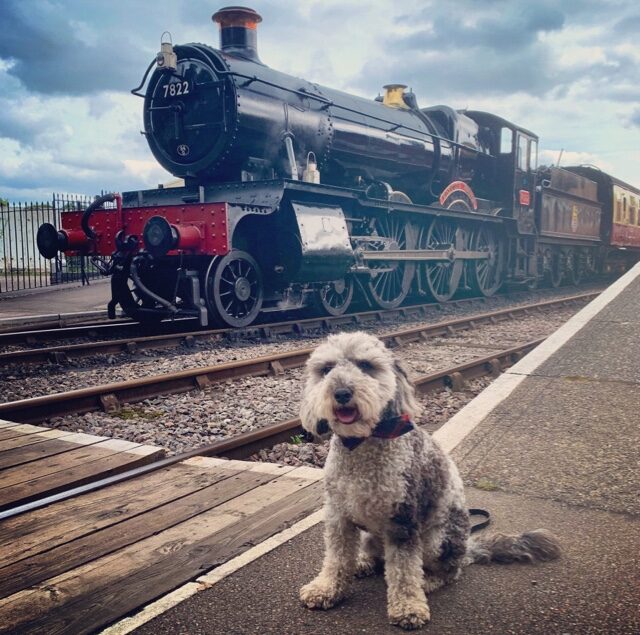
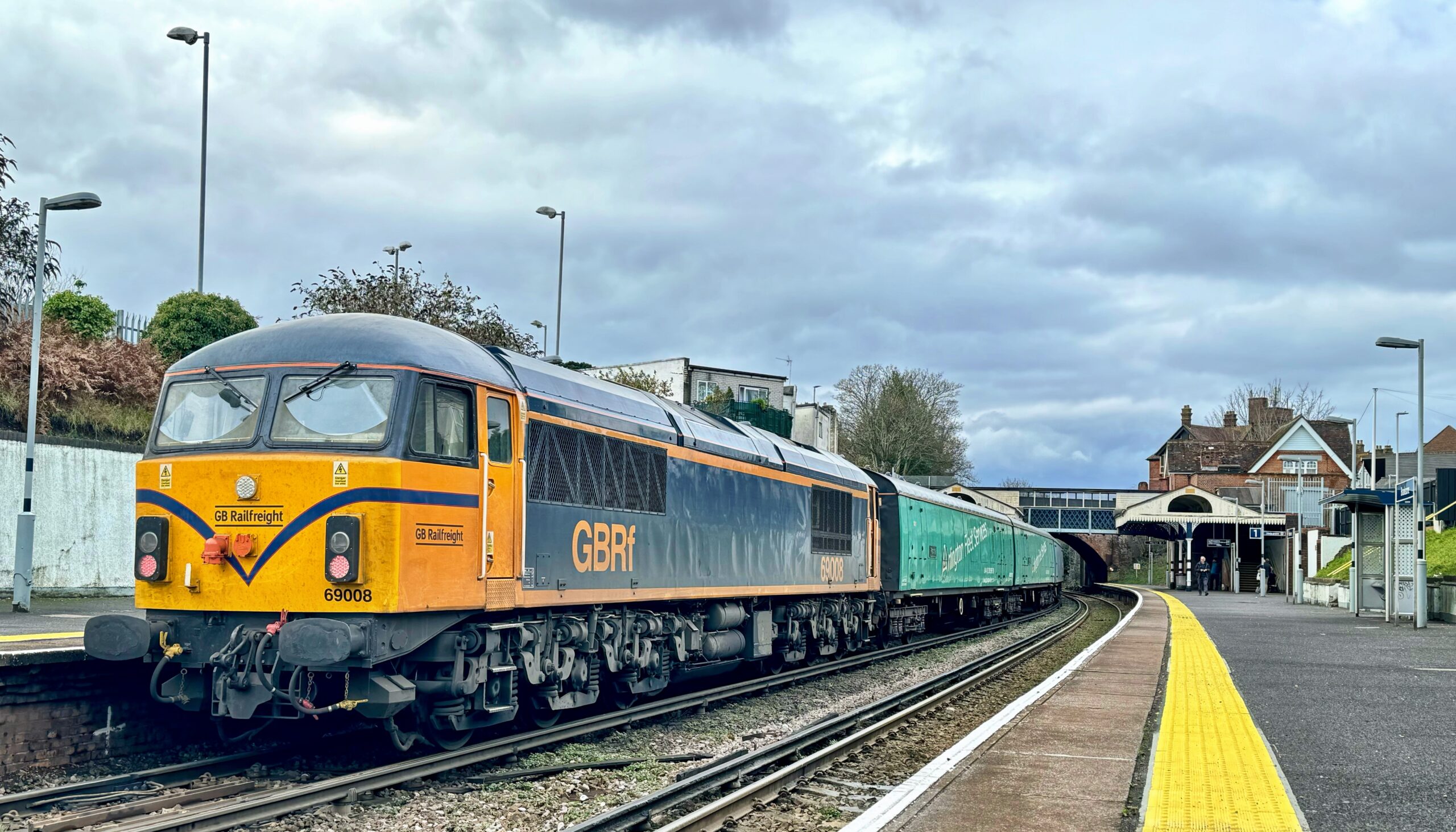
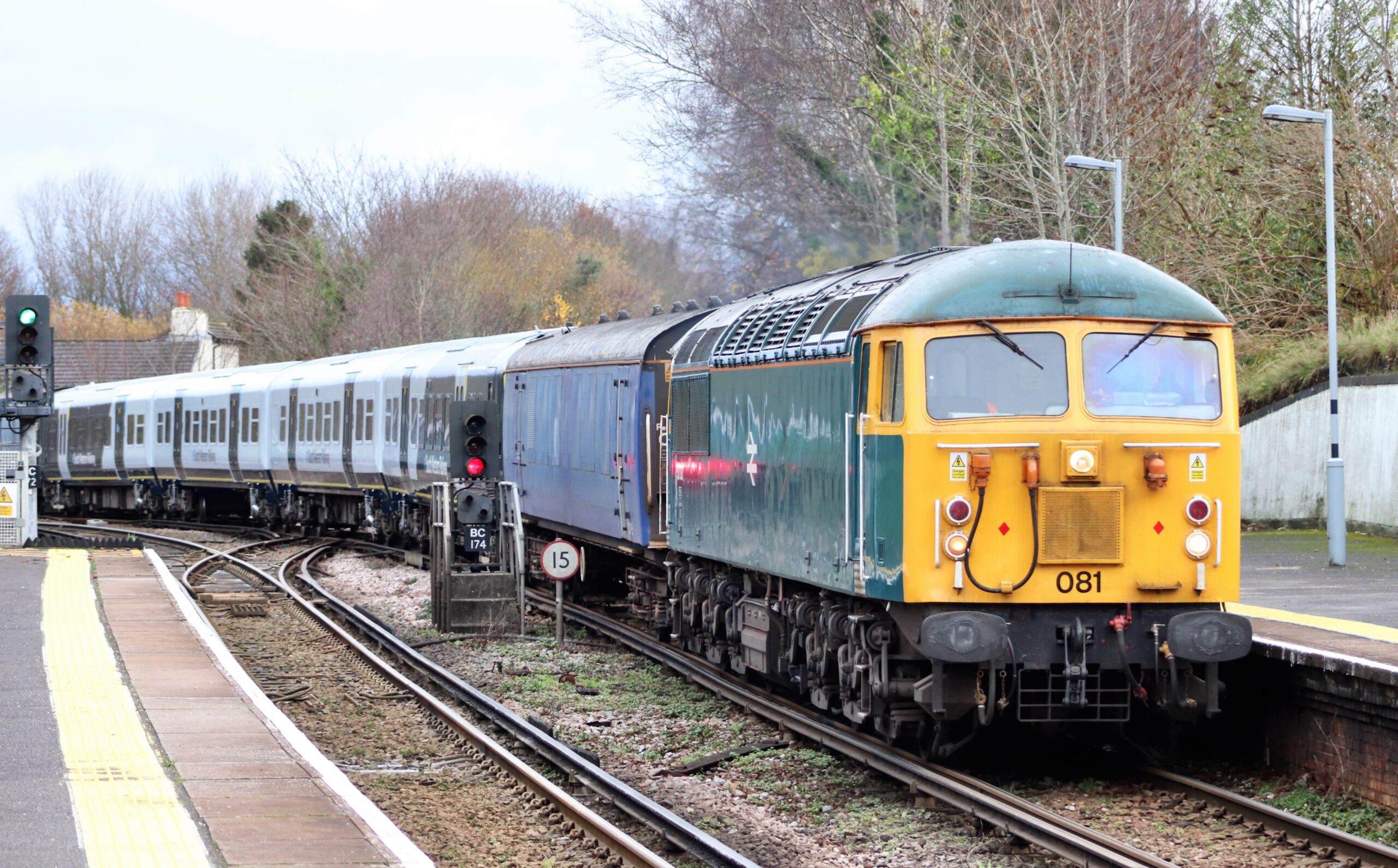
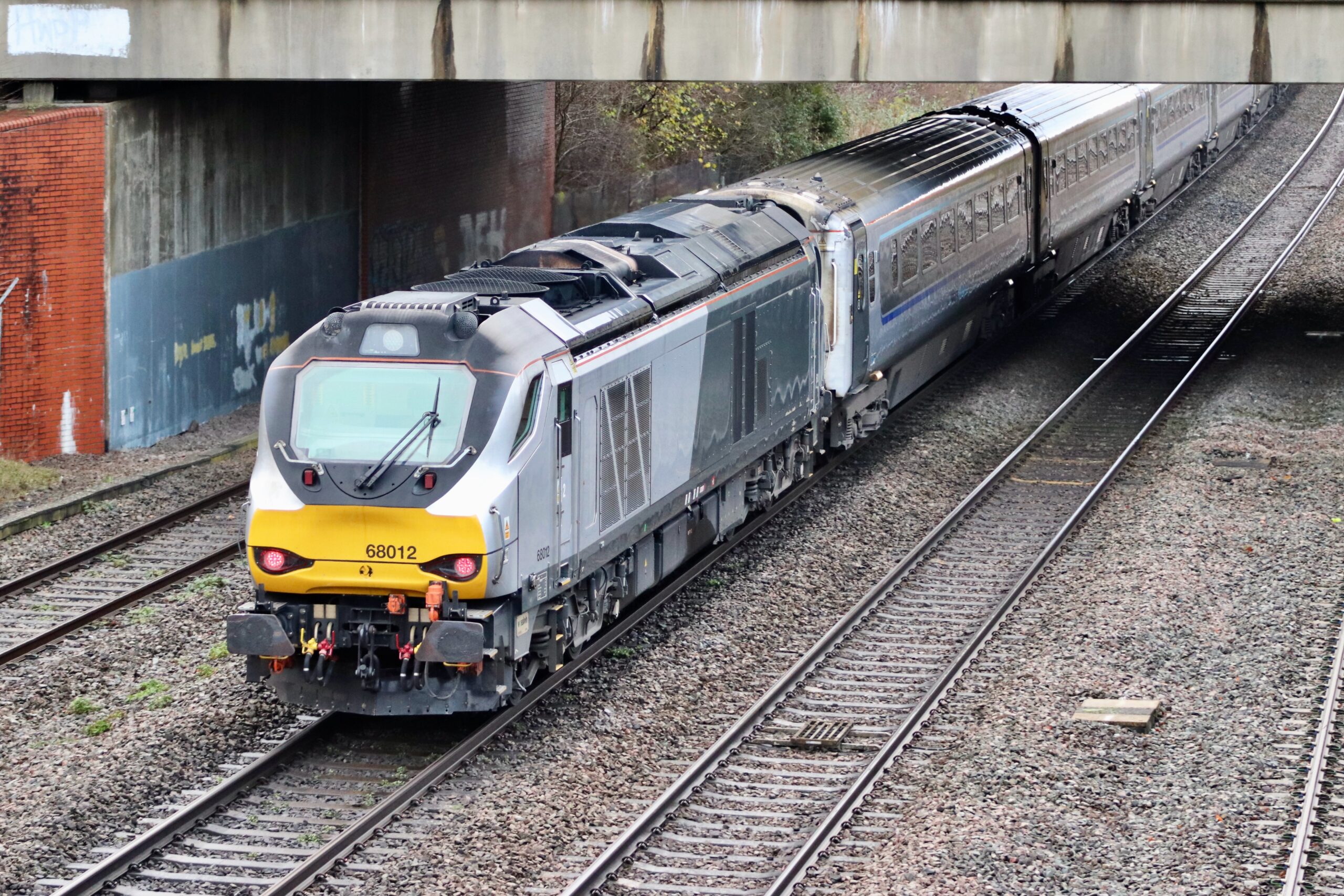
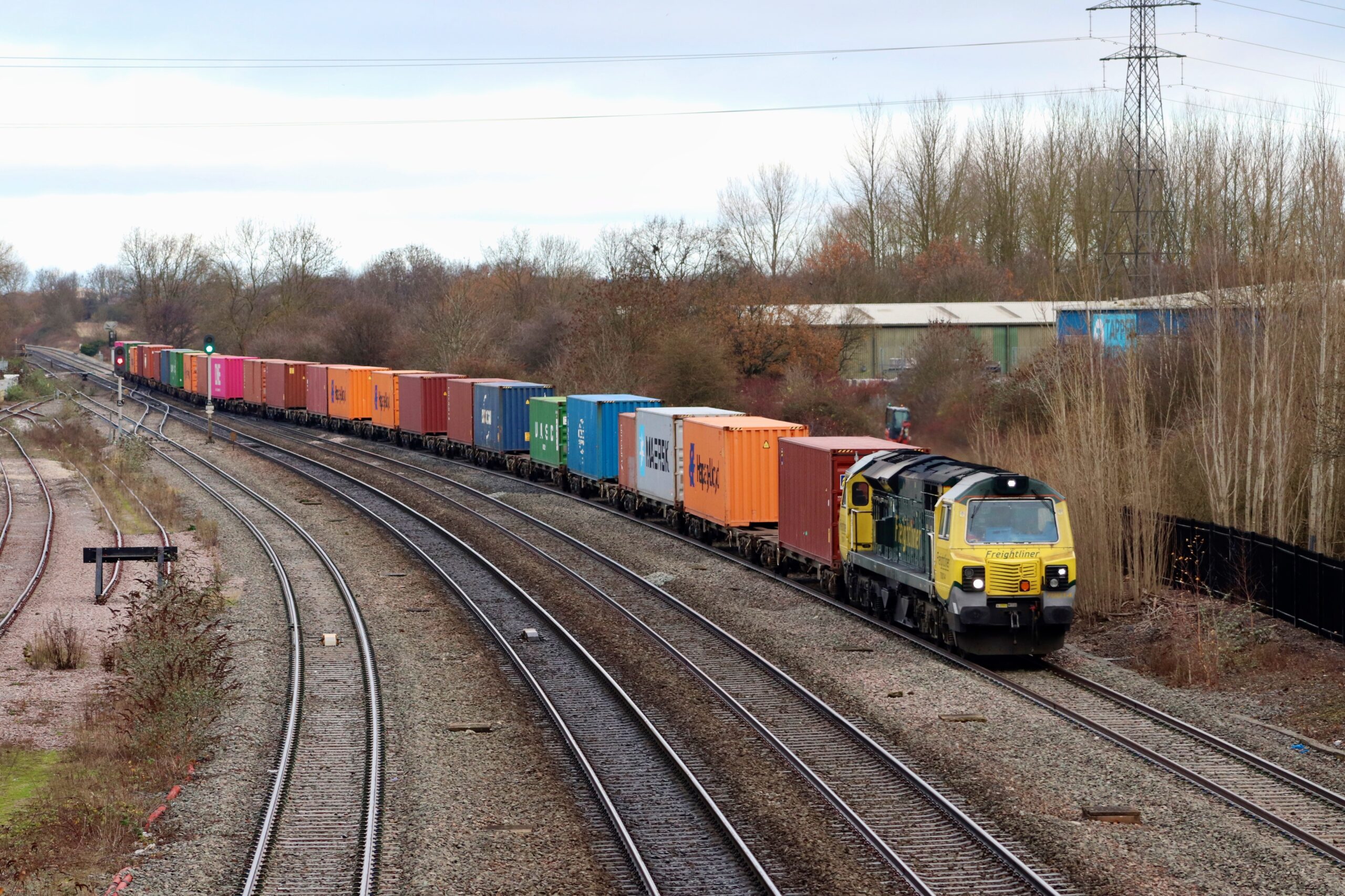
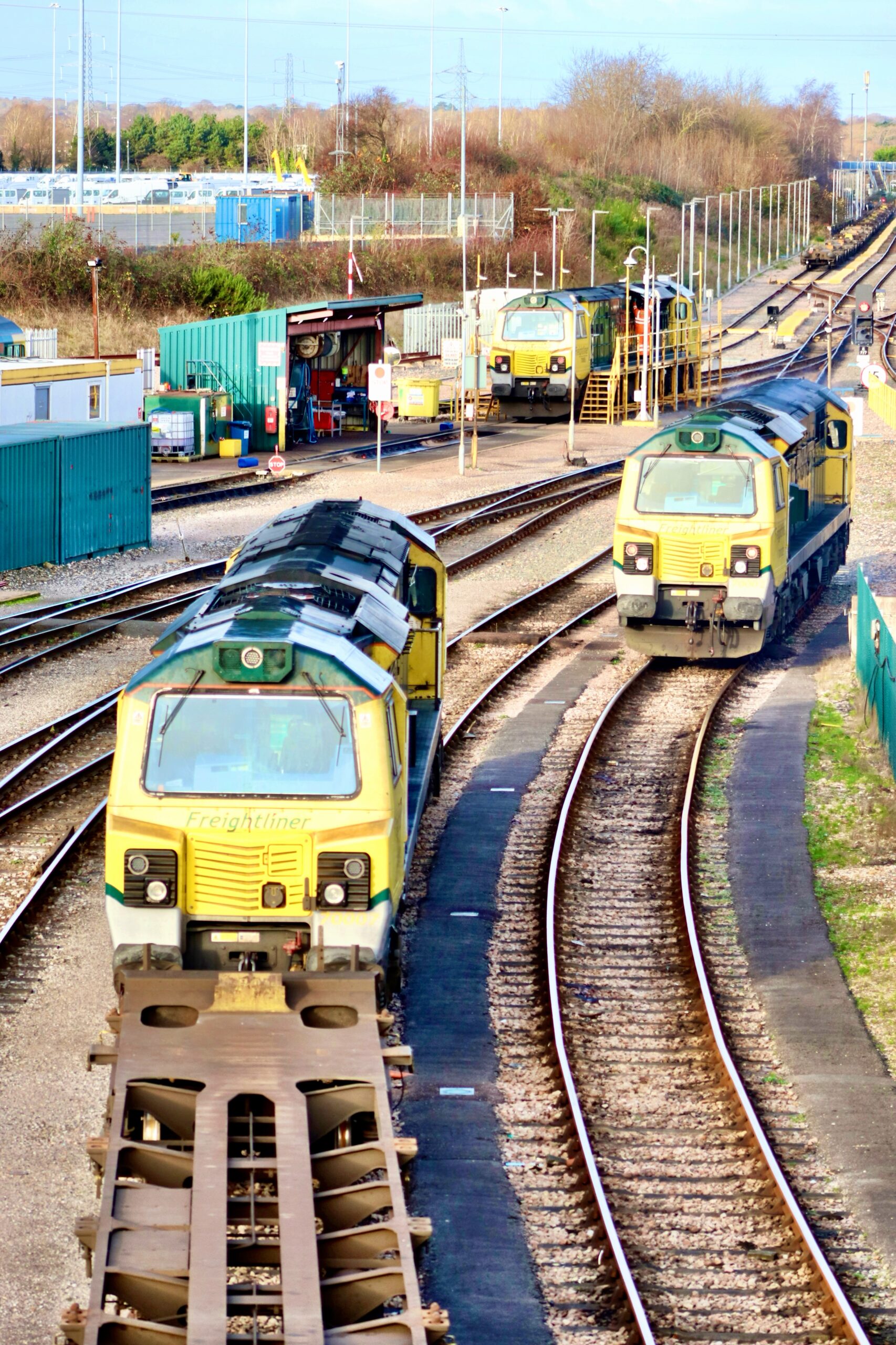
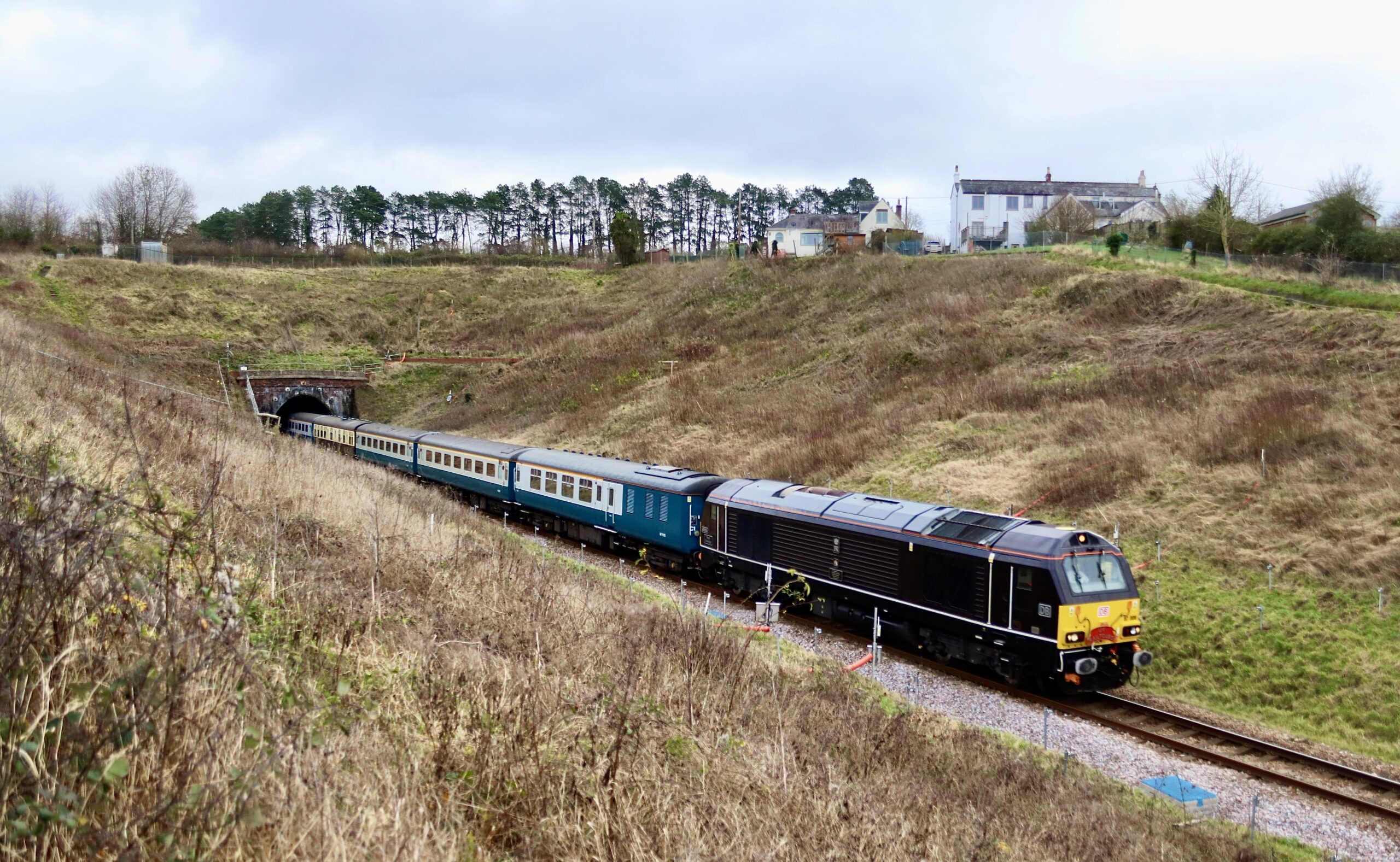
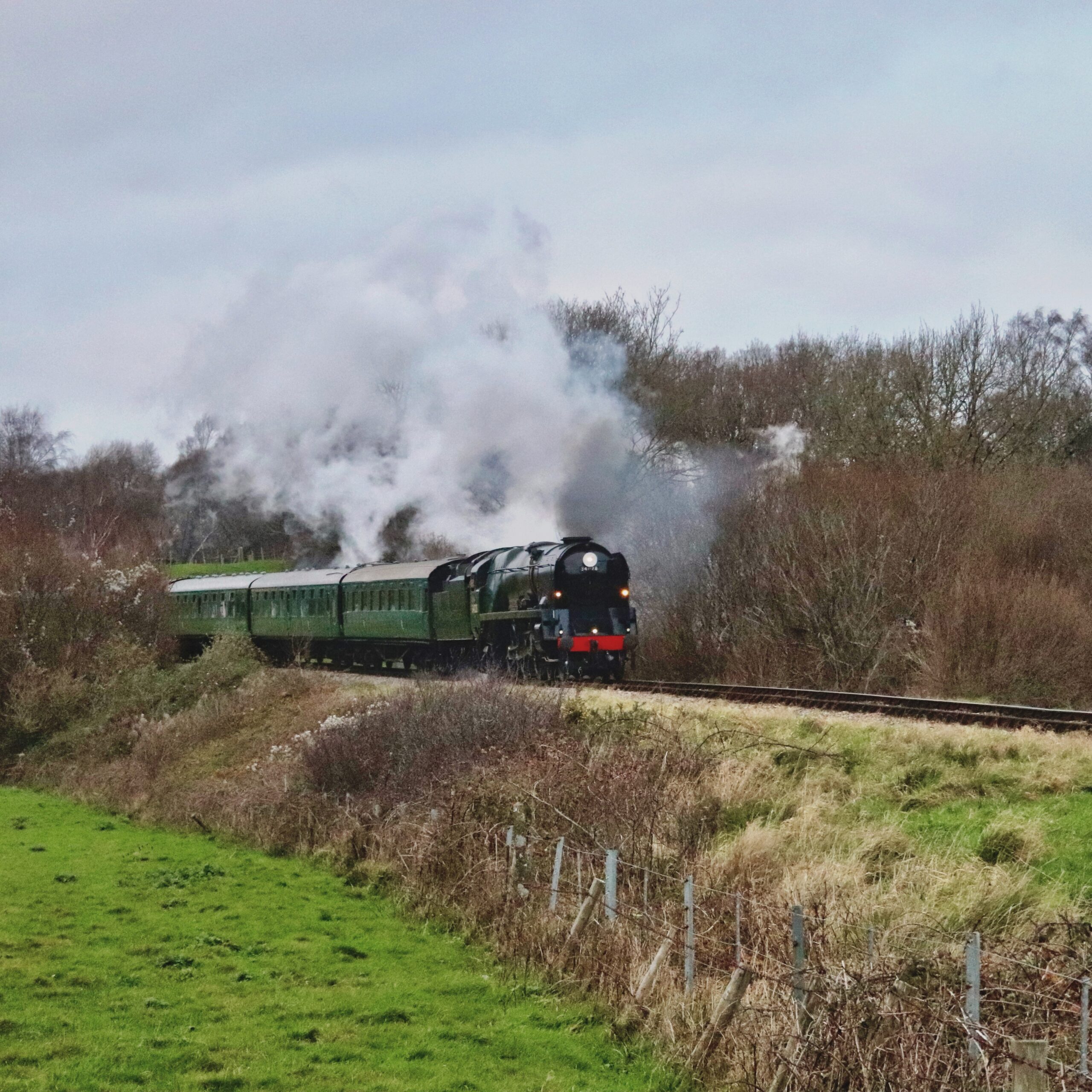
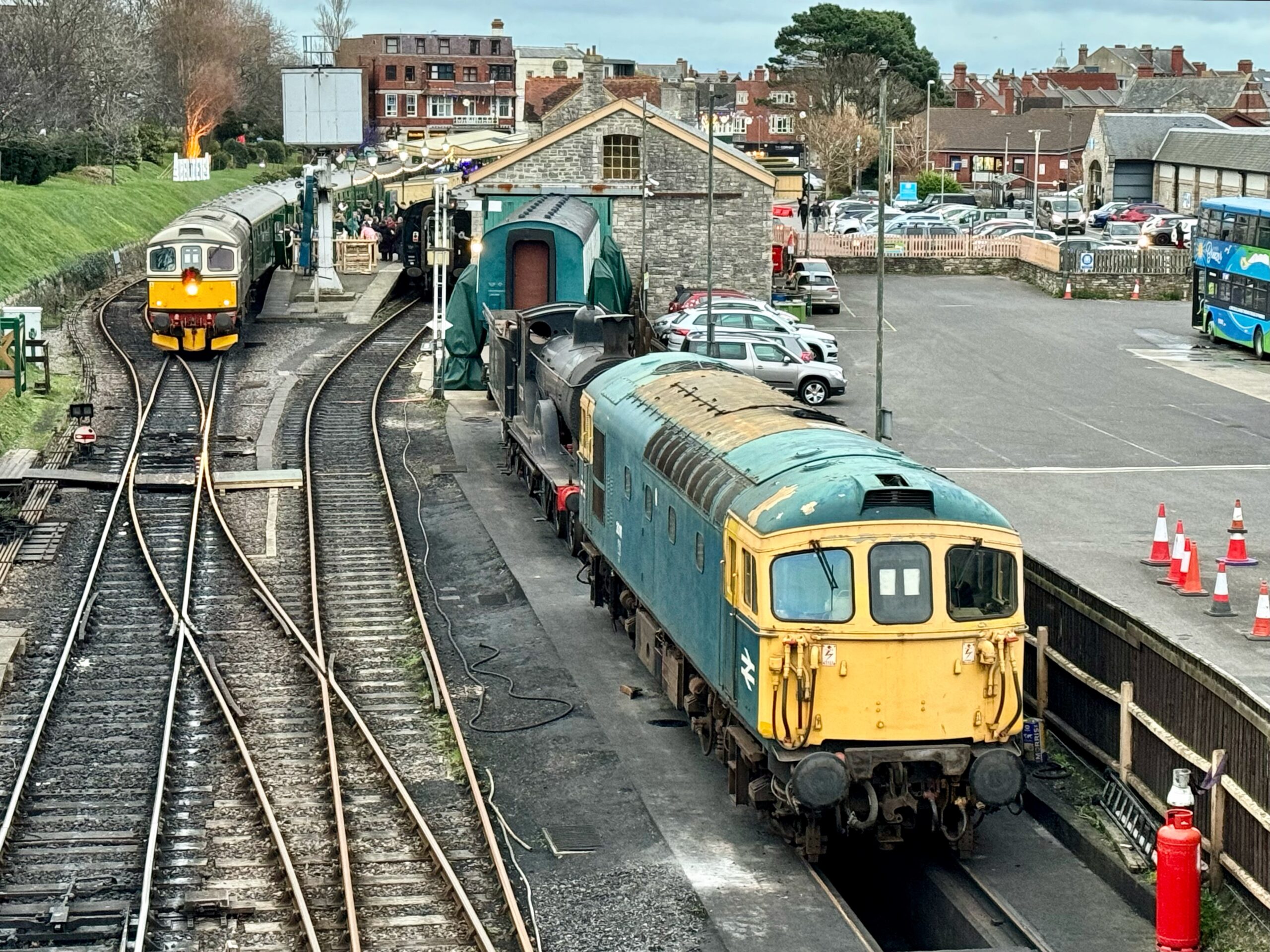
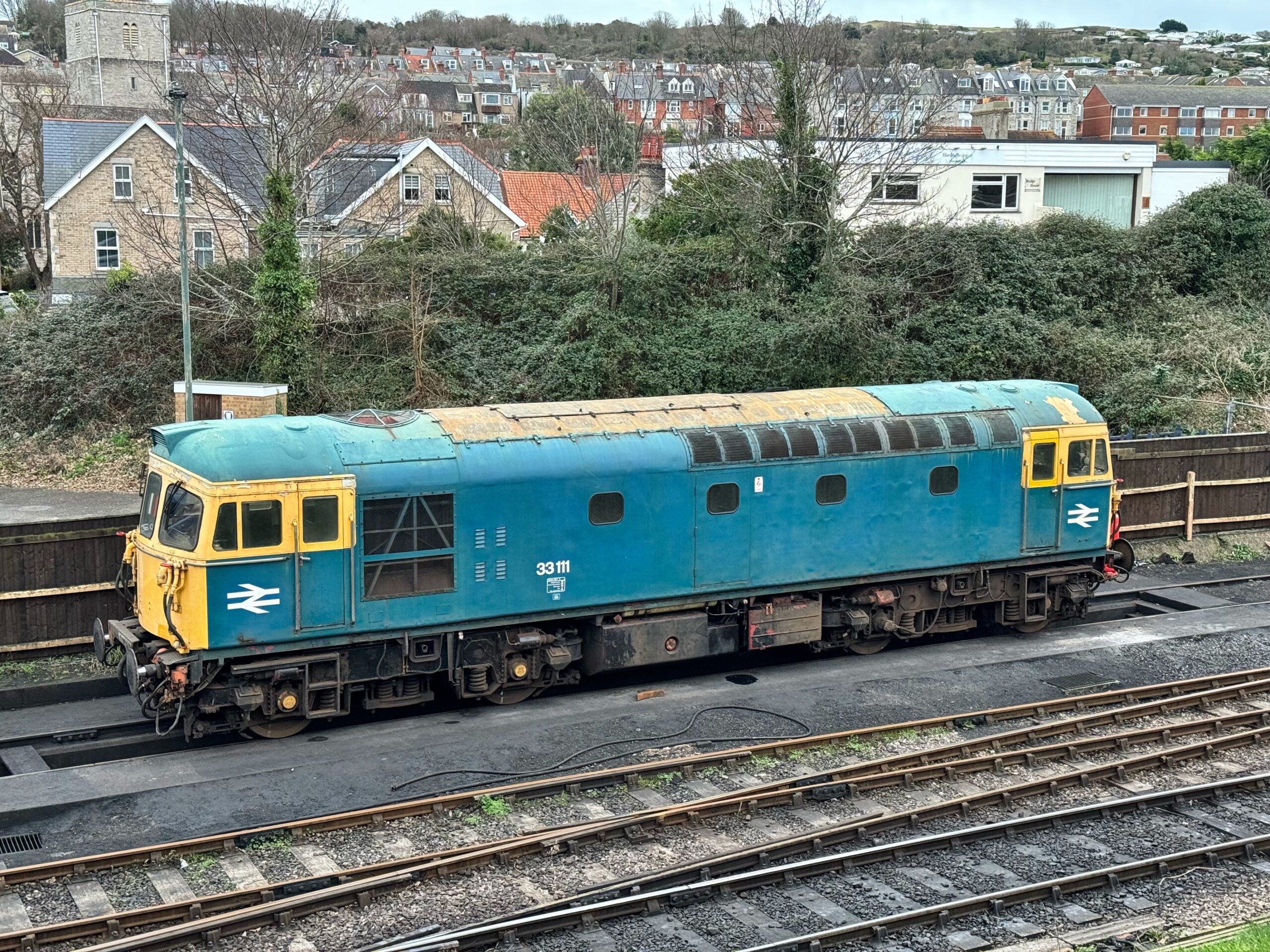
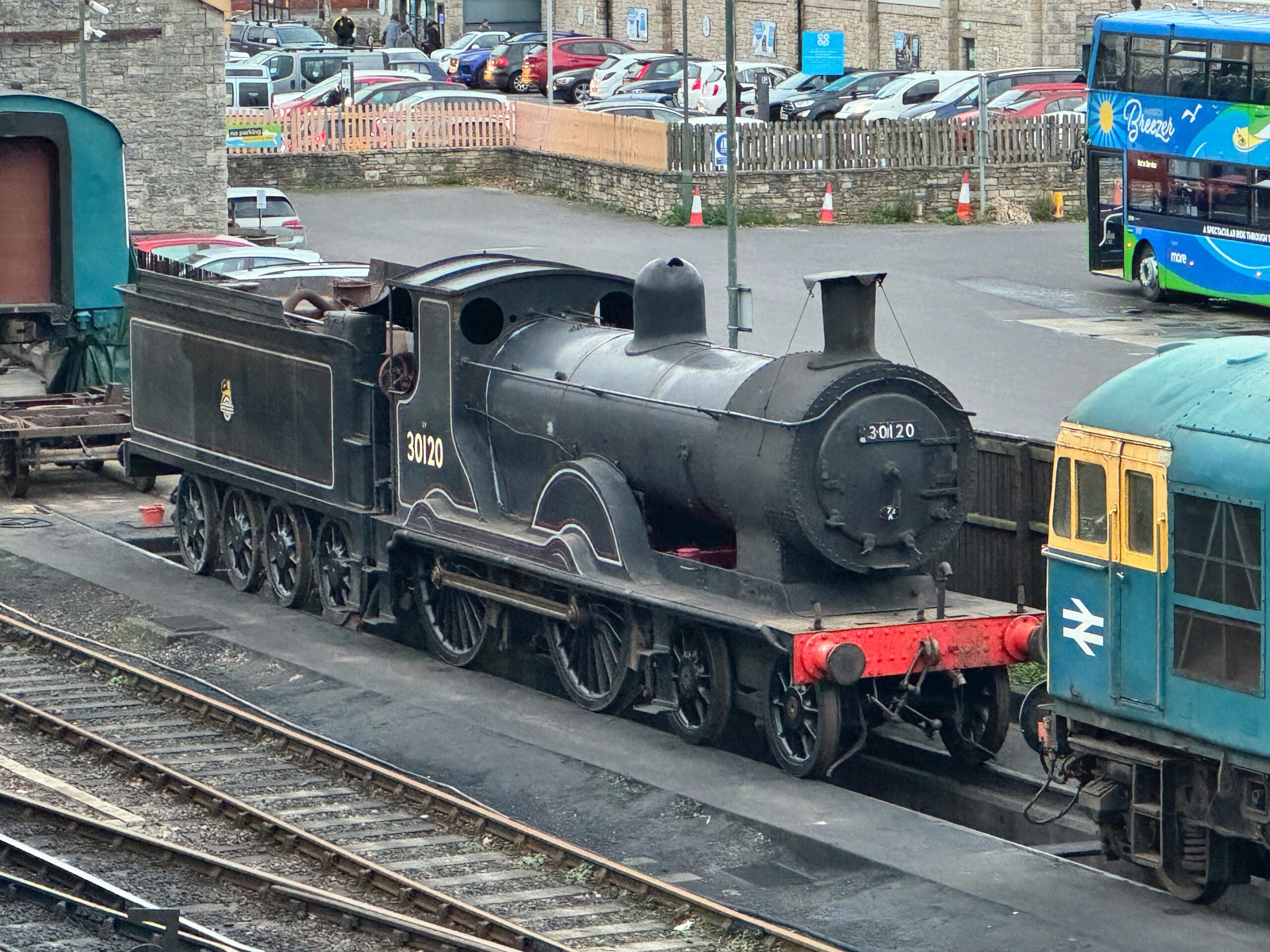
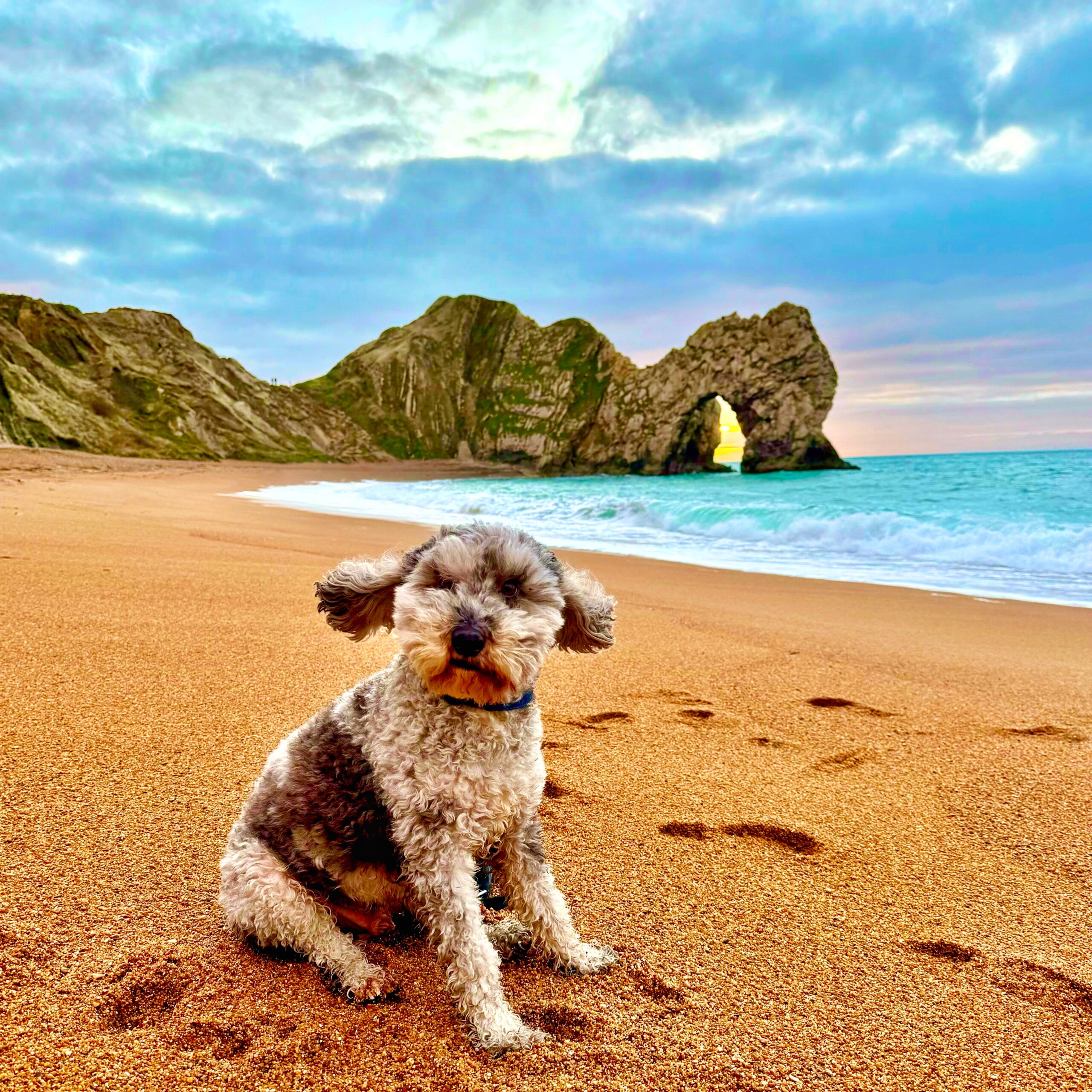
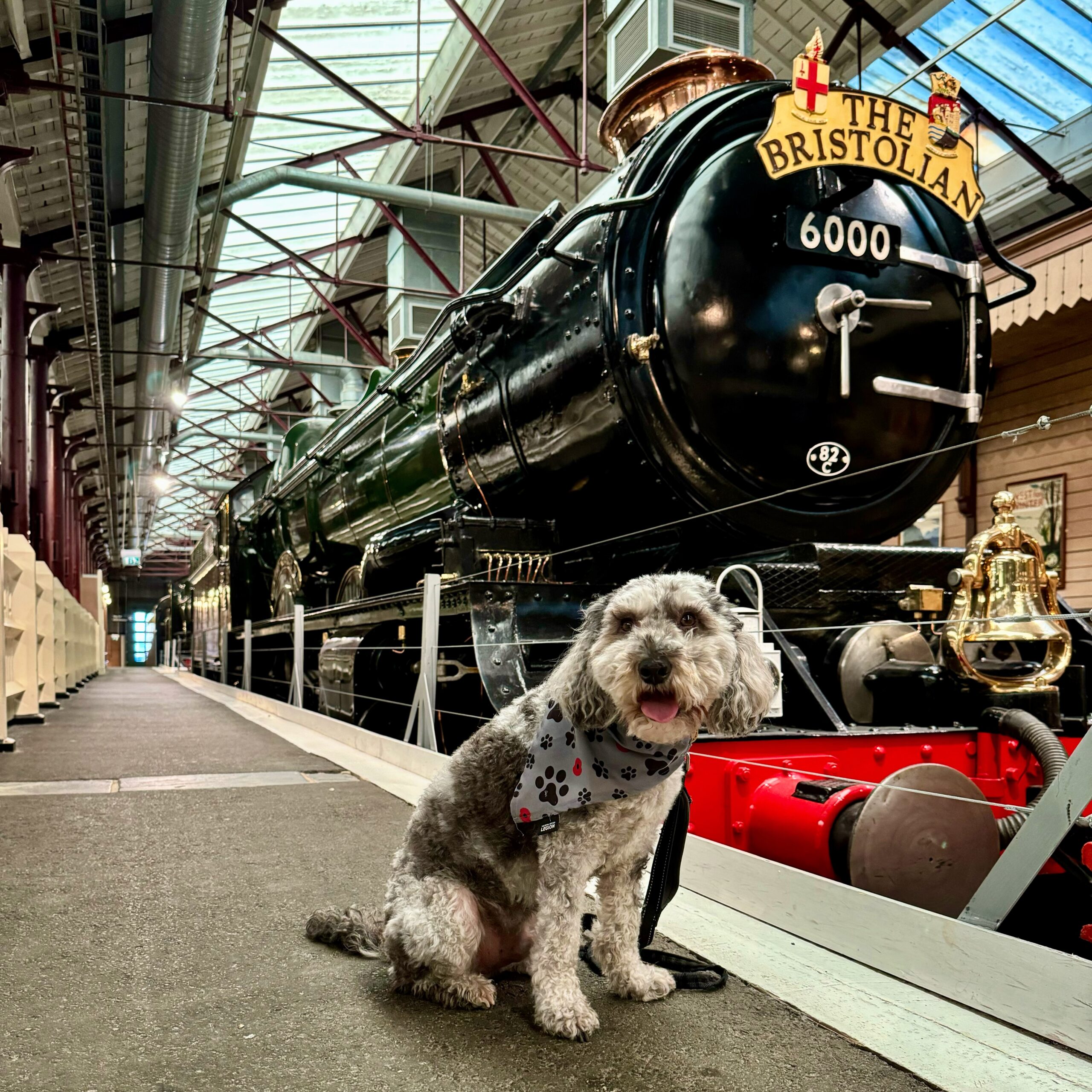
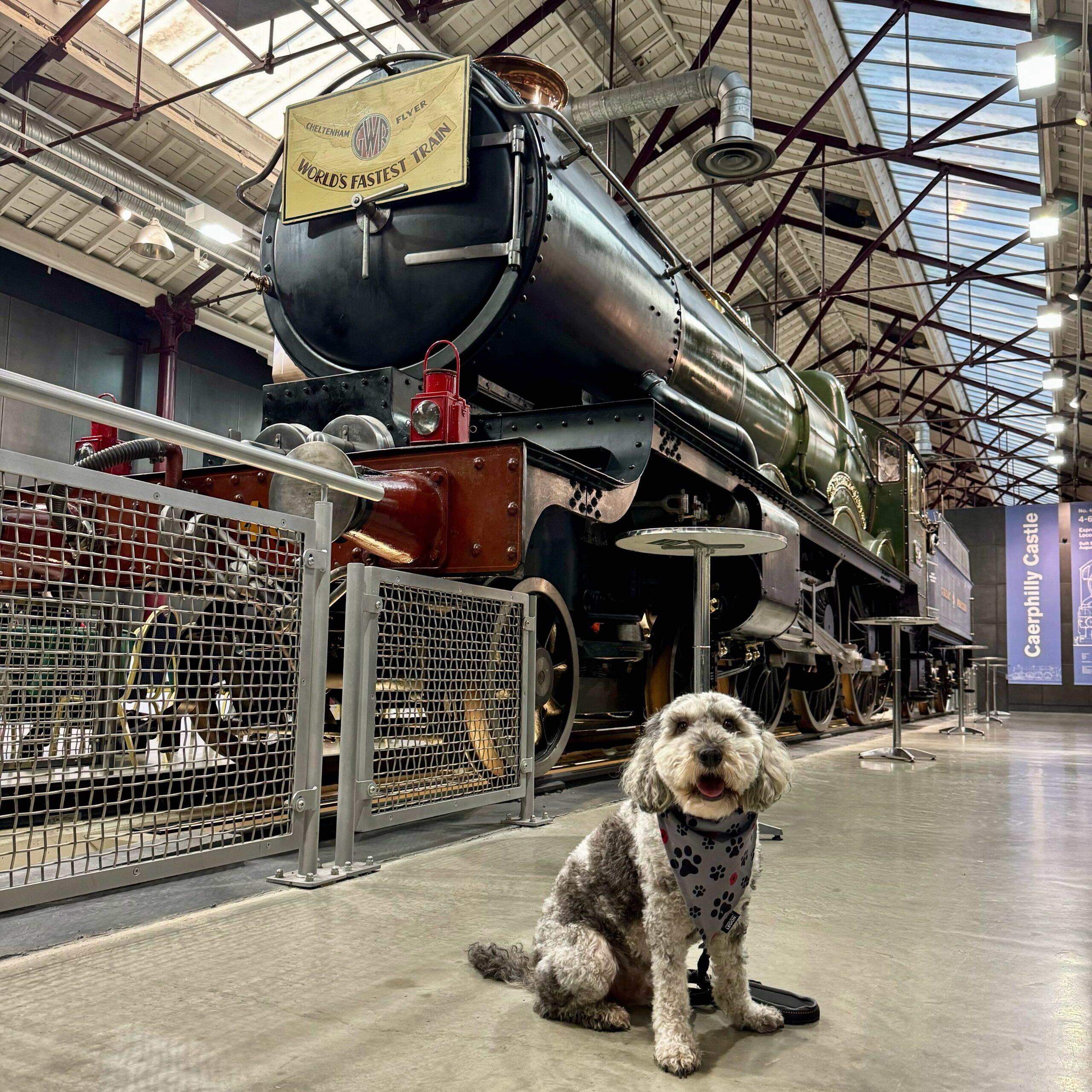
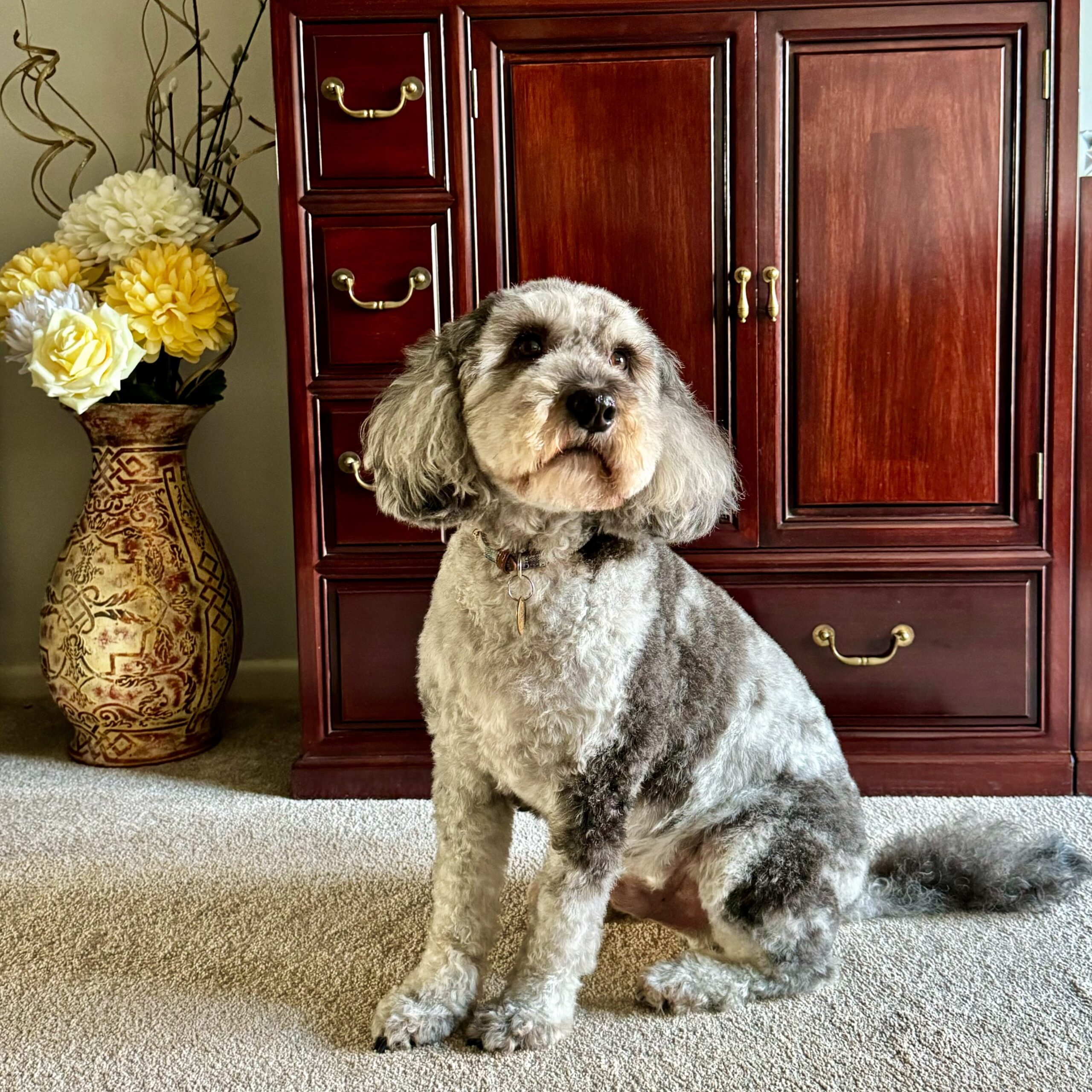
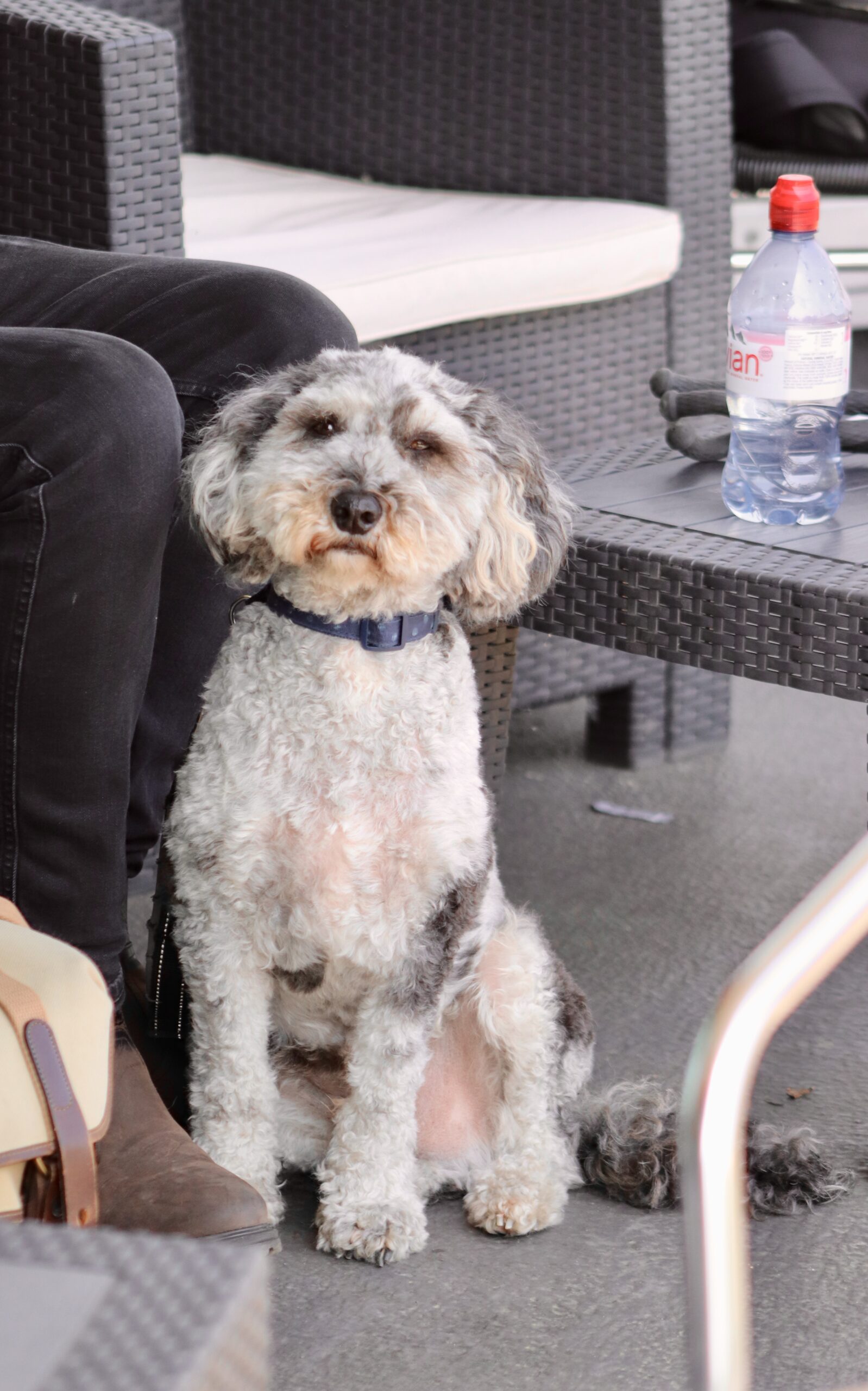
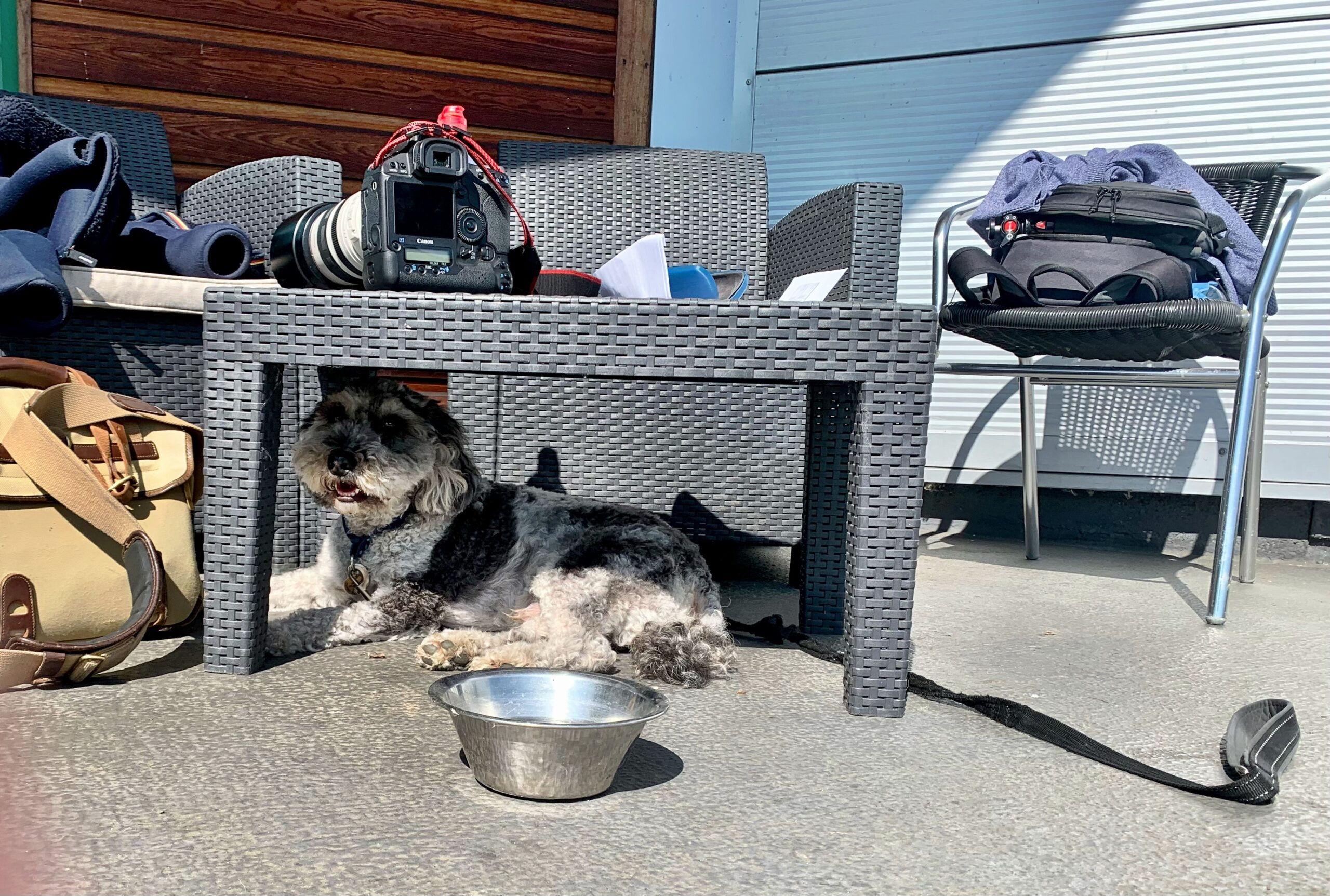
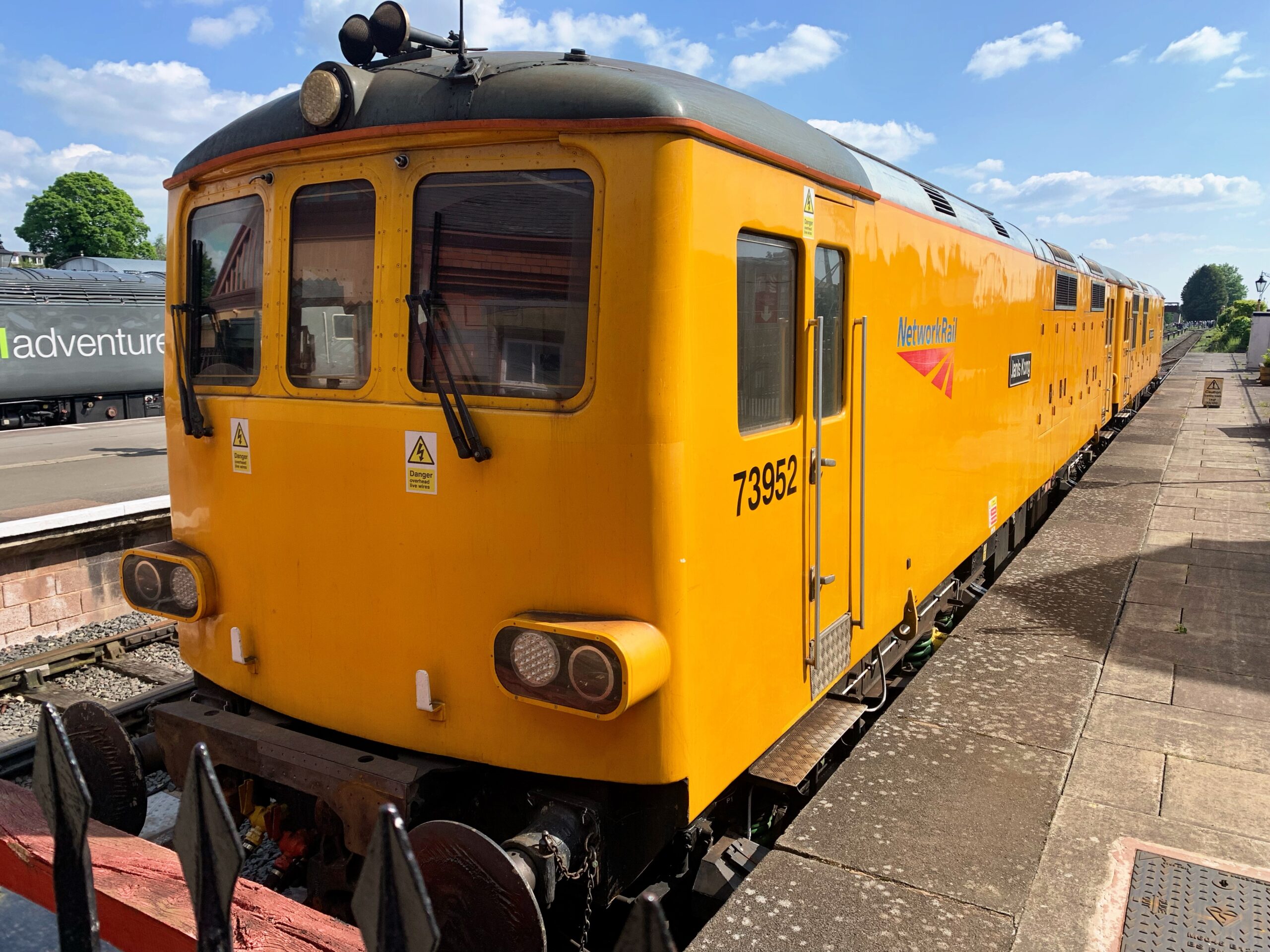
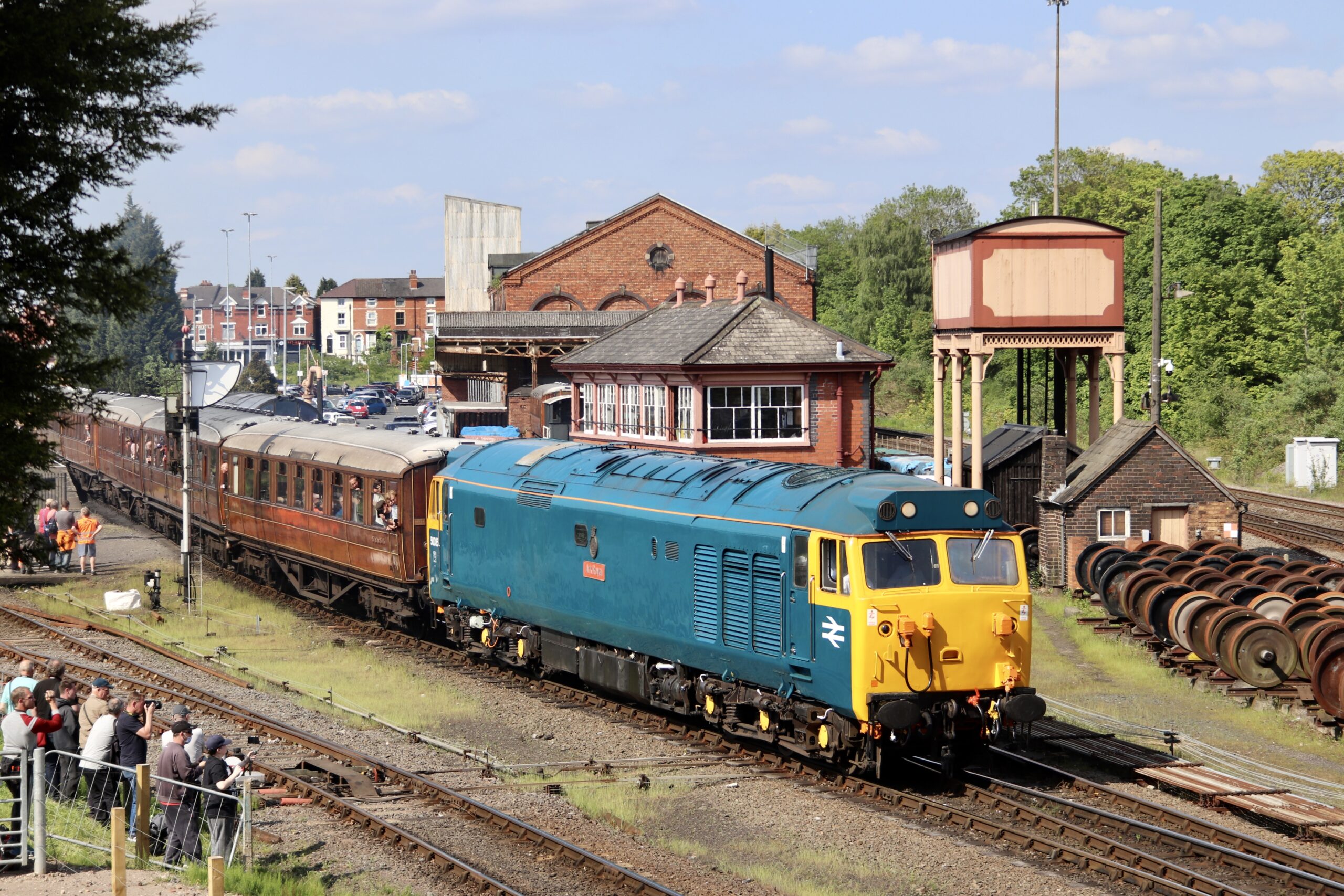
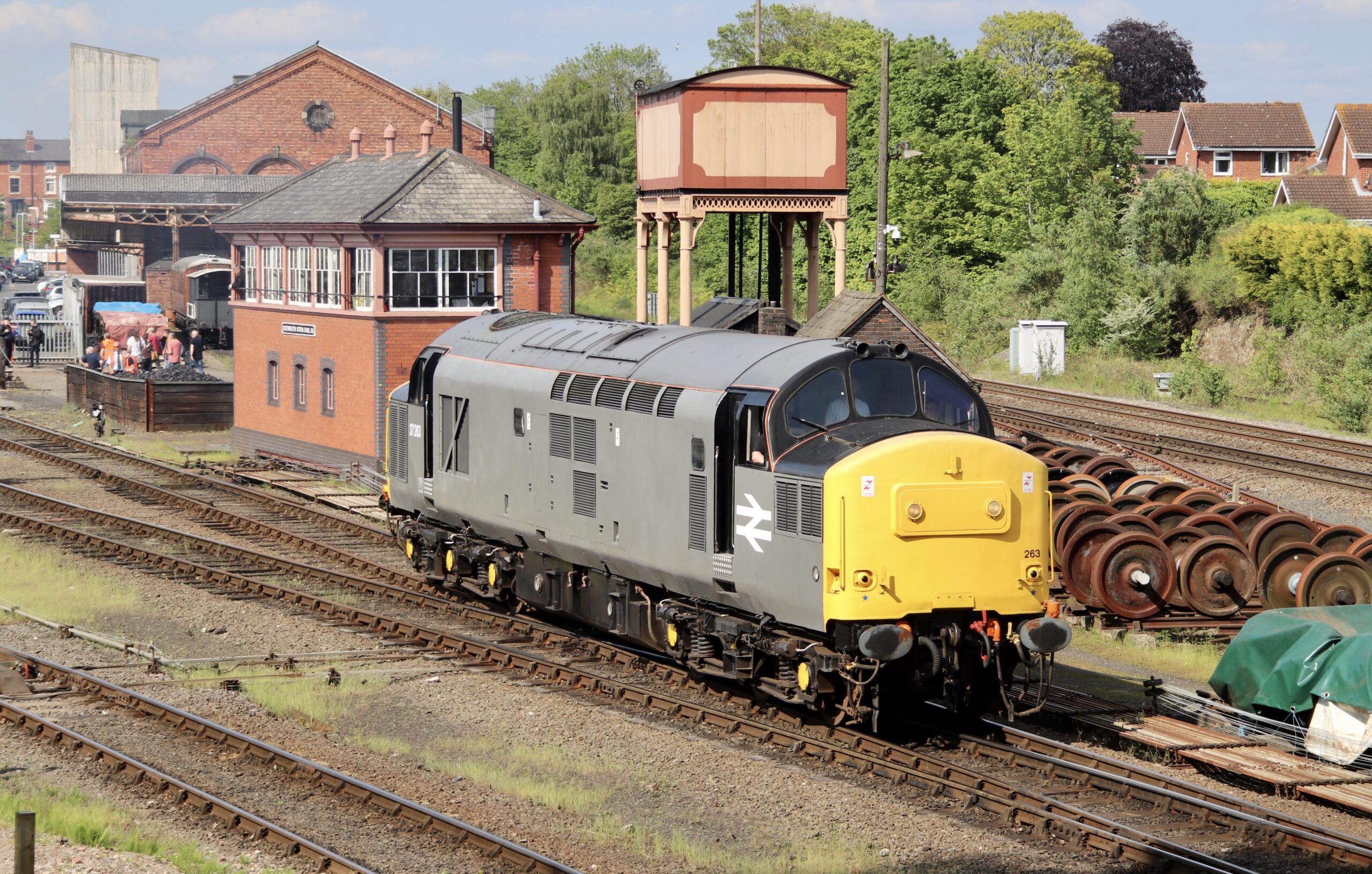
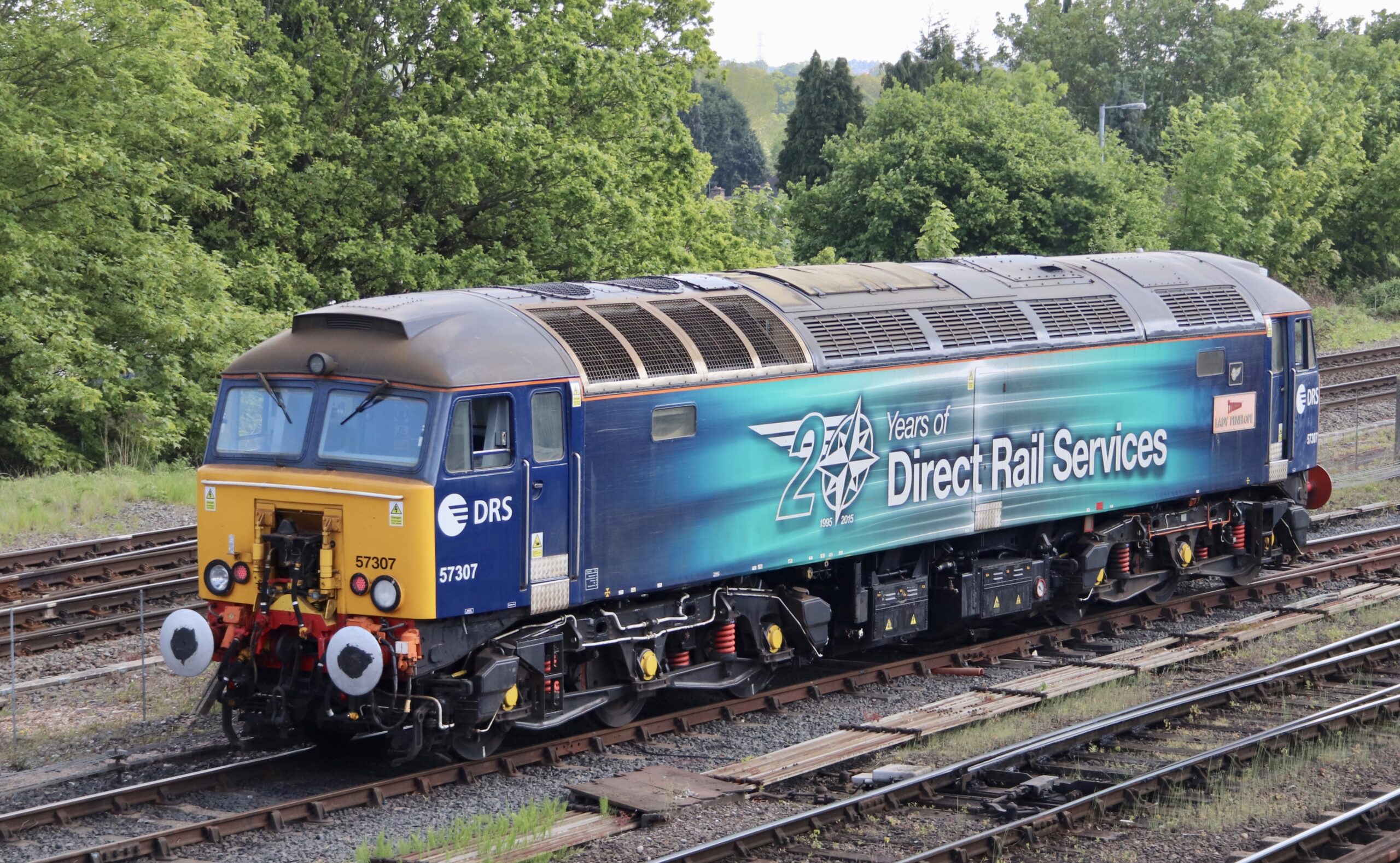
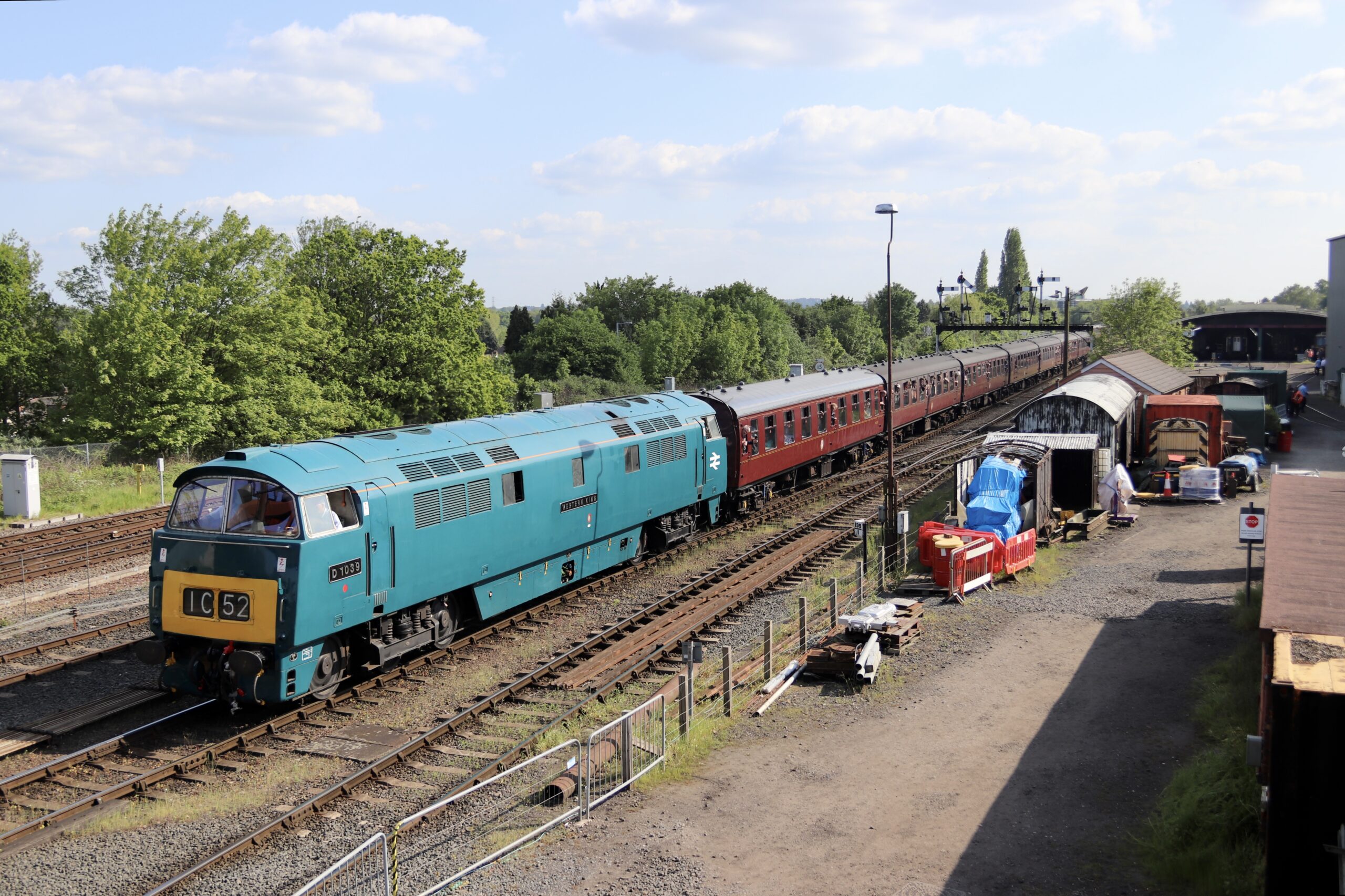
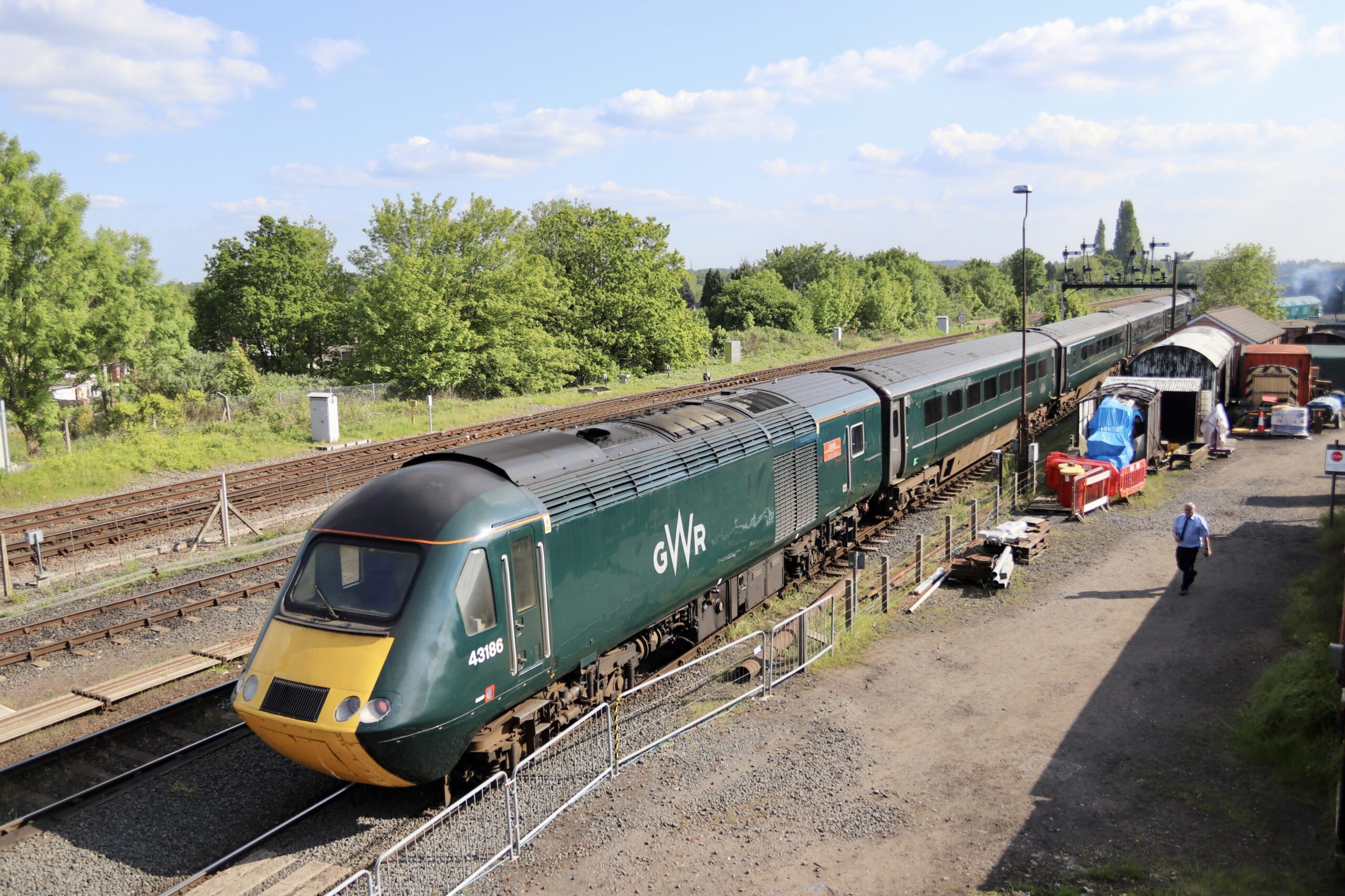
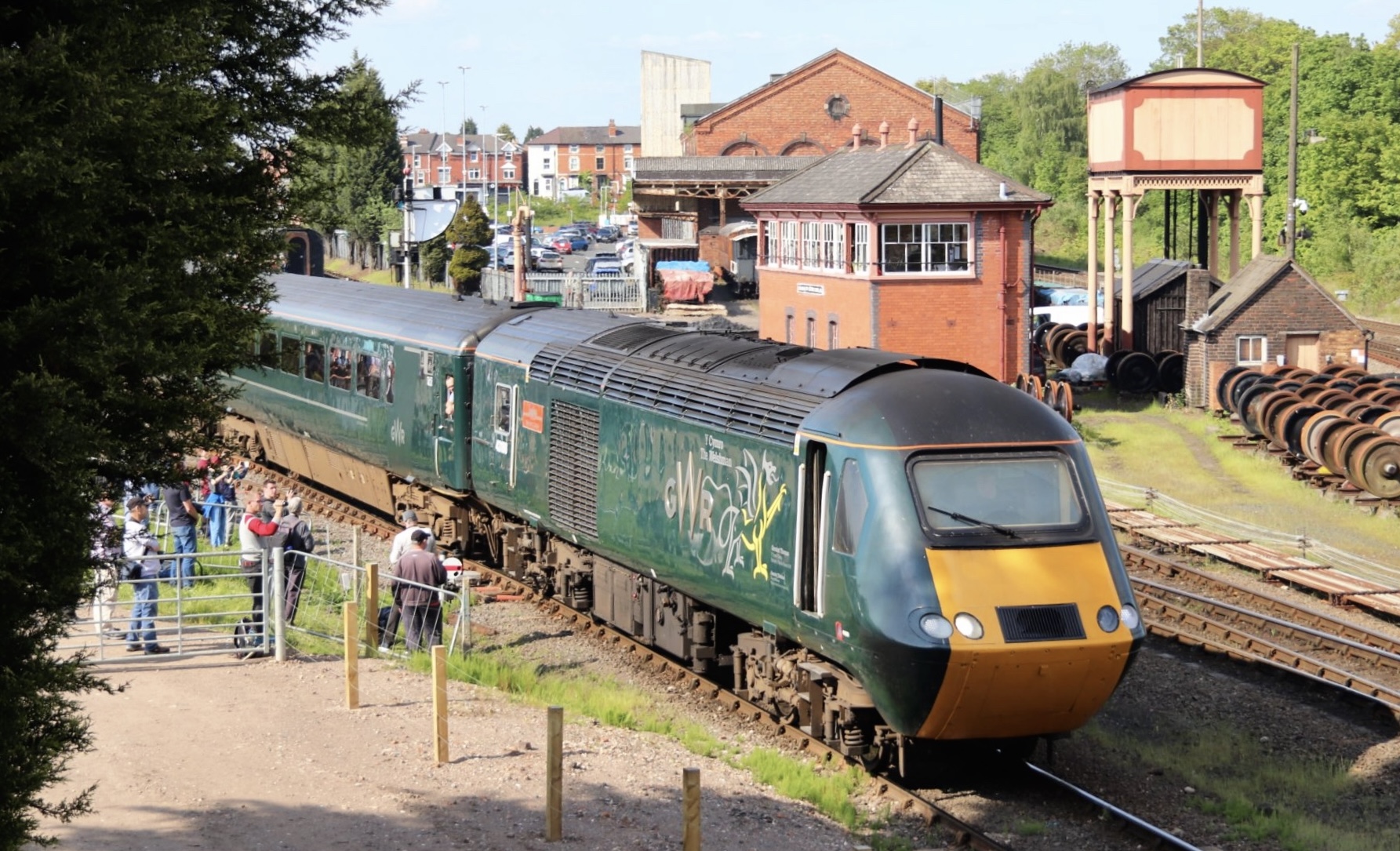
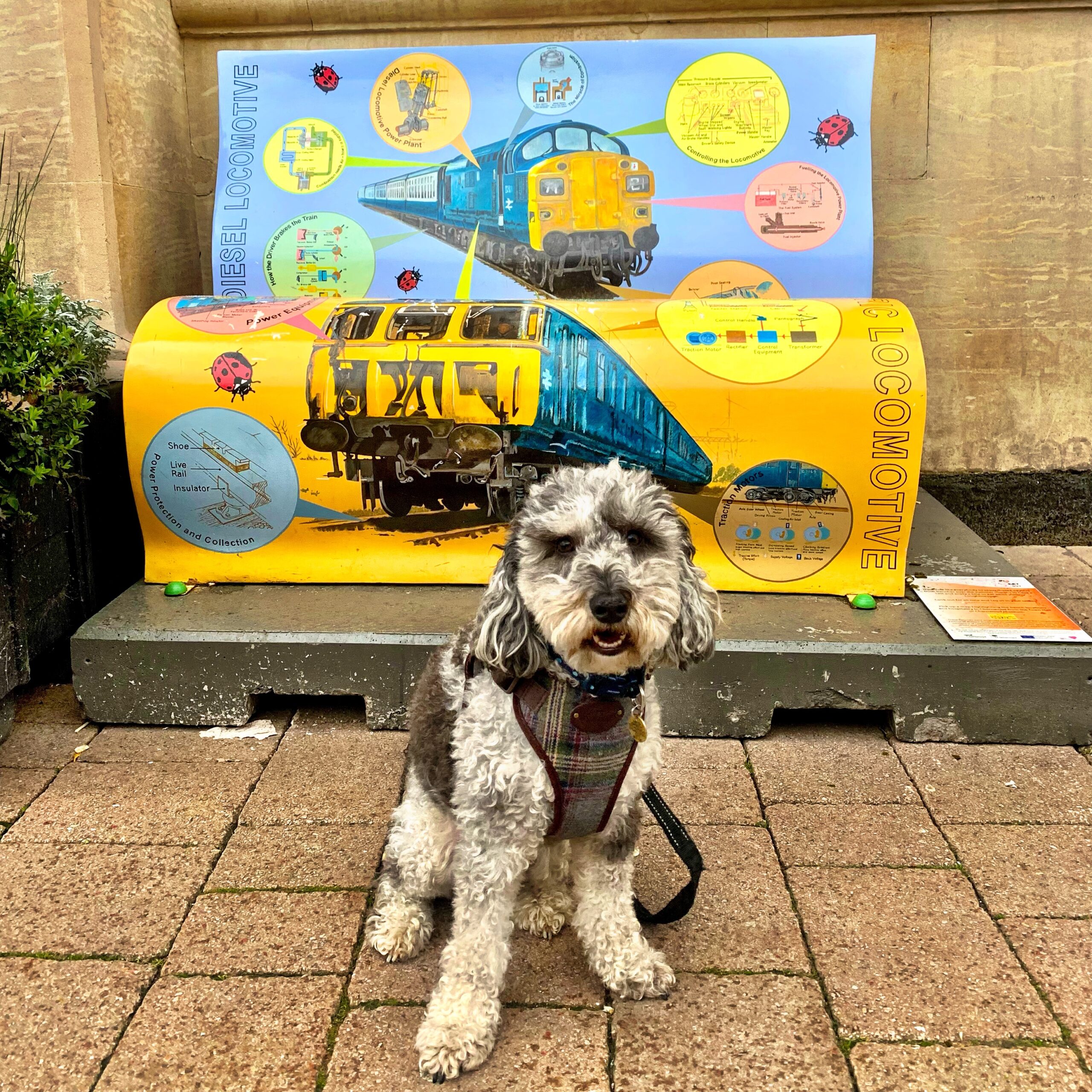
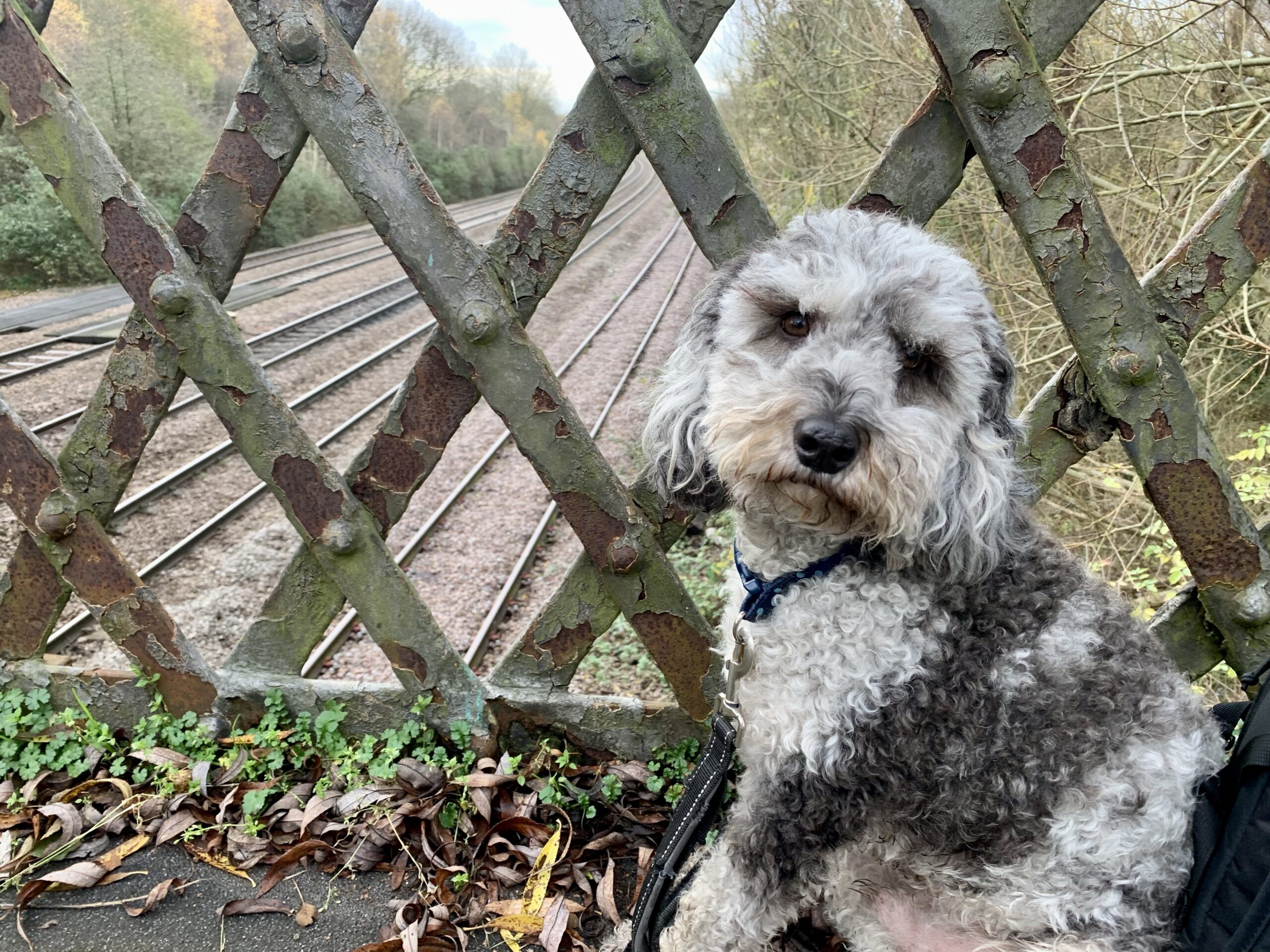
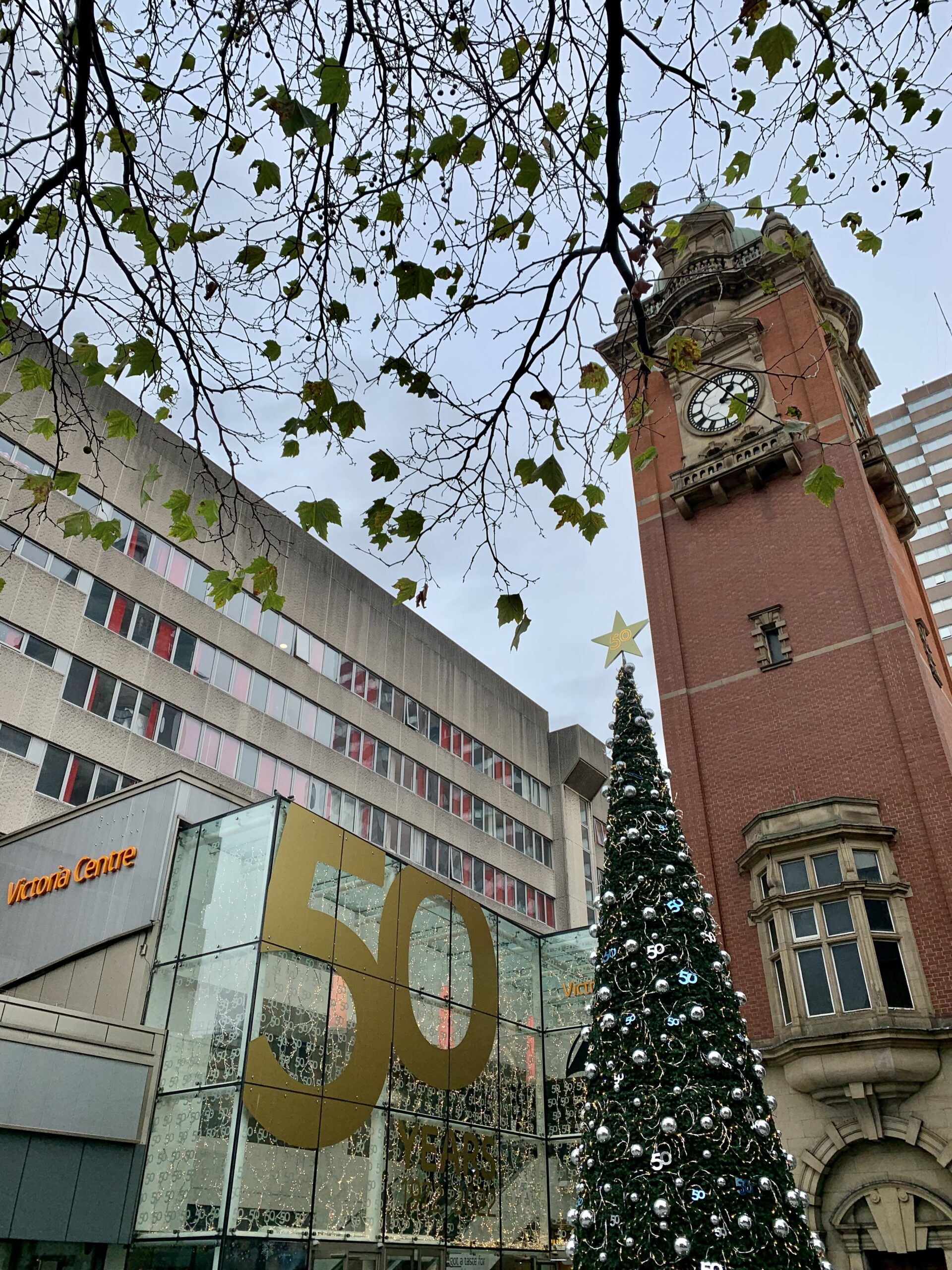
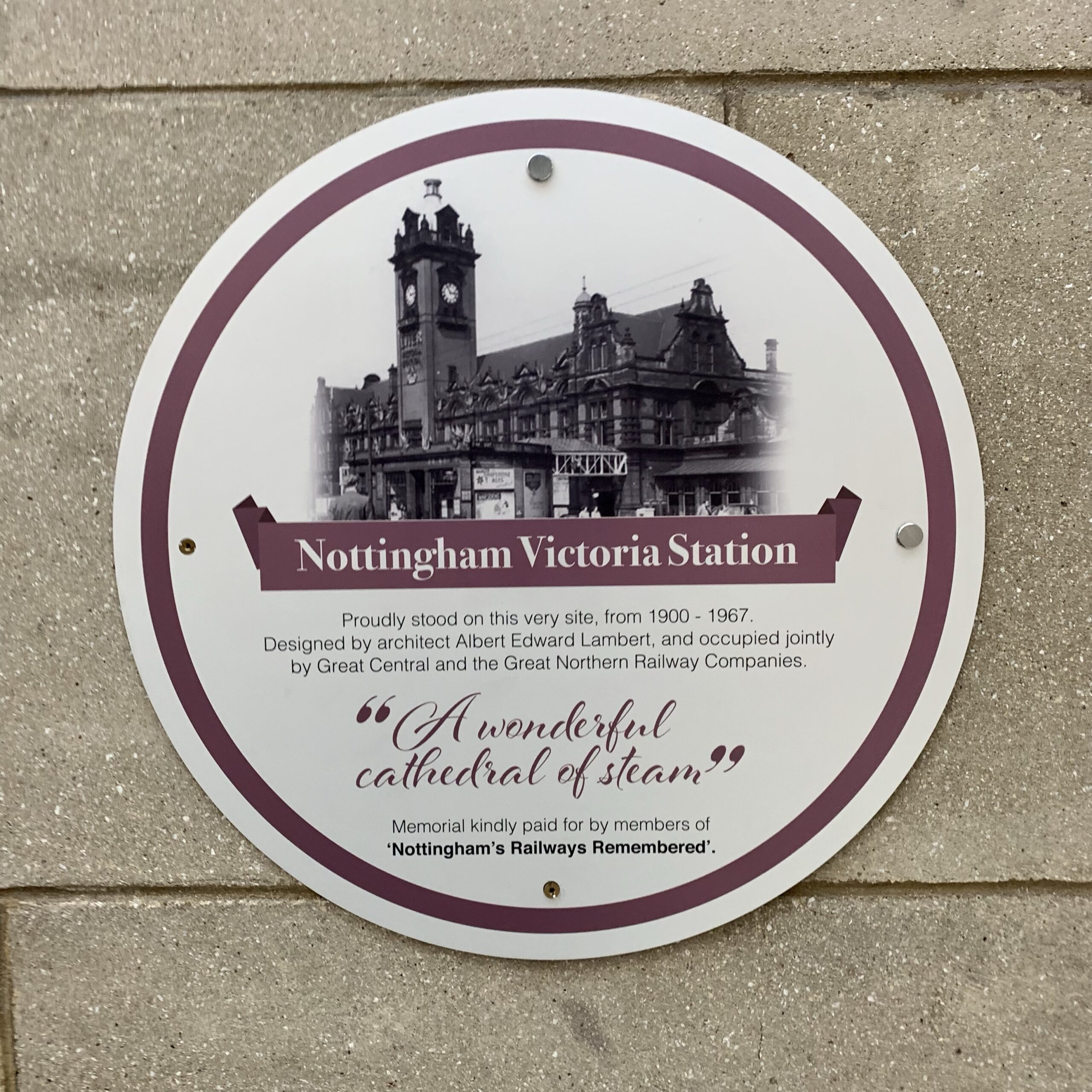
Yoshi shows off his new grooming cut while visiting the Old Ship in Dorchester – 18/11/2024
On Friday November 1st, Caroline and I went to a performance of “The Truth About Harry Beck” at the Cubic Theatre located in the London Transport Museum, Covent Garden. The play is a two hander and outlines the creation of the iconic London Tube map we know so well today – well recommended and is on multiple dates and times until Sunday 5th January 2025.
The Truth About Harry Beck – 01/11/2023
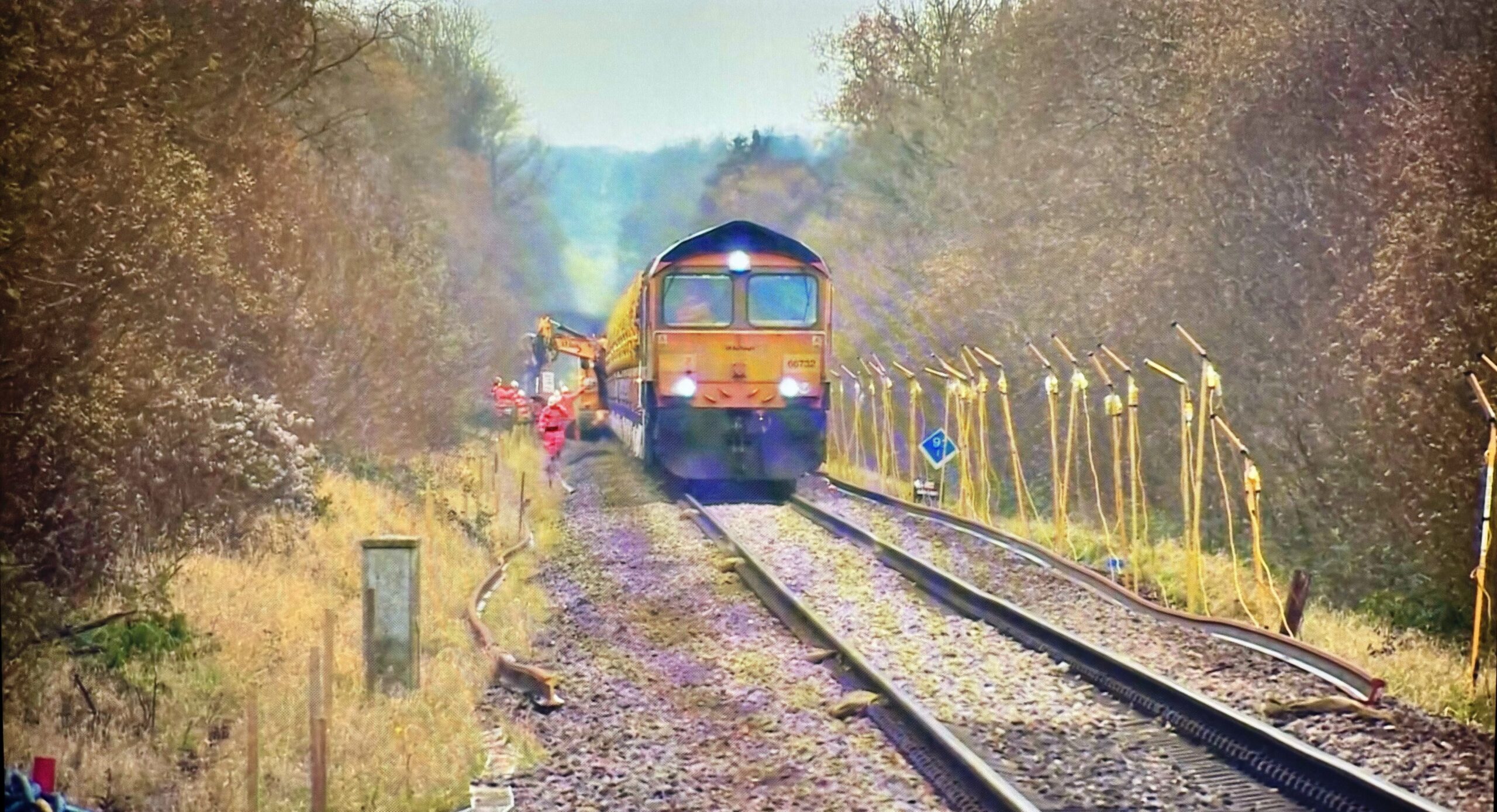
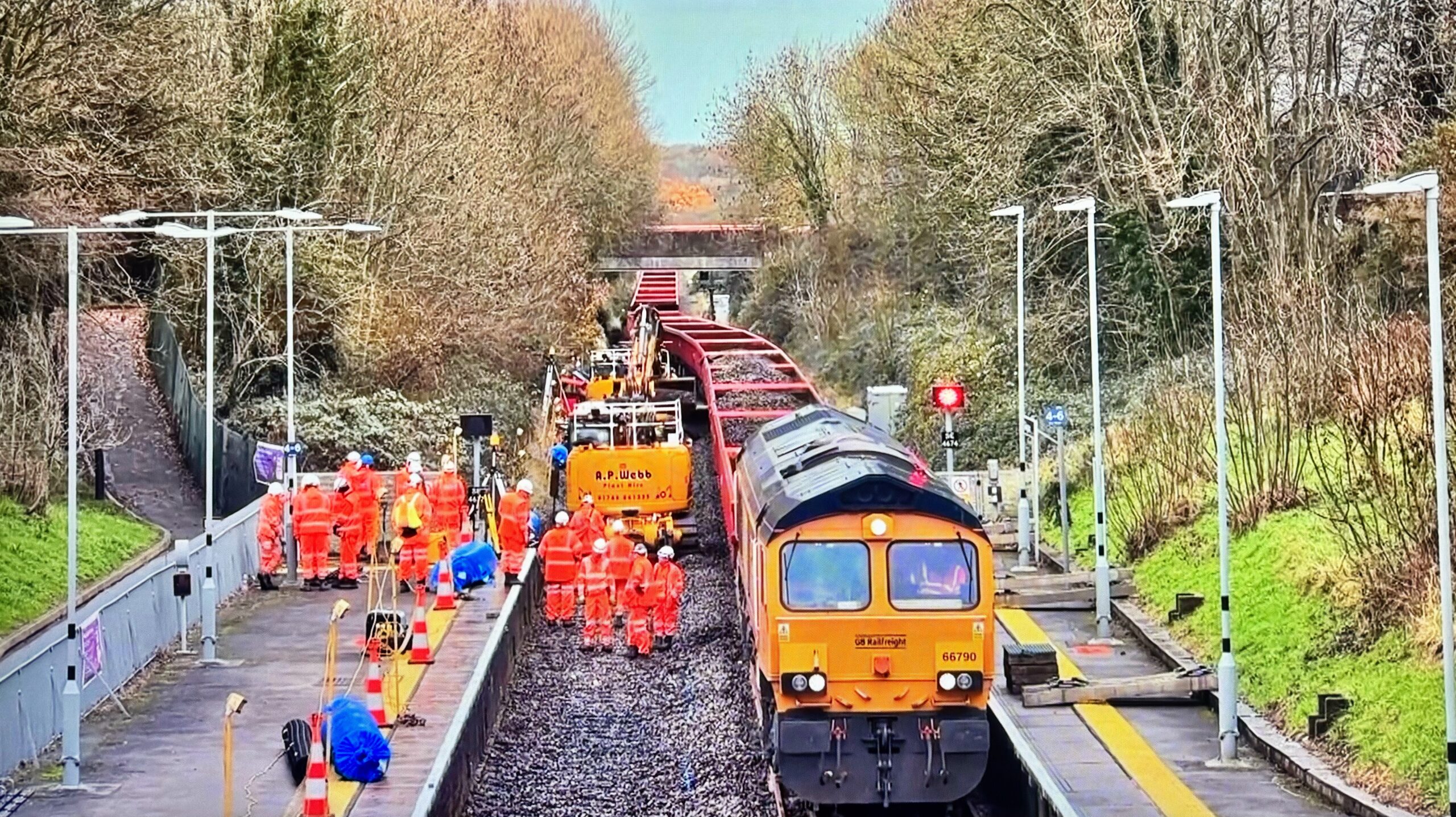
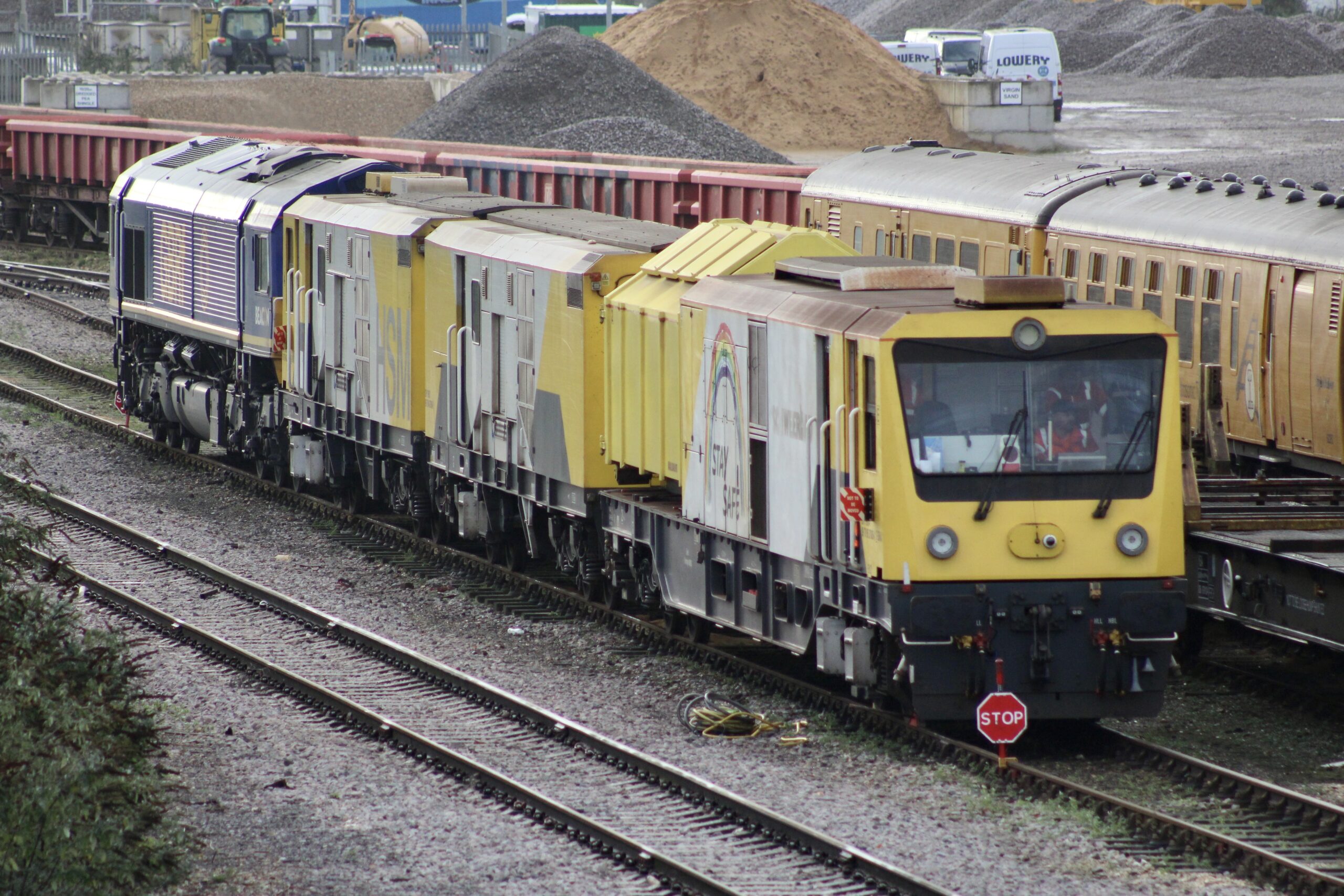
Over the first weekend of November 2024, the railway line between Wareham and Weymouth was closed to SWR passenger trains (GWR services terminated and originated at Dorchester West) as engineering work was carried out at a number of locations. Eight trains arrived with materials and equipment and eight trains left, involving ten locomotives (count them!):
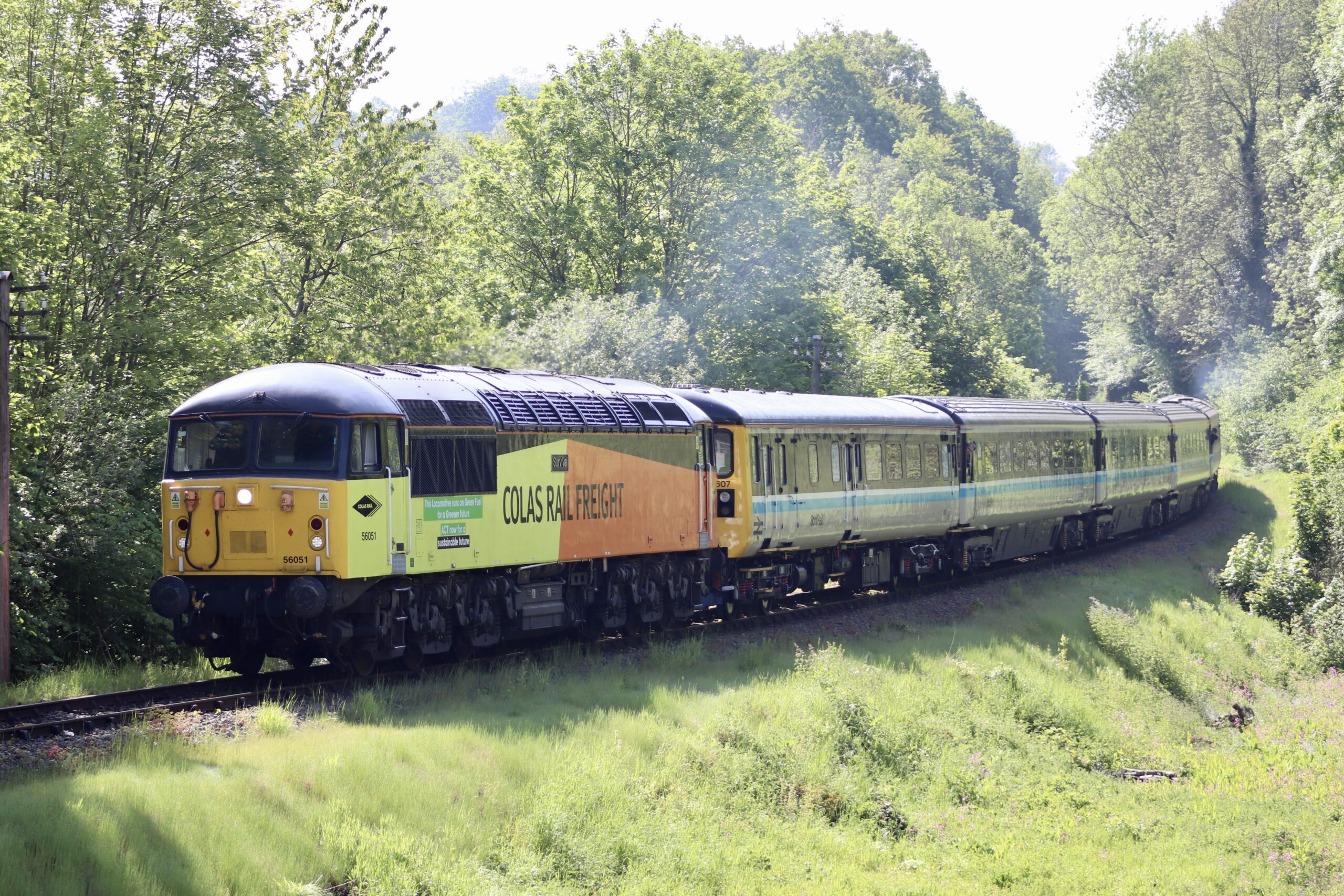
70815 tnt 70811: 6C01 2212 Eastleigh East Yard to Upwey / 56049 ‘Robin of Templecombe’,: 6C02 2252 Eastleigh East Yard to Dorchester South – 56049 ‘Robin of Templecombe’ at Hamworthy56051 ‘Survival’ : 6C03 2348 Eastleigh East Yard to Moreton / 66757 ‘West Somerset Railway’ : 6G11 0051 Eastleigh East Yard to Wareham / 66722 ‘Sir Edward Watkin’ : 6G12 0132 Eastleigh East Yard to Wareham – 66722 ‘Sir Edward Watkin’ at Poole66711 ‘Sence’ : 6G13 0241 Eastleigh East Yard to Wareham / 66557: 6Y84 0330 Eastleigh East Yard to Wareham / 66511 tnt 66413 : 6Y85 0400 Eastleigh East Yard to Wareham at Poole
Saturday 02/11/2024:
Freightliner Class 66 No. 66413 running early through Hamworthy heading up 6Y85 1800 Wareham to Eastleigh Yard – 02/11/2024
The list of workings for the Friday & Saturday were: 6C01 2212 Eastleigh East Yard to Upwey – 70815 tnt 70811, 6C02 2252 Eastleigh East Yard to Dorchester South – 56049 ‘Robin of Templecombe’, 6C03 2348 Eastleigh East Yard to Moreton – 56051 ‘Survival’, 6G11 0051 Eastleigh East Yard to Wareham – 66757 ‘West Somerset Railway’, 6G12 0132 Eastleigh East Yard to Wareham – 66722 ‘Sir Edward Watkin’, 6G13 0241 Eastleigh East Yard to Wareham – 66711 ‘Sence’, 6Y84 0330 Eastleigh East Yard to Wareham – 66557, 6Y85 0400 Eastleigh East Yard to Wareham – 66511 tnt 66413, 6Y85 1800 Wareham to Eastleigh Yard – 66413, 6Y84 2045 Wareham to Eastleigh East Yard – 66511
Sunday 03/11/2024:
Colas Railfreight Class 70 No. 70813 at Weymouth – 03/11/2024Colas Railfreight Class 70 No.’s 70811 and 70813 at Weymouth – 03/11/2024Colas Railfreight Class 56 No. 56049 ‘Robin of Templecombe’ at rest in Dorchester – 03/11/2024Colas Railfreight Class 56 No. 56051 ‘Survival’, Dorchester – 03/11/2024Freightliner Class 66 No. 66557 working 6G13 1555 Wareham to Eastleigh East Yard passing Wareham – 03/11/2024GBRf Class 66 No. 66722 powers through Holton Heath working 6G11 1755 Wareham to Eastleigh East Yard – 03/11/2024
The list of workings for the Sunday were: 6G13 1555 Wareham to Eastleigh East Yard – 66557, 6G12 1655 Wareham to Eastleigh East Yard – 66711, 6G11 1755 Wareham to Eastleigh East Yard – 66722, 6C03 1930 Wareham to Eastleigh East Yard – 66757, 6C02 2035 Wareham to Eastleigh East Yard – 56051 tnt 56049
The remaining departure was scheduled for the Monday morning and ran as 6C01 0400 Wareham to Eastleigh East Yard – 70815 tnt 70811
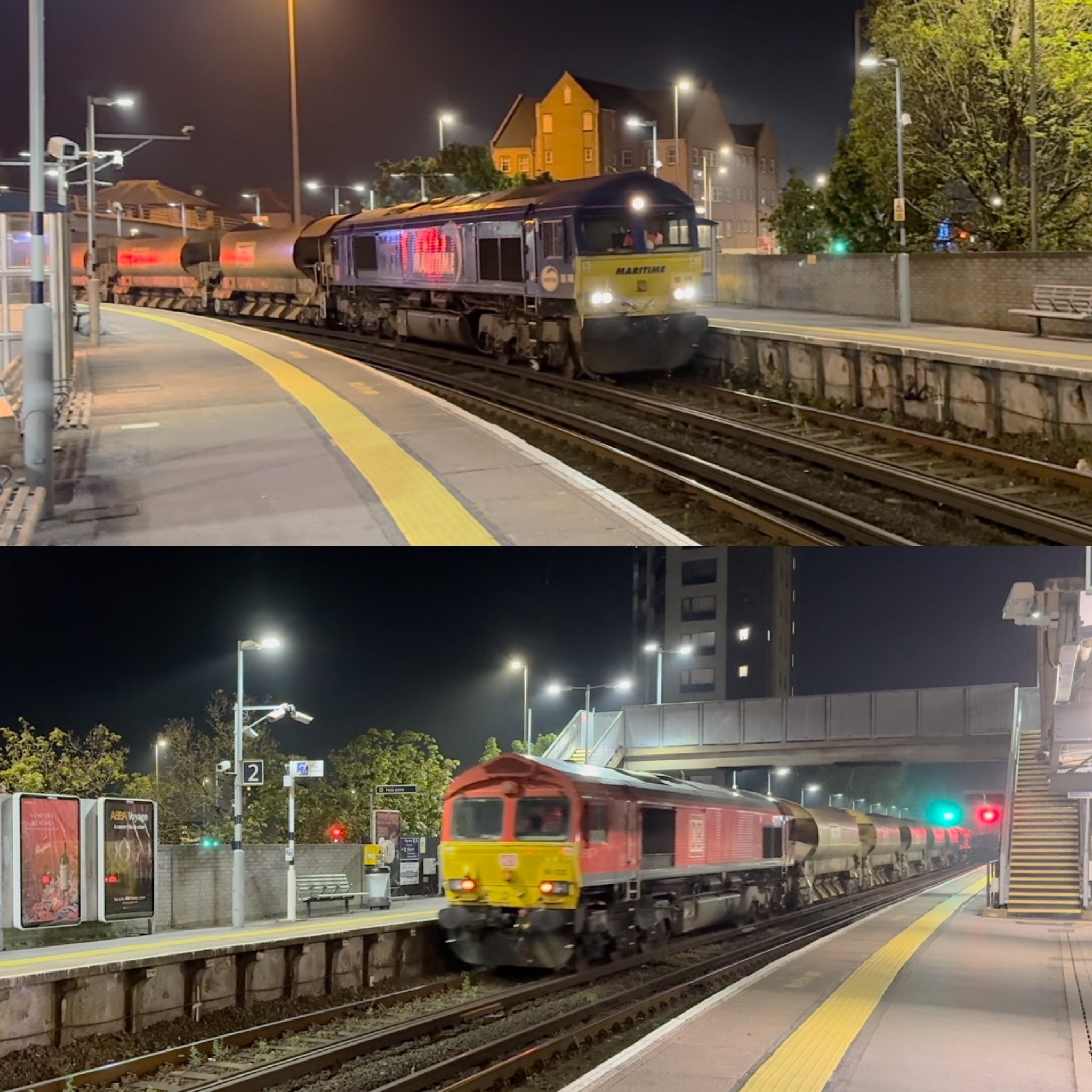
Friday evening, November 8th 2024, I was visiting a good friend near Eastleigh and on the way home, I took the opportunity to see DB Cargo Class 66 No. 66177 passing through the station working 6N05 2249 Eastleigh East Yard to Poole. The train was scheduled for a ten minute layover at Redbridge which would give me plenty of time to get closer to home in order to see No. 66177 once again. In the event, 6N05 went straight through Redbridge, but this meant Yoshi and I didn’t have long to wait at Branksome before getting another shot of the train. Finally we saw the consist parked up at Sterte, Poole in readiness for the locomotive to get in position for the weekend engineering work.
Screenshot DB Cargo Class 66 No. 66177 crawls through Eastleigh at the head of 6N05 2249 Eastleigh East Yard to Poole – 08/11/2024
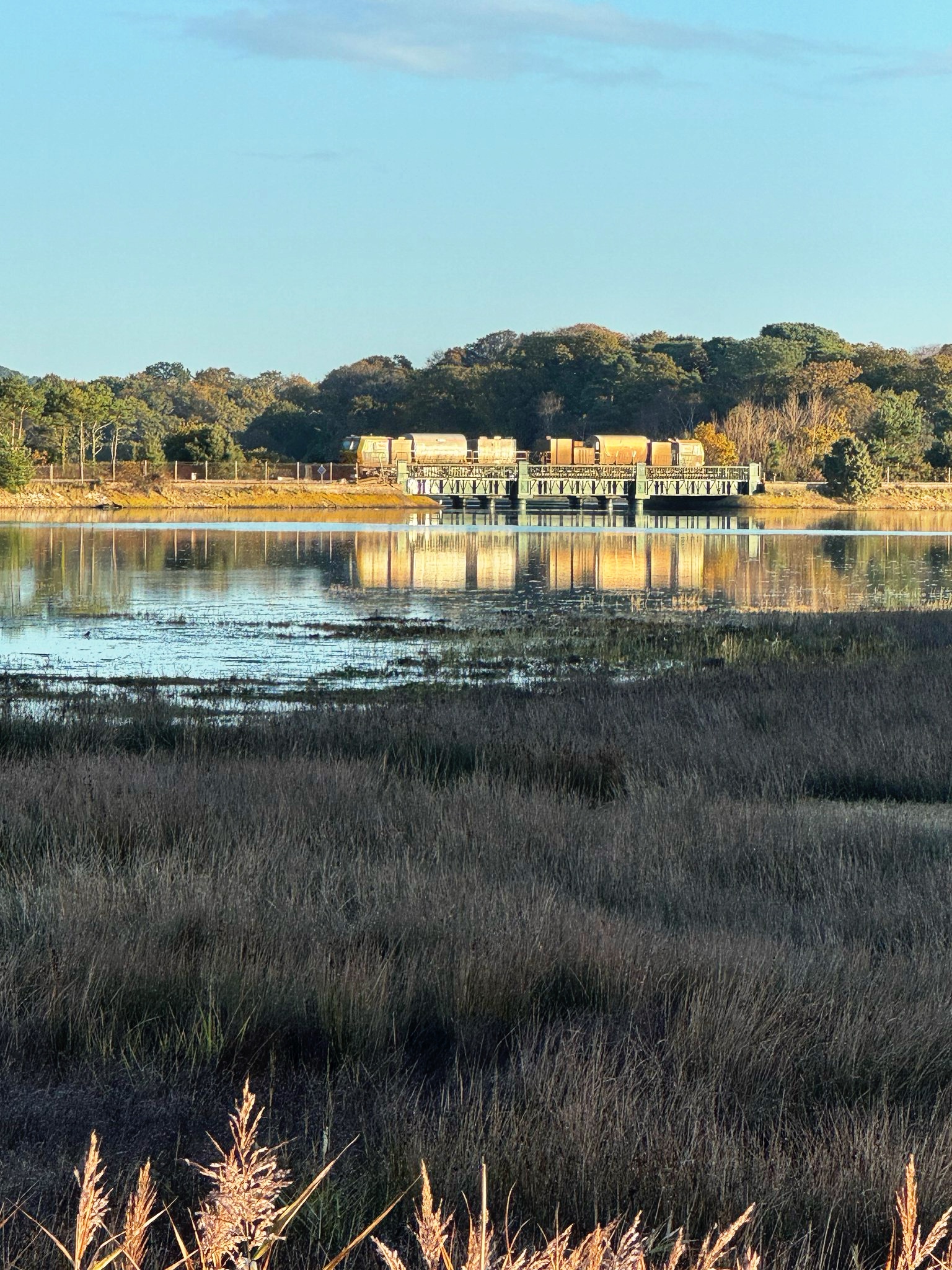
The video below also includes views of Balfour Beatty Rail Services Matisa B41UE Tamper No. DR75411 working 6J61 2213 Eastleigh East Yard to Poole Storage Sidings at Southampton Airport Parkway and Branksome. The engineering work itself centred around Creekmoor Viaduct on the Holes Bay causeway.
DB Cargo Class 66 No. 66177 on the Holes Bay causeway – 10/11/2024
13th November 2024 – Working 5B09 0757 Eastleigh East Yard to Bournemouth T&R.S.M.D, GBRf Class 57 No. 57310 arrived at Poole hauling ex-Class 508 driver trailer barrier vehicles on the way to Bournemouth depot to collect the final South Western Railway Class 458/5 EMU to be delivered to Widnes Transport Tech later in the day. This was originally diagrammed to run as 5Z66 1441 Bournemouth T&R.S.M.D to Eastleigh East Yard but was later updated to 5Z66 1241 Bournemouth T&R.S.M.D to Eastleigh East Yard, which caught a lot of folk by surprise, including me and despite an attempt to see the train passing Christchurch, I just failed to capture a video of it passing!
GBRf Class 57 No. 57310 5B09 0757 Eastleigh East Yard to Bournemouth T&R.S.M.D
The New Measurement Train ran through North Dorset on Thursday 14th November 2024 with Class 43 HST power cars No.’s 43251 and 43303 reporting as 1Q23 0552 Reading to Salisbury via Exeter New Yard.
For the first time since 2019, the South Devon Railway hosted a diesel gala. This one day event utilised the SDR’s home fleet of diesel locomotives throughout the day alongside guest Class 60 No. 60029 ‘Ben Nevis’ provided by DCRail. We popped to Buckfastleigh for an afternoon of diesel action – 09/11/2024
Class 60 No. 60029 ‘Ben Nevis’ provided by DCRail at Buckfastleigh during the South Devon Railway’s diesel gala – 09/11/2024
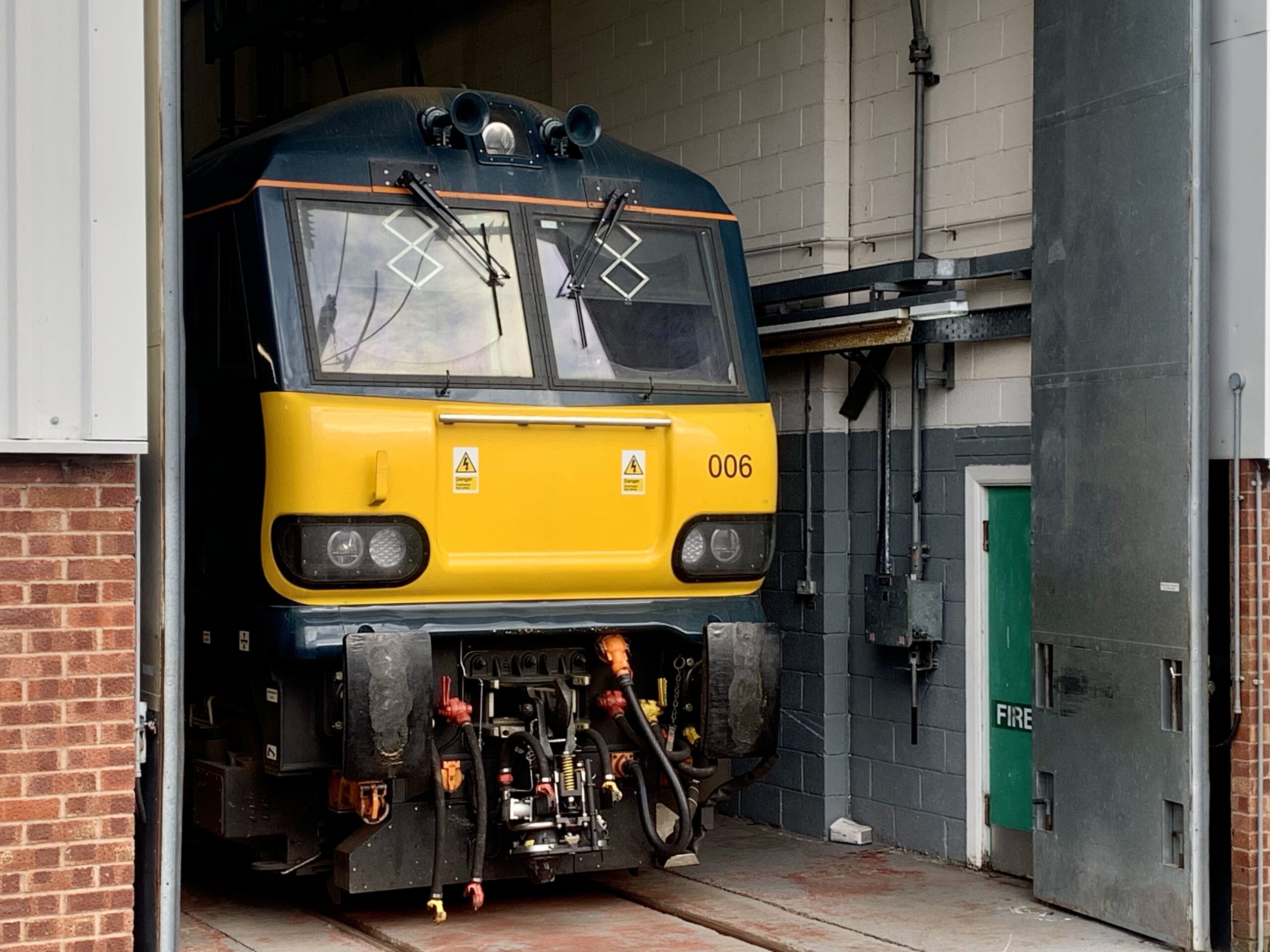
In amongst the usual Avanti West Coast Pendolino’s and West Midlands Trains Class 350 EMU’s, I spent an interesting few hours at London Euston on 17th November 2024 as Great Western Railway diverts took place due to engineering work for the construction of HS2’s new station at Old Oak Common requiring the closure of the Great Western Mainline into London Paddington. The Caledonian Sleeper and the GWR Night Riviera stood side by side in the former LMS terminal. Class 92 No. 92033 ‘Railway Heritage Trust’ arrived with the empty coaching stock for the Caledonian Sleeper and departed light loco as 5S96 2117 Wembley Inter City Depot to London Euston / 0A96 2337 London Euston to Wembley Inter City Depot. While Class 92 No. 92018 headed up 1S26 2330 London Euston to Glasgow Central and Edinburgh having arrived light engine as 0S26 2104 London Euston to London Euston. The GWR sleeper stock was top and tailed by Class 57 No.’s 57602 ‘Restormal Castle’ and 57605 ‘Totnes Castle’ which arrived reporting as 5Z51 2115 Reading Traincare Depot to London Euston and departed forming 1Z51 2333 London Euston to Penzance. Locomotive Services Limited Class 90 No. 90001 ‘Royal Scot’ worked in light engine as 0Z51 Crewe Holding Sidings to London Euston and departed as 0Z52 2356 London Euston to Wembley H.S. , the locomotive hired in to provide power to the GWR Night Riviera stock while at Euston to alleviate diesel fumes from the Class 57 locomotives while waiting at platform. We were also treated to a Rail Head Treatment Train top and tailed by GBRf Class 66 No.’s 66750 and 66752 working as 3J01 1414 Kings Norton Ot Plant Dept to London Euston / 3S01 0007 London Euston to London Euston.
Great Western Railway IET No.’s 800019/800016 forming 1Z29 2132 London Euston to Reading meets Avanti West Coast Pendolino Class 390 No. 390155 which had arrived as 1A68 1855 Manchester Piccadilly to London Euston – 17/11/2024Caledonian Sleeper ECS with Class 92 No. 92033 ‘Railway Heritage Trust’ at Platform 1 London Euston with Locomotive Services Class 90 No. No. 90001 ‘Royal Scot’ providing power to the GWR Night Riviera stock at Platform 2 – 17/11/2024 Screenshot of Class 92 No. 92033 ‘Railway Heritage Trust’ running light engine as 0A96 2337 London Euston to Wembley ICD pass GWR Class 57 No. 57602 ‘Restormal Castle’ which is about to depart with the Cornish Riviera Sleeper 1Z51 2333 London Euston to Penzance sleeper service – 17/11/2024Locomotive Services Class 90 No. No. 90001 ‘Royal Scot’ ready to depart London Euston – 17/11/2024
Video of GWR diverts at London Euston – 17/11/2024
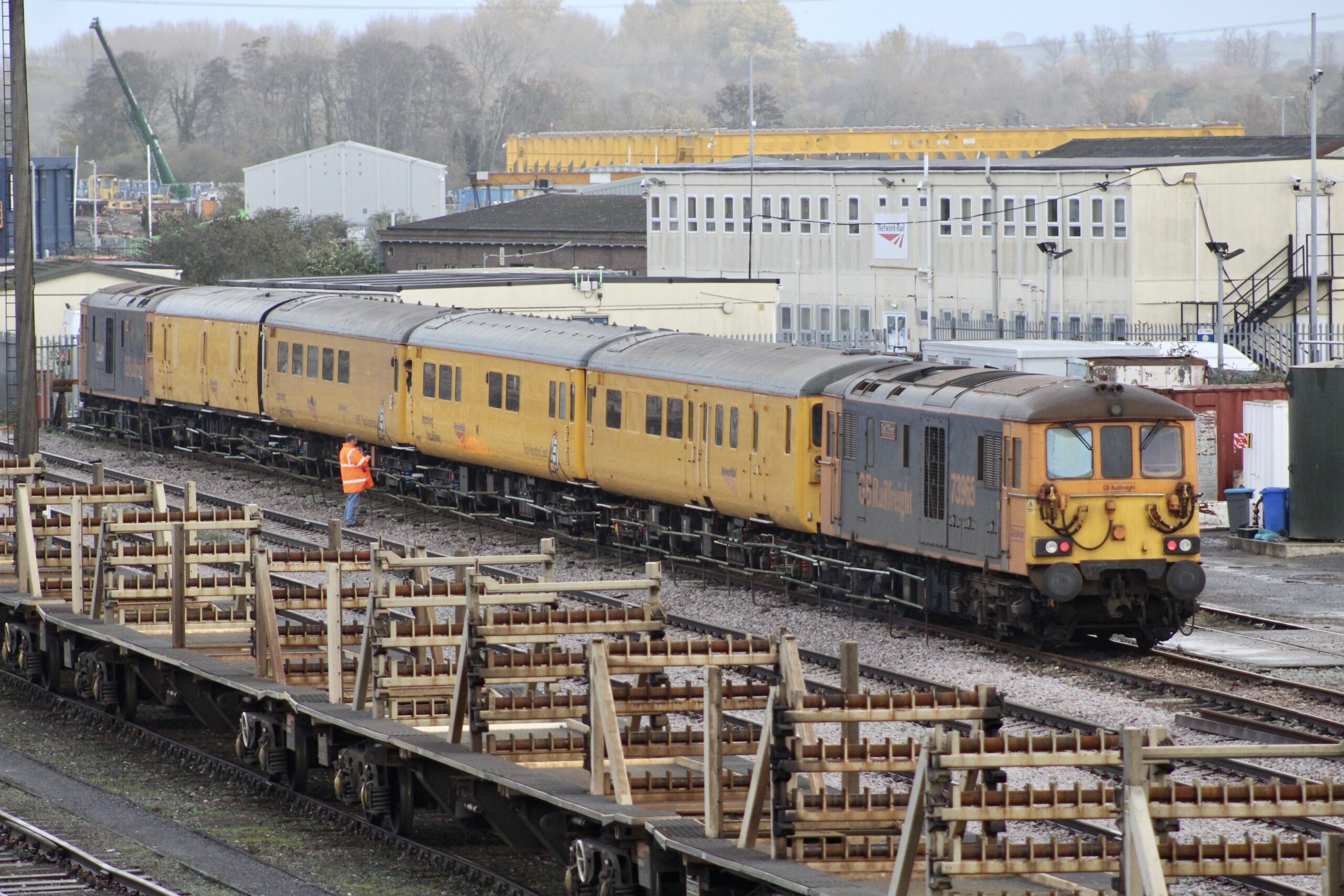
The monthly PLP test train utilising GBRf Class 73 locomotives did not make it to Dorset in November, the train being cancelled at Bedford due to a problem with the traction equipment. No.’s 73965 and 73963 had been allocated to 1Q51 1115 Derby RTC to Eastleigh Yard via Weymouth.
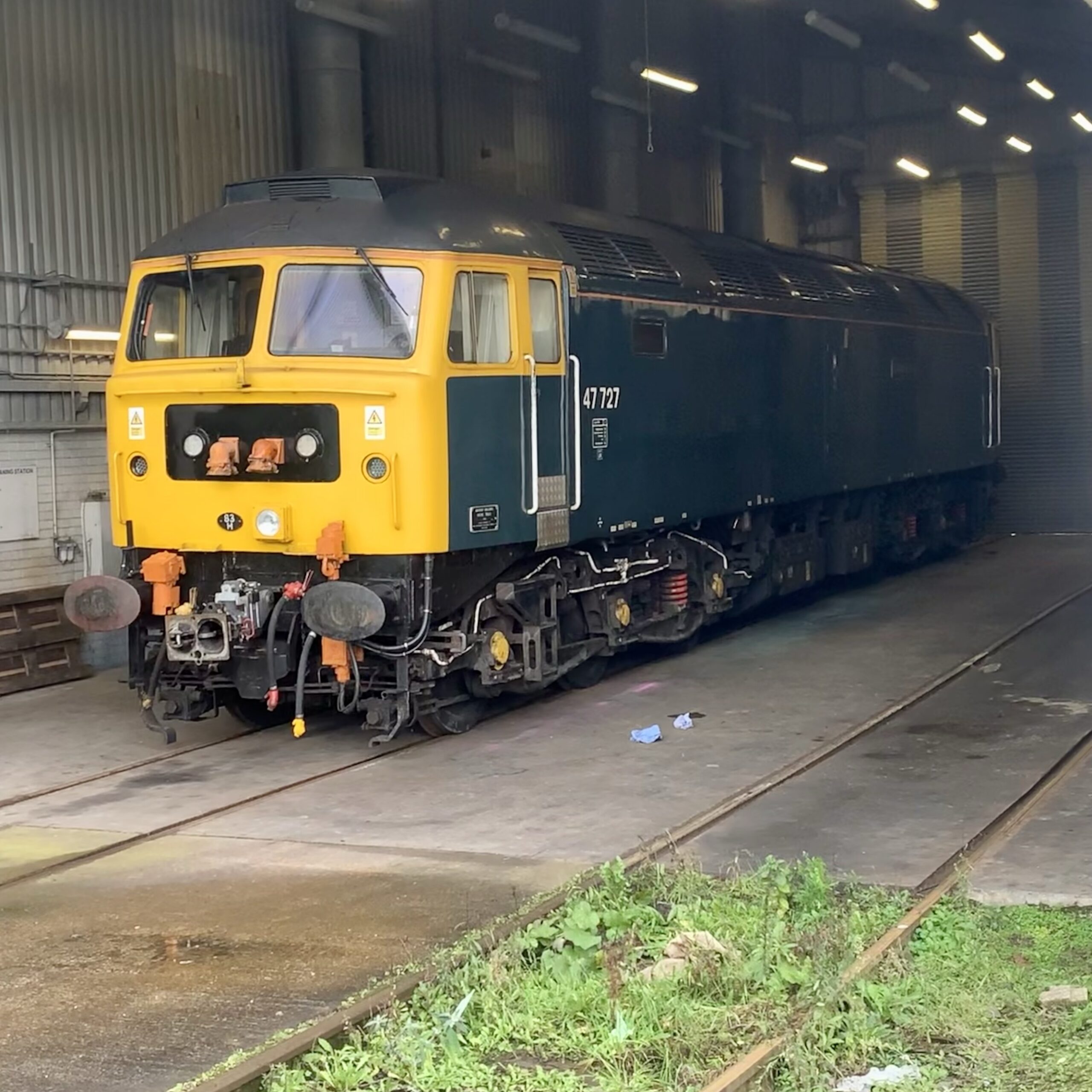
Another Class 458 Unit drag to Bournemouth was scheduled to take place on 19th November 2024 with GBRf Class 57 No. 57305 bringing No. 458403 down from Widnes following conversion. However the Class 57 failed at Wembley and was replaced by Class 47 No. 47739 which eventually arrived at Bournemouth depot the following day as 5Q64 1700 Southampton Central to Bournemouth T&RSMD. The first leg of the return path to Leicester LIP with loco and barrier coaches reported as 5Z66 2008 Bournemouth TRSMD to Eastleigh East Yard.
On a visit to Oxford, we enjoyed a walk along the Oxford Canal from the City Centre to the Trout Inn at Wolvercote. On the way we saw a couple of passing freight trains as well as Harry Needle Railroad Company Class 37 No. 37405 working 0Z38 1100 Oxford Down Engineers Siding to Oxford Down Engineers Siding – 26/11/2024
Screenshot Harry Needle Railroad Company Class 37 No. 37405 working 0Z38 1100 Oxford Down Engineers Siding to Oxford Down Engineers Siding passing Wolvercote – 26/11/2024
Video from Oxford – 26/11/2024
A launch event to mark the rollout of long-delayed new trains for South Western Railway (SWR) was held at London Waterloo on Thursday 28th November 2024 where Class 701 No. 701031 was named ‘Nighthawk’ by cricket legend Stuart Broad. The former One Day and Twenty20 captain unveiled the name a short trip up the line from Vauxhall, home to the Oval cricket ground where he took the final wicket in his last Test match. ‘Nighthawk’ is a nickname given to Broad by his teammates and reflects his role as a nightwatchman in the game of cricket. Thank goodness for press releases!
Highlighting its suburban network as a hub for sporting excellence, SWR also named trains the ‘Jockey’ for horseracing destinations such as Ascot, Sandown and Kempton Park; the ‘Red Rose’ for English rugby at Twickenham; the ‘Ace’ for the Wimbledon Championships; and the ‘Thames Racer’ in honour of the Boat Race.
The Derby-built Class 701 Arterio trains are five years behind schedule. Ninety trains, costing £1bn, were ordered in 2017 and were due in service from November 2019. The trains have been held up by extensive faults, mostly to do with their software. Many have spent years stored in sidings around the country.
The RMT union held 78 days of strikes about the role of guards on these trains before reaching an agreement with the train operator. The first Arterio train carried passengers between London Waterloo and Windsor in January 2024. The “development” service was mostly restricted to one return trip a day outside peak hours. Since then, five Arterios have appeared in service, serving the routes to Windsor & Eton Riverside and Shepperton, calling at some of SWR’s busiest stations including Earlsfield, Kingston, Richmond, Twickenham and Wimbledon.
Building on those destinations, it was confirmed that the new fleet will serve stations including Dorking, Epsom, Guildford, Hampton Court and Reading over the next six months, moving SWR closer to its ultimate goal of transforming every journey on its suburban network.
Each ten-car Arterio carries over 50% more customers than the eight-car Class 455 trains they replace, significantly increasing capacity for customers. The fleet will also improve customer comfort, providing modern features including Wi-Fi, charging points at every seat, real time information, accessible toilets and air conditioning.
To mark the Arterios being named and to celebrate the next ten being rolled out, an orchestra played a medley of well-known sporting tunes, including the themes from TV’s Grandstand and Match of the Day and the film Chariots of Fire.
SWR is training 750 drivers to operate the Class 701 trains.
SWR Class 701 No. 701031 stands at London Waterloo in readiness for the Arterio launch event – 28/11/2024SWR Class 701 No. 701031 ‘Nighthawk’ – 28/11/2024SWR Class 45 No. 455717 along with 455865 prepares to depart with the late running 2M25 1117 London Waterloo to Raynes Park – 28/11/2024A view of London Waterloo with Class 455’s in evidence – 28/11/2024
Video from London Waterloo – 28/11/2024
Thanks for reading – don’t forget the best way to keep up to date with our latest videos is via the Railway Dog YouTube Channel – why not subscribe today! Or you can catch random witterings and photos via the Railway Dog Facebook group. We’ll be back with the December 2024 round-up soon. Be seeing you!
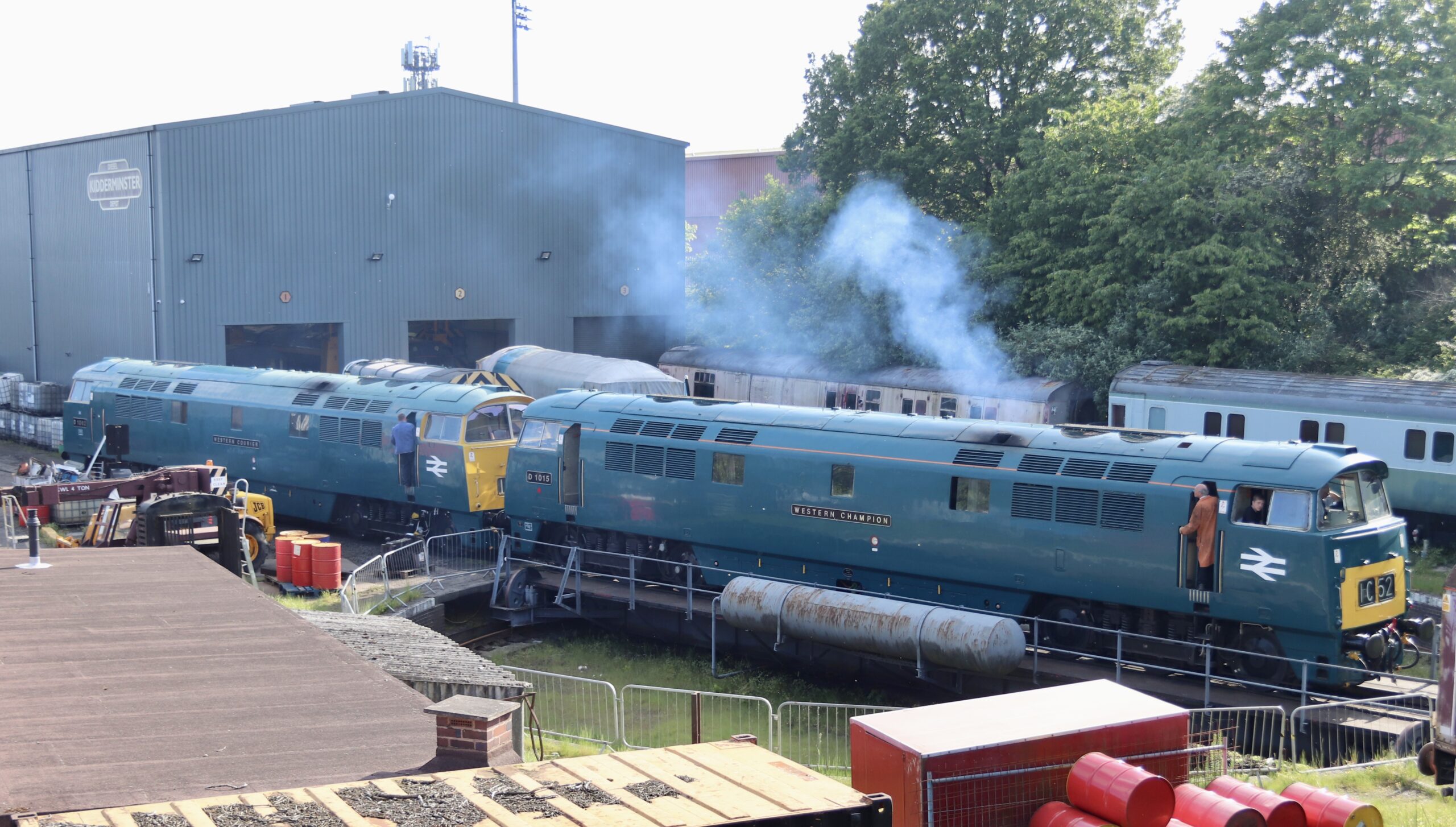
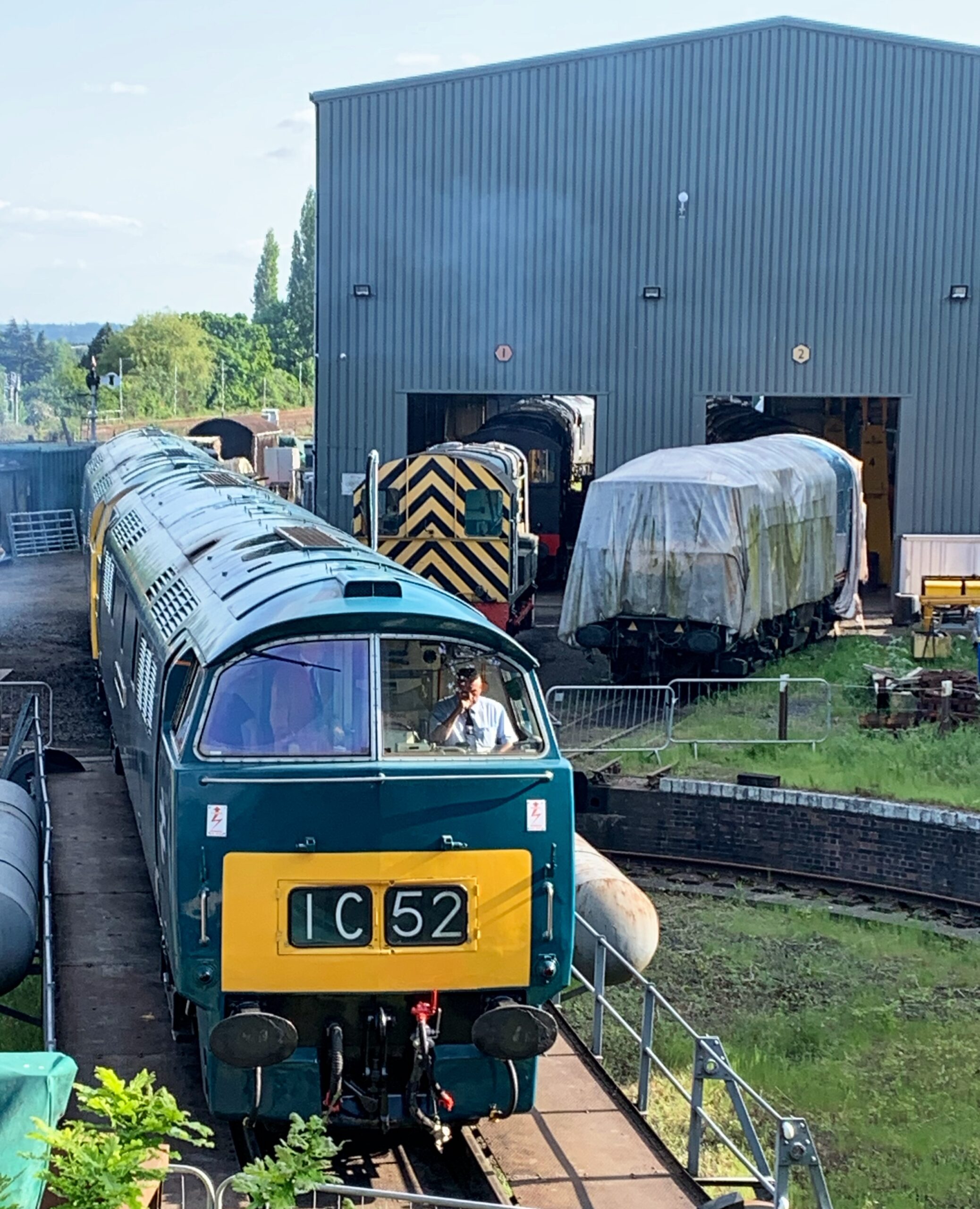
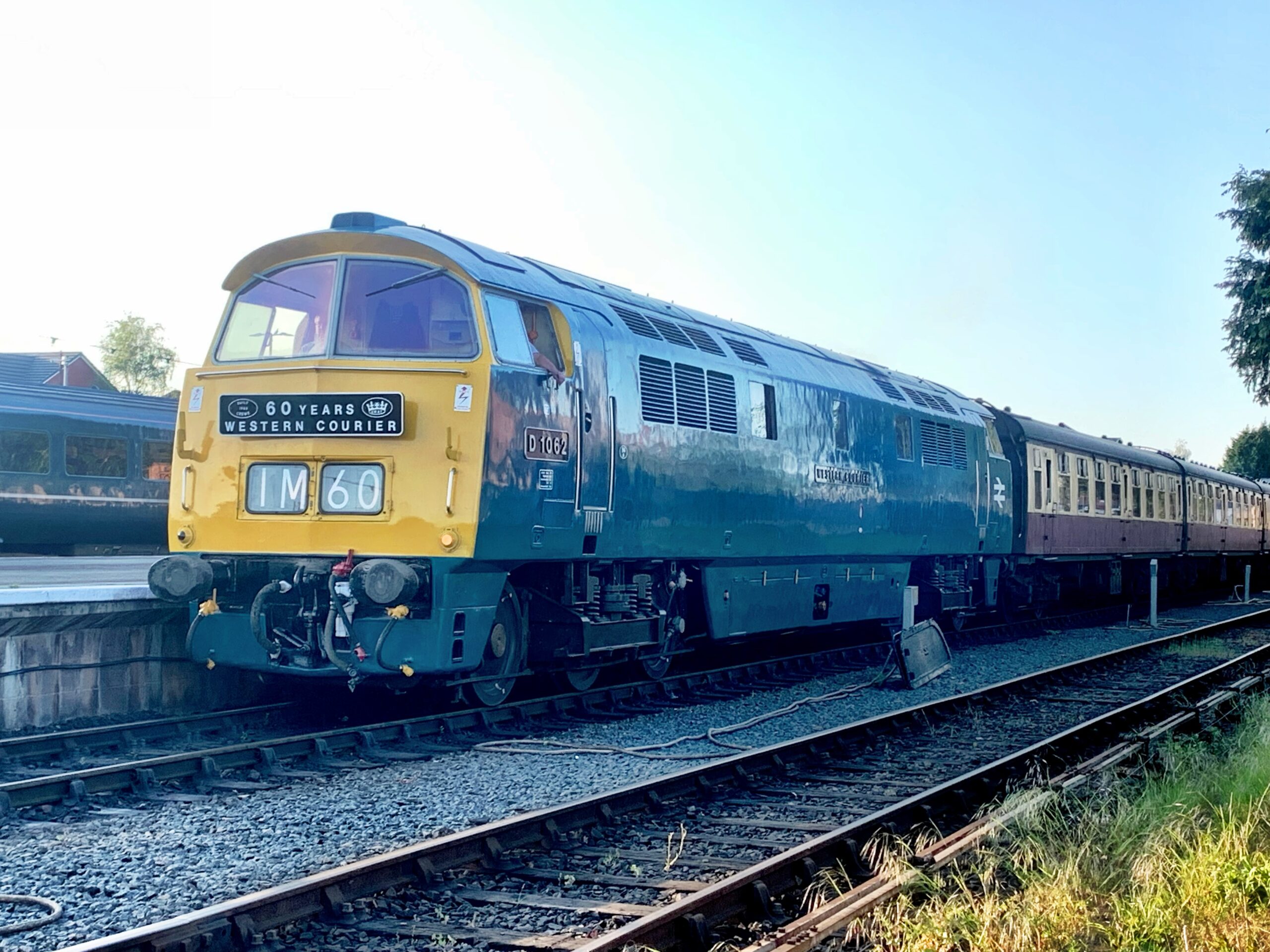
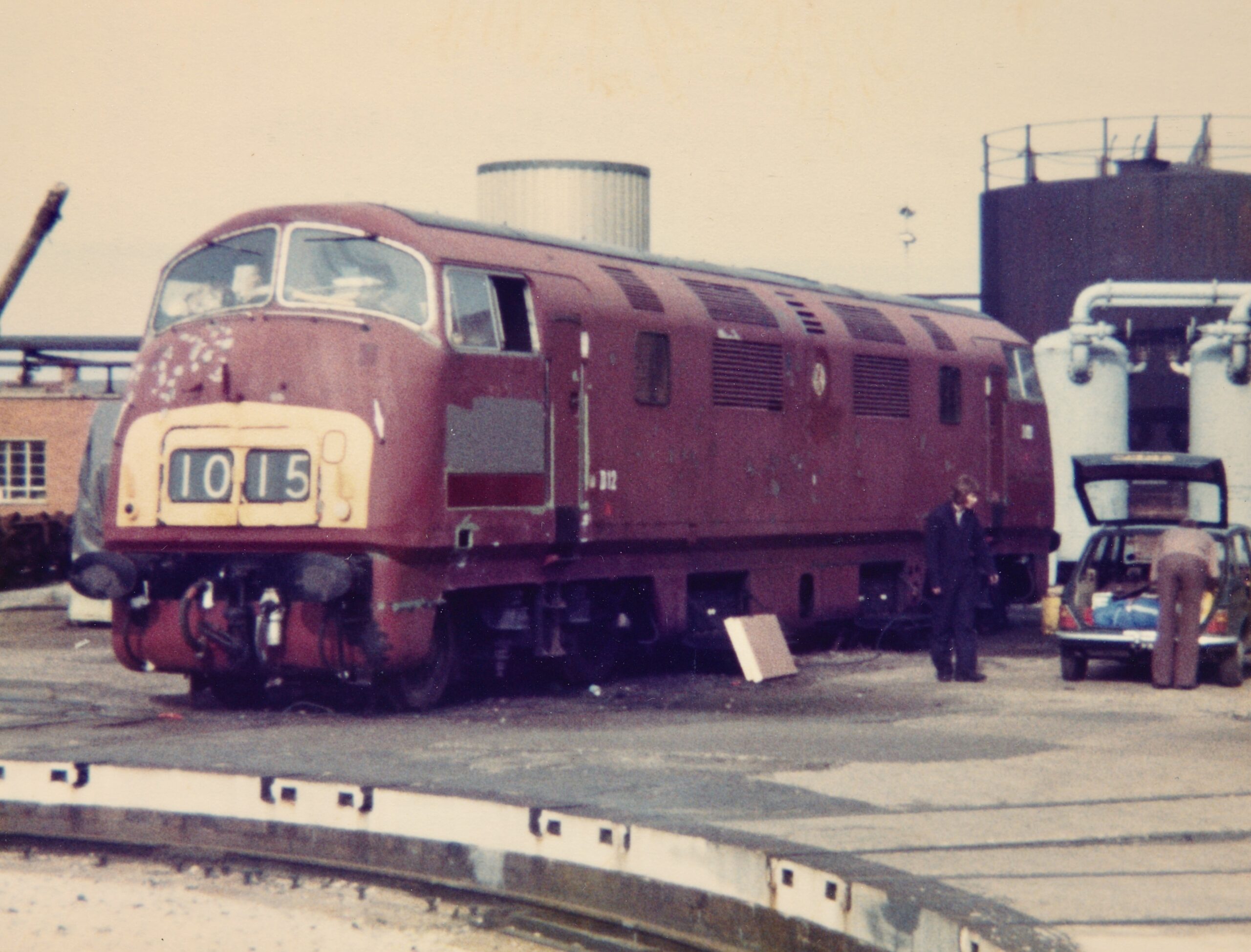
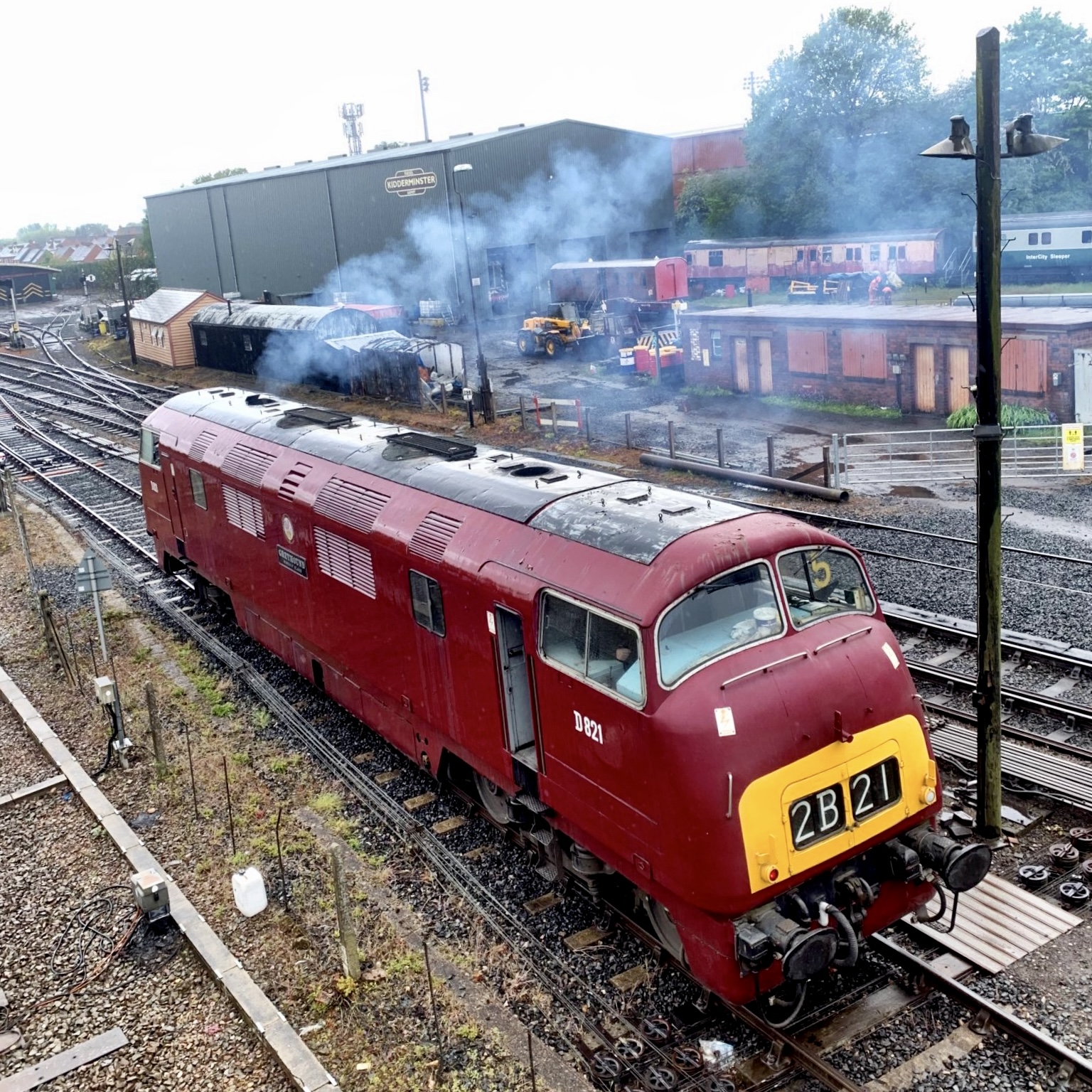
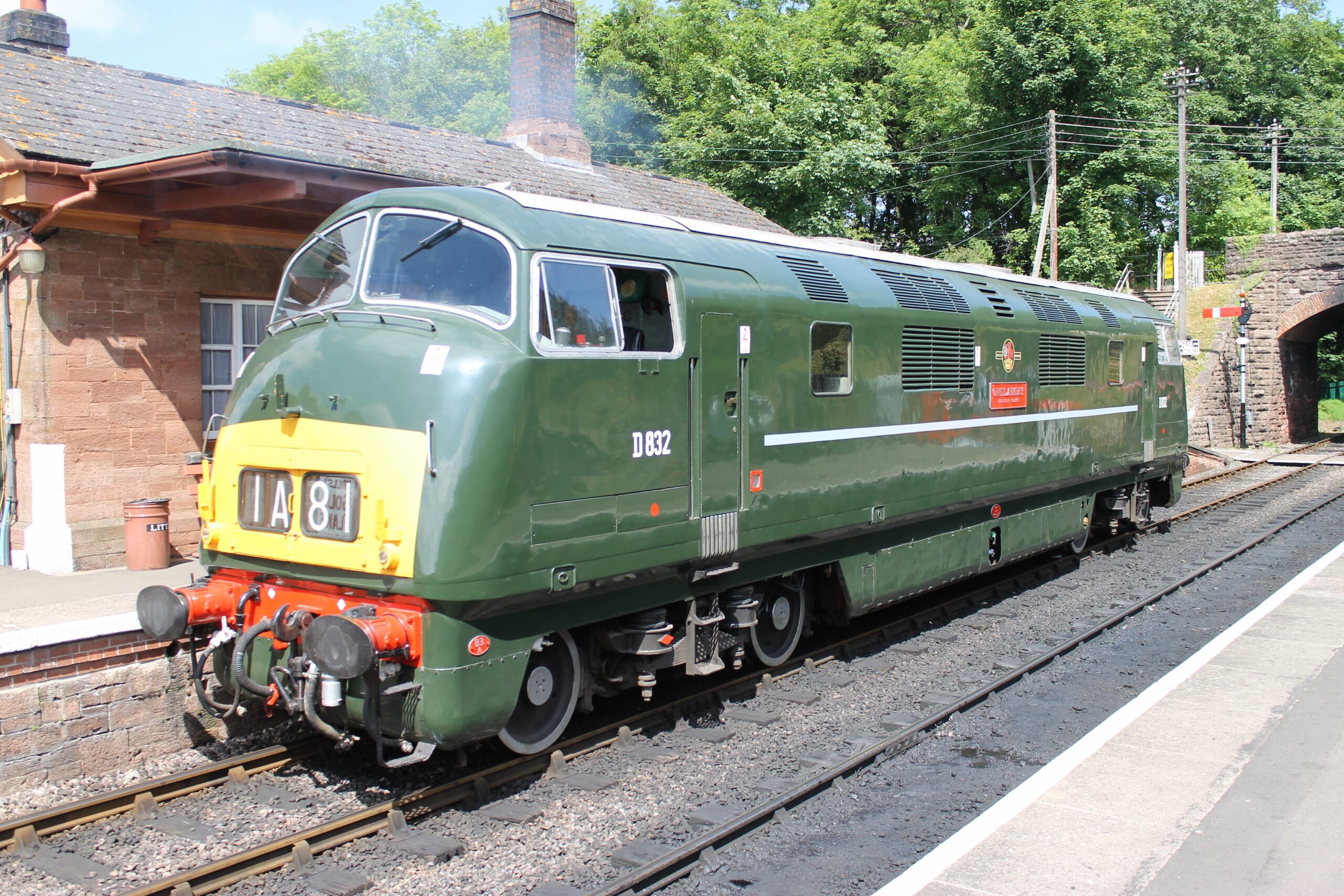
The Sun sets on Class 52 No. D1015 ‘Western Champion’ as she awaits the start of another day at the Swanage Diesel Gala – 10/05/2024
April 25th to May 16th 2024
It’s been a while… where did we get to last time? Ah yes, Class 52 “Western”, the New Measurement Train, engineering trains, Swanage and such like. I think this post may be a case of deja vu as many of these topics appear once again. But first, we had a trip to Derbyshire to attend a wedding via Bridport where we bumped into Ninth Doctor Who actor Christopher Eccleston (outside the toilets, no less). Chris was attending a screening of Ken Loach’s “Kes” (1969) as part of Bridport’s Film Festival 2024 ‘From Page To Screen’ series. It was great to see the film on the “big screen”.
Christopher Eccleston chats about “Kes” as part of the Bridport Film Festival – 25/04/2024
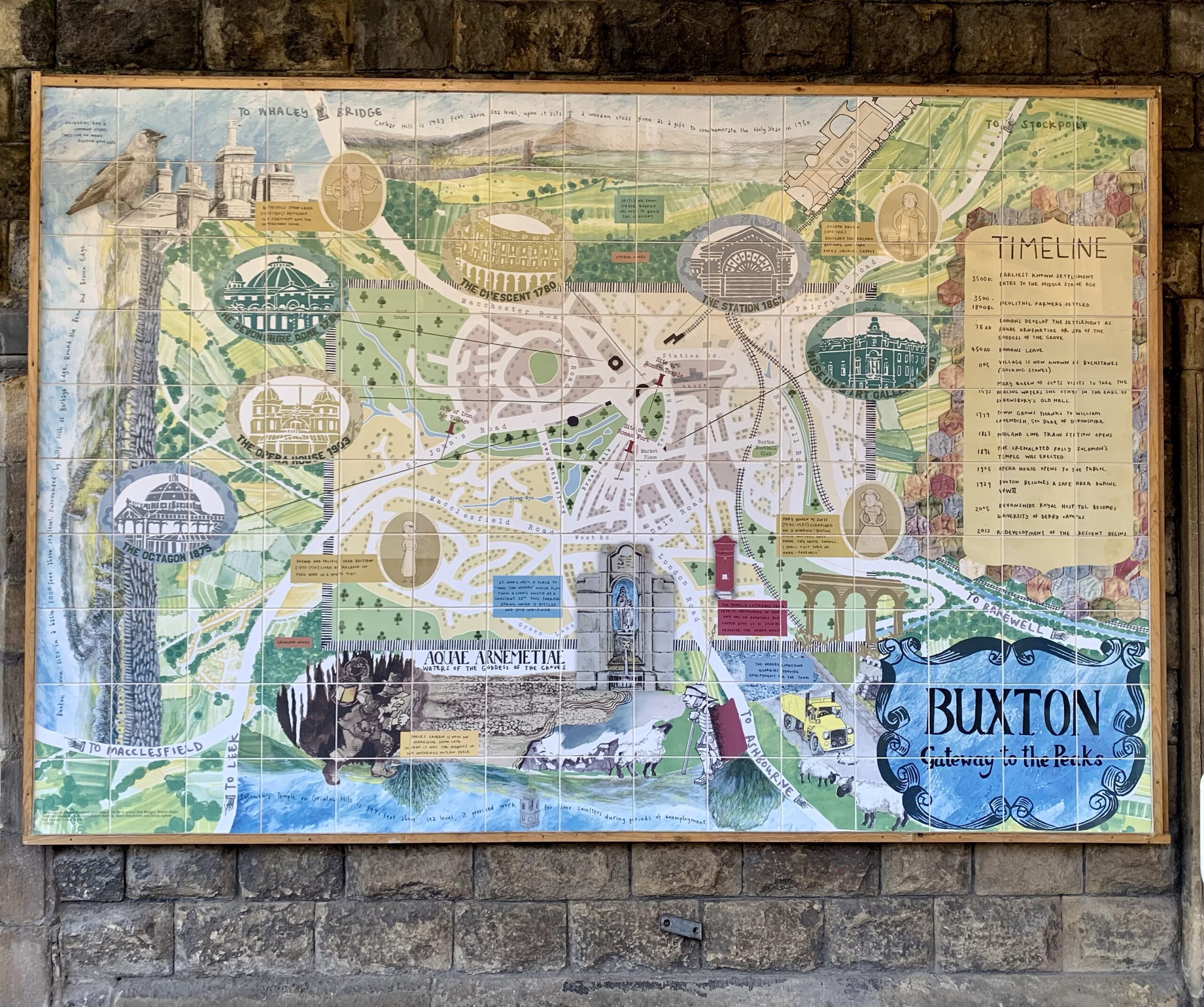
Having dropped Yoshi off at his cousins, we headed to Derbyshire for wedding celebrations at the beautiful Buxton Pavilion. We arrived in good time and checked into our hotel which meant we had time for a wander into Buxton before the wedding ceremony.
I was lucky enough to see a pair of Class 66’s top and tailing across Spring Gardens Viaduct as we looked for a pub to have lunch. I managed to get a shot of No. 66044 operating as tail gunner, but an hour or so later, I was able to see this “Shed” and sister loco No. 66156 continue on their way after reversing at Buxton Up Relief Sidings.
DB Cargo Class 66 No. 66044 at rest on Spring Gardens Viaduct, Buxton on the rear of 6H52 1305 Download Briggs Sidings to Ashburys SS – 26/04/2024
Video of DB Cargo Class 66 No.’s 66044 and 66156 working 6H52 1305 Download Briggs Sidings to Ashburys SS at Buxton – 26/04/2024
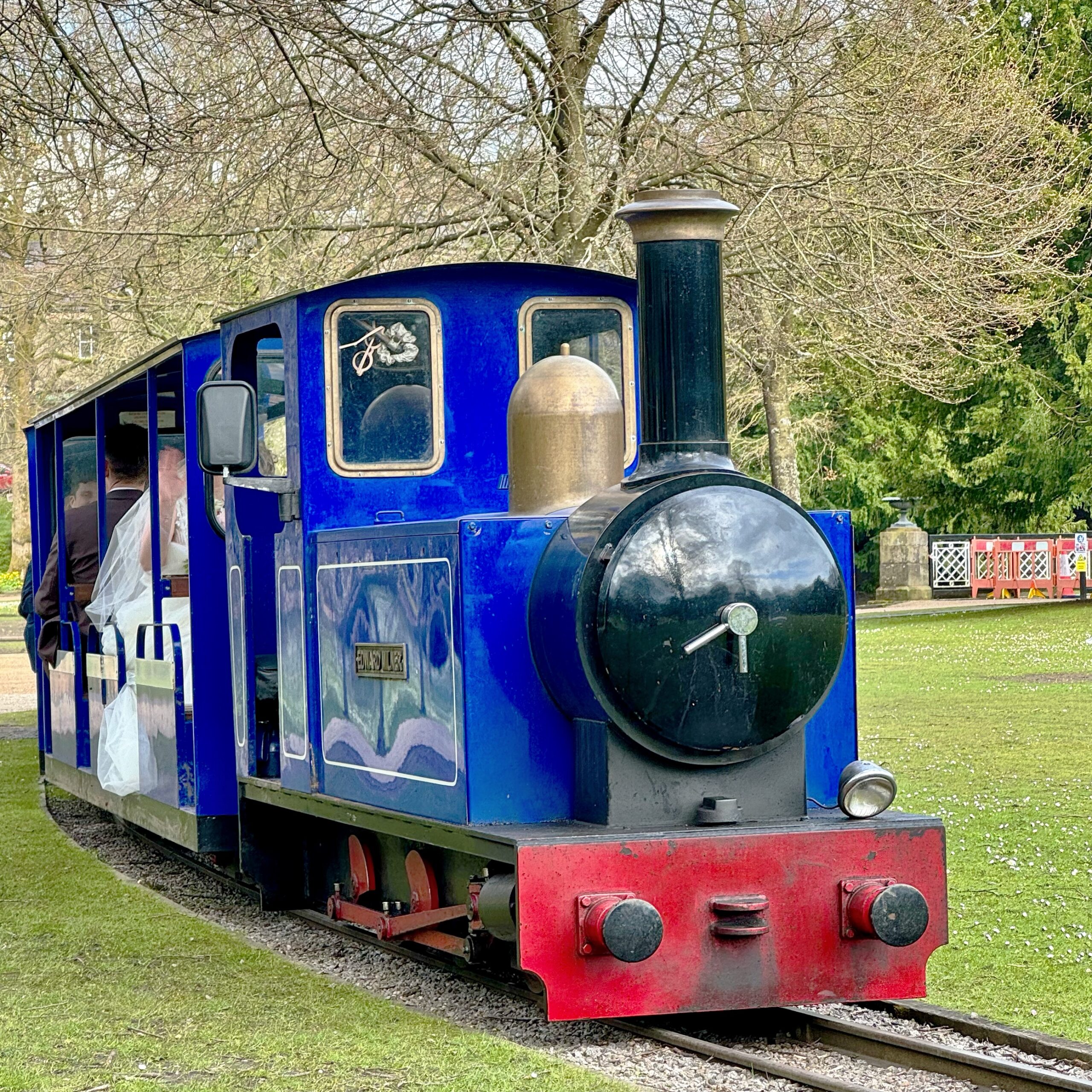
Following a wonderful wedding ceremony in the Buxton Spa Botanical Conservatory, as if the day couldn’t have been more fabulous, the bride and groom had arranged for the Buxton Pavilion Gardens Miniature Railway to be in service.
Steam Outline 0-6-0 diesel-hydraulic No. 2000 ‘Edward Milner’ in Wedding Day Special service on the Buxton Pavilion Gardens Miniature Railway – 26/04/2024Steam Outline 0-6-0 diesel-hydraulic No. 2000 ‘Edward Milner’ on the Buxton Pavilion Gardens Miniature Railway – 26/04/2024
The railway first opened in 1972 as a 10 1/4″ gauge line. Trains were initially hauled by ‘Borough of Buxton’ a Shepperton Metal Products locomotive. In the winter of 1998, the line was regauged to 12.25″ in order to accommodate Alan Keef stock. Steam Outline 0-6-0 diesel-hydraulic No. 2000 ‘Edward Milner’ was built in 2000 and is named after the designer of the park it runs in.
Video of Steam Outline 0-6-0 diesel-hydraulic No. 2000 ‘Edward Milner’ in Wedding Day Special service on the Buxton Pavilion Gardens Miniature Railway – 26/04/2024
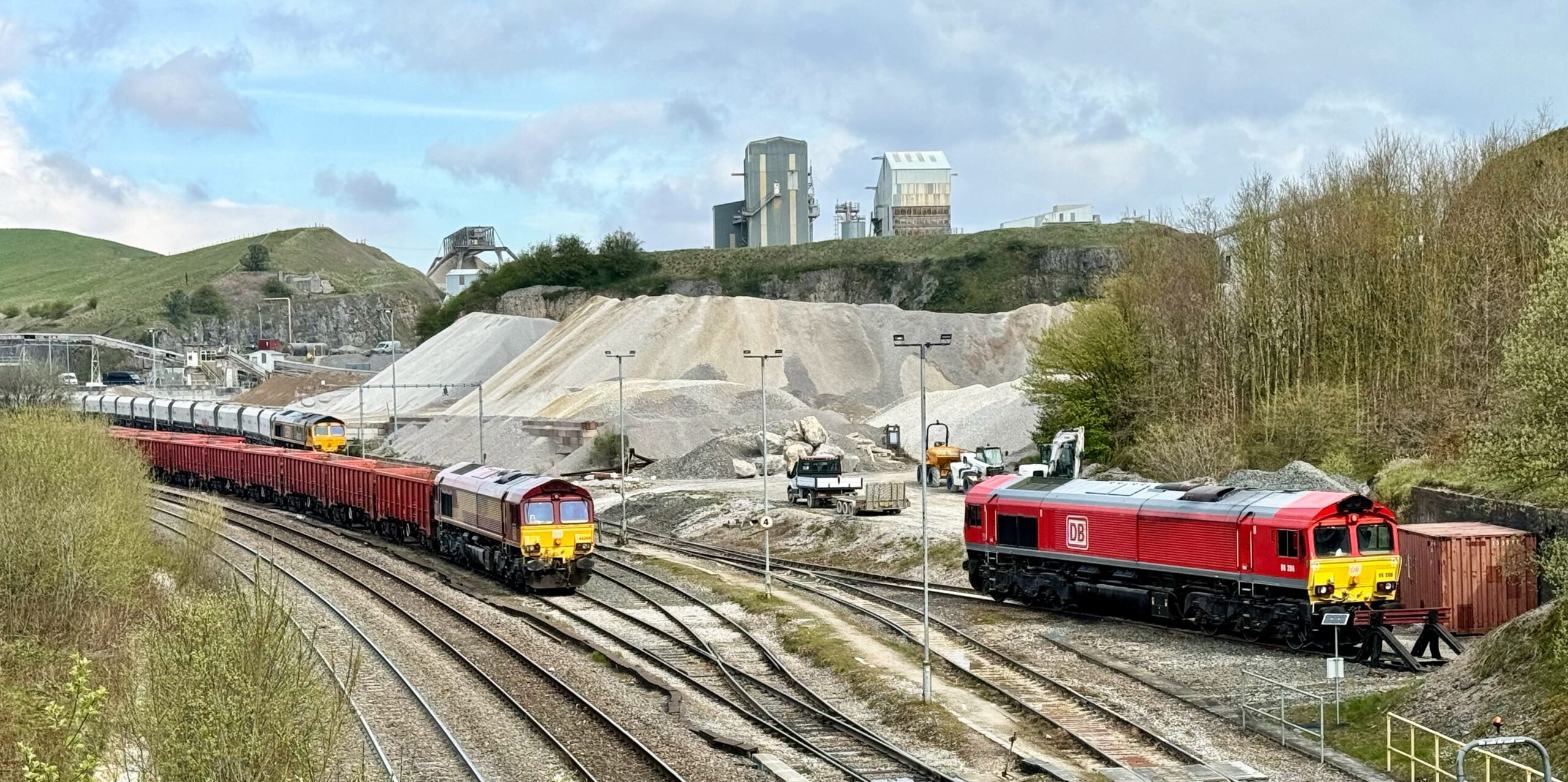
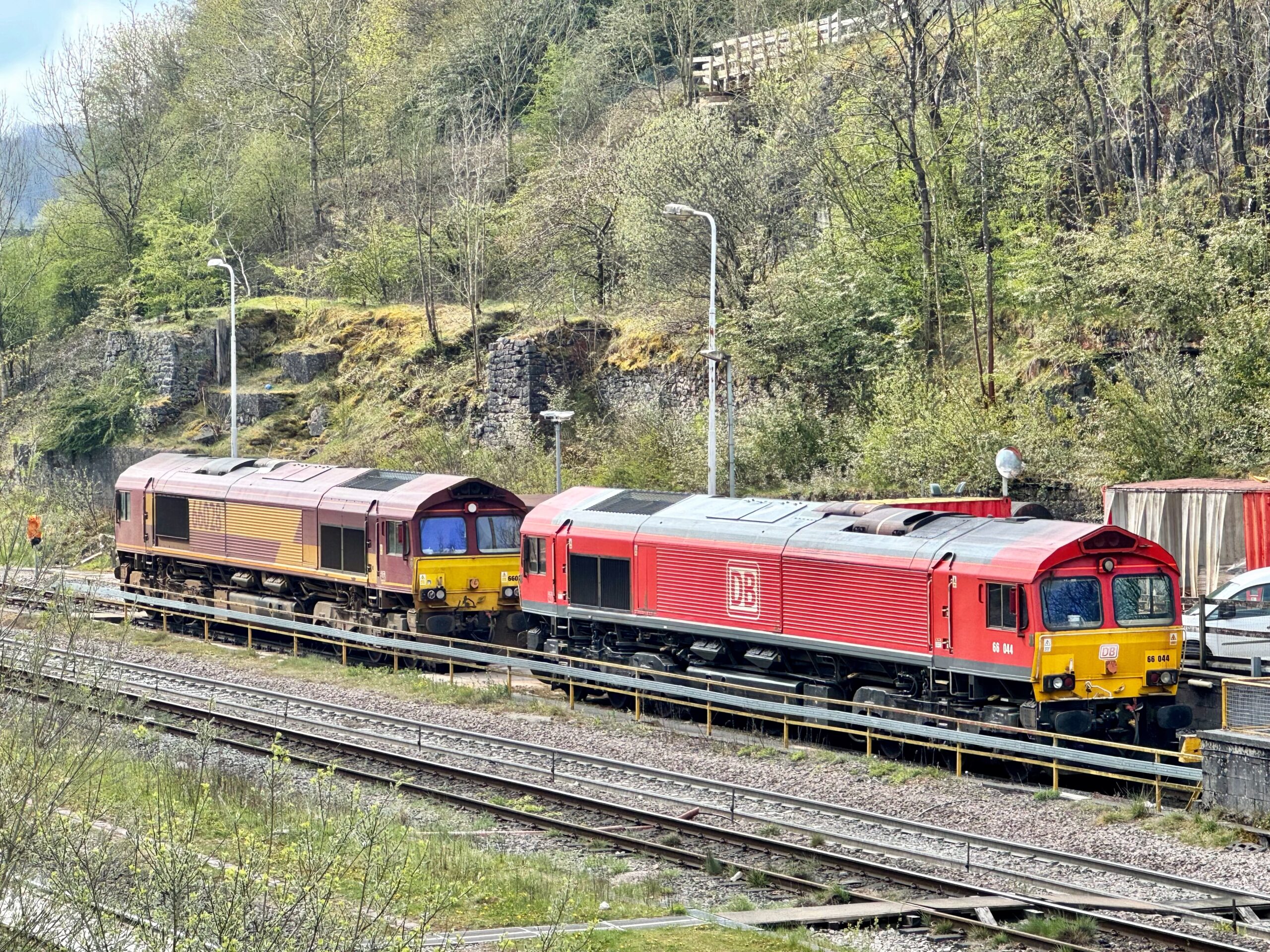
After an evening of celebration, the following day we travelled north for a stay in Holmfirth via a quick look in at Cemex Peak Forest.
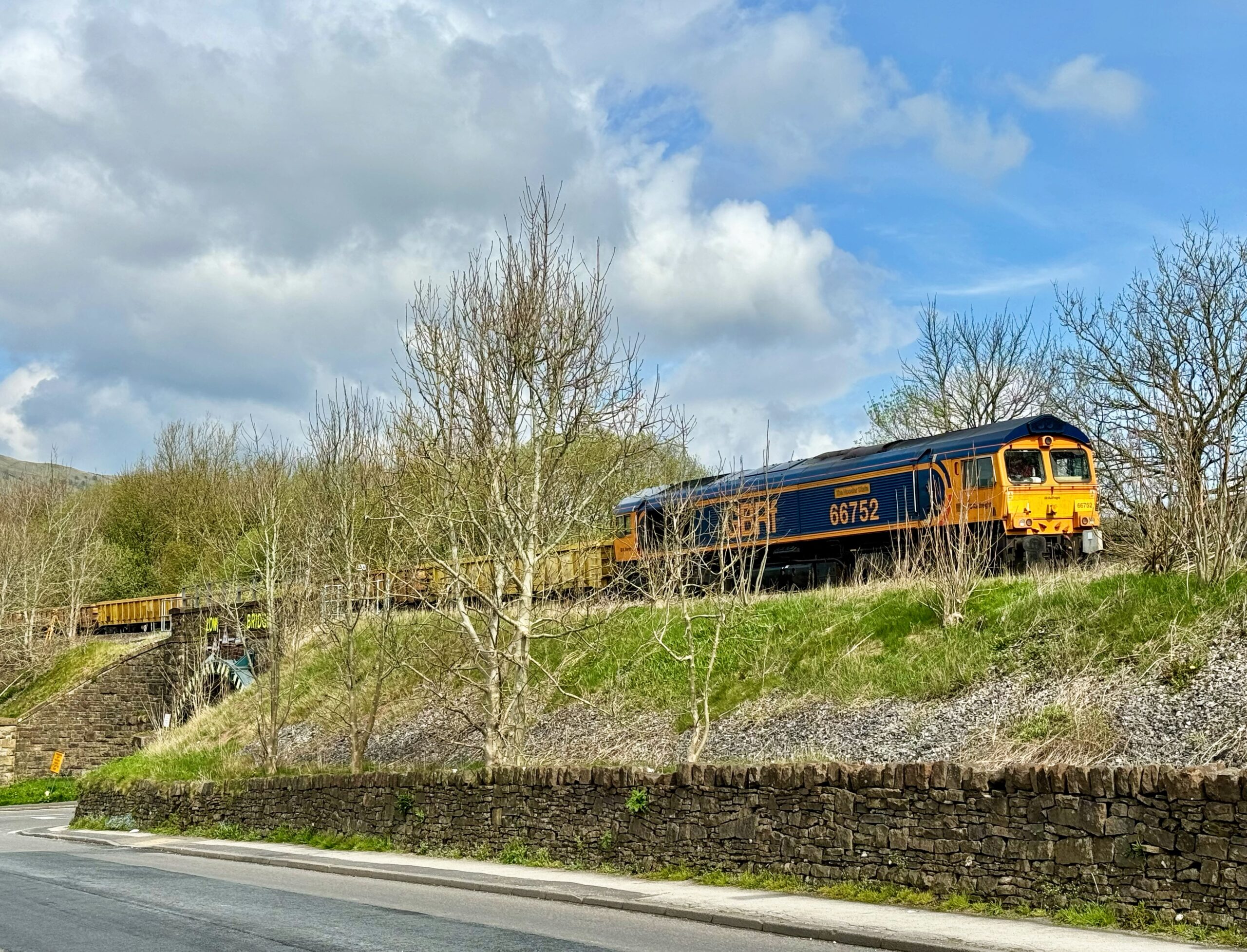
DB Cargo Class 66 No.’s 66200 (left) and 66206 with GBRf No. 66707 ‘Sir Sam Fay GREAT CENTRAL RAILWAY’ behind at Cemex Peak Forest – 27/04/2024DB Cargo Class 66 No.’s 66044 and 66028 on the Peak Forest Stabling Point – 27/04/2024GBRf Class 66 No. 66752 ‘The Hoosier State’ at the head of an engineers train rests at Chinley – 27/04/2024
We returned to Dorset, stopping off at National Trust Moseley Old Hall, a Grade II* listed Elizabethan farmhouse situated north of Wolverhampton. The house is notable as one of the hiding places of King Charles II during his escape to France following defeat at the Battle of Worcester in 1651.
National Trust Moseley Old Hall – 29/04/2024
Constructed in approximately 1600 by Henry Pitt, few structural changes were made to the hall until around 1870 when the outer walls were replaced by bricks and casements replaced the Elizabethan windows.
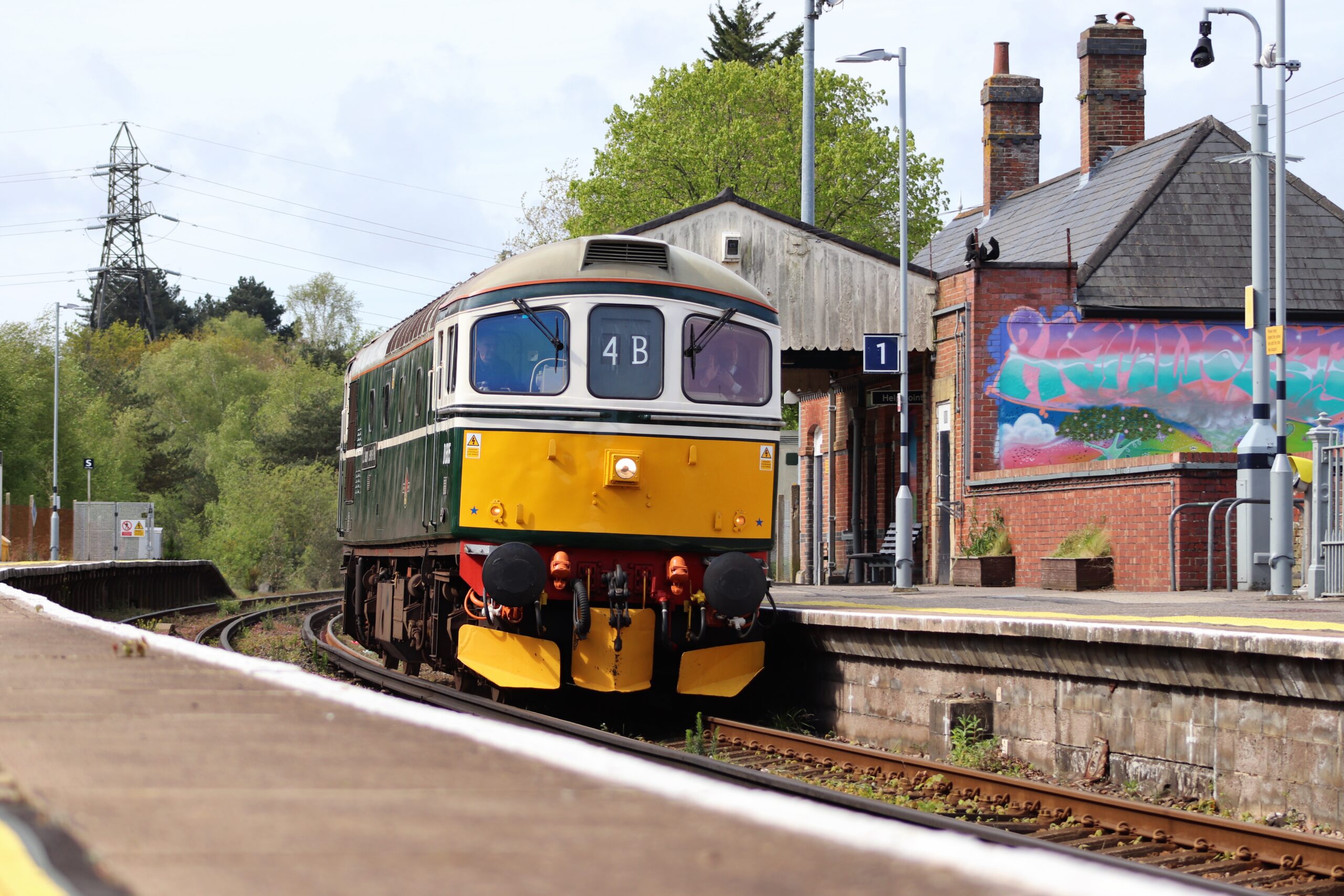
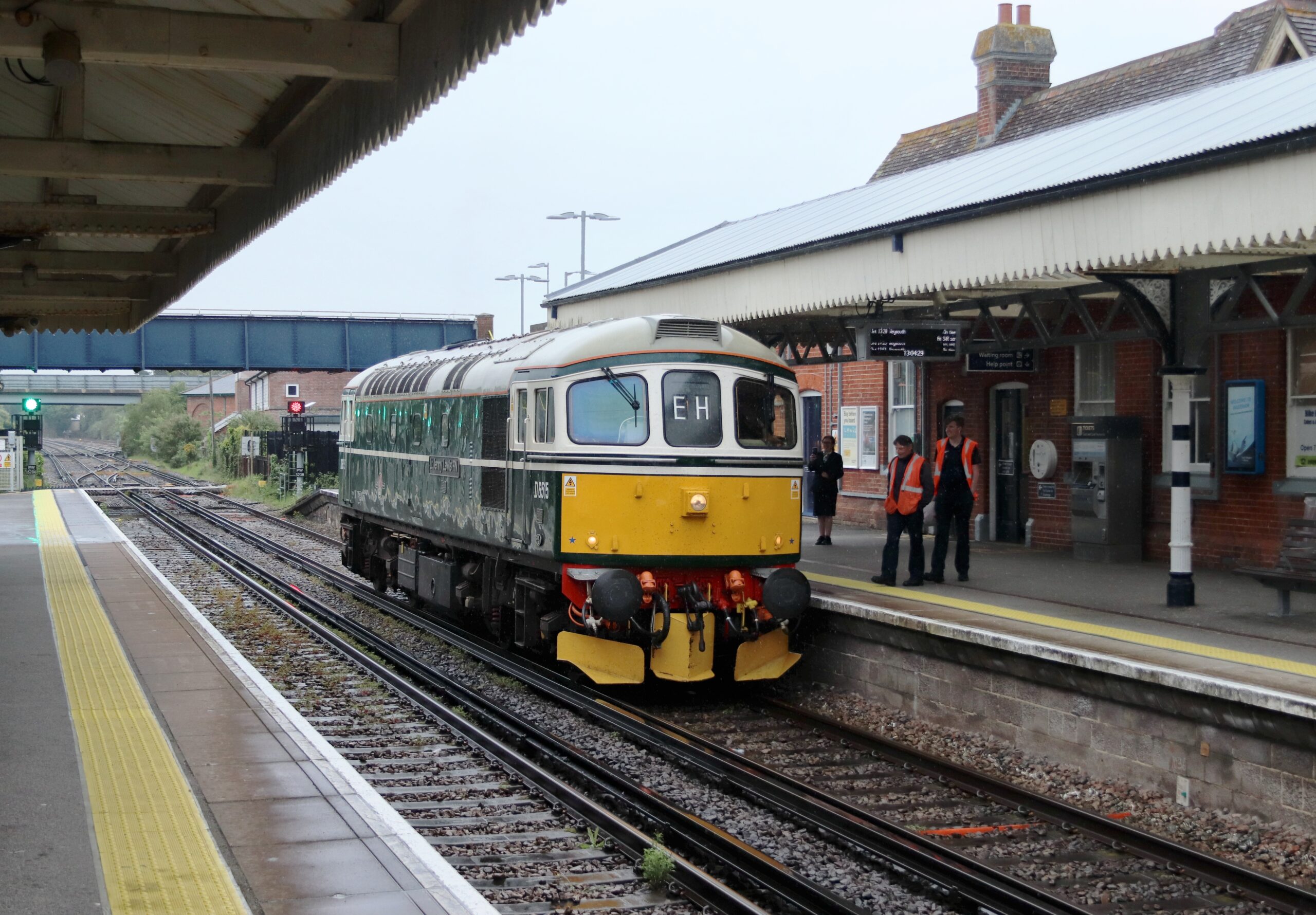
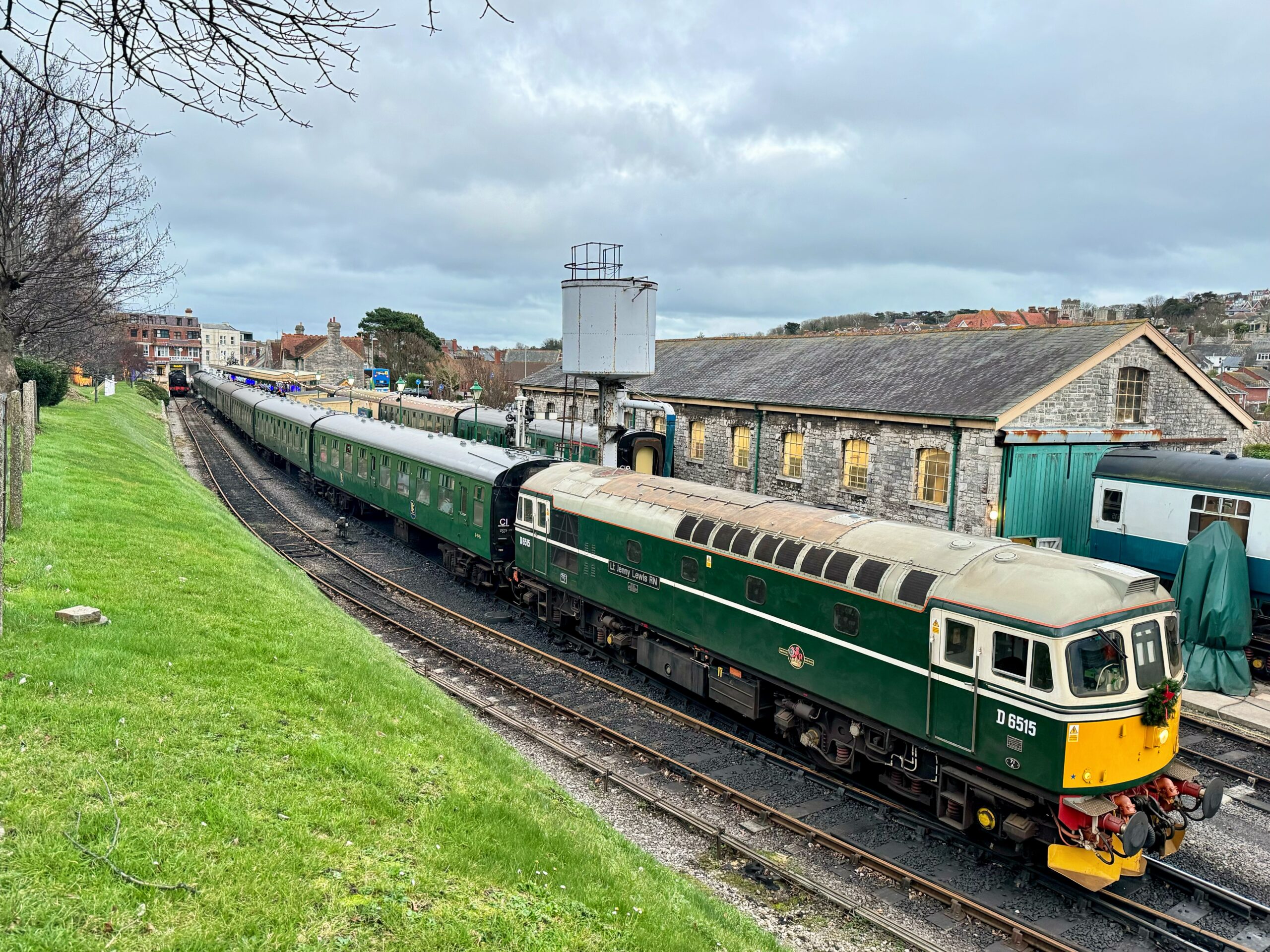
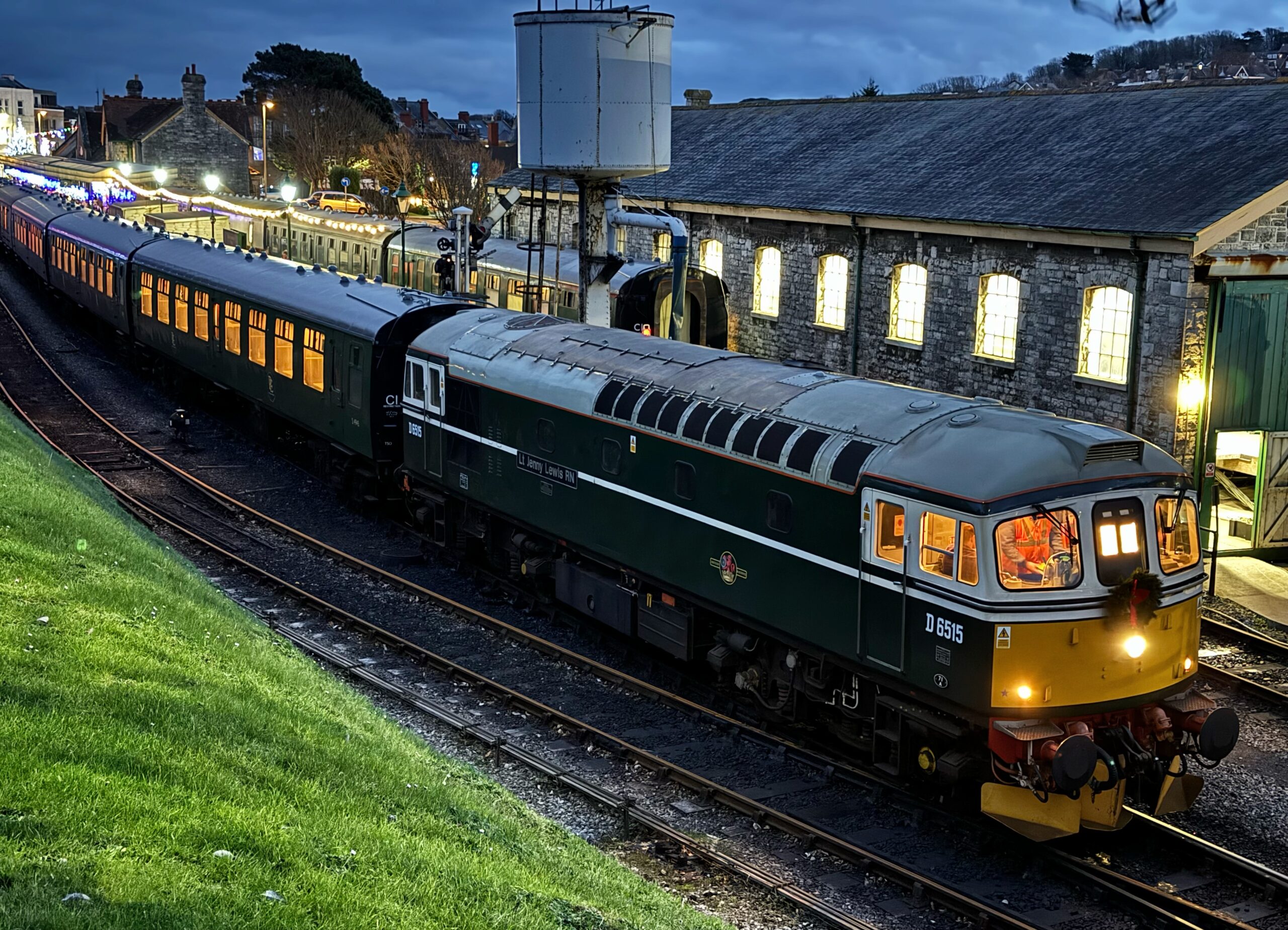
Tuesday 30th April saw Swanage Railway resident Class 33 No. D6515 (33012) ‘Lt Jenny lewis RN’ working 0Z33 0920 Swanage to Eastleigh Arlington (ZG) in advance of booked railtour duties later in the week for the Branch Line Society (BLS). We saw the “Crompton” working light engine through Hamworthy.
Class 33 No. D6515 (33012) ‘Lt Jenny lewis RN’ working 0Z33 0920 Swanage to Eastleigh Arlington (ZG) light engine through Hamworthy – 30/04/2024
Video clip of Class 33 No. D6515 (33012) ‘Lt Jenny lewis RN’ working 0Z33 0920 Swanage to Eastleigh Arlington (ZG)
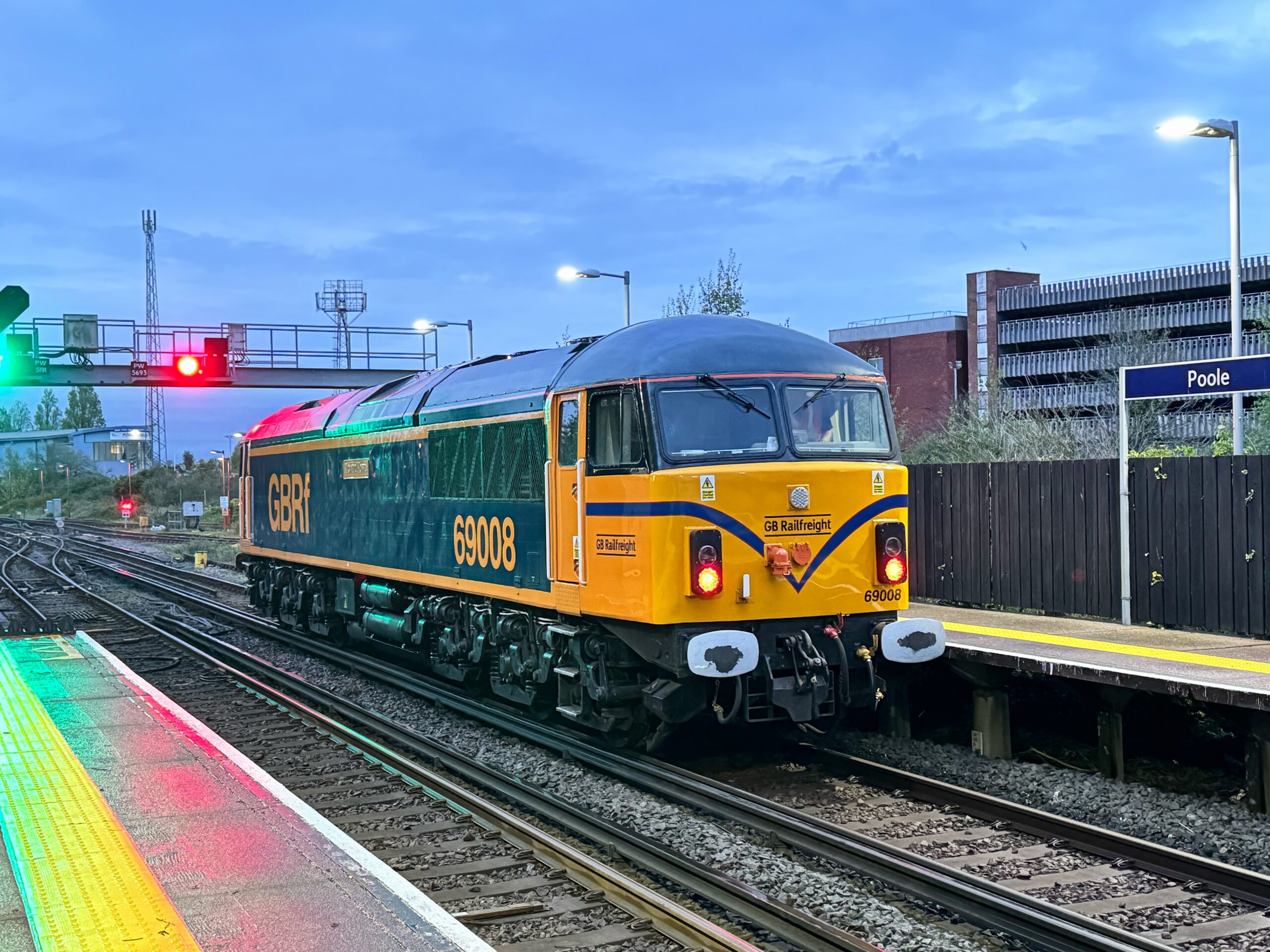
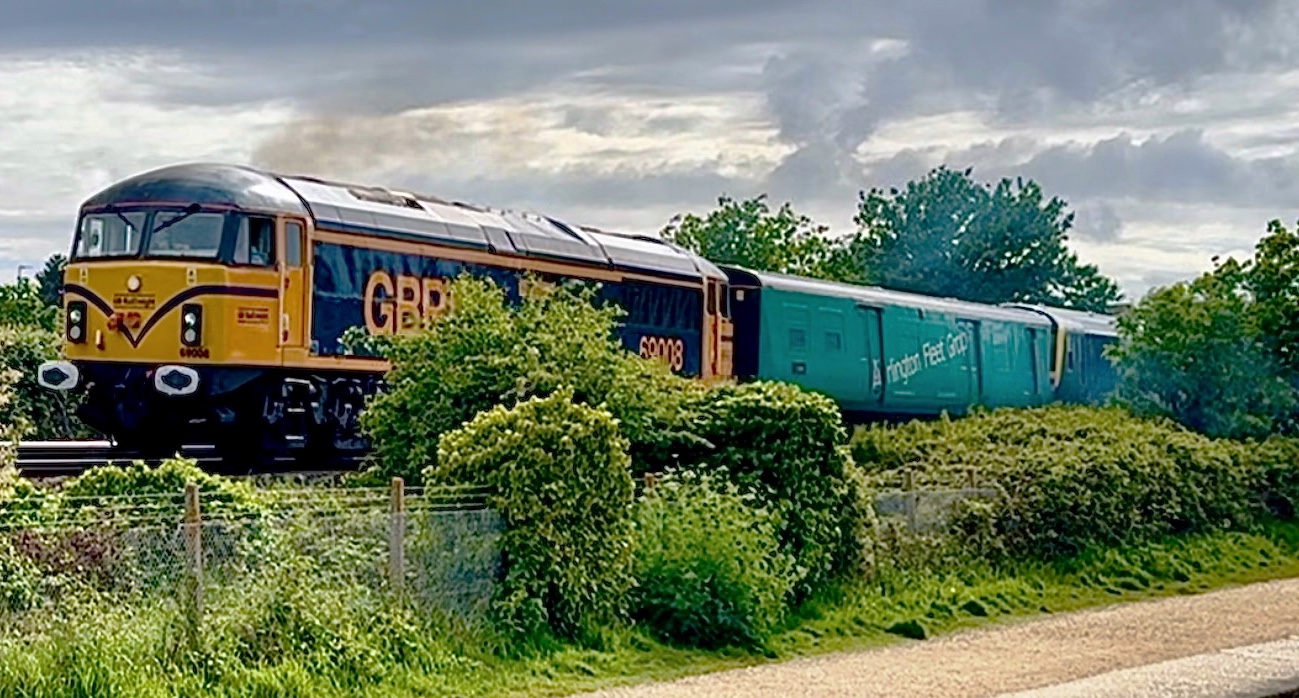
Later the same day Bournemouth depot received another newly refurbished South Western Railway (SWR) Class 458 electric multiple unit (EMU) and despatched another to Widnes Transport Tech to enable modification works. Both of these unit drags involved GBRf Class 69 No. 69008 ‘Richard Howe’ running round at Poole.
GBRf Class 69 No. 69008 ‘Richard Howe’ at Poole High Street Level crossing leading SWR Class 458 No. 458401 reporting as 5Q64 1534 Southampton Central to Bournemouth TRSMD – 30/04/2024GBRf Class 69 No. 69008 ‘Richard Howe’ at Poole station running round working 5Z66 2018 Bournemouth TRSMD to Eastleigh Yard – 30/04/2024
458527 5Z66 2018 Bournemouth TRSMD to Eastleigh Yard – 30/04/2024
Video of GBRf Class 69 No. 69008 ‘Richard Howe’ on Class 458 EMU drags – 30/04/2024
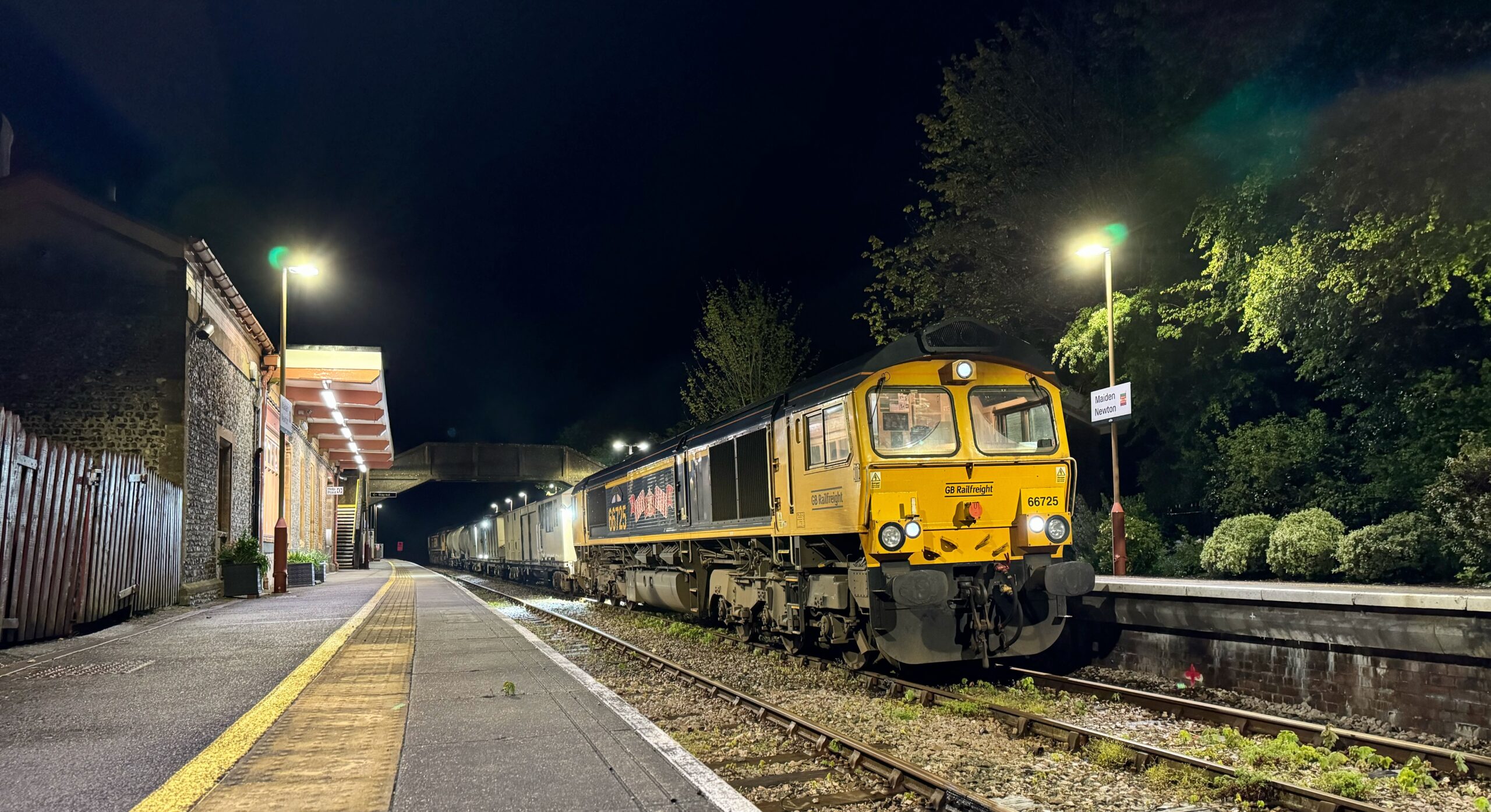
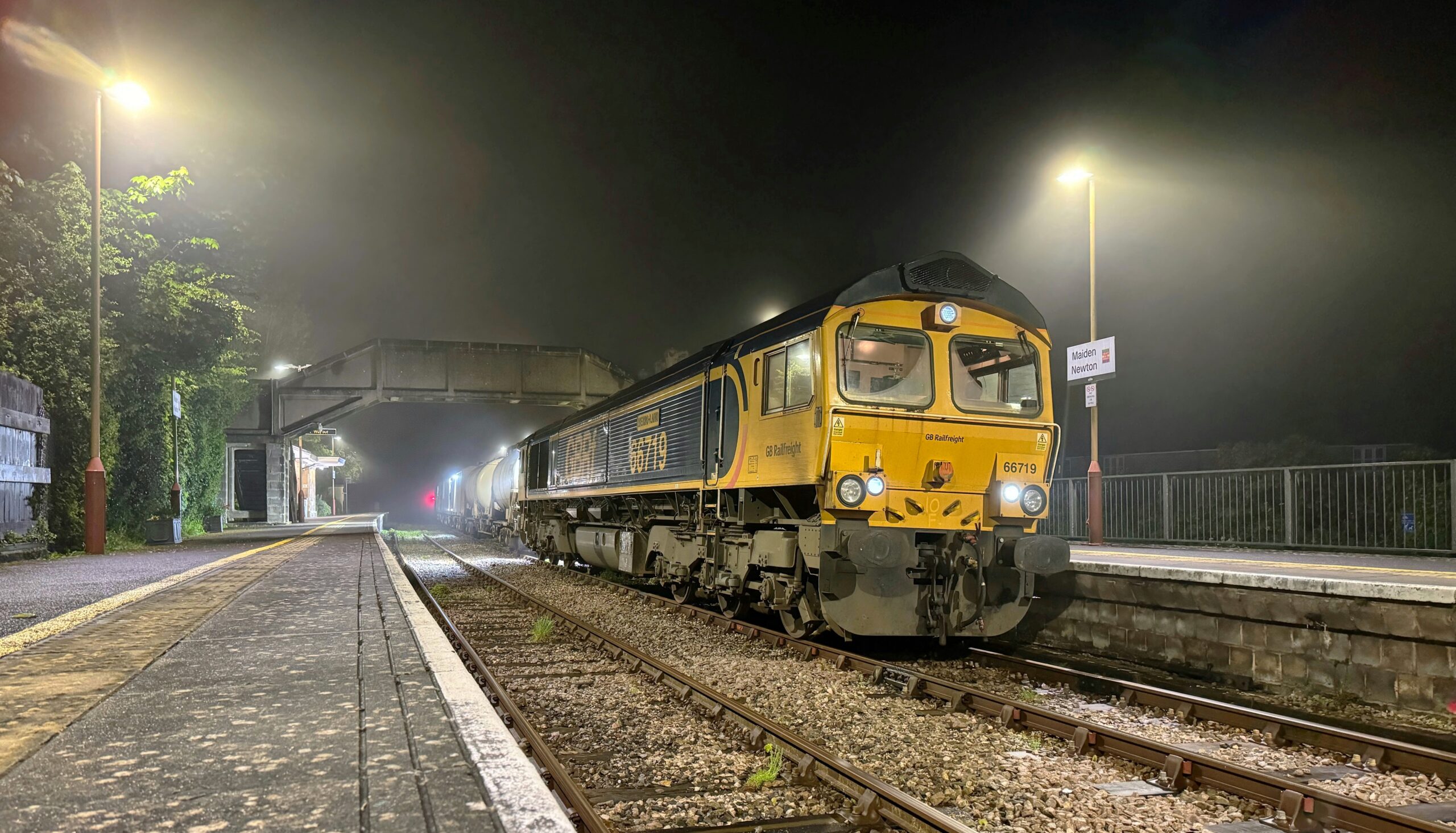
In the early hours of Wednesday May 1st, I set out for Maiden Newton to see GBRf Class 66 locomotives No.’s 66725 ‘Sunderland’ and 66719 ‘Metro-Land’ working the South West Weedkiller reporting as 3Q98 2309 Exeter Riverside New Yard to Exeter Riverside New Yard. I really enjoyed this little excursion, the train ran more or less on time and as it had to stop at Maiden Newton where the driver needed to pick up a token to allow onward travel through single line sections of track, I had ample opportunity to take photographs as well as recording video.
GBRf Class 66 No. 66725 ‘Sunderland’ at Maiden Newton leading on the outward leg of the South West Weed killer 3Q98 2309 Exeter Riverside NY to Exeter Riverside NY – 01/05/2024GBRf Class 66 No. 66719 ‘Metro-Land’ pauses at Maiden Newton during weed killer duties having reversed at Dorchester Junction working 3Q98 2309 Exeter Riverside NY to Exeter Riverside NY – 01/05/2024
Video of GBRf Class 66 locomotives on the South West Weedkiller at Maiden Newton – 01/05/2024
As our regular reader will know, we enjoy walking along old railway lines, and on Thursday 2nd May, we revisited the Rodwell Trail in Weymouth, the former trackbed of the line from Weymouth to Portland.
Yoshi on the Rodwell Trail, with the Isle of Portland in the background – 02/05/2023
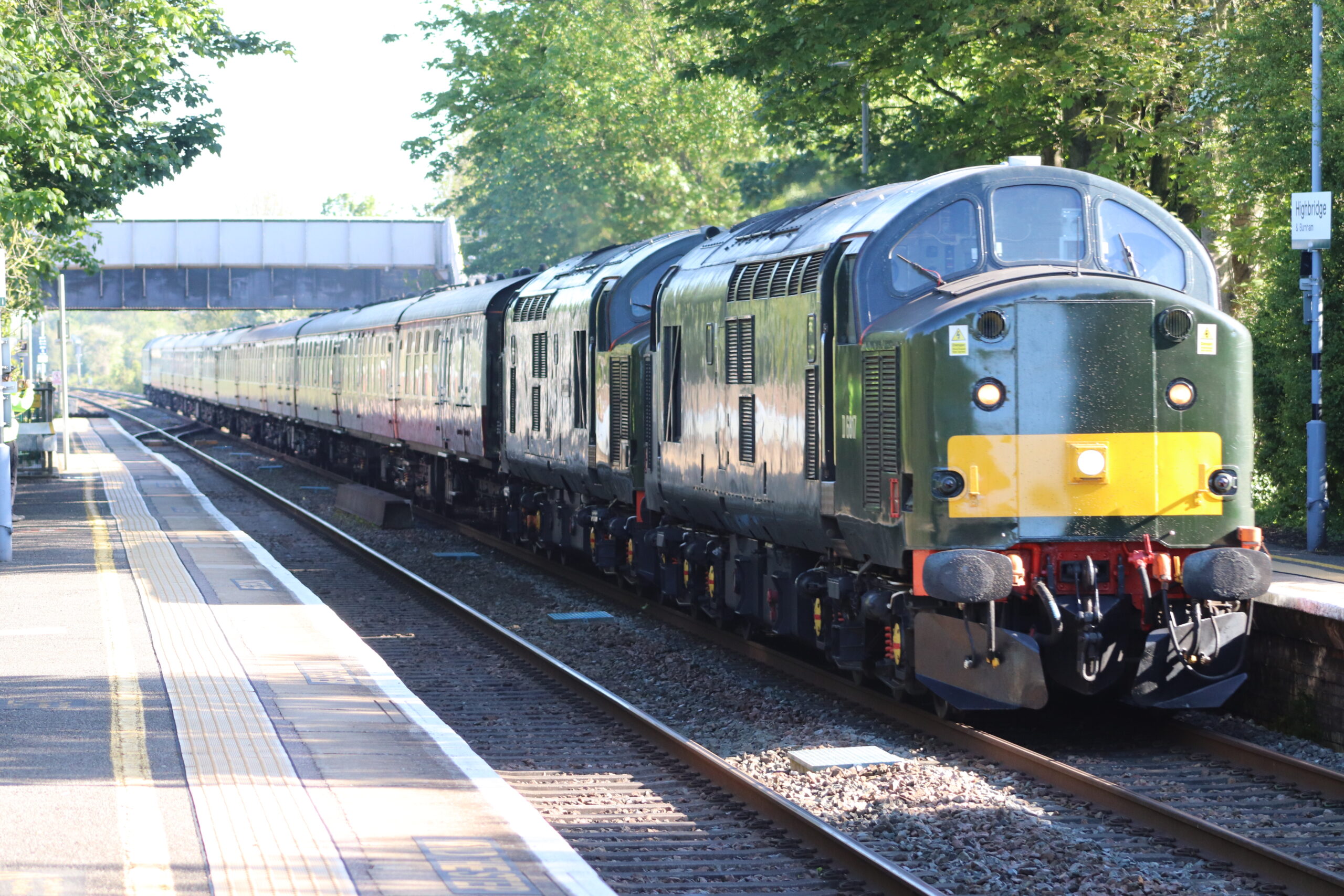
For The Record: the North Dorset New Measurement Train passed through Gillingham and Sherborne with High Speed Train Class 43 power cars No.’s 43062 and 43274 reporting as 1Q23 0556 Reading to Salisbury via Exeter New Yard on 2nd May 2024. As we were walking along the old railway track bed in Weymouth, we missed this working, but friend of this blog, @smithy.377 kindly shared the video of the same consist running through Highbridge working 1Z18 1539 Paignton to Taunton the following day.
New Measurement Train at Highbridge, courtesy of @smithy.377 – 03/05/2024
On the weekend, the Saturday involved a drive to Exeter to see one of those BLS tours involving Class 33 No. D6515 we mentioned earlier. The Star Wars themed “May the Fourth be With You” charter originated and finished at Eastleigh running via Portsmouth, Westbury, Exeter, Yeovil, London Waterloo. Advertised as utilising the London Underground Class 438 4TC stock hauled by the preserved 71A Locomotive Group’s Class 33 and a GBRf Class 73/1 the reported addition of two Class 59 freight locomotives to pilot the train between Westbury and Exeter was too good to miss. Add to this the possibility of photographing two other rail tours in the West Country and a grand day out was in store. On the day we were surprised to learn that in fact three Class 59’s were being added to the train, meaning there were more locomotives than coaches!
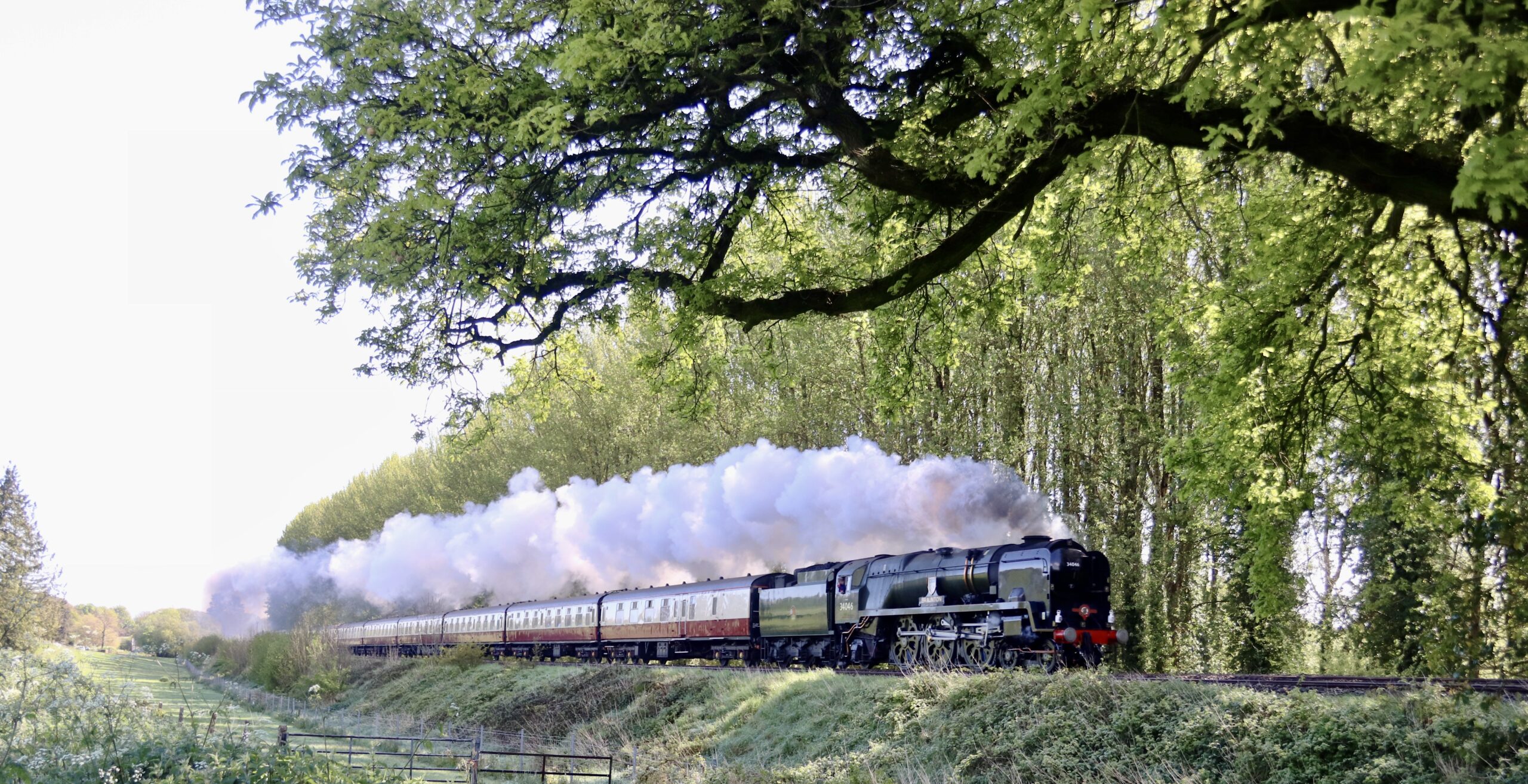
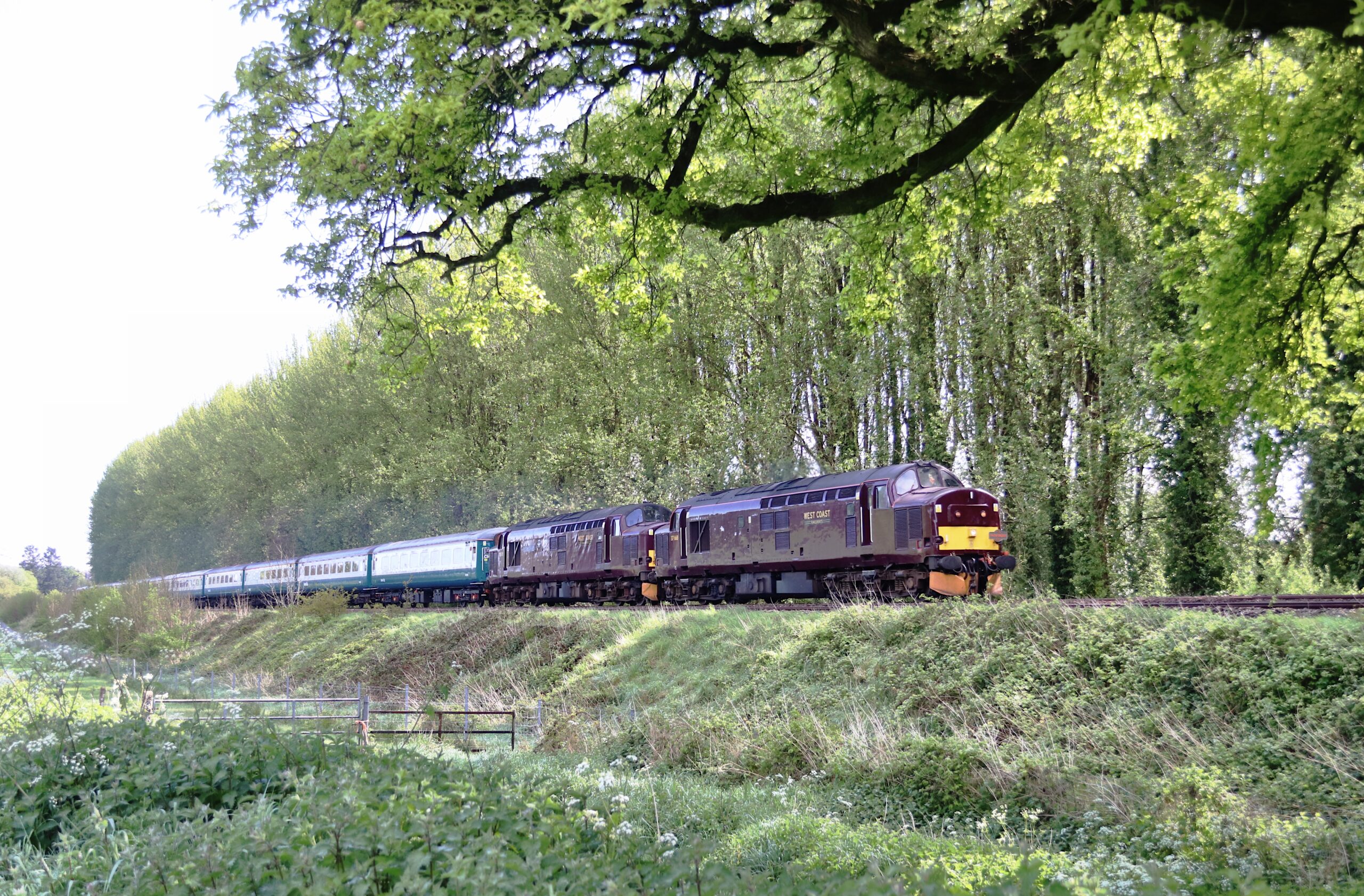
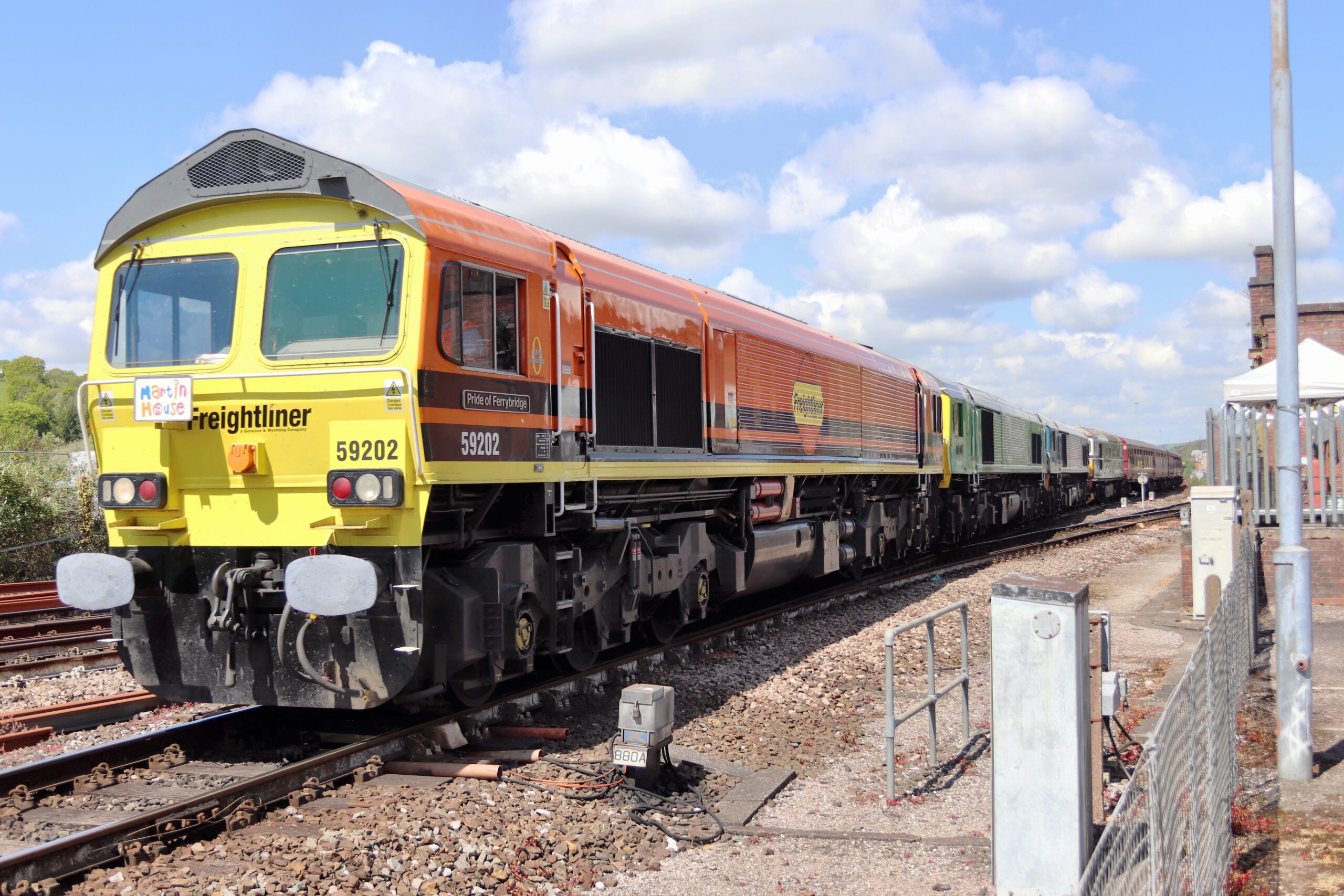
Class 37 No.’s 37518 and 37668 passing Highbridge with Saphos Trains “English Riviera Express” 1Z36 0424 Nantwich to Kingswear – 04/05/2024Steam traction took over the “English Riviera Express” 1Z36 0424 Nantwich to Kingswear at Taunton. Southern Railway West Country Class 4-6-2 No. 34046 ‘Braunton’ prepares to storm Whiteball – 04/05/2024LSL owned Class 47 No. 47828 seen at the rear of 1Z36 0424 Nantwich to Kingswear – 04/05/2024Class 37 No.’s 37518 and 37668 at Whiteball with Pathfinder Tours “The Spring Cornish Explorer” 1Z65 0553 Dorridge to Penznce – 04/05/2024Featuring five engines, including three different liveried Class 59 Locomotives, the Branch Line Society’s “May the Fourth be With You” charter featured No.’s 59202 ‘Alan Meadows Taylor’, 59101 ‘Village of Whatley’, 59104 ‘Village of Great Elm’ with No. D6515 (33012) ‘Lt Jenny Lewis RN’ on the approach to Exeter St. Davids. No. 73136 ‘Mhairi’ was on the rear of the London Underground 4tc set. The reporting number for this section of the rail tour was 1Z73 0648 Eastleigh to Exeter Central – 04/05/2024Freightliner Class 59 No.’s 59202 ‘Alan Meadows Taylor’, 59101 ‘Village of Whatley’, 59104 ‘Village of Great Elm’ with No. D6515 (33012) ‘Lt Jenny Lewis RN’ and No. 73136 ‘Mhairi’ (at the rear) bring the LU 4tc set into Exeter – 04/05/2024GB Railfreight Class 73 No. 73136 ‘Mhairi’ on the rear of the BLS “May the Fourth be With You” charter at Exeter St. Davids – 04/05/2024After piloting c into Exeter Central the three Class 59’s departed 59104 ‘Village of Great Elm’, 59101 ‘Village of Whatley’, 59202 ‘Alan Meadows Taylor’ worked back to Westbury as 0Z73 1359 Exeter Central to Westbury Tarmac BY – 04/05/2024Now sole leading engine on the BLS tour, Class 33 No. No. D6515 (33012) ‘Lt Jenny Lewis RN’ departs Exeter Central on the next leg 1Z33 1440 Exeter Central to London Waterloo – 04/05/2024We also caught the Class 33 No. D6515 (33012) ‘Lt Jenny Lewis RN’ hauling the BLS charter “May the Fourth be With You” through Sherborne – 04/05/2024
Video of BLS charter “May the Fourth be With You” and other trains – 04/05/2024
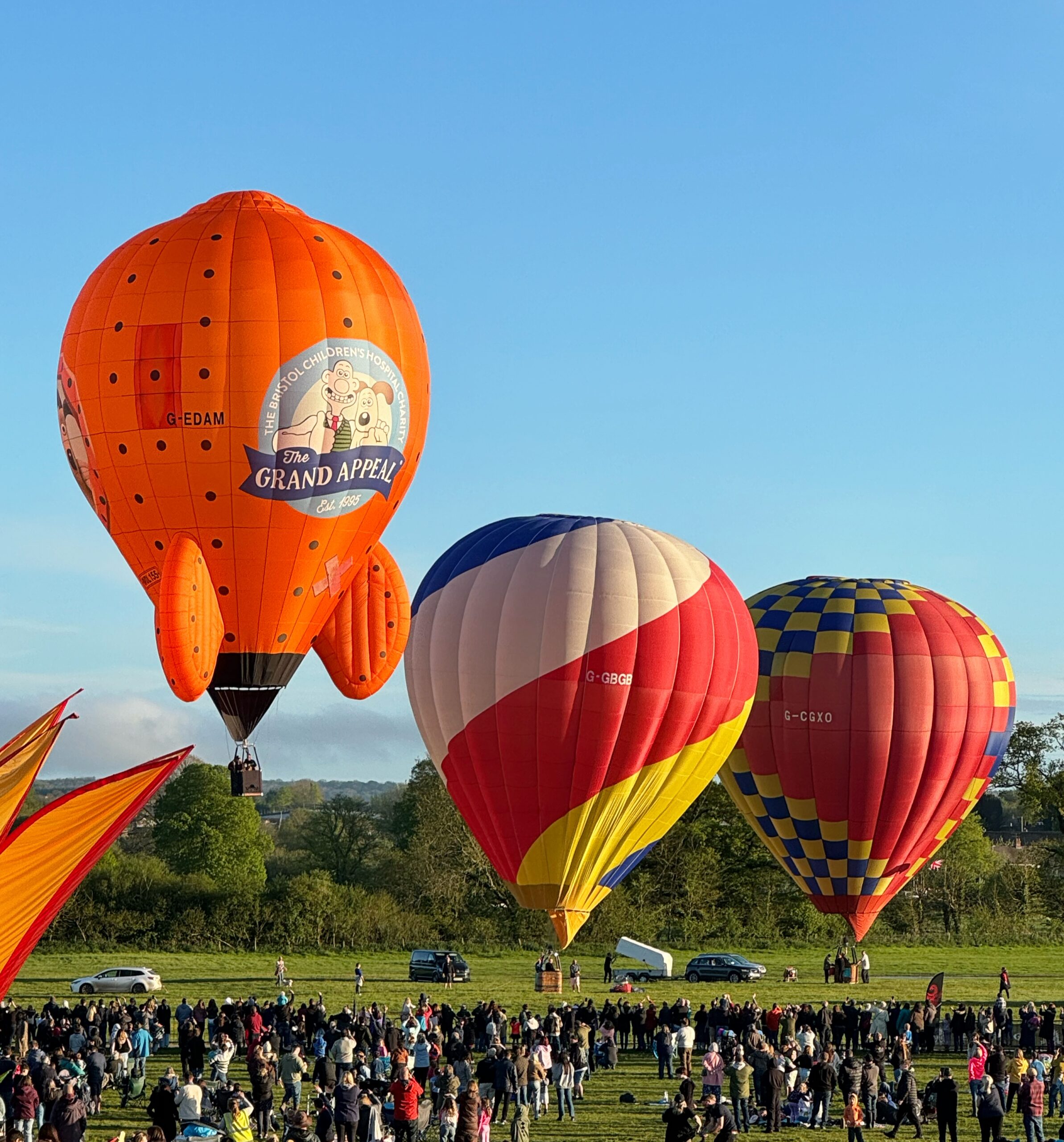
The first Dorset Hot Air Balloon & Music Festival caught our attention on Sunday 5th May. Having read about traffic issues getting into the event on the Saturday and other largely negative reviews online, it was with some trepidation that we set off for Dorchester. We sailed into the car park with no problems, save the need for careful driving on a very muddy field. The music was provided by tribute acts to the likes of Neil Diamond, Ed Sheeran and Jess Glynne while a fun fair took up a large part the main arena. Unfortunately for visitors hoping to see a flurry of hot air balloons taking to the skies, weather conditions meant we were only able to witness three balloons lifting off. But they were a fine sight to behold all the same, and a very relaxing mode of transport to watch. I think there were some valid criticisms about the event organisation, but some were also unfairly exaggerated. Nevertheless, if suggestions are taken on board and improvements made, I look forward to this being an annual event in the Dorset calendar. The organisers can not, of course, be held responsible for the weather conditions!
Weather conditions on the Sunday of the Dorset Hot Air Balloon & Music Festival meant only experienced balloonists could take to the air. The Wallace & Gromit balloon was a favourite! – 05/05/2024Wallace & Gromit head up into the skies – 05/05/2024
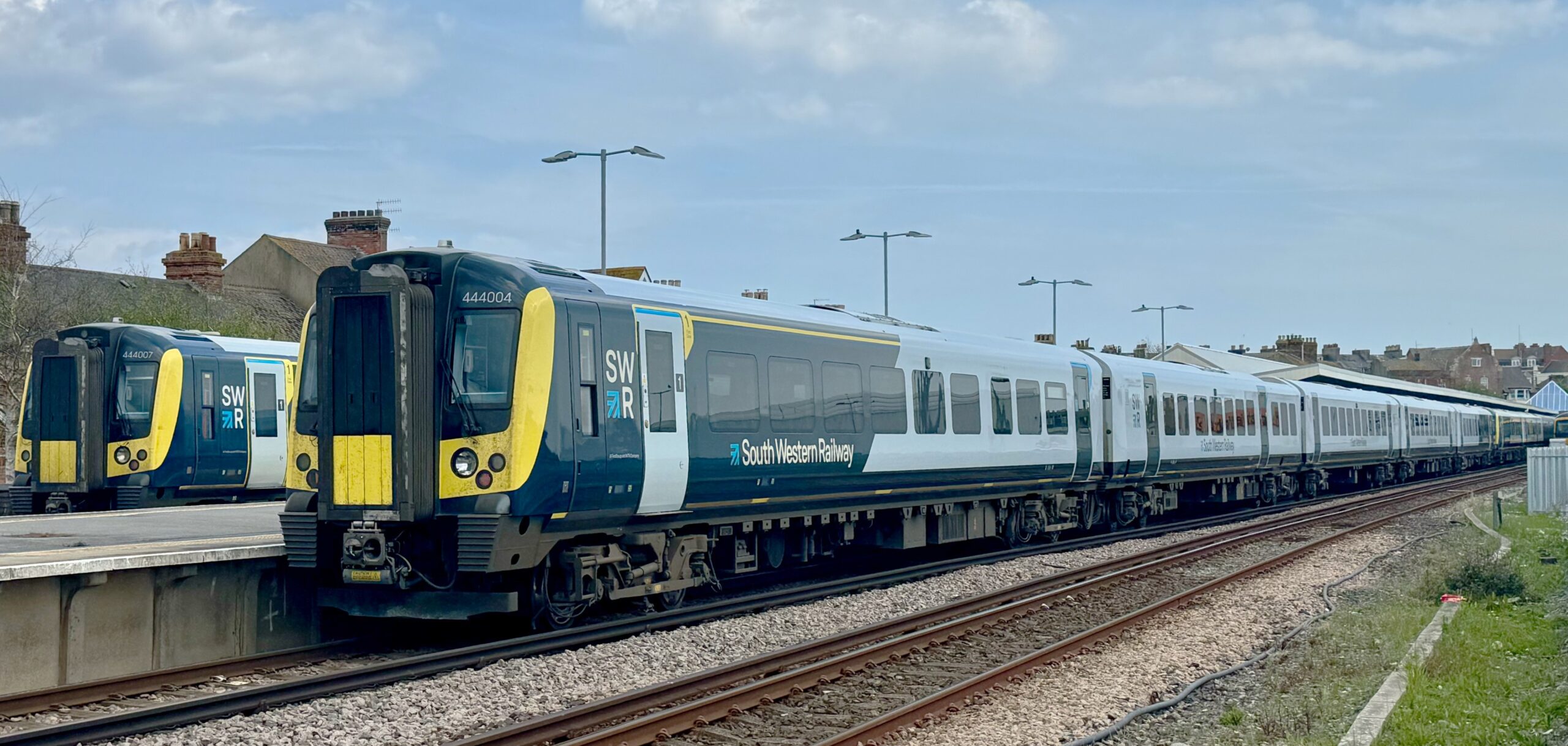
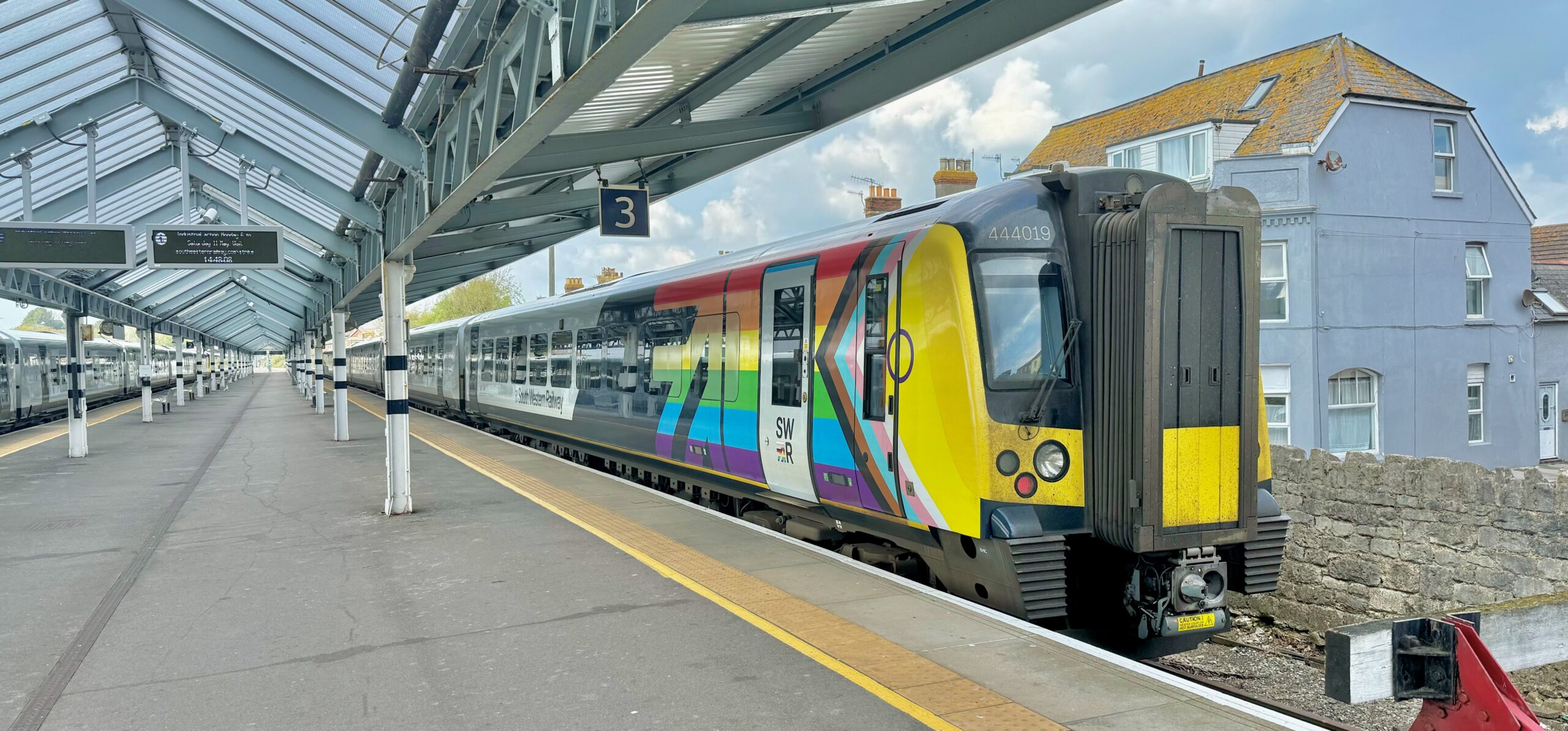
The dispute between the ASLEF union and train operating companies continue and the 7th May saw SWR drivers calling a strike day.
All stop at Weymouth on the South Western Railway drivers strike day. SWR Class 444 No.’s 444004 and 444007 stand idle in Weymouth – 07/05/2024Celebrity Pride liveried SWR Class 444 No. 444019 in platform 3 at Weymouth – 07/05/2024
Although SWR drivers were on strike, this did not affect drivers from the freight companies working. DB Cargo Class 66 No.’s 66148 ‘Maritime Intermodal Seven’ and 66025 worked engineers train 6N65 2140 Eastleigh East Yard to Moreton. We videoed the train passing through Poole.
Video screenshot of DB Cargo Class 66 No.’s 66148 ‘Maritime Intermodal Seven’ and 66025 working 6N65 2140 Eastleigh East Yard to Moreton through Poole – 07/05/2024
Video of DB Cargo working 6N65 2140 Eastleigh East Yard to Moreton – 07/05/2024
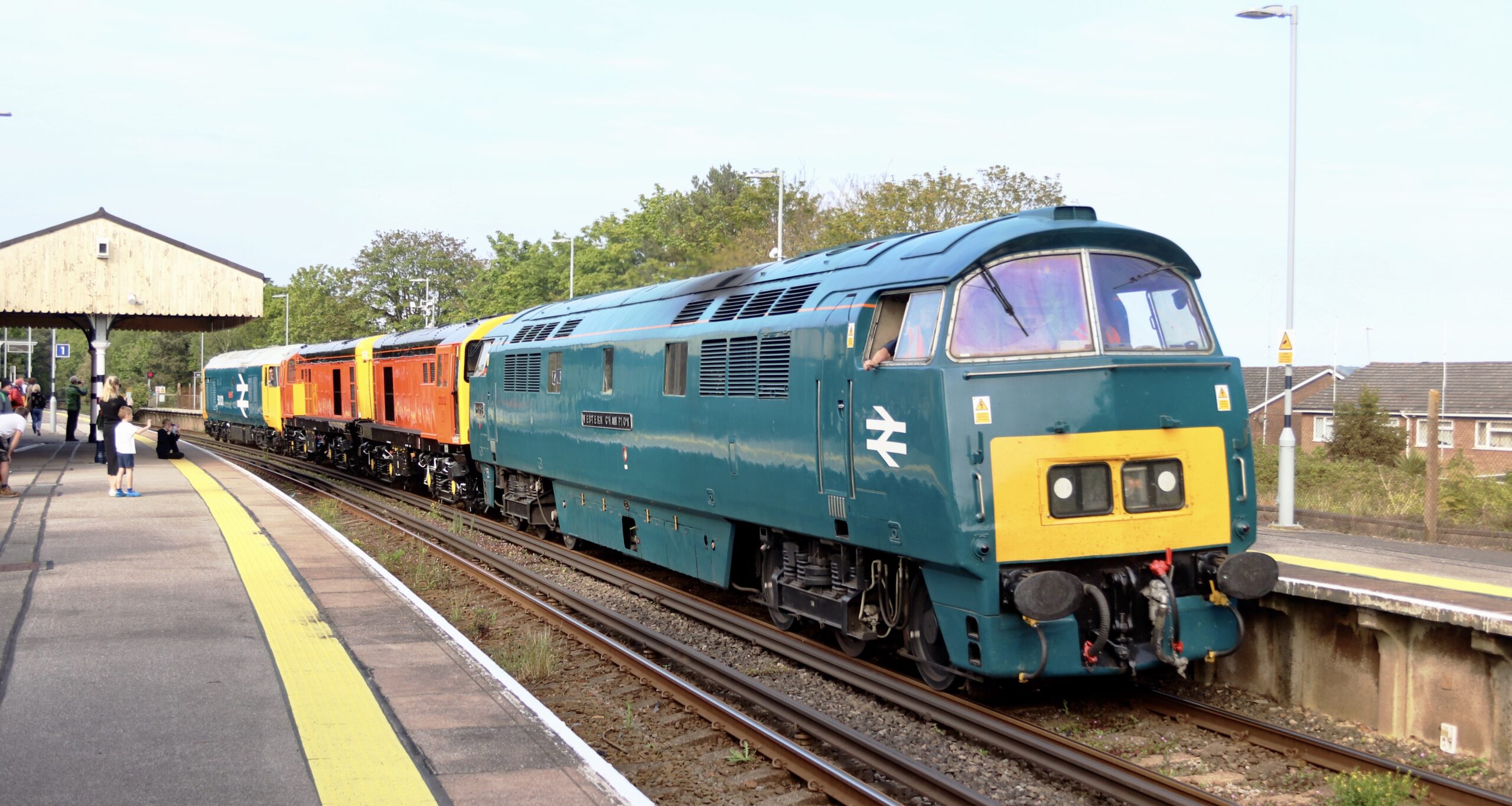
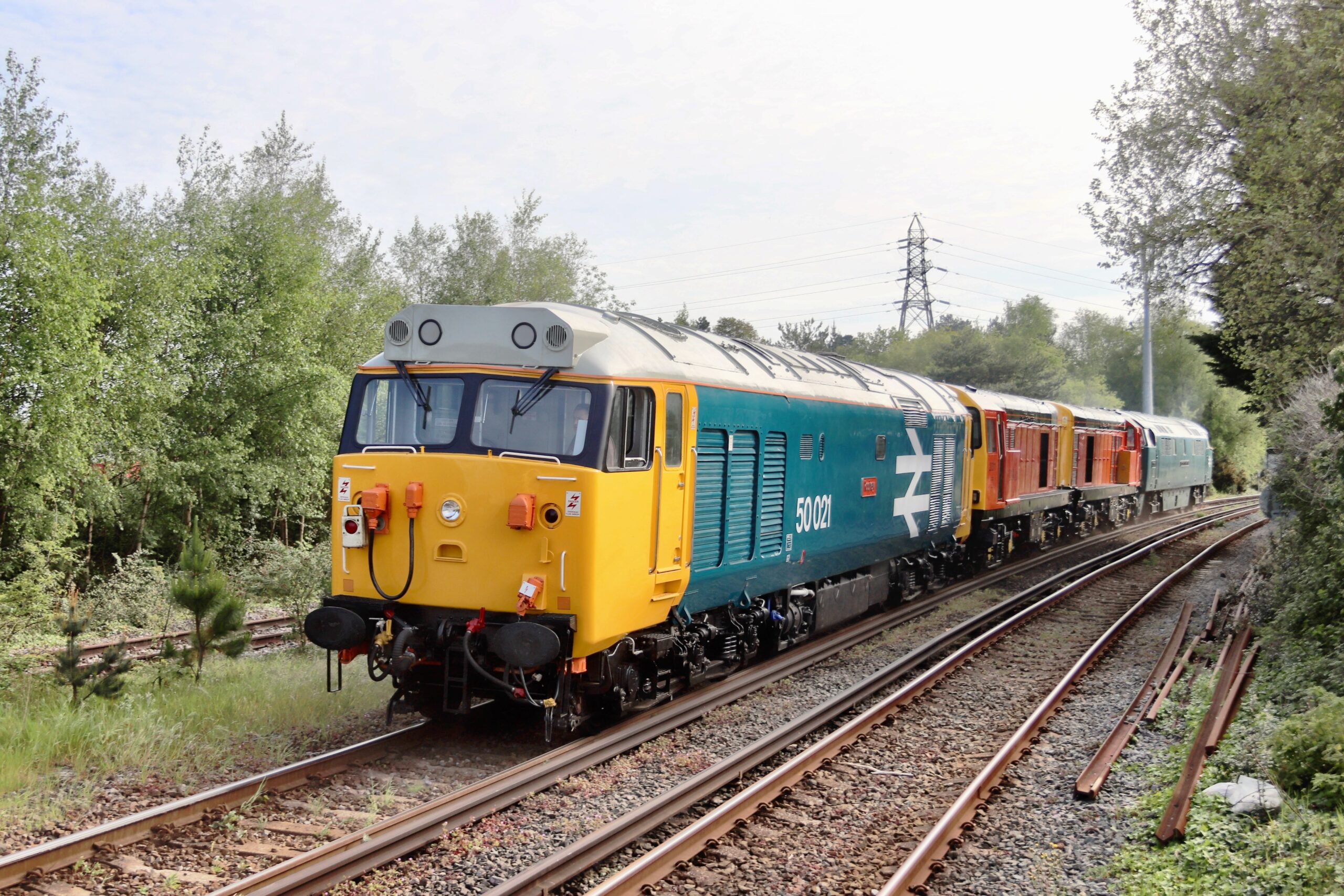
8th May and time for my favourite railway working of the year; the arrival of the Swanage Railway Diesel Gala convoy of locomotives. This year the positioning move aroused much interest as it was headed up by Class 52 diesel-hydraulic No. D1015 ‘Western Champion’ with Harry Needle Railroad Company (HNRC) Class 20 No.’s 20302 and 20311 along with Class 50 No. 50021 ‘Rodney’ in tow. We saw the consist passing through Hamworthy as it made its way over to the Purbeck heritage line.
Convoy! Always a highlight of the year – the Swanage Diesel Gala convoy with visiting guest locomotives passes Hamworthy with Class 52 “Western” No. D1015 ‘Western Champion’, Harry Needle Railroad Compay Class 20 No.’s 20302 and 20311 with Class 50 No. 50021 ‘Rodney’ bringing up the rear reporting as 0Z53 1544 Eastleigh Arlington (ZG) to Swanage – 08/05/2024Class 50 No. 50021 on the rear of the Swanage bound locomotive convoy 0Z53 1544 Eastleigh Arlington (ZG) to Swanage – 08/05/2024
The following day, May 9th, and further Gala attractions made their way through Dorset in readiness for the annual Diesel Gala and Beer Festival as Colas Class 37 No. 37219 ‘Jonty Jarvis’ ran light engine reporting as 0Z37 0946 Westbury Down TC to Swanage. We saw the locomotive as she ran through Hamworthy
Colas Class 37 No. 37219 ‘Jonty Jarvis’ running light engine as 0Z37 0946 Westbury Down TC to Swanage passing Hamworthy – 09/05/2024
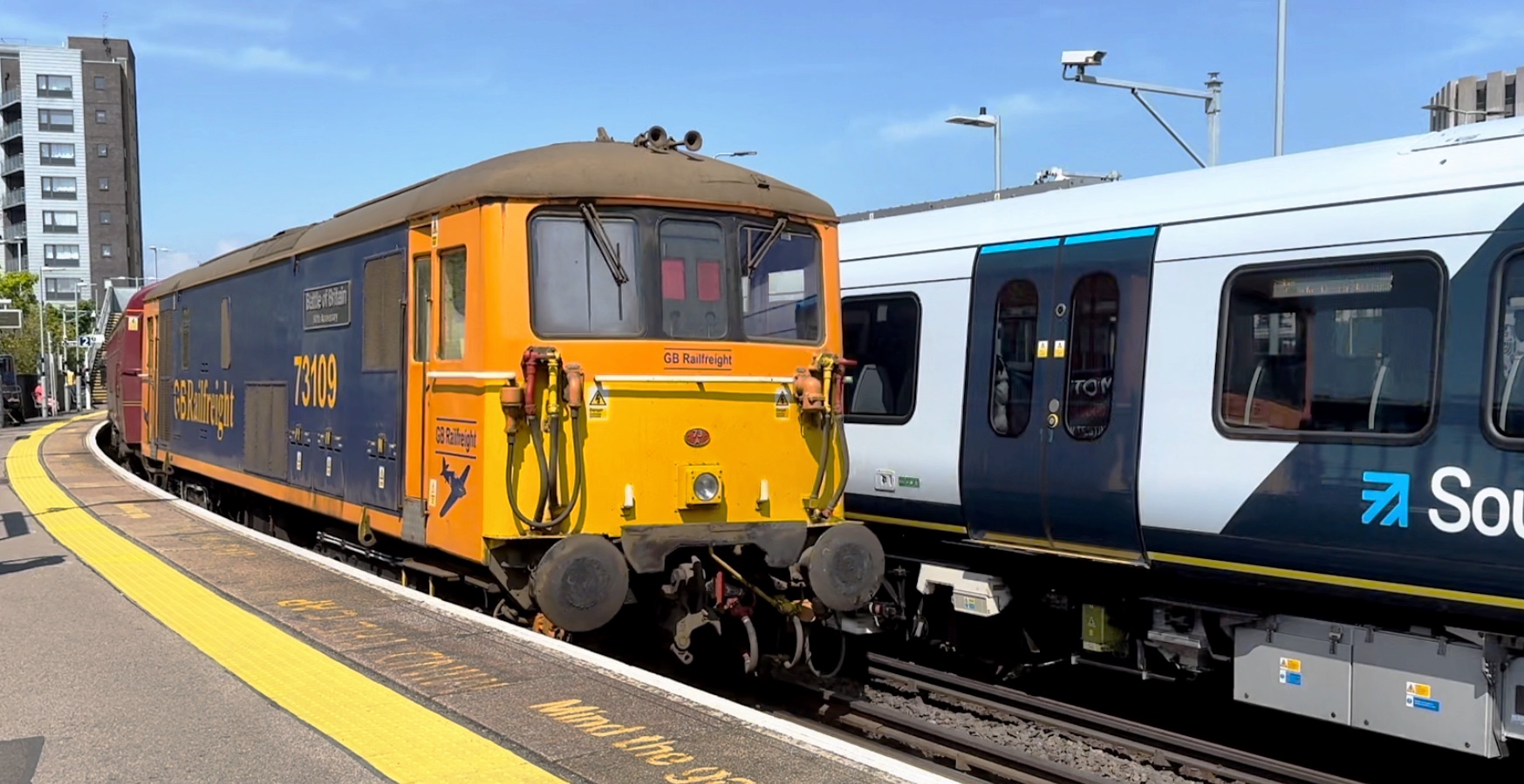
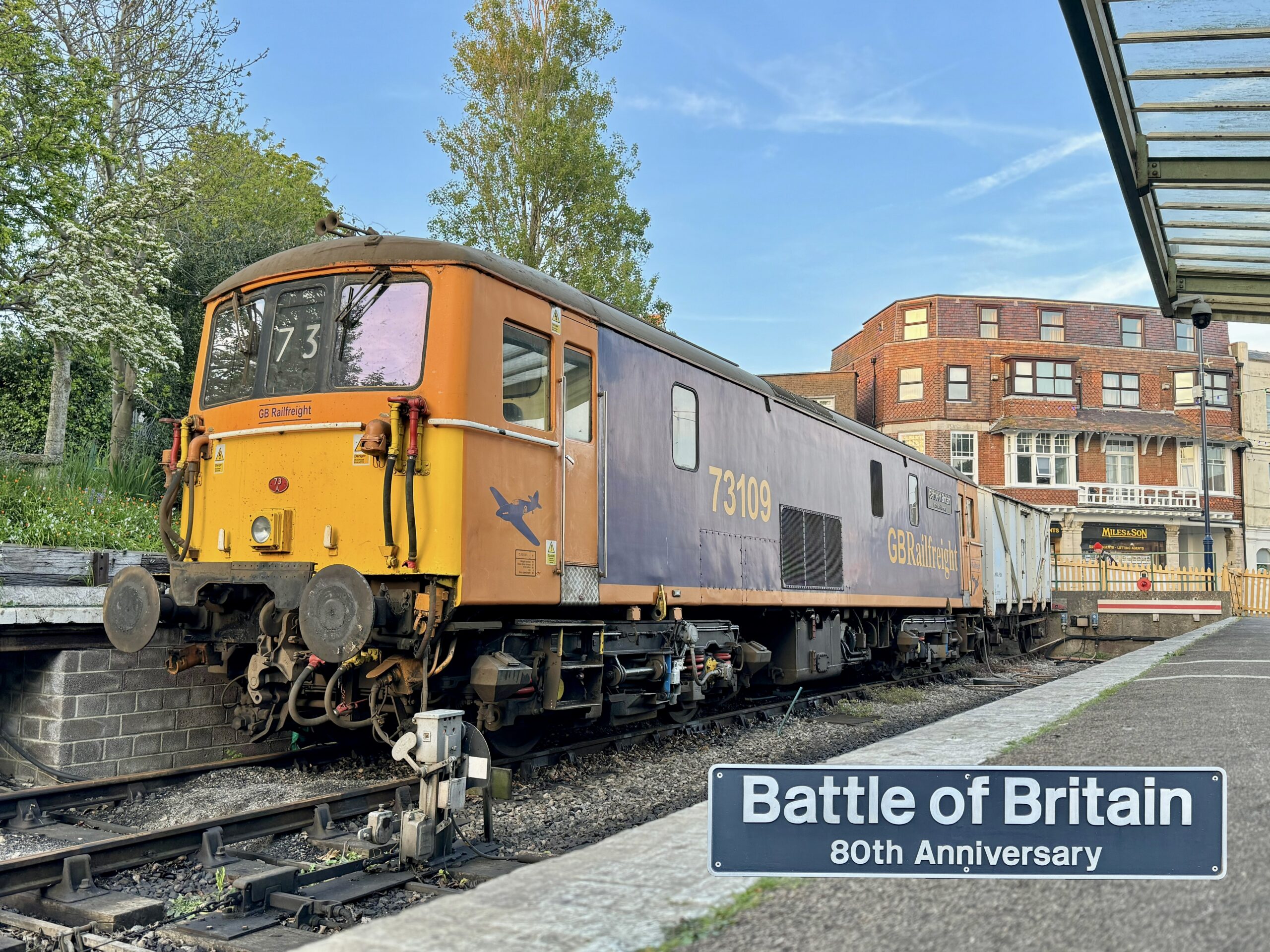
GBRf had promised to provide a Class 69 locomotive for the Swanage Diesel Gala, with No. 69007 ‘Richard Trevithick’ being the ear marked example. In the event, this locomotive was declared a failure at Eastleigh and was replaced by fellow class member No. 69002 ‘Bob Tiller CM&E’. The Class 69 was scheduled to travel to Swanage as part of the BLS “The Jurassic Crompton” charter, again employing the London Underground Class 438 4TC coaching stock along with “Crompton” diesel Class 33 No. D6515 ‘Lt Jenny Lewis RN’. As a result of a temporary issue with the Electric Train Supply (ETS) on No. D6515, GBRf Class 73 No. 73109 ‘Battle of Britain’ was added to the consist to provide the ETS.
As my camera “had issues”, here’s a video screenshot of the Branch Line Society promoted “The Jurassic Crompton” charter train with Swanage resident Class 33 No. D6515 (33012) ‘Lt Jenny Lewis RN’ and GBRf Class 69 No. 69002 ‘Bob Tiller CM&EE’ double heading on the London Underground Class 438 4tc set entering Poole – 09/05/2024Old and new pass at Poole! Screenshot of BLS “The Jurassic Crompton” special train headed up by Class 33 No. D6515 (33012) ‘Lt Jenny Lewis RN’, passing SWR Class 701 No. 701059 on test / mileage accumulation working. Two members of the 701’s crew can be seen taking an interest in the charter – 09/05/2024Screenshot BLS “The Jurassic Crompton” charter with GBRf Class 73 No. 73109 ‘Battle of Britain’ bringing up the rear – 09/05/2024
Video of Swanage Diesel Gala guest locomotives and BLS charter “The Jurassic Crompton” on their way to the Purbeck Heritage line
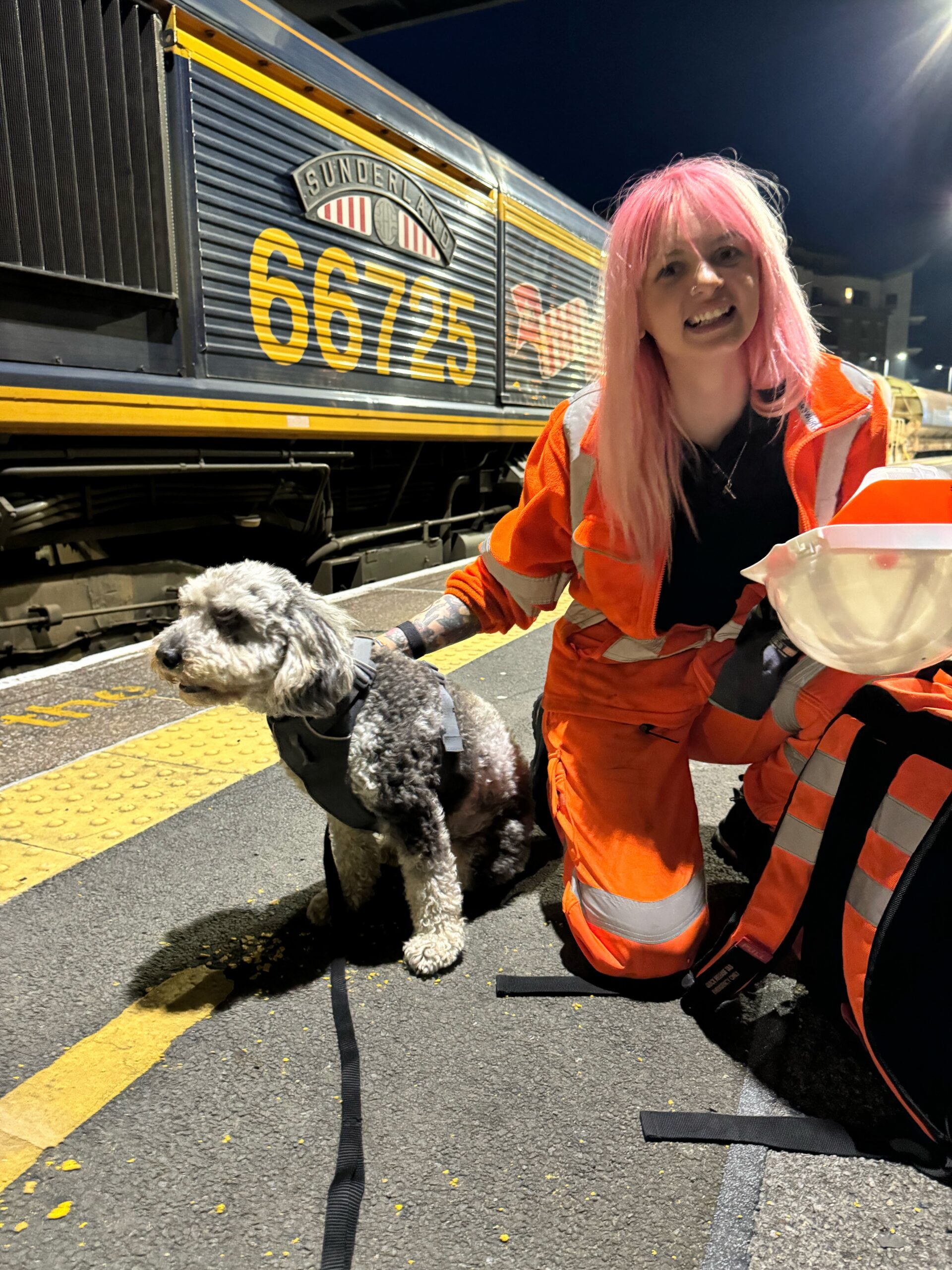
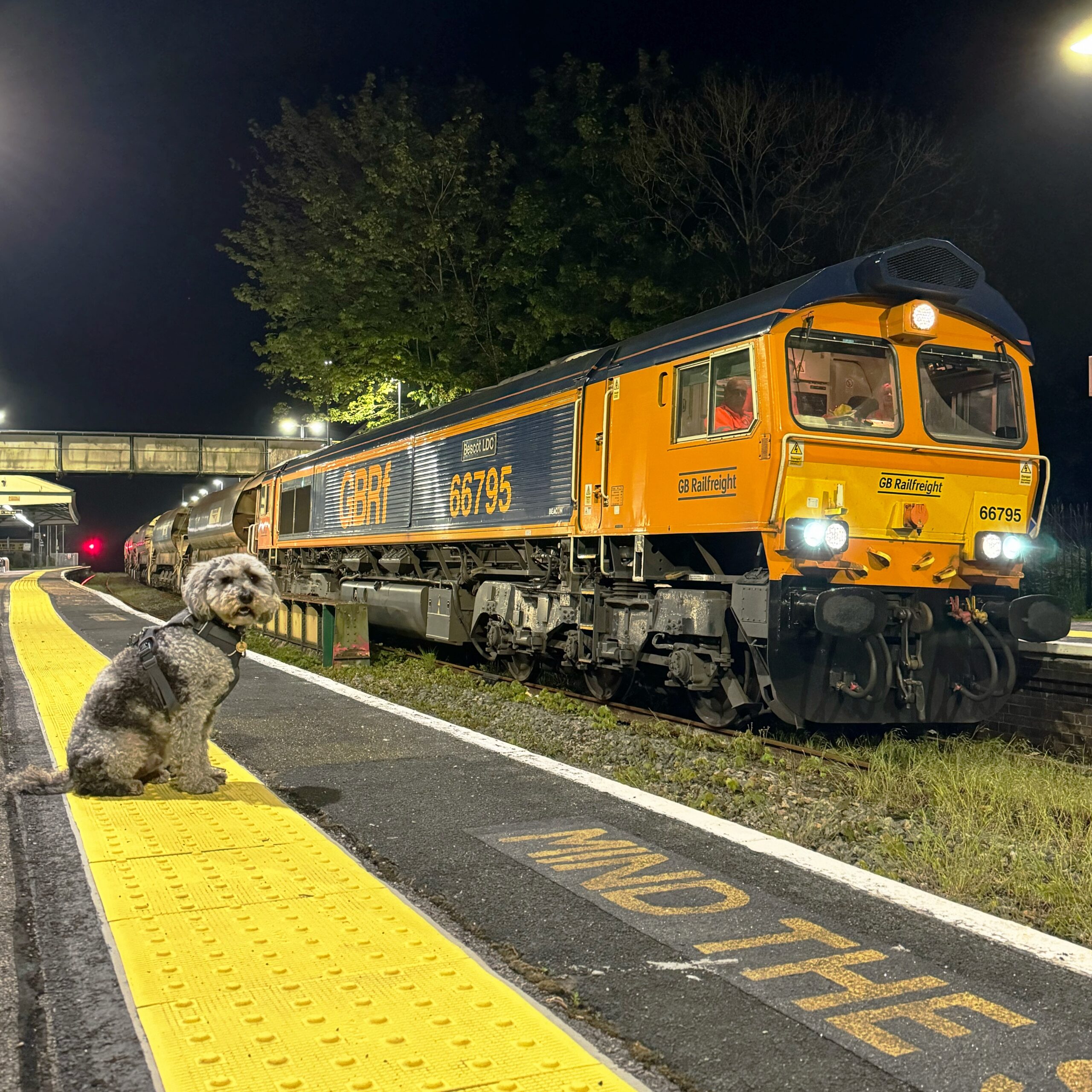
Later that evening, a ballast train worked from Eastleigh to Maiden Newton via Dorchester Junction. GBRf provided the traction in the form of Class 66 No.’s 66725 ‘Sunderland’ and 66795 ‘Bescot LDC’. Yoshi was delighted to be reacquainted with GBRf driver Bessie Matthews who spotted our boy from the cab of the leading locomotive at Dorchester South. We saw also saw the train at Dorchester West, but as it was late, and there was no indication when the ballast train would depart for Maiden Newton, we headed home before it left.
GBRf Class 66 No. 66725 ‘Sunderland’ on arrival at Dorchester South working 6G28 1939 Eastleigh East Yard to Dorchester West – 09/05/2024GBRf driver Bessie Matthews recognises Yoshin and says hello at Dorchester South – 09/05/2024Yoshi takes a keen interest in GBRf Class 66 No. 66795 ‘Bescot LDC’ as it rests at Dorchester West working 6G28 1939 Eastleigh East Yard to Dorchester West – 09/05/2024Yoshi poses with GBRf Class 66 No. 66725 ‘Sunderland’ at Dorchester West. The locomotive was working 6G28 1939 Eastleigh East Yard to Dorchester West – 09/05/2024
Video of GBRf ballast train 6G28 1939 Eastleigh East Yard to Dorchester West – 09/05/2024
For The Record: Colas Class 37 No. 37116 worked 3Q07 2031 Exeter Riverside NY to Exeter Riverside NY through North Dorset overnight of 10th May 2024. I had planned on seeing this move at Yeovil in connection with popping out to see the GBRf ballast train, but as the Class 37 ran early, this was not to be. I wasn’t too bothered, I will admit!
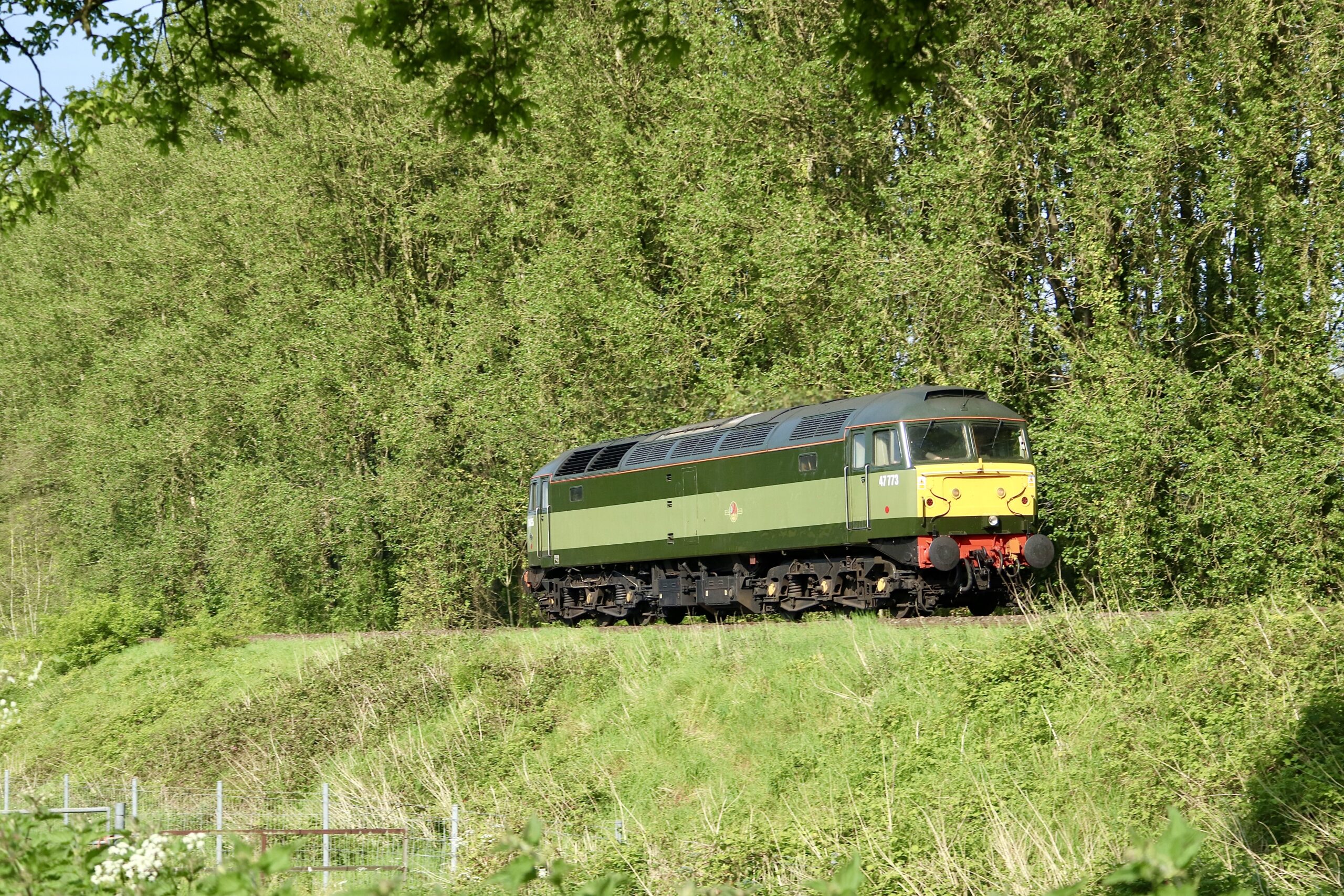
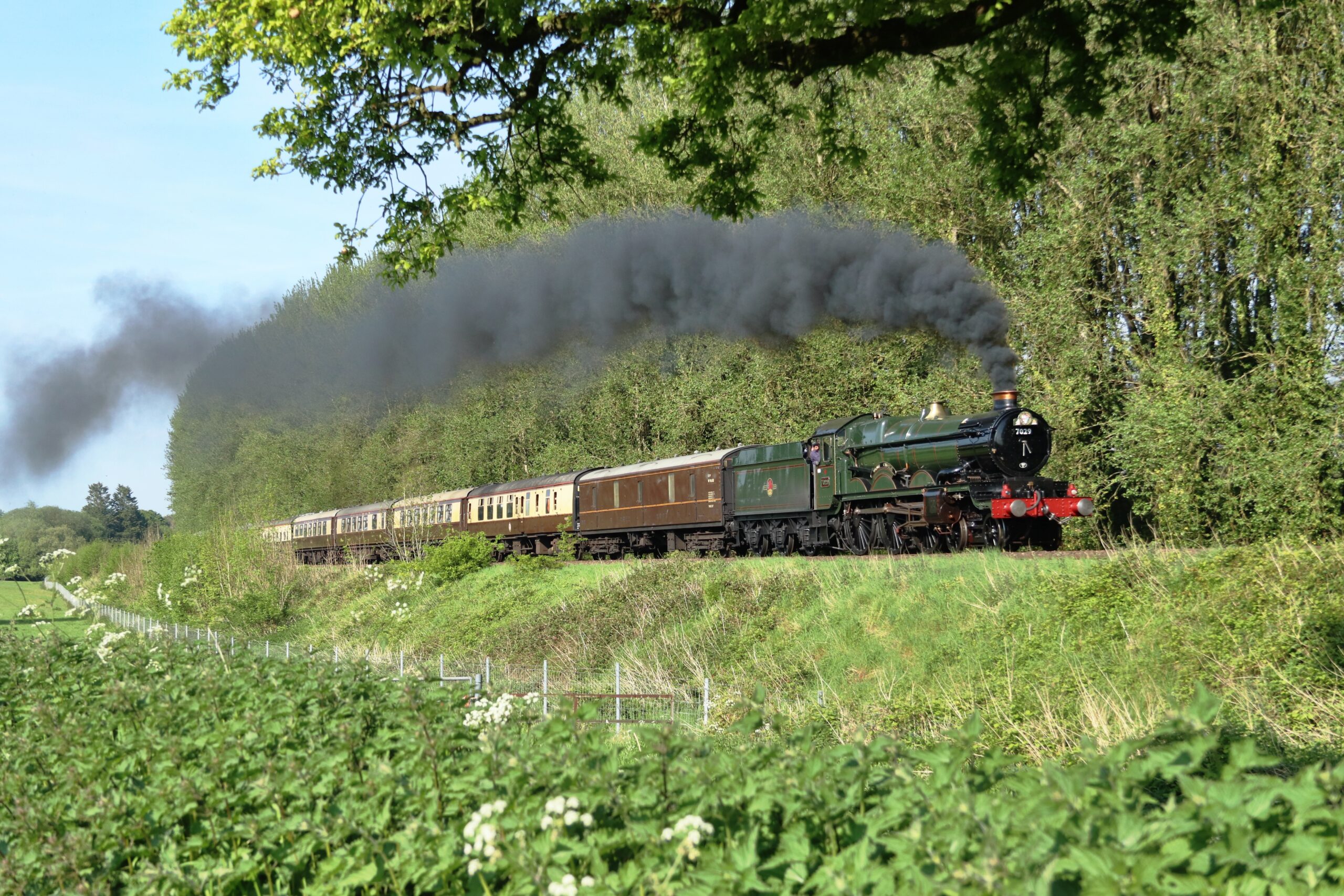
10th May Great Western Railway (GWR) Castle Class 4-6-0 No. 7029 ‘Clun Castle’ supported by Class 47 No. 47773 operated the first of Vintage Trains two day “The Great Western Railway” tours between Birmingham Snow Hill and Plymouth. This tour marked 60 years when the locomotive achieved, what was then, the fastest ever non-stop run between Plymouth and Bristol completed in 133 minutes and 9 seconds. We saw the train heading West at Filton Abbey Wood and on its climb to Whiteball bank in Somerset. Unfortunately the return trip own the following day did not emulate the non-stop run of 60 years previously as ‘Clun Castle’ stalled on Hemerdon Bank. Tysley’s Class 47 No. 47773 which had been shadowing the train at this point came to the rescue and provided assistance. Part of the attraction for me of seeing this working was the steam locomotive working unassisted over the notorious Devon banks. But later timings on the Friday and my desire to attend the Swanage Diesel Gala on the Saturday meant I had to be content with the two viewings I was able to fit in.
Great Western Railway (GWR) Castle Class 4-6-0 No. 7029 ‘Clun Castle’ at Filton Abbey Wood working “The Great Western” 1Z46 0830 Birmingham Snow Hill to Bristol Temple Meads – 10/05/2024Great Western Railway (GWR) Castle Class 4-6-0 No. 7029 ‘Clun Castle’ approaches Filton Abbey Wood station working the first day of Vintage Trains “The Great Western” charter which would see the steam locomotive tackle the Devon banks solo – 10/05/2024Support locomotive Class 47 No. 47773 working light engine as 0Z47 1435 Bristol East Depot DBC to Plymouth ahead of the steam hauled charter – 10/05/2024Great Western Railway (GWR) Castle Class 4-6-0 No. 7029 ‘Clun Castle’ makes the climb up Whiteball bank near Taunton reporting as 1Z47 1547 Bristol Temple Meads to Plymouth – 10/05/2024
Video of Great Western Railway (GWR) Castle Class 4-6-0 No. 7029 ‘Clun Castle’on the mainline – 10/05/2024
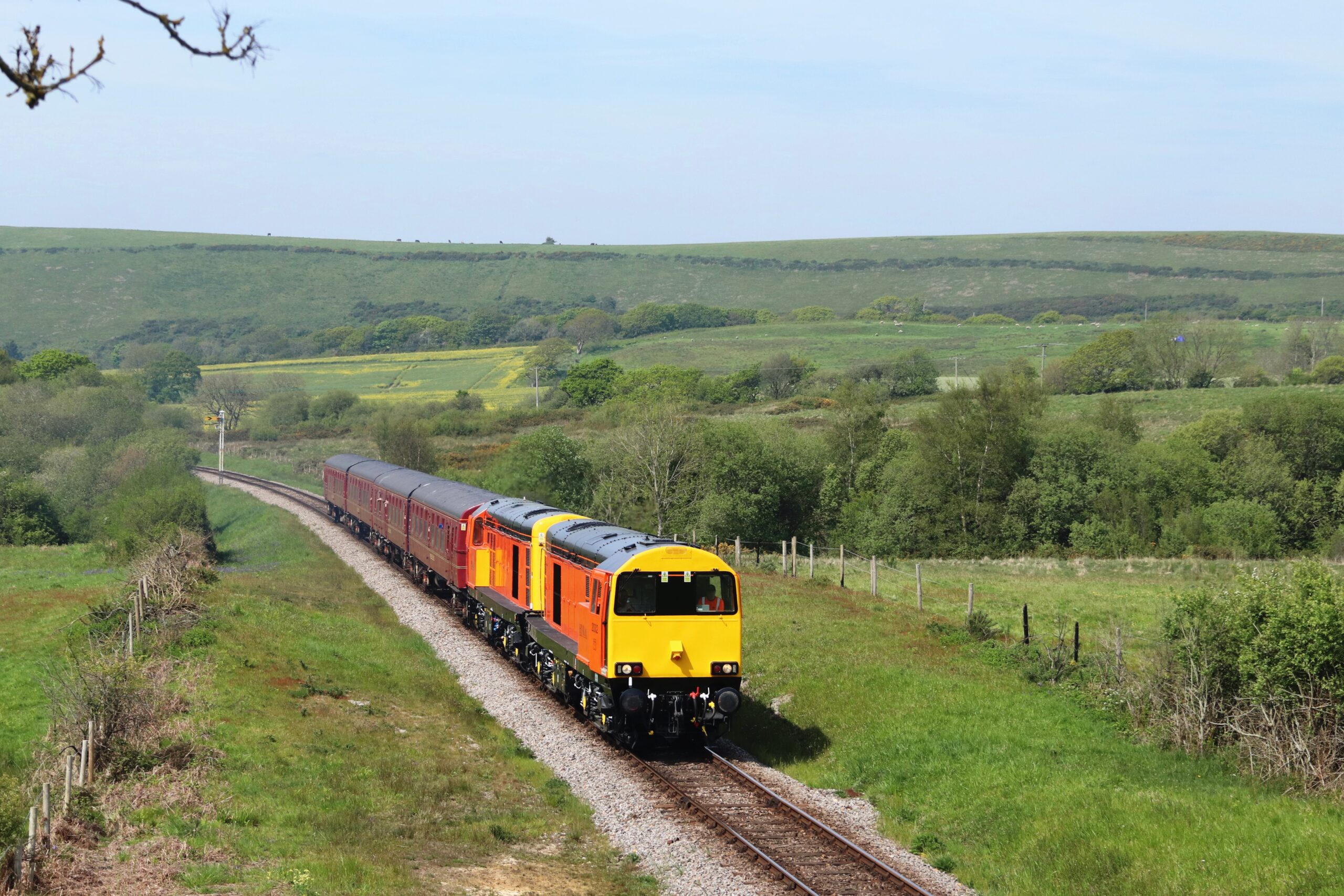
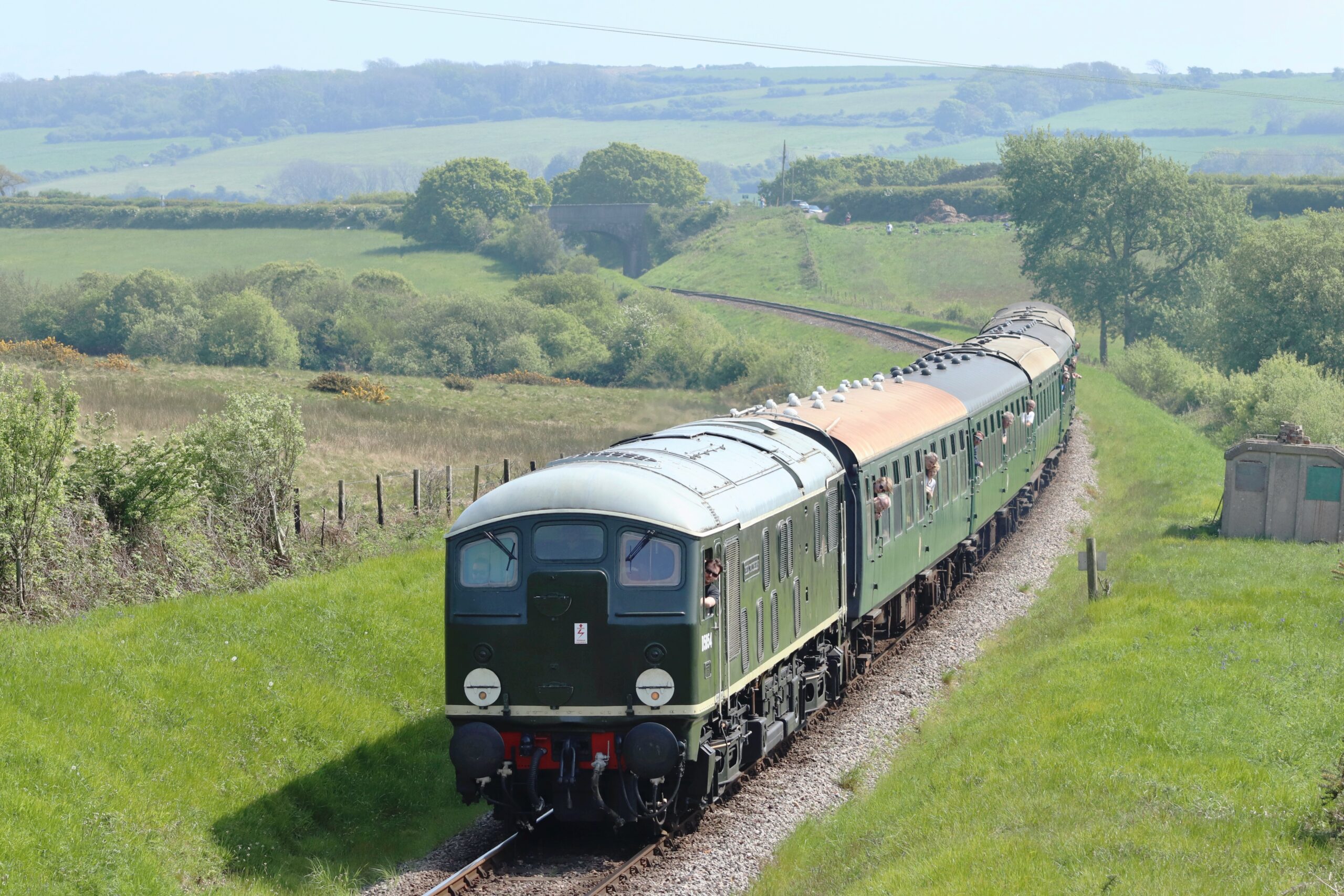
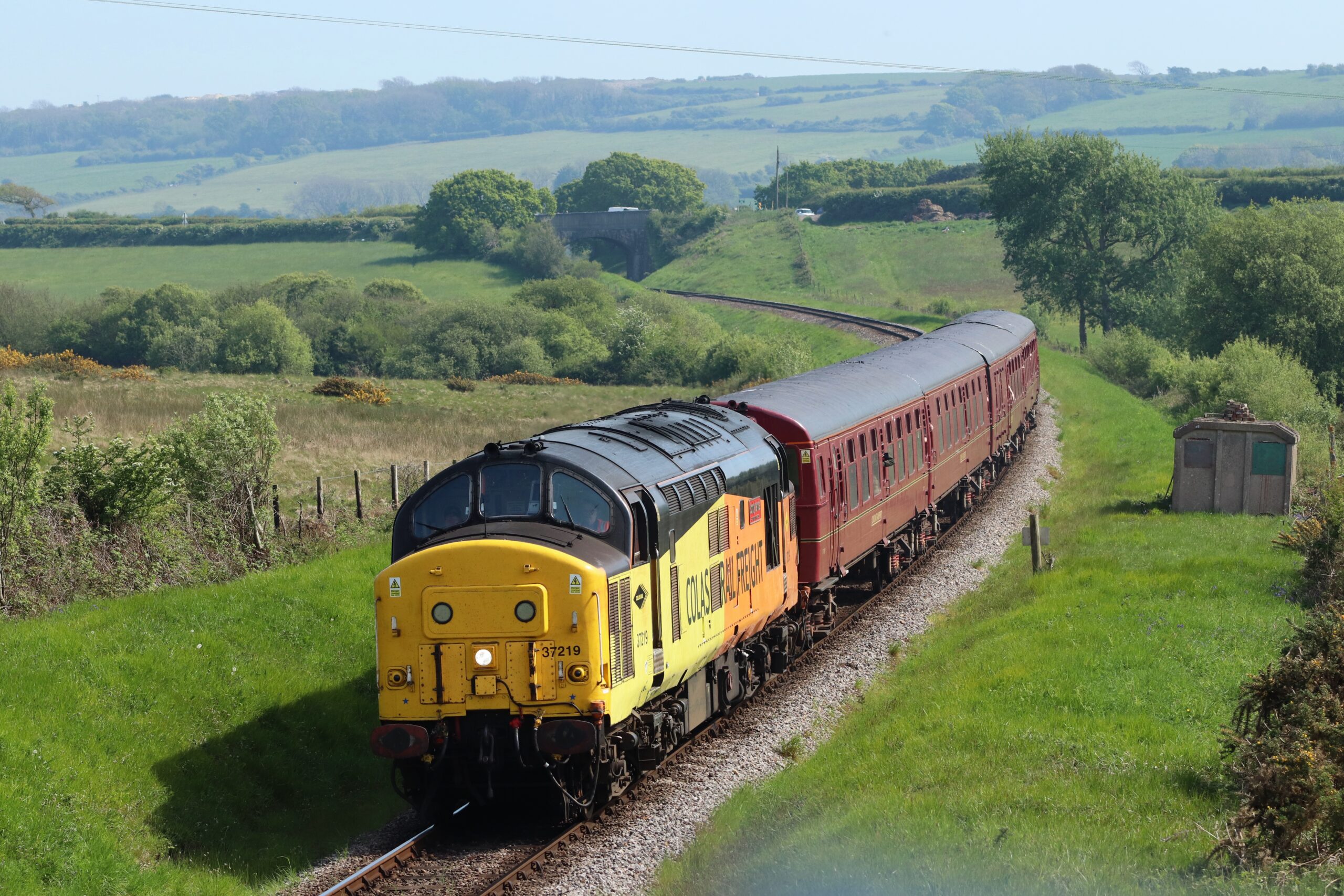
The 2024 Swanage Railway Diesel Gala and Beer Festival took place from 10th to 12th May. Nine locomotives took part which involved an intensive three train service in operation with several trains running along the the entire length of the nine-mile line route from Swanage to the River Frome at the limit of the heritage line’s operations on the branch from Wareham. Star of the show was very much the Diesel Traction group’s Class 52 ‘Western’ No. D1015 ‘Western Champion’ which visited the Purbeck line for the first time since 2007 and the first time a member of the class which has run on the Swanage Railway since 2011. Alongside the first Class 69 hauling passenger trains on the line, the two Harry Needle Railroad Company (HNRC) Class 20’s, two Class 50’s and the Colas Class 37, the guest gala fleet was bolstered with Class 24 No. D5054 ‘Phil Southern’ which had previously arrived by road. The visiting locomotives were of course joined by Swanage Railway resident Class 33’s No. D6515 and 33111.
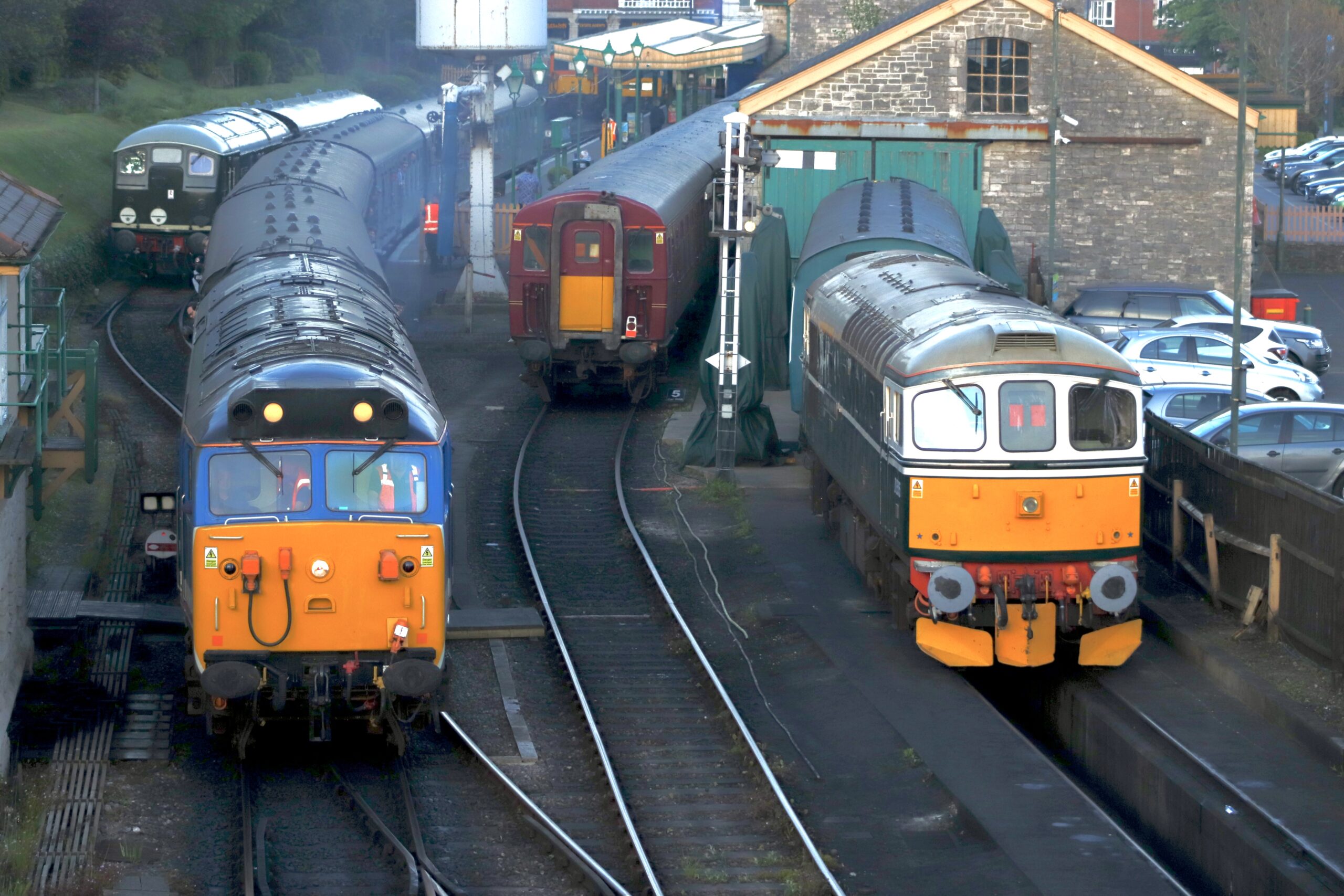
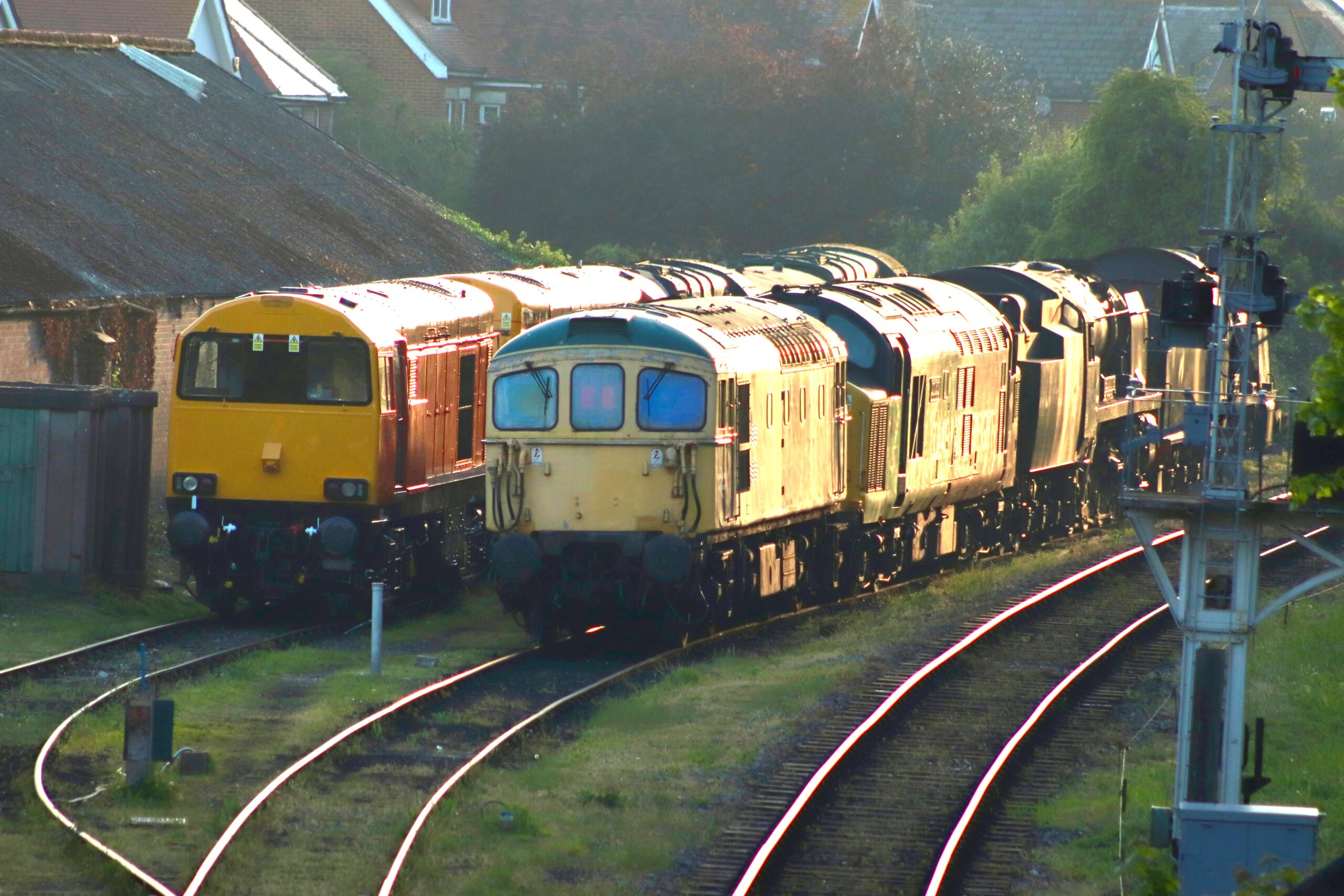
Class 50 No. 50026 ‘Indomitable’ working a Beerex train to Corfe Castle, passing visiting Class 24 No. D5054 ‘Phil Southern’, the London Underground Class 4tc set and resident Class 33 No. D6515 (33012) ‘Lt Jenny Lewis RN’ – 10/05/2024An evening scene in the sidings at Swanage – 10/05/2024GBRf Class 73 No. 73109 ‘Battle of Britain’ was on static display at Swanage station. The locomotive was enlisted to assist Class 33 No. D6515 (33012) ‘Lt Jenny Lewis RN’ on mainline railtour duty when the “Crompton” developed a fault – 10/05/2024Class 24 No. D5054 ‘Phil Southern’ from the East Lancs Railway. No. D5054 is one of just four preserved examples from the original 151 strong fleet of locomotives and was amongst the first diesel locomotives to be based at Bury. She is seen here at Swanage – 10/05/2024
Class 50 No. 50026 ‘Indomitable’ was only scheduled to haul the Friday evening “Beerex” trains and it wasn’t to take any further part in the gala weekend. However, issues with the electronic field supply for the Electric Train Heat (ETH) generator on No. 50021 ‘Rodney’ meant the locomotive was withdrawn from running and the timetable had to be revised and No. 50026 was pressed into service. On a Class 50, the ETH generator also powers the radiator fan so the fault meant the locomotive had no cooling fan and without which would quickly overheat.
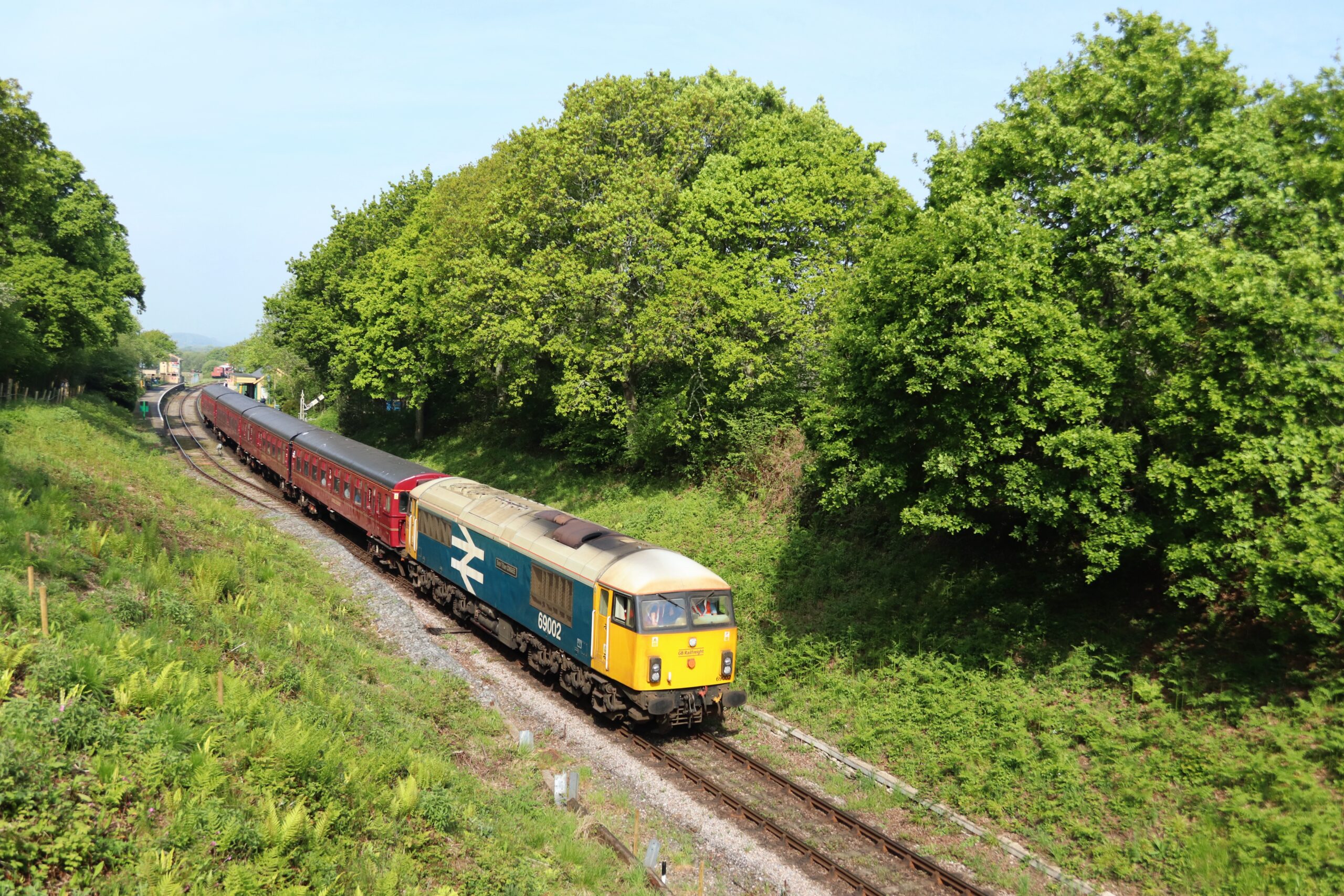
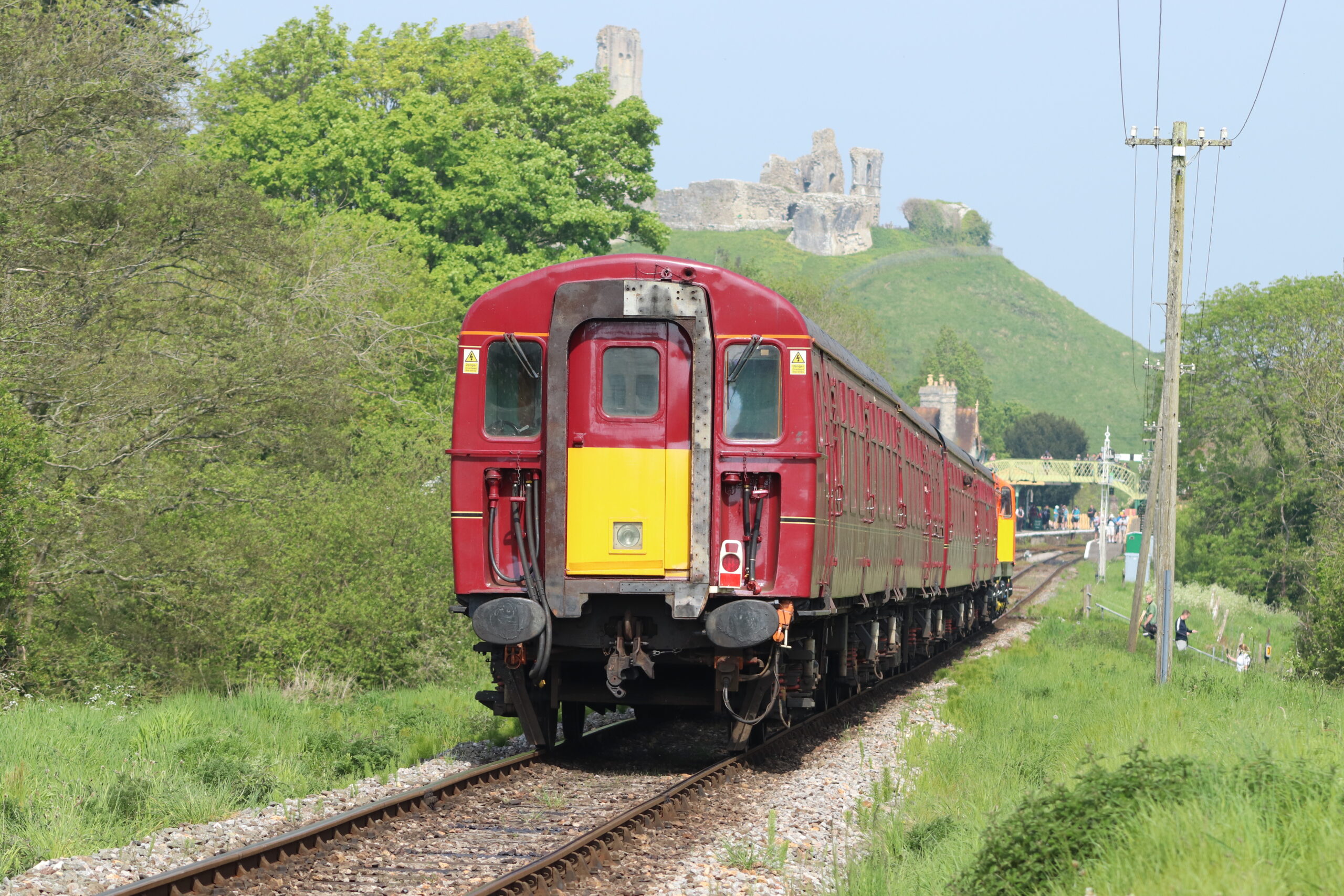
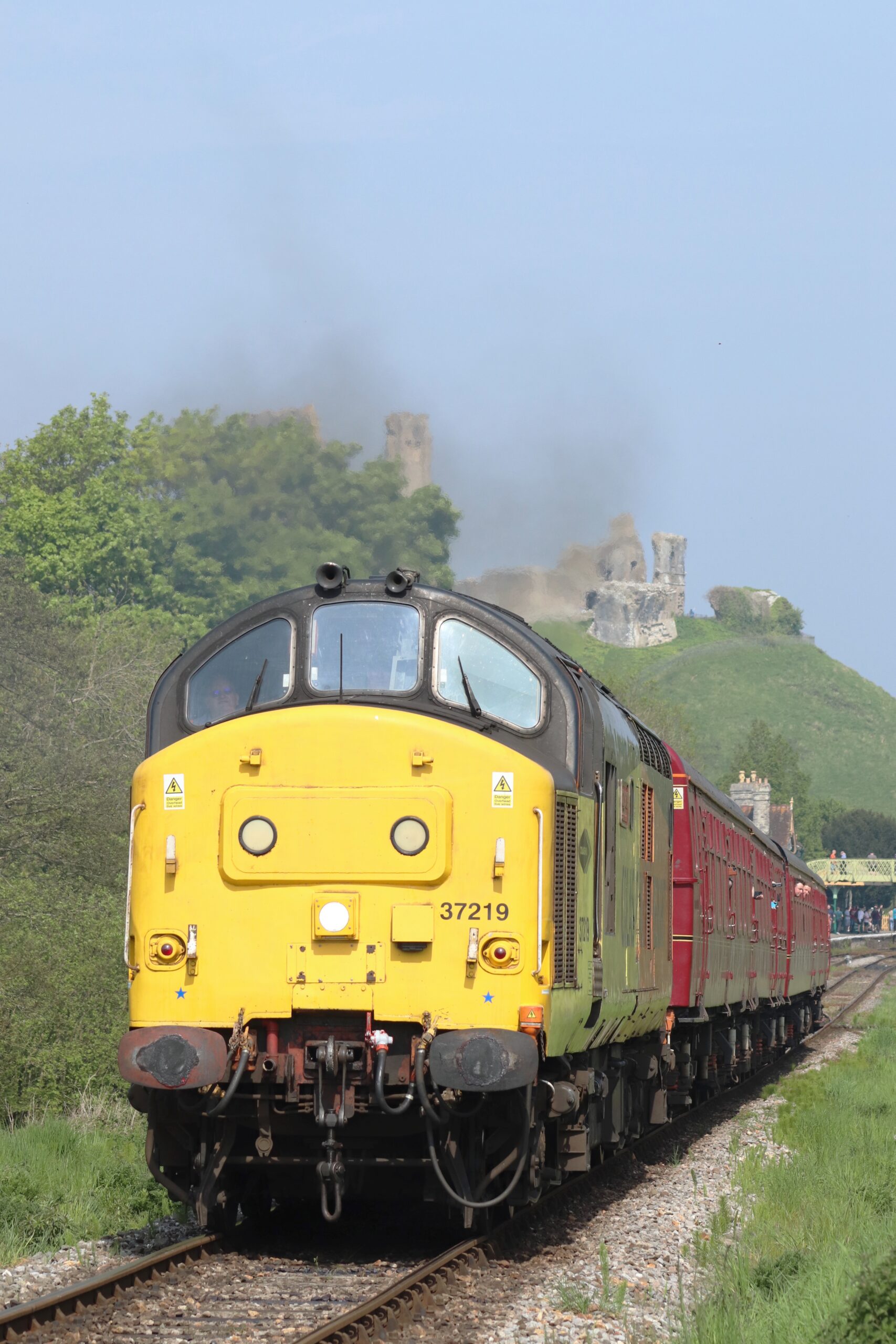
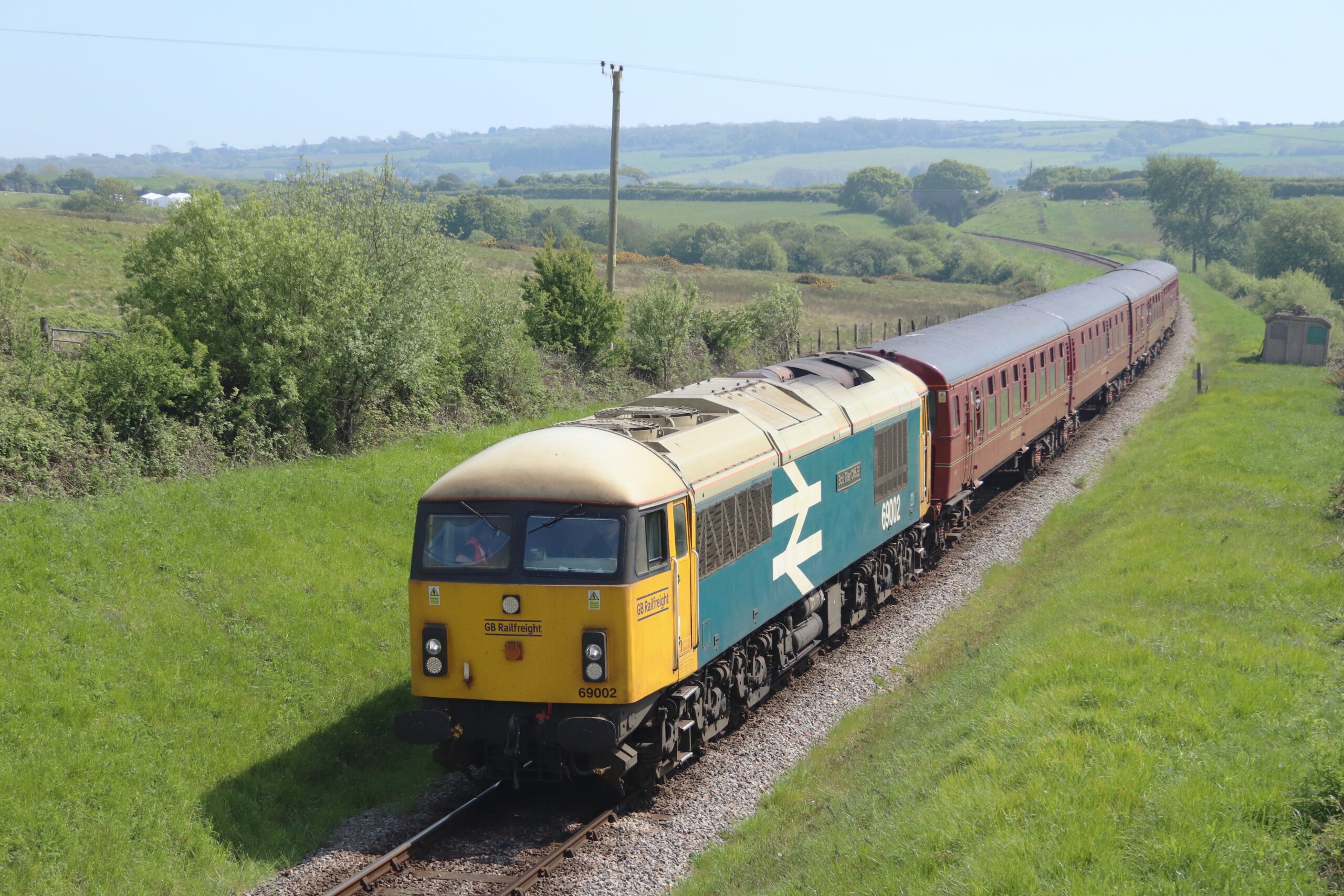
Visiting Class 24 No. D5054 ‘Phil Southern’ on the approach to Harmans Cross – 11/05/2024GBRf Class 69 No. 69002 ‘Bob Tiller CM&EE’ ( a late replacement for failed sister loco No. 690XX) draws away from Harmans Cross – 11/05/2024Harry Needle Railroad Company (HNRC) Class 20 No.’s 20311 and 20302 hauling the London Underground 4tc set on the approach toCorfe Castle – 11/05/2024The London Underground Class 438 4tc set being hauled by the HNRC Class 20’s towards Corfe Castle – 11/05/2024Class 52 “Western” Diesel-Hydraulic No. D1015 ‘Western Champion’ on the approach to Corfe Castle – 11/05/2024Class 33 No. D6515 (33012) ‘Lt Jenny Lewis RN’ makes a fine sight departing Corfe Castle – 11/05/2024Colas Railfreight Class 37 No. 37219 ‘Jonty Jarvis’ accelerates up the slight incline from Corfe Castle station – 11/05/2024 Class 33 No. 33111 having departed Corfe Castle station – 11/05/2024Carrying a “Sulzer” headboard, Class 33 No. D6515 (33012) ‘Lt Jenny Lewis RN’ departs Swanage as the driver receives the token for the single line working from the signalman – 11/05/2024In its Network South East (NSE) livery, Class 50 No. 50026 ‘Indomitable’ powers towards Swanage – 11/05/2024GBRf Class 69 No. 69002 ‘Bob Tiller CM&EE’ having past Afflington. The London Underground 4tc set was made much use of during the gala weekend – 11/05/2024Harry Needle Railroad Company (HNRC) Class 20 No.’s 20311 and 20302 hauling the London Underground 4tc set towards Corfe Castle – 11/05/2024HNRC Class 20 No.’s 20302 and 20311 double head the London Underground 4tc set across Corfe Common – 11/05/2024Swanage resident Class 33 No. 33111 heads a train from Swanage – 11/05/2024Class 52 No. D1015 ‘Western Champion’ heads a Swanage bound train – 11/05/2024Colas Railfreight Class 37 No. 37219 ‘Jonty Jarvis’ hauls the London Underground 4tc set across Corfe Common – 11/05/2024Class 24 No. D5054 ‘Phil Southern’ heads towards Corfe Castle – 11/05/2024Colas Railfreight Class 37 No. 37219 ‘Jonty Jarvis’ powers towards Corfe Castle with Afflington Bridge behind – 11/05/2024My final shot of the day, GBRf Class 69 No. 69002 ‘Bob Tiller CM&EE’ with Corfe Castle in the distance heads across Corfe Common with a Swanage bound train – 11/05/2024
Unfortunately there was further disruption on Saturday evening when No. 50026, on the back of a six-carriage passenger train, became partially derailed at Castle Corfe station at approximately 1830 – around the same time I was settling down to watch new ‘Doctor Who’ on BBC 1. The evening gala and Beerex services were suspended following the incident. No passengers were injured and no damage was sustained to the carriages on the train. The government’s Rail Accident Investigation Branch (RAIB) were advised and they carried out an investigation on the cause of the derailment. The Class 50 was re-railed during the night by rail support service Goodman’s and inspections did not reveal any damage to the locomotive.
Webcam Screenshot from the Corfe Castle camera showing Class 50 No.50026 ‘Indomitable’ being assessed after she came off the rails. The Webcam feed was later turned off at the request of the Rail Accident Investigation Board (RAIB) – 11/05/2024
Video glimpse of the 2024 Swanage Diesel Gala
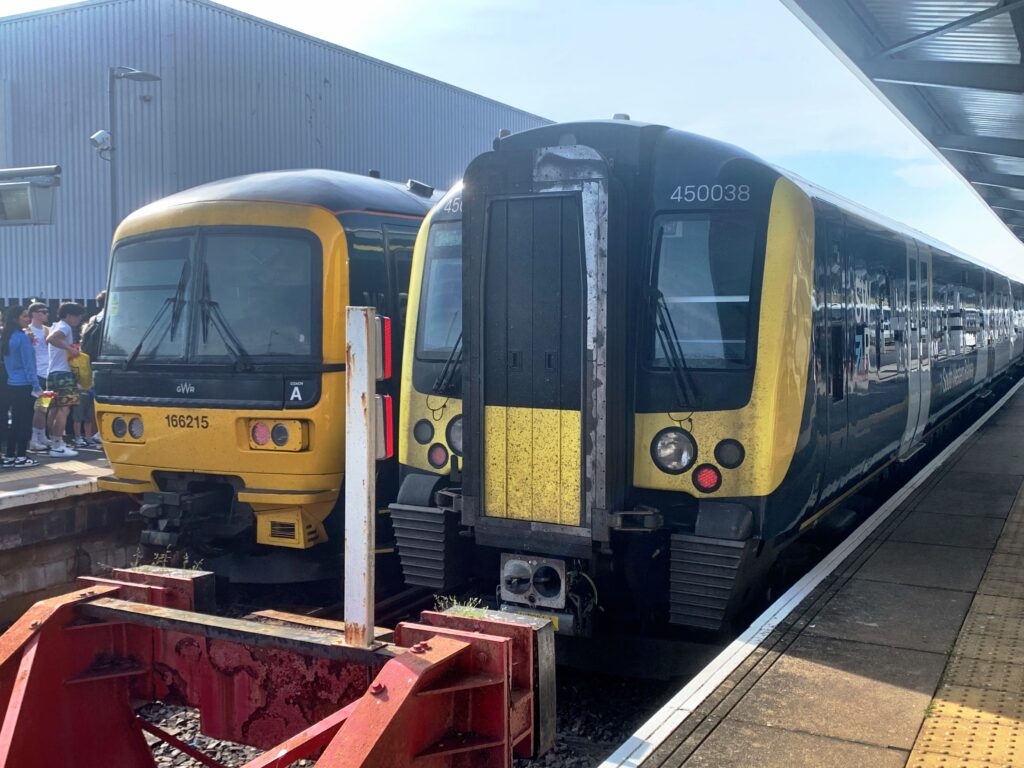
Also of nite, the Saturday saw a surprise run of a pair of SWR Class 450 EMU’s to Weymouth forming an eight coach train. I was too busy on the Swanage Railway or watching new “Doctor Who” to pop out and see them, but good friend of the blog @da_buckley967 was on hand to capture No.’s 450091 and 450038 in Weymouth station having worked in from Portsmouth earlier in the day.
Unusual visitors for Weymouth; two four car SWR Class 450 EMU No.’s 450091 and 450038 stand at platform having worked in with a VSTP (Very Short Term Plan) working 1K21 1056 Portsmouth Harbour to Weymouth – 11/05/2024 (Image courtesy of da_buckley967)SWR Class 450 No. 450038 forming the rear of 1K32 1903 Weymouth to Portsmouth Harbour at the buffer stops in Weymouth alongside GWR Class 166 No. 166215 working 2V96 1845 Weymouth to Bristol Temple Meads – 11/05/2024 (Image courtesy of da_buckley967)
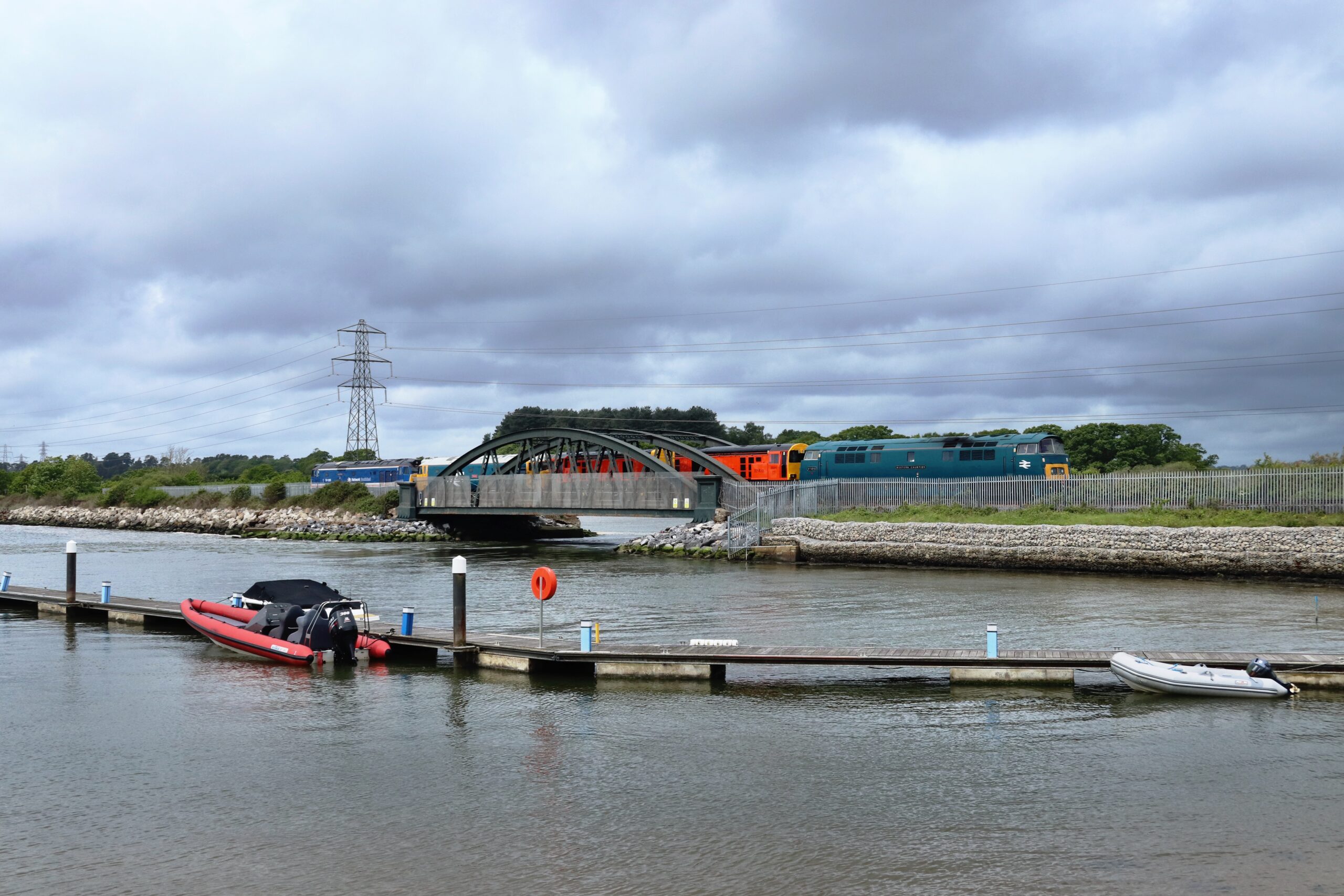
A heavily revised timetable was implemented at the Swanage Diesel Gala on the Sunday, but the BLS charter the “Return of the Jurassic Crompton” ran as scheduled, departing Swanage at 1430. We saw the charter train crossing the Holes Bay causeway.
Class 33 No. D6515 (33012) ‘Lt Jenny Lewis RN’ traverses Creekmoor Viaduct with GBRf Class 73 No. 73109 ‘Battle of Britain’, the London Underground 4tc set and GBRf Class 69 No. 69002 ‘Bob Tiller CM&EE’ at the rear working the Branch Line Society railtour “The Return of the Jurassic Crompton” 1Z35 1420 Swanage to London Waterloo across Holes Bay causeway on the approach to Poole – 12/05/2024D6515 (33012) ‘Lt Jenny Lewis RN’ entering Wareham working light engine movement 0z36 1105 Eastleigh Arlington (ZG) to Swanage – 13/05/2024D6515 (33012) ‘Lt Jenny Lewis RN’ pauses at Wareham to pick up Swanage Railway crew as she returns to the heritage railway after the previous days railtour – 13/05/2024
The other visiting locomotives mostly departed over the next couple of days, with No. 37219 ‘Jonty Jarvis’ leaving first on Monday 13th and a convoy consisting of the No. D1015, the Class 20’s and both Class 50’s heading to Eastleigh on Tuesday 14th.
Colas Rail Class 37 No. 37219 ‘Jonty Jarvis’ passes through Hamworthy running as 0F75 1030 Swanage to Westbury Down TC – 13/05/2024Homeward bound – the Swanage Diesel Gala guest locomotive convoy crosses Rockley Sands Viaduct with Class 52 D1015 ‘Western Champion’ hauling HNRC Class 20’s 20311 and 20302 with 50021 ‘Rodney’ and 50026 ‘Indomitable’ reporting as 0Z50 1032 Swanage to Eastleigh Arlington (ZG) – 14/05/2024
Video from of the 2024 associated Swanage Diesel Gala mainline workings
Tuesday and another Class 458 delivery / departure ran, once again in the hands of GBRf Class 69 No. 69008 heading up 5Q64 1534 Southampton Central to Bournemouth TRSMD with refurb SWR Class 458 No. 458413 and returning later on 5Z66 2018 Bournemouth TRSMD to Eastleigh East Yard which took No. 458512 on its first leg to Widnes for refurbishment. These moves ran early and I missed my chance at taking photographs, however I did manage to capture some quick video of the first working as it passed Poole Park.
Screenshot GBRf Class 69 No. 69008 heading up 5Q64 1534 Southampton Central to Bournemouth TRSMD with 458413 – 14/05/2024
Video of GBRf Class 69 No. 69008 working 5Q64 1534 Southampton Central to Bournemouth TRSMD with SWR Class 458 No. 458413 – 14/05/2024
And that brings us to the end of another blog instalment. We’ll be back in a week or so with our report from the Severn Valley Railway diesel gala and an update on out of the ordinary railway workings in Dorset. As always, thanks for reading and for your comments which are appreciated. Be seeing you!
Yoshi pauses during a walk along the River Stour in Blandford. The two arches behind our boy are all that remain of the original structure that took the Somerset and Dorset Railway across Langton Meadows. The railway closed in 1966 and the Blandford Railway Arches Trust Limited, in partnership with Blandford Town Council are working to conserve the arches – 08/04/2024
April 1st 2024 to April 13th 2024
Yoshi visits the Dolphin Centre in Poole – 02/04/2024
Yoshi was recently quite perturbed on finding out Barclays Bank have been closing branches across Dorset, with both Weymouth and Poole getting the axe. To replace their High Street presence in Poole, the bank have opened a pod within the town’s Dolphin Shopping Centre. The decline of bank branches in the UK has been attributed to banking consumers’ changing habits and technological changes. Yoshi waited patiently in the ever growing queue at the pod when he wanted to transact business ensuring he had enough pocket money in his account to keep him in Beef & Poultry flavour Mini Tasty treats.
Our first railway themed adventure in April 2024 took place during an overnight trip to the Greater Manchester area. The purpose of our trip was to visit friends, but me being me, I was unable to resist the lure of checking out Real Time Trains and seeing what might be seen on the local tracks. I immediately noticed that regular Class 60 hauled freight trains were scheduled to pass through Rochdale, Lancashire where we were staying the night.
As we drove along the A664, Edinburgh Way, on the outskirts of Rochdale towards our hotel, we passed under a blue railway bridge with a sign welcoming us to “Rochdale – birthplace of co-operation”. The metropolitan borough in north-west England has long boasted of its association with the 28 mill workers, known as the “Rochdale Pioneers”, who opened their Co-Operative shop in the town on Toad Lane in 1844, devising the “principles” which became the model for cooperatives worldwide.
It conveniently transpired that our hotel was located a few minutes walk from the railway line running through Rochdale and while out walking Yoshi prior to our heading to bed, we took a stroll just in time to see a Class 60 pass over the A664 blue railway bridge with a Drax Power Station to Liverpool Biomass Terminal train of empty wagons.
The trains supplying Drax use distinctive state of the art biomass wagons – the largest on UK railways – designed specifically to transport and unload wood pellets.
The UK Central Electricity Generating Board began building Drax in 1967 to utilise coal from the Selby coalfield, and in 1974 it begins generating electricity for the first time. The power station is officially opened in 1975, with three generators and a total electrical capacity of just under 2 gigawatts (GW). It had the capability to power around two million homes but by 1986, Drax had doubled in size and capacity to just under 4 GW, becoming the largest power station in the UK.
In 1990, Drax Power Station comes under the ownership of National Power, one of three power generation companies created as part of the privatisation of the electricity industry in England and Wales. Nine years later, the power station is acquired by the US-based AES corporation for £1.87 billion but part ways in 2003 after one of the power station’s major customers goes into administration. As creditors, various financial institutions take control of Drax Power Station. 2005 saw the power station undergoing refinancing and Drax Group plc is listed on the London Stock Exchange.
In 2012, Drax committed to transforming the business into a mainly biomass-fuelled generator using compressed wood pellets in place of coal by upgrading the three generating units that came online in the early 1970’s to run on 100% sustainable biomass, with no use of coal. The first upgraded generating unit came online in 2013 and ten years later in April 2023 Drax announced the official end of coal-fired generation at Drax Power Station.
As I previously noted above, there are numerous daily paths to and from Drax which pass through Rochdale. So, in order to catch a view of these workings, I elected to get up early on the Thursday morning and drove the five minute journey to Castleton railway station. On arrival at 0530, in good time to witness 6E36 0205 Liverpool Biomass Tml to Drax AES (GBRf) pass through, the station was in darkness. Luckily for me, the lights flickered into life prior to Class 60 No. 60076 ‘Dunbar’ rumbling through the unstaffed station.
Screenshot of GBRf Class 60 No. 60076 ‘Dunbar’ running through Castleton working 6E36 0205 Liverpool Biomass Tml to Drax AES (GBRf) – 04/04/2024Northern Trains Class 150 No.’s 150120 and 150110 stop at Castleton railway station working 2B89 0551 Rochdale to Blackburn – 04/04/2024
Stopping train services at Castleton are currently provided by Northern Trains utilising Class 195 and Class 150 diesel multiple units. TransPennine Express train services also pass through the station.
GBRf Class 60 No. 60096 ‘Impetus’ on the approach to Castleton working 6M34 0545 Drax AES (GBRf) to Tuebrook Sidings (GBRf) – 04/04/2024
The first station to be opened in Castleton was in 1839, situated on the western side of the Rochdale to Manchester Road bridge and was originally called “Blue Pits for Heywood”. The existing station opened on 1st November 1875, on the eastern side of the road bridge. The Liverpool and Bury Railway from Bolton once joined the main line at a triangular junction just south of the station. This was previously a busy passenger and freight route utilised by trains avoiding Manchester, but was closed to passengers on 5th October 1970. Castleton station was formerly part of the Oldham Loop Line which provided through services to Oldham via Rochdale. This route was closed in 2009 and converted for light rail use by Manchester Metrolink.
The western portion of this line was retained for freight traffic after passenger trains ceased serving the coal depot at Rawtenstall until 1980, and subsequently to the Powell Duffryn wagon works. It now forms the link with the East Lancashire Railway (ELR) at Heywood. Subject to permission being granted by Network Rail (NR, in the future, the heritage line plans to extend its services along and towards a possible new bay platform – given the proposed name “Castleton Village” – which would be adjacent to the main Castleton station. Passengers could then alight from their ELR train and change station sides directly to Northern Rail services on the national network.
Video from Castleton – April 2024
We arrived back in Dorset on Thursday evening in time to see Colas operated Ultrasonic Test Unit (UTU) head towards Weymouth propelled by Class 37 No. 37254 ‘Cardiff Canton’ with DBSO No. 9714 leading on the outward leg of 3Q45 2103 Woking Up Yard Reception to Reading Triangle Sidings.
Screenshot of Class 37 No. 37254 ‘Cardiff Canton at the rear of Ultrasonic Test Unit (UTU) passing Hamworthy reporting as 3Q45 2103 Woking Up Yard Reception to Reading Triangle Sidings – 05/04/2024
Video of UTU 3Q45 2103 Woking Up Yard Reception to Reading Triangle Sidings – 05/04/2024
The following day, Friday 5th April 2024, and we were back at Hamworthy station as Swanage resident Class 33 No. 33012 (D6515) ‘Lt Jenny Lewis RN’ escaped the heritage railway and ventured out onto the mainline as she headed off to Eastleigh to collect preserved Class 50 No. 50026 ‘Indomitable’. The two locomotives returned later in the day. The Class 50 is visiting the Swanage Railway to undertake power testing to ensure it is fit and ready to earn a mainline running certificate. More news on this is expected from the locomotives owners in the next few weeks.
Class 33 No. 33012 (D6515) ‘Lt Jenny Lewis RN’ runs light engine into Hamworthy as 0Z33 1130 Swanage to Eastleigh Arlington (Zg) – 05/04/2024Class 33 No. 33012 (D6515) ‘Lt Jenny Lewis RN’ running light engine passing Hamworthy as 0Z33 1130 Swanage to Eastleigh Arlington (Zg) – 05/04/2024Class 33 No. 33012 (D6515) ‘Lt Jenny Lewis RN’ hauling Class 50 No. 50026 ‘Indomitable’ approaching Hamworthy reporting as 0Z50 1430 Eastleigh Arlington (Zg) to Swanage – 05/04/2024 – 05/04/2024Class 50 No. 50026 ‘Indomitable’ being hauled by Swanage resident Class 33 No. 33012 (D6515) ‘Lt Jenny Lewis RN’ at Hamworthy – 05/04/2024
Video of D6515 & 50026 passing Hamworthy – 05/04/2024Yoshi after his date with the groomer. We celebrated by popping into the boys’ favourite pub – 05/04/2024
Hamworthy Branch update
The new electrical cabinet at Hamworthy Park crossing on Ashmore Avenue has been installed and the old one removed.
New cabinet at Hamworthy Park level crossing – 05/04/2024
For The Record
The New Measurement Train (NMT) visited North Dorset on Thursday April 4th top and tailed by former High Speed Train (HST) Class 43 power cars No.’s 43274 and 43257 which formed 1Q23 0555 Reading to Salisbury via Exeter.
Saturday 6th April 2024 and North Dorset witnessed the sight of preserved Hasting’s Unit operating “The Cogload Climber” rail tour run by Hastings Diesels Limited. The train passed through Sherborne and Gillingham on its return leg working as 1Z15 1440 Exeter Central to Hastings. Unfortunately, although I had planned to photograph and video the train as it made its way to and from Devon, this just wasn’t meant to be.
However, good friend of this blog, @smithy.377 has very kindly allowed us to share the following images and video of the tour in Exeter.
Diesel-Electric Multiple Unit (DEMU) No. 1001 led by Class 202/6L Power Car 60118 ‘Tunbridge Wells’ at Exeter St Davids prior to departure up to Exeter Central working the “Cogload Climber” railtour reporting as 1Z14 0630 Hastings to Exeter Central – 06/04/2024 (Ashley Smith, @smithy.377)
No. 1001 is a Diesel-Electric Multiple Unit (DEMU) which once worked on the London Charing Cross to Hastings route in British Rail days between 1957 and 1986. Following withdrawal, the train was subsequently preserved by Hastings Diesels Limited (HDL), restored to its former glory and returned to main-line operation ten years later, in 1996.
Unit No. 1001 at Exeter Central having arrived with “The Cogload Climber” 1Z14 0630 Hastings to Exeter Central – 06/04/2024 (Ashley Smith/ @smithy.377)Unit No. 1001 at Exeter Central having arrived with “The Cogload Climber” 1Z14 0630 Hastings to Exeter Central – 06/04/2024 (Ashley Smith/ @smithy.377)Unit No. 1001 Class 202/6L Power Car No. 60116 ‘Mountfield’ in the bay platform at Exeter Central having arrived with “The Cogload Climber” 1Z14 0630 Hastings to Exeter Central – 06/04/2024 (Ashley Smith/ @smithy.377)Unit No. 1001 at Exeter Central working “The Cogload Climber” 1Z14 0630 Hastings to Exeter Central – 06/04/2024 (Ashley Smith/ @smithy.377)Unit No. 1001 at Exeter Central forming “The Cogload Climber” railtour. The train departed reporting as 1Z15 1440 Exeter Central to Hastings – 06/04/2024 (Ashley Smith/ @smithy.377)
“The Cogload Climber” railtour at Exeter – 06/04/2024. Video courtesy of Ashley Smith / @smithy.377
In other news, Network Rail (NR), who are responsible for UK railway infrastructure, is to spend approximately £2.8billion on protecting railways from extreme weather events over the next 5 years. The government owned organisation will fund measures such as making embankments more resilient, recruiting almost 400 extra drainage engineers, training operational staff to better interpret weather forecasts and installing CCTV at sites with known flood risks.
Collapsing embankments are causing major disruption to train services, including those which serve Dorset, and measures to prevent these occurring are required in the face of higher than average rainfall. The spending is part of NR’s £45.4billion investment plan for the next five years.
Weymouth railway station on 8th April when ASLEF industrial action meant no SWR trains were running. Class 444 EMU’s No.’s 444003 and 444005 stand at platform out of use while GWR Class 165 Turbo DMU No. 165101 forms the 2V60 0930 Weymouth to Gloucester service – 08/04/2024
The train drivers union, ASLEF, launched a new round of industrial action on Friday 5th April 2024 with the commencement of rolling one day strikes across 14 rail companies. In addition, five days of overtime bans caused further cancellations. The dispute has now entered its 22nd month.
SWR Class 444 No.’s 444036 and 444045 at Weymouth on the ASLEF strike which meant very few SWR services ran – 08/04/2024
Yoshi and I visited Blandford on the morning of 8th April and took a walk along the River Stour so we could view the “Blandford Railway Arches”, the only physical remaining evidence the Somerset and Dorset Railway once traversed over the river. You can read more about the rise and demise of Blandford’s railway history here.
A bridge to nowhere… the decision to close the Somerset and Dorset Railway connecting Bath and Bournemouth is one of the great tragedies of the Beeching Era. Yoshi pauses on a walk along the River Stour – 08/04/2024 For over 100 years the flood arches on Langton Meadows carried the Somerset and Dorset railway over the biodiversity rich Stour flood plain. When the railway closed, most of the infrastructure was demolished, but the arches were left standing, an unlisted but much-loved asset and memorial to the town’s Victorian industrial heritage. When North Dorset District Council considered demolishing them, public opinion in opposition resulted in Blandford Forum Town Council (BFTC) seeking a long-term lease for the structure so that it could be preserved – 08/04/2024
That brings us to the end of another blog entry. Thank you for reading, your comments and corrections, which are always welcome. Be seeing you!
End Piece:
The British Rail Class 165 Networker Turbo is a fleet of suburban Diesel Multiple Unit (DMU) passenger trains, originally specified by and built for the British Rail Thames and Chiltern Division of Network South East (NSE). They were built by British Rail Engineering Limited (BREL) York Works between 1990 and 1992. GWR Class 165 No. 165101 forming 2V60 0930 Weymouth to Gloucester – 08/04/2024The British Rail Class 166 Networker Turbo Express is a fleet of DMU passenger trains, built by ABB Transportation in York between 1992 and 1993. The trains were designed as a faster, air-conditioned variant of the Class 165 Turbo, intended for longer-distance services, and, like the 165’s, belong to the Networker family. GWR Class 166 No.166216 at Weymouth forming 2V72 1528 Weymouth to Gloucester – 11/04/2024
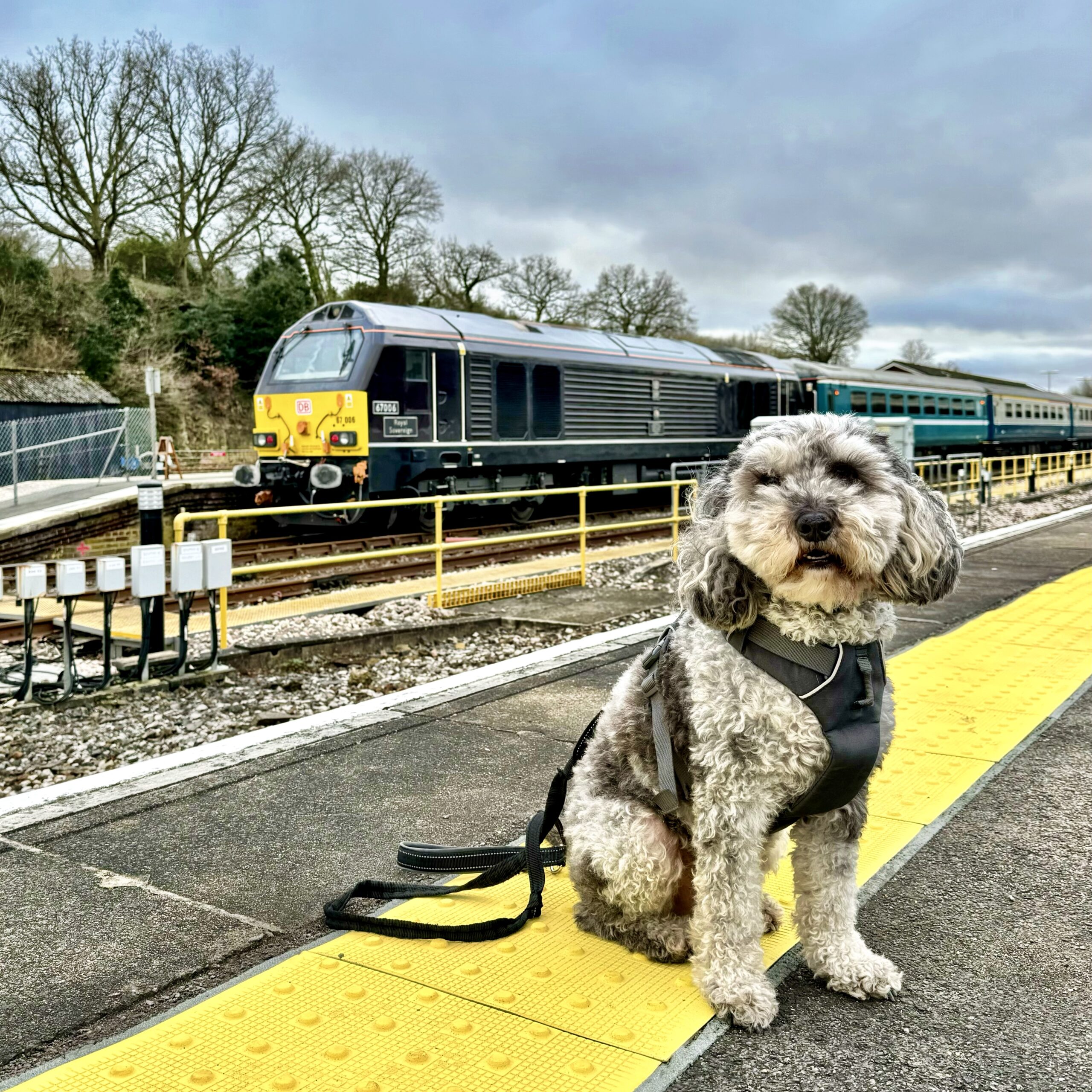
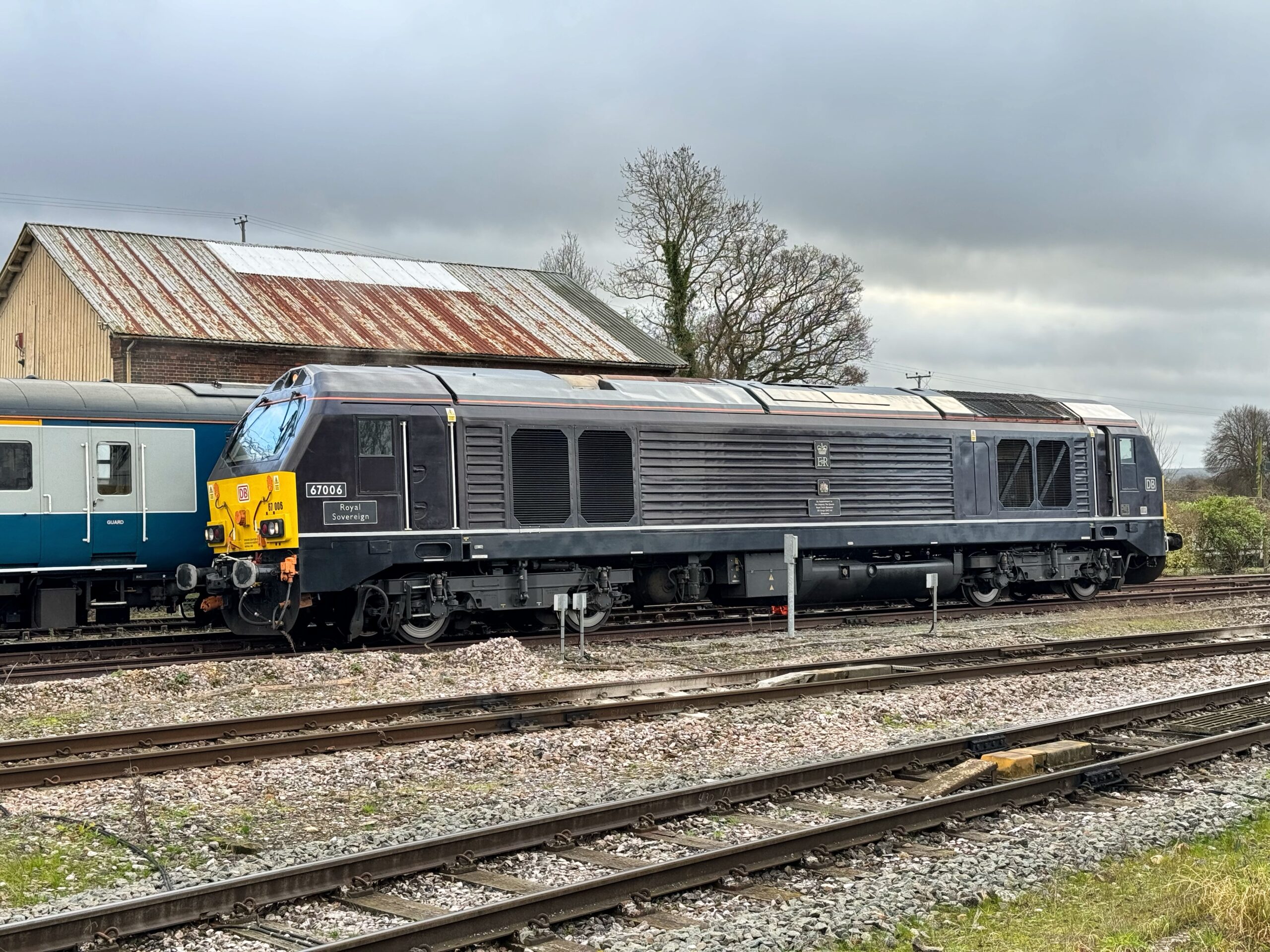
Yoshi at Yeovil Junction with Class 67 No. 67006 ‘Royal Sovereign’ was in charge of UK Railtours “Carols At Sherborne Abbey” 1Z15 0715 Peterborough to Yeovil Jn Heritage Platform. The Class 67 locomotives are a class of Bo-Bo diesel electric mainline locomotives which were built for the English, Welsh and Scottish Railway between 1999 to 2000 by Alstom at Meinfesa in Valencia, Spain with drive components (engine and transmission) from General Motors Diesel. Yoshi is a cockapoo dog, a miniature poodle and cocker spaniel mix produced in Wiltshire – 23/12/2023
December 11th 2023 to December 31st 2023
The second part of our December blog is finally here! After our trip to the North, we didn’t have to wait long for some local railway themed action as another Class 458 EMU drag from Widnes Transport Tech to Bournemouth depot took place on Wednesday 13th running as 5X73 0722 Wembley Receptions 1-7 to Bournemouth TRSMD. I kept one eye on its movement via the live maps available on the Open Time Trains website, and at one point almost left home early as the train was running well ahead of time.
GBRf Class 69 No.69008 at Branksome preparing to reverse into the depot with 5X73 0722 Wembley Receptions 1-7 to Bournemouth TRSMD – 13/12/2023
However, the train was held outside of Eastleigh for a while so I was able to get to Branksome on the train as planned just prior to the arrival of GBRf Class 56 No. 56081 and Class 69 No. 69008 with South Western Railway (SWR) Class 458 No. 458424 sandwiched in-between barrier coaches. The return run taking another Class 458 for refurbishment in Widnes was set for departure the afternoon of the same day, but was afforded three different paths out of the depot. Avoiding the possibility of picking the wrong working and either missing the departure or having a lengthy wait I decided just to remain at home instead!
GBRf Class 56 No. 56081 with SWR Class 458 No. 458424 in tow arrives at Branksome heading 5X73 0722 Wembley Receptions 1-7 to Bournemouth TRSMD – 13/12/2023
No. 56081 is to to be retired to Longport in the New Year. While the option for additional Class 69 conversions doesn’t appear to have been taken yet, the planned despatch of the Class 56 to Longport certainly places it in position for potential conversion to No. 69017.
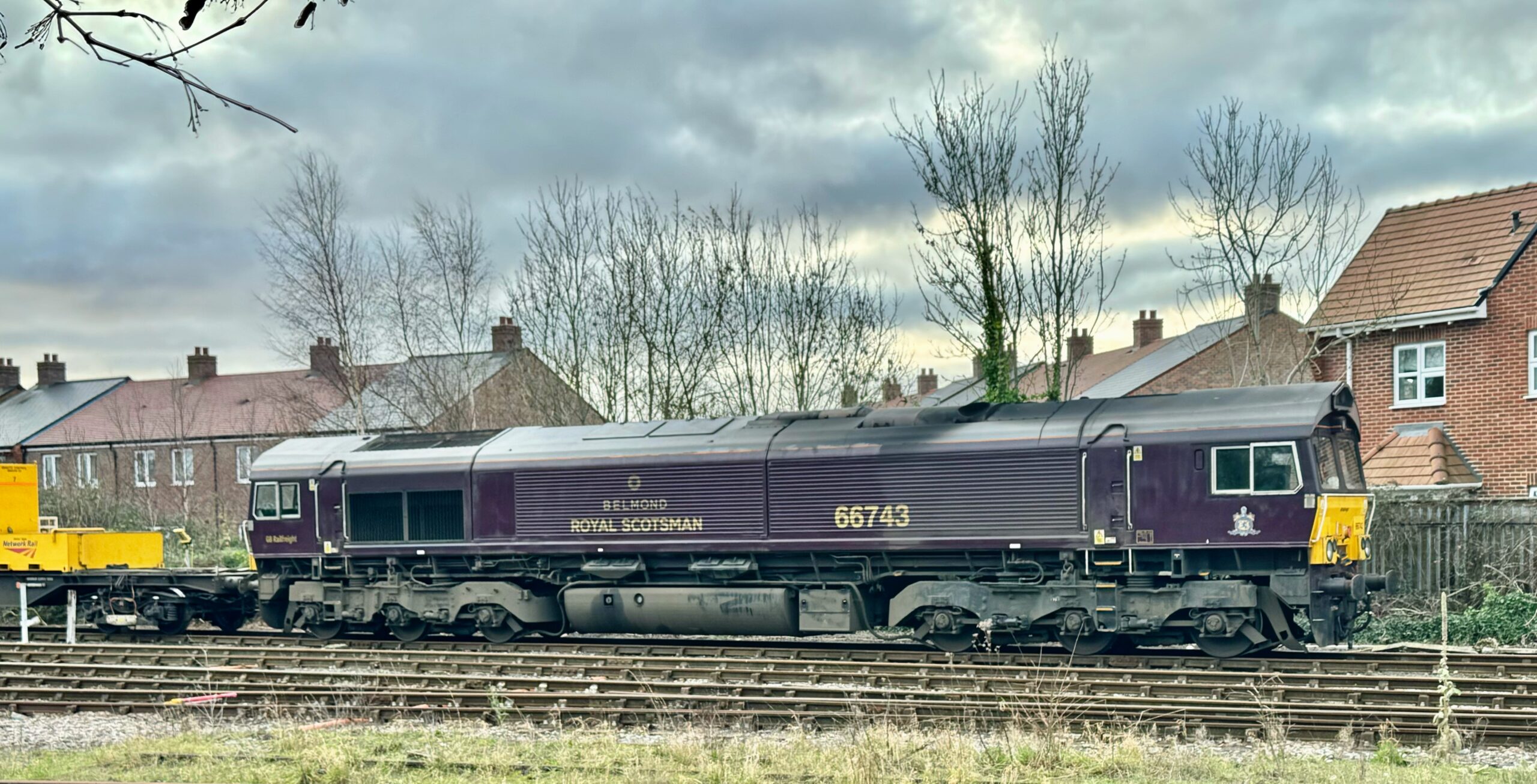
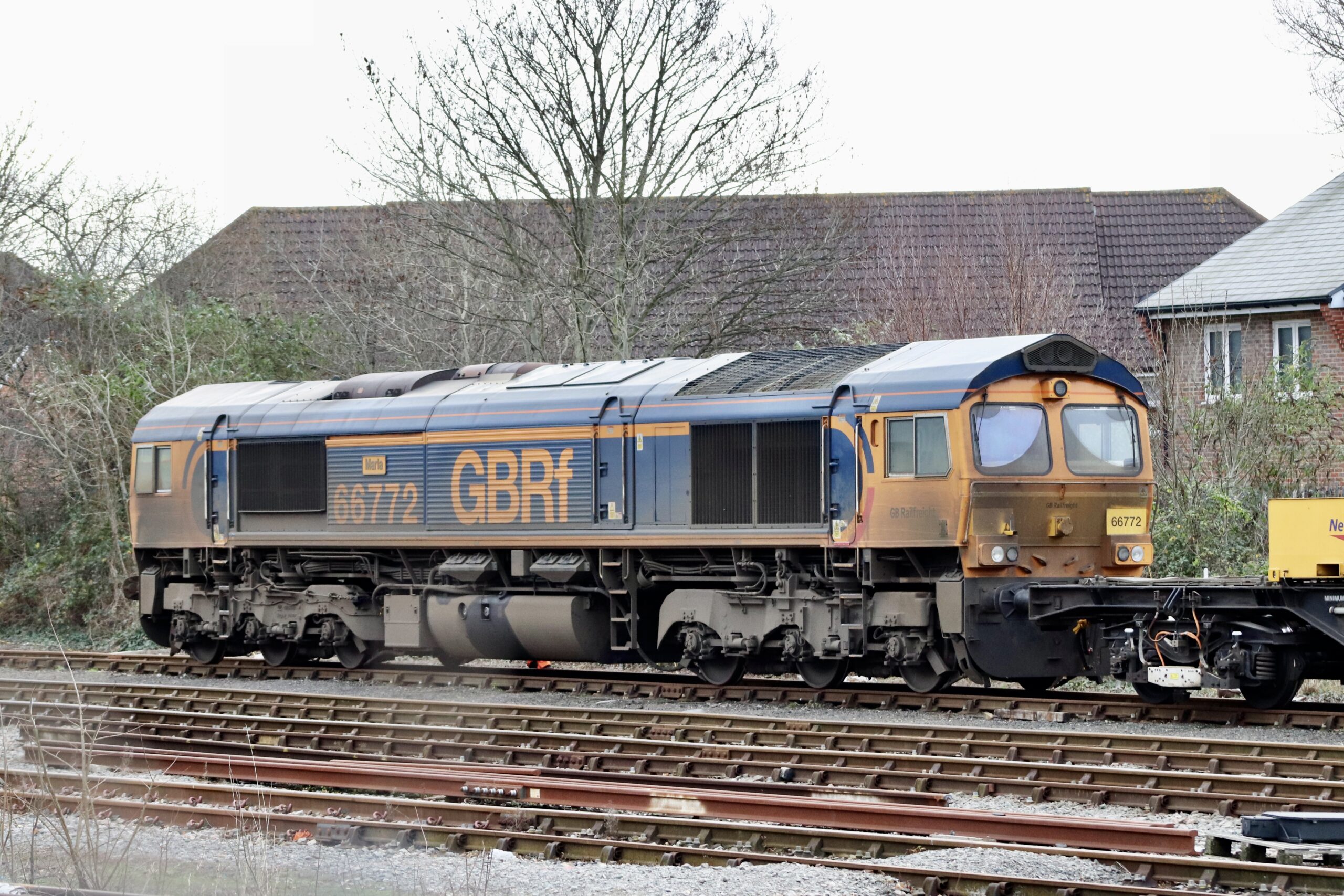
Later on the same day, the Snow & Ice Treatment Train (SITT) ran from Totton to Dorchester South and back as 3Y89 2211 Totton Yard to Totton Yard with Class 66 No.’s 66743 and 66772 ‘Maria’. I toyed briefly with the notion of driving to Dorchester to get a photo of No. 66743 in its Belmond Royal Scotsman livery, but decided against it on this occasion.
GBRf Class 66 No.’s 66743 and 66772 ‘Maria’ passing Hamworthy with 3Y89 2211 Totton Yard to Totton Yard – 13/12/2023
Saturday 16th December was a bit of a road trip so I could see what could well be the final DB Cargo (DBC) Class 60 hauled railtour as the class are to be ‘retired’ in April 2024 by the Deutsche Bahn owned freight operator following an announcement it is to eliminate the use of its Class 60 locomotives by re-gearing ten of its Class 66 loco’s to provide an enhanced tractive effort. As most of its services are operated by Class 66 locomotives, with the Class 60’s only seeing limited use, DB Cargo concluded that if services operated by its Class 60 locomotives could be transferred to Class 66’s with a higher tractive effort, it would benefit its customers and the company.
DB Cargo has also said that in the future they are going to focus on contractual railtour operations, with the likes of the Belmond British Pullman trains, and less on the ‘ad hoc’ operations for other tour promoters, such as Pathfinder Railtours who were running “The Festive Midland-Ian” which was promoted as an attempt to try and cover as many freight lines, loops and locations as possible in the West Midlands, featuring some “rare track”. The requested motive power had been Top & Tail DBC Class 60’s but, due to the low numbers of the class remaining in service, on the day DBC were forced to substitute a Class 66 for one of them.
Pathfinder named the railtour “The Festive Midland-Ian” after Ian Loveday who devises and helps with many enthusiast rail based excursions. Ian often advises and assists with access to heavily sought after lines including this 16th December charter.
The route for the tour was confirmed as: GLOUCESTER, CHELTENHAM SPA, WORCESTER SHRUB HILL, Kidderminster DGL, STOURBRIDGE JUNCTION, Stourbridge DGL, Rowley Regis UGL, BIRMINGHAM SNOW HILL, Up & Down Small Health Goods, Caledonia Yard, Up & Down Small Heath Goods, Tyseley Up Through Siding, Dorridge UPL, Leamington Spa UCV, Fenny Compton UGL, Banbury DGL, Banbury Reservoir Sdgs – BANBURY (Break), Fenny Compton DGL, Kineton Branch NR Limit, Leamington Spa DCV, Hatton DGL, Dorridge UDGL, Birmingham New Street (non-stop), Wolverhampton Logistics Centre, Bescot Stadium, Bushbury DGL, Stafford RMT, Oxley Chord, Wolverhampton, Bescot Stadium, Bescot DGL, Aston, BIRMINGHAM NEW STREET, Rowley Regis DGL, STOURBRIDGE JUNCTION, WORCESTER SHRUB HILL, CHELTENHAM SPA, GLOUCESTER
I decided to head to Banbury as I remembered an accesible road bridge close to the Tarmac works which in turn is adjacent to Banbury Resevoir sidings. “The Festive Midland-Ian” is believed to be the first passenger train to visit to the Reservoir stone terminal sidings at Banbury. On the way, I took a slight detour so I could pick up @smithy.377 and looking at the timings available to us on real Time Trains, we realised we’d have a few passes of the train as it worked its way along Banbury Goods Loop and back before tackling the stone terminal sidings. We also enjoyed a few other passing passenger trains and a couple of freights.
Chiltern Class 58 No. 68012 (set AL04/ DVT 82309) propels 1H27 08:19 Stourbridge Junction to Marylebone towards Banbury railway station – 16/12/2023Freightliner Class 70 No. 70014 working 4O27 06:49 Crewe Basford Hall SSM to Southampton Marine Container Terminal nears Banbury – 16/12/2023
The railtour had to arrive at Resevoir Sidings prior to the arrival of a scheduled GBRf stone train which was confirmed as running on the 16th. The Pathfinder tour was then diagrammed to head into Banbury for a brief layover before heading back up the mainline towards Wolverhampton. I had read the previous day that the Class 66 would be leading towards Banbury, but I was very pleased to see the Class 60 at the front as it rounded the distant curve heading for down goods loop. This meant that we managed to get numerous shots of the leading locomotive and led me to abandon any thoughts of chasing the train up to Fenny Compton and possibly beyond.
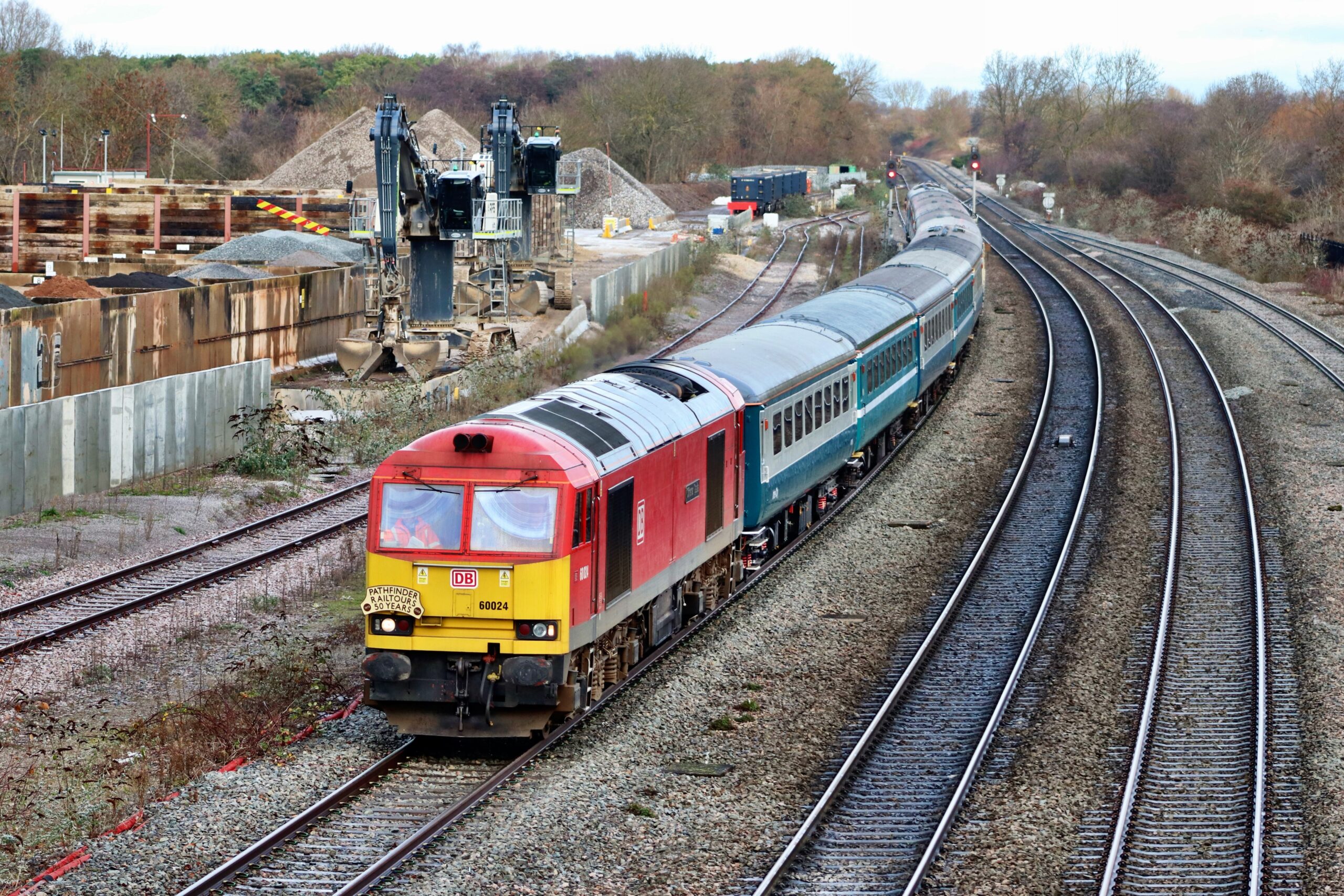
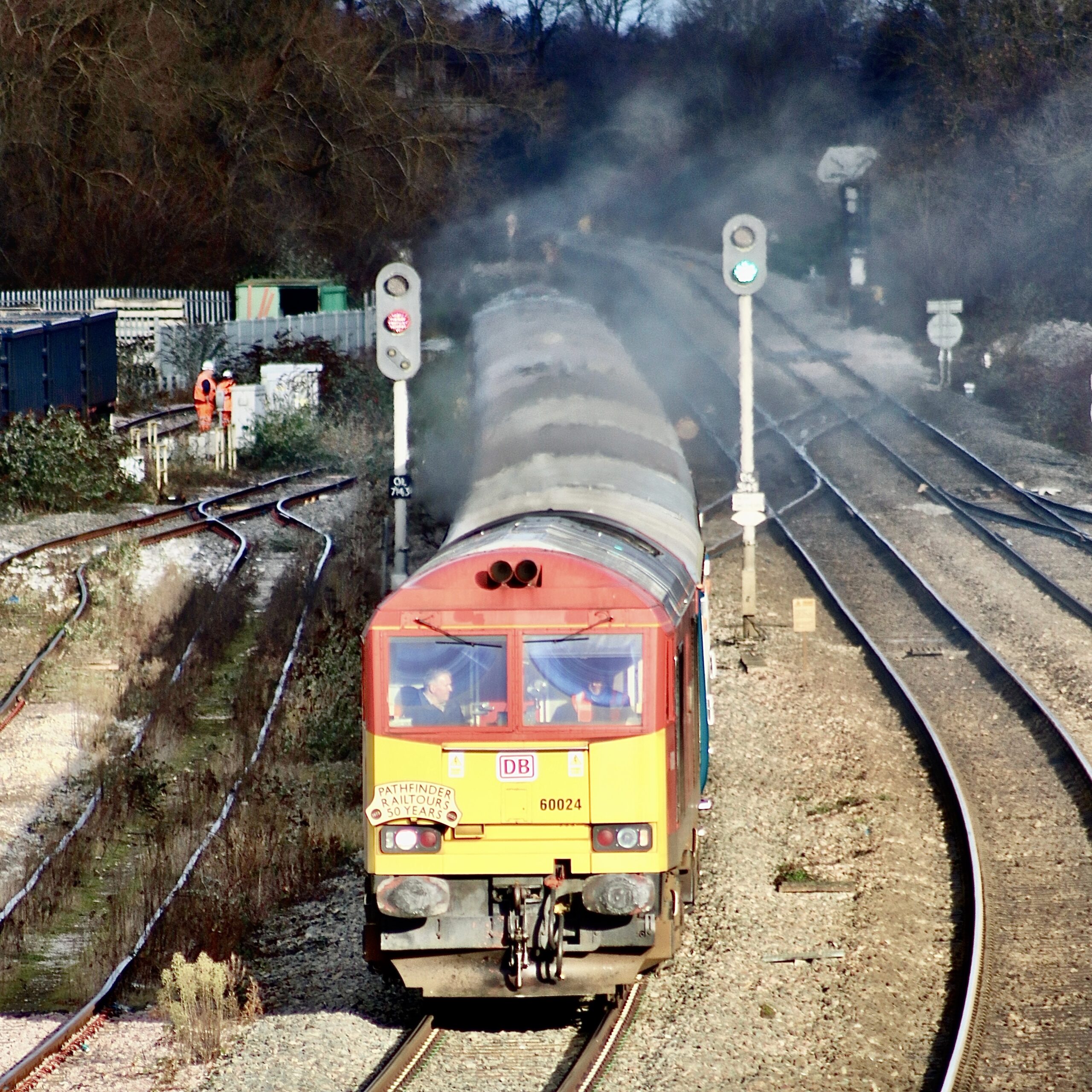
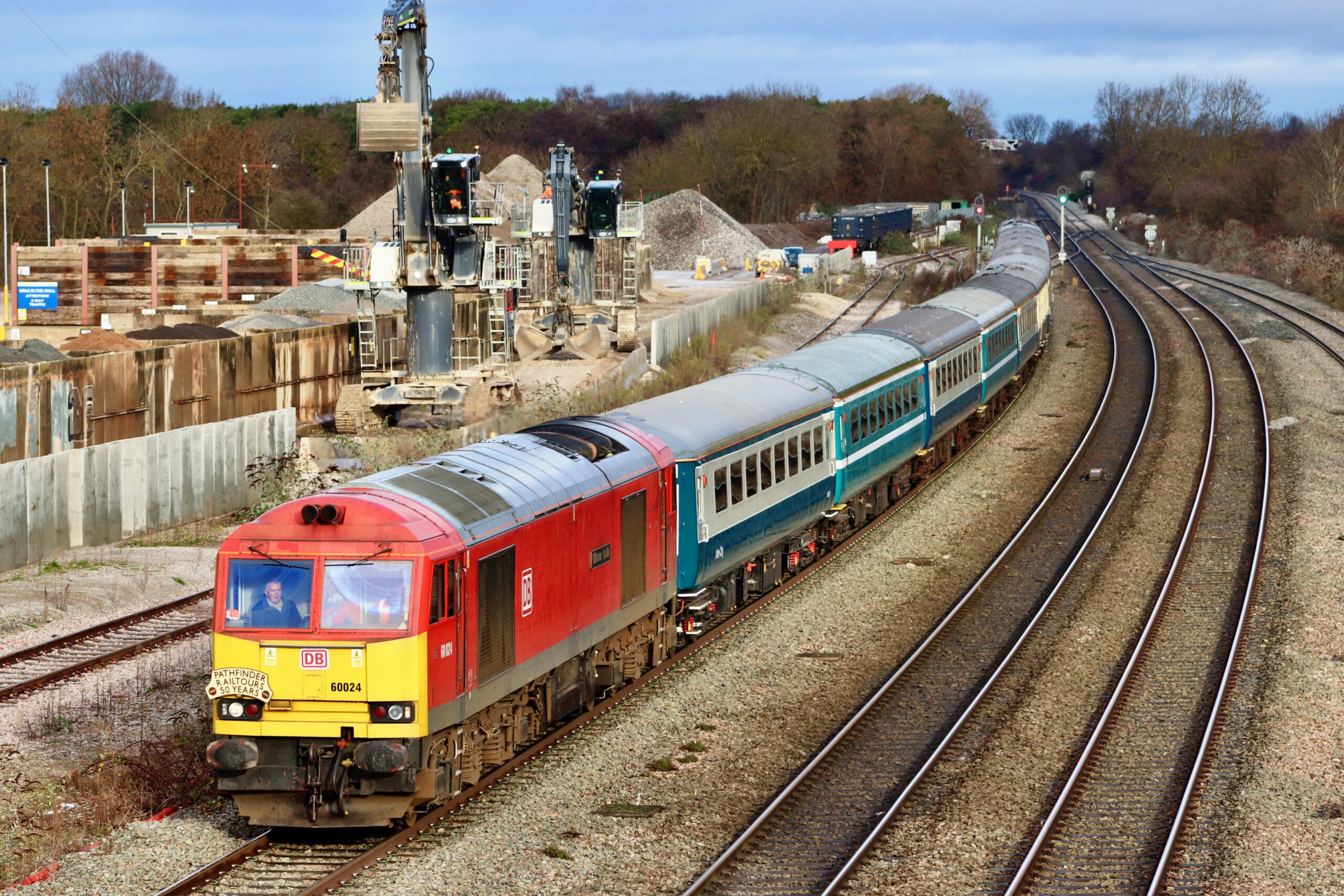
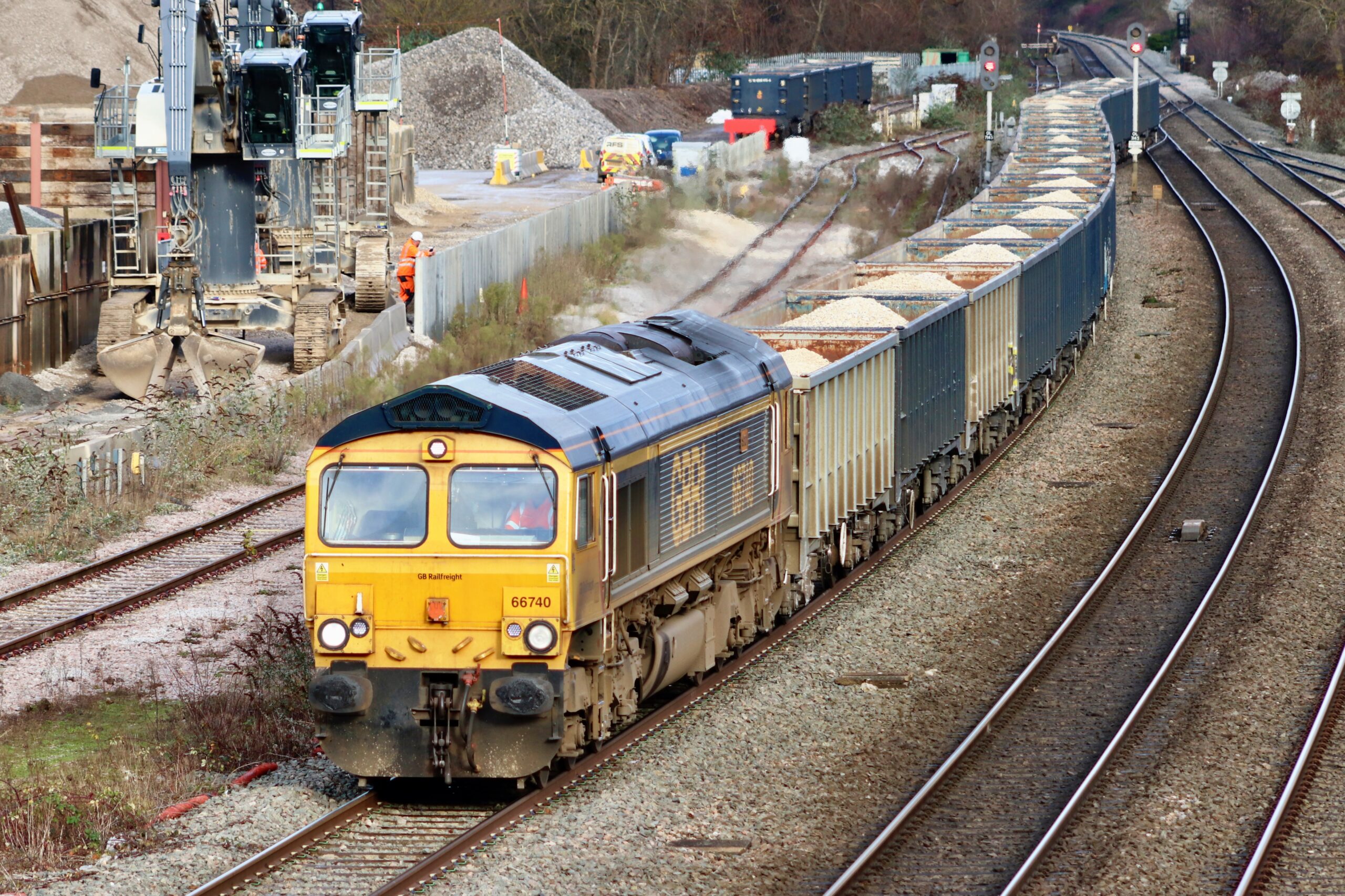
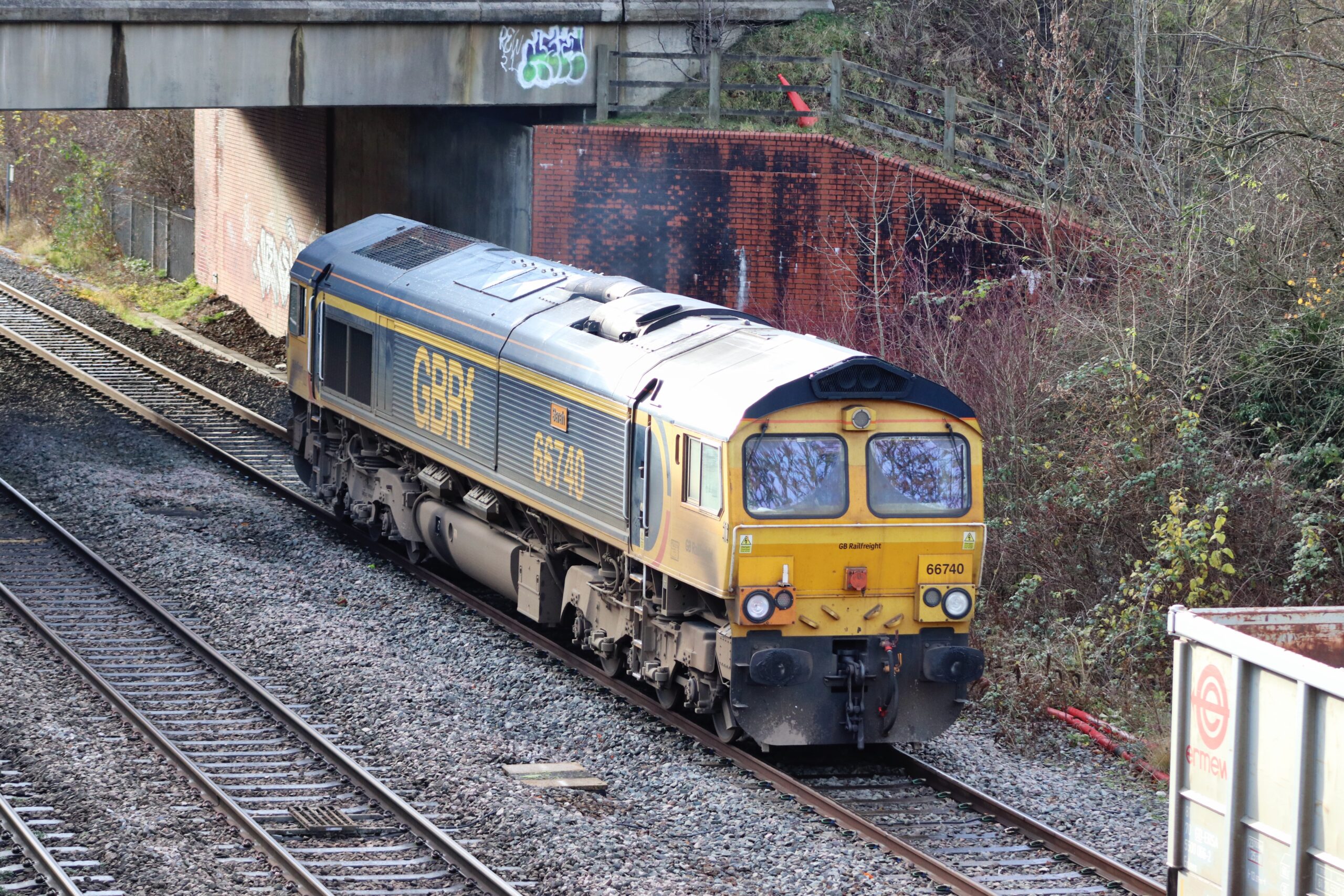
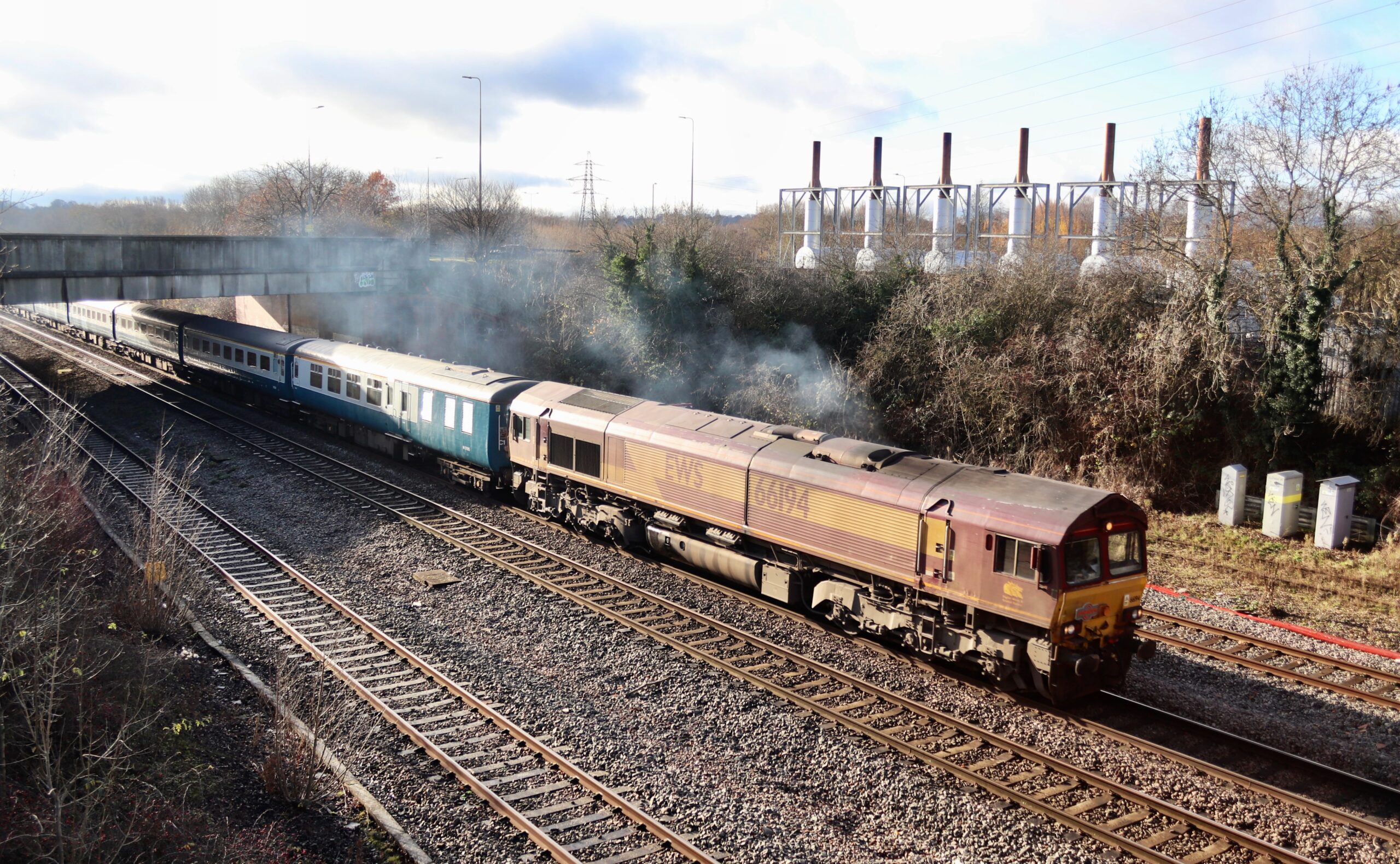
DB Cargo Class 60 No. 60024 hauling “The Festive Midland-Ian” 1Z60 0545 Gloucester to Banbury towards Banbury on the Down Goods Loop – 16/12/2023DB Cargo Class 60 No. 60024 hauling “The Festive Midland-Ian” 1Z60 0545 Gloucester to Banbury – 16/12/2023DB Cargo Class 60 No. 60024 hauling “The Festive Midland-Ian” 1Z60 0545 Gloucester to Banbury towards Banbury on the Down Goods Loop – 16/12/2023GBRf Class 66 No. 66740 ‘Sarah’ arrives with 6G34 02:59 HINDLOW GBRF to Banbury Reservoir Redland Aggregates – 16/12/2023GBRf Class 66 No. 66740 ‘Sarah’ prepares to run around her train; 6G34 02:59 HINDLOW GBRF to Banbury Reservoir Redland Aggregates – 16/12/2023Class 66 No. 66194 takes charge of the second leg of “The Festive Midland-Ian” 1Z61 1211 Banbury to Wolverhampton Walsall Street Steel Terminal – 16/12/2023
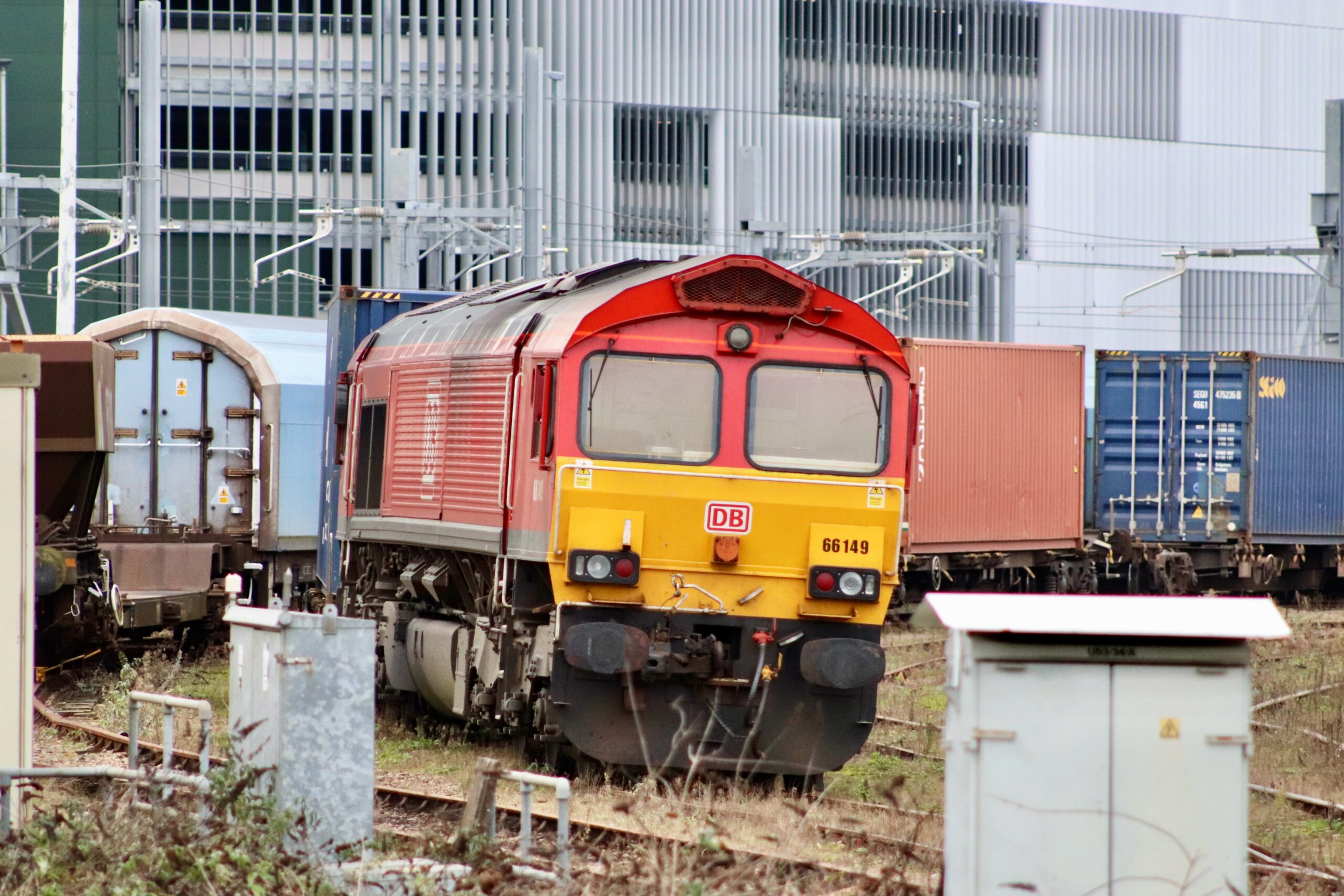
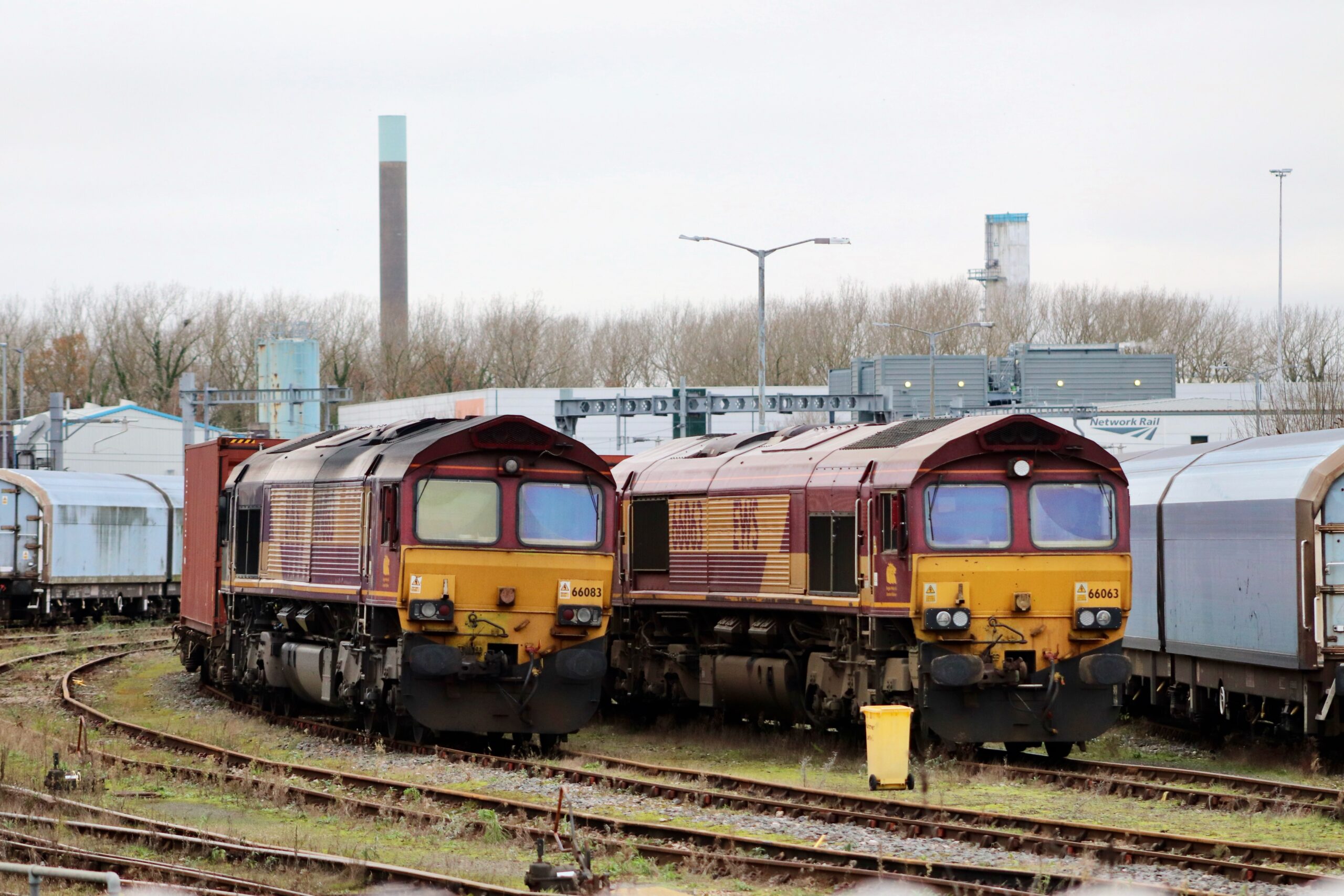
After seeing the Class 66 No. 66194 taking “The Festive Midland-Ian” back towards Wolverhampton, I opted to return home via Didcot in the hope that I could get a photo of special King Prince Charles Coronation liveried Class 66 No. 66023 which had been showing as being on Didcot Fuelling Point. On arrival at Didcot railway station, we were allowed up onto the platforms by Great Western Railway gateline staff, but unfortunately, the No. 66023 was nowhere to be seen. @smithy.377 later discovered the locomotive was inside a shed and therefore out of sight of our cameras. We were able to photograph a few other DBC Class 66 locomotives however.
In red DB Cargo livery Class 66 NO. 66149 in Didcot Yard – 16/12/2023Still carrying EWS livery, DB Cargo Class 66 locomotives No.’s 66083 and 66063 at Didcot – 16/12/2023
Video from Banbury on 16th December 2023 featuring DB Cargo Class 60 No. 60024 and Class 66 No. 66194 top and tail working “The Festive Midland-Ian” from Pathfinder Railtours; 1Z60 0545 Gloucester to Banbury & 1Z61 1211 Banbury to Wolverhampton Walsall Street Steel Terminal. Other trains featured include: 68012 (set AL04/ DVT 82309) – 1H27 08:19 Stourbridge Junction to Marylebone 221139 – 1M30 07:45 Bournemouth to Manchester Piccadilly 221137 – 1O08 07:25 Manchester Piccadilly to Bournemouth 70014 – 4O27 06:49 Crewe Basford Hall SSM to Southampton Marine Container Terminal 168108/168106 – 1R17 09:02 Marylebone to Birmingham Moor Street 168218/168328 – 1H28 09:13 Birmingham Moor Street to Marylebone 220031 – 1V83 06:23 Newcastle to Reading 168004 / 168xxx – 1H30 09:43 Birmingham Moor Street to Marylebone 168xxx/ 168107 – 1R19 09:32 Marylebone to Birmingham Moor Street 168xxx/ 168217 – 1R21 10:02 Marylebone to Birmingham Moor Street 66740 ‘Sarah’ – 6G34 02:59 HINDLOW GBRF to Banbury Reservoir Redland Aggregates 168001 ‘Adrian Shooter’/168xxx – 1H33 10:43 Birmingham Moor Street to Marylebone 220027 – 1O12 09:25 Manchester Piccadilly to Bournemouth 220033 – 1M38 09:45 Bournemouth to Manchester Piccadilly 168322/168215 – 1R25 11:02 Marylebone to Birmingham Moor Street
Engineering works at Middle Stream Bridge near Wool on Sunday 17th December meant there were no trains running in the area. Yoshi and I had a little “family” trip out to Weymouth and I grabbed a couple of photographs of track machines resting between duties on our way home.
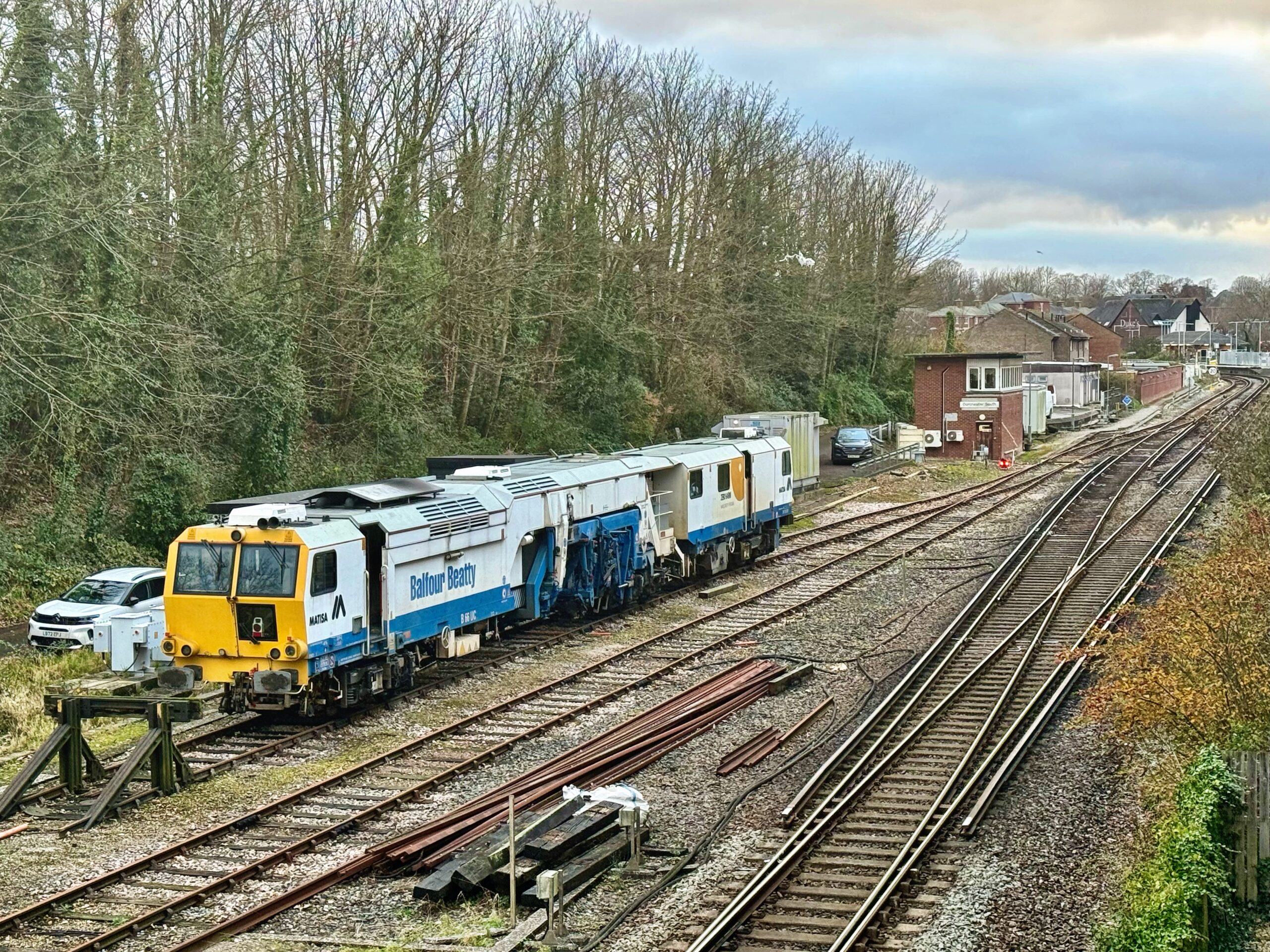
Balfour Beatty Matisa B66UC Tamper No. DR75501 in the sidings at Dorchester South prior to working the following days 6Q66 05:00 Dorchester Junction to Eastleigh East Yard – 17/12/2023
A tamping machine or ballast tamper, informally simply a tamper, is a self-propelled, rail-mounted machine used to pack (or tamp) the track ballast under railway tracks to make the tracks and roadbed more durable and level. Prior to the introduction of mechanical tampers, this task was done by manual labour with the help of beaters. As well as being faster, more accurate, more efficient and less labour-intensive, tamping machines are essential for the use of concrete sleepers since they are too heavy to be lifted by hand.
At its most basic, a tamping machine only packs the ballast. Some modern machines, sometimes known as tamper-liners or tamping and lining machines, also correct the alignment of the rails to make them parallel and level, in order to achieve a more comfortable ride for passengers and freight and to reduce the mechanical strain applied to the rails by passing trains. This is done by finding places where the sleepers have sunk from the weight of the passing trains or frost action, causing the track to sag.
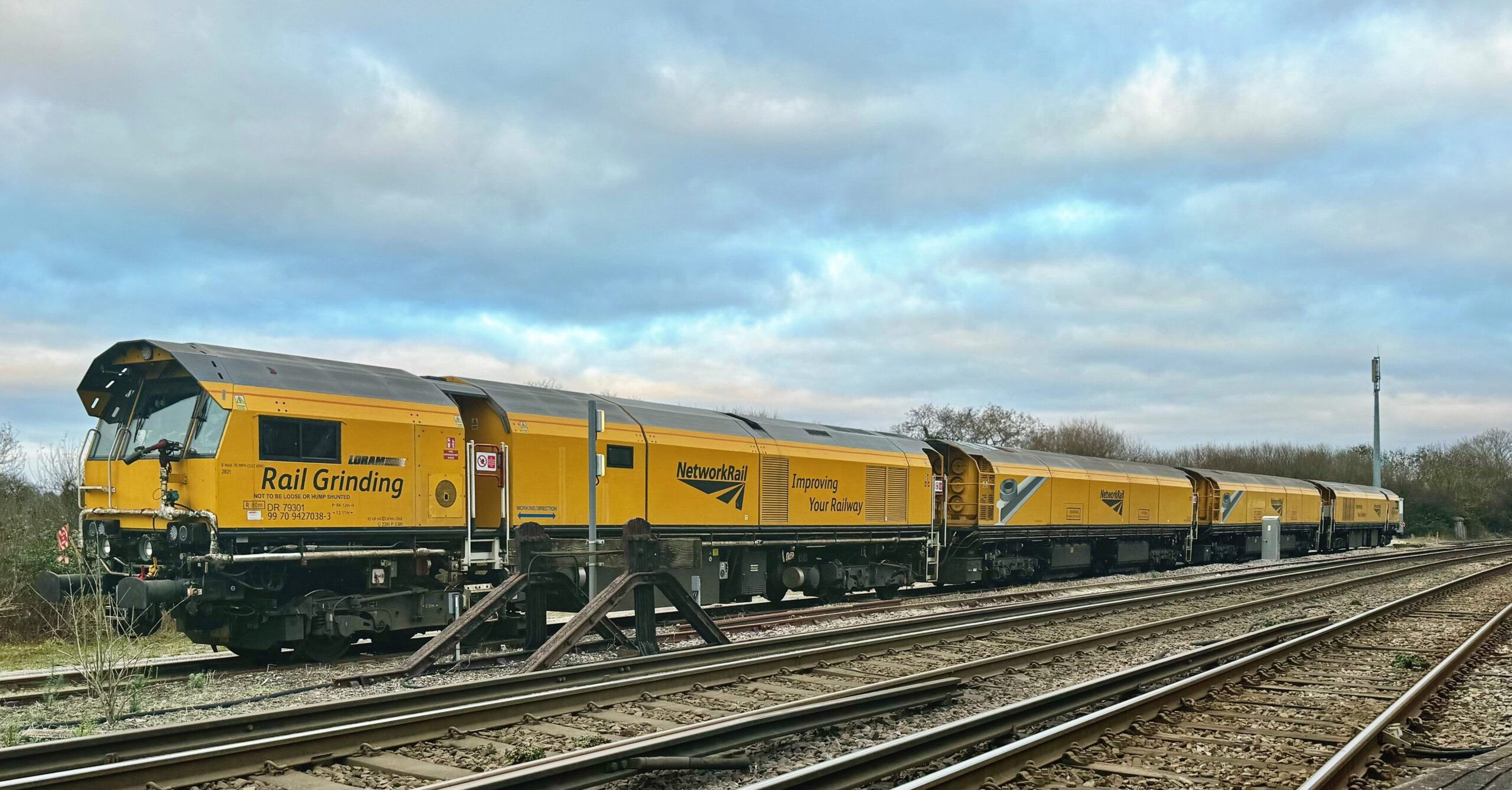
The B 66 UC is a high-performance universal continuous action tamping machine designed for normal and high-speed lines. In addition to the plain line, it can handle the heaviest switches and crossings, especially those with concrete sleepers. This machine has a tamping shuttle fitted with four tamping units and a lifting and slewing clamp. In addition to these tools, telescopic diverging track lifting devices can be used when handling heavy switches and crossings. The very responsive shuttle allows a substantial output on plain line despite the fact that this is a single-head machine. The longitudinal stroke of the tamping units is long enough to position the units in a way to easily and quickly tamp Y shaped sleepers. Located in the centre of the machine, the tamping cabin provides an excellent visibility on the tools and the track. Thanks to the machine’s user-friendliness and its ergonomic controls, only two operators are needed to operate the B 66 UC to its full potential. Loram C44 Rail Grinding Machine No. DR79301 in Wool Sidings. It will depart for Poole on 19/12/2023 as 4Q01 23:44 Wool MOD Siding Freightliner Heavy Haul to Poole – 17/12/2023
A railgrinder is a permanent way maintenance train used to restore the profile and remove irregularities from worn tracks to extend tracklife and to improve the ride of trains using it.
The C44 Series Rail Grinder is designed with advanced technology features that also meets stringent international standards, weights and clearances. The C44 Series complies with the W6A clearance diagram and the axle weights of international commuter lines and freight rail applications.
Loram’s C44 rail grinder delivers high-efficiency re-profiling of the railhead, removing or reducing rail corrugations, corrosion, joint mismatches and other railhead surface irregularities with industry-leading productivity.
Monday 18th December and with all lines re-opened, it was the turn of the monthly Colas test train from Derby RTC to Eastleigh East Yard via Weymouth running as 1Q51 1115 Derby R.T.C.(Network Rail) to Eastleigh East Yard employing the usual traction of GBRf Class 73 locomotives. This time it was the turn of No.’s 73964 ‘Jeanette’ and 73962 ‘Dick Mabbutt’.
GBRf Class 73’s No.’s 73964 ‘Jeanette’ and 73962 ‘Dick Mabbutt’ passing through Hamworthy working 1Q51 11:15 Derby RTC Serco to Eastleigh East Yard – 18/12/2023
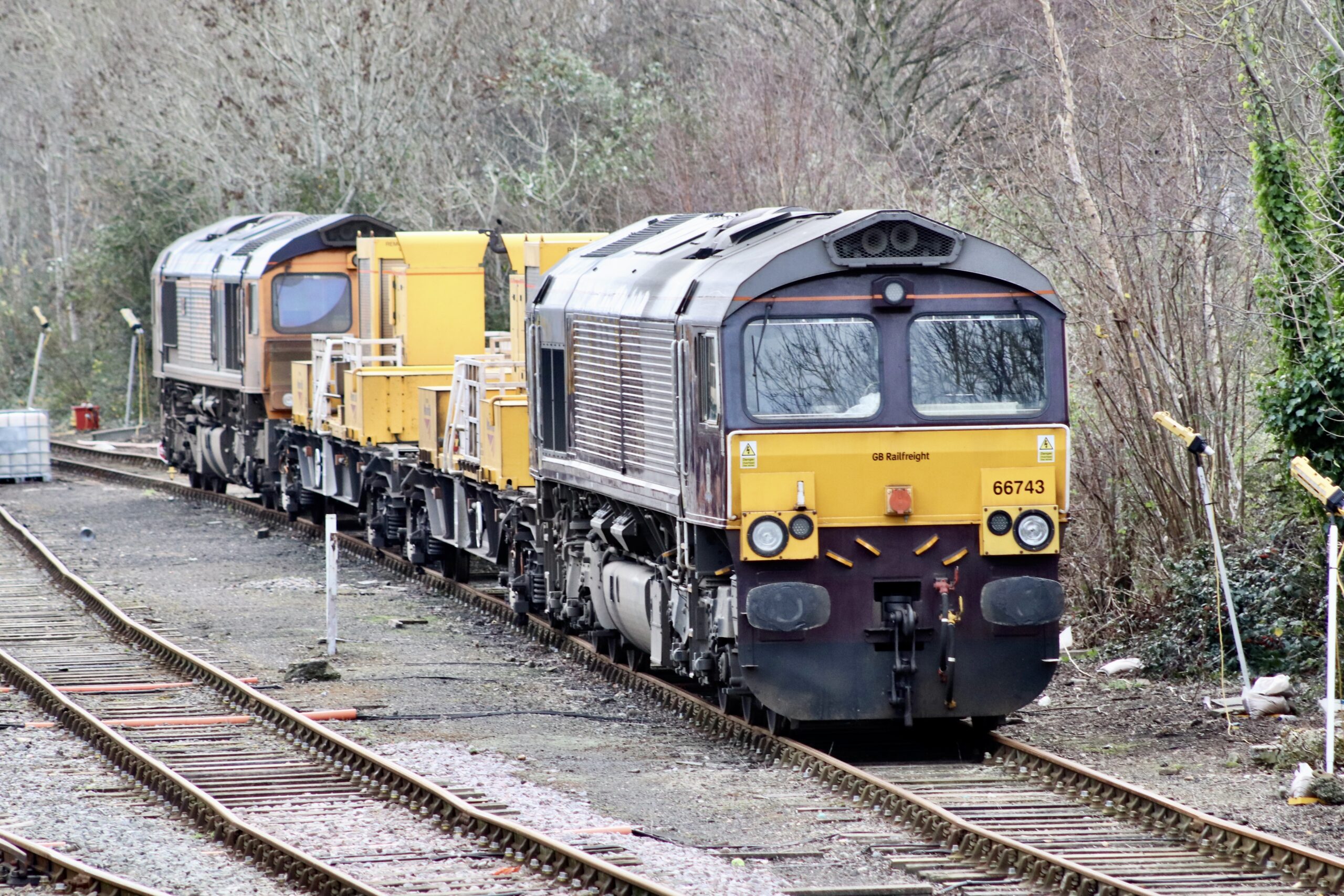
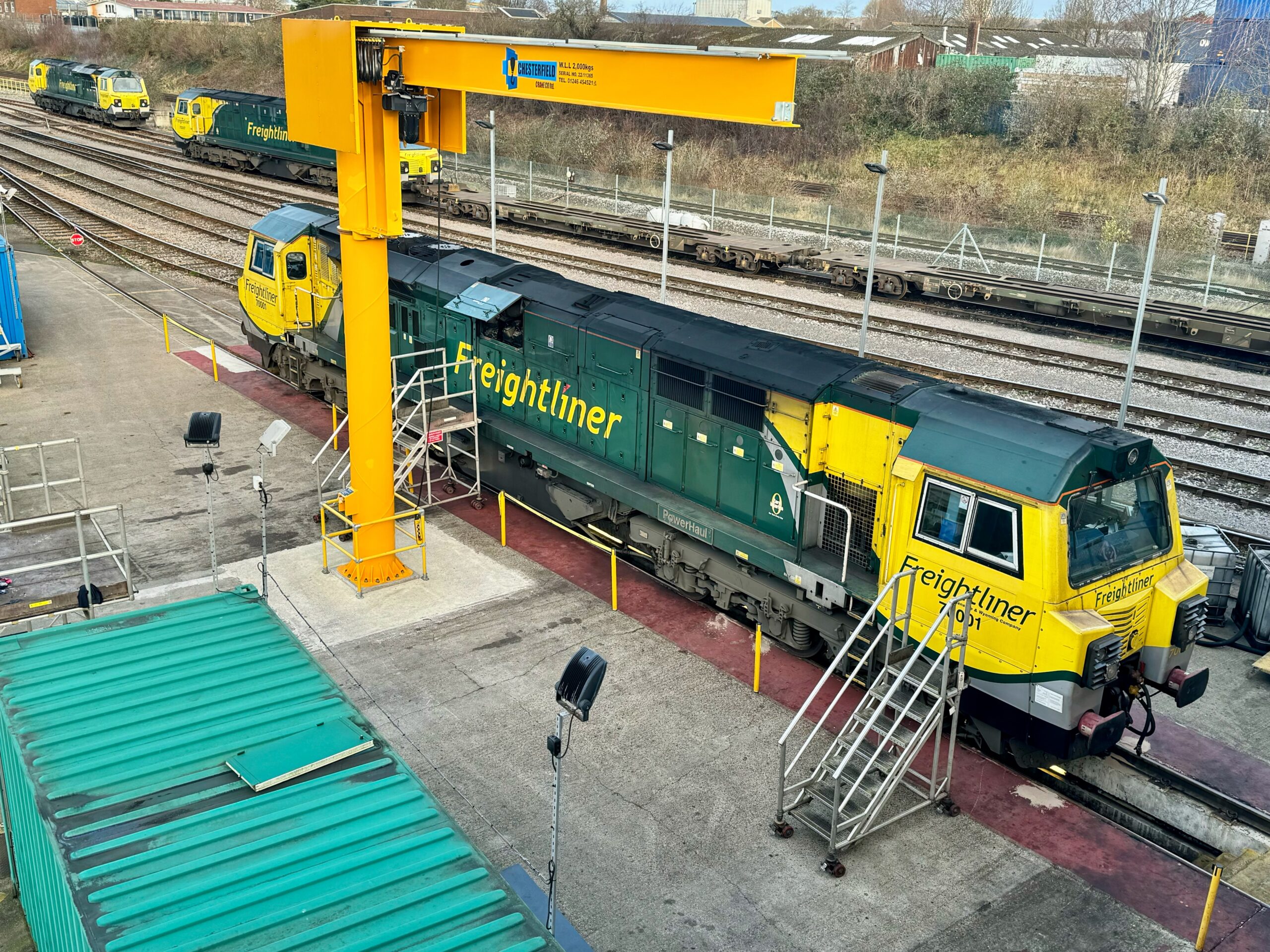
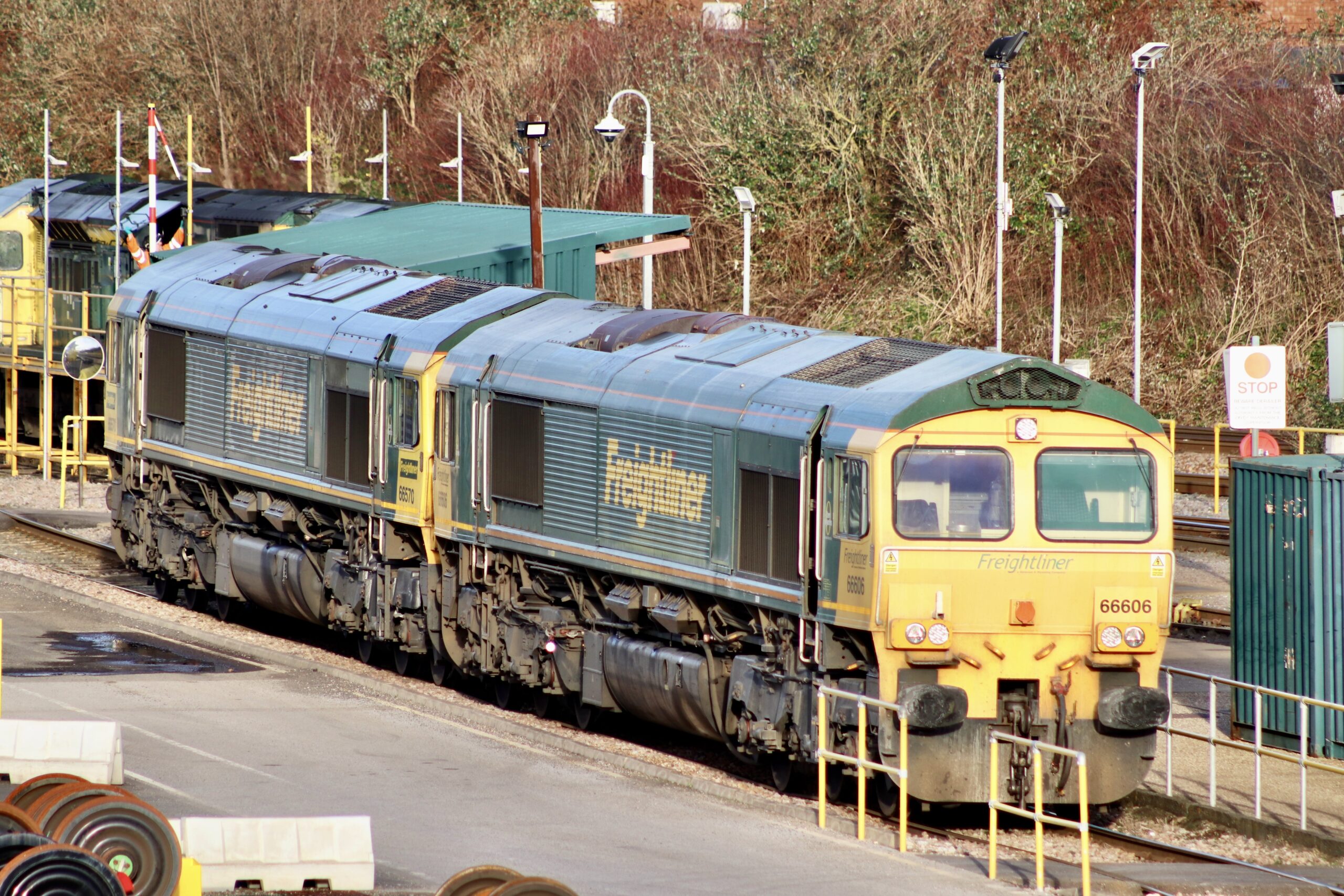
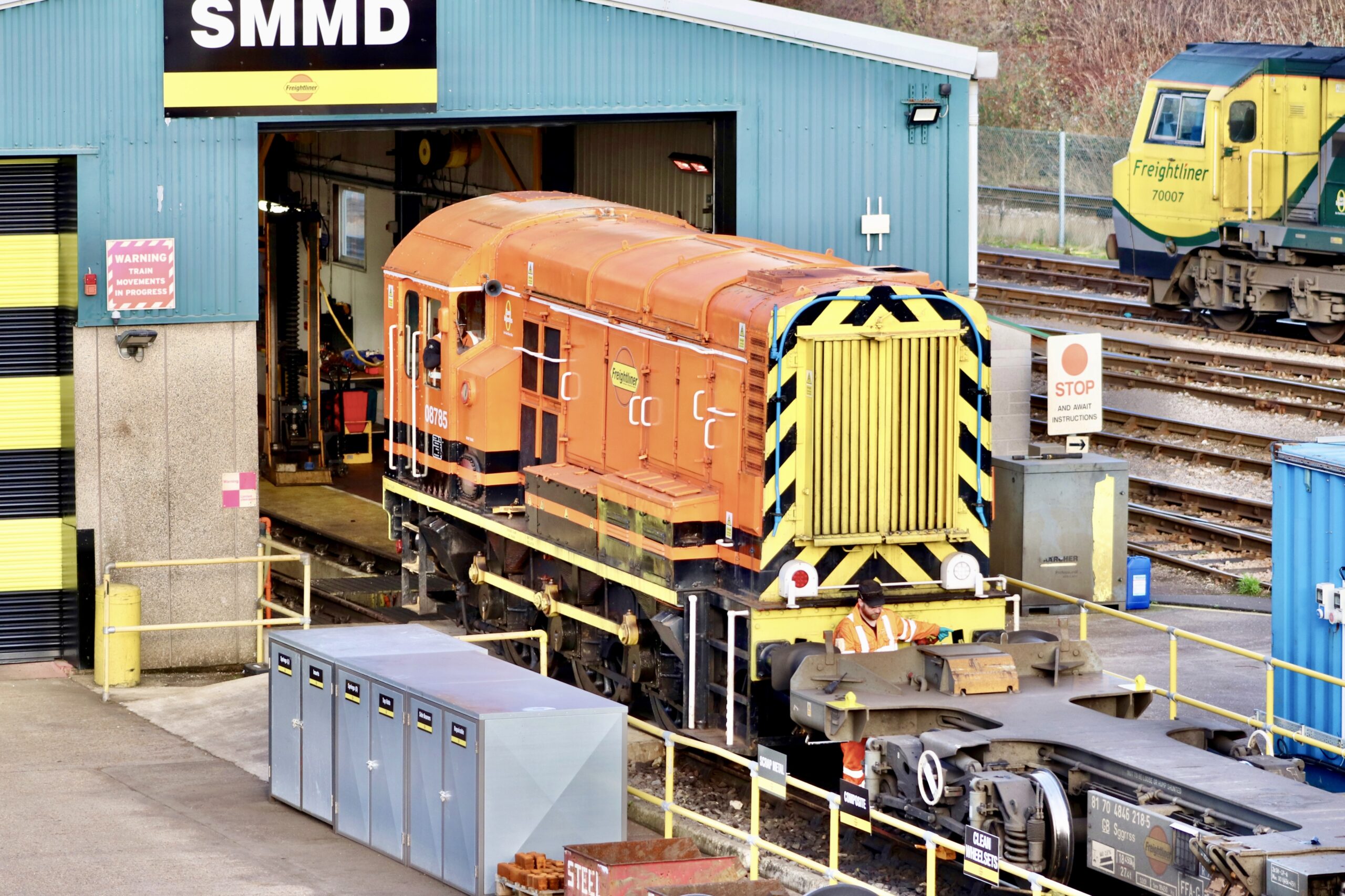
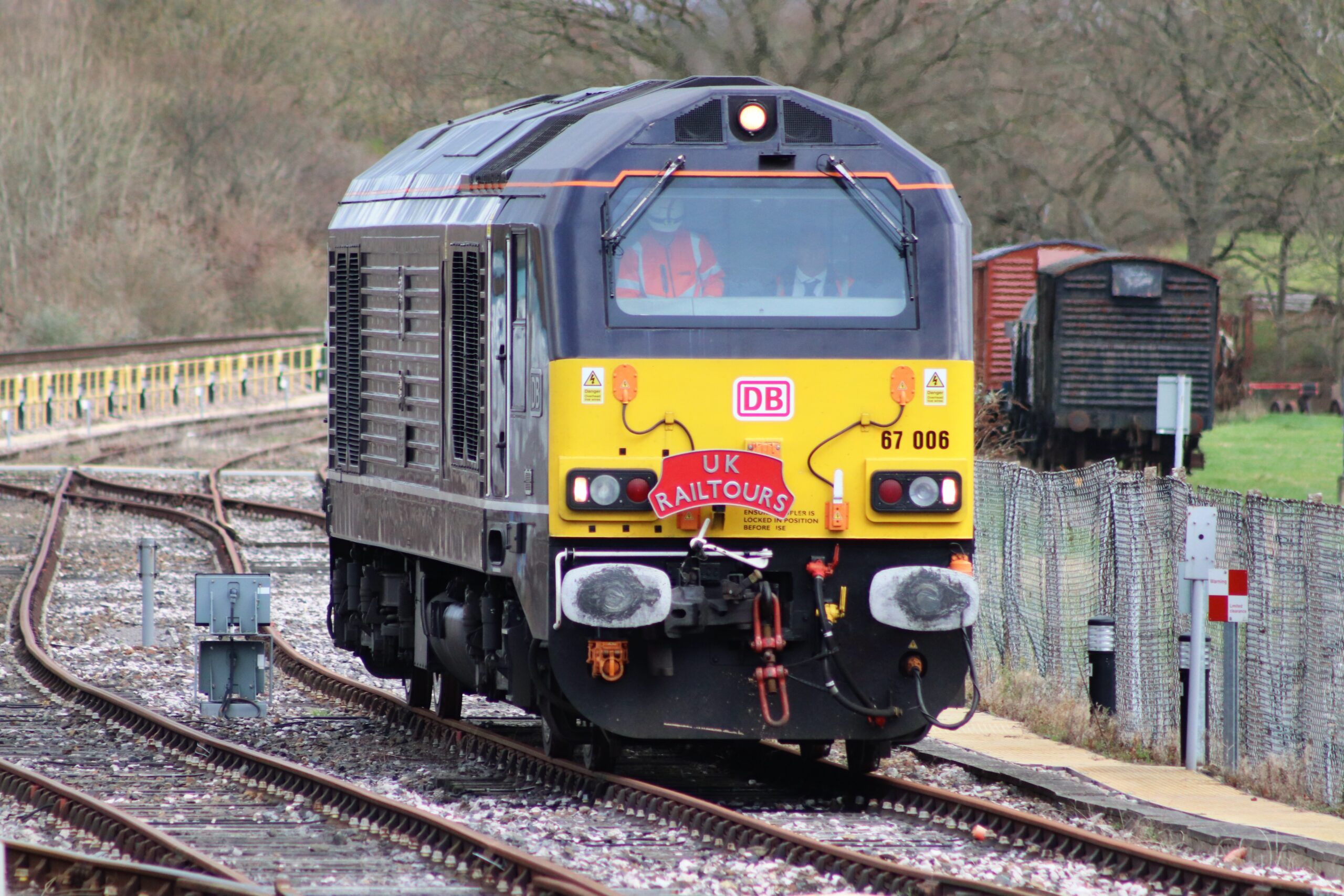
Another day out to see a railtour took place on Saturday 23rd December, this time closer to home as DB Cargo Class 67 No. 67006 ‘Royal Sovereign’ was in charge of UK Railtours “Carols At Sherborne Abbey” 1Z15 0715 Peterborough to Yeovil Jn Heritage Platform. No. 67006 is one of two class members painted in a special Royal Claret livery and as such would be primarily tasked with working the Royal Train. However, the locomotive is often used for special charter trains and other occasional passenger services when not fulfilling her Royal duties. We took a roundabout route to see the railtour, taking in Totton Yard so I could finally get a clear photograph of GBRf Class 66 No. 66743 in Belmond Royal Scotsman livery as it is was still being employed on the SITT along with No. 66772 ‘Maria’. I also popped in on Freightliner Southampton Maritime and Eastleigh (which admittedly was rather quiet!)
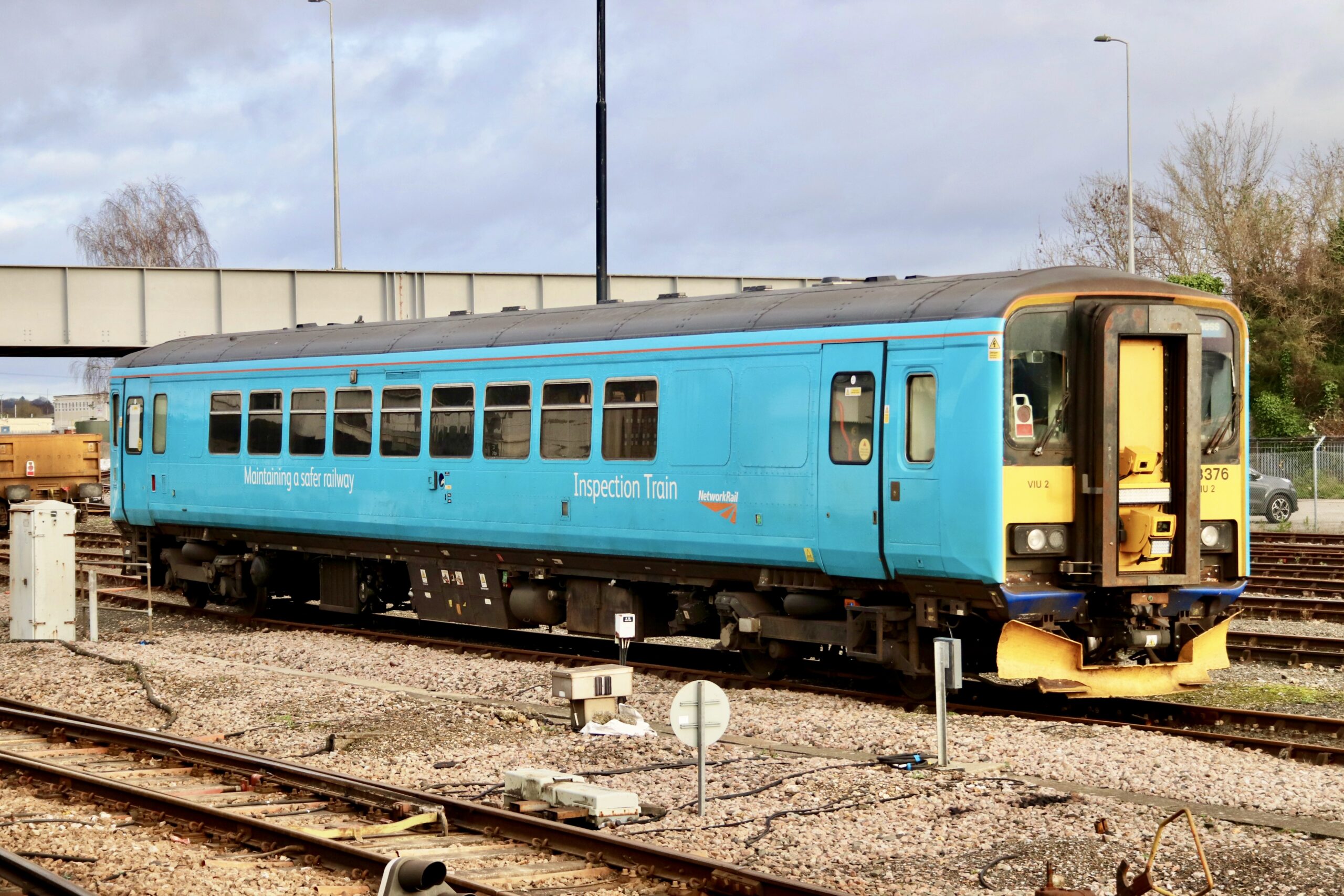
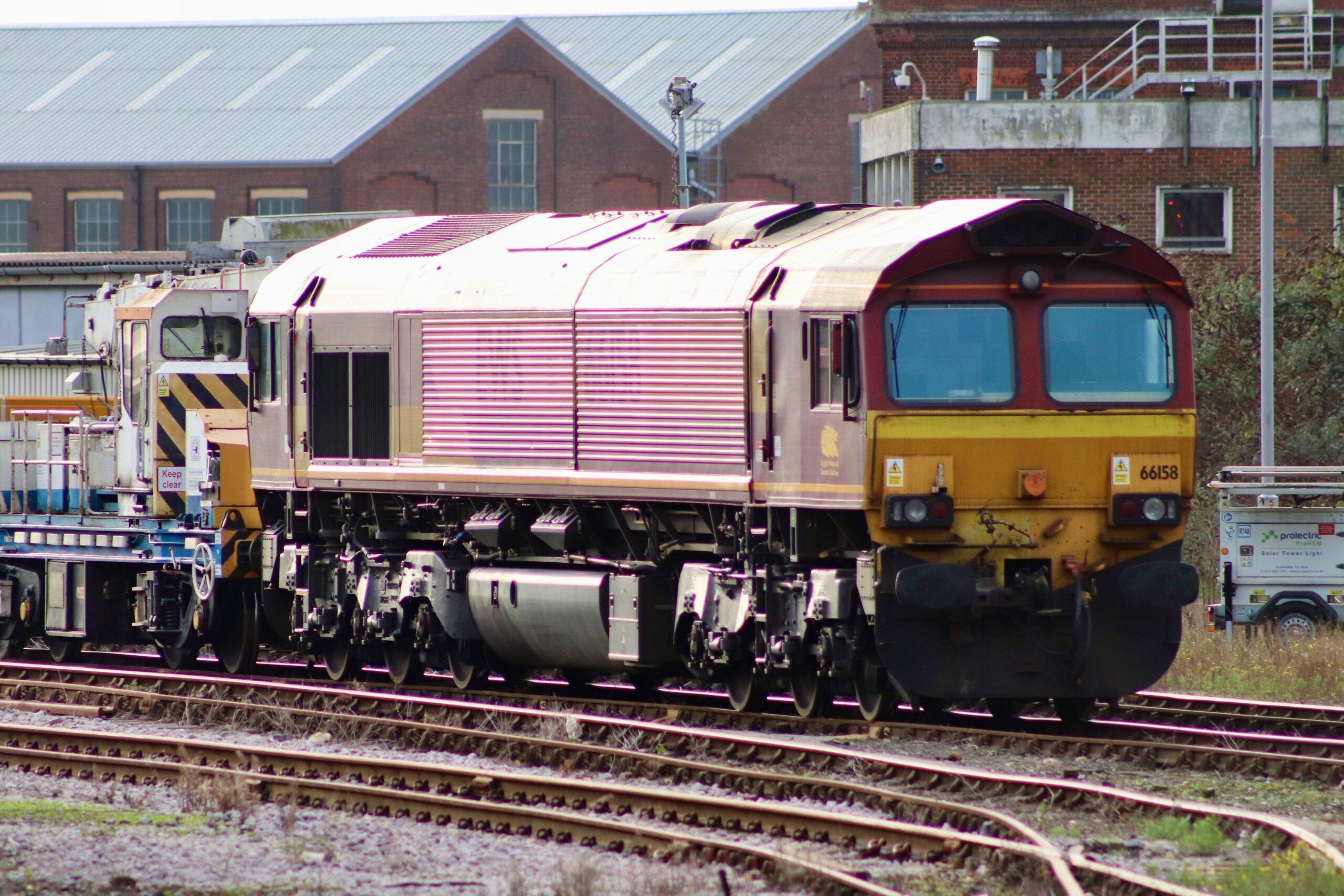
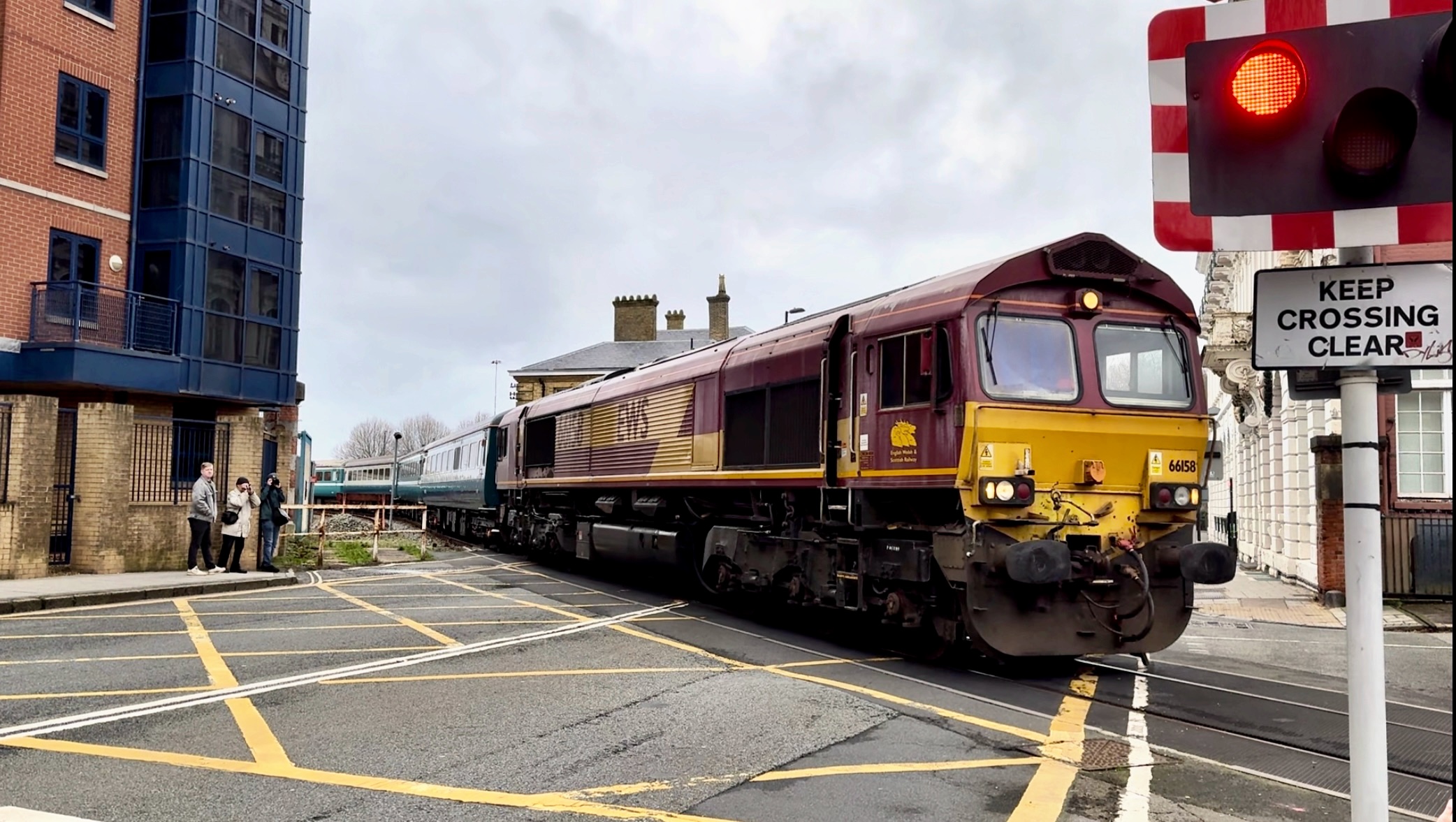
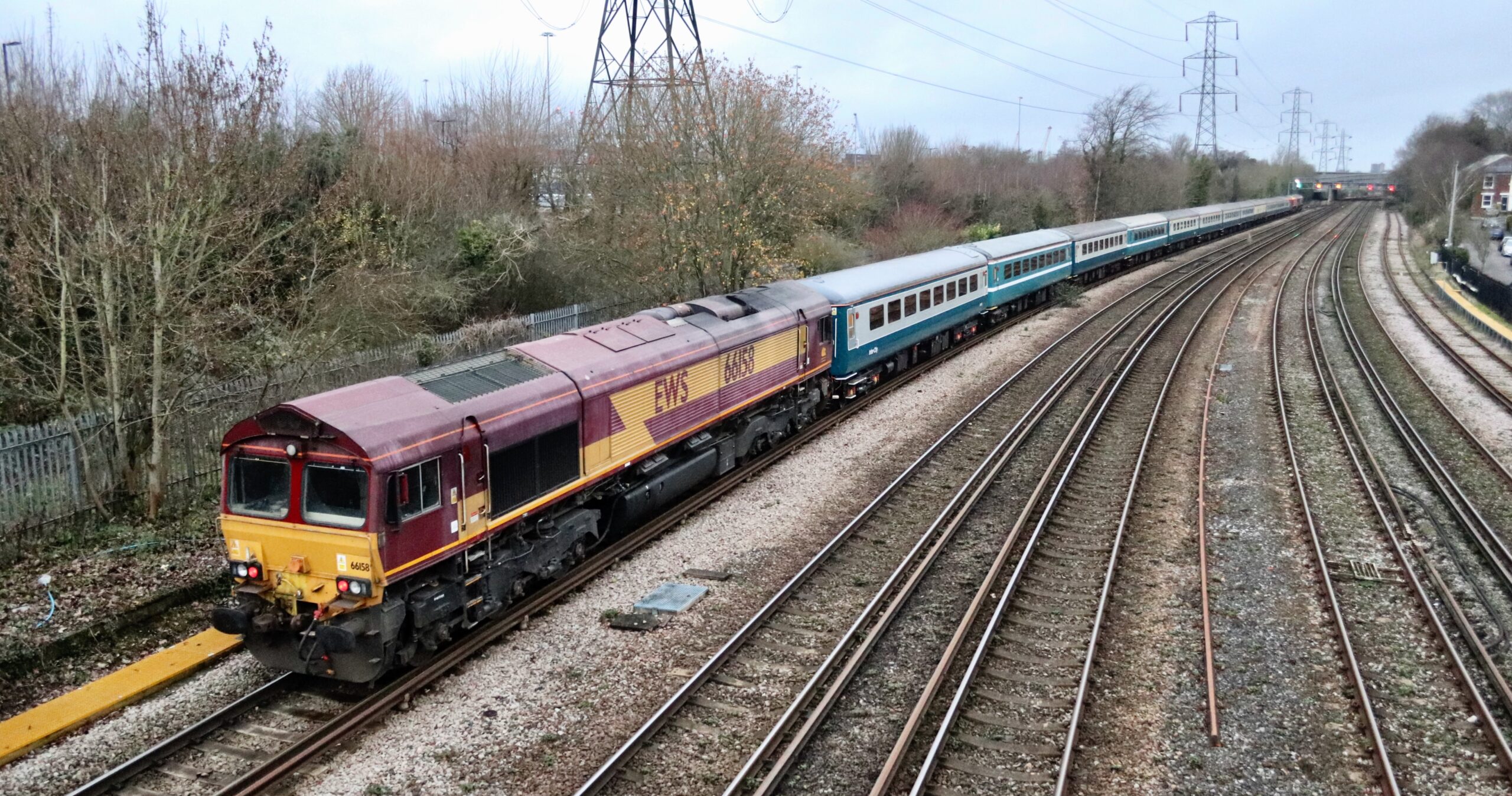
GBRf Class 66 No. 66743 at Totton Yard – 23/12/2023GBRf Class 66 No.66772 ‘Maria’ on the rear of the SITT at Totton Yard – 23/12/2023GBRf Class 66 No. 66743 and No.66772 ‘Maria’ in Totton Yard on the SITT. The train was scheduled to head to Eastleigh East Yard later that evening where it would remain over the Christmas period – 23/12/2023Freightliner Class 70 No. 70001 at Southampton Maritime – 23/12/2023FL Class 66 No.’s 66606 and 66570 at Southampton Maritime – 23/12/2023Class 08 diesel shunter No. 08785 at Southampton Maritime – 23/12/2023A trio of FL Class 70’s at Southampton Maritime; 70007, 70002 and 70005 – 23/12/2023Class 153 Video Inspection Unit (VIU2) No. 153376 at Eastleigh – 23/12/2023DB Cargo Class 66 No. 66158 on a DB Infrastructure Train destined for Abbey Street Junction for work over the Christmas period at Eastleigh – 23/12/2023
Always looking for a new photographic location, I had time to scout out the western portal of Gillingham tunnel. After parking up at the side of the road above the tunnel, Yoshi and I made our way along a public footpath through fields which are adjacent to the railway track. A trio of sheep were not too sure about our arrival and took off to the opposite corner to watch us from afar. Yoshi, thankfully, showed little interest in the ovine beasts and settled down at my feet as we waited for the Class 67 to turn up hauling its train.
Class 67 No. 67006 ‘Royal Sovereign’ emerges from Gillingham Tunnel hauling 1Z15 0715 Peterborough to Yeovil Jn Heritage Platform – 23/12/2023
After seeing the train at Gillingham tunnel, I popped into Yeovil Junction in time to see the locomotive running around her train which was being serviced after dropping off the passengers in Sherborne for the festive carol service at the Abbey the tour was named after.
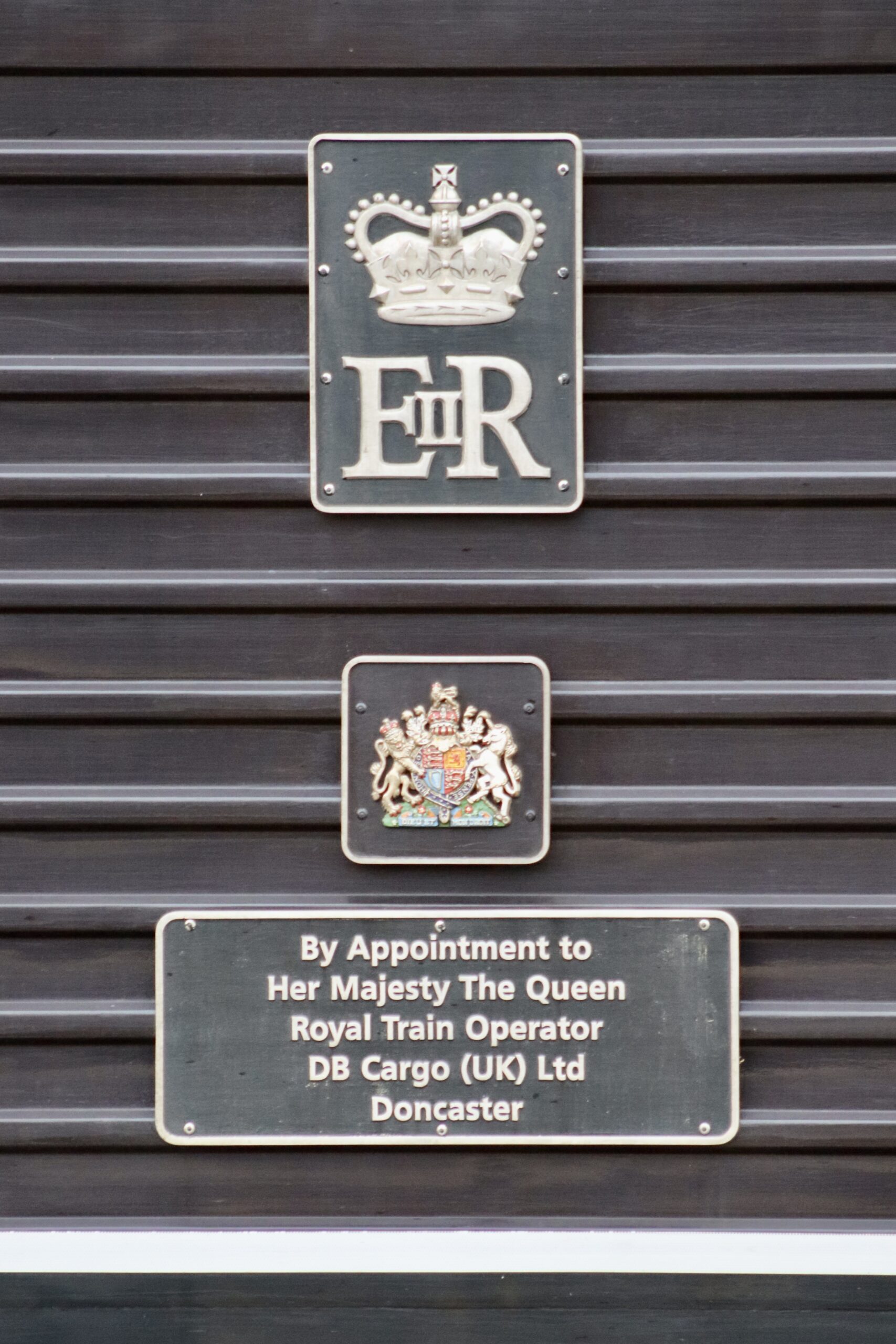
Class 67 No. 67006 ‘Royal Sovereign’ runs around its train at Yeovil Junction – 23/12/2023Crests applied to Class 67 No. 67006 ‘Royal Sovereign’ – 23/12/2023Class 67 No. 67006 ‘Royal Sovereign’ reversing back onto the coaching stock to form the return leg of the “Carols At Sherborne Abbey” railtour – 23/12/2023Class 67 No. 67006 ‘Royal Sovereign’ at Yeovil Junction whilst the coaching stock employed on the “Carols At Sherborne Abbey” railtour is serviced – 23/12/2023
Video of 67006 ‘Royal Sovereign’ working “Carols At Sherborne Abbey” 1Z15 0715 Peterborough to Yeovil Jn Heritage Platform Also includes the following passing trains: Gillingham Tunnel: 159020/159013 – 1L25 1021 London Waterloo to Exeter St Davids 159012/159105 – 1L44 1125 Exeter St Davids to London Waterloo Yeovil Junction: 159003/159015 1L29 1120 London Waterloo to Exeter St Davids
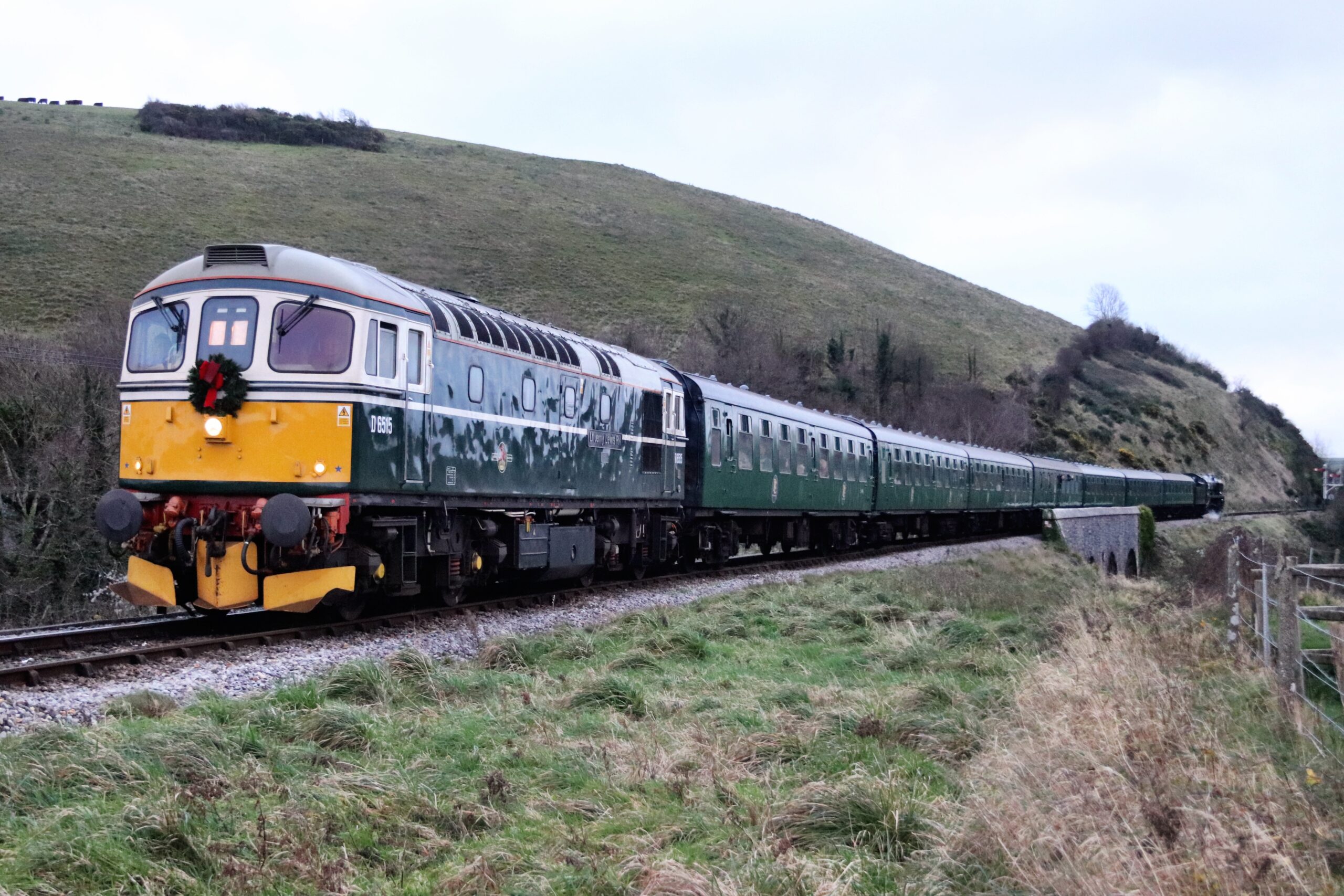
On my way home from Yeovil, I made another slight detour to take a look at the Swanage Railway’s “Polar Express” operation, this years seasonal offering from the Purbeck Heritage line, which I had so far not managed to see in 2023. “Polar Express” trains started running on 17th December and continued through to 30th December. With failing light which rendered photography of moving trains difficult, I waited for the late running 1445 trip from Swanage to show at Corfe Castle with resident Class 33 No. 33012 (D6515) ‘Lt Jenny Lewis RN’ hauling the outward run and Southern Railway 4-6-2 West Country Class No. 34028 ‘Eddystone’ with “Polar Express” emblazoned on her tender, working the return. I followed the train down to Swanage and as darkness fell this only enhanced the colourful lights within the carriages.
Class 33 No. 33012 (D6515) ‘Lt Jenny Lewis RN’ heads up the 1445 “Polar Express” service from Swanage – 23/12/2023SR 4-6-2 West Country Class No. 34028 ‘Eddystone’ heads towards Swanage after stopping at The North Pole (Norden) with a “Polar Express” train – 23/12/2023Class 33 No. 33111 and LSWR 4-4-0 T9 Class No. 30120 in the sidings at Swanage while Class 33 No. 33012 (D6515) ‘Lt Jenny Lewis RN’ waits with a “Polar Express” service in the station – 23/12/2023Class 33 No. 33111 at Swanage – 23/12/2023LSWR 4-4-0 T9 Class No. 30120 at Swanage – 23/12/2023Class 33 No. 33012 (D6515) ‘Lt Jenny Lewis RN’ awaits departure of the 1645 “Polar Express” service from Swanage – 23/12/2023Darkness falls on Class 33 No. 33012 (D6515) ‘Lt Jenny Lewis RN’ as she awaits departure of the 1645 “Polar Express” service from Swanage – 23/12/2023
Swanage Railway’s “Polar Express” – 23/12/2023
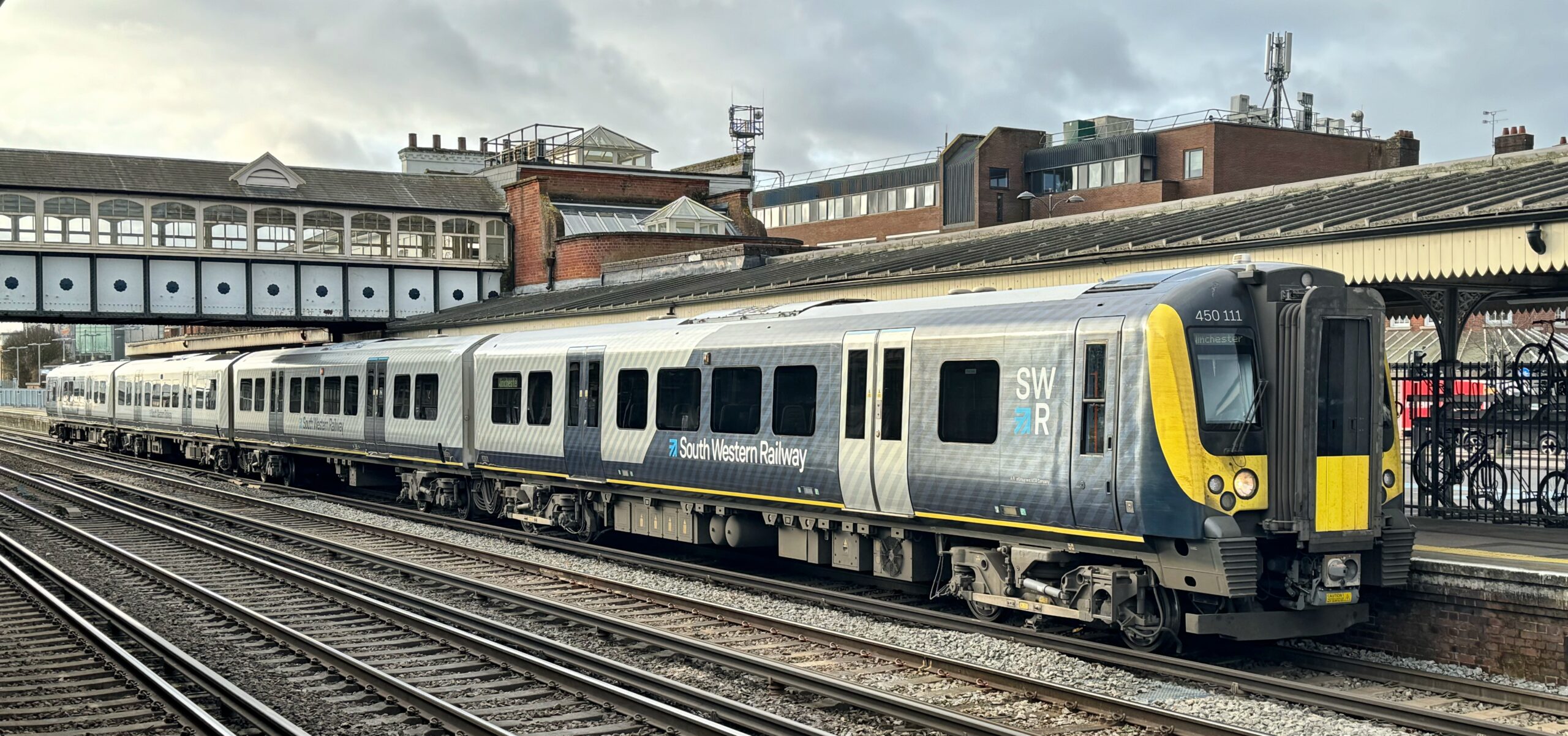
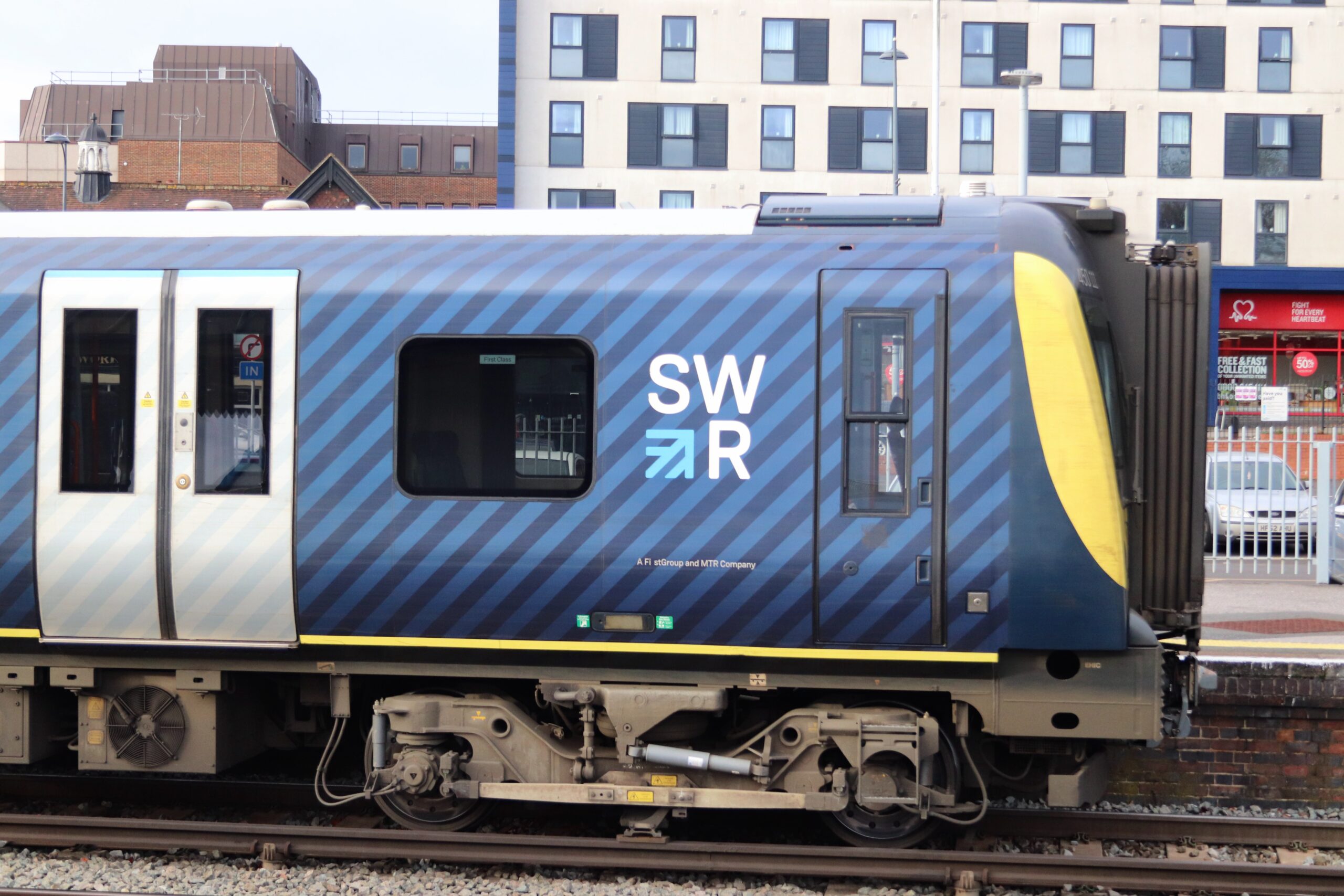
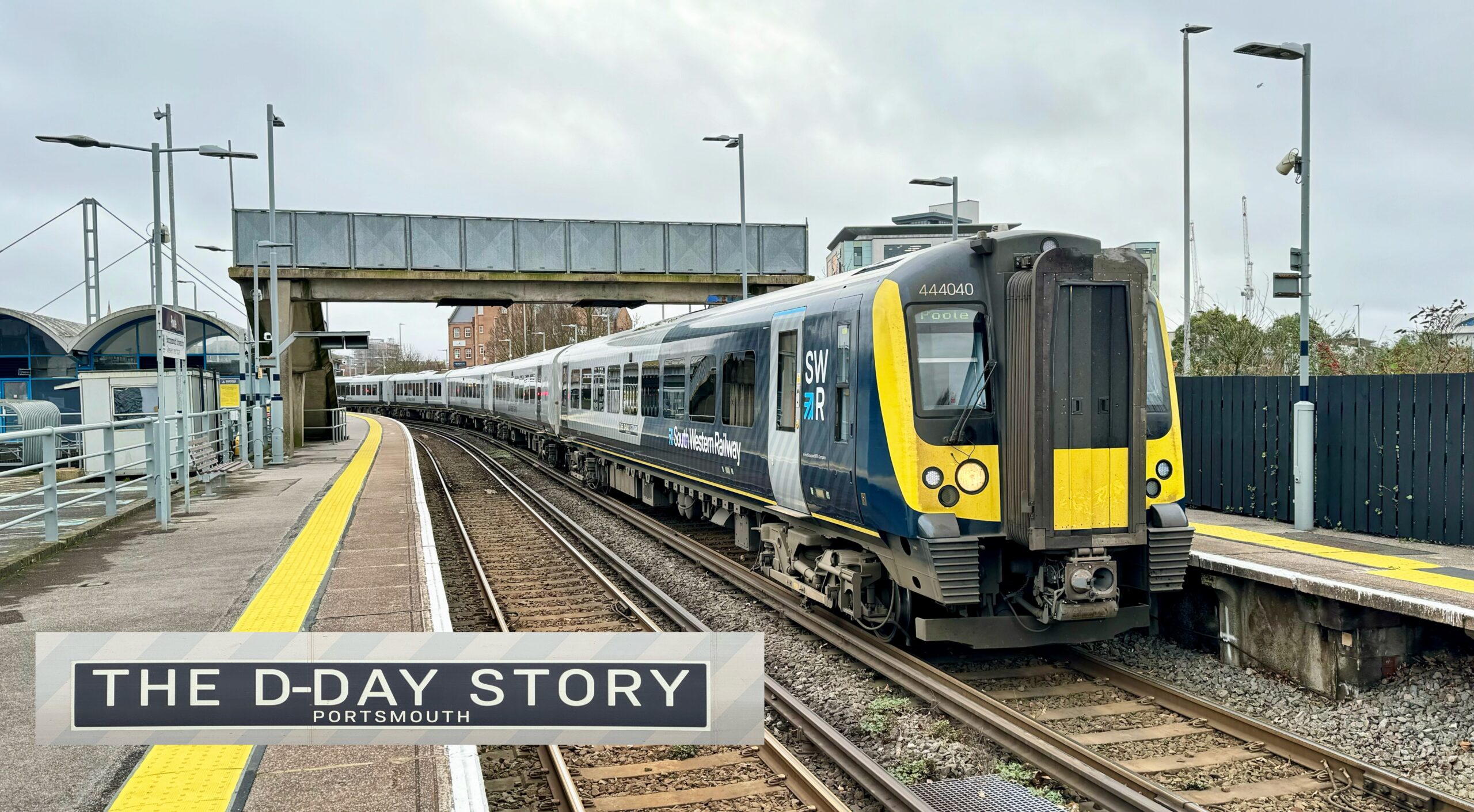
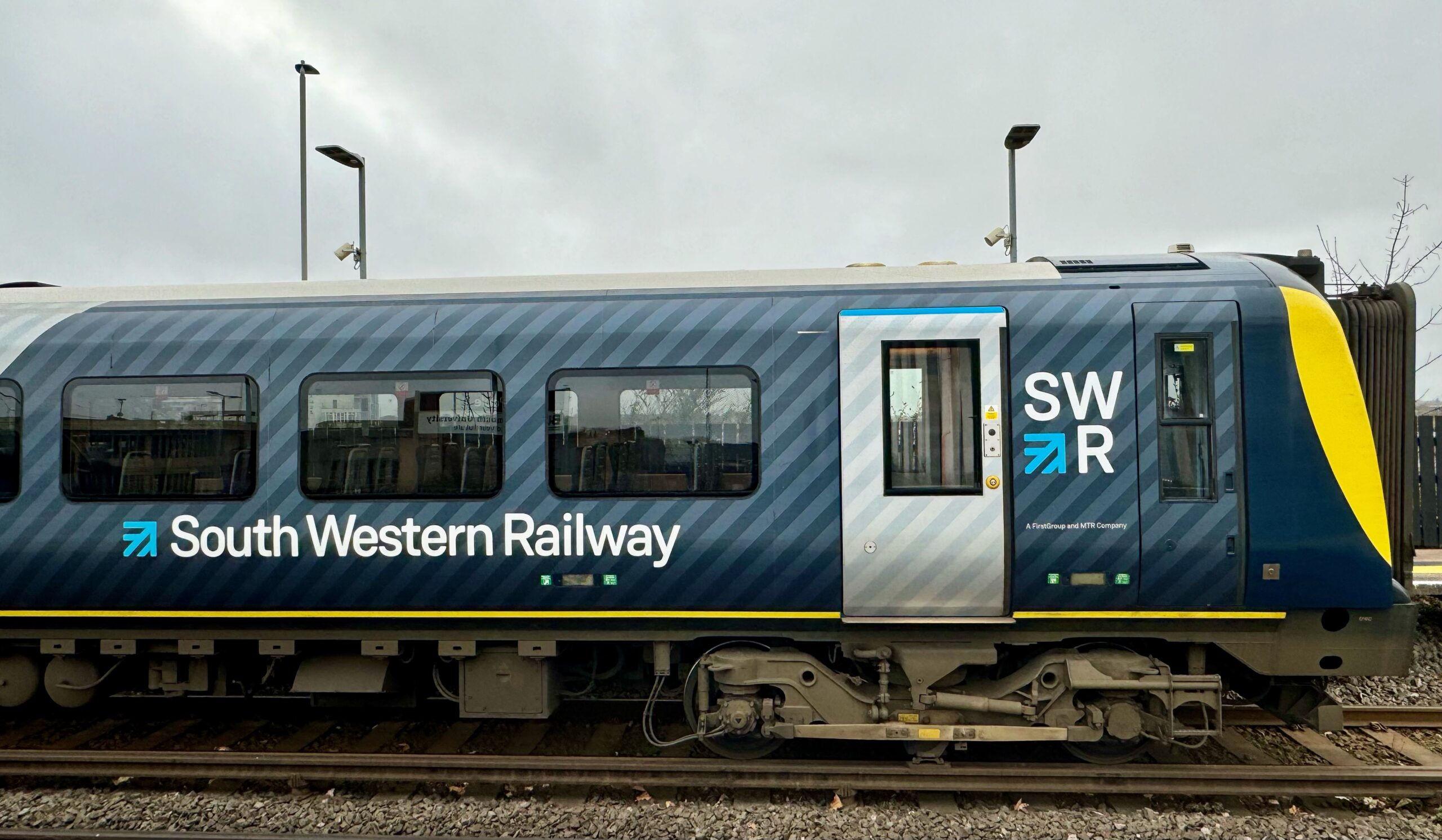
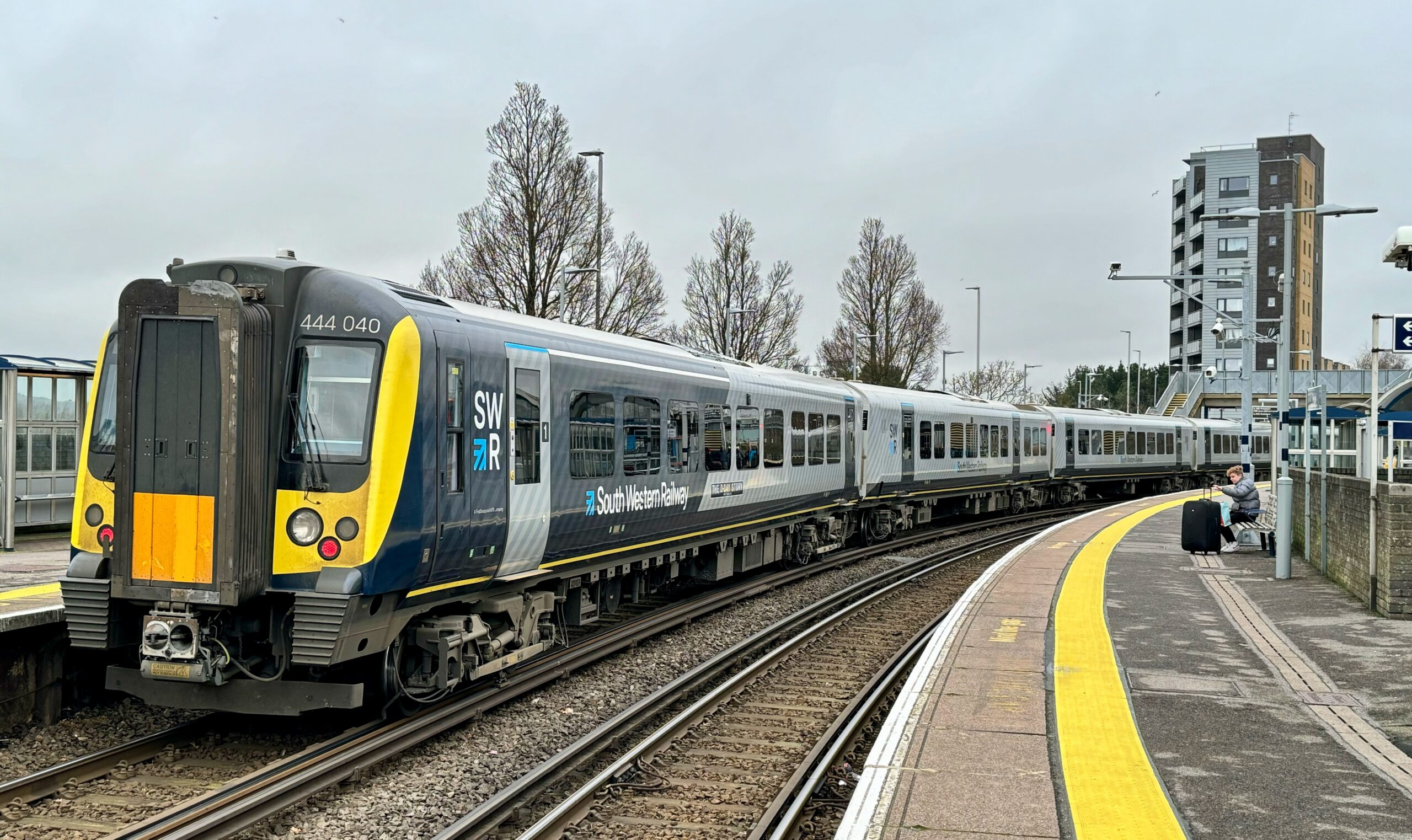
With SWR Desiro Electric Multiple Unit’s (EMU’s) remaining in the old South West Trains (SWT) livery now in single figures, it has been reported that Class 450 No. 450111 and Class 444 No. 444040 ‘The D-Day Experience Portsmouth’, both wrapped in a striped form of the South Western Railway grey livery, will be the last two units to be painted into standard SWR colours.
Class 450 No. 450111 at Eastleigh working 2B32 0902 Bournemouth to Winchester – 23/12/2023Side view showing the “stripey” South Western Railway livery carried by Class 450 No. 450111 at EastleighClass 444 No. 444040 ‘The D-Day Experience Portsmouth’ at Poole having arrived with 1B31 1357 Brockenhurst to Poole – 24/12/2023Side view of Class 444 No. 444040 ‘The D-Day Experience Portsmouth’ – 24/12/2023Bodyside detail of Class 444 No. 444040 ‘The D-Day Experience Portsmouth’ – 24/12/2023Class 444 No. 444040 ‘The D-Day Experience Portsmouth’ at Poole forming the 5B31 1437 Poole to Poole Storage Sidings ECS – 24/12/2023
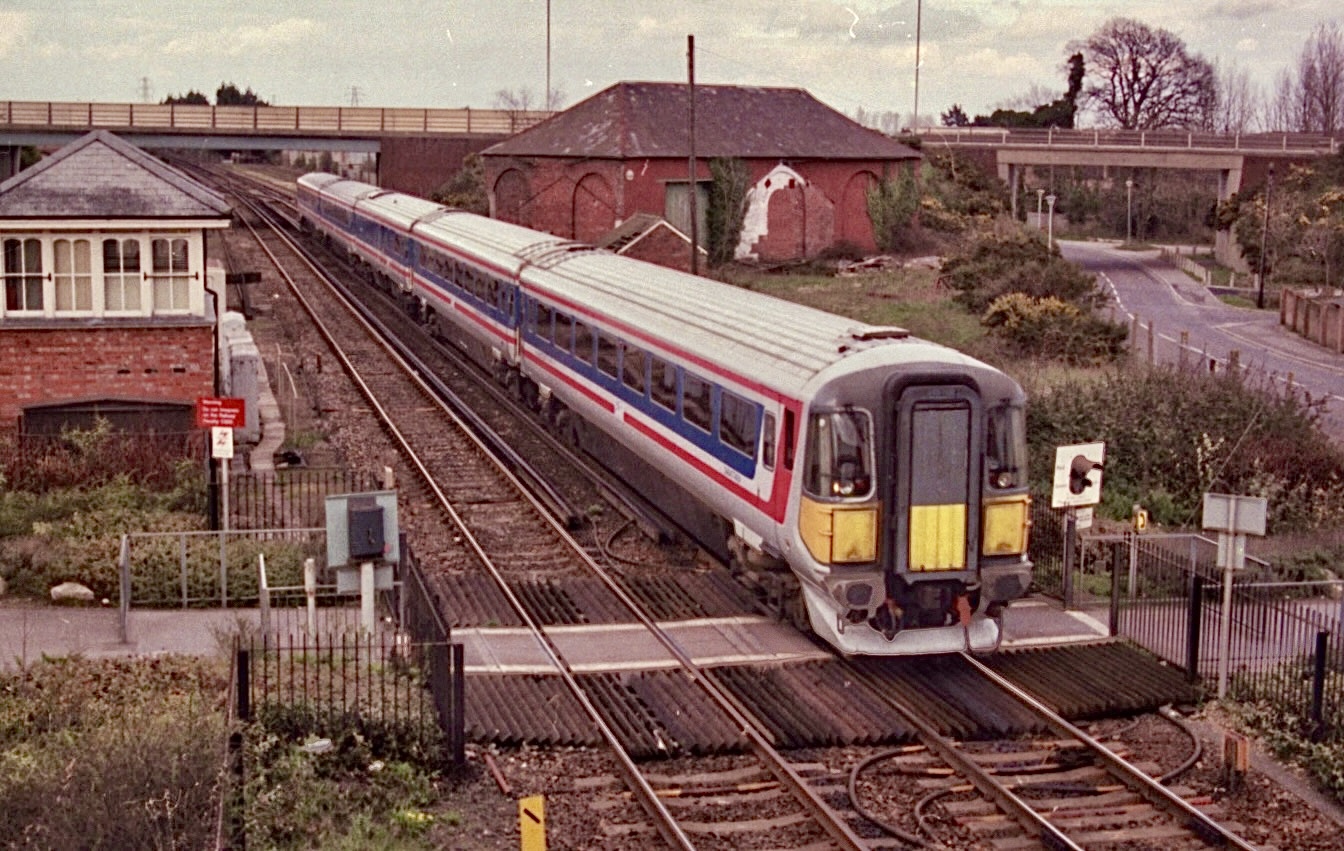
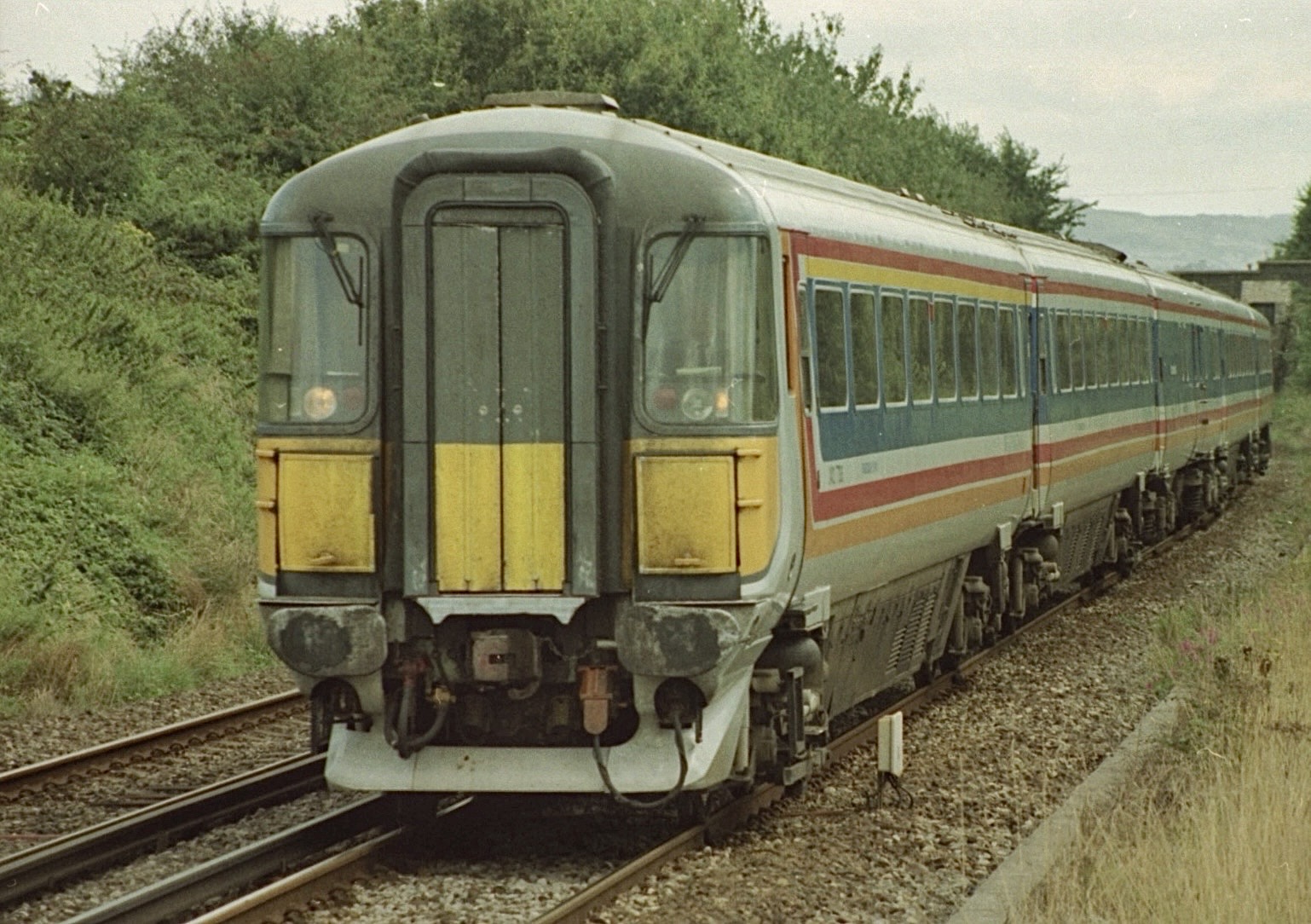
The original South West Trains train livery used the Stagecoach Group colours – red, blue and orange – in a similar style to the Network South East (NSE) livery. Some detail variations were introduced before a major updating of the group’s design identity in 2000. New logos and typefaces were developed, as well as new bus and train liveries.
An unidentified Class 442 “Wessex Electric” EMU on the approach to Wareham in Network South East Livery at some point in the late 1990’sAnother unidentified Class 442 “Wessex Electric” EMU, carrying the original South West Trains livery based on the NSE style previously carried by the trains, nearing Upwey station – 05/09/1998Class 442’s at Dorchester South in the revised SWT livery in the early 2000’s
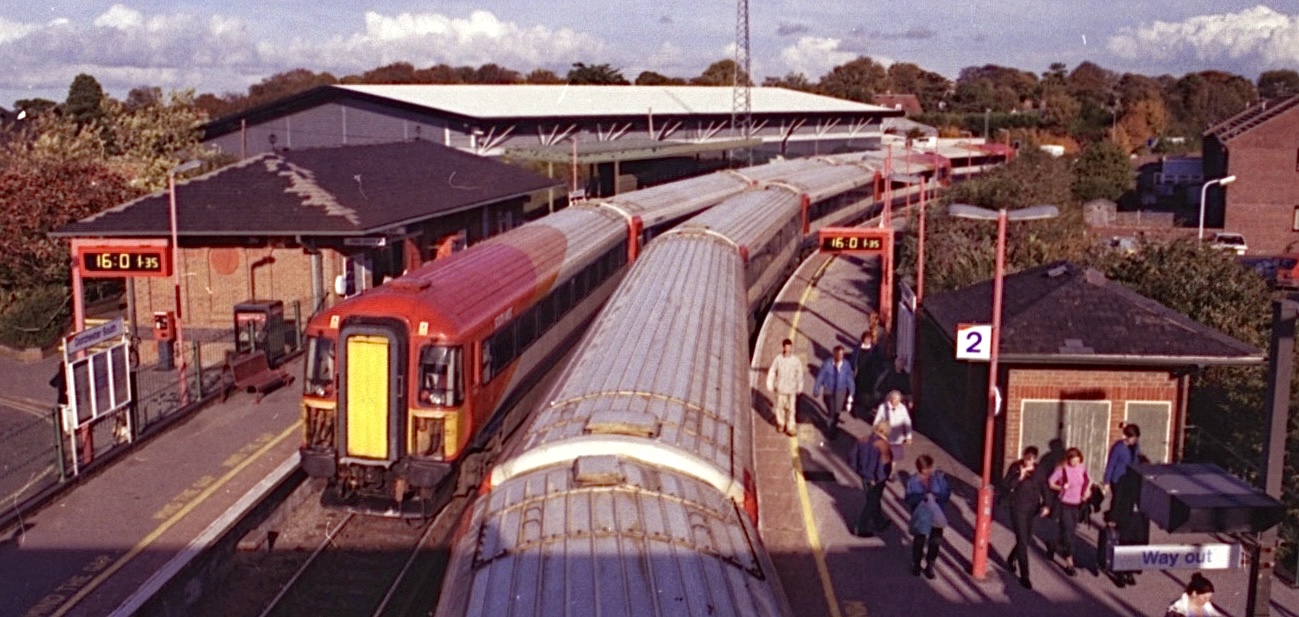
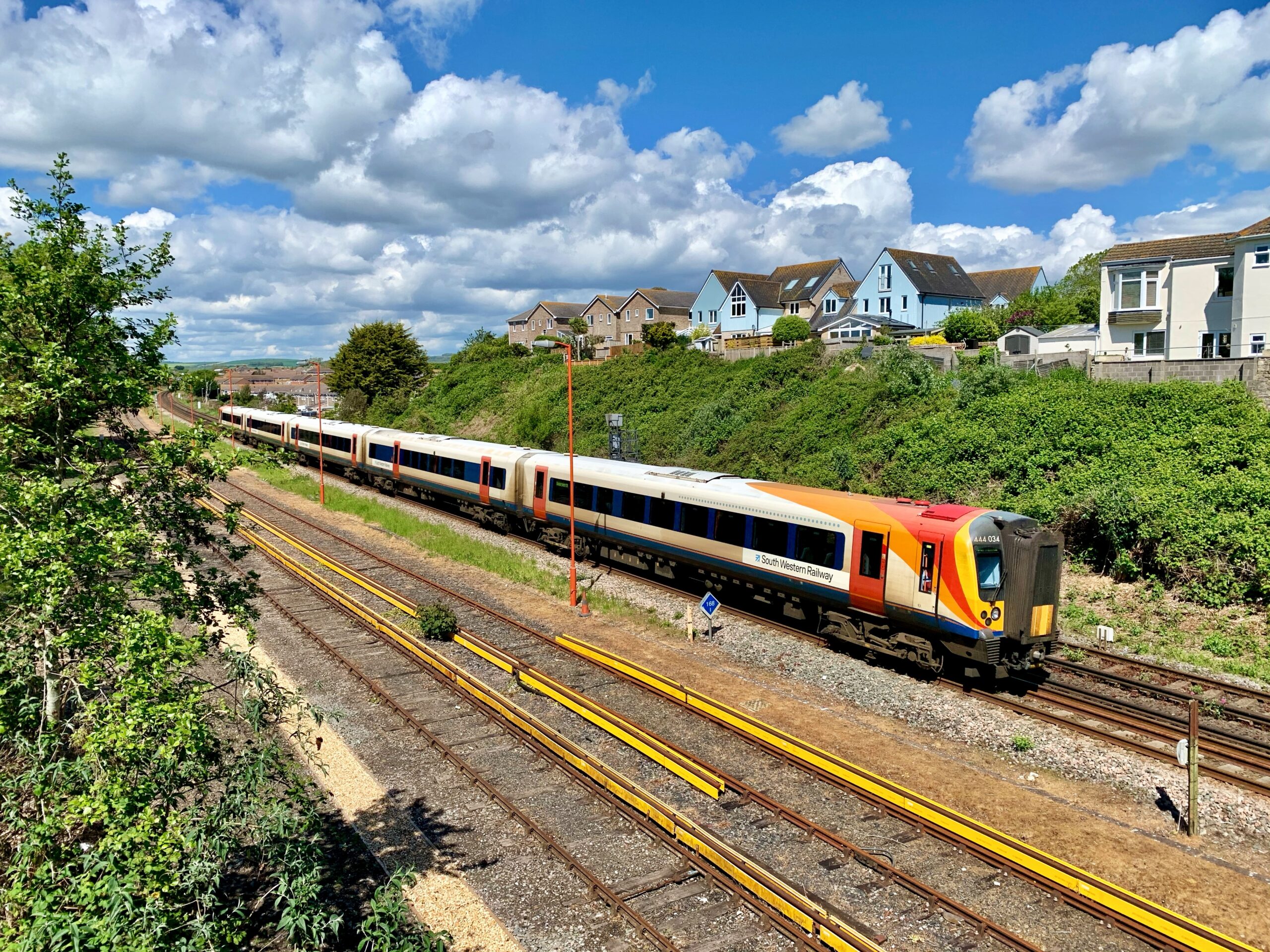
The second-generation South West Trains liveries, designed by industry specialist Best Impressions, have swooshes of the Stagecoach colours, which sweep back from the nose of the train to give an impression of movement. There were three versions of the livery employed – white on the Class 444 and 159 trains used on many longer-distance services, red on Class 455 and 456, and blue used on Class 458 and 450 trains.
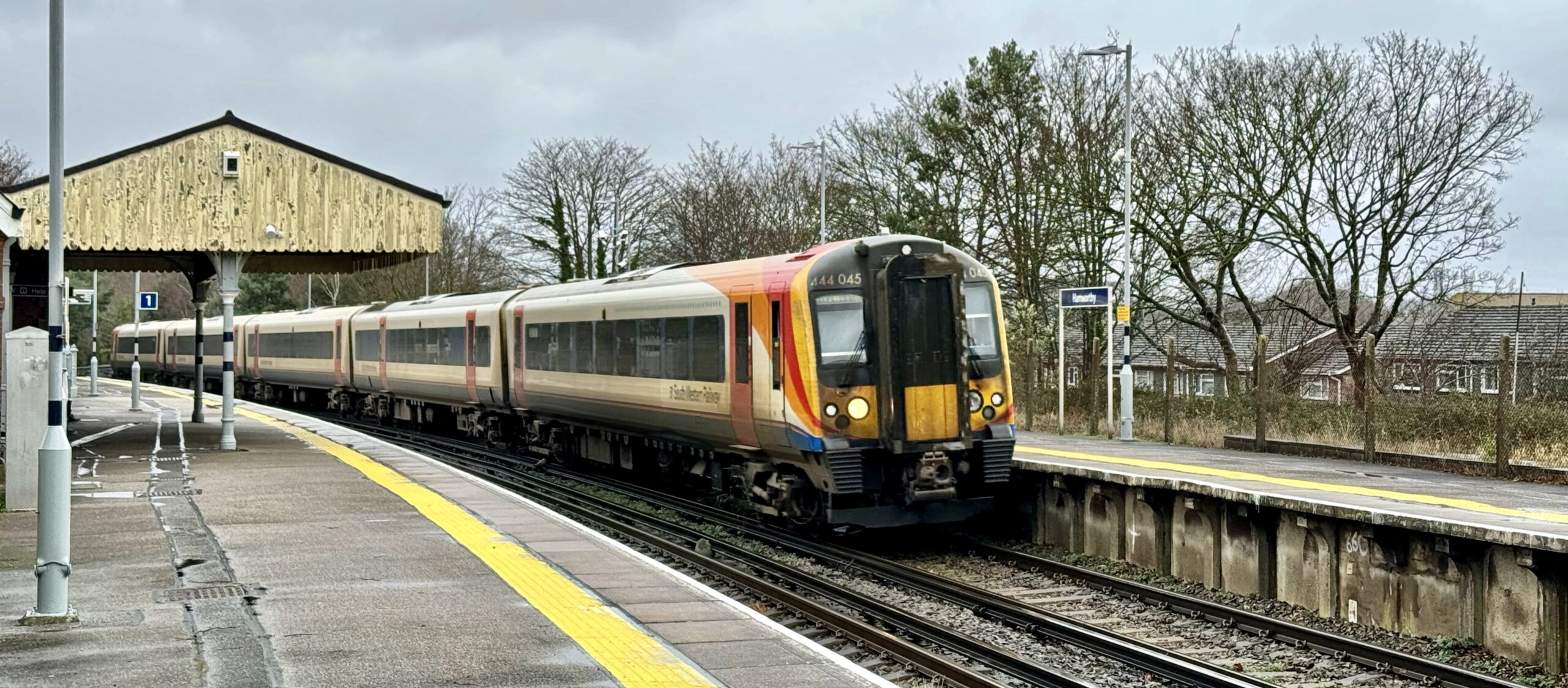
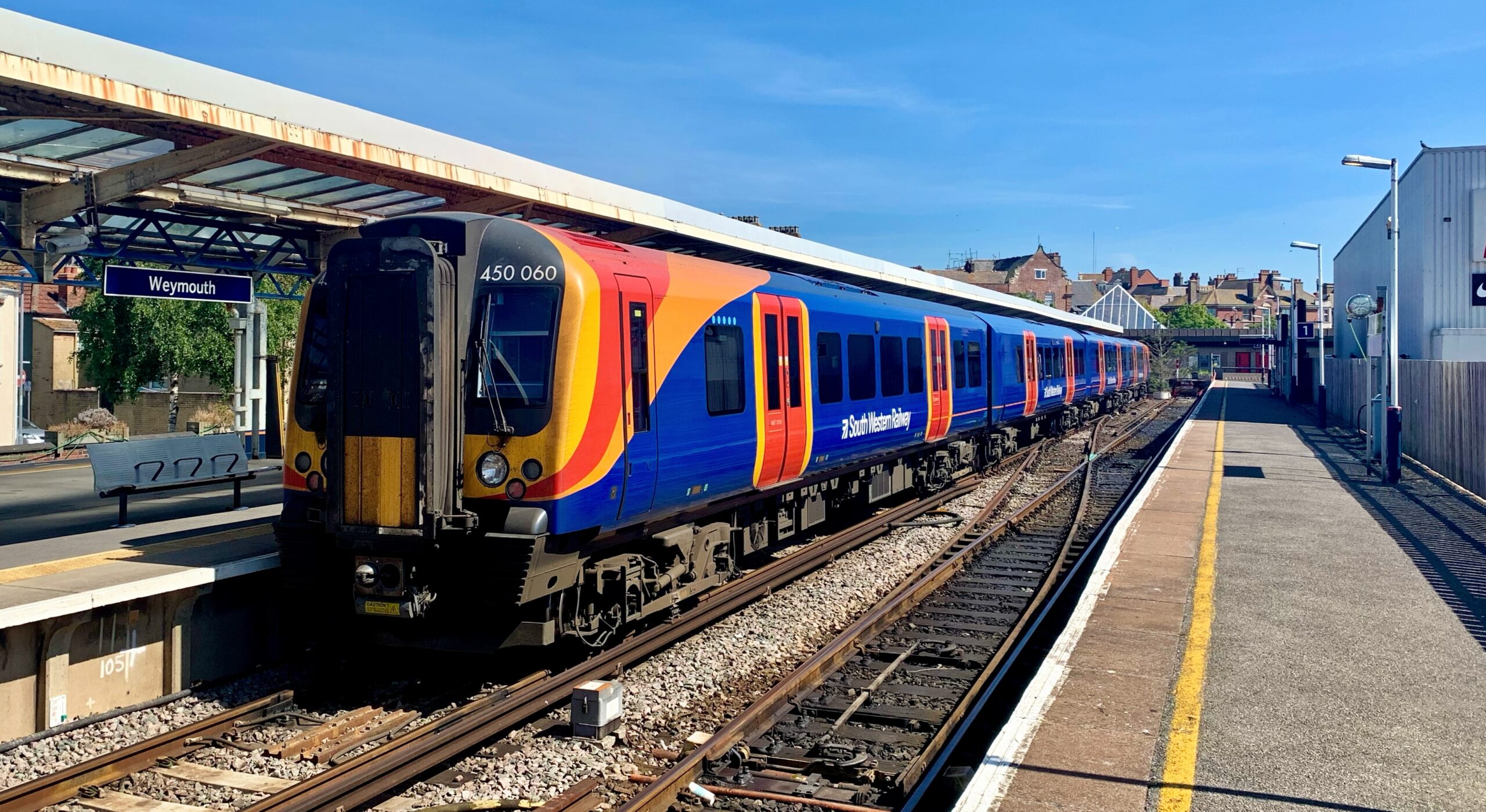
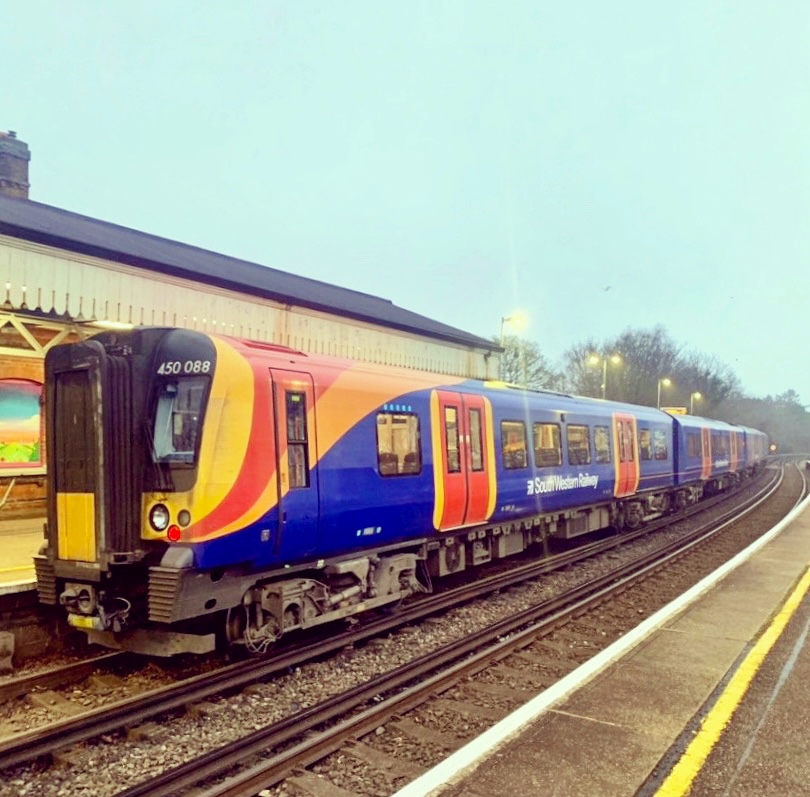
SWR Class 444 No. 444034 on the approach to Weymouth showing the colours of its former operator SWT – 01/05/2020The final South Western Railway Class 444 in South Western Trains livery No. 444045 arrives at Hamworthy working 1W55 0735 London Waterloo to Weymouth – 30/12/2023SWR Class 450 No. 450060 in blue SWT colours at Weymouth – 20/05/2020Class 450 No. 450088 departing Hamworthy with an early morning Weymouth to Brockenhurst stopping service – 23/12/2021
The final Desiro’s to be re-liveried from former SWT colours into SWR grey are No.’s 450031, 450099, 450116 and 444045.
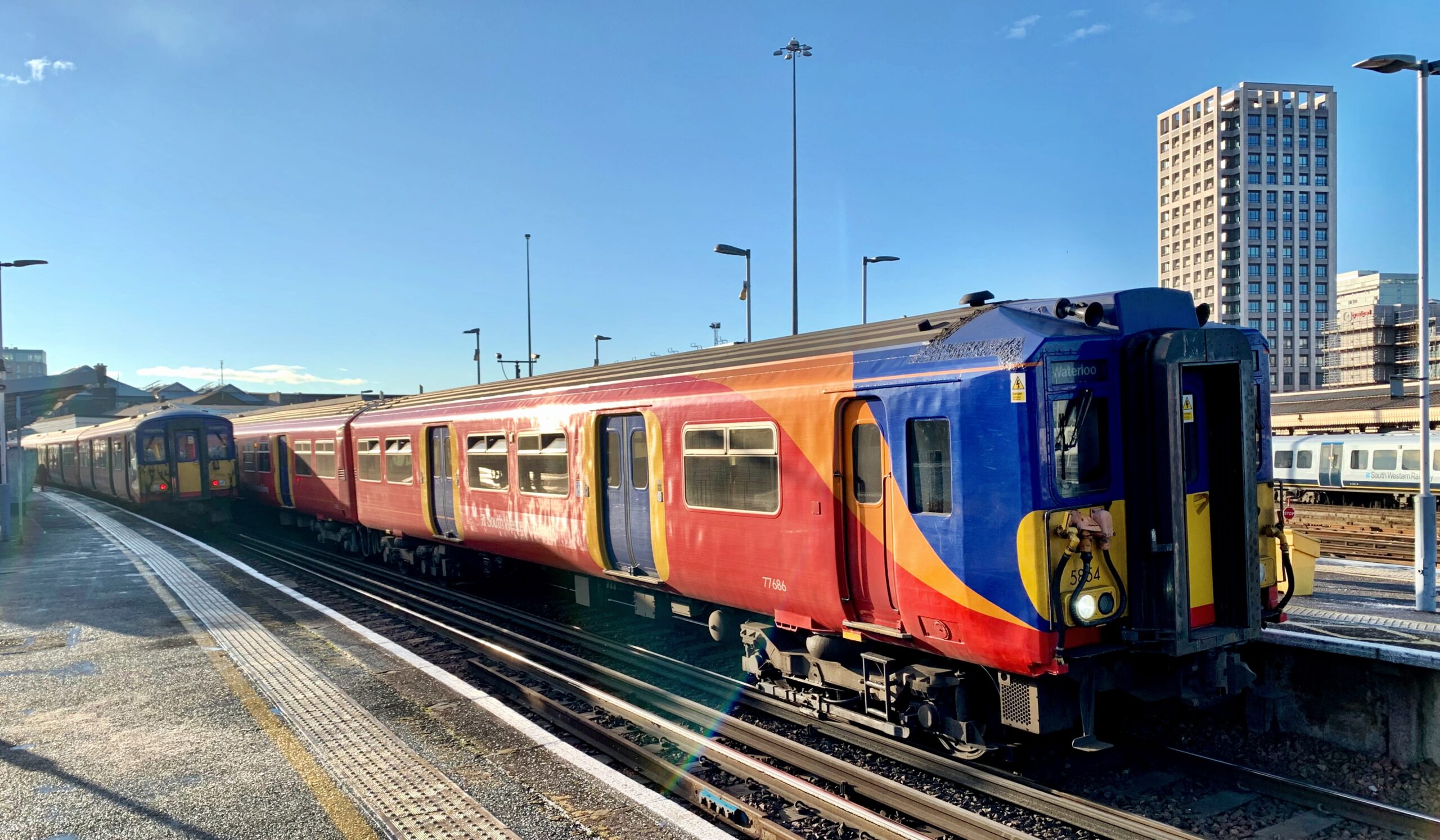
For completion: a Class 455 No. 455854 in the SWT red livery with a London Waterloo bound service at Clapham Junction – 10/12/2022
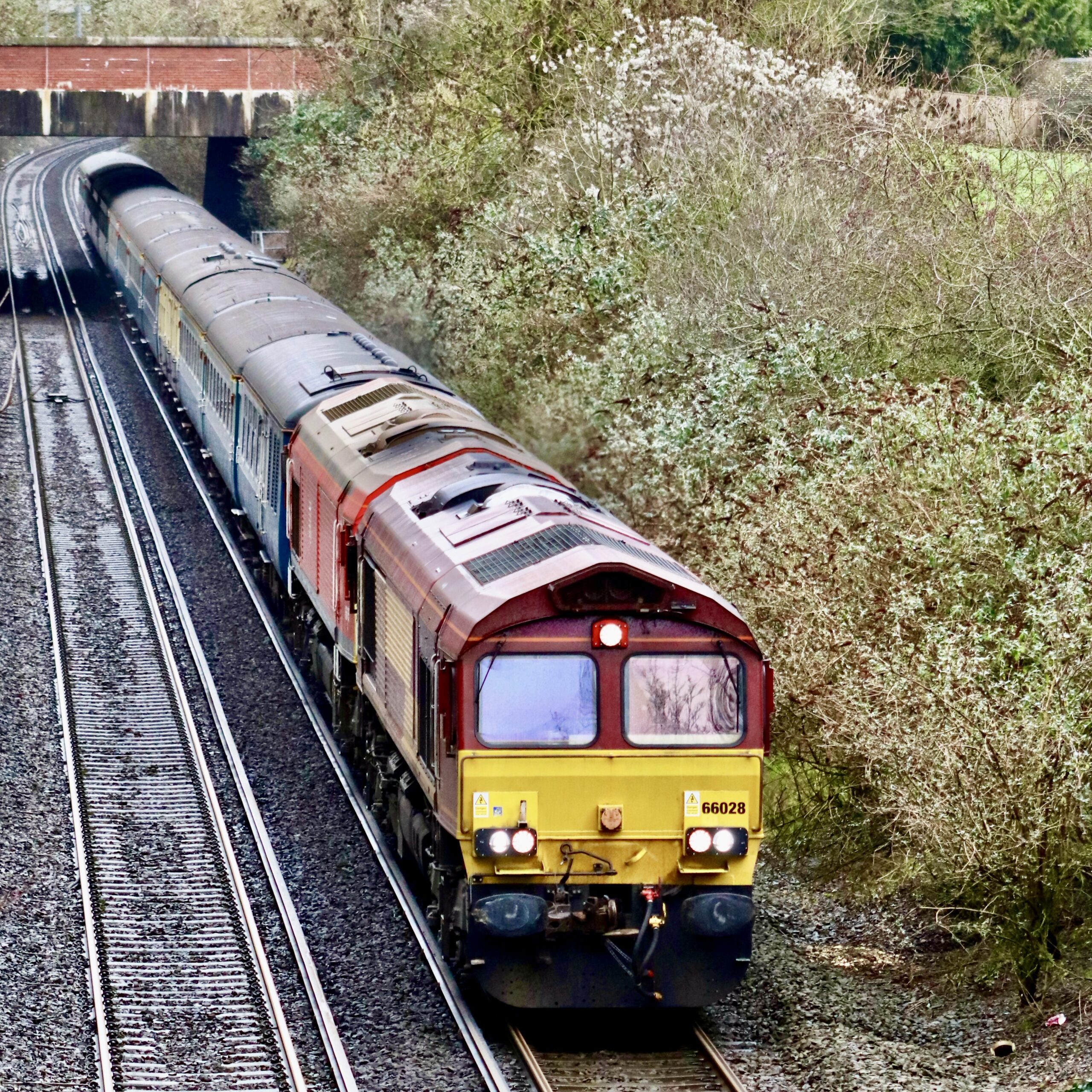
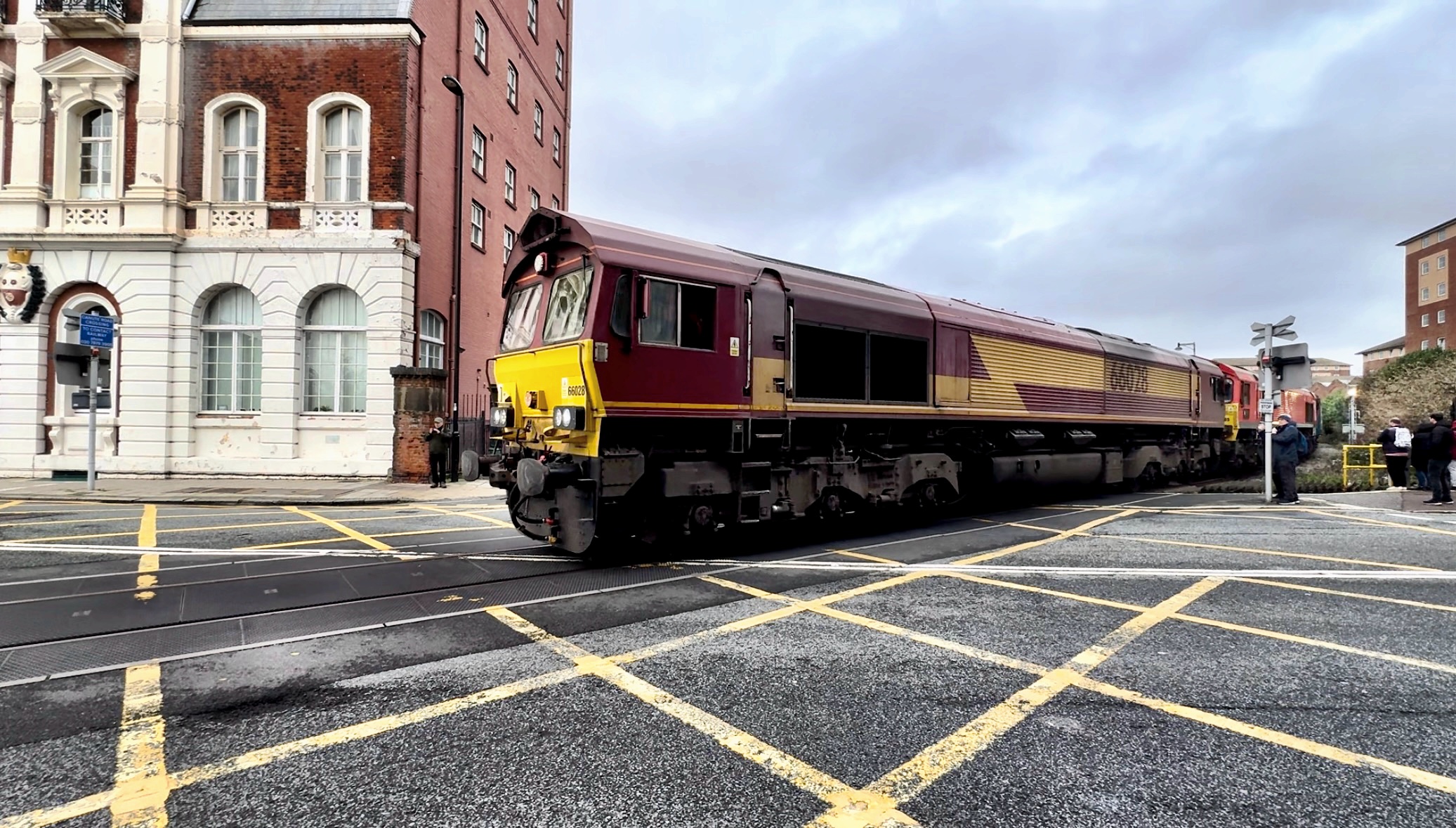
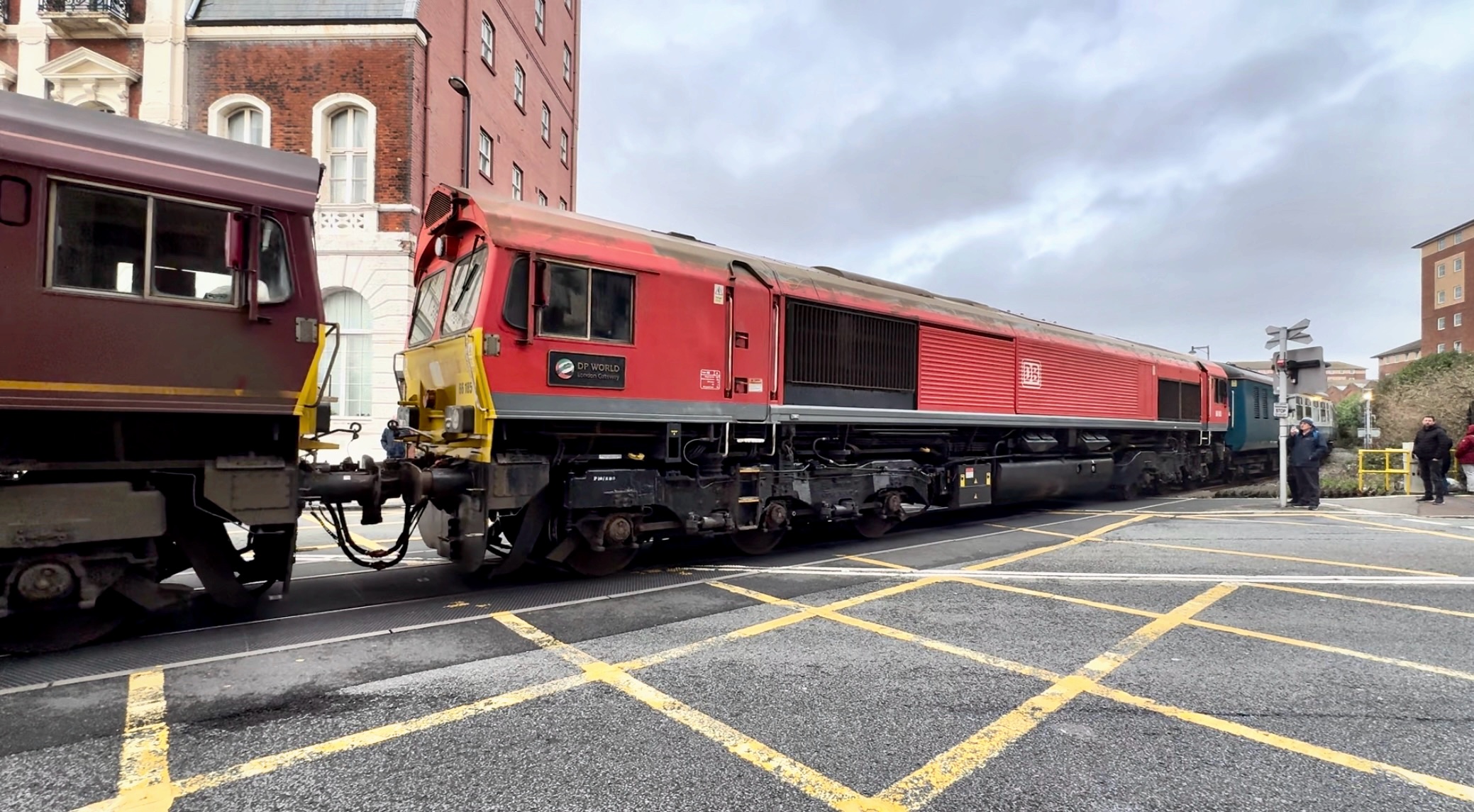
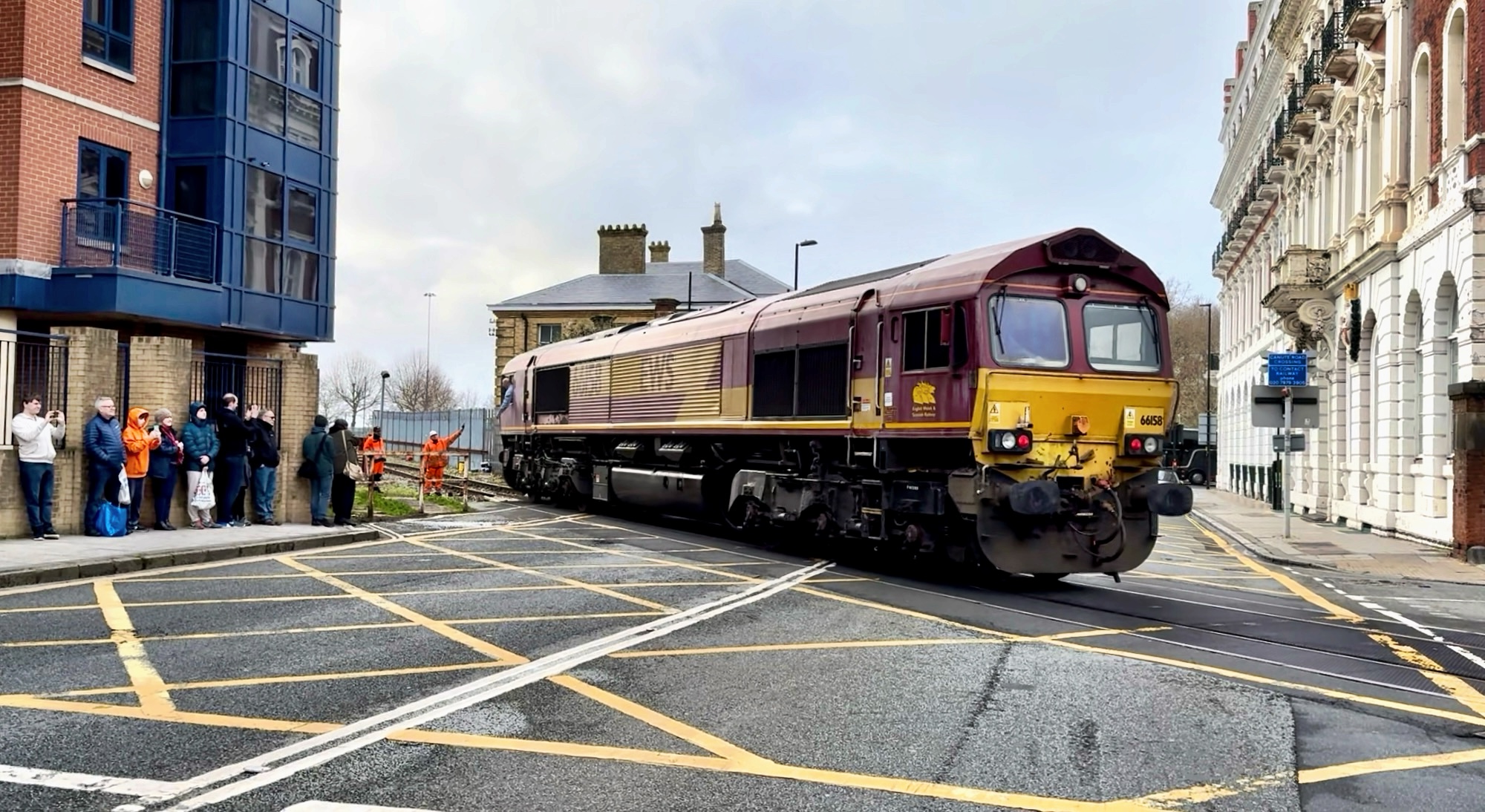
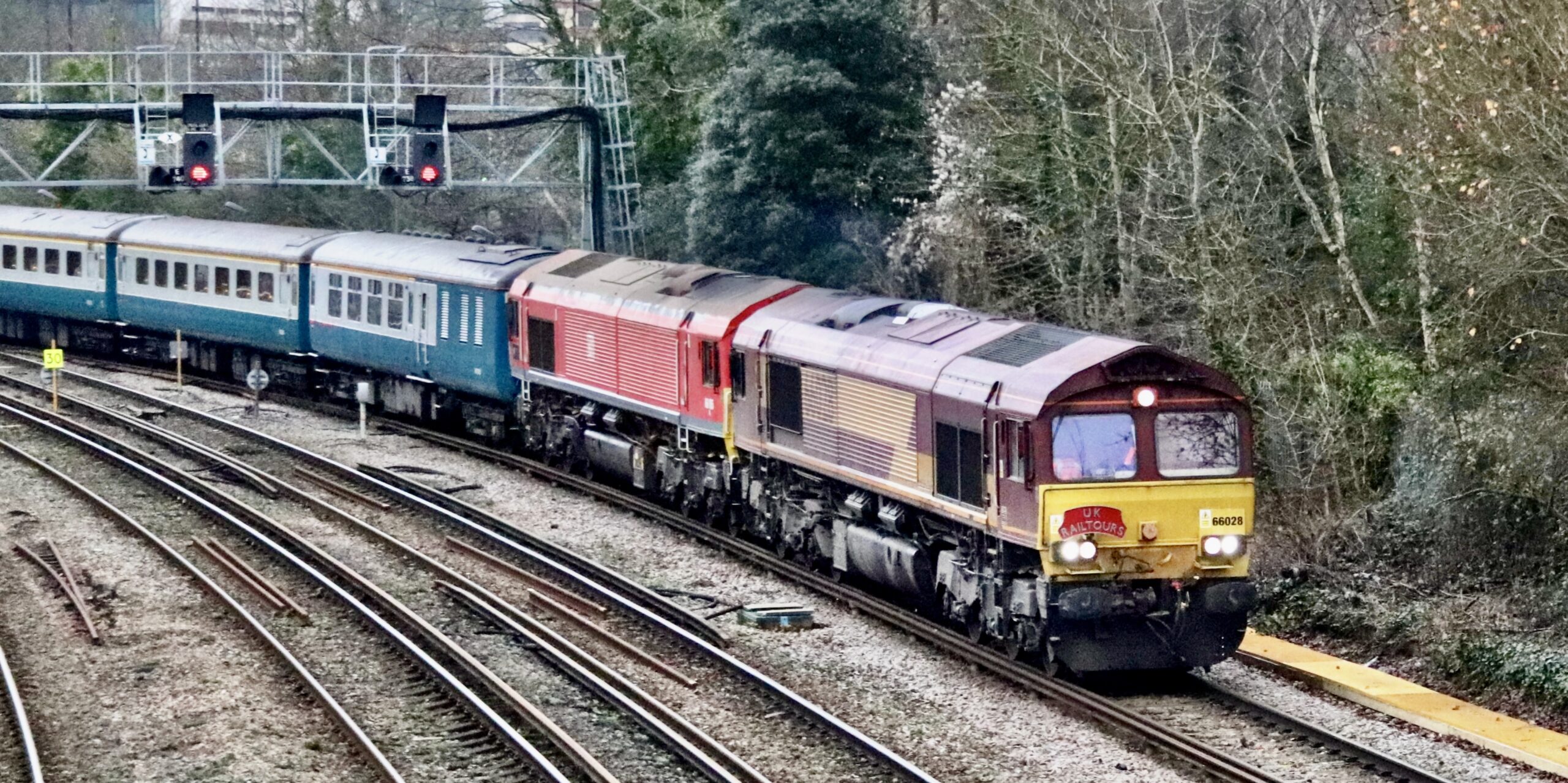
The final railtour of 2023 bordering on the Dorset area was run by UK Railtours employing DB Cargo Class 66 locomotives booked for use in a top and tail formation. “Another Awkward Week Adventure”, named because of those so called awkward days between Christmas and New Year originated in Peterborough. Problems with one of the locomotives; No. 66185 meant the railtour left 60 minutes late from its originating station after No. 66028, which had been the rear locomotive, was removed from the back of the train and re-attached to the front with No. 66185 remaining inside. This was how Yoshi and I saw the train after it had passed through Winchester on its way to Eastleigh. Here passengers had the option to detrain and take a bus to the National Motor Museum at Beaulieu or remain onboard for some rare track miles into Southampton Eastern and Western Docks.
DB Cargo Class 66 No.’s 66028 and 66185 ‘DP WORLD London Gateway’ double heading 1Z66 0730 Peterborough to Southampton Eastern Docks “Another Awkward Week Adventure” railtour west of Winchester – 30/12/2023
I next moved onto Southampton where I fancied filming the excursion crossing Canute Road which is adjacent to the former Southampton Terminus railway station which served the Port of Southampton and Southampton City Centre from 1839 until 1966. The former Terminus station building is now a casino and The South Western Hotel opened by the LSWR in 1872 has been converted into private apartments. Of the station platforms, all that remains is the glass canopy and a single line that runs from Northam junction to the Queen Elizabeth II Cruise Terminal. The private road into where the platforms once stood is now a car park.
DB Cargo Class 66 No. 66028 crossing Canute Road, Southampton with 1Z66 0730 Peterborough to Southampton Eastern Docks – 30/12/2023Disgraced DB Cargo Class 66 No. 66185 ‘DP WORLD London Gateway’ dead in the consist of 1Z66 0730 Peterborough to Southampton Eastern Docks – 30/12/2023DB Cargo Class 66 No. 66158 runs light engine across Canute Road, Southampton as 0Z66 1340 Eastleigh Down Carriage Shed to Southampton Eastern Docks – 30/12/2023After running light into the docks, DB Cargo Class 66 No. 66158 leads out working 1Z67 1402 Southampton Eastern Docks to Southampton Western Docks – 30/12/2023
Our final location was the footbridge over the railway line between Southampton Central and Millbrook ready to catch the train head towards Western Docks and out again Yoshi waited in the car as the weather, already very windy, turned increasingly wet! I photographed the railtour on its outward leg into Western Docks, but by the time it returned (running late) the light had gone and I didn’t want another DSLR to fall foul of water damage in 2023! Instead I managed some dodgy video which can be seen lower down the page.
Back leading the tour again; DB Cargo Class 66 No.’s 66028 and 66185 ‘DP WORLD London Gateway’ on the approach to Millbrook heading up 1Z67 1402 Southampton Eastern Docks to Southampton Western Docks – 30/12/2023DB Cargo Class 66 No. 66158 at the rear of 1Z67 1402 Southampton Eastern Docks to Southampton Western Docks on the approach to Millbrook – 30/12/2023
“Another Awkward Week Adventure” DB Cargo Class 66 No.’s 66028 and 66185 ‘DP WORLD London Gateway’ and 66158: 1Z66 0730 Peterborough to Southampton Eastern Docks / 0Z66 1340 Eastleigh Down Carriage Shed to Southampton Eastern Docks / 1Z67 1402 Southampton Eastern Docks to Southampton Western Docks / 1Z68 1531 Southampton Western Docks to Eastleigh – 30/12/2023
One final festive gift courtesy of GB Railfreight saw the SITT run to Weymouth on New Years Eve as 3Y88 1200 Totton Yard to Totton Yard, top and tailed by Class 66 locomotives No.’s 66723 ‘Chinook’ and 66772 ‘Maria’. The SITT with the same two Class 66’s in charge was also the first locomotive hauled train into Dorset early on New Years Day 2024 when it returned as far as Bournemouth in the early hours working as 3Y89 0100 Totton Yard to Totton Yard.
GBRf Class 66 No.’s 66723 ‘Chinook’ and 66772 ‘Maria’ at Hamworthy on SITT 3Y88 1200 Totton Yard to Totton Yard – 31/12/2023Close up of the helicopter decal on the side of GBRf Class 66 No. 66723 ‘Chinook’ – 31/12/2023GBRf Class 66 No. 66772 ‘Maria’ at the rear of the SITT 3Y88 1200 Totton Yard to Totton Yard. Classmate No. 66723 ‘Chinook’ leads – 31/12/2023GBRf Class 66 No.’s 66772 ‘Maria’ 66723 ‘Chinook’ passing Hamworthy working the return SITT 3Y88 1200 Totton Yard to Totton Yard – 31/12/2023
GBRf Class 66 No.’s 66772 ‘Maria’ 66723 ‘Chinook’ working the return SITT 3Y88 1200 Totton Yard to Totton Yard (Dorchester South video courtesy of G E Barrett) – 31/12/2023
For The Record
Following 16 days closure for engineering work on the West of England Line, the line between Salisbury and Yeovil Junction re-opened on Monday 11th December while landslip repairs were affected by flooding at Crewkerne tunnel which extended the duration required for work to be completed with SWR advising customers not to attempt to travel between Yeovil Junction and Exeter St David’s until Wednesday 13th December.
Class 66 No. 66732 ‘GBRf The First Decade 1999-2009 John Smith – MD’ at Dinton near Salisbury during the 16 day engineering possession. TV screen grab from BBC South Today – 01/12/2023Class 66 No. 66732 ‘GBRf The First Decade 1999-2009 John Smith – MD’ at Dinton near Salisbury. TV screen grab from BBC South Today – 01/12/2023Class 66 No. 66790 ‘Louise’ at Gillingham. TV screen grab from BBC South Today – 01/12/2023
Thanks for reading, that’s it for 2023! Wishing everyone a very Happy New Year. We’ll leave you with a pic of Yoshi at Durdle Door. Be seeing you!
Yoshi took an early morning trip to Durdle Door to see the sunrise – 22/12/2023
Yoshi visited STEAM: The Museum of the Great Western Railway and saw GWR King Class 4-6-0 No. 6000 ‘King George V’ – 11/11/2023
November 10th 2023 to November 17th 2023
Having not seen any of the locomotive operated Rail Head Treatment Trains (RHTT) this year, we decided to combine a visit to the McArthur Glen Designer Outlet in Swindon with a visit to STEAM Museum and the chance of photographing an RHTT or two. The railways of Dorset are serviced by Multi Purpose Vehicles (MPV) during leaf fall season with leaves on the railway line causing problems.
An early morning MPV RHTT working crosses Upton Viaduct on the Holes Bay Causeway, Poole as 3S81 0547 Totton Yard to Totton Yard – 07/11/2023
Windy conditions can cause heavy leaf fall in a short space of time and rain means they are more likely to stick to the rails. When trains pass over leaves, the heat and weight of the trains bake them into a thin, slippery layer on the rail. This is equivalent to black ice on the roads. This can create operational issues for the signalling system (track circuits) and reduce a trains grip – which can change the ability of a train to start from a station, accelerate and climb hills, or stop at stations and signals. Across the GB Rail Network, there are 32 MultiPurpose Vehicles and 29 locomotive hauled RHTT’s. Both types of train are equipped with a high-pressure water pump delivering 1,500 Bar and, if required, can apply adhesion modifier – a mixture of suspension gel (so it can be pumped), sand (to help train wheels grip the rail), and steel or iron shot that is pushed through contamination (compressed leaves and debris) on the rail head to help the track circuits work correctly – to each running rail. If the track circuits fail to identify, or ‘lose’ a train (because the leaf and debris contamination is preventing this) then the signalling system is designed to automatically stop all the trains to prevent an accident.
Colas Class 66 No.’s 66848 & 66850 ‘David Maidment OBE www.railwaychildren.org.uk’ on the approach to Swindon working 3S59 09:00 Hereford to Swindon Transfer Yard Rail Head Treatment Train – 11/11/2023
Swindon has been synonymous with railways, and in particular the Great Western Railway (GWR) since the 1840’s, when Daniel Gooch – working under Isambard Kingdom Brunel – picked the Wiltshire town as the location for a central repair works with the site opening on 2nd January 1843. The Works transformed Swindon from a small market town with a population of 2,500 into a bustling railway themed hive of industry. Built to the north of the main town centre, Swindon works had a need for locally accessible housing and services for the men and women who worked there. The development of the railway village was on the lines of similar Victorian-era model village lifestyle concepts, such as Bournville near Birmingham, and architect/builder Rigby’s were given license to create a commercially viable development by the GWR. The completed village provided the town with medical and educational facilities that had been previously sorely lacking, together with the large St Mark’s Church and the Bakers Arms public house, all completed before 1850.
The first locomotive constructed at Swindon Works, emerging in 1846 having taken less than two weeks to build, was the ‘Premier’, originally built with a 2-2-2 wheel arrangement but later converted to 4-2-2 and renamed ‘Great Western’ becoming part of the Iron Duke Class of broad gauge locomotives. She was joined by six more engines, with the Iron Dukes being considered the fastest broad gauge engine of its day. By 1851, the works employed over 2,000 people and were producing about one locomotive a week, with the first standard gauge engine being built in 1855. In addition to locomotive building standardised goods vehicles were produced, and in 1867 Swindon was made the central workshop for the construction of carriages and wagons.
In its heyday, Swindon works employed 14,000 people as Charles Collett (GWR’s Chief Mechanical Engineer from 1921 to 1941) greatly improved boiler making and facilities for working heavy gauge sheet metal. In 1927 the GWR’s most powerful and largest class of locomotive, the King’s, were introduced becoming the flagship of the GWR fleet. The King’s had been developed from the Castle Class which, along with the Hall Class, helped cement GWR’s reputation and image.
At the nationalisation of British Railways (BR) in 1948, the works was producing 60 new locomotives a year, with this number reducing to 42 in 1954. From 1948 to 1956, the works made 452 steam engines to GWR designs and between 1951 and 1960 200 BR standard classes. When the decision was made to transition the railways from steam to diesel and electric motive power, the works produced BR’s last steam locomotive; No. 92220 ‘Evening Star’. By this time the works employed 5,000 people and had become the regional hub for the storage and scrapping of steam locomotives and rolling stock.
BR Standard Class 9F 2-10-0 No. 92220 ‘Evening Star’ at the National Railway Museum, York 03/07/2012Nameplate and commemorative plaque commemorating No. 92220’s status as the final steam locomotive built for BR at Swindon – 03/07/2012
As part of its Modernisation Plan, BR Western Region opted to develop and build diesel hydraulic locomotives rather than the diesel electric varieties employed across the rest of the network. From 1957 the works produced 38 “Warship” class D800’s and 30 “Western” class D1000’s.
Class 42 Warship Diesel Hydraulic No. D818 ‘Glory’ at Swindon Works. This locomotive entered traffic on 30th March 1960 and was withdrawn on 1st November 1972. She was cut up in November 1985. ‘Glory’ was a static exhibit at Swindon longer than she was in revenue earning service. Although No. D818 donated much needed parts to fellow classmate No. D821 ‘Greyhound’, it is still sad that this third candidate for preservation was lost – 06/06/1981Class 52 Western Diesel Hydraulic No. D1023 ‘Western Fusilier’ at Swindon where she had been built in September 1963. She was withdrawn in February 1977 having operated various runs including the last ever Western hauled rail tour; the ‘Western Tribute’. In 1973 she was the last ever hydraulic to have a general repair at Swindon. The locomotive was preserved as part of The National Collection and placed on display in the National Railway Museum at York in 1977. No. D1023 has been placed on loan to the Didcot Railway Centre for a period of five years commencing January 2023 – 06/06/1981Class 14 0-6-0 650hp diesel hydraulic No. D9551 in non-original ‘golden ochre’ livery at Kidderminster on the Severn Valley Railway. 56 of these locomotives were built by BR’s Swindon Works between 1964 and 1965. Locomotives of the class were given the nickname “Teddy Bears”, after a comment by Swindon Works foreman George Cole, “We’ve built the Great Bear, now we’re going to build a Teddy Bear!” – 15/05/2021
Locomotive building ceased at Swindon in 1965 following the construction of the Class 14 “Teddy Bear’s” after which the works became a heavy repair facility. In the 1970’s it was decided that the diesel hydraulic’s were non-standard and were withdrawn in favour of the diesel electric classes. The works were absorbed into British Rail Engineering Ltd (BREL) but won less and less maintenance business against the internal competition of Crewe and Derby Works. With the town of Swindon expanding and needing land close to its centre for development, the decision was made to close the works with the final day of operation being 26nd March 1986.
The redevelopment of the works took account of the listed building status of the original core infrastructure. The engineers’ office is now the headquarters of English Heritage, with most of the remaining buildings redeveloped as part of the Designer Outlet Village. The rest of the site’s extensive railway yard was used for housing and commercial buildings including purpose built storage for the English Heritage Archive and the National Trust’s central office building, known as “Heelis”, the married name of Beatrix Potter, one of the key figures in the early history of the organisation.
Another original works building houses STEAM: The Museum of the Great Western Railway, which “tells the story of the men and women who built, operated and travelled on the GWR, a network that, through the pioneering vision and genius of Isambard Kingdom Brunel, set the standard for rail travel. The story is brought to life with famous GWR locomotives, story-telling displays, videos – mixing rare archive film footage with the stories of ex-railway workers – hands-on exhibits, interactive displays and a large number of rare GWR objects and memorabilia.”
The folk at STEAM had very kindly given Yoshi permission to accompany me on my visit to the museum and we are very grateful for the team in extending the hand of friendship and being very helpful during our time there, which coincided with the National Trust’s AGM being held at the venue, so everyone was already very busy indeed.
King Class 4-6-0 No 6000 ‘King George V‘
GWR King Class 4-6-0 No. 6000 ‘King George V’ on display at STEAM 11/11/2023
Charles Collett, Chief Mechanical Engineer at Swindon Works 1922 – 1941, designed the King Class to be the most powerful express passenger steam locomotive in Britain.
In 1927, King George V was the first of the King locomotives to be built. The engine was named after the reigning monarch and later locos were named after previous kings of England.
The King locos were much heavier than previous engines. A number of bridges and platforms had to be strengthened to accommodate them. The Kings weren’t used in Cornwall because the Royal Albert Bridge was too weak to support their weight.
In 1927, No. 6000 ‘King George V’ was sent to the USA to take part in the centenary celebrations for the Baltimore and Ohio Railroad. While there, it was presented with the brass bell which is still attached to the front of the locomotive.
In 1947, the GWR began experiments leading to a number of modifications to ensure the King locomotives continued to perform well. By the time ‘King George V’ was retired in 1962, it had travelled nearly two million miles. But this wasn’t the end of the story as No. 6000 was preserved as part of the national collection and restored to main line running order at the Bulmer’s Railway Centre in Hereford. In 1971 ‘KGV’ became the first steam locomotive to break the British Rail mainline steam ban that had been in place since the completion of the “Fifteen Guinea Special” – the last main line passenger train to be hauled by steam locomotives over BR metals on 11th August 1968. No. 6000’s restoration to main line service and subsequent operation is often credited with opening the door for the return of steam to the mainlines of the UK.
Back in the 1980’s when I could afford to travel on steam hauled excursion trains, “run-pasts” were a feature where passengers would de-train and the locomotive would back up the stock and then go hell for leather through the station to enable travellers to get photographs of the steam locomotive as here with No. 6000 ‘King George V’ at Craven Arms during a “Welsh Marshes Pullman” tour – 21/11/1981GWR King Class 4-6-0 No. 6000 ‘King George V’ at Shrewsbury – 21/11/1981GWR King Class 4-6-0 No. 6000 ‘King George V arrives at Bristol Temple Meads at the head of “The Brunel Pullman” – 12/06/1983GWR King Class 4-6-0 No. 6000 ‘King George V’ pauses under the Royal Mail conveyor which was situated at the northern end of Bristol Temple Meads railway station. Built in the 1970’s to convey mail to the sorting office situated adjacent to the eastern edge of the station, use of the conveyor was stopped after closure of the sorting office on the transfer of Royal Mail’s activities to the West of England Mail Centre at Filton. It has now been removed – 12/06/1983GWR King Class 4-6-0 No. 6000 ‘King George V’ at Bristol Bath Road diesel depot – 12/06/1983GWR King Class 4-6-0 No. 6000 ‘King George V’ runs light engine through Bristol Temple Meads – 12/06/1983
2800 Class 2-8-0 No 2818
No. 2818 was built at Swindon Works in 1905 and has bee resident at STEAM since 2018 – 11/11/2023
George Jackson Churchward, Chief Mechanical Engineer at Swindon Works 1902 – 1921, designed the 2800 class of heavy freight locos – a completely new design and not based on any previous loco type. Churchward’s design proved to be so successful that they were built from 1903 until 1942. During the 60 years that they were in service, they only underwent minor changes to their original build.
The original paint livery was black with red lining. This was changed to green during the First World War. Once the locomotive was under British Railways ownership, it was given the standard unlined black livery.
No. 2818 was allocated to work in South Wales where she hauled heavy coal trains. During the First World War, the loco, along with most others in the class, hauled the Jellicoe Specials, transporting coal to the Royal Navy’s fleet of ships based in Scapa Flow. Unusually for freight locos, the 2800’s were also used on Bank Holiday passenger special trains, where they demonstrated both their strength and their speed.
City Class 4-4-0 No 3717 ‘City of Truro‘
Yoshi meest ‘City of Truro’ at STEAM – 11/11/2023
George Jackson Churchward also designed the City Class of locomotive. For the City locos, he used initial designs prepared by his predecessor, William Dean. The GWR built ten City Class locomotives between 1903 and 1907. They also converted ten GWR Atbara Class locos into the City Class.
‘City of Truro’ nameplate – 11/11/2023City Class 4-4-0 No 3717 ‘City of Truro’ at STEAM, Swindon – 11/11/2023
In 1903, No. 3440 ‘City of Truro’ became the 2,000th loco built at Swindon Works. She was re-numbered No. 3717 by GWR in 1912. This meant that locos of the same class all had consecutive numbers.
On 9th May 1904, ‘City of Truro’ laid claim at being the first steam locomotive to reach over 100 miles an hour. She was travelling between Plymouth and London Paddington, hauling the “Ocean Mails” consisting of a light load of 8-wheeled parcels vans with 1,300 bags of mail onboard giving a total weight of 148 tonnes. ‘City of Truro’ was timed as taking 8.8 seconds to travel a quarter of a mile; equal to 102.3 miles an hour. This was while descending Whiteball in Somerset and can only ever be a claim. It was recorded by railway journalist Charles Rous-Marten, but there was no second timekeeper to confirm his reading. ‘City of Truro’s record has therefore always been a matter of dispute, however if Rous-Marten’s timings are accurate they would indeed correspond to a speed of 102.3mph.
No. 3440 ‘City of Truro’ in readiness to work the RCTS “North Somerset Rail Tour” – 28/04/1957 (Photo courtesy of Chris Bancroft)No. 3440 ‘City of Truro’ at Reading on the RCTS “North Somerset Rail Tour”. This tour was the first one for the RCTS that used ‘City of Truro’- 28/04/1957 (Photo courtesy of Chris Bancroft)Video screen grab of No. 3440 ‘City of Truro’ working the return leg of Pathfinders Tours “The Ocean Mail 100” celebrating the oft disputed record run of 9th May 1904 when Charles Rous-Marten claimed the locomotive exceeded 100mph. The loco is seen on the Exeter to Taunton section of the GW main line on which the controversial speed record was recorded – 10/05/2004
Video of No. 3440 ‘City of Truro’ working the return leg of Pathfinders Tours “The Ocean Mail 100”. Ian Riley Engineering Ltd Electric owned Type Three Class 37/0 No. 37197 diesel-electric followed the steam hauled train ready to provide support if required – 10/05/2004
City of Truro was withdrawn from service in 1931. Although she was later returned to heritage railway service and continued operating until 2011.
Castle Class 4-6-0 No 4073 ‘Caerphilly Castle‘
Yoshi poses with Castle Class 4-6-0 No 4073 ‘Caerphilly Castle’. The Castle Class celebrate their centenary in 2023 – 11/11/2023
Charles Collett, Chief Mechanical Engineer at Swindon Works 1922 – 1941, designed the Castle Class of locomotive. He based the designs for the Castle Class locos on the earlier Star Class.
Who built, Castle class loconotives were Britain’s most powerful express passenger loco. Castle Class locos had larger boilers, and were designed to pull heavier loads.
Nameplate of Castle Class 4-6-0 No 4073 ‘Caerphilly Castle’ – 11/11/2023
Between 1923 and 1950, the GWR built 155 Castle locos at Swindon Works. A further sixteen were converted from other classes. On the 23rd August 1923, No. 4073 ‘Caerphilly Castle’ was the first Castle Class loco to go into service. In 1924 and 1925, ‘Caerphilly Castle’ was exhibited at the British Empire Exhibition at Wembley next to the LNER’s ‘Flying Scotsman’ ( a locomotive we may have mentioned more than once previously).
Visitors to STEAM can see underneath Castle Class 4-6-0 No 4073 ‘Caerphilly Castle’. Yoshi and I declined to take this opportunity – 11/11/2023
Castle Class locos were used on the express route between London Paddington and Cheltenham Spa. The Cheltenham Spa Express was a record breaker. In June 1923, it took just 75 minutes to travel from Swindon to Paddington, at an average speed of 61.8 miles per hour.
In July 1929, it became the world’s fastest train when it achieved an average speed of 66.2mph. On June 6th 1932, the Cheltenham Flyer smashed its own speed record, reaching an average speed of 81.6mph.
Replica of broad gauge engine ‘North Star‘
Yoshi with the replica of broad gauge engine ‘North Star’ – 11/11/2023
North Star is a broad gauge locomotive, built in 1837 for the New Orleans and Carrollton Railroad in the USA by Robert Stephenson and Company.
Replica of broad gauge engine ‘North Star’Replica of broad gauge engine ‘North Star’
The full size replica on display at STEAM was built at Swindon Works in 1926 to the 1837 specification. It was built to celebrate 100 years of the railways. The replica uses some parts from the original locomotive.
2301 Class 0-6-0 No 2516 Dean Goods
2301 Class 0-6-0 No 2516 Dean Goods – 11/11/2023
William Dean, Chief Locomotive Engineer at Swindon Works 1877 – 1902, designed the Dean Goods Class of locomotives. The first locomotive of the class was built in 1883 at Swindon.
During the First World War, 62 of these locos were sent to France and Salonika (Greece). The engines were lightweight, strong, and reliable, making them ideal for war work. Inexperienced crews also found them easy to drive. During the Second World War, 108 of these locos were requisitioned. Of these, 32 had already seen service during the First World War. Most were sent to France and many were destroyed in the retreat to Dunkirk or used on the French railways by German forces.
No. 2516 was built in 1897. It spent most of its working life taking goods and passengers up and down the GWR branch lines in Mid-Wales before being withdrawn from service in the 1950’s.
9400 Class 0-6-0T No 9400 Pannier Tank
9400 Class 0-6-0T No 9400 Pannier Tank on display at STEAM – 11/11/2023
Frederick Hawksworth designed the Pannier Tank Locomotives. Hawksworth spent his entire career at Swindon Works. He began as an apprentice in 1905 and rose to become Chief Mechanical Engineer in 1941, before retiring in 1949.
From 1947, GWR built ten Hawksworth Pannier Tan locos at Swindon Works. The loco was called a ‘Pannier Tank’ because the water tanks on either side of the boiler looked like pannier bags carried by horses.
Hawksworth Pannier Tank locos were used all over the rail network for shunting and hauling passenger and goods trains on smaller branch lines. The locos could often be seen taking empty carriages to and from Paddington Station.
In 1947, No 9400 was the first Hawksworth Pannier Tank to be built at Swindon. It was one of the last locos to be built by the GWR before the railways were nationalised in 1948. After nationalisation, private contractors for British Railways built another 200 Hawksworth Pannier Tanks. By 1965, all Hawksworth Pannier Tanks including No. 9400 had been withdrawn from service.
4200 Class 2-8-0T 4248 (skeleton only)
Diorama featuring 4200 Class 2-8-0T No. 4248 – 11/11/2023
No. 4248 was built in 1916 at Swindon Works. It is one of the 4200 class of 2-8-0 tank engines designed by George Jackson Churchward. No. 4248 spent most of its working life hauling coal trains in and around South Wales. After being withdrawn from service in 1963 the engine spent many years in Barry Scrapyard. It was rescued from there in 1986.
No. 4248 was purchased for the Museum with the support of a Museums and Galleries PRISM grant. The engine has been conserved at STEAM and is on display as if it is a locomotive under construction in the Boiler Shop area of the museum.
The collection holds a small but varied selection of Great Western rolling stock, which includes Queen Victoria’s Royal Saloon (above) which was built in 1897 and formed part of the Queen Victoria’s Diamond Jubilee train. Another highlight is the beautiful art deco styled Buffet Car No. 9631 built at Swindon in 1934 (below).
Interior of Buffet Car No. 9631 – 11/11/2023STEAM holds a small collection of road vehicles, ranging from horse drawn carts to motorised vans like this Scammell Tractor and Trailer. Road vehicles were an essential part of Great Western operations and were used in and around Swindon Works, good depots and stations – 11/11/2023 Swindon Trip to Weymouth!Display case showing GWR’s nautical connections – 11/11/2023
After our visit to STEAM we met up with Caroline who had been exploring the Designer Outlet. The shopping centre is located on the site of the long shop which was once responsible for erecting steam and diesel locomotives. One such example is GWR 7800 Class 4-6-0 No. 7821 ‘Ditcheat Manor’ which has been on display at the Designer Outlet centre since 2018 when she was moved from the STEAM museum taking the place of sister locomotive No. 7819 ‘Hinton Manor’.
GWR 7800 Class 4-6-0 No. 7821 ‘Ditcheat Manor’ at Swindon Designer Outlet – 11/11/2023 (CS)Nameplate of GWR 7800 Class 4-6-0 No. 7821 ‘Ditcheat Manor’ GWR 7800 Class 4-6-0 No. 7819 ‘Hinton Manor’ at the Swindon Designer Outlet. The locomotive returned to the Severn Valley Railway in August 2018 – 20/02/2014GWR 7800 Class 4-6-0 No. 7819 ‘Hinton Manor’ at the Swindon Designer Outlet – 20/02/2014GWR 7800 Class 4-6-0 No. 7821 ‘Ditcheat Manor’ when she was resident within STEAM museum – 20/02/2014
My next port of call was destined to be Swindon railway station as I was hoping to see and photograph Colas Class 67’s working the Cheltenham to Swindon Transfer Sidings RHTT. However a rare failing on behalf of Google maps, which directed us to the wrong car park, combined with the early running of the class 67’s meant I missed this particular working by a very thin margin. However, this was more than compensated by the DCR Class 60 which worked through the station on a Tytherington to Willesden DC Rail Sidings freight shortly after I arrived on the platform.
Swindon railway station opened in 1842. Until 1895, every train stopped here for at least 10 minutes to change locomotives. Swindon station hosted the first recorded railway refreshment rooms, divided by class – even the King and Queen of the time took refreshments there – 11/11/2023GWR Class 387157 (with 387167) ready to depart Swindon platform 4 working 1B14 1213 London Paddington to Cardiff Central -11/11/2023Freightliner Class 59 No. 59205 ‘L Keith McNair’ thunders through Swindon working 6C48 1147 Appleford Sidings Freightliner Heavy Haul to Whatley Quarry Freightliner Heavy Haul – 11/11/2023DCR Class 60 No. 60046 working east on the approach to Swindon at the head of 6Z52 10:20 Tytherington to Willesden DC Rail Sidings – 11/11/2023Colas Class 66 No.’s 66848 & 66850 ‘David Maidment OBE www.railwaychildren.org.uk’ on the approach to Swindon railway station working 3S59 09:00 Hereford to Swindon Transfer Yard Rail Head Treatment Train – 11/11/2023GWR IET No. 800320 working 1A20 1132 Taunton to London Paddington nears Swindon – 11/11/2023
Video from Swindon – 11/11/2023
The following day we were off to the Isle of Wight to celebrate our friends 50th Wedding Anniversary in Ryde. We chose to leave the car on the mainland and take the hovercraft from Southsea over to the island. The Hovertravel crossing takes a speedy ten minutes.
Griffon 1200TD Hovercraft GH-2160 ‘Solent Flyer’ in service with Hovertravel arrives at the Southsea HoverPort – 12/11/2023
As we arrived into Ryde, I noticed a number of the railway orange army on the pier. Trains that run to Ryde Pier Head station are currently out of action following extensive damage from Storm Ciarán. The Island Line between Ryde Pier Head and Ryde St Johns Road has been closed since the bad weather on 2nd November and engineers are working to reopen the line. South Western Railway (SWR) hope to have trains running on the pier section again by 20th November. Meanwhile, a minibus service is running between Ryde St Johns Road and Ryde Pier Head to allow passengers to connect with ferries.
The rail line had a £26m upgrade in 2021 which saw Island Line’s old 1938 tube trains replaced by refurbished London Underground District Line trains, and its tracks and platforms upgraded. You can revisit our 2022 IoW trip here
The line remains open between between Ryde St Johns Road and Shanklin with two trains per hour running. On our way to the Wedding Anniversary party, we took a slight detour to see SWR Class 484 No. 484002 depart Ryde St Johns Road with a lunchtime service to Shanklin.
SWR Class 484 No. 484002 awaits departure from Ryde St Johns with the 2D33 1332 service to Shanklin -12/11/2023Class 484 units No.’s 484003 and 484005 at Ryde depot – 12/11/2023SWR Class 484 No. 484002 ready for the off from Ryde St Johns with the 2D33 1332 service to Shanklin -12/11/2023
Isle of Wight – 12/11/2023
For The Record:
The New Measurement Train visited North Dorset on 16th November with High Speed Train Class 43 power cars No.’s 43013 and 43277 running as 1Q23 0556 Reading to Salisbury.
Network Rail has confirmed the successful completion of the first phase of works in a wider half a million-pound project to improve reliability on the mainline between Yeovil Junction and Axminster. A five day closure, which was announced at the end of last month, saw key upgrades carried out by engineers who worked day and night at four different sites and included works to stabilise the cutting at Crewkerne tunnel in Somerset following a landslip in October 2021. New drainage and specialist six metre long nails were installed into the earth just outside the tunnel entrance to help lessen the impact of heavy rainfall.
The second phase of the project will see a 16 day closure from Saturday 25th November to Sunday 10th December between Salisbury and Yeovil Junction, when approximately 0.3 miles of track on platform one at Gillingham in Dorset will be replaced and works to stabilise the ground by Gillingham tunnel will be carried out. A further 0.8 plus miles of track will be replaced between Tisbury, in Wiltshire’s Nadder Valley and Sherborne in Dorset and vegetation between Tisbury and Gillingham will be cleared. Maintenance work at the Wyley and Castleton level crossing is also planned. Rail replacement services will run during the two-week line closure.
A British Railways half-flanged green and white enamel steel Yeovil Pen Mill station totem is up for online auction on Thursday November 30th with Leonard Auction
We rather like this nameplate too!
Class 153 DMU Network Rail Video Inspection Unit No. 153385 ran to Bournemouth on Friday 17th November 2023 as 2Q34 0942 Eastleigh East Yard to Eastleigh East Yard. I was picking Yoshi up from the groomer, so missed it!
Class 153 DMU Network Rail Video Inspection Unit No. 153385 at Eastleigh in 2022 – 06/03/2022Yoshi back from the groomer. Better than a Class 153! – 17/11/2023
ASLEF, the train drivers’ union have set dates for further strikes. In a change to previous industrial action, the strikes will be across a whole week split on different days affecting different Train Operating Companies (TOC’s). Union members will walk out at East Midland Railway and LNER on Saturday 2 December; at Avanti West Coast, Chiltern, Great Northern Thameslink, andWest Midlands Trains on Sunday 3 December; at C2C and Greater Anglia on Tuesday 5 December; at Southeastern, Southern/Gatwick Express, South Western Railway main line, South Western Railway depot drivers, and Island Line on Wednesday 6 December; at CrossCountry and Great Western Railway on Thursday 7 December; and at Northern andTransPennine Trains on Friday 8 December.
You’ve made it to the end of this blog entry, there are no prizes, but well done and thank you for reading. We’ll be back soon. Be seeing you!
Postscript:
Class 52 Western Diesel Hydraulic No. D1028 ‘Western Hussar’ in the scrap line at Swindon Works. Built at Swindon in 1964, the locomotive was withdrawn on October 5th 1976. She was cut up a month after this photograph was taken – 13/05/1979D1041 ‘Western Prince’ at Swindon. She was withdrawn from service in February 1977 but was rescued from being cut up by the East Lancashire Diesel Group and is one of the original diesel locos based at Bury – 13/05/1979
Yoshi took a liking to RailAdventure Class 43 No.’s 43465 and 43484 which only hauled trains on the Friday of the 2023 Severn Valley Diesel Gala and seen here on display the following day at Kidderminster – 20/05/2023
Last week we were enjoying the sun in Cornwall, so our report on our visit to the 2023 Severn Valley Diesel Gala ( which took place 18th – 21st May) is slightly delayed until now. We hope you found our mini blog about Promenade Plantée in Paris interesting and a bit different last week, but for now let us catch up with events at the Severn Valley.
Saturday was my chosen day to visit the SVR as I was heading to the West Country the following day. The timetable for the gala was a packed affair with a large roster of resident and visiting locomotives scheduled to run, many of which were provided by freight and passenger operating companies. Indeed, the SVR event was undoubtably the biggest diesel gathering in the UK calendar for 2023, with its planned four-day extravaganza intended as a celebration of 50 years of diesel preservation. An early departure from home was required in the hope of seeing everything running. A few missed turnings and a closed motorway junction delayed our arrival time but in the event we arrived at Highley just in time to see sole-surviving Clayton Class 17 No. D8568 arrive with the first train of the day from Bridgnorth. Unfortunately there were no available parking spaces at the station, so we reversed out and headed up out of the car park to find alternative facilities. Although I later managed to capture a short video clip of the Clayton running light engine within the Highley station area, the locomotive avoided my camera lens for a still photo opportunity. As this particular diesel had been at Swanage the previous weekend, I didn’t mind too much!
They even made a special badge to celebrate 50 years of Diesel Preservation!
We had however trooped back down to Highley station in time to see Class 31 No. 31270, quite suiting her Regional Railways livery, arriving with the 0845 departure from Kidderminster. Although the first two trains on the Saturday were spot on for their time-keeping, it didn’t take too long for the timetable to go awry and things became progressively more delayed as the day went on.
Peak Rail’s Brush Type 2 Class 31 A1A-A1A No. 31270 ‘Athena’ in British Rail (BR) Regional Railways sector livery approaches Highley. No. 31270 was built by Brush Ltd in Loughborough in 1961 and carried the pre-TOPS number D5800. She was withdrawn from traffic on 26th May 2000. She never carried this livery or the nameplate while in BR service – 20/05/2023Colas Rail Freight Class 56 No. 56051 ‘Survival’, built in 1978, on the approach to Highley with the Locomotive Service Ltd (LSL) restored ScotRail MK3 carriages that reproduce the push-pull stock used between Glasgow, Edinburgh and Aberdeen in the 1980’s – 20/05/2023Scottish Push-Pull Class 47 No. 47712 ‘Lady Diana Spencer’ prepares to depart Highley. This locomotive and rake of air braked push-pull stock was paired with different visiting locomotives throughout the gala, top and tailing between Kidderminster and Highley. I thought it was a shame the loco and stock didn’t perform at least one run a day in push-pull mode as it had reportedly done on the Thursday – 20/05/2023Class 47 No. 47712 ‘Lady Diana Spencer’ nameplate – 20/05/2023Diesel- Hydraulic Western Class 52 No. D1062 ‘Western Courier’ departs Highley. This locomotive was built at Crewe Works and entered service at London’s Old Oak Common shed on 6 May 1963. She was withdrawn by British Rail on 23 August 1974 after 1,096,000 miles in service. Courier was an early withdrawal but was lucky enough to share “mascot” duties with Class 42 Warship No. D818 ‘Glory’, being placed on the turntable at Swindon works and given a repaint by the apprentices – 20/05/2023Class 37 No. 37263 displaying departmental grey livery approaches Highley. No. 37263 was introduced into traffic in 1965 and is visiting from the Telford Steam Railway – 20/05/2023
The weather was extremely warm and I made the decision to stay on the viewing balcony at Highley as this ensured Yoshi was able to stay in the shade and not get over heated. He also seems to like it there as he gets lots of fuss from passers by and doesn’t seem too bothered by the trains passing below. It’s also close to the cafe, so despite issues with the new coffee machine, what could be better? On the downside, of course, it means that my photographs and video from Highley are from much the same two angles, but I’ll take this provided our boy is comfortable.
Yoshi takes to the shade at Highley – 20/05/2023DB Cargo provided Class 60 No. 60062 ‘Sonia’ in her striking fiery Steel On Steel livery. Class 47 No. 47712 is on the rear – 20/05/2023Class 60 No. 60062 ‘Sonia’ approaches Highley – 20/05/2023Close up of Class 60 No. 60062 ‘Sonia’. The locomotive carries this special livery to celebrate the important role DB Cargo UK plays in supporting the UK’s metal transportation market. One full train load of steel coil can produce over 1,000 new cars or 60,000 white goods – 20/05/2023Class 50 No. 50035 ‘Ark Royal’ departs Highley with a Kidderminster bound train. There are several Class 50’s based on the Severn Valley but only one example was in operation over the gala as the GBRf pair No.’s 50007 and 50035 were undergoing some maintenance between mainline outings, while No.’s 50033 and 50044 were in the Traction Maintenance Depot and No. 50031 is currently minus a fuel tank – 20/05/2023Maybach Music as Class 52 No. D1015 ‘Western Champion’ arrives at Highley. No. D1015 is one of seven preserved Western locomotives from the original 74 built by BR at Swindon and Crewe – 20/05/2023 Push-Pull fitted Class 33 No. 33108 in revised departmental “Dutch” livery (so named because of the similarity to the Dutch State Railway colours later adopted by the BR engineers sector) was in service following an overhaul – 20/05/2023Resident Class 31 No. 31466 in English Welsh Scottish (EWS) livery on the approach to Highley. The Class 31 locomotives received a number of derogatory nicknames over their years in mainline operation including Goyles (short for “gargoyles” in reference to the perceived ugliness of the design), Peds (short for “pedal cars” in reference to their speed and pulling power) and Gurglers, after the noise they made. 26 members of the class have been preserved – 23/05/2023Yoshi relaxes at Highley – 20/05/2023
At some point we knew we had to move on from our balcony position, essentially to get photos of locomotives which were not planned to make it to Highley. Our original plan was to journey to Bewdley and then onto Kidderminster. As Bewdley can be somewhat busy on an average day and with this being the busiest I’d ever seen the Severn Valley, I opted instead to head straight for Kidderminster. This would mean we’d miss seeing the visiting Class 20 locomotives (No.’s 20048 and 20189) heading to Bridgnorth, but these were scheduled to return later. Unfortunately, things didn’t go quite to plan and one of the Class 20’s, No. 20048 failed and was removed from the train on reaching Bridgnorth and didn’t make the return outing. Another Class 20, No. 20142 in red London Transport livery was in attendance for the gala, but was not in use, or indeed visible, on the day of our visit.
Direct Rail Services (DRS) Class 88 No. 88004 ‘Pandora’ awaits her turn while Class 33 No. 33108 prepares for departure form Kidderminster – 20/05/2023DRS) Class 88 No. 88004 ‘Pandora’ and Class 33 No. 33108 at Kidderminster – 20/05/2023Line up of No.’s 88004, 33108 and 57307 at Kidderminster – 20/05/2023Colas Freight Class 56 No. 56051 ‘Survivor’ passes DRS Class 88 No. 88004 ‘Pandora’ at Kidderminster – 20/05/2023Direct Rail Services (DRS) Class 57 No. 57307 ‘Lady Penelope’ awaits action in the sidings at Kidderminster – 20/05/2023DRS pair Class 88 No. 88004 ‘Pandora’ and Class 57 No. 57307 ‘Lady Penelope’ at Kidderminster – 20/05/2023Class 88 No. 88004 ‘Pandora’ at the head of the ScotRail stock in Kidderminster. Ten Class 88 locomotives were built in 2015/16 by Stadler Rail Valencia. They are dual-mode locomotives that are fitted both with a pantograph to collect electricity from overhead wires, and a Caterpillar diesel engine. They are the first dual-mode locomotive in the UK to use the 25 kV AC electrification – 20/05/2023Class 50 No. 50035 ‘Ark Royal’ runs light engine out of Kidderminster. No. 50035 was the first BR Class 50 diesel locomotive to enter preservation The locomotive was built at English Electric’s Vulcan Foundry at Newton-le-Willows and entered BR service as No. D435 at Crewe in August 1968, being given the number 50035 in March 1974 under the TOPS scheme. She was withdrawn from service on 5th August 1990 – 20/05/2023RailAdventure Class 43 No.’s 43465 and 43484 on static display at Kidderminster. The pairing hauled trains on the Friday only – 20/05/2023RailAdventure Class 43 No.’s 43484 and 43465 at Kidderminster. RailAdventure signed a partnership deal with Hanson & Hall Rail Services in April 2021 having purchased eight Class 43 power cars, which will run back to back to operate domestic services. RailAdventure is based in Munich and has been involved in delivering new trains from Europe to the UK, such as the new Merseyrail Class 777 trains – 20/05/2023Network Rail Class 73 “Minions” No.’s 73951 ‘Malcom Brided’ and 73952 ‘Janis Kong’ were on display at Kidderminster over the gala. The two locomotives were withdrawn from service in mid-May. The pair were rebuilt by Loram in 2011/2015 with their English Electric engines being replaced by two newer, more powerful and lower emission Cummins QSK19 engines each rated at 750hp. Their acceptance into traffic was heavily delayed until 2016 and endured initial teething problems which were resolved and they became well liked by crews. They were used mostly on infrastructure monitoring trains. They are, however, non-standard locomotives and have limited crews trained to work on them. Network Rail currently lease five MTU-engined Class 73/9’s so the “Minions” are surplus to requirement – 20/05/2023Electro-Diesel Class 73 No.’s 73951 and 73952. The locomotives are scheduled to depart for warm storage, possibly at Peak Rail, by road – 20/05/2023
The new footbridge across the railway line just outside of Kidderminster station has been rebuilt after an absence of a year or two, so following a brief sojourn looking at the static exhibits, sales stands and taking a few photographs of departing trains we marched round to see what the view was like from the bridge and spent most of the rest of our visit here.
Class 50 No. 50035 ‘Ark Royal’ has lost her central headlight (a later addition to the class in service) and is seen departing Kidderminster – 20/05/2023Class 37 No. 37263 catches the afternoon sun at Kidderminster. The locomotive is scheduled for a prolonged stay on the SVR over the summer months – 20/05/2023DRS Thunderbird rescue locomotive Class 57 No. 57307 ‘Lady Penelope’ runs out of Kidderminster light engine in readiness to attach to a train bound for Highley – 20/05/2023Yoshi watches as Warship No. D821 ‘Greyhound’ starts up on Kidderminster TMD – 20/05/2023Class 52 No. D1015 ‘Western Champion’ carried the identity of lost classmate D1039 ‘Western King’ on one side (to celebrate the coronation of King Charles III), seen approaching Kidderminster – 20/05/2023Great Western Railway HST Castle set formed of Class 43 power car No.’s 43186 ‘Taunton Castle’ and 43188 ‘Newport Castle’ ran shuttles between Kidderminster and Arley on all four days of the gala – 20/05/2023Class 43 No. 43188 ‘Newport Castle’ which also carries decals reading: ‘Y Cymro – The Welshman’ and a Welsh Dragon leads the GWR Castle HST set out of Kidderminster – 20/05/2023D821 ‘Greyhound’ makes a fine sight as she runs towards Kidderminster station. D821 is one of two preserved Warship locomotives from the original 38 built by BR at Swindon Works. Sadly none of the 33 built by the North British Locomotive Company in Glasgow were saved for preservation. D821 has returned to service following an extensive overhaul – 20/05/2023Class 47 No. 47712 ‘Lady Diana Spencer’ leads into Kidderminster with a shuttle from Highley – 20/05/2023Diesel Traction Group’s Warship No. D821 ‘Greyhound’ resplendent in British Rail monastral blue livery to celebrate 50 years in preservation. No. D821 was the first main line diesel to be preserved by a private group having being acquired from BR in May 1973 – 20/05/2023Class 52 No. D1015 ‘Western Champion’ as D1039 ‘Western King’ runs to the Traction Maintenance Depot at Kidderminster – 20/05/2023Class 52 Western No.’s D1015 ‘Western Champion’ and D1062 ‘Western Courier’ between duties at Kidderminster – 20/05/2023Two Western Diesel Hydraulics on to the Kidderminster turntable – 20/05/2023SVR Home fleet loco Class 31 No. 31466 on the entry to Kidderminster – 20/05/2023A study of Class 40 No. 40106 ‘Atlantic Conveyor’ running light engine into Kidderminster station. The loco was named ‘Atlantic Conveyor’ on 11th August 1984 in memory of the Cunard cargo ship and those on board who lost their lives in the 1982 Falklands war – 20/05/2023Class 40 No. 40106 ‘Atlantic Conveyor’ carries “The Caledonian” headboard as she awaits departure form Kidderminster. The locomotive was built at Robert Stephenson and Hawthorns factory in Darlington. The loco features the original four disc headcode system along with interconnecting gangway doors seen on various classes of BR diesels but ultimately under used – 20/05/2023Resident Class 40 No. 40106 ‘Atlantic Conveyor’ departs Kidderminster. The locomotive entered into BR service as No. D306, later becoming No. 40106 under the TOPS system in the 1970s. During her last works overhaul at Crewe in September 1978, No. 40106 was repainted into Dark Brunswick green with full yellow ends, thus becoming a firm favourite loco on railtours and other special passenger workings for several years. I fondly remember the cover of the 1979 Locoshed book which featured this loco – 20/05/202320189 Ltd’s Class 20 Bo-Bo diesel-electric No. 20189 worked to Kidderminster solo, nose first, following the failure of classmate 20048 at Bridgnorth. 228 examples of these locomotives were built between 1957 and 1968. Each weighed 73 tonnes and delivered 1,000 hp, they were used to haul mixed freight traffic – often in tandem positioned nose to nose. – 20/05/2023Eastfield Scotty Dog depot plaque carried by Class 20 No. 20189 – 20/05/2023Last shot of the day; Western Class 52 No. D1062 ‘Western Courier’ prepares to depart Kidderminster. D1062 was bought from BR by the Western Locomotive Association on 4th November 1976, becoming the first Class 52 Western to be preserved – 20/05/2023
With 22 locomotives in traffic across the four day event, trains were very busy with the SVR reporting in excess of 4,000 pre-booked tickets sold and with pay on the day passengers a new record was set at over 6,500 visitors across the gala. This will certainly help with the SVR’s current £1.5 million appeal. It was certainly an interesting day, although I have to admit to feeling rather overwhelmed by the number of locomotives involved and my OCD in attempting to catch ’em all! Well done to all involved in the organisation and daily support of the railway.
Video of our day at the Severn Valley Diesel Gala 2023
For the record…
While Yoshi and I were enjoying the delights of the Severn Valley on May 20th, two rail tours visited Dorset. Firstly, Class 47 No.’s 47828 and 47593 headed to Weymouth with the “Dorset Coast Statesman”. Next, LMS Jubilee No. 45596 ‘Bahamas’ journeyed from London Waterloo to Exeter via Sherborne and Yeovil Junction hauling the “Atlantic Coast Express”.
The Swanage Railway Diesel Multiple Unit service to and from Wareham was cancelled on 23rd May 2023 because of an electrical fault on the unit discovered during a routine inspection. Repairs and testing meant the service resumed the following day.
Lake Road Bridge on the Hamworthy Branch – 29/05/2023
The damaged access gate to the Hamworthy Branch at Lake Road Bridge has been repaired. Rumour is that metalwork on the bridge needs further attention before any trains can cross it.
Warship
D821 ‘Greyhound’
D821 ‘Greyhound’ celebrated 50 years in preservation during the Severn Valley Diesel Gala. The locomotive had been procured from British Rail by Colin Massingham, owner of model rail white metal kit company Modern Traction Kits (MTK) and Chris Reid a customer at Colin’s shop in Slough. Along with other financial supporters the pair had hoped to purchase North British Class 22 No. D6319 but a misunderstanding meant this loco was cut up at Swindon. Instead, the pick of the remaining Class 42 “Warship” locomotives which had recently been withdrawn at Plymouth Laira was offered. No. D821 was chosen as she was virtually complete.
D821 ‘Greyhound’ in Swindon. I was usually very good at keeping a record of dates, but a whole films worth of photos have no details recorded with them – 1980D821 ‘Greyhound’ in Swindon – 1980D821 ‘Greyhound’ in Kidderminster during the 2021 Severn Valley Railway Diesel Gala – 15/05/2021
The “Warship” diesel-hydraulic B-B locomotives were based on the West German V200 design, 38 examples being constructed at Swindon between 1958 and 1961. Each locomotive bore a name with all except D800 and D812 being named after Royal Navy vessels, thus the “Warship” moniker used to refer to the class. They were later designated as Class 42’s. The “Warships” took over from “Castle” and “King” Great Western steam locomotives on Top Link work but were deemed non-standard and all were withdrawn by 1972.
No. D832 ‘Onslaught’ at Bishops Lydeard on the West Somerset Railway – 09/06/2013Nameplate of No. D832 ‘Onslaught’ showing the “Warship Class” designation carried under the locomotive name – 09/06/2013No. D832 ‘Onslaught’ was guest loco at the 2016 Swanage Diesel Gala and is seen here departing Corfe Castle – 08/05/2016No. D832 ‘Onslaught’ at Bishops Lydeard – 09/06/2013
No. D821 was not the only member of the class to make it to preservation as No. D832 ‘Onslaught’ was also saved after being moved to the Railway Technical Centre (RTC) in Derby following withdrawal from service where it was used for various research purposes. However, a third member of the class, No. D818 ‘Glory’ wasn’t so lucky and, despite being kept at Swindon as a “pet” of the employees and for BR apprentices to work on, was cut up before the works was closed in 1985.
“The one that got away”; No. D818 ‘Glory’ at Swindon – 06/06/1981
Thanks for reading and your comments! Next week we’ll tell you all about our trip to Cornwall in search of Sleeper trains, pasties and semaphore signals!
That 1979 Locoshed Book featuring Class 40 No. 40106 on the cover at a “New Lower Price of 40p!”
Yoshi takes a look at Transport for Wales Class 175 No. 175112 stands at platform 0 forming 1W61 1453 Cardiff Central to Manchester Piccadilly – 29/04/2023
Saturday Yoshi and I had a brief trip to South Wales in the hope of seeing at least one Transport for Wales (TfW) liveried Class 67 working. We also caught up with @smithy.377 (please check out his Instagram account for a fabulous collection of railway images). Our first stop was Newport as what should not have been a diesel-multiple unit working had suddenly been switched to locomotive hauled.
Newport station was originally opened in 1850 by the South Wales Railway Company and saw expansion in 1928. A new station building was built in 2010 with four full size platforms, to facilitate new 10 car bi-mode Intercity Express Trains (IET).
Station staff were friendly and allowed us access in time to see DB liveried Class 67 No. 67010 arrive with a service bound for Manchester. Followed shortly after by a Great Western Railway (GWR) Castle set headed up by Class 43 No. 43040 ‘Berry Pomeroy Castle’. This loco was of interest as it carries 40th Anniversary Falkland Island decals on the body side. While I was recording images of this set, I managed to miss seeing a Class 66 on a freight working go through on the centre road. To compound matters, as we left the station we heard a Class 60 approaching, but had no time to get to platform level to take photographs or video. Luckily we were to see the same locomotive later in the day as it worked back through Cardiff, which was our next stop.
DB Class 67 No. 67010 arrives at Newport working 1W57 Cardiff Central to Manchester Piccadilly – 29/04/2023Great Western Railway (GWR) Class 43 No. 43040 ‘Berry Pomeroy Castle’ awaits departure from Newport working 2C73 1100 Cardiff Central to Penzance – 29/04/202340th Anniversary of the Falklands conflict decals on the side of HST power car No. 43040 ‘Berry Pomeroy Castle’ – 29/04/2023
We arrived in Cardiff just in time to miss a double-headed light engine movement through the station heading to Westbury. But we saw a number of GWR Castle HST sets on Cardiff services to and from the West Country.
GWR Class 43 43188 ‘Newport Castle’ arrives at its final destination working 2U14 1043 Exeter St Davids to Cardiff Central – 29/04/2023Class 43 No. 43194 ‘Okehampton Castle’ awaits departure at the rear of 2C81 1500 Cardiff Central to Penzance – 29/04/2023
Good news that GWR will be retaining four of its Castle Class HST sets into 2024. The operator had originally planned a phased rundown of the fleet through 2023.
The four carriage HST’s are used on a variety of regional and inter-urban services in the West of England. While they are gradually being replaced by IET’s on these diagrams, the retention of a small number of HST’s will assist GWR with providing adequate capacity. A planned cascade of Turbo DMU’s to the West of England, released by the introduction of Class 769’s in the Thames Valley, has been abandoned as the 769’s have been sent off lease. GWR will still rid themselves of the HST’s which are owned by Angel Trains, but a small number of sets are either owned by FirstGroup or are franchise assets, and it is these sets which will remain into 2024. It is understood that they are likely to remain in service until December 2024.
The Class 60 we missed at Newport reappeared much to our relief working Llanwern to Margam train. We saw two Class 60’s during our trip. I have a soft spot for these locos and hope that they find a future. It’s understood that GBRf will be undertaking an evaluation study at EMD Longport with the view of possible Class 60 conversion work in the future.
Class 60 No. 60024 working the early running 6H26 1325 Llanwern Exchange Sdgs to Margam T.C passing through Cardiff Central.- 29/04/2023DB Class 60 No. 60010 works 6F06 1110 Newport Docks to Margam T.C. through Cardiff Central – 29/04/2023
Having managed to miss out on other Class 66’s earlier I was pleased that I eventually managed to catch a couple of the locomotives, one of which can be seen in images below and the other, No. 66053 can be seen in the accompanying video further down this page.
66776 ‘Joanne’ works 6V75 0931 Dee Marsh Recp GBRf to Margam TC GBR running 280 minutes early through Cardiff Central – 29/04/202366776 ‘Joanne’ returns light engine through Cardiff Central – 29/04/2023
Our last train of the day was scheduled to be another Class 67. This, like the first working we saw at Newport, was in DB red livery instead of the hoped for TfW colours. It didn’t really matter, Yoshi still barked at it. On leaving Cardiff Central, gate staff were very enamoured with Yoshi and we swapped cockapoo stories and I was shown photographs of cockapoo’s owned by the TfW staff present.
DB Class 67 No. 67013 at the rear of the terminating 1V42 1230 Manchester Piccadilly to Cardiff Central – 29/04/2023
Video from Newport and Cardiff – 29/04/2023
The following day in inclement weather @da_buckley967, Yoshi and I headed over to Somerset for a fleeting glimpse of LNER A3 Pacific No. 60103 ‘Flying Scotsman’ as she worked the first rail tour of her Centenary year programme, The Railway Touring Company organised “The Royal Duchy”. To avoid trespassers on the railway, timings for this excursion were released a couple of days prior to the train running. But there were still good many people positioned safely on over bridges waiting for the ‘people’s locomotive’ to pass by on her way to Par.
LNER A3 Pacific No. 60103 ‘Flying Scotsman’ storms past Cogload Junction working The Railway Touring Company “The Royal Duchy” 1Z45 0907 Bristol Temple Meads to Par – 30/04/2023
Video of LNER A3 Pacific No. 60103 ‘Flying Scotsman’ storming past Cogload Junction working The Railway Touring Company “The Royal Duchy” 1Z45 0907 Bristol Temple Meads to Par – 30/04/2023The special stamps issued by the Royal Mail to celebrate 100 years of ‘Flying Scotsman’ in 2023. I rather like them!
Monday morning I set the alarm for 0350am so I could drive over to Bournemouth to see the Midland Pullman blue HST set which was running an excursion to and from North Wales. On arrival at the Bournemouth station I found everything locked up, but managed to video the arrival through a convenient gate! Thinking I’d be the only one foolish to get up at such an hour for the purpose of seeing a train, I was pleased that this was far from the truth as a number of railway enthusiasts had made the effort. I was doubly pleased that an old colleague and friend, Nick, was at the station to witness the occasion. Slightly late, the station doors were unlocked, and train crew, passengers and railway enthusiasts gained access to the platforms. It really is a stunning train and the onboard staff were very friendly and happy to show off their charge.
LSL Midland Pullman Class 43 No. 43046 ‘Geoff Drury 1930-1999’ at Bournemouth having arrived empty coaching stock from Eastleigh Arlington – 01/05/2023Nameplate of LSL Midland Pullman Class 43 No. 43046 ‘Geoff Drury 1930-1999’ – – 01/05/2023LSL Midland Pullman Class 43 No. 43055 awaiting departure from Bournemouth at the head of 1Z43 0516 Bournemouth to Llandudno railtour the “Llandudno Victorian Pullman” – 01/05/2023
This is the first time the Midland Pullman HST set has visited Bournemouth, and the second time I’d seen the train. Back in October 2020 the set was seen in public for the first time as it departed Eastleigh Arlington Fleet Services. Having always loved the original Blue Pullman train set of the 1960’s Yoshi and I headed over to Eastleigh in good time prior to it’s intended departure. However, as usual in railway moves, things did not go to plan and the HST set last several hours late under cover of darkness. I was caught out by a passing container train and by the time Yoshi and I had made it over the station footbridge to get a clear view the Midland Pullman was already passing through the station. In my rush, I’d also knocked the video setting on my phone to time lapse. You can see the results in the video below. The honking at the beginning is the HST set making its presence known over on the works at the time it should have been well on its way to Crewe.
Eastleigh on 30/10/2020
The carriage set, powered by Class 43 no.’s 43046 and 43055 has been fully configured using leather First Class seats from GWR HST trailers, with a Pullman motif on the antimacassars.
Video screen grab of the Midland Pullman’s first public outing passing through Eastleigh – 30/10/2020Prior to be repainted into Midland Pullman blue livery, Class 43 power cars No.’s 43055 and 43046 in East Midlands Railway (EMR) livery await attention at Eastleigh Arlington works – 22/08/2020
We’ve been beaten by the clock once again, although to be fair any arbitrary deadline is one of my own imposition. But if I didn’t set myself a Wednesday posting date, I’d never edit photos, video or update anything. The bank holiday weekend was very enjoyable and it was good to share it with some lovely folk and the best cockapoo buddy I could wish for. The next week is looking to be a quiet one in Dorset and for Yoshi and I, but all being well, we’ll find something to write about. Thank you for reading and your comments, corrections and observations. As always these are much appreciated.
I didn’t want to close this week without paying tribute to well known photographer and author, Brian Morrison, who has sadly passed away, at the age of 93. Brian’s name is one I fondly remember from railway magazines of my youth right up to more recent publications. Brian’s images were, and continue to be, an inspiration to all who enjoy railway photography. His was a name that spanned the generations, with his first picture being published in 1951 and across almost every British railway magazine to have been published.
The following is from “The Railway Herald”:
Brian had a railway interest since a young age, and after being ‘demobbed’ from the army in 1951, went and bought a camera, the same day visiting Liverpool Street station in London and taking his first picture, depicting Gresley-designed B17/1 ‘Sandringham’ 4-6-0 No. 61625 ‘Raby Castle’ being serviced in the yard at the end of the platforms. Remarkably, it was published a couple of months later in “The Railway Magazine”! Few photographers can claim to have their first picture, taken on their first camera, published!
Through the pages of Ian Allan published abc number books and subsequently in almost all printed and digital railway titles that have been published in the UK, Brian’s photographs have been enjoyed by a wide variety of people and have inspired generations into photography of the rail network. In addition, he was also the author, or co-author, of over 50 books.
Our thoughts and condolences go to Brian’s family and friends.
Yoshi in Loughborough with a Ladybird Book seat featuring images from the “How It Works….” series – 24/11/2022
We were lucky enough to enjoy a few days away last week, and as part of our travels, I was able to take in some railway locations. Before that however, Wednesday evening was one of those occasions when an unusual working along the Bournemouth to Weymouth line passed me by and it wasn’t until Thursday morning that I realised I’d missed out on seeing the Colas Ultrasonic Test Unit hauled by vintage Class 37 diesel electric locomotive No. 37421. I consoled myself with the knowledge it would have been raining as it passed through my local station on the outward run, and I was tucked up in bed by the time it returned. However, on our way to Derbyshire on Thursday morning, we popped into Eastleigh to find No. 37421 perfectly parked for a quick photo opportunity adjacent to Eastleigh railway station.
Colas Class 37 No. 37421 parked up having worked 3Q02 Eastleigh East Yard to Eastleigh East Yard via Weymouth and Fratton at Eastleigh – 24/11/2022GBRf Class 66 No. 66797 with a Network Rail National Delivery Service (NDS) track machine at Eastleigh – 24/11/2022GBRf Class 73 Electro-Diesel No.’s 73965 ‘Des O’Brien’ and 73961 ‘Alison’ being readied to work 1Q52 1045 Eastleigh East Yard to Tonbridge West Yard at Eastleigh – 24/11/2022
After our Eastleigh pitstop, we drove on to Loughborough, where I was hopeful at seeing some stored Class 60 diesel locomotives at Brush Traction Works. The plant, known locally as the Falcon Works, was established in 1865 to build steam locomotives. American owned Wabtec took charge in 2011 and in April 2021 they announced reduced volumes had made the site “unsustainable” and proposed its closure which would see the end to over 150 years of locomotive building.
The last time I had attempted to see locomotives at Brush, Loughborough I recall traipsing across water meadows to get a close view through a fence of Channel Tunnel Class 92’s. This time, having studied Google Maps, I drove around the outskirts of the site along access roads which I wasn’t entirely sure were open to the public. I wasn’t stopped by security, even when they drove past me as I snapped away.
Class 92 No. 92006, Loughborough – 24/11/2022GBRf Class 47 No. 47727 ‘Edinburgh Castle’ at Loughborough. The Class 47 diesel-electric locomotive was one of Brush’s most successful with 512 examples having been built as part of the British Rail Modernisation Plan. This particular example was built at BR Crewe Works as part of Order Lot 400 and entered traffic as D1629 at Toton depot on the 17th October 1964 – 24/11/2022Class 60 No. 60013 at Brush Loughborough – 24/11/2022
Below are a series of images of nine stored Class 60 locomotives at Brush Works, Loughborough: the locos are No.’s 60057, 60008, 60061, 60070, 60038, 60009, 60090 and 60064. They are owned by Devon Cornwall Rail (DCR) and hopefully some will be returned to main line use.
And here is video of my previous visit in 1995, when Class 92’s, Class 20’s and a Class 47 were amongst the classes of locomotive present:
I very much look forward to learning what is going to happen to the Class 60 locomotives at Loughborough and hope that at least some of them will turn a wheel in revenue earning service in the near future.
From Loughborough, we drove onto Derby where we stopped for refreshment at The Alexandra Pub on Siddals Road. The pub is well known for it’s railway memorabilia and I enjoyed a Diet Coke and a packet of dried roasted peanuts while I took in the signs and locomotive nameplates which adorned the walls.
The Alexandra Hotel has a strong railway theme and Manager Ralf Edge has collected a range of memorabilia that decorates the walls – 24/11/2022Railway memorabilia at The Alexandra Hotel, Derby – 24/11/2022‘Derby Evening Telegraph’ name plate at The Alexandra Hotel, Derby – 24/11/2022The Alexandra Hotel, Derby has the cab of Class 37 No. 37411 in its garden – 24/11/2022
After a nights rest, we set off on Friday morning for a leisurely drive through the Peak District National Park taking in Peak Forest.
The former Peak Forest Railway Station – 25/11/2022
Peak Forest railway station was opened in 1867 by the Midland Railway on its extension of the Manchester, Buxton, Matlock and Midlands Junction Railway from Rowsley, part of the main Midland Line from Manchester to London. It was also the northern junction for the line from Buxton. A section of the line is retained for freight trains. The station closed in 1967 and the platforms were demolished shortly afterwards, although a section has been reinstated for railway staff and the station buildings which can be seen from the road bridge passing over the tracks survive as offices for the nearby quarry terminal.
DB Class 66 No.’s 66085 and 66143 at Peak Forest – 25/11/2022I was very happy to see Class 20 No.’s 20007 and 20205 parked up at Peak Forest – 25/11/2022MPV No. DR98982 works 3S50 0554 Wigan Locomotive Inspection Point to Crewe at Peak Forest – 25/11/2022Freightliner Class 66 No. 66620 working 6D17 1148 Tunstead sidings to Radlett Redland Roadstone passes Peak Forest signal box – 25/11/2022Class 60 No. 60059 ‘Swindon Dalesman’ at Peak Forest – 25/11/2022
From Peak Forest, we headed into Buxton for lunch in “The Railway @. Buxton” a pub which got its name as it was popular with railway workers after they had finished their shifts. It stands in front of the impressive Buxton Viaduct which carries the freight line from Peak Forest. As we parked up, we saw Class 60 No. 60059 ‘Swindon Dalesman’ pass over working 6E18 1141 Peak Forest RMC Sidings to Attercliffe Sindings EWS
Class 60 No. 60059 ‘Swindon Dalesman’ working 6E18 1141 Peak Forest RMC Sidings to Attercliffe Sindings EWS at Buxton – 25/11/2022
There were once two railway stations in Buxton; the aforementioned Manchester, Buxton, Matlock and Midlands Junction Railway from Rowsley favoured by the Midland Railway (MR) and The Stockport, Disley and Whaley Bridge Railway supported by the London & North Western Railway (LNWR) extended its line to Buxton. The stations were built side by side and given identical frontages designed by Joseph Paxton (best known for designing Crystal Palace and for cultivating the Cavendish banana), and built by John Smith each being built from local stone and having a wrought iron glazed train shed, fronted with half-circle fan widows and the names of the operating companies carved into the supporting stonework. Joseph Paxton was a director of both companies and he attended grand lunches at the opening of both stations which occurred on the same day; 1st June 1863. Can’t say I blame him!
A view along the platform at Buxton showing the half circle fan window and Class 156 No. 156452 – 25/11/2022
Buxton’s Midland Station fell victim to the Beeching Axe and closed on 6th March 1967 and was demolished in November 1970. There have been numerous attempts since to relay the track as a heritage line, but these have met without success to date. The LNWR station survives and handles all of Buxton’s passenger traffic today. The glazed roof has been removed, but the fanlight window was restored in 2009 and is Grade II listed.
The LNWR station building at Buxton – 25/11/2022An O gauge model of the demolished Midland Station at Buxton constructed by Barry Bryant, Keith Holland and Charlie Schultz which took four years to build using photographs and scale drawings – 25/11/2022Buxton railway station with Northern Rail Class 156 No. 156452 and Class 150 No. 150121 – 25/11/2022Class 156 No. 156460 contemplates the view towards Manchester with signal box and surviving semaphore signalling – 25/11/2022Mural of Buxton at the railway station – 25/11/2022Joe the Guard statue at Buxton railway station. He was named after broadcaster and comedian Alexei Sayle in honour of his father, Joseph Henry Sayle, who was a lifelong guard. Joe was made from metal salvaged from Buxton Traction Maintenance Depot (TMD) before it was demolished in March 2016 – 25/11/2022
Saturday we had planned to head to Nottingham to meet friends. There was a strike by ASLEF union members which prevented any East Midlands Railway (EMR) trains running through the city. However, a quick look at the rail tour schedule revealed that The Railway Touring Company organised “York Yule-Tide Express” was scheduled to pass very close to Nottingham at around 1030 that morning. So feeling quite pleased that a mainline steam train would be in our sights, we headed off to Toton which is halfway between Derby and Nottingham. After taking some photographs from the A52 looking across to Toton depot, we drove a short distance to Sandiacre and the Iron Giant Walkway which crosses the five track railway line which I though would make a great location to see LMS Coronation Pacific No. 6233 ‘Duchess of Sutherland’ head to York.
Toton viewed from the A52 rail over bridge – 26/11/2022A collection of Class 60 and Class 66 locomotives at Toton. Spot the Class 67! – 26/11/2022A view across to Toton depot with Class 60 No. 60079 in the foreground – 26/11/2022Class 60 No. 60012 slowly rotting away at Toton – 26/11/2022Some of the stored DB Class 60 locomotives at Toton with No. 60048 closest to the camera – 26/11/2022Yoshi settles down on the Iron Giant Walkway at Sandiacre waiting for the Duchess – 26/11/2022Pigeon bothering LMS Coronation Pacific No. 6233 ‘Duchess of Sutherland’ working 1Z10 0635 Ealing Broadway to York “York Yule-Tide Express” passing Sandiacre – 26/11/2022West Coast Railways Class 37 No. 37668 at the rear of 1Z10 0635 Ealing Broadway to York “York Yule-Tide Express” passes Sandiacre – 26/11/2022
Video of LMS Coronation Pacific No. 6233 ‘Duchess of Sutherland’ working 1Z10 0635 Ealing Broadway to York passes the Iron Giant Walkway at Sandiacre (additional video footage courtesy of Caroline Smith – 26/11/2022
While we were waiting for The Duchess we learned Nottingham Castle had fallen into liquidation and was closed to the public. We were not discouraged by this set back and headed off to the Park and Ride at Clifton South, Nottingham. It was only when we tried to buy tickets for the Nottingham Tram that we discovered that dogs were ‘not allowed’ onboard. The helpful Nottingham Express Transit (NET) representative at at Clifton South suggested asking tram drivers if they minded Yoshi being carried onboard and luckily none of the drivers of the trams we travelled on that day objected. Quite frankly, I was amazed that dogs were not allowed on the trams. A quick look at other tram networks in the UK revealed that NET are not alone in their no dog policy. Surely if local authorities want to get people out of their cars and onto public transport this absurd rule needs to be changed. I spoke to NET who told me dogs are not carried on the Nottingham trams for “health and safety reasons and for passenger and animal safety”. I was however informed that dogs would be allowed if they were carried in a suitable “pet carrier or bag.”
Nottingham Express Transit Tram No.233 at Clifton South Park and Ride – 26/11/2022NET Tram No. 202 awaits departure from Old Market Square bound for Phoenix Park – 26/11/2022Nottingham City Centre trams No. 234 and No. 219 ‘Alan Sillitoe’ – 26/11/2022
Once in Nottingham, Yoshi and I decided to explore. First stop was Nottingham railway station which is the only surviving city centre station which survives from the four that once served the population of the city of Nottingham. The station was first built by the Midland Railway (MR) in 1848 and later rebuilt in 1904 to design by company architect Charles Trubshaw with external detail by local architect Albert Lambert. It is now owned by Network Rail (NR) and managed by (EMR). The tram network runs above the station on the path of the former Great Central Railway (GCR) viaduct and includes an interchange tram stop. The station was renovated in 2017 but a fire started by a 33 year old female drug addict in January 2018 badly damaged the building.
Nottingham Railway Station exterior – 26/11/2022
The station entrance is itself on a road bridge above the platform level and is of heavy railway baroque style with the frontage consisting of a grand passageway, where road traffic once had access, flanked by a giant arch at each end and five arches along the front. A large domed clock tower dominates the building while the interior ticket hall displays a Renaissance quality
The ticket hall, Nottingham Railway Station – 26/11/2022Yoshi meets East Midland Railway mascot “Miles” at Nottingham Railway Station – 26/11/2022Stationary trains including Class 158 diesel multiple units No.’s 158858 and 158777 in evidence at Nottingham Railway Station during a one day strike by ASLEF members – 26/11/2022Yoshi waits at Nottingham Station Tram Stop while NEC tram No. 213 awaits to depart on a service to Hucknall – 26/11/2022
The other city centre railway stations were the GCR’s Nottingham Victoria, which was raised to the ground and replaced by a shopping centre with only the clock tower surviving, and two on London Road opened by the Great Northern Railway (GNR). Of the Nottingham London Road station’s; the High Level station was demolished in 2006 and although severely damaged by fire in 1996, the Low Level station building has been restored and converted to a health and fitness club.
The clock tower survived the demolition of Nottingham Victoria railway station – 26/11/2022Plaque commemorating Nottingham Victoria with the Victoria Shopping Centre, Nottingham – 26/11/2022
That’s it for another week – thank you for joining us. We’ll leave you with the following thought; “In times of joy, all of us wished we possessed a tail we could wag” – W.H. Auden