Tag: test trains

  • Yeovil Yarns

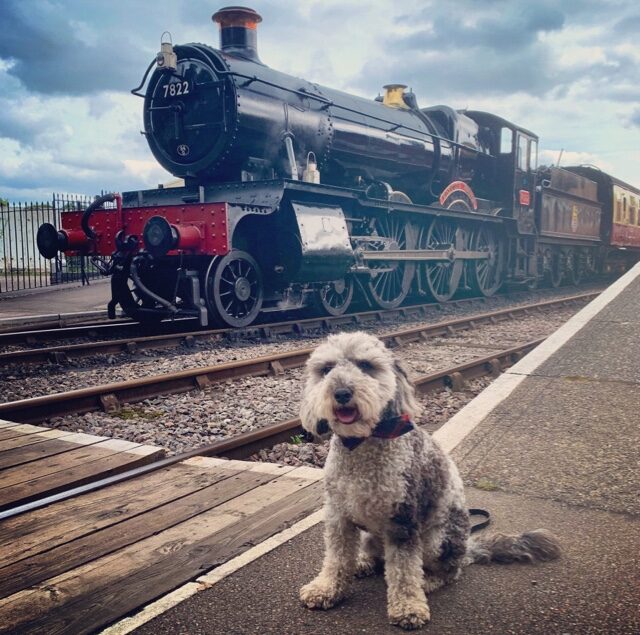
    Yoshi basks in the sun alongside Peckett & Sons 0-4-0T ‘Pectin’ at Yeovil Junction

    Every now and then, even in this internet age, a test train or light locomotive working manages to pass me by. Recently it was a top and tailed Class 73 test train which visited our local area when I was tucking into Sunday lunch. Last year I was thwarted in seeing a Class 56 in Dorset due to a traffic queue created by roadworks and because I had dinner in the oven. This last weekend I missed seeing Class 37 No. 37612 heading up a test train from Westbury to Dorchester West and return. I was having a lovely afternoon looking around a National Trust property near Yeovil (and yes, enjoying a cuppa) when the heritage loco passed by a few miles away. We are able to share the following photograph of the Class 37 working with grateful thanks to Jim Smith.

    The following video shows 37612, along with sister locomotive 37610, during a previous visit to Dorchester West on December 2nd 2020 working the 0820 Tyseley L.M.D. to Bristol High Level Siding test train. Last Sunday’s working was in beautiful bright sunlight, whereas this earlier visit clearly wasn’t.

    376212 Dorchester West 02/12/2020

    As well as visiting stately homes on Sunday, our morning was spent at the Yeovil Railway Centre which is situated on a site covering the turntable and the former Clifton Maybank branch adjacent to Yeovil Junction railway station. The event celebrated Peckett & Sons 0-4-0ST Works No. 1579 Pectin which formally returned to traffic on 20th March 2022. We enjoyed watching turntable displays and taking a train ride along the former Clifton Maybank spur.

    The first Yeovil Railway Festival organised by the South Western Main Line Steam Company was held on the 8th and 9th October 1994 and was opened by Jim Morgan, Director of Railtrack South West. Drummond Locomotive Society’s 0-4-4T Class M7 loco 30053 (as 30129) ran shuttles to Yeovil Pen Mill and trips to Maiden Newton while BR Standard Pacific No. 70000 ‘Britannia’ and examples of classes 47 (Lady Godiva from Waterman Railways), 33 and 37 were on display. S15 4-6-0 No. 828 hauled Pathfinder steam excursion, The Exe-Parrett (suitably adorned with parrot toy on the smoke box), through Yeovil from Bristol to Exeter and back to Bristol via Taunton on the Saturday and returned from Bristol for display on the Sunday. Before heading to Yeovil, our first video of the weekend sees 828 first at Westbury but also GWR Castle Class 4073 4-6-0 5029 ‘Nunney Castle’ working the London Paddington – Cranmore Capitals United Express rail tour organised by Flying Scotsman Services. You can also catch a glimpse of one of my favourite railway and wildlife artists David Shepherd with the train.

    M7 No. 30053 (as 30129) ran shuttles to Yeovil Pen Mill and trips to Maiden Newton

    Things didn’t run quite to plan for Pathfinder on the Sunday when the Dorset Docker rail tour hauled by a pair of Class 20 diesel locomotives en route to Weymouth and Weymouth Quay was deemed a failure at Yeovil Pen Mill when No. 20187 expired. Class 37 No. 37375 which had been on display at Yeovil Junction, working in multiple with 20075, was rostered to work the tour back as far as Westbury. The 37 was substituted for Class 47 No. 47475 which hauled the tour and the Class 20’s onward from Westbury to Wolverhampton. Our next video, filmed mostly on the Sunday captures a glimpse of the Class 37 and Class 20’s at Yeovil Pen Mill.

    On 4th and 5th October 1997 the second Yeovil Railway Festival was held, once again opened by Jim Morgan now Director of GB Railways. USA Tank No. 30075 was in the upside sidings whilst S15 No. 828 and M7 No. 30053 joined in once again taking turns at operating a shuttle service to Castle Cary. Class 20 No. D8188 was named “River Yeo” by Murray Brown, editor of Rail Express magazine. Two failed Class 73 locomotives, 73104 and 73128, were unofficially on display with an engineers train. On the second day Hertfordshire Railtours ran The Blackmore Vale 125 Special HST excursion from Paddington with power cars 43006 and 43185.

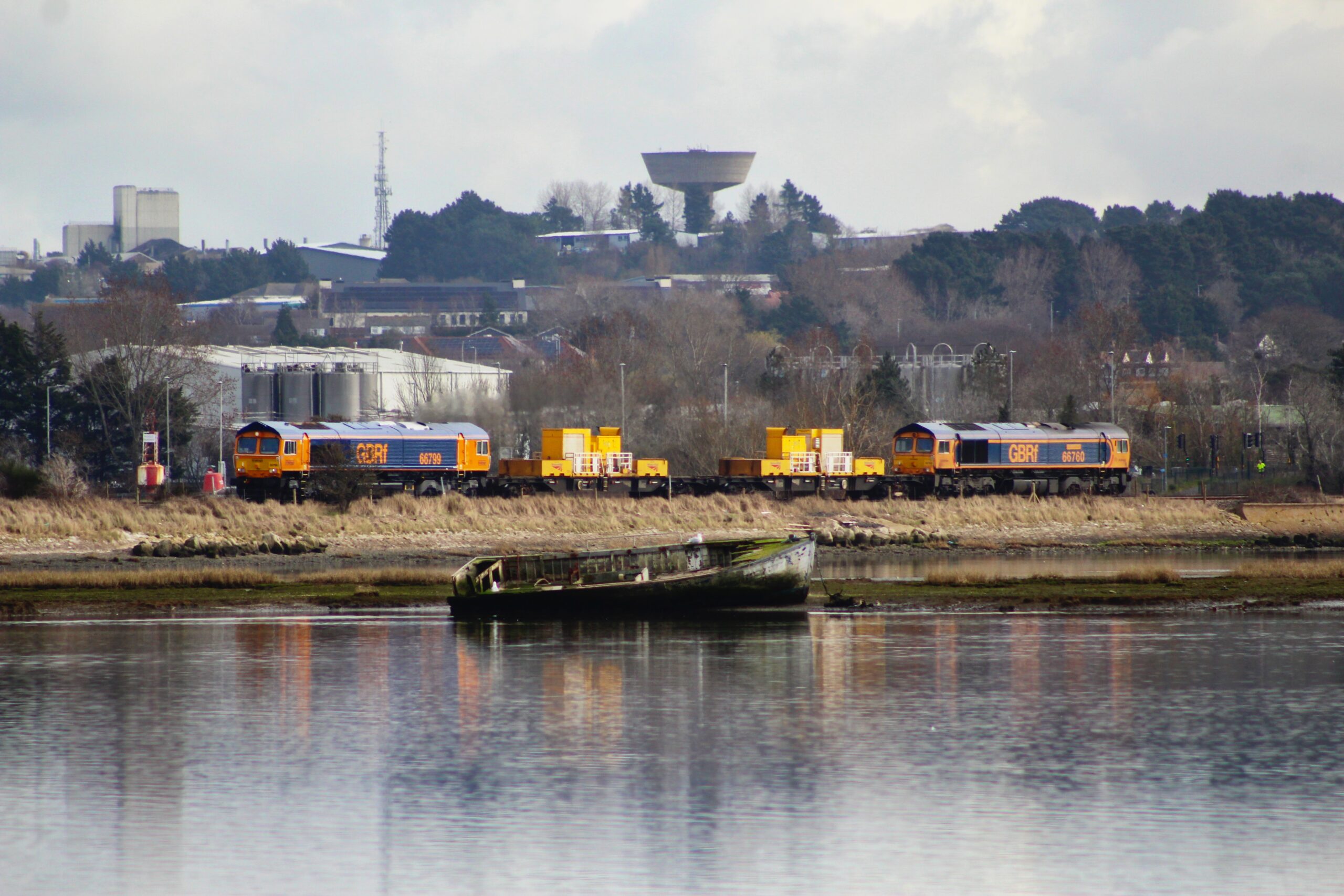
    This past week saw the return of the Snow & Ice Treatment Train (SITT) to the Bournemouth – Weymouth line with GBRf Class 66 locomotive No’s 66799 and 66760 ‘David Gordon Harris’ remaining in charge. We’ll share our video of these workings in our next blog.

    We saw the SITT leave Totton Yard on Thursday 17th March 2022 before we headed off to Eastleigh to visit an old friend and visit McDonald’s. While there, we took the opportunity to spend a few hours watching trains before and after lunch. There’s a video after this collection of photographs.

    Class 59/2 No. 59205 was derailed at Eastleigh for over a week following an incident involving track spread.
    GBRf Class 66 No. 66764 working 1150 Southampton Western Docks to East Midlands Gateway passes 444036 on a London Waterloo to Weymouth service – Eastleigh 17/03/2022

    Class 701 testing continues, as evidenced in the image below as 701037 waits for a clear road before departing from Eastleigh.

    Freightliner Class 66 No. 66572working 0536 Garston FLT to Southampton MCT – Eastleigh 17/03/2022
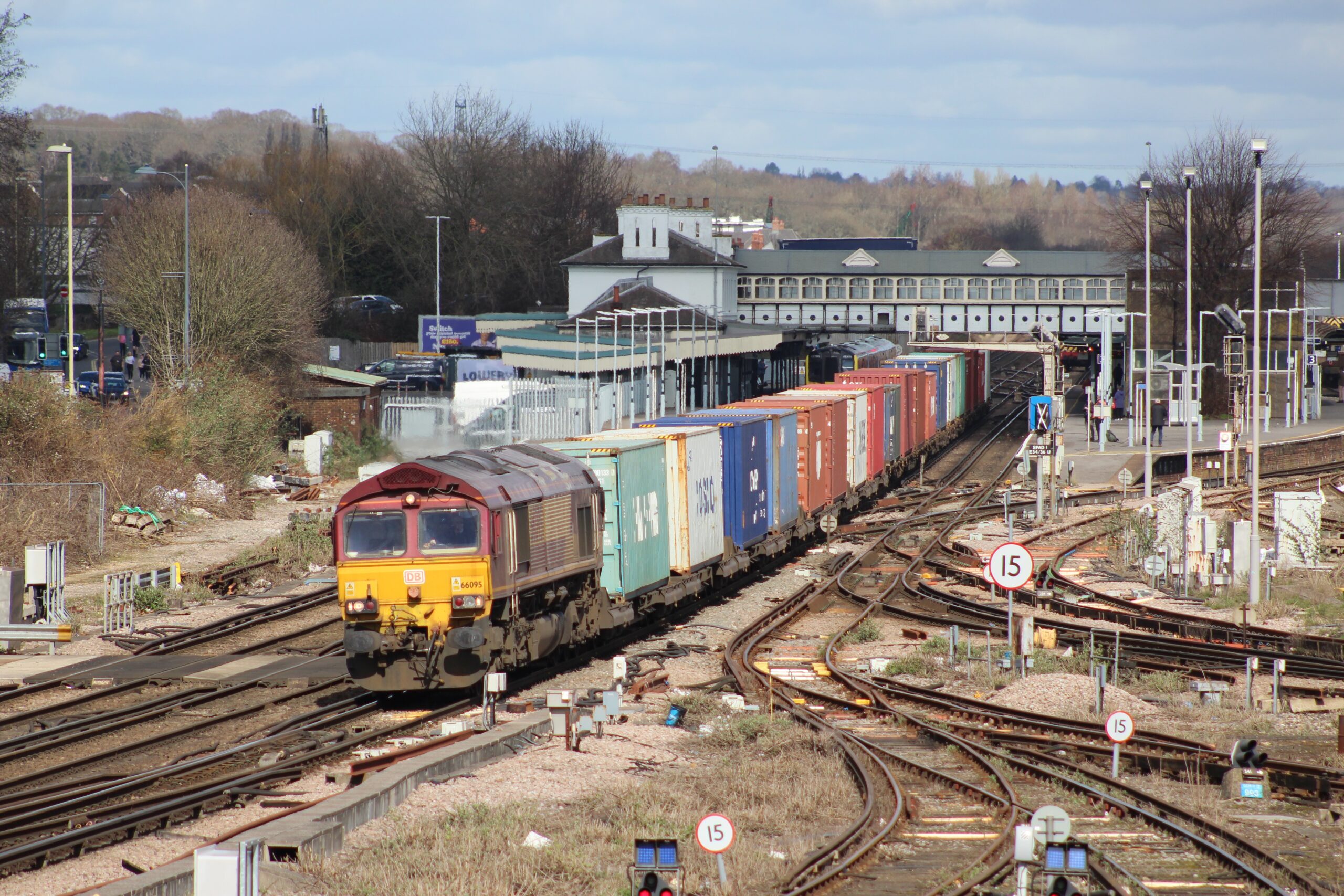
    66095 working 0514 Wakefield Europort to Southampton western Docks Berth 109 – Eastleigh 17/03/2022
    Class 67008 shunting MK4 stock – Eastleigh 17/03/2022
    66792 working 4Y19 1230 Mountfield Sidings (GBRf) to Southampton Western Docks – Eastleigh 17/03/2022
    66522 working 0931 Crewe Basford Hall SSM to Southampton MCT – Eastleigh 17/03/2022

    In other local news, Swanage Railway have announced the postponement of their Summer 2022 planned 90 selected day trial of a Wareham to Swanage and Corfe Castle service using heritage British Railways diesel multiple units because of ‘challenging trading conditions and economic uncertainty. Plans are now being made to run the trial in 2023.

    Swanage Railway heritage DMU seen at Norden on 3rd January 2022 with a train celebrating the last BR train on the branch

    Fifty historic railway structures originally earmarked for demolition or infilling may be spared after an independent review of National Highways plans found that they could be readily preserved for active travel schemes. The government ordered review carried out by Sustrans concluded that two-thirds of the 75 structures could be useful for use as part of the National Cycle Network (NCN) or as local walking and cycling routes.

    One such bridge deemed useful for the NCN is the bridge which carried the former Bridport branch line at Barrowland Lane, Toller Porcorum. Local residents were left angry last year when National Highways felled trees on land next to the disused bridge. The Historical Railways Estate Group, made up of engineers, sustainable transport advocates and greenway developers – want to use the bridge in its ambitious plans to develop a sustainable railway and cycle link from West Bay to Maiden Newton.

    The images below show both ends of the proposed cycle / walk way; Maiden Newton and WestBay.

    For our final video clip this time, we have included a brief view of the last day of operation on the Bridport Branch filmed by John Chappell showing a diesel multiple unit formed using No.’s 55033, 51345 + 59497 + 51387 which ran the final services on the line. This silent cine film also offers a glimpse of Southern Electric Group rail tour The Dorset Dawdler which utilised Diesel Electric Multiple Unit No. 1131. Passengers on this tour were able to transfer to the DMU service for a trip to Bridport and back. The SEG DEMU tour also took in the Fawley branch and Weymouth Quay Tramway earlier in the day.

    That’s all for this week. Thanks for reading and hopefully we’ll be back with an update in seven days.

  • Island Line Adventure

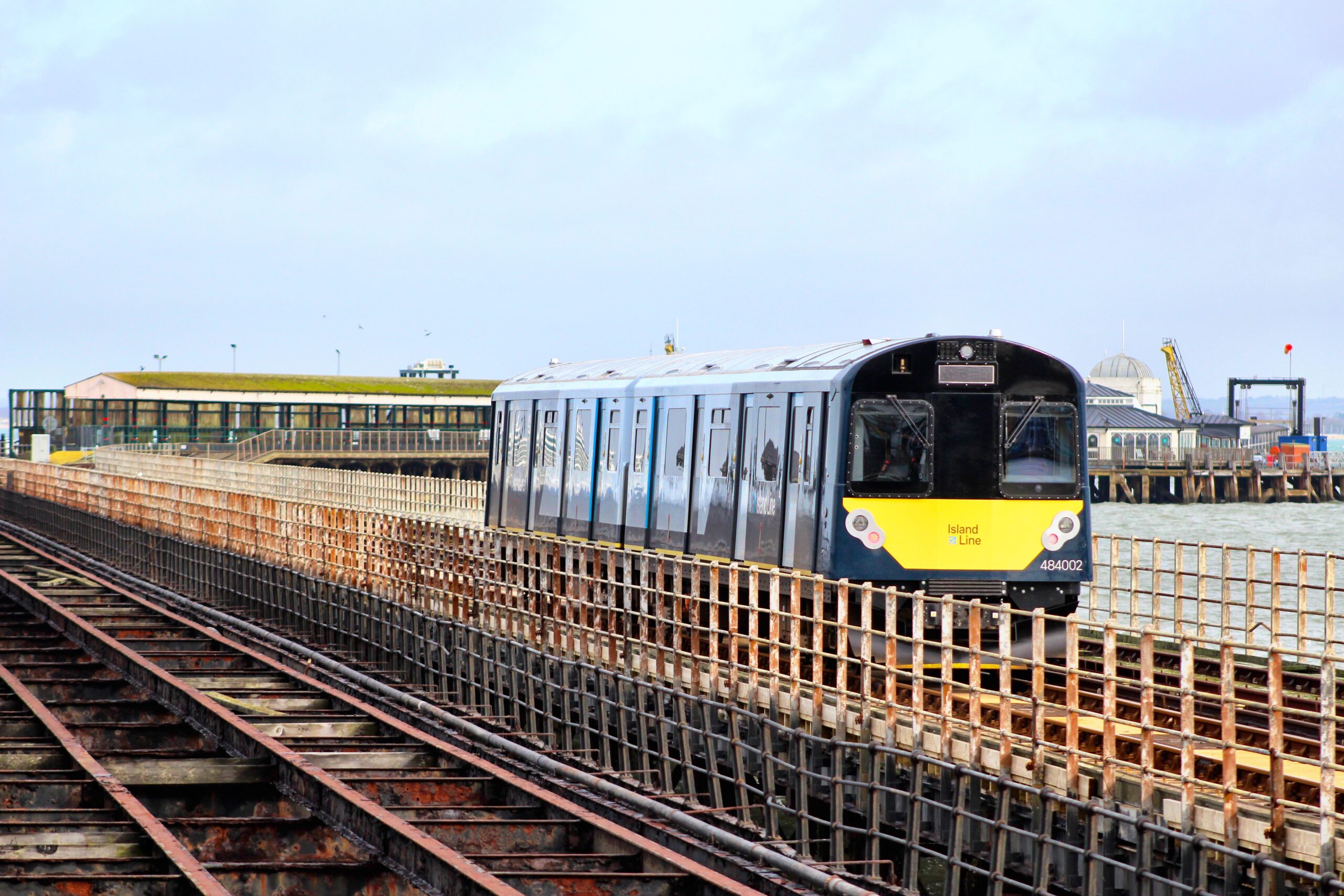
    Yoshi at Ryde Pier Head in the company of Class 484 unit No. 484002

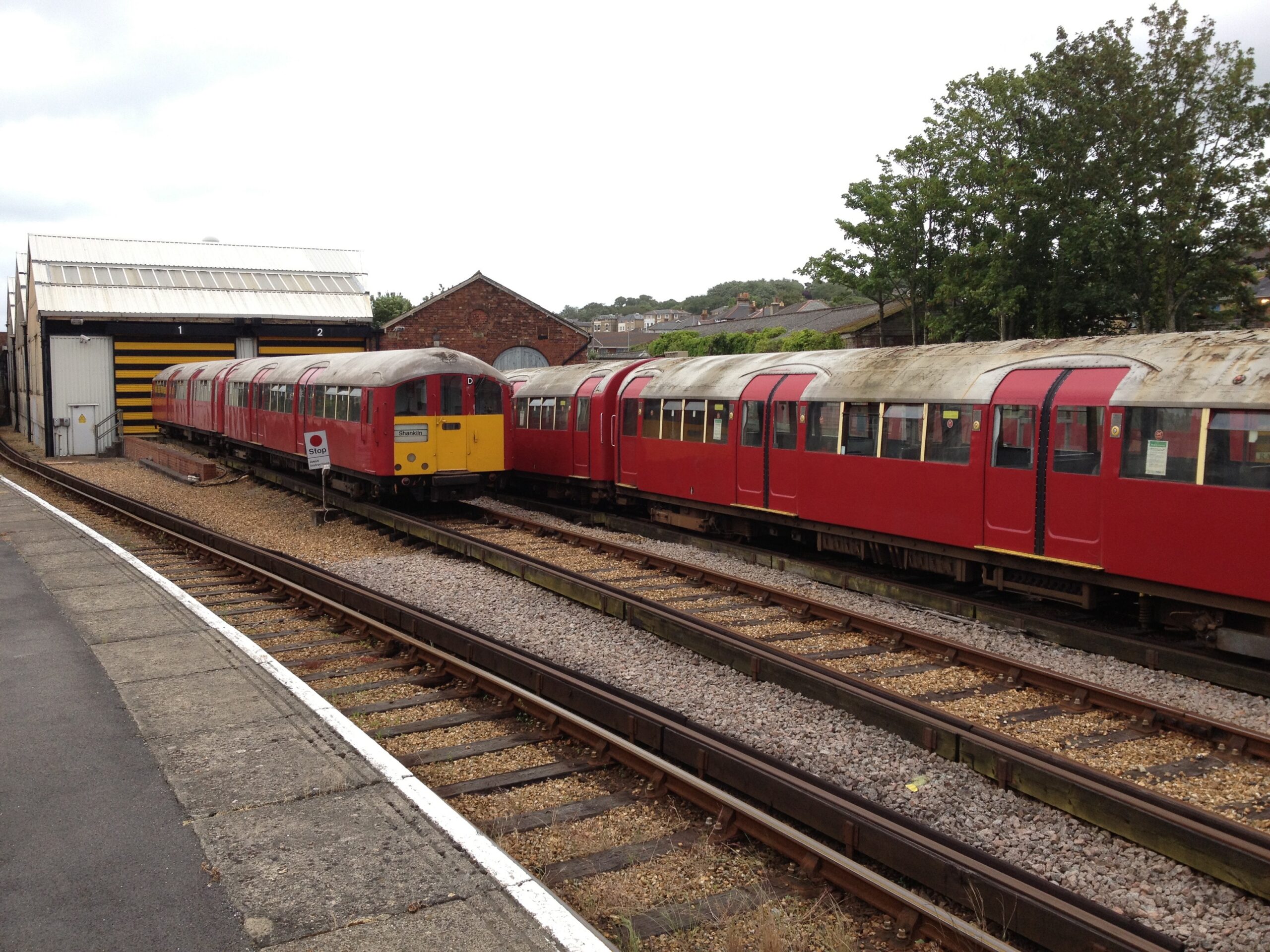
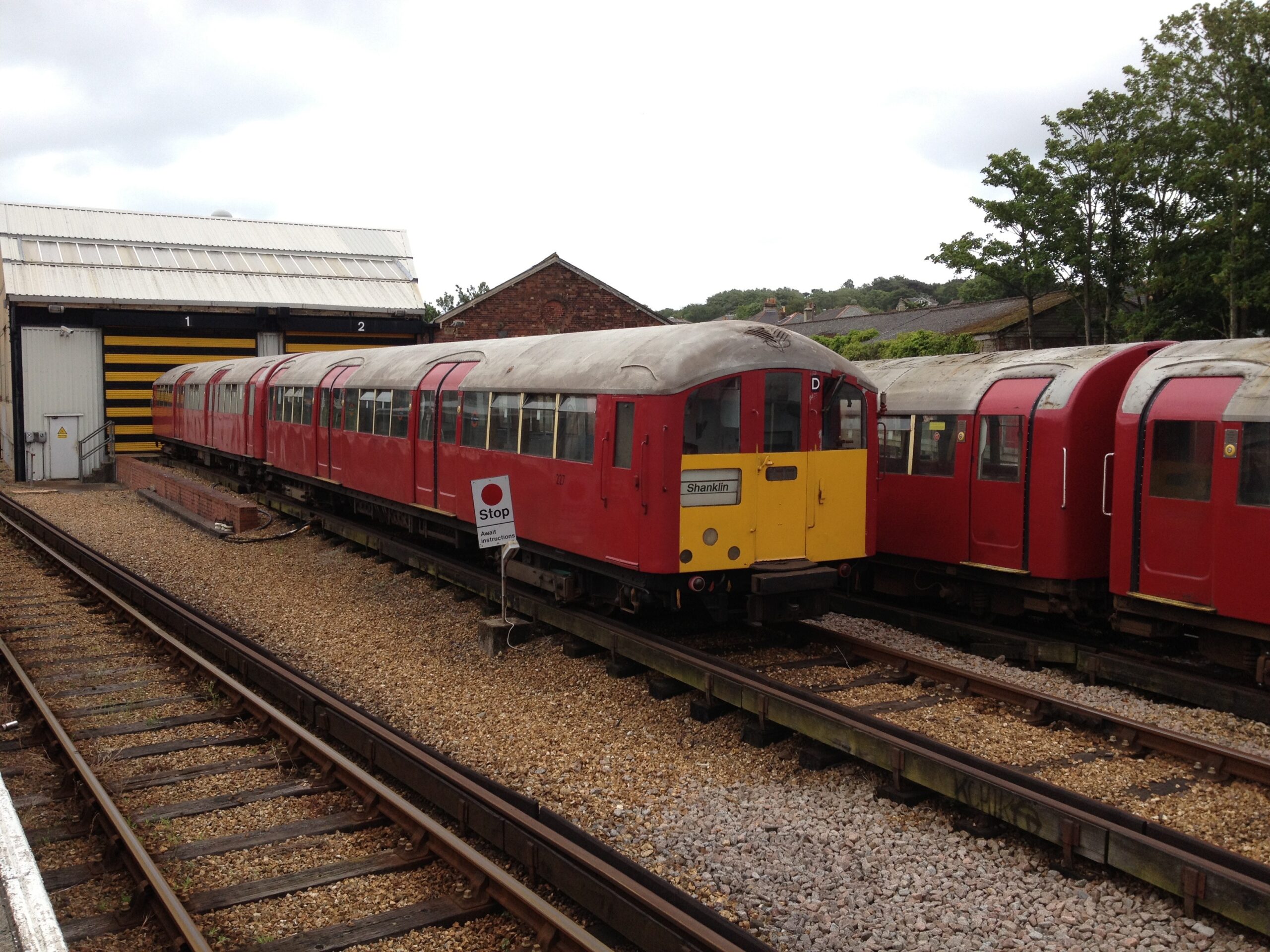
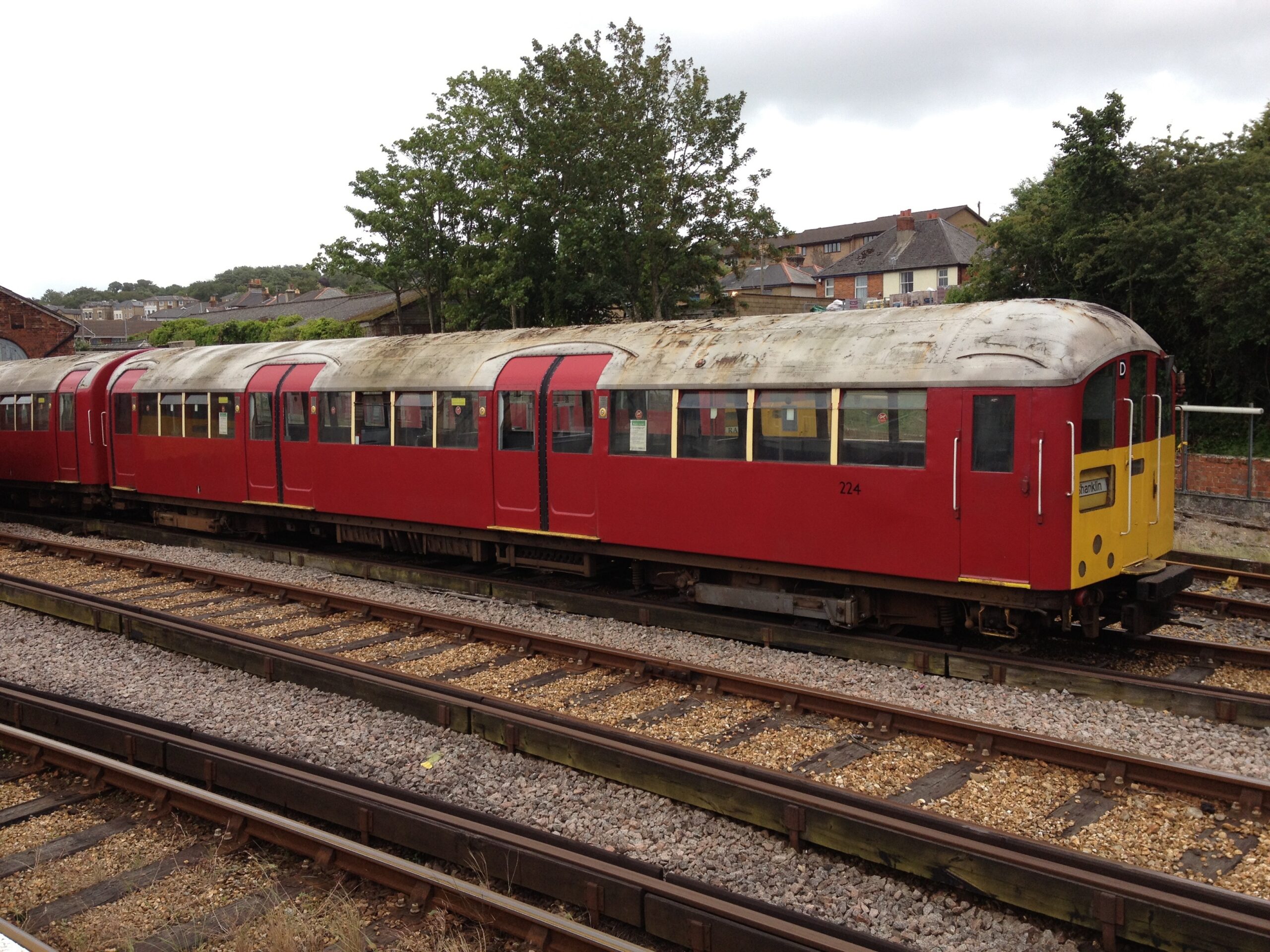
    We spent last weekend enjoying the delights of the Isle of Wight. As part of our travels, we took a trip from Shanklin to Ryde Pier Head on the recently upgraded Island Line which is operated by South Western Railway (SWR). The Island Line is 8.5 miles long and runs between Ryde and Shanklin. Because of clearance height issues along the route, notably in Ryde Tunnel, limited locomotives and rolling stock could be employed on this route. I was planning on visiting the Island in 2020/21 prior to the improvement works taking place, but Covid measures prevented travel and I was unable to capture the last days of the Class 483 trains. My previous visit to Ryde St Johns was in June 2013 when I snapped the following images of the ex-1938 London Underground tube stock on the depot. These units were extensively refurbished for use on the Isle of Wight line at Eastleigh Works between 1989 and 1992.
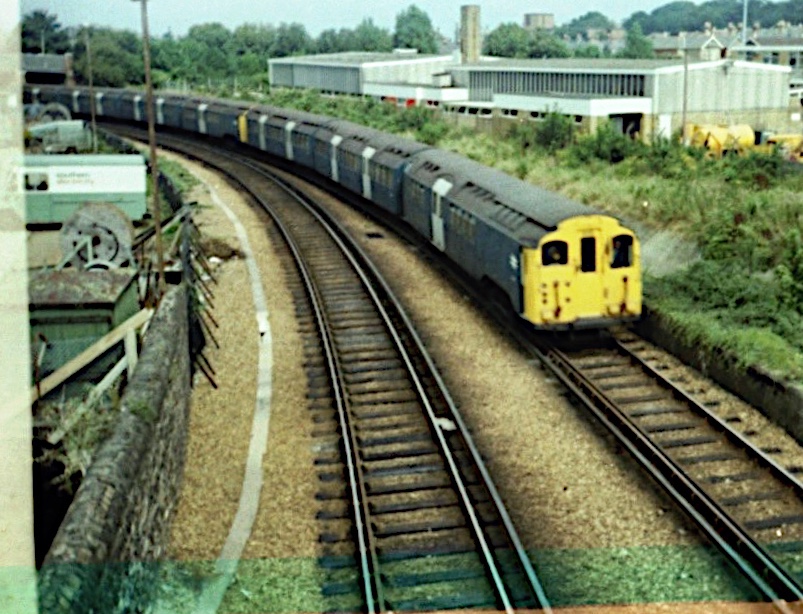
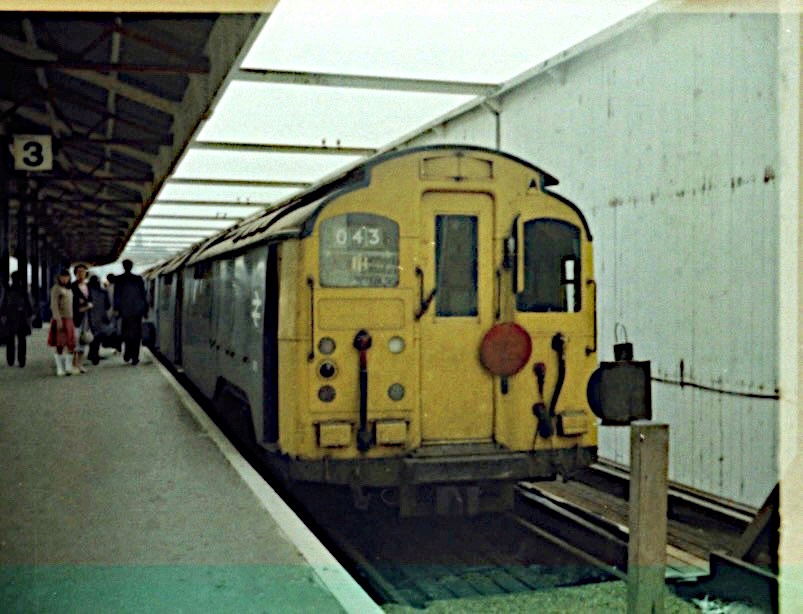
    The Class 483’s replaced the even older and life-expired Class 485 ( or 4VEC / 5VEC) and 486 (3TIS / 2TIS) units which were introduced to the island in 1967 and had been converted from 1923 standard tube stock built for use on the London Electric Railway. At the time of their introduction on the Isle of Wight these trains were already over forty years old but allowed for the phasing out of steam locomotives on the line. I travelled on these trains in August 1980 and took these photos with my treasured Kodak 110 camera.

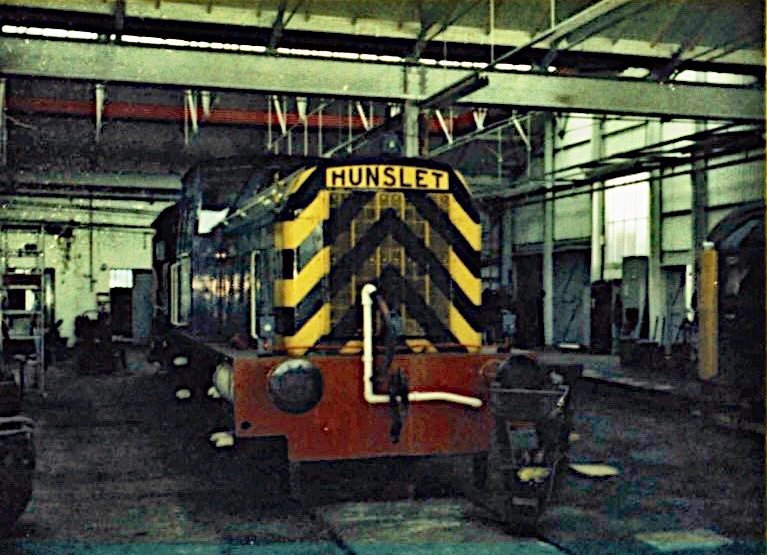
    The main purpose of the 1980 trip was to track down the elusive Class 05 shunter which was at that time unique on British Rail. We found it hiding at the back of the shed at Ryde St Johns. The locomotive is now preserved on the Isle of Wight Steam Railway which was unfortunately not open for the 2022 season during our stay on the island.

    There are five ‘new’ two-car Class 484 trains which were converted by Vivarail using London Underground D78 stock originally built in the late 1970’s / early 1980’s by Metero-Cammell. The 484’s are based on the Class 230 diesel multiple unit.

    230004 seen at Bedford 15/05/2021

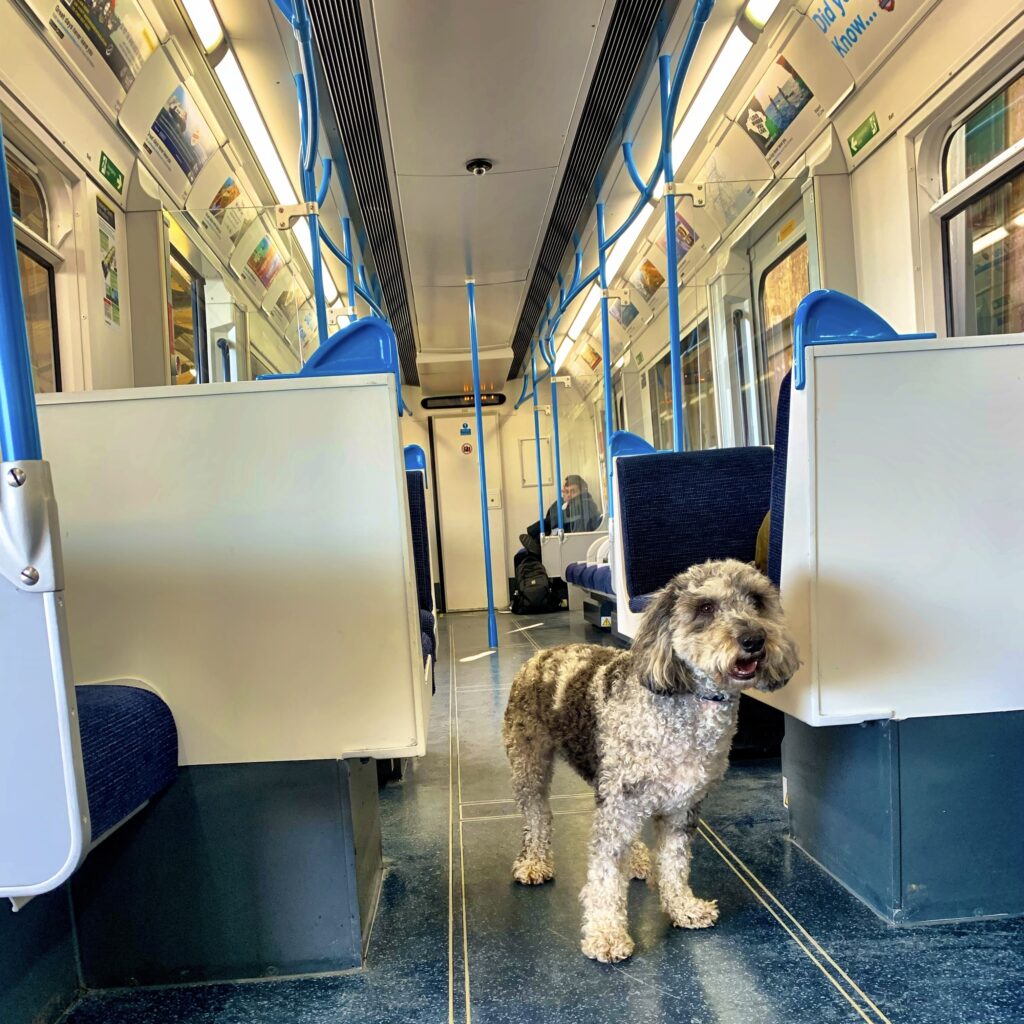
    The Island Line closed in January 2021 for the £26m upgrade to take place. Work was originally scheduled to take until April 2021 for its completion, but because of the Covid pandemic and teething problems with onboard software the line didn’t reopen to passengers until 1st November 2021. As part of the upgrade, platforms were raised or tracks lowered at five stations to improve accessibility and re-engineering of the track considerably improved the standard of travel and ensured a smooth ride. We found the new interiors spacious and clean with charging sockets available at most seats.

    Class 484 No. 484002 heading to Ryde Pier Head 13/03/2022

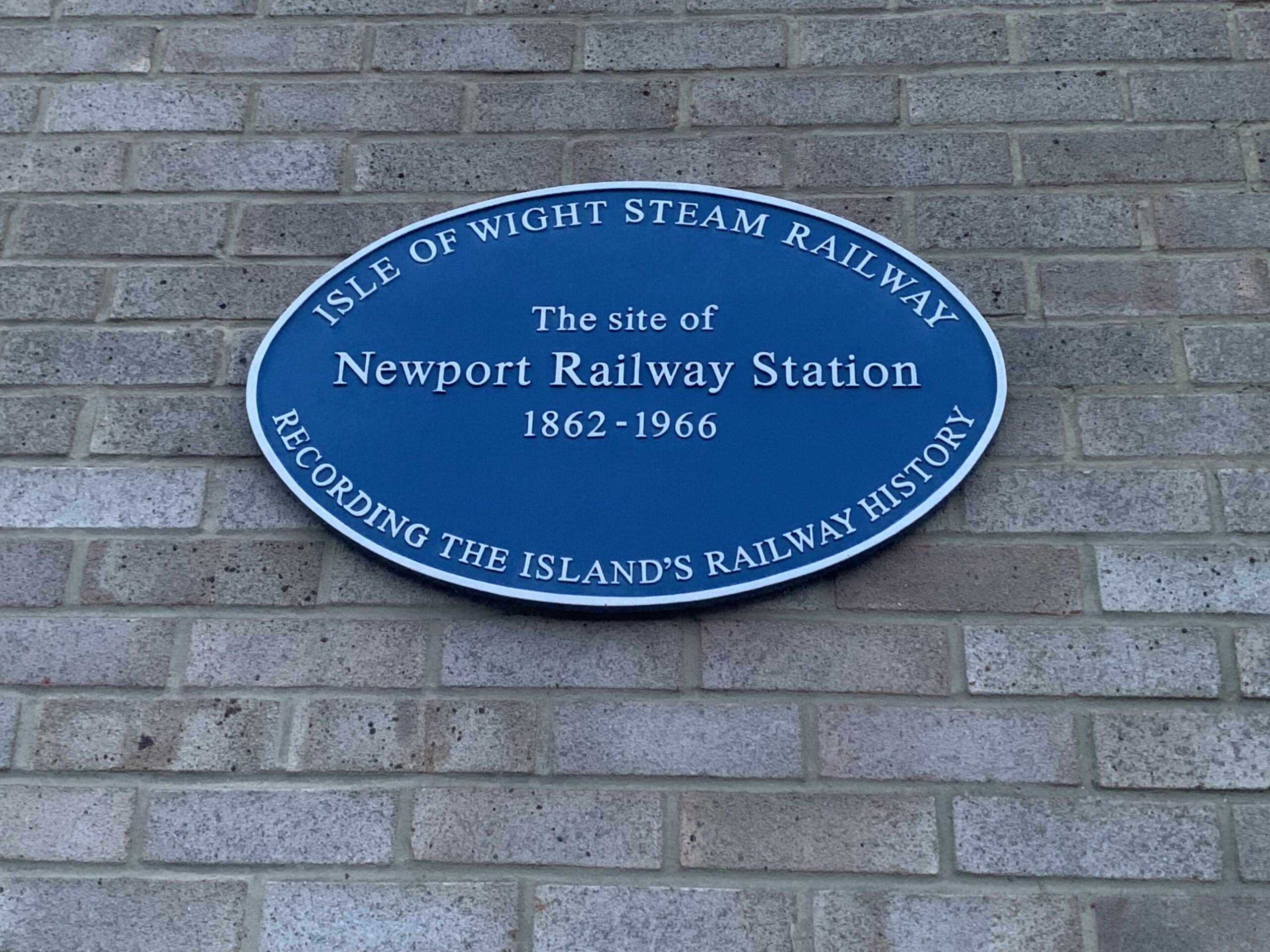
    The Isle of Wight has a great deal of railway history and more by accident than design we came across the location of the former railway stations at Newport, Freshwater and Yarmouth.

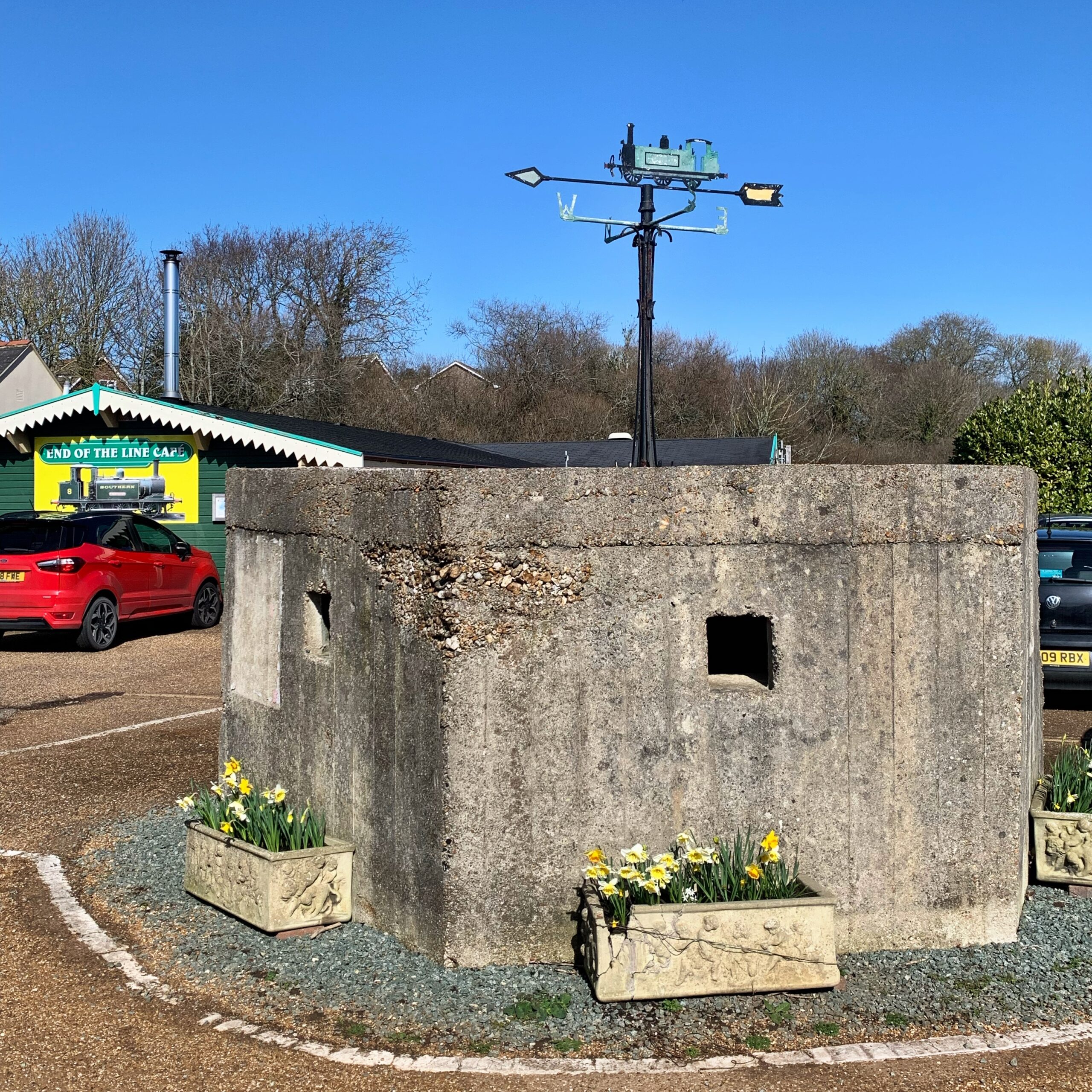
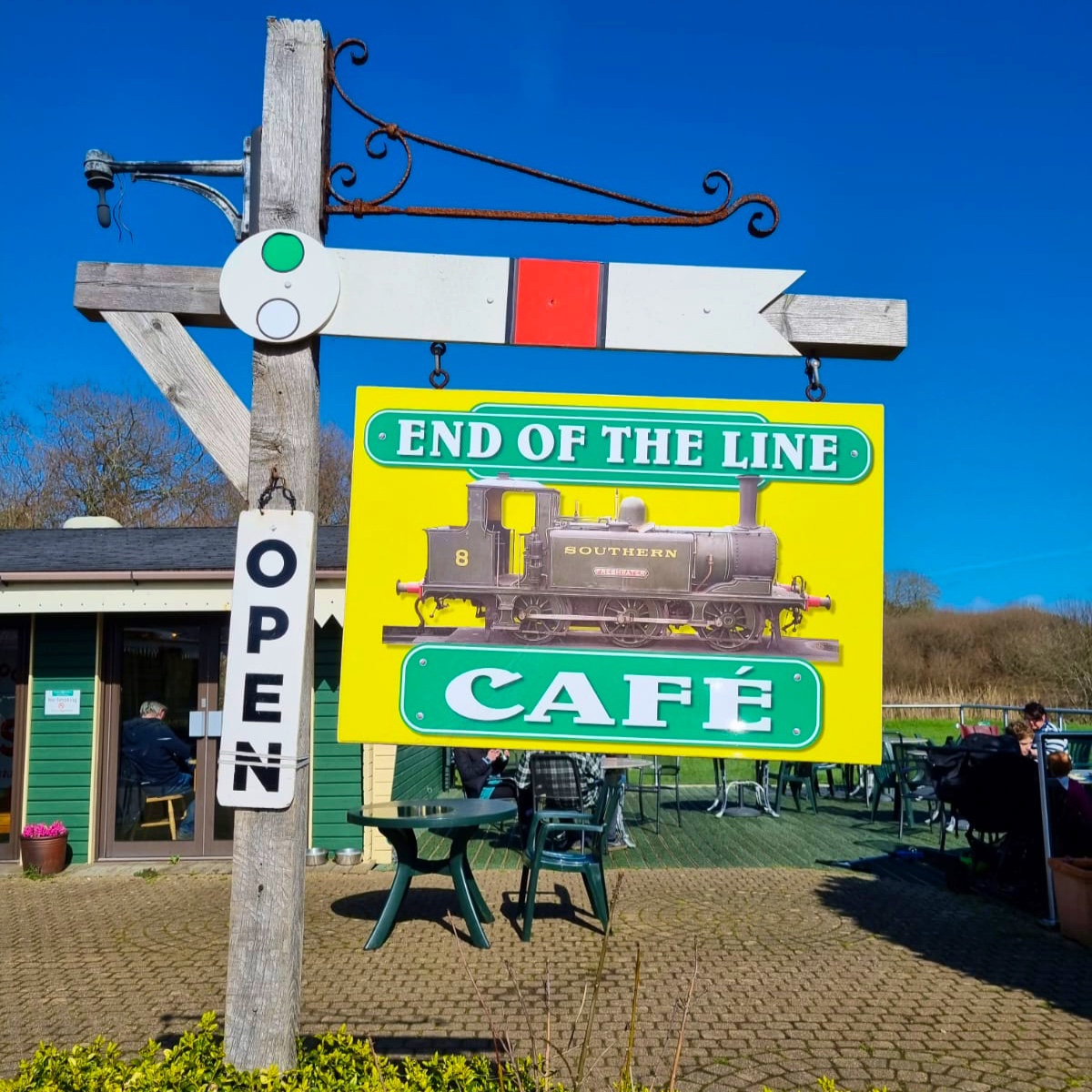
    We enjoyed a light lunch at the ‘End Of The Line Cafe’ in Freshwater on Saturday, Yoshi sharing a delicious sausage baguette with his mum while I kept all my vegetable soup to myself.

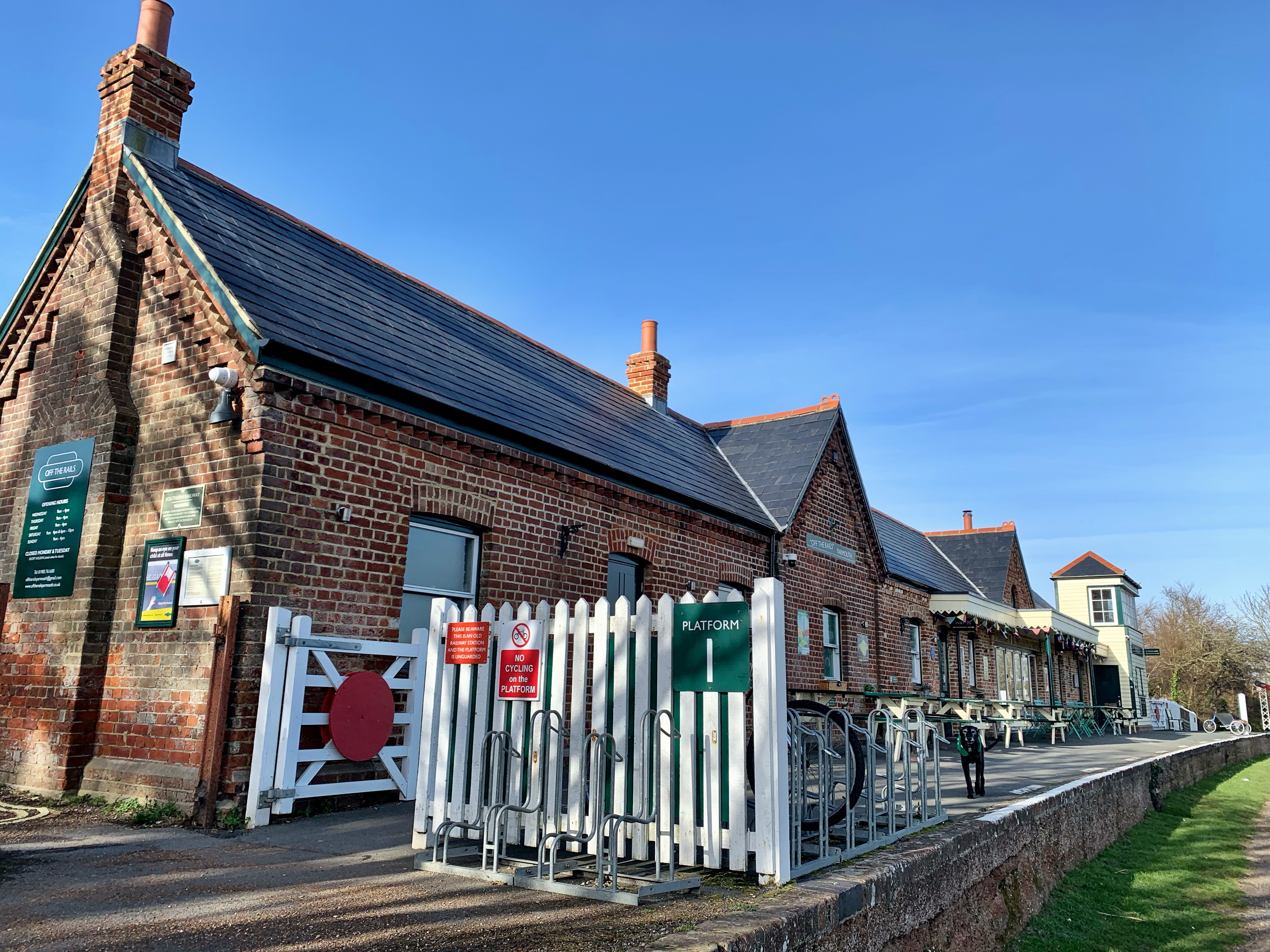
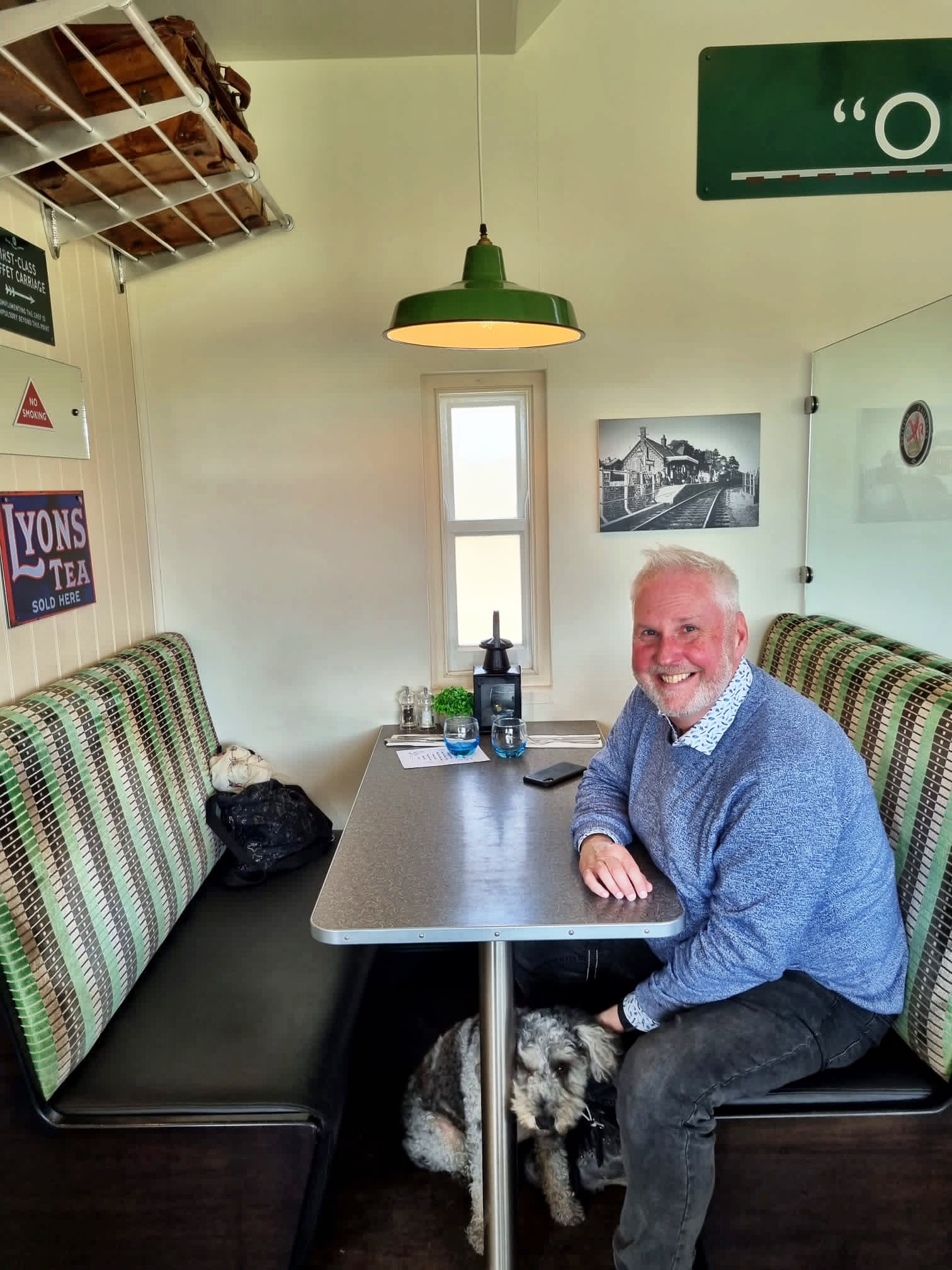
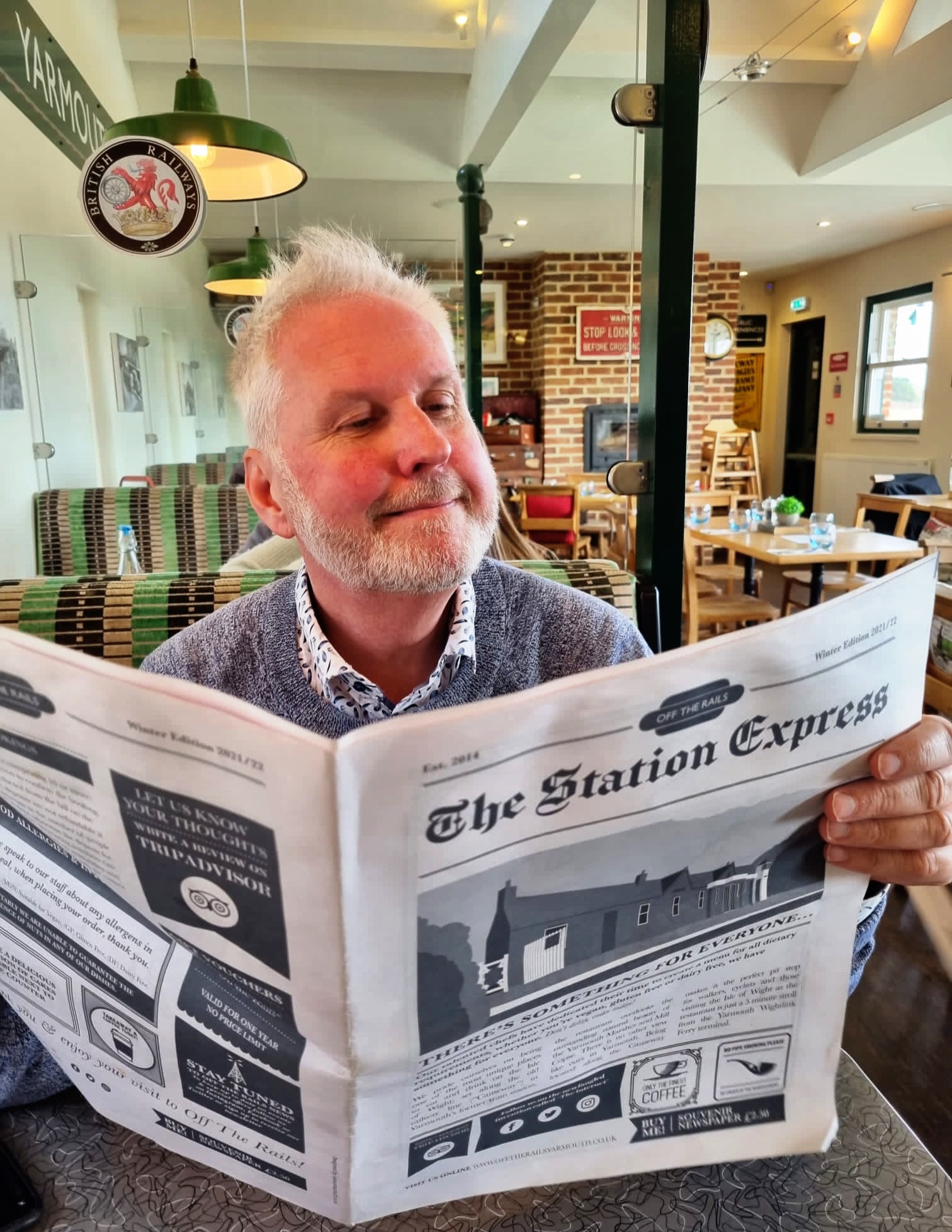
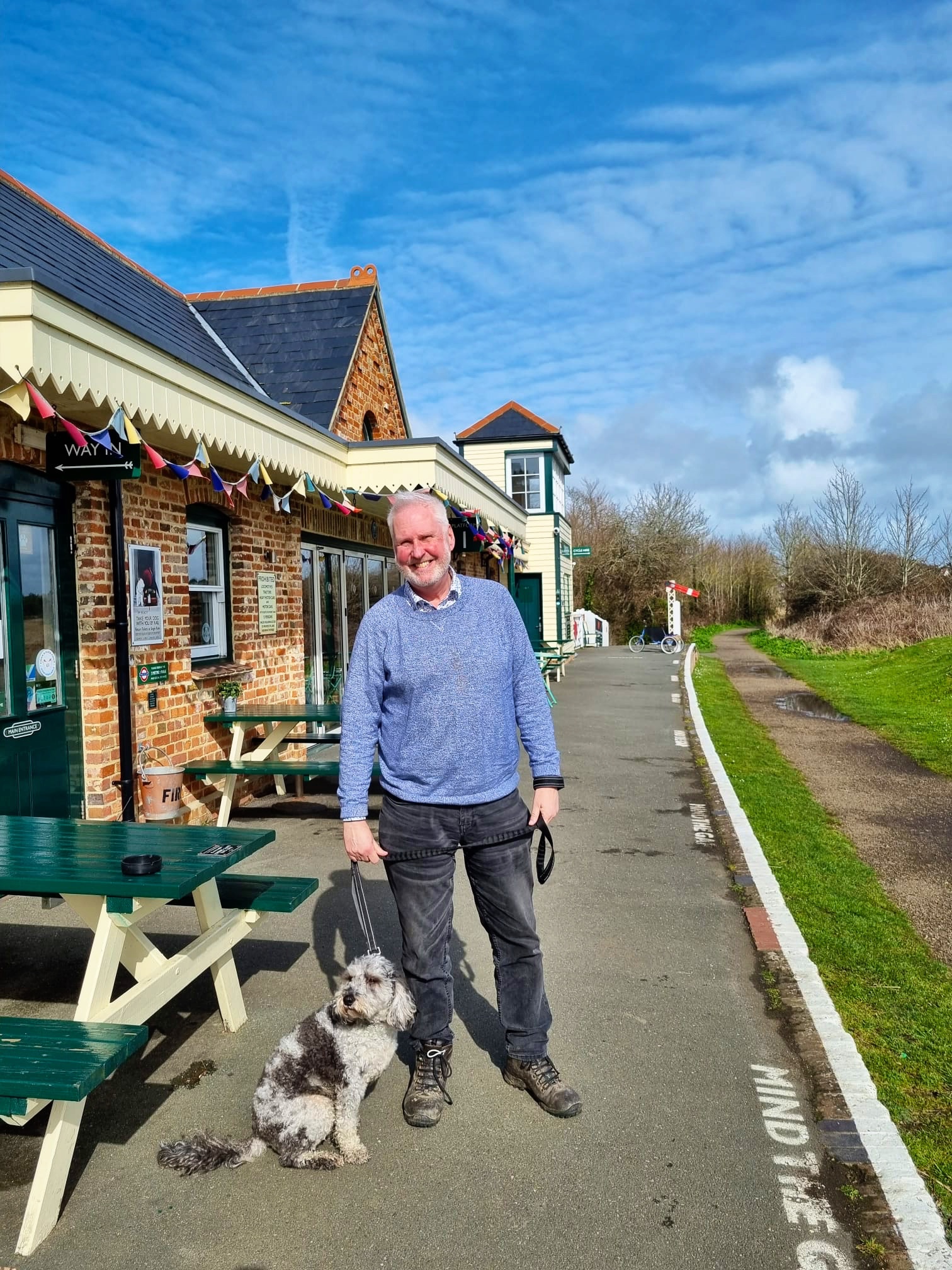
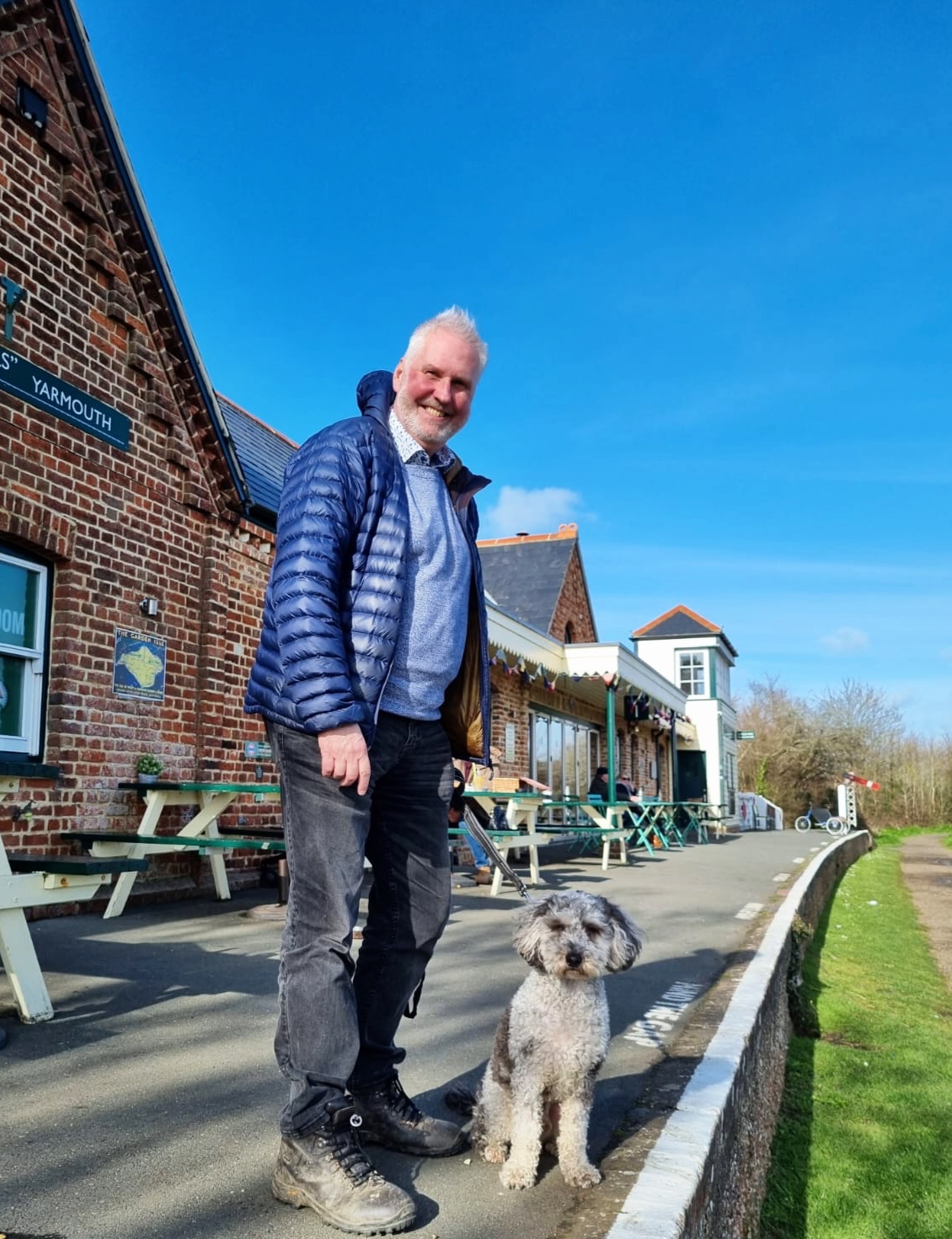
    We can totally recommend ‘Off The Rails‘, an award winning restaurant which inhabits the station building at Yarmouth. Our Sunday lunch was exceptional and the dog snack menu was welcomed by Yoshi who enjoyed another tasty sausage.

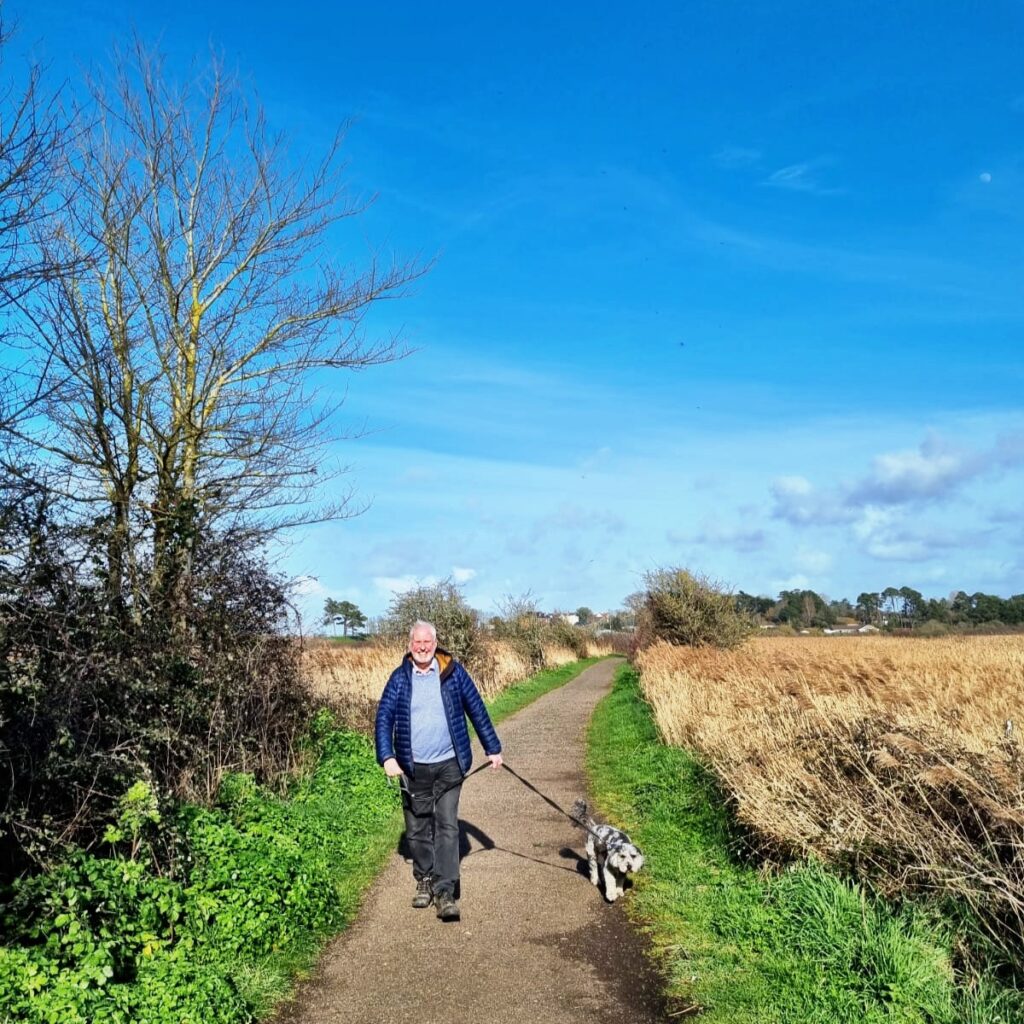
    Afterwards we walked off the calories taking a stroll along the trackbed of the former Newport, Yarmouth and Shanklin railway.

    After a slow start to the week in review, Monday 14th March could be described as something of a bumper day for unusual traction on the Bournemouth to Weymouth line.

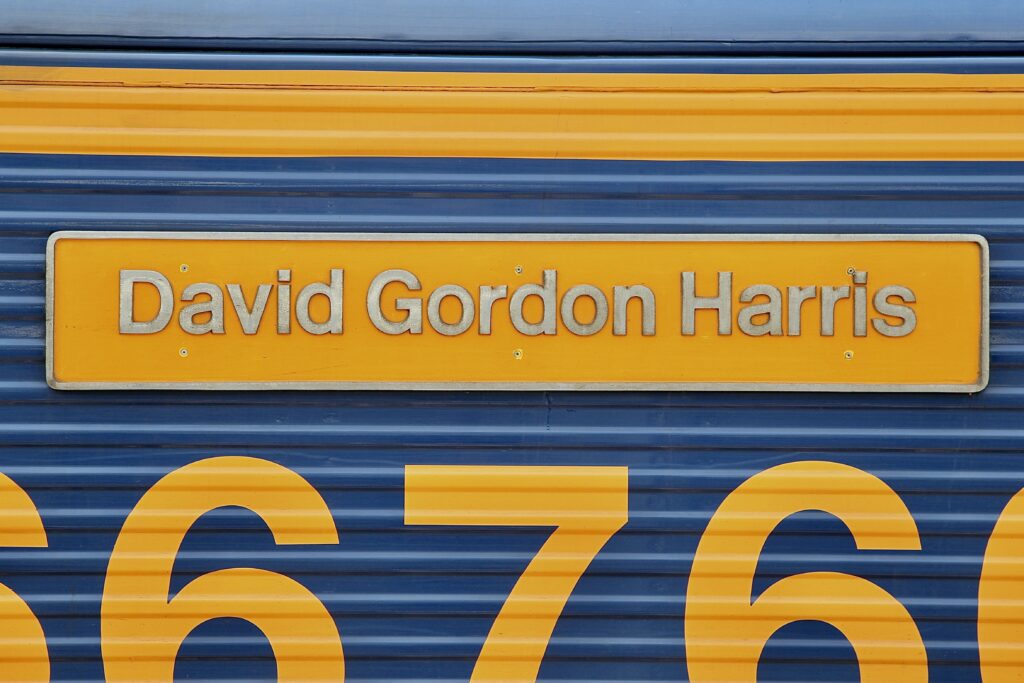
    Namplate detail of 66760 (photograph courtesy of @da_buckley967)

    Our marvellous Monday kicked off with a visit of GBRf Class 66 top and tailed Snow & Ice Treatment Train. Railhead treatment trains are always a favourite in this dog house so it was great to see this working after an absence of a few months.

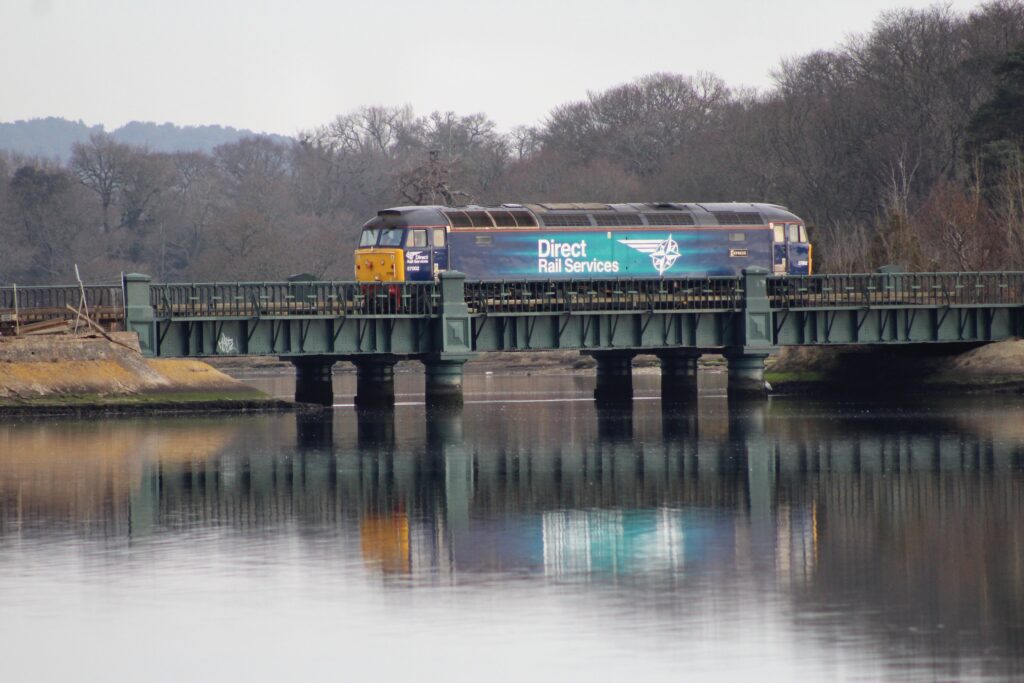
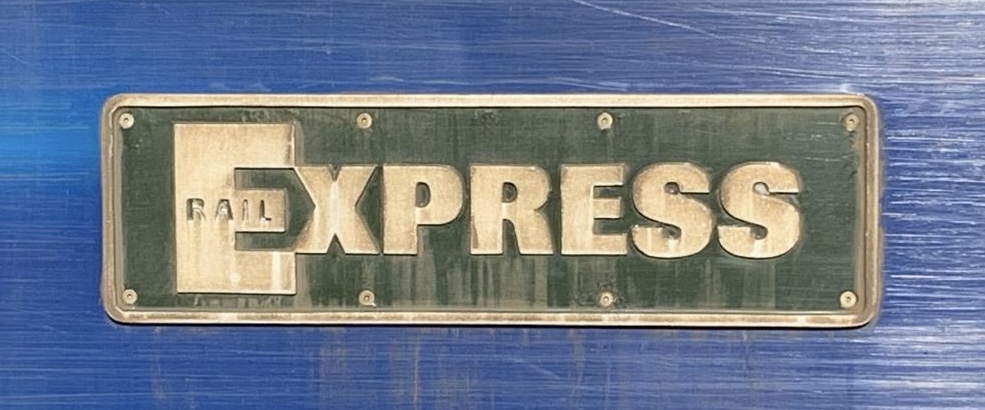
    Monday 14th and Tuesday 15th saw an interesting route learning move from Direct Rail Services (DRS) with Class 57 No. 57002 ‘Rail Express’ working from Norwich to Southampton via Weymouth in connection with a few future train movements from the area.

    The Class 57 was re-engineered from redundant Class 47 locomotives by Brush Traction of Loughborough between 1998 and 2004. The locos were given reconditioned Electro-Motive Diesel engines and traction alternator’s as fitted to the Class 56 to improve reliability and performance. 57002 is part of the 57/0 variant specifically designed for freight operations. DRS currently have nine Class 57’s on their books.

    57002 ‘Rail Express’ Holes Bay, Poole 15/03/2022
    Namplate detail of 57002 (photograph courtesy of @da_buckley967)

    Along with the 57/0’s there are two other sub-classes of Class 57; 57/3 and 57/6 both primarily intended for passenger use.

    57005 Cardiff 24/02/2010

    Virgin West Coast Trains utilised 16 Class 57’s for rescue duties and for dragging electric locomotives on routes with no overhead wires with the first locomotive leased from Porterbrook delivered in 2002. All were handed back by the end of 2012 as they were no longer required.

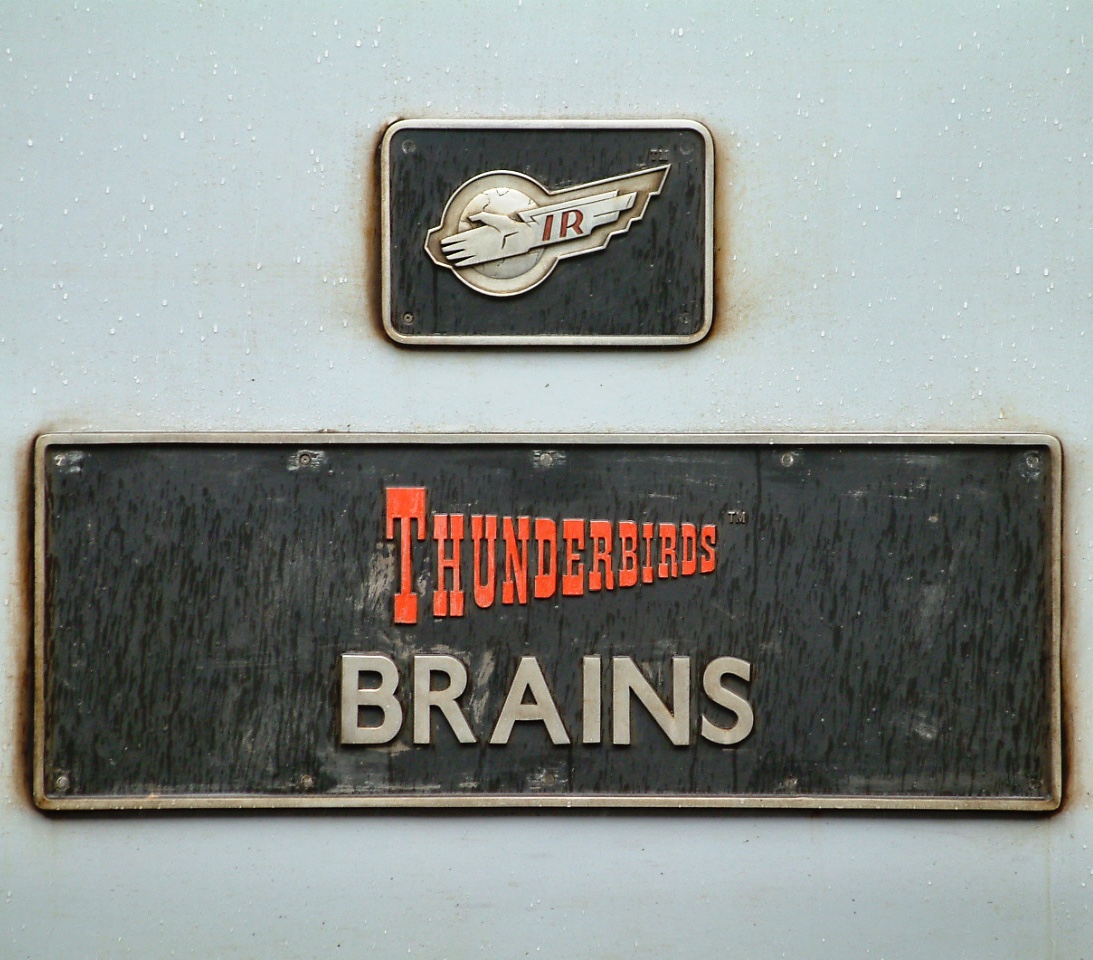
    To acknowledge their role as rescue locomotives, Virgin named their Class 57’s after elements from Gerry Anderon’s Thunderbirds TV series and in addition each engine carried an International Rescue logo above the nameplate. The next few images show two of he Thunderbird locomotives which were hired in by First Great Western to work a Taunton to Cardiff Central diagram which commenced in December 2009. The 57’s worked in pairs top and tailing stock sourced from Riviera Trains. The sets were serviced at Bishops Lydeard on the West Somerset Railway on weekdays, returning to Cardiff for maintenance at the weekends. However, the 57’s and coaching stock proved troublesome and the contract ceased in July 2010.

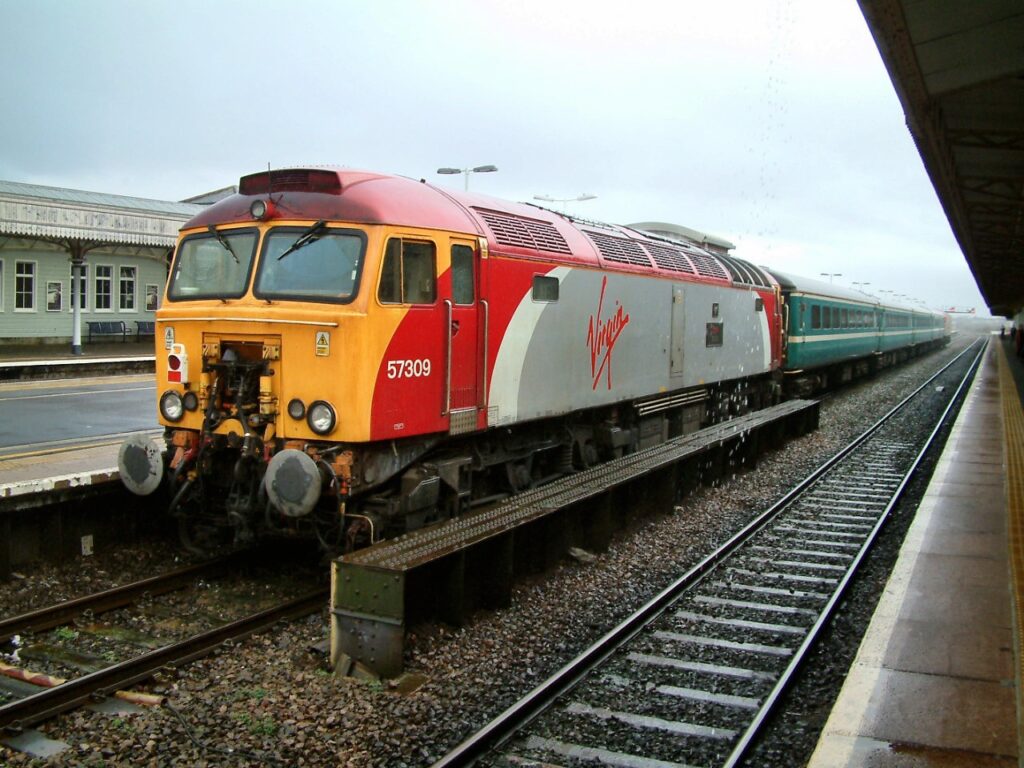
    57309 ‘Brains’ Taunton 24/02/2010
    57307 ‘Lady Penelope’ Taunton 24/02/2010
    57309 ‘Brains’ and 57307 ‘Lady Penelope’ at Bristol Temple Meads 24/02/2010

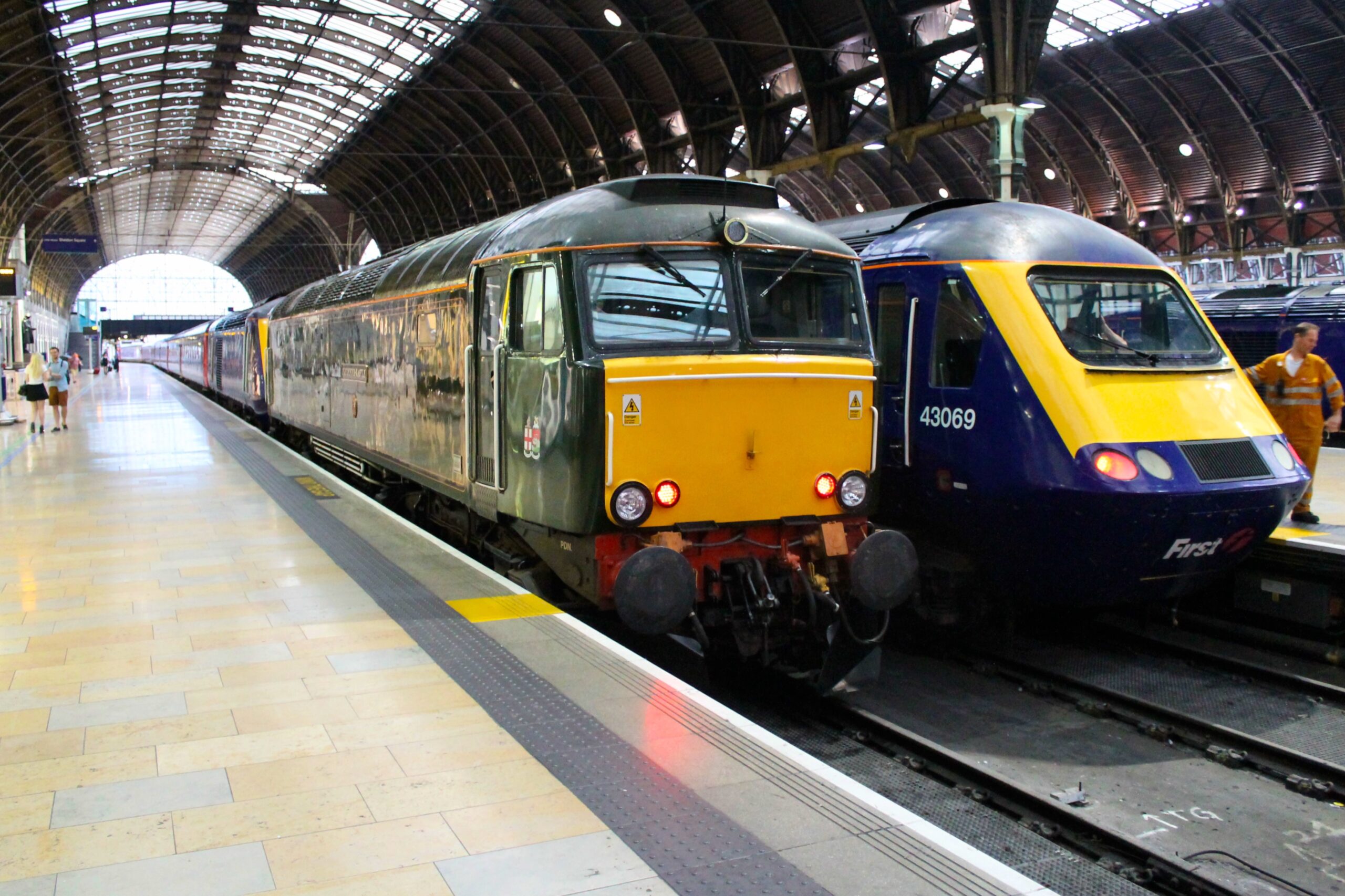
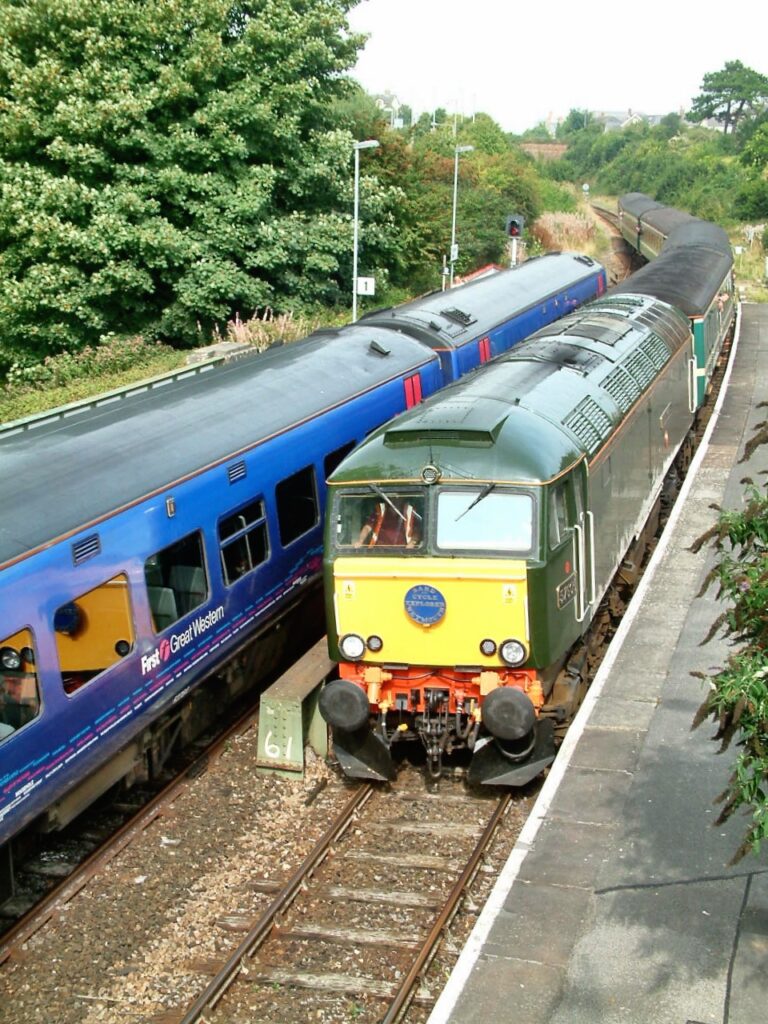
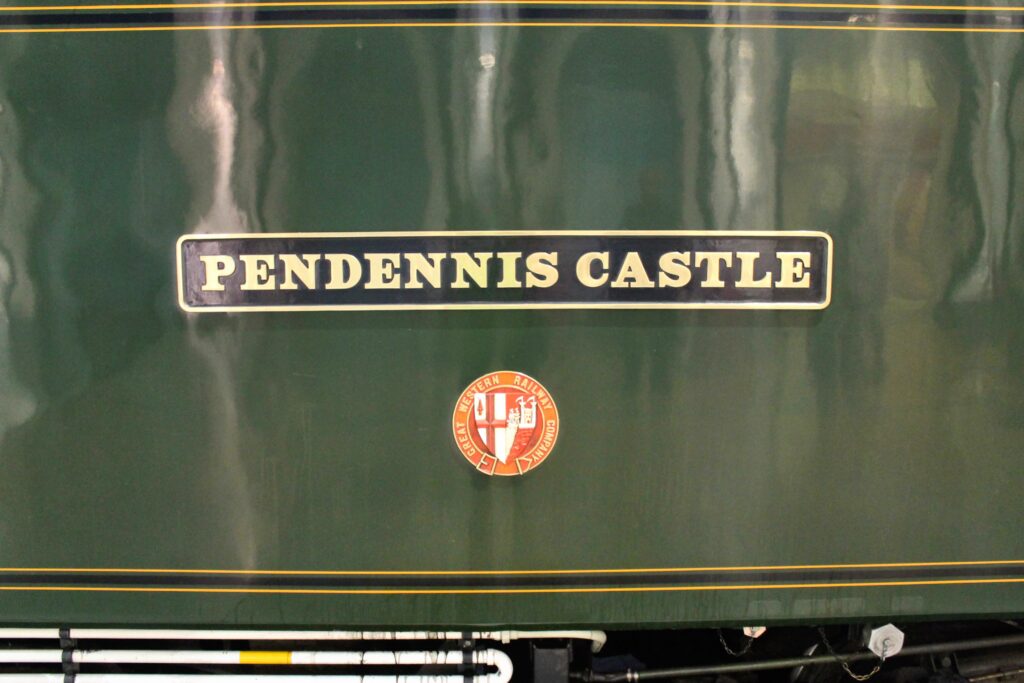
    Great Western Railway (GWR) operate four Class 57/6 locomotives which were all named after castles in the Devon and Cornwall area in which they operate, mostly on the Night Riviera sleeper service between London Paddington and Penzance. In June 2010 No. 57604 ‘Pendennis Castle’ was out-shopped in a lined Brunswick green livery to celebrate the 175th anniversary of the original Great Western Railway.

    57604 ‘Pendennis Castle’ at Dorchester West 04/09/2010
    Nameplate of 57604 ‘Pendennis Castle’ London Paddington 27/03/2013

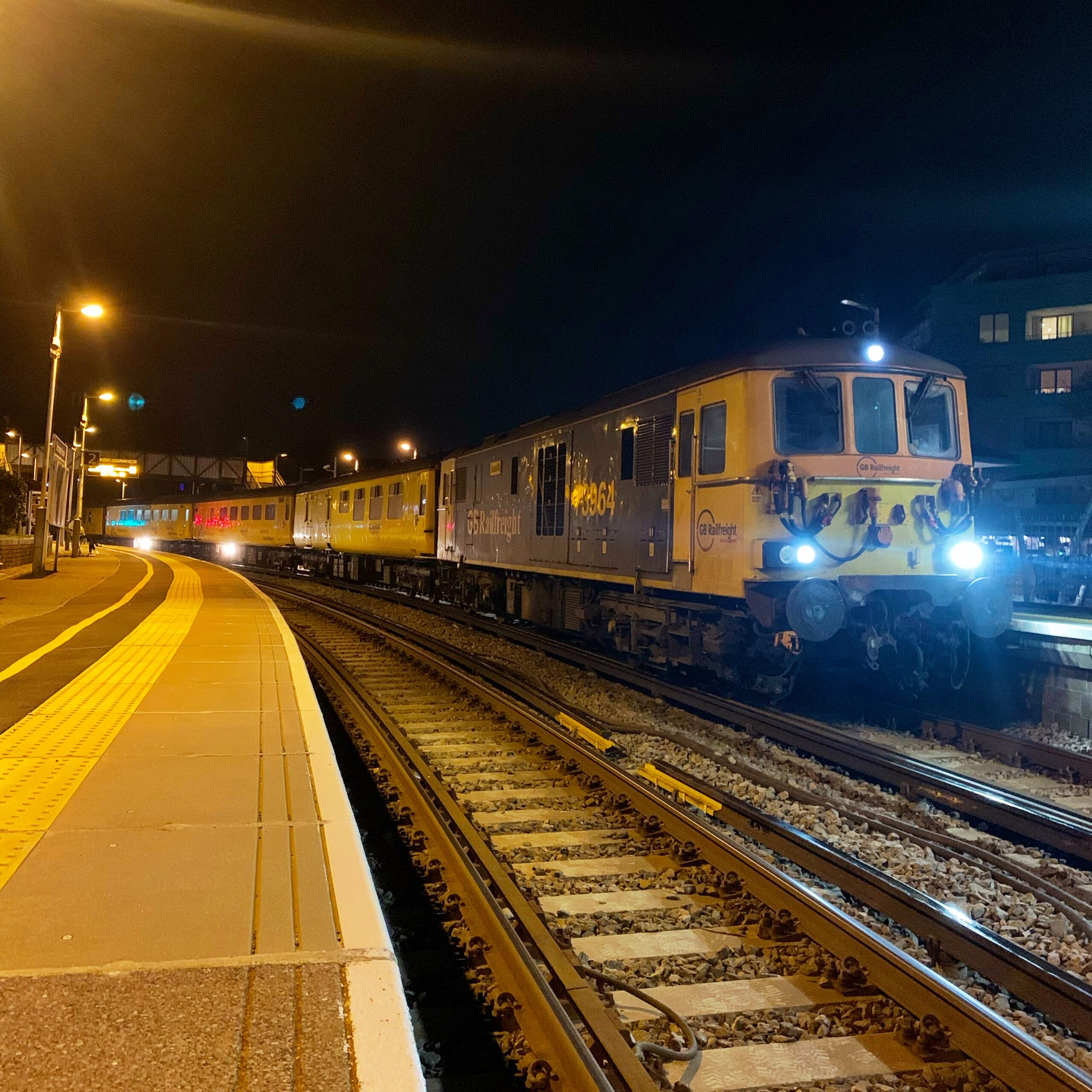
    Finally the monthly rail inspection train, this time top and tailed by Class 73 Electro-Diesel locomotives No’s 73963 ‘Janice’ and 73964 ‘Jeanette’, ran to Weymouth this week as 186V 1115 Derby RTC to Eastleigh East Yard.

    For the record, my first ever visit to the Isle of Wight was in 1973. I don’t recall travelling by train during that holiday, but I do remember sunny days sat on the top deck of double decker buses touring the island. I also vividly remember the poster campaign for the ecological dystopian thriller film ‘Soylent Green‘. The images of riot control trucks fitted with large hydraulic shovels scooping up people like they were waste has haunted me ever since. Incidentally the film was set in 2022. I suppose I should get around to watching it some day. For this weeks archive feature, we return to the island in the mid 1970’s and a trip along the Isle of Wight steam Railway in a short, silent cine film from the John Chappell Collection.

    16th March 2022, the day this blog entry was uploaded, marks the third anniversary of Yoshi picking me as his human dad. It’s been a happy rewarding companionship, made stronger when we found Yoshi’s gorgeous human mum. We both love our boy to bits and try and include him on as many adventures as possible.

    That’s it for this week. Thanks for reading. I’m off to find a snack – I’ve heard about a nutritious product made from ocean plankton I should try…..

  • Dog n’ Marylebone

    A quiet week with out of the ordinary trains in the Bournemouth to Weymouth area this week. The New Measurement Train which was scheduled to have run on Wednesday 23rd February was cancelled. Maybe we’ll get visited by a COLAS HST in March instead.

    Sleeper and track replacement at Bournemouth over the weekend saw an engineers train powered by two Freightliner Class 66 locomotives No’s. 66598 and 66512 visit the station. I was asleep when the consist arrived in the early hours of Saturday, but after breakfast, Yoshi and I headed over to Bournemouth to have a quick look at what was going on.

    On Sunday, I left Yoshi at home with his mum while I went off to London for the day. At Christmas I was given a fabulous book; ‘Britain’s 100 Best Railway Stations’ by Simon Jenkins, which as the title suggests takes a look at some beautiful railway station architecture across the UK. One of the London Termini included is Marylebone, the smallest railway terminus in the capital. Being in the vicinity, I decided to take a quick look.

    Grade II listed Marylebone is the only London terminus not to see electric traction and all services are operated by diesel trains. Despite strong opposition from the Marylebone Cricket Club who objected to the line crossing Lord’s cricket ground which sits to the north, the station opened for passenger traffic on 15th March 1899 having been constructed by the Great Central Railway for their London extension and was the last of London’s main line termini to be built. Sir Edward Watkin who created the GCR and one of the Victorian era’s great Railway Kings hoped that the line would continue south to the coast and cross to France via a Channel Tunnel. The station architect was Henry William Braddock who worked as a civil engineer with the GCR. Because of the fight over Lord’s cricket ground and the agreed solution of a cut and cover tunnel to the east of the hallowed turf, money was tight and this is reflected in the modest design of the station which was originally intended to have eight platforms but only four were built. Marylebone gained two extra platforms in 2006 following rail privatisation. The design utilises attractive red brickwork with terracotta dressings. Over 500 houses were demolished to make way for the railway and those displaced were rehoused by the Great Central. It is currently the southern terminus of Chiltern Railways, but in the 1980’s serious consideration was given to tarmacking the track bed and running buses over a road expressway. I’m rather pleased that this option was not adopted and the railway survives into the 21st Century.

    For comparison below is archive footage of Marylebone and Aylesbury from March 1992 recorded by my late friend John Chappell who sadly passed away in 2021. John was an enthusiastic follower of all things transport and a supporter of the Swanage Railway and the Merchant Navy Locomotive Preservation Society and their steam locomotive No. 35028 ‘Clan Line’.

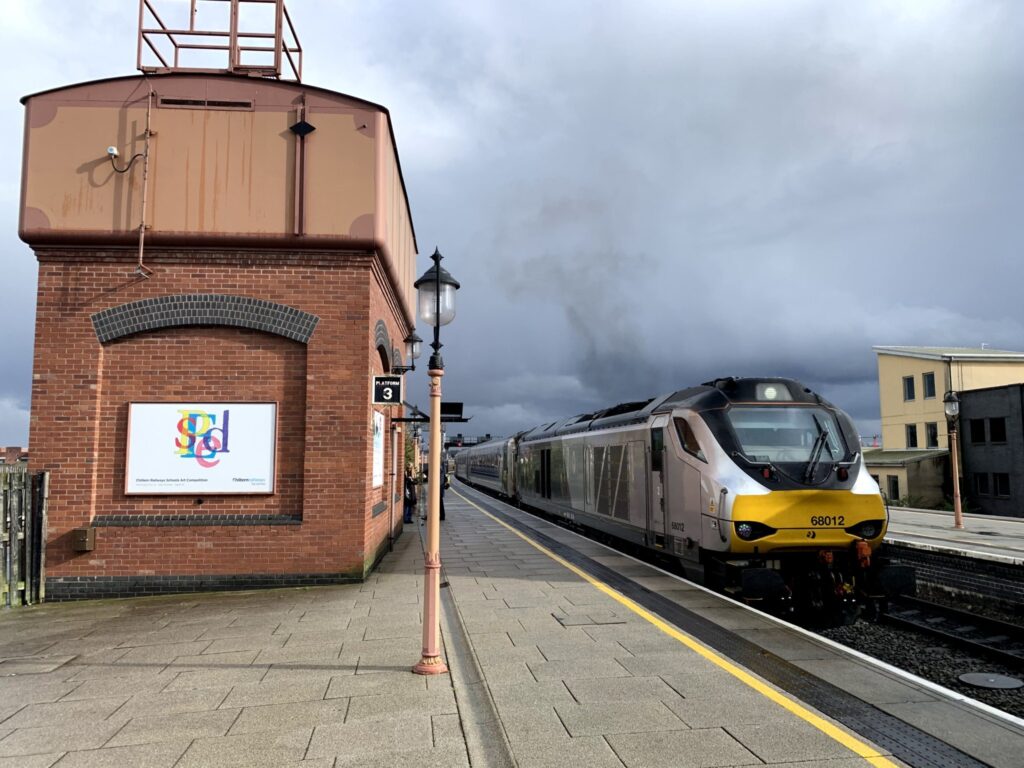
    As well as Class 165 and Class 168 diesel multiple units Chiltern Railways also employ Class 68 locomotives on London Marylebone to Birmigham Moor Street services. No.68012 is seen arriving at Birmingham Moor Street on Friday 13th March 2020
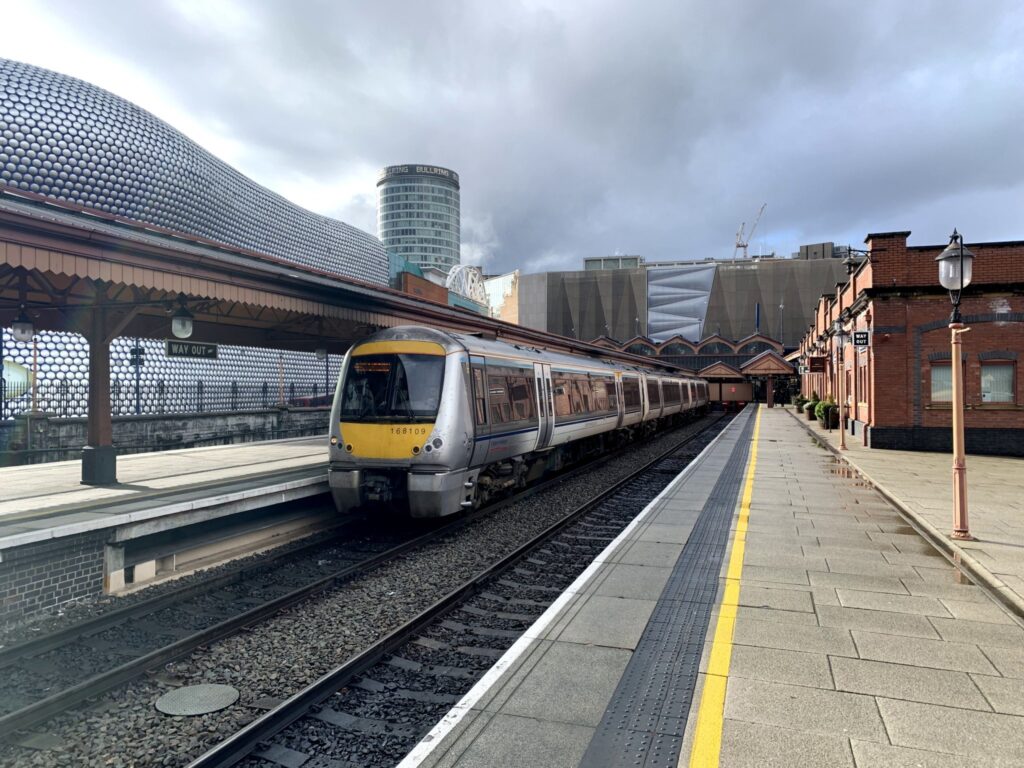
    Chiltern Railways Class 168 No. 168109 at Birmingham Moor Street – 13/03/2020

    Another visit to the archives here with video from September 1992. Last week we included photos of newly outcropped Class 69 No. 69004 in Railway Technical Centre livery and the video below, filmed by John Chappell, shows two test train examples of rolling stock painted in this livery.

    Of particular interest is the footage of the International Services Test Train passing through Eastleigh. This ensemble was part of the testing employed for the Trans Manche Super Train (TMST) Channel Tunnel stock. In December 1989, an order was placed with GEC-Alsthom for the construction of thirty TGV-style electric train sets which were to operate from London to Paris and Brussels. These trains were required to take electric current from 25 kV overhead wires while passing through the Channel Tunnel and in France, and 3 kV in Belgium. On the British side, however, the trains would be utilising the existing suburban 750 Volt DC 3rd rail track. Sir Edward Watkin of the Great Central Railway would have been proud to have seen his vision finally realised!

    As part of the programme, withdrawn from service Class 33 No. 33115 was converted into a Driving Van Trailer (DVT) at Doncaster Works in 1990 and was given a fresh look in InterCity Executive livery and renumbered 83301. The locomotive had been modified with TGV-type bogies equipped with third rail pick-up shoes. Unpowered, it kept its seized engine as a dead weight. The decal ‘Test Vehicle For International Services’ was added to the lower body sides. The ex Class 33/1 nicknamed ‘Zebedee’ and was paired with Class 73 No. 73205 ‘London Chamber of Commerce’. The two were semi-permanently coupled to each other, 83301 being used to collect electricity from the 3rd rail which was then transferred to the 73 via heavy duty cabling to provide motive power. The remainder of the test train was initially formed of 4TC Class 438 No. 8007 ( coach numbers: 977684-7 ) painted in Railway Technical Centre red and blue but was later supplemented, in 1991, with ex 4TC coaches 977763/4 in Network SouthEast livery.

    As seen in the video, the test train was commonly found running between Waterloo and Eastleigh until regular Eurostar services commenced in November 1994, running from Waterloo International to Paris and Brussels. No. 83301 was donated to the Class 33/1 Preservation Company Ltd utilising parts for Swanage railway based classmate No. 33111, the remainder being scrapped at St Leonards depot in 1996. No. 73205 remains in service with GBRf and is now named ‘Jeanette’.

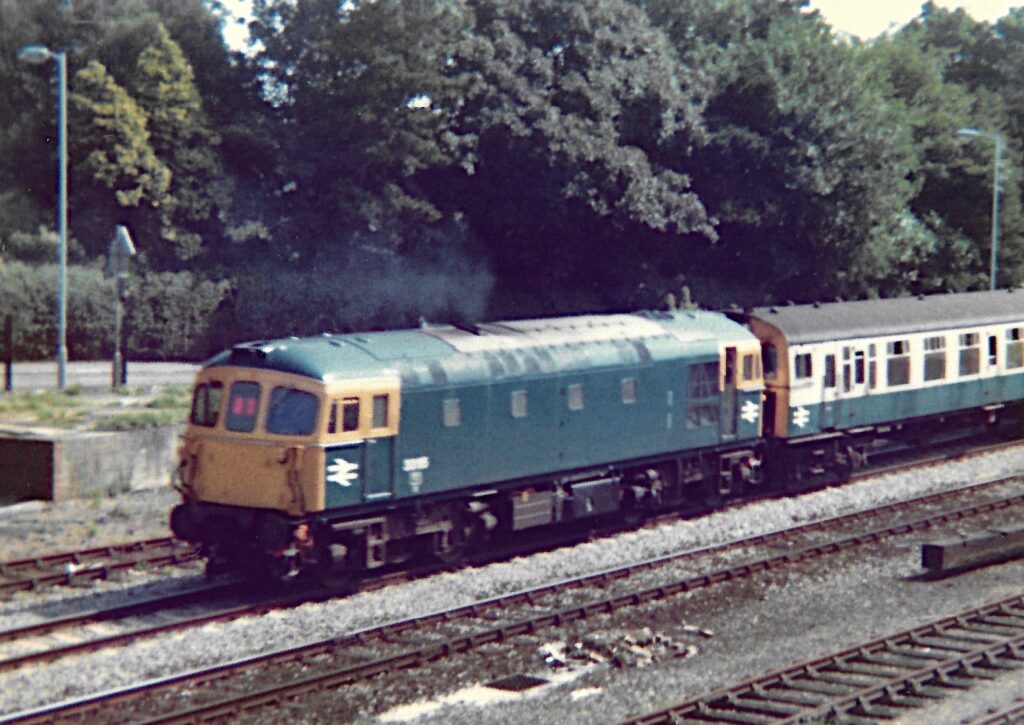
    Ten years prior to conversion to DVT No. 83301, Class 33/1 No. 33115 departs Dorchester with a Weymouth to London Waterloo service – 25/07/1980
    Class 33 No. 33115 propelling a Weymouth to London Waterloo service formed of two 4TC sets near Dorchester – 04/07/1981
    Class 73 No. 73205 ‘Jeanette’ still in InterCity Executive livery seen working a test train at Weymouth – 17/02/2014 (John Chappell)
    Yoshi gets up close and personal with Class 33/1 No. 33111 at Corfe Castle. Classmate No. 33115 donated spares to this locomotive via the Class 33 Preservation Company Ltd

    That’s all for this week. Join us next time for more of the same, but subtly different.

  • This Week At Yoshi HQ

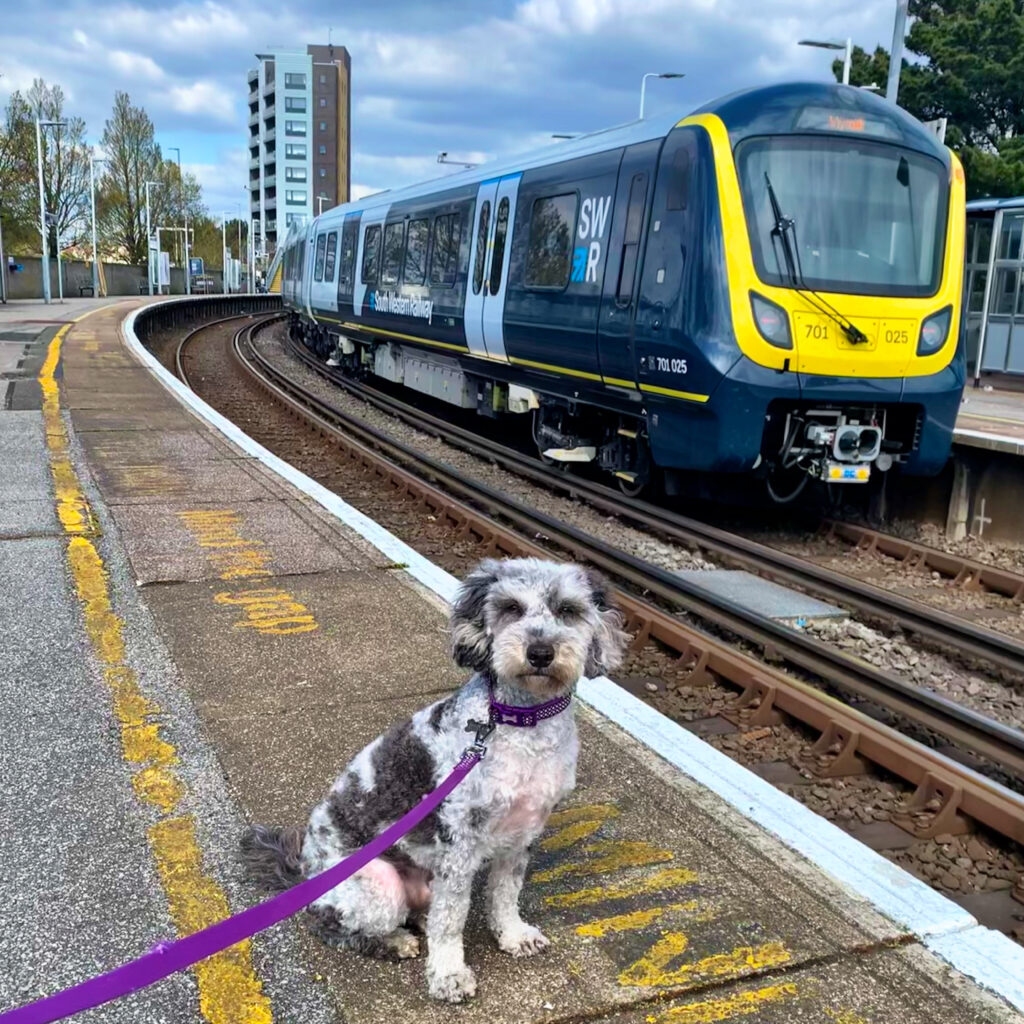
    Yoshi waits for SWR Class 701 No. 701025 to depart Poole – 16/04/2021

    This last week or so Yoshi has been making new friends and catching up with old ones – he’s a very sociable pup and seems to win over almost everyone with his lovable, if somewhat excitable, demeanour. Even those who don’t much care for dogs, if you can believe such tortured souls exist, often fall under his spell.

    In advance of his own visit to the groomer later this week, Yoshi accompanied me when it was my turn to have my hair cut ( what’s left of it these days ) and was only slightly disturbed to find that the barber I frequent has a new kitten in residence. Yoshi certainly wasn’t likely to be organising a party in celebration of this discovery and after a few barks there was a tense stand-off situation in place until nine week old Abu, for that is the kitten’s name, was formally introduced to our boy and the barking started all over again. Abu couldn’t give a monkeys about the canine interloper and things soon calmed down with both protagonists unharmed by their close shave with each other.

    This was followed by a long walk and after that an opportunity for Yoshi to chill out in his favourite chair….

    A detailed look at the Real Time Trains website on Thursday evening revealed COLAS Class 37 No. 37175 would be paying a visit to Yeovil with a test train; 3Q07 Exeter Riverside to Exeter Riverside via Yeovil Pen Mill and Salisbury. It was a cold night and my initial thought was to head to Yeovil Pen Mill to capture the working, but as the service had been looped west of Crewkerne to allow a passenger train to get ahead of it, I thought better of this and we headed to Yeovil Junction. Because of the amount of salt spread around the car park and the station, Yoshi remained safely in the car while I went off to wait for the arrival of the test train. Unfortunately, the Class 37 was propelling the train which was a bit of a shame, but made for a different shot as it roared straight through the station abandoning any plan for it to head to Pen Mill.

    37175 Yeovil Junction – 20/01/2022

    The following evening I popped into Bournemouth to catch a glimpse of one of the new Class 701 Arterio units which are still on test more than two years after they were supposed to enter revenue earning service and South Western Railway currently have no date for their introduction. Indeed, SWR are yet to formally accept any of the fleet of 90 units which have been built in Derby. A statement from the train operator said; “SWR is waiting for Alstom to supply an Arterio train that meets our specification.” When this does happen, SWR have a planned programme of further testing and driver training.

    Trains in this video include Class 444 Desiro 444040 working 2B51 1854 Southampton Central to Bournemouth / 5B51 1940 Bournemouth to Bournemouth / 2B76 1958 Bournemouth to Southampton Central, 444015 & 444027 5W32 Bournemouth Middle Sidings to Bournemouth / 1W32 1953 Bournemouth to London Waterloo and Class 701 Arterio 701031 on 5Q52 1724 Staines Up Loop to Eastleigh TRSMD. All seen at Bournemouth – 21/01/2022

    As part of its 2017 franchise agreement, South Western Railway committed themselves to 750 new carriages, made up of 60 ten-car and 30 five-car trains intended to enter service on the Reading, Windsor and London suburban lines in late 2019. The units were given the name Arterio in 2020 when they were unveiled at Wimbledon depot. The name is meant to symbolise its role as an artery for connecting the capital and beyond.

    Delays into service have been caused by complex new software integration and unions highlighting issues with cab design. As a result SWR has decided to retain 12 of its Class 707 ‘Desiro City’ trains until August 2022 rather than transferring them to SouthEastern as previously planned.

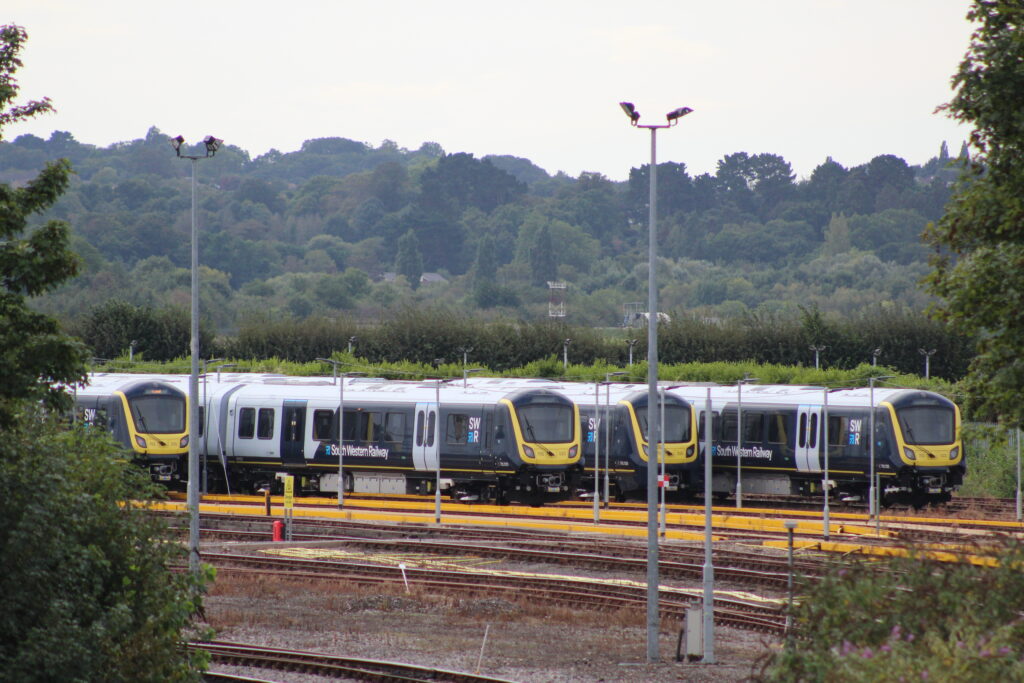
    Class 701’s in store at Eastleigh – 19/09/2021
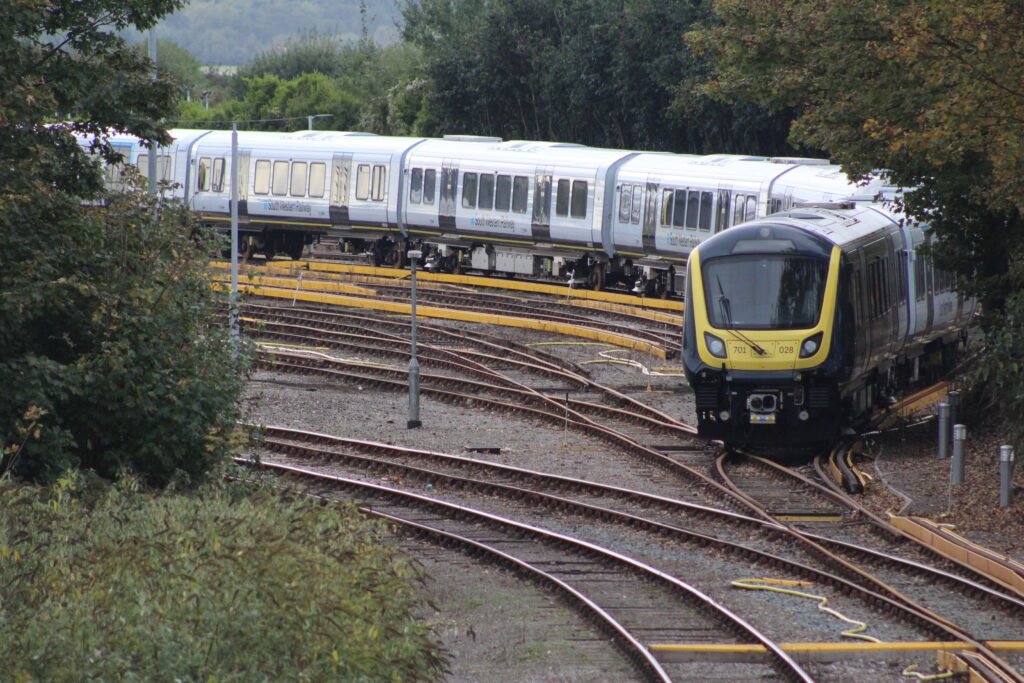
    701028 at Eastleigh on 24/10/2021

    In 2021 Yoshi and I spent a few lunchtime walks around Poole in order to see 701’s on test runs.

    701014 – 24/02/2021
    701013 – 11/03/2021
    701023 – 13/04/2021
    701025 – 16/04/2021
    701016 – 27/04/2021

    On a July 2021 visit to Eastleigh we were lucky to see Brush Type 4 Class 47 No. 47727 ‘Edinburgh Castle’ hauling 701007 on 5Q10 Widnes Transport Tech to Eastleigh TRSMD.

    47727 ‘Edinburgh Castle’ and 701007 at Eastleigh – 06/07/2021

    We missed a late addition to the timetable last Sunday in the guise of GBRf Class 73 Electro-Diesels No’s 73965 and 73963 top and tailing 1Q51 1025 Woking Up Yard Recp to Woking Up Yard Recp via Weymouth as I was enjoying a fabulous nut roast followed by a delicious lemon cheesecake. This particular test train had been scheduled to run at night earlier in the month but had twice been cancelled. However, here’s a trio of videos featuring ED’s working test train’s on the Bournemouth to Weymouth line from previous years:

    73963 ‘Janice’ and 73961 ‘Alison’ at Weymouth – 23/11/2020
    73962 ‘Dick Mabbutt’ and 73963 ‘Janice’ at Poole – 14/05/2021
    73963 ‘Janice’ and 73965 ‘Des O’Brien’ at Hamworthy – 20/12/2021

    That’s all for this time – please check back again soon for more tales from Yoshi HQ.