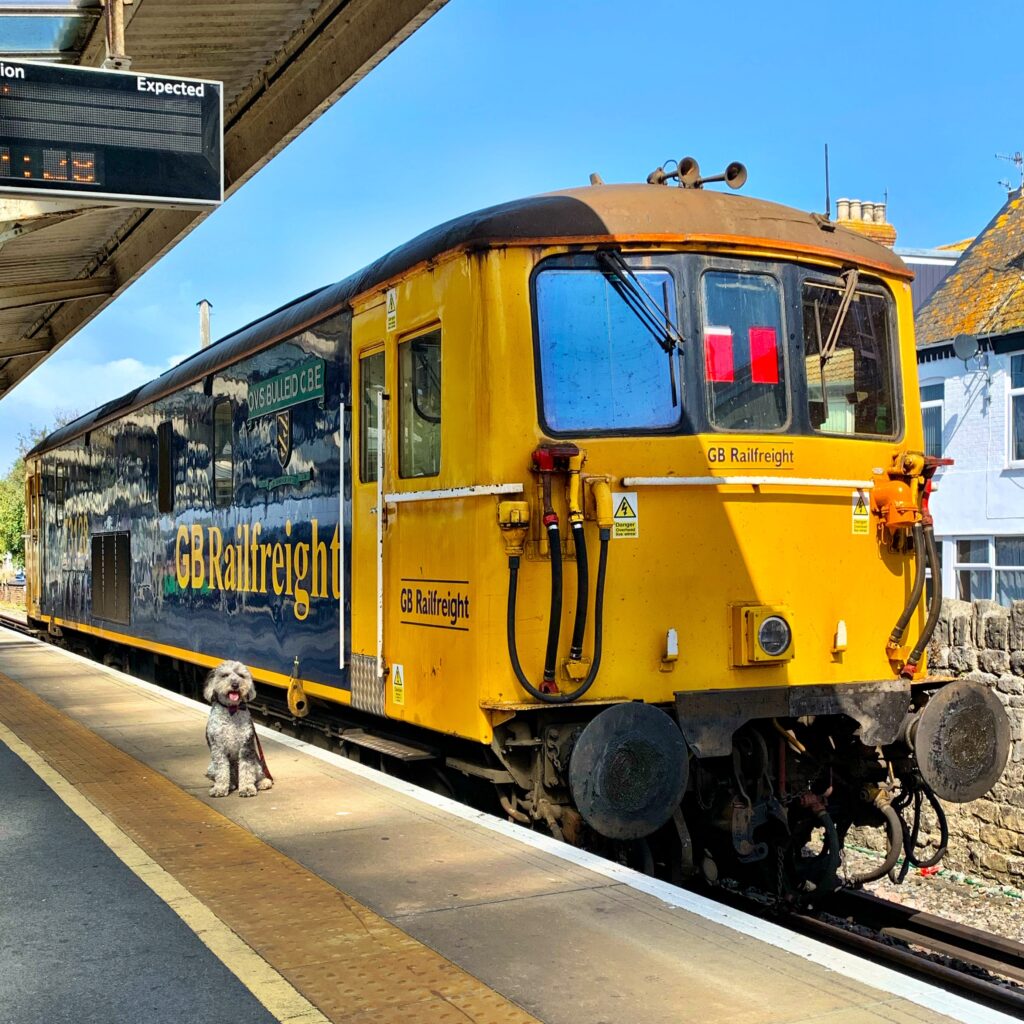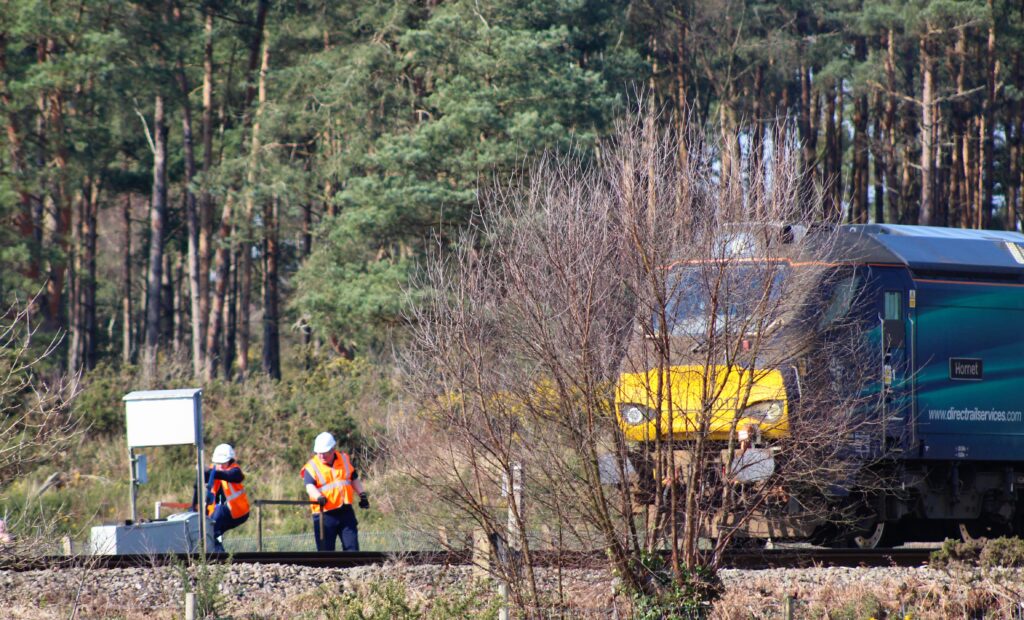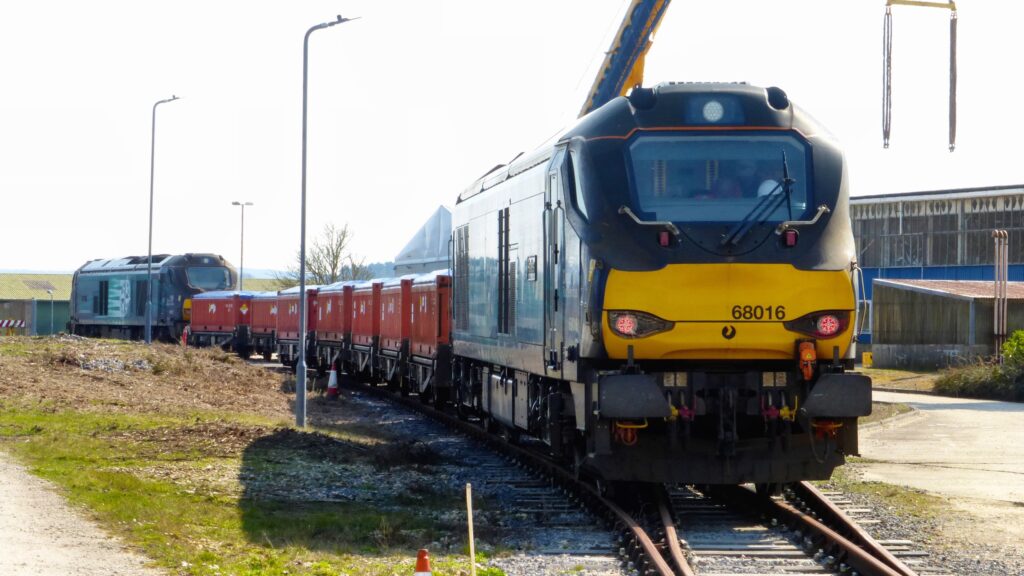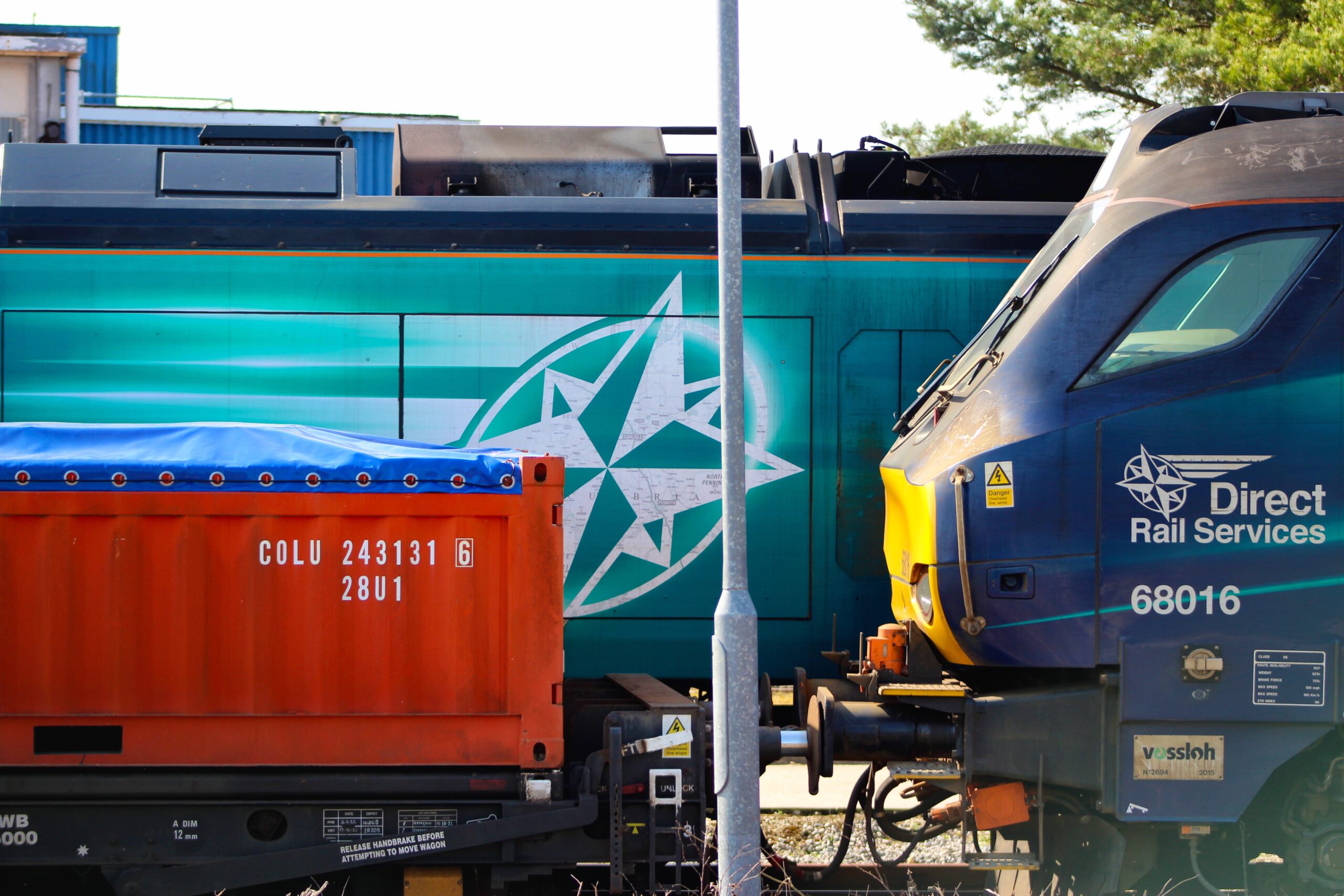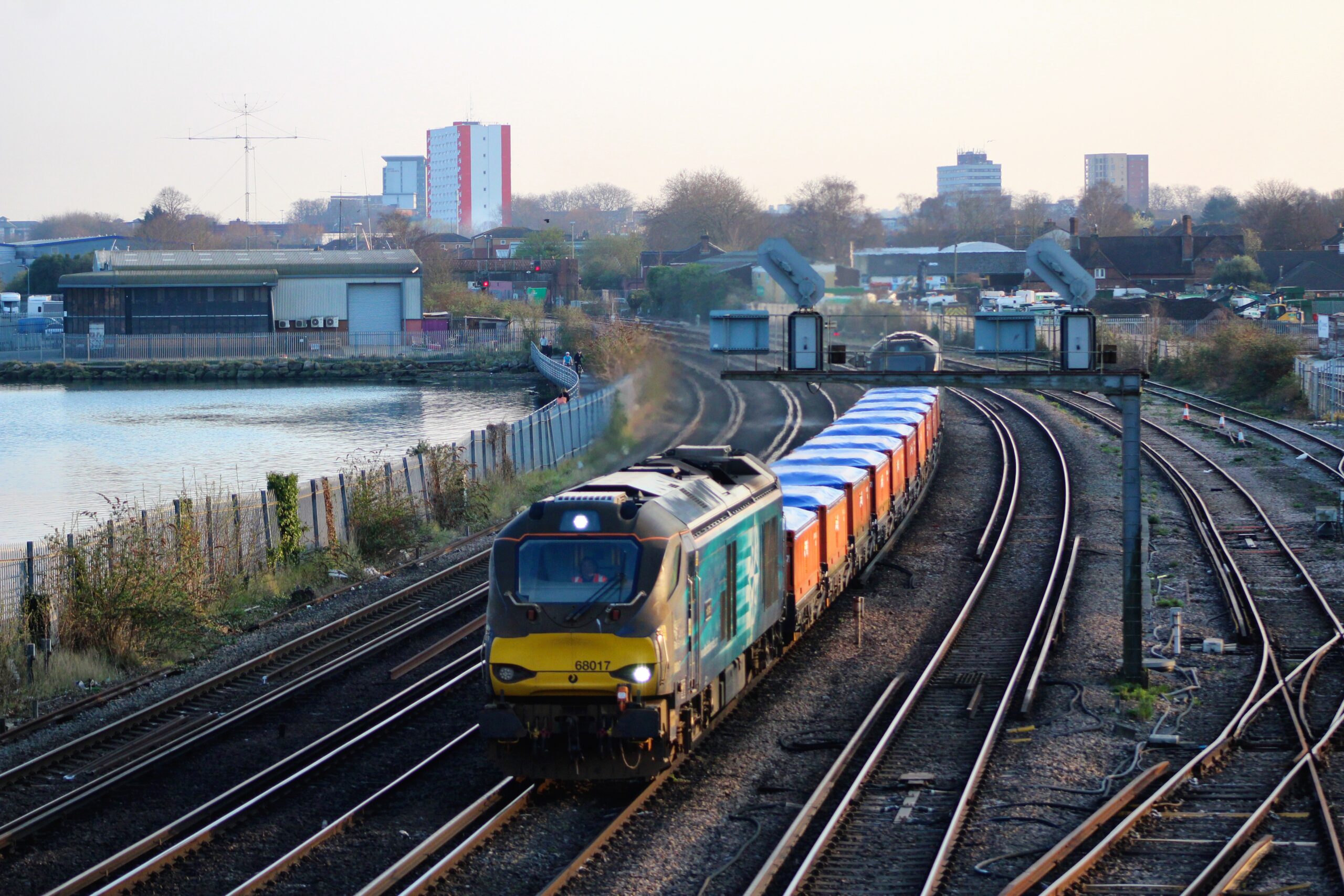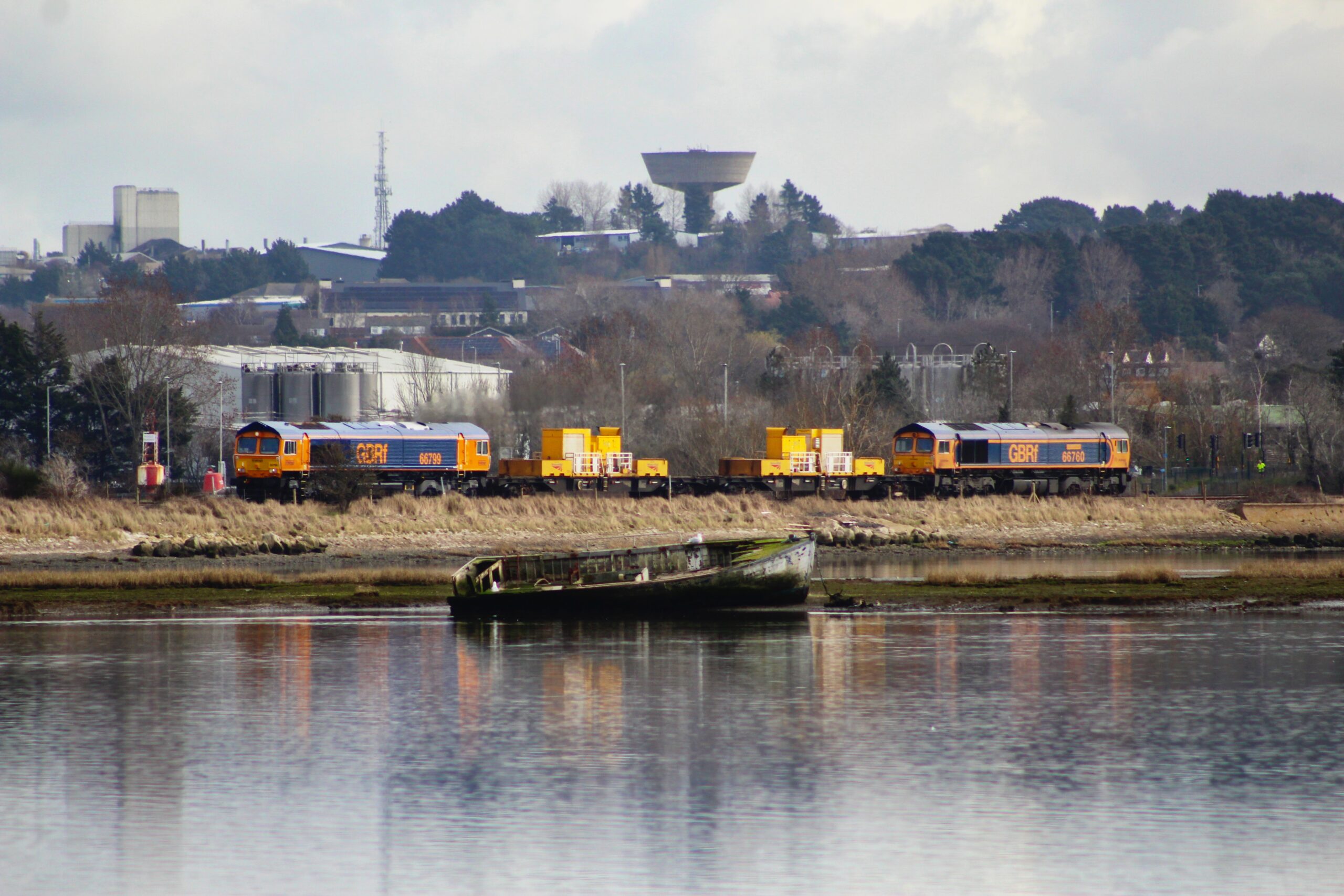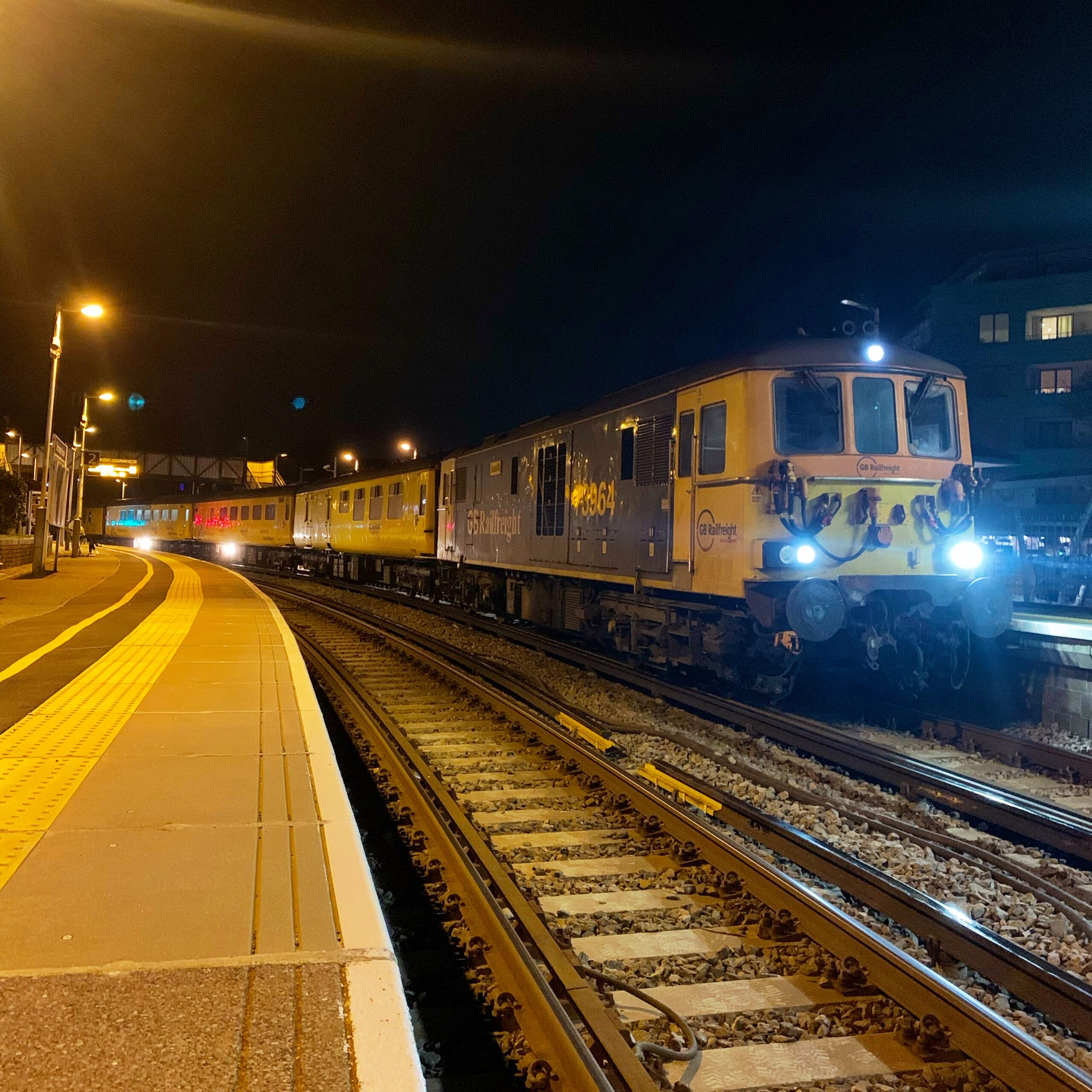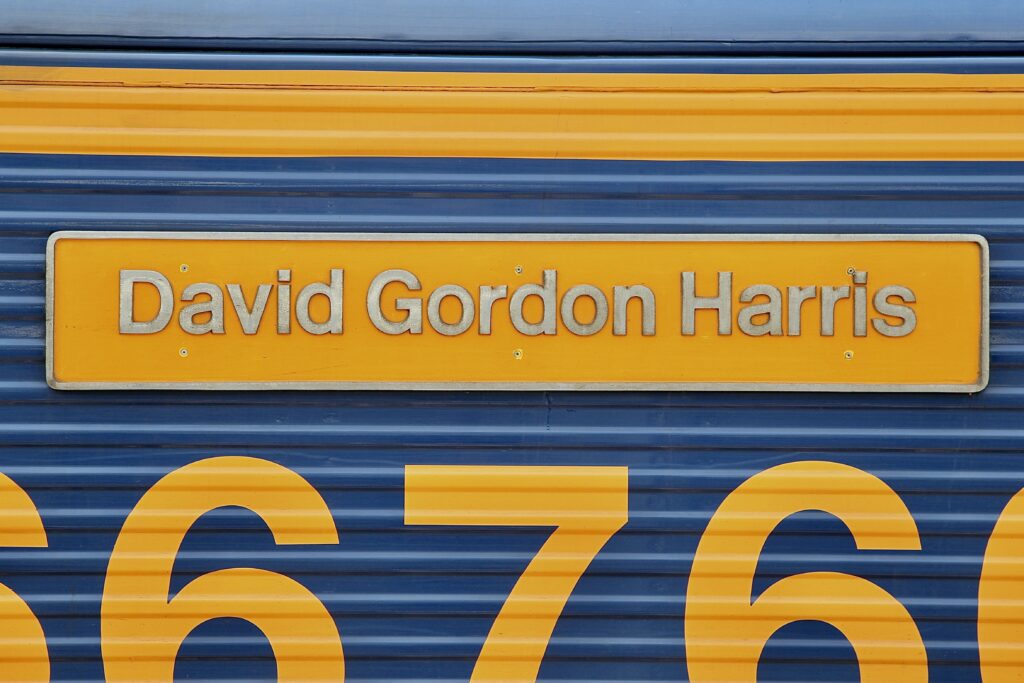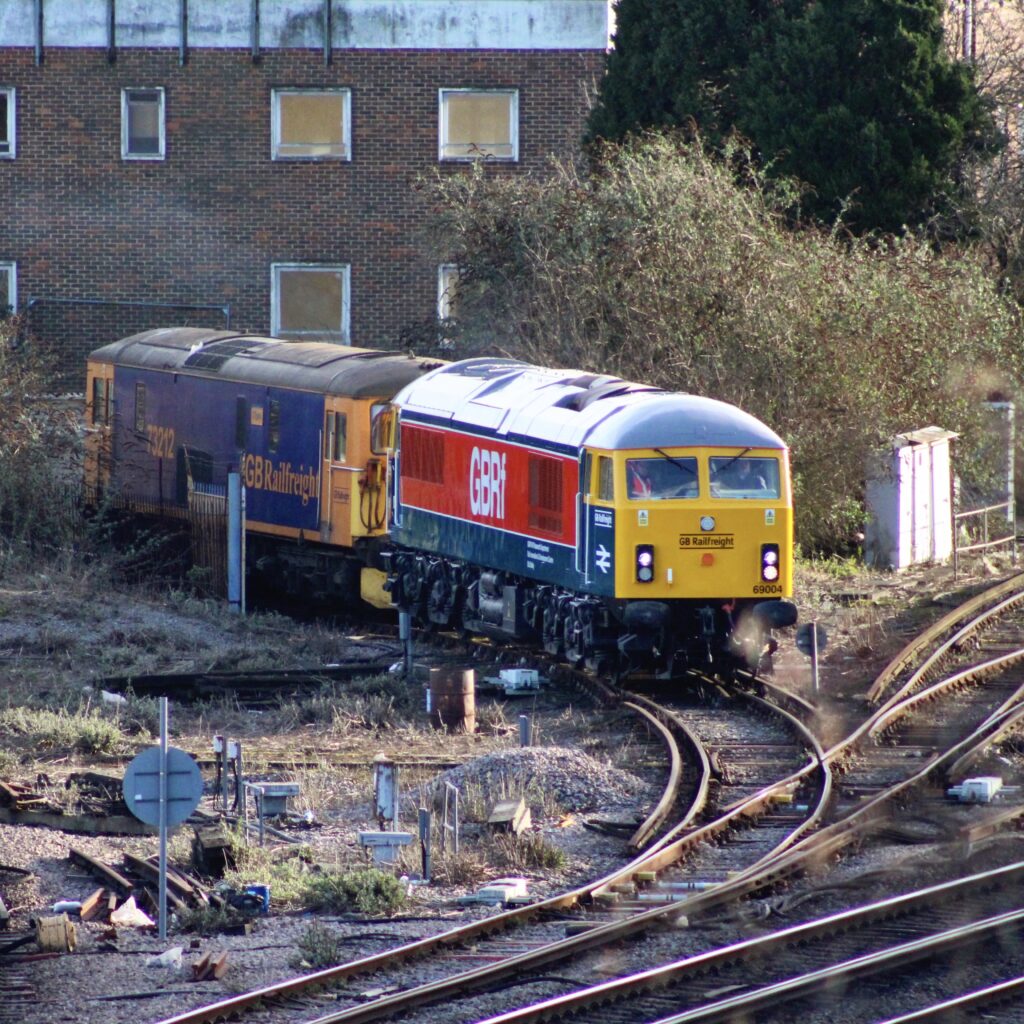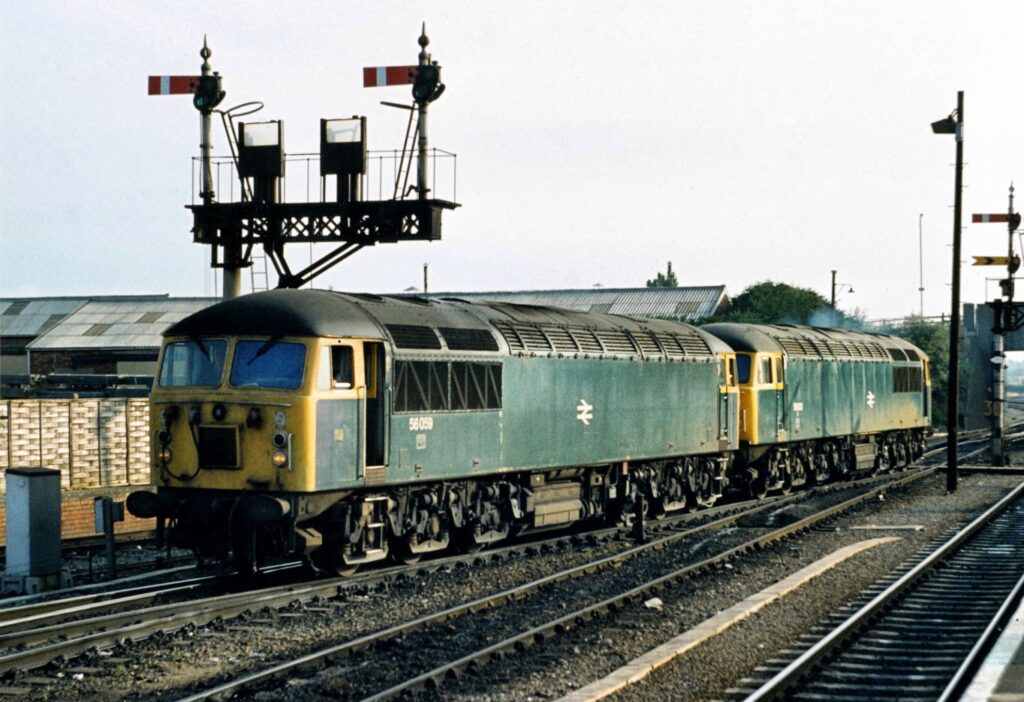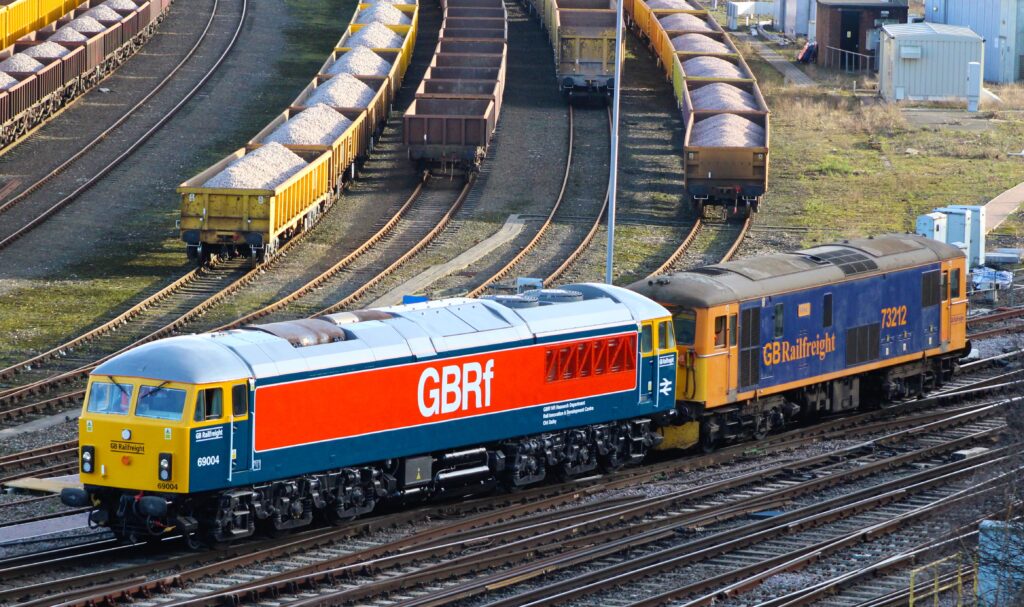

Last week I mentioned the failure of the monthly Class 73 top and tailed COLAS track recording train to make it to Weymouth on Monday 11th April. Well, the same thing happened the next day when the service was rescheduled. This time the train actually set out from Derby, but soon went off route and returned to its originating point due to faulty recording equipment. Things were more successful the following Tuesday – April 19th 2022 – when the 1Q51 Test Train ran from Derby Railway Technical Centre (RTC) to Eastleigh East Yard via Weymouth in the charge of GBRf Class 73 Electro-diesel locomotives No.’s 73961 ‘Alison’ and 73964 ‘Jeanette’.
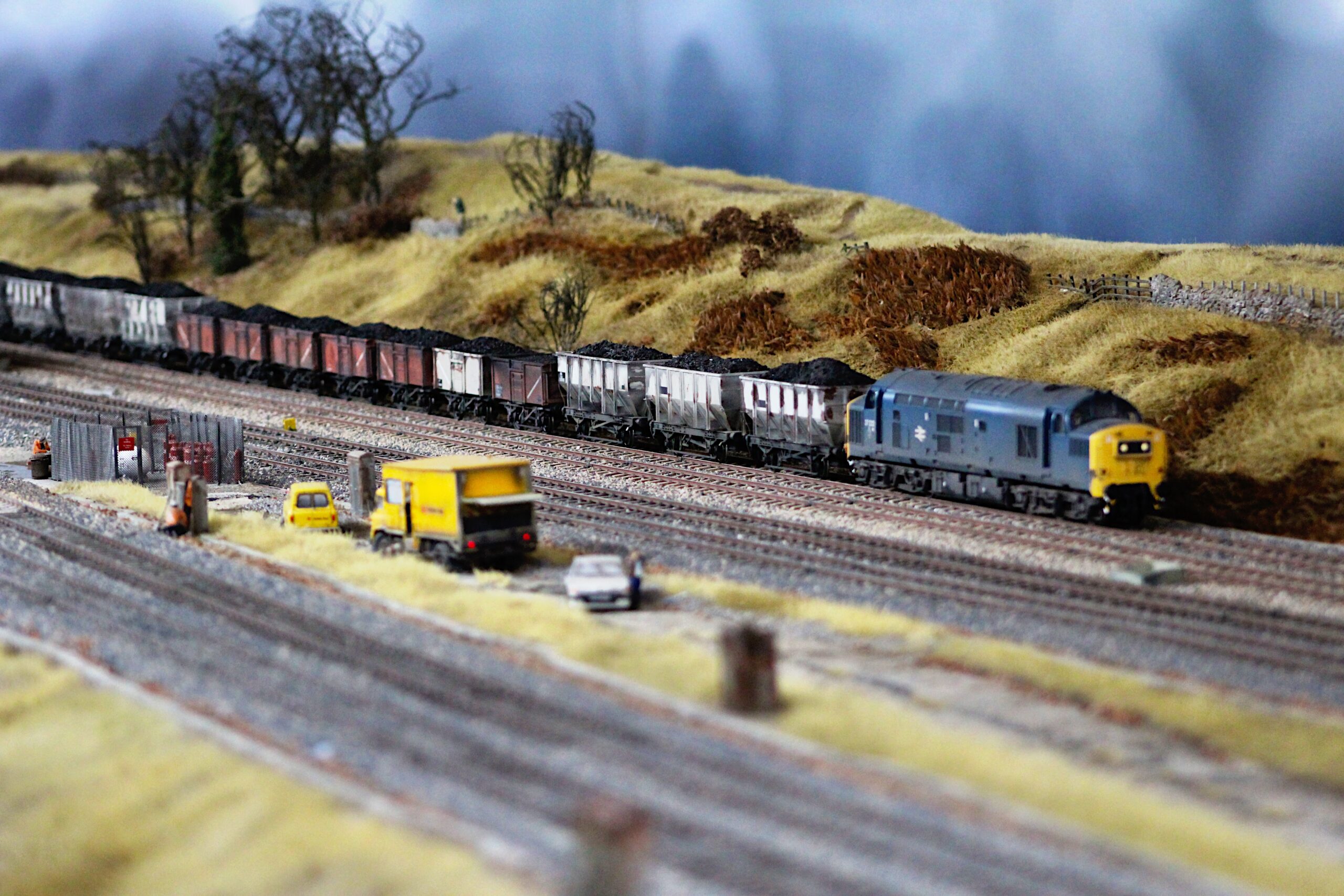
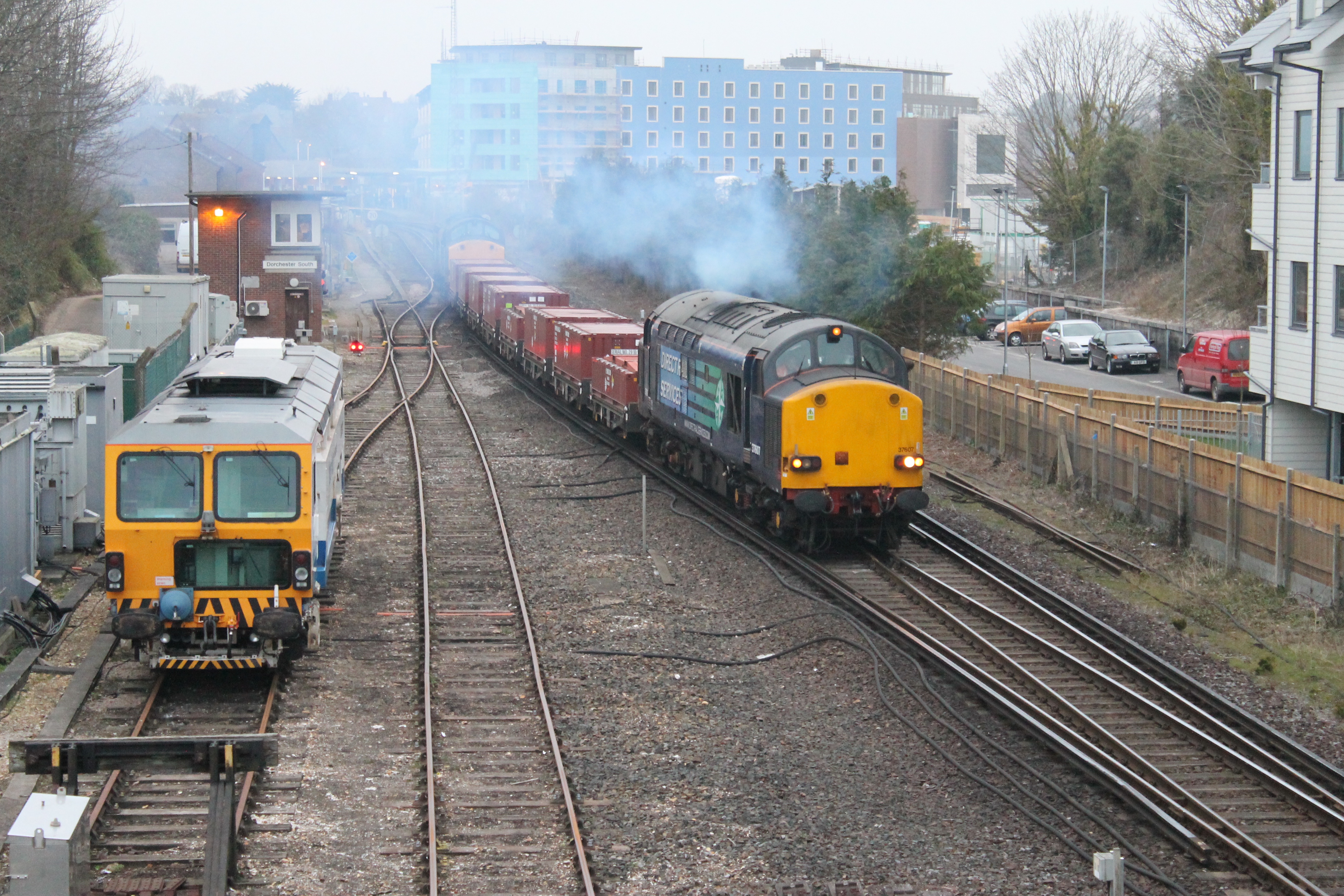
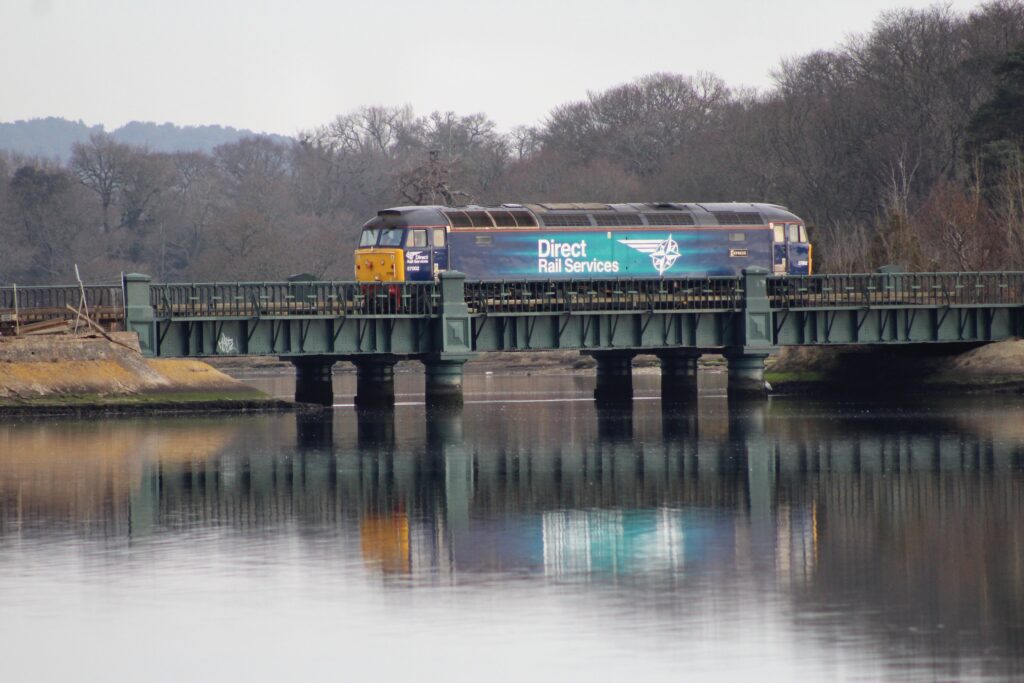
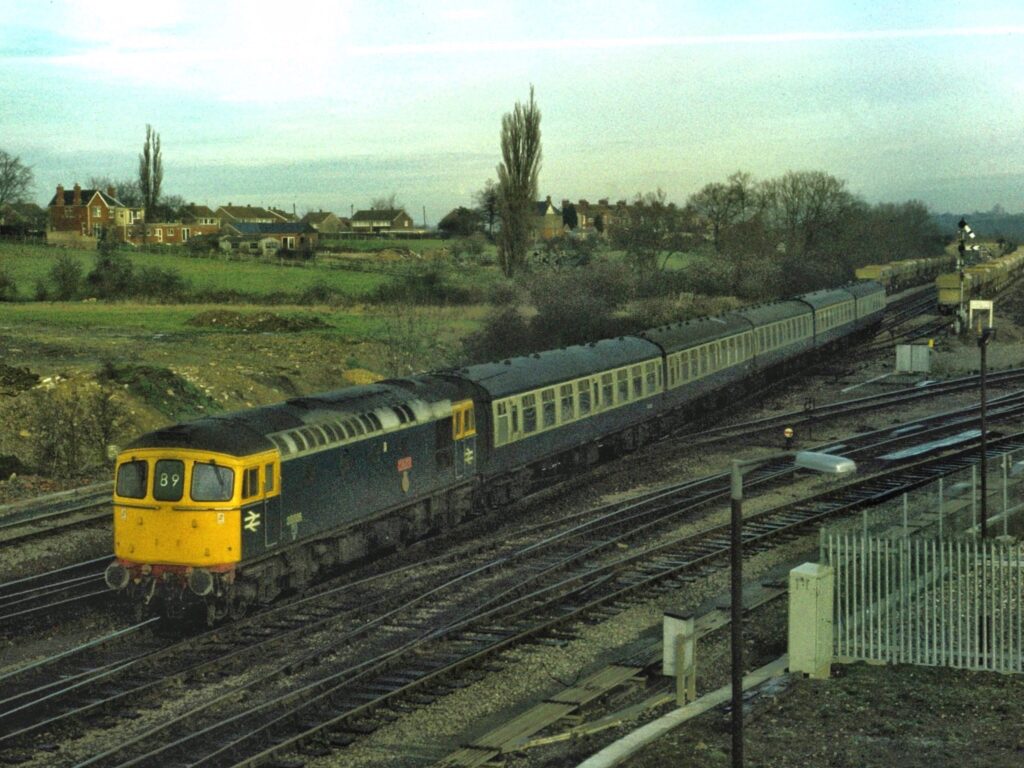
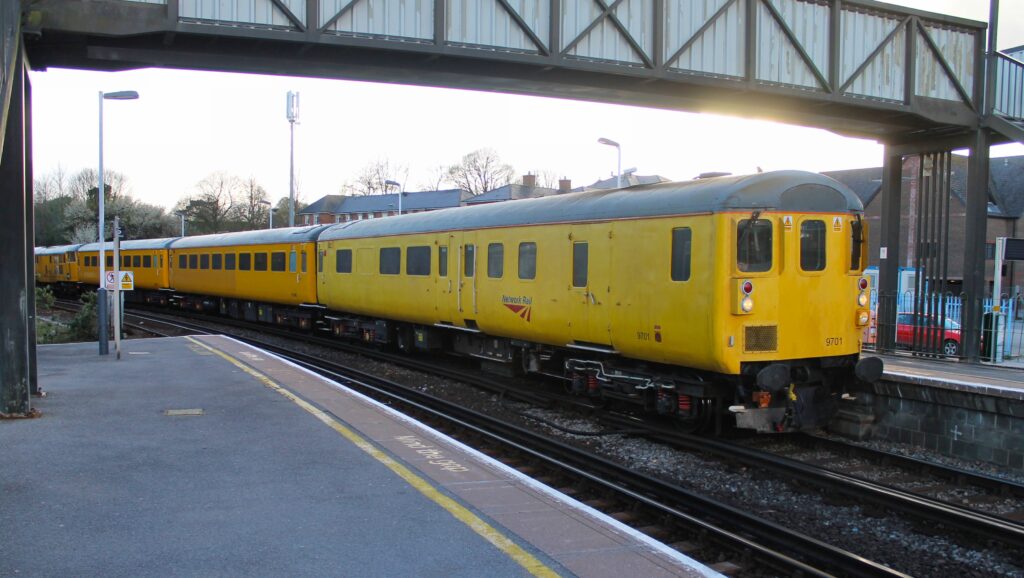
One test train which did make it to Dorset at the first attempt was the COLAS Ultrasonic Testing Unit, albeit 130 minutes late and its journey truncated at Wool where the service reversed without covering the tracks to and from Weymouth. Ultrasonic Testing Unit trains usually have one locomotive at one end, and a DBSO (Driving Brake Standard Open) at the other, as in the case of this working; 3Q02 Eastleigh East Yard to Eastleigh East Yard with Class 37 No. 37612. The DBSO controls the locomotive at the other end when required and dispenses with the need for the loco to run round the train or have top and tailed locomotives. UTU trains have ground-penetrating radar systems to detect voids and deformations up to 2 meters into the ballast and earth using rail profile scanners to help identify problems or degradation in track profile, comparing it to a template of an ideal track. Having planned to pop over to Poole to see this particular working I initially thought the run had been cancelled as Real Time Trains had given no indication of a departure from Eastleigh at the scheduled time, but two hours later the train was on the move.

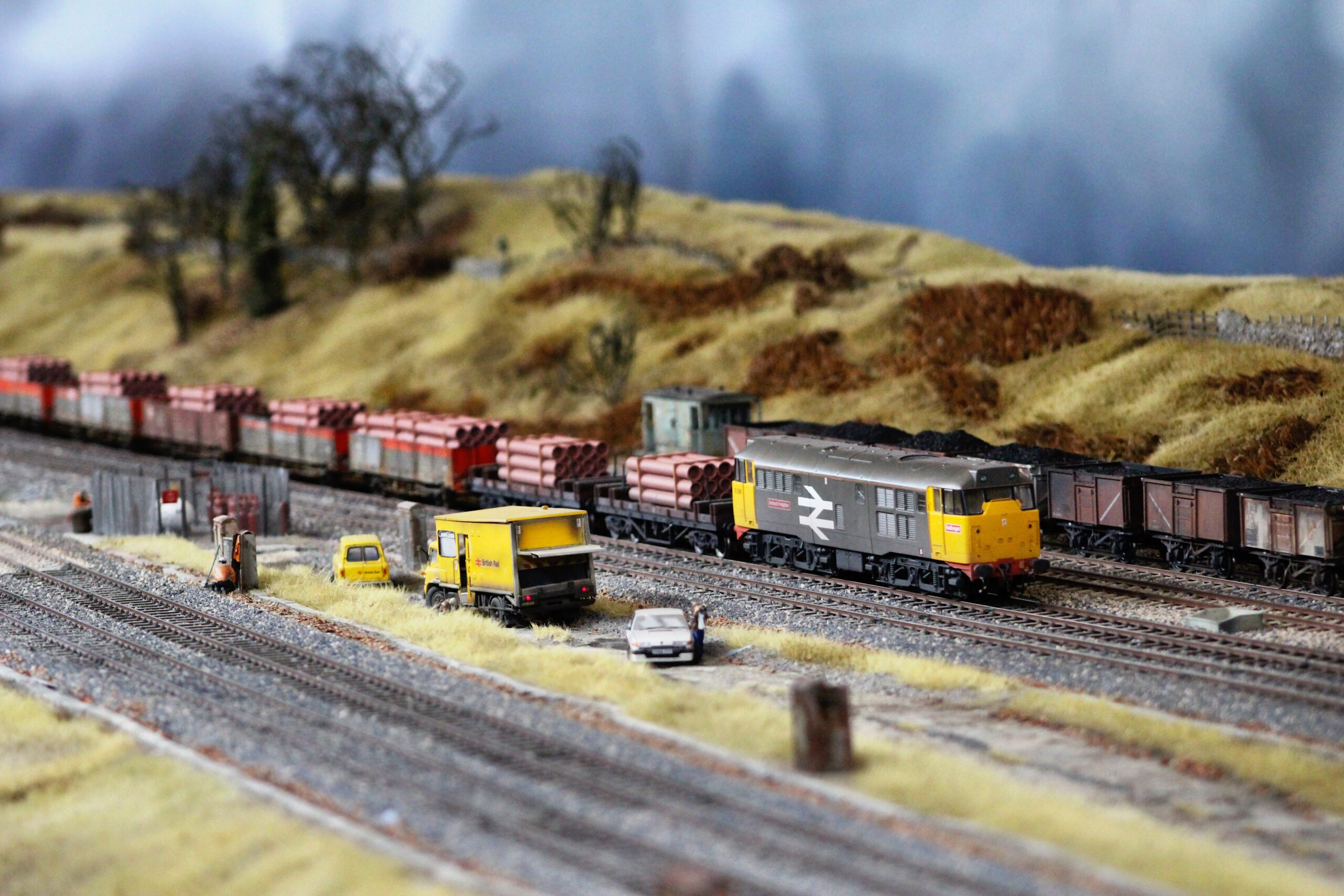
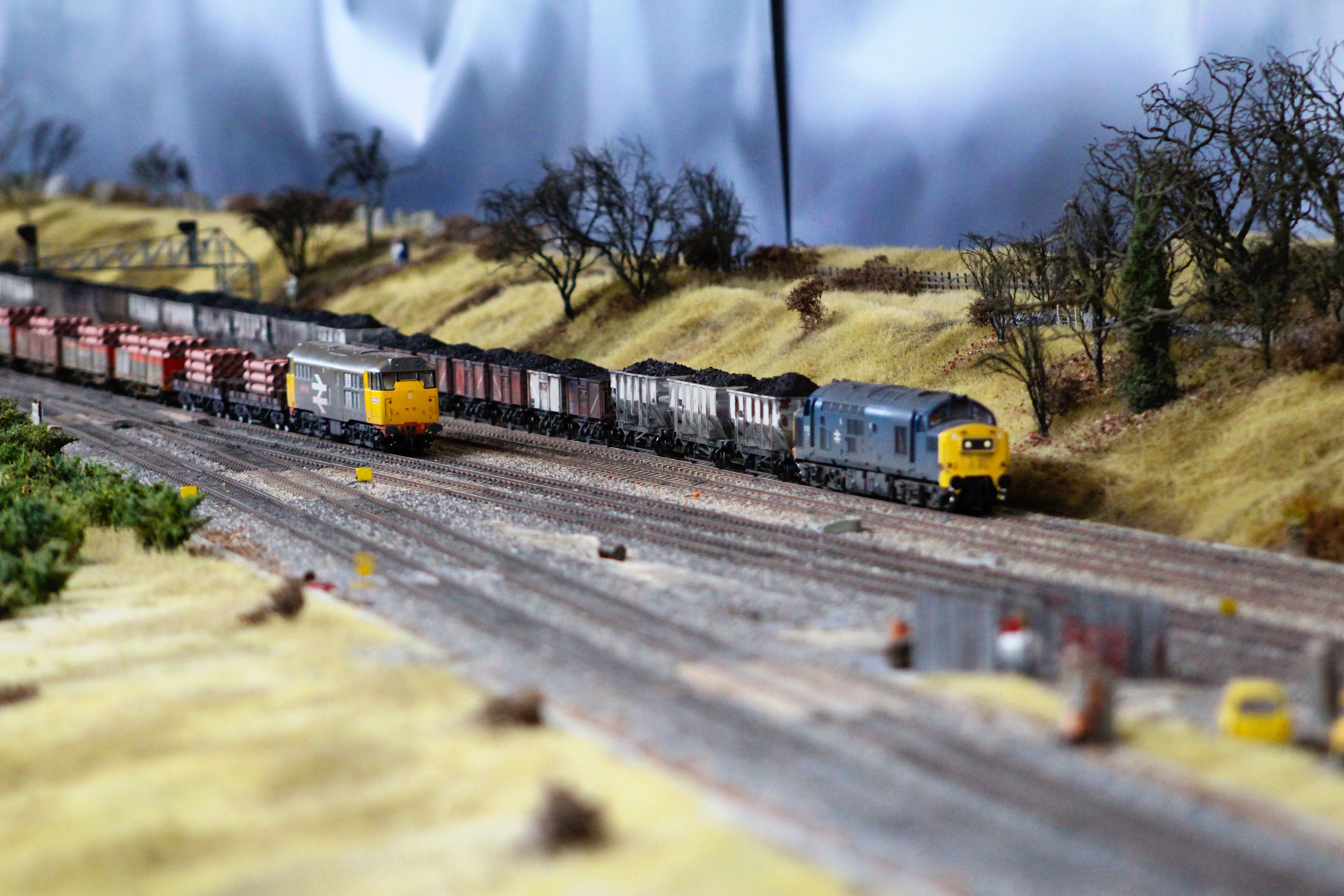
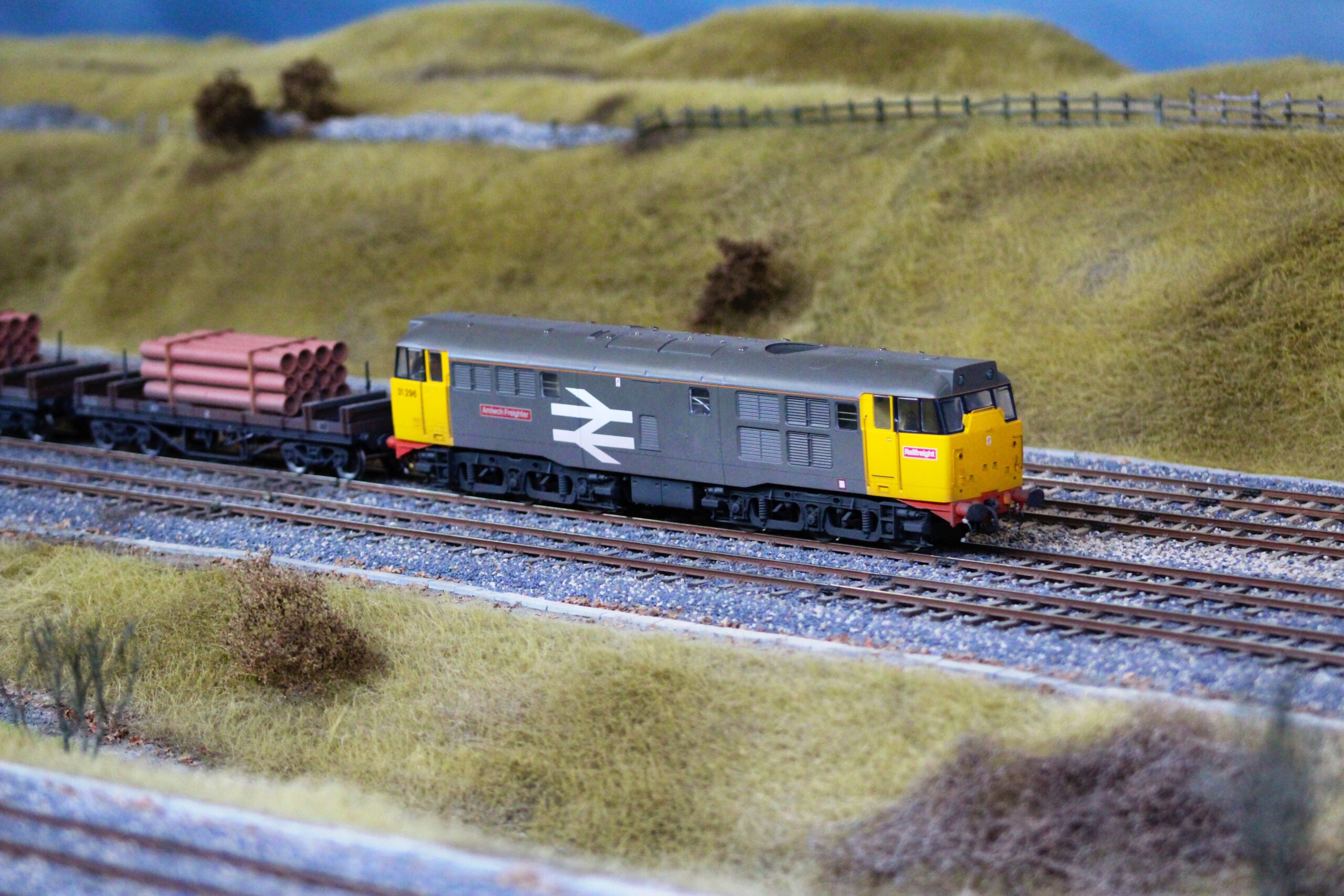
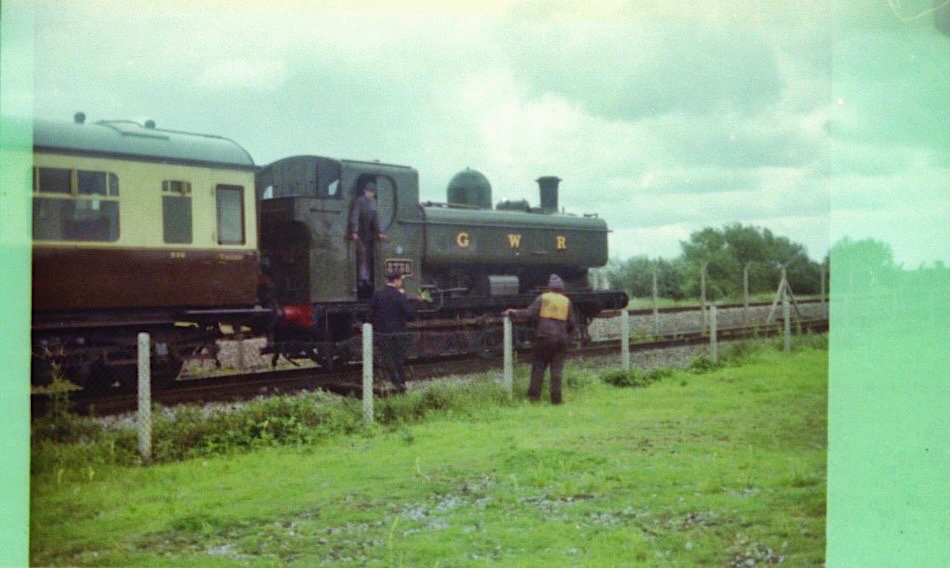
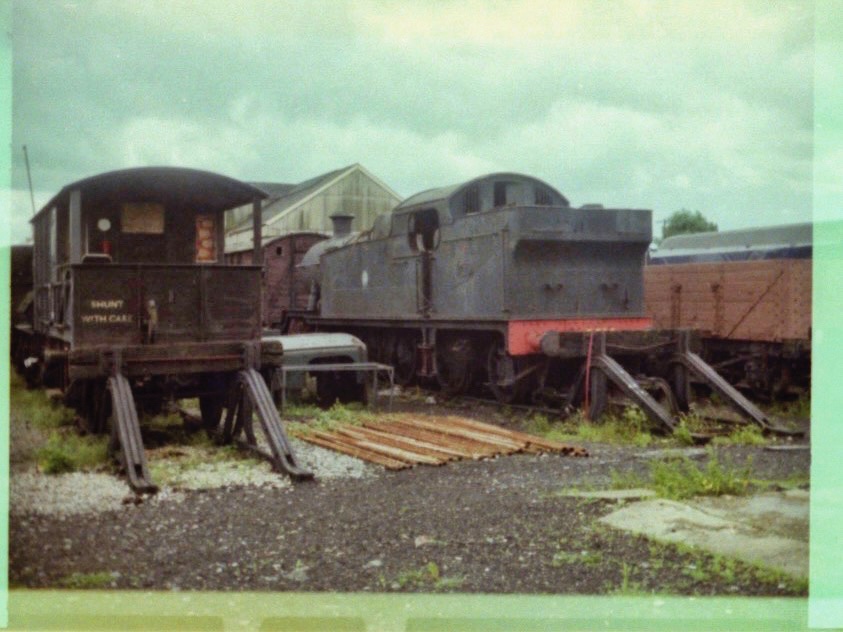
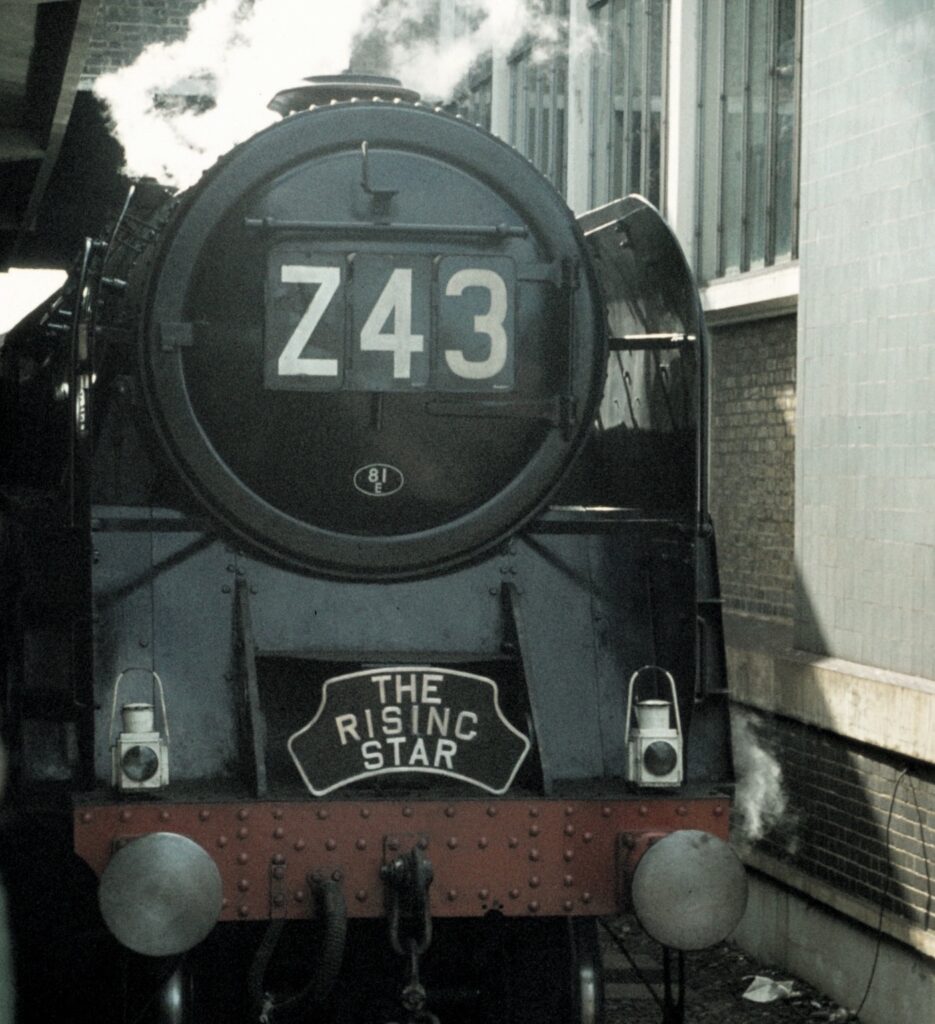
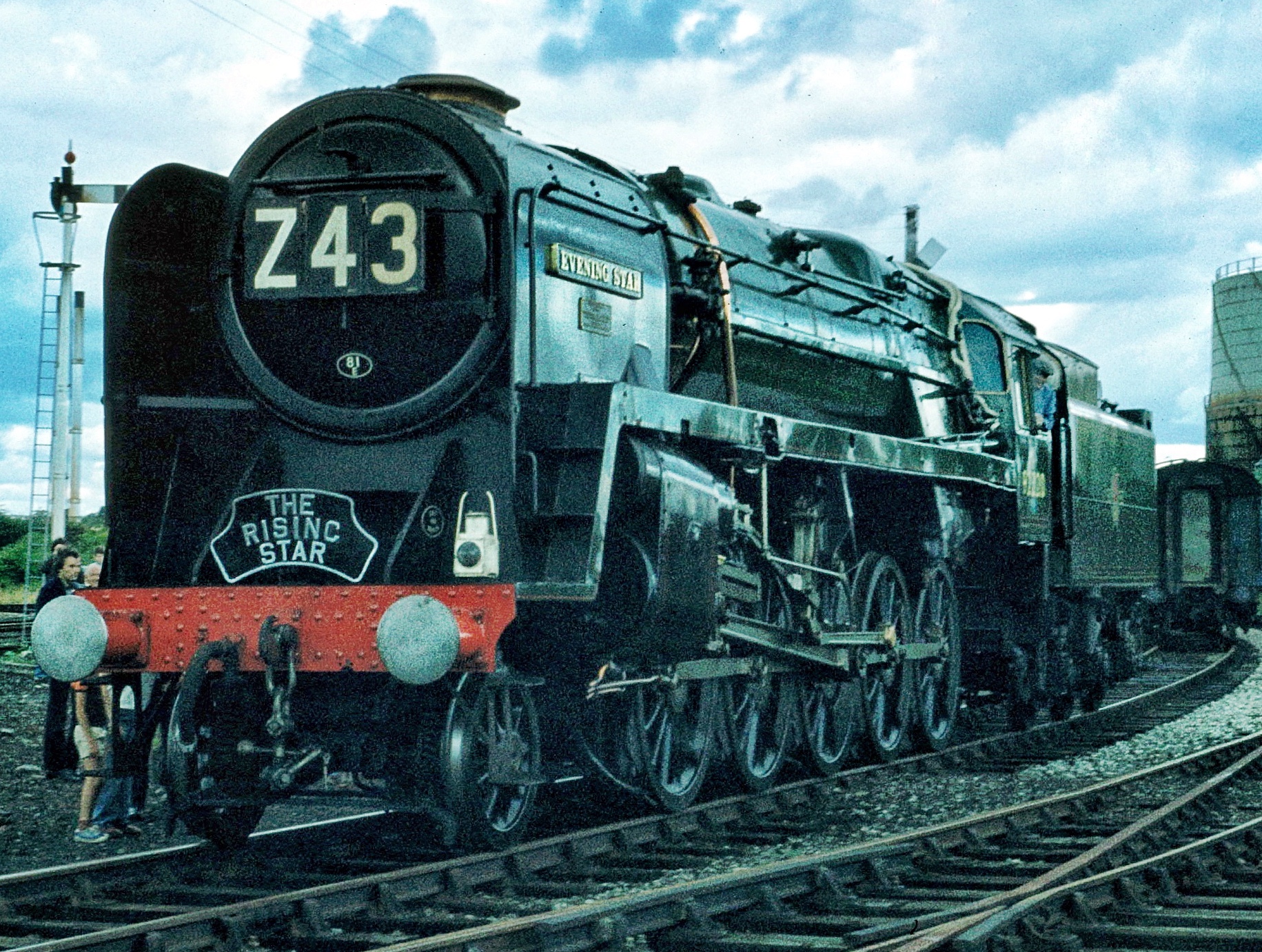
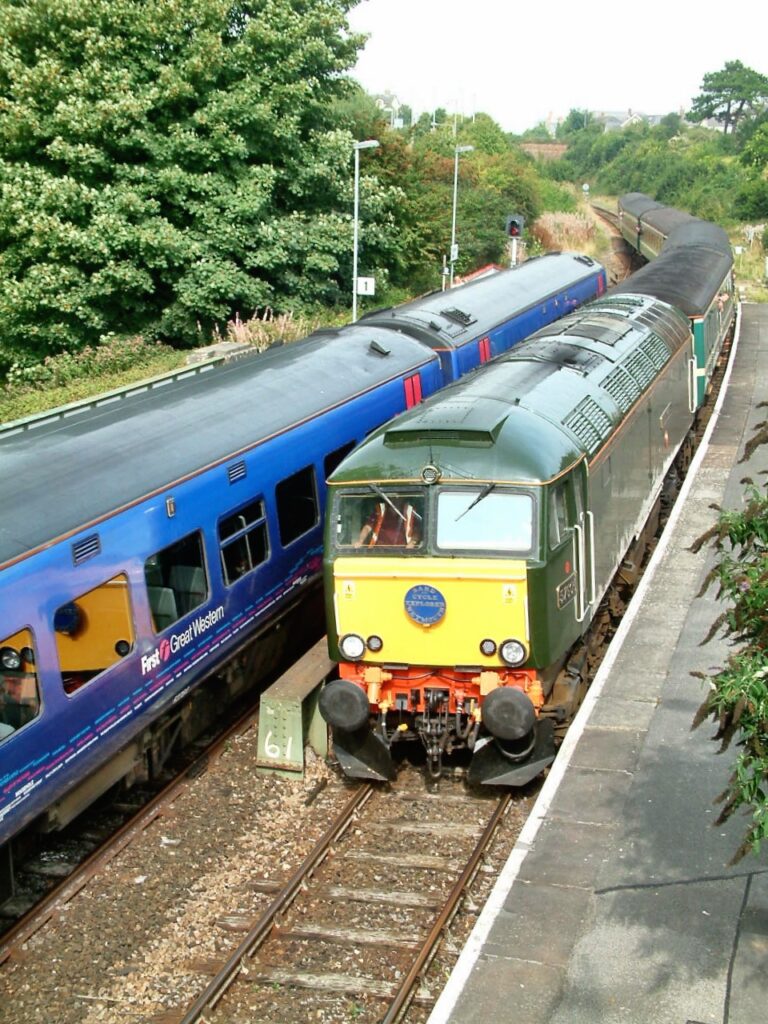
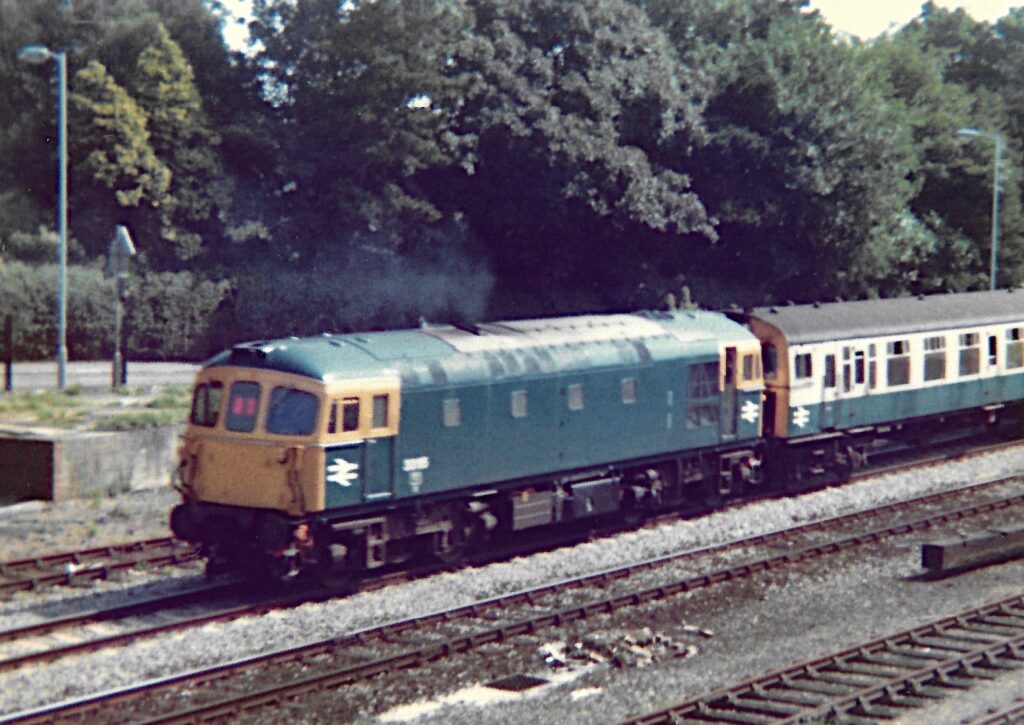
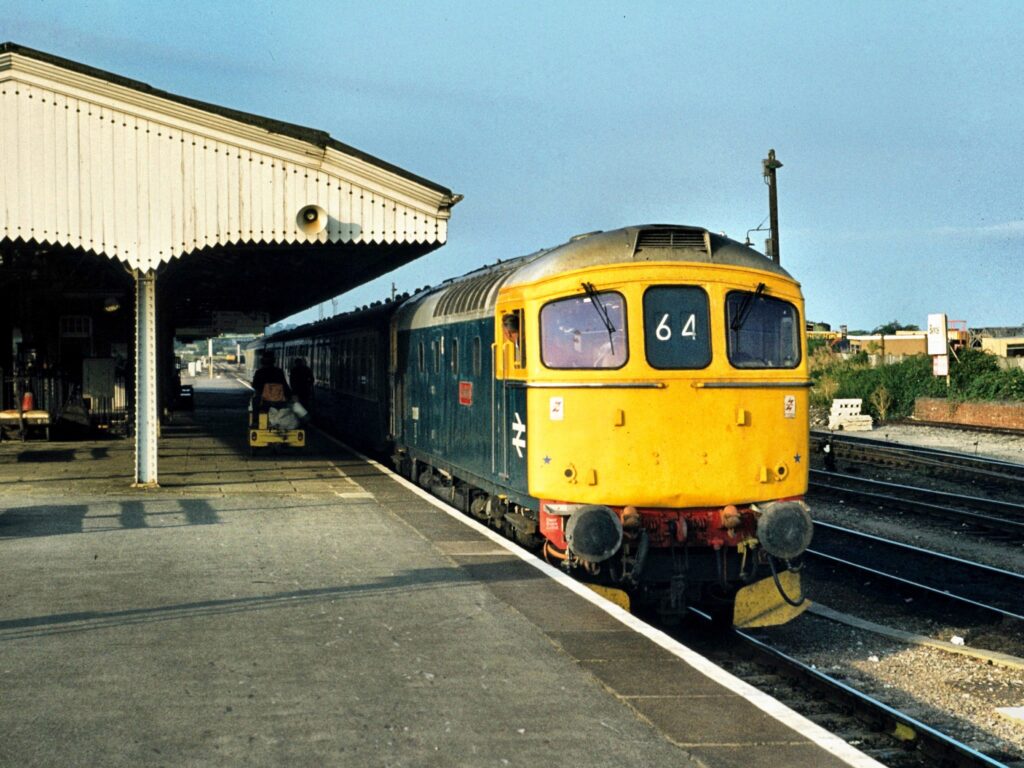
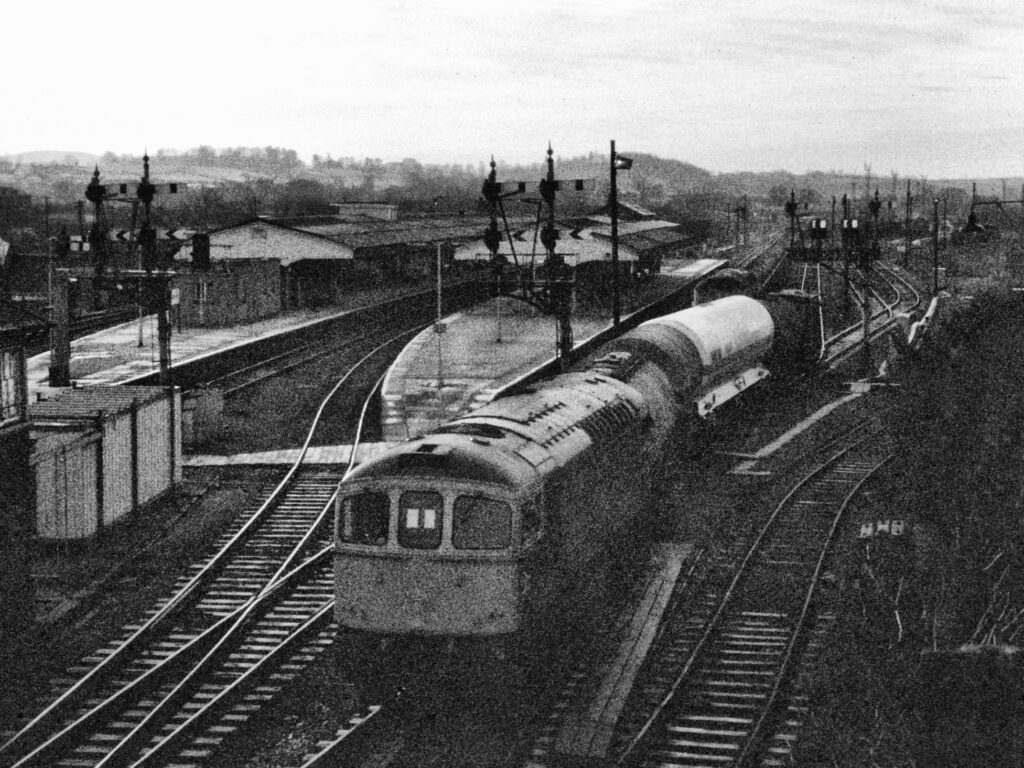
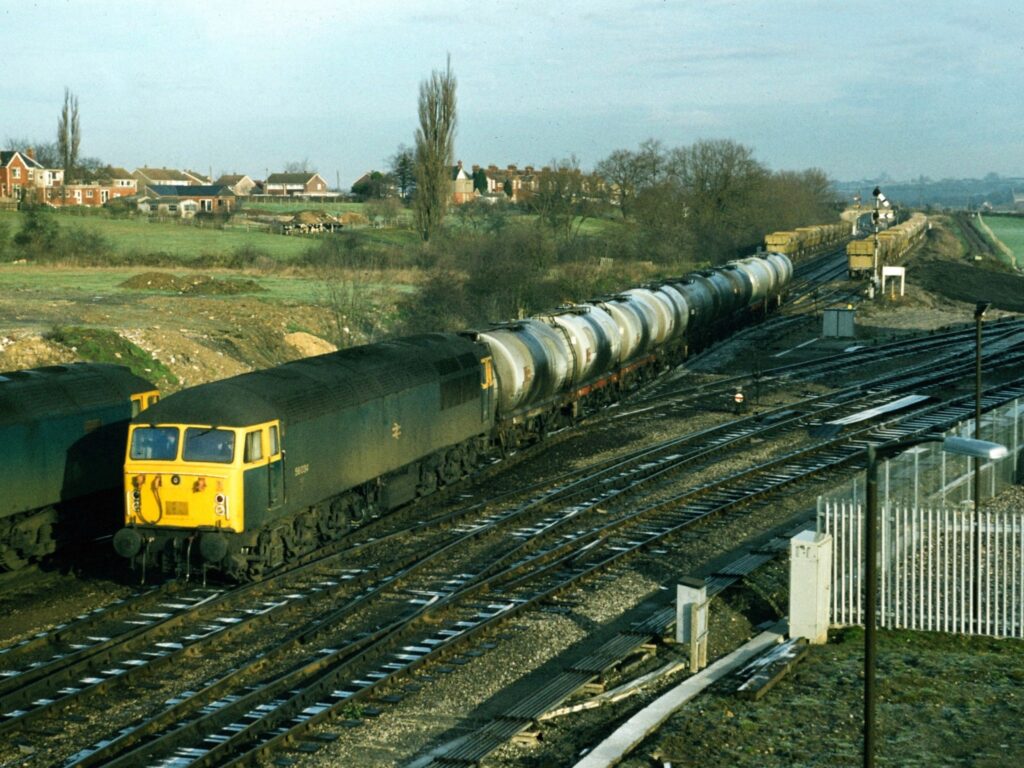
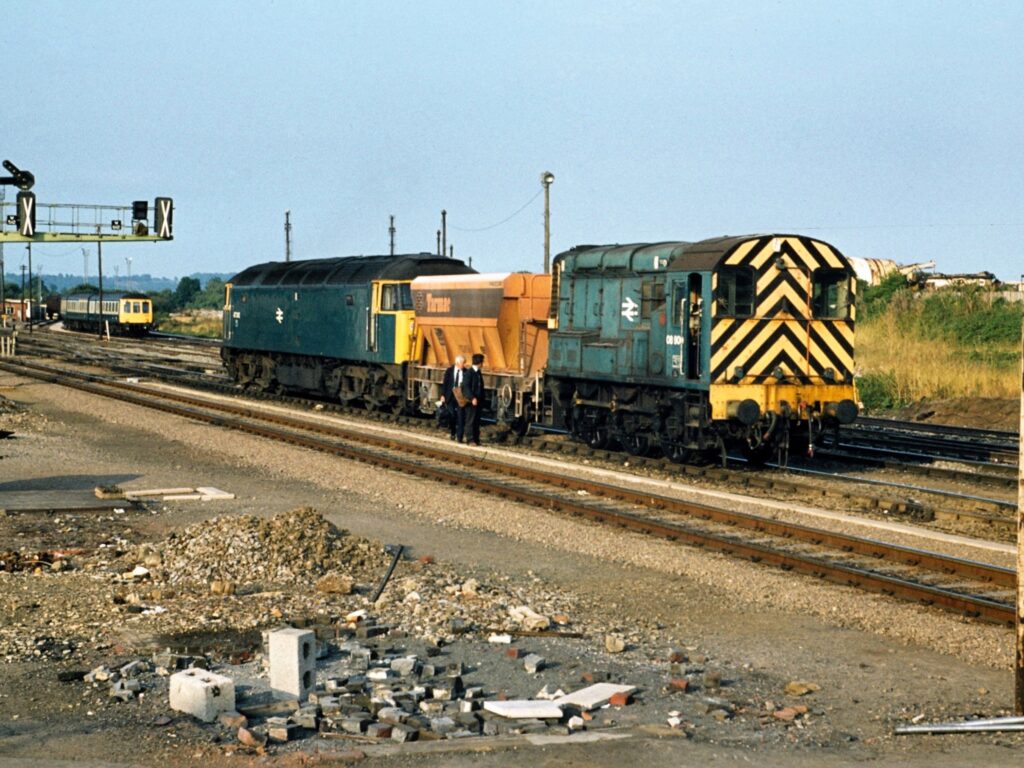
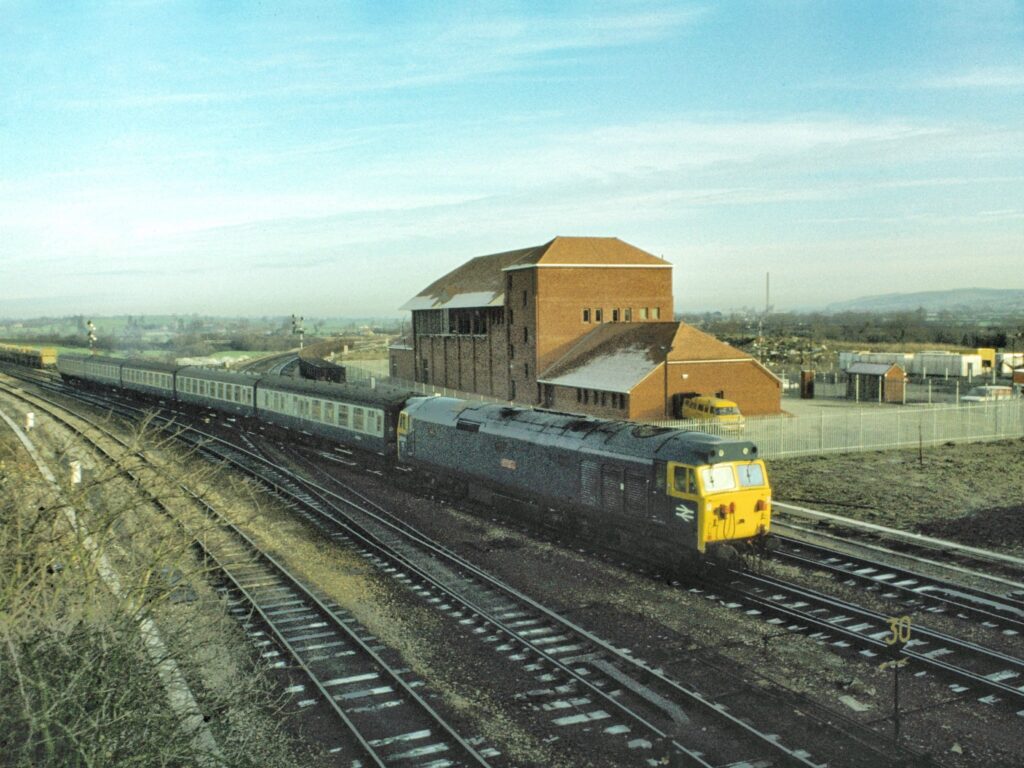
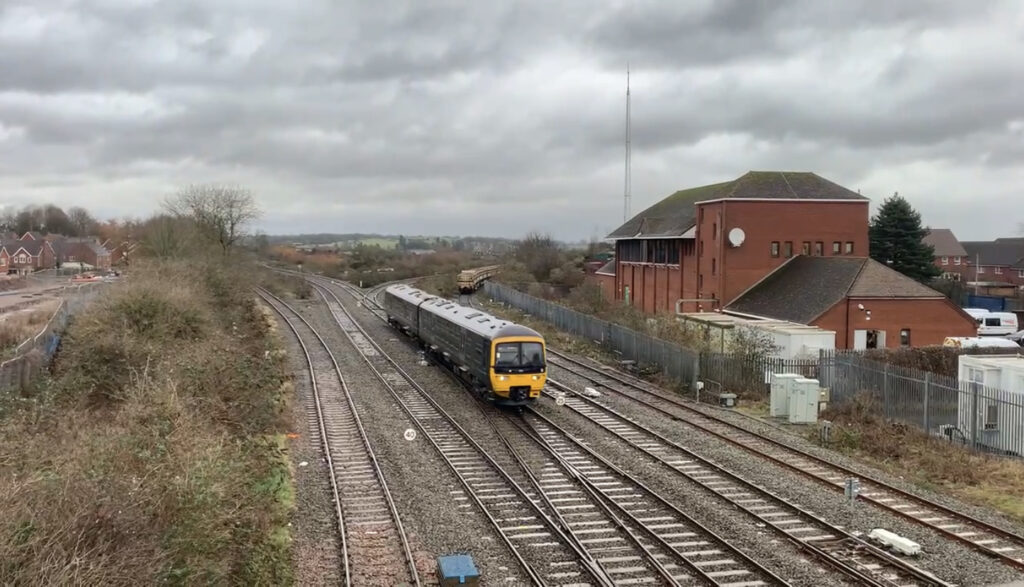
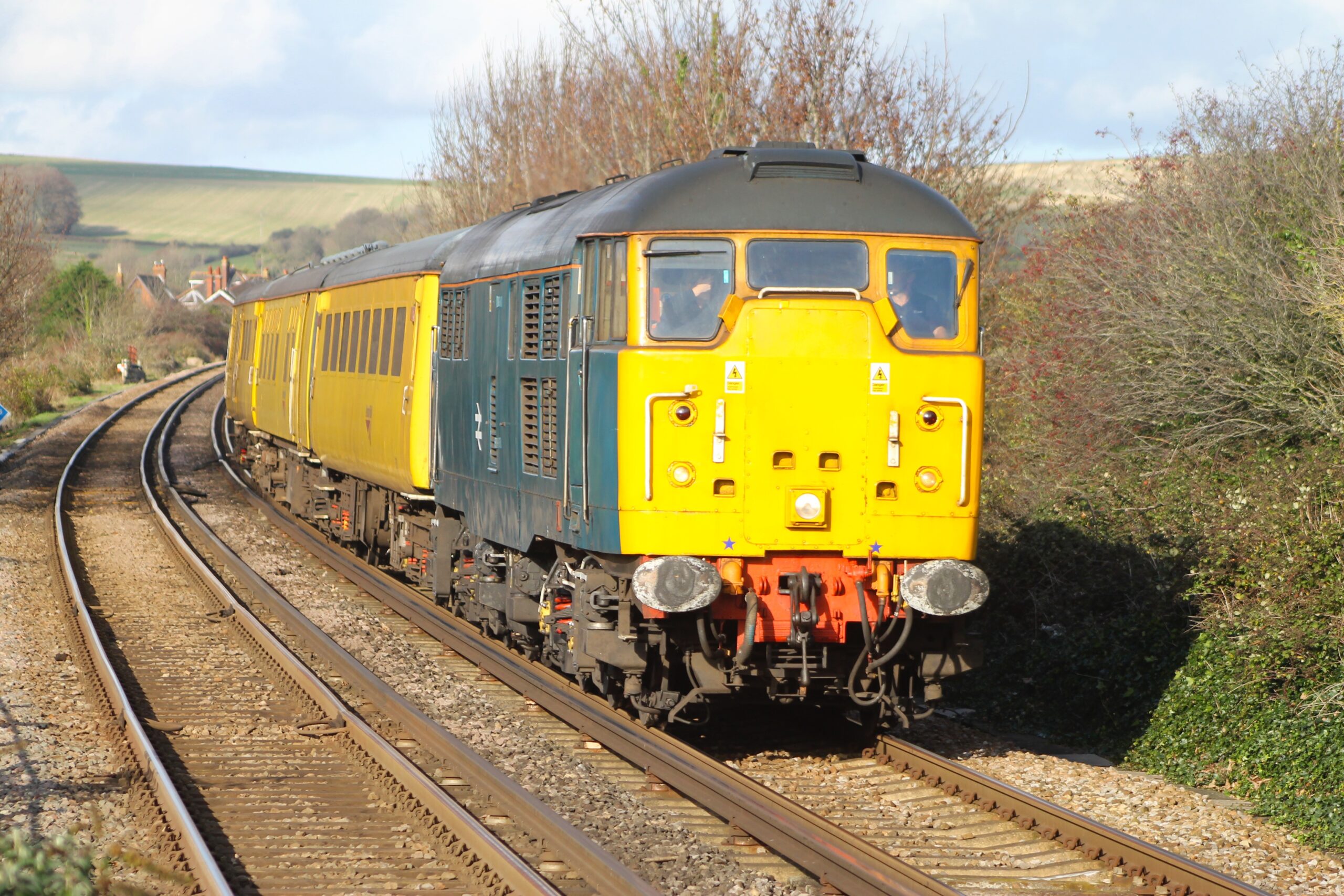
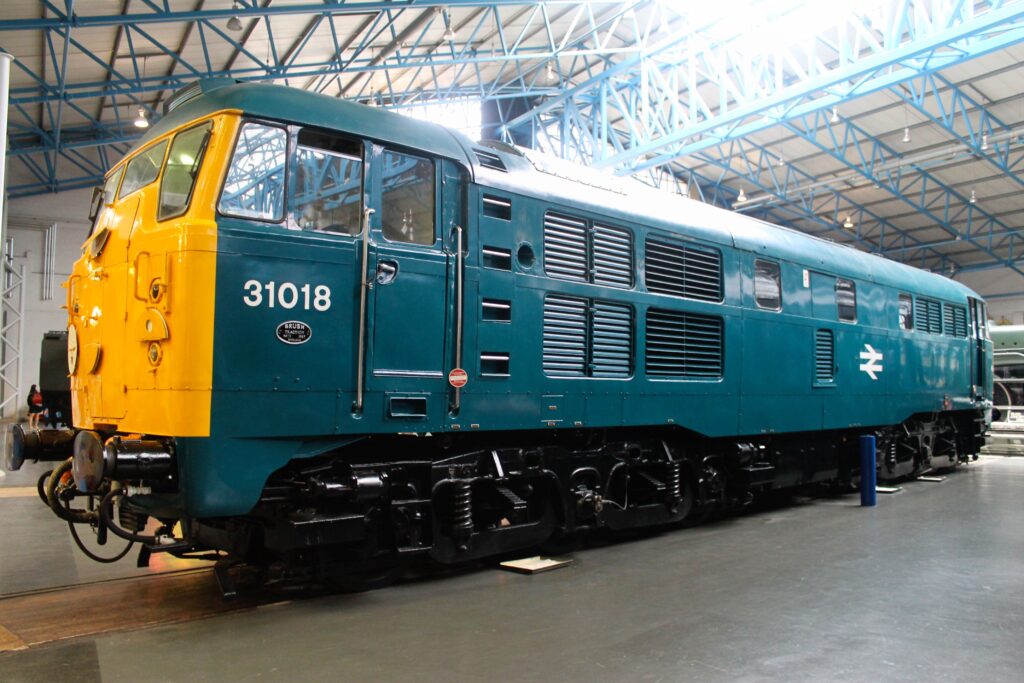
Here are a few images of previous test trains utilising DBSO’s which have visited Dorset, in these instances in the charge of Brush Type 2 Class 31 diesel locomotives. These locos were once a common sight on the Bristol to Weymouth line hauling passenger trains, so I was pleased to find one running on the Avon Valley Railway over the Easter Weekend.



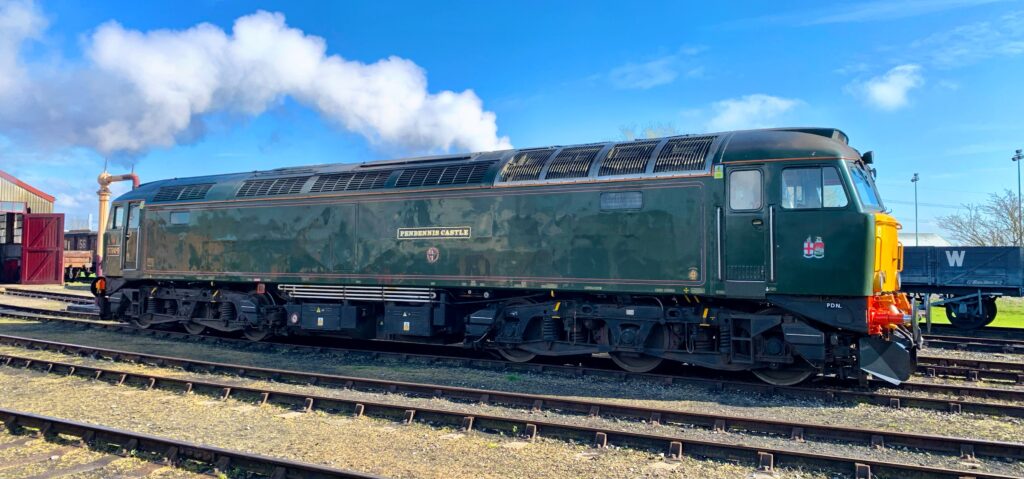
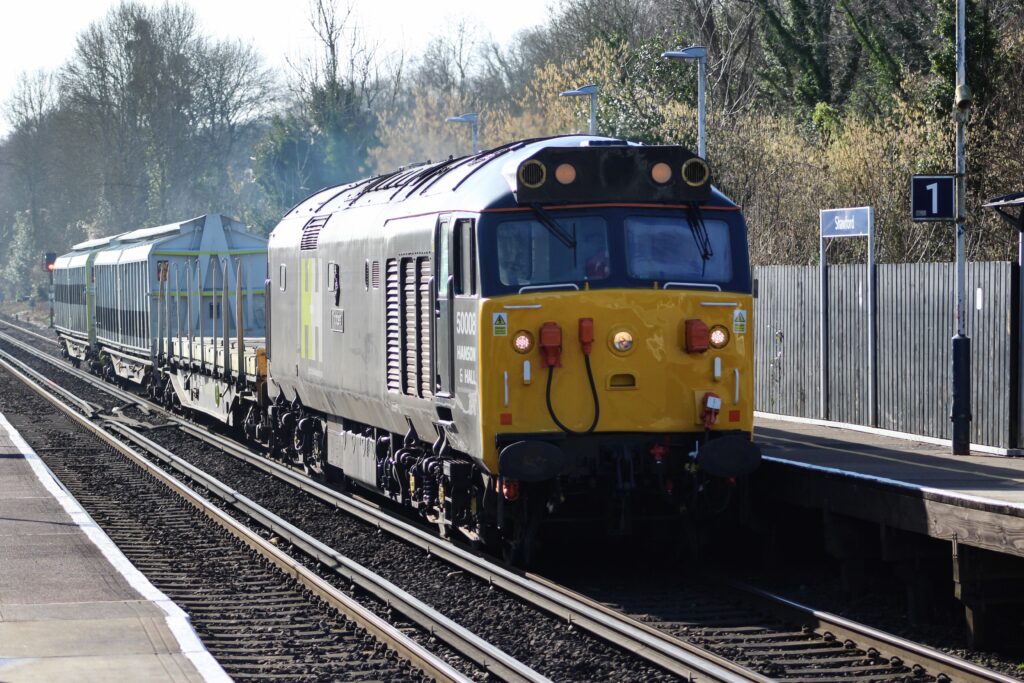
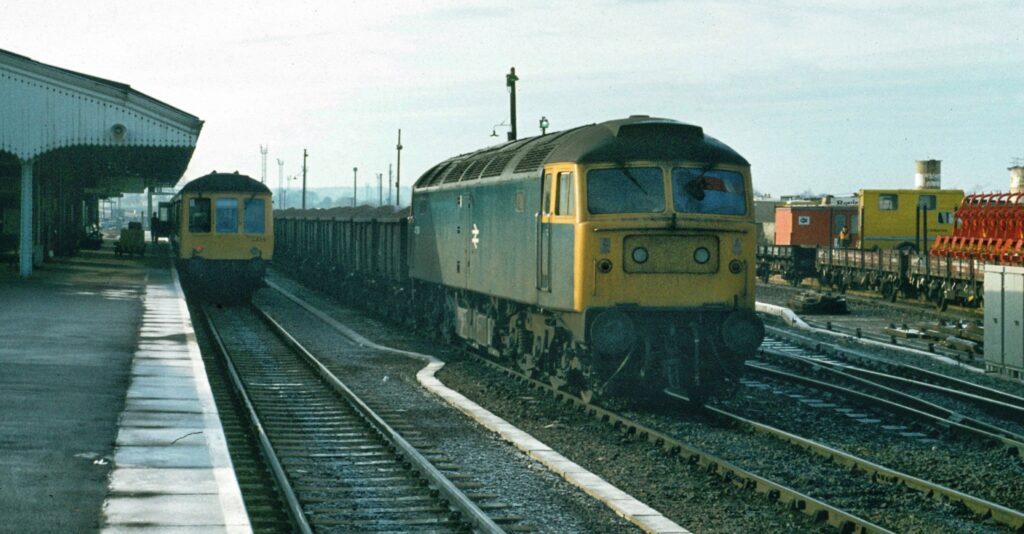
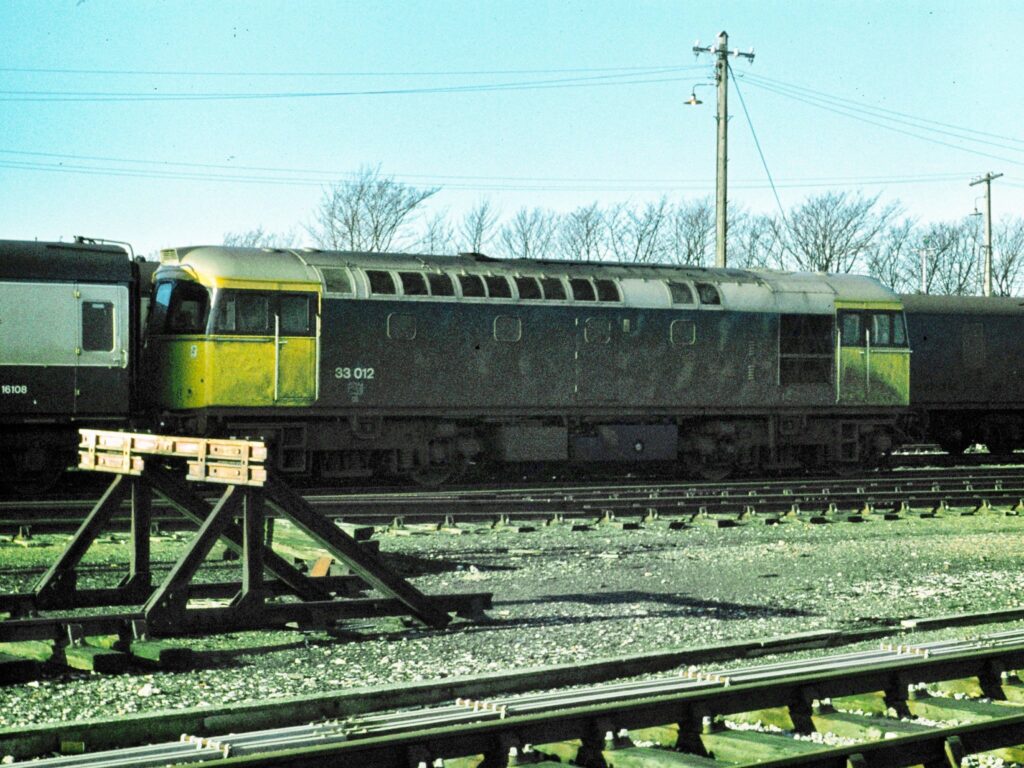
Later on Thursday 14th April another late runner was the movement of Class 33 No. D6515/ 33012 ‘Lt Jenny Lewis RN’ and Class 50 No. 50026 ‘Indomitable’ from Eastleigh Arlington to Swanage. The locomotives were on their way in preparation for the Swanage Diesel Gala to be held in a few weeks time. Because of the delay departing Eastleigh ( I read this was because of an air leak on the Class 50, but not sure if that is true or someones idea of a joke given the Class 50’s nickname of ‘Hoover’ ). Because of work commitments, I was unable to get to where I had planned to see these two, but I was quite happy with the resulting video and photographs at the location I selected in Parkstone.



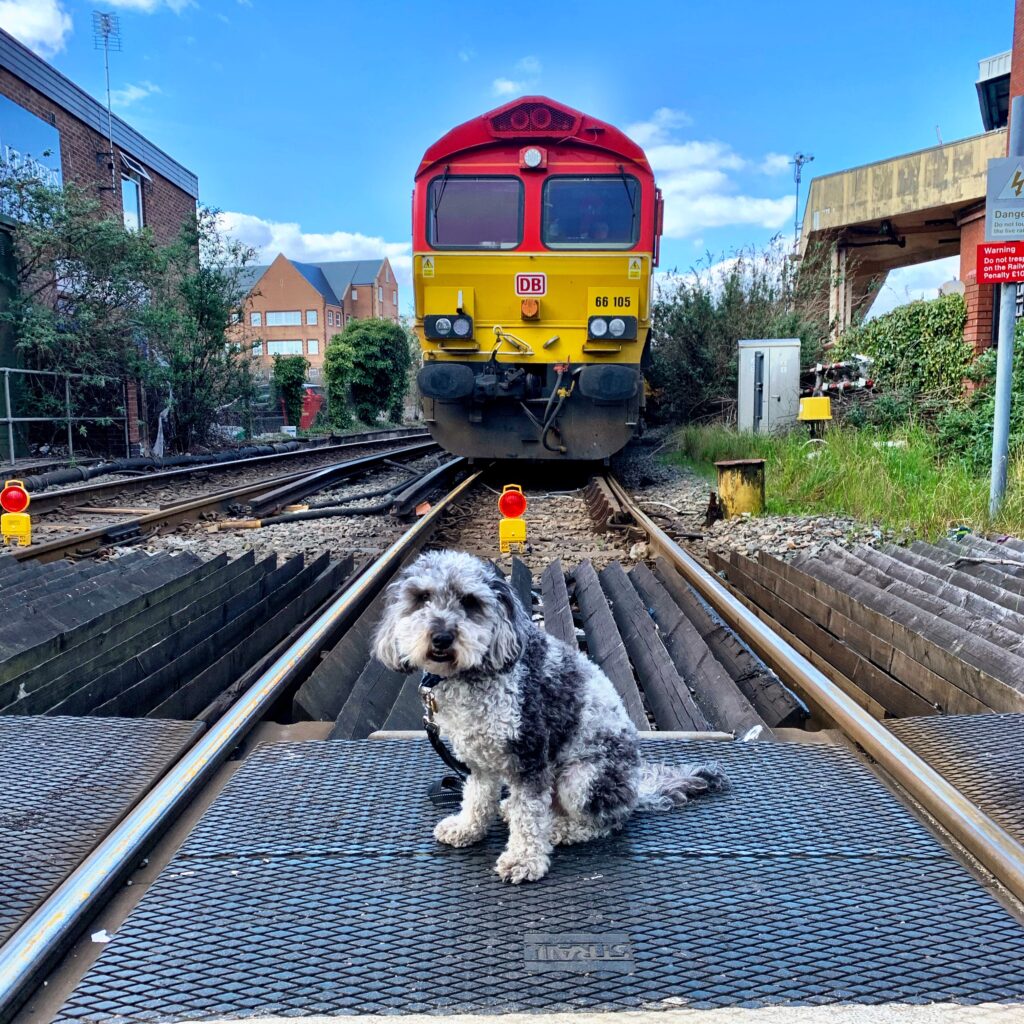
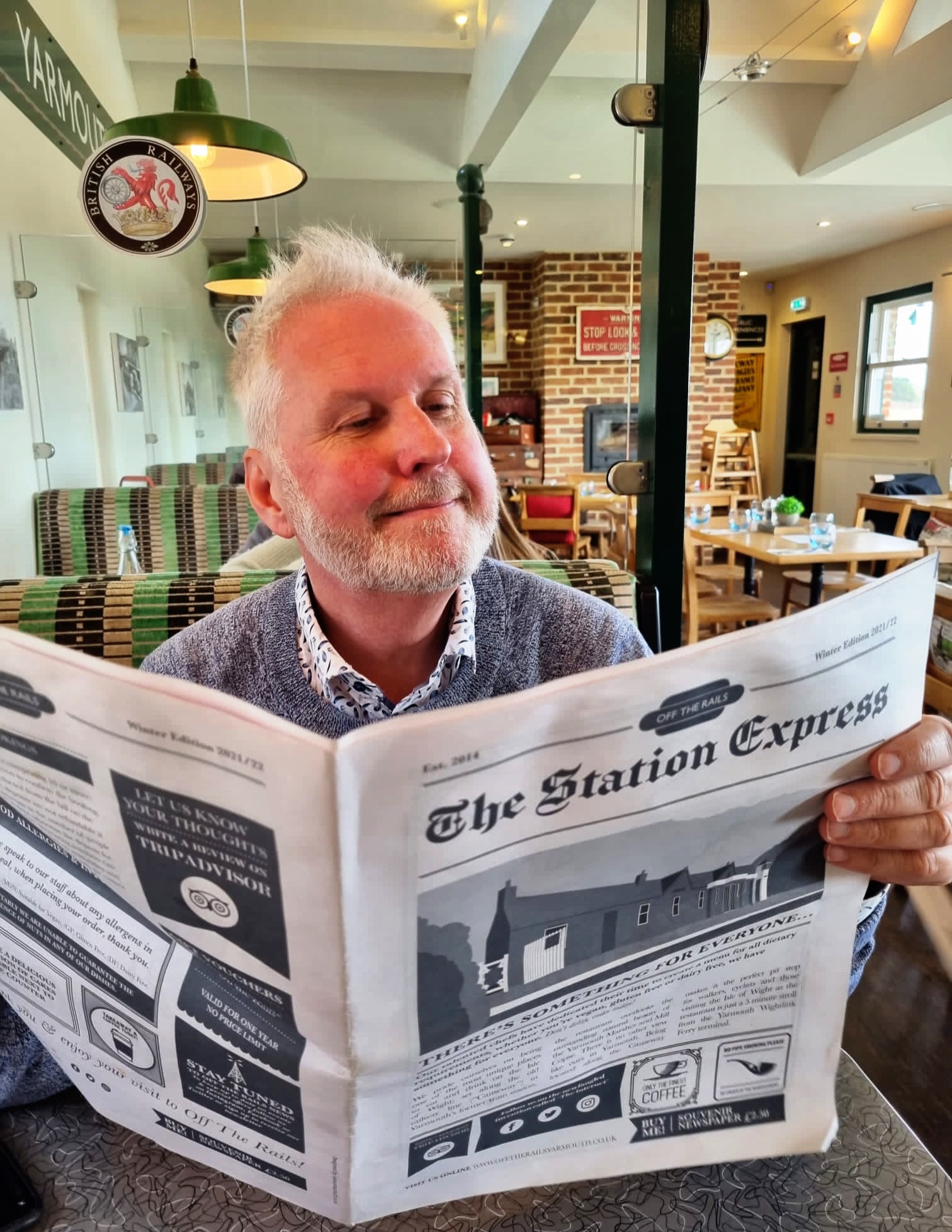
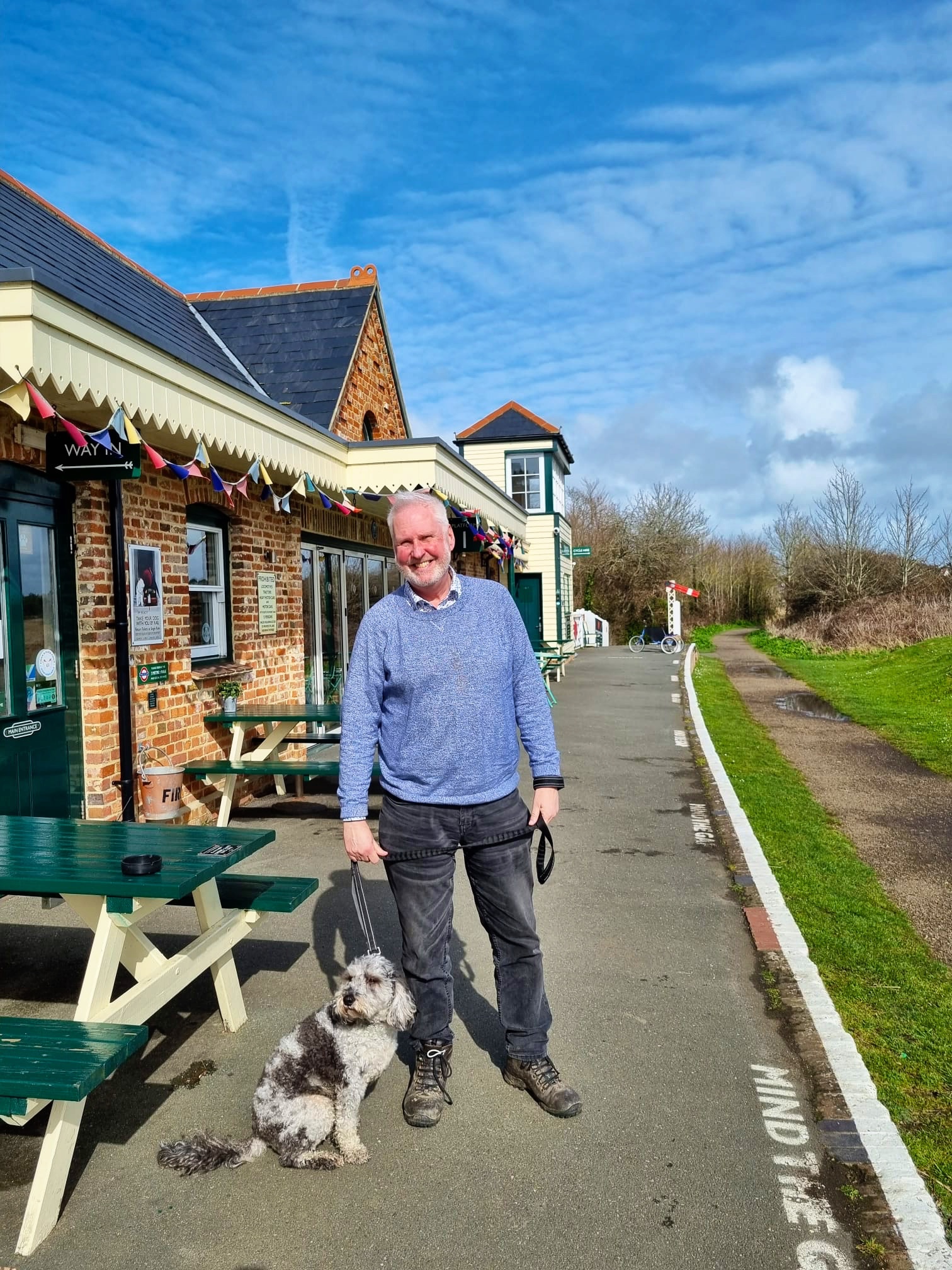
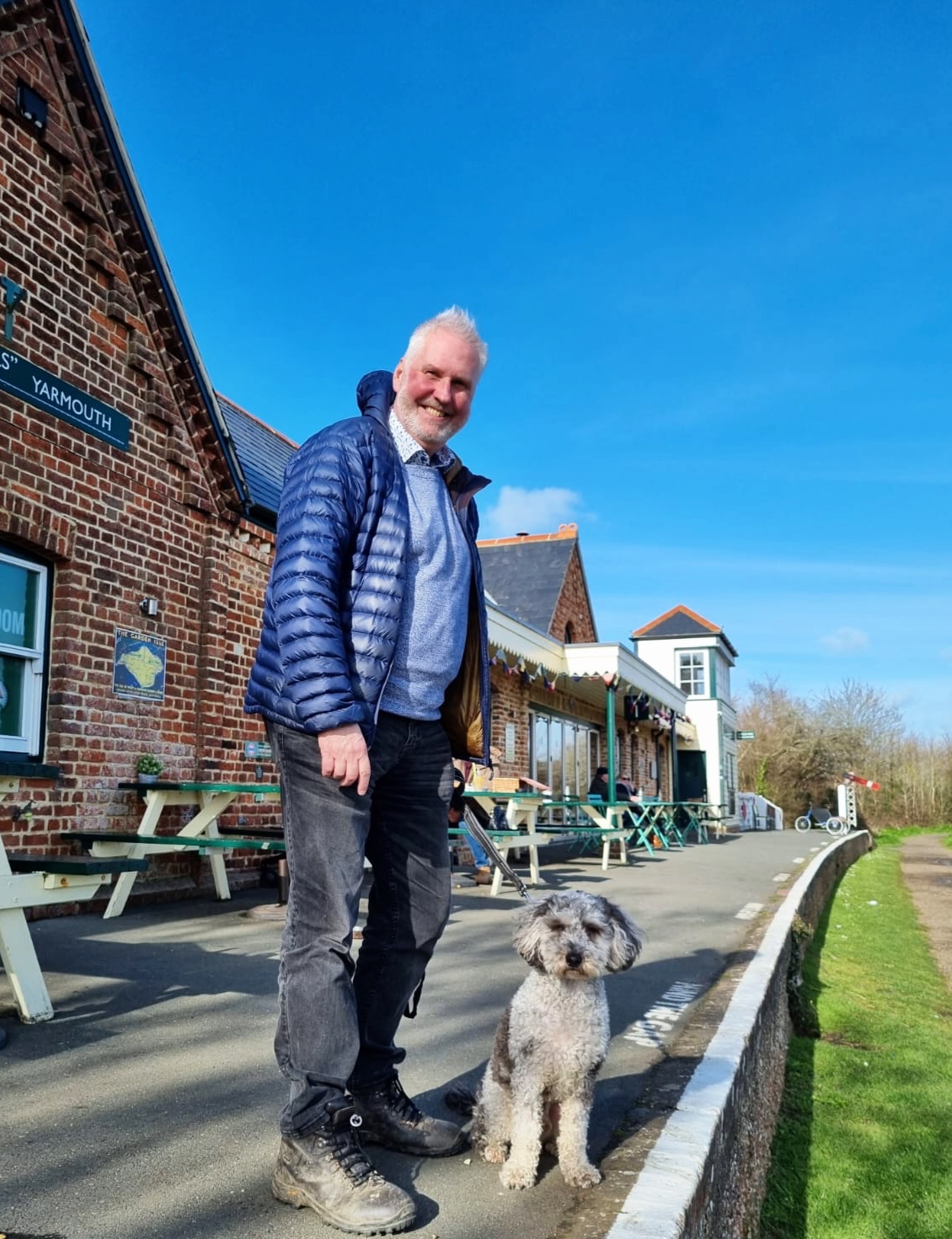
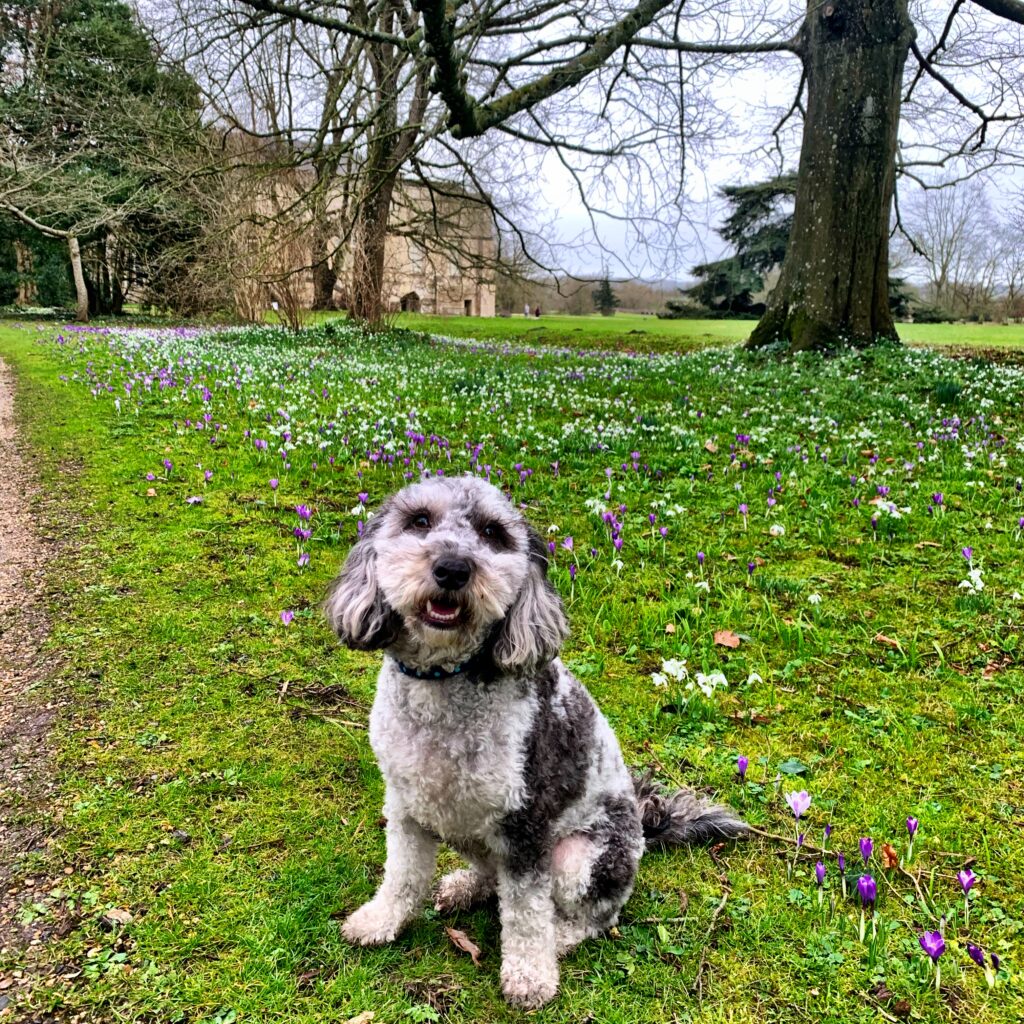
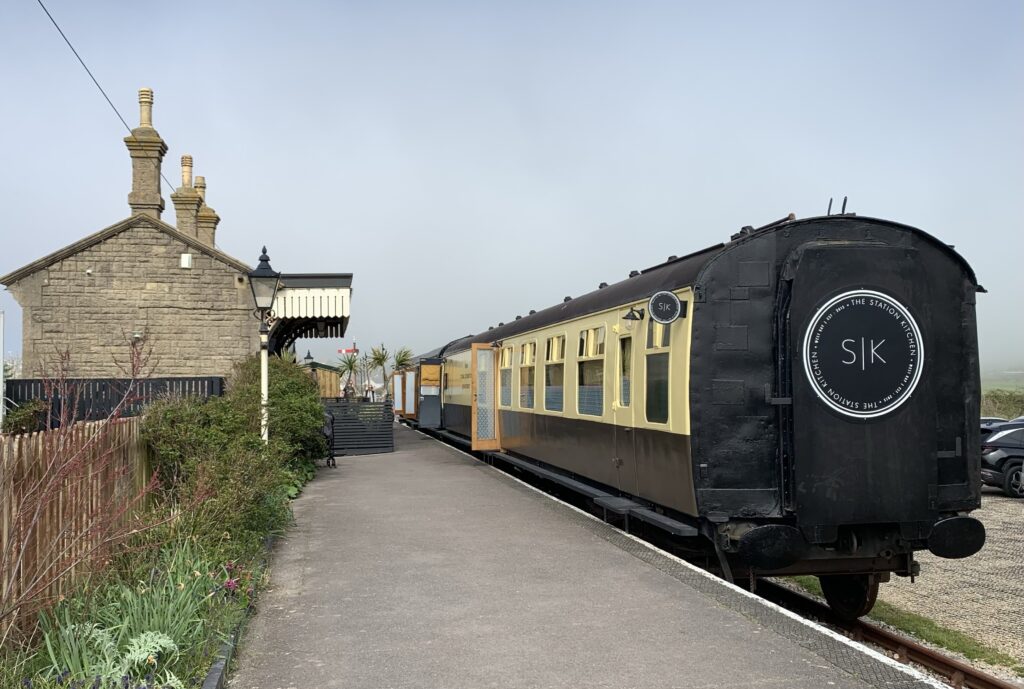
The Easter weekend saw Yoshi and I visit a few railway themed locations, kicking off with a lovely Good Friday afternoon walk around a foggy West Bay where we enjoyed ice-cream.

Our visit to West Bay, of course, included a visit to the disused station which is now a restaurant. The owners of The Station Kitchen have placed two carriages on the length of track alongside the station platform and it all looks rather wonderful.

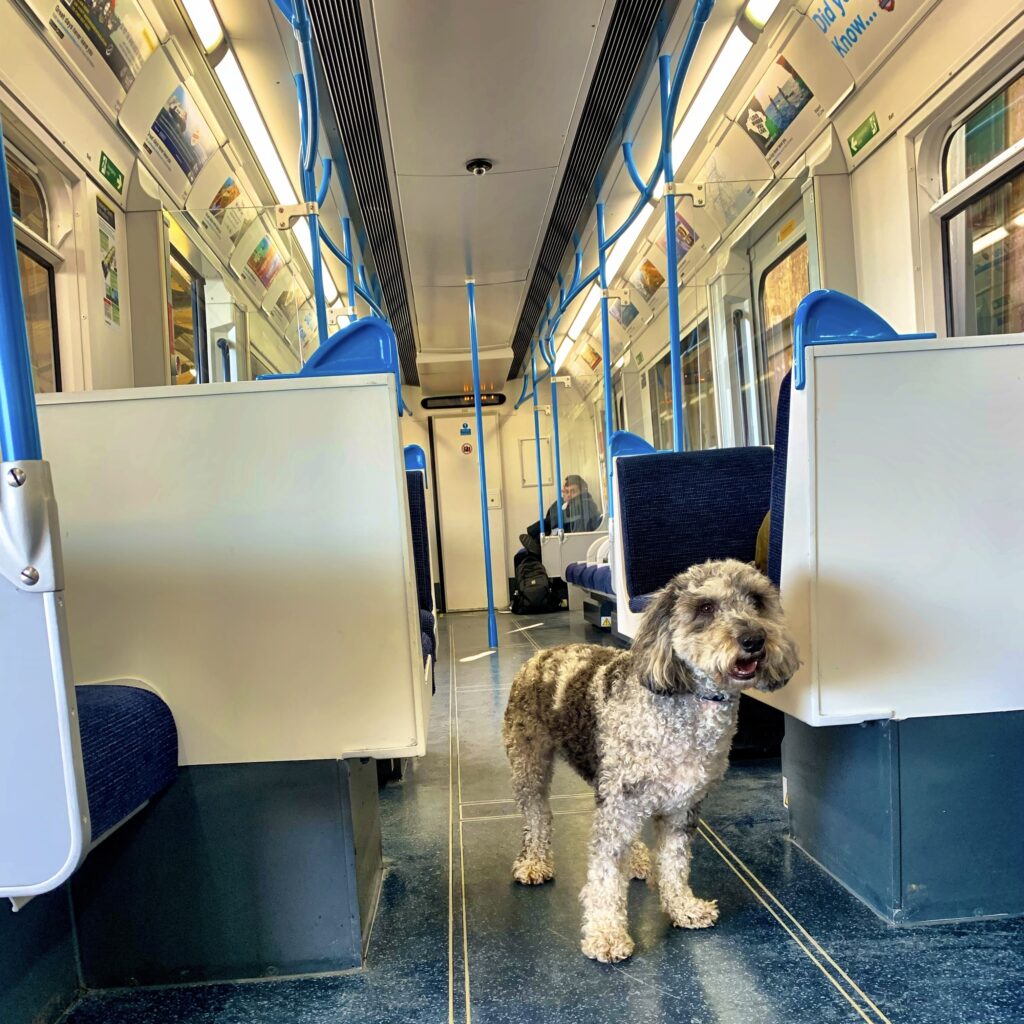
On Saturday we ventured a little further afield to the Avon Valley Railway and enjoyed a trip behind Class 31 No. 31130. I think Yoshi liked that we had our own compartment and enjoyed the ride from Bitton to Oldland Common and back. The track to Avon Riverside is currently closed for upgrade work. The line was originally opened in 1869 by the Midland Railway as a route between the Midlands and the South Coast. The Avon Valley Railway was later linked to the Somerset & Dorset Railway. Closed as part of the Beeching Axe in the 1960’s the line was saved by a group of volunteers and today three miles of track has been re-laid and trains can once again run along the Avon Valley which I can highly recommend. I look forward to a return visit for a walk further alongside the track on the Bristol & Bath Railway Path, a 13 mile off-road route between Bristol and Bath city centres. The staff and volunteers at the railway were amazingly friendly during our visit and Yoshi was made a great fuss of and even visited the cab of the Class 31, although he wasn’t allowed to drive the locomotive, because quite frankly that would have been a bit silly.

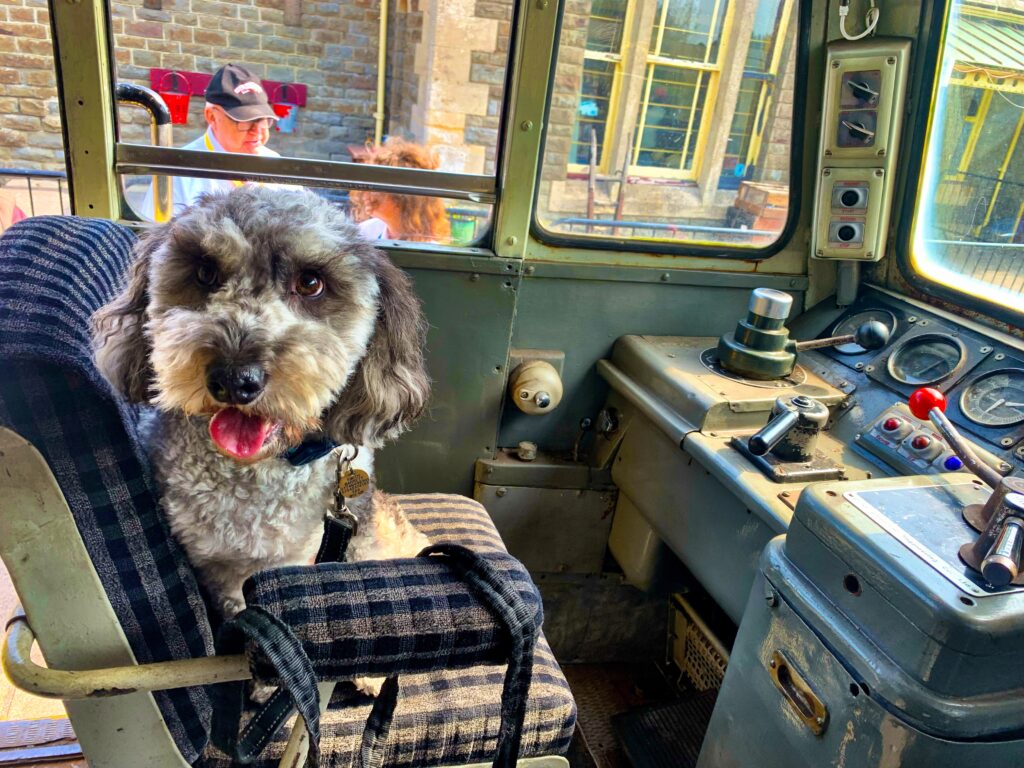
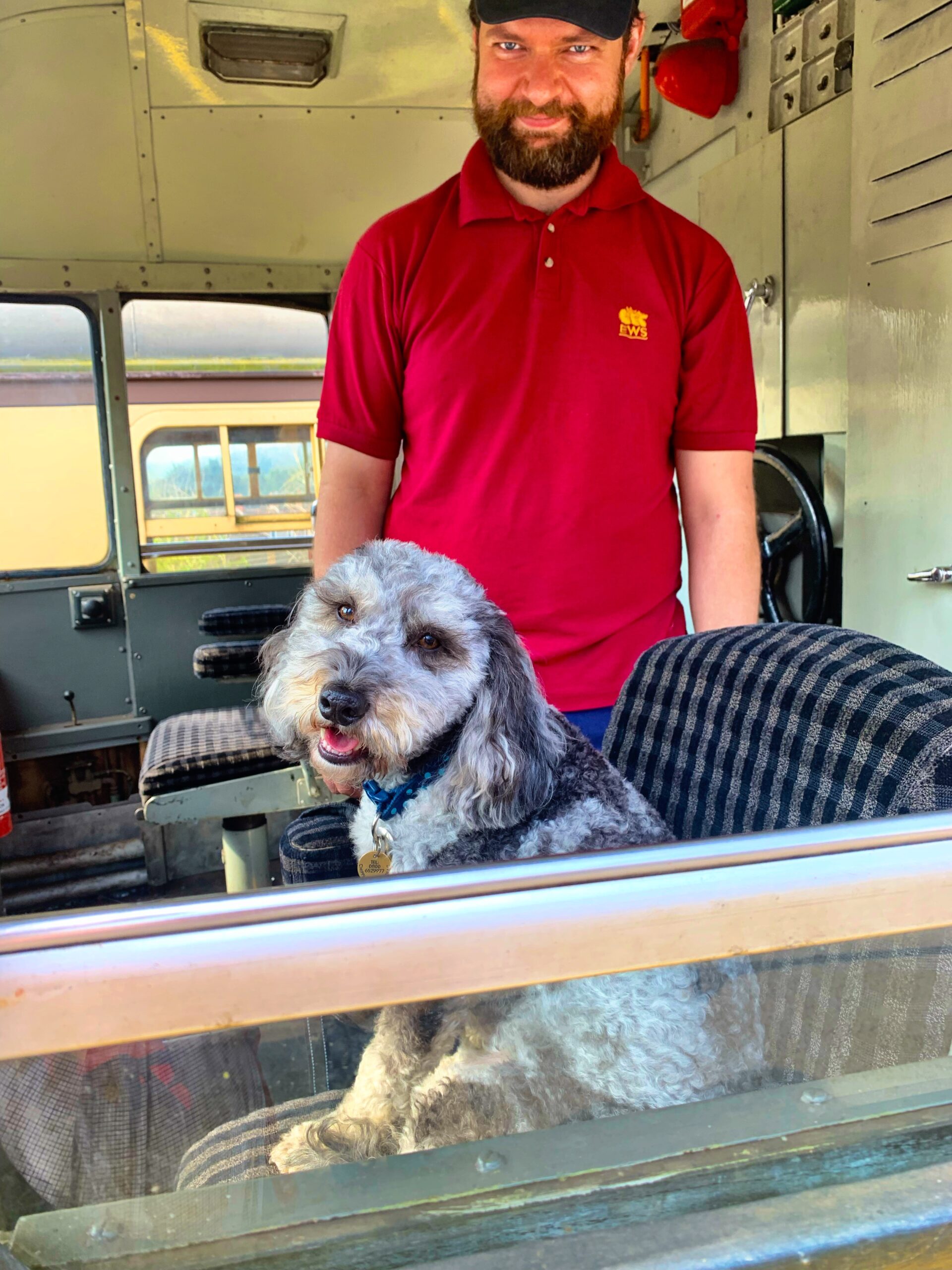
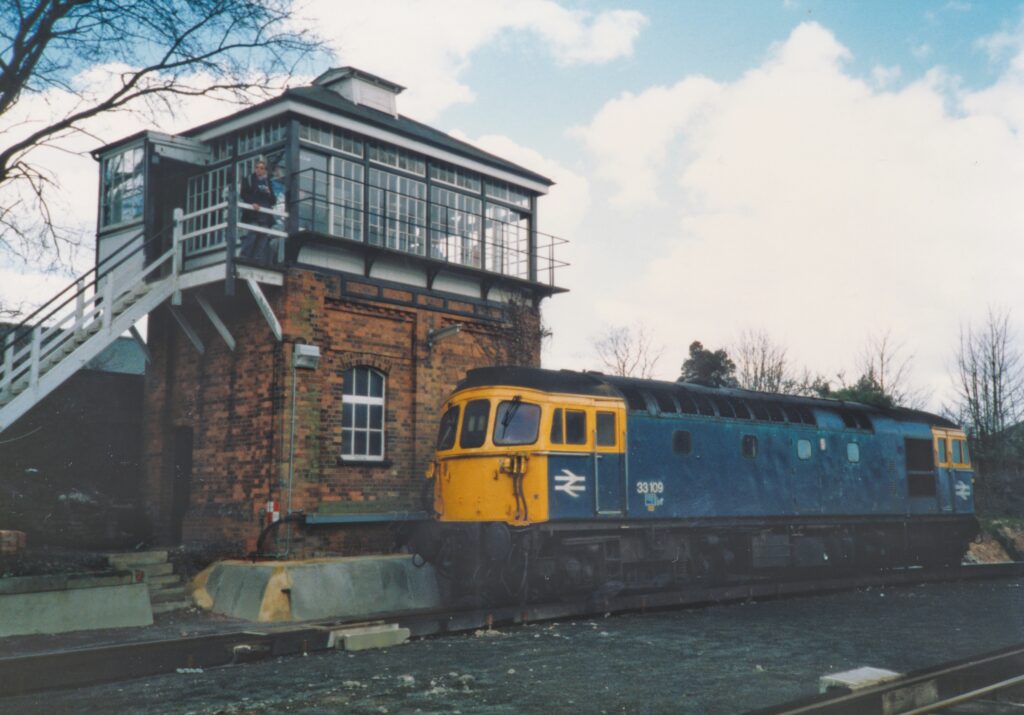
The Class 31 mixed traffic diesels were built by Brush Traction of Loughborough from 1957 – 1962 and were one of the pilot Modernisation Plan locomotive classes ordered by British Rail in the 1950’s to replace steam traction. They were given the nickname ‘Goyles’ by train spotters, this being a reference to gargoyle because of their supposed ugly design. I rather like them and have a fondness for the class and their many variations.
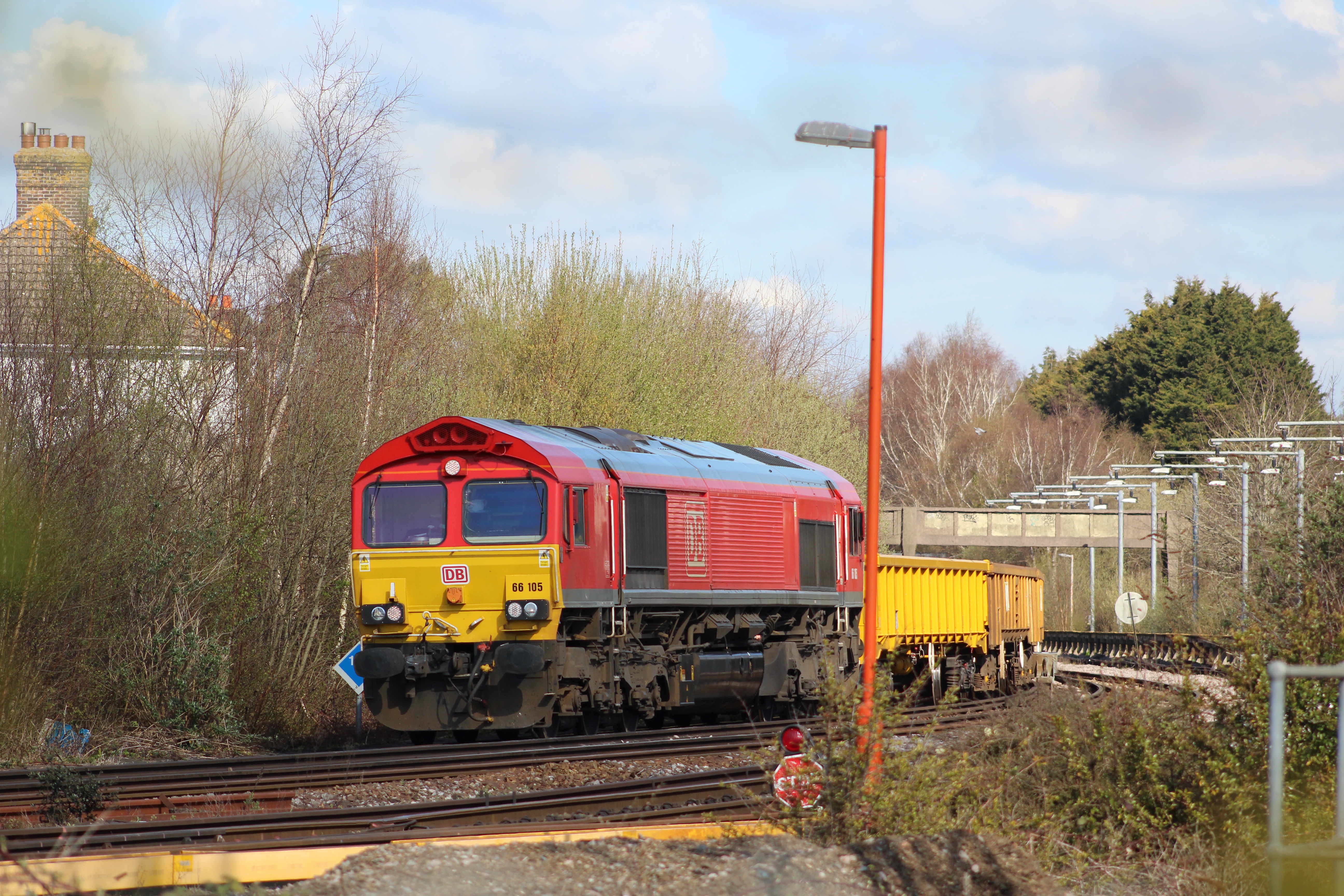
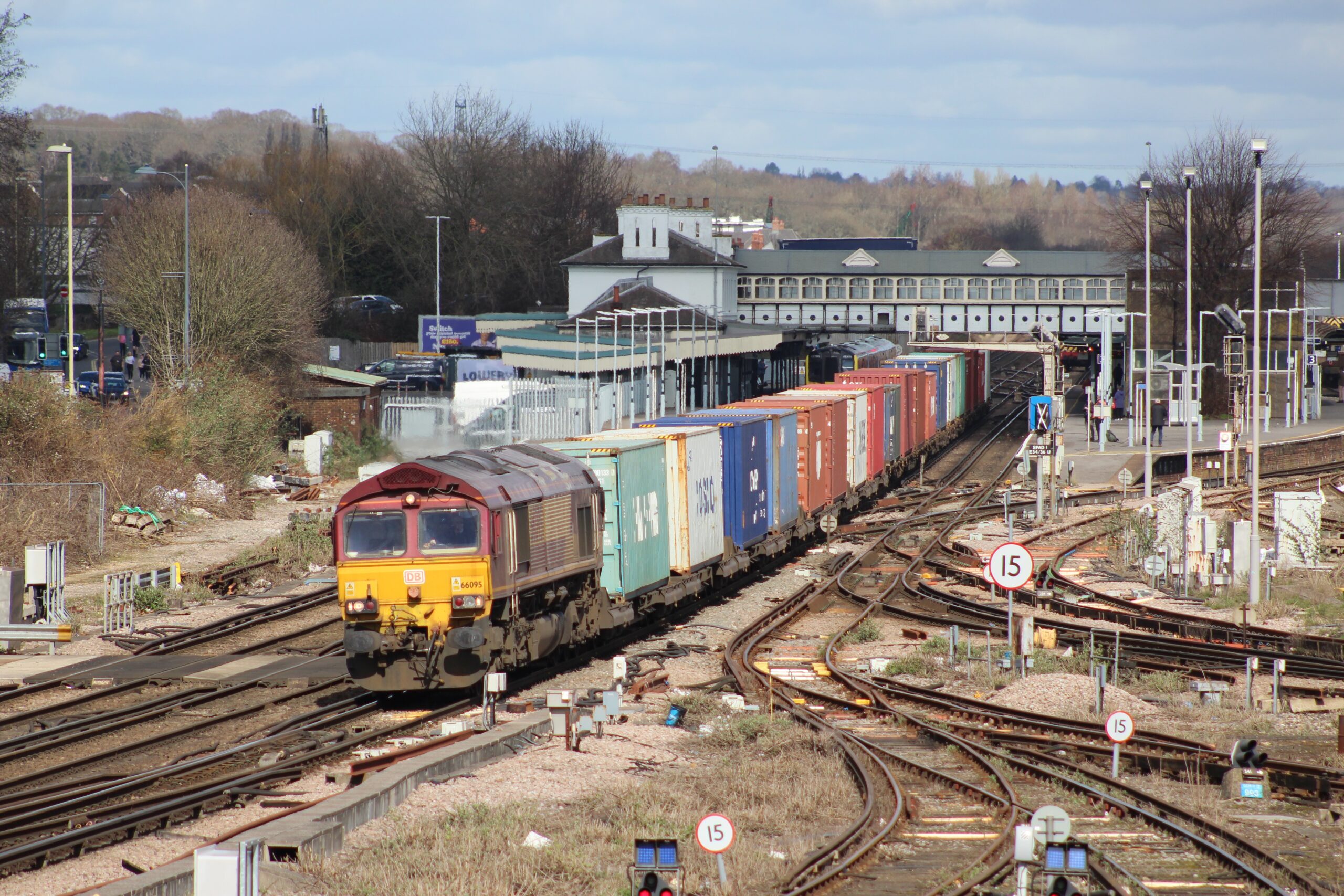
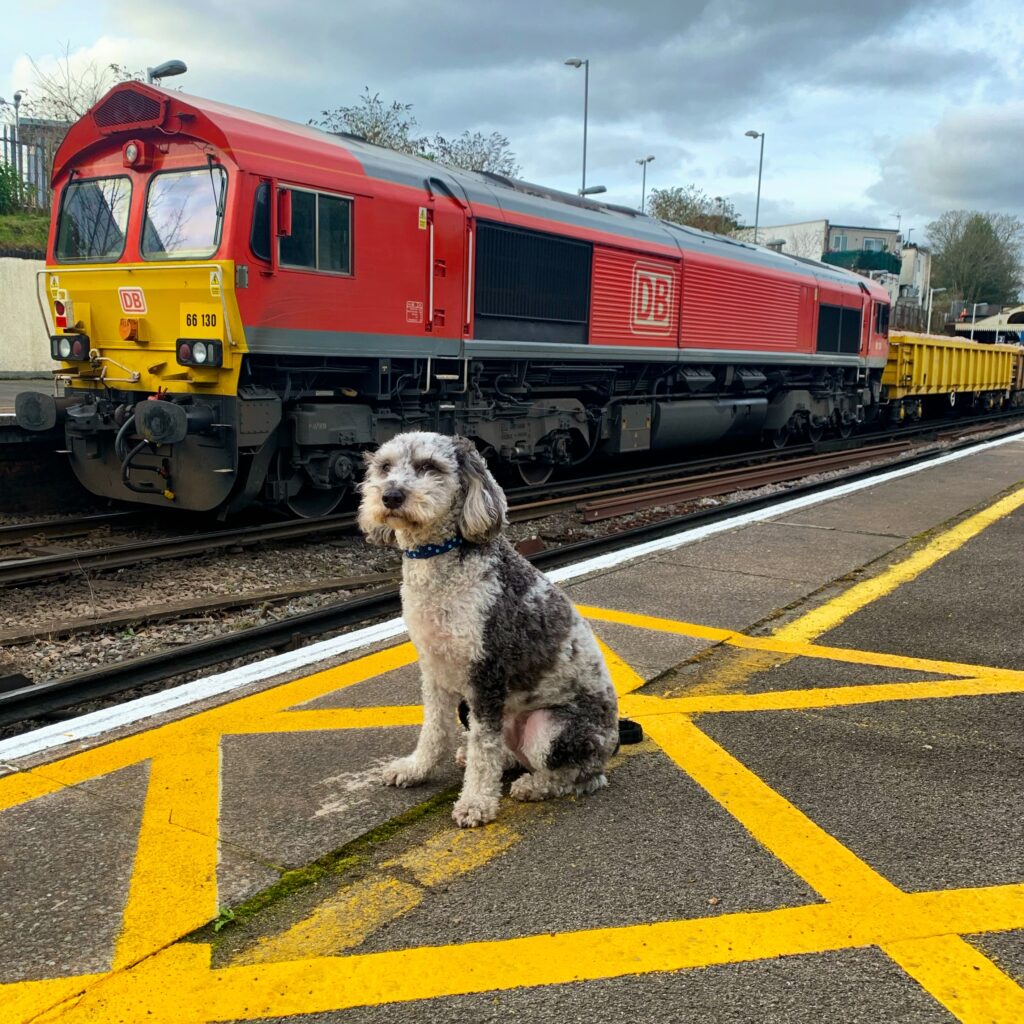
Our day out was planned around picking up a train shaped flower planter we had ordered and on our way from the Avon Valley Railway we popped into Keynsham to catch a glimpse of passing Class 66 No. 66134 working to Westbury and a couple of Great Western IET’s.

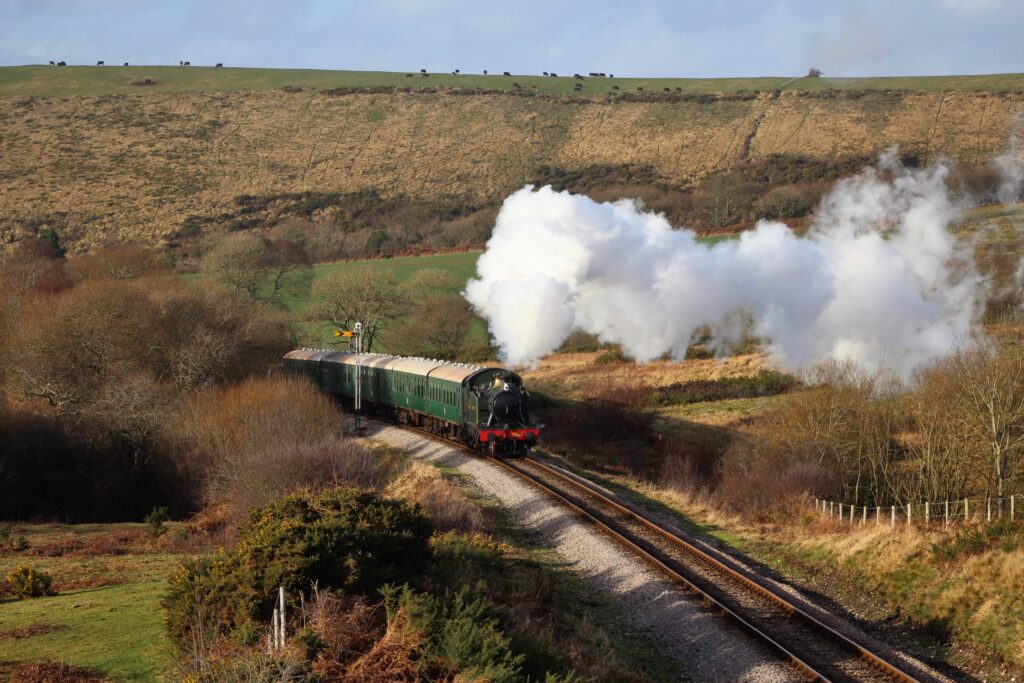
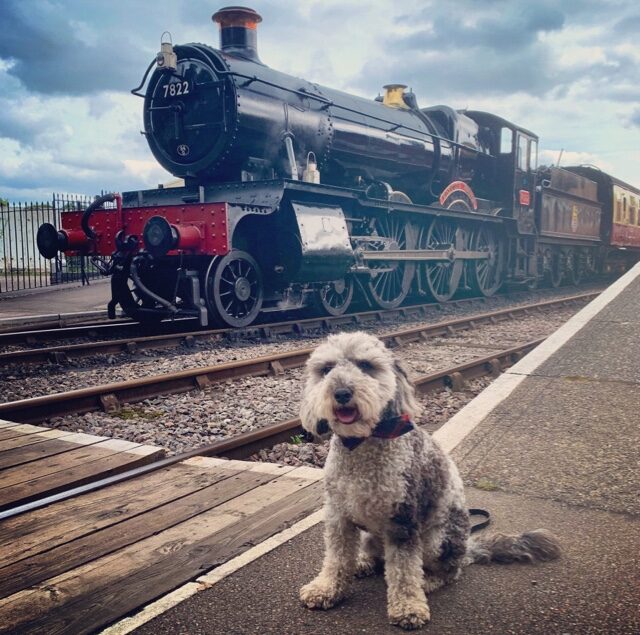
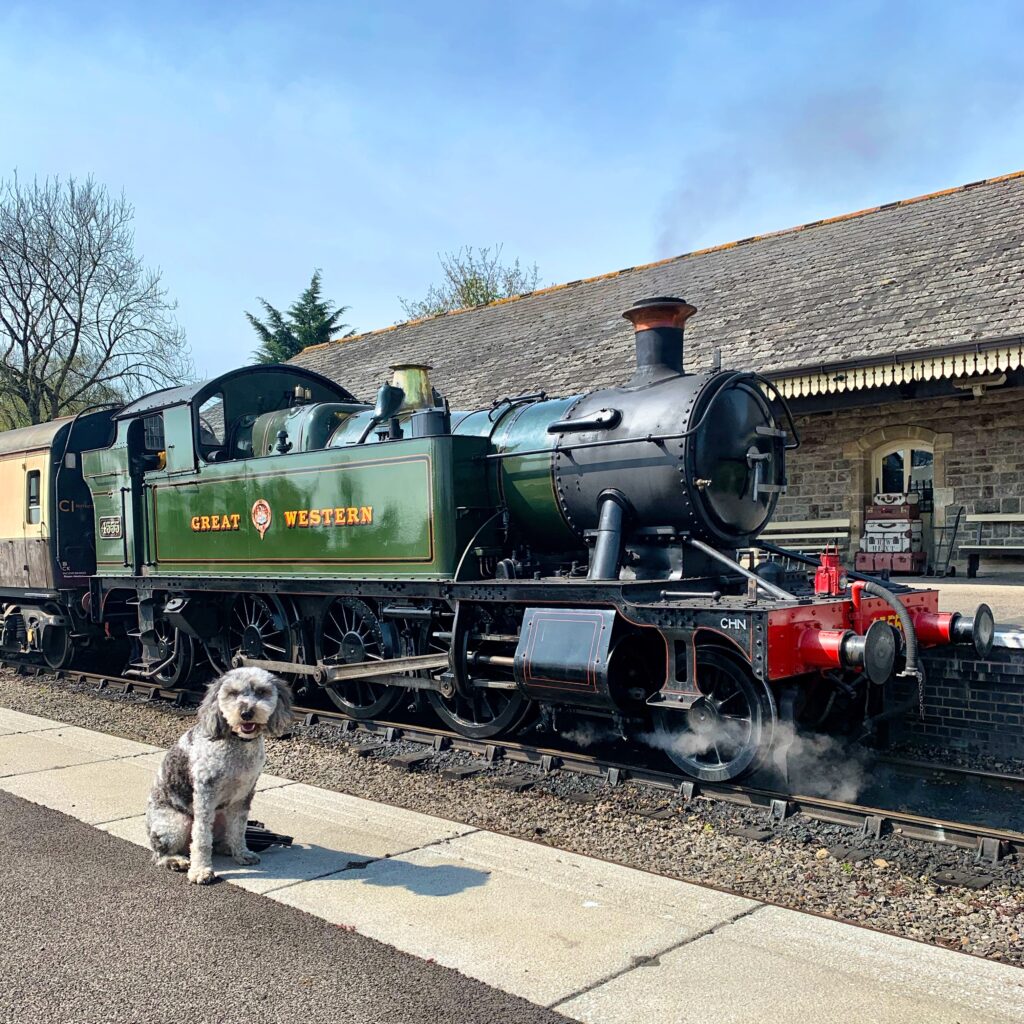
We also had time to pop in at Cranmore for a cuppa and to see GWR 4500 Class 2-6-2T No. 4555 which was working the passenger trains on the East Somerset Railway. Again Yoshi enjoyed all the attention and scritches he received.
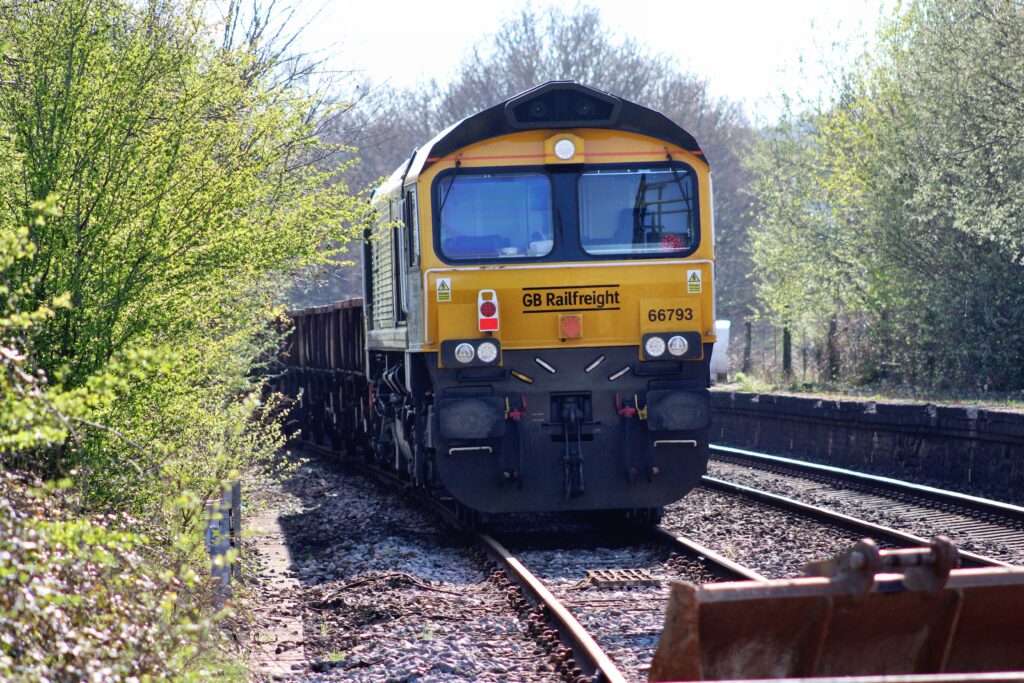
After picking up the planter in Somerset we drove home via Chard as engineering work was taking place over the Easter weekend between Yeovil Junction and Honiton. We were very kindly escorted on to the disused station platform at Chard Junction to take photographs of GBRf Class 66 No. 66793 in British Rail Railfreight Construction livery attached to the engineers train. The station was closed to passenger traffic in March 1966 and there have been many calls, over the years since, to reopen it.

Sunday afternoon we popped into Swanage to visit the Swanage Railway who were operating a two train service utilising SR Bullied 4-6-2 West Country Class No. 34028 ‘Eddystone’ and GWR 4575 Class 2-6-2T Small Prairie No. 5526. We also got another glimpse of Class 33 No. 33012 and Class 50 No. 50026 stabled in the sidings close to the engine shed.


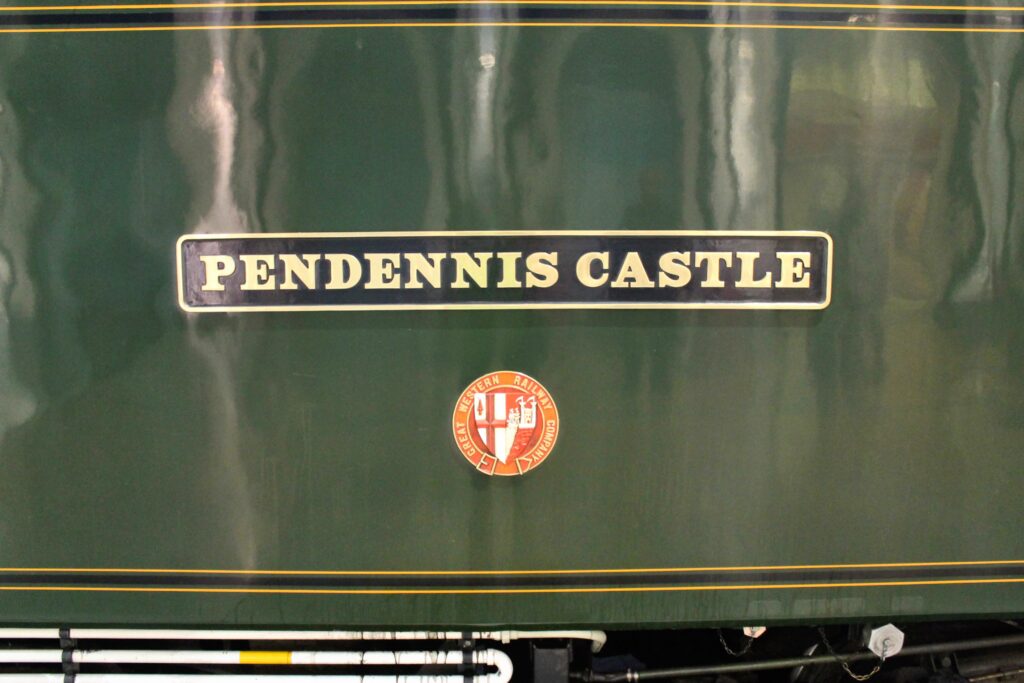
For our first archive video this week, we return to Keynsham ( and Bradford-on-Avon ) for a glimpse of Great Western Railway Castle Class No. 5029 ‘Nunney Castle’. This locomotive was built at Swindon Works in 1934 and takes the name of a small castle near Frome, Somerset. She was withdrawn from service in December 1963 and sold to Woodham Bros. at Barry, arriving at the famous scrap yard in June 1964 being the last steam locomotive delivered to Barry scrap yard by rail. She was rescued after rusting away for 12 years and in May 1976 was the last Castle class locomotive to leave Barry. Throughout the summer season in 2010 ‘Nunney Castle’ hauled the Sunday ‘Weymouth Seaside Express’ trains organised by The Railway Touring Company, departing from the Bristol area bound for Weymouth and I have fond memories of hearing her exhaust beat echo around on her departure from Keynsham, as can be heard in the video below:
Finally, to wrap things up, here is a short video of Class 31’s top and tailing a test train at Upwey in September 2007:
Don’t forget if you’re thinking about traveling by rail between 25/04/2022 and 27/05/2022 South Western Railway and Great Western Railway are just two of the rail operators offering up to 50% discounts on advance bookings on off-peak tickets as part of ‘The Great British Rail Sale’ . This comes after the highest increases in rail fares in nine years came into effect last month ( March 2022 ). Vacuous Toby Jug Transport Secretary Grant Shapps ( the name he’s currently using ) announced the promotion in a video on Twitter saying it would ‘help with the cost of living’. Unless you can eat or burn the tickets for heating, I have my doubts about that claim.
Train operators and Network Rail have been told by the Department of Transport ( DafT ) to find cost savings of 10% to 15%, after the Treasury spent an extra £15bn subsidising rail for lost revenue over the past two years during the Covid pandemic. The DafT said reforms to the sector due to be introduced after the Williams-Shapps review plan for Great British Railways (2021) could see more such network-wide sales across rail fares.
Thanks for reading!