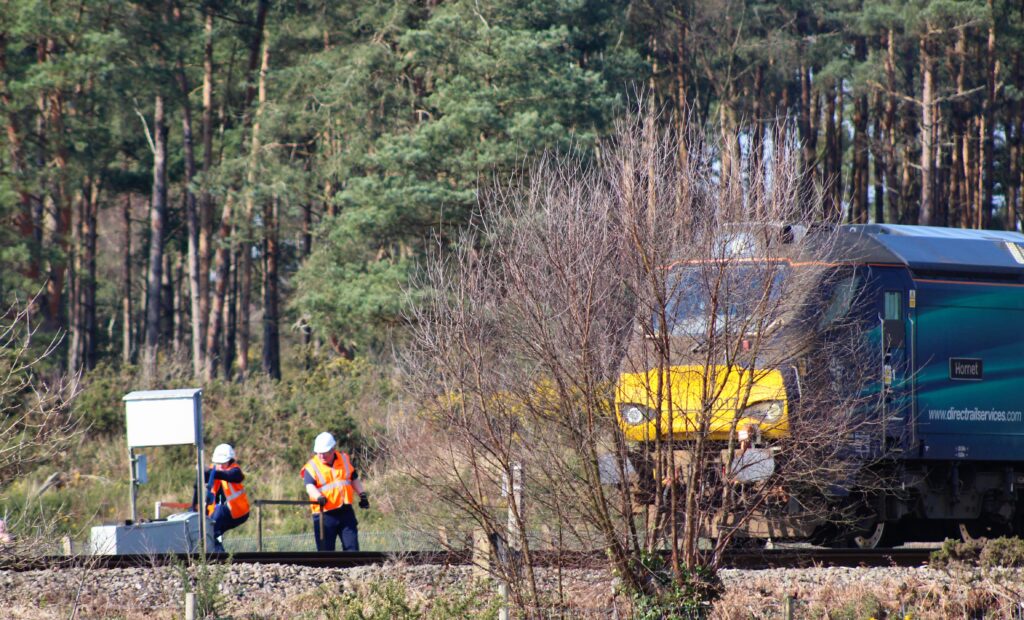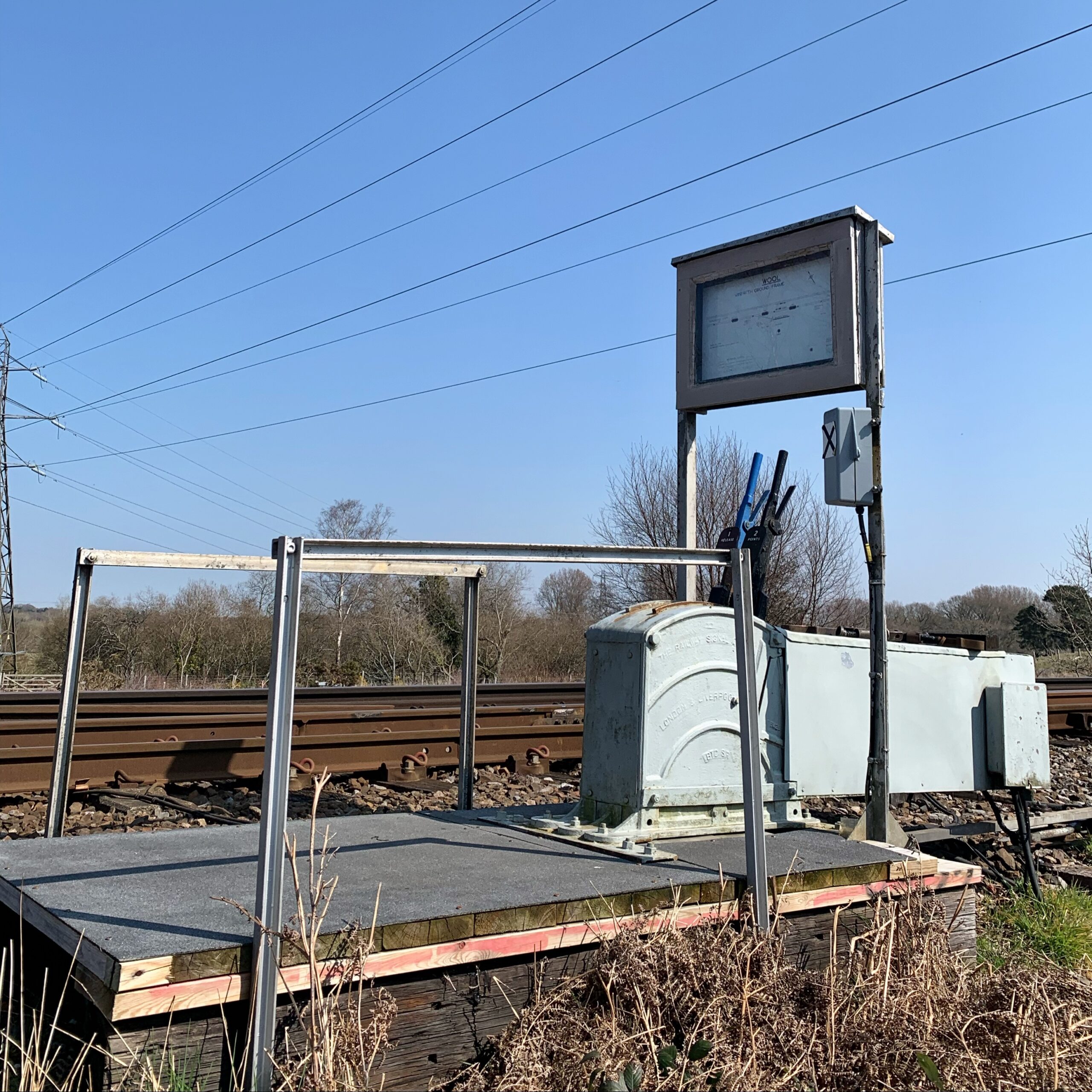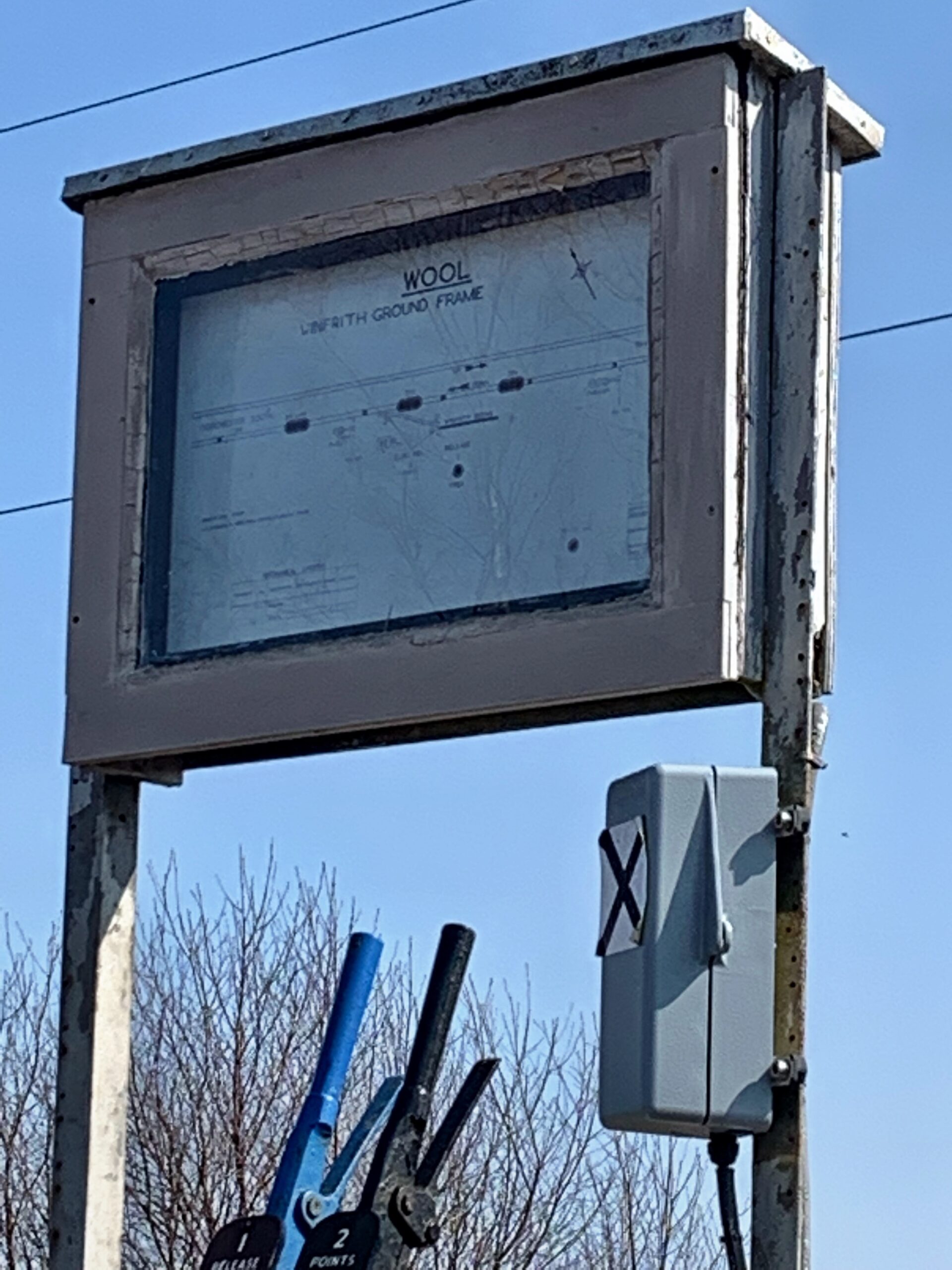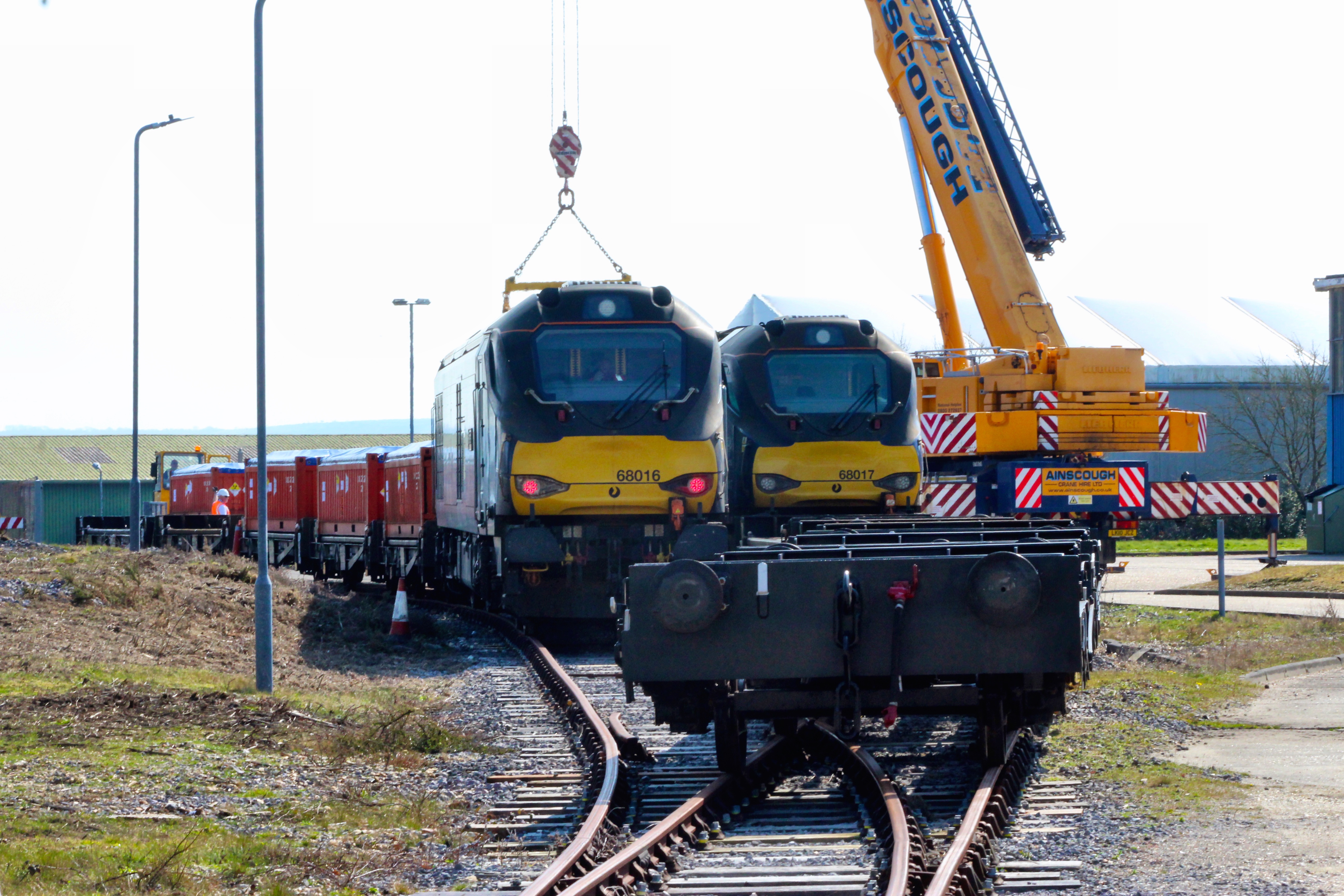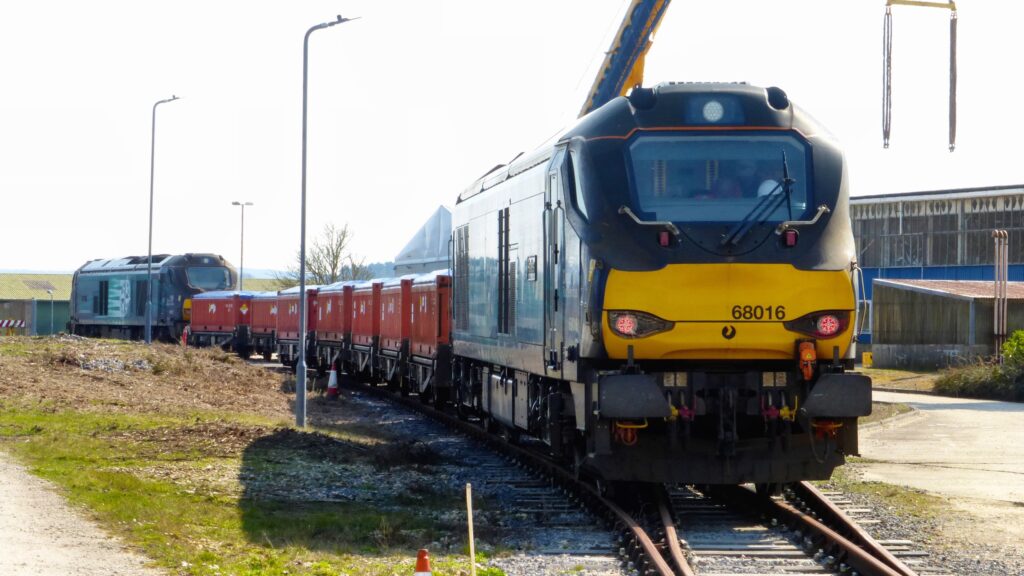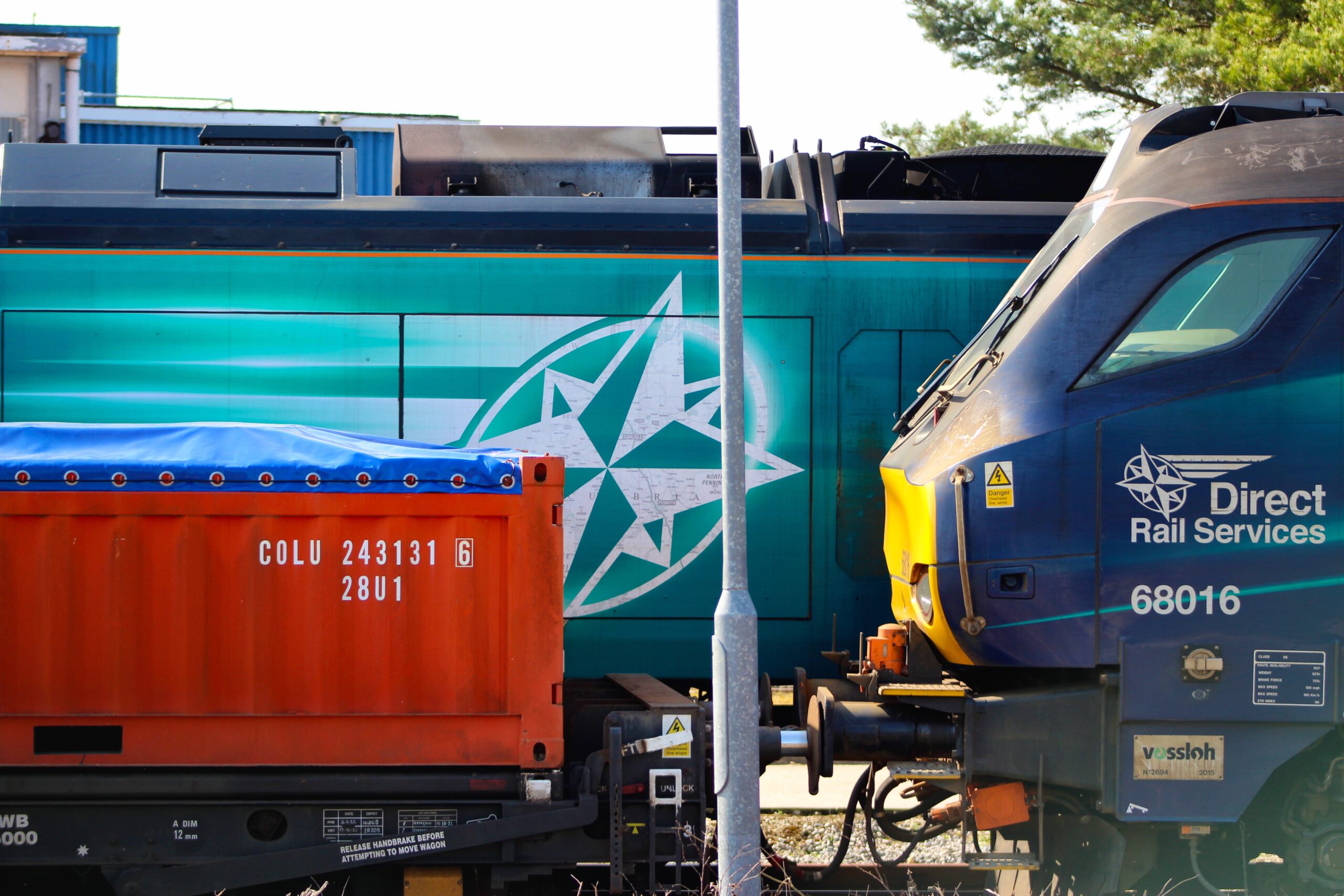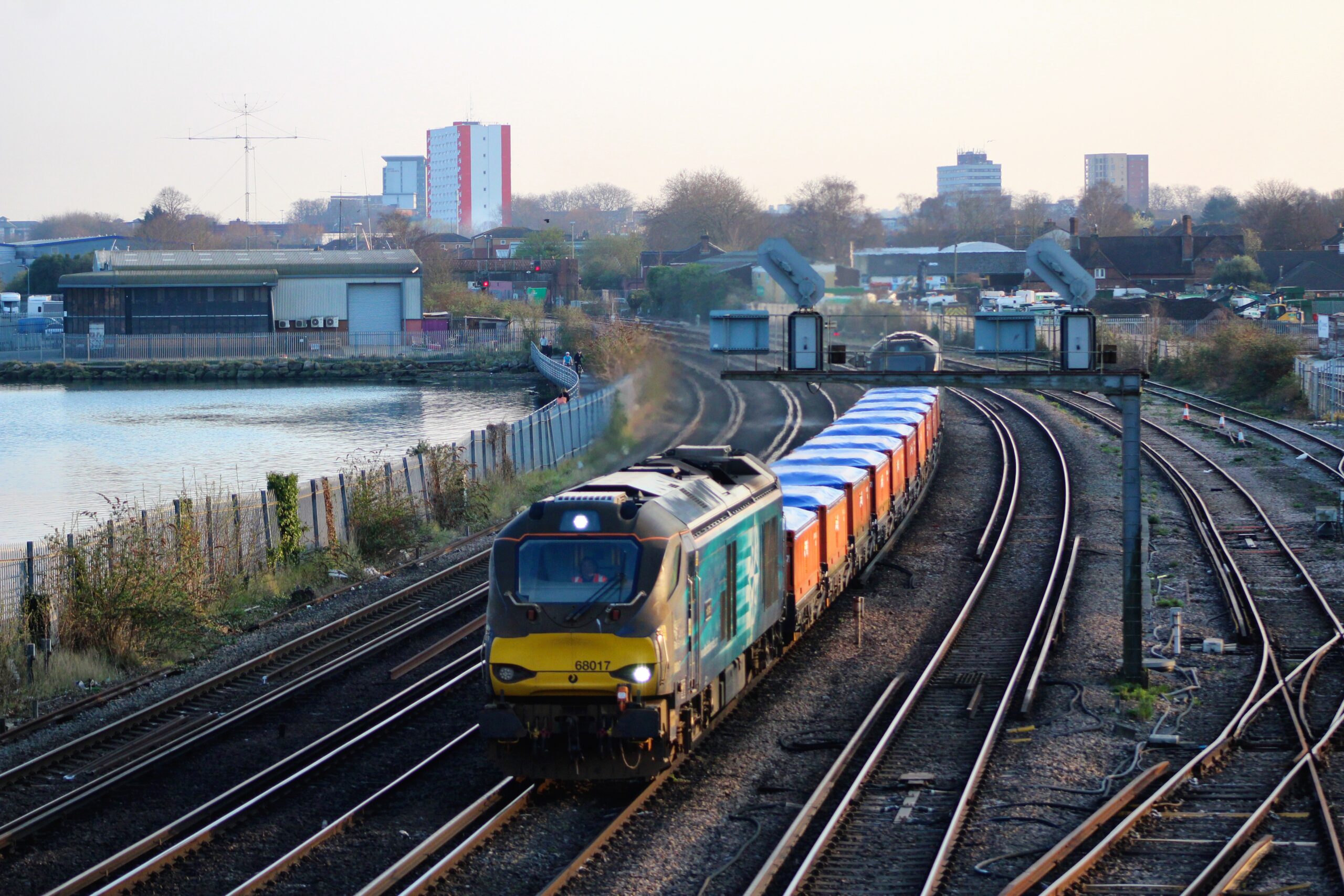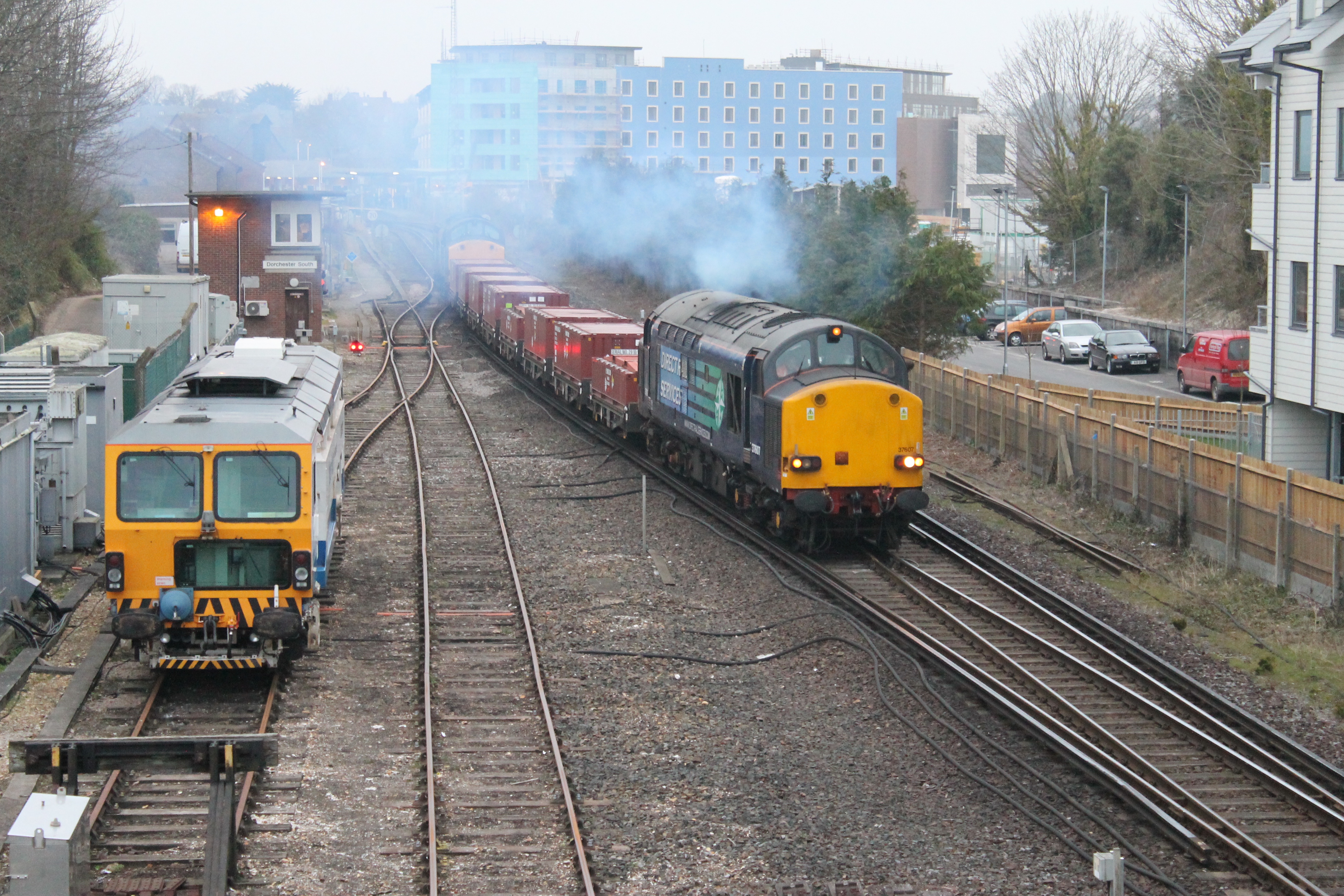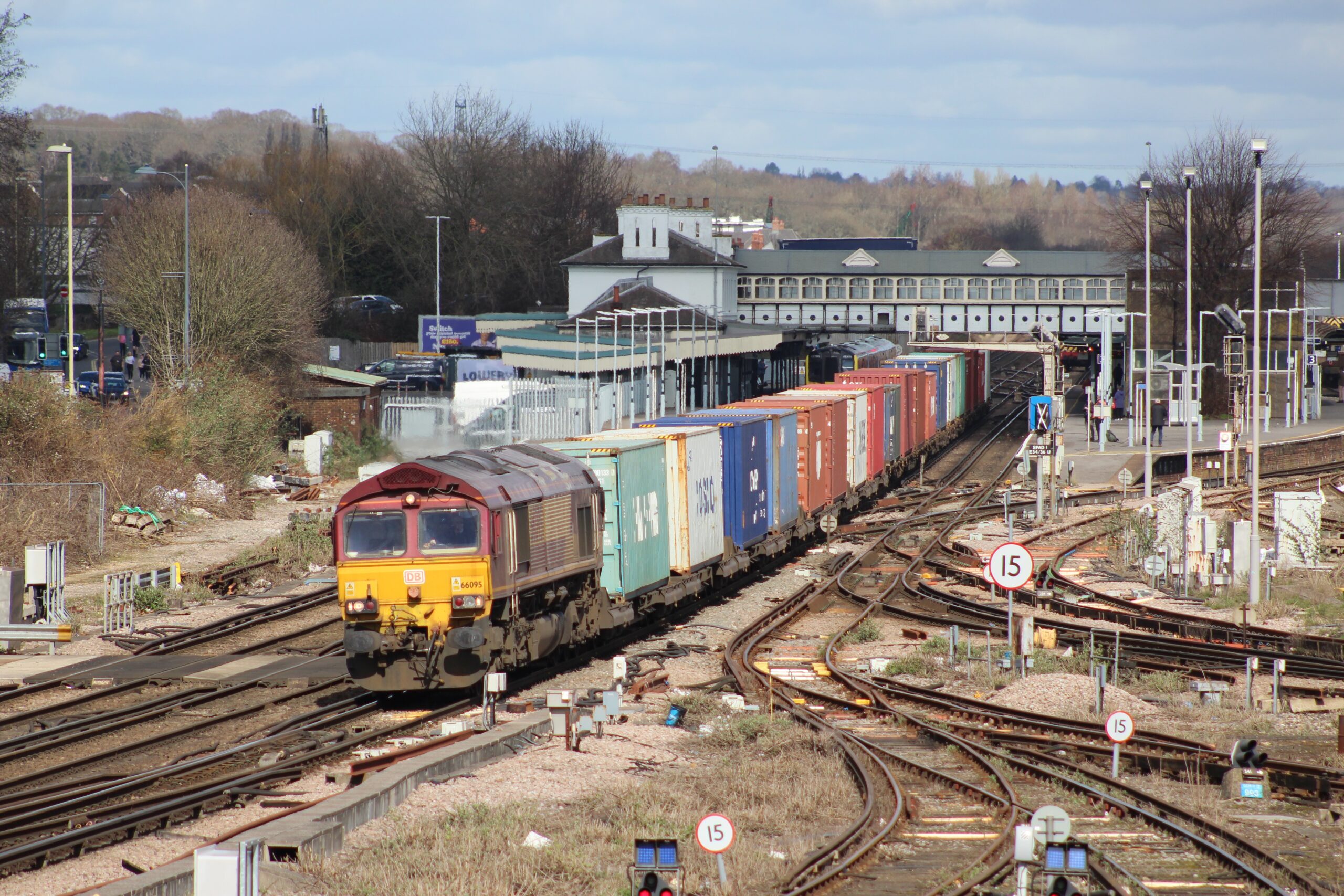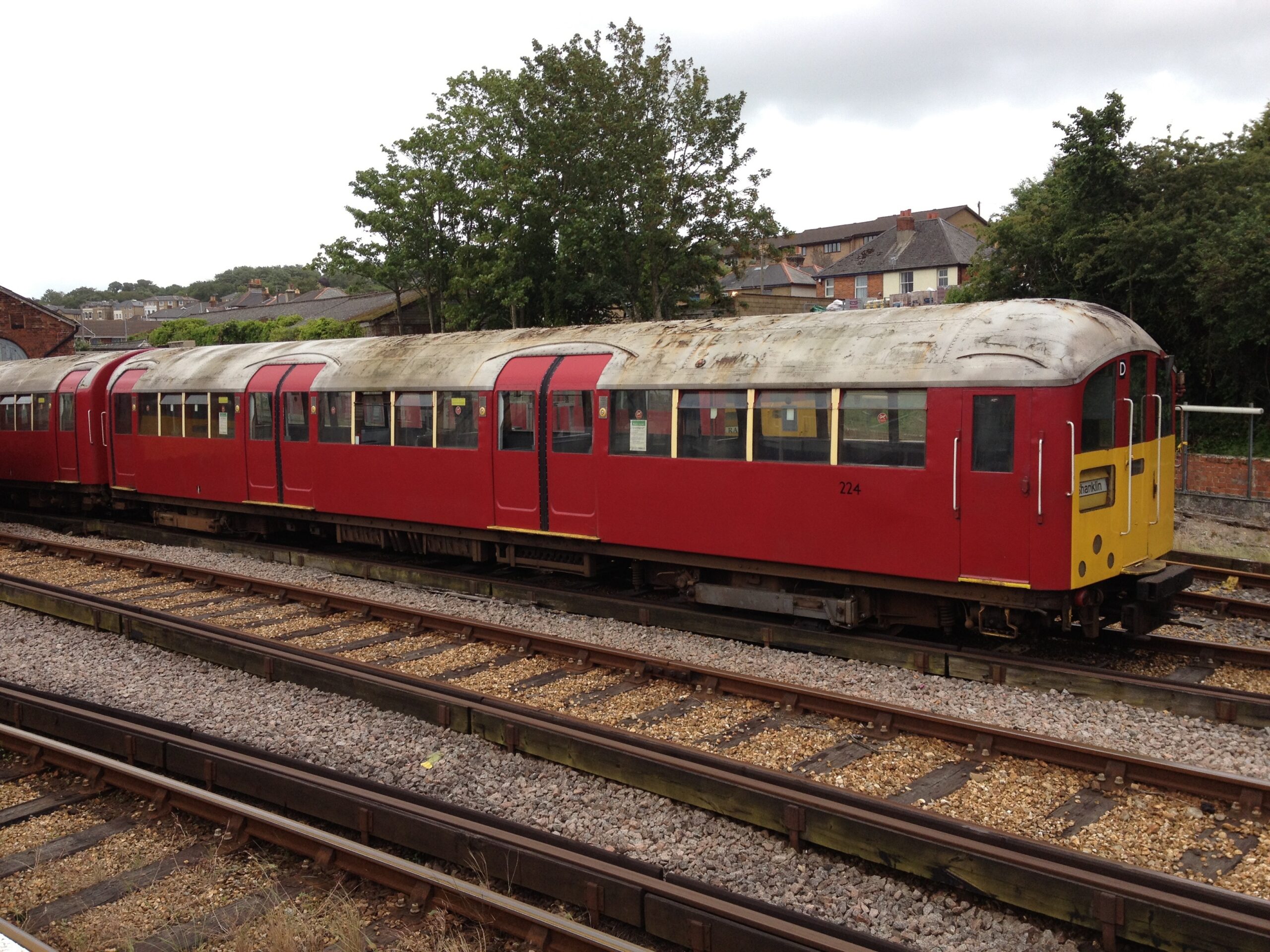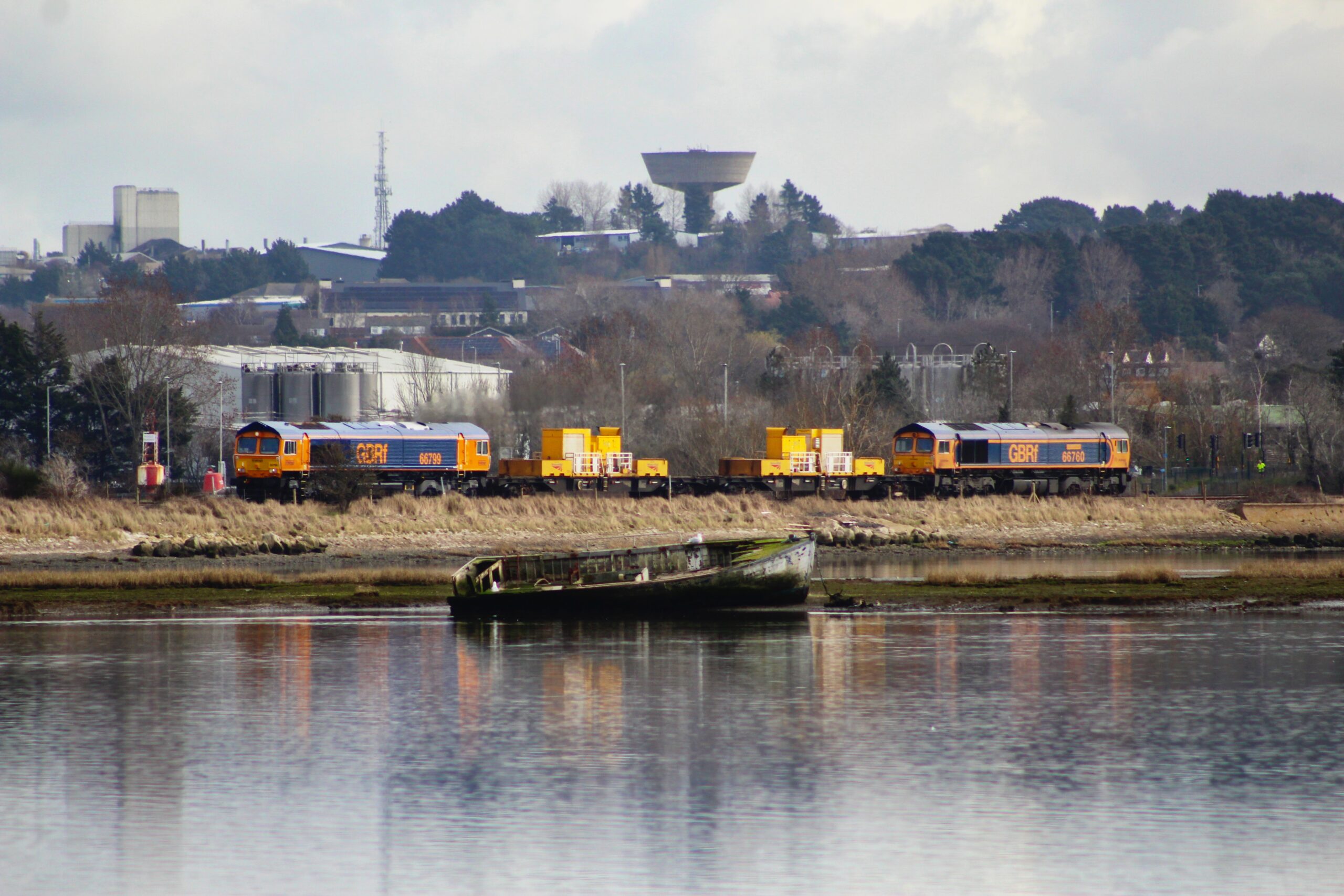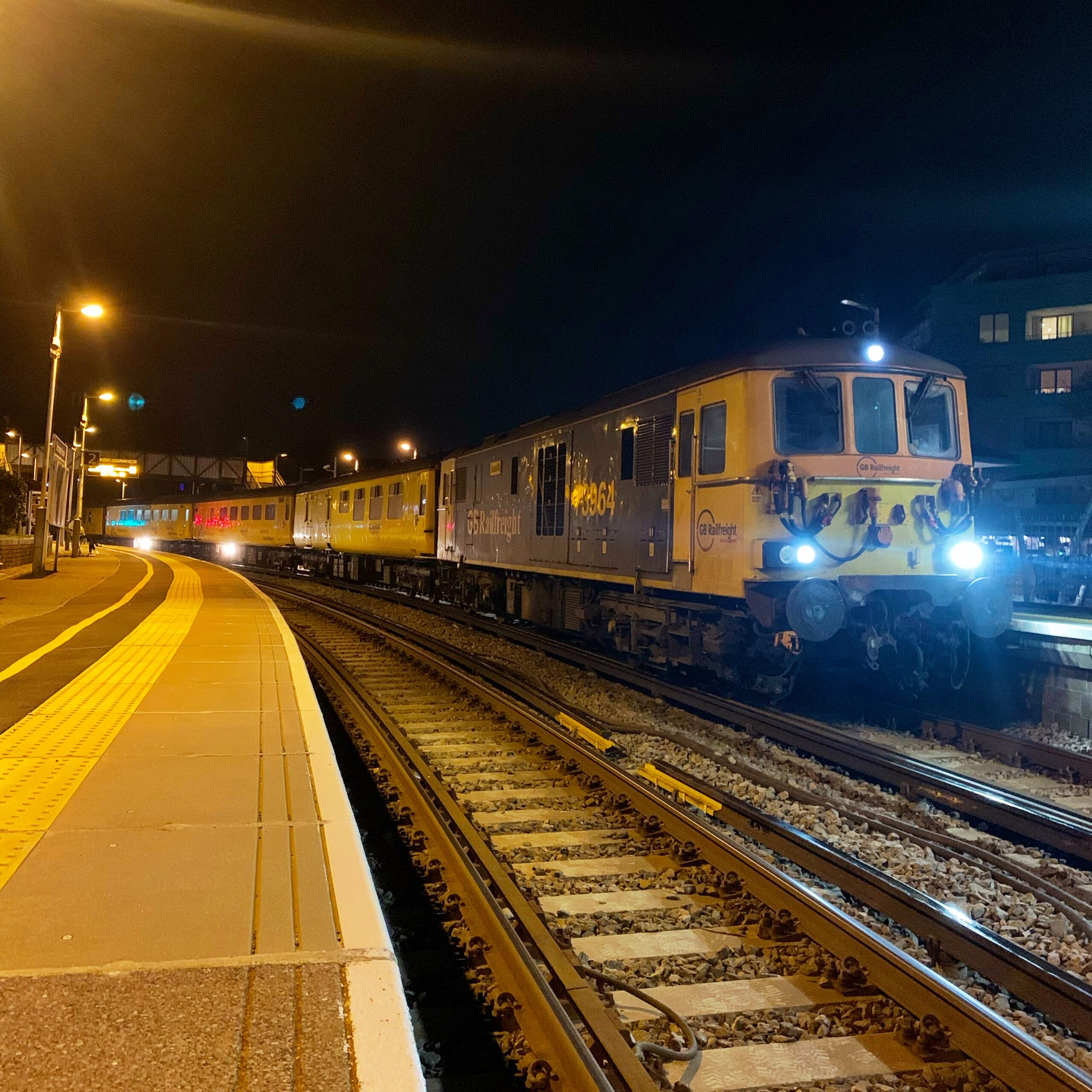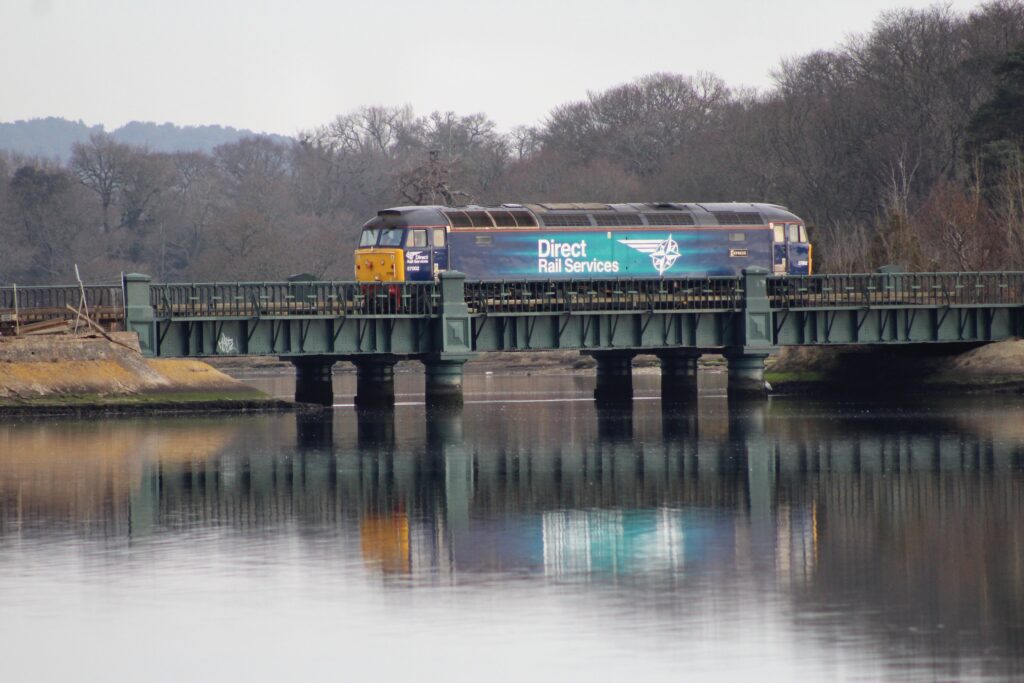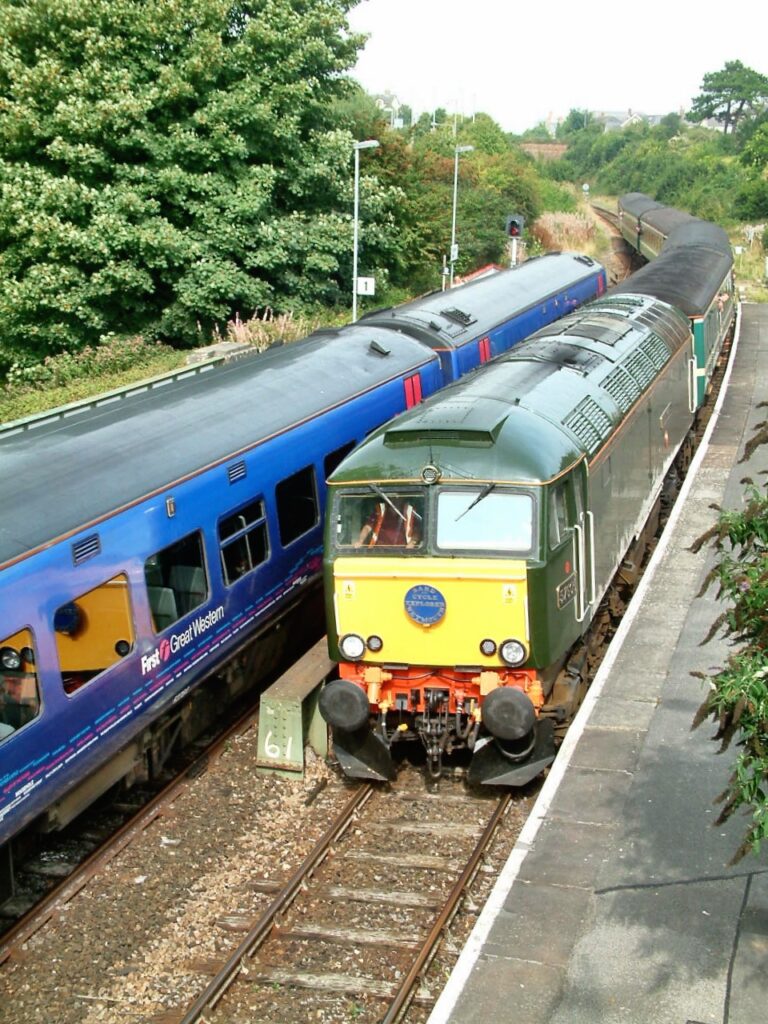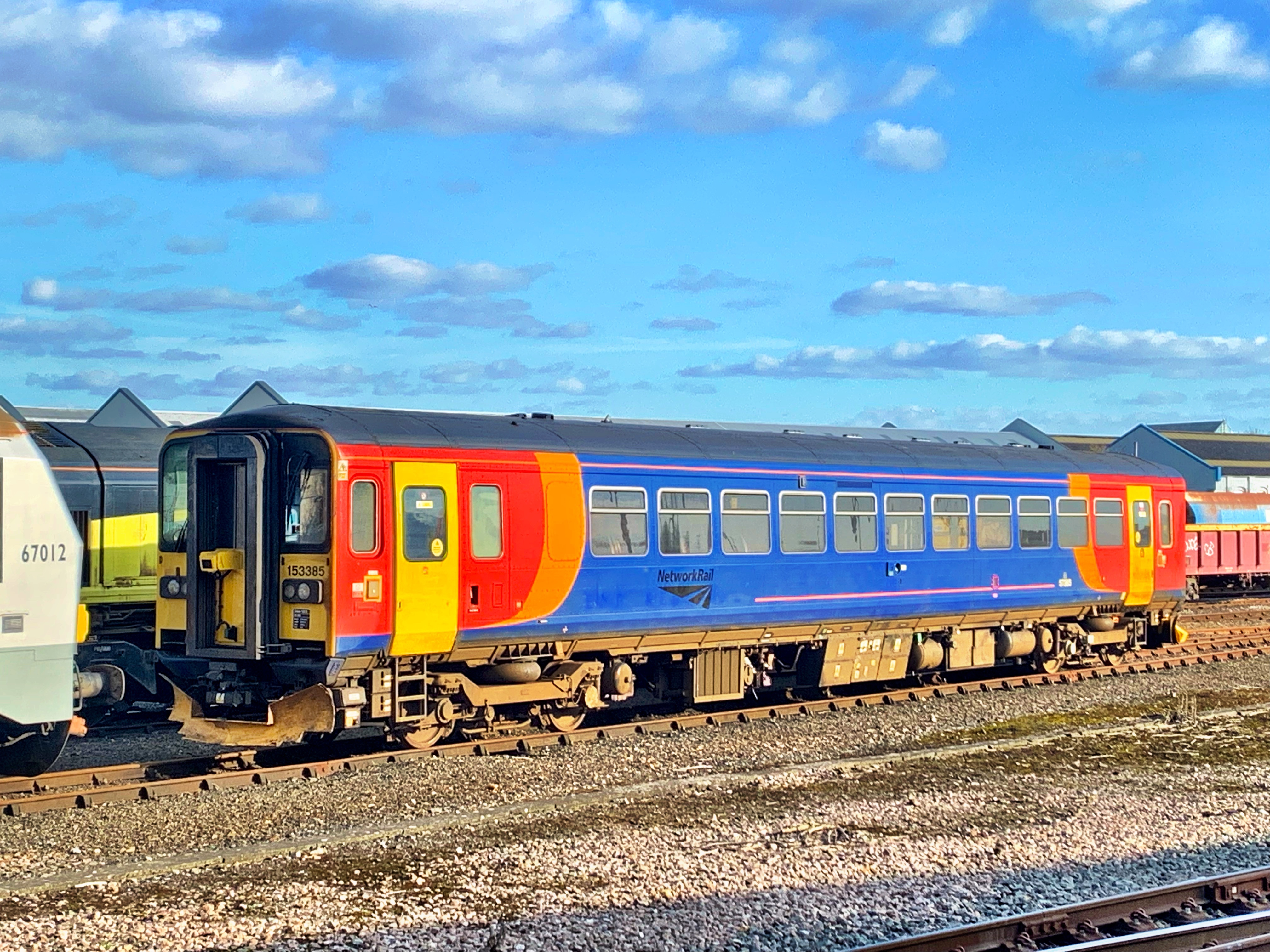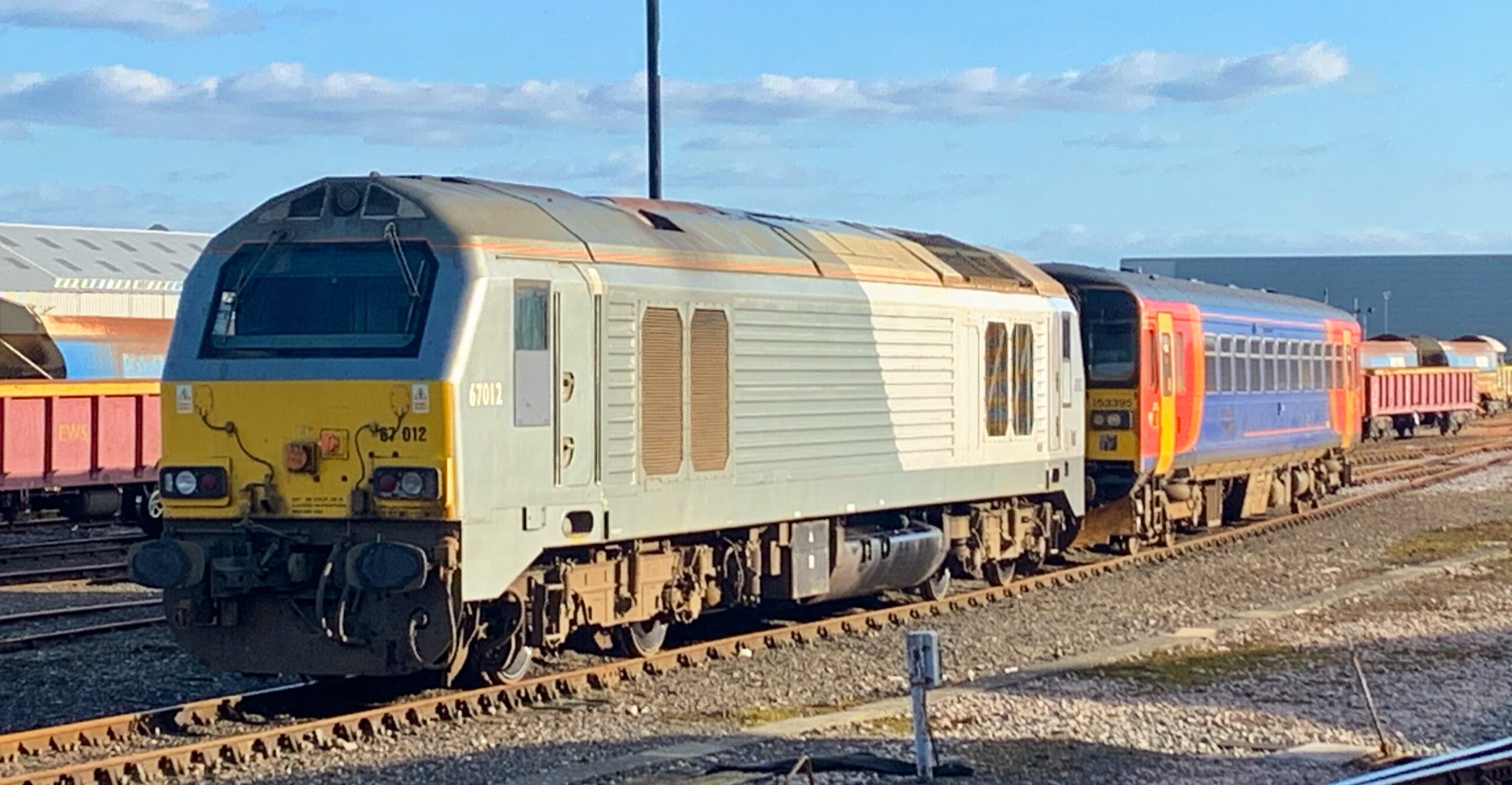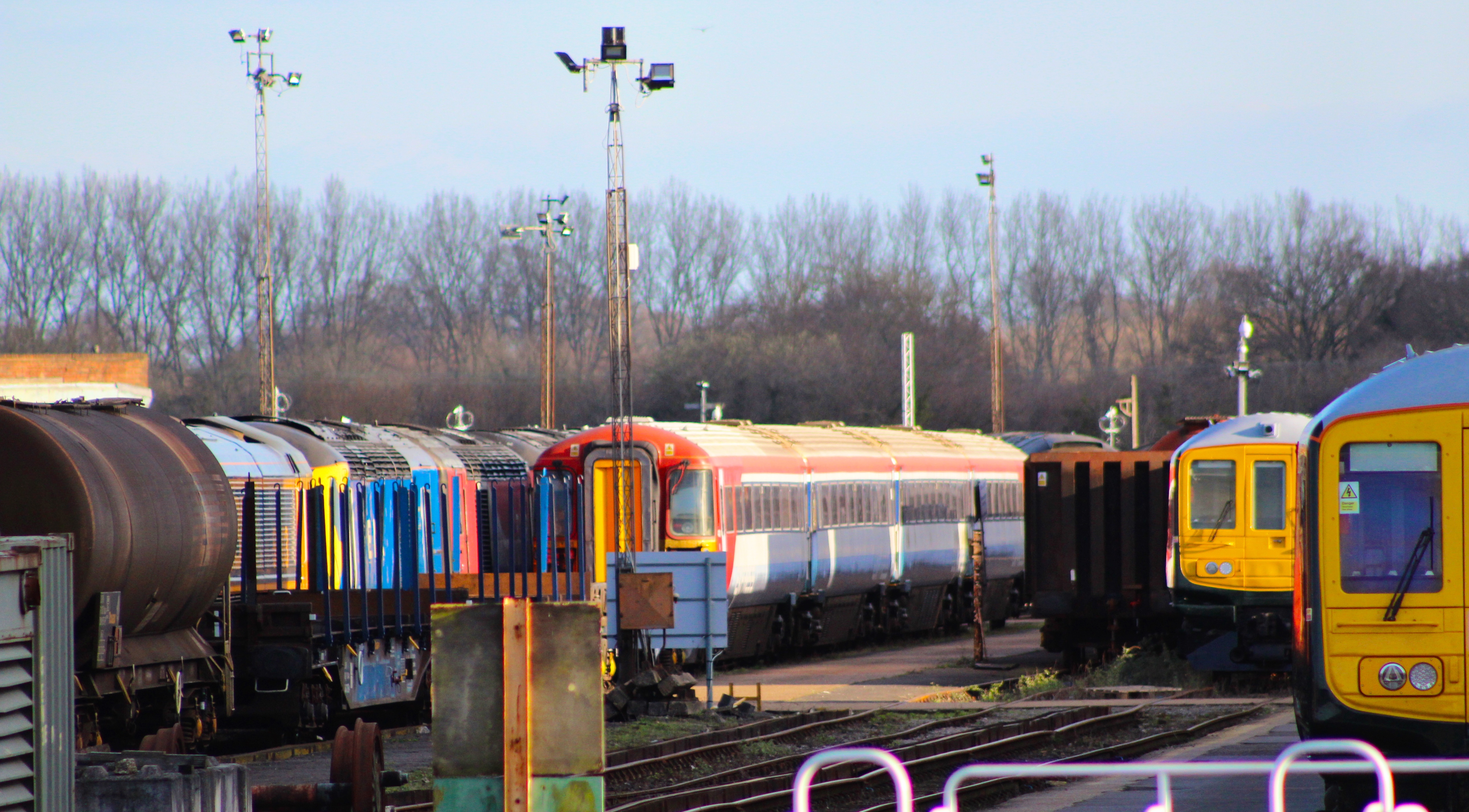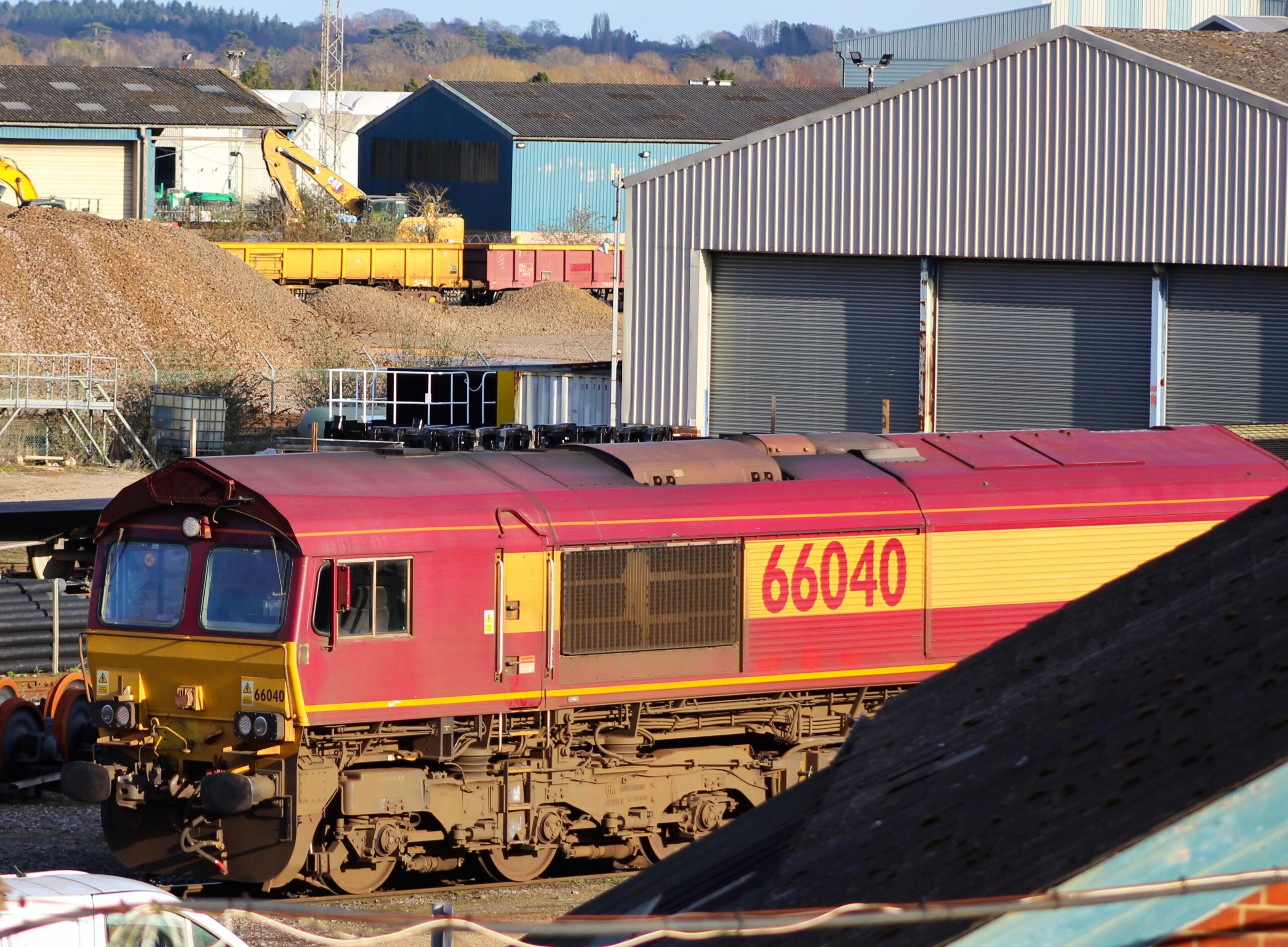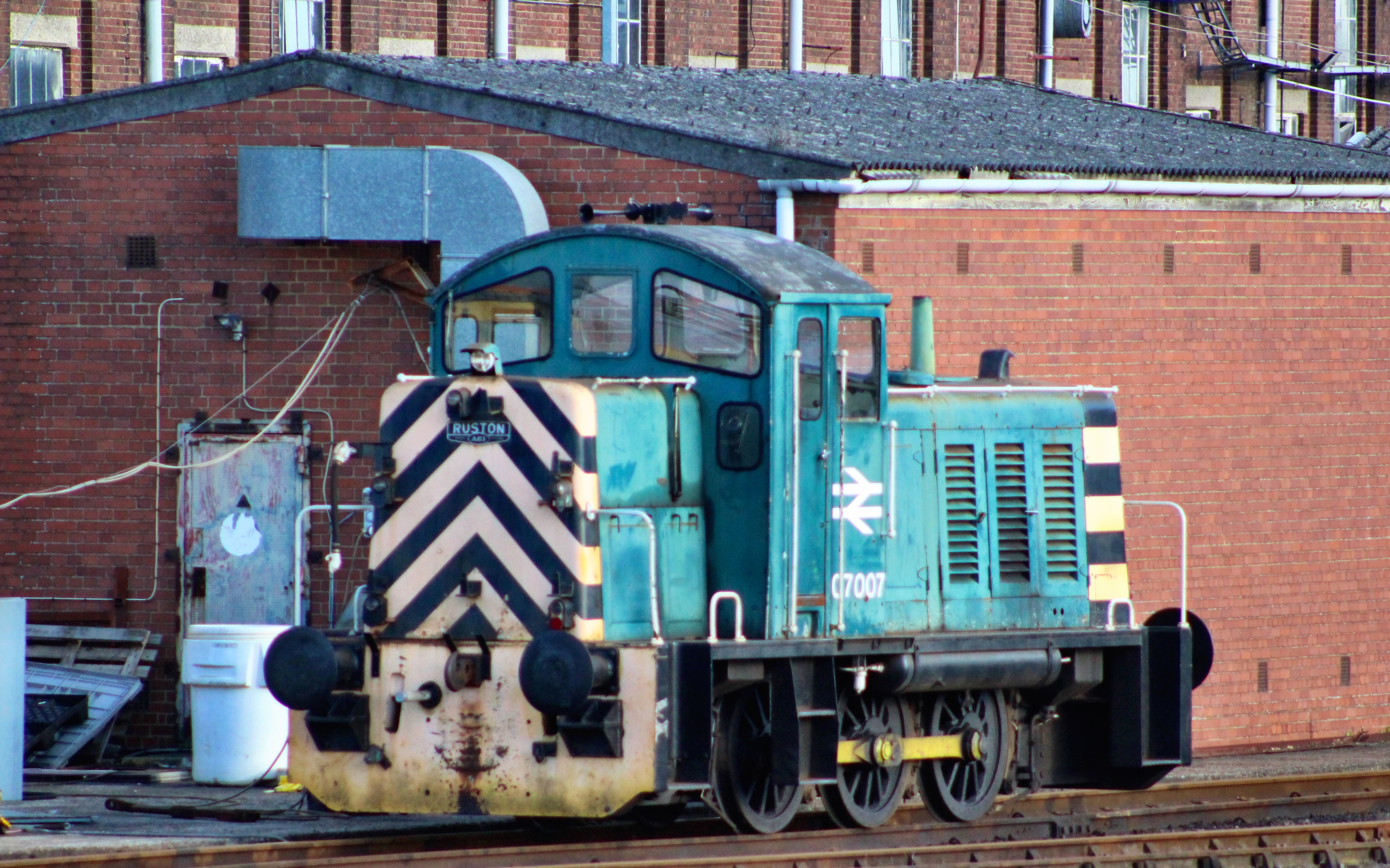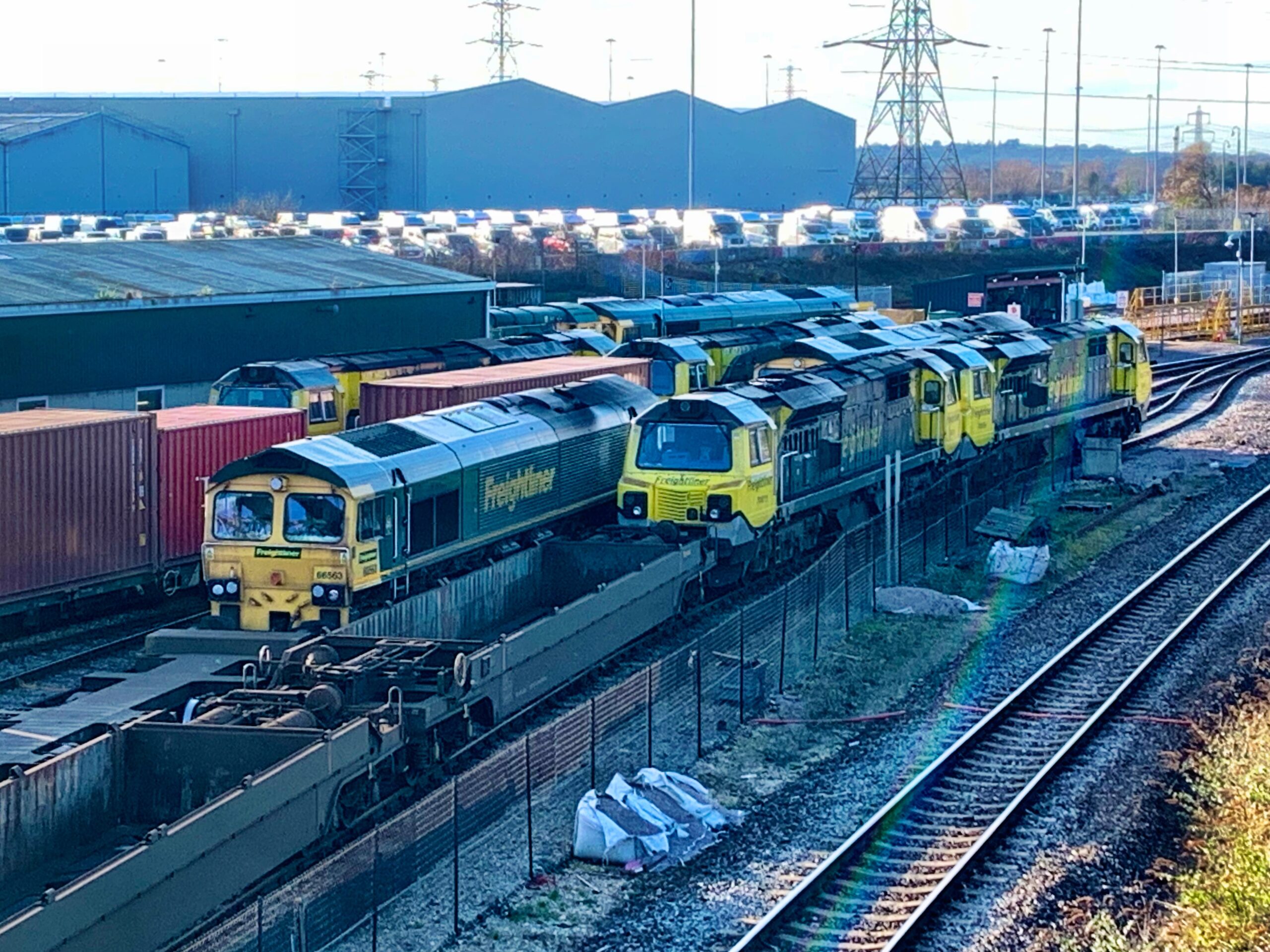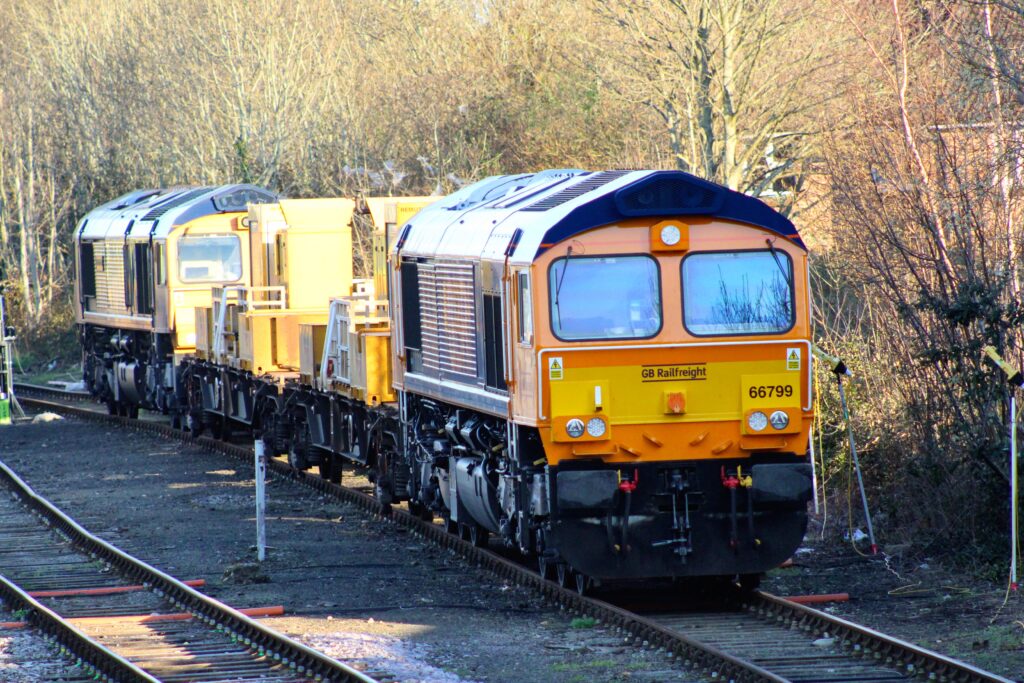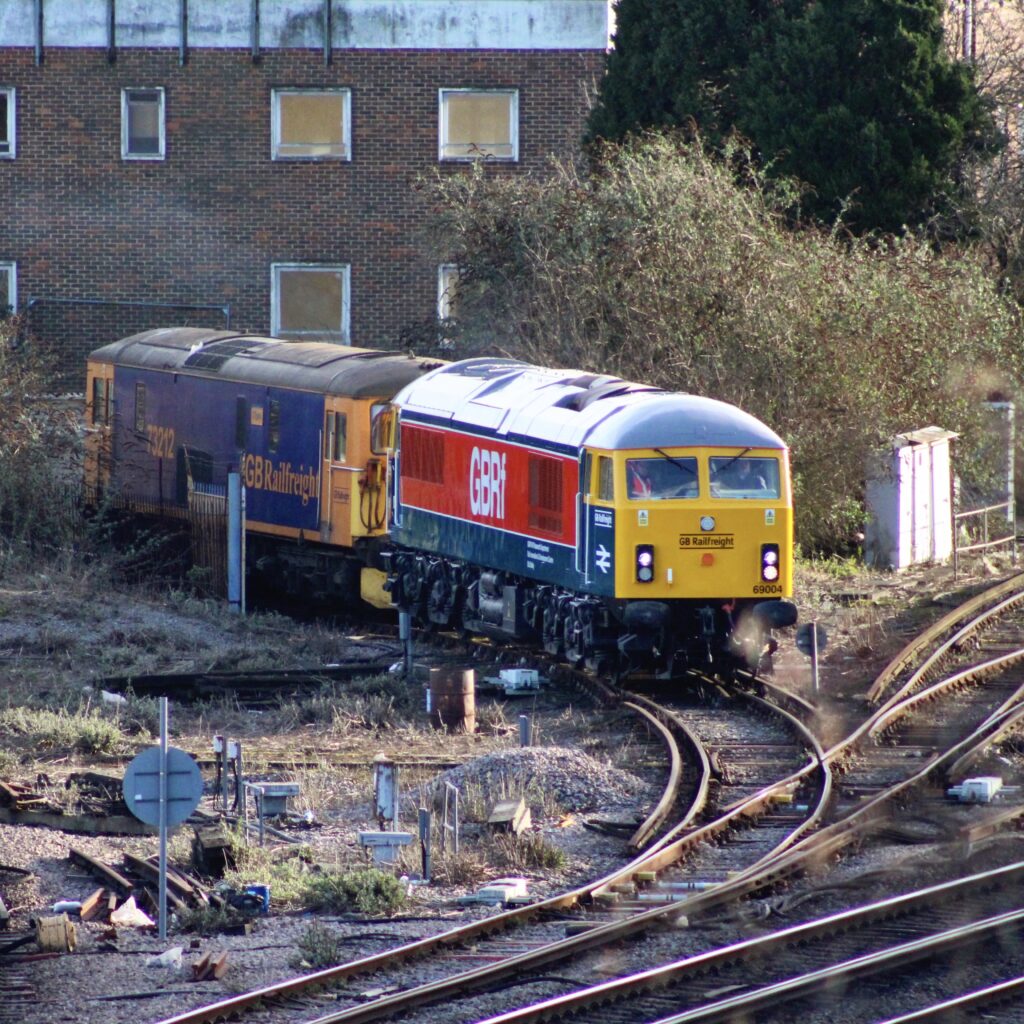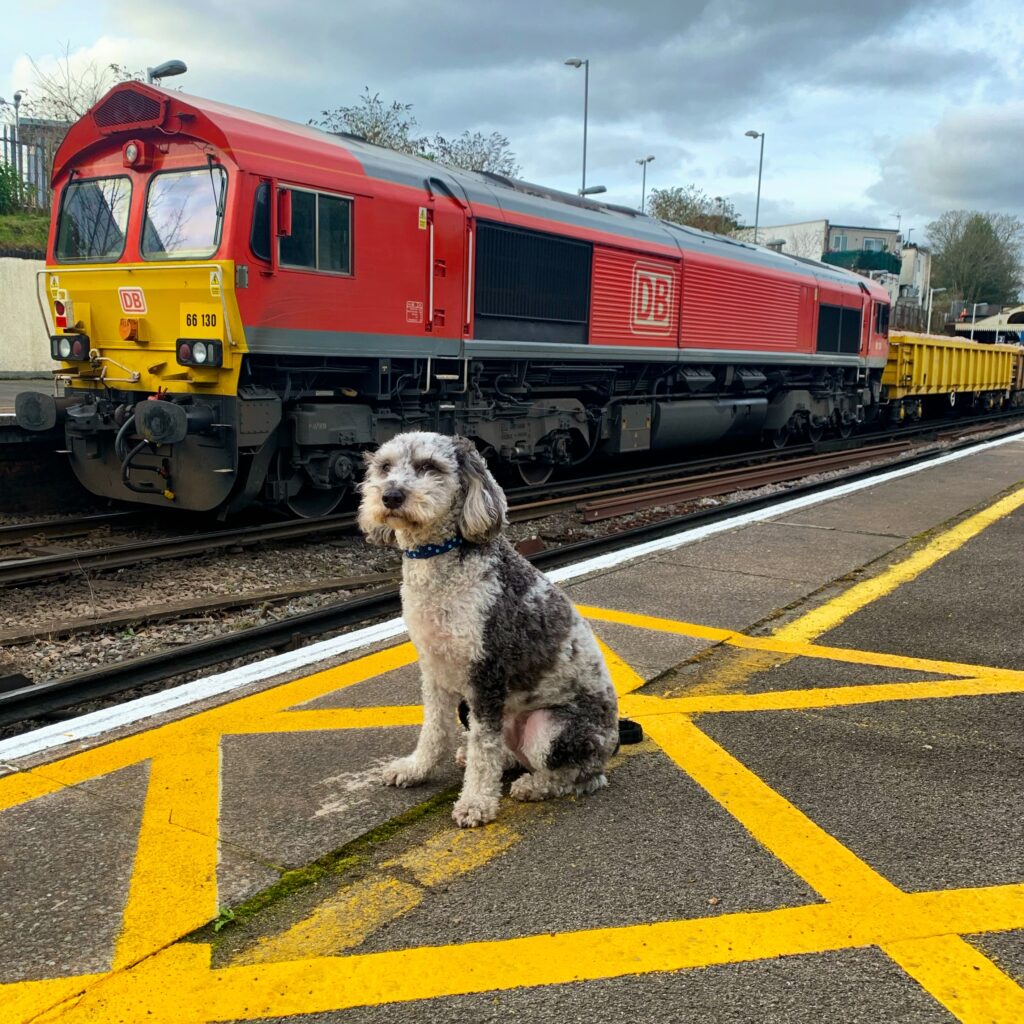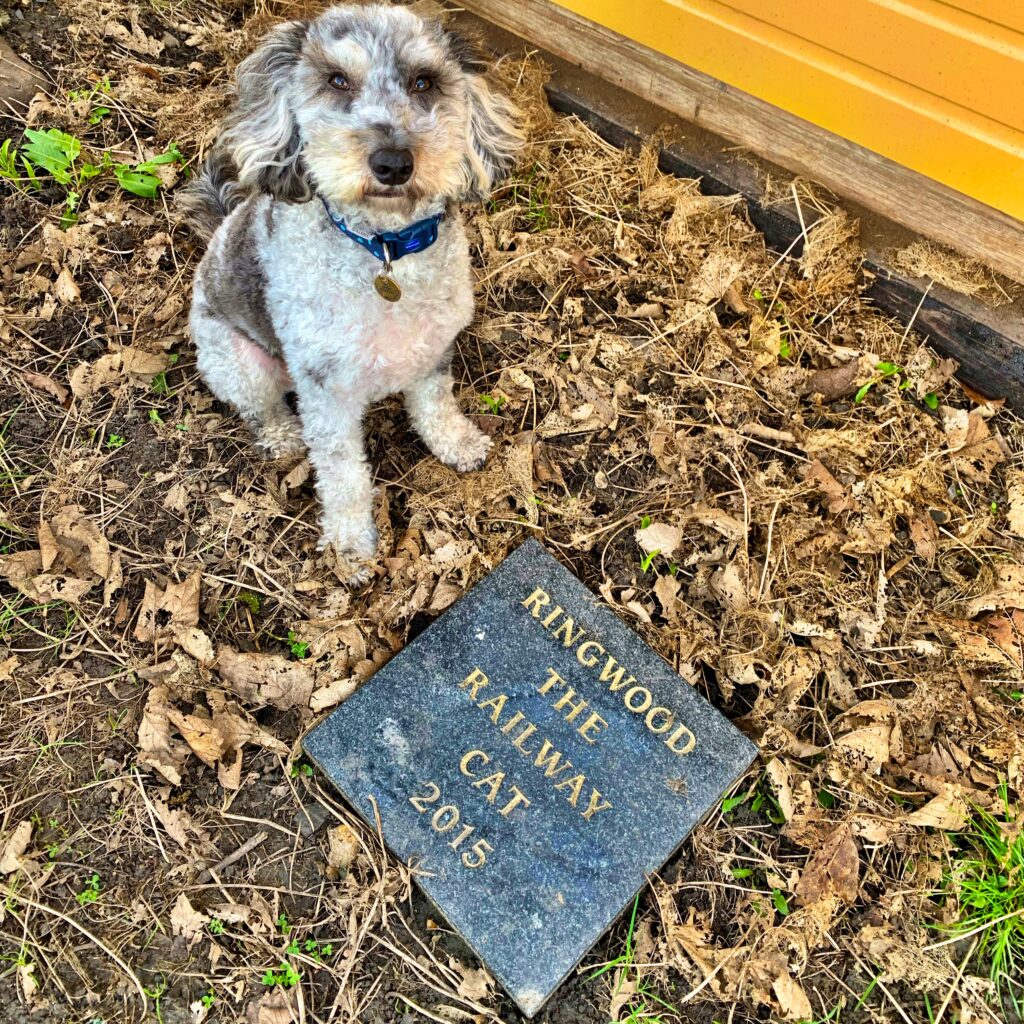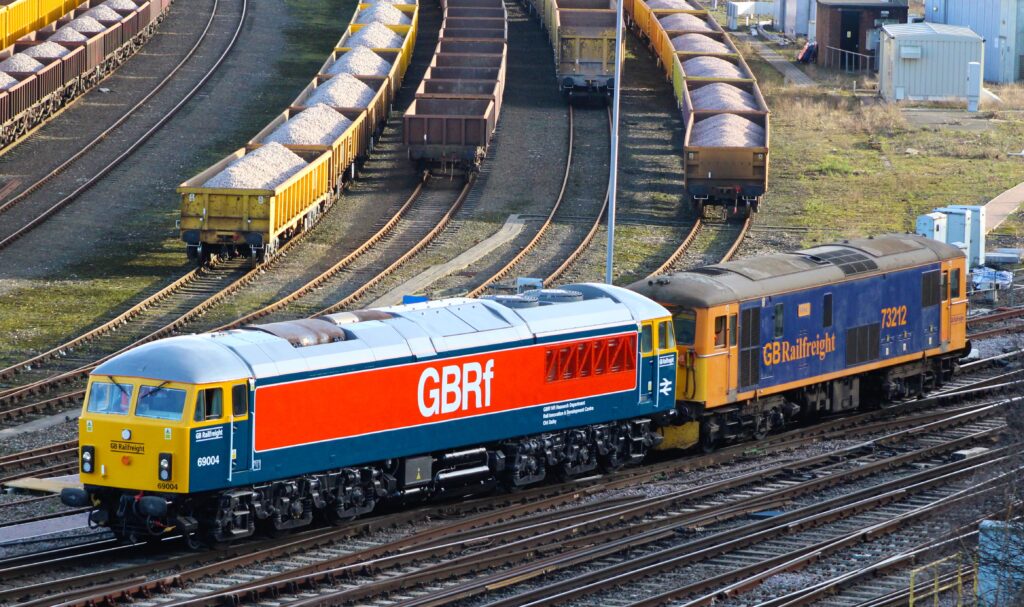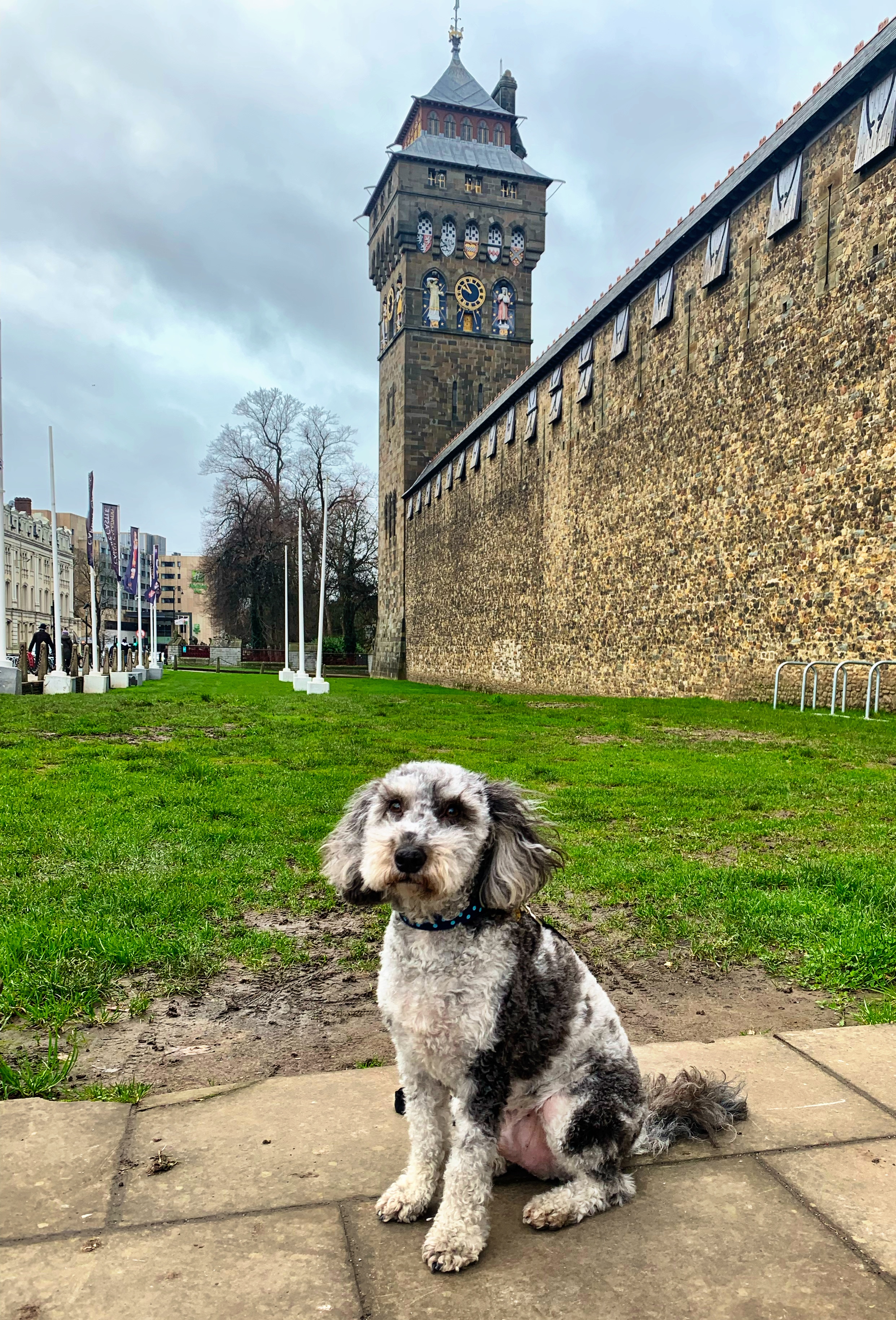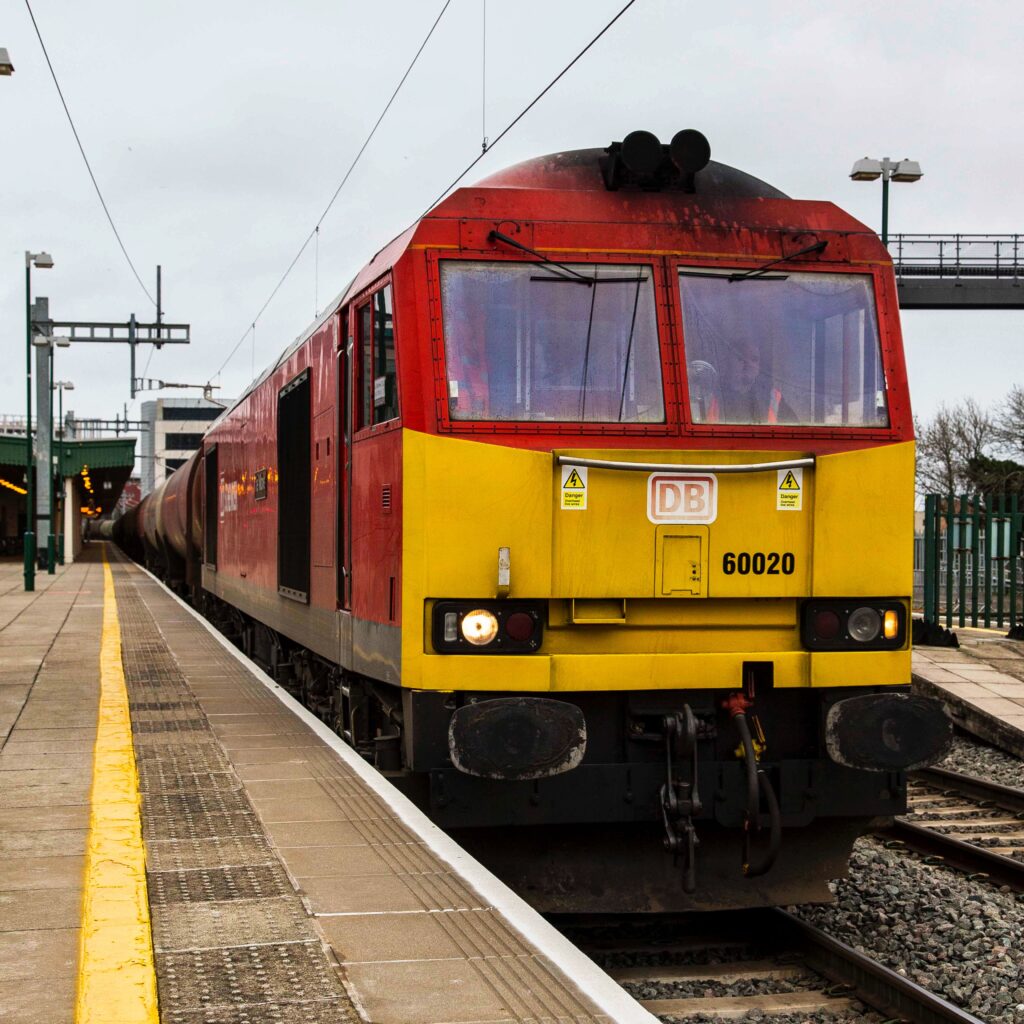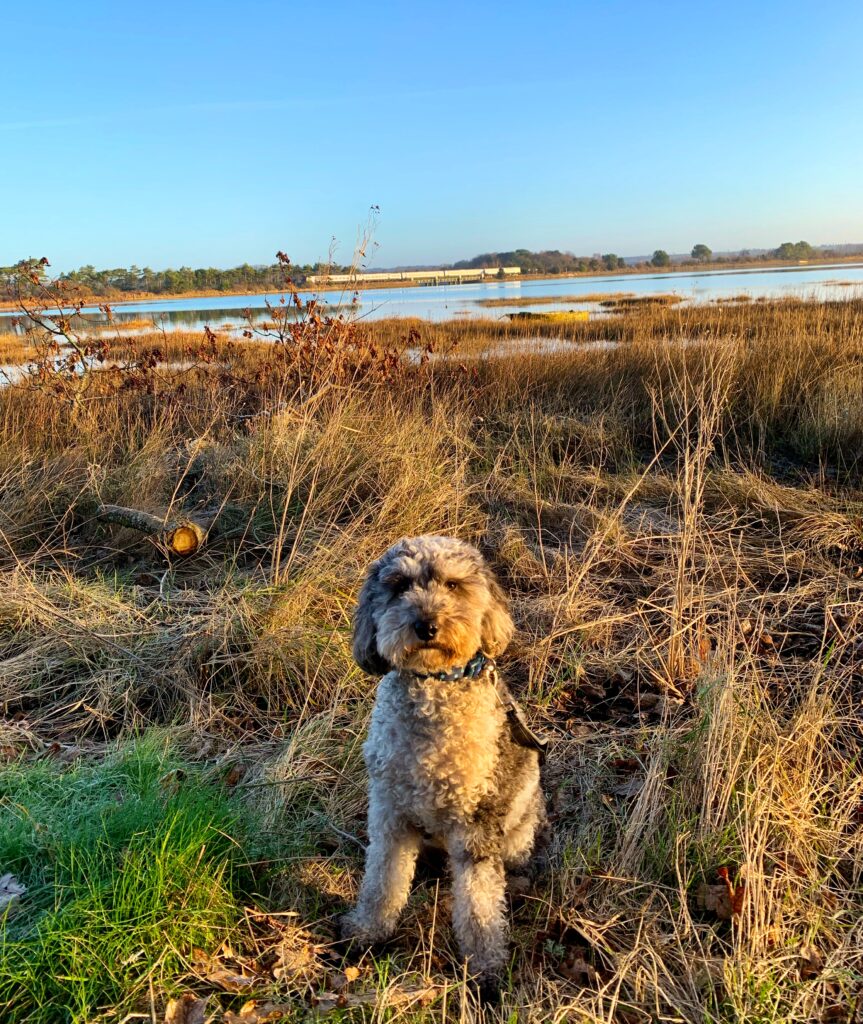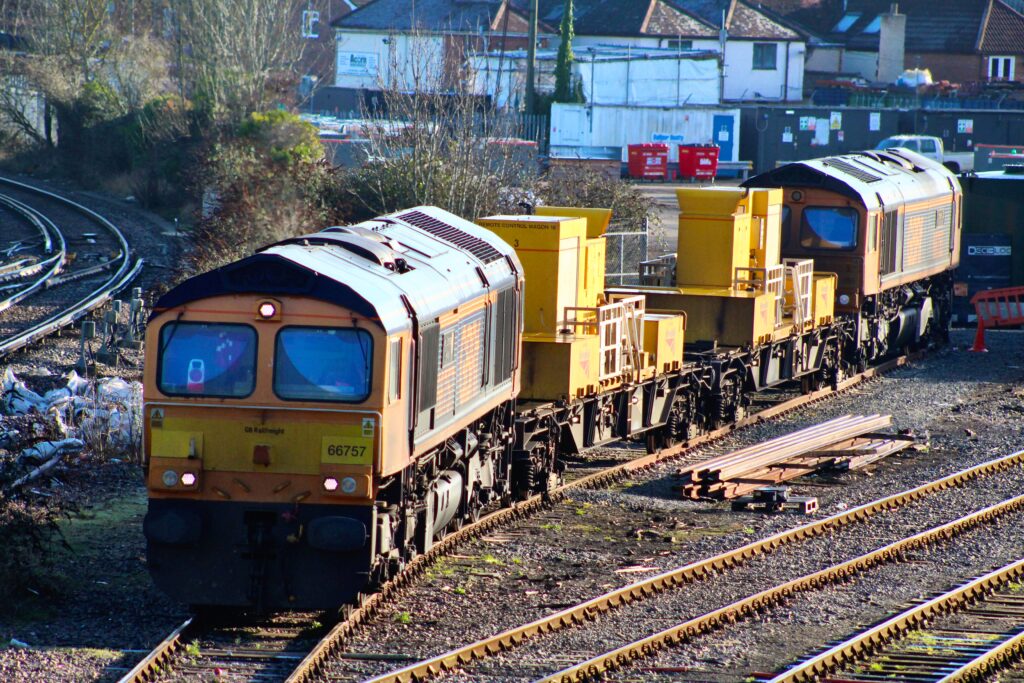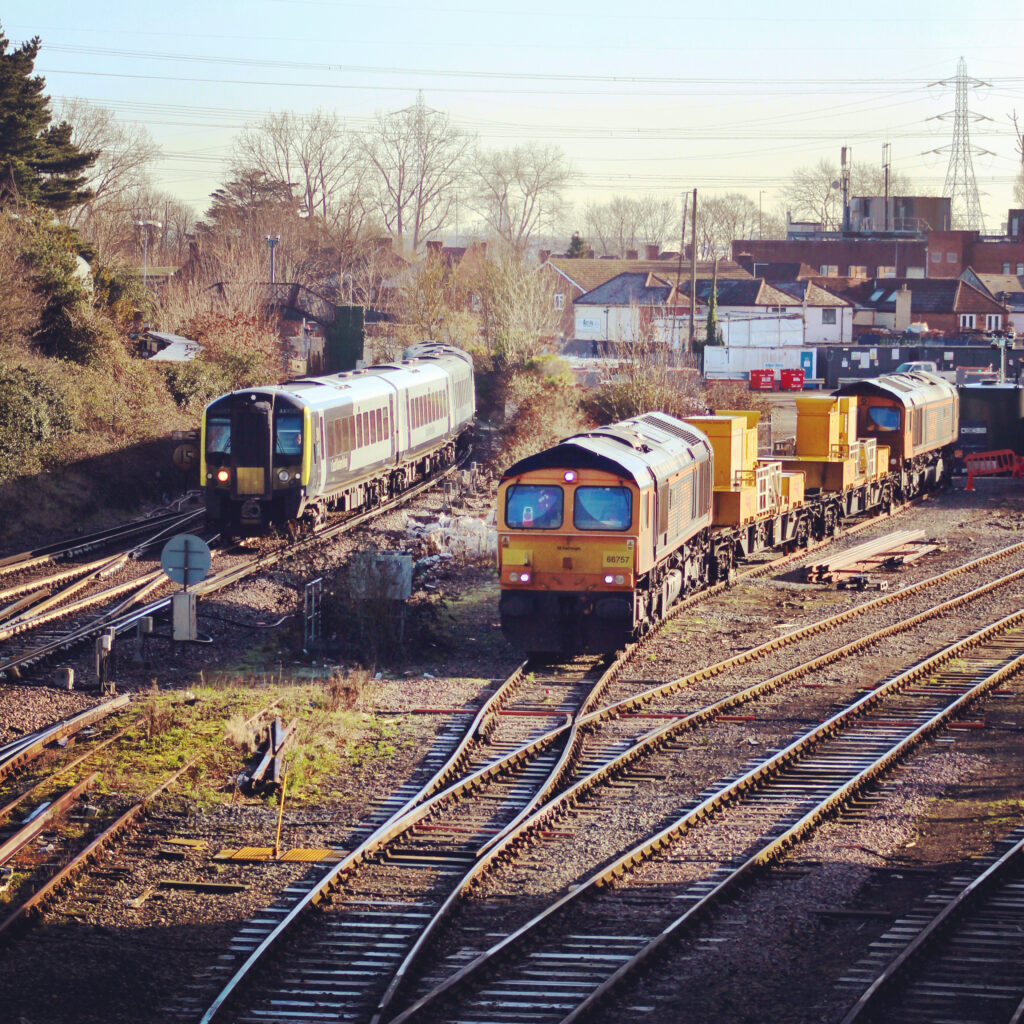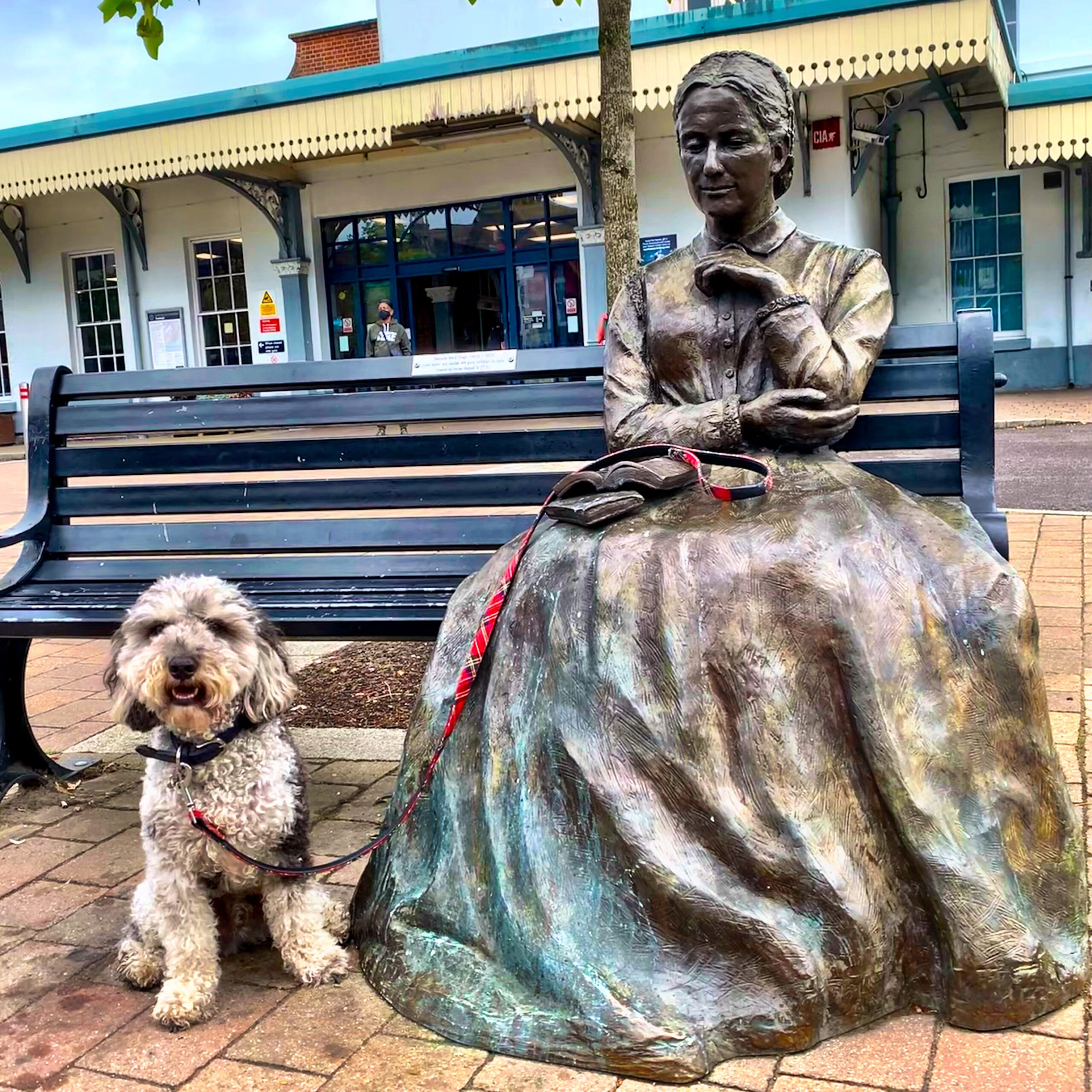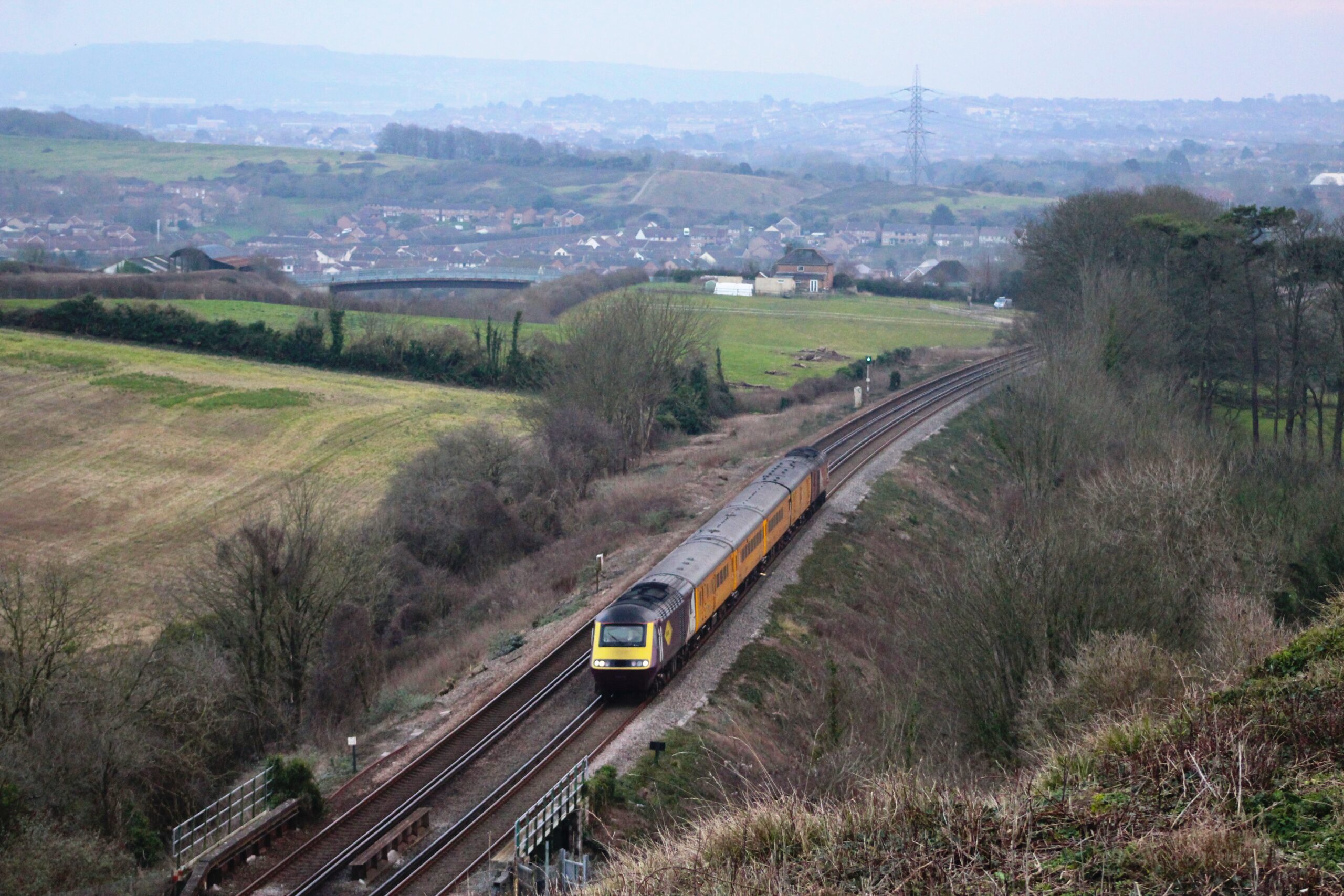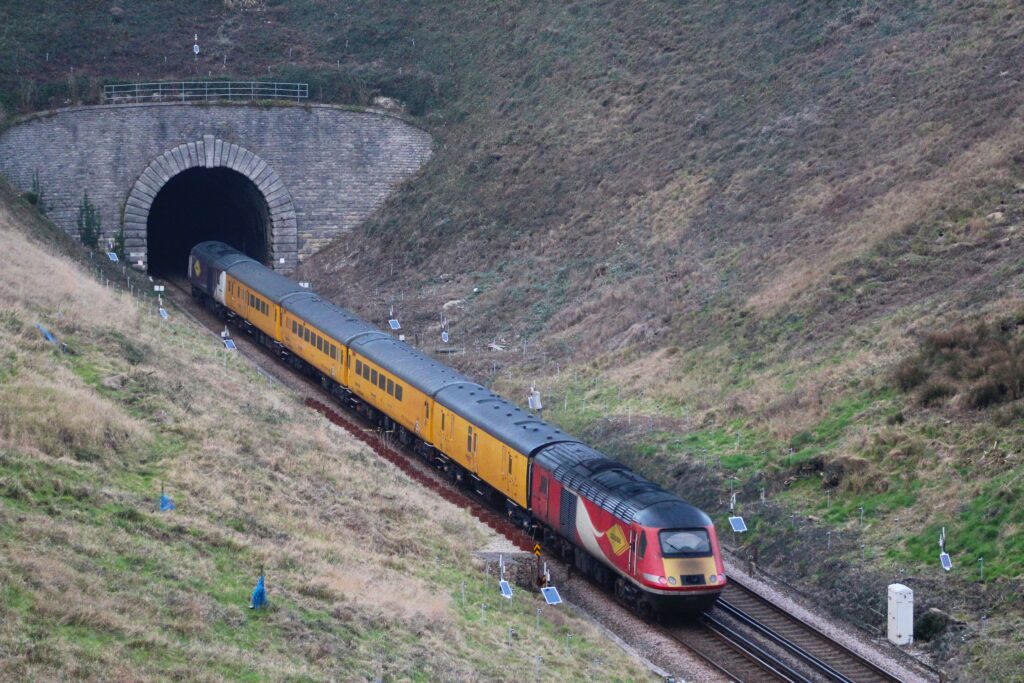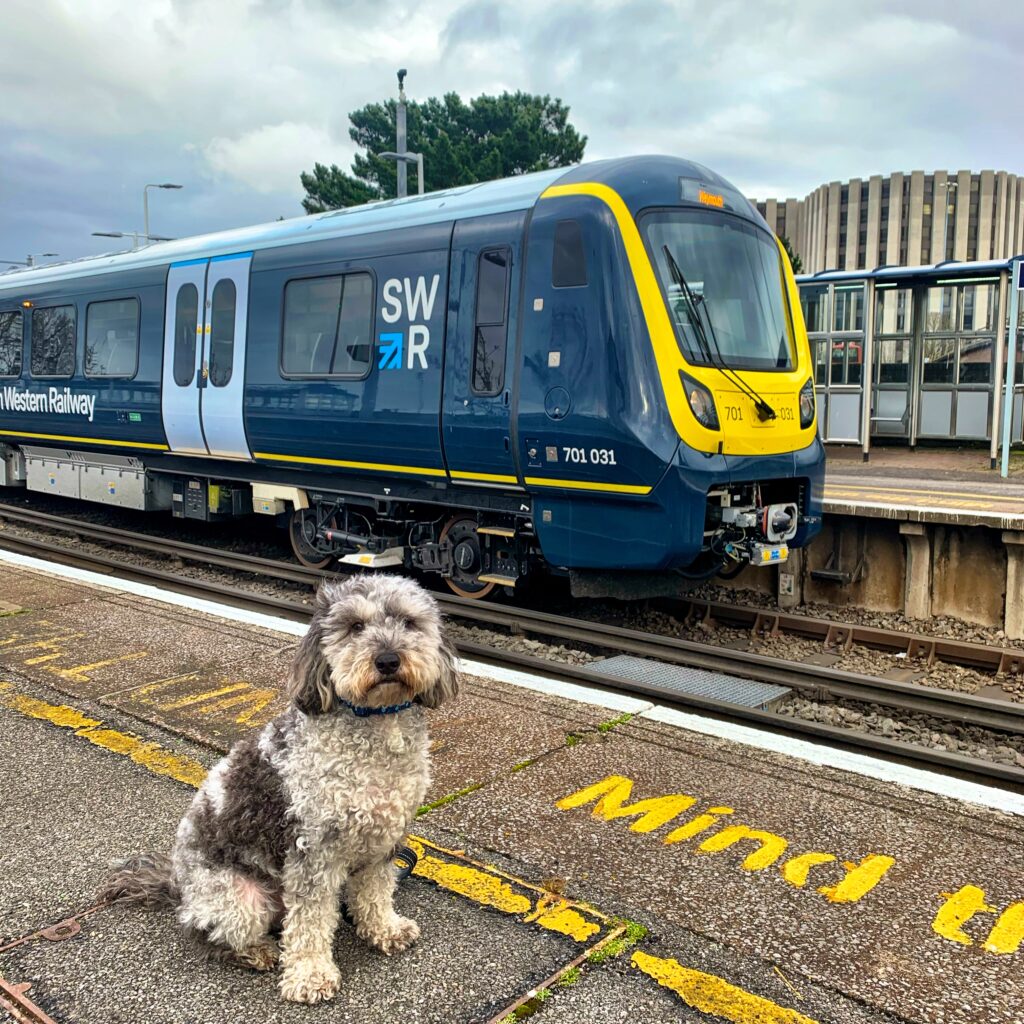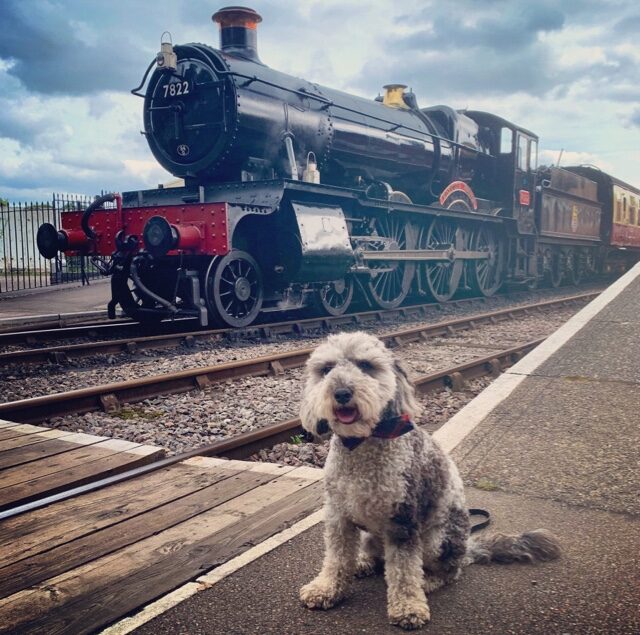
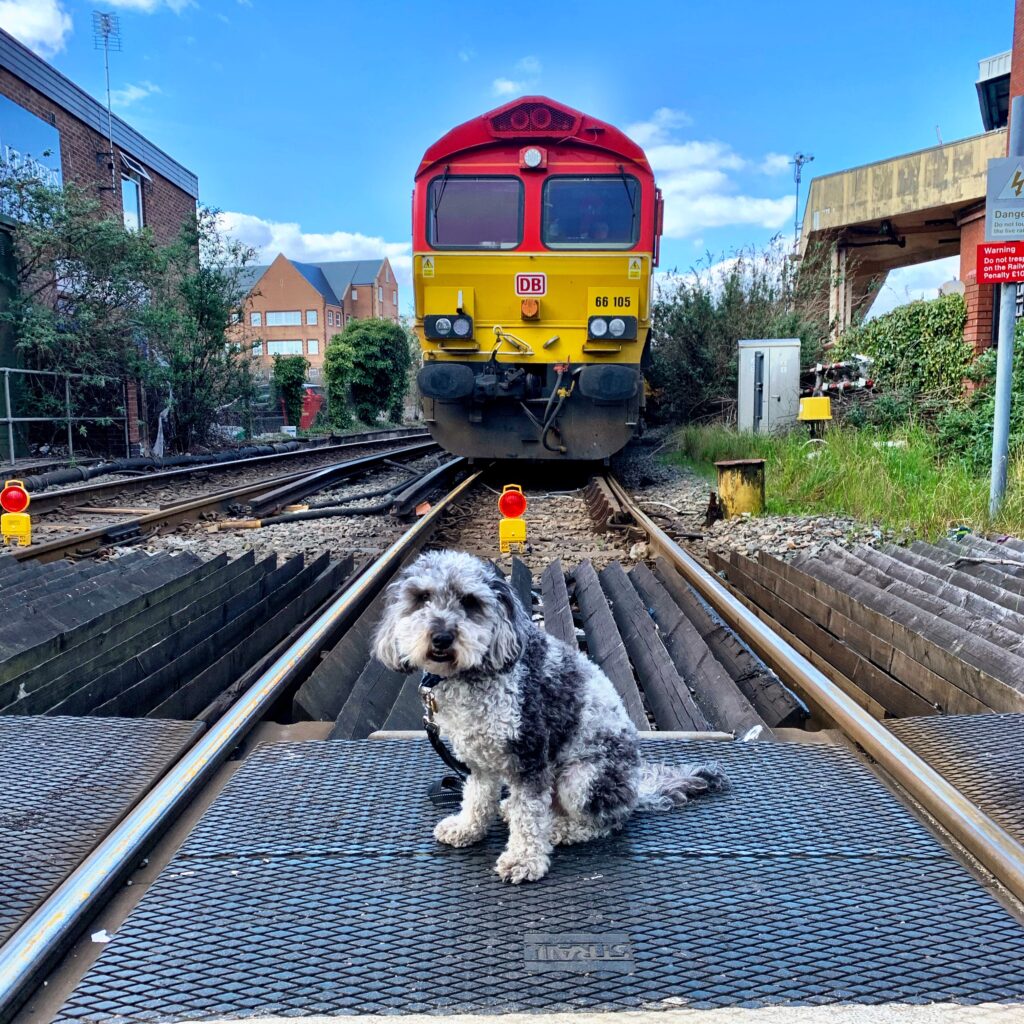
It was an early start on Saturday April 2nd, or possibly a late end to Friday 1st when I popped into Poole to catch sight of DB Class 66 No. 66105 arrive with an engineers train from Eastleigh East Yard at 0045 (6N03 2355 Eastleigh East Yard to Poole). The next day, Yoshi and I were fortunate to see the locomotive and consist depart the Poole station area, getting some unusual photographs of the locomotive waiting for the barriers to close at Poole High Street crossing, but more of that later.
Back to Saturday and shortly after breakfast, we set off for the 2022 Steam Railway Magazine Readers’ Heritage Railway Association Award winning Didcot Railway Centre to share in the celebrations of Great Western Railway Castle Class 4-6-0 No. 4079 ‘Pendennis Castle’ being relaunched into traffic after a long absence. We made good time in getting to the car park adjacent to Didcot railway station and made our way across to the concourse where there was some confusion in how to access the subway to the railway centre. Yoshi was extremely excited and waited impatiently to get our tickets scanned before we made our way onto the site. The Great Western Society Didcot Railway Centre really is a marvel – 21 acres covering 200 years of railway heritage. Sadly the Coal Stage which dominates the skyline was recently found in need of urgent repair but conservation work is now underway on the Coal Stage as are repairs to the water tank that supplies the Centre’s steam engines with water.
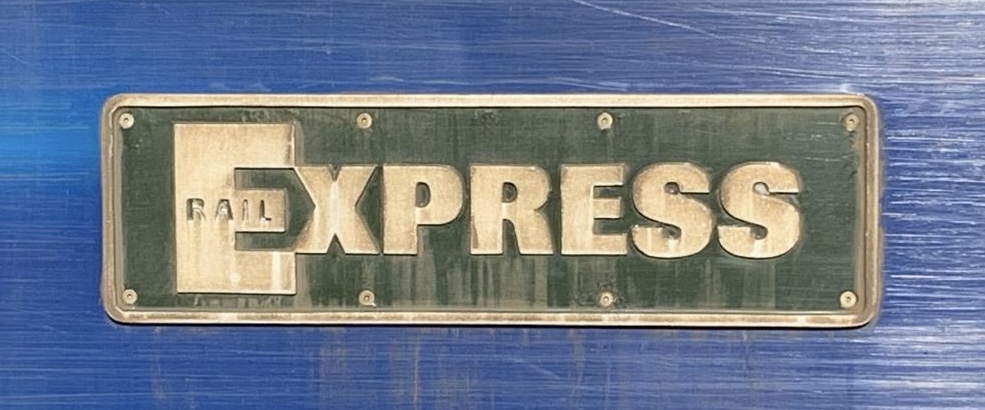
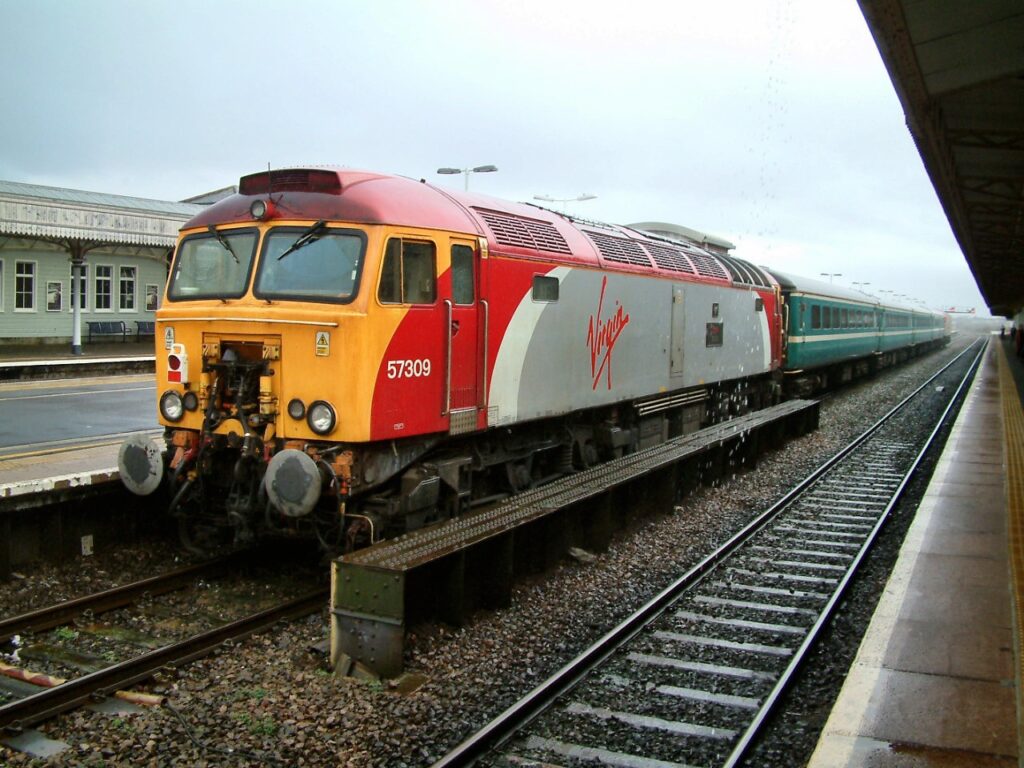
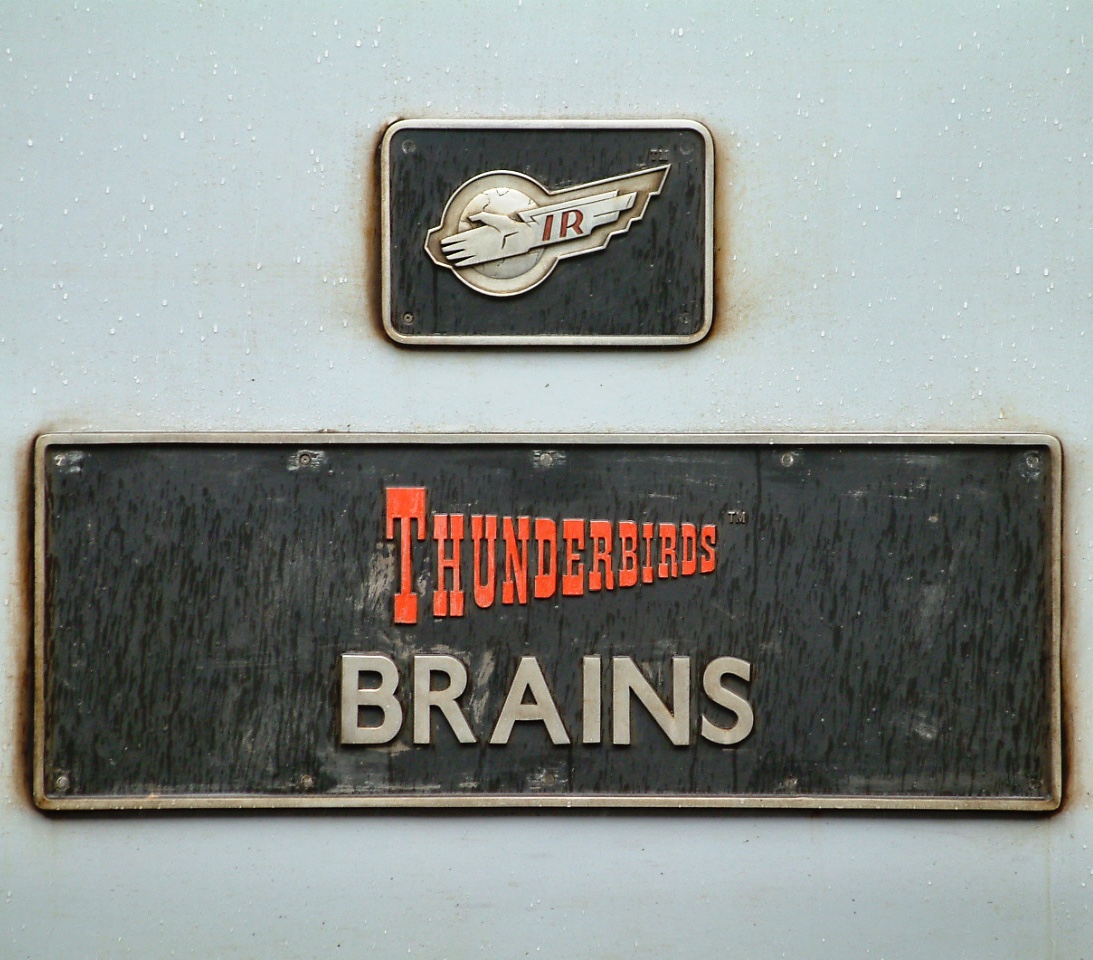
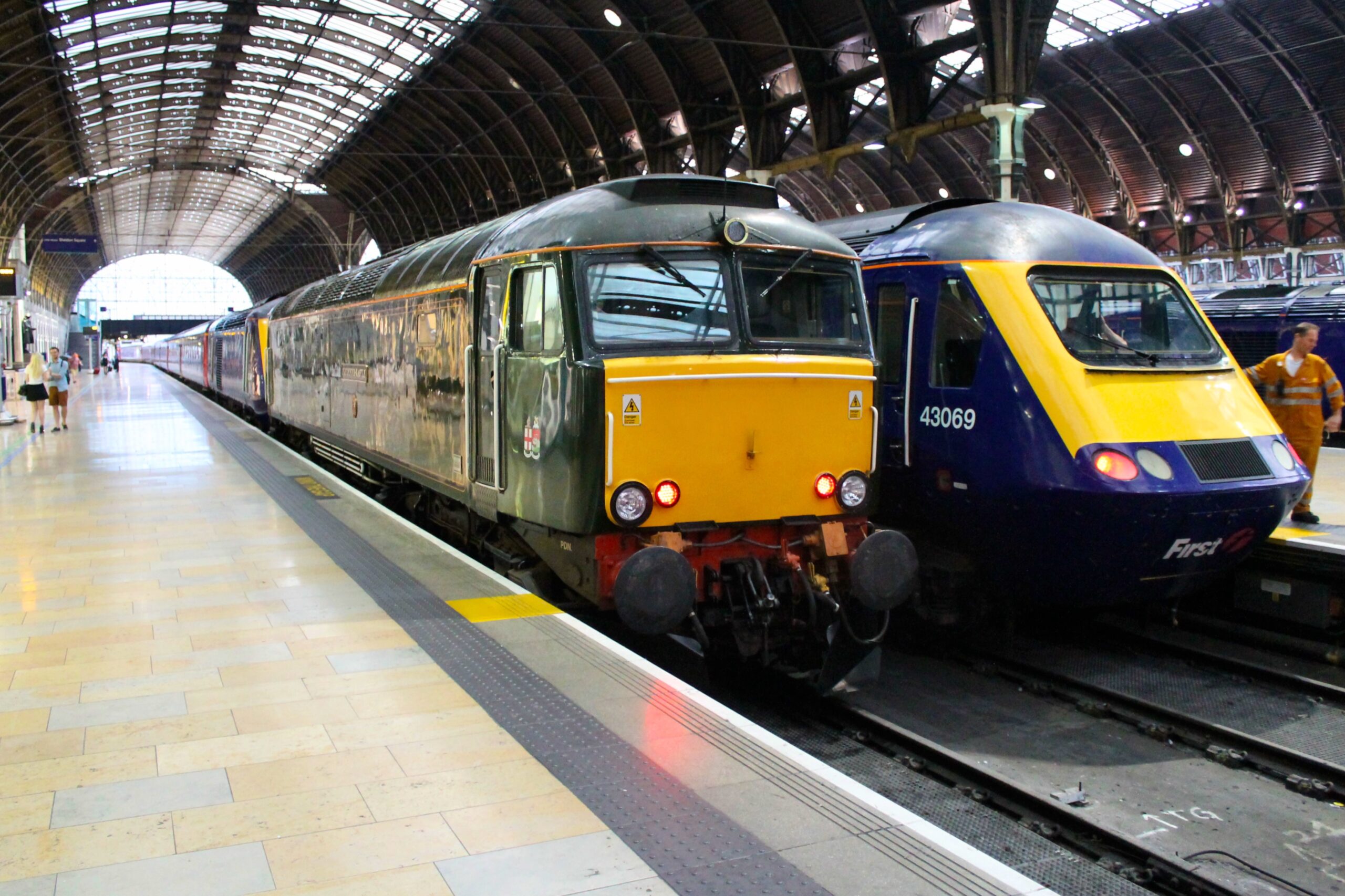
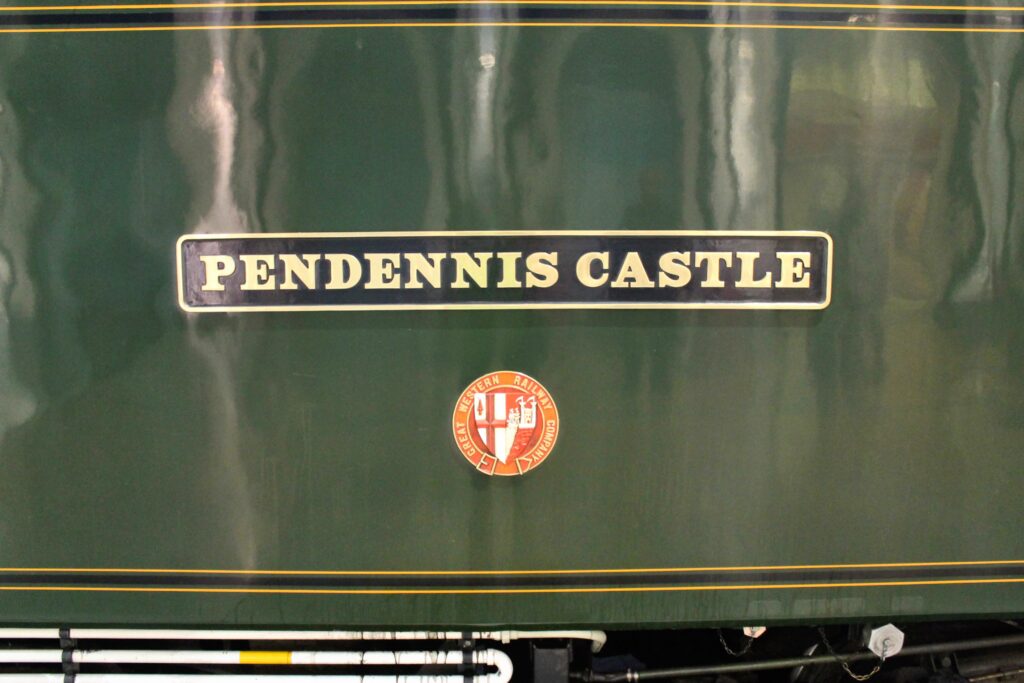
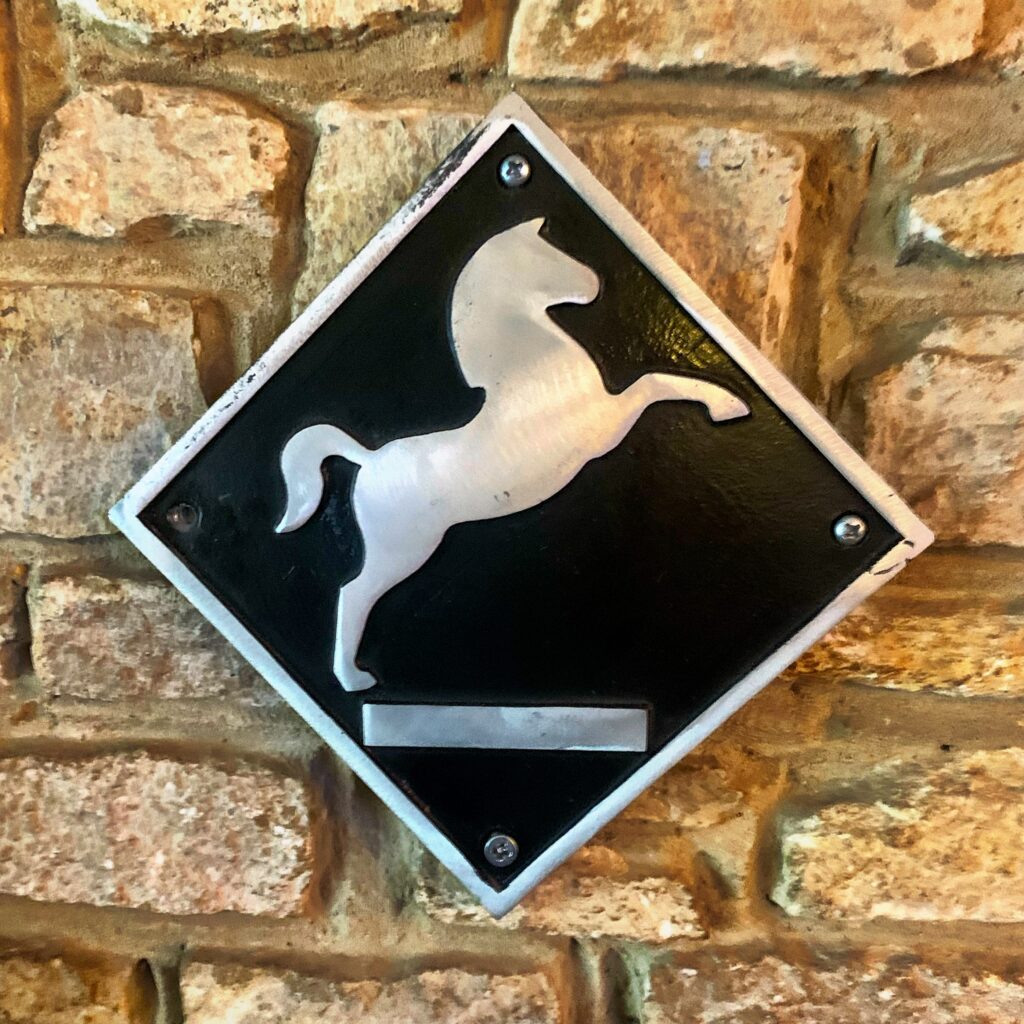
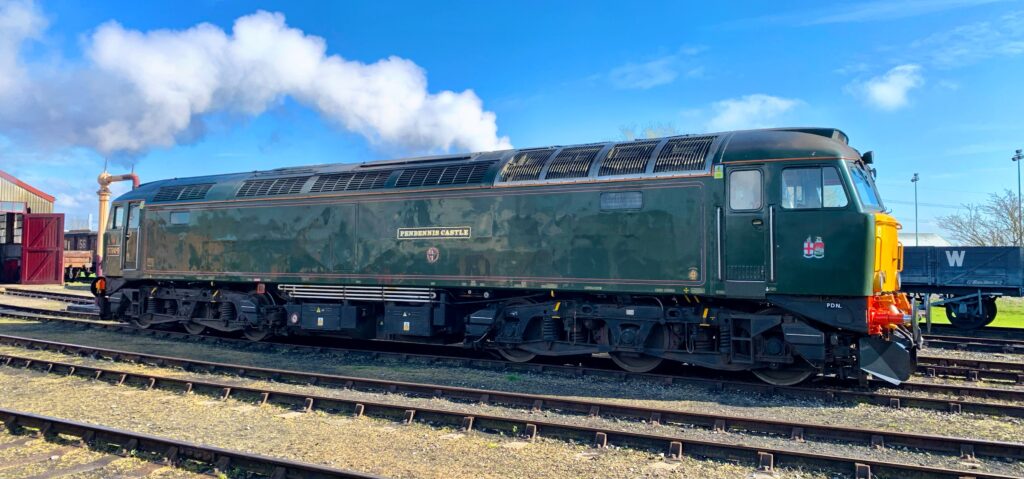
We were greeted by not one, but two Pendennis Castle locomotives. In a lovely touch, current GWR Class 57 No. 57604 ‘Pendennis Castle’ was lined up alongside her early steam namesake No. 4079.

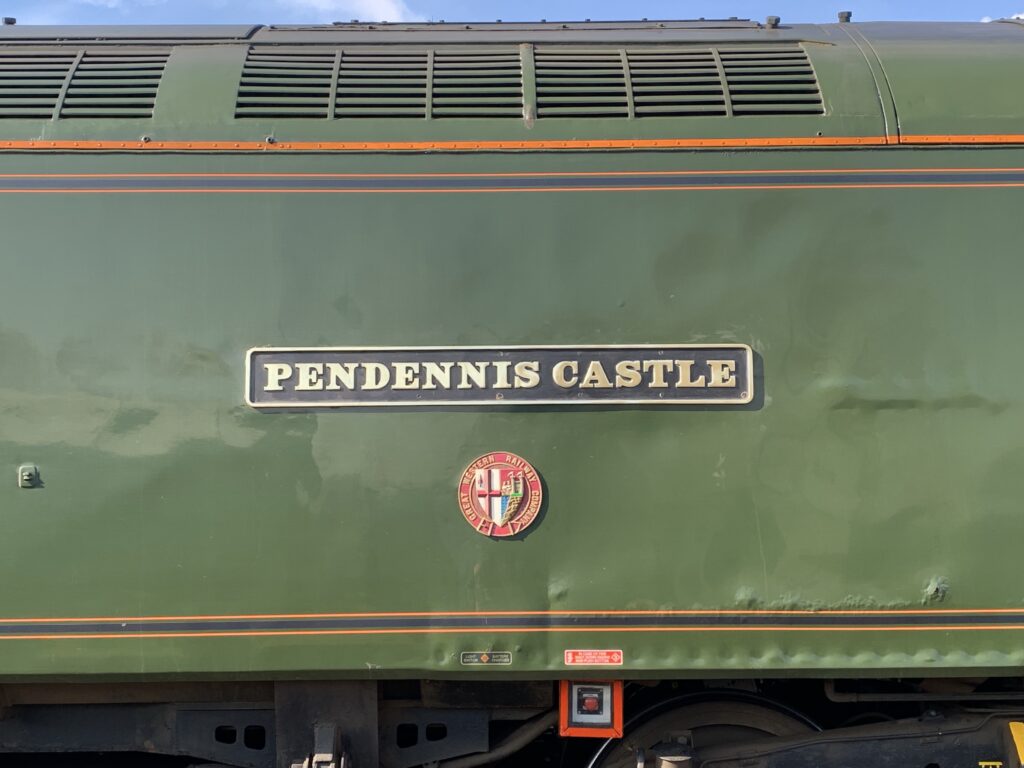
The Castle Class 4-6-0 express passenger engine was first introduced in 1923. No. 4079 ‘Pendennis Castle’ was the 7th machine – of an eventual total of 171 – completed in February of 1924. She shot to fame the next year when she triumphed in a series of trials against the LNER Class A1 Pacific locomotives. The most famous of these being the legendary ‘Flying Scotsman’. ‘Pendennis Castle’ was rather cheekily sent to be displayed alongside its famous rival in the 1925 Empire Exhibition at Wembley.
No. 4079 worked express passenger trains on the Great Western Railway and later British Rail (Western Region) for forty years, racking up an impressive 1.75 million miles in service. This came to a sudden end in 1964 when travelling on a special train, she sustained severe damage to her rear driving wheel bearings as her fire grate collapsed and almost melted them. She was taken off the train and abandoned on shed at Westbury.
From Westbury, she was rescued by Mike Higson who was then proprietor of Roundhouse Books. He had the locomotive slowly towed back to her birthplace at Swindon and restored to working order. On completion, she was handed over in 1965. Shortly afterwards, Mr Higson sold the locomotive to Lord John Gretton (of the Bass Brewery dynasty) and, Sir William McAlpine who had famously saved ‘Flying Scotsman’ from a financially disastrous tour of North America. Initially based at Didcot, No. 4079 eventually moved to the Steamtown Railway Museum in Carnforth.
The story now shifts to 1977 and Hammersley, amid the deserts of North Western Australia, where Sir Russel Madigan was visiting the iron ore mines of the company he worked for; Rio Tinto. Here he encountered a preservation group named The Pilbara Railways Historical Society who were saving diesel locomotives which had once worked the iron ore railways. The society were also keen to obtain a steam locomotive to run on the railway. Sir Russel declared he would “go home and buy them the ‘Flying Scotsman’”. This was not to be as Sir William McAlpine wasn’t prepared to sell ‘Scotsman’. He was, however, willing to part with ‘Pendennis Castle’. After a farewell tour stopping for what was believed to be the last time at Didcot, she went to Southampton Docks, was loaded onto a P&O ship and set sail for ‘Down Under’ via the Suez Canal.
Arriving at Hammersley in 1978, she soon became a firm favourite, pulling trains over the extensive iron ore rail system for pleasure trips. Apparently, it wasn’t unknown for the locomotive to just pull up out of the way somewhere in the desert and for her hot coals to be used to start the barbecue! The highlight of her time in Australia was when her great rival ‘Flying Scotsman’ visited during the country’s bicentennial celebrations in 1988 and they hauled trains together.
By 1994 changes were afoot on the Rio Tinto railway. The introduction of a new in cab signalling system made it very difficult for a 1924 steam engine to pull trains and time was beginning to take its toll on No. 4079. Faced with mounting repair bills and operational difficulties, her last operational trip was made in 1994 and she was retired to await her fate.
It was suggested by the editor of Railway Magazine, Nick Piggott, that ‘Pendennis Castle’ needed to be repatriated into the hands of the Great Western Society at Didcot. Having contacted the society and entered negotiations with then deputy society chair Richard Croucher, the society was donated 120 tons of historic steam locomotive. With one provision; the society had to get her home. Through the efforts of successful fundraising that was match funded by the Heritage Lottery coffers, No. 4079 journeyed 1,000 miles on the roads of Australia, placed on a ship that took her through the Panama Canal, thus completing her circumnavigation of the planet. She arrived back in the UK on the 8th July 2000.
Sadly the engine was in poor condition mechanically. The buckets of red desert sand that permeated the locomotive which were removed had also ground away at her moving parts. Large sections of the structure under her cab was life expired, her cylinder block needed new liners and a serious crack repairing as well as her boiler requiring a thorough overhaul.
While the original intention was to restore No. 4079 to main line condition, operational changes have resulted in Didcot withdrawing from the main line scene. However, following over twenty years of volunteer work ‘Pendennis Castle’ has been fully restored to a very high standard and after her April 2nd 2022 photoshoot with her more ‘modern’ Class 57 counterpart, No. 4079 soon moved off to the turntable where, following speeches including one from Great Western Society Chair Richard Coucher, the widow of the late Sir William, Lady Judy McAlpine, cut the ribbon officially launching ‘Pendennis Castle’ back into traffic.
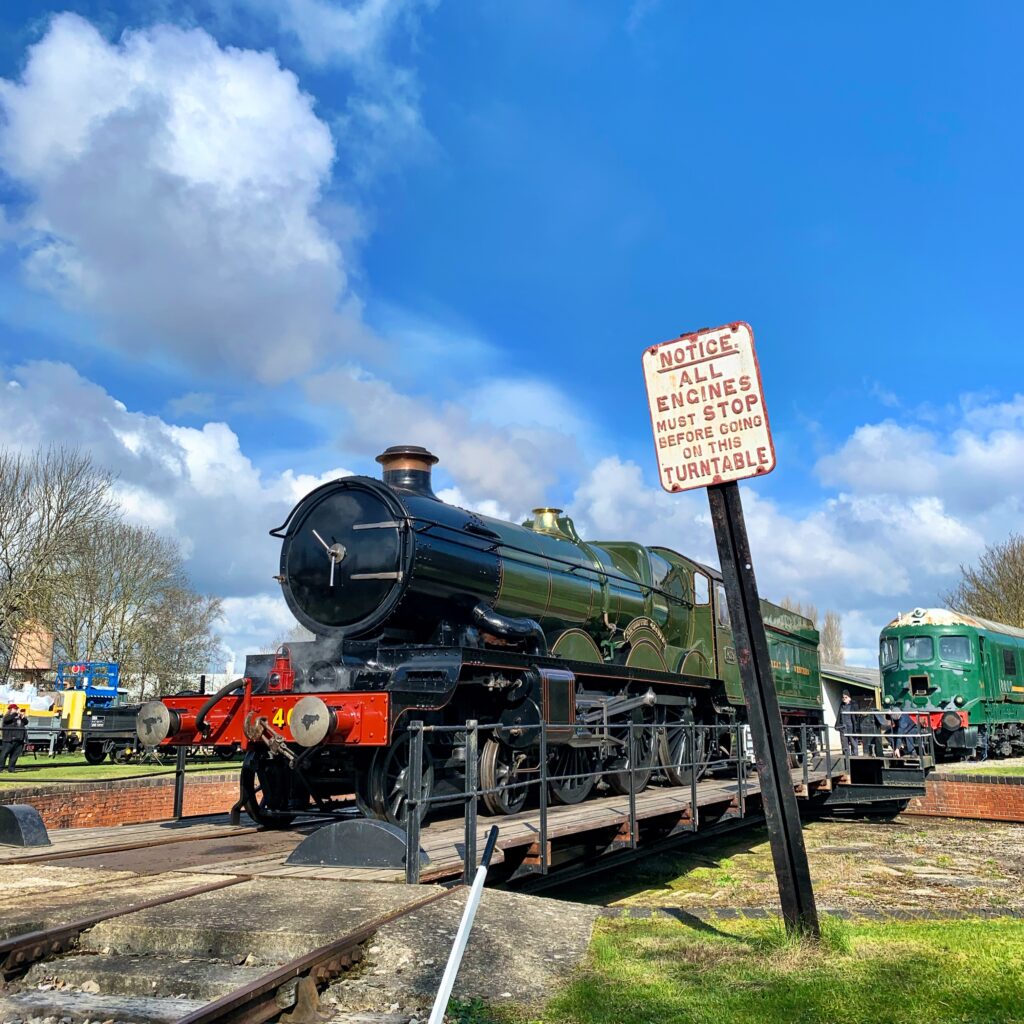
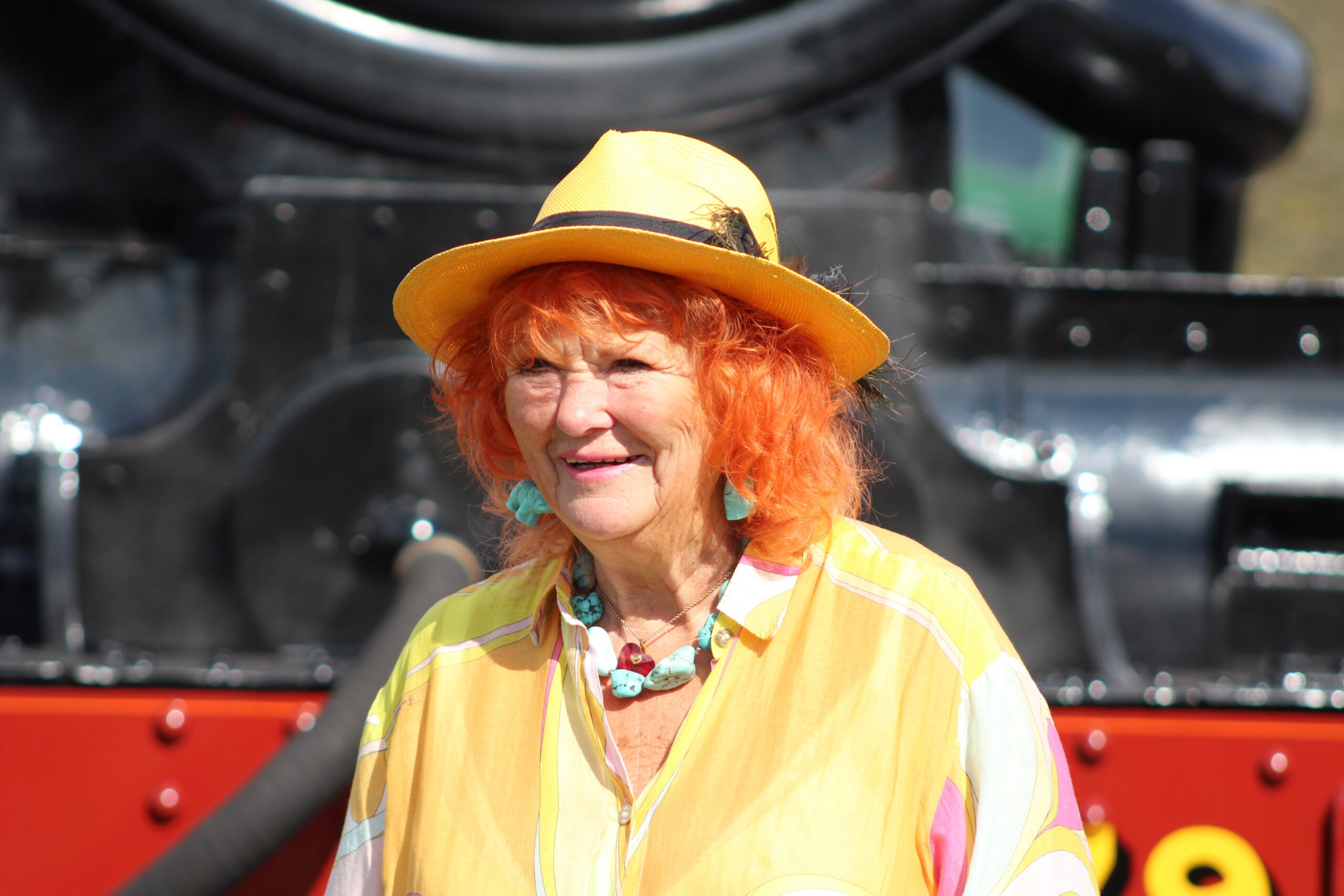
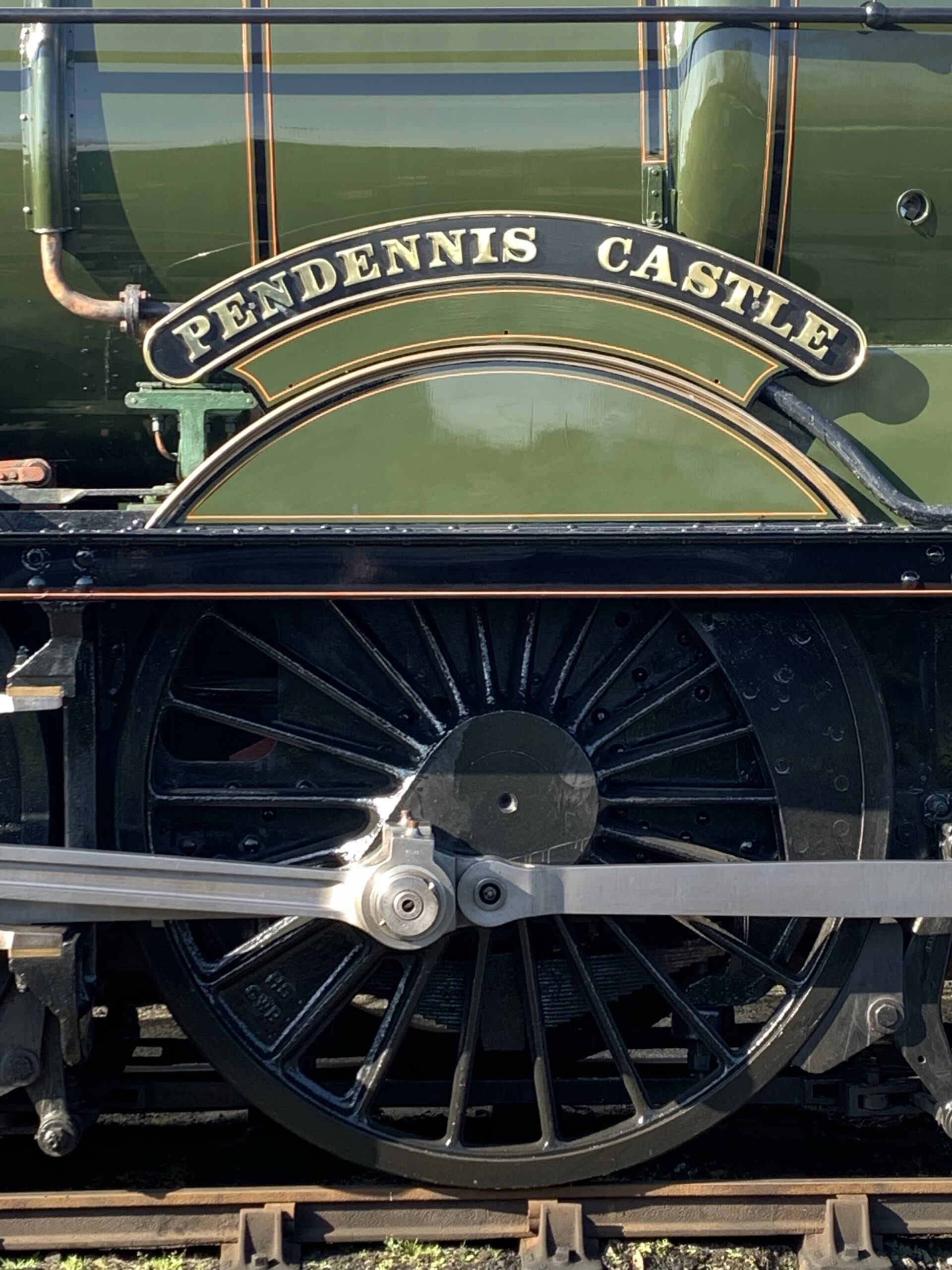
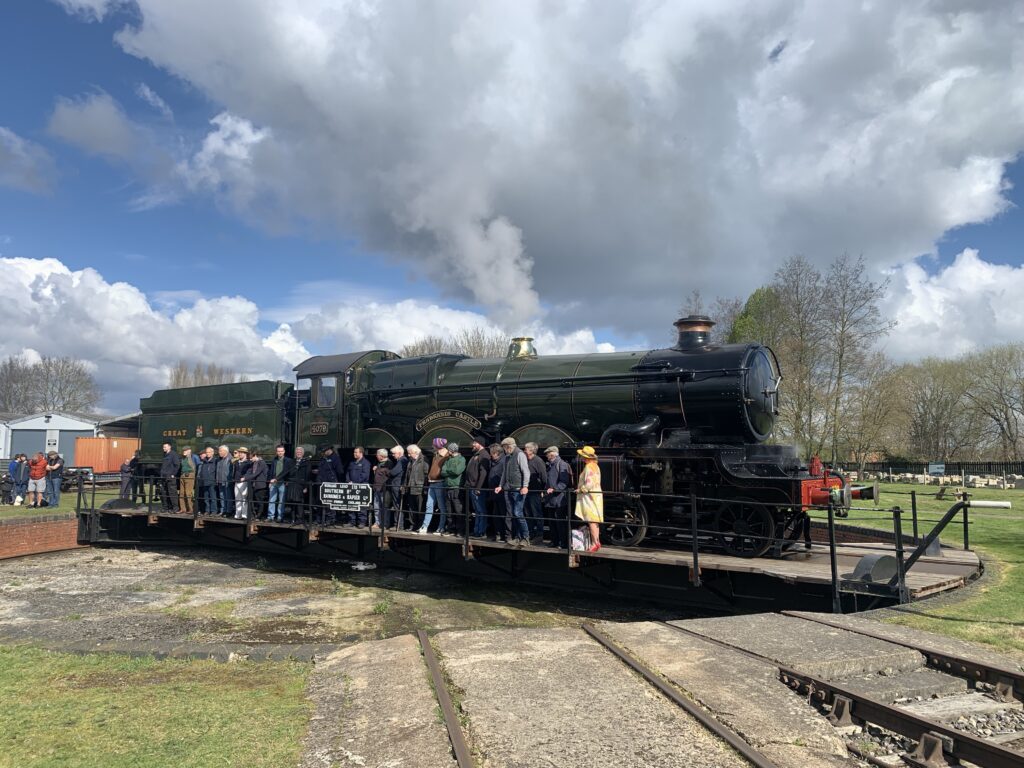
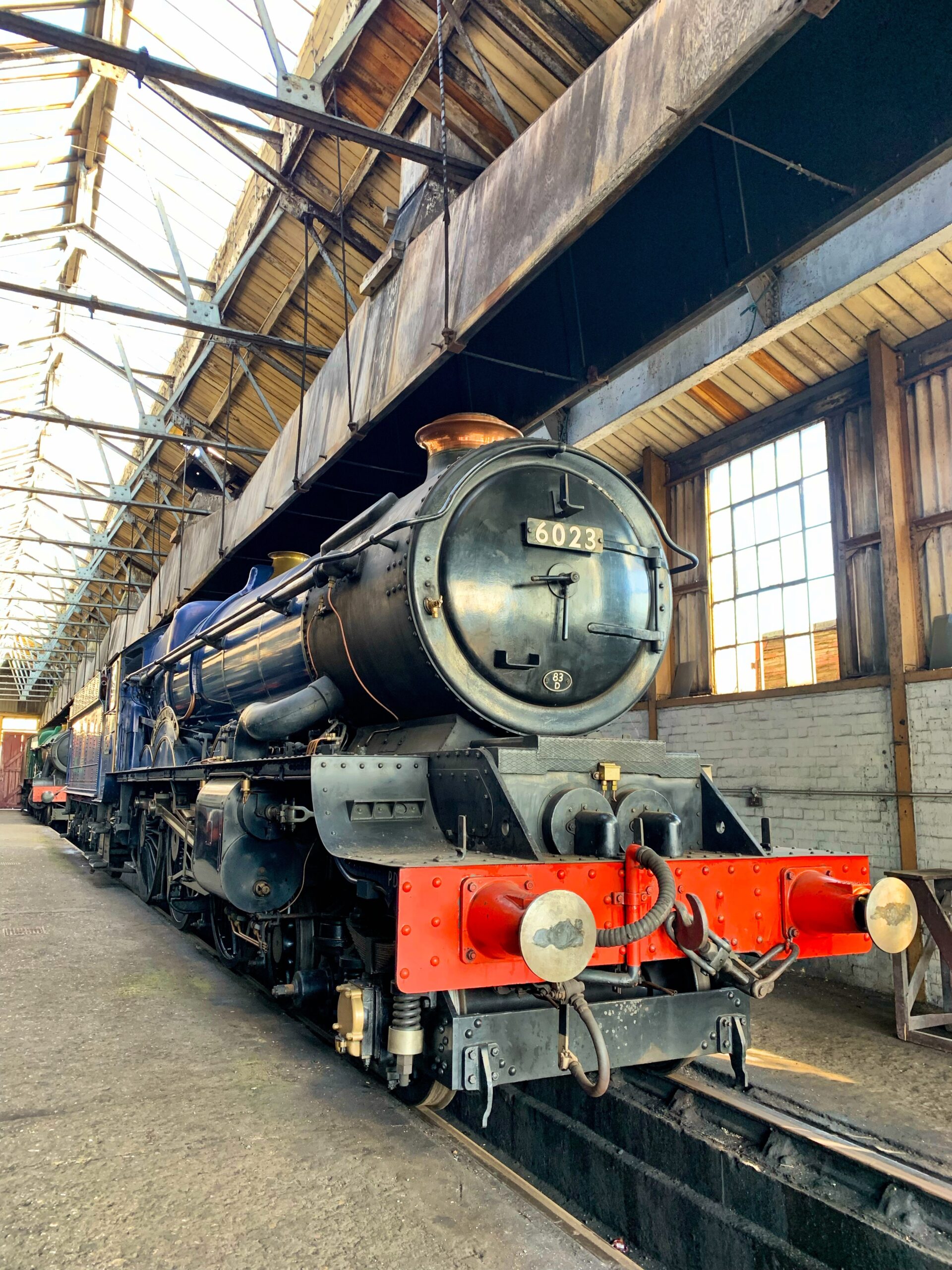
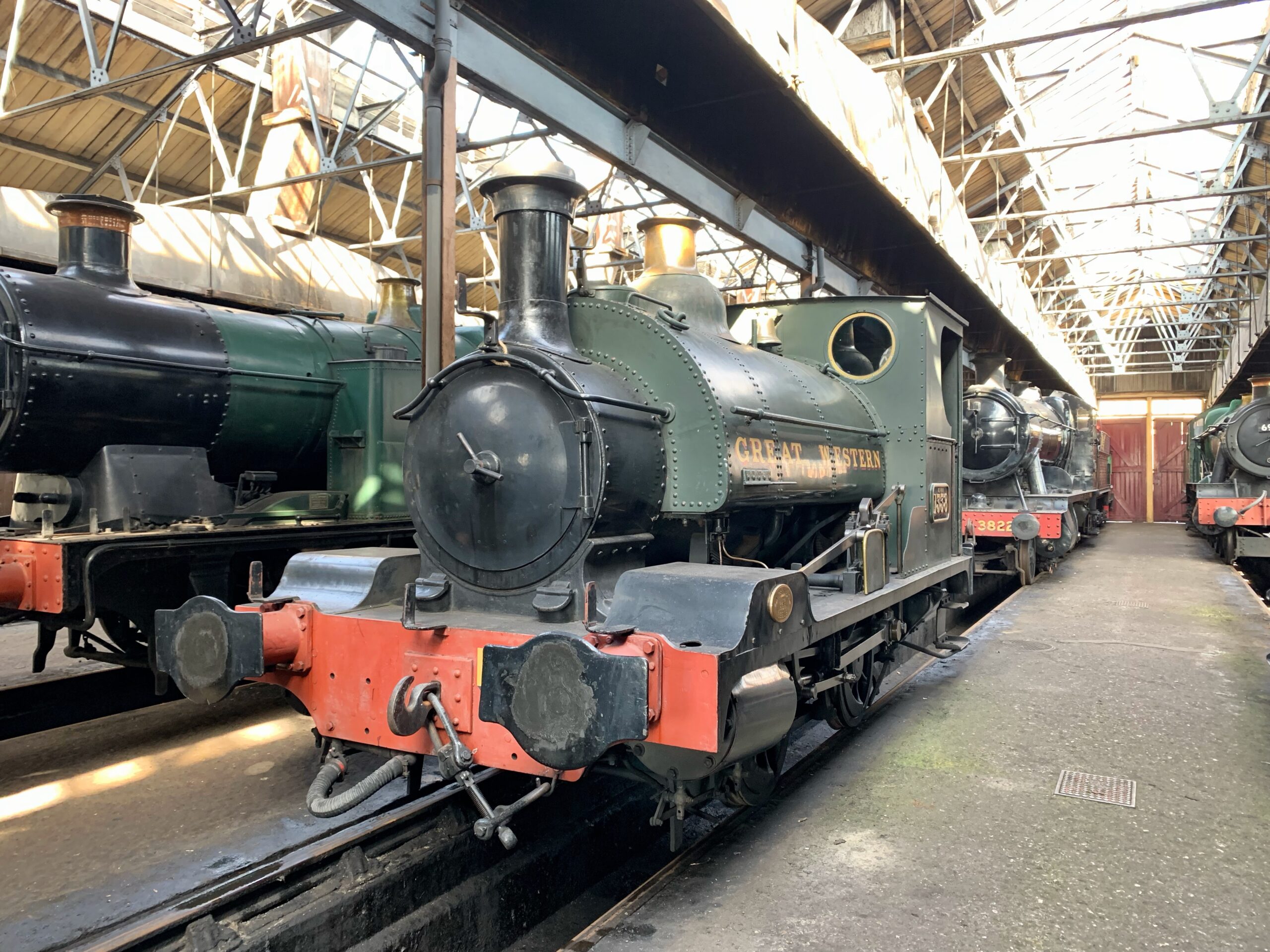
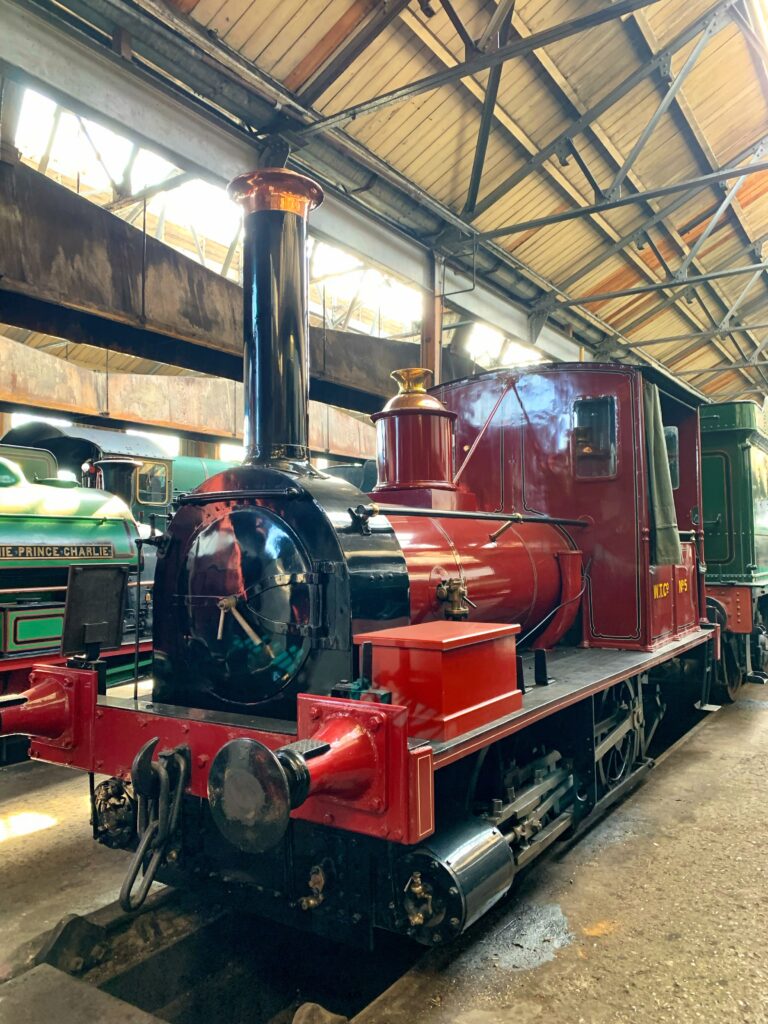
We also had an enjoyable look around the Didcot engine shed:
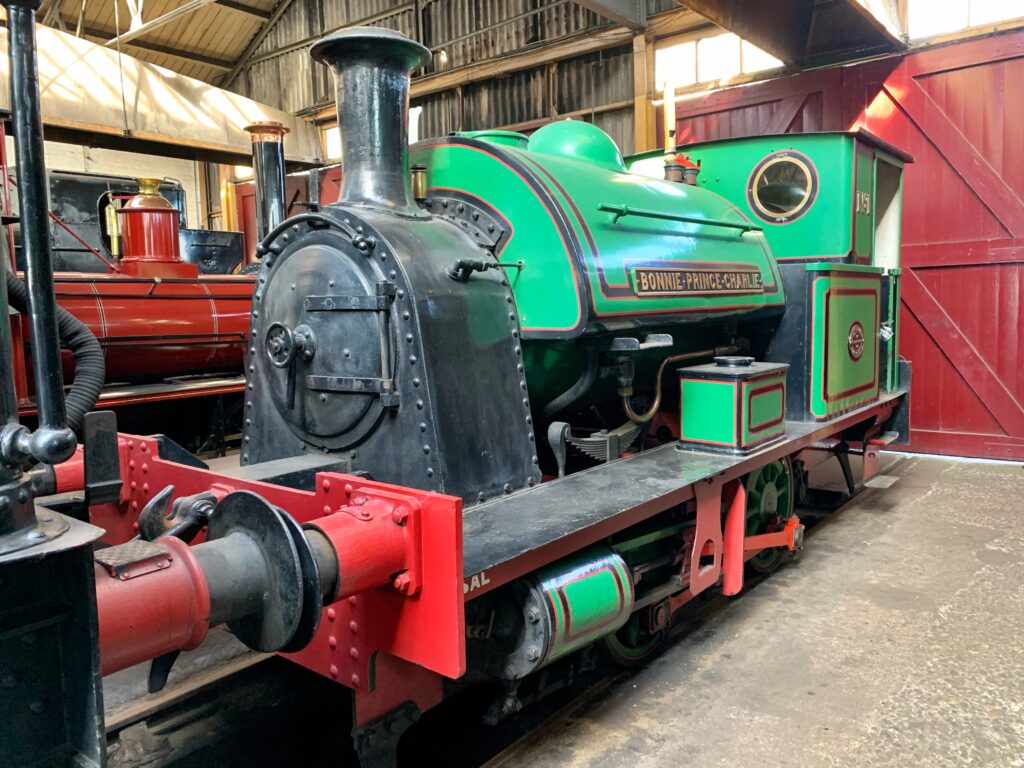
Of local interest for Yoshi and I was ‘Bonnie Prince Charlie’. The locomotive was built by Robert Stephenson and Hawthorns in 1949 (Works No. 7544) and entered service with Messrs. Corrall Ltd, initially in Dorset at Corrall’s Ballast Wharf in Hamworthy and later from 1965, at Corrall’s depot on Dibles Wharf in Southampton. ‘Bonnie Prince Charlie’ was purchased for preservation by the Salisbury Steam Trust in 1969 and arrived at Didcot soon after.
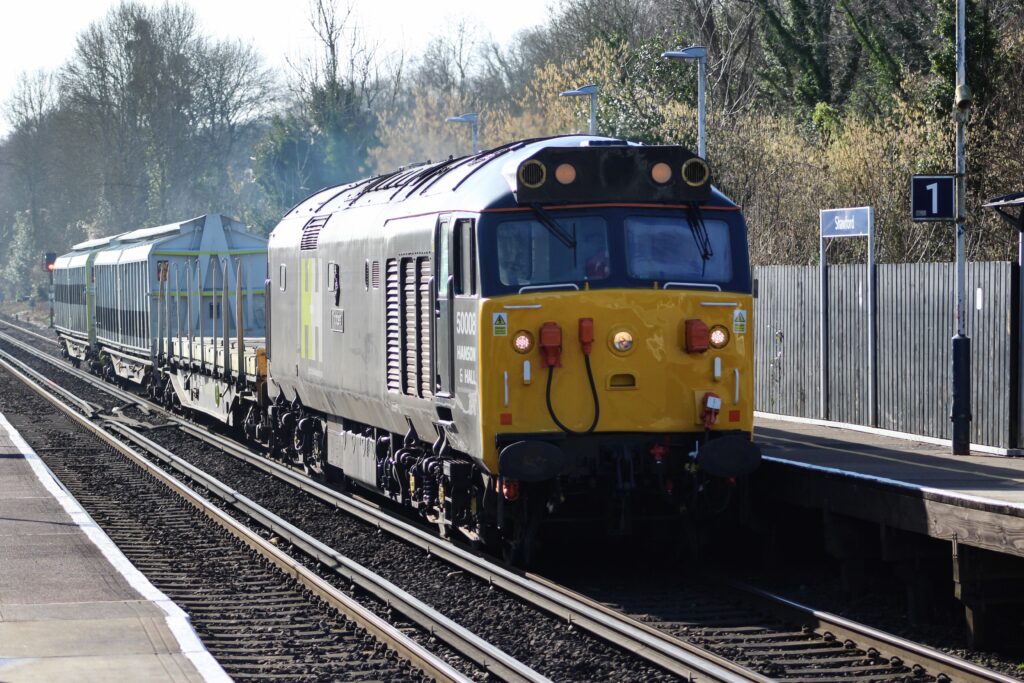
Saturday afternoon, Yoshi and I decided to visit the Chinnor & Princes Risborough Railway’s diesel gala. The main draw for me at least ( I’m not sure about Yoshi ) being the visit of two ex East Midlands Trains Class 43 HST power cars which are currently being operated by Rail Operations Group on behalf of Data Acquisition & Testing Services of Long Eaton – try saying that after a few JD and Coke’s – on routine checking of Over Head Line Equipment (OHLE) throughout the network, most recently in the Corby / Kettering area. The intention was for the power cars to work with the resident Southern Region 3-CEP unit, which is currently the C&PRR’s only operational air braked passenger stock. Unfortunately power car No. 43054 failed and was removed from the consist, being replaced with visiting Hanson & Hall Rail Services Solutions Ltd Class 50 No. 50008 ‘Thunderer’ which top and tailed the 3-CEP with working power car No. 43066. Sadly, this was not to be the only locomotive failure of the day as C&PRR’s departmental liveried home Class 31 No. 97205 was also withdrawn from the gala after experiencing issues.
C&PRR’s ambition is to extend to Aston Rowant which involves crossing a public highway at Kingston Blount in order to create a 14 mile heritage train round trip and to share operations with a public service originating from a large park and ride located near Junction 6 of the M40 to Princes Risborough for onward connections to London and Birmingham.
The next day, we caught up with Class 66 No. 66105 as it waited with its consist of wagons in the Poole area.
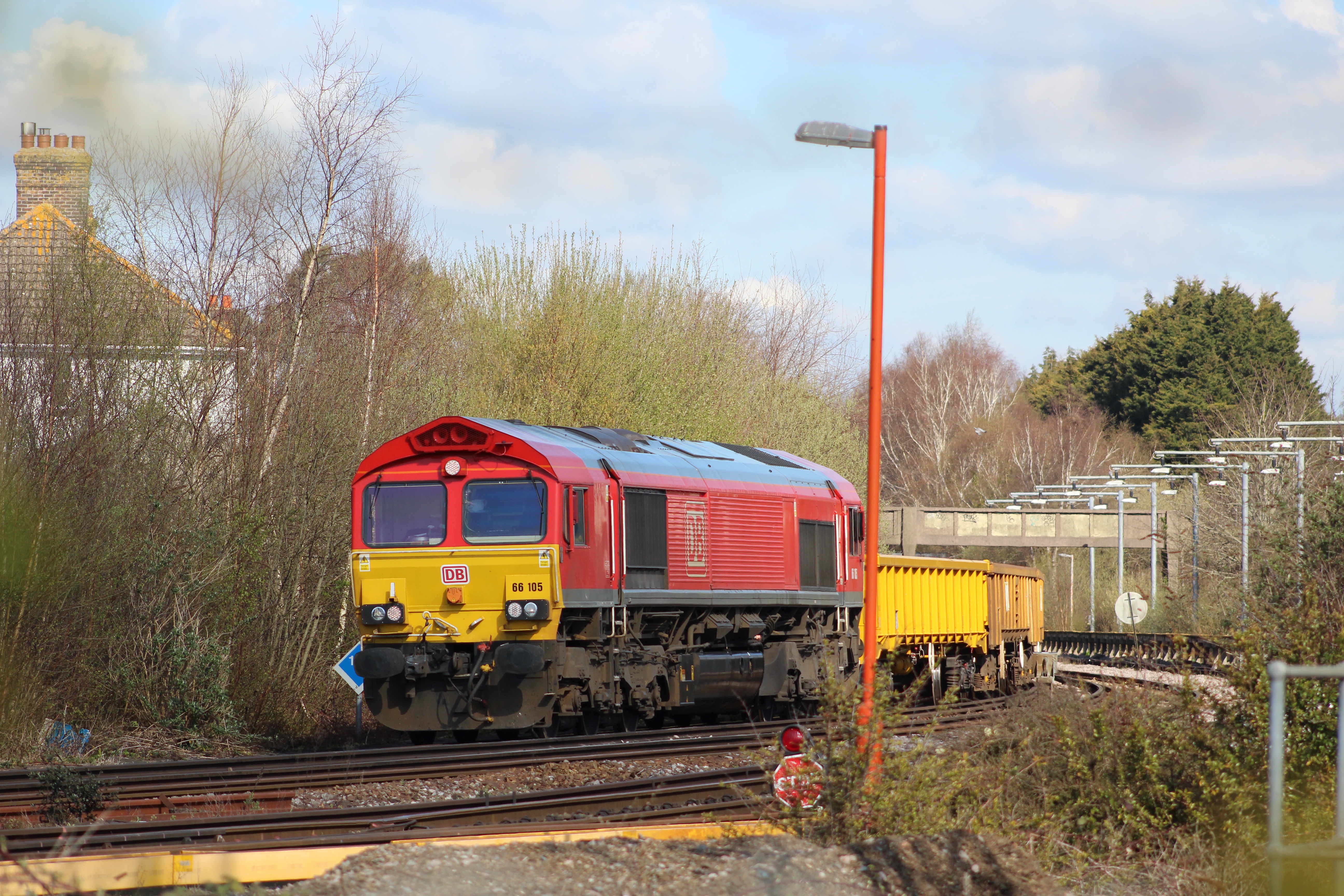
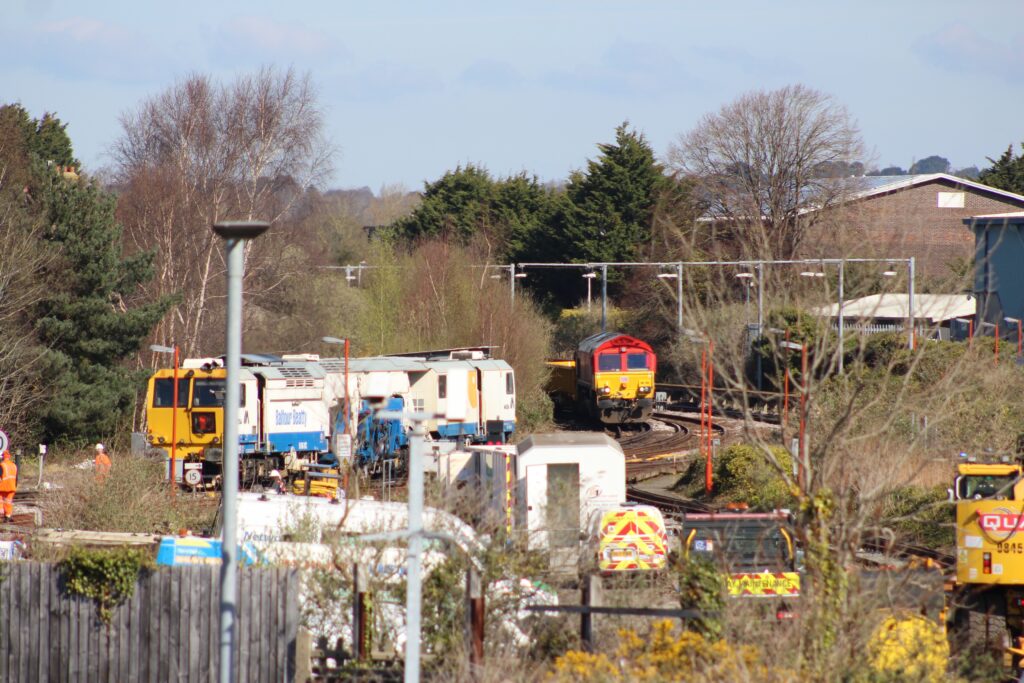
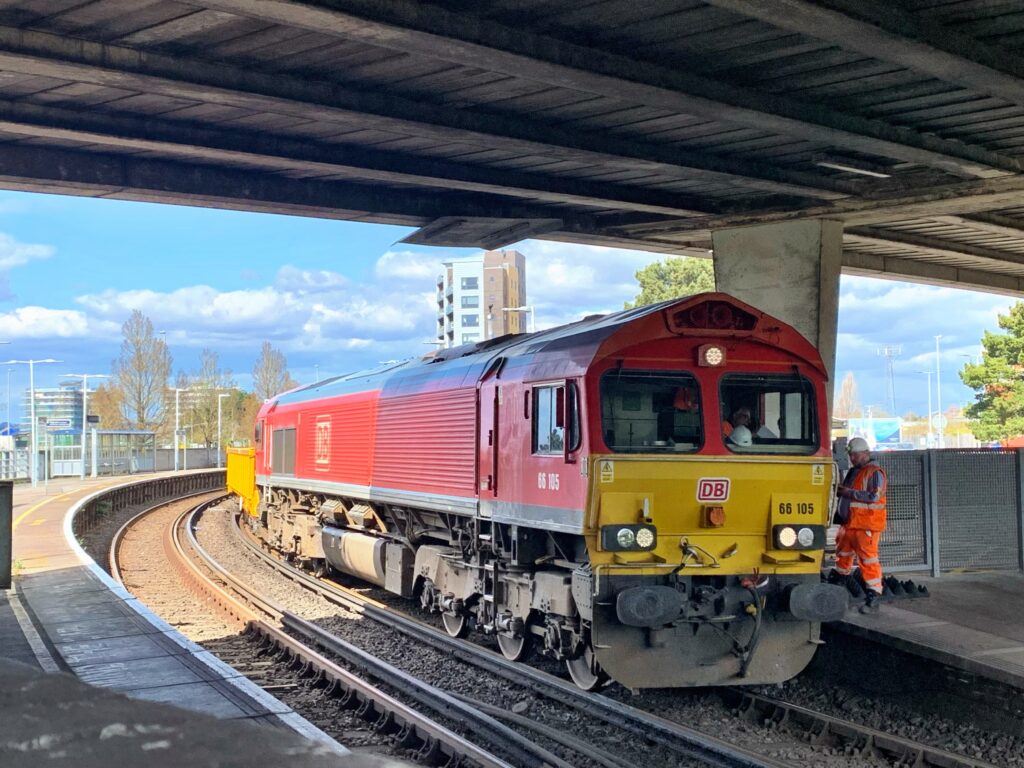
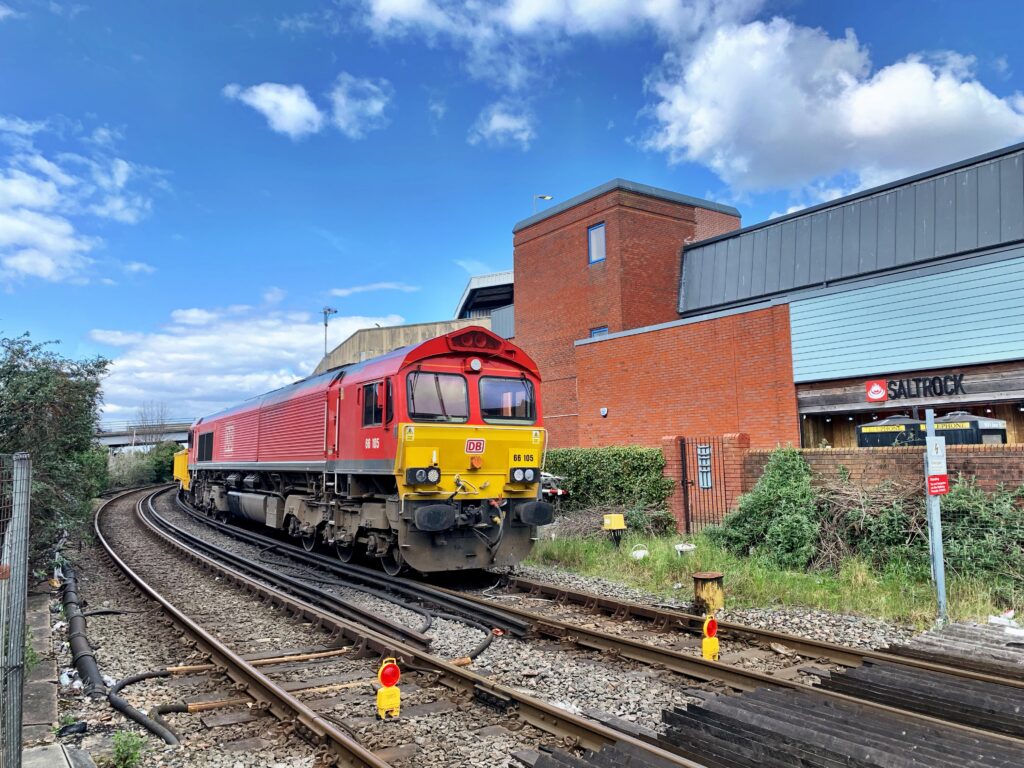


More engineering work is planned for this coming Sunday in the Poole area, although I have yet to see if any engineers trains beyond a tamper will be involved. Network Rail track inspections on the Hamworthy branch necessitate road closure and traffic restrictions as Hamworthy Level Crossing in Ashmore Avenue, Poole is closed for several days w/c 25th April 2022. Interesting times ahead, hopefully!
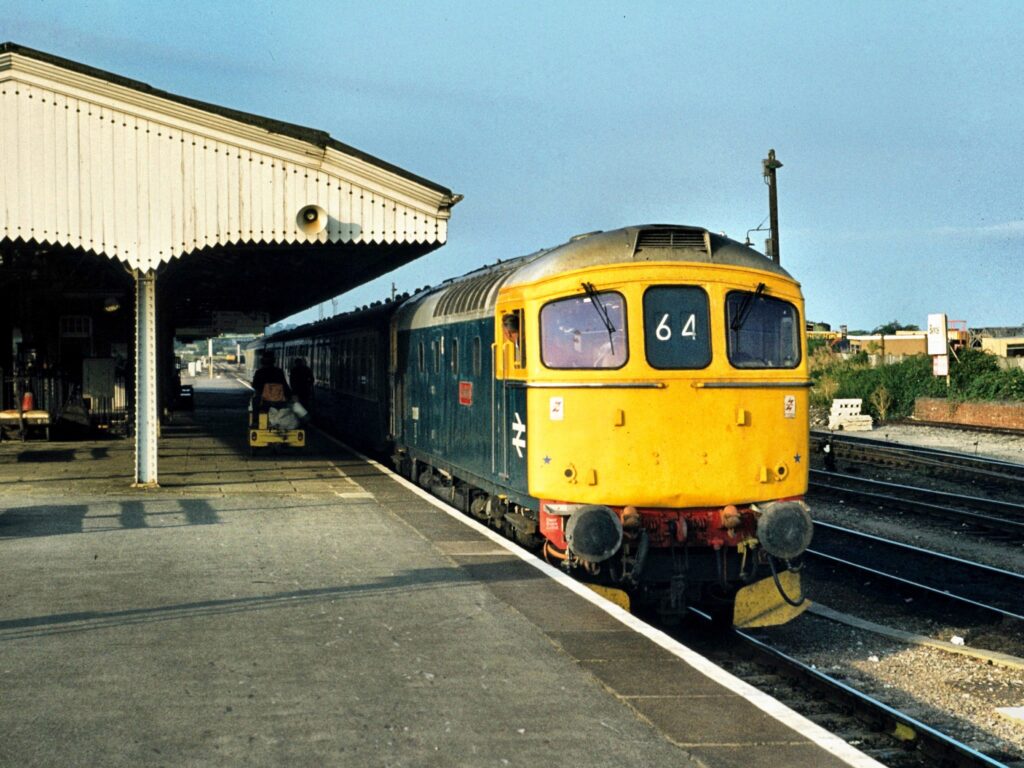
For our look into the archives this week we are returning to Didcot with a 1992 video from John Chappell, but first a set of photos taken with my ever trusty Kodak 110 camera during a school visit in 1979:
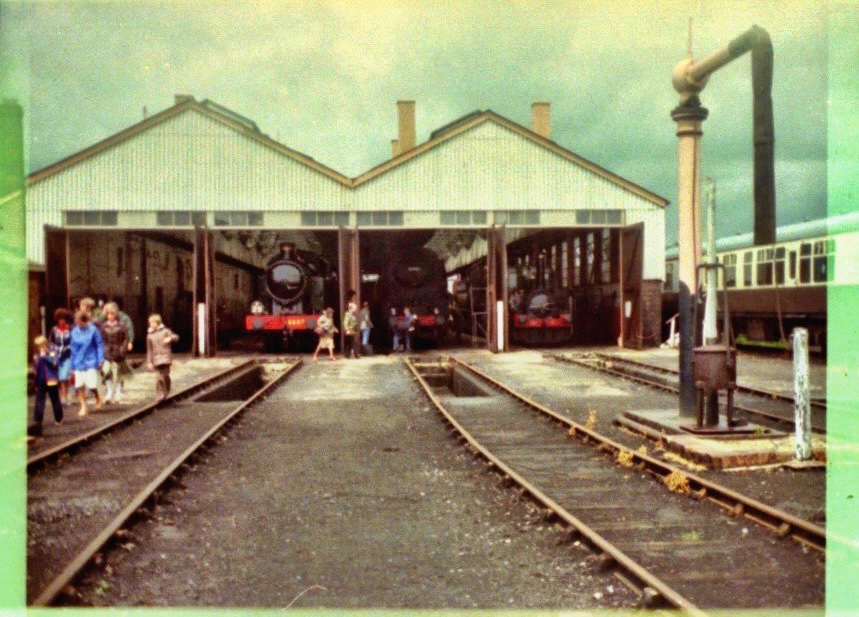
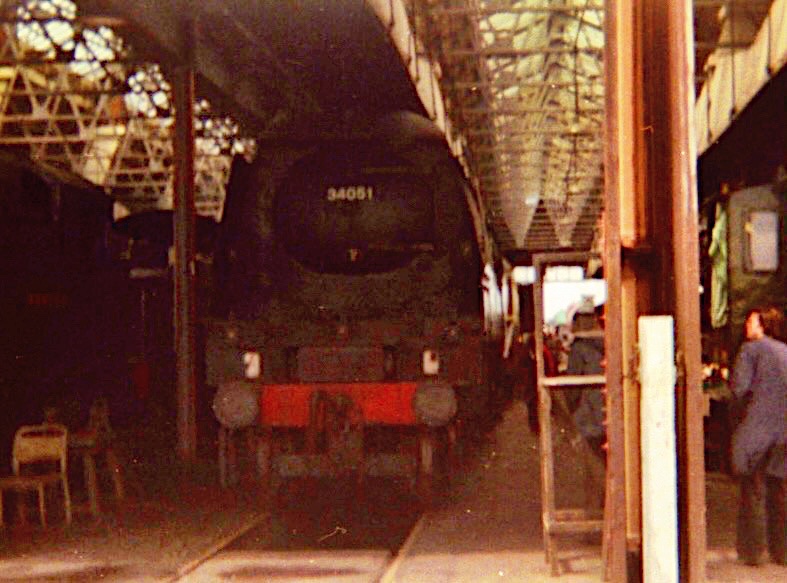

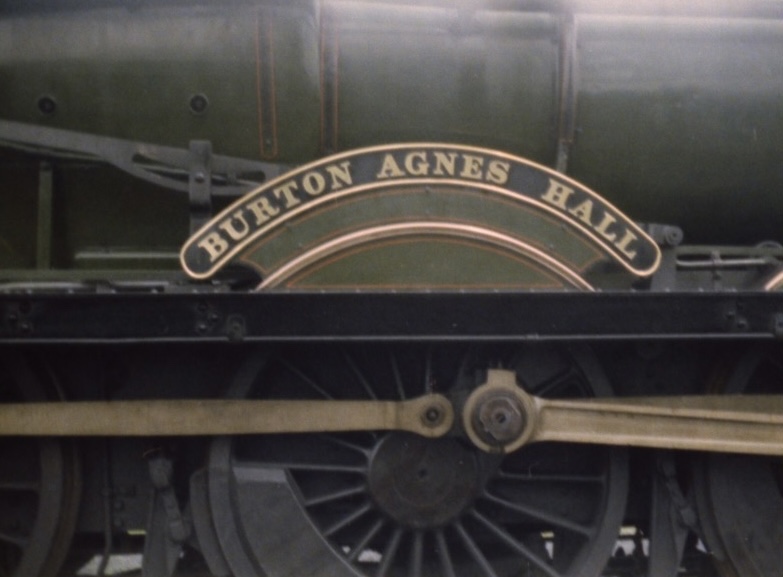
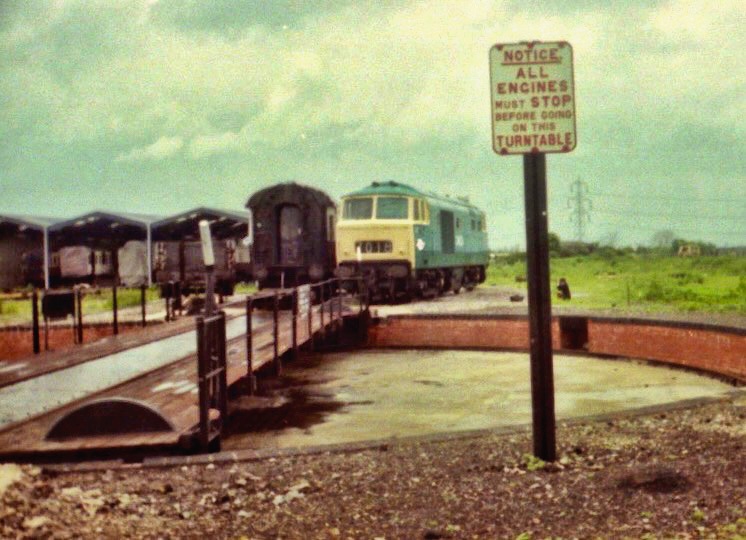
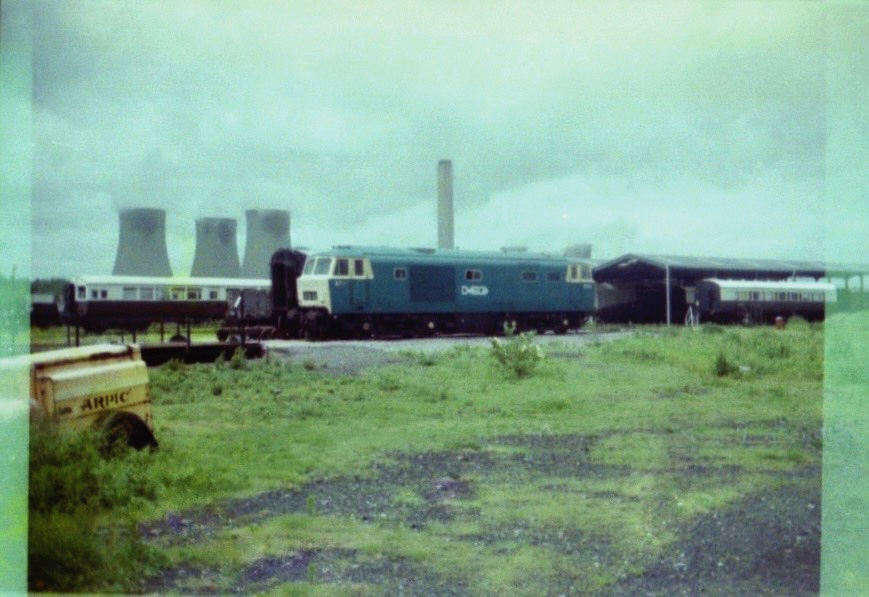
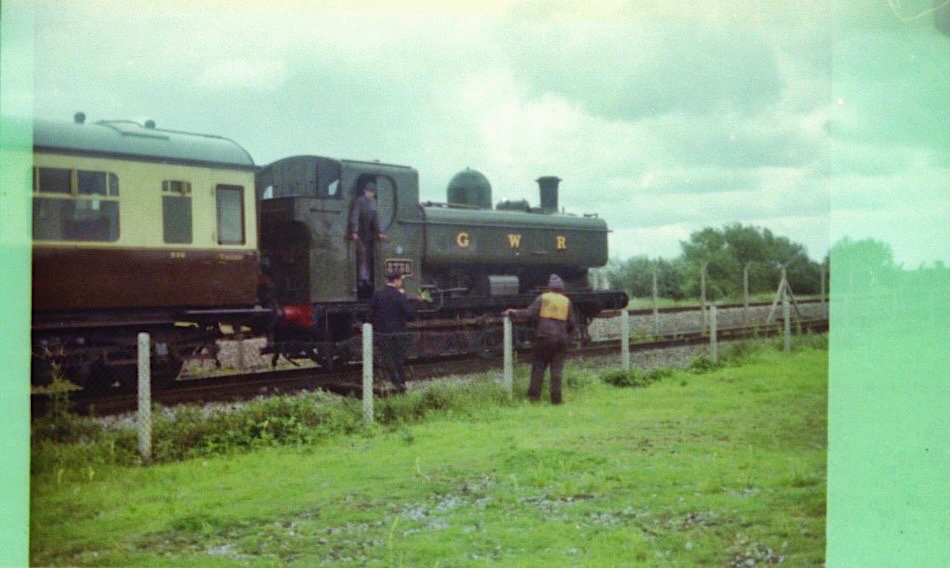
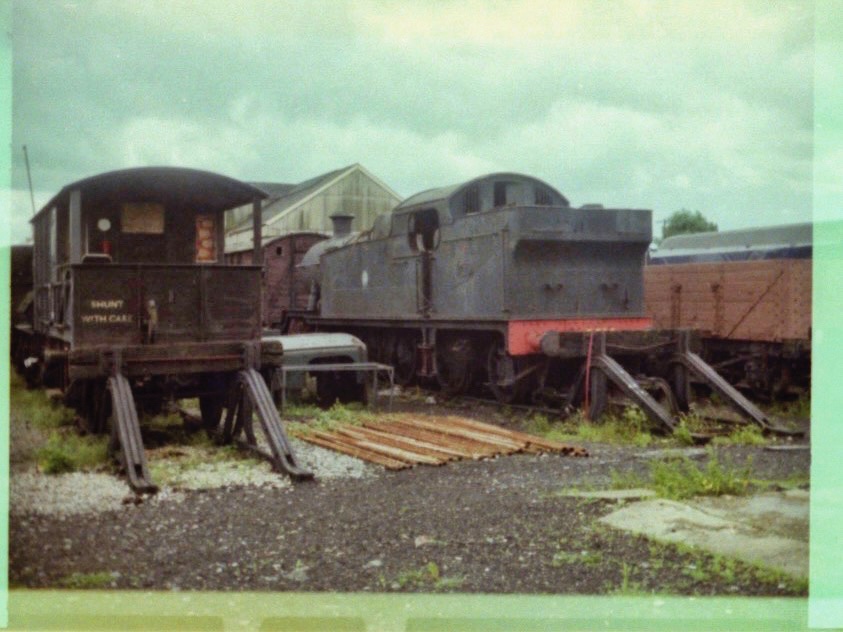
During the weekend of 21/22nd November 1992, BR Standard 4-6-2 No. 70000 ‘Britannia’ was joined by unique BR Standard Pacific No. 71000 ‘Duke Of Gloucester’ where both locomotives were in steam working double headed trains on the demonstration line. In the video below, filmed by John Chappell, there is also a glimpse of ex-Corrall’s locomotive ‘Bonnie Prince Charlie’ in a blue livery for comparison to the more recent photo above.
As mentioned previously, the Railway Centre once enabled the servicing of steam locomotives for special main line trains. One example being the Great Western Society’s Rising Star tour which ran from London Paddington to Stratford-upon-Avon and return on 13th September 1981. I have few memories of the trip except for the glorious view of British Railways Standard Class 9F 2-10-0 No. 92220 ‘Evening Star’ setting off light engine to Didcot shed with the setting sun glinting off her side after completing the steam leg of the tour ( Didcot – Stratford-upon-Avon and return ).

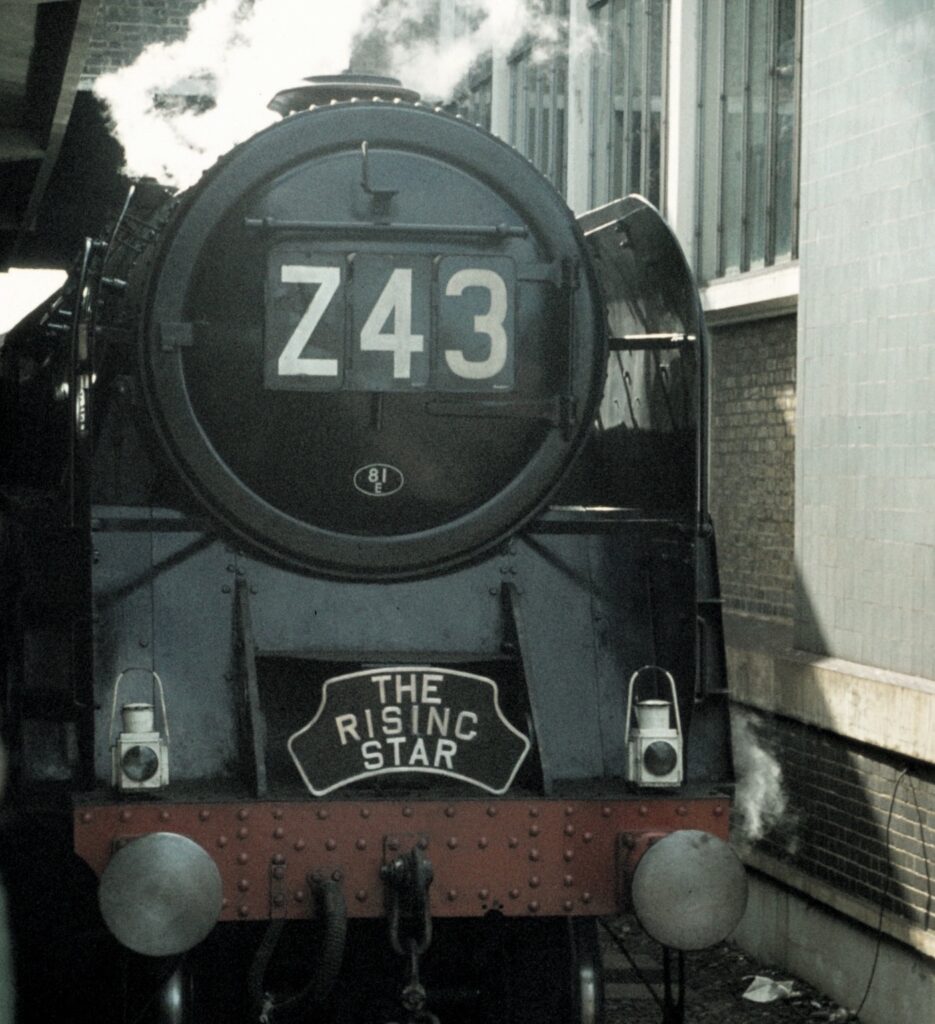
I’m assuming after arriving at Stratford-upon-Avon, ‘Evening Star’ turned on the triangle at Hatton before taking the train on the return journey. The images below are taken at Stratford-upon-Avon:

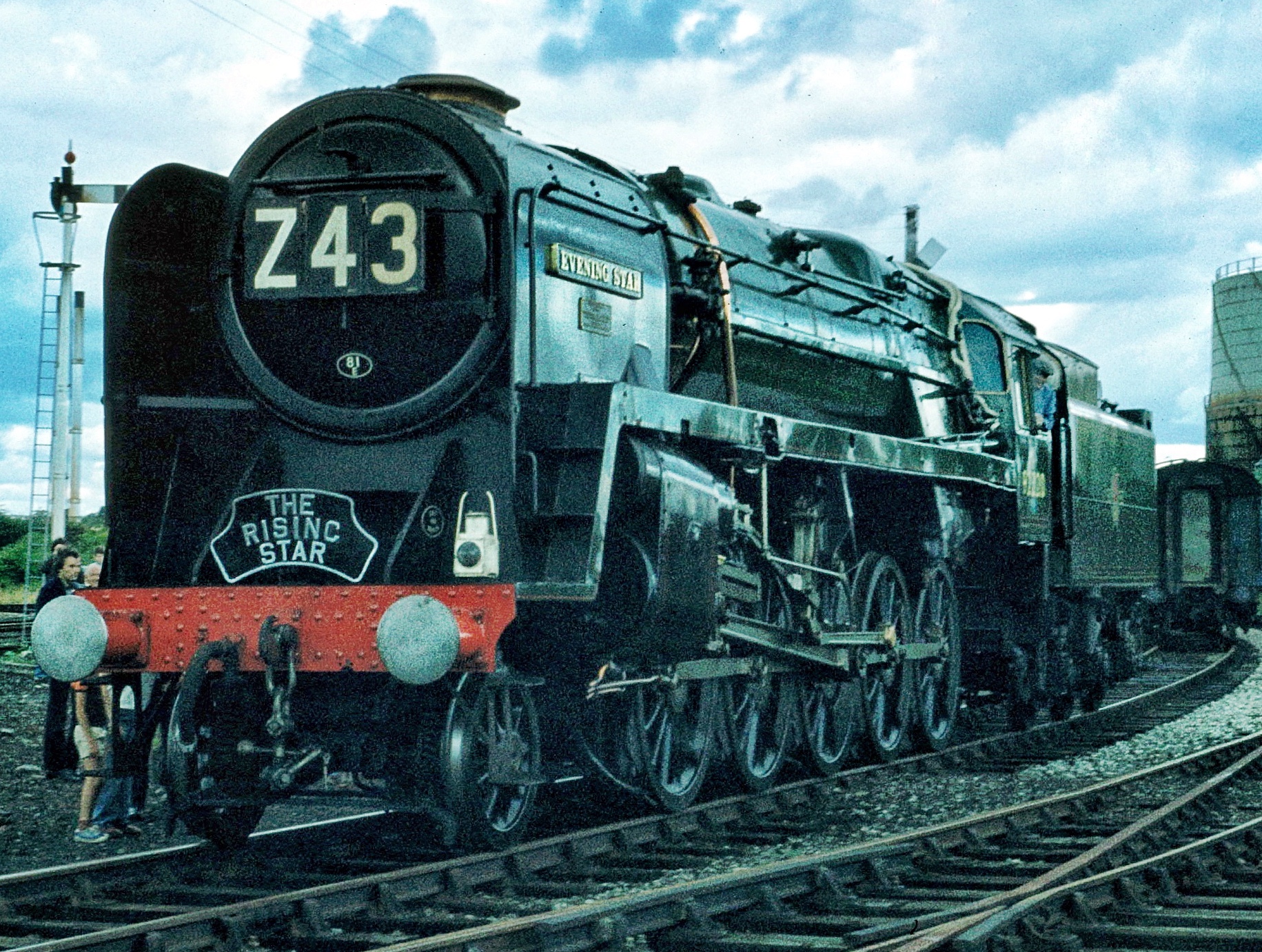
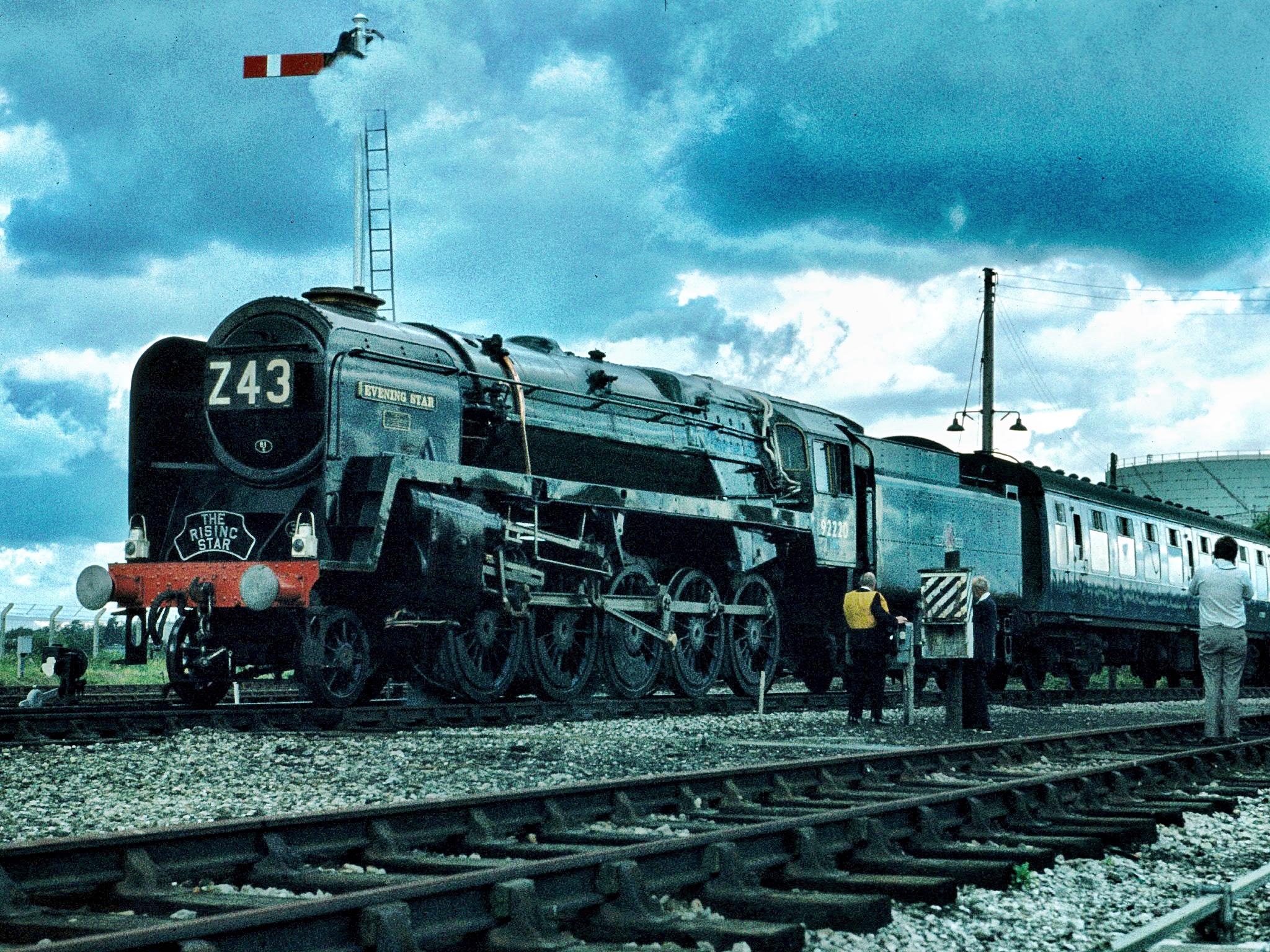
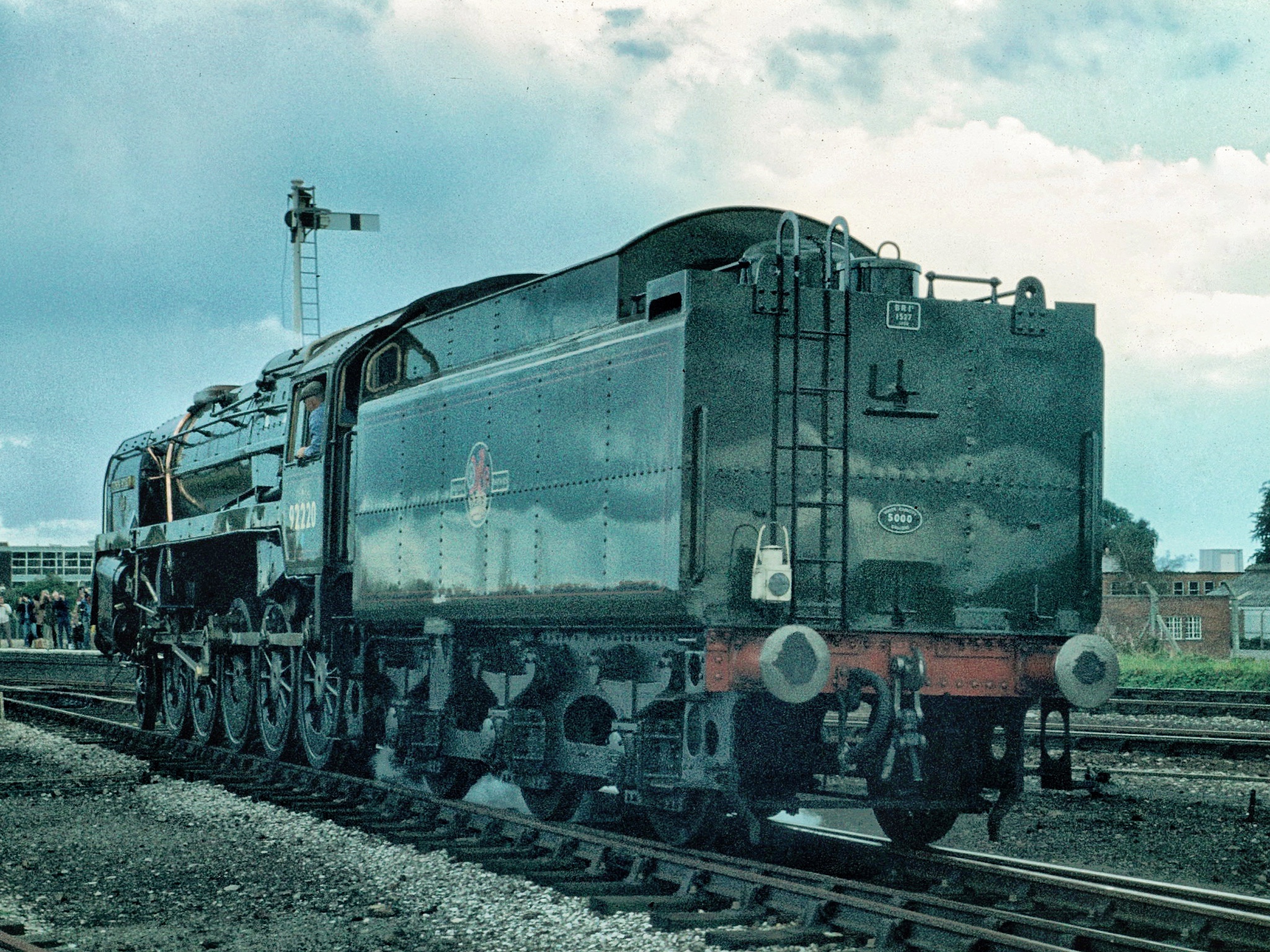
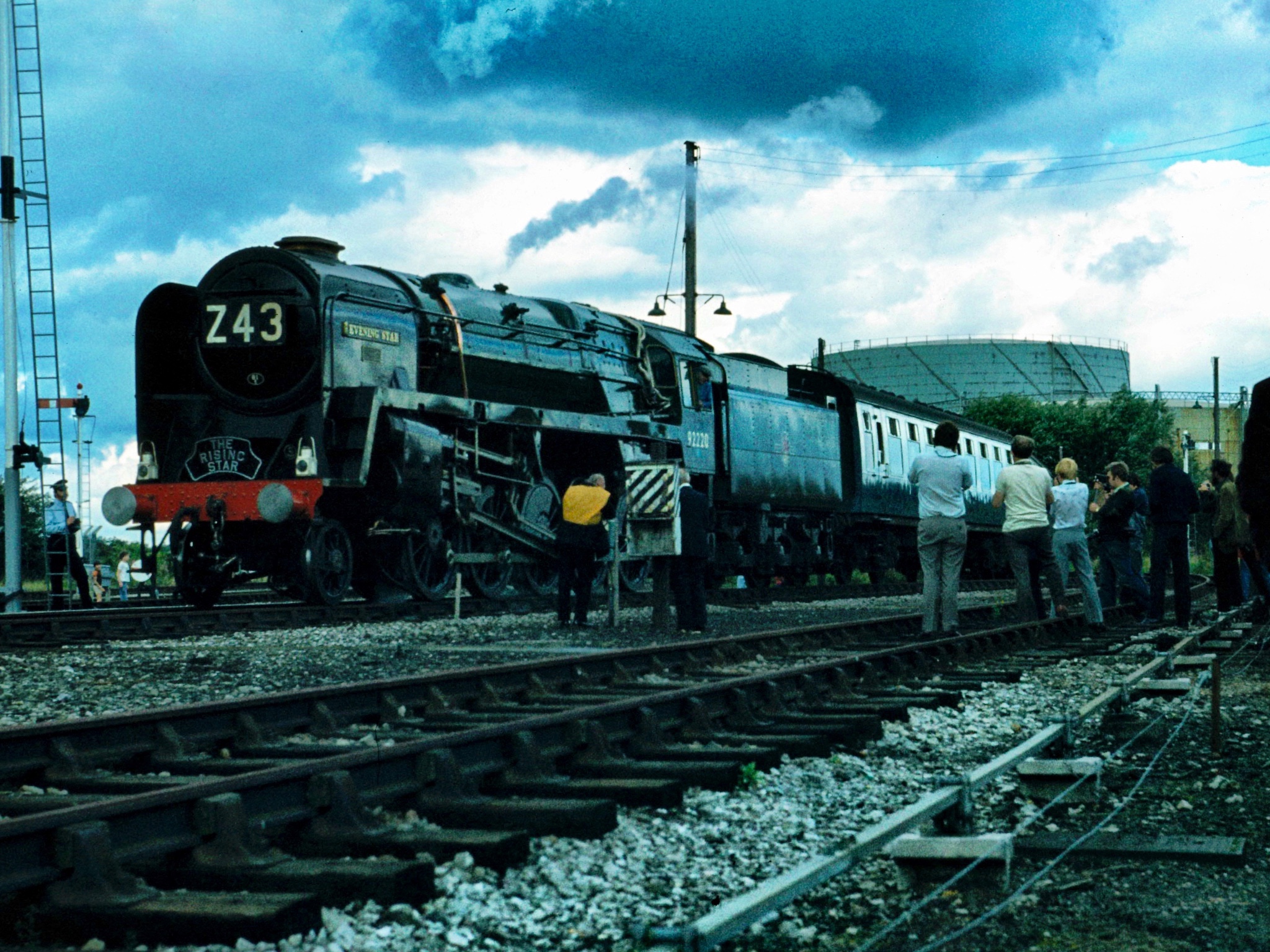
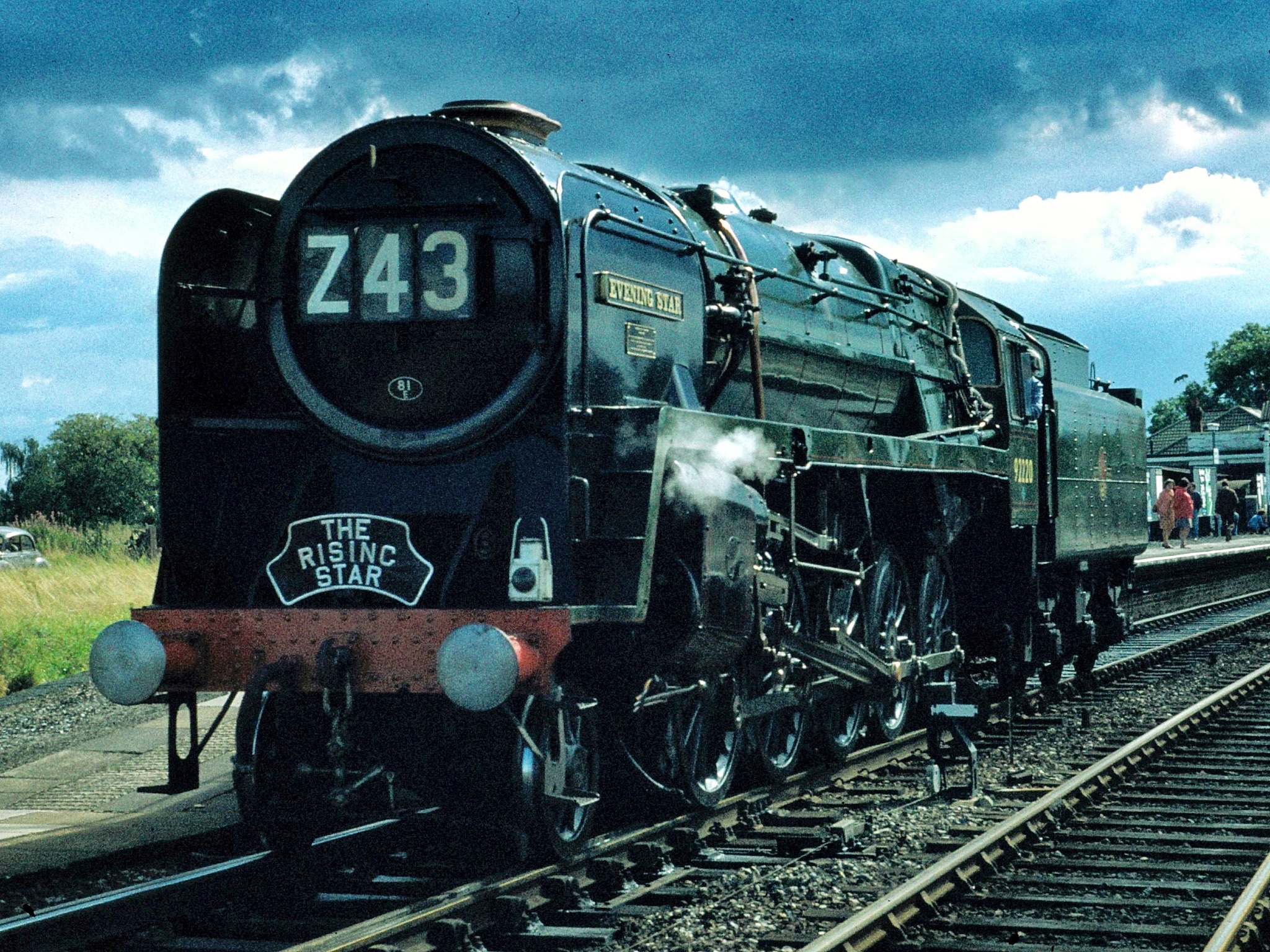
I recall from the main line steam excursions I travelled on in the 1980’s there was often a photo stop to enable passengers to disembark and fire off a few shots of the train, as in the photograph below:
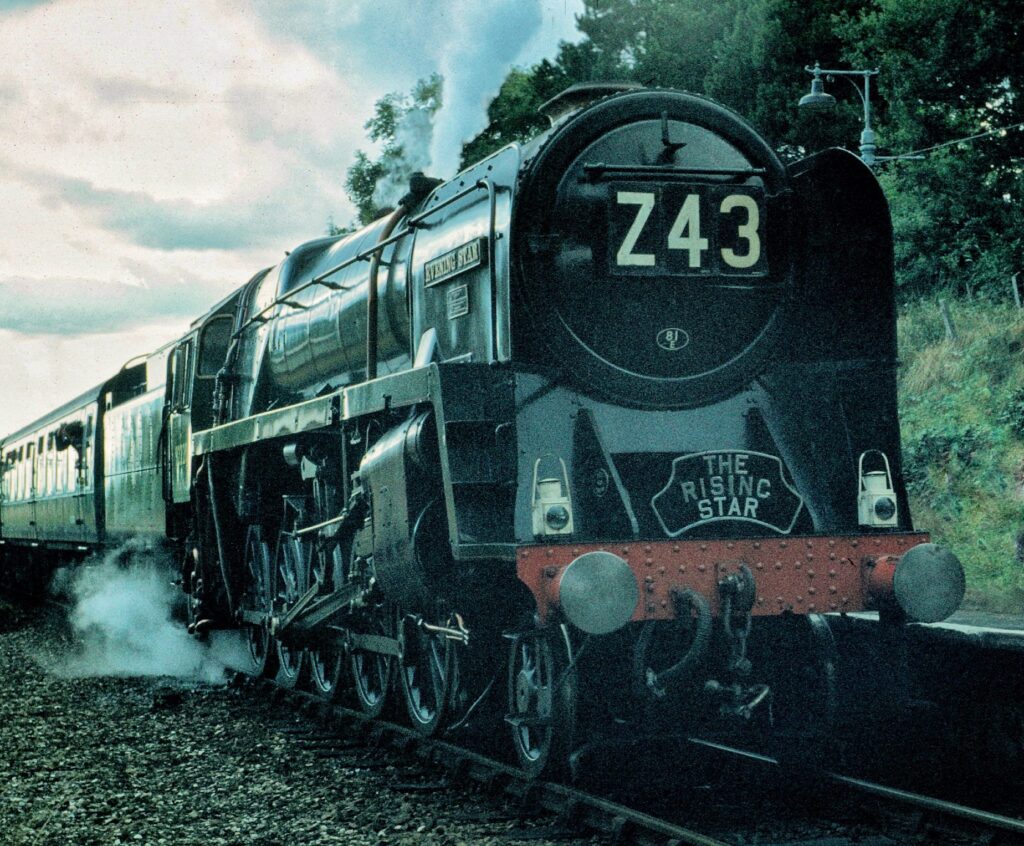
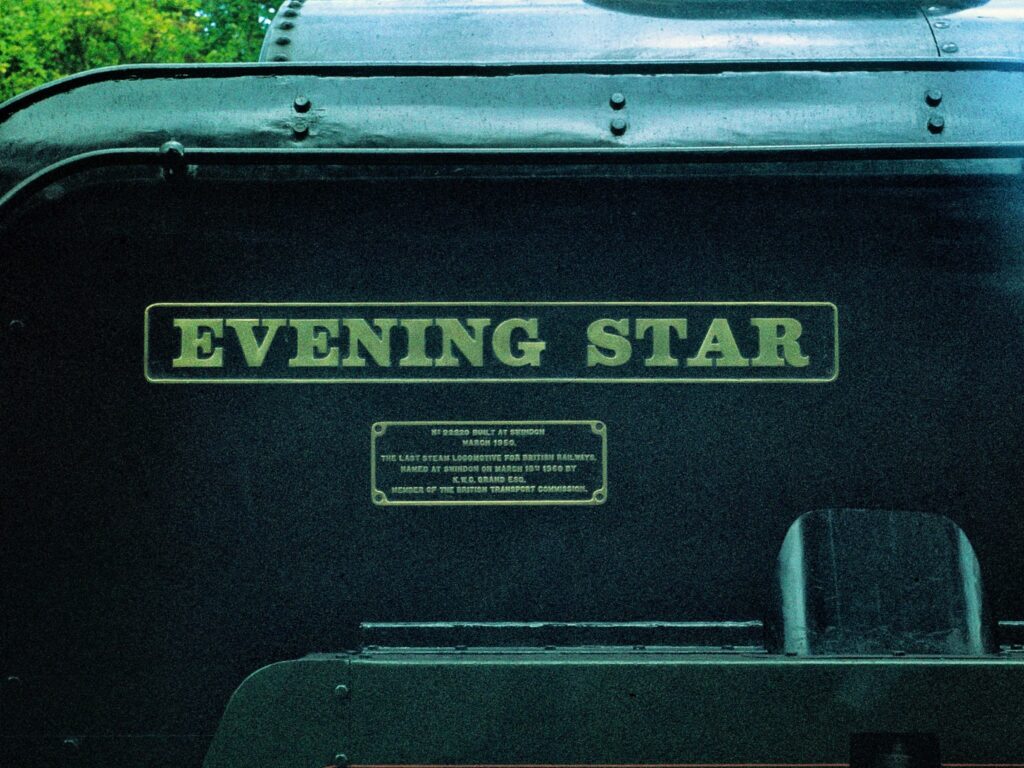
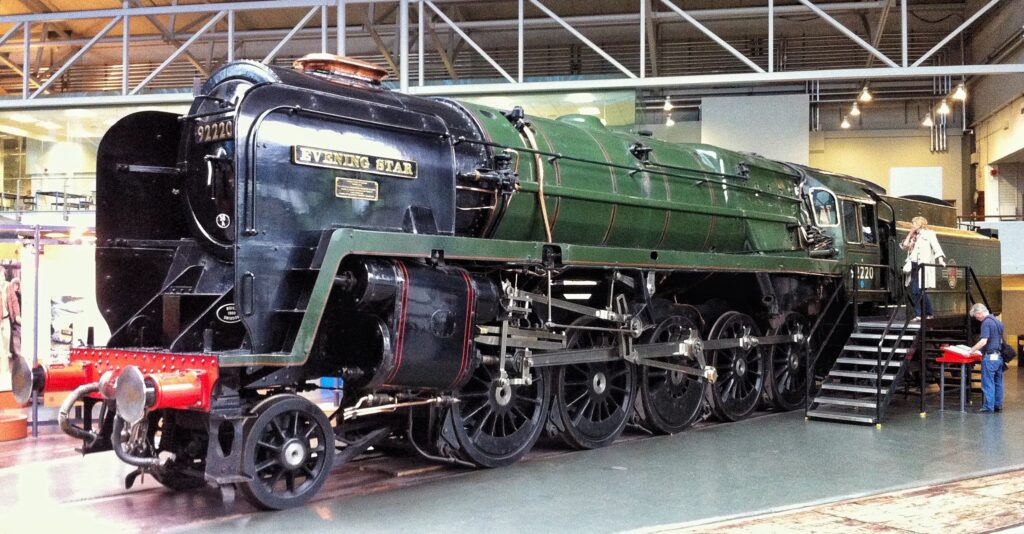
BR Standard Class 9F 2-10-0 No. 92220 ‘Evening Star’ was the last steam locomotive to be built by British Railways and the only main line steam locomotive earmarked for preservation from the date of construction. Built at Swindon Works in 1960, she was the 999th locomotive of the British Railways Standard Classes of locomotives. After a working life of only five years, she was withdrawn from service following an accident where she incurred minor damage at Cardiff Docks. As part of the National Collection, she now resides on static display at the Railway Museum in York

Thank you for visiting and for your comments and corrections which are much appreciated. Many thanks to the Great Western Society for use of material from their press release in writing the story of No. 4079 ‘ Pendennis Castle’. Donations to the Water Tower and Coal Stage Conservation Project can be made here.