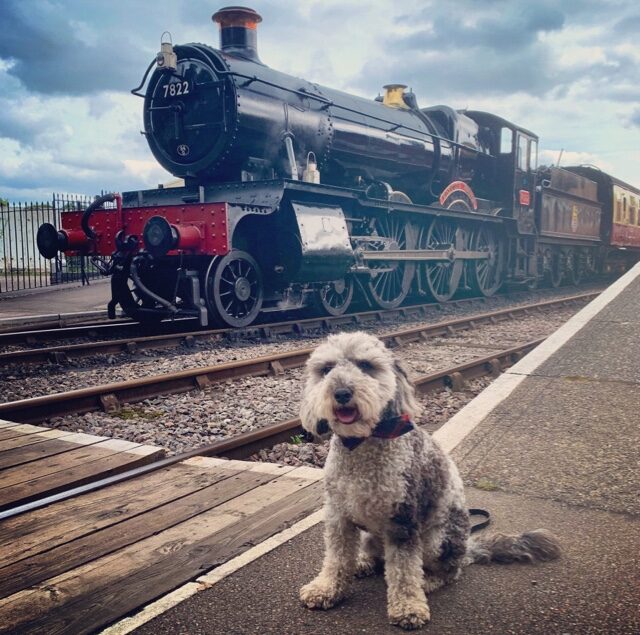
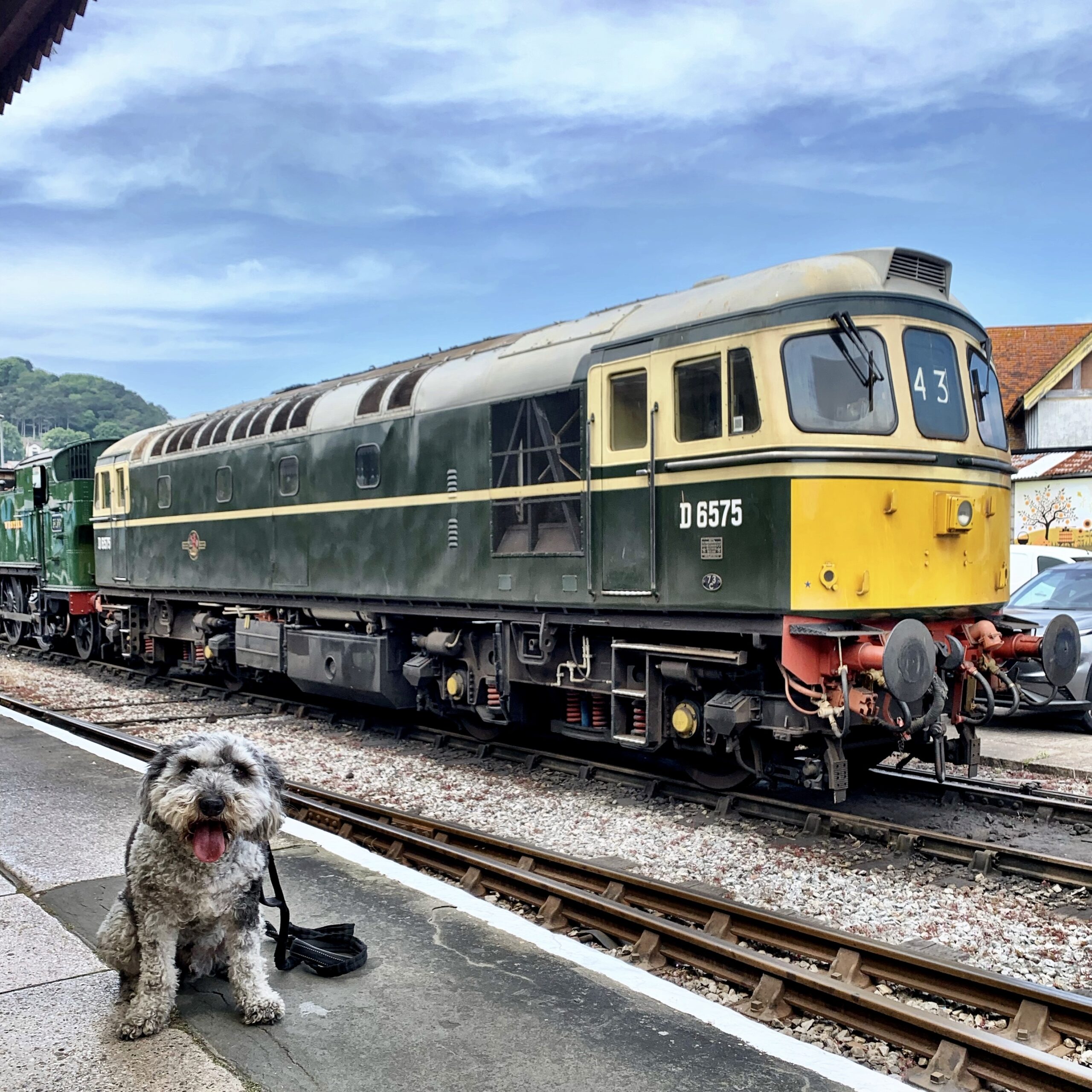
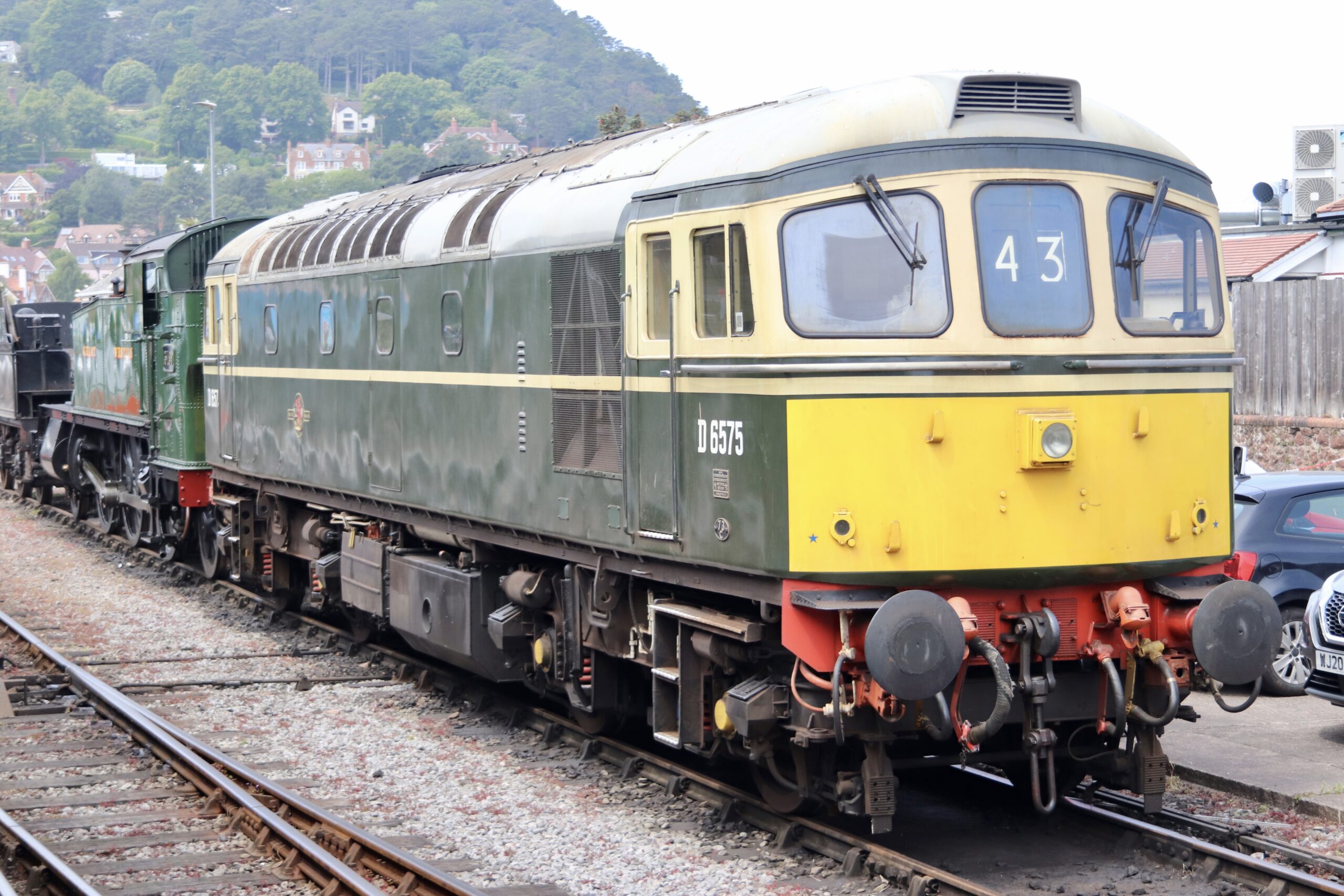
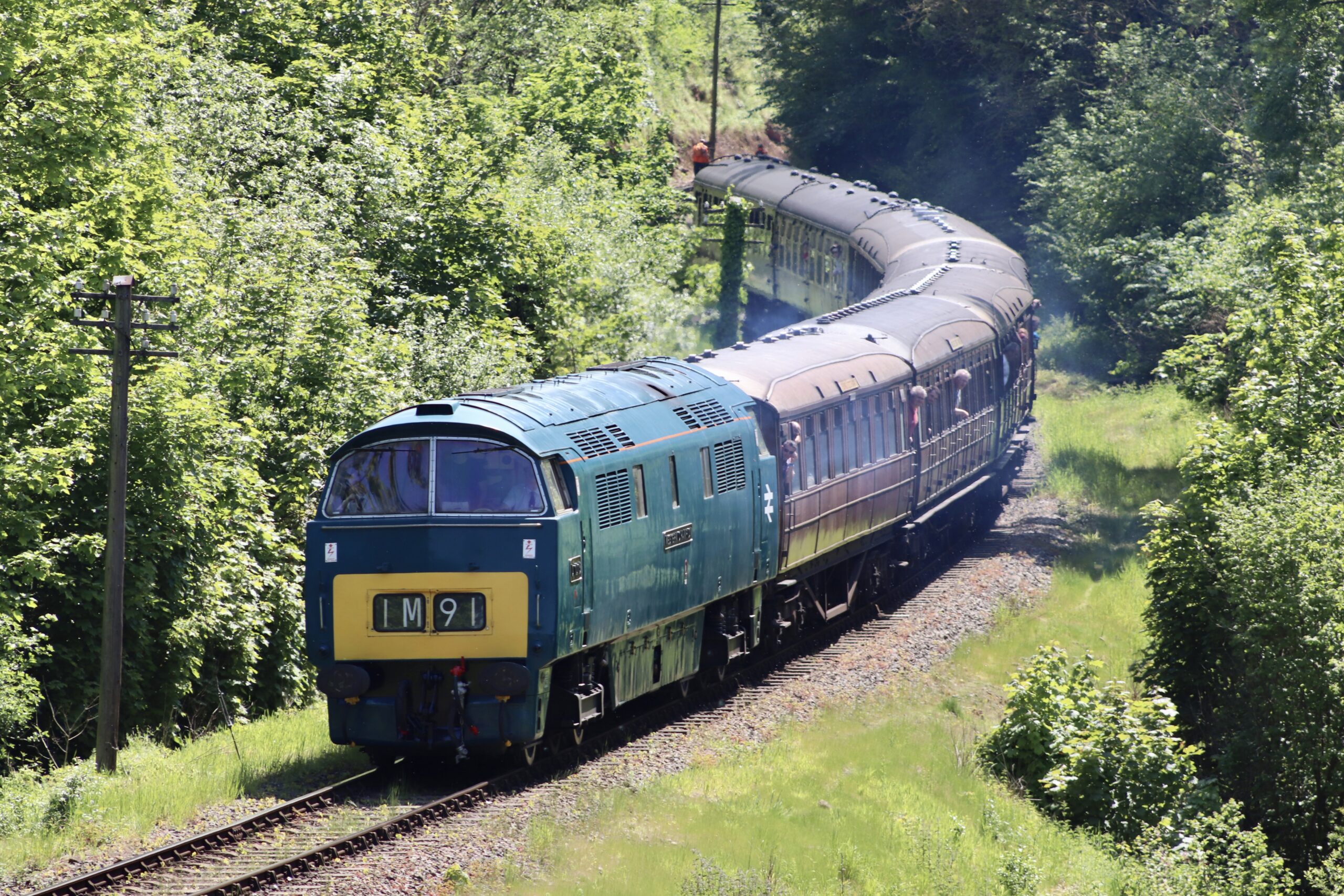
Yoshi at Minehead on the West Somerset Railway with Class 33 Crompton No. D6575 (33057) – 09/06/2023
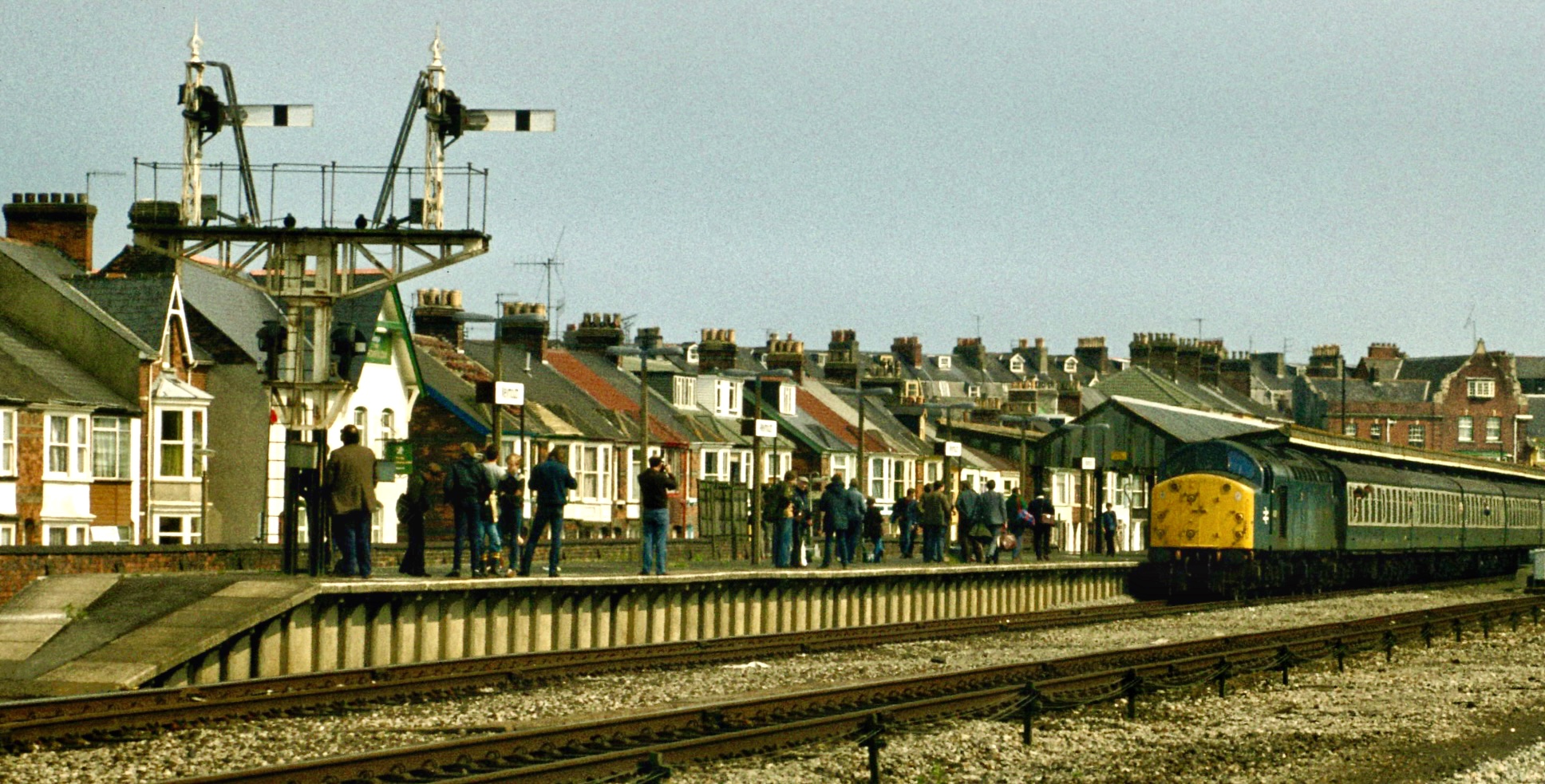
This week we had the first Class 69’s to Dorchester and the second ever Class 40 to visit Weymouth, the first occasion being Forty years ago. So that’s quite appropriate!
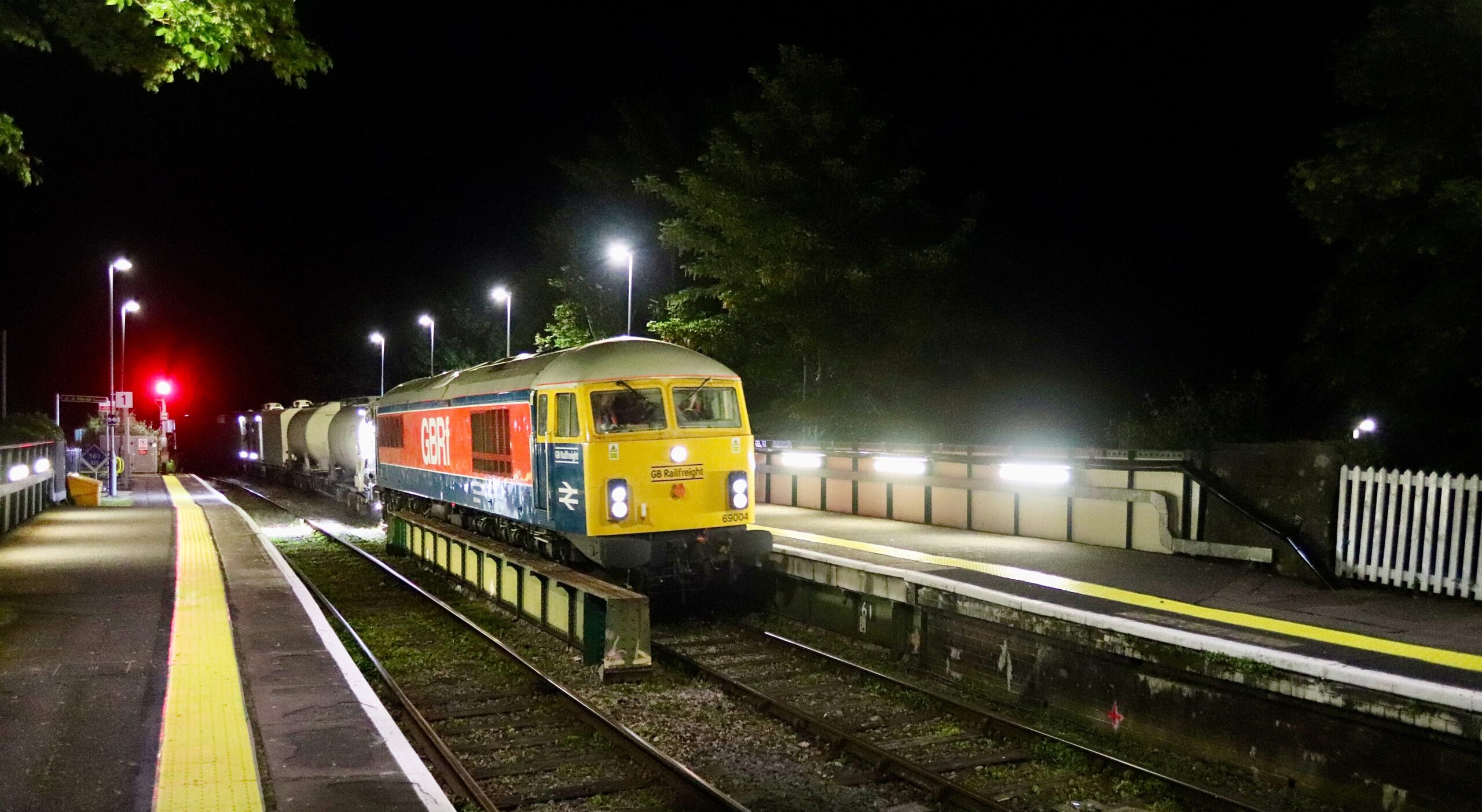
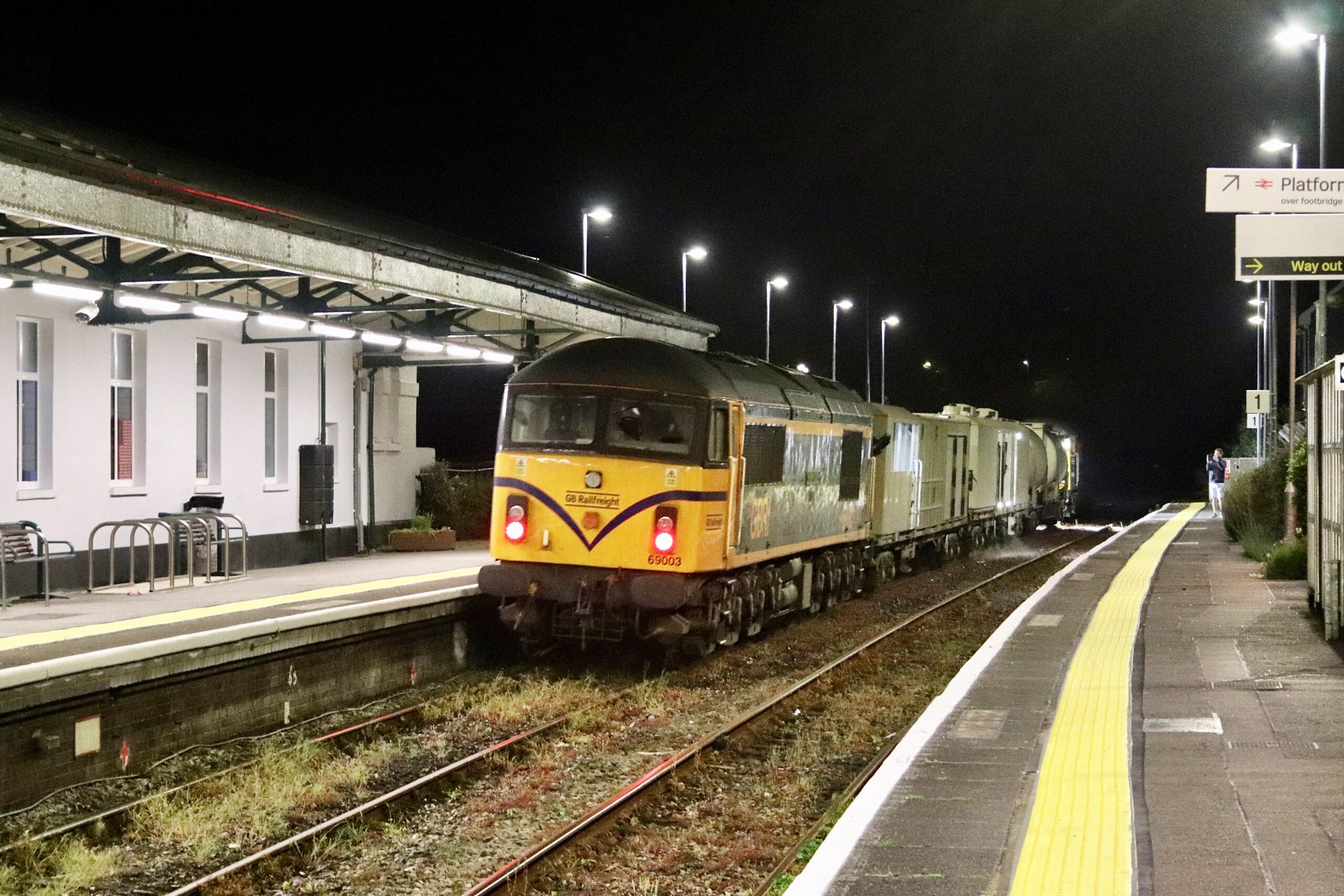
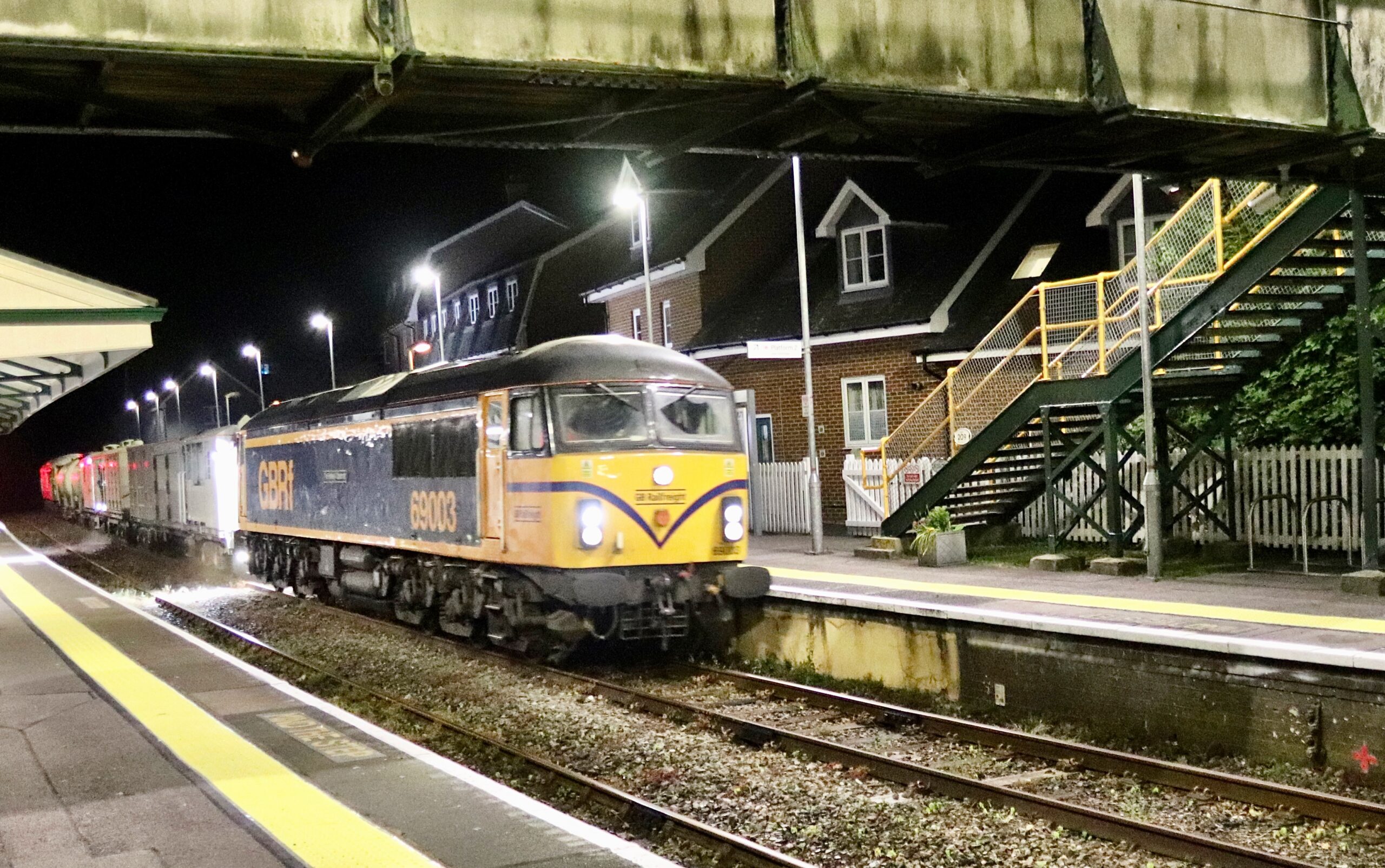
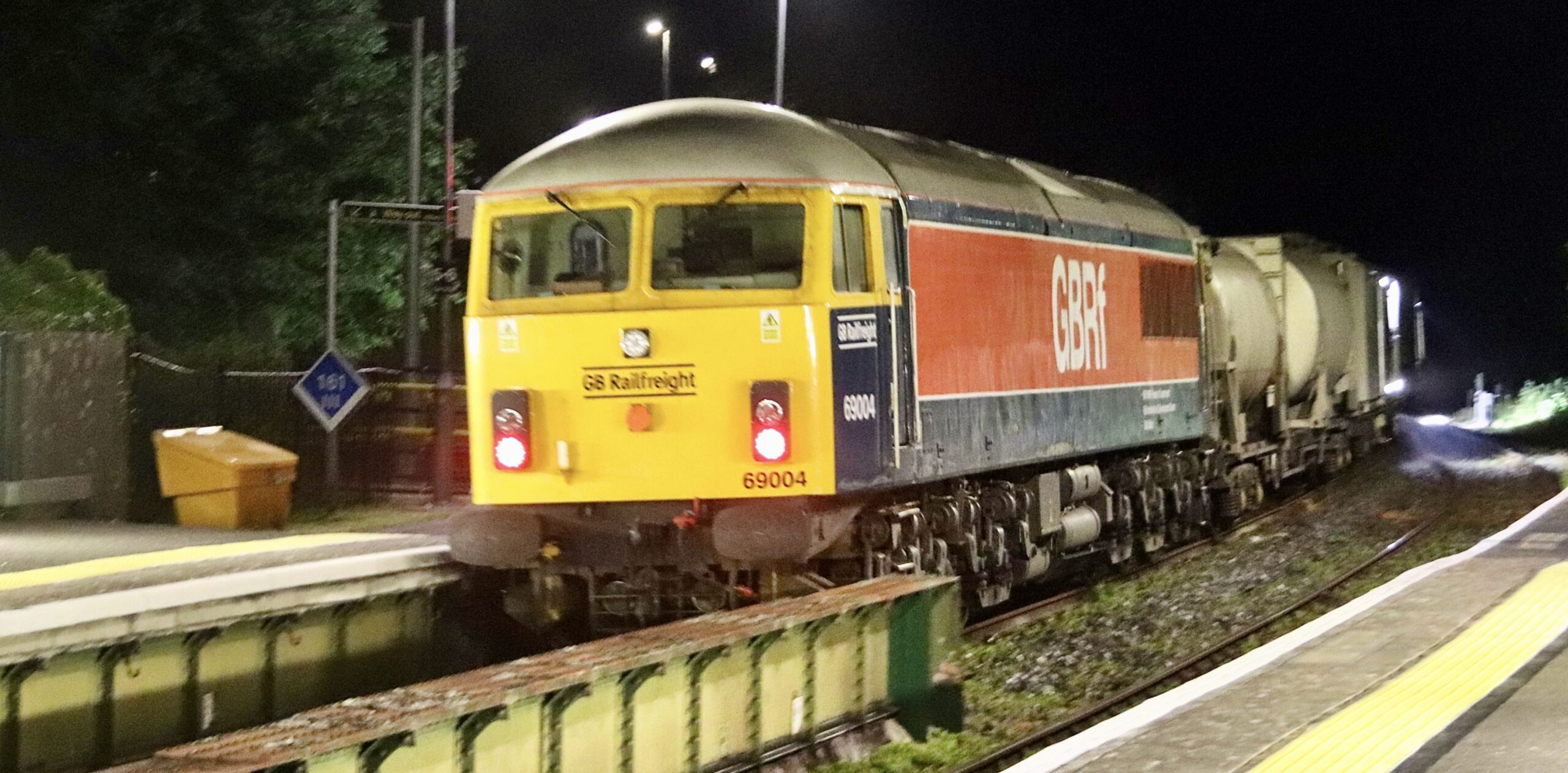
Setting the alarm for stupid o’clock on Friday morning I was in Dorchester in good time to see GBRf Class 69 No.’s 69004 and 69003 ‘The Railway Observer’ working 3Q00 2355 Exeter Riverside N.Y. to Exeter Riverside N.Y. weedkiller which was scheduled to reverse at Dorchester Junction at 0221 – 0229. I had a bit of a longer wait than planned at Dorchester West as the train arrived 37 minutes down on schedule. The vegetation control set was scheduled to visit Weymouth via Dorchester South on Monday 12th June with the train having moved to Eastleigh over the weekend. Unfortunately a tragic incident between Poole and Bournemouth caused disruption to services and the train was cancelled.
In its retro Railway Technical Centre livery, GBRf Class 69 No. 69004 crosses the road bridge at Dorchester West working 3Q00 2355 Exeter Riverside New Yard to Exeter Riverside New Yard – 09/06/2023Class 69 No. 69003 ‘The Railway Observer’ at the rear of 3Q00 2355 Exeter Riverside New Yard to Exeter Riverside New Yard passing through Dorchester West – 09/06/2023The Weedkilling train passed through Dorchester West and reversed at Dorchester Junction. Class 69 No. 69003 ‘The Railway Observer’ now heads up 3Q00 2355 Exeter Riverside New Yard to Exeter Riverside New Yard on the return journey to Devon – 09/06/2023GBRf Class 69 No. 69004 at Dorchester West working 3Q00 2355 Exeter Riverside New Yard to Exeter Riverside New Yard – 09/06/2023
The first Class 69’s to Dorchester – 09/06/2023
Later the same Friday, Yoshi and I headed over the county border to the West Somerset Railway for the second day of their 2023 diesel gala.
The West Somerset Railway (WSR) is a 22 miles in length and is the longest standard gauge heritage railway in the UK. It originally opened in 1862 between Taunton and Watchet. In 1874 it was extended from Watchet to Minehead by the Minehead Railway. At first the railway was a single track line with improvements required in the first half of the 20th century to cater for the increase in tourism to the Somerset coast. The line was closed by British Rail in 1971 and reopened in 1976 as a heritage line.
Interestingly, Wikipedia notes: “In 1845, when the Bristol and Exeter Railway (B&ER) had recently completed its main line, there were proposals for a number of different and competitive railway schemes in west Somerset. A Bristol and English Channels Direct Junction Railway was proposed as a link from Watchet through Stogumber and Bishops Lydeard to Bridport on the south coast, which would be an alternative to ships taking a long and dangerous passage around Land’s End. This prompted the promotion of a connecting line from Williton to Minehead and Porlock, a line designed to attract tourists to Exmoor. Shortly afterwards, a Bristol and English Channels Connection Railway was suggested from Stolford to Bridport which would have passed through the Quantock Hills near Crowcombe. Alternatively, the Bridgwater and Minehead Junction Railway would link with the B&ER at Bridgwater and run through Williton to Minehead with a branch to Watchet and a connecting Minehead and Central Devon Junction Railway would provide a line to Exeter. An alternative link to South Devon was proposed by the Exeter, Tiverton and Minehead Direct Railway through Dunster and offered an extension to Ilfracombe.” Of course, none of these schemes came to fruition, but it is interesting to speculate on the possible developments of Bridport and West Bay.
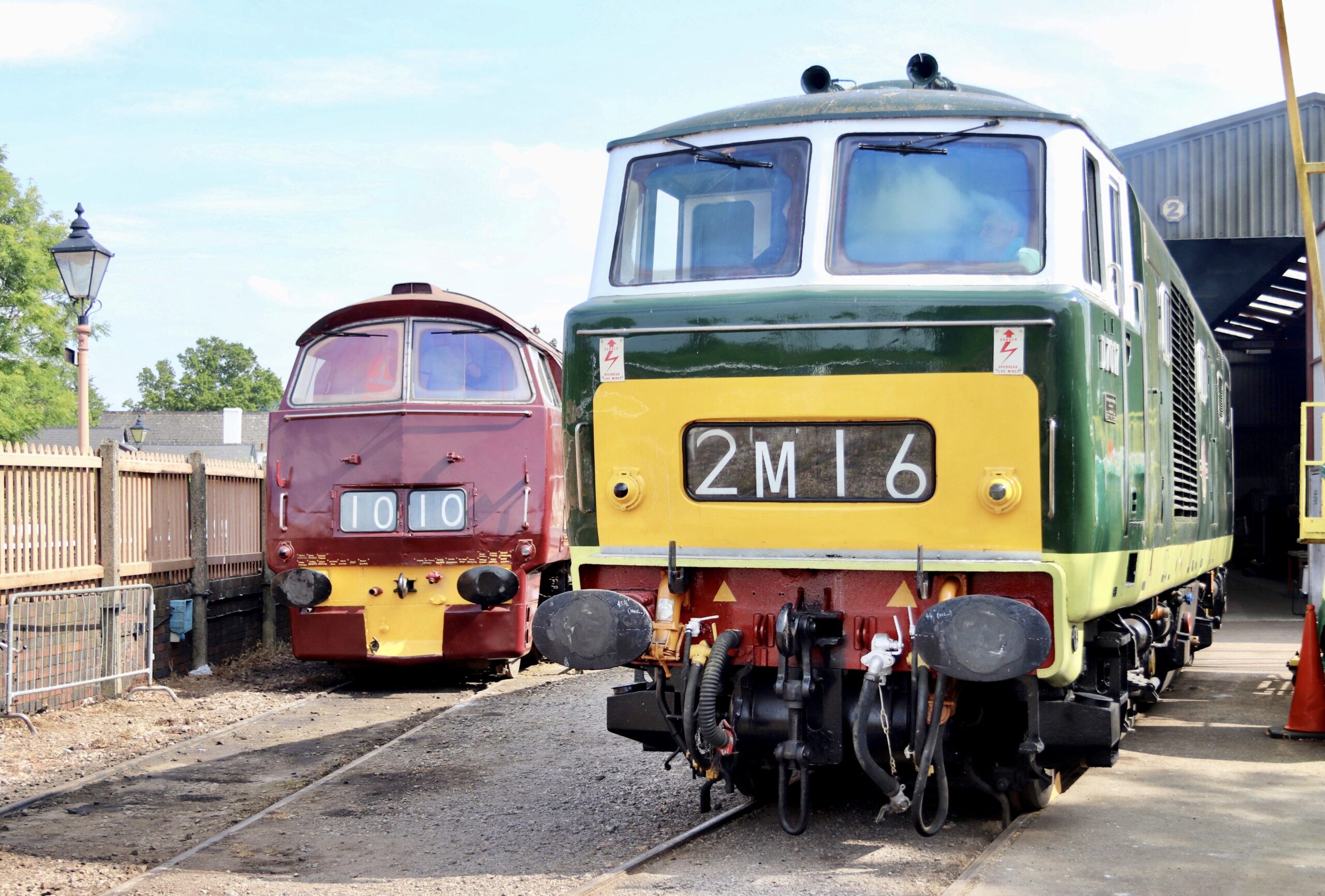
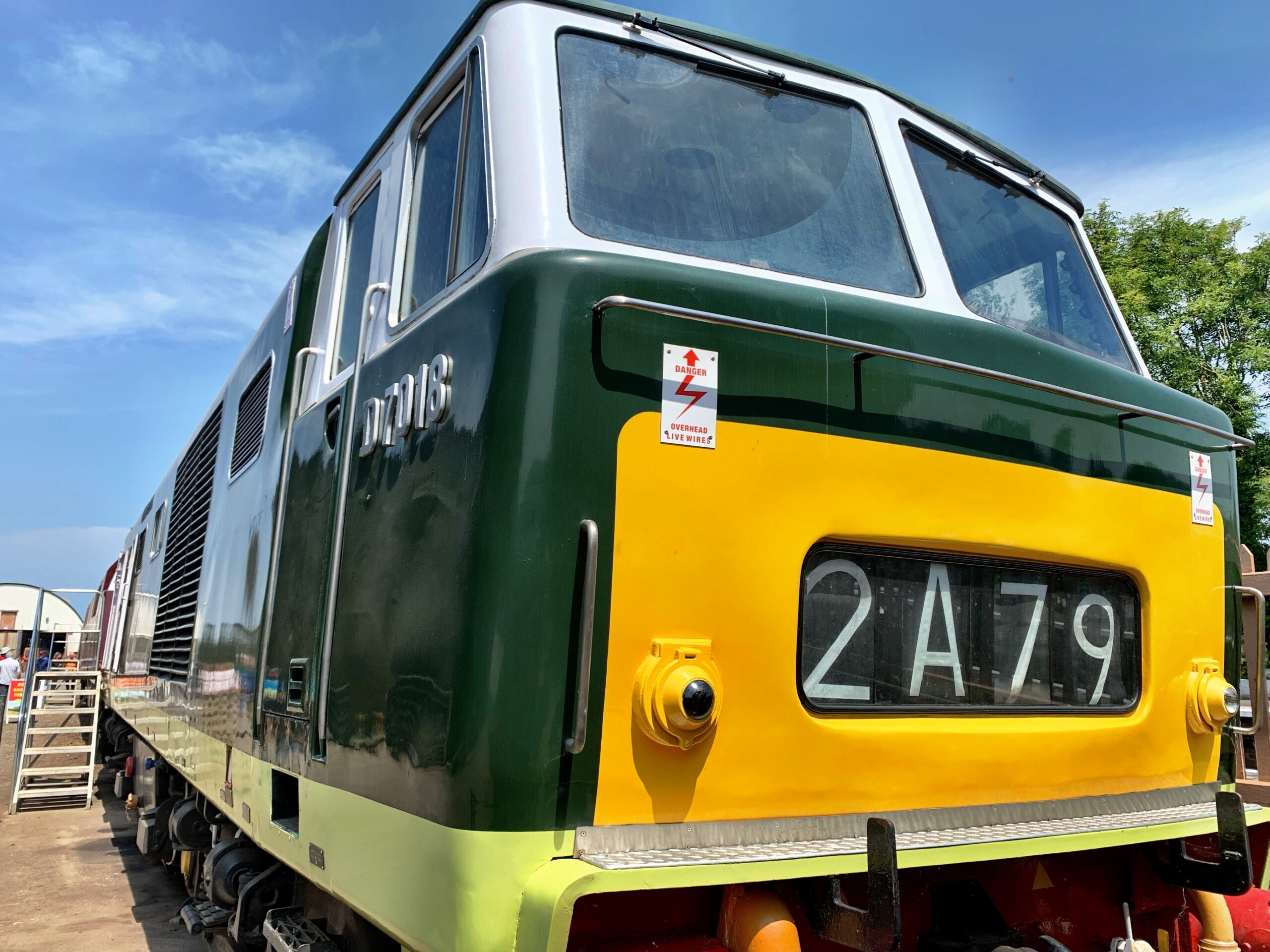
Unfortunately one of the planned 2023 gala highlights, a double headed Class 35 Hymek hauled train, didn’t transpire on the day I visited as both available examples of the class were deemed out of order. We saw the Hymeks on the diesel depot at Williton and it was good to see that the dedicated band of volunteers and engineers were working hard on getting at least one example operational for the following day.
At Williton depot Class 35 Hymek No. D7017 was being worked on in order to return the locomotive to service. D7017 has been running trains on the West Somerset Railway since 1977. The loco was first moved to Taunton on leaving BR service in 1975, before being moved up to Minehead in 1976 – 09/07/2023
Introduced into service between 1961 and 1964, the Hymek’s were intended as a medium power mixed traffic locomotive, but were often rostered to deputise for some of BR Western Region’s largest steam locos on 13 and 14-coach trains in their early years. A total of 101 locos were built and were allocated all over the West of England. They settled down to become a successful and capable fleet and weee regular visitors to Weymouth via the route from Yeovil. However the Hymek’s careers were cut short by BR’s standardisation of diesel-electric locomotives. The first withdrawals came in 1971, with some locos scrapped being less than nine years old. Full withdrawal of the fleet was planned for 1973 and a farewell tour, “The Hymek Swansong”, ran in the September of that year. Due to loco shortages, ten Hymek’s lasted until 1975 when they were finally withdrawn. Of these, four examples have survived into preservation; the two WSR based Diesel & Electric Preservation Group (D&EPG) Hymek’s No.’s D7017 and D7018; No. D7029 with the Diesel Traction Group based at the Severn Valley Railway currently undergoing restoration having been out of service since 1987, and No. D7076 with the Bury Hydraulic Group and is set to return to traffic at the East Lancs Railway 2023 Diesel Gala.
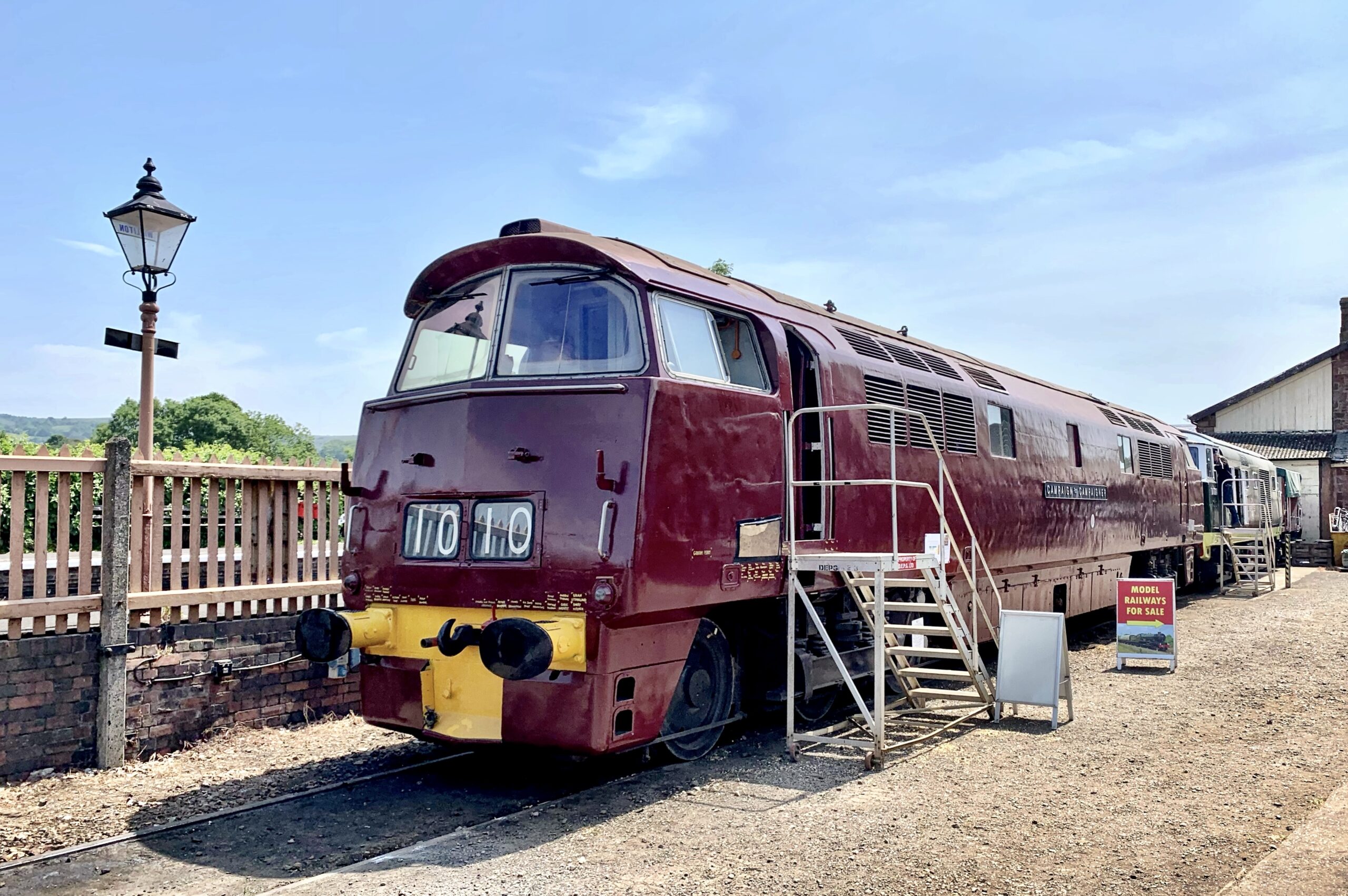
Also not working on the day of our visit was Class 35 No. D7018. Following withdrawal from British Rail in 1975, D7018 was first located at Didcot Railway Centre for a number of years before moving to Williton to join sister locomotive D7017 – 09/06/2023 Class 52 Western Diesel-Hydraulic No. D1010 ‘Western Campaigner’ seen at Williton. She is currently non-operational pending work on transmission and bodywork repair. No. D1010 was stored outside Merehead quarry for a number of years before being preserved by The Diesel & Electric Preservation Group, firstly at Didcot and then moving to the West Somerset Railway. The Western locomotives were the Western Region’s diesel-hydraulic flagship. Designed for express passenger work, they were equally at home on heavy freight. D1010 is one of 74 locos built at either Swindon or Crewe works between 1961 and 1963. All locos were named, each name beginning with the word ‘Western’. They were the last of the Diesel-Hydraulic classes to be withdrawn from service, after being classified as non-standard, the final operational members of the class being withdrawn in 1977 . Seven locomotives of the 74 built were saved for preservation – 09/06/2023
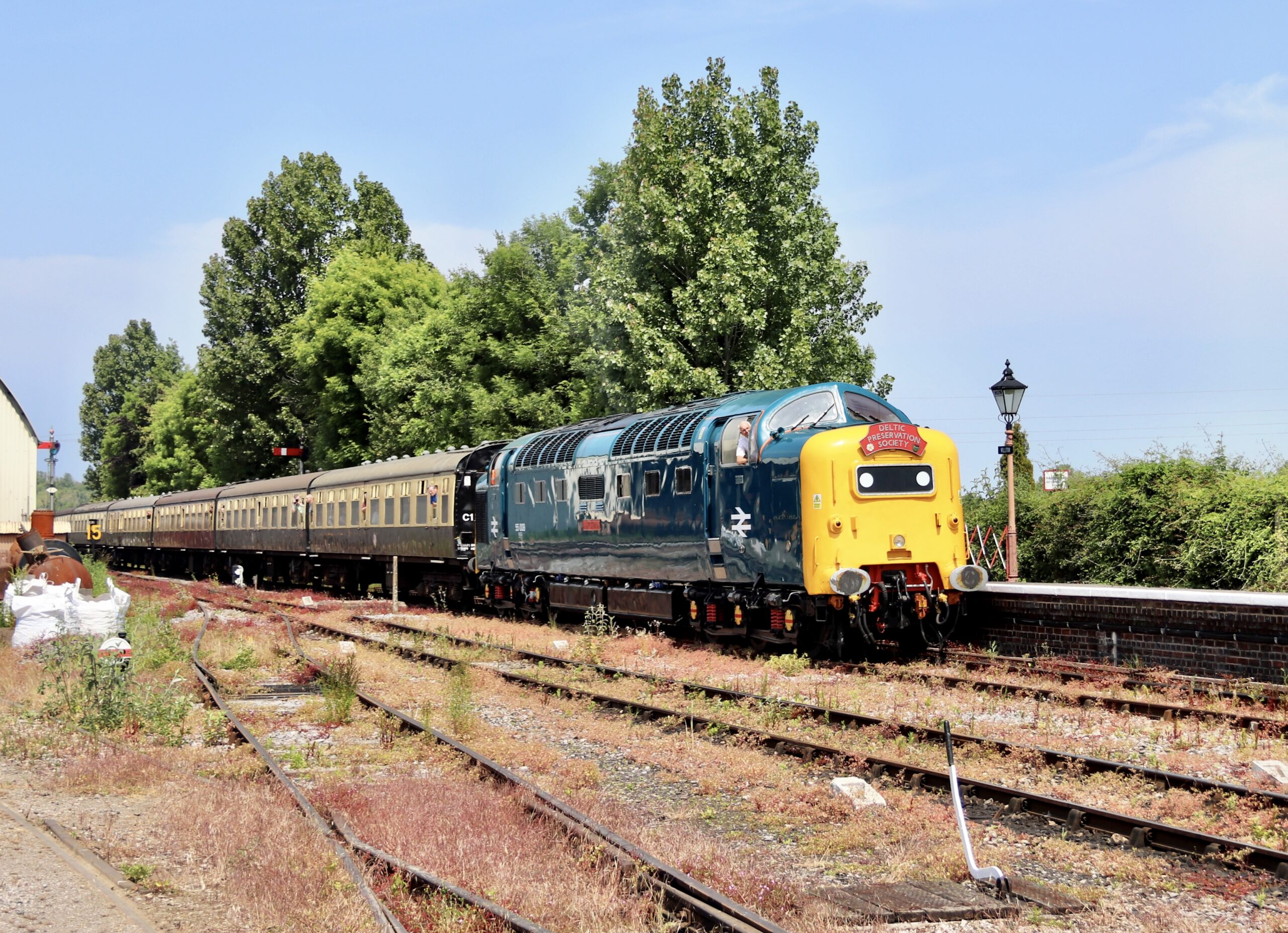
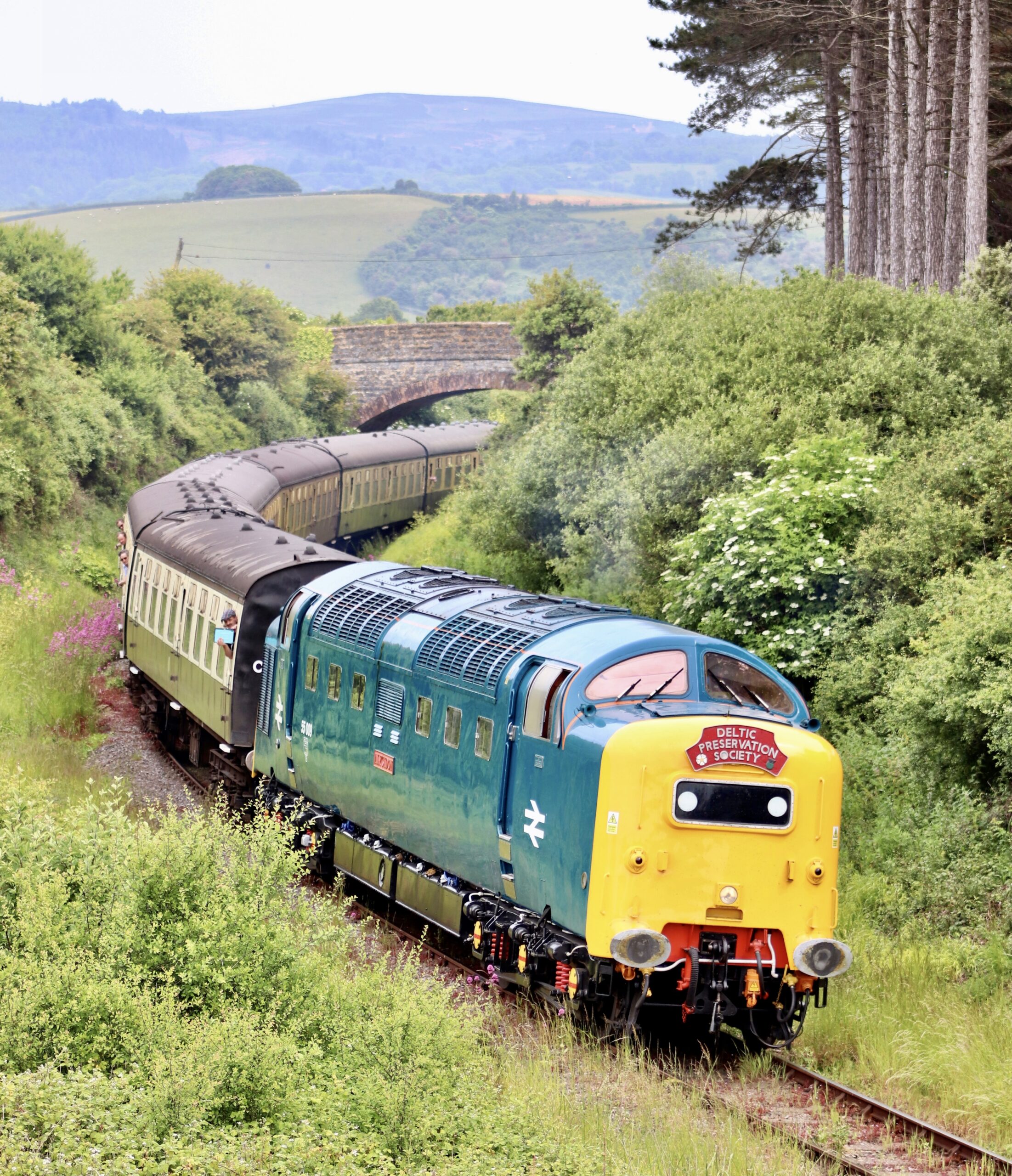
The other big draw for the WSR 2023 diesel gala was Class 55 Deltic diesel locomotive No. 55009 ‘Alycidon’ which sounded on fine form. Owned by the Deltic Preservation Society (DPS) the loco has been restored as a main line runner, and hopefully we’ll get to see and hear the magnificent Napier engine sound in Dorset at some point. Named at Doncaster Works on July 21st 1961 before introduction to traffic, the as then No. D9009 maintained the ‘racehorse’ tradition of the London North Eastern Railway (LNER) by commemorating the winner of the 1949 Ascot Gold Cup. In May 1981, she moved to York after the closure of Finsbury Park depot and was one of four Deltics prepared to work a series of farewell railtours during their final six months of operation. Withdrawn on 2nd January 1982 ‘Alycidon’ was sold to the DPS for £16,550.09 in May of the same year.
Deltic Preservation Society’s Class 55 No. 55009 ‘Alycidon’ arrives at Wiliton – 09/06/2023Class 55 No. 55009 ‘Alycidon’ approaches Watchet – 09/06/2023Class 55 No. 55009 ‘Alycidon’ arrives at Wiliton with a service bound for Bishops Lydeard – 09/06/2023
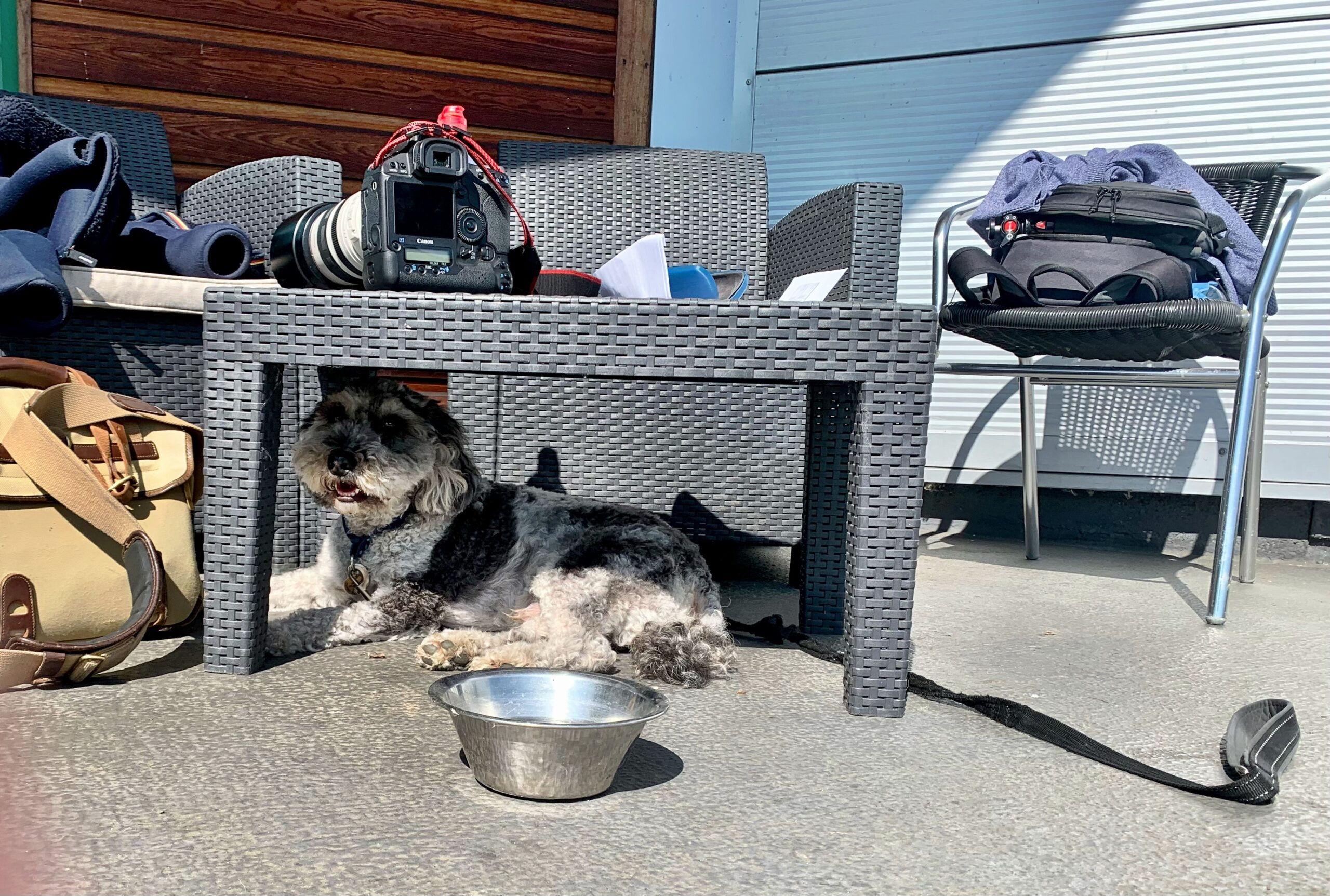
We made sure that Yoshi had plenty of water to drink and shade was available for him while watching the trains. Other locomotives in action at the West Somerset Railway on the Friday were:
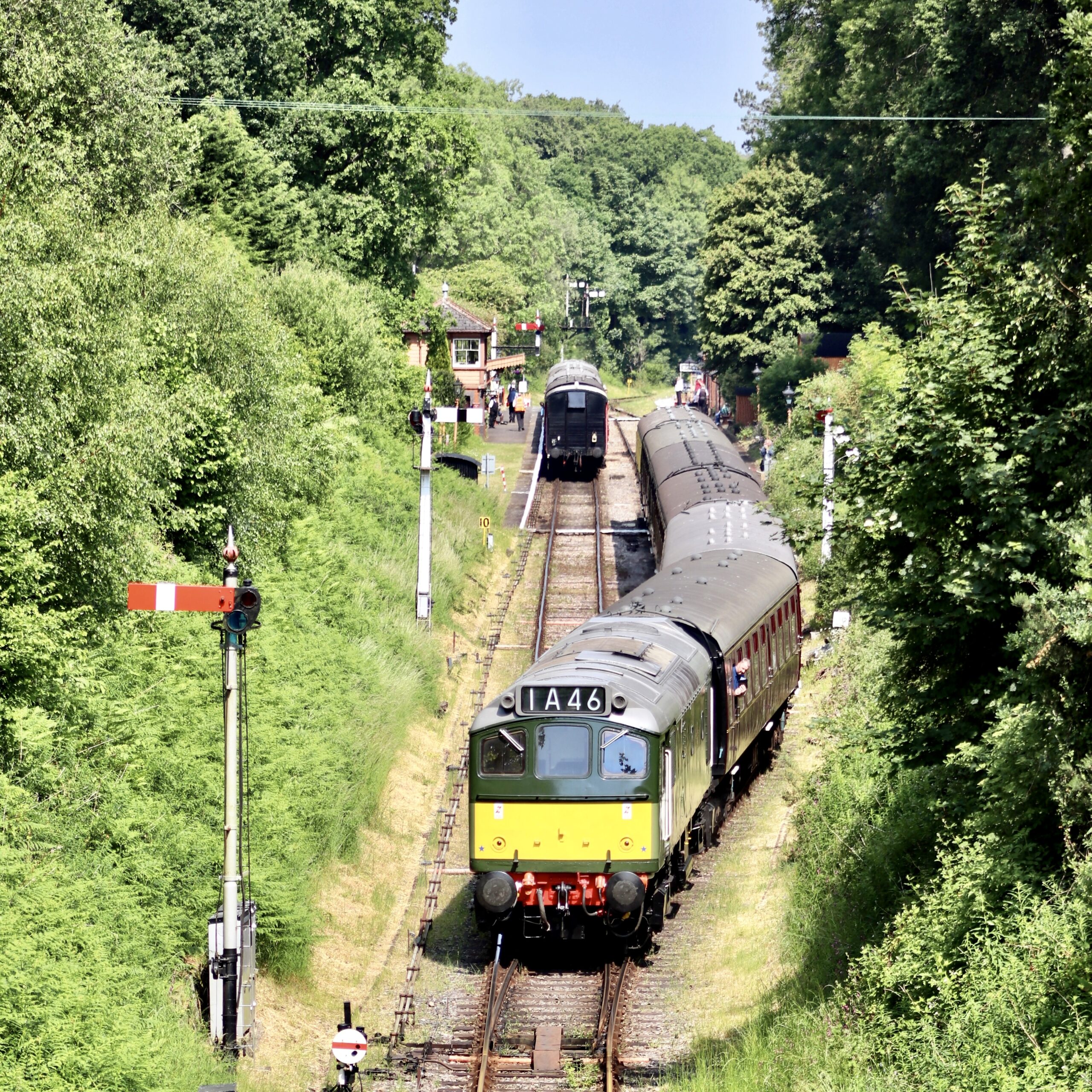
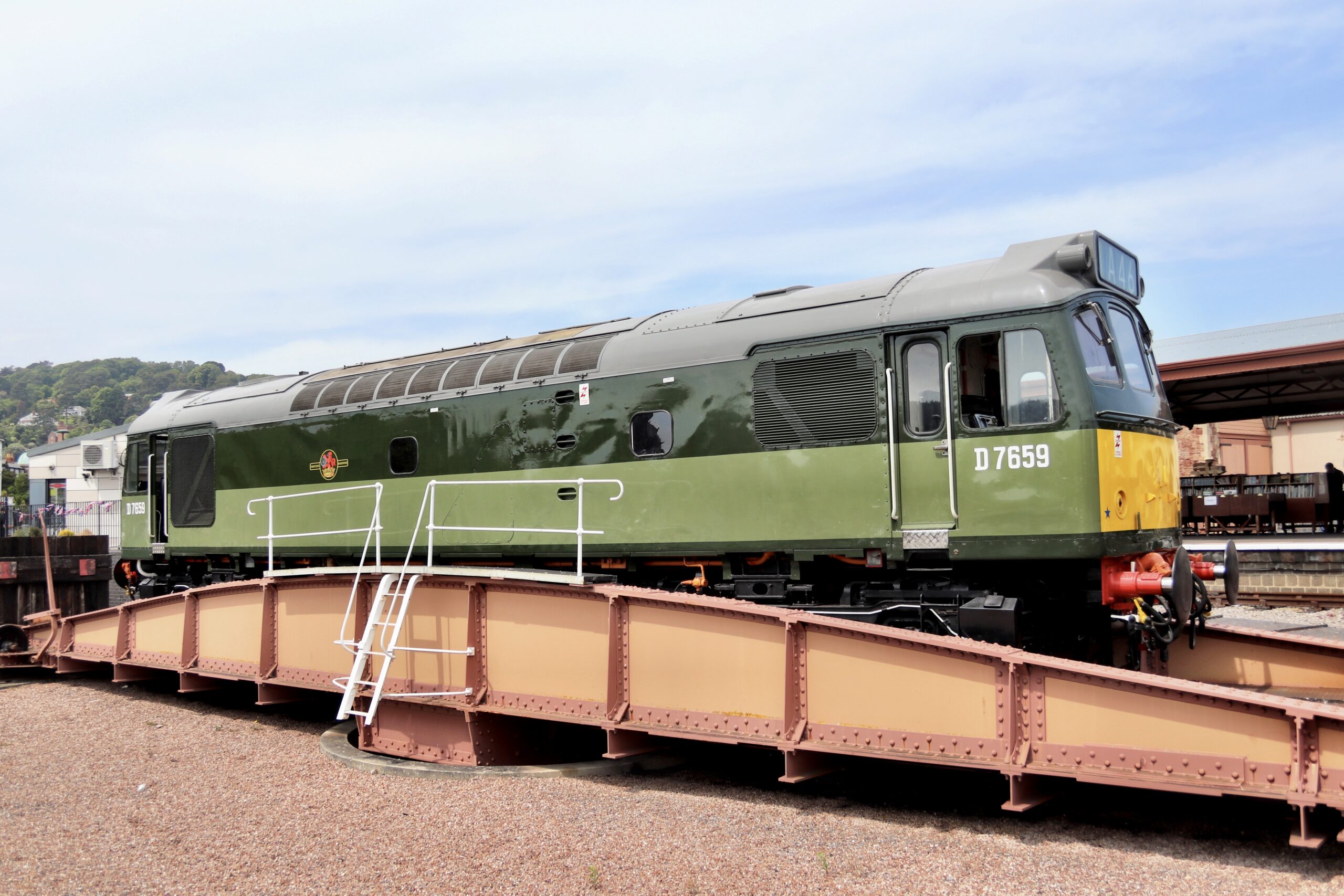
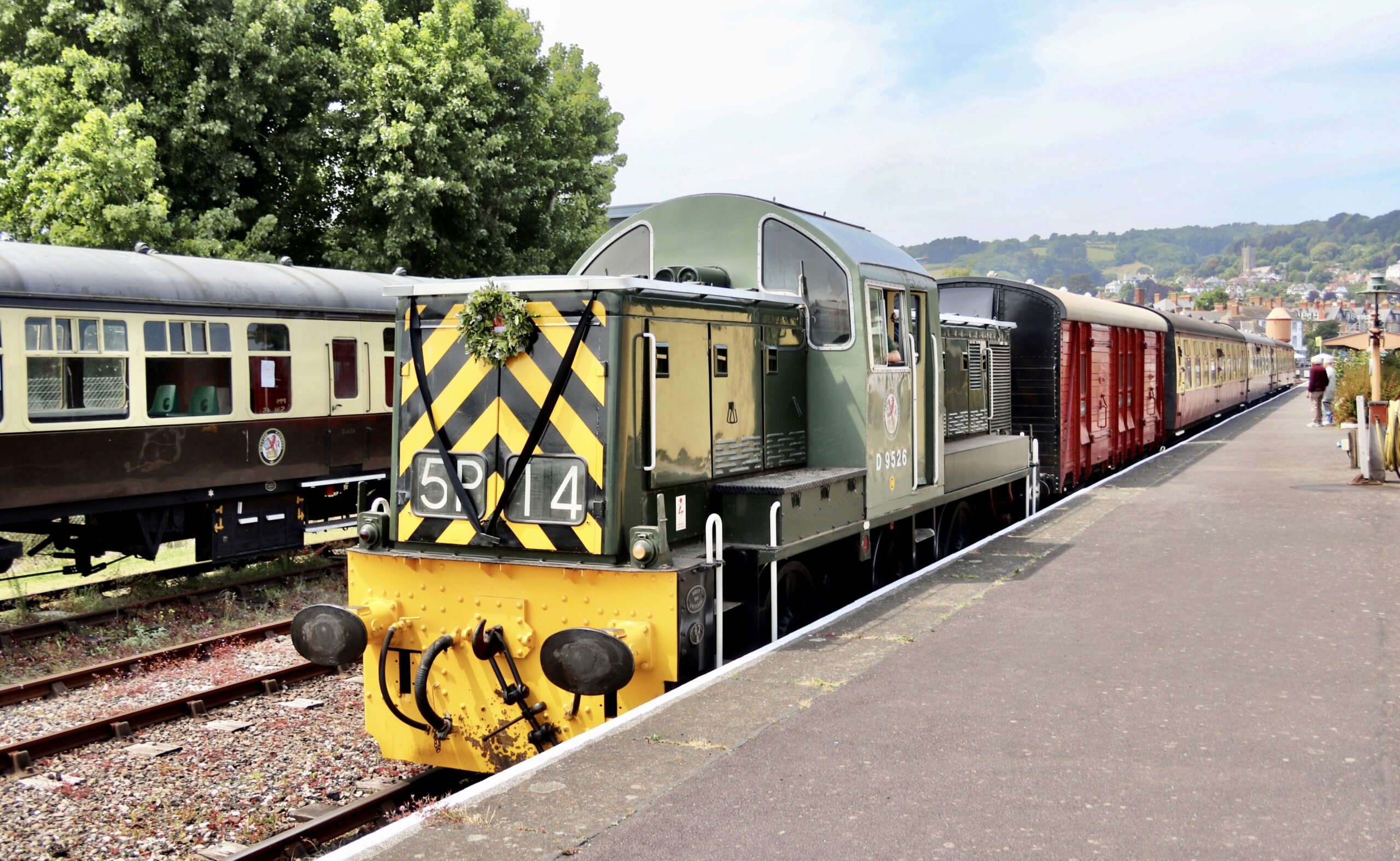
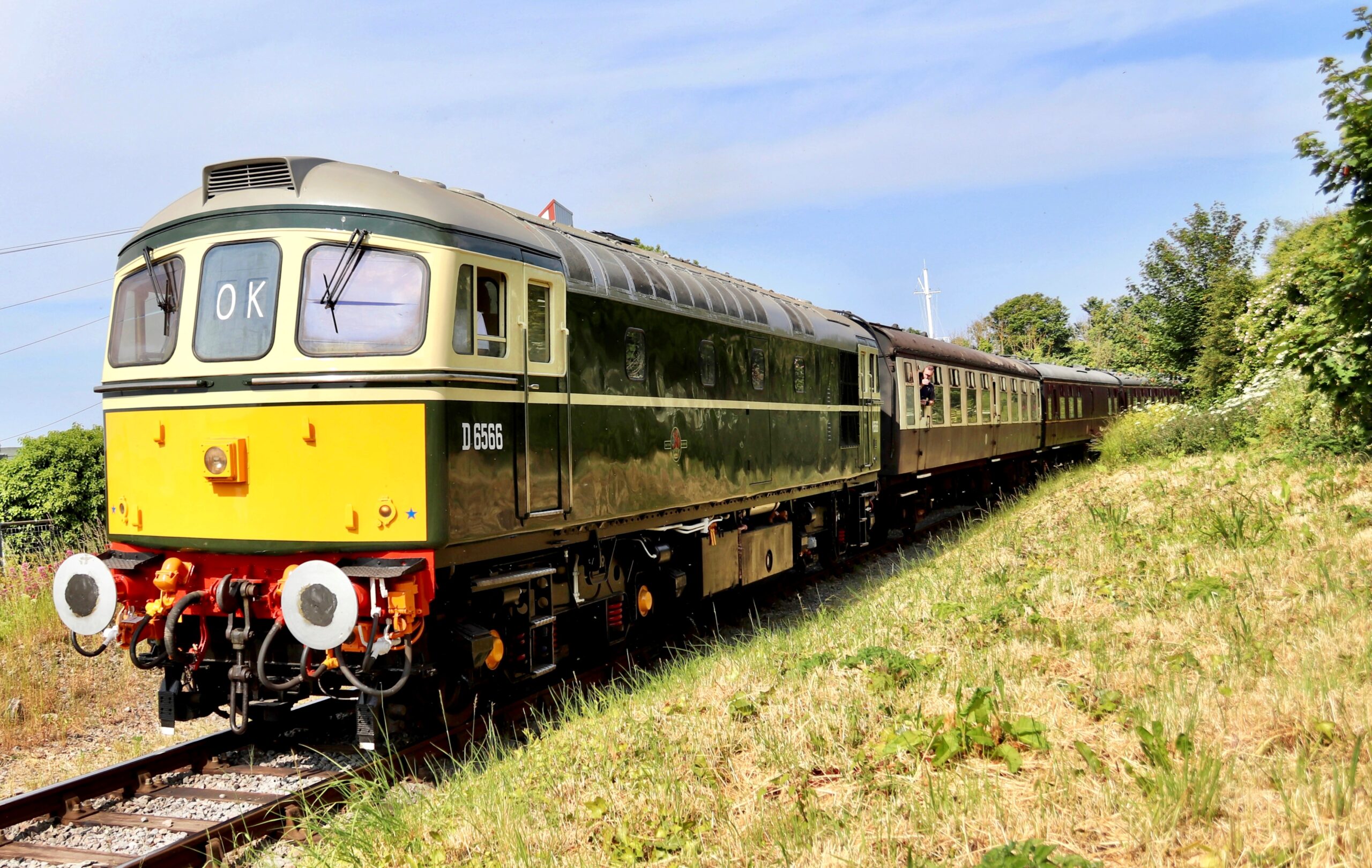
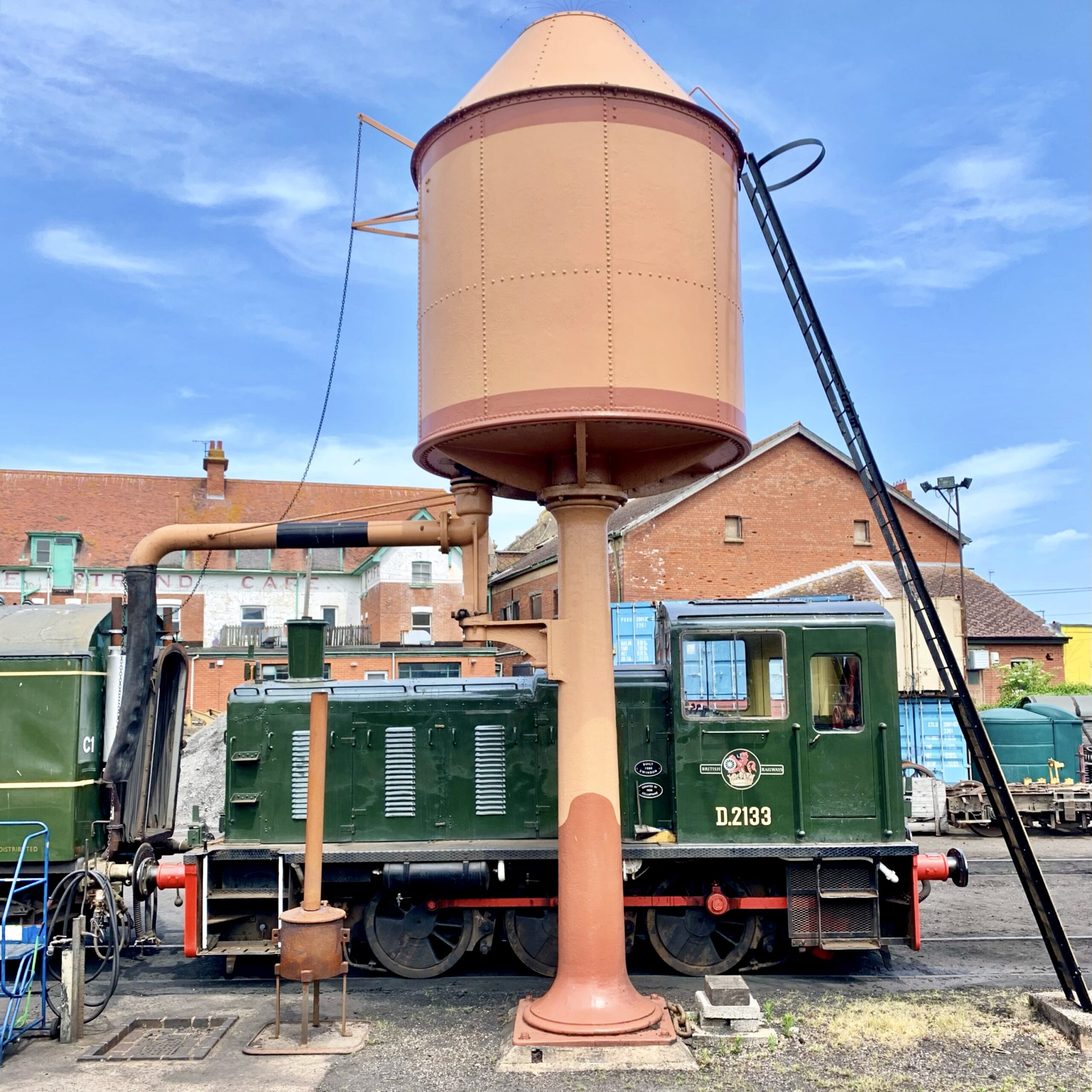
Waterman Railway Heritage Trust’s Class 25 No. D7659 (25309). The locomotive was delivered new to was new to London Midland (Midland) Lines on July 21st 1966 and was the last member of the batch built by Beyer Peacock at Gorton Works in Manchester and the last new Class 25 to be delivered in green livery. She was withdrawn from BR service on September 13th 1986 – 09/06/2023Class 25 No. D7659 (25309) on the turntable at Minehead. This locomotive returned to service during the latter part of 2021 for the first time in more than 23 years following a comprehensive restoration that effectively saw the loco rebuilt – 09/06/2023 Class 14 “Teddy Bear” No. D9526 prepares to leave Minehead. No. D9526 was one of 56 locos of this class built by BR at Swindon Works in 1964-5. Intended for pick-up and branch line freights, they were made redundant almost immediately by closure of many secondary lines in the late 1960’s. Almost the entire fleet was sold for use in industry, with 23 going to Stewarts and Lloyds huge iron ore mines railway system around Corby and 19 going to the NCB’s North East Area. No. D9526 was an exception and was sold to Blue Circle Cement at Westbury, where it worked until suffering serious engine problems in 1977. It was donated to the Diesel and Electric Preservation Group (D&EPG) by Blue Circle and moved to Williton in 1980. After repairs and restoration work, D9526 made its preservation debut in 1984 – 09/06/2023Class 33 No. 33002 ‘Sea King’ sits on the turntable at Minehead awaiting her next turn. The loco, originally D6501 is the oldest surviving Crompton, having been delivered new to 73C Hither Green Depot in 1959. No. 33002 was stored serviceable on 5th September 1996 at Stewarts Lane. In the privatisation years, the locomotive enjoyed stints with the Harry Needle Railroad Co. and Direct Rail Services. The locomotive was purchased by South Devon Diesel Traction in December 2004 and operates on the South Devon Railway – 09/06/2023D6566 (33048) approaches the crossing at Watchet heading towards Minehead. No. D6566 was withdrawn from BR service in 1995 and after a two year period in store, was condemned as surplus to requirements in 1997. Acquired almost immediately by one of the D&EPG founder members, the locomotive arrived at Williton in May 1997 and worked her first train on the WSR in October of that year, marking the first use of a Class 33/0 in preservation. No. D6566 was stopped for overhaul in 2013 after 16 years of service on the WSR. The overhaul included engine work and major bodywork repairs and the locomotive returned to service in 2018 – 09/06/2023Type 3 Diesel-Electric Class 33 No. D6575 (33057) is one of two West Somerset Railway resident Crompton’s of which originally 98 were built by the Birmingham Railway Carriage & Wagon Company (BRC&W) in Smethwick, West Midlands between 1960 and 1962. She is seen at Minehead after arriving with a train from Bishops Lydeard. She worked mixed traffic on the Southern Region of BR for 35 years until withdrawal in 1996 following a bogie fire that damaged No. 2 traction motor and the electrical wiring at No.1 cab end. The loco passed through several owners during the following nine years before being acquired by the owner of D6566 (33048) as a source of spares, arriving at Williton in September 2005 in a dilapidated state. However, following appraisal at Williton, the loco was deemed repairable. Following much painstaking work, she returned to action on the WSR in 2012 – 09/06/2023Class 03 No. D2133 at Minehead. The locomotive wasn’t an active participant of the diesel gala. The Class 03 locomotive was one of British Railways most successful 0-6-0 diesel-mechanical shunters with 230 built at Doncaster and Swindon works between 1957 and 1962. No. D2133 is a Swindon Works example, built in 1960 and withdrawn from BR in July 1969 and therefore was never renumbered under the Total Operations Processing System (TOPS) scheme of the early 1970’s. As was the case with many ex-BR shunters No. D2133 carried on working in private hands at the British Cellophane factory in nearby Taunton until 1994 when she was presented to the WSR – 09/06/2023
Video of our visit to the West Somerset Railway 2023 Diesel Gala
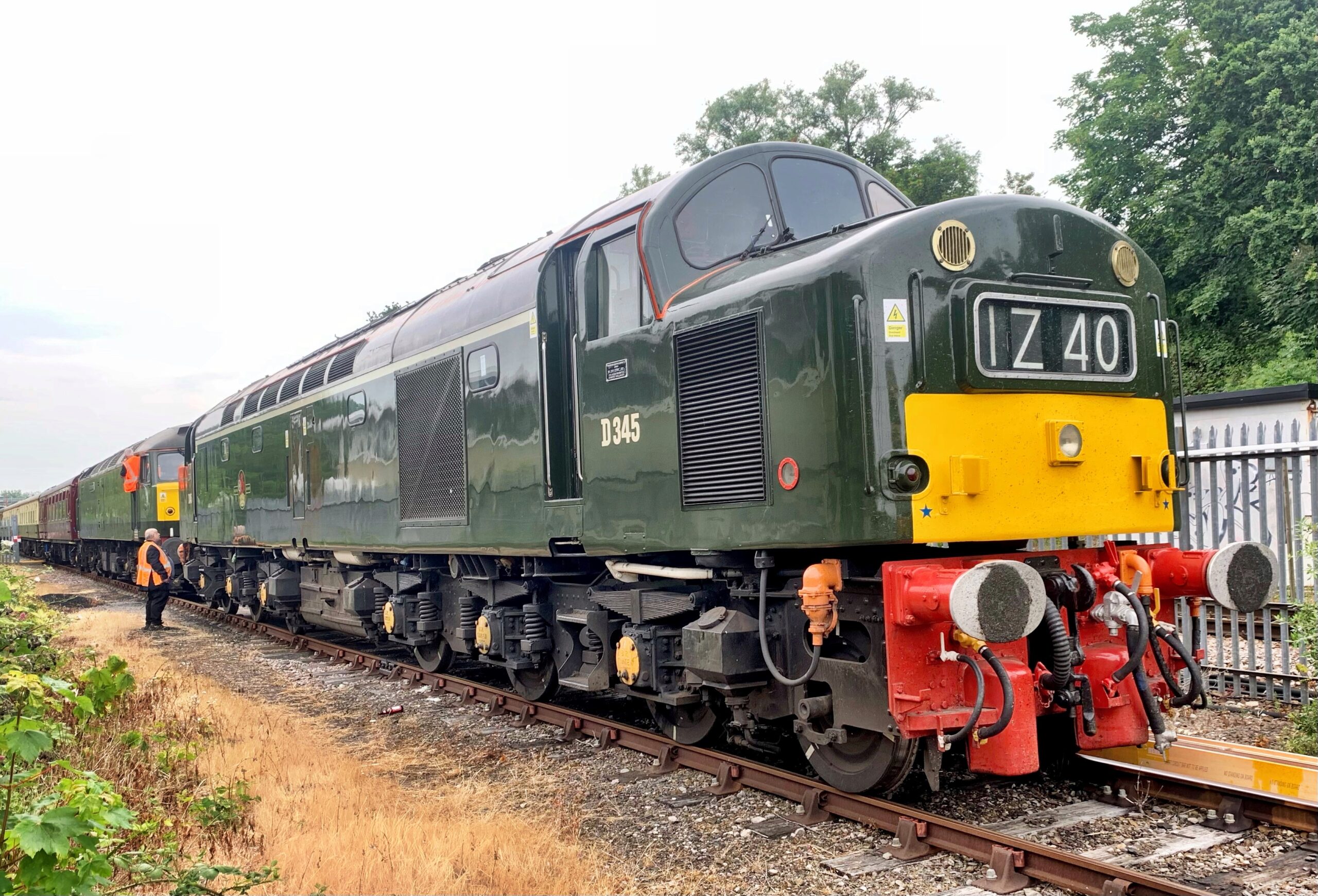
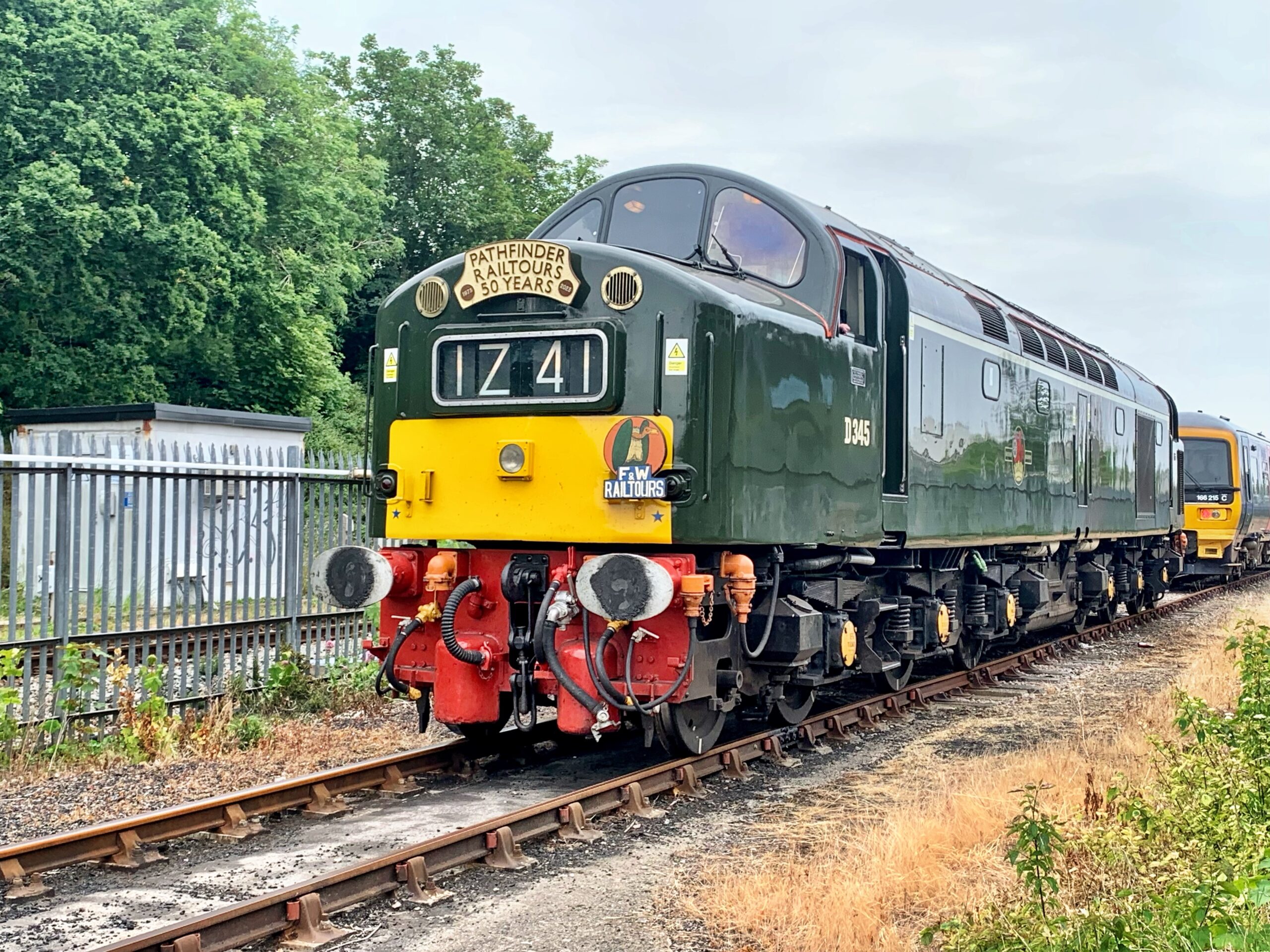
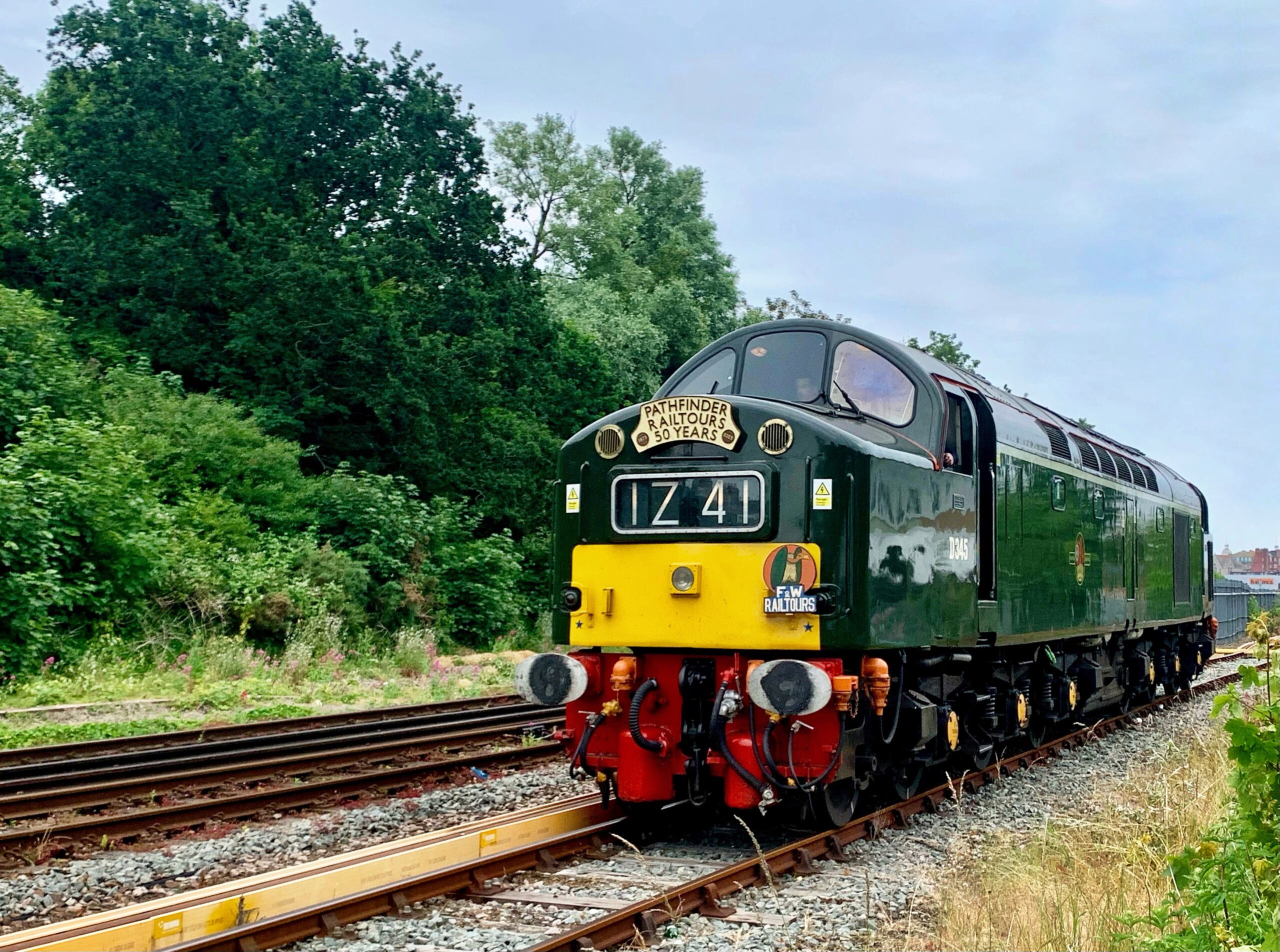
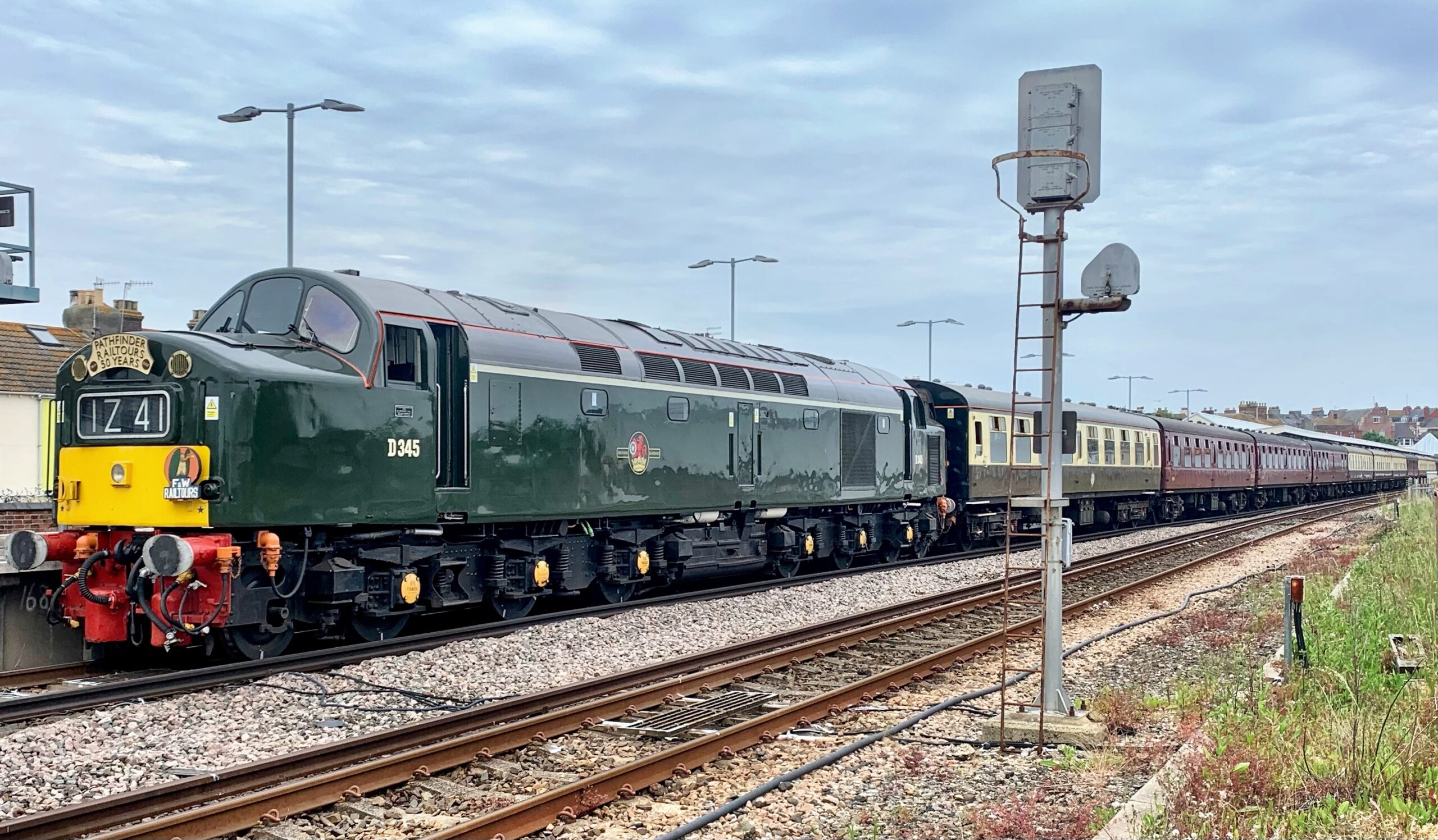
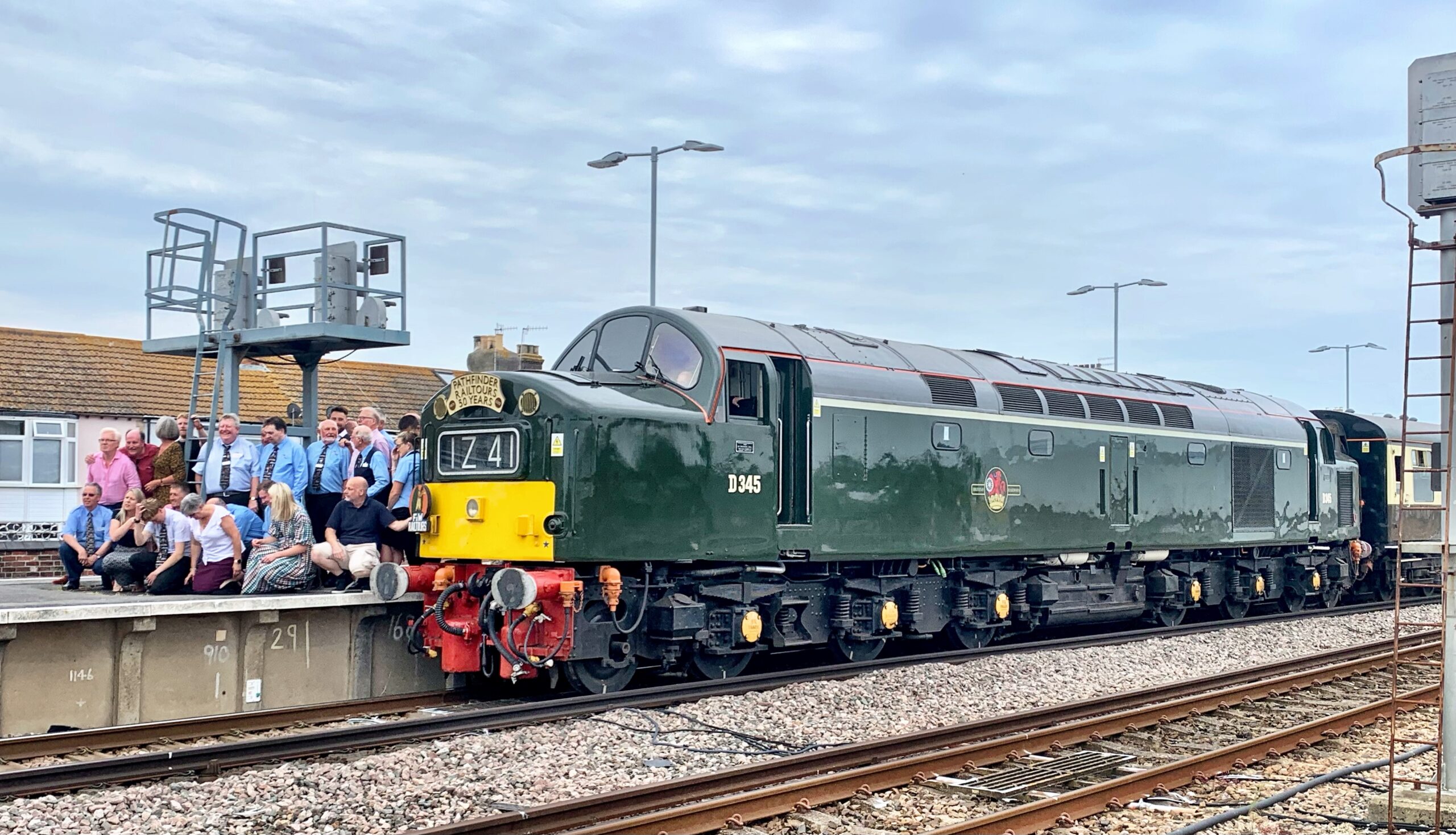
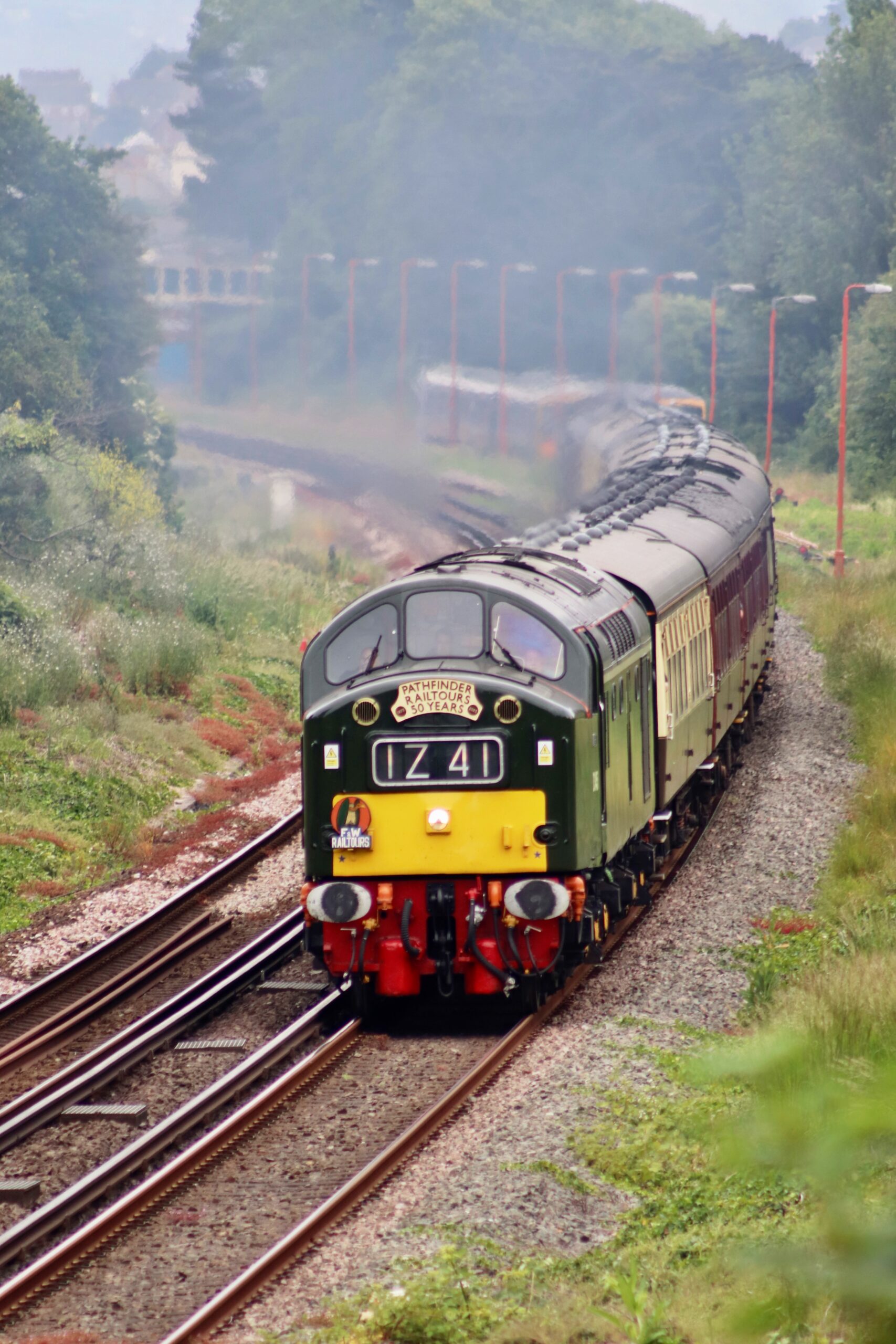
Saturday saw some preserved diesel action much closer to home as Class Forty Preservation Society owned Class 40 No. D345 (40145) hauled Pathfinder Railtours 50th Anniversary charter train which ran from Burton-on-Trent to Weymouth. The tour celebrated the 10th June 1973 railtour, co-organised by Pathfinder’s Peter Watts, which departed Gloucester Eastgate heading for Pwllheli all those years ago. I have very fond memories of Peter Watts Publishing railway books in the 1970’s and 1980’s. Peter is stepping away from management at Pathfinder tours but was very much involved with the organisation of the 50th Anniversary Tour. An added bonus was the use of MK1 coaches and could well be the last mainline use of such stock.
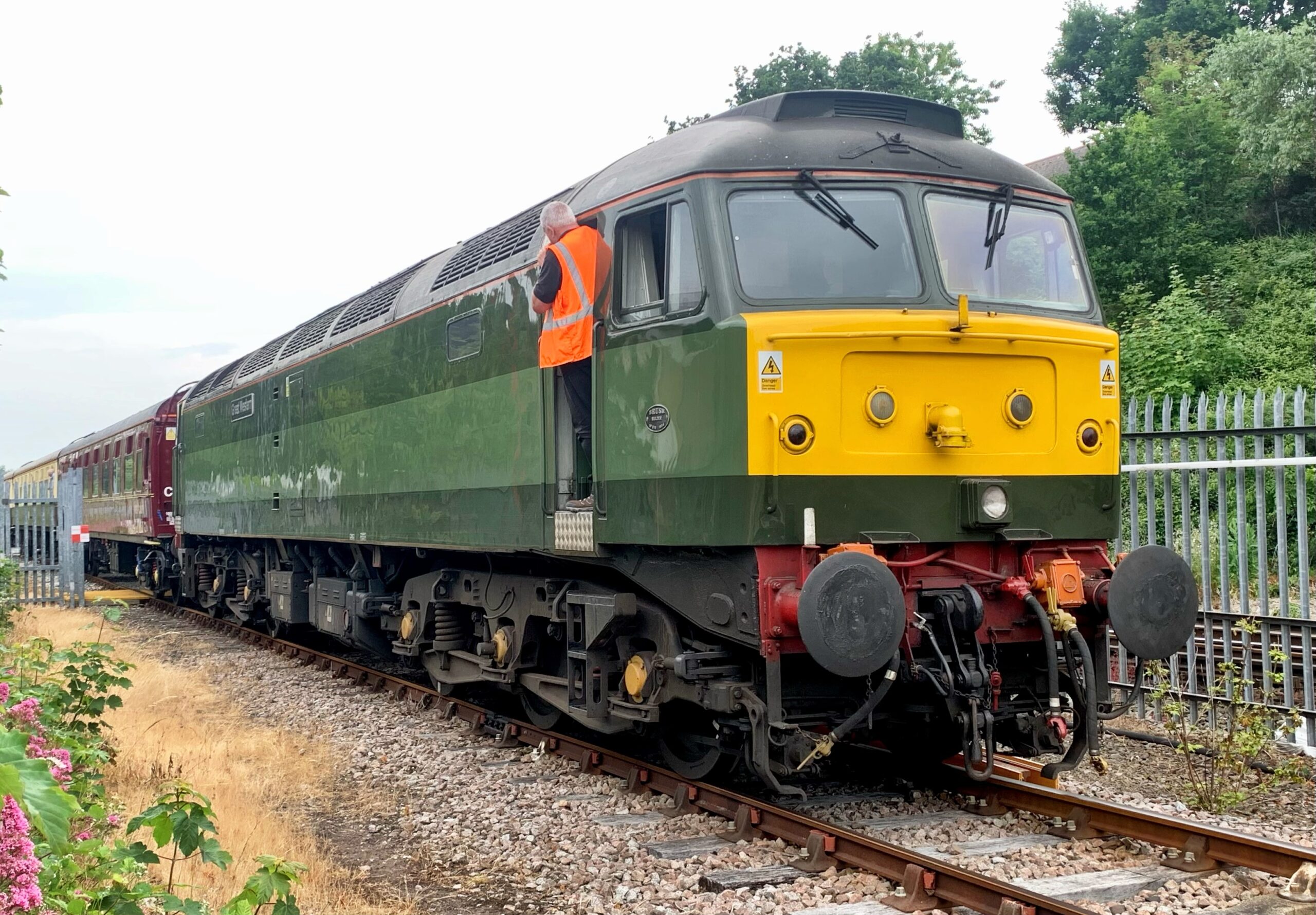
Class Forty Preservation Society owned Class 40 No. D345 (40145) nears Parkstone at the head of Pathfinder Railtours 50th Anniversary charter train 1Z40 0701 Burton-on-Trent to Weymouth – 10/06/2023No. D345 in Jubilee Siding at Weymouth. Class 47 No. 47815 ‘Great Western’ is engaged in empty coaching stock movements behind – 10/06/2023Class 47 No. 47815 ‘Great Western’ prepares to move the empty coaching stock from the sidings back into Weymouth station as 5Z41 1346 Weymouth to Weymouth – 10/06/2023No. D345 in Jubilee Siding at Weymouth – 10/06/2023No. D345 prepares to run light engine into Weymouth station – 10/06/2023At the head of the rake of MK1 coaches, No.D345 awaits departure of 1Z41 1636 Weymouth to Burton-on-Trent. The tour returned via Dorchester West and Yeovil – 10/06/2023Pathfinder photoshoot at Weymouth ahead of the departure of the 50th Anniversary charter train – 10/06/2023No. D345 powers towards the site of the former Radipole Halt with 1Z41 1636 Weymouth to Burton-on-Trent – 10/06/2023No. D345 having departed Weymouth with 1Z41 1636 Weymouth to Burton-on-Trent – 10/06/2023
Our video of D345 hauling Pathfinder Railtours 50th Anniversary charter train 1Z40 0701 Burton-on-Trent to Weymouth (with thanks to my brother for the Dorchester footage) – 10/06/2023
The Class Forty Preservation Society said this of the climb out of Weymouth: “Those who were on the train to hear 40145 lift the equivalent of 14 coaches unassisted up the 1 in 50 summit of Bincombe bank leaving Weymouth will know what I mean when I say I will take the memory to my grave. Truly a high point of 20 years of mainline running. Even the Lickey later in the day was an anti-climax after that!”. Yoshi’s pal Jamie was at Bincombe to record the ascent.
No. D345/ 40145 was the first locomotive of the final batch of deliveries of the type and was built with centre-headcode panels. Along with 180 others of the 200-strong fleet, the loco was built by English Electric at Vulcan Foundry, entering service on 17th May 1961. D345 was one of four (D345 to D348) which were allocated to 55H Neville Hill, and used to upgrade the short-lived “Queen of Scots Pullman” running between Leeds and Edinburgh / Glasgow, replacing LNER Pacific steam power. Allocated to numerous depots during her British Rail career, her final allocation was to Longsight in May 1978 where she was based until withdrawal on 10th June 1983 after sustaining derailment damage in Stourton Yard, Leeds. However, she was one of the final Class 40’s to receive a General Overhaul at Crewe Works in November 1980 and was purchased by The Class Forty Preservation Society and delivered to Bury in February 1984, the first of the class to enter preservation.
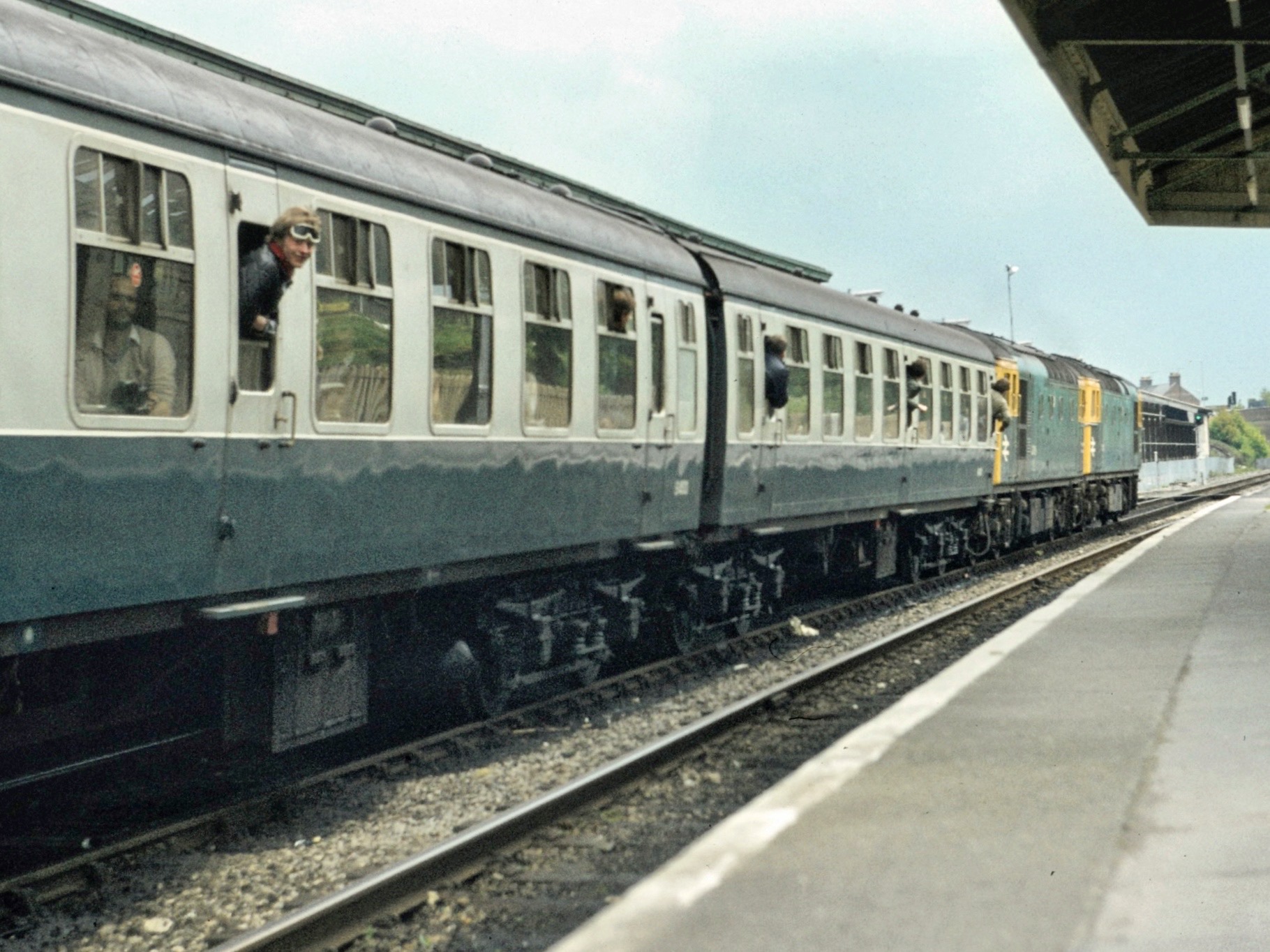
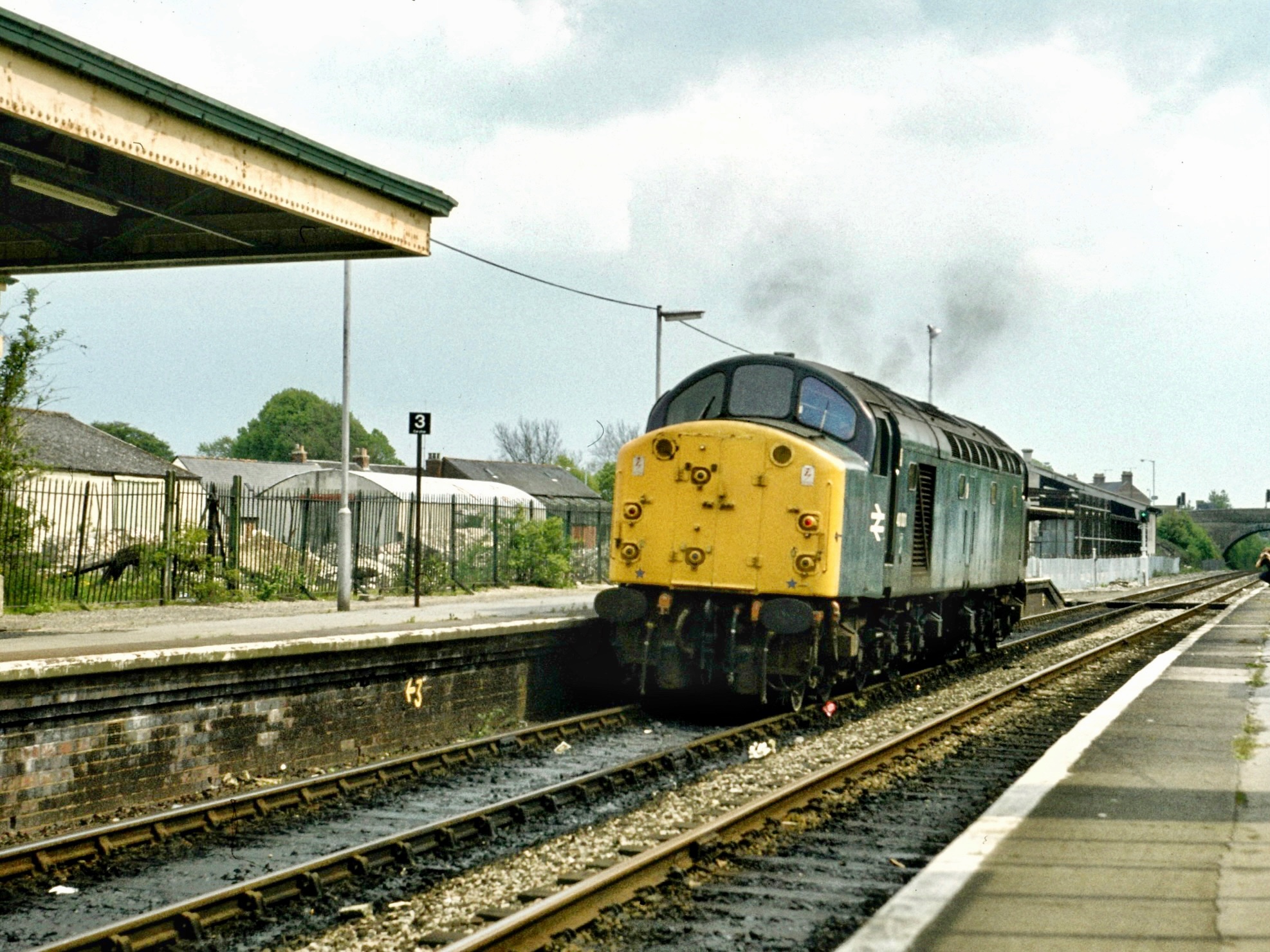
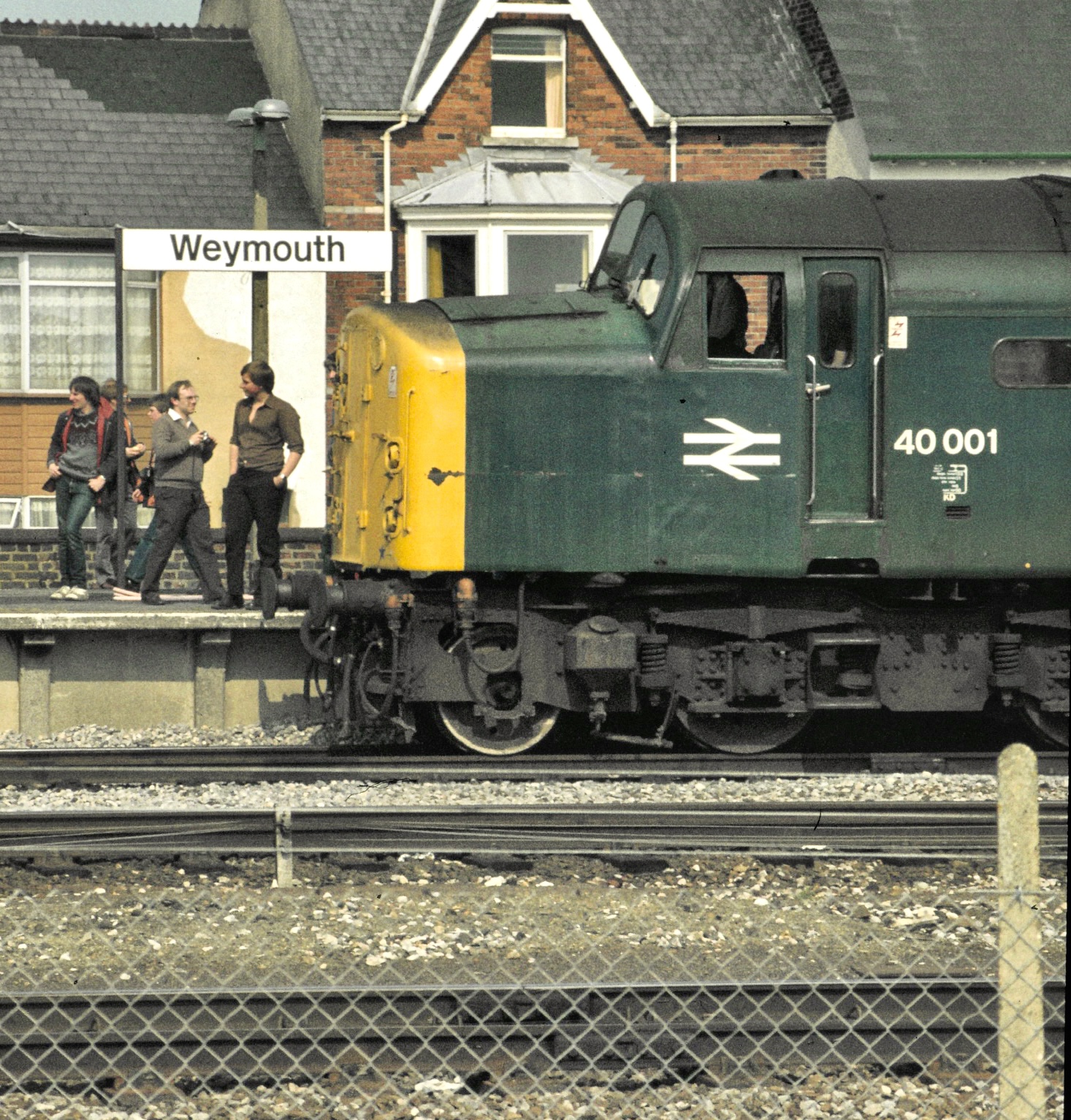
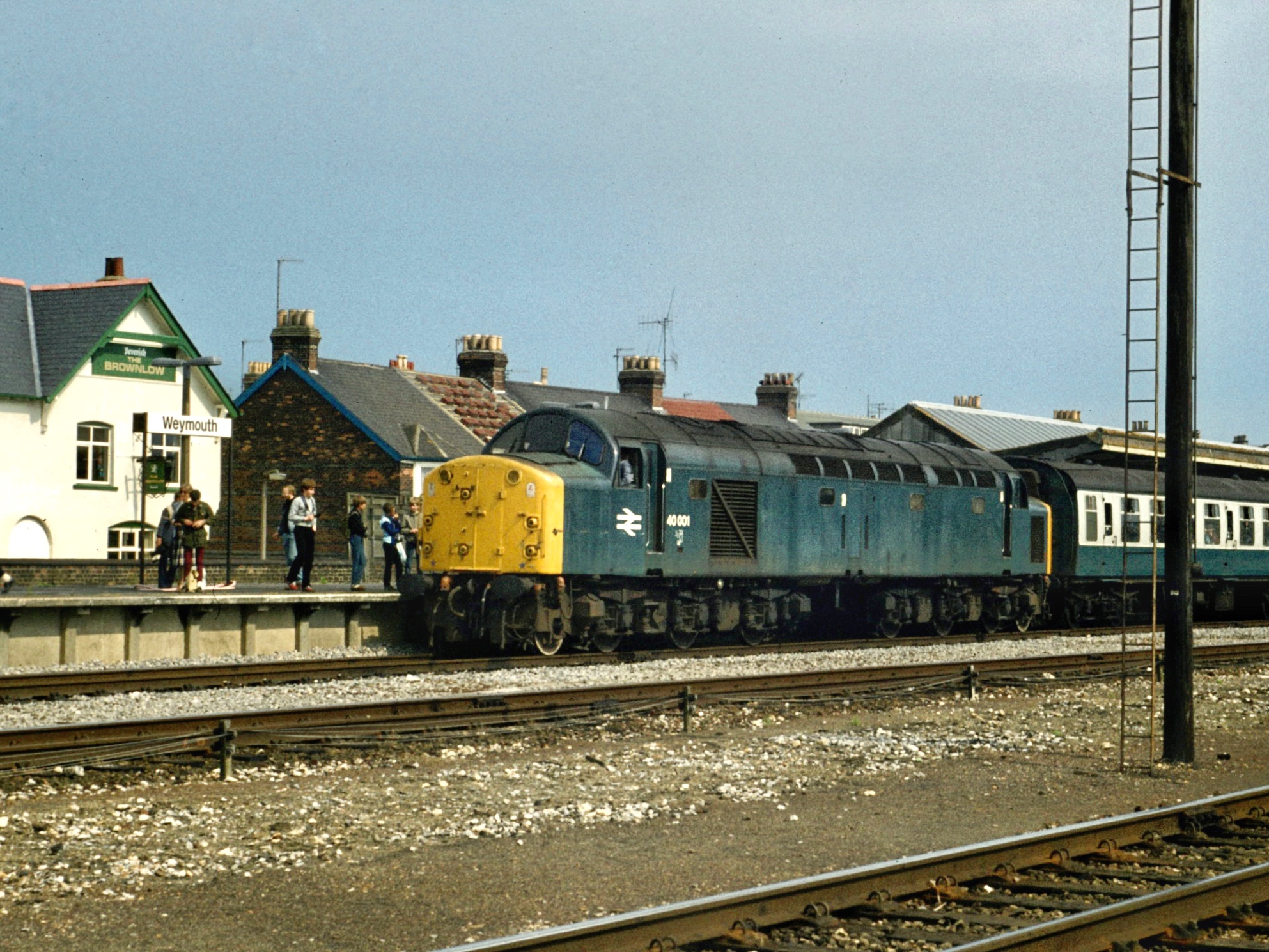
The last (and only) Class 40 to make it to Weymouth previously was No. 40001 on 21st May 1983 which I remember well!
The Westbury to Weymouth leg of “The Wessex Whistler” was entrusted to Class 33/1 No.’s 33113 and 33118. The pair are seen passing through Dorchester West – 21/05/1983Following light engine No. 40001 opens up as she passes through Dorchester West on the way to Weymouth – 21/05/1983Class 40 No. 40001 at Weymouth with the return Severn Valley Railway Association rail tour “The Wessex Whistler” the first time a member of the class had made it to Weymouth. The tour originated in York and ran under the head code 1Z25 throughout – 21/05/1983Class 40 No. 40001 at Weymouth with the Severn Valley Railway Association rail tour “The Wessex Whistler” – 21/05/1983Class 40 No. 40001 at Weymouth awaits departure from Weymouth with the return Severn Valley Railway Association rail tour “The Wessex Whistler” – 21/05/1983
Thanks for reading! We’ll see you soon.
End Piece:
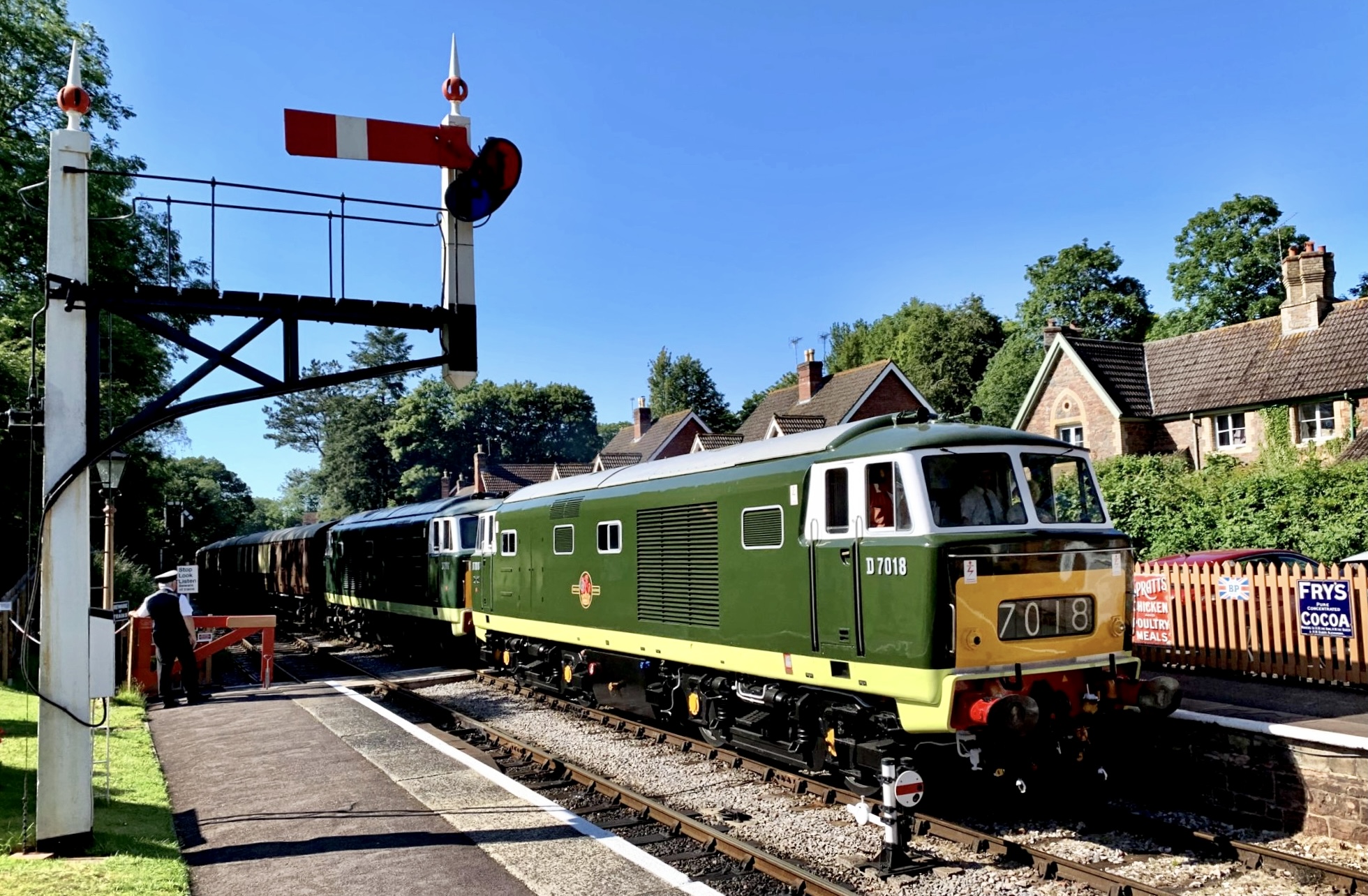
Back in 2019, both West Somerset Hymeks were working during the diesel gala as evidenced here as No.’s D7018 and D7017 arrive at Crowcombe Heathfield – 21/06/2019
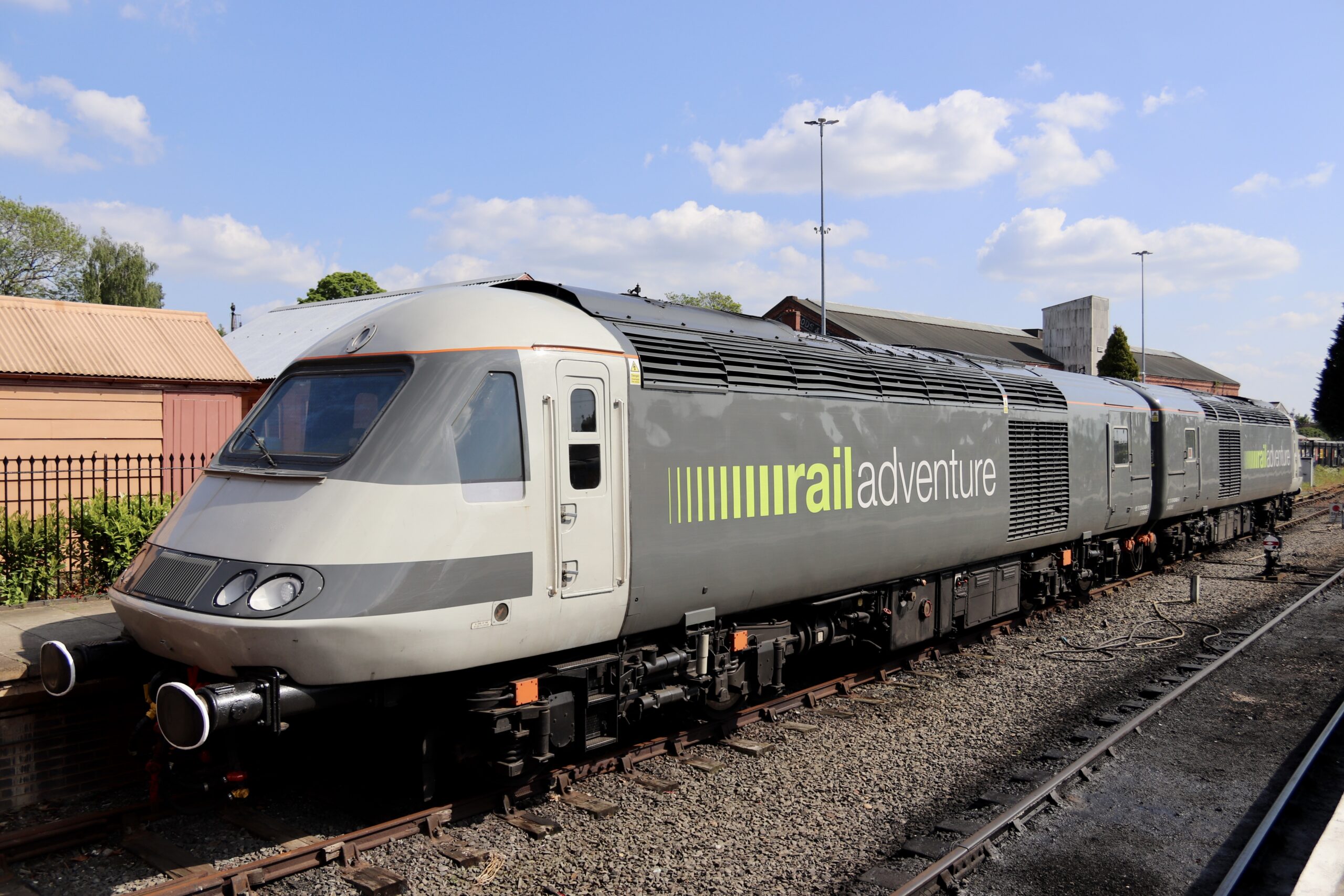
Yoshi took a liking to RailAdventure Class 43 No.’s 43465 and 43484 which only hauled trains on the Friday of the 2023 Severn Valley Diesel Gala and seen here on display the following day at Kidderminster – 20/05/2023
Last week we were enjoying the sun in Cornwall, so our report on our visit to the 2023 Severn Valley Diesel Gala ( which took place 18th – 21st May) is slightly delayed until now. We hope you found our mini blog about Promenade Plantée in Paris interesting and a bit different last week, but for now let us catch up with events at the Severn Valley.
Saturday was my chosen day to visit the SVR as I was heading to the West Country the following day. The timetable for the gala was a packed affair with a large roster of resident and visiting locomotives scheduled to run, many of which were provided by freight and passenger operating companies. Indeed, the SVR event was undoubtably the biggest diesel gathering in the UK calendar for 2023, with its planned four-day extravaganza intended as a celebration of 50 years of diesel preservation. An early departure from home was required in the hope of seeing everything running. A few missed turnings and a closed motorway junction delayed our arrival time but in the event we arrived at Highley just in time to see sole-surviving Clayton Class 17 No. D8568 arrive with the first train of the day from Bridgnorth. Unfortunately there were no available parking spaces at the station, so we reversed out and headed up out of the car park to find alternative facilities. Although I later managed to capture a short video clip of the Clayton running light engine within the Highley station area, the locomotive avoided my camera lens for a still photo opportunity. As this particular diesel had been at Swanage the previous weekend, I didn’t mind too much!
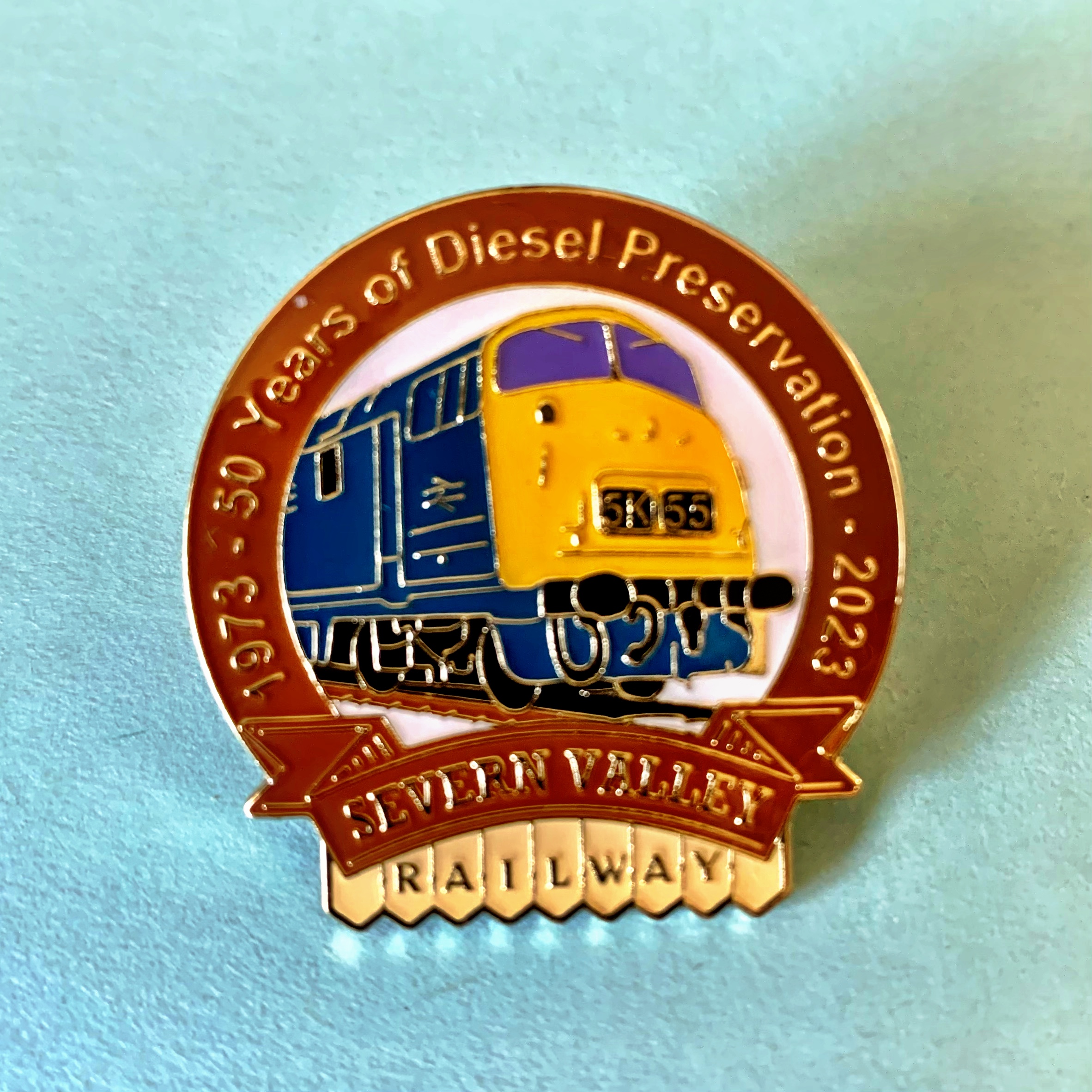
They even made a special badge to celebrate 50 years of Diesel Preservation!
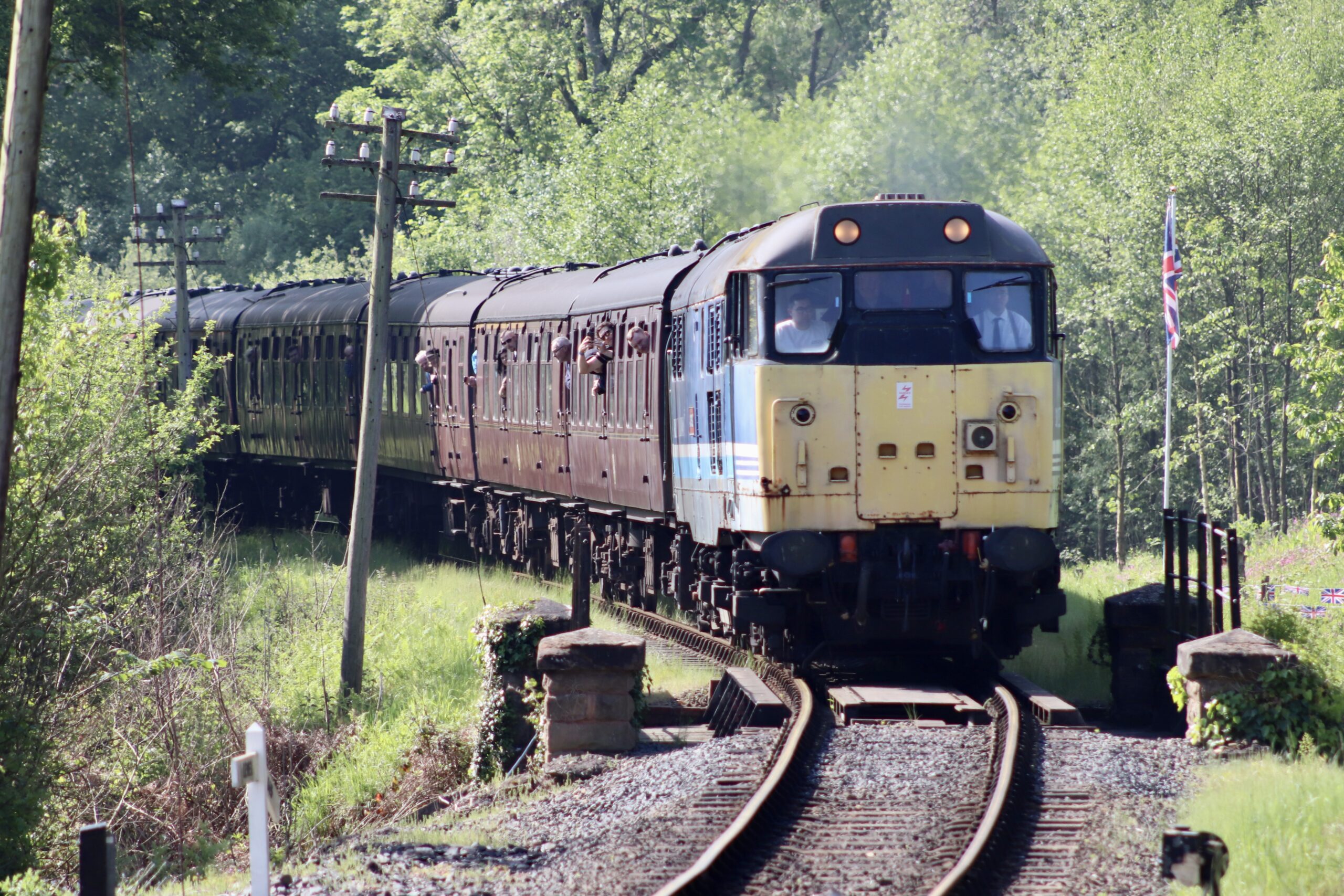
We had however trooped back down to Highley station in time to see Class 31 No. 31270, quite suiting her Regional Railways livery, arriving with the 0845 departure from Kidderminster. Although the first two trains on the Saturday were spot on for their time-keeping, it didn’t take too long for the timetable to go awry and things became progressively more delayed as the day went on.
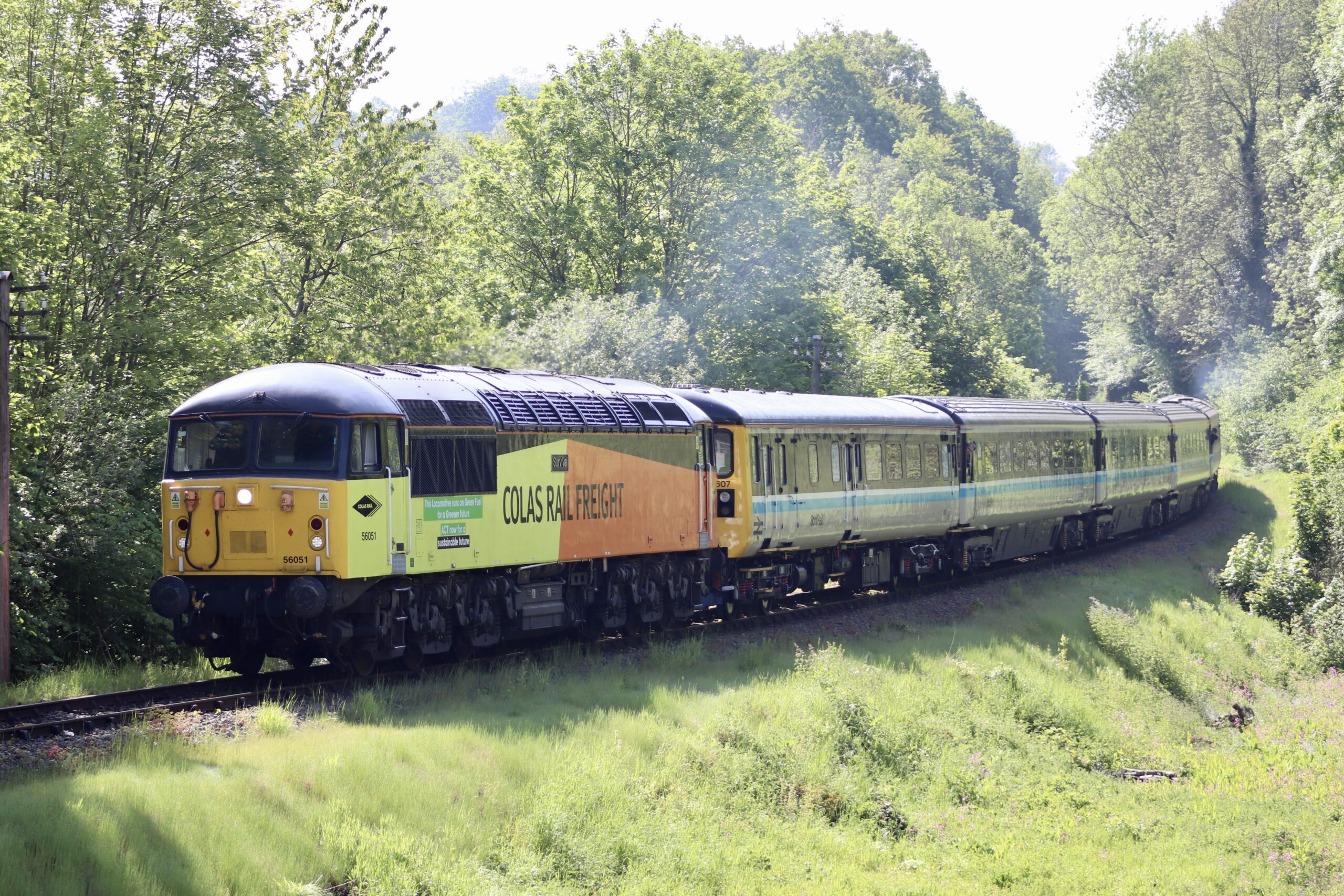
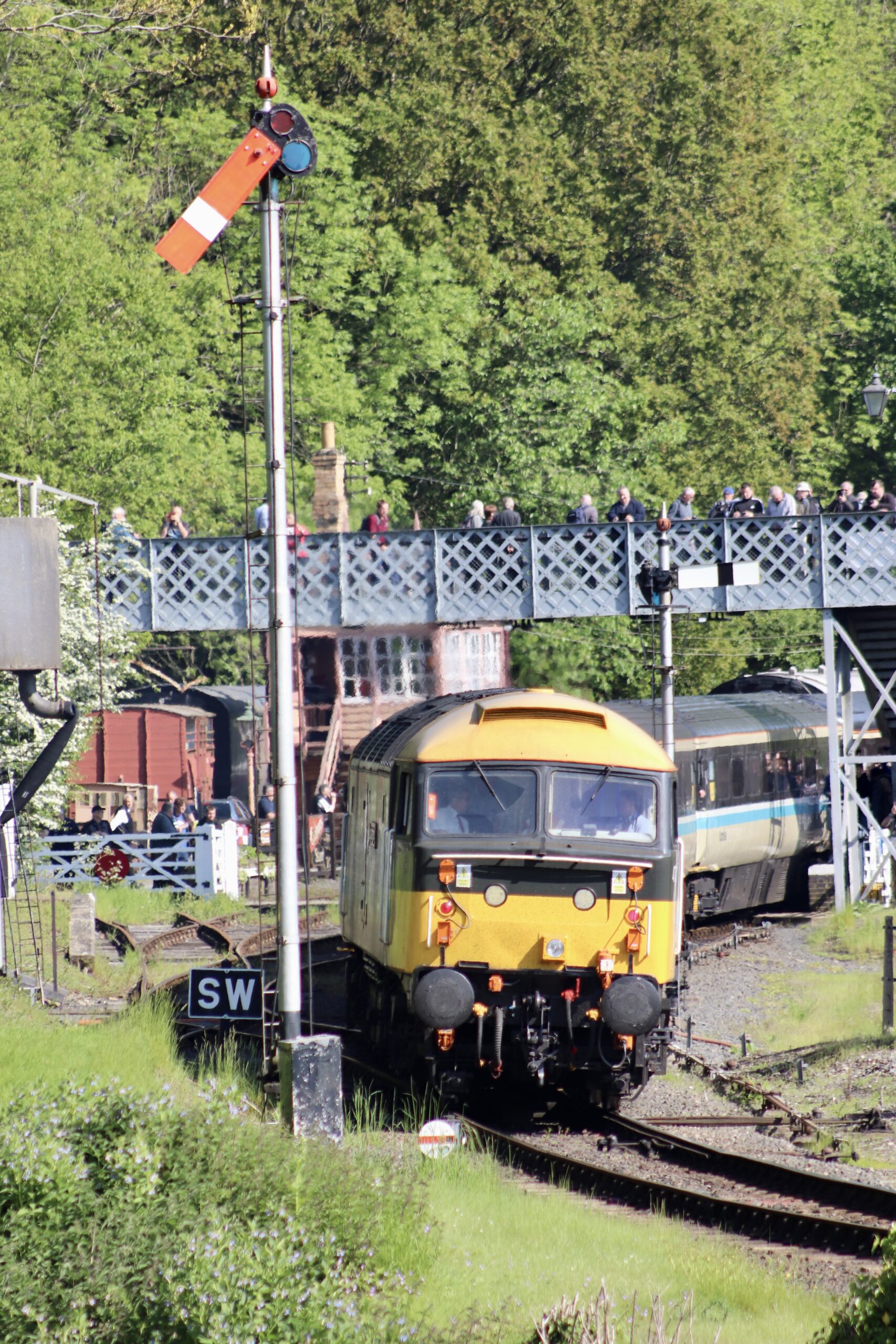
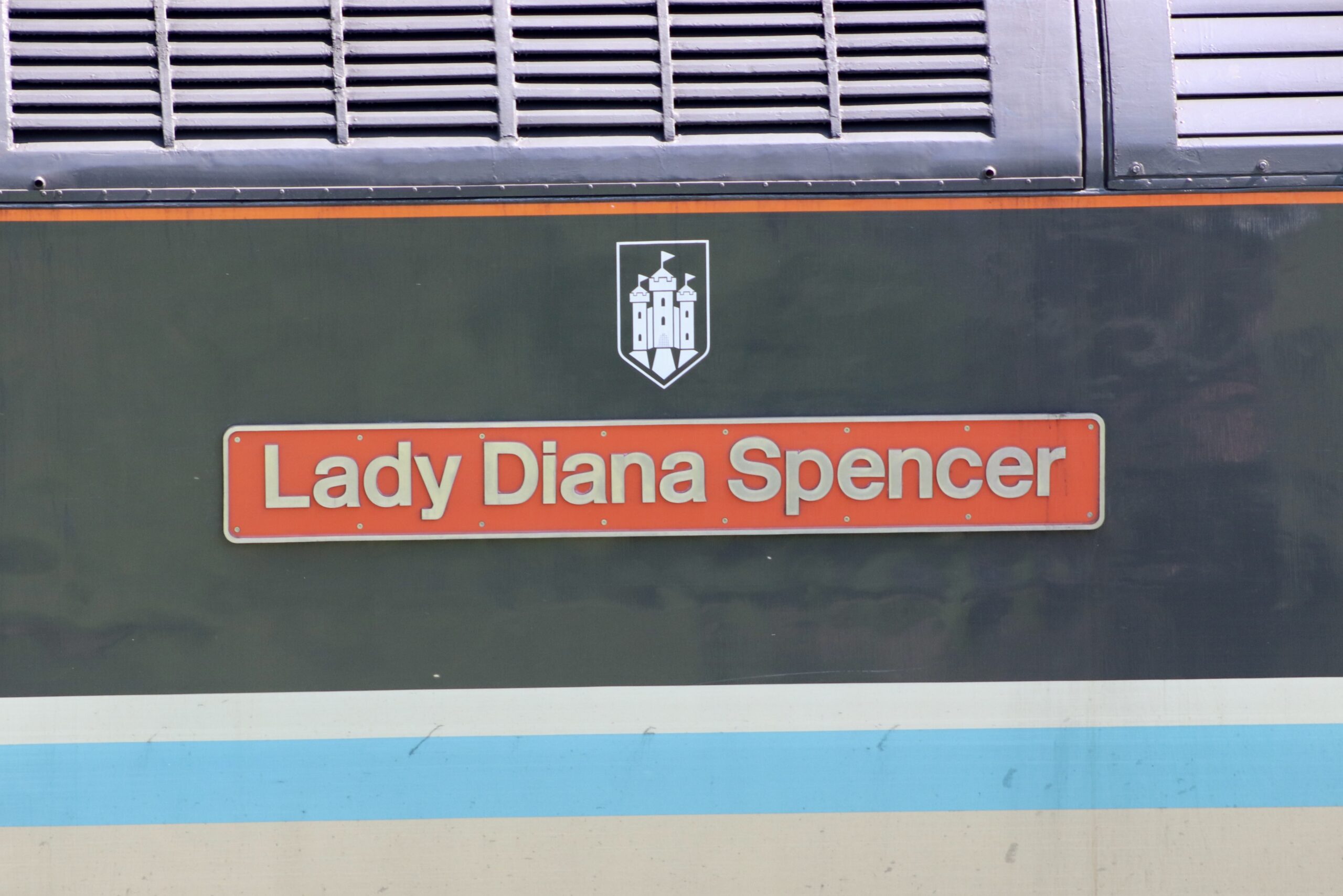
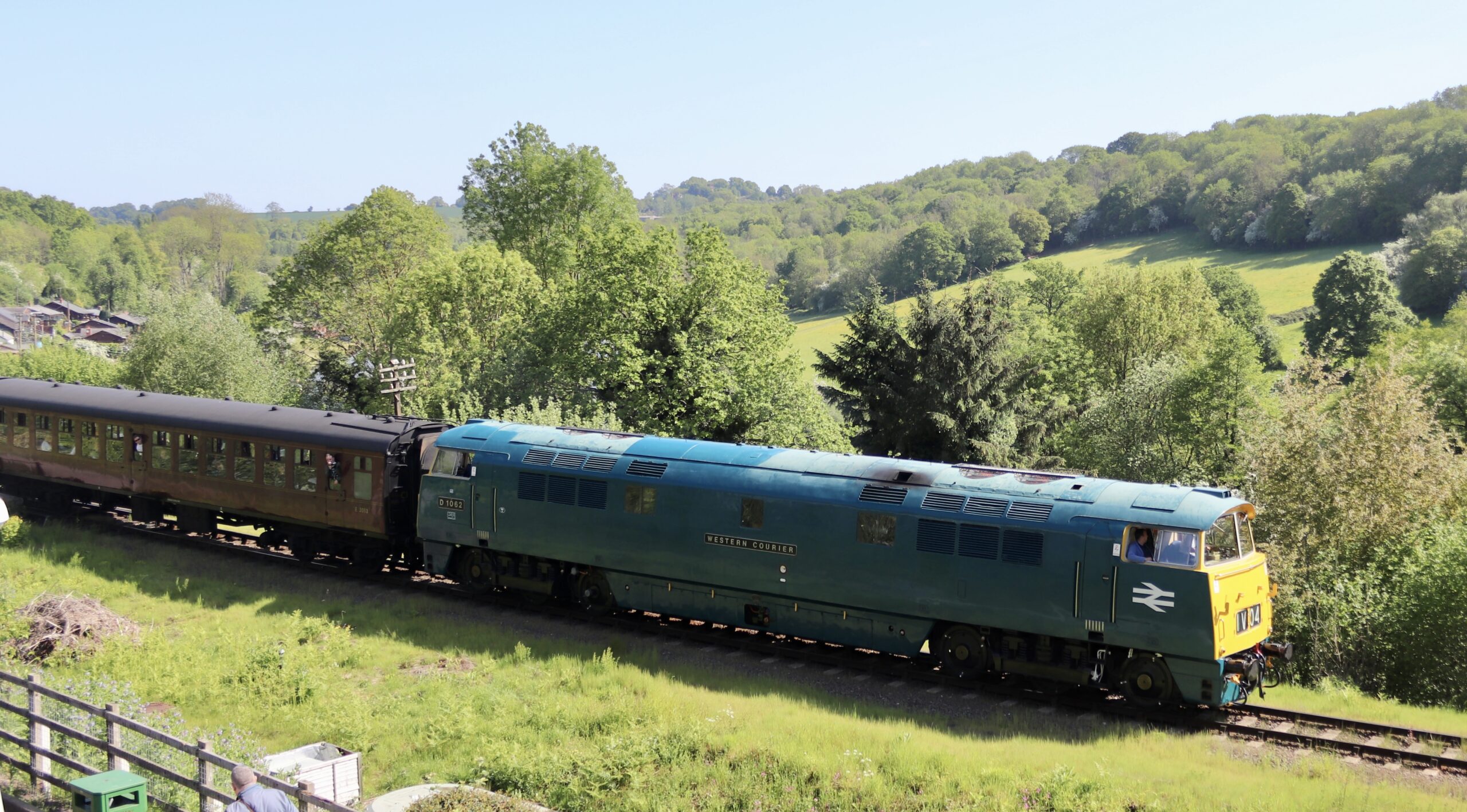
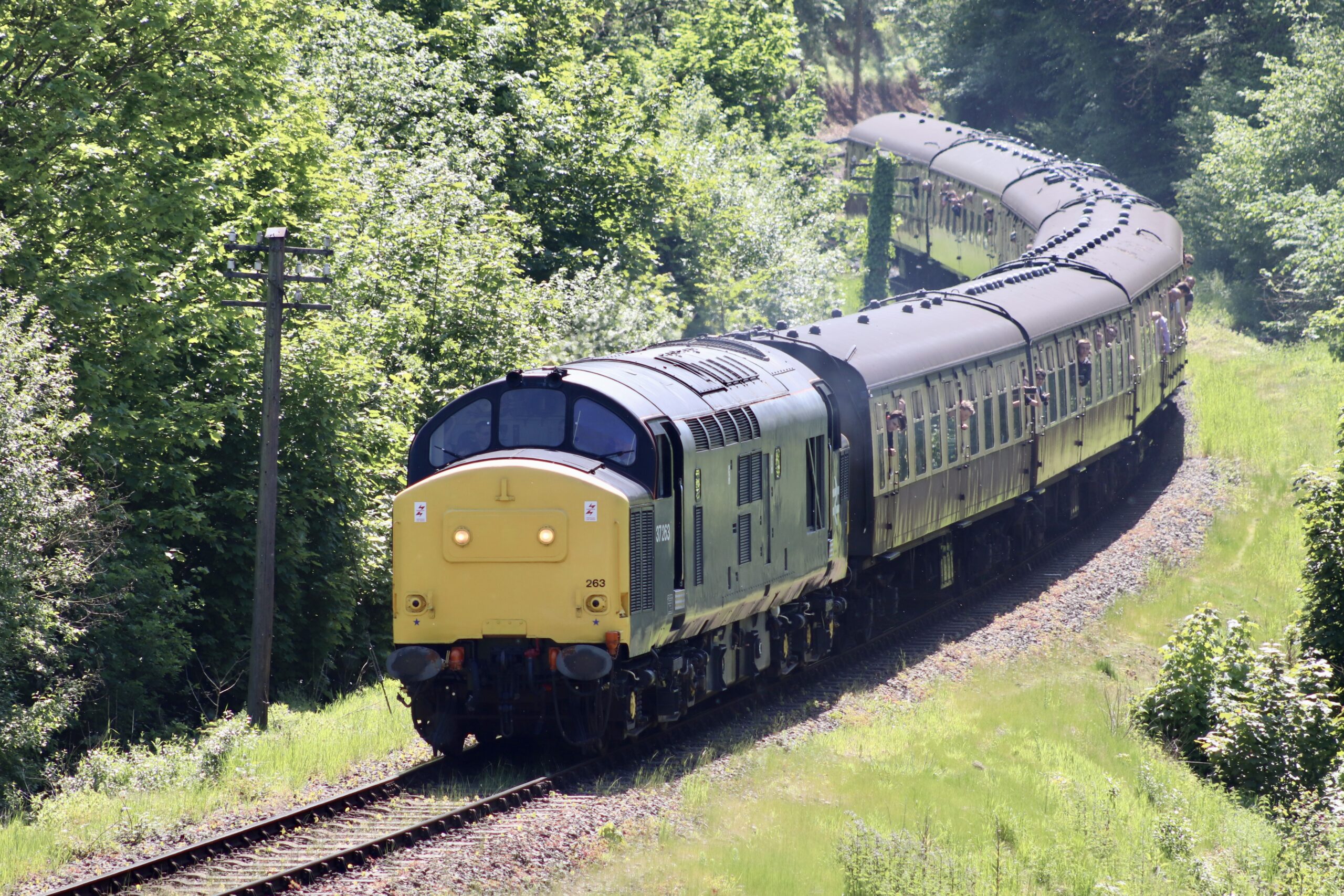
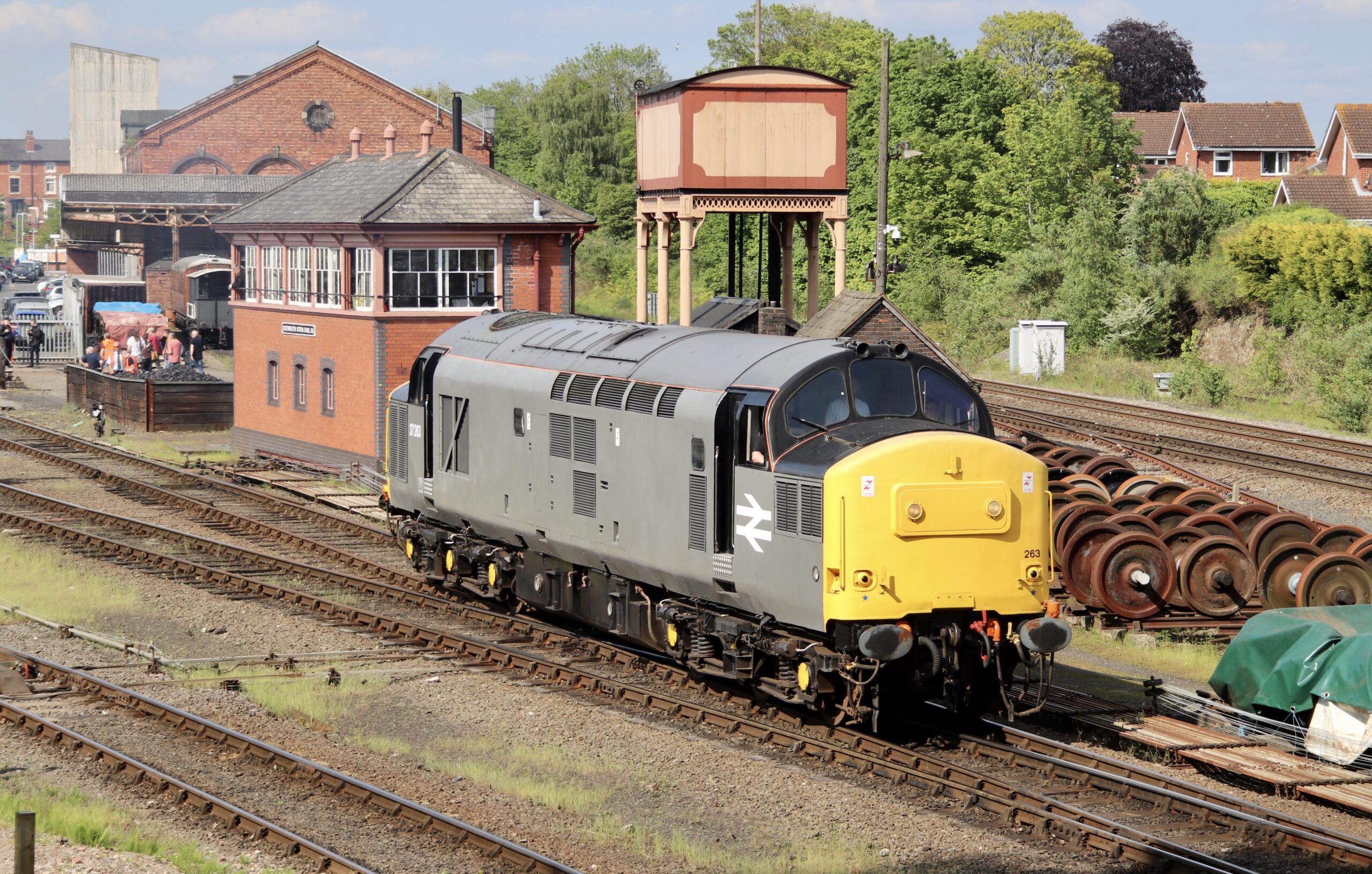
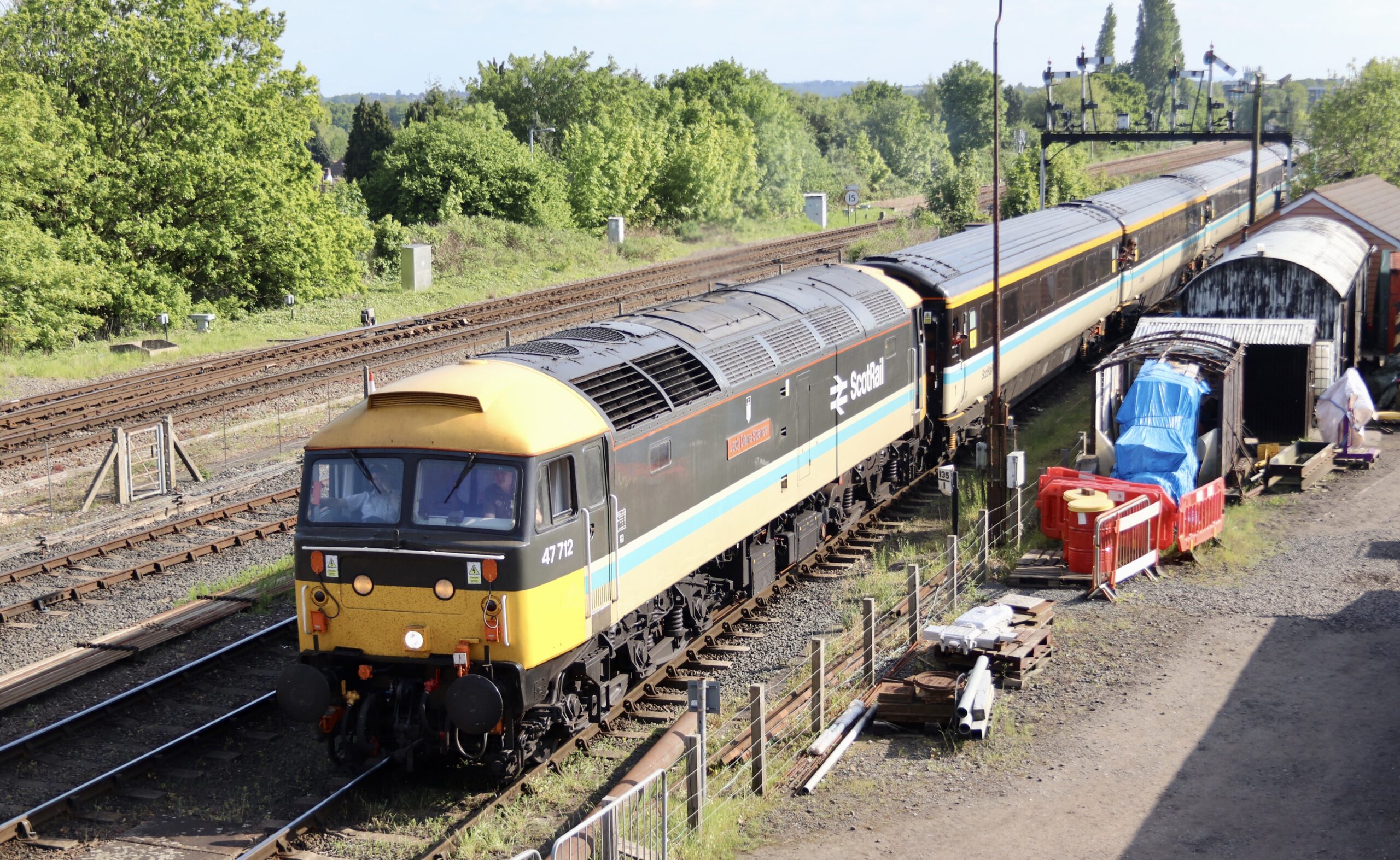
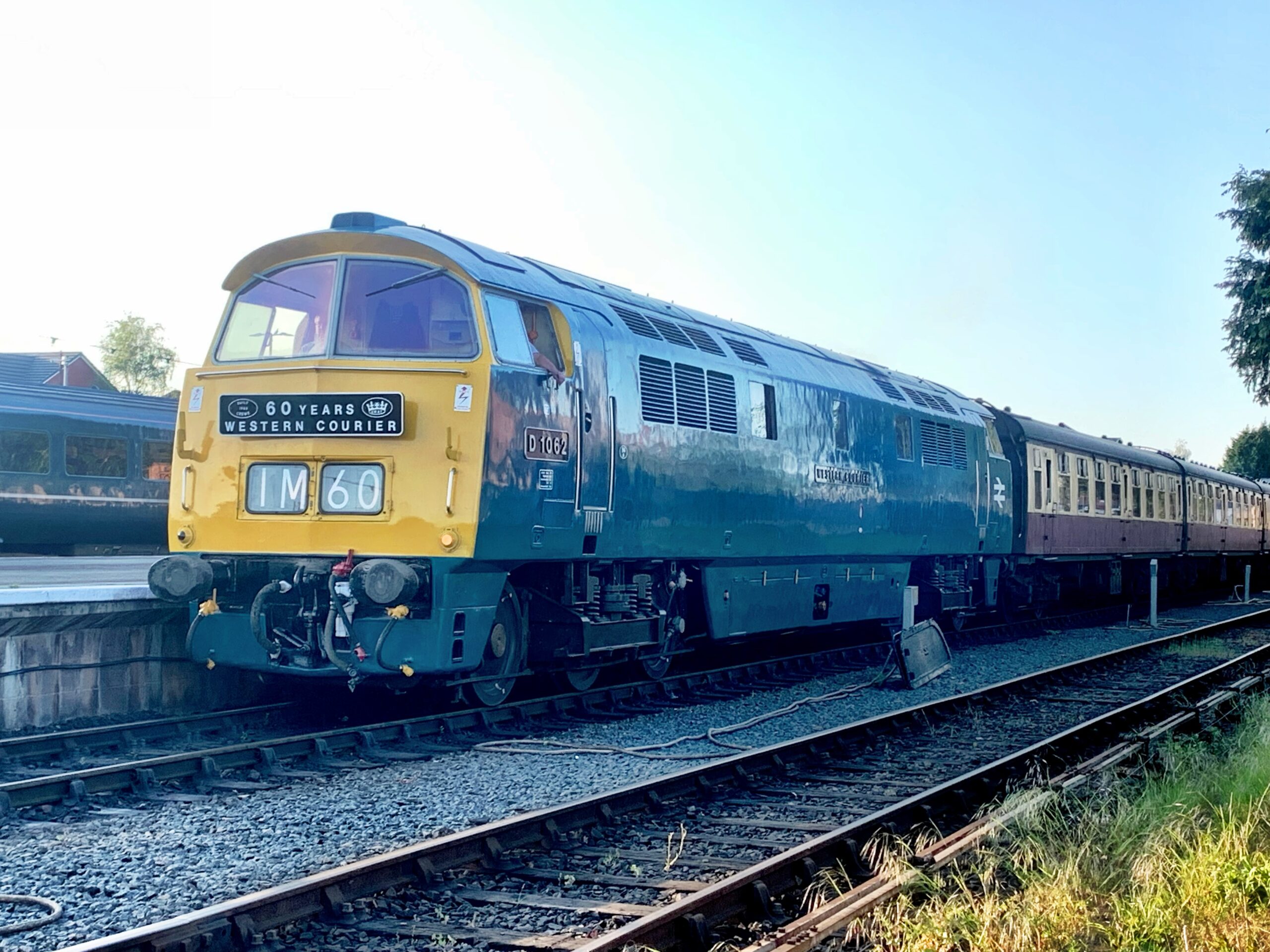
Peak Rail’s Brush Type 2 Class 31 A1A-A1A No. 31270 ‘Athena’ in British Rail (BR) Regional Railways sector livery approaches Highley. No. 31270 was built by Brush Ltd in Loughborough in 1961 and carried the pre-TOPS number D5800. She was withdrawn from traffic on 26th May 2000. She never carried this livery or the nameplate while in BR service – 20/05/2023Colas Rail Freight Class 56 No. 56051 ‘Survival’, built in 1978, on the approach to Highley with the Locomotive Service Ltd (LSL) restored ScotRail MK3 carriages that reproduce the push-pull stock used between Glasgow, Edinburgh and Aberdeen in the 1980’s – 20/05/2023Scottish Push-Pull Class 47 No. 47712 ‘Lady Diana Spencer’ prepares to depart Highley. This locomotive and rake of air braked push-pull stock was paired with different visiting locomotives throughout the gala, top and tailing between Kidderminster and Highley. I thought it was a shame the loco and stock didn’t perform at least one run a day in push-pull mode as it had reportedly done on the Thursday – 20/05/2023Class 47 No. 47712 ‘Lady Diana Spencer’ nameplate – 20/05/2023Diesel- Hydraulic Western Class 52 No. D1062 ‘Western Courier’ departs Highley. This locomotive was built at Crewe Works and entered service at London’s Old Oak Common shed on 6 May 1963. She was withdrawn by British Rail on 23 August 1974 after 1,096,000 miles in service. Courier was an early withdrawal but was lucky enough to share “mascot” duties with Class 42 Warship No. D818 ‘Glory’, being placed on the turntable at Swindon works and given a repaint by the apprentices – 20/05/2023Class 37 No. 37263 displaying departmental grey livery approaches Highley. No. 37263 was introduced into traffic in 1965 and is visiting from the Telford Steam Railway – 20/05/2023
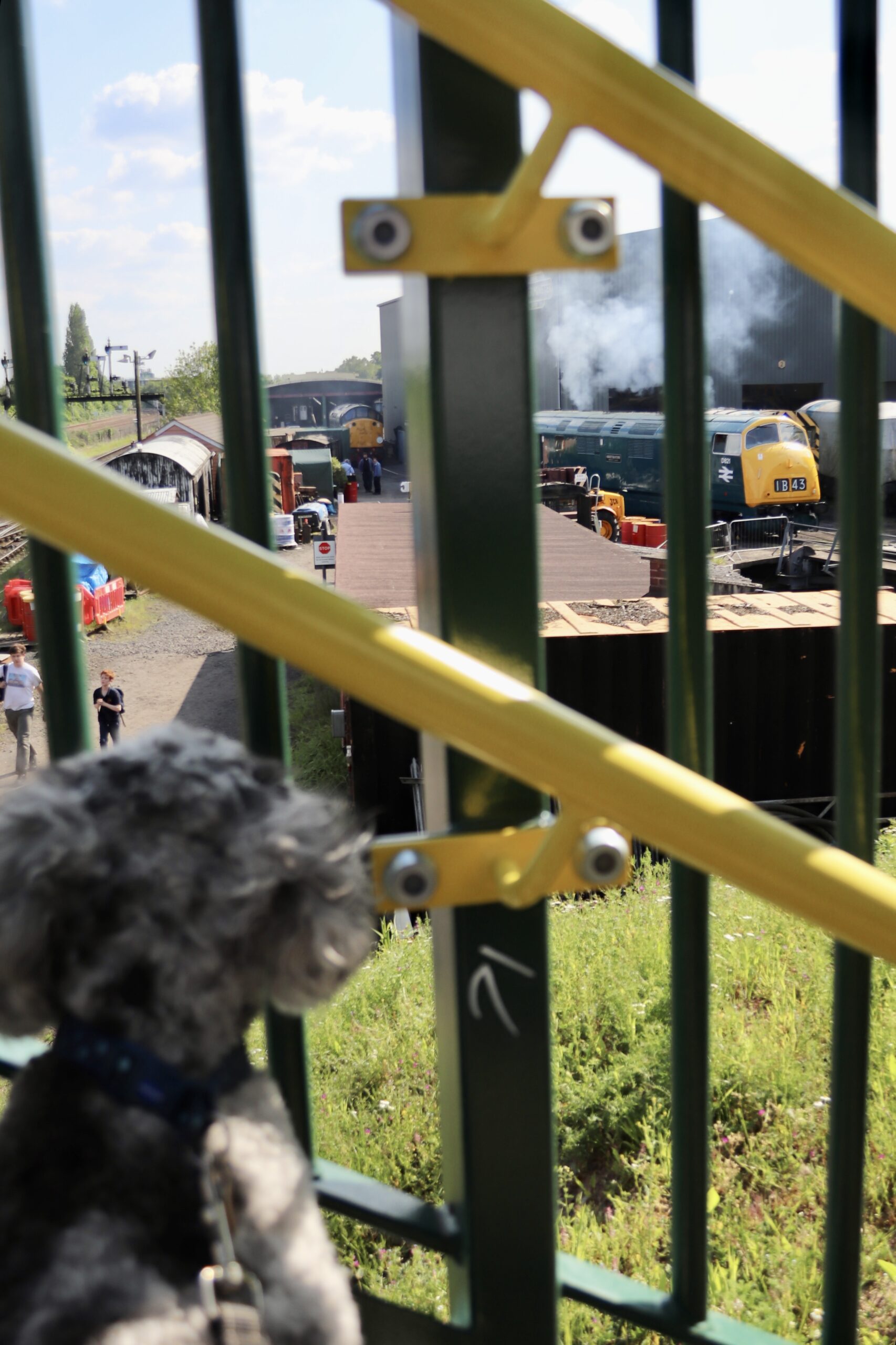
The weather was extremely warm and I made the decision to stay on the viewing balcony at Highley as this ensured Yoshi was able to stay in the shade and not get over heated. He also seems to like it there as he gets lots of fuss from passers by and doesn’t seem too bothered by the trains passing below. It’s also close to the cafe, so despite issues with the new coffee machine, what could be better? On the downside, of course, it means that my photographs and video from Highley are from much the same two angles, but I’ll take this provided our boy is comfortable.
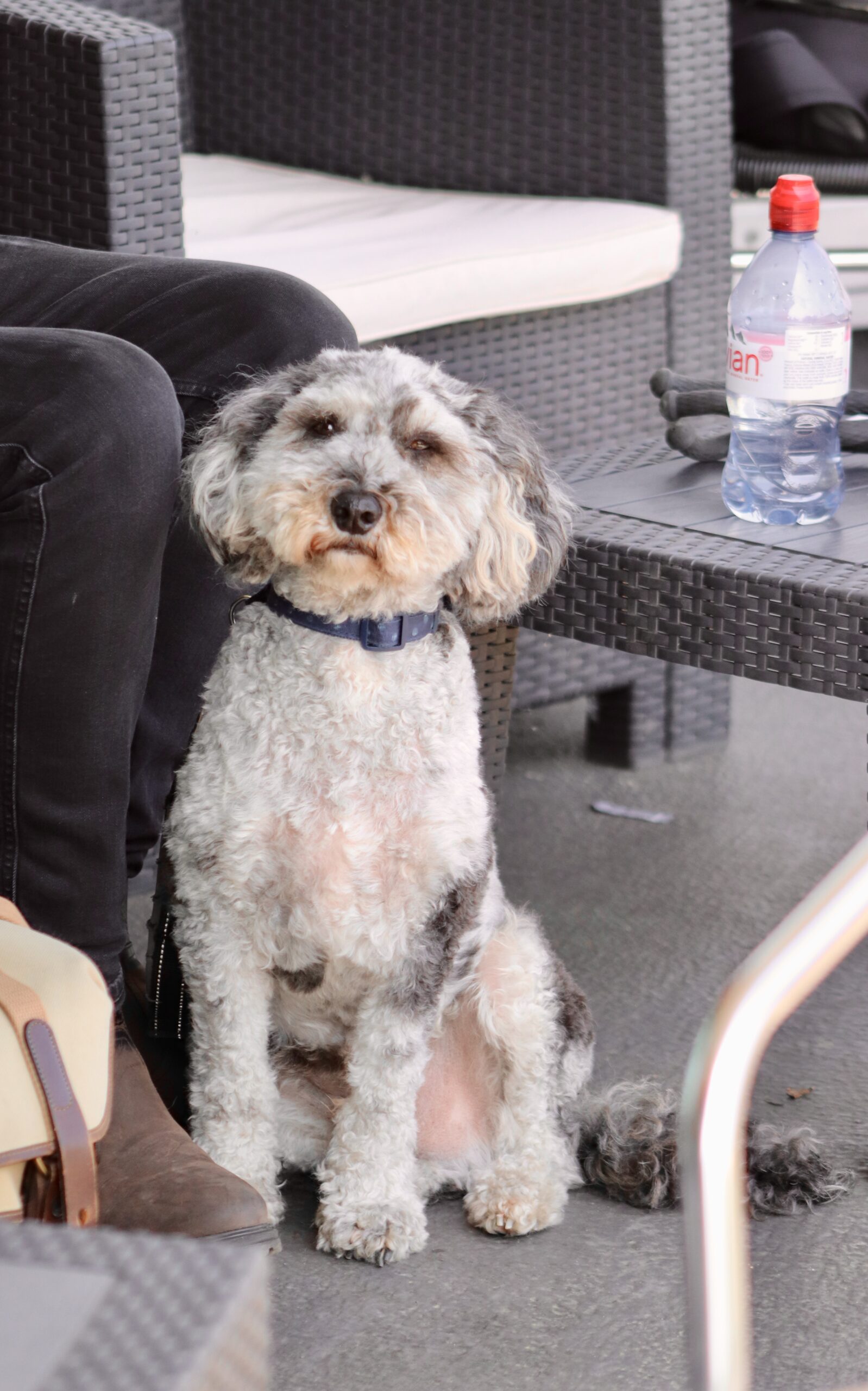
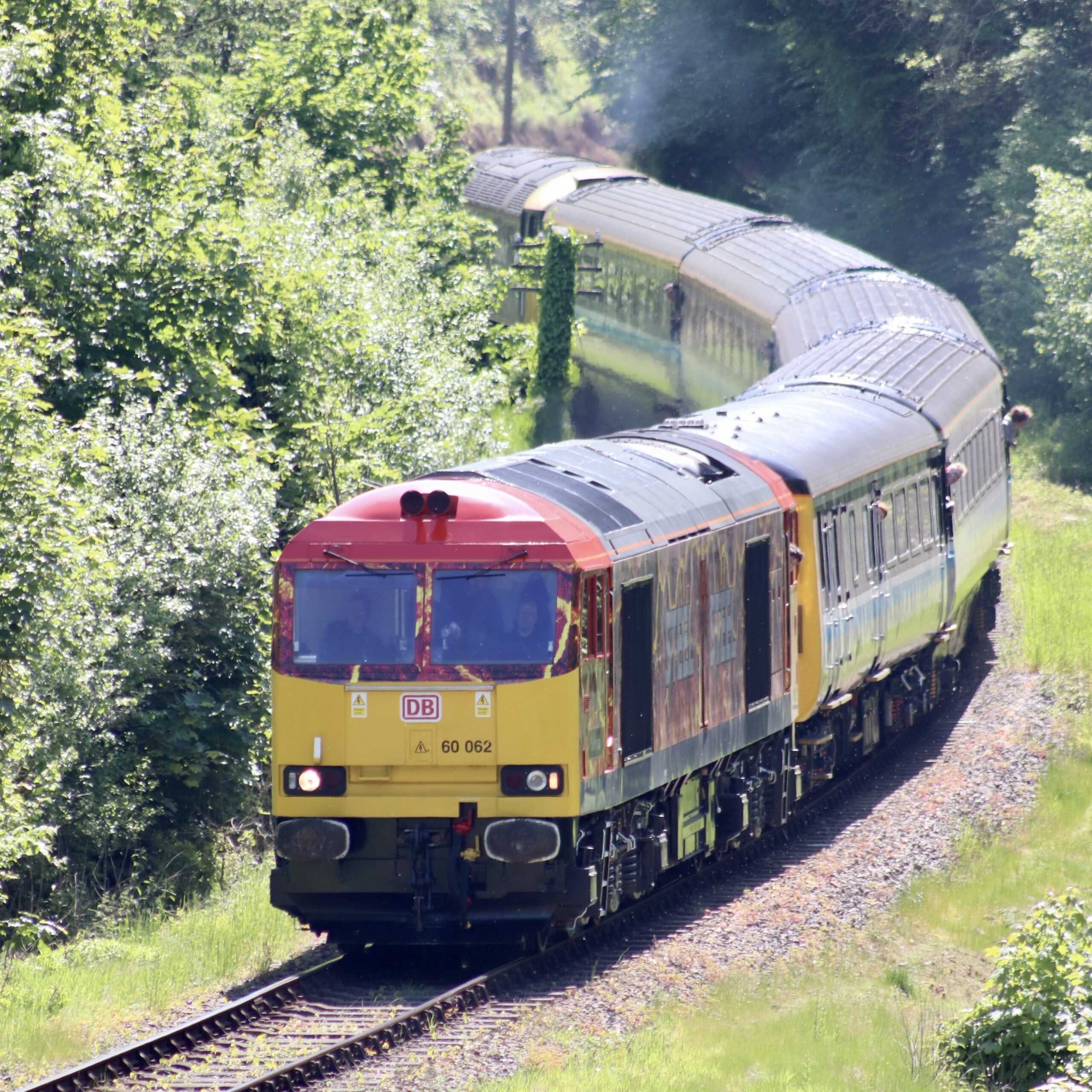
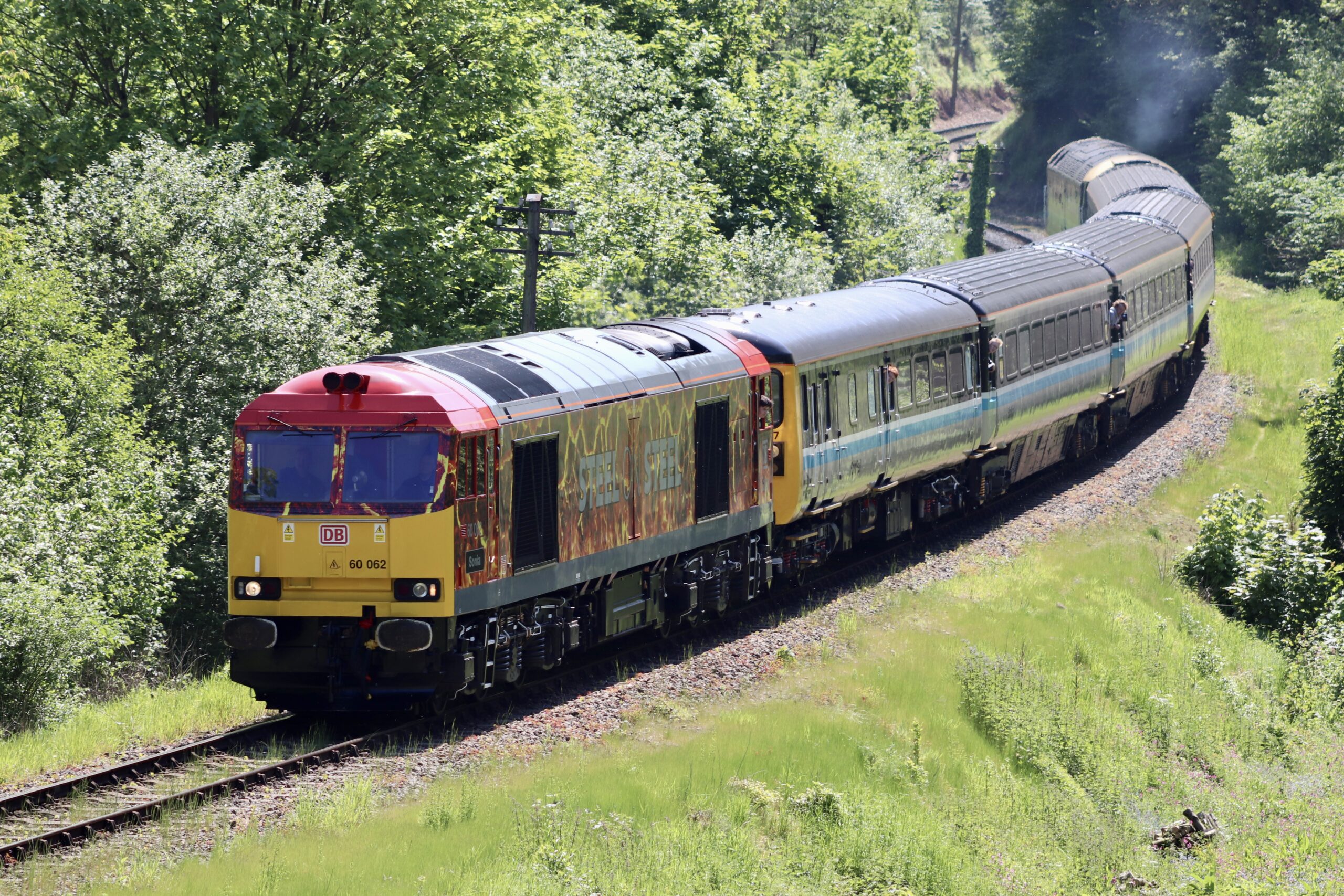
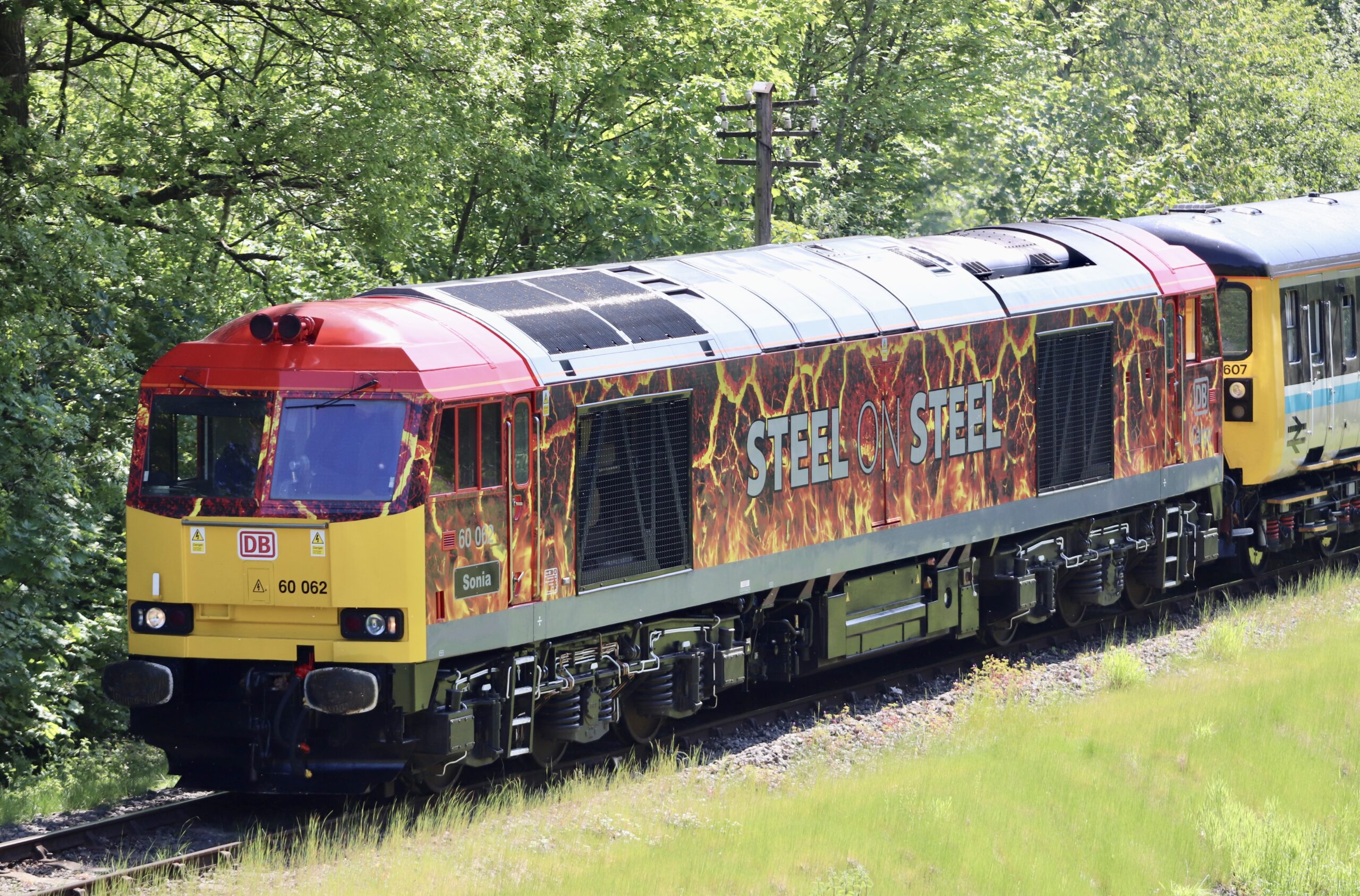
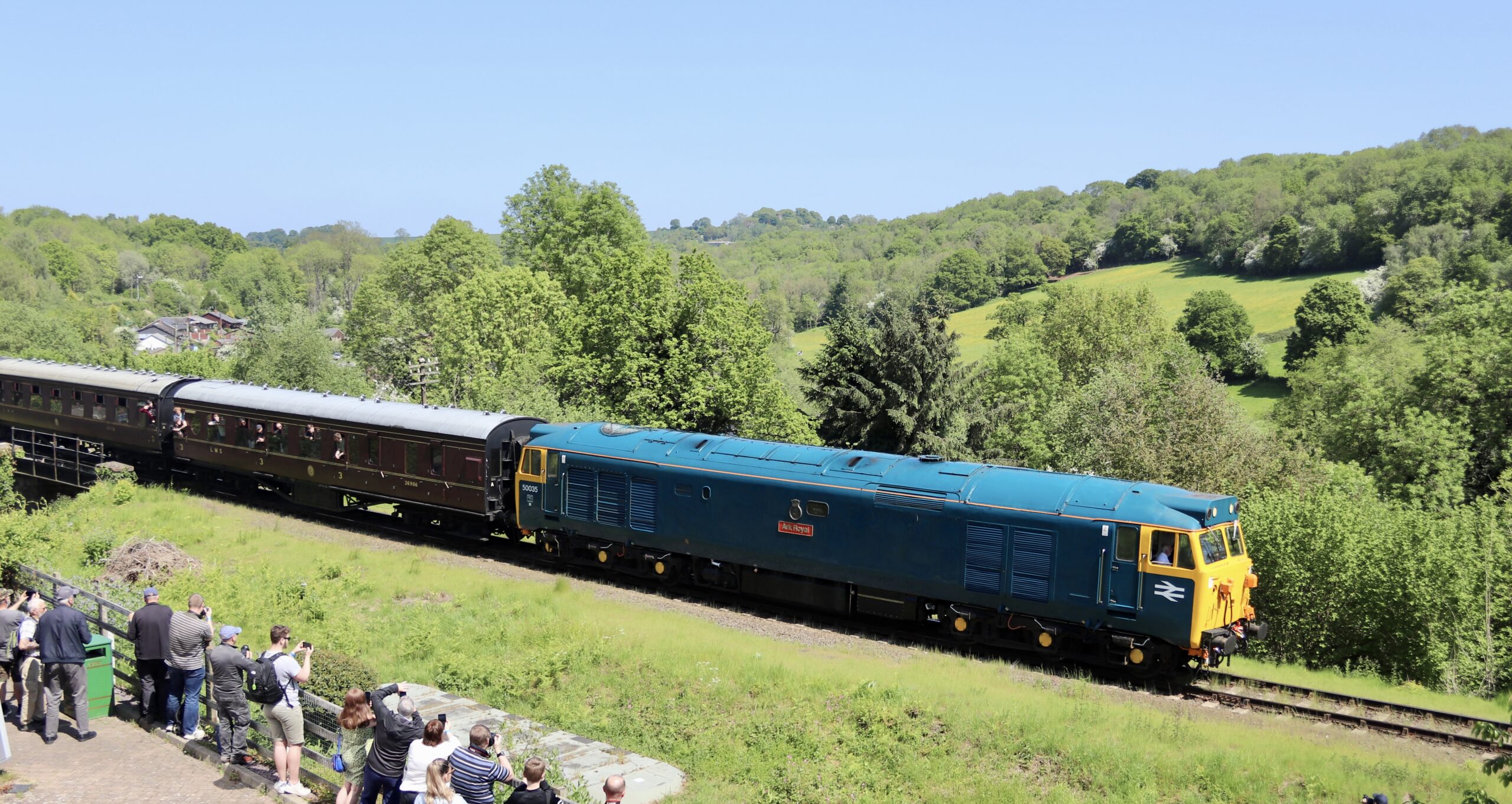
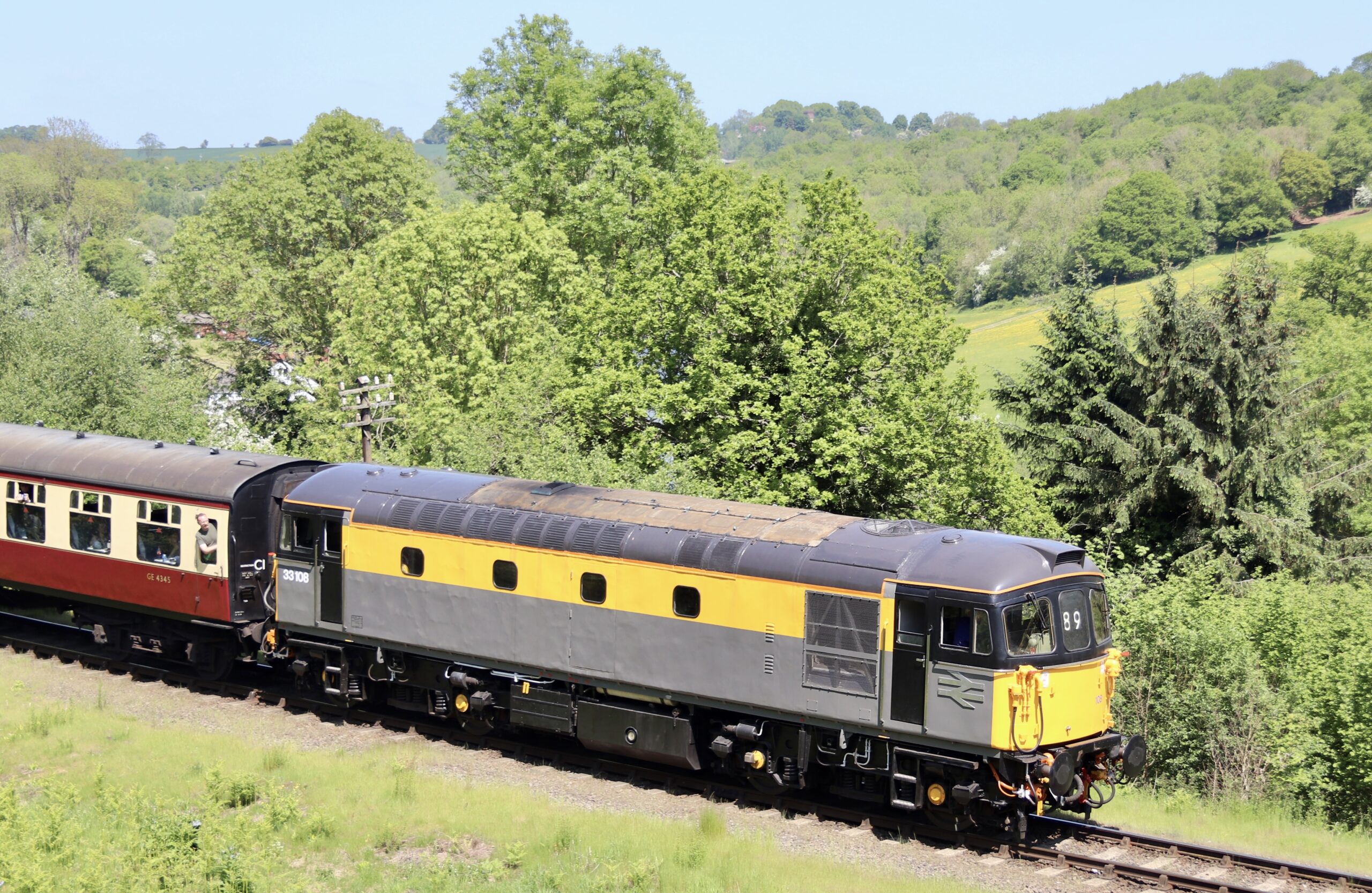
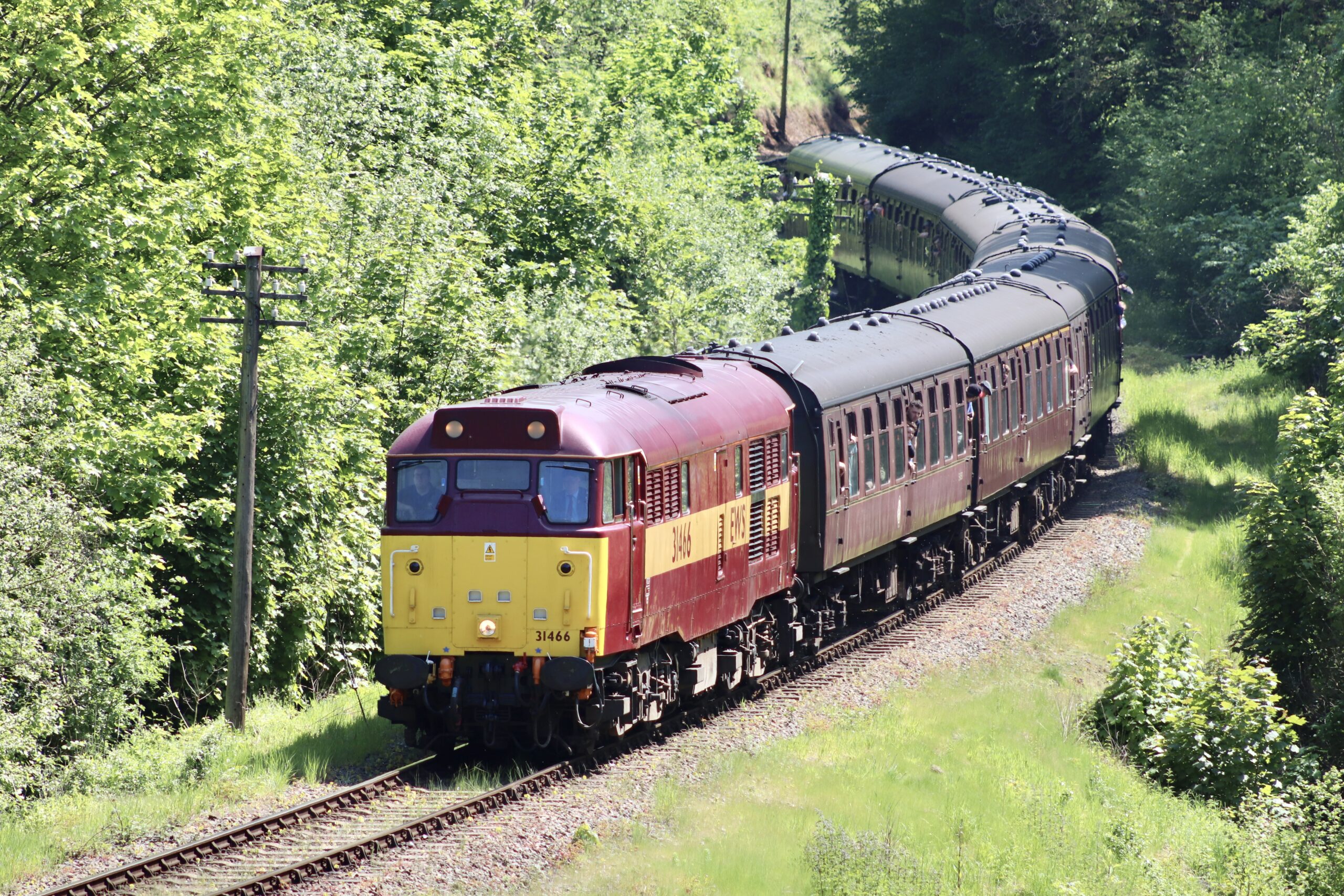
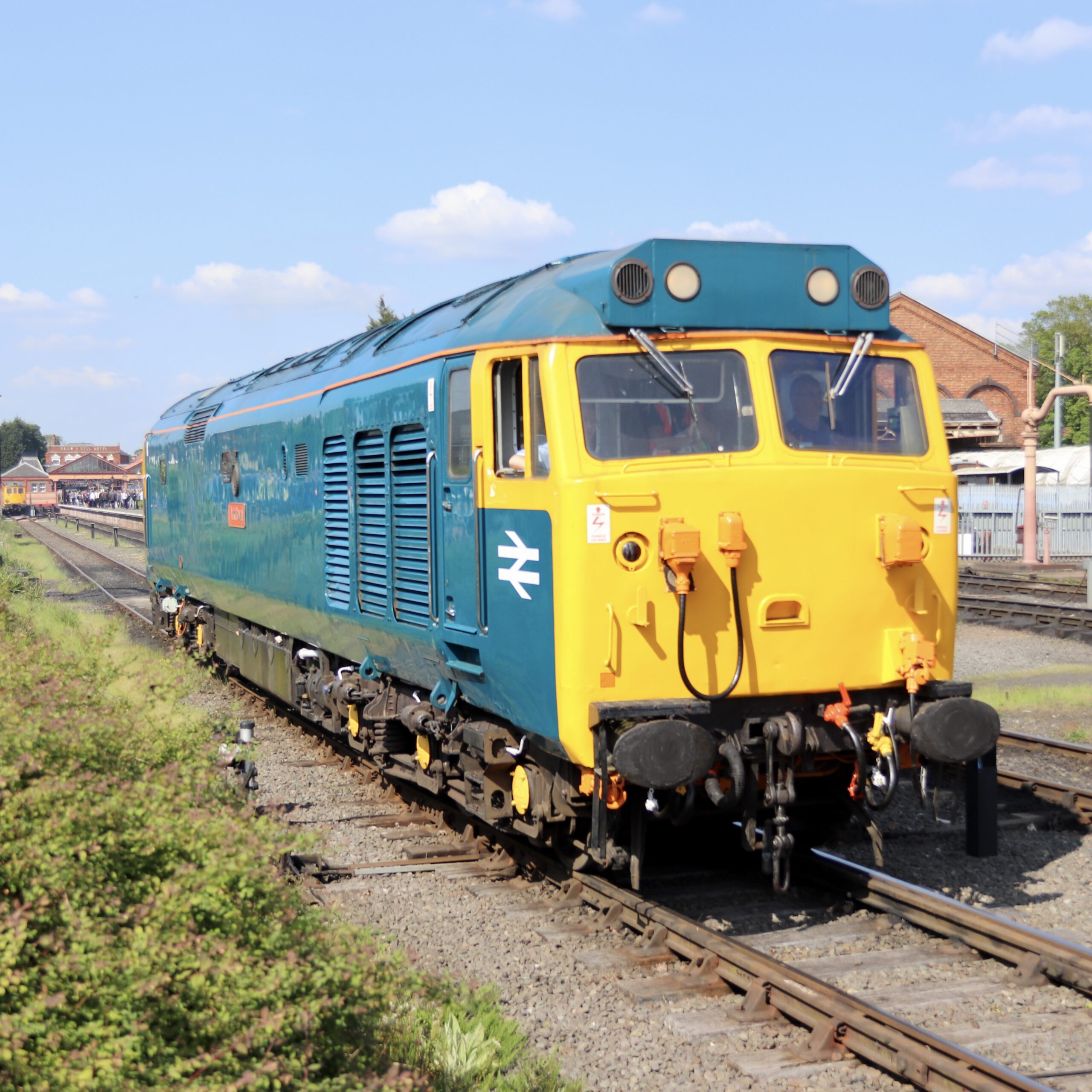
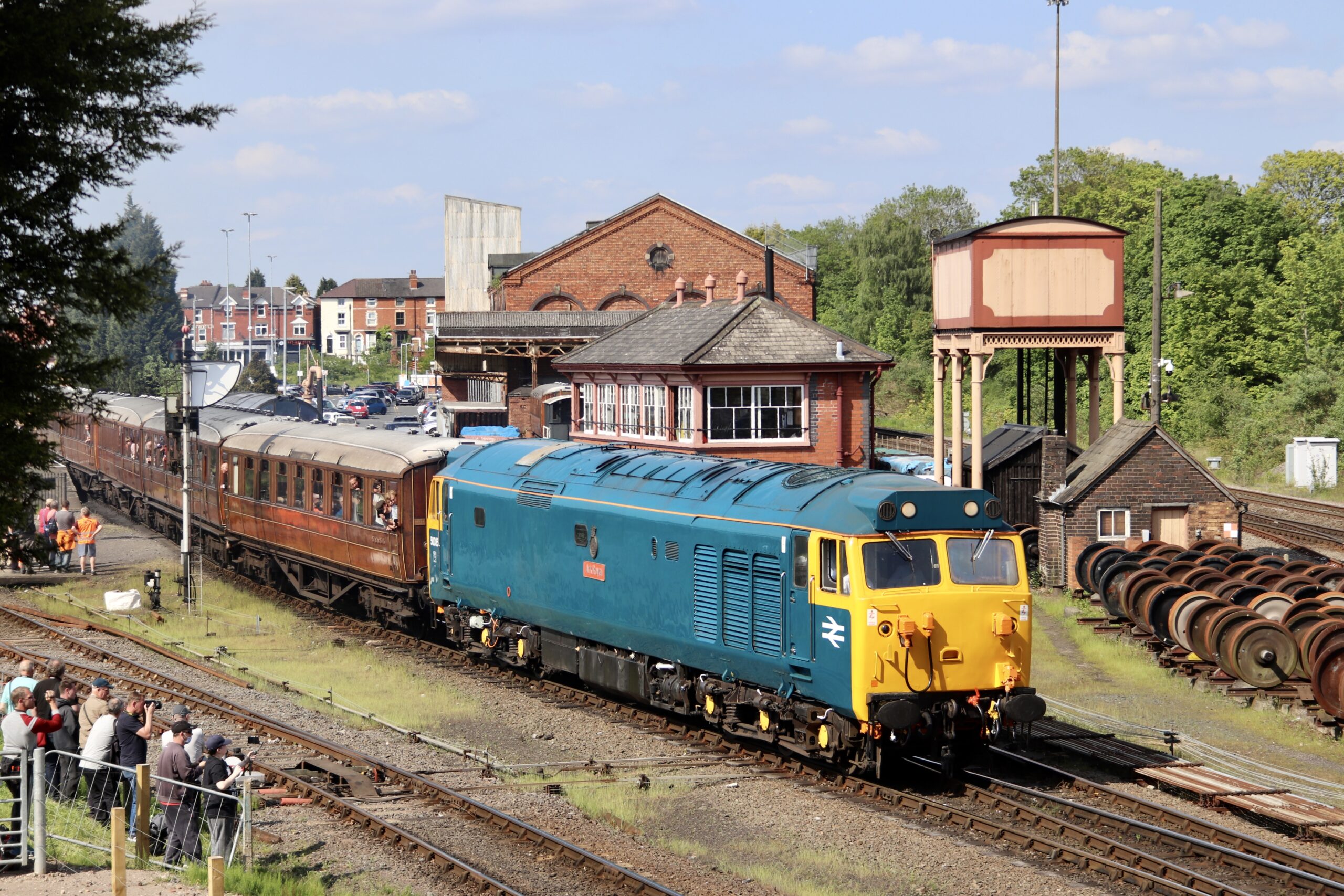
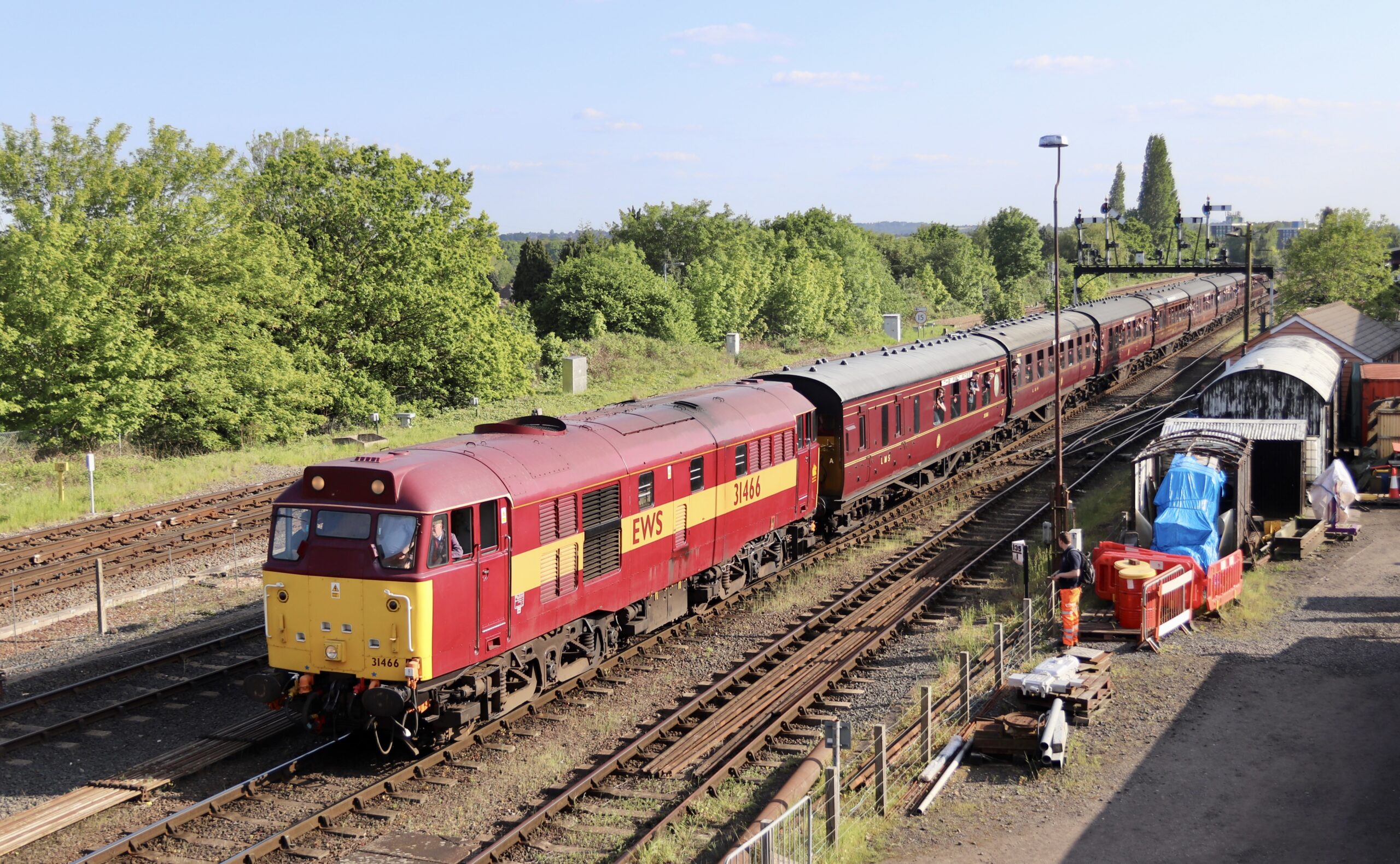
Yoshi takes to the shade at Highley – 20/05/2023DB Cargo provided Class 60 No. 60062 ‘Sonia’ in her striking fiery Steel On Steel livery. Class 47 No. 47712 is on the rear – 20/05/2023Class 60 No. 60062 ‘Sonia’ approaches Highley – 20/05/2023Close up of Class 60 No. 60062 ‘Sonia’. The locomotive carries this special livery to celebrate the important role DB Cargo UK plays in supporting the UK’s metal transportation market. One full train load of steel coil can produce over 1,000 new cars or 60,000 white goods – 20/05/2023Class 50 No. 50035 ‘Ark Royal’ departs Highley with a Kidderminster bound train. There are several Class 50’s based on the Severn Valley but only one example was in operation over the gala as the GBRf pair No.’s 50007 and 50035 were undergoing some maintenance between mainline outings, while No.’s 50033 and 50044 were in the Traction Maintenance Depot and No. 50031 is currently minus a fuel tank – 20/05/2023Maybach Music as Class 52 No. D1015 ‘Western Champion’ arrives at Highley. No. D1015 is one of seven preserved Western locomotives from the original 74 built by BR at Swindon and Crewe – 20/05/2023 Push-Pull fitted Class 33 No. 33108 in revised departmental “Dutch” livery (so named because of the similarity to the Dutch State Railway colours later adopted by the BR engineers sector) was in service following an overhaul – 20/05/2023Resident Class 31 No. 31466 in English Welsh Scottish (EWS) livery on the approach to Highley. The Class 31 locomotives received a number of derogatory nicknames over their years in mainline operation including Goyles (short for “gargoyles” in reference to the perceived ugliness of the design), Peds (short for “pedal cars” in reference to their speed and pulling power) and Gurglers, after the noise they made. 26 members of the class have been preserved – 23/05/2023Yoshi relaxes at Highley – 20/05/2023
At some point we knew we had to move on from our balcony position, essentially to get photos of locomotives which were not planned to make it to Highley. Our original plan was to journey to Bewdley and then onto Kidderminster. As Bewdley can be somewhat busy on an average day and with this being the busiest I’d ever seen the Severn Valley, I opted instead to head straight for Kidderminster. This would mean we’d miss seeing the visiting Class 20 locomotives (No.’s 20048 and 20189) heading to Bridgnorth, but these were scheduled to return later. Unfortunately, things didn’t go quite to plan and one of the Class 20’s, No. 20048 failed and was removed from the train on reaching Bridgnorth and didn’t make the return outing. Another Class 20, No. 20142 in red London Transport livery was in attendance for the gala, but was not in use, or indeed visible, on the day of our visit.
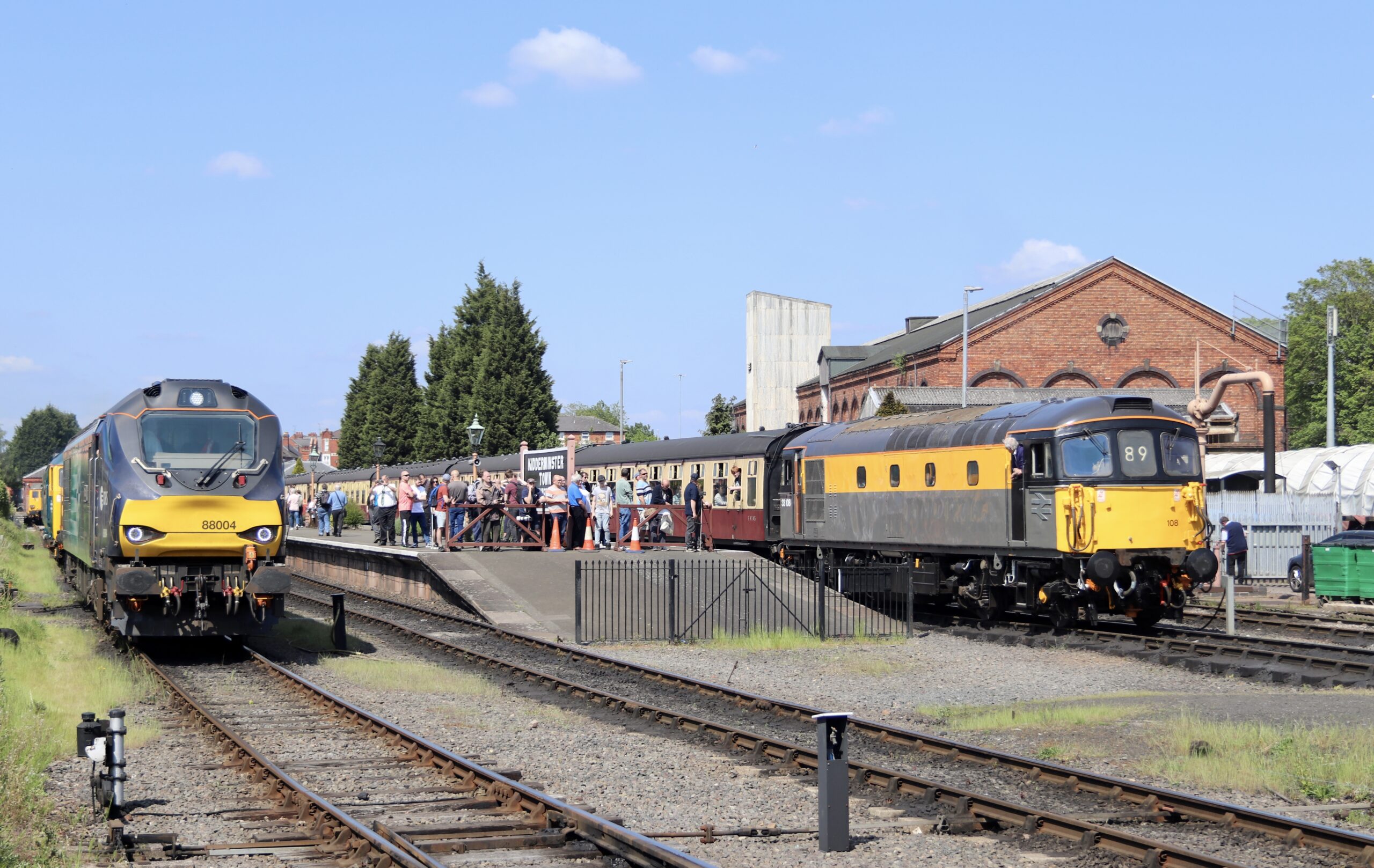
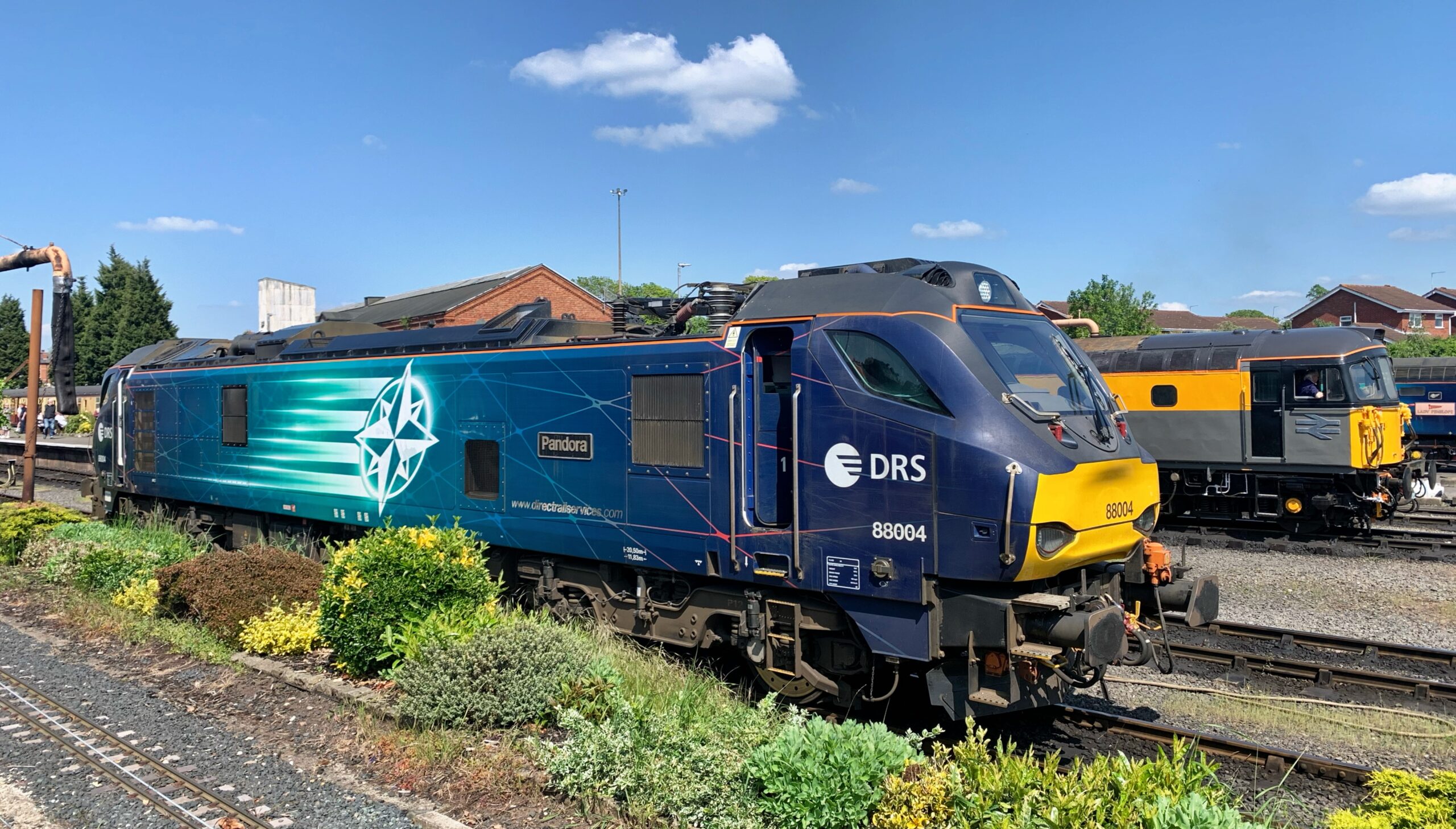
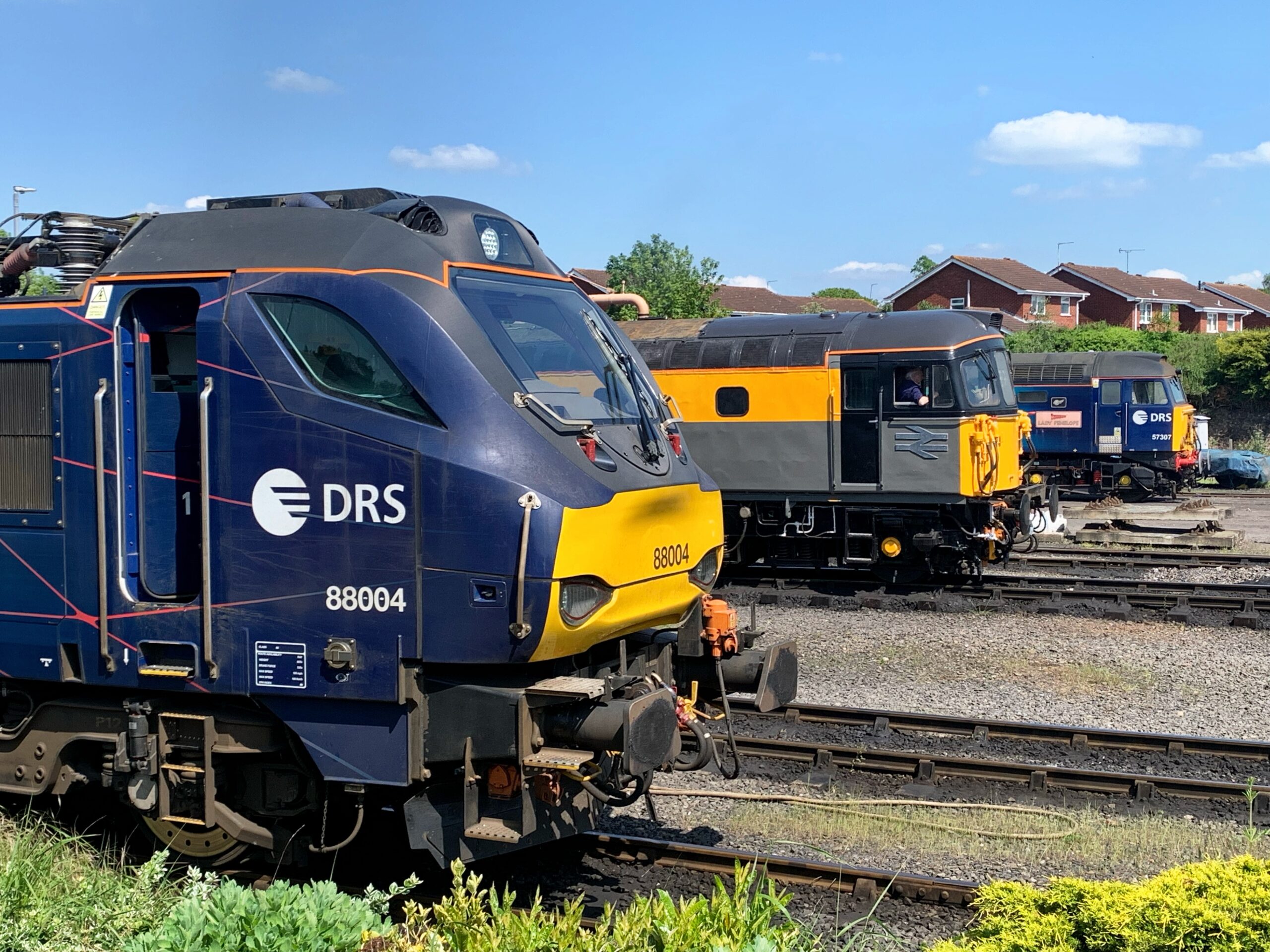
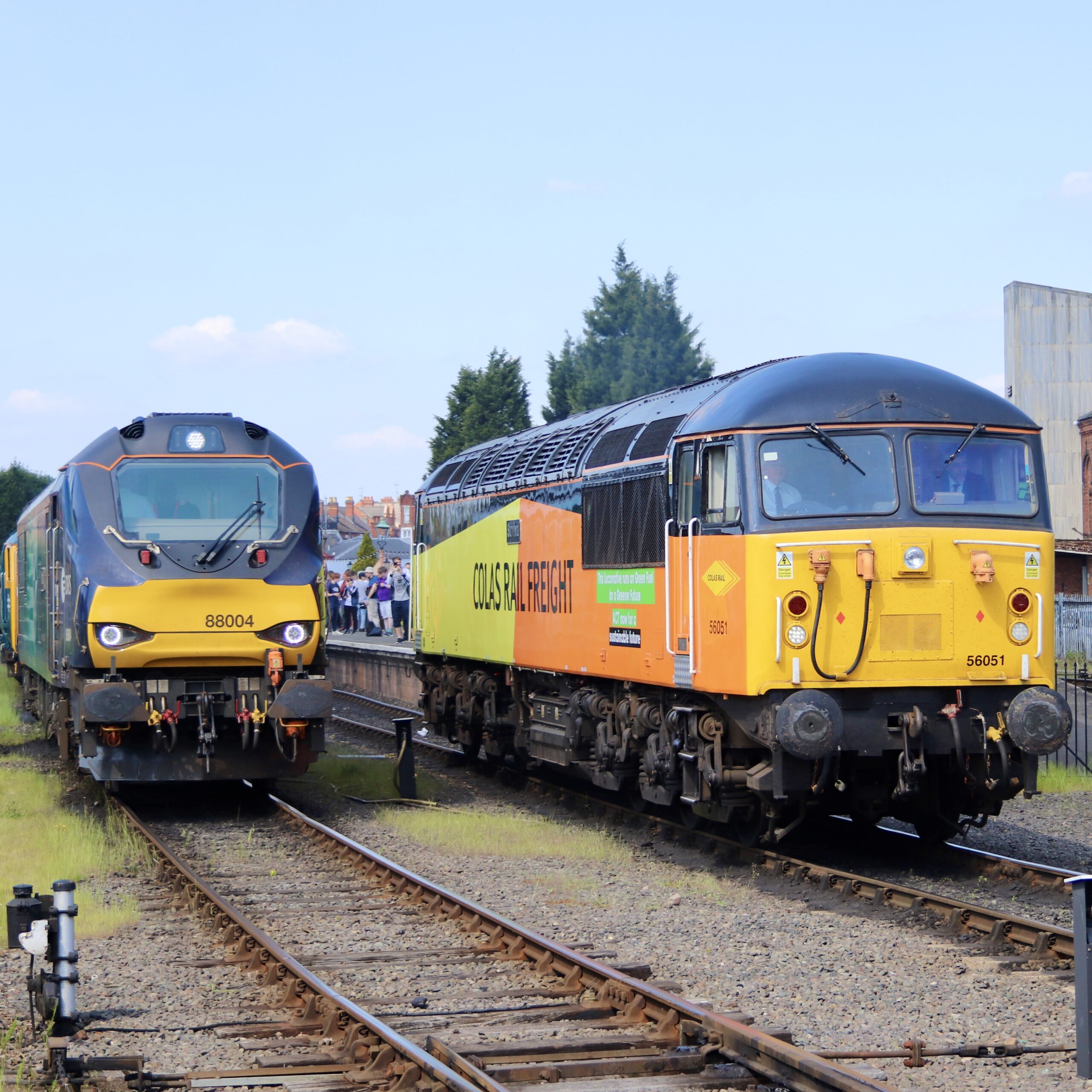
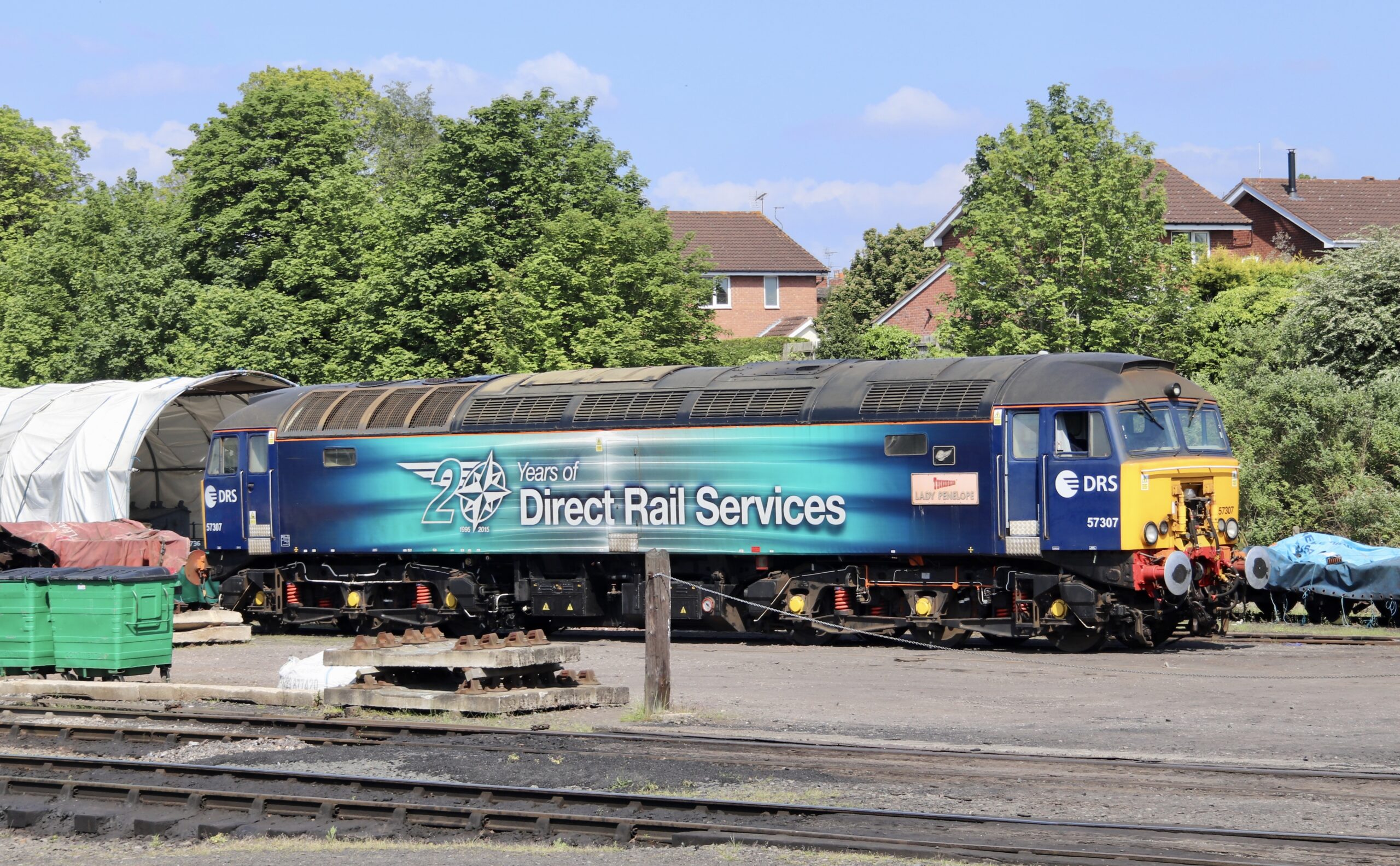
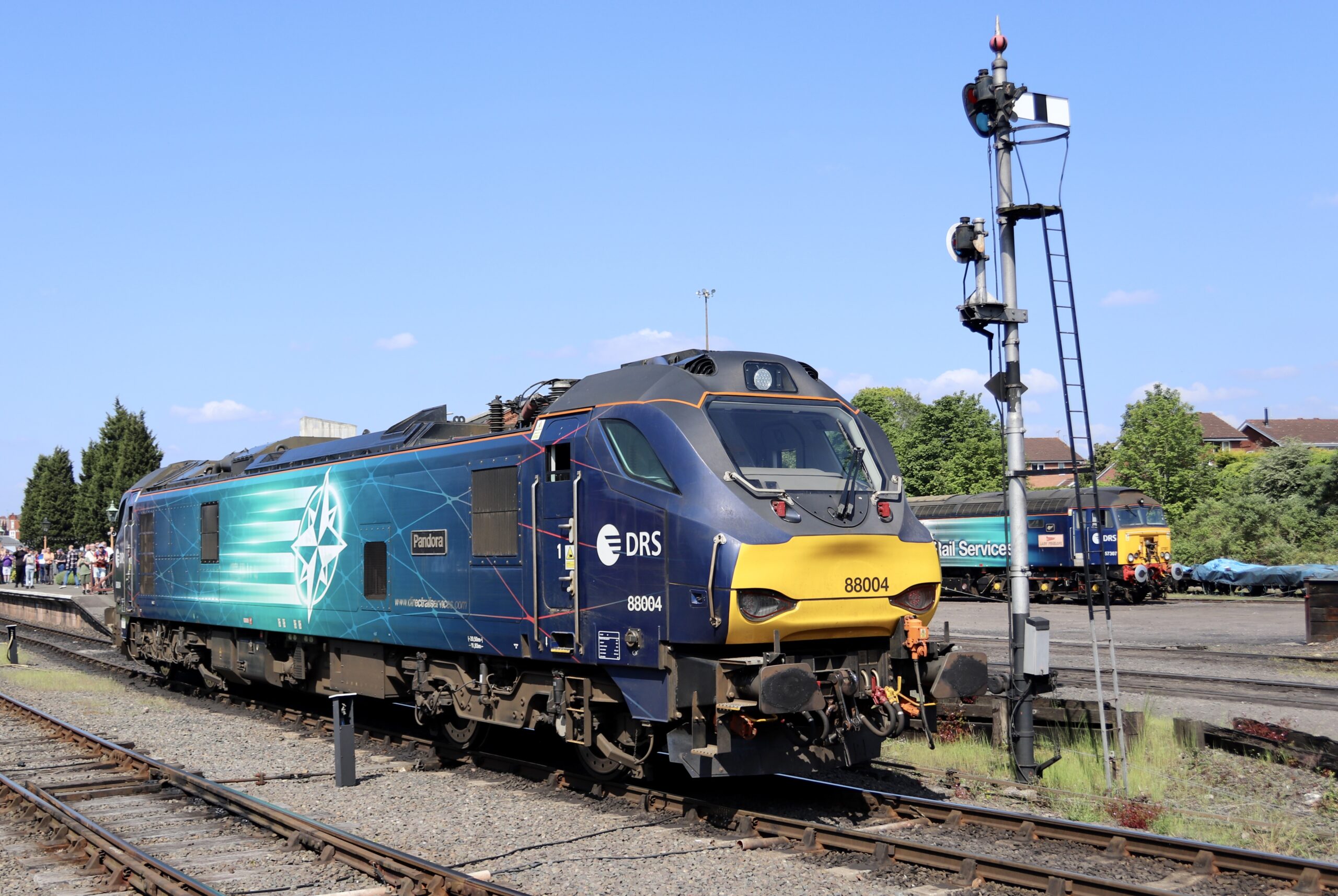
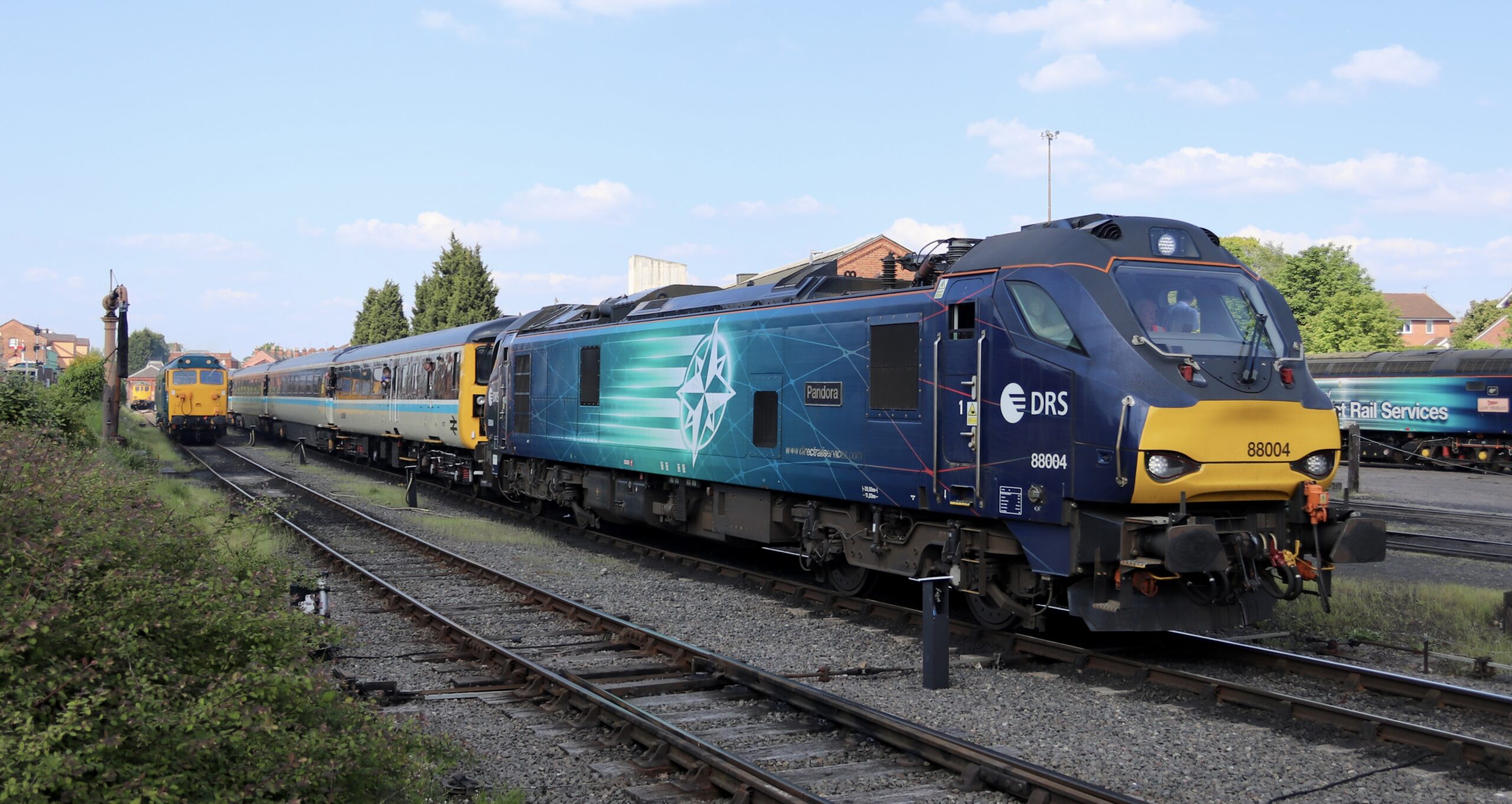
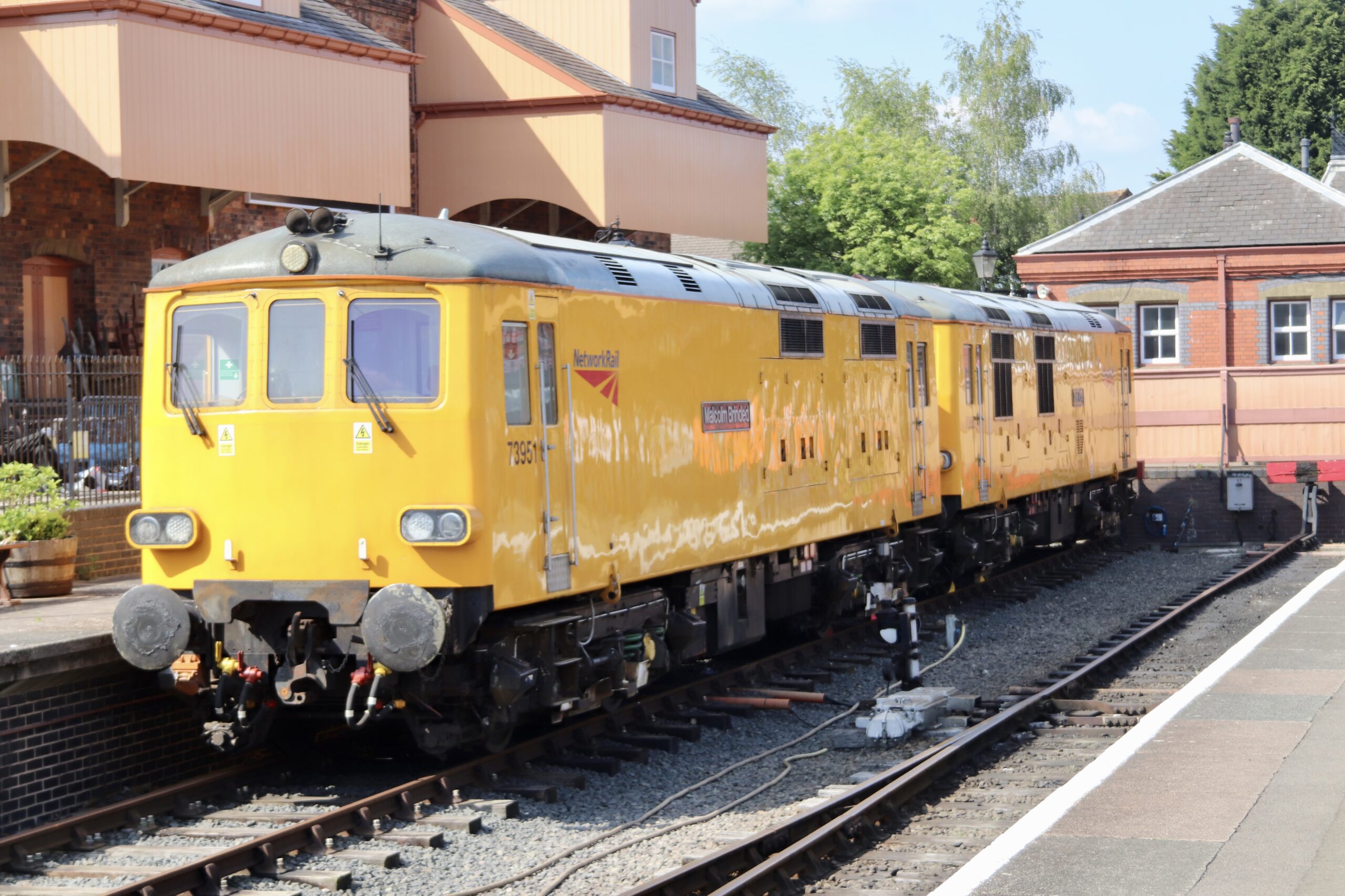
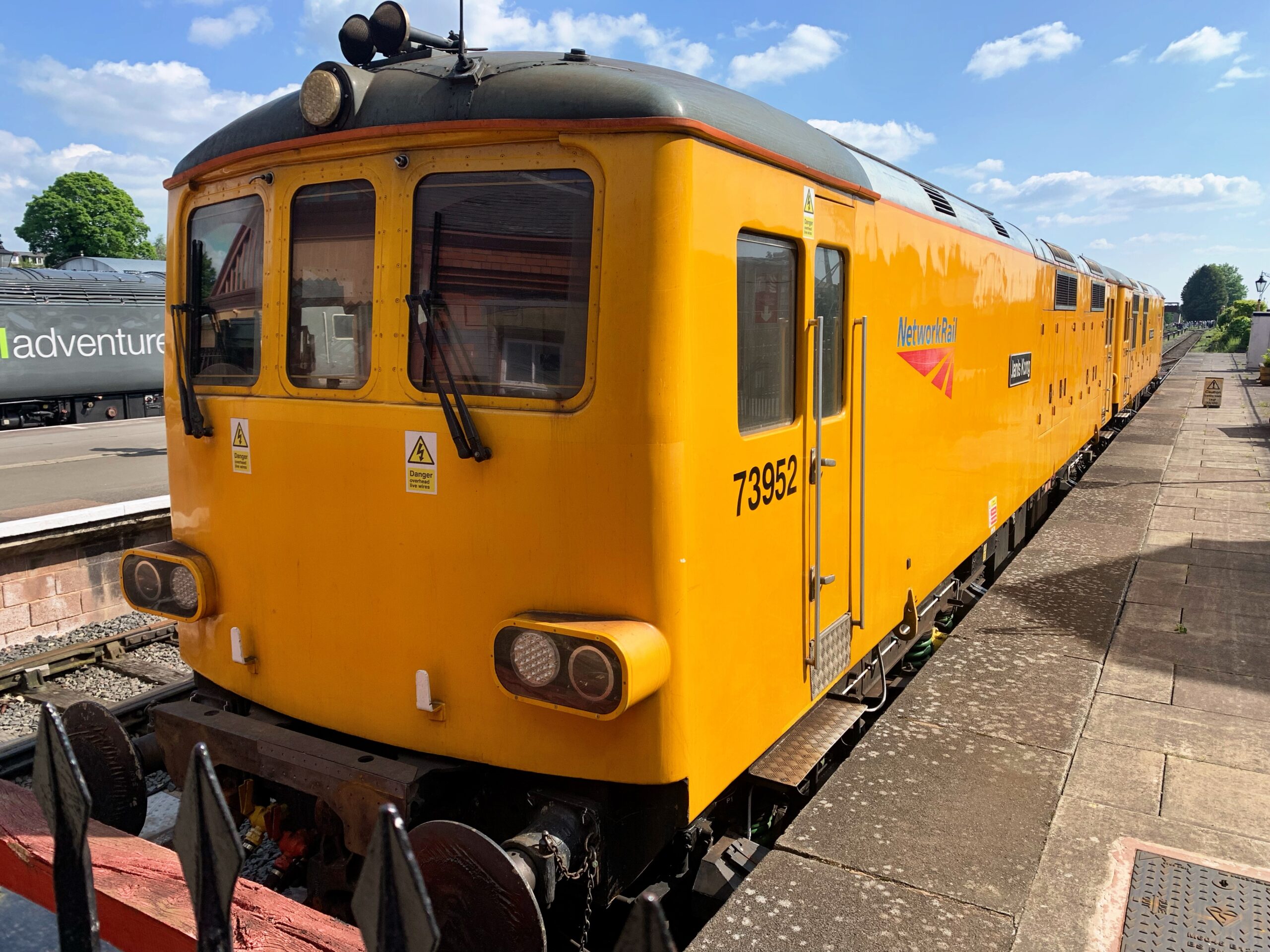
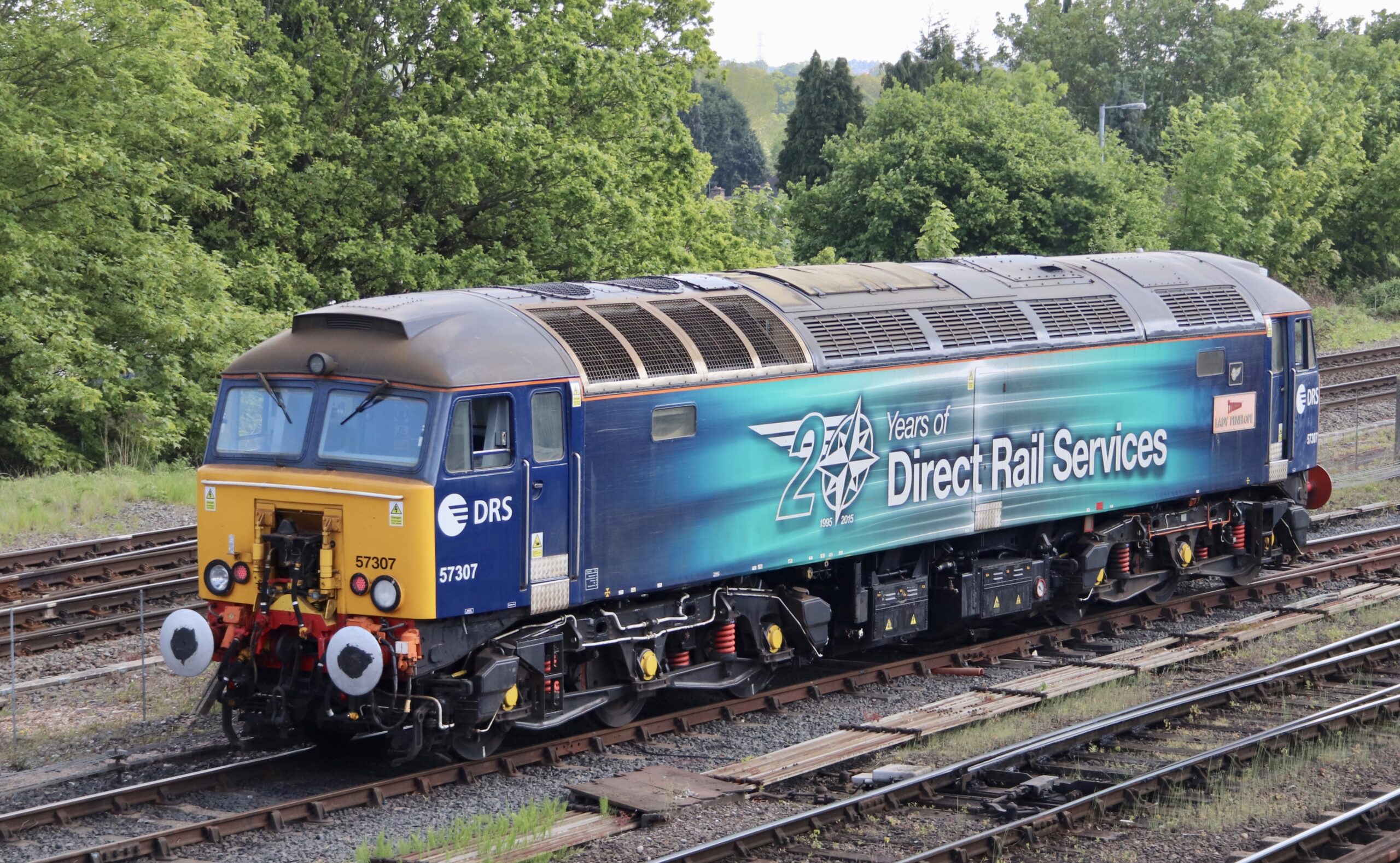
Direct Rail Services (DRS) Class 88 No. 88004 ‘Pandora’ awaits her turn while Class 33 No. 33108 prepares for departure form Kidderminster – 20/05/2023DRS) Class 88 No. 88004 ‘Pandora’ and Class 33 No. 33108 at Kidderminster – 20/05/2023Line up of No.’s 88004, 33108 and 57307 at Kidderminster – 20/05/2023Colas Freight Class 56 No. 56051 ‘Survivor’ passes DRS Class 88 No. 88004 ‘Pandora’ at Kidderminster – 20/05/2023Direct Rail Services (DRS) Class 57 No. 57307 ‘Lady Penelope’ awaits action in the sidings at Kidderminster – 20/05/2023DRS pair Class 88 No. 88004 ‘Pandora’ and Class 57 No. 57307 ‘Lady Penelope’ at Kidderminster – 20/05/2023Class 88 No. 88004 ‘Pandora’ at the head of the ScotRail stock in Kidderminster. Ten Class 88 locomotives were built in 2015/16 by Stadler Rail Valencia. They are dual-mode locomotives that are fitted both with a pantograph to collect electricity from overhead wires, and a Caterpillar diesel engine. They are the first dual-mode locomotive in the UK to use the 25 kV AC electrification – 20/05/2023Class 50 No. 50035 ‘Ark Royal’ runs light engine out of Kidderminster. No. 50035 was the first BR Class 50 diesel locomotive to enter preservation The locomotive was built at English Electric’s Vulcan Foundry at Newton-le-Willows and entered BR service as No. D435 at Crewe in August 1968, being given the number 50035 in March 1974 under the TOPS scheme. She was withdrawn from service on 5th August 1990 – 20/05/2023RailAdventure Class 43 No.’s 43465 and 43484 on static display at Kidderminster. The pairing hauled trains on the Friday only – 20/05/2023RailAdventure Class 43 No.’s 43484 and 43465 at Kidderminster. RailAdventure signed a partnership deal with Hanson & Hall Rail Services in April 2021 having purchased eight Class 43 power cars, which will run back to back to operate domestic services. RailAdventure is based in Munich and has been involved in delivering new trains from Europe to the UK, such as the new Merseyrail Class 777 trains – 20/05/2023Network Rail Class 73 “Minions” No.’s 73951 ‘Malcom Brided’ and 73952 ‘Janis Kong’ were on display at Kidderminster over the gala. The two locomotives were withdrawn from service in mid-May. The pair were rebuilt by Loram in 2011/2015 with their English Electric engines being replaced by two newer, more powerful and lower emission Cummins QSK19 engines each rated at 750hp. Their acceptance into traffic was heavily delayed until 2016 and endured initial teething problems which were resolved and they became well liked by crews. They were used mostly on infrastructure monitoring trains. They are, however, non-standard locomotives and have limited crews trained to work on them. Network Rail currently lease five MTU-engined Class 73/9’s so the “Minions” are surplus to requirement – 20/05/2023Electro-Diesel Class 73 No.’s 73951 and 73952. The locomotives are scheduled to depart for warm storage, possibly at Peak Rail, by road – 20/05/2023
The new footbridge across the railway line just outside of Kidderminster station has been rebuilt after an absence of a year or two, so following a brief sojourn looking at the static exhibits, sales stands and taking a few photographs of departing trains we marched round to see what the view was like from the bridge and spent most of the rest of our visit here.
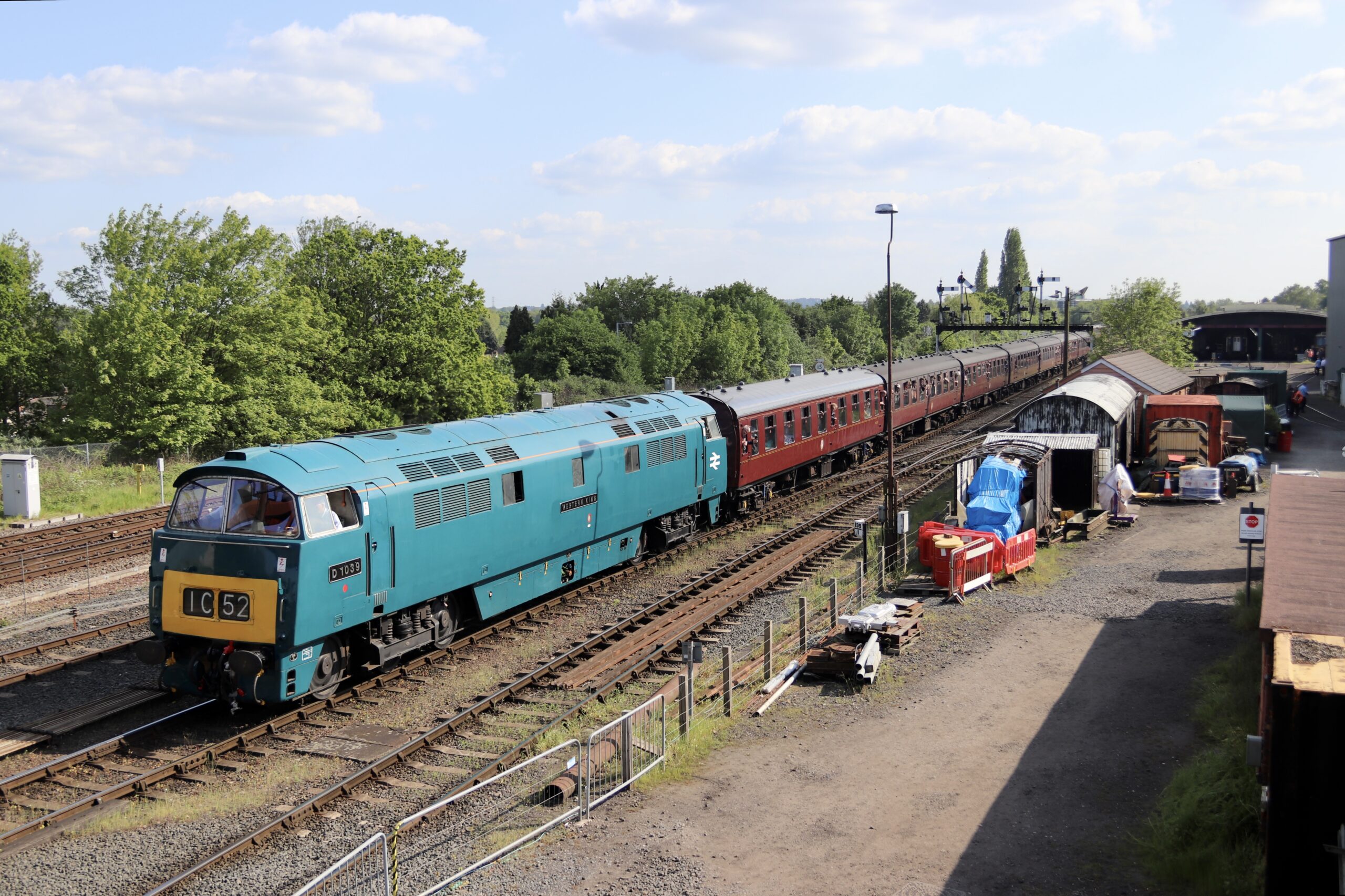
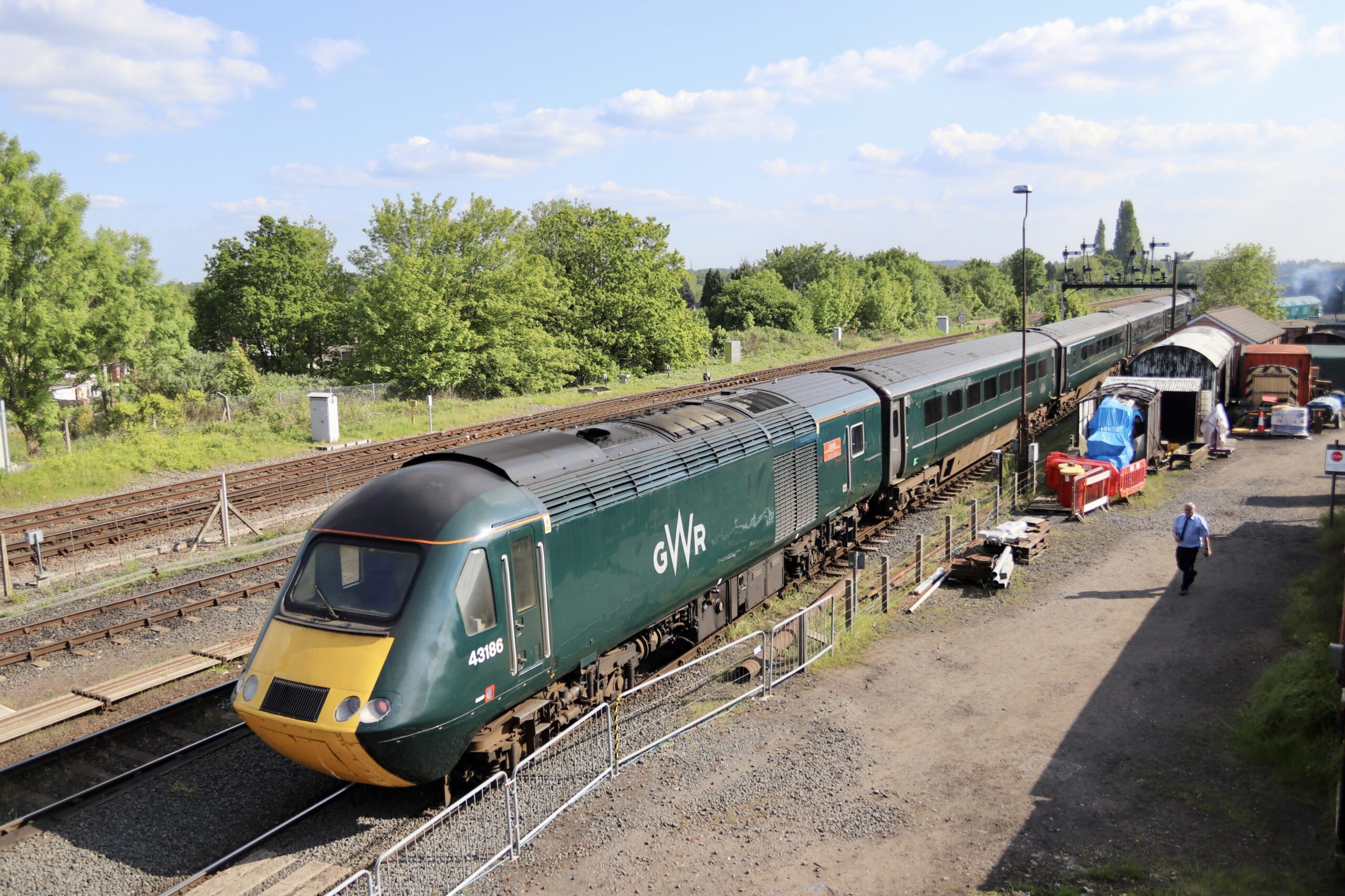
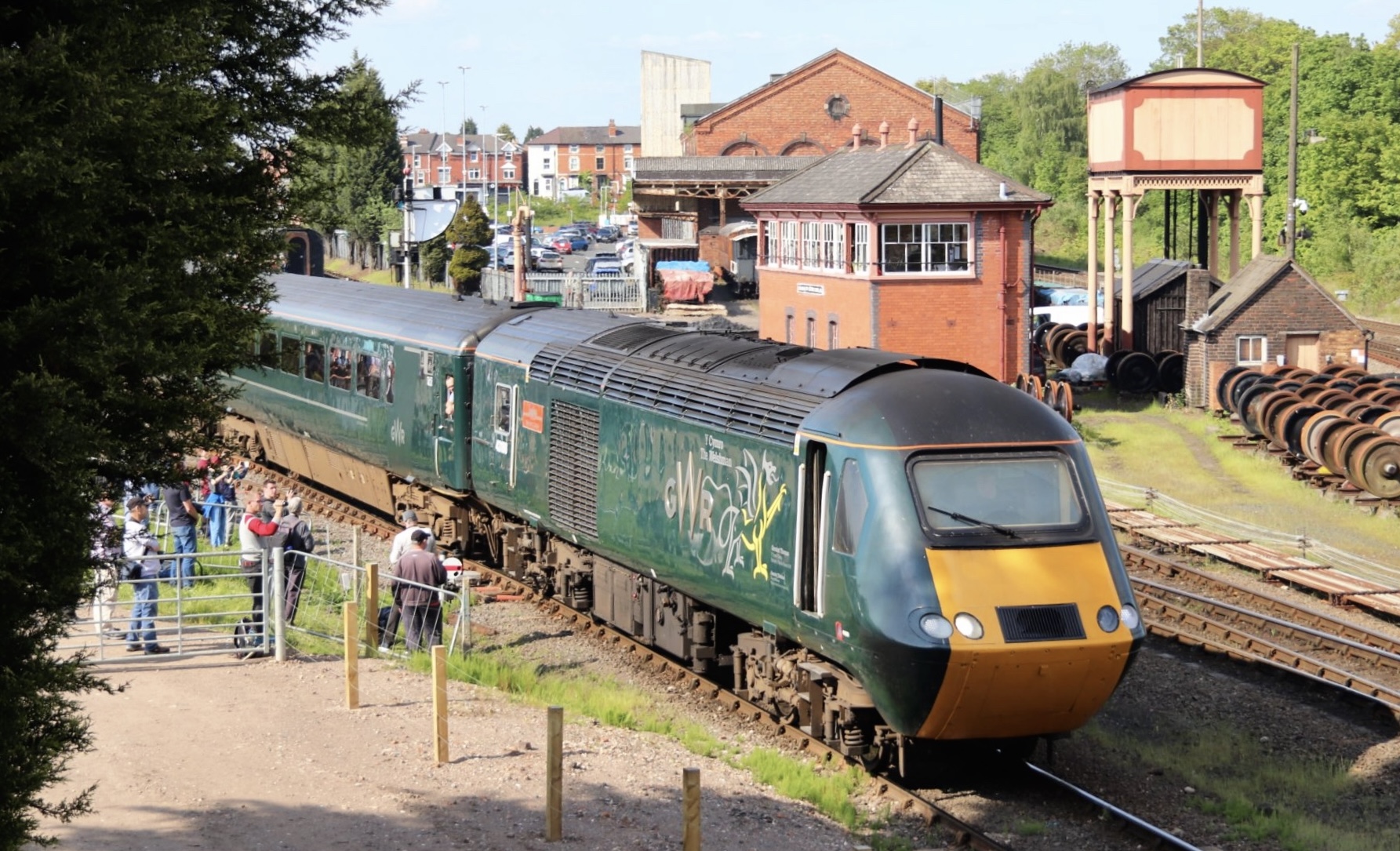
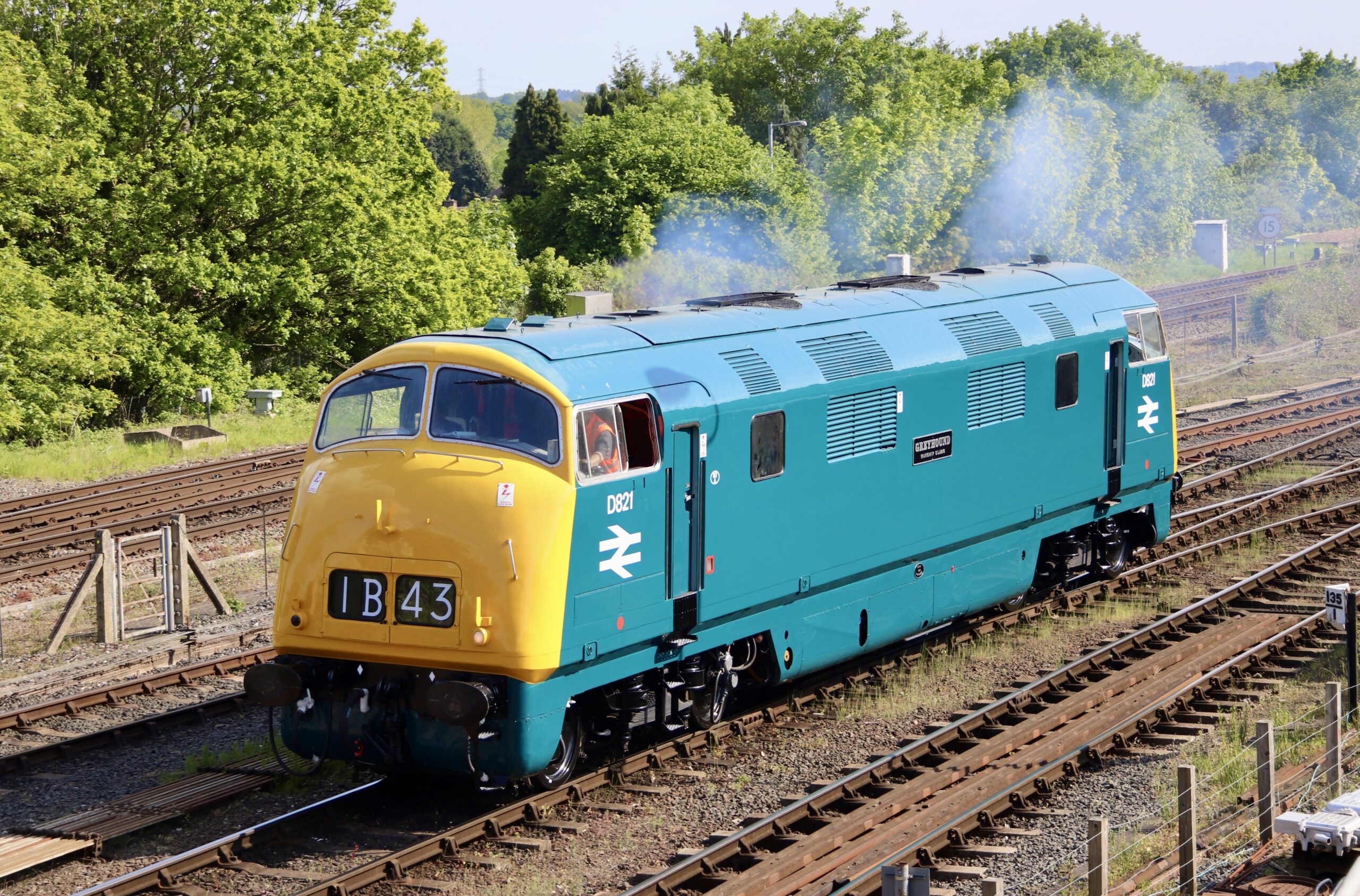
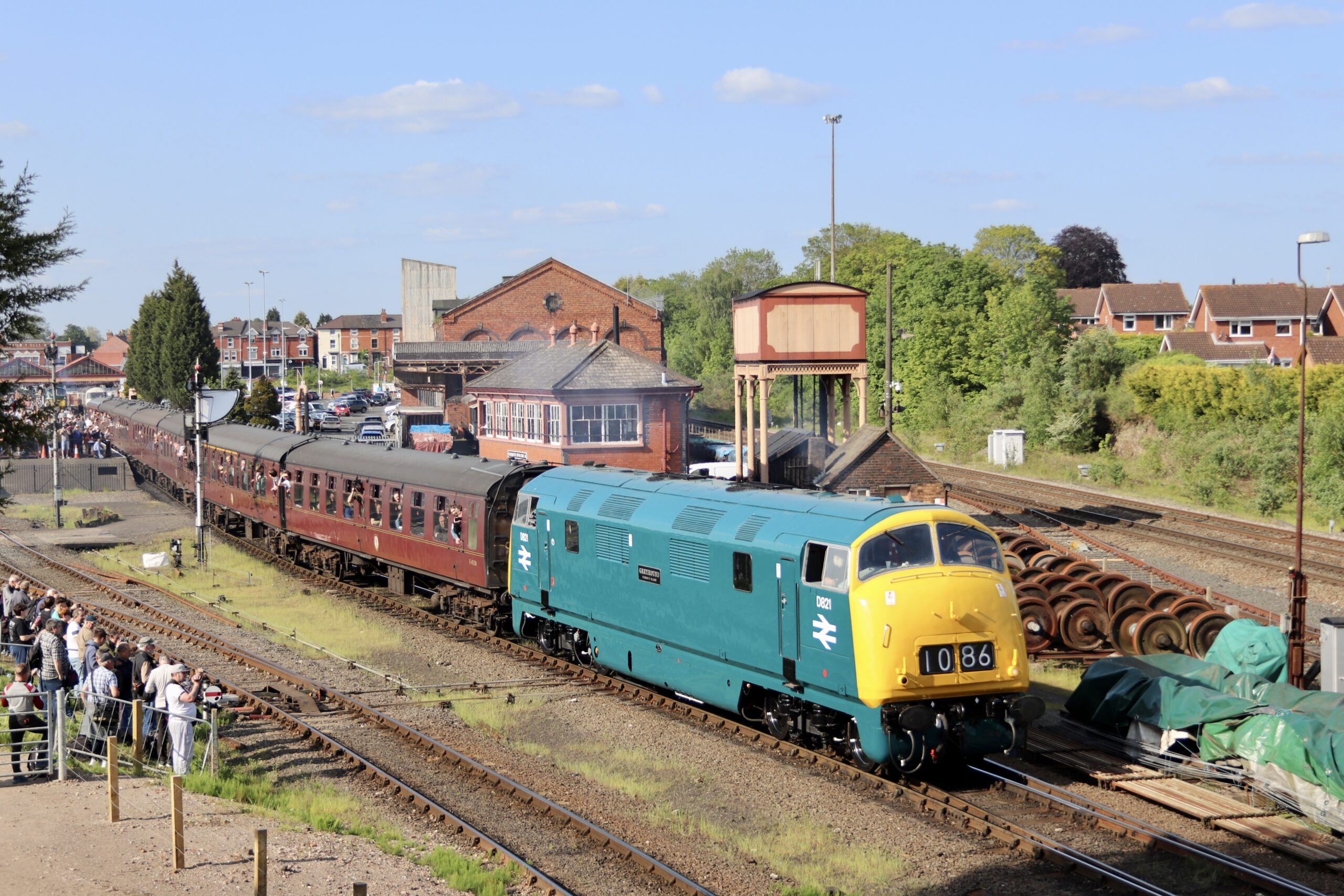
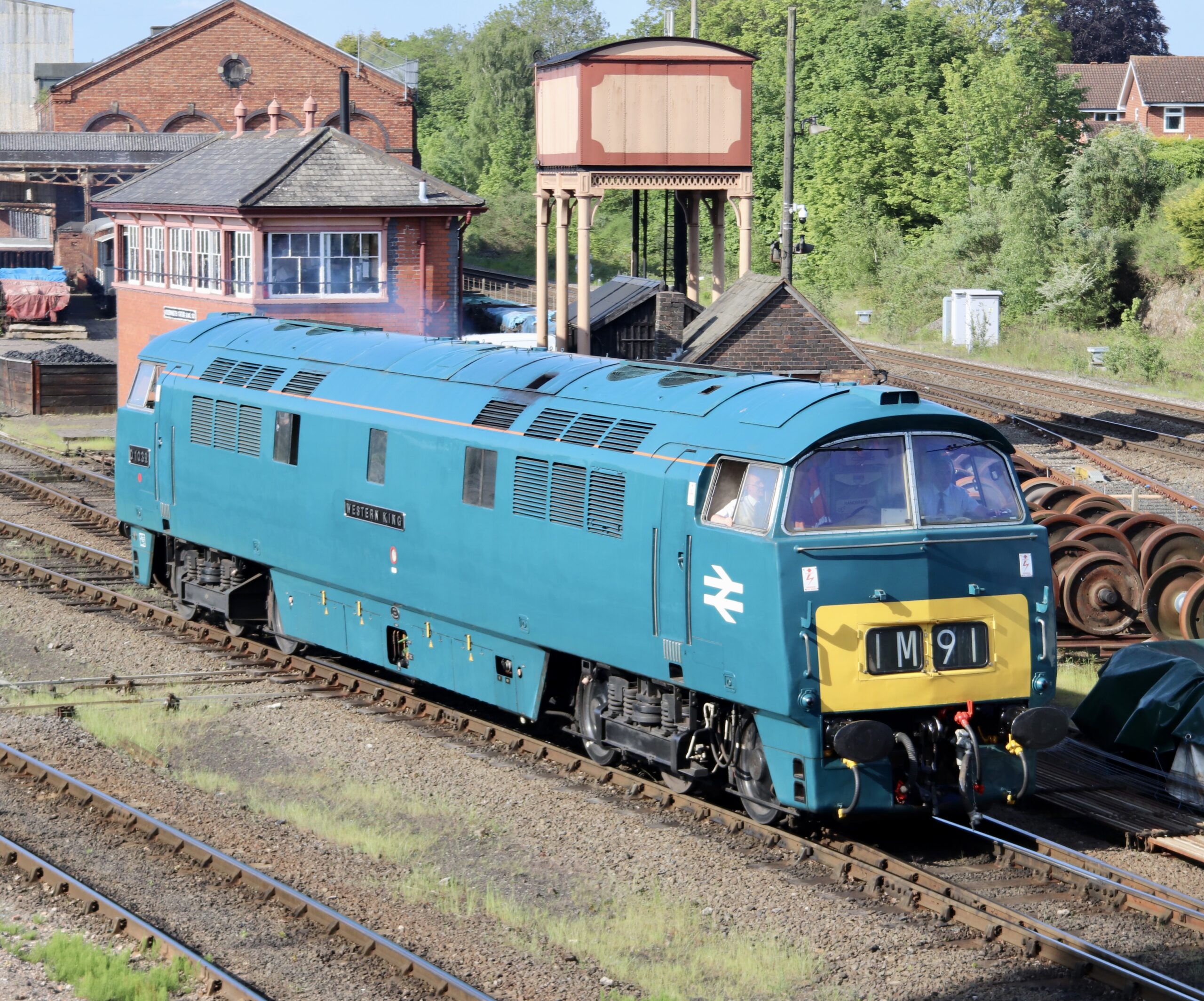
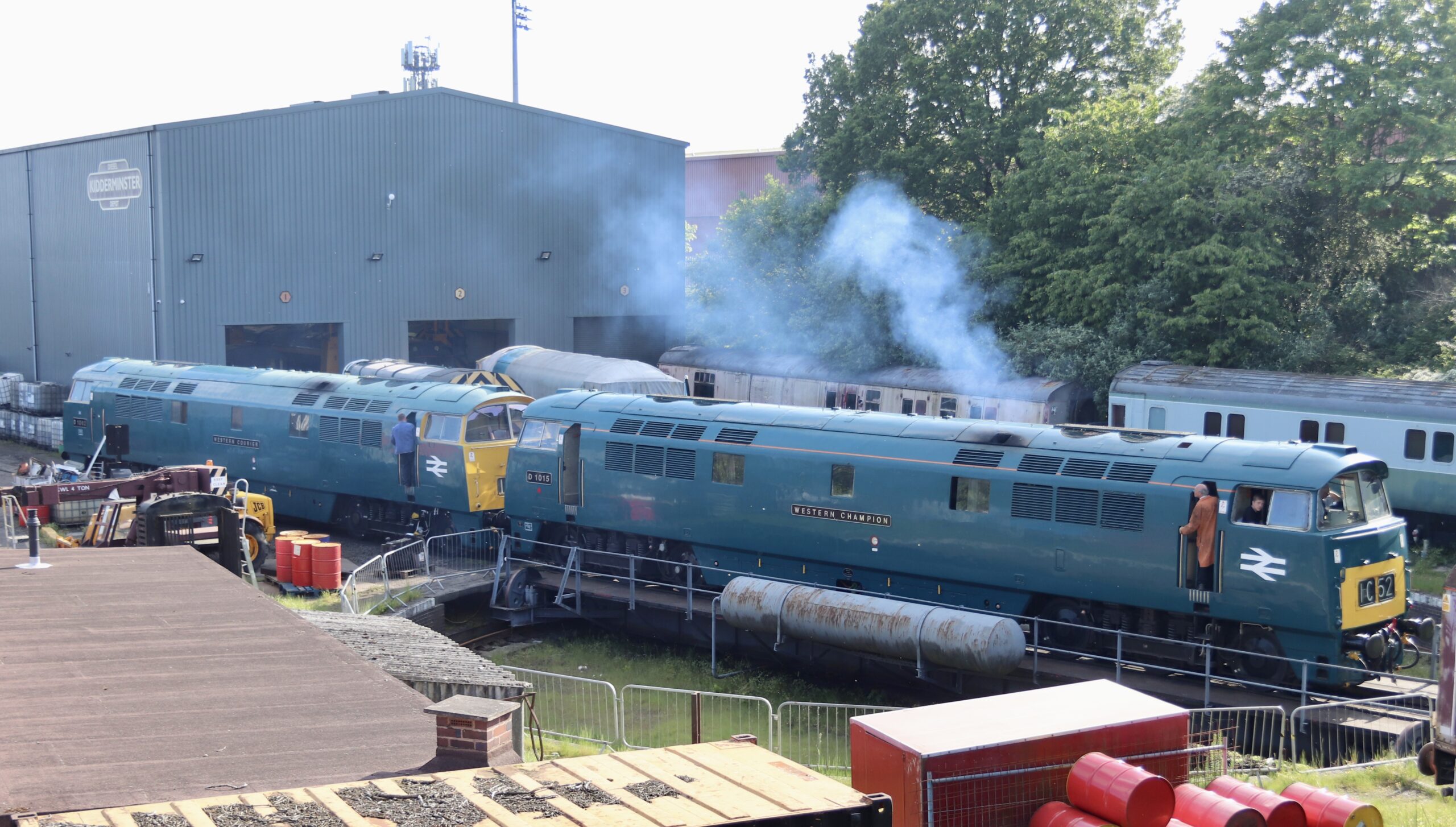
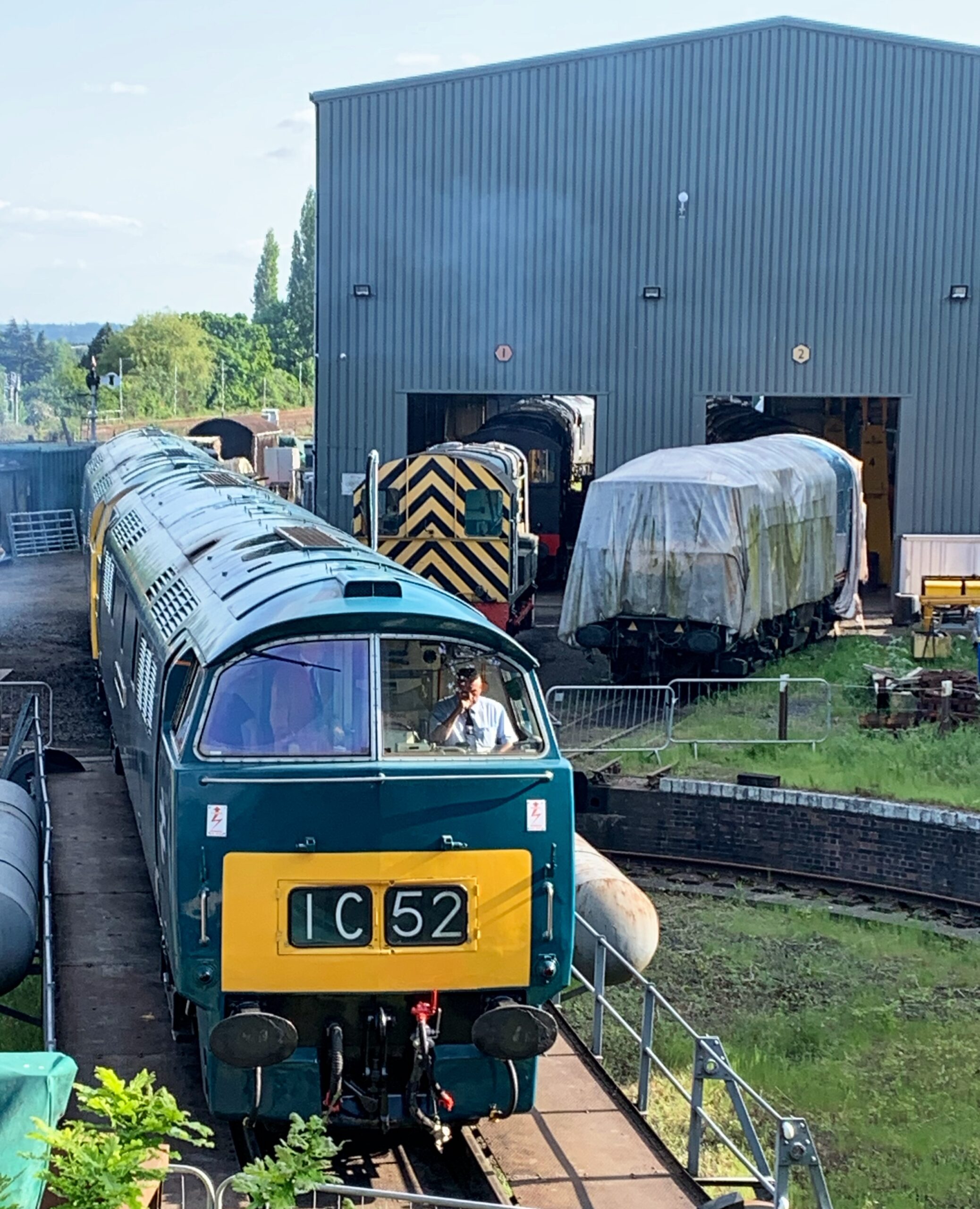
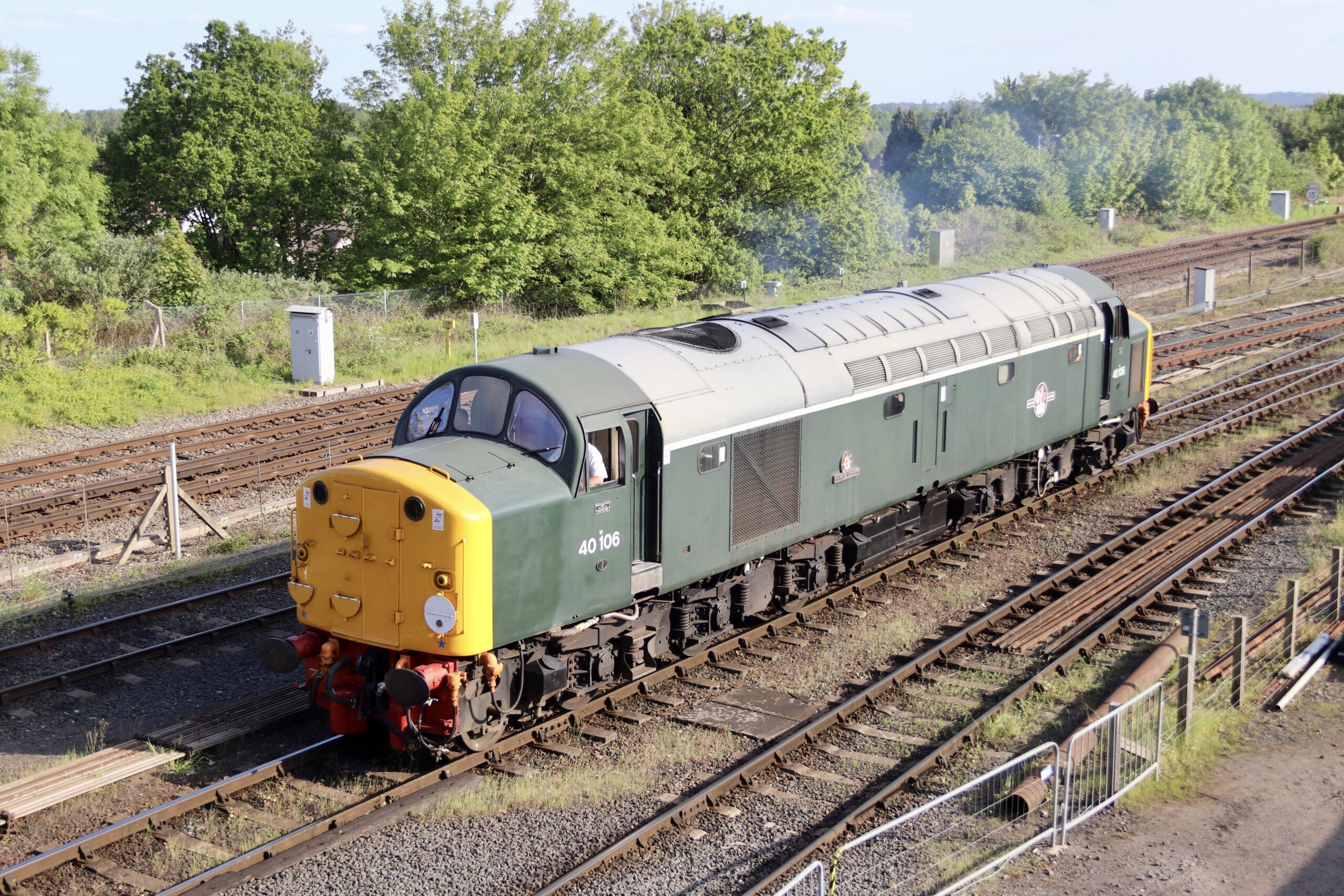
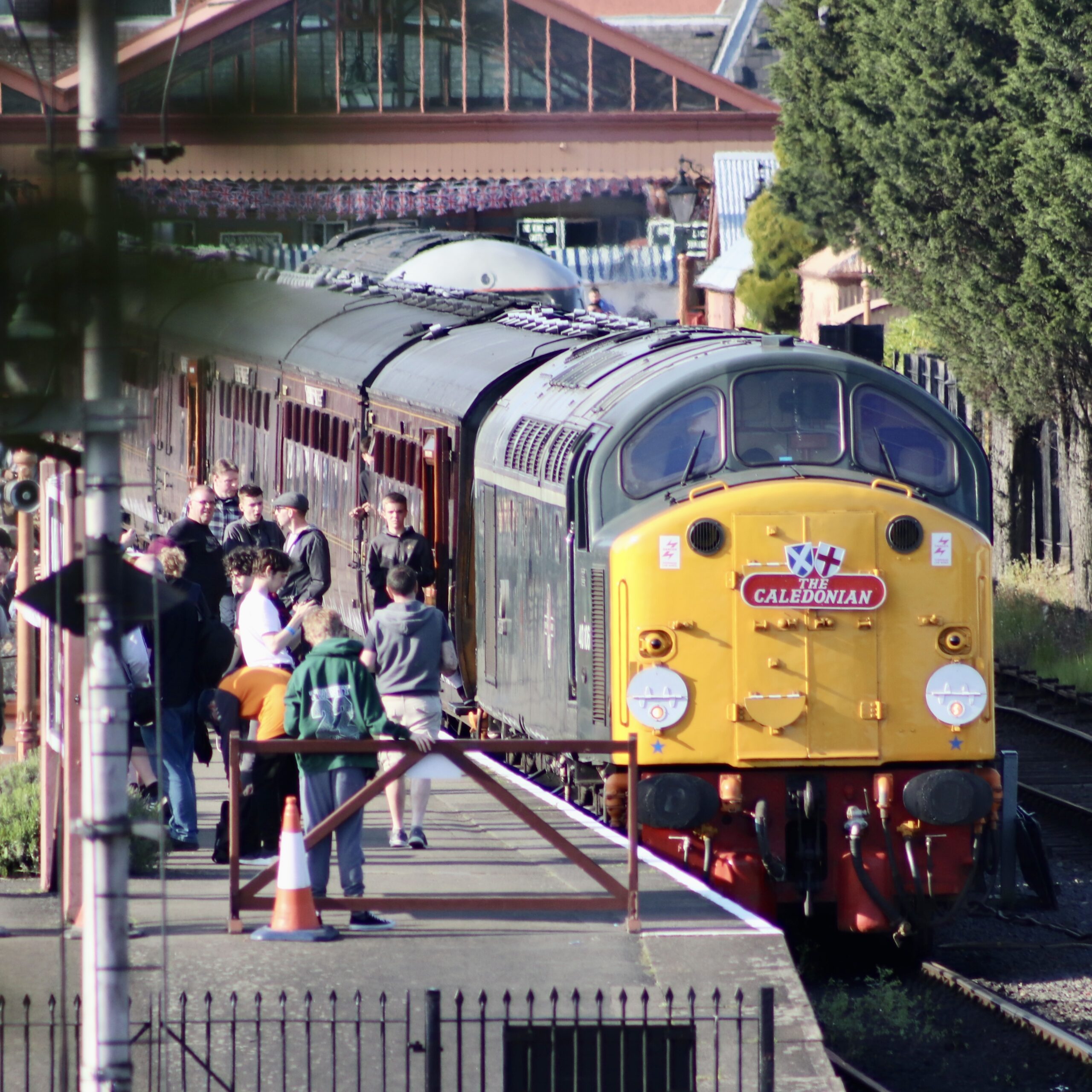
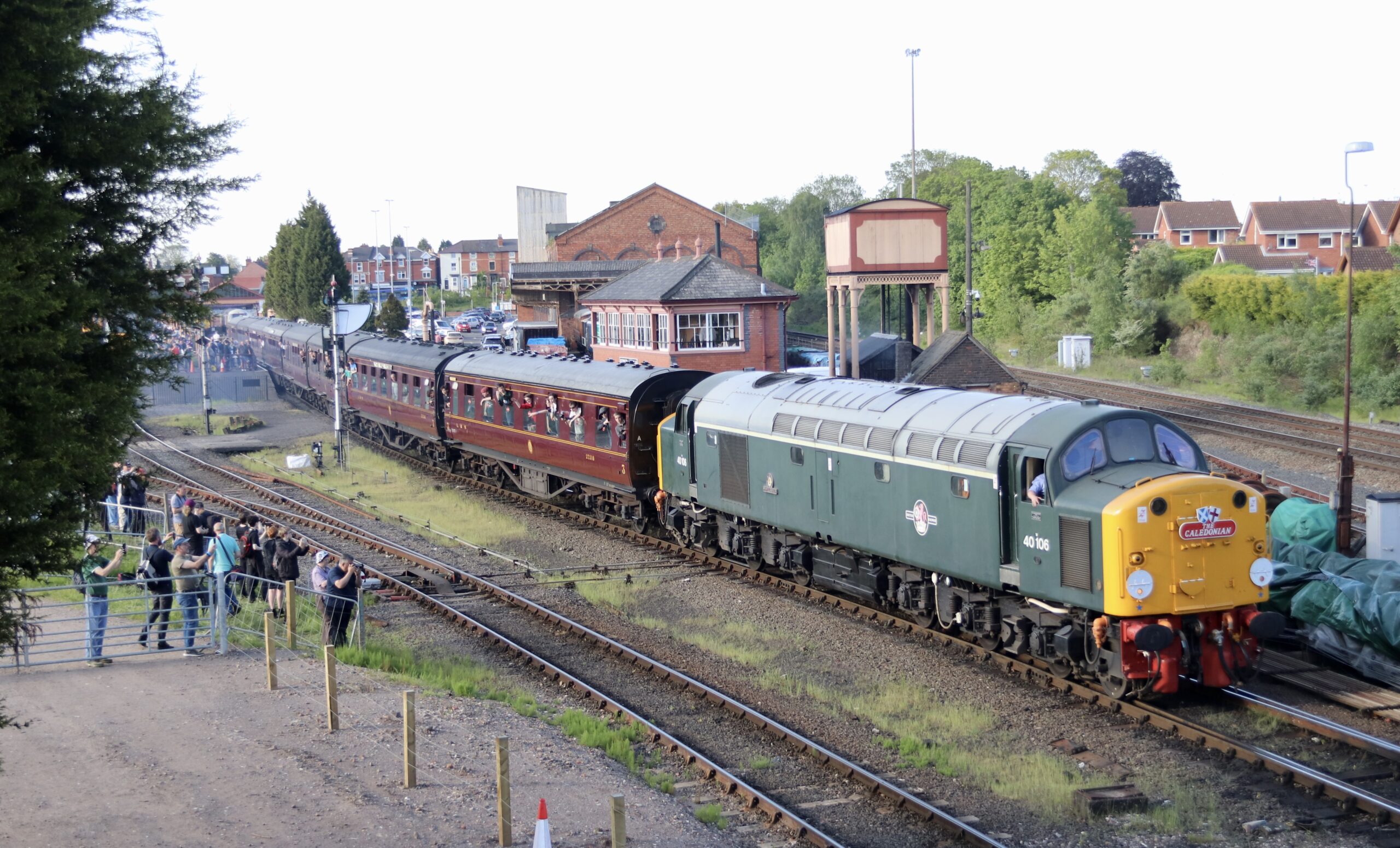
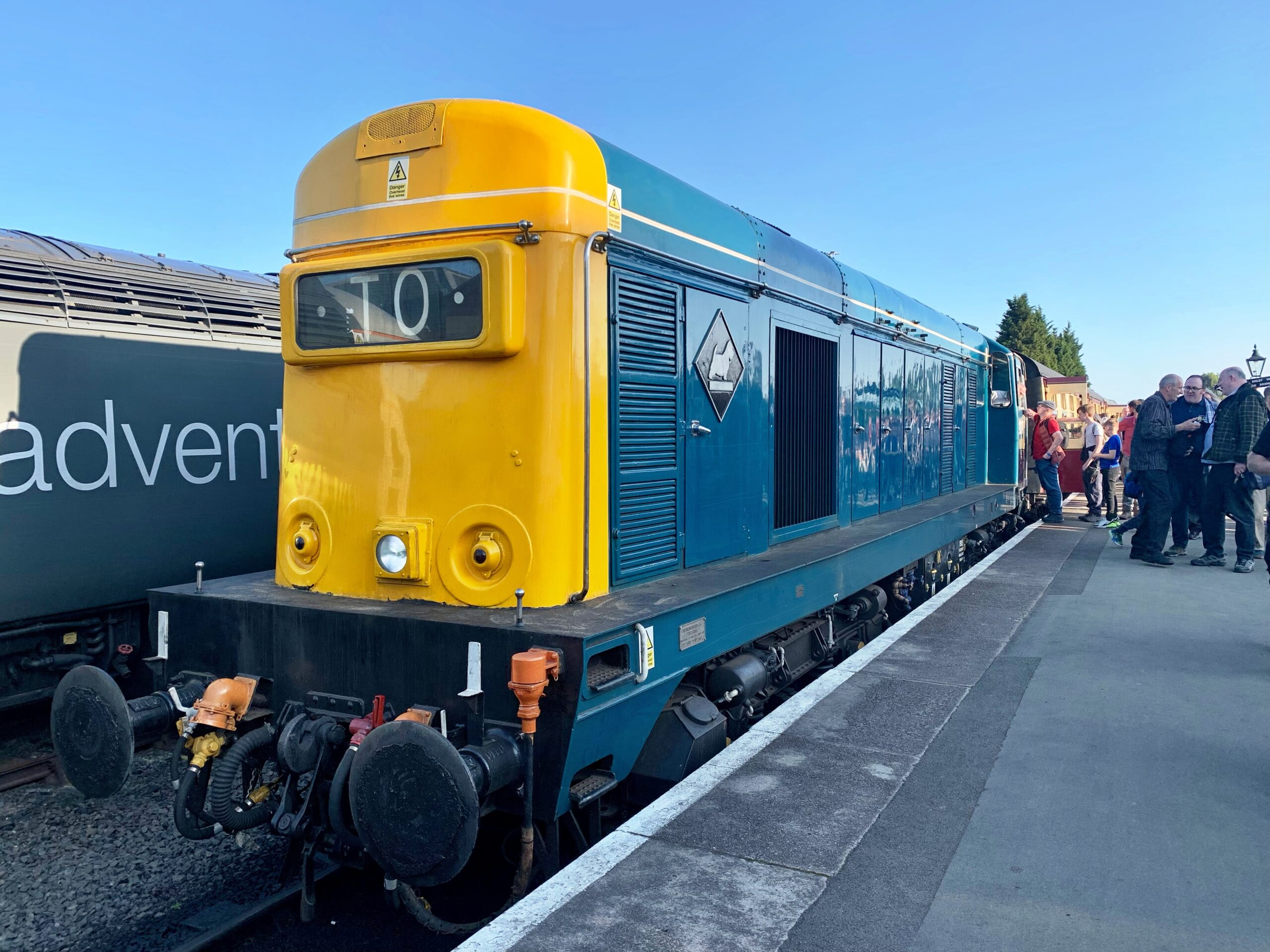
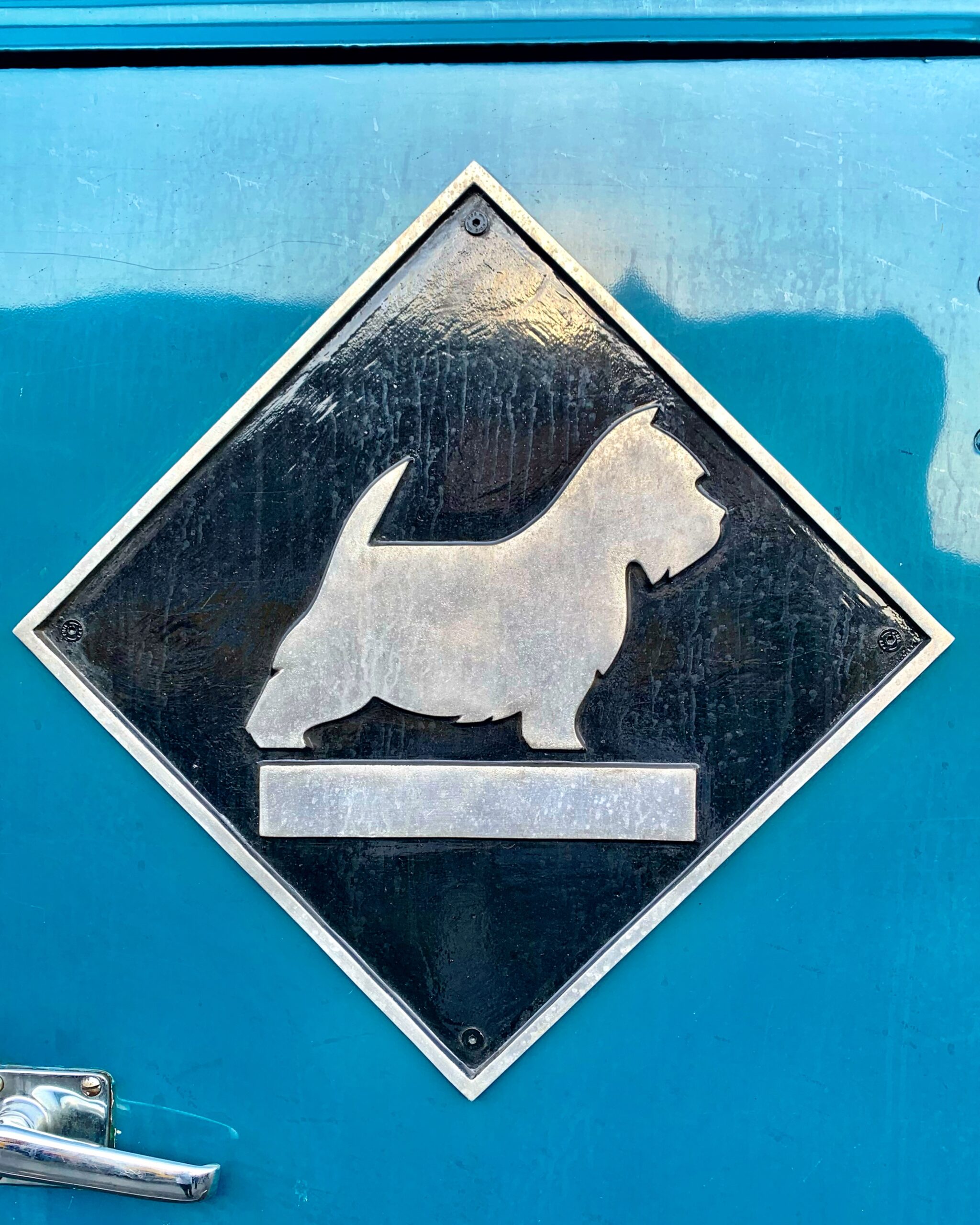
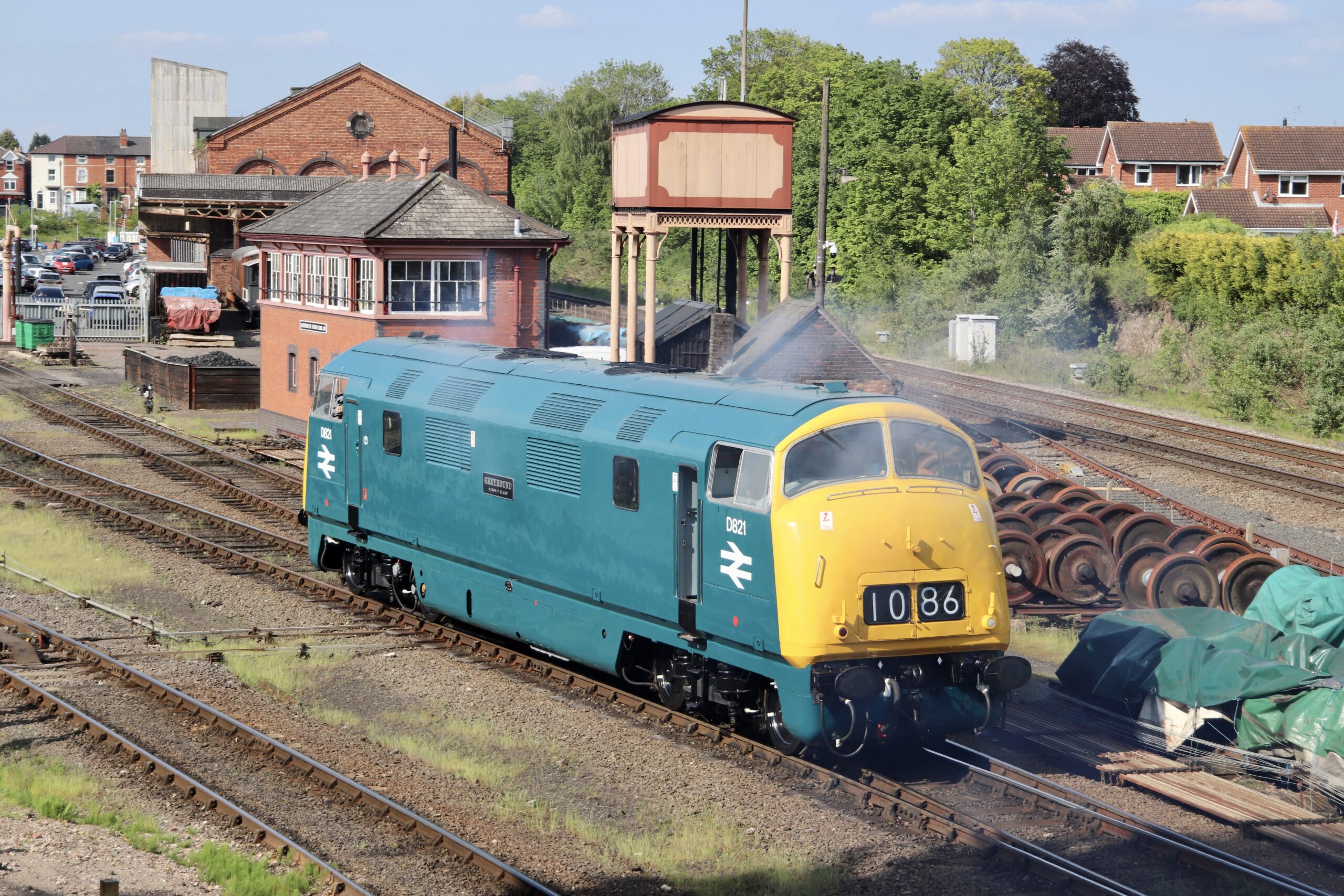
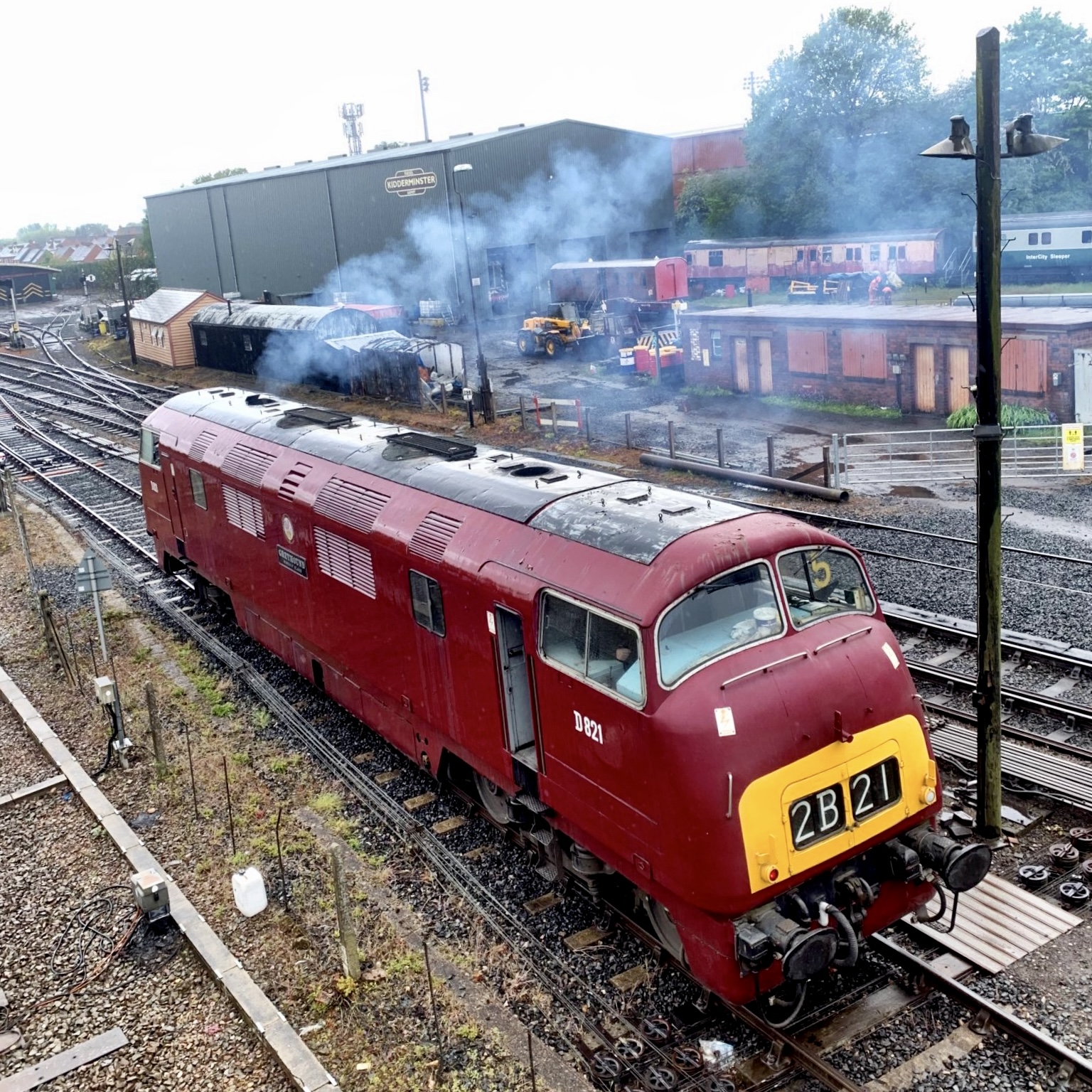
Class 50 No. 50035 ‘Ark Royal’ has lost her central headlight (a later addition to the class in service) and is seen departing Kidderminster – 20/05/2023Class 37 No. 37263 catches the afternoon sun at Kidderminster. The locomotive is scheduled for a prolonged stay on the SVR over the summer months – 20/05/2023DRS Thunderbird rescue locomotive Class 57 No. 57307 ‘Lady Penelope’ runs out of Kidderminster light engine in readiness to attach to a train bound for Highley – 20/05/2023Yoshi watches as Warship No. D821 ‘Greyhound’ starts up on Kidderminster TMD – 20/05/2023Class 52 No. D1015 ‘Western Champion’ carried the identity of lost classmate D1039 ‘Western King’ on one side (to celebrate the coronation of King Charles III), seen approaching Kidderminster – 20/05/2023Great Western Railway HST Castle set formed of Class 43 power car No.’s 43186 ‘Taunton Castle’ and 43188 ‘Newport Castle’ ran shuttles between Kidderminster and Arley on all four days of the gala – 20/05/2023Class 43 No. 43188 ‘Newport Castle’ which also carries decals reading: ‘Y Cymro – The Welshman’ and a Welsh Dragon leads the GWR Castle HST set out of Kidderminster – 20/05/2023D821 ‘Greyhound’ makes a fine sight as she runs towards Kidderminster station. D821 is one of two preserved Warship locomotives from the original 38 built by BR at Swindon Works. Sadly none of the 33 built by the North British Locomotive Company in Glasgow were saved for preservation. D821 has returned to service following an extensive overhaul – 20/05/2023Class 47 No. 47712 ‘Lady Diana Spencer’ leads into Kidderminster with a shuttle from Highley – 20/05/2023Diesel Traction Group’s Warship No. D821 ‘Greyhound’ resplendent in British Rail monastral blue livery to celebrate 50 years in preservation. No. D821 was the first main line diesel to be preserved by a private group having being acquired from BR in May 1973 – 20/05/2023Class 52 No. D1015 ‘Western Champion’ as D1039 ‘Western King’ runs to the Traction Maintenance Depot at Kidderminster – 20/05/2023Class 52 Western No.’s D1015 ‘Western Champion’ and D1062 ‘Western Courier’ between duties at Kidderminster – 20/05/2023Two Western Diesel Hydraulics on to the Kidderminster turntable – 20/05/2023SVR Home fleet loco Class 31 No. 31466 on the entry to Kidderminster – 20/05/2023A study of Class 40 No. 40106 ‘Atlantic Conveyor’ running light engine into Kidderminster station. The loco was named ‘Atlantic Conveyor’ on 11th August 1984 in memory of the Cunard cargo ship and those on board who lost their lives in the 1982 Falklands war – 20/05/2023Class 40 No. 40106 ‘Atlantic Conveyor’ carries “The Caledonian” headboard as she awaits departure form Kidderminster. The locomotive was built at Robert Stephenson and Hawthorns factory in Darlington. The loco features the original four disc headcode system along with interconnecting gangway doors seen on various classes of BR diesels but ultimately under used – 20/05/2023Resident Class 40 No. 40106 ‘Atlantic Conveyor’ departs Kidderminster. The locomotive entered into BR service as No. D306, later becoming No. 40106 under the TOPS system in the 1970s. During her last works overhaul at Crewe in September 1978, No. 40106 was repainted into Dark Brunswick green with full yellow ends, thus becoming a firm favourite loco on railtours and other special passenger workings for several years. I fondly remember the cover of the 1979 Locoshed book which featured this loco – 20/05/202320189 Ltd’s Class 20 Bo-Bo diesel-electric No. 20189 worked to Kidderminster solo, nose first, following the failure of classmate 20048 at Bridgnorth. 228 examples of these locomotives were built between 1957 and 1968. Each weighed 73 tonnes and delivered 1,000 hp, they were used to haul mixed freight traffic – often in tandem positioned nose to nose. – 20/05/2023Eastfield Scotty Dog depot plaque carried by Class 20 No. 20189 – 20/05/2023Last shot of the day; Western Class 52 No. D1062 ‘Western Courier’ prepares to depart Kidderminster. D1062 was bought from BR by the Western Locomotive Association on 4th November 1976, becoming the first Class 52 Western to be preserved – 20/05/2023
With 22 locomotives in traffic across the four day event, trains were very busy with the SVR reporting in excess of 4,000 pre-booked tickets sold and with pay on the day passengers a new record was set at over 6,500 visitors across the gala. This will certainly help with the SVR’s current £1.5 million appeal. It was certainly an interesting day, although I have to admit to feeling rather overwhelmed by the number of locomotives involved and my OCD in attempting to catch ’em all! Well done to all involved in the organisation and daily support of the railway.
Video of our day at the Severn Valley Diesel Gala 2023
For the record…
While Yoshi and I were enjoying the delights of the Severn Valley on May 20th, two rail tours visited Dorset. Firstly, Class 47 No.’s 47828 and 47593 headed to Weymouth with the “Dorset Coast Statesman”. Next, LMS Jubilee No. 45596 ‘Bahamas’ journeyed from London Waterloo to Exeter via Sherborne and Yeovil Junction hauling the “Atlantic Coast Express”.
The Swanage Railway Diesel Multiple Unit service to and from Wareham was cancelled on 23rd May 2023 because of an electrical fault on the unit discovered during a routine inspection. Repairs and testing meant the service resumed the following day.
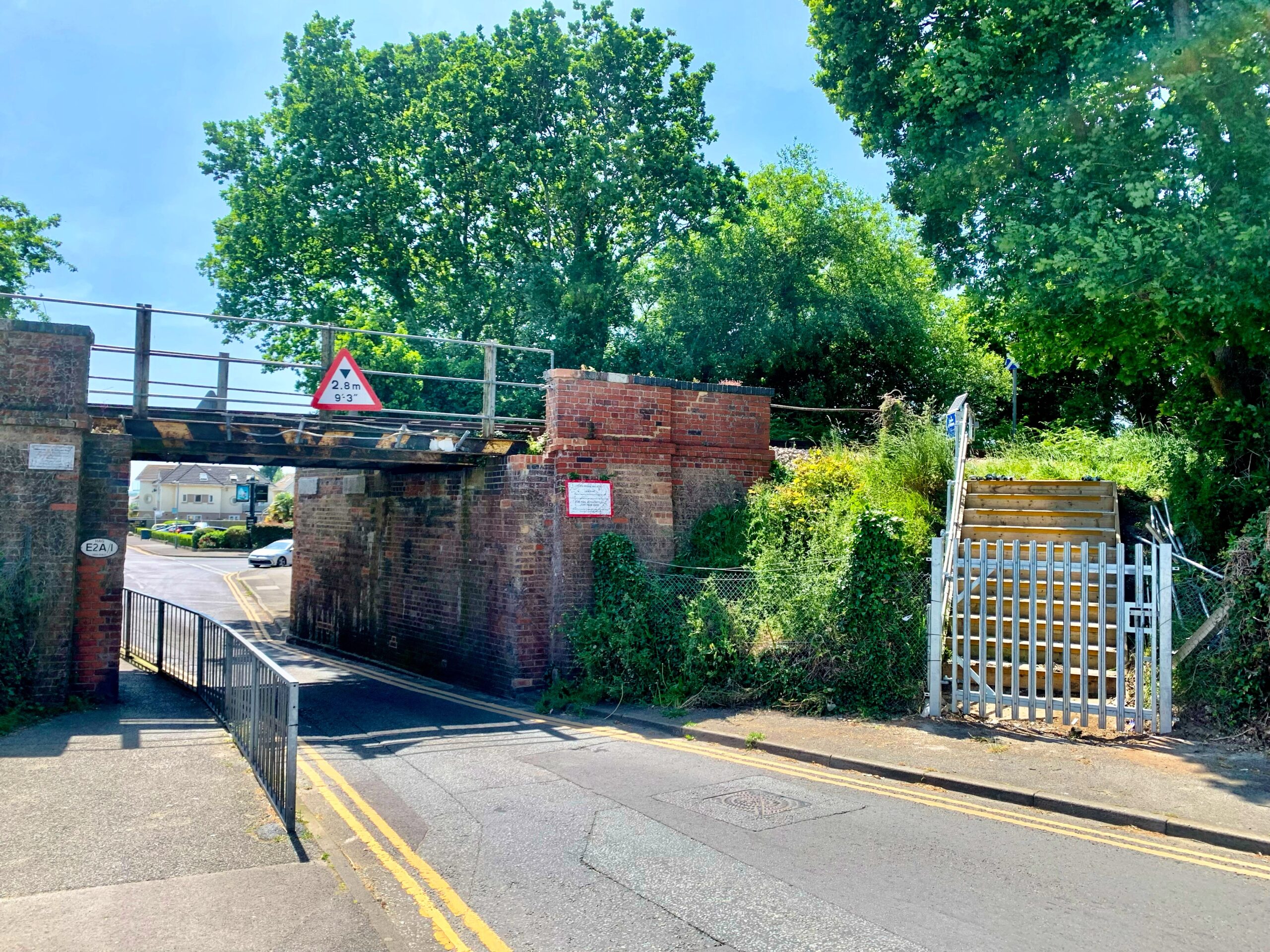
Lake Road Bridge on the Hamworthy Branch – 29/05/2023
The damaged access gate to the Hamworthy Branch at Lake Road Bridge has been repaired. Rumour is that metalwork on the bridge needs further attention before any trains can cross it.
Warship
D821 ‘Greyhound’
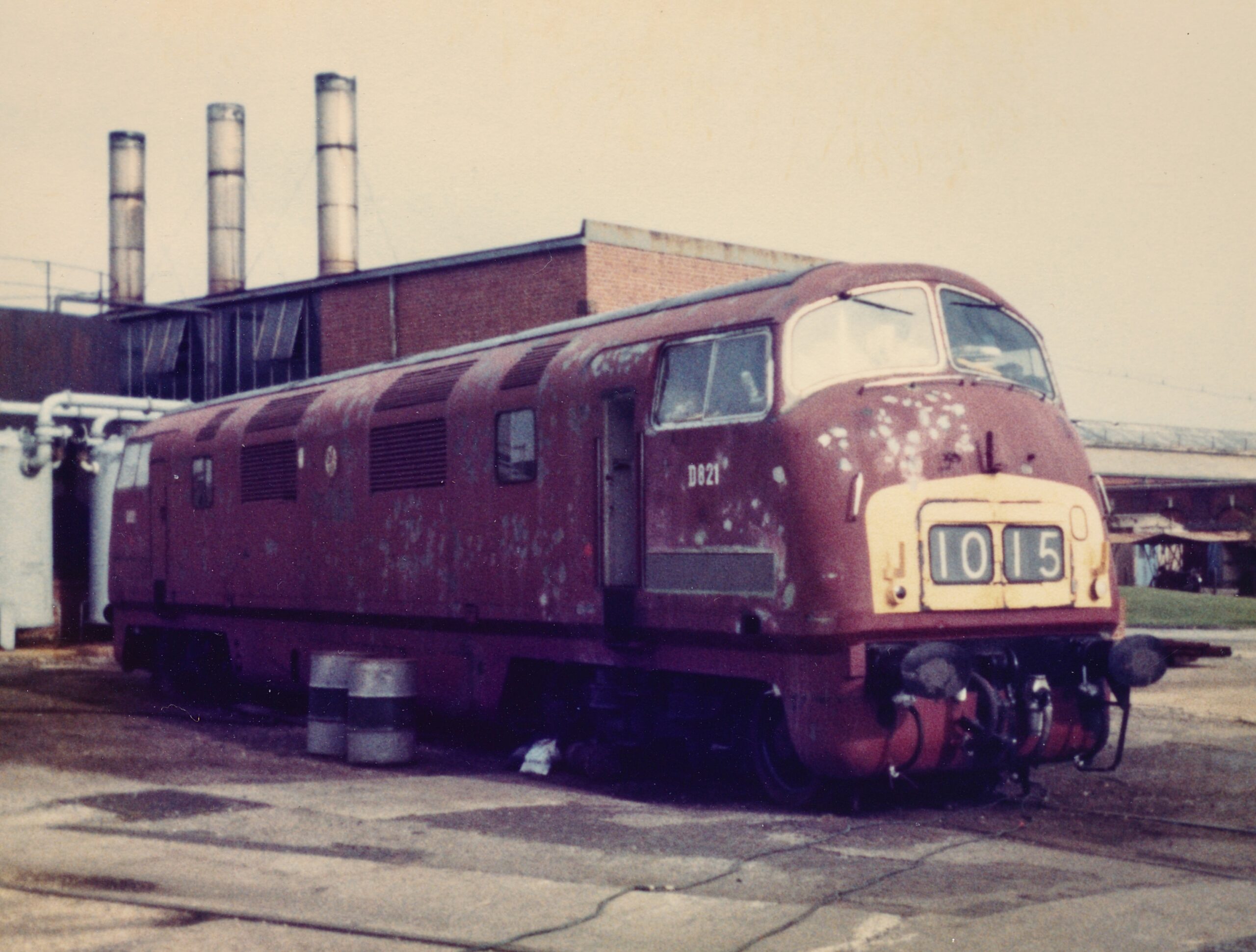
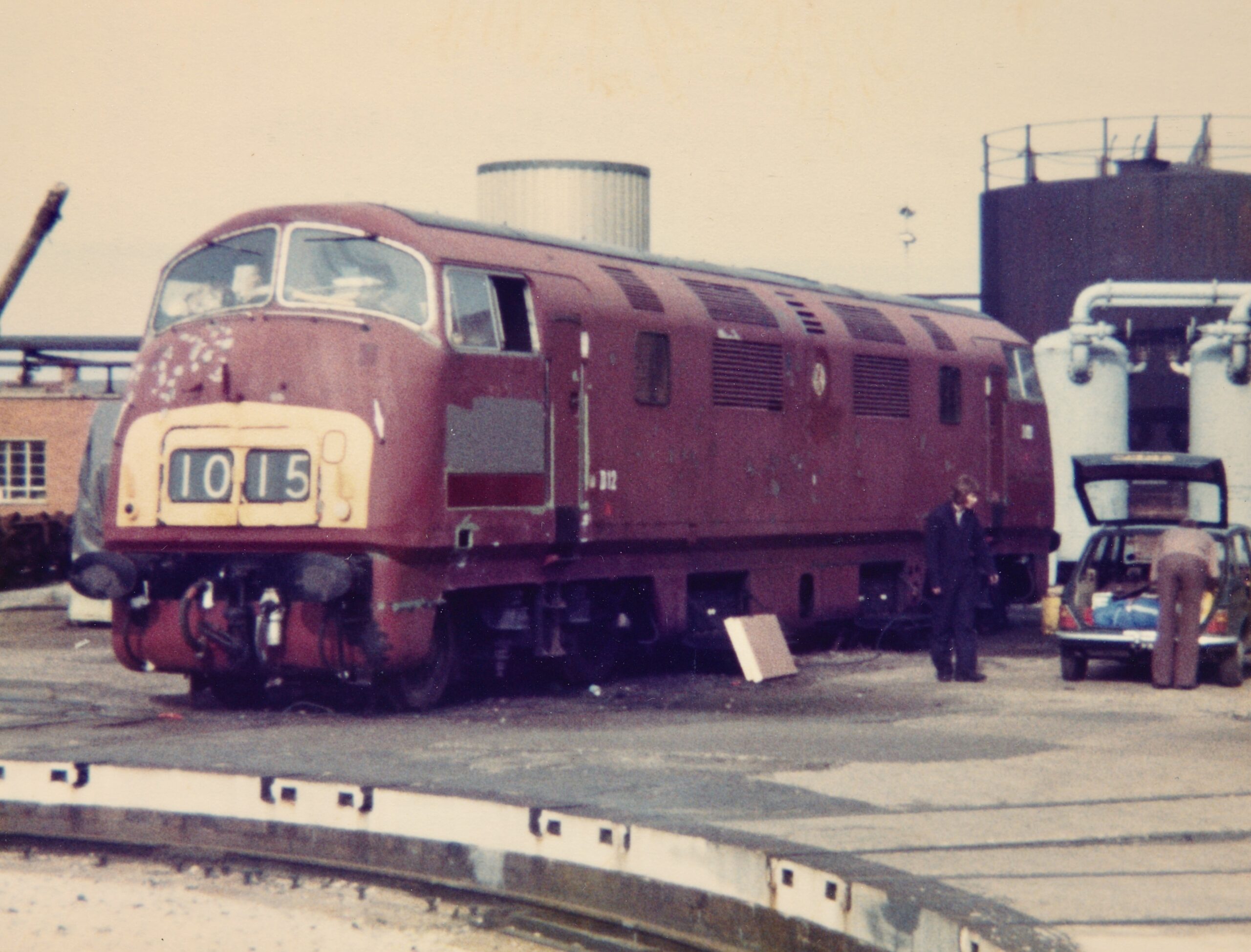
D821 ‘Greyhound’ celebrated 50 years in preservation during the Severn Valley Diesel Gala. The locomotive had been procured from British Rail by Colin Massingham, owner of model rail white metal kit company Modern Traction Kits (MTK) and Chris Reid a customer at Colin’s shop in Slough. Along with other financial supporters the pair had hoped to purchase North British Class 22 No. D6319 but a misunderstanding meant this loco was cut up at Swindon. Instead, the pick of the remaining Class 42 “Warship” locomotives which had recently been withdrawn at Plymouth Laira was offered. No. D821 was chosen as she was virtually complete.
D821 ‘Greyhound’ in Swindon. I was usually very good at keeping a record of dates, but a whole films worth of photos have no details recorded with them – 1980D821 ‘Greyhound’ in Swindon – 1980D821 ‘Greyhound’ in Kidderminster during the 2021 Severn Valley Railway Diesel Gala – 15/05/2021
The “Warship” diesel-hydraulic B-B locomotives were based on the West German V200 design, 38 examples being constructed at Swindon between 1958 and 1961. Each locomotive bore a name with all except D800 and D812 being named after Royal Navy vessels, thus the “Warship” moniker used to refer to the class. They were later designated as Class 42’s. The “Warships” took over from “Castle” and “King” Great Western steam locomotives on Top Link work but were deemed non-standard and all were withdrawn by 1972.
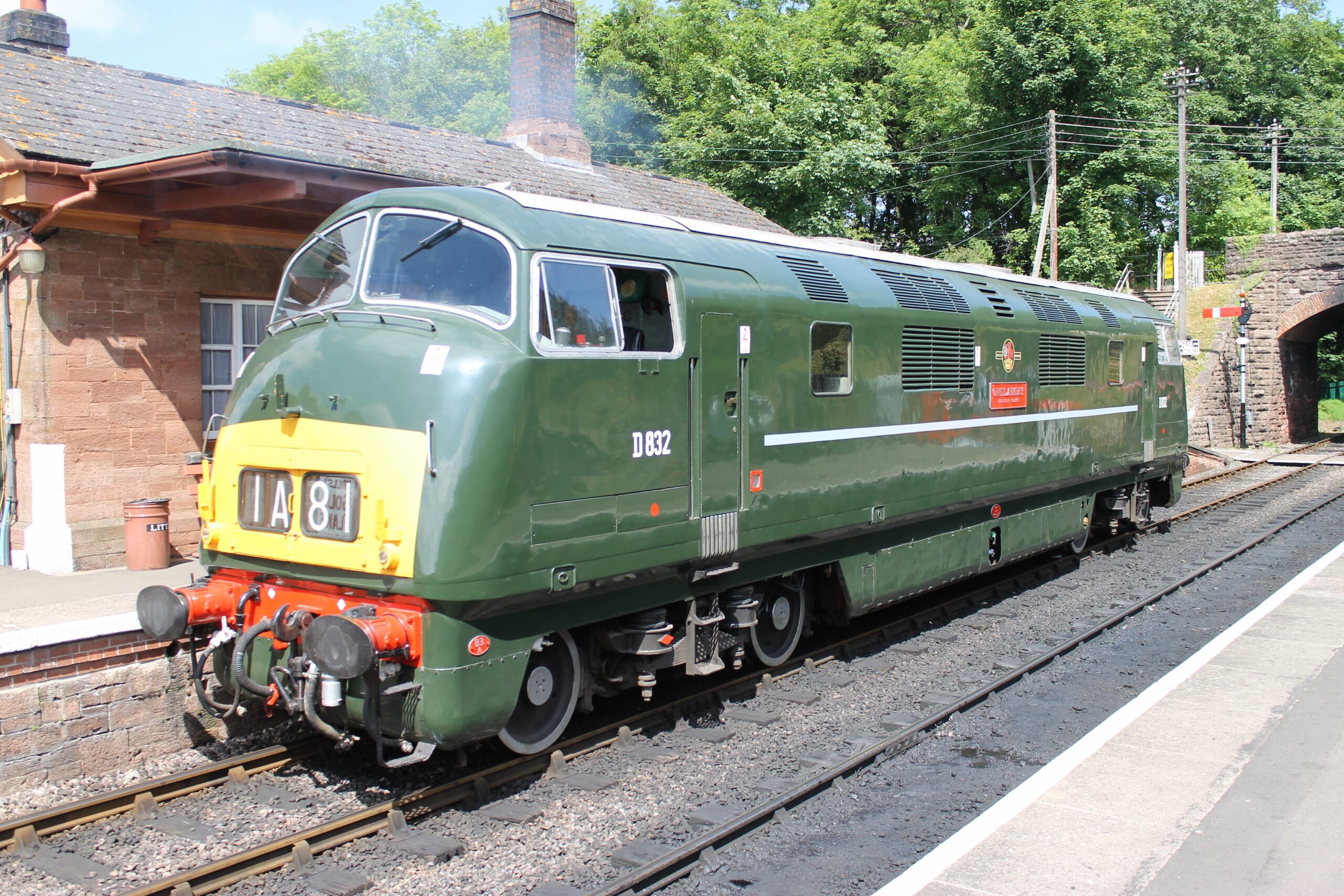
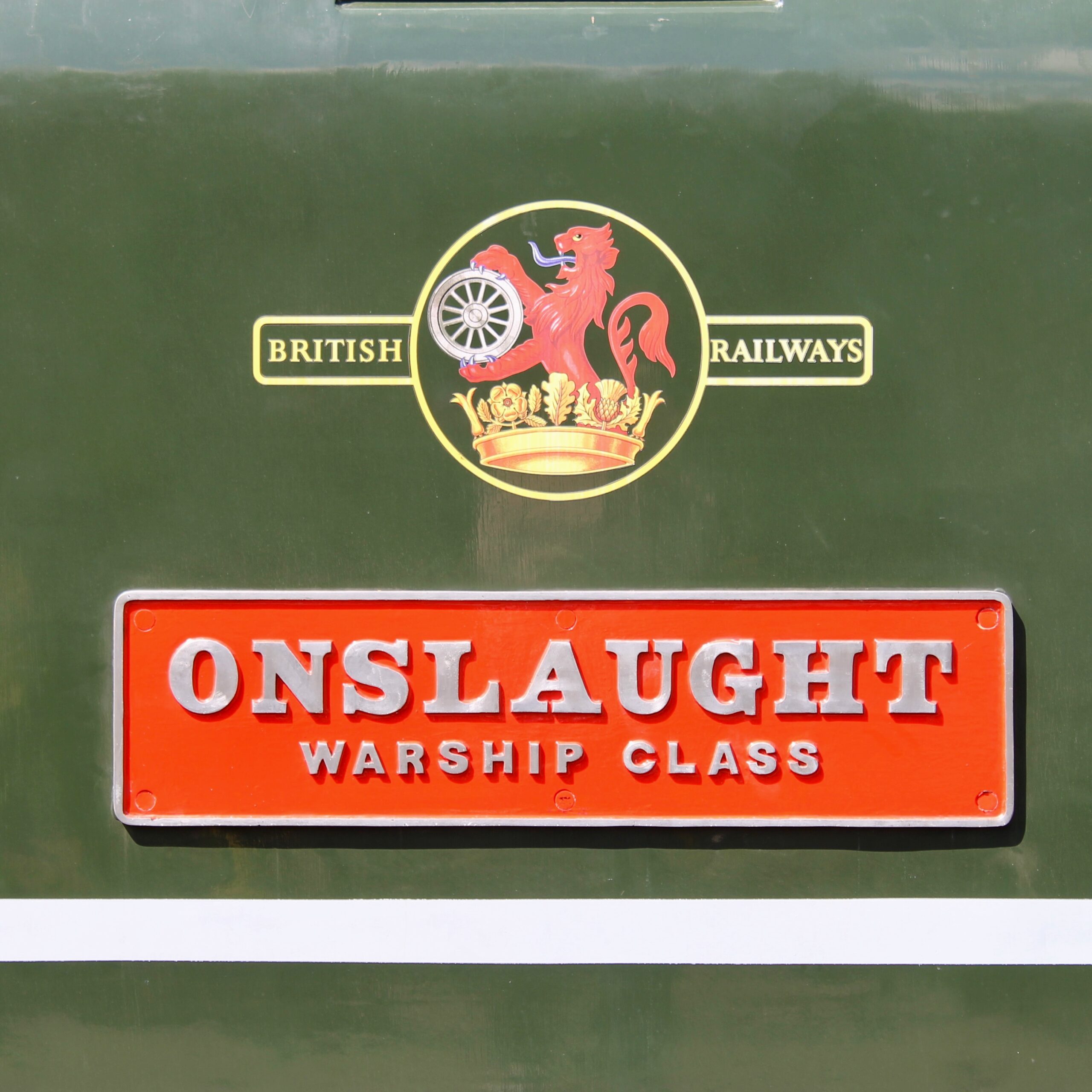
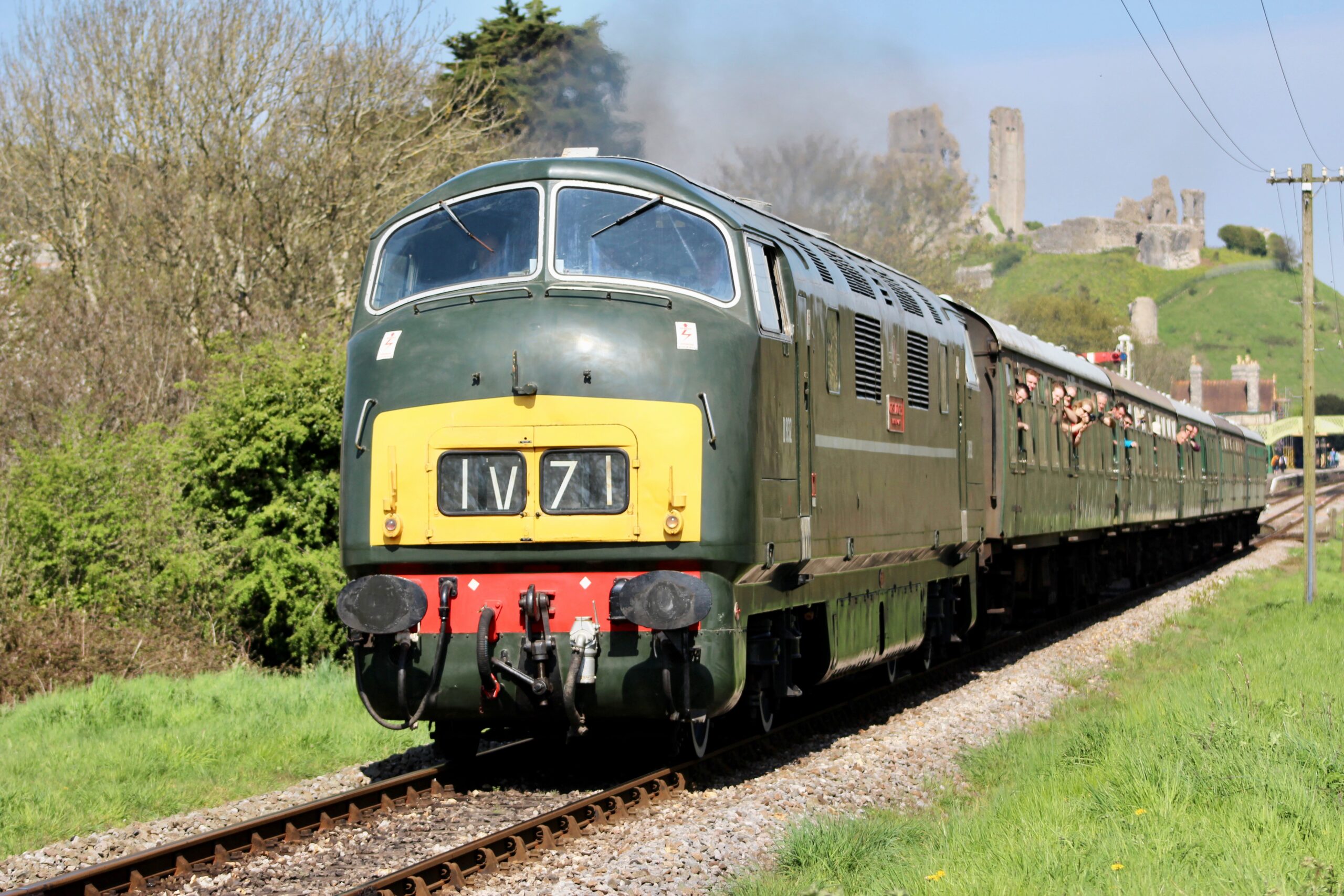
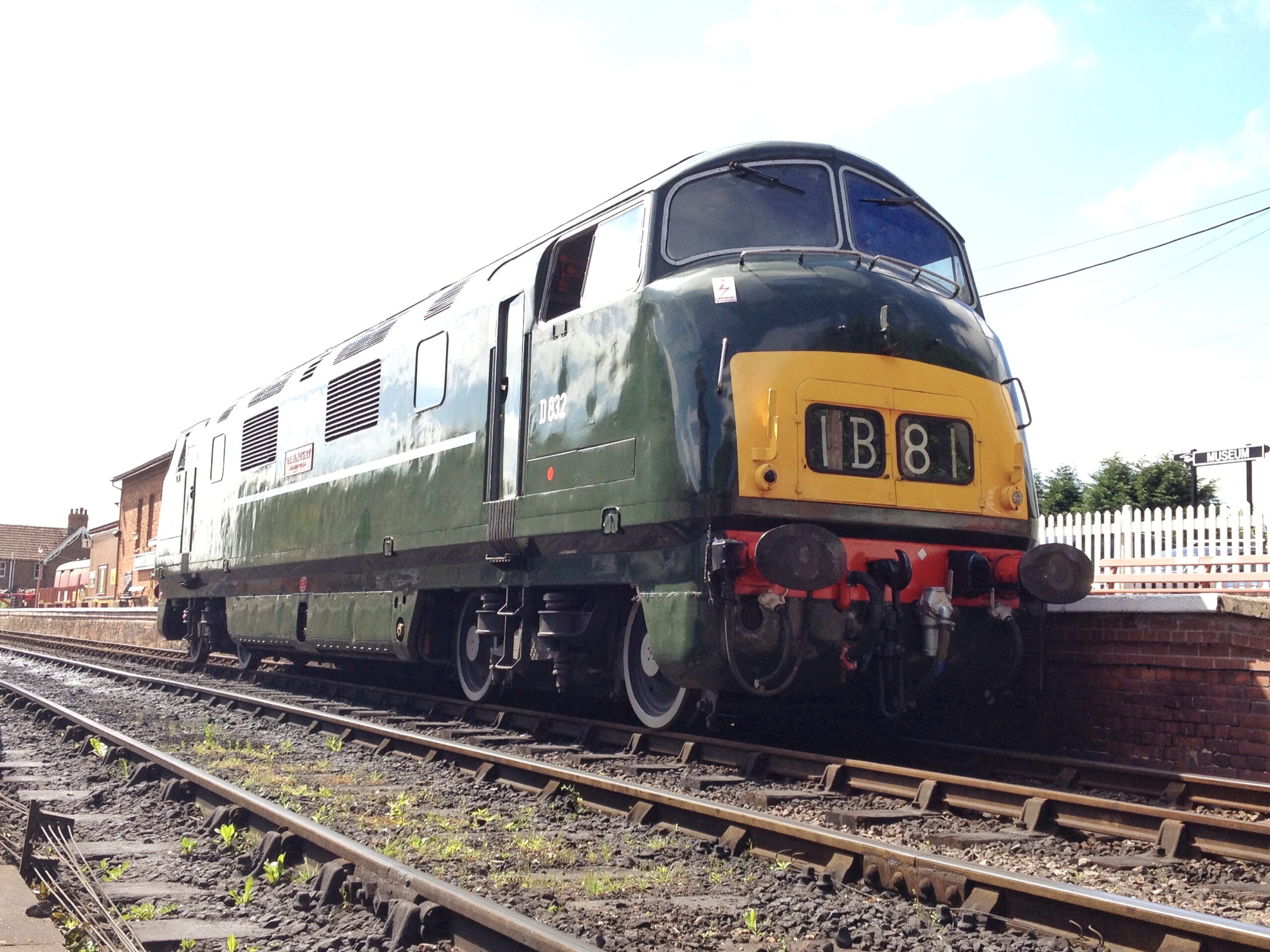
No. D832 ‘Onslaught’ at Bishops Lydeard on the West Somerset Railway – 09/06/2013Nameplate of No. D832 ‘Onslaught’ showing the “Warship Class” designation carried under the locomotive name – 09/06/2013No. D832 ‘Onslaught’ was guest loco at the 2016 Swanage Diesel Gala and is seen here departing Corfe Castle – 08/05/2016No. D832 ‘Onslaught’ at Bishops Lydeard – 09/06/2013
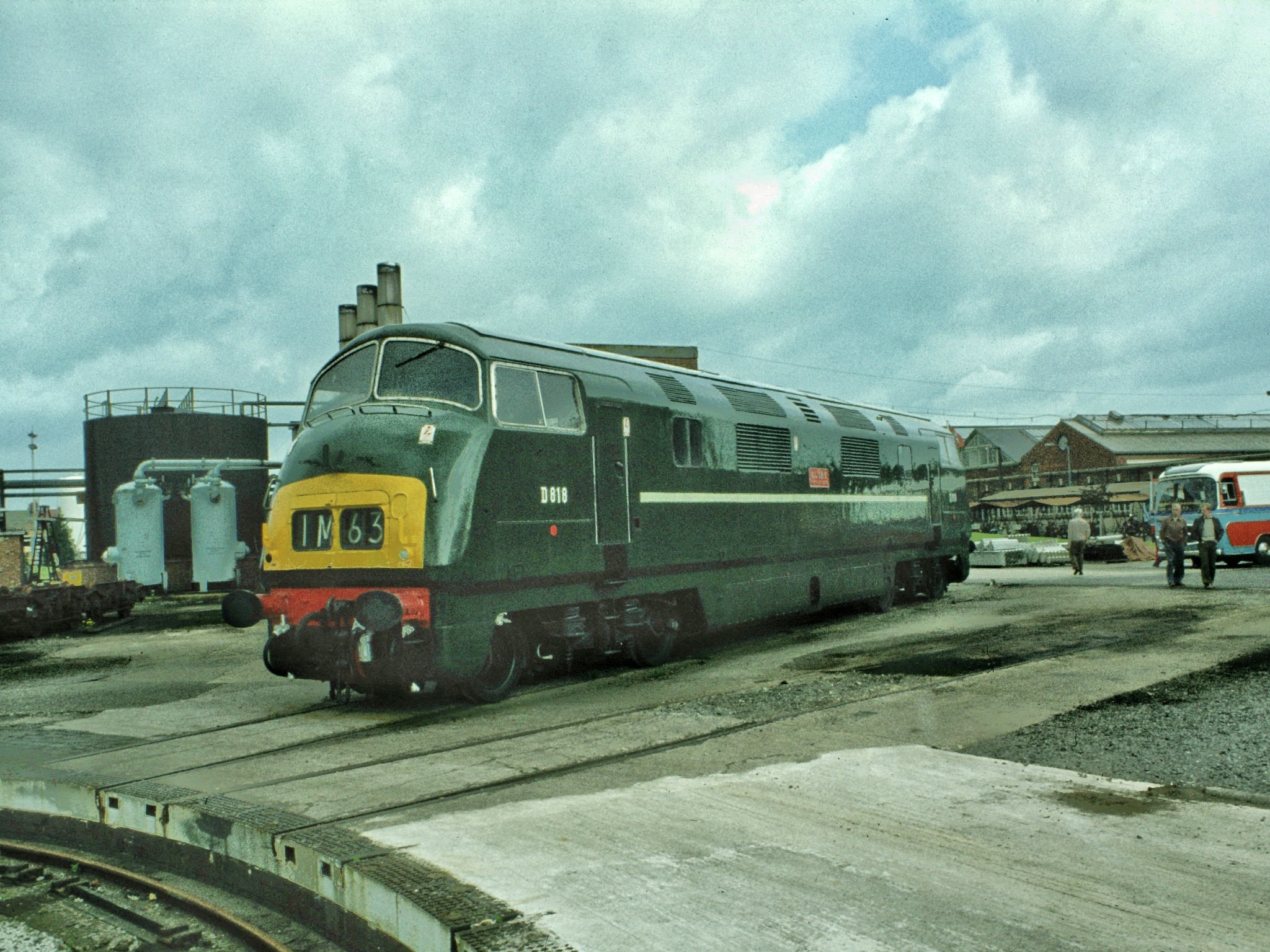
No. D821 was not the only member of the class to make it to preservation as No. D832 ‘Onslaught’ was also saved after being moved to the Railway Technical Centre (RTC) in Derby following withdrawal from service where it was used for various research purposes. However, a third member of the class, No. D818 ‘Glory’ wasn’t so lucky and, despite being kept at Swindon as a “pet” of the employees and for BR apprentices to work on, was cut up before the works was closed in 1985.
“The one that got away”; No. D818 ‘Glory’ at Swindon – 06/06/1981
Thanks for reading and your comments! Next week we’ll tell you all about our trip to Cornwall in search of Sleeper trains, pasties and semaphore signals!
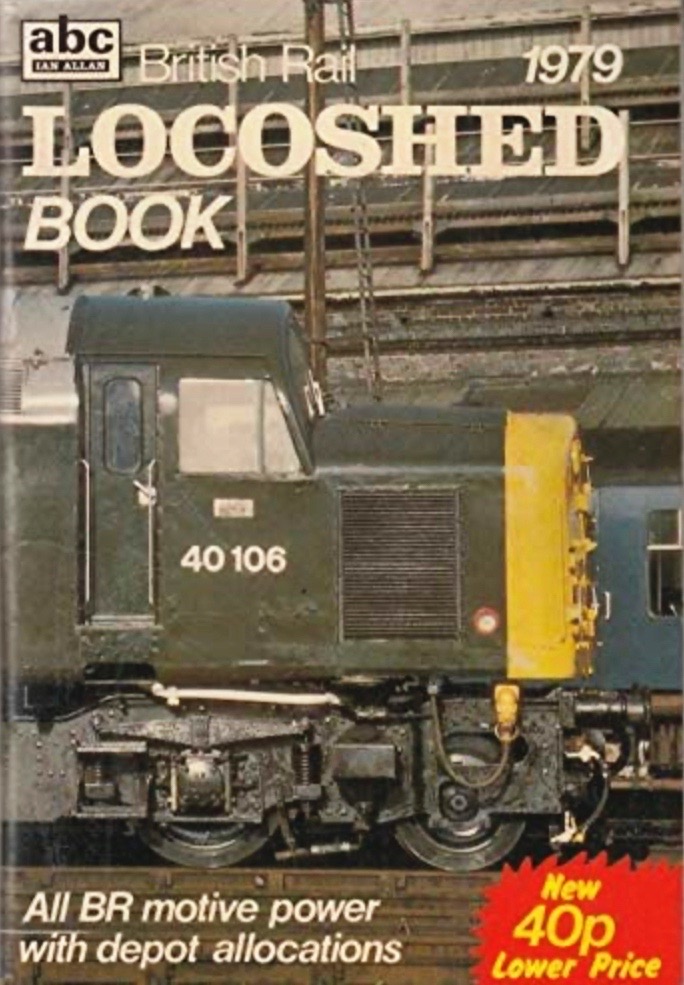
That 1979 Locoshed Book featuring Class 40 No. 40106 on the cover at a “New Lower Price of 40p!”