Category: Class 50

  • Barrow Hill 150+2

    Wednesday 24th August to Tuesday 30th August 2022
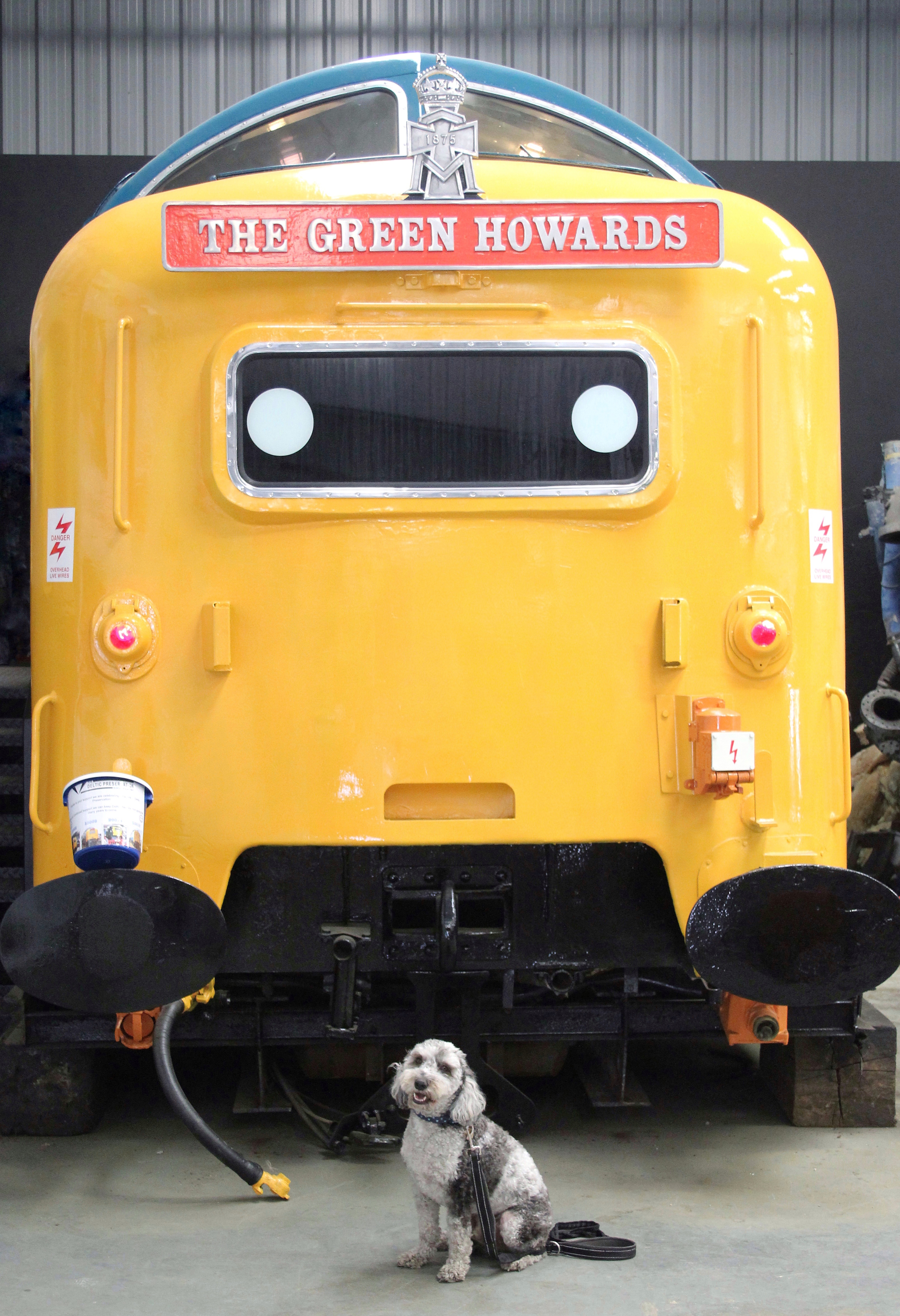
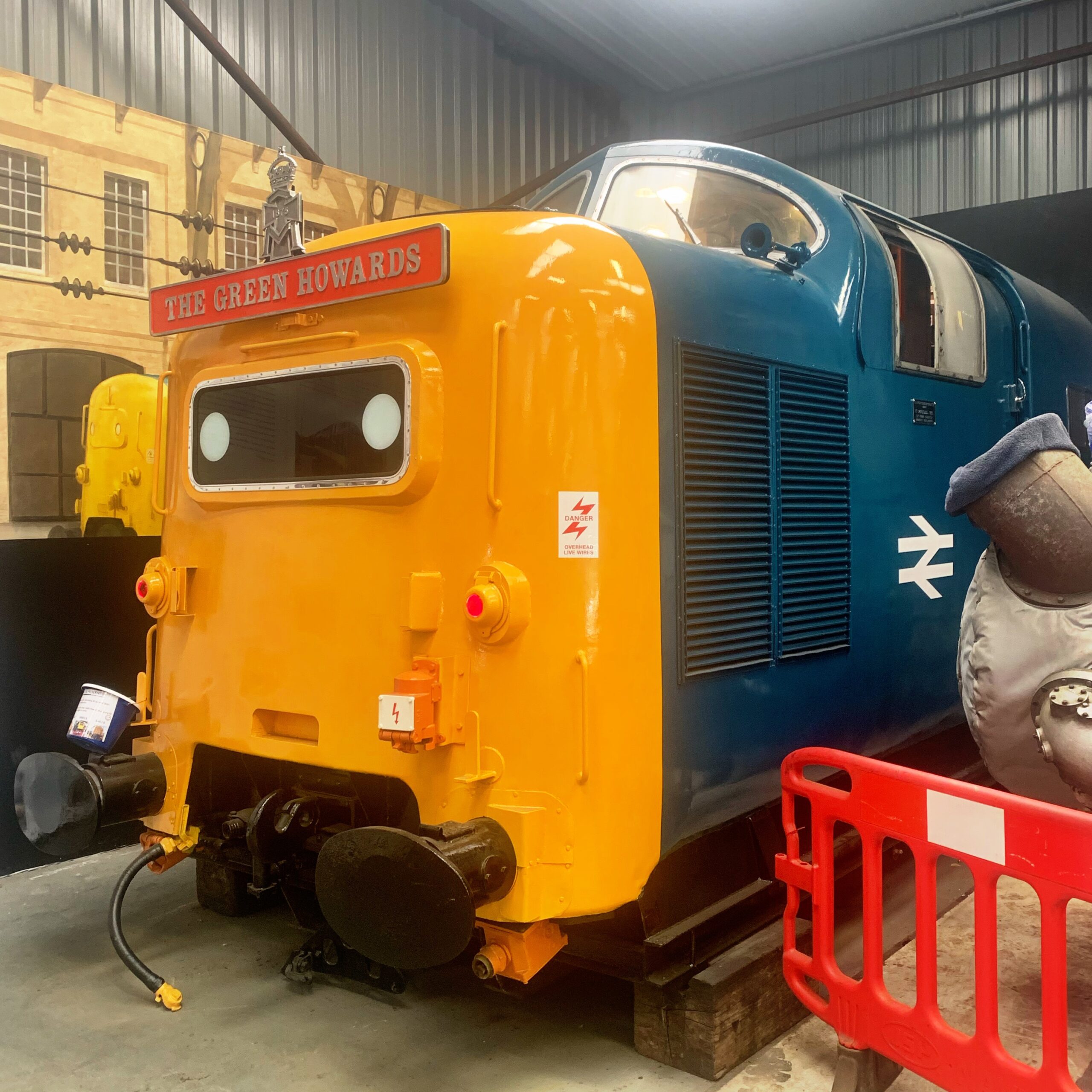
    Yoshi was very excited to see the cab of Class 55 Deltic No. 55008 ‘The Green Howards’ when he visited the Barrow Hill 150+2 Celebration Gala – 28/08/2022

    In contrast to last week, Yoshi and I have been kept reasonably busy over the last seven days.

    New Measurement Train
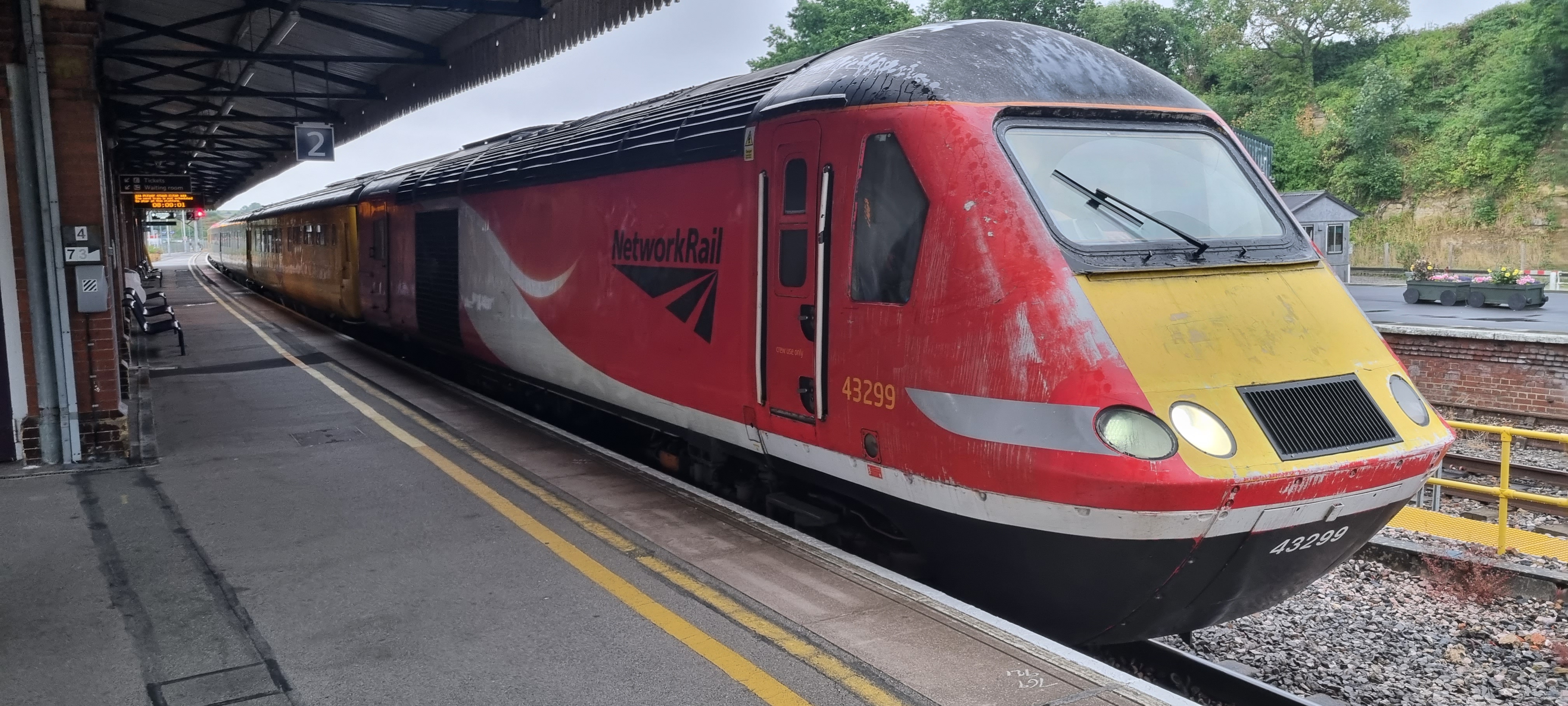
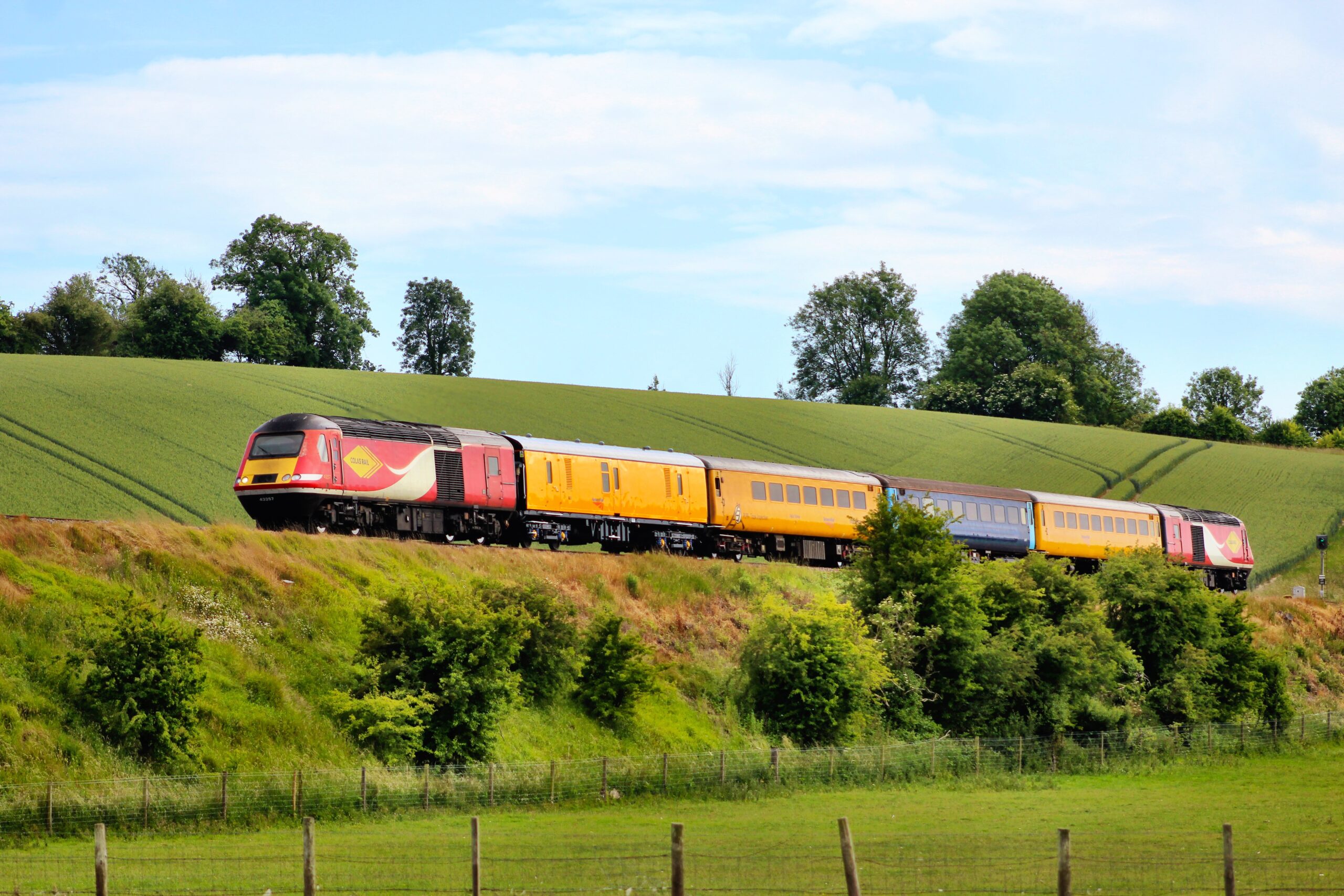
    Colas operated NMT Class 43 No. 43299 at Yeovil Junction heading 1Q23 0556 Reading to Salisbury via Exeter St Davids seen at Yeovil Junction – 25/08/2022 (Image courtesy of Scott Lewis)
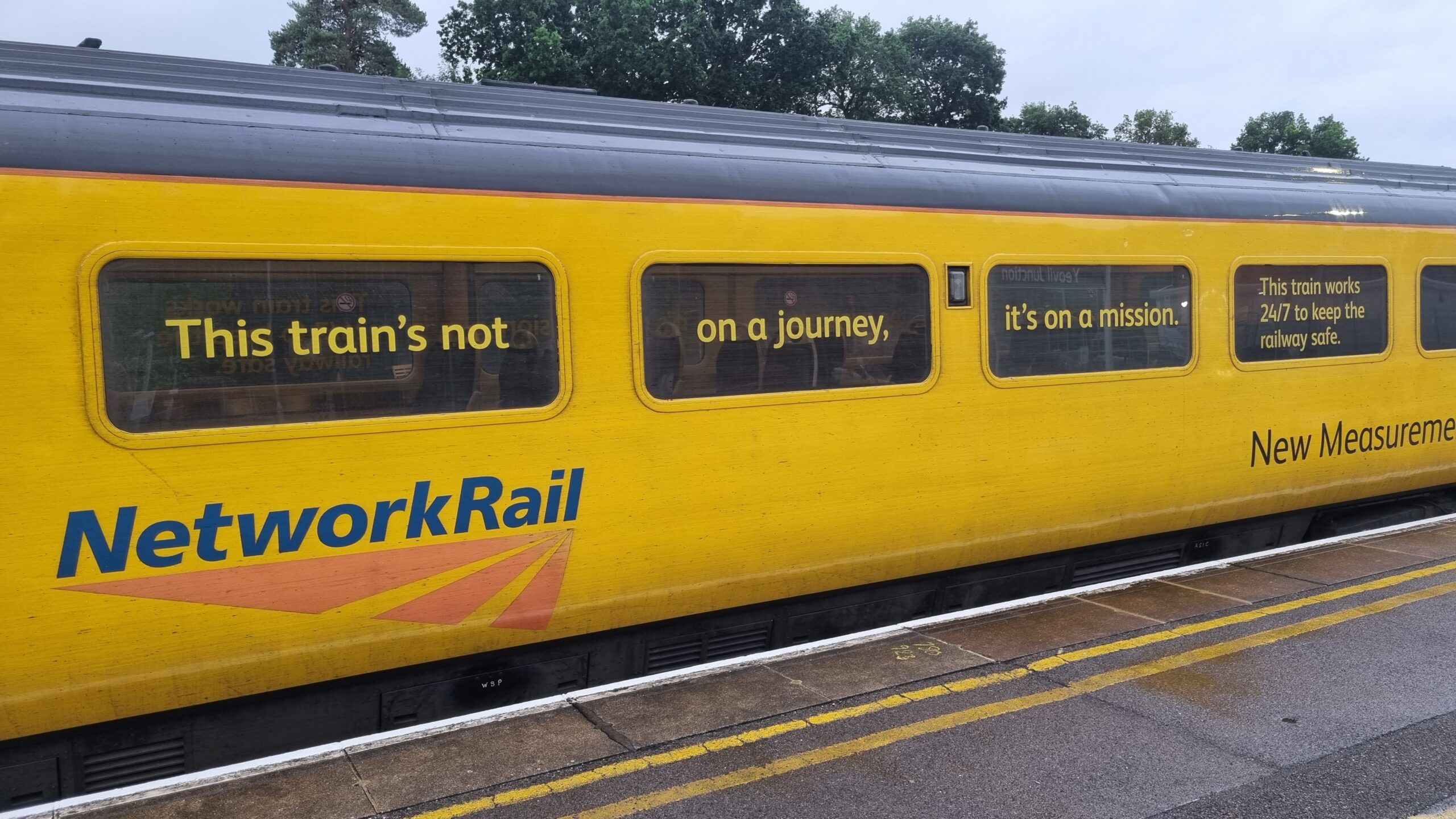
    NMT carriage from 1Q23 0556 Reading to Salisbury via Exeter St Davids seen at Yeovil Junction – 25/08/2022 (Image courtesy of Scott Lewis)
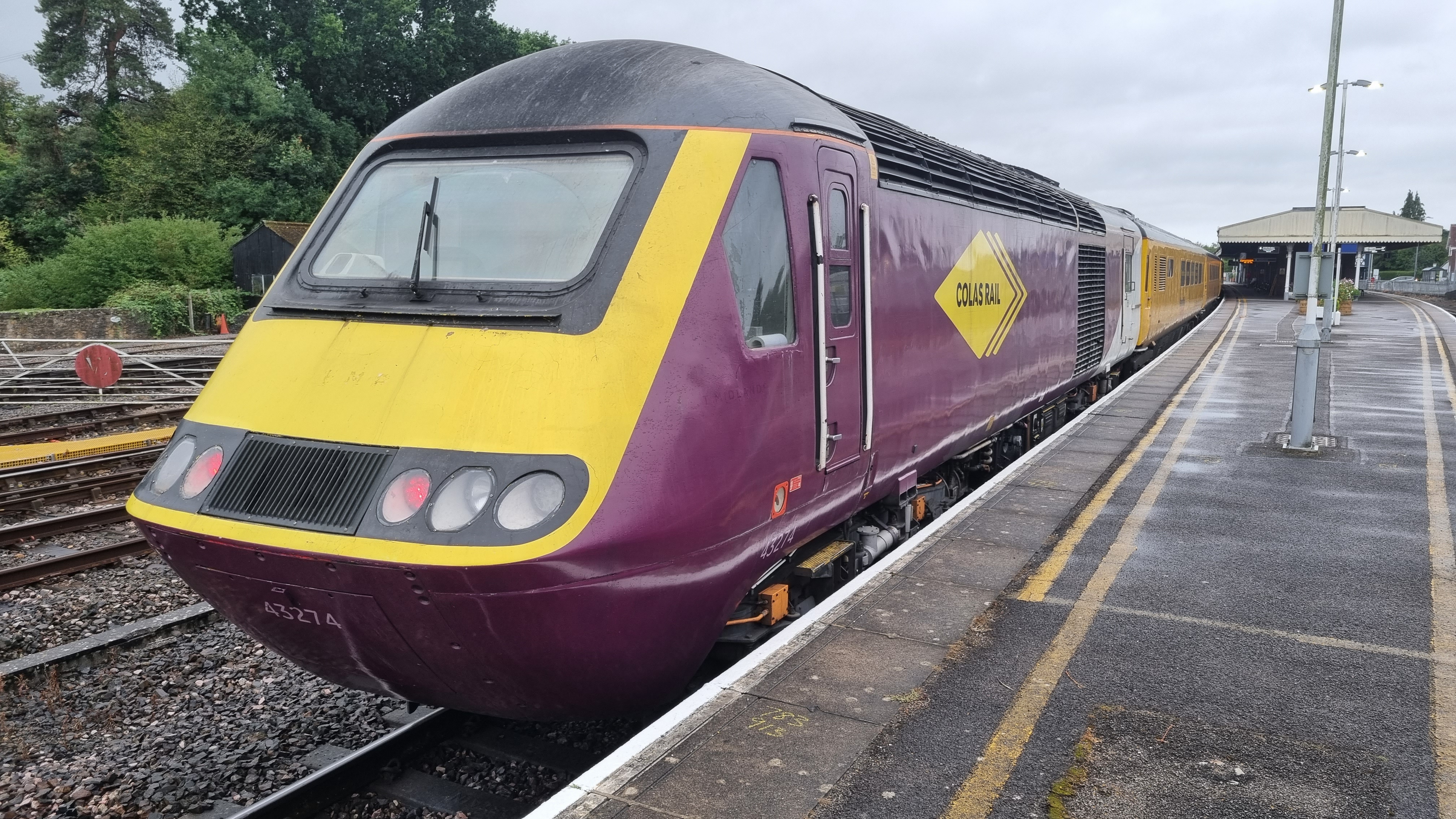
    NMT Class 43 No. 43274 at the rear of 1Q23 0556 Reading to Salisbury via Exeter St Davids seen at Yeovil Junction – 25/08/2022 (Image courtesy of Scott Lewis)

    Yoshi’s North Dorset Correspondent sent us video and photos of the New Measurement Train which passed through Dorset on the Salisbury to Exeter line on Thursday 25th August 2022.

    Network Rails’ New Measurement Train running 1Q23 0556 Reading to Salisbury via Exeter St Davids seen at Yeovil Junction – 25/08/2022 (With many thanks to Scott Lewis)

    South Western Railway (SWR) services between between Tisbury and Gillingham have emergency speed restrictions currently imposed because of the warm weather. Network Rail says the conditions have dried out the clay beneath railway embankments which can result in shrinkage and movement of the rails. SWR will be announcing a temporary, revised timetable on Friday 2nd September 2022 with the likelihood there will be a reduced number of services between Salisbury and Exeter St Davids and journeys will take longer than usual.

    87002 ‘Royal Sovereign’
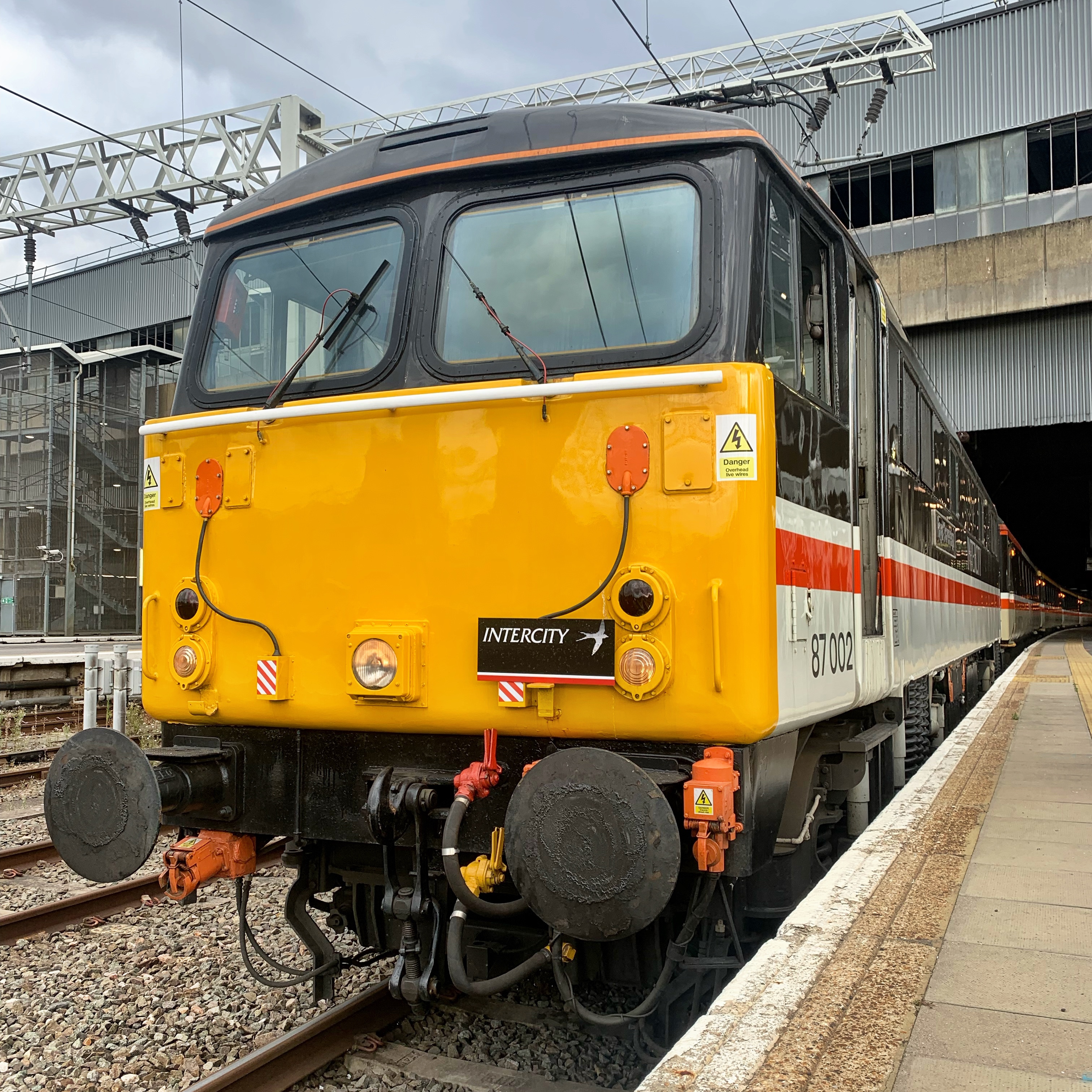
    On Friday 26th August 2022, Yoshi spent the day with his cousins while I was in London escaping from martian invaders at Jeff Wayne’s The War of the Worlds: The Immersive Experience, which I can thoroughly recommend. After surviving the alien threat, I headed off to London Euston to see Locomotive Services Ltd’s “The Friday Charter” which, for only its second weekly run, between London and Manchester / Crewe was hauled by Class 87 No. 87002 ‘Royal Sovereign’ and a fine sight she looked at the head of a rake of Inter-City Executive liveried carriages. There were a number of railway enthusiasts waiting on platform 16 to see the train depart and it was good to see many were from a younger generation than myself, hopefully assuring interest in railways survives.

    1Z41 1742 London Euston to Manchester Piccadilly departs London Euston behind Class 87 No. 87002 – 26/08/2022

    On our way home from London Waterloo, I was able to see Class 701 No. 701046 depart on a mileage accumulation run.
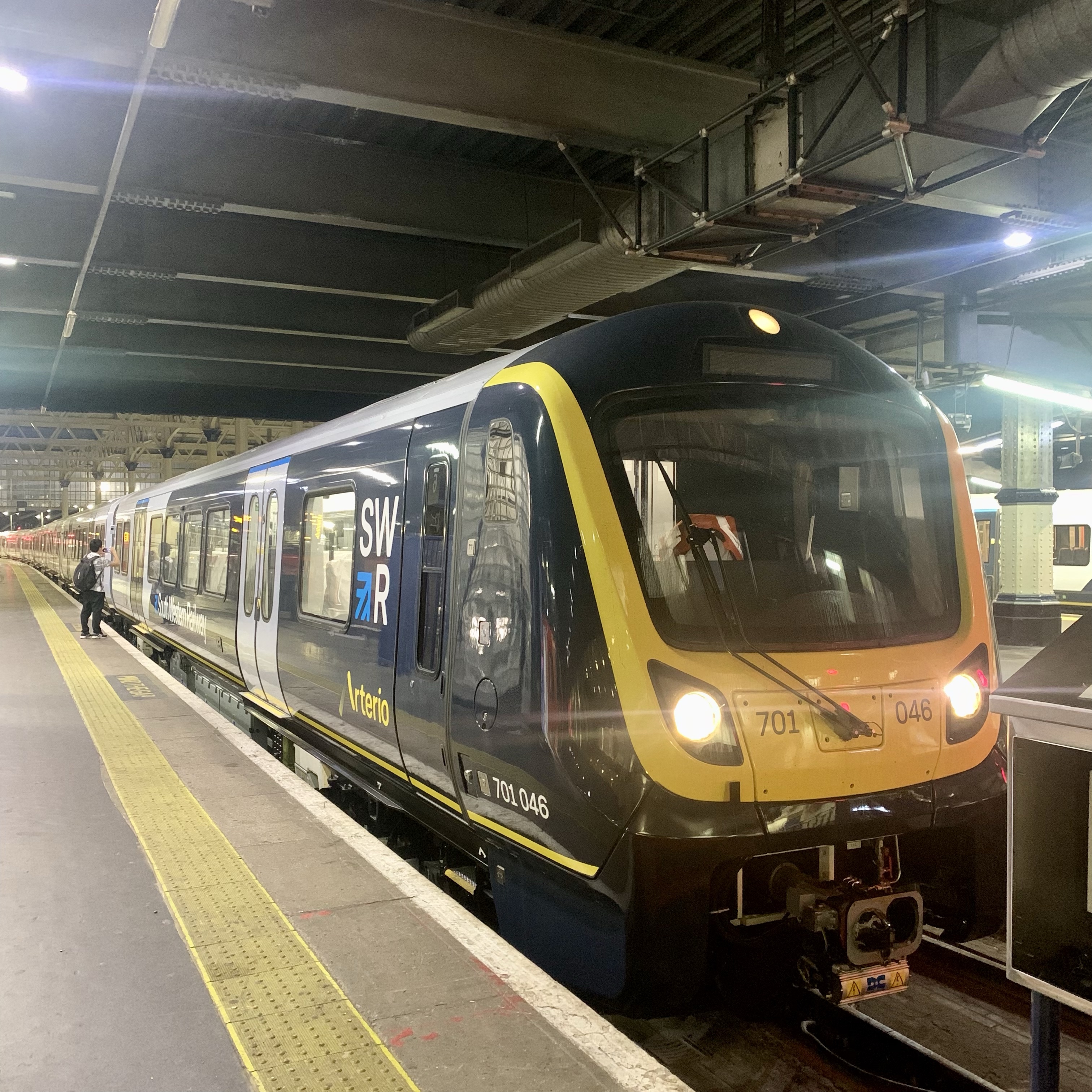
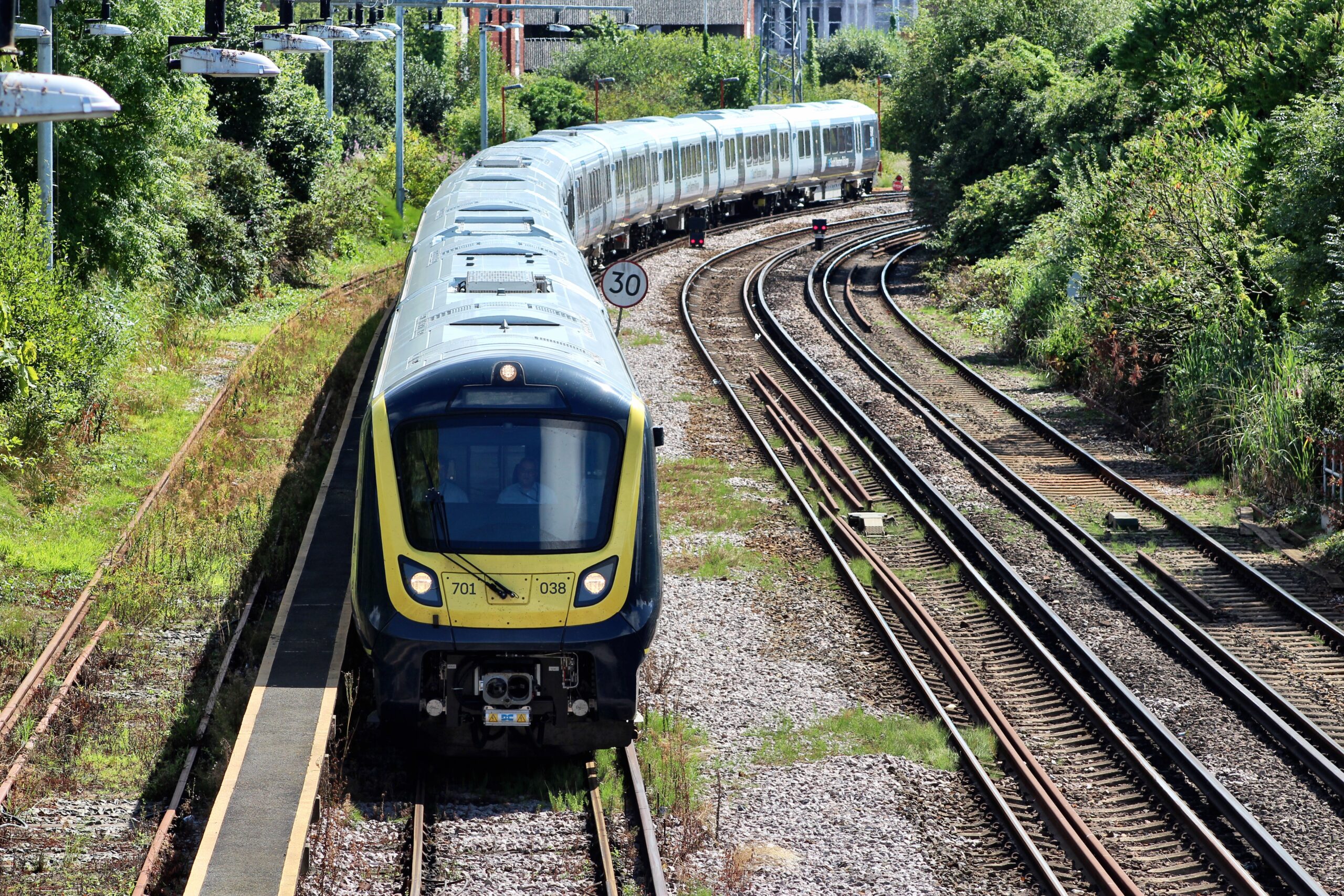
    Class 701 No. 701046 at the platform 6 buffer stops of London Waterloo having worked into the SR terminus working 5Q42 1844 Eastleigh to London Waterloo. The unit would form the 2114 5Q43 London Waterloo to Eastleigh TRSMD departure. Note the new Arterio branding under the SWR logo – 26/08/2022
    Video of Class 701 mileage accumulation runs – August 2022
    Class 701 No. 701038 seen at Poole Storage Sidings working 5Q51 1115 London Waterloo to Eastleigh – 24/08/2022

    Great Dorset Steam Fair

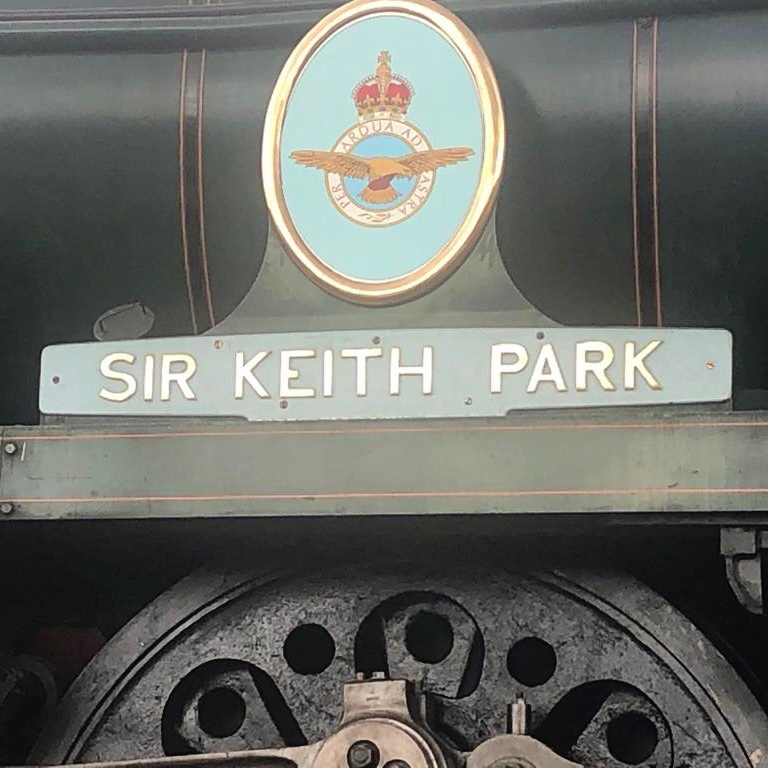
    Yoshi didn’t make it to this years Great Dorset Steam Fair which is held at Tarrant Hinton near Blandford Forum, but his cousin the collie Jess had a great day out and sent us the following images of out of ticket Rebuilt Battle of Britain Class Bullied Pacific No. 34053 ‘Sir Keith Park’ which was on show healing to demonstrate heavy haulage and loading / unloading courtesy of heavy haulage contractor Allelys.
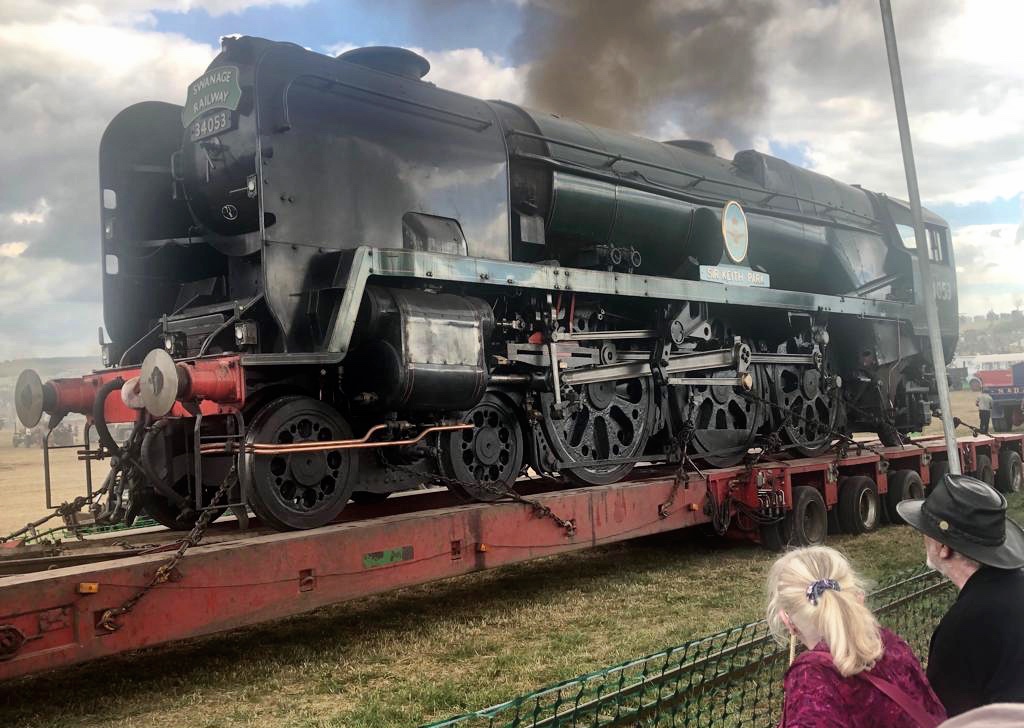
    No. 34053 is currently out of ticket following her recent stint at the Spa Valley Railway – 27/08/2022 (Image courtesy of G. E. Barrett)
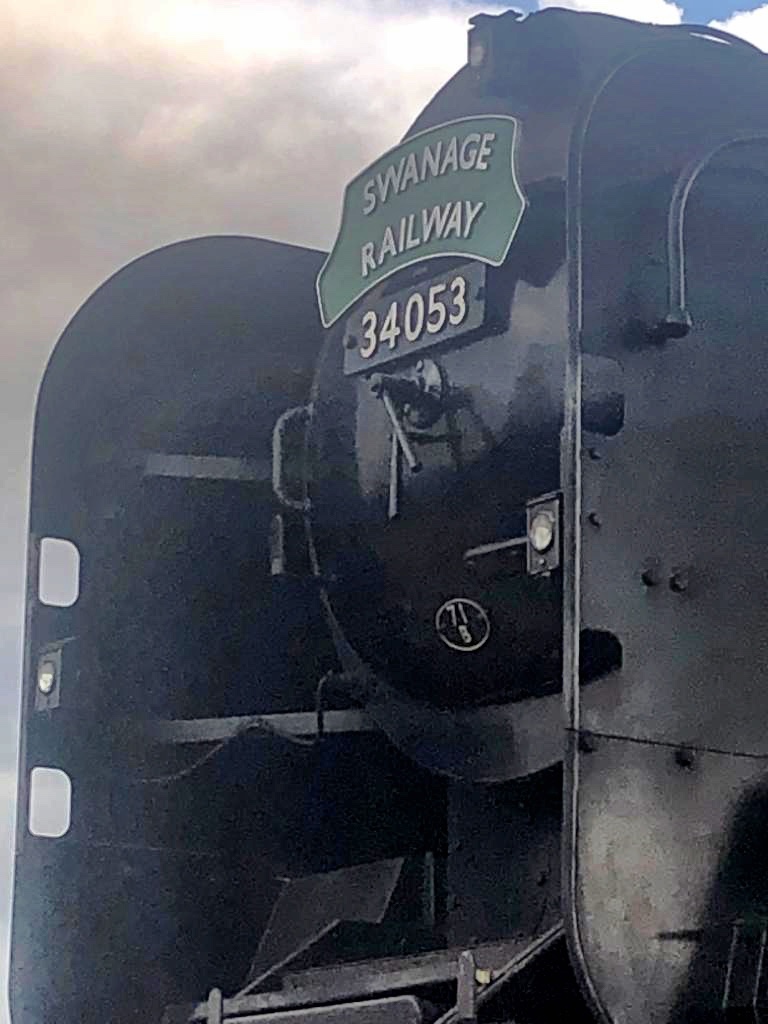
    Nameplate detail No. 34053 ‘Sir Keith Park’ (Image courtesy of G. E. Barrett)
    Smokebox close-up of No. 34053 ‘Sir Keith Park’ (Image courtesy of G. E. Barrett)

    GBRf Staff Charter

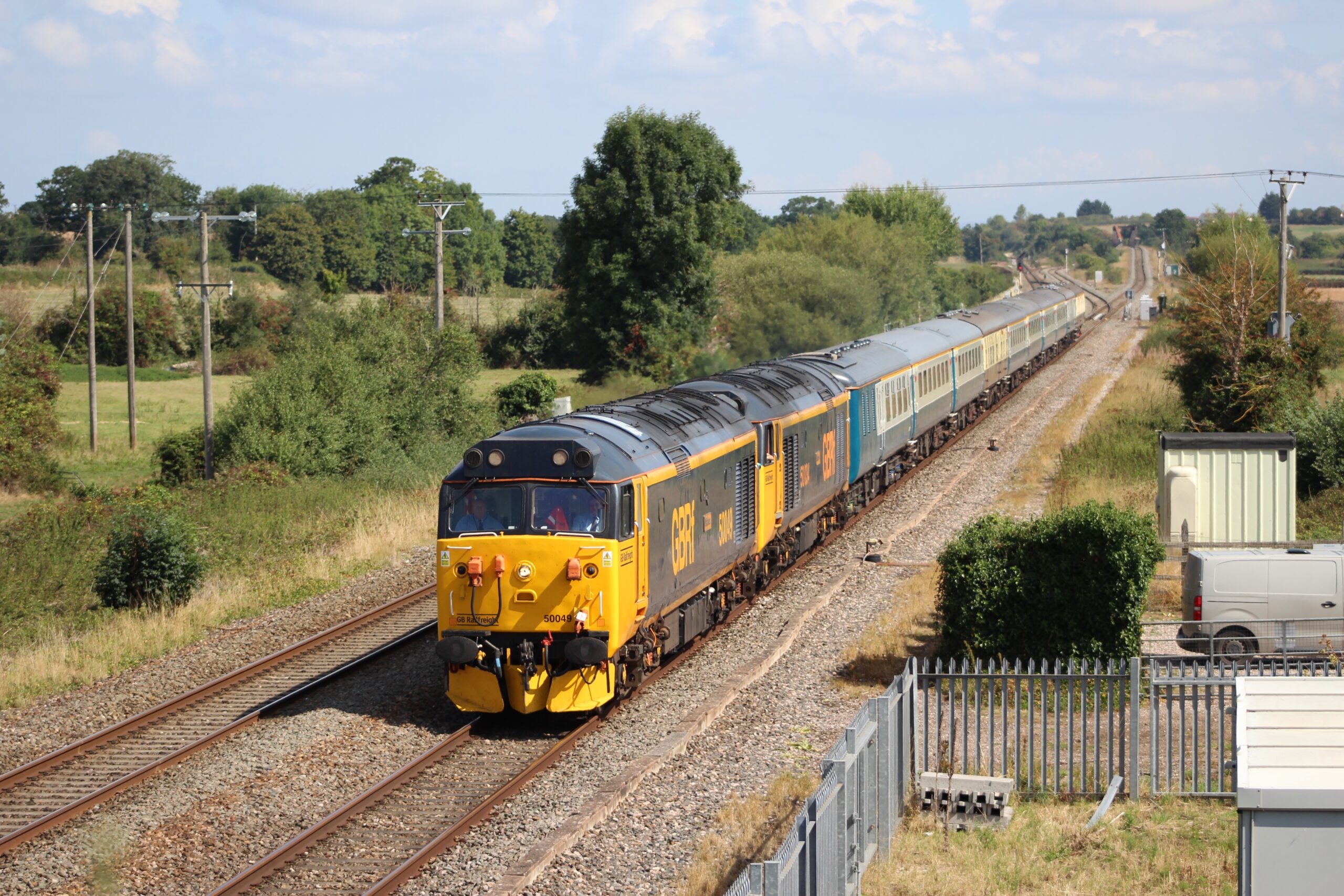
    GBRf liveried Class 50 No.’s 50049 ‘Defiance’ and 50007 ‘Hercules’, the latter still running with one side disguised as No. 50034 ‘Furious’, having passed Cogload Junction north of Taunton working a GBRf staff charter from Warrington to Paignton and return – 27/08/2022

    Saturday 27th August Yoshi and I visited a friend in the Taunton area. We of course looked to see on Real Time Trains for any interesting workings we might be able to see while in Somerset. As luck would have it, GBRf organised staff charter hauled by two Class 50 locomotives were perfectly timed for our visit. We parked up at Creech St. Michael adjacent to the Bridgwater and Taunton Canal and walked alongside the waterway until we reached the over bridge just south of Cogload Junction which was to be our vantage point.
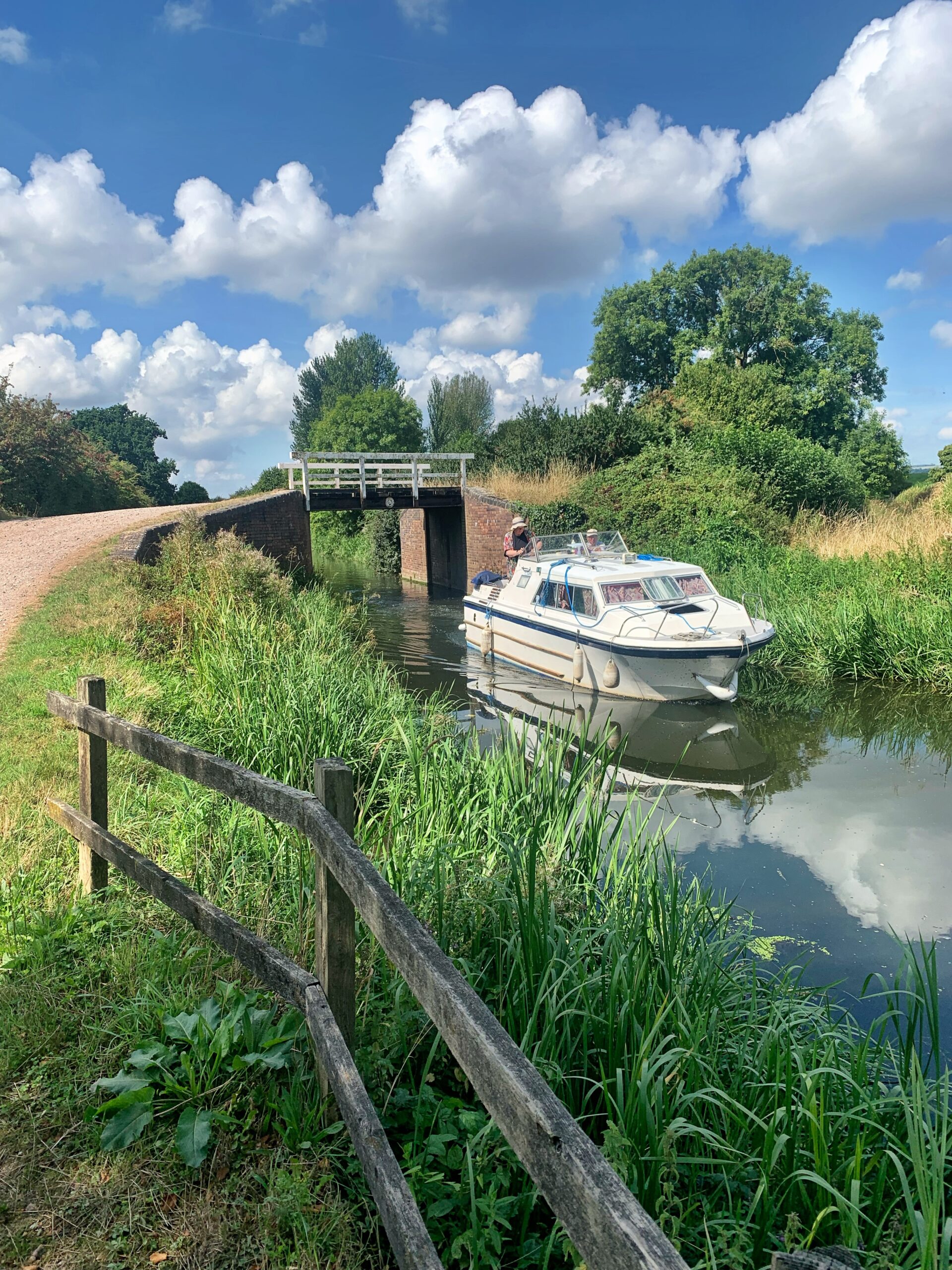
    The Bridgwater and Taunton Canal – 27/08/2022

    The Canal was engineered by James Hollinsworth and opened in 1827. The original section ran from Taunton to Huntworth where it joined the River Parrett. Ten years later, in 1837, the canal as extended from Huntworth to Bridgwater dock where a lock was made to join the River Parrett. This was to be blocked off when the docks closed to coastal shipping in 1971.

    In 1866 the Canal was under considerable pressure from the railway and was eventually sold to the Bristol & Exeter Railway Company, although control eventually passed to the Great Western Railway. There was no interest in promoting commercial traffic on the Canal which slowly declined in preference to the much quicker railway. In 1907 the last barge tolls were collected after which the Canal became a water course. In 1947 the British Transport Commission took over responsibility of the Canal and later still in 1962 the British Waterways took over its management.

    A noticeable feature on the Creech section of the canal is “The Old Engine House”, built in 1827 to pump water into the canal from the RiverTone, originally housing a beam engine pump, and later two locomotive boilers which worked a centrifugal pump delivering 125,000 gallons per hour. Eventually the engine house supplied the water troughs fixed between the nearby railway lines, so that steam engines could pick up water from the troughs in the railway tracks without having to stop, saving valuable time for through express services.

    GBRf staff charter; 1Z18 0732 Warrington Bank Quay to Paignton and 1Z20 1641 Paignton to Warrington Bank Quay – 27/08/2022

    Barrow Hill

    An early start on Sunday August 28th saw us heading North to Barrow Hill near Chesterfield for the deferred event celebrating 150 years since the opening of the roundhouse in 1870. Intended to take place in 2020, Covid meant that the gala could not take place until two years after the anniversary. Known as Staveley Roundhouse until 1948 when it was renamed as Barrow Hill to avoid confusion with an ex-Great Central Railway shed located nearby, it was built to a standard Midland Railway square shed design in 1870 with a central turntable under cover. The shed was operational from 1870 until 9 February 1991 and Grade II listed in the same year. Chesterfield Borough Council purchased the building and surrounding yard from the British Rail Property Board in December 1996. During the interim years, the Roundhouse and associated buildings were heavily vandalised and came dangerously close to being lost forever. The site reopened to the public in July 1998 after the building was restored by the Barrow Hill Engine Shed Society

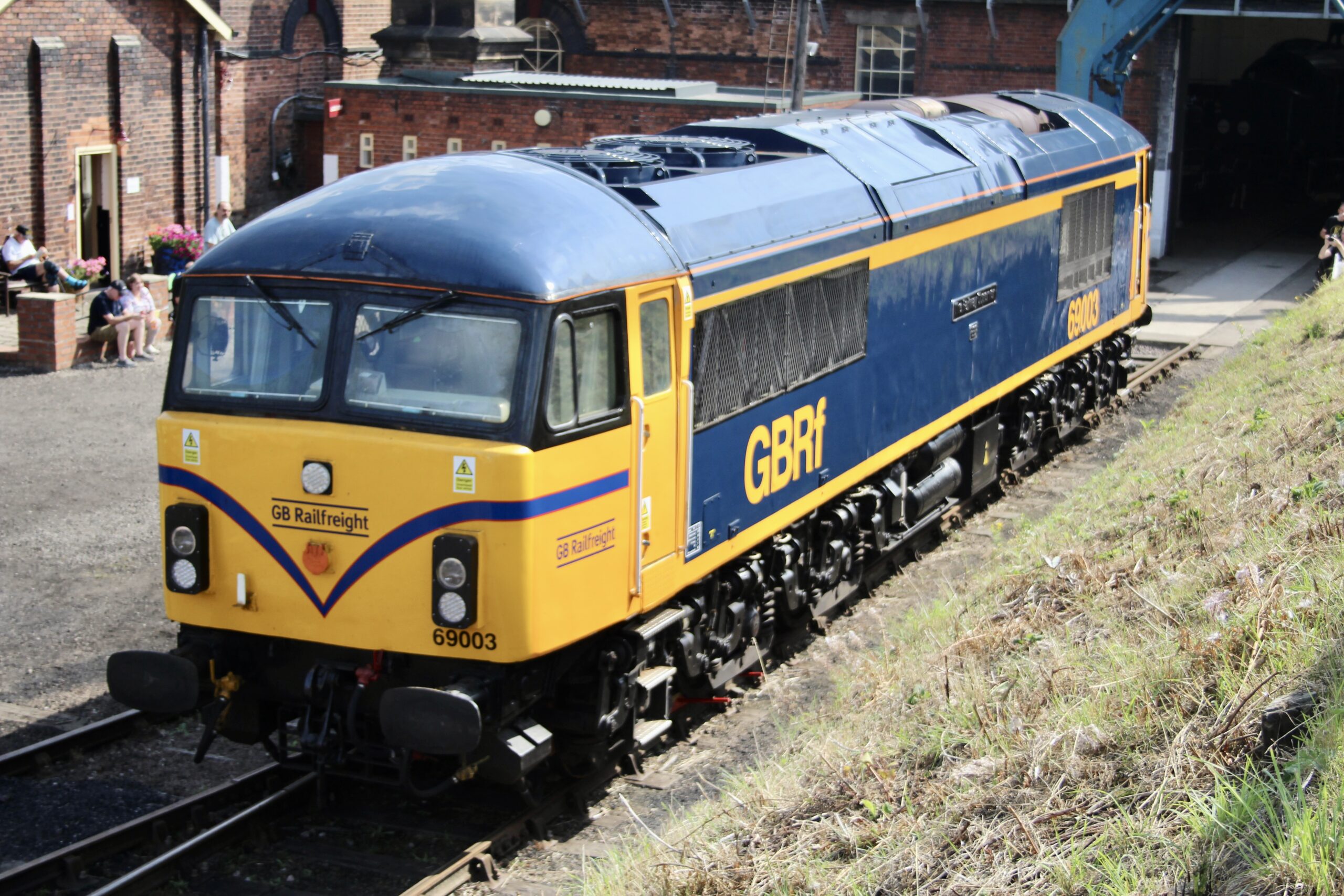
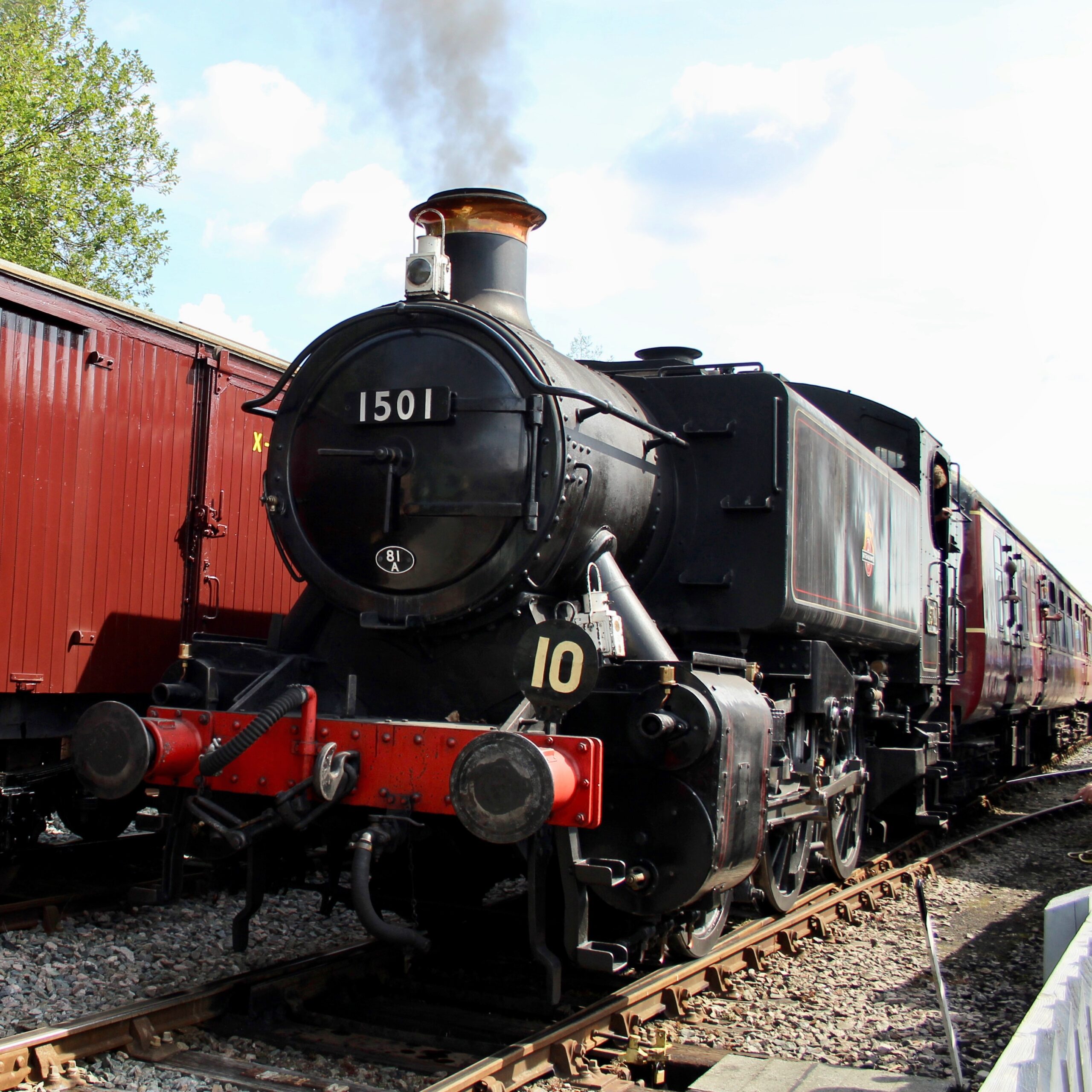
    Recreated Baby Deltic Class 23 No. D5910 ( formerly Class 37 No. 37372) took centre stage on the turntable while GBRf Class 69 No. 69003 was named ‘The Railway Observer’ the day before our visit. GWR 1500 Class 0-6-0PT shunting engine No. 1501 was in steam working shuttle trains from the Roundhouse Halt up the Springwell branch line. Midland Railway 158A Class 2-4-0 No. 156 was on display alongside Midland Railway Compound No. 1000, the first time in several years the two Midland Railway locomotives have been seen together.

    It was a little on the warm side, so we took care to ensure Yoshi had lots of water and shade during our time at Barrow Hill. It was quite busy on arrival, but numbers thined out during the day.
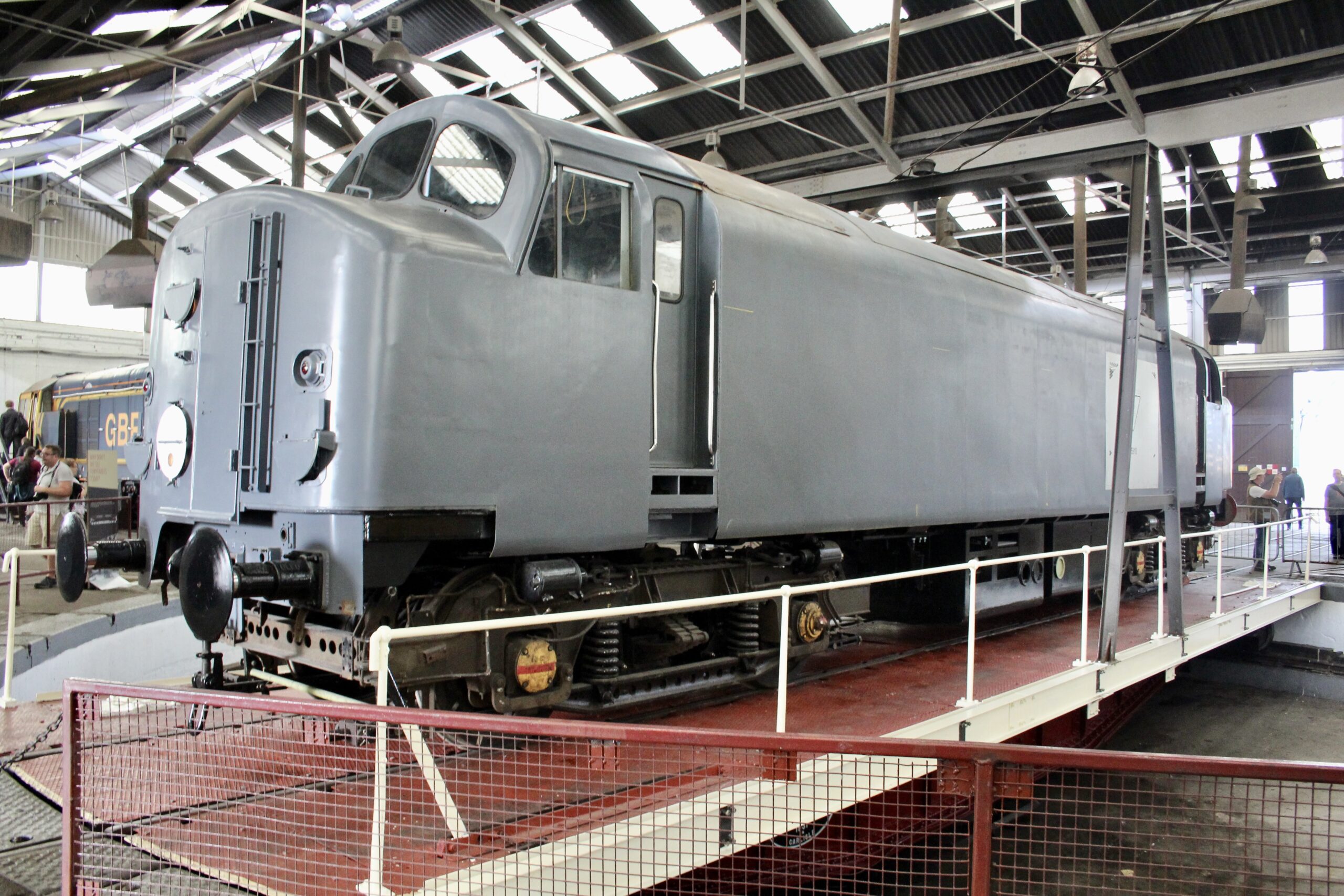
    Baby Deltic Class 23 No. D5910 (formerly Class 37 No. 37372) Barrow Hill – 28/08/2022
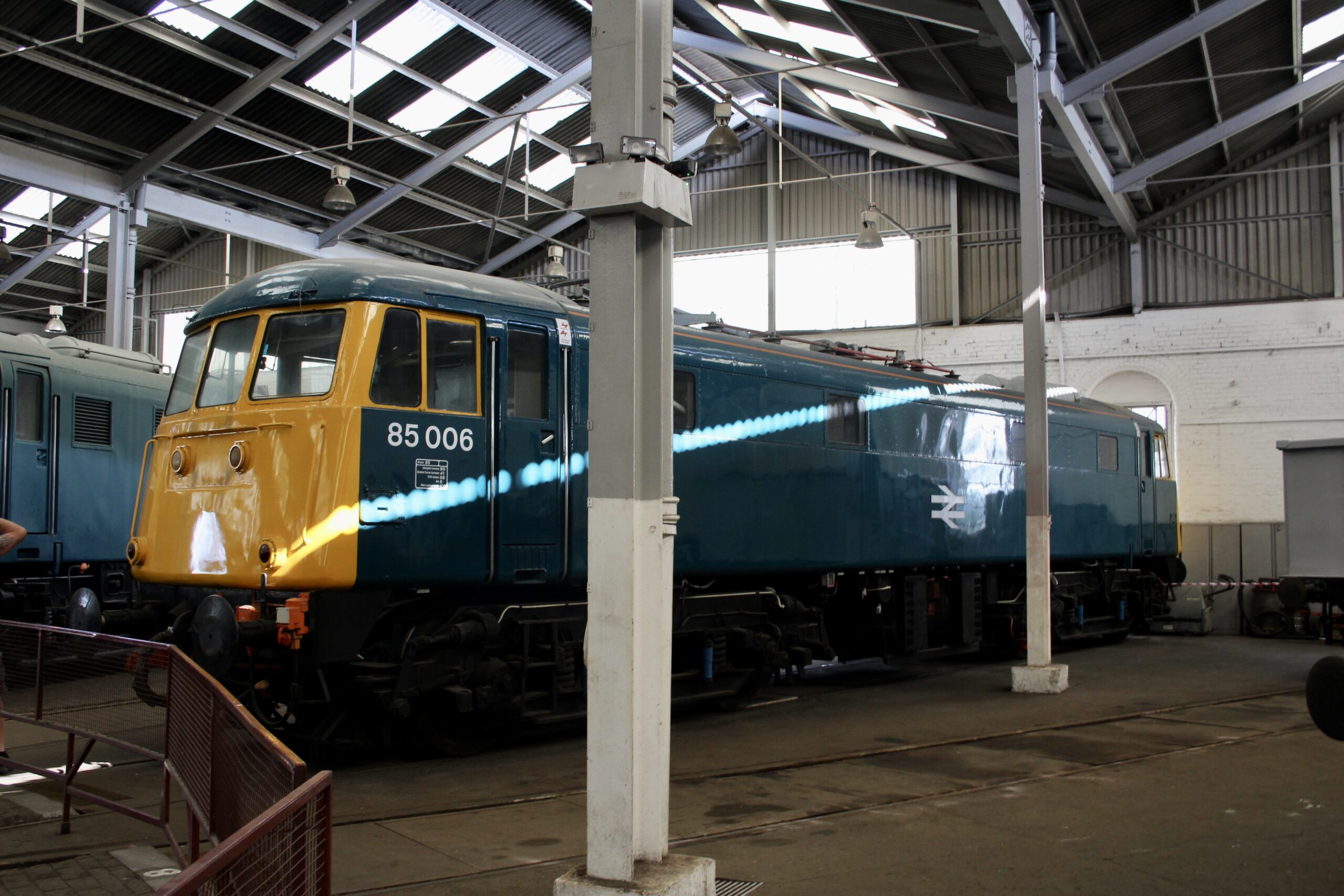
    Class 85 No. 85006 Barrow Hill – 28/08/2022
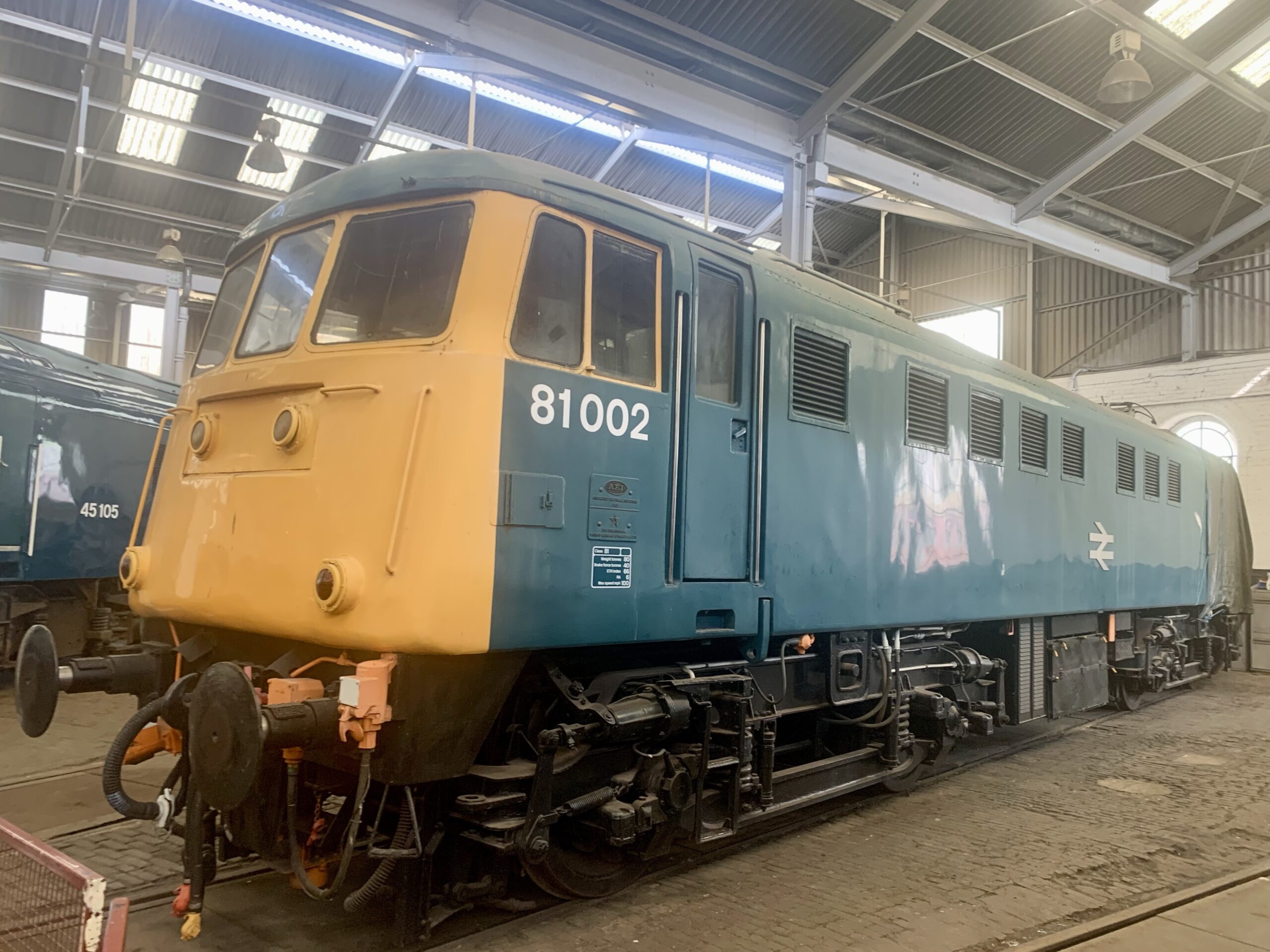
    Class 81 No. 81002 Barrow Hill – 28/08/2022
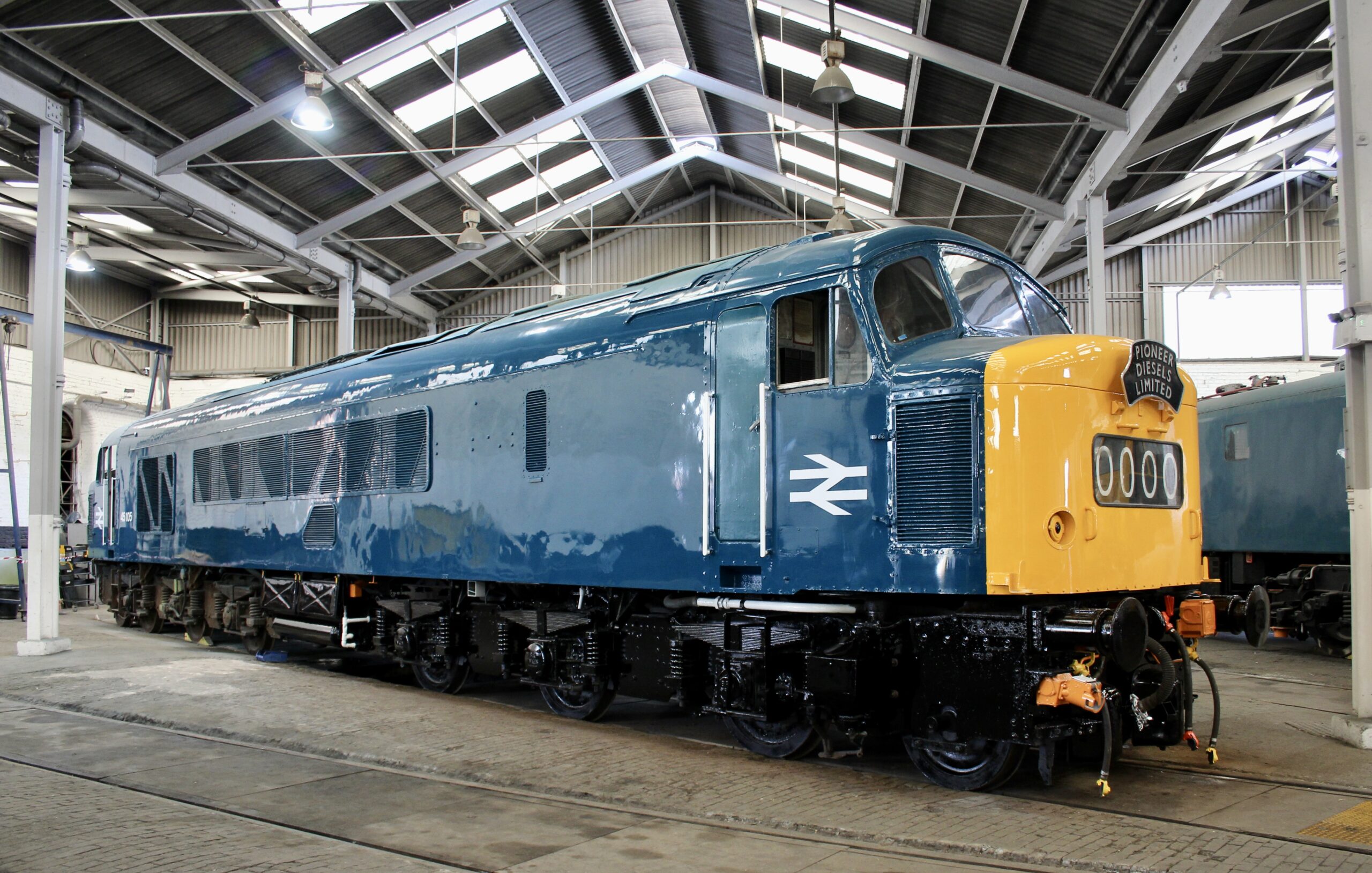
    Class 45 No. 45105 Barrow Hill – 28/08/2022
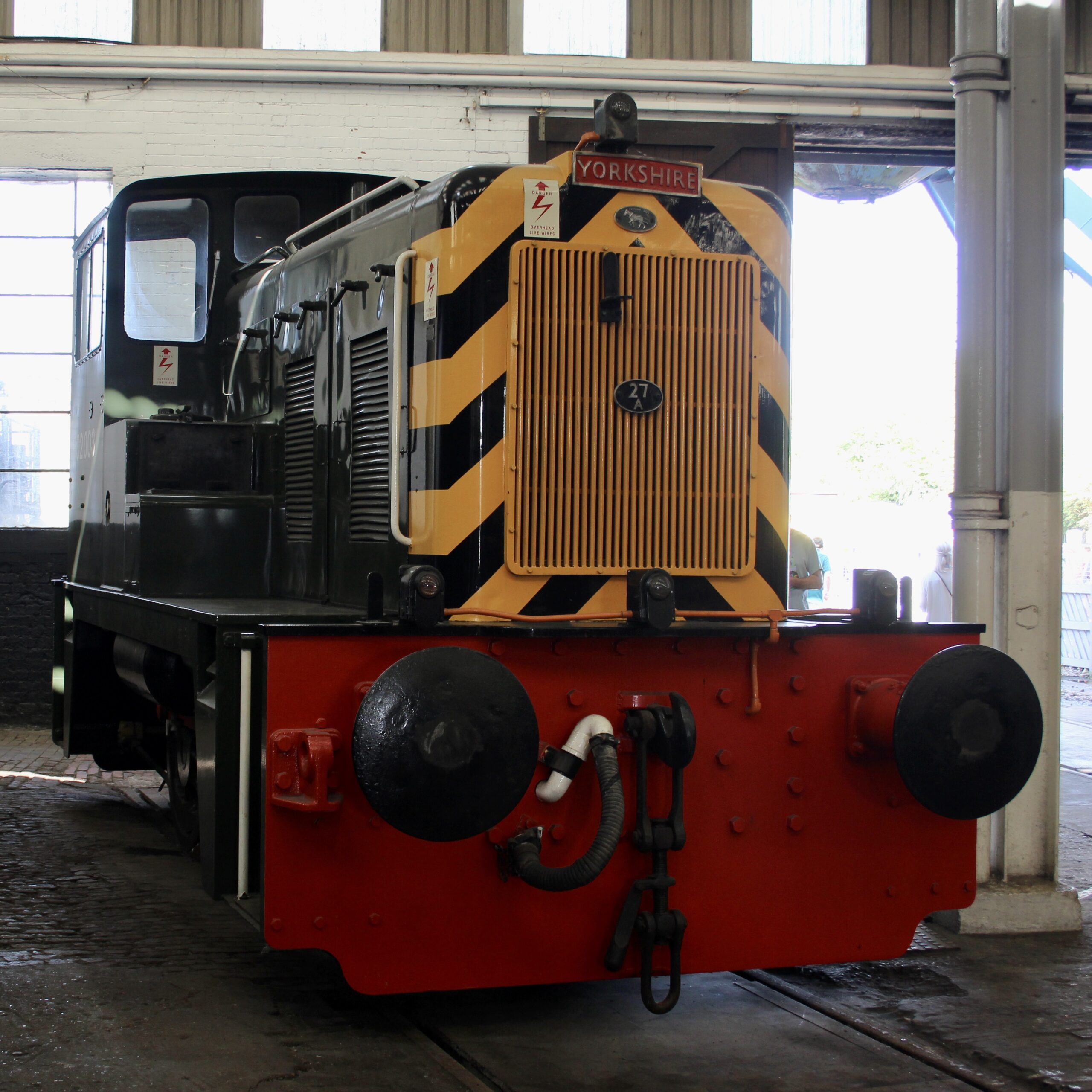
    Class 02 No. 02003 Barrow Hill – 28/08/2022
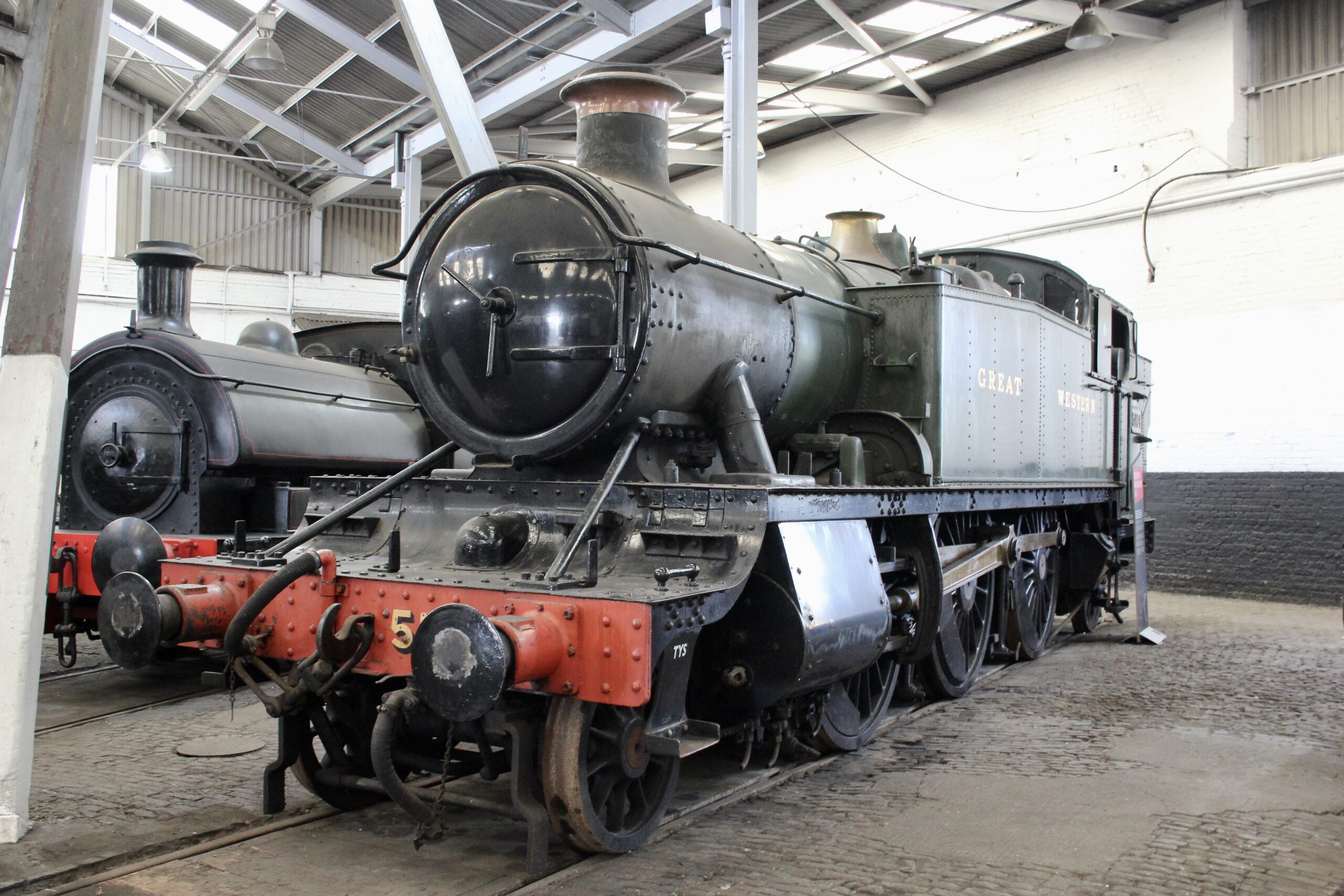
    Great Western Railway Class 2-6-2T No. 5164. Built in 1930. On loan from the Severn Valley Railway at Barrow Hill – 28/08/2022
    Hawthorn Leslie 0-40ST No. 2491 ‘Henry’. Built in 1901. Barrow Hill – 28/08/2022
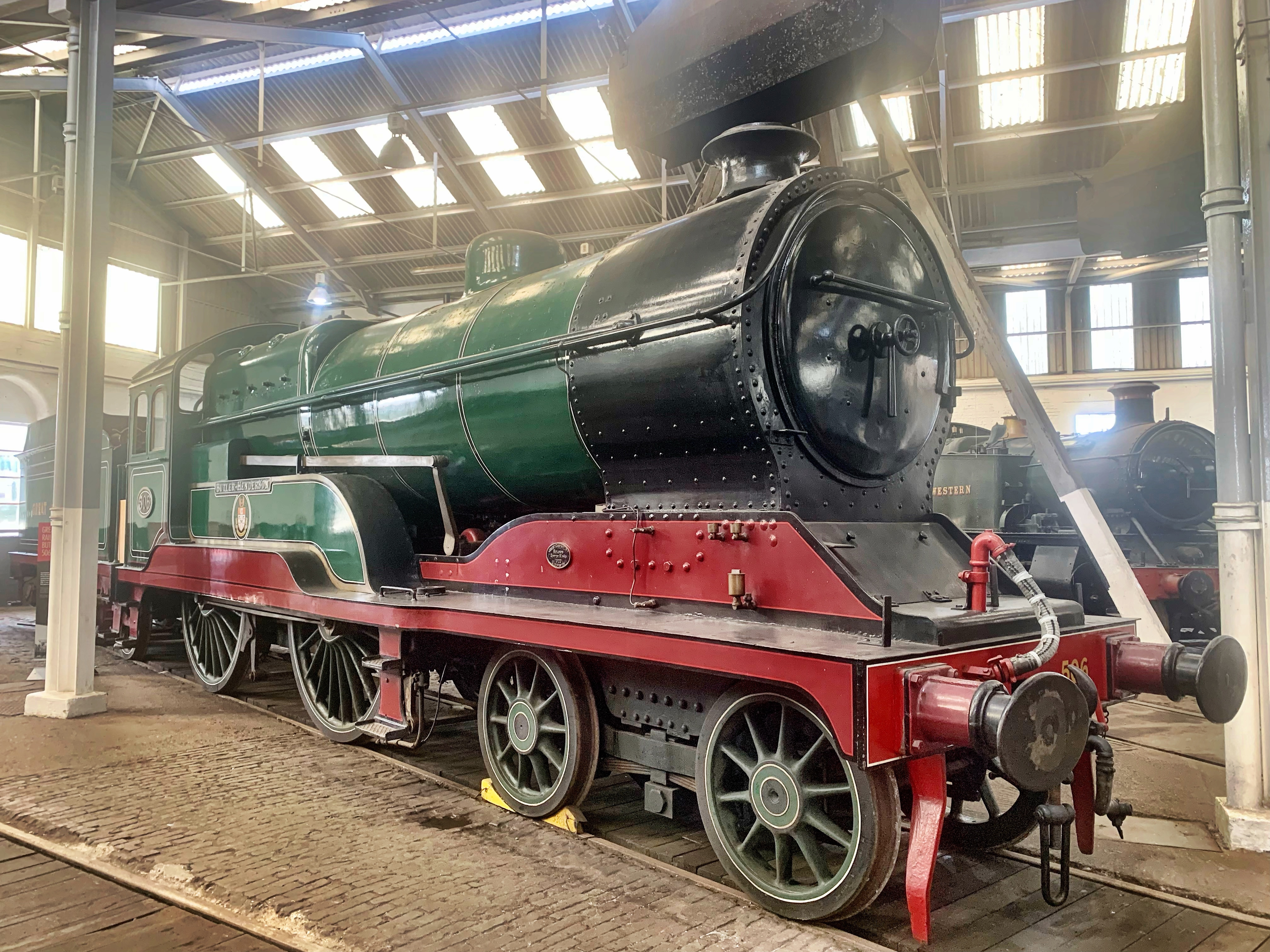
    Great Central Railway Class 11F (LNER Class D11)4-4-0 No. 506 ‘Butler Henderson’ built in 1919. On loan from the National Railway Museum at Barrow Hill – 28/08/2022
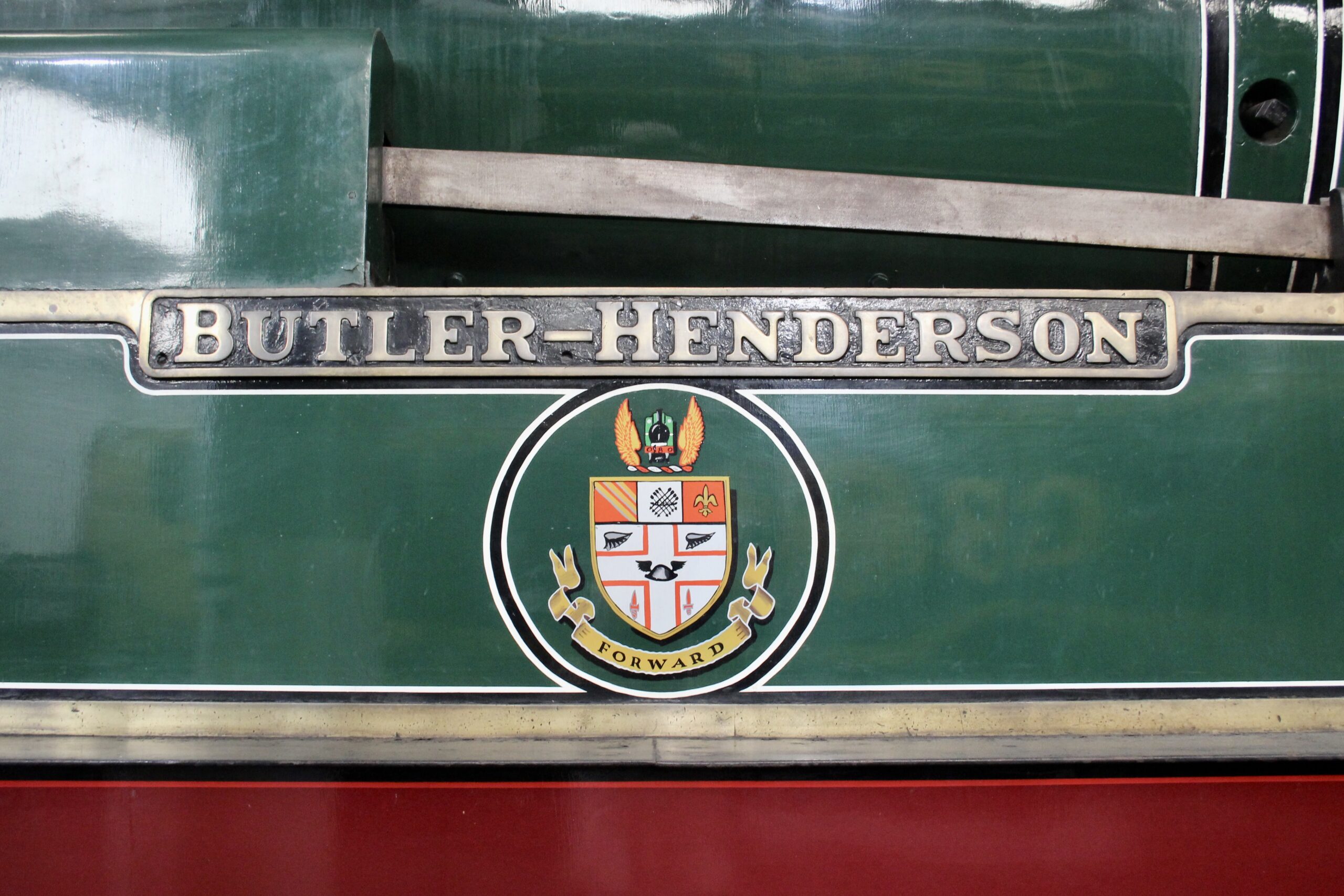
    Nameplate detail of Great Central Railway Class 11F (LNER Class D11)4-4-0 No. 506 ‘Butler Henderson’ built in 1919. On loan from the National Railway Museum at Barrow Hill – 28/08/2022
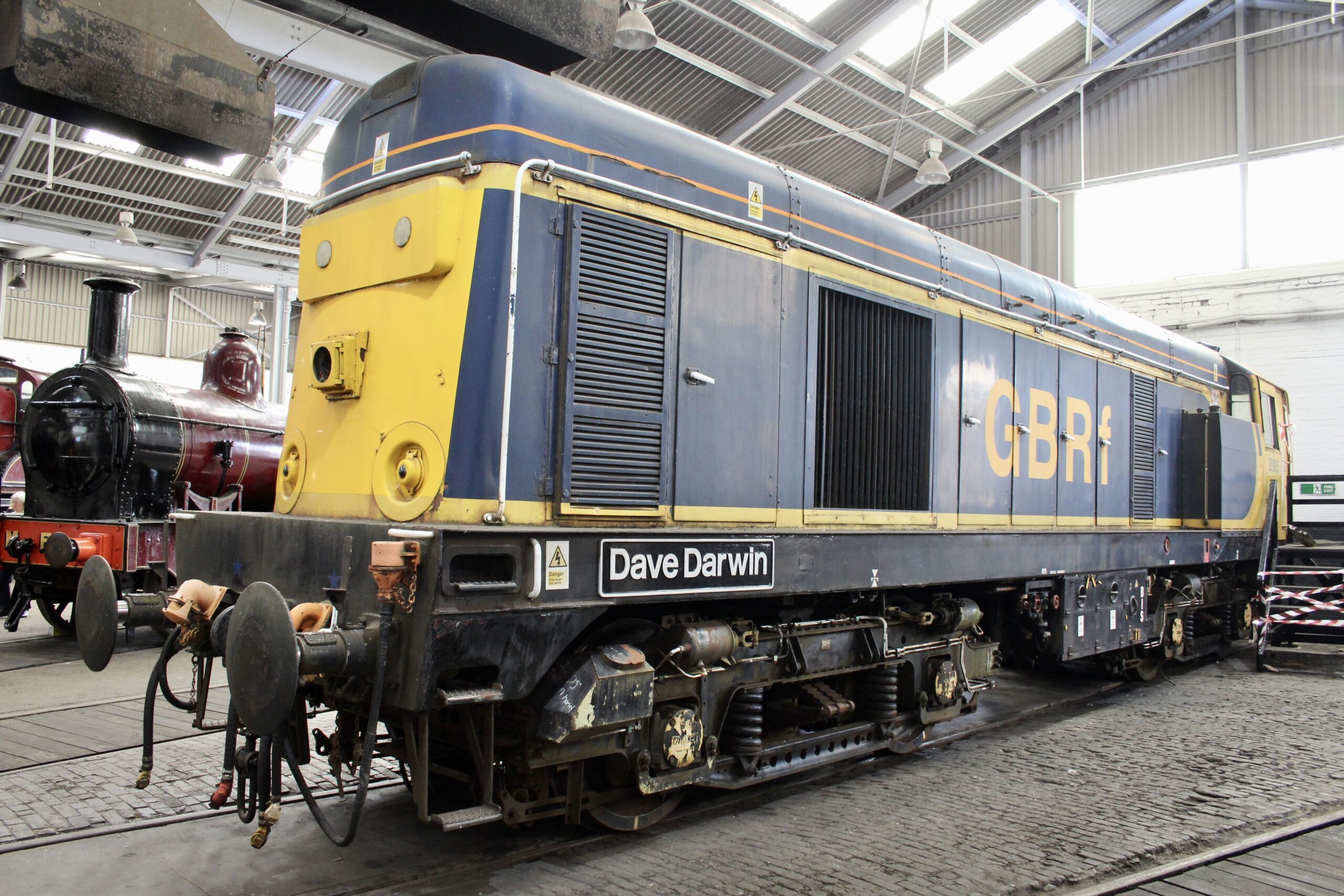
    Class 20 No. 20905 ‘Dave Darwin’ Barrow Hill – 28/08/2022
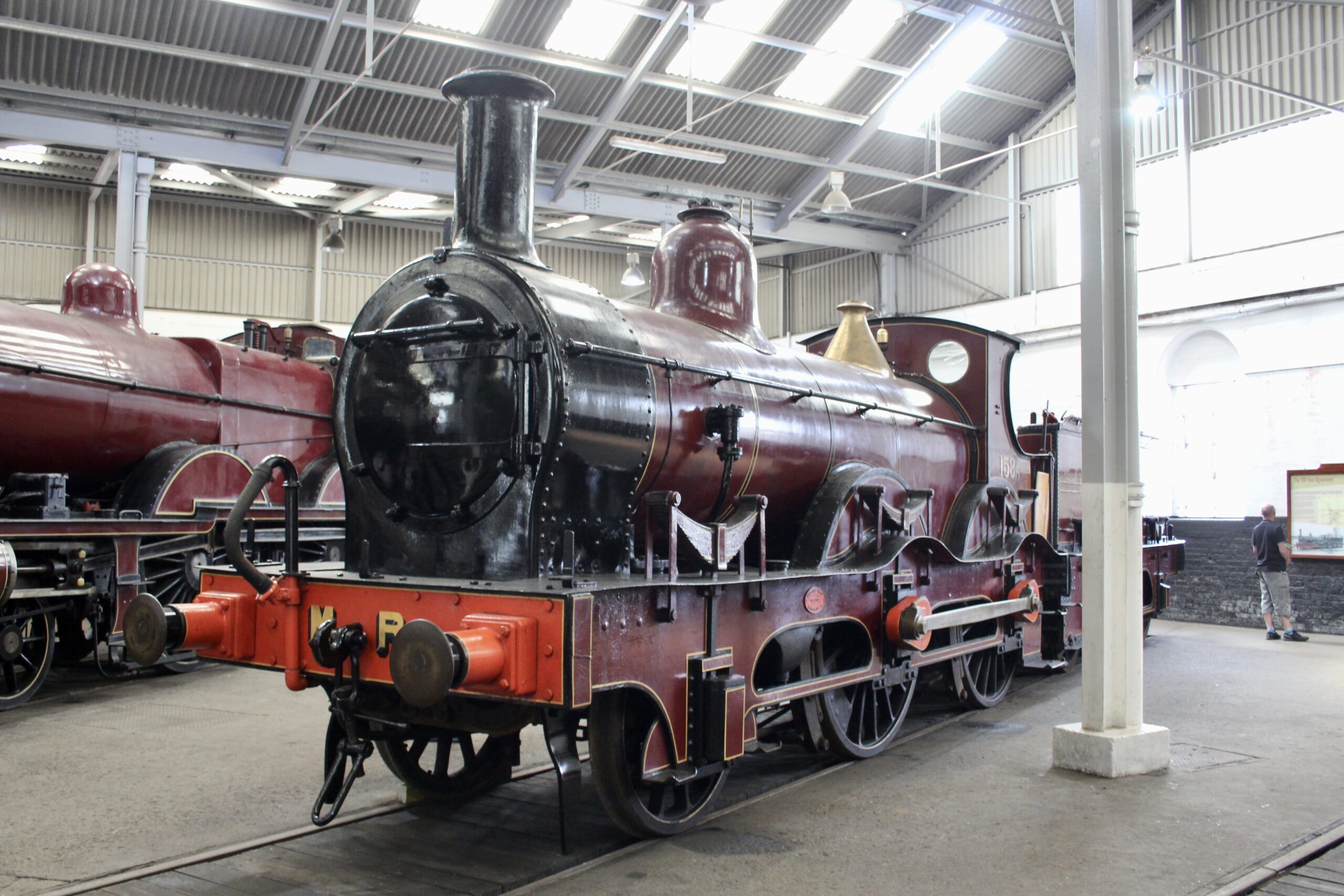
    Midland Railway 156 Class 2-4-0 No. 158A. Built in 1866. On loan from the National Railway Museum at Barrow Hill – 28/08/2022
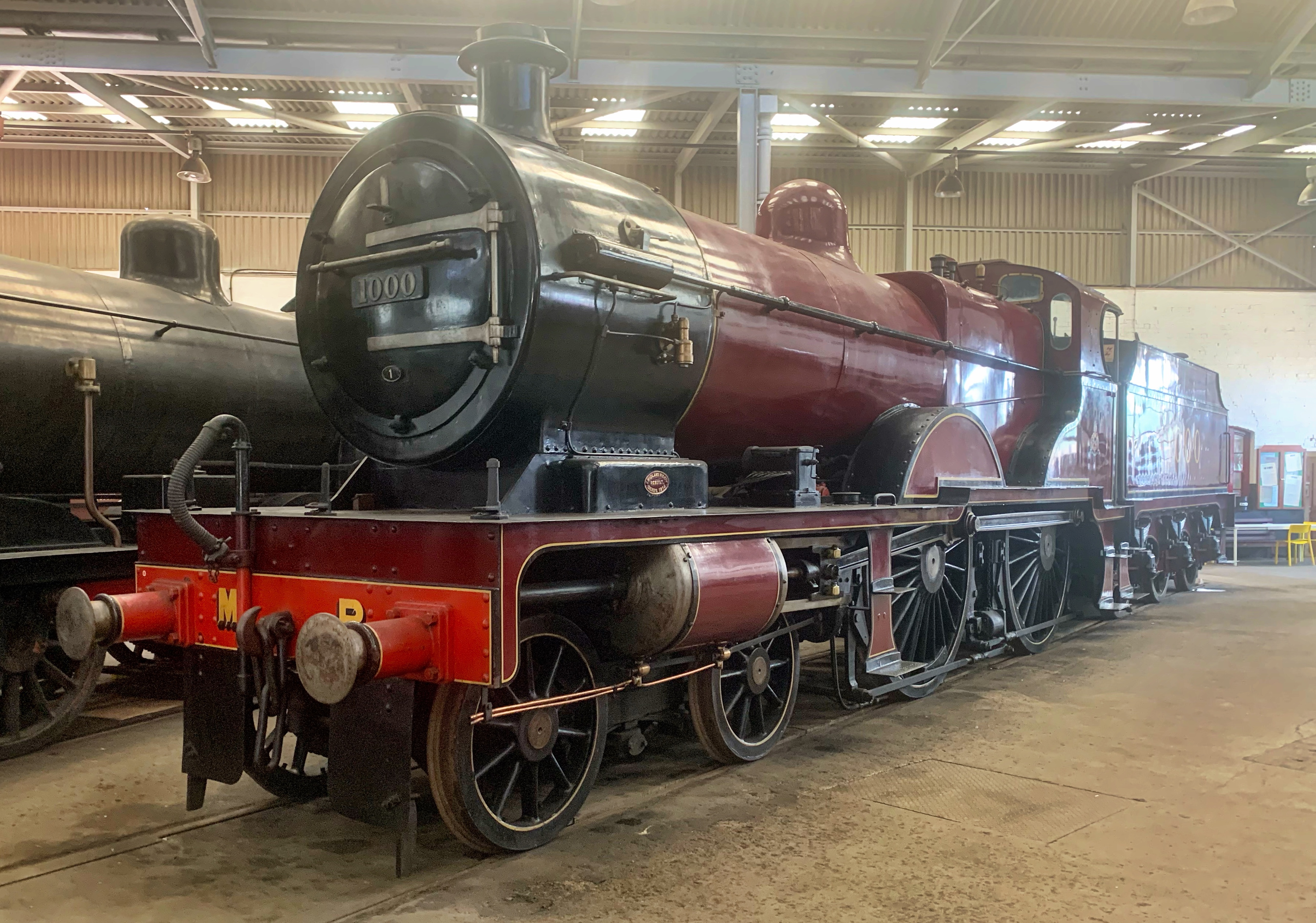
    Midland Railway Compound Class 4-4-0 No. 1000. Built in 1902. On loan from the National Railway Museum at Barrow Hill – 28/08/2022
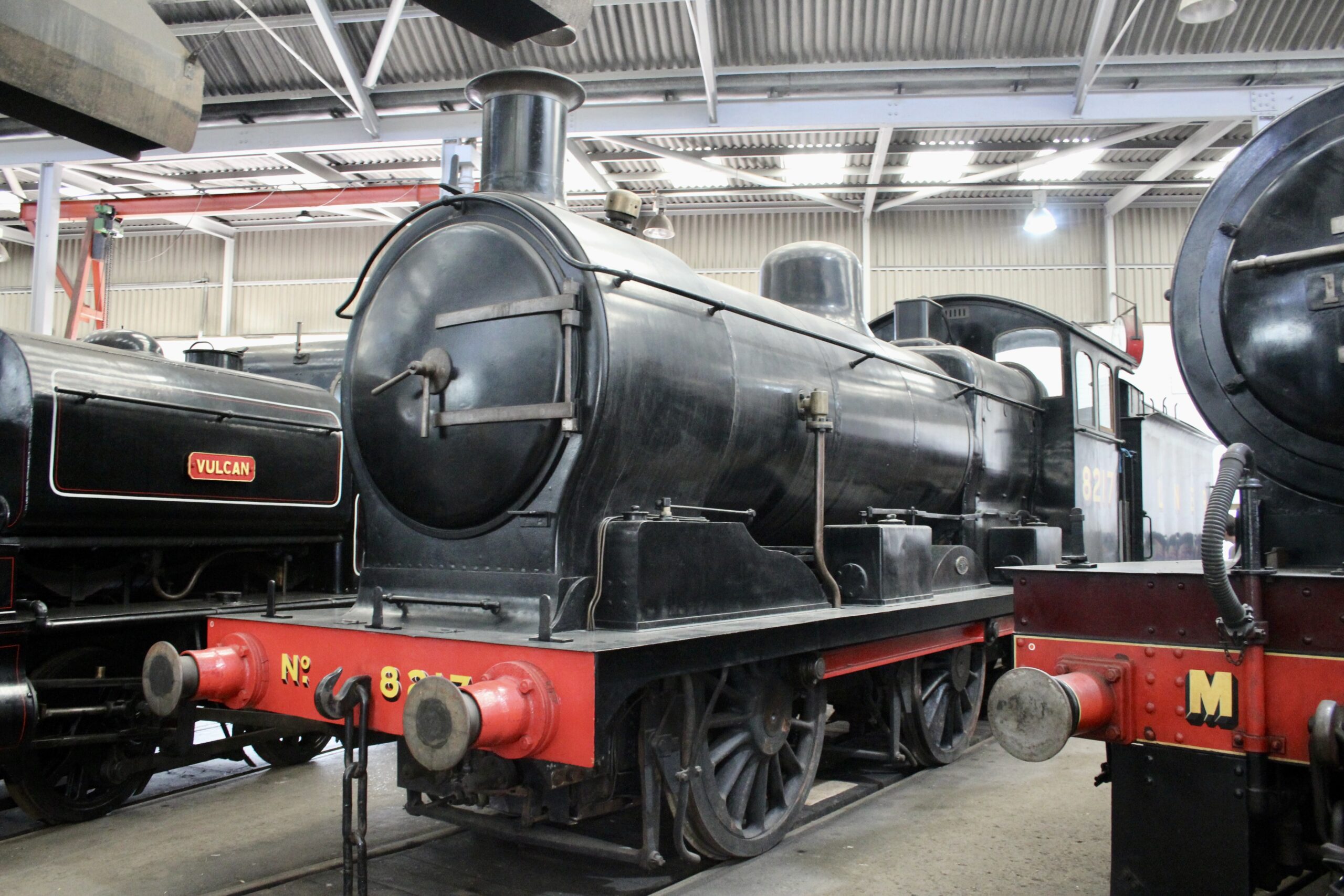
    GER Class G58 (LNER Class J17) 0-6-0 No. 8217. Built in 1905 at Barrow Hill – 28/08/2022
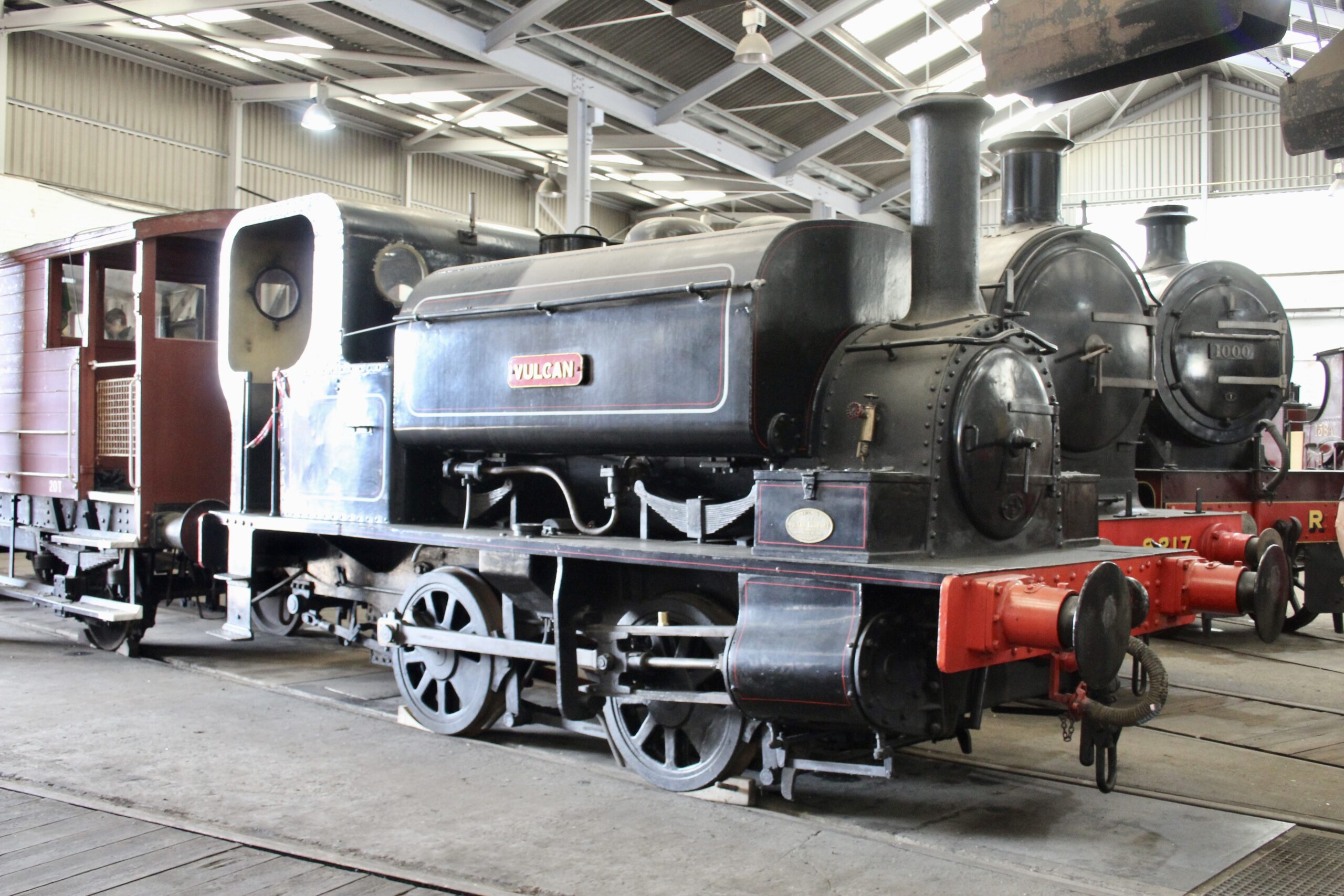
    Vulcan Foundry 0-4-0-OST No. 3272 Vulcan. Built in 1918 at Barrow Hill – 28/08/2022
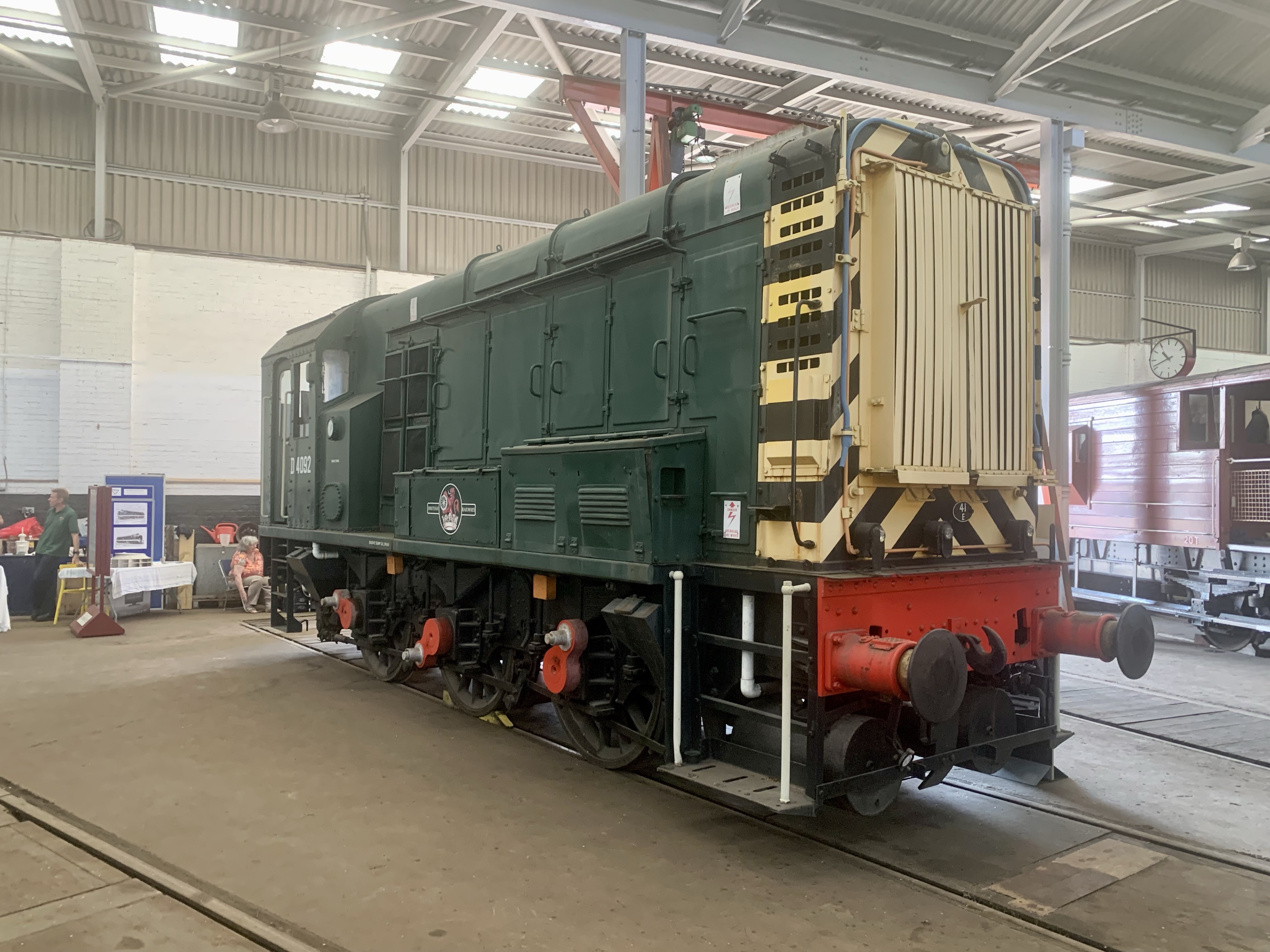
    Class 08 No. D4092 Barrow Hill – 28/08/2022
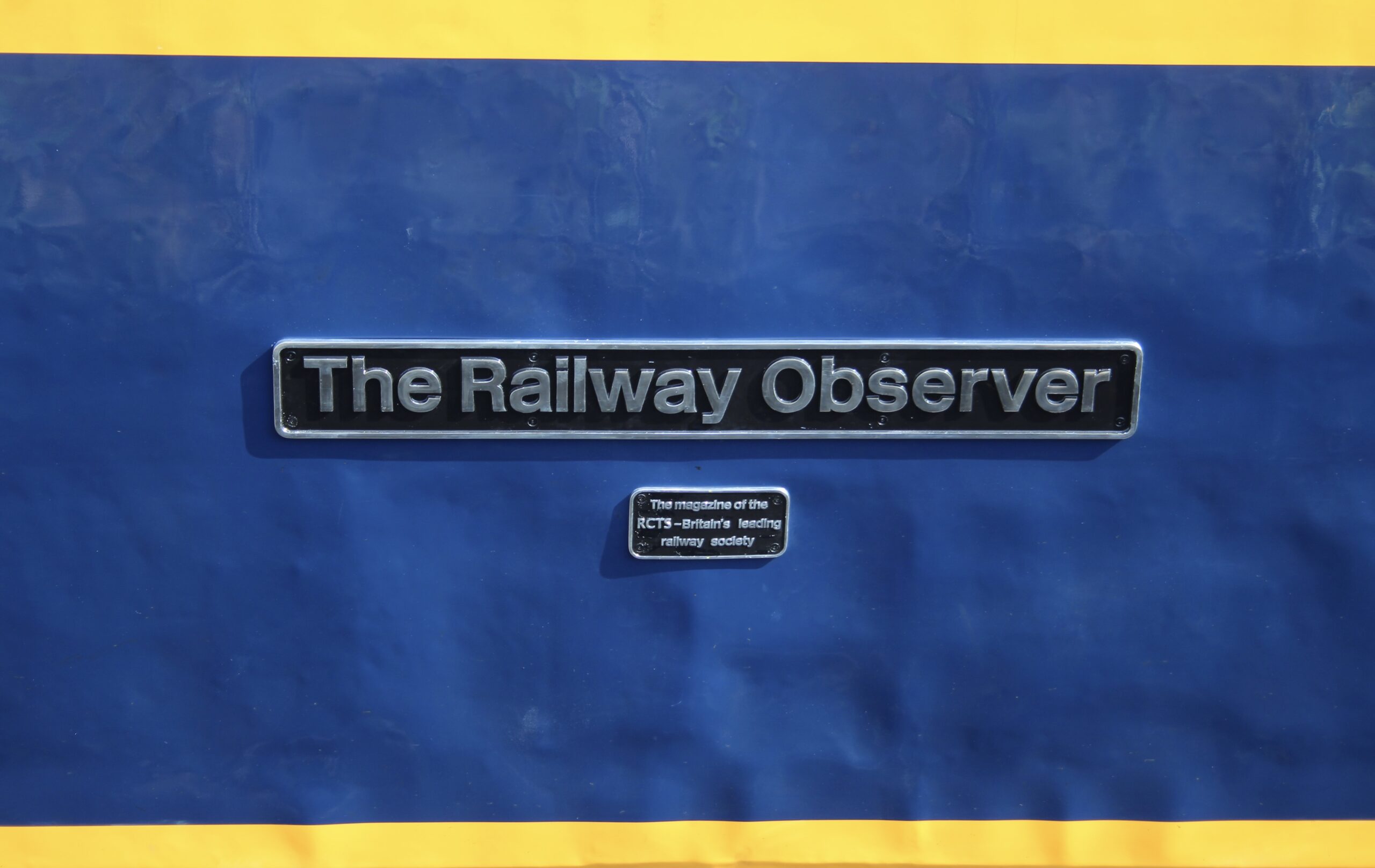
    GBRf honoured the Railway Correspondence & Travel Society (RCTS) by naming Class 69 No. 69003 ‘The Railway Observer’ after the Society magazine at Barrow Hill. – 28/08/2022
    Nameplate detail of Class 69 No. 69003 ‘The Railway Observer’ at Barrow Hill – 28/08/2022
    Class 69 No. 69003 ‘The Railway Observer’ at Barrow Hill – 28/08/2022
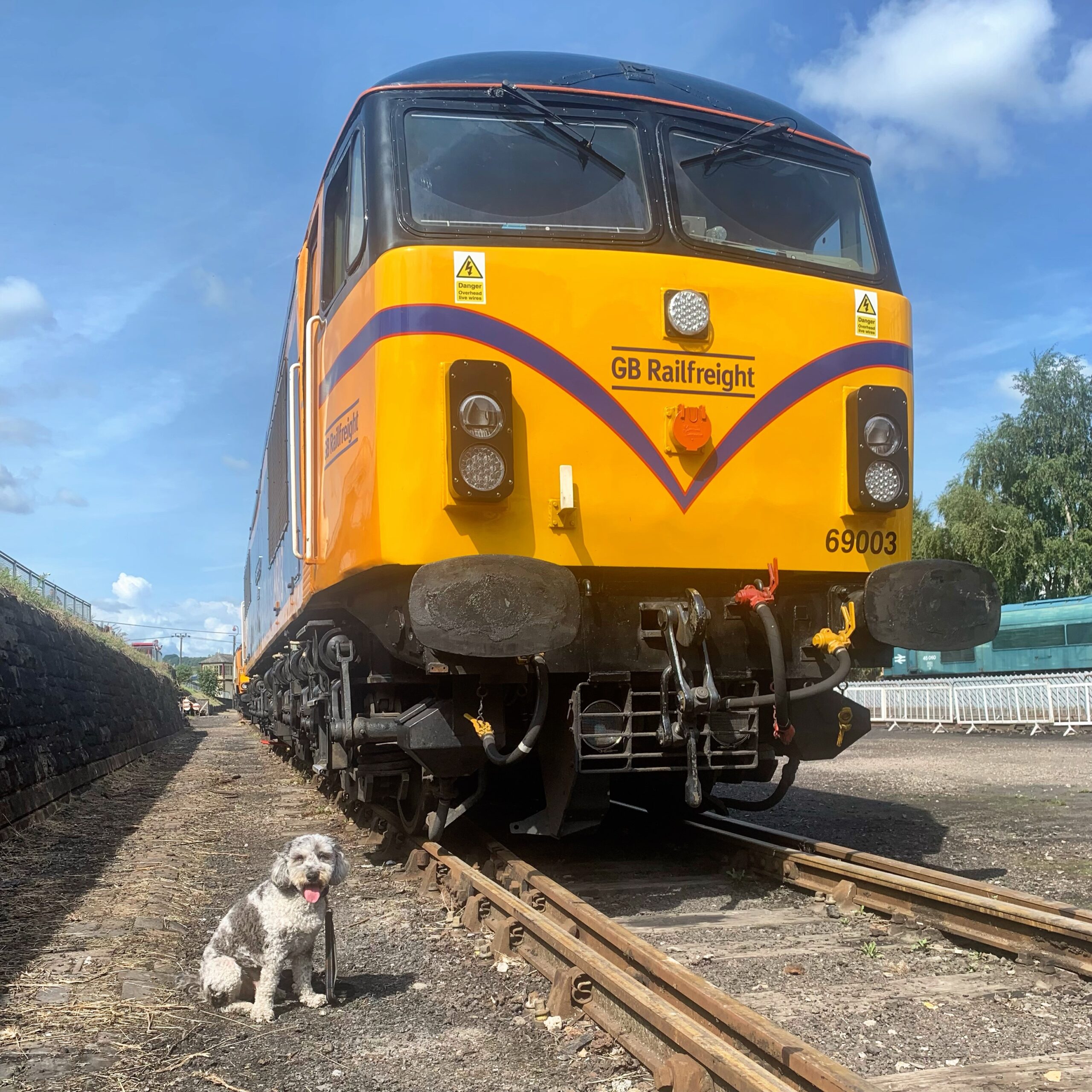
    Yoshi with Class 69 No. 69003 ‘The Railway Observer’ at Barrow Hill – 28/08/2022
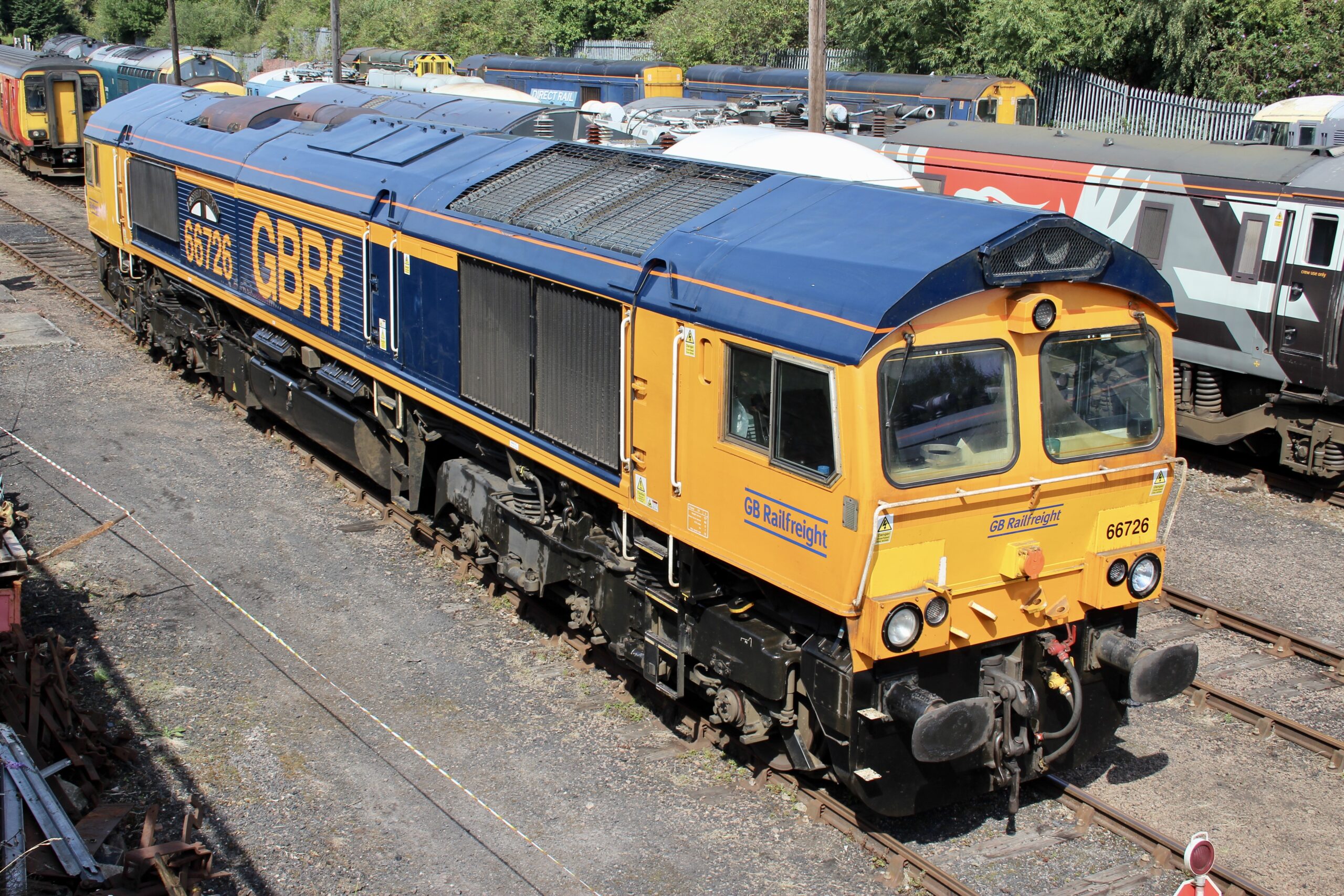
    Class 66 No. 66726 ‘Sheffield Wednesday’ Barrow Hill – 28/08/2022
    Class 91 No. 91120 Barrow Hill – 28/08/2022
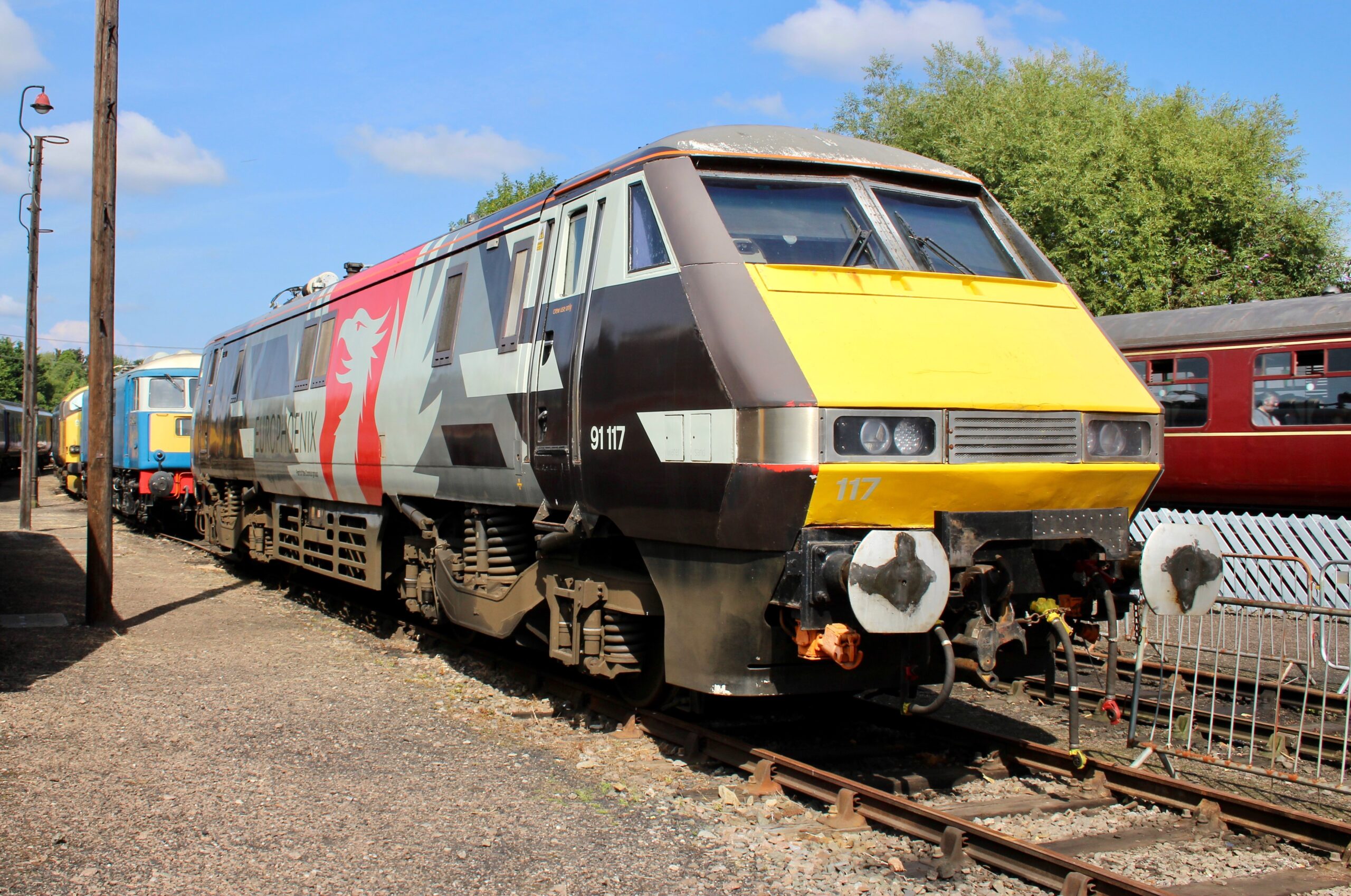
    Class 91 No. 91117 Barrow Hill – 28/08/2022
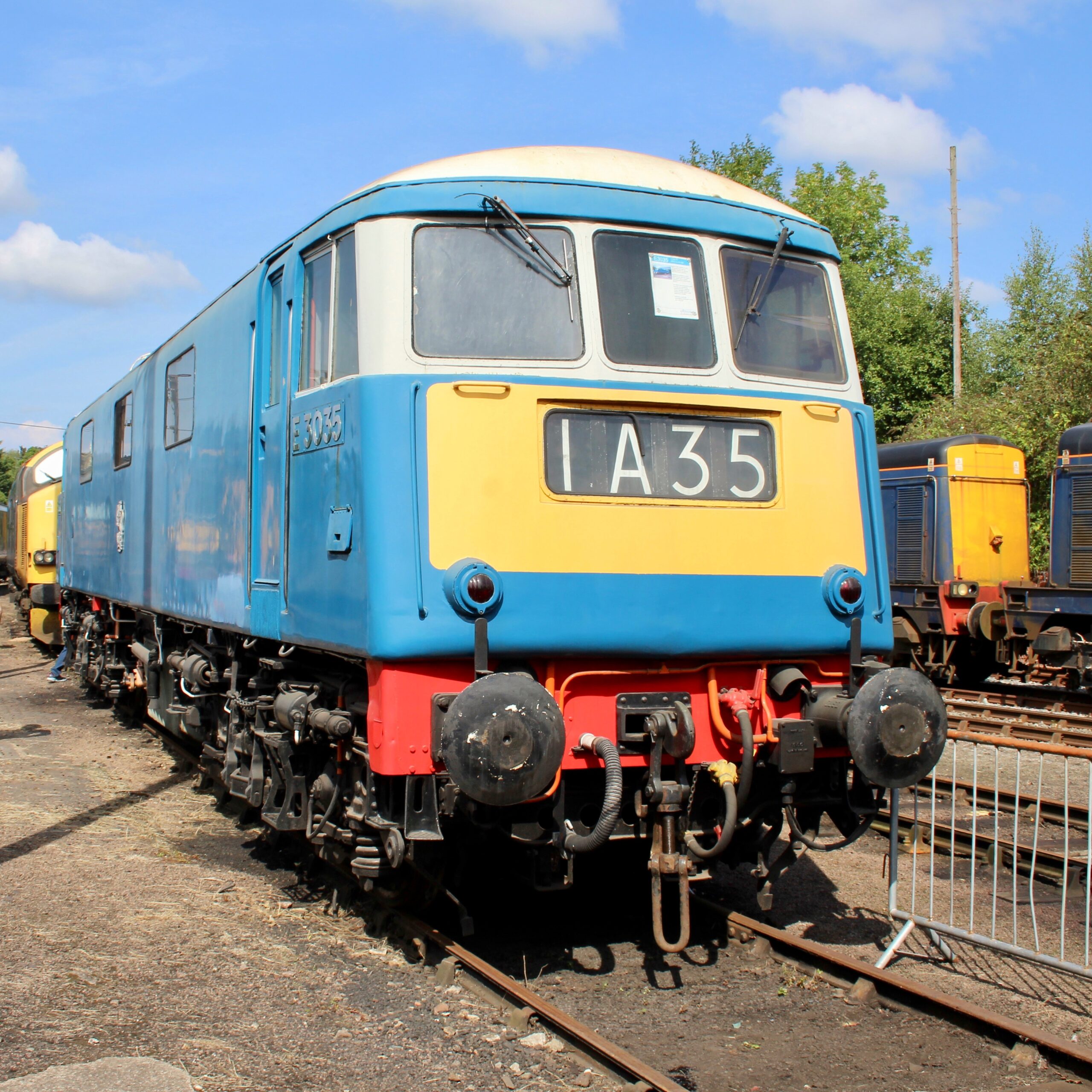
    Class 83 No. 83012 at Barrow Hill – 28/08/2022
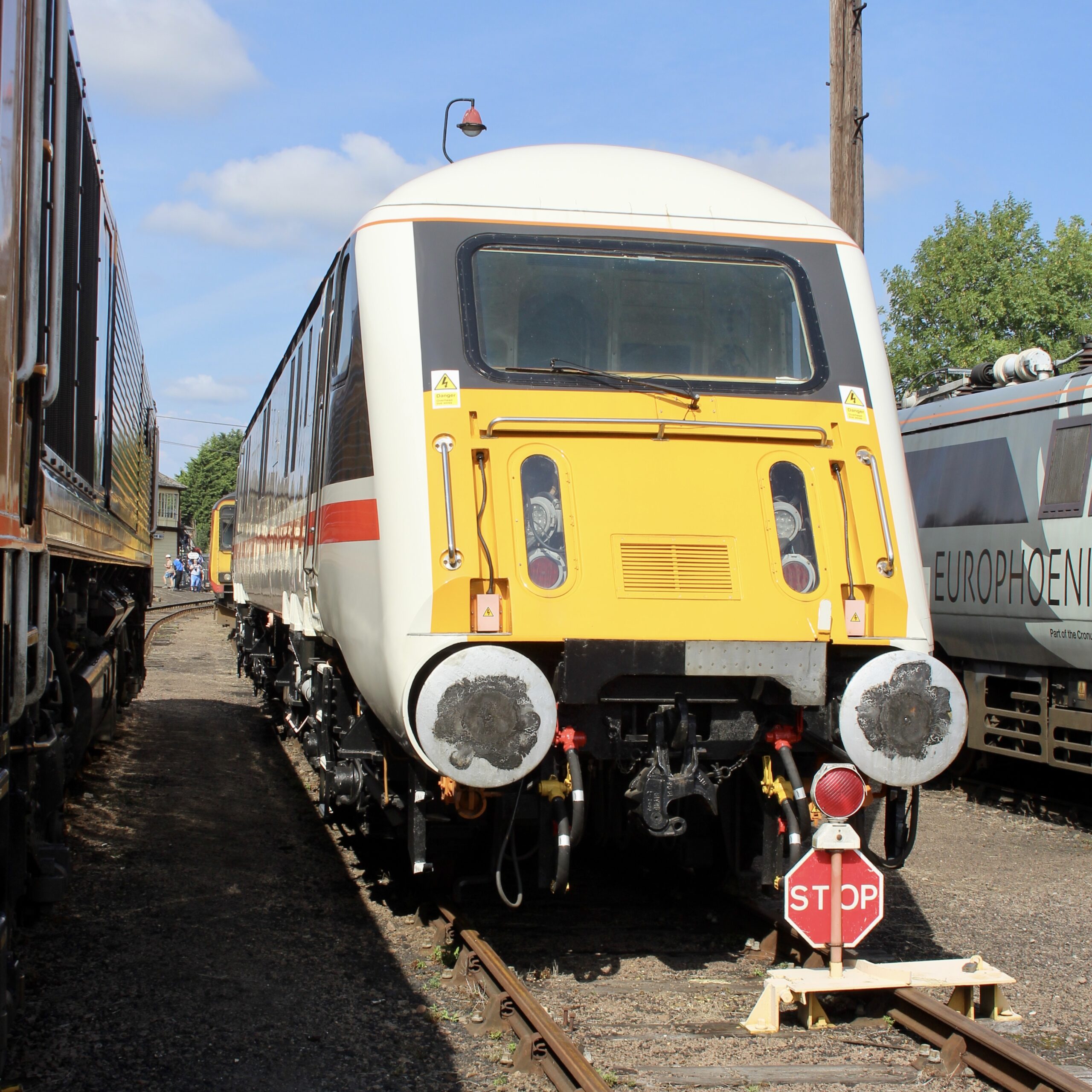
    The unique Class 89 No. 89001 ‘Avocet’, was built as a prototype in 1986 for a fleet that was never ordered. Barrow Hill – 28/08/2022
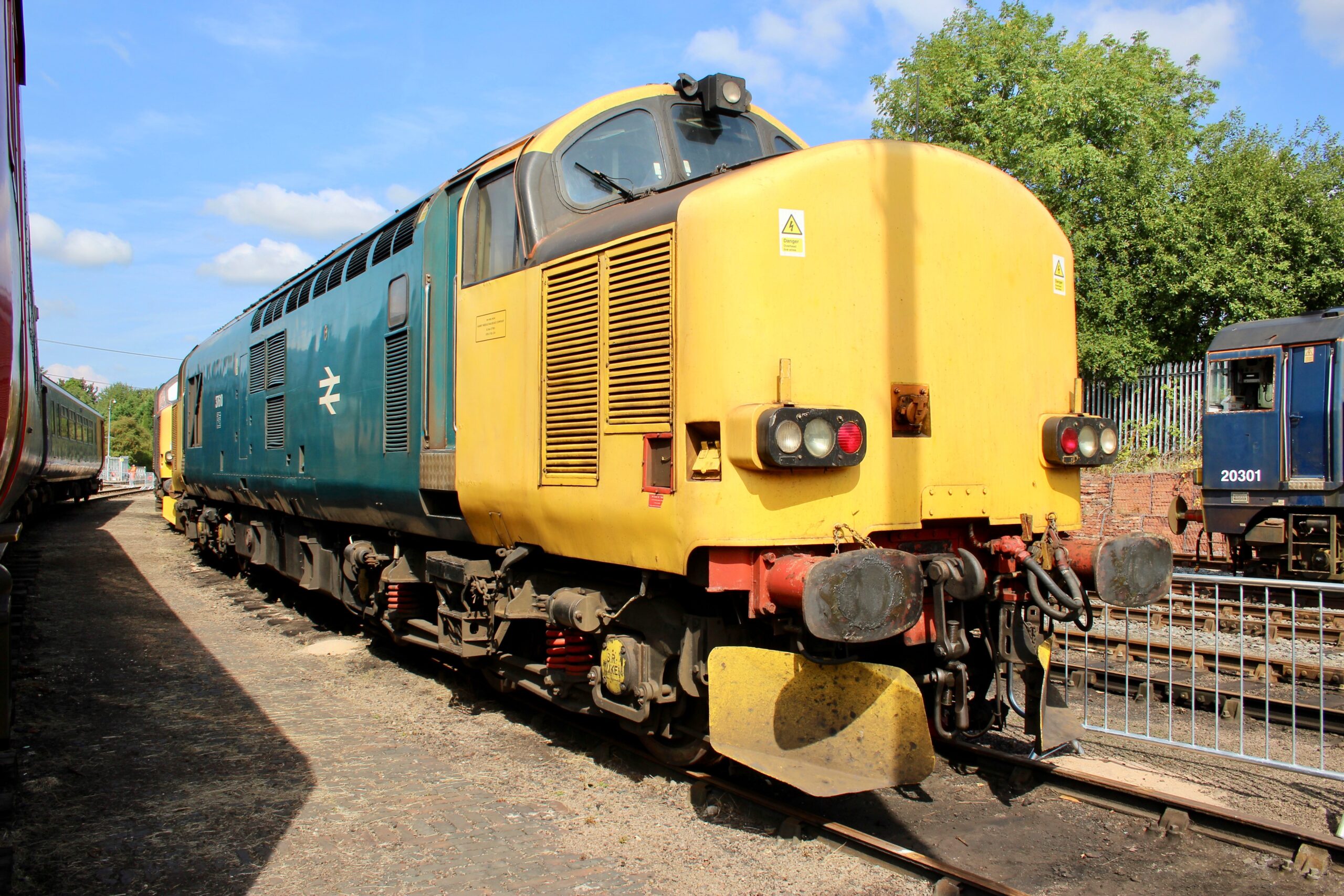
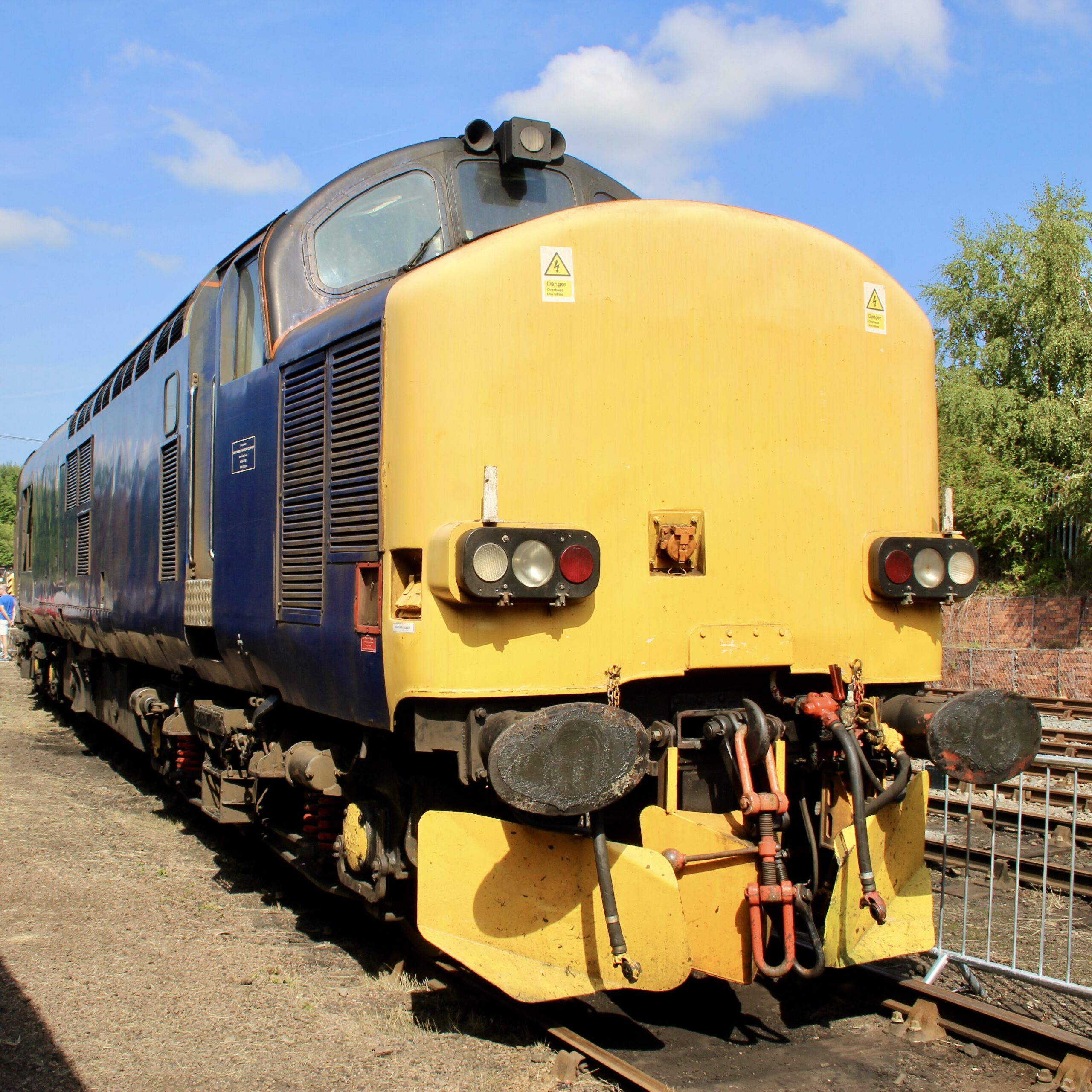
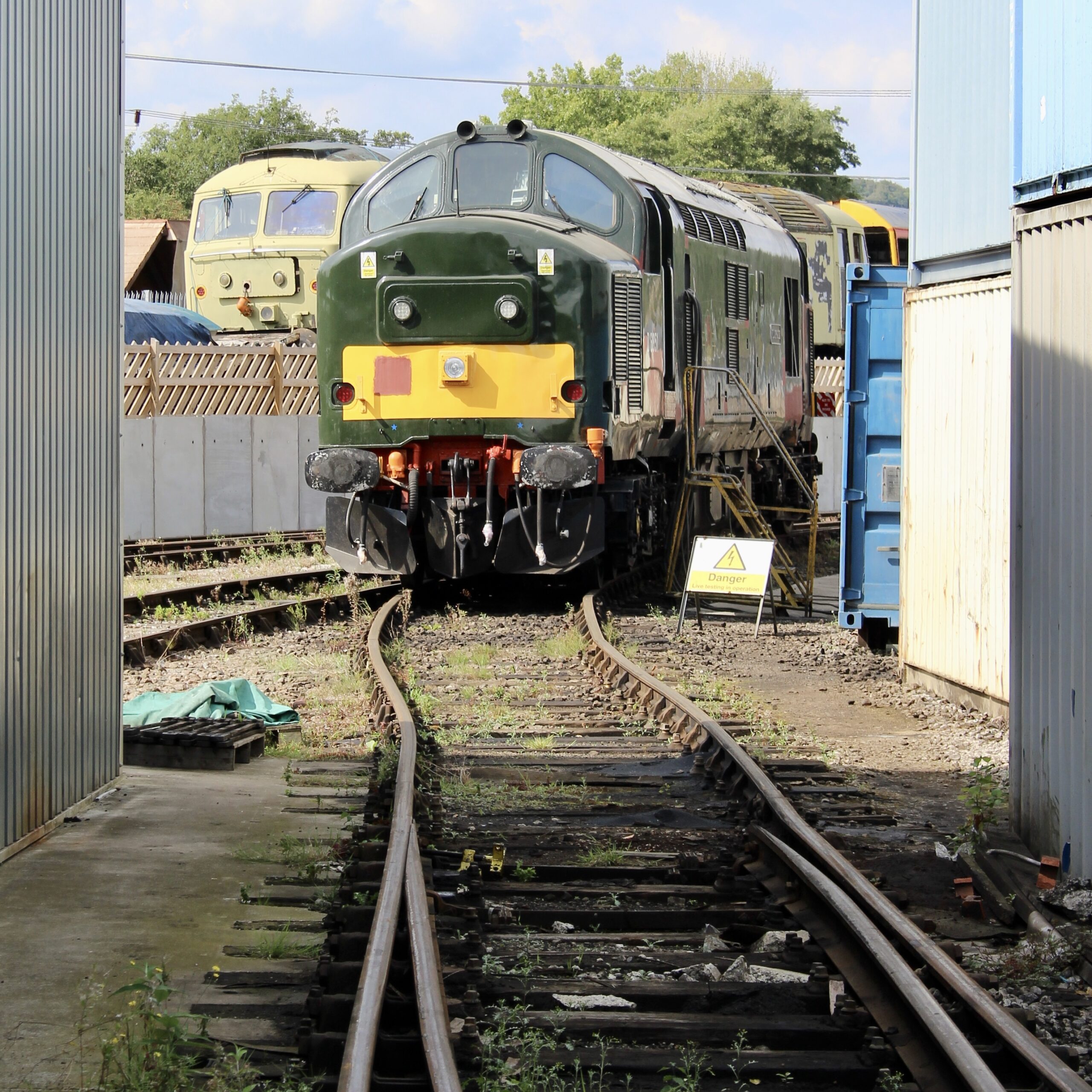
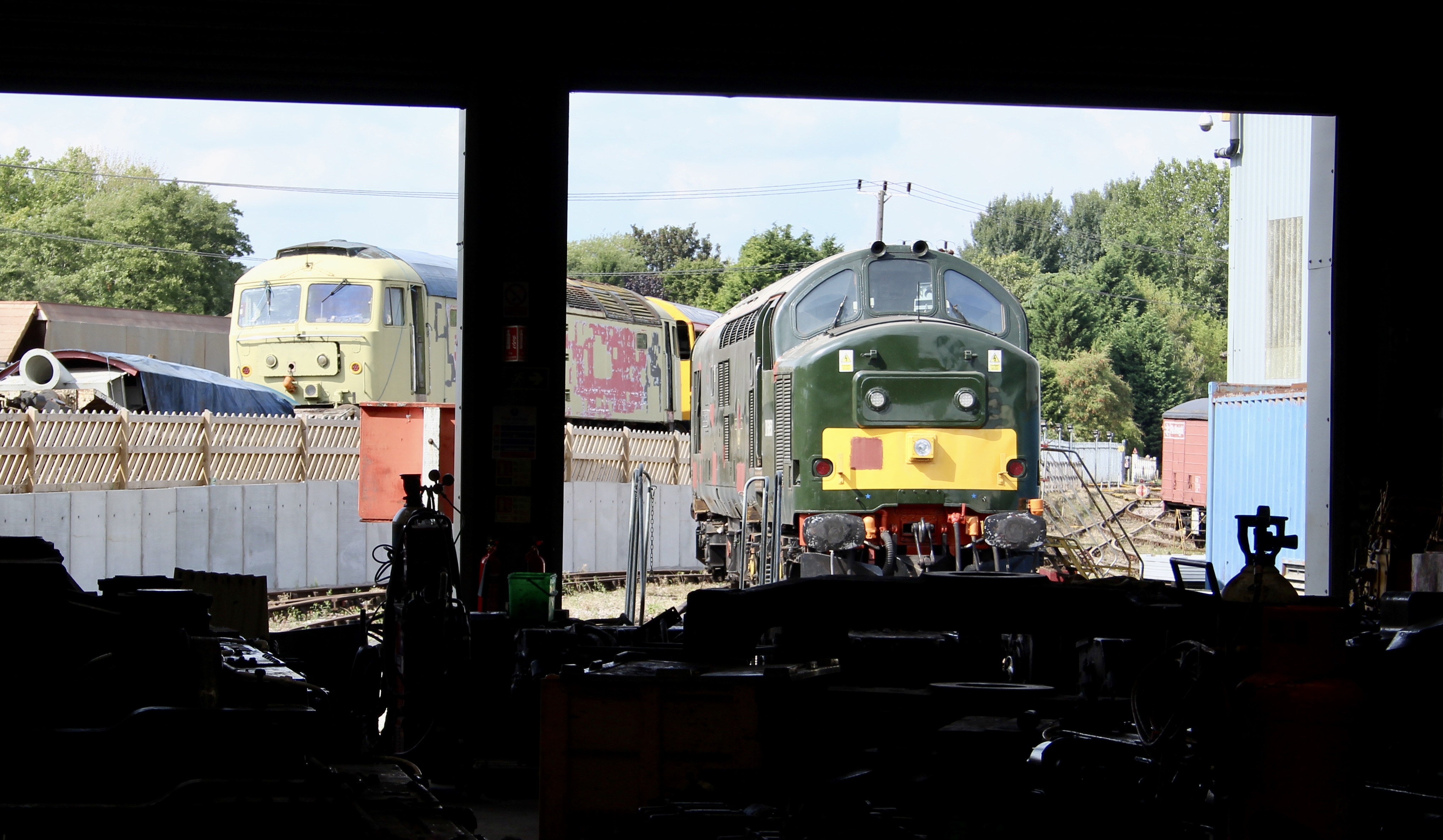
    Class 37 No. 37610 Barrow Hill – 28/08/2022
    Class 37 No. 37612 Barrow Hill – 28/08/2022
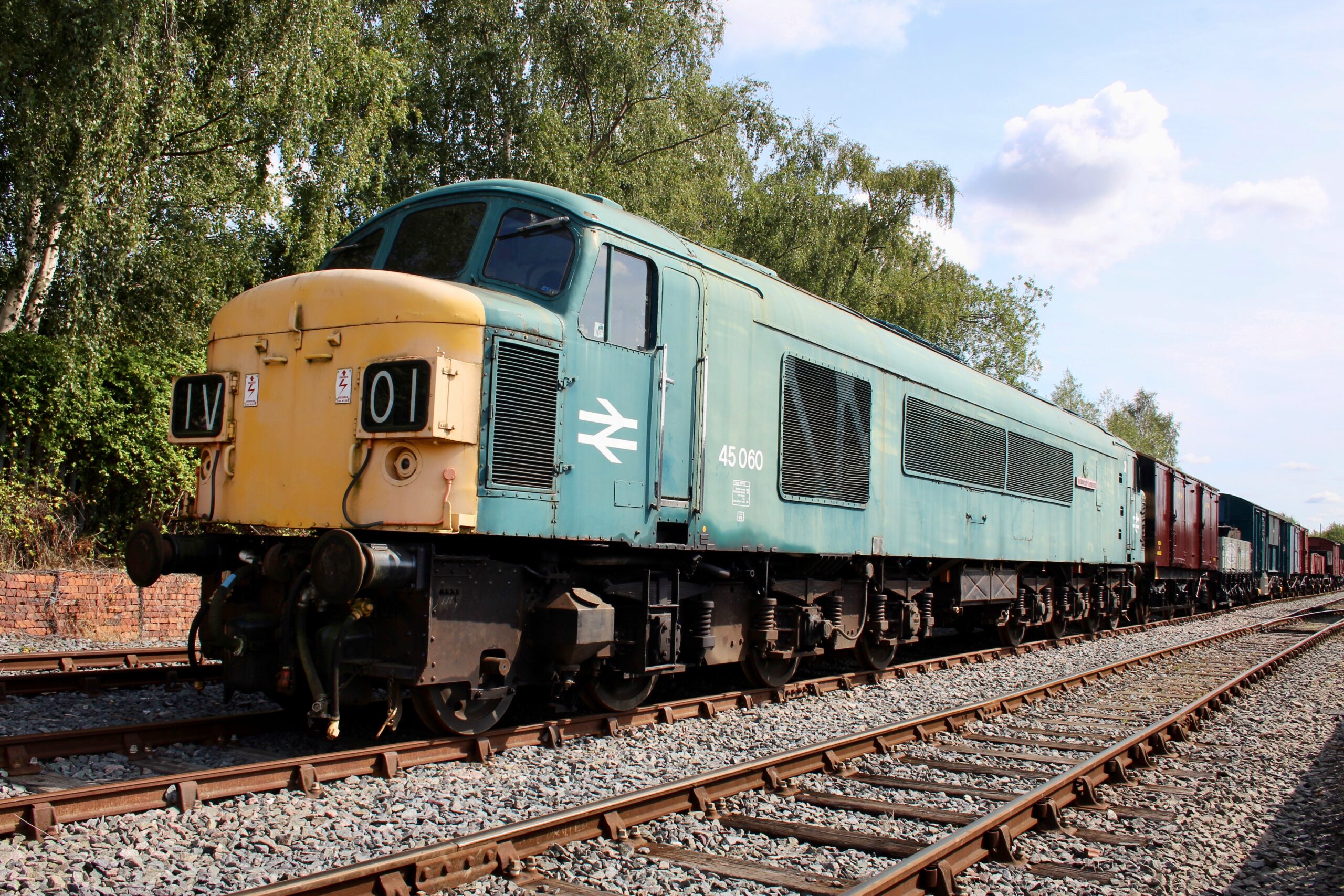
    Class 45 No. 45060 ‘Sherwood Forester’ Barrow Hill – 28/08/2022
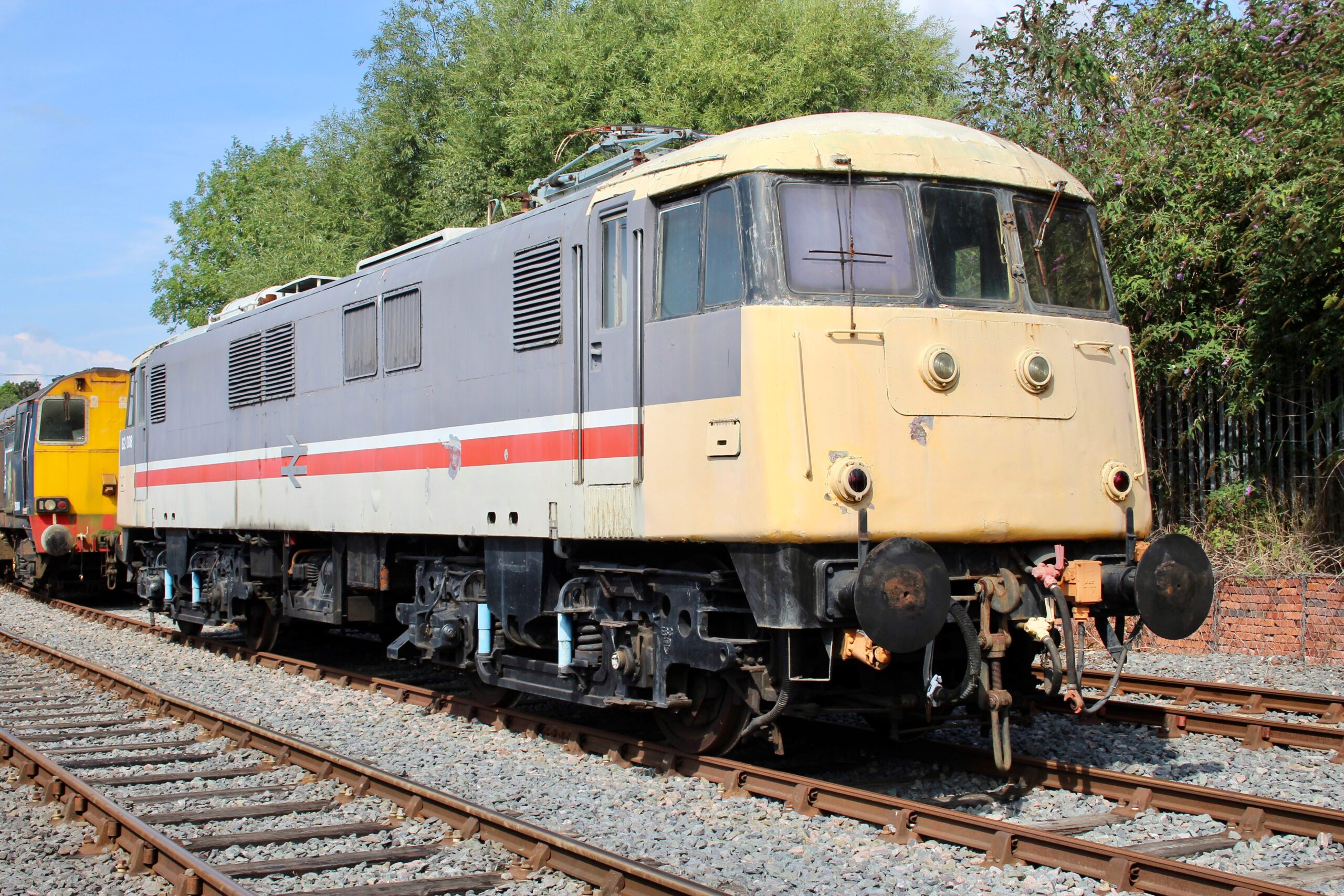
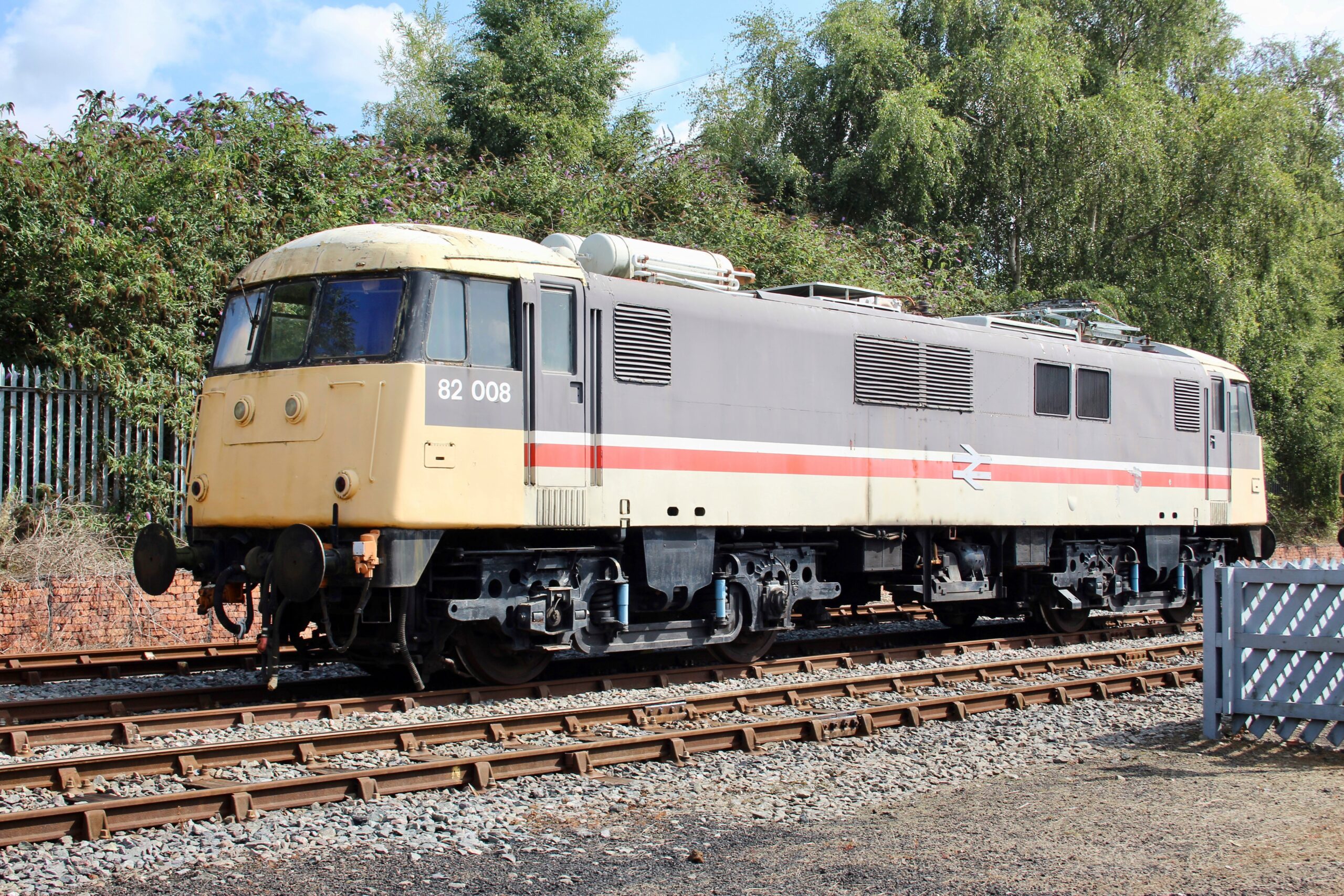
    Class 82 No. 82002 Barrow Hill – 28/08/2022
    Class 82 No. 82002 Barrow Hill – 28/08/2022
    Class 20 No. 20304 Barrow Hill – 28/08/2022
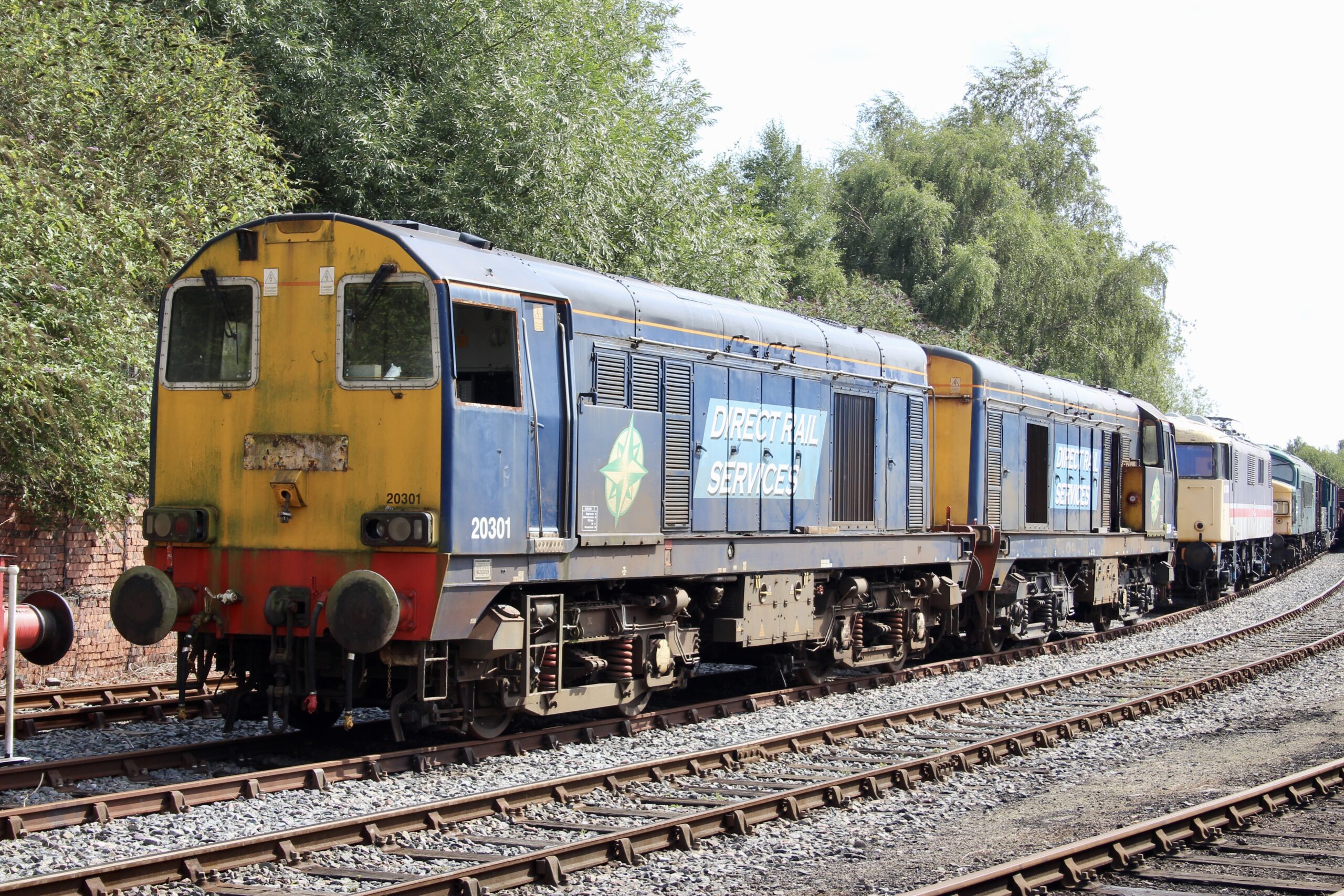
    Class 20 No. 20301 Barrow Hill – 28/08/2022
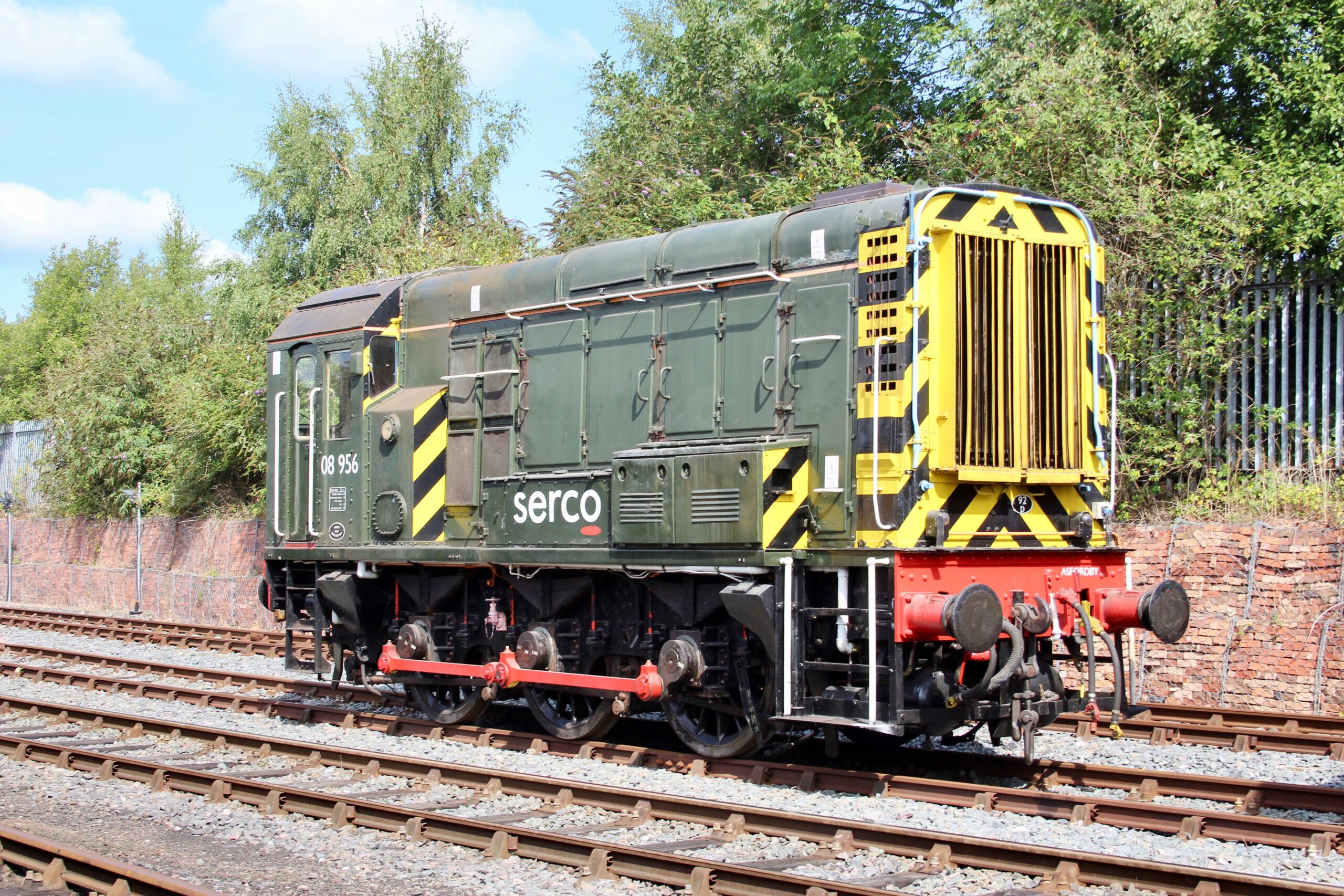
    Class 08 No. 08956 Barrow Hill – 28/08/2022
    EMR Class 156 No. 156498 Barrow Hill – 28/08/2022
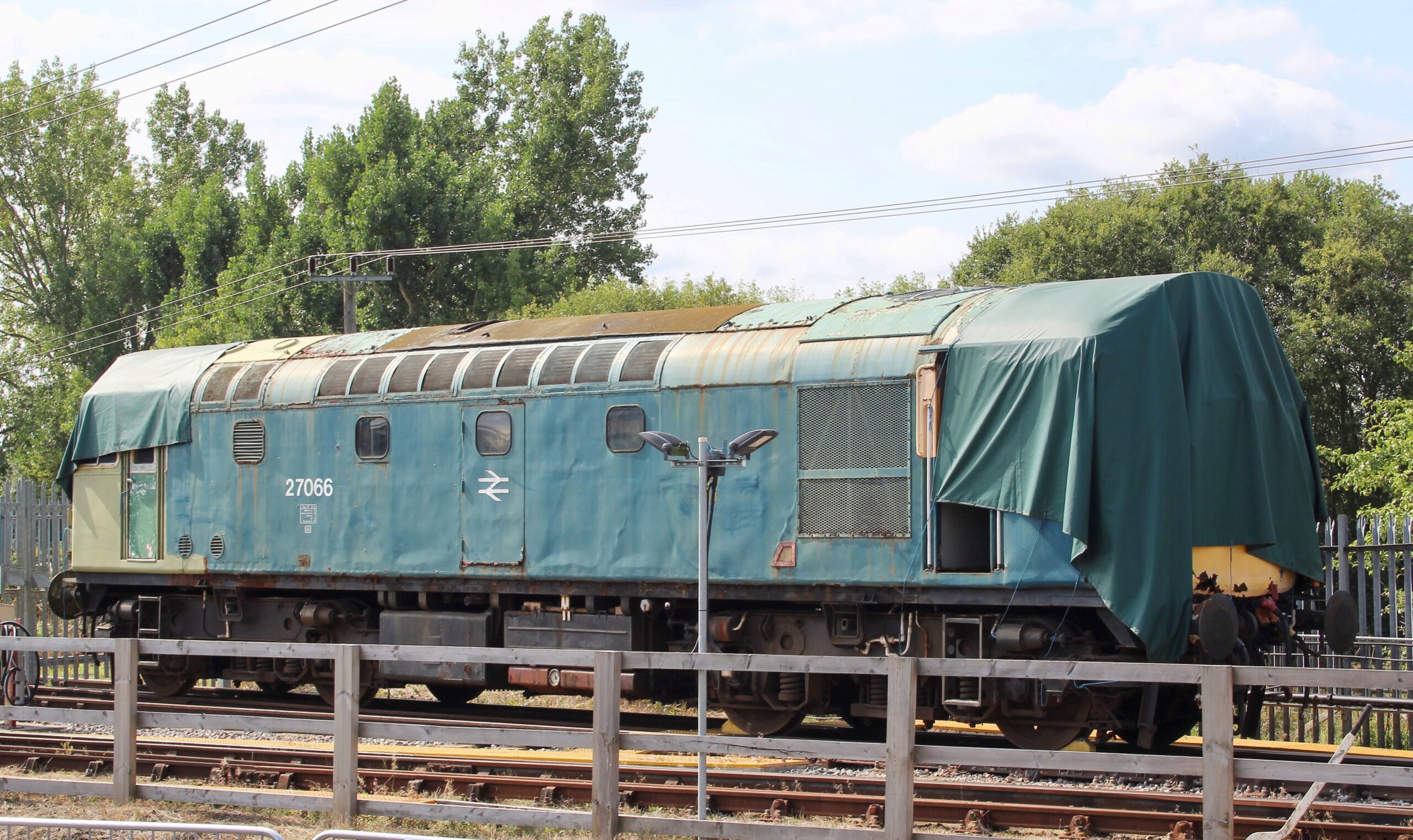
    Class 27 No. 27066 Barrow Hill – 28/08/2022
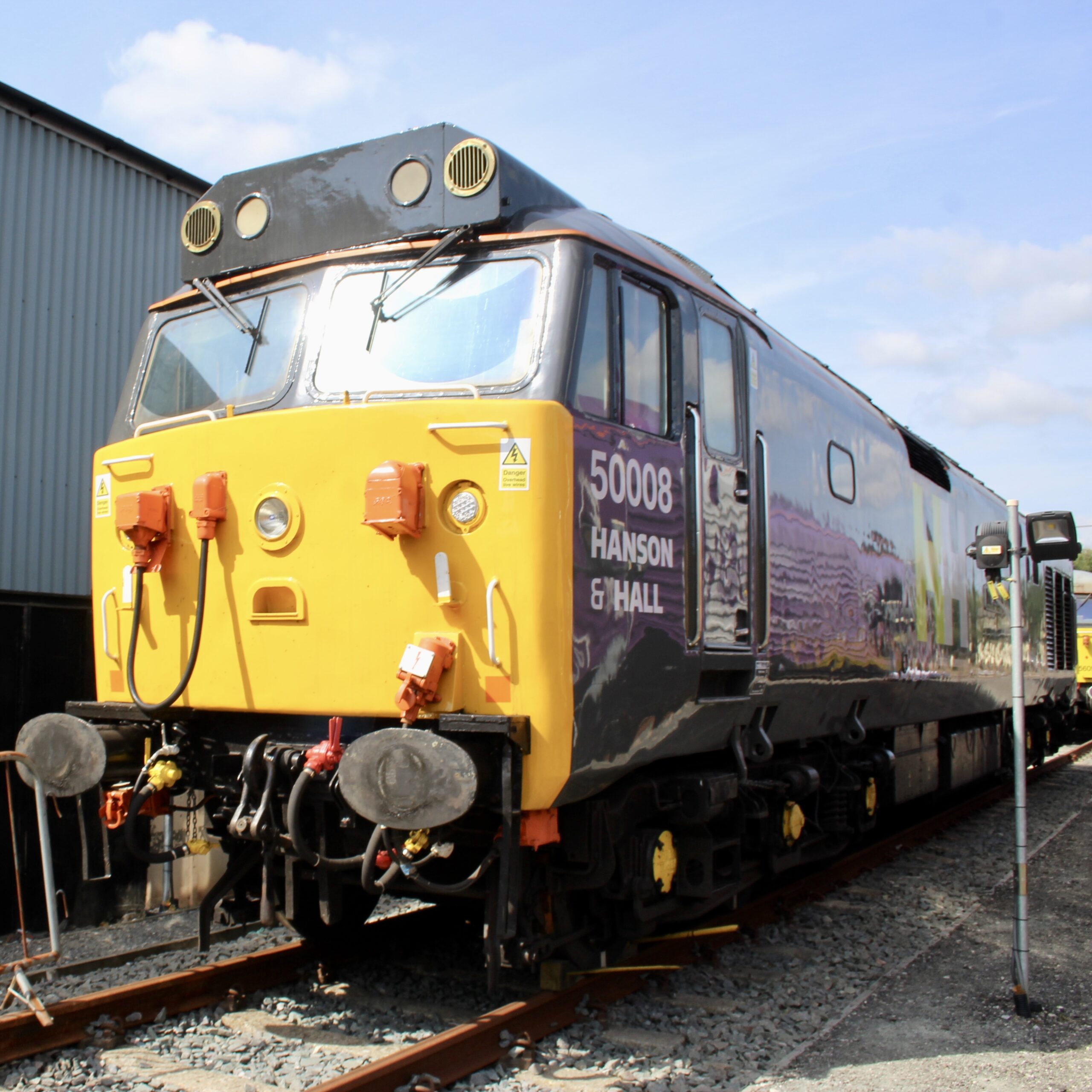
    Class 50 No. 50008 ‘Thunderer’ Barrow Hill – 28/08/2022
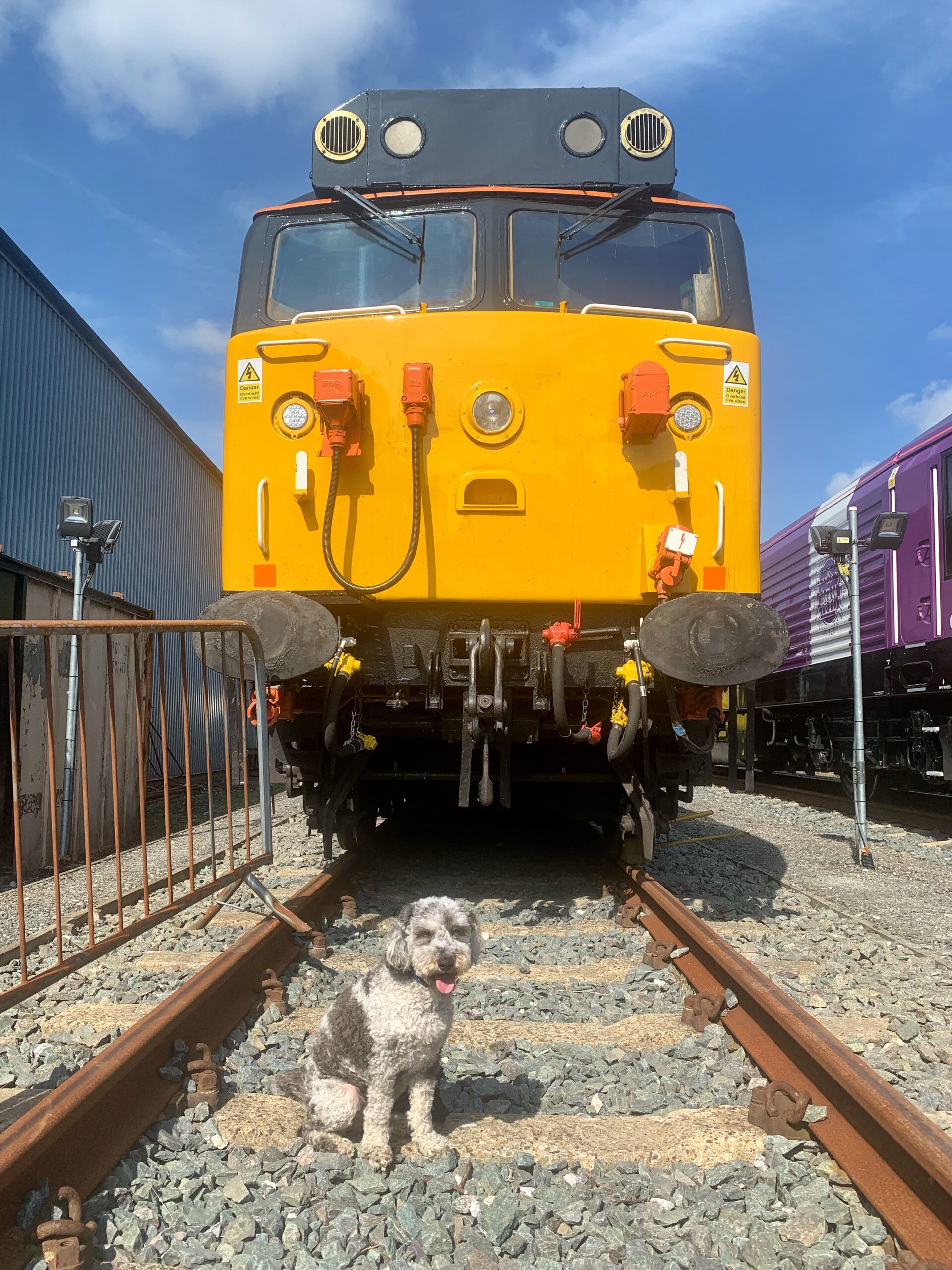
    Yoshi with Class 50 No. 50008 ‘Thunderer’ Barrow Hill – 28/08/2022
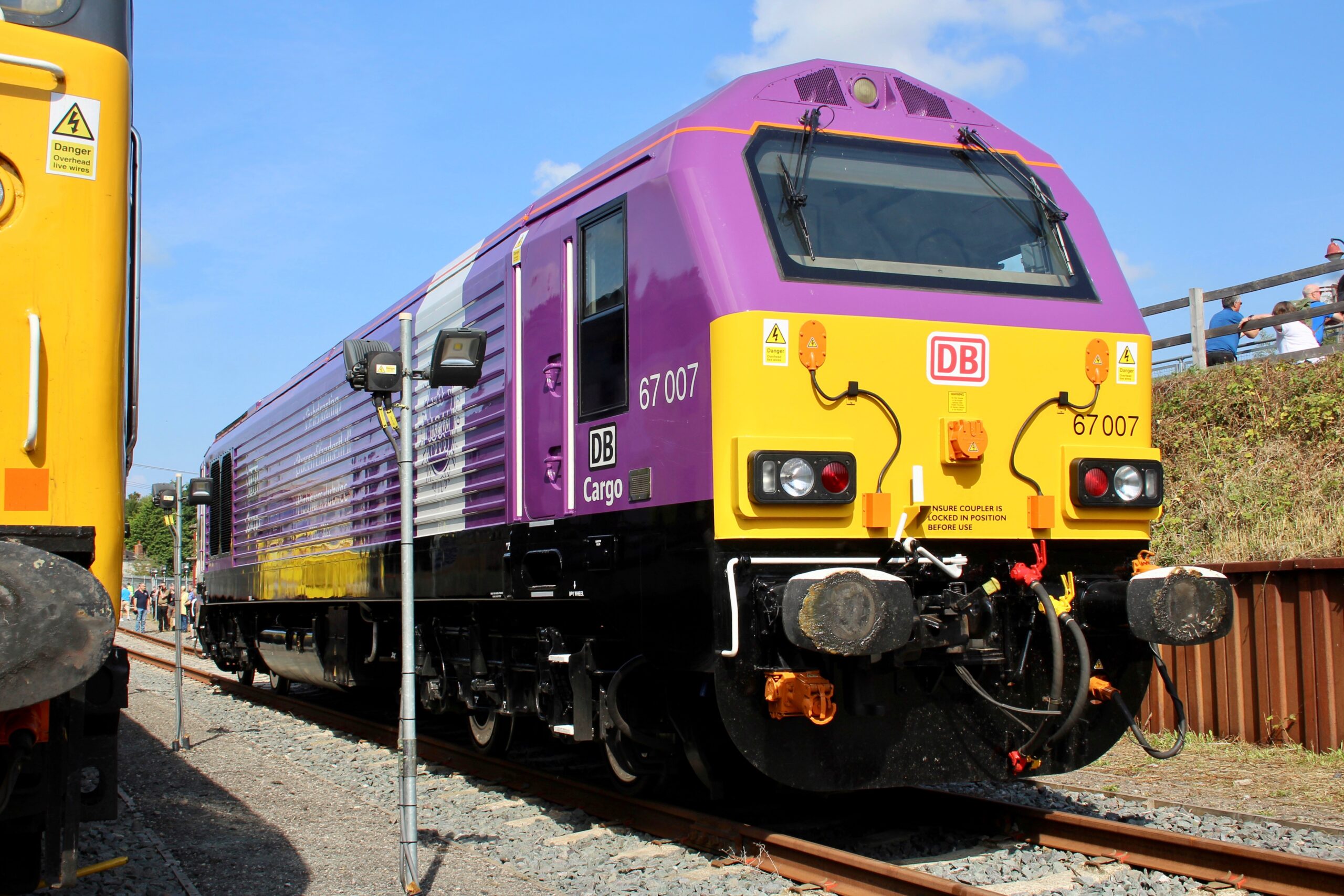
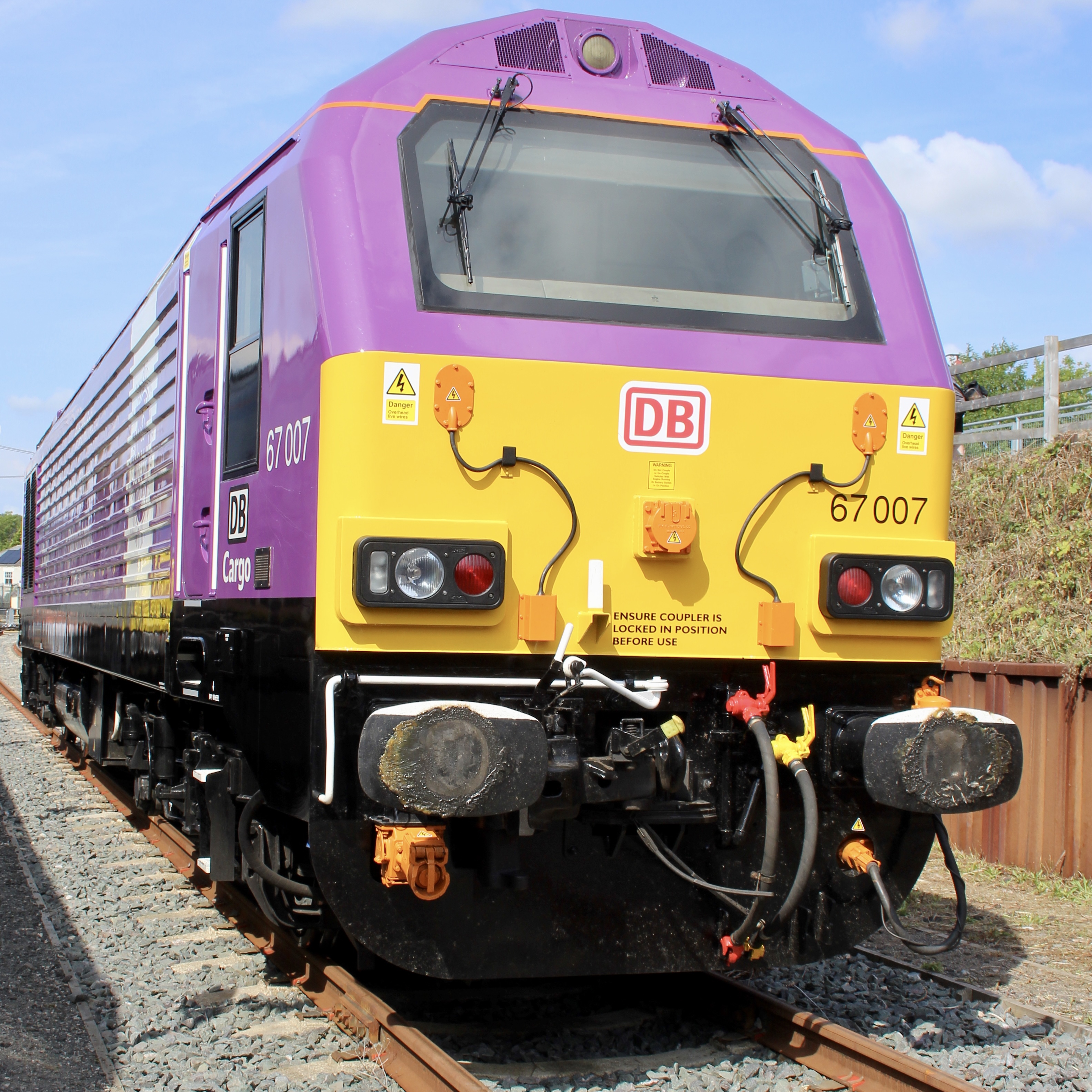
    Class 67 No. 67007 Barrow Hill – 28/08/2022
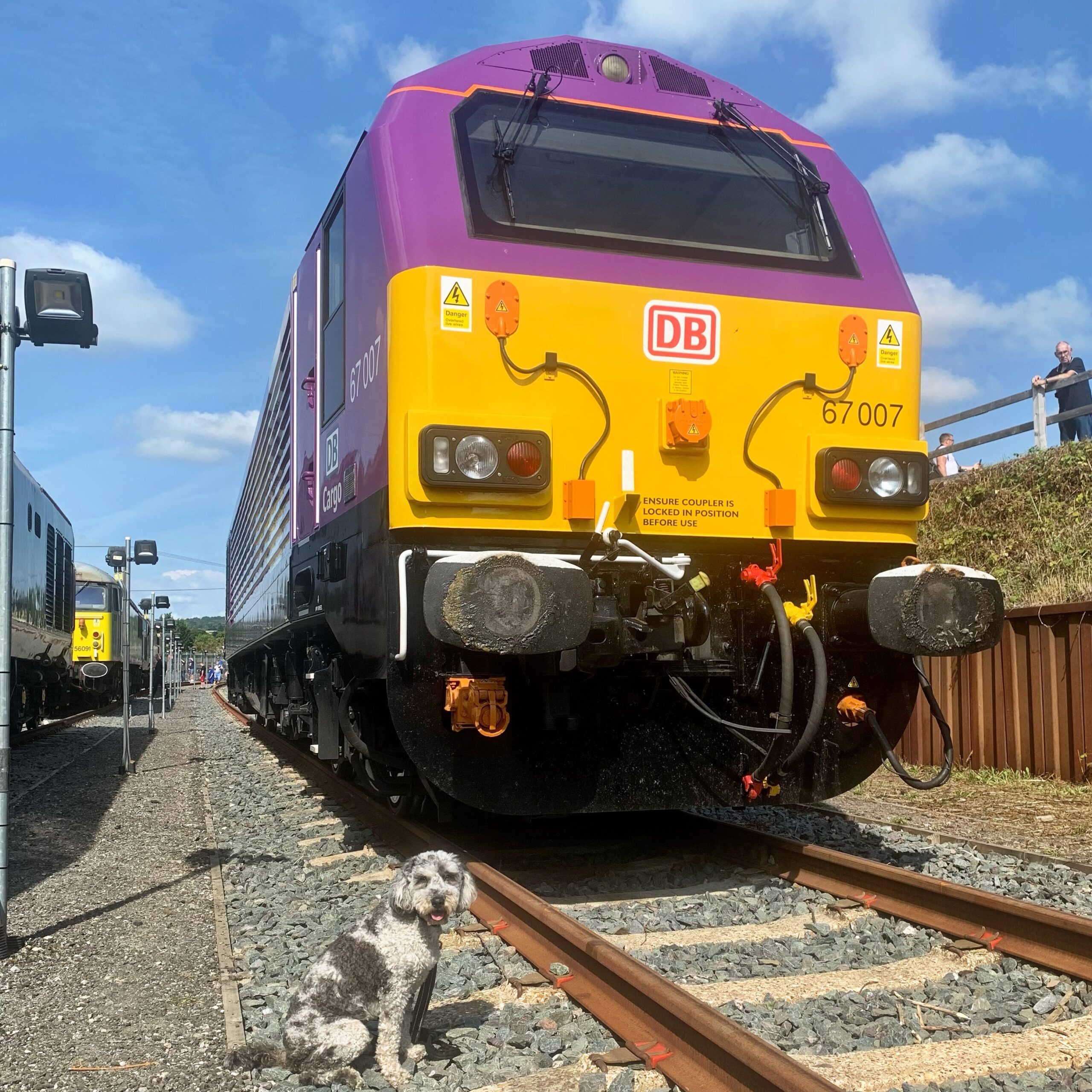
    Yoshi with Class 67 No. 67007 Barrow Hill – 28/08/2022
    Class 67 No. 67007 Barrow Hill – 28/08/2022
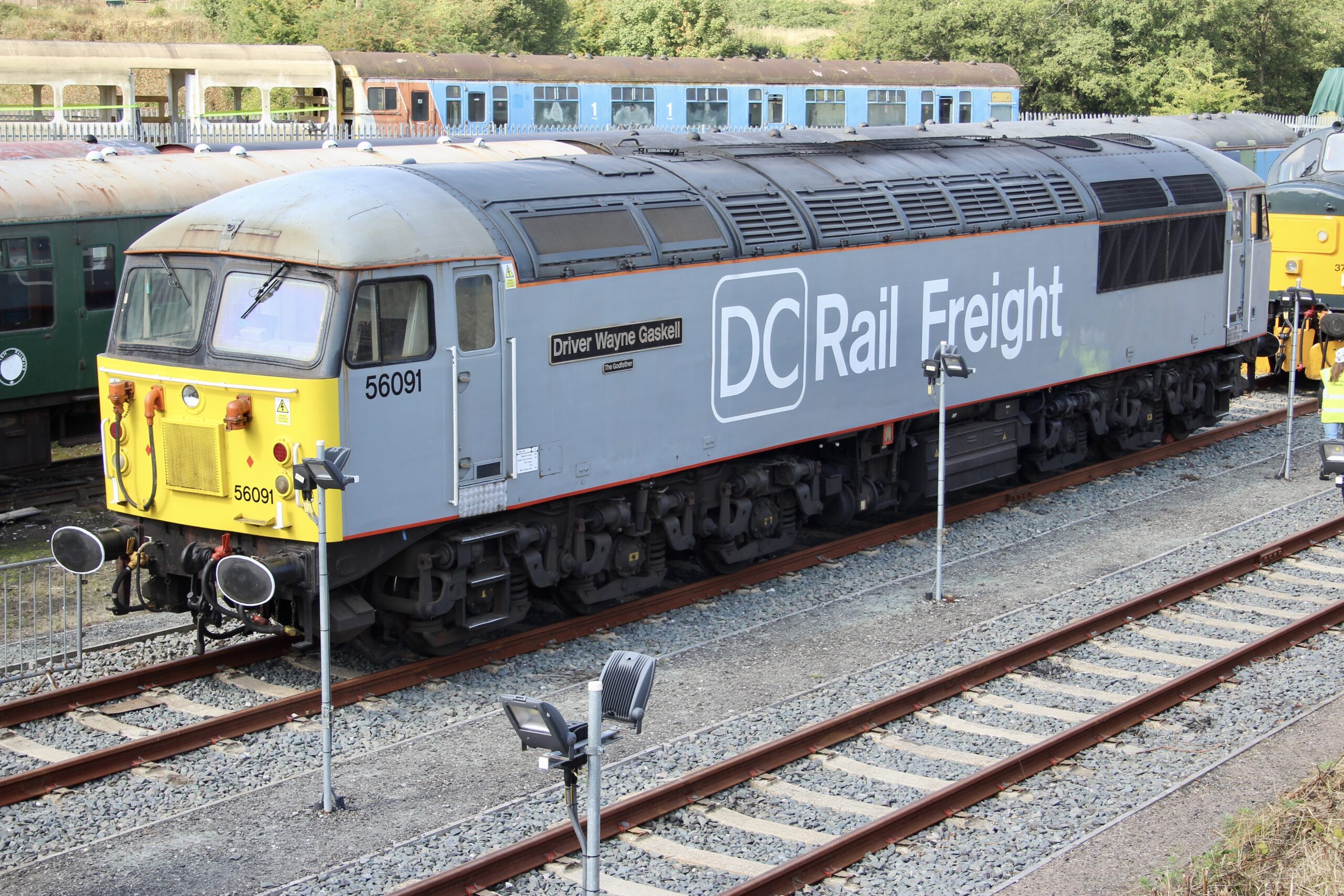
    DC Rail liveried Class 56 No. 56091 ‘Driver Wayne Gaskell’ at Barrow Hill – 28/08/2022
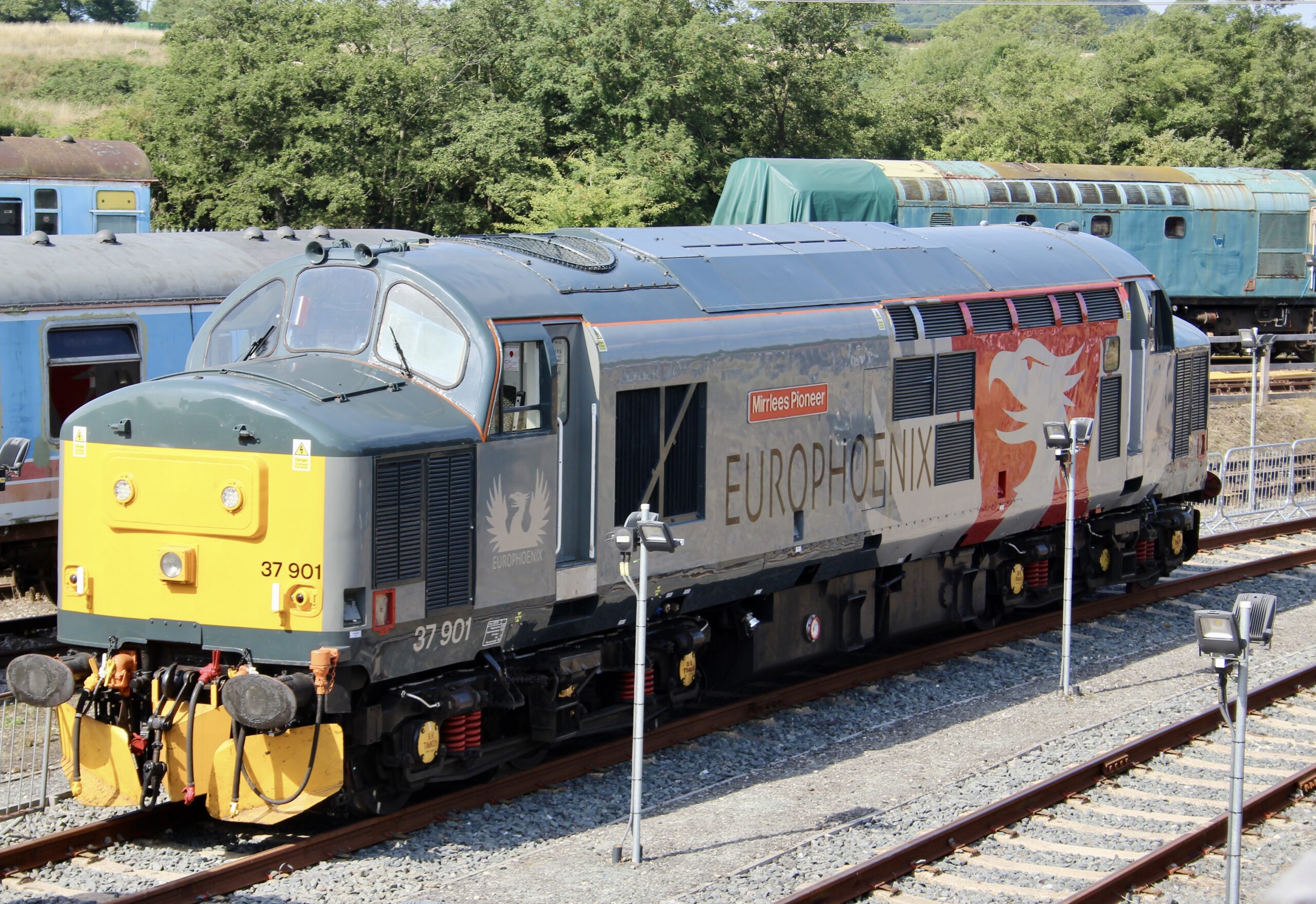
    Class 37 No.’s 37219 ‘Jonty Jarvis’ and 37901 Barrow Hill – 28/08/2022
    Class 37 No. 37901 Barrow Hill – 28/08/2022
    Class 37 No. 37667 ‘Flossie’ Barrow Hill – 28/08/2022
    Class 37 No. 37667 (D6851)’Flossie’ with Class 47 No. 47769 and Class 20 No. 20314 Barrow Hill – 28/08/2022
    Class 55 No. 55015 ‘Tulyar’ Barrow Hill – 28/08/2022
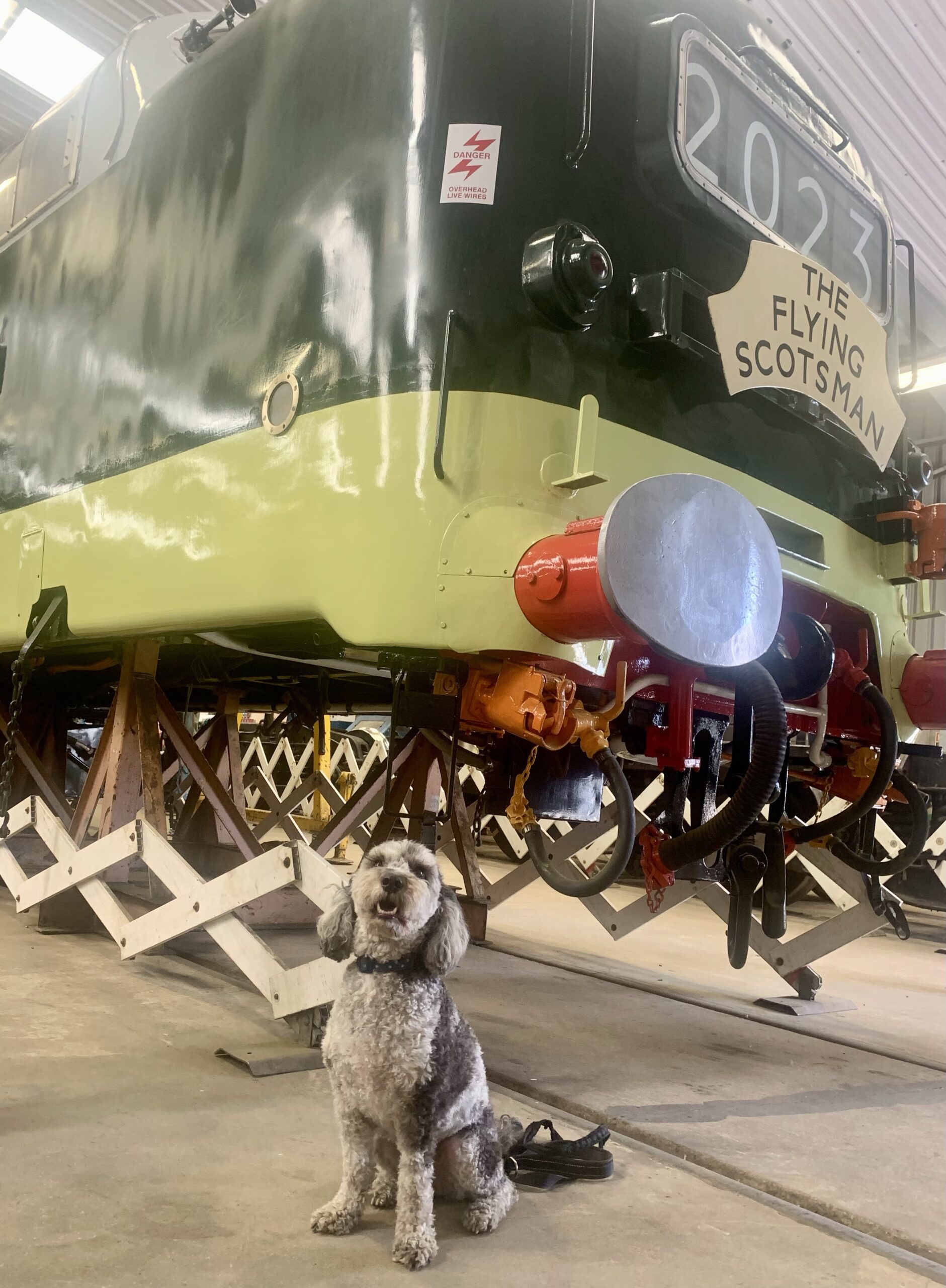
    Yoshi gets up close to Class 55 No. 55015 ‘Tulyar’ Barrow Hill – 28/08/2022
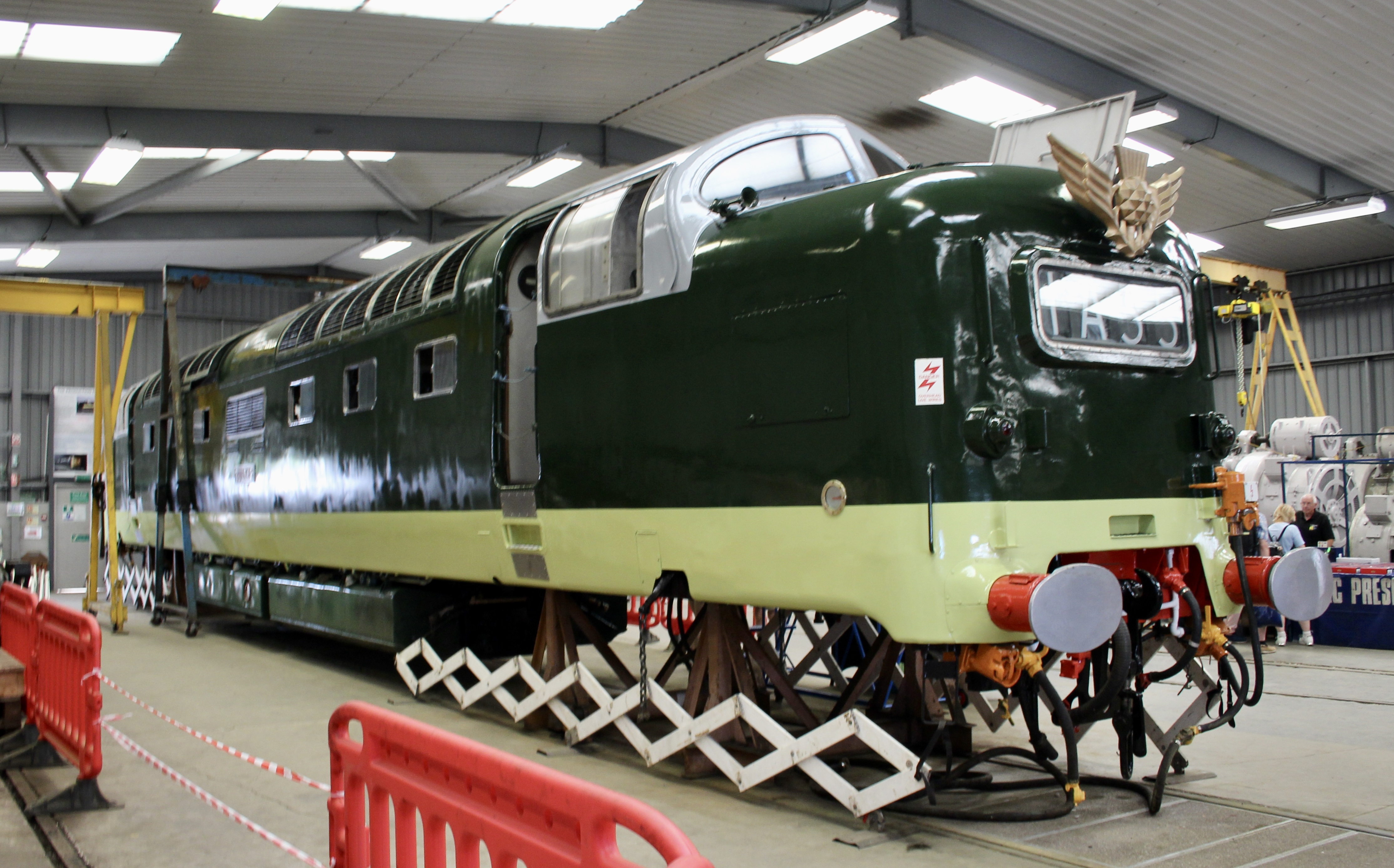
    Cab of Class 55 No. 55008 ‘The Green Howards’ – Barrow Hill 28/08/2022

    Although Yoshi clearly took a liking to the Deltic locomotives, he was a little unsure about the metal steps leading up to the door of No. 55008 ‘The Green Howards’, so we reversed back down to the security of ground level. However, Scott kindly took the following video of the Napier Deltic engine simulation which we can all enjoy!

    Napier Deltic engine simulation (Courtesy of Scott Lewis)
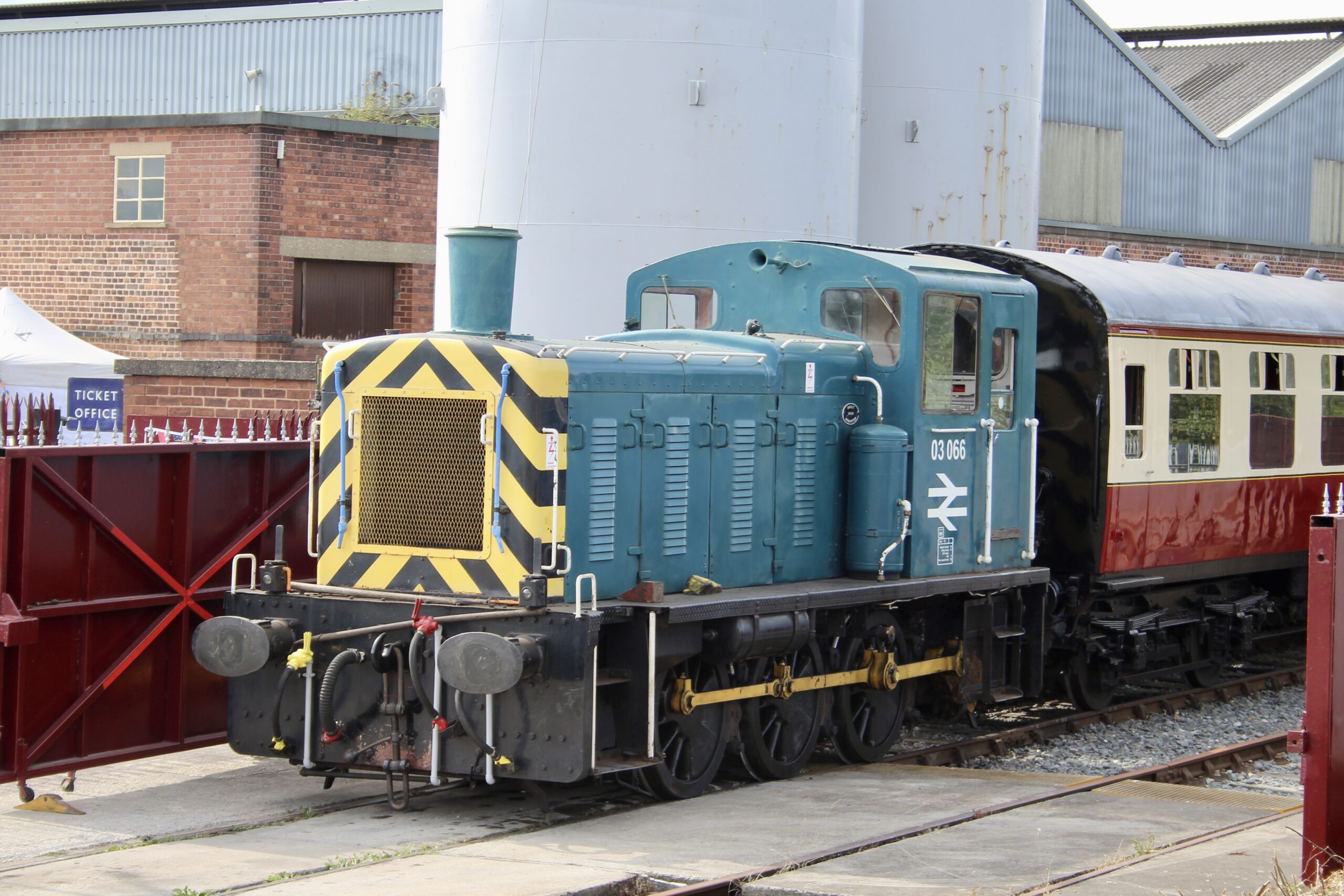
    Class 03 No. 03066 Barrow Hill – 28/08/2022
    No. 1501 Barrow Hill – 28/08/2022
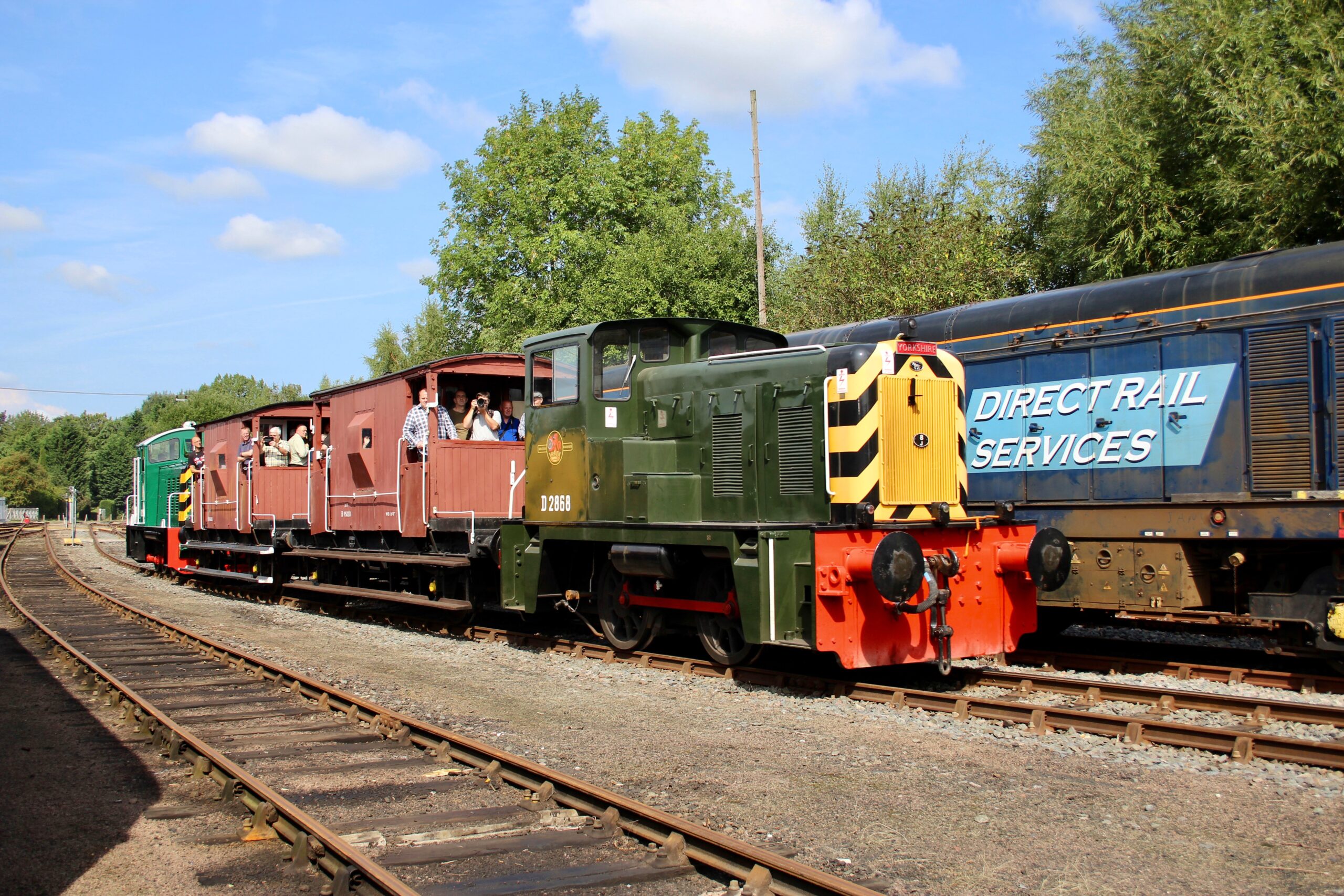
    Class 02 No. D2868 Barrow Hill – 28/08/2022
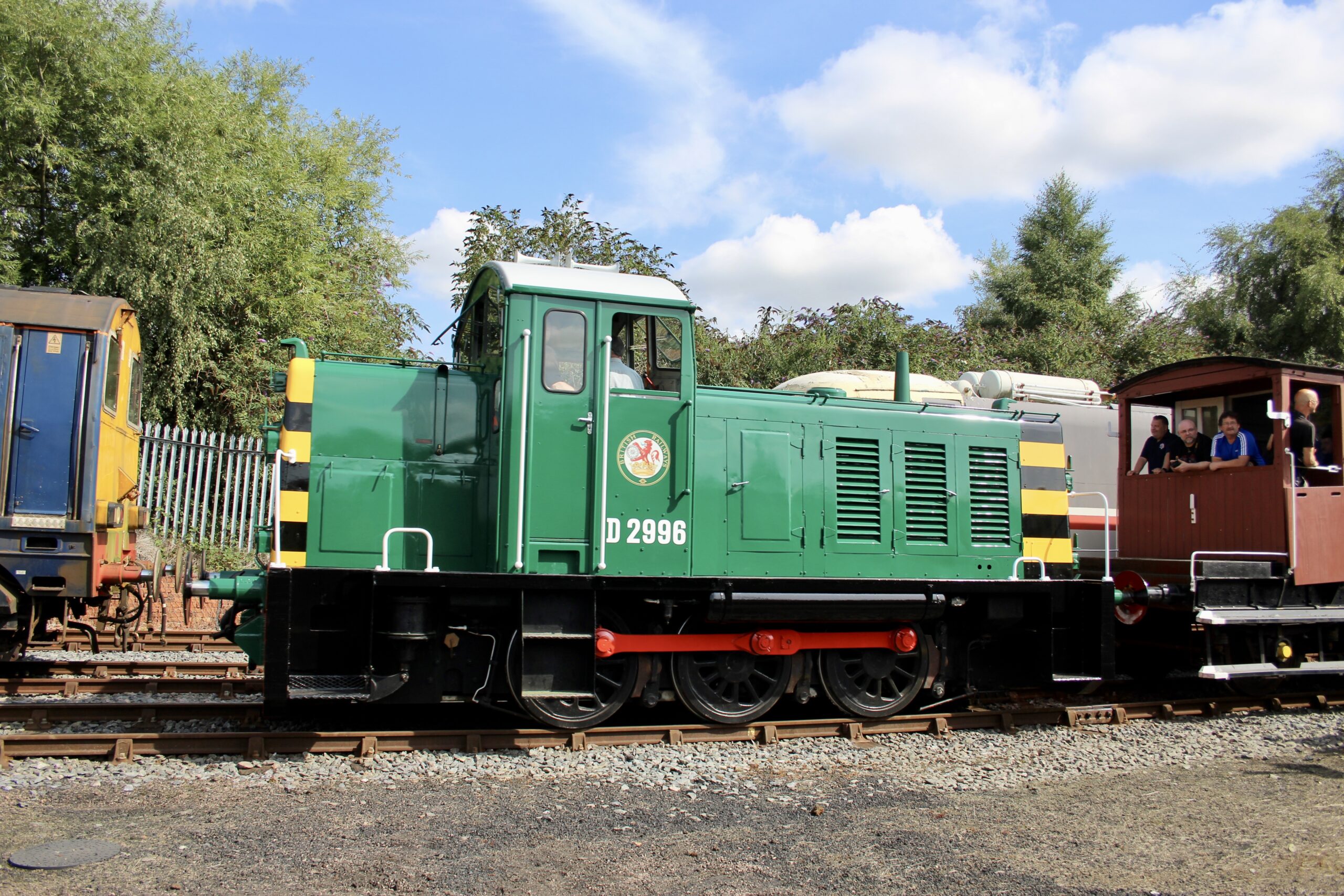
    Class 07 No.D2996 (07012) Barrow Hill – 28/08/2022
    Video of Barrow Hill 150 +2 Celebration Gala shuttles – 28/08/2022

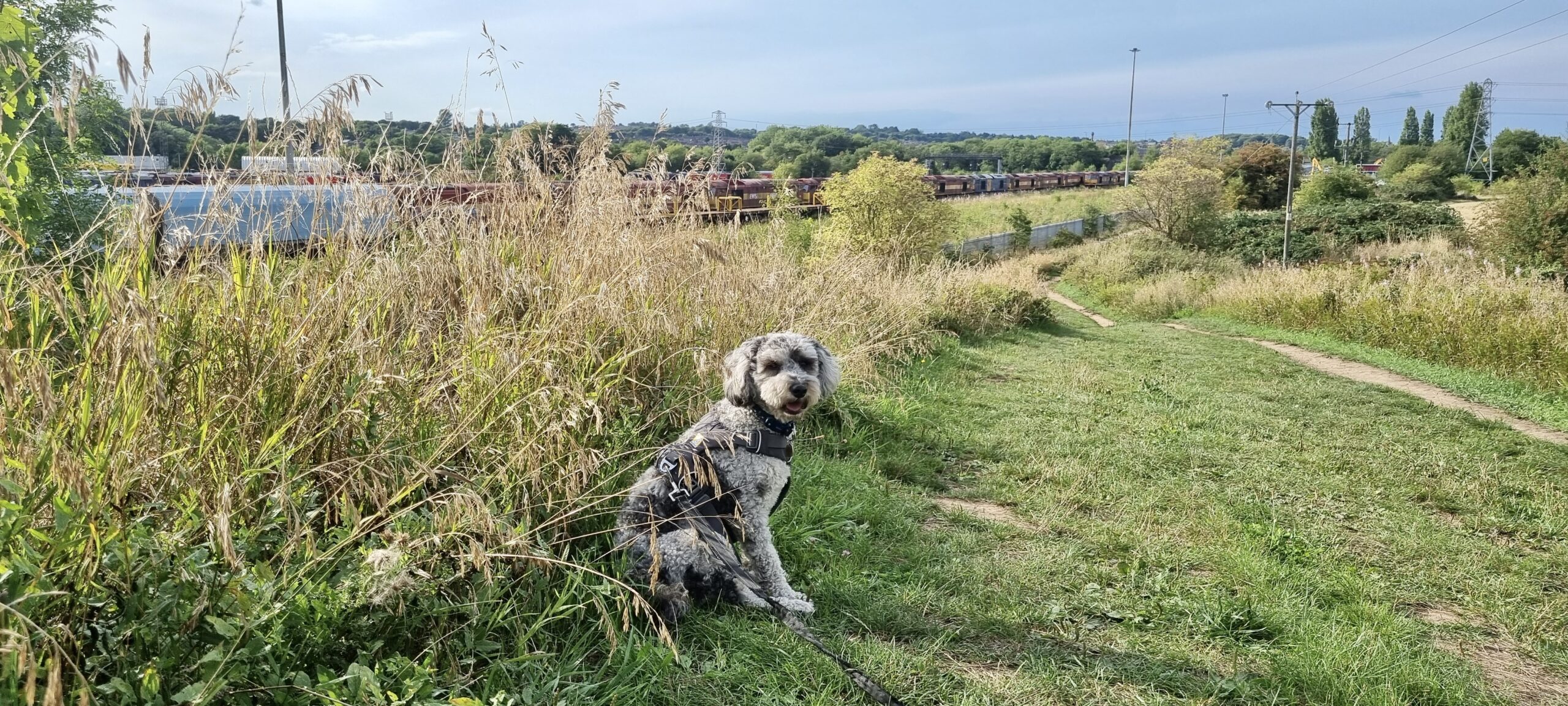
    After our visit to Barrow Hill, we journeyed home via DB Cargo operated Toton Traction Maintenance DepotChanges and currently the only TMD within DB Cargo UK where heavy maintenance is carried out on locomotives. Our visit was to see the lines of withdrawn Class 60 locomotives currently in store. I was surprised by the number of diesel engines slowly rotting away.

    Class 60 locomotives at Toton – 28/08/2022 (Image courtesy of Scott Lewis)
    Yoshi having surveyed the Class 60 locomotives at Toton – 28/08/2022 (Image courtesy of Scott Lewis)

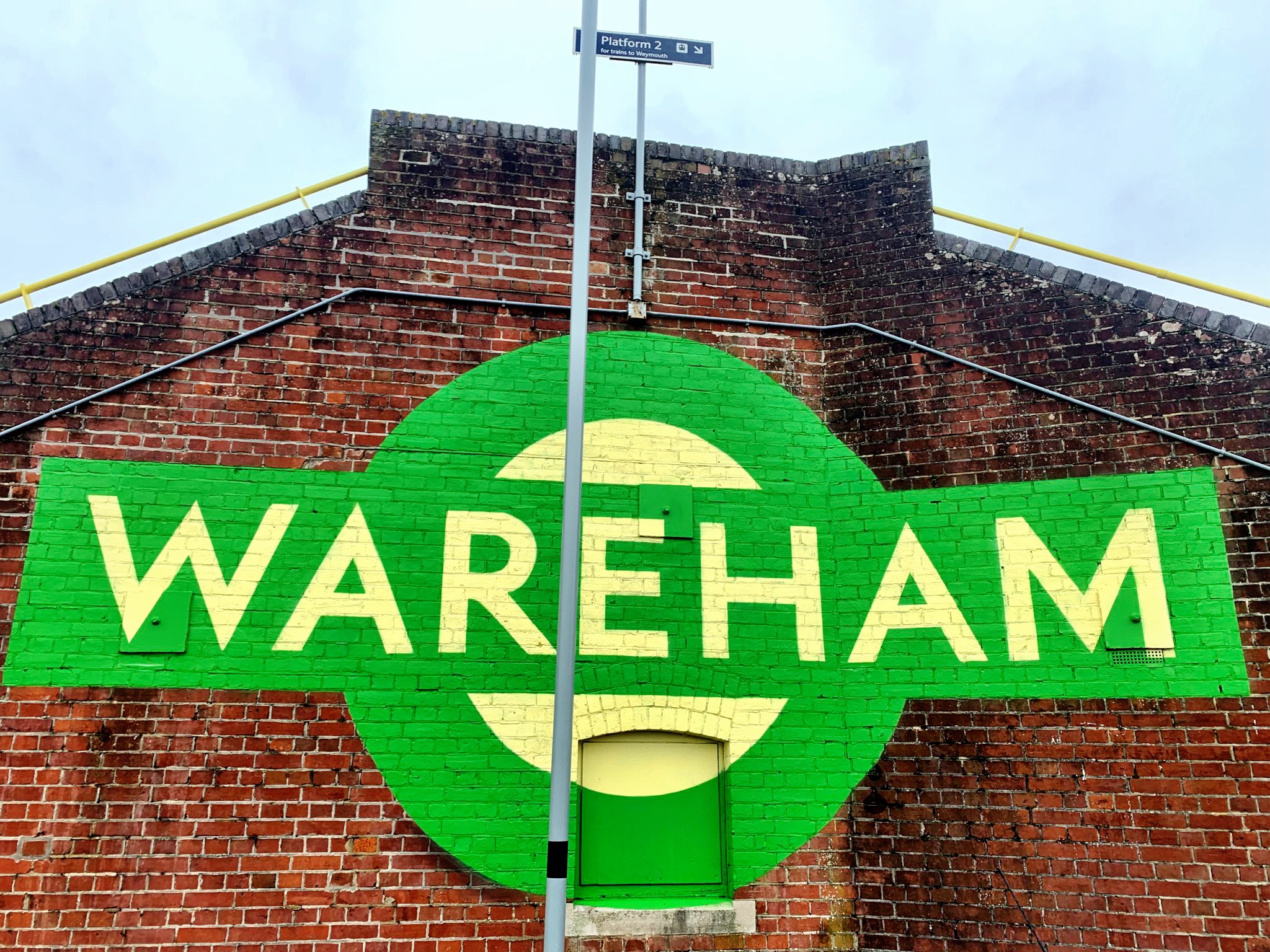
    In other news, Network Rail have been granted retrospective listed building approval for adorning the pedestrian bridge at Wareham railway station with a heritage style roundel sign which has been in place on the grade 2 station site since November 2021. The station was built in 1864 and listed for its historical and architectural importance in 1976. Network Rail said they did not realise the footbridge which is a later addition to the station buildings was included in the listed status.

    Shame about the lamppost! The Wareham station sign as seen on 03/01/2022

    Swanage Railway resident Class 33/1 No. 33111 was taken to Bristol St. Phillips Marsh depot on a low loader for wheel turning this week following her recent failure on the heritage branch.

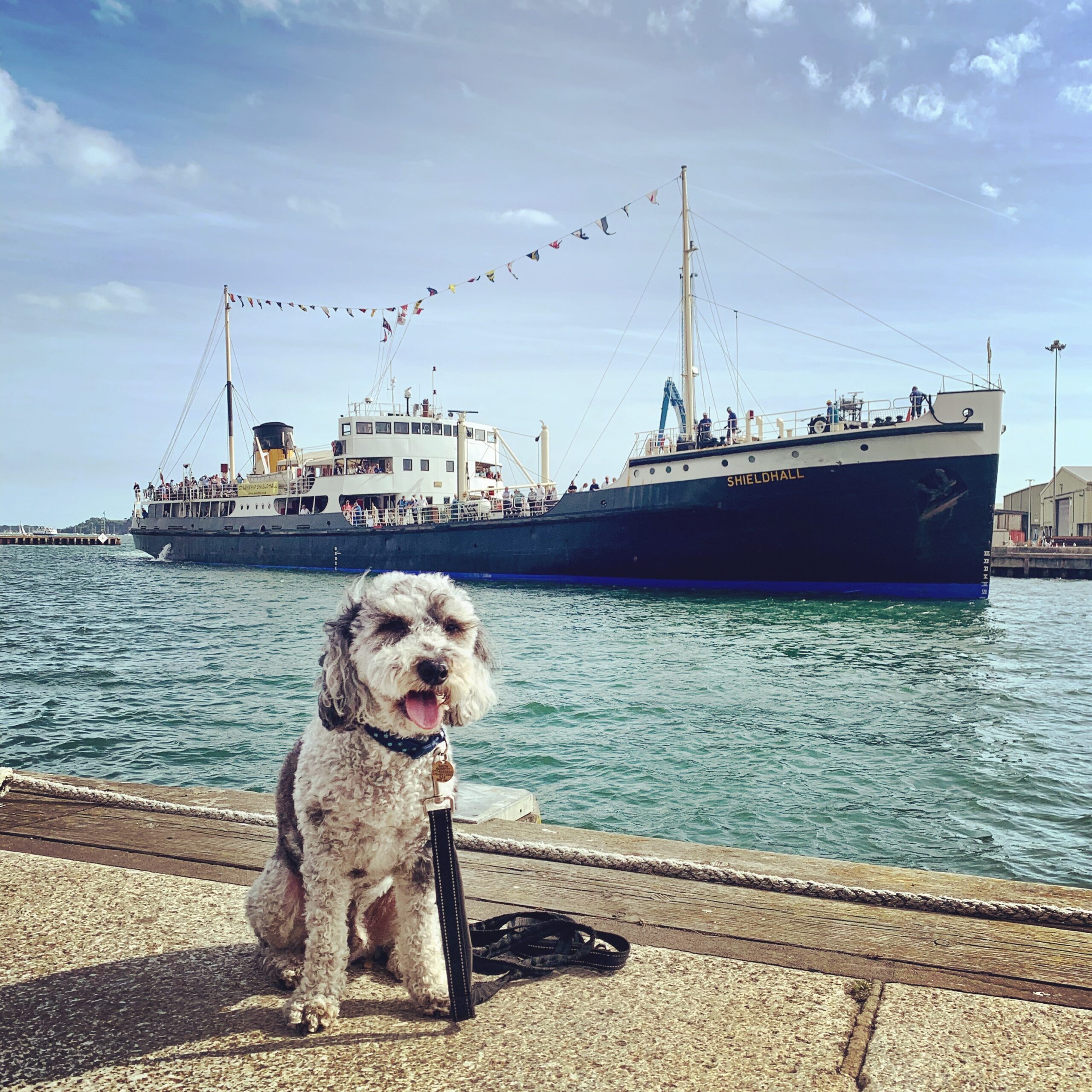
    On Bank Holiday Monday Yoshi popped down to Poole Quay to see the arrival of Steamship Shieldhall, launched in 1955 for the transport of treated sewage sludge down the river Clyde to be dumped at sea – 29/08/2022

    This week’s blog has mostly been put together with the sound of Alexi Sayle’s “Strangers on a Train” gracing our ears. We loved the idea of combining the “Tank Museum” at Bovington with “Monkey World” and creating a monkey tank driving nightmare. Many thanks for popping by and for your comments, corrections and updates. Thank you to Caroline for helping out with video and putting up with me. And finally a big thank you for Scott for taking the driving seat on Sunday for our trip to Derbyshire. See you in seven!

  • Class 47 Heaven

    Wednesday 6th July to Monday 11th July

    Class 50 No. 50026 ‘Indomitable’ on a loaded test run as part of mainline certification nears Furzebrook on the Swanage Railway. Class 33 No. 33012 / D6515 ‘Lt Jenny Lewis RN’ takes up the rear – 09/07/2022

    Lynton & Lynmouth

    We took Wednesday off to visit friends who were holidaying in North Devon near the twin villages of Lynton and Lynmouth. Lynton was built on flat land 500 feet vertically above the beautiful fishing village of Lynmouth. I can never remember which is which, but until Easter Monday 1890 the only way you could travel between the two was via a very steep road. That is until the opening of the water powered funicular railway which had been approve by an Act of Parliament two years previously. Now established as a popular visitor attraction the original role of the cliff railway was to transport passengers and goods between Lynmouth harbour and Lynton. It is the highest and steepest totally water powered railway in the world.

    The view from the Lynton terminus of the Lynton and Barnstaple Cliff Railway – 06/07/2022

    The project to build the railway was the funded largely by publisher, MP and philanthropist Sir George Newnes who wanted to relieve the burden placed on the horses which laboured up the steep hill. The railway was designed by George Croydon Marks an early pioneer of funicular railways and devotee of Isambard Kingdom Brunel while the actual construction was carried out by local builder Bob Jones whose family are still involved in running the funicular today. The original mechanical design remains substantially unaltered.
    The environmentally friendly railway works on a simple balancing principle using water as ballast which has been collected by gravity from the West Lyn River and stored in reservoirs. Each car has a 700 gallon tank mounted between the wheels with a smaller 10 gallons tank for the braking system. The two cars are attached to each other by two hauling cables and two balance cables which run around large pulley wheels at each end of the tracks. When each car is docked with full tanks of water, the cars are balanced and ready for passengers to board. Once the brakes are taken off the lower car discharges water until it is lighter than the top car which descends under the additional weight which causes the lower car to be pulled up the track. Our video of the Lynton and Lynmouth Cliff Railway can be seen below:

    In a future railwaydog blog, we’ll be taking a close look at the three Bournemouth Cliff Lifts.

    Bournemouth Fisherman’s Walk Cliff Lift, built in 1935, is currently out of action due to a landslide. It links Boscombe and Southbourne with the beach – 13/02/2021

    Lynton & Barnstaple Railway

    We had fully intended to visit The Lynton and Barnstaple Railway, but we had lots of catching up to do as well as finding ourselves distracted by goats that we decided to save this narrow gauge railway for another visit when we had time to do it justice. As a taste of what to expect, our friends visited on Thursday and sent us the following images to share, for which we are very grateful.

    Baldwin 2-4-2 tank No. 762 ‘Lyn’ on the Lynton and Barnstaple Railway – 07/07/2022
    Baldwin 2-4-2 tank No. 762 ‘Lyn’ on the Lynton and Barnstaple Railway – 07/07/2022

    The Lynton and Barnstaple Railway originally opened in 1898 and closed in 1935. The current railway is just the start of a project to rebuild the narrow gauge line and trains currently run between Woody Bay Station and Killington Lane, a round trip of two miles.

    Poole Park Railway

    Postcard view of Poole Park Railway circa 1970/80’s

    The 260mm gauge Poole Park railway was first operated in 1949 by Southern Miniature Railways Ltd. In 2017, Poole Borough Council ended their tenancy agreement with Chris Bullen who had operated the railway since June 2005 and awarded a thirty year concession to Friends Of Poole Park for its operation. However following behind the scenes disputes, walkouts and a derailment in 2018 the concession was withdrawn and a notice to quit issued. Now in the hands of Bournemouth, Christchurch, Poole Council (BCP) and following a successful tendering process, Shropshire based Track Systems UK began work on renewing the infrastructure, traction and rolling stock.

    Despite progress on the £480,000 revamp of Poole Park Railway having been made with work completed on the new engine shed and track there has been a delay in the delivery of a fully electric engine for use on the popular attraction. Efforts to source a suitable temporary engine are ongoing. Carriages are currently being constructed off-site which are expected to be delivered shortly. When re-opened the railway will be run by volunteers and BCP environmental team.

    Saturday 9th July 2022

    Class 33 No. 33012 / D6515 ‘Lt Jenny Lewis RN’ leads Class 50 No. 50026 ‘Indomitable’ through Norden – 09/07/2022

    Saturday was far too hot for Yoshi to venture out, so while he stayed home drinking cold mocktails and being well looked after, I headed to Norden to see Class 50 No. 50026 ‘Indomitable’ on a loaded test run as part of its mainline certification on the Swanage Railway. Class 33 No. 33012 / D6515 ‘Lt Jenny Lewis RN’ provided support.
    West Coast Railway Companies Class 47 No. 47826 nears Dorchester working the “Weymouth Harbour” 1Z47 0823 Birmingham International to Weymouth – 09/07/2022
    WCRC Class 47 No. 47804 heads the “Weymouth Harbour” empty coaching stock past Dorchester Junction heading to Yeovil Pen Mill for stabling as there was no room to accommodate the stock at Weymouth – 09/07/2022

    There were scenes reminiscent of my misspent childhood Summer Saturday’s as five Class 47 diesel locomotives passed through Dorchester on their way to Weymouth as three rail tours visited Dorset on Saturday July 9th 2022. It could have been the 1980’s if I hadn’t had to fill the car up with fuel. First up was the Northern Belle organised “Weymouth Harbour – The Dorset Coast” which originated from Birmingham International. For £370 you could enjoy all the comforts of the Northern Belle luxury trains welcome Bellini cocktail, a three-course brunch, tea and coffee, oyster tasting with sparkling wine in Weymouth, a champagne reception and a five course dinner which included cheese and biscuits. What’s not to like? Apart from the seafood in my case, obviously. I’m sure cheesy puffs would be an acceptable alternative.
    Double-Headed Class 47 No.’s 47853 and 47805 hauling the “Dorset Coast Statesman” heads through Dorchester – 09/07/2022

    Statesman Rail provided the “Dorset Coast Statesman” which set out from Norwich in the early hours with passengers able to pick Bournemouth, Poole or Weymouth as their destination. Pullman dining, which also boasted cheese and biscuits, was available from £330 and First Class ( non-dining ) tickets could be purchased from £175.

    SR rebuilt Merchant Navy No. 35028 ‘Clan Line’ hurtles through Hamworthy with “The End Of Southern Steam” rail tour – 09/07/2022

    Finally The Railway Touring Company brought steam to Dorset with “The End Of Southern Steam” excursion which also provided passengers the opportunity to visit Weymouth for the afternoon. This tour marked 55 years since the end of steam on the Southern Region of BR. On the 9th July 1967 the final regular steam hauled passenger train arrived at London Waterloo, signifying the end of steam in the South. Departure on 9th July 2022 was steam hauled from London Victoria behind SR rebuilt Merchant Navy 4-6-2 No. 35028 ‘Clan Line’ through to Yeovil Junction where the steam locomotive was detached for servicing and turning while the rest of the train continued to Weymouth diesel hauled. ‘Clan Line’ then followed light engine to Weymouth in order to haul the train up Bincombe Bank and back to London via Bournemouth. At the time of writing, I’m not aware if cheese and biscuits were on the menu, however ticket prices ranged from £130 for Standard class, £195 for First class and £295 for Premier Dining.

    Class 47 No. 47813 at the rear of “The End Of Southern Steam” rail tour, Hamworthy – 09/07/2022

    The afternoon schedule was disrupted by a signalling issue between Dorchester South and Weymouth which resulted in all lines being blocked for a while. This delayed the arrival and departure of “The End Of Southern Steam” (37 minutes late arriving and 48 minutes late departing) and the departure of the “Dorset Coast Statesman” (43 minutes late departing).

    A compilation video covering 9th July rail tours to Weymouth is below:

    Class 47’s at Dorchester in days gone by:

    Class 47 No. 47455 approaches Dorchester South – 29/05/1982
    Class 47 No. 47152 passes Dorchester Junction Signal Box – 14/07/1980
    Class 47 No. 47237 heads away from Dorchester West – 20/08/1981

    That’s it for this week. Thanks for reading. Comments and corrections welcome. We’ll be back for another round-up soon!

    We were being truthful about being distracted by the Lynton goats. Yoshi wisely kept his distance!
  • A 50/50 Week

    In preparation for this weeks blog entry, Yoshi popped into Swanage to take a look at Class 50 No. 50026 ‘Indomitable’ – 19/06/2022

    Class 50’s In Focus

    The main focus of The Railway Dog blog was always intended to be the Bournemouth to Weymouth line and any diesel or steam hauled workings over the route. Occasionally we venture to the extremes of Dorset and even over the county boundaries if time allows. Last Saturday afternoon ( 18th June 2022 ) saw us out on one such mini-adventure when Yoshi and I headed to Templecombe which is located approximately one mile north of the Dorset border in South Somerset. A railway station in Templecombe was originally opened in 1860 but this was closed in 1966. Following pressure from the local community, the station was reopened in 1983. Which is probably around about the last time I visited. The station has two platforms, but only one side is in use and is a new extension of the former down side platform built so it meets the single track with passes through the location. The unused Up platform still has its wonderful redundant 1938 signal box in situ.

    Three locomotives and one diesel multiple unit have been named ‘Templecombe’. The one loco which I most associate with the name is Class 33/1 No. 33112 which was named on 17th October 1987 ( why does that date sound familiar?)

    Class 33/1 No. 33112 ‘Templecombe’ stands at the buffer stops – Weymouth 09/04/1988
    ‘Templecombe’ nameplates and crests as carried by Class 33/1 No. 33112

    My Templecombe visit this past weekend was made in order to photograph the return leg of UK Railtours “The Devon Pullman” rail tour which ran between London Victoria and Exeter St. David’s and utilised the Belmond British Pullman coaching stock. The outward leg of the special train was via Westbury and Taunton, but the return by way of Honiton, Yeovil Junction and Salisbury inspired memories of when Class 50’s were regular visitors on this route.

    Class 50 No. 50007 ‘Hercules’ storms through Templecombe at the head of The Devon Pullman rail tour 1Z52 1537 Exeter St David’s to London Victoria – 18/06/2022

    The tour was advertised as involving two Class 50 locomotives, but it transpired that only one was in evidence on the day; No. 50007 ‘Hercules’, one side of which has been temporarily re-designated as 50034 ‘Furious’ as a thank you to GBRf charter manager Paul Taylor for his prostate cancer charity fundraising efforts as ‘Furious’ was his favourite class 50 locomotive. Our video of the train passing Templecombe is below:

    Templecombe – 18/06/2022

    The fifty Class 50 locomotives were built by English Electric at their Vulcan Foundry in Newton-le-Willows in Lancashire between 1967 and 1968 and were originally leased to British Rail (BR). They were introduced primarily to haul passenger trains north of Crewe during the electrification of the West Coast Main Line (WCML). At the end of their lease period, the Class 50’s, also known as English Electric Type 4’s, were purchased outright by BR. They were initially numbered D400 – D449 and were later allocated numbering sequence 50001 – 50050 under the Total Operating Processing System (TOPS) scheme in 1973. The class were named after Royal Navy ships during the late 1970’s, echoing the “Warship” diesel hydraulic locomotives which were previously employed on the Western Region of BR. In 1984, No. 50007 ‘Hercules’ was out-shopped in lined Brunswick Green livery and renamed ‘Sir Edward Elgar’ to commemorate the 150th anniversary of the Great Western Railway (GWR).

    As the electrification of the WCML moved further north, the Class 50’s were gradually moved to the Great Western Main Line (GWML) replacing non-standard diesel hydraulic Class 52 “Western” locomotives on services out of London Paddington. All members of the class had been transferred from the north between 1972 and 1976. It’s alleged this is where the class gained their nickname “Hoovers” because as built they produced a noise like a vacuum cleaner. This characteristic disappeared when the whole class was refurbished between 1979 and 1984. Later, from 1976, High Speed Trains (HST) took over GWML services and the Class 50’s were once again moved, but not restricted to, new duties hauling trains from London Paddington to Worcester and Hereford via Oxford. Additionally they took charge of the West of England Main Line (WEML) between London Waterloo to Exeter which became the final regular services the class would be assigned to haul. By the early 1990’s the Class 50’s were earning a reputation for unreliability and a failure on the mostly single line sections of the route would cause severe delays to the timetable. The decision was made to withdraw the entire fleet of Class 50 locomotives and replace them initially with displaced Class 47/7’s on the Waterloo – Exeter services prior to the planned introduction of Class 159 diesel multiple units (DMU’s).

    By 1992, only eight Class 50’s were in operational service and several were given special liveries to celebrate their demise, for example, founder member of the Class No. 50050 ‘Fearless’ was given her original running number of D400 and repainted in early British Rail Blue livery. Sunday 24th May 1992 was to be the last day on which Class 50’s were assigned to haul scheduled service trains. The day was organised by the Network SouthEast (NSE) route manager and the BR Special Trains Section with considerable assistance provided by Plymouth Laira depot. It was intended for three Class 50’s to be in service, but in the event, No. 50033 ‘Glorious’ had the less than glorious indignation of suffering generator and traction motor flashover damage on 23rd May and had been declared a failure. She was eventually repaired enough for her to limp back to Exeter light engine. This left two celebrity class members No.’s D400 and 50007 ‘Sir Edward Elgar’ to fly the flag working in multiple between Salisbury and Exeter.

    Clipping from the June 1992 edition of The Railway Magazine

    The last westbound train of the day hauled by Class 50 locomotives was the 1655 London Waterloo – Exeter St. Davids which the Hoovers worked between Salisbury and Exeter, departing the Wiltshire city at 1841 being the last service train on BR powered by Class 50 traction. The day saw the trains full and standing with railway enthusiasts who had travelled far and wide to experience the final services behind the English Electric Type 4’s. “Farewell Class 50’s” and “The Glorious End” headboards were carried on the final runs. The three locomotives scheduled to operate services on the final day of regular workings were retained by BR until 1994 for use on rail tours. My late friend, John Chappell, went out to witness the Class 50 farewell and obtained video footage at Salisbury and Yeovil Junction and I’m pleased to be able to share this with you here:

    Class 50 Farewell – 24th May 1992

    A few images below of Class 50’s seen at on GWML services and further afield, kicking off at Reading on a dull and overcast day in April 1982. First up is he locomotive which many years later would haul last weekends rail tour to Exeter; No. 50007 in original BR Blue livery.

    Class 50 No. 50007 ‘Hercules’ enters Reading – 07/04/1982
    Class 50 No. 50012 ‘Benbow’ Reading – 07/04/1982
    Class 50 No. 50047 ‘Swiftsure’ Reading – 07/04/1982
    Class 50 No. 50010 ‘Monarch’ Reading – 07/04/1982
    Class 50 No. 50010 ‘Monarch’ Reading – 07/04/1982
    Class 50 No. 50021 ‘Rodney’ Reading – 07/04/1982
    Class 50 No. 50012 ‘Benbow’ runs into London Paddington – 19/06/1982
    Class 50 No. 50036 ‘Victorious’ at Bristol Bath Road diesel depot – 25/02/1983
    Class 50 No. 50019 ‘Ramillies’ light engine at London Waterloo having worked a Exeter St. David’s to London Waterloo – 11/07/1981
    Class 50 No. 50006 ‘Neptune’ rests at York depot having hauled an excursion train from the West Country – 17/10/1981

    Class 50’s were occasional visitors on Bristol to Weymouth services, deputising for the regular Class 31 locomotives:

    Class 50 No. 50005 ‘Collingwood’ moving empty stock to form a service to Bristol Temple Meads at Weymouth – 25/06/1983
    Class 50 No. 50008 ‘Thunderer’ at Radipole with the 1615 Bristol Temple Meads to Weymouth service – 16/07/1983
    Class 50 No. 50019 ‘Ramillies’ passes Dorchester Junction Signal Box – 26/06/1981
    Class 50 No. 50023 ‘Howe’ arriving at Dorchester West with the 0914 Weymouth to Bristol Temple Meads service – 21/05/1983
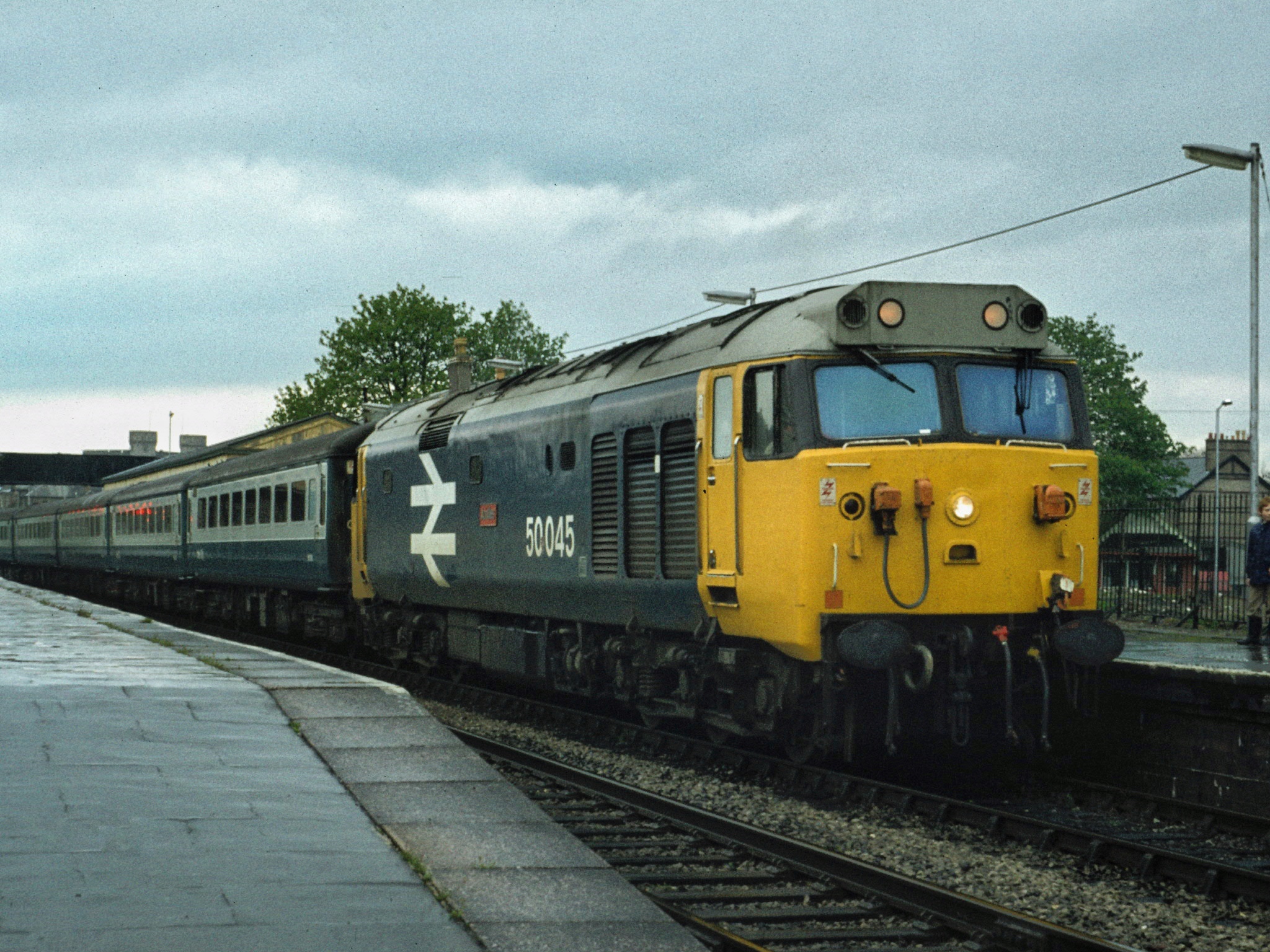
    Class 50 No. 50045 ‘Achilles’ at Dorchester West having arrived with the 1310 Westbury to Weymouth – 02/05/1983
    Class 50 No. 50034 ‘Furious’ arrives at Dorchester West with a Bristol Temple Meads to Weymouth service – 18/06/1983
    Class 50 No. 50014 ‘Warspite’ awaits the road at Dorchester West – 18/09/1982
    Class 50 No. 50020 ‘Revenge’ enters Dorchester West with a service from Weymouth – 03/10/1981

    Eighteen Class 50 locomotives were saved for preservation.

    Following her withdrawal in March 1994, Class 50 No. 50033 ‘Glorious’ was chosen to become part of the National Collection and is seen here outside of The National Railway Museum in York. The NRM decided to dispose of the locomotive in 2003 and is currently under the care of the Class 50 Alliance Limited
    Class 50 No. 50002 ‘Superb’ preserved at The Paignton & Dartmouth Railway seen here at Kingswear – 05/09/1993

    As mentioned in the text above, No. 50007 was painted in lined Brunswick Green and renamed ‘Sir Edward Elgar’, the following images are when she visited the 1995 Mid Hants Railway diesel gala in this guise:

    The following video was taken at the 1995 Mid Hants Diesel Gala and features English Electric Class 20, Class 40 and Class 55 diesels alongside No. 50007 as well as other classes:

    Footage from the 1995 Mid Hants Railway diesel gala

    Surely a candidate for the strangest livery ever carried by a Class 50 is that carried by No. 50017 which was repainted into London Midland Scottish (LMS) style streamlined “Coronation Scot” crimson lake and gold. The locomotive had been purchased from BR by preservationist John F Kennedy. Shortly after returning to traffic on the West Somerset Railway the owner reached agreement with Venice Simplon Orient Express for its use working luxury Northern Belle dining services on the main line following certification by Resco. The locomotive was moved to Riley and Son Engineering in Bury for repainting in August 1999. The VSOE deal was short lived however, possibly because the mooted streamlining of LMS Coronation Pacific No. 46229 ‘Duchess of Hamilton’ for the main line failed to materialise, the cheaper option of cosmetic streamlining eventually being chosen instead, with the Stanier locomotive placed on static display at York. After being moved to Tyseley Locomotive Works No. 50017 was eventually sold on to another rail enthusiast.

    Class 50 No. 50017 at Weymouth – 26/09/1999

    The 26th September 1999 saw Weymouth being visited by a Class 50 and a Class 55 Deltic in connection with an empty coaching stock (ECS) move from Bournemouth. The train had originally worked from Wolverhampton to Bournemouth having been hired by the Socialist Workers Party in conjunction with the Labour Party Conference taking place that week. Riviera Trains provided the stock and VSOE provided the staff and locomotives which turned out to be Class 55 No. D9009 ‘Alycidon’ and Class 50 No. 50017 ‘Royal Oak’ ( sans nameplates ). The Class 55 lead on the southbound working with the Class 50 attached to the rear of the train. The ECS worked onto Weymouth and it was decided that as No. 50017 was to work the return working, No. D9009 would be run round and tucked inside. The same day saw Brush Type 4 Class 47 No. 47785 and Electro-Diesel Class 73 No. 73105 also in evidence with another charter train ECS from Bournemouth as can be seen in the following video clip:

    Local Update

    The week kicked off with a visit to the Bristol – Weymouth line by the HST New Measurement Train on Wednesday 15th June which we saw at Dorchester.

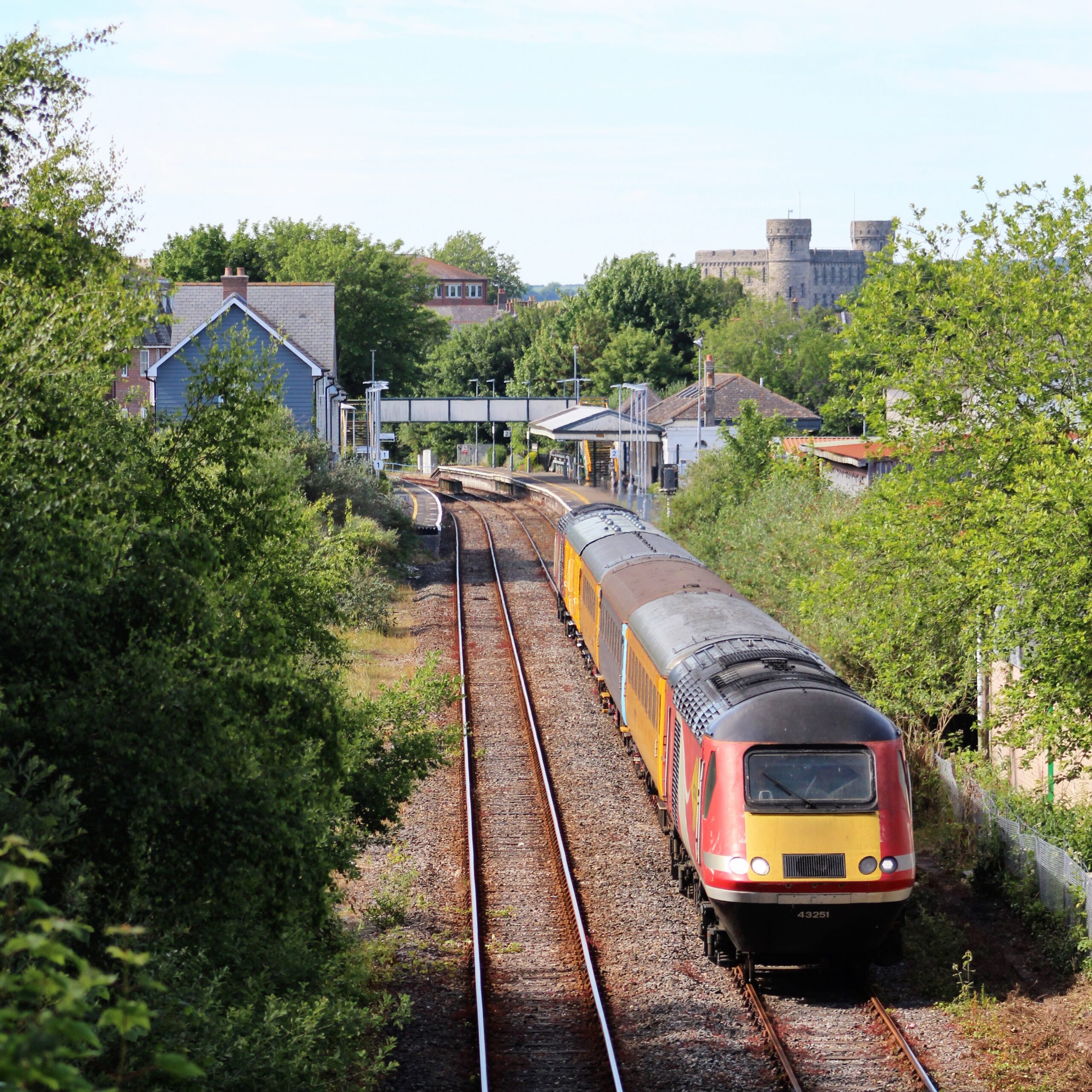
    Colas Class 43 HST Power Car No. 43251 leads out of Dorchester West working 1Z22 0747 Derby RTC to Bristol Kingsland Road – 15/06/2022
    Colas Class 43 HST Power Car No. 432517 approaching Dorchester working 1Z22 0747 Derby RTC to Bristol Kingsland Road having reversed at Weymouth – 15/06/2022
    Colas NMT at Dorchester – 15/06/2022

    Yoshi was up early on Sunday morning so we could pop into Bournemouth to see the return working of a ballast train which had arrived at New Milton in the early hours. Our original plan was to get to Christchurch to see the ensemble, but it departed for Bournemouth as we were en-route, so we turned around and, as the station was locked, found a spot off Holdenhurst Road where we were just about able to peer through the buddleia and other overgrowth to get a glimpse of the Freightliner operated train. By the time the Class 66’s passed us, the station was open for business and we were very kindly allowed access to the platforms to see the train close up.

    Ballast Train at Bournemouth – 19/06/2022
    Freightliner Class 66 No. 66598 rests at Bournemouth awaiting the reversal of 657V 0725 Bournemouth Signal 21 to Eastleigh East Yard – 19/06/2022
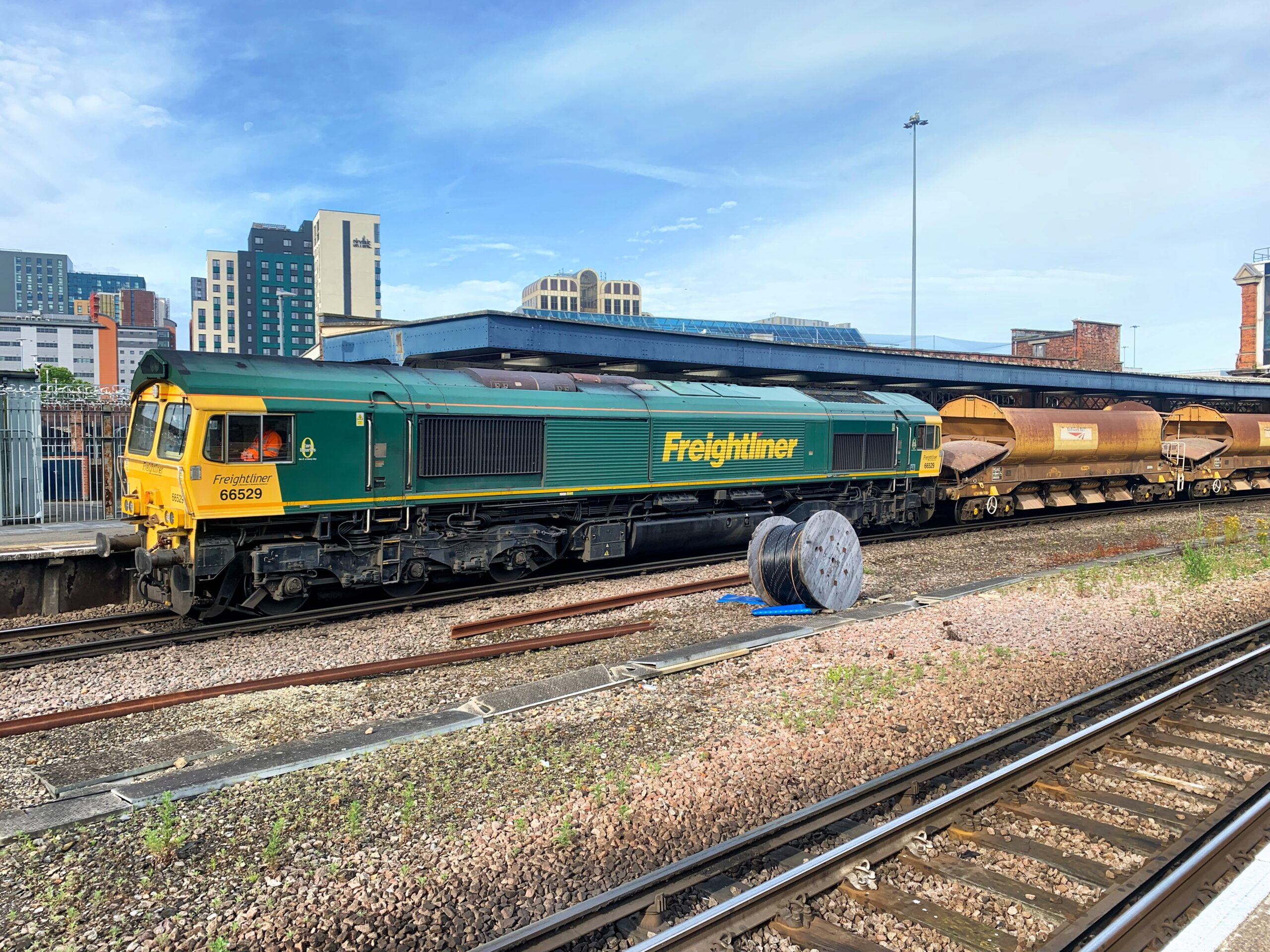
    Class 66 No. 66529 awaits the road at Bournemouth ready to take the ballast train back to Eastleigh – 19/06/2022

    After all the excitement of Class 50 hauled rail tours and Class 66’s on an engineers train, Tuesday 21st June saw the first of three days of disruption on the UK railway network which have been called the biggest train strikes in thirty years. Tens of thousands of rail staff who are members of the RMT union are taking industrial action over pay, redundancies, pension reforms and changes to working practices. As a consequence no trains ran on the Bournemouth to Weymouth line during the strike. Further days of industrial action are scheduled for Thursday 23rd and Saturday 25th June. A steam railtour due to visit Bournemouth and Weymouth on the Thursday has been cancelled.

    We mentioned previously about the disused railway bridge on the former Bridport Branch at Toller Porcorum which had been under threat from National Highways (NH). Following the refusal of retrospective planning permission by Eden District Council for hundreds of tonnes of concrete which had been poured over a Victorian railway bridge at Great Musgrave in Cumbria the NH have amended their processes to ensure full planning permission is sought before carrying out similar work in the future and infilling of structures would no longer be considered unless there was absolutely no alternative. Hurrah!

    Thanks for reading, comments and corrections always welcome. We hope you’ll join us again next week!