Wednesday October 19th to Tuesday October 25th2022
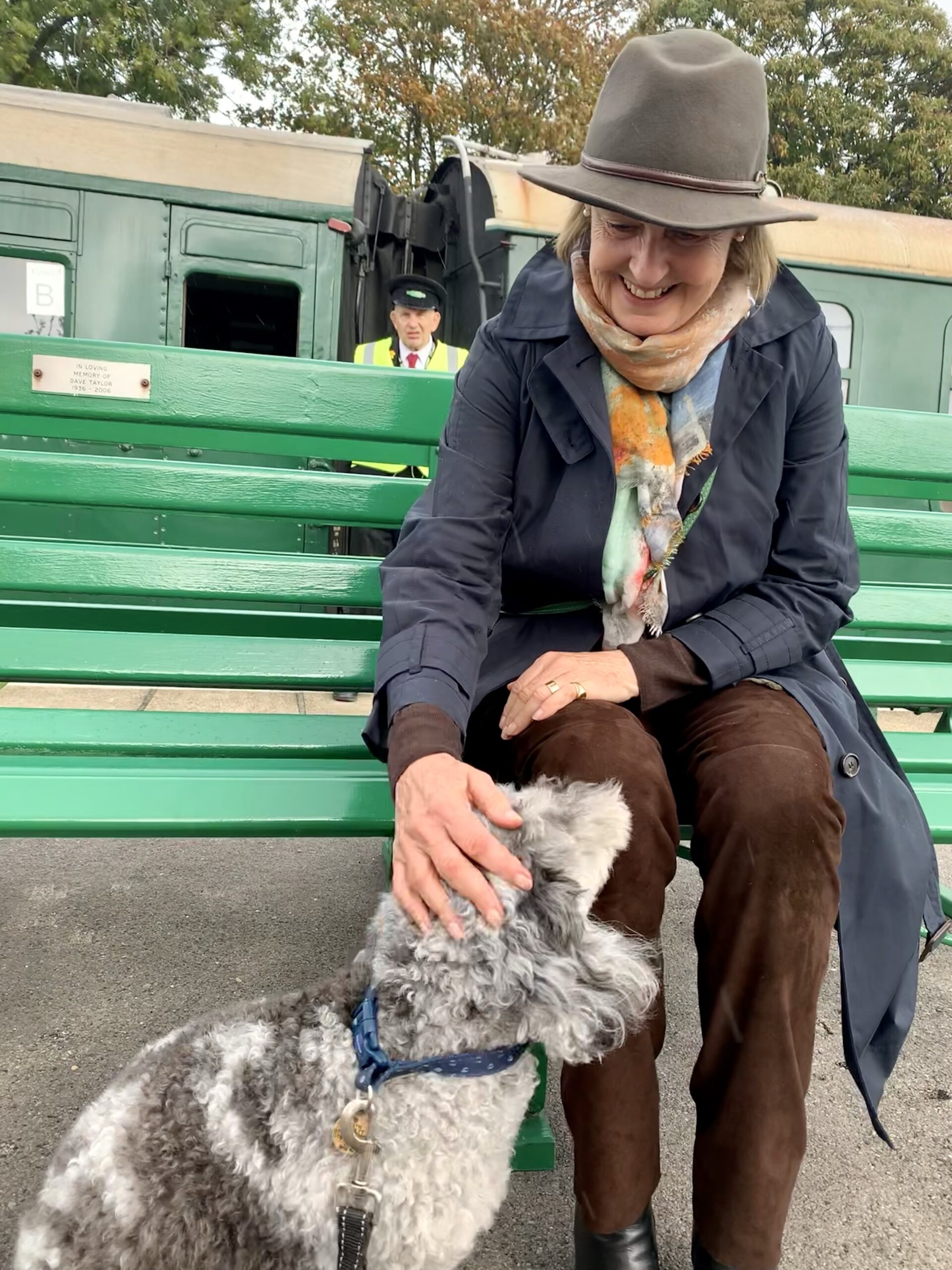
Yoshi meets Penny Peglar, daughter of Alan Peglar who rescued ‘Flying Scotsman’ from the scrapyard in 1963 – 22/10/2022
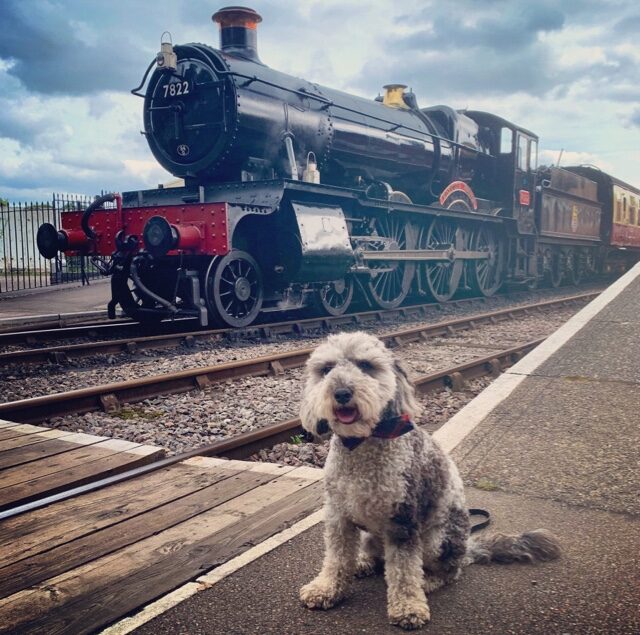
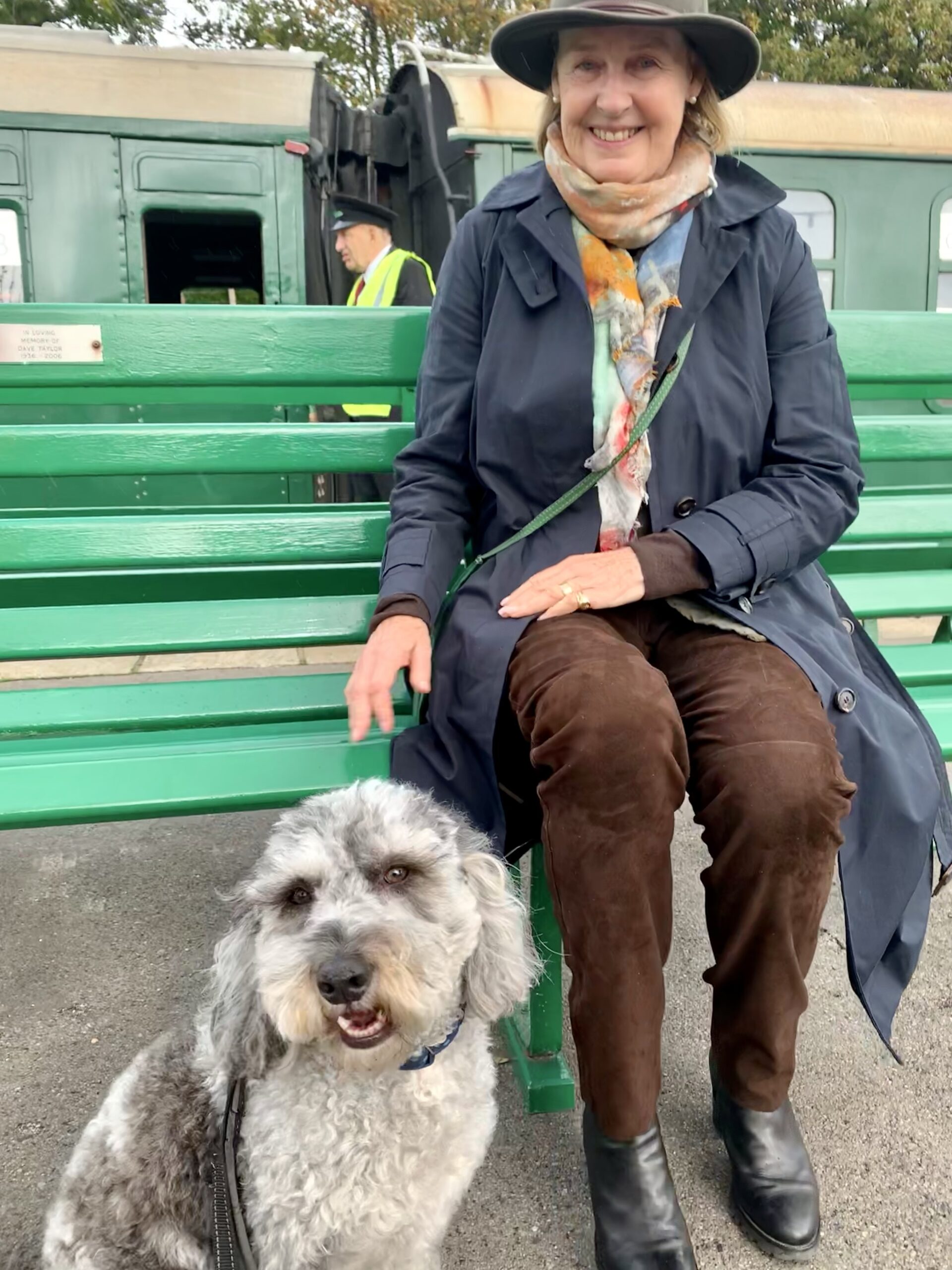
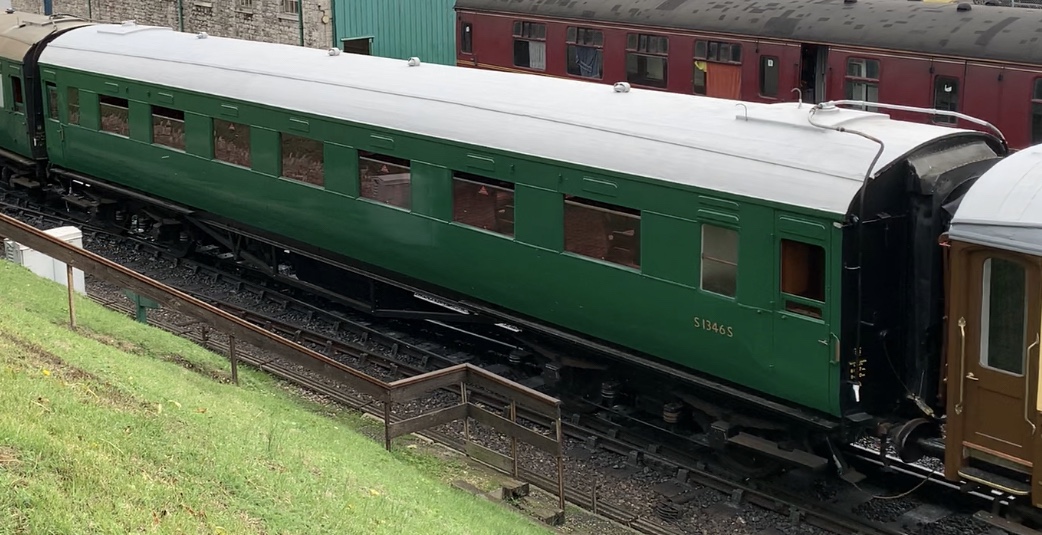
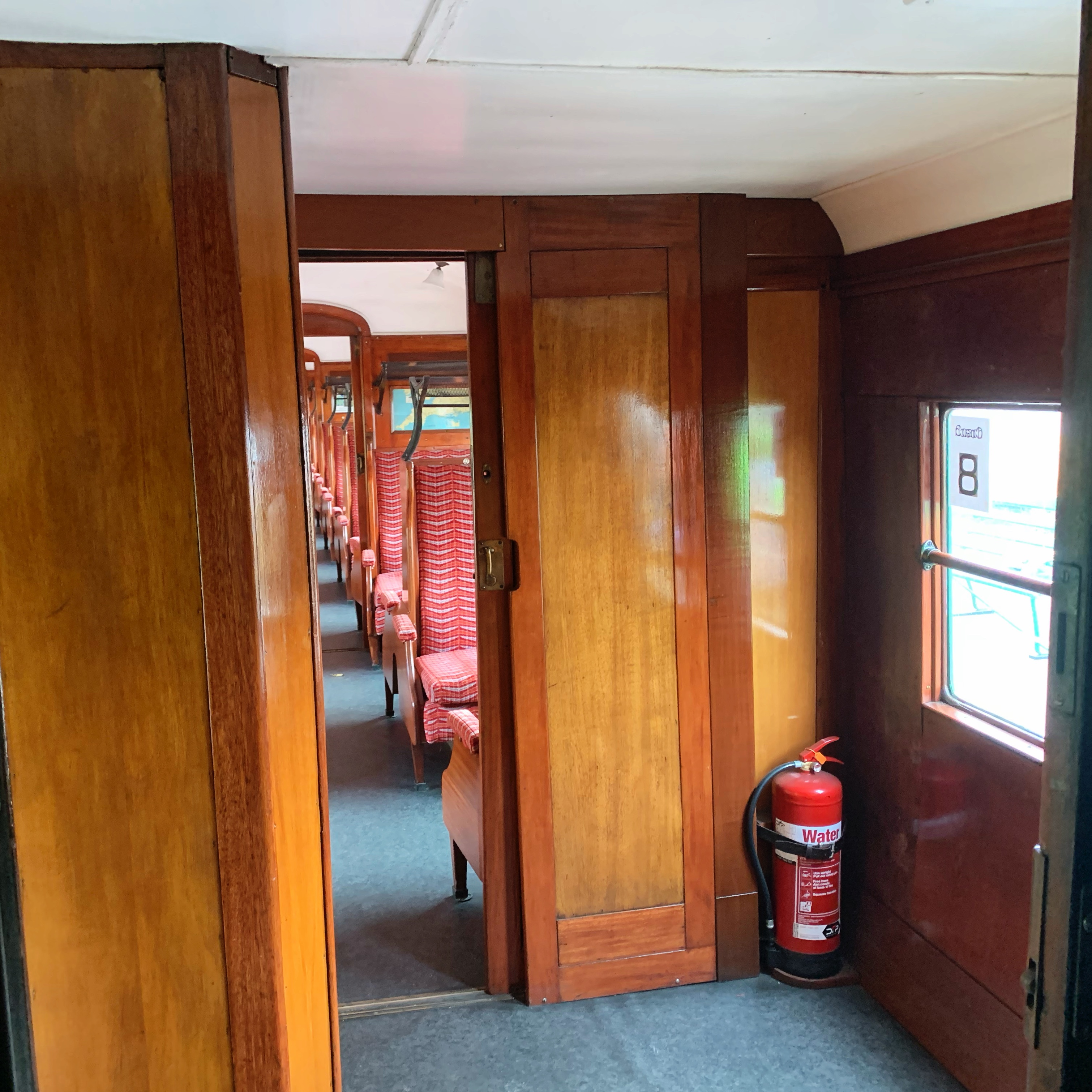
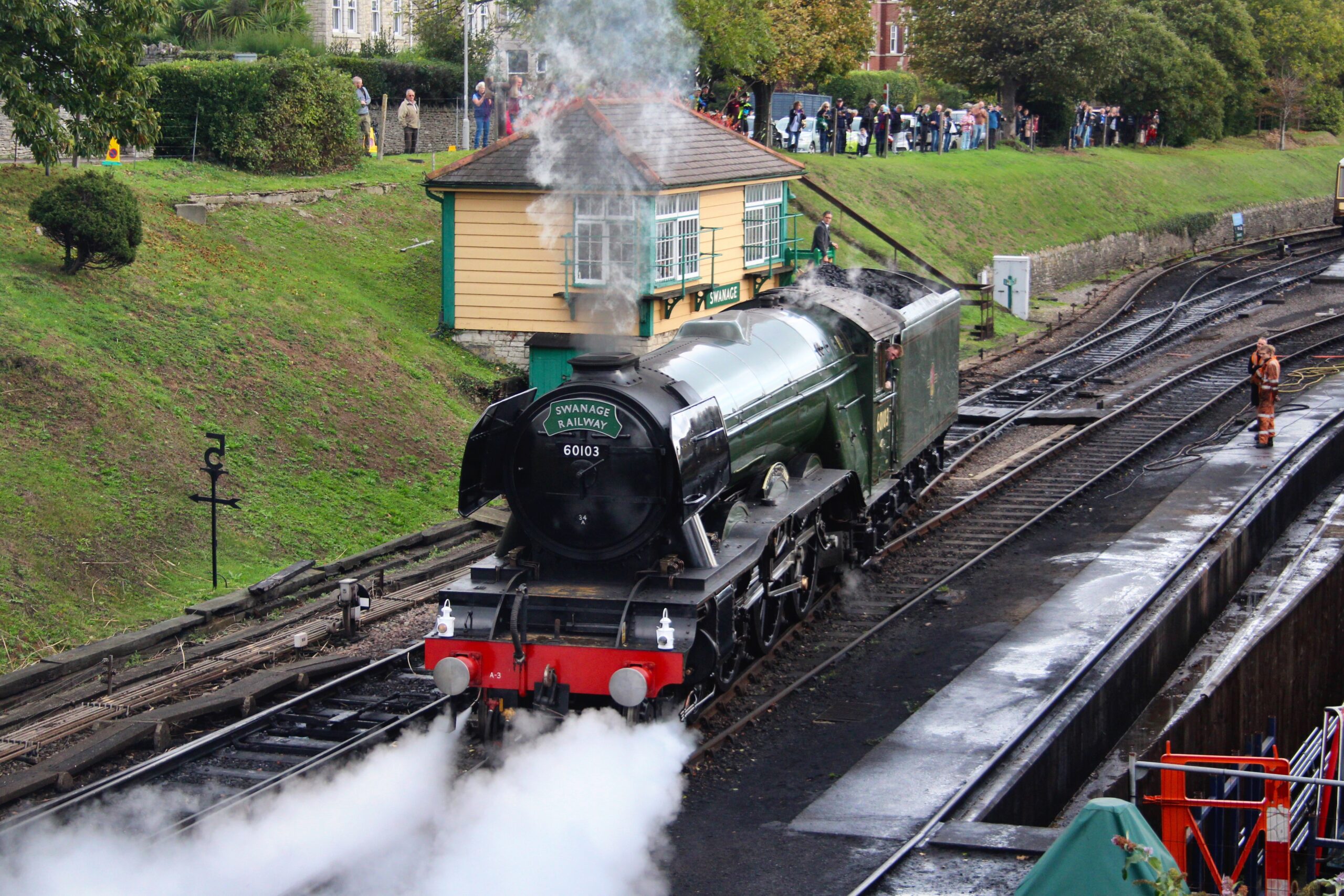
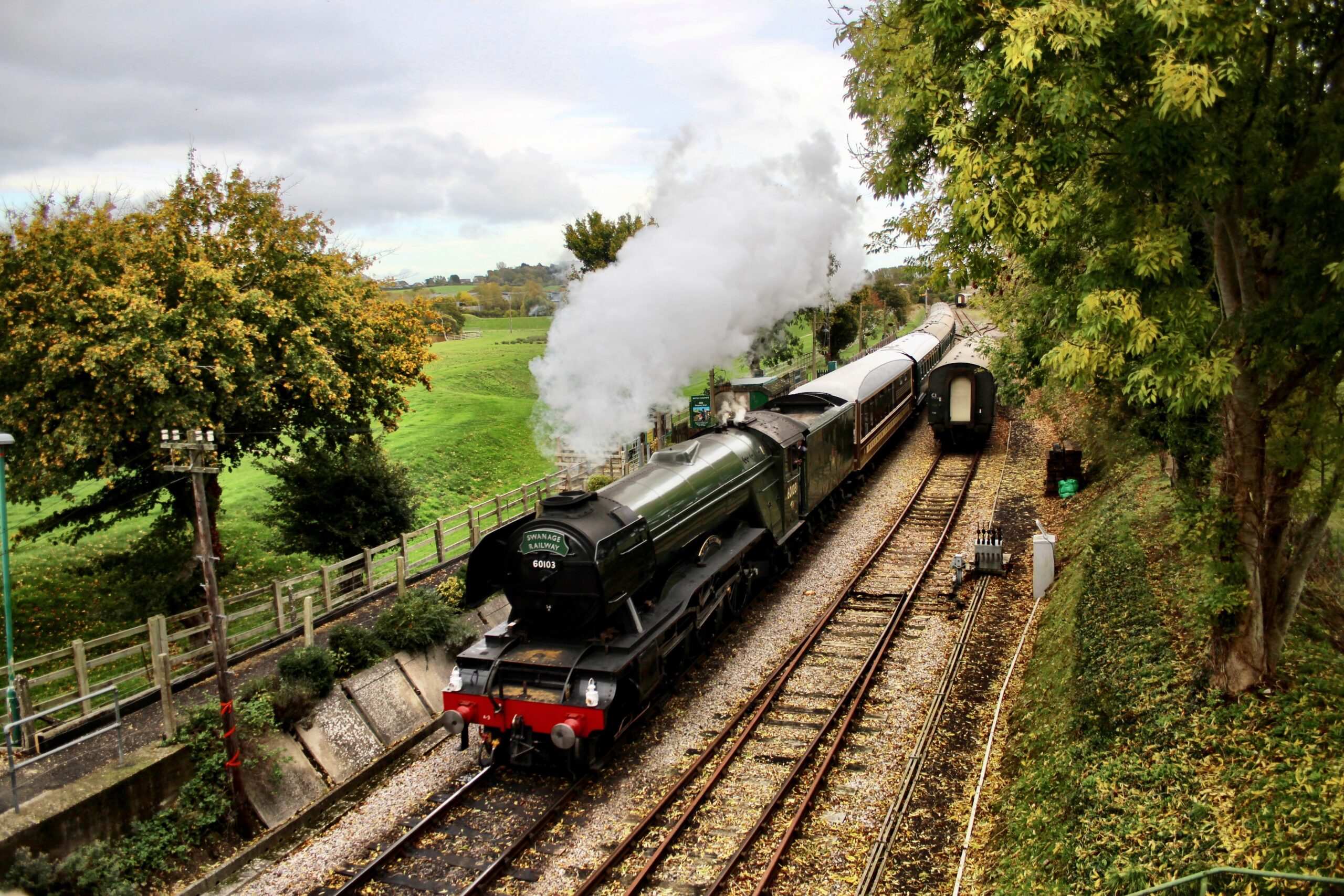
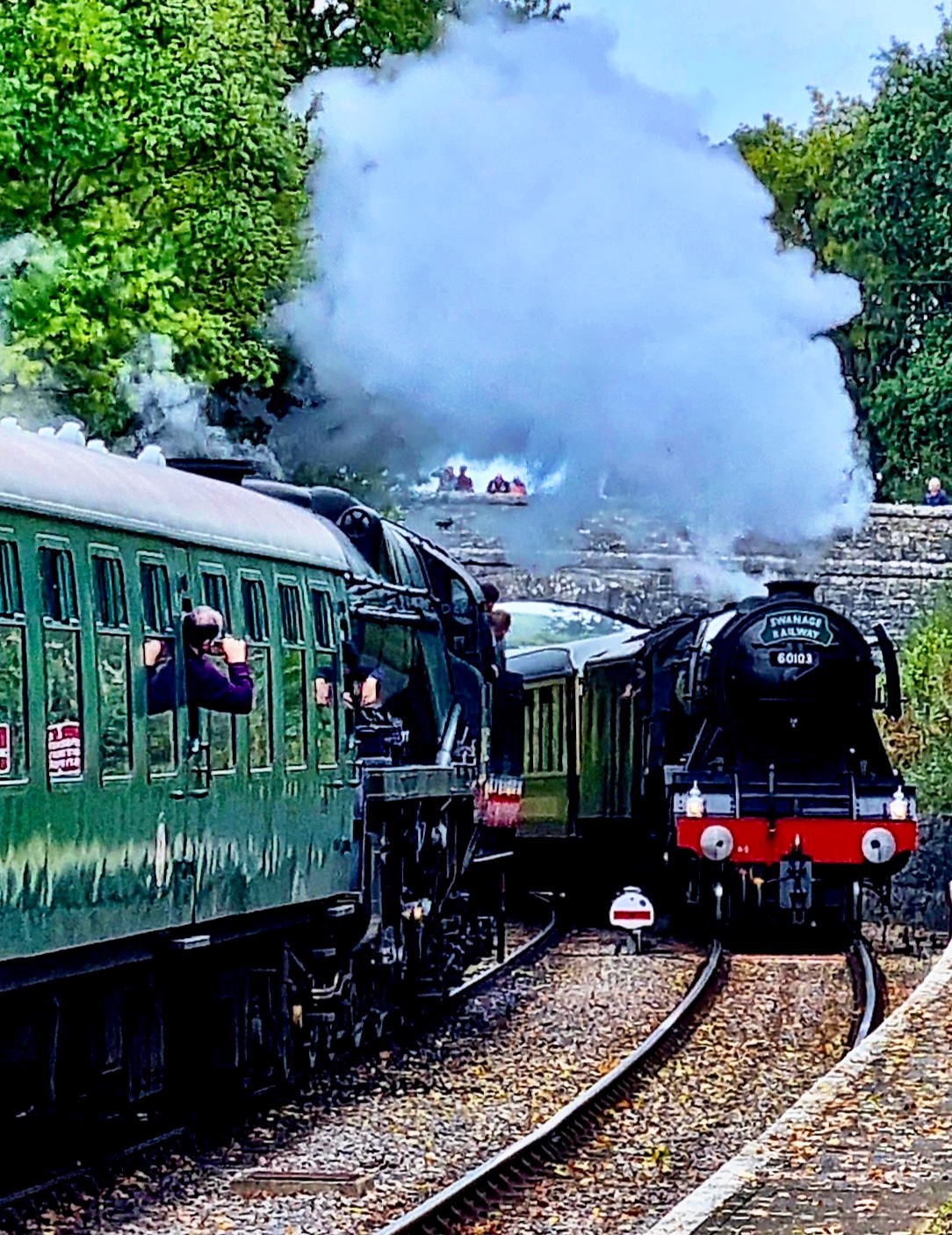
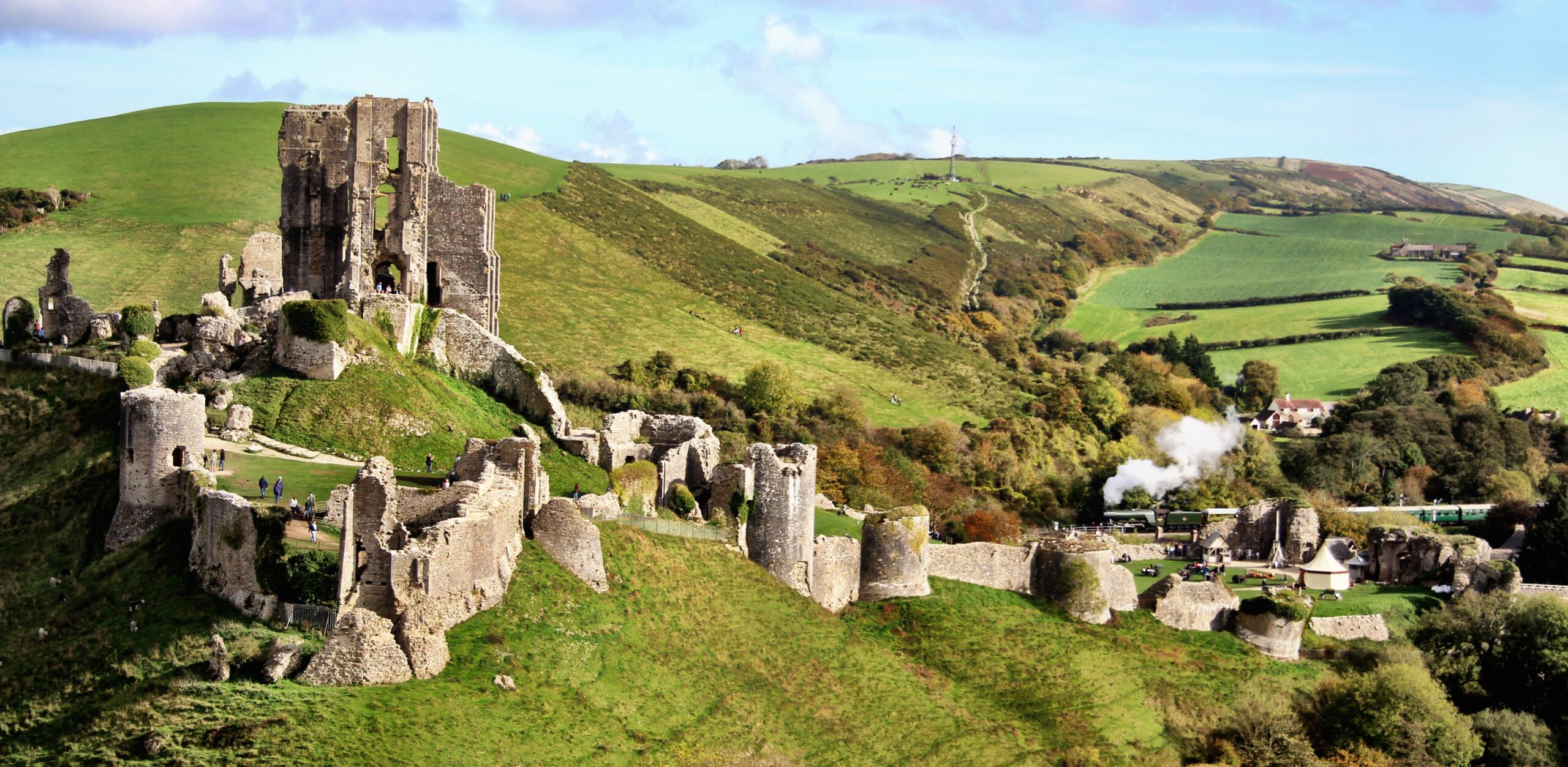
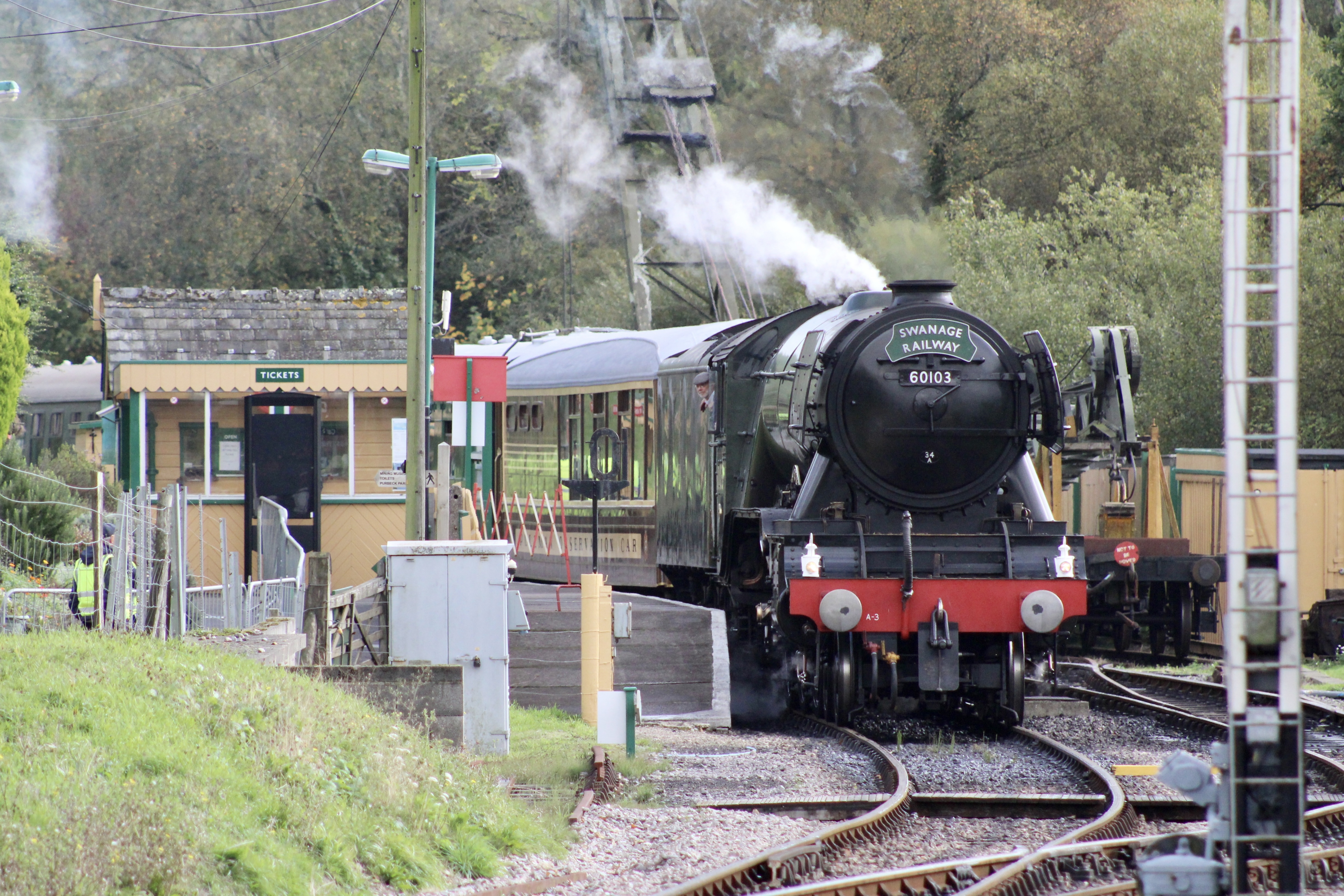
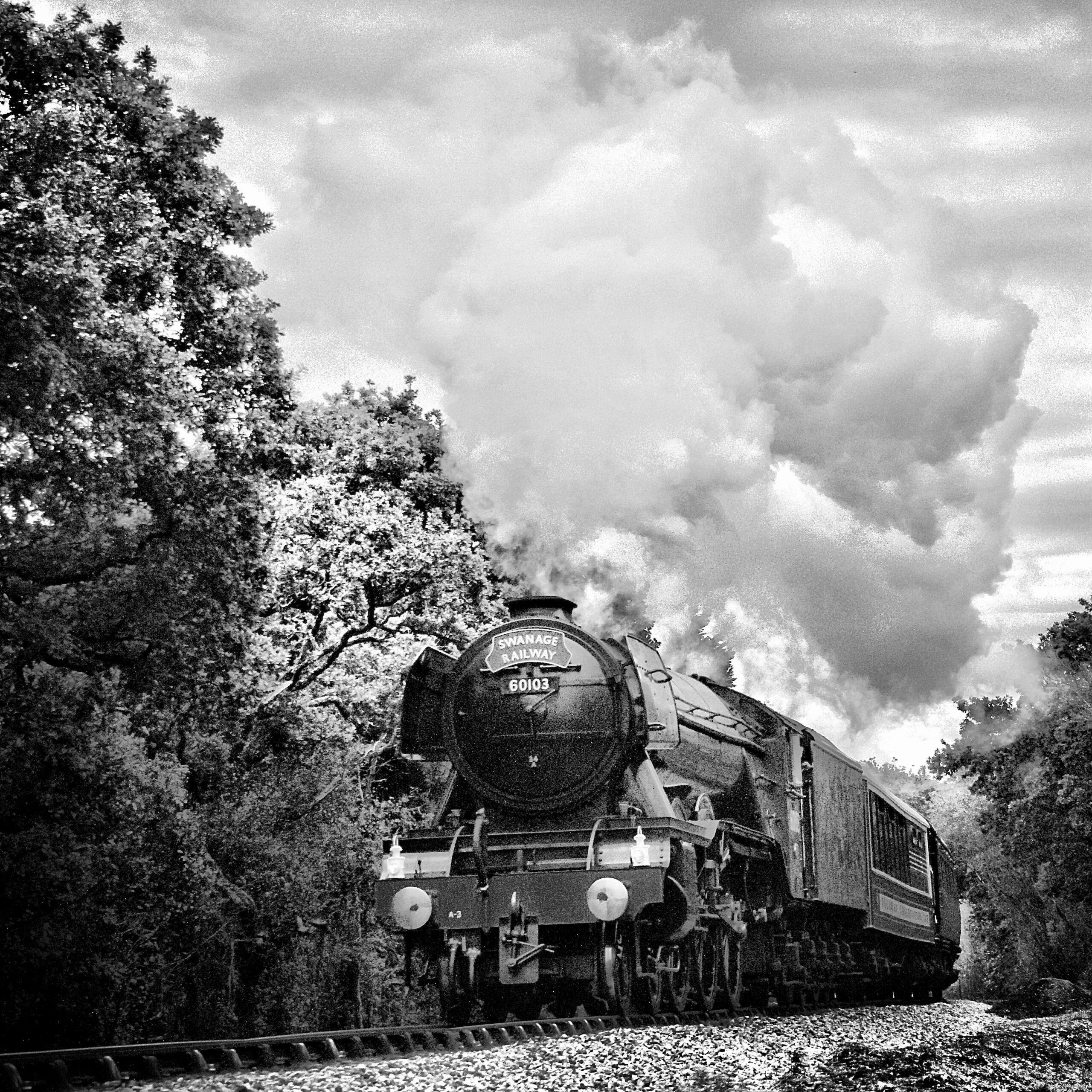
Hello Dear Reader – Yoshi and I had a lovely family day out on the Swanage Railway on Saturday 22nd October when we took a ride in lovingly restored 1933 Maunsell open third carriage No. 1346 behind visiting LNER Gresley A3 Pacific No. 60103 ‘Flying Scotsman’. Having survived a German bomb at Clapham in 1940, the coach ran in traffic until 1961 when it was withdrawn and converted for use as a mobile office and later a classroom. Sold into preservation in 1982 and initially based on the Kent & East Sussex Railway (K&ESR), the coach was purchased privately in 2002 for use on the Swanage Railway. Still awaiting the refitting of tables the restoration has been carried out to the highest standard and it really was a delight to see and travel in.
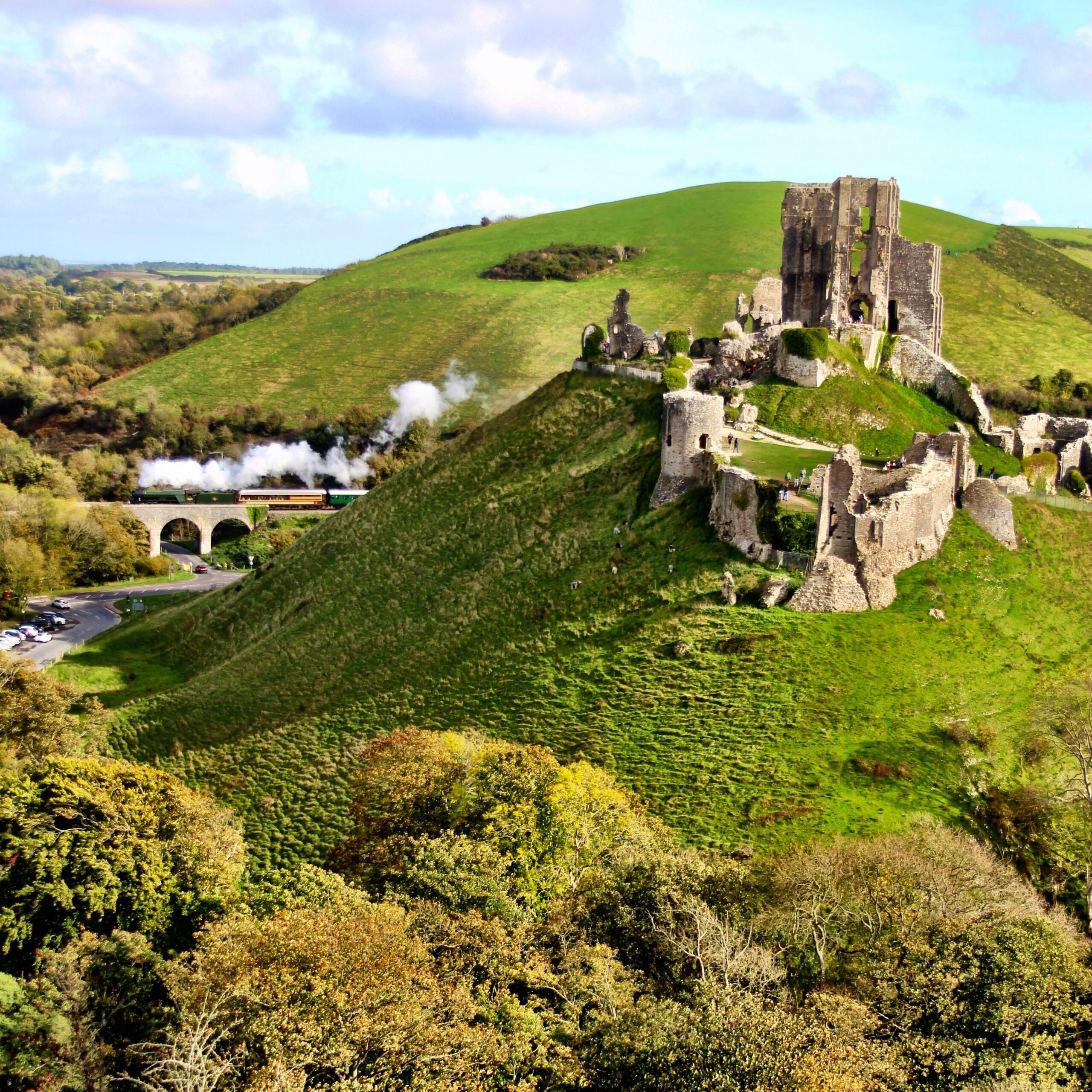
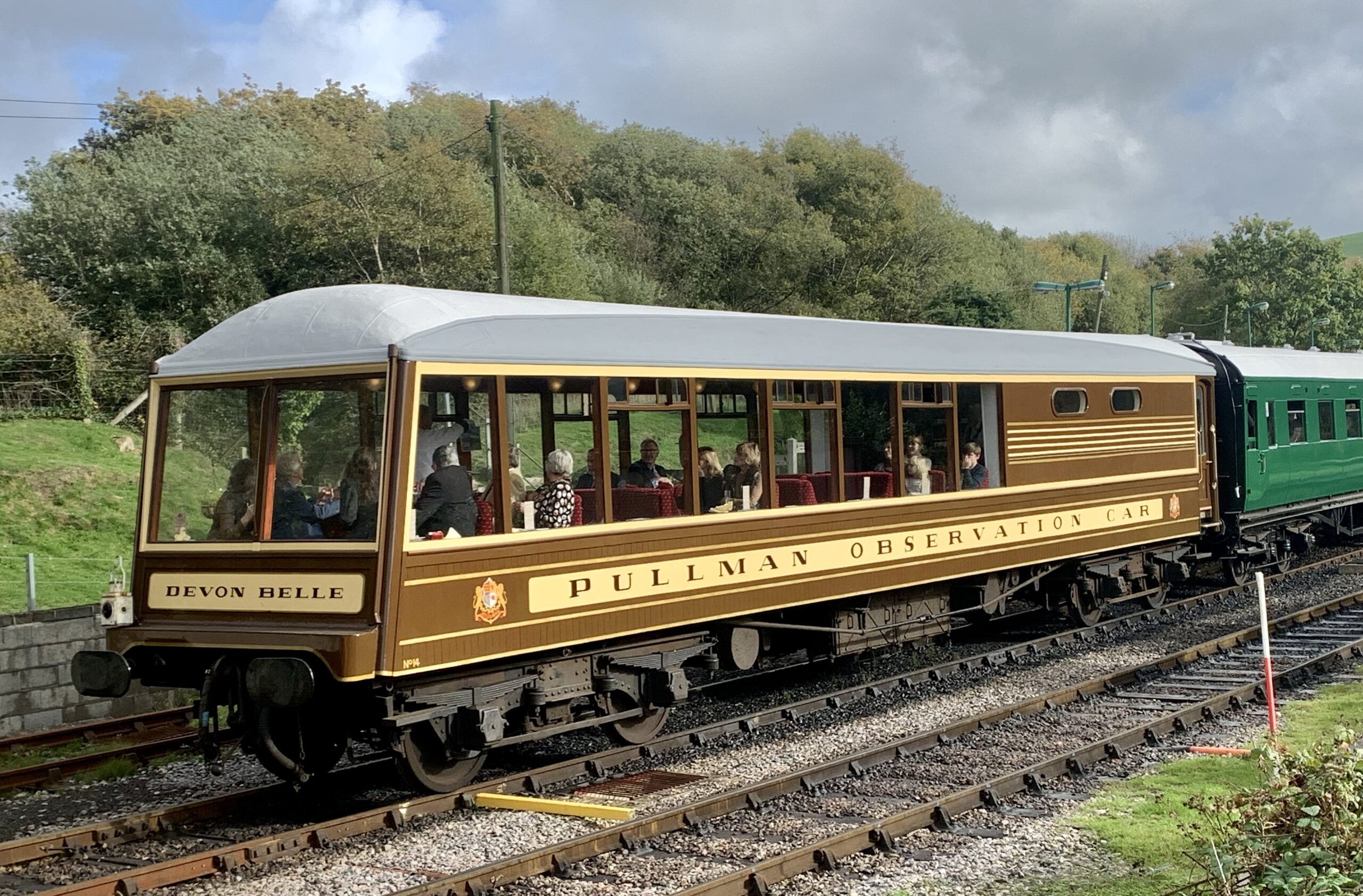
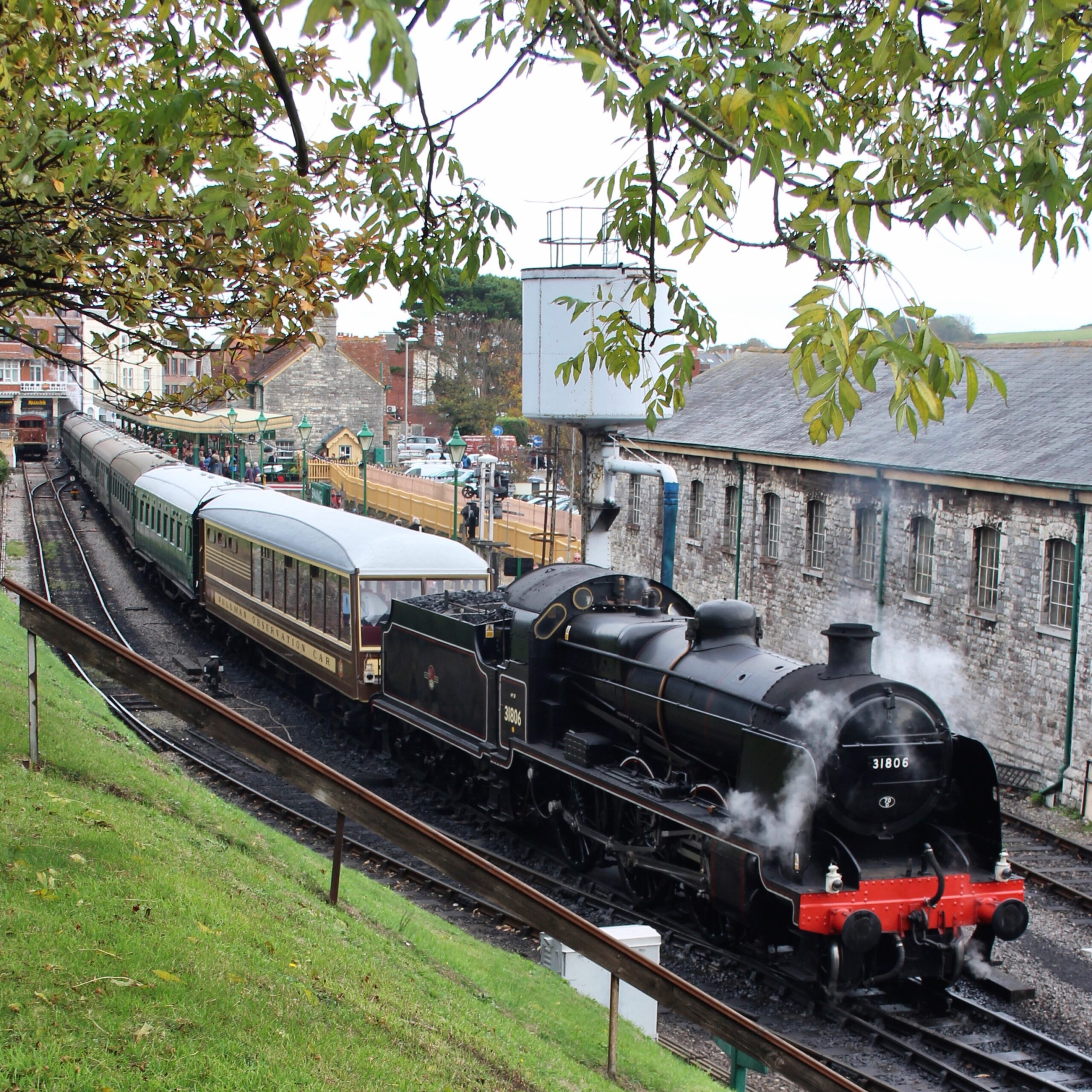
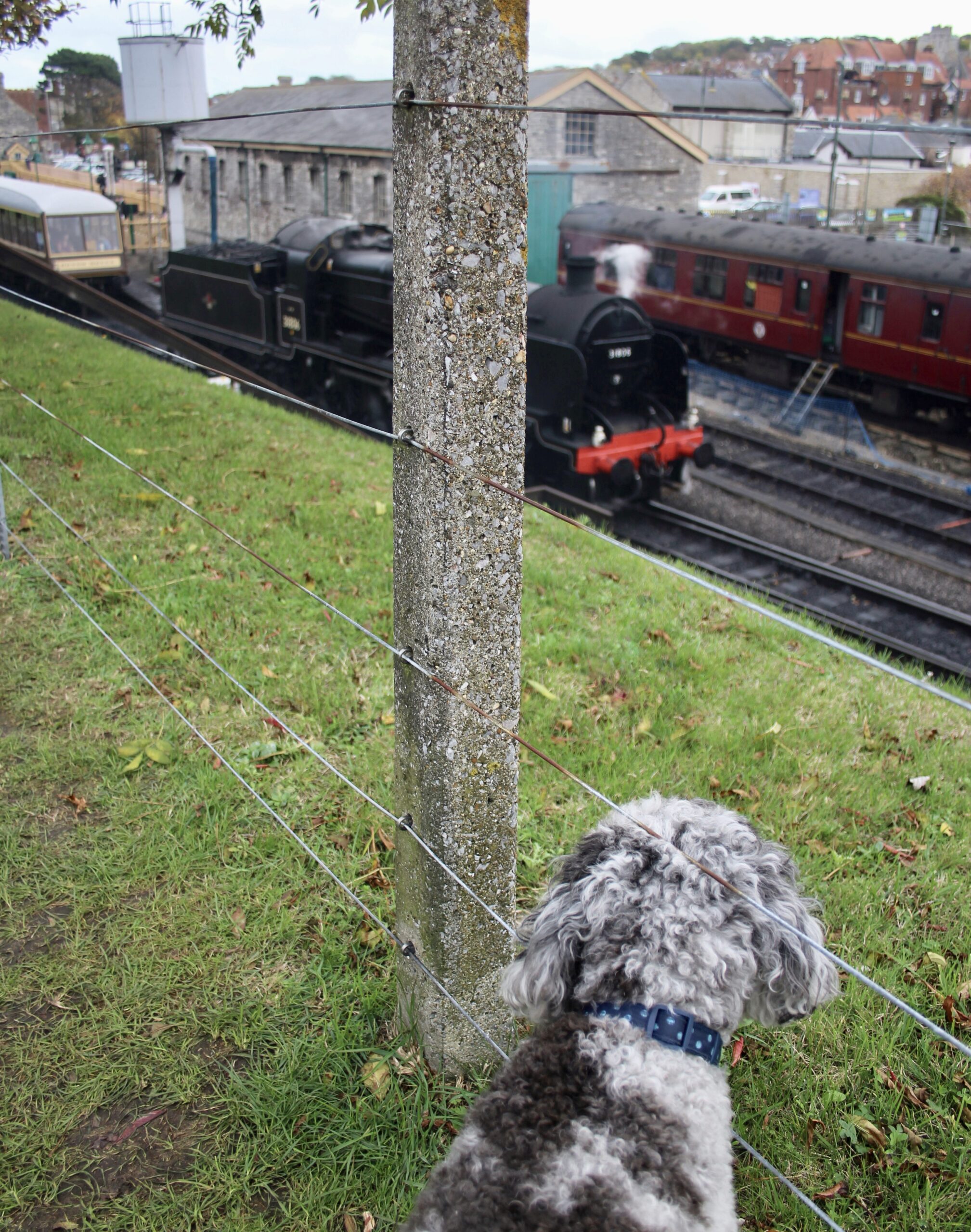
1933 Maunsell open third carriage No. 1346Yoshi and I explore 1933 Maunsell open third carriage No. 1346 (Image courtesy of Caroline Smith)Vestibule of 1933 Maunsell open third carriage No. 1346LNER Gresley A3 No. 60103 ‘Flying Scotsman’ prepares to back on to the seven coach train employed during running days at the Swanage Railway – 22/10/2022LNER Gresley A3 No. 60103 ‘Flying Scotsman’ passes Herston Halt – 25/10/2022LNER Gresley A3 No. 60103 ‘Flying Scotsman’ passes Southern Railway rebuilt West Country Class Bulleid Pacific No. 34028 ‘Eddystone’ at Harmans Cross – 22/10/2022 (Image courtesy of Caroline Smith)LNER Gresley A3 No. 60103 ‘Flying Scotsman’ passes Corfe Castle – 25/10/2022LNER Gresley A3 No. 60103 ‘Flying Scotsman’ crosses Corfe viaduct in the shadow of Corfe Castle – 25/10/2022LNER Gresley A3 No. 60103 ‘Flying Scotsman’ arrives at Norden with the 1X06 1325 service from Swanage – 24/10/2022 Yoshi welcomes a fuss from Penny Pegler, daughter of ‘Flying Scotsman’ saviour Alan Pegler, who visited the Swanage Railway from her home in Portugal and traveled on the 1145 departure on Saturday 22nd October 2022. Penny’s late father purchased ‘Flying Scotsman’ from British Railways in 1963 at the cost of £3,000 – 22/10/20221940’s Pullman “Devon Belle” observation coach Car 14 which accompanied ‘Flying Scotsman’ on tours of Canada and the United States to promote British exports was part of the consist of at Swanage this week. Volunteers with the Swanage Railway Trust carefully restored the wooden carriage after it was rescued from San Francisco where it was in use as a static bar. Norden – 24/10/2022SR U Class 2-6-0 No. 31806 assisted with the shunting of stock during the ‘Flying Scotsman’ running days at Swanage – 25/10/2022Yoshi keeps watch on SR U Class 2-6-0 No. 31806 as she backs onto the empty coaching stock in preparation for shunting – 25/10/2022
Video of Yoshi’s visit to the Swanage Railway and his trip behind ‘Flying Scotsman’. Playing the bagpipes as our train departed Swanage was 15 year old Frederick Sills from Wareham who is a member of Swanage Railway’s Sygnets youth group and a member of the Weymouth Sea Cadets. He did a wonderful job!
‘Flying Scotsman’ will be on static display at Swanage Railway station until the 6th November 2022.
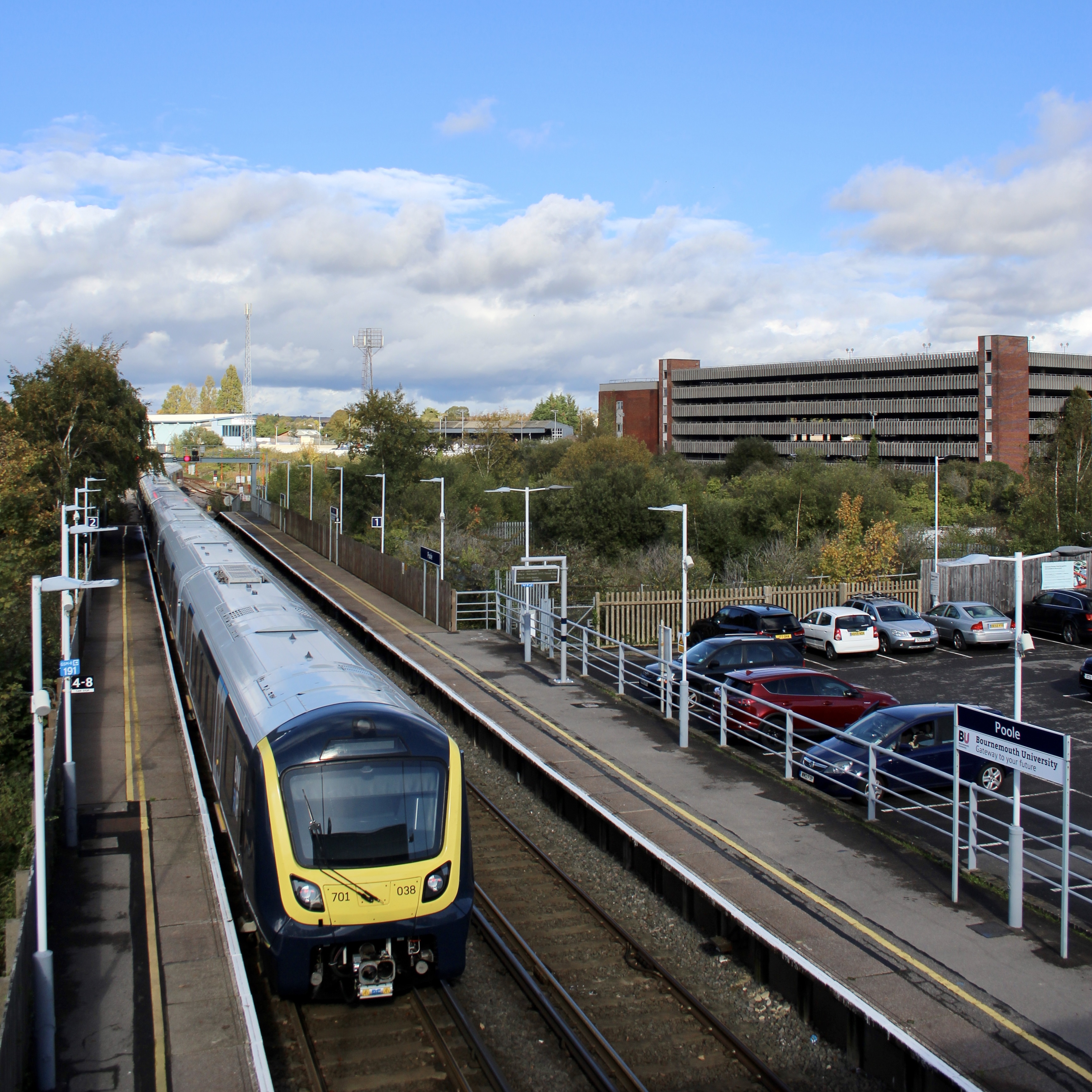
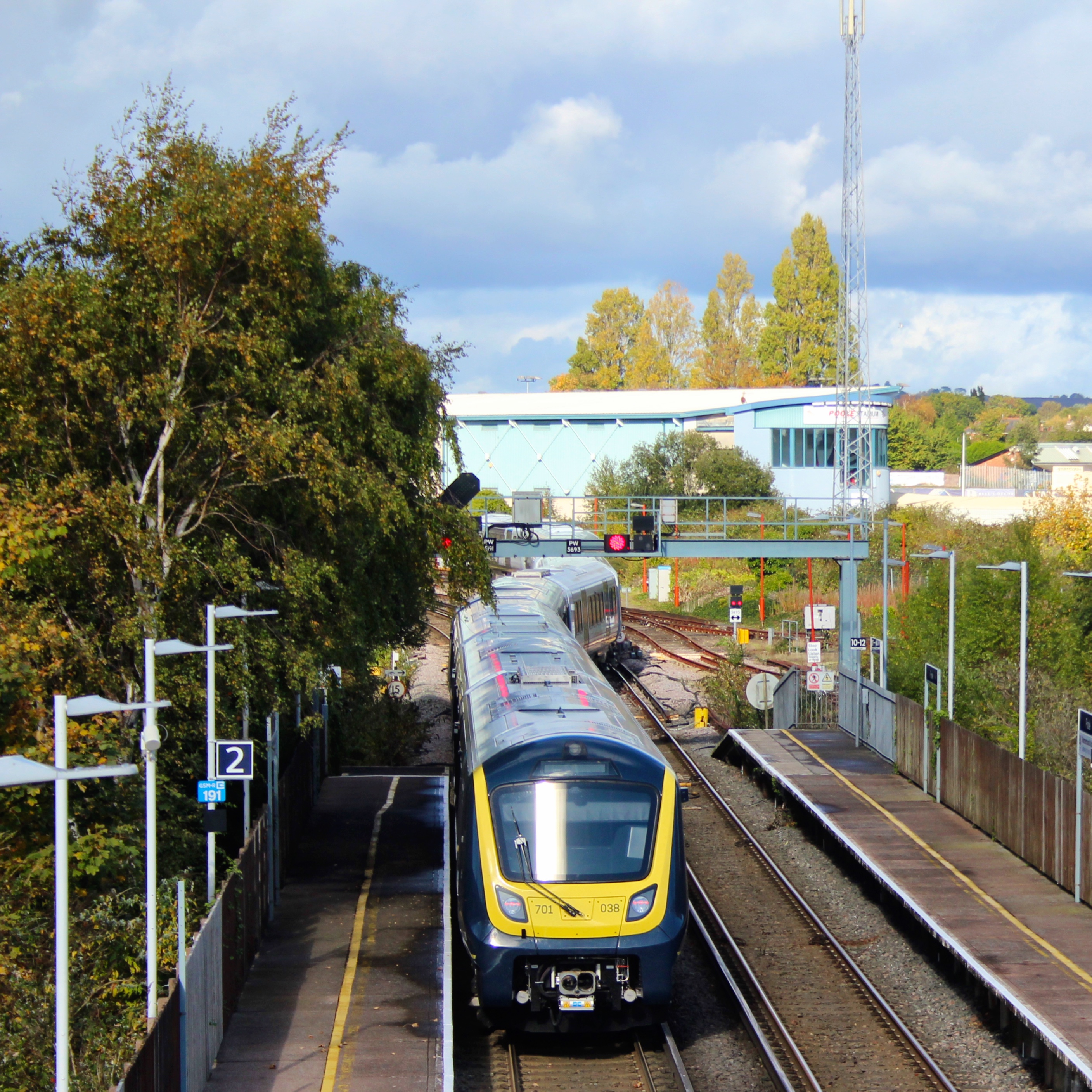
Although there is still no date for their introduction into revenue earning service, South Western Railway (SWR) Class 701 Electric Multiple Units (EMU) continue testing and mileage accumulation runs taking in Poole where they reverse. On Thursday 20th October it was the turn of No. 701038 to have a run out, and we saw the unit passing through Poole:
SWR Class 701 No. 701038 working 5Q51 1115 London Waterloo to Staines Up Loop passing through Poole – 20/10/2022SWR Class 701 No. 701038 working 5Q51 1115 London Waterloo to Staines Up Loop crosses over the Up Line to reach Poole Storage Sidings where the service reverses – 20/10/2022Having reversed in Poole Storage Sidings, SWR Class 701 No. 701038 working 5Q51 1115 London Waterloo to Staines Up Loop passes Class 444 No. 444035 which formed 1W65 1205 London Waterloo to Weymouth at Poole – 20/10/2022
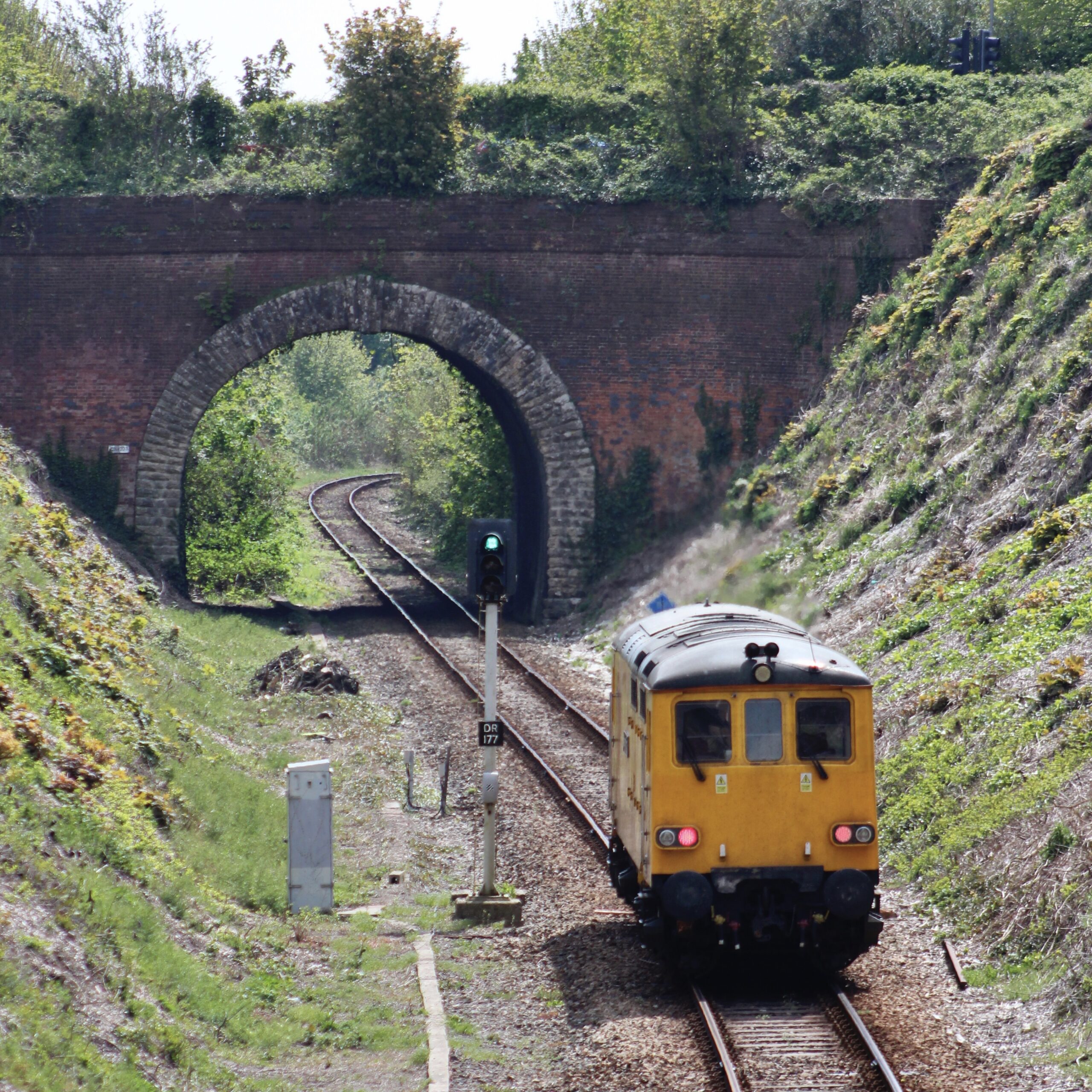
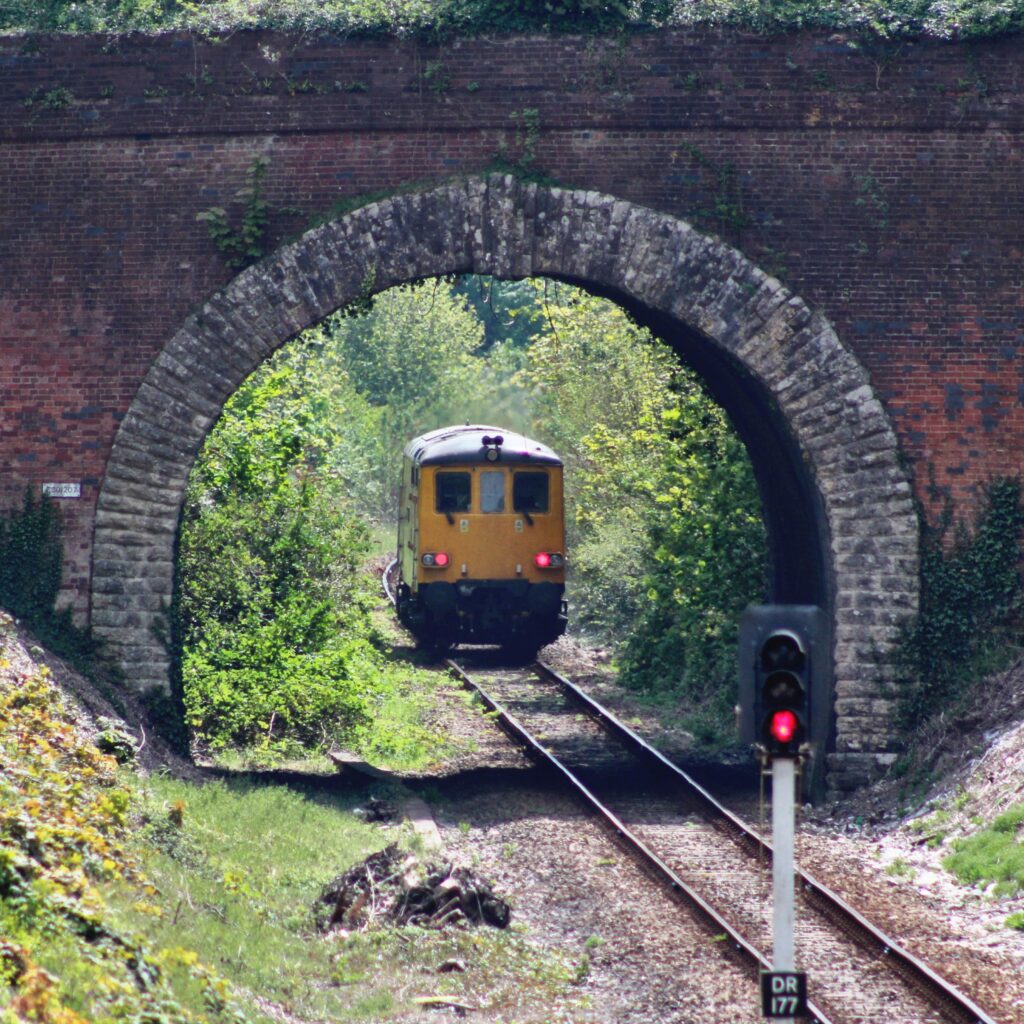
The railways in the UK are well into Rail Head Treatment Train (RHTT) season as the trees shed their leaves which are scattered across the nations railway tracks. This can cause problems for the track circuits and reduce a trans ability to grip to the rails when starting from stations, accelerating, climbing hills or stopping. In our neck of the woods we see regular Multi Purpose Vehicle (MPV) movements spreading adhesion modifier; a mixture of suspension gel (so it can be pumped), sand (to help train wheels grip the rail), and steel or iron shot that is pushed through contamination (compressed leaves and debris).
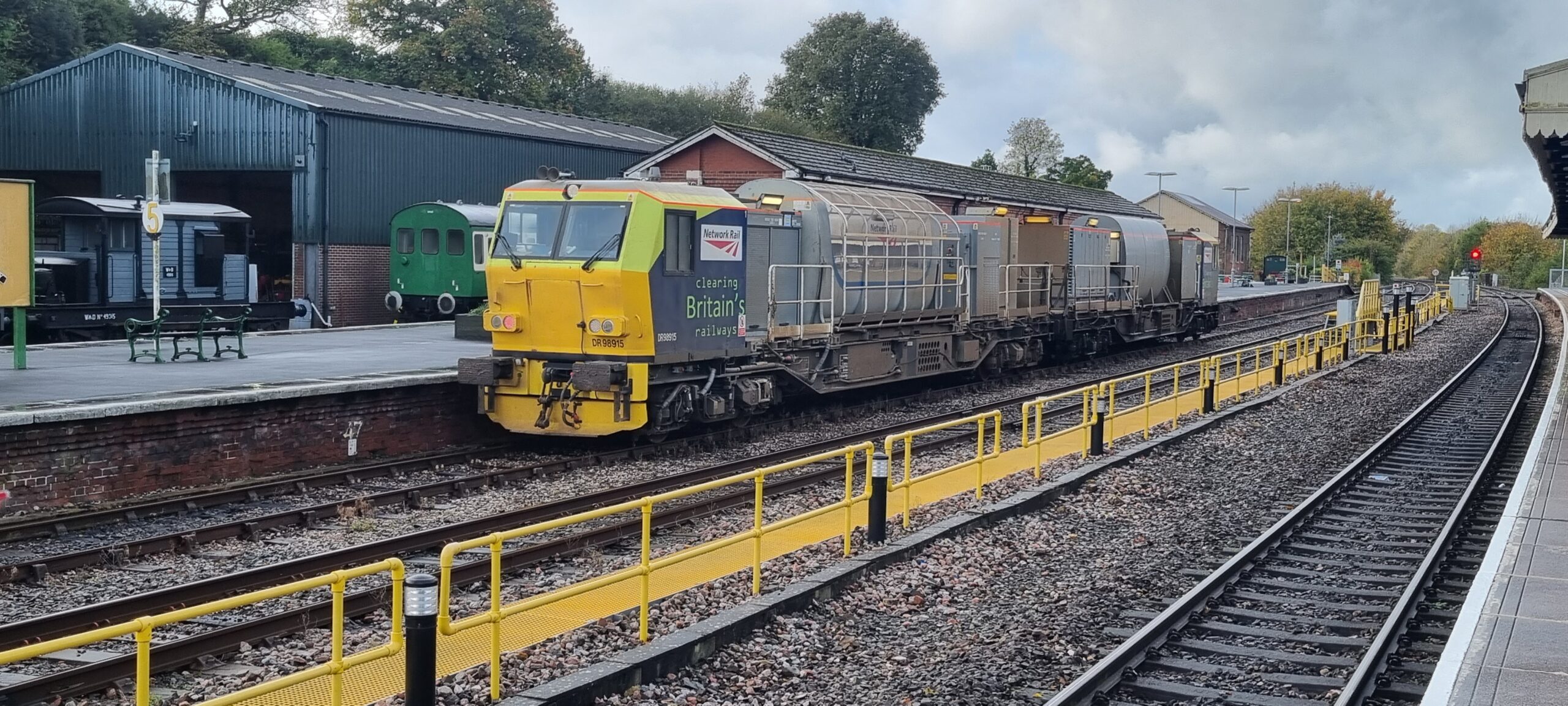
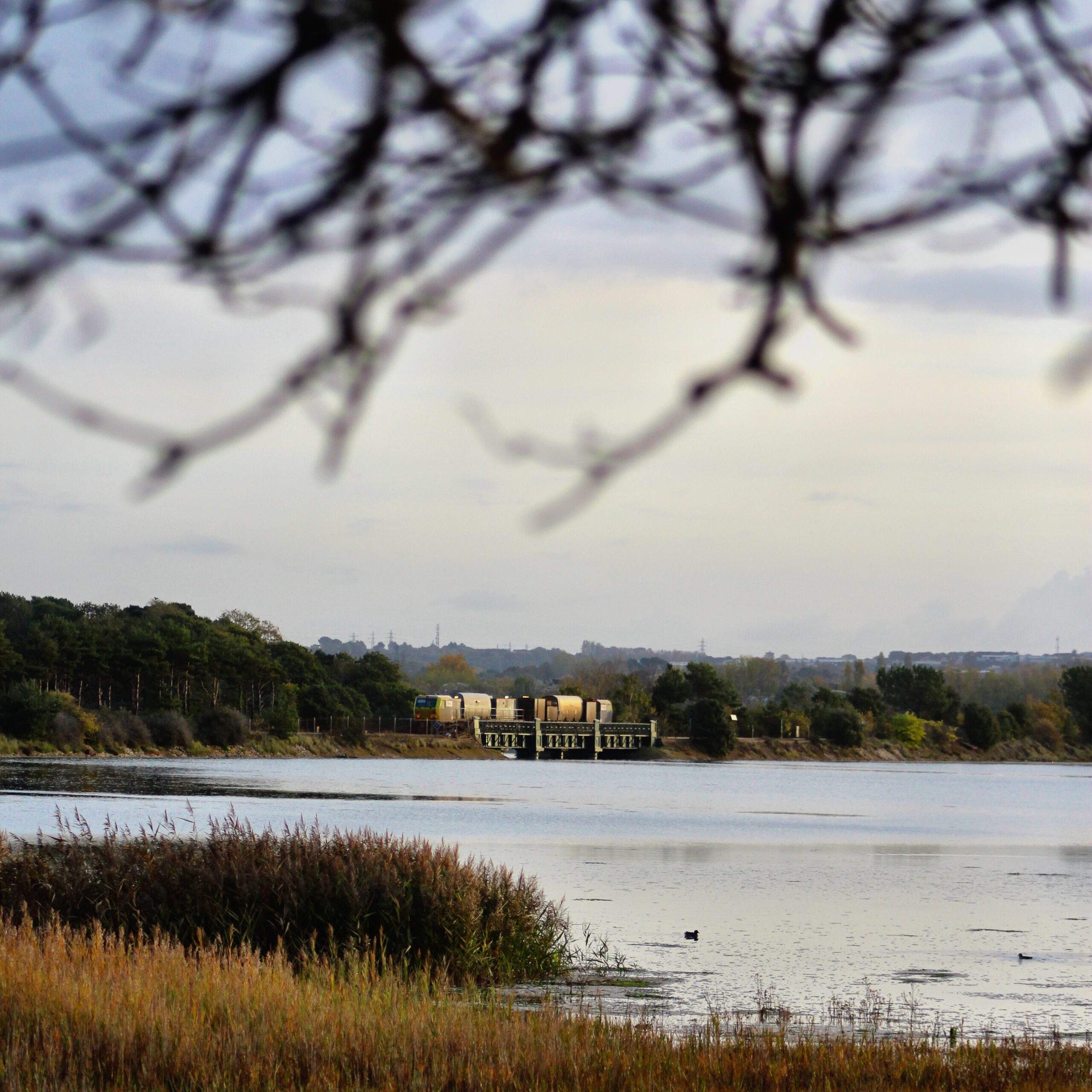
Multi Purpose Vehicle No. DR98915 at Yeovil Junction – 25/10/2022 (Courtesy of Scott Lewis)An unidentified MPV crosses Holes Bay, Poole working 3S81 0551 Totton Yard to Totton Yard – 25/10/2022
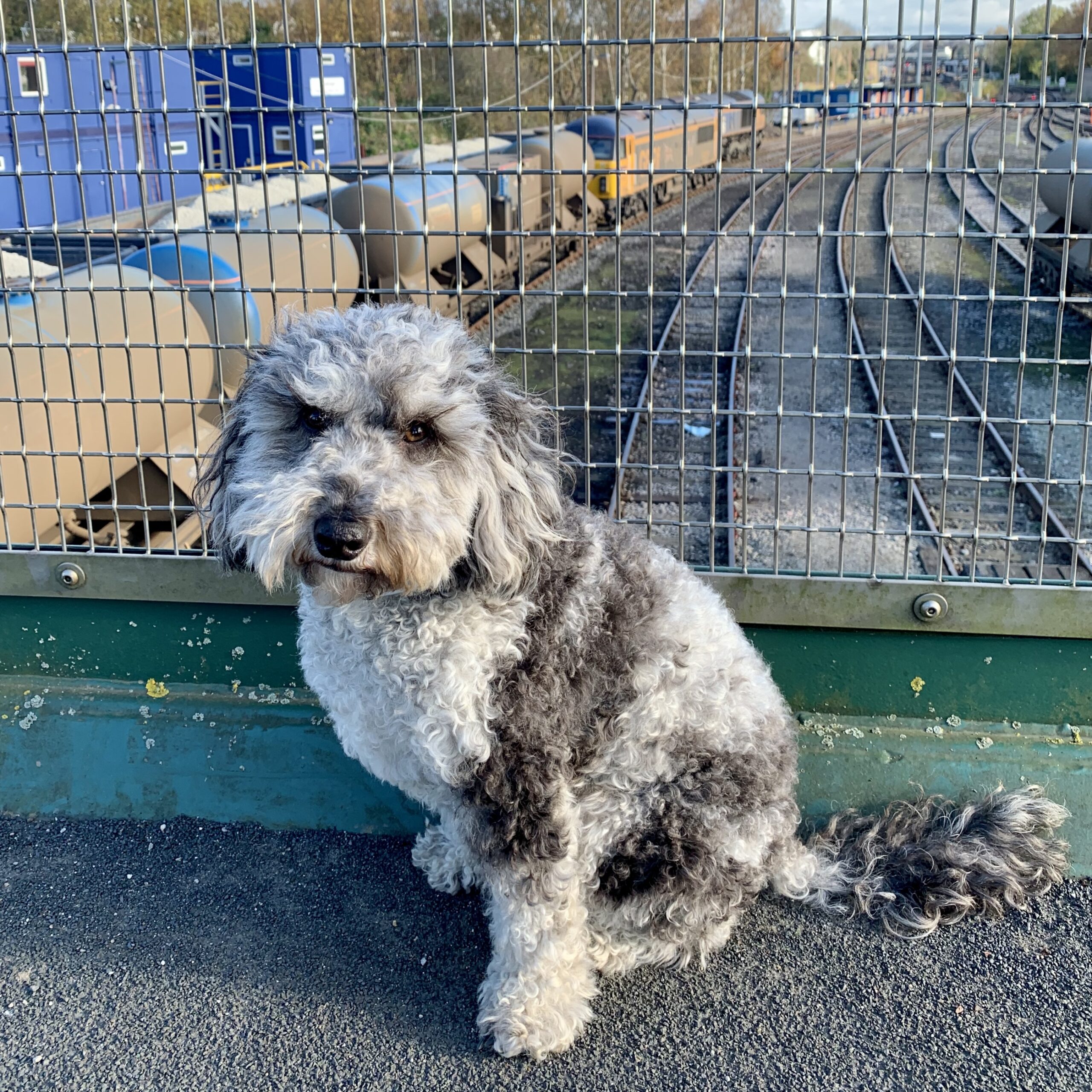
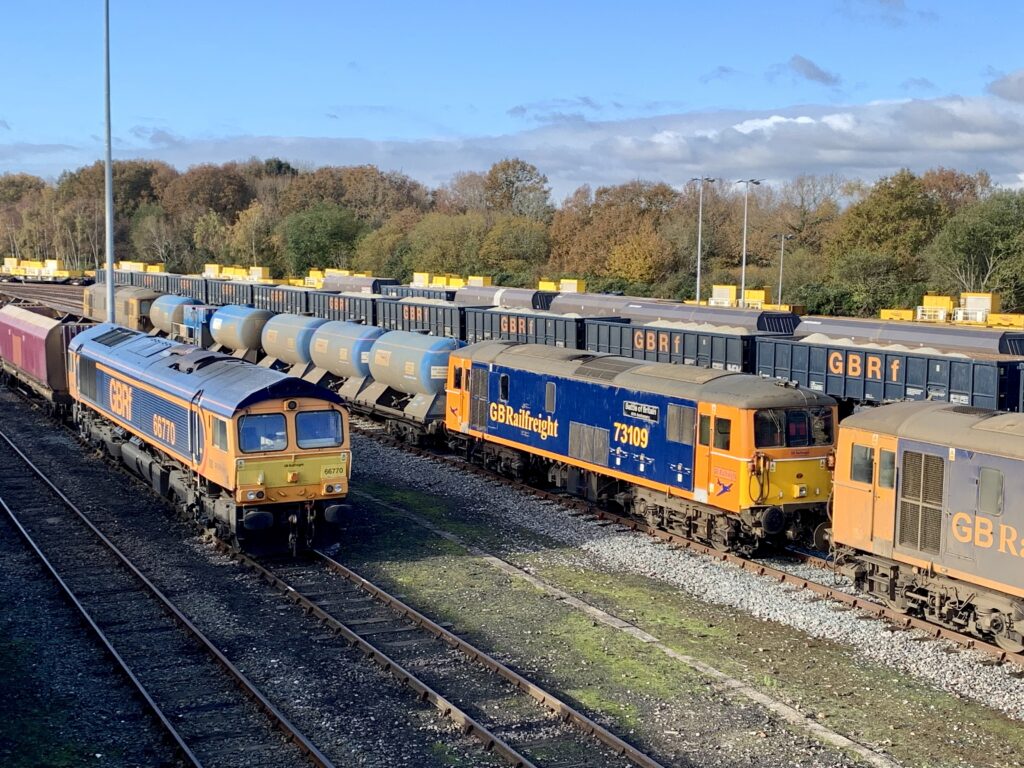
On the 28th October 2021, Direct Rail Services Class 37 No.’s 37218 and 37558 (37424) ‘Avro Vulcan XH558′ (named after a preserved Vulcan bomber) could be found working RHTT 310X 0900 Stowmarket DGI to Stowmarket DGI. The pair are seen passing through Ipswich.Yoshi taking a well earned rest on the lattice footbridge which crosses over Tonbridge West Yard with an RHTT behind. The Southern Railway commissioned the yard in 1941 to help cope with heavy wartime freight traffic – 21/11/2021Class 73 No. 73141, 73109 ‘Battle of Britain – 80th Anniversary’ and an unidentified class member (possibly No. 73119 ‘Borough of Eastleigh’ if a certain kind reader could confirm please?) with Class 66 No. 66770 at Tonbridge West Yard – 21/11/2021From left to right; Class 66 No. 66731 ‘Capt. Tom Moore’, Class 69 No. 69001 ‘Mayflower’ and Class 66 No. 66722 ‘Sir Edward Watkin’ at Tonbridge West Yard – 22/11/2021
Video of Rail Head Treatment Trains at Tonbridge West Yard – 22/11/2021
Network Rail’s website reveals there are 32 MPV and 29 locomotive-hauled RHTT’s which deliver the autumn rail head treatment programme. At the weekend, I was tipped off that a Class 37 diesel loco had been hired in by Colas for the Swindon area locomotive hauled RHTT replacing a Class 66 (No. 66846 which required repairs).
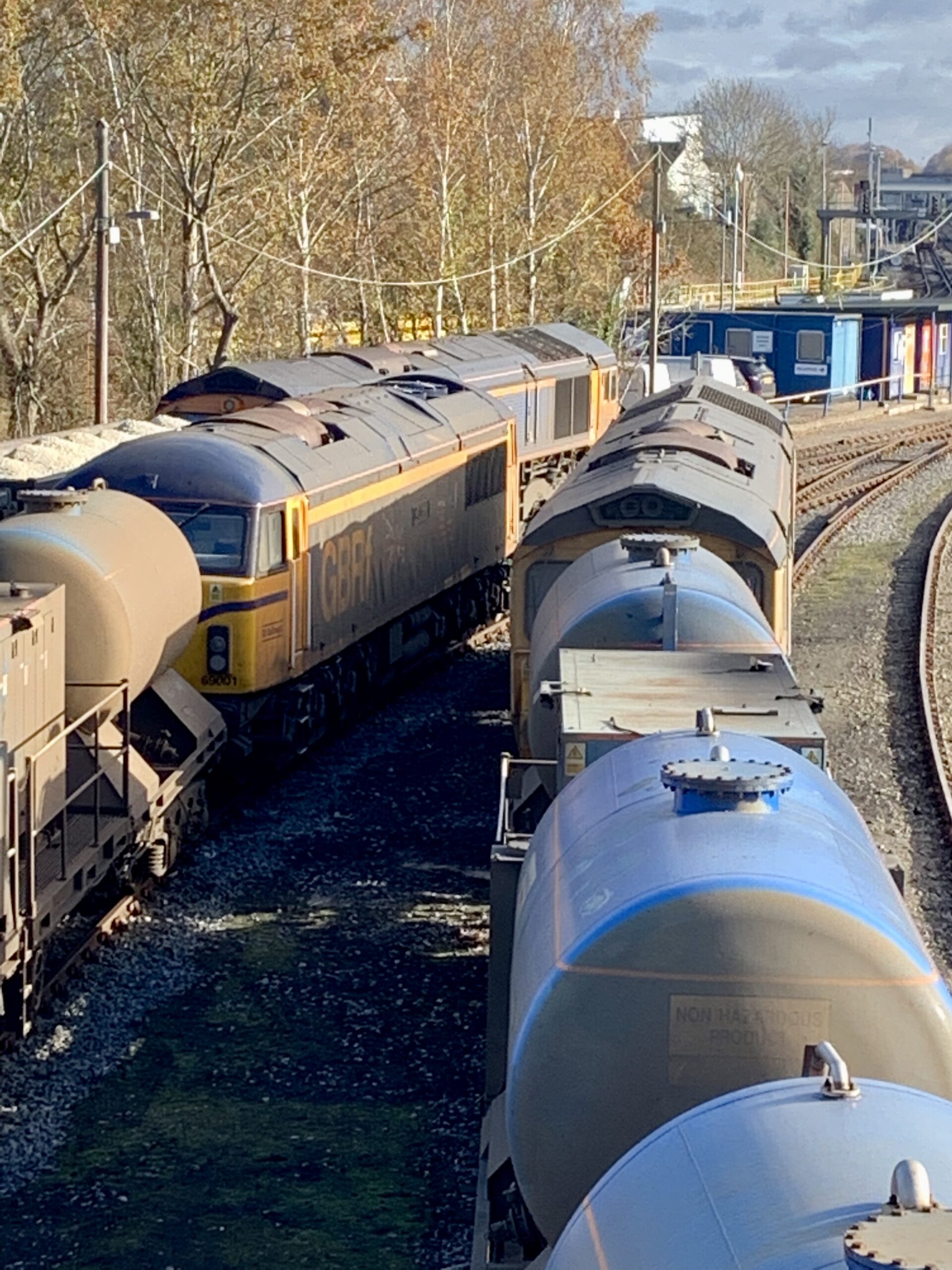
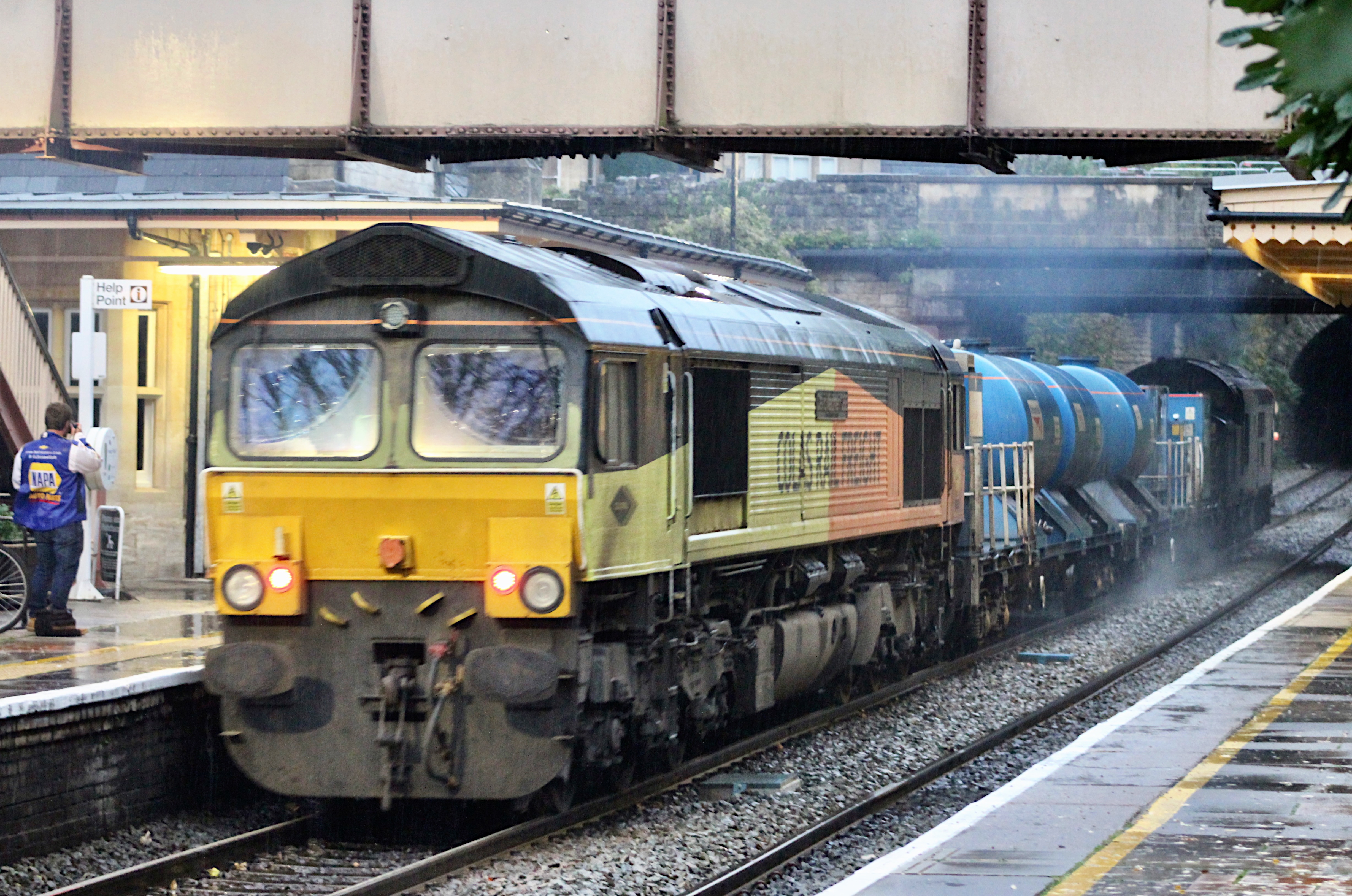
On hire to colas for Rail Head Treatment Train (RHTT) workings, West Coast Rail Class 37 No. 37668 spent the weekend partnering Class 66 No. 66850 ‘David Maidment’ on Swindon based runs. The pair are seen nearing Bradford on Avon in the rain working 3S59 1554 Swindon Transfer Sidings to Moreton on Lugg – 23/10/2022
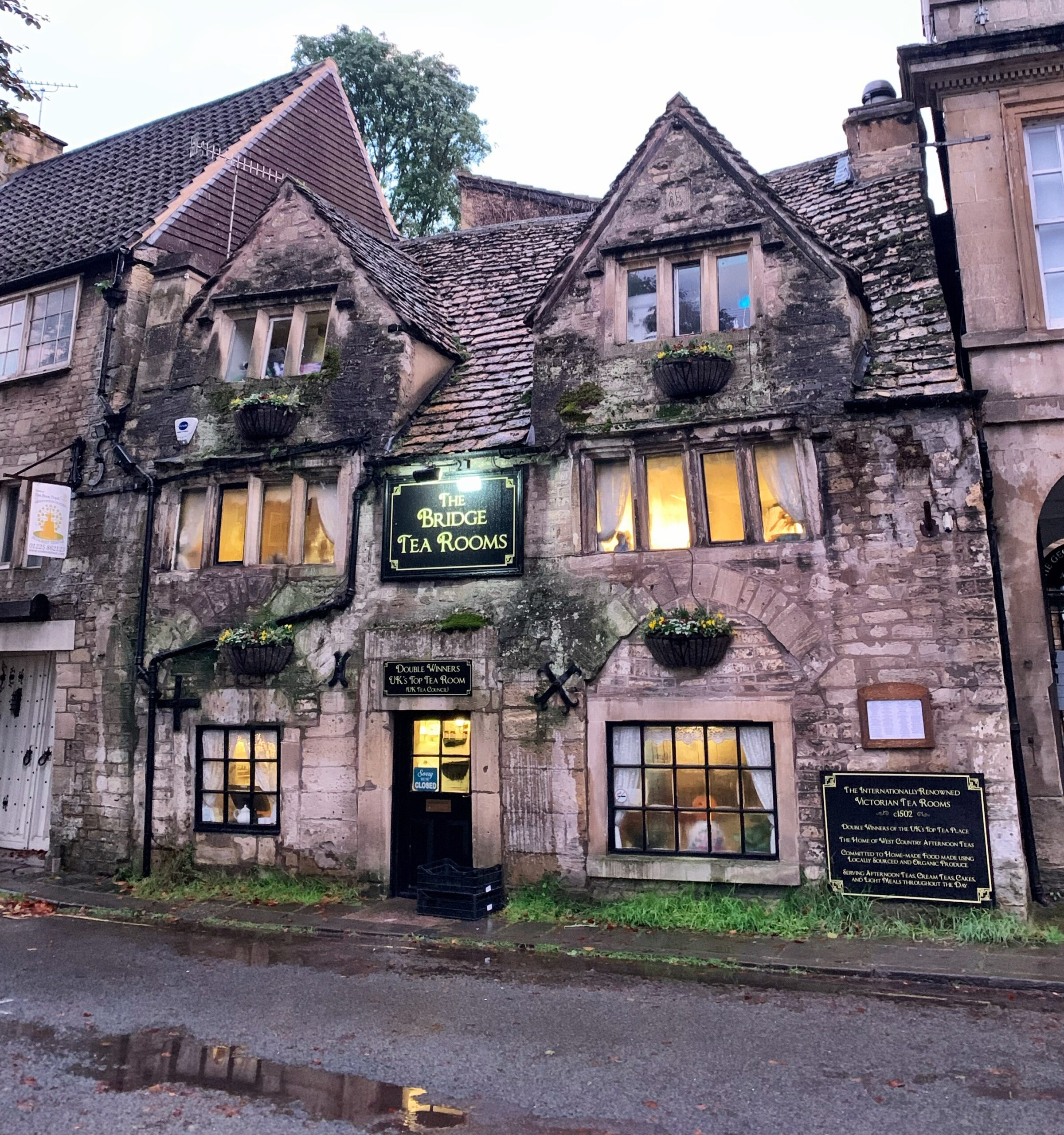
So on Sunday afternoon we found ourselves in Bradford on Avon clinking delicate bone china tea cups and enjoying lunch at The Bridge Tearooms, a former blacksmith’s cottage dating from 1502.
The Bridge Tea Rooms at Bradford on Avon does an excellent Welsh rarebit – 23/10/2022
After a walk taking in the ancient Tithe Barn and the Kennet & Avon Canal, I headed to Bradford on Avon railway station while Yoshi and his mum took shelter from the rain in a pub.
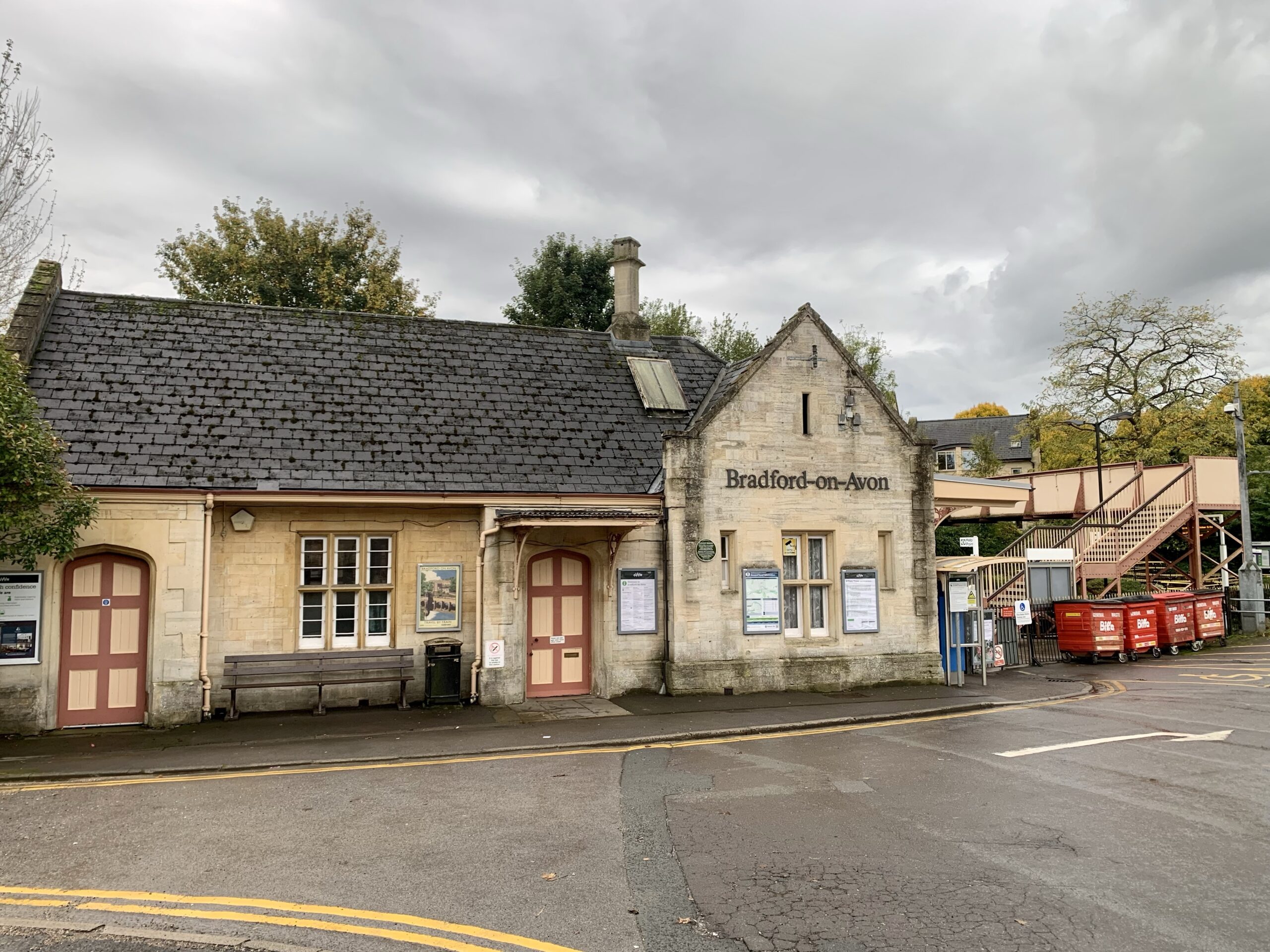
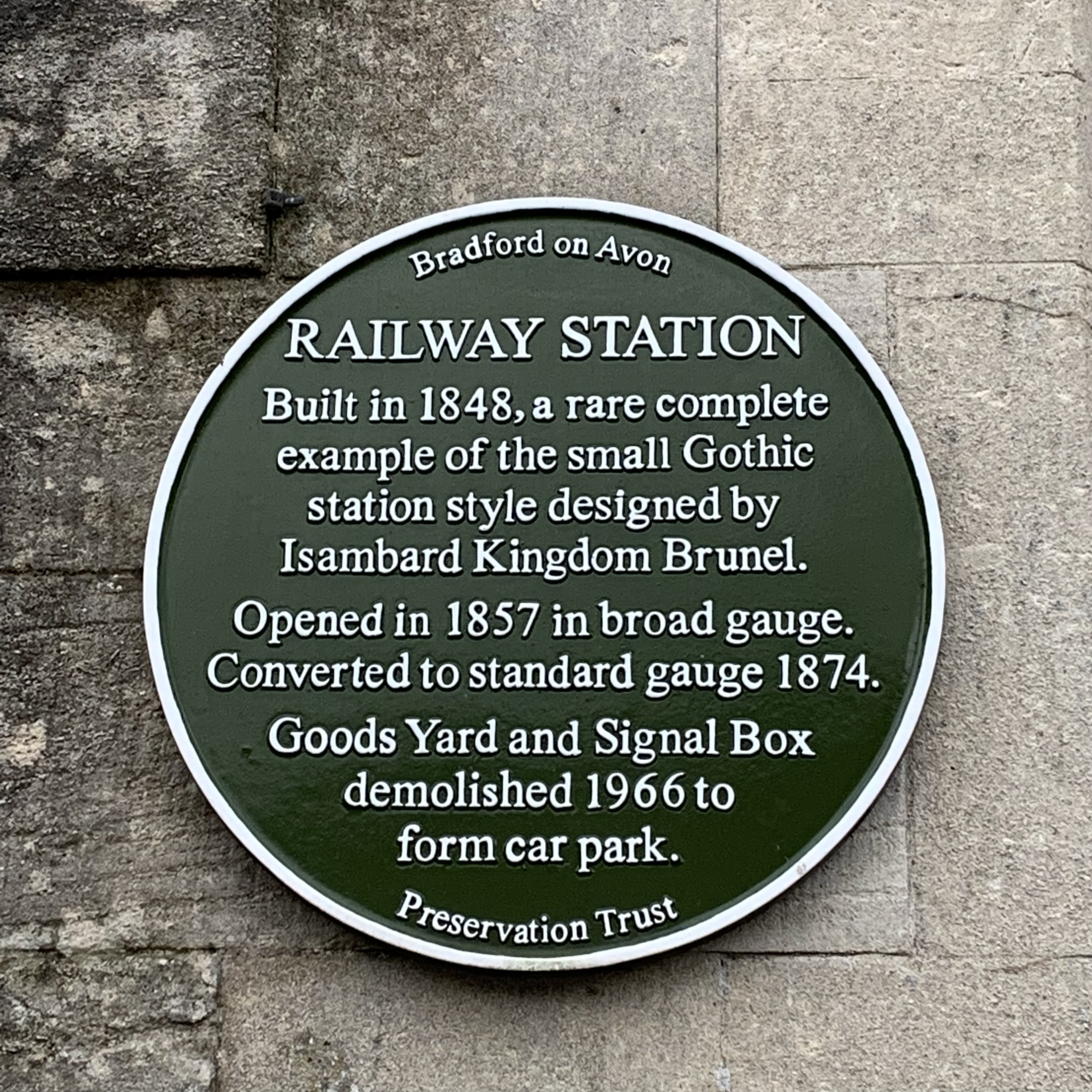
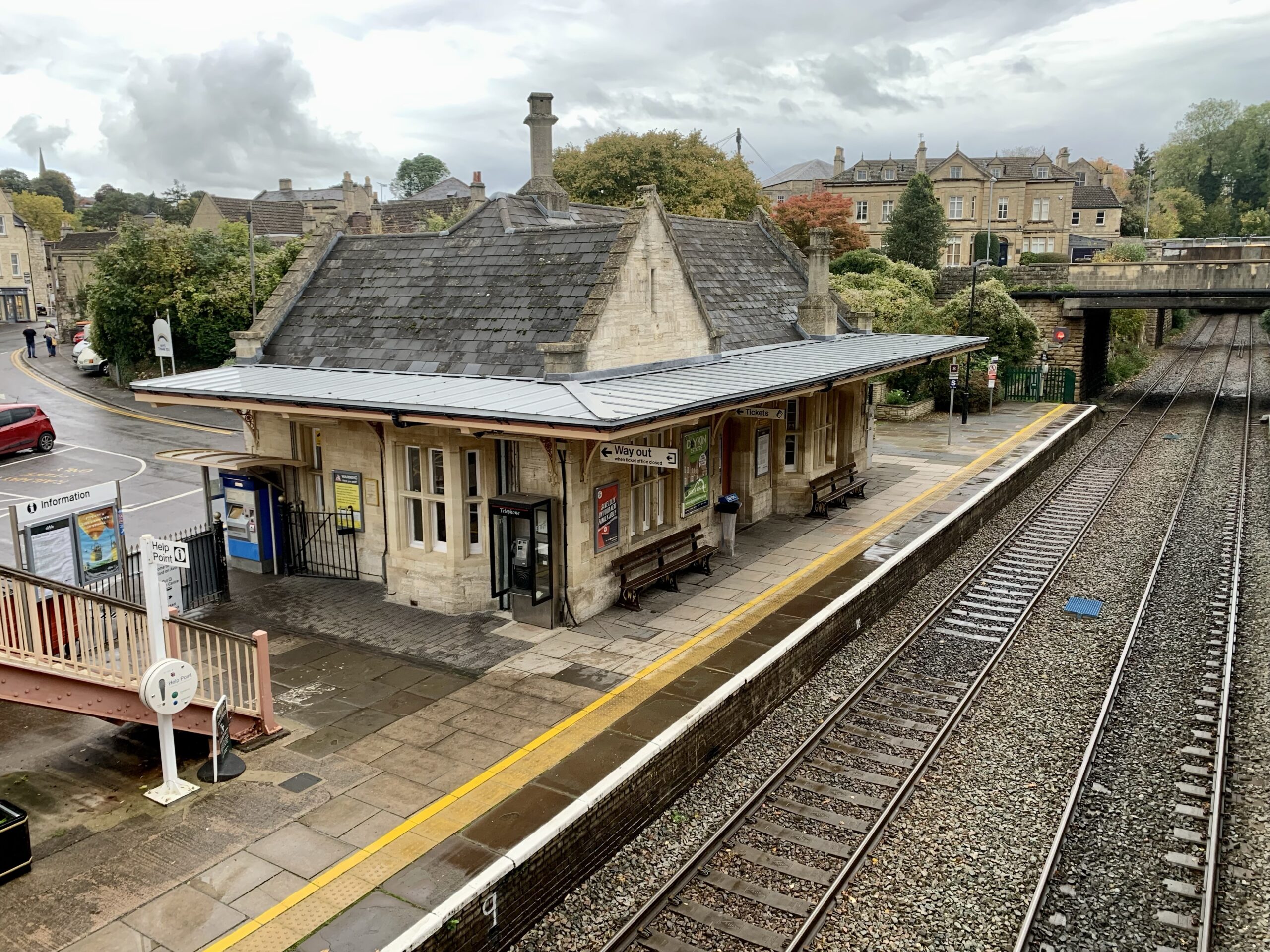
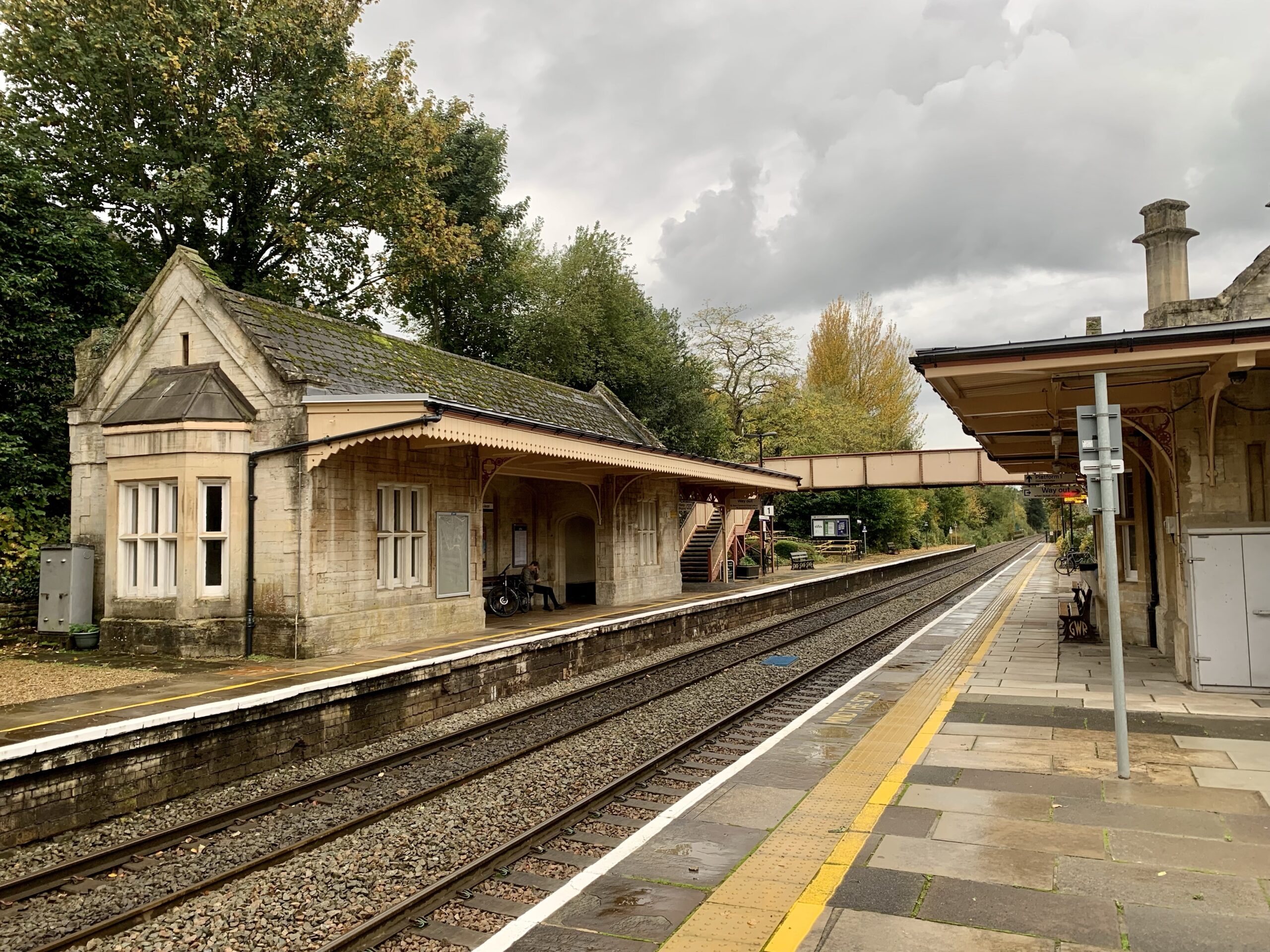
Bradford on Avon railway station exterior – 23/10/2022Bradford on Avon railway station plaque – 23/10/2022Bradford on Avon railway station platform 2 – 23/10/2022Bradford on Avon railway station platform 1 – 23/10/2022
Grade 2 listed Bradford on Avon station, originally planned by The Wilts, Somerset and Weymouth Railway, is situated 15 km south east of Bath between Avoncliff and Trowbridge and is a stop on Weymouth to Bristol services. In the event the station was not opened until 1857 when the line was in the control of The Great Western Railway
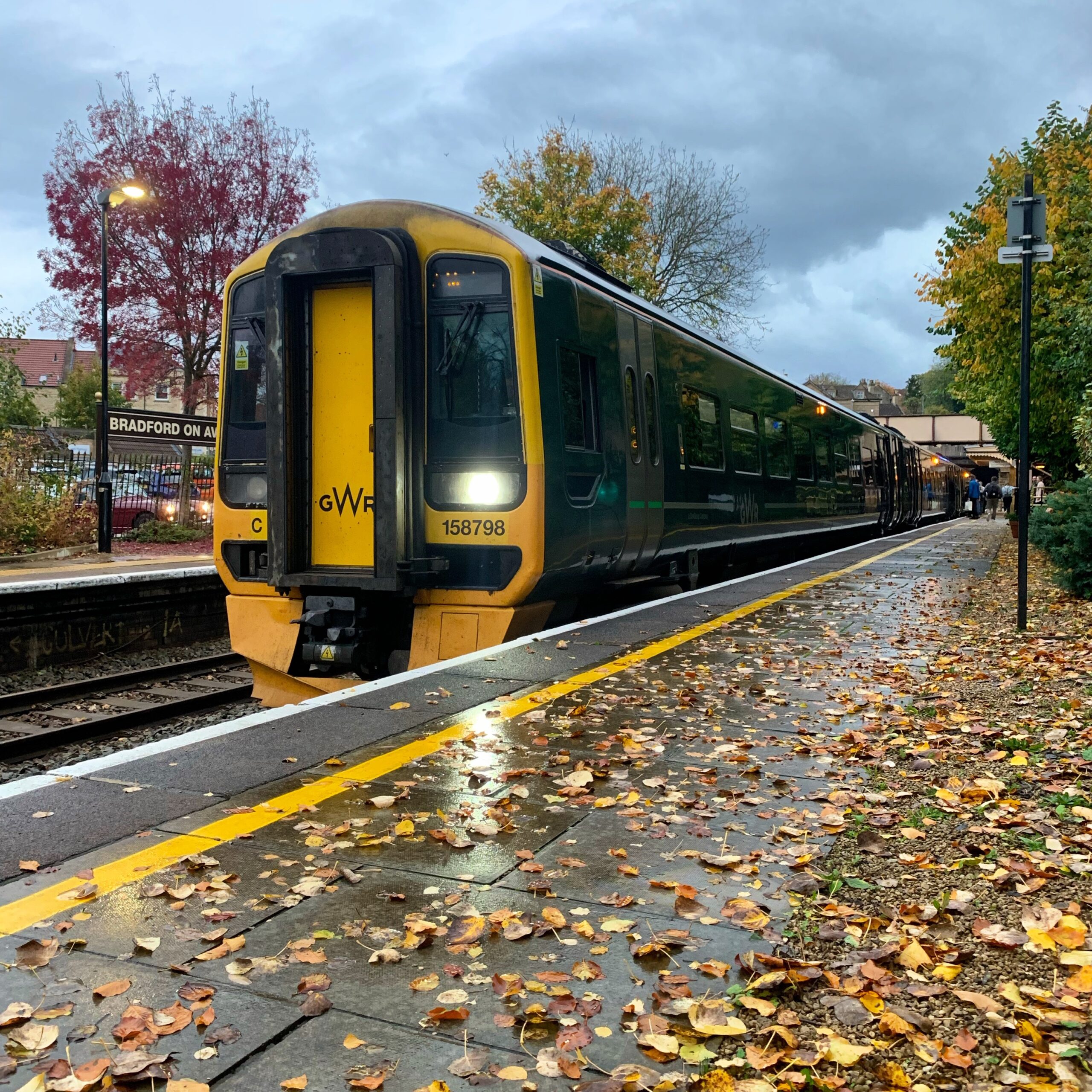
(GWR). The station is of a standard Brunel design but utilises local Bath stone rather than the usual bricks and mortar. Originally trains would have been of the seven-foot broad gauge variety, but the track was converted to standard gauge in 1874. Present day services are operated by Great Western Railway (formerly First Great Western and no relation to the old GWR), South Western Railway having withdrawn their direct services to Bristol. Trains are typically operated using Class 165 and Class 166 Networker Turbo trains and Class 158 diesel multiple units. The line is sometimes used as a diversionary route and sees GWR main line and CrossCountry trains, usually at weekends.
The goods yard located on the ‘up’ side of the line was closed to traffic in 1965 and is now home to a car park and health centre. The signal box was demolished in 1966. There is a campaign to reinstate the canopy on the 1899 footbridge, removed in 1964, and which I would have found very useful during my visit in the rain! The Bradford on Avon Footbridge Canopy Project were awarded a £22,000 grant from the Community Rail Development Fund (CDRF) in September 2022.
Class 158 No. 158798 pauses at Bradford on Avon working 2C96 1640 Westbury to Bristol Temple Meads. The canopy devoid footbridge can be seen above the rear of the train – 23/10/2022Class 166 No. 166204 ‘Norman Topsom MBE’ and Class 165 No. 165133 arrive at Bradford on Avon working 1F25 1526 Cardiff Central to Portsmouth Harbour which was terminated at Fratton due to an obstruction on the line – 23/10/2022Class 66 No. 66850 ‘David Maidment’ on the rear of 3S59 1554 Swindon Transfer Sidings to Moreton on Lugg RHTT passing Bradford on Avon – 23/10/2022
Video from Bradford on Avon – 23/10/2022
Our North Dorset Correspondent has been out and about in Yeovil over the last few days and has sent Yoshi the video and still images below:
First up are the GWR Sleeper trains crossing at Yeovil Pen Mill while on route diversion during the early hours of Monday 23rd October 2022. The up service 1A50 2115 Penzance to Paddington hauled by Class 57 No. 57602 ‘Restormel Castle’ was running just over an hour late and because of the single track to Castle Cary, was held at Yeovil Pen Mill to allow 57604 ‘Pendennis Castle’ on the down 1C50 2350 London Paddington to Penzance to enter the station. I have been muttering about heading to Yeovil to see the sleepers on diverts for a while now, and as far as I am aware, this is most likely the final opportunity for 2022, so many thanks to Scott for braving the inclement weather!
GWR Sleeper divers at Yeovil Pen Mill 24/10/2022 – courtesy of Scott Lewis
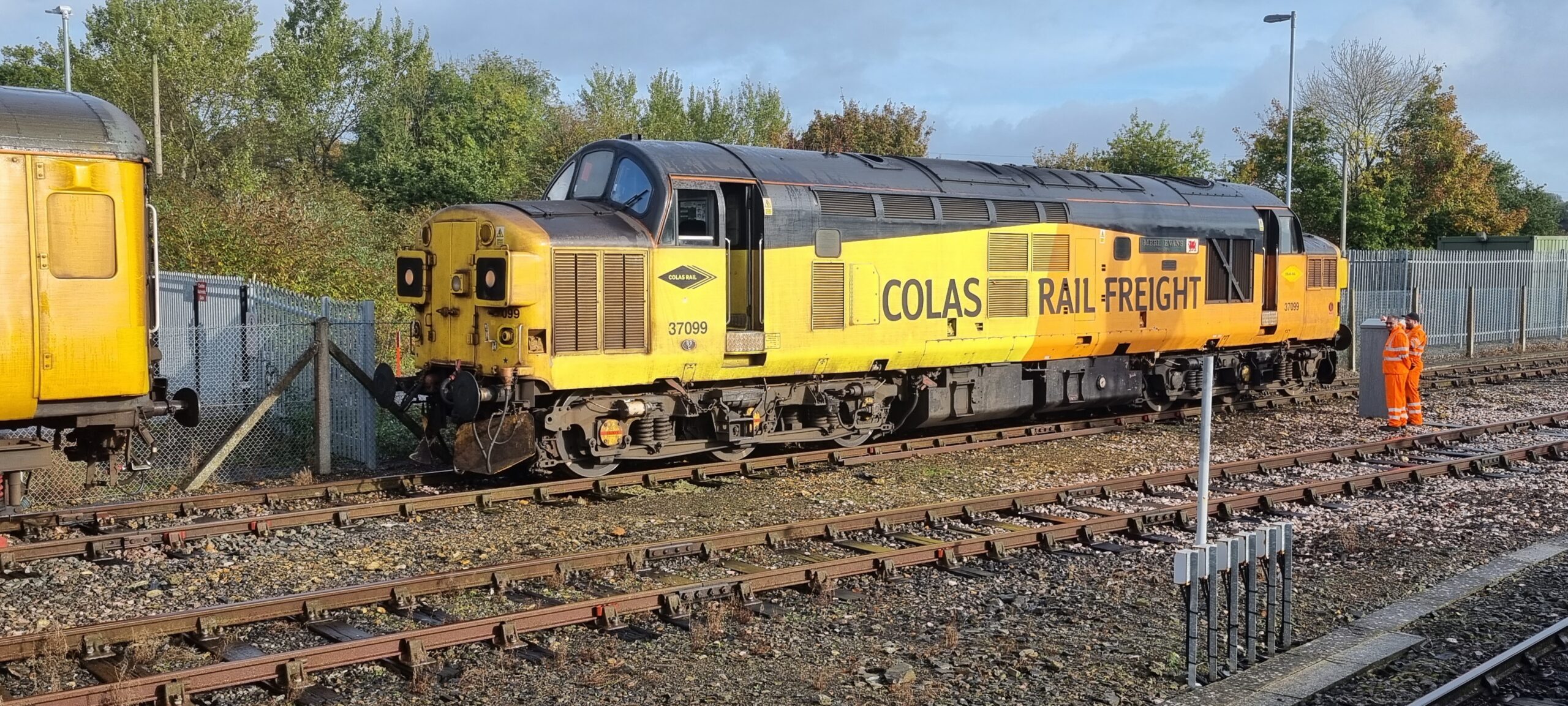
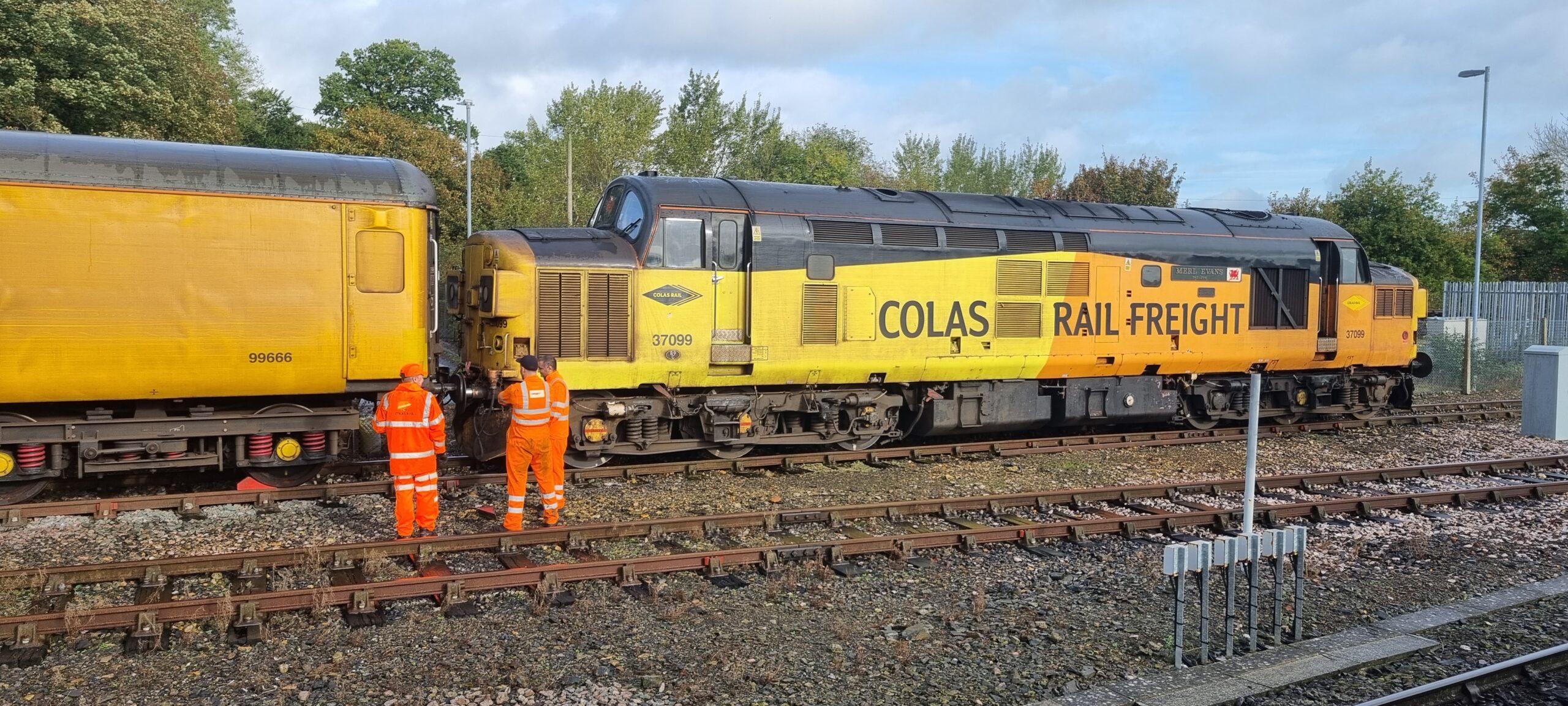
The following day, Scott was back in Yeovil, this time at Yeovil Junction as Colas Class 37 No. 37099 arrived from Exeter Riverside and was engaged in shunting two damaged Network Rail test train coaches into position for recovery by low loader. After loading, there was a problem with one of the escort vehicles so the departure by road was delayed.
Class 37 No. 37099 and Network Rail MK2 coaches at Yeovil Pen Mill – 25/10/2022 (with grateful thanks to Scott Lewis)
Monday 24th October 2022 also saw the regular Class 73 hauled test train visit the Bournemouth to Weymouth line with GBRf Class 73 electro-diesel locomotives No. 73961 ‘Alison’ and 73963 ‘Janice’ top and tailing 1Q51 1115 Derby RTC to Eastleigh East Yard and we popped into Hamworthy station to see it and have a good old bark as it passed by on its outward run.
1Q51 1115 Derby RTC to Eastleigh East Yard passing Hamworthy – 24/10/2022
Thanks for reading and as always, many thanks for your comments, observations and corrections. We’ll leave you with some video footage from the archive of ‘Flying Scotsman’ when she visited the Swanage Railway in 1994:
‘Flying Scotsman’ at Swanage 1994
Endpiece:
LNER Gresley A3 No. 60103 ‘Flying Scotsman’ approaches Harmans Cross with her last turn of the day on Tuesday 25th October 2022
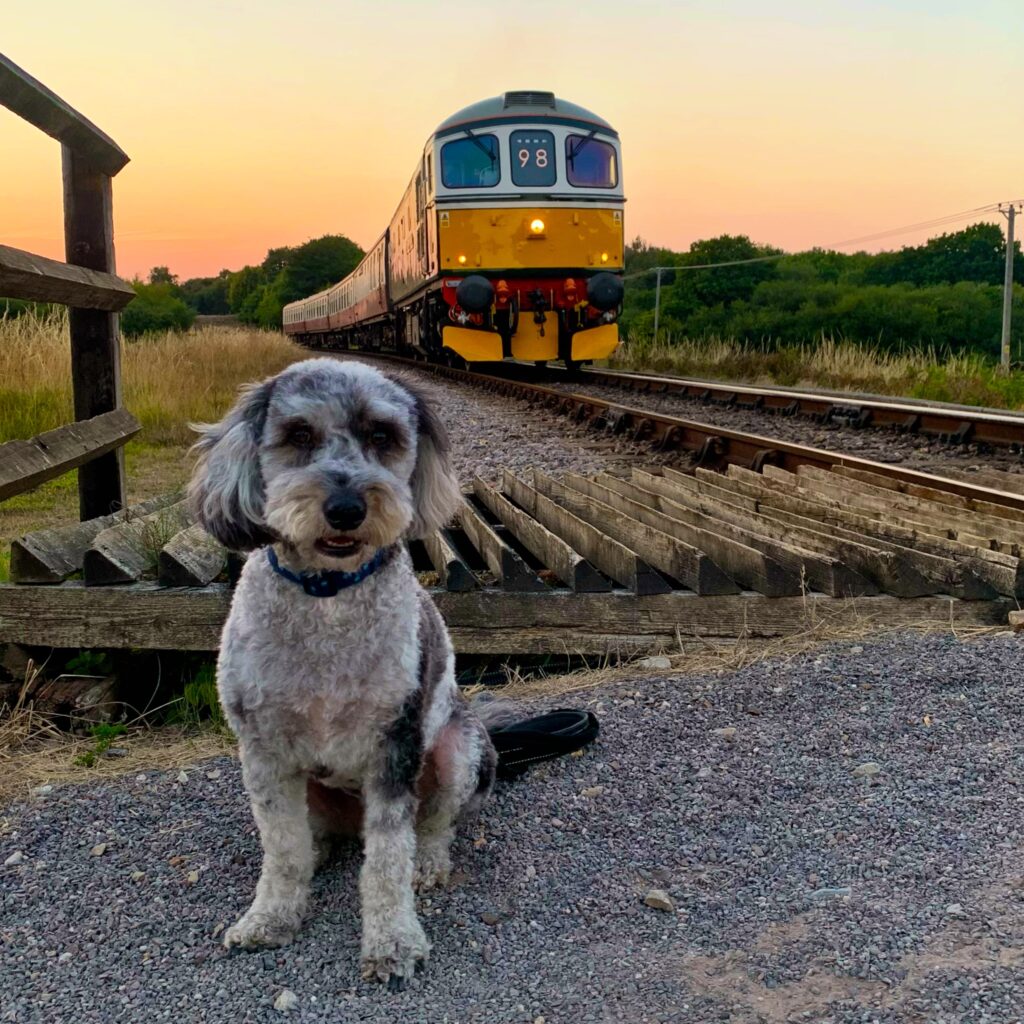
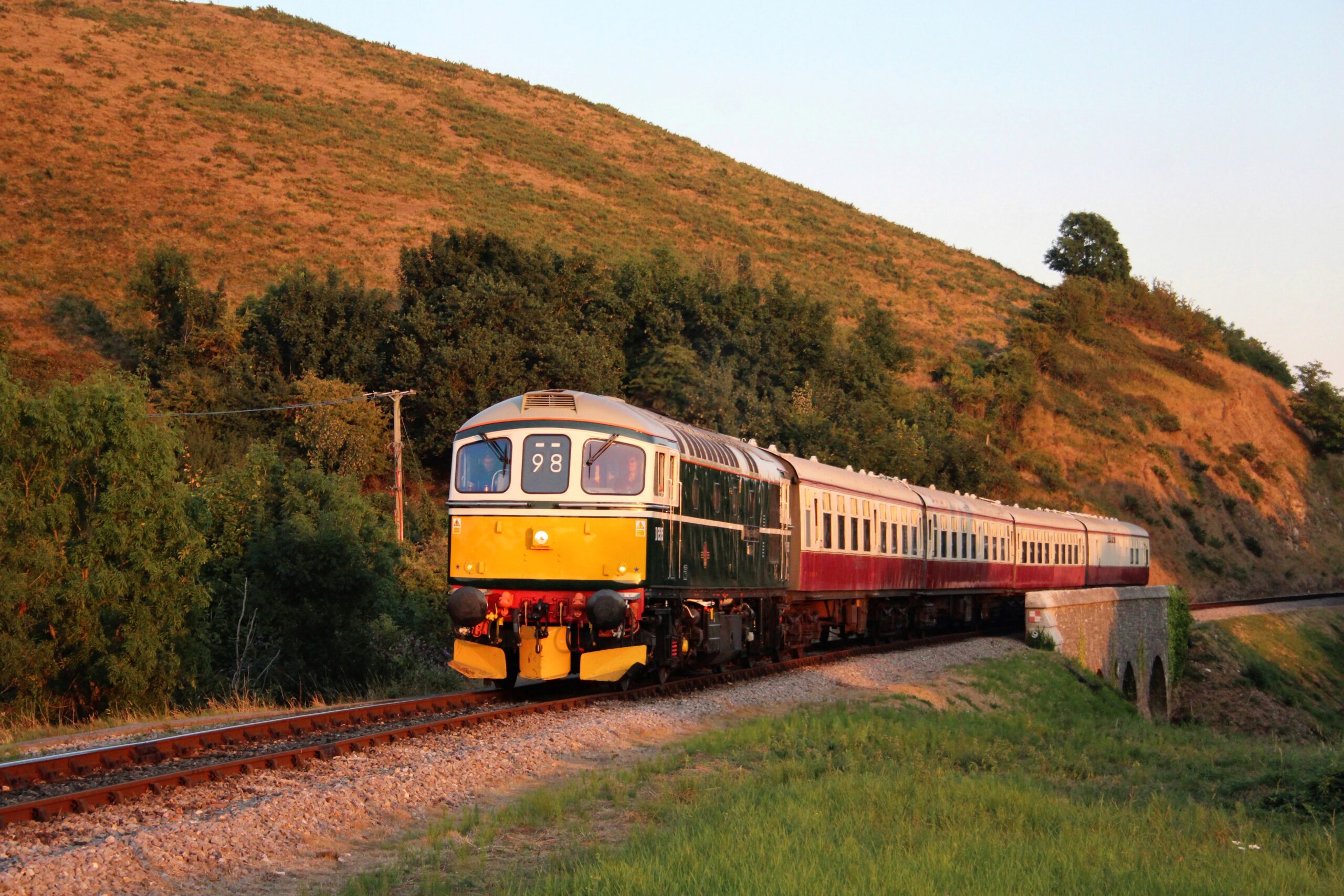
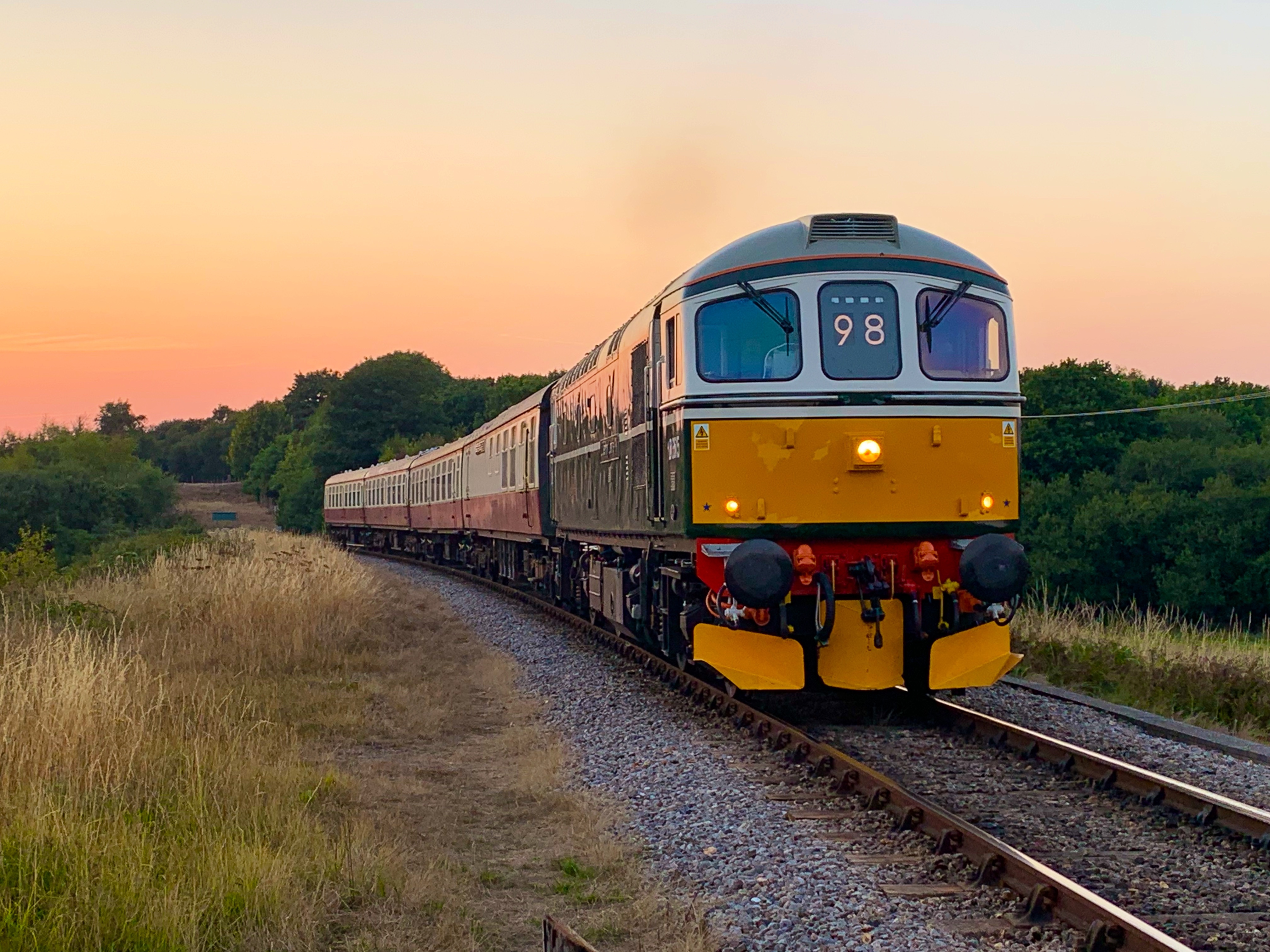
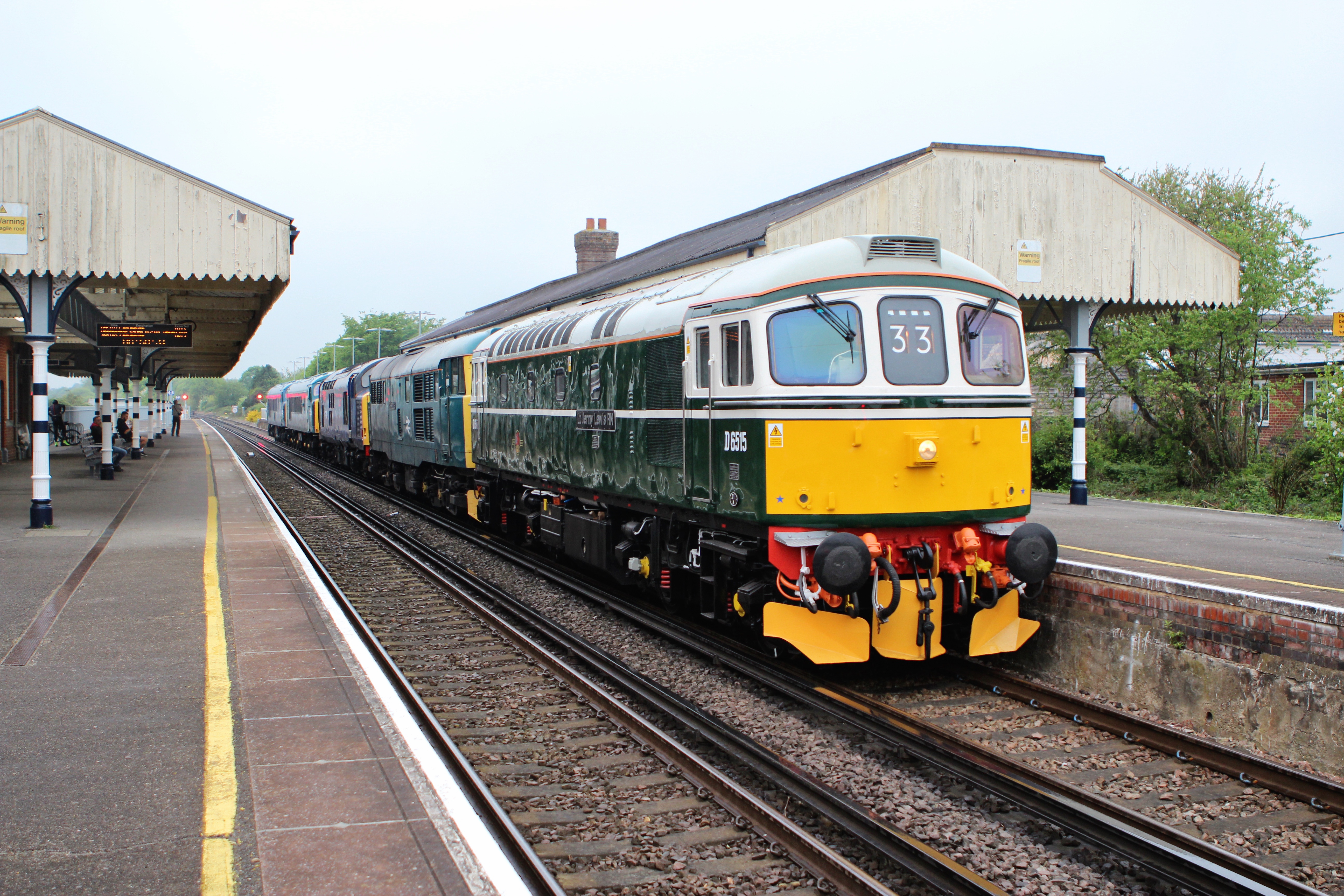
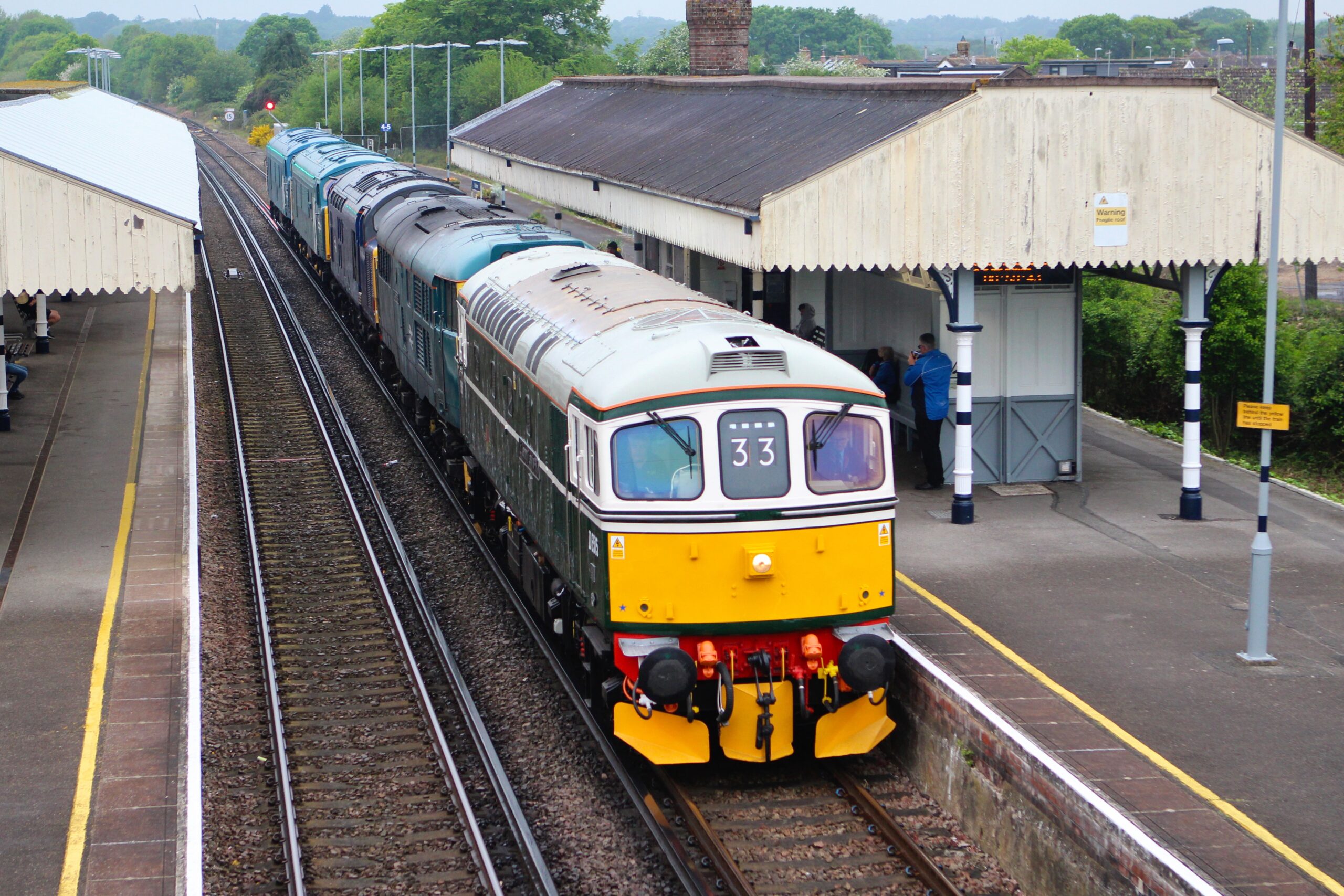
Yoshi in front of stationary Class 33/0 No. D6515 (33012) ‘Lt Jenny Lewis RN’ which was working Swanage Railway Friday Night Bistro train duties. The train stops here for around thirty minutes and we had permission from the driver and guard to take this photo. Please ensure you and your pets stay safe in and around railway property – 12/08/2022
This was looking like a quiet week on the local railway scene, but Yoshi and I had some lovely family events to fill the days. It’s not all about the trains, apparently. Despite the lack of main line entertainment, we were surprised to find another Direct Rail Services (DRS) Winfrith train was running on Thursday 11th August. These workings are in connection with the removal of low level nuclear waste from Magnox Winfrith. This weeks run only appeared on the schedules a couple of days previously (Tuesday 9th August 2022) and, according to folk at Magnox Winfrith I chatted to, may well be the last such working of 2022. The next is provisionally slated for around March 2023. Let’s see.
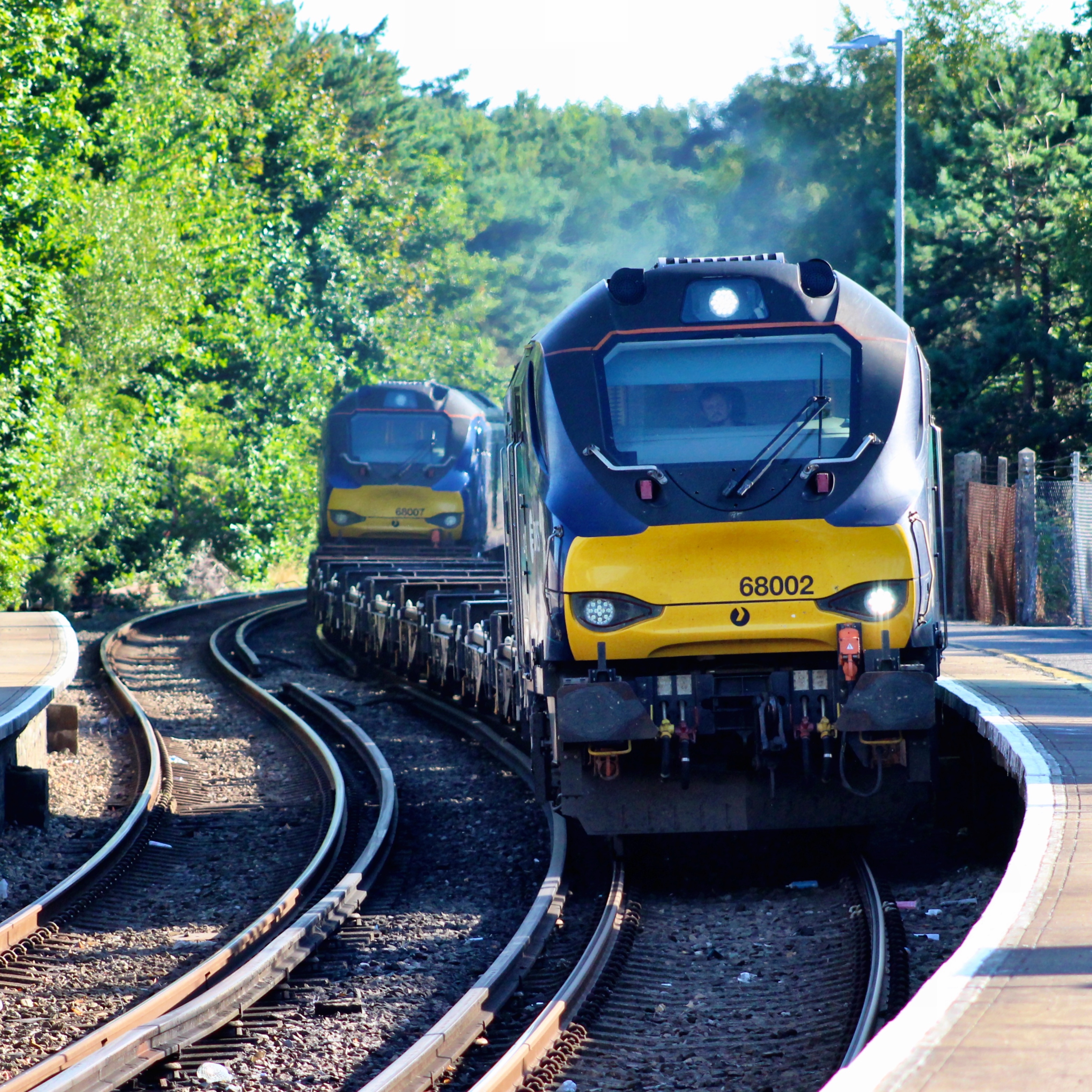
I chose to see the down working pass through Hamworthy on its way to Winfrith. The locomotives top and tailing the train were DRS Class 68 No.’s 68002 ‘Intrepid’ and 68007 ‘Valiant’. No. 68005 ‘Defiant’ had originally been allocated to the working but developed a fault on its way from Sellafield to Crewe with the empty PFA wagons which would be used for onward transit to Dorset. The Class 68’s were built by Vossloh at Albuixech, Valencia for use by Direct Rail Services.
DRS Class 68 locomotives No.’s 68002 ‘Intrepid’ and 68007 ‘Valiant’ top and tail a set of empty PFA wagons bound for Magnox Winfrith powering through Hamworthy with 6Z62 0103 Crewe Coal Siding (DRS) to Winfrith Sidings – 11/08/2022
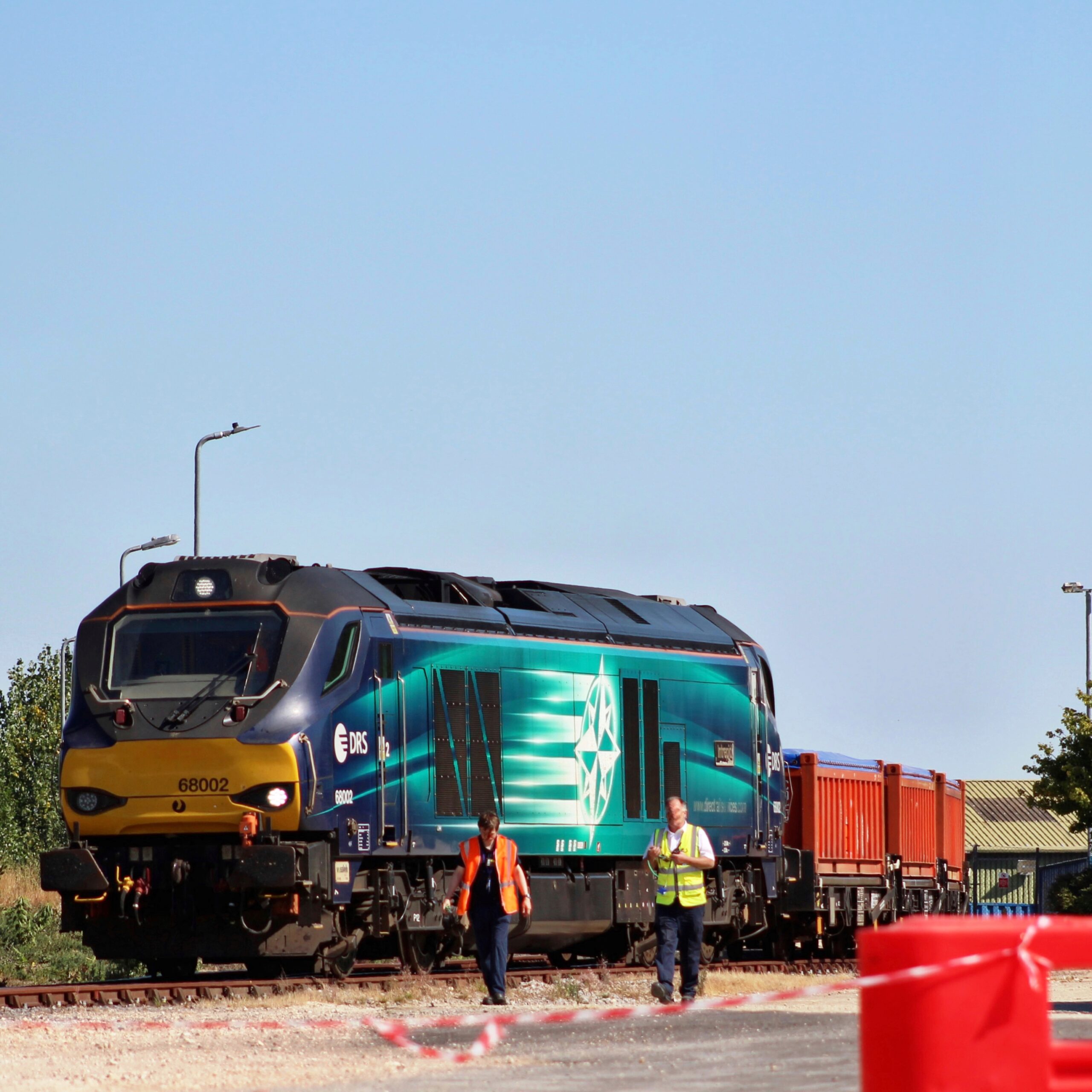
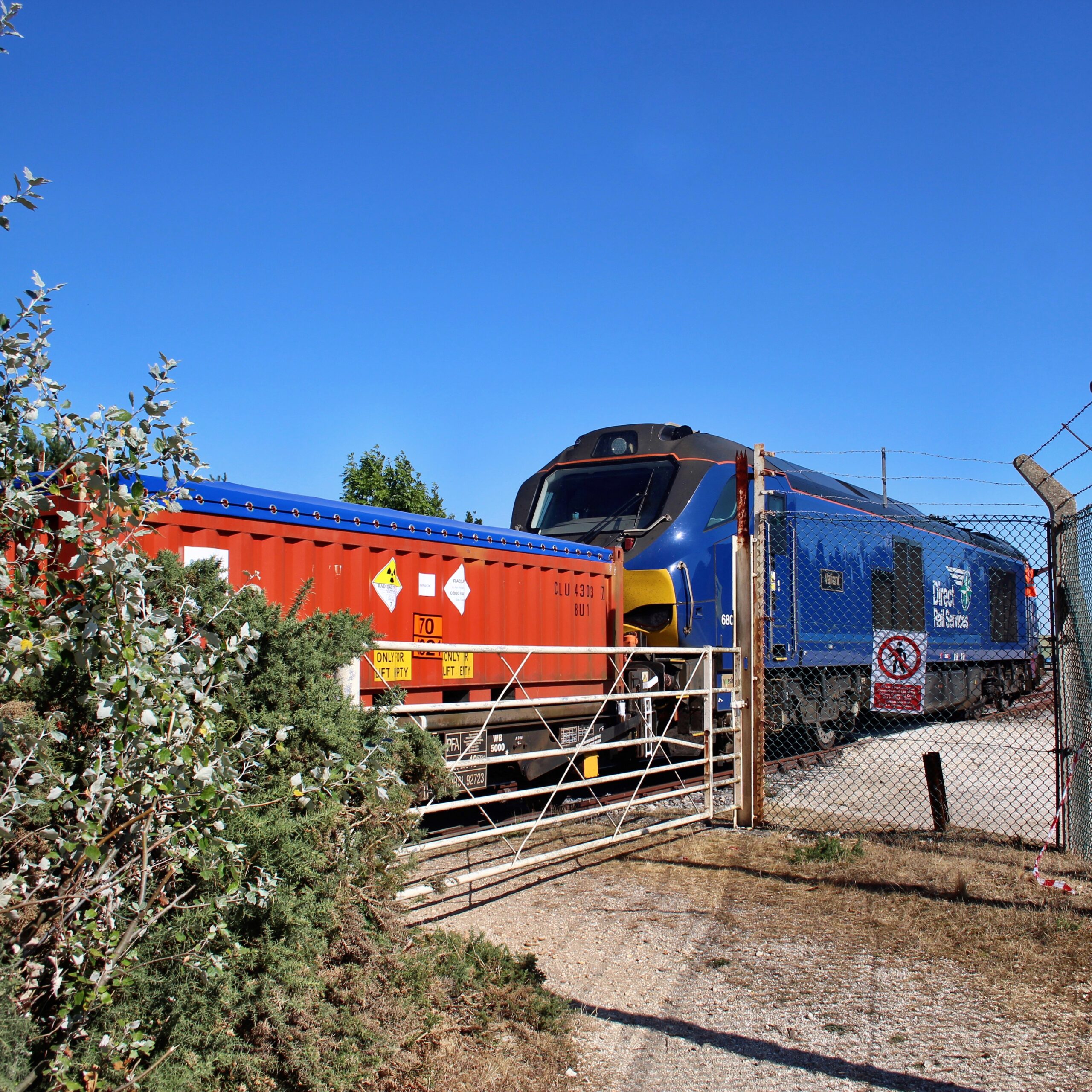
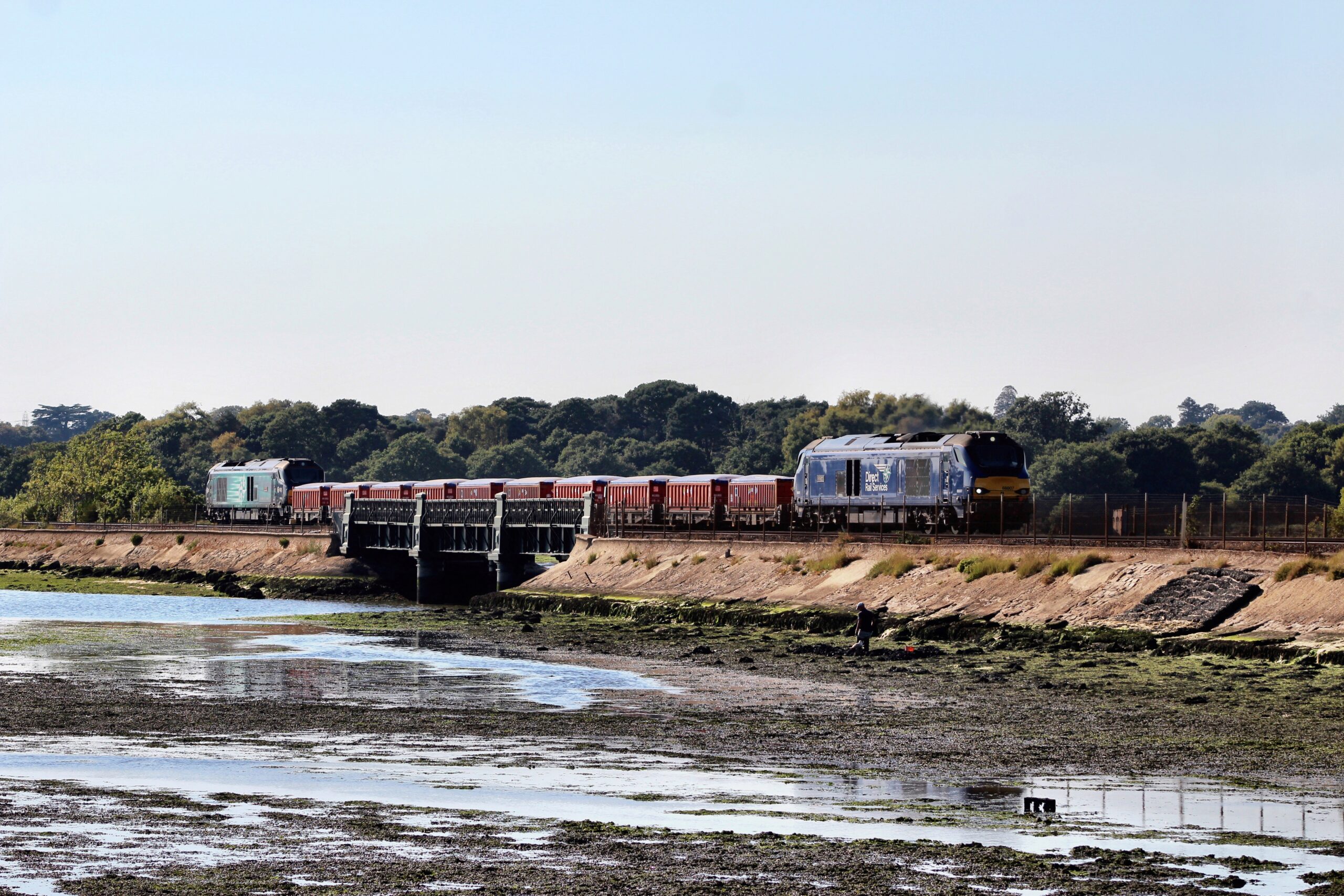
For the return run, I wanted to catch the loaded train leaving Winfrith sidings as there will be only a limited number of these workings, so I thought I would take the opportunity on a beautiful sunny day. The security guys at Winfrith were pleasant and relaxed about my taking photos from a public footpath. After departure from Winfrith Sidings, the train goes on to Dorchester South where it reverses to embark on its trip back to Crewe. While it was doing this, I headed off to Poole in order to catch the consist passing over Holes Bay.
DRS Class 68 No. 68002 ‘Intrepid’ stands in Winfrith Sidings awaiting departure with the loaded train of low level nuclear waste – 11/08/2022DRS Class 68 No. 68002 ‘Intrepid’ edges out of Winfrith Sidings towards the main line – 11/08/2022At the rear of the loaded train DRS Class 68 No. 68007 ‘Valiant’ formerly in ScotRail livery – 11/08/2022DRS Class 68 locomotives No.’s 68007 ‘Valiant’ and 68002 ‘Intrepid’ crossing Holes Bay with the loaded 6Z95 1600 Winfrith Sidings to Crewe Coal Sidings (DRS) – 11/08/2022
And here’s our video of the August 2022 Winfrith Cats:
DRS Class 68 locomotives No. 68002 ‘Intrepid’ and 68007 ‘Valiant’ with the third Winfrith train of 2022 seen at Hamworthy, Winfrith and Holes Bay – 11/08/2022
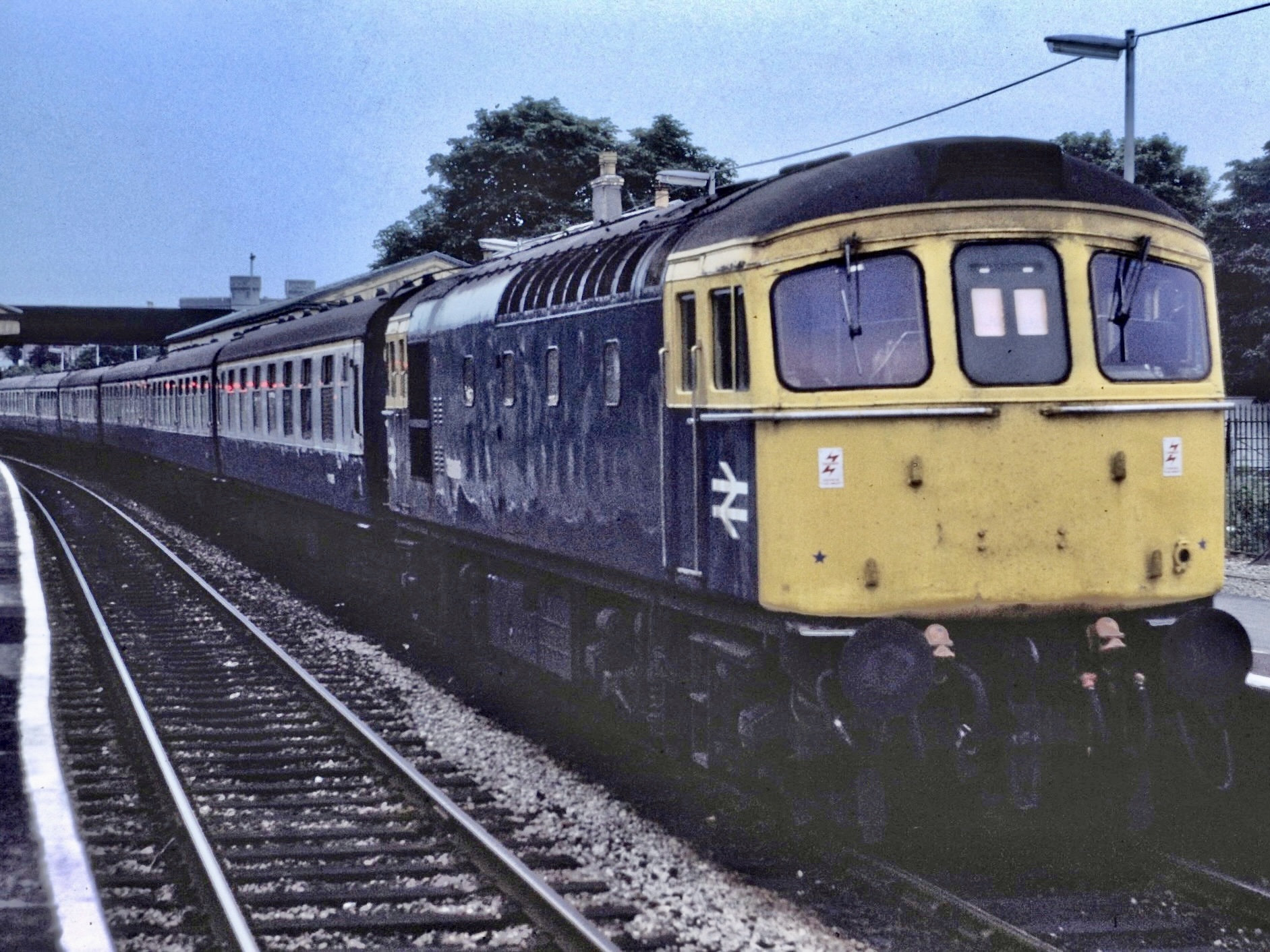
Digital photography has given us the ability to snap away more or less at our hearts content. Back in my misspent youth armed at first with my 126 Kodak camera, then my 110 Kodak and finally my trusty Russian made 35mm Zenit SLR I was very conscious of both the cost of the film and of the developing and printing. This meant that, often, I had one chance to take a photograph of a particular train. I wasn’t always too mindful however of where the sun was in relation to my subject and the effect this would have on the resulting image. It would take a week or so for the prints to be returned in the post from Truprint or other postal D&P service which might have a money saving promotion on the go. In my mind I had always taken a masterpiece of railway photography, but invariably what was returned never lived up to my expectations. But what did it matter? There would be another Class 33/0 on the Weymouth Boat Train or Inter-Regional Class 47 hauled holiday special excursion to get into the camera viewfinder another day. Until when there wasn’t, of course. Railway’s have always encompassed change and development. If they didn’t, we’d still all be being hauled by variations of Stephenson’s ‘Rocket’ and getting smut in our faces sitting in open topped wagons. I sometimes wish I’d taken more photos of everyday scenes back in the 70’s and 80’s. But I didn’t and I don’t have a time machine to take me back there. Which is where, to some extent, our heritage railways step in. I have spent many a happy hour at a steam or diesel gala on a preserved railway. Some people like to travel behind their favourite class of locomotive, whereas I like to photograph or video the trains, as I know a lot of other enthusiasts do. I politely suggest photographers – and I am sure there are many who already do – who don’t travel on the trains make a donation to the railway they are using as their canvas. Or use the catering facilities, or buy merchandise. Anything to give something back.
Friday evening (August 12th), as the heat of the day had subsided, Yoshi and I ventured out to our local heritage line, The Swanage Railway, to see their resident Class 33/0 No. D6515 (33012) * ‘Lt Jenny Lewis RN’ hauling the custard and cream dining set on the Friday Bistro train. Although replicating an era prior to my interest in railways, the ensemble looked magnificent catching the last rays of the sun at the end of the day.
D6515 (33012) ‘Lt Jenny Lewis RN’ working Swanage Railways Friday Night Bistro Train 1N08 1930 Swanage to Norden having just departed Corfe Castle station – 12/08/2022D6515 (33012) ‘Lt Jenny Lewis RN’ working Swanage Railways Friday Night Bistro Train 1N09 2010 Norden to Swanage having just departed Norden – 12/08/2022
Class 33 No. D6515 (33012) ‘Lt Jenny Lewis RN’ with Swanage Railways Friday Bistro Train – 12/08/2022
Sister locomotive Class 33/1 No. 33111 experienced difficulties earlier on Friday and has had to be withdrawn from service pending repairs. Hopefully she won’t be out of action for too long. In the meantime, during the steam ban which resulted from the recent spell of dry weather, Swanage are employing their Diesel Multiple Unit set to run services in conjunction with No. D6515 with steam expected to return on Wednesday 17th August 2022.
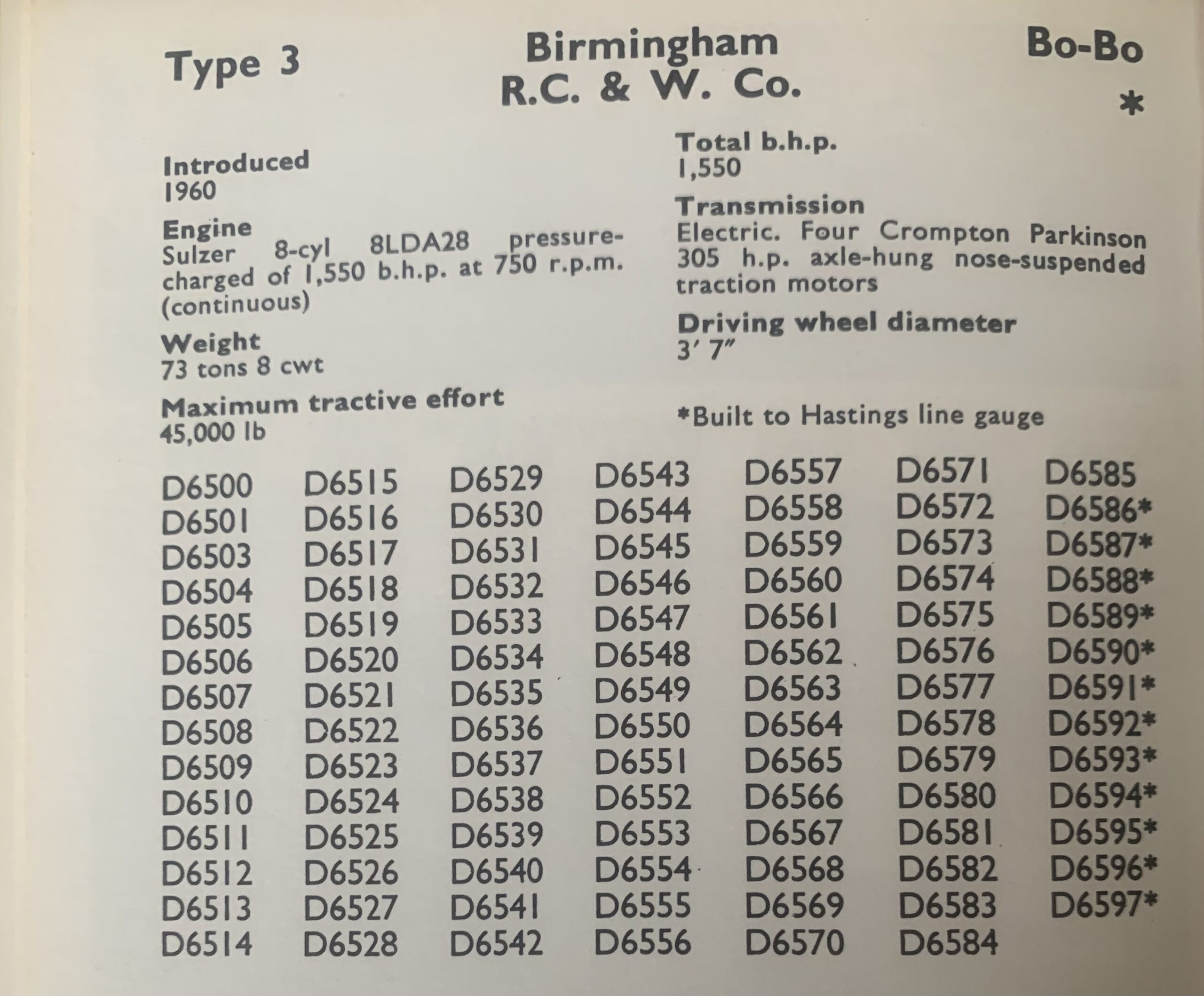
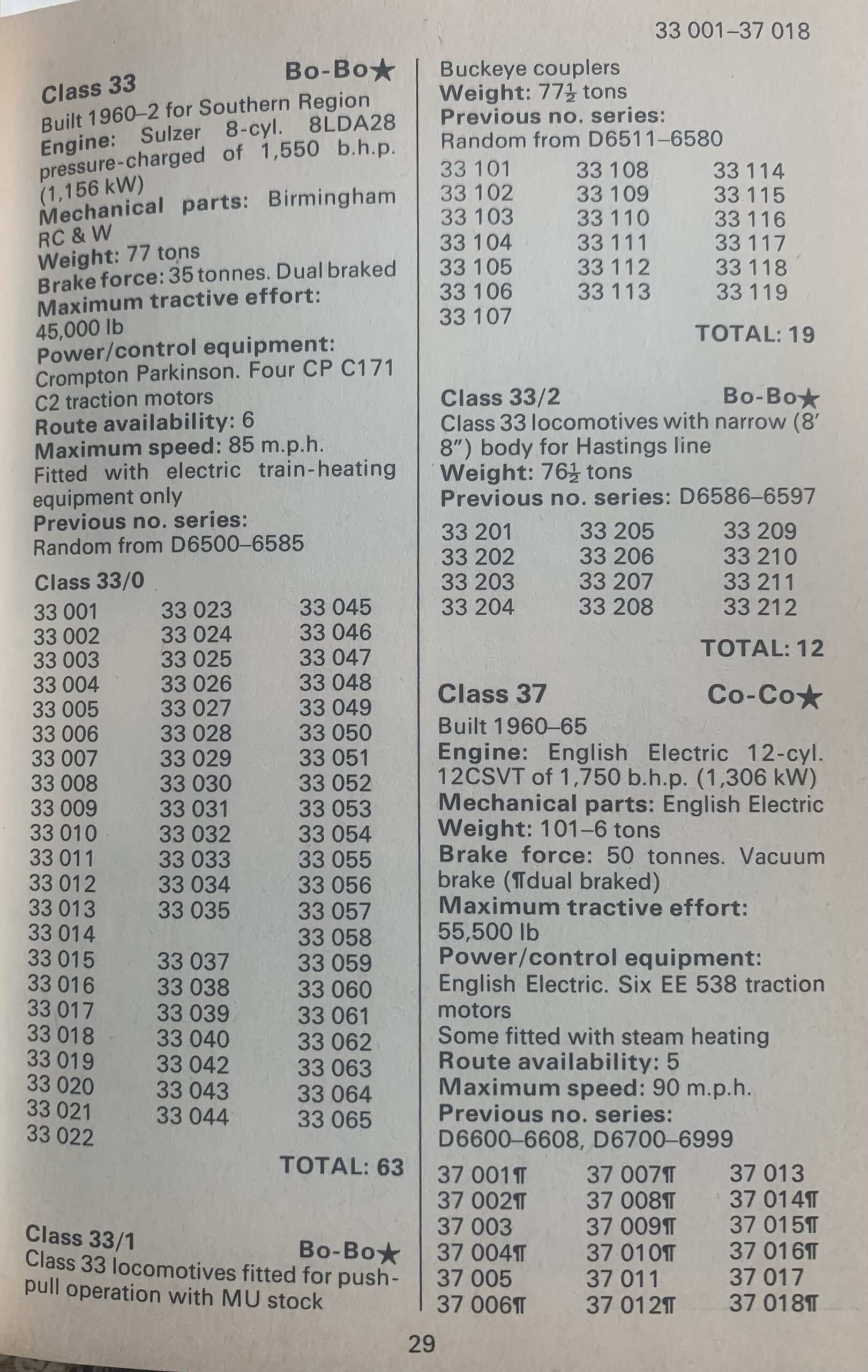
*A note about British Rail diesel & electric locomotive numbering. Upon introduction as part of the 1950’s “Modernisation Plan”, diesel locomotives carried one to four-digit numbers prefixed with a letter ‘D’, and electric locomotives with a letter ‘E’. With a move to computerisation all locomotives were renumbered so they could be logged on the Total Operating Processing System (TOPS) which recorded the maintenance history of locomotives and rolling stock, along with its allocation to division and depot and duty, its current status, its location etc. Locomotives were numbered in a consecutive series in terms of classification with the first two or three digits used to denote the class of locomotive or multiple unit. Sub-classifications were indicated in the TOPS system with a slash and a subclass number. For example Birmingham R.C.&W. Co Type 3 Bo-Bo No. D6515 became Class 33/0 No. 33012.
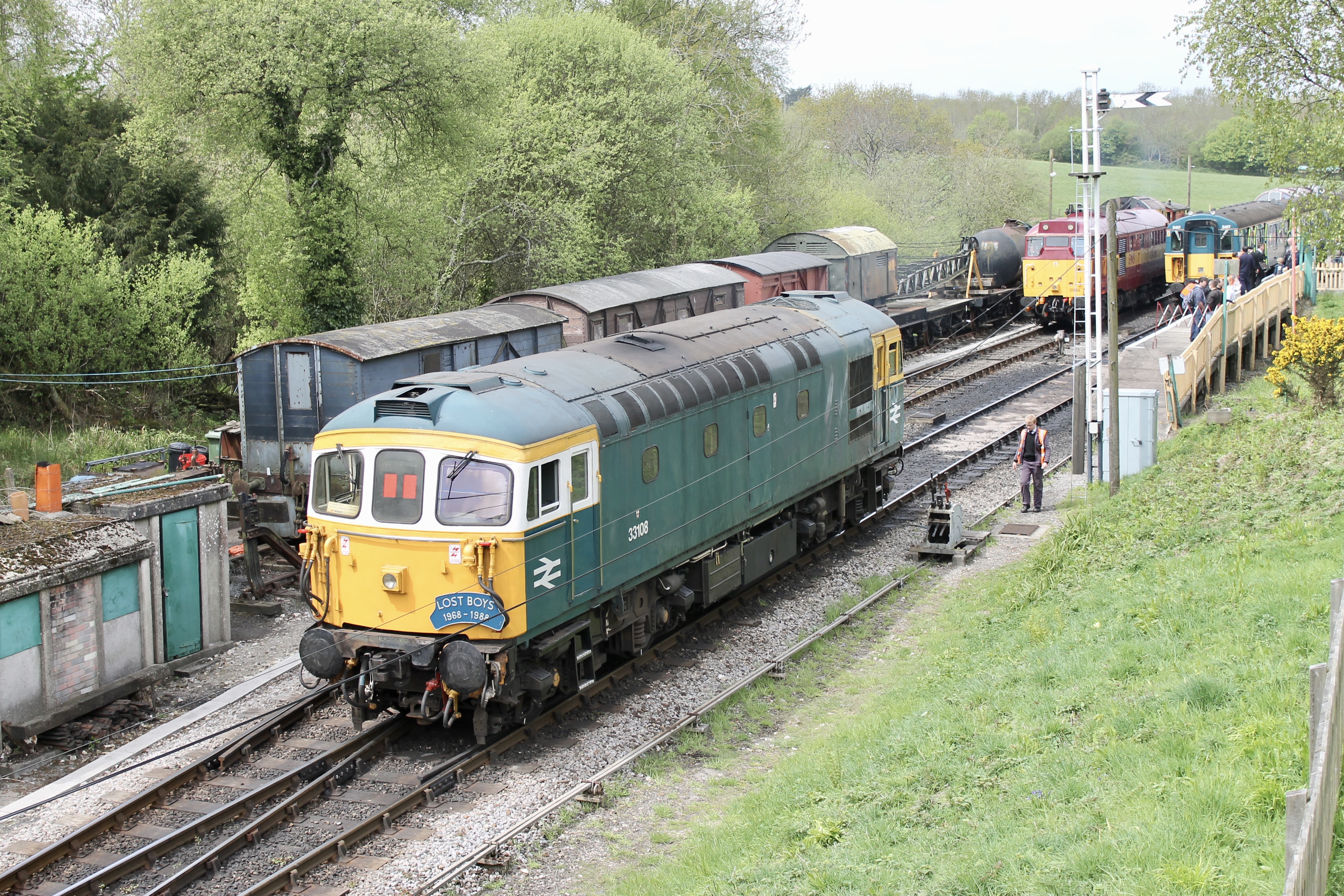
Ian Allan were well known for publishing books of locomotive numbers for train spotters who could tick off or underline the examples they had seen. Here is the B.R.C&W Type 3 fleet list as at August 22nd 1966 published in “British Rail Locomotives And Other Motive Power”. As you can see D6502 is missing from this list, having already been withdrawn following an accident in 1964The Class 33’s divided into sub classes as seen from the 1980 edition of Ian Allan’s “British Rail Motive Power Combined Volume”Class 33/0 No. 33016 with a Bristol to Weymouth service at Dorchester West – 25/06/1981Class 33/1’s were modified for push pull operations on the un-electrified Bournemouth to Weymouth line and can be easily identified by their high-level brake pipes and jumper cables. They were originally going to be classified Class 34 under TOPS, but instead sensibly became a Class 33 sub-class. No. 33108 is seen at Norden on the Swanage Railway taking part in the 2013 diesel gala backing onto 4VEP EMU No. 3417 ‘Gordon Pettitt’. Class 31 No. 31466 can be seen in the background. No. 33108 is currently undergoing repairs to bodywork and traction motors at the Severn Valley Railway – 12/05/2013A batch of twelve locomotives were built with narrow bodies to enable working through narrow tunnels between Tunbridge Wells in Kent and Hastings in Sussex. These became Class 33/2 under TOPS and were nicknamed “Slim Jims” by enthusiasts. West Coast Railway Co. No. 33207 ‘Jim Martin’ is photographed in the sidings at Poole – 11/06/2011
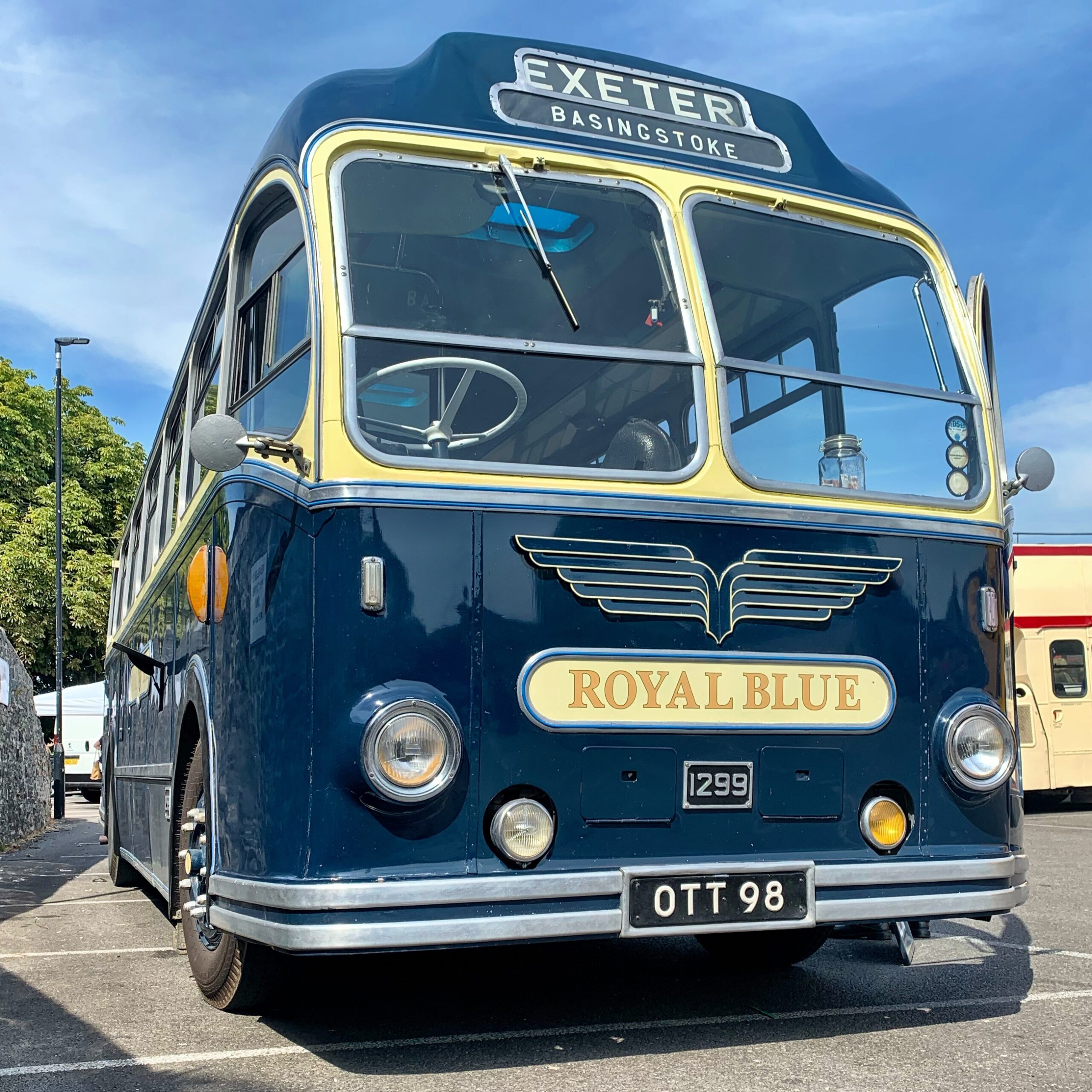
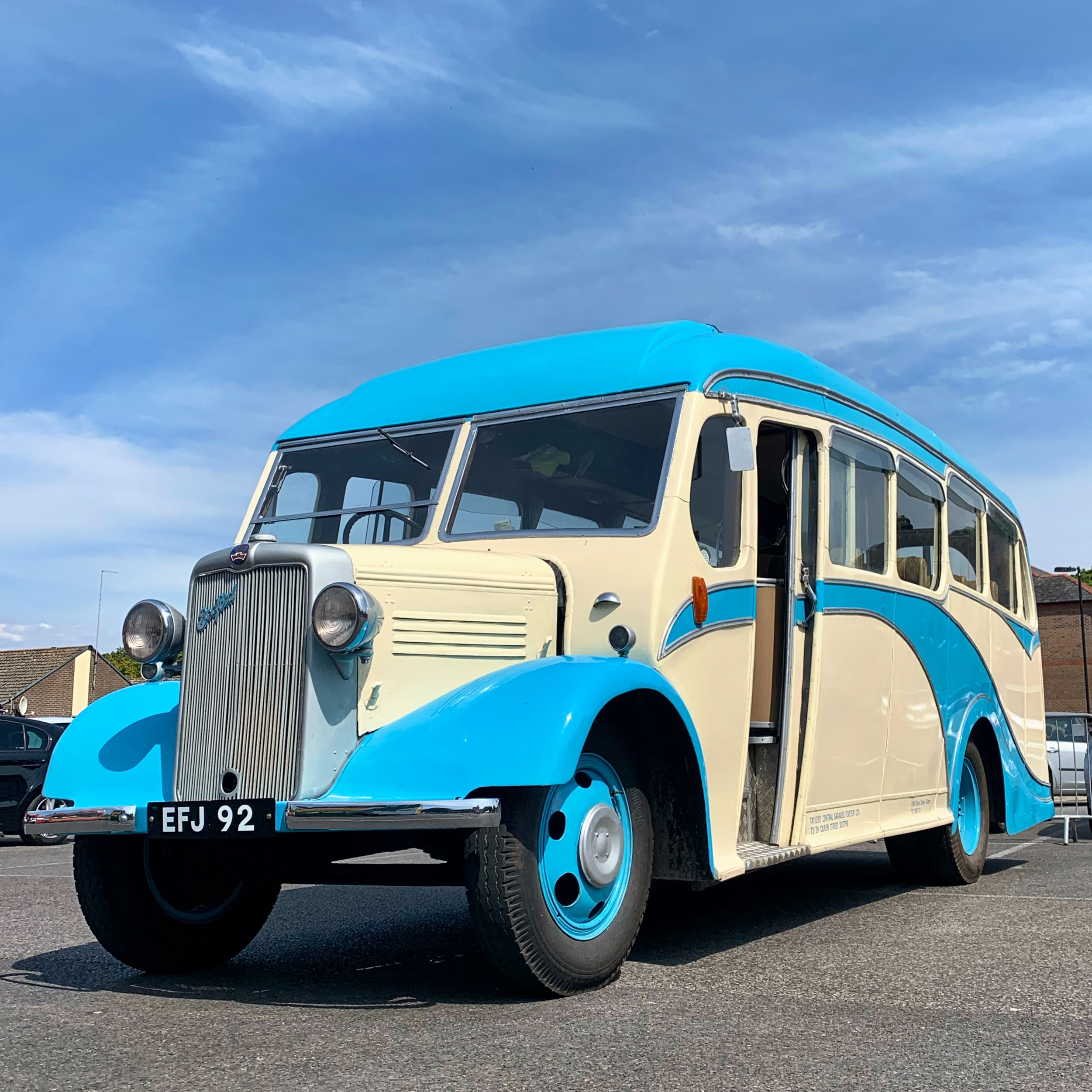
I made a quick visit to Top o’ Town car park in Dorchester for The West Country Historic Omnibus & Transport Trust Dorchester Running Day on Sunday 14th August 2022. Although a smaller concern than in pre-covid times, it was still great to see these old vehicles making trips around town or on static display. It was far too hot to take Yoshi with me and he remained at home where it was much cooler for him.
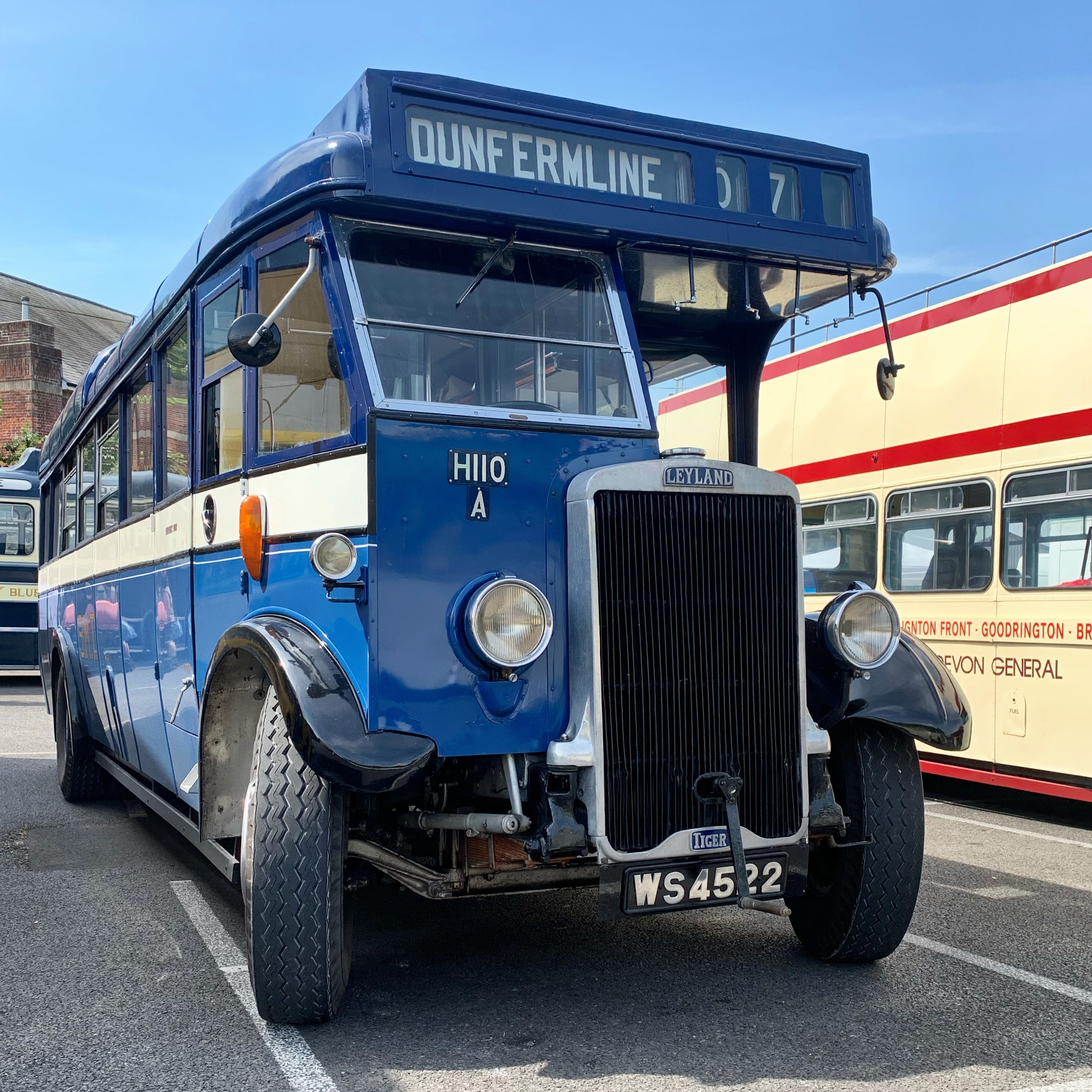
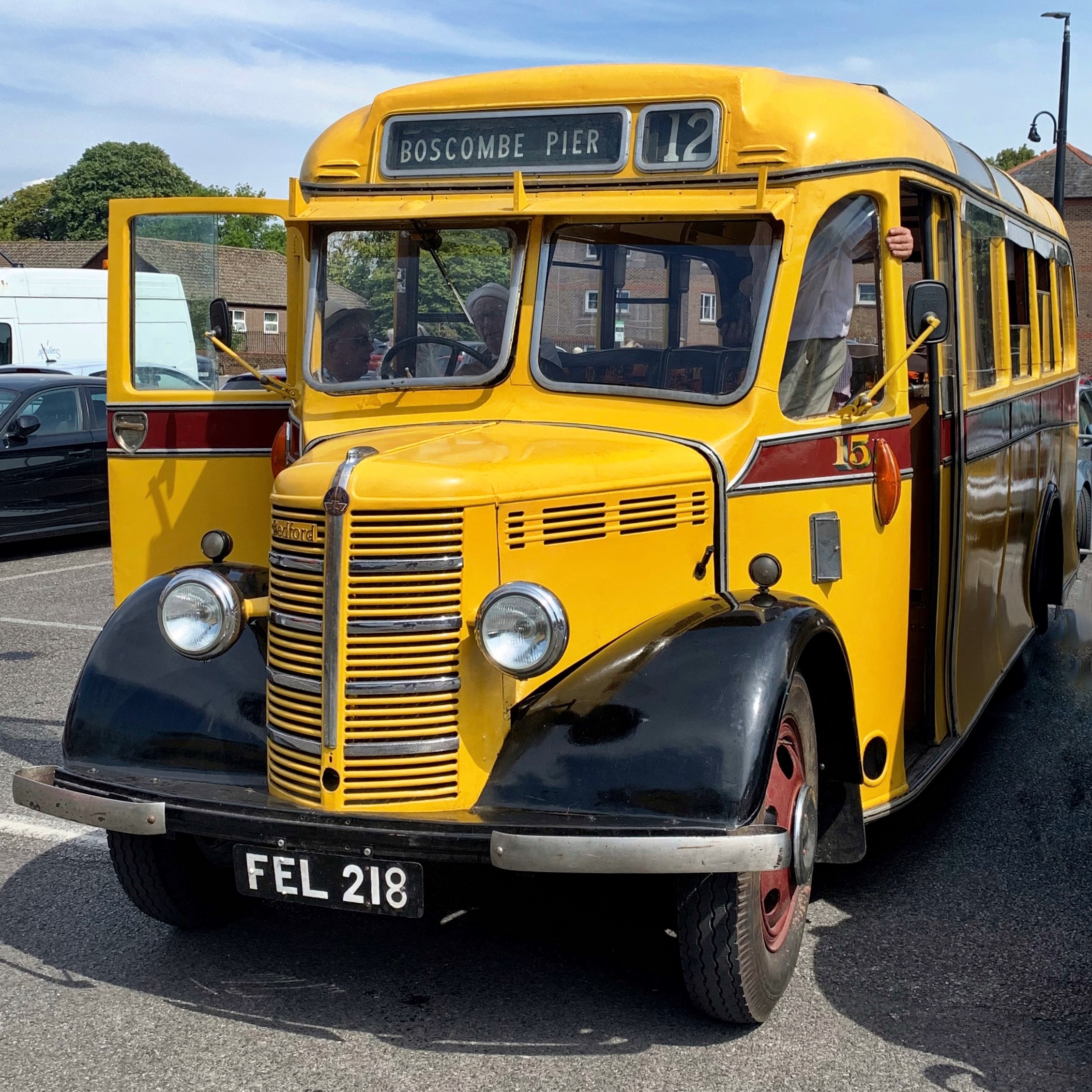
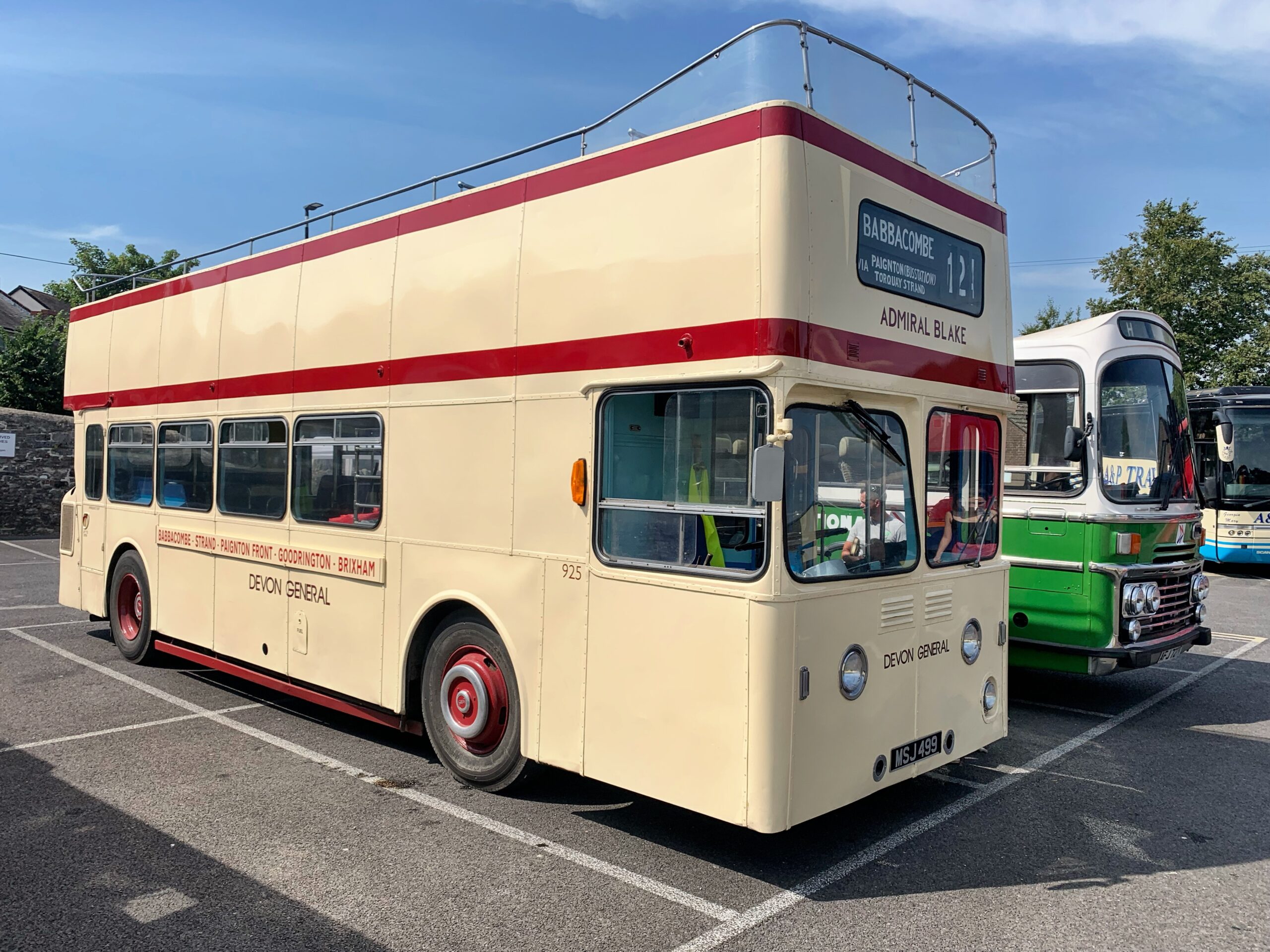
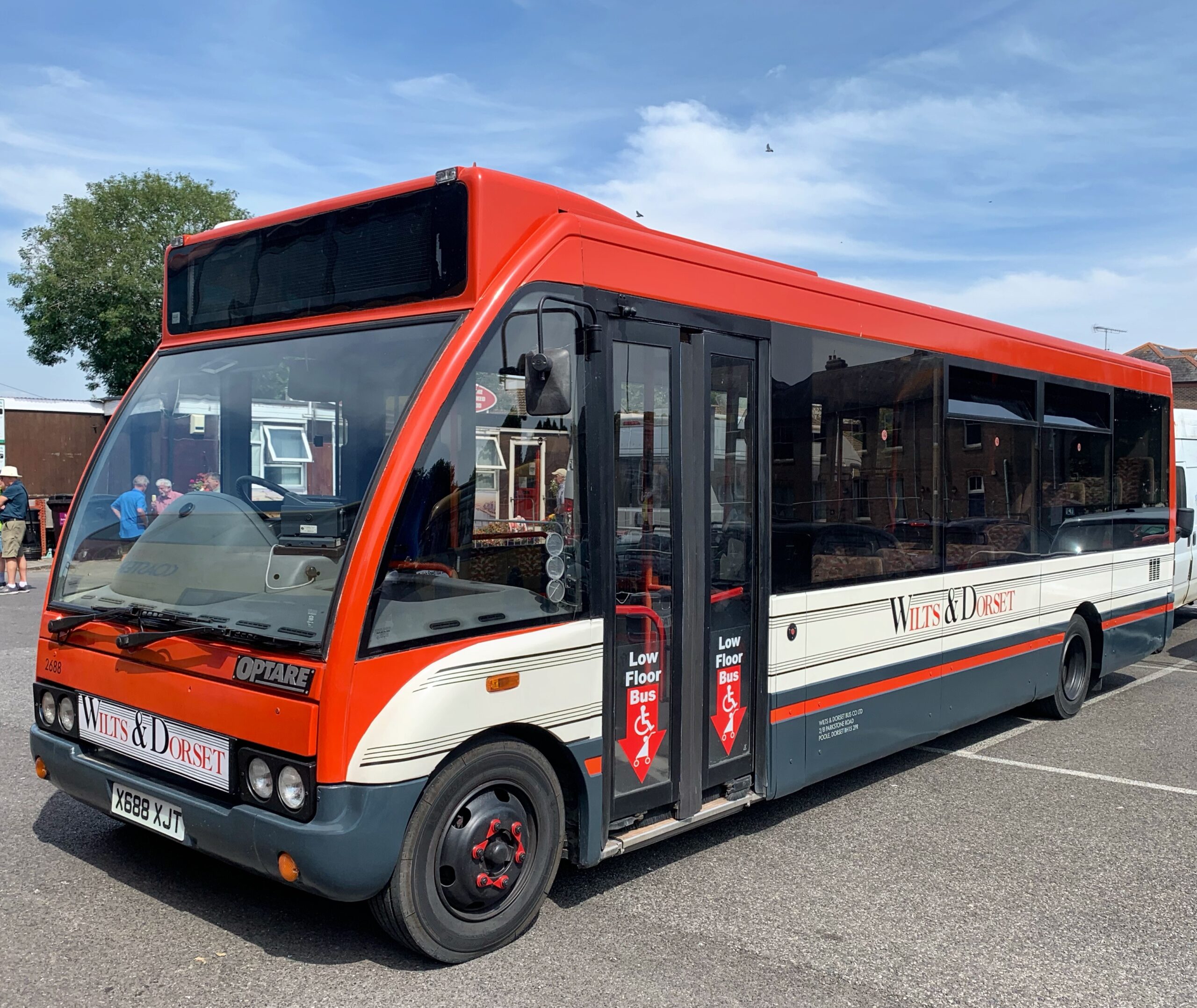
Perhaps my favourite bus / coach is OTT 98 a Bristol/ECW LS6G integral coach. She was delivered to Southern National in 1953 and given the fleet number 1299 for working as part of the Royal Blue fleet from Bournemouth in 1969. I remember her from her Dorset Transport Circle days and associated trips out – 14/08/2022EFJ 92 a Bedford WTB with Heaver C25F body – delivered new to Taylors Central Garage (Exeter) Ltd in June 1938. Sold to Vic’s Tours of St. Mary’s on the Scilly Isles and operated until 1971 when she entered preservation – 14/08/2022WS 4522, a 1935 Scottish Motor Traction Co. (SMT) H110 Cowieson bodied Leyland Tiger TS7 – 14/08/2022FEL 218; Bournemouth Corporation Bedford WTB Duple B25F – 14/08/2022Preserved former Yellow Buses N465 TPR Dennis Dart with East Lancs body and H262 MFX Dennis Dominator with East Lancs body – 14/08/2022“Sea Dog” MSJ 499 a Leyland Atlantean PDR1 with open top Metro-Cammell body was delivered new in 1961 to Devon General and named ‘Admiral Blake’. She reminds me of my time working in Torquay in the mid-1980’s, not that I had much time to enjoy the local area! After she finished carrying passengers around the Devon coast she was sold to Yellow Buses in Bournemouth and used as a tree lopper before entering preservation in 2006 – 14/08/2022X688 XJT an Optare Solo M850 from 2000 in original Wilts & Dorset livery spent some years as a Tesco free bus – 14/08/2022
From The Archive
This week in….
2019: Saturday 10th August 2019, 8 month old Yoshi and I took a trip out to see SR Merchant Navy No. 35028 ‘Clan Line’ working UK Railtours “The Atlantic Coast Express” which originated from London Waterloo and took in Salisbury, Exeter, Bristol and Bath. It was around this time when I really renewed my latent enthusiasm in railways after several years of having only a passing interest.
Clan Line on “The Atlantic Coast Express” 1Z82 0752 London Waterloo to Exeter St Davids and 1Z84 1550 Exeter St Davids to London Waterloo – 10/08/2019
The following day, Sunday 11th August 2019, saw two special excursion trains visit Dorset. We saw “The Northern Belle” top and tailed by WCRC Class 57 No.’s 57601 ‘Windsor Castle’ and 57314 at Dorchester followed by a trip to Holton Heath to see the return working along with a glimpse of Class 73 No.’s 73107 ‘Tracy’ and 73201 ‘Broadlands’ working “The Swanage Sunday Special No.3”.
Thursday 15th August 2019 saw LNER Thompson Class B1 No. 61306 ‘Mayflower’ and WCRC Class 47 No. 47802 working a Steam Dream Rail Company “Cathedrals Express” excursion from West Brompton to Weymouth and return. In between arrival and departure of the special train, Colas Rail Class 37 No. D6757 (37057) also visited the seaside terminal with a Network Rail test train.
2010: The Railway Touring Company ran “The Dorset Coast Express” on Wednesday 11th August 2010. The train departed London Victoria at 0845 and was hauled down to Weymouth by LNER A4 4-6-2 No. 60019 ‘Bittern’ which I saw pass through Bournemouth. The return working to London Waterloo was headed by SR N15 King Arthur Class 4-6-0 No. 30777 ‘Sir Lamiel’ with the A4 providing banking assistance at the rear until Wareham which is where I filmed the ensemble. The A4 was detached and then ran with her support coach to Yeovil Railway Centre at Yeovil Junction.
That brings us to the end of another entry, this week the Railway Dog blog was mostly put together to the sounds of The Who, Lily Williams and Yoshi barking at anyone moving outside. We really appreciate you stopping by and reading the blog and watching the video clips. As always, comments, suggestions and corrections are welcomed and thank you to everyone who has helped out in some way. We look forward to seeing you again next week.
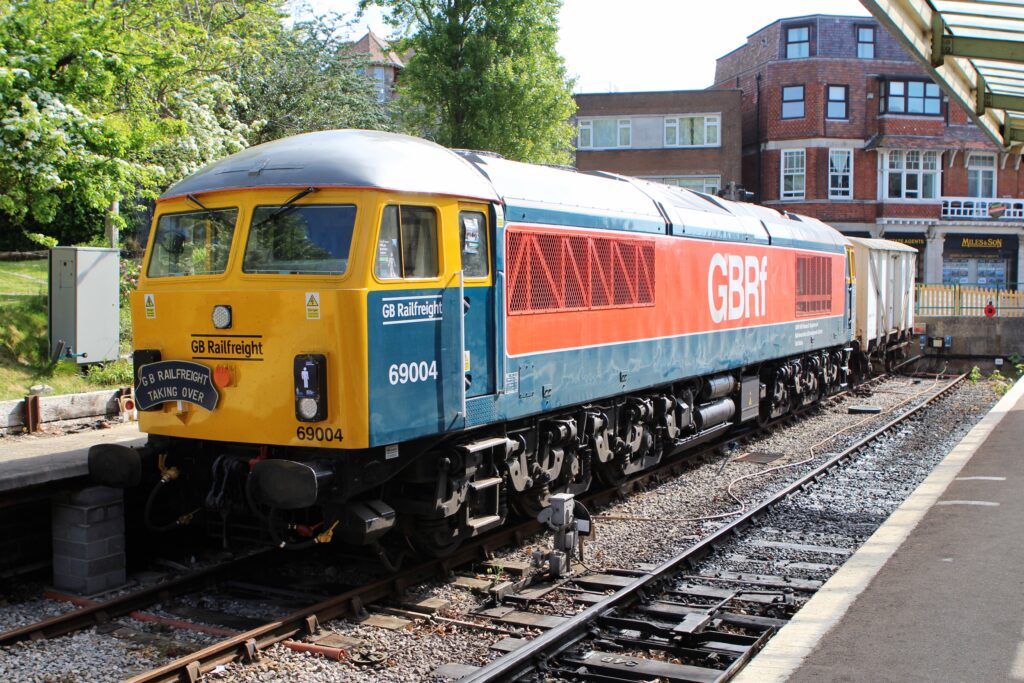
Yoshi takes the opportunity to get up close and personal with GBRf Class 69004 which was on static display at Swanage station during the Swanage Railway Diesel Gala. GBRf were raising funds for Prostrate Cancer
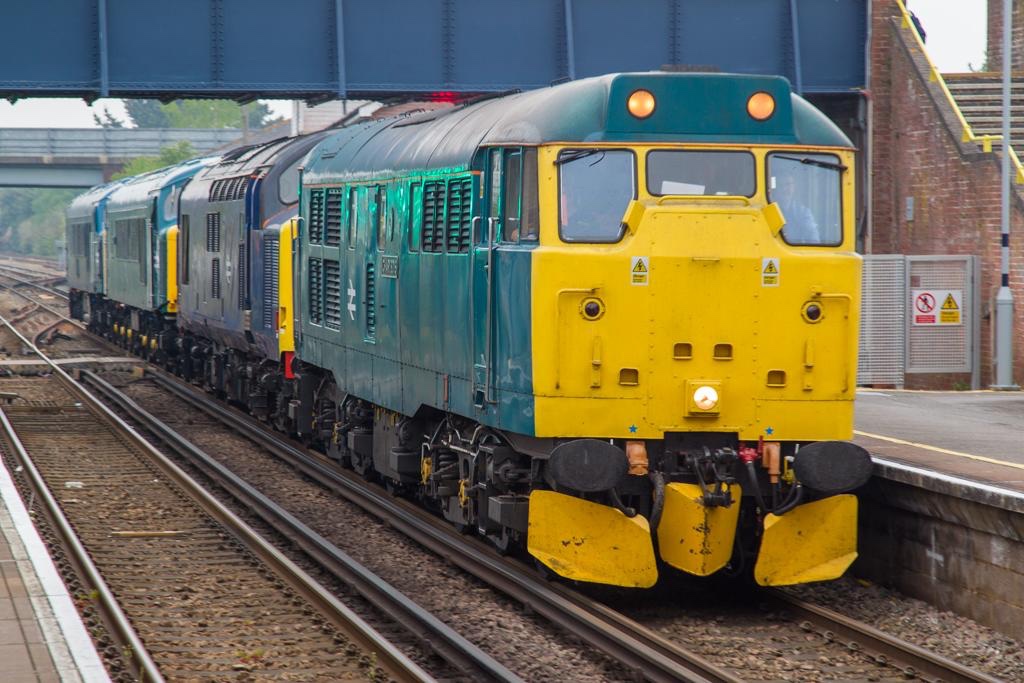
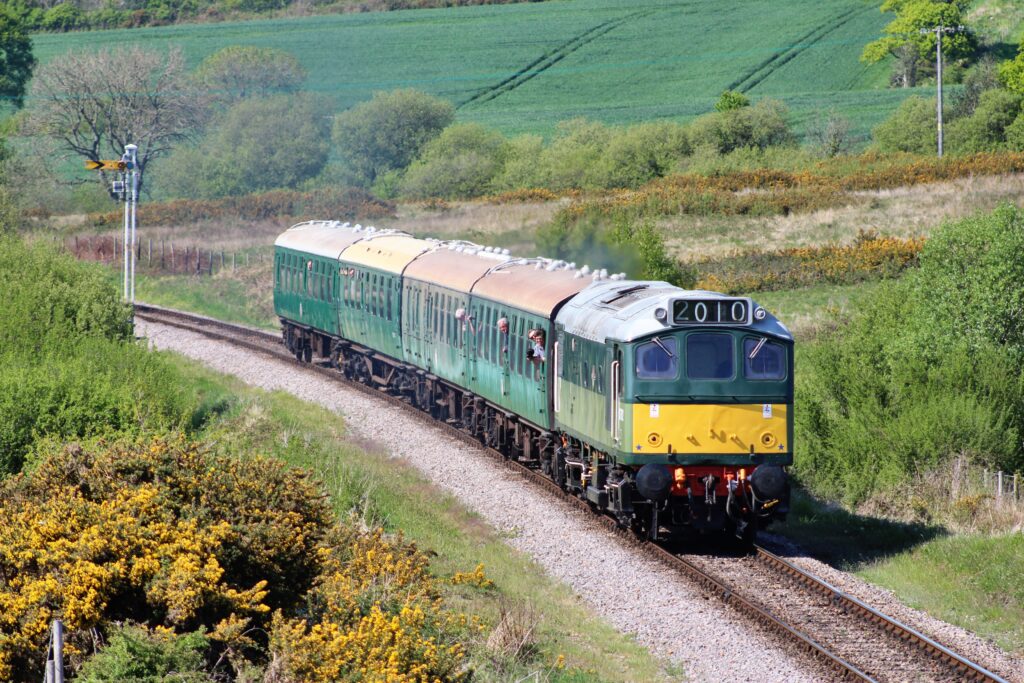
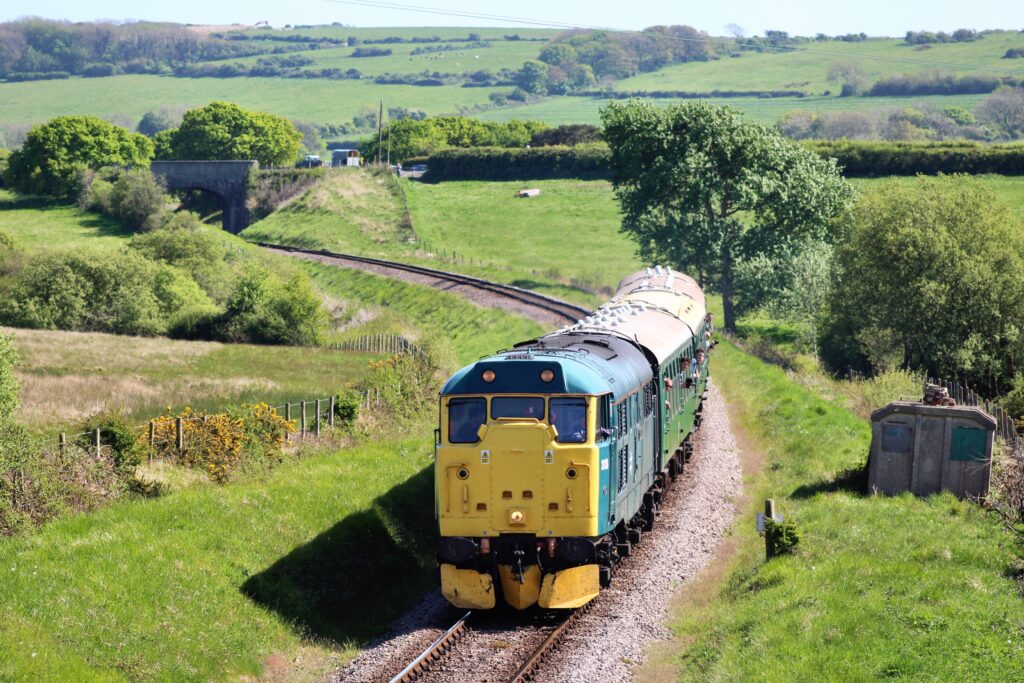
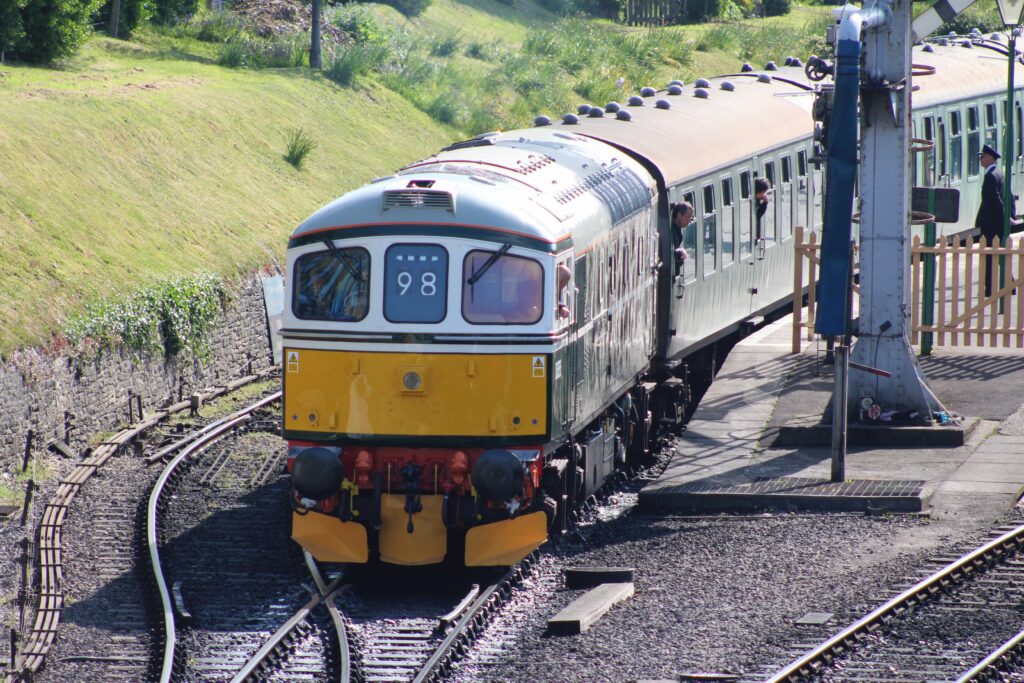
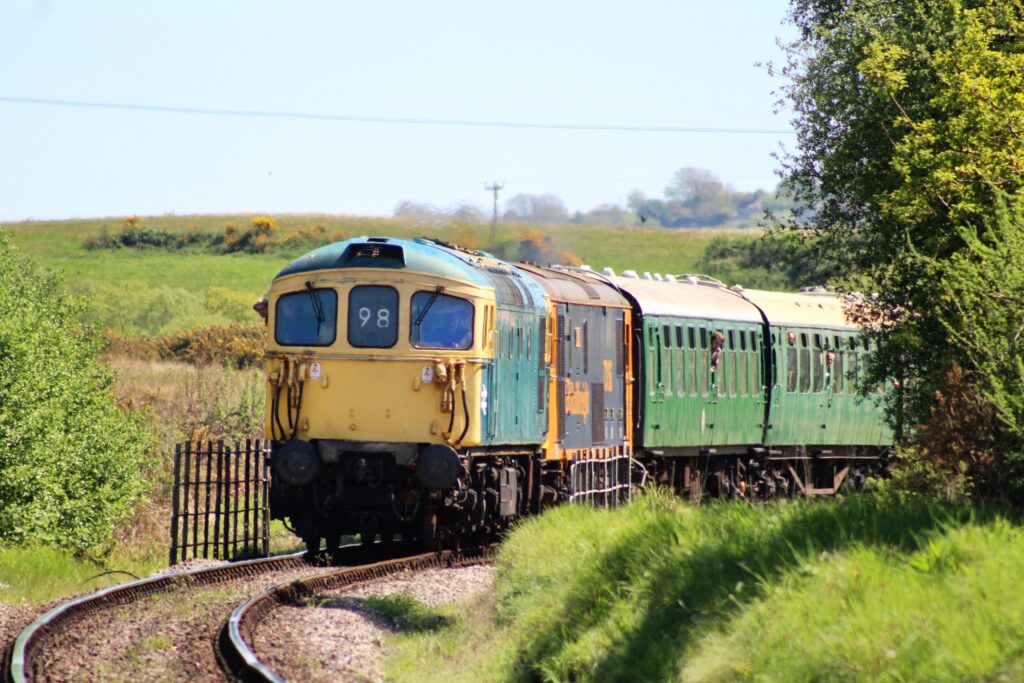
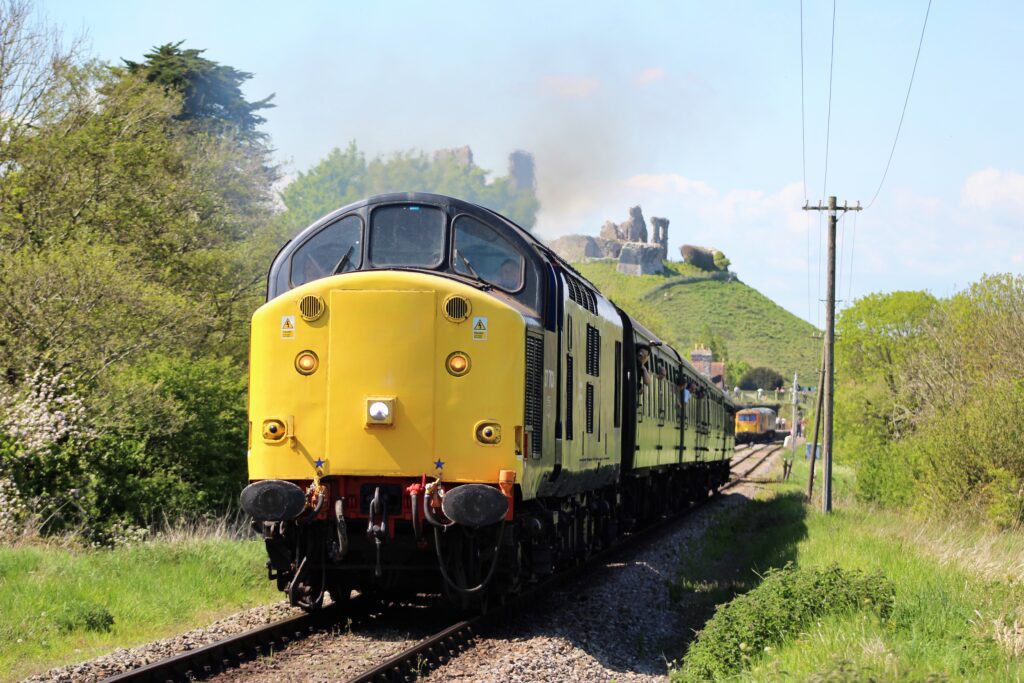
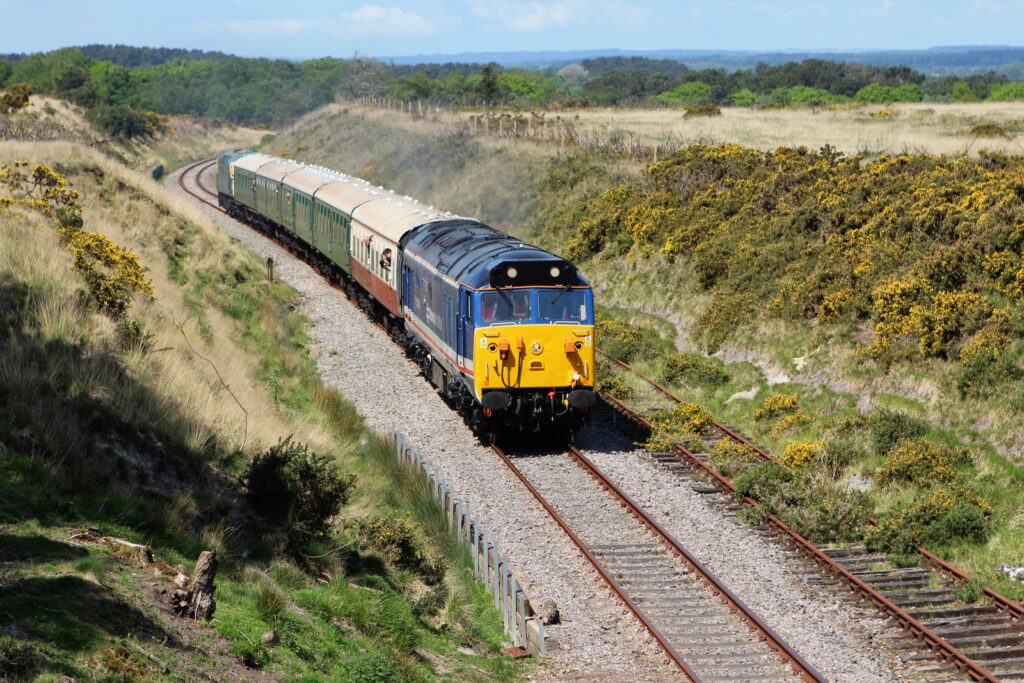
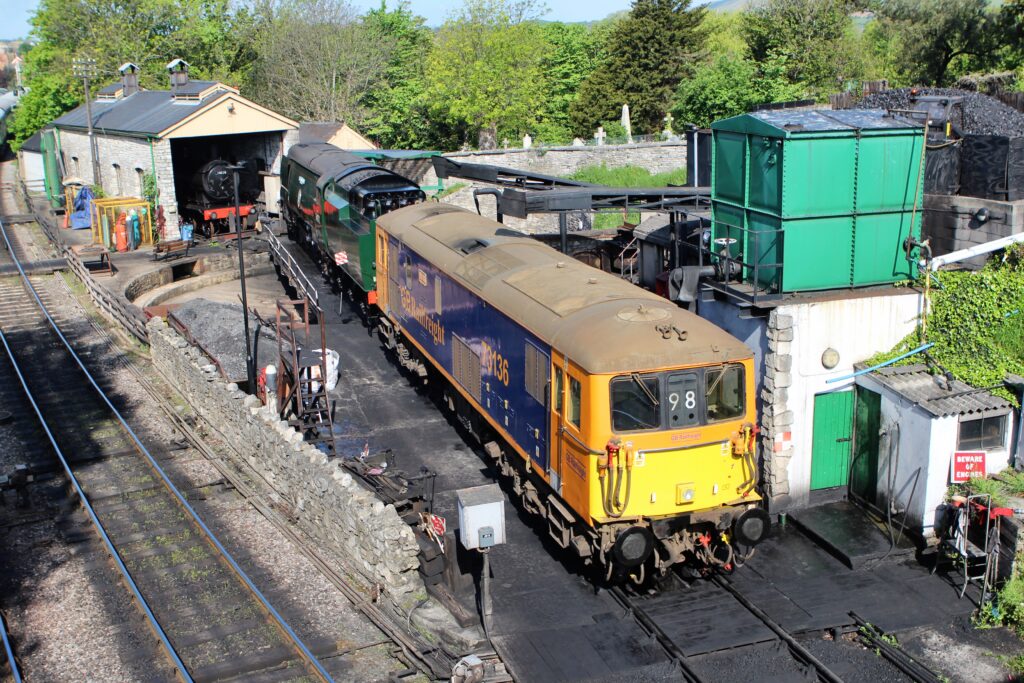
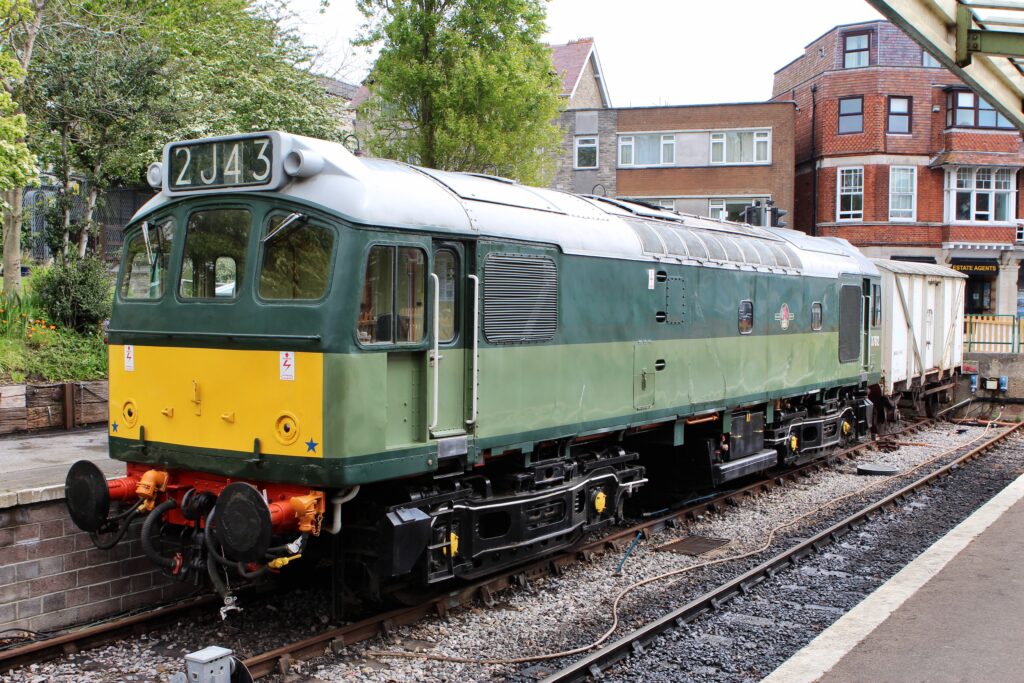
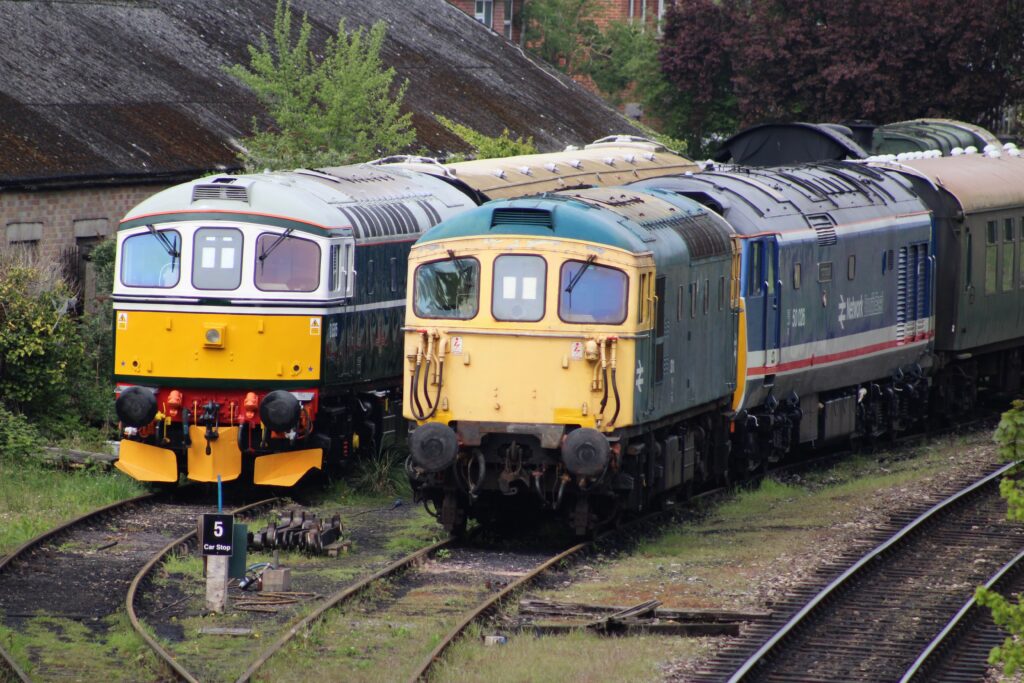
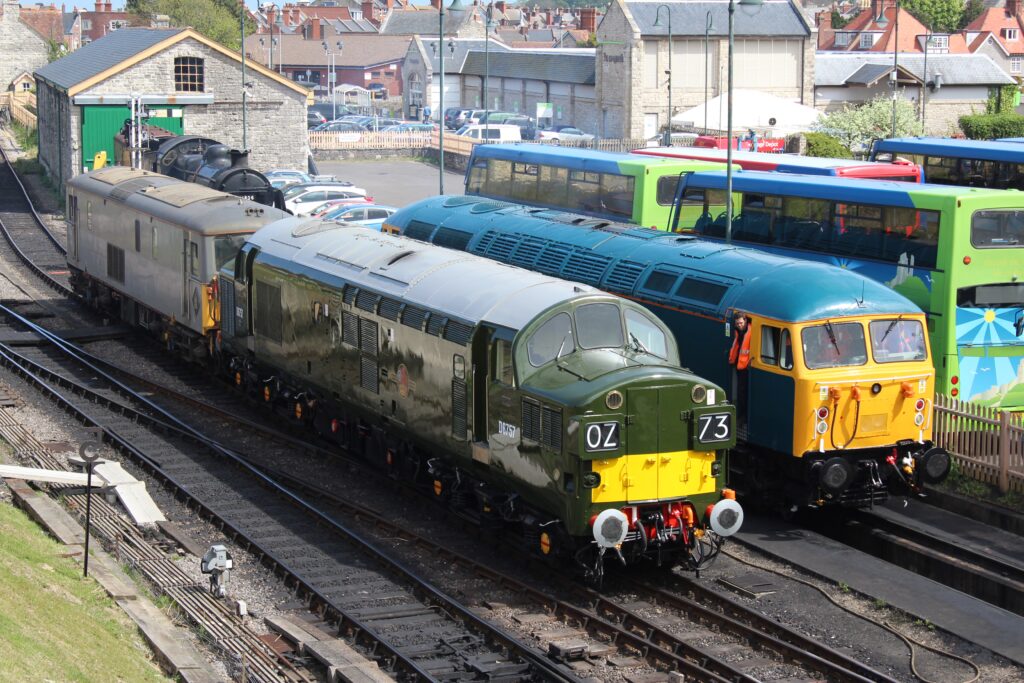
This week we take a look at the Swanage Railway Diesel Gala which was held over the weekend of 6th – 8th May 2022. This was the first event of its type held at Swanage since 2019. A “Thirty-Seven Thursday” preview day with Class 37 No. 37703 in service alongside Bulleid West Country Pacific Class No. 34028 ‘Eddystone’ took place on the 5th May. Alongside the Class 37, other locomotives involved during the gala weekend were home Class 33’s No.’s 33111 and 33012 (D6515) ‘Lt. Jenny Lewis RN’, Class 25 No. D7612, Class 31 No. 31128 ‘Charybdis’, Class 44 No. 44004 (D4) ‘Great Gable’, Class 46 No. 46045 (D182), Class 50 No. 50026 ‘Indomitable’. Class 73 No. 73136 ‘Mhairi’ was a late addition to the roster which worked in multiple with the home Class 33’s and deputised for the Class 31 on a few turns on the Saturday due to the 31 suffering an air leak. Class 69 No. 69004 was on static display at Swanage railway station raising funds for Prostrate Cancer, GBRf’s chosen charity. Trains ran from Swanage to the River Frome, just shy of the national main line network at Worgret Junction. This is beyond the usual reach of current Swanage Railway train services which normally run between Swanage and Norden Park & Ride. The Purbeck Beer Festival also took place over the weekend and evening Beerex trains on the Friday and Saturday were run in association.
On Tuesday 3rd May, Class 31 No. 31128 hauled a convoy of visiting diesel locomotives from Butterly to Swanage in preparation for the 2022 Gala. The consist was formed of 31128 + 37703 + 44004 (D4) + 46045 (D182) – image courtesy of @da_buckley967
Yoshi and I were only able to attend on the final day of the gala which certainly did not disappoint. As well as the heritage diesel motive power, I particularly liked the new information screens incorporated into traditional style noticeboards at Swanage Station. You can watch a video of our day below:
Class 25 No. D7612 approaches Townsend Overbridge at Corfe Castle – 08/05/2022Class 31 No. 31128 heading towards Corfe Castle – 08/05/2022Class 33 No. 33012 (D6515) waits to depart Swanage – 08/05/2022Class 33 No. 33111 and visiting Class 73 No. 73136 double head the 1415 service from Swanage approaching Wurzel Crossing, Corfe Castle – 08/05/2022Class 37 No. 37703 having departed Corfe Castle with a service bound for Swanage – 08/05/2022Class 44 No. 44004 (D4) at Creech – 08/05/2022Class 46 No. 46045 (D182) with the last train of the day to Swanage – 08/05/2022Class 50 No. 50026 approaching Furzebrook – 08/05/2022Class 69 No. 69004 on static display at Swanage in support of the charity Prostrate Cancer – 08/05/2022Class 73 No. 73136 “on shed” at Swanage – 08/05/2022
After all the excitement of the gala event, it was time for some of the visiting diesel locomotives to move on to other locations and we popped out see the workings from Swanage starting with the Class 69 / Class 73 combo which ran on Monday 9th May as 0Y98 1135 Swanage to Eastleigh East Yard:
69004 leads 73136 through Hamworthy on 9th May 2022
It was an early start on the following day, Tuesday 10th May, when a convoy of locomotives departed Swanage ten minutes late working 0Z33 0610 Swanage to Kidderminster S.V.R.:
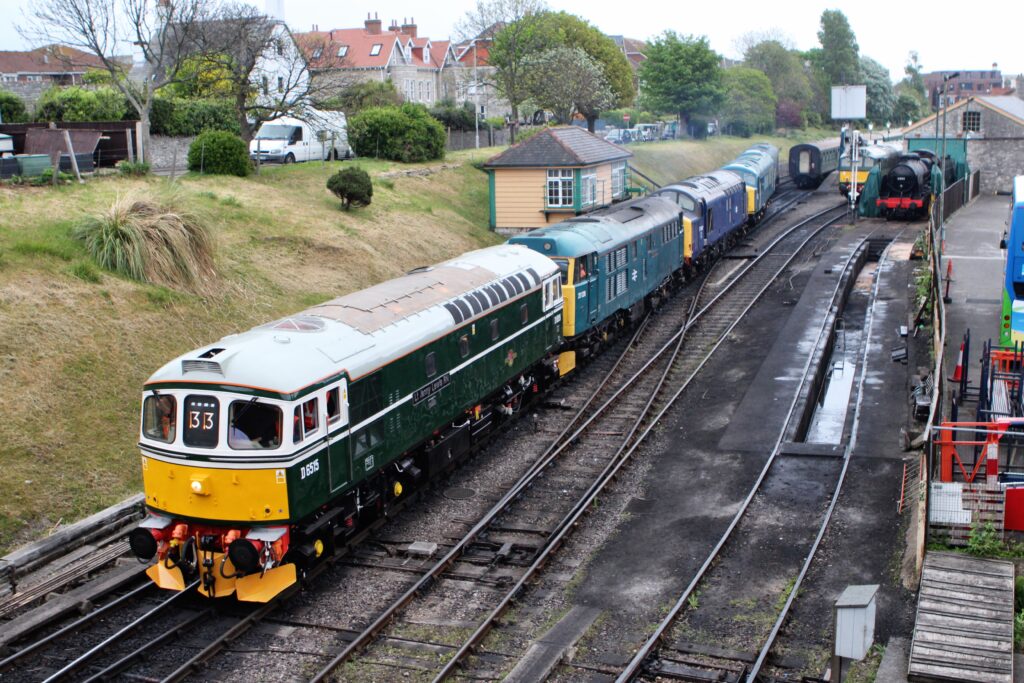
33012 + 31128 + 37703 + 44004 + 46045 departing Swanage working 0Z33 0610 Swanage to Kidderminster S.V.R. – 10/05/202233012 + 31128 + 37703 + 44004 + 46045 pause at Wareham working 0Z33 0610 Swanage to Kidderminster S.V.R. – 10/05/202233012 + 31128 + 37703 + 44004 + 46045 about to depart Wareham working 0Z33 0610 Swanage to Kidderminster S.V.R. – 10/05/2022
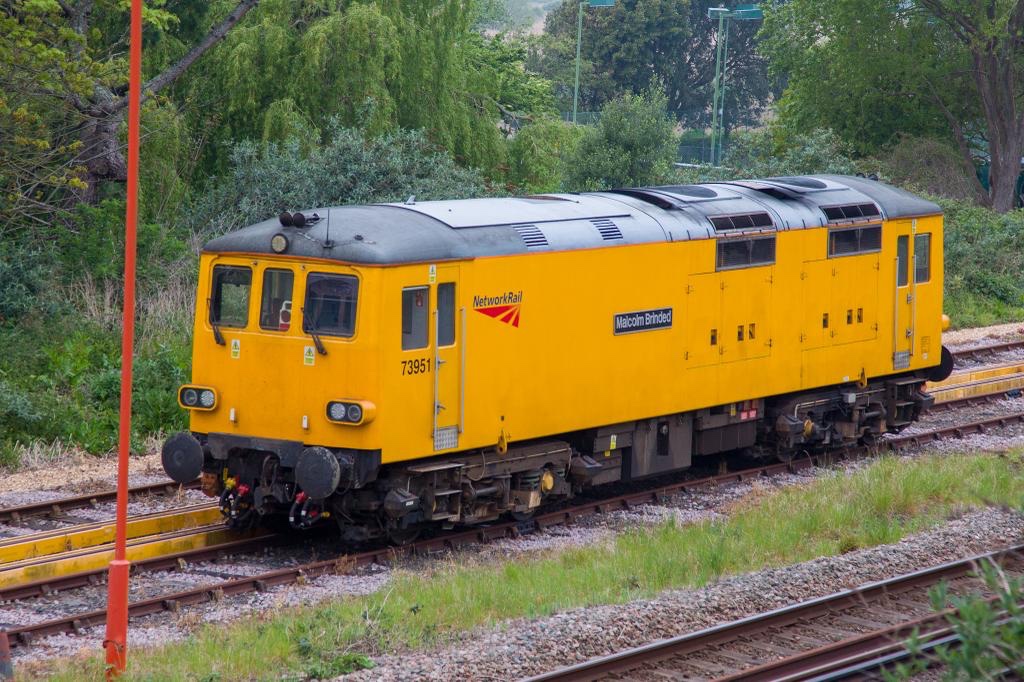
The Swanage gala and associated movements dominated our local rail scene here on the Bournemouth – Weymouth line, however the former Great Western Railway line to Bristol produced several more visits from COLAS route learner formed of Electro-Diesel Class 73 No. 73951 ‘Malcolm Brinded’ which we featured in last weeks blog entry. The locomotive is seen here stabled at Weymouth on Tuesday 3rd May 2022:
Class 73 No. 73951 ‘Malcolm Brinded’ at Weymouth – image courtesy of @da_buckley967
Class 73’s No.’s 73964 and 73962 headed to Weymouth top and tailing a Network Rail Test Train on the evening of Monday 9th May working 1Q51 1115 Derby R.T.C. to Eastleigh East Yard. We saw the pair pass through Poole:
In other news, RAIL Magazine reported on the Department for Transport (DaFT) having “increased confidence” in South Western Railway’s £1 billion order for 90 new Class 701 Arterio trains which continue trials to Bournemouth and Poole, expecting a final entry into service plan by June 30th 2022. Alstom who are building the trains will be delivering additional software upgrades over the forthcoming months with SWR having provisionally accepted the first batch of trains. Driver training is yet to commence and there remain outstanding issues to be resolved with the unions. The 701’s are nearly three years late entering into traffic having been expected to take over suburban and Reading & Windsor line services in 2019. The fleet will be maintained at Wimbledon depot.
Yoshi takes a look at new Class 701 No. 701025 working 5Q51 1126 London Waterloo to Staines Up Loop at Poole on 16th April 2021
We stick with the Swanage Branch for our archive video this week with a look at a diesel gala from the past. But first we turn the clock back to the 1990’s when LPG trains ran to and from Furzebrook.
Wytch Farm oil field is the largest onshore oil field in Western Europe and was discovered by British Gas in 1973. Since 2011 the oil field has been managed by Perenco having taken over from BP who bought Wytch Farm when British Gas was privatised in 1984. Production first commenced in 1979 with crude oil being transported by rail from Furzebrook to Fawley. In the late 1980’s production increased and a pipeline was installed between Wytch Farm and Hamble meaning transportation by rail was no longer required. However, production of natural gas also increased at this time. The gas was liquefied and conveyed by rail from 1990 until 2005 when production decreased. The LPG traffic ran from the Furzebrook railhead to Hallen Marsh near Bristol. Hauled by Class 47’s when the trains commenced, the LPG was later in the charge of Class 60’s and finally Class 58’s. In 2005 the site was transferred to the ownership of Dorset County Council and the Swanage Railway took a step closer at achieving its now completed aim of connecting to the main line near Wareham.
The trains would arrive formed of empty LPG tanks and leave with full ones. The two examples shared below were evening workings and most likely the outward train is 6V29 1929 Furzebrook to Hallen Marsh, the inbound train would have started from Eastleigh Yard.
The locomotives in the videos below belonged to the then Railfreight Petroleum Sector, six sub-Railfreight Sectors having been created in 1987 as a development of the old British Rail Railfreight Division. These sectors existed until the onset of rail privatisation in 1994 when Railfreight was reformed into three Railfreight companies; Loadhaul, Mainline Freight and Transrail, in preparation for selling off.
Compare the scene in the videos above with the view below of Class 33 No. 33111 hauling a Swanage Railway Diesel Gala passenger train past the former Furzebrook Oil Terminal towards the River Frome on 8th May 2022:
Class 33 No. 33111 passes the site of the former Furzebrook Oil Terminal – 08/05/2022
Finally a look back ten years to the 2011 Swanage Diesel Gala which included, amongst other visitors, a Class 52 ‘Western’ diesel-hydraulic and a Class 55 ‘Deltic’:
That’s it for this week – thanks for reading and hopefully we’ll be back next Wednesday with an update from Yoshi HQ!
Sulzer Type 2 Class 25 No. D7612 has arrived at Swanage in advance of the 2022 Diesel Gala
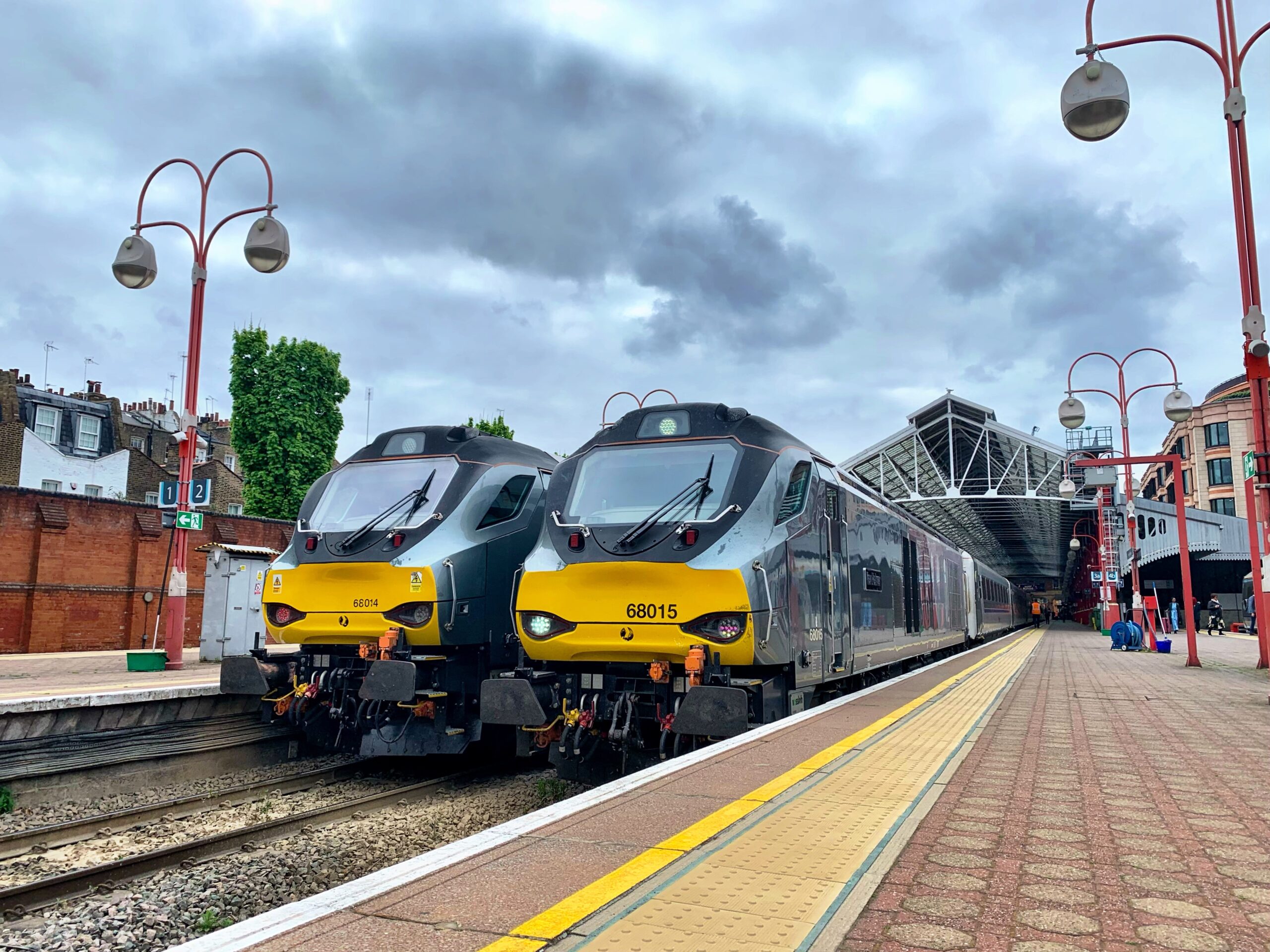
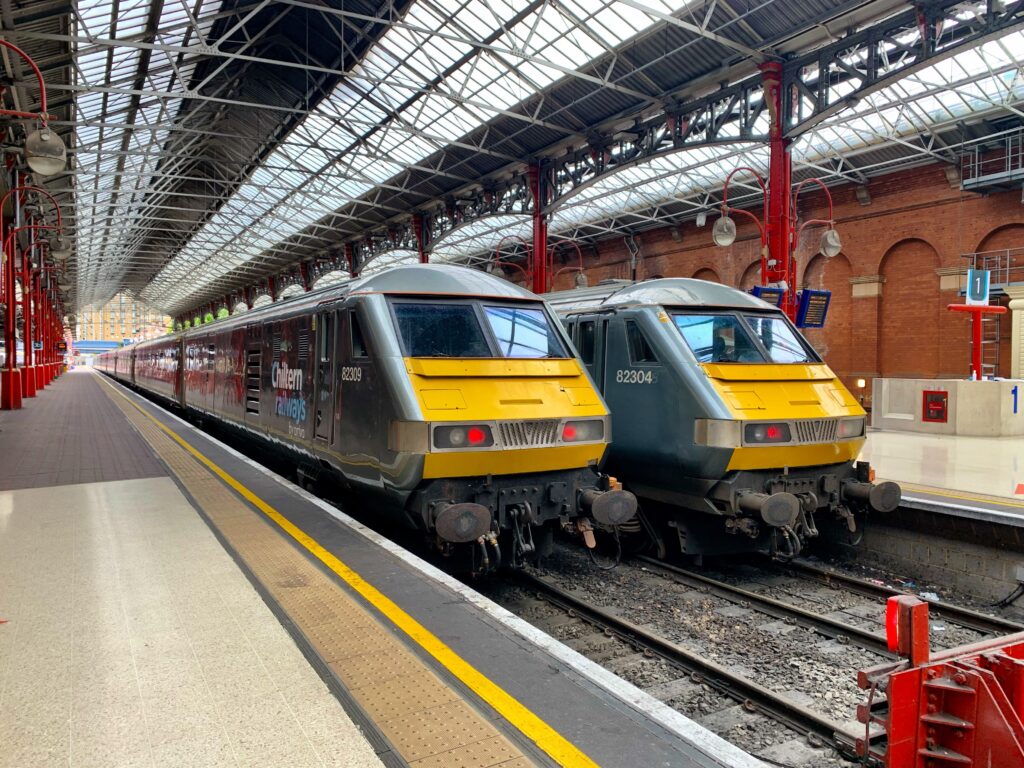
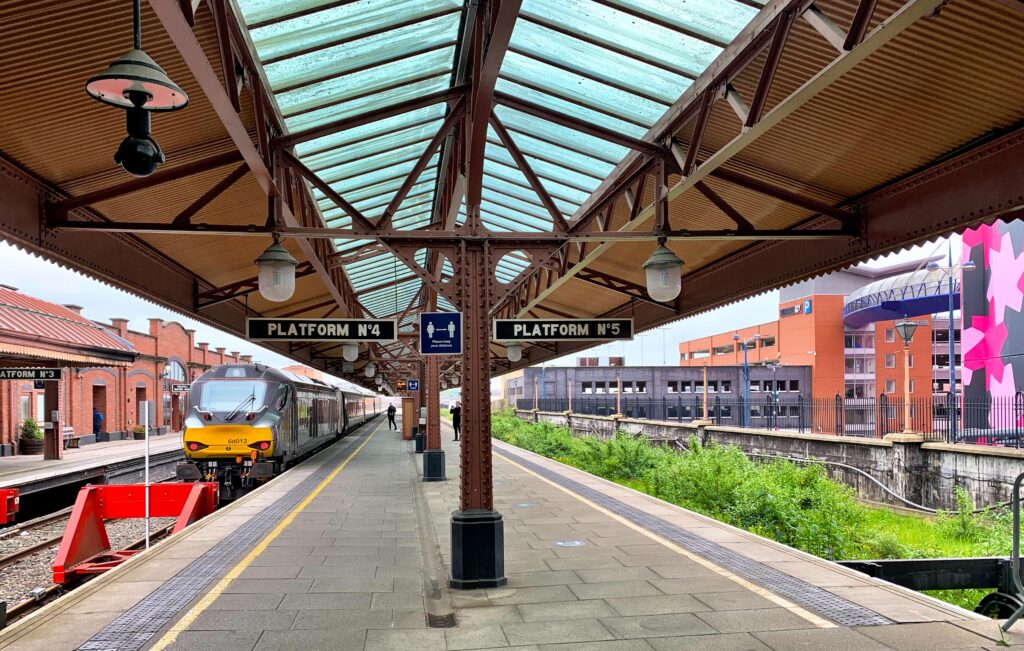
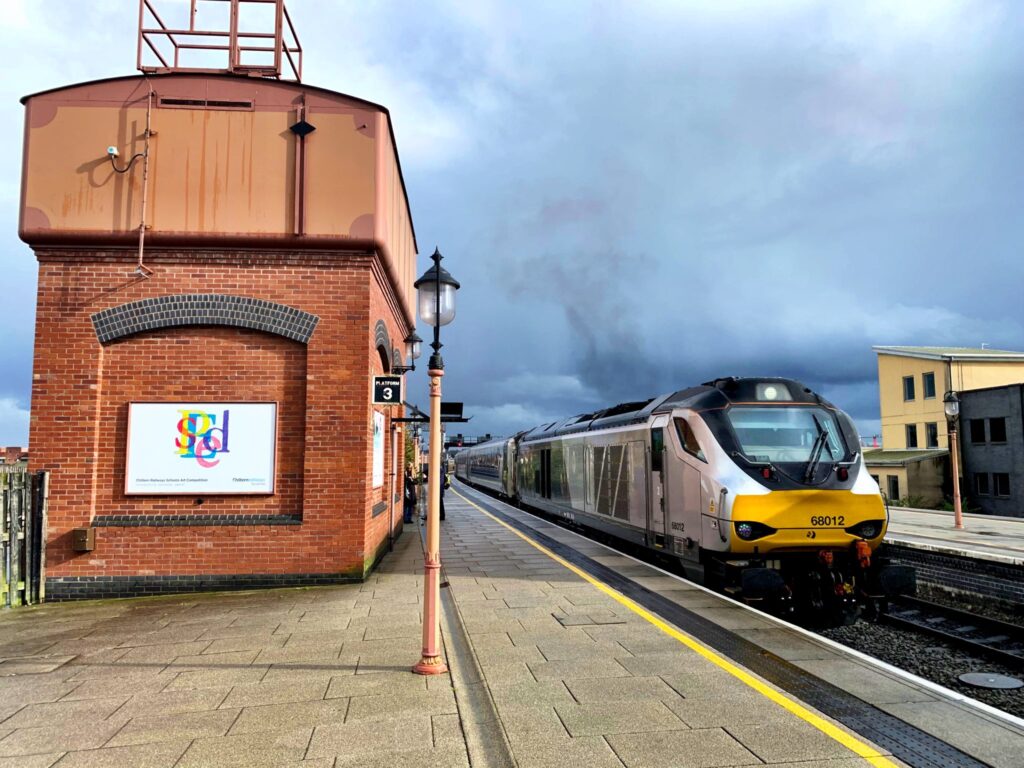
This week I needed to go to Birmingham, so took the opportunity of sampling the Chiltern Railways Class 68 hauled service to and from London Marylebone and Birmingham Moor Street. We visited Marylebone as part of a previous post a few weeks ago, but I didn’t see any loco hauled services on that day. Six Class 68 locomotives are leased by Chiltern Railways from DRS and along with the locomotive, trains were formed of six MK3 carriages and a MK3 Driving Van Trailer (DVT). The DVT’s are modified to work with the power doors that are fitted to the MK3 coaches and have a generator fitted to enable Electric Train Supply and compressed air to be provided to the coaches when the locomotive is not running, such as when in a terminus station and when stabled. There was no buffet car or trolley service available on the trains I travelled on, and as I had left my lovingly prepared sandwiches in the fridge at home I was pleased to find a Greggs open at Marylebone station.
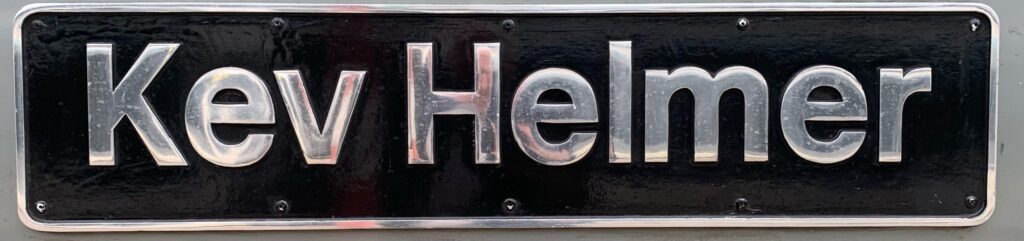
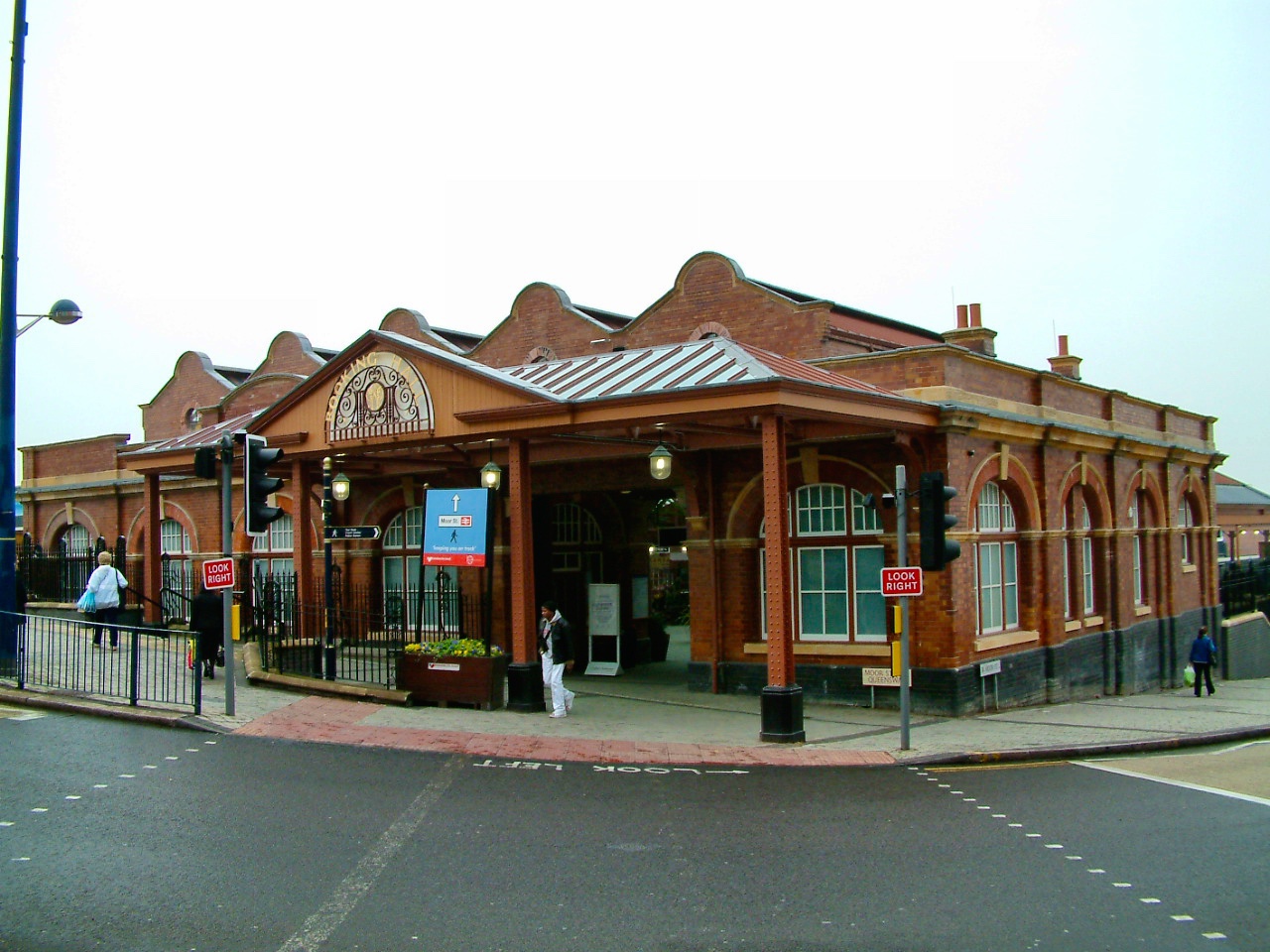
Chiltern Railways Class 68’s No.’s 68014 and 68015 ‘ Kev Helmer’ at London Marylebone – 27/04/2022Chiltern Railways Class 68’s No.’s 68015 ‘ Kev Helmer’ and 68014 at London Marylebone – 27/04/2022MK3 Driving Van Trailer’s at the buffer stops – London MaryleboneClass 68 No. 68014 at Birmingham Moor Street – 27/04/2022MK3 Coach – Birmingham Moor StreetClass 68 No. 68013 ‘Peter Wreford-Bush’ waits departure with the 1455 Birmingham Moor Street to London Marylebone – 28/04/2022Nameplate close-up of 68015 ‘Kev Helmer’. Kev was Birmingham Moor Street driver who lost his life to covid in January 2021Nameplate close-up of 68013 ‘Peter Wreford-Bush. Peter was a popular and long-standing member of the Leamington Spa station staff who sadly died of covid at the early age of 47
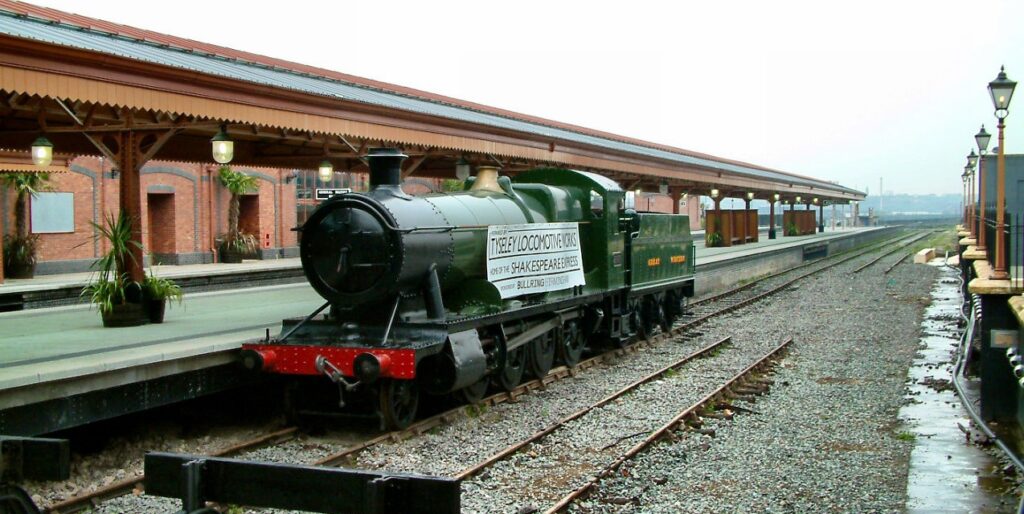
From 2003 to until 2013 GWR Heavy Freight Locomotive 2-8-0 2884 Class No. 2885 stood as a static exhibit at Birmingham Moor Street in an unused platform. The locomotive is currently being restored to working order at Tyseley Locomotive Works by her owners Practical GW Steam Ltd.
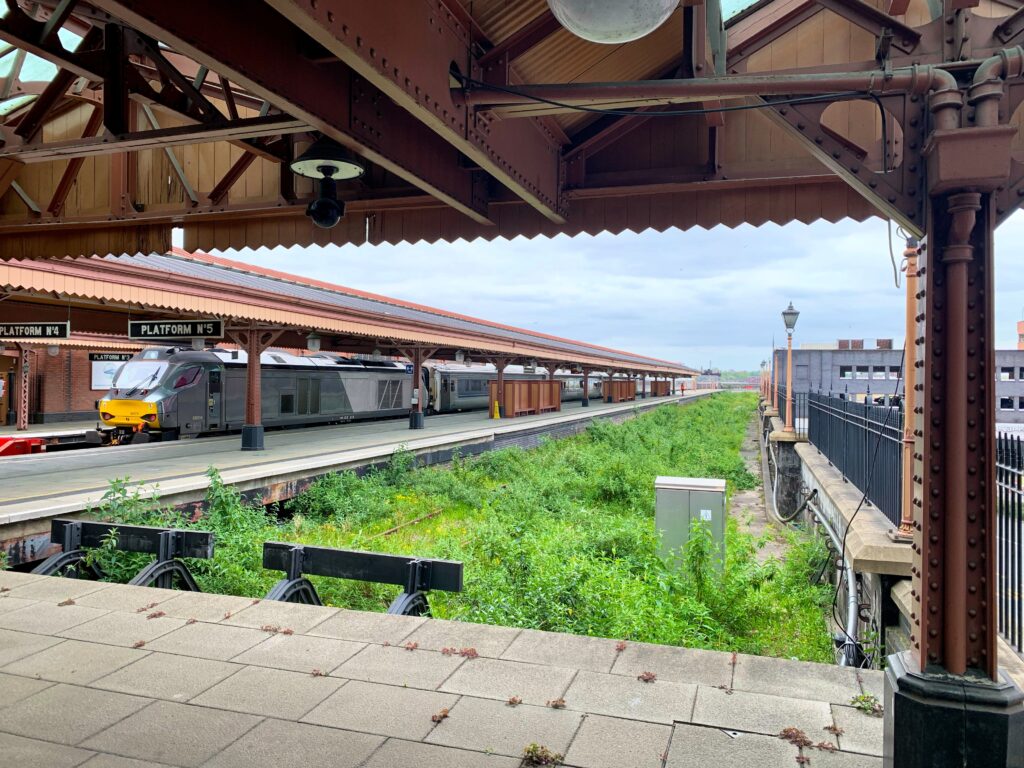
Class 68 No. 68014 and the disused platform once occupied by GWR No. 2885 at Birmingham Moor Street – 27/04/2022
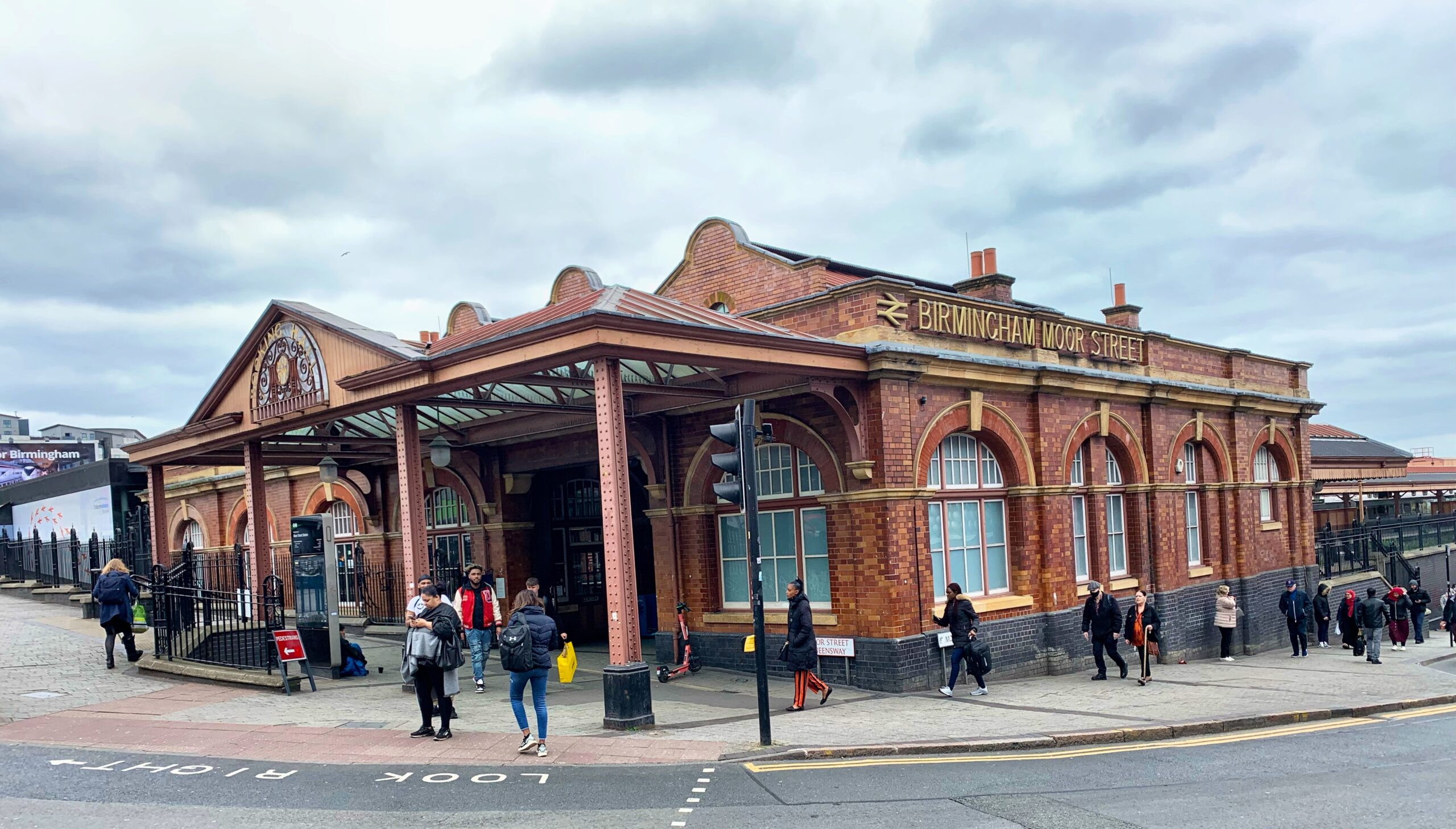
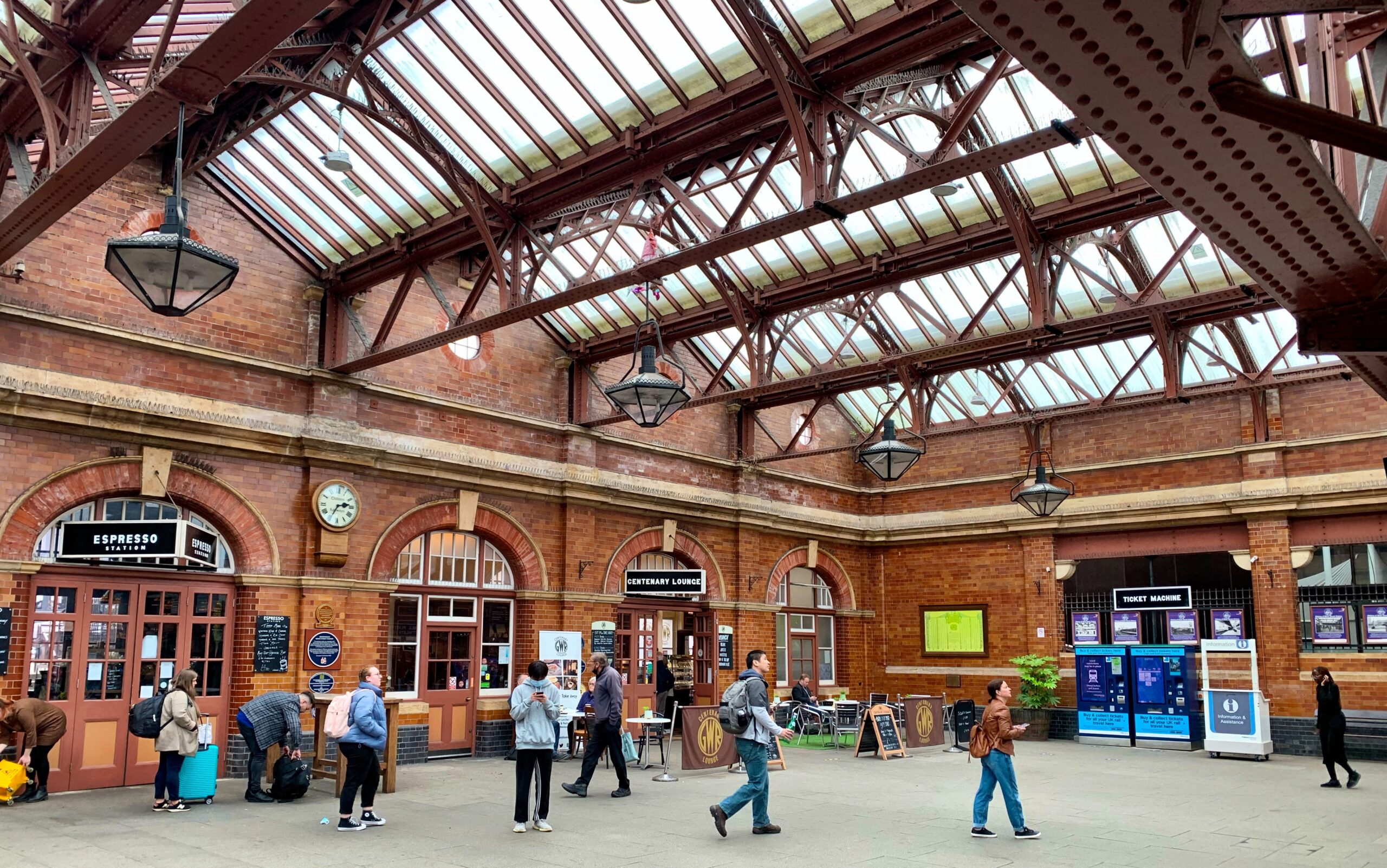
Birmingham Moor Street is one of three mainline railway stations in the city centre of Birmingham along with Birmingham New Street and Birmingham Snowhill. High Speed 2 station Birmingham Curzon Street, the northern terminus of HS2 Phase 1, is currently being built alongside Moor Street. This new Curzon Street will incorporate the 1838 station of the same name’s entrance building and is scheduled to open in 2026.
Birmingham Moor Street
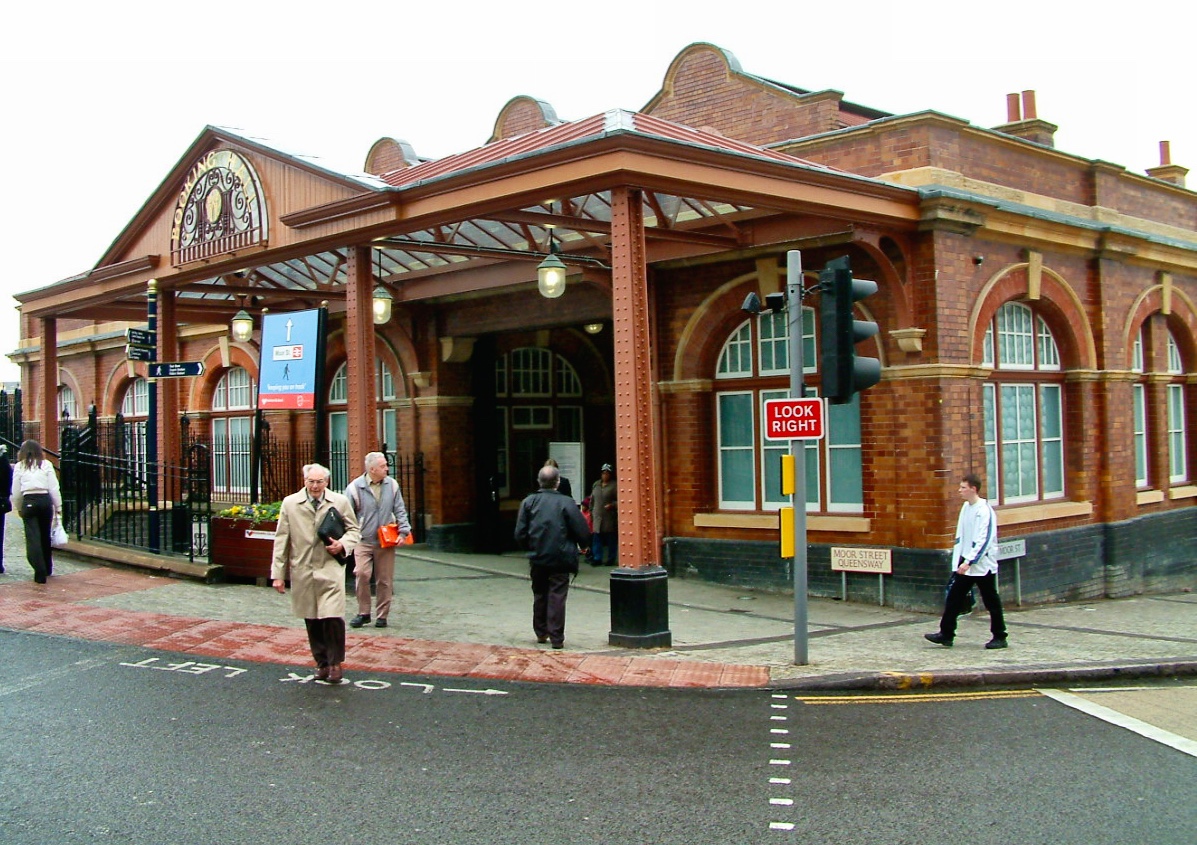
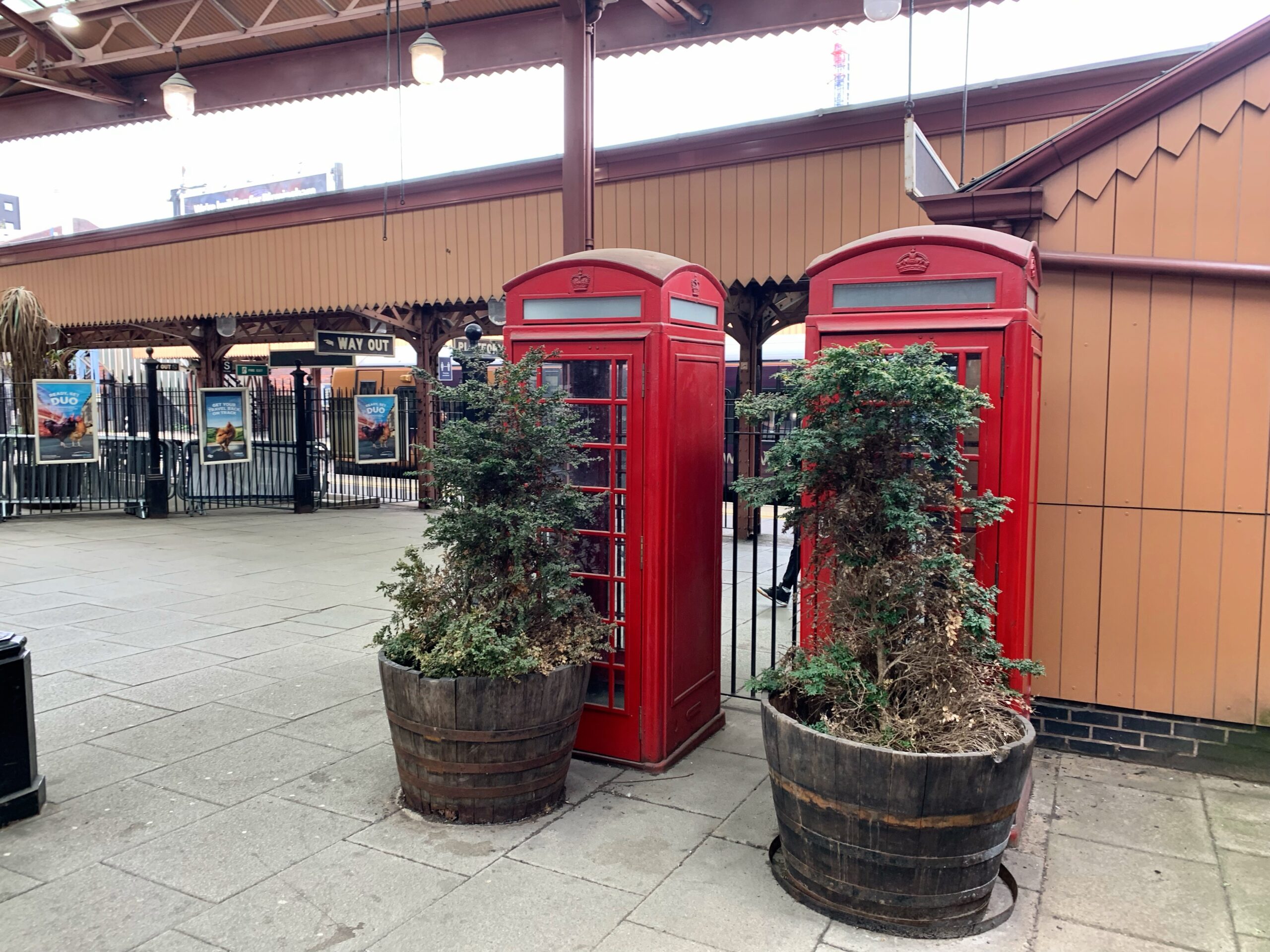
Moor Street is a combination of the original 1909 Great Western Railway terminus and adjacent through platforms which opened in 1987 replacing the original station which was then mothballed. These two were combined in 2002 when the original station was extensively restored in 1930’s style with reproduction lamps, clocks, seating and signage. The 1980’s platforms were rebuilt in a matching style.
Class 68 No. 68012 arrives at Birmingham Moor Street with a service from London Marylebone – 13/03/2020
A video showing my Chiltern Trains Class 68 locomotive hauled experience
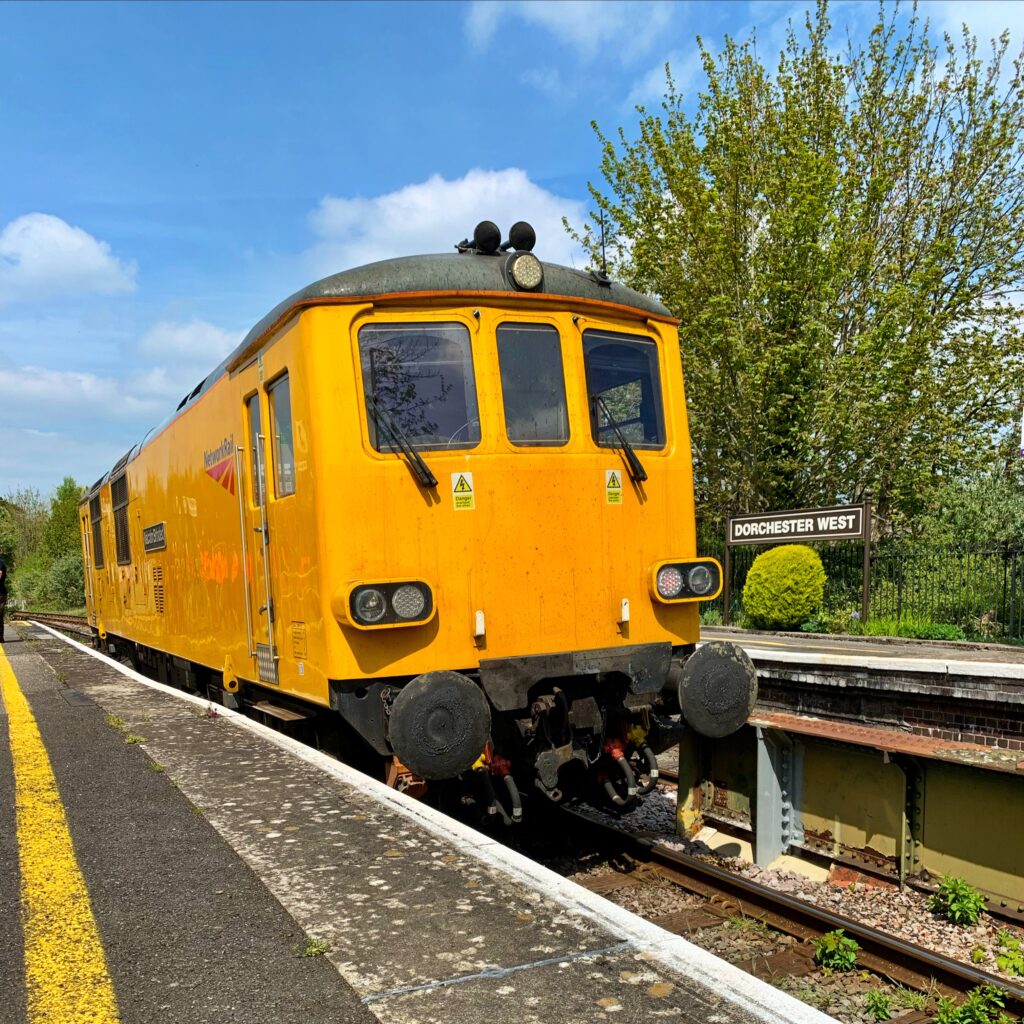
Friday April 29th 2022 saw a COLAS route learning working along the Bristol to Weymouth line formed of Electro-Diesel Class 73 No. 73951 ‘Malcolm Brinded’. We saw and barked at the locomotive in Dorchester.
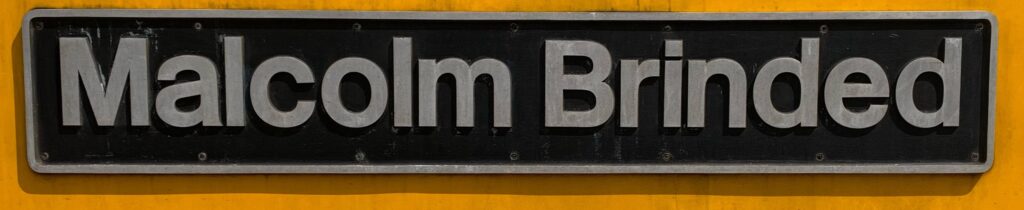
Class 73 No. 73951 ‘Malcolm Brinded’ nears Dorchester West – 29/04/2022Class 73 No. 73951 ‘Malcolm Brinded’ passes under the Bridport Road bridge, Dorchester – 29/04/2022Class 73 No. 73951 ‘Malcolm Brinded’ approaches Dorchester West – 29/04/2022Class 73 No. 73951 ‘Malcolm Brinded’ waits at Dorchester West – 29/04/2022Nameplate detail for 73951
Video of 1008 Bristol TM Platform 2 Motorail to Bristol TM Platform 2 via Weymouth COLAS route learner at Dorchester – 29/04/2022
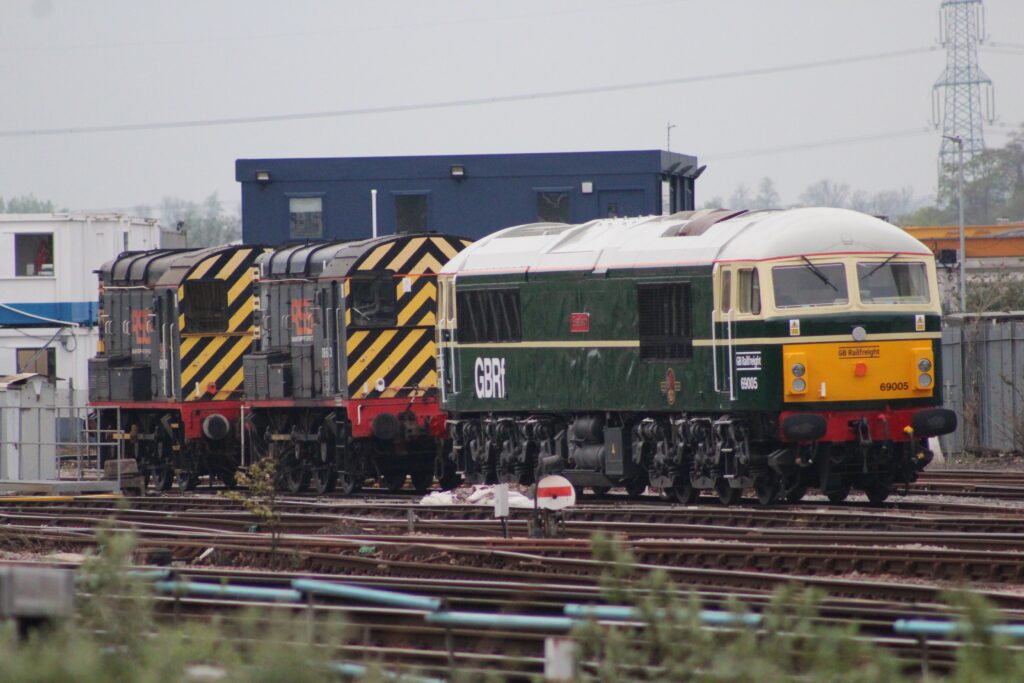
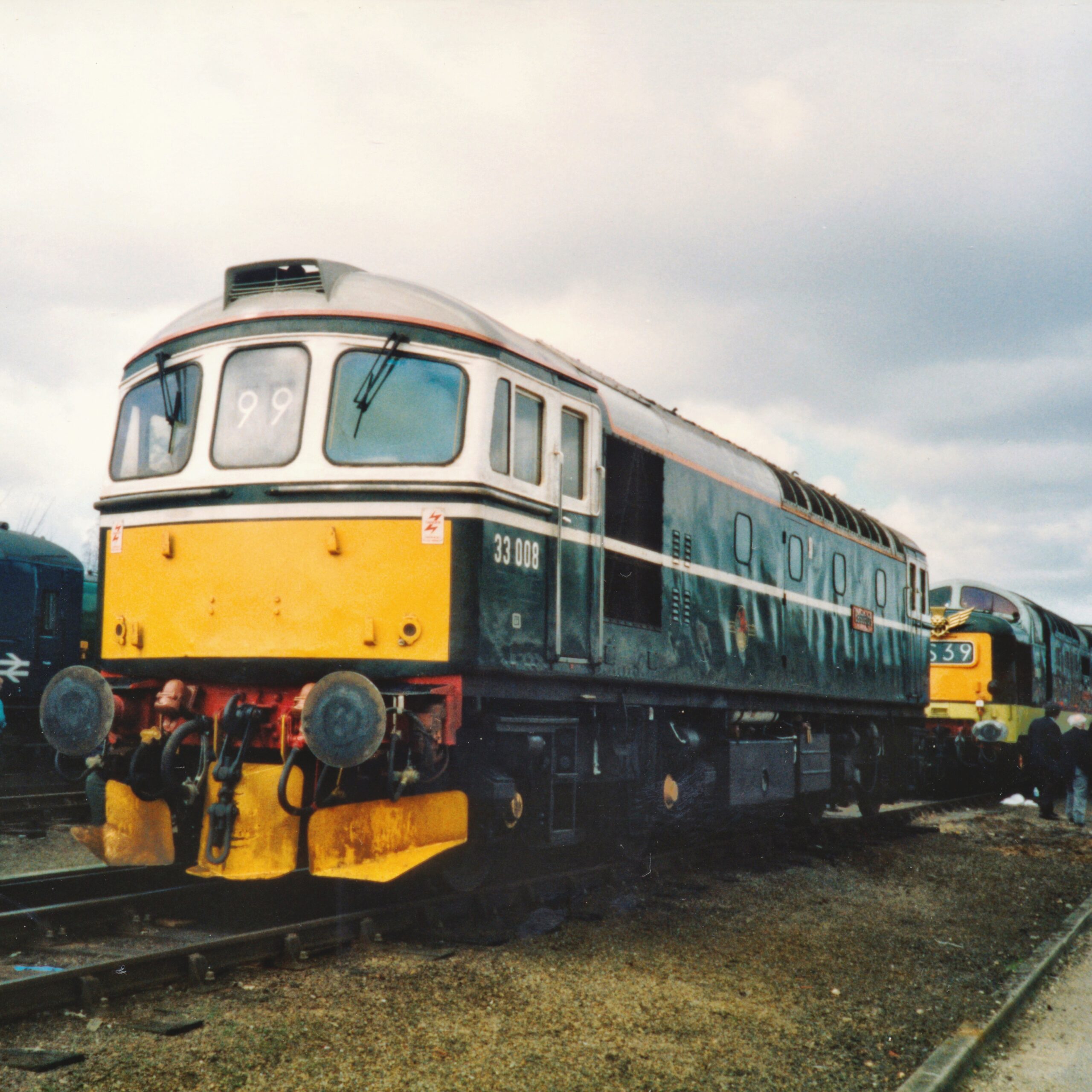
The latest Class 69 rebuild, No. 69005 (ex Class 56 No. 56007) emerged from Eastleigh Arlington on Friday in British Rail green replete with ‘Eastleigh’ nameplates closely resembling the livery that Class 33 No. 33008 once carried. Yoshi and I made a fleeting visit to Eastleigh on Sunday 1st May to get a photo or two of the 69 parked up in East Yard.
Class 69 No. 69005 ‘Eastleigh’ stands on Eastleigh East Yard on the evening of Sunday May 1st 2022Nameplate close-up of 69005 ‘ Eastleigh’Compare 69005 ‘Eastleigh’ with Class 33 No. 33008 ‘Eastleigh’ at Bournemouth Open Day – 26/03/1988
On Bank Holiday Monday, Yoshi and I made a brief visit to the Swanage Railway where two Bullied Pacific locomotives were in action – SR 4-6-2 West Country Class No. 34028 ‘Eddystone’ and SR 4-6-2 Battle of Britain Class No. 34072 ‘257 Squadron’ :
Also at Swanage were a number of diesel locomotives in preparation for the railways 2022 Diesel Gala which takes place next weekend (6th – 8th May)
Class 25 No. D7612 Class 33’s No’s 33012 ‘Lt. Jenny Lewis’ and 33111 with Class 50 No. 50026 ‘Indomitable’
Further diesel locomotives are scheduled to arrive at Swanage on the evening of Tuesday May 3rd 2022.
With the 2022 Swanage Diesel Gala just around the corner, we pop back to May 2008 for our archive video this week and a glimpse of what was running in the Swanage Railway that year:
With recent news events, I was going to finish with a humorous Class 37 / Tractor reference at this point – the Class 37’s are known to some railway enthusiasts as “tractors”, a nickname given due to the similarities between the Class 37 engine sound and a tractor. Instead, I’ll just leave a couple of photos of Class 37/0 No. D6757 (37057) which was painstakingly restored at the Barrow Hill Roundhouse near Chesterfield following its purchase from main line service. The loco debuted at the 2015 Swanage Railway Diesel Gala prior to joining COLAS Rail who were seeking a fleet of English Electric Type 3 locomotives for Network Rail test train duties.
No. D6757 alongside Class 56 No. 56006 and Class 73 No. 73107 at Swanage – 10/05/2015No. D6757 at Swanage Railway Diesel Gala – 10/05/2015
Yoshi waits for the departure of the first train of the day from Norden to Swanage on 3rd January 2022
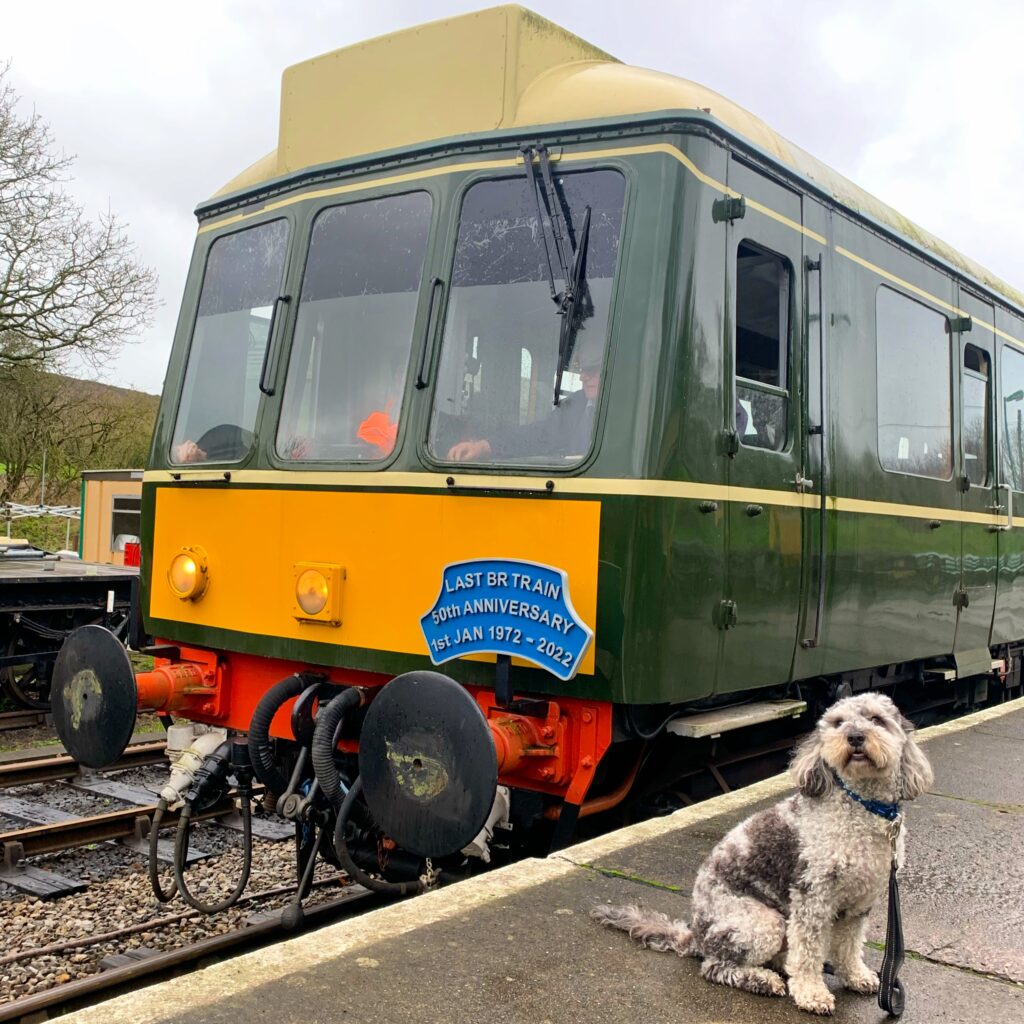
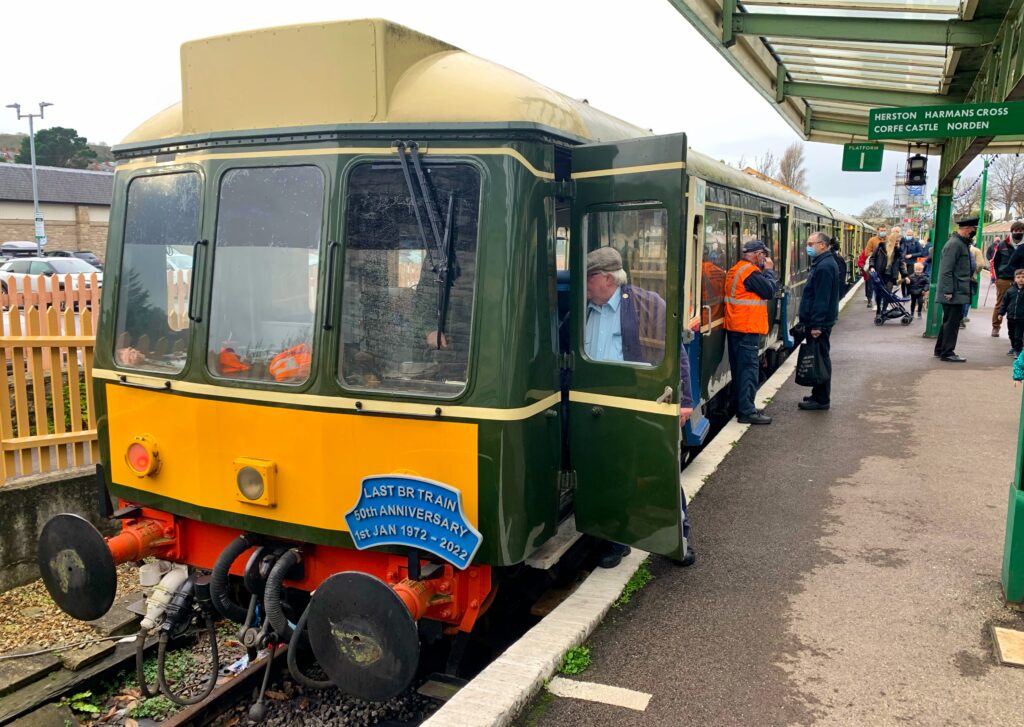
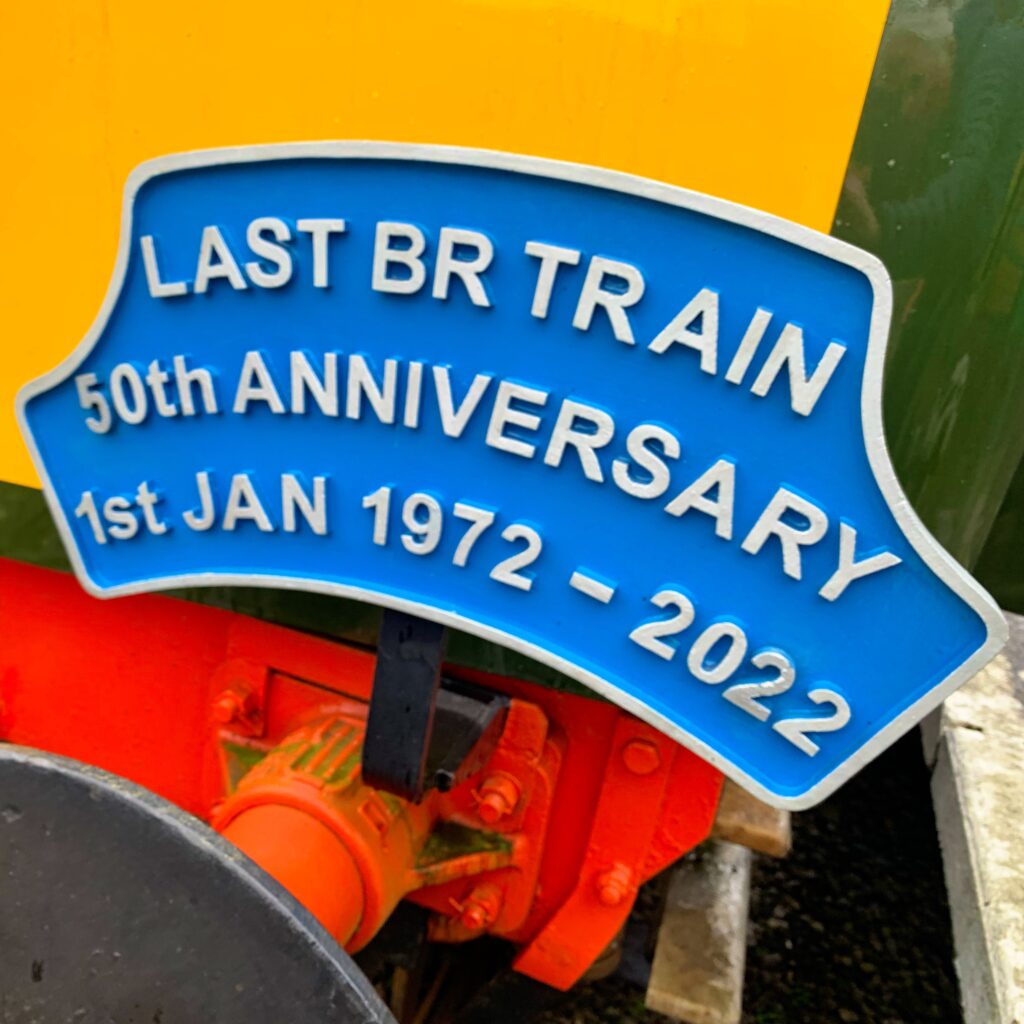
To mark the 50th anniversary of the last scheduled British Rail passenger train from Wareham to Swanage on 1st January 1972 the Swanage Railway held a three day event utilising a heritage diesel-multiple unit (DMU) running between Norden and Swanage.
A Class 117 DMU built in 1960 operated five return trains a day on Saturday 1st January 2022, Sunday 2nd January 2022 and Monday 3rd January 2022. To mark the occasion the first fifty tickets sold online for each of the three days were set at the January 1972 price of 50p per person. A special commemorative Edmondson card ticket was also produced for all ticket holders travelling on these services.
Our tickets alongside the special souvenir Edmundson card ticket produced for the 50th anniversary of the Swanage branch closureThe Class 117 DMU after arrival at Swanage Railway Station
The Dorset branch line from Wareham to Swanage was opened in May 1885 and controversially closed, despite a sustained campaign for its retention by local people and councils, on the morning of Monday January 3rd 1972. Because no services ran to Swanage on a Sunday in the winter timetable the final train ran on New Year’s Day 1972, departing Wareham at 2145 and carrying 500 passengers. The final BR return service from Swanage departed at 2215 and arrived back in Wareham at 2240. The tracks between Swanage and half a mile east of Furzebrook were torn up six months later. The track from Furzebrook being retained for the export of Purbeck ball clay by train.
The special trains carried a commemorative wooden headboard made by Swanage Railway volunteer signalman Malcolm Munro who travelled on the last train in 1972 as a 16 year old
After four years of campaigning the Swanage Railway Society was granted a one year lease of the boarded up Swanage station in 1976 and the rebirth of the Swanage branch began culminating in reconnection to the national railway system at Worgret Junction near Wareham in 2014 thanks to an innovative signalling system linking the heritage railway with Network Rail. During the summer of 2017 the Swanage Railway ran a 60 selected day trial diesel train service to Wareham which saw four trains a day operate from Swanage and Corfe Castle. In 2020 the heritage line won a government grant of up to £50,000 from the ‘Restoring Your Railway Fund’ to pay for an updated feasibility study and business case with the aim of reinstating a train service reconnecting Swanage and Corfe Castle with the main line at Wareham and reversing the 1967 decision by British Rail to close the line following a review of unprofitable branch lines. The Swanage branch was not mentioned by Dr Richard Beeching in his ‘Reshaping of British Railways’ report which decimated much of Britain’s rail network. Dr Beeching was the first chairman of the British Railways Board – the successor to The British Transport Commission – and was hired by Ernest Marples, Conservative Transport Minister who coincidentally happened to be a road construction businessman. Beeching axed 5,500 miles of track, sacked 67,000 workers and shutdown 2,363 railway stations. This was a third of the track network and 55% of stations.