Tag: Class 56

  • Blackpool Redux

    Wednesday 20th July to Tuesday 26th July 2022

    Old meets new at North Pier, Blackpool – 13/07/2022

    Blackpool

    As we mentioned in our last blog entry, Yoshi and I spent a few days in the North West a couple of weeks ago when we took the opportunity to take a trip on a heritage Blackpool Tram. The Blackpool Tramway runs from Blackpool to Fleetwood, originally opening in 1885 and is one of the oldest electric tramways in the world. It is operated by Blackpool Transport (BT) and runs for approximately 11 miles. The last time I visited Blackpool was probably in 2007 when David Tennant, who was at the time playing the Tenth Doctor in BBC TV’s “Doctor Who”, switched on the illuminations. This was just prior to the announcement that the UK Government had agreed to the joint BT and Blackpool Council bid for funding towards the upgrade of the tram track network, with £60.3m coming from Government coffers. The remainder of the £85.3m cost came from Blackpool Council and Lancashire County Council which contributed @ £12.5m each. The Government’s funding allowed the entire tramway to be upgraded with 16 modern and accessible Bombardier Flexity 2 trams being introduced in 2012 replacing the traditional fleet of ageing cars.

    A number of the old trams which I was familiar with on my previous visits have been retained with some having been lovingly restored to form a Heritage Fleet and modified, widened Balloon trams as part of the main fleet. The depot at Starr Gate houses the Flexity 2 trams with Rigby Road Depot, near Manchester Square, housing the traditional trams. A great deal of effort has been made to ensure that the traditional trams have a future in Blackpool and I was pleased to see one on a run out as we arrived in Fleetwood for our stay at the North Euston Hotel. Thinking perhaps these only ran at weekends, I asked a driver of one of the modern trams about the heritage fleet and was directed to a website dedicated to Blackpool Heritage Trams. From here, Yoshi and I booked a one hour promenade tour which picked up from North Pier on its way to Bispham before heading back all the way to the Pleasure Beach in the south of Blackpool before turning once more and returning via the Golden Mile, dropping us off where we started. I was delighted to see that the tram car operating our trip was one of the recognisable and iconic Balloon cars, so named because of their rounded streamlined appearance, in traditional Blackpool 1940s “Wartime” green and cream livery.

    Yoshi waits to board the tram for his Blackpool promenade tour – 13/07/2022

    The Balloon trams were originally called “Luxury Dreadnought” cars and had been commissioned in 1933 by Walter Luff, the controller of the Blackpool network, in a bid to modernise the tramway’s fleet which had been working the tracks since the early years. 27 trams were constructed by English Electric between 1934 and 1935, the first being delivered on 10th December 1934. They were built with central doors and stairs, with a maximum capacity of 94 passengers. Half-drop windows provided ventilation with Art Deco curved glass electric lighting providing illumination. The initial thirteen were open-topped and the remaining fourteen were enclosed, these having sliding roof windows and thermostatically-controlled radiators.

    Yoshi after enjoying a snooze on Balloon tram No. 700 – 13/07/2022

    Between 2009 and 2012, Balloon car No. 700, which was to provide transportation for our journey, along with sisters 711, 713, 719 and 720 were modernised so that they could continue to operate in service following the refurbishment of the whole tramway to light rail standards. New widened doorways were fitted to allow more accessibility, with driver operated doors which fit to the new platforms built at tram stops for the modern Bombardier trams. Fixed seats and new passenger information displays were also fitted to match the new trams. Speedometers were also retrofitted to the driving consoles, which seems like a very good idea to me!

    Yoshi considers driving off in Car No. 700 – 13/07/2022

    We really enjoyed our trip on the heritage tram, and thoroughly recommend the experience should you find yourself in Blackpool. You can join us on our tour of Blackpool promenade as well as view some of the Flexity 2 trams in our video below:
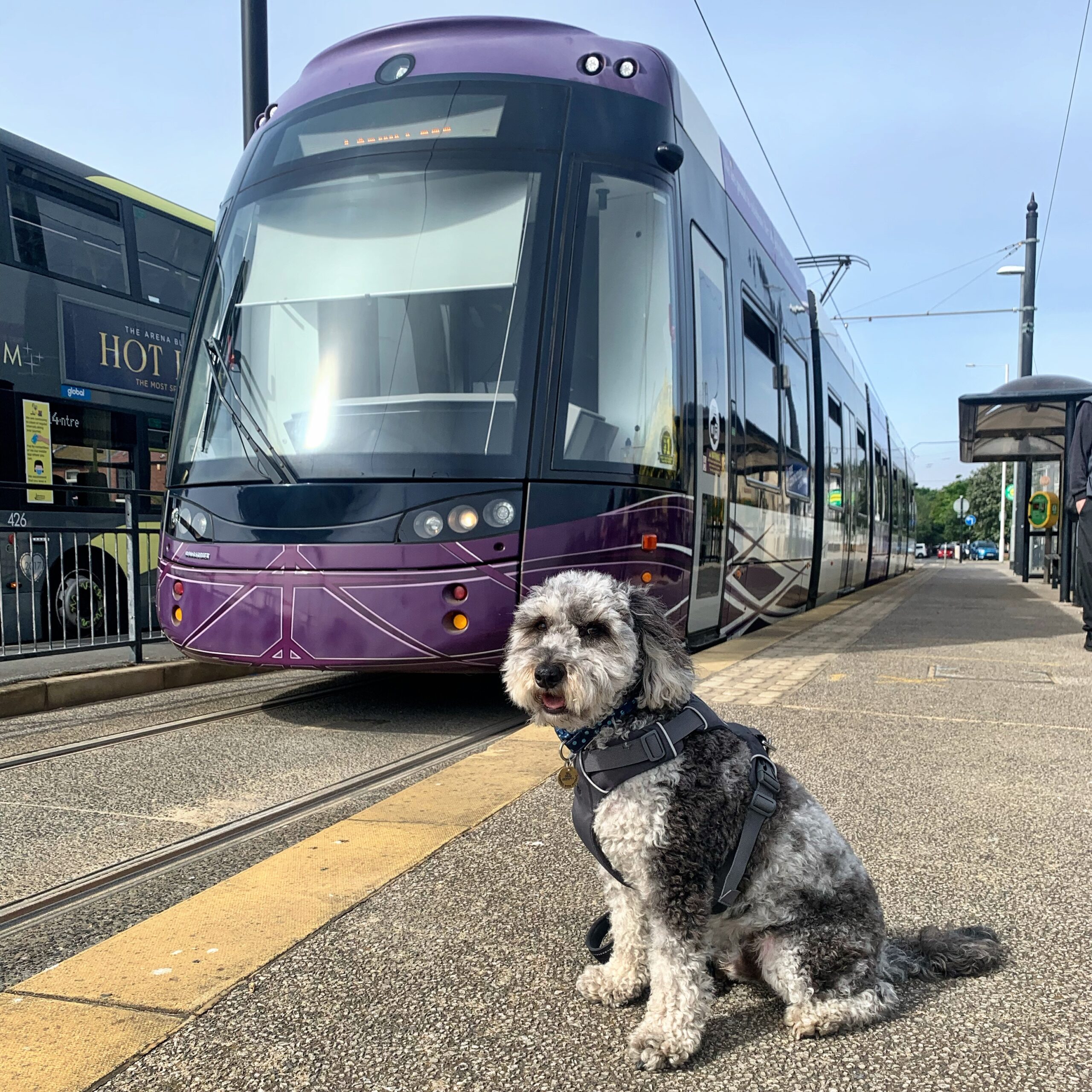
    Yoshi takes time to check out Flexity 2 tram No. 010 at Fleetwood Ferry – 11/07/2022

    For a reminder of what it used to be like, here’s a video of Blackpool Trams from October 1999, featuring a brief glimpse of some of the famous illuminated trams:

    Dorset Coast Express

    Thursday 21st July saw another steam excursion to Weymouth subjected to alterations, this time because of the dry weather and subsequent risk of line side fires, the planned steam motive power was replaced by two Class 47 diesel locomotives. Fingers crossed all goes to plan for the next scheduled The Railway Touring Company Dorset Coast Express in August!

    Class 47 No. 47772 ‘Carnforth TMD’ leads 1Z82 0845 London Victoria to Weymouth past Poole carriage sidings – 21/07/2022
    Class 47 No. 47813 with the return working of the Dorset Coast Express racing through Hamworthy – 21/07/2022

    Around Taunton

    Video screen grab of Class 47 No.’s D1935 / 47805 ‘Roger Hosking MA 1925-2013’ and D1944 / 47501 ‘Craftsman’ power the “Cornish Riviera Statesman” rail tour up Whiteball bank – 23/07/2022

    Saturday saw Yoshi and I in the Taunton area as we went to see a couple of rail tours and hoped to catch celebrity High Speed Train power car No. 43384 which has been outshopped in a retro livery by CrossCountry Trains. First on our radar was Statesman Rail’s “Cornish Riviera Statesman” working Derby to Penzance and double headed by Brush Type 4 Class 47 No.’s D1935 / 47805 ‘Roger Hosking MA 1925-2013’ and D1944 / 47501 ‘Craftsman’, both resplendent in British Rail two-tone green livery. I just had time to set up for a video capture when the train passed by several minutes ahead of schedule, meaning my camera was still asleep in its bag. Also running ahead of schedule was The Railway Touring Company operated “The West Somerset Express”, which like their tour to Weymouth a couple of days previously had been advertised as being steam hauled, but were deputised with West Coat Railways Class 47 No.’s 47813 and 47772 ‘Carnforth TMD’ again in top and tail formation. This tour originated from London Paddington and was destined for Minehead on the West Somerset Railway (WSR) – the longest heritage railway in the UK. On arrival at Bishops Lydeard, the first WSR station after leaving the main line, the Class 47’s were replaced with a pair of steam locomotives to take the train forward. We saw Great Western Railway (GWR) Inspired 2-6-0 9351 Class WSR Mogul No. 9351 and GWR 7800 Class Manor No. 7822 ‘Foxcote Manor’ hauling the train nearing Crowcombe Heathfield producing some fine acoustics. You can follow our day in the video below, which also includes some CrossCountry Trains and GWR Castle Class HST’s:

    CrossCountry Trains (XC) recently outshopped Class 43/3 No. 43384 from Plymouth Laira Depot in a revised High Speed Train livery, known as Intercity Executive, first carried back in the 1980’s. At the time the Intercity yellow and grey livery replaced the original blue and yellow colour scheme that had been used since the introduction of the fleet. CrossCountry has confirmed that the repaint comes as part of marking the 40th anniversary of the introduction of the InterCity 125 by British Rail on to the North East to South West route. Other celebrations include a special Railway Benefit Fund charitable XC HST rail tour on the 27th September 2022 travelling from Leeds to the Severn Valley Railway including a run along the heritage railway itself. An HST power car will be named at Kidderminster to mark the anniversary.

    Class 43/3 No. 43384 is seen leading on 1V52 0658 Edinburgh Waverley to Plymouth as it nears Creech St. Michael – 23/07/2022

    Eastleigh Grid

    Class 56 No. 56081 approaches Shawford working 5O07 1049 Leicester L.I.P. to Eastleigh East Yard hauling Arlington Fleet barrier vehicle’s No. 64664 ‘Liwet’ (Ex Class 508 DMSO from unit 508207) and 64707
    ‘Labezerin’ (Ex Class 508 DMSO from unit 508116) ex EMU Barrier coach set T7 – 24/07/2022

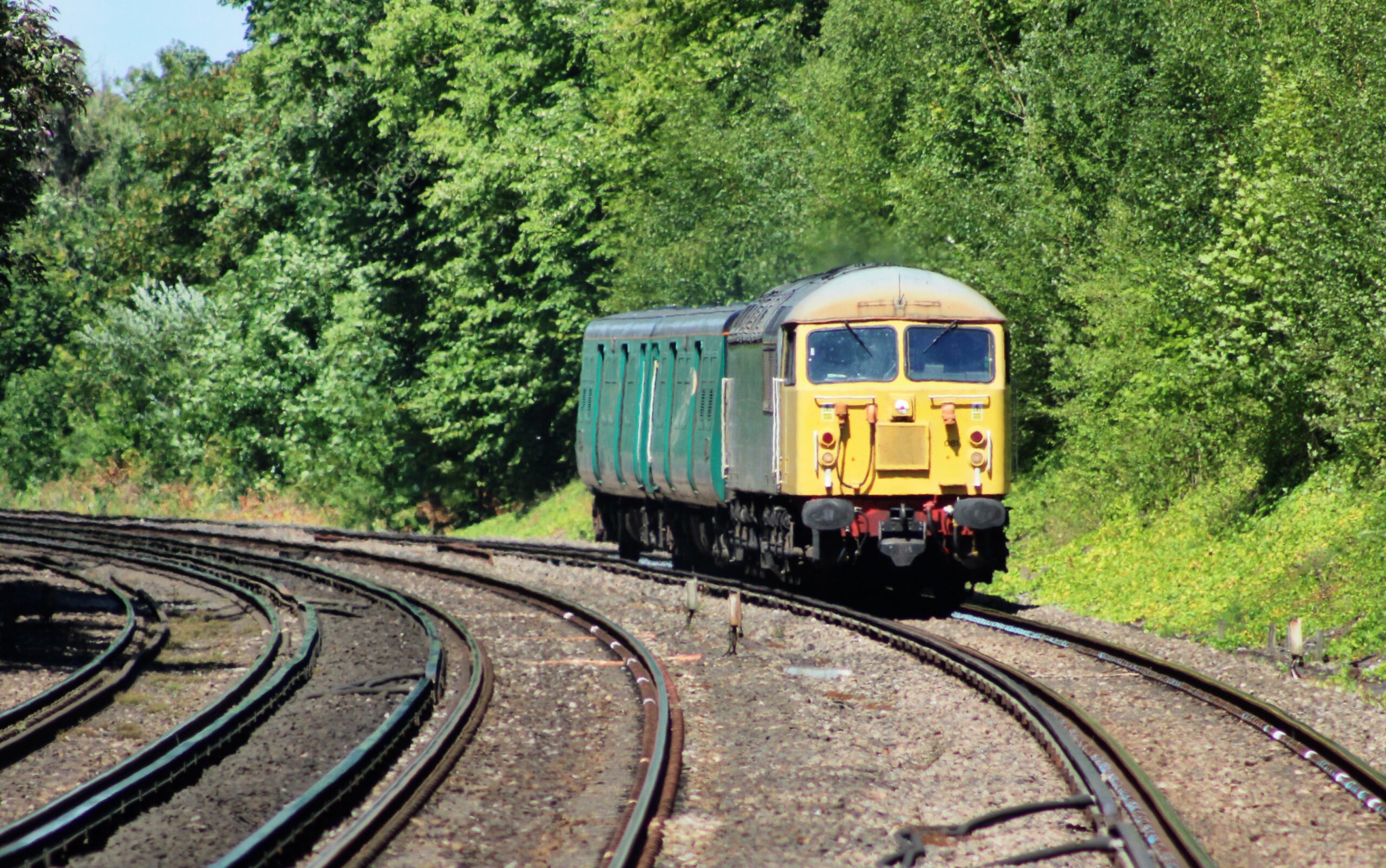
    Yoshi and I were busy with our chores on Sunday morning when we discovered GBRf Class 56 No. 56081 was on its way from Leicester to Eastleigh with barrier vehicles in order to collect Network Rail’s European Railway Traffic Management System (ERTMS) lab train No. 313121 – this was too good an opportunity to miss and we put down the duster and polish and jumped in the car and set off for Shawford. This is more than likely our final opportunity to see this particular Class 56 in its current form as it has been earmarked for conversion as part of the Class 69 programme.

    On our way back home, we had a quick look in at Eastleigh Works and saw the remaining four cars of Wessex Electric Class 442 EMU No. 442412 had been shunted around and were now visible adjacent to the road. Based on the British Rail Mark 3 carriage as used in HST sets, the 442’s were introduced as part of the Bournemouth to Weymouth electrification programme in the late 1980’s and, in my view at least, were the best EMU to have run in the UK.

    GBRf Class 73 No. 73141 ‘Charlotte’ at Eastleigh Works – 24/07/2022
    The remaining four coaches of Class 442 No. 442412 in faded “Express” livery at Eastleigh Works – 24/07/2022

    701 On Test

    Class 701 No. 701017 passes the site of the former Boscombe railway station working 5Q52 1724 Staines Up Loop to Eastleigh TRSMD via Bournemouth – 25/07/2022

    Another week passes by and Class 701’s are still running test trains to Bournemouth and Poole prior to their introduction into revenue earning service. This week we went to take a look at the site of the former railway station at Boscombe which was located between Bournemouth Central and Pokesdown. The station opened in 1897 and served The Royal Victoria Hospital and the shopping area around the Royal Arcade. Boscombe had a goods yard which received traffic for despatch from a large area of Bournemouth along with a coal depot and sidings. The substantial brick built buildings were demolished a few years after closure in 1965. The site now houses business units and threatening signs about unofficial parking. The road bridge which goes over the railway at this point has had footbridges added to each side and these have very high fencing installed for safety reasons.

    Access Point Information, Station Approach, Boscombe – July 2022
    Station Approach, Boscombe – July 2022
    Station Approach, Boscombe – July 2022
    Class 701 No. 701017 was this weeks unit on test as seen in this video – 25/07/2022

    Hamworthy Branch

    More activity on the mothballed Hamworthy Branch this week as temporary traffic lights were put in place at the crossing on Ashmore Avenue on Tuesday 26th July. Road / rail vehicles were also in evidence along the branch moving ballast. Sleepers and sections of track have also been marked up, possibly for replacement. Network Rail have successfully applied for a road closure permit on Lake Road, presumably to enable work to be carried out on the railway bridge which is located there.

    Pressure washing Ashmore Avenue crossing on the Hamworthy Branch – 26/07/2022
    We arrived just too late for a decent shot of a road / rail vehicle working on the Hamworthy Branch at Hamworthy station, but we thought we’d share this anyway! 26/07/2022

    Weymouth Railway Heritage Trail

    In the past week or so, new signage has popped up around Weymouth on the route of the former Weymouth Harbour Tramway which last saw use in 1999 and was dug up by the local council in an act of vandalism in 2020/21 with most of the track being removed at this time. With no sense of irony Weymouth Town Council, Dorset Council and South Western Railway have installed information boards celebrating Weymouth’s unique railway history.

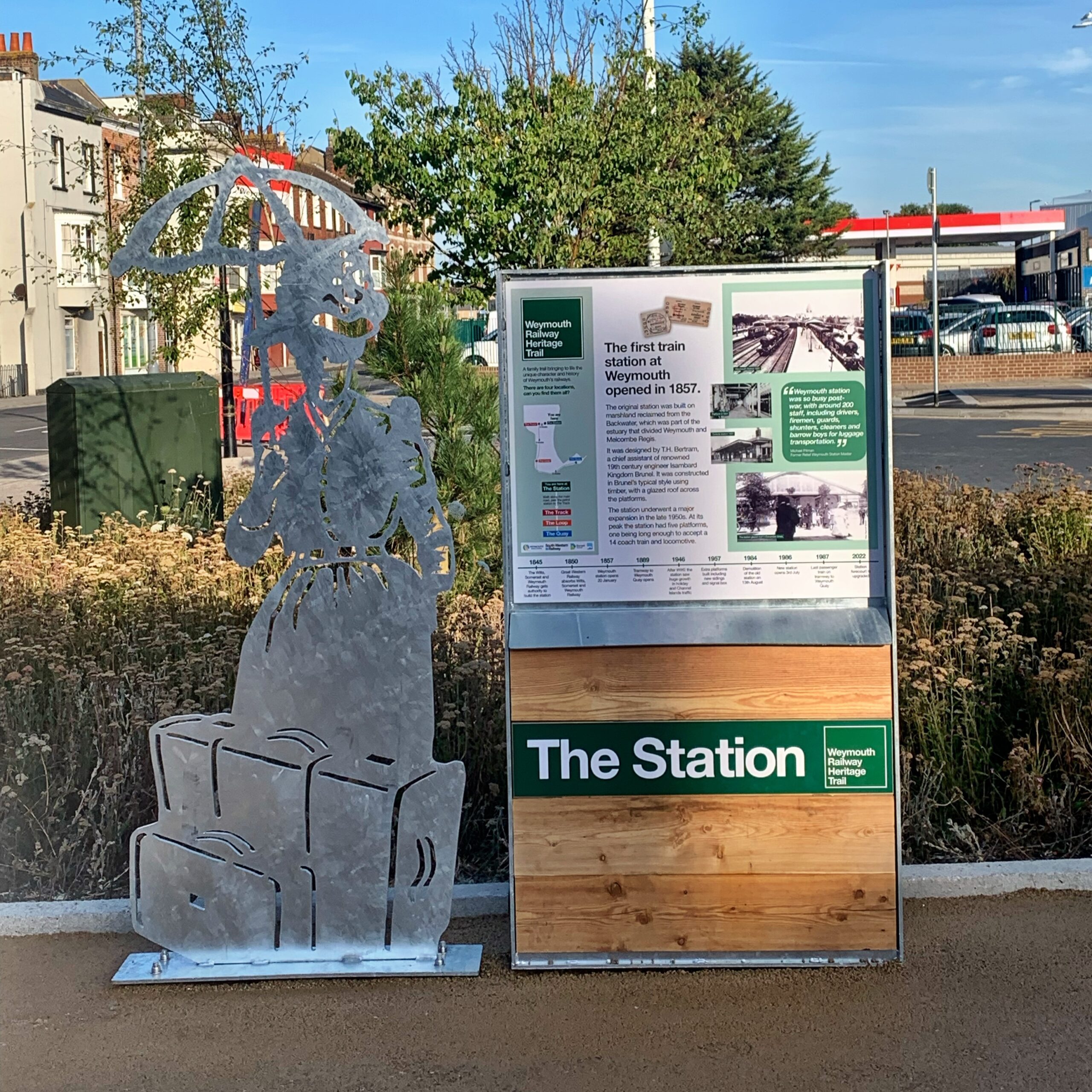
    The remodelled station forecourt at Weymouth – July 2022
    Weymouth Railway Heritage Trail information board ‘The Station’ – July 2022
    Weymouth Railway Heritage Trail information board ‘The Track’ – July 2022
    Weymouth Railway Heritage Trail information board ‘The Loop’ – July 2022
    Weymouth Railway Heritage Trail information board ‘The Quay’ – July 2022

    This weeks “The Railway Dog” was mostly written to the sounds of Faeland, Hollow Coves, The Teardrop Explodes and Sibelius Symphony No. 5. Thanks for visiting. Comments and corrections are, as ever, always welcome and we really appreciate it when you point out typos or grammatical errors. We’ll be back next week, we hope you’ll join us.

  • Forest of Dean Visit

    Class 56 No. 56078 stands at the buffer stops adjacent to Horton Road Level Crossing, Gloucester on 30th December 2021

    Over the New Year we were lucky enough to spend a few days in the beautiful Forest of Dean in Gloucestershire. On our journey to our hotel we made a slight diversion via Gloucester as COLAS liveried Class 56 No. 56078 had worked 0Z51 Bescot Up Engineers Sidings to Gloucester on 29th December and was sitting at the buffer stops adjacent to Horton Road Level Crossing before her onward journey to Port Talbot on New Year’s Eve. As can be seen in the video below, our brief interlude at Gloucester Railway Station also produced a couple of CrossCountry Voyagers and the Direct Rail Services (DRS) Daventry to Wentloog Tesco service. 221132 can be seen sitting at Gloucester platform 4 with the 1S43 0725 Plymouth to Edinburgh Waverley service which had been terminated at Gloucester because of “severe flooding beyond that which could be mitigated on Network rail infrastructure.” Stablemate 221130 arrives with the 1S47 0927 Plymouth to Edinburgh. Class 66 No. 66427 is working 4V44 Daventry DRS (Tesco ) to Wentloog ( Freightliner ) passing Horton Road Level Crossing, Gloucester on 30th December 2021 and the same loco can also be seen working 4Z36 1530 Wentloog ( Freightliner ) to Daventry DRS (Tesco ) passing through Lydney on 31st December 2021. The wait at Lydney was made all the more interesting chatting to a young rail enthusiast, and his dad, about his love of all things Direct Rail Services. He was visiting the station with a banner wishing DRS a Happy New Year. Fabulous and well received by the driver of 66427 if the deployment of the locomotives’ horn is anything to go by! The CrossCountry Voyager units preceding the Daventry working are 220013 and 221127 forming the 1Z53 1227 Plymouth to Edinburgh service which escaped the disruption to XC services due to industrial action over the role of train guards on New Year’s Eve.

    While in Lydney, we made a visit to Lydney Harbour which has contributed to centuries of prosperity to the local economy and also that of Britain. Lydney Harbour was where the vast majority of Forest coal, iron ore and other commodities was loaded into ships bound for Bristol, the West Country and Ireland. In the late 18th and 19th Centuries, a network of horse drawn tramways proliferated the Forest of Dean built to transport coal and ironstone to local ironworks as well as the harbour at Lydney. These tramways were replaced in the mid-nineteenth century which saw the introduction of railways to the Forest.

    Yoshi at Lydney Harbour

    The Lydney and Lydbrook Railway was authorised by an Act of Parliament in 1809. This became the Severn & Wye Railway and Canal Company and the current canal and basin complex at Lydney was constructed by them between 1810 and 1813, the outer harbour being completed in 1821. A horse drawn tramway was the first evidence of rails at the harbour. This was converted to Great Western Broad Gauge in 1868 and finally to standard gauge in 1872. Where the River Severn narrows is the site of the Severn Rail Bridge which was built 1875 – 1879 and was seriously damaged in an accident on 25th October 1960.

    Two river barges hit one of the piers on the bridge, causing two spans to collapse into the Severn. As they fell, parts of the structure hit the barges causing the oil and petrol they were carrying to catch fire. Five people lost their lives in the incident. In the January 1961 edition of The Railway Magazine hopes were expressed that the bridge would be repaired as, in the 1959 British Transport Commission report to the Ministry of Transport on the re-appraisal of the plan for modernising British railways, it was stated the Severn Railway Bridge route would be developed to relieve the congested Severn Tunnel. However, further collisions with the bridge piers in the years following resulted in British Rail demolishing the bridge between 1967 and 1968 as it was felt to be beyond economical repair. A memorial to those who lost their lives in the 1960 accident is situated at Lydney Harbour.

    Memorial to those who lost their lives during the Severn & Wye Railway Bridge disaster

    For the duration of our visit to the Forest of Dean, we stayed at The Speech House Hotel, a former 17th Century hunting lodge built for King Charles II. Built in 1676 the hotel is situated close to the centre of the Forest on a site used for the holding of the Forest Courts at which the Foresters settled matters of dispute and privilege concerning mining and Forestry Law and custom. The hotel was enlarged in the later part of the 19th Century but nearly all the original building remains and has been refurbished to offer modern facilities and luxurious rooms while retaining its period features. The Speech House Hotel also has dog friendly rooms and our four legged companions are allowed in The Orangery which serves light meals and afternoon tea. We found the menu, devised by Head Chef Gareth Jenkins, varied and interesting showcasing local produce from the Forest of Dean and the Wye Valley. It was also extremely tasty! Our room was clean and comfortable and the New Year’s Eve meal and entertainment enjoyable whilst observing covid guidelines.

    Our stay included a guided walk through a part of the Forest which was formerly the track bed of the Severn & Wye Railway Mineral Loop which ran from Drybrook Road near Cinderford to Tufts Junction, just south of Whitecroft. The section from Drybrook Road to New Fancy Colliery / Mallards Pike is now a cycleway and footpath. Construction of the Mineral Loop began in September 1870 and was built to standard gauge as the Great Western Railway was at that time converting from broad gauge. The line was opened to traffic by May 1872. During the Second World War, the Forest of Dean was used for ammunition storage and to facilitate this, the Mineral Loop was severed in May 1942, the track being relaid some 19 months later in December 1943. By the end of the war all the collieries located along the Mineral Loop had closed, the military depot at Moseley tunnel providing the sole traffic for the line. In March 1951 the Mineral Loop was cut at Moseley Green and the line south of this point closed as far as Pillowell. The remainder of the line was closed in June 1953 with the exception of the section between Pillowell and Whitecroft. The Forest of Dean Railway Trail and Mineral Loop is a 6.8 km loop trail located near Cinderford, Gloucestershire that features a river and is rated as moderate. The trail is primarily used for walking, running, and mountain biking and is accessible year-round.

    Following our walk and a very welcome spot of lunch, we headed into nearby Coleford primarily to visit The Great Western Railway Museum Coleford, which I had gleaned from their website was open on Fridays and Saturdays. Perfect as our stay coincided with a Friday. However we soon learned, not a Friday which happens to fall on December 31st. Completely understandable, but a pity the website had not been updated to reflect this prior to my email to the museum to enquire about their next scheduled opening sent on 31st December. The museum is housed in one of the last remaining permanent railway buildings in the Forest of Dean on the site of the former Coleford railway yard. Have to say, it looks an interesting location with an exciting collection of artefacts and we will hopefully find time to visit another time in the future.

    After spending the evening celebrating the arrival of 2022 we were up early on New Year’s Day as we had booked a steam train ride on the Dean Forest Railway, an 85 minute nine mile round trip starting at Norchard Station. The train heads south to Lydney Junction and north to Parkend before returning to Norchard. The train stops for around 20 minutes at each end of the line where the engine runs around its train which provided ample time for photographs and for anyone who wishes to do so, to visit the footplate of the locomotive, although I’m not sure if dogs are allowed! The Dean Forest Railway started life as a tramroad in 1810 and was retained by British Railways until 1985. Today’s Dean Forest Railway Society began heritage operations on a small siding at Parkend in 1971 with the aim of preserving and operating the last remaining section of the Severn and Wye Railway. They moved to develop the Norchard site in 1978 followed by extensions towards Lydney Junction in 1995 and Parkend in 2006. Everyone we met representing the railway was extremely friendly and helpful. The locomotive for our January 1st trip was 4575 Class small Prairie tank engine No. 5541 which was built by the Great Western Railway at Swindon Works in 1928. She spent much of her working life in Machynlleth having been previously briefly based at Swindon shed and Bristol Bath Road. During 1960 she moved again to Plymouth Laira where she stayed before being withdrawn from service on 10th July 1962 having completed 921,589 miles in revenue earning service. In September 1962 she was sold for scrap and taken to Messrs. Woodham Bros of Barry where she remained until 1971 when 5541 was saved and moved by rail to the Dean Forest Railway at Parkend; the 25th locomotive to leave Barry Scrapyard for preservation. She arrived at her new home on 10th October 1972 in time for the October Gala Day. Restoration was undertaken on the siding behind the down platform at Parkend and was completed, and first steamed on 29th November 1975. On 16th January 1978 in light steam, she joined the movement of stock from Parkend to Norchard and was a regular performer on the short track constructed at the Steam Centre. The 4575 Class were popular engines on the GWR, they were versatile and well-liked by crew. They were an improved version of the 45xx Class engines, the main modification being the larger, sloped tanks and cast motion brackets.

    The videos below show a taste of our 2021 visit as well as a previous visit of mine made in 1995:

    References:

    https://opentraintimes.com

    https://live.rail-record.co.uk

    https://en.wikipedia.org/wiki/Severn_Railway_Bridge

    http://www.forestofdeanrailways.info/sw_timeline.html

    http://www.deanforestlocogroup.org/latest-news/locomotives/gwr-small-prairie-5541/

    https://www.alltrails.com/trail/england/gloucestershire/forest-of-dean-cinderford-linear-park

    https://thespeechhouse.co.uk/

    https://www.gwrmuseumcoleford.co.uk/

    https://deanforestrailway.co.uk

    https://rogerfarnworth.com/2017/09/26/lydney-harbour/

    The Railway Magazine – January 1961

    Many thanks to Caroline for allowing me the use of her photographs within the galleries above