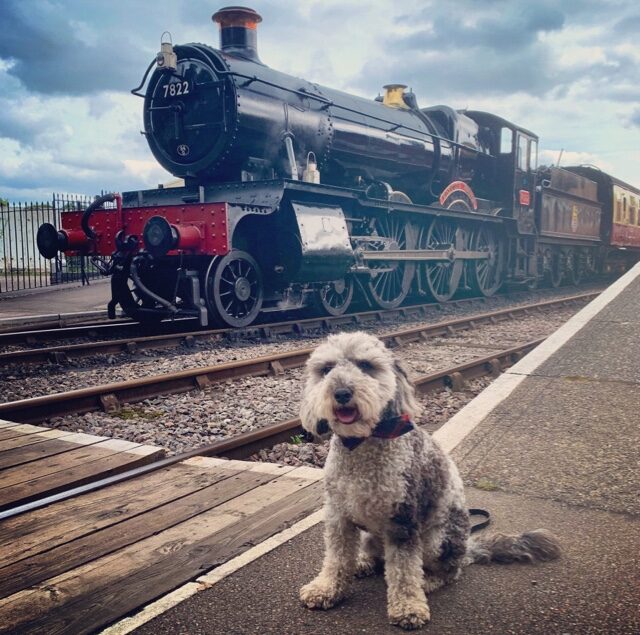
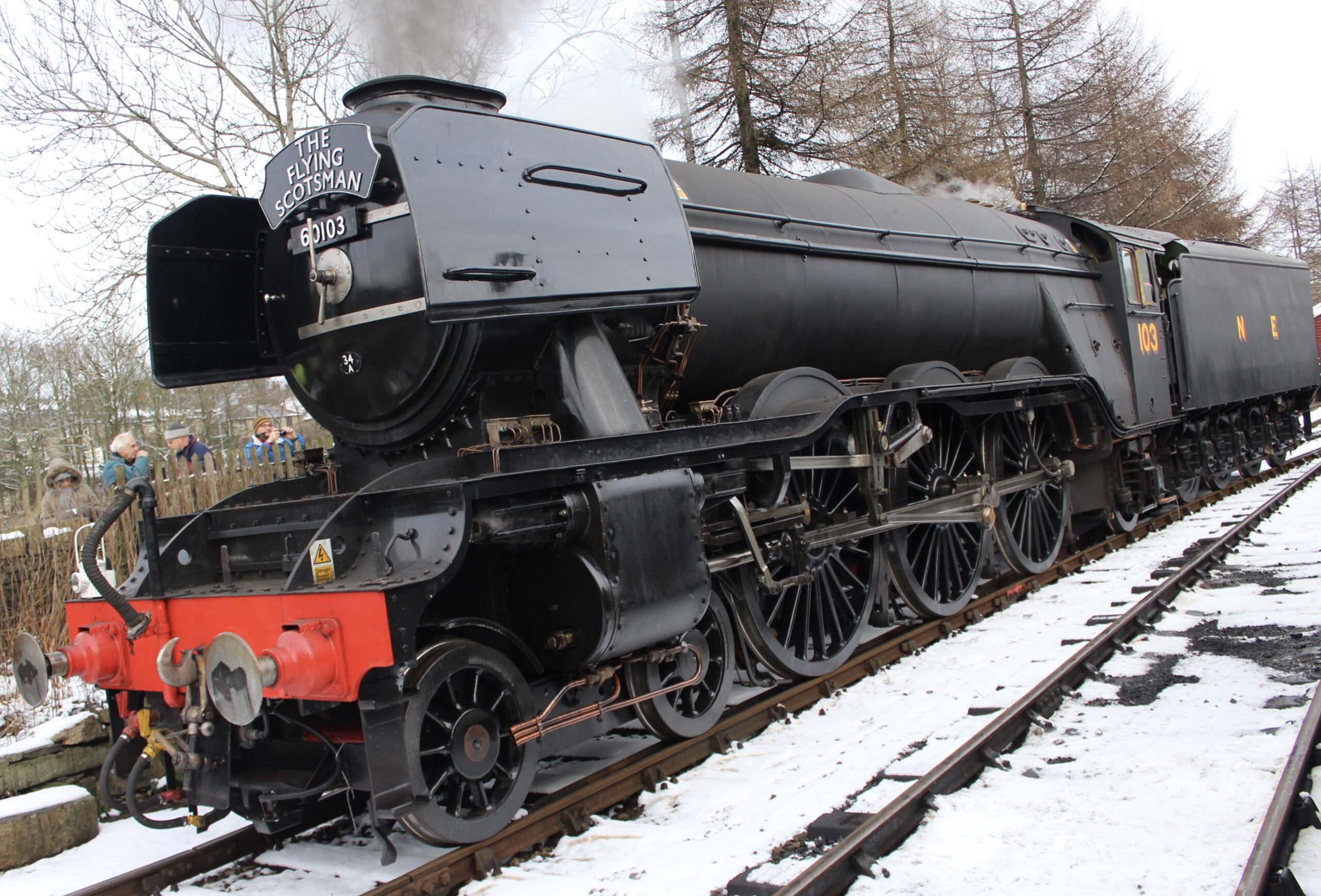
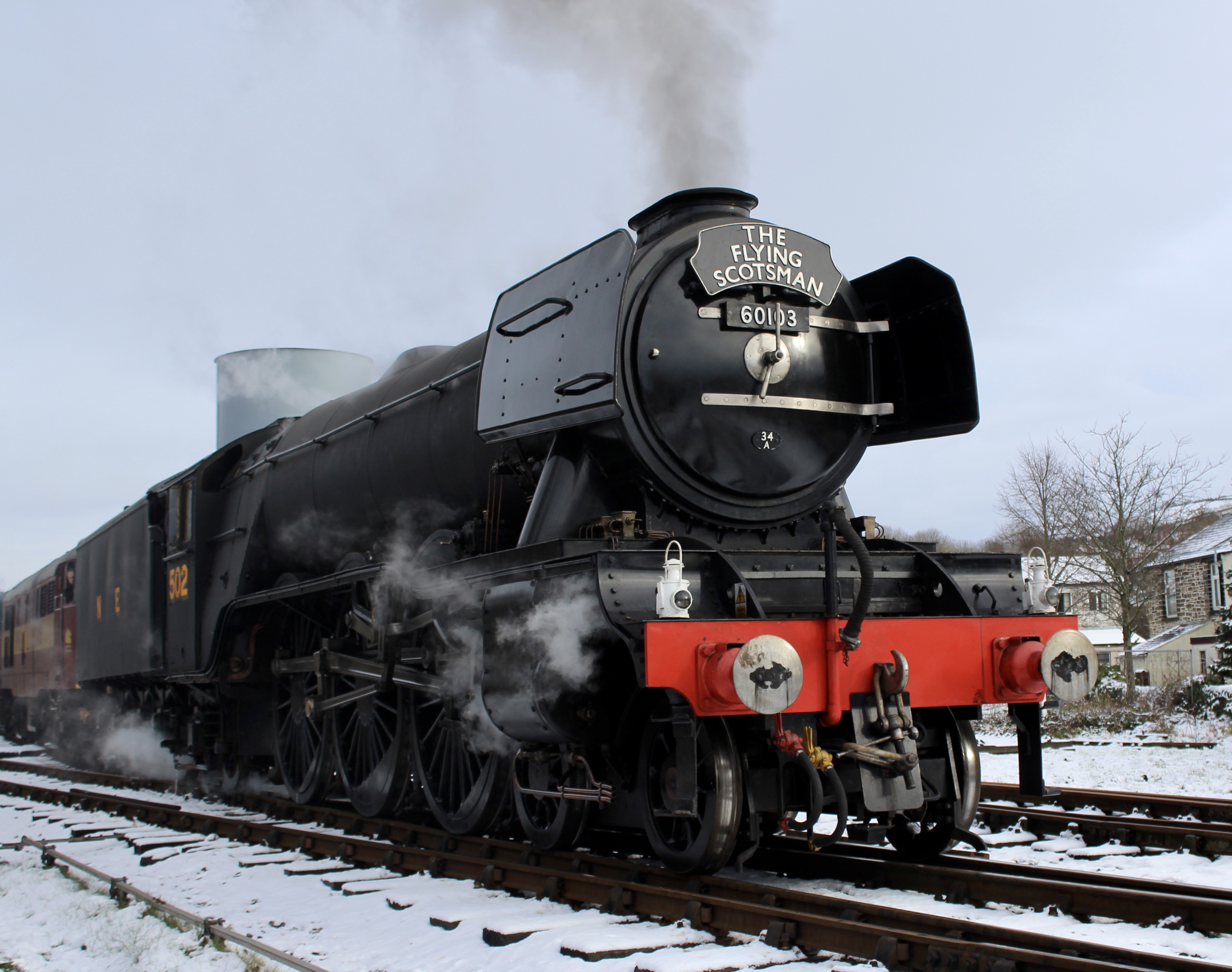
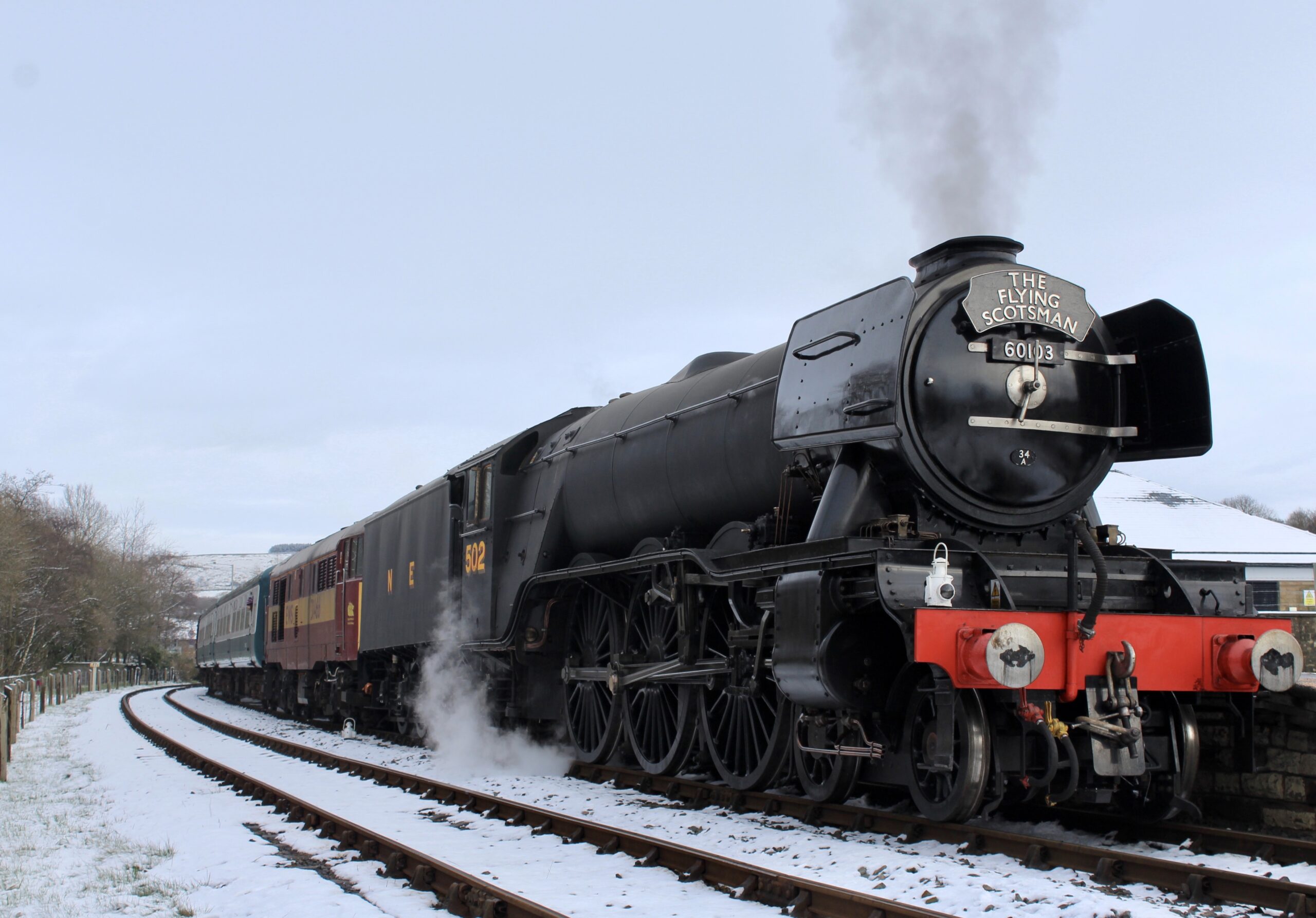
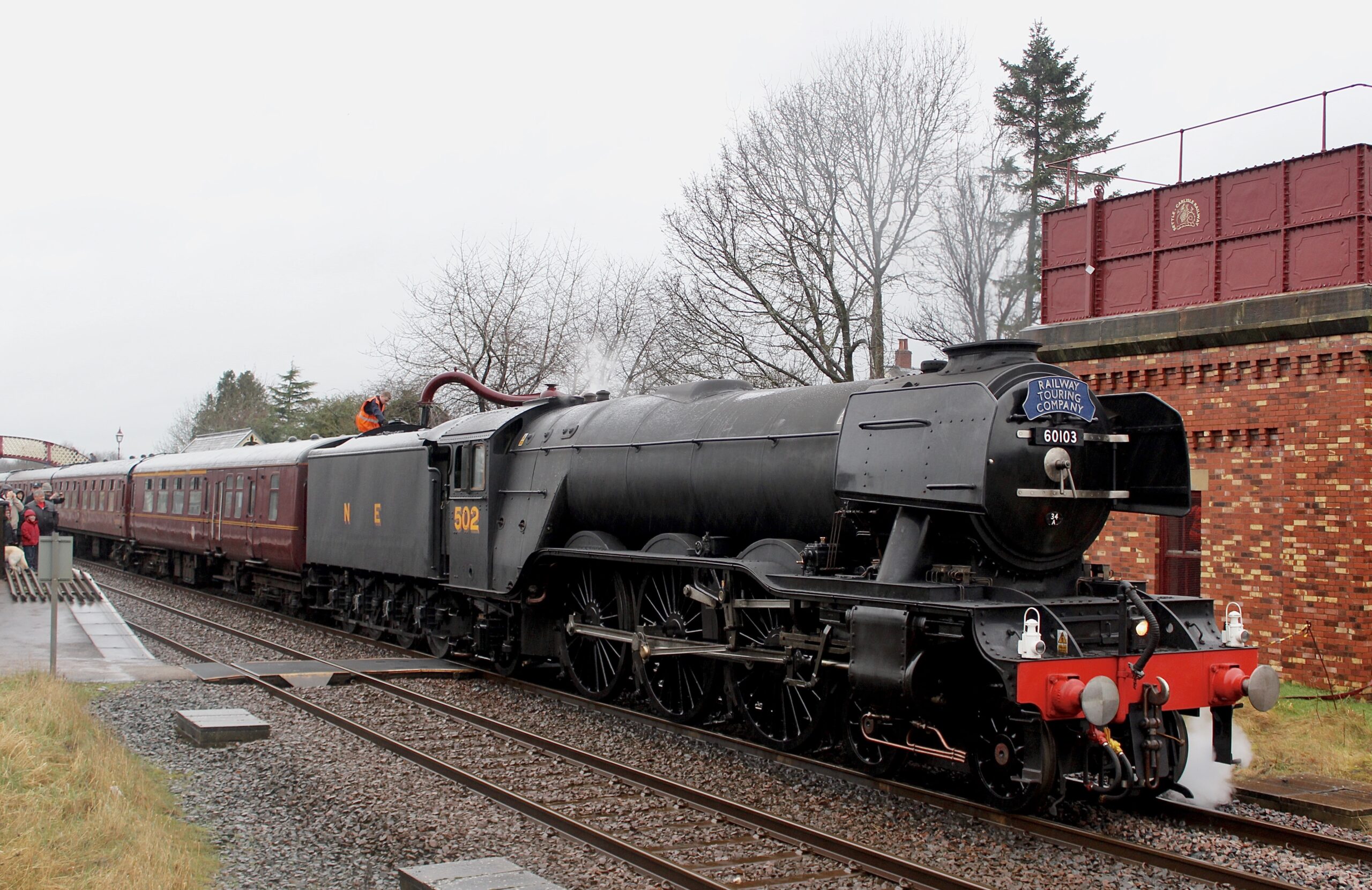
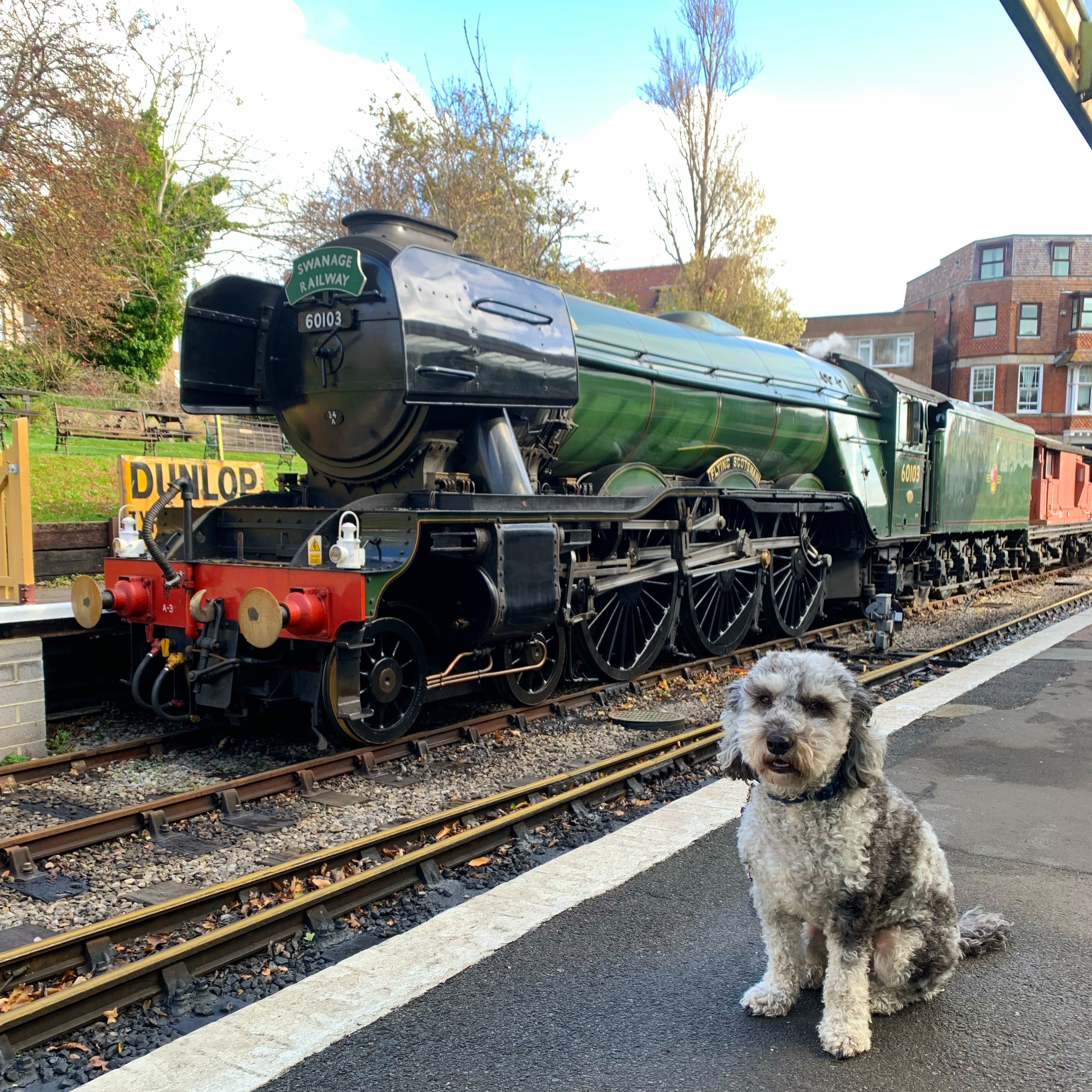
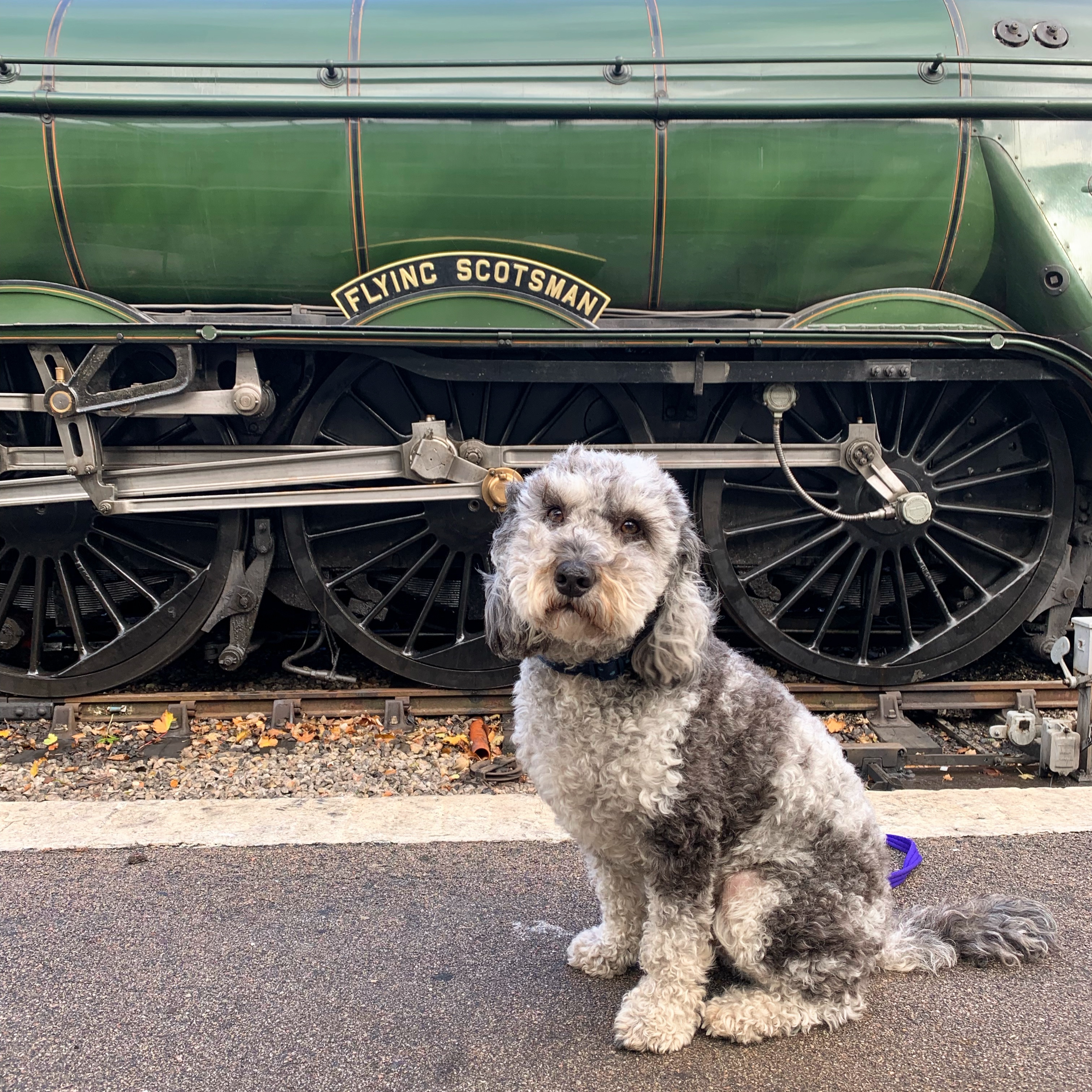
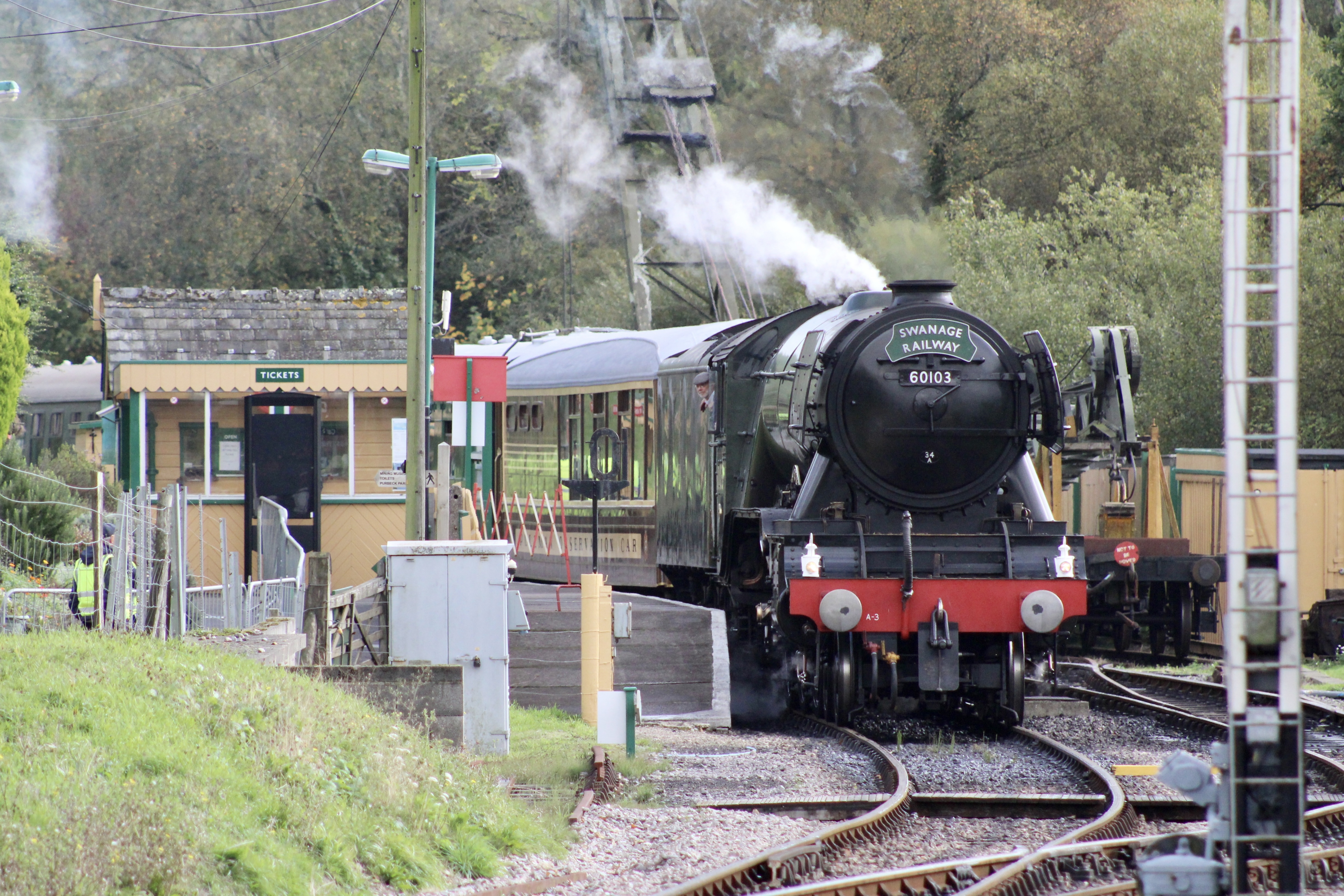
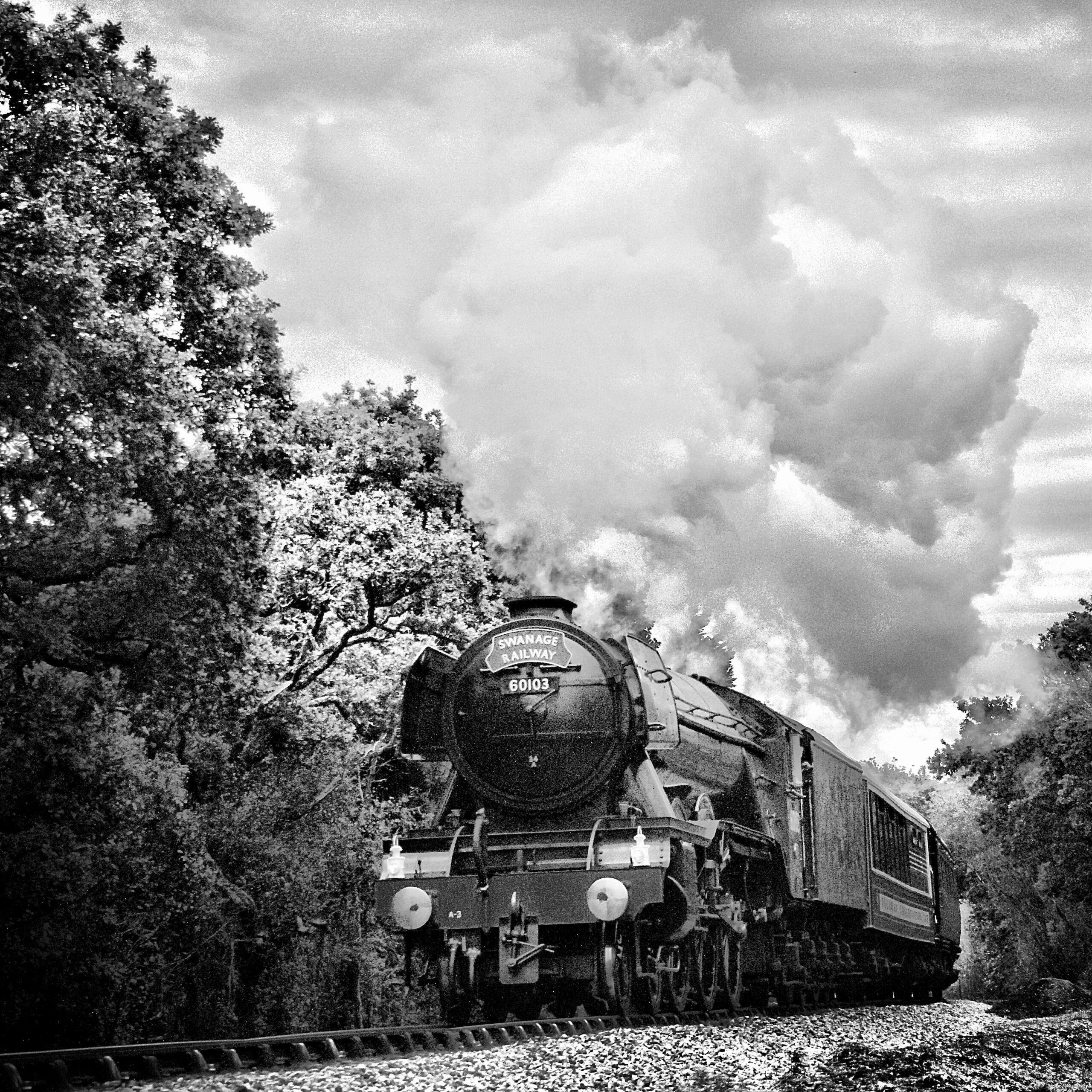
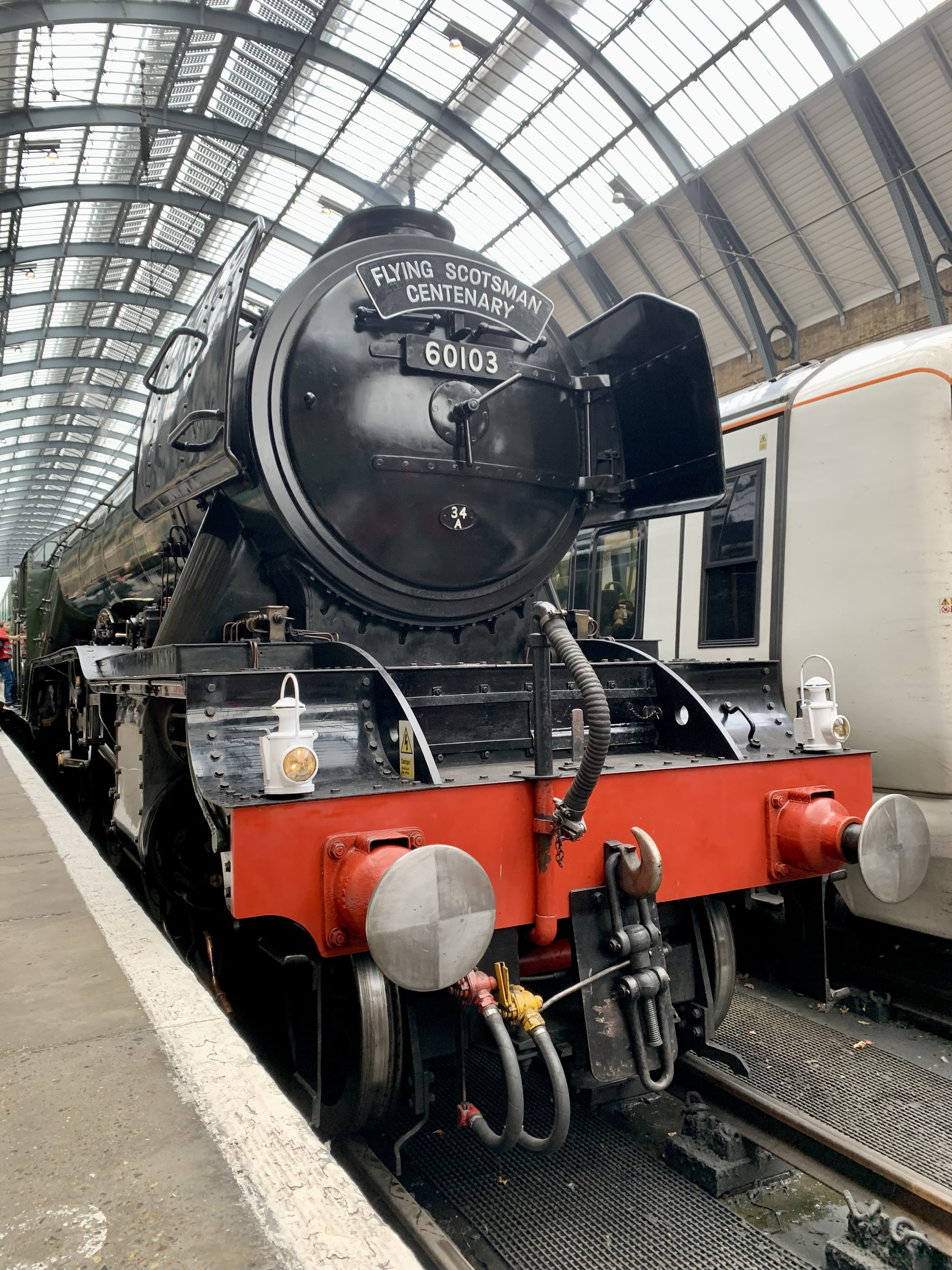
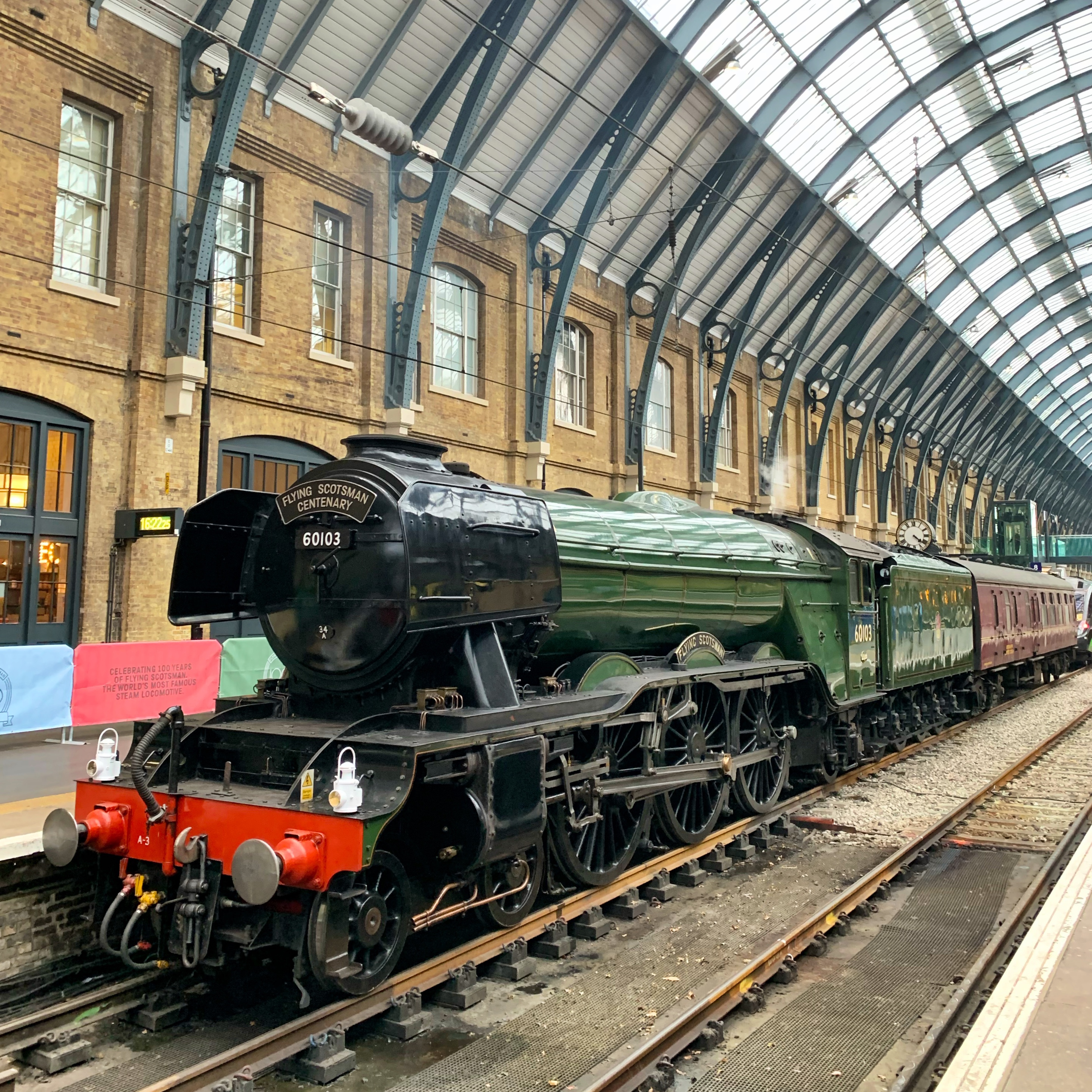
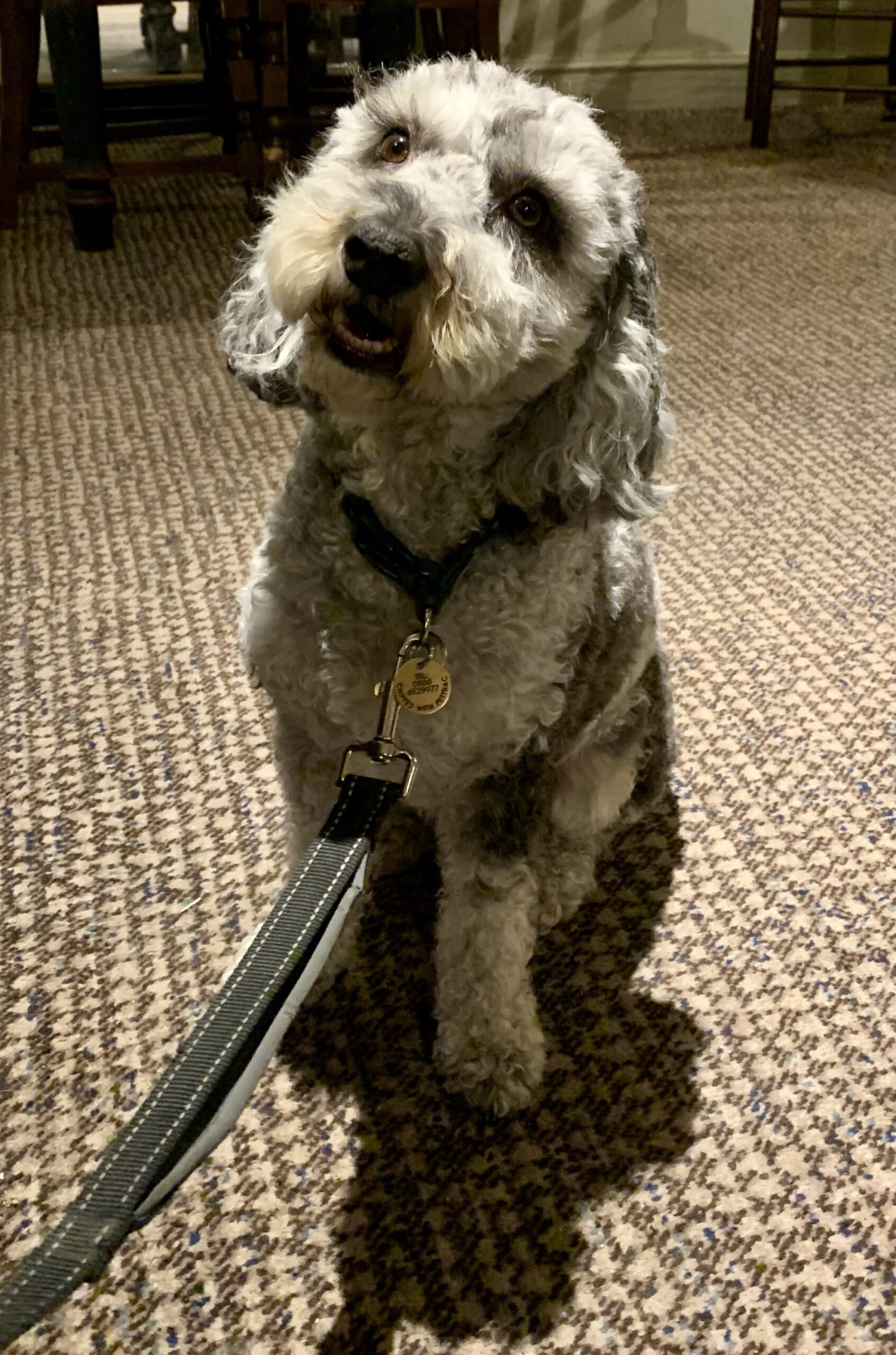
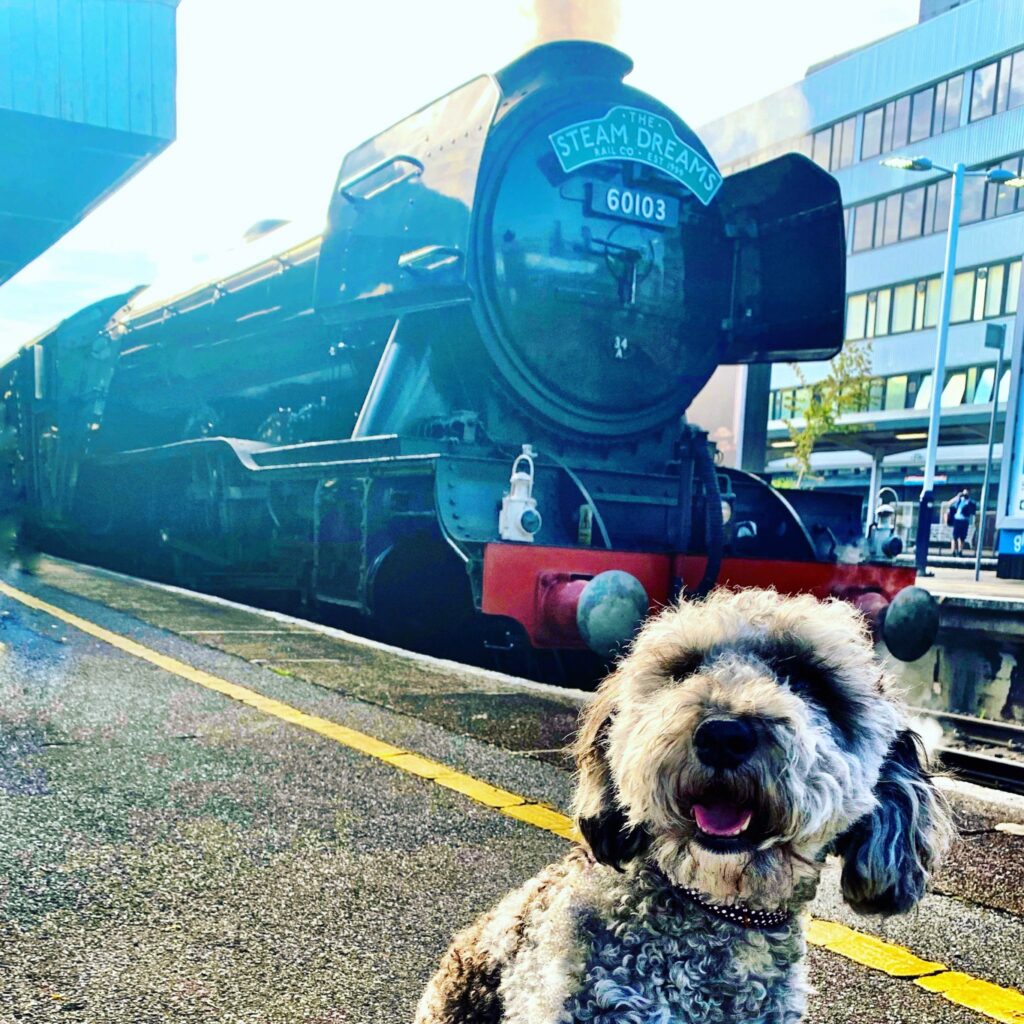
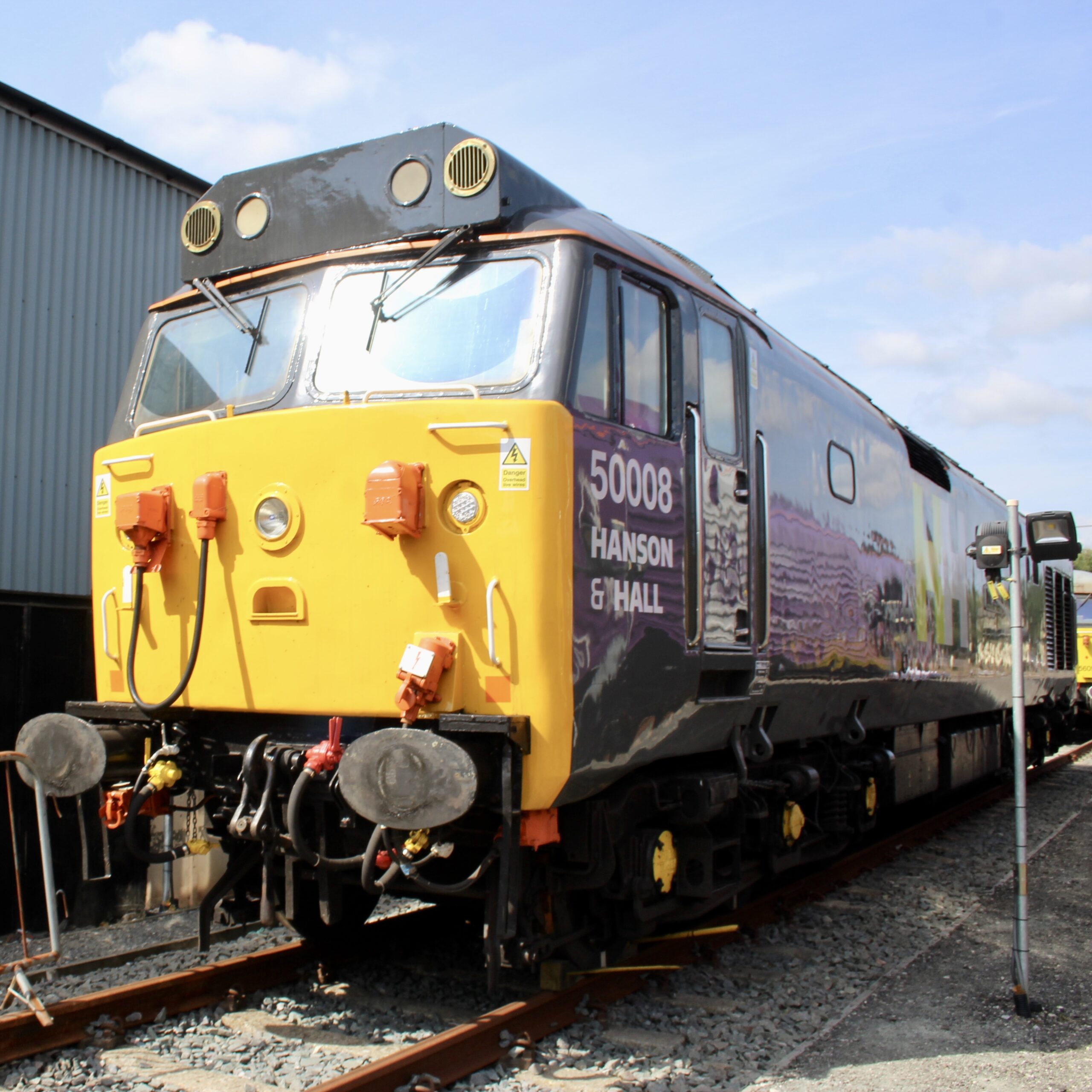
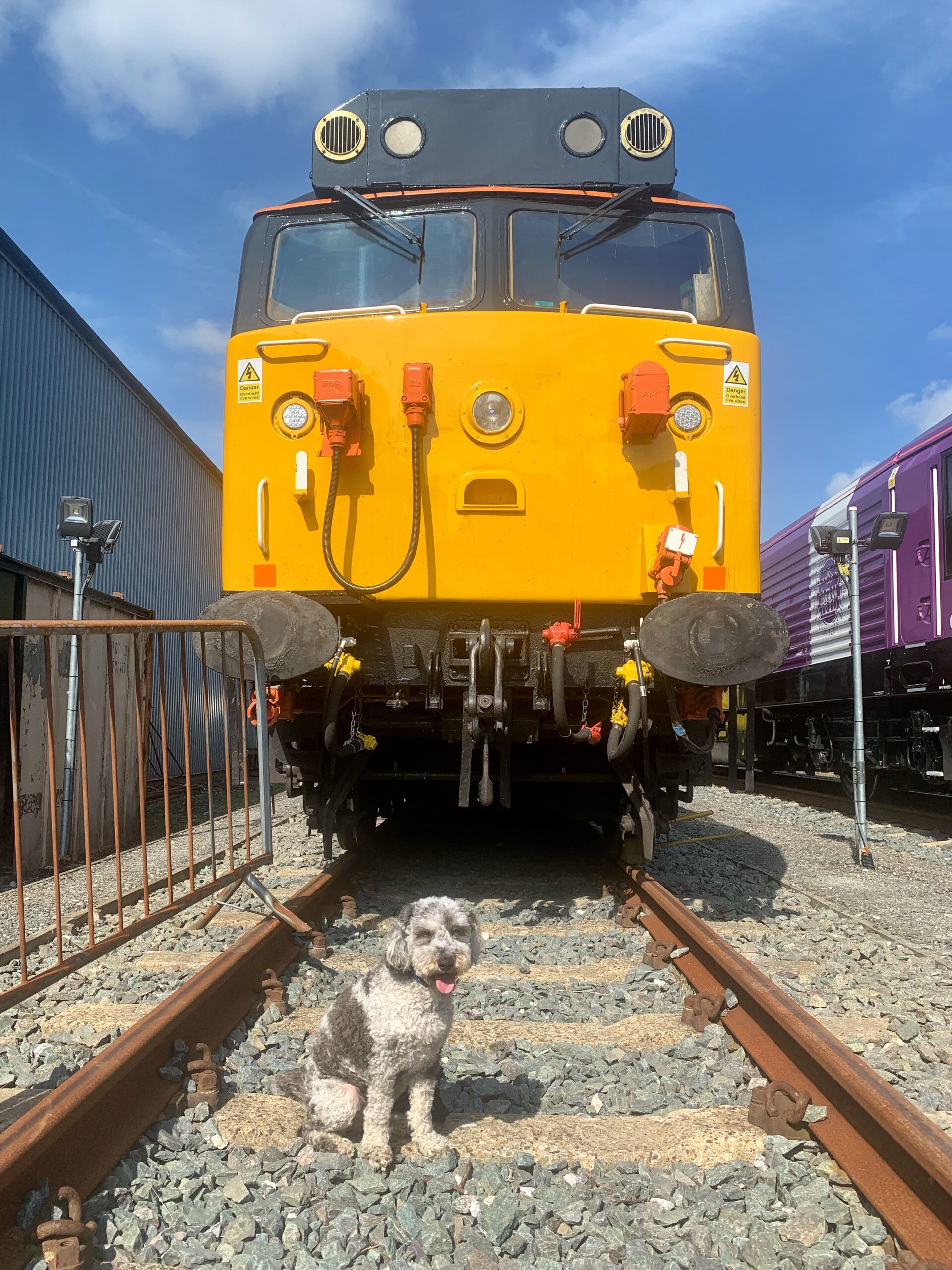
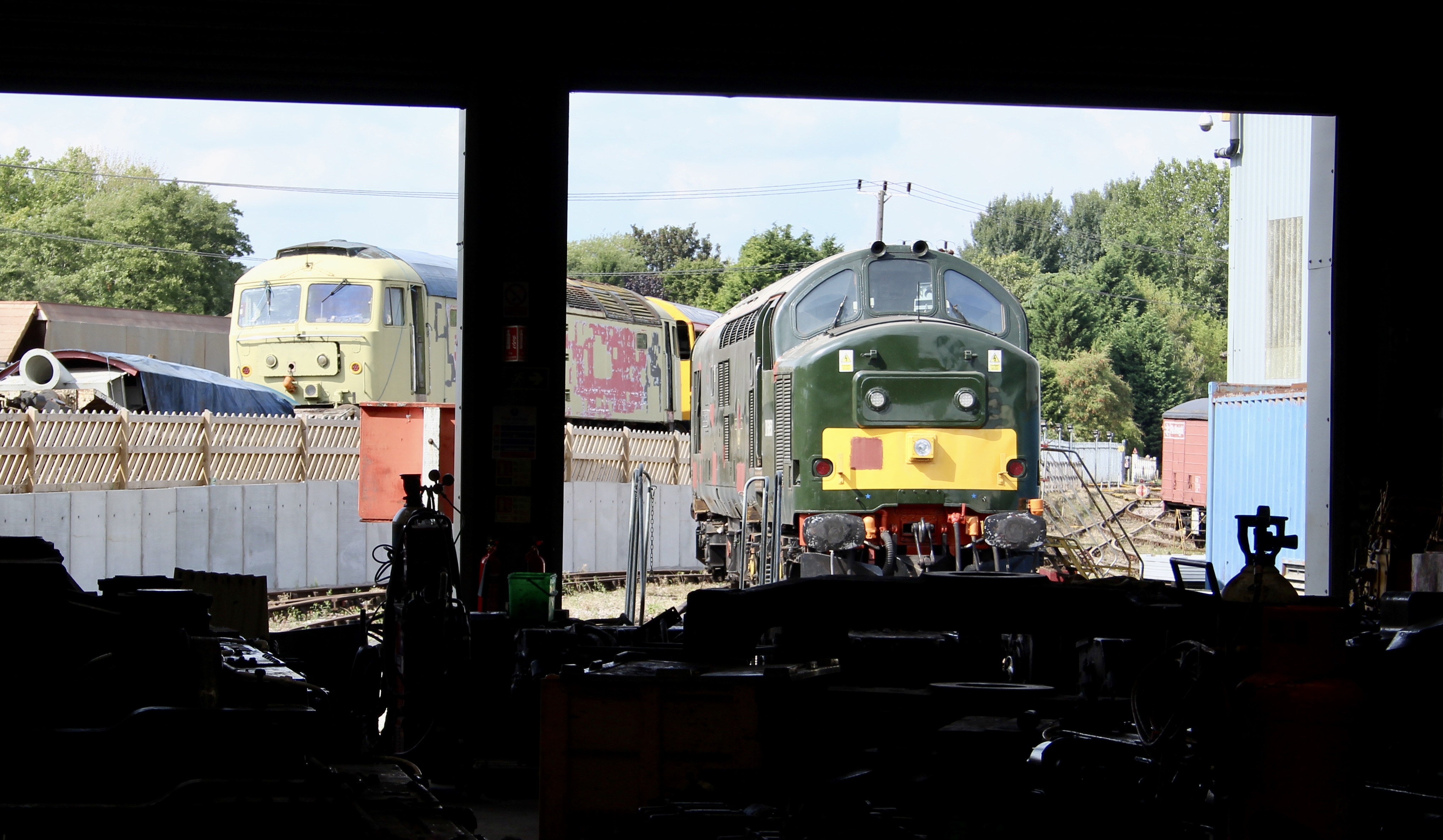
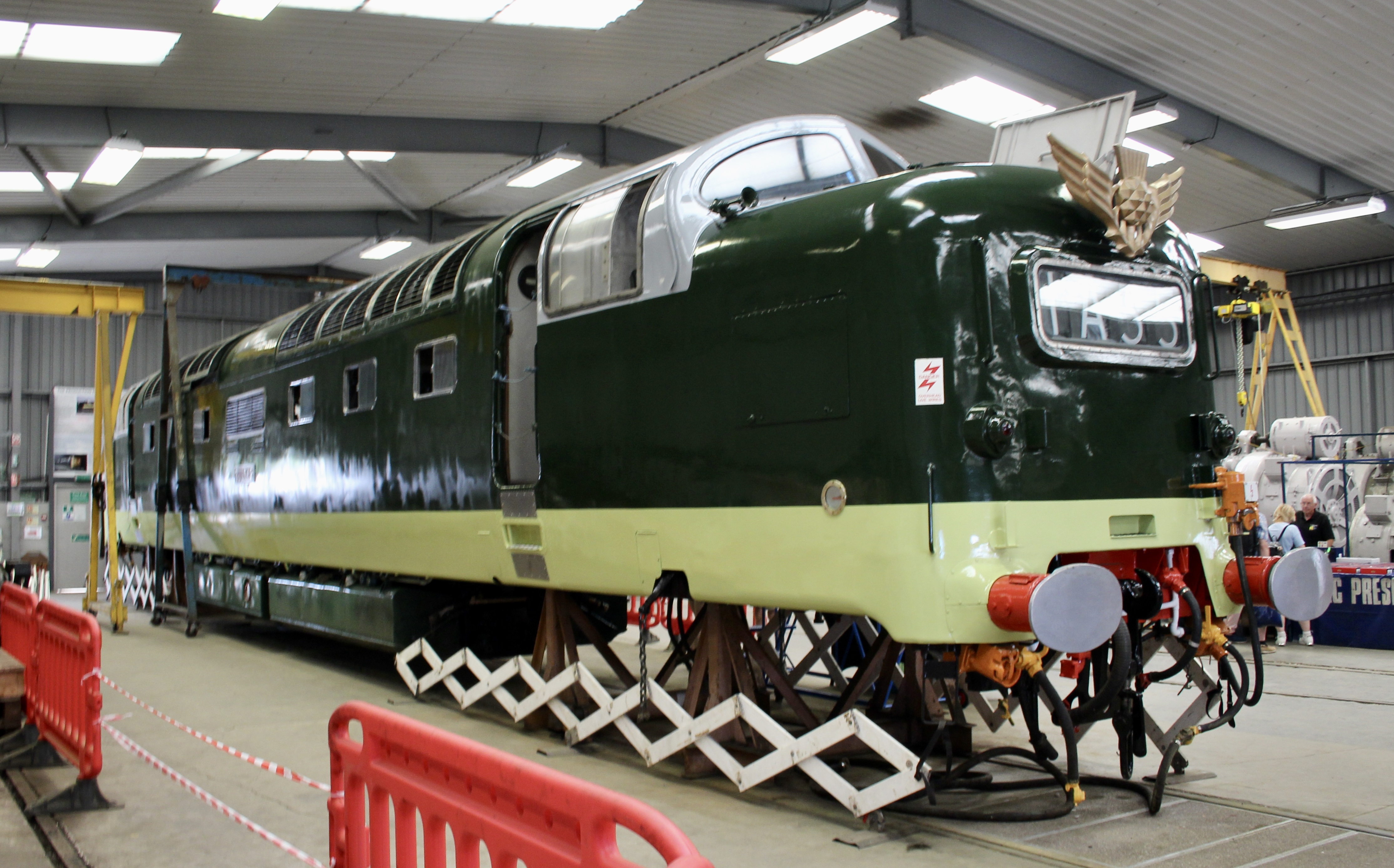
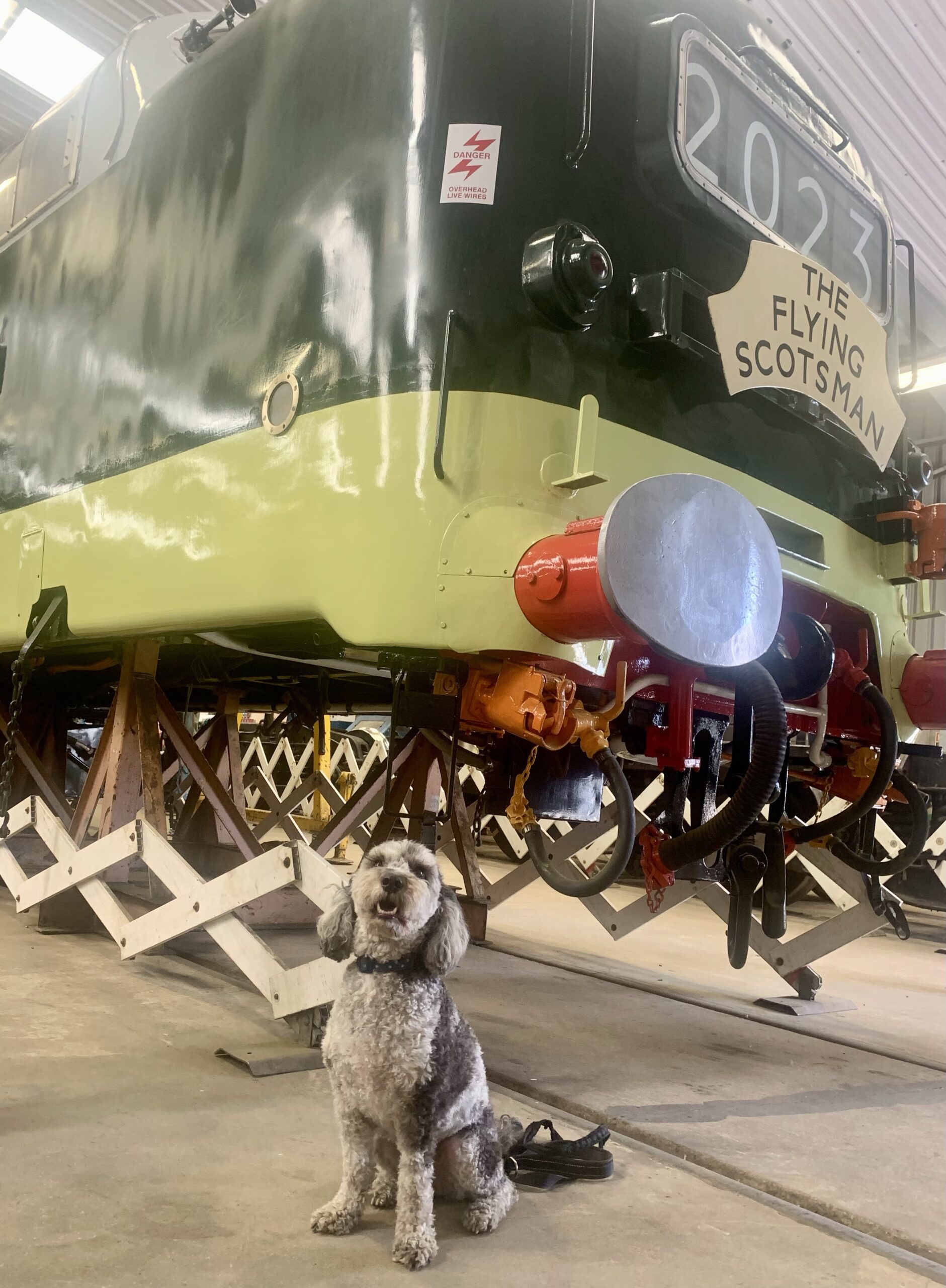
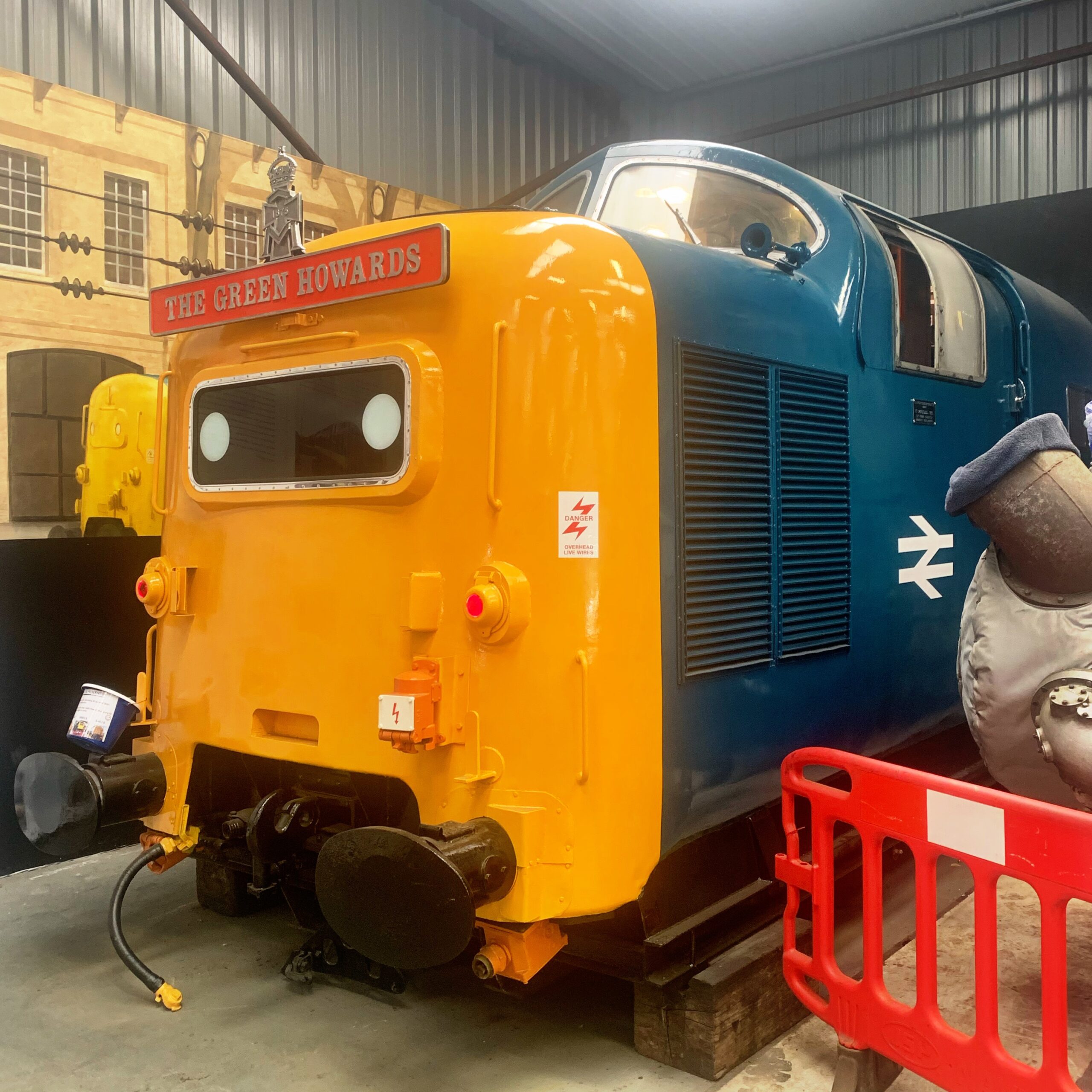
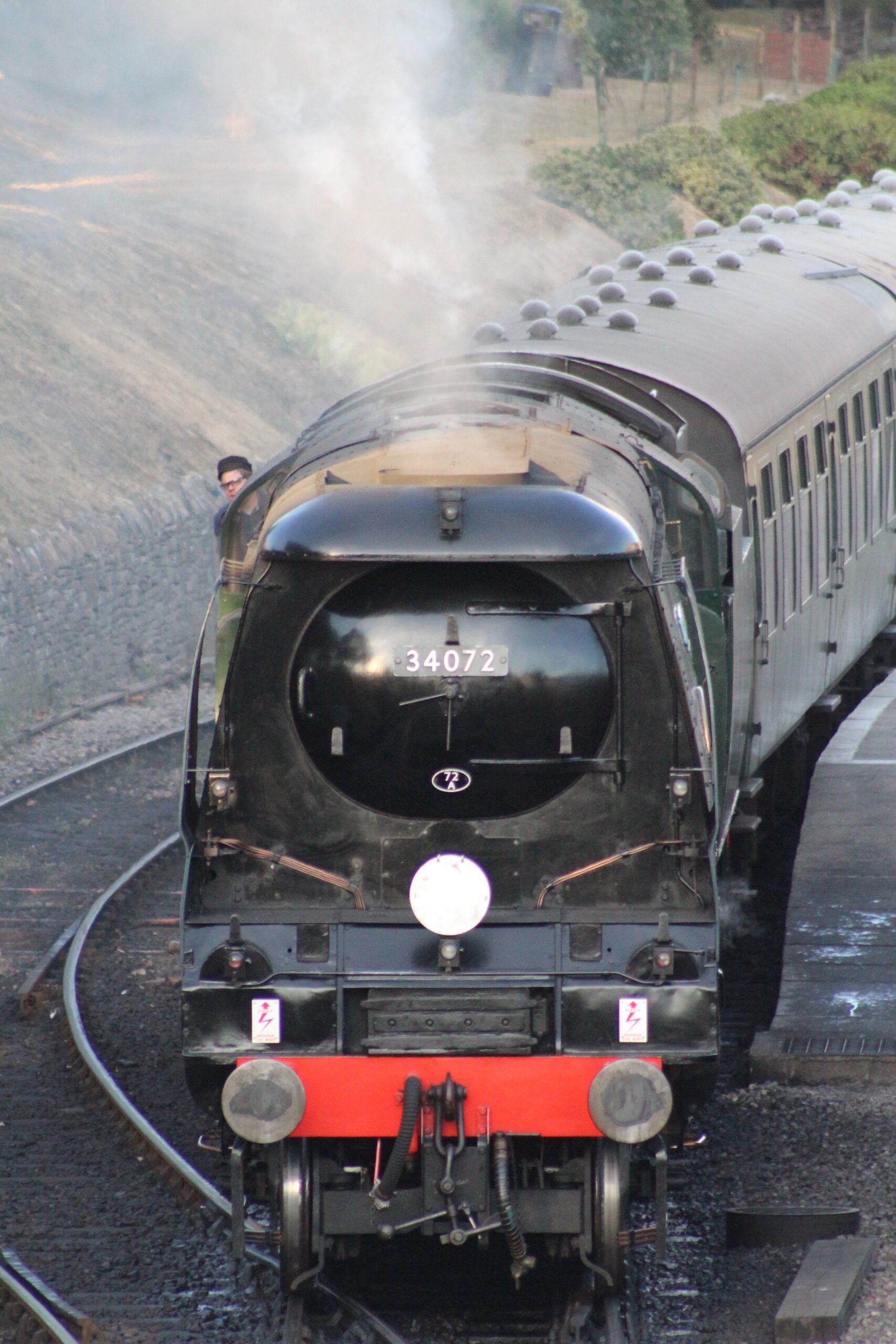
Yoshi following his footplate visit to LNER Gresley A3 4-6-2 No. 60103 ‘Flying Scotsman’ – 06/11/2022
Wednesday 2nd November to Tuesday 8th November 2022
Hello faithful reader, here we are, back again for another railway dog blog entry. Settle down – quiet at the back there – and let me regale you with this weeks tales. Or should that be tails?
Saturday November 5th was scheduled to be a rail strike day, so I had arranged a day out to Weston-super-Mare to visit See Monster, a retired offshore platform which once stood in the North Sea and has now been transformed into one of the largest public art installations in the UK. Located on Weston’s seafront within The Tropicana, the former 1937 lido which once contained an outdoor swimming pool, there is a waterfall, kinetic wind sculptures with a cascade of silvery scales wrapping around the structure. In previous times, the lido has hosted Hollywood legends Laurel and Hardy and more recently- in 2015 – street artist Banksy’s DismalLand, which was the last time I visited Weston-suoer-Mare.
See Monster at Weston-super-Mare – 05/11/2022
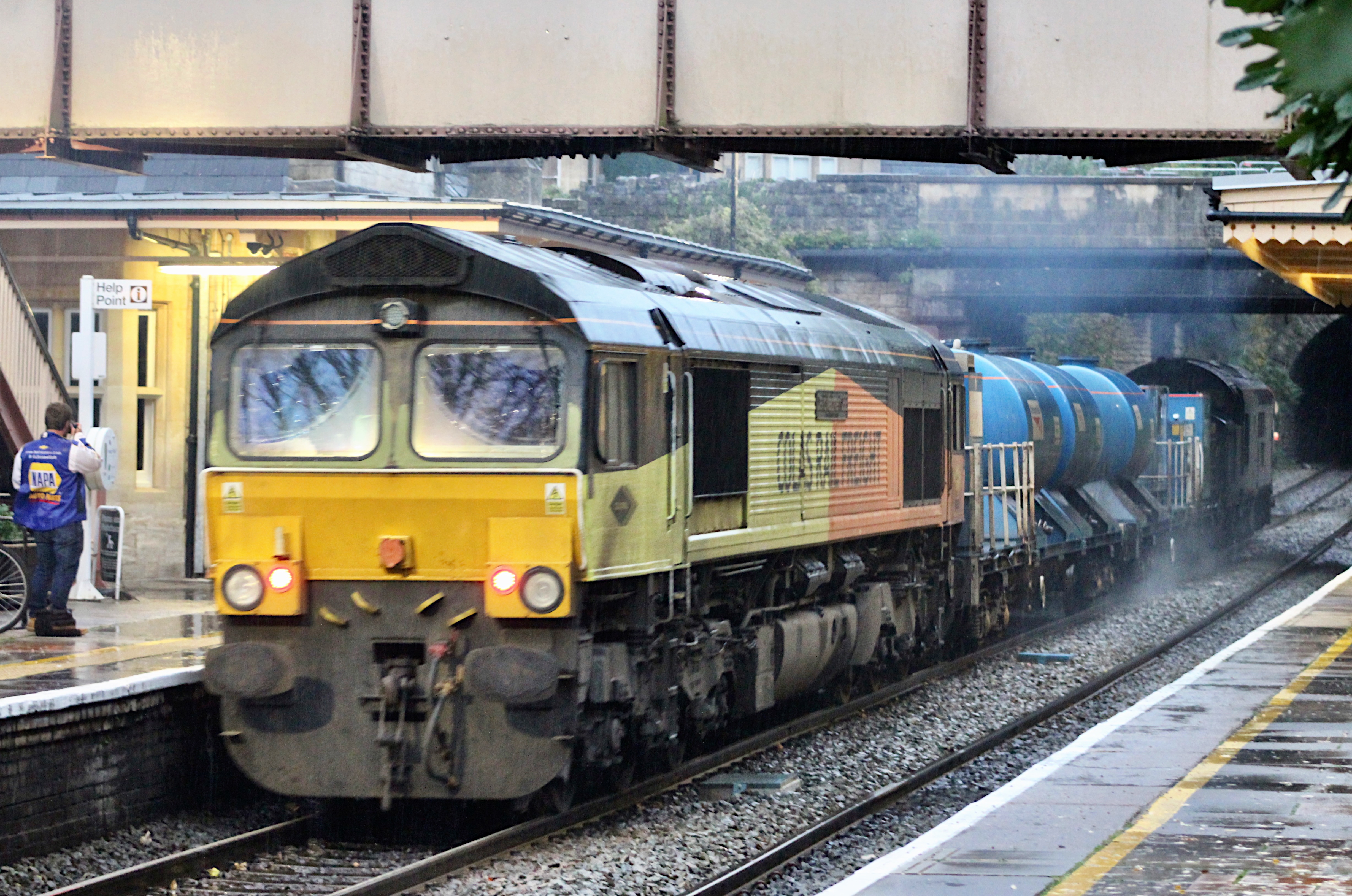
The planned rail strike was, of course, called off at the eleventh hour on Friday November 4th, but this was too late for the railways to gear up and run anything like a full timetable. However, one movement which did catch my eye was a Rail Head Treatment Train (RHTT) from Swindon Transfer Yard which was running a circuit taking in Bristol, Bath and Westbury top and tailed by Class 56 diesel locomotives. In fact Swindon was playing host to two pairs of Class 56’s at the weekend, but only one set was timed to cross my path on Saturday. Returning from Weston-Super-Mare we kept tabs on the how the train was running via Real Time Trains and decided that Trowbridge would be a safe bet to see the train as it was due to pass twice on its way to and from Westbury. We arrived at Trowbridge railway station just in time to see the consist running through on its first pass. Undeterred by the wait we positioned ourselves on the southbound platform and awaited the RHTT’s return. We were rewarded with the fine sight of Colas Class 56 No. 56105 with No. 56096 at the rear working 3S32 1002 Swindon Transfer Yard to Swindon Transfer Yard.
Colas Class 56 No. 56105 with 56096 at the rear working 3S32 1002 Swindon Transfer Yard to Swindon Transfer Yard RHTT through Trowbridge – 05/11/2022Colas Class 56 No. 56096 at the rear of 3S32 1002 Swindon Transfer Yard to Swindon Transfer Yard RHTT passes Trowbridge with No. 56105 at the front – 05/11/2022
Trowbridge, like Bradford on Avon which we visited a couple of weeks ago, is another station which was originally opened by the Wilts, Somerset and Weymouth Railway in 1848 as part of their Thingley Junction to Westbury line. It gained a link to Bath and Bristol nine years later thanks to the Great Western Railway which is now the main line, as the original route to Chippenham has been singled and reduced to secondary status. The original station buildings have been replaced with a bland brick structure containing a ticket office on the northbound platform.
Trowbridge railway station – 05/11/2022
Trowbridge, Wiltshire – additional footage courtesy of @dabuckley967 – 05/11/2022
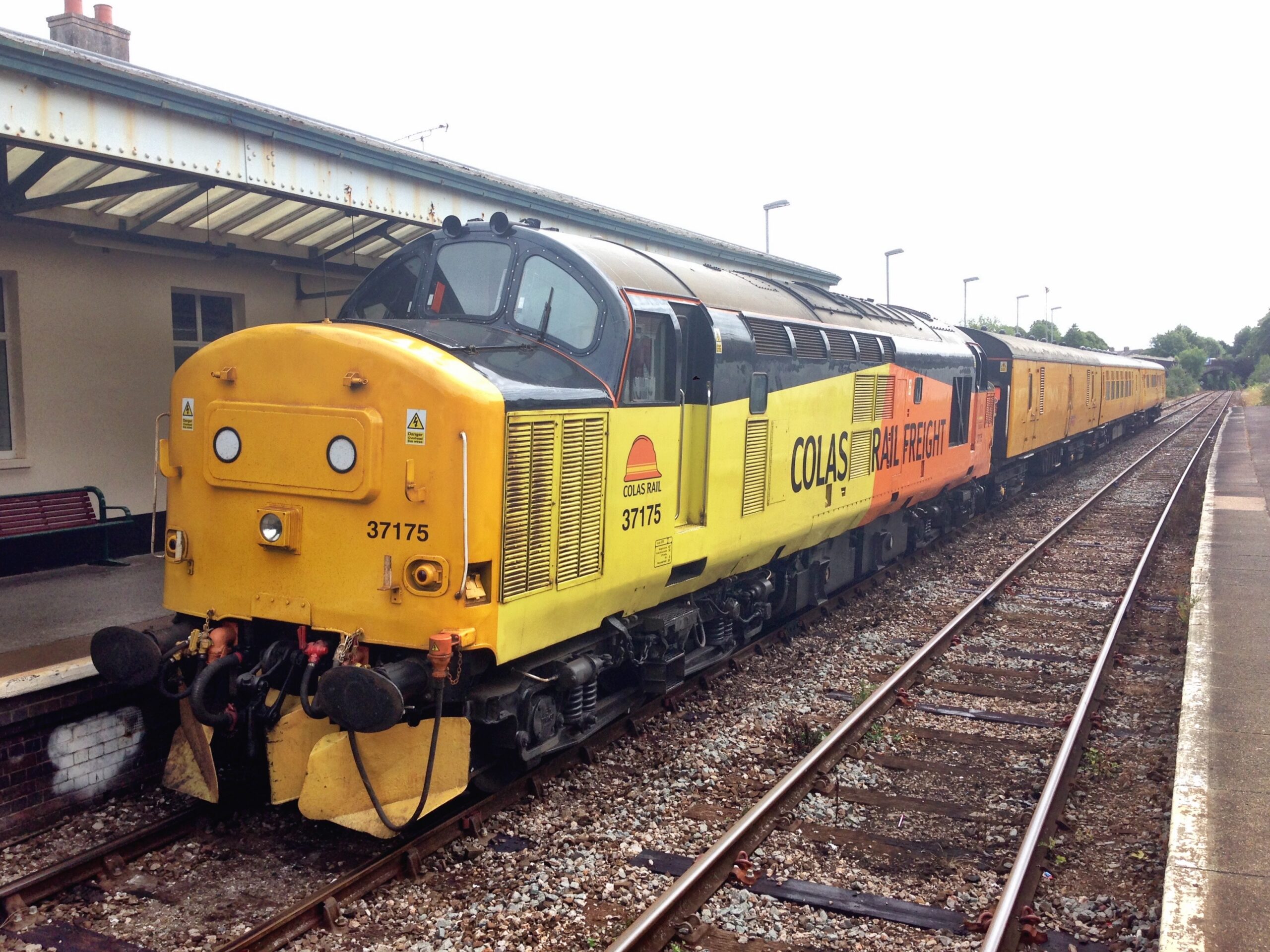
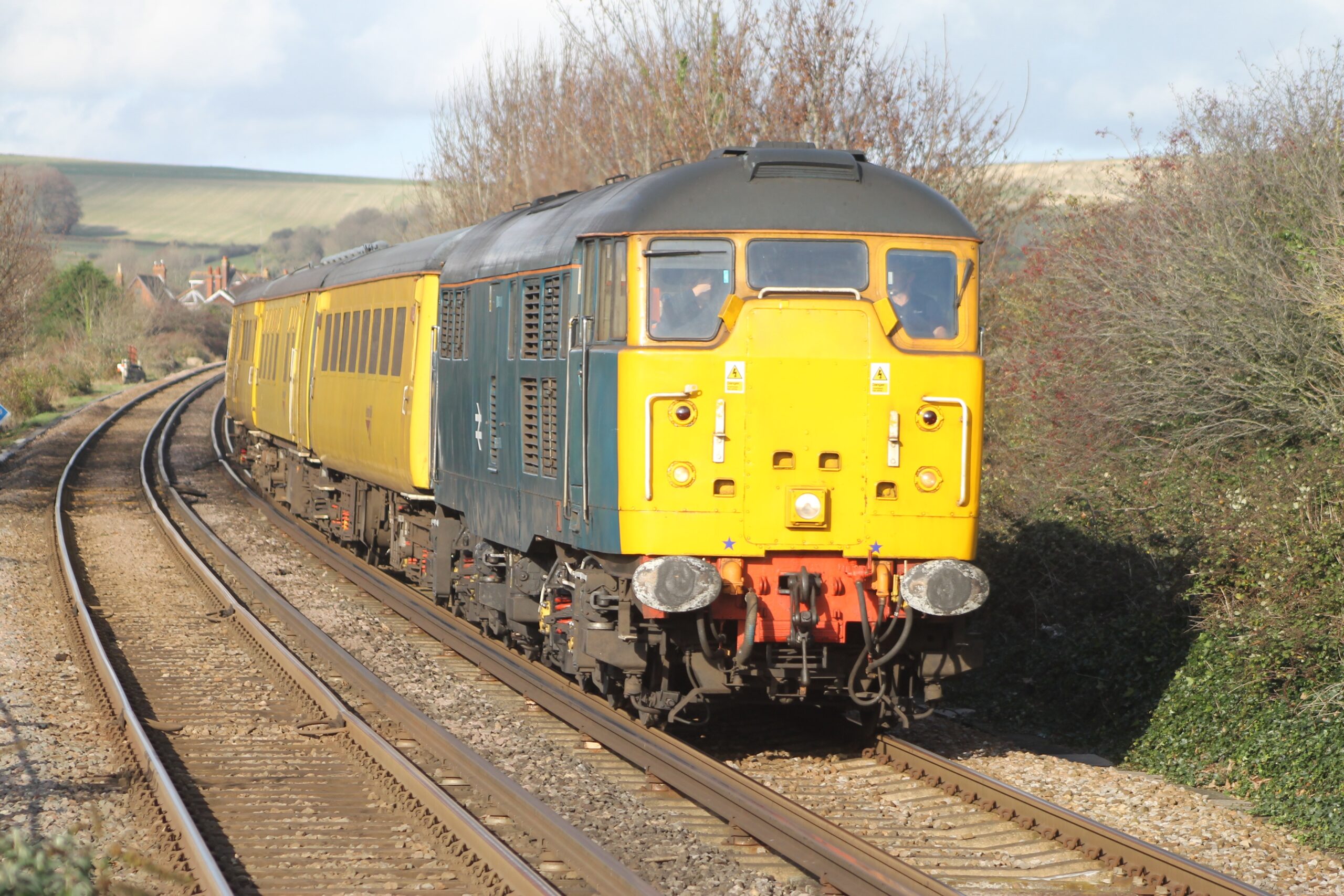
We were spoilt with ‘heritage’ diesel traction on the Bristol to Weymouth line this past week when no less than three Colas Rail Freight operated Class 37 diesels visited the Dorset seaside with test trains.
In glorious sunshine, I headed to Upwey on Thursday 3rd November to see 3Q14 1037 Westbury Down TC to Westbury Down TC via Weymouth hauled by Class 37 No. 37175 in the distinctive orange, yellow and black Colas livery. Because of generous timings in the schedule, I had a bit of a wait at Upwey, but enjoyed watching the passing South Western Railway and Great Western trains.
Class 37 No. 37175 nears Upwey in the afternoon sun working 3Q14 1037 Westbury Down TC to Westbury Down TC via Weymouth test train – 03/11/2022
The weather on the previous day, Wednesday 2nd, had been a different story altogether when top and tailed class 37’s No.’s 37421 and 37254 worked the regular Derby Railway Technical Centre to Bristol Kingsland Road via Weymouth New Measurement Train (NMT), which for most of the year has been powered by Class 43 High Speed Train power cars. As heavy rain showers were forecast, I decided to head to Dorchester West where I would be able to take shelter from the elements if need be in order to see the train pass.
Colas Class 37 No. 37421 heads up 1Z22 0644 Derby RTC to Bristol Kingland Road as it eases through Dorchester West – 03/11/2022Colas Class 37 No. 37254 at the rear of 1Z22 0644 Derby RTC to Bristol Kingland Road powers away from Dorchester West – 03/11/2022
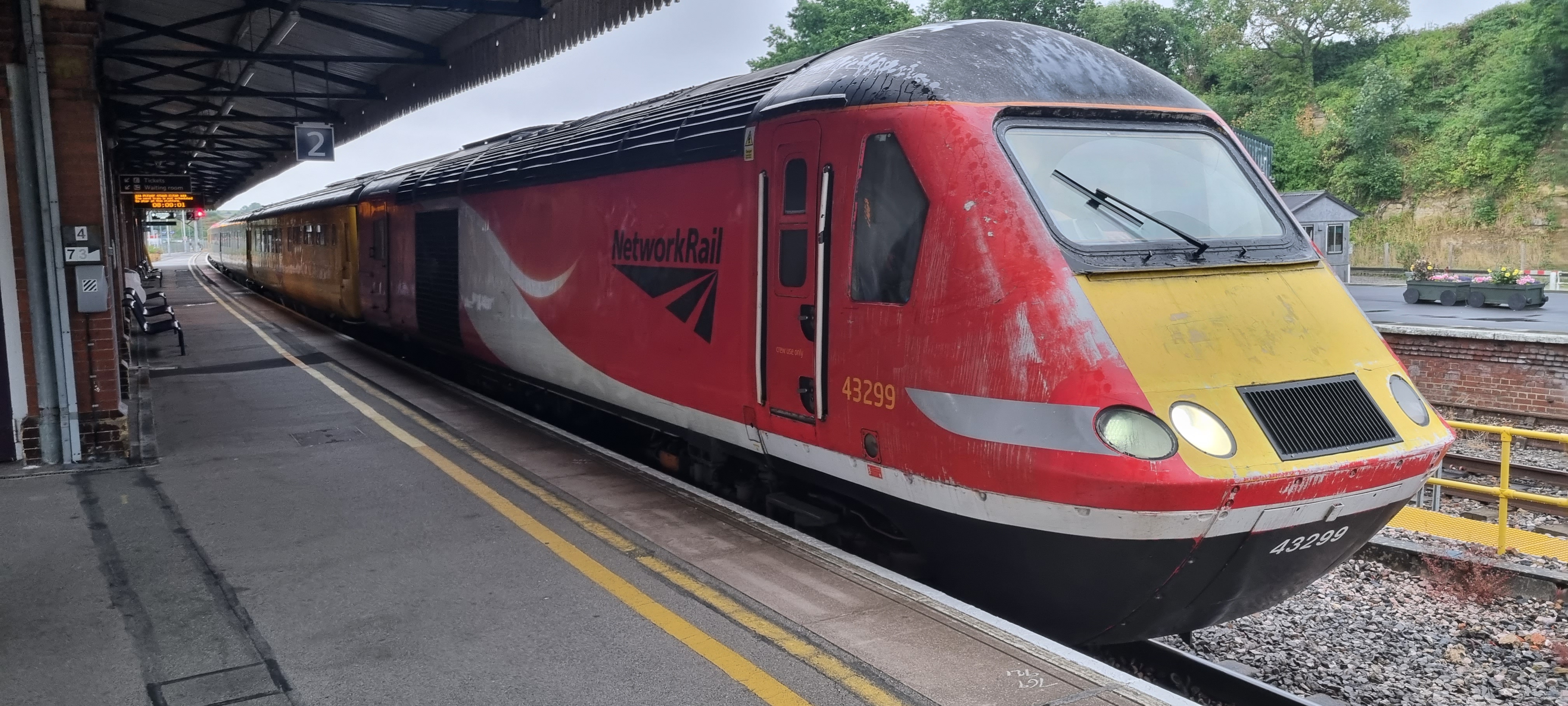
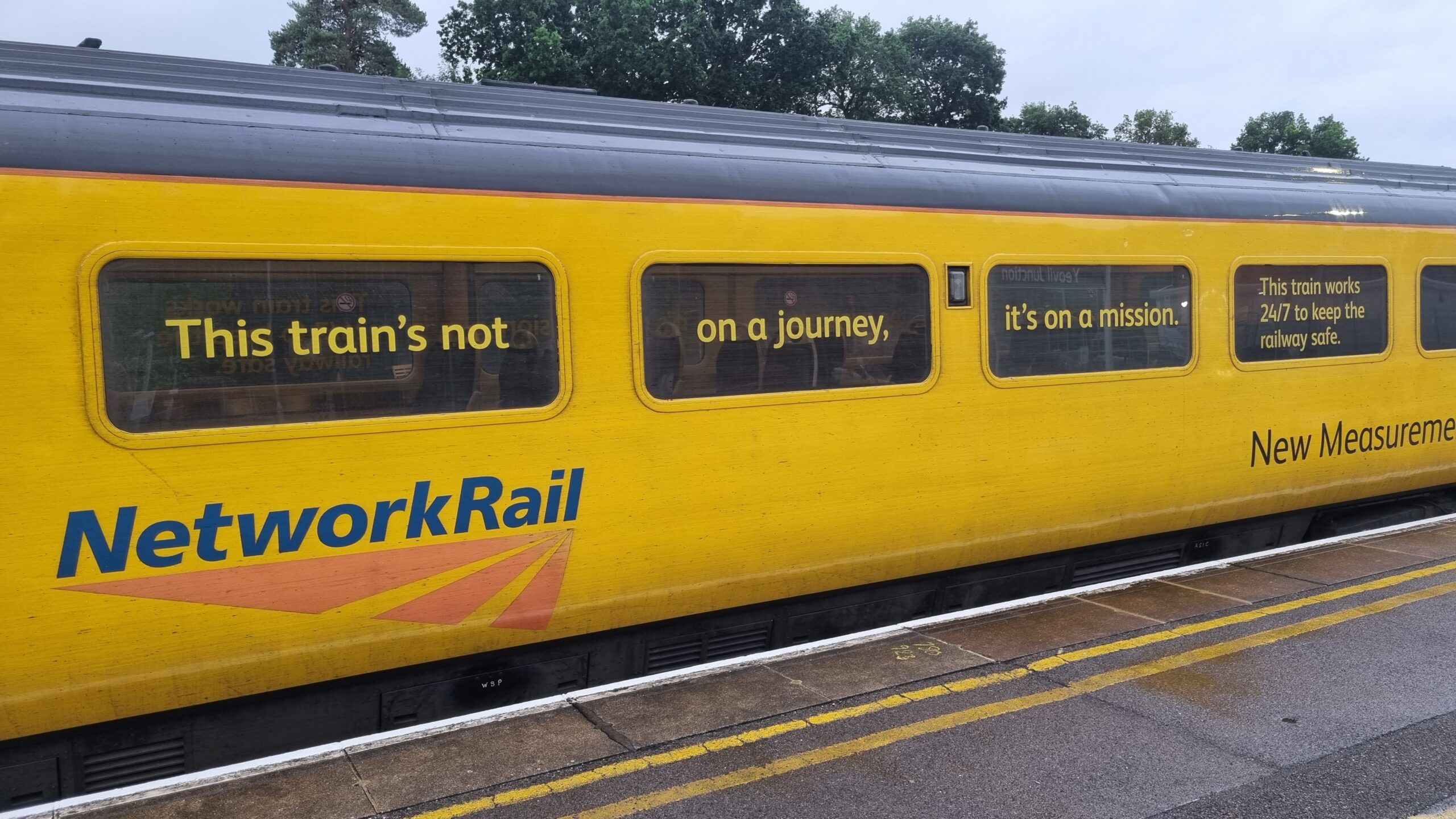
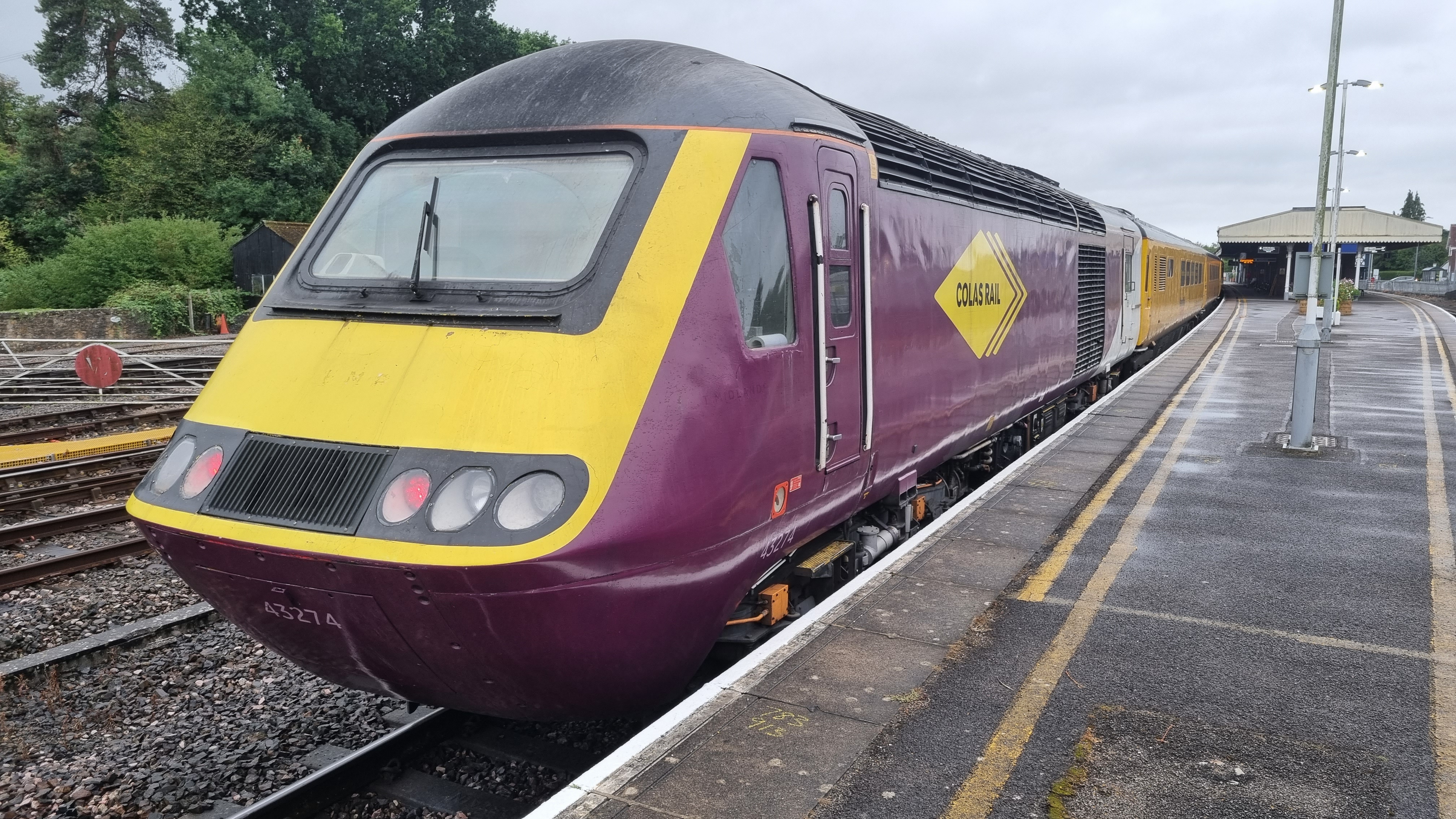
Dorset Class 37 test trains – additional footage courtesy of @dabuckley967 – November 2022Earlier in 2022 the New Measurement Train was in the hands of HST Class 43 power car No.’s 43257 and 43251 working as 1Z22 0747 Derby RTC to Bristol Kingland Road seen here at Monkton near Dorchester – 15/06/2022Class 67 No. 67023 ‘Stella’ in Colas Rail Freight livery tops the NMT as it arrives at Weymouth. Thirty General Motors Class 67 locomotives were built in Valencia, Spain in 2000 for English, Welsh & Scottish Railway (EWS), now DB Cargo – 19/06/2019Class 67 No. 67027 ‘Charlotte’ at the rear of the NMT seen at Weymouth. Both No. 67027 and 67023 are now part of the GBRf fleet having previously been sold by DB Cargo to Colas Rail in 2017 – 19/06/2019Class 43 No. 43062 ‘John Armitt’ having arrived at Weymouth with the New Measurement Train in July 2012. The all over yellow livery gave the train the nickname “The Flying Banana”. No. 43062 was built in 1977 at BREL Crewe works and formed part of HST set No. 254004 for use on East Coast Main Line services. Following the East Coast electrification No. 43062 moved to CrossCountry duties in July 1991. In February 2003 No.’s 43013/014 and 062 were all allocated to Network Rail, based at Derby, for use on the then new High Speed National Measurement Train (NMT). No.’s 43013/014 were selected as they were due major exams and could therefore receive all the specialist work whilst being overhauled. No. 43062 was selected as it had been ‘blacked’ by Virgin Trains drivers due to constant vibrations in the cab after a derailment at Coventry. As part of the overhaul she was fitted with a completely new cab and the vibration problem was eliminated. In the summer of 2009 No. 43062 was sent to Brush at Loughborough to be re-engineered and had the original Paxman Valenta engine replaced by an MTU unit, re-entering service with Network Rail in October 2009 and remains active in 2022 as part of the Network Rail Class 43 pool code QCAR – 26/07/2012Nameplate detail Class 43 No. 43062 ‘John Armitt’ – 26/07/2012Weymouth was host to the 2012 Olympic Sailing events and temporary station information boards pointed passengers arriving at the station in the direction of Portland Harbour – 26/07/2012Debranded Network Rail Class 43 No. 43014 prepares to depart Weymouth after the crew have changed ends – 26/07/2012Class 43 No. 43014 powers towards Upwey at the head of Network Rail’s NMT – 17/06/2010
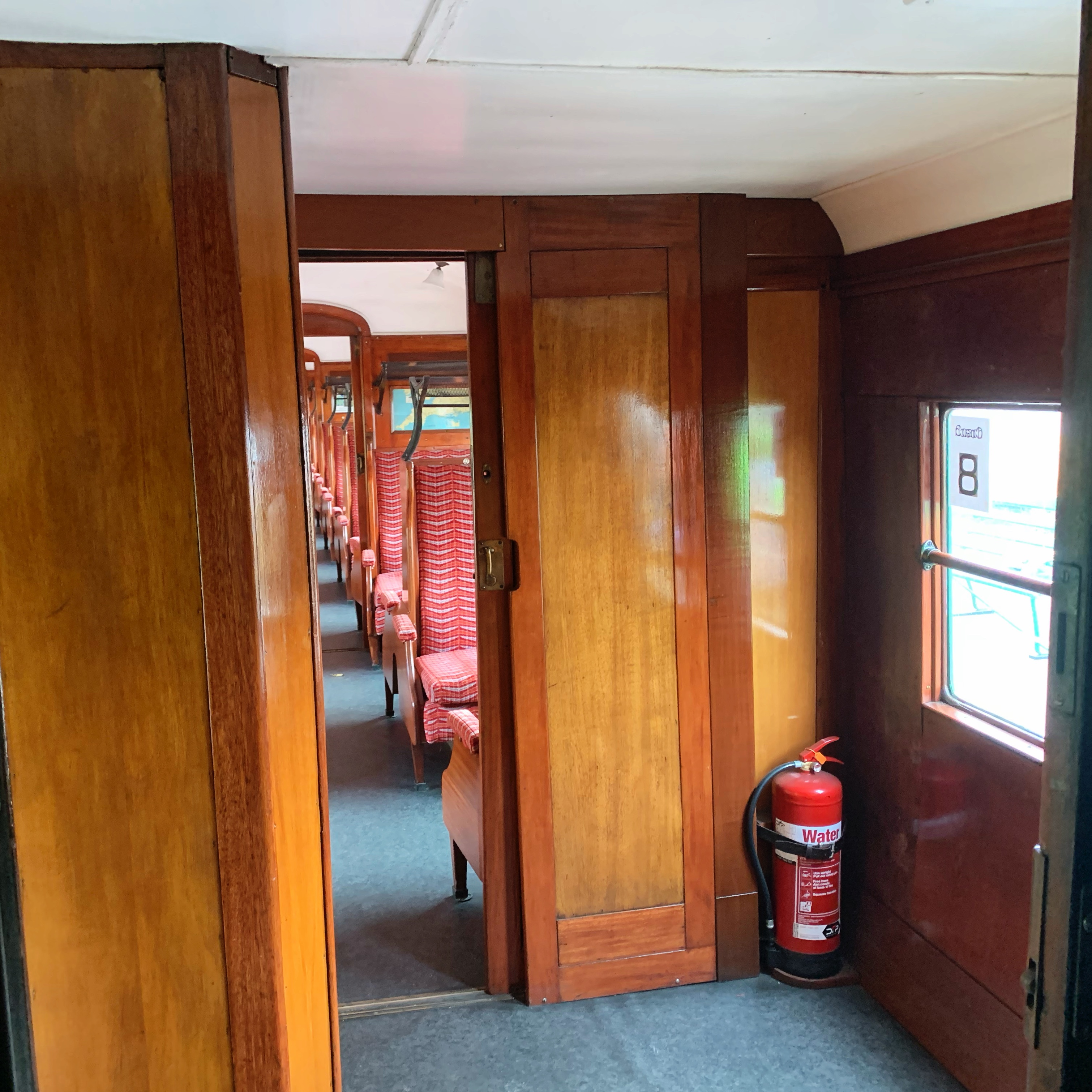
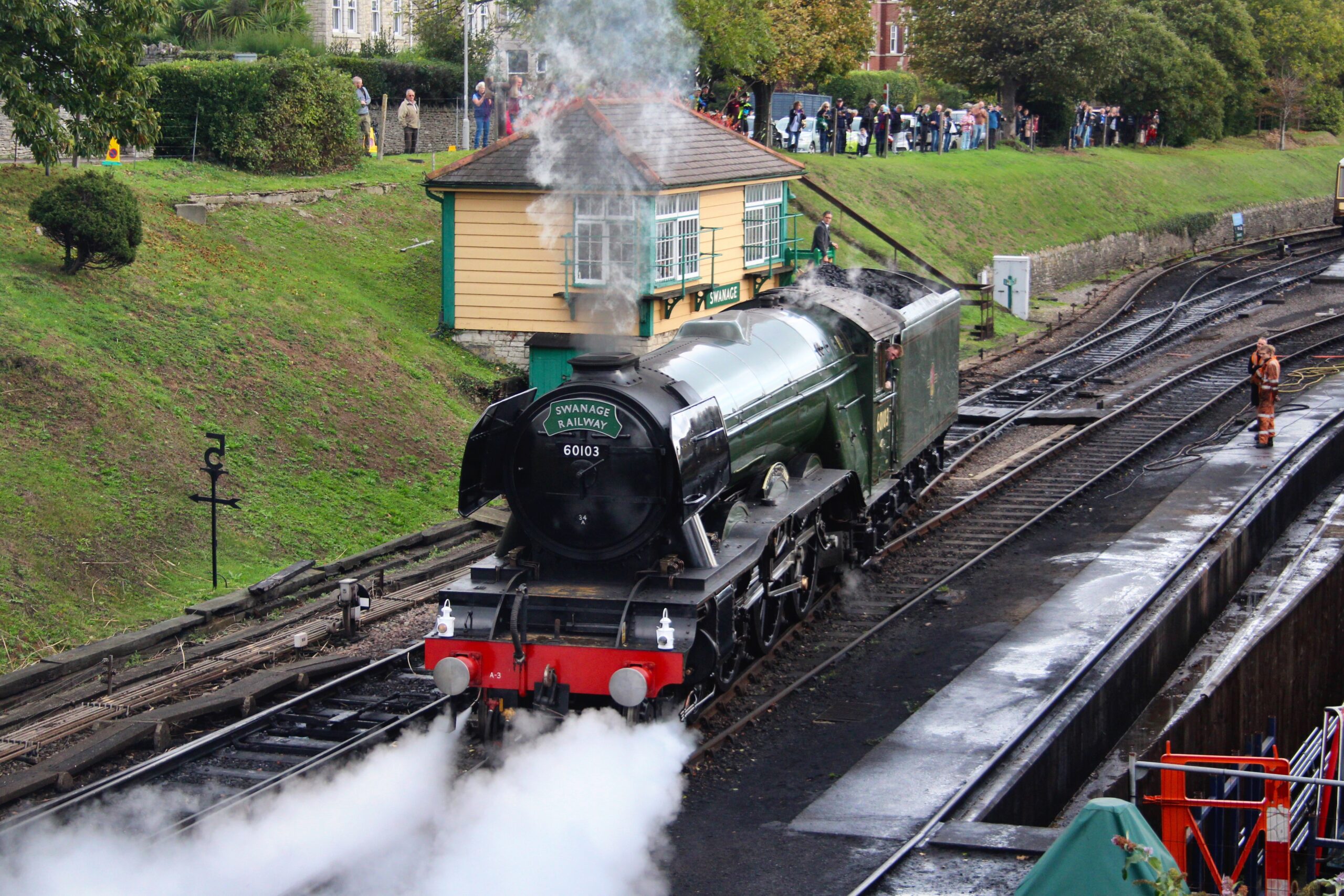
Sunday 6th November dodging the rain once again, we visited the footplate of LNER Gresley A3 Pacific No. 60103 ‘Flying Scotsman’ at Swanage. It was good to see a large turn out on the last day the locomotive was publicly accessable, although this did mean that our visit to the footplate felt a little rushed.
LNER Gresley A3 4-6-2 No. 60103 ‘Flying Scotsman’ in light steam at Swanage – 06/11/2022The tender corridor through which we gained access to the footplate of ‘Flying Scotsman’. This enabled crew changes to take place without the train stopping. Water could be replenished at water troughs set in the railway tracks via a scoop under the locomotives tender – 06/11/2022The firebox and some of the controls on the footplate of ‘Flying Scotsman’ – 06/11/2022Yoshi and I in the driving seat of ‘Flying Scotsman’ (Photo G E Barrett) – 06/11/2022I think everyone was surprised by how small the window through which the driver of ‘Flying Scotsman’ had to view the track ahead at speeds of up to 100mph – photo courtesy of Scott LewisThe drivers seat in the cab of ‘Flying Scotsman’ – photo courtesy of Scott LewisThe view looking out along the locomotive from the cab side – photo courtesy of Scott Lewis
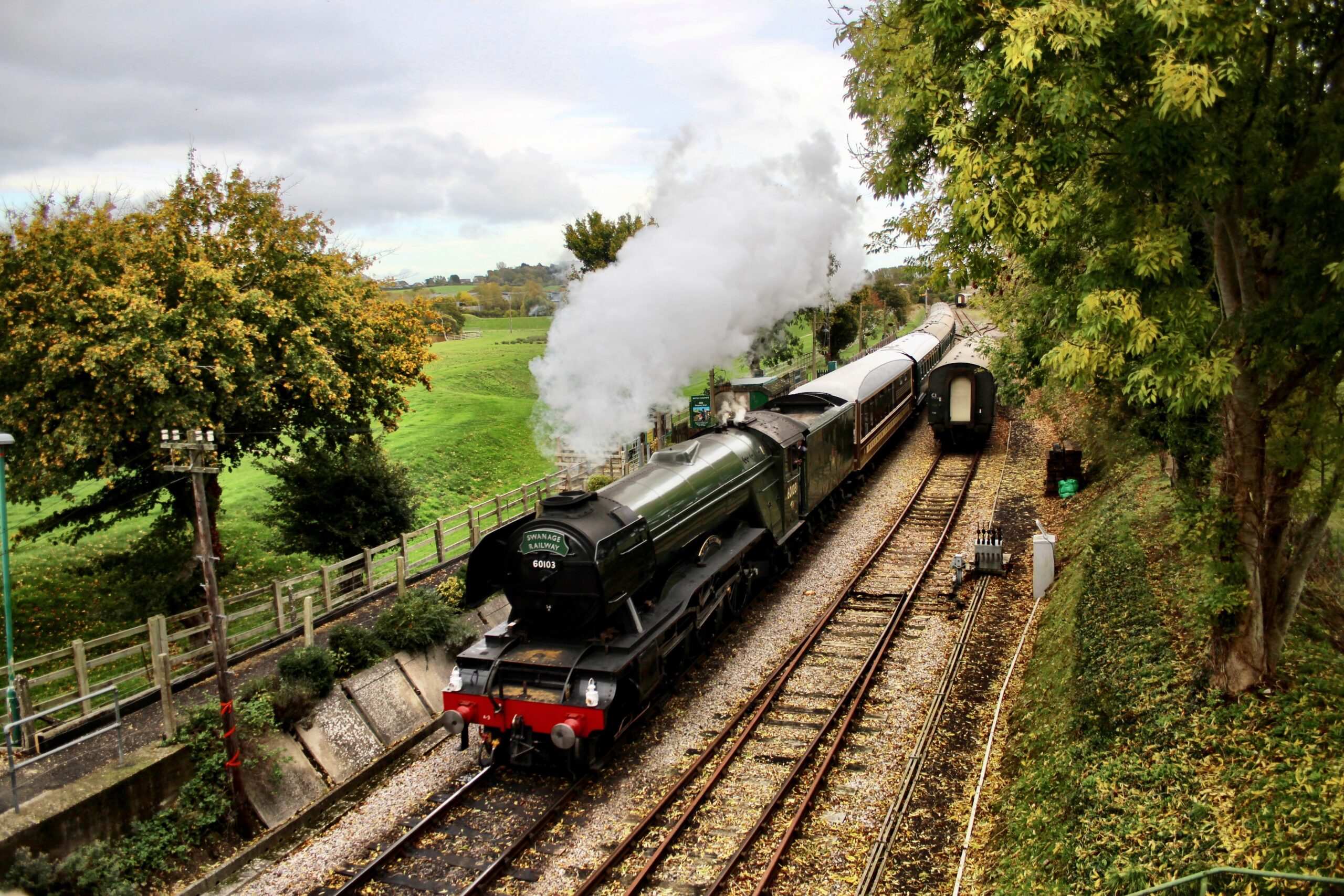
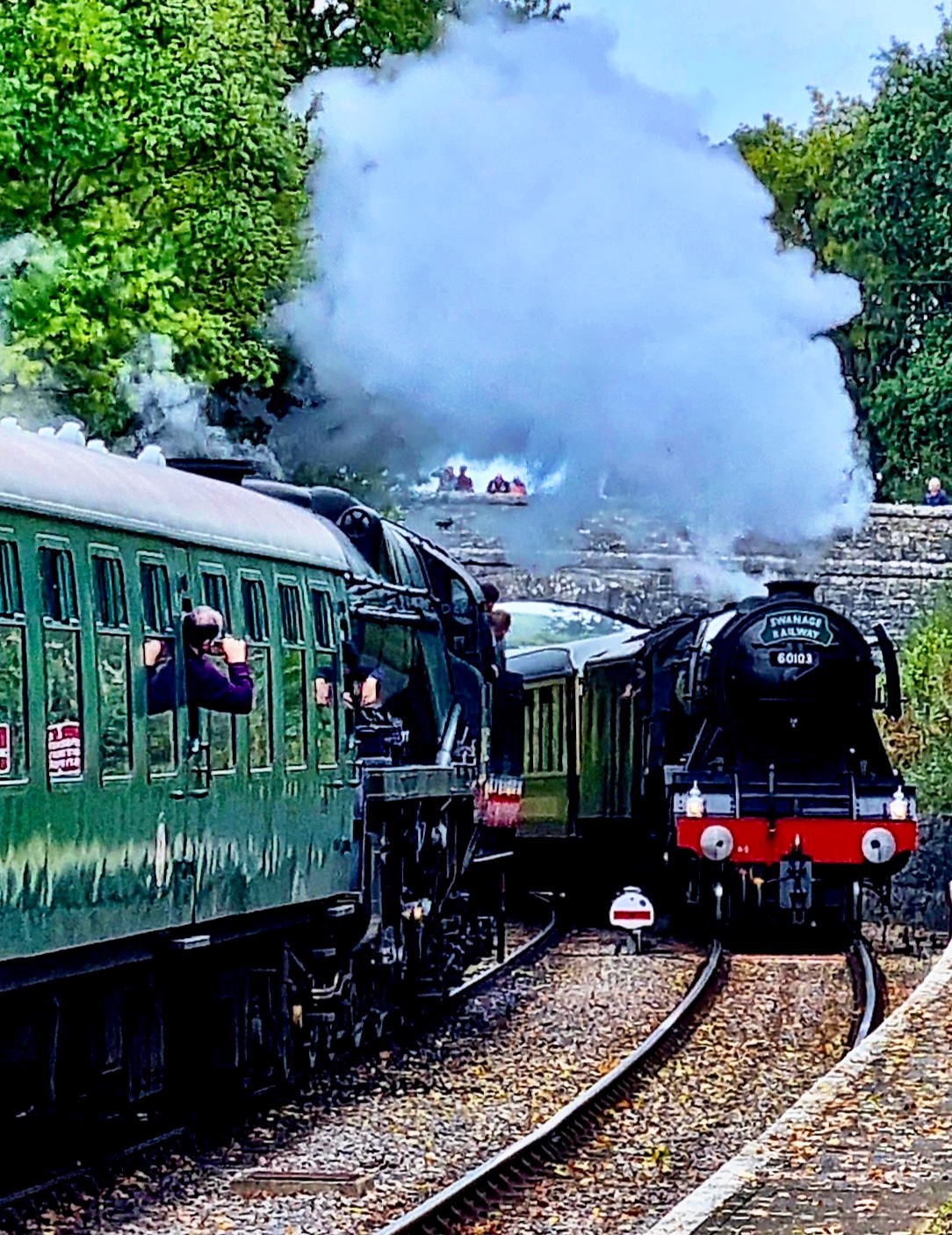
A couple of days later and it was time for No. 60103 ‘Flying Scotsman’ to leave Dorset and head north to Bury. I was up early to witness the 0705 departure from Swanage on a blustery and wet Tuesday 8th November.
With Remembrance Sunday 2022 only a few days away, the following images are from our November 2021 visit to the National Memorial Arboretum at Alrewas (near Lichfield) in East Staffordshire and is the UK’s national site of remembrance. It was inspired by a visit to the Arlington Cemetery in the USA.
The Railway Industry Memorial was unveiled on 22nd May 2012 is situated within sight of the Derby to Birmingham railway line and celebrates the achievements of the railway family, who gave their lives in times of both conflict and peace.
Sumatra Railway WW2 Memorial is formed of a replica section of the Sumatra railway, including wooden sleepers and railway track, set on an embankment and commemorates the c700 Allied Far East Prisoners of War who died in its construction.
The Burma Railway Memorial was created to remember those who were forced to construct the infamous ‘Railway of Death’ during the Second World War. The memorial is constructed from 30 metres of the original track. During the construction of the 258-mile railway over 16,000 Prisoners of War and 100,000 labourers died – one life for every sleeper laid.
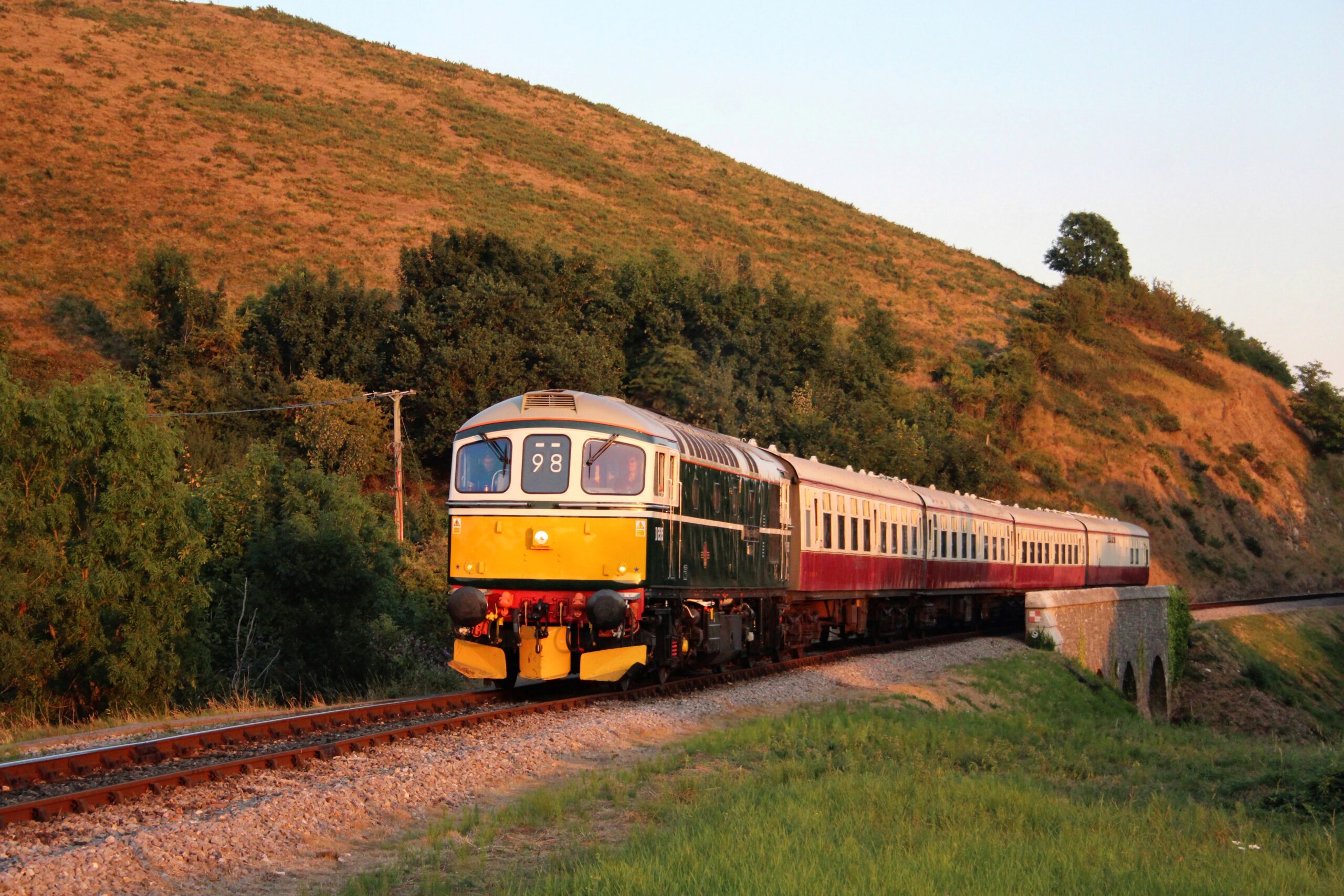
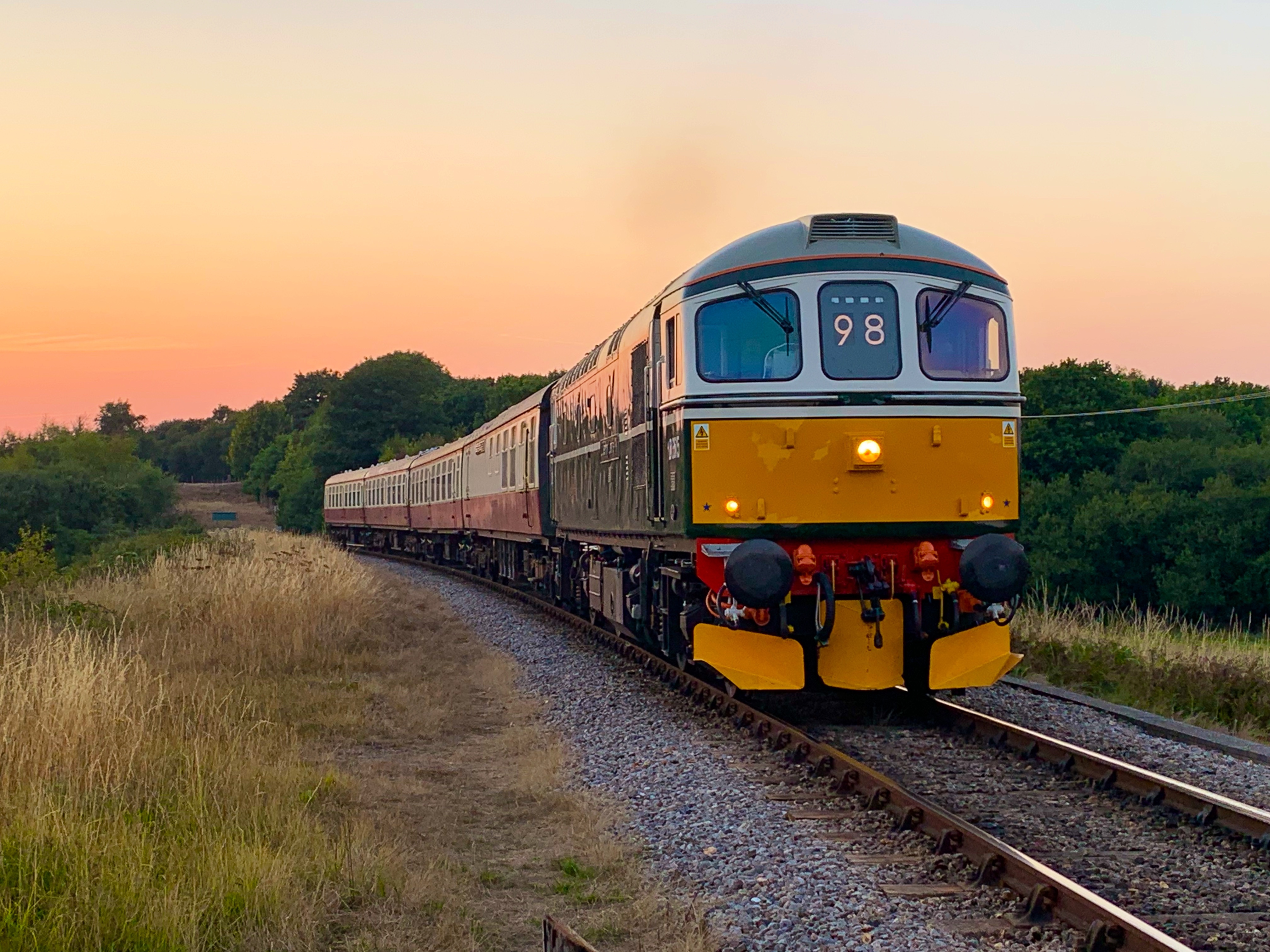
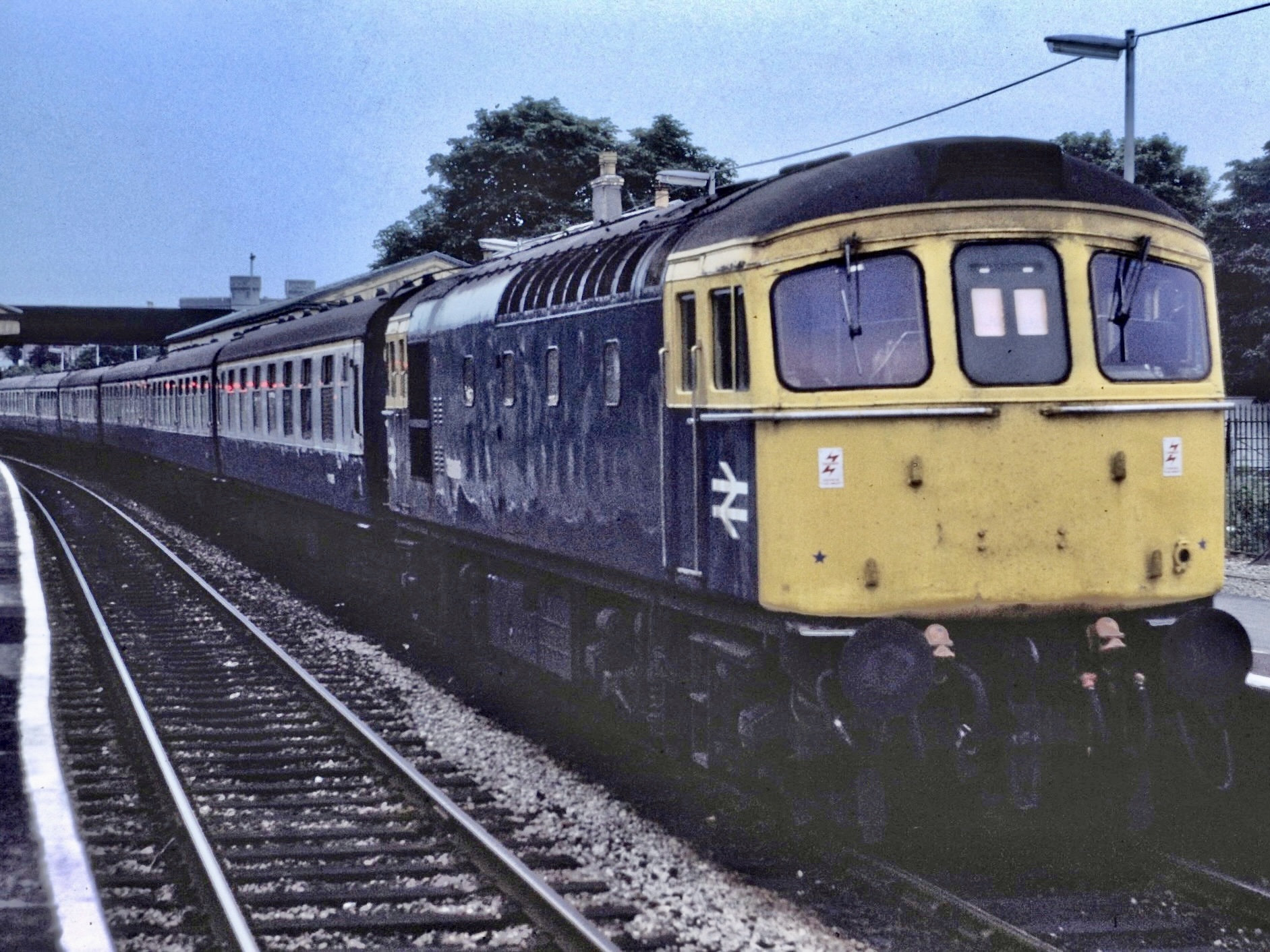
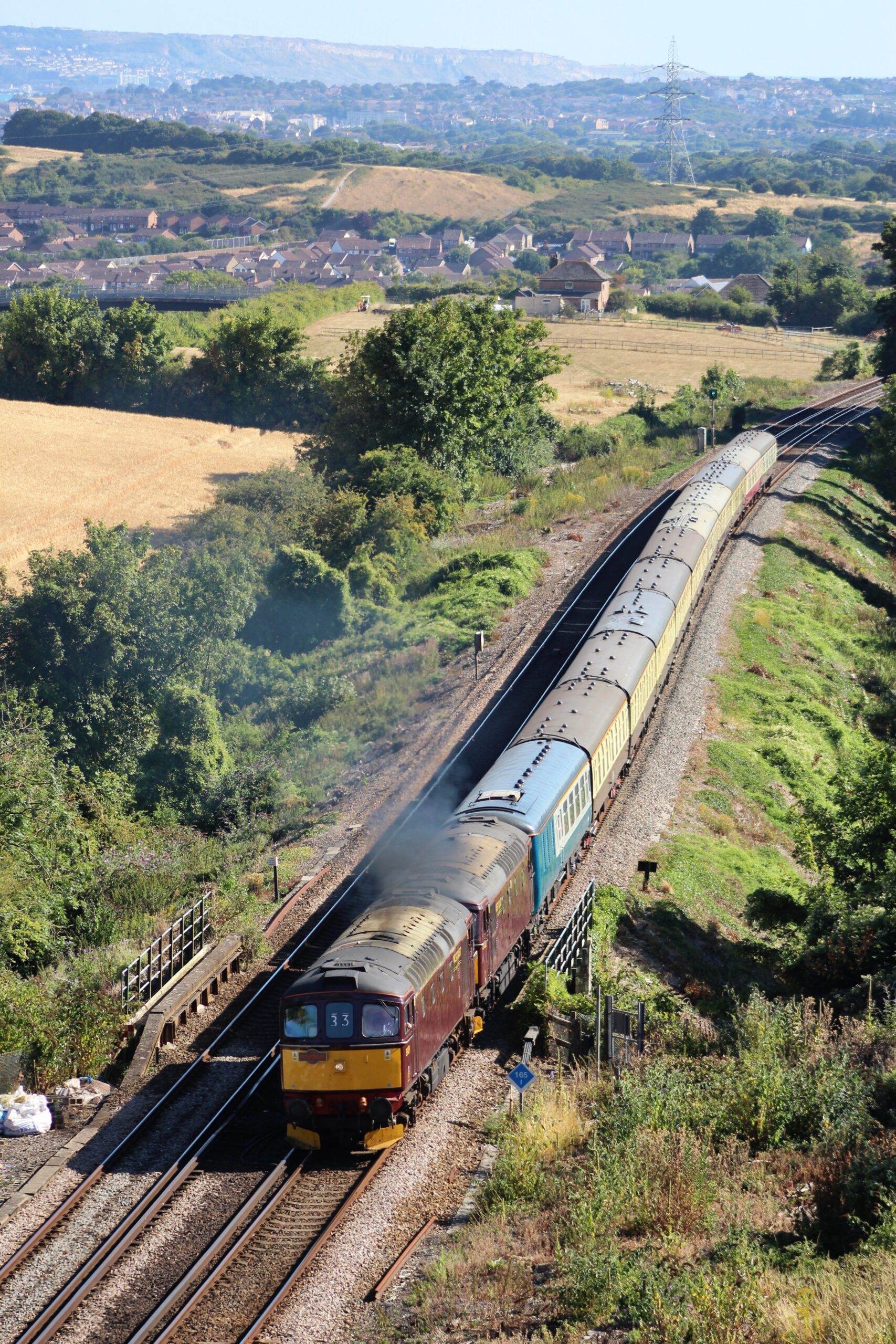
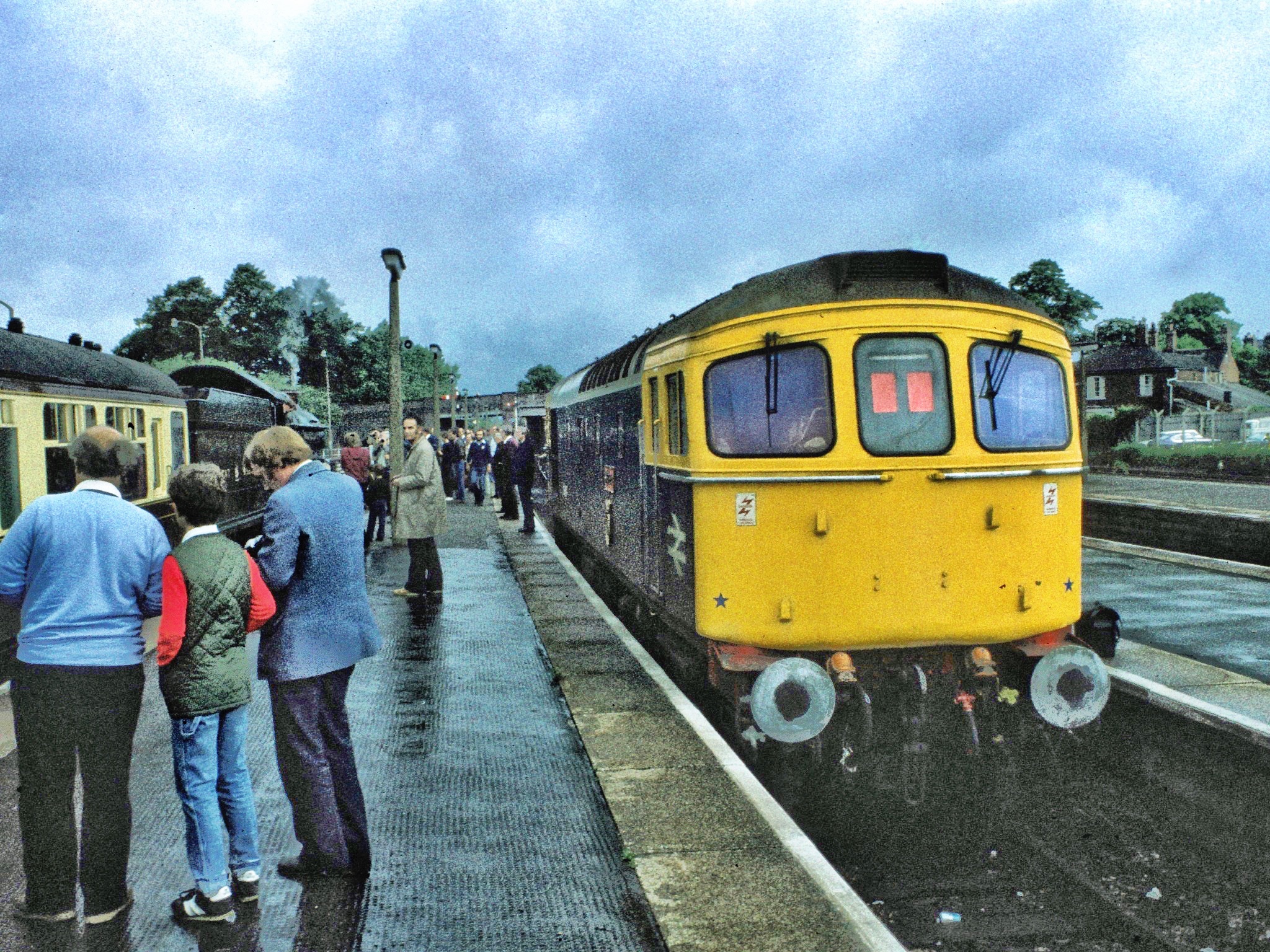
In August 1943, Louis Mountbatten became Supreme Allied Commander South East Asia Command and oversaw the recapture of Burma and Singapore from the Japanese by the end of 1945. For his service during the war, in 1946 Mountbatten was made a Knight of the Garter and created Viscount Mountbatten of Burma and in 1947 Earl Mountbatten of Burma. Two BR Southern Region Class 33’s were named in connection with Mountbatten and Burma.
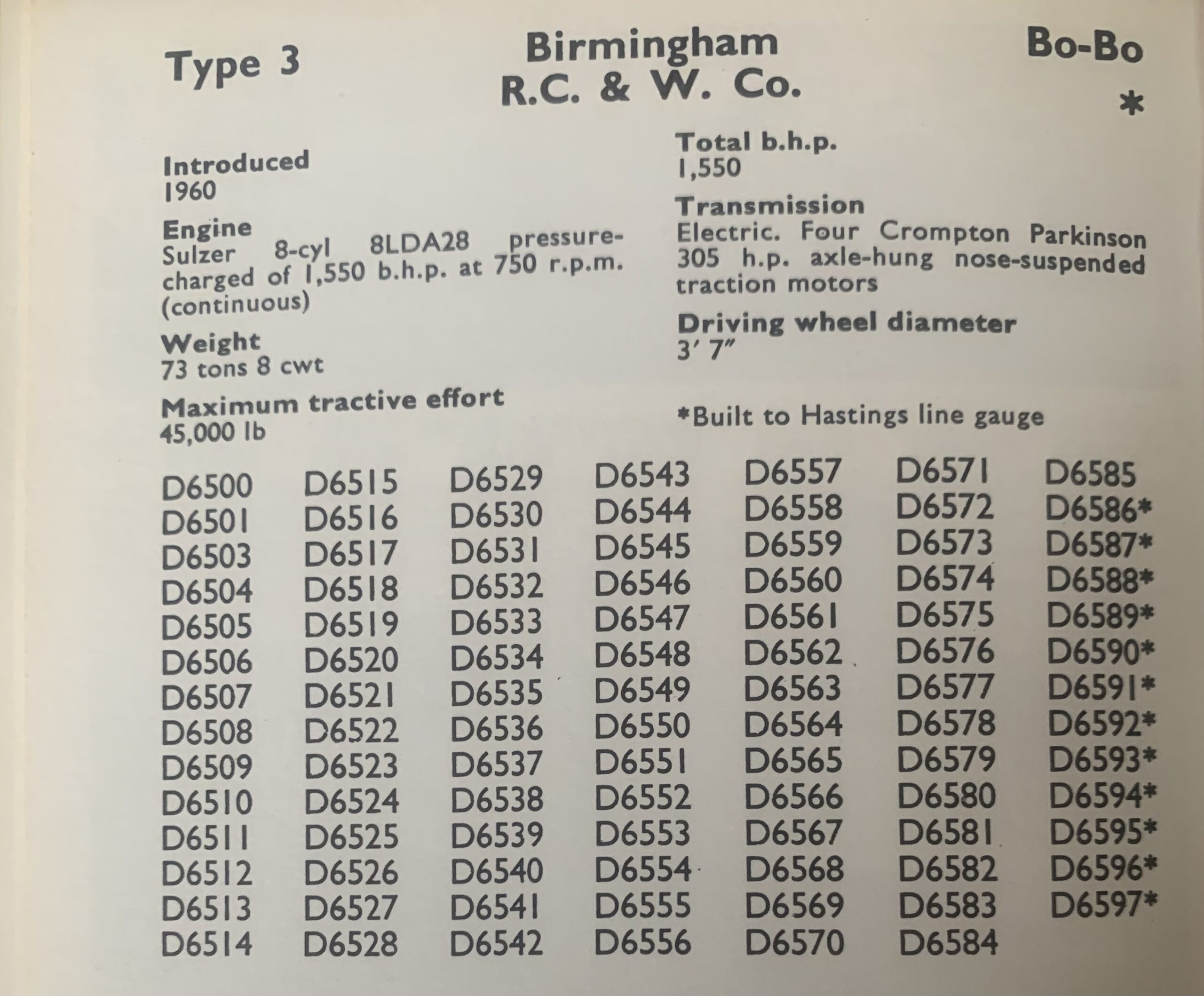
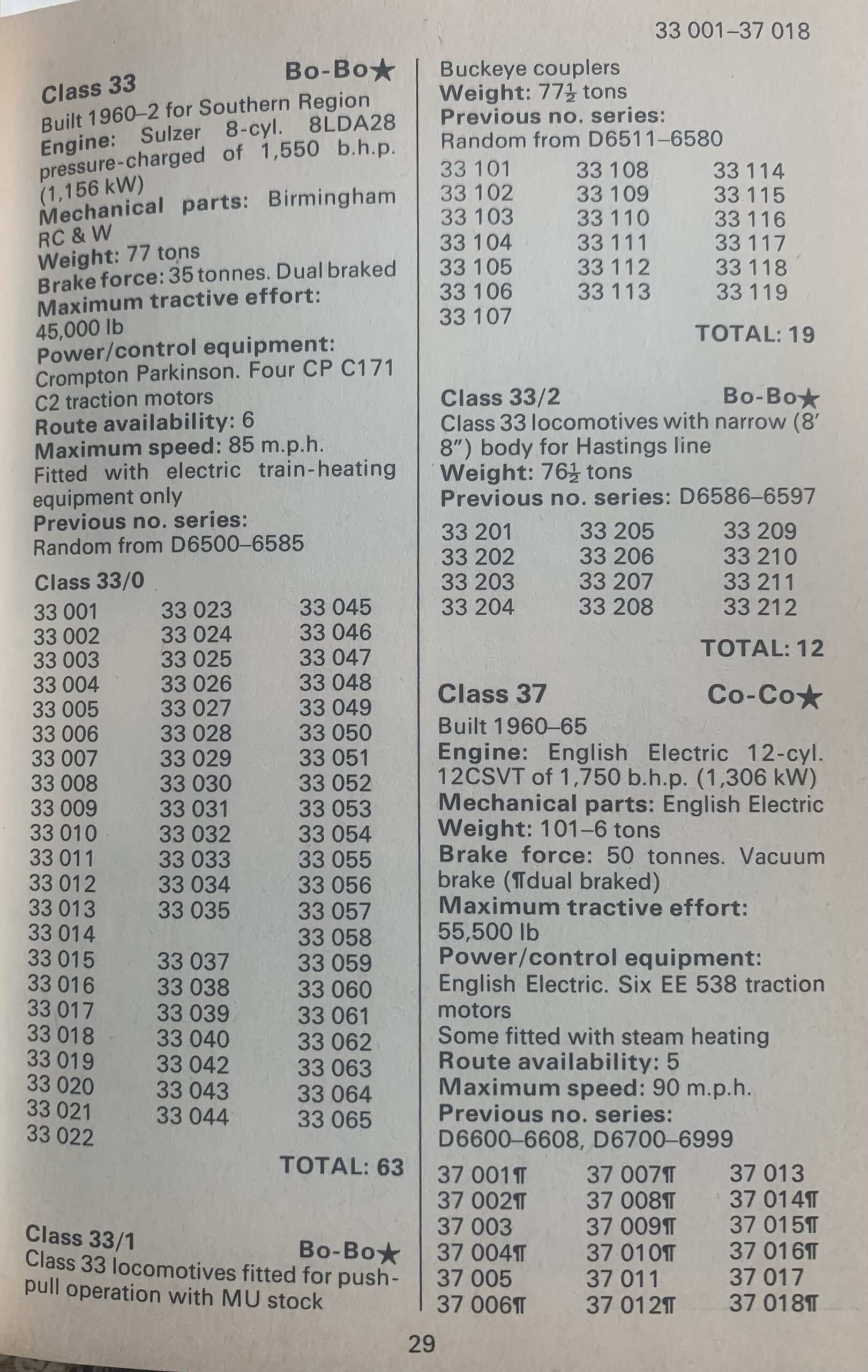
Class 33 No. 33027 ‘Earl Mountbatten of Burma’ on display at Eastleigh T&RSMD open day on 29/05/1983. This locomotive was one of only five Class 33’s which carried names at the time this photograph was taken. No. 33027 along with No. 33056 ‘Burma Star’ received their respective nameplates at London Waterloo on 02/09/1980 having been chosen to carry names after working Lord Mountbatten’s funeral train from London Waterloo to Romsey the previous year on 05/09/1979. Always immaculately turned out by the home depot, No.33027 is seen sporting an “Eastleigh Railway Preservation Society” headboard and the buffers are still wrapped in plastic to keep them clean prior to a charity “tug of war” involving the locomotive being pulled along a siding. No. 33027 was introduced into traffic in 1961 and withdrawn in 1991 before being cut up at Eastleigh East Yard the following yearClass 33 No. 33056 nears Dorchester South on 26/09/1981. No. 33056 was built in 1961 and withdrawn and scrapped in 1991. The Burma Star is a military campaign medal awarded to British and Commonwealth forces who served in the 1941 to 1945 Burma Campaign during World War II
That’s all we have time for this time. All being well, we’ll be back next week with more. Until then, take care and thank you for your comments, suggestions and updates!
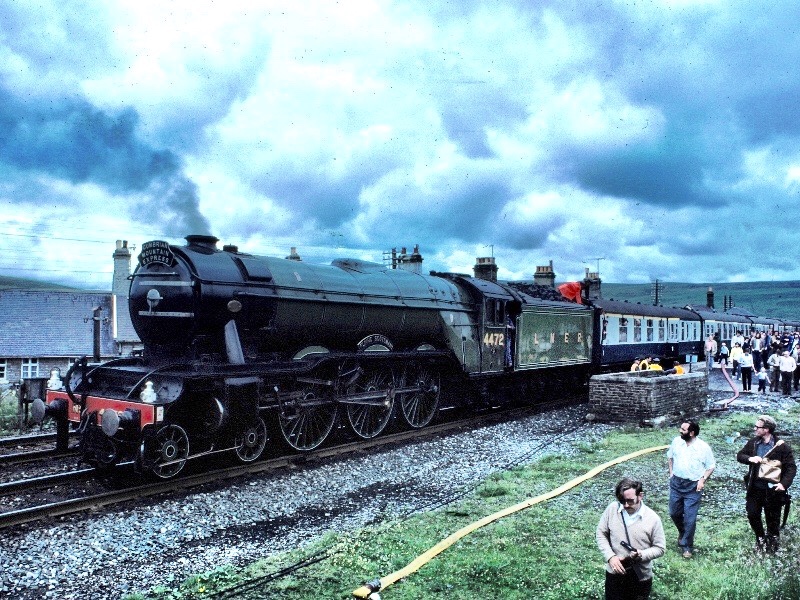
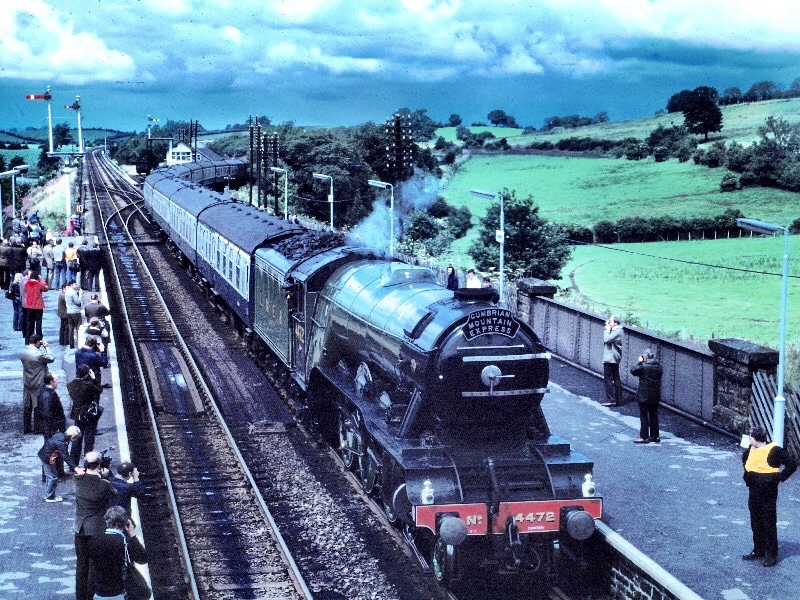
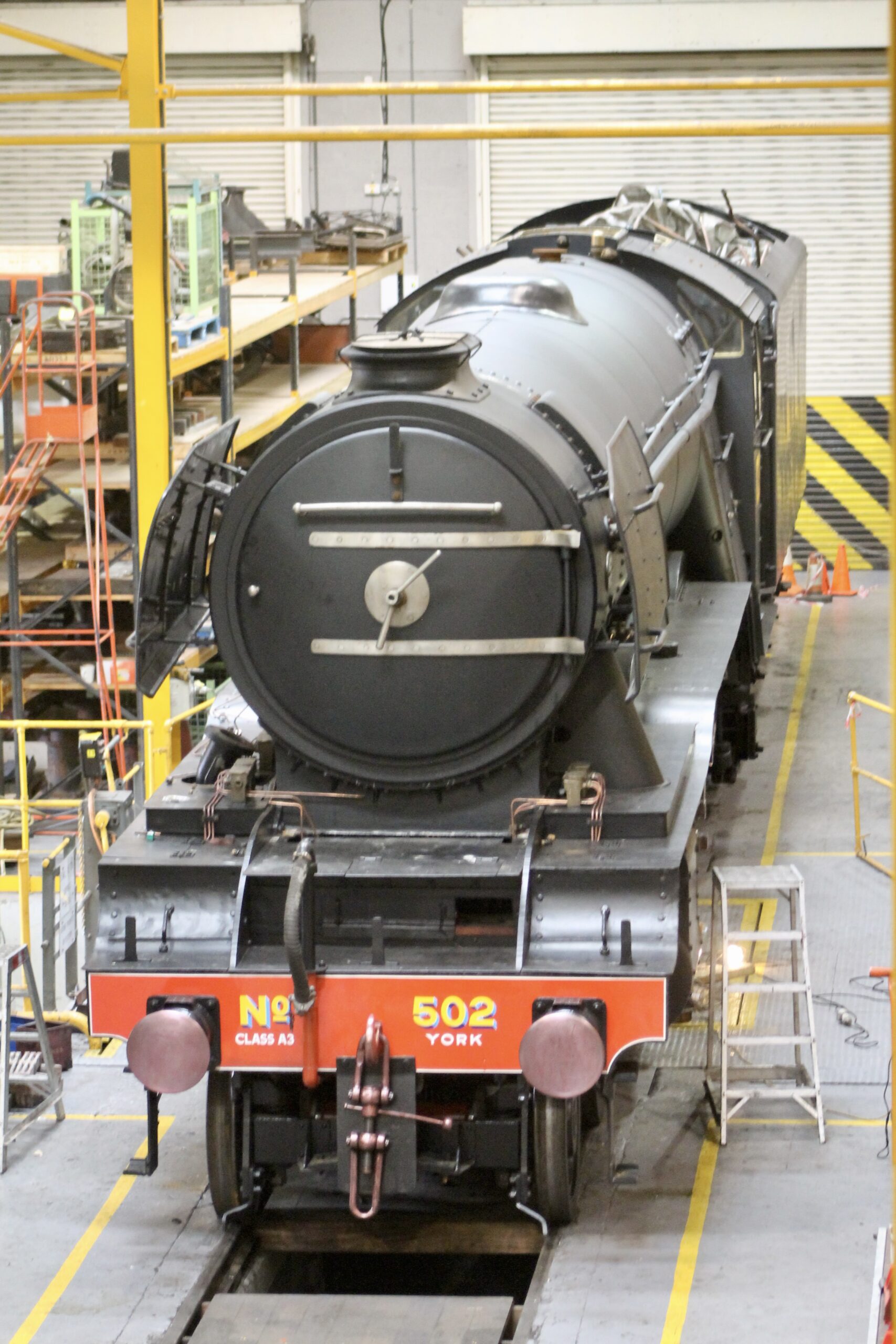
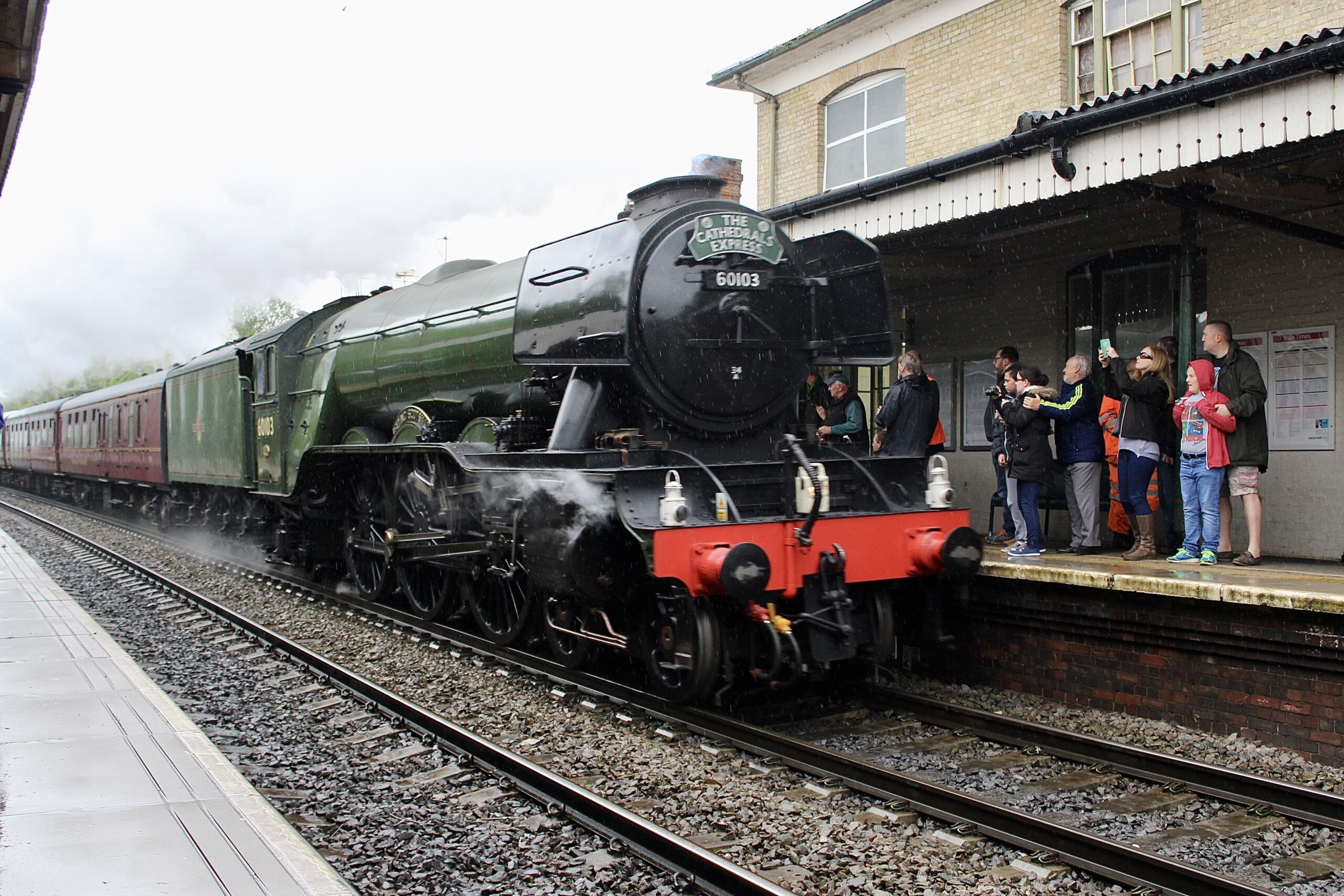
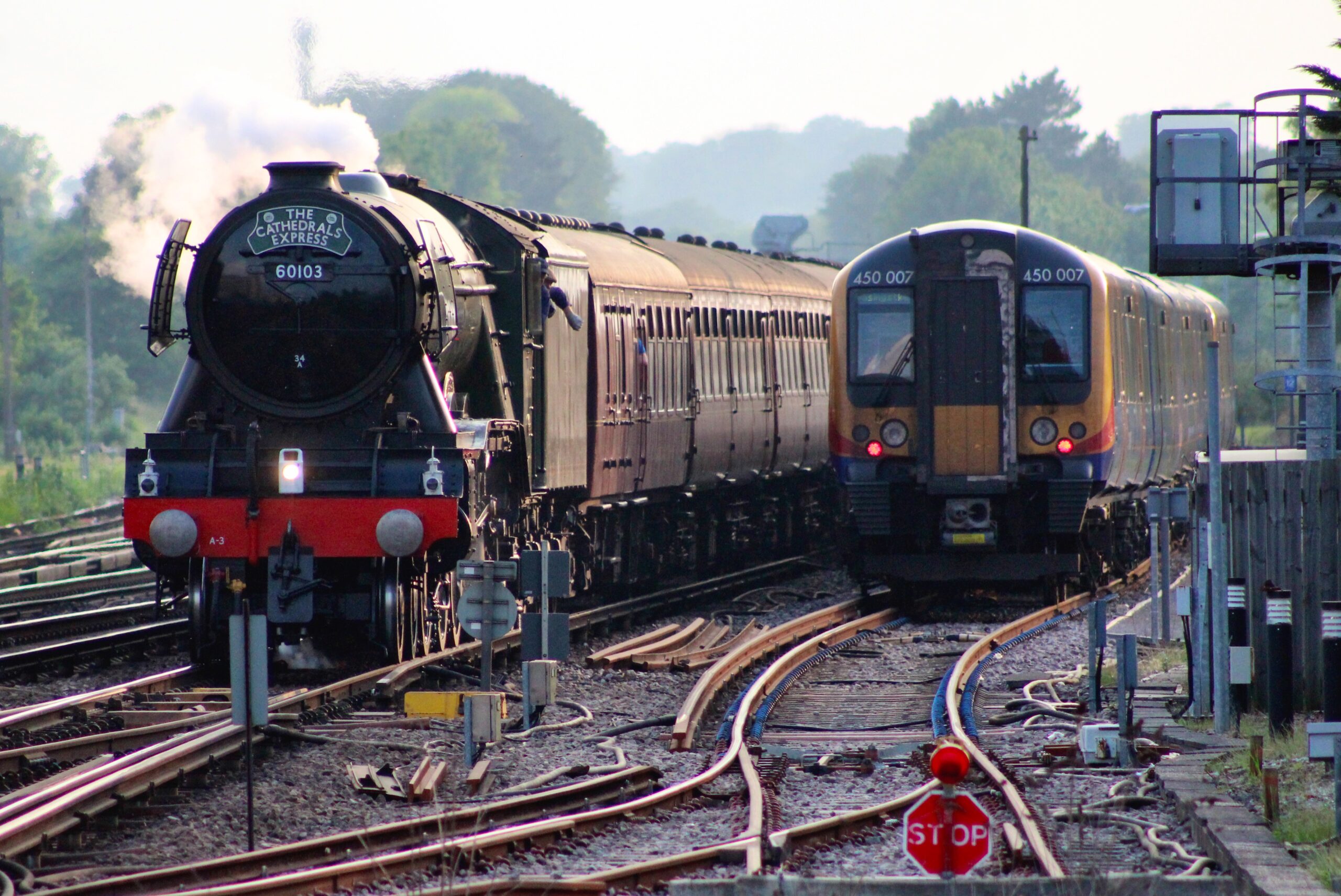
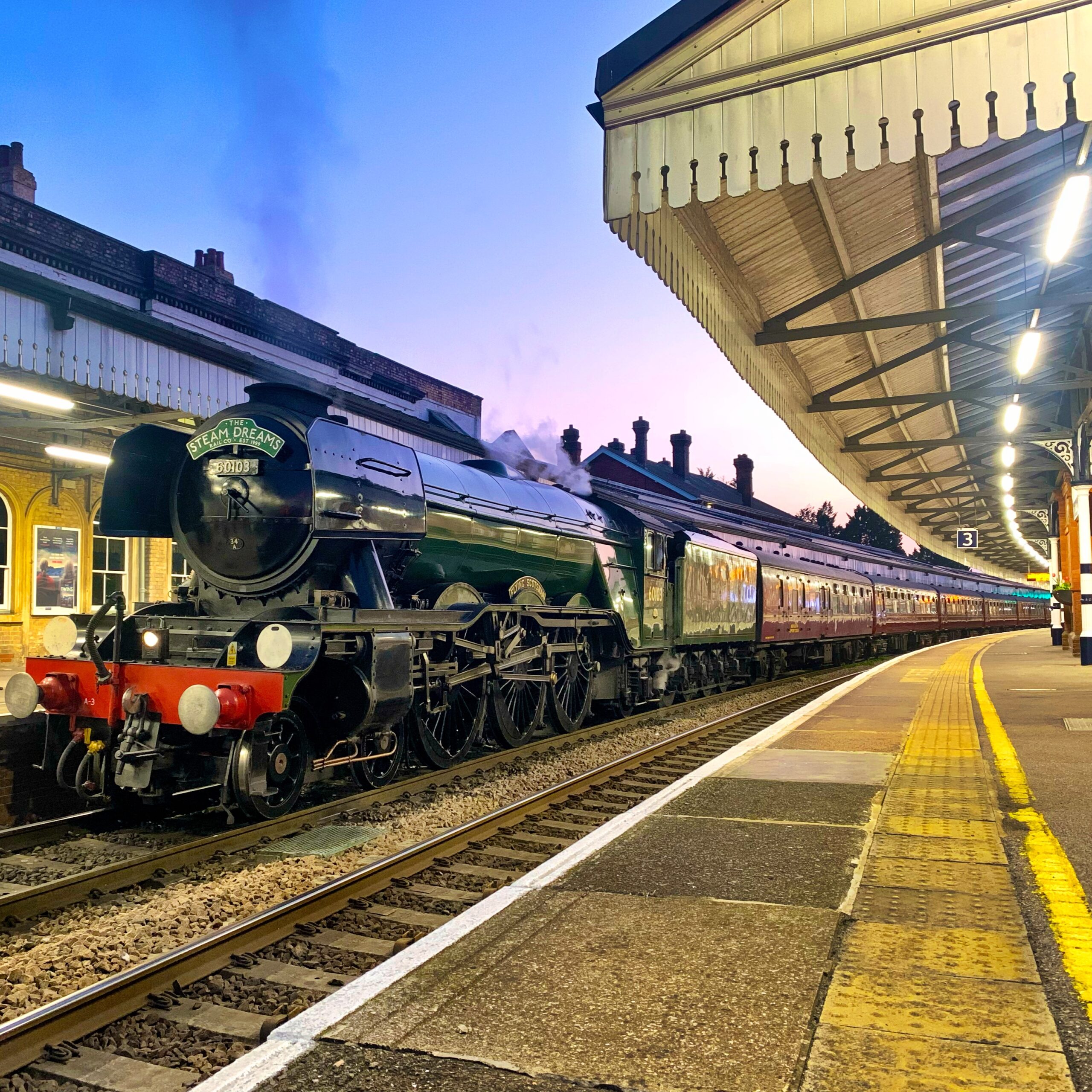
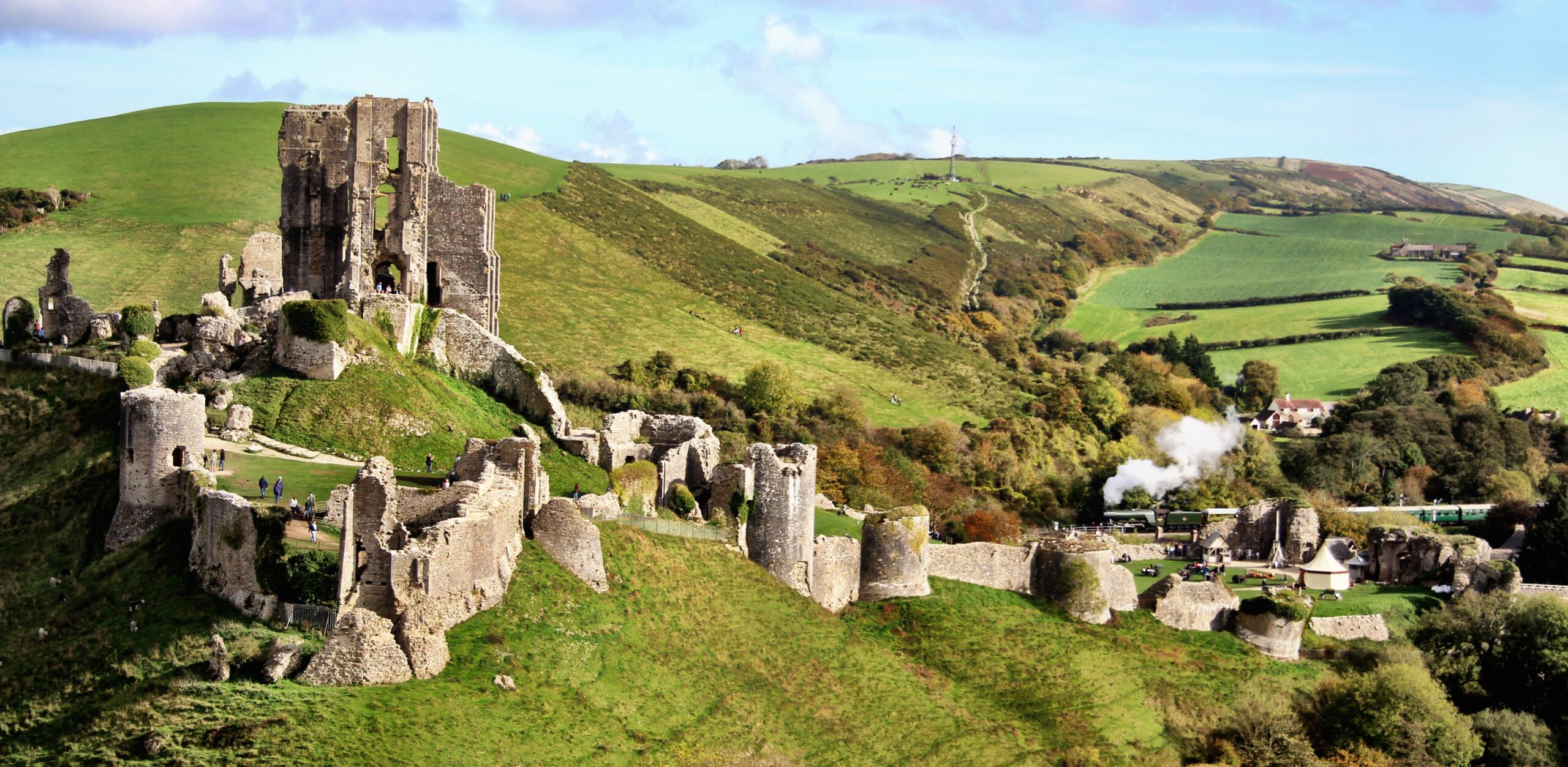
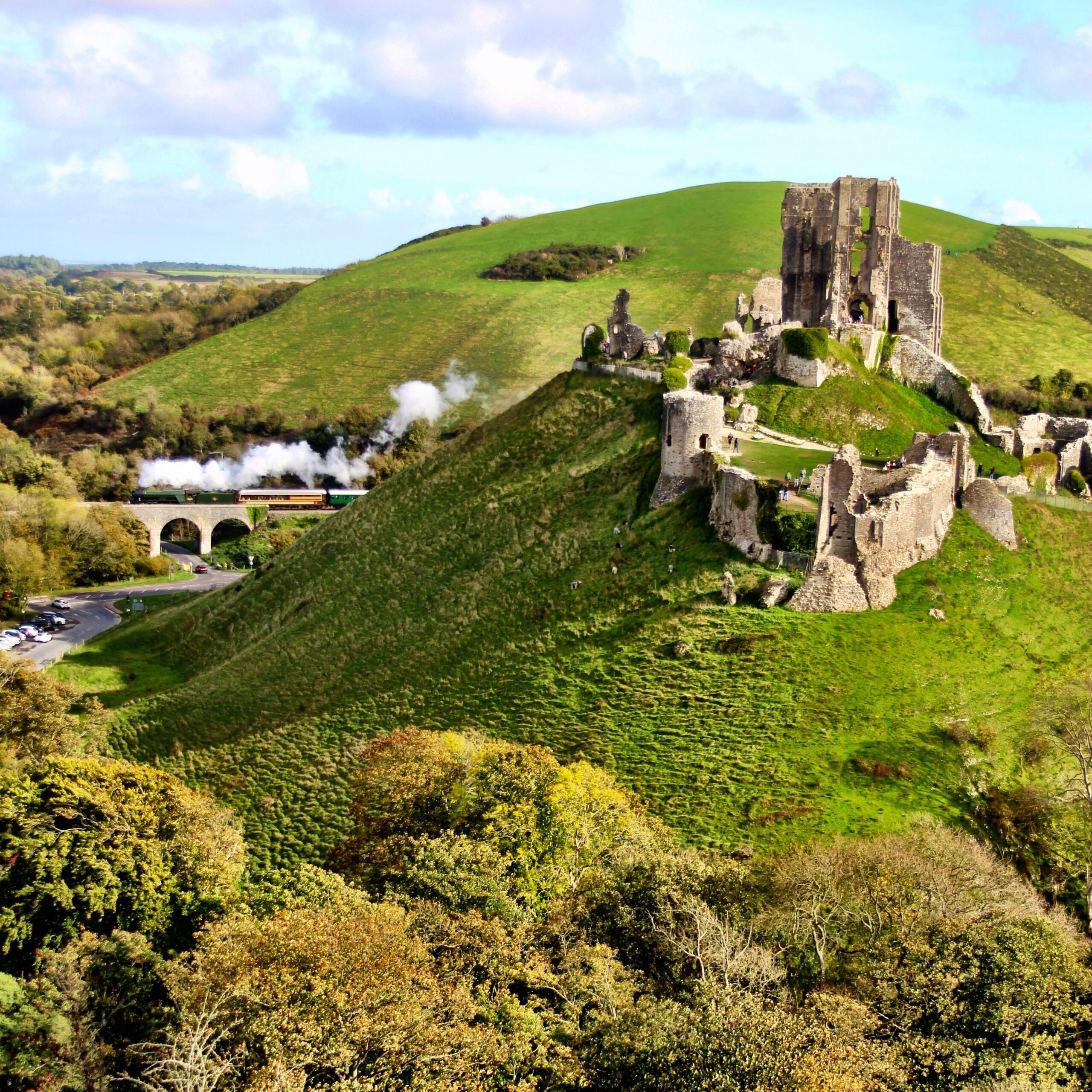
LNER Gresley A3 4-6-2 No. 60103 hauls her last passenger train during her 2022 visit to the Swanage Railway as 1X10 1645 Swanage to Norden crosses Corfe Viaduct – 26/10/2022No. 4472 ‘Flying Scotsman’ alongside Stanier Black Five Class 5MT 4-6-0 No. 5407 at Steamtown which occupied the site of the former London Midland & Scottish Railway Carnforth Motive Power Depot (MPD) opened in 1944. It was hoped that the depot would form part of a preservation scheme involving what is now the Lakeside & Haverthwaite Railway but when this could not be realised due to road modernisation it was developed as major visitor attraction. In 1974 Sir William McAlpine became a shareholder in the company for the purposes of stabling ‘Flying Scotsman’ and he eventually took a controlling interest in the company and purchased the complete site including the track from British Rail. In 1990 McAlpine’s controlling stake in Steamtown Railway Museum Ltd was sold to David Smith, who over the following years has bought out the majority of the minority shareholders. The site closed to the public in 1998 and today it is the base for Smith’s West Coast Railways, which operates heritage steam and diesel trains across the national UK railway network – 18/07/1981The “Cumbrian Mountain Express” departed Crewe at 0940 behind electric traction to Carlisle where No. 4472 ‘Flying Scotsman’ took over and took the train along Settle & Carlisle to Skipton and Carnforth followed by electric haulage to Crewe. Seen here for a water stop at Garsdale – 22/07/1981A feature of CME tours were the run pasts through Appleby where passengers detrained and given the opportunity to photograph the steam locomotive and train in action – 22/07/1981The same view 35 years later and delayed because of single line working imposed by a landslip at Eden Brows near Armathwaite, “The Winter Cumbrian Mountain Express” 1Z87 1436 Carlisle to London Euston arrives at approximately 45 minutes late arrives at Appleby. No. 60103 ‘Flying Scotsman’ replaced LMS Princess Coronation No. 46233 ‘Duchess of Sutherland’ and was 60103’s first main line rail tour following her £4.2 million, 10 year major overhaul. She ran in Wartime black livery and carried the numbers 103 and 502 on either cab side – 06/02/2016No. 502 ‘Flying Scotsman’ in wartime black livery undergoing overhaul and restoration in the works at the National Railway Museum (NRM), York. ‘Flying Scotsman’ was bought for the nation by the NRM in April 2004 at a cost of £2.3million. She ran intermittently until December 2005 (although she was out of action between September 2004 and May 2005 undergoing a ‘heavy intermediate repair’) when she was withdrawn for overhaul. At the time, the NRM said this would take 12 months and cost around £750,000. In 2012 when the above image was taken, she was still not ready to steam again and the cost of the work undertaken had spiralled to over £2.6million. A report at the time, commissioned for the Trustees of the Science Museum Group (of which the NRM is part) to help understand quite why the overhaul had gone over time and over budget, was prepared by a respected steam engineer from Tyseley Locomotive Works, Bob Meanley, assisted by a professor of engineering and found “It is difficult to analyse drift in the project because there was no real plan against which it could be measured and new tasks were added to the workload as new problems were uncovered.” The report confirmed ‘Flying Scotsman’ was in a very worn out condition when acquired by the NRM. To a large degree this had been well known, although reports commissioned at the time seem to have been overly optimistic. The NRM had been clearly under pressure to secure the locomotive amid fears it may have been sold abroad, but is found not to have properly assessed the state of its new acquisition following purchase or to have drawn up a credible refurbishment plan. New faults are noted as having taken staff by surprise five years after purchase. In 2011, the locomotive had to be dismantled again to correct issues many thought would have been identified back in early 2006. – 03/07/2012No. 502 ‘Flying Scotsman’ at the Railway Museum, York. After the release of the 2012 report on the restoration of ‘Flying Scotsman’, the NRM commissioned an independent review to determine the next steps on how to proceed. It was recommended that further work on the locomotives overhaul should be put out to external tender and subsequently it was announced this would be Riley & Son and ‘Flying Scotsman’ was moved to their workshop at Bury. On 8 January 2016, ‘Flying Scotsman’ moved under her own steam for the first time since 2005. The final cost of the restoration was £4.5 million – 03/07/2012Following her ten year overhaul and restoration, ‘Flying Scotsman’ undertook running in tests on the East Lancashire Railway (ELR) and can be seen here at Rawtenstall – 17/01/2016Rawtenstall – 17/01/2016Awaiting the road at Rawtenstall – 17/01/2016Approaching Ramsbottom on the ELR – 17/01/20161Z86 0710 London Euston to Carlisle “The Winter Cumbrian Mountain Express” – No. 60103 ‘Flying Scotsman’ is seen here climbing Shap bank – 06/02/2016“The Winter Cumbrian Mountain Express” water stop at Appleby – 06/02/2016Steam Dreams organised 1Z60 0837 London Paddington to Salisbury “The Cathedrals Express” rail tour hauled by No. 60103 ‘Flying Scotsman’ approaches Dilton Marsh – 21/05/2016No. 60103 ‘Flying Scotsman’ working 1Z82 1502 Salisbury to Salisbury “The Cathedrals Express” passing through Romsey – 21/05/2016“The Cathedrals Express” 1Z62 1828 Salisbury to London Paddington at Grateley – 21/05/2016Delayed by a line side fire in the former British Rail Staff Association building at Salisbury station, “The Cathedrals Express” 1Z62 1856 Salisbury to London Paddington passes Class 450 No. 450007 on the approach Basingstoke – 28/05/2016No. 60103 ‘Flying Scotsman’ working 1Z75 1520 Salisbury to Southampton Central alongside the Lower Test Valley – 06/06/2021No. 60103 ‘Flying Scotsman’ awaits the road at Salisbury with Steam Dreams 1Z83 1852 Salisbury to London Victoria. Following this main line run, ‘Flying Scotsman’ was withdrawn from operation for an overhaul in preparation for her centenary year celebrations – 24/03/2022
Yoshi took the opportunity of ‘Flying Scotsman’ being on static display at Swanage railway station to get up close and personal! Last week we shared video of ‘Flying Scotsman’ during her 1994 visit to the Swanage Railway. This week we move forward to 1999 and 2000 when the locomotive could be found in her famous LNER Apple Green guise and numbered No. 4472, as she appeared when she was owned by Alan Peglar on purchase from British Railways in 1963:
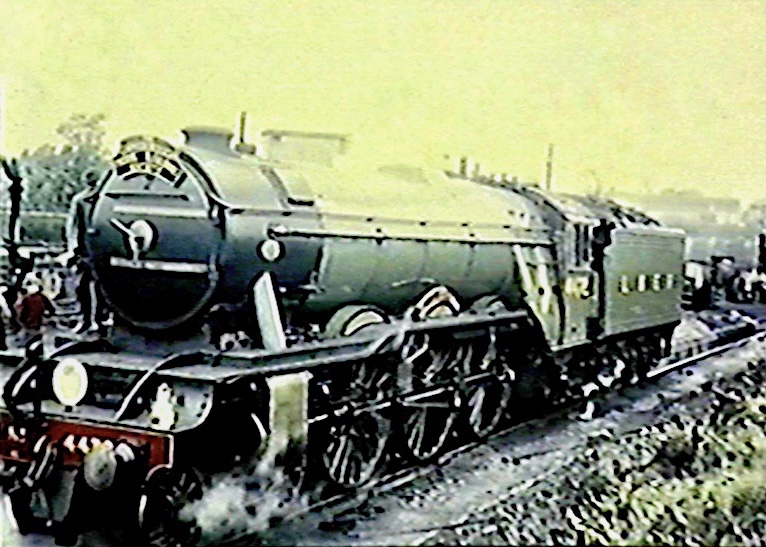
Video of LNER Gresley A3 4-6-2 No. 4472 ‘Flying Scotsman’ on various workings in LNER Apple Green livery: 08/08/1999 Upton Scudamore whilst on a London Paddington – Salisbury – London Paddington rail tour, 27/11/1999 Deputising for GWR 6000 Class King 4-6-0 ‘King Edward I’ No. 6024 on Pathfinder Tours “The Capital King” seen at Bradford Abbas and Sherborne, 06/02/2000 Deputising for SR Merchant Navy 4-6-2 No. 35028 ‘Clan Line’ on a VSOE British Pullman London Victoria to Southampton Docks and return rail tour seen in Southampton Docks, and 16/04/2000 Past Time Rail’s “The Tall Ships” seen in Southampton Docks and light engine turning move passing Eastleigh12th September 1965 and No. 4472 ‘Flying Scotsman’ visited Weymouth and is seen here on Weymouth depot. I was told that I was taken to see the special train organised by The Gainsborough Model Railway Society pass through Dorchester, so perhaps inspiring a lifetime love of railways! – John Chappell 12/09/1965
Wednesday 26th October to Tuesday 1st November
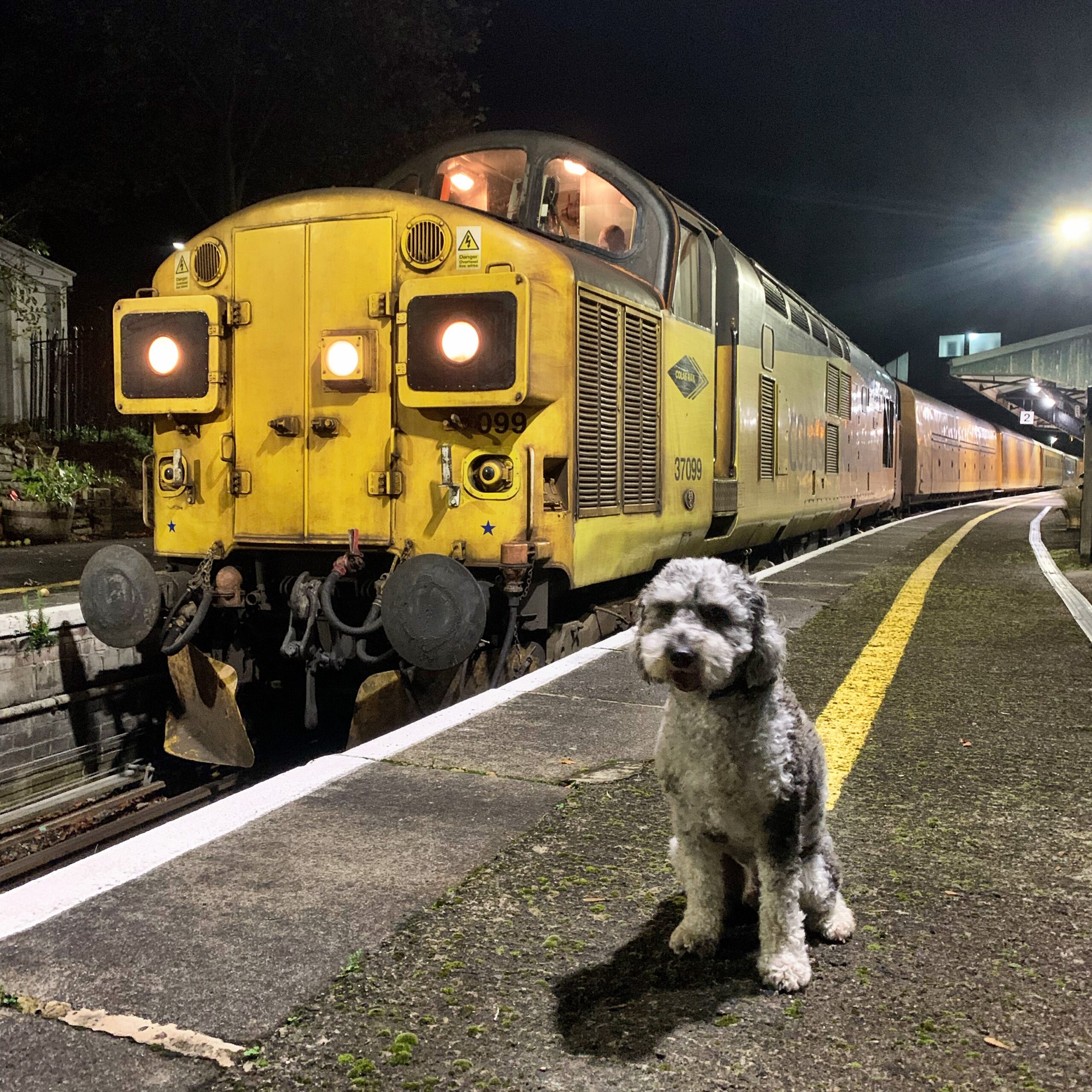
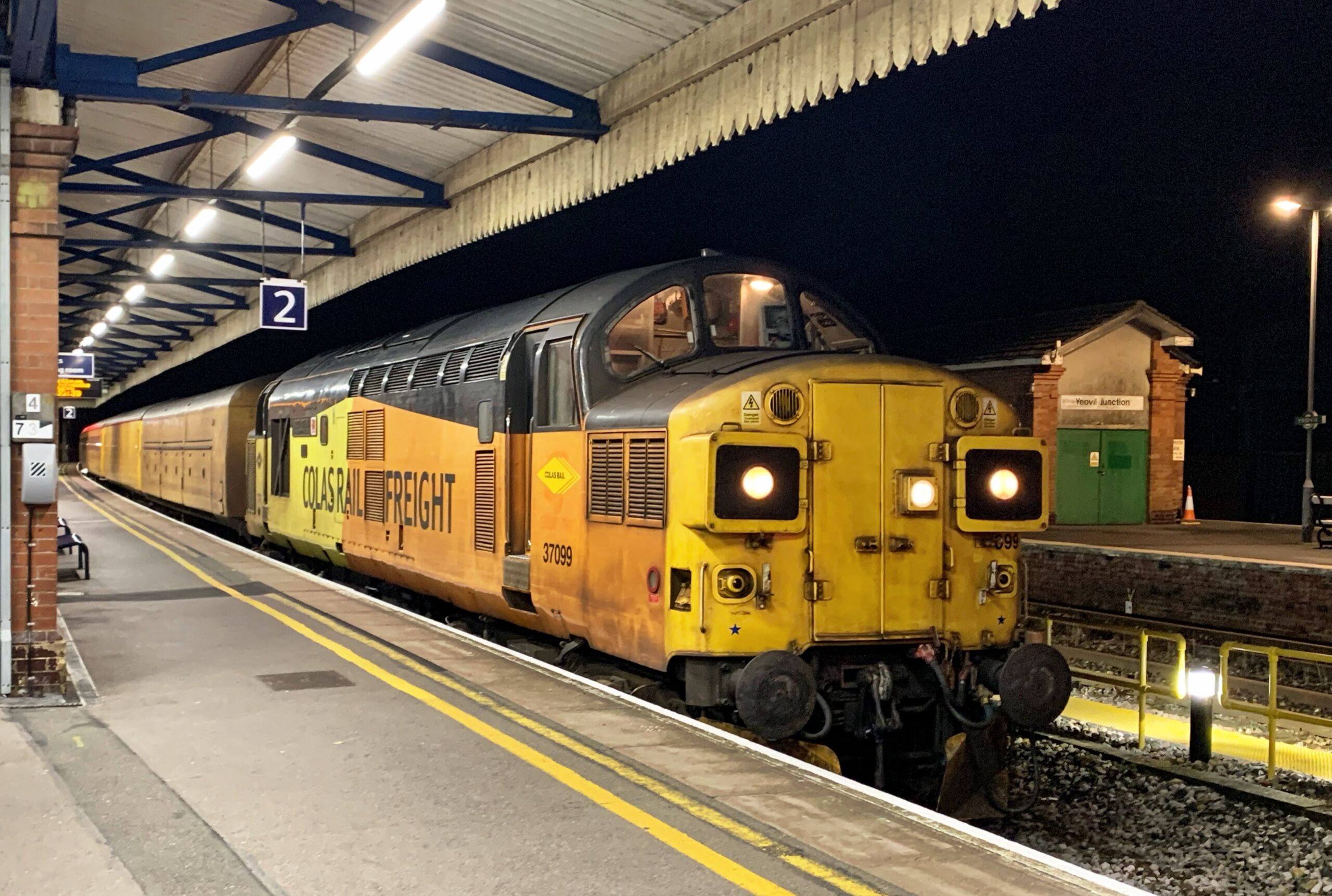
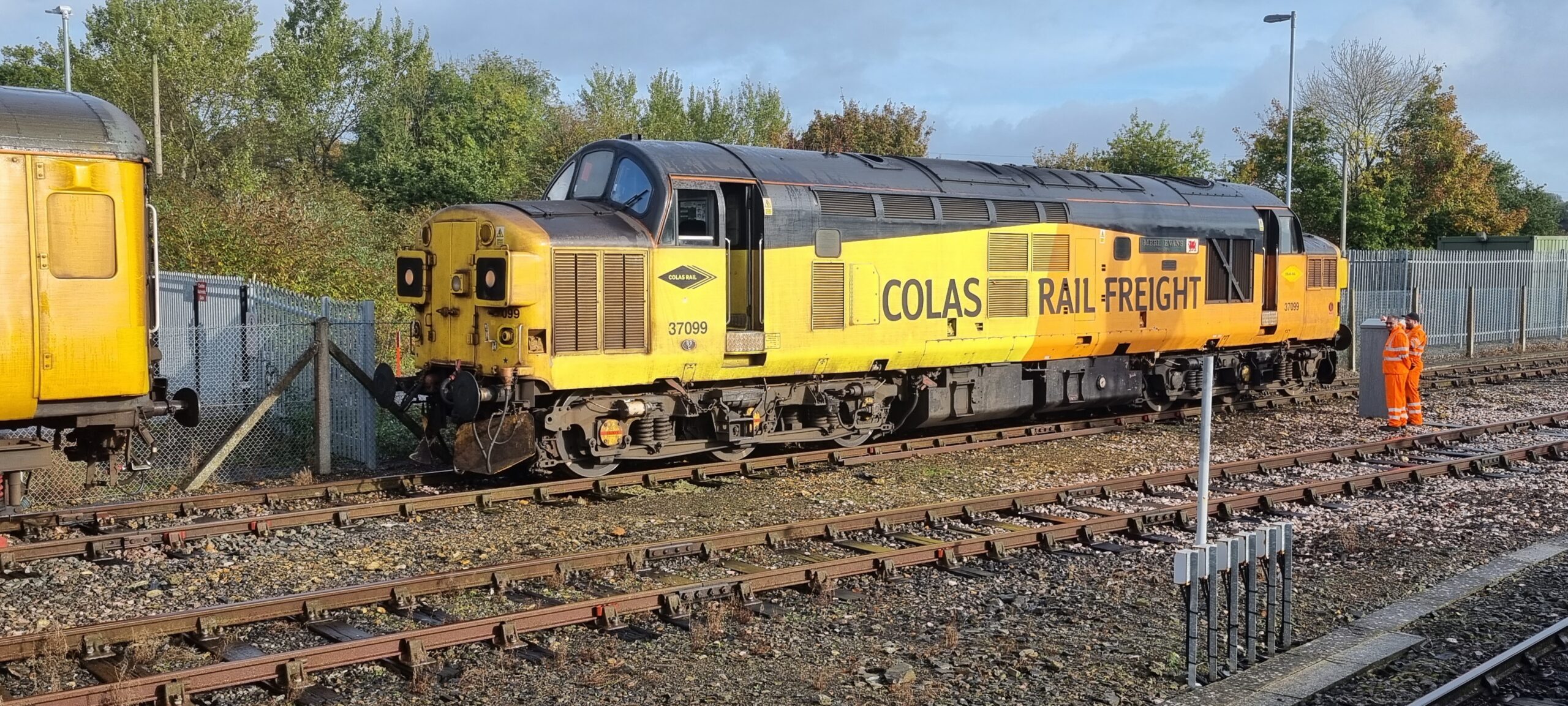
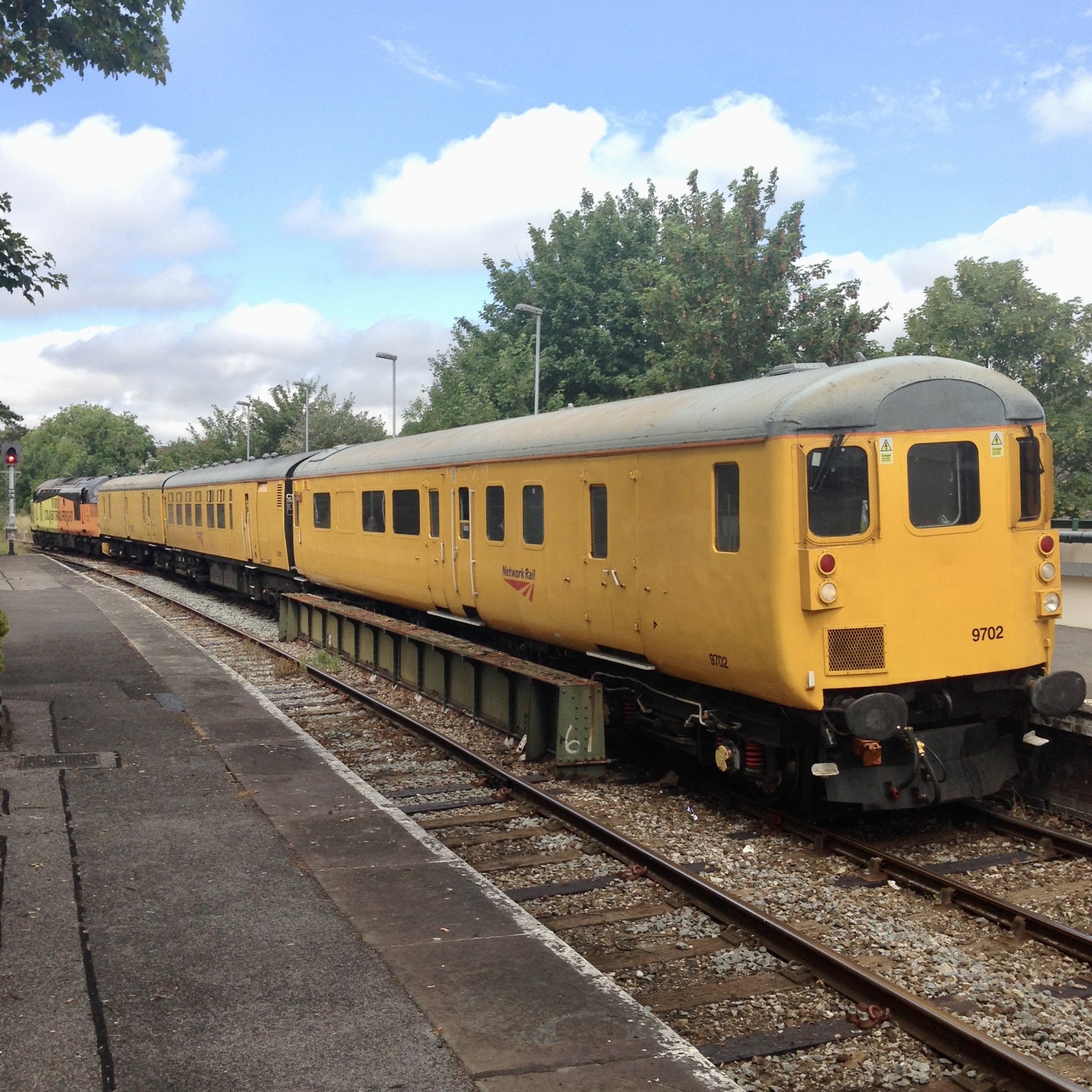
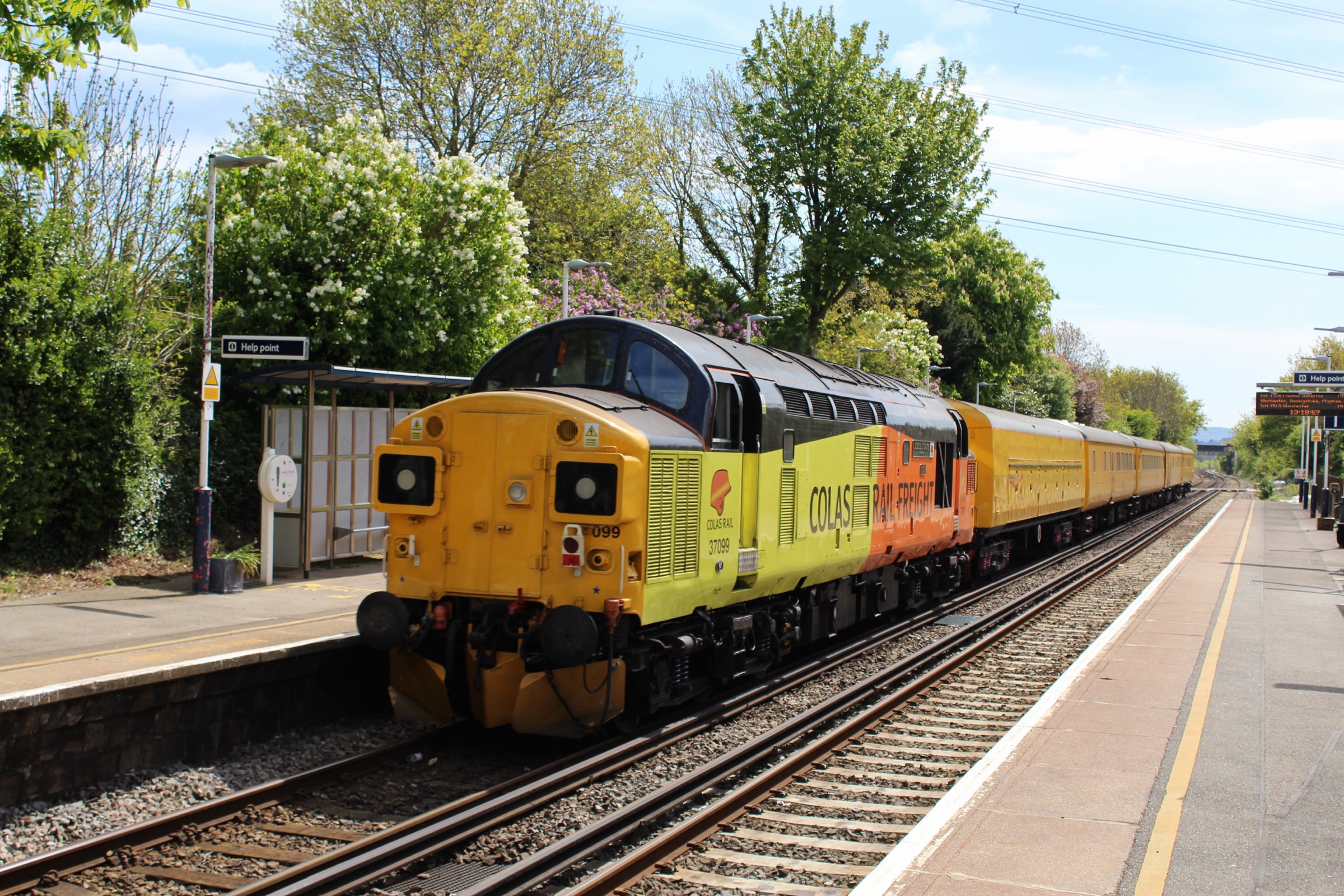
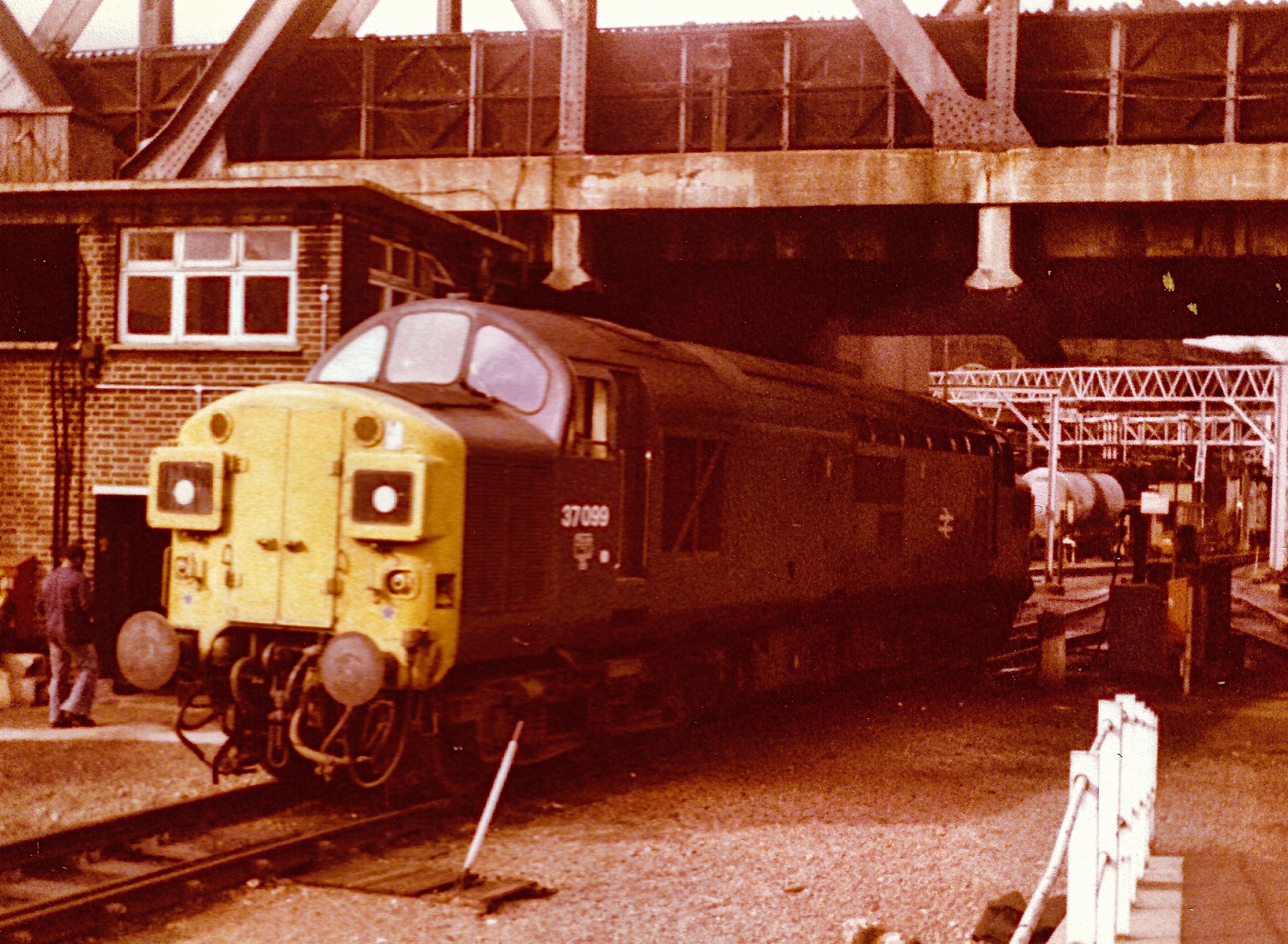
Returning to present day 2022 and Thursday 27th October which saw Yoshi and I travelling to Yeovil to catch sight of Colas Class 37 No. 37099 ‘Merl Evans 1947 – 2016’ working 3Q07 2053 Exeter Riverside New Yard to Exeter Riverside New Yard. This working consisting of a diesel locomotive on one end and a DBSO on the other usually heads off to Sherborne and Salisbury, but this month (possibly due to the speed restrictions on the line in place until 14th November 2022 because a clay embankment between Tisbury and Gillingham had dried out, causing the ground beneath the tracks to shrink) was scheduled to reverse at Yeovil Pen Mill, a station it usually misses out although is always booked to visit. I was 99% sure the train would make it to Pen Mill this time due to its pathing, but as I didn’t fully trust that the train wouldn’t be reversed before reaching here, I hedged my bets and went straight to Yeovil Junction to witness the test train working straight through. I jumped in the car and made it over to Yeovil Pen Mill just as the service arrived into platform 1. Being a glutton for punishment, we then headed back to Yeovil Junction to see the train arrive on the return leg before departure for Exeter at 0023.
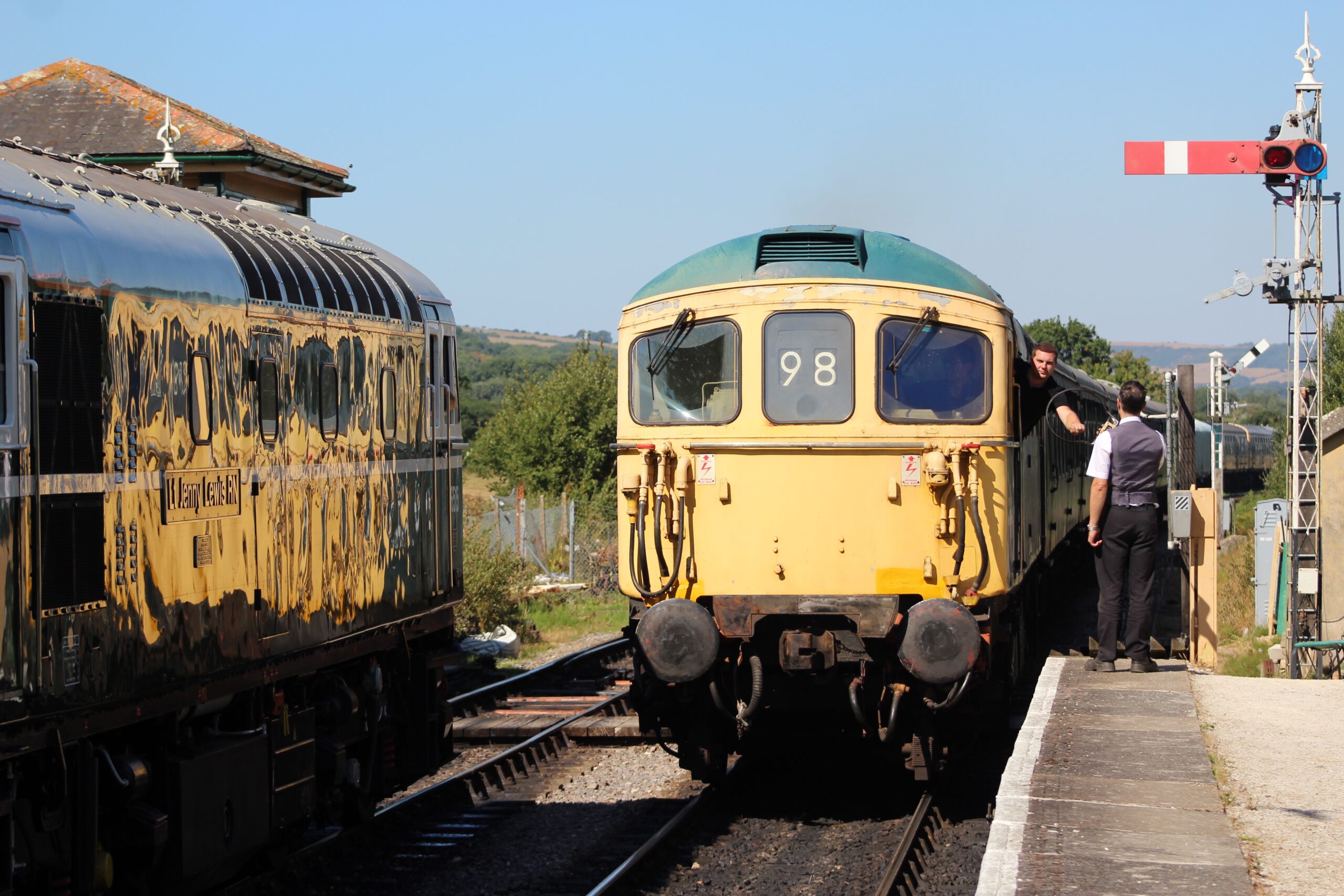
Yoshi on a late night barking mission with Colas Class 37 No. 37099 ‘Merl Evans 1947 – 2016’ at Yeovil Pen Mill – 27/10/2022Nameplate detail of Colas Class 37 No. 37099 ‘Merl Evans 1947 – 2016’ named in memory of Mel’s outstanding contribution to British model railways – 27/10/2022Colas Class 37 No. 37099 ‘Merl Evans 1947 – 2016’ awaits the green light on the return path to Exeter at Yeovil Junction – 27/10/2022
Video of Colas Class 37 No. 37099 ‘Merl Evans 1947 – 2016’ working 3Q07 2053 Exeter Riverside New Yard to Exeter Riverside New Yard – 27/10/2022
On Sunday 30th October Yoshi and I visited National Trust’s Stourhead Gardens in Wiltshire. After an initial rain shower on arrival, we had a very pleasant few hours drying out whilst walking around the grounds of the estate and enjoying the autumnal colours of the trees as their leaves fluttered to the ground.
Yoshi enjoys his walks around National Trust Stourhead Gardens – 30/10/2022
Being so close to Westbury, we took the opportunity to pop in and see the 3S59 1554 Swindon Transfer to Loreton-On-Lugg Rail Head Treatment Train in fading light before tucking into a very tasty Sunday roast at The Three Horseshoes at Chapmanslade. Class 66 No. 66846 has returned to traffic after being temporarily replaced by Class 37 No. 37668 which we saw the previous Sunday on the equivalent working as it passed through Bradford on Avon. No 66850 ‘David Maidment’ was once again in evidence.
Colas Class 66 No. 66850 ‘David Maidment’ on the rear of 3S59 1554 Swindon Transfer to Loreton-On-Lugg RHTT having arrived at Westbury. The train reverses here – 30/10/2022
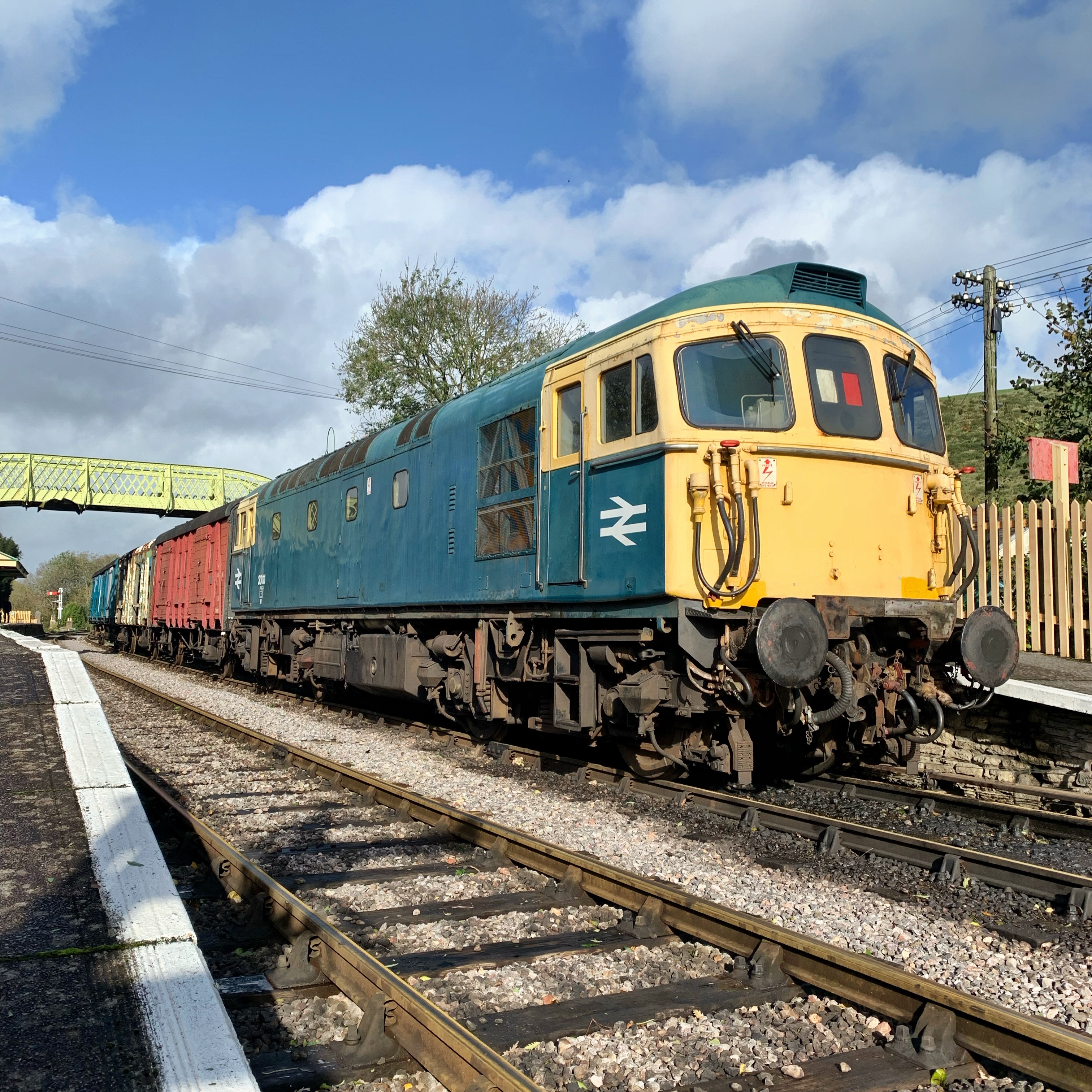
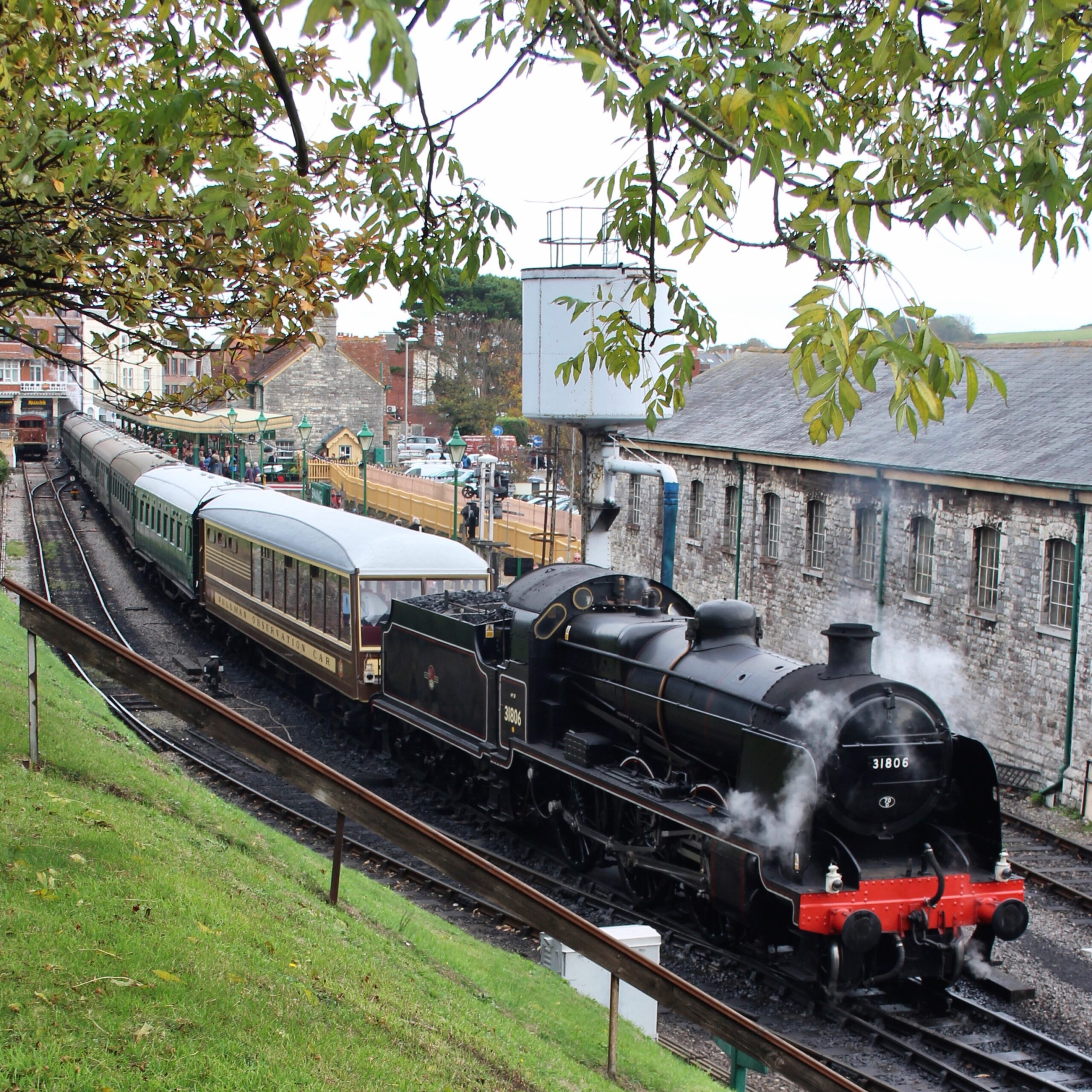
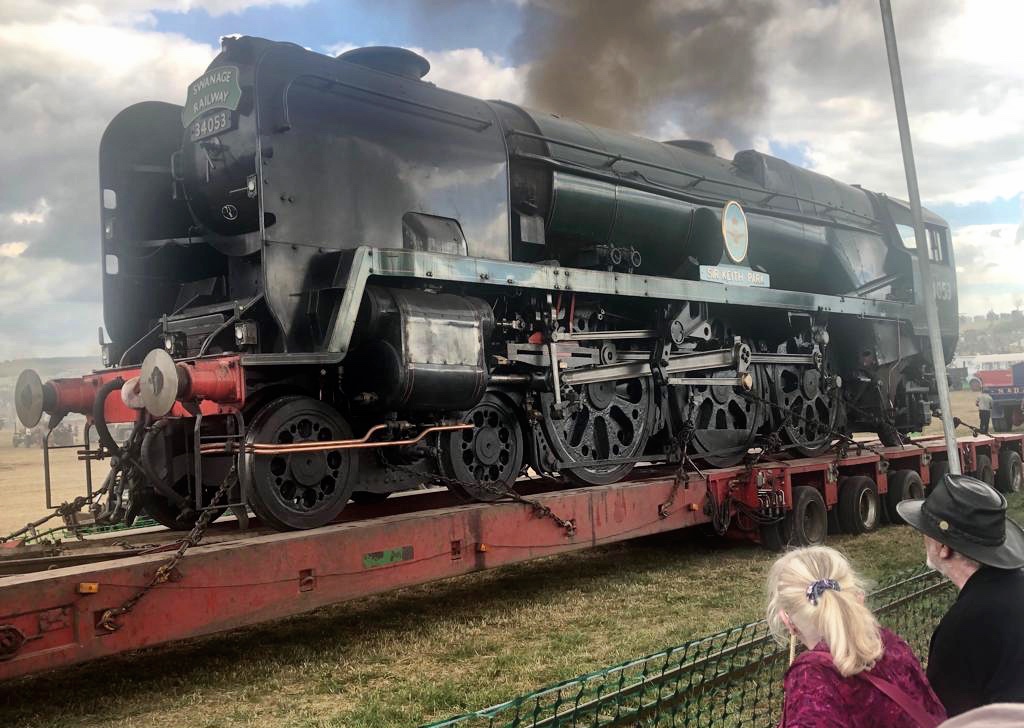
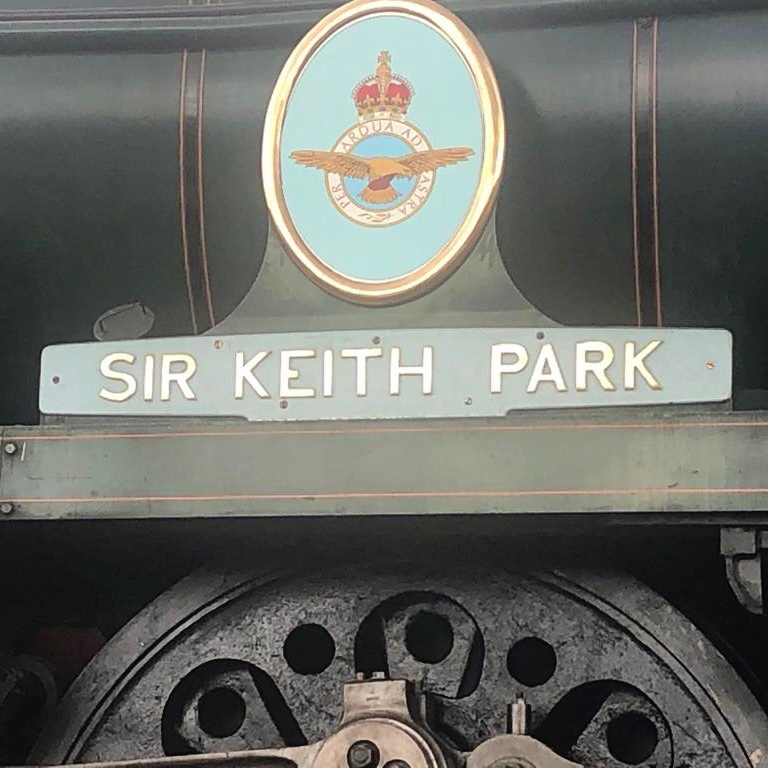
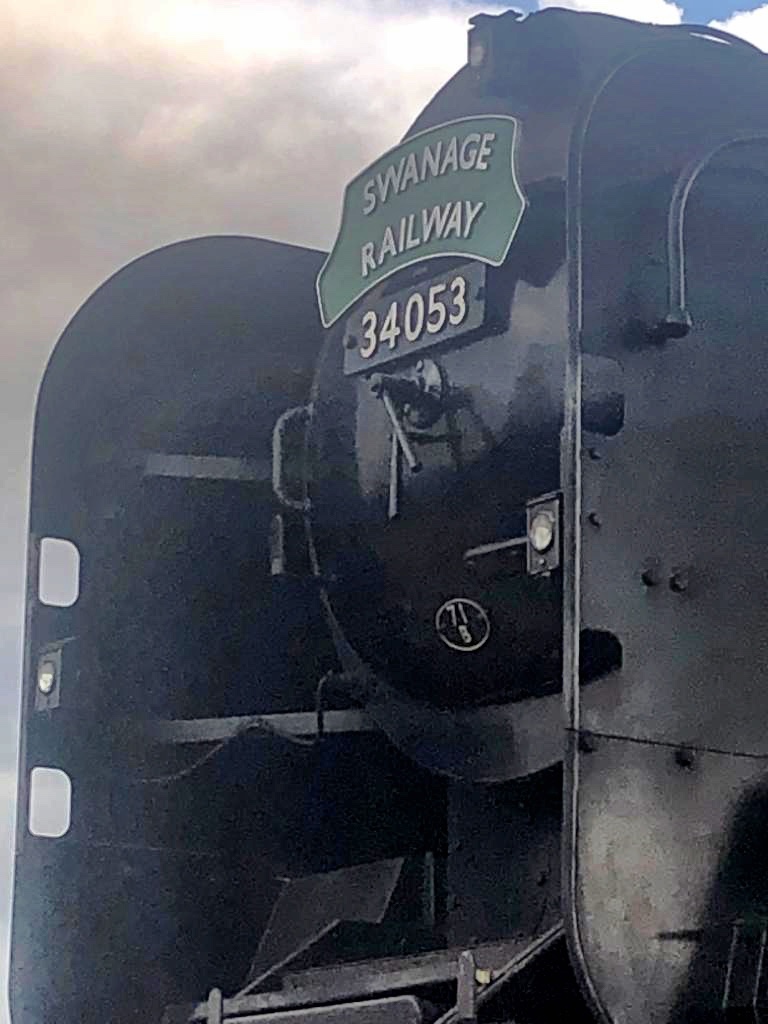
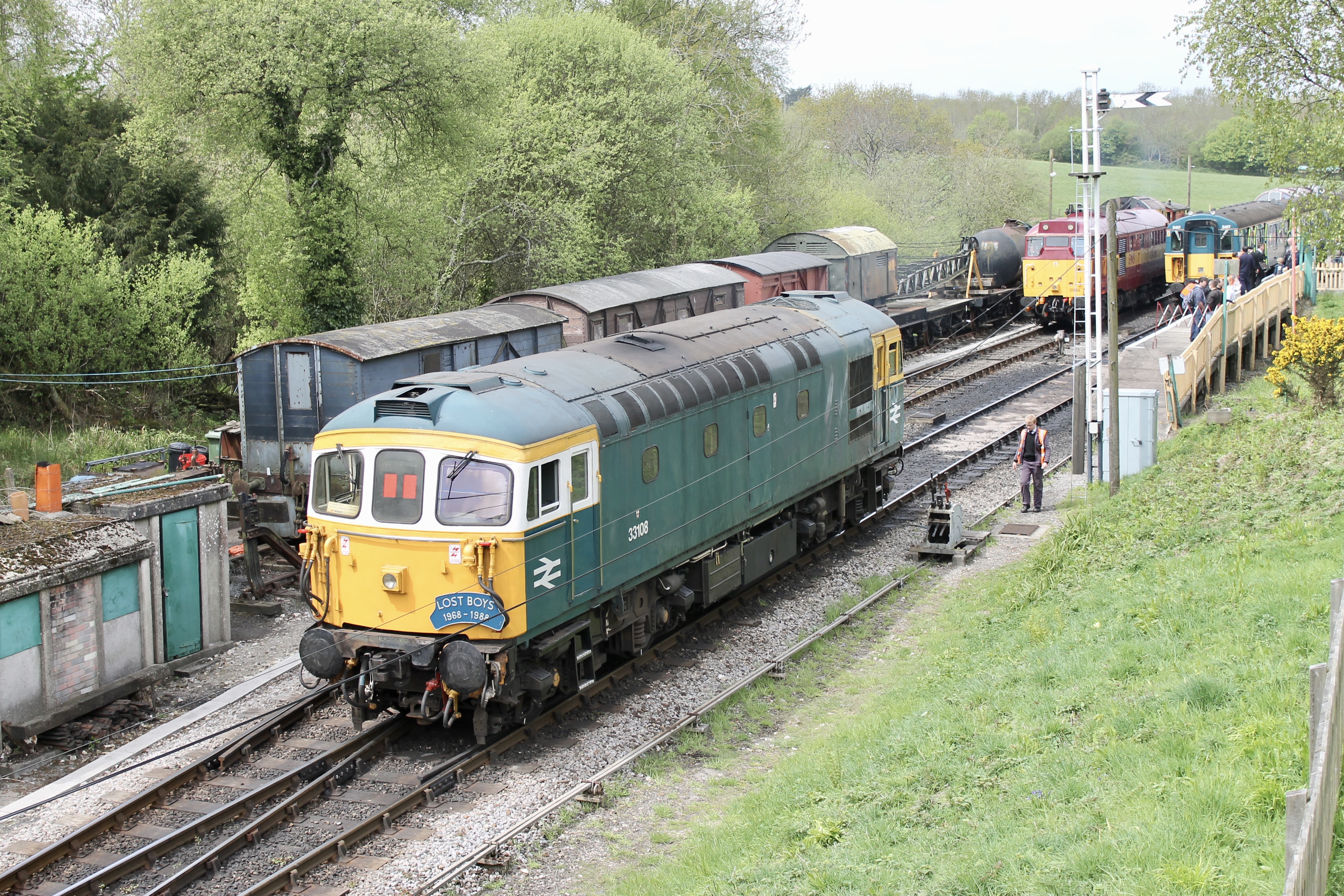
Video of Class 66 No.’s 66846 and 66850 reversing at Westbury with S59 1554 Swindon Transfer to Loreton-On-Lugg RHTT – 30/10/2022SR Battle of Britain Class 4-6-2 No. 34070 ‘Manston’ at Swanage Railway’s Herston Works. The locomotive was waiting in readiness to be collected by low loader and taken to Norden by road where she will undertake running in tests. Her place in the works will be taken by classmate No. 34053 ‘Sir Keith Park’. Many thanks to Jamie for getting permission for our visit to Herston – 01/11/2022The Swanage DMU stock keeping SR Battle of Britain Class 4-6-2 No. 34053 ‘Sir Keith Park’ company in the sidings at Corfe Castle ahead of her move to Herston Works – 01/11/2022BR Class 33 No. 33111 sits at Corfe Castle having removed a consist of wagons from Norden the previous day in readiness for the low loader moves in connection with ‘Manston’, ‘Sir Keith Park’. and ‘257 Squadron’ which is off on holiday to the Spa Valley railway to work Polar Express trains. ‘257 Squadron’ will be back at Swanage in early 2023- 01/11/2022SR West Country Class 4-6-2 No. 34028 ‘Eddystone’ departs Swanage with the 1000 service to Norden. SR U Class 2-6-0 No. 31806 sits in front of the ‘Flying Scotsman’ support coach. Note the fence panels which had blown over onto the coach on the extreme right of the picture – 01/11/2022
We also came across some interesting railwaymania when we visited the Den antiques emporium over the weekend:
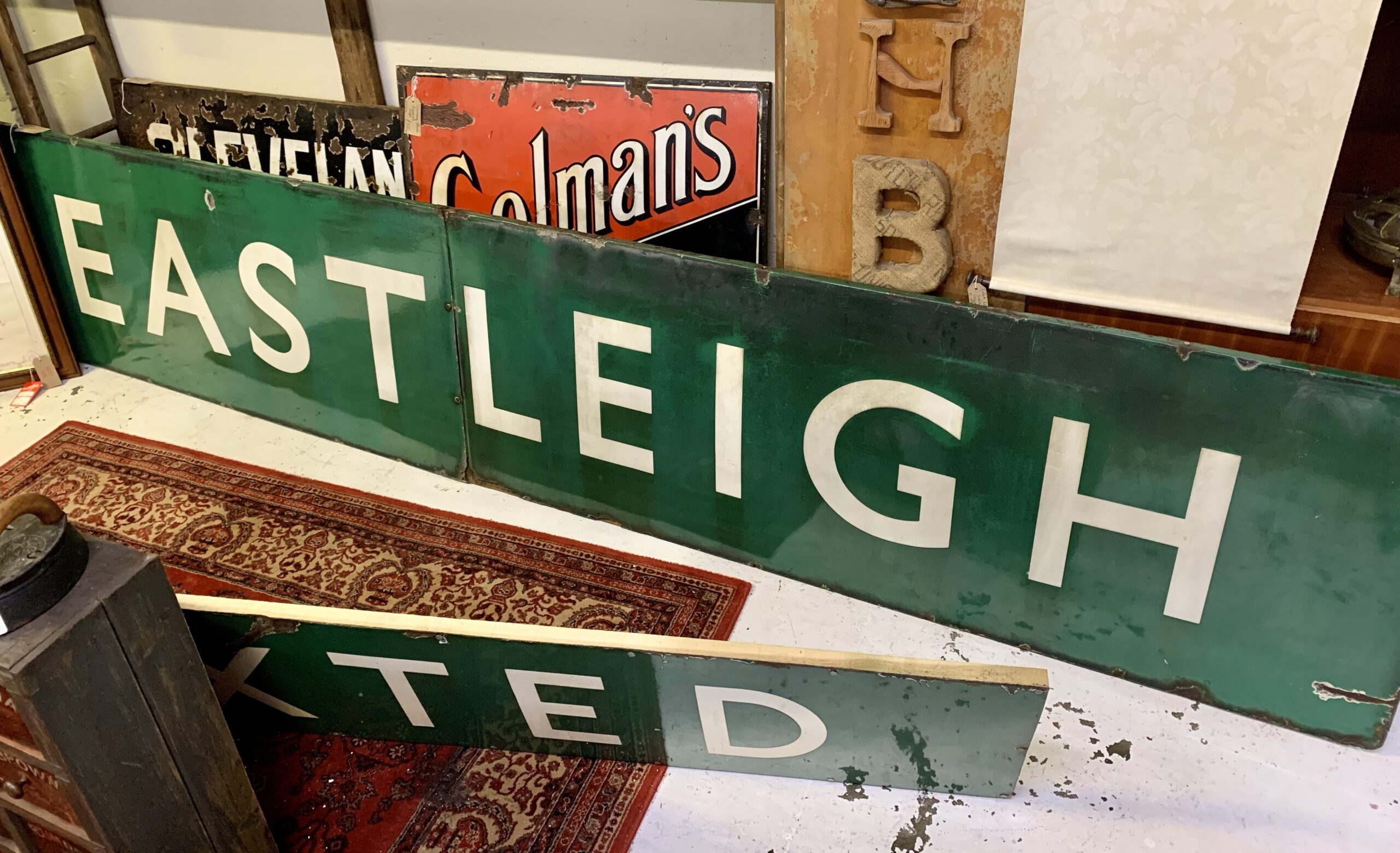
£795 would make you the proud owner of an enamel British Railways Eastleigh station sign
Next, we found a signed Terrence Cuneo “The Night Express” print, an evocative study of a Great Western King Class 4-6-0 working along the sea wall near Teignmouth, painted by the Master in 1975 and issued by Felix Rosenstiels Widow & Sons Ltd. as a single edition of 850 prints signed by the artist in 1977. Terrence Cuneo (1907-1996) CVO, OBE is one of my favourite railway artists. He was also renowned for his military paintings and was the official artist for the coronation of Queen Elizabeth II in 1953. A bronze memorial statue of Terrence Cuneo, unveiled by Princess Anne in 2004, once stood on the concourse at London Waterloo, but was moved to Brompton Barracks in Kent prior to the development of the disused Eurostar platforms at the station. One of my favourite Cuneo paintings can be found at the Railway Museum in York and is of London Waterloo station:
That just about wraps up another week and all that remains is for me to thank you, dear reader, for taking the trouble to visit Yoshi’s blog. We’ve enjoyed having you stop by. As always, please feel free to comment or let me know of any typo’s, gobbledygook or misinformation! May your dog (or cat) go with you.
Wednesday October 19th to Tuesday October 25th2022
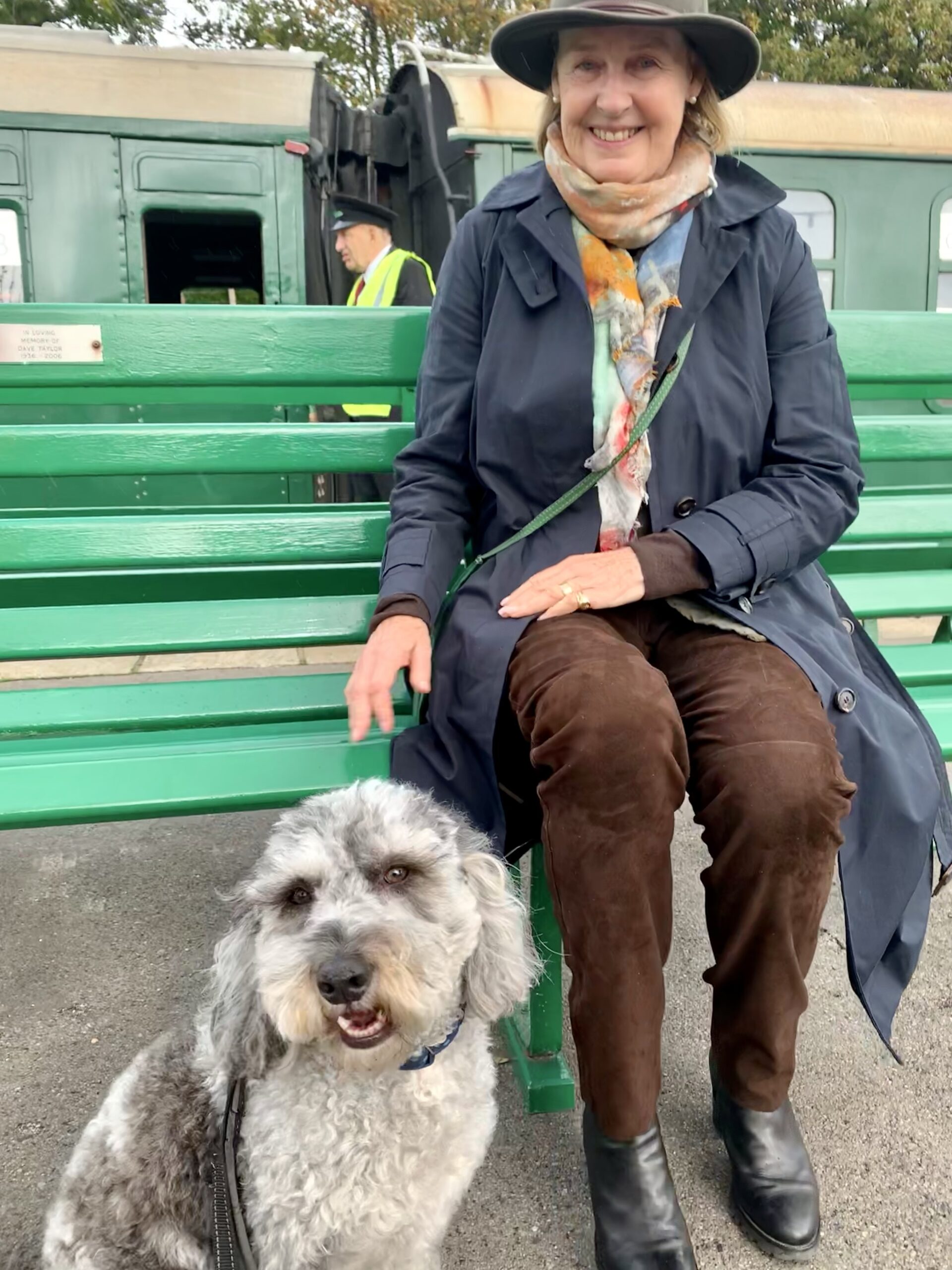
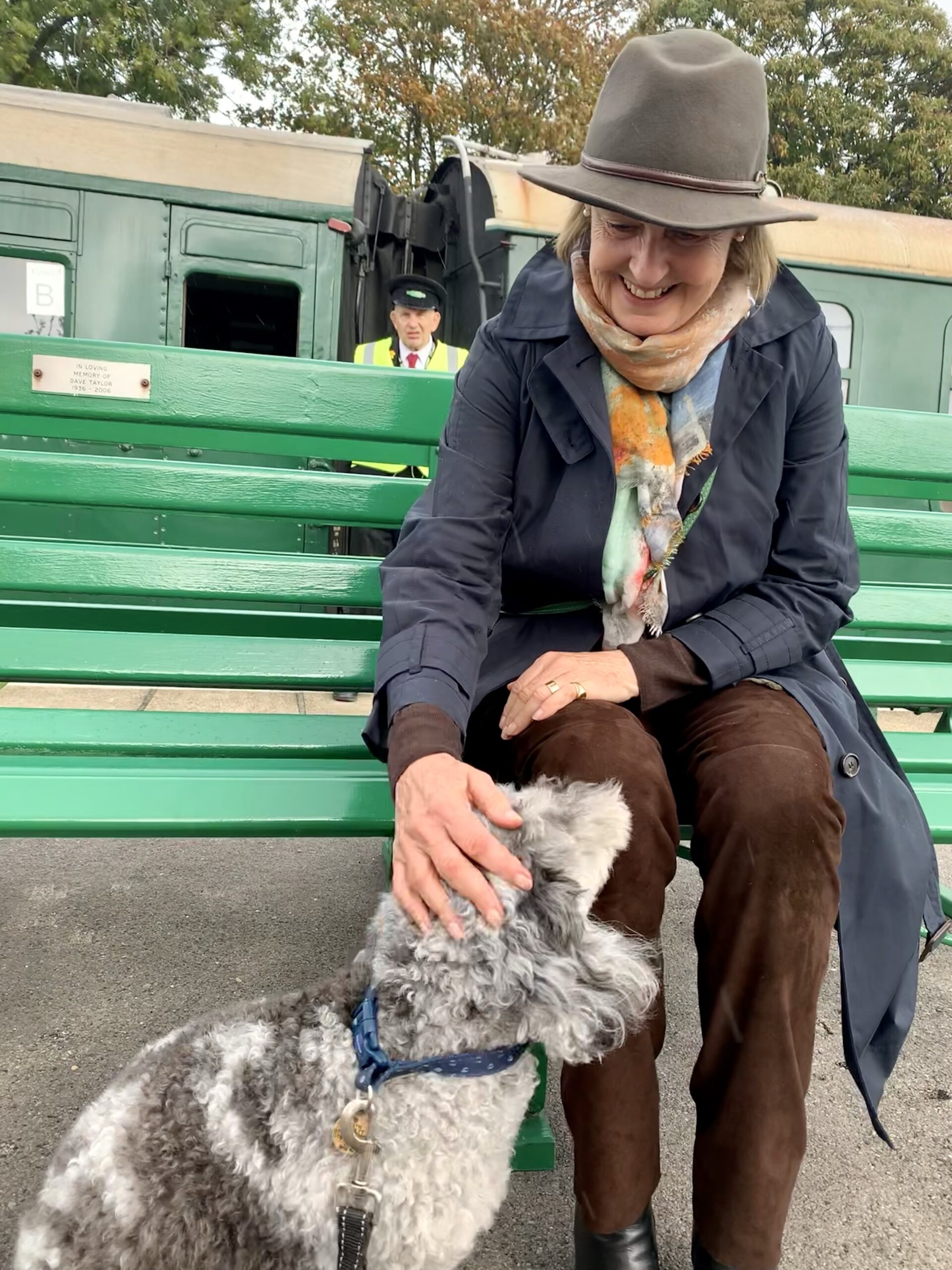
Yoshi meets Penny Peglar, daughter of Alan Peglar who rescued ‘Flying Scotsman’ from the scrapyard in 1963 – 22/10/2022
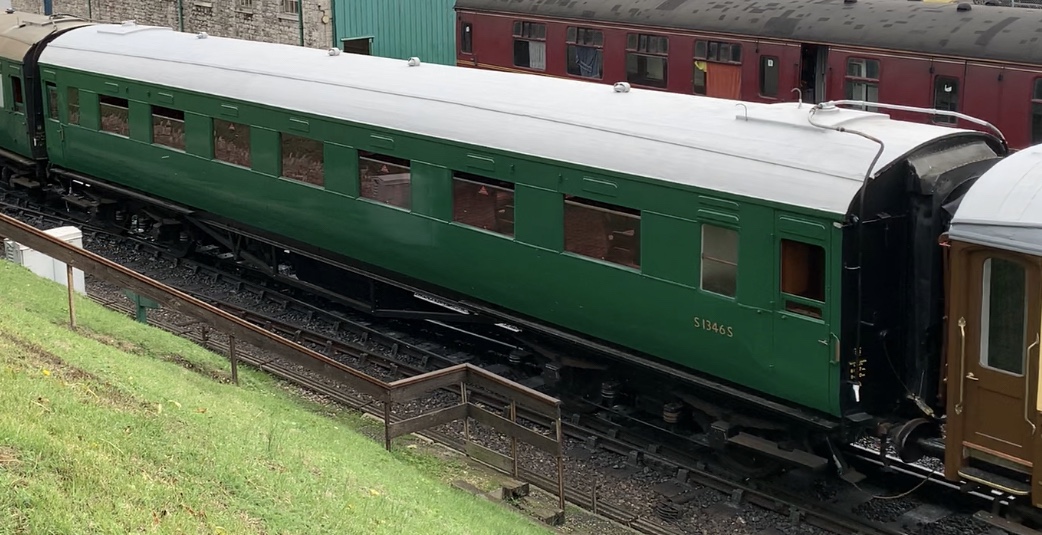
Hello Dear Reader – Yoshi and I had a lovely family day out on the Swanage Railway on Saturday 22nd October when we took a ride in lovingly restored 1933 Maunsell open third carriage No. 1346 behind visiting LNER Gresley A3 Pacific No. 60103 ‘Flying Scotsman’. Having survived a German bomb at Clapham in 1940, the coach ran in traffic until 1961 when it was withdrawn and converted for use as a mobile office and later a classroom. Sold into preservation in 1982 and initially based on the Kent & East Sussex Railway (K&ESR), the coach was purchased privately in 2002 for use on the Swanage Railway. Still awaiting the refitting of tables the restoration has been carried out to the highest standard and it really was a delight to see and travel in.
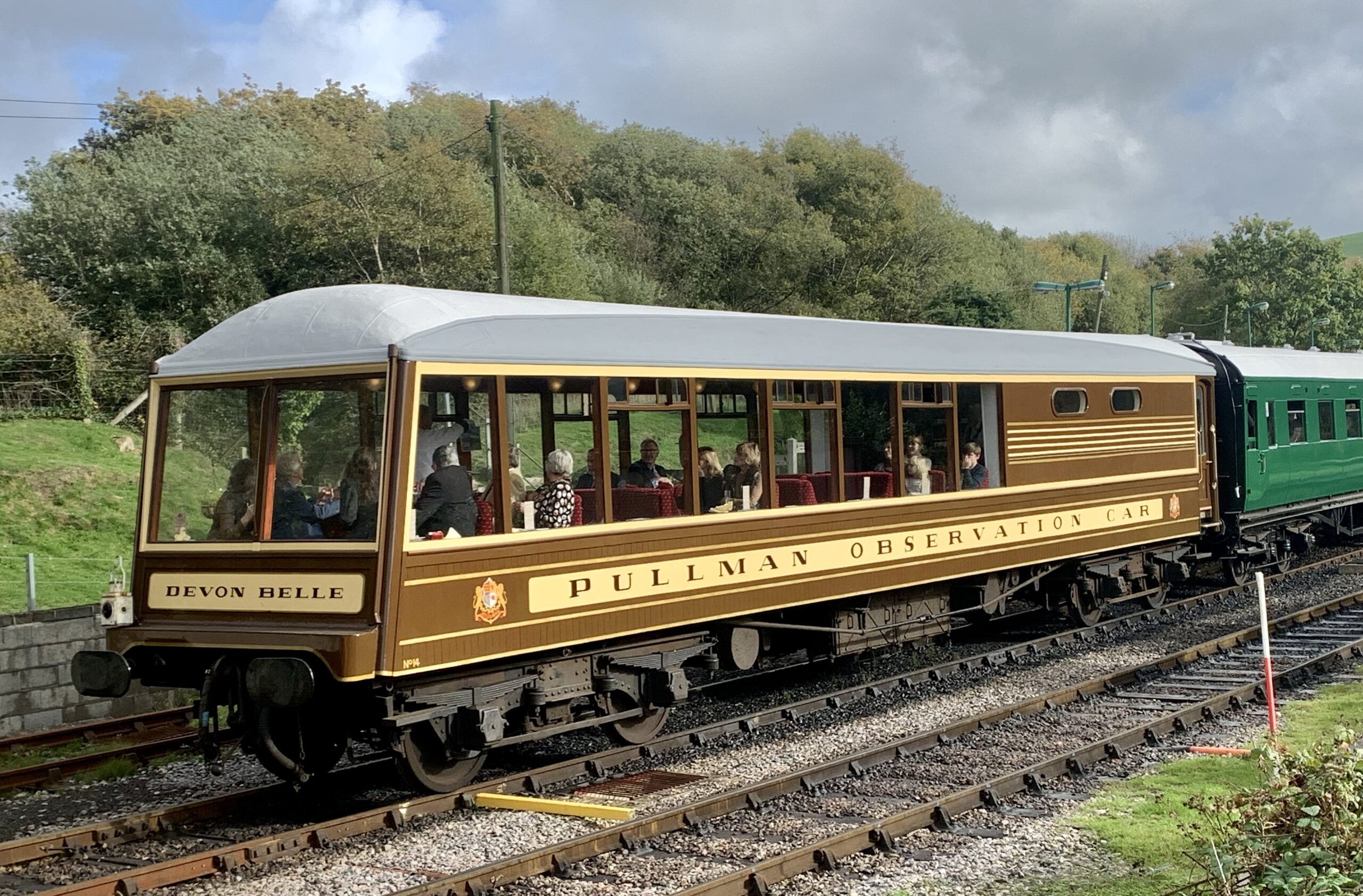
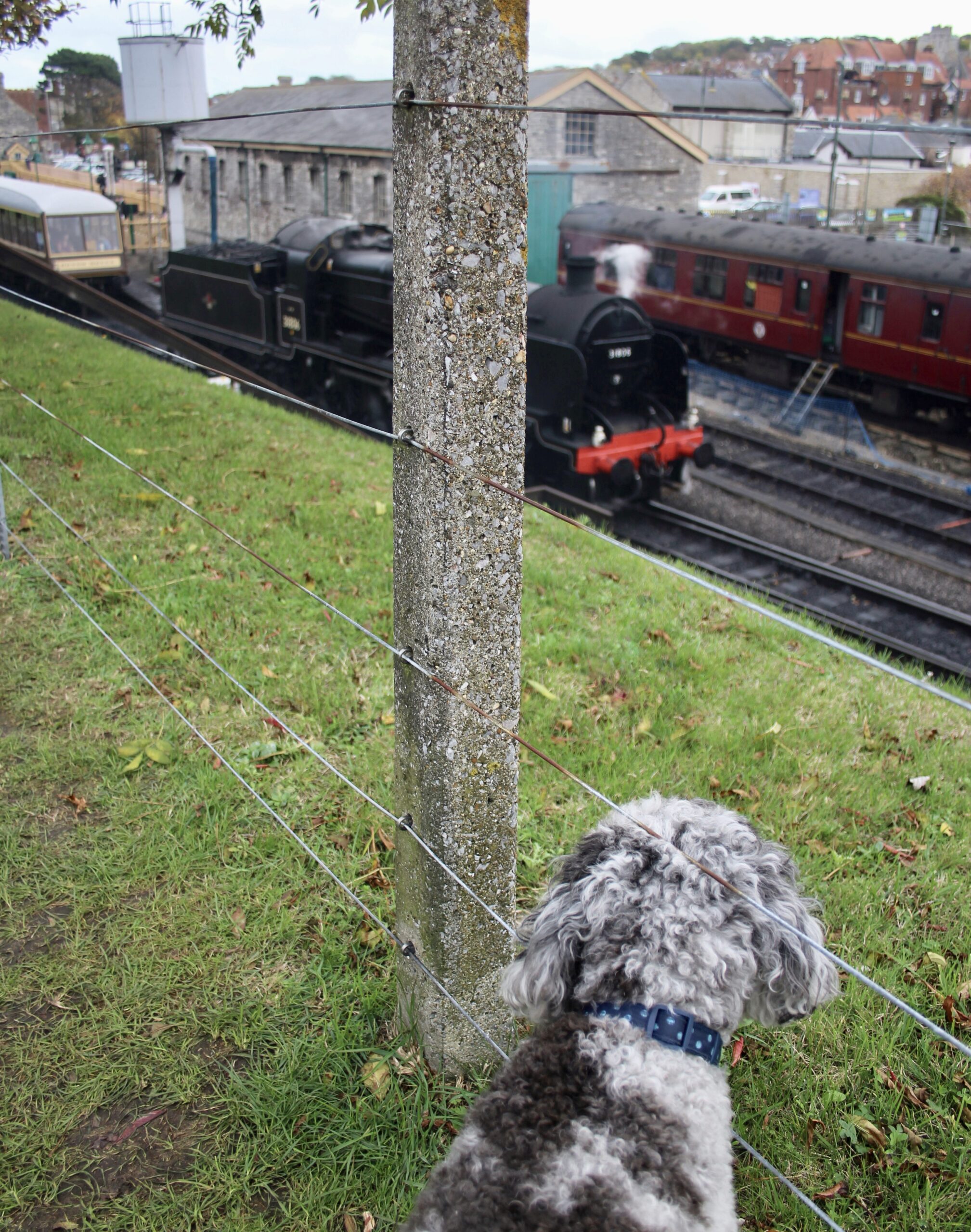
1933 Maunsell open third carriage No. 1346Yoshi and I explore 1933 Maunsell open third carriage No. 1346 (Image courtesy of Caroline Smith)Vestibule of 1933 Maunsell open third carriage No. 1346LNER Gresley A3 No. 60103 ‘Flying Scotsman’ prepares to back on to the seven coach train employed during running days at the Swanage Railway – 22/10/2022LNER Gresley A3 No. 60103 ‘Flying Scotsman’ passes Herston Halt – 25/10/2022LNER Gresley A3 No. 60103 ‘Flying Scotsman’ passes Southern Railway rebuilt West Country Class Bulleid Pacific No. 34028 ‘Eddystone’ at Harmans Cross – 22/10/2022 (Image courtesy of Caroline Smith)LNER Gresley A3 No. 60103 ‘Flying Scotsman’ passes Corfe Castle – 25/10/2022LNER Gresley A3 No. 60103 ‘Flying Scotsman’ crosses Corfe viaduct in the shadow of Corfe Castle – 25/10/2022LNER Gresley A3 No. 60103 ‘Flying Scotsman’ arrives at Norden with the 1X06 1325 service from Swanage – 24/10/2022 Yoshi welcomes a fuss from Penny Pegler, daughter of ‘Flying Scotsman’ saviour Alan Pegler, who visited the Swanage Railway from her home in Portugal and traveled on the 1145 departure on Saturday 22nd October 2022. Penny’s late father purchased ‘Flying Scotsman’ from British Railways in 1963 at the cost of £3,000 – 22/10/20221940’s Pullman “Devon Belle” observation coach Car 14 which accompanied ‘Flying Scotsman’ on tours of Canada and the United States to promote British exports was part of the consist of at Swanage this week. Volunteers with the Swanage Railway Trust carefully restored the wooden carriage after it was rescued from San Francisco where it was in use as a static bar. Norden – 24/10/2022SR U Class 2-6-0 No. 31806 assisted with the shunting of stock during the ‘Flying Scotsman’ running days at Swanage – 25/10/2022Yoshi keeps watch on SR U Class 2-6-0 No. 31806 as she backs onto the empty coaching stock in preparation for shunting – 25/10/2022
Video of Yoshi’s visit to the Swanage Railway and his trip behind ‘Flying Scotsman’. Playing the bagpipes as our train departed Swanage was 15 year old Frederick Sills from Wareham who is a member of Swanage Railway’s Sygnets youth group and a member of the Weymouth Sea Cadets. He did a wonderful job!
‘Flying Scotsman’ will be on static display at Swanage Railway station until the 6th November 2022.
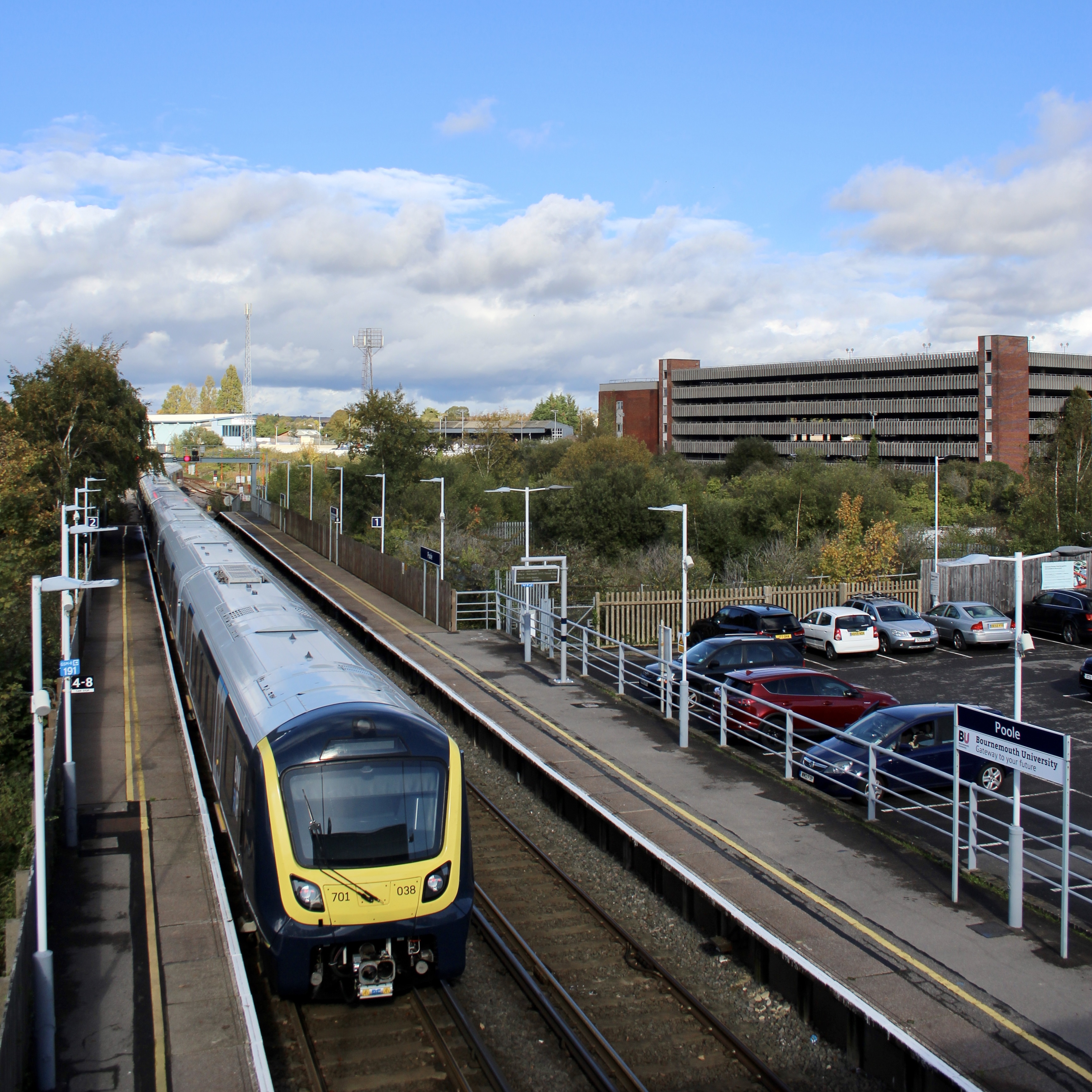
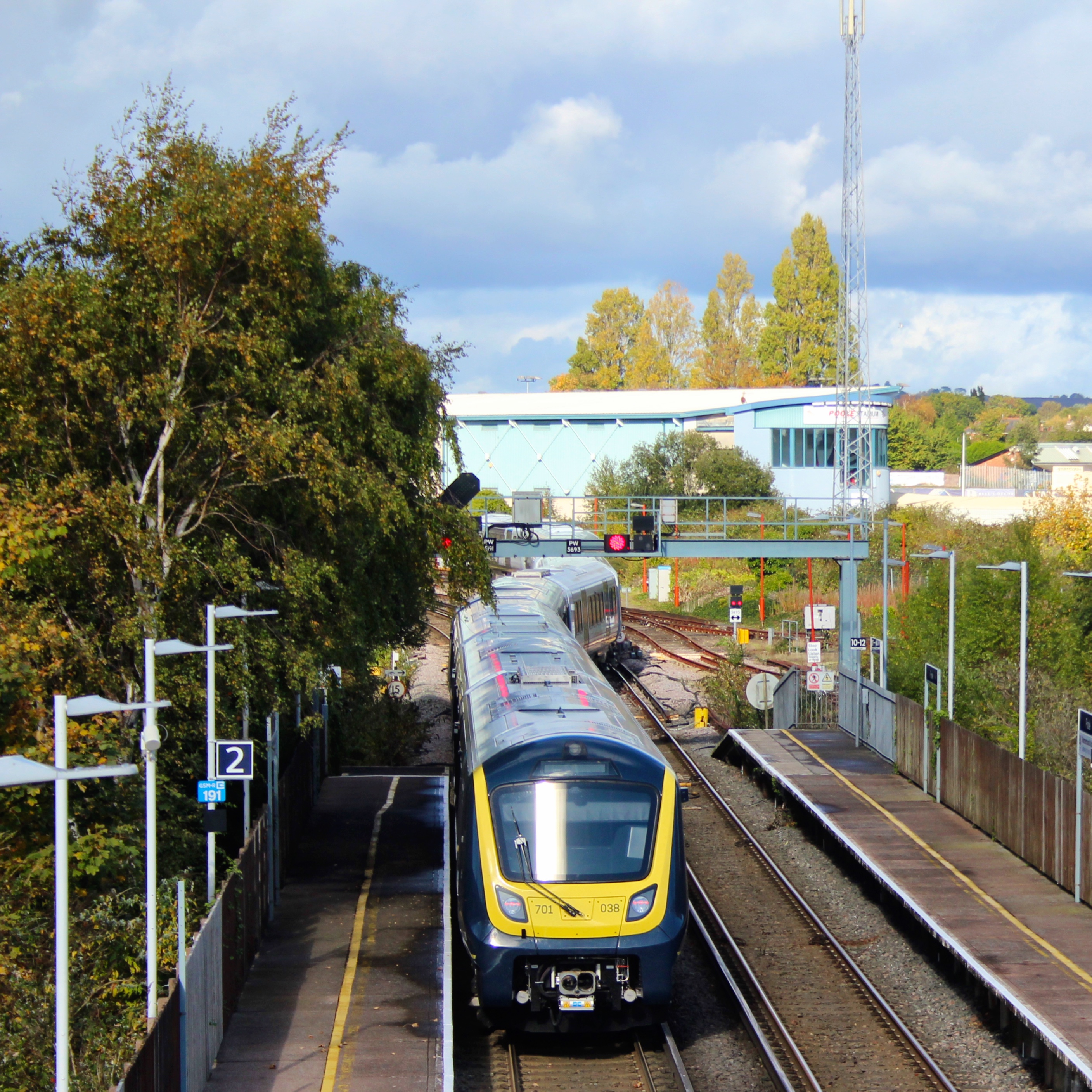
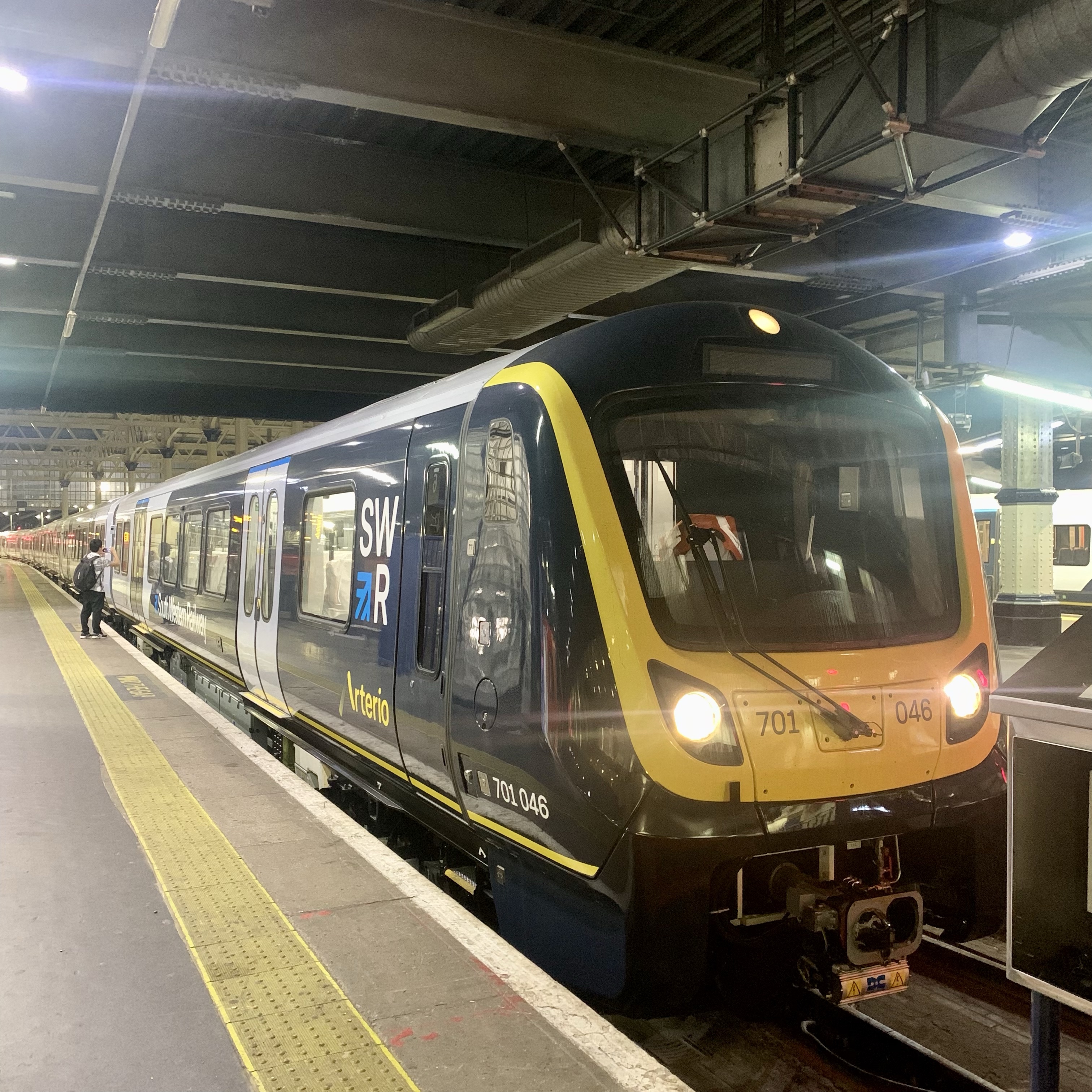
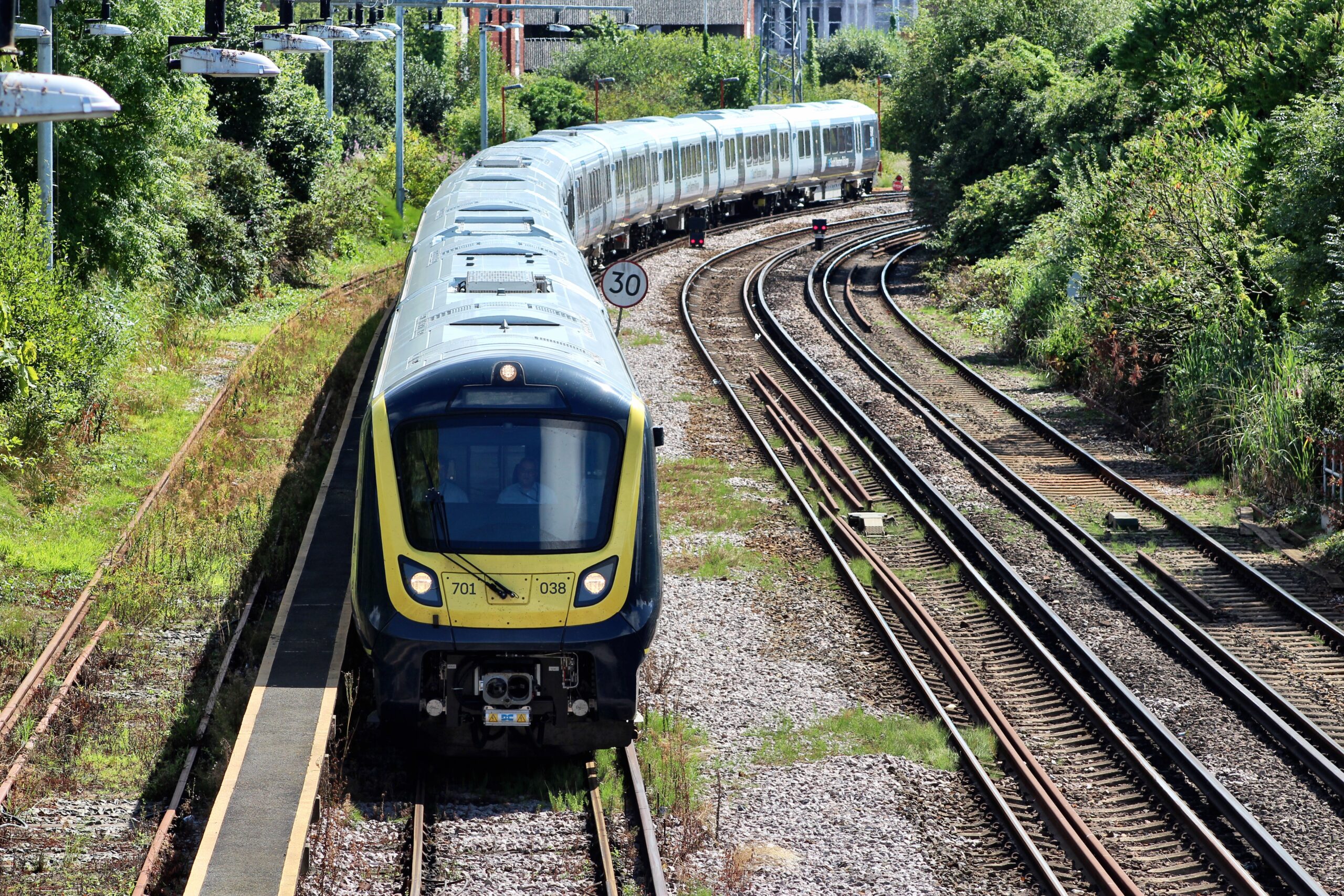
Although there is still no date for their introduction into revenue earning service, South Western Railway (SWR) Class 701 Electric Multiple Units (EMU) continue testing and mileage accumulation runs taking in Poole where they reverse. On Thursday 20th October it was the turn of No. 701038 to have a run out, and we saw the unit passing through Poole:
SWR Class 701 No. 701038 working 5Q51 1115 London Waterloo to Staines Up Loop passing through Poole – 20/10/2022SWR Class 701 No. 701038 working 5Q51 1115 London Waterloo to Staines Up Loop crosses over the Up Line to reach Poole Storage Sidings where the service reverses – 20/10/2022Having reversed in Poole Storage Sidings, SWR Class 701 No. 701038 working 5Q51 1115 London Waterloo to Staines Up Loop passes Class 444 No. 444035 which formed 1W65 1205 London Waterloo to Weymouth at Poole – 20/10/2022
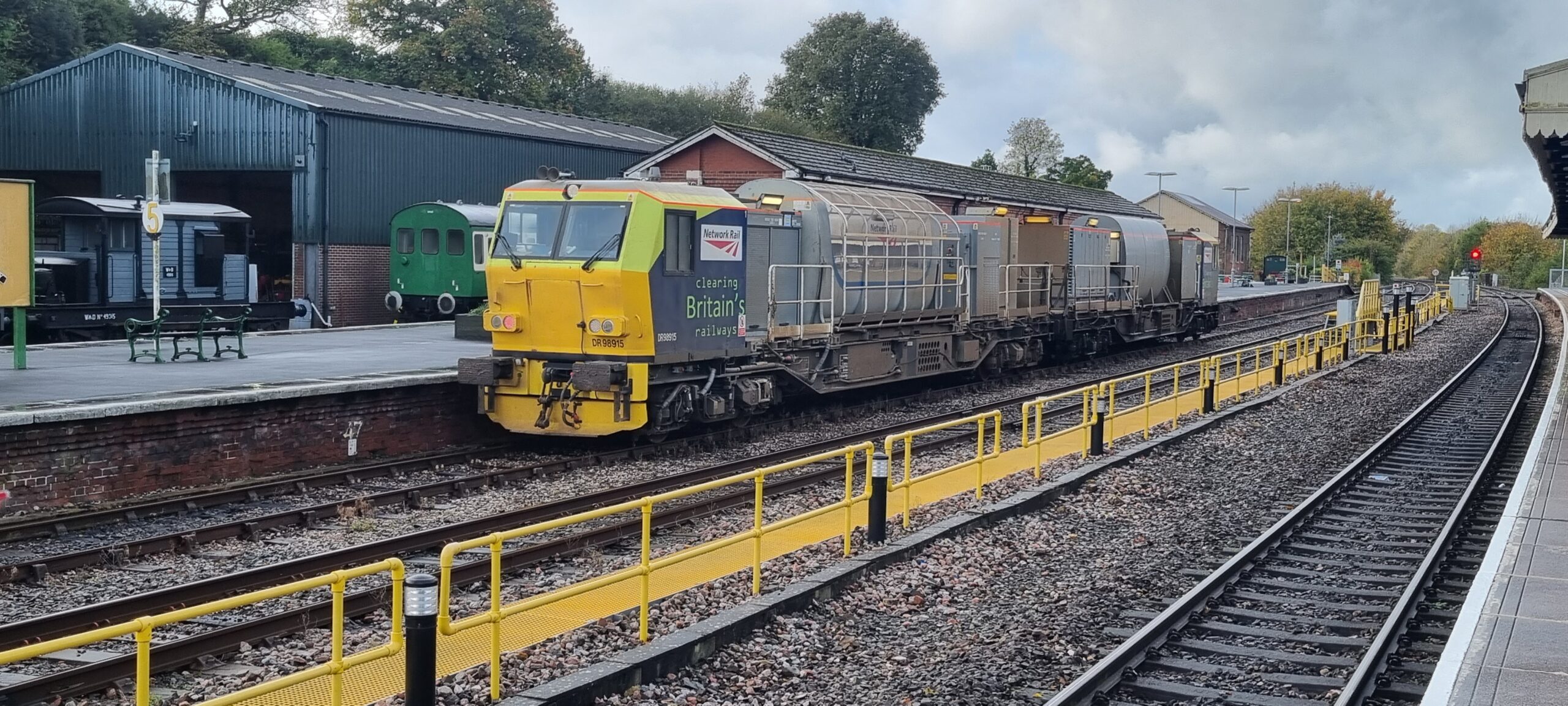
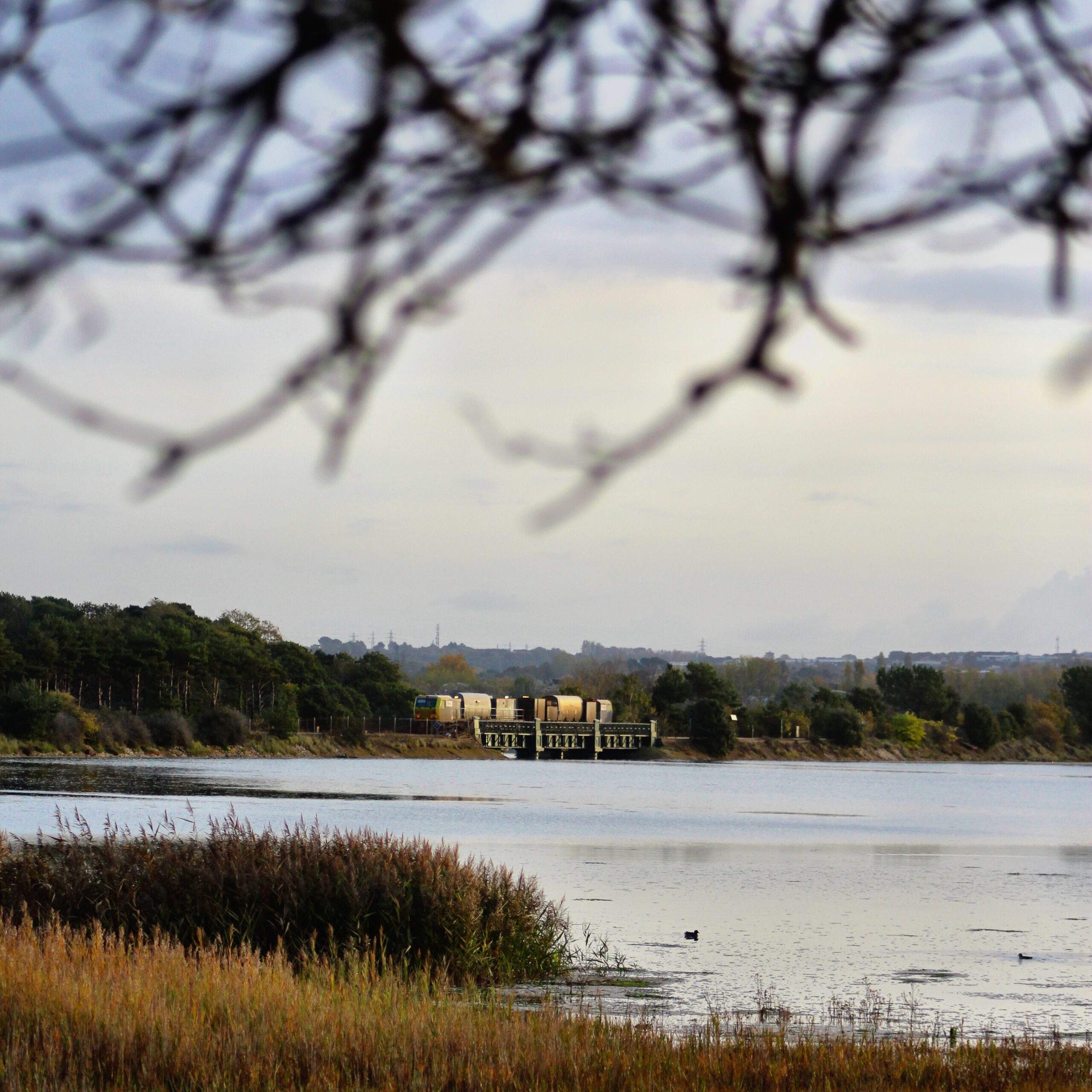
The railways in the UK are well into Rail Head Treatment Train (RHTT) season as the trees shed their leaves which are scattered across the nations railway tracks. This can cause problems for the track circuits and reduce a trans ability to grip to the rails when starting from stations, accelerating, climbing hills or stopping. In our neck of the woods we see regular Multi Purpose Vehicle (MPV) movements spreading adhesion modifier; a mixture of suspension gel (so it can be pumped), sand (to help train wheels grip the rail), and steel or iron shot that is pushed through contamination (compressed leaves and debris).
Multi Purpose Vehicle No. DR98915 at Yeovil Junction – 25/10/2022 (Courtesy of Scott Lewis)An unidentified MPV crosses Holes Bay, Poole working 3S81 0551 Totton Yard to Totton Yard – 25/10/2022
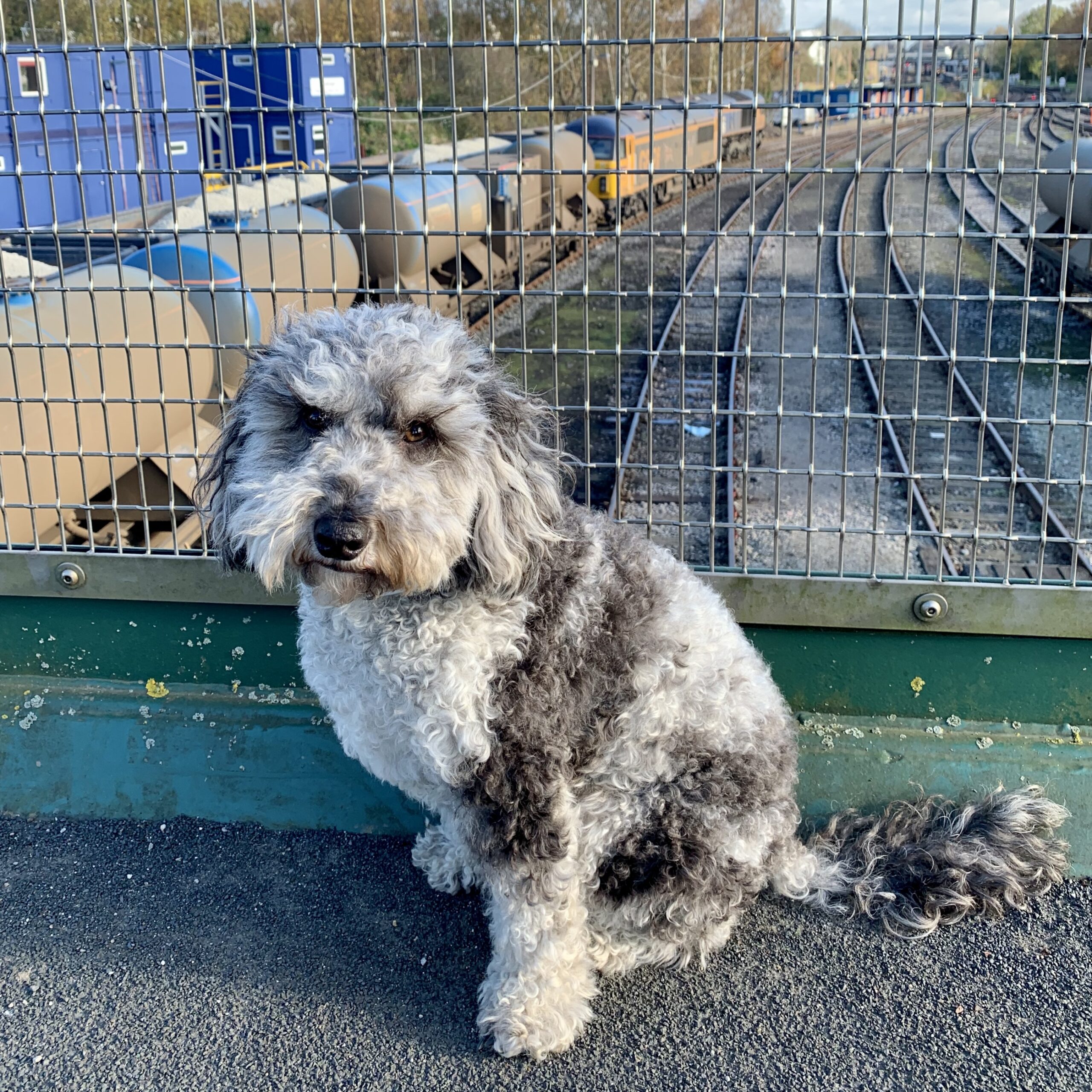
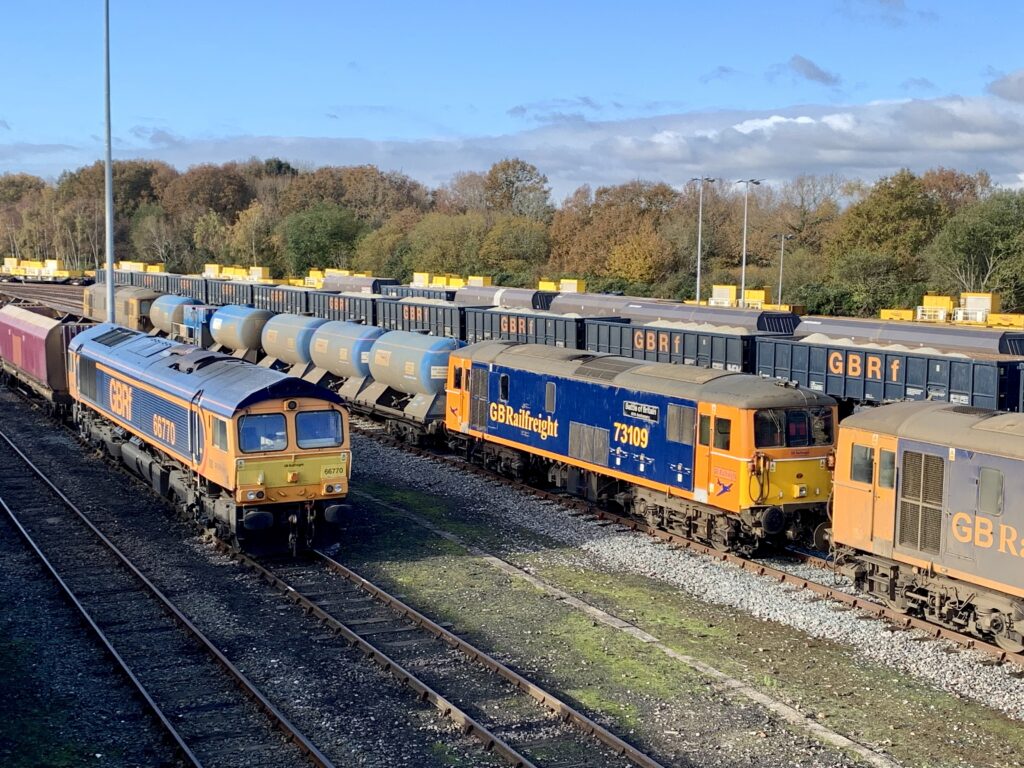
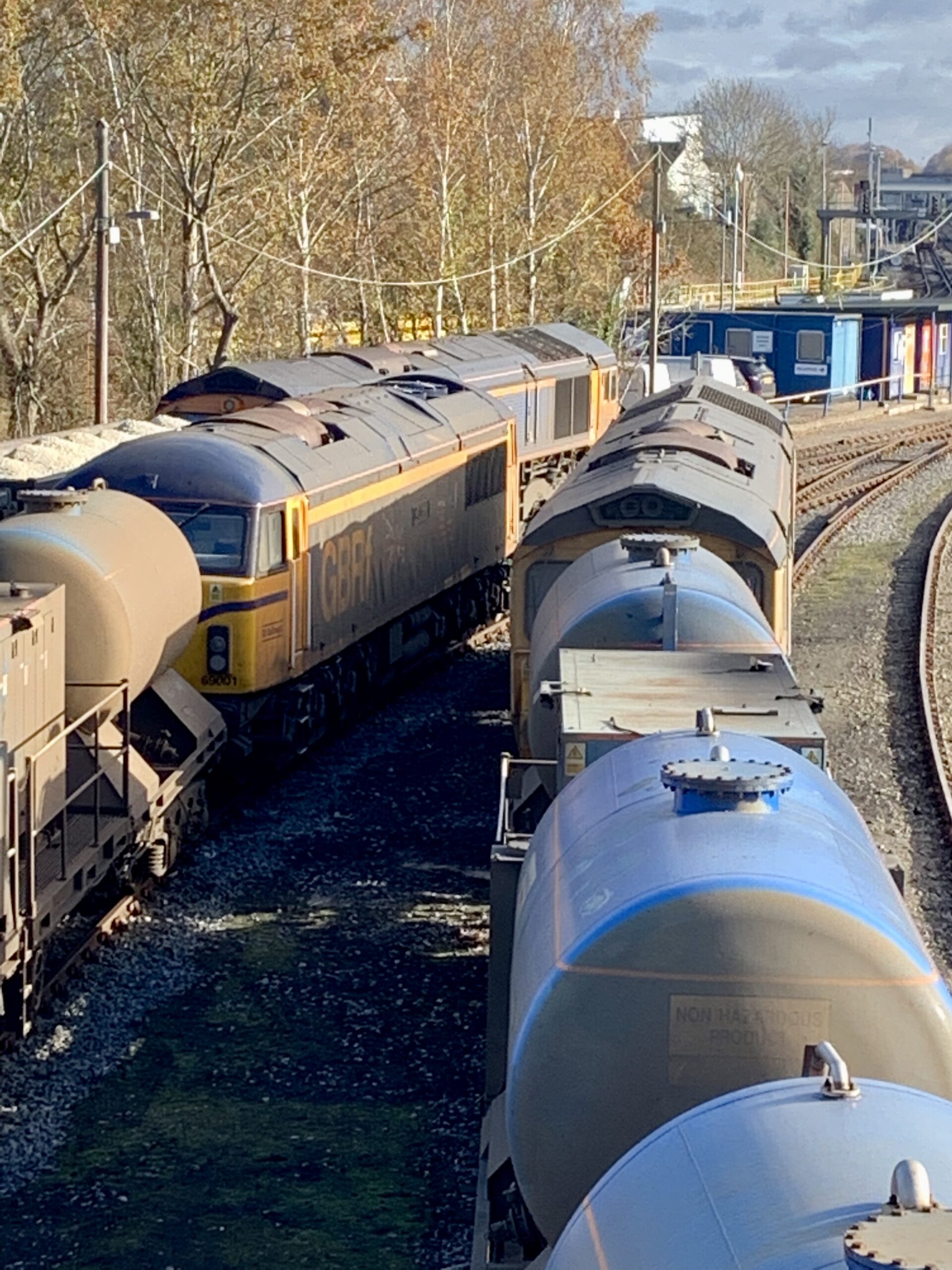
On the 28th October 2021, Direct Rail Services Class 37 No.’s 37218 and 37558 (37424) ‘Avro Vulcan XH558′ (named after a preserved Vulcan bomber) could be found working RHTT 310X 0900 Stowmarket DGI to Stowmarket DGI. The pair are seen passing through Ipswich.Yoshi taking a well earned rest on the lattice footbridge which crosses over Tonbridge West Yard with an RHTT behind. The Southern Railway commissioned the yard in 1941 to help cope with heavy wartime freight traffic – 21/11/2021Class 73 No. 73141, 73109 ‘Battle of Britain – 80th Anniversary’ and an unidentified class member (possibly No. 73119 ‘Borough of Eastleigh’ if a certain kind reader could confirm please?) with Class 66 No. 66770 at Tonbridge West Yard – 21/11/2021From left to right; Class 66 No. 66731 ‘Capt. Tom Moore’, Class 69 No. 69001 ‘Mayflower’ and Class 66 No. 66722 ‘Sir Edward Watkin’ at Tonbridge West Yard – 22/11/2021
Video of Rail Head Treatment Trains at Tonbridge West Yard – 22/11/2021
Network Rail’s website reveals there are 32 MPV and 29 locomotive-hauled RHTT’s which deliver the autumn rail head treatment programme. At the weekend, I was tipped off that a Class 37 diesel loco had been hired in by Colas for the Swindon area locomotive hauled RHTT replacing a Class 66 (No. 66846 which required repairs).
On hire to colas for Rail Head Treatment Train (RHTT) workings, West Coast Rail Class 37 No. 37668 spent the weekend partnering Class 66 No. 66850 ‘David Maidment’ on Swindon based runs. The pair are seen nearing Bradford on Avon in the rain working 3S59 1554 Swindon Transfer Sidings to Moreton on Lugg – 23/10/2022
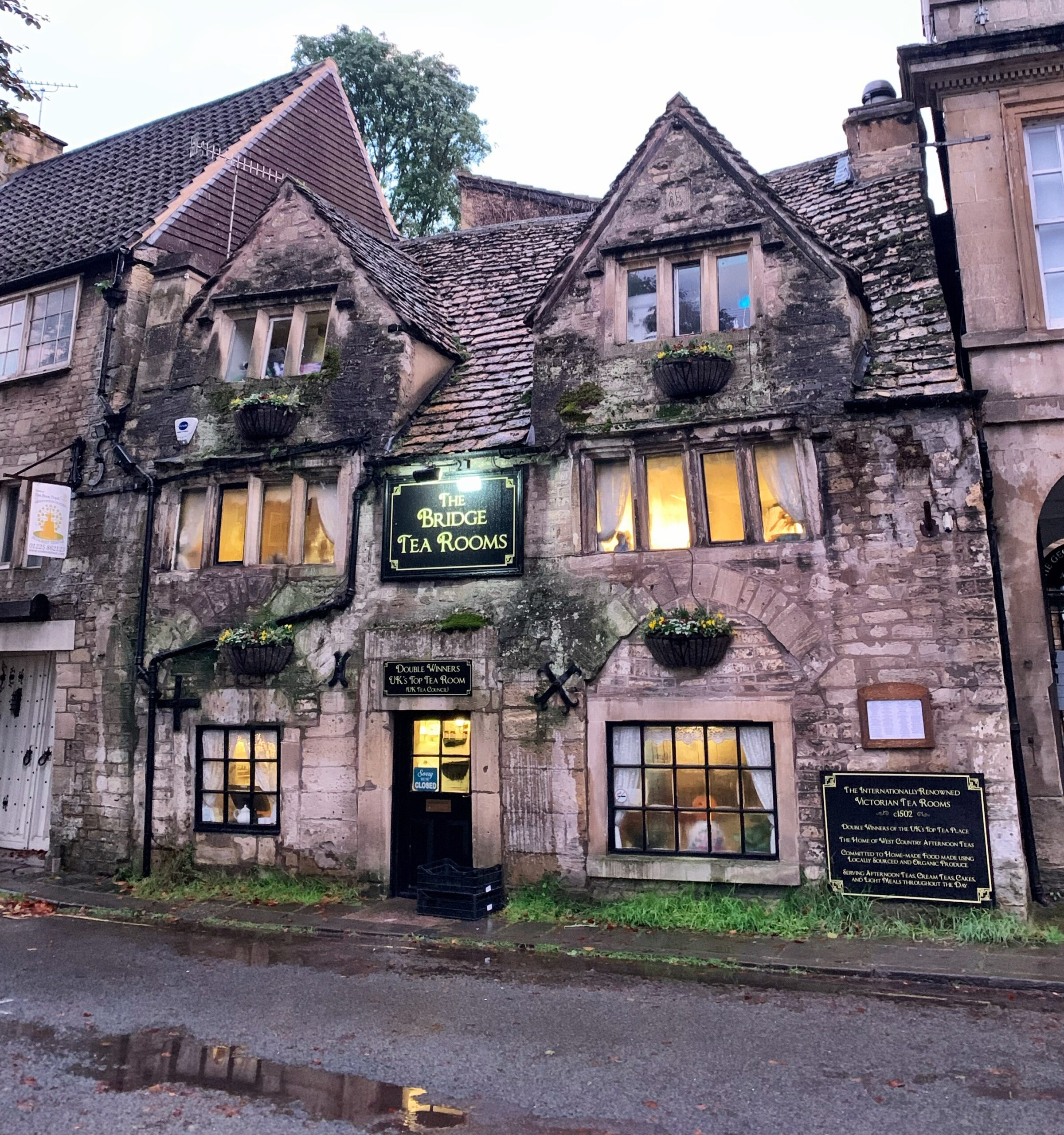
So on Sunday afternoon we found ourselves in Bradford on Avon clinking delicate bone china tea cups and enjoying lunch at The Bridge Tearooms, a former blacksmith’s cottage dating from 1502.
The Bridge Tea Rooms at Bradford on Avon does an excellent Welsh rarebit – 23/10/2022
After a walk taking in the ancient Tithe Barn and the Kennet & Avon Canal, I headed to Bradford on Avon railway station while Yoshi and his mum took shelter from the rain in a pub.
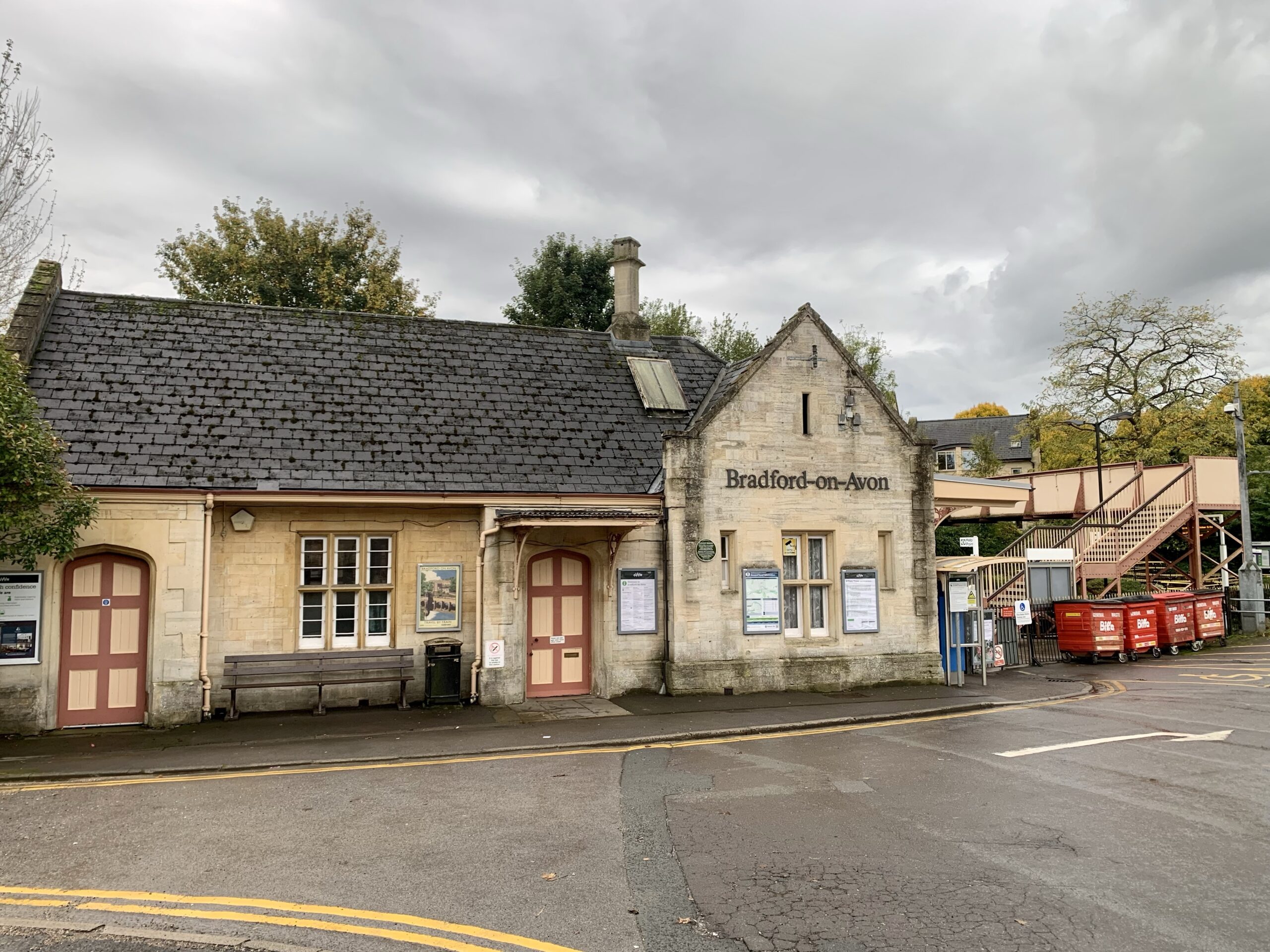
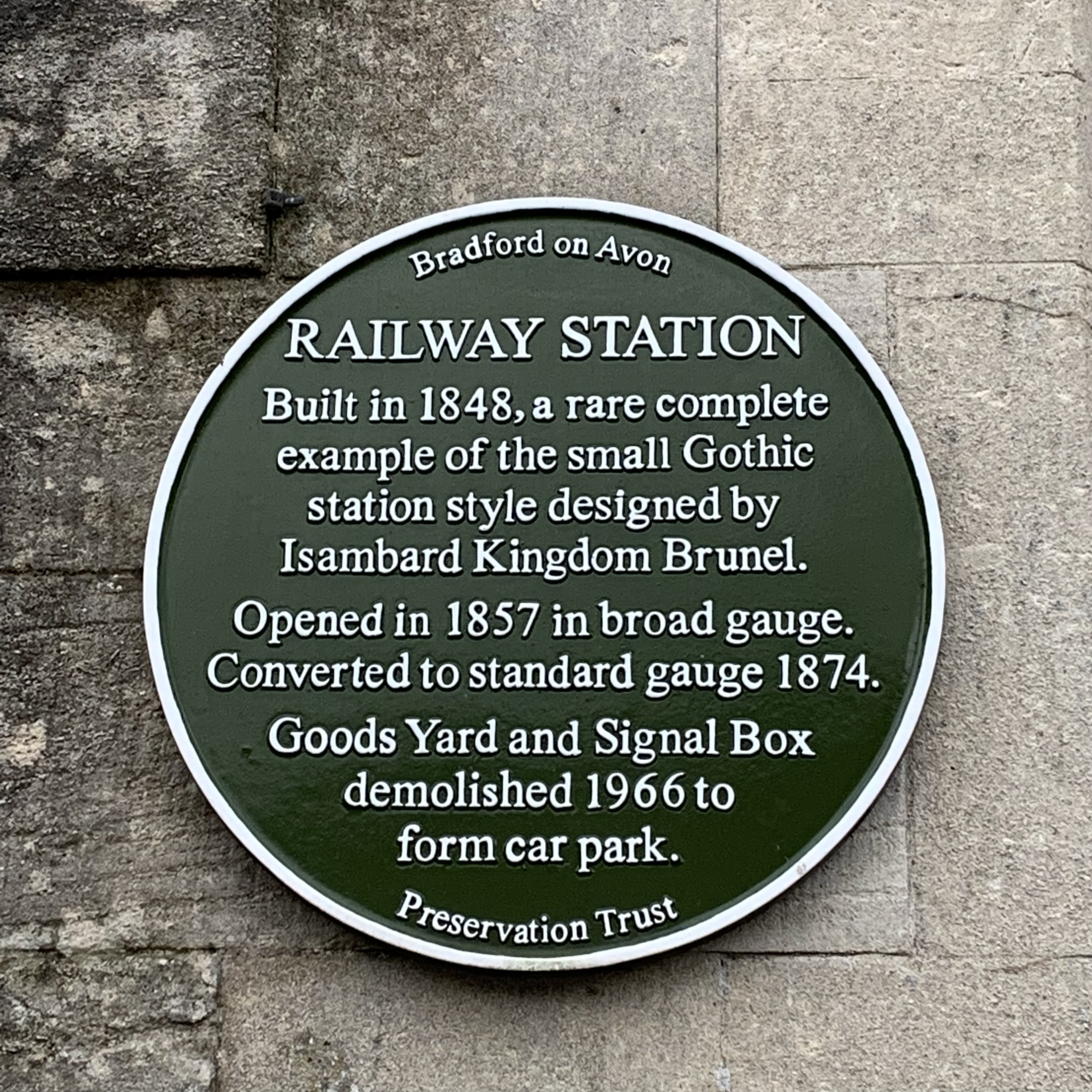
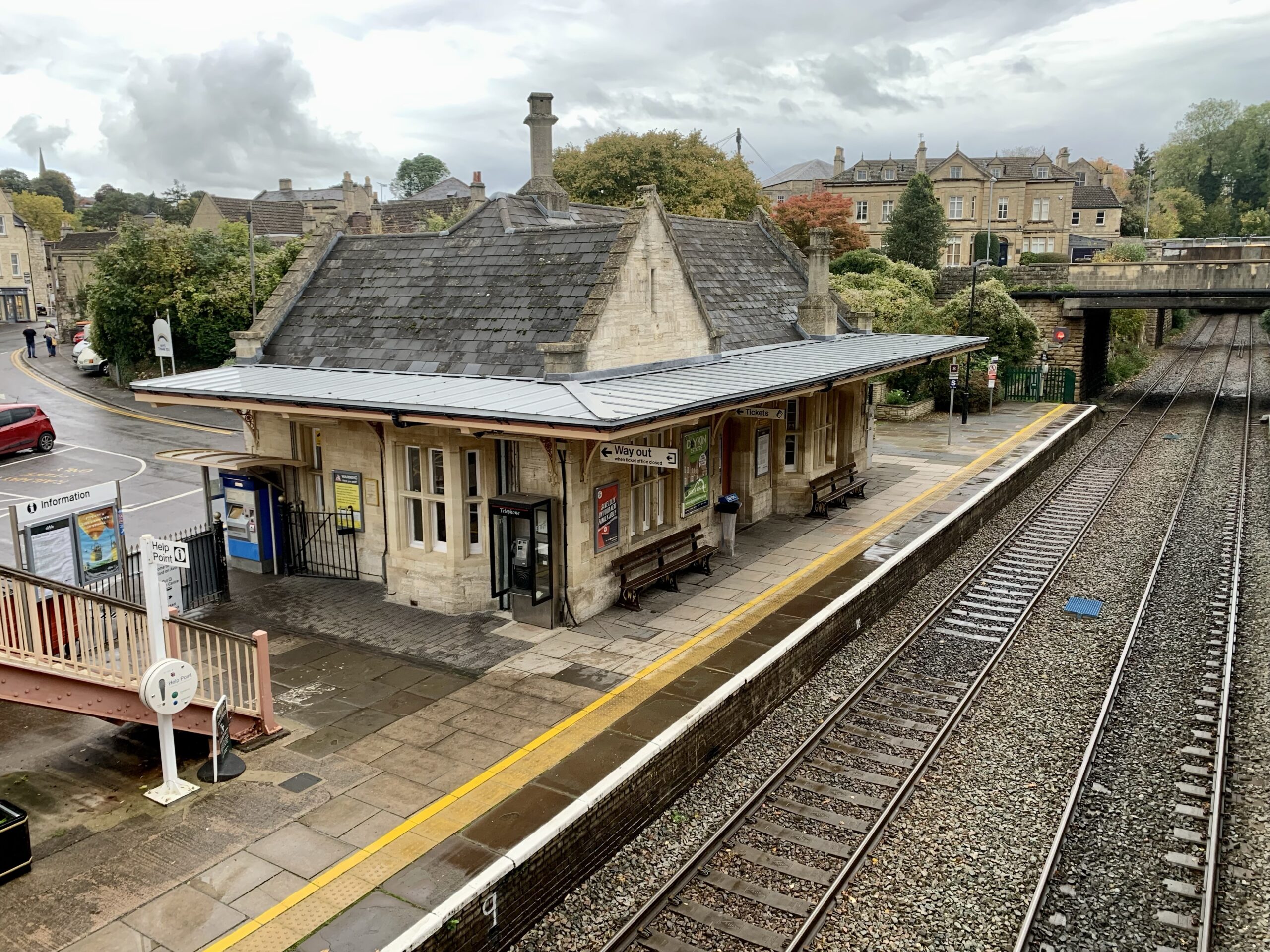
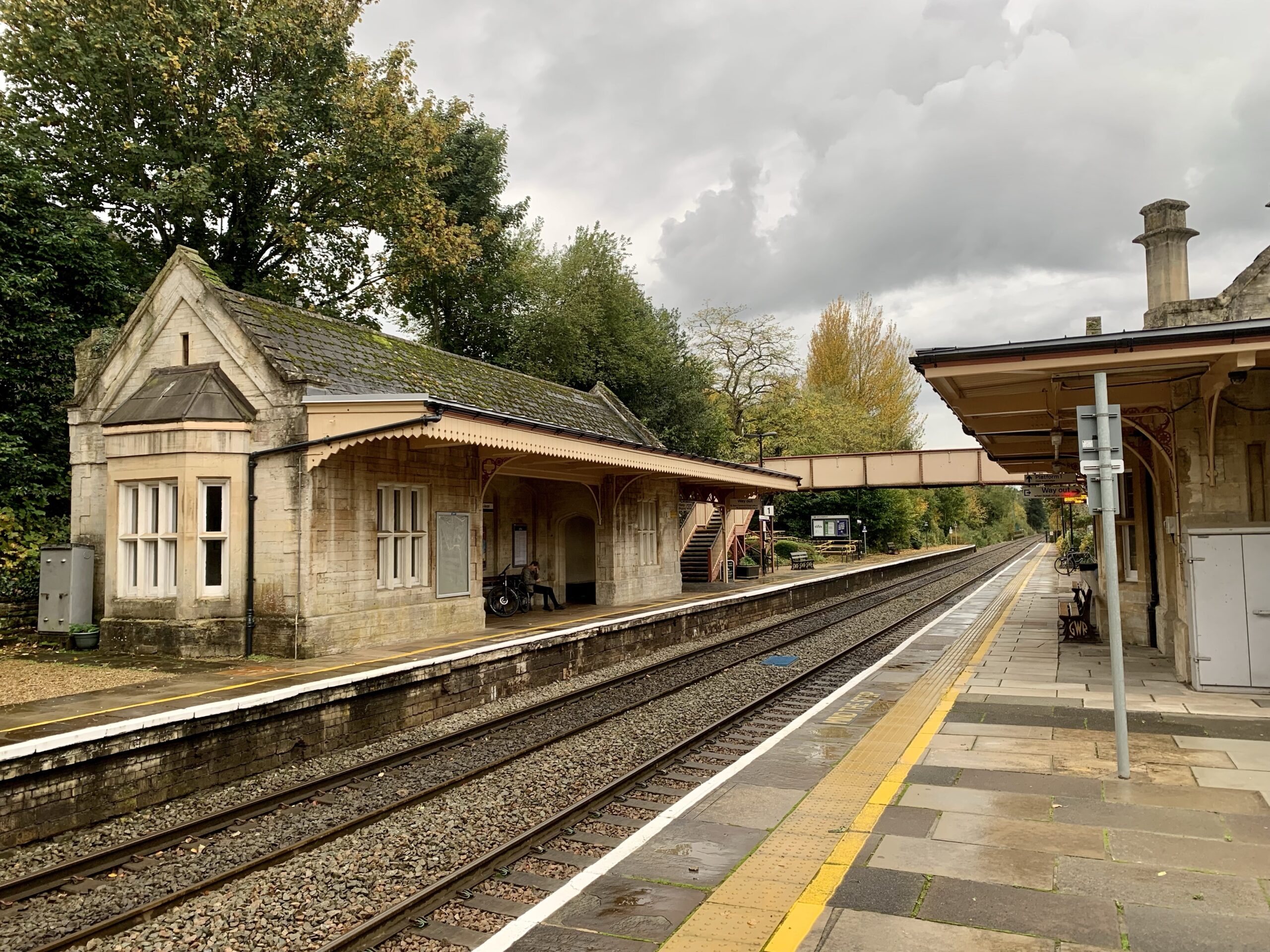
Bradford on Avon railway station exterior – 23/10/2022Bradford on Avon railway station plaque – 23/10/2022Bradford on Avon railway station platform 2 – 23/10/2022Bradford on Avon railway station platform 1 – 23/10/2022
Grade 2 listed Bradford on Avon station, originally planned by The Wilts, Somerset and Weymouth Railway, is situated 15 km south east of Bath between Avoncliff and Trowbridge and is a stop on Weymouth to Bristol services. In the event the station was not opened until 1857 when the line was in the control of The Great Western Railway
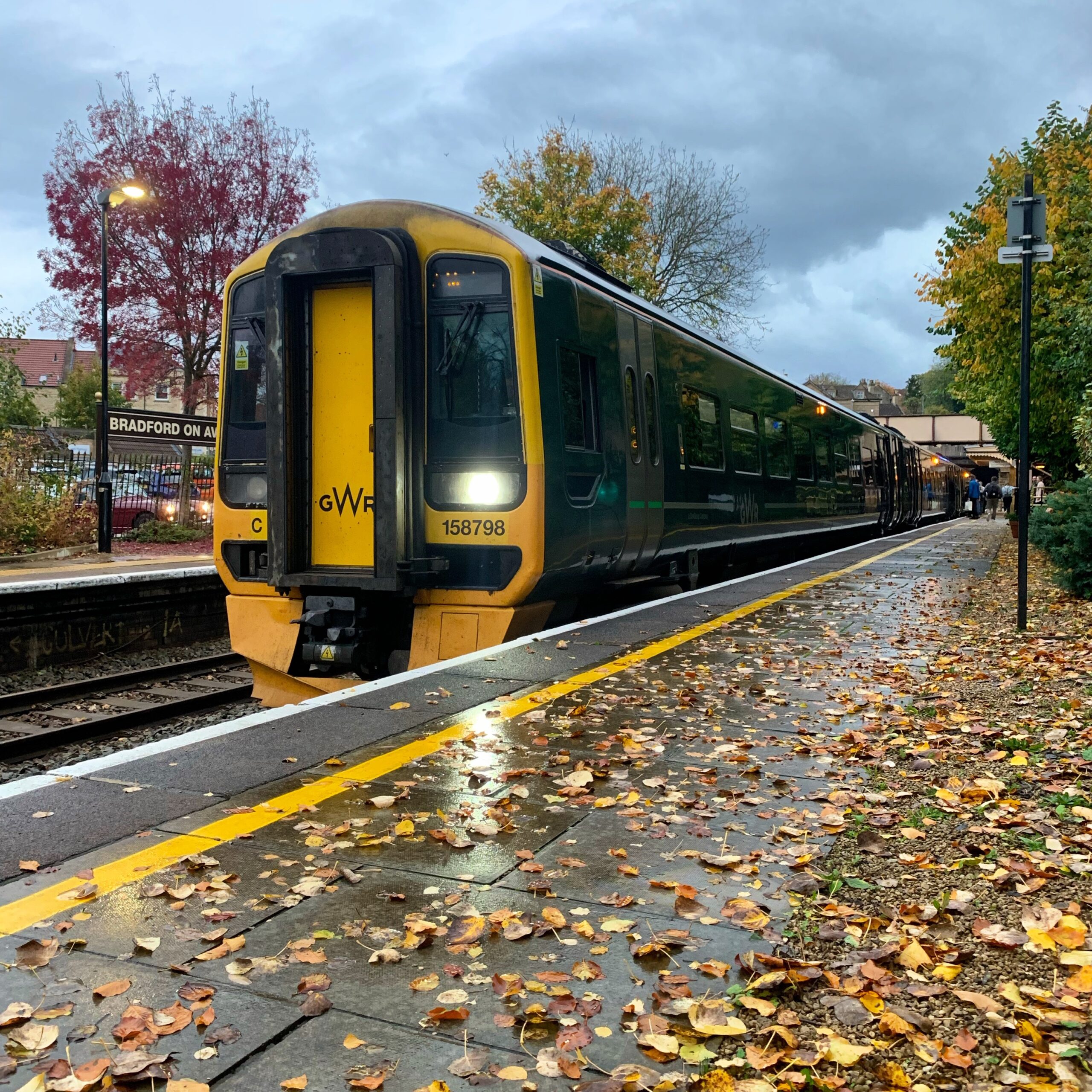
(GWR). The station is of a standard Brunel design but utilises local Bath stone rather than the usual bricks and mortar. Originally trains would have been of the seven-foot broad gauge variety, but the track was converted to standard gauge in 1874. Present day services are operated by Great Western Railway (formerly First Great Western and no relation to the old GWR), South Western Railway having withdrawn their direct services to Bristol. Trains are typically operated using Class 165 and Class 166 Networker Turbo trains and Class 158 diesel multiple units. The line is sometimes used as a diversionary route and sees GWR main line and CrossCountry trains, usually at weekends.
The goods yard located on the ‘up’ side of the line was closed to traffic in 1965 and is now home to a car park and health centre. The signal box was demolished in 1966. There is a campaign to reinstate the canopy on the 1899 footbridge, removed in 1964, and which I would have found very useful during my visit in the rain! The Bradford on Avon Footbridge Canopy Project were awarded a £22,000 grant from the Community Rail Development Fund (CDRF) in September 2022.
Class 158 No. 158798 pauses at Bradford on Avon working 2C96 1640 Westbury to Bristol Temple Meads. The canopy devoid footbridge can be seen above the rear of the train – 23/10/2022Class 166 No. 166204 ‘Norman Topsom MBE’ and Class 165 No. 165133 arrive at Bradford on Avon working 1F25 1526 Cardiff Central to Portsmouth Harbour which was terminated at Fratton due to an obstruction on the line – 23/10/2022Class 66 No. 66850 ‘David Maidment’ on the rear of 3S59 1554 Swindon Transfer Sidings to Moreton on Lugg RHTT passing Bradford on Avon – 23/10/2022
Video from Bradford on Avon – 23/10/2022
Our North Dorset Correspondent has been out and about in Yeovil over the last few days and has sent Yoshi the video and still images below:
First up are the GWR Sleeper trains crossing at Yeovil Pen Mill while on route diversion during the early hours of Monday 23rd October 2022. The up service 1A50 2115 Penzance to Paddington hauled by Class 57 No. 57602 ‘Restormel Castle’ was running just over an hour late and because of the single track to Castle Cary, was held at Yeovil Pen Mill to allow 57604 ‘Pendennis Castle’ on the down 1C50 2350 London Paddington to Penzance to enter the station. I have been muttering about heading to Yeovil to see the sleepers on diverts for a while now, and as far as I am aware, this is most likely the final opportunity for 2022, so many thanks to Scott for braving the inclement weather!
GWR Sleeper divers at Yeovil Pen Mill 24/10/2022 – courtesy of Scott Lewis
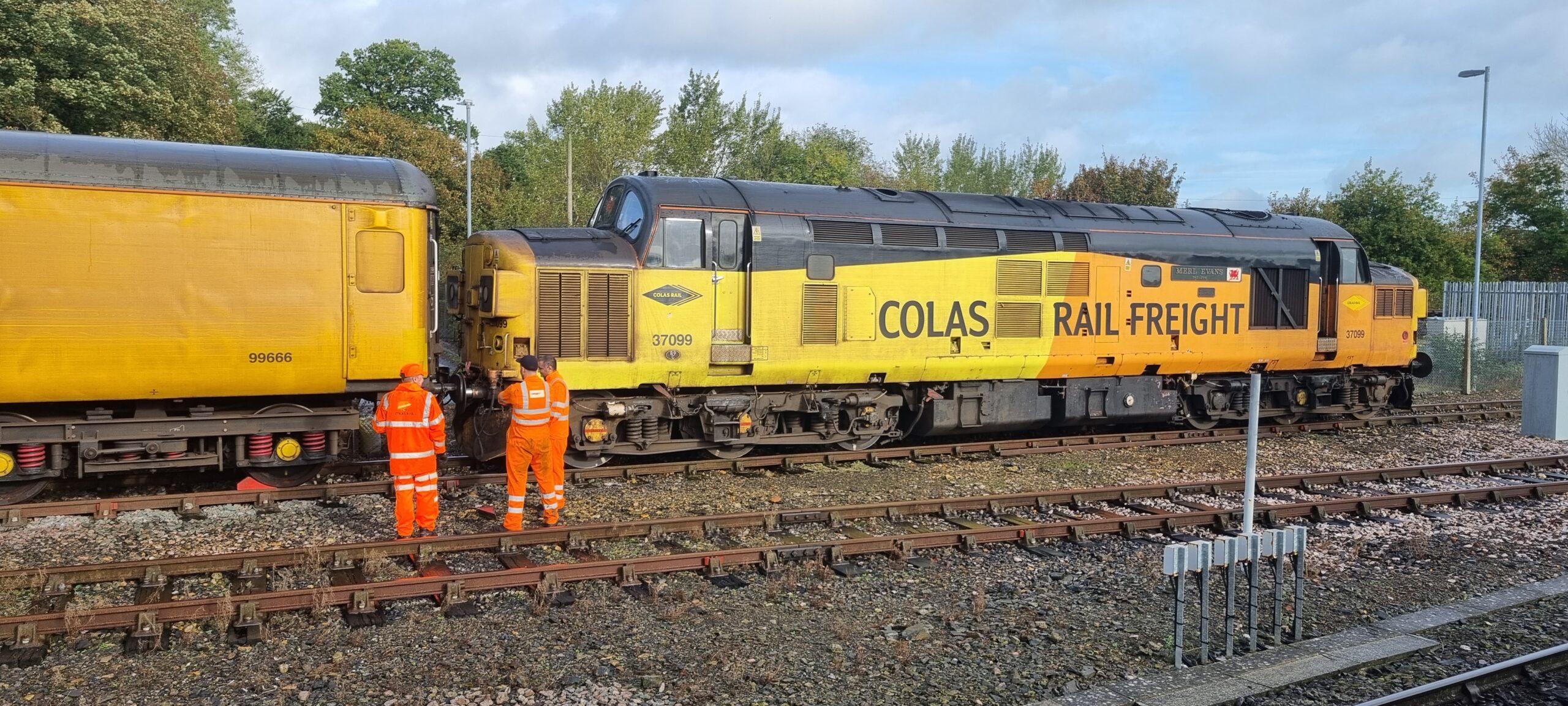
The following day, Scott was back in Yeovil, this time at Yeovil Junction as Colas Class 37 No. 37099 arrived from Exeter Riverside and was engaged in shunting two damaged Network Rail test train coaches into position for recovery by low loader. After loading, there was a problem with one of the escort vehicles so the departure by road was delayed.
Class 37 No. 37099 and Network Rail MK2 coaches at Yeovil Pen Mill – 25/10/2022 (with grateful thanks to Scott Lewis)
Monday 24th October 2022 also saw the regular Class 73 hauled test train visit the Bournemouth to Weymouth line with GBRf Class 73 electro-diesel locomotives No. 73961 ‘Alison’ and 73963 ‘Janice’ top and tailing 1Q51 1115 Derby RTC to Eastleigh East Yard and we popped into Hamworthy station to see it and have a good old bark as it passed by on its outward run.
1Q51 1115 Derby RTC to Eastleigh East Yard passing Hamworthy – 24/10/2022
Thanks for reading and as always, many thanks for your comments, observations and corrections. We’ll leave you with some video footage from the archive of ‘Flying Scotsman’ when she visited the Swanage Railway in 1994:
‘Flying Scotsman’ at Swanage 1994
Endpiece:
LNER Gresley A3 No. 60103 ‘Flying Scotsman’ approaches Harmans Cross with her last turn of the day on Tuesday 25th October 2022
Wednesday October 12th to Tuesday October 18th2022
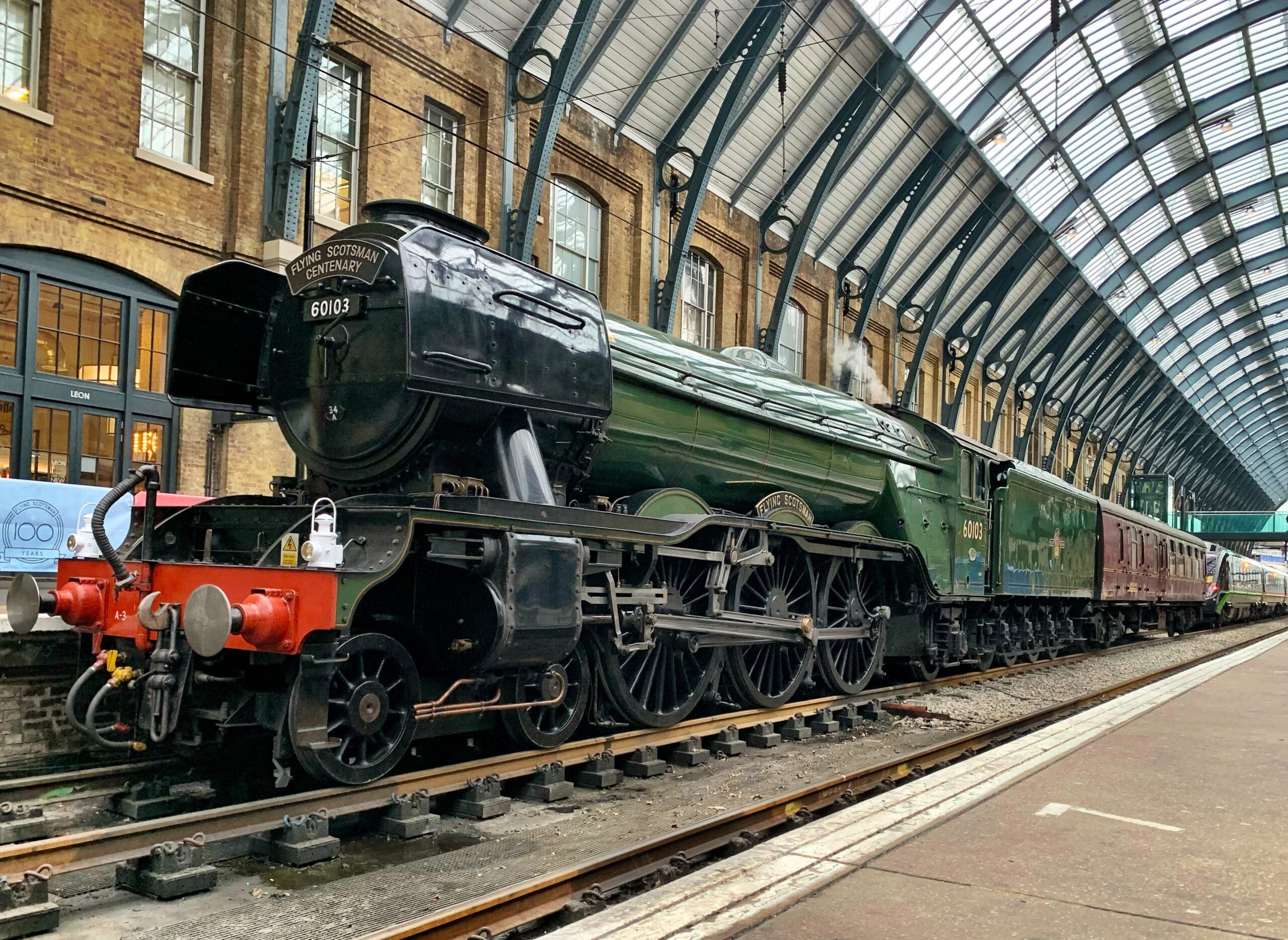
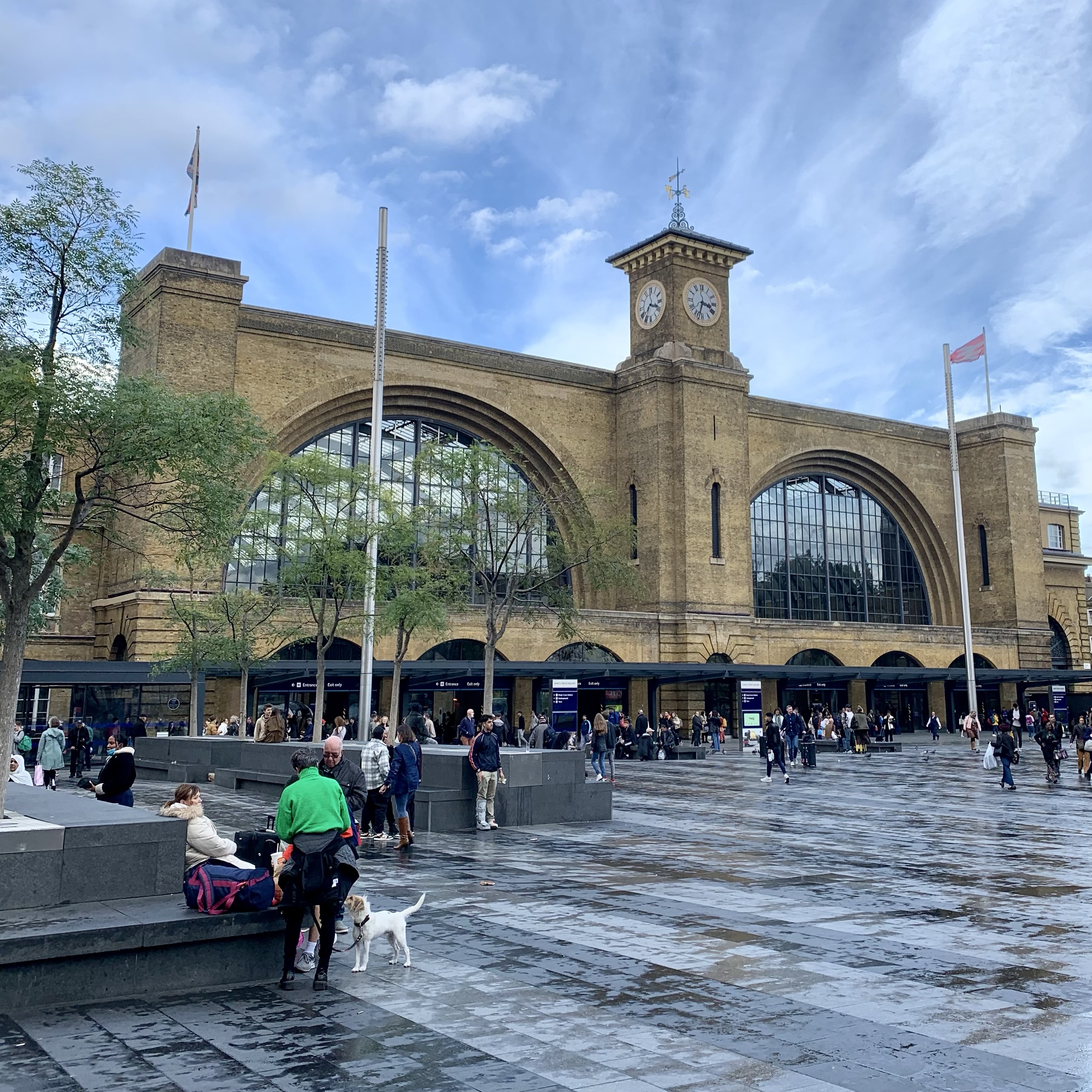
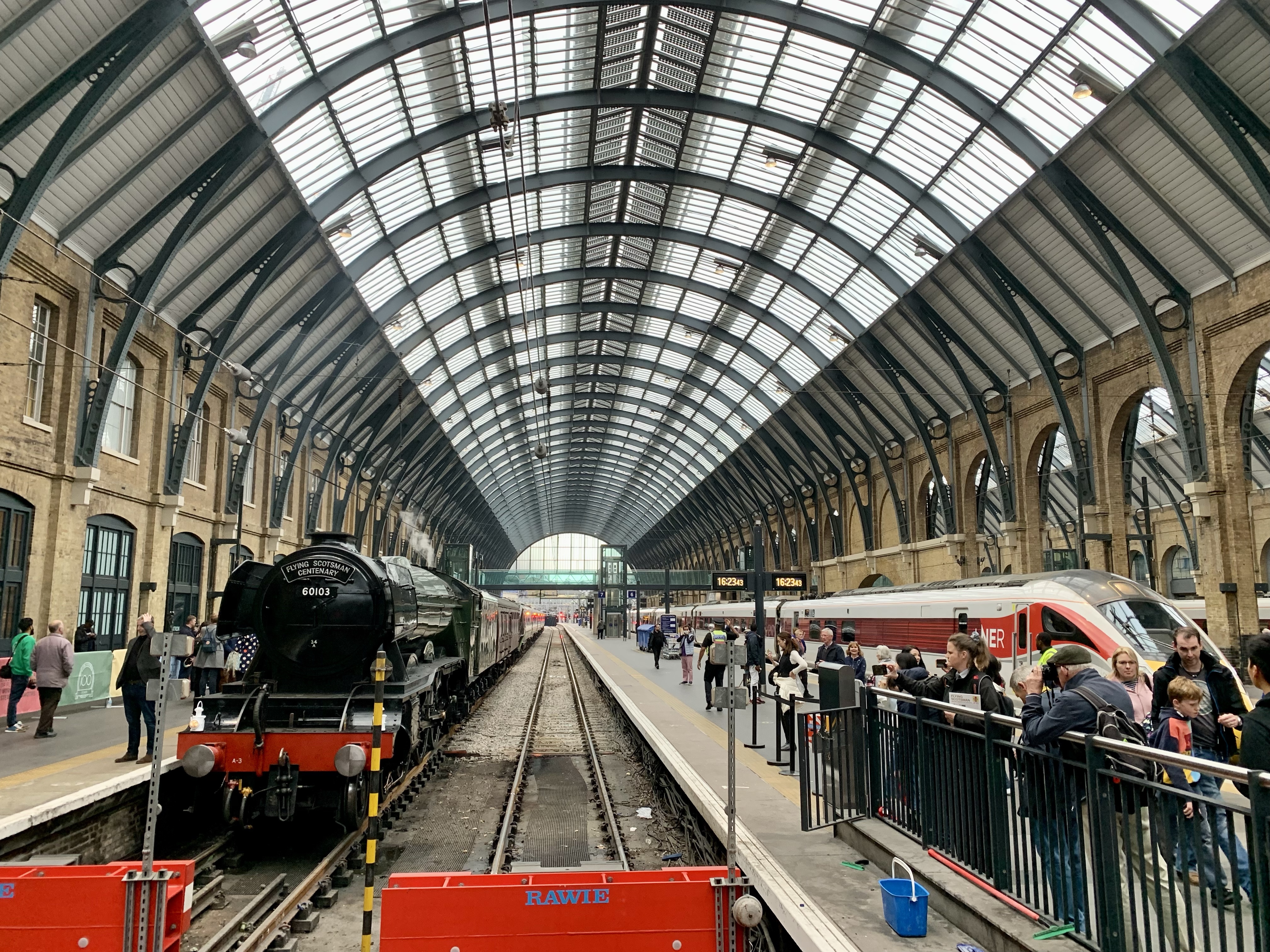
‘Flying Scotsman’, perhaps the most famous steam locomotive ever, kicked off a year of events to celebrate 100 years since she first emerged from Doncaster Works in February 1923. Costing £7,944 and originally numbered 1472 she was the first locomotive built for the London North Eastern Railway (LNER) and in 1924 was chosen to be exhibited at the British Empire Exhibition at Wembley Park in London which aimed to celebrate the British Empire and its economic achievements and potential. It was at this time the locomotive was renumbered to 4472 and given the name ‘Flying Scotsman’ in honour of the prestigious daily 1000am London to Edinburgh passenger service. In 2022, now in British Railways livery and numbered 60103, ‘Flying Scotsman’ spent the weekend of 15th/ 16th October in light steam at the buffer stops of Kings Cross platform 8 allowing visitors to view this icon. The event also tied in with the 170th Anniversary of the opening of Kings Cross station in 1852.
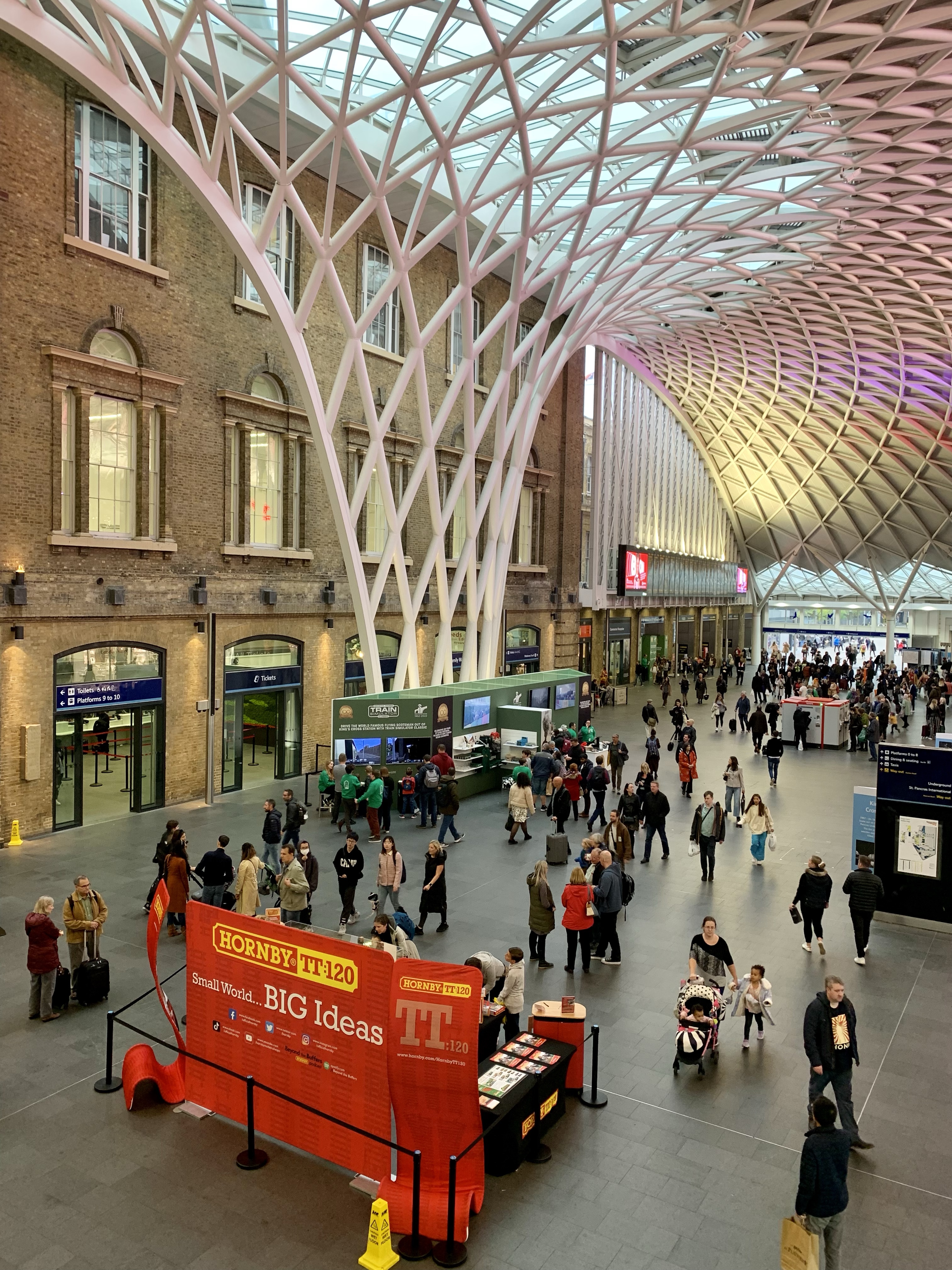
Visitors to the station over the weekend were also able to take part in associated activities including a ‘Flying Scotsman’ driving simulator, where people could experience driving the engine out of The Cross, screens to watch live footage of ‘Flying Scotsman’ from the concourse and regular recorded announcements from Michael Portillo.
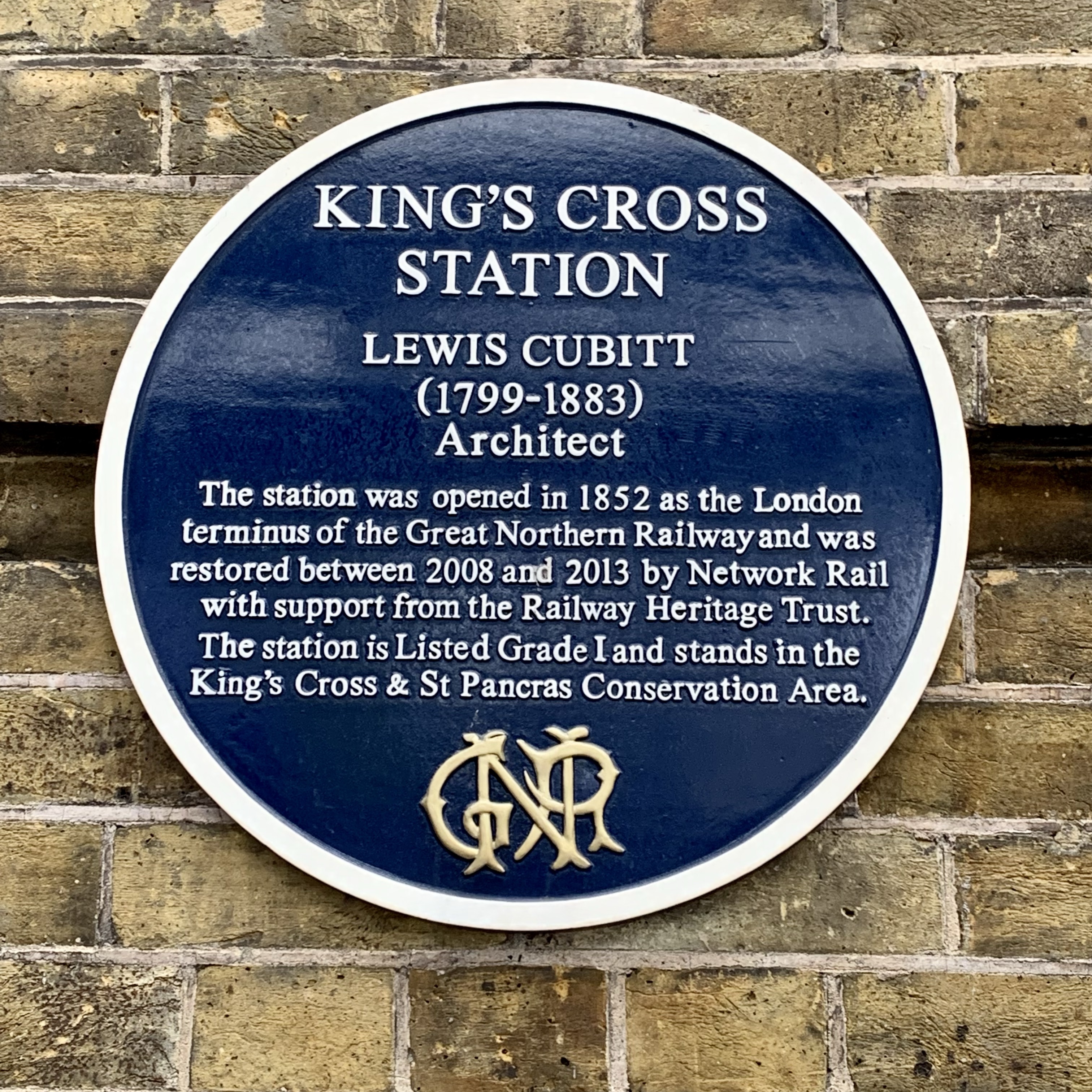
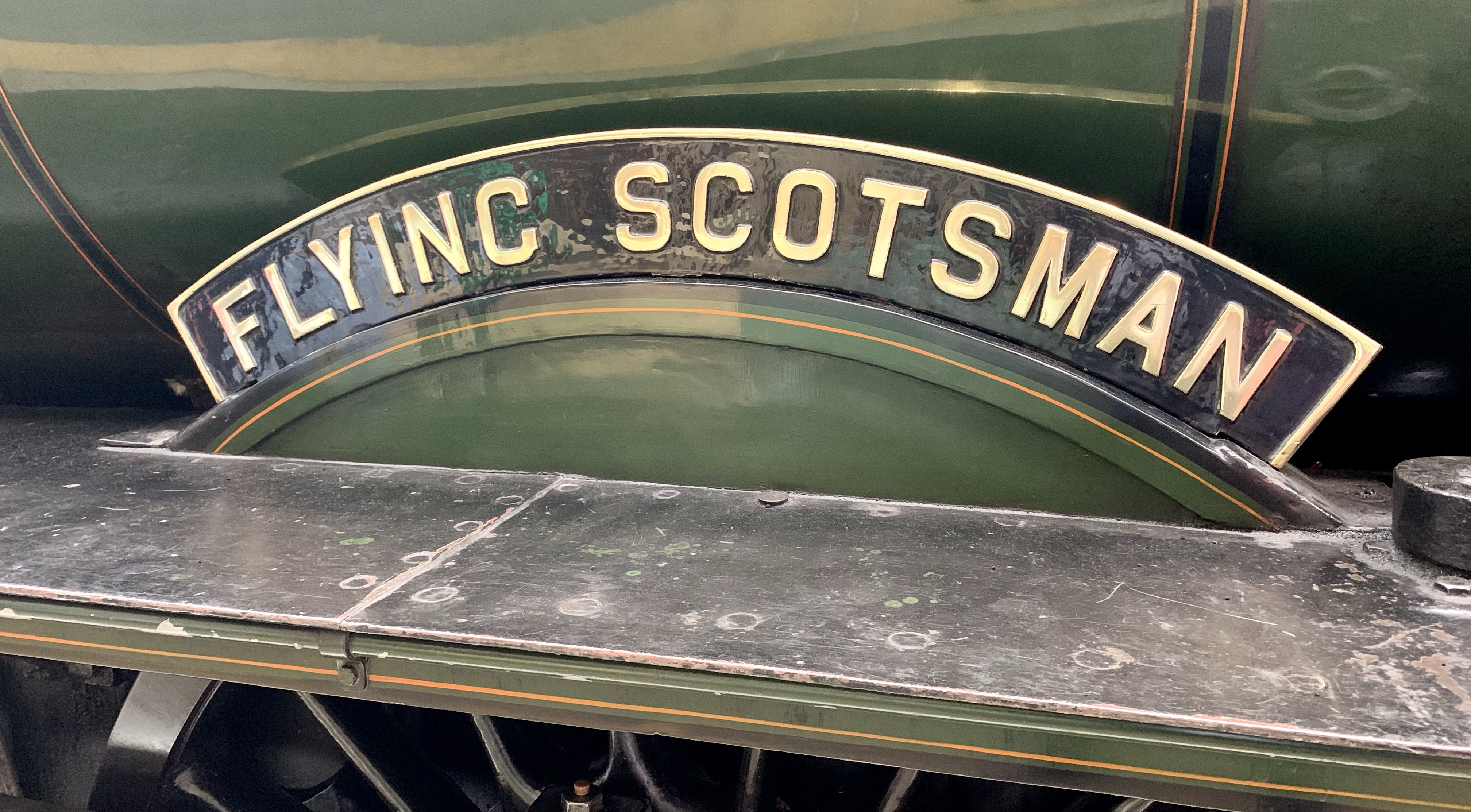
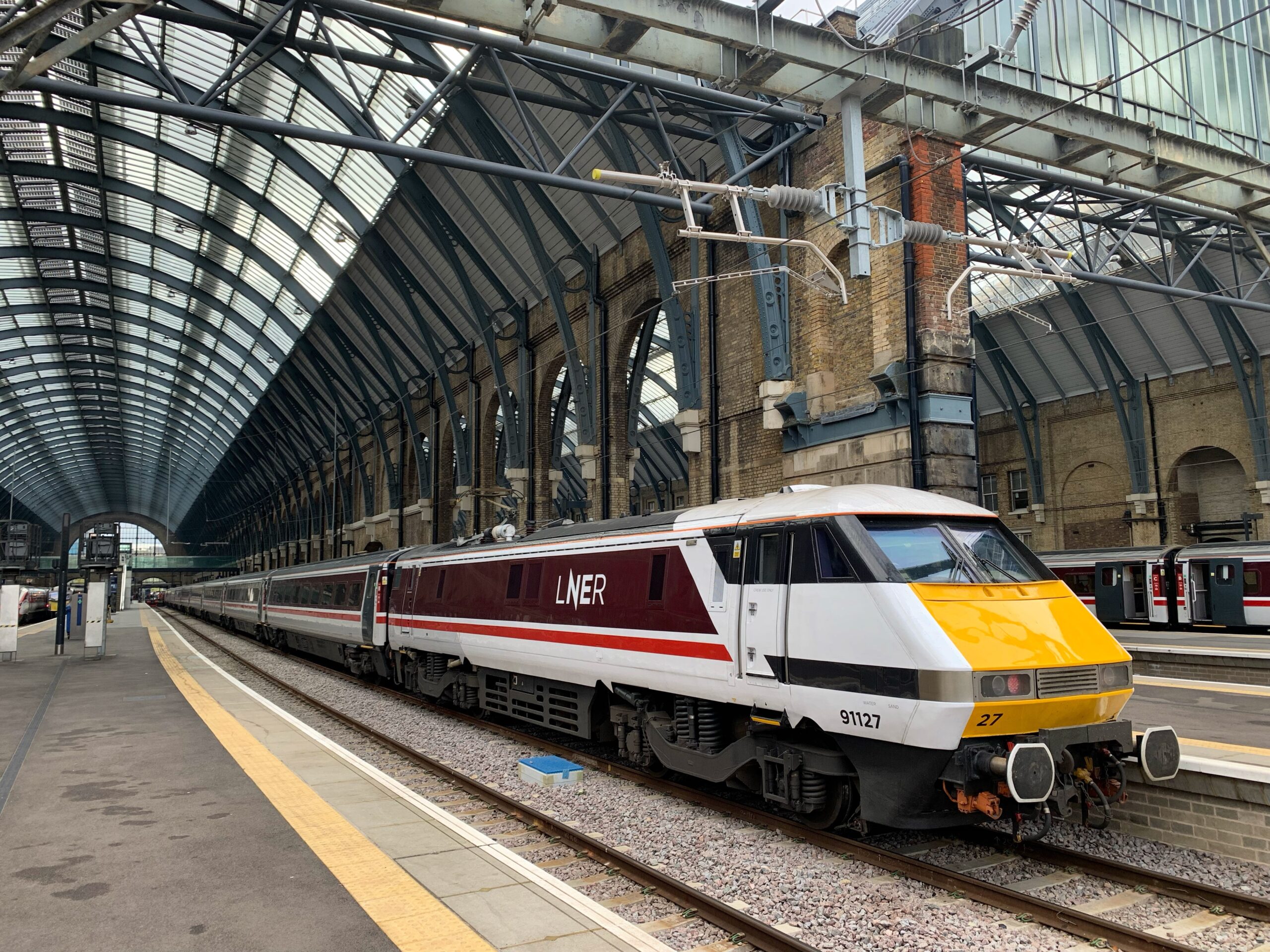
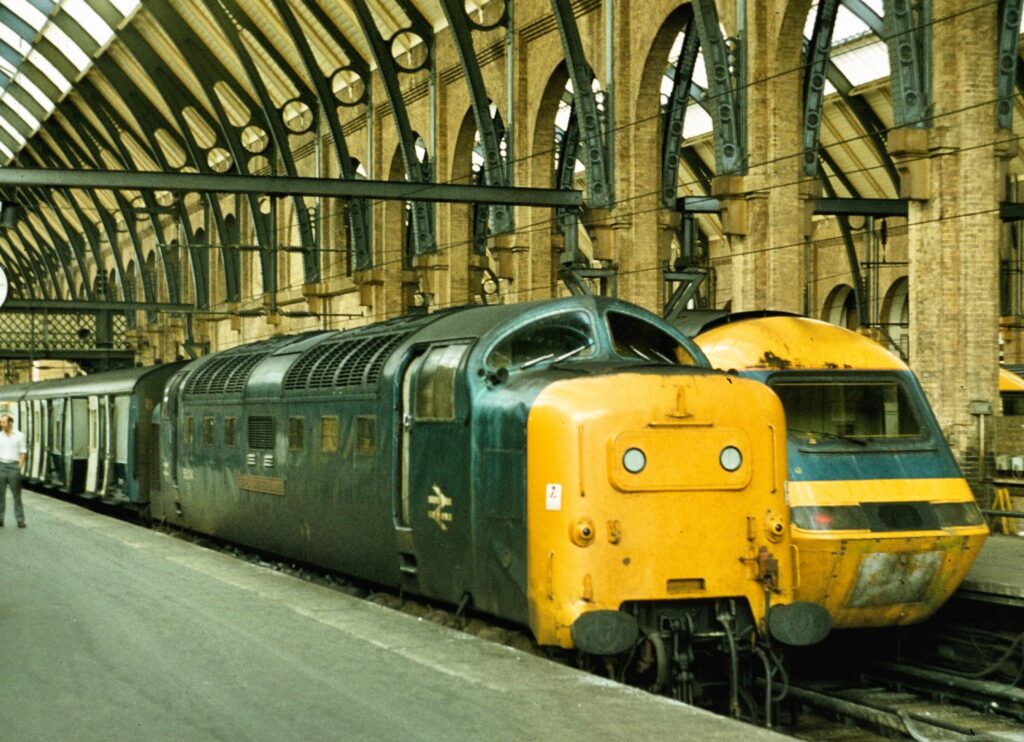
Kings Cross railway station exterior – 15/10/2022Blue plaque, Kings Cross – 15/10/2022Hornby Railways stand at Kings Cross. Hornby is lead sponsor of the ‘Flying Scotsman’ Centenary events. The steel structure engineered by Arup forming the roof seen in this image was added as part of a refurbishment programme completed in 2012 which included a new semi-circular departures concourse has been described as being “like some kind of reverse waterfall, a white steel grid that swoops up from the ground and cascades over your head” – 15/10/2022Hornby’s Marketing and Product Development Director, Simon Kohler – 15/10/2022The entrance to Platform 8 at Kings Cross – 15/10/2022‘Flying Scotsman’ Souvenir Platform Ticket LNER Gresley A3 4-6-2 No. 60103 ‘Flying Scotsman’ sits at Kings Cross platform 8 – 15/10/2022‘Flying Scotsman’ name plate LNER Gresley A3 4-6-2 No. 60103 ‘Flying Scotsman’ sits at Kings Cross platform 8 as a modern day LNER Azuma arrives at platform 10 – 15/10/2022The Gresley A3’s and A4’s gave way to diesel traction. Class 43 HST power car No. 43059 alongside Class 55 “Deltic” No. 55015 ‘Tulyar’ at Kings Cross – 18/10/1981Class 91 No. 91127 at the head of 1D19 1503 Kings Cross to Leeds – 15/10/2022LNER Gresley A3 4-6-2 No. 60103 ‘Flying Scotsman’ sits at Kings Cross platform 8 – 15/10/2022
For my Saturday October 25th visit to see No. 60103 at Kings Cross, Yoshi stayed at home with his mum as we thought things might be a little too crowded for our boy. For my part, it was great to be reacquainted with ‘Flying Scotsman’ once again and to hear her whistle echo around Kings Cross. Also a great joy was to witness the faces of passengers arriving at the station and unexpectedly coming across the peoples’ locomotive. It seems that everyone loves a steam engine, and none more so than Sir Nigel Gresley’s most famous A3.
Brief video of ‘Flying Scotsman’ at the buffer stops of platform 8 of London Kings Cross – 15/10/2022
Purchased by Alan Peglar from regular British Railways service for £3,000 in 1963 after covering 2,076,000 miles, ‘Flying Scotsman’ was later under the custodianship of Sir William McAlpine and then Tony Marchington before, in 2004, a campaign spearheaded by the National Railway Museum (NRM) to save the locomotive for the nation was supported by thousands of members of the public, confirming its status as a national treasure. A ten year £4.2 million restoration project funded by the National Heritage Memorial Fund, the Heritage Lottery Fund and public donations followed.
There will be a calendar of mainline UK rail tours involving No. 60103 across the the next year. ‘Flying Scotsman’ is extremely well travelled as in addition to hauling enthusiast specials across England, Scotland and Wales, between 1969 and 1973 the locomotive toured extensively in the United States and Canada and from 1988 to 1989 she visited Australia where she set a record for the longest non-stop run by a steam locomotive of 422 miles on 8 August 1989. ‘Flying Scotsman’ actually set two world records for steam traction being the first steam locomotive to be officially recorded at reaching 100mph which happened on 30 November 1934.
The next of the planned Centenary events takes place on Yoshi’s doorstep as ‘Flying Scotsman’ visits the Swanage Railway for a three week visit until November 7th 2022. No. 60103 is on display at Swanage railway station for pre-booked visits to her footplate on 20th and 21st October 2022 as well as every day between 27th October to 6th November inclusive. ‘Flying Scotsman’ will be hauling passenger trains between Swanage and Norden from 22nd October to 26th October.
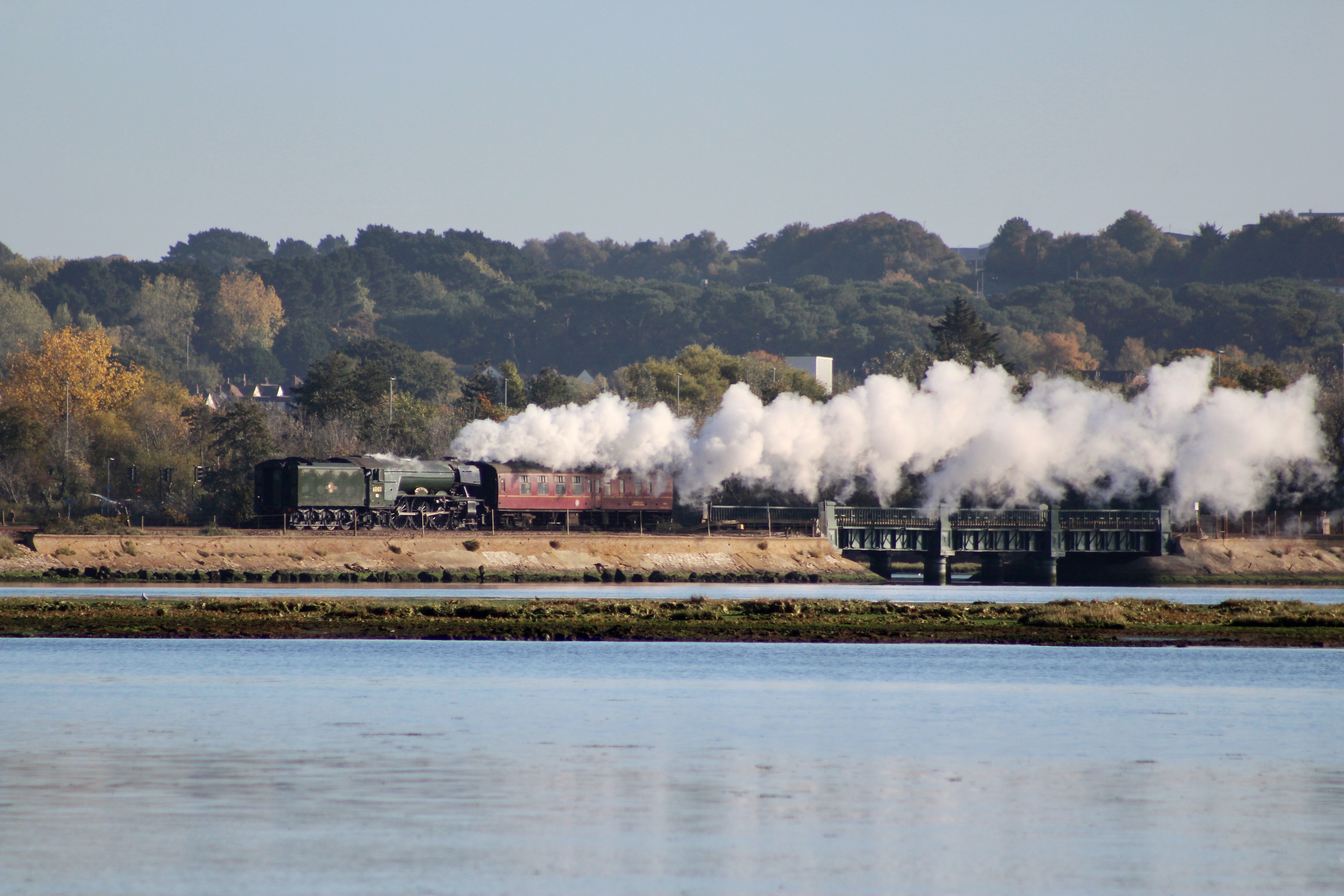
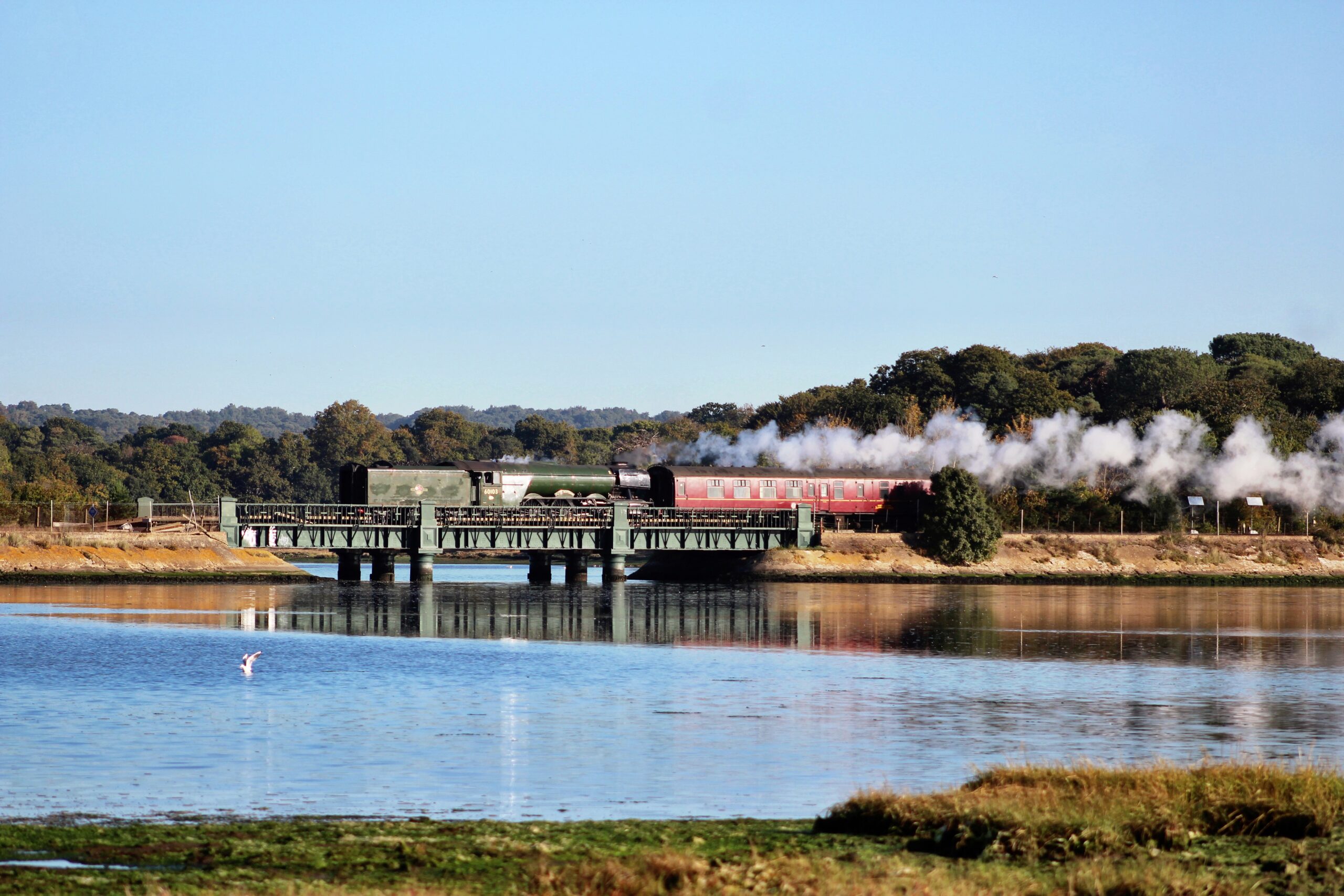
Making her way to the Isle of Purbeck, No. 60103 passed through East Dorset and we popped out to see her working tender first as she crossed the Holes Bay Causeway near Poole on the morning of 18th October 2022.
LNER Gresley A3 4-6-2 No. 60103 ‘Flying Scotsman’ having traversed Creekmoor Viaduct on the Holes Bay causeway working 5Z74 0452 Southall WCR to Swanage – 18/10/2022LNER Gresley A3 4-6-2 No. 60103 ‘Flying Scotsman’ crossing Upton Viaduct on the Holes Bay causeway working 5Z74 0452 Southall WCR to Swanage – 18/10/2022LNER Gresley A3 4-6-2 No. 60103 ‘Flying Scotsman’ nears Hamworthy after crossing Upton Viaduct on the Holes Bay causeway working 5Z74 0452 Southall WCR to Swanage – 18/10/2022
Video of LNER Gresley A3 4-6-2 No. 60103 ‘Flying Scotsman’ crossing the Holes Bay causeway working 5Z74 0452 Southall WCR to Swanage – 18/10/2022
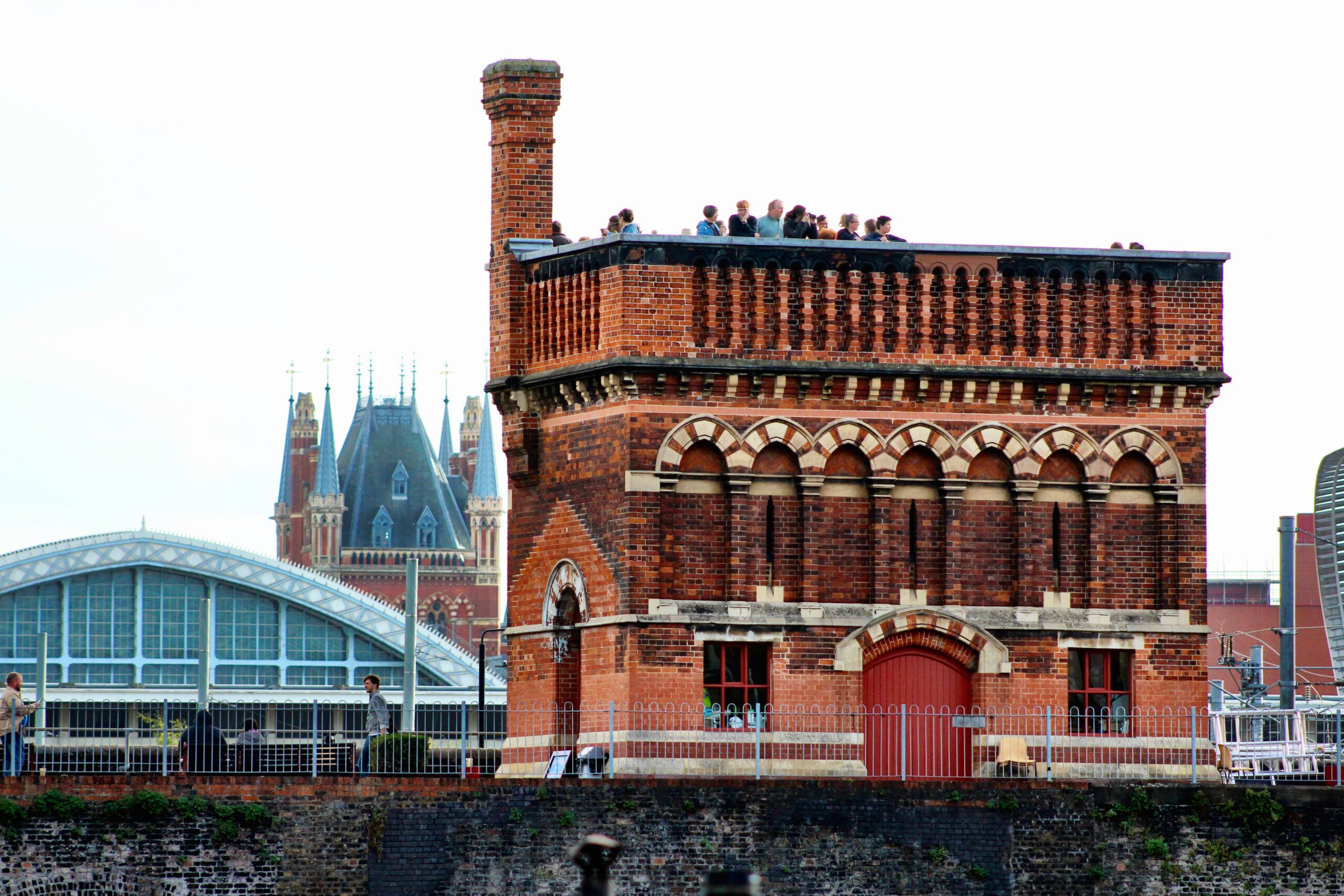
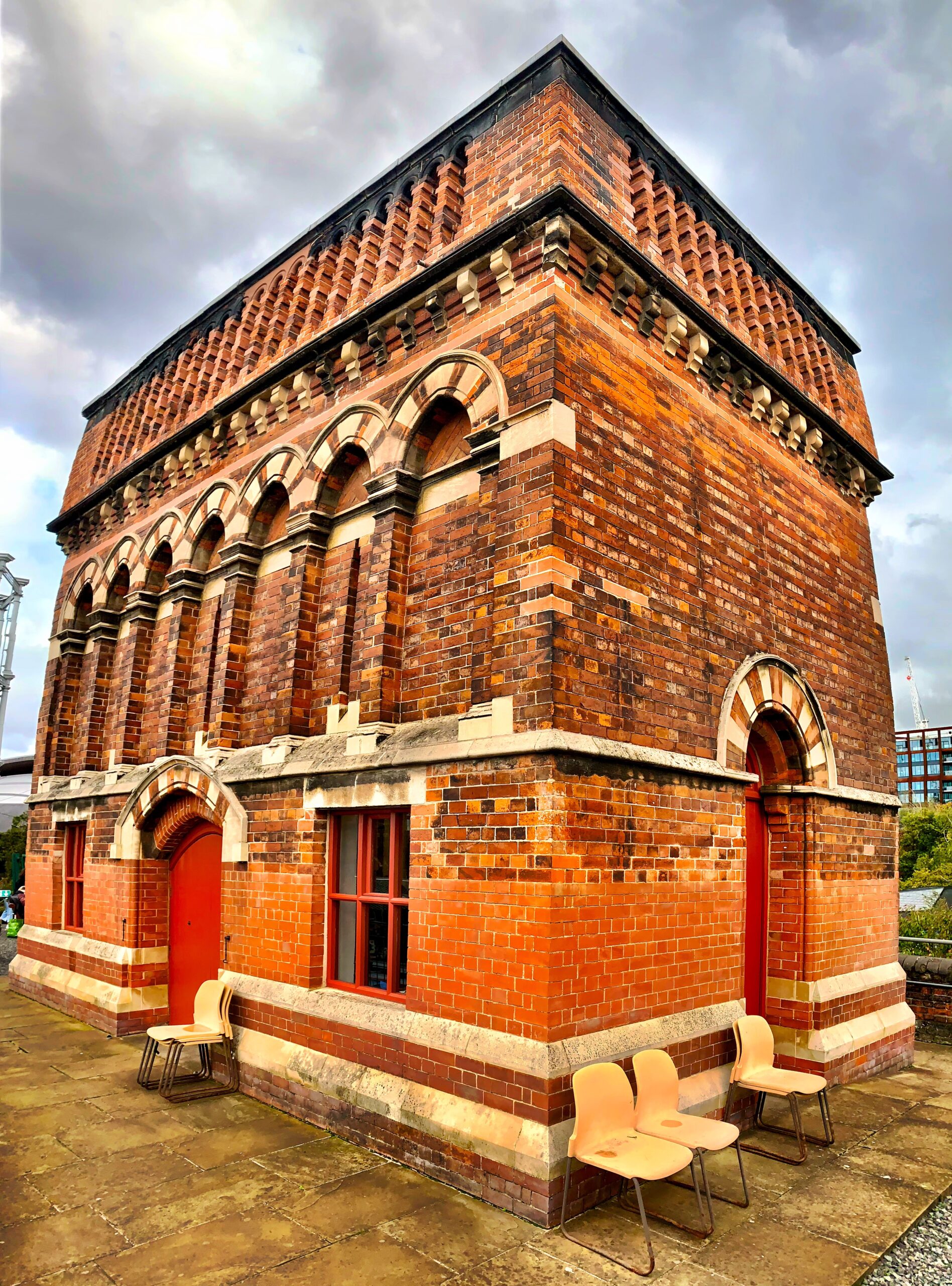
Another reason for my visit to London on Saturday was the opportunity to view the former Victorian St Pancras railway station water tower which was the subject of an open day. The water tower was built in 1872 and sat on the eastern side of St Pancras providing refreshment for steam locomotives using the station.
The St Pancras water tower was designed by the office of Sir George Gilbert Scott and features elaborate brickwork detailing around the edges of the overhang that supported the water tank – 15/10/2022
The water tower was nearly demolished as part of the 2001 Channel Tunnel rail link development at St Pancras. Thankfully a solution was sought to retain the building, and although now moved slightly from its original location, the water tower survives on land owned by the St Pancras Cruising Club. It was not an easy task relocating the structure as it was discovered that dismantling it brick by brick would be impossible given the hardness of the original mortar used in its construction. So instead, the tower was cut in half horizontally and moved in two pieces, the operation being completed by 2005.
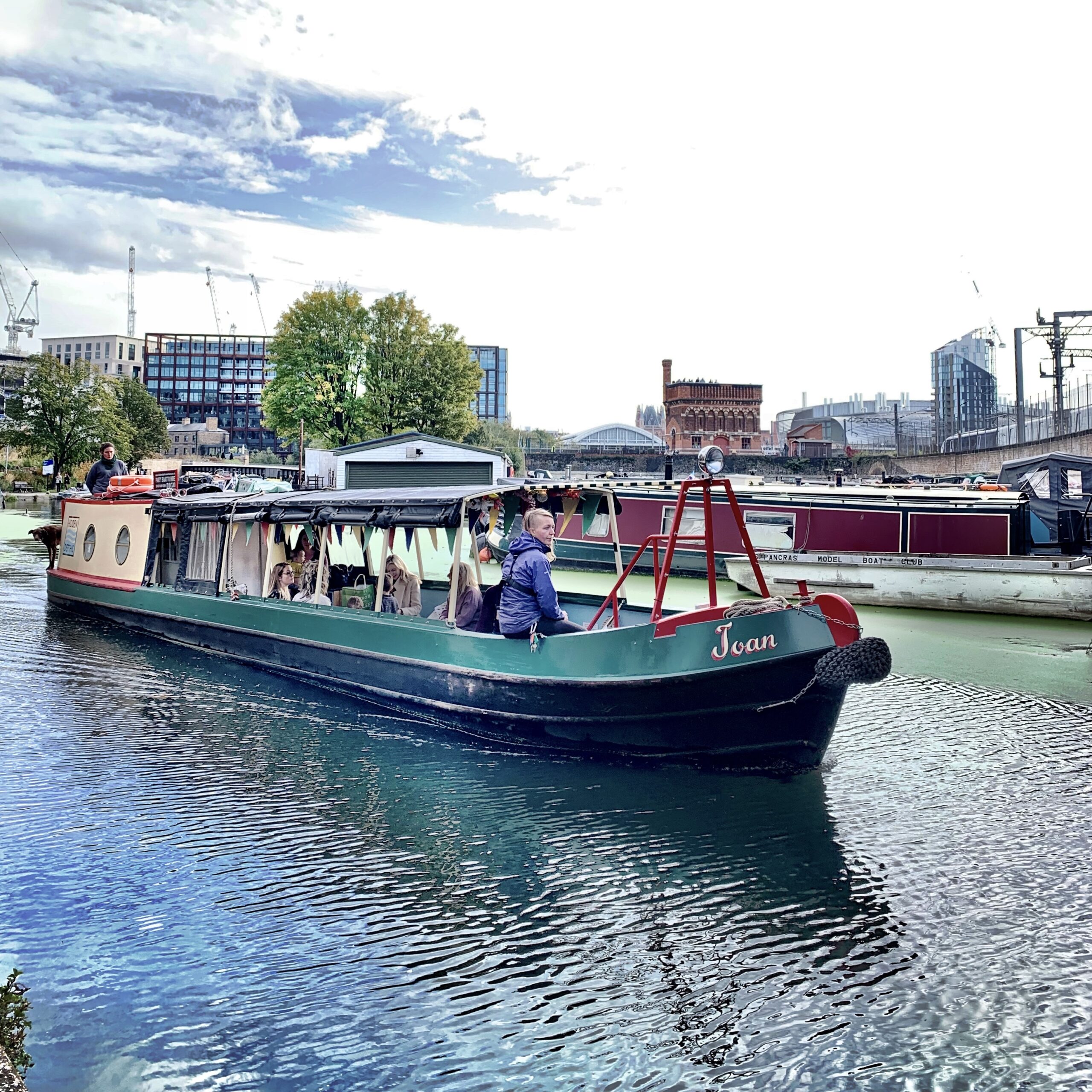
Once I’d managed to find the entrance, which was gained by crossing canal lock gates, the tower’s elevated location and low lying surroundings contributed to stunning views across St Pancras and the Regent’s Canal.
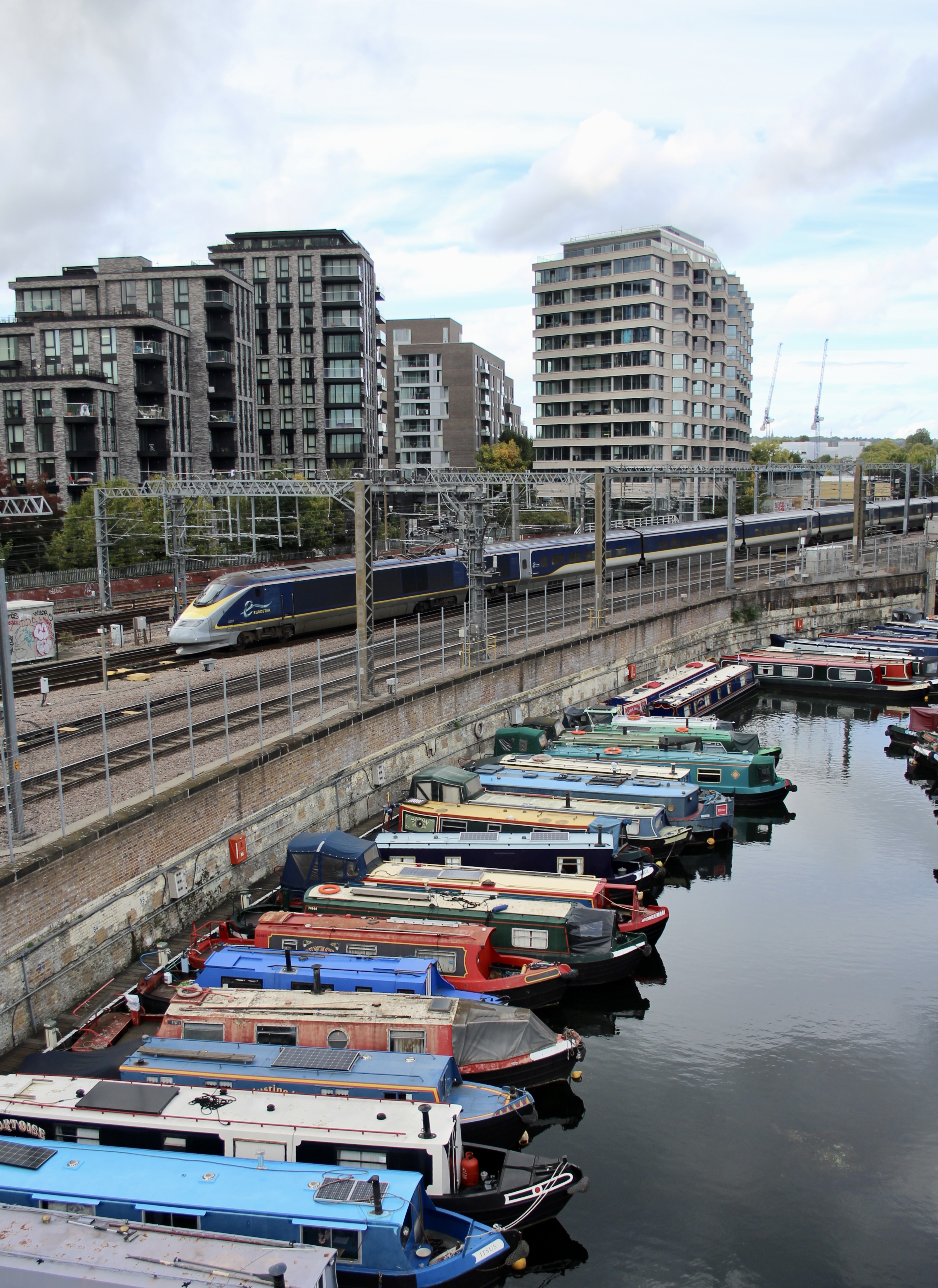
Two SouthEastern Class 395 Javelin EMU’s, with No. 395011 ‘Katherine Grainger’ leading, form the 1F38 1425 St Pancras International to Rochester service – 15/10/2022Class 373/1 Eurostar set No. 373007 9031 1313 Paris Nord to St Pancras International on the approach to the London terminus – 15/10/2022The St Pancras water tower serves as a back drop to the Regent’s Canal – 15/10/2022
Trains viewed from the St. Pancras water tower – 15/10/2022
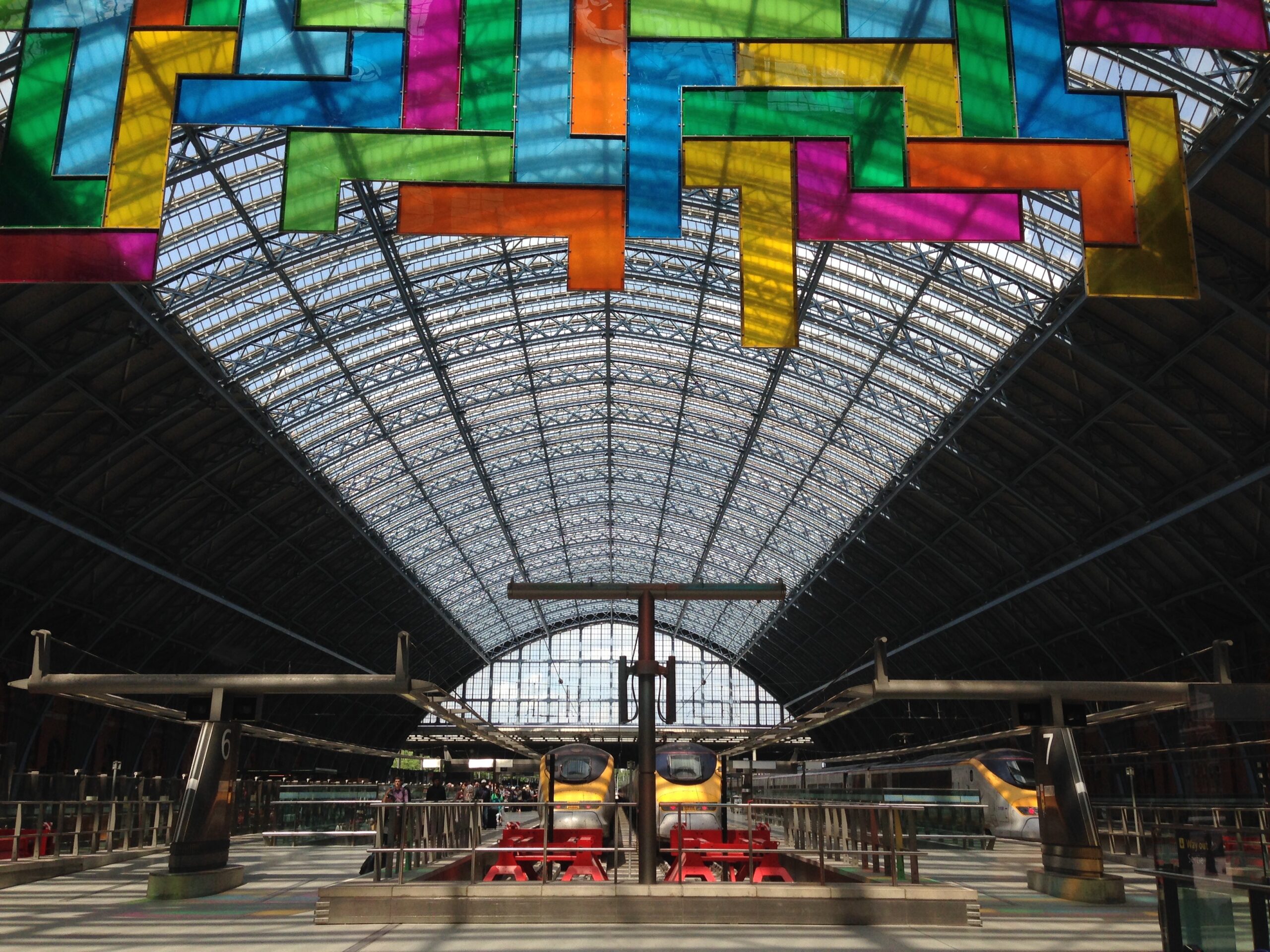
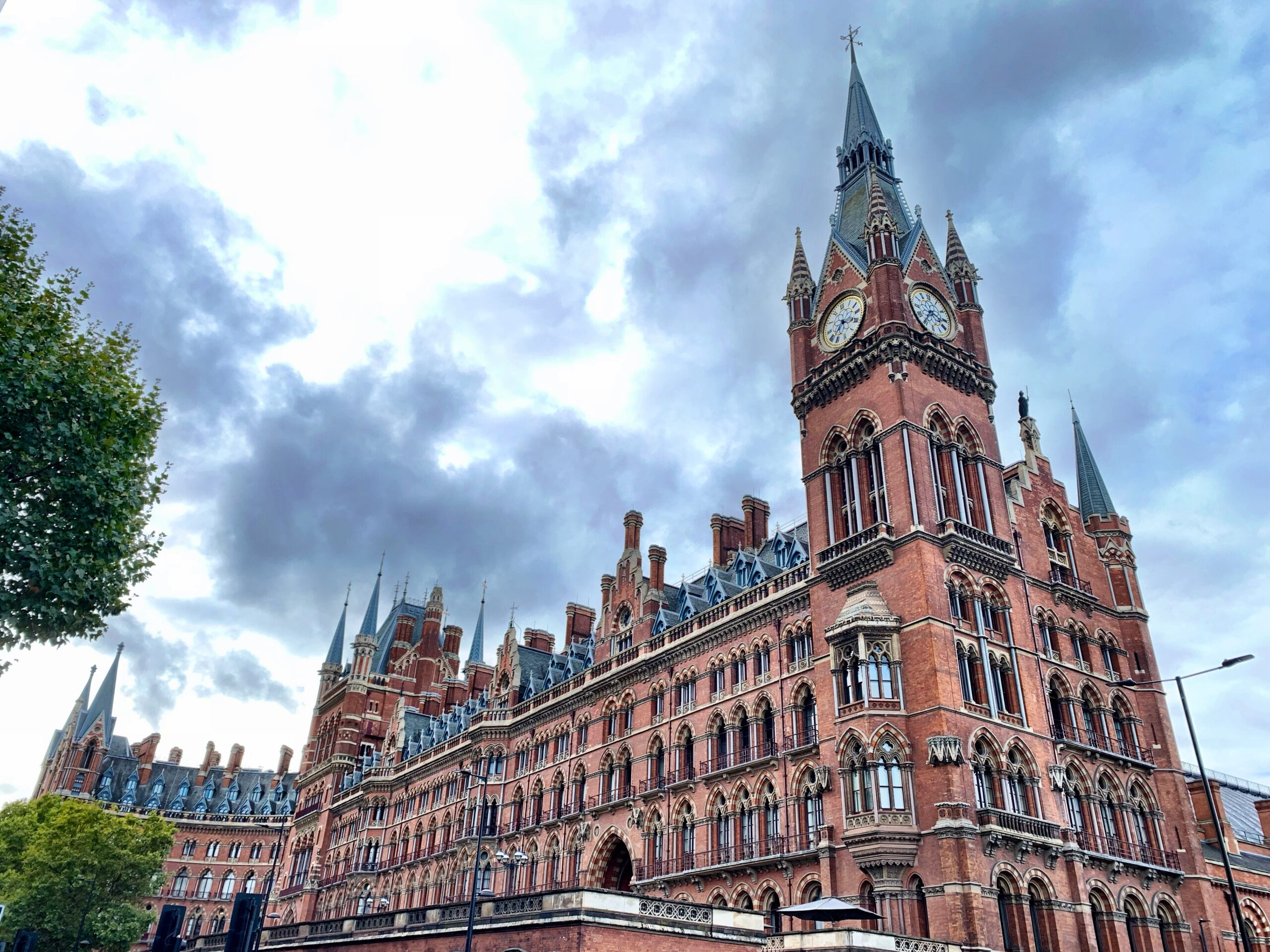
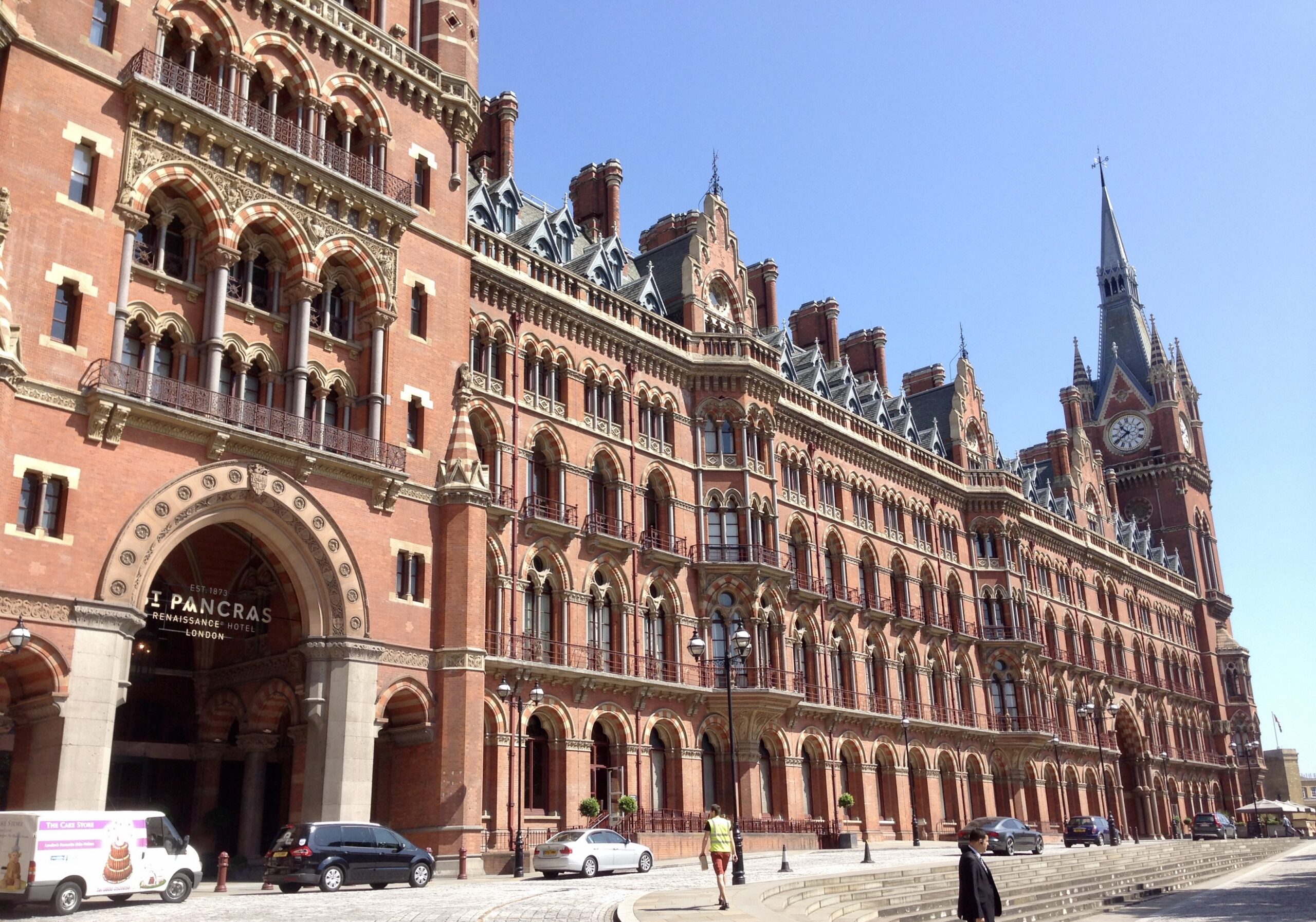
St Pancras railway station was designed by Midland Railway engineer William Barlow and his masterpiece train shed roof was built to span five tracks in one single arc with its cross ties buried under the floor in the form of horizontal girders. At 74 metres this was once the largest span in the world. Not content with this, the company turned to Sir George Gilbert Scott to design a hotel which would be the most luxurious on the planet. Scott’s building has an entrance wing facing Euston Road with a curved quadrant forecourt to reach Barlow’s existing entrance ramps to the station. The Midland Grand hotel closed in 1935 and was then used as office space.
The interior of St Pancras International with Eurostar trains in evidence – 21/06/2014
In the 1960’s British Railways driven by modernisation wanted to sweep it all away and concentrate rail services into neighbouring Kings Cross. However, unlike the corporate vandalism bestowed on London Euston, St Pancras had a flurry of supporters determined to save the building led by Sir John Betjeman and the newly formed Victorian Society. In 1967 the British Government acquiesced and St Pancras gained Grade I listed status and was saved the fate of the wrecking ball. Despite continued future use as BR offices and dormitories for rail staff the building fell into disrepair and was shut down in the 1980’s after failing fire safety checks. At a cost of £10 million, the exterior was restored and made structurally sound. But it was not until 2004 that planning permission was given for the building to be redeveloped into a new hotel.
Statue of Sir John Betjeman who led a campaign to save St Pancras Station from demolition in the 1960’s. In tribute to the famous poet and railway enthusiast a 2.10 metre high sculpture by Martin Jennings was unveiled in 2007 to celebrate the man and his poetry – 21/06/2014
The main public rooms of the former Midland Grand Hotel were restored, along with some of the bedrooms. The former driveway for taxis entering St Pancras station which passed under the main tower of the building was converted into a hotel lobby and a new wing constructed on the western side of the Barlow train shed. Although open to guests in March 2011, the formal Grand Opening of The St Pancras Renaissance Hotel was held on the 5th May the same year, 138 years to the day after the original hotel opened in 1873. St Pancras is, without doubt, my favourite building in London. One day I’ll have breakfast at the hotel, or stay a night – maybe even both.
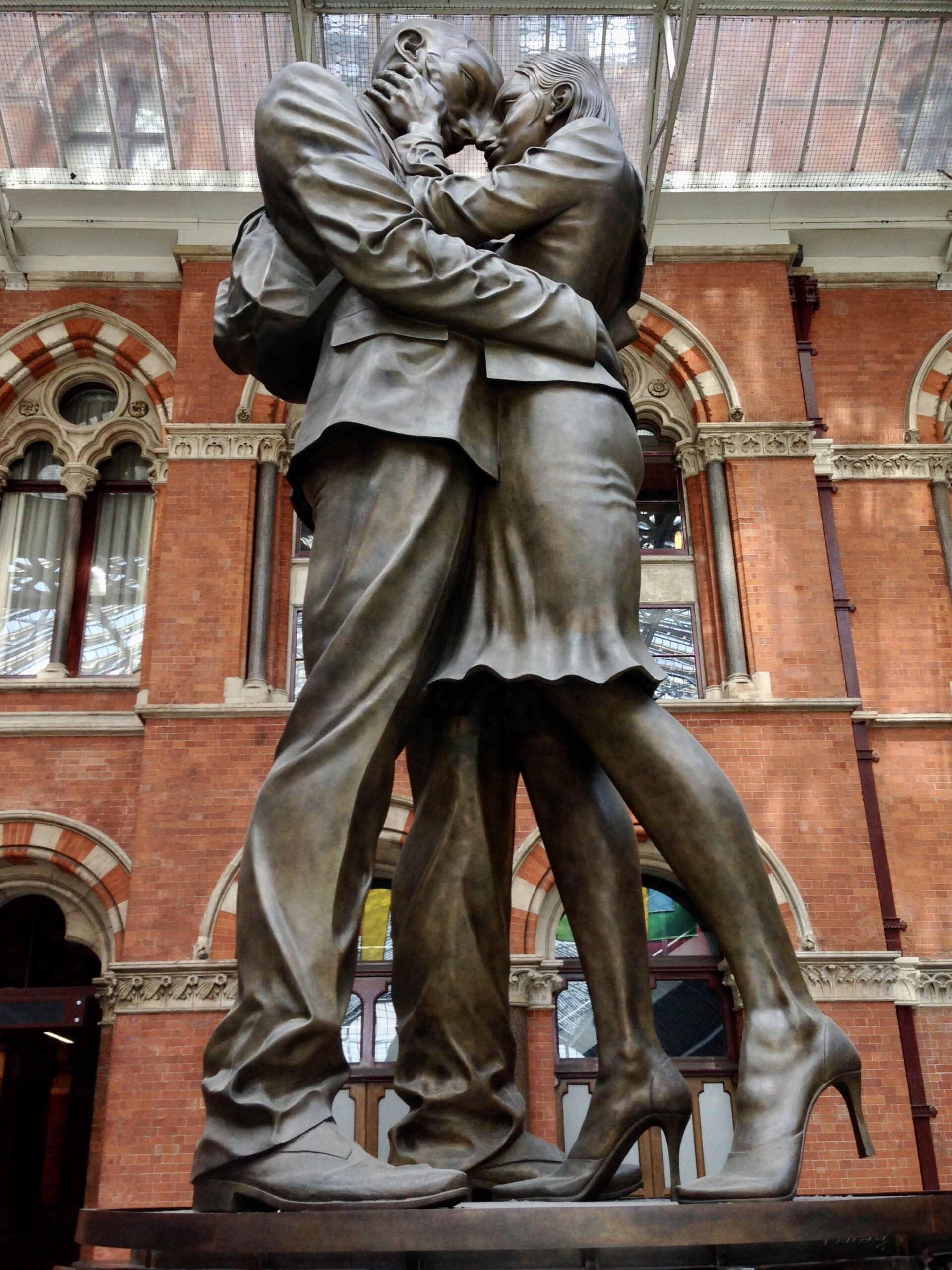
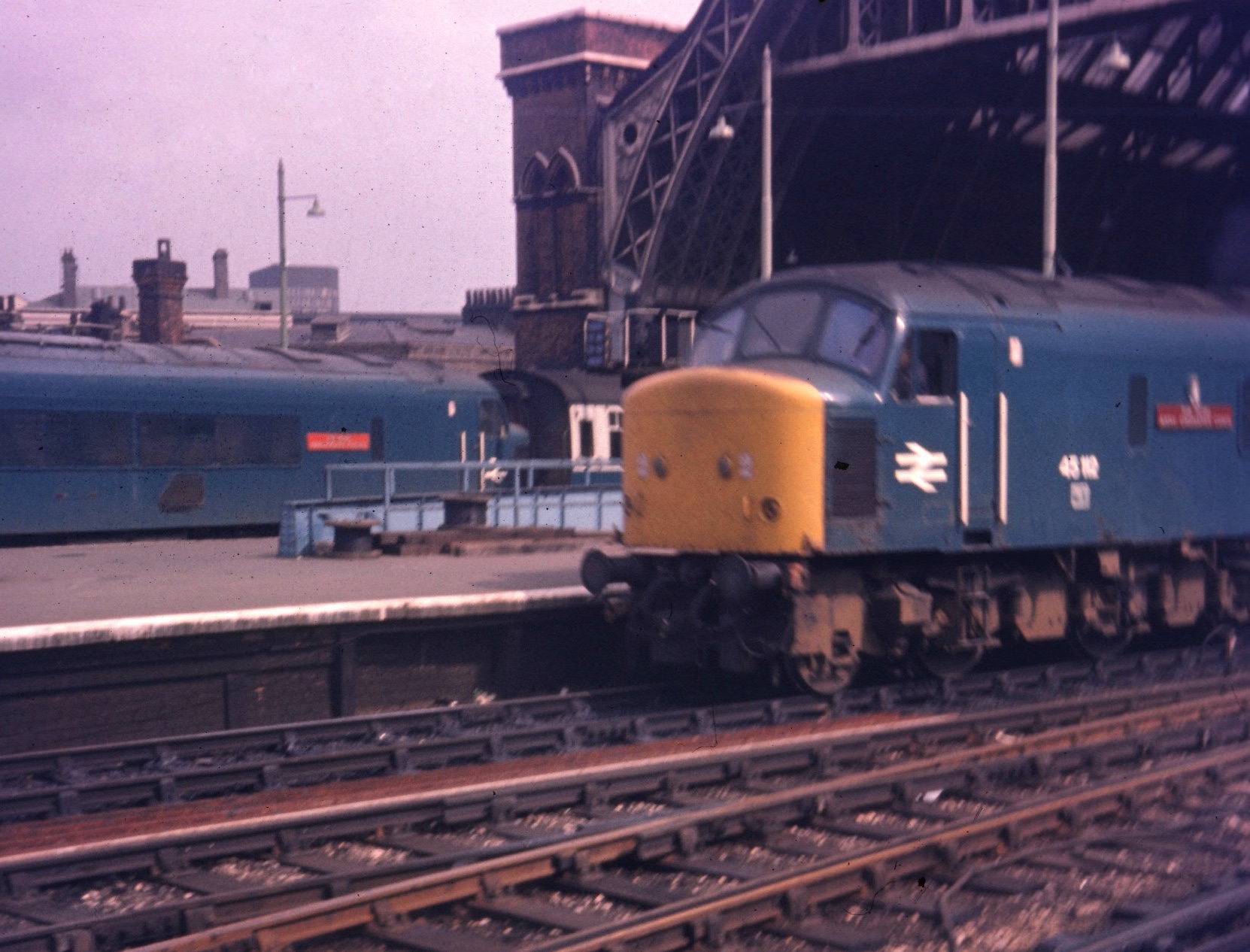
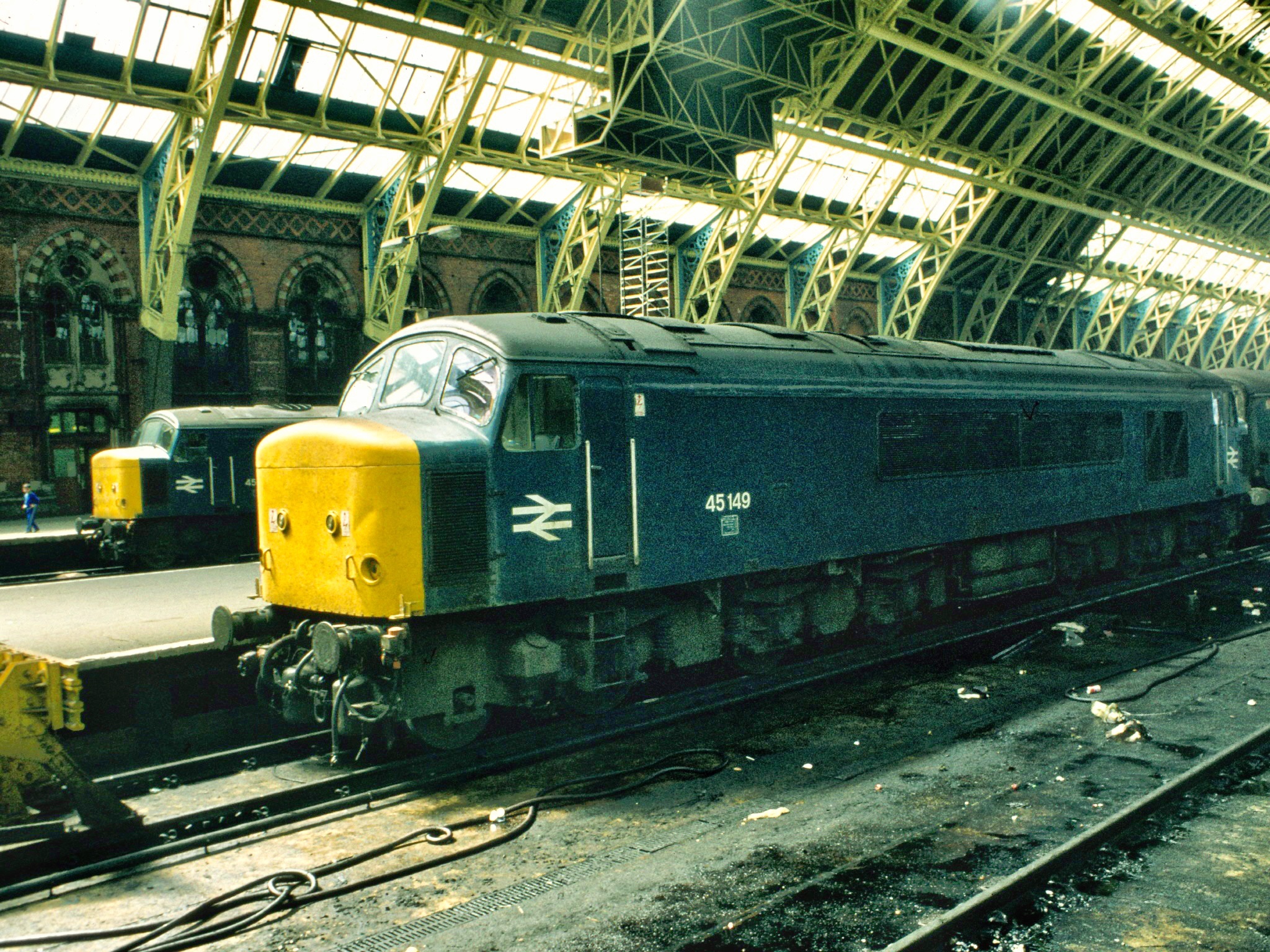
St Pancras railway station and The St Pancras Renaissance Hotel viewed from Euston Road – 15/10/2022 St Pancras railway station and The St Pancras Renaissance Hotel – 21/06/2014“The Meeting Place” is a 9 metre high, 20 tonne bronze sculpture that stands at the south end of the upper level of St Pancras. Designed by the British artist Paul Day and unveiled in 2007, it is intended to evoke the romance of travel through the depiction of a couple locked in an embrace – 21/06/2014Class 45 No. 45112 and an unidentified classmate at St Pancras circa 1977Class 47 No. 47484 ‘Isambard Kingdom Brunel’ awaits departure at St Pancras – 11/07/1981Class 45 No.’s 45149 and 45117 at the buffer stops of St Pancras – 11/07/1981
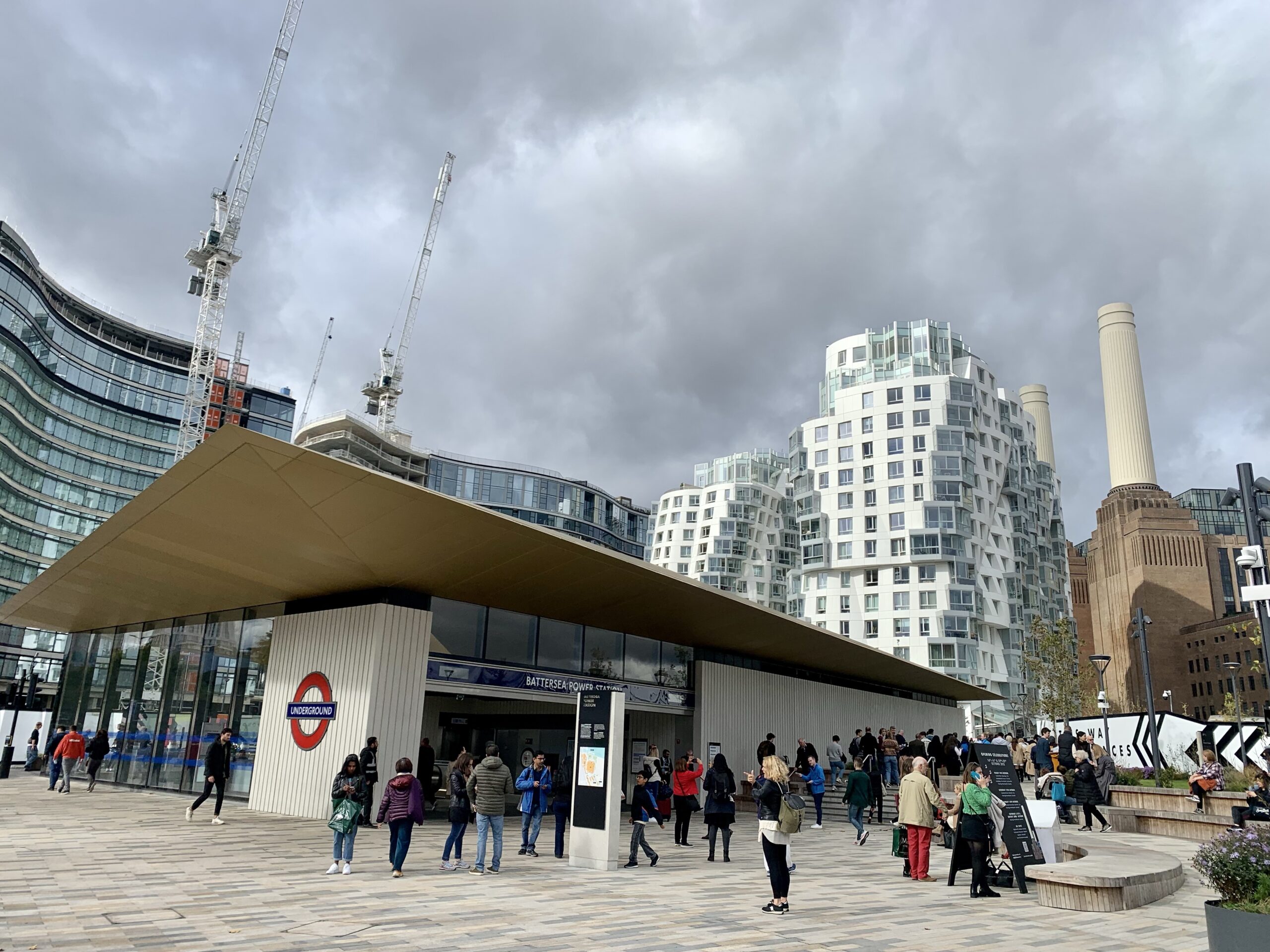
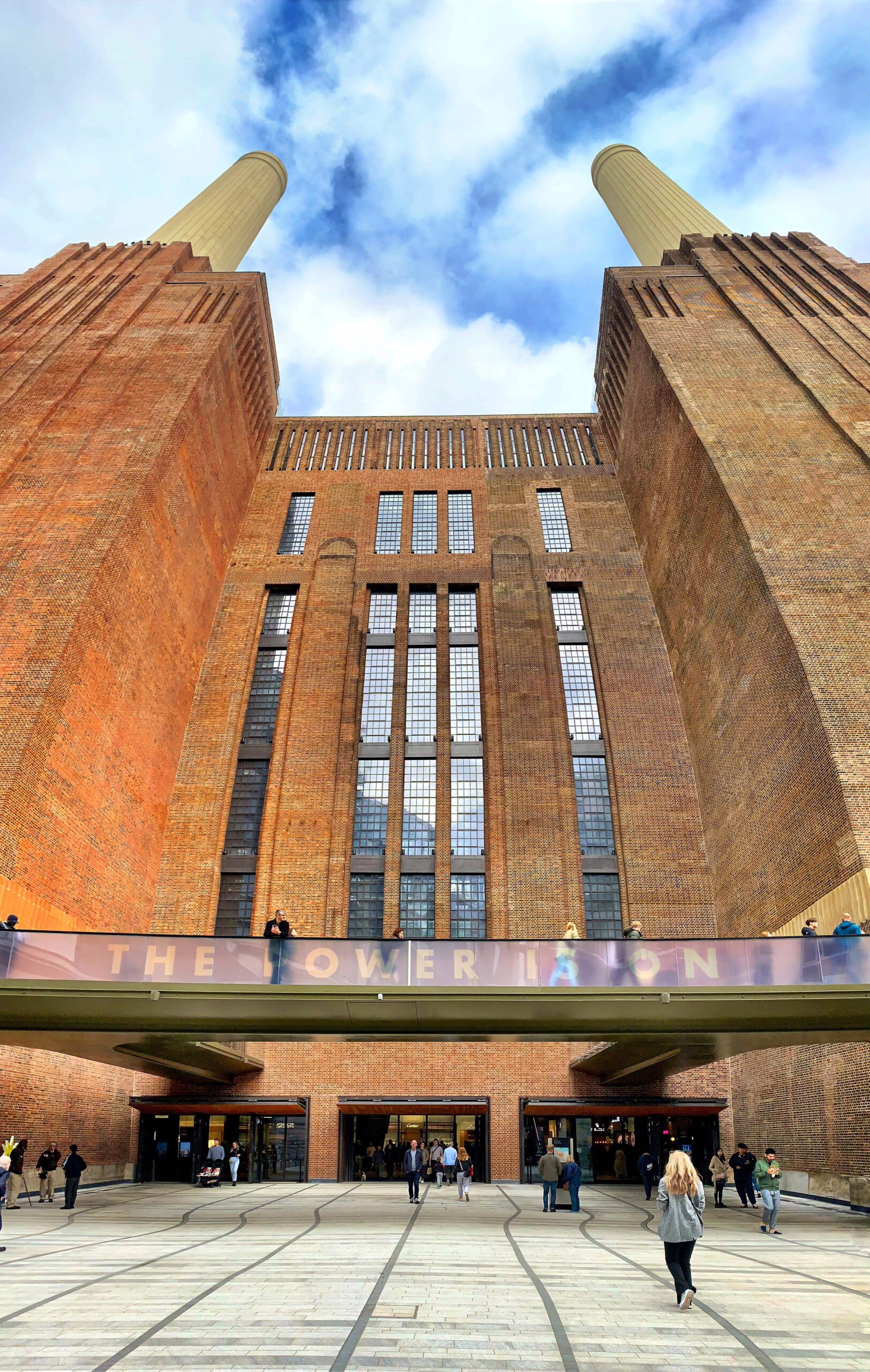
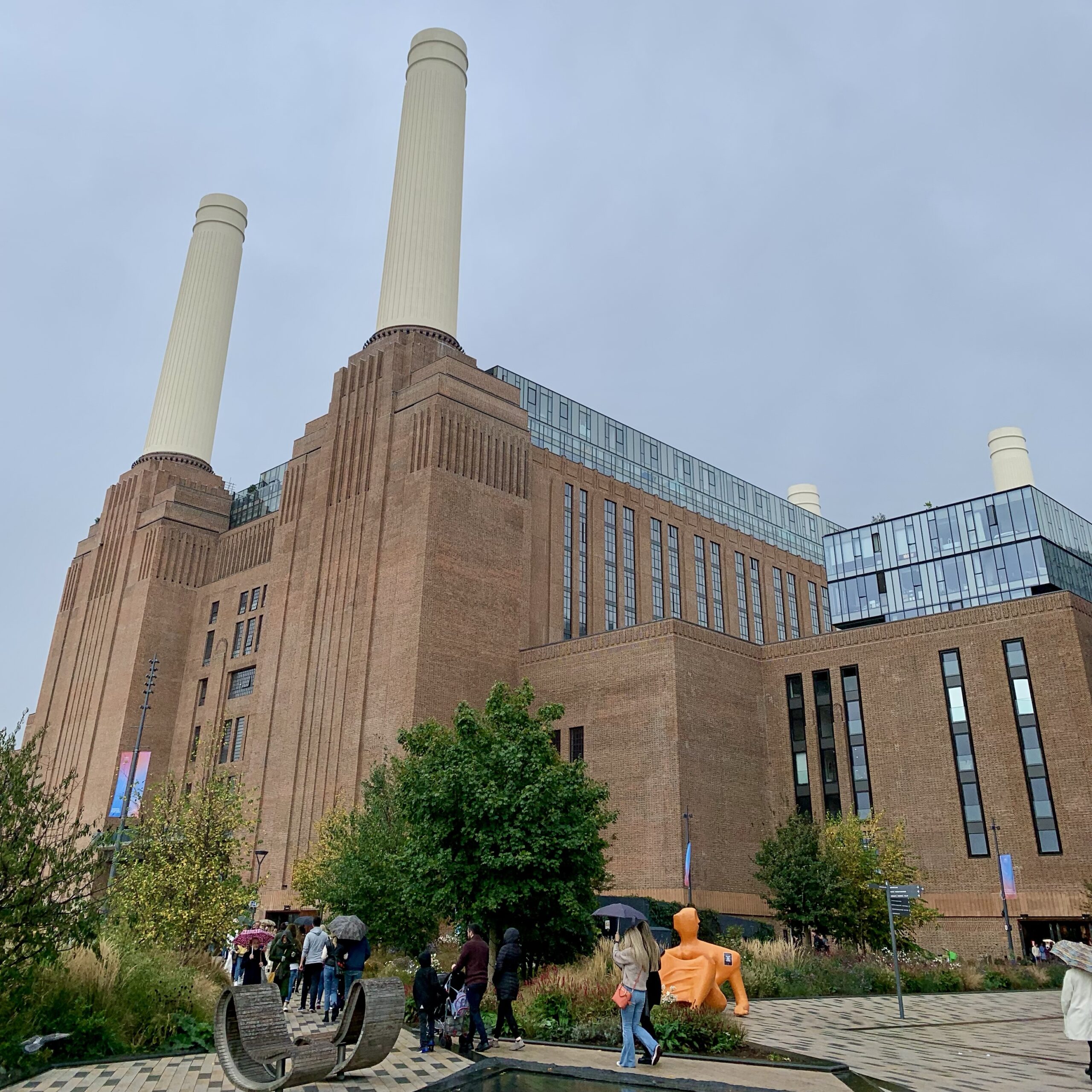
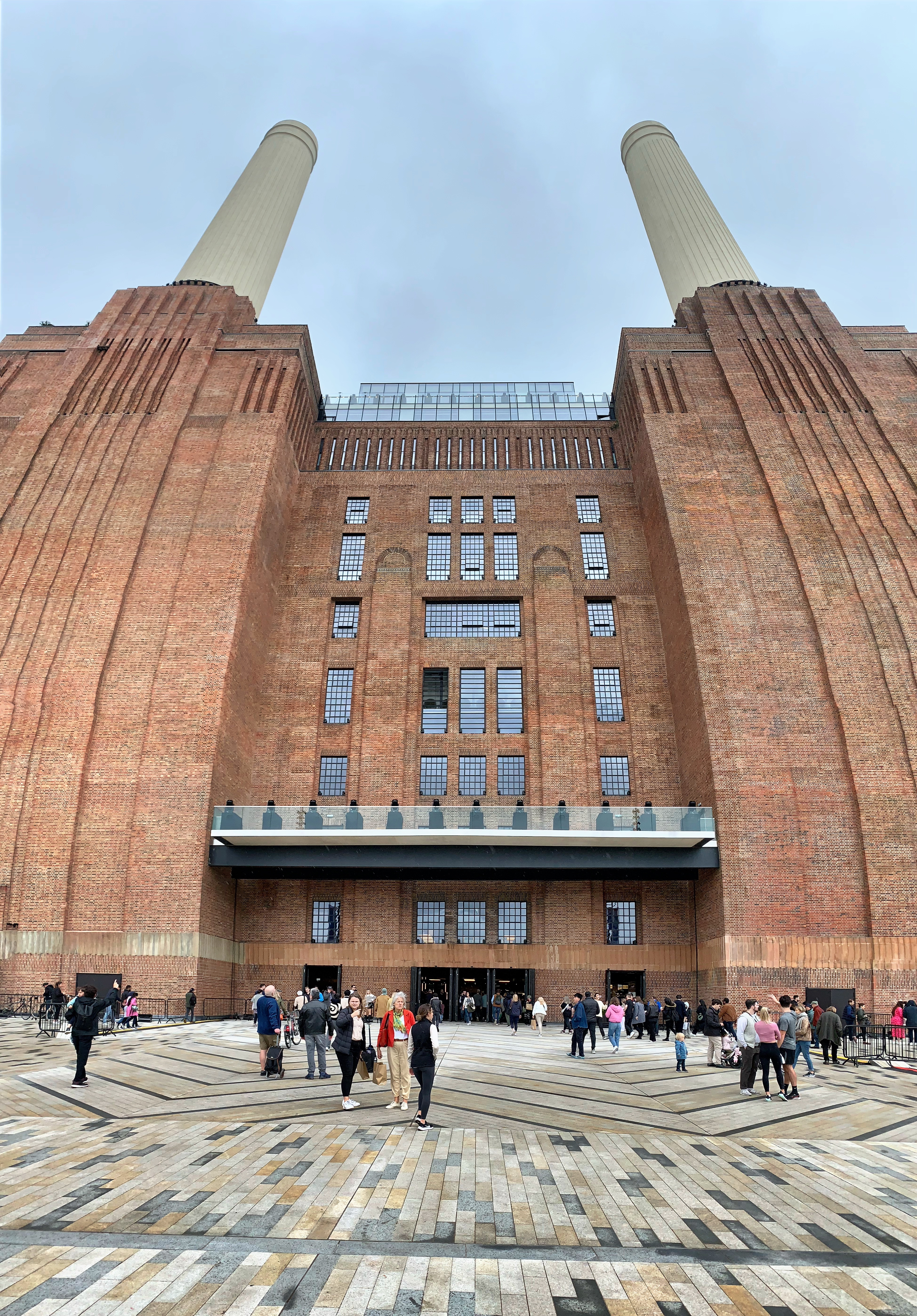
Staying with buildings connected to Sir George Gilbert Scott, Grade II Battersea Power Station re-opened on 14th October, so as I was in London and hoping to find an inflatable pig tethered above it, I thought it would be remiss of me not to stick my nose in and see what had been done to the place. The construction is actually two near-identical power stations built to form a single structure balanced by four chimneys, one in each corner of the plan. Designed by a team of architects and engineers, and allowing me to seamlessly segue from railway water towers to power stations, the third son of Sir George; Sir Giles Gilbert Scott, was brought onboard in 1930 by the London Power Company as consulting architect. Working with the buildings designer and the company chief engineer, Leonard Pearce (not to be confused with Lennard Pearce who played Grandad in BBC sitcom “Only Fools and Horses”), Scott’s role was to enhance the external appearance of the structure. He remodelled the four corner chimneys so they mimicked classical columns and added detailing to the vast brick walls.
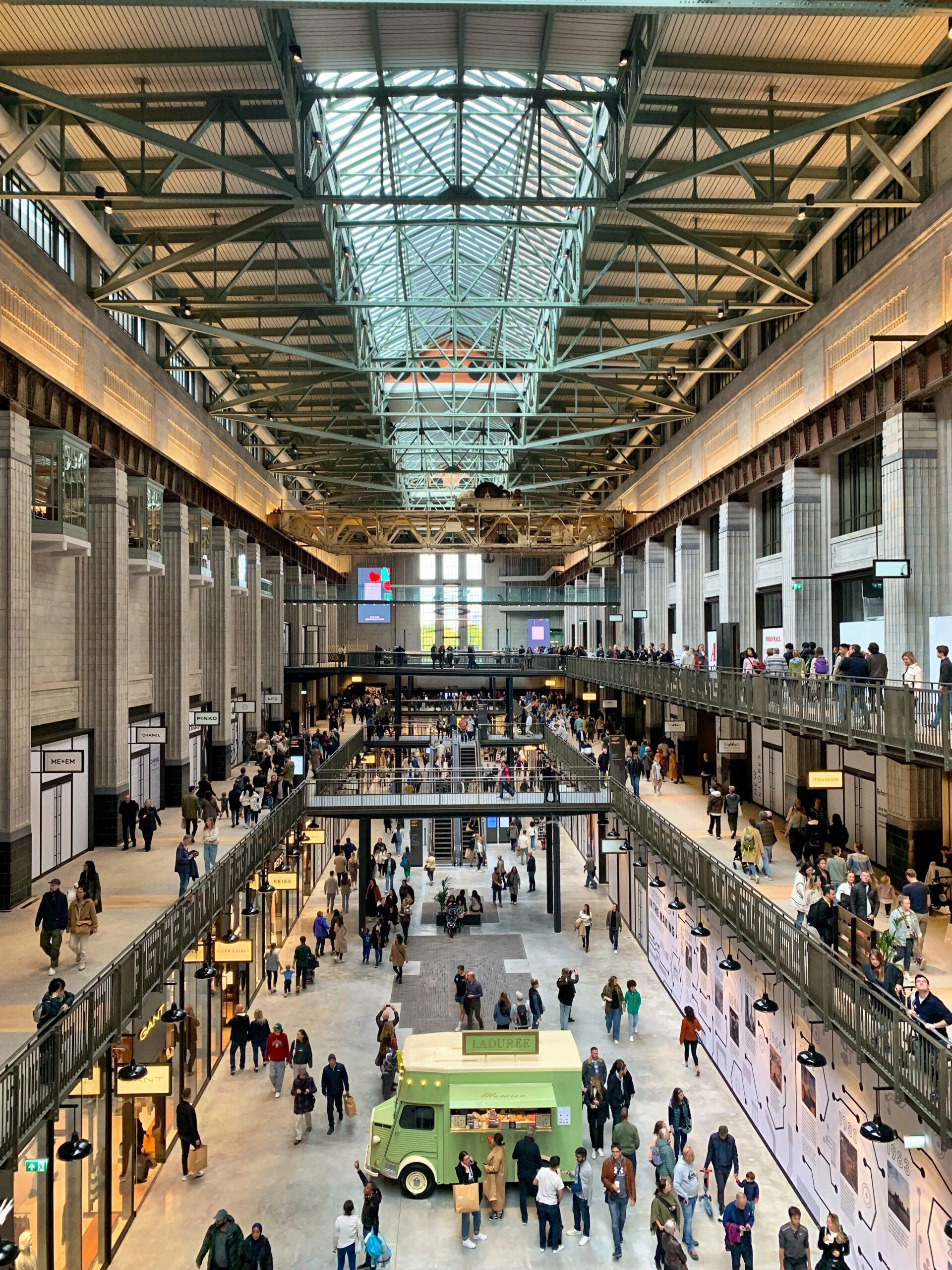
Battersea Power Station was originally opened in 1933, but has been disused since 1982. It was always one of the buildings I would look out for on rail journeys into London Waterloo, but is now obscured by modern buildings. At the time of its opening, The Observer newspaper called it “one of the finest sights in London” and I, for one, am happy it survived the intervening years which saw numerous unfulfilled proposals put forward for its regeneration. From theme parks to football stadiums, what we have ended up with on the site is a shopping centre, offices (soon to accommodate Apple’s London HQ) and homes occupying the building which was once dubbed “The Cathedral of Power” at the cost of £9 billion. 1,600 luxury flats have been built with a further 2,400 planned. Despite its size and six million bricks, I felt the former Power Station was somewhat lost amongst these new developments which have sprung up around it.
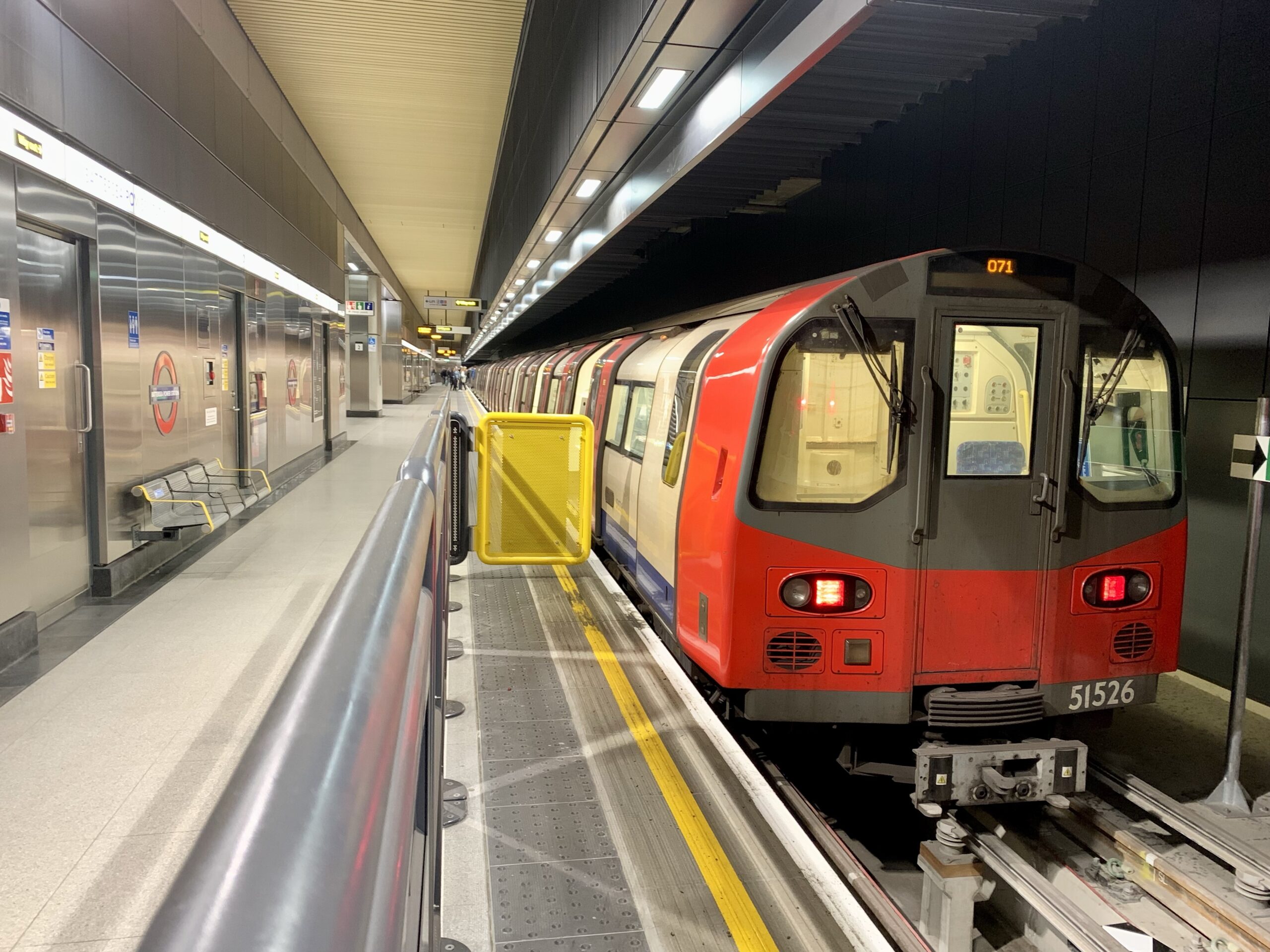
The London Underground’s Northern Line was extended, branching off at Kennington, with two new stations; Nine Elms and Battersea Power Station opening on 20th September 2021. The construction cost £1.1 billion and the extension is 3 kilometres long.
A Northern Line train awaits departure from platform 2 at Battersea Power Station – 15/10/2022Battersea Power Station roundel – 15/10/2022Exterior of Battersea Power Station tube – 15/10/2022Battersea Power Station – 15/10/2022Battersea Power Station – 15/10/2022
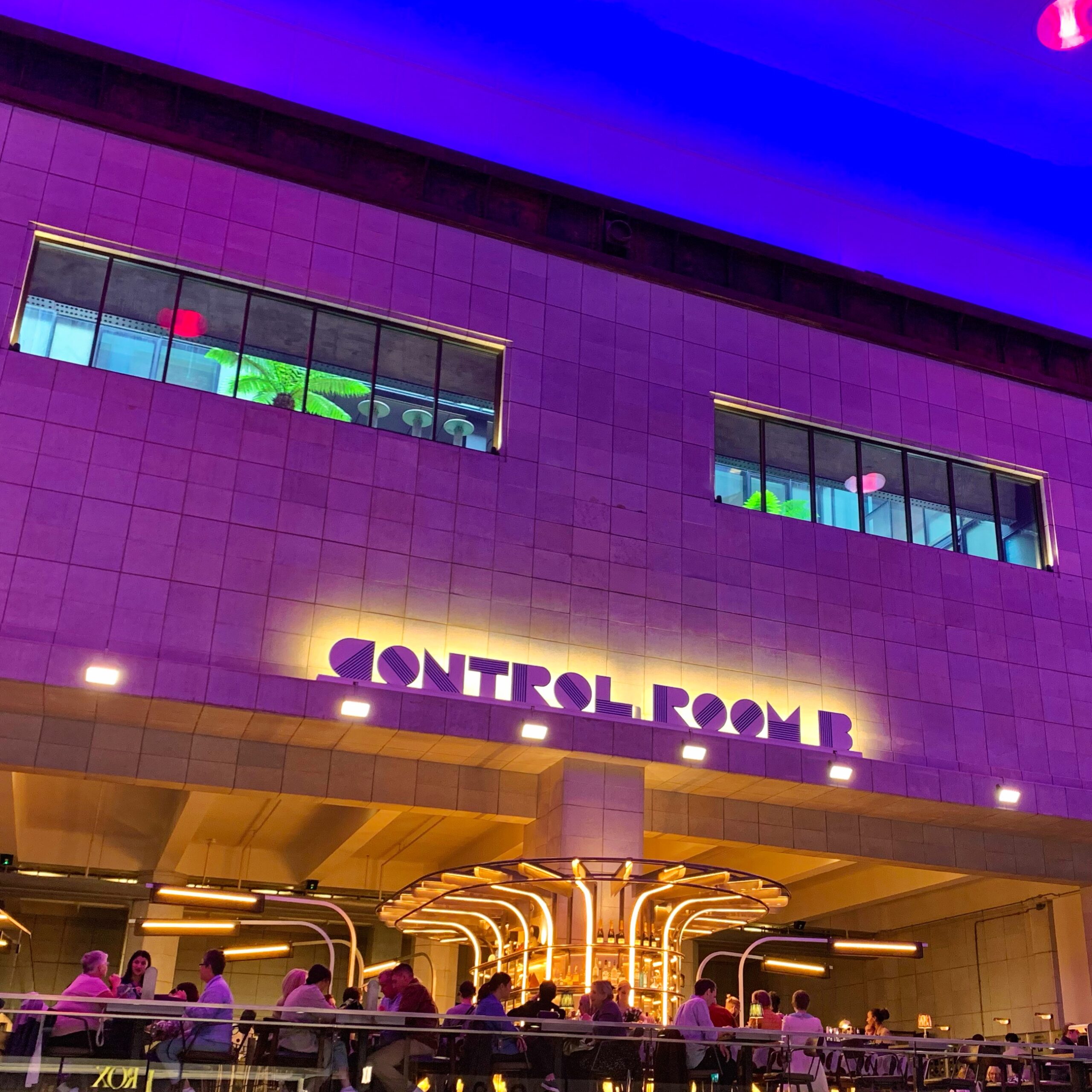
Not everything is open yet or accessible, such as the lift in one of the chimneys which promises aerial views of London, and Control Room A which will be used as an event space by invitation only. You can, however, visit Control Room B which is now a bar of the same name where staff wear white boiler suits and punters sit alongside switches and dials which technicians once used to control one fifth of the capital’s electricity. There was a queue of people waiting for seats when I passed by. On a future visit, I will definitely be checking out chef Gordon Ramsey’s bottomless pizzas at “Gordon Ramsey Street Pizza”. Unfortunately my visit of the exterior area was curtailed because of rain, so my intention of checking out the view of the railway originating from London Victoria across Grosvenor Bridge will have to wait until next time.
Shopping centre West Entrance to Battersea Power Station – 15/10/2022Battersea Power Station from alongside the River Thames – 15/10/2022North Entrance Battersea Power Station – 15/10/2022Interior Battersea Power Station – 15/10/2022Control Room B, Battersea Power Station – 15/10/2022Control Room B, Battersea Power Station – 15/10/2022
Sir Giles Gilbert Scott has a Dorset connection having designed the Church of the Annunciation, a Roman Catholic Church in Bournemouth. But this isn’t a blog about churches. Or power stations for that matter. And anyway, Bournemouth was in Hampshire in 1905.
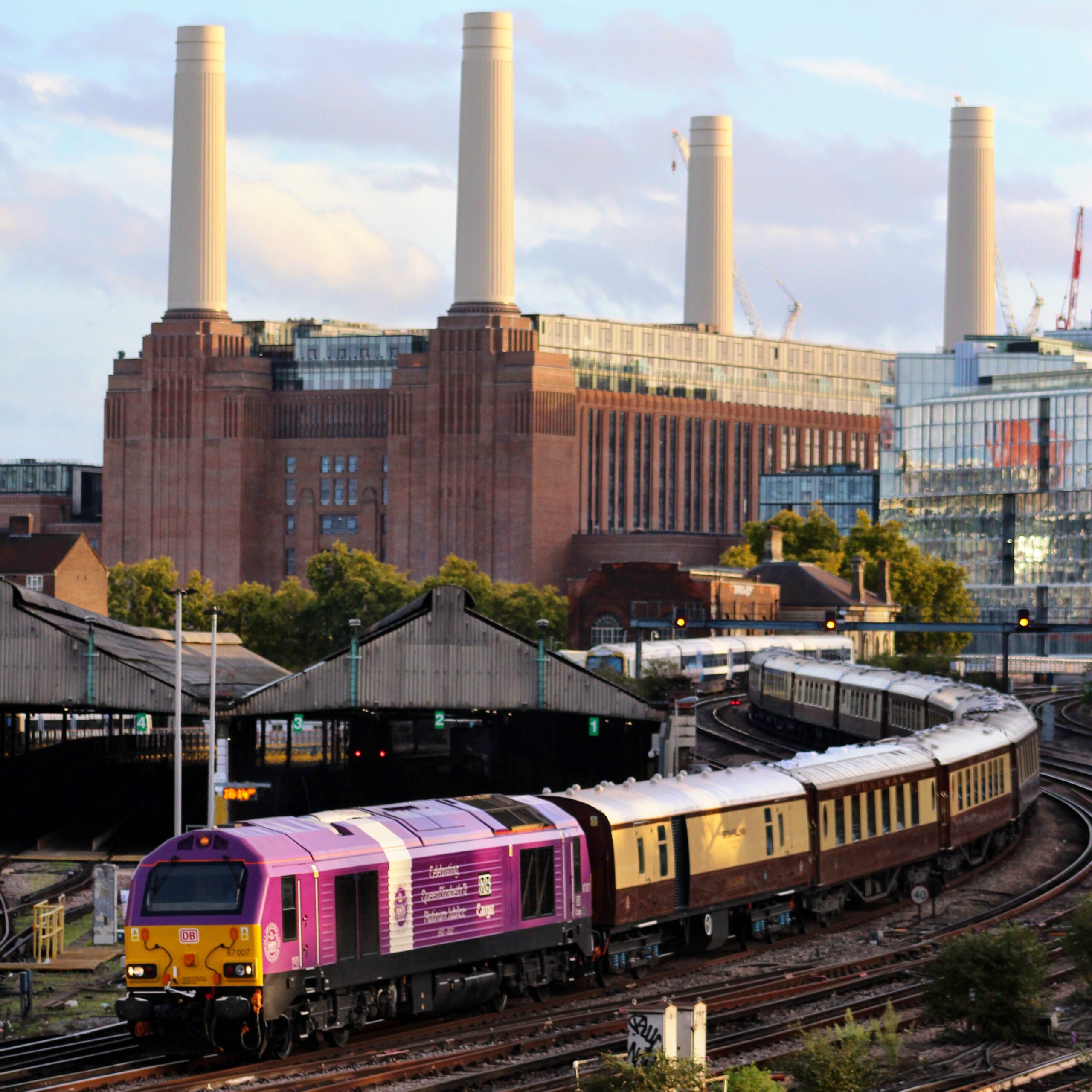
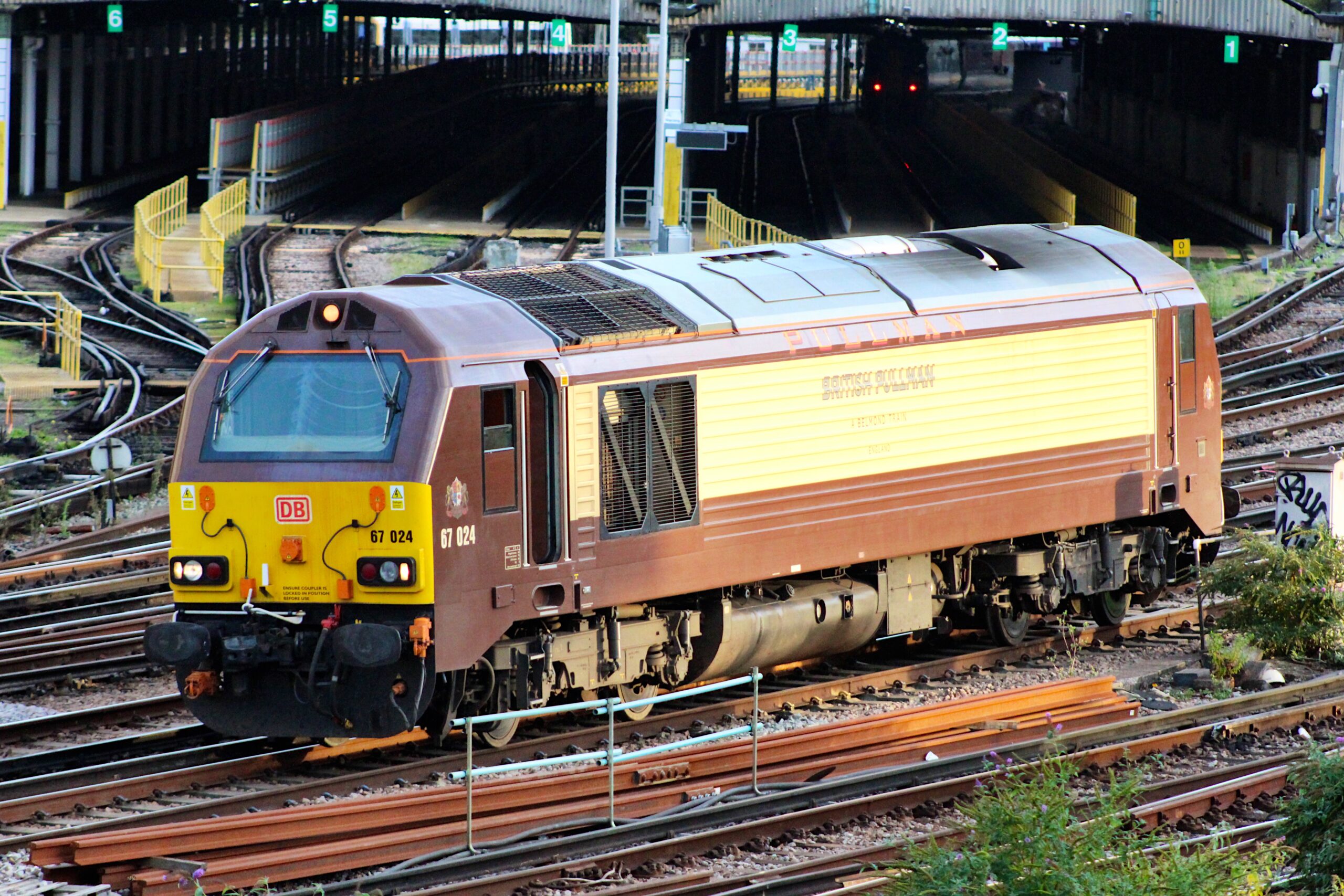
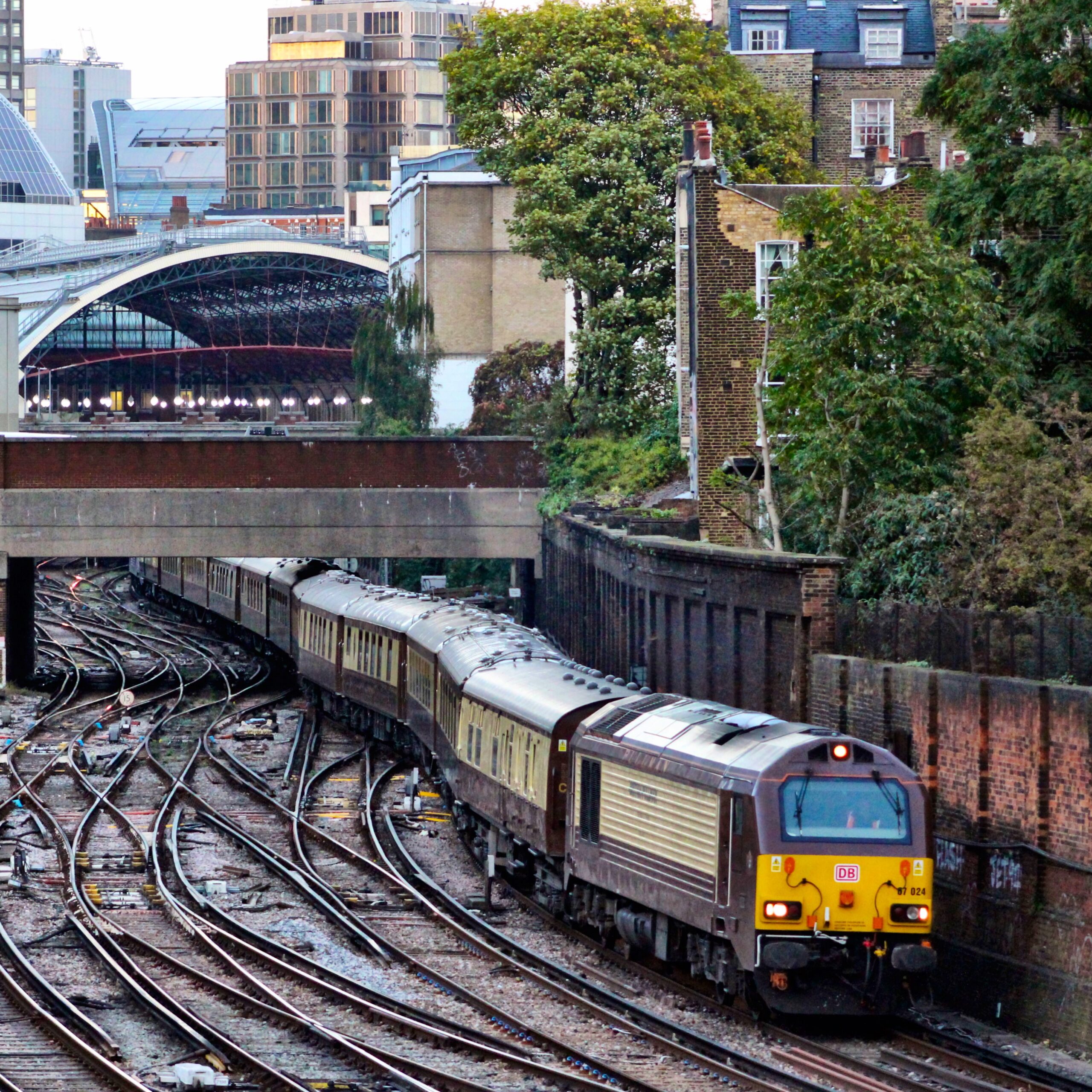
Returning to my recent London adventure, I did however set Battersea Power Station in my sights later in the day when on my way home, I alighted from my Victoria Line tube train to see Belmond Trains “Brighton Belle” British Pullman rail tour arrive at London Victoria.
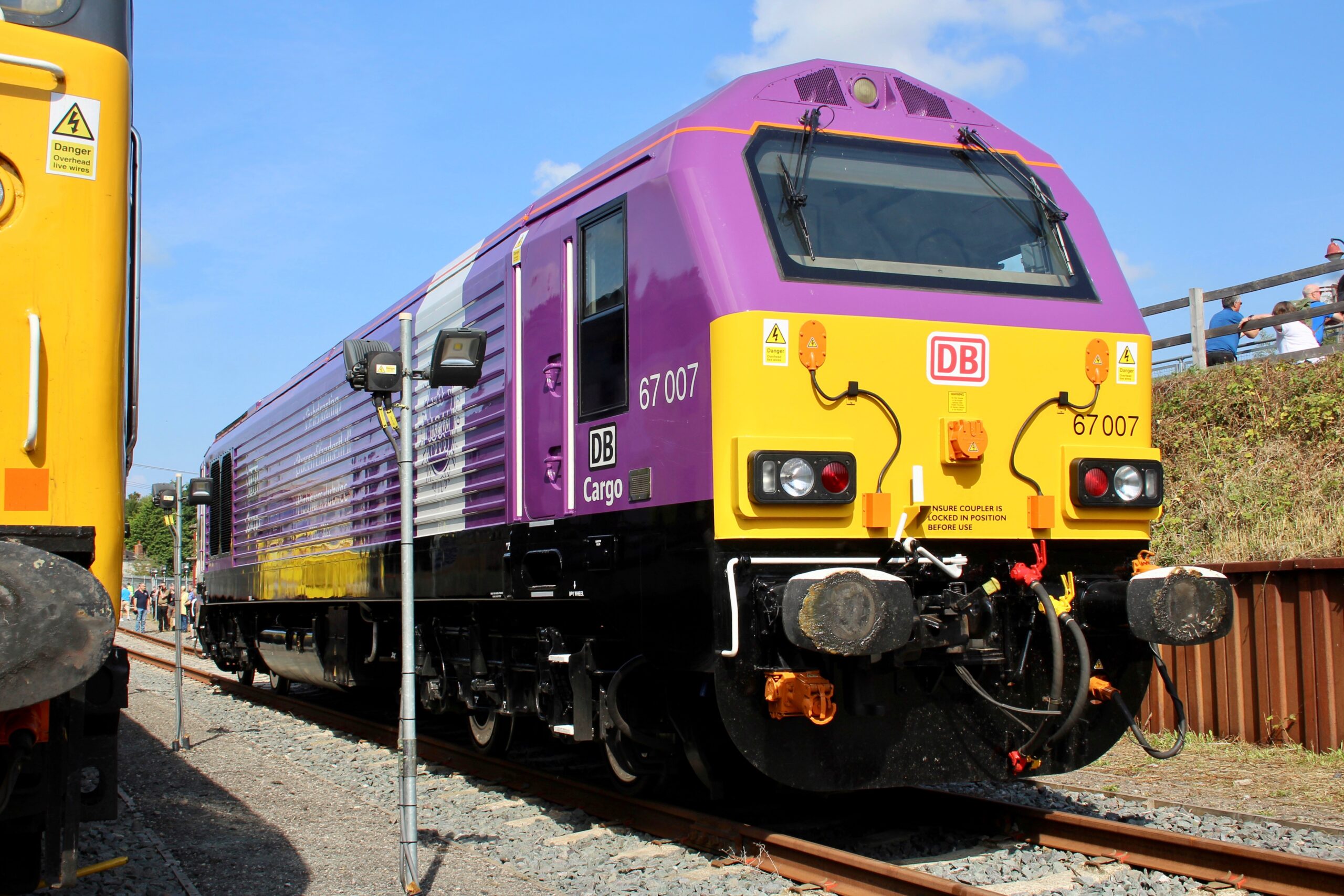
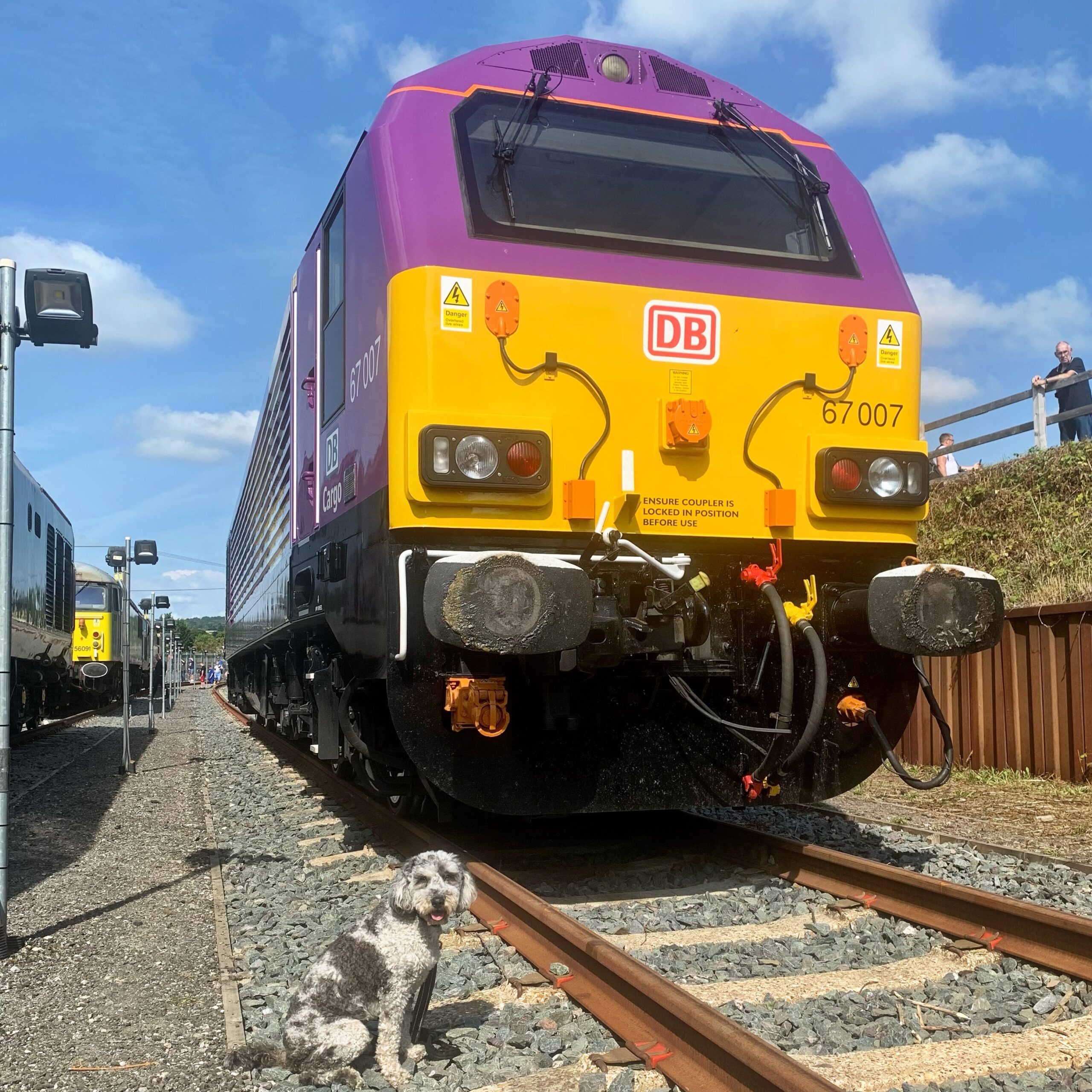
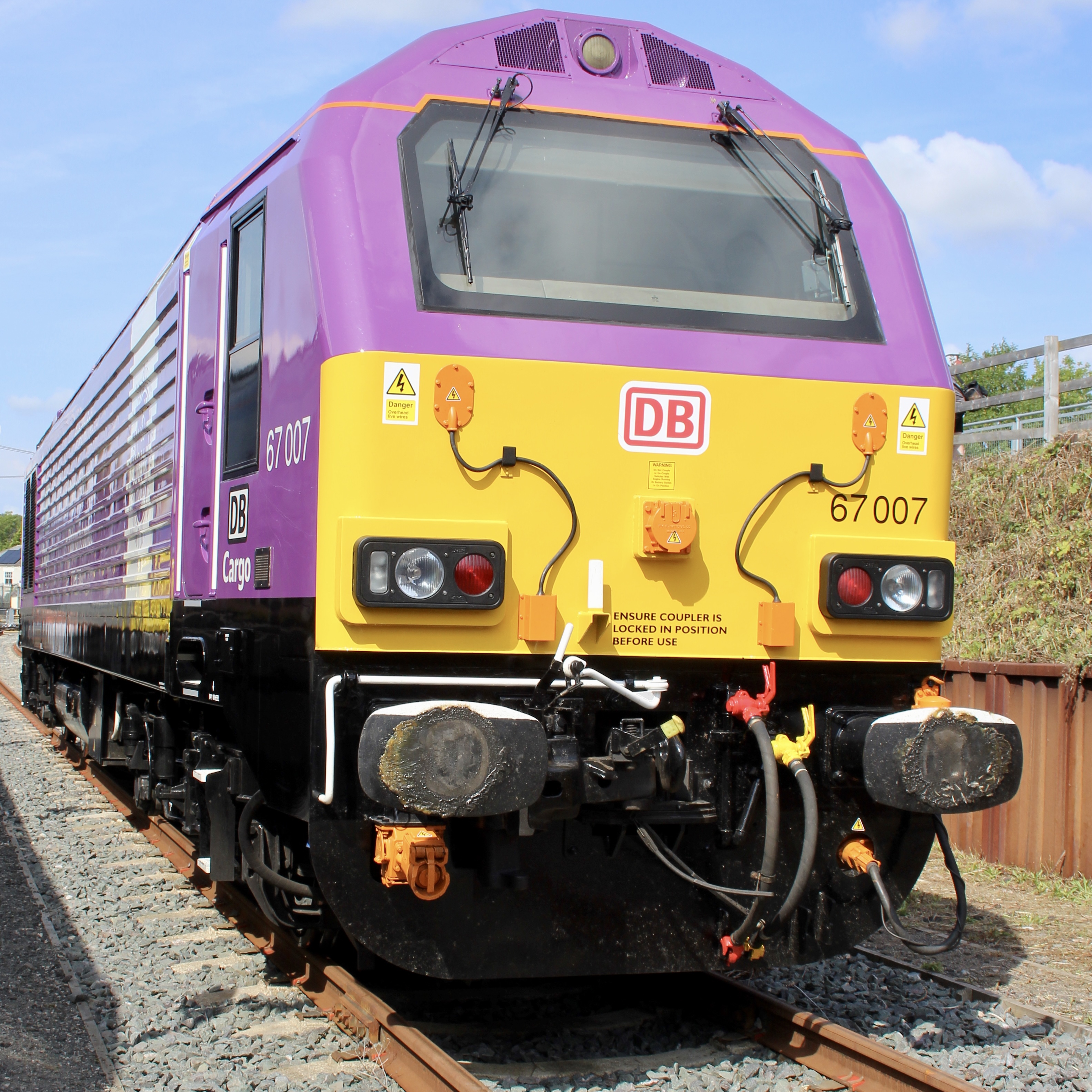
Platinum Jubilee liveried DB Class 67 No. 67007 working the return Brighton Belle 1Z91 Hove to London Victoria passes Grosvenor Road Carriage Sheds with the newly re-opened Battersea Power station as backdrop – 15/10/2022Light locomotive Class 67 No. 67024 in British Pullman livery working 0Y83 Stewarts Lane T&R.S.M.D to London Victoria – 15/10/2022Class 67 No. 67024 in British Pullman livery departing Victoria station with 5O82 London Victoria to Stewarts Lane T&R.S.M.D
Comings and goings at London Victoria vowed from Ebury Road bridge – 15/10/2022
Thank you for stopping by, Yoshi and I will be back next week for more ‘Flying Scotsman’ related tales. Until then, take care!
Yoshi takes a break while in Ropley on Handyside Bridge which could previously be found spanning platforms 1 to 8 at London Kings Cross. The Grade I listed structure was built in 1892 by Andrew Handyside & Company and was dismantled and reconstructed at Ropley over a period of 18 months. The bridge featured in films “The Thirty Nine Steps”, “Elizabethan Express” and the “Harry Potter” series.
Hello! On Saturday 8th October, Yoshi and I found ourselves enjoying the sights, sounds and smells of the Mid Hants Railway, or The Watercress Line if you prefer, who were holding their Autumn Steam Gala. I hadn’t intended on staying long (honest!) but the weather was so good and there were lots of things to see and people to chat to, we remained at the railway until long after it was our scheduled time to be heading for home. As usual, Yoshi received lots of fuss from other visitors to the event and he had the occasional bark at a passing steam locomotive.
The Mid Hants is a lovely railway, but country line side photographic locations are few as local farmers actively discourage anyone encroaching on their land. I recall back in the 1990’s an enterprising land owner who charged 50p per head for photographers to use his field as a vantage point.
The gala was a final opportunity for visitors to see and ride behind Southern Railway Schools Class 4-4-0 No. 30925 ‘Cheltenham’ before her boiler certificate expiration. The engine is at the MHR courtesy of the National Railway Museum. The Schools class were the most powerful 4-4-0 type locomotives to operate in this country and were a very successful design, used for passenger and freight duties. They were named after famous public schools within the area then served by the Southern Railway, a publicity masterstroke given the popularity of train spotting with schoolboys at the time!
Southern Railway Schools Class 4-4-0 No. 30925 ‘Cheltenham’ runs non-stop through RopleyPeckett & Sons Works No 1788 Kilmersdon 0-4-0ST gave shunting demonstrations in Ropley yardLMS Ivatt No. 41312 running as No. 41294 departs Ropley. No. 41312 was built in May 1952 at Crewe locomotive works and spent its entire working career on the Southern region. Introduced in 1946, the class were nicknamed “Mickey Mouse” tanks due to the placing of route indicator discs either side of the smokebox that then looked like ears. In 1964 she moved to Bournemouth were she worked over the Swanage and Lymington branches. 41312 performed the last steam service on the Lymington branch in April 1967. The last 3 months of her career were spent at Nine Elms acting as a station shunter for Waterloo. She was finally withdrawn from service on the 3rd July 1967.No. 53808 working a demonstration freight which included an opportunity for visitors to ride in the brake vansSomerset & Dorset Joint Railway 7F 2-8-0 No. 53808spent much of its working life as a local goods train. She was built in 1925 at the Darlington locomotive works of Robert Stephenson & Co. and is one of only two that survive from the original 11 constructed. The 2-8-0 spent the whole of its life based at one shed, Bath (Green Park). It mainly worked local goods trains between Bath and Evercreech Junction, which involved a stiff climb over the Mendip Hills in both directions, although in the post-war period it was also used to haul some of the many Summer Saturday holiday trains to and from the North, working between Bath and Bournemouth.
Unfortunately, No. 53808 had to be stopped for investigation and repair on the Saturday, and was substituted by Brush diesel electric locomotive Class 47 No. 47579 ‘James Nightall GC’, which to be fair was welcomed enthusiastically by many of the visiting enthusiasts despite the emphasis on the steam in “steam gala”.
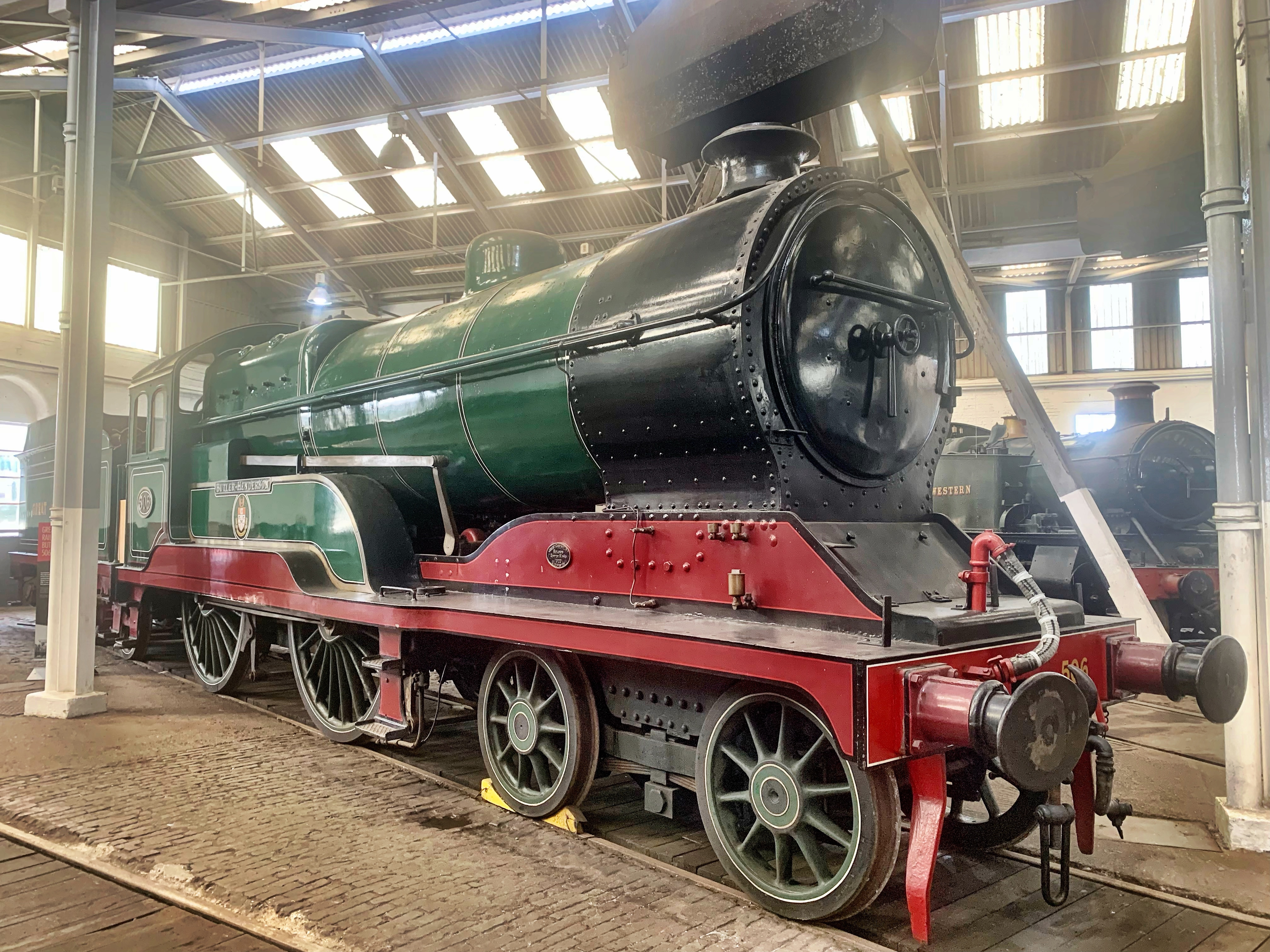
Class 47 No. 47579 arriving at Ropley. The locomotive was named ‘James Nightall GC’ on 28th September 1981 to remember the brave actions of 22 year old Fireman James Nighthall, who was killed on 2nd June 1944 whilst splitting a burning ammunition train at Soham in Cambridgeshire. Having split the burning wagon from the rest of the train, they made a run for open countryside, but the wagons contents exploded as it passed through the station leaving a massive crater where the station had been and damaging some 800 houses in the town. James Nightall’s actions along with his Driver, Benjamin Gimbert, saved a far greater disaster, and as a result they were two of the very few railwaymen to be awarded the George Cross for their bravery. Sadly the Signalman at Soham, Frank Bridges, was also killed that night whilst assisting Gimbert and Nightall. He is remembered by a brass plaque on the Signalbox at Alresford. No. 506 takes turn on the freight consistLondon & South Western Railway Urie S15 4-6-0 No. 506, designed by Robert Urie for the London & South Western Railway purely as a fast freight engine, working the heavy night express goods trains between Exeter and Nine Elms, and from Southampton to Nine Elms. Built at Eastleigh Works No. 506 was completed in October 1920, and delivered to Nine Elms shed in Battersea.BR Standard Class 4 2-6-0 No. 76017 – formerly based at Eastleigh Shed where she performed on freight, semi fast or all stopping turns to Southampton and Bournemouth. Nicknamed ‘Moguls’, these locomotives were based on an earlier Ivatt LMS design known as ‘flying pigs’. Over 115 of the Standard 4 Moguls were built between 1952 and 1957 at Horwich and Doncaster locomotive works.Class 20 No.’s D8059 (20059) & D8188 (20188) in the sidings at Ropley
Video of our visit to the MHR Autumn Steam Gala 2022
The Mid Hants line was originally promoted as the “Alton, Alresford & Winchester Railway” receiving its Act of Parliament in 1861. The first chairman of the railway was Edward Knight of Chawton, nephew of author Jane Austen. The line was intended to connect the existing lines at Alton and Winchester providing an alternative route between London and Southampton. A further Act in 1864 renamed the company the “Mid-Hants Railway” and the line opened in October 1865 with train services operated from the start by the London and South Western Railway (LSWR). In 1880 the LSWR took a 999 year lease of the line and in 1884 purchased it outright. The line passed to the Southern Railway in 1923 and to British Railways Southern Region in 1948.
The Mid-Hants was extensively used as a diversionary route during electrification work on the London to Southampton main line in the 1960’s. Goods traffic ceased in June 1964 and the local passenger service became increasingly run down so much so that in December 1967 closure notices were published. Despite a major local campaign to save the line it eventually closed in February 1973.
The section between Alresford and Alton was subsequently purchased from British Rail by the Watercress Line with steam trains running once again from Alresford to Ropley on 30th April 1977. Services were extended to Medstead & Four Marks in May 1983 and to Alton in May 1985.
Over the weekend of 5th/6th February 1994 the Mid Hants Railway held a special event to celebrate 21 years since the line closed under BR. Our video from the Sunday is below:
Mid Hants Railway celebrate 21 years on from closure in BR daysYoshi inspects the refreshed Poole Park Railway’s hired in locomotive
Local news this week centres on the Poole Park Railway which has been in the media because the company, Track Systems UK, contracted to build and supply the electric locomotive for the re-opened tourist attraction has sadly ceased trading. The Poole Park Railway returned on September 2nd 2022 although within days it suffered a derailment after stones were believed to have been placed on the track. Currently a hired in locomotive is being employed to haul the 32-person capacity, wheelchair accessible and dog friendly railway carriages. An official launch of the service is scheduled to take place at 10am on Saturday, October 15, when the Mayor of Poole, Cllr Tony Trent will officially declare the railway open.
Yoshi gets comfortable in one of the dog friendly carriages Yoshi enjoying the view from the train in Poole Park
South Western Railway’s Island Line Grade II listed Victorian station at Shanklin, which Yoshi gave his bark of approval when we visited in March of this year, has won the Small Station Of The Year award at the prestigious 2022 National Rail Awards.
Yoshi visited Shanklin station in March 2022
The ‘Railway Oscars’ are organised by RAIL Magazine to reward excellence and achievement in the industry. This year’s ceremony took place on Monday 10th October at London’s Grosvenor House Hotel, hosted by BBC presenter Huw Edwards and RAIL Magazine’s Managing Editor Nigel Harris. Congratulations to everyone involved at Shanklin.
You Tube Channel Of The Week: If you need more railway video action from the south, check out Jamie Smith’s most excellent Going Loco You Tube Channel which has some fabulous sequences from the Mid Hants, Swanage and other heritage lines as well as archive footage from the 90’s.
Many thanks to the Watercress Line webpage for facts and information about the locomotives engaged in their Autumn Steam Gala and to you, Dear Reader, for taking the time to visit The Railway Dog blog this week. We’ll be back in around seven days and we hope you’ll join us again.
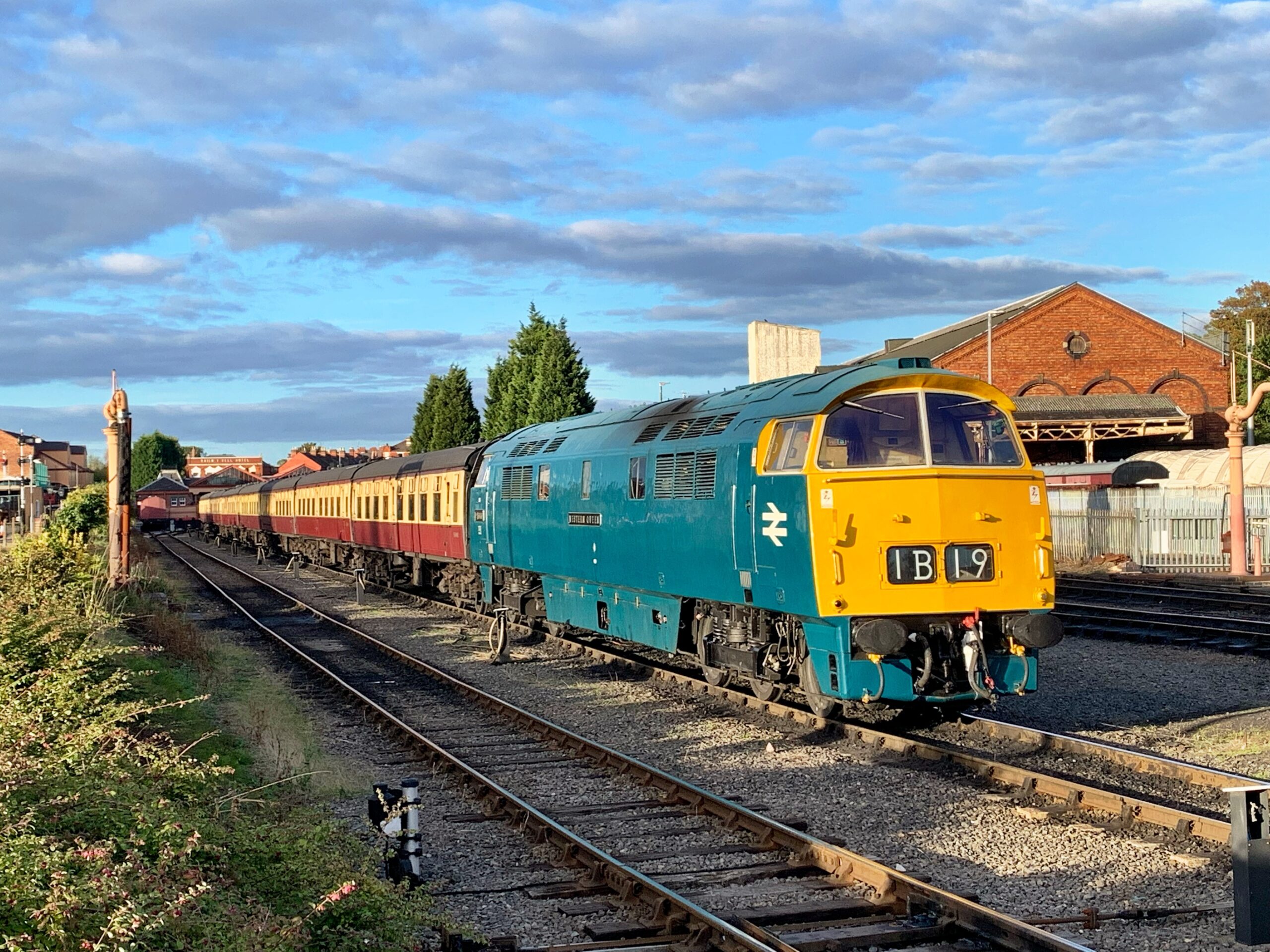
Yoshi at Kidderminster enjoying the last gasp of autumn sun with Class 52 Western diesel hydraulic No. D1040 ‘Western Queen’ in the background – 02/10/2022
Hello Dear Reader! It’s been a relatively quiet week on the rails in Yoshi’s manor. Engineers trains for the Chetnole track upgrade came and went, utilising the same locomotives on a rota as at the start of the work. Because of the their early departures via Dorchester South, Yoshi and I remained snuggled up in our bed. We had planned on seeing the final two trains depart via Yeovil Pen Mill on the Friday evening, but the rain and winds put us off as we didn’t fancy hanging around for them to make an appearance on an open windswept railway station. In the event it appears they left more or less on time, so it would not have be so tortuous!
Severn Valley Railway
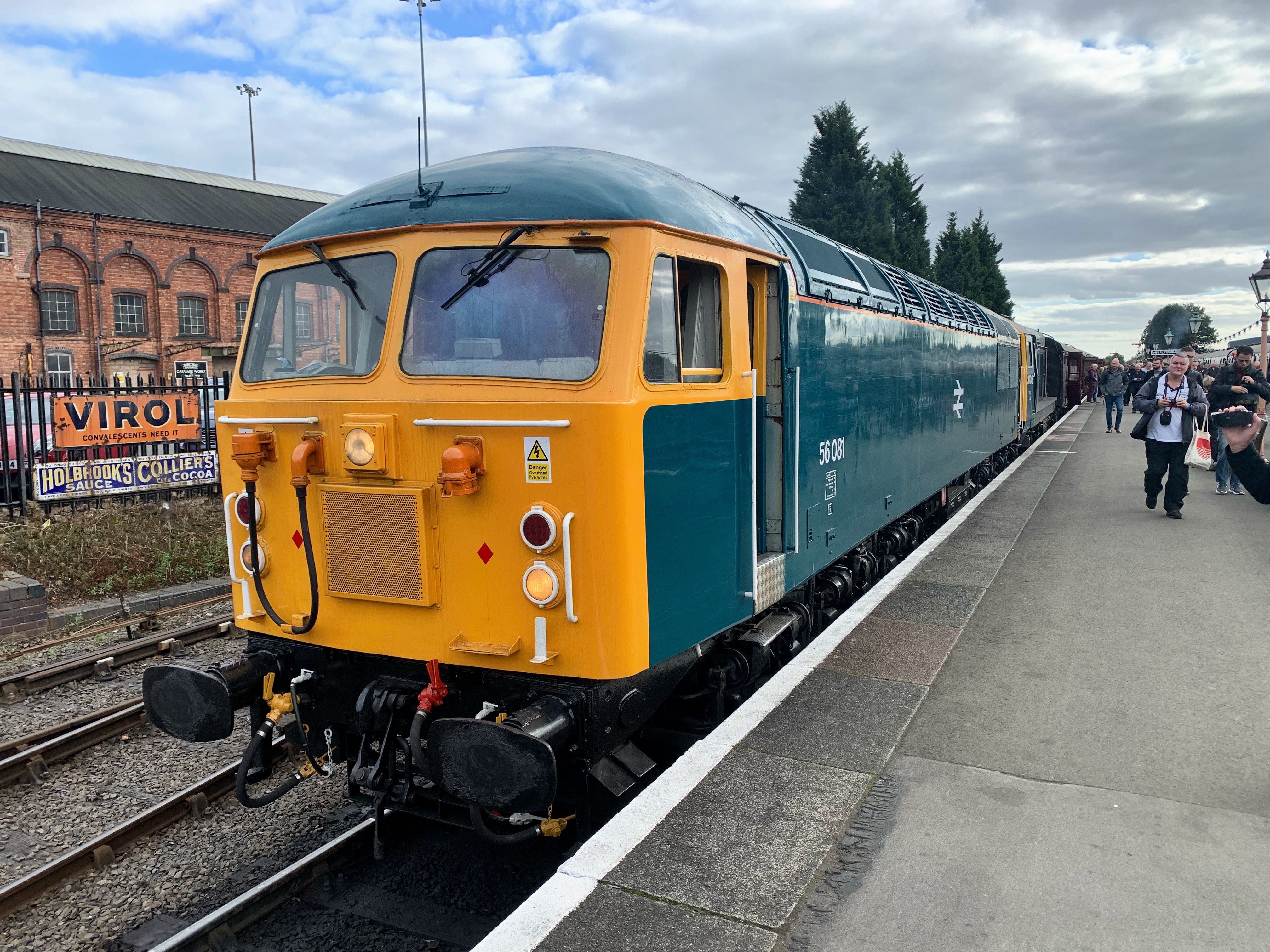
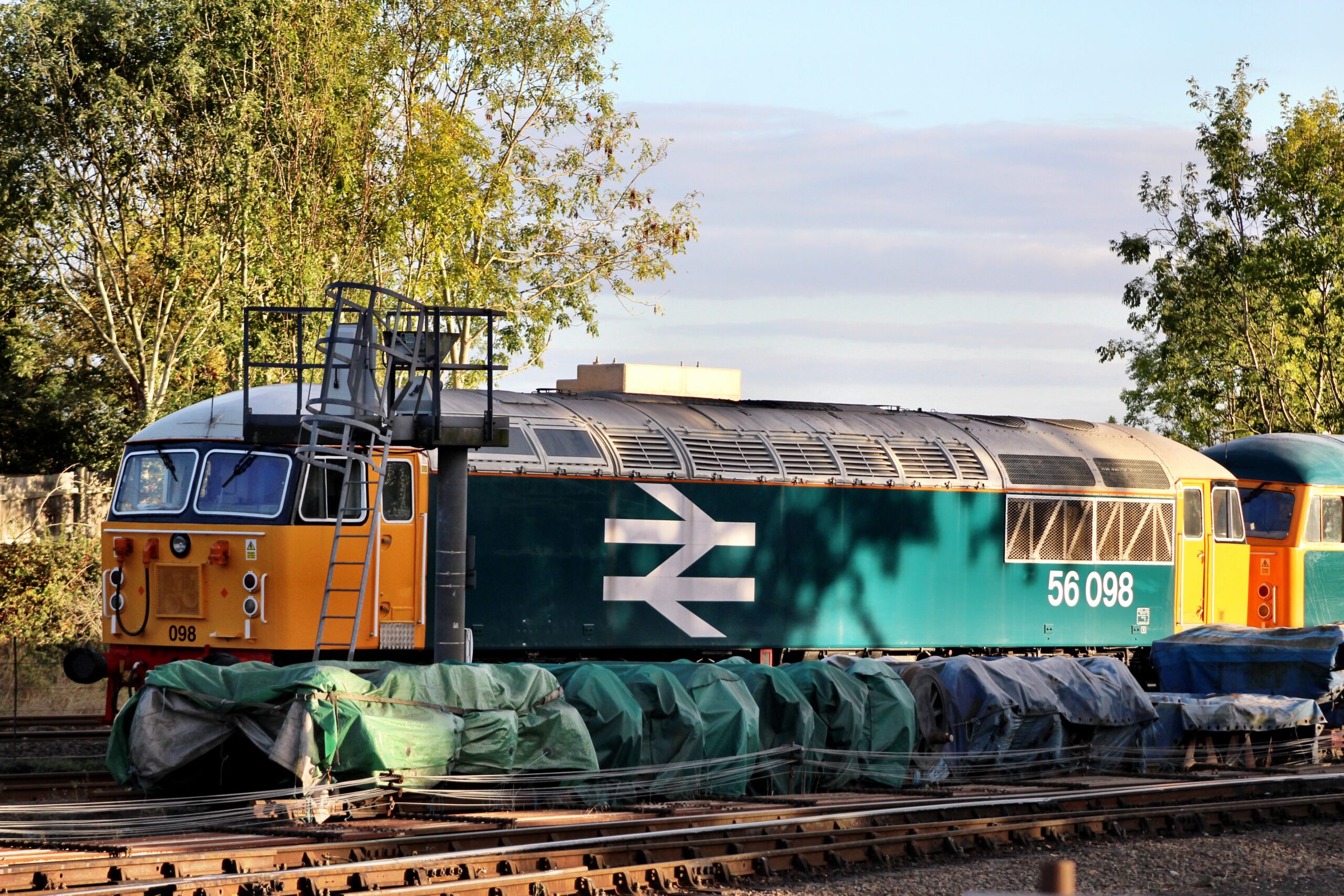
Sunday 2nd October found us back at the Severn Valley Railway, this time for their 2022 Autumn Diesel Bash. The main attraction for me being the visit of two GB Railfreight Class 56 locomotives which have been repainted into retro British Rail liveries. The GBRf Class 56’s will eventually be rebuilt as Class 69 locomotives in due course, so we thought we’d take the opportunity to catch these while we can. Only one of the two Class 56 locomotives ran each day over the weekend; No. 56098 on Saturday and 56081 on the Sunday. I hoped that the locomotive not being used would be on static display, but this wasn’t really the case, and only a record shot could be achieved from publicly accessible areas.
GBRf Class 56 No.’s 56098 and 56081 coupled together at Kidderminster SVR awaiting their return to Old Dalby the following day – 02/10/2022
Despite this, we had another great day out at the Severn Valley. Even the fact the coffee machine wasn’t working at The Engine House cafe in Highley didn’t dampen my spirits. As we left Dorset and made our way northwards, the weather didn’t look conducive to a day out, but once past Bristol, the sun made a welcome appearance for the rest of the day. Thanks to Andrew and Scott for their excellent company and helping to look after Yoshi.
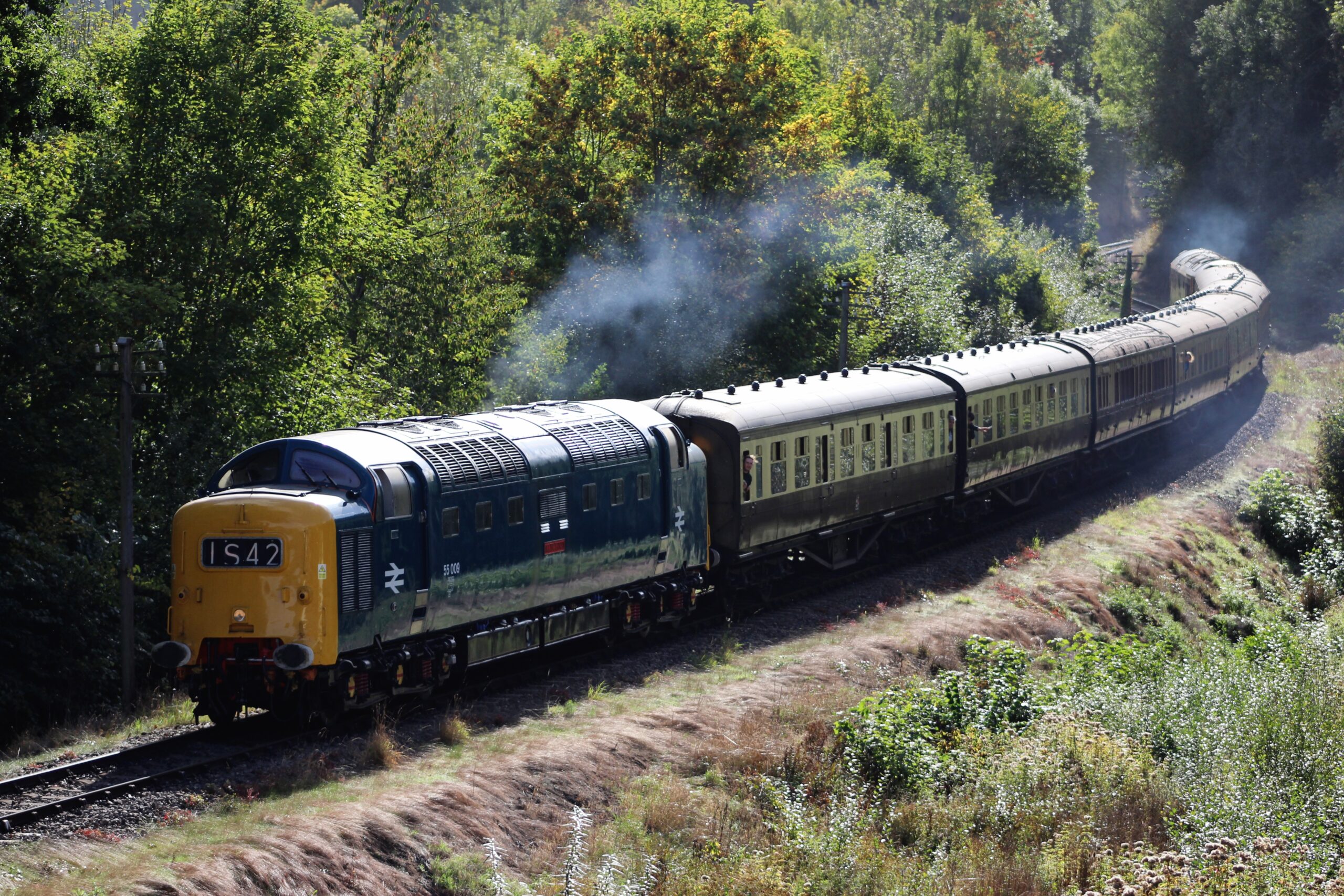
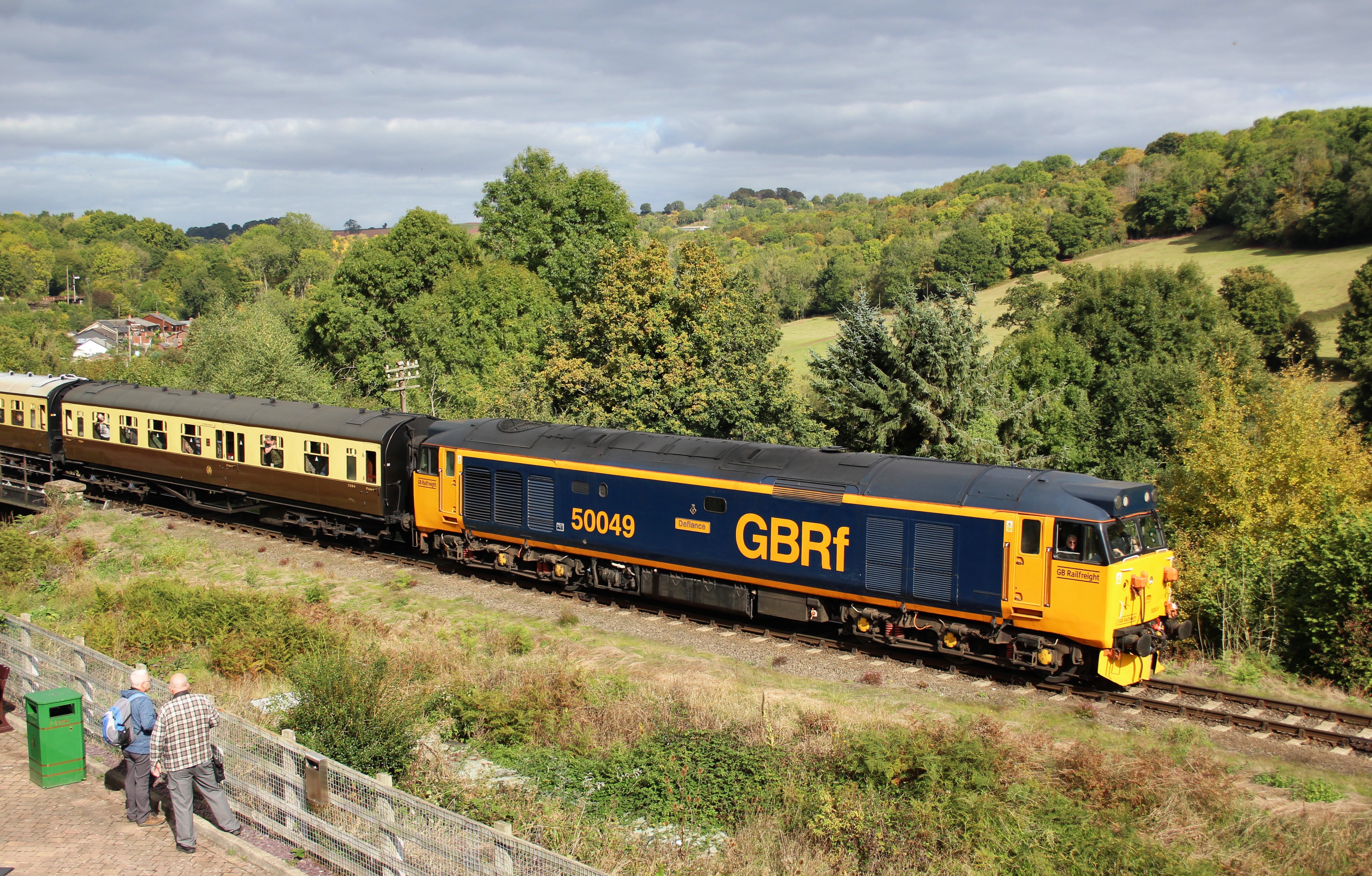
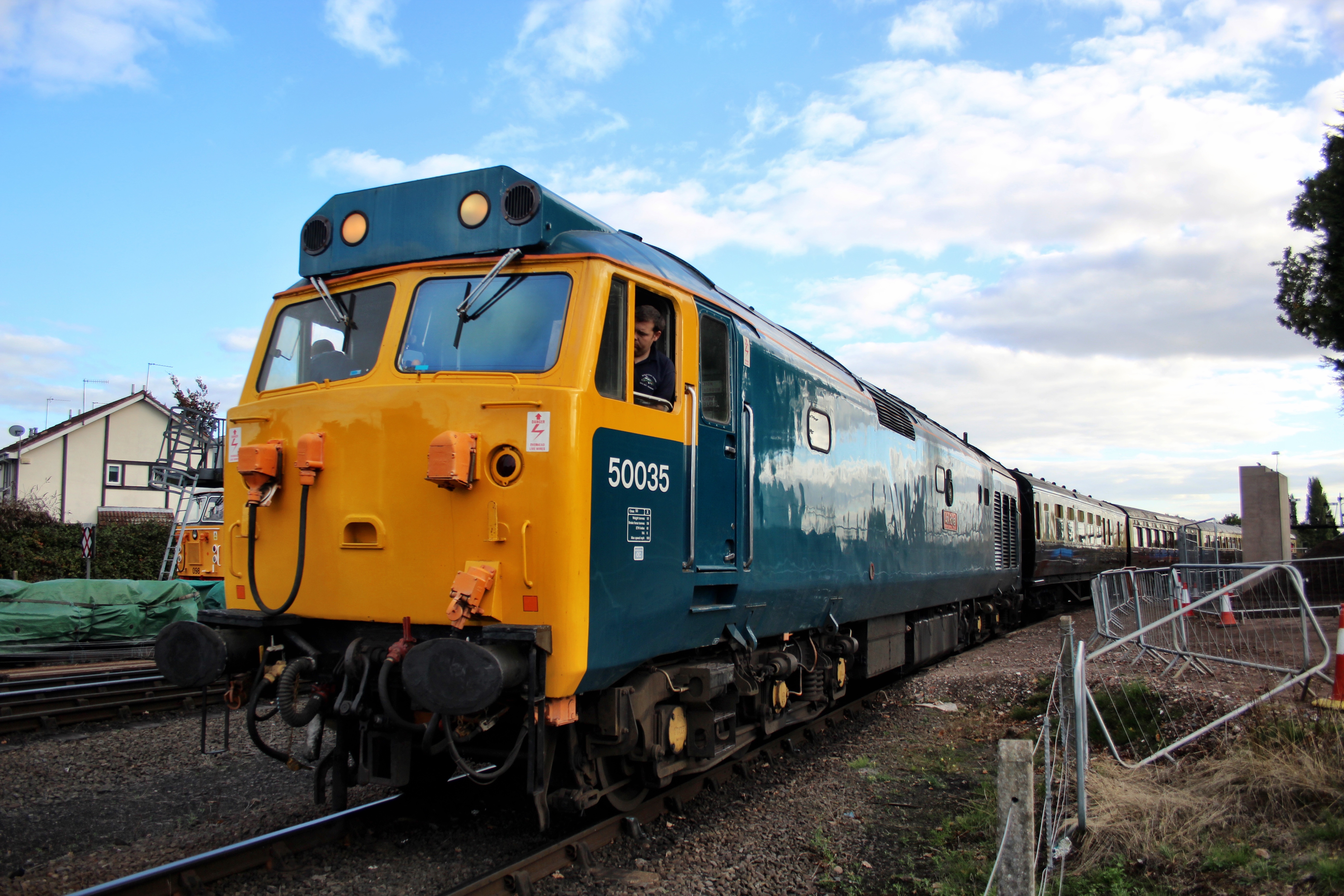
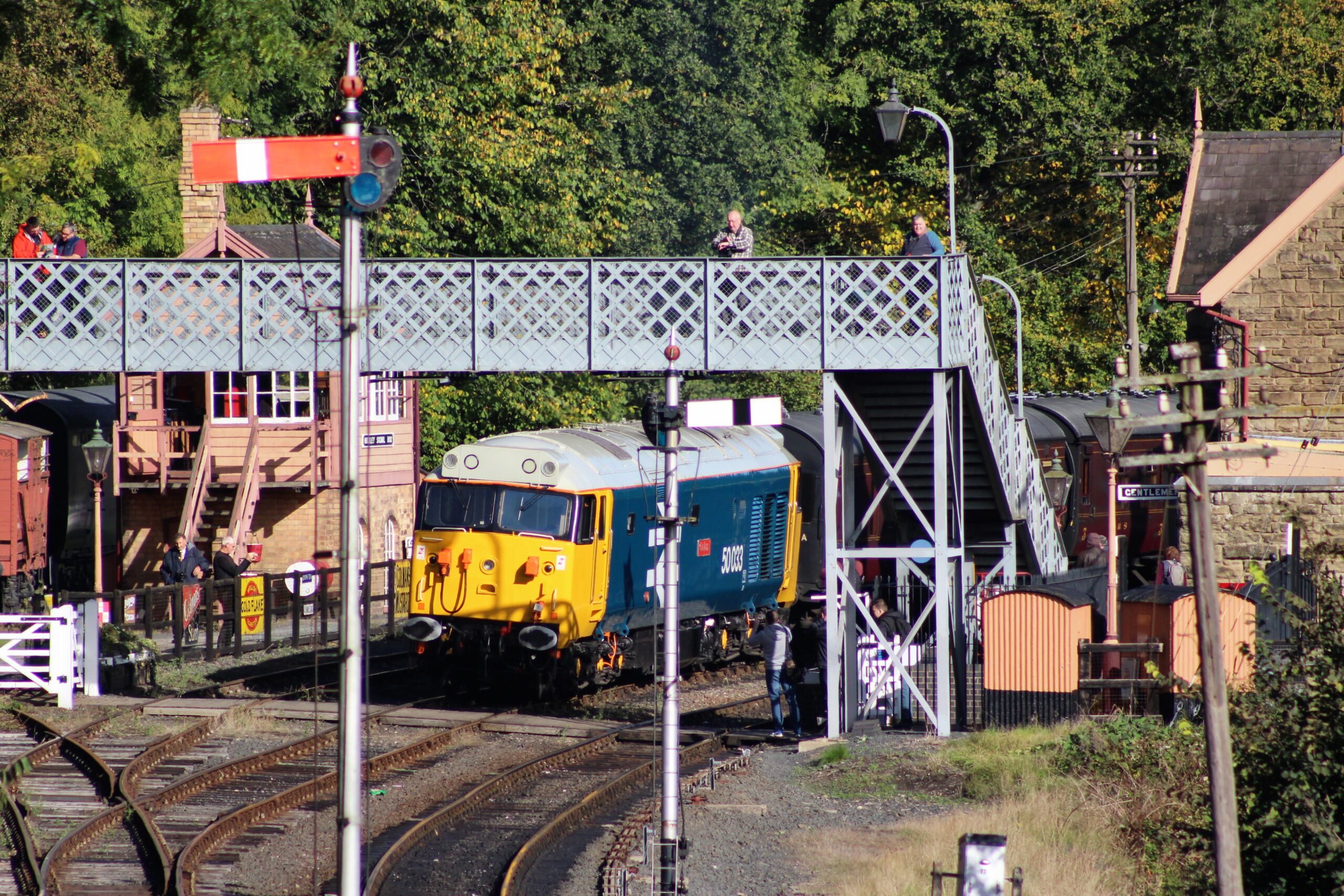
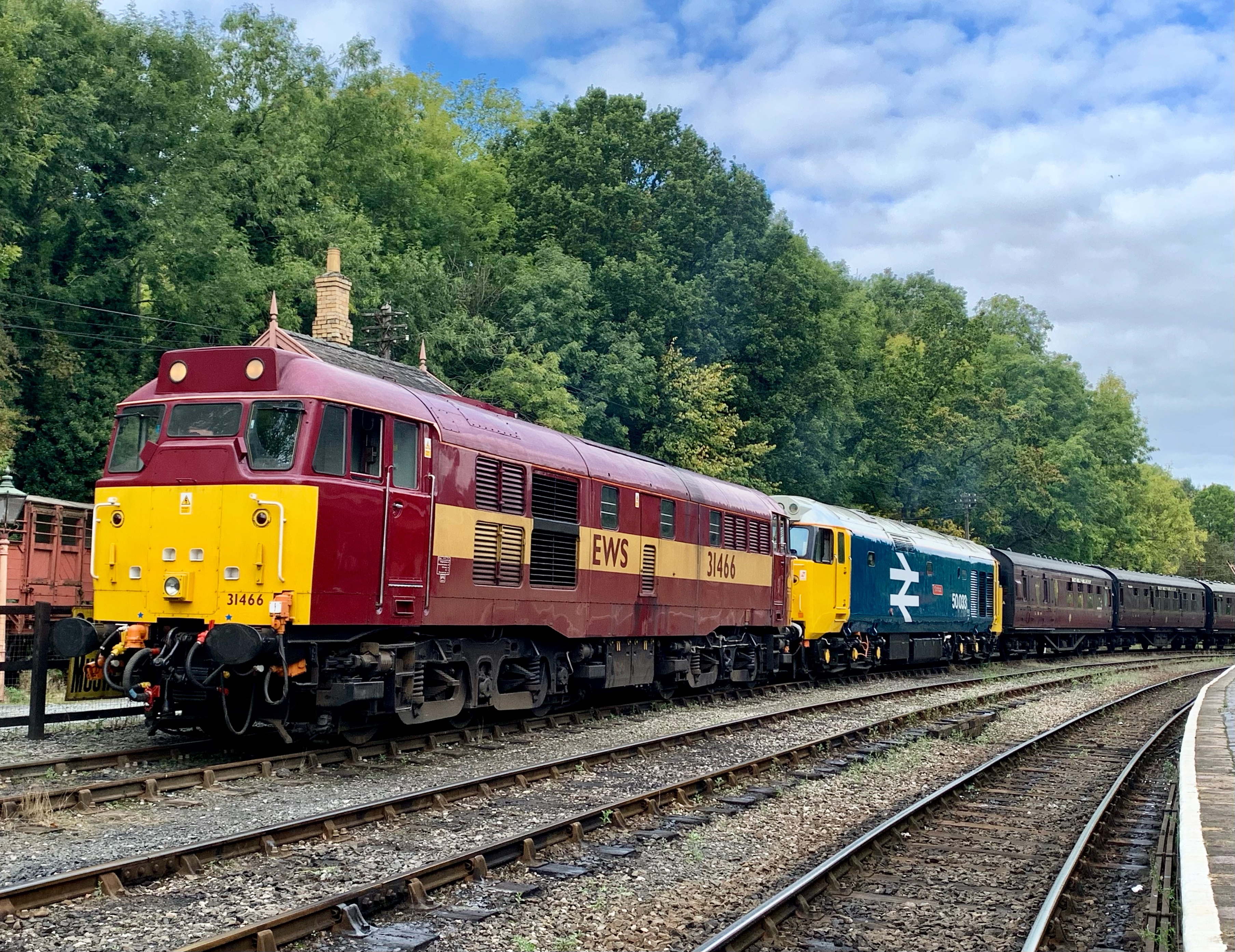
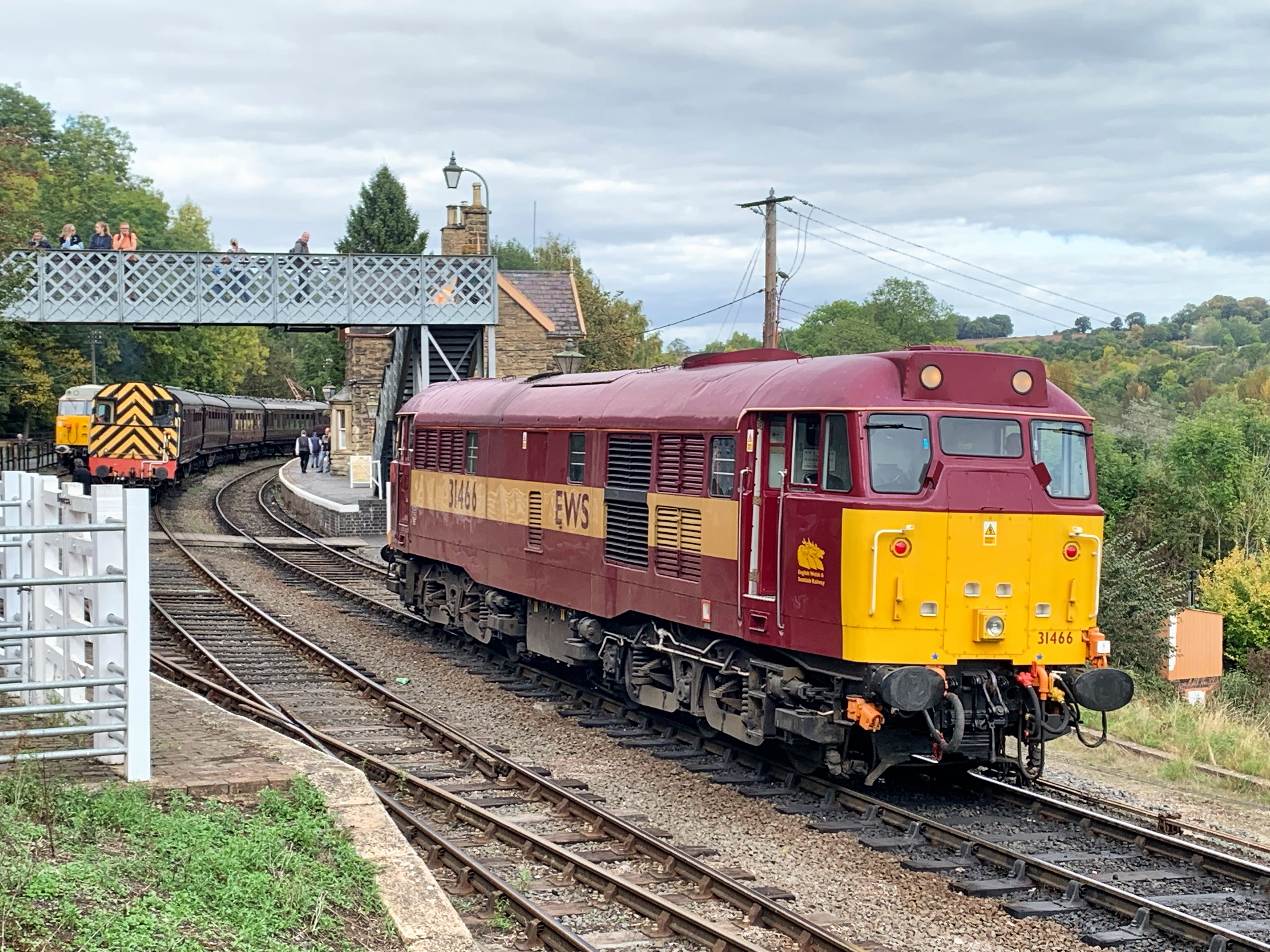
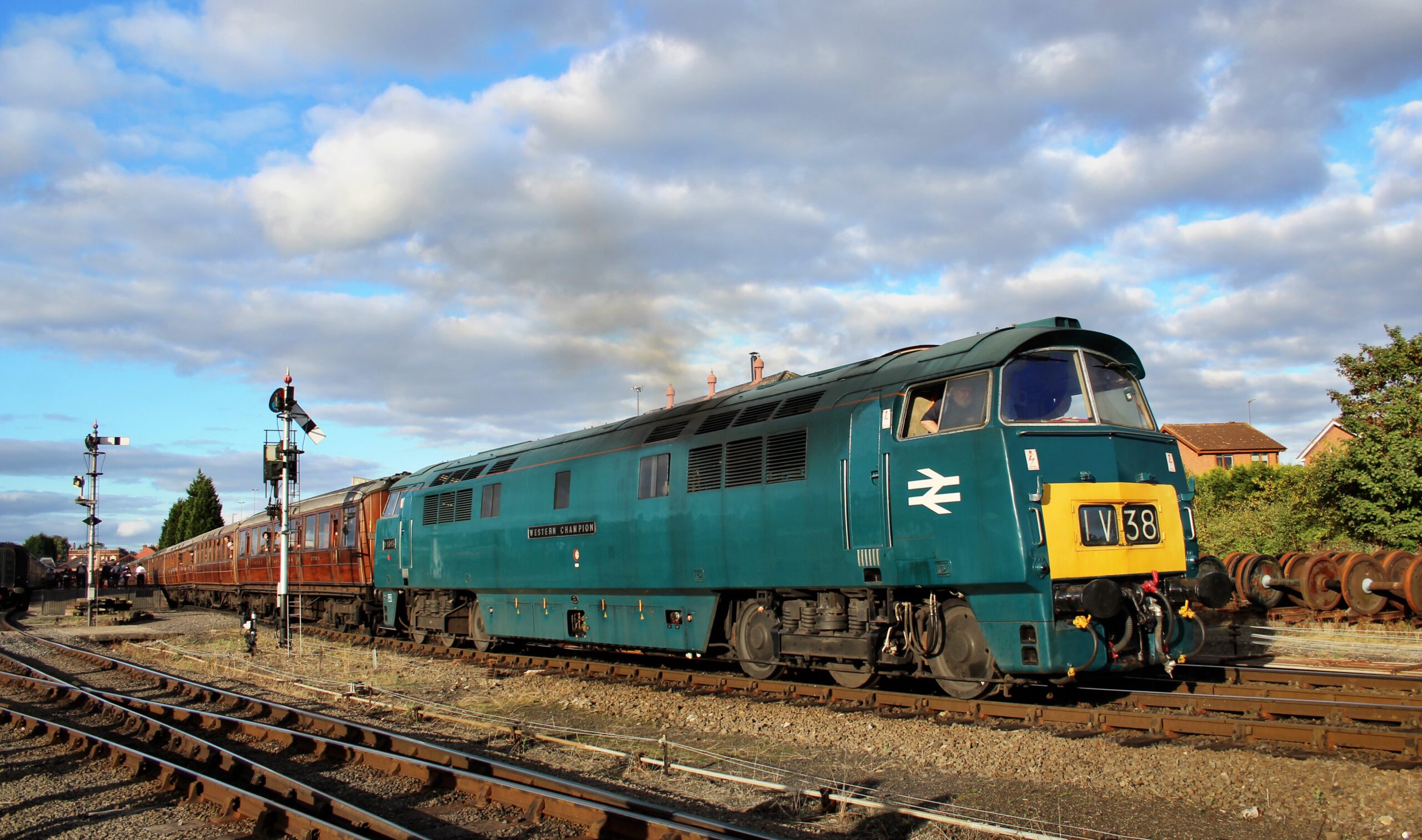
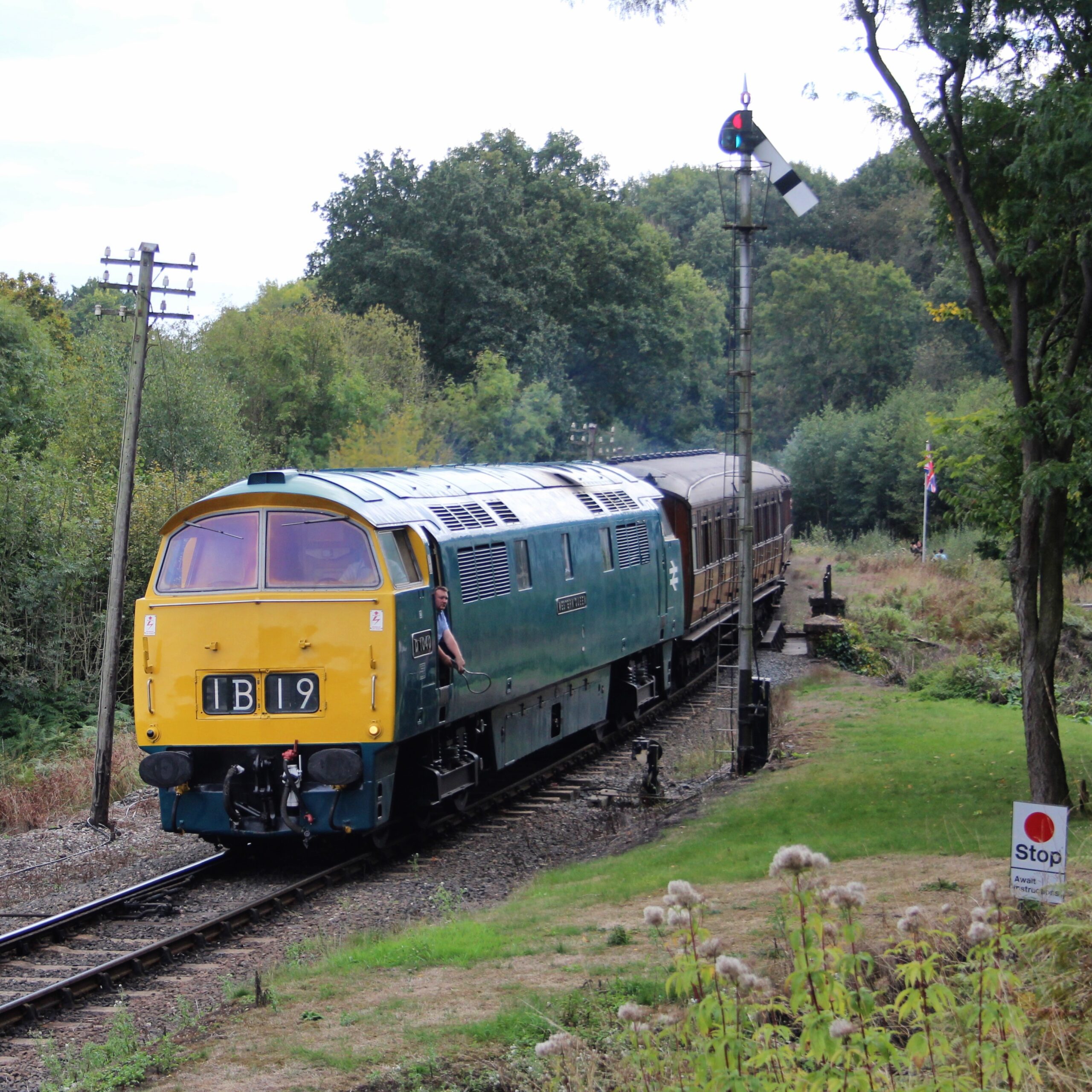
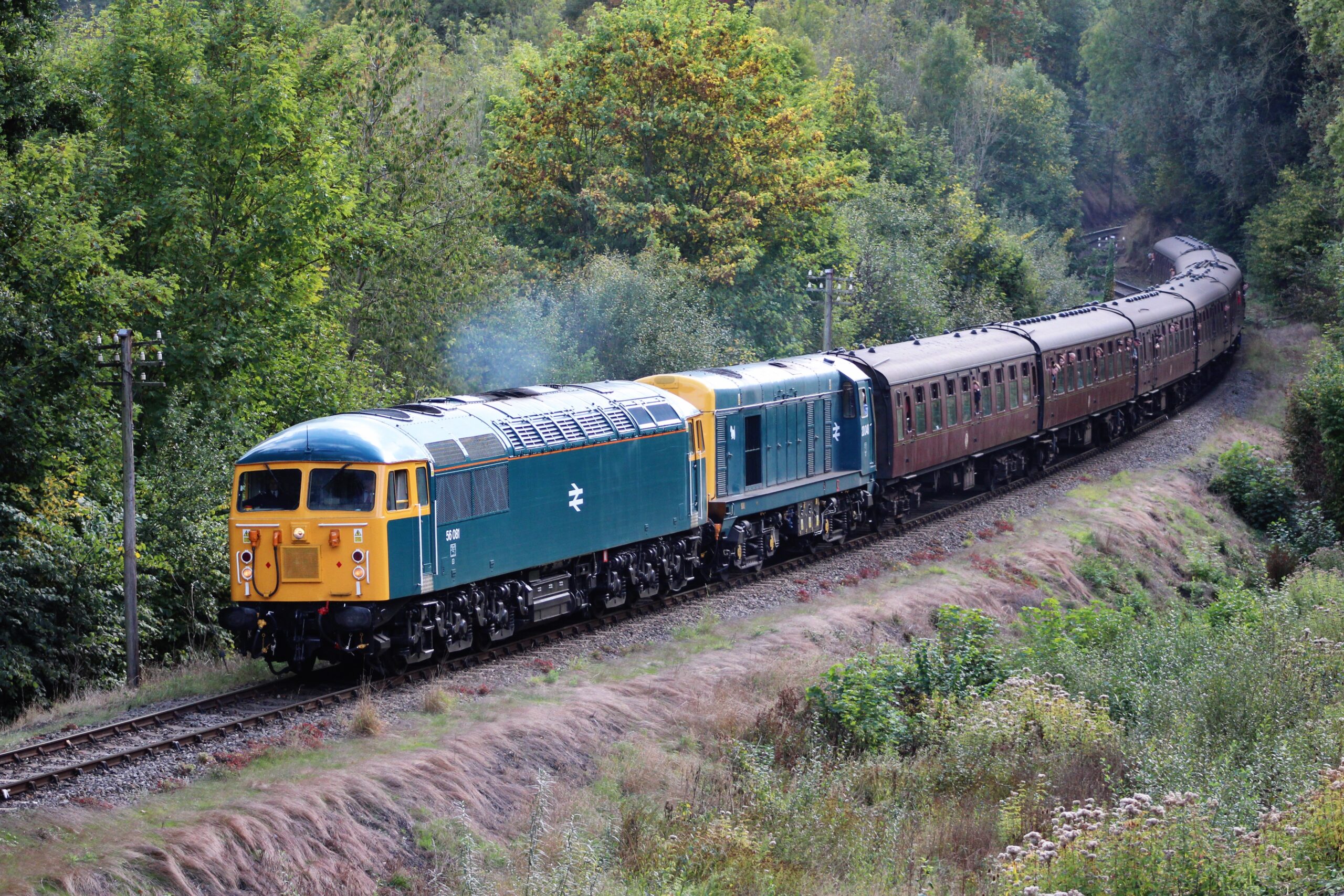
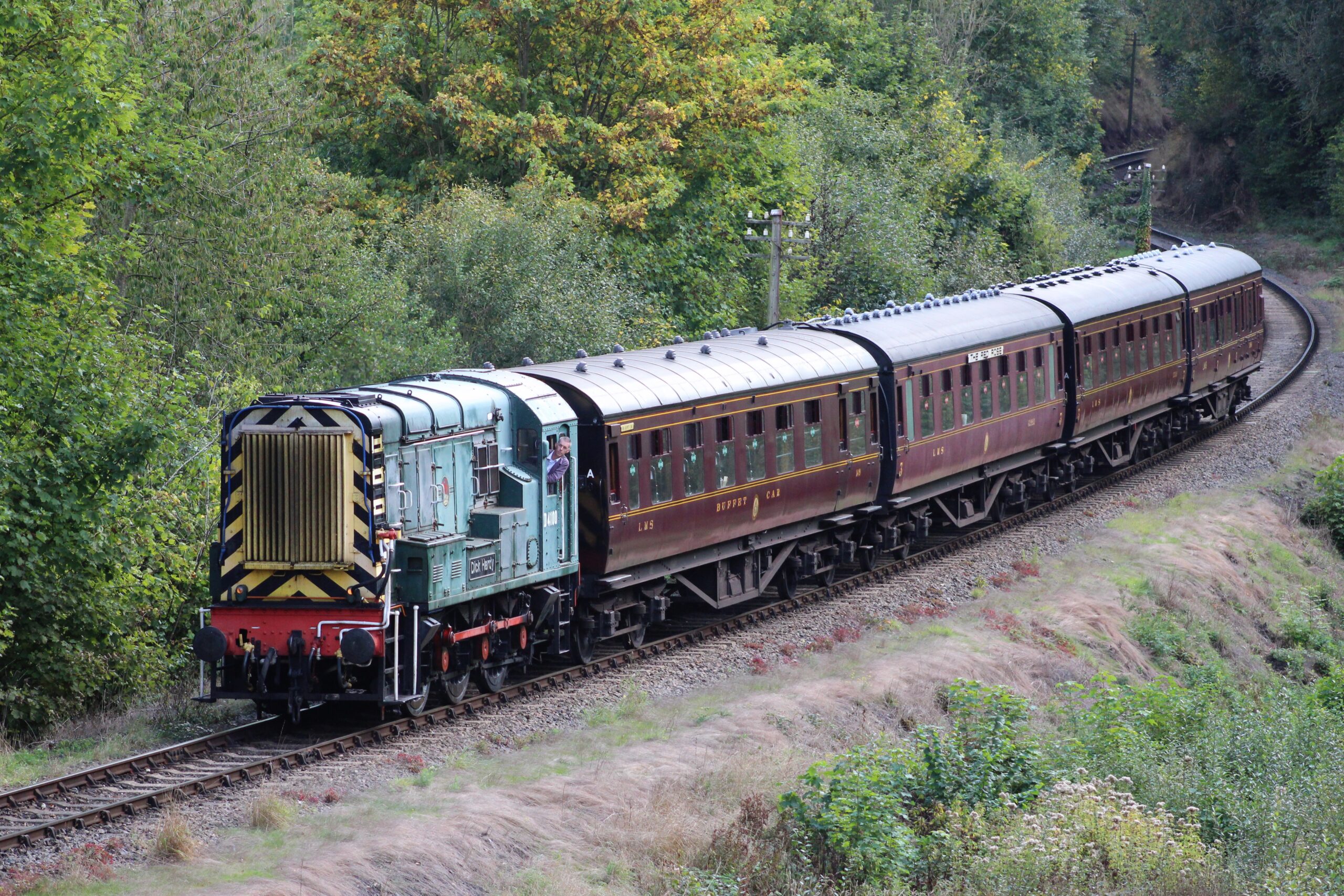
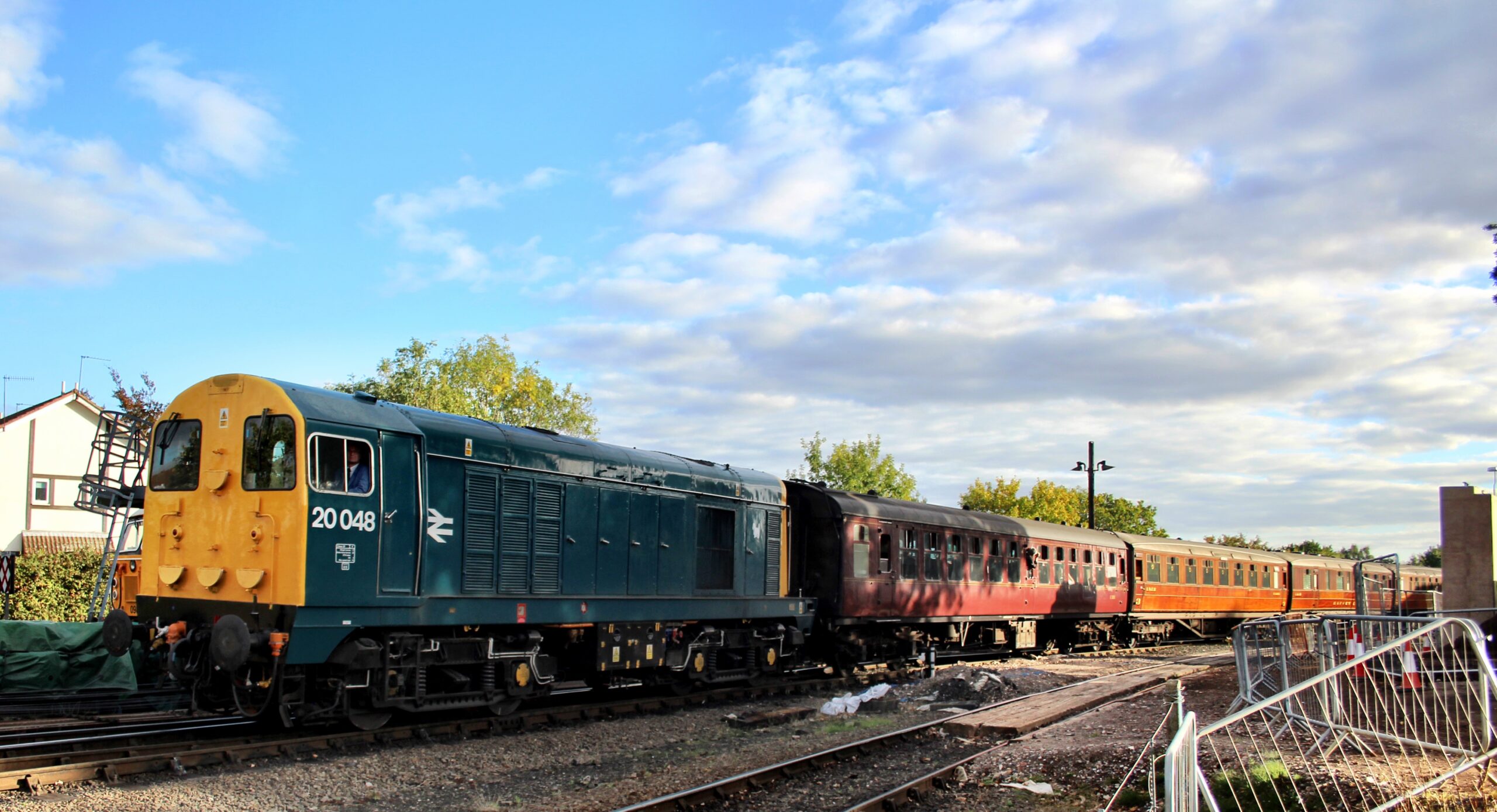
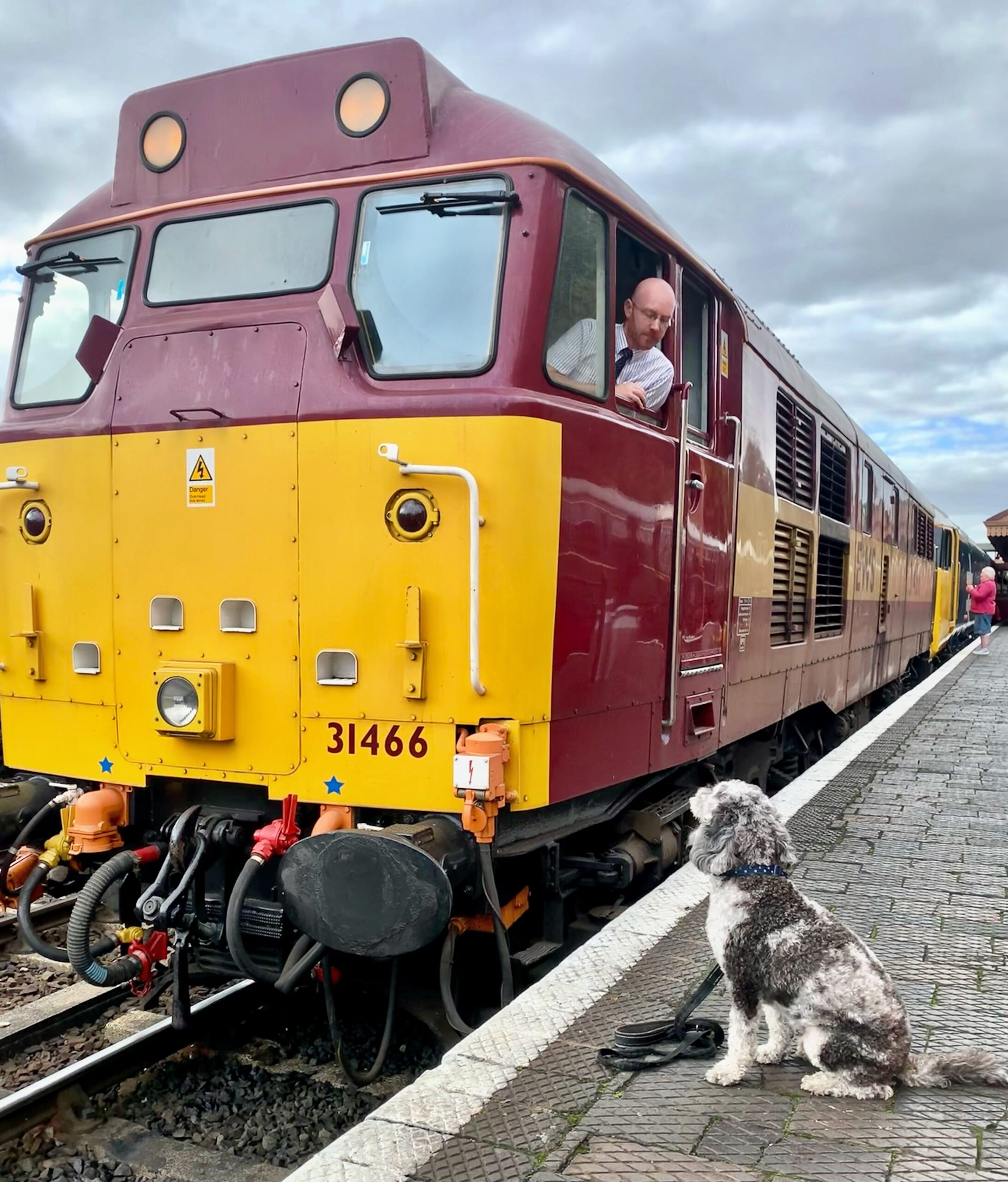
Deltic No. 55009 ‘Alycidon’ on the approach to Highley. I first saw this class of locomotive at London Kings Cross in 1977 and they immediately became my favourite diesel locomotives – 02/10/2022Class 50 No. 50049 ‘Defiance’ departs Highley – 02/10/2022Class 50 No. 50035 ‘Ark Royal’ arriving into Kidderminster – 02/20/2022Class 50 No. 50033 ‘Glorious’ awaiting to be rescued at Highley with a ‘local service’ after being declared a failure – 02/10/2022Class 31 No. 31466 plays Thunderbird loco for Class 50 No. 50033 ‘Glorious’ at Highley. A minor defect in the Class 50’s air system intermittently prevented the locomotive creating a brake – 02/10/2022Class 31 No. 31466 at Highley – 02/10/2022Class 52 No. D1015 ‘Western Champion’ nears Highley – 02/10/2022Class 52 No. D1015 ‘Western Champion’ departs Kidderminster with an evening service – 02/10/2022Class 52 No. D1062 ‘Western Courier’ running as classmate No. D1040 ‘Western Queen’ catching the late afternoon sun at Kidderminster – 02/10/2022The second man on Class 52 No. D1040 ‘Western Queen’ ready to exchange tokens entering Highley – 02/10/2022GBRf Class 56 No. 56081 and Class 20 No. 20048 being used as a translator locomotive for braking near Highley – 02/10/2022GBRf Class 56 No. 56081 having arrived at Kidderminster after its sole round trip – 02/10/2022GBRf Class 56 No. 56081 prepares to run to the sidings at Kidderminster – 02/10/2022Large Logo liveried Class 56 No. 56098 at Kidderminster – 02/10/2022Class 09 No. 09012 (D4100) ‘Dick Hardy’ came to the rescue after Class 46 No. D182 was withdrawn from service earlier during the gala – 02/20/2022 Class 20 No. 20048 departs Kidderminster on the rear of a train to Bridgnorth – 02/10/2022Yoshi chats with the driver of Class 31 No. 31466 during a stop at Bewdley – 02/10/2022
Our video from the 2022 Autumn Diesel Bash at the SVR
Class 91’s
Prior to our Seven Valley adventure, on Wednesday 28th September I was in London for a work meeting and I took the opportunity to pop into Kings Cross on my way to the office to catch a couple of Class 91 departures. I rather like the look of the business end of the Class 91 locomotive.
A total of 31 Class 91 ‘Electras’ were built by British Rail Engineering Limited (BREL) at Crewe Works from 1988 to 1991 and numbered 91001 to 91031. They were overhauled by Bombardier at Doncaster between 2000 and 2003 and renumbered by adding 100 to their original number, with the exception of No. 91023 which became No. 91132 due to its involvement in fatal accidents at Hatfield in 2000 and Great Heck in 2001.
The IC225 fleet of 314 Mk 4 carriages built by Metro-Cammell in Birmingham were formed into 30 sets and with the addition of a Driving Trailer Van (DVT) allowed push-pull operation with the Class 91’s. The fleet is now greatly reduced following the introduction of Hitachi InterCity Express Trains (IET) and eight coaching sets have been retained for use on the East Coast Mainline with 12 Class 91’s.
Over the years the trains have seen several changes in operator as franchises have collapsed and taken over by government backed Operators of Last Resort. GNER was replaced by National Express East Coast, followed by East Coast, Virgin Trains East Coast and currently LNER. Each operator has applied its own livery to the locomotives and coaching stock with most recently LNER simply replacing the Virgin Trains branding with its own. Now, however, the fleet is receiving repaints with those not carrying a celebrity livery receiving a retro style inspired by the original Intercity 225 design of sharp lines and red and white styling, the LNER brand replacing the InterCity lettering and swallow motif which can be seen applied to No. 91004 in the video from 1994 further down this page.
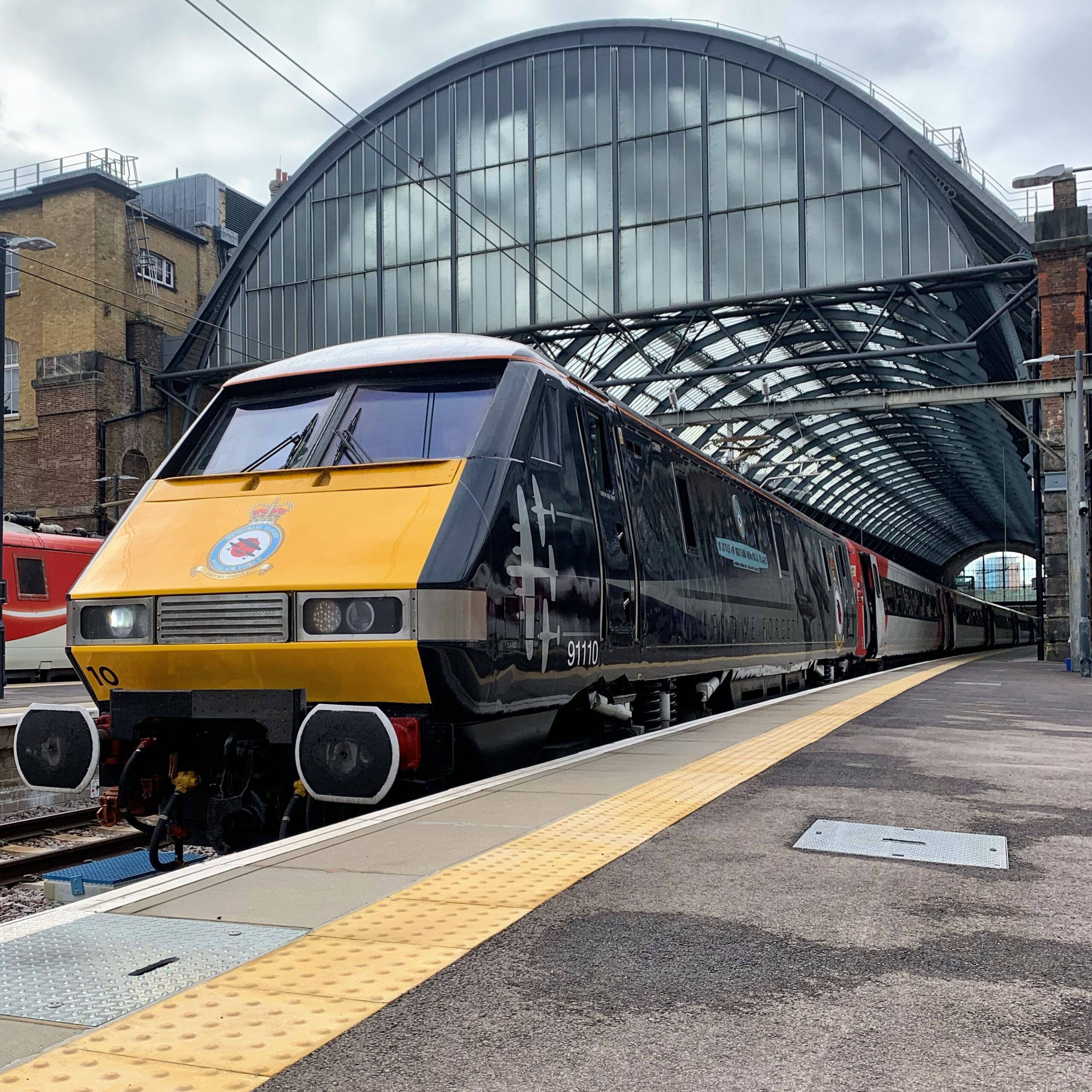
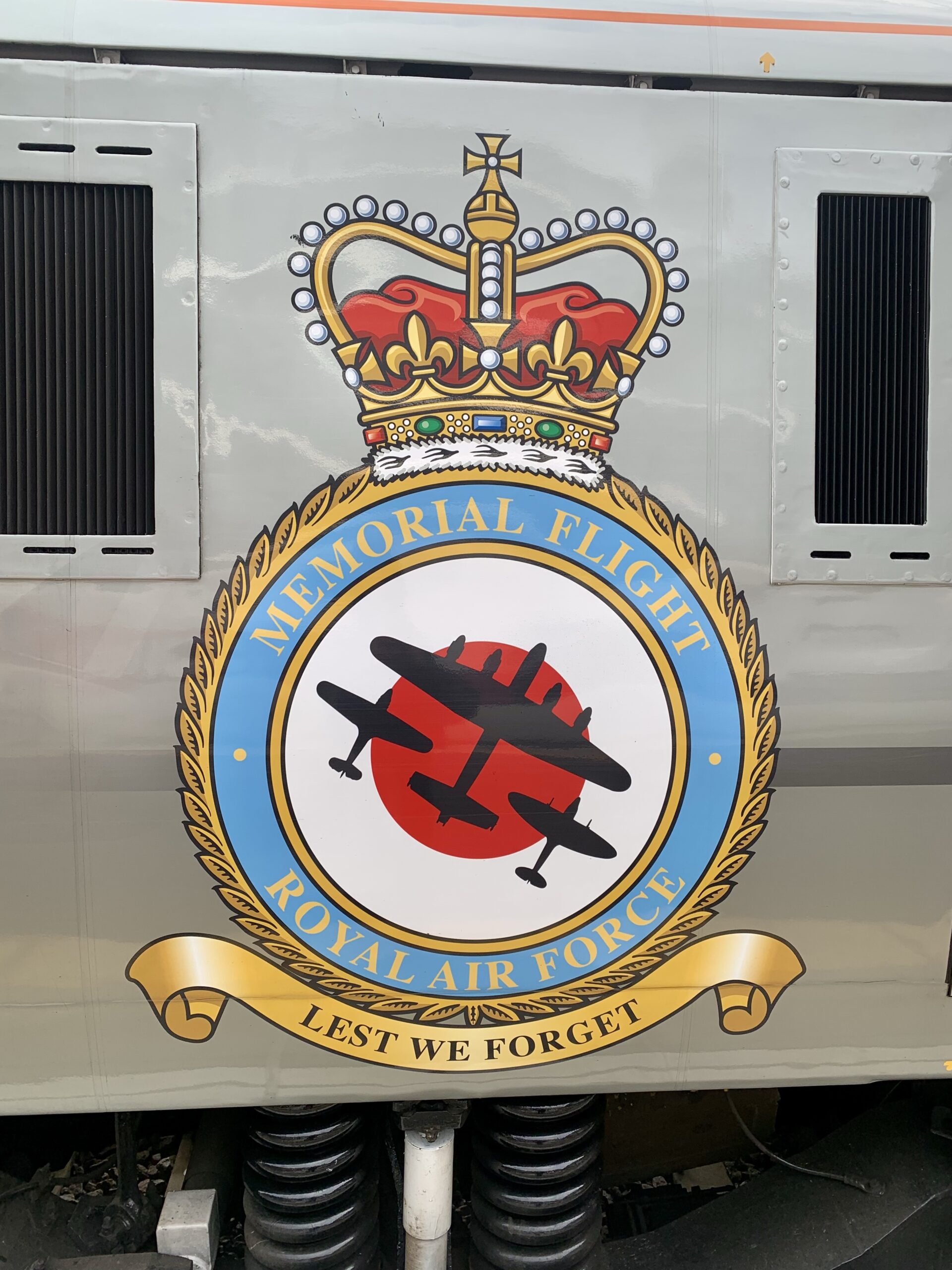
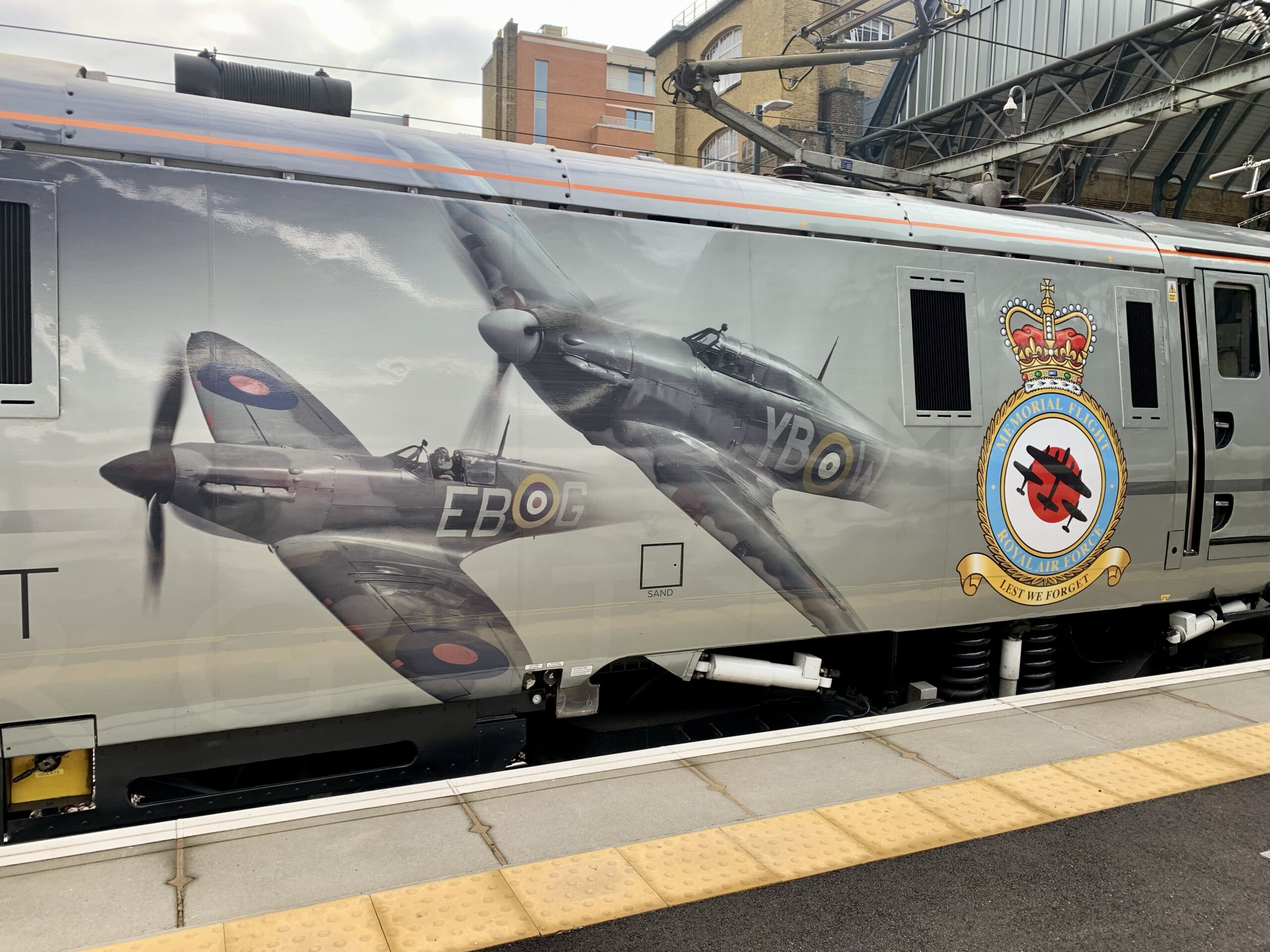
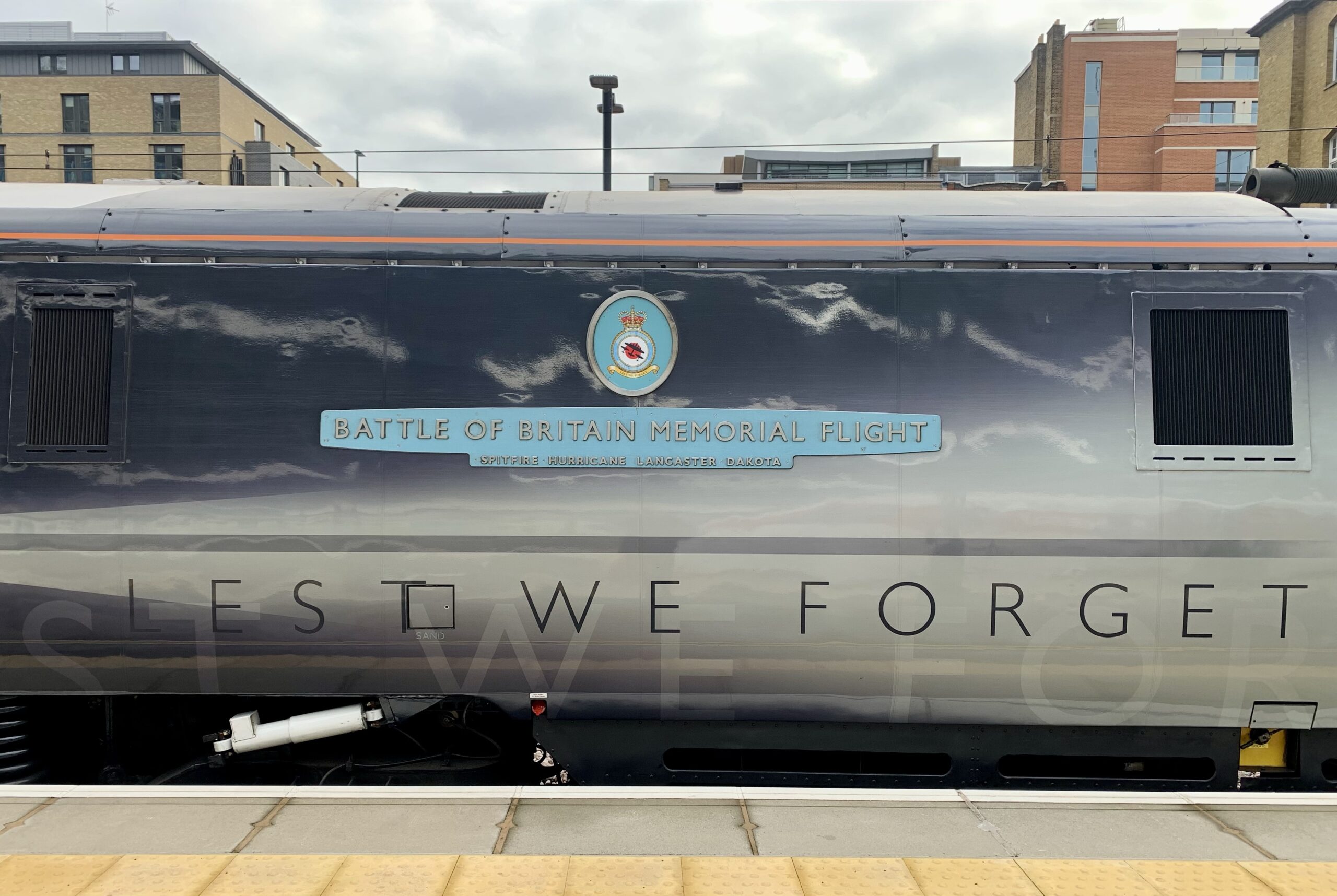
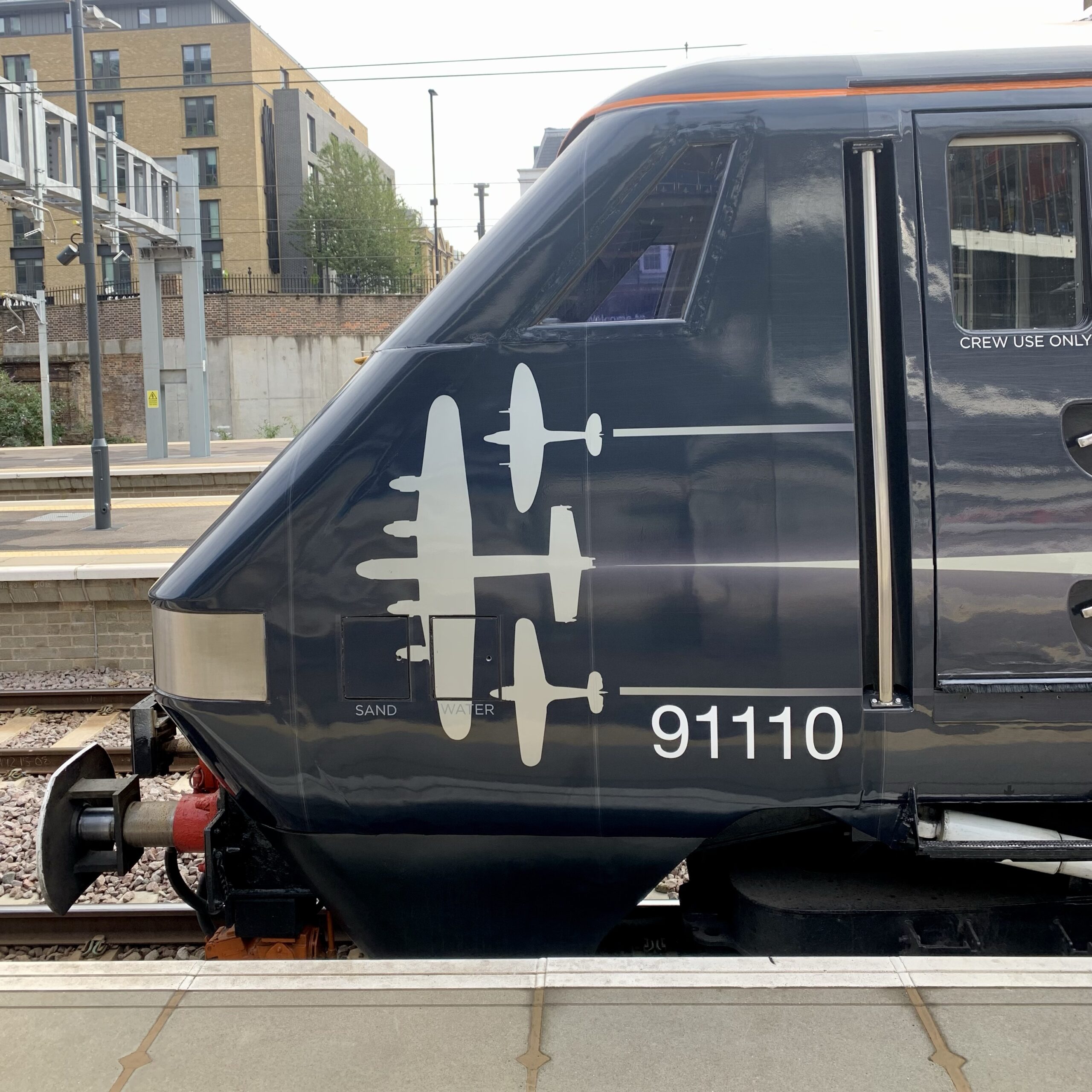
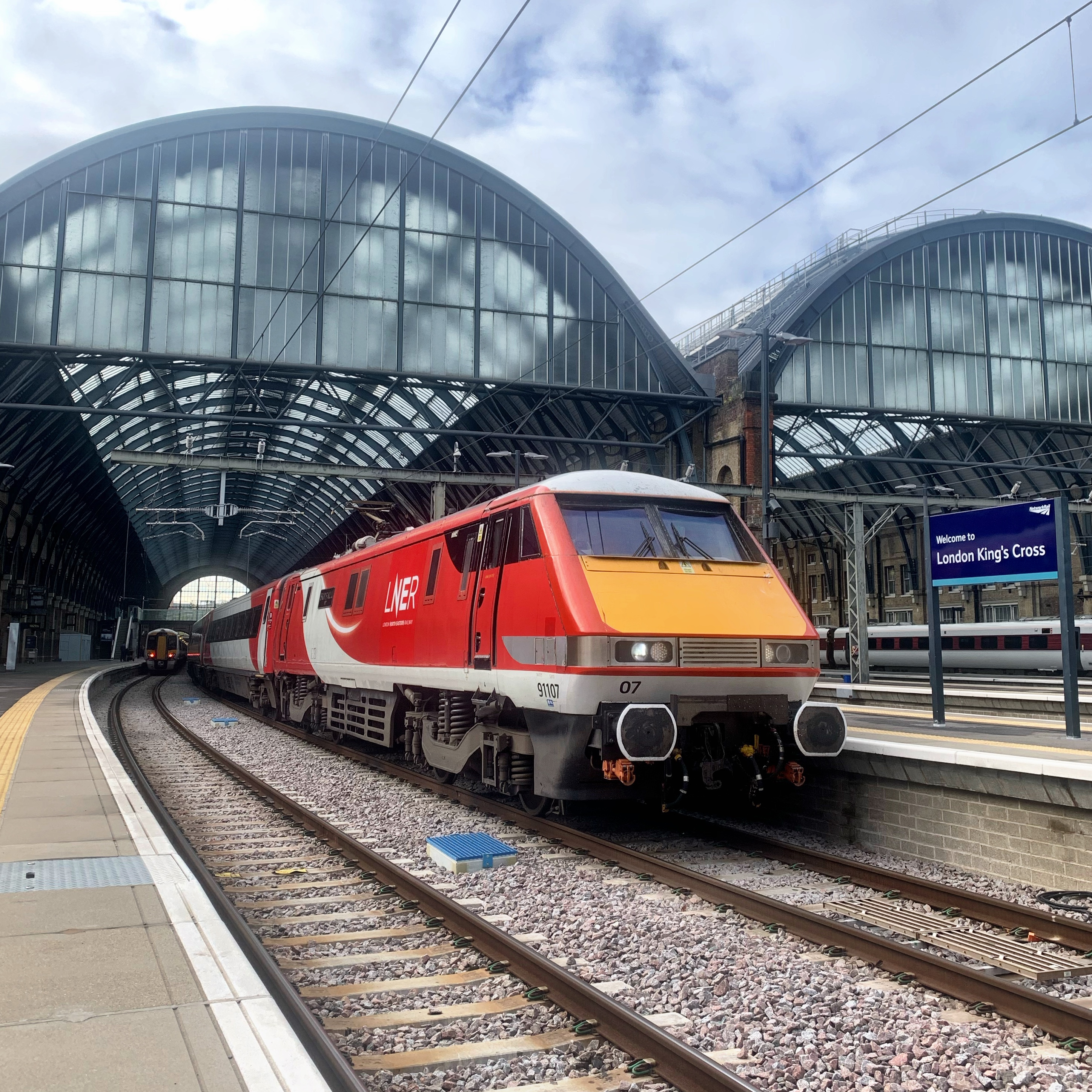
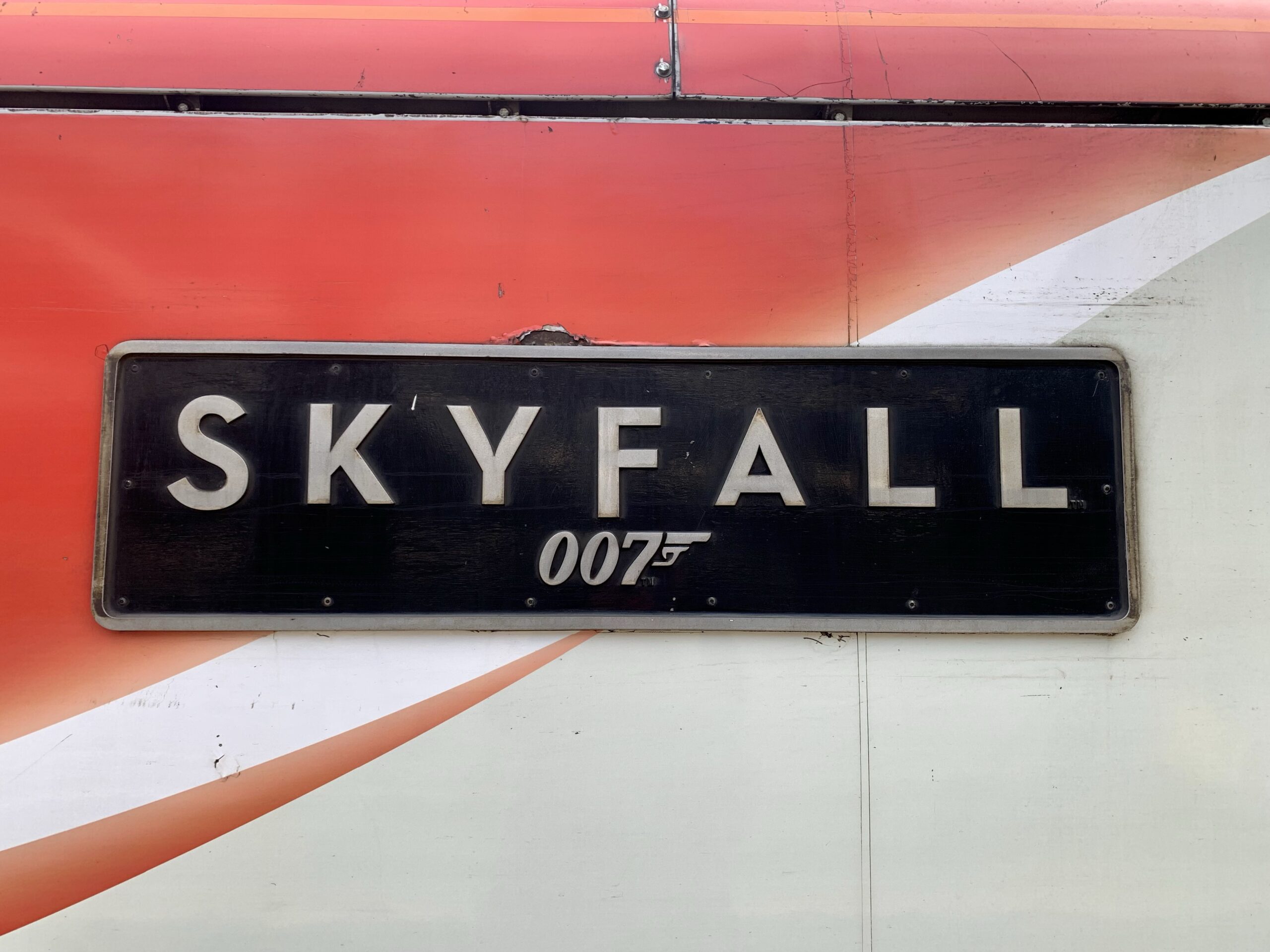
Class 91 No. 91110 ‘Battle of Britain Memorial Flight’ awaits departure from London Kings Cross with the 1003 1D09 service to Leeds. The InterCity 225 fleet leased by LNER is in the process of receiving a full repaint as the rolling stock is brought in for essential maintenance. The repaint of No. 91110 was completed in July 2022 – 28/09/2022Side detail of Class 91 No. 91110 ‘Battle of Britain Memorial Flight’Side detail of Class 91 No. 91110 ‘Battle of Britain Memorial Flight’Side detail and nameplate of Class 91 No. 91110 ‘Battle of Britain Memorial Flight’Side detail of Class 91 No. 91110 ‘Battle of Britain Memorial Flight’. In September 1989 No. 91110 achieved 162.8 mph on an overspeed test at Stoke Bank near Peterborough, the fastest ever recorded by a UK locomotive. Stoke Bank is the same location where the world record for a steam locomotive was set at 126 mph by Gresley A4 No. 4468 ‘Mallard’ on 3rd July 1938.Class 91 No. 91107 ‘Skyfall’ at Kings Cross platform 2 heading 1D10 1033 London Kings Cross to Leeds. The Class 91 powered IC225 trains have been operating on the East Coast Main Line for 33 years. The Gresley A4’s managed 27 years and the Class 55 Deltics 20 years. The Gresley A3’s and the IC125 HST’s both notched up 40 years of continuous ECML service – 28/09/2022Close up of nameplate for Class 91 No. 91107 ‘Skyfall’
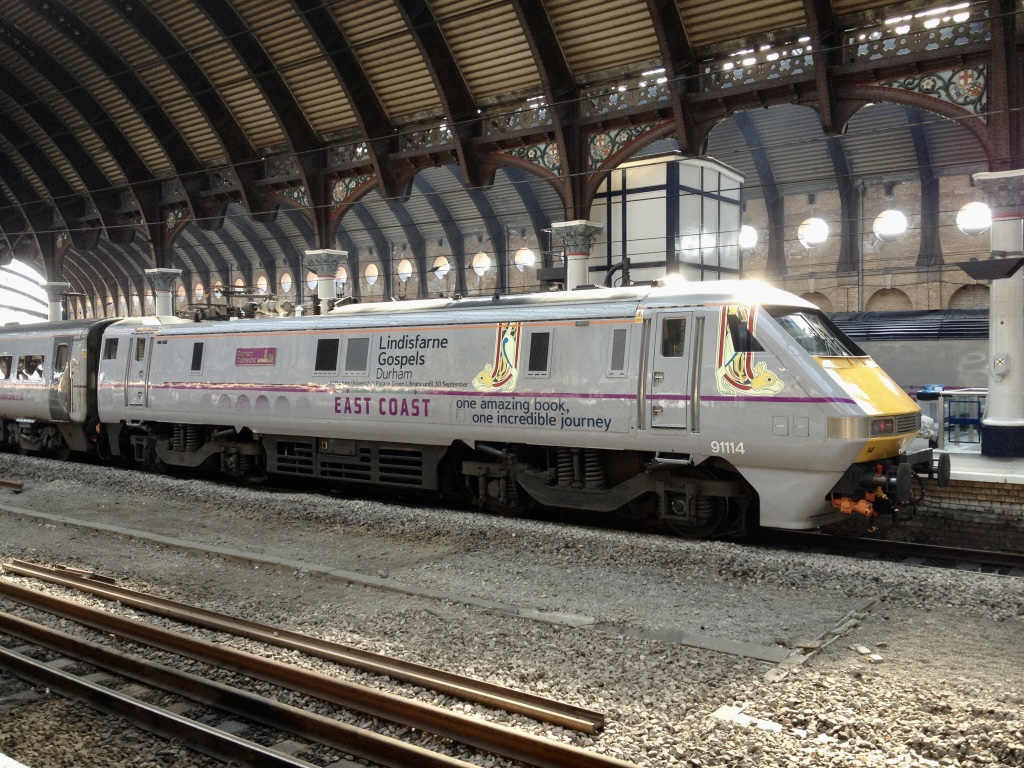
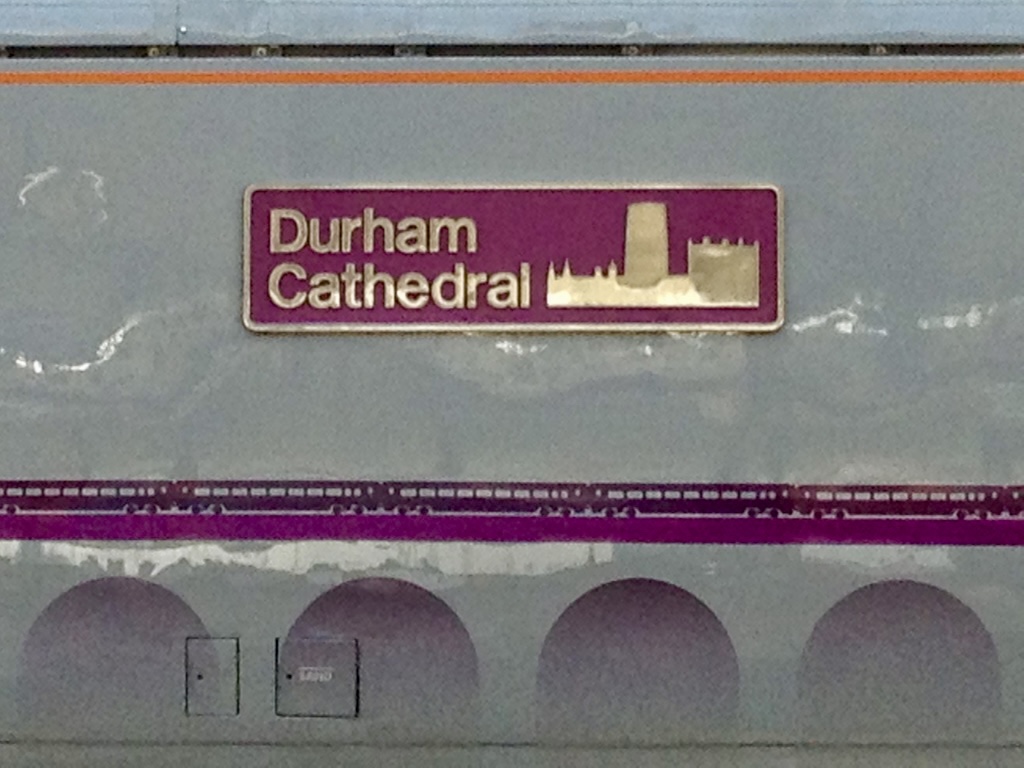
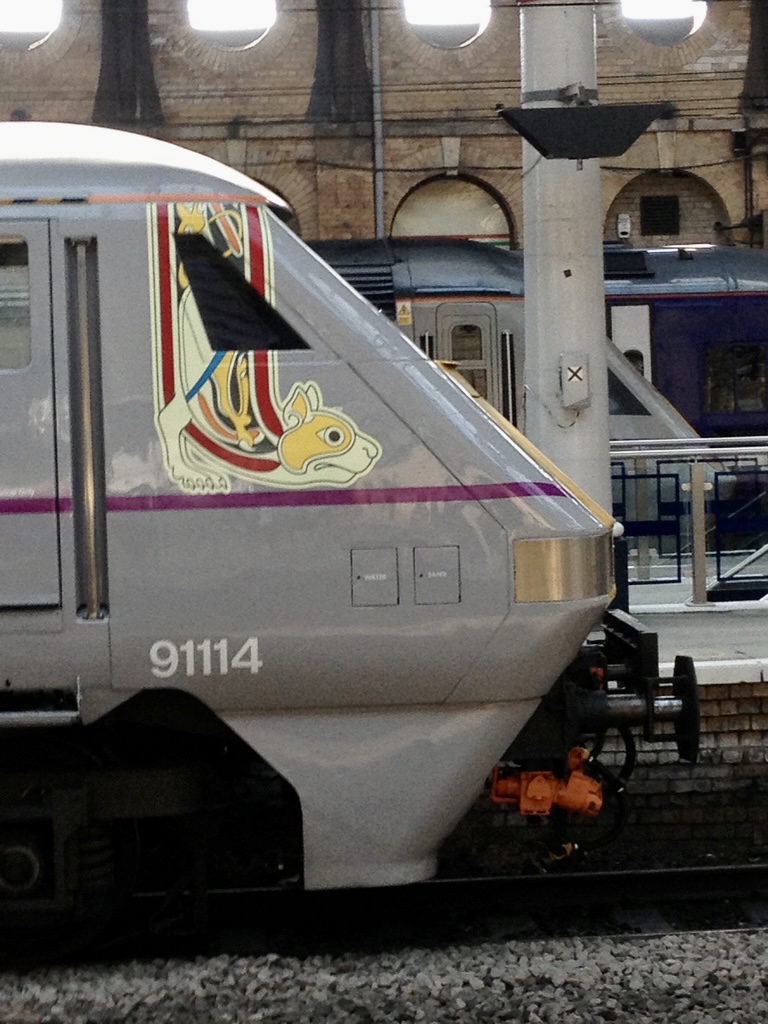
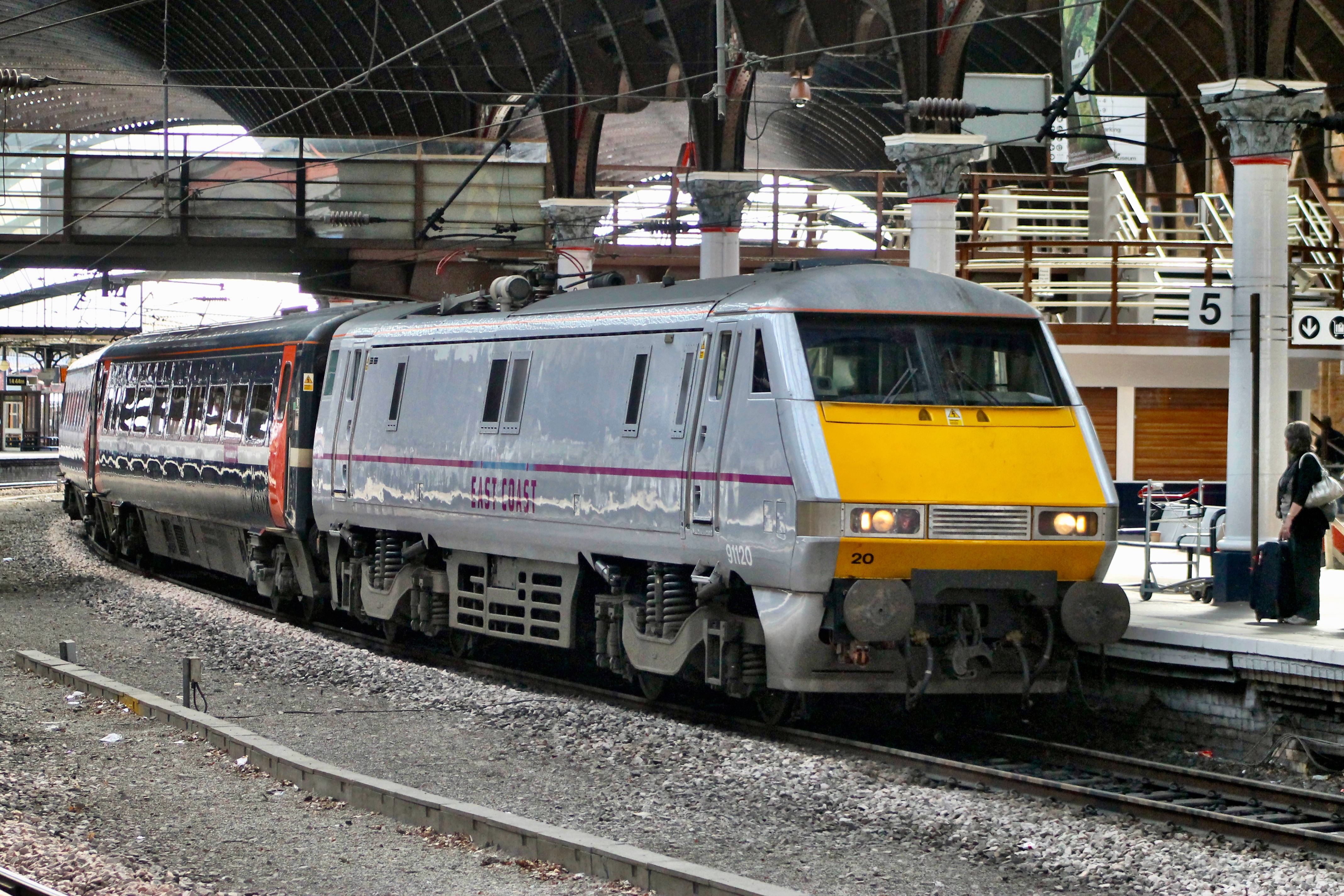
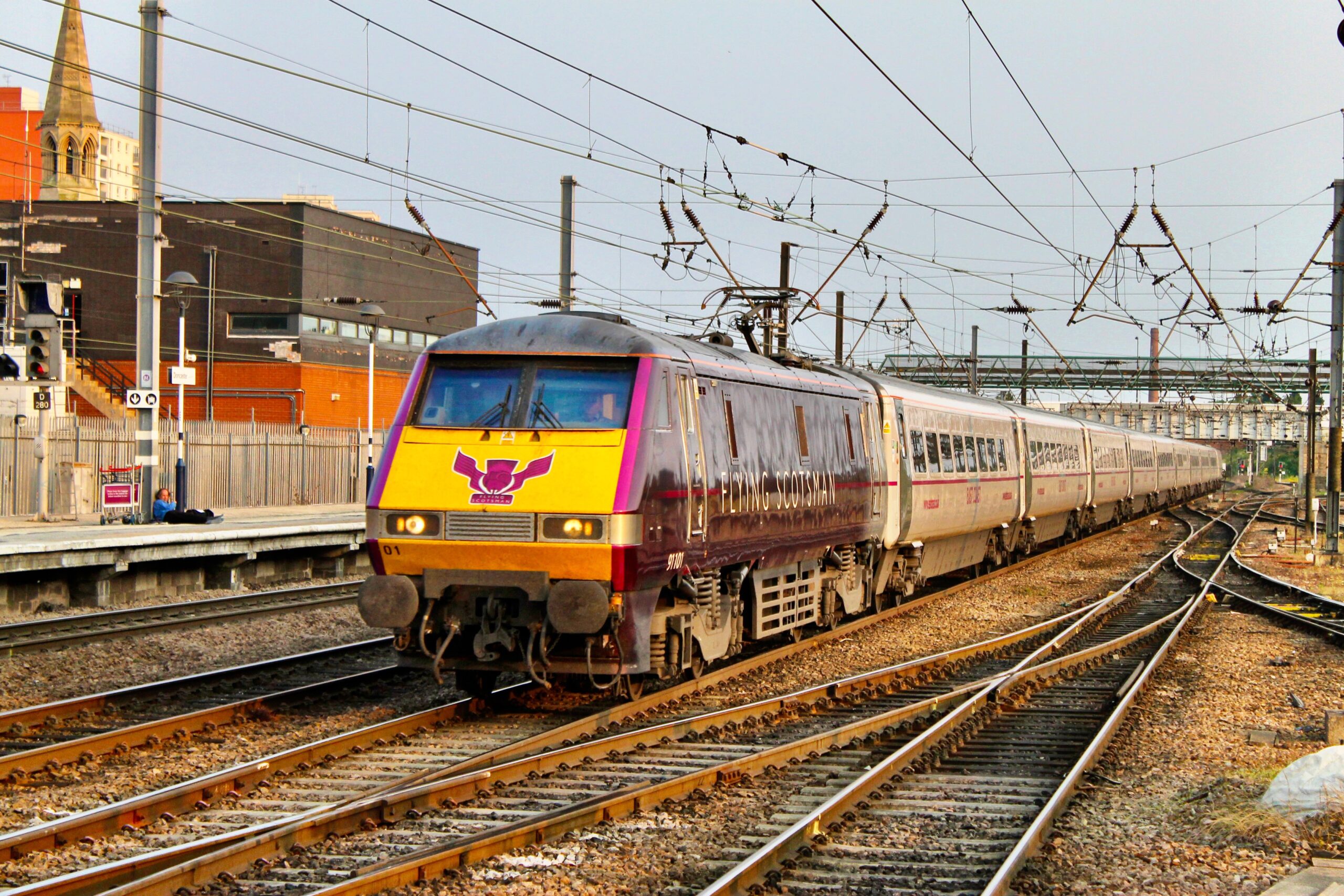
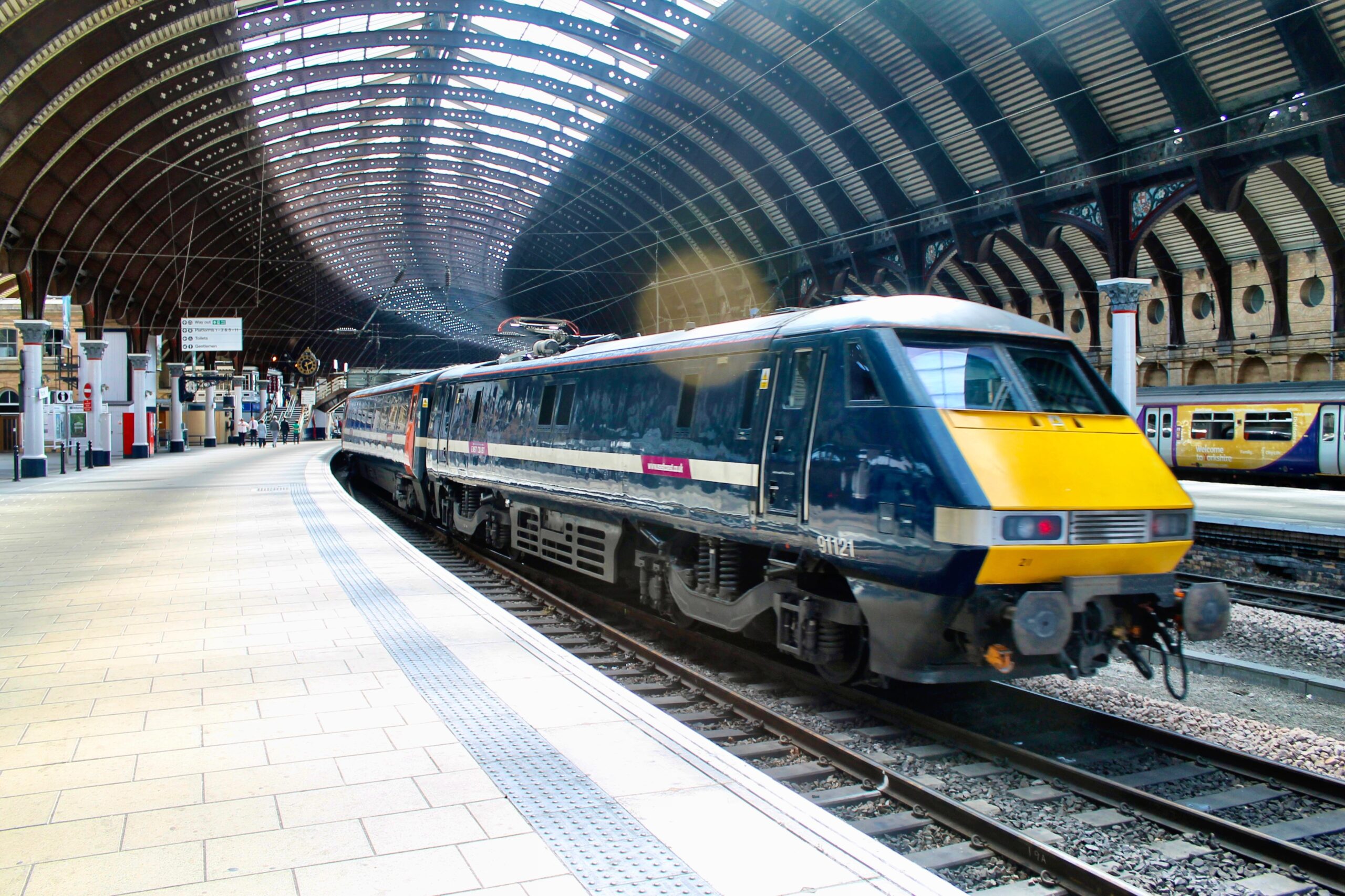
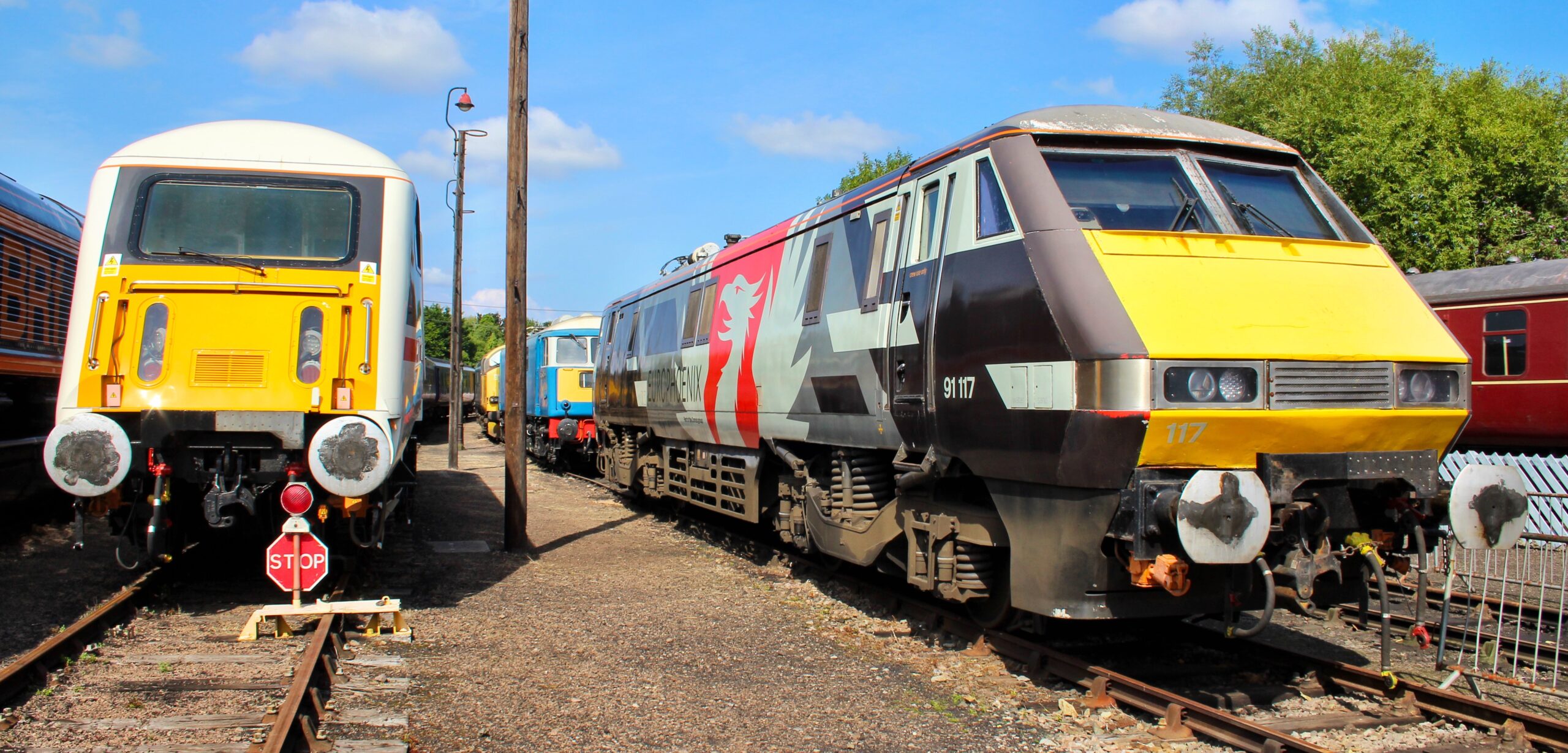
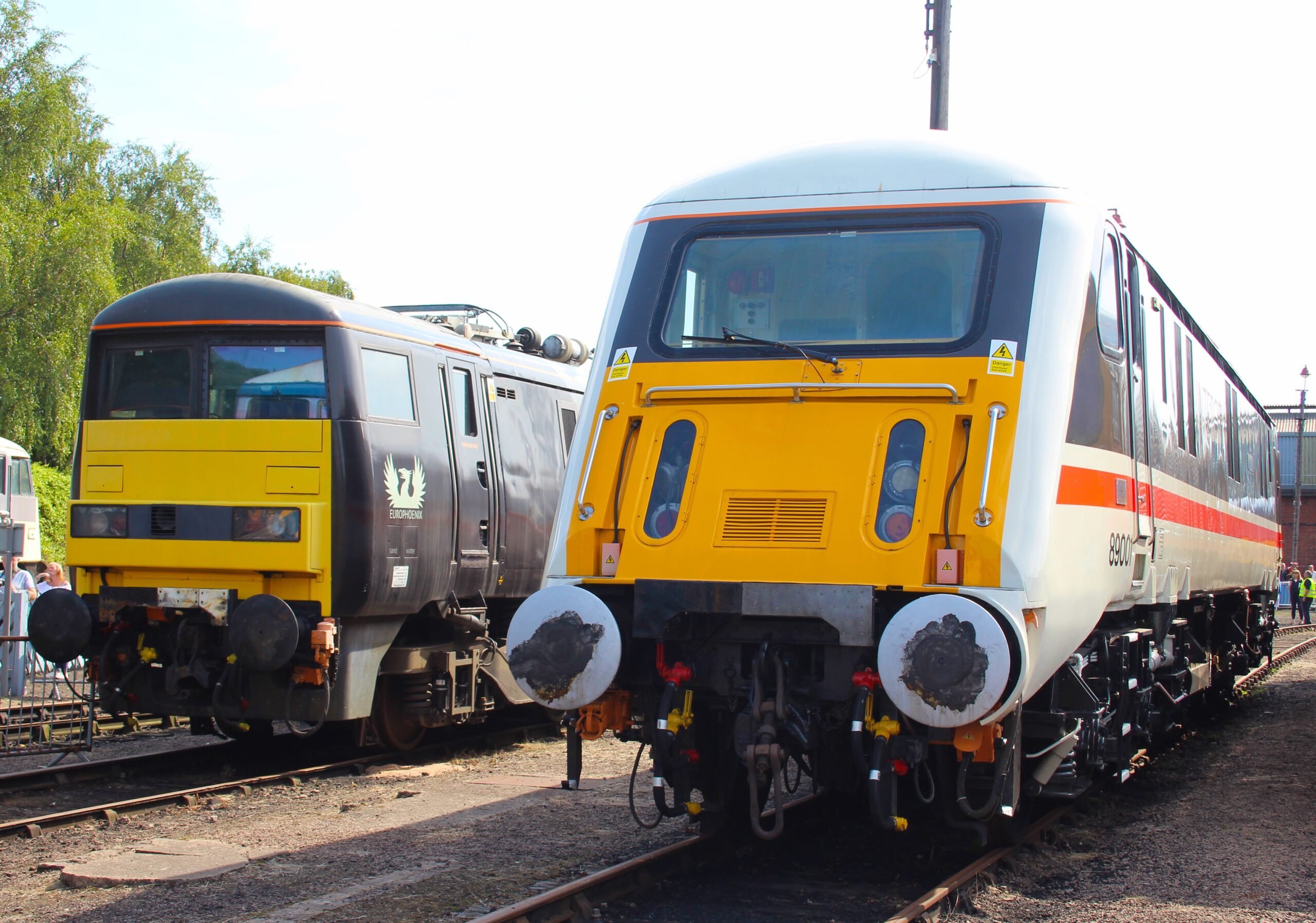
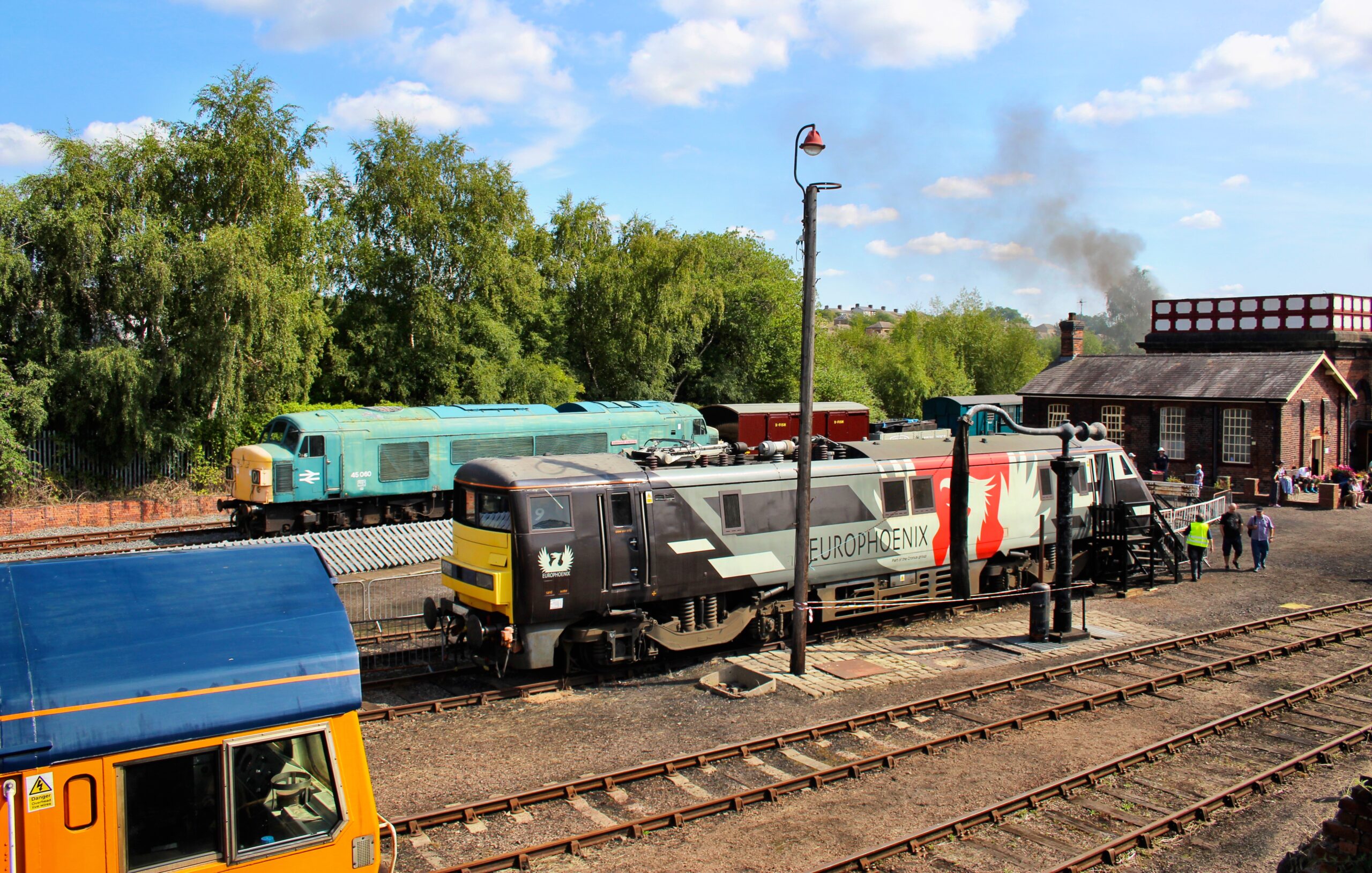
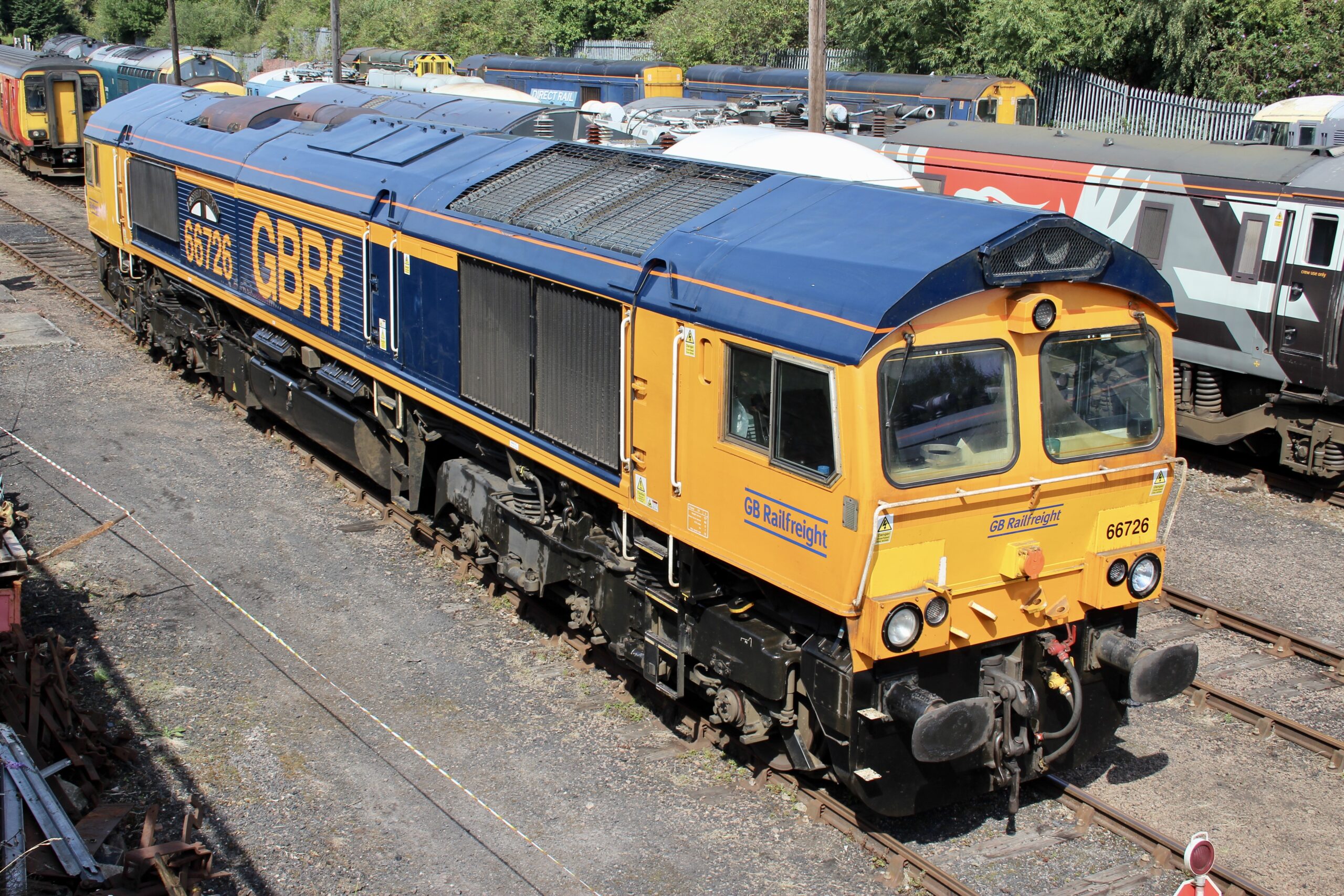
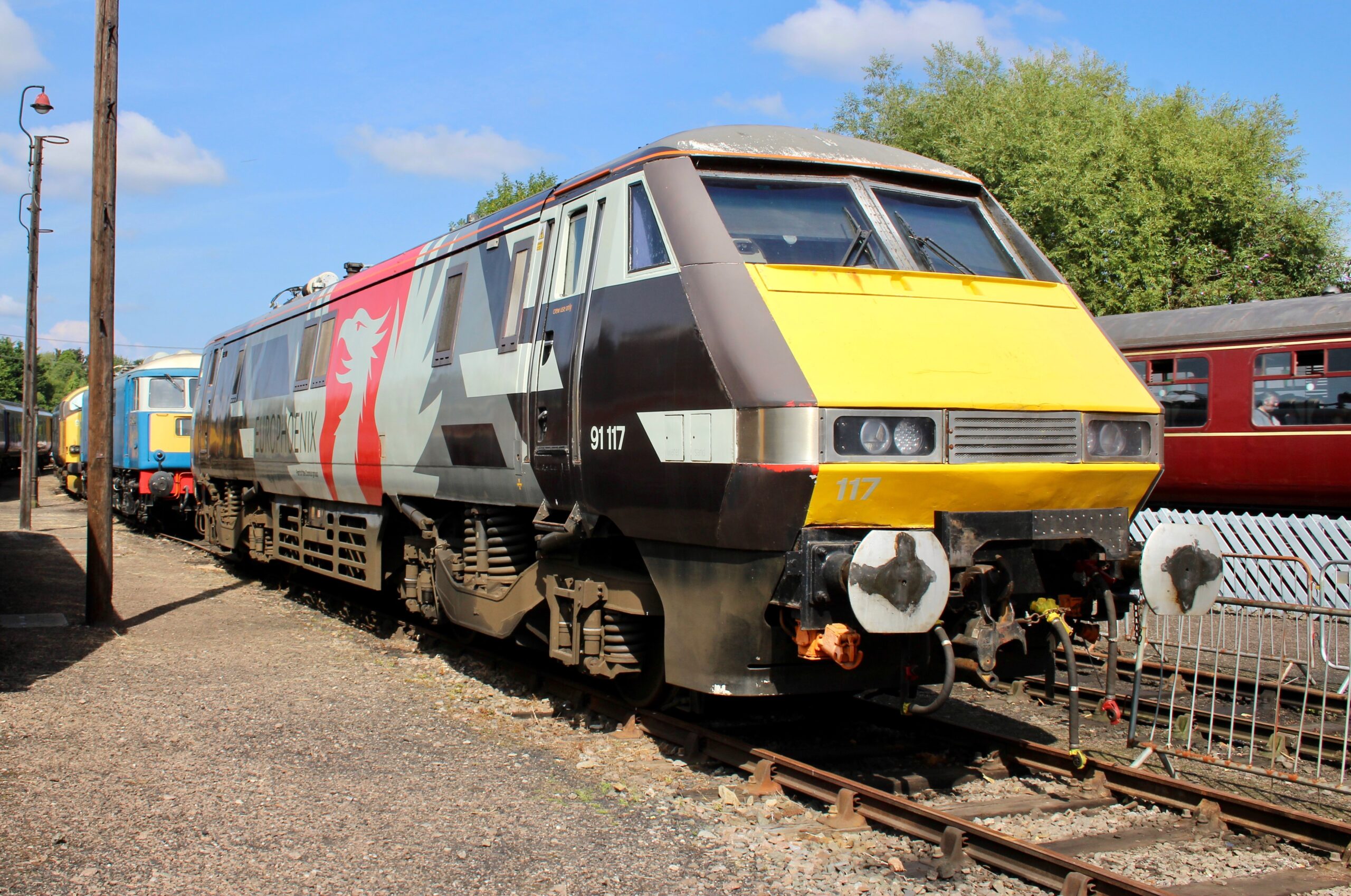
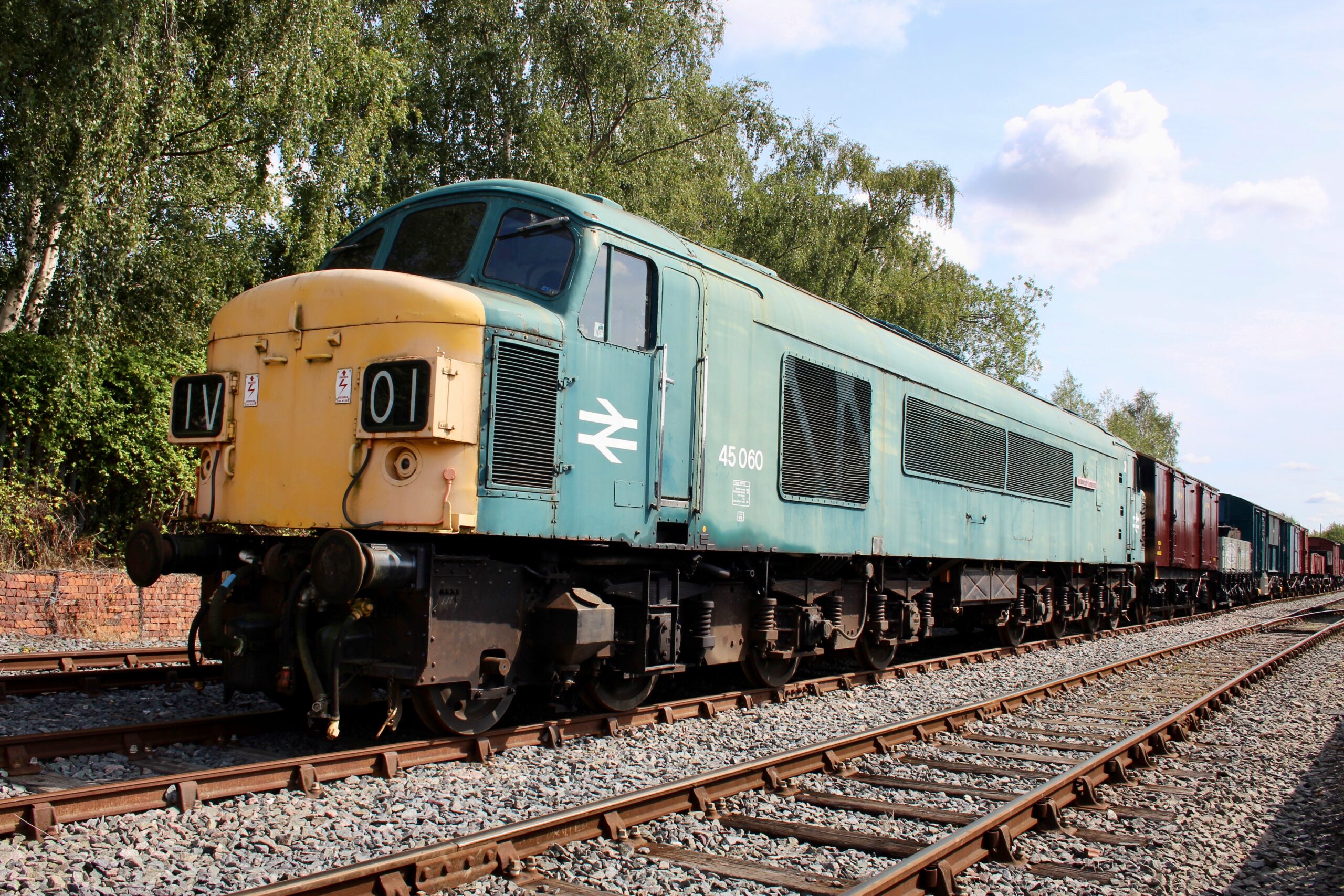
Class 91 departures at London Kings Cross – 28/09/2022Class 91 No. 91114 ‘Durham Cathedral’ at York – 04/07/2013Nameplate detail of Class 91 No. 91114 ‘Durham Cathedral’ at York – 04/07/2013Livery variation applied to Class 91 No. 91114 ‘Durham Cathedral’ at York – 04/07/2013East Coast liveried Class 91 No. 91120 at York – 28/08/2011Class 91 No. 91101 with Flying Scotsman branding at Doncaster – 05/07/2013Class 91 No. 91102 at York – 28/08/2011Class 91 No. 91121 at York – 28/08/2011Europhoenix liveried Class 91 No. 91117 stands adjacent to unique Class 89 No.89001 ‘Avocet’ at the recent Barrow Hill 150+2 celebrations – 28/08/2022The flat end of Class 91 No. 91120 can be seen clearly in this image alongside Class 89 No.89001 ‘Avocet’ at the recent Barrow Hill 150+2 celebrations. The Class 89 was a prototype for an electric six-axle mixed traffic locomotive which did not progress beyond this example – 28/08/2022Another view of Europhoenix Class 91 No. 91120 in the company of “Peak” Class 45 No. 45060 ‘Sherwood Forester’ and Class 66 No. 66726 ‘Sheffield Wednesday’ at Barrow Hill 150+2 celebrations – 28/08/2022
From The Archives
My first visit to London Kings Cross found Class 55 Deltic No.’s 55002 ‘The Kings Own Yorkshire Light Infantry’ and 55008 ‘The Green Howards’ await departure in 1977 In the diesel era the stabling point at London Kings Cross was commonly known as “Passenger Loco”. It was usually used by locomotives that needed a quick service and refuelling before their next trip north. There was a pit inside the shed where an “A exam” could be performed. A few locos would be berthed there during the day between trips and at night. Also from my first visit to The Cross in 1977Class 55 Deltic No. 55004 ‘Queens Own Highlander’ stands next to a Class 254 HST set at Kings Cross. The Deltic’s replaced Gresley A3 and A4 Pacific steam locomotives on top link duties before themselves succumbing to the advent of the High Speed Train which in turn were replaced by the Class 91’s – 25/09/1981
In 1994 what was heralded as being the best ever programme of main line steam specials was announced on 11th August, exactly 26 years after the end of regular steam on British Railways. A big surprise was the announcement of the return to steam at Kings Cross on the weekend of 29th / 30th October 1994 when LNER A4 Pacific No. 60009 ‘Union Of South Africa’, coincidentally the last steam locomotive to leave the East Coast terminus thirty years previously, was booked to haul private charters to Peterborough. Following these successful charter runs, No. 9 found herself imprisoned in Bounds Green depot for six weeks following an “under the wires” ban imposed by Railtrack who declared the locomotive as being out of gauge by 1.5 inches at an overbridge near Primrose Hill Tunnel which could have resulted in a flashover. This led Railtrack to impose a complete ban on all steam movements under overhead wires across the rail network which saw the cancellation of three other rail tours until Railtrack backed down and agreed the locomotive was in gauge all along!
I went along to Kings Cross on the 30th October 1994 to see the locomotive and train head for Peterborough – but as you can see in the video below my view of the departure was almost ruined by the arrival of Class 91 No. 91004 ‘The Red Arrows’! This Class 91 locomotive was withdrawn in February 2020 and is currently awaiting disposal at Booths of Rotherham, its fate is unconnected with passing in front of me while I was attempting to film steam at The Cross however!
Steam at Kings Cross 30/10/1994
Sixteen years later, I was once again able to see steam at Kings Cross – two A4’s this time when No. 60007 ‘Sir Nigel Gresley’ hauled the Railway Touring Company special train “The Tynesider” from Newcastle to the London terminus with sister locomotive No. 60019 ‘Bittern’ sporting two tenders to facilitate a non-stop run to York as there was no requirement to take on water en-route. I was using a mini DV camera at the time which had a tendency to “hunt’ in low light. Well, in any lighting conditions to be honest. But we include it here as it seems appropriate.
Steam at Kings Cross 27/11/2010
Thanks for visiting. We aim to be back again next week and hope to see you again. Thank you as always for comments and corrections which are very much appreciated.
Wednesday 31st August to Tuesday 6th September 2022
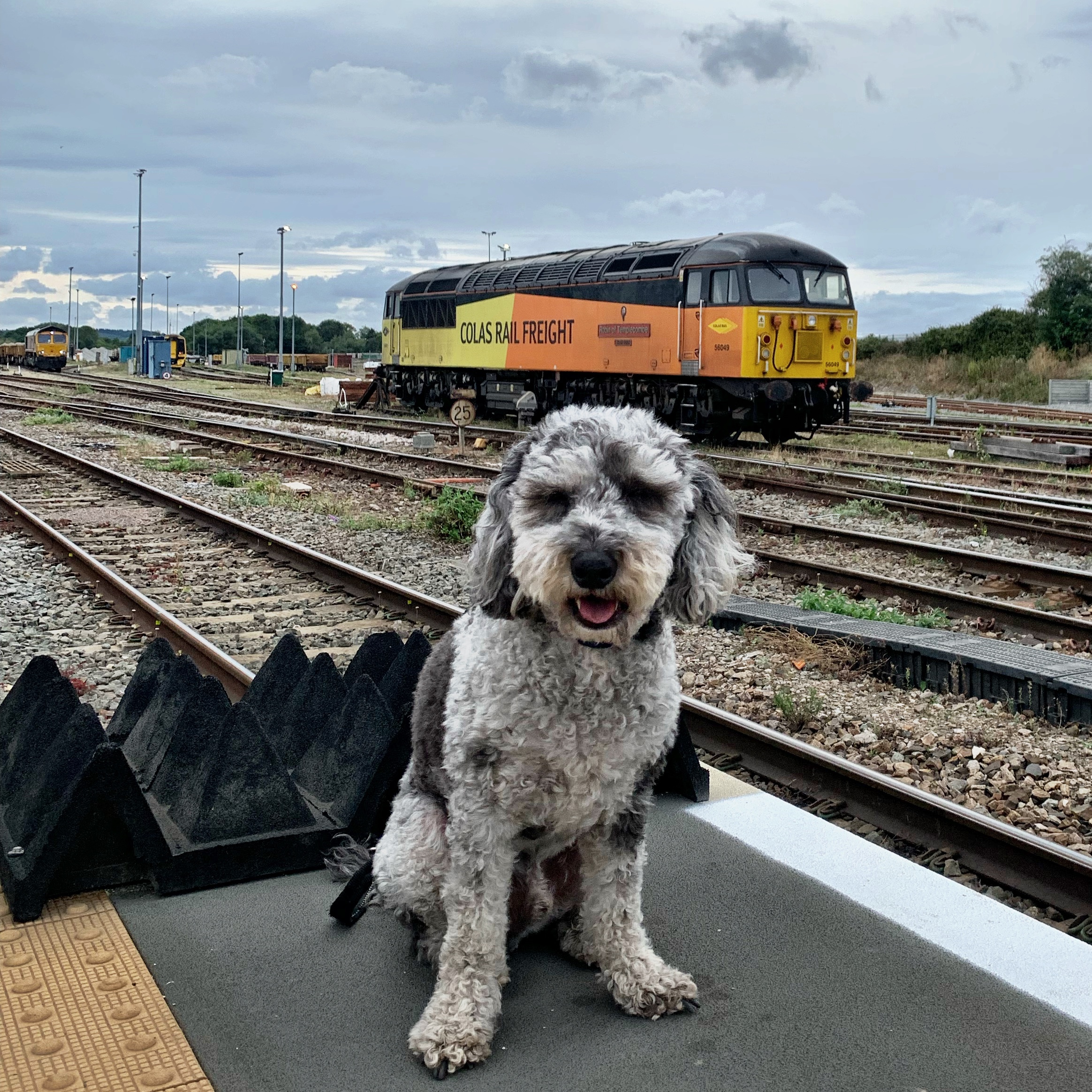
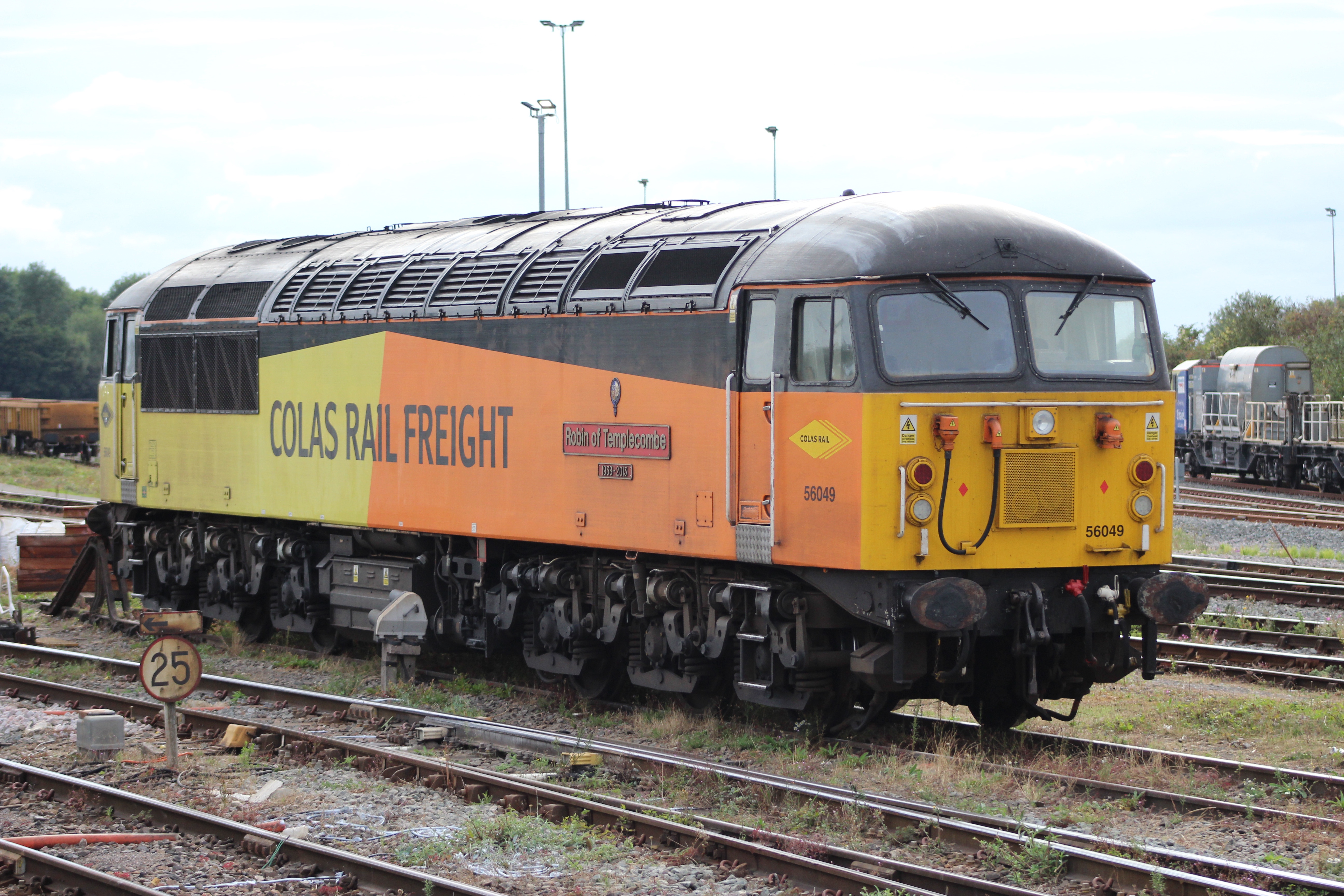
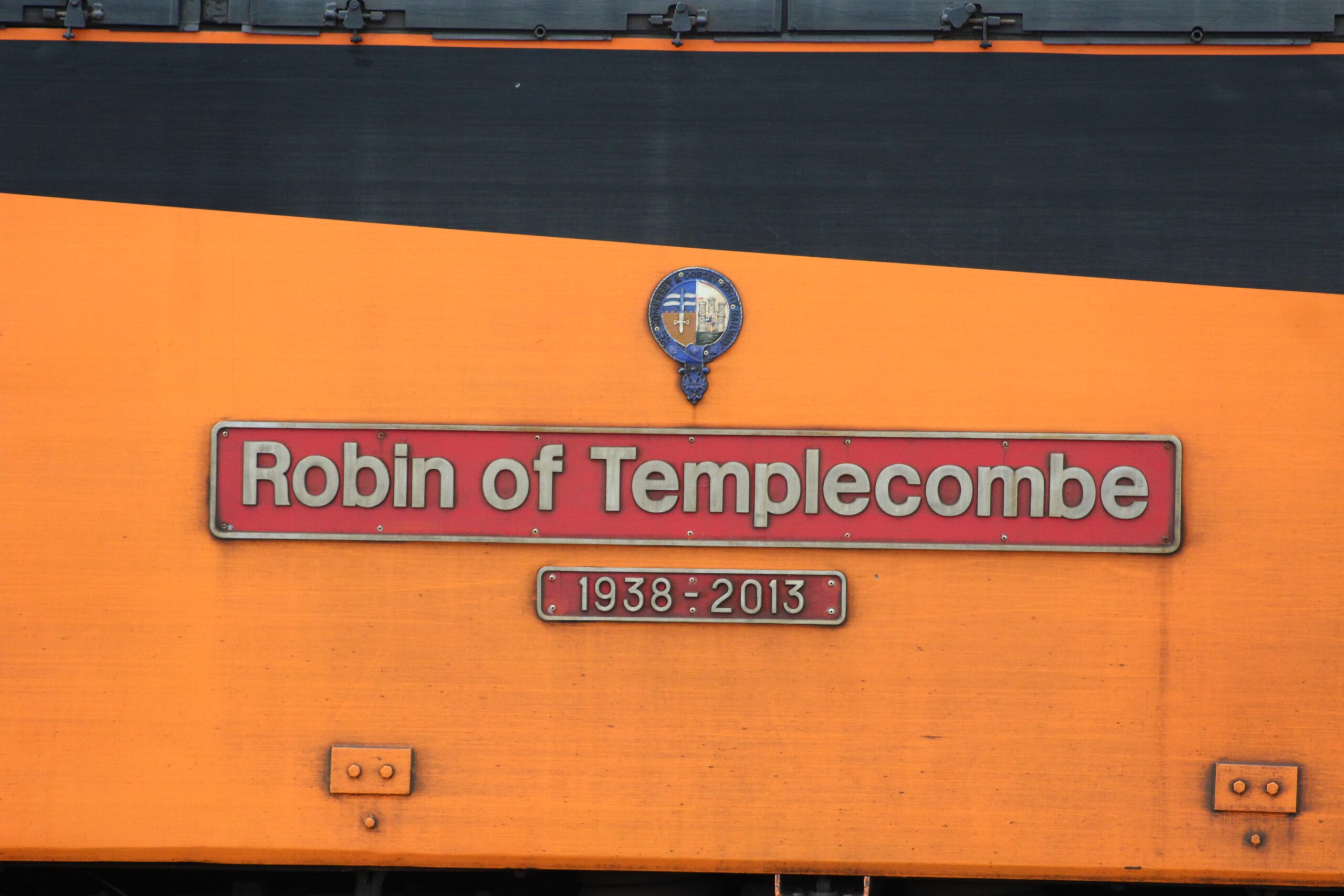
Yoshi train spotting on the end of Westbury station with Colas Class 56049 ‘Robin of Templecombe 1938 – 2013’ in the background – 03/09/2022
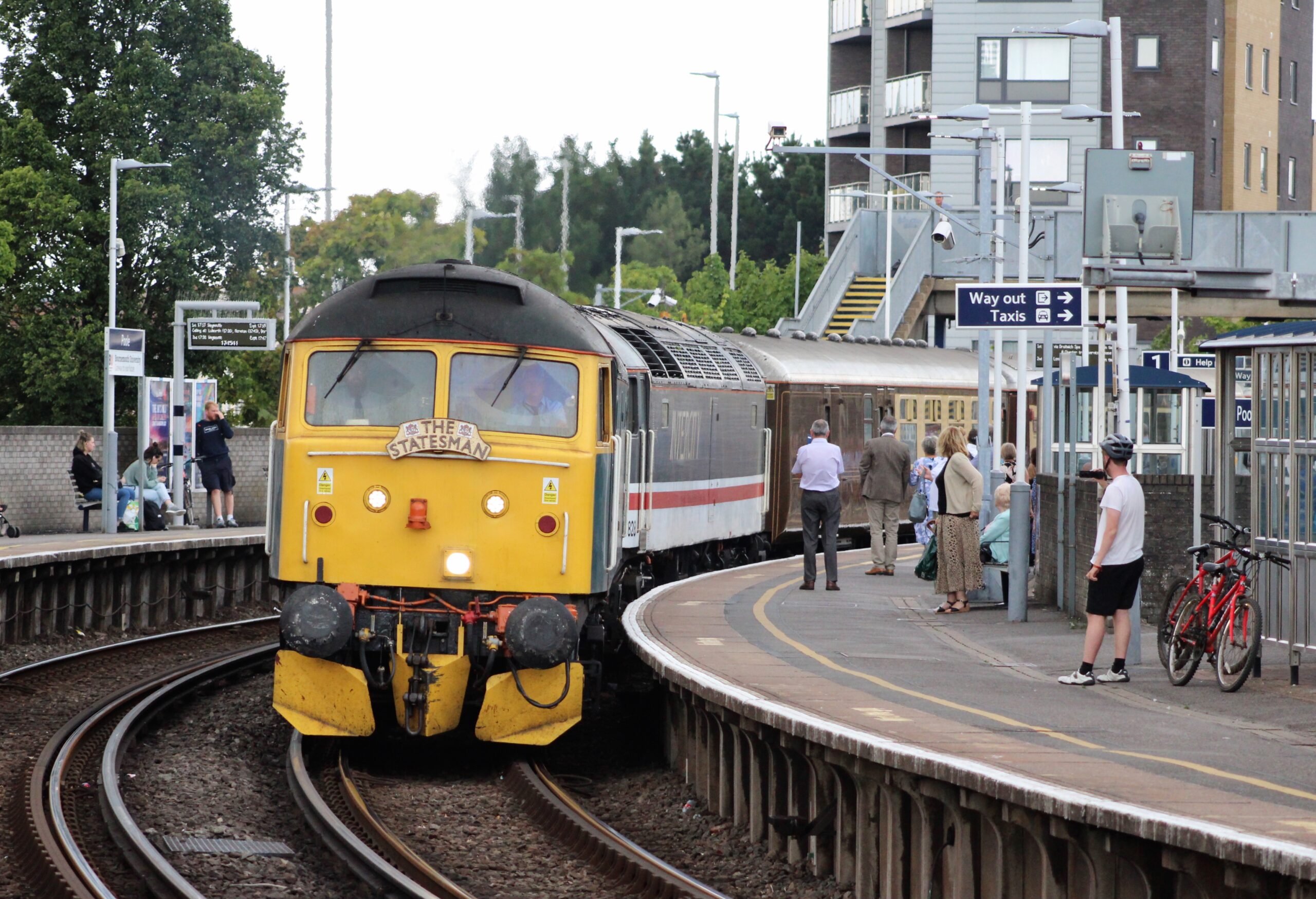
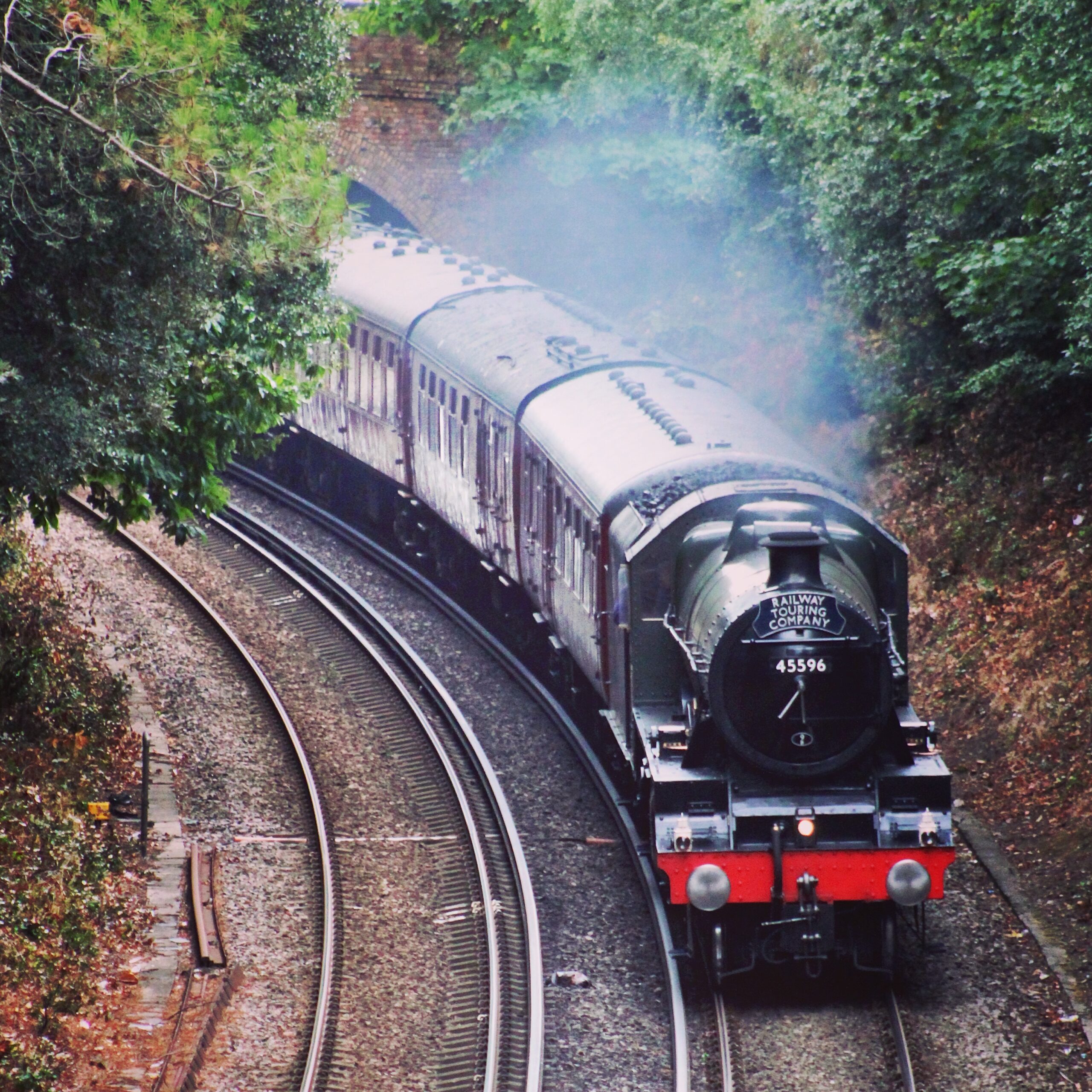
This week kicked off with two Weymouth bound rail tours in two days when “The Dorset Coast Statesman” and “The Dorset Coast Express” passed through our patch.
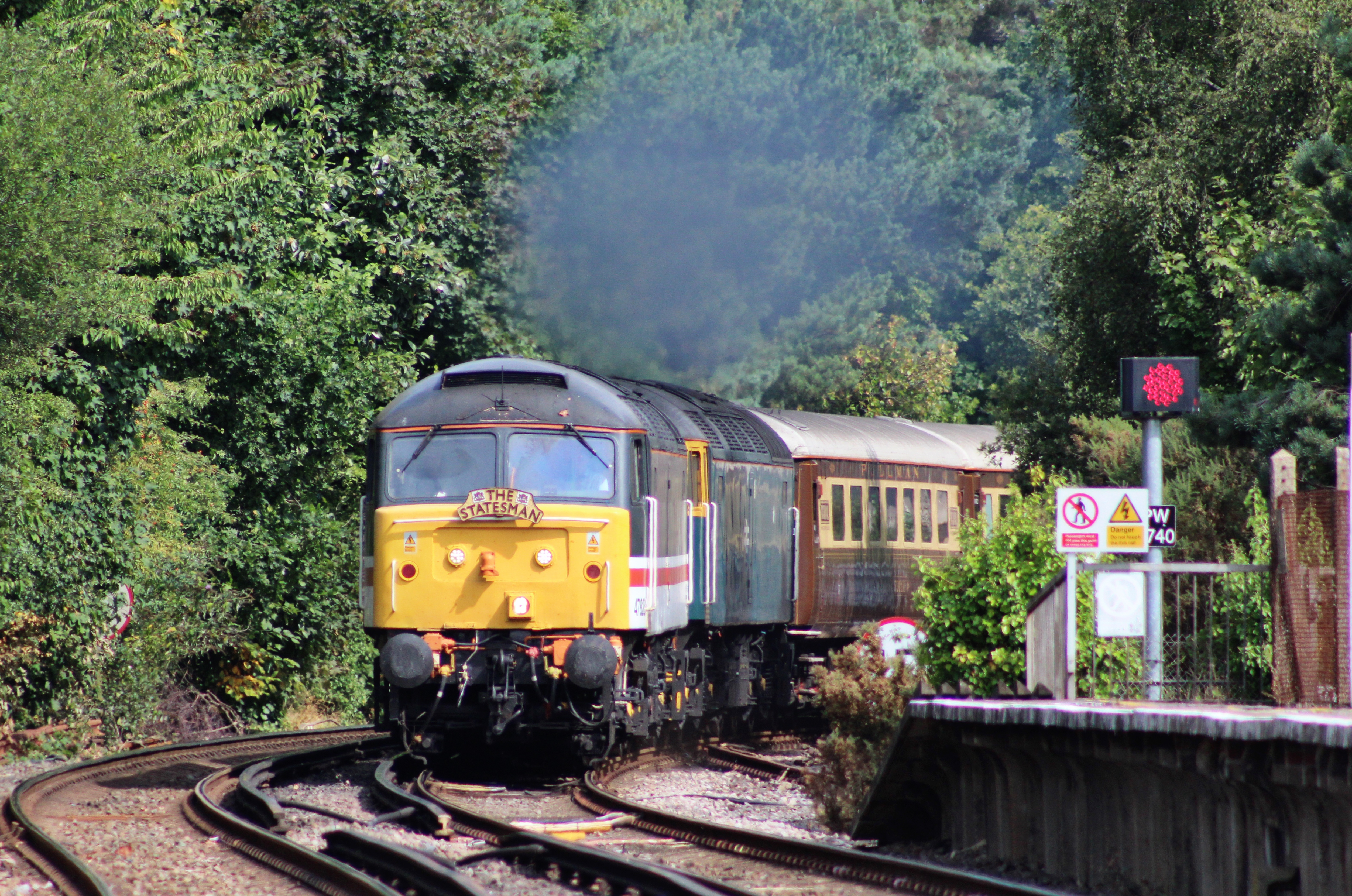
LSL Class 47 No.’s 47828 and 47853 (47614) round the curve into Hamworthy with the “Dorset Coast Statesman” – 31/08/2022LSL Class 47 No.’s 47853 (47614) and 47828 with the return “Dorset Coast Statesman” arriving at Poole – 31/08/2022
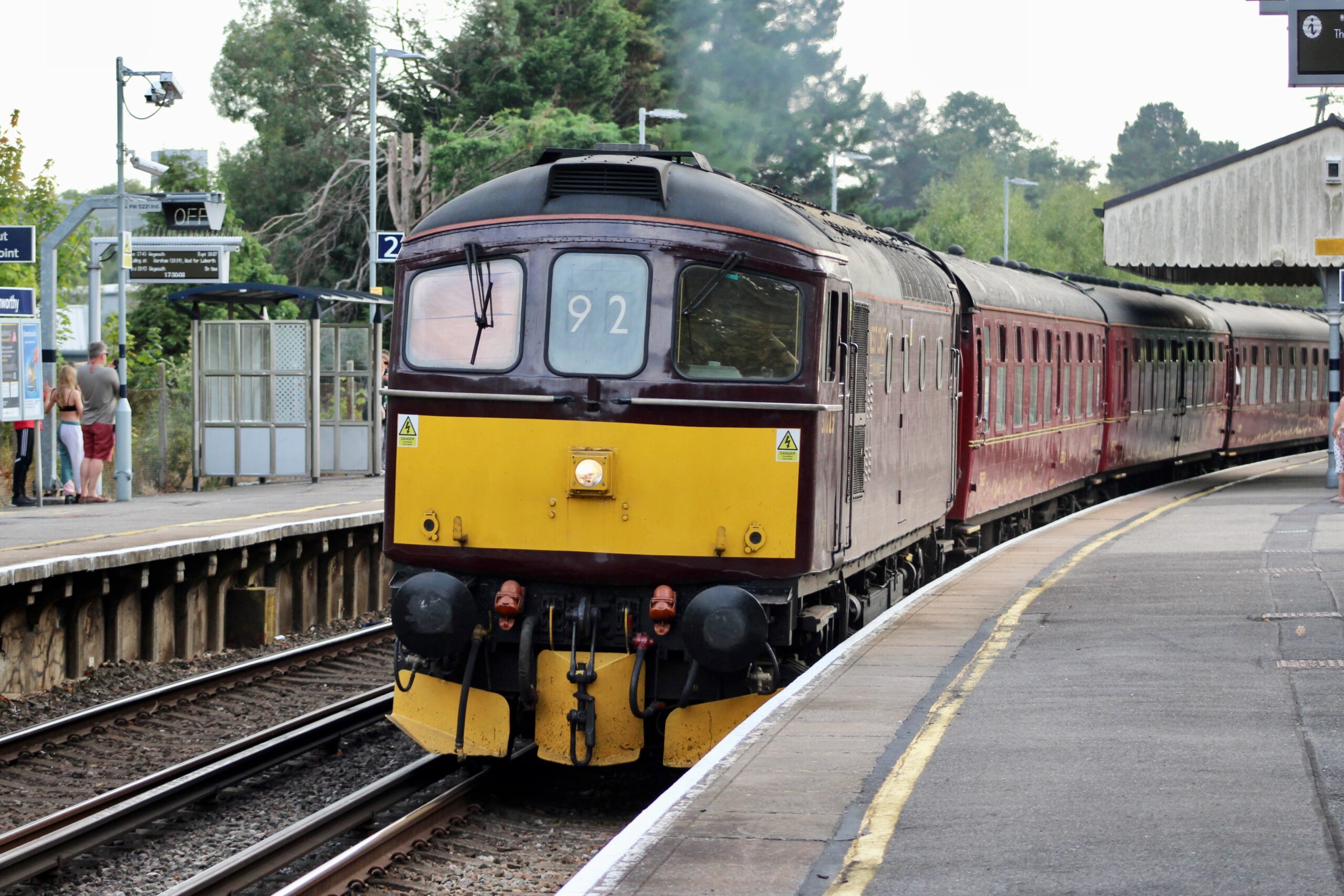
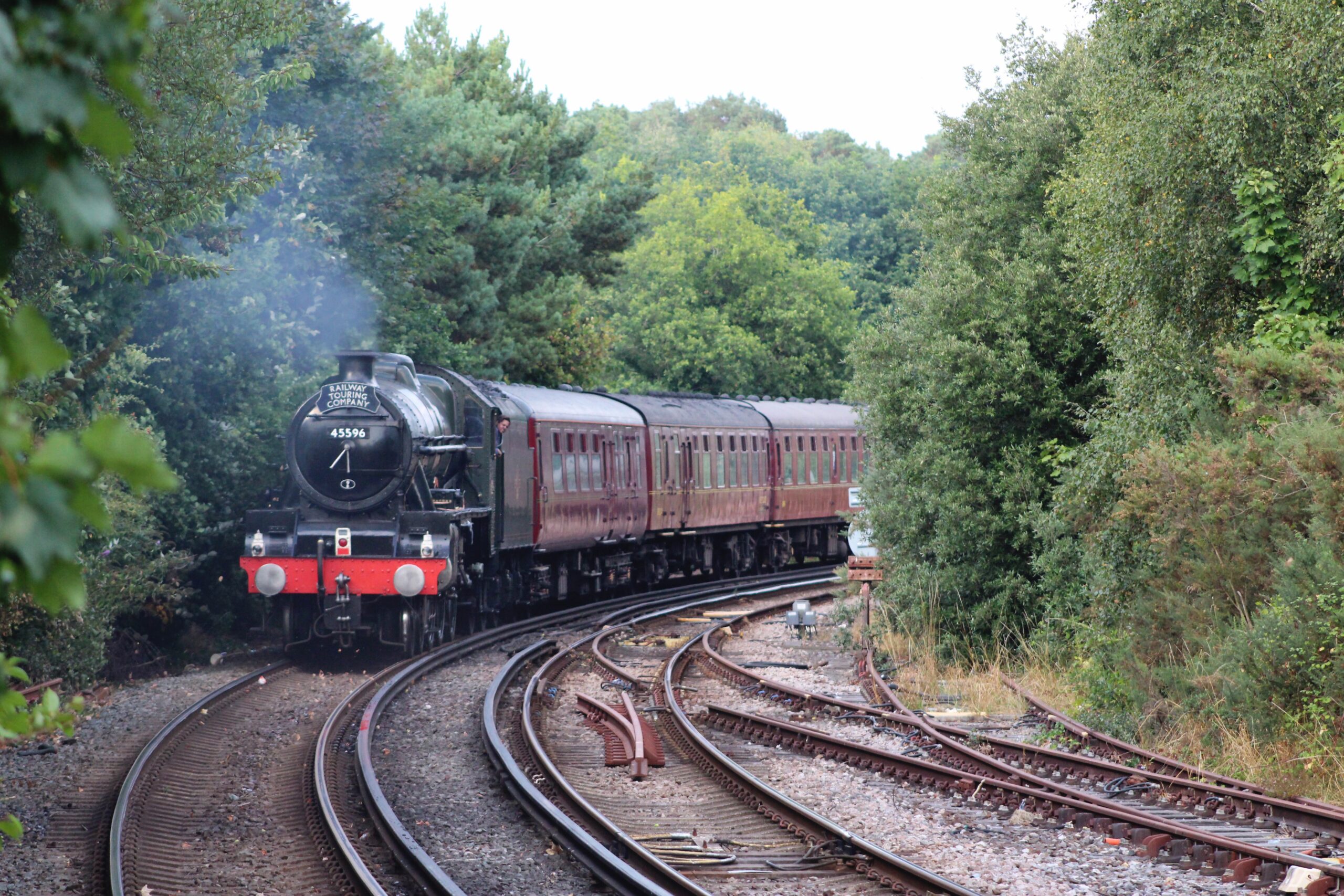
LSL Class 47 No.’s 47828 and 47853 (47614) with the “Dorset Coast Statesman” – 31/08/2022LMS Jubilee No. 45596 ‘Bahamas’ is captured between Branksome and Parkstone working the outward leg of “The Dorset Coast Express” 1Z82 0845 London Victoria to Weymouth – 01/09/2022Class 33/0 No. 33025 at the head of the return working of “The Dorset Coast Express” 1Z84 1635 Weymouth to London Victoria. Because of a problem with traction equipment, the tour was terminated at Clapham Junction – 01/09/2022LMS Jubilee No. 45596 ‘Bahamas’ at the rear of “The Dorset Coast Express” return working 1Z84 1635 Weymouth to London Victoria. The cut track on the pointwork for the Hamworthy Branch can clearly be seen, with the replacement frog for the point lying between the up and down lines. From December 12th 2022 the timetable includes a weekday “runs as required” freight service down the Hamworthy Branch to Hamworthy Blue Circle Industries (BCI) at 07:52. There is as yet no indication of a return working – 01/09/2022
LMS Jubilee No. 45596 ‘Bahamas’ and Class 33/0 No. 33025 with The Railway Touring Company excursion “The Dorset Coast Express” (With grateful thanks to @da_buckley967 for the Weymouth section, and G E Barrett for Winfrith) – 01/09/2022
No. 45596 ‘Bahamas’ managed to start a couple of minor line side fires between Dorchester South and Weymouth which caused delays to services until the flames were investigated and extinguished. The original intention was for Swanage based SR U Class 4-6-0 No. 31806 to run light engine to Weymouth to haul the train to Southampton, where it would reverse and head to London via Romsey once again in the care of the Jubilee locomotive. In the event, Class 33/0 No. 33025 which was on the rear of the tour from London worked the return section as far as Southampton Central because of the risk of line side fires.
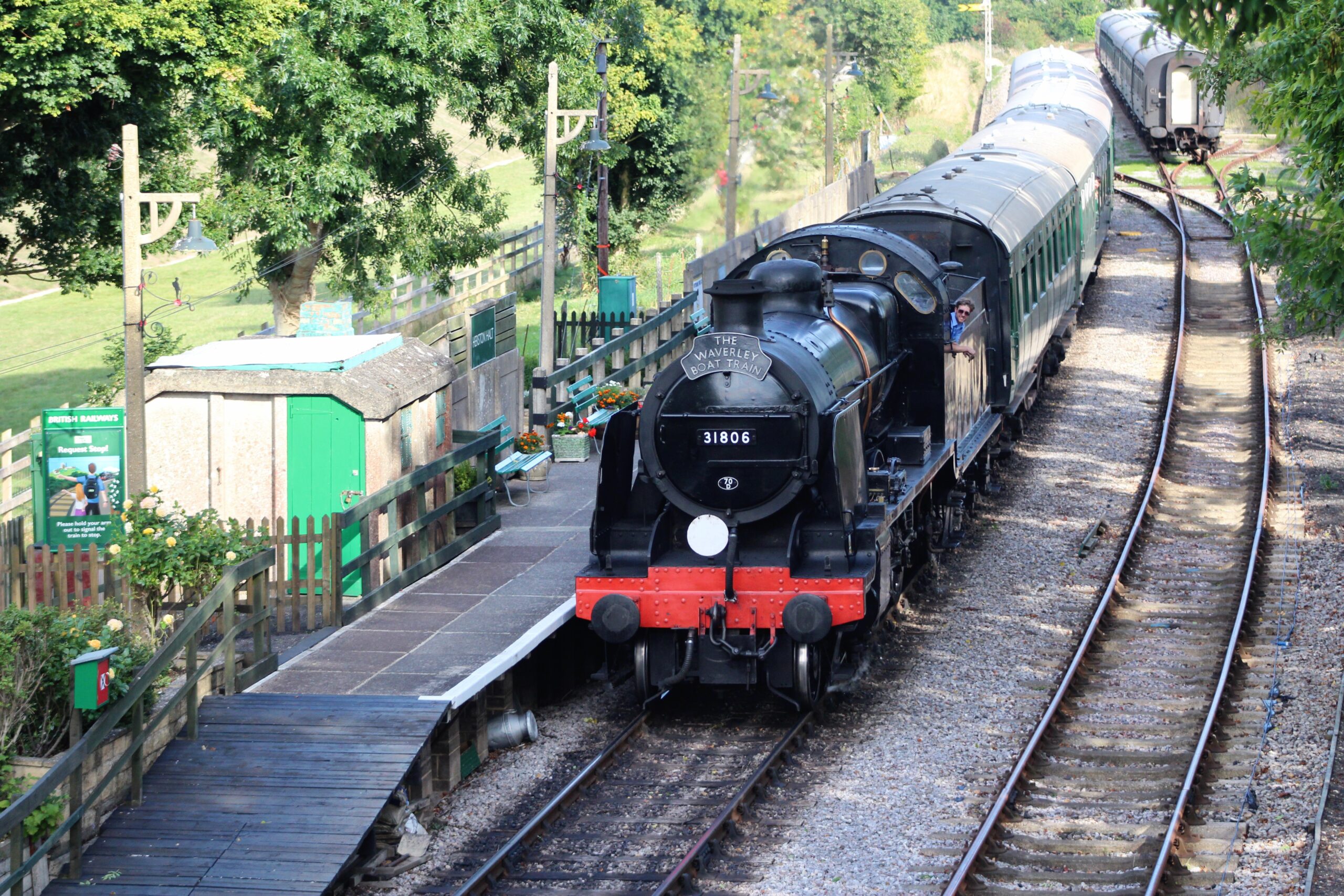
Yoshi and I eventually saw No. 31806 on Sunday 4th September 2022 working the services on the Swanage Railway. In connection with the last seagoing paddle steamer ‘Waverley’ No. 31806 carried a special headboard on some trains in honour of the visiting ship.
Video of SR U Class 4-6-0 No. 31806 on the Swanage Railway – 04/09/2022
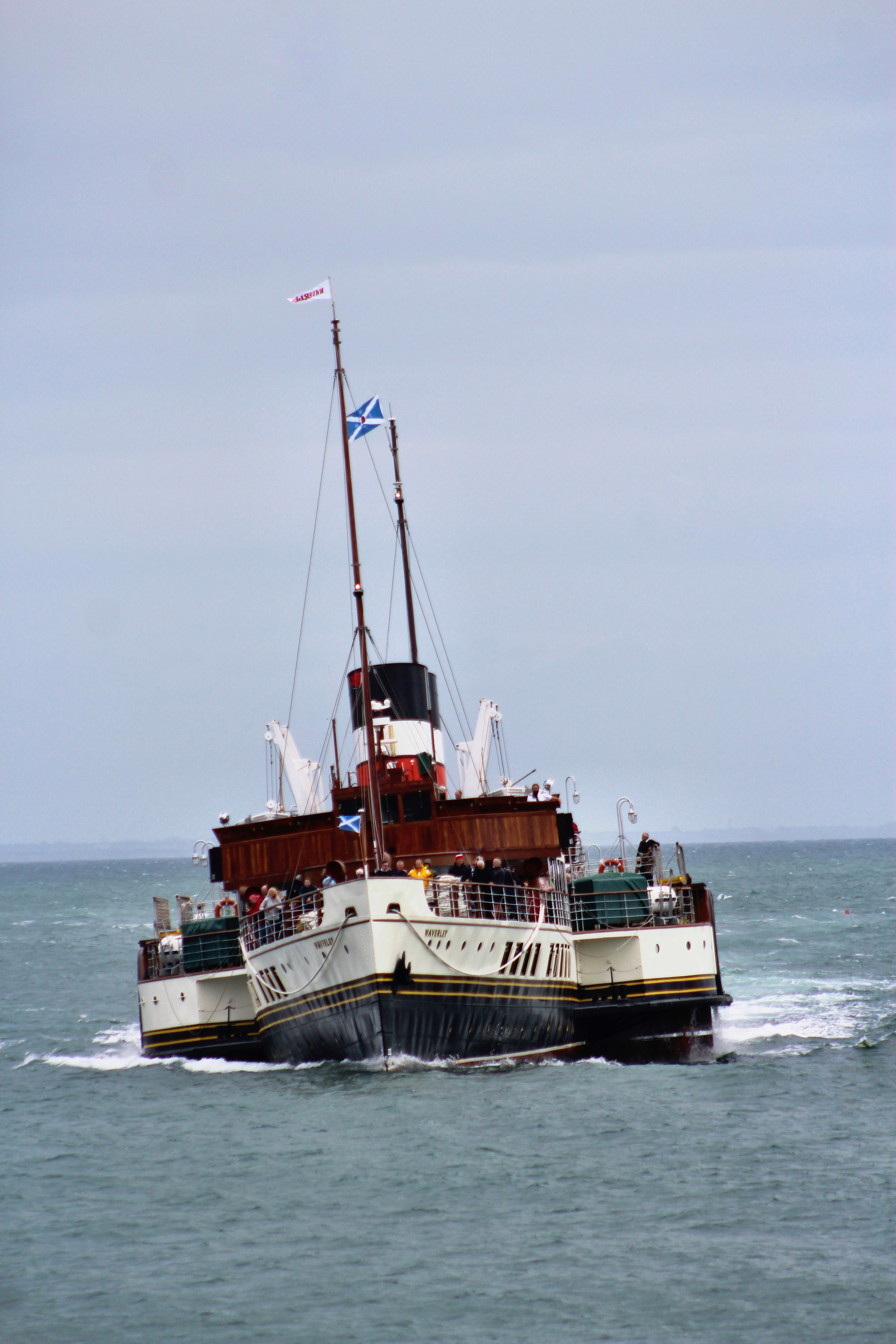
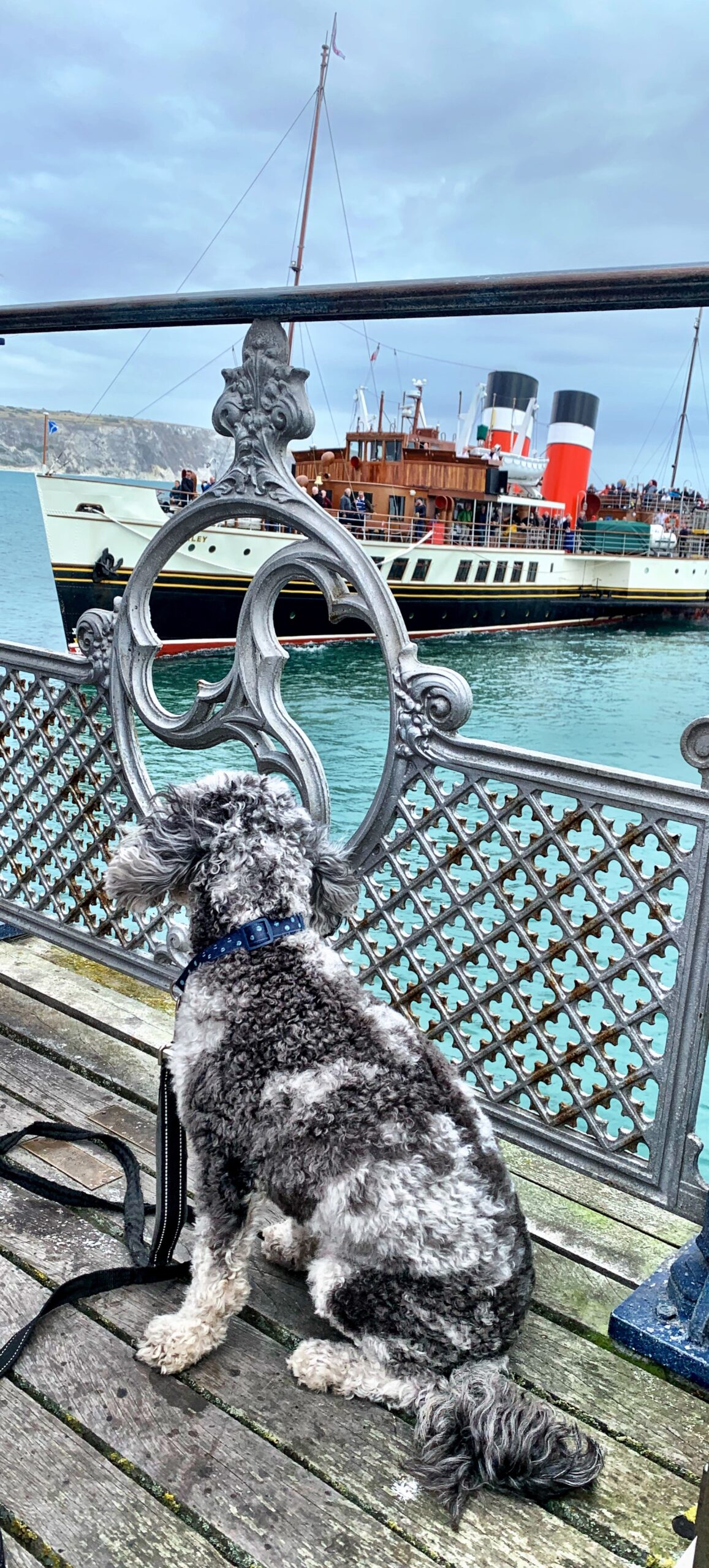
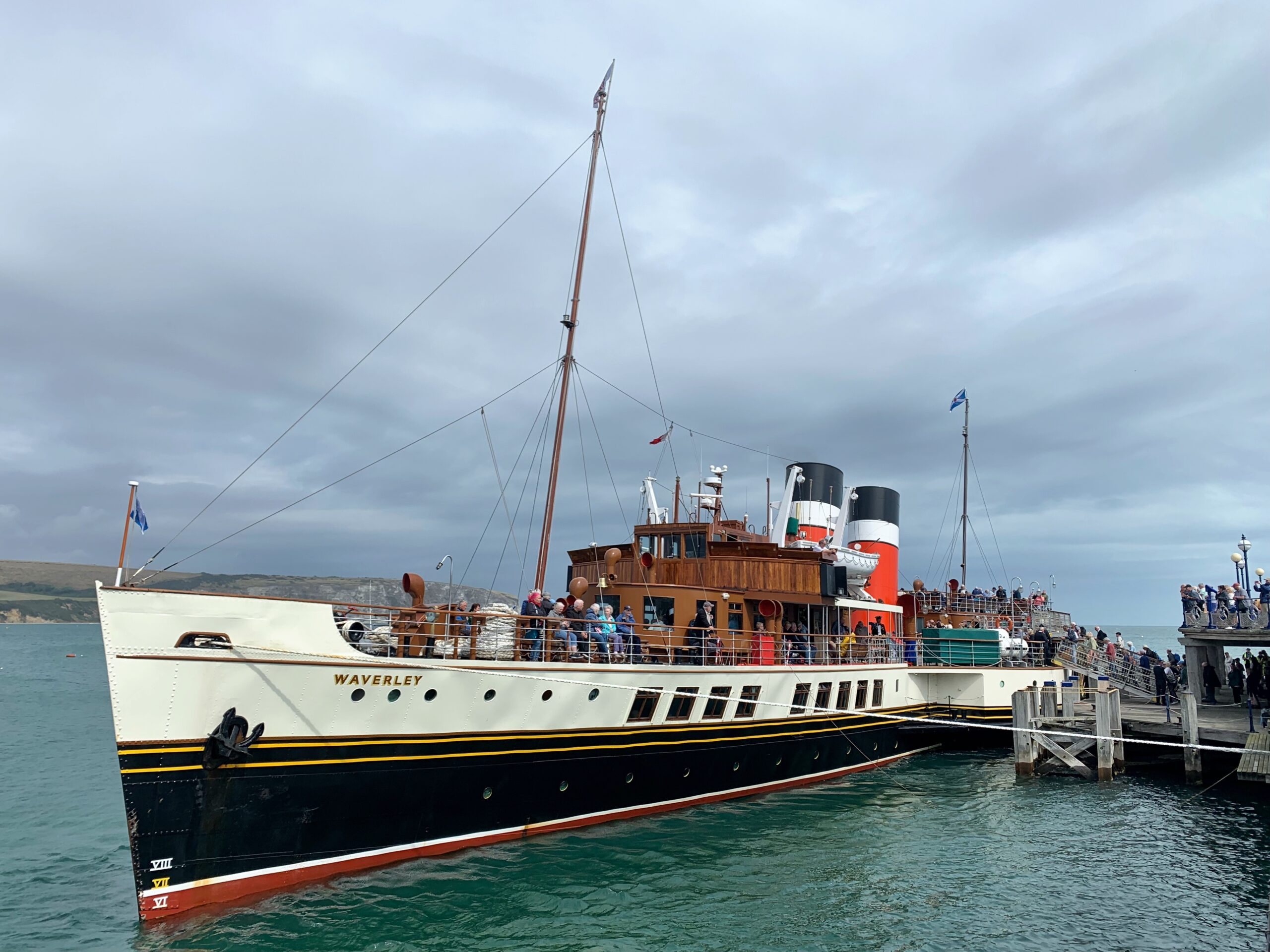
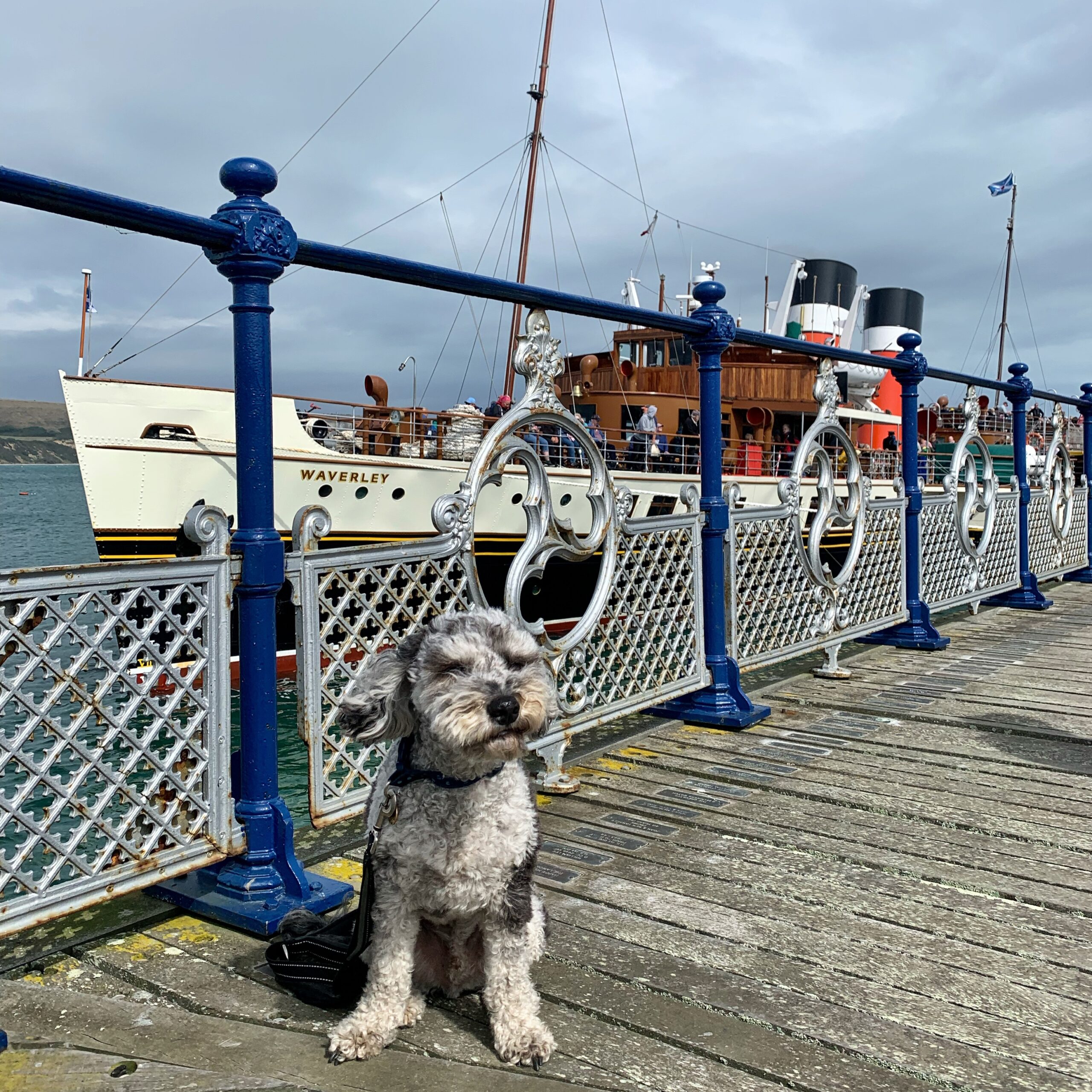
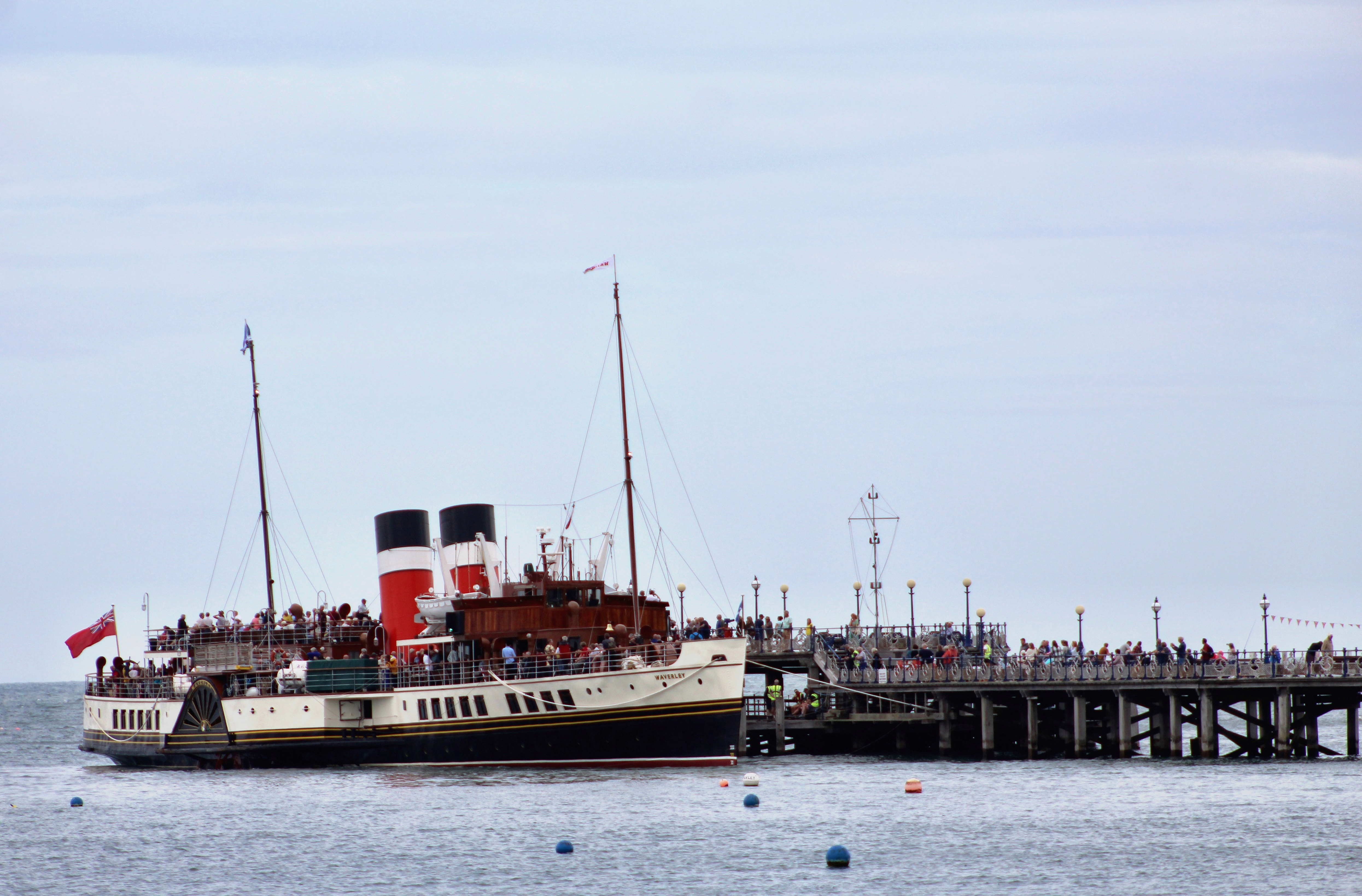
As we were in the area, Yoshi and I took a stroll along retired Victorian pier at Swanage to see ‘Waverley’ arrive to pick up passengers for a cruise to see the Bournemouth Air Show. Built in 1946, ‘Waverley’ sailed between Craigendoran on the Firth of Clyde and Arrochar on Loch Long until 1973 when she was sold to the Paddle Steamer Preservation Society for £1. She has since been restored to her 1947 appearance and now operates passenger excursions around the British coast.
‘Waverley’ is the 16th Clyde built vessel to be named after Scottish novelist and poet Sir Walter Scott’s (1771-1832) first novel published in 1814. She was ordered by the London and North Eastern Railway (LNER) to replace an earlier paddle steamer of the same name which was sunk by aircraft on 29th May 1940 during the evacuation of troops from Dunkirk.
Waverley, the last seagoing paddle steamer in the world approaches Swanage – 04/09/2022Yoshi watches from the end of Swanage’s historic pier as Waverley arrives to take passengers for trip to watch the Bournemouth Air Show – 04/09/2022Waverley alongside Swanage Pier – 04/09/2022Yoshi takes the air at Swanage Pier with Waverley in the background – 04/09/2022Waverley moored alongside Swanage Pier – 04/09/2022
The Swanage Railway announced this week that LNER A3 Class 4-6-2 No. 60103 ‘Flying Scotsman’ would be visiting the line from 19th October to 6th November 2022. ‘Flying Scotsman’ has recently undergone an extensive overhaul and celebrates her 100th birthday on 24th February 2023 and is sure to attract a lot of interest from enthusiasts and the general public.
Yoshi met up with No. 60103 ‘Flying Scotsman’ when she visited Southampton on 6th June 2021 and is looking forward to catching up again in October!
The iconic locomotive will be hauling passenger trains from Swanage to Norden from Saturday 22nd October to Wednesday 26th October 2022 and on static display at Swanage station on Thursday 20th October and Friday 21st October 2022 and again from Thursday 27th October to Sunday 6th November 2022.
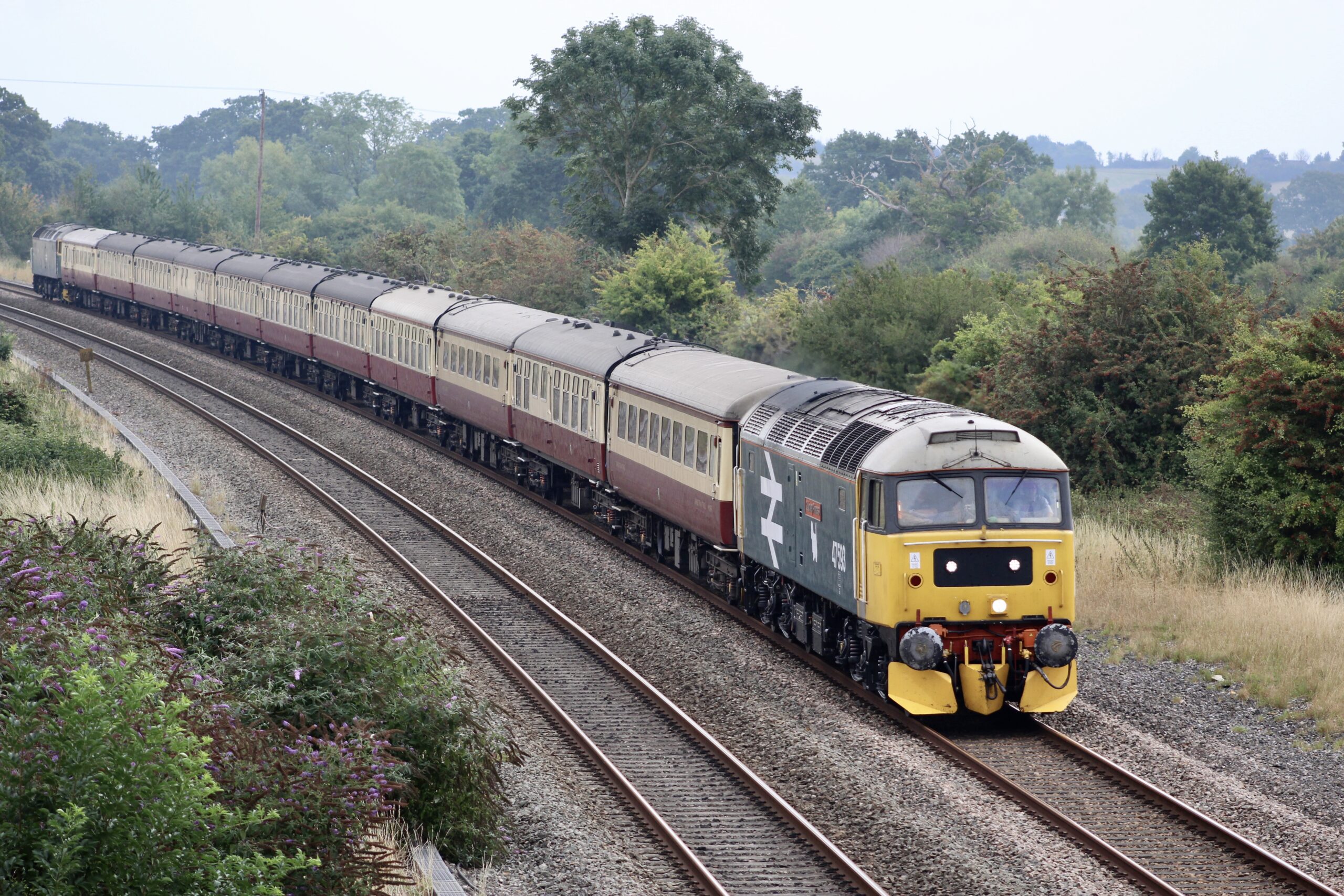
LSL Class 47 No.’s 47593 ‘Galloway Princess’ and 47614 (47853) approaching Creech St. Michael working Saphos Trains “English Riviera Express” 1Z60 0545 Crewe to Dartmouth Kingswear – 03/09/2022
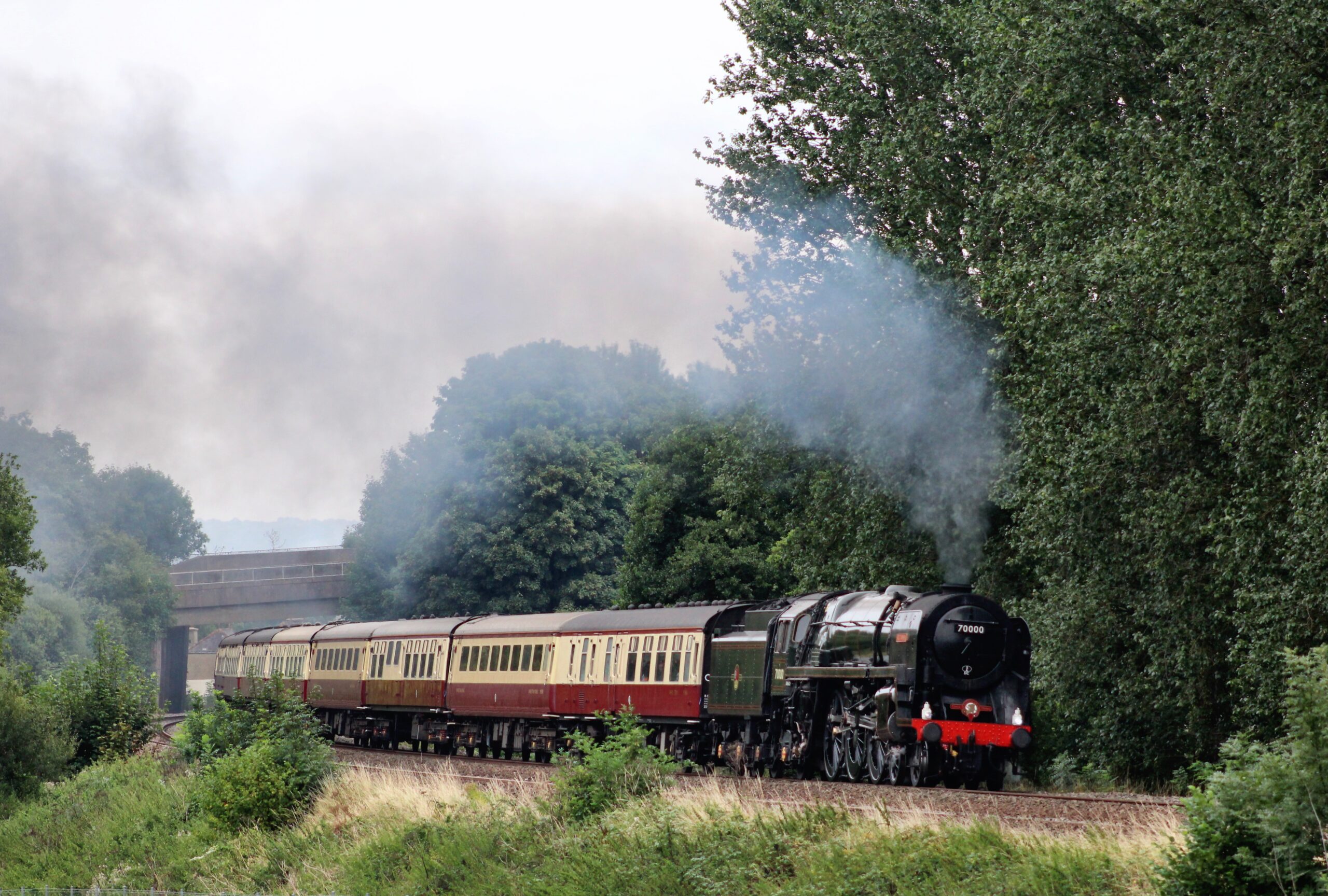
Saturday 3rd September 2022, Yoshi and I headed to the Taunton, Somerset area for the second week running, this time to see BR Standard Class 7 4-6-2 No. 70000 “Britannia’ in charge of Saphos Trains “English Riviera Express” 1Z60 0545 Crewe to Dartmouth Kingswear storm Whiteball. I was quite pleased to find the BR Standard allocated to this tour as I’d been itching to see her working all summer. As well as ‘Britannia’ we saw LSL Class 47 No.’s 47593 ‘Galloway Princess’ and 47614 (47853) passing Creech St. Michael with the train prior to the steam locomotive taking over at Norton Fitzwarren. Shortly after ‘Britannia’ passed by our line side position another tour hurtled by in the form of top and tailed WCRC Class 47 locomotives No.’s 47746 ‘Chris Fudge 29.7.70 – 22.6.10’ and 47815 ‘Great Western’ working 1Z84 0824 Birmingham International to Paignton – I almost missed these two as I was under the impression they were due an hour later than they actually were!
Standard Class 7 4-6-2 No. 70000 “Britannia’ in charge of Saphos Trains “English Riviera Express” 1Z60 0545 Crewe to Dartmouth Kingswear on the ascent to Whiteball tunnel – 03/09/2022
A quick perusal of the rail-gen groups flagged up a Class 56 working to Westbury on a train of spent ballast and scrap sleepers and unique “Steel On Steel” liveried Class 60 No. 60062 working 6B33 1137 Theale Puma to Margam T.C. Ruling out the Class 56 due to time constraints, we jumped in the car and headed up the M5 to Pilning, South Gloucestershire, with time to spare before the Class 60 appeared.
DB Cargo Steel On Steel liveried Class 60 No. 60062 ‘Sonia’, with her striking flame design celebrating the important role DB Cargo UK plays in supporting the UK’s metal transportation market, working 6B33 1137 Theale Puma to Margam T.C. The special livery is part of the company’s “Freight Belongs On Rail” campaign – 03/09/2022
We were also able to see one of the two parliamentary service trains which stop at Pilning each week. Parliamentary trains, also known as ghost trains, are passenger services operated to comply with the Railway Regulation Act of 1844 that required railway companies to provide inexpensive rail transport for less affluent passengers. The act required that at least one such service per day be run on every railway route in the UK. Although this is no longer a legal requirement, the term describes train services that continue to be run to avoid the cost of formal closure of a route or station but with reduced services often to just one train per week. As platform two is currently out of use at Pilning, the footbridge providing access having been removed in 2016, the two stopping services travel in the same eastbound direction. Currently the times for these trains are Saturday at 08:33 (Cardiff Central to Weston-super-Mare service) and 15:32 (Cardiff Central to Penzance service). Because there are no stopping westbound trains, a fares easement is in place which allows passengers to travel to Severn Tunnel Junction in order to return eastbound to alight at Pilning.
You can bark along with our day by watching the video below:
Video form September 3rd 2022 including 70000 ‘Britannia’, Class 60 No. 60062, GWR Castle HST sets and IEP’s – 03/09/2022
On our way home, we popped into Westbury to see if we could see the Class 56 loco which had arrived there earlier, and to use the loo! As it turned out, the No. 56049 ‘Robin of Templecombe 1938 – 2013’ could not have been better positioned for a photograph! With thanks to @da_buckley967 for the company and rail gen updates!
Class 56049 ‘Robin of Templecombe 1938 – 2013’ sits in the Colas sidings at Westbury -03/09/2022Nameplate detail of Class 56049 ‘Robin of Templecombe 1938 – 2013’ – 03/09/2022Freightliner Class 66 No. 66512 preparing to work 6Y16 1934 Westbury Down Yard to Burngullow Junction – 03/09/2022GWR Class 158 DMU No.’s 158760 and 158750 await departure from Westbury – 03/09/2022GBRf Class 66 No. 66722 ‘Sir Edward Watkin’ Westbury – 03/09/2022
In other news, The Railway Heritage Trust is interested in the restoration of the LSWR goods shed at Wool which although is in quite a poor condition still retains its original sliding doors and office partition.
A visit today to #Wool Station to see a potential restoration project. An original L&SWR goods shed in need of a future use, complete with original sliding doors and office partition. @PurbeckCRP@SW_Helppic.twitter.com/ydQZD9D51p
— RailwayHeritageTrust (@RailwayHeritage) August 8, 2022
That’s it for this week – we’ll be back soon. Thanks for being there! Bye for now.
Yoshi was very excited to see the cab of Class 55 Deltic No. 55008 ‘The Green Howards’ when he visited the Barrow Hill 150+2 Celebration Gala – 28/08/2022
In contrast to last week, Yoshi and I have been kept reasonably busy over the last seven days.
New Measurement Train
Colas operated NMT Class 43 No. 43299 at Yeovil Junction heading 1Q23 0556 Reading to Salisbury via Exeter St Davids seen at Yeovil Junction – 25/08/2022 (Image courtesy of Scott Lewis)NMT carriage from 1Q23 0556 Reading to Salisbury via Exeter St Davids seen at Yeovil Junction – 25/08/2022 (Image courtesy of Scott Lewis)NMT Class 43 No. 43274 at the rear of 1Q23 0556 Reading to Salisbury via Exeter St Davids seen at Yeovil Junction – 25/08/2022 (Image courtesy of Scott Lewis)
Yoshi’s North Dorset Correspondent sent us video and photos of the New Measurement Train which passed through Dorset on the Salisbury to Exeter line on Thursday 25th August 2022.
Network Rails’ New Measurement Train running 1Q23 0556 Reading to Salisbury via Exeter St Davids seen at Yeovil Junction – 25/08/2022 (With many thanks to Scott Lewis)
South Western Railway (SWR) services between between Tisbury and Gillingham have emergency speed restrictions currently imposed because of the warm weather. Network Rail says the conditions have dried out the clay beneath railway embankments which can result in shrinkage and movement of the rails. SWR will be announcing a temporary, revised timetable on Friday 2nd September 2022 with the likelihood there will be a reduced number of services between Salisbury and Exeter St Davids and journeys will take longer than usual.
87002 ‘Royal Sovereign’
On Friday 26th August 2022, Yoshi spent the day with his cousins while I was in London escaping from martian invaders at Jeff Wayne’s The War of the Worlds: The Immersive Experience, which I can thoroughly recommend. After surviving the alien threat, I headed off to London Euston to see Locomotive Services Ltd’s “The Friday Charter” which, for only its second weekly run, between London and Manchester / Crewe was hauled by Class 87 No. 87002 ‘Royal Sovereign’ and a fine sight she looked at the head of a rake of Inter-City Executive liveried carriages. There were a number of railway enthusiasts waiting on platform 16 to see the train depart and it was good to see many were from a younger generation than myself, hopefully assuring interest in railways survives.
1Z41 1742 London Euston to Manchester Piccadilly departs London Euston behind Class 87 No. 87002 – 26/08/2022
On our way home from London Waterloo, I was able to see Class 701 No. 701046 depart on a mileage accumulation run.
Class 701 No. 701046 at the platform 6 buffer stops of London Waterloo having worked into the SR terminus working 5Q42 1844 Eastleigh to London Waterloo. The unit would form the 2114 5Q43 London Waterloo to Eastleigh TRSMD departure. Note the new Arterio branding under the SWR logo – 26/08/2022
Video of Class 701 mileage accumulation runs – August 2022Class 701 No. 701038 seen at Poole Storage Sidings working 5Q51 1115 London Waterloo to Eastleigh – 24/08/2022
Great Dorset Steam Fair
Yoshi didn’t make it to this years Great Dorset Steam Fair which is held at Tarrant Hinton near Blandford Forum, but his cousin the collie Jess had a great day out and sent us the following images of out of ticket Rebuilt Battle of Britain Class Bullied Pacific No. 34053 ‘Sir Keith Park’ which was on show healing to demonstrate heavy haulage and loading / unloading courtesy of heavy haulage contractor Allelys.
No. 34053 is currently out of ticket following her recent stint at the Spa Valley Railway – 27/08/2022 (Image courtesy of G. E. Barrett)Nameplate detail No. 34053 ‘Sir Keith Park’ (Image courtesy of G. E. Barrett)Smokebox close-up of No. 34053 ‘Sir Keith Park’ (Image courtesy of G. E. Barrett)
GBRf Staff Charter
GBRf liveried Class 50 No.’s 50049 ‘Defiance’ and 50007 ‘Hercules’, the latter still running with one side disguised as No. 50034 ‘Furious’, having passed Cogload Junction north of Taunton working a GBRf staff charter from Warrington to Paignton and return – 27/08/2022
Saturday 27th August Yoshi and I visited a friend in the Taunton area. We of course looked to see on Real Time Trains for any interesting workings we might be able to see while in Somerset. As luck would have it, GBRf organised staff charter hauled by two Class 50 locomotives were perfectly timed for our visit. We parked up at Creech St. Michael adjacent to the Bridgwater and Taunton Canal and walked alongside the waterway until we reached the over bridge just south of Cogload Junction which was to be our vantage point.
The Bridgwater and Taunton Canal – 27/08/2022
The Canal was engineered by James Hollinsworth and opened in 1827. The original section ran from Taunton to Huntworth where it joined the River Parrett. Ten years later, in 1837, the canal as extended from Huntworth to Bridgwater dock where a lock was made to join the River Parrett. This was to be blocked off when the docks closed to coastal shipping in 1971.
In 1866 the Canal was under considerable pressure from the railway and was eventually sold to the Bristol & Exeter Railway Company, although control eventually passed to the Great Western Railway. There was no interest in promoting commercial traffic on the Canal which slowly declined in preference to the much quicker railway. In 1907 the last barge tolls were collected after which the Canal became a water course. In 1947 the British Transport Commission took over responsibility of the Canal and later still in 1962 the British Waterways took over its management.
A noticeable feature on the Creech section of the canal is “The Old Engine House”, built in 1827 to pump water into the canal from the RiverTone, originally housing a beam engine pump, and later two locomotive boilers which worked a centrifugal pump delivering 125,000 gallons per hour. Eventually the engine house supplied the water troughs fixed between the nearby railway lines, so that steam engines could pick up water from the troughs in the railway tracks without having to stop, saving valuable time for through express services.
GBRf staff charter; 1Z18 0732 Warrington Bank Quay to Paignton and 1Z20 1641 Paignton to Warrington Bank Quay – 27/08/2022
Barrow Hill
An early start on Sunday August 28th saw us heading North to Barrow Hill near Chesterfield for the deferred event celebrating 150 years since the opening of the roundhouse in 1870. Intended to take place in 2020, Covid meant that the gala could not take place until two years after the anniversary. Known as Staveley Roundhouse until 1948 when it was renamed as Barrow Hill to avoid confusion with an ex-Great Central Railway shed located nearby, it was built to a standard Midland Railway square shed design in 1870 with a central turntable under cover. The shed was operational from 1870 until 9 February 1991 and Grade II listed in the same year. Chesterfield Borough Council purchased the building and surrounding yard from the British Rail Property Board in December 1996. During the interim years, the Roundhouse and associated buildings were heavily vandalised and came dangerously close to being lost forever. The site reopened to the public in July 1998 after the building was restored by the Barrow Hill Engine Shed Society
Recreated Baby Deltic Class 23 No. D5910 ( formerly Class 37 No. 37372) took centre stage on the turntable while GBRf Class 69 No. 69003 was named ‘The Railway Observer’ the day before our visit. GWR 1500 Class 0-6-0PT shunting engine No. 1501 was in steam working shuttle trains from the Roundhouse Halt up the Springwell branch line. Midland Railway 158A Class 2-4-0 No. 156 was on display alongside Midland Railway Compound No. 1000, the first time in several years the two Midland Railway locomotives have been seen together.
It was a little on the warm side, so we took care to ensure Yoshi had lots of water and shade during our time at Barrow Hill. It was quite busy on arrival, but numbers thined out during the day.
Baby Deltic Class 23 No. D5910 (formerly Class 37 No. 37372) Barrow Hill – 28/08/2022Class 85 No. 85006 Barrow Hill – 28/08/2022Class 81 No. 81002 Barrow Hill – 28/08/2022Class 45 No. 45105 Barrow Hill – 28/08/2022Class 02 No. 02003 Barrow Hill – 28/08/2022Great Western Railway Class 2-6-2T No. 5164. Built in 1930. On loan from the Severn Valley Railway at Barrow Hill – 28/08/2022Hawthorn Leslie 0-40ST No. 2491 ‘Henry’. Built in 1901. Barrow Hill – 28/08/2022Great Central Railway Class 11F (LNER Class D11)4-4-0 No. 506 ‘Butler Henderson’ built in 1919. On loan from the National Railway Museum at Barrow Hill – 28/08/2022Nameplate detail of Great Central Railway Class 11F (LNER Class D11)4-4-0 No. 506 ‘Butler Henderson’ built in 1919. On loan from the National Railway Museum at Barrow Hill – 28/08/2022Class 20 No. 20905 ‘Dave Darwin’ Barrow Hill – 28/08/2022Midland Railway 156 Class 2-4-0 No. 158A. Built in 1866. On loan from the National Railway Museum at Barrow Hill – 28/08/2022Midland Railway Compound Class 4-4-0 No. 1000. Built in 1902. On loan from the National Railway Museum at Barrow Hill – 28/08/2022GER Class G58 (LNER Class J17) 0-6-0 No. 8217. Built in 1905 at Barrow Hill – 28/08/2022Vulcan Foundry 0-4-0-OST No. 3272 Vulcan. Built in 1918 at Barrow Hill – 28/08/2022Class 08 No. D4092 Barrow Hill – 28/08/2022GBRf honoured the Railway Correspondence & Travel Society (RCTS) by naming Class 69 No. 69003 ‘The Railway Observer’ after the Society magazine at Barrow Hill. – 28/08/2022Nameplate detail of Class 69 No. 69003 ‘The Railway Observer’ at Barrow Hill – 28/08/2022Class 69 No. 69003 ‘The Railway Observer’ at Barrow Hill – 28/08/2022Yoshi with Class 69 No. 69003 ‘The Railway Observer’ at Barrow Hill – 28/08/2022Class 66 No. 66726 ‘Sheffield Wednesday’ Barrow Hill – 28/08/2022Class 91 No. 91120 Barrow Hill – 28/08/2022Class 91 No. 91117 Barrow Hill – 28/08/2022Class 83 No. 83012 at Barrow Hill – 28/08/2022The unique Class 89 No. 89001 ‘Avocet’, was built as a prototype in 1986 for a fleet that was never ordered. Barrow Hill – 28/08/2022Class 37 No. 37610 Barrow Hill – 28/08/2022Class 37 No. 37612 Barrow Hill – 28/08/2022Class 45 No. 45060 ‘Sherwood Forester’ Barrow Hill – 28/08/2022Class 82 No. 82002 Barrow Hill – 28/08/2022Class 82 No. 82002 Barrow Hill – 28/08/2022Class 20 No. 20304 Barrow Hill – 28/08/2022Class 20 No. 20301 Barrow Hill – 28/08/2022Class 08 No. 08956 Barrow Hill – 28/08/2022EMR Class 156 No. 156498 Barrow Hill – 28/08/2022Class 27 No. 27066 Barrow Hill – 28/08/2022Class 50 No. 50008 ‘Thunderer’ Barrow Hill – 28/08/2022Yoshi with Class 50 No. 50008 ‘Thunderer’ Barrow Hill – 28/08/2022Class 67 No. 67007 Barrow Hill – 28/08/2022Yoshi with Class 67 No. 67007 Barrow Hill – 28/08/2022Class 67 No. 67007 Barrow Hill – 28/08/2022DC Rail liveried Class 56 No. 56091 ‘Driver Wayne Gaskell’ at Barrow Hill – 28/08/2022Class 37 No.’s 37219 ‘Jonty Jarvis’ and 37901 Barrow Hill – 28/08/2022Class 37 No. 37901 Barrow Hill – 28/08/2022Class 37 No. 37667 ‘Flossie’ Barrow Hill – 28/08/2022Class 37 No. 37667 (D6851)’Flossie’ with Class 47 No. 47769 and Class 20 No. 20314 Barrow Hill – 28/08/2022Class 55 No. 55015 ‘Tulyar’ Barrow Hill – 28/08/2022Yoshi gets up close to Class 55 No. 55015 ‘Tulyar’ Barrow Hill – 28/08/2022Cab of Class 55 No. 55008 ‘The Green Howards’ – Barrow Hill 28/08/2022
Although Yoshi clearly took a liking to the Deltic locomotives, he was a little unsure about the metal steps leading up to the door of No. 55008 ‘The Green Howards’, so we reversed back down to the security of ground level. However, Scott kindly took the following video of the Napier Deltic engine simulation which we can all enjoy!
Napier Deltic engine simulation (Courtesy of Scott Lewis)Class 03 No. 03066 Barrow Hill – 28/08/2022No. 1501 Barrow Hill – 28/08/2022Class 02 No. D2868 Barrow Hill – 28/08/2022Class 07 No.D2996 (07012) Barrow Hill – 28/08/2022
Video of Barrow Hill 150 +2 Celebration Gala shuttles – 28/08/2022
After our visit to Barrow Hill, we journeyed home via DB Cargo operated Toton Traction Maintenance DepotChanges and currently the only TMD within DB Cargo UK where heavy maintenance is carried out on locomotives. Our visit was to see the lines of withdrawn Class 60 locomotives currently in store. I was surprised by the number of diesel engines slowly rotting away.
Class 60 locomotives at Toton – 28/08/2022 (Image courtesy of Scott Lewis)Yoshi having surveyed the Class 60 locomotives at Toton – 28/08/2022 (Image courtesy of Scott Lewis)
In other news, Network Rail have been granted retrospective listed building approval for adorning the pedestrian bridge at Wareham railway station with a heritage style roundel sign which has been in place on the grade 2 station site since November 2021. The station was built in 1864 and listed for its historical and architectural importance in 1976. Network Rail said they did not realise the footbridge which is a later addition to the station buildings was included in the listed status.
Shame about the lamppost! The Wareham station sign as seen on 03/01/2022
Swanage Railway resident Class 33/1 No. 33111 was taken to Bristol St. Phillips Marsh depot on a low loader for wheel turning this week following her recent failure on the heritage branch.
On Bank Holiday Monday Yoshi popped down to Poole Quay to see the arrival of Steamship Shieldhall, launched in 1955 for the transport of treated sewage sludge down the river Clyde to be dumped at sea – 29/08/2022
This week’s blog has mostly been put together with the sound of Alexi Sayle’s “Strangers on a Train” gracing our ears. We loved the idea of combining the “Tank Museum” at Bovington with “Monkey World” and creating a monkey tank driving nightmare. Many thanks for popping by and for your comments, corrections and updates. Thank you to Caroline for helping out with video and putting up with me. And finally a big thank you for Scott for taking the driving seat on Sunday for our trip to Derbyshire. See you in seven!
Yoshi in front of stationary Class 33/0 No. D6515 (33012) ‘Lt Jenny Lewis RN’ which was working Swanage Railway Friday Night Bistro train duties. The train stops here for around thirty minutes and we had permission from the driver and guard to take this photo. Please ensure you and your pets stay safe in and around railway property – 12/08/2022
This was looking like a quiet week on the local railway scene, but Yoshi and I had some lovely family events to fill the days. It’s not all about the trains, apparently. Despite the lack of main line entertainment, we were surprised to find another Direct Rail Services (DRS) Winfrith train was running on Thursday 11th August. These workings are in connection with the removal of low level nuclear waste from Magnox Winfrith. This weeks run only appeared on the schedules a couple of days previously (Tuesday 9th August 2022) and, according to folk at Magnox Winfrith I chatted to, may well be the last such working of 2022. The next is provisionally slated for around March 2023. Let’s see.
I chose to see the down working pass through Hamworthy on its way to Winfrith. The locomotives top and tailing the train were DRS Class 68 No.’s 68002 ‘Intrepid’ and 68007 ‘Valiant’. No. 68005 ‘Defiant’ had originally been allocated to the working but developed a fault on its way from Sellafield to Crewe with the empty PFA wagons which would be used for onward transit to Dorset. The Class 68’s were built by Vossloh at Albuixech, Valencia for use by Direct Rail Services.
DRS Class 68 locomotives No.’s 68002 ‘Intrepid’ and 68007 ‘Valiant’ top and tail a set of empty PFA wagons bound for Magnox Winfrith powering through Hamworthy with 6Z62 0103 Crewe Coal Siding (DRS) to Winfrith Sidings – 11/08/2022
For the return run, I wanted to catch the loaded train leaving Winfrith sidings as there will be only a limited number of these workings, so I thought I would take the opportunity on a beautiful sunny day. The security guys at Winfrith were pleasant and relaxed about my taking photos from a public footpath. After departure from Winfrith Sidings, the train goes on to Dorchester South where it reverses to embark on its trip back to Crewe. While it was doing this, I headed off to Poole in order to catch the consist passing over Holes Bay.
DRS Class 68 No. 68002 ‘Intrepid’ stands in Winfrith Sidings awaiting departure with the loaded train of low level nuclear waste – 11/08/2022DRS Class 68 No. 68002 ‘Intrepid’ edges out of Winfrith Sidings towards the main line – 11/08/2022At the rear of the loaded train DRS Class 68 No. 68007 ‘Valiant’ formerly in ScotRail livery – 11/08/2022DRS Class 68 locomotives No.’s 68007 ‘Valiant’ and 68002 ‘Intrepid’ crossing Holes Bay with the loaded 6Z95 1600 Winfrith Sidings to Crewe Coal Sidings (DRS) – 11/08/2022
And here’s our video of the August 2022 Winfrith Cats:
DRS Class 68 locomotives No. 68002 ‘Intrepid’ and 68007 ‘Valiant’ with the third Winfrith train of 2022 seen at Hamworthy, Winfrith and Holes Bay – 11/08/2022
Digital photography has given us the ability to snap away more or less at our hearts content. Back in my misspent youth armed at first with my 126 Kodak camera, then my 110 Kodak and finally my trusty Russian made 35mm Zenit SLR I was very conscious of both the cost of the film and of the developing and printing. This meant that, often, I had one chance to take a photograph of a particular train. I wasn’t always too mindful however of where the sun was in relation to my subject and the effect this would have on the resulting image. It would take a week or so for the prints to be returned in the post from Truprint or other postal D&P service which might have a money saving promotion on the go. In my mind I had always taken a masterpiece of railway photography, but invariably what was returned never lived up to my expectations. But what did it matter? There would be another Class 33/0 on the Weymouth Boat Train or Inter-Regional Class 47 hauled holiday special excursion to get into the camera viewfinder another day. Until when there wasn’t, of course. Railway’s have always encompassed change and development. If they didn’t, we’d still all be being hauled by variations of Stephenson’s ‘Rocket’ and getting smut in our faces sitting in open topped wagons. I sometimes wish I’d taken more photos of everyday scenes back in the 70’s and 80’s. But I didn’t and I don’t have a time machine to take me back there. Which is where, to some extent, our heritage railways step in. I have spent many a happy hour at a steam or diesel gala on a preserved railway. Some people like to travel behind their favourite class of locomotive, whereas I like to photograph or video the trains, as I know a lot of other enthusiasts do. I politely suggest photographers – and I am sure there are many who already do – who don’t travel on the trains make a donation to the railway they are using as their canvas. Or use the catering facilities, or buy merchandise. Anything to give something back.
Friday evening (August 12th), as the heat of the day had subsided, Yoshi and I ventured out to our local heritage line, The Swanage Railway, to see their resident Class 33/0 No. D6515 (33012) * ‘Lt Jenny Lewis RN’ hauling the custard and cream dining set on the Friday Bistro train. Although replicating an era prior to my interest in railways, the ensemble looked magnificent catching the last rays of the sun at the end of the day.
D6515 (33012) ‘Lt Jenny Lewis RN’ working Swanage Railways Friday Night Bistro Train 1N08 1930 Swanage to Norden having just departed Corfe Castle station – 12/08/2022D6515 (33012) ‘Lt Jenny Lewis RN’ working Swanage Railways Friday Night Bistro Train 1N09 2010 Norden to Swanage having just departed Norden – 12/08/2022
Class 33 No. D6515 (33012) ‘Lt Jenny Lewis RN’ with Swanage Railways Friday Bistro Train – 12/08/2022
Sister locomotive Class 33/1 No. 33111 experienced difficulties earlier on Friday and has had to be withdrawn from service pending repairs. Hopefully she won’t be out of action for too long. In the meantime, during the steam ban which resulted from the recent spell of dry weather, Swanage are employing their Diesel Multiple Unit set to run services in conjunction with No. D6515 with steam expected to return on Wednesday 17th August 2022.
*A note about British Rail diesel & electric locomotive numbering. Upon introduction as part of the 1950’s “Modernisation Plan”, diesel locomotives carried one to four-digit numbers prefixed with a letter ‘D’, and electric locomotives with a letter ‘E’. With a move to computerisation all locomotives were renumbered so they could be logged on the Total Operating Processing System (TOPS) which recorded the maintenance history of locomotives and rolling stock, along with its allocation to division and depot and duty, its current status, its location etc. Locomotives were numbered in a consecutive series in terms of classification with the first two or three digits used to denote the class of locomotive or multiple unit. Sub-classifications were indicated in the TOPS system with a slash and a subclass number. For example Birmingham R.C.&W. Co Type 3 Bo-Bo No. D6515 became Class 33/0 No. 33012.
Ian Allan were well known for publishing books of locomotive numbers for train spotters who could tick off or underline the examples they had seen. Here is the B.R.C&W Type 3 fleet list as at August 22nd 1966 published in “British Rail Locomotives And Other Motive Power”. As you can see D6502 is missing from this list, having already been withdrawn following an accident in 1964The Class 33’s divided into sub classes as seen from the 1980 edition of Ian Allan’s “British Rail Motive Power Combined Volume”Class 33/0 No. 33016 with a Bristol to Weymouth service at Dorchester West – 25/06/1981Class 33/1’s were modified for push pull operations on the un-electrified Bournemouth to Weymouth line and can be easily identified by their high-level brake pipes and jumper cables. They were originally going to be classified Class 34 under TOPS, but instead sensibly became a Class 33 sub-class. No. 33108 is seen at Norden on the Swanage Railway taking part in the 2013 diesel gala backing onto 4VEP EMU No. 3417 ‘Gordon Pettitt’. Class 31 No. 31466 can be seen in the background. No. 33108 is currently undergoing repairs to bodywork and traction motors at the Severn Valley Railway – 12/05/2013A batch of twelve locomotives were built with narrow bodies to enable working through narrow tunnels between Tunbridge Wells in Kent and Hastings in Sussex. These became Class 33/2 under TOPS and were nicknamed “Slim Jims” by enthusiasts. West Coast Railway Co. No. 33207 ‘Jim Martin’ is photographed in the sidings at Poole – 11/06/2011
I made a quick visit to Top o’ Town car park in Dorchester for The West Country Historic Omnibus & Transport Trust Dorchester Running Day on Sunday 14th August 2022. Although a smaller concern than in pre-covid times, it was still great to see these old vehicles making trips around town or on static display. It was far too hot to take Yoshi with me and he remained at home where it was much cooler for him.
Perhaps my favourite bus / coach is OTT 98 a Bristol/ECW LS6G integral coach. She was delivered to Southern National in 1953 and given the fleet number 1299 for working as part of the Royal Blue fleet from Bournemouth in 1969. I remember her from her Dorset Transport Circle days and associated trips out – 14/08/2022EFJ 92 a Bedford WTB with Heaver C25F body – delivered new to Taylors Central Garage (Exeter) Ltd in June 1938. Sold to Vic’s Tours of St. Mary’s on the Scilly Isles and operated until 1971 when she entered preservation – 14/08/2022WS 4522, a 1935 Scottish Motor Traction Co. (SMT) H110 Cowieson bodied Leyland Tiger TS7 – 14/08/2022FEL 218; Bournemouth Corporation Bedford WTB Duple B25F – 14/08/2022Preserved former Yellow Buses N465 TPR Dennis Dart with East Lancs body and H262 MFX Dennis Dominator with East Lancs body – 14/08/2022“Sea Dog” MSJ 499 a Leyland Atlantean PDR1 with open top Metro-Cammell body was delivered new in 1961 to Devon General and named ‘Admiral Blake’. She reminds me of my time working in Torquay in the mid-1980’s, not that I had much time to enjoy the local area! After she finished carrying passengers around the Devon coast she was sold to Yellow Buses in Bournemouth and used as a tree lopper before entering preservation in 2006 – 14/08/2022X688 XJT an Optare Solo M850 from 2000 in original Wilts & Dorset livery spent some years as a Tesco free bus – 14/08/2022
From The Archive
This week in….
2019: Saturday 10th August 2019, 8 month old Yoshi and I took a trip out to see SR Merchant Navy No. 35028 ‘Clan Line’ working UK Railtours “The Atlantic Coast Express” which originated from London Waterloo and took in Salisbury, Exeter, Bristol and Bath. It was around this time when I really renewed my latent enthusiasm in railways after several years of having only a passing interest.
Clan Line on “The Atlantic Coast Express” 1Z82 0752 London Waterloo to Exeter St Davids and 1Z84 1550 Exeter St Davids to London Waterloo – 10/08/2019
The following day, Sunday 11th August 2019, saw two special excursion trains visit Dorset. We saw “The Northern Belle” top and tailed by WCRC Class 57 No.’s 57601 ‘Windsor Castle’ and 57314 at Dorchester followed by a trip to Holton Heath to see the return working along with a glimpse of Class 73 No.’s 73107 ‘Tracy’ and 73201 ‘Broadlands’ working “The Swanage Sunday Special No.3”.
Thursday 15th August 2019 saw LNER Thompson Class B1 No. 61306 ‘Mayflower’ and WCRC Class 47 No. 47802 working a Steam Dream Rail Company “Cathedrals Express” excursion from West Brompton to Weymouth and return. In between arrival and departure of the special train, Colas Rail Class 37 No. D6757 (37057) also visited the seaside terminal with a Network Rail test train.
2010: The Railway Touring Company ran “The Dorset Coast Express” on Wednesday 11th August 2010. The train departed London Victoria at 0845 and was hauled down to Weymouth by LNER A4 4-6-2 No. 60019 ‘Bittern’ which I saw pass through Bournemouth. The return working to London Waterloo was headed by SR N15 King Arthur Class 4-6-0 No. 30777 ‘Sir Lamiel’ with the A4 providing banking assistance at the rear until Wareham which is where I filmed the ensemble. The A4 was detached and then ran with her support coach to Yeovil Railway Centre at Yeovil Junction.
That brings us to the end of another entry, this week the Railway Dog blog was mostly put together to the sounds of The Who, Lily Williams and Yoshi barking at anyone moving outside. We really appreciate you stopping by and reading the blog and watching the video clips. As always, comments, suggestions and corrections are welcomed and thank you to everyone who has helped out in some way. We look forward to seeing you again next week.
Swanage Railway Class 33 Crompton diesel locomotives were in service from Sunday 7th August 2022 because of the fire risk presented by using steam traction. The driver of No. 33111 hauling the 1030 Norden to Swanage train collects the token to proceed on to Swanage while sister locomotive No. 33012 (D6515) ‘Lt. Jenny Lewis RN’ waits to depart Harmans Cross with the 1030 Swanage service to Norden – 07/08/2022
Ultrasonic Test Train & DBSO’s
Wednesday 3rd August saw a scheduled visit of COLAS Class 37 No. 37099 with an Ultrasonic Test Train visiting the Bournemouth to Weymouth line. Due to pass through Poole around 2315, a late departure from Eastleigh meant the train actually passed at 0009 as it headed to Weymouth. I decided on Poole as my location to see and film the train as a stop of a couple of minutes had been programmed into the schedule and I thought I’d be able to get a couple of quick photographs as well as video. In the event the train sailed straight through the station and to disappoint me even further, the locomotive was at the rear of the train propelling rather than pulling the Network Rail stock.
Class 37 No. 37099 and DBSO No. 9708 working 3Q02 2143 Eastleigh East Yard to Eastleigh East Yard at Poole – 04/08/2022
However, this gives me an opportunity to witter on about the MK2 Driving Brake Second Open (DBSO) coaches currently employed on several test trains which enables a locomotive hauled train to be driven from either end. Famously the Bournemouth to Weymouth route operated a push-pull system for many years following the 1967 electrification of the Waterloo to Bournemouth line with Class 33/1 locomotives paired with unpowered 4-TC units traversing the tracks between Bournemouth to Weymouth. A similar concept was introduced by BR Scottish Region in the late 1970’s / early 1980’s when a number of MK2 brake coaches were modified and fitted with driving cabs, but still retaining their end corridor connections. The motive power was provided by Class 47/7 locomotives which were modified Class 47/4’s to enable push-pull working on Glasgow – Edinburgh services, replacing trains run by top and tailed Class 27 locomotives which were proving costly to run and unreliable.
Push-Pull Class 33/1 No. 33104 propels two 4-TC units away from Dorchester forming the 1533 Weymouth to London Waterloo service. The Class 33 would be removed at Bournemouth and the 4-TC coupled to motorised 4REP units for the onward journey to London Waterloo – 15/04/1983
The DBSO’s were cascaded to the Great Eastern Main Line in the late 1980’s when Glasgow – Edinburgh services began to utilise new Class 158 DMU’s, which doesn’t seem much of an upgrade to me! At this time, the corridor connection was removed enabling a larger cab. They continued to run into the privatisation era becoming part of Anglia Railways and later the One franchise, the last being withdrawn from service by the close of 2006, being replaced by more modern MK3 Driving Van Trailers. At this point Network Rail took ownership of five DBSO vehicles for the purpose of running test trains in push-pull mode.
Class 47/7 No. 47701 ‘St. Andrew’ at Crewe Works – 22/09/1979Scanned from a very dark 110 film negative, Class 47/7 No. 47705 ‘Lothian’ is, er, kick-started at Edinburgh Waverley – 13/08/1980. This locomotive was later converted into Class 57 No. 57303 ( see below )Class 47/7 No. 47707 ‘Holyrood’ at Millerhill depot – 16/08/1982. This locomotive was cut up at CF Booth, Rotherham in February 2010Network Rail DBSO No. 9702 being propelled by COLAS Class 37 No. 37175 into Dorchester West – 16/06/2015Class 37 No. 37175 at the rear of a Network Rail test train at Dorchester West – 16/06/2015DBSO No. 9714 hauled by Class 31 No. 31106 passing through Upwey bound for Weymouth – 17/11/201131106 at the head of a Network Rail test train entering Upwey – 17/11/2011Class 57 No. 57303 ( the former 47705 – see above! ) with One liveried DBSO No. 9710 at Eastleigh – 23/10/2013Another glimpse of Class 37 No. 37099 on the rear of a test train utilising a DBSO passing Upwey – 27/04/2017And here she is again in British Rail days; Class 37 No. 37099 in BR Blue livery seen at Liverpool Street c.1980
The Dorset Coast Explorer
West Coast Railways Class 33/0 No’.s 33029 and 33025 approaches the site of the former Upwey Wishing Well Halt on the climb to Bincombe tunnel with Pathfinder Railtours “The Dorset Explorer” 1Z34 1635 Weymouth to Burton-on-Trent – 06/08/2022
Saturday 6th August saw Pathfinder Tours run a rail tour from Burton-on-Trent to Weymouth via different scenic routes out and back. On the outward run the train made a circular journey through Central Southern England via the Cotswolds, the Vale of White Horse into the Thames Valley and Reading before heading south to Basingstoke, Winchester and Southampton. A run through the New Forest National Park to Bournemouth and Poole followed prior to passing through Dorset heathlands and Dorchester South before arriving at the seaside resort of Weymouth. The return journey went via Dorchester West and through Somerset by way of Yeovil and Castle Cary on to Wiltshire reaching Westbury and the Avon Valley with a stop at Bristol Parkway before heading back Severnside to Cheltenham Spa and the return to Burton-on-Trent. £299 would have gotten you a seat in Premier Dining with a Standard Class ticket costing £125 ( First Class was also available at £185 a seat ). Over the last 20 years or so, Standard Class seating on charter trains has been reduced in favour of more profitable First Class and Premier Dining seating as a result of the changing demographic of passengers.
Displaying the 91 headcode which denoted London Waterloo to Weymouth fast services back in the 1970’s and 1980’s, West Coast Railways Class 33/0 No. 33025 leads classmate No. 33029 on the approach to Wareham with Pathfinder Railtours “The Dorset Explorer” 0545 1Z33 Burton-on-Trent to Weymouth – 06/08/2022
The motive power provided by West Coast Railways of two Class 33/0 locomotives was of particular interest to me as these were a regular sight during my trainspotting days back in the late 1970’s / early 1980’s when 33/1’s hauled everyday passenger services via the South with less frequent visits of 33/0’s and, if extremely lucky Class 33/2’s. Class 33/0’s were regular performers on the Bristol to Weymouth route.
With thanks to @radioc71 and G E Barrett for additional video footageClass 33/0 No. 33025 ‘Sultan’ in BR days approaching Westbury – 23/12/1982Class 33 No. 33025 ‘Sultan’ at Banbury – 19/06/1982Class 33 No. 33029 approaches Dorchester South with an inter-regional service – 20/06/1982
Hamworthy Branch Update
Sadly no video of rail/road vehicles taken from the undergrowth this week, but work continues along the Hamworthy Branch with sleeper renewal, tree clearance and an access gate added to Lake Road.
BR Class 121 ‘Bubble Car’ No. W55028 at the head of the 2100 departure from Corfe Castle. This single car unit replaced one of the driving cars from the three car Class 117 diesel multiple unit which had experienced technical issues – 06/08/2022
Late Saturday afternoon, August 6th, a line side fire broke out on Corfe Common, the smoke of which could be seen from across the harbour in Poole. Consequently it was announced that during the current prolonged spell of dry weather, all Swanage Railway services would be diesel hauled. I was planning on popping down to visit the railway as the resident diesel-multiple unit was running evening trains in conjunction with a fireworks display at Swanage. I was delayed in traffic because emergency services were hard at work extinguishing the fire and damping down, but saw SR Battle of Britain 4-6-2 No. 34072 ‘257 Squadron’ manoeuvring her coaching stock at Swanage after passing the fire damaged area at Corfe prior to the DMU running. Sunday morning, I couldn’t resist seeing the two Swanage Class 33 diesel locos passing each other at Harmans Cross on the first trains of the day.
Video of Saturday 6th and Sunday 7th 2022 at the Swanage Railway SR 4-6-2 Battle of Britain Class No. 34072 ‘257 Squadron’ preparing to move empty coaching stock at Swanage after bringing in the last steam hauled service of the day, and for the foreseeable during the current hot spell – 06/08/2022
Great Train Robbery
Plaque at Crewe Railway Station in memory of driver Jack Mills and second man David Whitby whose Home Depot was Crewe
8th August saw the 59th anniversary of The Great Train Robbery when £2.6 million was stolen from a Glasgow to London mail train. It has always puzzled and frustrated me as to why the gang who perpetrated the crime were often cast as latter day Robin Hood figures and the robbery itself as non-violent and victimless. The assault on driver Jack Mills was brutal and he sustained injuries that he would not recover from, having been beaten over the head with a metal bar. Jack Mills retired from the railways in 1967 and died in 1970 of chronic lymphocytic leukaemia.
Epilogue
Yoshi had a haircut this week, he has really been feeling the heat in the last few days
In other local news, a rail grinder visited Poole in the early hours of Sunday morning top and tailed by GBRf Class 66 locomotives No’s 66776 ‘Joanne’ and 66766 ‘Gail Richardson’. A rail grinder is used to restore the profile and remove irregularities from worn track to extend its life and to improve the ride of trains using the track. No matter how many times I check the schedules on Real Time Trains (RTT) something will invariably sneak through. The train was scheduled to reverse at Hamworthy, but I can’t find any evidence of it having done so, but this isn’t to say it didn’t! To be fair, even I would have probably stayed tucked up in bed at the time this working was scheduled to run.
The RMT strike day called for August 18th ( other strike days / unions are available ) has put paid to another steam hauled rail tour to Weymouth, although the current run of dry weather would have probably done the job. Fingers crossed the September 1st Railway Touring Company organised “Dorset Coast Express” will run – Mick take note!
This weeks The Railway Dog was thrown together while listening to Gerry Beckley, China Crisis, David Bowie and PJ Harvey. Thank you for your kind comments, corrections and updates – I really appreciate them!