Category: London Marylebone

  • Birmingham Moor Street & More

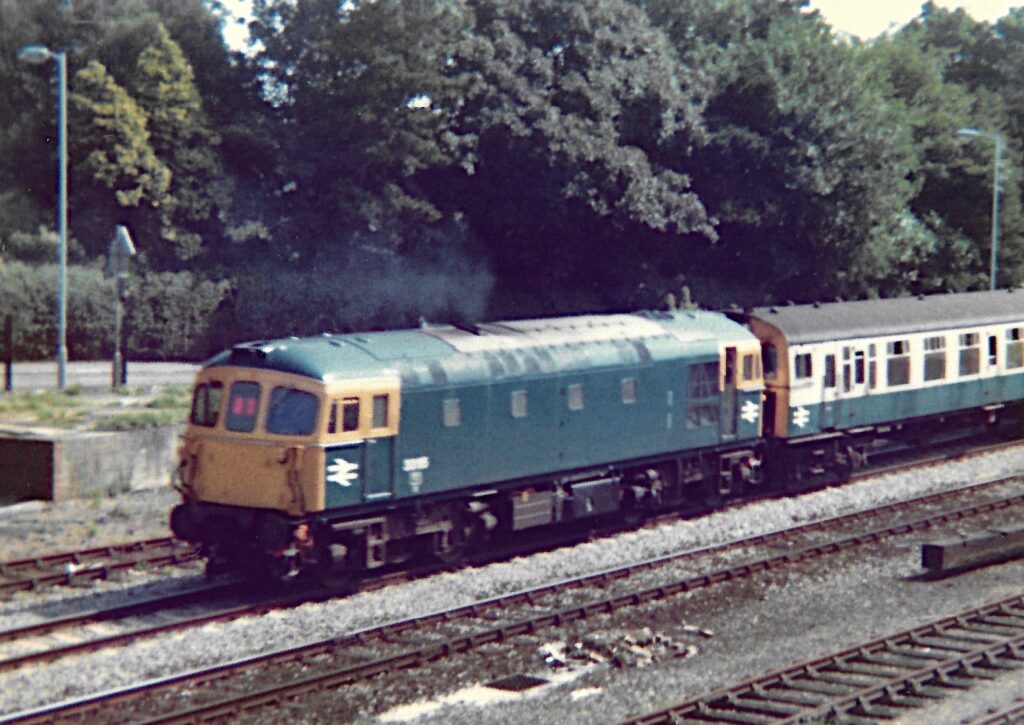
    Sulzer Type 2 Class 25 No. D7612 has arrived at Swanage in advance of the 2022 Diesel Gala

    This week I needed to go to Birmingham, so took the opportunity of sampling the Chiltern Railways Class 68 hauled service to and from London Marylebone and Birmingham Moor Street. We visited Marylebone as part of a previous post a few weeks ago, but I didn’t see any loco hauled services on that day. Six Class 68 locomotives are leased by Chiltern Railways from DRS and along with the locomotive, trains were formed of six MK3 carriages and a MK3 Driving Van Trailer (DVT). The DVT’s are modified to work with the power doors that are fitted to the MK3 coaches and have a generator fitted to enable Electric Train Supply and compressed air to be provided to the coaches when the locomotive is not running, such as when in a terminus station and when stabled. There was no buffet car or trolley service available on the trains I travelled on, and as I had left my lovingly prepared sandwiches in the fridge at home I was pleased to find a Greggs open at Marylebone station.

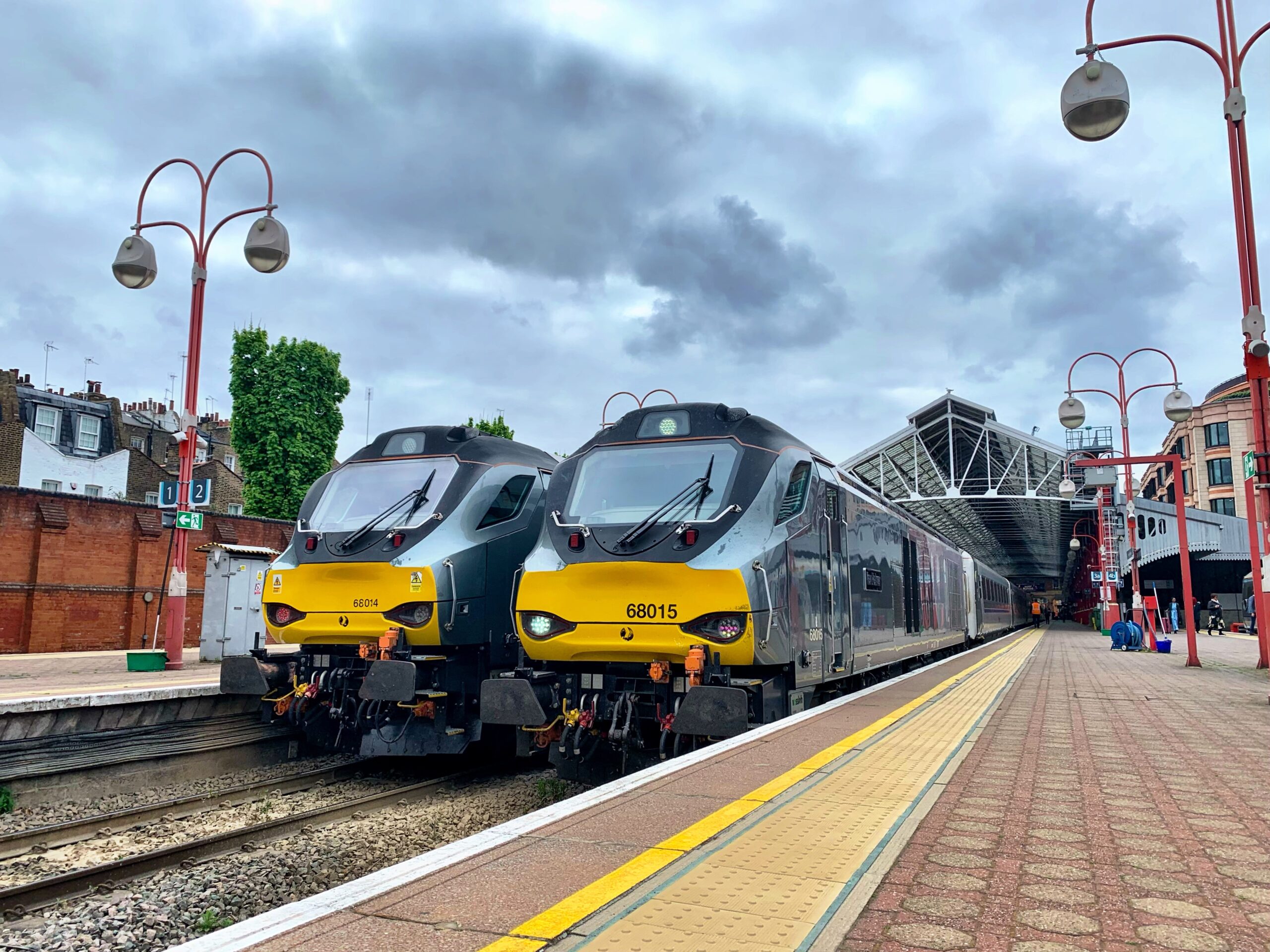
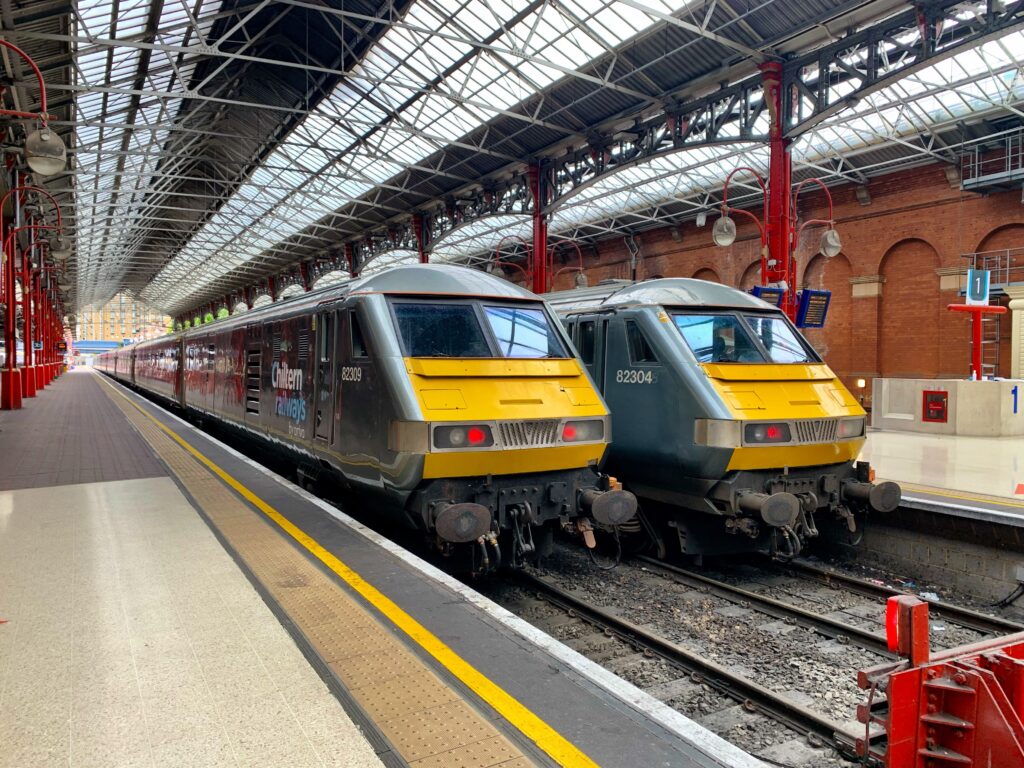
    Chiltern Railways Class 68’s No.’s 68014 and 68015 ‘ Kev Helmer’ at London Marylebone – 27/04/2022
    Chiltern Railways Class 68’s No.’s 68015 ‘ Kev Helmer’ and 68014 at London Marylebone – 27/04/2022
    MK3 Driving Van Trailer’s at the buffer stops – London Marylebone
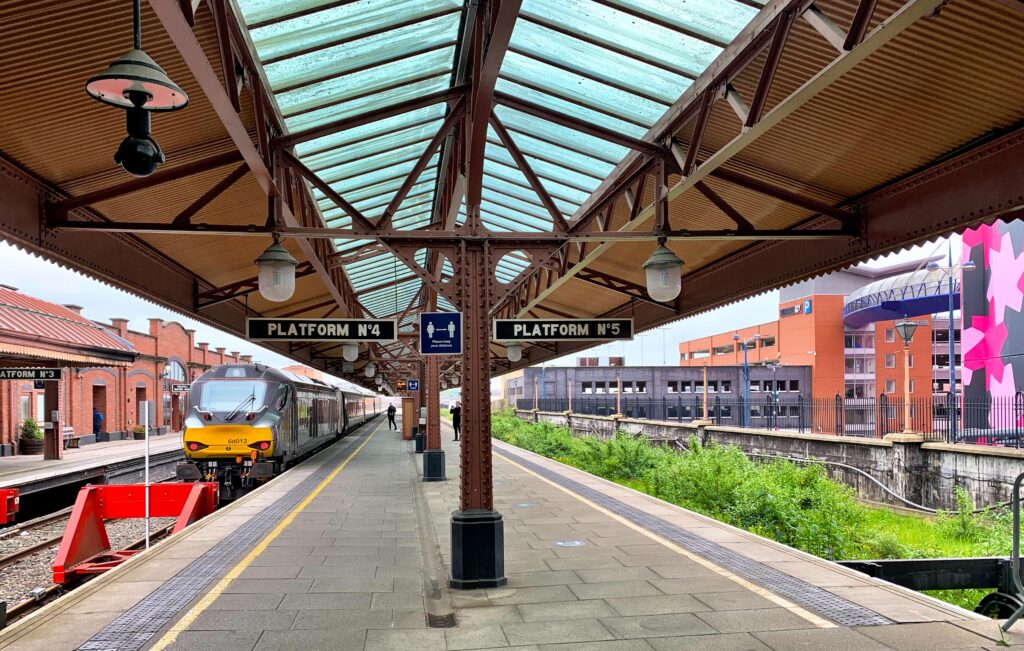
    Class 68 No. 68014 at Birmingham Moor Street – 27/04/2022
    MK3 Coach – Birmingham Moor Street
    Class 68 No. 68013 ‘Peter Wreford-Bush’ waits departure with the 1455 Birmingham Moor Street to London Marylebone – 28/04/2022
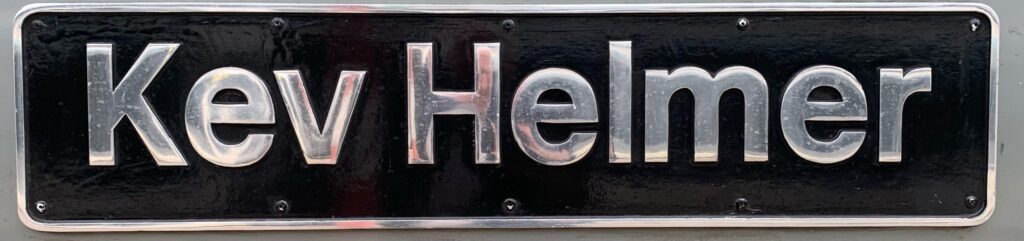
    Nameplate close-up of 68015 ‘Kev Helmer’. Kev was Birmingham Moor Street driver who lost his life to covid in January 2021
    Nameplate close-up of 68013 ‘Peter Wreford-Bush. Peter was a popular and long-standing member of the Leamington Spa station staff who sadly died of covid at the early age of 47

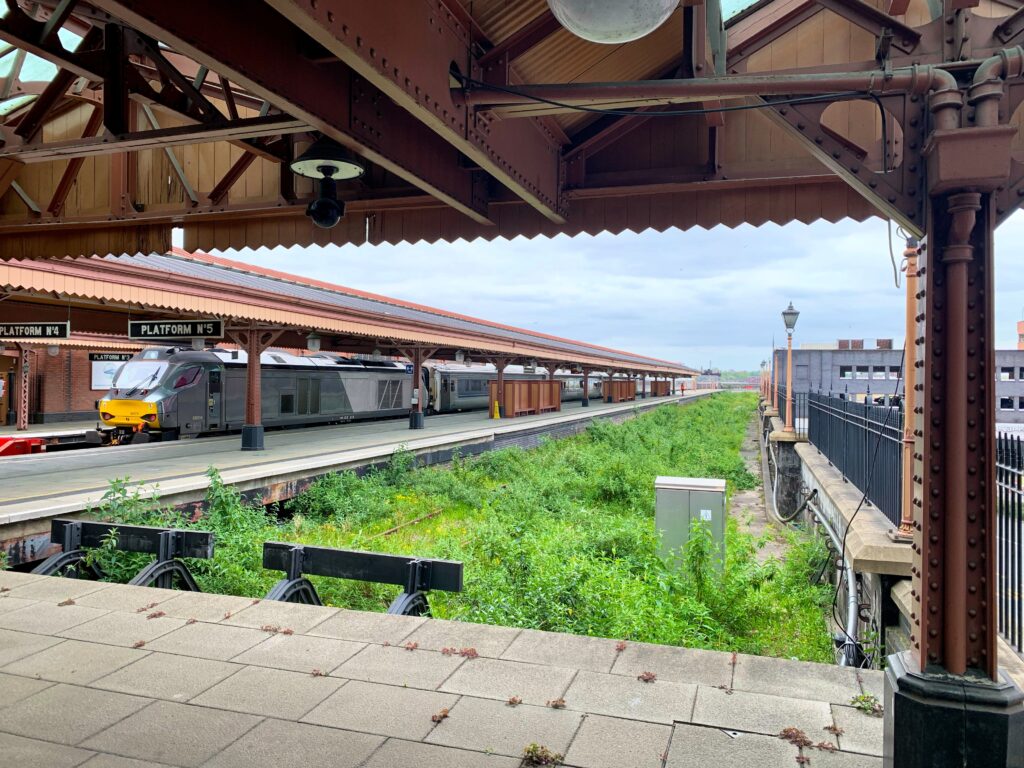
    From 2003 to until 2013 GWR Heavy Freight Locomotive 2-8-0 2884 Class No. 2885 stood as a static exhibit at Birmingham Moor Street in an unused platform. The locomotive is currently being restored to working order at Tyseley Locomotive Works by her owners Practical GW Steam Ltd.
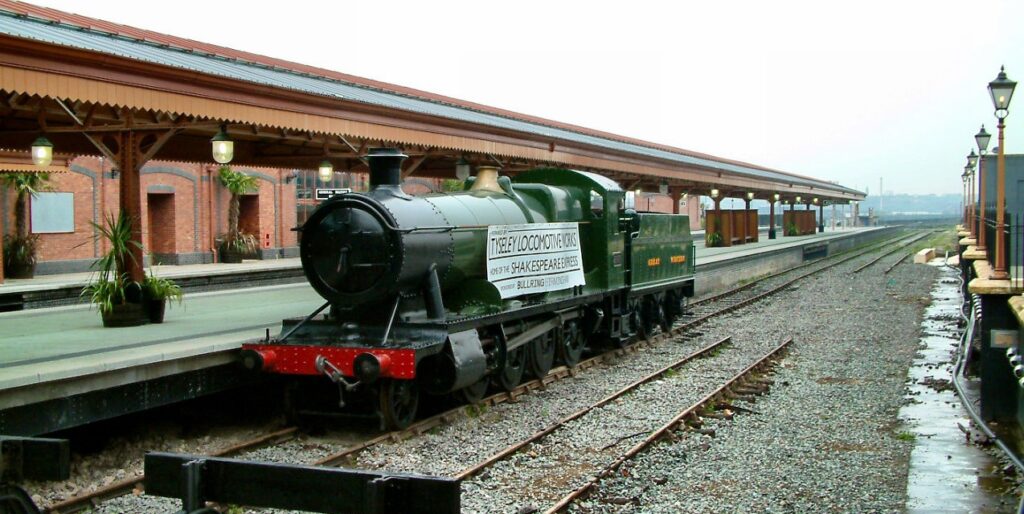
    Class 68 No. 68014 and the disused platform once occupied by GWR No. 2885 at Birmingham Moor Street – 27/04/2022

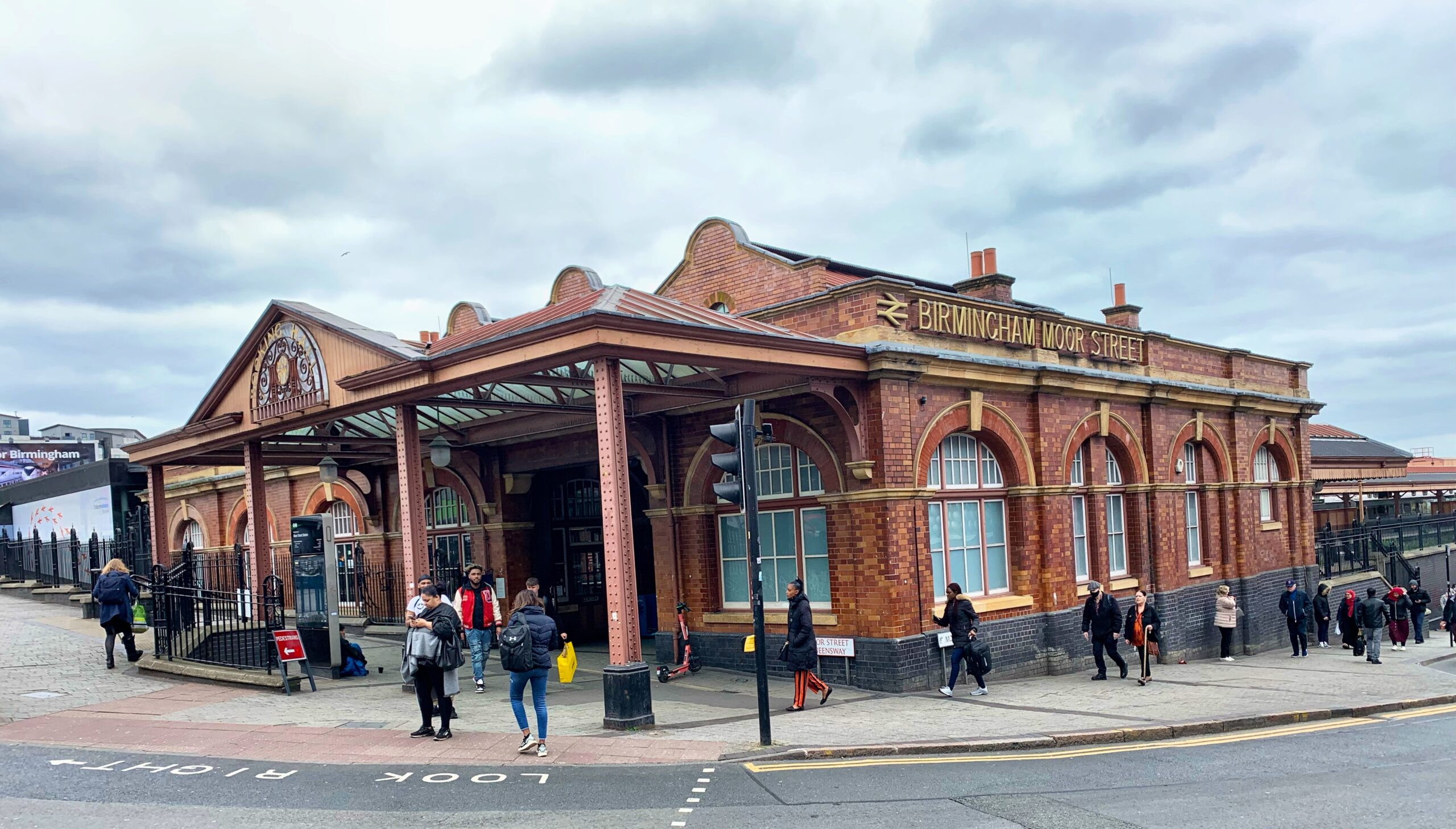
    Birmingham Moor Street is one of three mainline railway stations in the city centre of Birmingham along with Birmingham New Street and Birmingham Snowhill. High Speed 2 station Birmingham Curzon Street, the northern terminus of HS2 Phase 1, is currently being built alongside Moor Street. This new Curzon Street will incorporate the 1838 station of the same name’s entrance building and is scheduled to open in 2026.
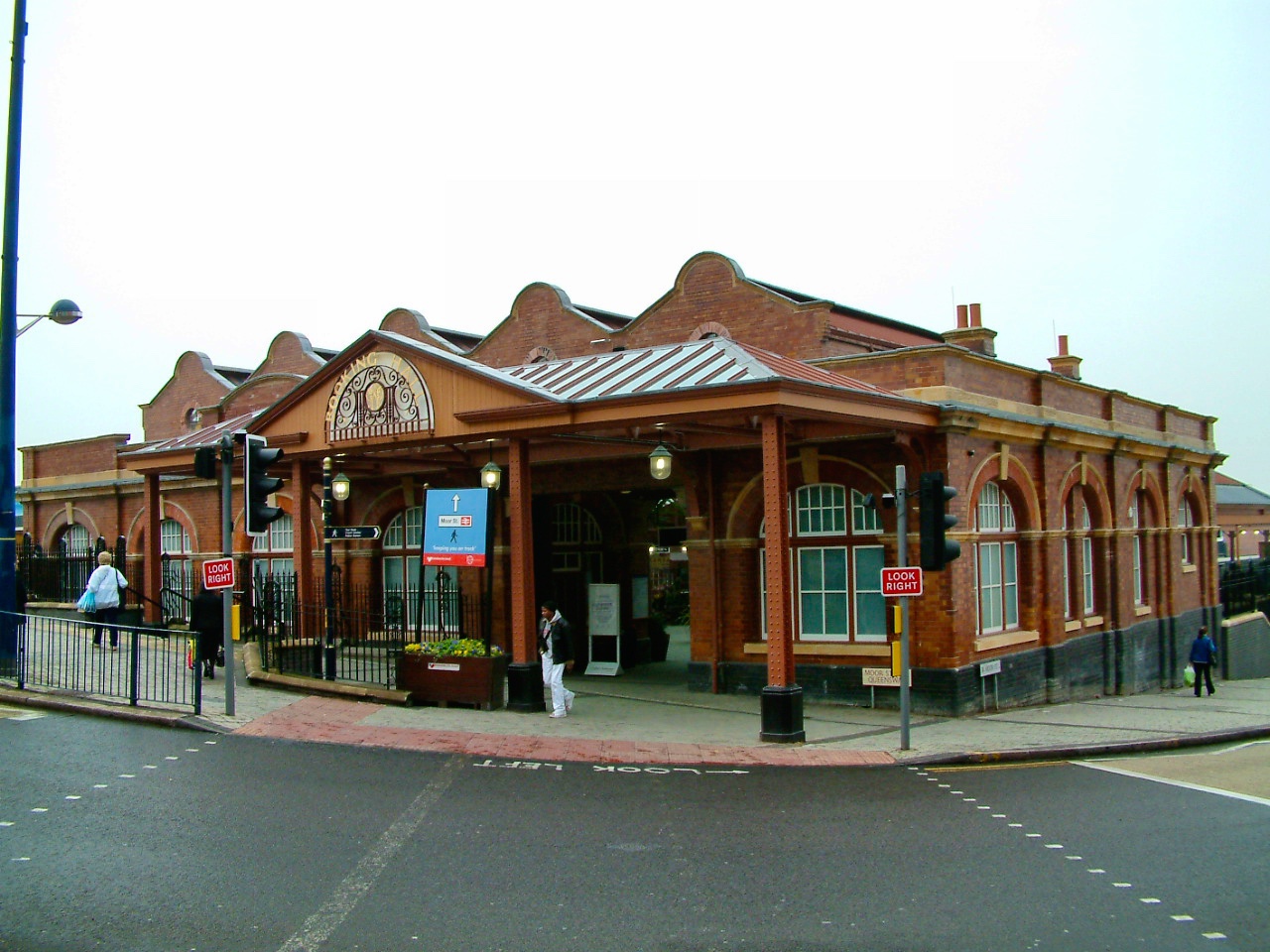
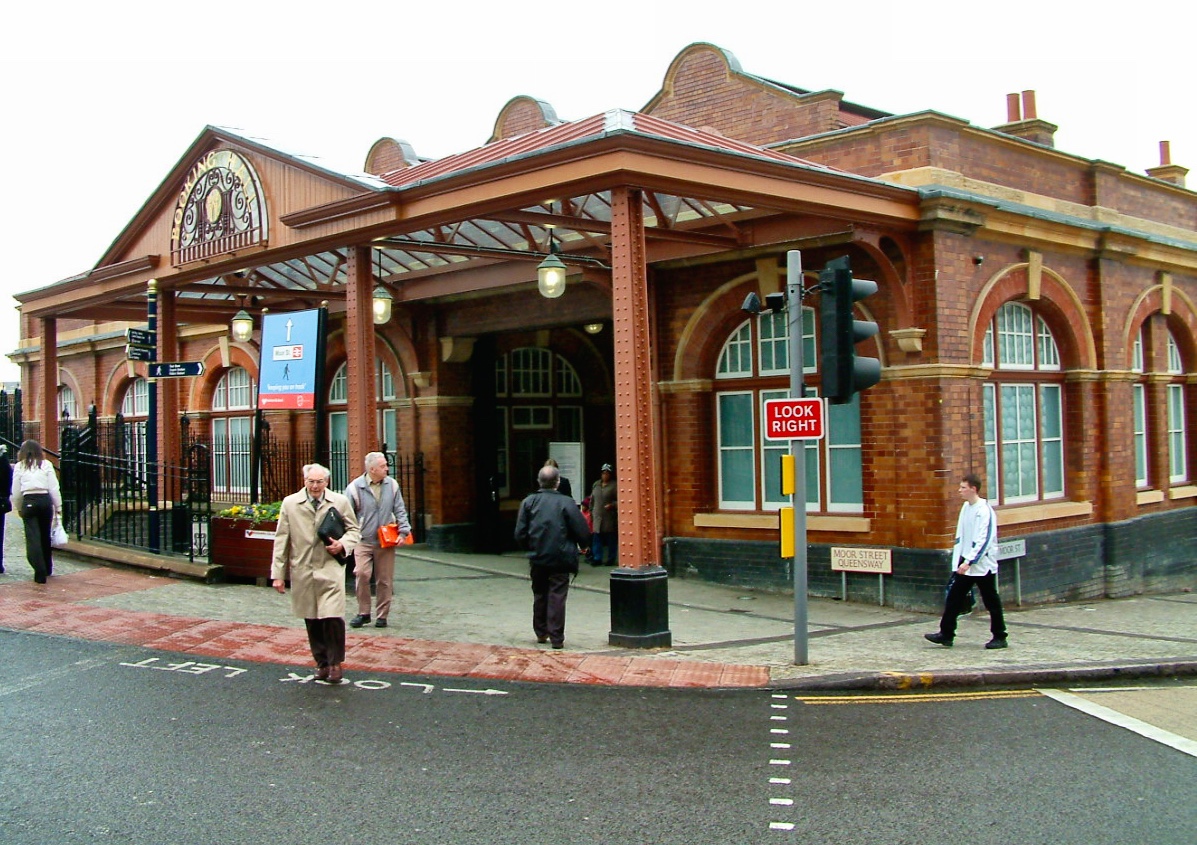
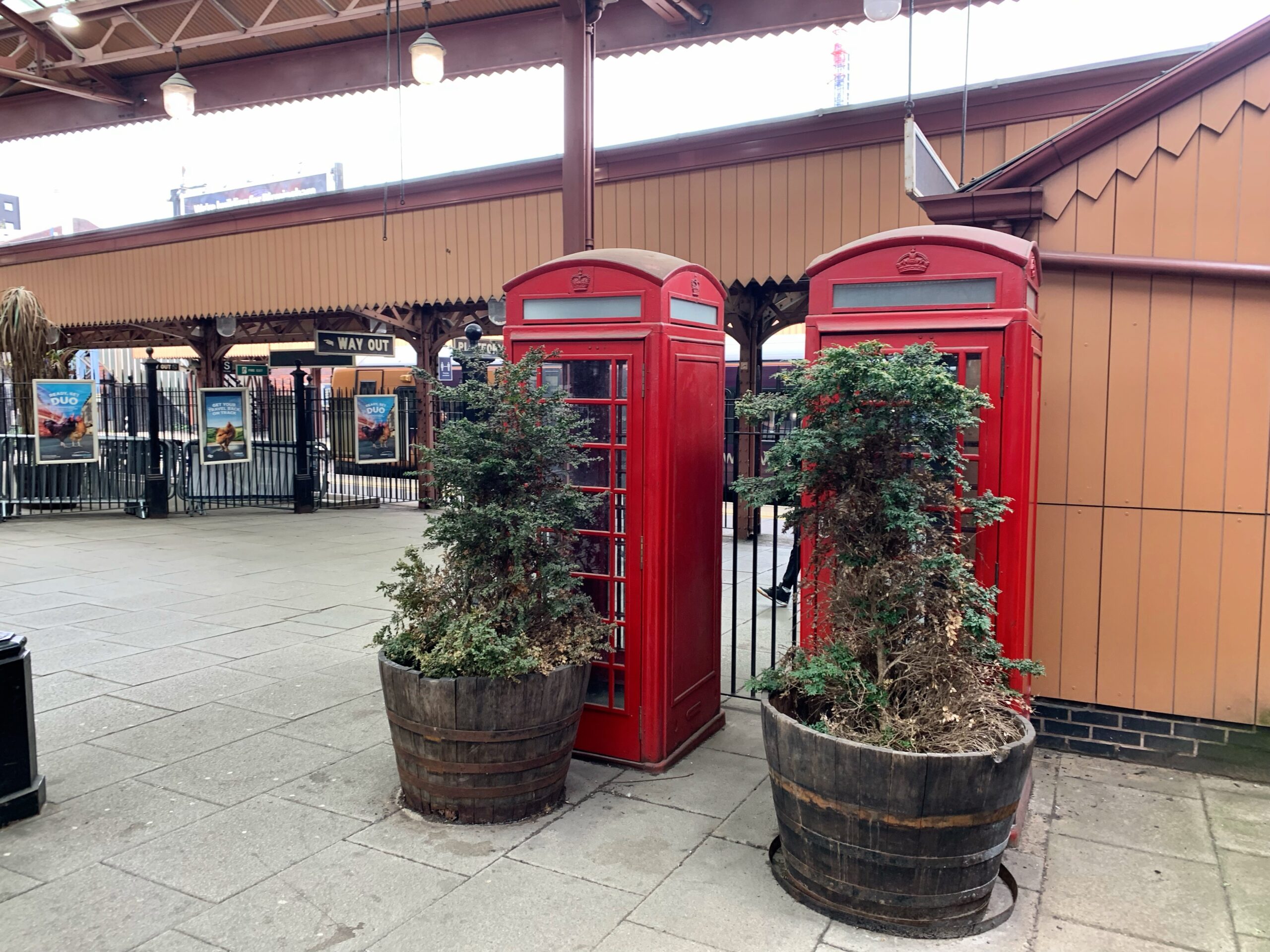
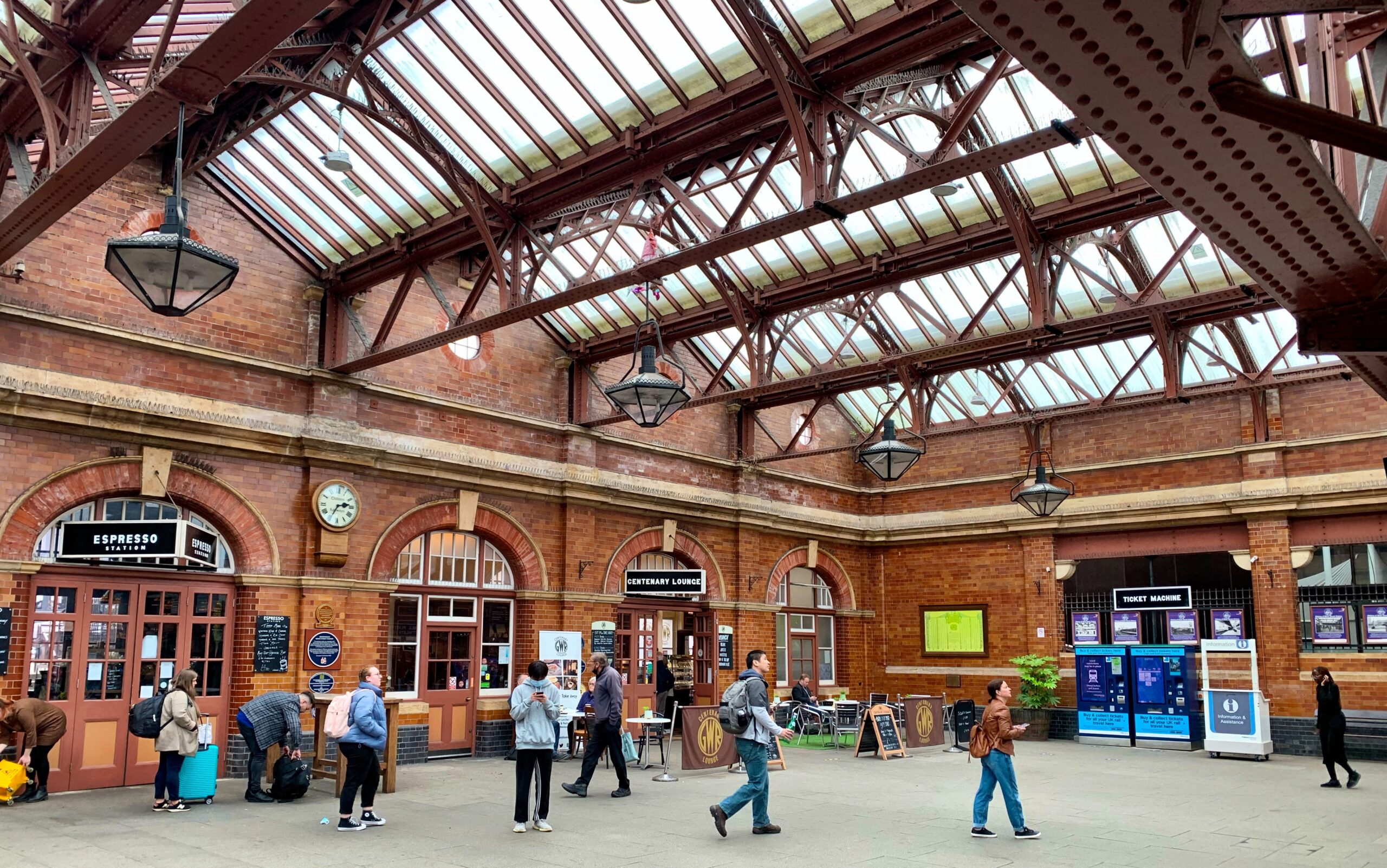
    Moor Street is a combination of the original 1909 Great Western Railway terminus and adjacent through platforms which opened in 1987 replacing the original station which was then mothballed. These two were combined in 2002 when the original station was extensively restored in 1930’s style with reproduction lamps, clocks, seating and signage. The 1980’s platforms were rebuilt in a matching style.
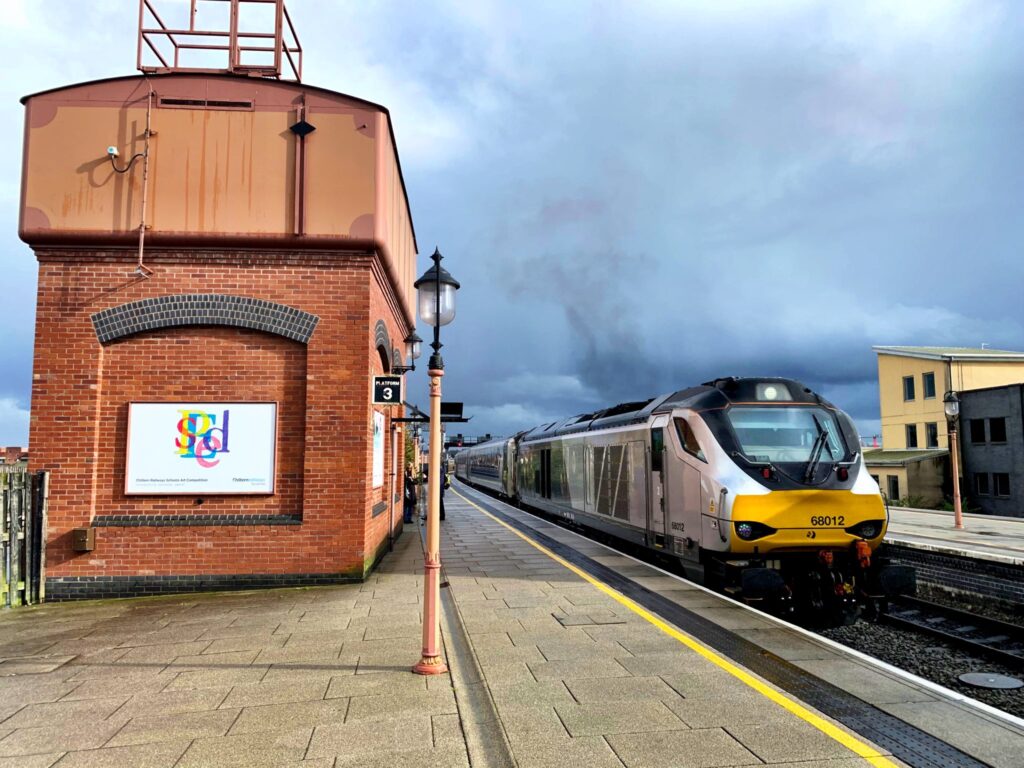
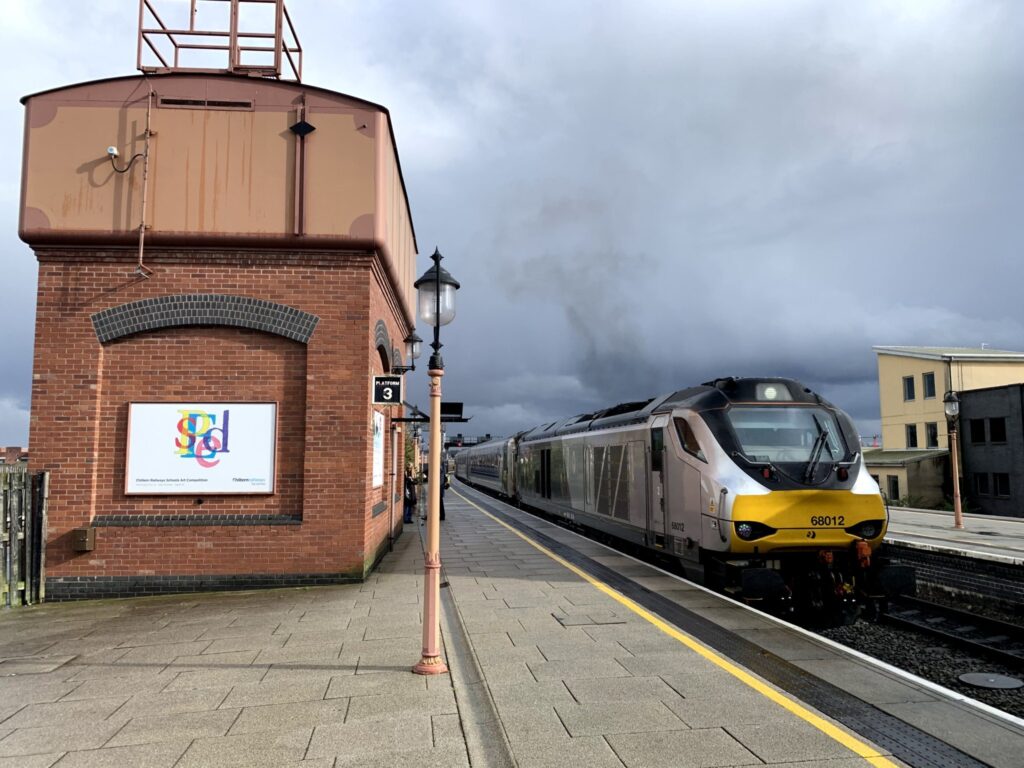
    Class 68 No. 68012 arrives at Birmingham Moor Street with a service from London Marylebone – 13/03/2020
    A video showing my Chiltern Trains Class 68 locomotive hauled experience

    Friday April 29th 2022 saw a COLAS route learning working along the Bristol to Weymouth line formed of Electro-Diesel Class 73 No. 73951 ‘Malcolm Brinded’. We saw and barked at the locomotive in Dorchester.
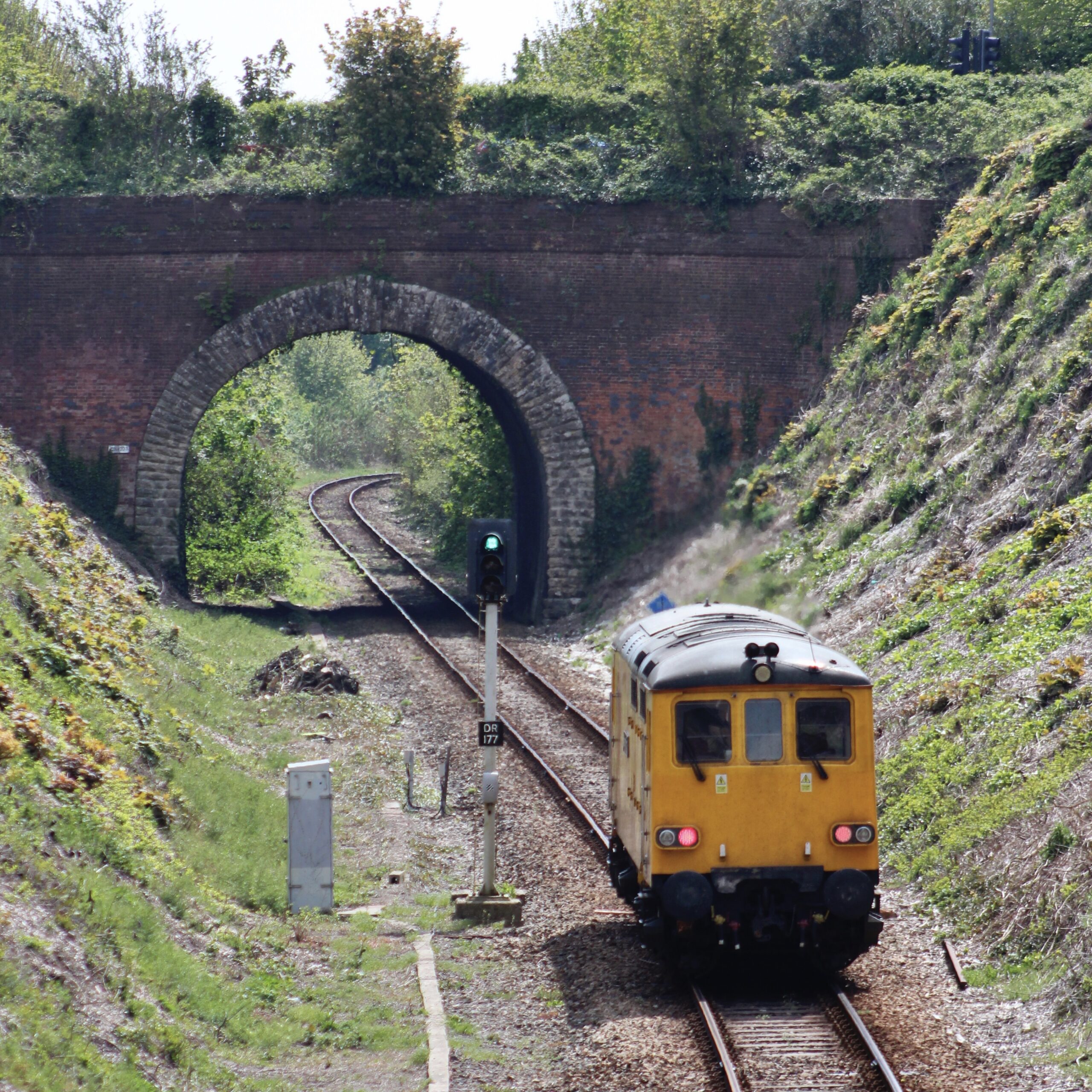
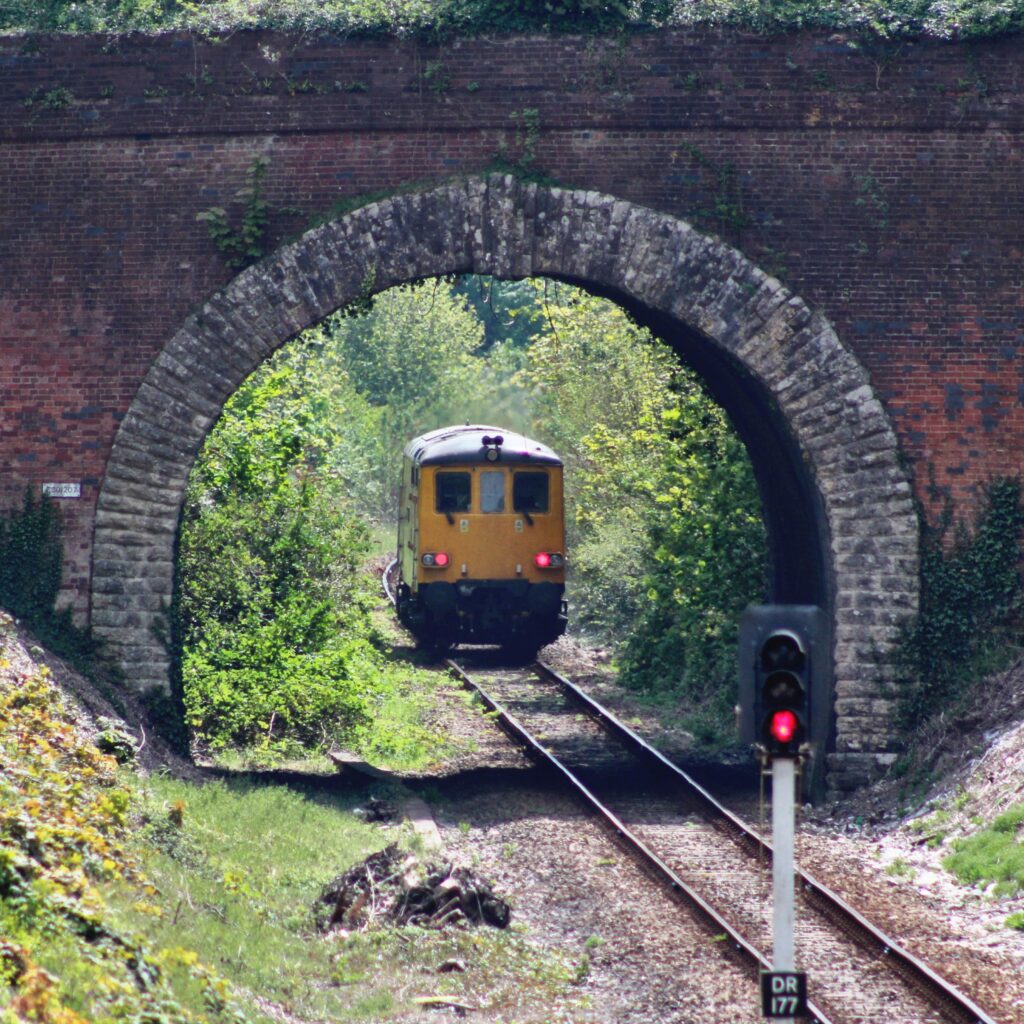
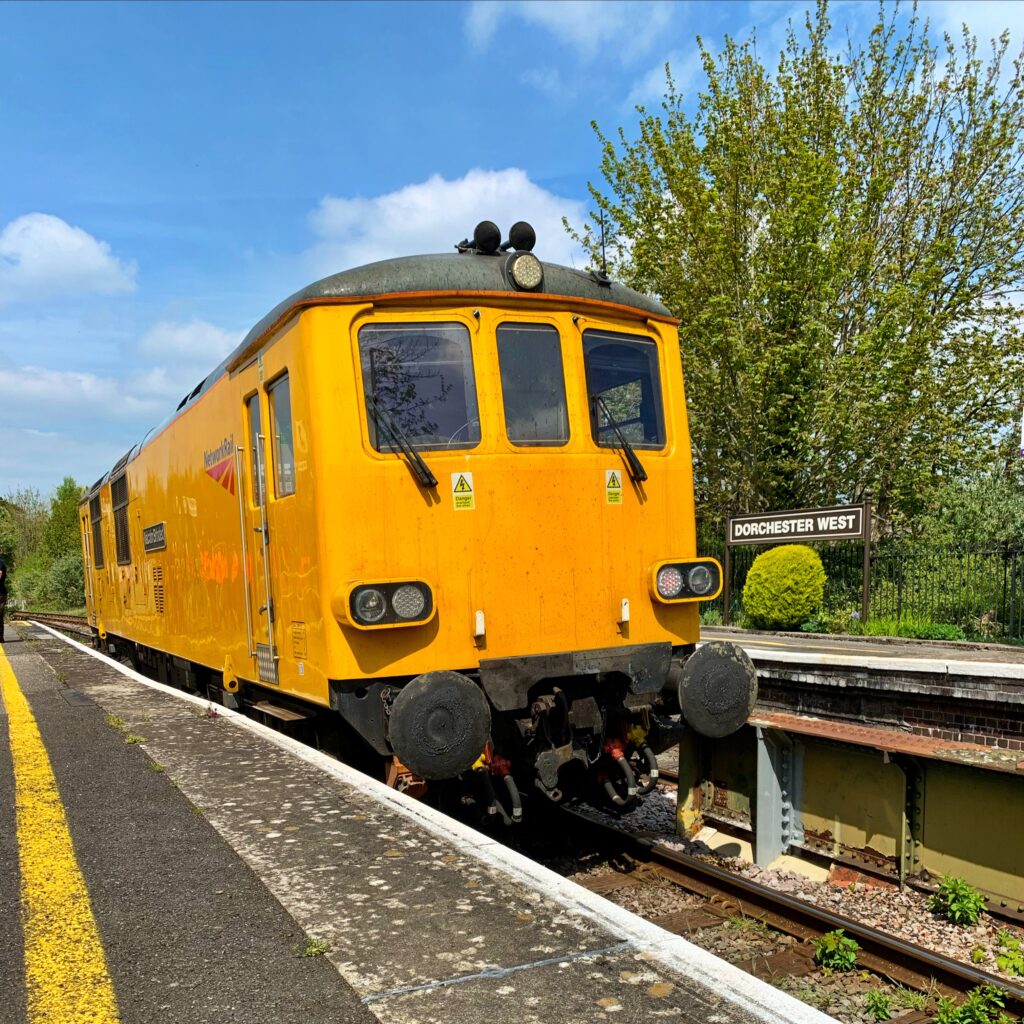
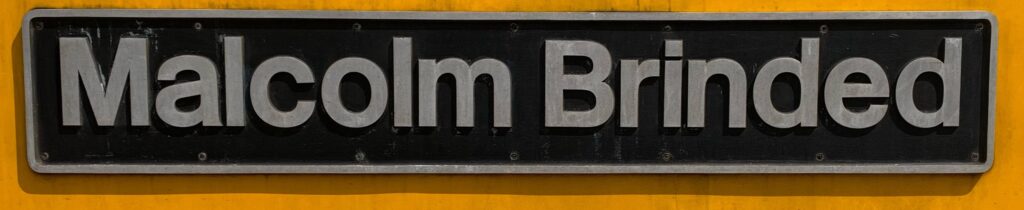
    Class 73 No. 73951 ‘Malcolm Brinded’ nears Dorchester West – 29/04/2022
    Class 73 No. 73951 ‘Malcolm Brinded’ passes under the Bridport Road bridge, Dorchester – 29/04/2022
    Class 73 No. 73951 ‘Malcolm Brinded’ approaches Dorchester West – 29/04/2022
    Class 73 No. 73951 ‘Malcolm Brinded’ waits at Dorchester West – 29/04/2022
    Nameplate detail for 73951
    Video of 1008 Bristol TM Platform 2 Motorail to Bristol TM Platform 2 via Weymouth COLAS route learner at Dorchester – 29/04/2022

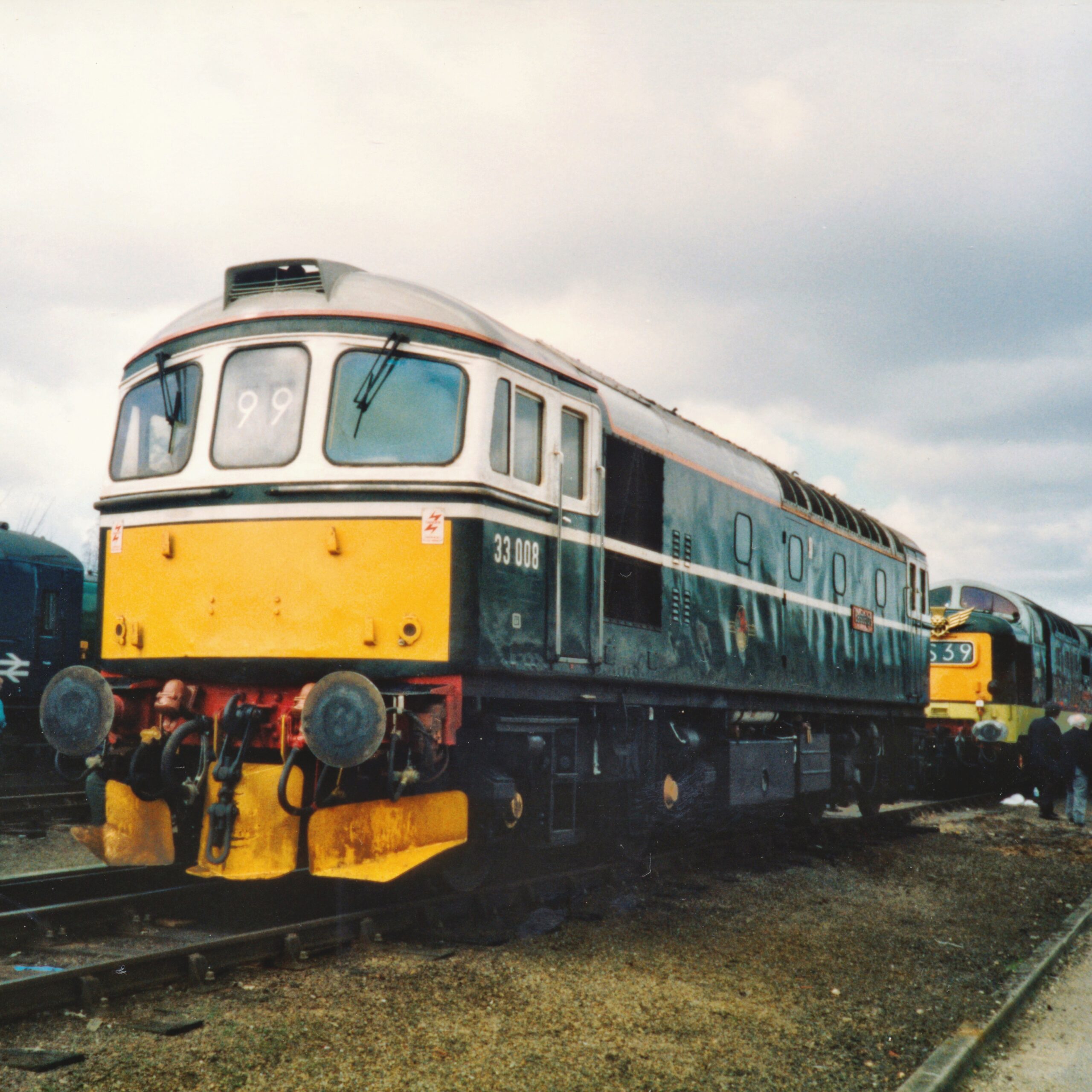
    The latest Class 69 rebuild, No. 69005 (ex Class 56 No. 56007) emerged from Eastleigh Arlington on Friday in British Rail green replete with ‘Eastleigh’ nameplates closely resembling the livery that Class 33 No. 33008 once carried. Yoshi and I made a fleeting visit to Eastleigh on Sunday 1st May to get a photo or two of the 69 parked up in East Yard.
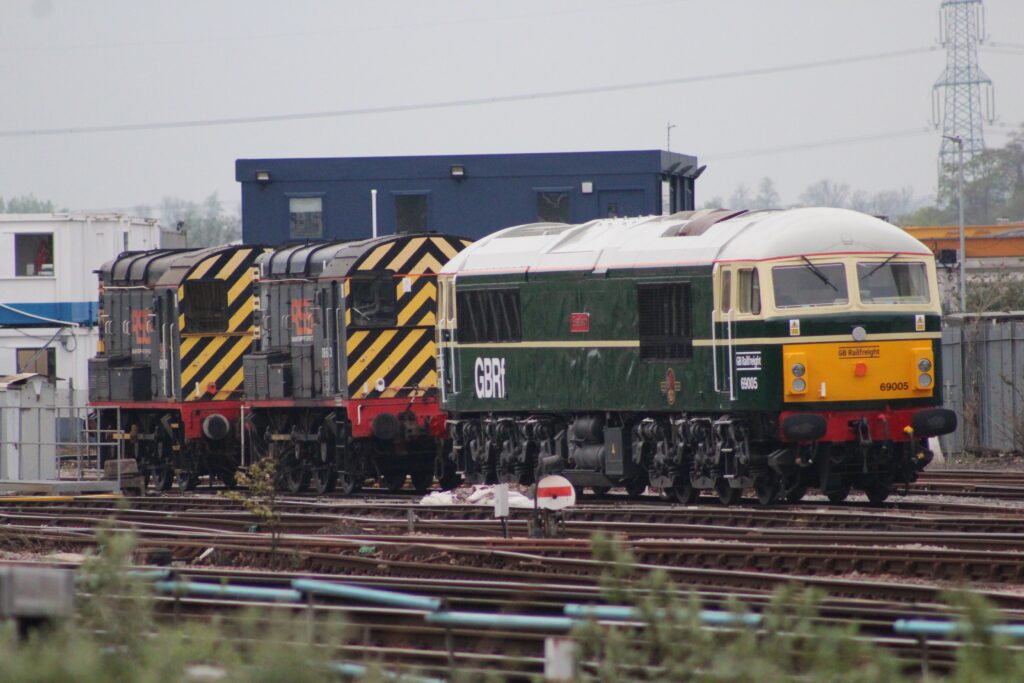
    Class 69 No. 69005 ‘Eastleigh’ stands on Eastleigh East Yard on the evening of Sunday May 1st 2022
    Nameplate close-up of 69005 ‘ Eastleigh’
    Compare 69005 ‘Eastleigh’ with Class 33 No. 33008 ‘Eastleigh’ at Bournemouth Open Day – 26/03/1988

    On Bank Holiday Monday, Yoshi and I made a brief visit to the Swanage Railway where two Bullied Pacific locomotives were in action – SR 4-6-2 West Country Class No. 34028 ‘Eddystone’ and SR 4-6-2 Battle of Britain Class No. 34072 ‘257 Squadron’ :

    Also at Swanage were a number of diesel locomotives in preparation for the railways 2022 Diesel Gala which takes place next weekend (6th – 8th May)
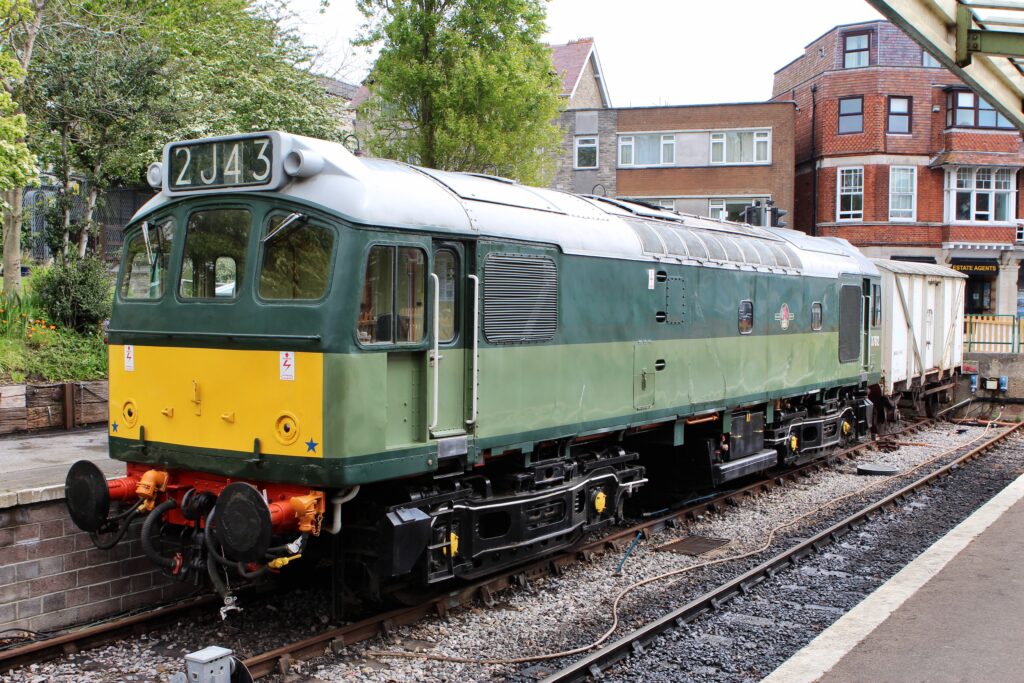
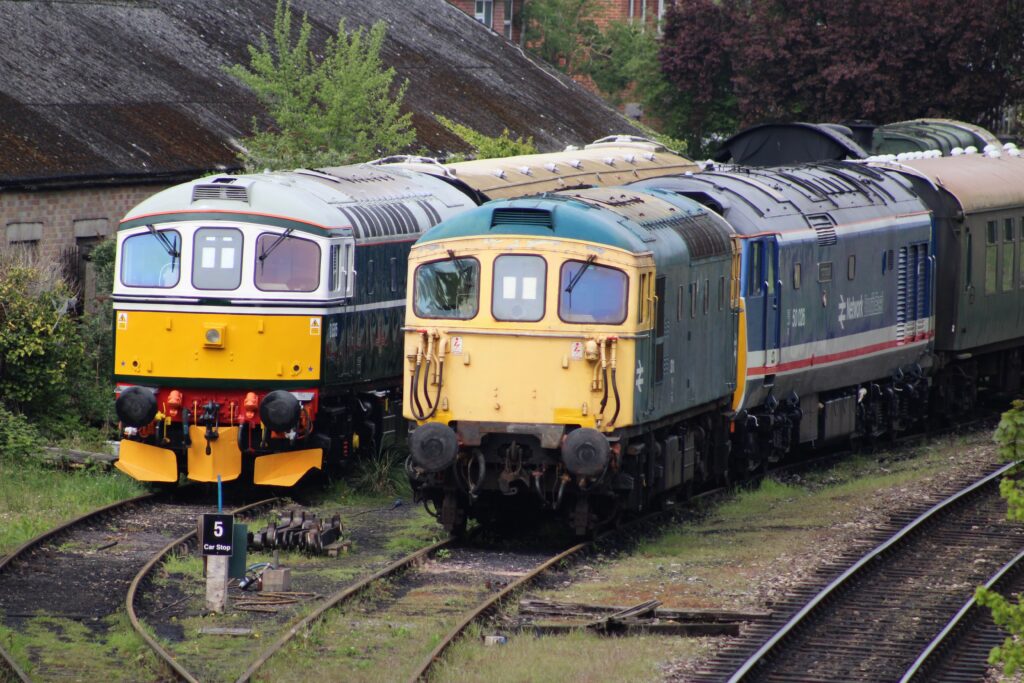
    Class 25 No. D7612
    Class 33’s No’s 33012 ‘Lt. Jenny Lewis’ and 33111 with Class 50 No. 50026 ‘Indomitable’

    Further diesel locomotives are scheduled to arrive at Swanage on the evening of Tuesday May 3rd 2022.

    With the 2022 Swanage Diesel Gala just around the corner, we pop back to May 2008 for our archive video this week and a glimpse of what was running in the Swanage Railway that year:

    With recent news events, I was going to finish with a humorous Class 37 / Tractor reference at this point – the Class 37’s are known to some railway enthusiasts as “tractors”, a nickname given due to the similarities between the Class 37 engine sound and a tractor. Instead, I’ll just leave a couple of photos of Class 37/0 No. D6757 (37057) which was painstakingly restored at the Barrow Hill Roundhouse near Chesterfield following its purchase from main line service. The loco debuted at the 2015 Swanage Railway Diesel Gala prior to joining COLAS Rail who were seeking a fleet of English Electric Type 3 locomotives for Network Rail test train duties.
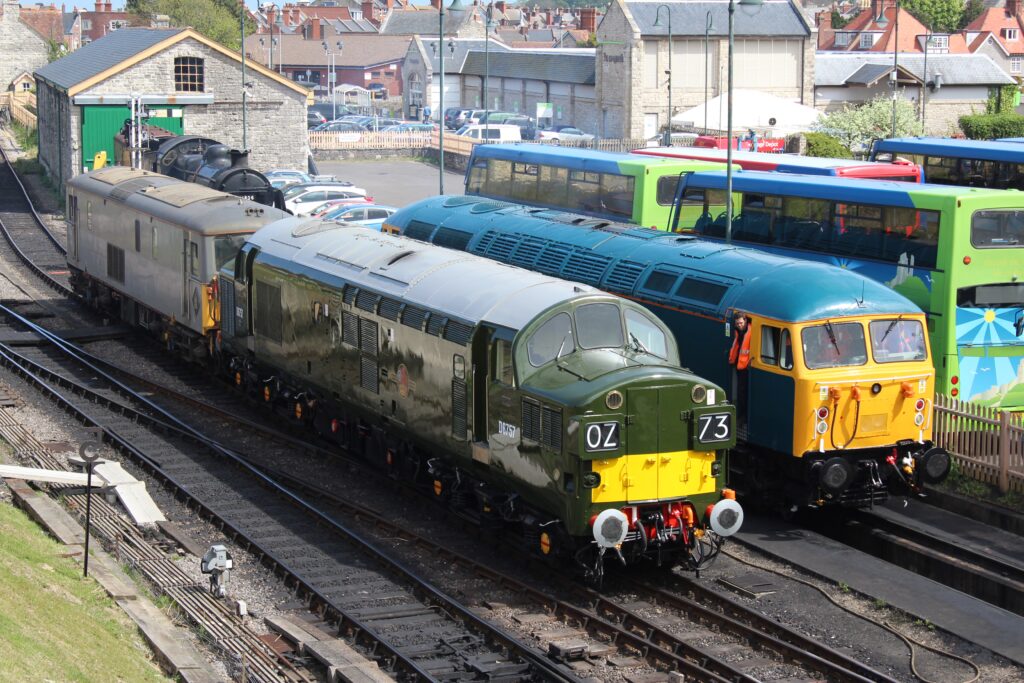
    No. D6757 alongside Class 56 No. 56006 and Class 73 No. 73107 at Swanage – 10/05/2015
    No. D6757 at Swanage Railway Diesel Gala – 10/05/2015

    That’s all for this week, thanks for being there!

  • Dog n’ Marylebone

    A quiet week with out of the ordinary trains in the Bournemouth to Weymouth area this week. The New Measurement Train which was scheduled to have run on Wednesday 23rd February was cancelled. Maybe we’ll get visited by a COLAS HST in March instead.

    Sleeper and track replacement at Bournemouth over the weekend saw an engineers train powered by two Freightliner Class 66 locomotives No’s. 66598 and 66512 visit the station. I was asleep when the consist arrived in the early hours of Saturday, but after breakfast, Yoshi and I headed over to Bournemouth to have a quick look at what was going on.

    On Sunday, I left Yoshi at home with his mum while I went off to London for the day. At Christmas I was given a fabulous book; ‘Britain’s 100 Best Railway Stations’ by Simon Jenkins, which as the title suggests takes a look at some beautiful railway station architecture across the UK. One of the London Termini included is Marylebone, the smallest railway terminus in the capital. Being in the vicinity, I decided to take a quick look.

    Grade II listed Marylebone is the only London terminus not to see electric traction and all services are operated by diesel trains. Despite strong opposition from the Marylebone Cricket Club who objected to the line crossing Lord’s cricket ground which sits to the north, the station opened for passenger traffic on 15th March 1899 having been constructed by the Great Central Railway for their London extension and was the last of London’s main line termini to be built. Sir Edward Watkin who created the GCR and one of the Victorian era’s great Railway Kings hoped that the line would continue south to the coast and cross to France via a Channel Tunnel. The station architect was Henry William Braddock who worked as a civil engineer with the GCR. Because of the fight over Lord’s cricket ground and the agreed solution of a cut and cover tunnel to the east of the hallowed turf, money was tight and this is reflected in the modest design of the station which was originally intended to have eight platforms but only four were built. Marylebone gained two extra platforms in 2006 following rail privatisation. The design utilises attractive red brickwork with terracotta dressings. Over 500 houses were demolished to make way for the railway and those displaced were rehoused by the Great Central. It is currently the southern terminus of Chiltern Railways, but in the 1980’s serious consideration was given to tarmacking the track bed and running buses over a road expressway. I’m rather pleased that this option was not adopted and the railway survives into the 21st Century.

    For comparison below is archive footage of Marylebone and Aylesbury from March 1992 recorded by my late friend John Chappell who sadly passed away in 2021. John was an enthusiastic follower of all things transport and a supporter of the Swanage Railway and the Merchant Navy Locomotive Preservation Society and their steam locomotive No. 35028 ‘Clan Line’.

    As well as Class 165 and Class 168 diesel multiple units Chiltern Railways also employ Class 68 locomotives on London Marylebone to Birmigham Moor Street services. No.68012 is seen arriving at Birmingham Moor Street on Friday 13th March 2020
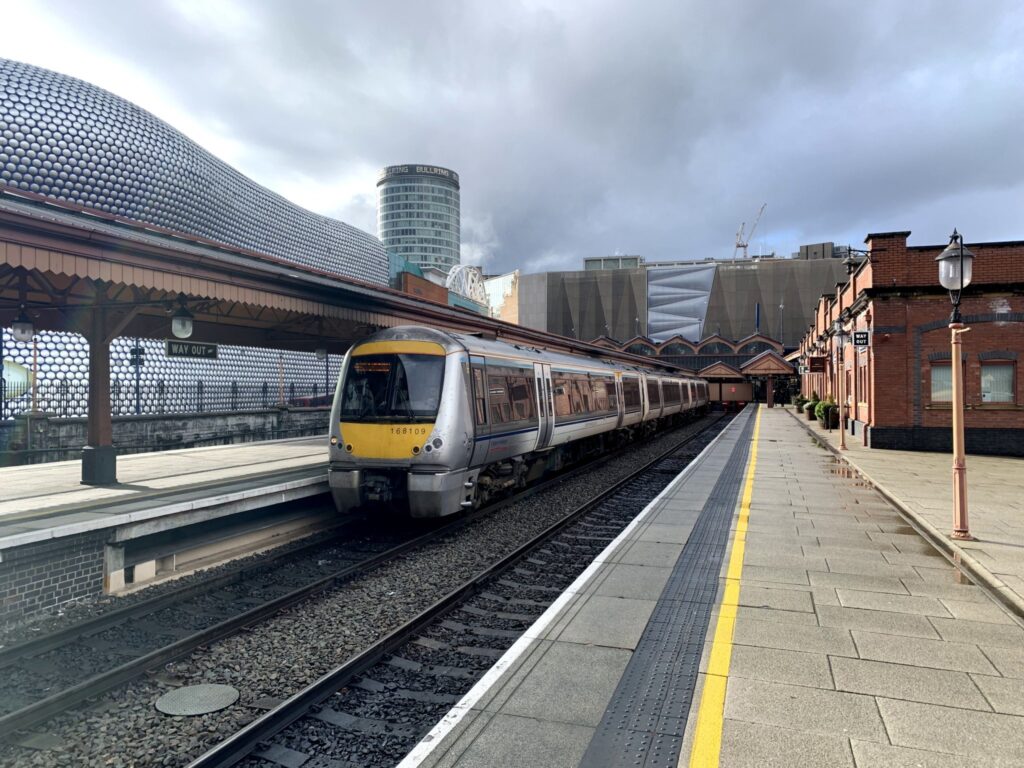
    Chiltern Railways Class 168 No. 168109 at Birmingham Moor Street – 13/03/2020

    Another visit to the archives here with video from September 1992. Last week we included photos of newly outcropped Class 69 No. 69004 in Railway Technical Centre livery and the video below, filmed by John Chappell, shows two test train examples of rolling stock painted in this livery.

    Of particular interest is the footage of the International Services Test Train passing through Eastleigh. This ensemble was part of the testing employed for the Trans Manche Super Train (TMST) Channel Tunnel stock. In December 1989, an order was placed with GEC-Alsthom for the construction of thirty TGV-style electric train sets which were to operate from London to Paris and Brussels. These trains were required to take electric current from 25 kV overhead wires while passing through the Channel Tunnel and in France, and 3 kV in Belgium. On the British side, however, the trains would be utilising the existing suburban 750 Volt DC 3rd rail track. Sir Edward Watkin of the Great Central Railway would have been proud to have seen his vision finally realised!

    As part of the programme, withdrawn from service Class 33 No. 33115 was converted into a Driving Van Trailer (DVT) at Doncaster Works in 1990 and was given a fresh look in InterCity Executive livery and renumbered 83301. The locomotive had been modified with TGV-type bogies equipped with third rail pick-up shoes. Unpowered, it kept its seized engine as a dead weight. The decal ‘Test Vehicle For International Services’ was added to the lower body sides. The ex Class 33/1 nicknamed ‘Zebedee’ and was paired with Class 73 No. 73205 ‘London Chamber of Commerce’. The two were semi-permanently coupled to each other, 83301 being used to collect electricity from the 3rd rail which was then transferred to the 73 via heavy duty cabling to provide motive power. The remainder of the test train was initially formed of 4TC Class 438 No. 8007 ( coach numbers: 977684-7 ) painted in Railway Technical Centre red and blue but was later supplemented, in 1991, with ex 4TC coaches 977763/4 in Network SouthEast livery.

    As seen in the video, the test train was commonly found running between Waterloo and Eastleigh until regular Eurostar services commenced in November 1994, running from Waterloo International to Paris and Brussels. No. 83301 was donated to the Class 33/1 Preservation Company Ltd utilising parts for Swanage railway based classmate No. 33111, the remainder being scrapped at St Leonards depot in 1996. No. 73205 remains in service with GBRf and is now named ‘Jeanette’.

    Ten years prior to conversion to DVT No. 83301, Class 33/1 No. 33115 departs Dorchester with a Weymouth to London Waterloo service – 25/07/1980
    Class 33 No. 33115 propelling a Weymouth to London Waterloo service formed of two 4TC sets near Dorchester – 04/07/1981
    Class 73 No. 73205 ‘Jeanette’ still in InterCity Executive livery seen working a test train at Weymouth – 17/02/2014 (John Chappell)
    Yoshi gets up close and personal with Class 33/1 No. 33111 at Corfe Castle. Classmate No. 33115 donated spares to this locomotive via the Class 33 Preservation Company Ltd

    That’s all for this week. Join us next time for more of the same, but subtly different.