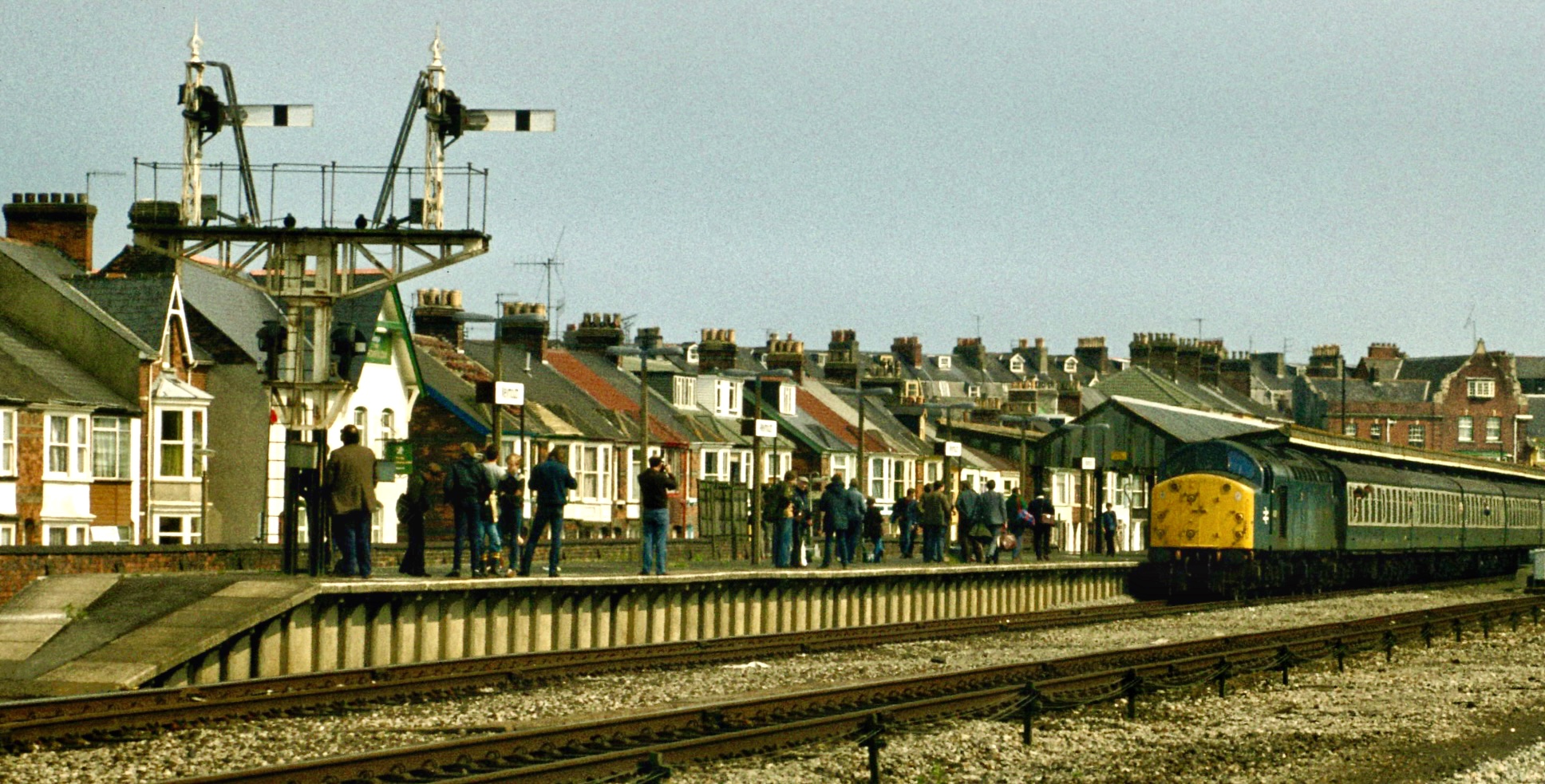
This week we had the first Class 69’s to Dorchester and the second ever Class 40 to visit Weymouth, the first occasion being Forty years ago. So that’s quite appropriate!
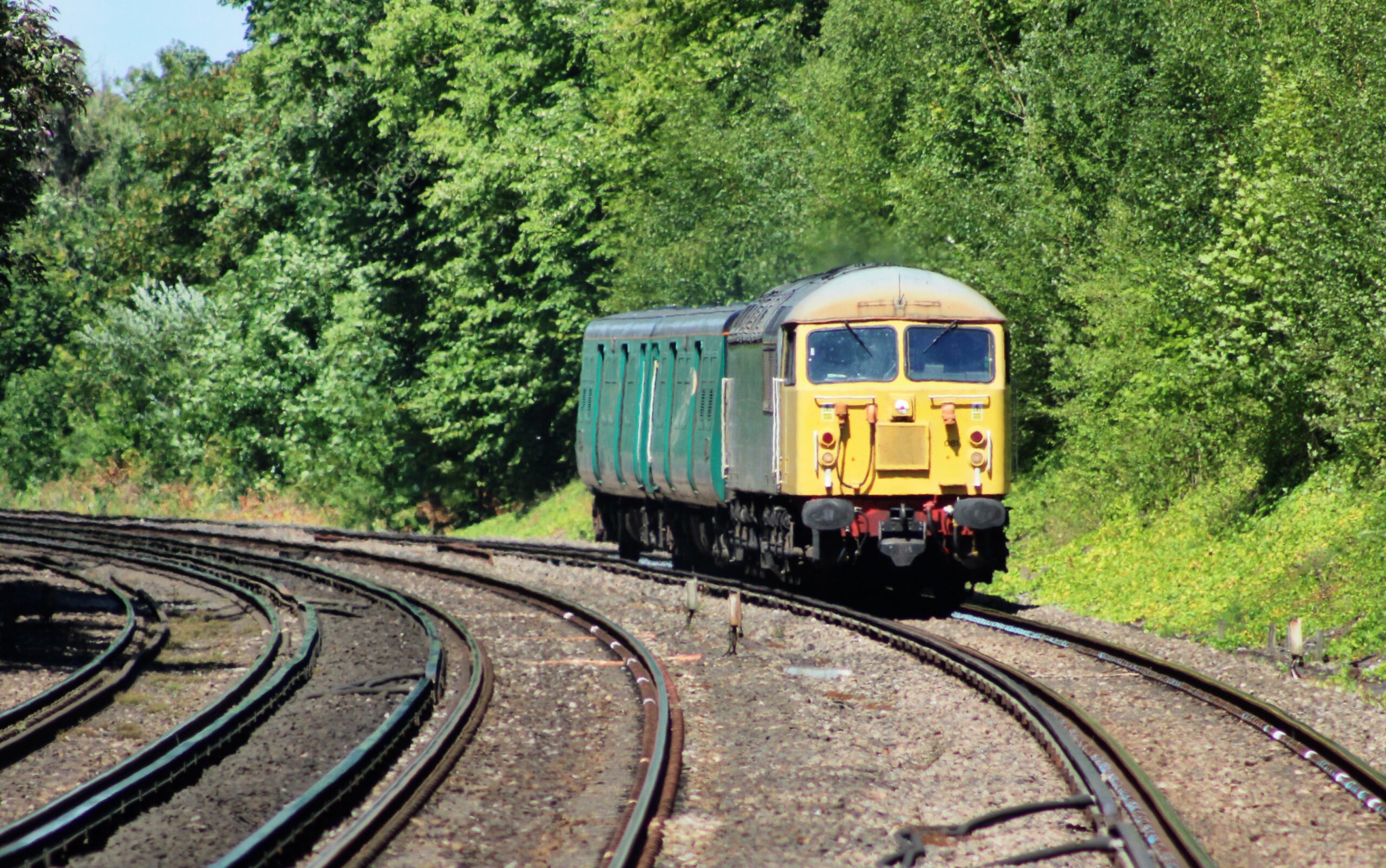
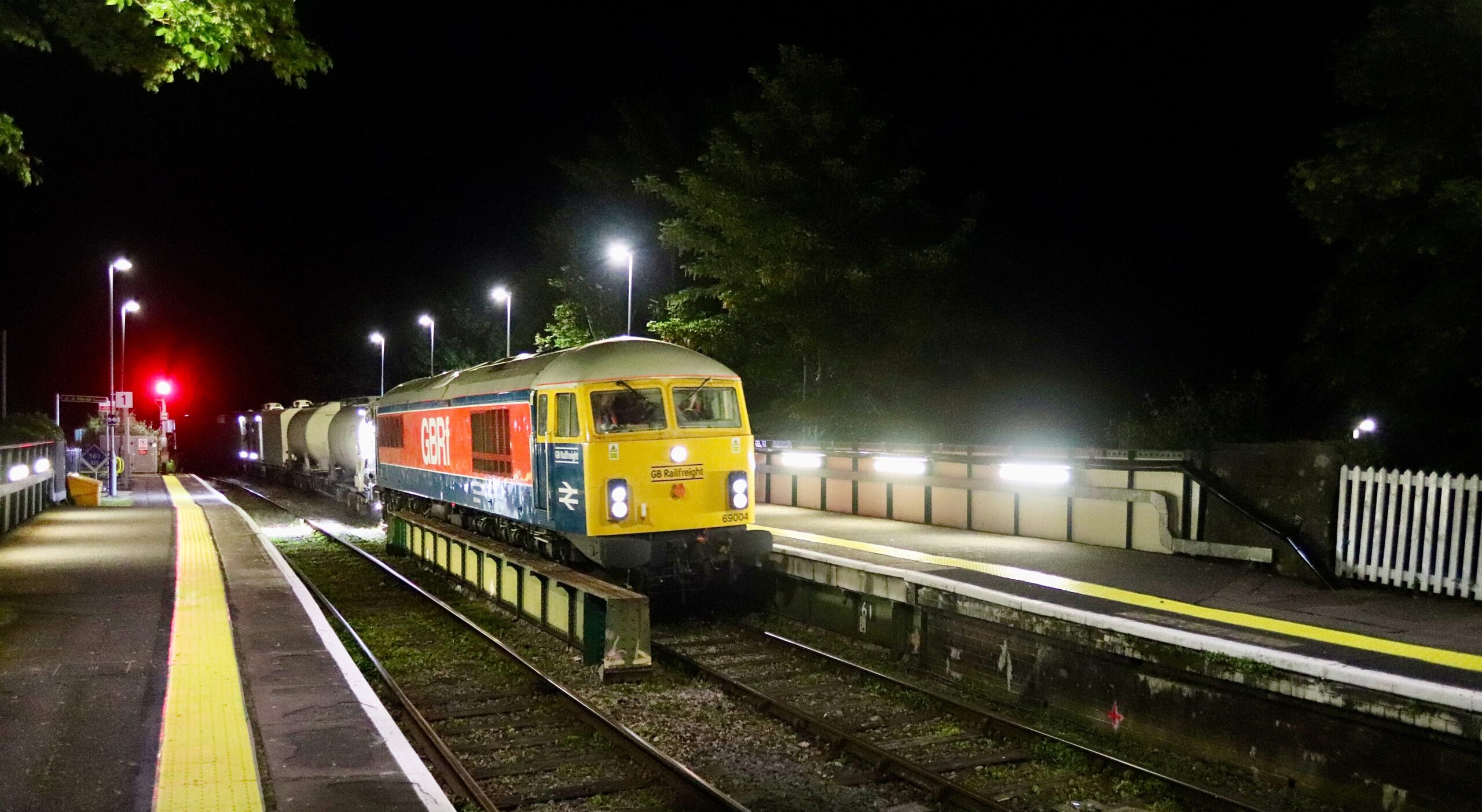
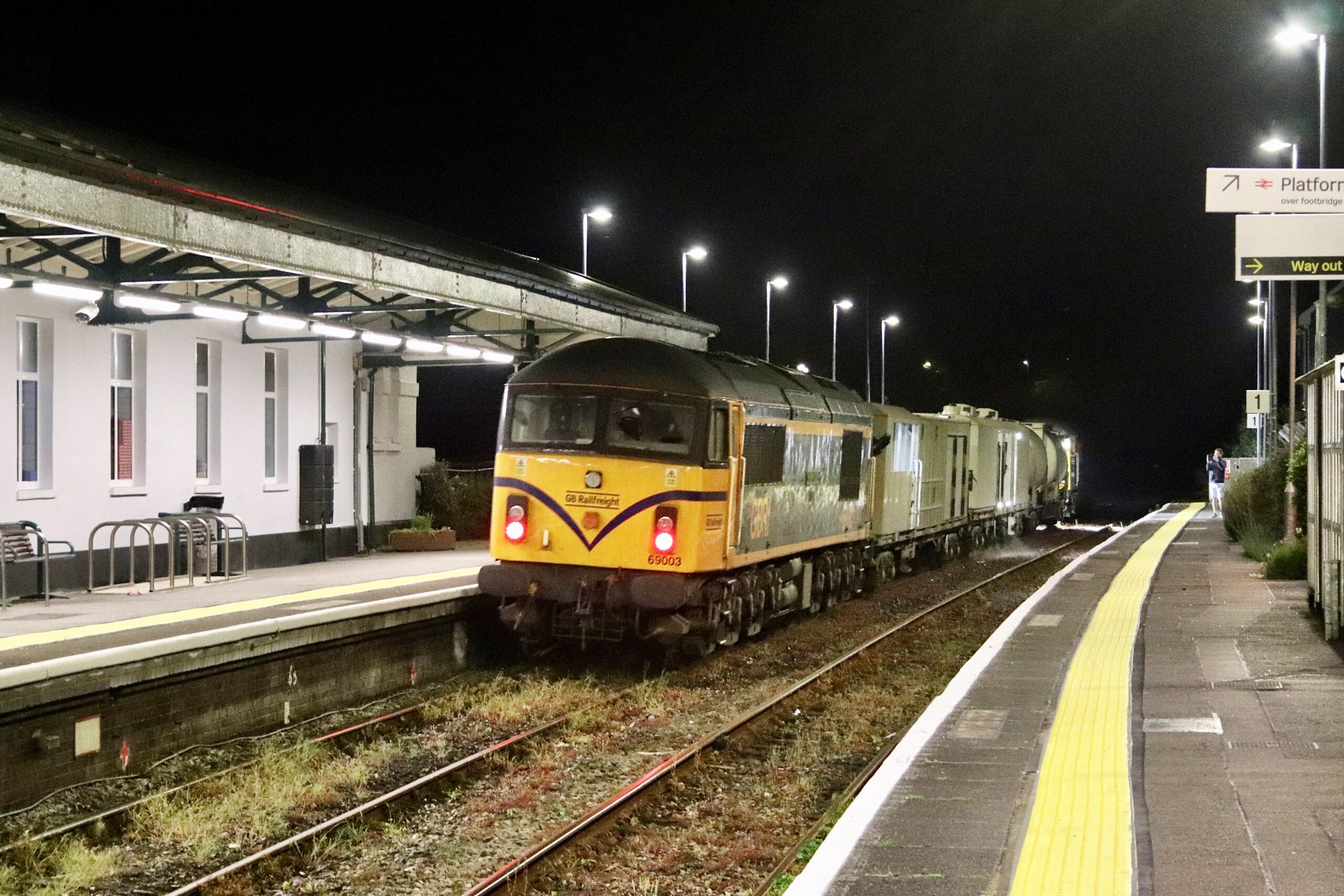
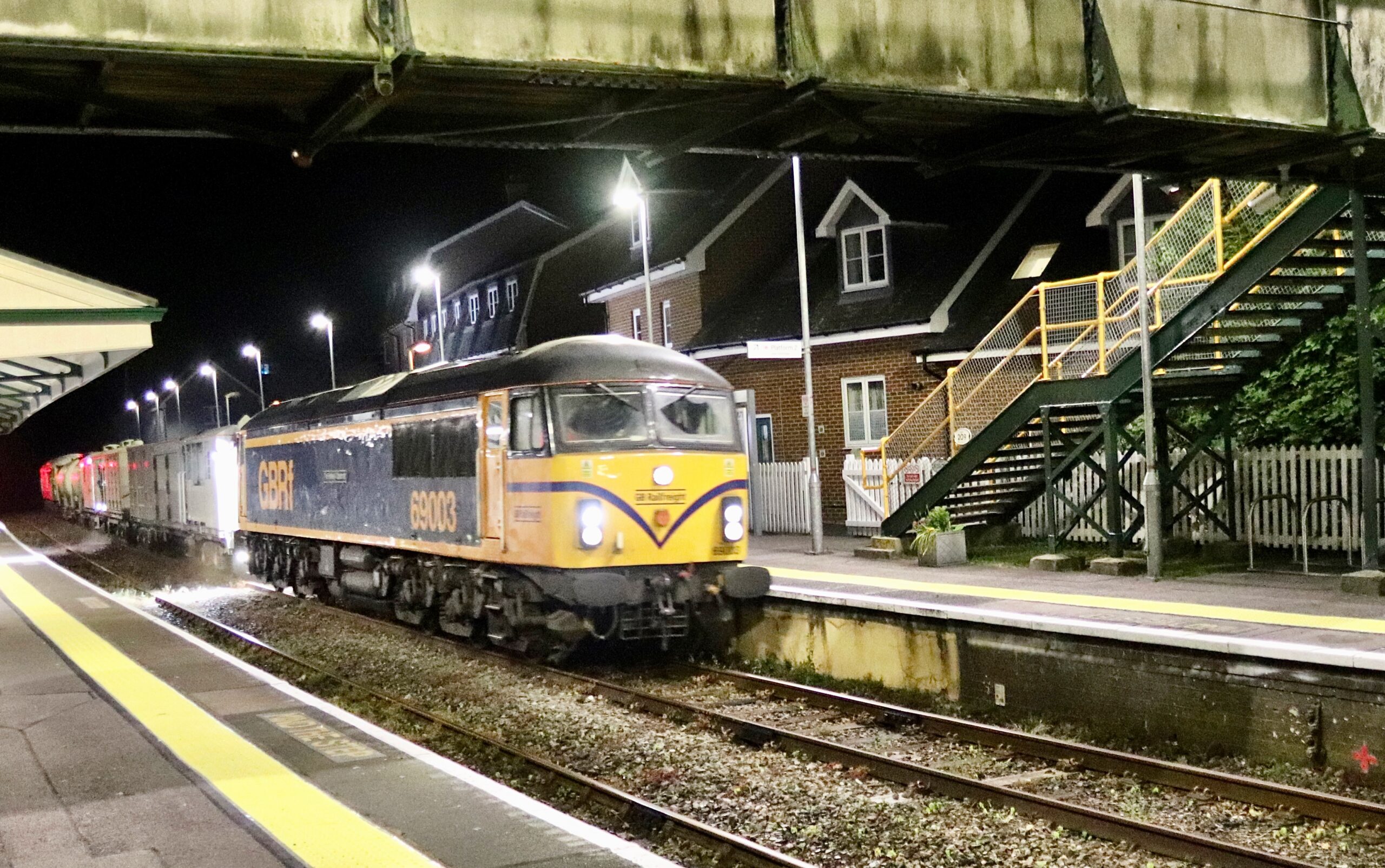
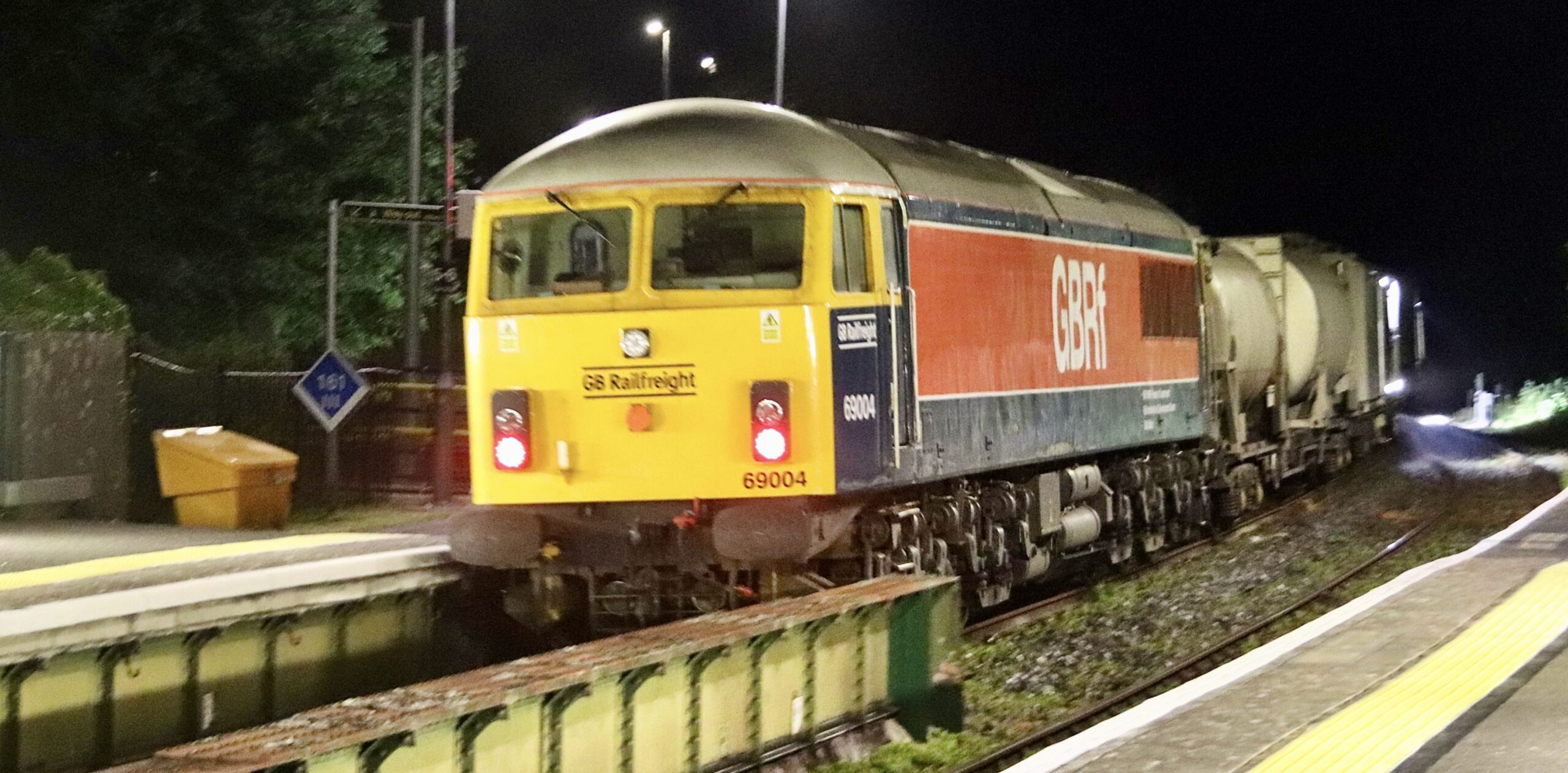
Setting the alarm for stupid o’clock on Friday morning I was in Dorchester in good time to see GBRf Class 69 No.’s 69004 and 69003 ‘The Railway Observer’ working 3Q00 2355 Exeter Riverside N.Y. to Exeter Riverside N.Y. weedkiller which was scheduled to reverse at Dorchester Junction at 0221 – 0229. I had a bit of a longer wait than planned at Dorchester West as the train arrived 37 minutes down on schedule. The vegetation control set was scheduled to visit Weymouth via Dorchester South on Monday 12th June with the train having moved to Eastleigh over the weekend. Unfortunately a tragic incident between Poole and Bournemouth caused disruption to services and the train was cancelled.
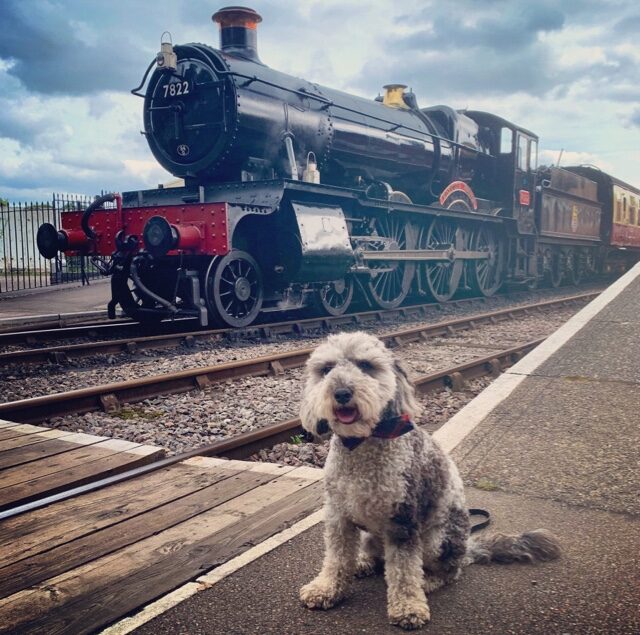
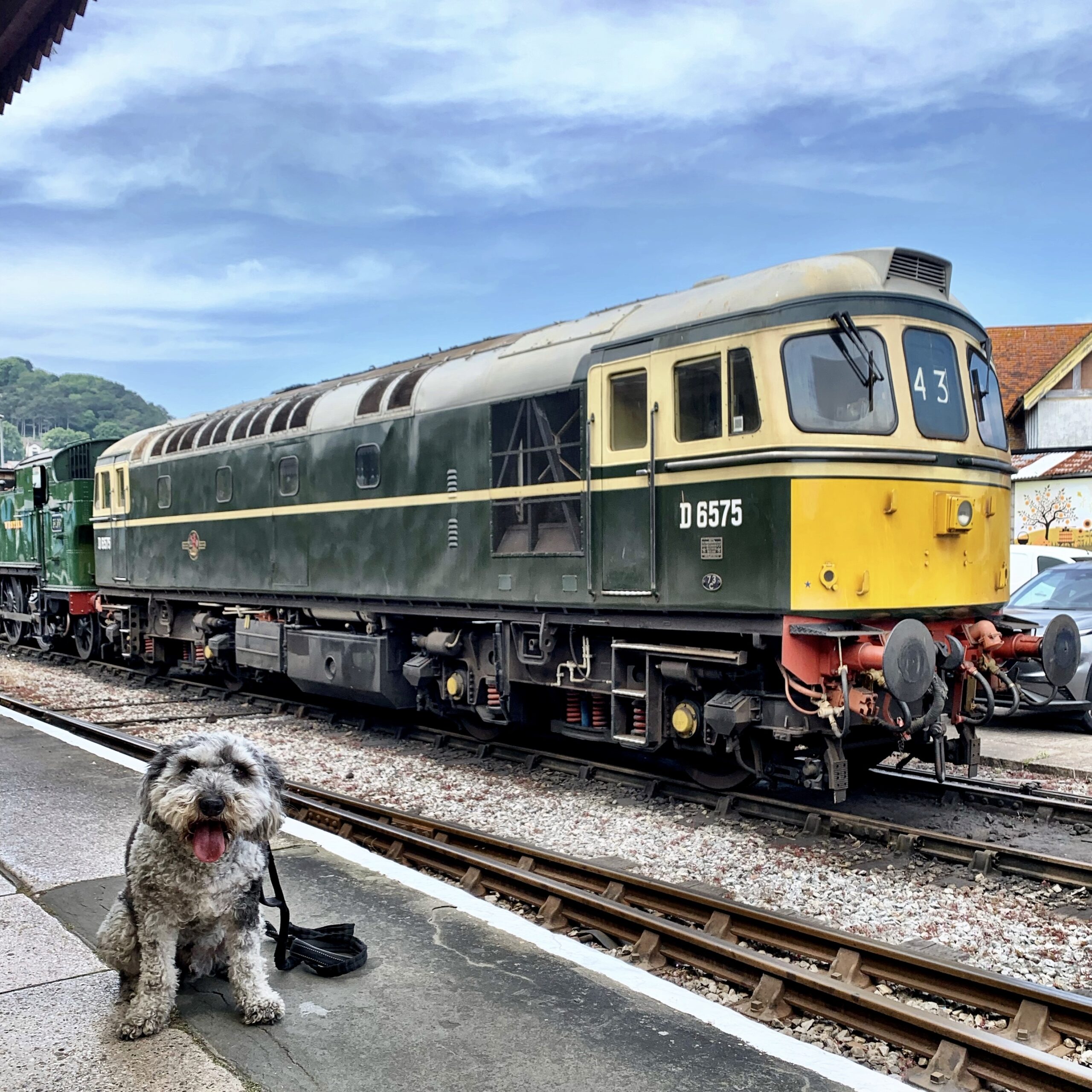
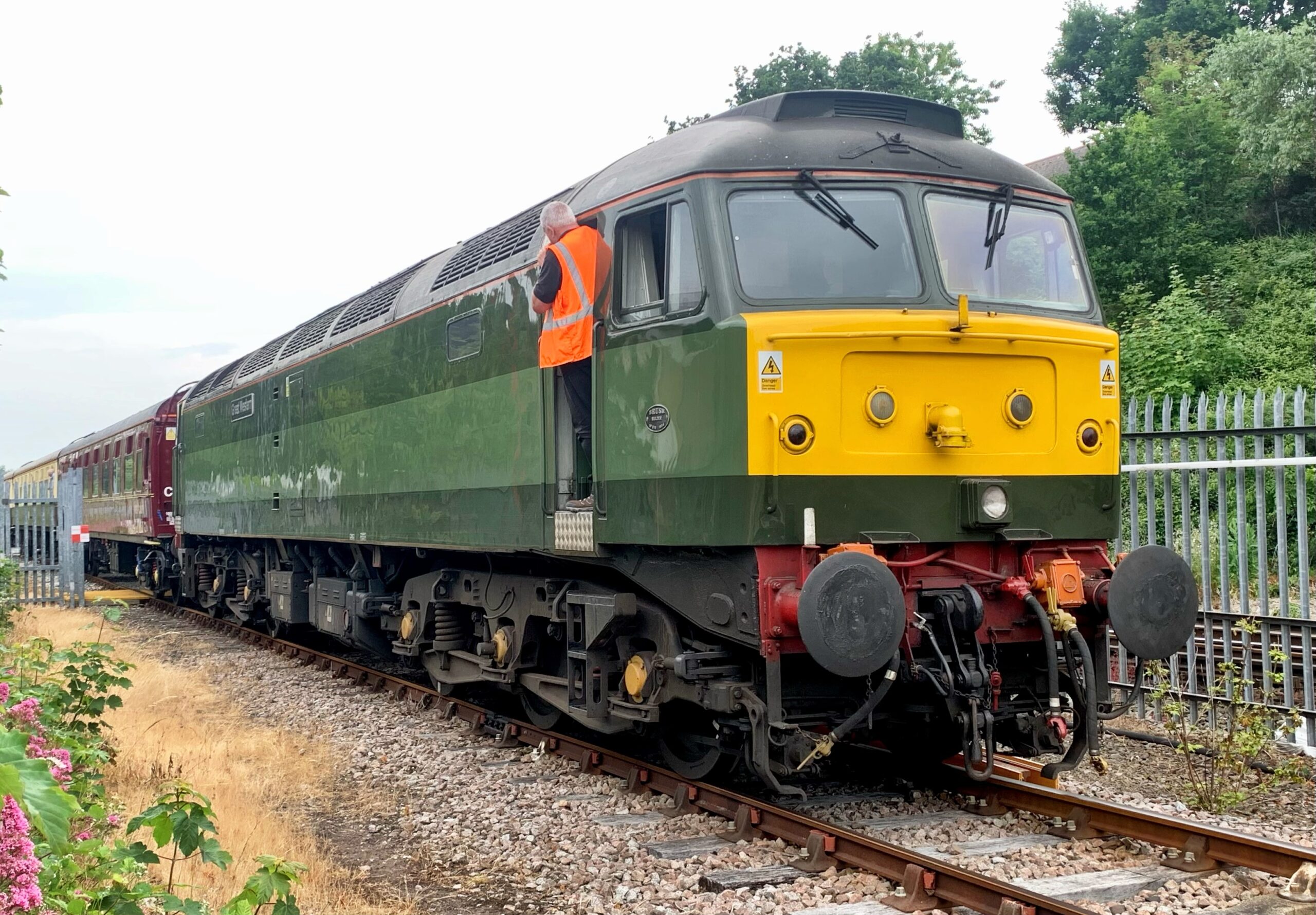
Later the same Friday, Yoshi and I headed over the county border to the West Somerset Railway for the second day of their 2023 diesel gala.
The West Somerset Railway (WSR) is a 22 miles in length and is the longest standard gauge heritage railway in the UK. It originally opened in 1862 between Taunton and Watchet. In 1874 it was extended from Watchet to Minehead by the Minehead Railway. At first the railway was a single track line with improvements required in the first half of the 20th century to cater for the increase in tourism to the Somerset coast. The line was closed by British Rail in 1971 and reopened in 1976 as a heritage line.
Interestingly, Wikipedia notes: “In 1845, when the Bristol and Exeter Railway (B&ER) had recently completed its main line, there were proposals for a number of different and competitive railway schemes in west Somerset. A Bristol and English Channels Direct Junction Railway was proposed as a link from Watchet through Stogumber and Bishops Lydeard to Bridport on the south coast, which would be an alternative to ships taking a long and dangerous passage around Land’s End. This prompted the promotion of a connecting line from Williton to Minehead and Porlock, a line designed to attract tourists to Exmoor. Shortly afterwards, a Bristol and English Channels Connection Railway was suggested from Stolford to Bridport which would have passed through the Quantock Hills near Crowcombe. Alternatively, the Bridgwater and Minehead Junction Railway would link with the B&ER at Bridgwater and run through Williton to Minehead with a branch to Watchet and a connecting Minehead and Central Devon Junction Railway would provide a line to Exeter. An alternative link to South Devon was proposed by the Exeter, Tiverton and Minehead Direct Railway through Dunster and offered an extension to Ilfracombe.” Of course, none of these schemes came to fruition, but it is interesting to speculate on the possible developments of Bridport and West Bay.
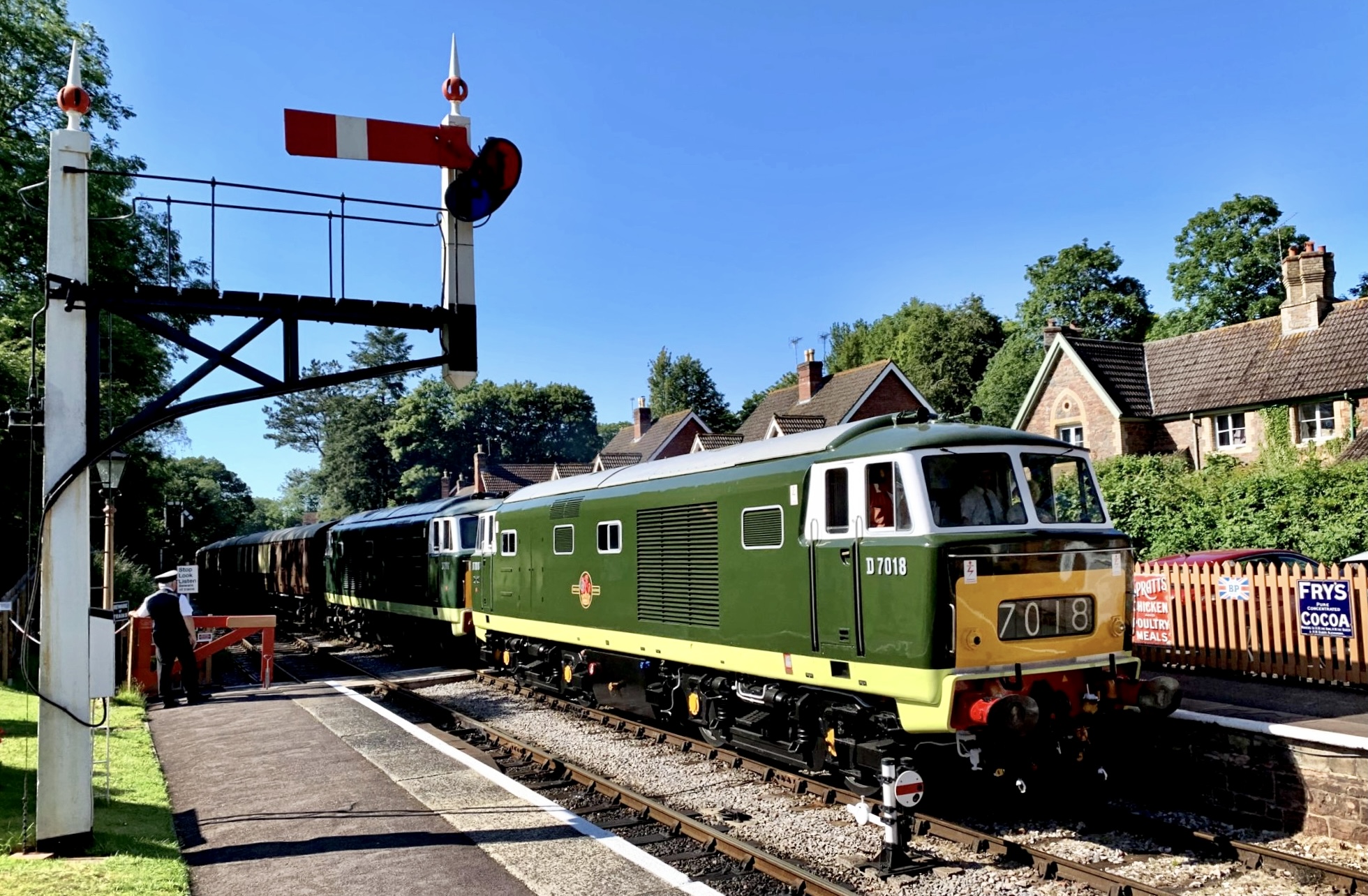
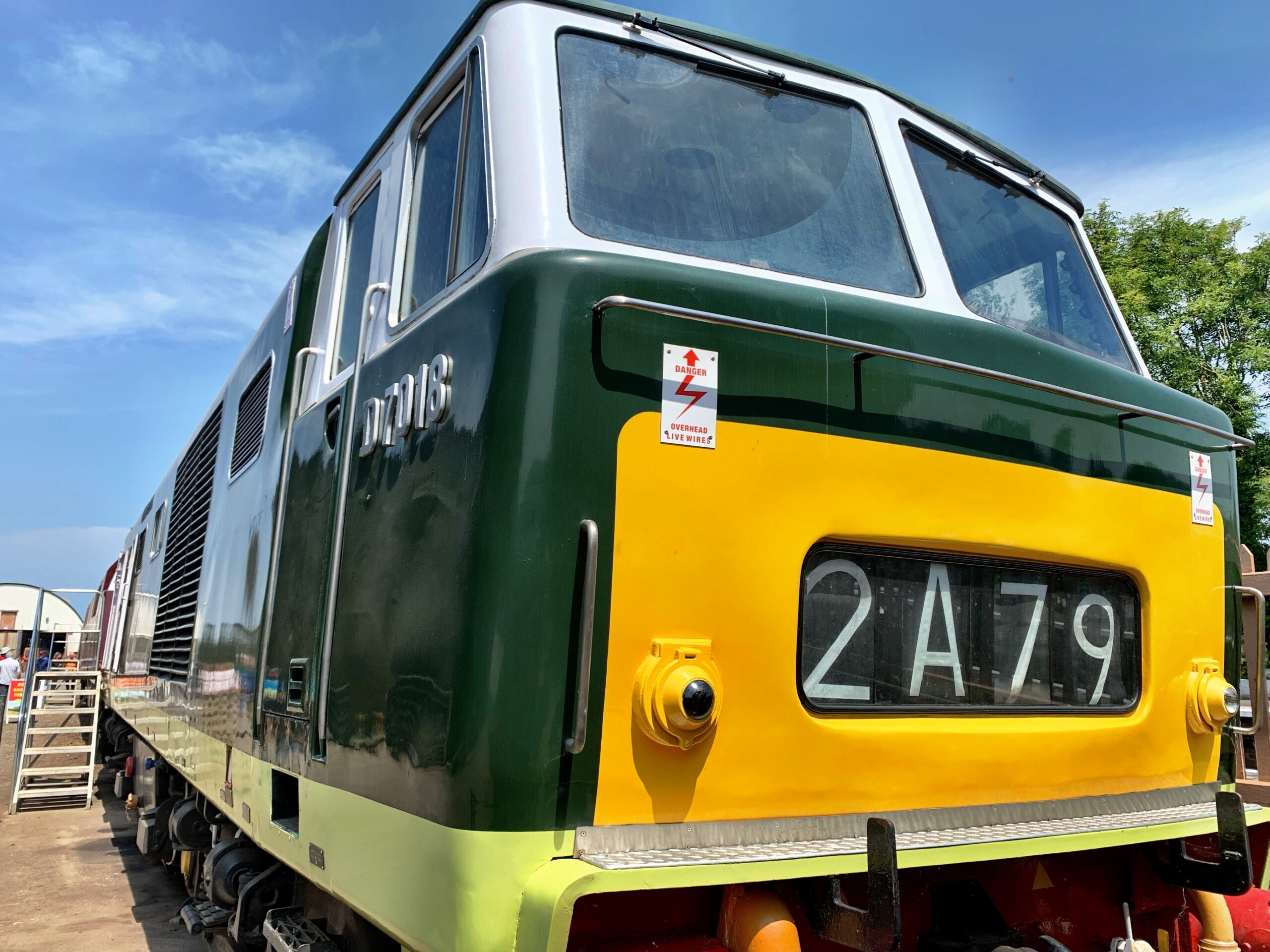
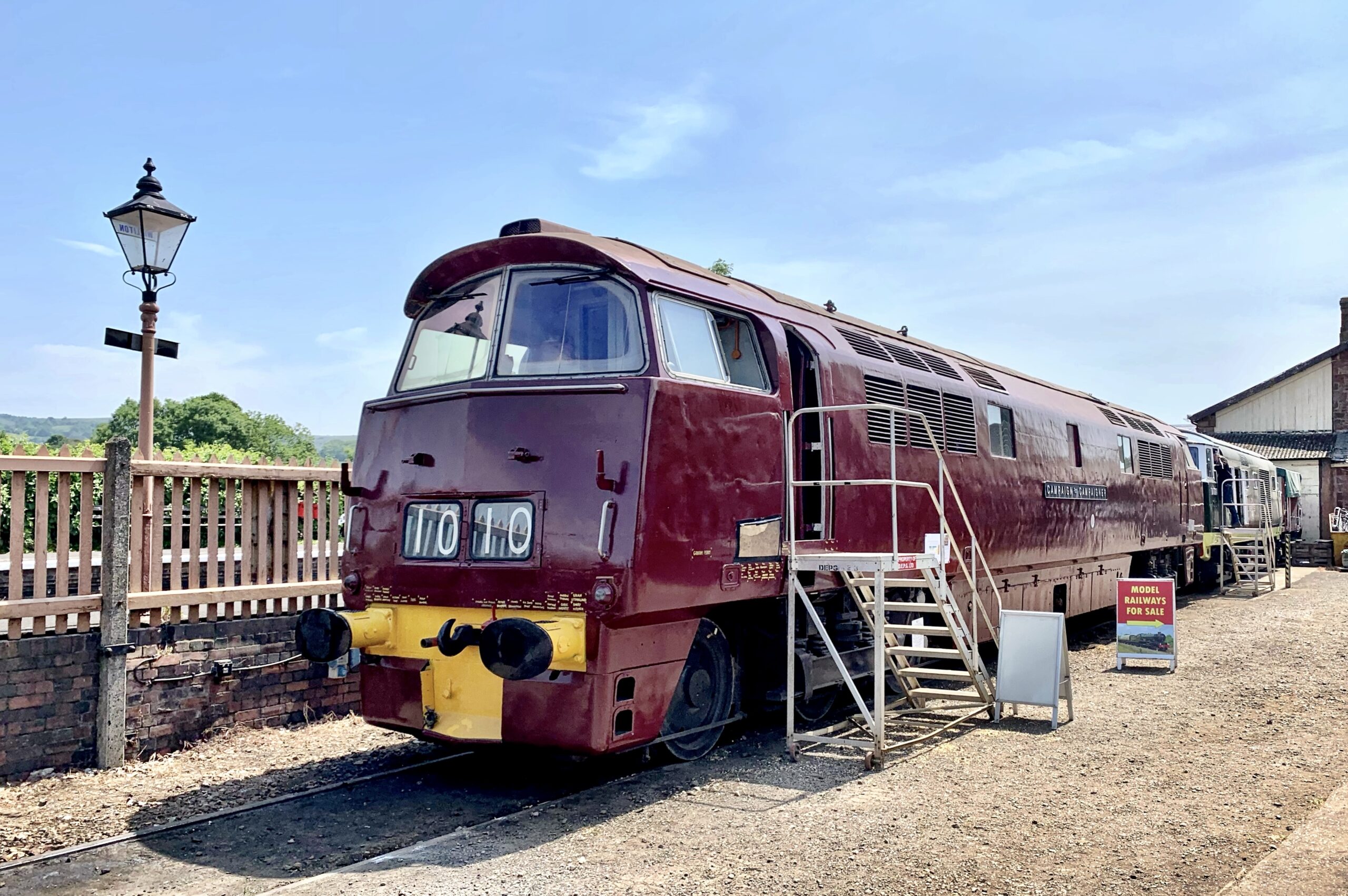
Unfortunately one of the planned 2023 gala highlights, a double headed Class 35 Hymek hauled train, didn’t transpire on the day I visited as both available examples of the class were deemed out of order. We saw the Hymeks on the diesel depot at Williton and it was good to see that the dedicated band of volunteers and engineers were working hard on getting at least one example operational for the following day.
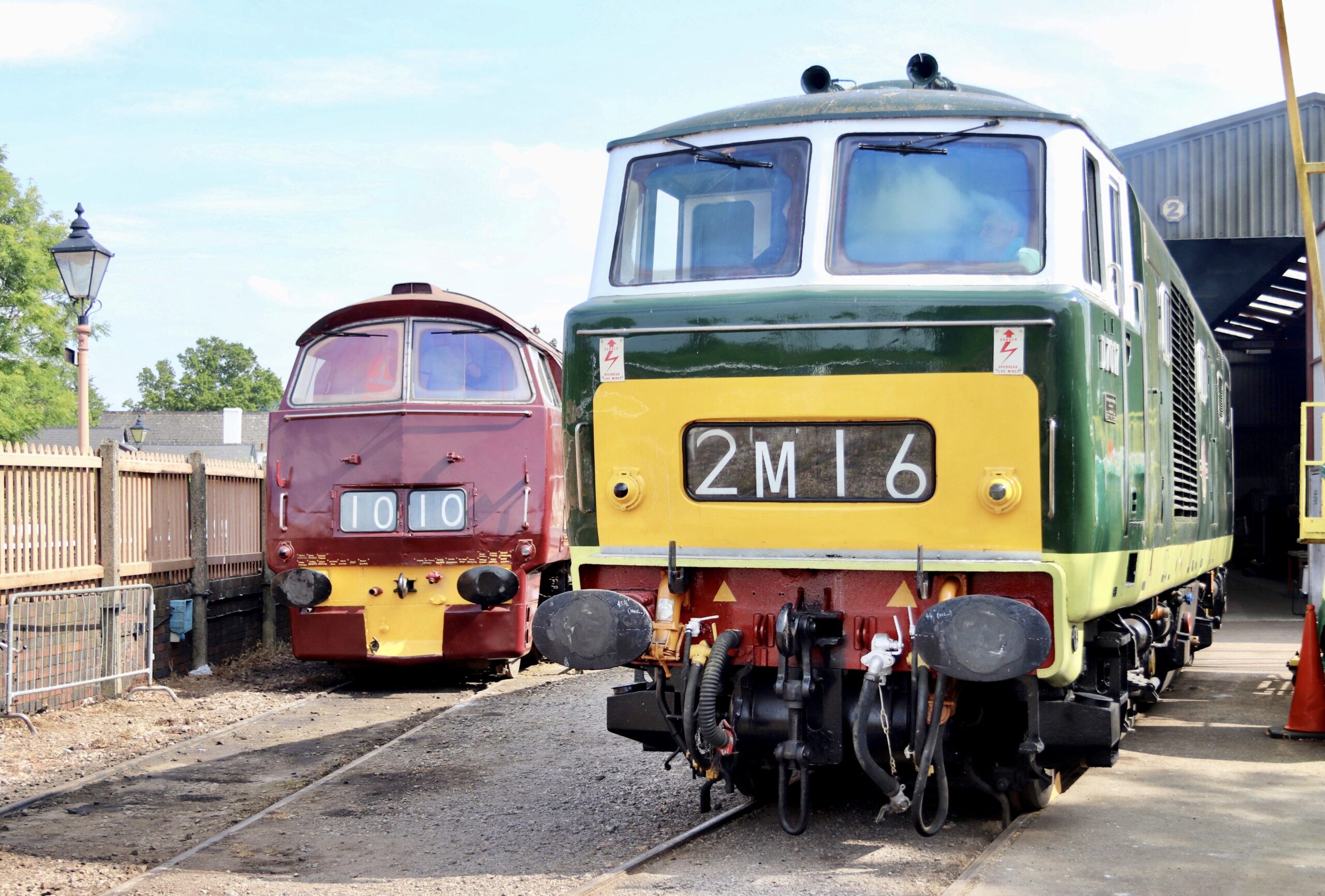
Introduced into service between 1961 and 1964, the Hymek’s were intended as a medium power mixed traffic locomotive, but were often rostered to deputise for some of BR Western Region’s largest steam locos on 13 and 14-coach trains in their early years. A total of 101 locos were built and were allocated all over the West of England. They settled down to become a successful and capable fleet and weee regular visitors to Weymouth via the route from Yeovil. However the Hymek’s careers were cut short by BR’s standardisation of diesel-electric locomotives. The first withdrawals came in 1971, with some locos scrapped being less than nine years old. Full withdrawal of the fleet was planned for 1973 and a farewell tour, “The Hymek Swansong”, ran in the September of that year. Due to loco shortages, ten Hymek’s lasted until 1975 when they were finally withdrawn. Of these, four examples have survived into preservation; the two WSR based Diesel & Electric Preservation Group (D&EPG) Hymek’s No.’s D7017 and D7018; No. D7029 with the Diesel Traction Group based at the Severn Valley Railway currently undergoing restoration having been out of service since 1987, and No. D7076 with the Bury Hydraulic Group and is set to return to traffic at the East Lancs Railway 2023 Diesel Gala.
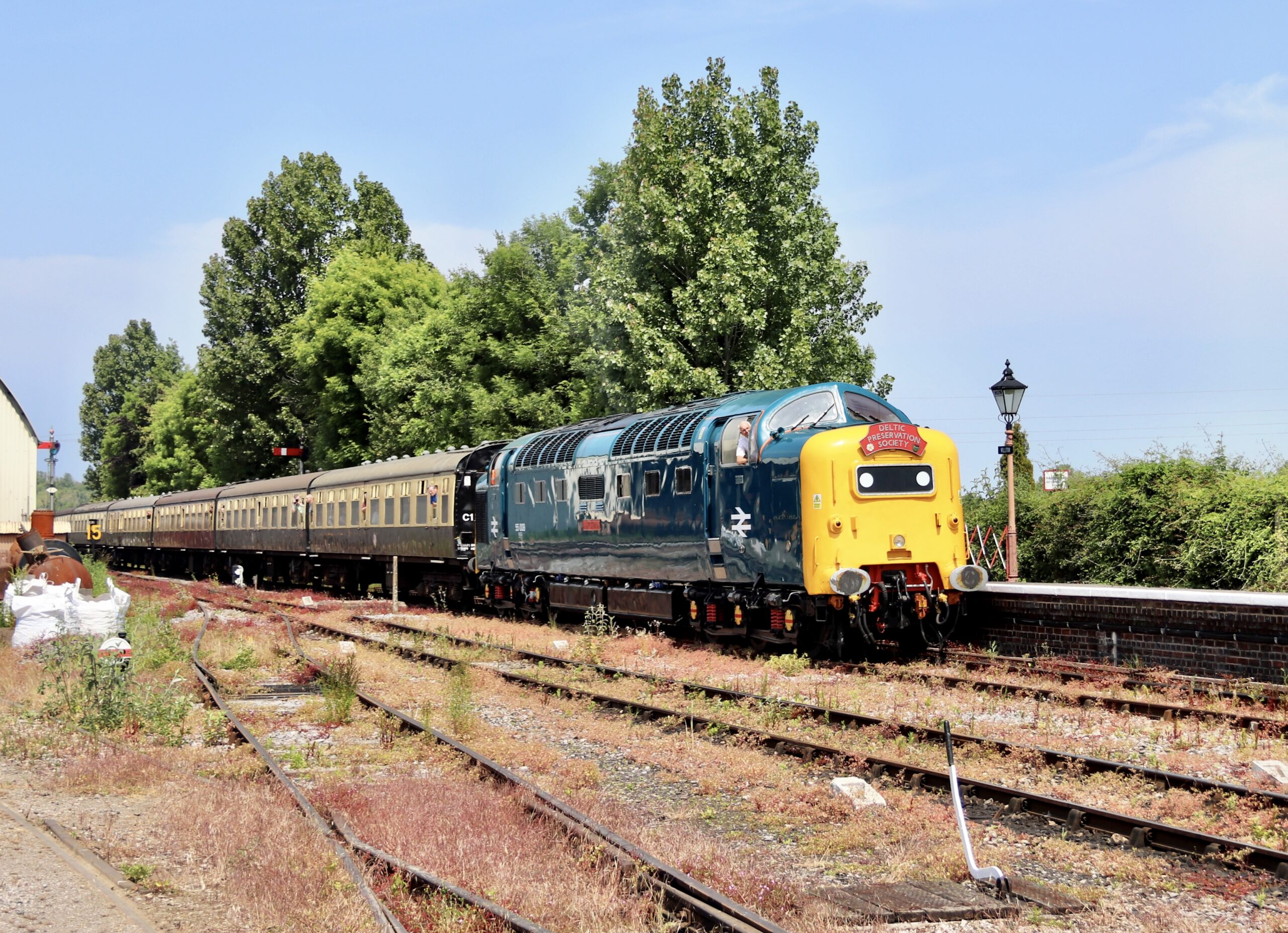
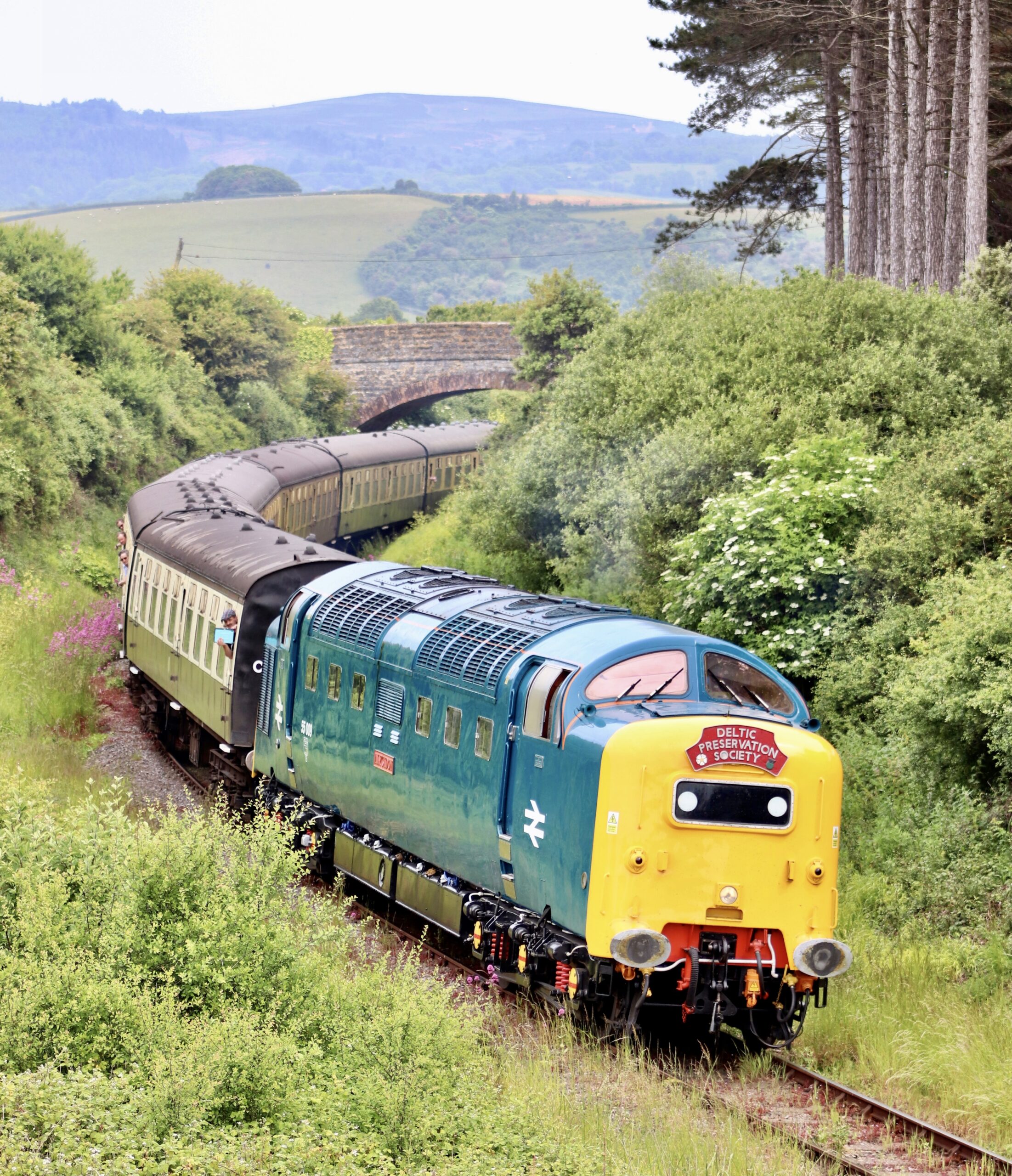
The other big draw for the WSR 2023 diesel gala was Class 55 Deltic diesel locomotive No. 55009 ‘Alycidon’ which sounded on fine form. Owned by the Deltic Preservation Society (DPS) the loco has been restored as a main line runner, and hopefully we’ll get to see and hear the magnificent Napier engine sound in Dorset at some point. Named at Doncaster Works on July 21st 1961 before introduction to traffic, the as then No. D9009 maintained the ‘racehorse’ tradition of the London North Eastern Railway (LNER) by commemorating the winner of the 1949 Ascot Gold Cup. In May 1981, she moved to York after the closure of Finsbury Park depot and was one of four Deltics prepared to work a series of farewell railtours during their final six months of operation. Withdrawn on 2nd January 1982 ‘Alycidon’ was sold to the DPS for £16,550.09 in May of the same year.

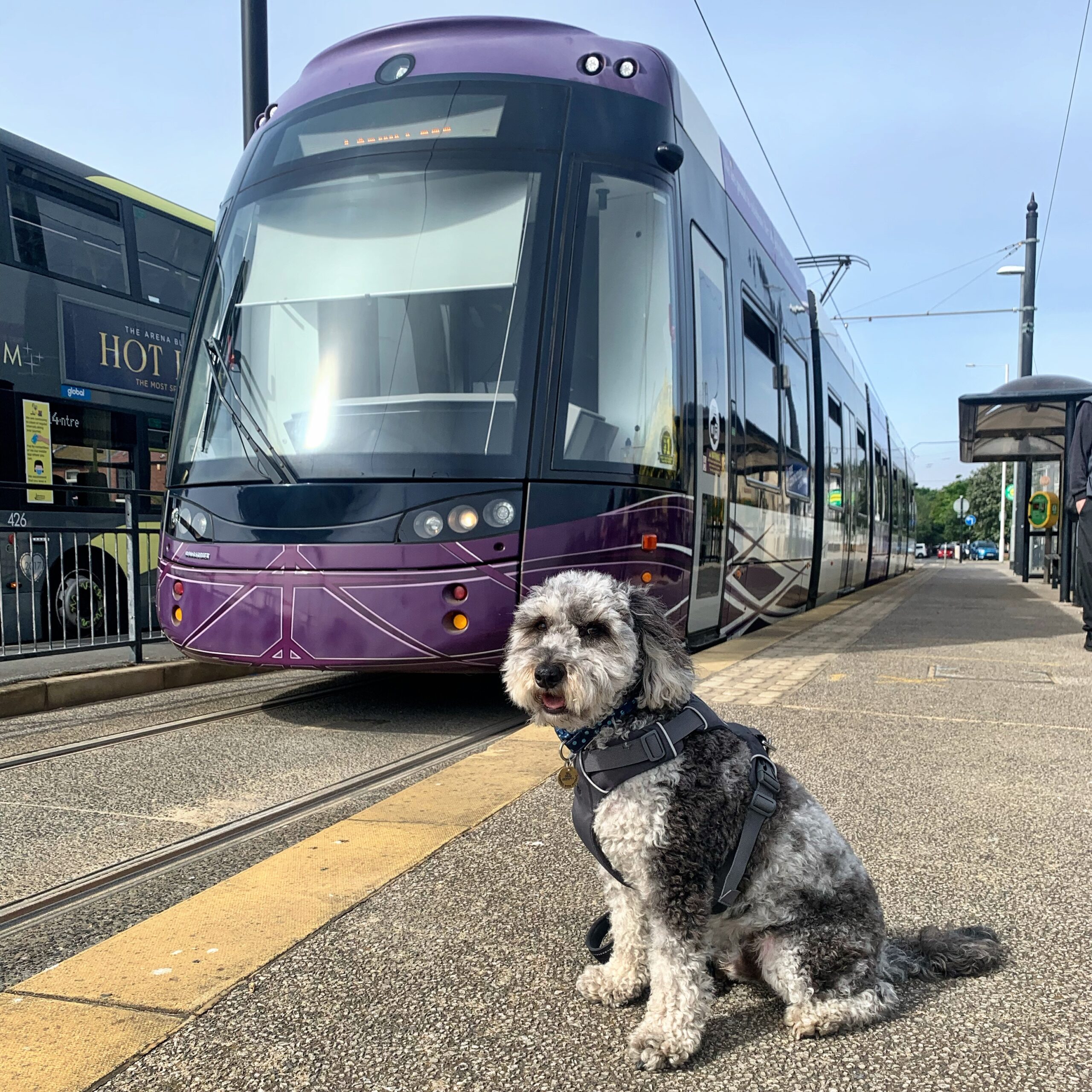
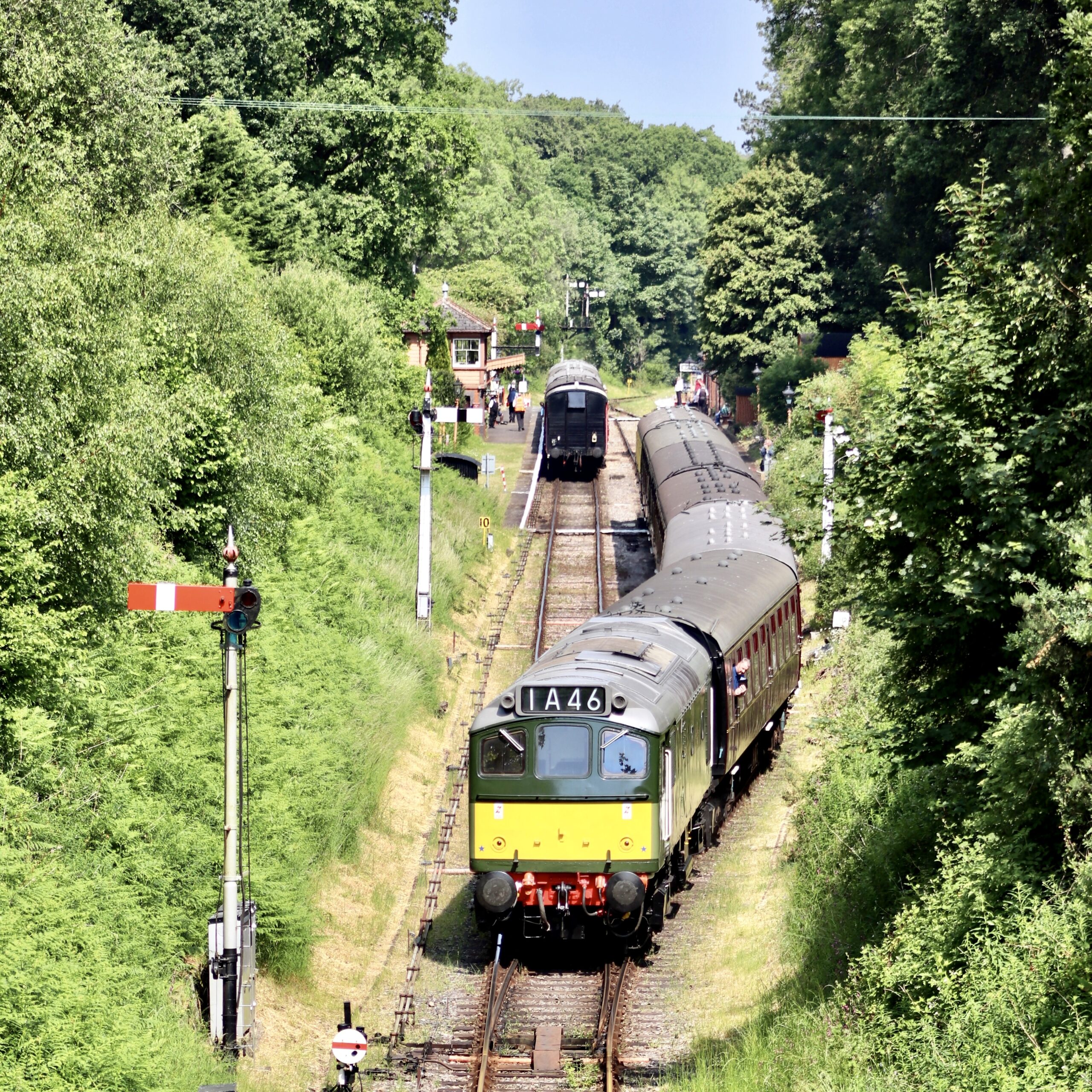
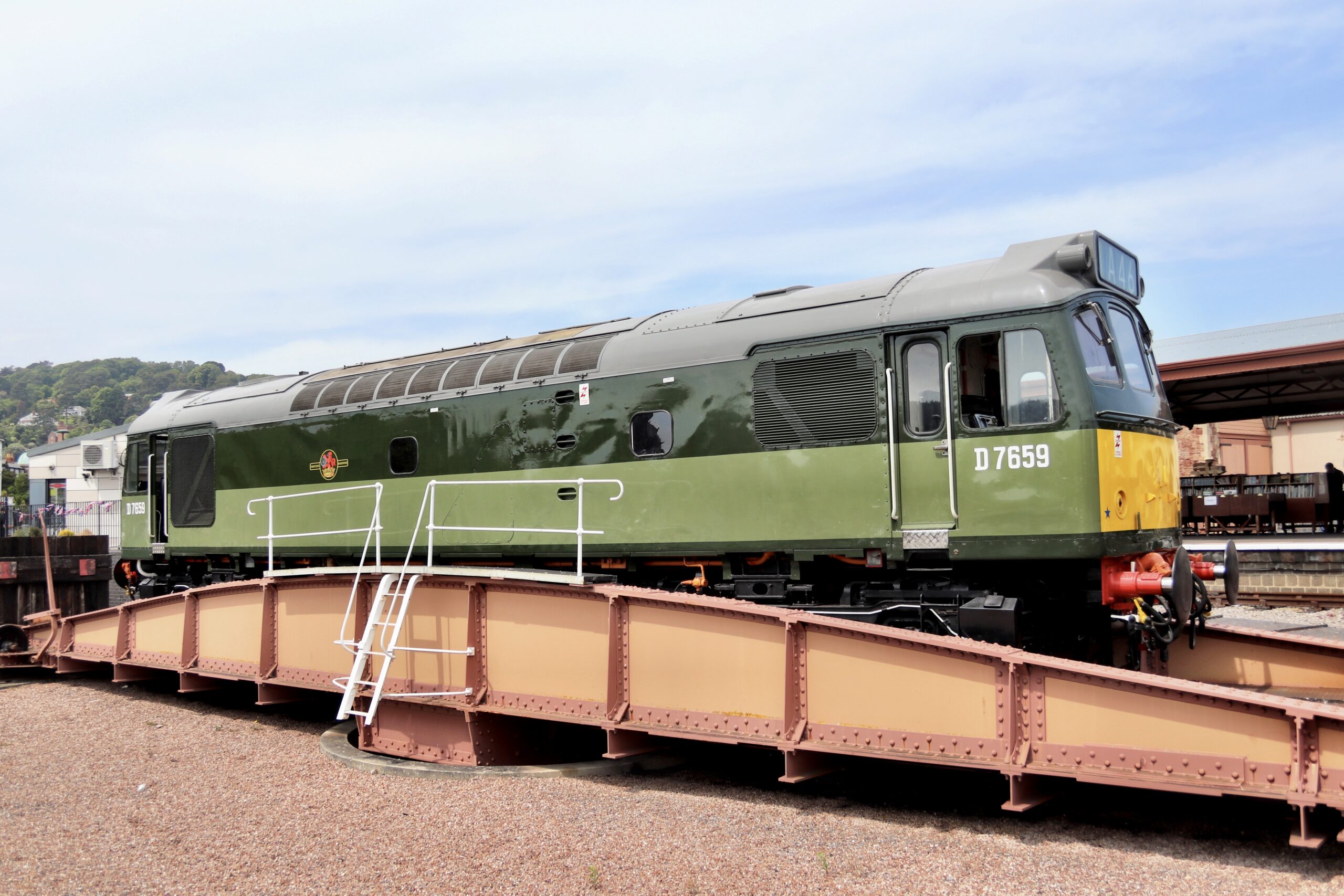
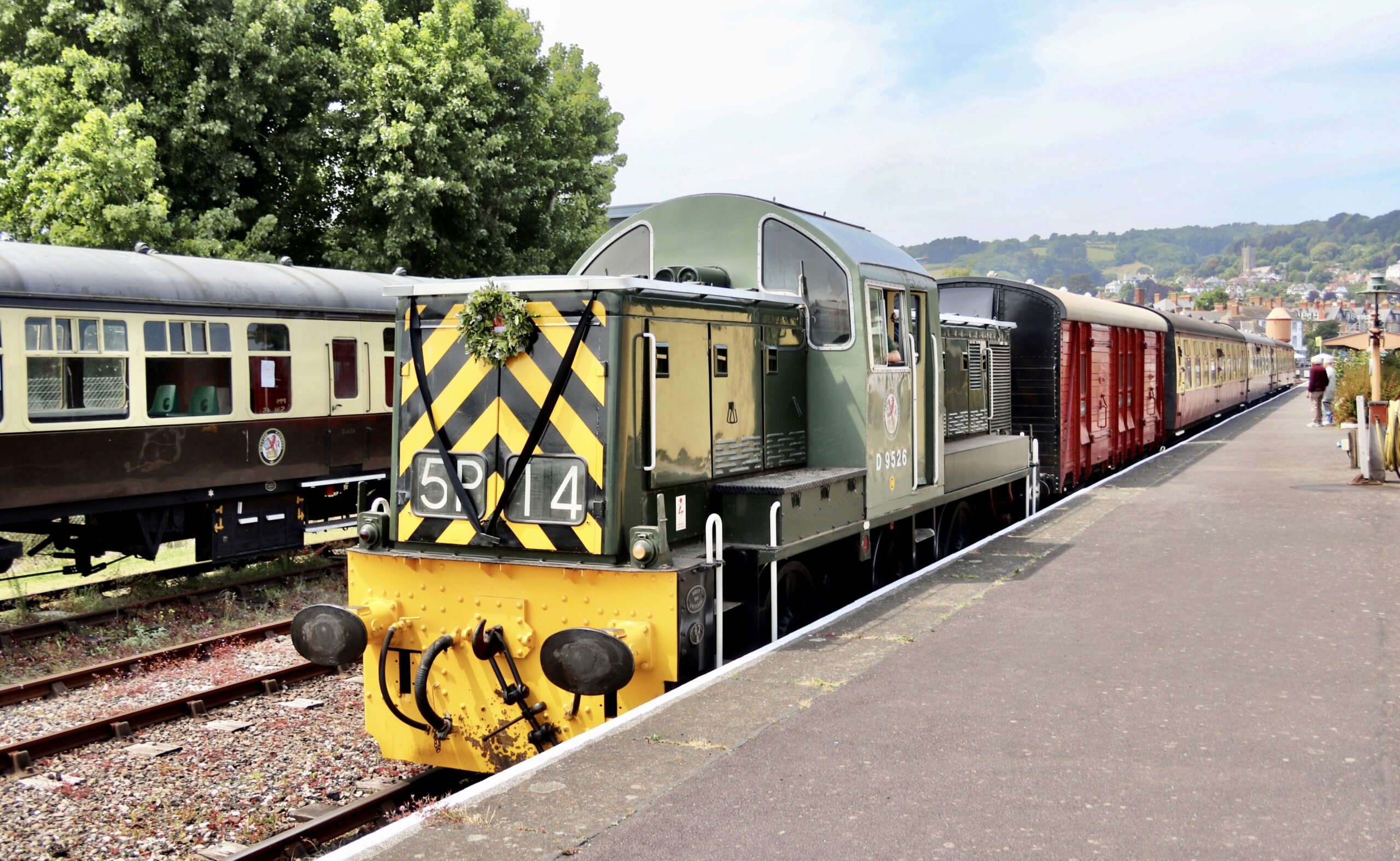
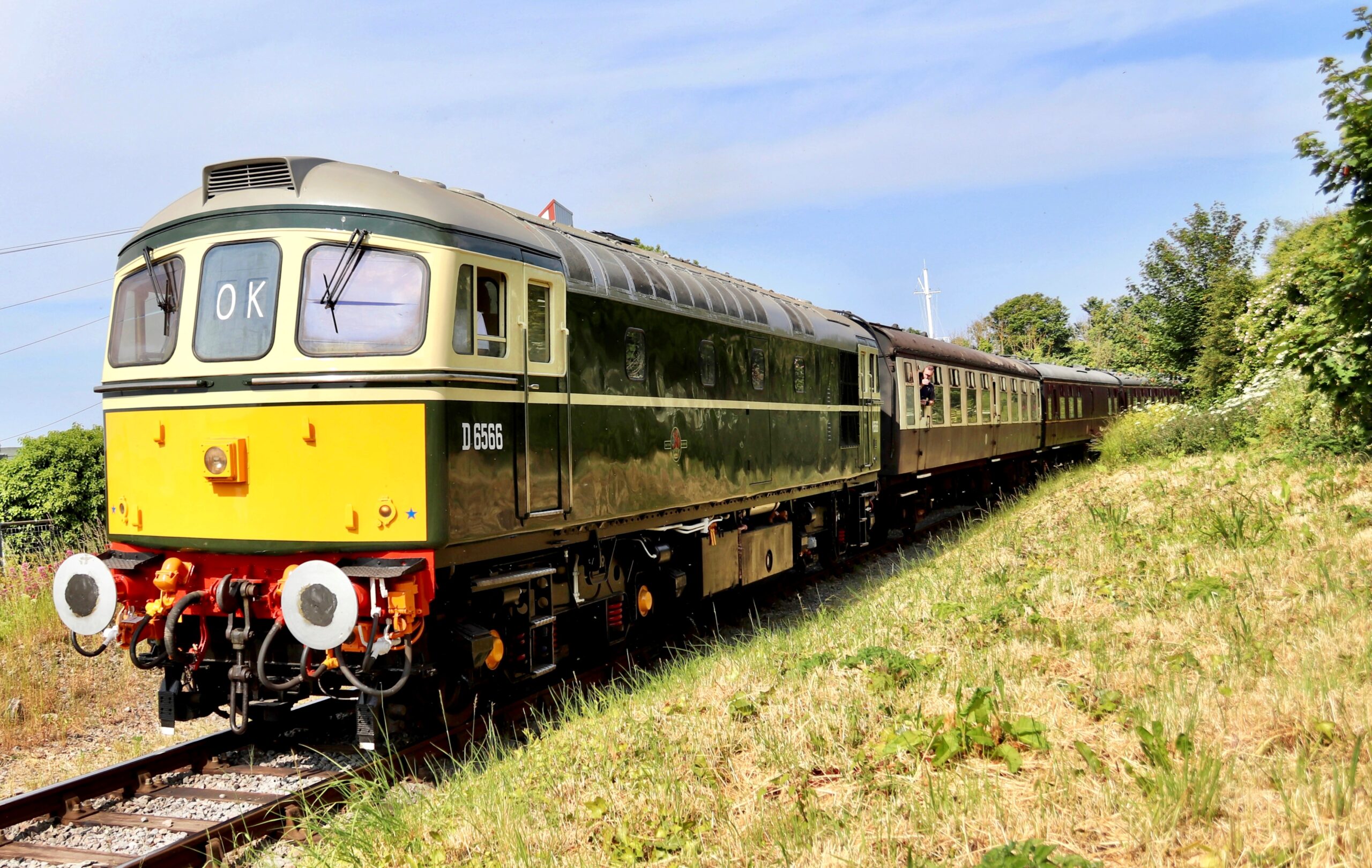
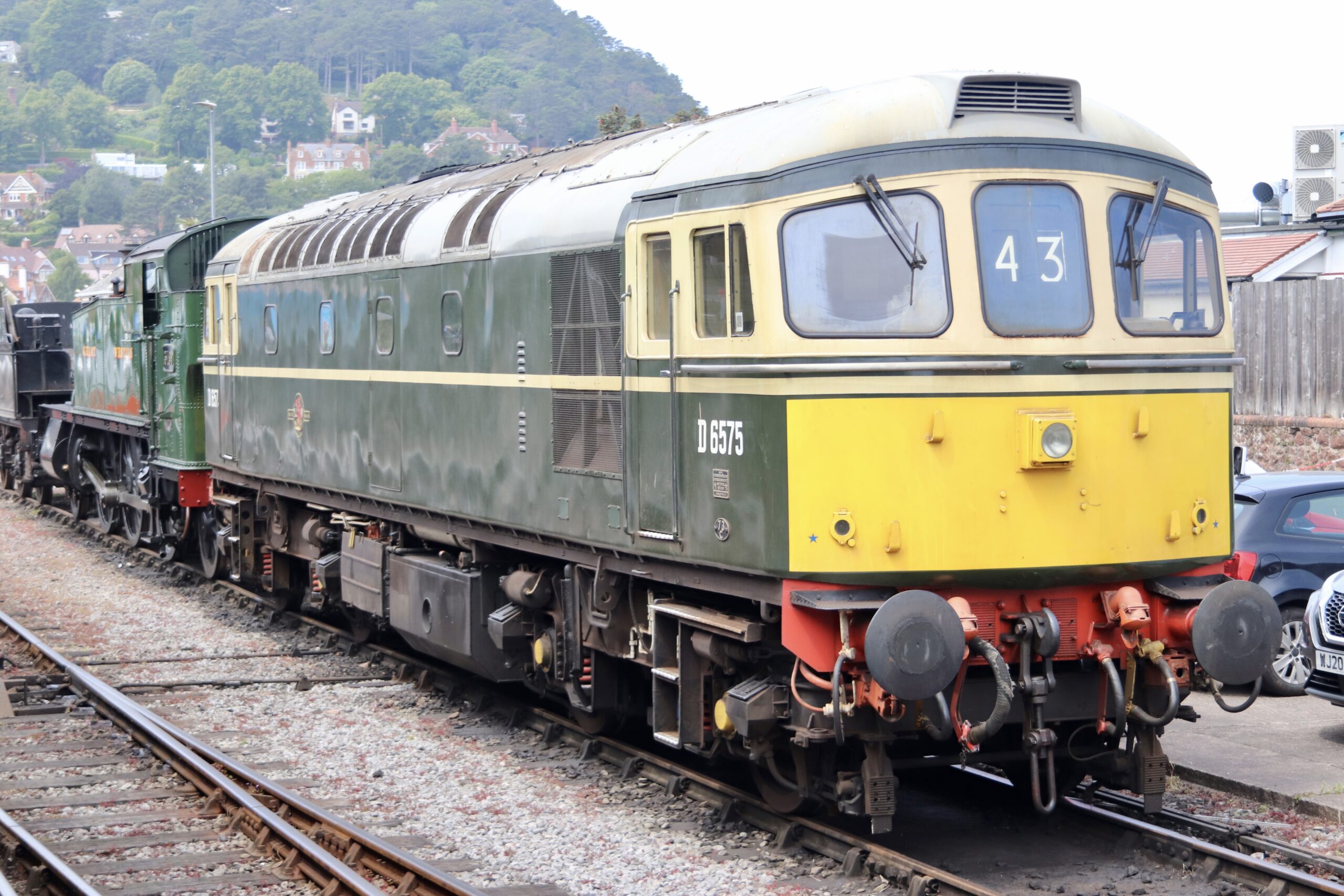
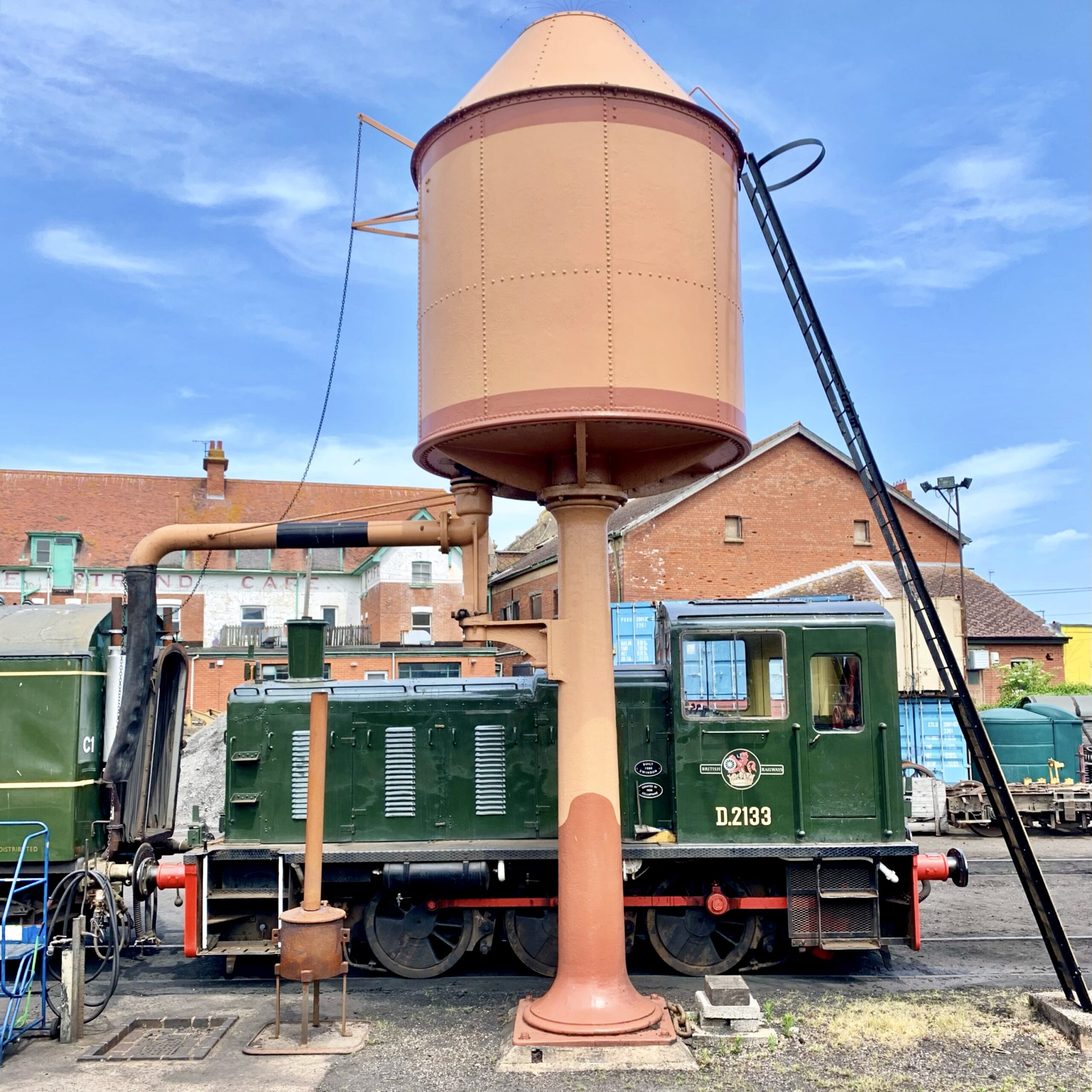
We made sure that Yoshi had plenty of water to drink and shade was available for him while watching the trains. Other locomotives in action at the West Somerset Railway on the Friday were:

Saturday saw some preserved diesel action much closer to home as Class Forty Preservation Society owned Class 40 No. D345 (40145) hauled Pathfinder Railtours 50th Anniversary charter train which ran from Burton-on-Trent to Weymouth. The tour celebrated the 10th June 1973 railtour, co-organised by Pathfinder’s Peter Watts, which departed Gloucester Eastgate heading for Pwllheli all those years ago. I have very fond memories of Peter Watts Publishing railway books in the 1970’s and 1980’s. Peter is stepping away from management at Pathfinder tours but was very much involved with the organisation of the 50th Anniversary Tour. An added bonus was the use of MK1 coaches and could well be the last mainline use of such stock.

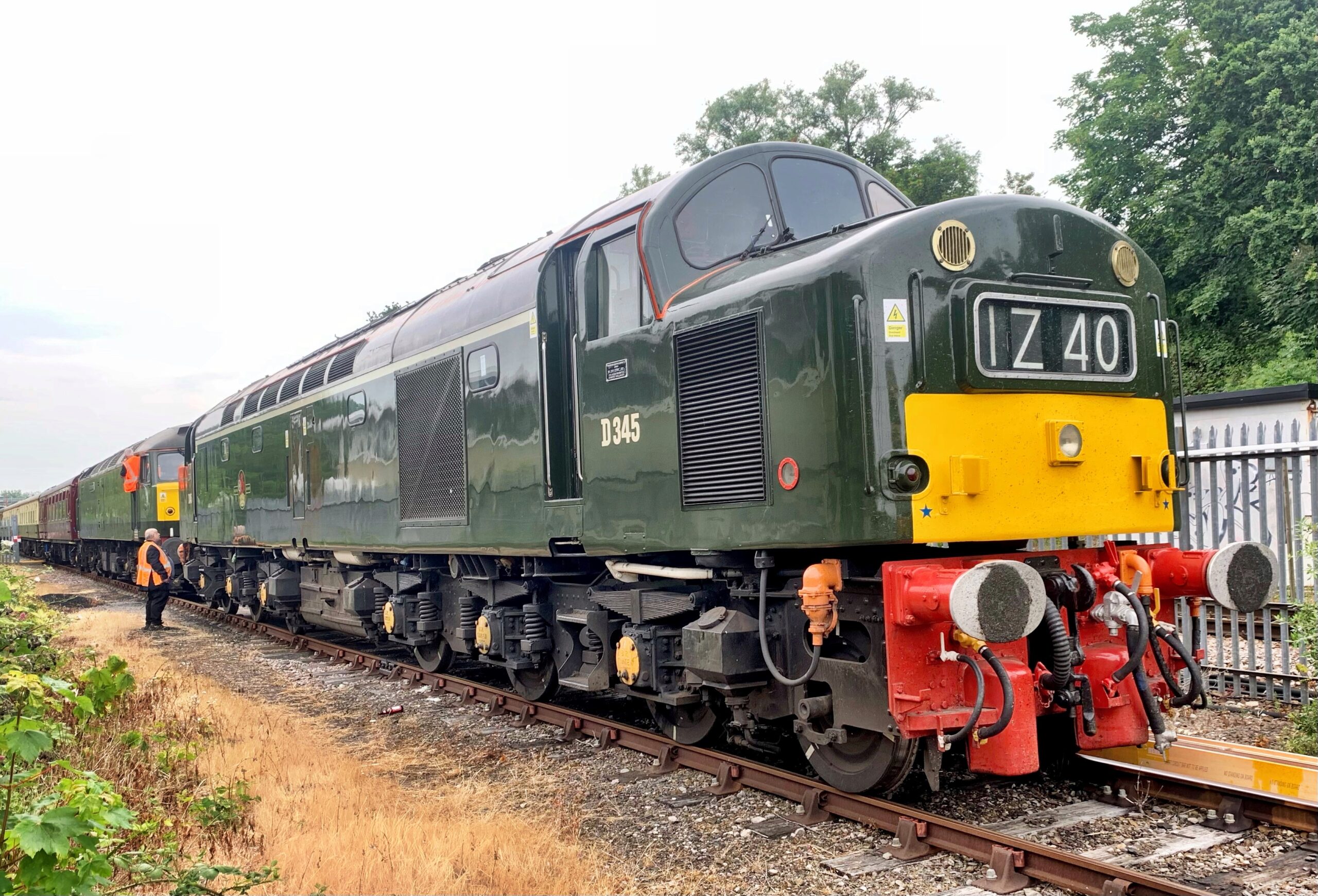
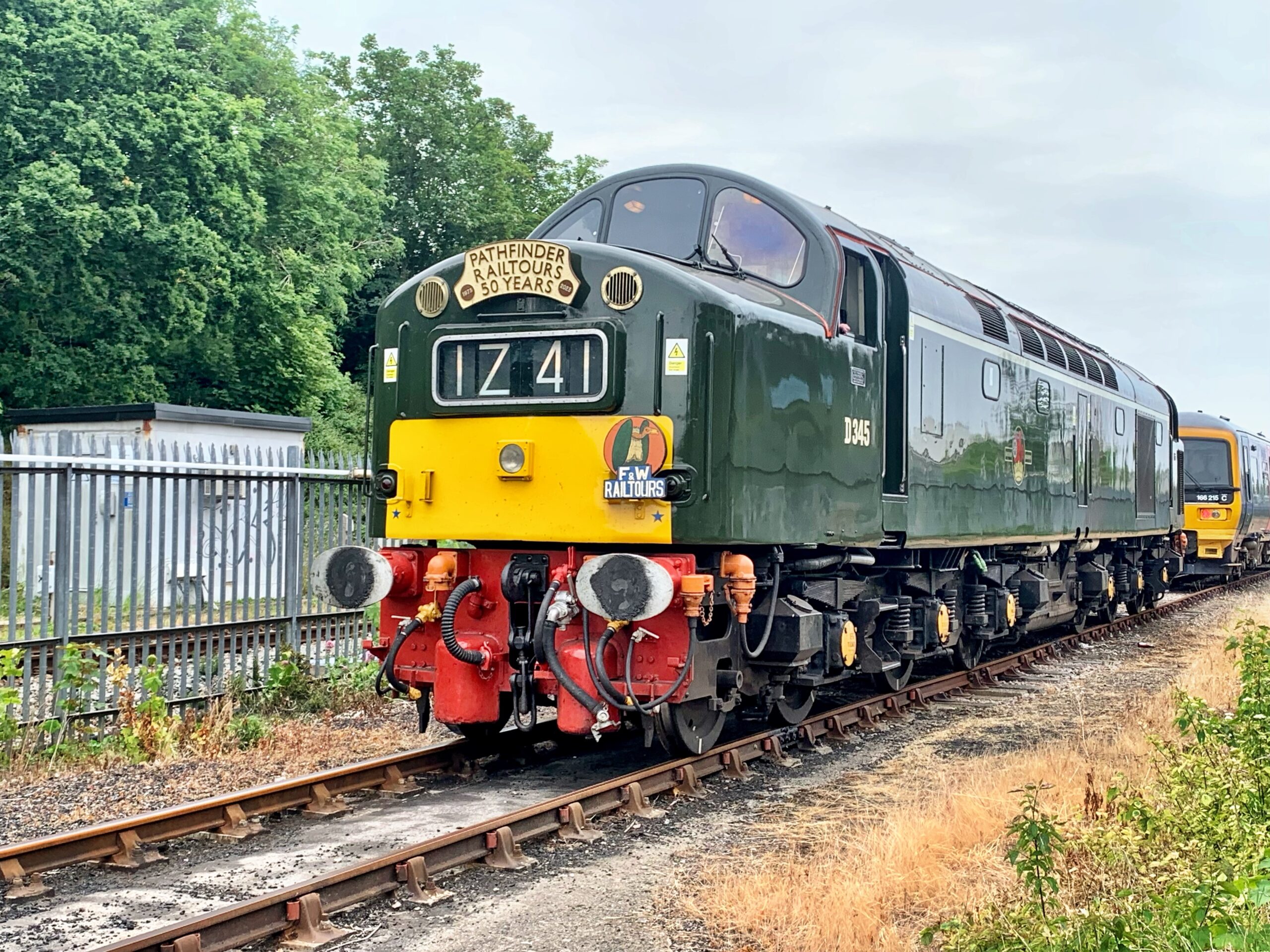
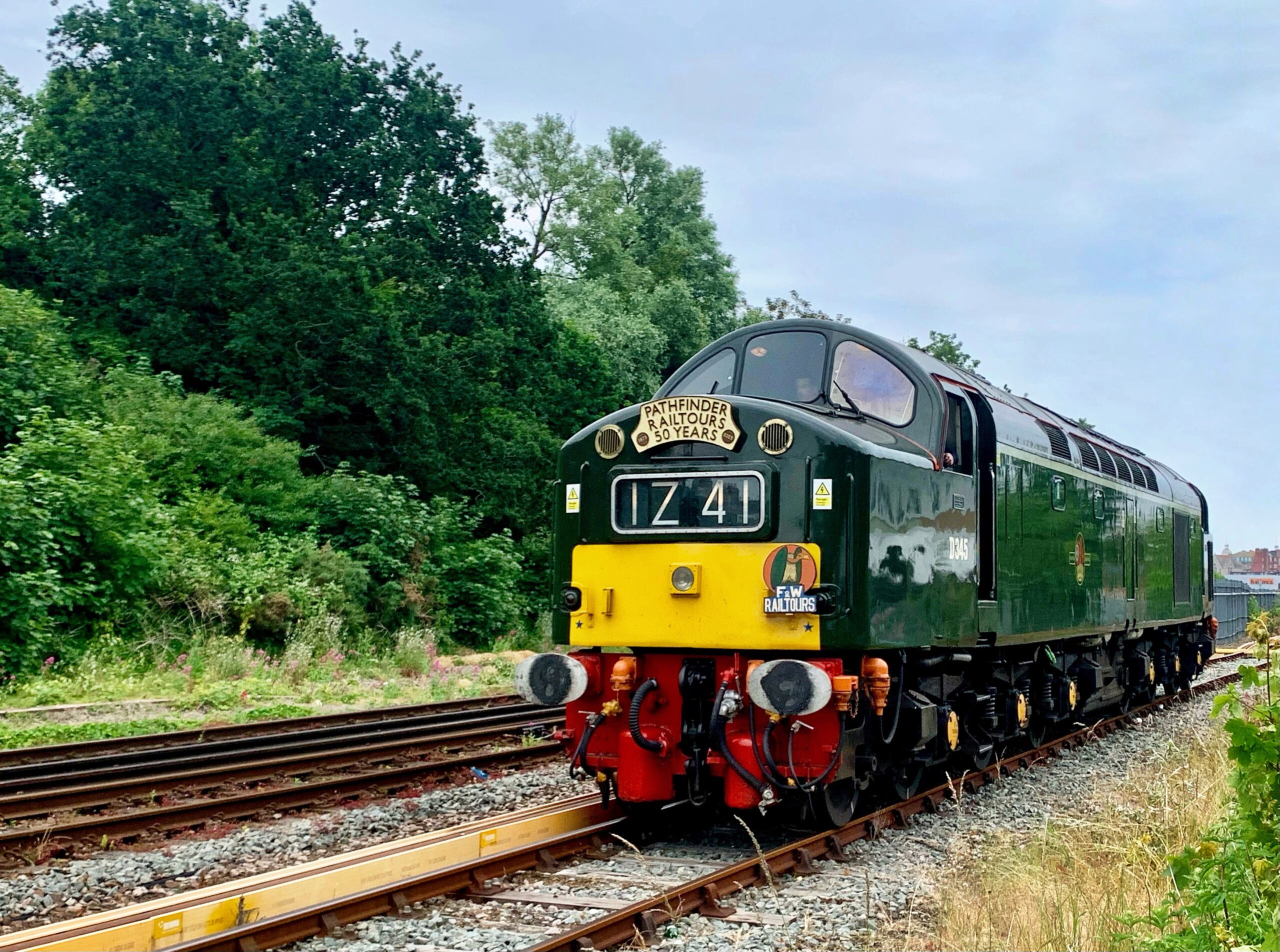
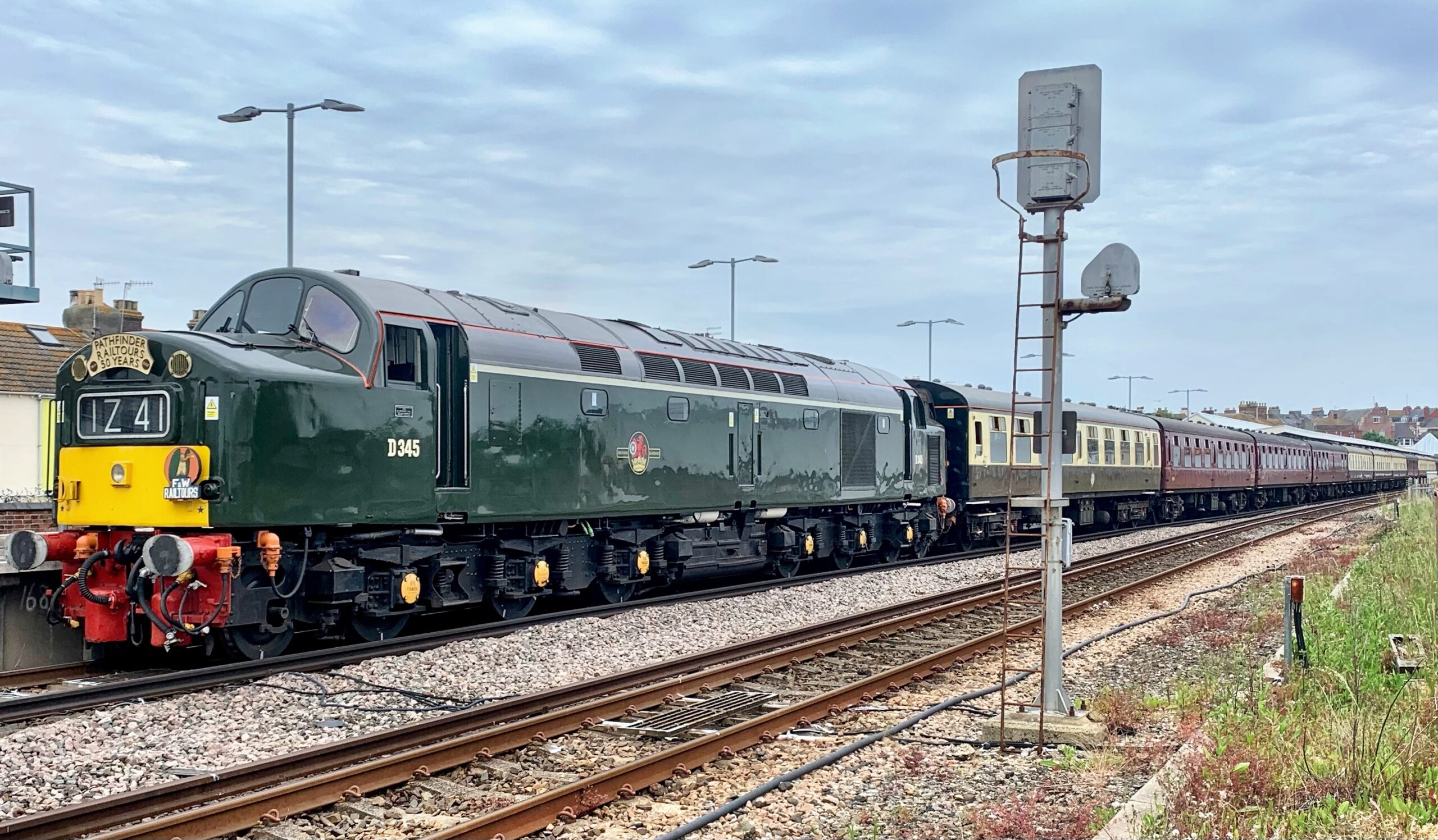
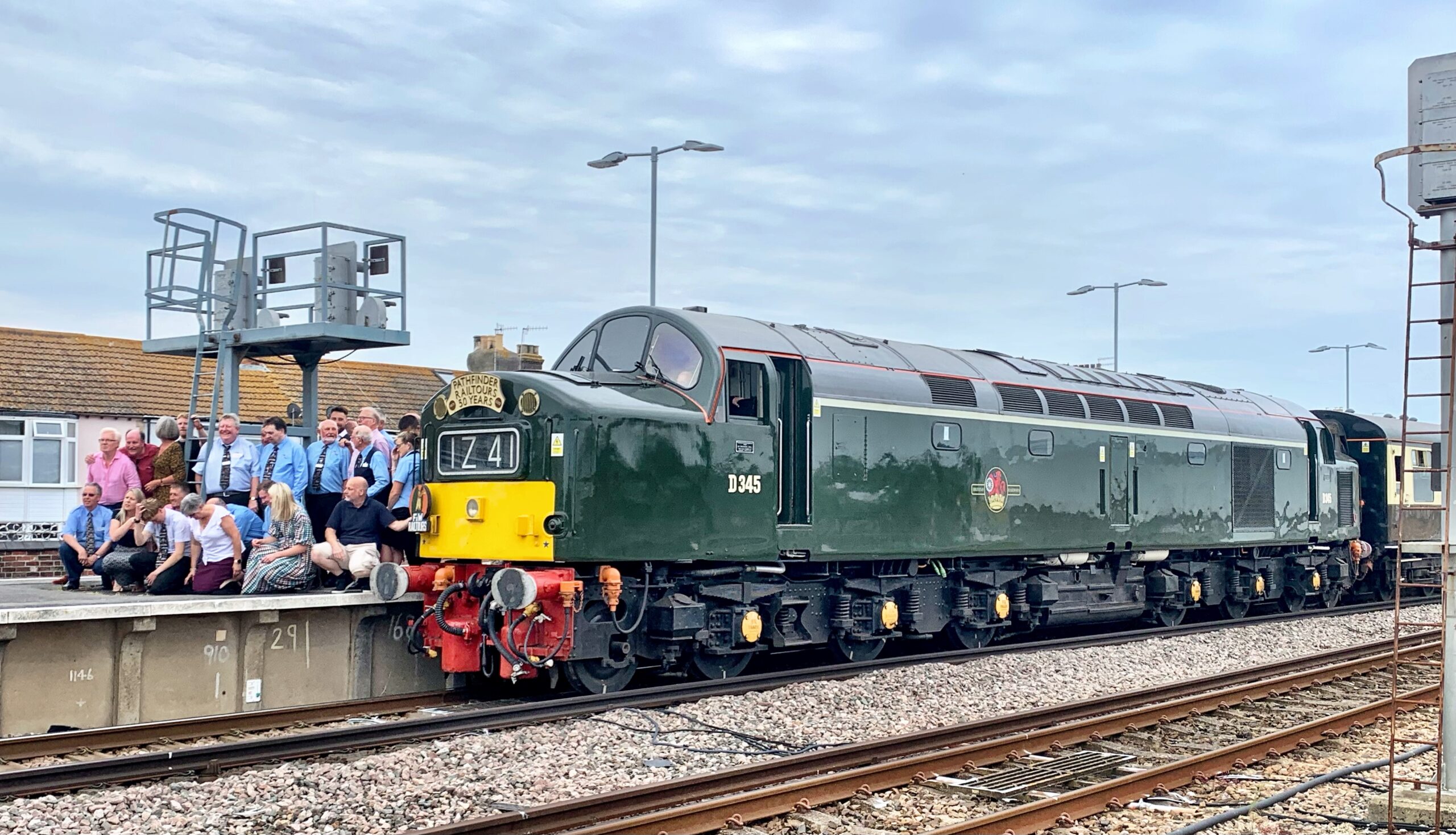
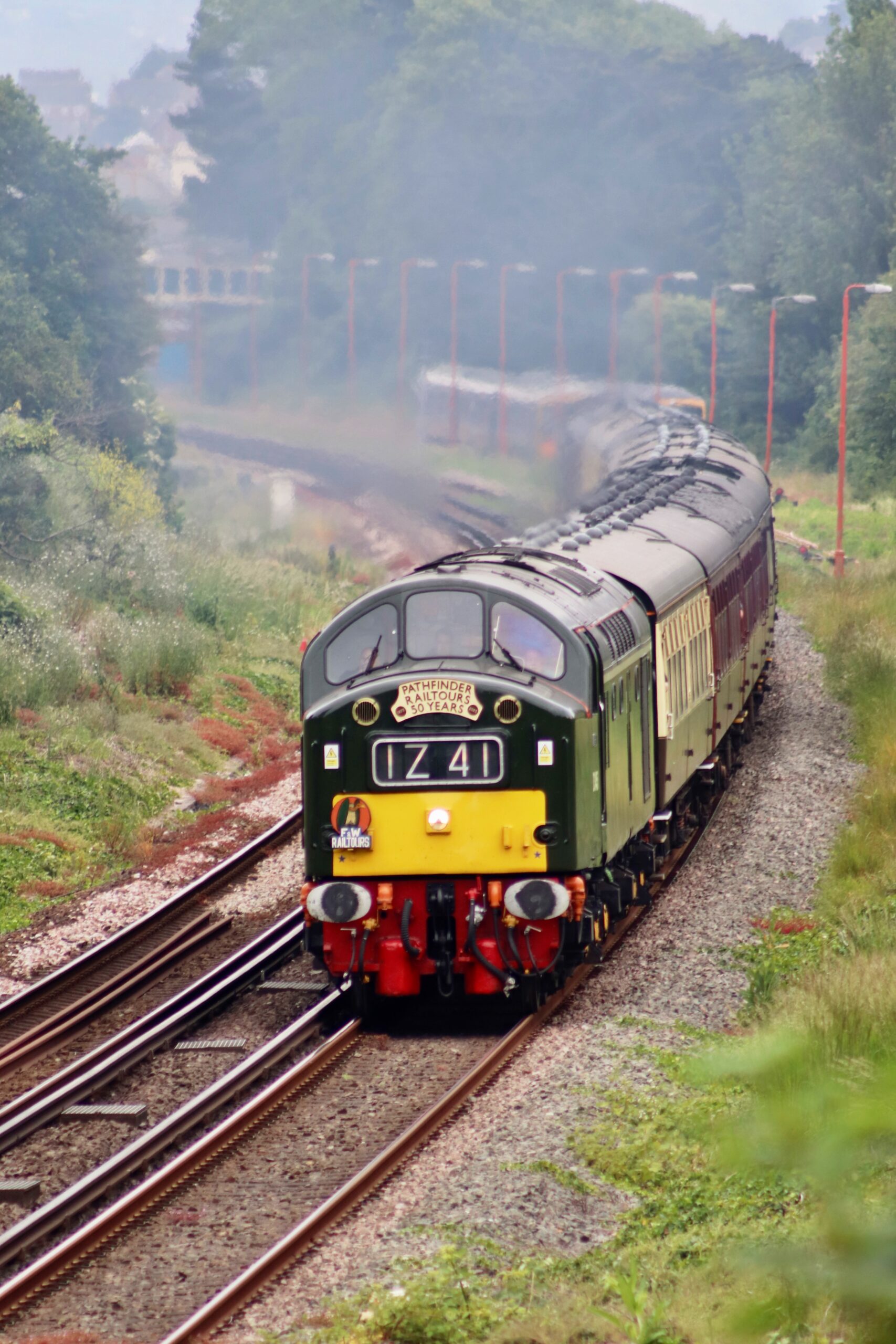

The Class Forty Preservation Society said this of the climb out of Weymouth: “Those who were on the train to hear 40145 lift the equivalent of 14 coaches unassisted up the 1 in 50 summit of Bincombe bank leaving Weymouth will know what I mean when I say I will take the memory to my grave. Truly a high point of 20 years of mainline running. Even the Lickey later in the day was an anti-climax after that!”. Yoshi’s pal Jamie was at Bincombe to record the ascent.
No. D345/ 40145 was the first locomotive of the final batch of deliveries of the type and was built with centre-headcode panels. Along with 180 others of the 200-strong fleet, the loco was built by English Electric at Vulcan Foundry, entering service on 17th May 1961. D345 was one of four (D345 to D348) which were allocated to 55H Neville Hill, and used to upgrade the short-lived “Queen of Scots Pullman” running between Leeds and Edinburgh / Glasgow, replacing LNER Pacific steam power. Allocated to numerous depots during her British Rail career, her final allocation was to Longsight in May 1978 where she was based until withdrawal on 10th June 1983 after sustaining derailment damage in Stourton Yard, Leeds. However, she was one of the final Class 40’s to receive a General Overhaul at Crewe Works in November 1980 and was purchased by The Class Forty Preservation Society and delivered to Bury in February 1984, the first of the class to enter preservation.
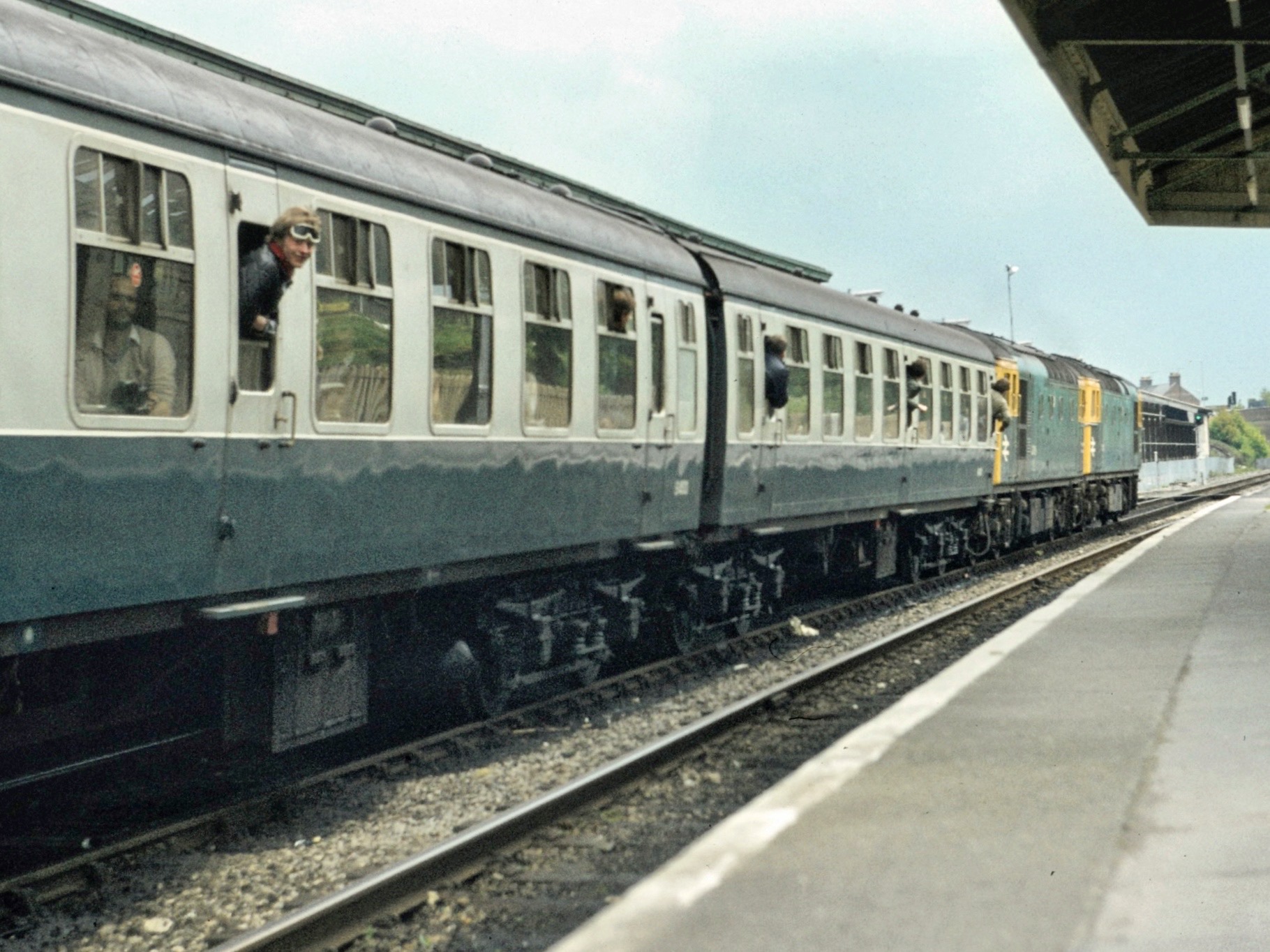
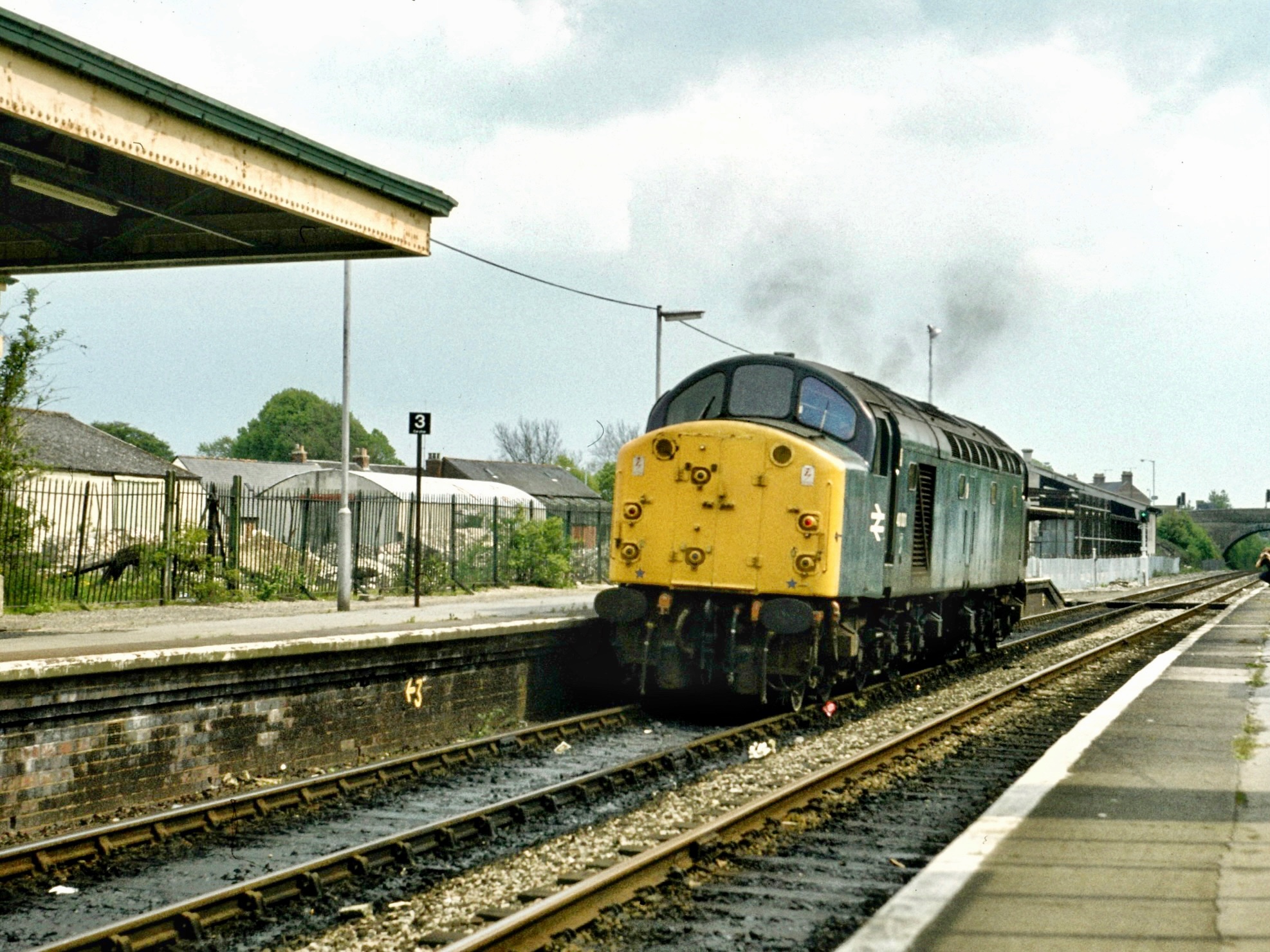
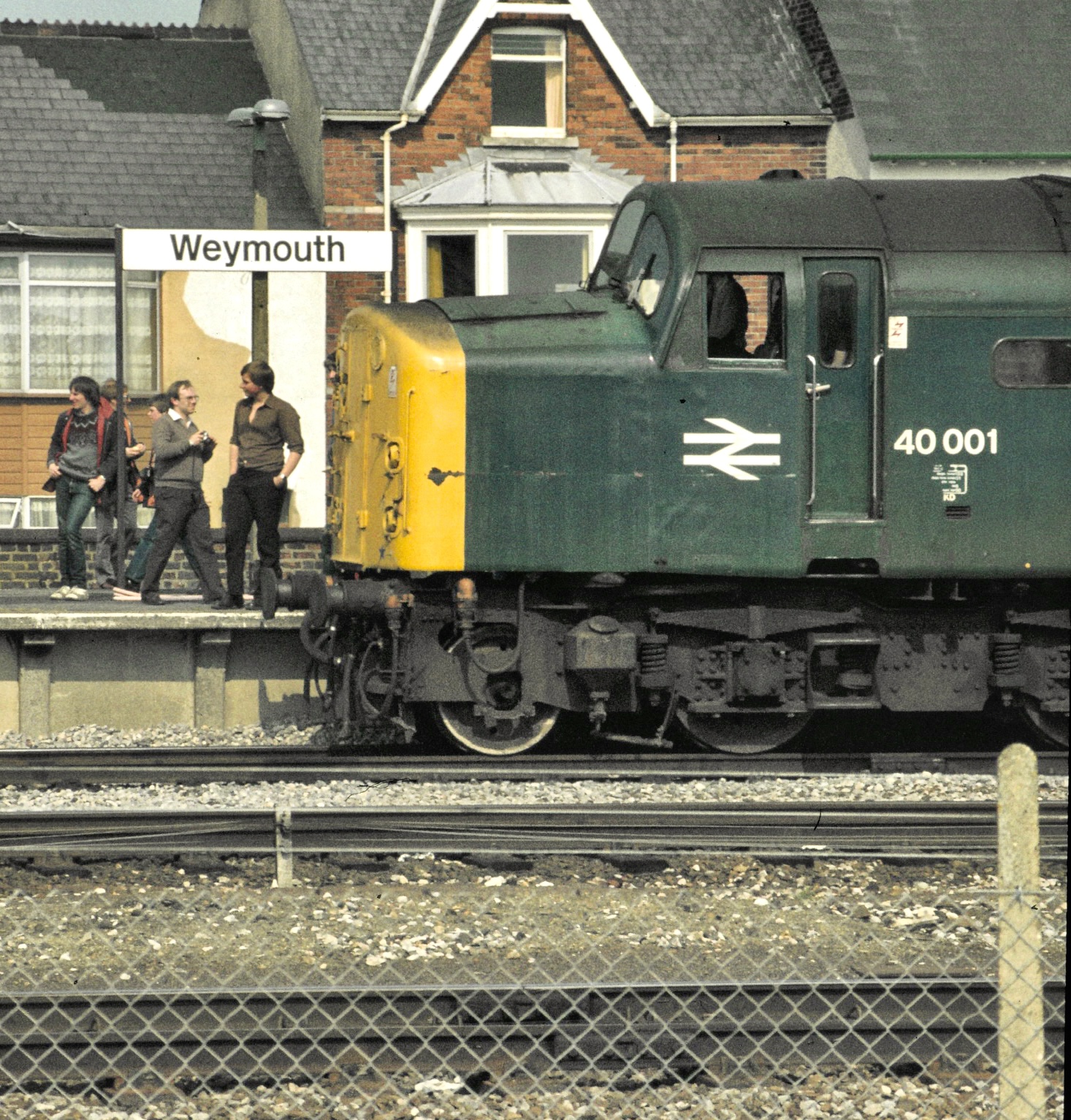
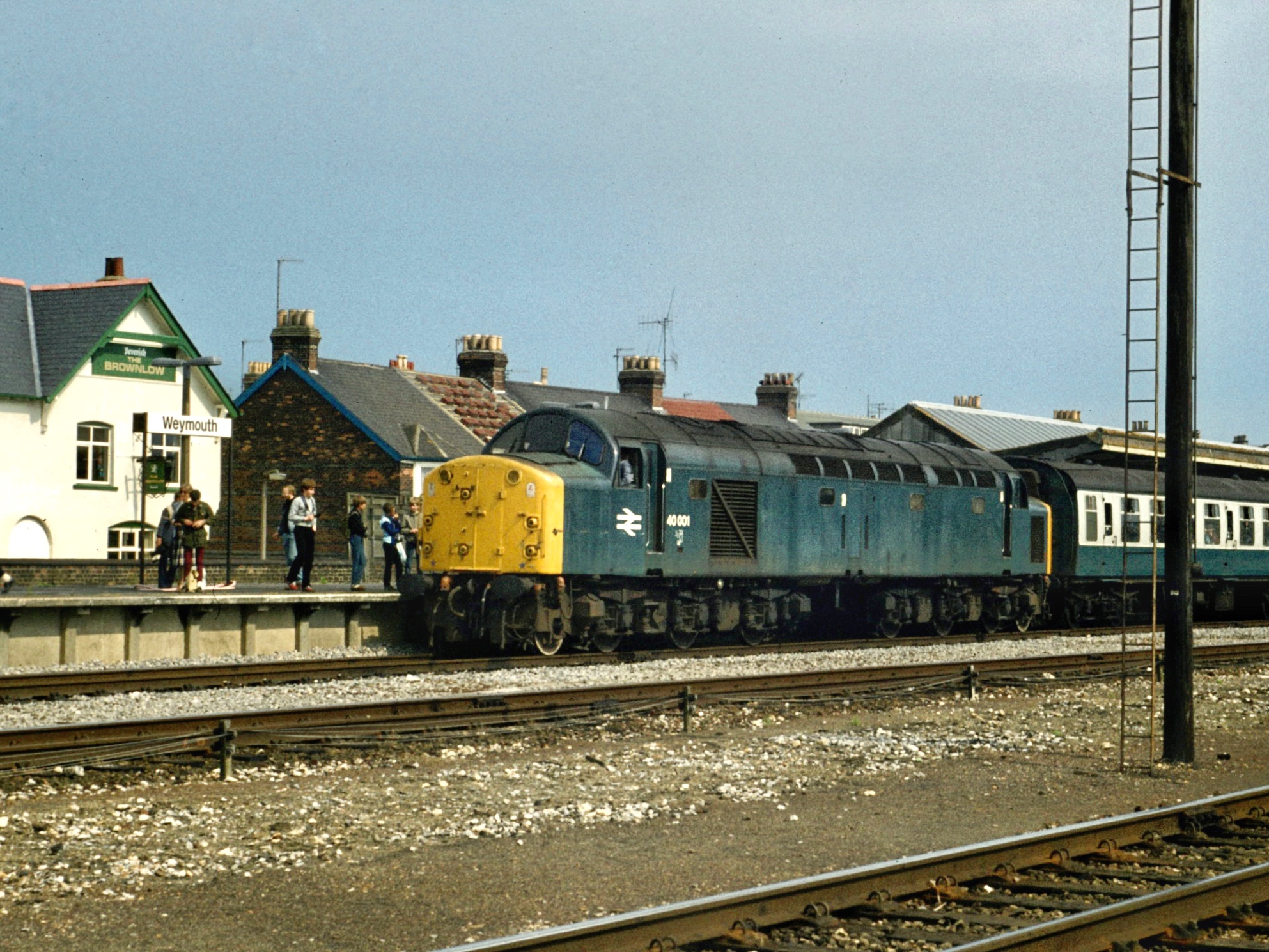
The last (and only) Class 40 to make it to Weymouth previously was No. 40001 on 21st May 1983 which I remember well!
Thanks for reading! We’ll see you soon.
End Piece: