Author: Yoshi

  • Forest of Dean Visit

    Class 56 No. 56078 stands at the buffer stops adjacent to Horton Road Level Crossing, Gloucester on 30th December 2021

    Over the New Year we were lucky enough to spend a few days in the beautiful Forest of Dean in Gloucestershire. On our journey to our hotel we made a slight diversion via Gloucester as COLAS liveried Class 56 No. 56078 had worked 0Z51 Bescot Up Engineers Sidings to Gloucester on 29th December and was sitting at the buffer stops adjacent to Horton Road Level Crossing before her onward journey to Port Talbot on New Year’s Eve. As can be seen in the video below, our brief interlude at Gloucester Railway Station also produced a couple of CrossCountry Voyagers and the Direct Rail Services (DRS) Daventry to Wentloog Tesco service. 221132 can be seen sitting at Gloucester platform 4 with the 1S43 0725 Plymouth to Edinburgh Waverley service which had been terminated at Gloucester because of “severe flooding beyond that which could be mitigated on Network rail infrastructure.” Stablemate 221130 arrives with the 1S47 0927 Plymouth to Edinburgh. Class 66 No. 66427 is working 4V44 Daventry DRS (Tesco ) to Wentloog ( Freightliner ) passing Horton Road Level Crossing, Gloucester on 30th December 2021 and the same loco can also be seen working 4Z36 1530 Wentloog ( Freightliner ) to Daventry DRS (Tesco ) passing through Lydney on 31st December 2021. The wait at Lydney was made all the more interesting chatting to a young rail enthusiast, and his dad, about his love of all things Direct Rail Services. He was visiting the station with a banner wishing DRS a Happy New Year. Fabulous and well received by the driver of 66427 if the deployment of the locomotives’ horn is anything to go by! The CrossCountry Voyager units preceding the Daventry working are 220013 and 221127 forming the 1Z53 1227 Plymouth to Edinburgh service which escaped the disruption to XC services due to industrial action over the role of train guards on New Year’s Eve.

    While in Lydney, we made a visit to Lydney Harbour which has contributed to centuries of prosperity to the local economy and also that of Britain. Lydney Harbour was where the vast majority of Forest coal, iron ore and other commodities was loaded into ships bound for Bristol, the West Country and Ireland. In the late 18th and 19th Centuries, a network of horse drawn tramways proliferated the Forest of Dean built to transport coal and ironstone to local ironworks as well as the harbour at Lydney. These tramways were replaced in the mid-nineteenth century which saw the introduction of railways to the Forest.

    Yoshi at Lydney Harbour

    The Lydney and Lydbrook Railway was authorised by an Act of Parliament in 1809. This became the Severn & Wye Railway and Canal Company and the current canal and basin complex at Lydney was constructed by them between 1810 and 1813, the outer harbour being completed in 1821. A horse drawn tramway was the first evidence of rails at the harbour. This was converted to Great Western Broad Gauge in 1868 and finally to standard gauge in 1872. Where the River Severn narrows is the site of the Severn Rail Bridge which was built 1875 – 1879 and was seriously damaged in an accident on 25th October 1960.

    Two river barges hit one of the piers on the bridge, causing two spans to collapse into the Severn. As they fell, parts of the structure hit the barges causing the oil and petrol they were carrying to catch fire. Five people lost their lives in the incident. In the January 1961 edition of The Railway Magazine hopes were expressed that the bridge would be repaired as, in the 1959 British Transport Commission report to the Ministry of Transport on the re-appraisal of the plan for modernising British railways, it was stated the Severn Railway Bridge route would be developed to relieve the congested Severn Tunnel. However, further collisions with the bridge piers in the years following resulted in British Rail demolishing the bridge between 1967 and 1968 as it was felt to be beyond economical repair. A memorial to those who lost their lives in the 1960 accident is situated at Lydney Harbour.

    Memorial to those who lost their lives during the Severn & Wye Railway Bridge disaster

    For the duration of our visit to the Forest of Dean, we stayed at The Speech House Hotel, a former 17th Century hunting lodge built for King Charles II. Built in 1676 the hotel is situated close to the centre of the Forest on a site used for the holding of the Forest Courts at which the Foresters settled matters of dispute and privilege concerning mining and Forestry Law and custom. The hotel was enlarged in the later part of the 19th Century but nearly all the original building remains and has been refurbished to offer modern facilities and luxurious rooms while retaining its period features. The Speech House Hotel also has dog friendly rooms and our four legged companions are allowed in The Orangery which serves light meals and afternoon tea. We found the menu, devised by Head Chef Gareth Jenkins, varied and interesting showcasing local produce from the Forest of Dean and the Wye Valley. It was also extremely tasty! Our room was clean and comfortable and the New Year’s Eve meal and entertainment enjoyable whilst observing covid guidelines.

    Our stay included a guided walk through a part of the Forest which was formerly the track bed of the Severn & Wye Railway Mineral Loop which ran from Drybrook Road near Cinderford to Tufts Junction, just south of Whitecroft. The section from Drybrook Road to New Fancy Colliery / Mallards Pike is now a cycleway and footpath. Construction of the Mineral Loop began in September 1870 and was built to standard gauge as the Great Western Railway was at that time converting from broad gauge. The line was opened to traffic by May 1872. During the Second World War, the Forest of Dean was used for ammunition storage and to facilitate this, the Mineral Loop was severed in May 1942, the track being relaid some 19 months later in December 1943. By the end of the war all the collieries located along the Mineral Loop had closed, the military depot at Moseley tunnel providing the sole traffic for the line. In March 1951 the Mineral Loop was cut at Moseley Green and the line south of this point closed as far as Pillowell. The remainder of the line was closed in June 1953 with the exception of the section between Pillowell and Whitecroft. The Forest of Dean Railway Trail and Mineral Loop is a 6.8 km loop trail located near Cinderford, Gloucestershire that features a river and is rated as moderate. The trail is primarily used for walking, running, and mountain biking and is accessible year-round.

    Following our walk and a very welcome spot of lunch, we headed into nearby Coleford primarily to visit The Great Western Railway Museum Coleford, which I had gleaned from their website was open on Fridays and Saturdays. Perfect as our stay coincided with a Friday. However we soon learned, not a Friday which happens to fall on December 31st. Completely understandable, but a pity the website had not been updated to reflect this prior to my email to the museum to enquire about their next scheduled opening sent on 31st December. The museum is housed in one of the last remaining permanent railway buildings in the Forest of Dean on the site of the former Coleford railway yard. Have to say, it looks an interesting location with an exciting collection of artefacts and we will hopefully find time to visit another time in the future.

    After spending the evening celebrating the arrival of 2022 we were up early on New Year’s Day as we had booked a steam train ride on the Dean Forest Railway, an 85 minute nine mile round trip starting at Norchard Station. The train heads south to Lydney Junction and north to Parkend before returning to Norchard. The train stops for around 20 minutes at each end of the line where the engine runs around its train which provided ample time for photographs and for anyone who wishes to do so, to visit the footplate of the locomotive, although I’m not sure if dogs are allowed! The Dean Forest Railway started life as a tramroad in 1810 and was retained by British Railways until 1985. Today’s Dean Forest Railway Society began heritage operations on a small siding at Parkend in 1971 with the aim of preserving and operating the last remaining section of the Severn and Wye Railway. They moved to develop the Norchard site in 1978 followed by extensions towards Lydney Junction in 1995 and Parkend in 2006. Everyone we met representing the railway was extremely friendly and helpful. The locomotive for our January 1st trip was 4575 Class small Prairie tank engine No. 5541 which was built by the Great Western Railway at Swindon Works in 1928. She spent much of her working life in Machynlleth having been previously briefly based at Swindon shed and Bristol Bath Road. During 1960 she moved again to Plymouth Laira where she stayed before being withdrawn from service on 10th July 1962 having completed 921,589 miles in revenue earning service. In September 1962 she was sold for scrap and taken to Messrs. Woodham Bros of Barry where she remained until 1971 when 5541 was saved and moved by rail to the Dean Forest Railway at Parkend; the 25th locomotive to leave Barry Scrapyard for preservation. She arrived at her new home on 10th October 1972 in time for the October Gala Day. Restoration was undertaken on the siding behind the down platform at Parkend and was completed, and first steamed on 29th November 1975. On 16th January 1978 in light steam, she joined the movement of stock from Parkend to Norchard and was a regular performer on the short track constructed at the Steam Centre. The 4575 Class were popular engines on the GWR, they were versatile and well-liked by crew. They were an improved version of the 45xx Class engines, the main modification being the larger, sloped tanks and cast motion brackets.

    The videos below show a taste of our 2021 visit as well as a previous visit of mine made in 1995:

    References:

    https://opentraintimes.com

    https://live.rail-record.co.uk

    https://en.wikipedia.org/wiki/Severn_Railway_Bridge

    http://www.forestofdeanrailways.info/sw_timeline.html

    http://www.deanforestlocogroup.org/latest-news/locomotives/gwr-small-prairie-5541/

    https://www.alltrails.com/trail/england/gloucestershire/forest-of-dean-cinderford-linear-park

    https://thespeechhouse.co.uk/

    https://www.gwrmuseumcoleford.co.uk/

    https://deanforestrailway.co.uk

    https://rogerfarnworth.com/2017/09/26/lydney-harbour/

    The Railway Magazine – January 1961

    Many thanks to Caroline for allowing me the use of her photographs within the galleries above
  • 50th Anniversary of the last British Rail train to Swanage

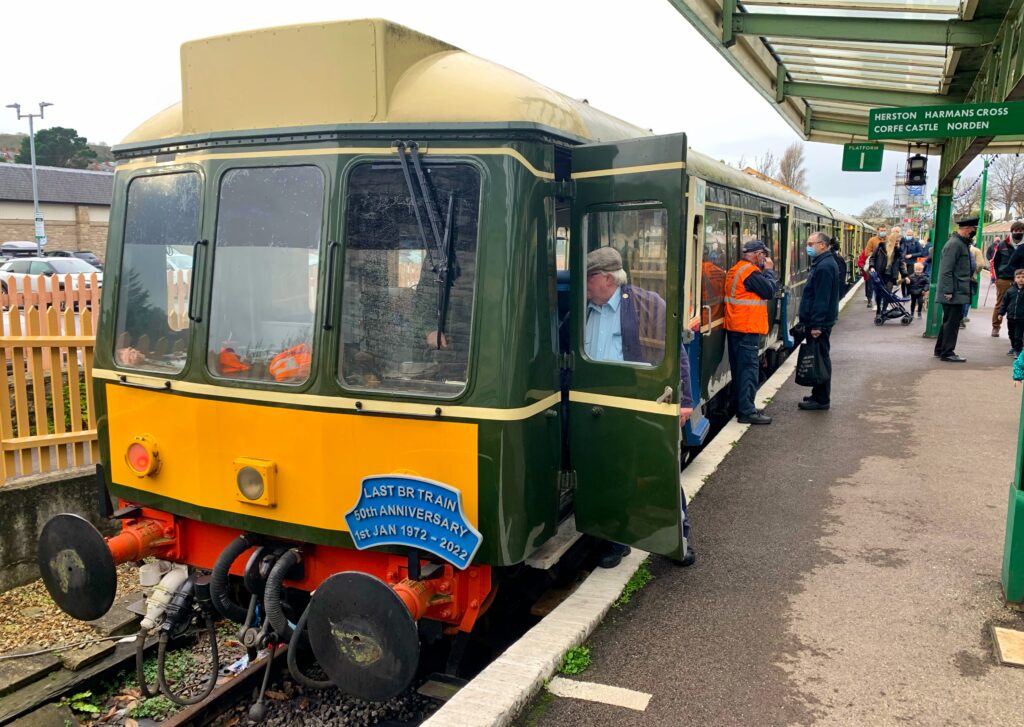
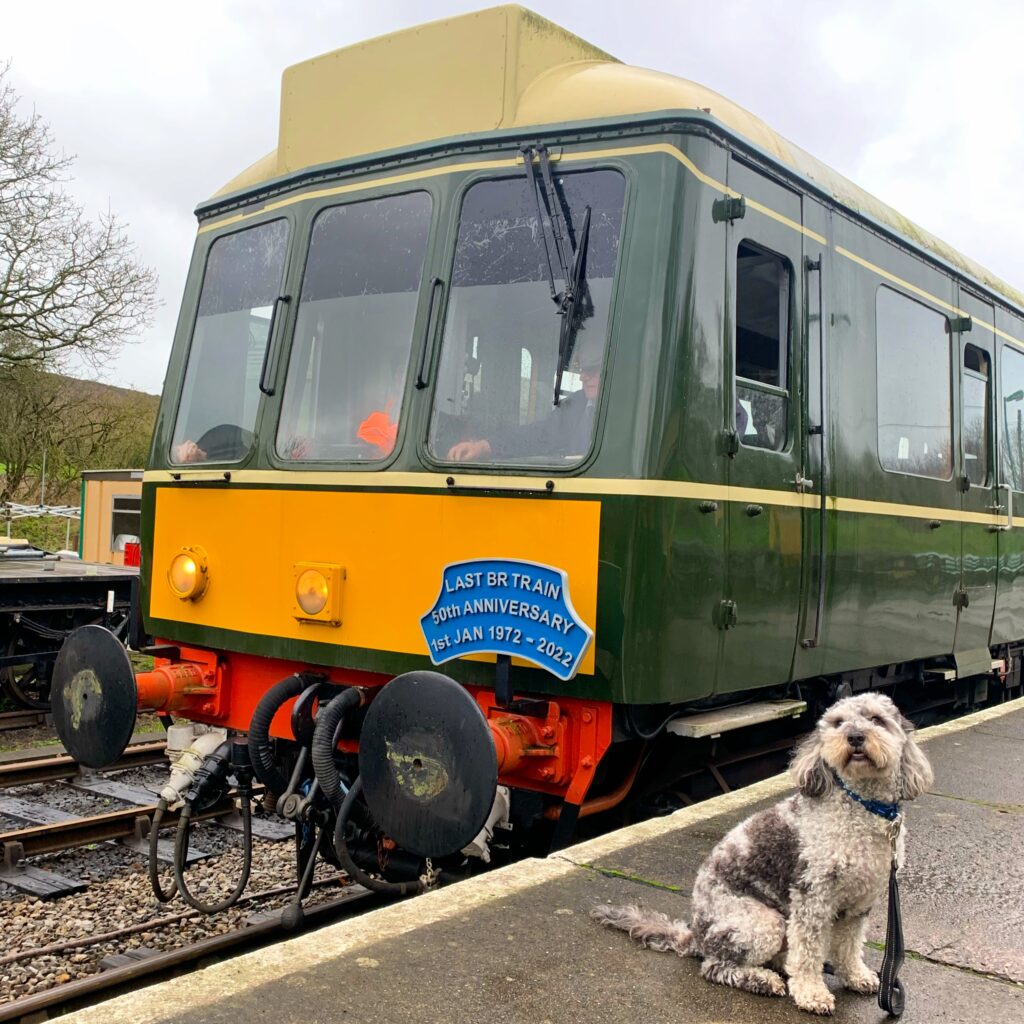
    Yoshi waits for the departure of the first train of the day from Norden to Swanage on 3rd January 2022

    To mark the 50th anniversary of the last scheduled British Rail passenger train from Wareham to Swanage on 1st January 1972 the Swanage Railway held a three day event utilising a heritage diesel-multiple unit (DMU) running between Norden and Swanage.

    A Class 117 DMU built in 1960 operated five return trains a day on Saturday 1st January 2022, Sunday 2nd January 2022 and Monday 3rd January 2022. To mark the occasion the first fifty tickets sold online for each of the three days were set at the January 1972 price of 50p per person. A special commemorative Edmondson card ticket was also produced for all ticket holders travelling on these services.

    Our tickets alongside the special souvenir Edmundson card ticket produced for the 50th anniversary of the Swanage branch closure
    The Class 117 DMU after arrival at Swanage Railway Station

    The Dorset branch line from Wareham to Swanage was opened in May 1885 and controversially closed, despite a sustained campaign for its retention by local people and councils, on the morning of Monday January 3rd 1972. Because no services ran to Swanage on a Sunday in the winter timetable the final train ran on New Year’s Day 1972, departing Wareham at 2145 and carrying 500 passengers. The final BR return service from Swanage departed at 2215 and arrived back in Wareham at 2240. The tracks between Swanage and half a mile east of Furzebrook were torn up six months later. The track from Furzebrook being retained for the export of Purbeck ball clay by train.

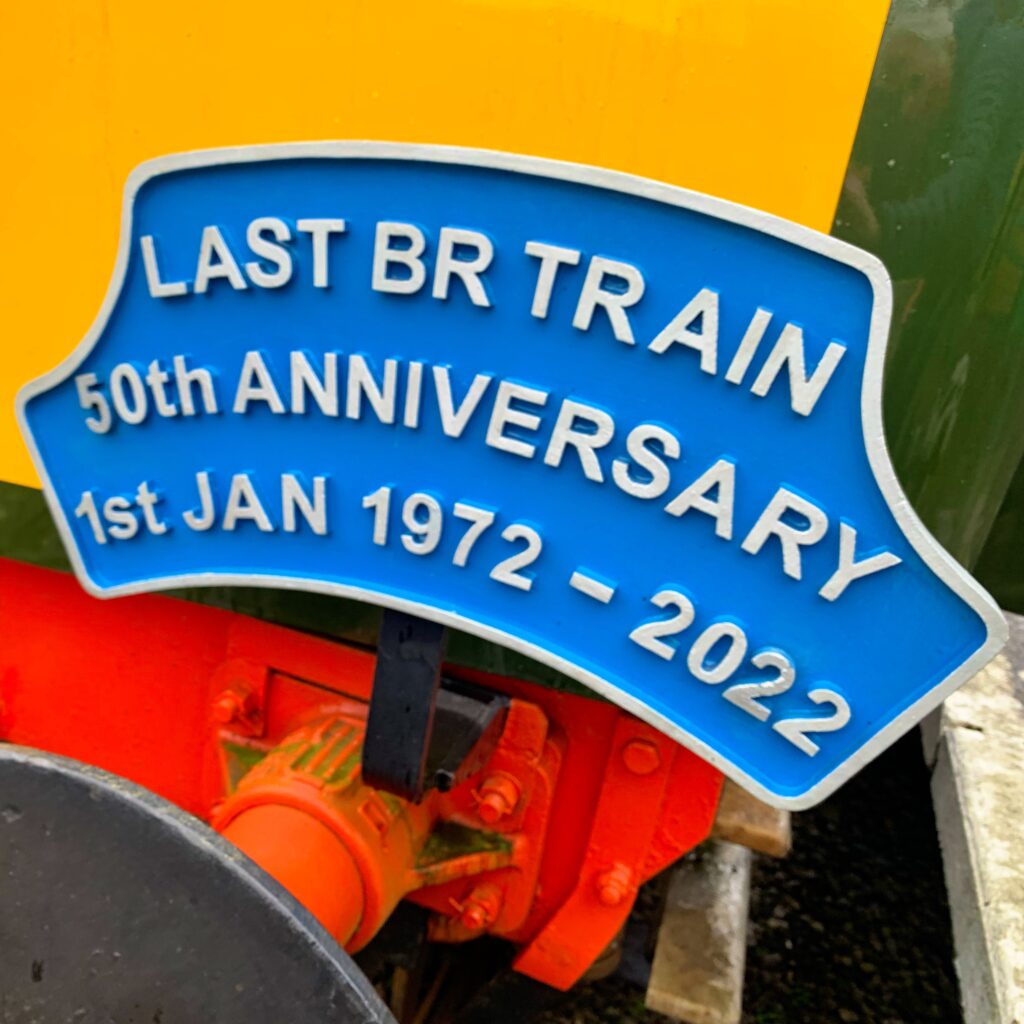
    The special trains carried a commemorative wooden headboard made by Swanage Railway volunteer signalman Malcolm Munro who travelled on the last train in 1972 as a 16 year old

    After four years of campaigning the Swanage Railway Society was granted a one year lease of the boarded up Swanage station in 1976 and the rebirth of the Swanage branch began culminating in reconnection to the national railway system at Worgret Junction near Wareham in 2014 thanks to an innovative signalling system linking the heritage railway with Network Rail. During the summer of 2017 the Swanage Railway ran a 60 selected day trial diesel train service to Wareham which saw four trains a day operate from Swanage and Corfe Castle. In 2020 the heritage line won a government grant of up to £50,000 from the ‘Restoring Your Railway Fund’ to pay for an updated feasibility study and business case with the aim of reinstating a train service reconnecting Swanage and Corfe Castle with the main line at Wareham and reversing the 1967 decision by British Rail to close the line following a review of unprofitable branch lines. The Swanage branch was not mentioned by Dr Richard Beeching in his ‘Reshaping of British Railways’ report which decimated much of Britain’s rail network. Dr Beeching was the first chairman of the British Railways Board – the successor to The British Transport Commission – and was hired by Ernest Marples, Conservative Transport Minister who coincidentally happened to be a road construction businessman. Beeching axed 5,500 miles of track, sacked 67,000 workers and shutdown 2,363 railway stations. This was a third of the track network and 55% of stations.

  • Happy New Year

    A Happy New Year to you all! Whatever you’re doing this New Year’s Eve let’s hope for a good 2022. On December 31st 1994, I found myself in Whitchurch, Hampshire awaiting the arrival of a very special train hauled by Southern Railway Merchant Navy Class steam locomotive 35028 ‘Clan Line’; The Auld Lang Syne run by rail tour company Flying Scotsman Services.

    The Railway Magazine dated October 1994 was of the opinion that this tour was part of the best ever programme of steam specials launched since the end of steam on British Rail 26 years previously. It’s amazing to see that steam, now complimented with heritage diesel and electric traction, is still very much in evidence on the main line in the UK.

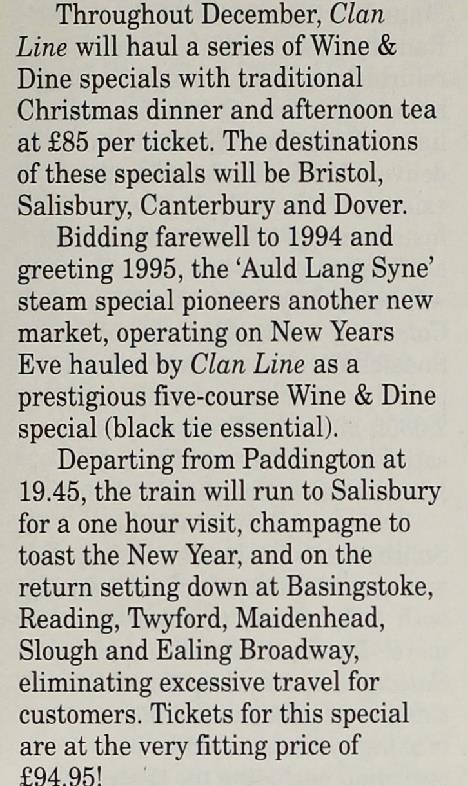
    Clipping from The Railway Magazine October 1994

    Whitchurch was chosen for a scheduled stop on the tour so that passengers could celebrate the New Year complete with piper on the station platform. I do remember getting lost on the drive to the station, so was pleased and relieved to get there in time to see the celebrations and record this video:

    The next morning I was up in time for the drive from Dorset to Wiltshire to watch Ivatt Class 2 No. 46521 and British Rail Standard Class 4 2-6-4T No. 80079 working a Didcot to Kidderminster special through Swindon. Originally rostered for 5029 ‘Nunney Castle’ the pair of substitute locomotives were called in following the Castle’s withdrawal from the main line duty roster by the Special Train Unit (STU) after she unbelievably ran out of coal while working a London Paddington to Stratford-Upon-Avon Shakespeare Express excursion on December 18th 1994. The locos coal consumption being very heavy and its performance poor resulting in very late running was criticised by the STU and would be ‘actively pursued with the owners and the Great Western Railway Society’.

    I remember arriving at Swindon Railway station just as the New Years Day special was approaching in the near distance and managed to get some wobbly shots of the arrival and departure from both ends of the station as can be seen in the video below.

  • Gresley A4’s and The Great Gathering

    Six LNER A4’s in one place – a feat probably never to be repeated again

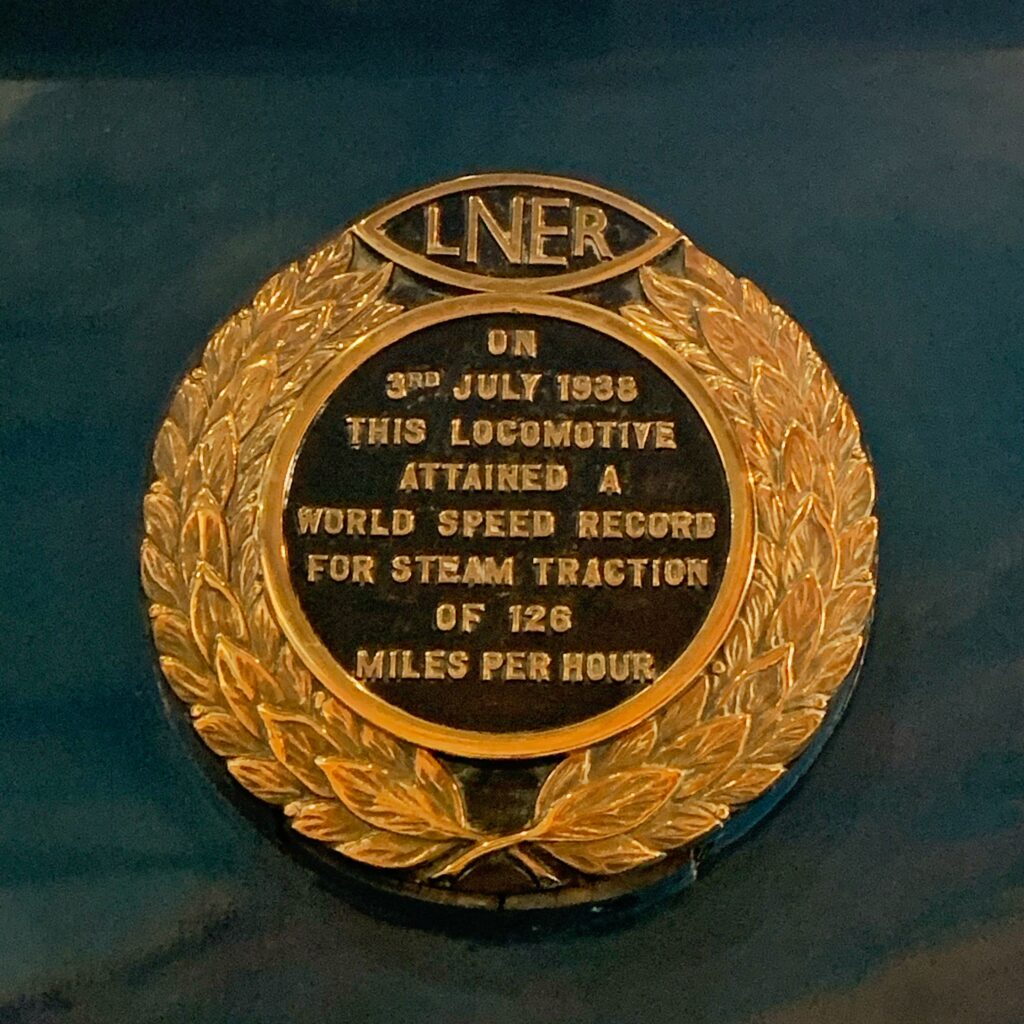
    Prior to the 75th anniversary of the world record speed run by LNER A4 Pacific 4468 ‘Mallard’, I imagined there would be some kind of event to mark this achievement, possibly a return to steam and a celebratory rail tour. What the NRM actually devised was something few people can honestly have imagined and when it was announced two of Mallard’s sister locomotives long since exported from these shores would be reunited with the other four remaining GB based members of the class, I was very keen to be among the visitors to view the spectacle. Not since 1966 and the days of British Rail steam have so many A4’s been together in one location at the same time. Expecting the line up to be very popular (but I didn’t quite foresee the huge crowds who would turn up to share in the celebrations), I took advantage of booking an early doors photo pass which would allow crowd free photography before the museum opened for business at 10am on 4th July. In the event some of the thirty or so people who had booked the same ticket made it their first ambition to stand in front of the gathered locomotives from the get go. This I found a little frustrating. Surely the small group could have been managed in such a way that people were held back enabling clear shots of the line up prior to letting us roam amongst Mallard and her sisters? But with a little patience (that not everyone exhibited, it must be said) I think I managed to achieve what I set out to do. Although, that was a close thing as after two hours of happily snapping away, the SD card in my camera suddenly decided it didn’t want to be read and refused to allow my camera to play back the photos I had taken that morning, or let me to take any further shots. I was mildly annoyed to say the least. Attempts at copying the image files to CD via a couple of photographic outlets in York failed to rescue the photos and it wasn’t until I got home a few days later that I was able to transfer the majority of the images to my computer one by one with only around ten images deemed unrecoverable. I was pleased that most of the photographs I took survived – a sample of which can be found in the gallery below.

    A selection of A4 video below, beginning with 60007 ‘Sir Nigel Gresley’ going full pelt with The Shakesperian rail tour on 11th October 1997. This working, organised by Steamy Affairs, ran from Cleethorpes to Stratford-Upon-Avon, although I have no note as to where I filmed the train!

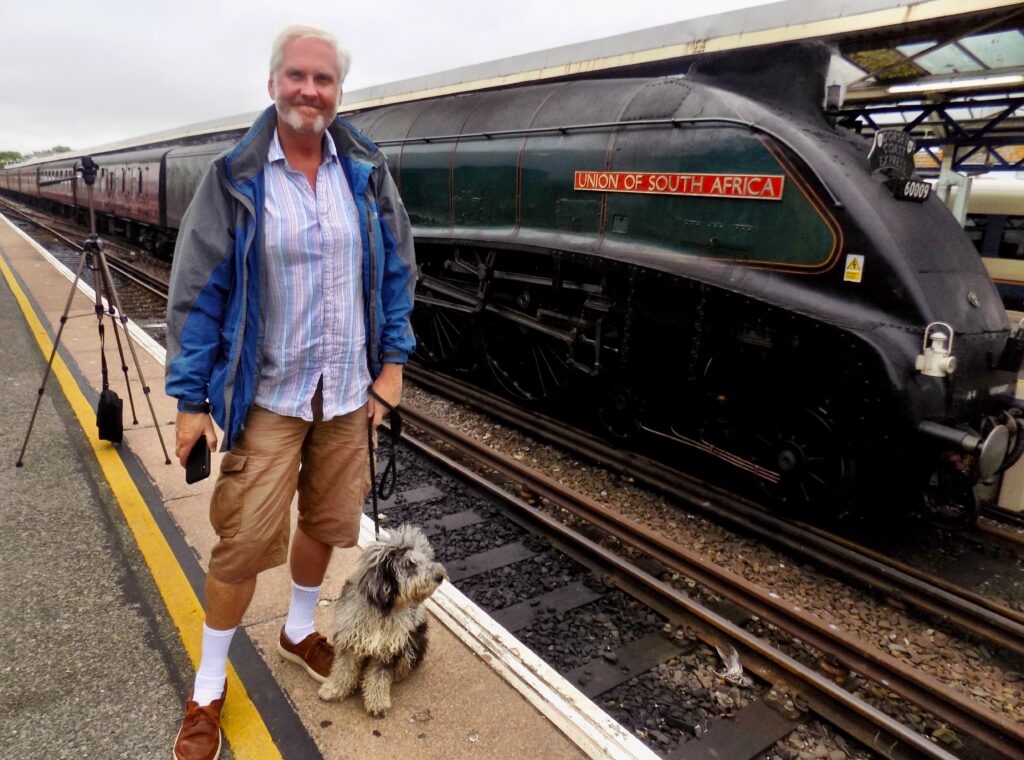
    Yoshi takes an interest in No.9 on a visit to Weymouth Station in 2019

    60009 ‘Union Of South Africa’ recently retired from active service following the discovery of a small crack on the driver’s side outer firebox wrapper near the foundation ring, and a perforated small tube. It was considered that repairs would be unviable because of the short time left on 60009’s boiler certificate – which is due to expire in April 2022 – and the intention of her owner, John Cameron, to retire the locomotive anyway. 60009 will like sister locomotives 60008 ‘Dwight D. Eisenhower’ and 60010 ‘Dominion Of Canada’ be placed on static display, although as yet her final resting place has yet to be confirmed. In happier times, the video below shows Number 9 working on the main line in 2019.

    The last video selection for this entry features 60019 ‘Bittern’

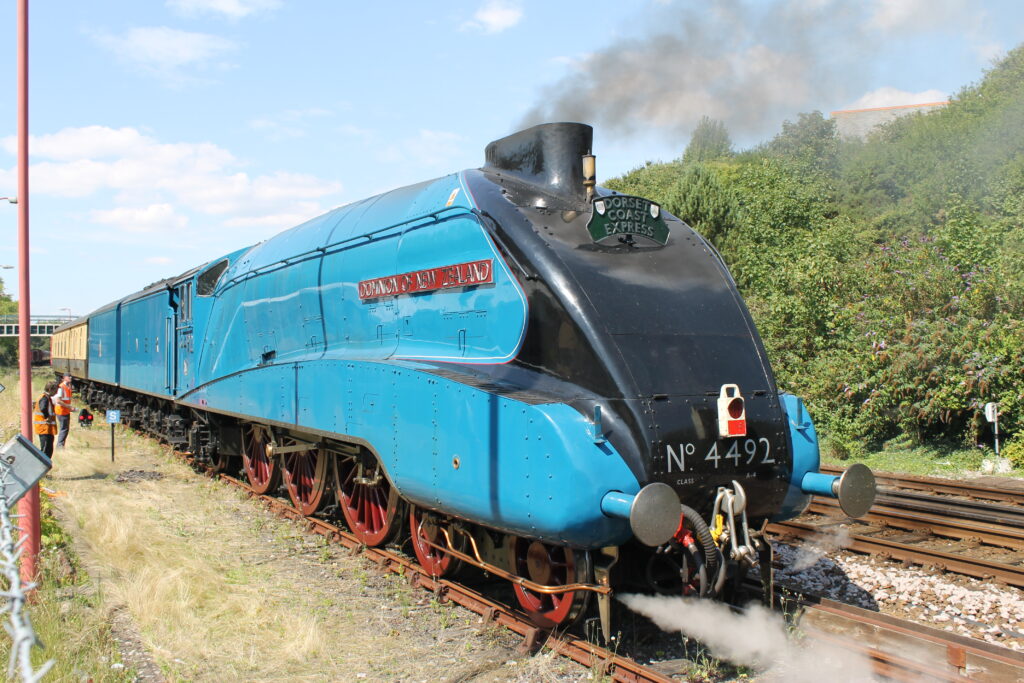
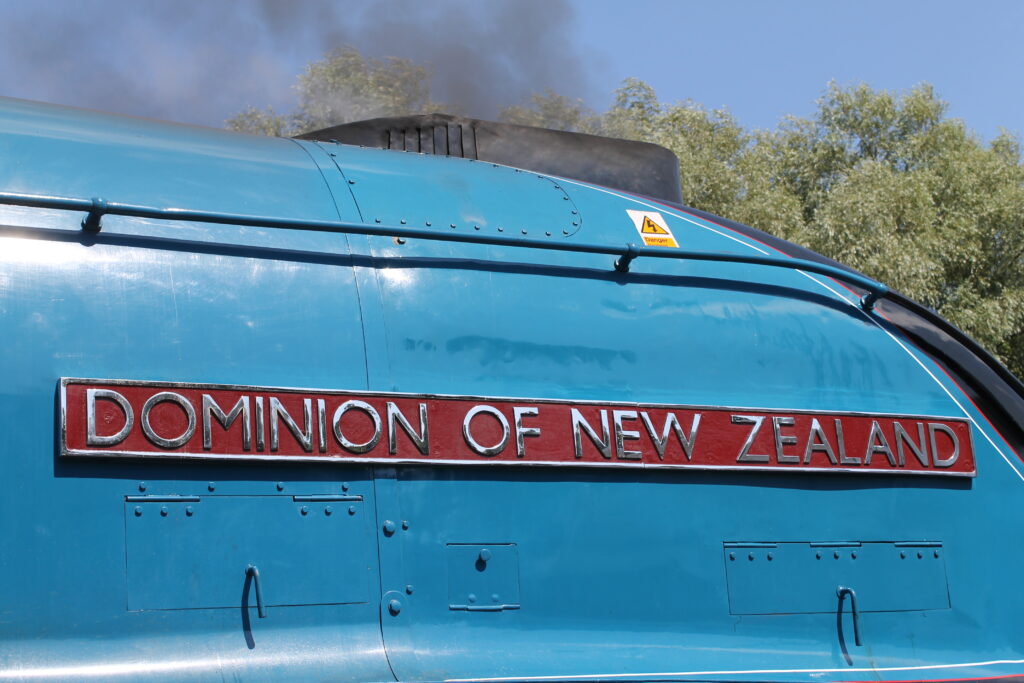
    60019 Bittern masquerading as lost sister locomotive 4492 ‘Dominion Of New Zealand’
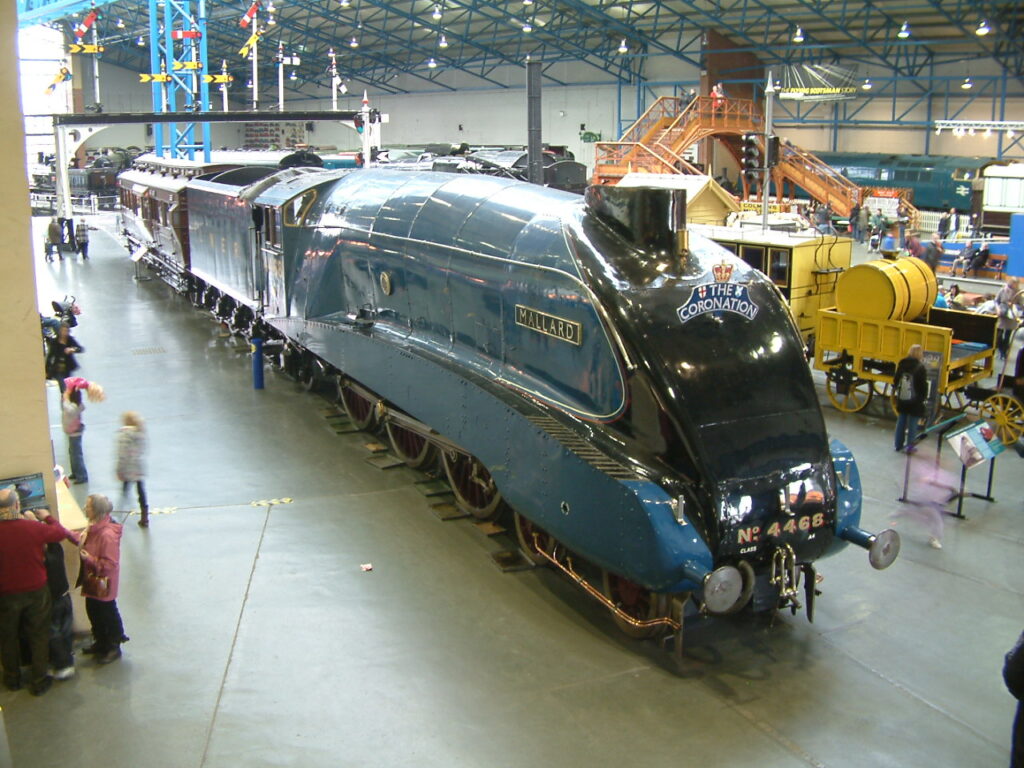
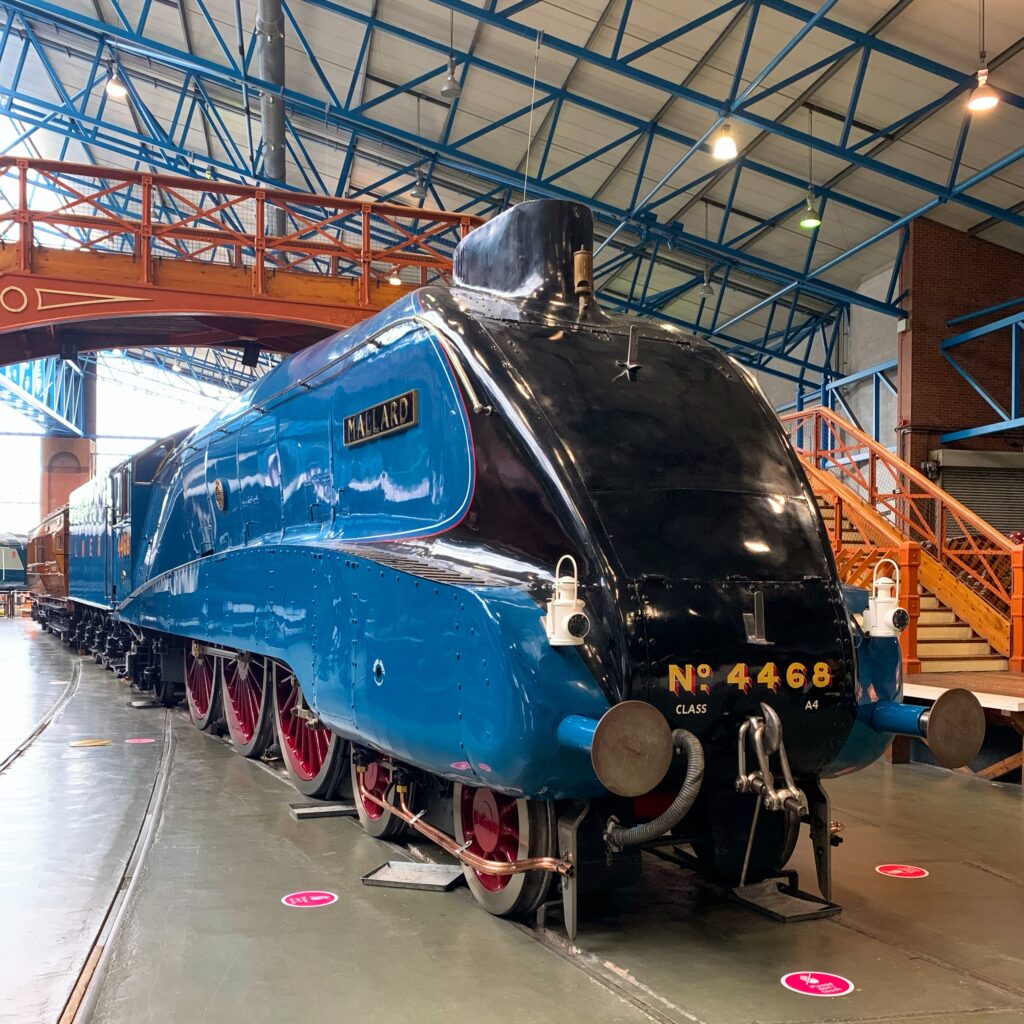
    4468 ‘Mallard’ on static display at the National Rail Museum, York – 14th February 2009
    4468 ‘Mallard’ at The Railway Museum, York and the commemorative plaque she carries on her bodyside

    This is a revised post previously uploaded elsewhere in 2013 – that seems a very long time ago now – thanks for reading.

  • Snow & Ice Treatment Train

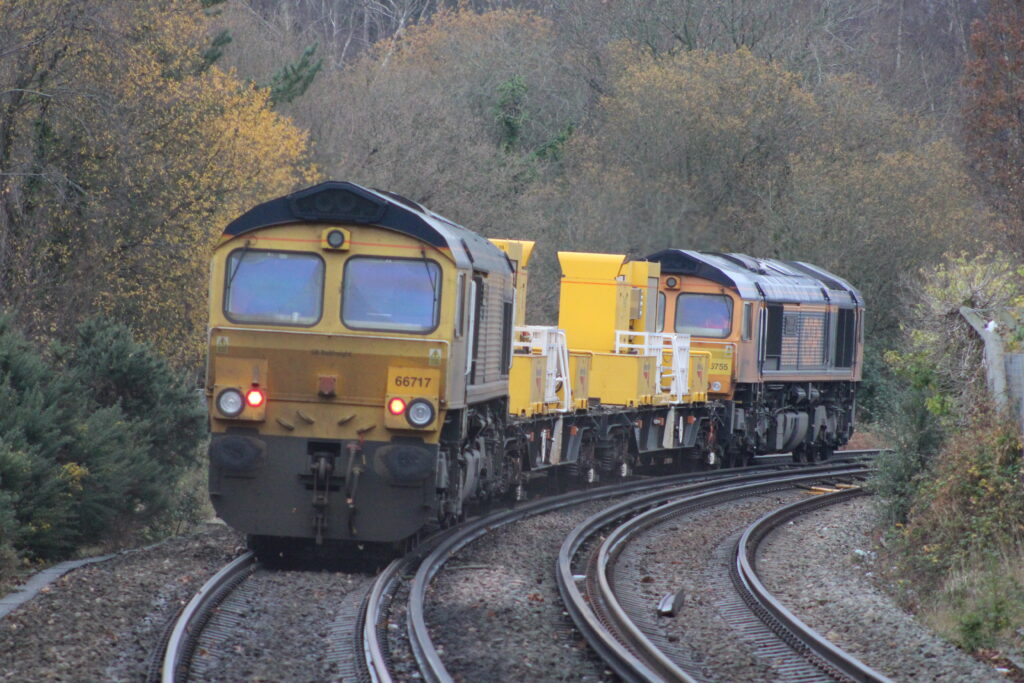
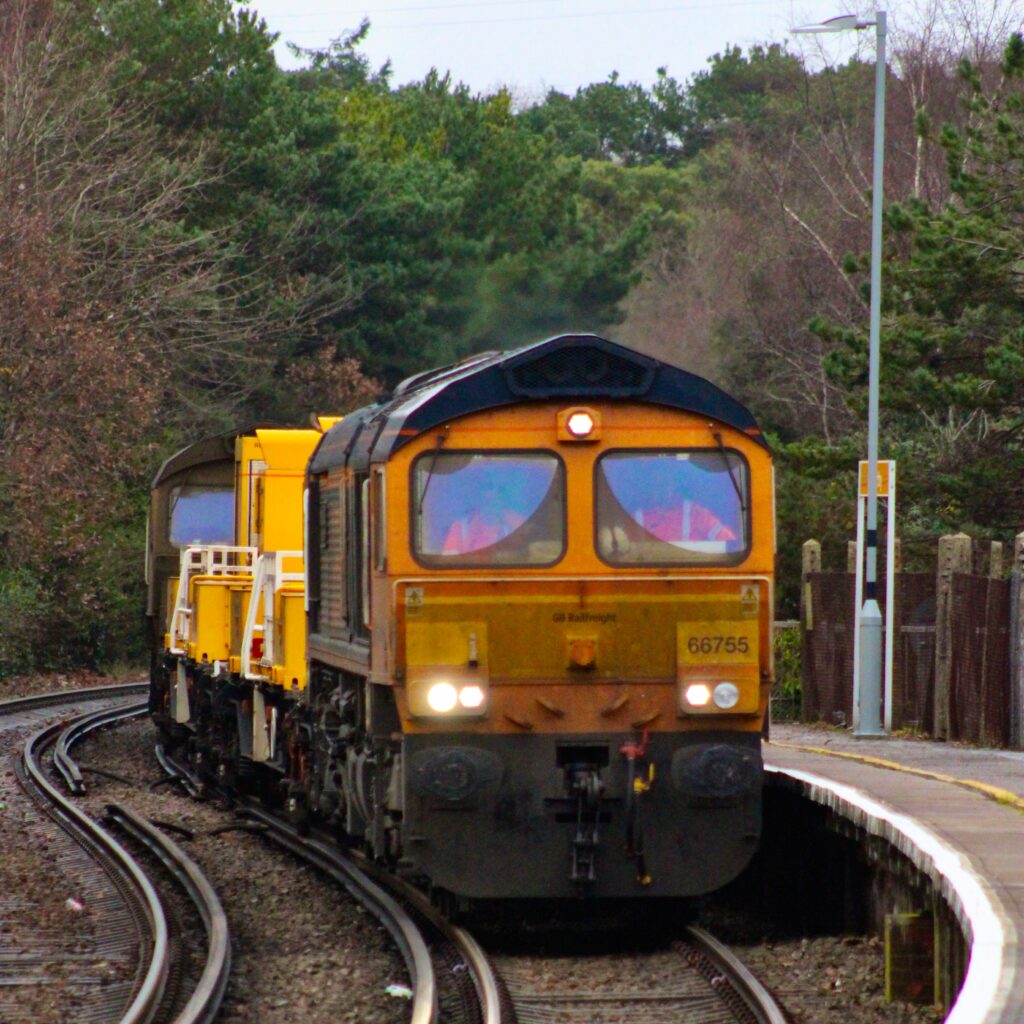
    GBRf Class 66 No. 66717 ‘Good Old Boy’ working the return 3Y88 Totton Yard to Totton Yard via Weymouth across Holes Bay, Poole. 66755 ‘Tony Berkeley OBE RFG Chairman 1997 – 2018’ assists at the rear of the consist – December 15th 2021

    This week saw the first runs of locomotive hauled Snow & Ice Treatment Trains (SITT) in Dorset along the South West Mainline to Weymouth. Passenger trains along this route from London Waterloo draw their power from a conductor rail, commonly known as the Third Rail as it is positioned alongside the standard railway track. If ice forms on the surface of the conductor rail, the flow of electricity is interrupted and trains are unable to draw power to move. To combat this, Network Rail has a fleet of treatment trains which scrape the ice off the conductor rail using metal brushes and spraying thousands of litres of anti-icing fluid to prevent the formation of ice.

    GBRf Class 66’s No. 66717 ‘Good Old Boy’ and 66755 ‘Tony Berkeley OBE RFG Chairman 1997 – 2018’ top and tail 3Y88 Totton Yard to Totton Yard via Weymouth on December 15th 2021
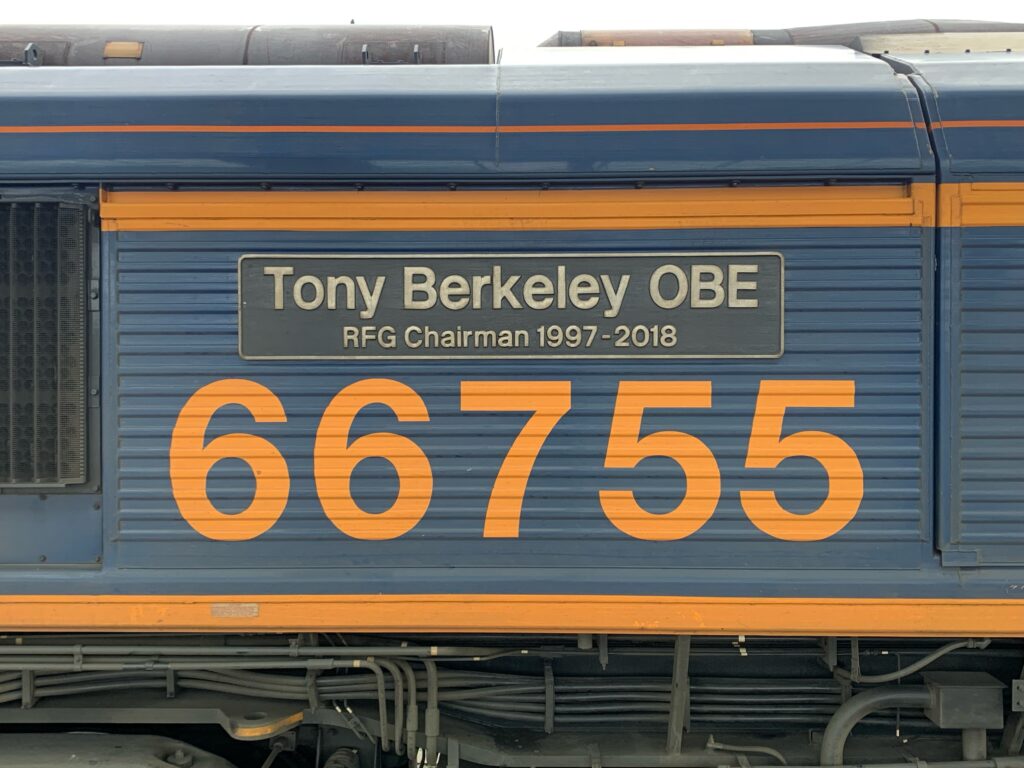
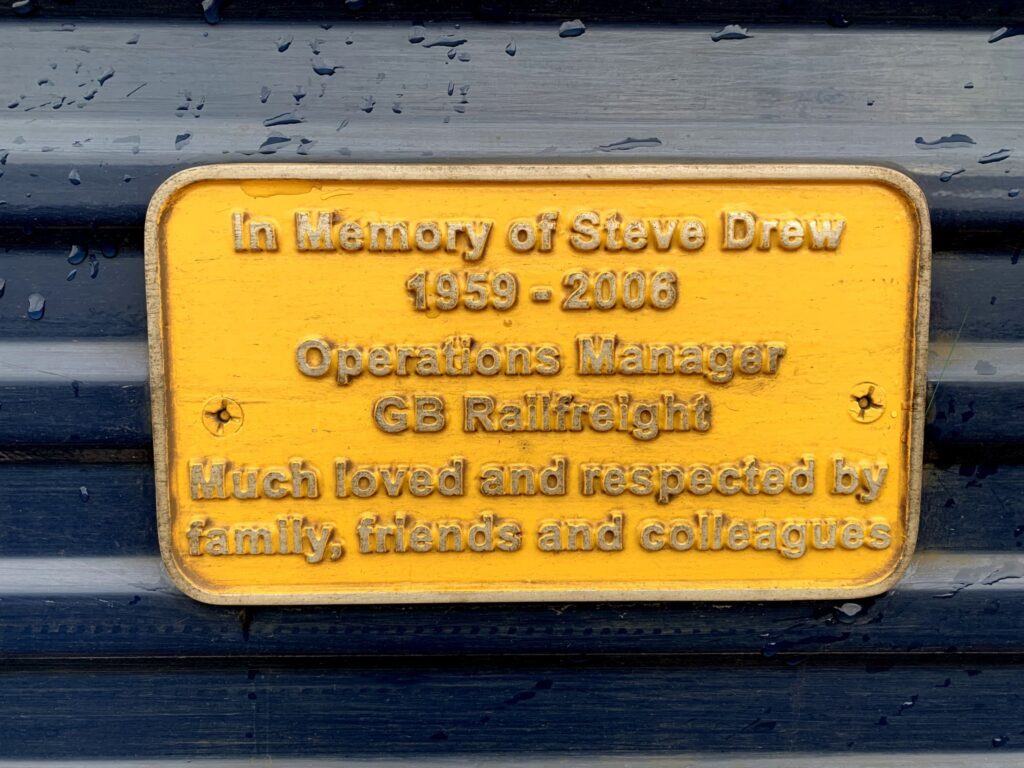
    Nameplate of 66755 – photograph courtesy of @da_buckley967
    Nameplates for 66717
    GBRf Class 66 No. 66755 ‘Tony Berkeley OBE RFG Chairman 1997 – 2018’ leading 3Y88 Totton Yard to Totton Yard via Weymouth through Hamworthy with 66717 ‘Good Old Boy’ at the rear – December 15th 2021
    Class 66 No. 66726 ‘Sheffield Wednesday’ rests at Weymouth 11th December 2020
    66717 ‘Good Old Boy’ awaits departure with an SITT from Weymouth 17th December 2019
  • Exeter St Davids

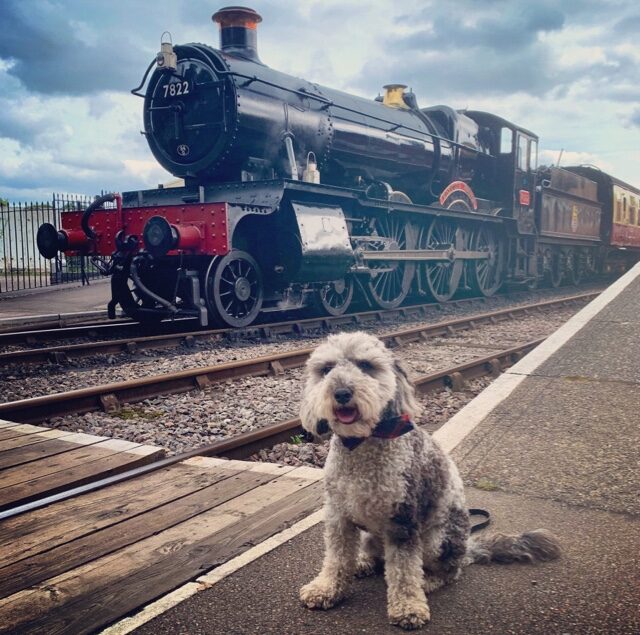
    No new adventures to report this week, so another delve into the archives. Inspired by our visit to Devon last month I thought I’d share some glimpses of Exeter St Davids. The images above show Yoshi on the station footbridge on his way to find some Castle Class HST’s to bark at. I’m sure you’ll hear him in the video below over the sound of Storm Arwen which was also visiting the West Country that day.

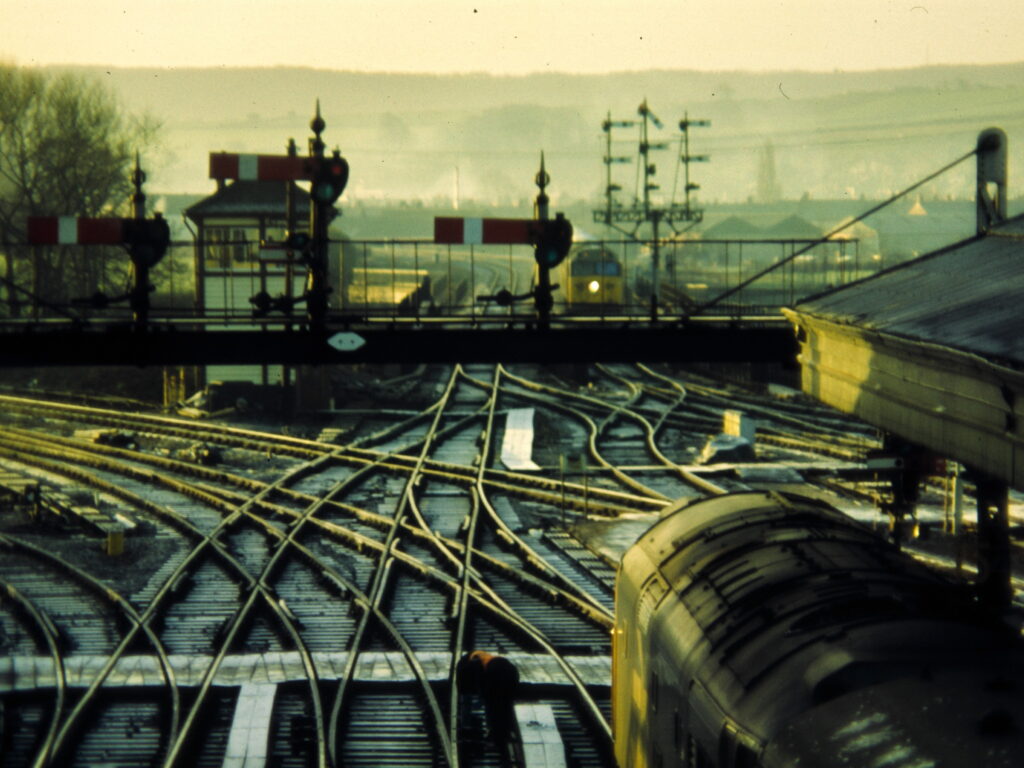
    Exeter St Davids is managed by Great Western Railway and serves their line from London Paddington to Plymouth and beyond. The station also welcomes trains from London Waterloo run by South Western Railway and CrossCountry services. The station opened in 1844 as the terminus of the Bristol and Exeter Railway. The existing facade dates from 1864 when the station was remodelled from its earliest Brunel incarnation.

    The semaphore signals and signal box seen in this 1980’s view are long gone
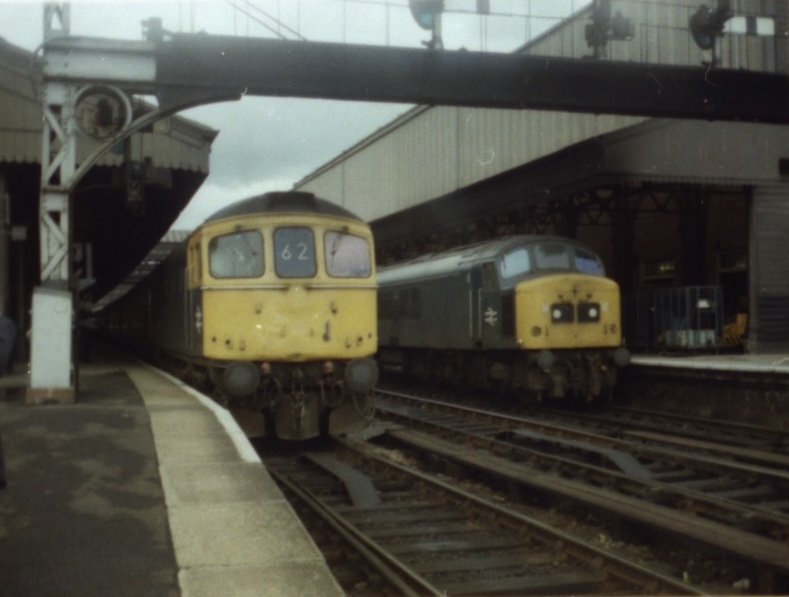
    Class 33 No. 33 030 waits alongside Peak 45 010 on 25th May 1979
    Class 50 No. 50 021 waits with an up service
    Class 33 No. 33 028 departs Exeter St Davids 25th May 1979
    Class 50 No. 50 019 ‘Ramillies’ 25th May 1979

    The video below filmed on 17th July 1993 contrasts with the footage in the video above.

  • The Duchess – Stanier’s Masterpiece

    6233 Duchess of Sutherland heads The Royal Duchy rail tour at Whiteball on 1st September 2019

    I was intending on visiting a dear friend today, which would have entailed passing through Eastleigh and, of course, allow a cursory glance at the railway works and stabling points around the station area. But, as I have a lurgy, I’ve taken a rain check, claimed the sofa and have Peter Jackson’s new Beatles documentaries on the TV instead. Yoshi is, as I write this, forlornly whimpering as one of his toys has rolled under the TV stand and out of reach of his paws. Or perhaps he’s just not happy with Paul McCartney’s out of tune wailing.

    As we don’t have any new adventures to share, we’ll ‘Get Back’ to the archives when we chased one of my favourite steam locomotives, LMS Princess Coronation Class No. 6233 Duchess of Sutherland to Devon. The ‘Duchesses’, in both their streamlined and un-streamlined forms, were arguably one of the most striking passenger locomotives ever built. They were also amongst the most powerful and efficient. The class demonstrated the particular genius of their designer, Sir William Stanier and influenced the British Rail Standard designs of the 1950’s.

    On September 1st 2019 Duchess of Sutherland was in charge of The Railway Touring Company tour ‘The Royal Duchy’. Yoshi was just over eight months old at this point, but he gave his approval with a few barks as No. 6233 stretched her legs over the Devon Banks. Forgive the final couple of shots – but proof that little was wasted on this day out!

    In August 2008 the locomotive visited Weymouth hauling Steam Dreams ‘Sunny South Special’. Obviously, it was far from sunny, as the video below shows. For this tour No. 6233 carried ‘The Cathedrals Express’ headboard, a strange choice perhaps given the lack of cathedrals in the county of Dorset. Because of delays en route the tour arrived in Weymouth around an hour late. The Duchess was scheduled to haul both the outward and return legs which required a turning move so that the locomotive was facing the right way round for its departure from Weymouth and ascent of Bincombe bank. Assisted by West Coast Railways Limited Class 47 No. 47 245 Duchess of Sutherland returned from turning and servicing at Yeovil Junction promptly and the hour deficit was cut to 41 minutes.
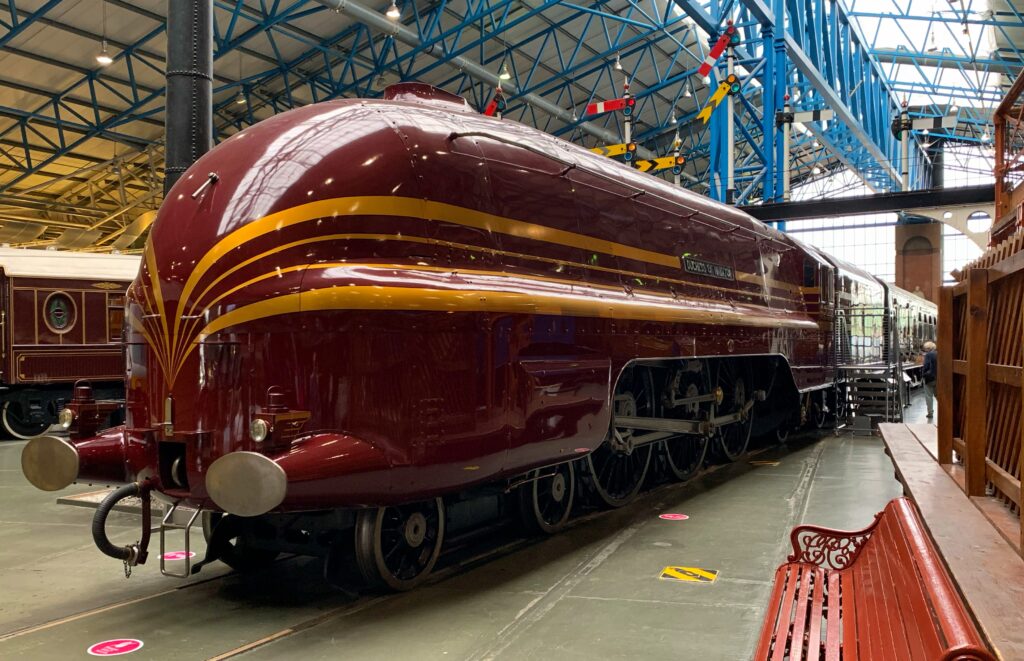
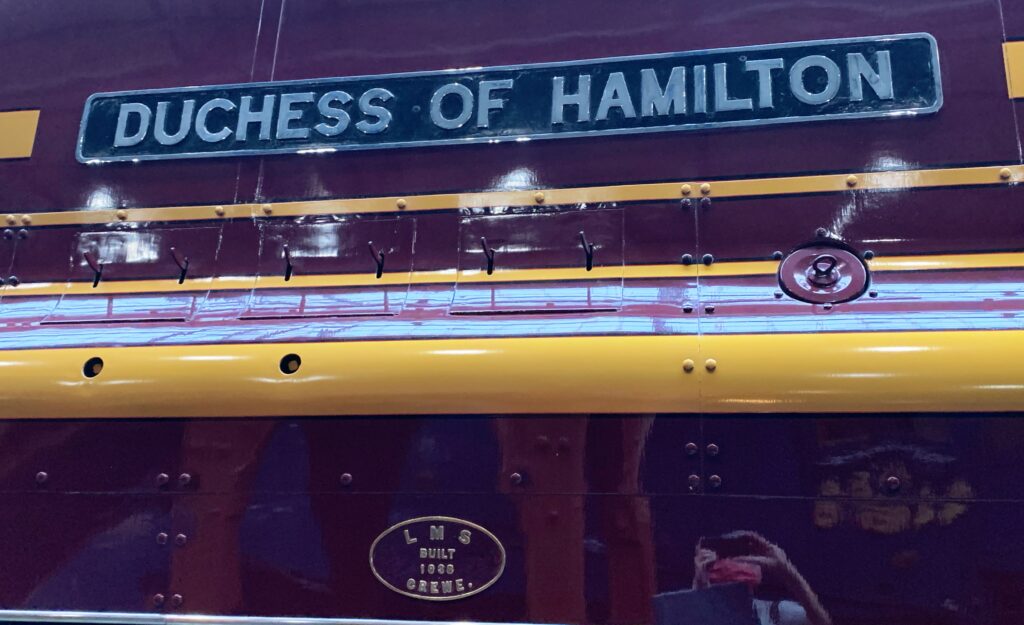
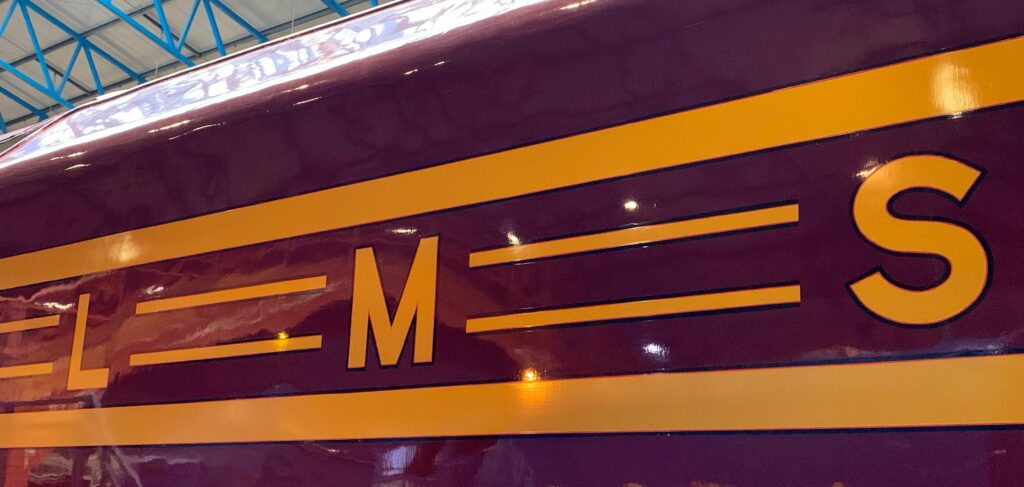
    To compare the original streamlined design, below are some photographs of sister locomotive No. 6299 Duchess of Hamilton taken at The Railway Museum in York earlier this year.

    Streamlined 6299 Duchess of Hamilton

    Another time, I’ll share video of Duchess of Hamilton taken in 1996 out on the mainline prior to her cosmetic overhaul to represent the Princess Coronation Class in streamlined form for static display, but right now, I have to help Yoshi find his lost tennis ball.

  • Swanage Steam & Lights

    Yoshi warms himself in front of the fire at Corfe Castle station.

    The Swanage Railway are once again running their special Steam and Lights trains for Christmas departing from Swanage station. This year the services will be top and tailed by steam locomotives which, along with the carriages, will be covered in brightly coloured lights for the one hour round trip past Corfe Castle and return.

    On Sunday evening, Yoshi and I popped into Swanage to see SR 2-6-0 U Class No. 31806, ably assisted at the rear by SR 4-6-2 ‘West Country’ Class No. 34028 Eddystone, depart from Swanage on the 1715 run.

    Steam and Lights trains must be booked in advance and can only be joined at Swanage station where the brightly lit festive trains start and end their journeys. For more information and booking check out The Swanage Railway web page.

    Unfortunately, pets are not allowed on the Steam and Lights trains, so Yoshi was unable to join in the fun when we took a trip in December 2020.

  • Okehampton

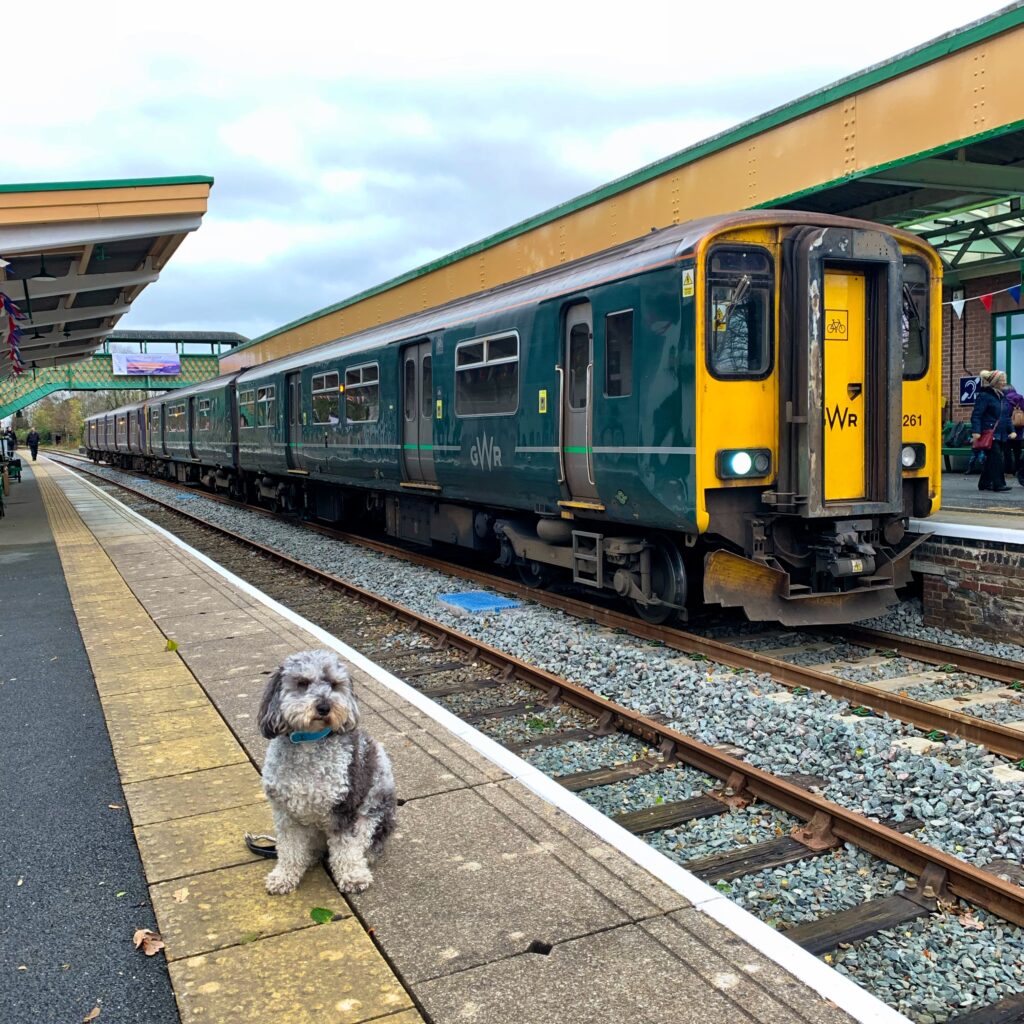
    Yoshi takes in Okehampton station while class 150 dmu’s, 150261 and 150219, wait to depart for Exeter.

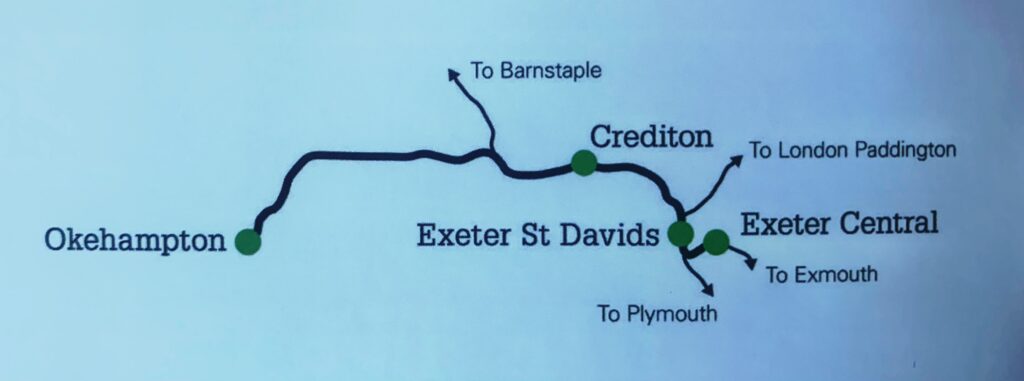
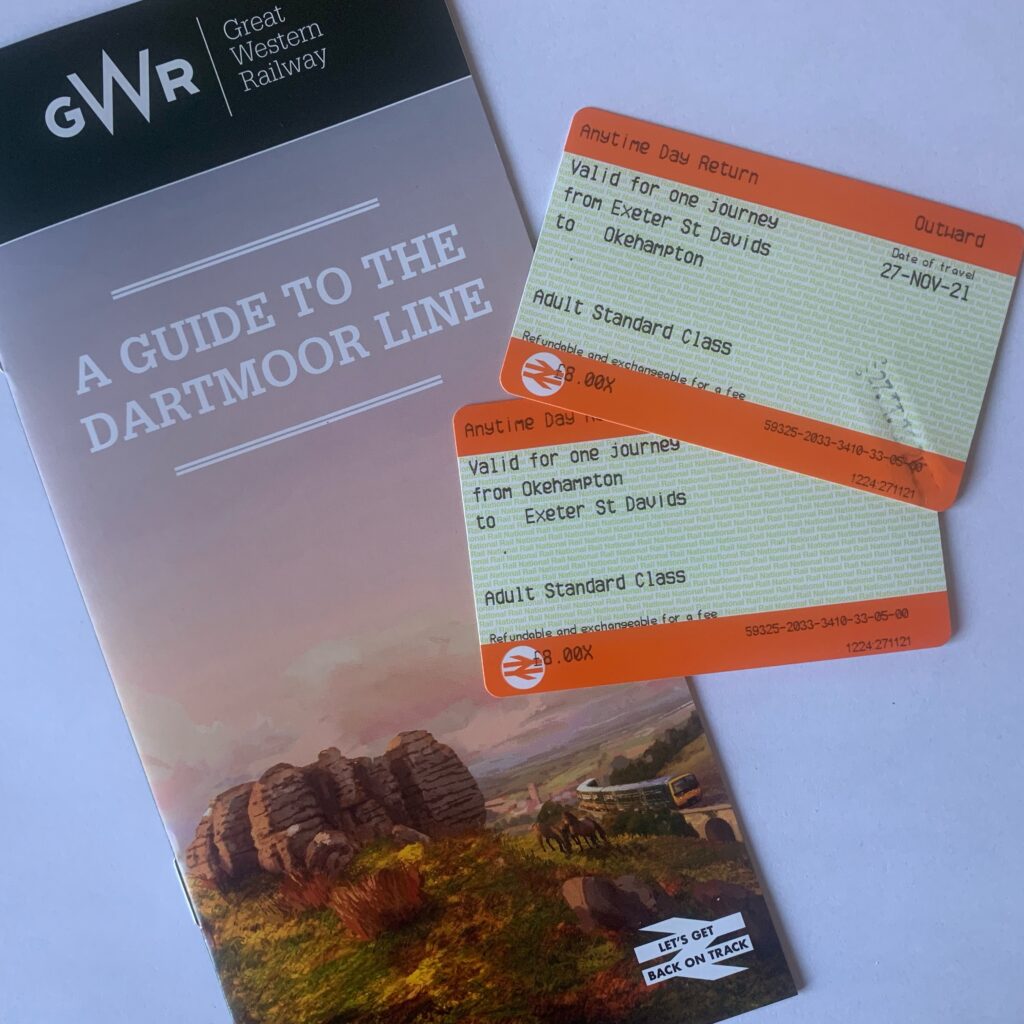
    In 1972, the good folk of Okehampton turned out to wave farewell to the Devon moorland town’s regular passenger train service. This weekend, unswayed by the efforts of Storm Arwen, Yoshi and I took a trip from Exeter St Davids to Oakhampton because after nearly 50 years daily passenger services have resumed along The Dartmoor Line. It’s the first railway line to be reinstated under the Department for Transport’s ‘Restoring your Railway’ initiative which in my view is a great idea. I have a number of lines I would love to see reopened!

    Okehampton station first opened in 1871 as part of the London and South Western Railway (LSWR) and was constructed to rival the South Devon Railway route to Plymouth. Okehampton was an important junction with lines to Padstow and Bude as well as Plymouth. Boat trains carrying passengers from ocean liners and famous named trains such as the Atlantic Coast Express and the Devon Belle passed through the station. Following the Beeching Report of 1963, passenger services were withdrawn in 1972, the track surviving because of the connection to the British Rail ballast quarry at Meldon, situated 3 miles from Okehampton, which had an output of 300,000 tons per annum. The line to the quarry closed in 2011.

    Services resumed on 20th November 2021 and in order to reinstate the line for passenger traffic, 11 miles of track was relayed, replacing 24,000 concrete sleepers and installing nearly 29,000 tonnes of ballast over a nine month period. The journey time Exeter St Davids to Okehampton is around 40 minutes and currently trains run every two hours, although this is due to increase to an hourly service in 2022 following additional infrastructure work to be carried out by Great Western Railway (GWR).

    Okehampton is an historic town situated on the northern edge of the Dartmoor National Park and is also the start of The Granite way, an 11 mile multi-use trail connecting Okehampton with Lydford. There are proposals for the line to be reinstated between Okehampton and Bere Alston which would see a connection through to Plymouth and would restore the continuous circuit of railway linking the towns around Dartmoor and provide an alternative route to Cornwall in the event of engineering work or storms along the sea wall at Dawlish.

    Yoshi was made a great fuss of by the friendly volunteers of the Dartmoor Railway Association who maintain and look after the station building. We look forward to visiting again when the new Bulleid Buffet is open in the main station buildings.

  • Weymouth Line Closures

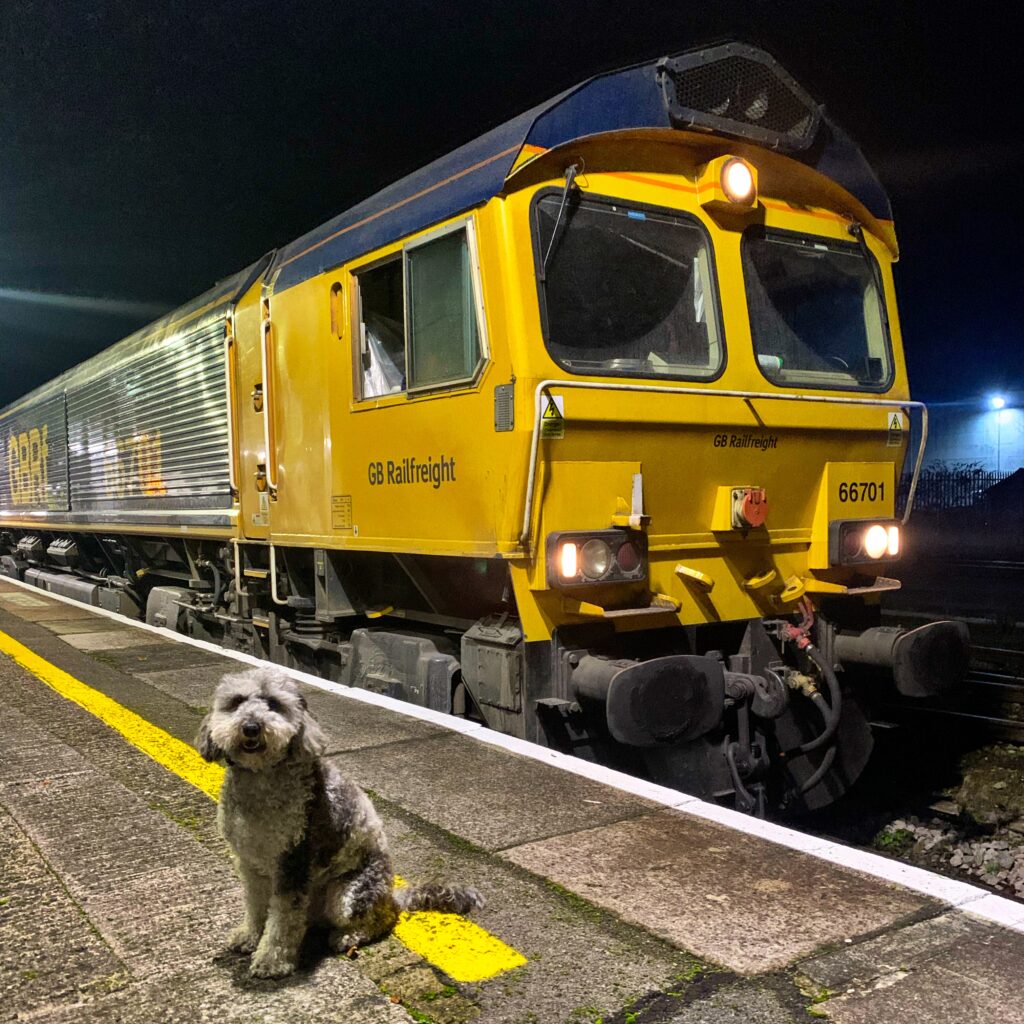
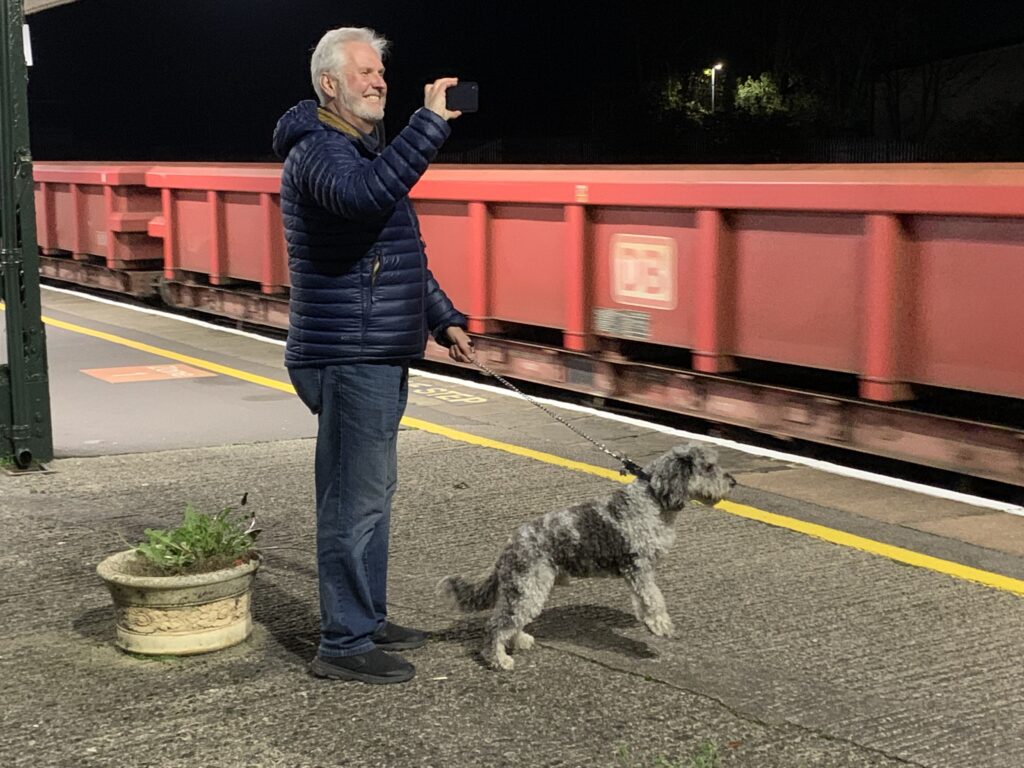
    Yoshi at Yeovil Pen Mill waiting for any movement from 66701

    At the moment there is a fair bit of work being carried out to provide major improvements to the railway line between Weymouth, Dorchester and Yeovil. Scheduled to take 16 days, the line between Yeovil Pen Mill and Weymouth closed to Great Western Railway services on November 18th. Additionally, on Monday November 22nd South Western Railway trains from Weymouth to Wool were replaced by buses and from Tuesday November 23rd to Friday November 26th buses replaced trains between Weymouth and Dorchester South.

    Work is being carried out across eight sites with the main focus being between Yetminster and Maiden Newton which will see four miles of track being replaced. Line improvements between Weymouth, Dorchester South and Wool is designed to keep trains on time and reduce delays.

    Since September 2021, engineering trains have been visiting the area delivering materials for use in the upgrade work and Yoshi and I have ventured out in the hope of catching sight of some of these when they ran at sensible ( and some not quite so sensible ) hours.

    We’ve had a few late nights waiting at Yeovil Pen Mill, and our perseverance has been rewarded with an interesting array of Class 66’s from EWS, Colas Rail, Freightliner and EWS. On at least one occasion we gave up hope of seeing all the scheduled movements into the work zone as driver shortages imposed unavoidable delays in proceedings.

    Photograph courtesy of @da_buckley967

    All engineering work involved in this project is due to be completed by the end of December 3rd 2021.